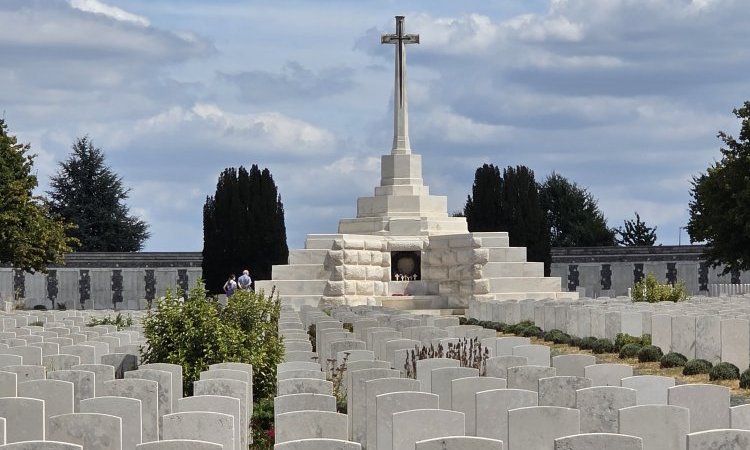
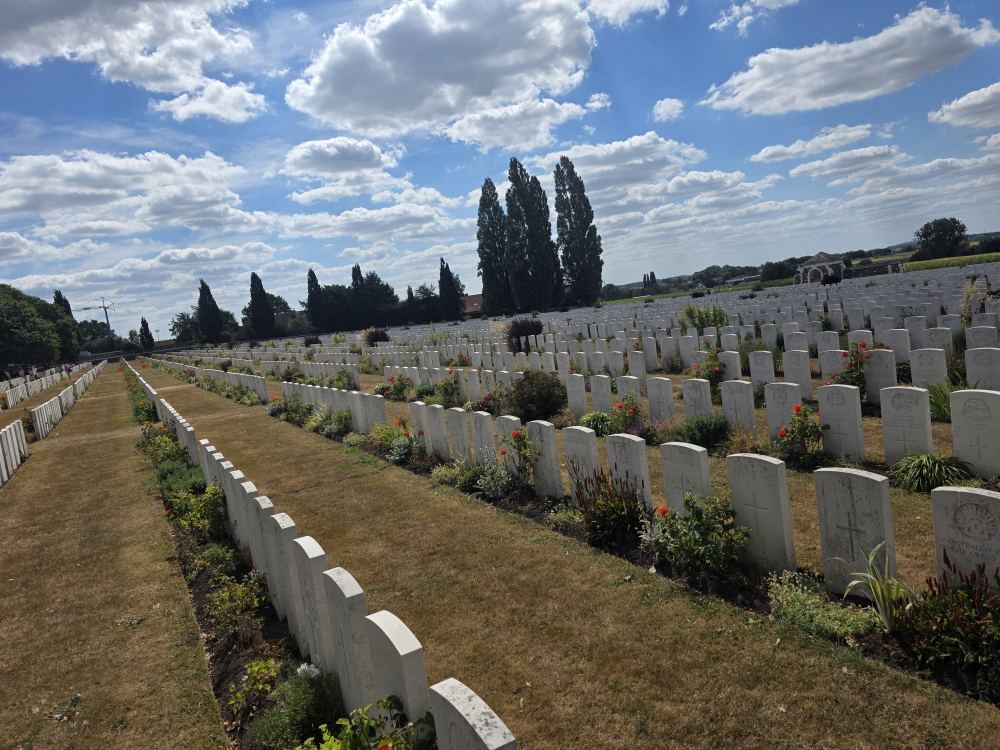
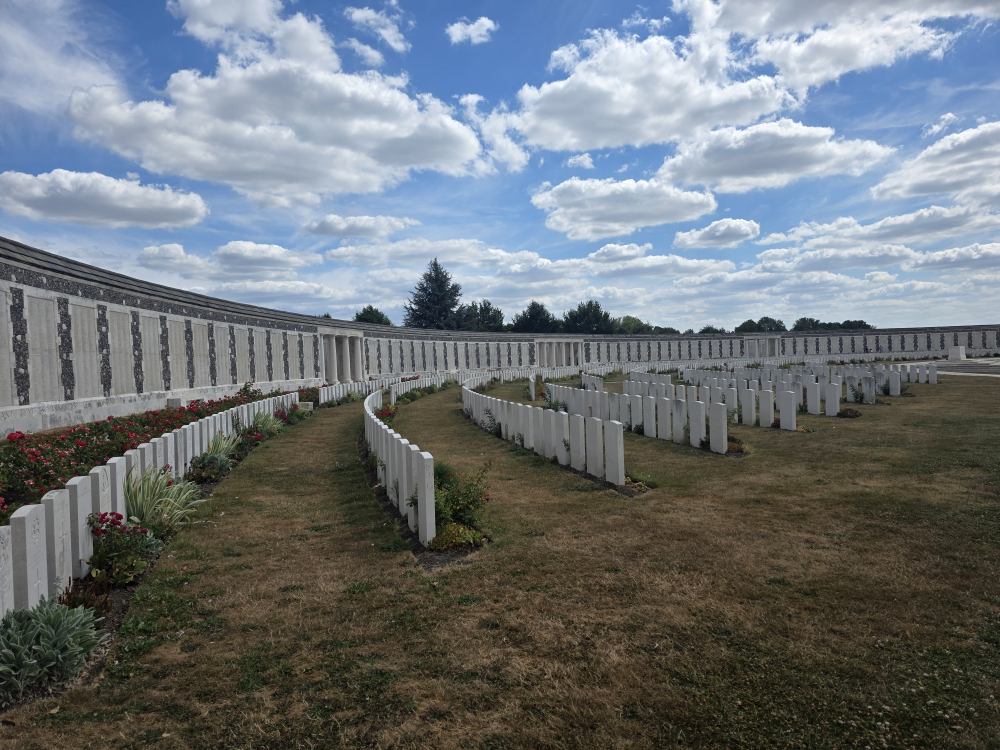
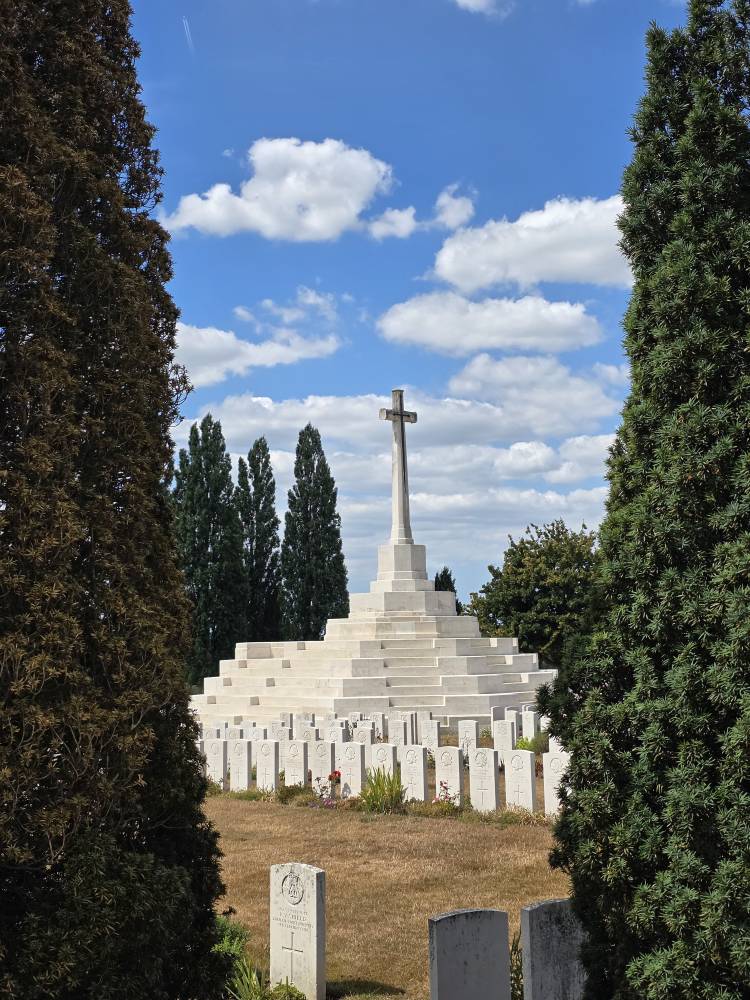
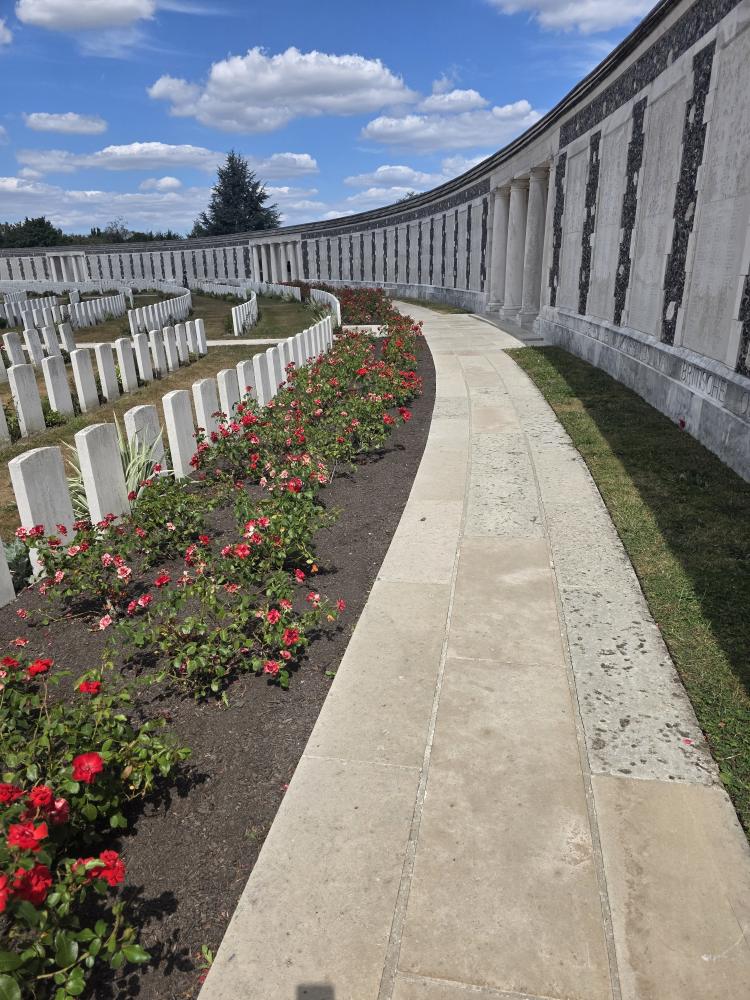
We still have lots to explore, driving out of the industrial complex and onto Tyne cemetery – the biggest military cemetery in the world with almost 12,000 graves and a memorial with names of 35,000 soldiers who have no known grave. Most of those interred and commemorated here died during the Third Battle of Ypres, known as “Passchendaele.”
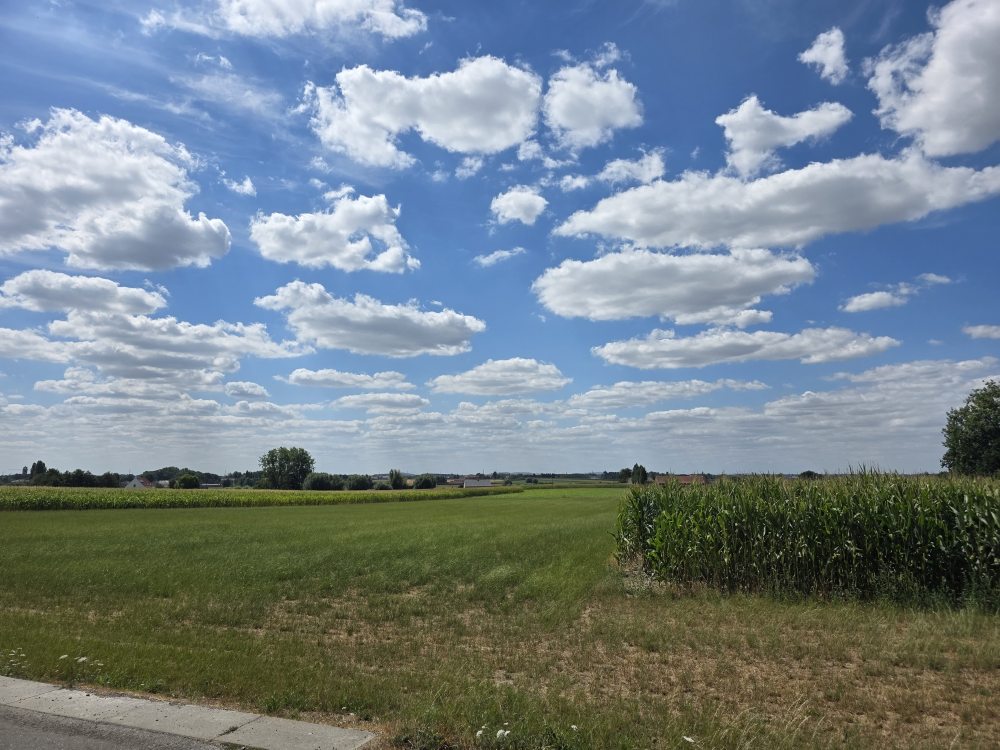
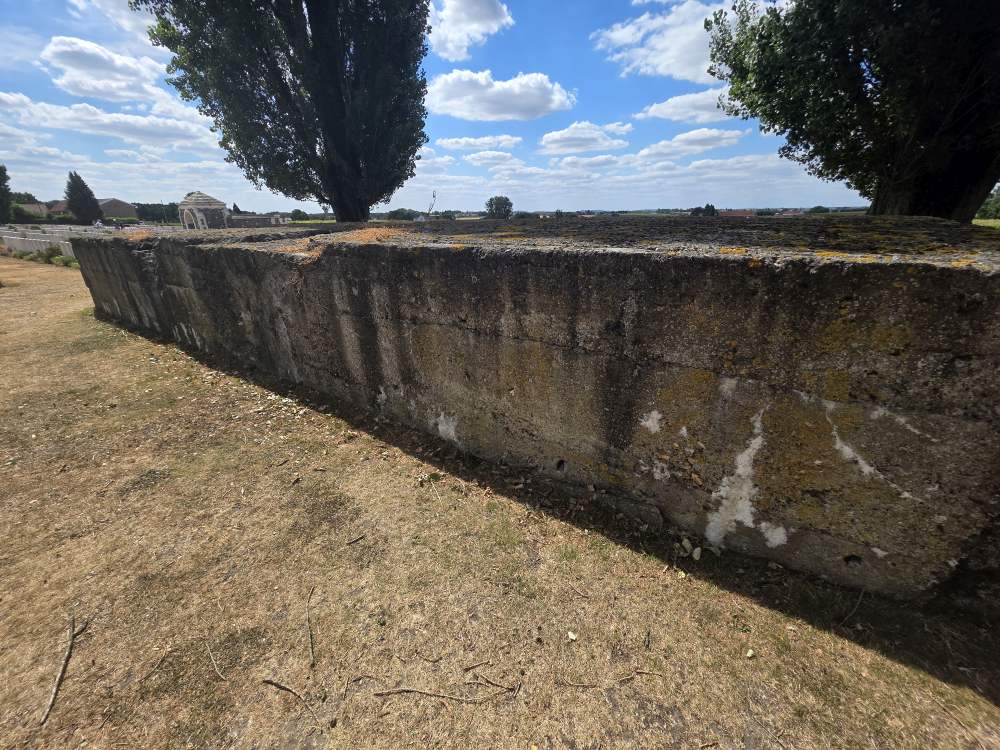
Beginning in the welcome center, we learn about the significance of the location – tragically important for the Germans because it occupied high ground with sightlines that stretched for miles. The Germans camouflaged their bunker as a small cottage – the Tyne Cot – and used it as part of their defenses of the Flanders Position. Heavy fighting ensued, in which many lives were lost. After the Allied won the area, the dead were buried here which was the start of the cemetery.
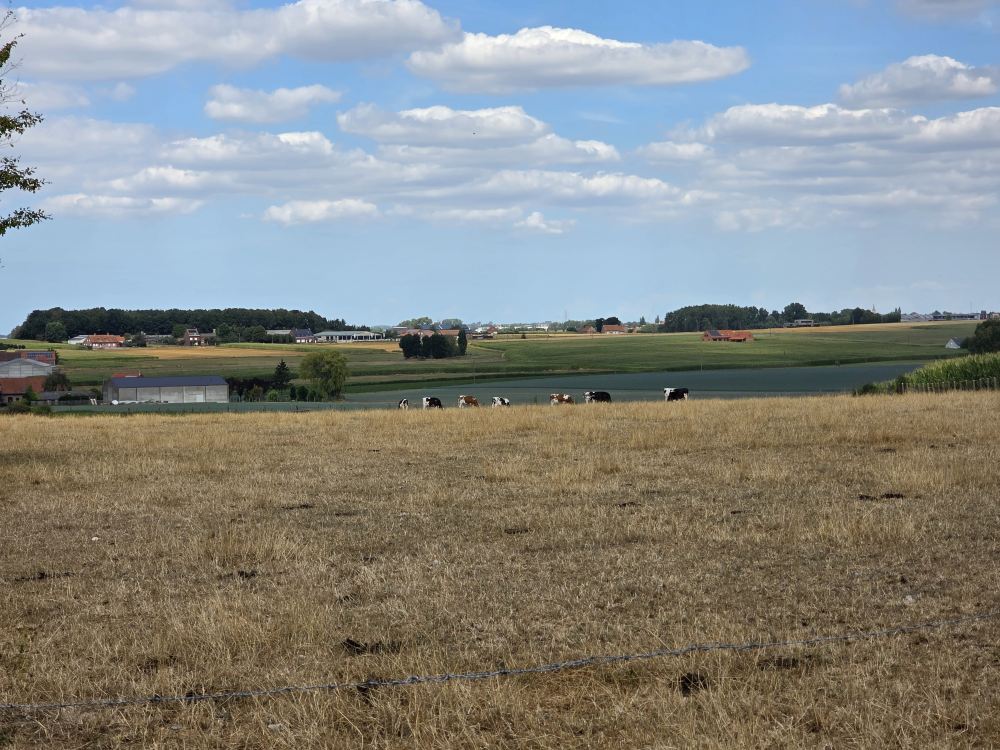
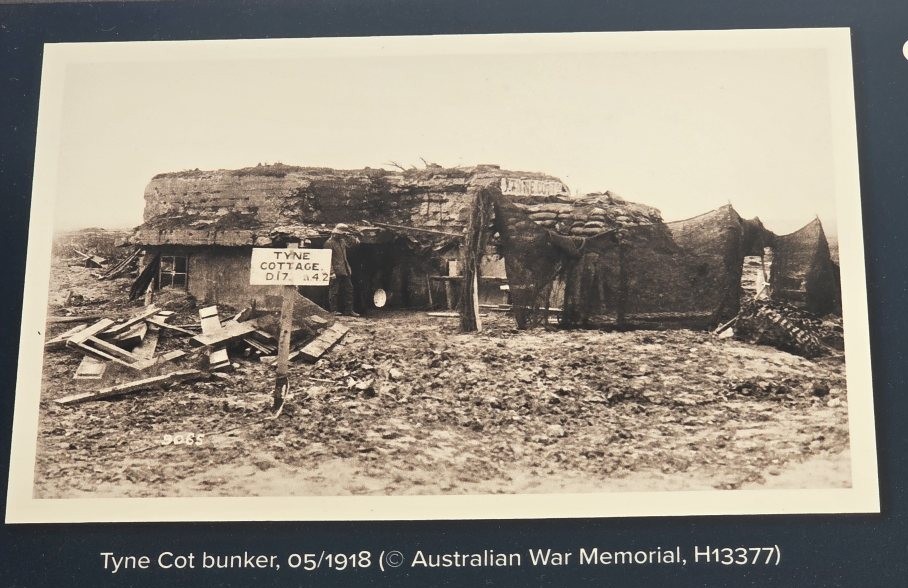
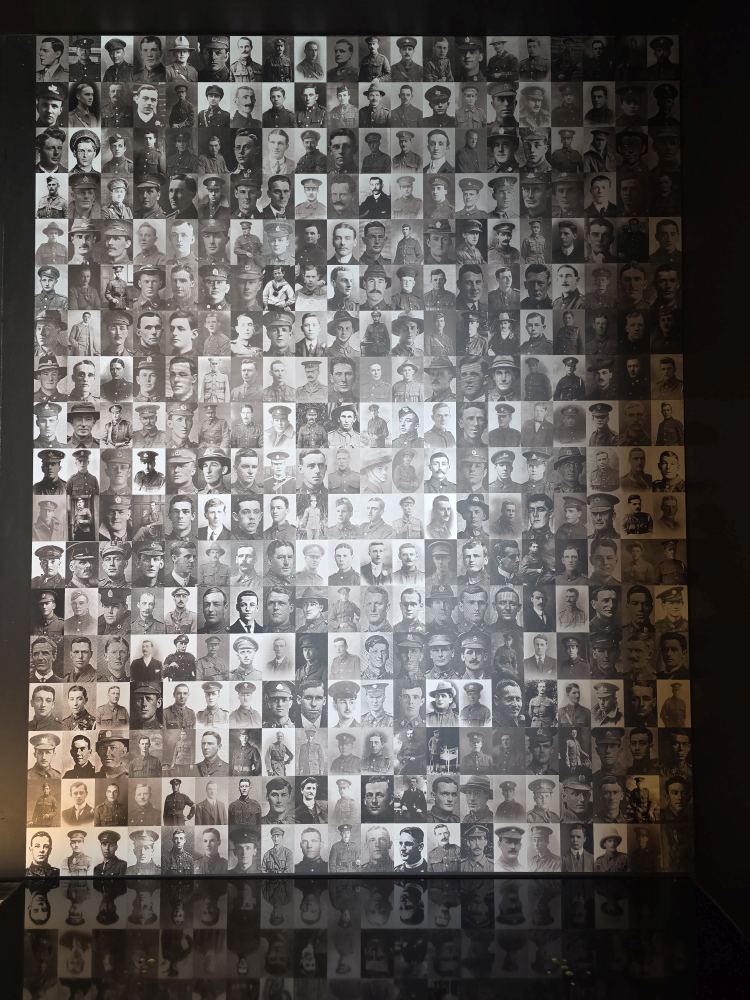
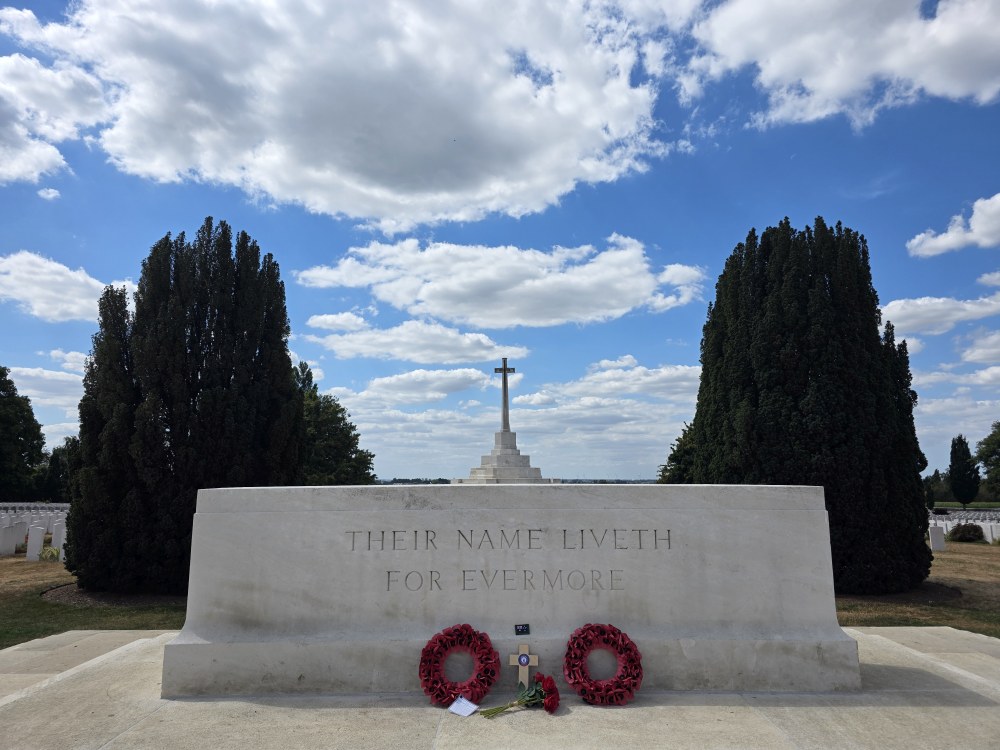
Outside, we follow the walls around to the back of the cemetery, entering through what is known as the cemetery register. From here, we simply wander the grounds – over to one of the remaining German bunkers, examining the many graves, and the cross of Sacrifice.
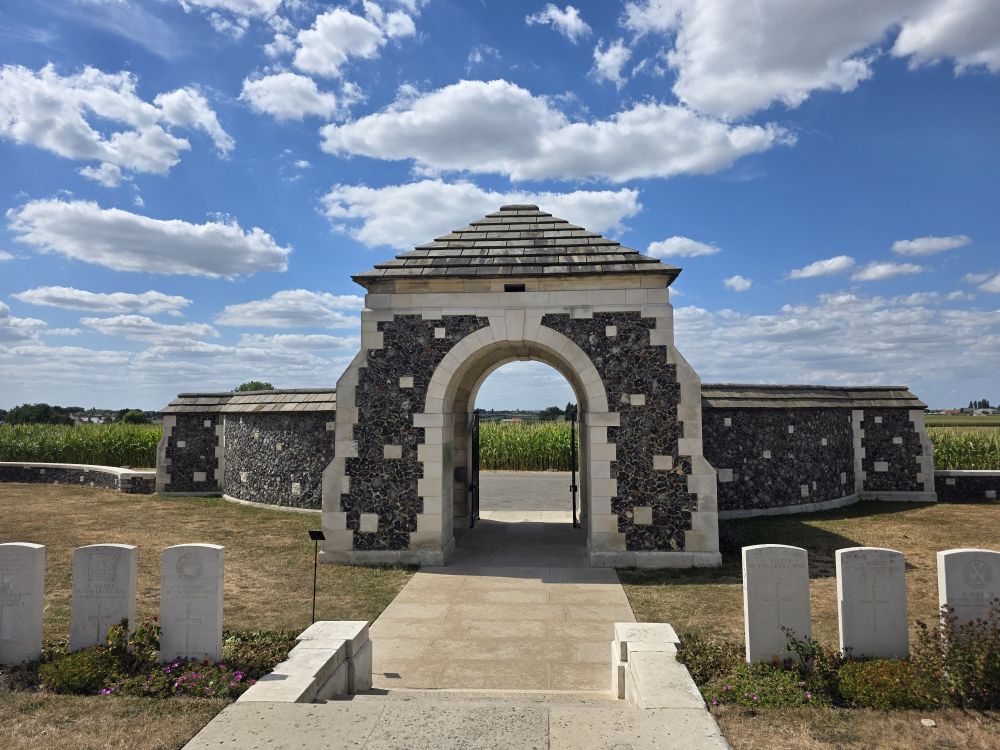
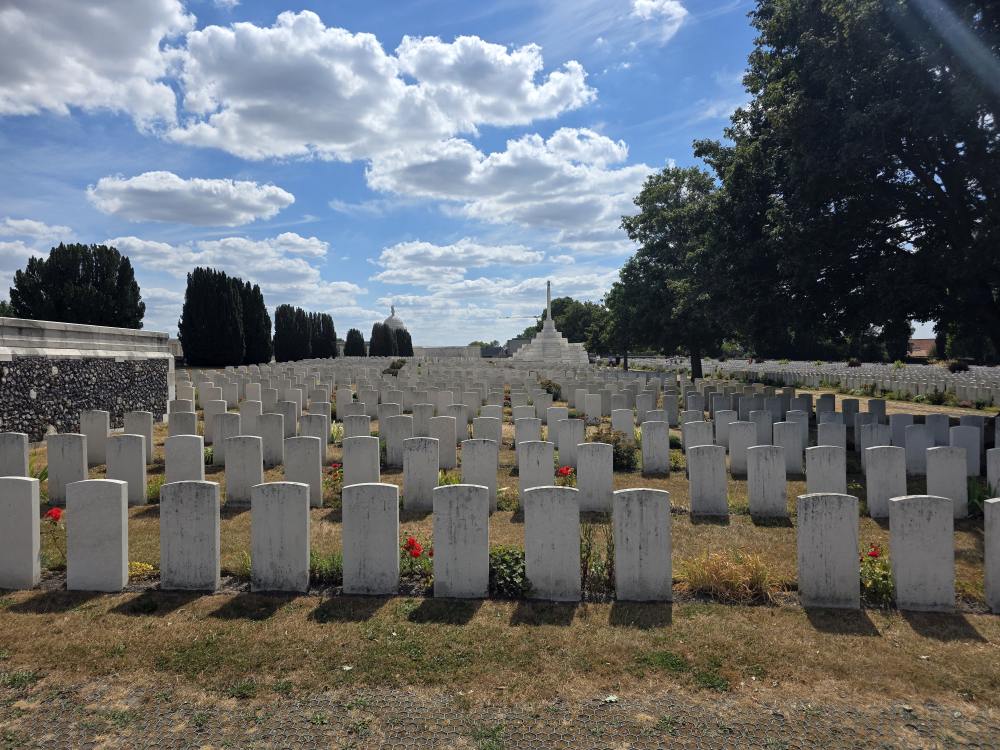
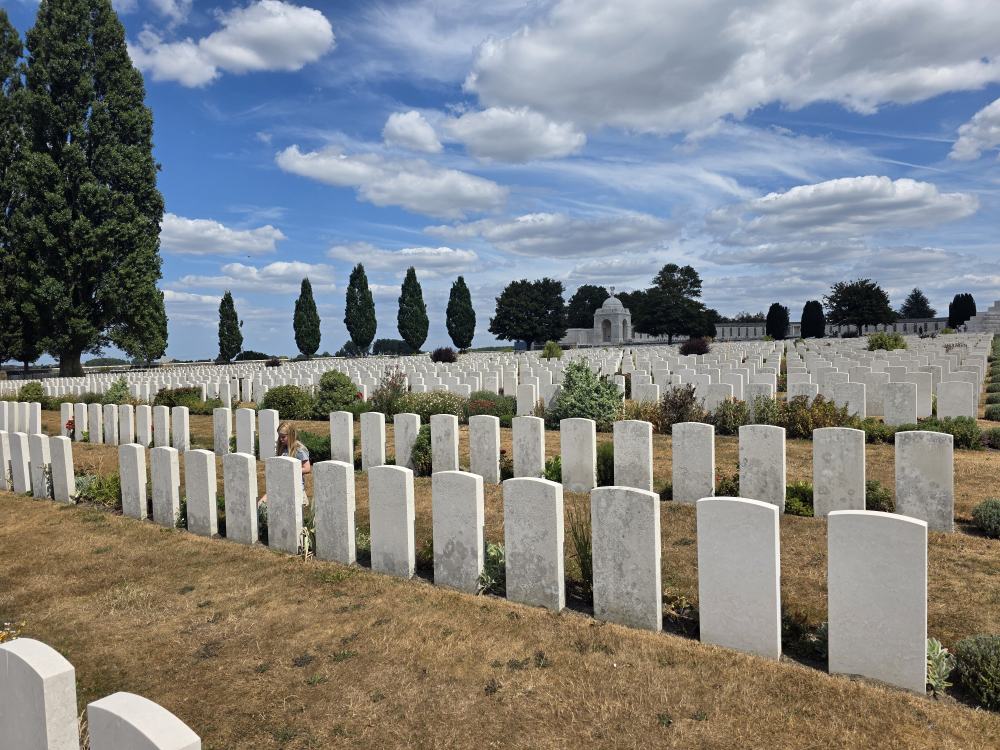
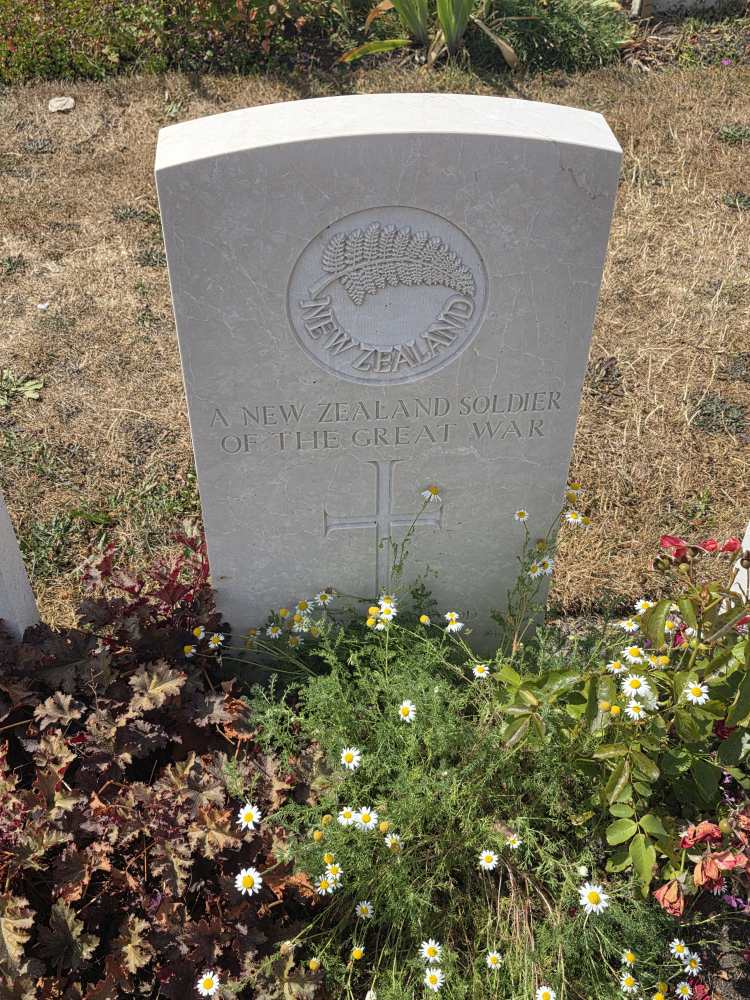
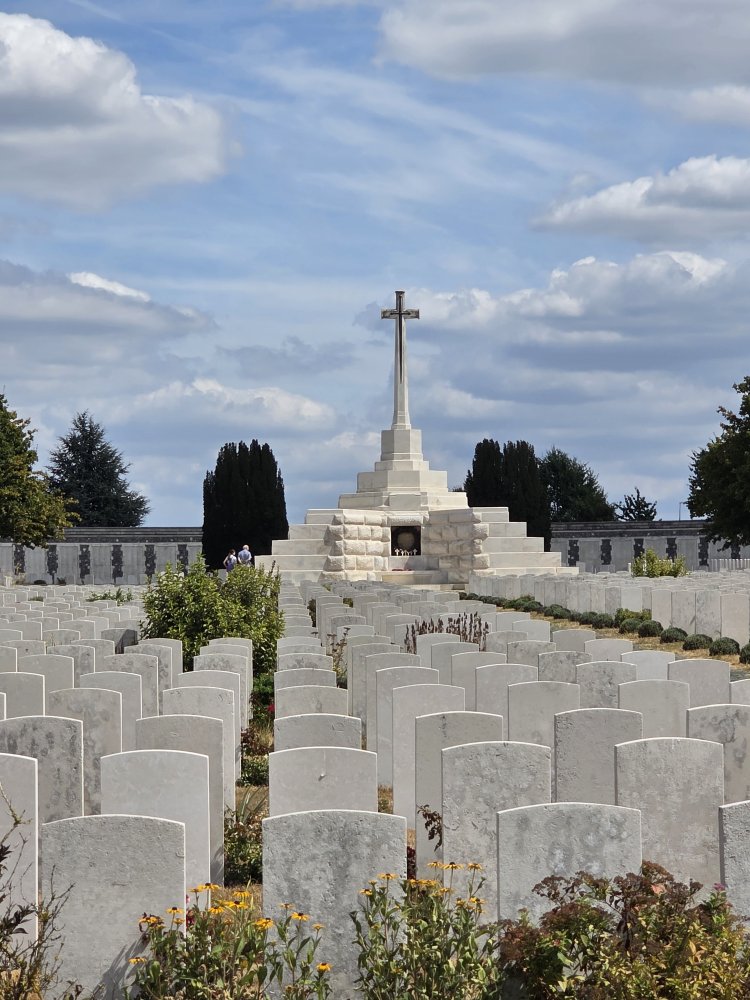
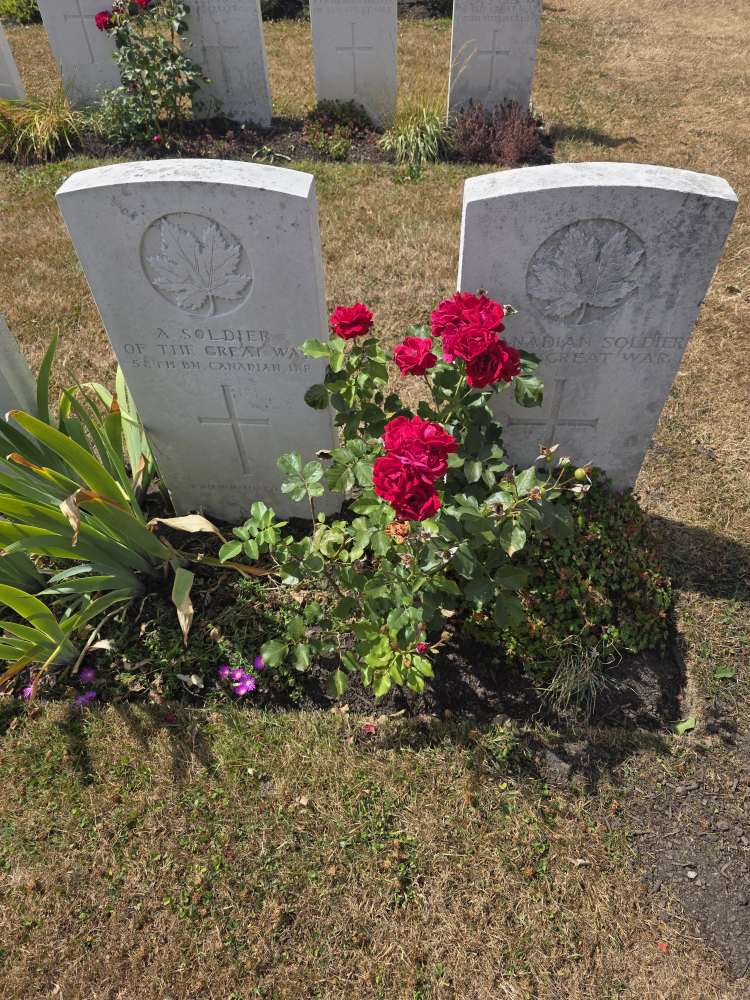
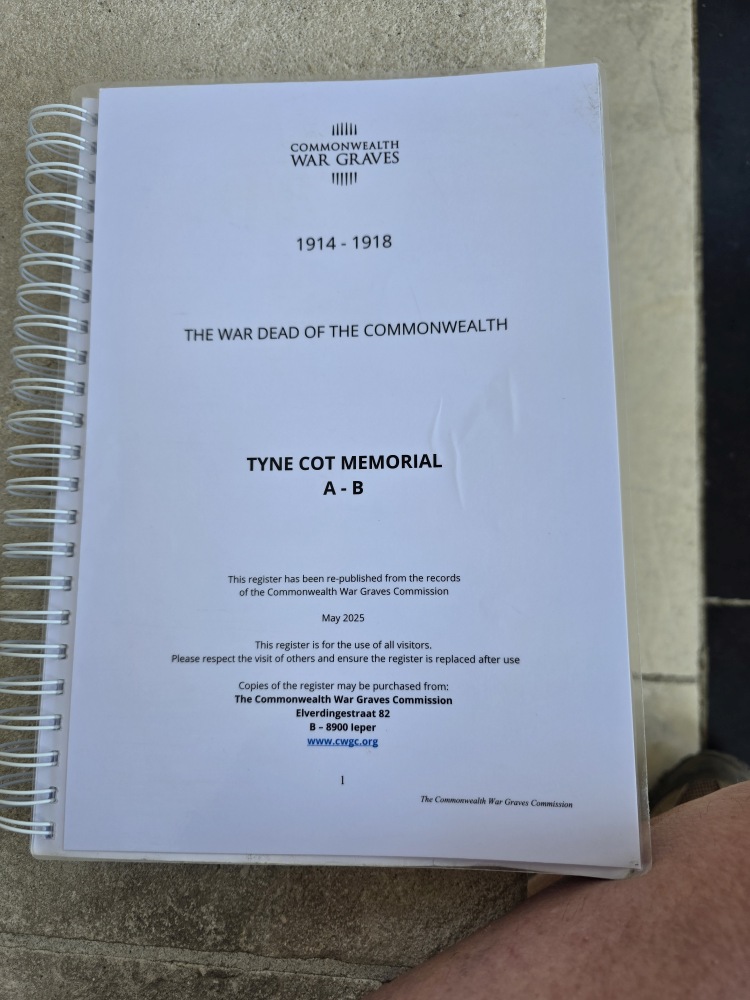
Entering into the half circle Memorial for soldiers without a grave, we find, in an alcove, the Memorial Register – alphabetical lists of all the gravesites and the dead listed on the memorial walls. Wow. An incredibly poignant, but gorgeous place of eternal rest.
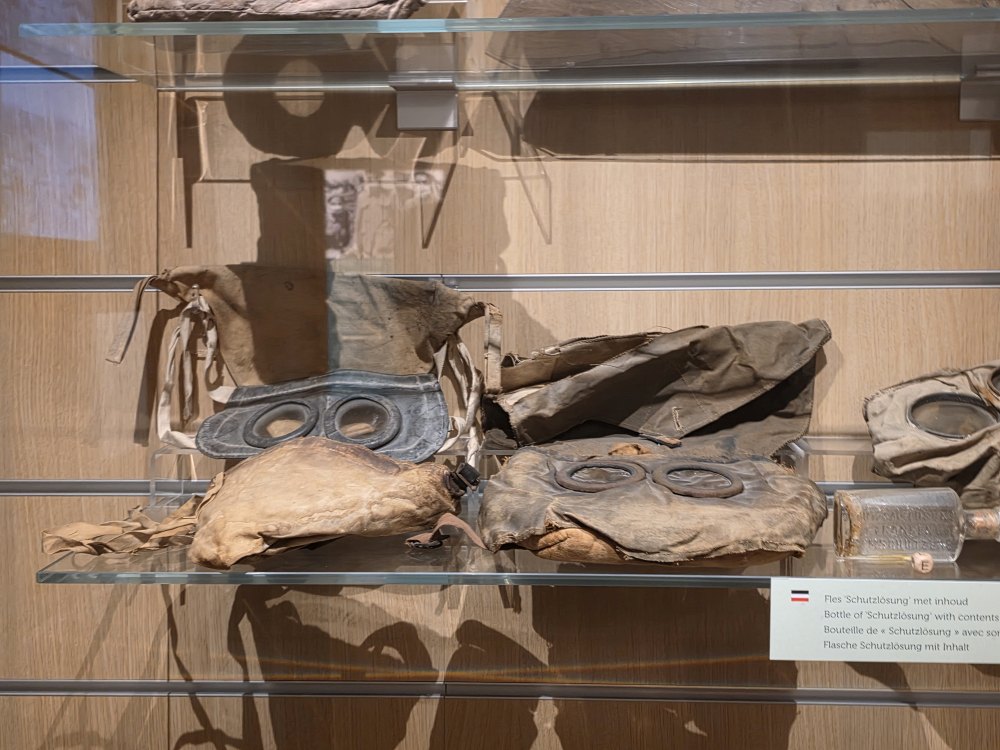
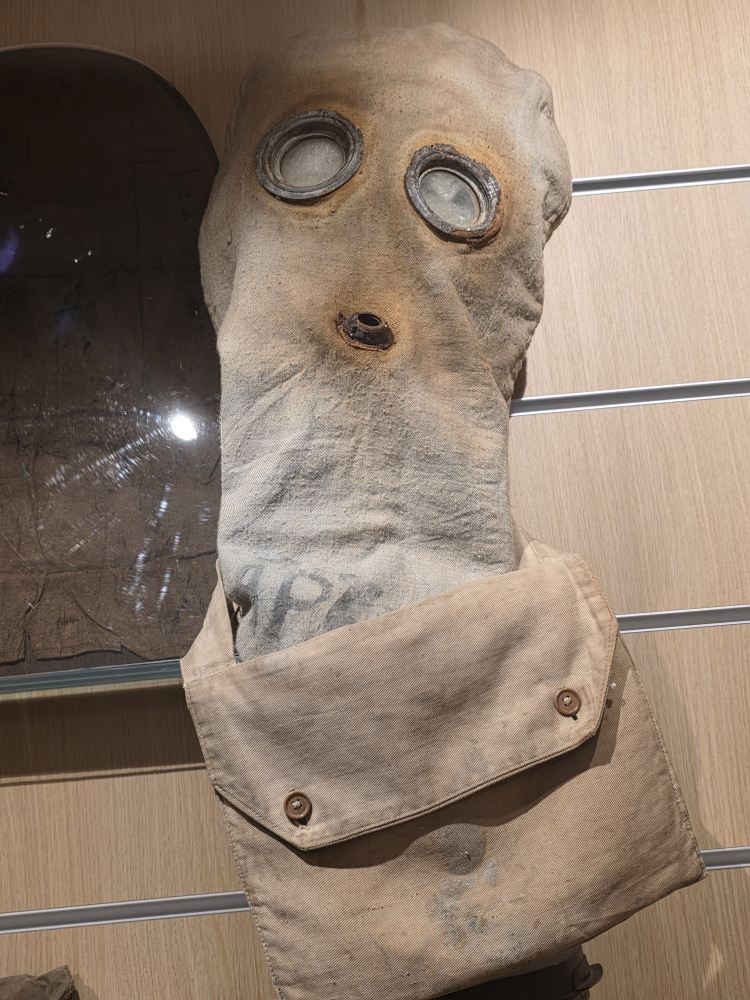
In another happy accident, we stumble upon the Passchendaele Museum – basically following signs alongside the road directing us to the museum. We also stumble on easy street parking at the museum and then commence on an excellent historical journey through the battle of Passchendaele – complete with maps and poison gas masks and photos of life in the trenches and dugouts.
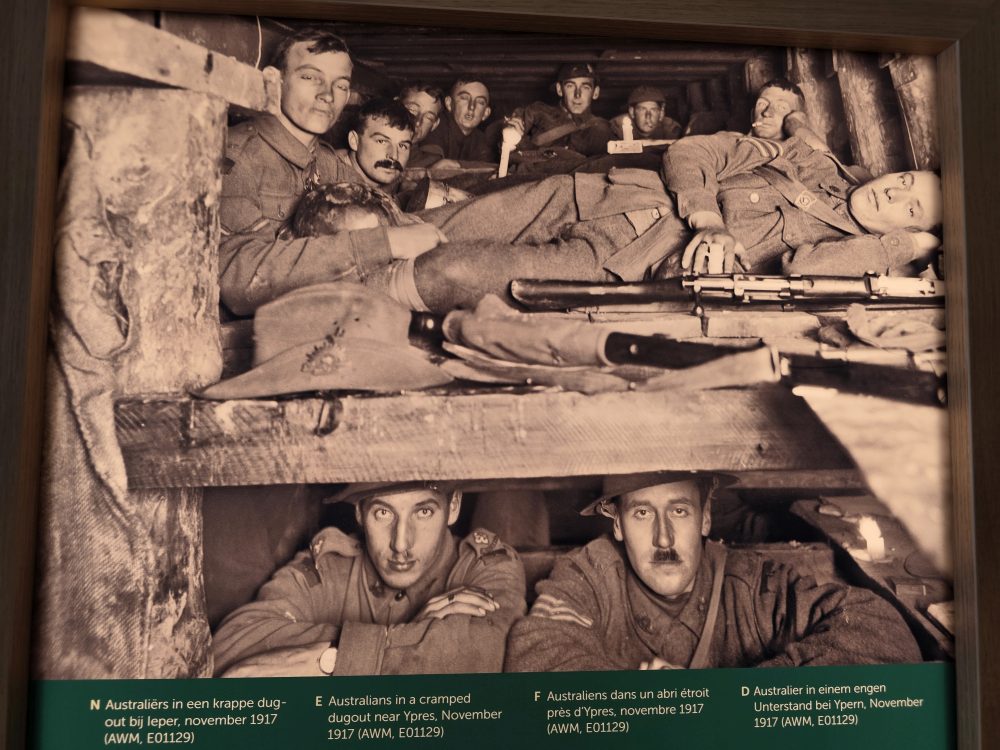
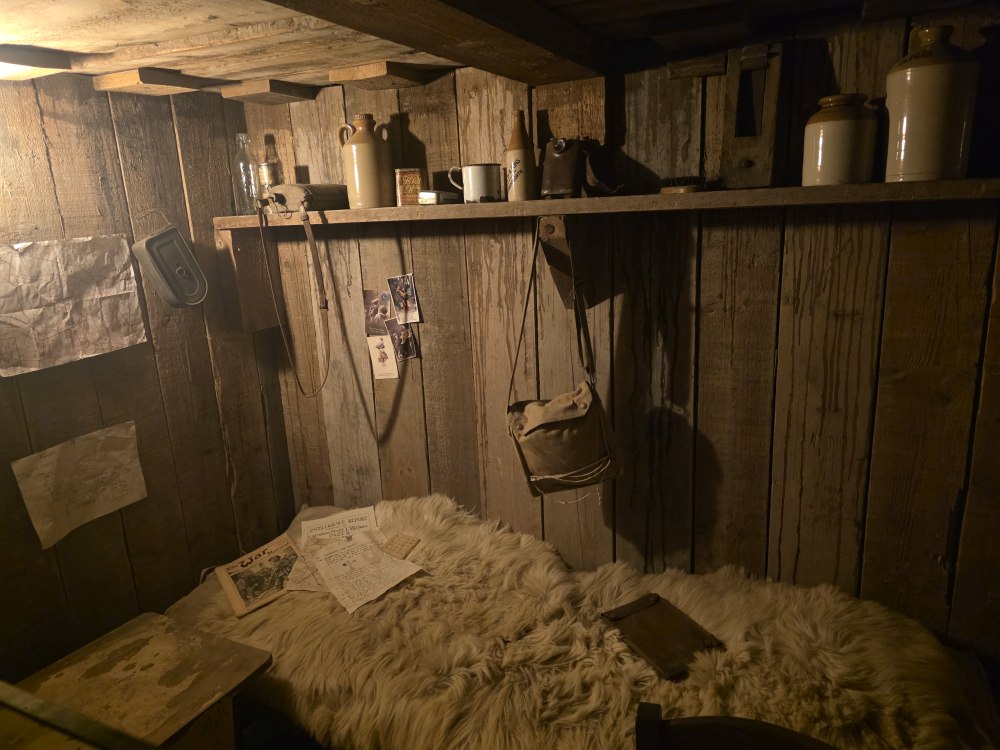
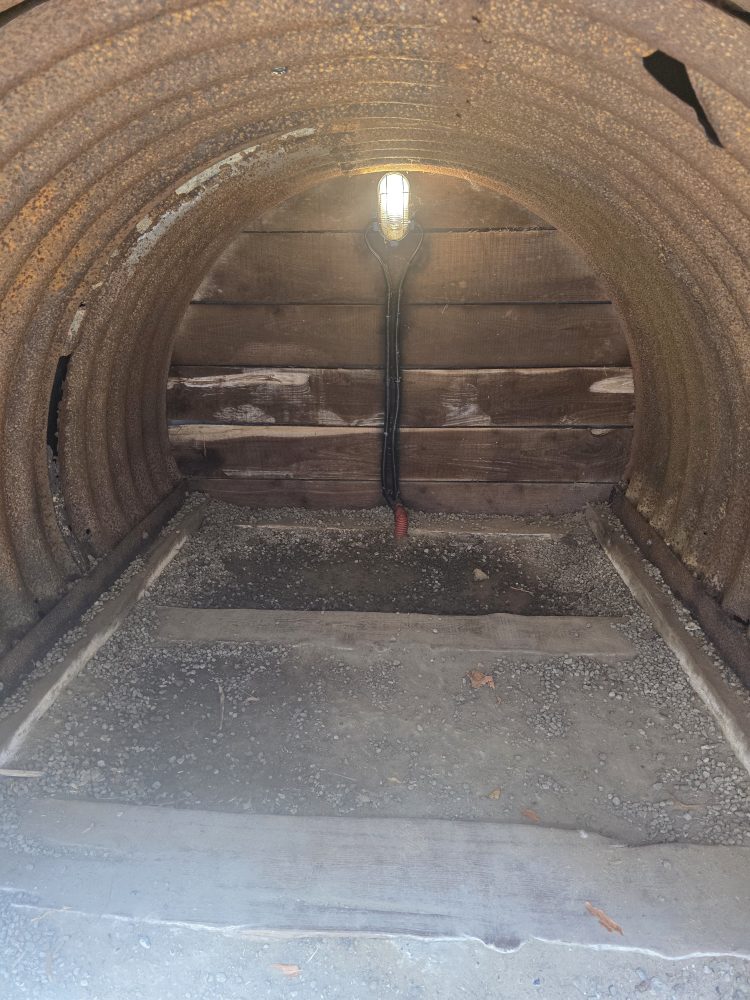
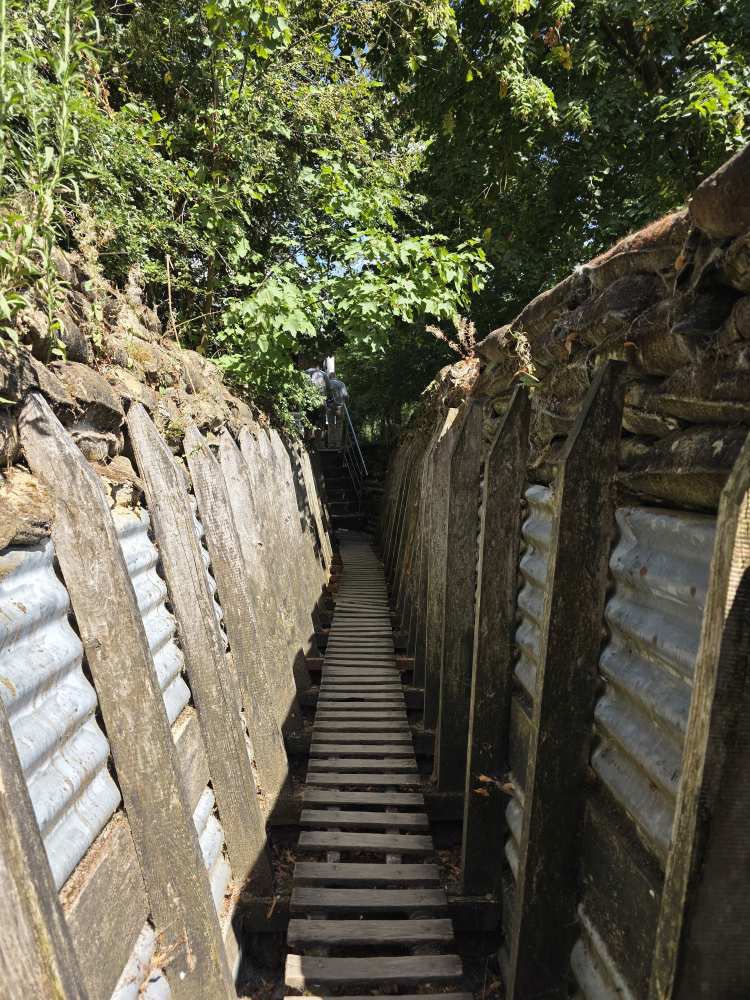
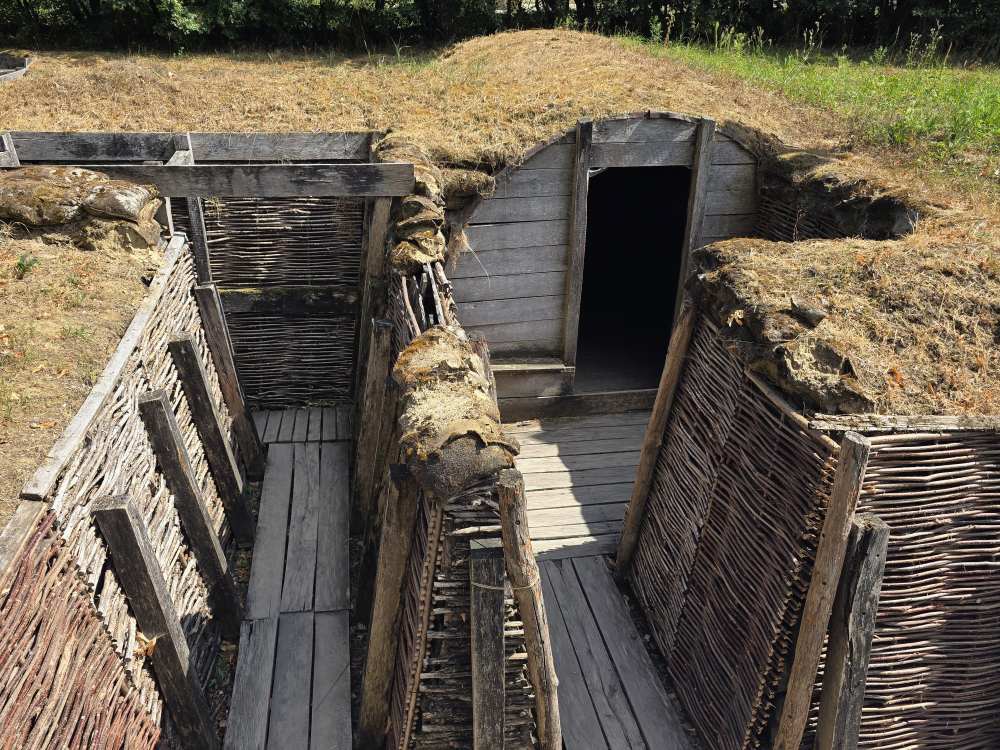
Then, the best: Walking through recreation of the trenches and tunnels. Everything is down here – the bunks, the medical center, offices, even the latrines! And photos of the real use of each space.
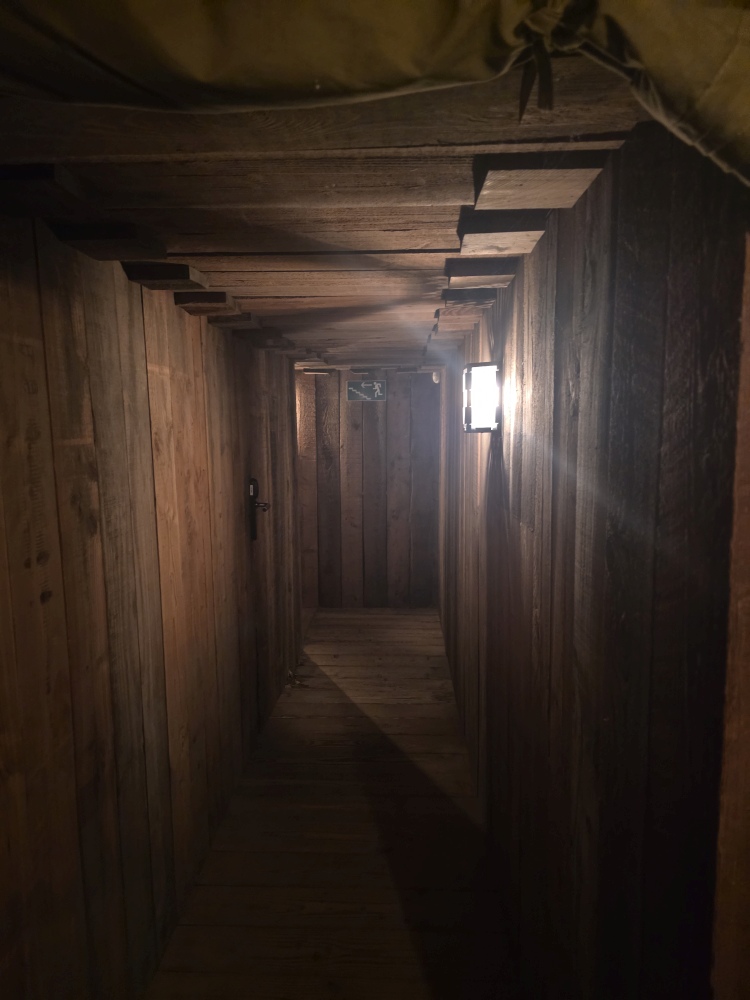
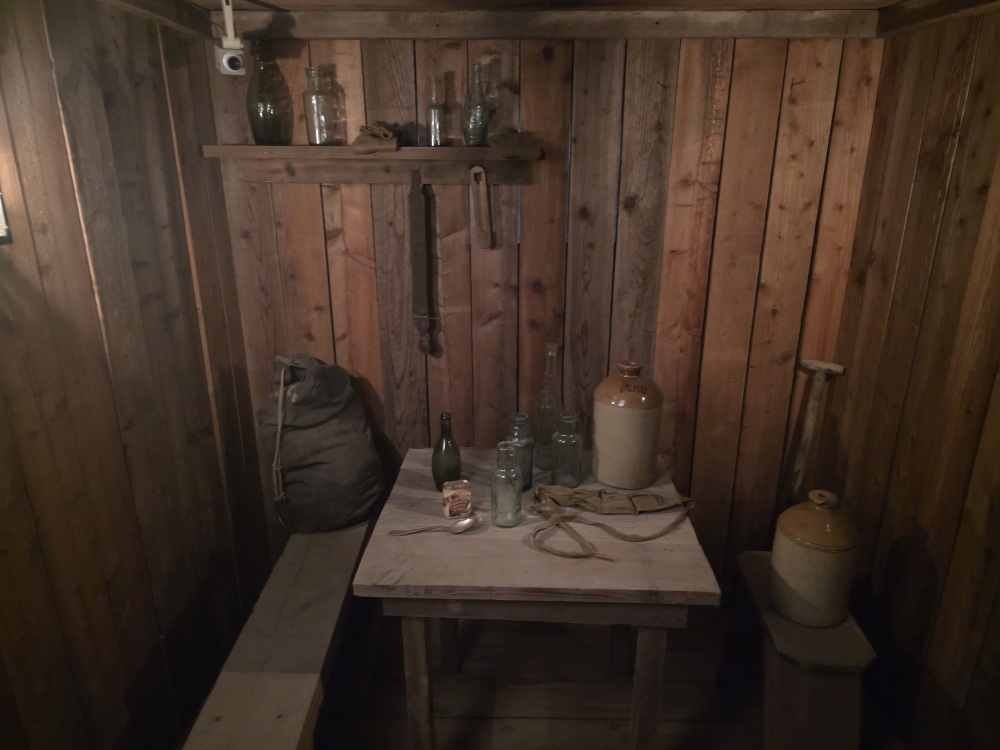
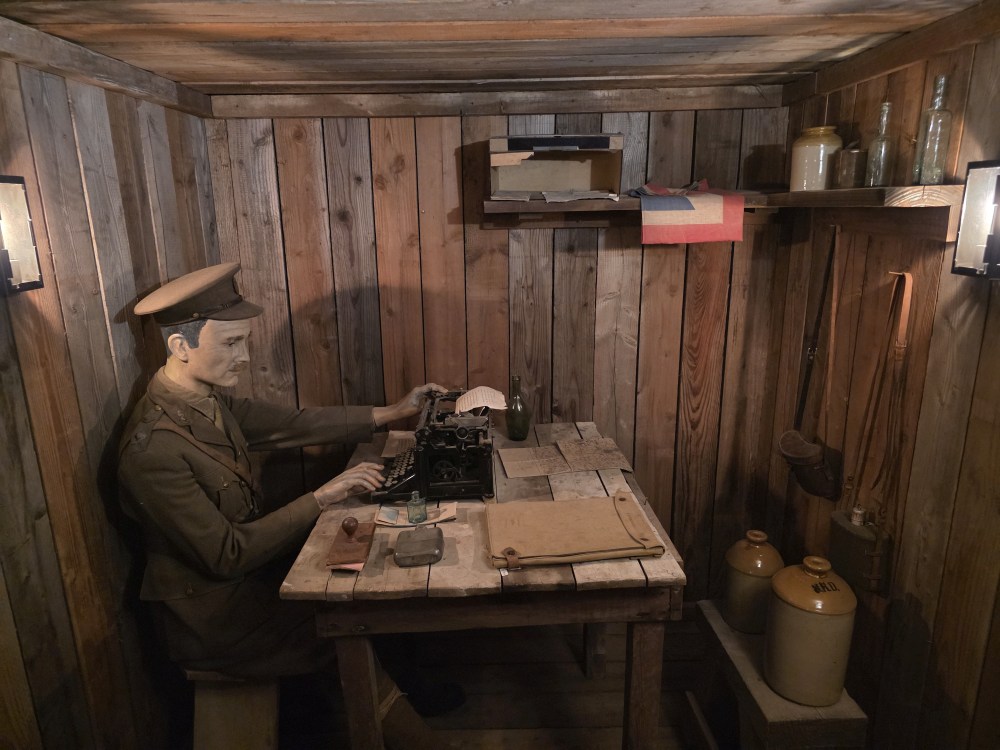
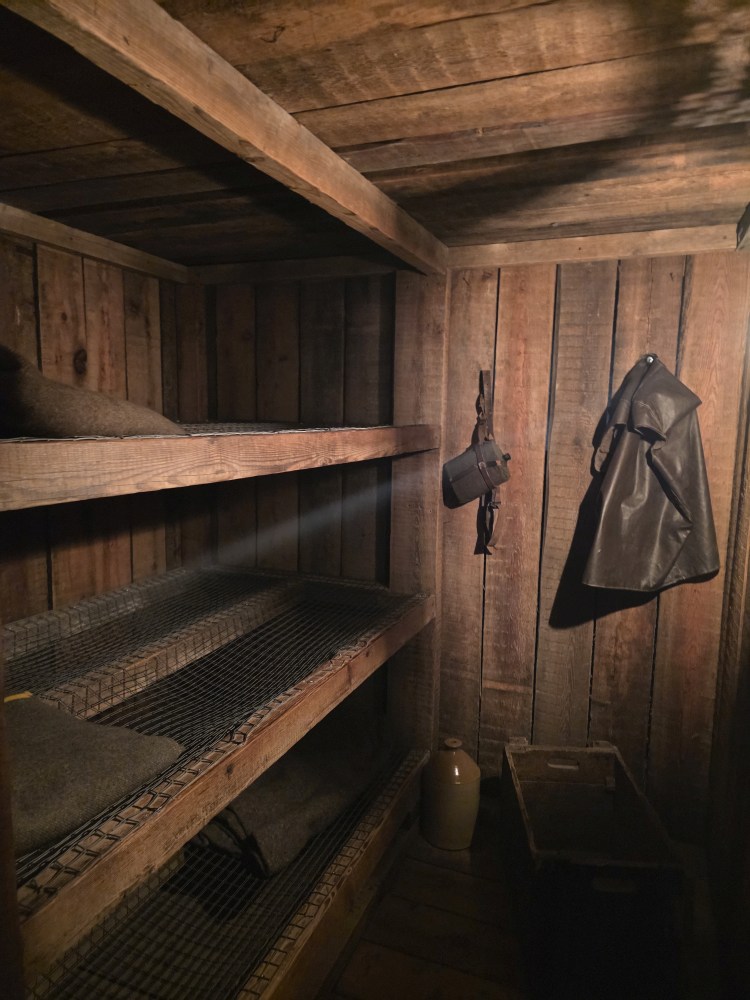
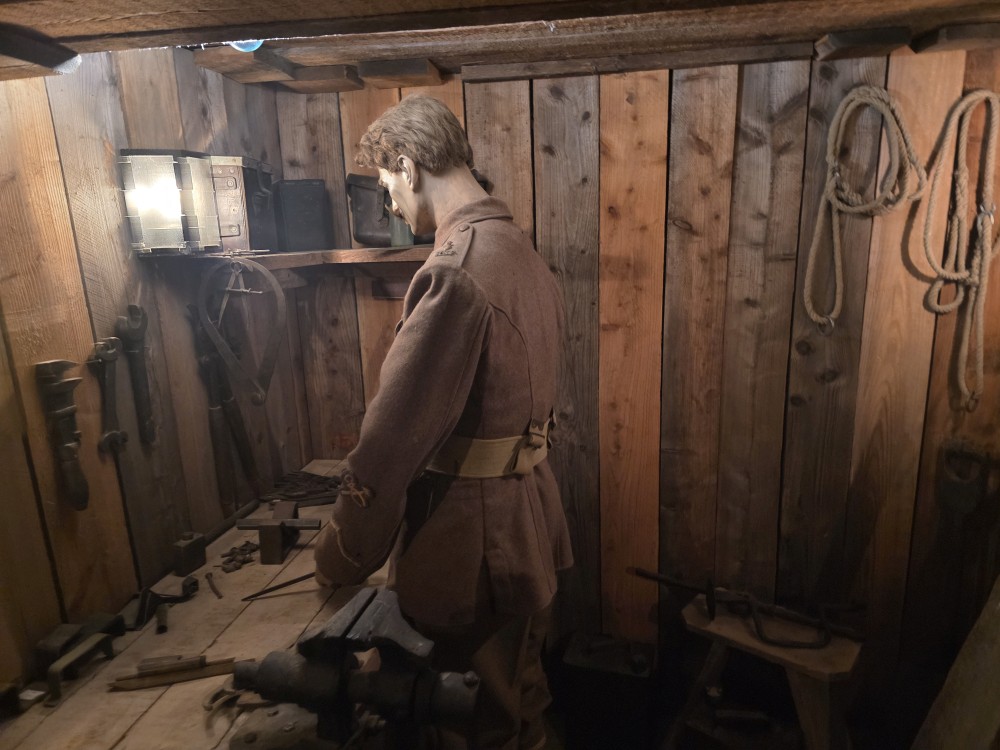
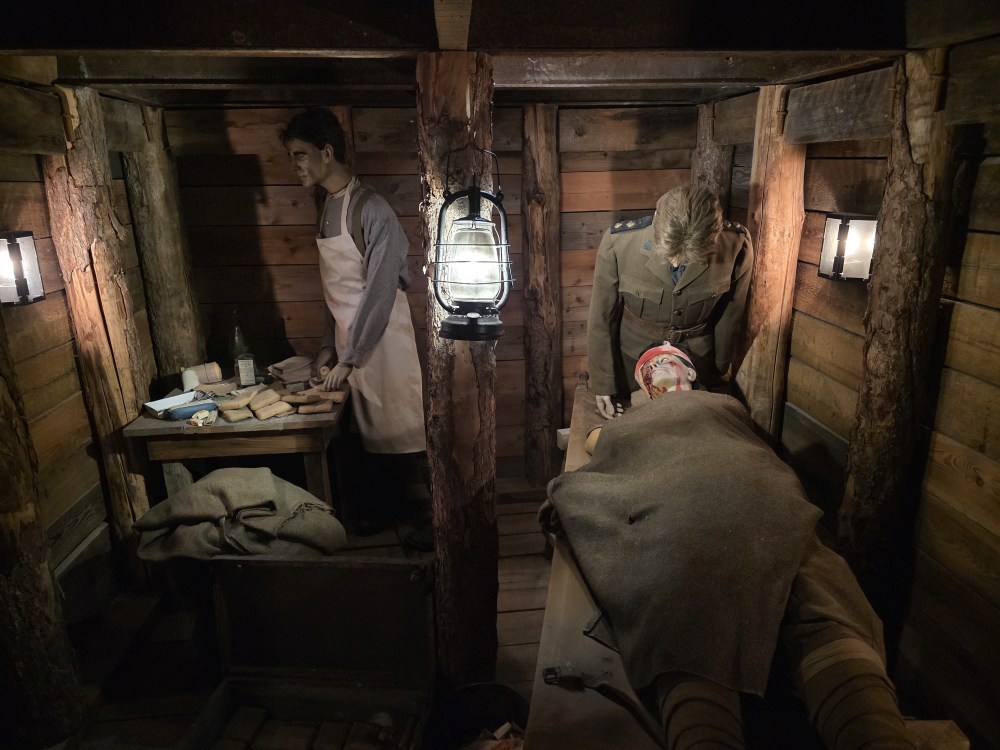
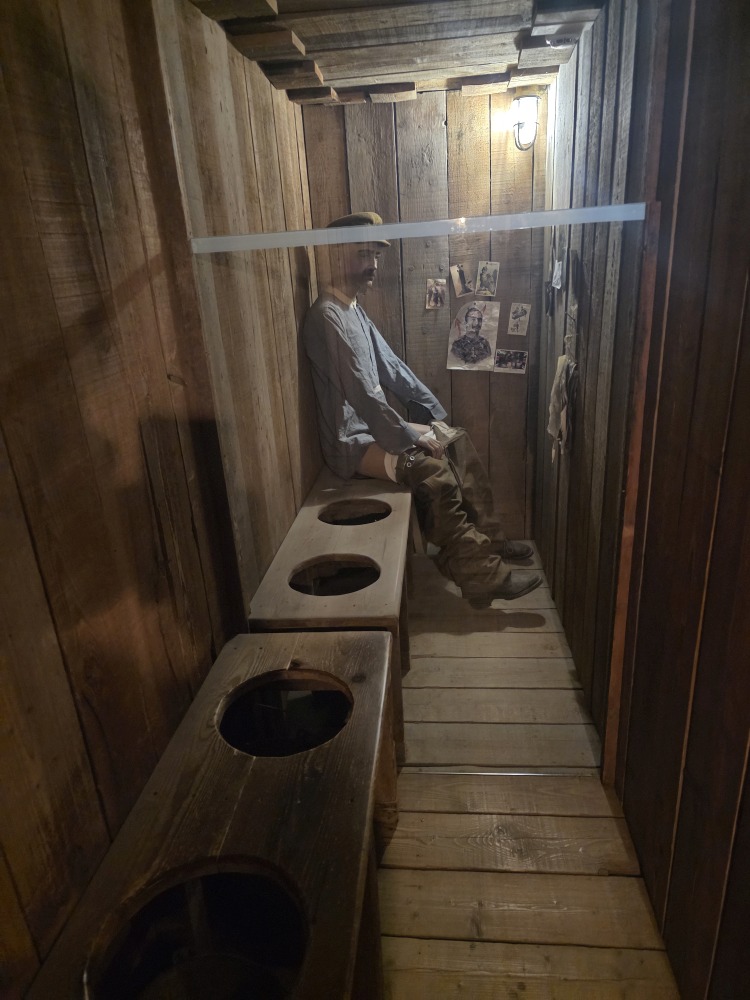
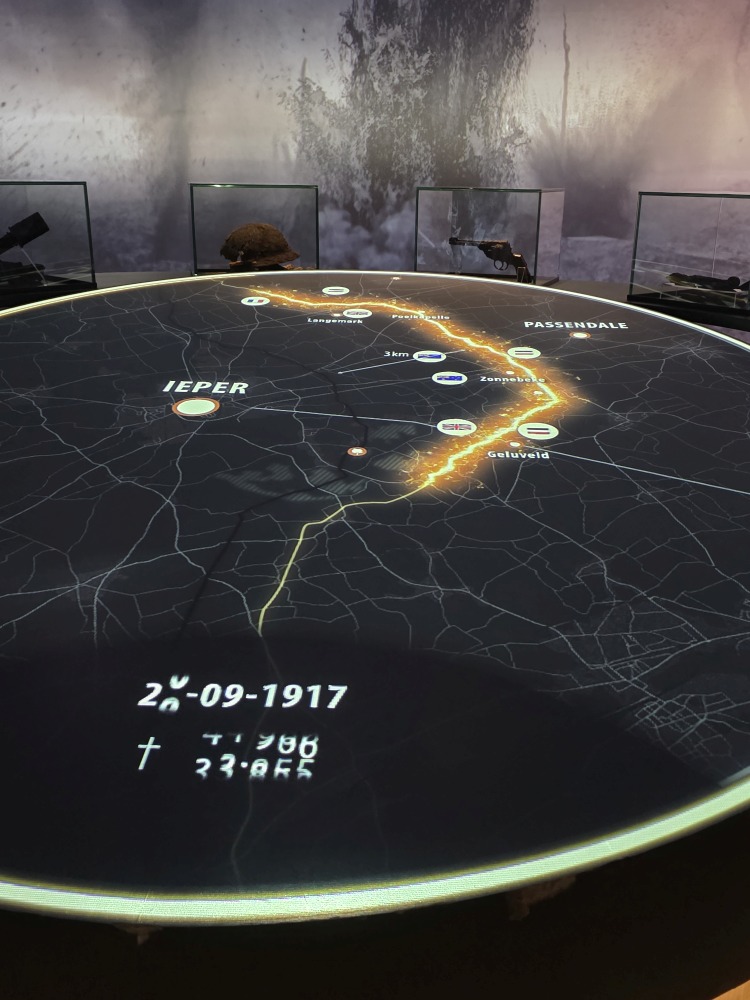
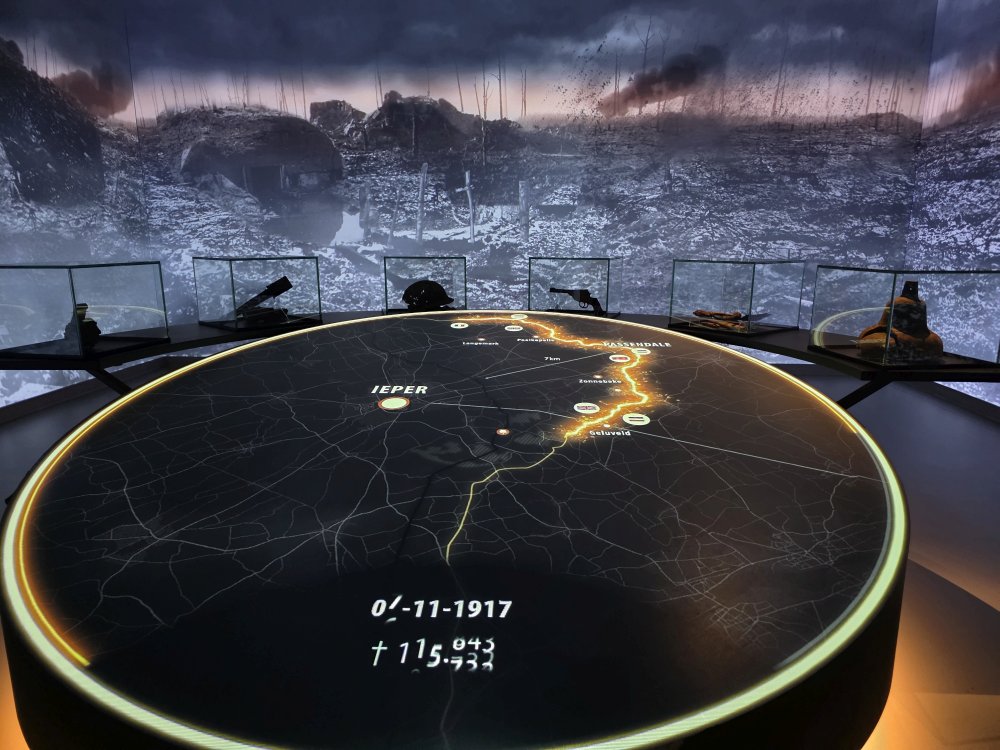
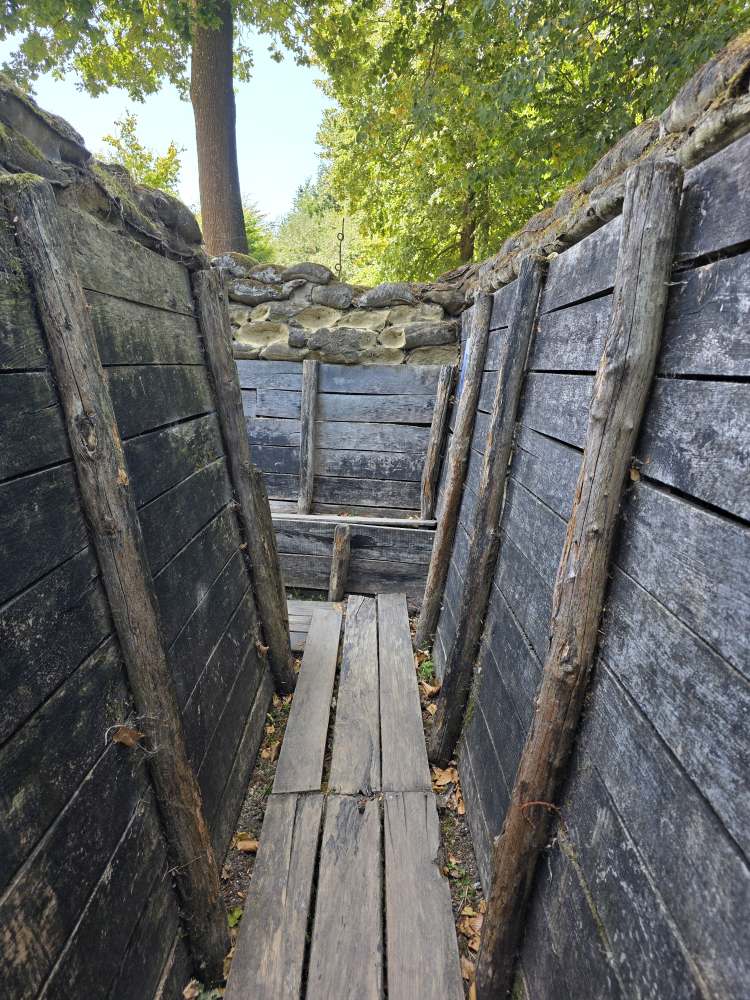
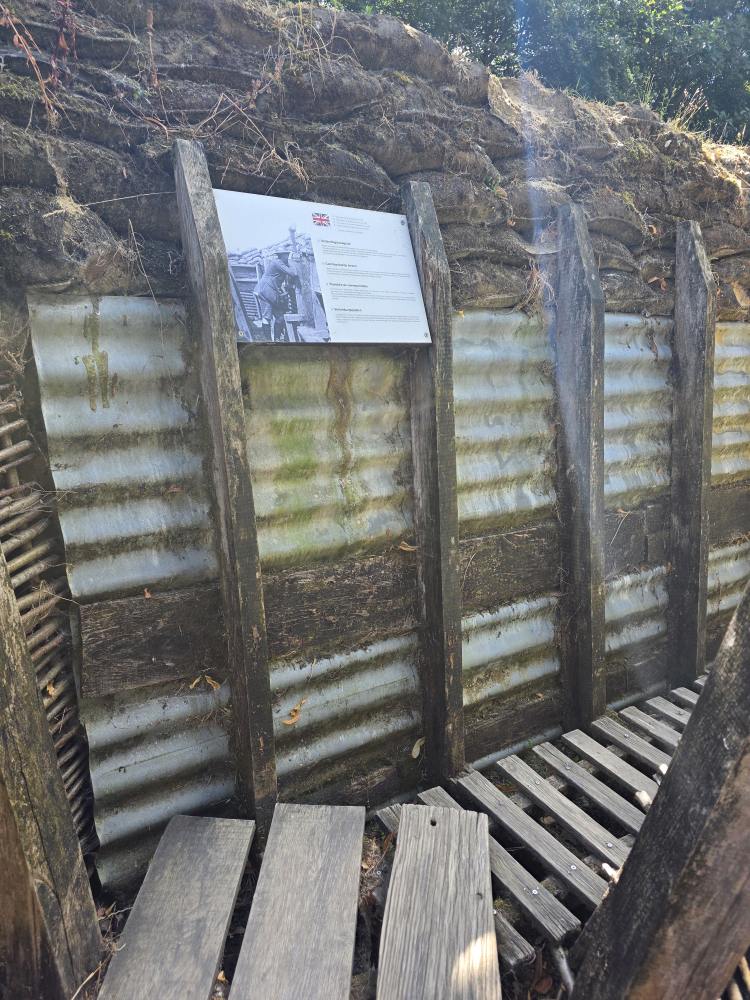
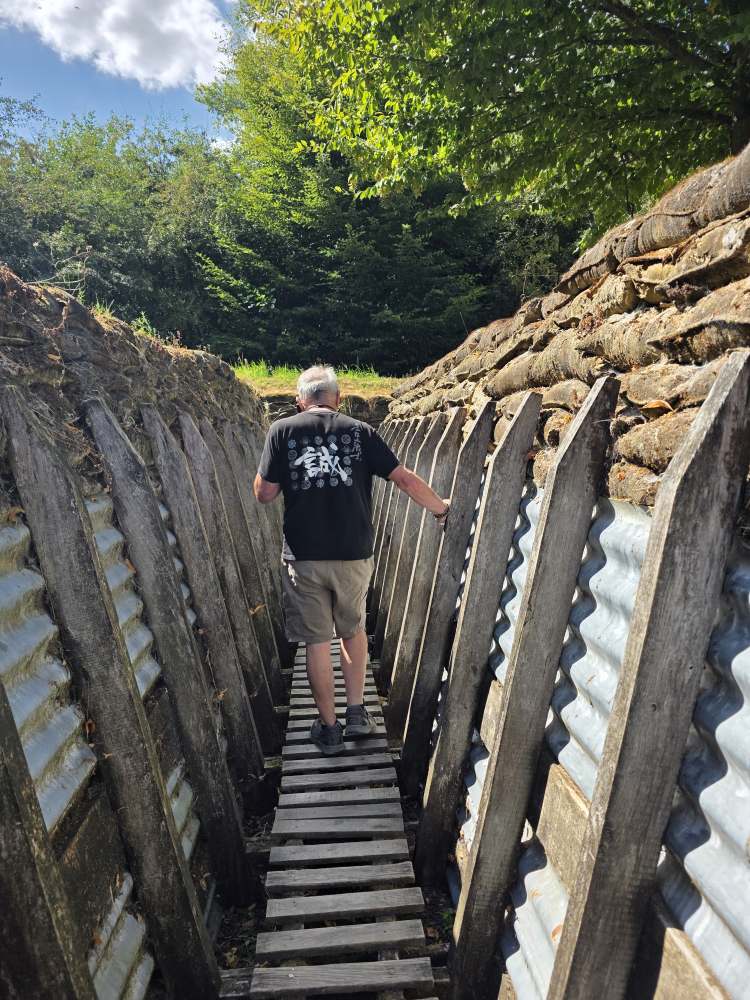
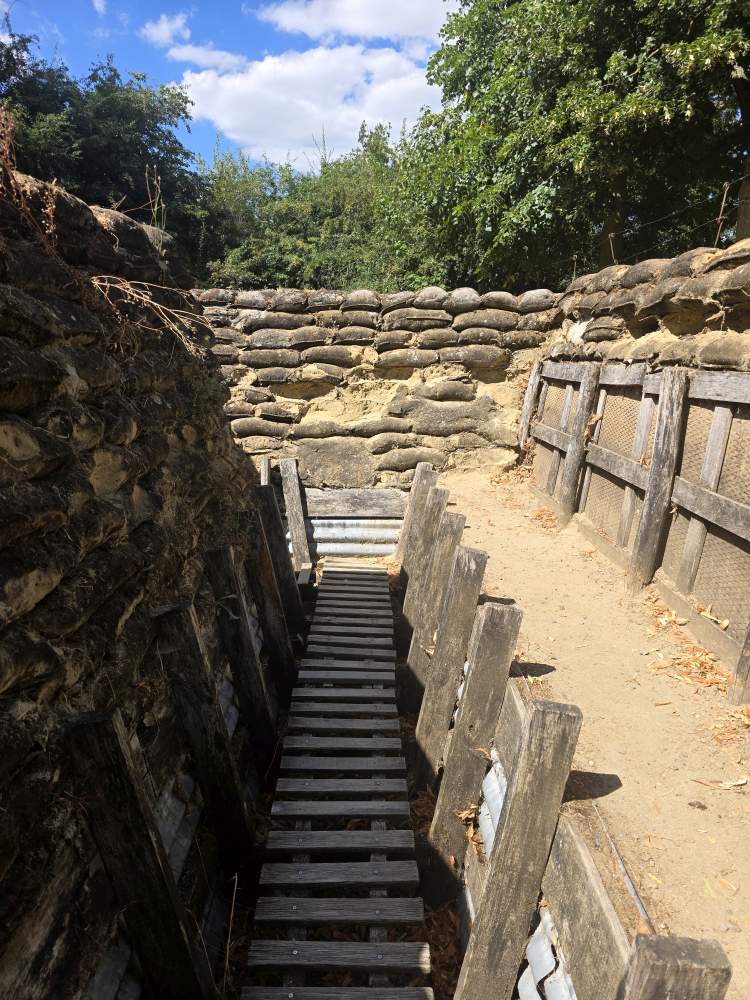
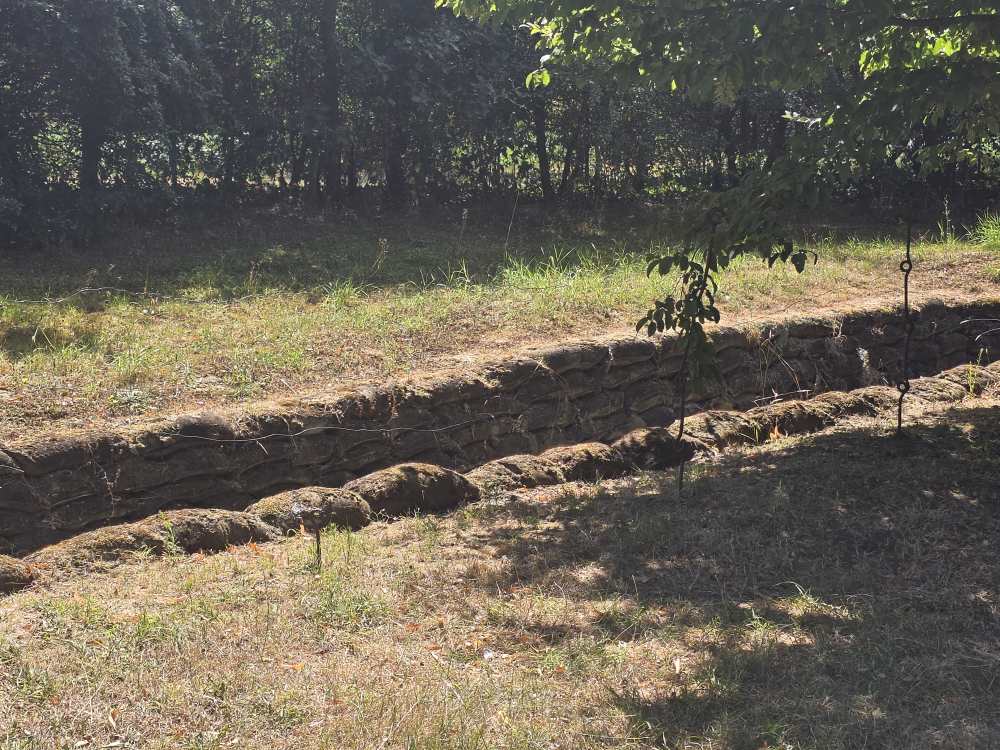
After the tunnels, there is more documentation on what occurred here during the 3rd battle of Ypres – with maps showing the line of battle and how it moved. Then we can move into recreations of the Trenches which wind around outside for quite a good distance. The first trenches are German and all wooden, the next section are the British trenches where you can see they have reinforced everything with corrugated siding and sandbags, as well as raised wooden flooring to help with the flooding and mud. Cool!
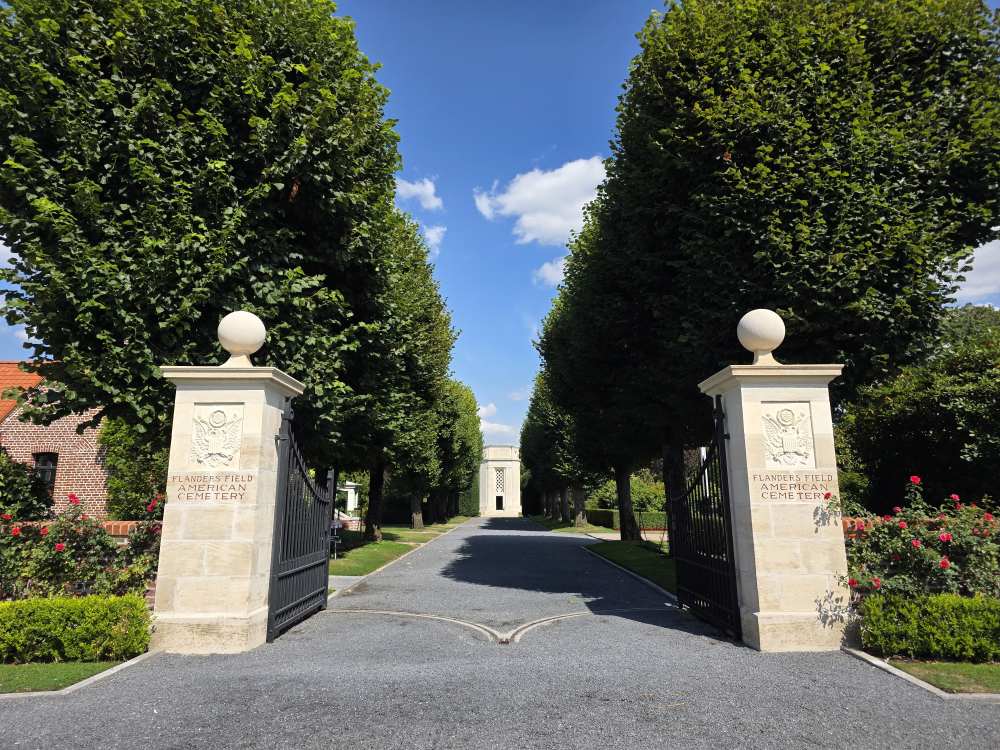
Our last visit of our WWI tour is the Flanders Field American Cemetery which is absolutely pristine and gorgeous. We watch a short video presentation, then head out to wander the tombstones and the memorials.
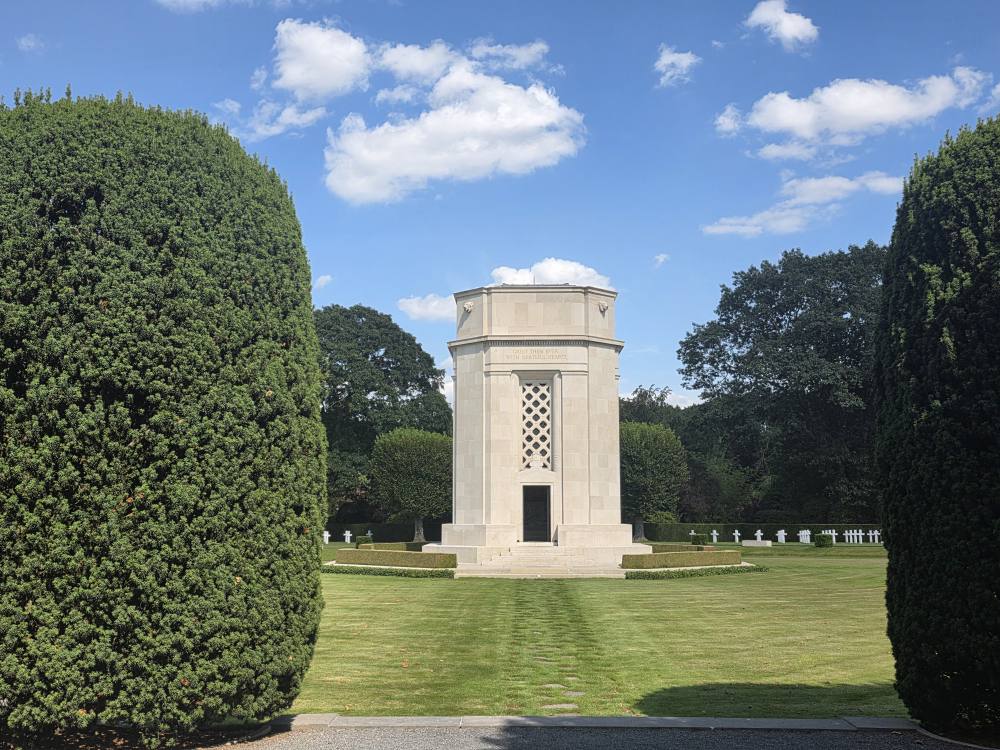
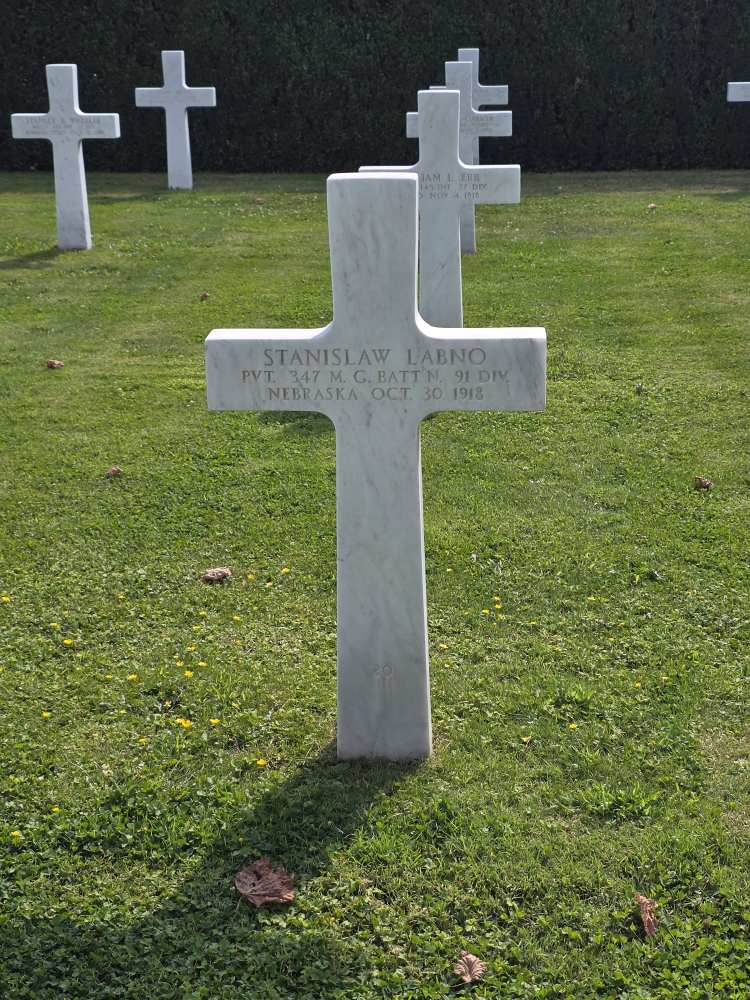
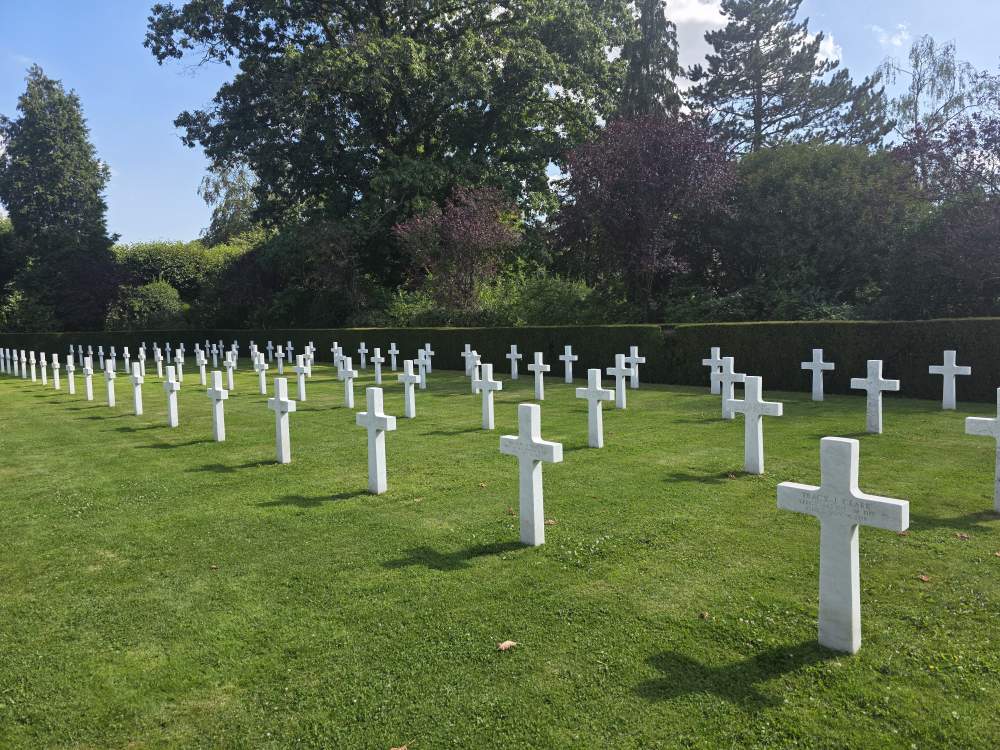
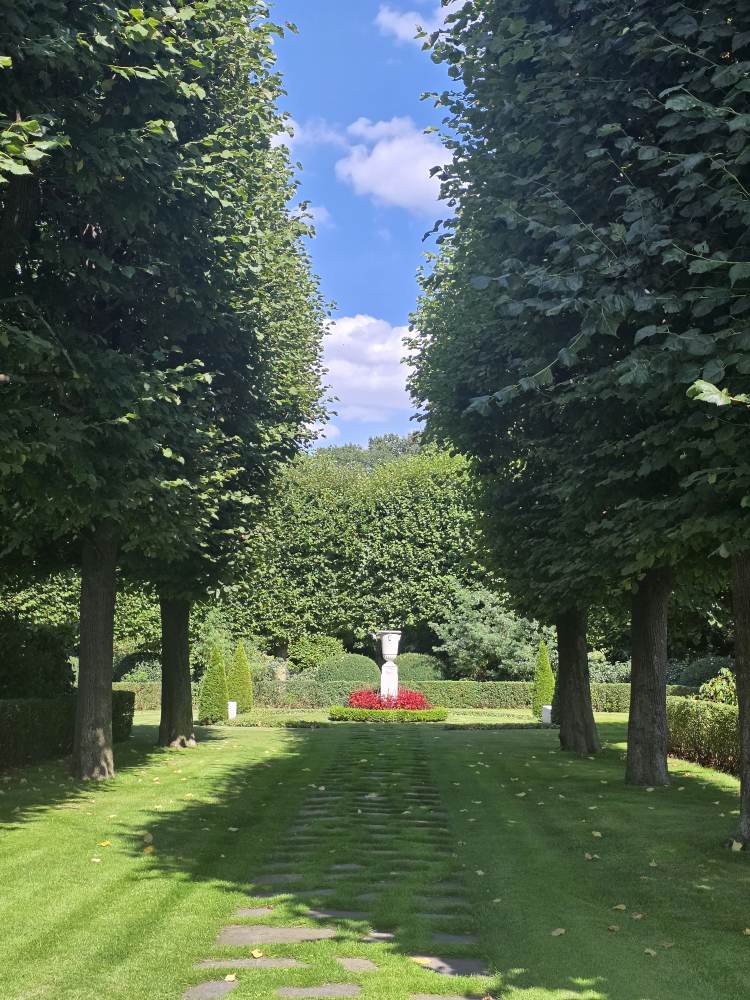
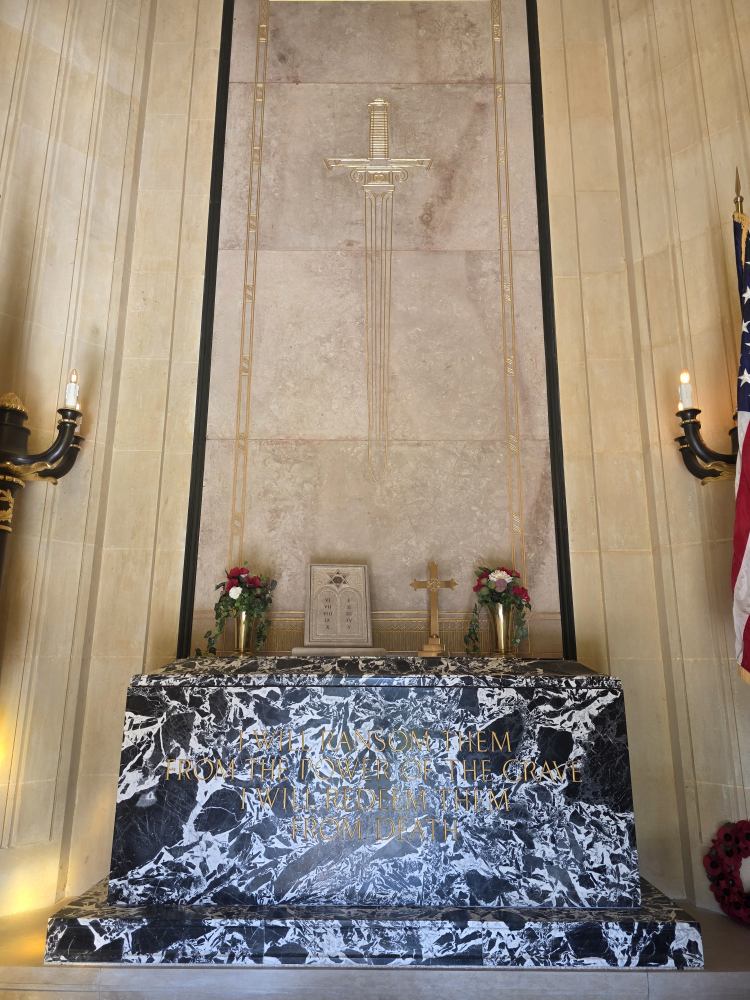
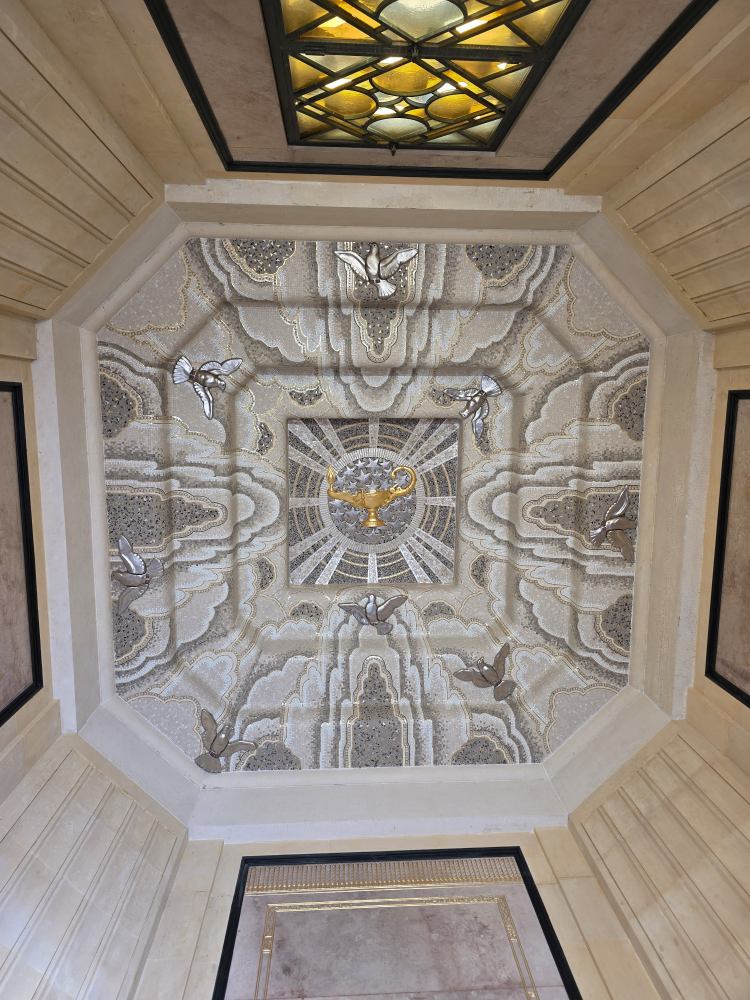
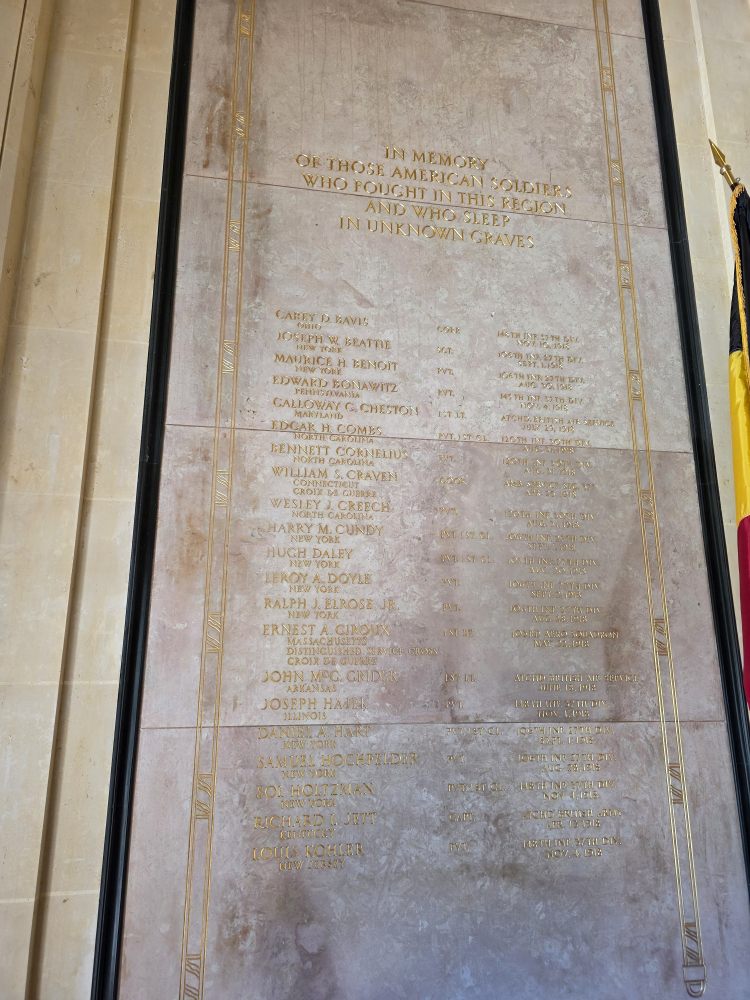
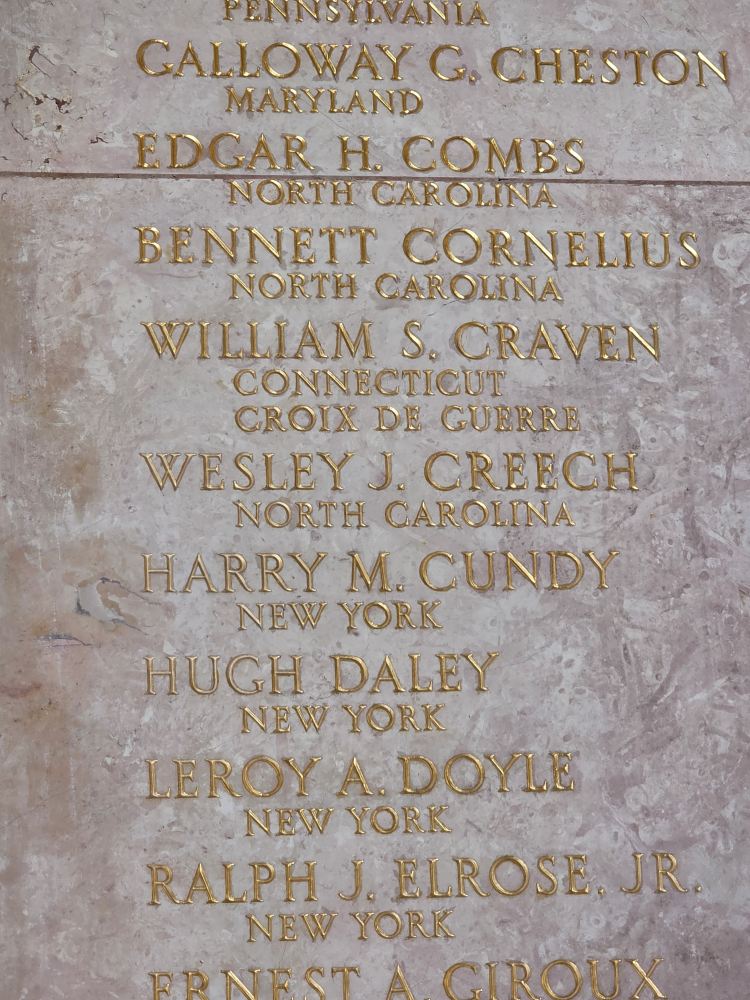
Inside the chapel, in addition to the beautiful altar and ceiling mosaic, we find the Tablets of the Missing – the list of 43 American soldiers who lay in unknown graves. And there I find the name of my In Flanders Field “personal” soldier: Wesley Creech. Pretty full circle from this morning to this afternoon – pulling together all we have seen and experienced.
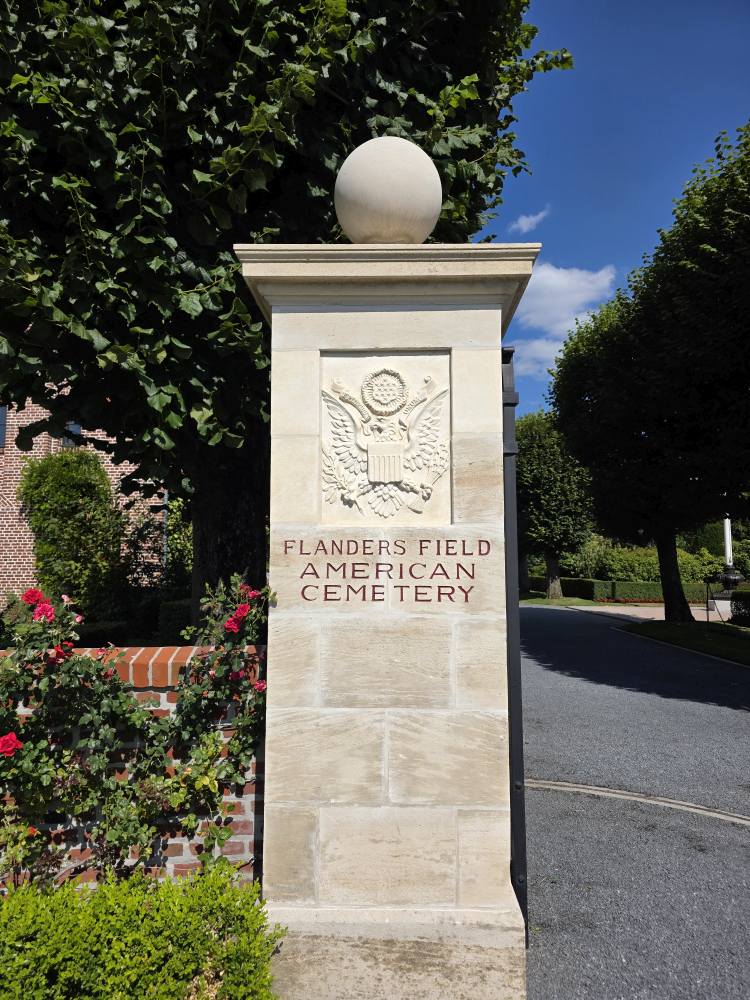
On the way out, we have the opportunity to meet the director of the cemetery and chat with him for a good long while – thanking him for his service here, and discussing all the ins and outs of trying to manage the cemetery under Belgium rules. Such a great way to end our explorations! What an incredible day – and so much better than simply wandering around touristy Brugge.
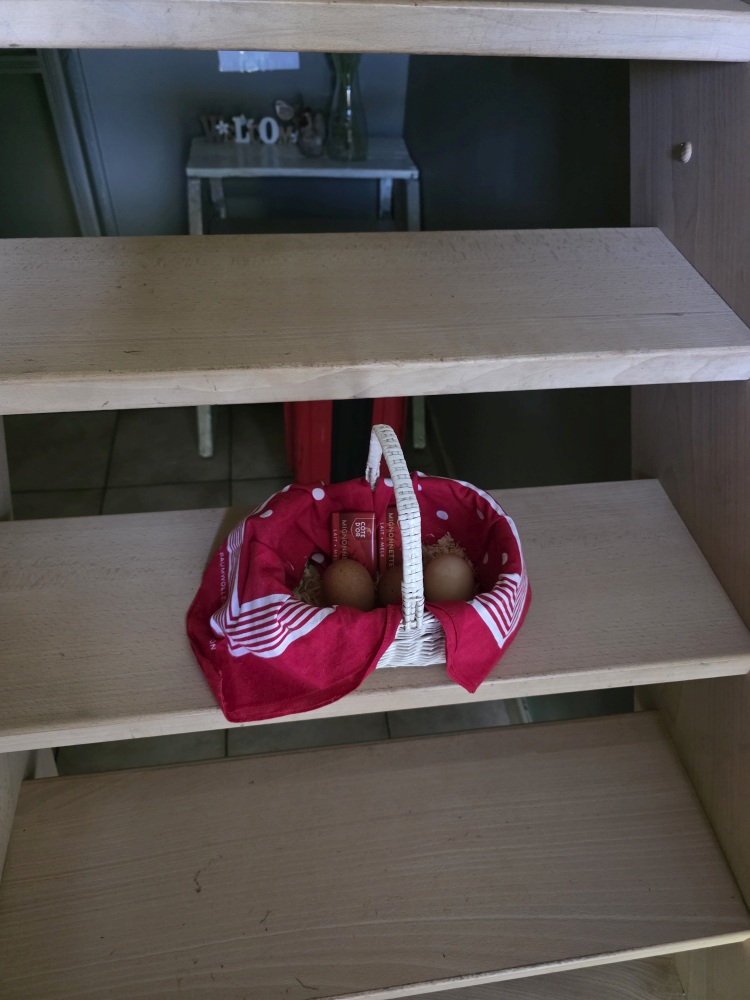
On our way home, we stop at Aldi for dinner supplies, then find our daily supply of eggs – along with some candy) waiting for us on the steps of the apartment. So nice and welcoming. Then it is the rest of the night in the apartment with dinner in, suitcase organizing and general rest and relaxation. Can’t believe our trip is almost complete.
 Andiamo