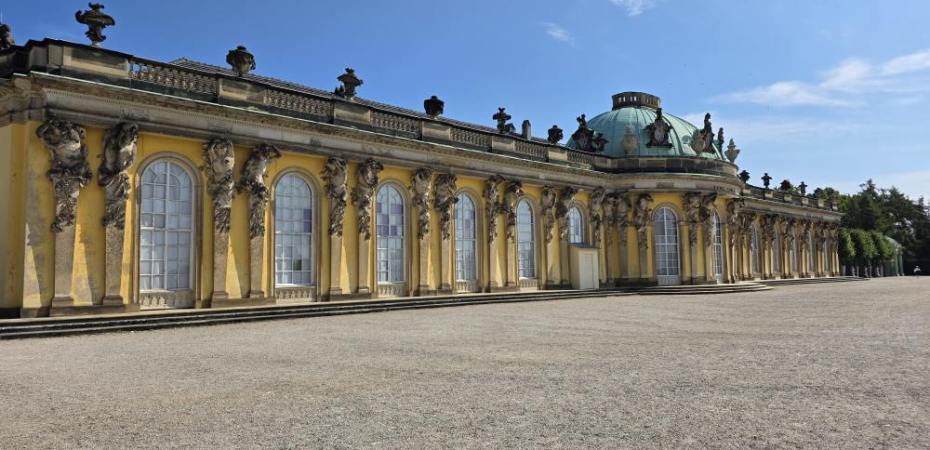
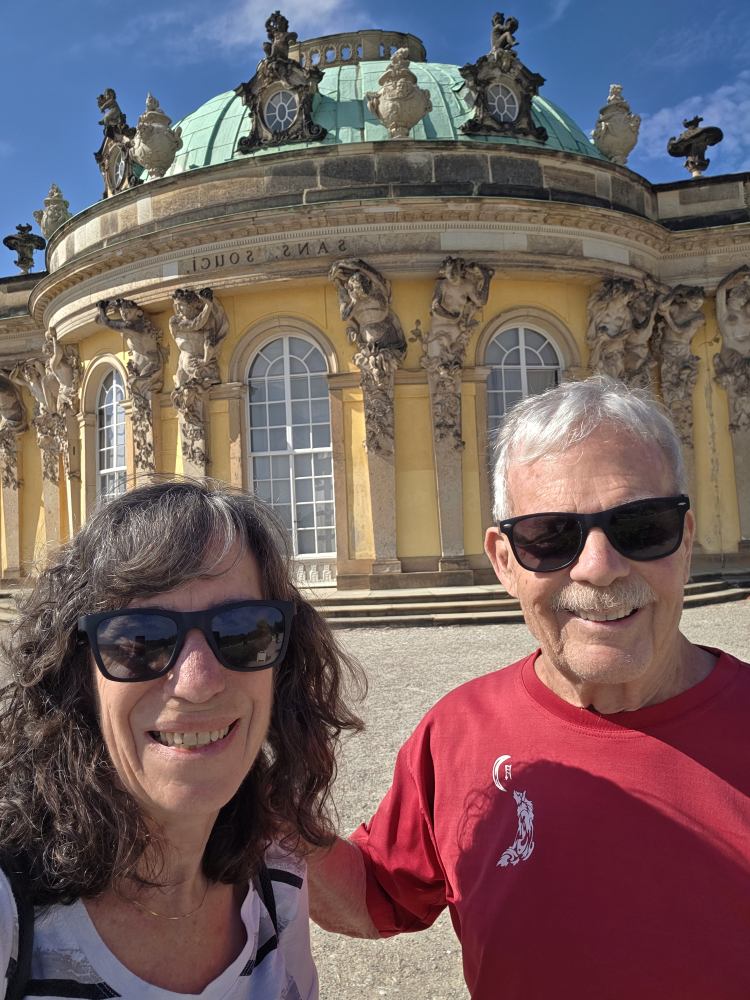
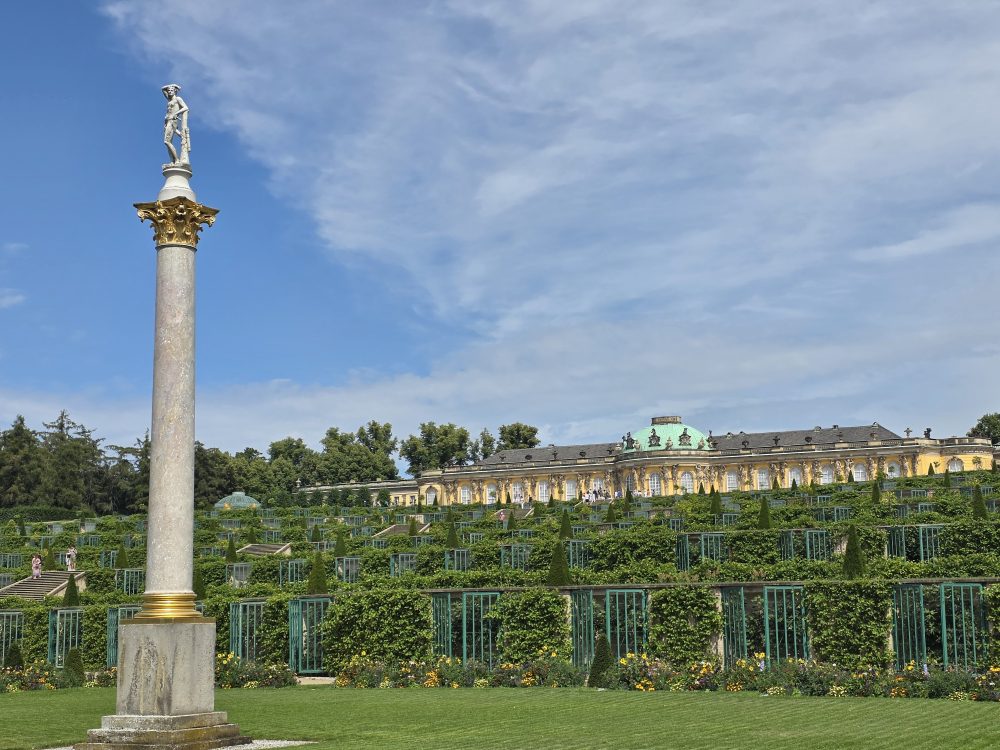
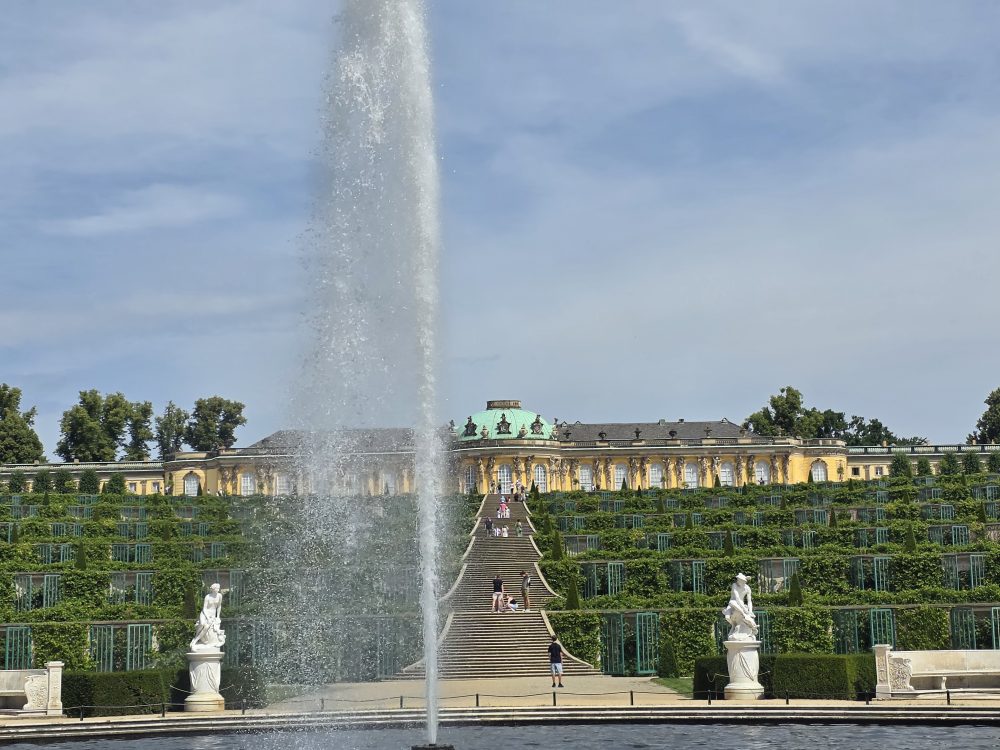
Up and out early this morning as we have an hour-long trip to Sanssouci in Potsdam today. Using our Berlin Welcome Card, we head over to the train station to hop the 30 minute train to Potsdam, then transfer to the bus to Sanssouci – seamless and easy. And of course, arriving early enough to wander around the grounds before our 10:15 entry time and take some great photos of the “Retreat on the Vineyard” (so named for the location and the fact that Frederick the Great built it as a summer residence for pleasure and sanctuary) without the crowds.
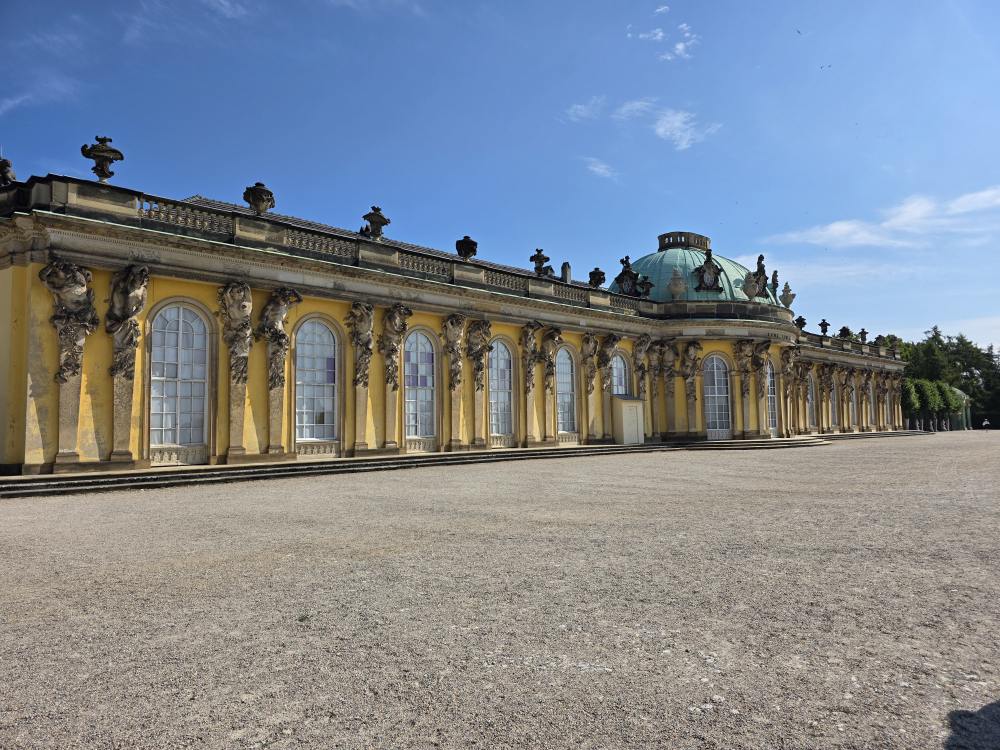
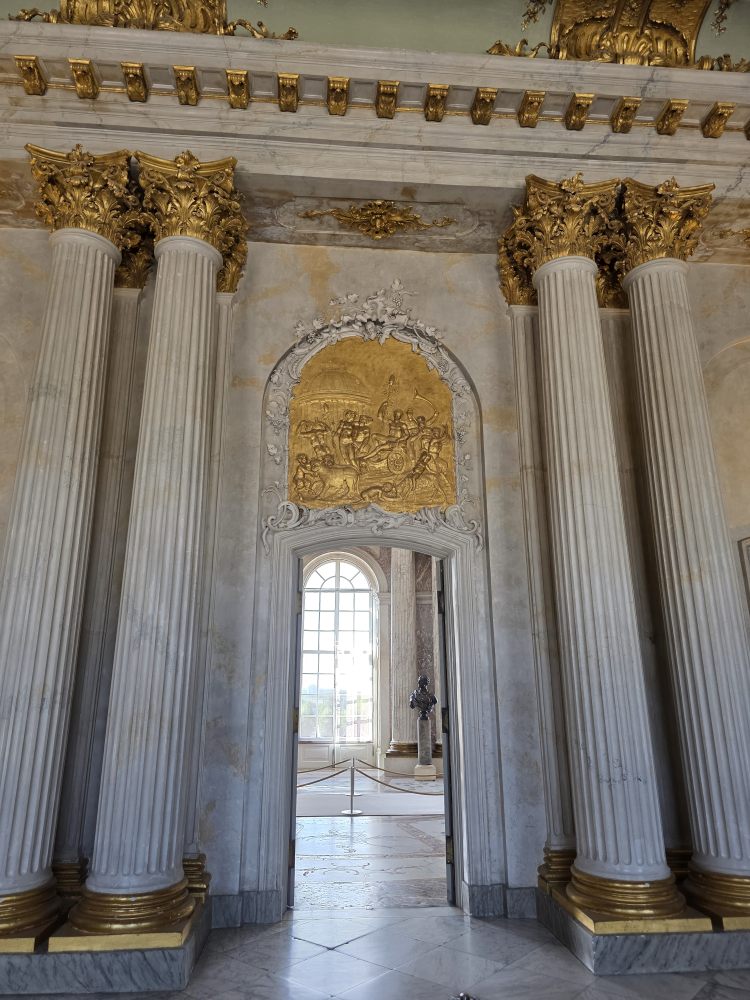
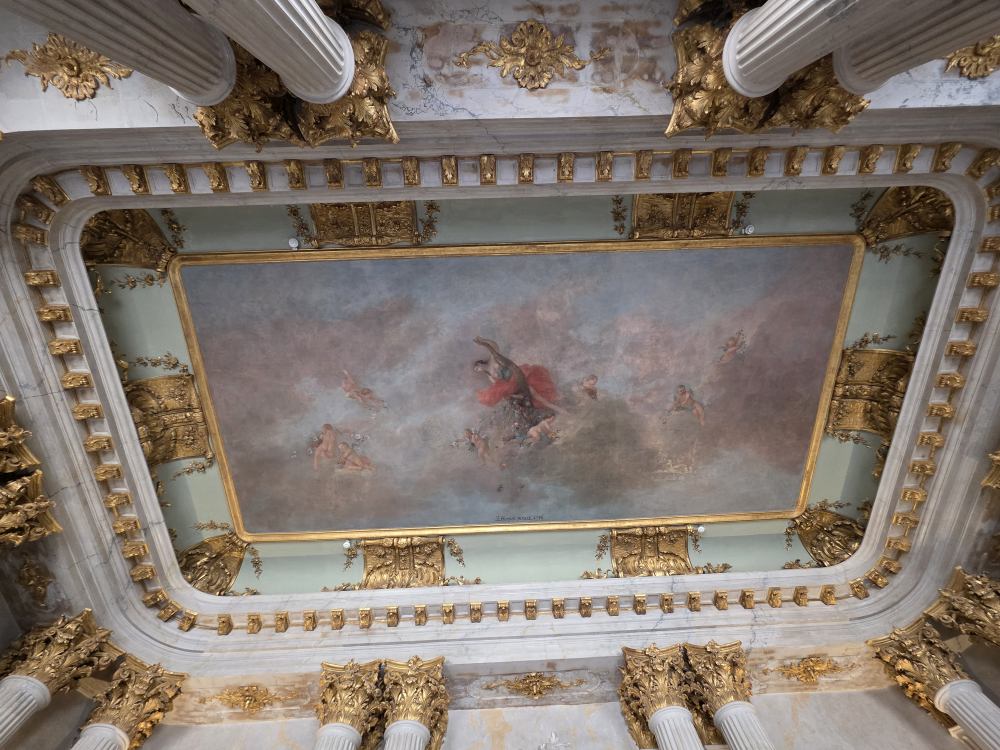
Once admitted into Sanssouci (the name meaning “without care” further emphasizing the pleasure aspect of the building), we enter into the Great Hall, adorned statues, gilded reliefs above the doorway depicting Bacchus, the God of wine, and a ceiling painted with the Roman goddess of fruits and gardens.
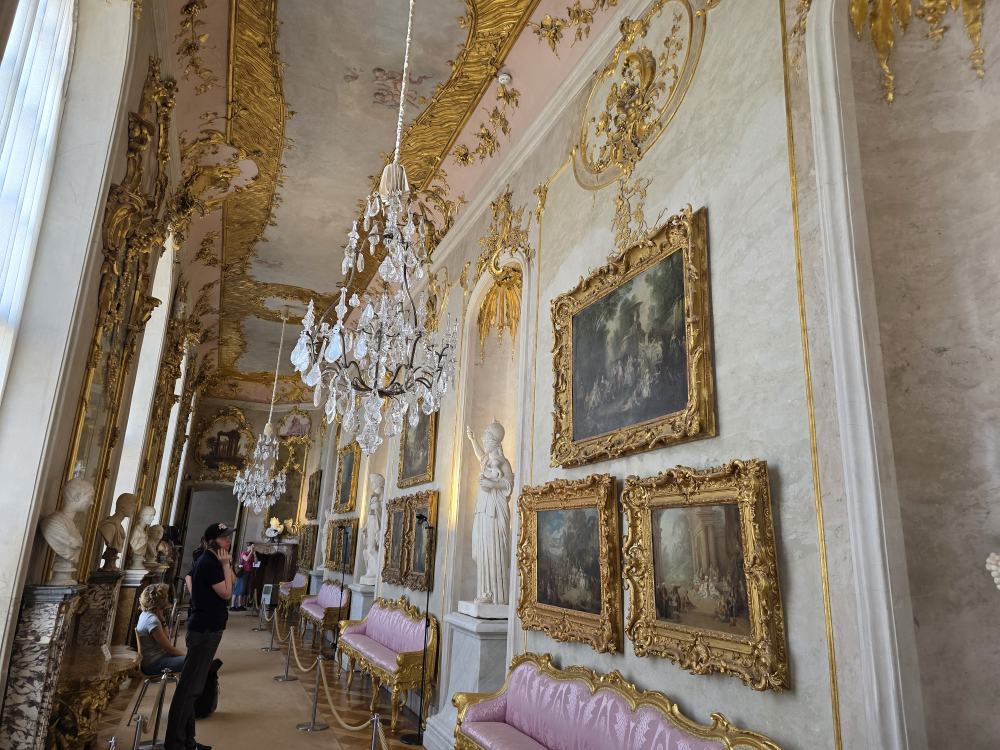
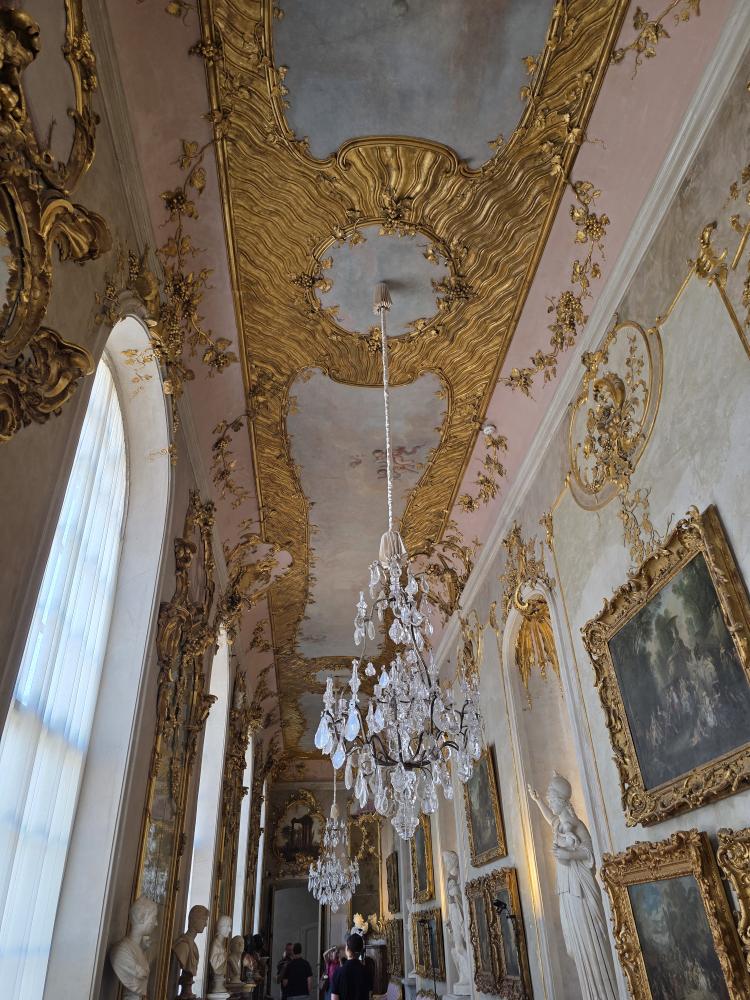
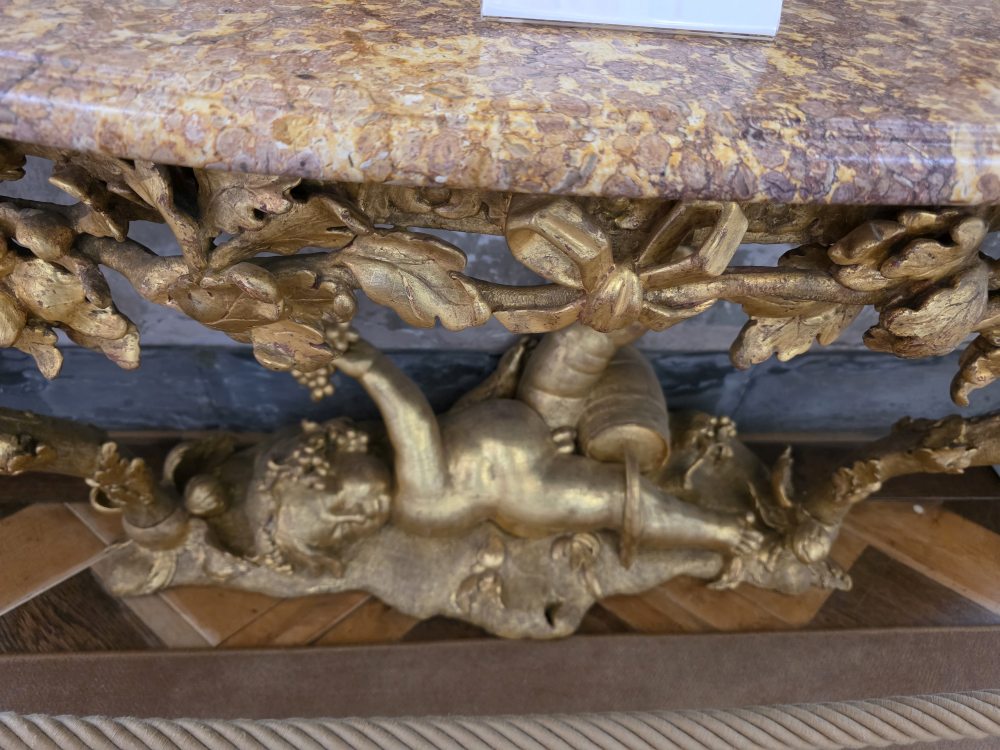
The palace is small, only 12 rooms, but we cover them all trying to keep our mouths shut and jaws from dropping – it is just gorgeous and opulent with great history attached. From the “Small” Gallery – adorned in Rococo décor, classical sculptures and paintings, weird narrow sofas that used to emphasize the design, not used for seating, and the young tipsy Bacchuses sculpted under the tables – we definitely continue with the whimsy and fun feeling of the Palace.
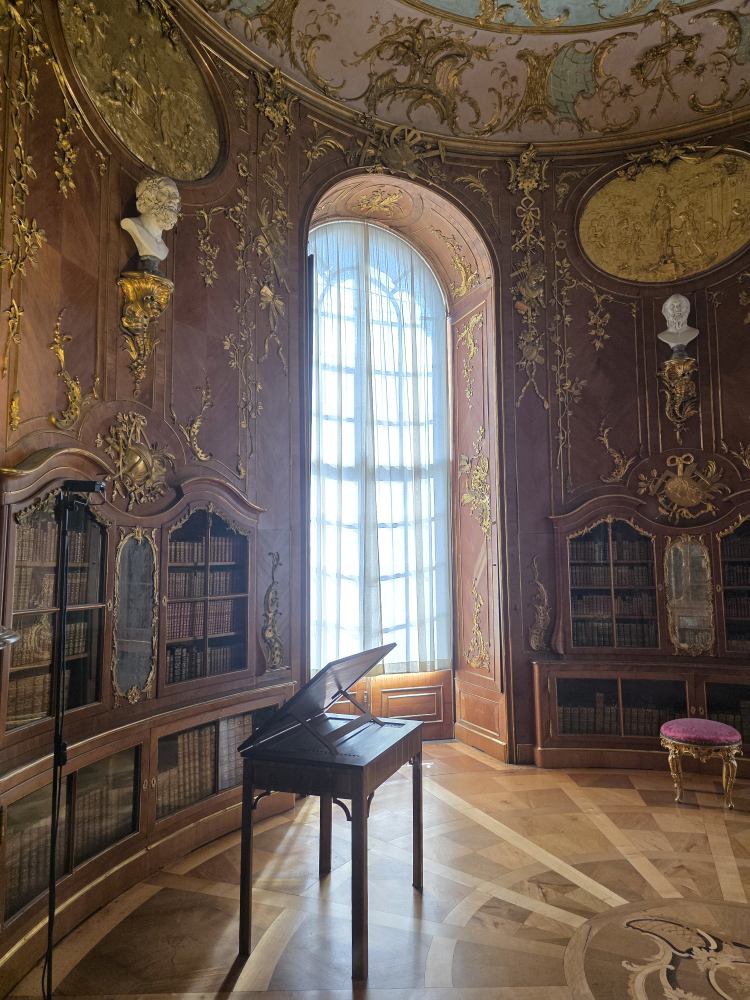
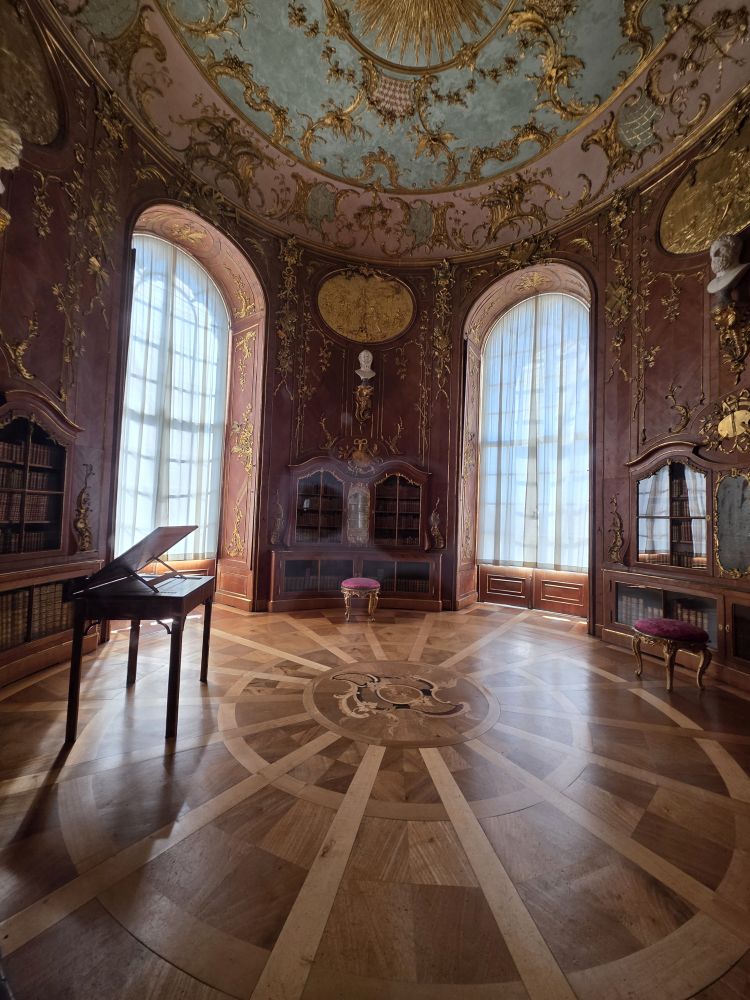
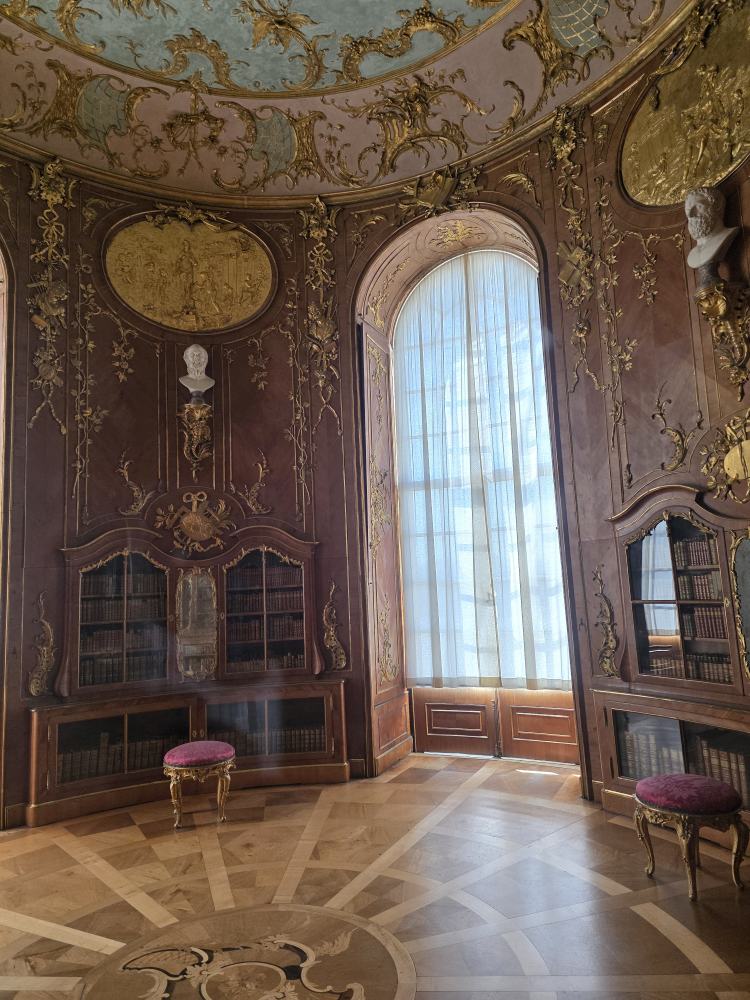
We peek into the Library – where only the King and his valet had access. This was his retreat, where the books are placed in such a way that he could reach them as he was only 5’2” tall. He was an avid book collector, beginning at a young age, and it is here that we begin to learn what a jerk his father, Frederick I, was because when he found out his son was collecting books, he sold the collection to punish him. His father wanted him to be educated in military pursuits, not book knowledge. But Frederick the Great obviously kept on collecting and he was so fond of his books, he created six almost identical libraries in his various palaces so he could have access to his books anywhere.
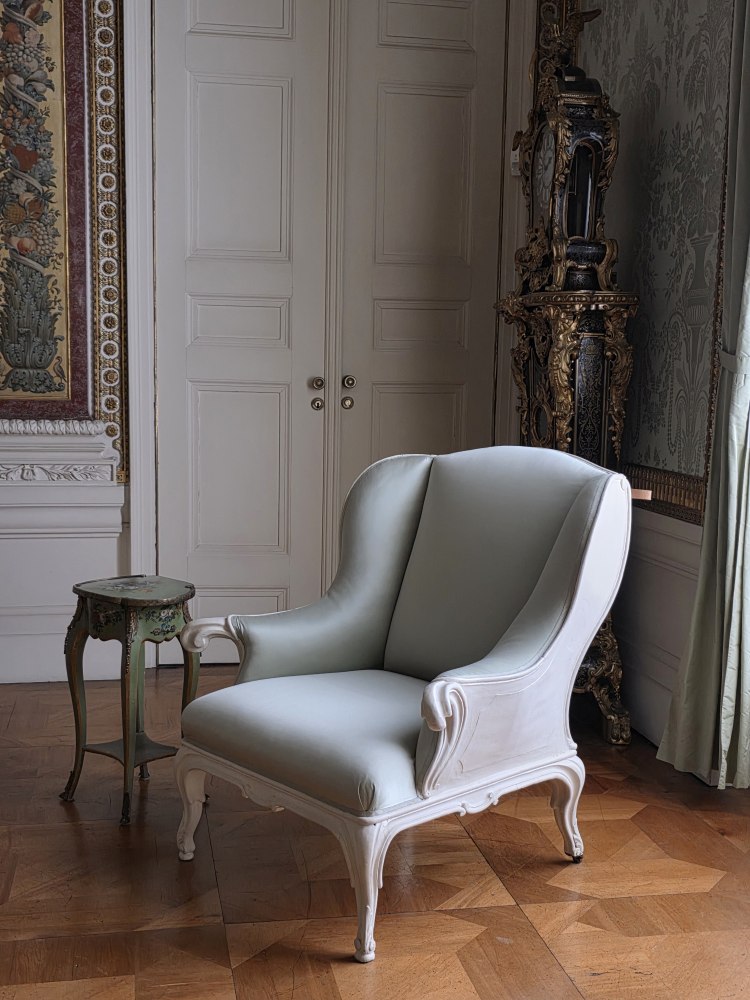
Next we visit the King’s bedroom, which was redecorated by his nephew and successor, Frederick William. However some original furniture has been returned, including the green chair that had an adjustable backrest. This is where Frederick the Great spent most of his last weeks of life, sleeping here as he could no longer lay flat, and it is also where he finally died in 1786 at the age of 74.
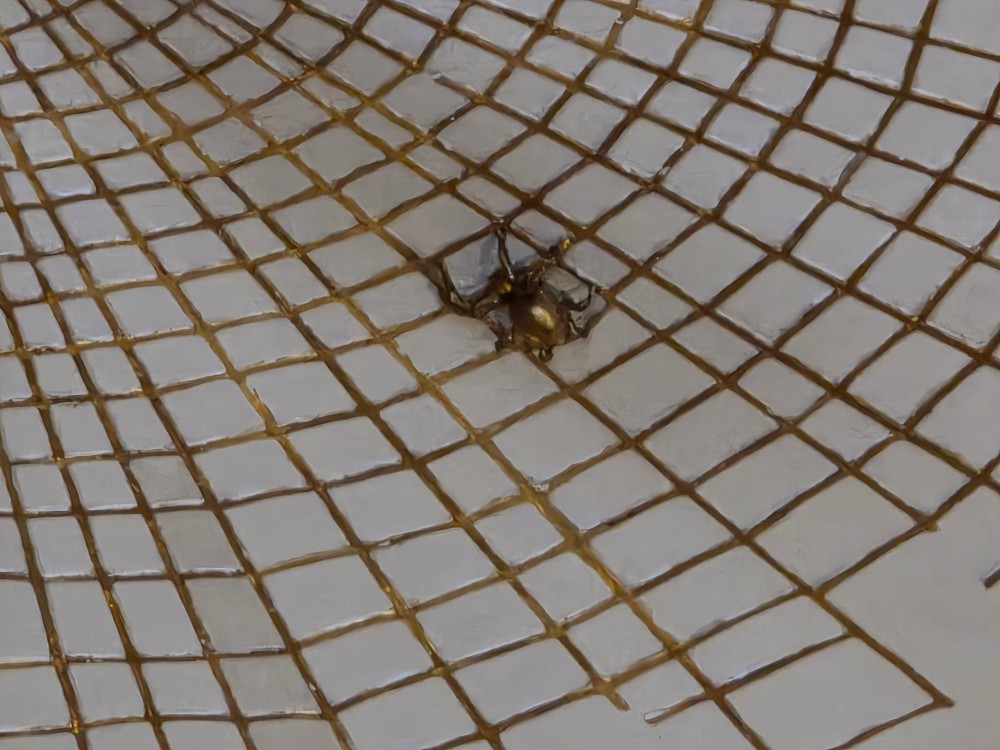
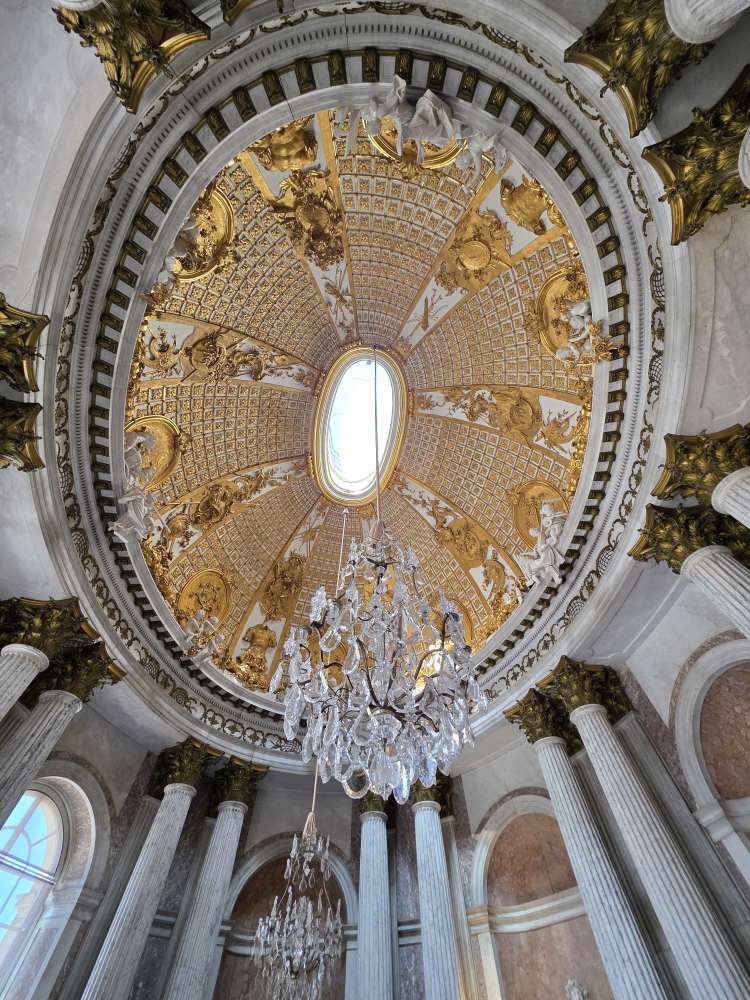
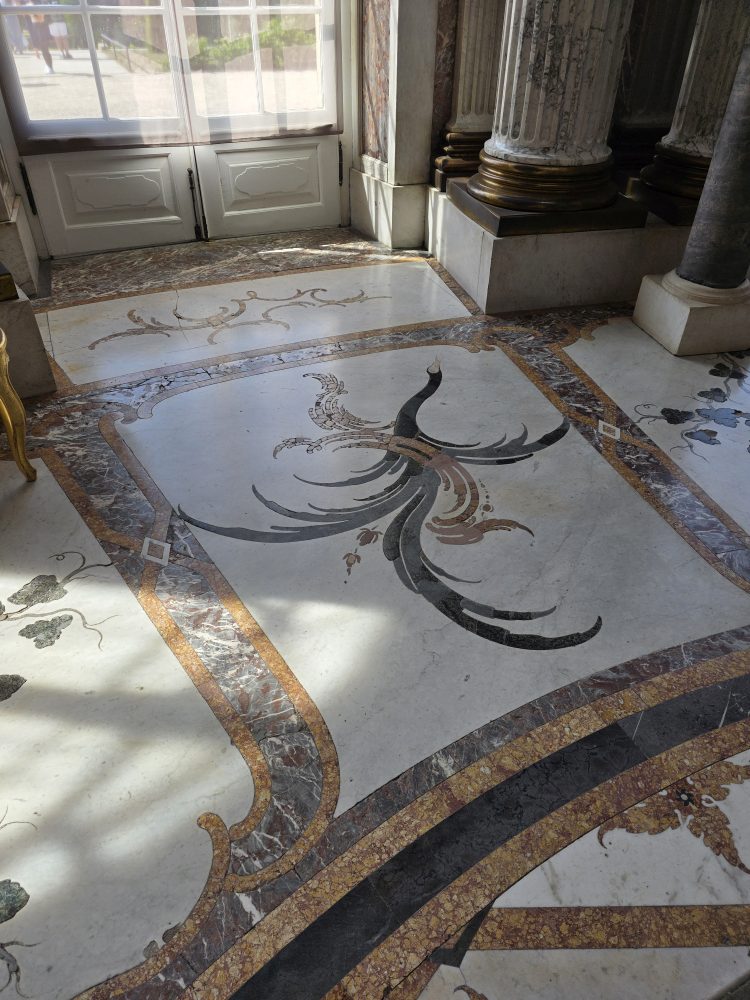
The music room returns to the Rococo décor, with the really cool spiderweb in the middle of the ceiling – nature as art, as it were. Next is the audience room and the dining room, and then The Marble Hall – with its soaring ceiling and dome – this was the reception room and the heart of the building. You can see it in the gold – oh the gold! – the decorations, the cherubs the marble, the columns. Incredible.
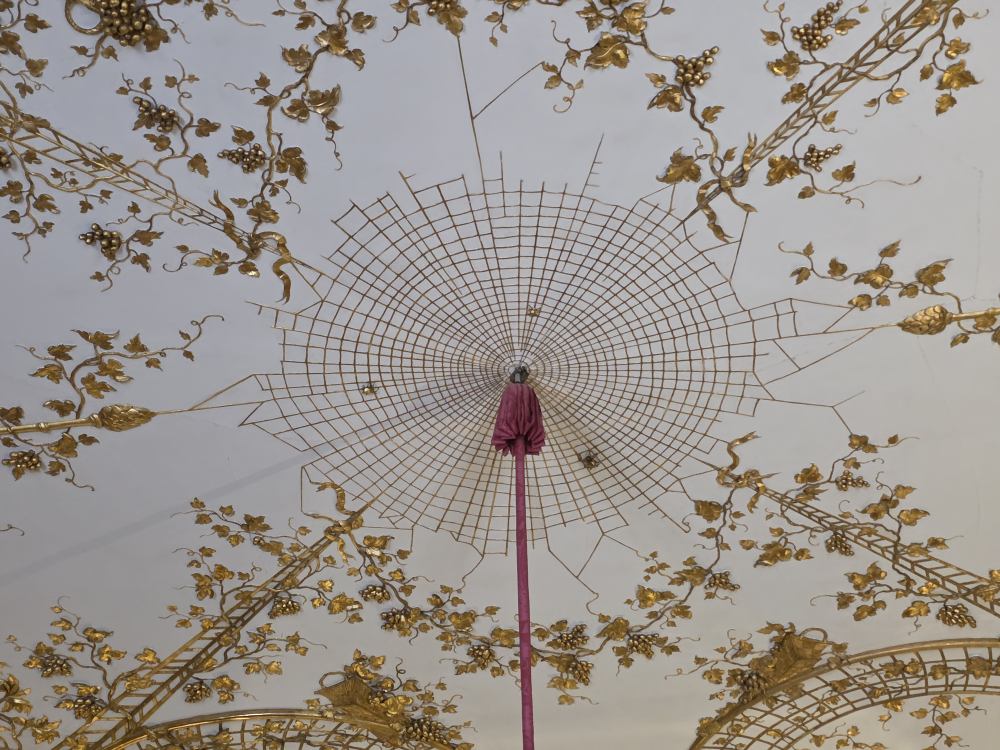
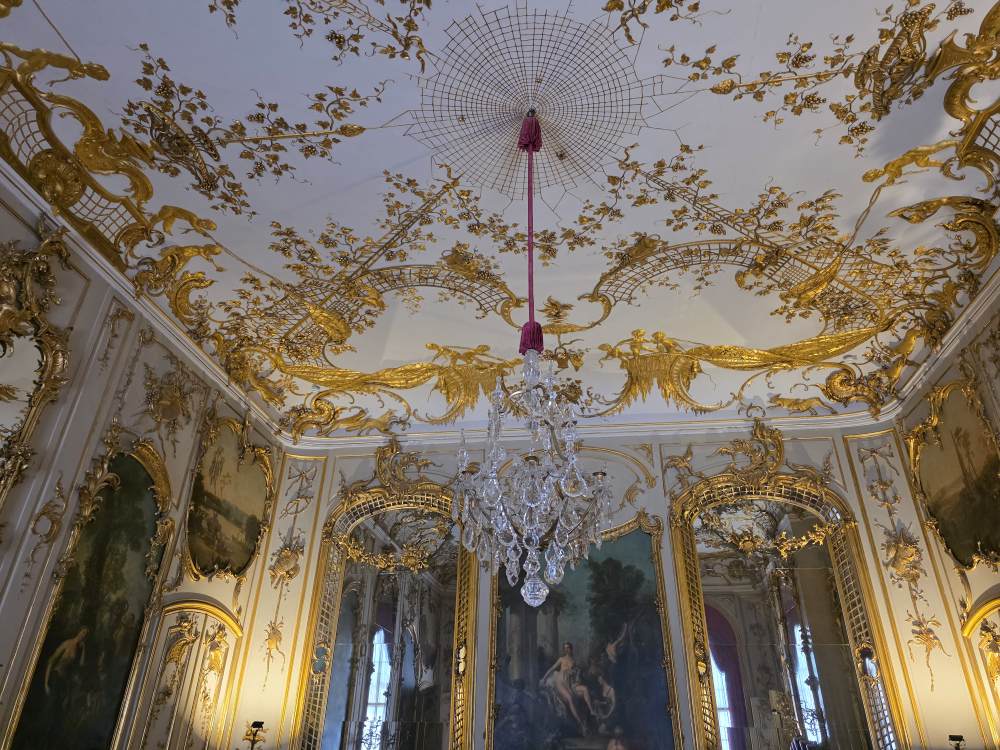
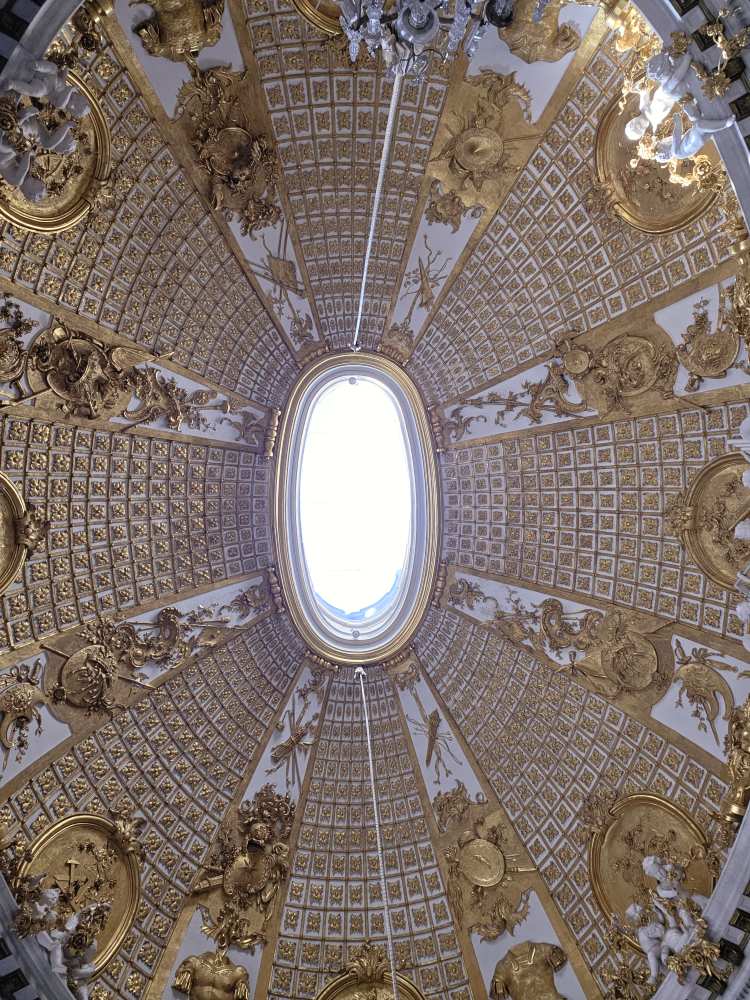
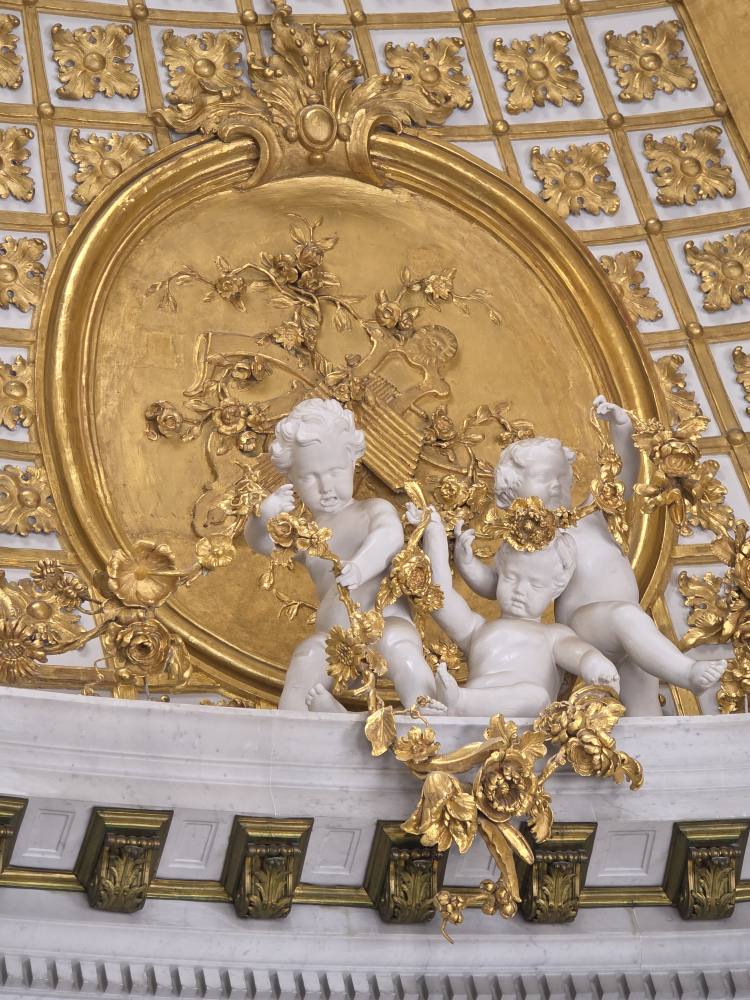
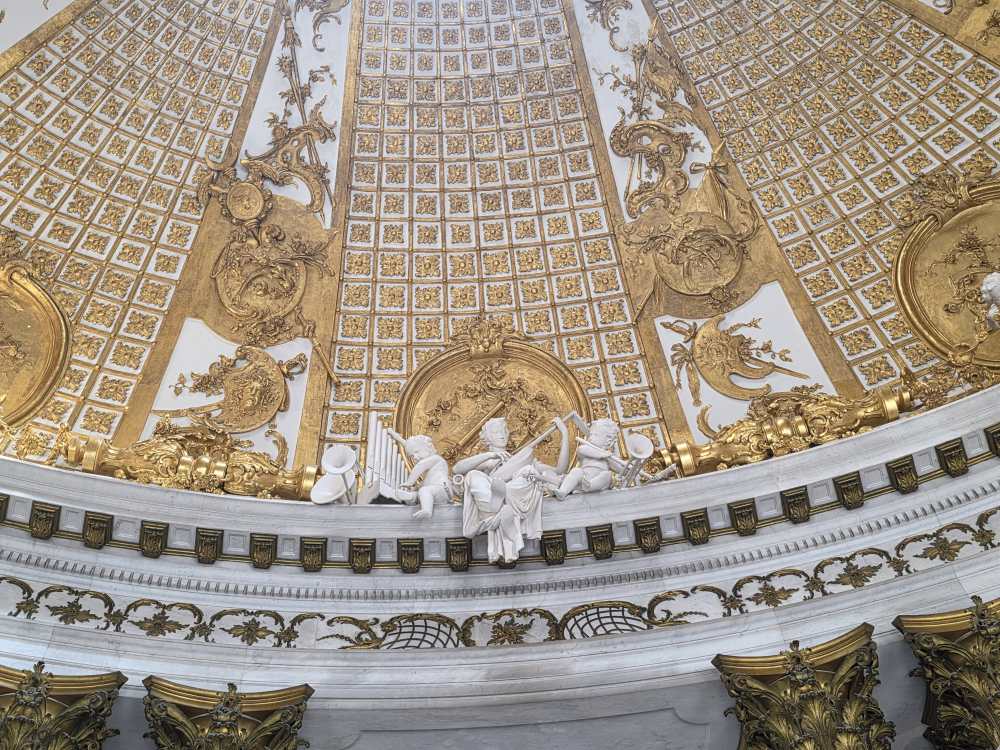
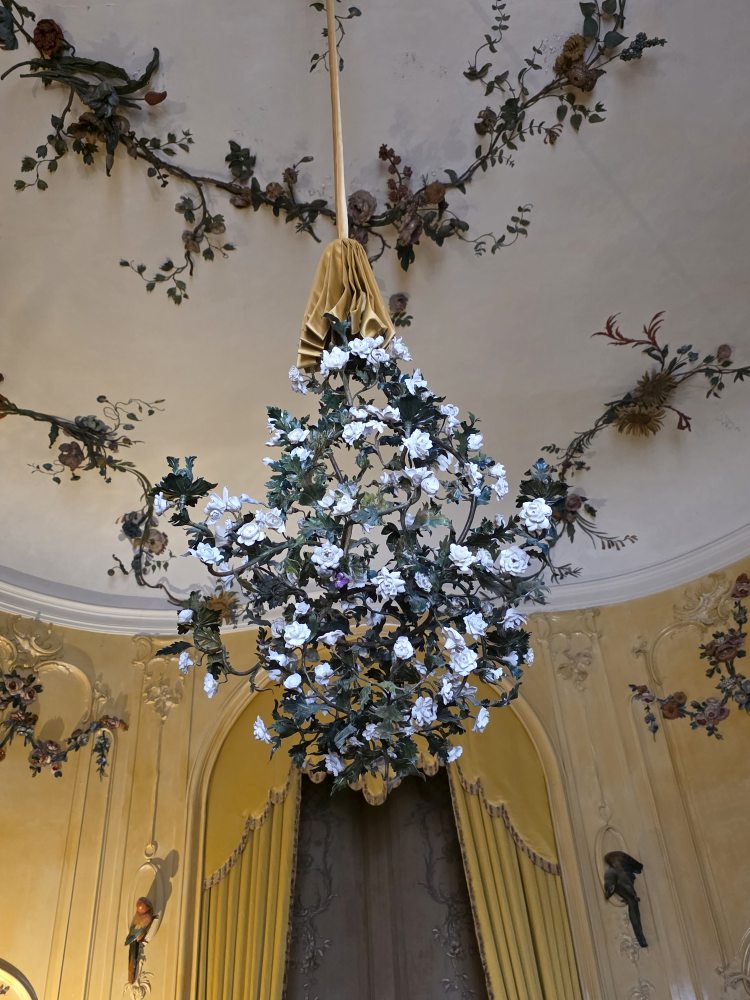
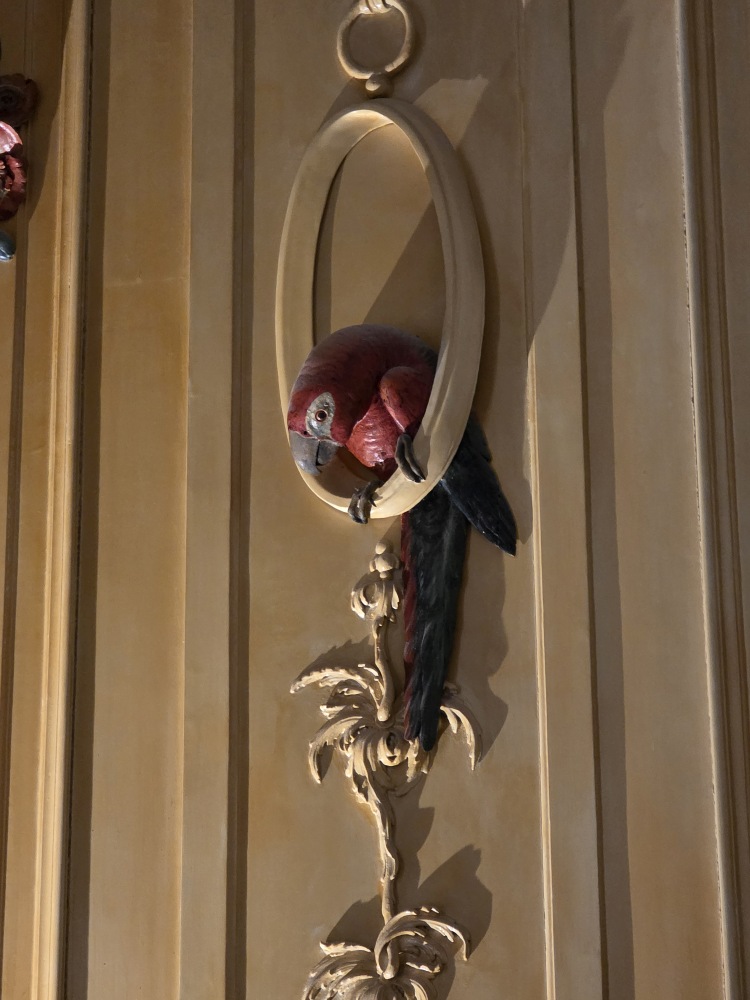
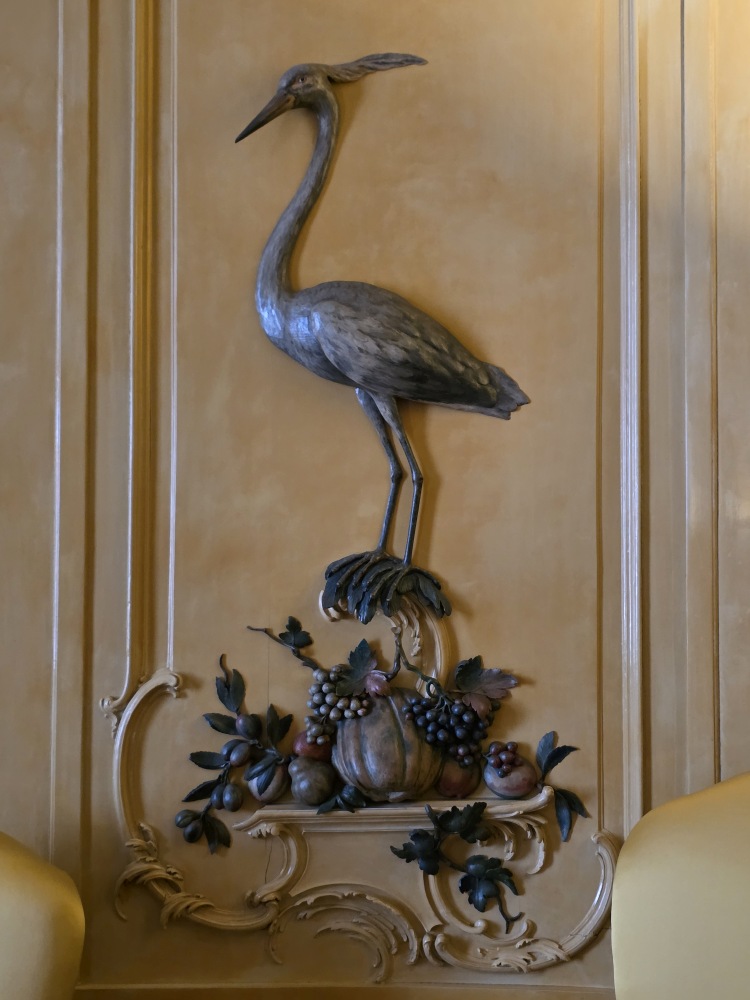
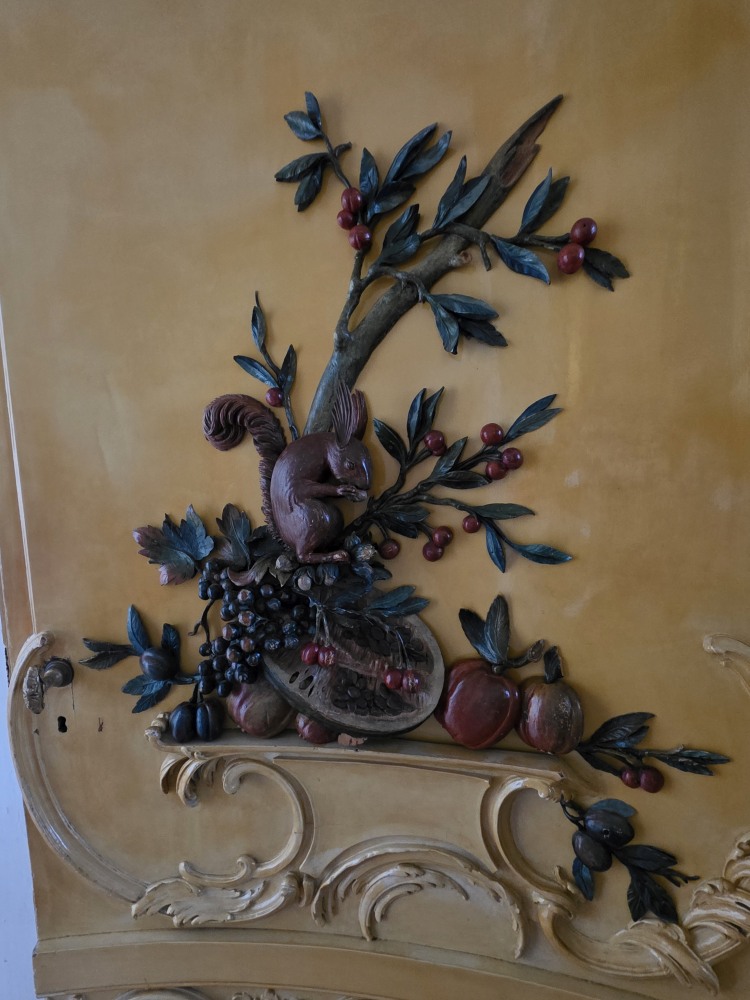
We move on from the hall to the 3 of the guest rooms, spacious and well appointed, but the final, 4th guest room is the best – nature as art, absolutely! The walls and the ceiling are all decorated in nature scenes: what looks like a fence at the bottom, animals, fruits, flowers – all in bas-relief. Even a chandelier decorated with flowers and leaves. Absolutely one of my favorite rooms. Just so fun and beautiful and, well, just crazy.
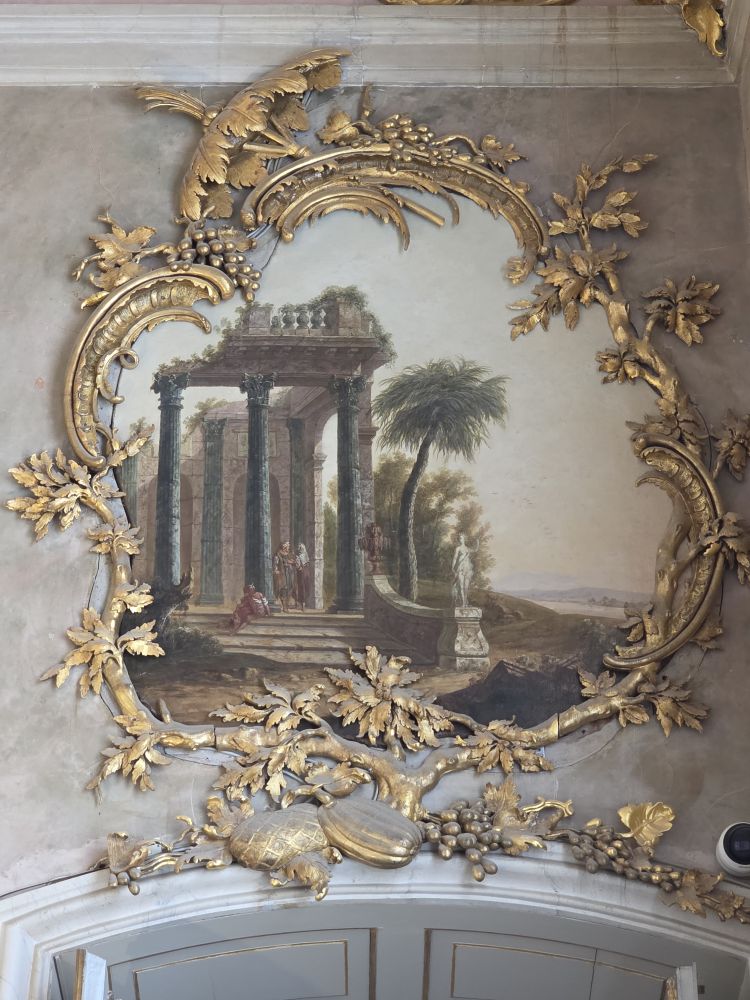
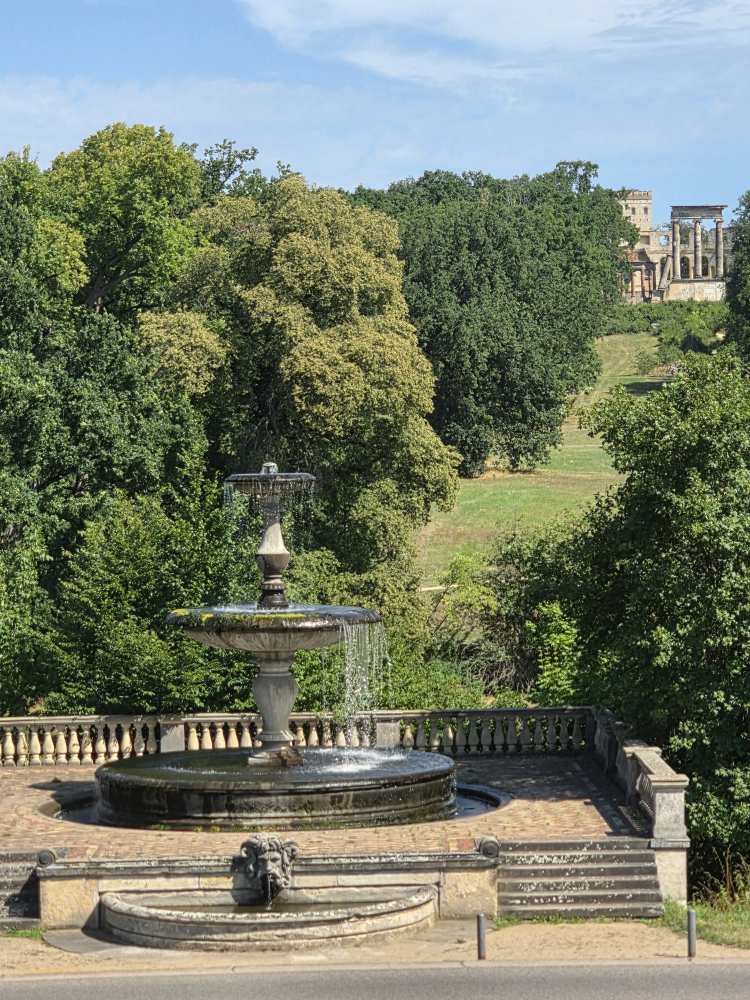
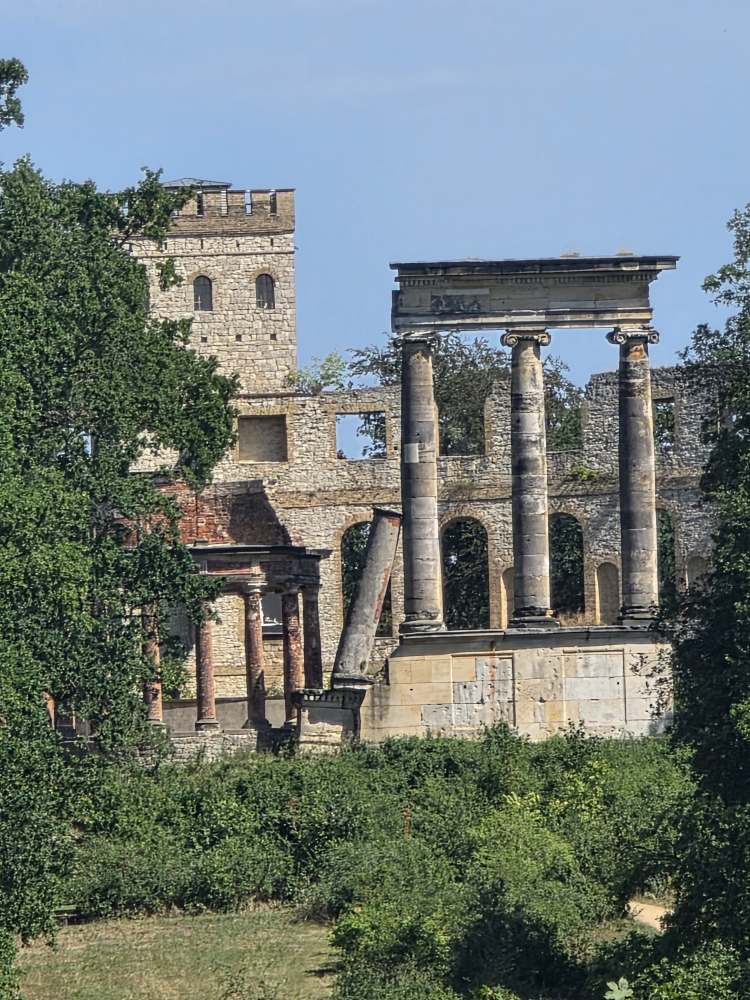
And then we are done – what an amazing place. Earlier, as we had walked across the courtyard before entering the palace, we had noticed the ruins out on a hill in the distance. Now we know why they are here – in the gallery, Frederick collected many paintings of Europe and ruins, this because his father refused to let him go on the traditional tour of Europe when he came of age, so Frederick never saw the actual ruins or sights, but were intrigued by them. He had his architect recreate the ruins on the hill so he could look at them every day he was here. His father was just a prick – that is for certain!
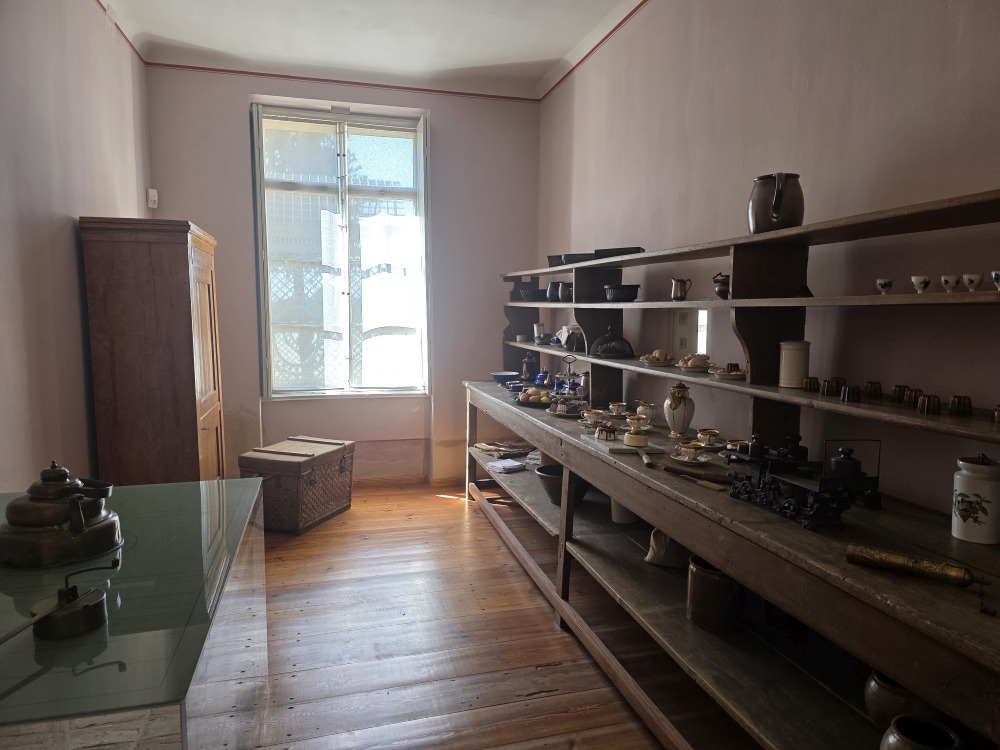
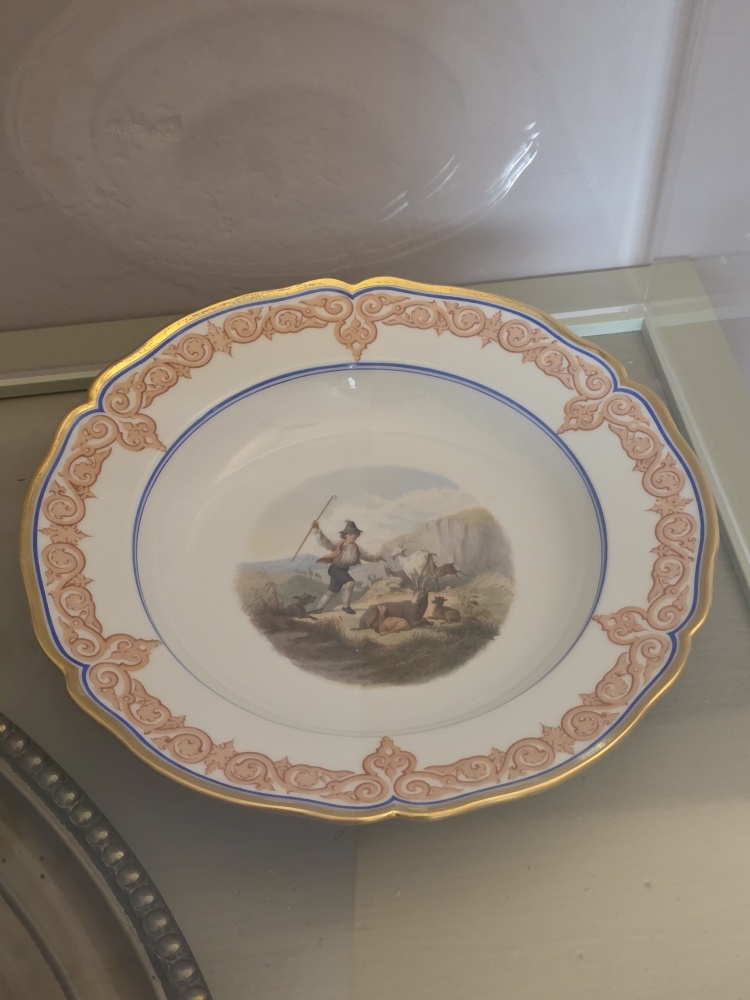
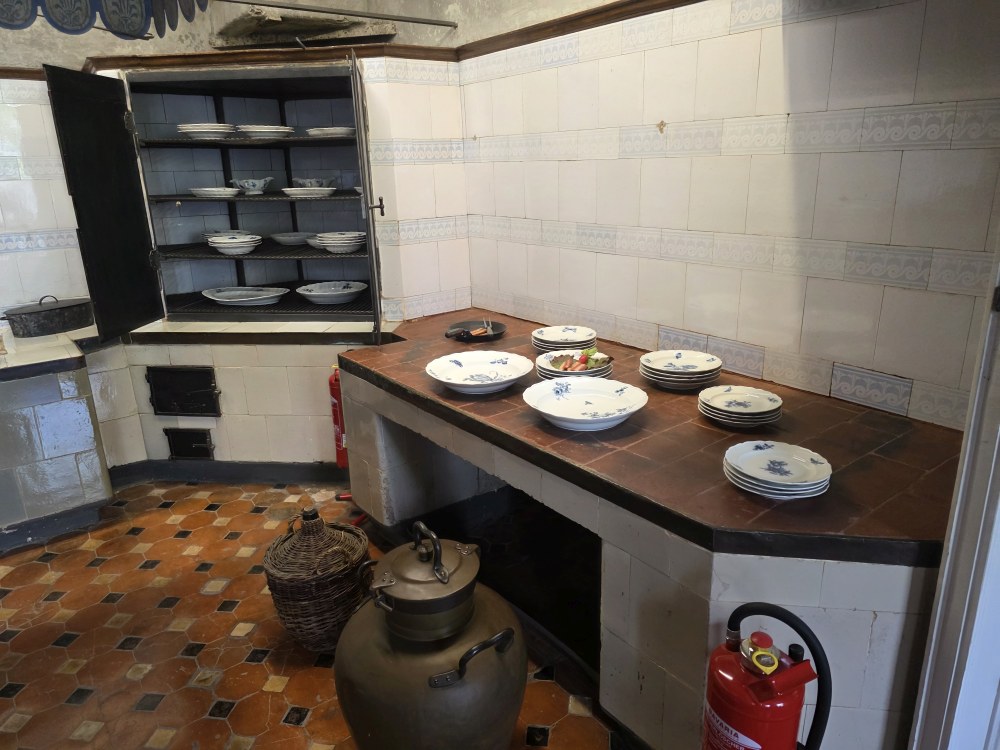
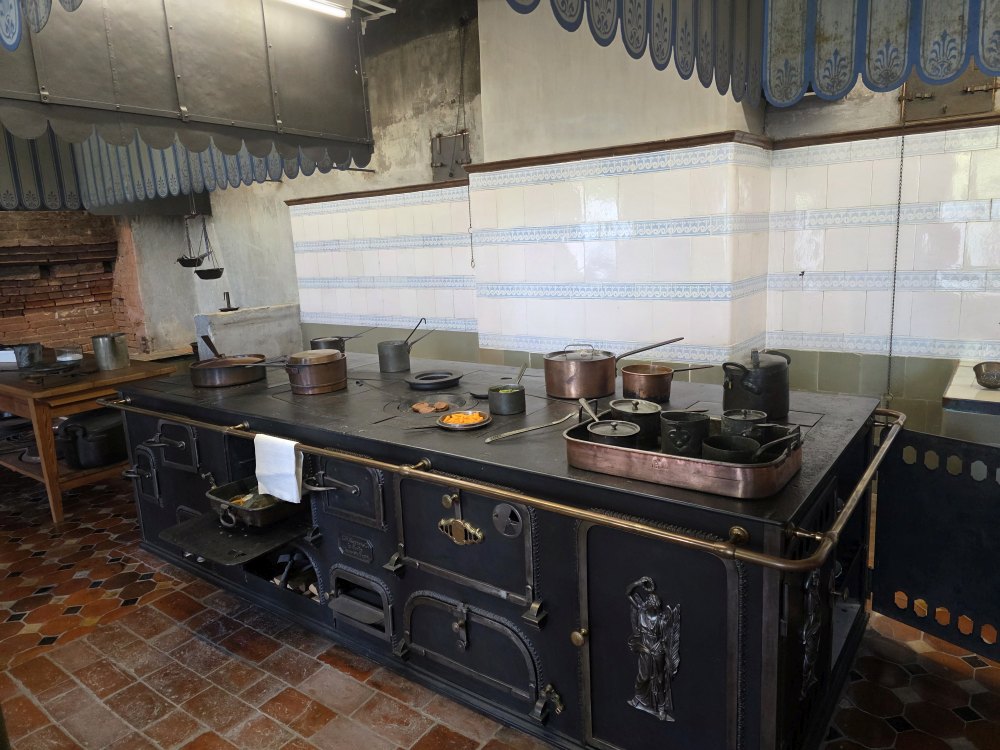
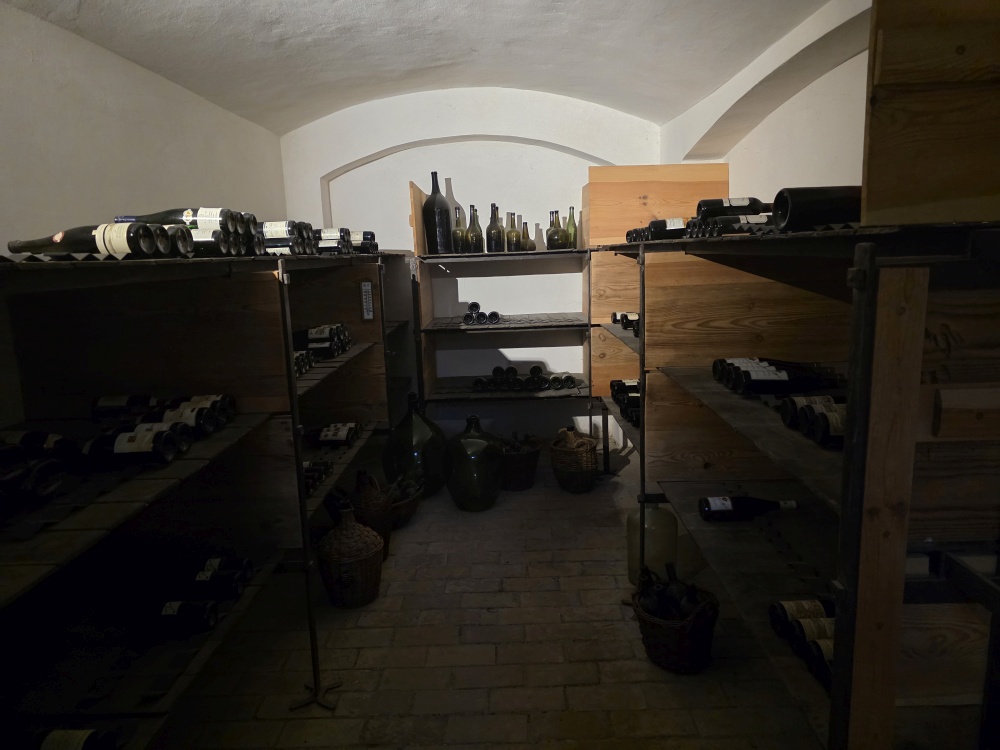
We have tons of time to kill now – as we made lunch reservations at Drachenhaus at 12:30 – so we wander on, stumbling upon the Royal Kitchen, part of our tour that we didn’t realize. A really cool little excursion into the history of the palace. The kitchen began, of course with Frederick the Great and was successively updated and added onto as the years went on and his successors came to stay here. Frederick Wilhem IV did the most current updating, adding an entire “Coffee Kitchen” in the 19th Century when coffee became very popular in Prussia. In the same era, a large “cooker” was added that replaced the open fire to cook and added different “heat zones” for cooking roasting and baking.
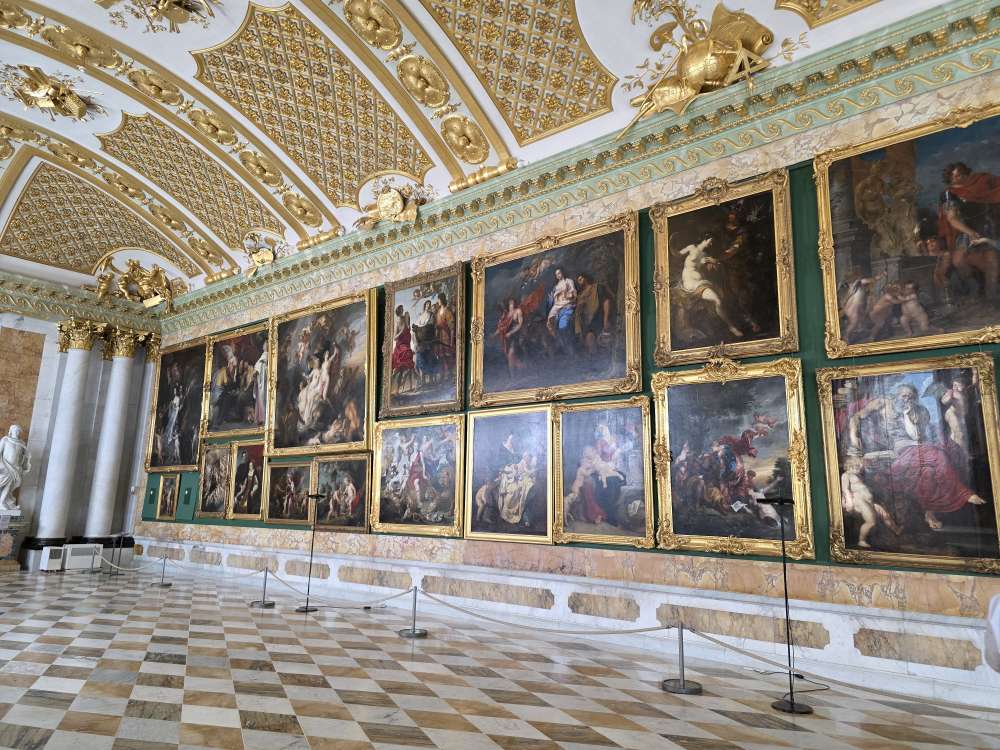
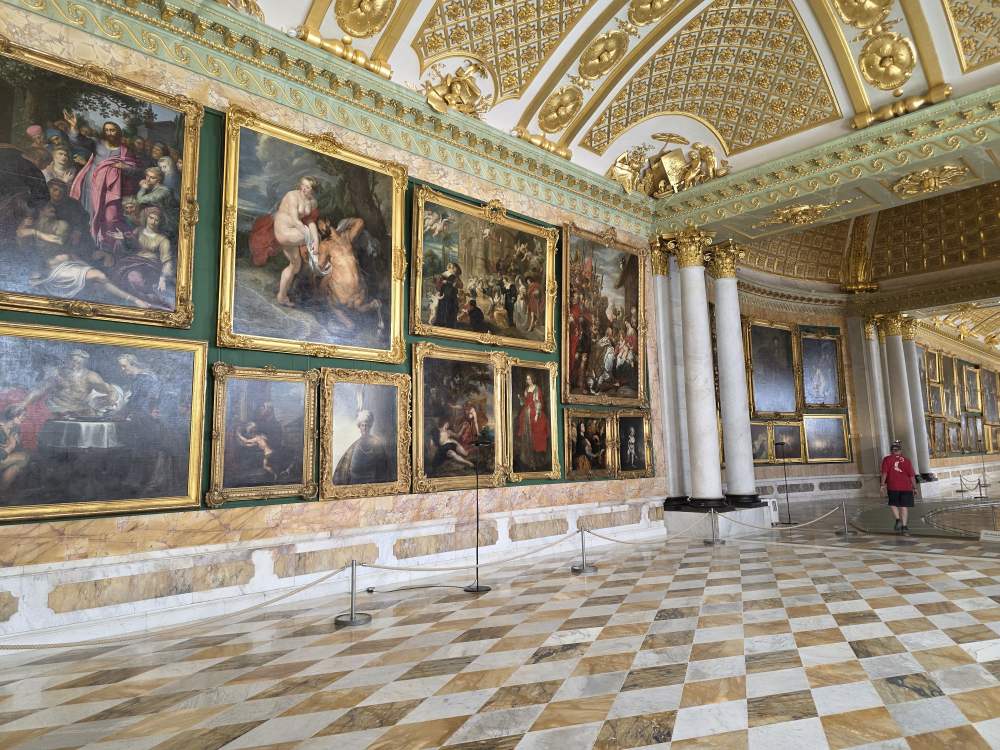
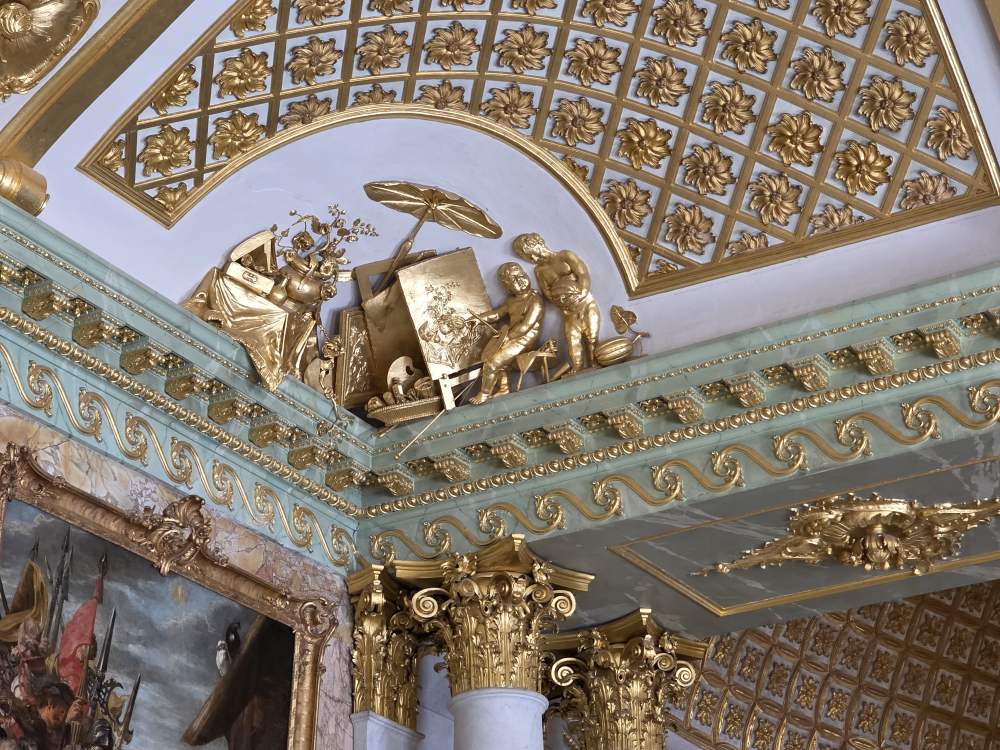
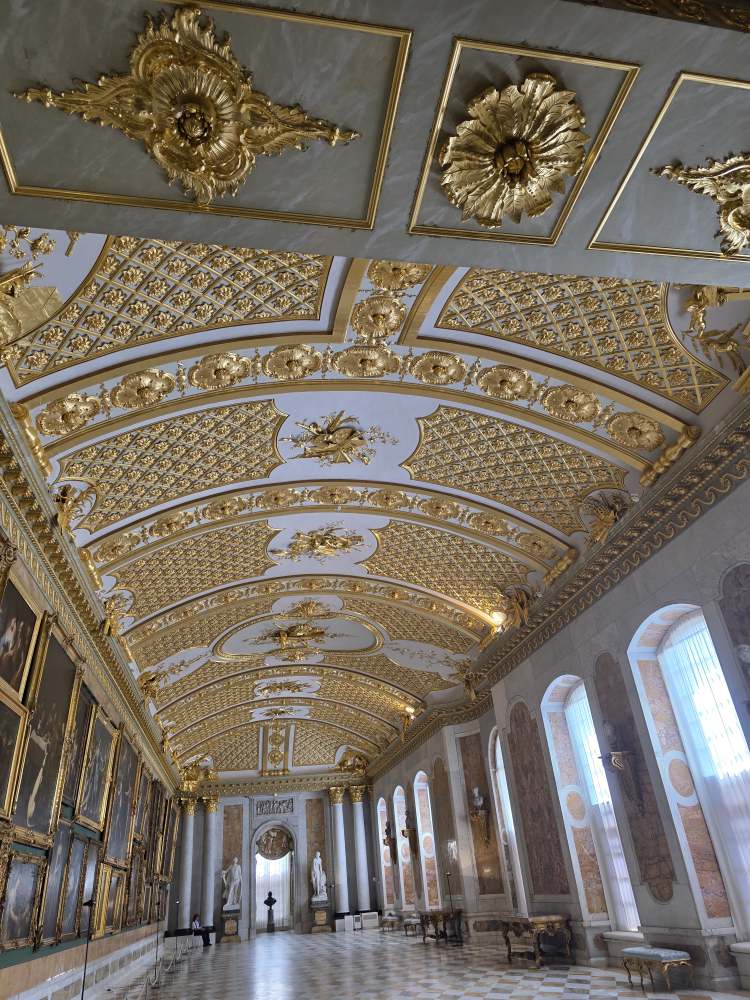
After the kitchen, we wandered through the grounds to the Picture Gallery – in its own building on the side of the still existing and active vineyard. Two long and rather narrow wings, separated by a domed vestibule, the gallery contains the remaining 62 paintings from the original inventory. Many paintings were lost or destroyed during the war, as well as sculptures. It is still magnificent, along with the themed gold decorations gracing the ceilings and door frames.
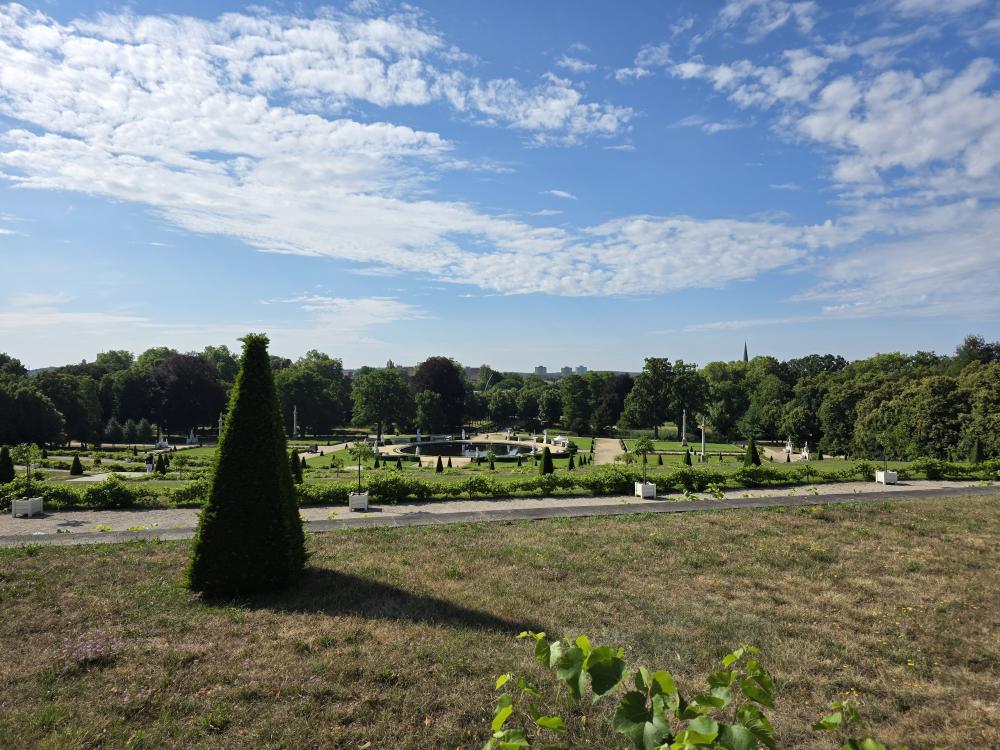
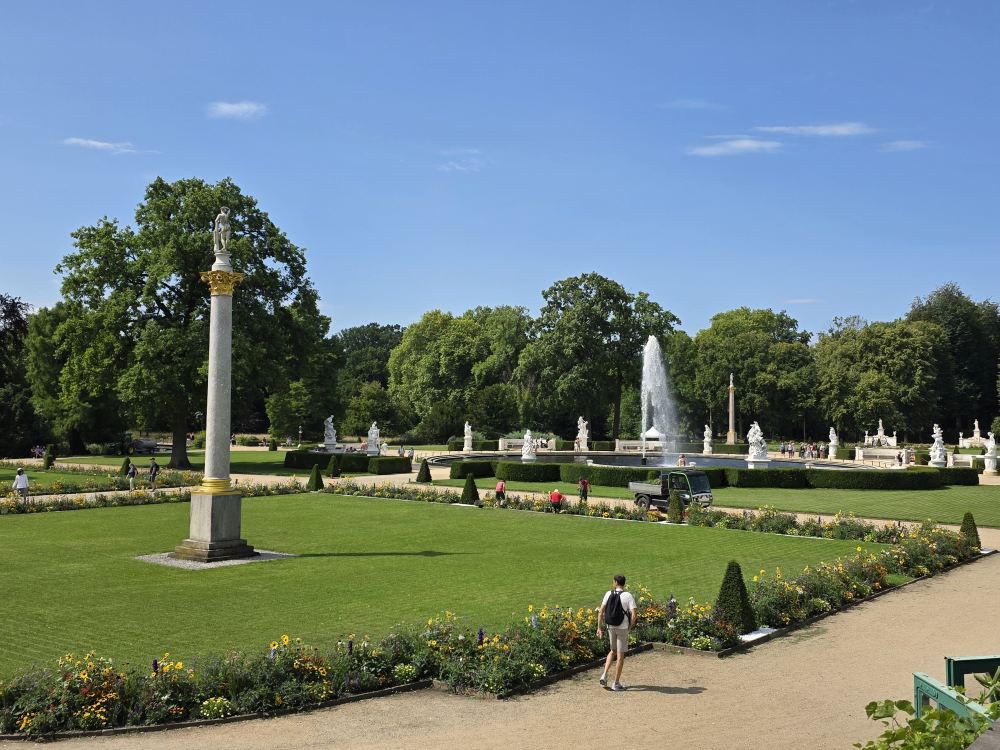
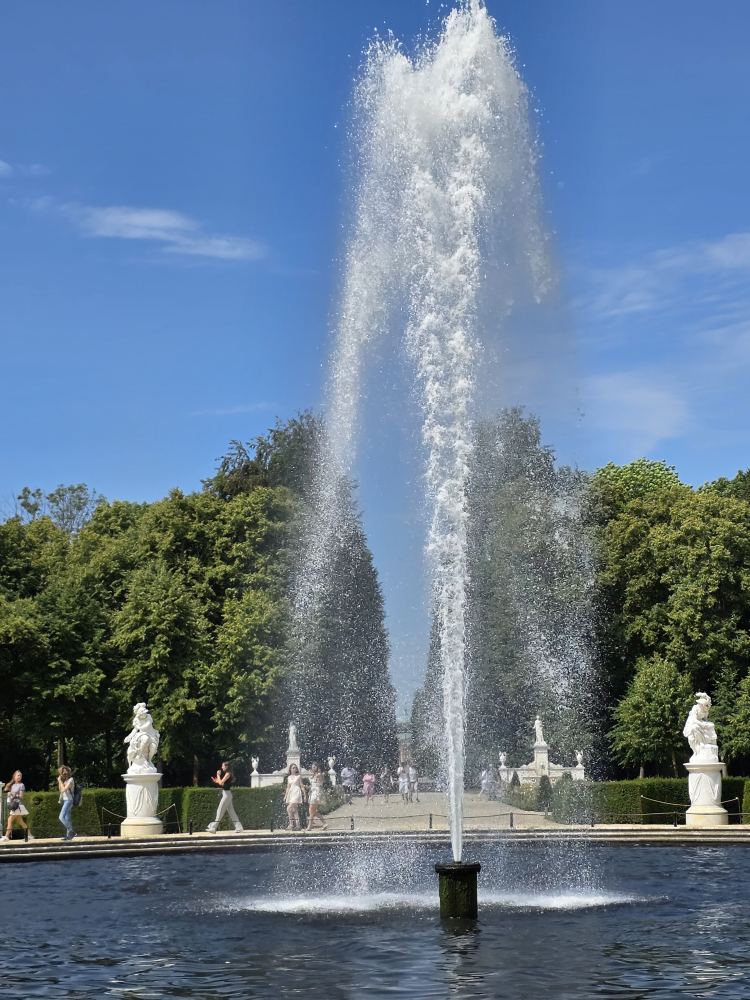
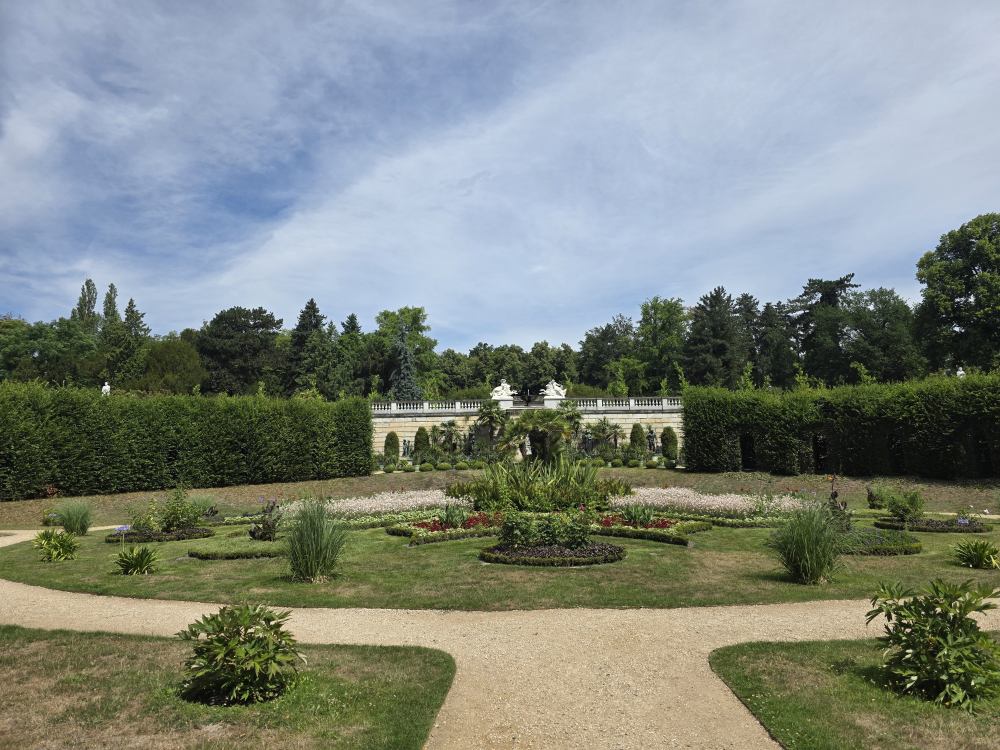
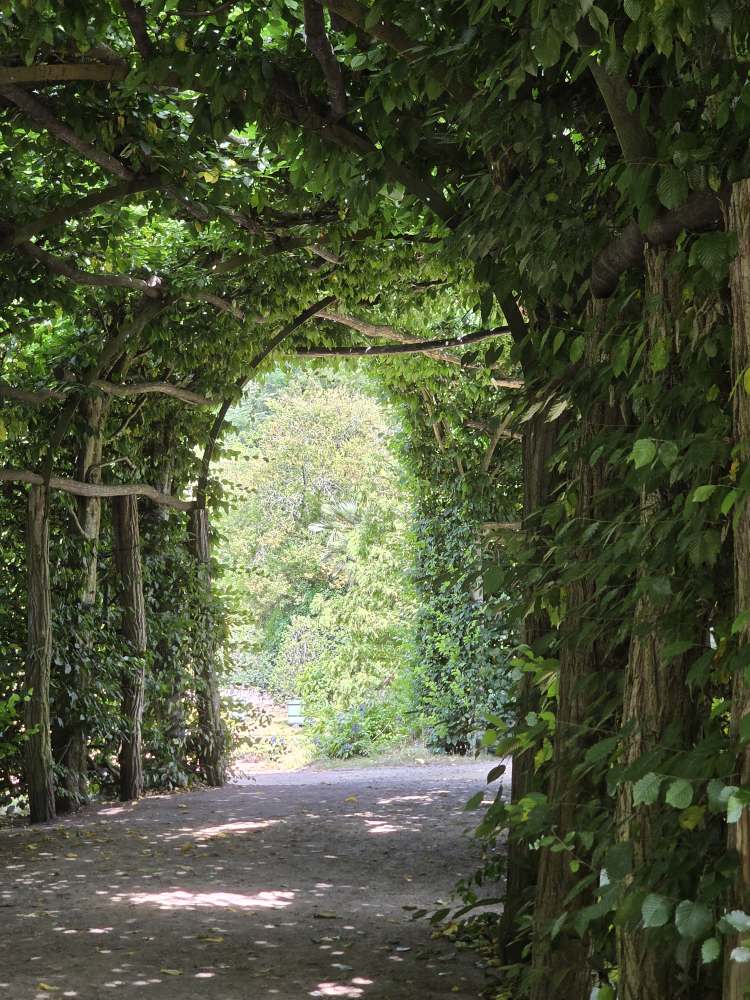
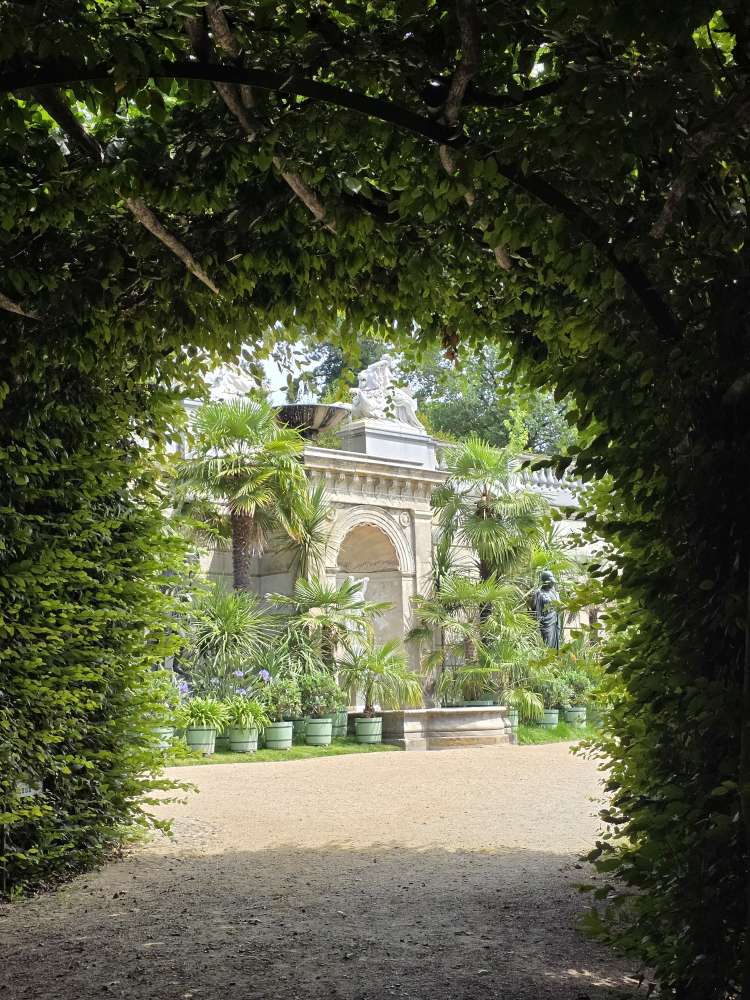
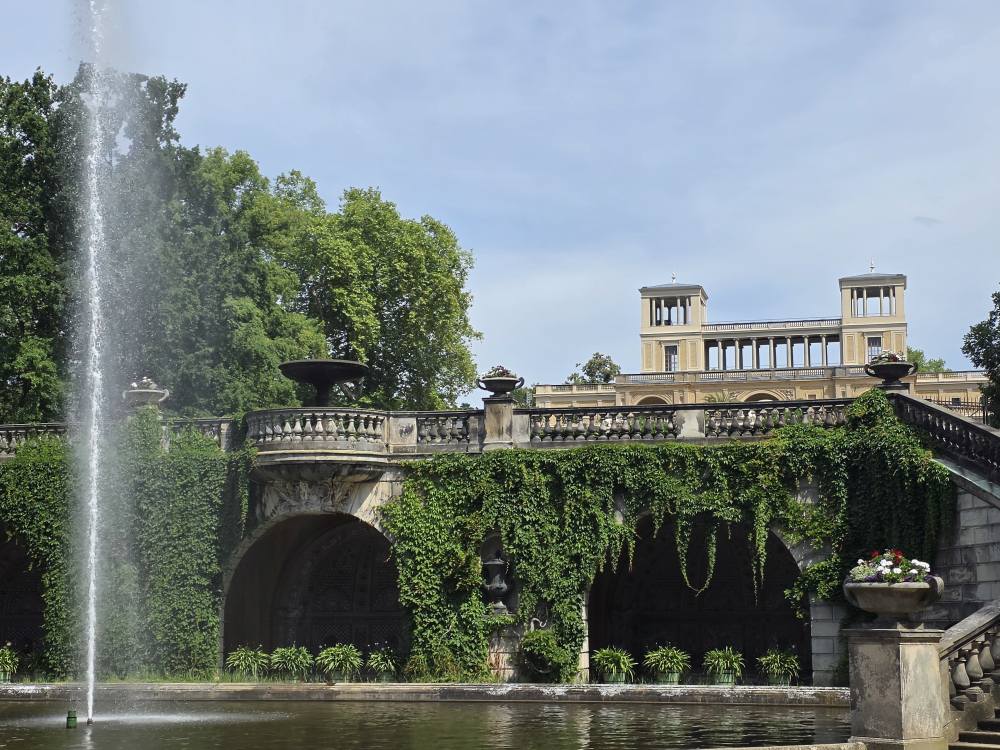
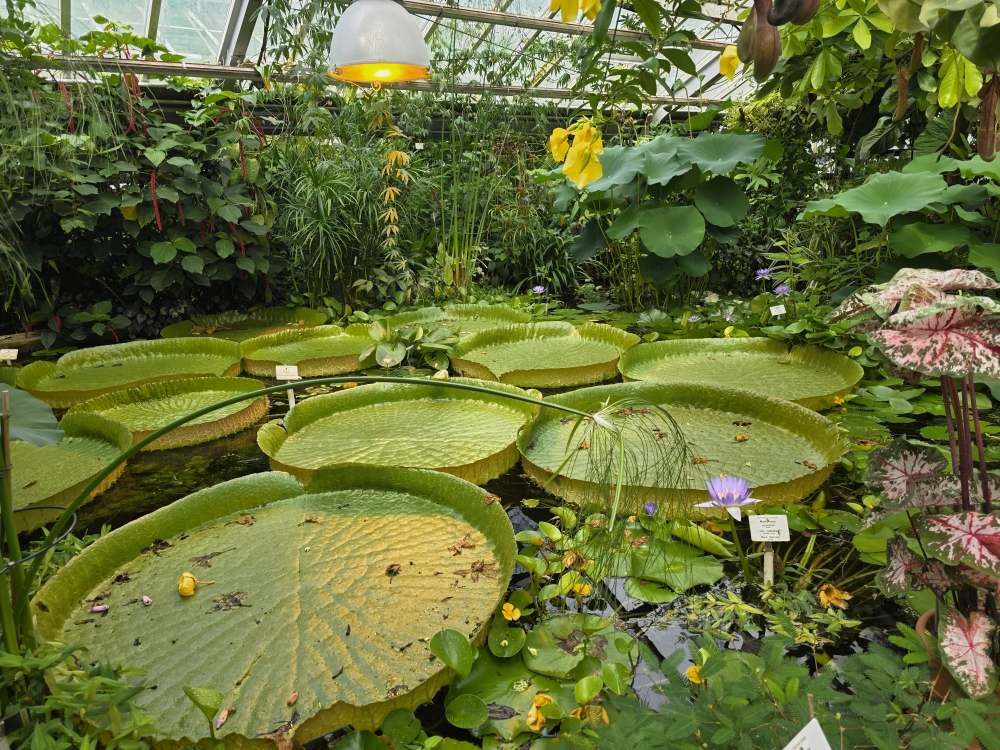
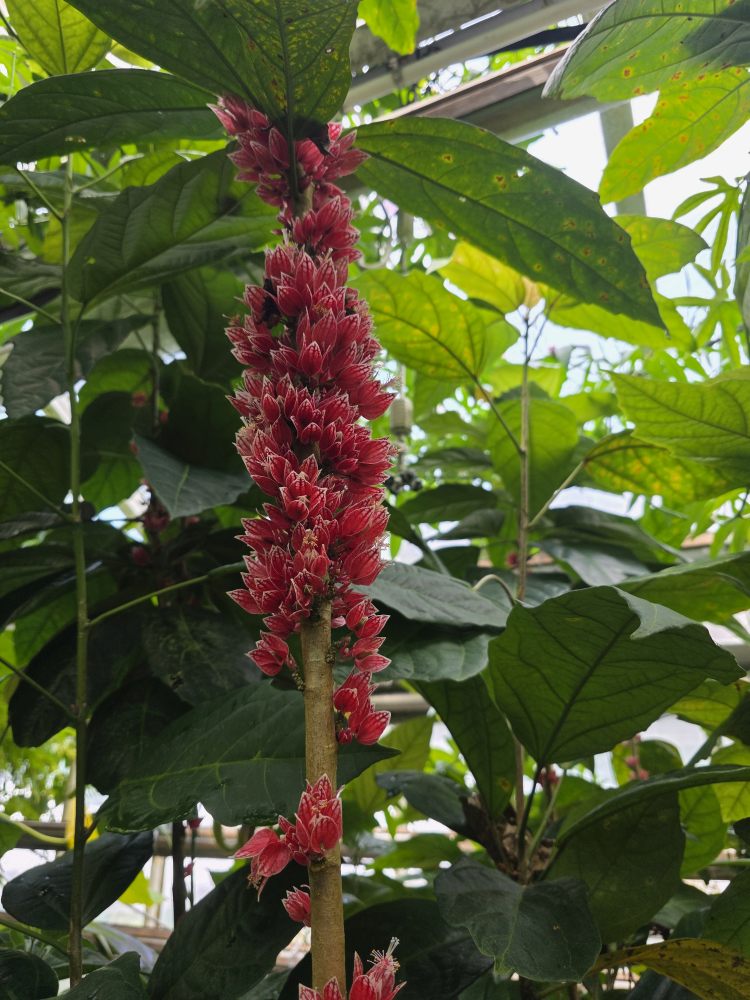
With an hour still to kill, we wander through the huge, manicured gardens below the Palace with its gorgeous fountains and views. Then meander onto the Orangieschloss gardens, finally reaching the Botanical gardens with giant water lilies and other tropical offerings.
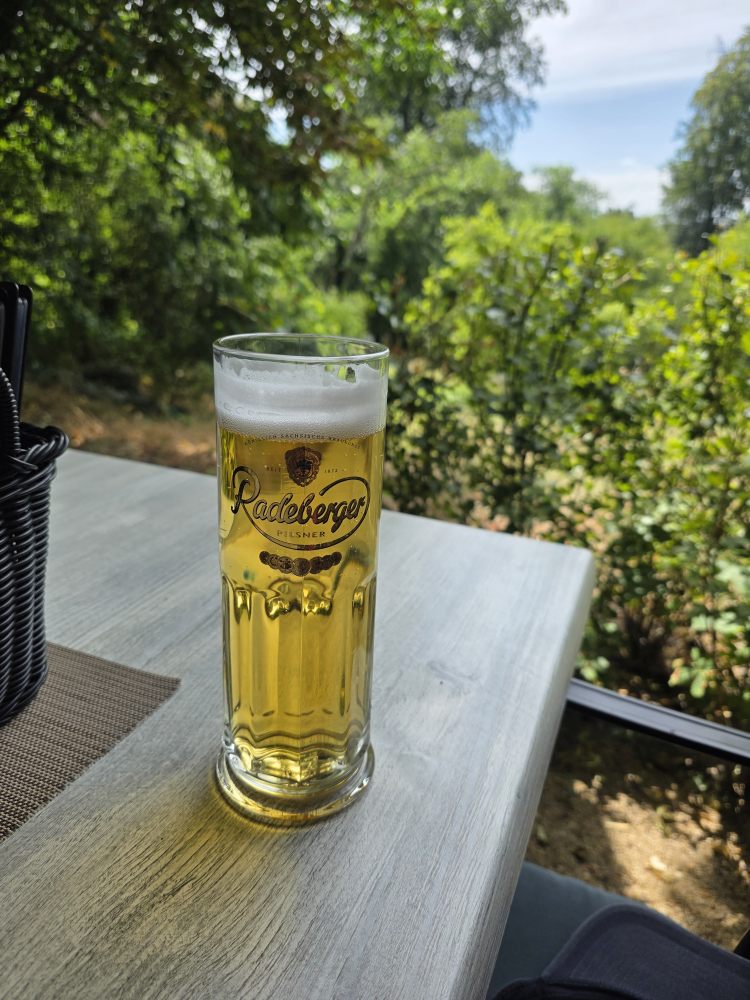
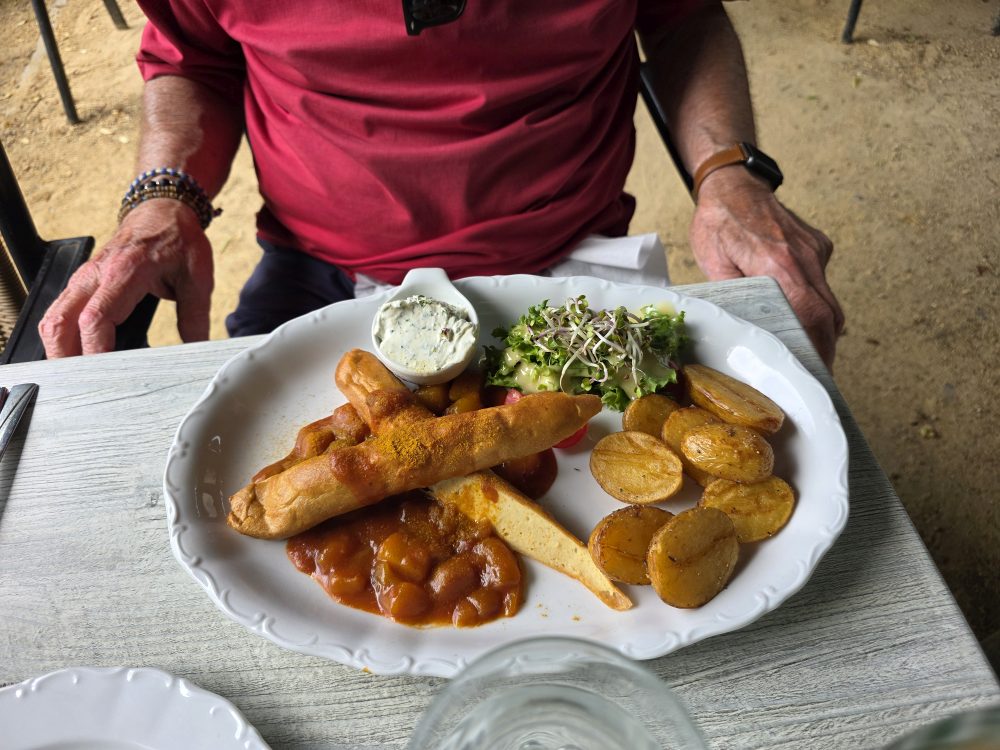
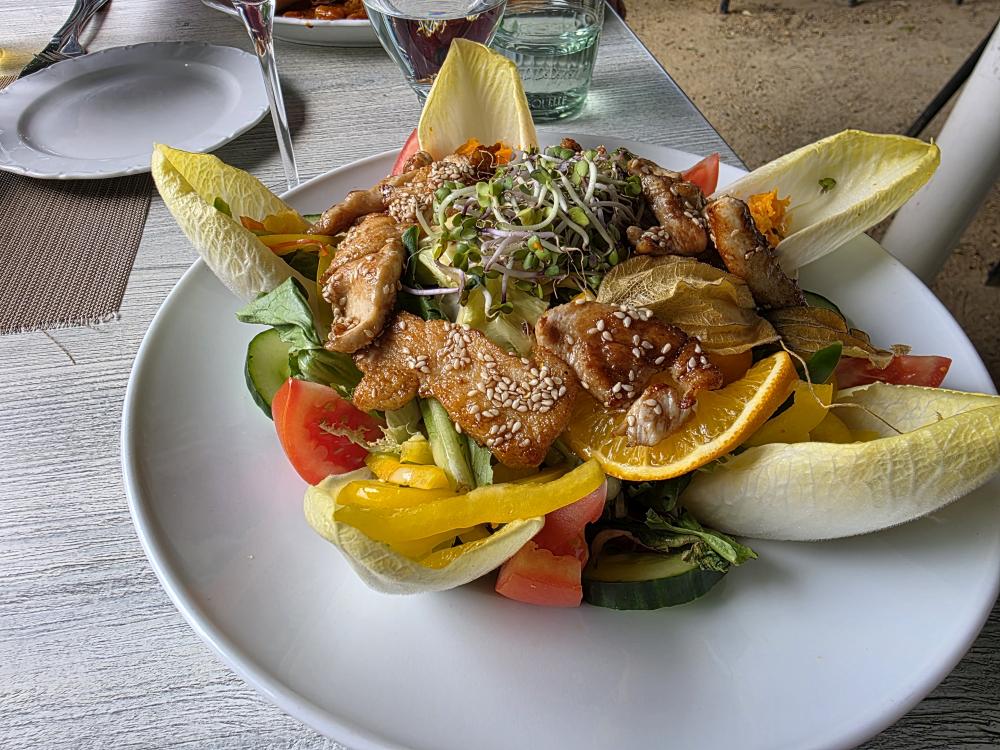
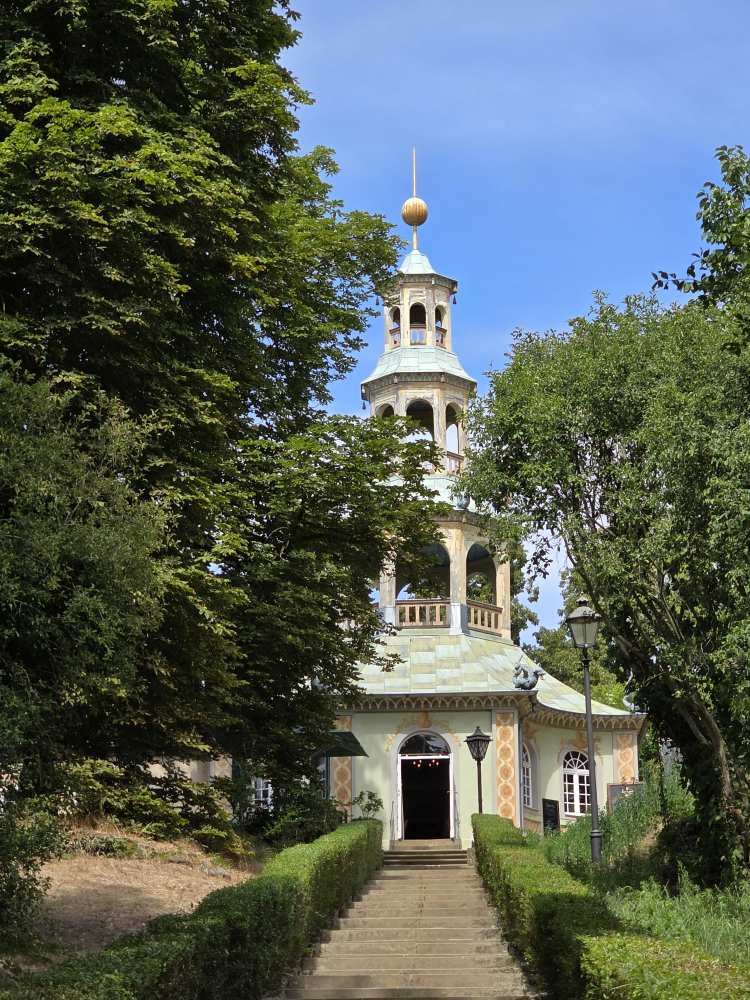
And then it is finally time for lunch. We hike our way up the hill to Drachenhaus, select a lovely table outside on the patio and sit down to an enjoyable meal in the garden, so to speak. The restaurant is housed in what is known as the “Dragon House” (thus the name), because it was modeled after the Ta Ho Pagoda in Canton when it was built in 1769 for the vineyard grenadier. Since that time it has served as a home, a coffee shop, a GDR restaurant and now as a part of the Potsdamer Cafehaus organization. Over 250 years of great history! Topped off by a great – and huge! – lunch of Currywurst (massive) and salad with chicken strips (again, massive!). But all good sustenance for our afternoon explorations of the Neues Palace.