Out bright and early again, heading to Europcar for another rental (easier and cheaper than keeping the car overnight and trying to park it in the underground lot at the hotel with the treacherous narrow entryway), we are 2nd in line as they open and off on our journey to Dachau quickly. This time we know where to turn out of the garage and make it easily to Dachau in no time. Parking at the train station is a little challenging as the pay box near the car isn’t working. After another guy tries it without success, we both figure out to go to another box in the far corner of the lot, and success! We have our ticket and can strike out on our journey to the concentration camp following the Path of Remembrance.
Once we find the beginning of the path, it winds us through the town with panels placed every so often explaining different places and events that happened along the way to the camp. Over 200,000 individuals arrived here and were traipsed through the town in full view of the citizenry, eventually a train track was laid directly to the camp. It was turned into a bike and walking path in 1985 and is where we walk today. The panels explain about prisoners being used for forced labor, where a signpost with anti-Semetic characters was placed, where the Kommandant lived and how it was used by the US Army after the liberation, how the US soldiers found a railway car filled with dead bodies and made the residents of Dachau come out and bury all the bodies and tons of other interesting and sickening facts.
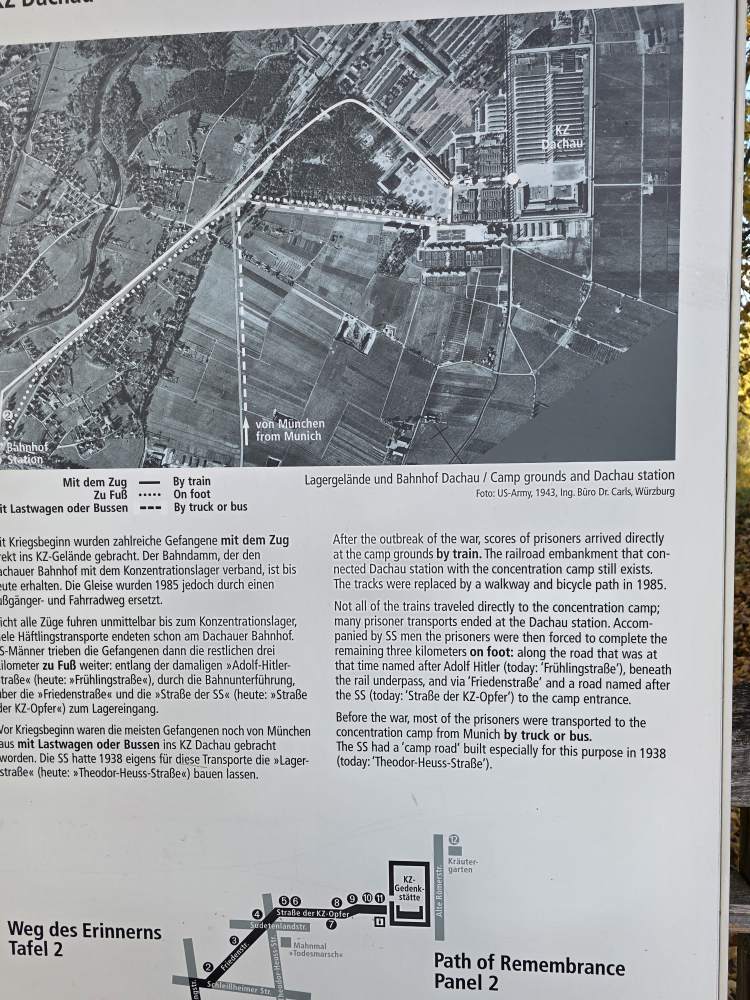
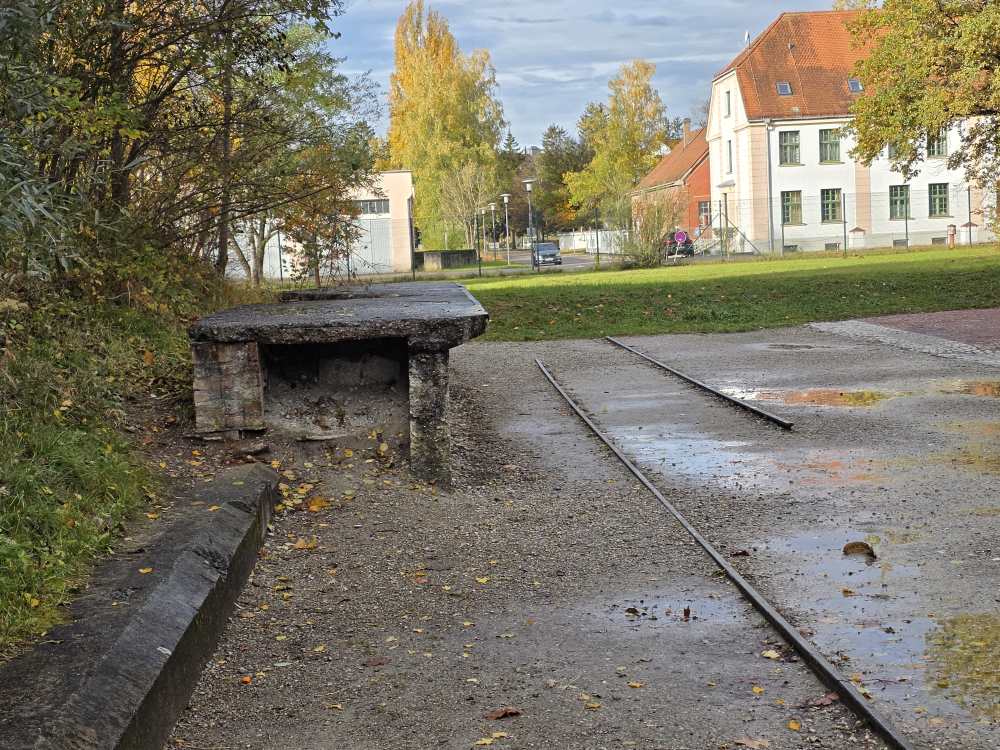
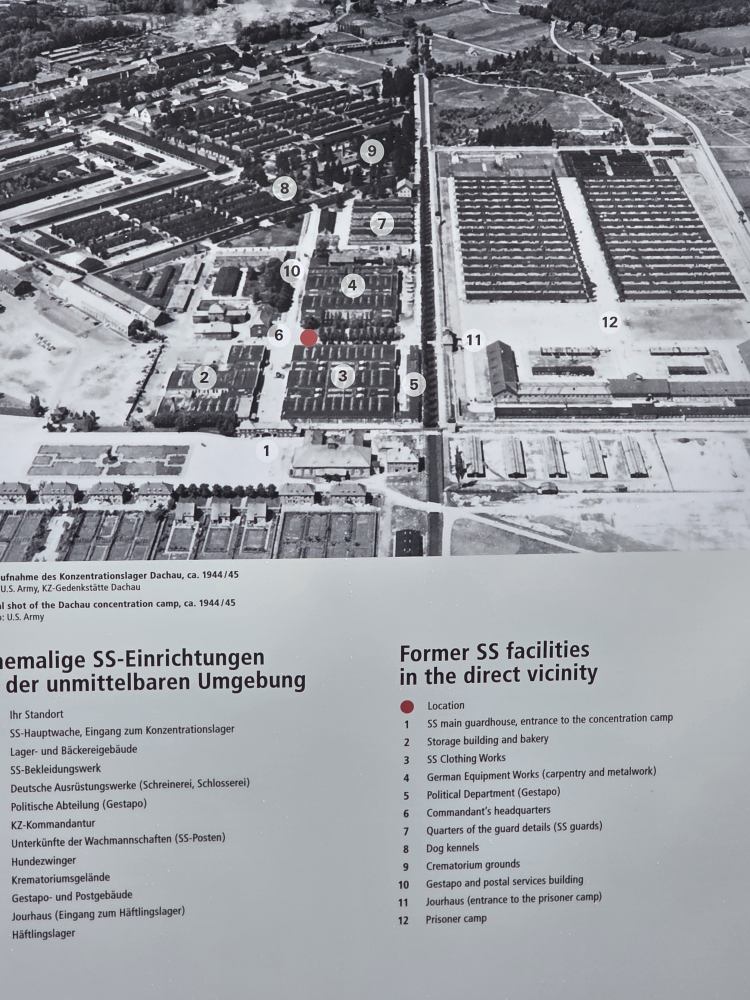
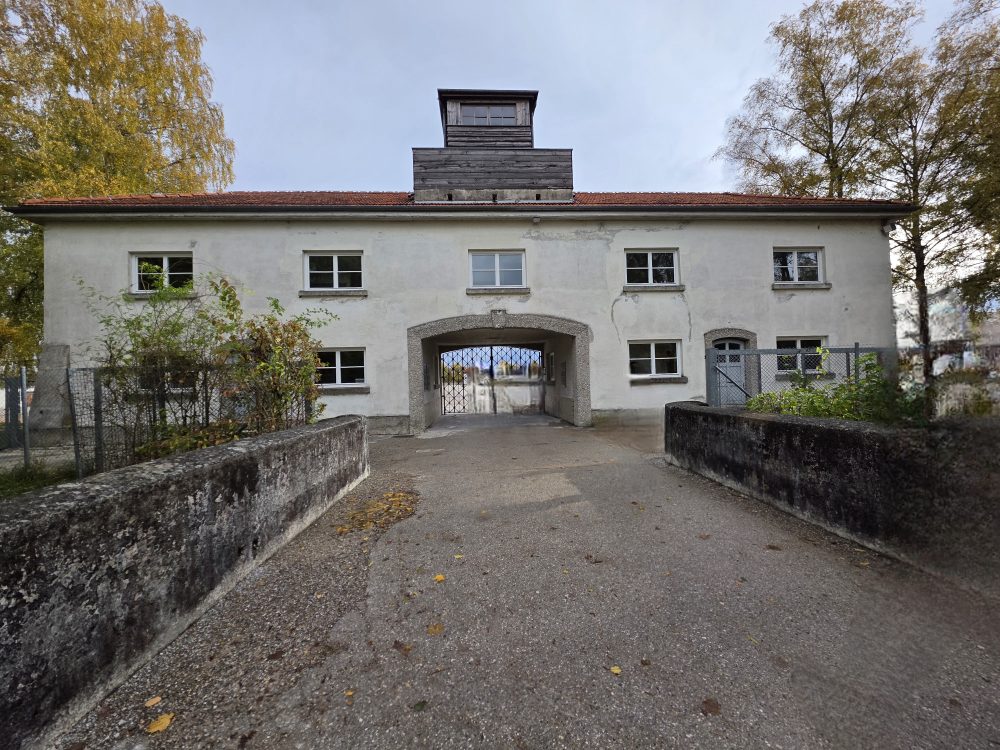
Making our way to the main entrance of the camp, you can see the train tracks that led up to the entry, along with a portion of the train platform – which is just outside the SS living quarters. Bird’s eye view maps show what the camp and surrounding SS facilities looked like at liberation – crazy huge with tons of living quarters and camp quarters. Passing through the Jourhaus (gatehouse) we enter through the wrought iron gate with the typical Arbeit Macht Frei (Work will set you free) sign (yeah, right) and proceed through the grounds reading all the information.
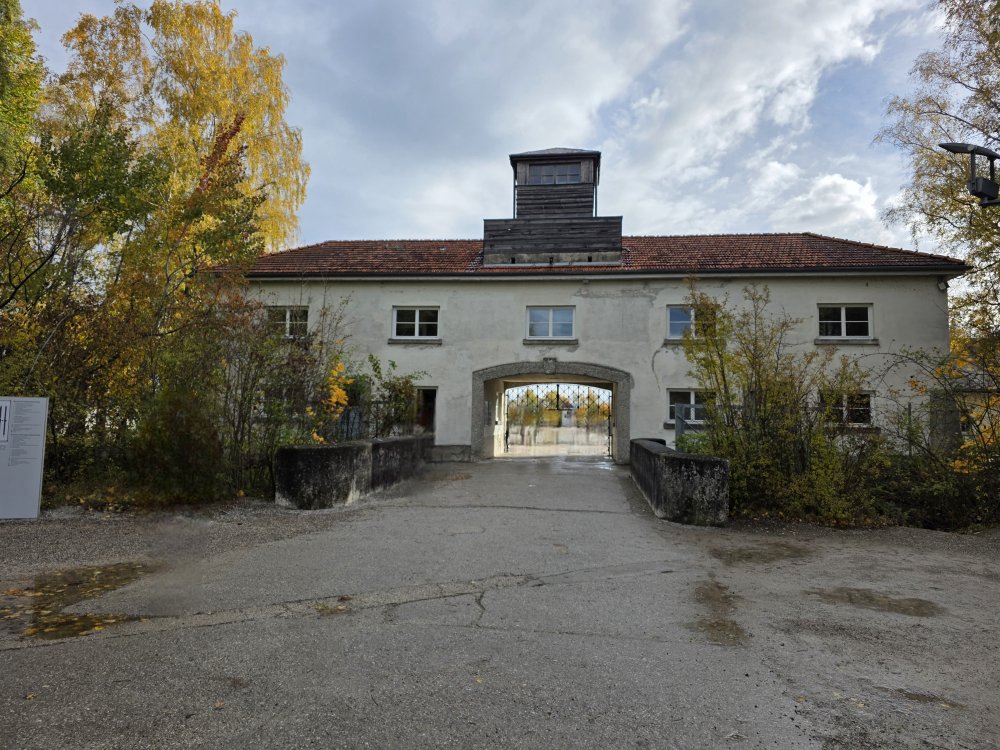
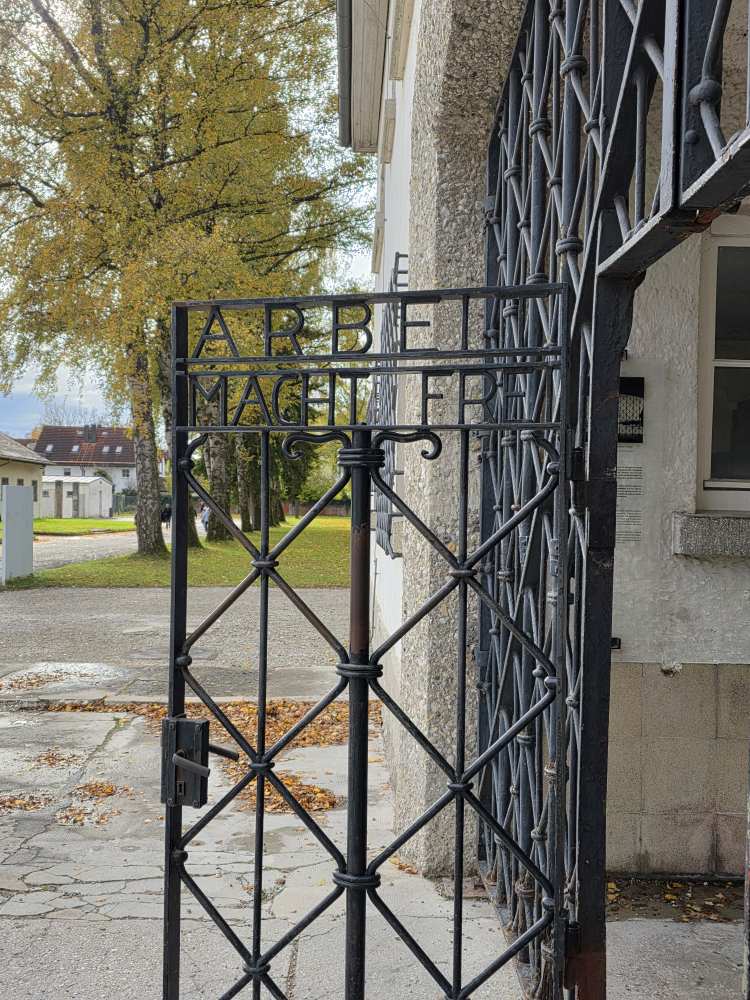
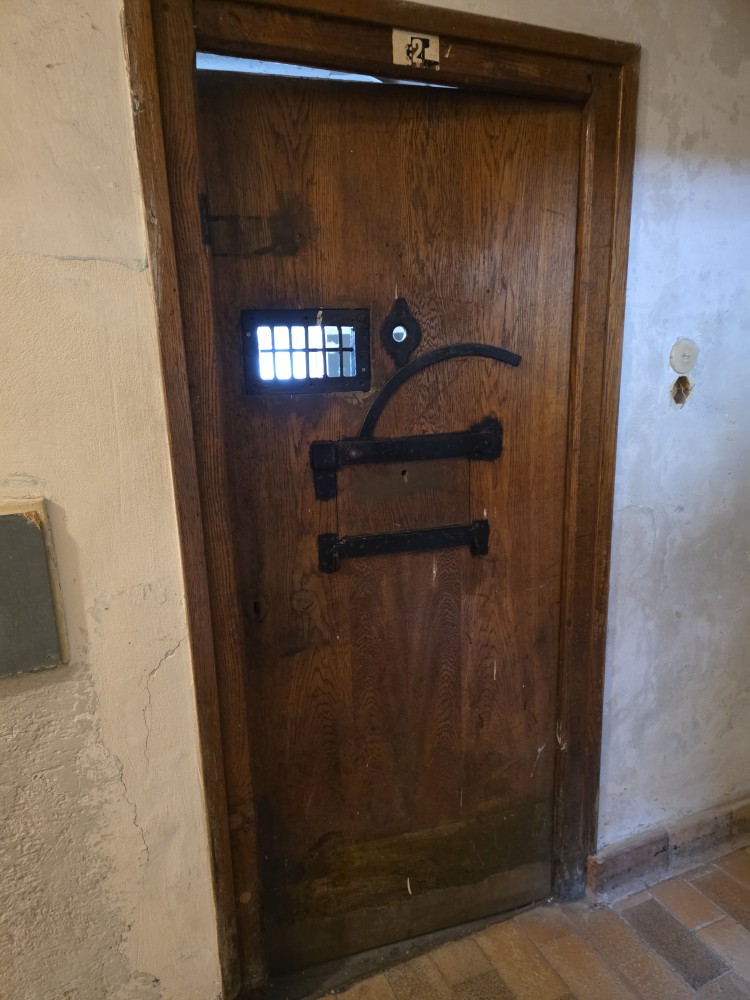
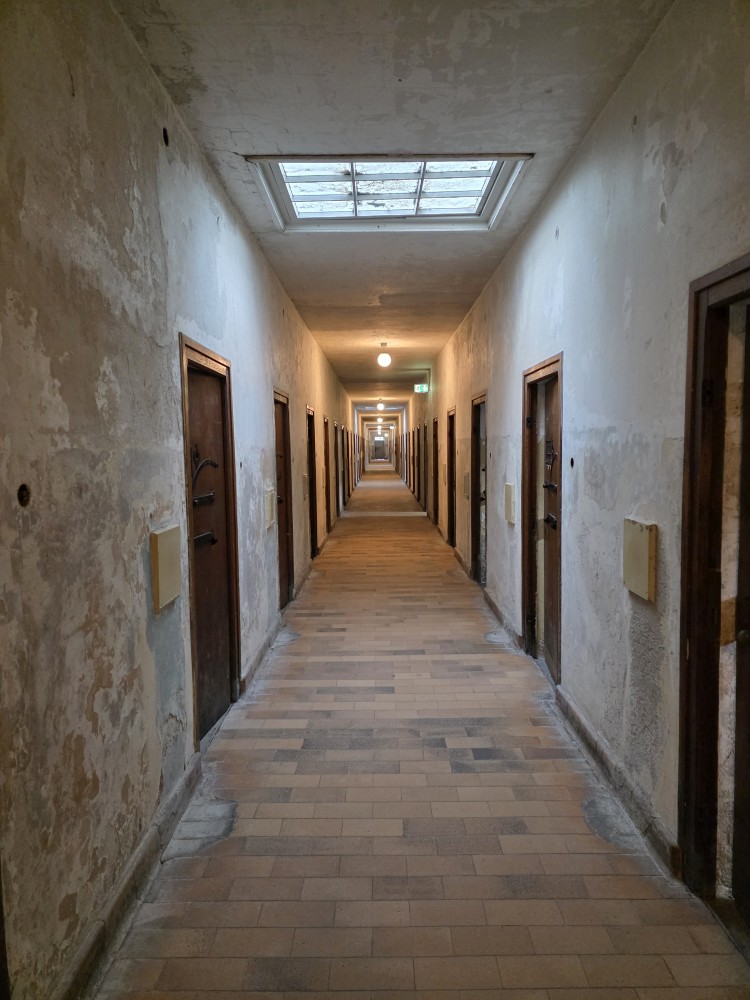
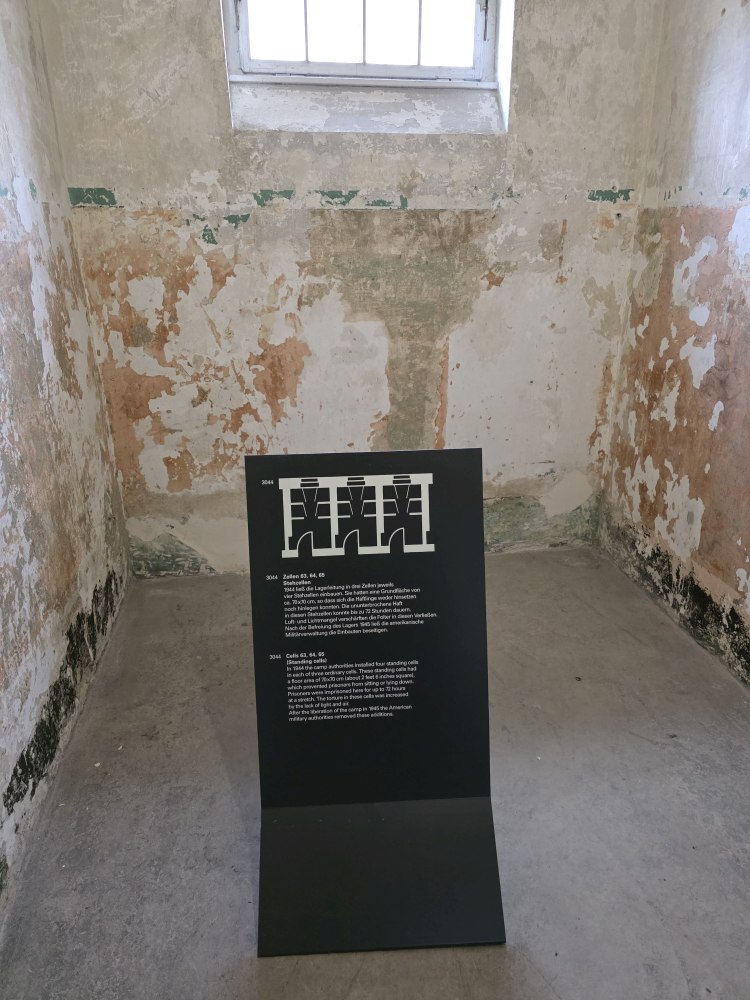
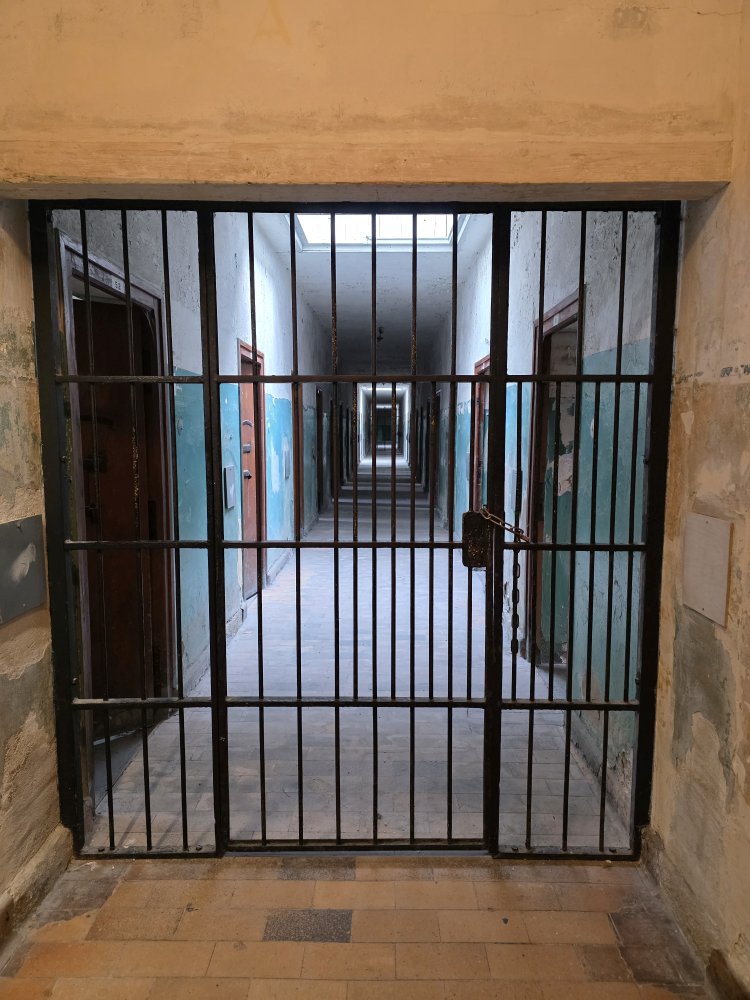
The camp was set up in 1933 in a munitions factory from WWI, but in 1937 prisoners were forced to demolish the first camp and build this considerably larger complex. Designed to hold 6,000 prisoners, when the camp was liberated in 1945, there were over 32,000 prisoners on the grounds. Meandering away from the tours that are coming through the gate, we head to the exhibition in the “Bunker,” the former camp prison. Here we wander down the halls, looking into cells that held political prisoners and others who were tortured here. One cell once held “standing cells;” partitions installed to create three 2 ft 6in square cells which prevented prisoners form sitting or lying down, forcing them to stand for up to 72 hours at a time. A portion of the prison, behind a locked gate, was also reserved for SS members who were sentenced to prison terms.
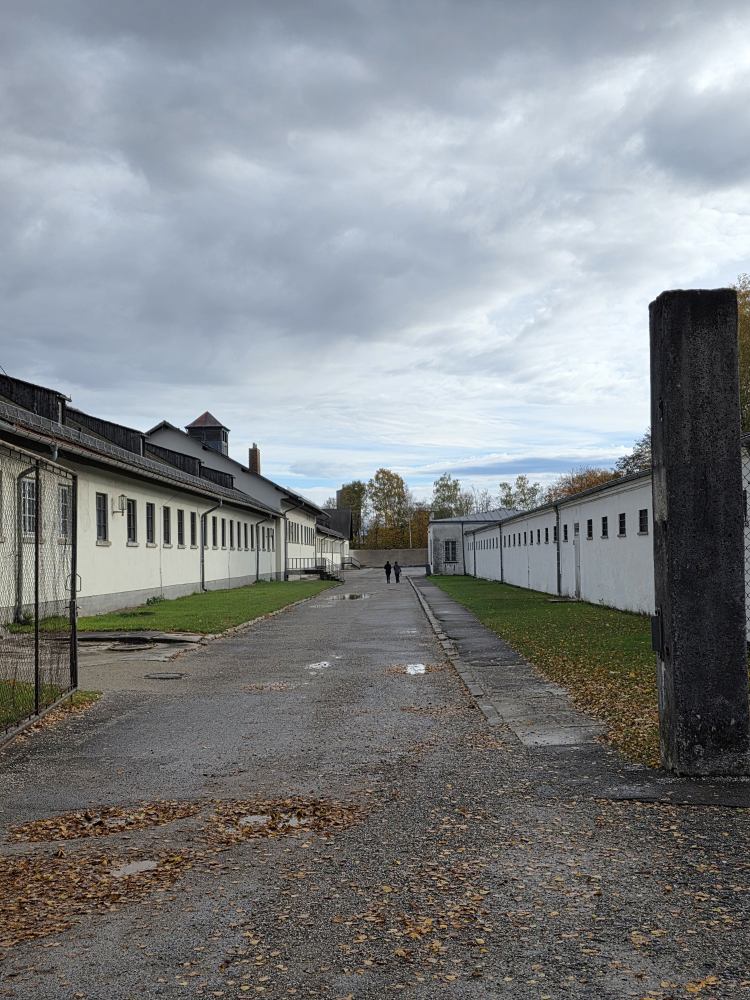
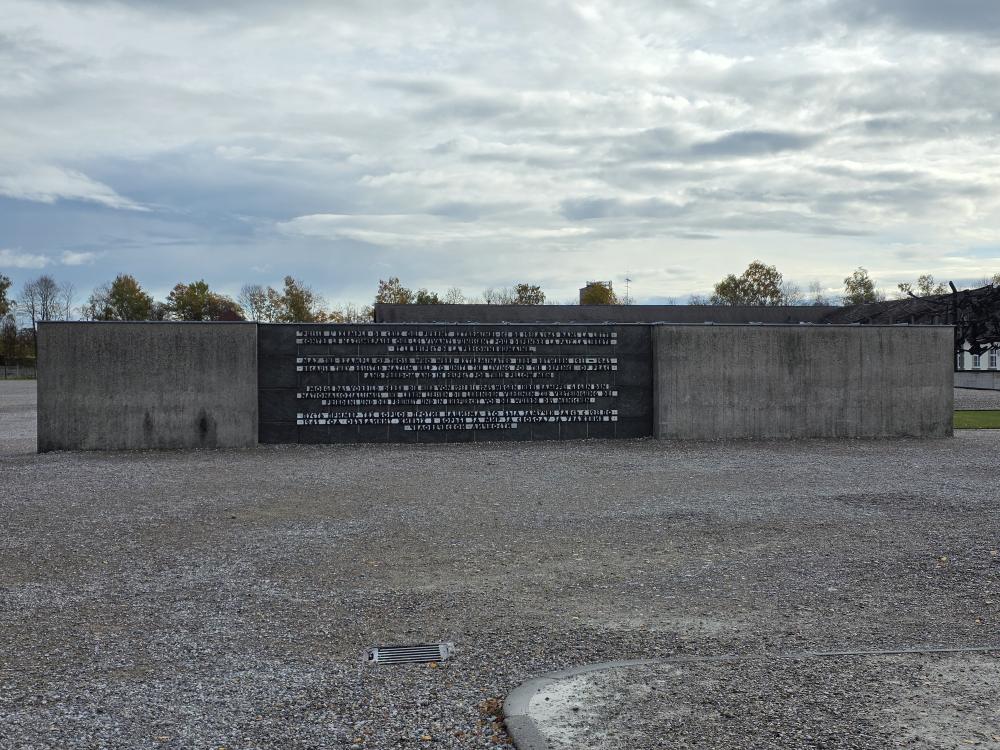
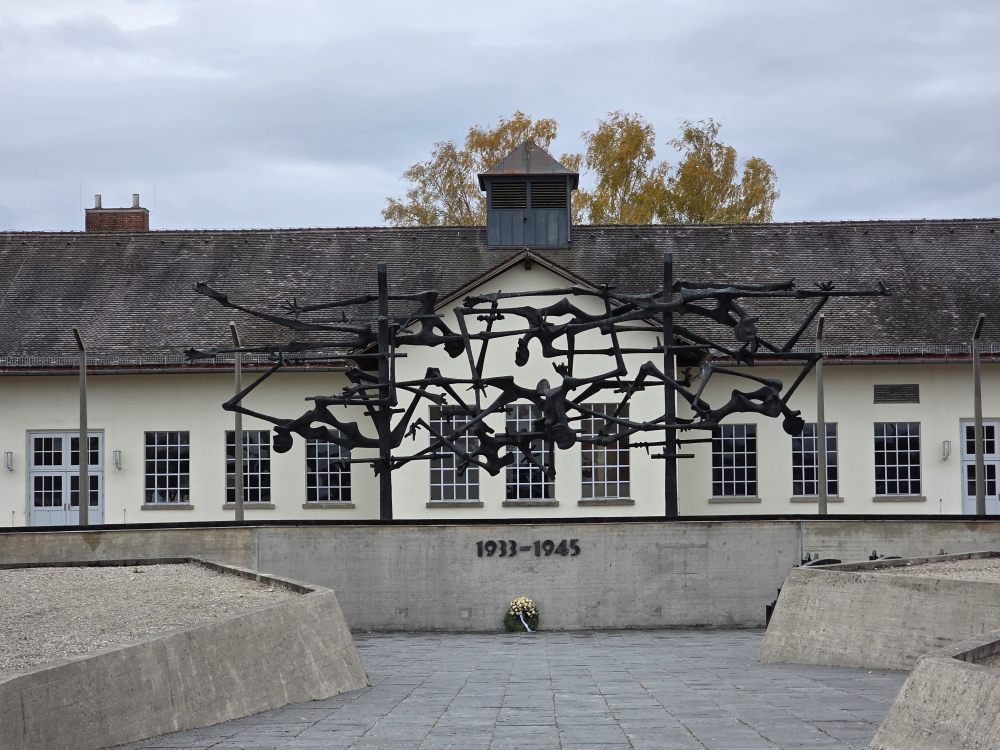
Outside, in the Appellplatz (roll call area), is the International Monument, created in 1968 as a monument to peace and freedom and a remembrance of those who resisted Nazism and perished here.
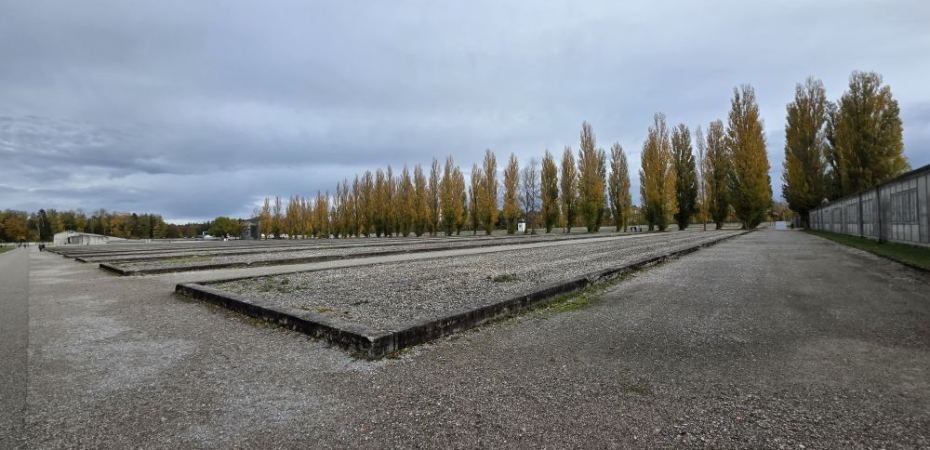
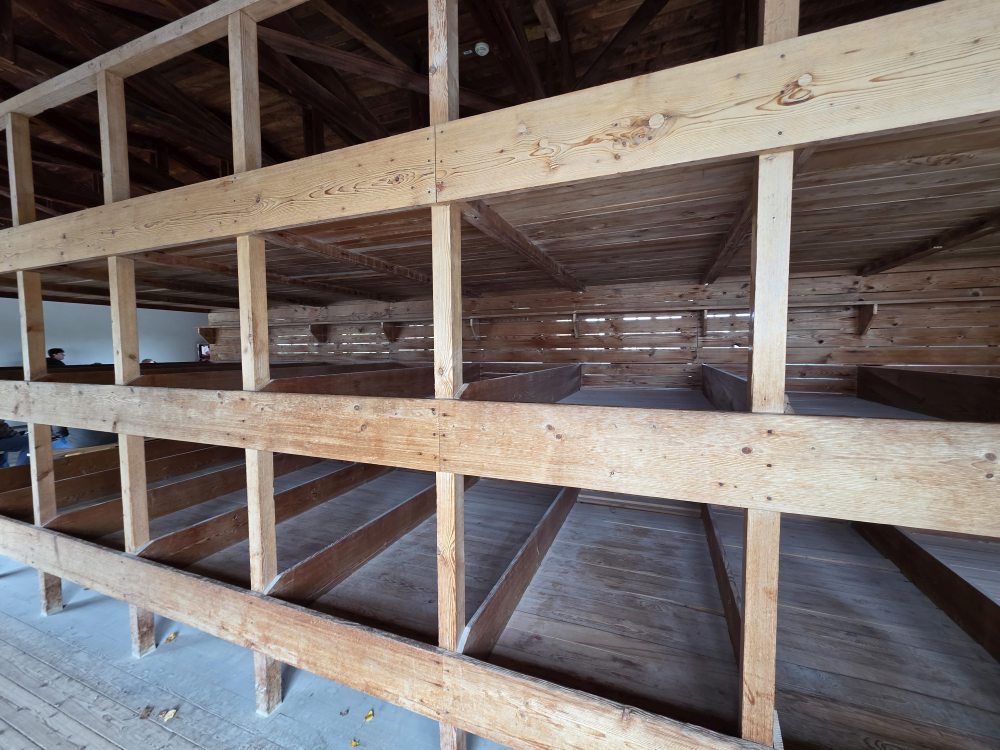
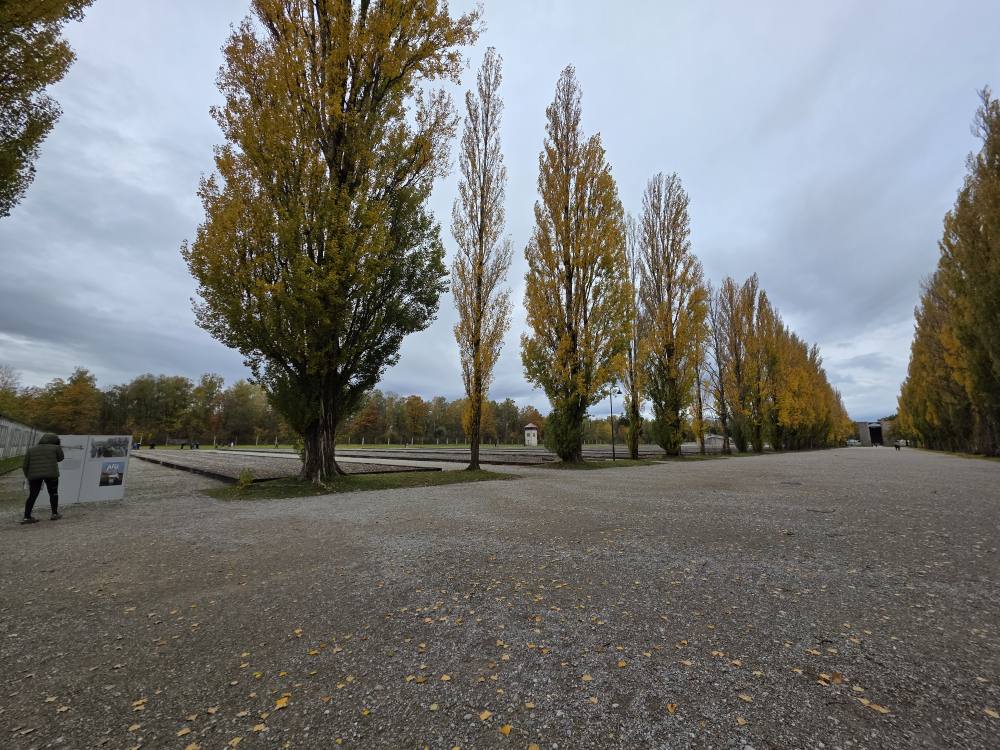
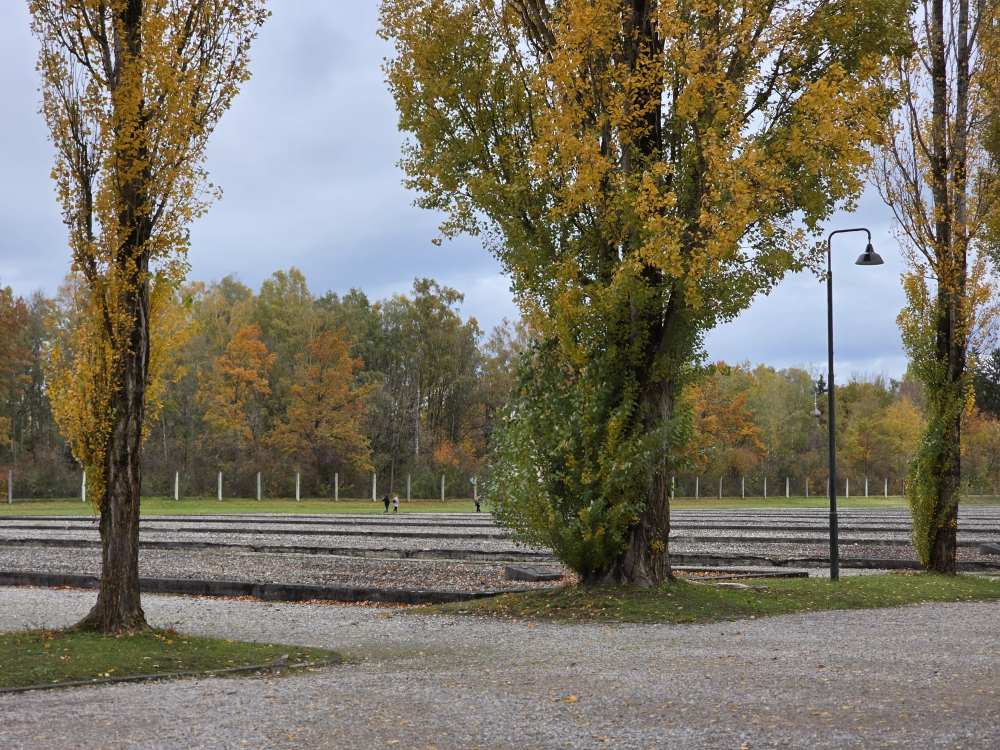
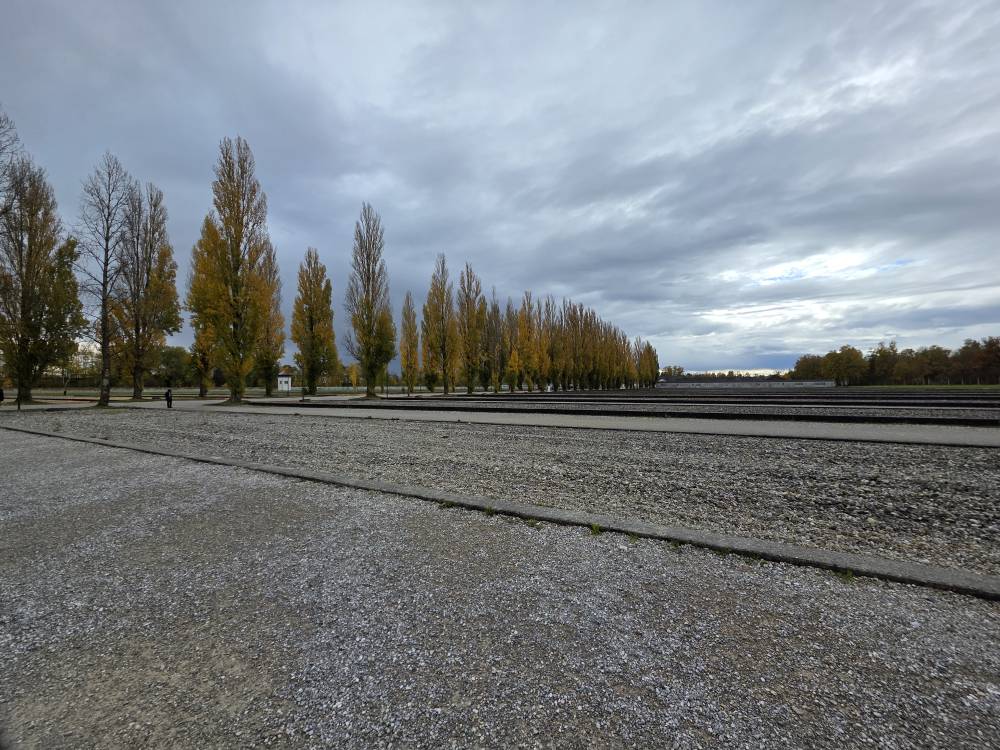
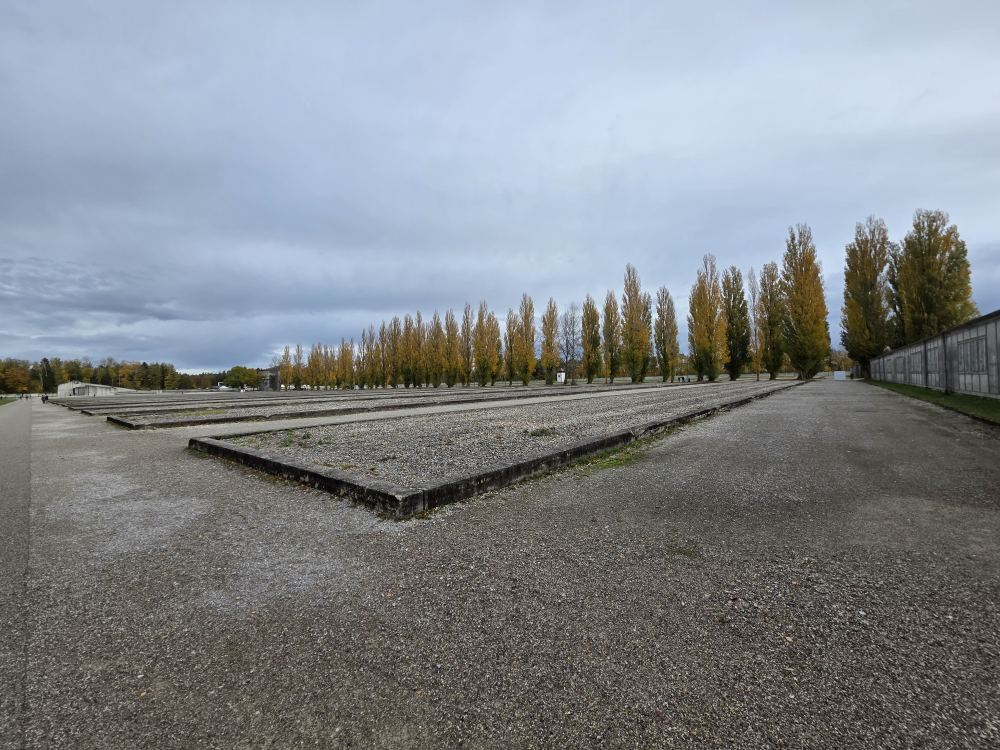
Directly across from the Monument is the barracks area. Of the 34 original barracks, only 2 have been reconstructed and used for exhibits, the rest were demolished, now only identified from the pads that outline where they once stood. The reconstructed barracks depict different living and sleeping quarters, from early days until liberation. Not necessarily that interesting, but something to see. Apparently the original barracks were used up until 1962 to house refugees and exiles, thus they no longer represented a true picture of living during the concentration camp. The foundation is planning to restore these 2 barracks and completely redesign the exhibits for a more accurate look into the past.
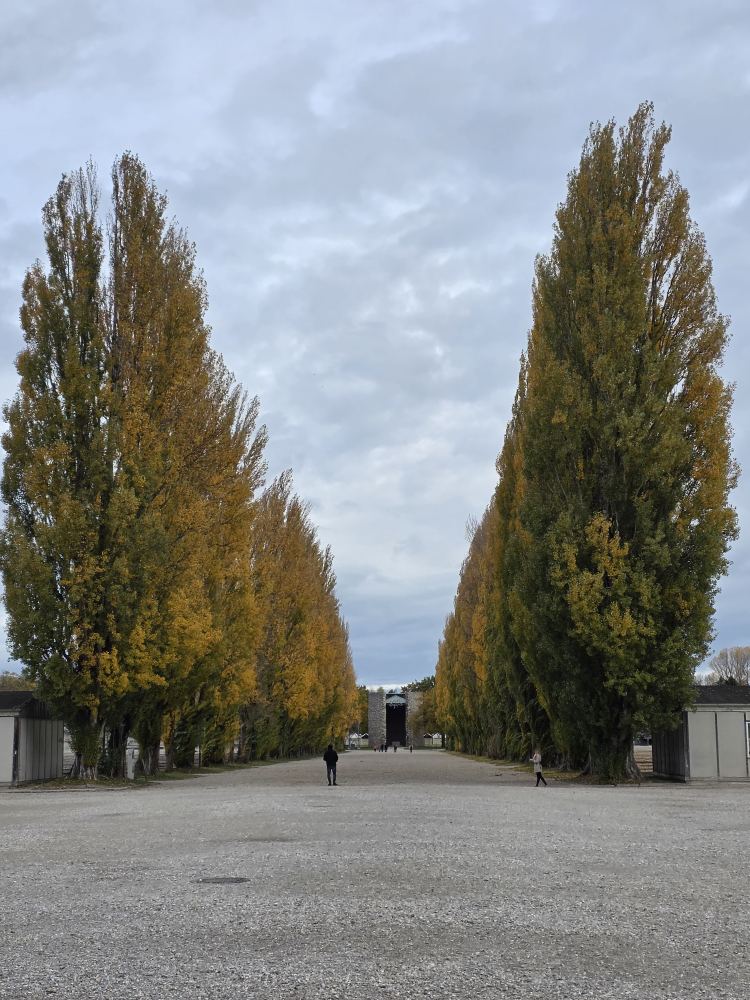
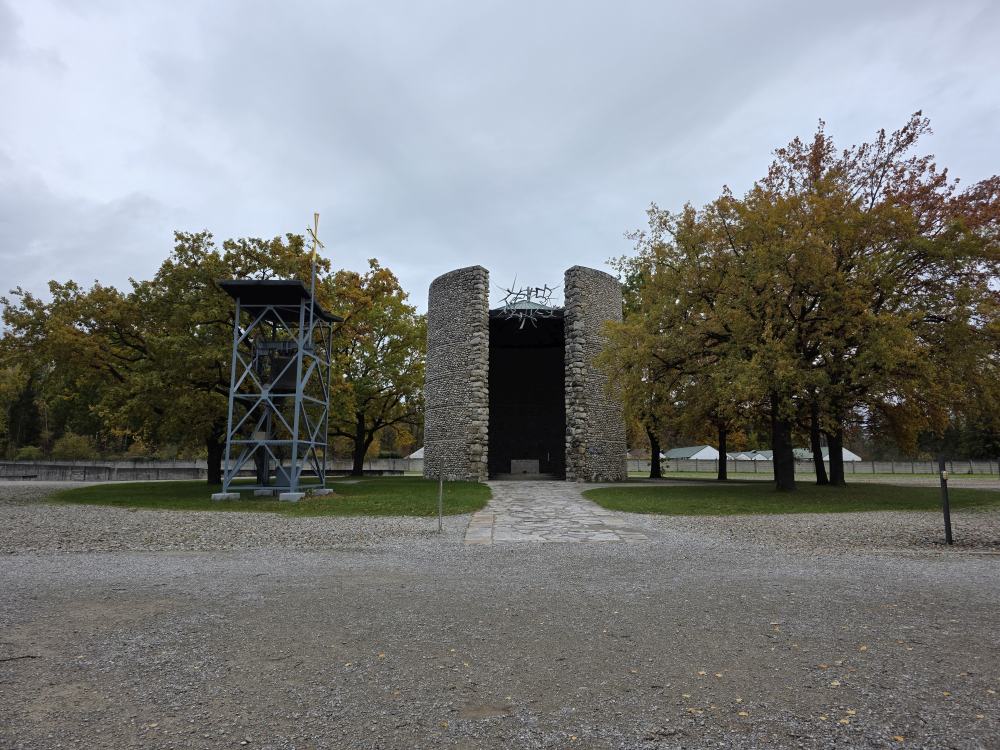
Back outside we walk down the tree lined center pathway, which would be a beautiful and lovely walk with all the fall colors if weren’t for where we were, and what the site represents. At then end of the main road are 4 different religious places of remembrance; directly ahead the Catholic Mortal Agony of Christ Chapel with its odd open cistern looking design; to the right the Jewish Memorial, to the left the Protestant Church of Reconciliation which is modernistic and just weird looking, and behind the Catholic chapel, the Carmelite Holy Blood monastery. All somber and reflective places (if not a little oddly designed).
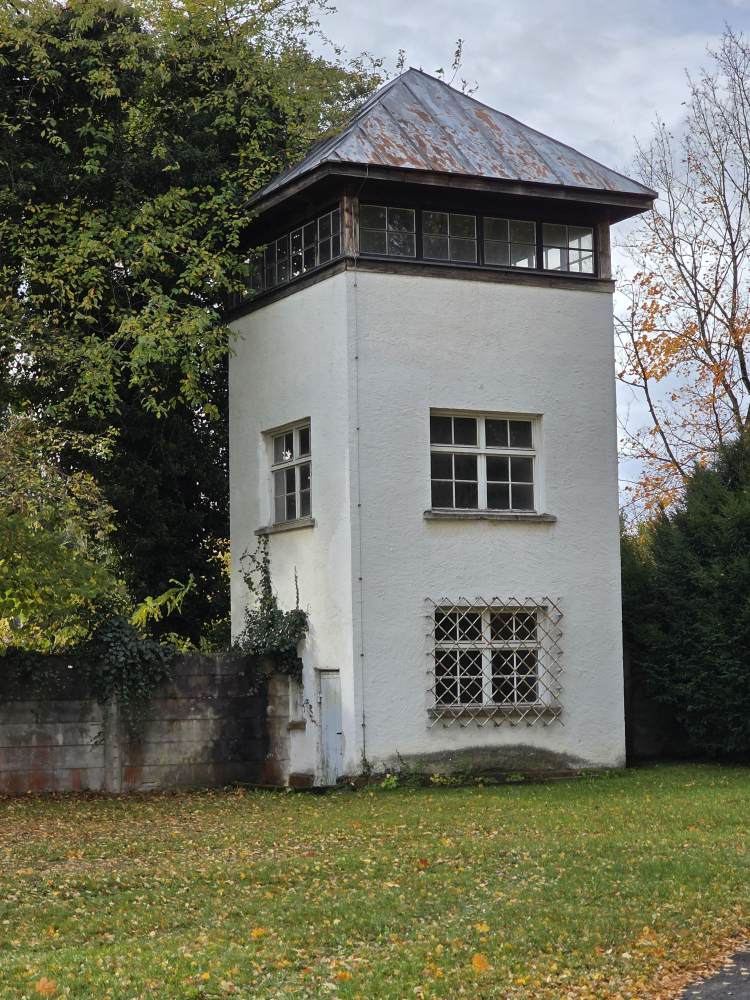
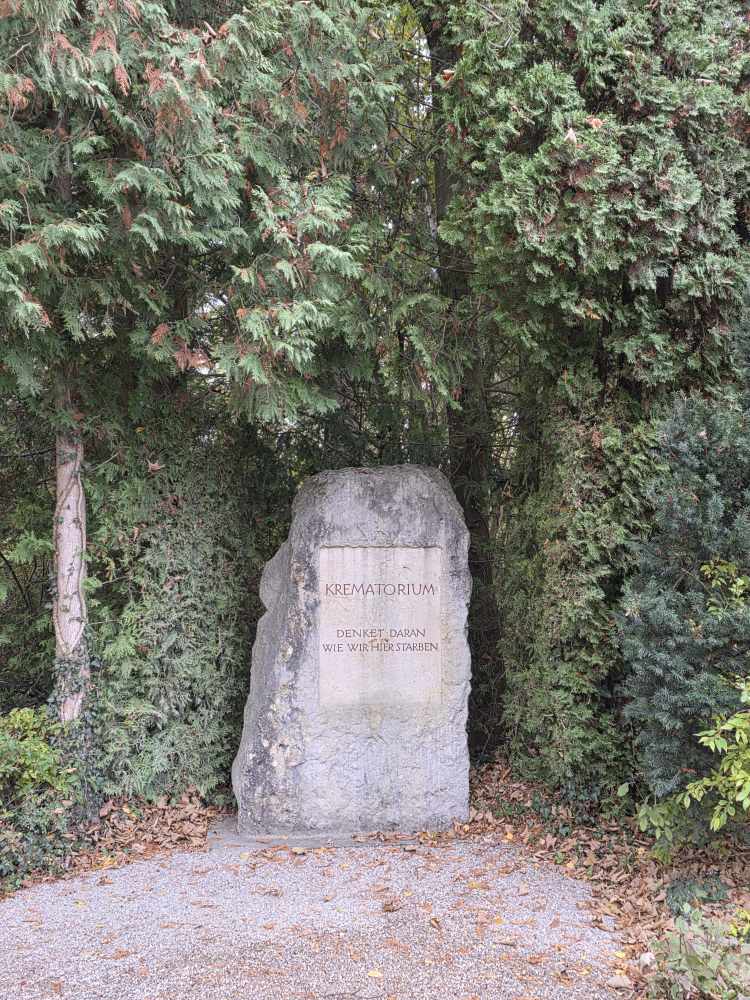
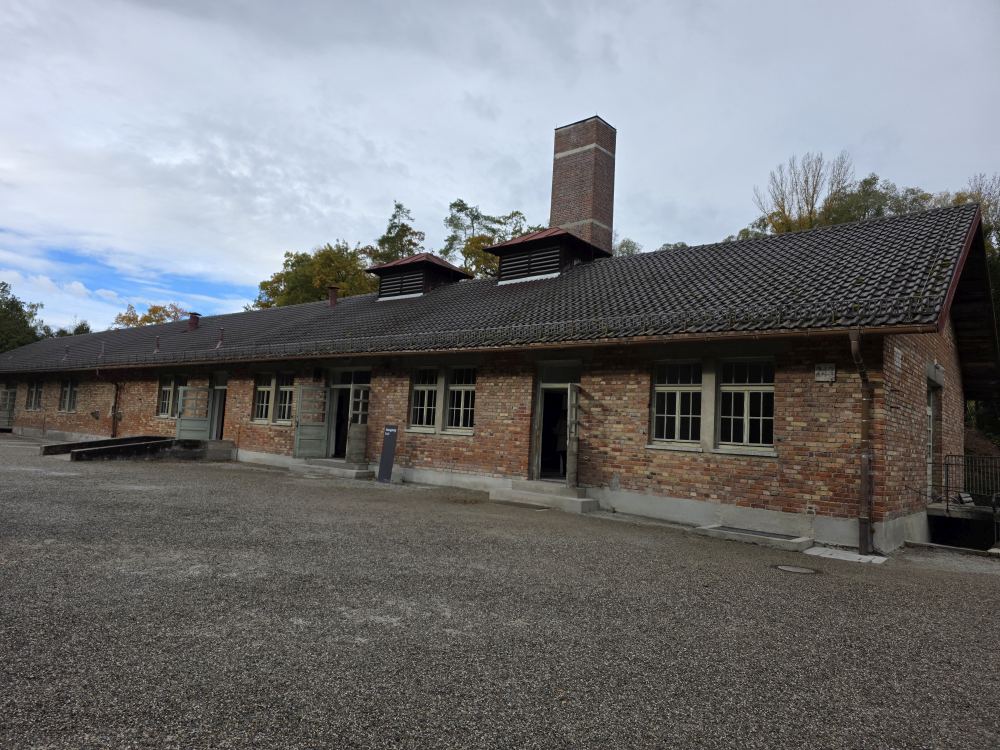
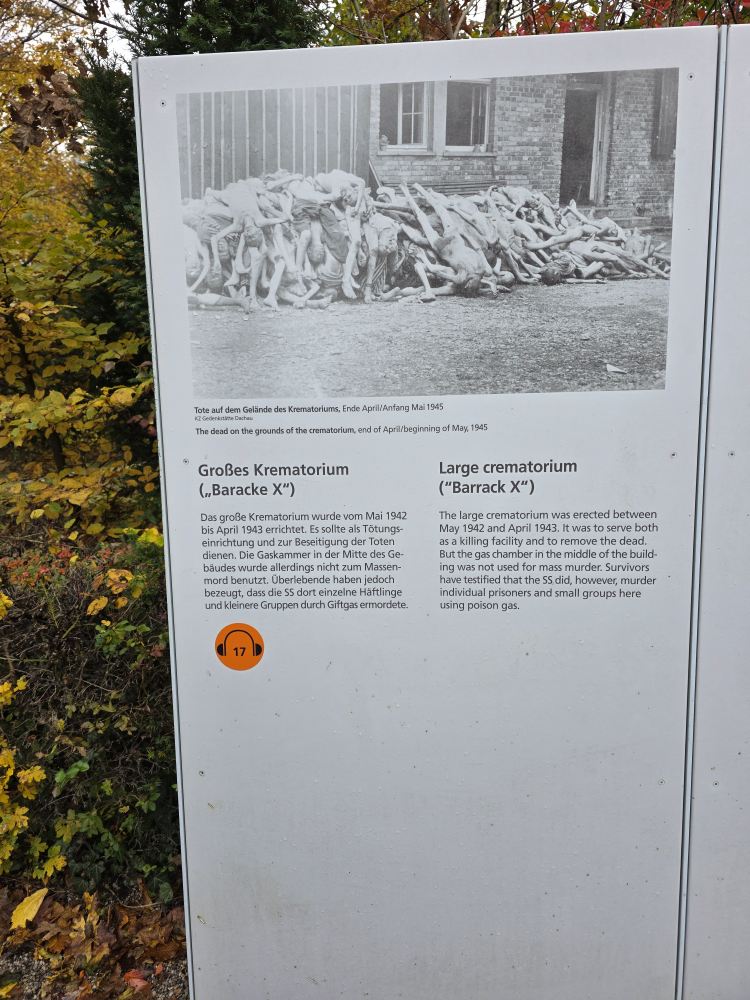
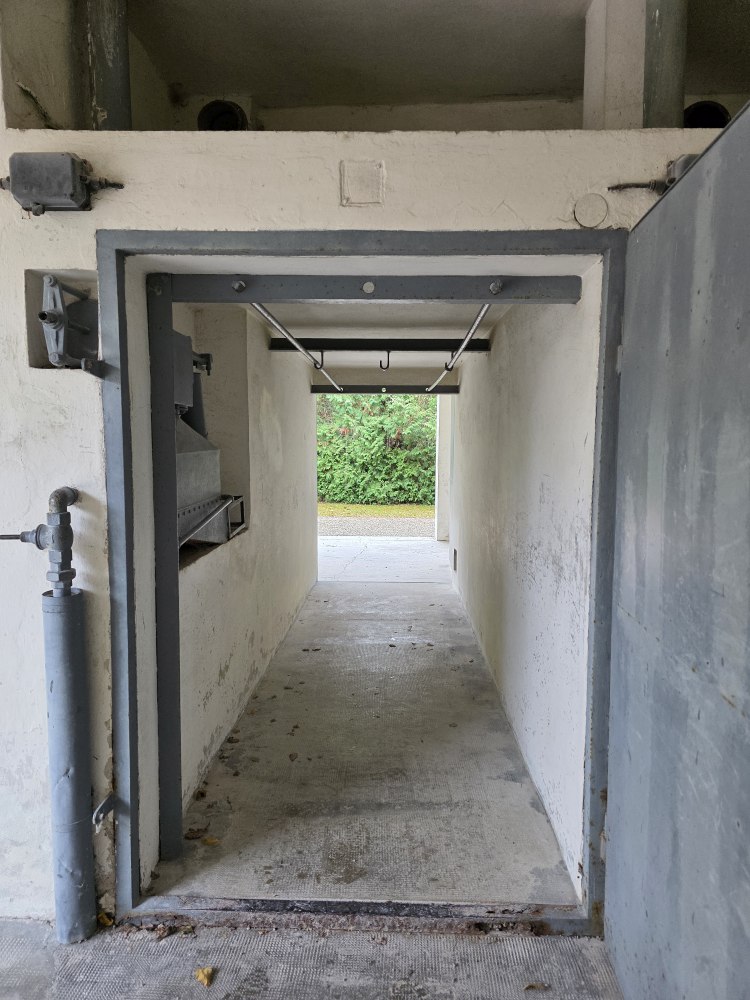
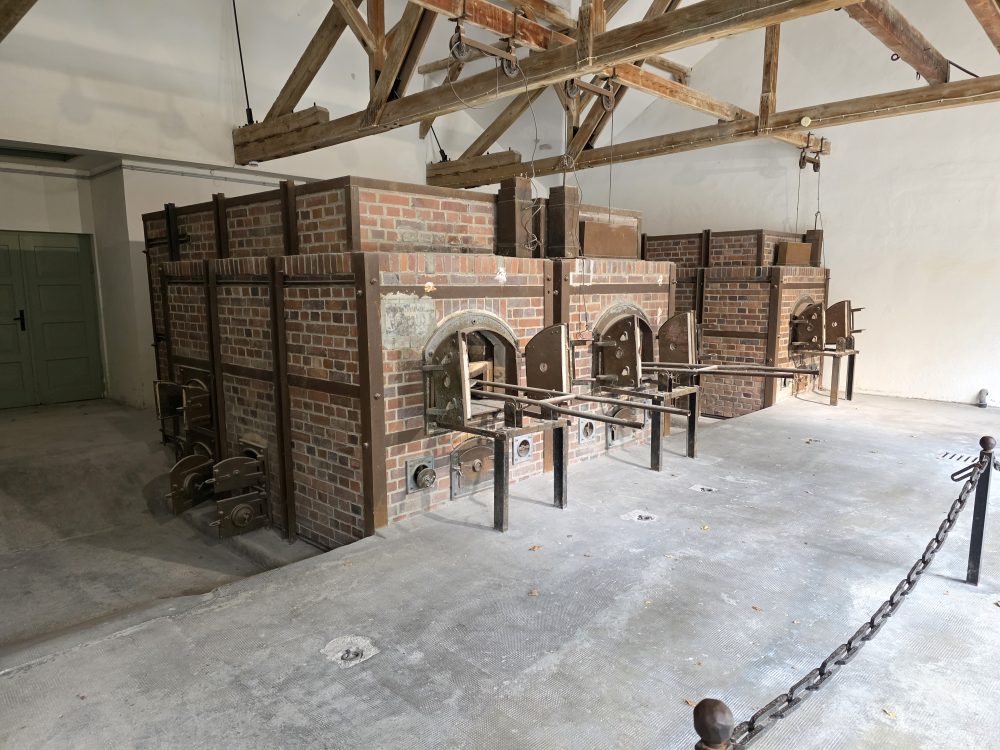
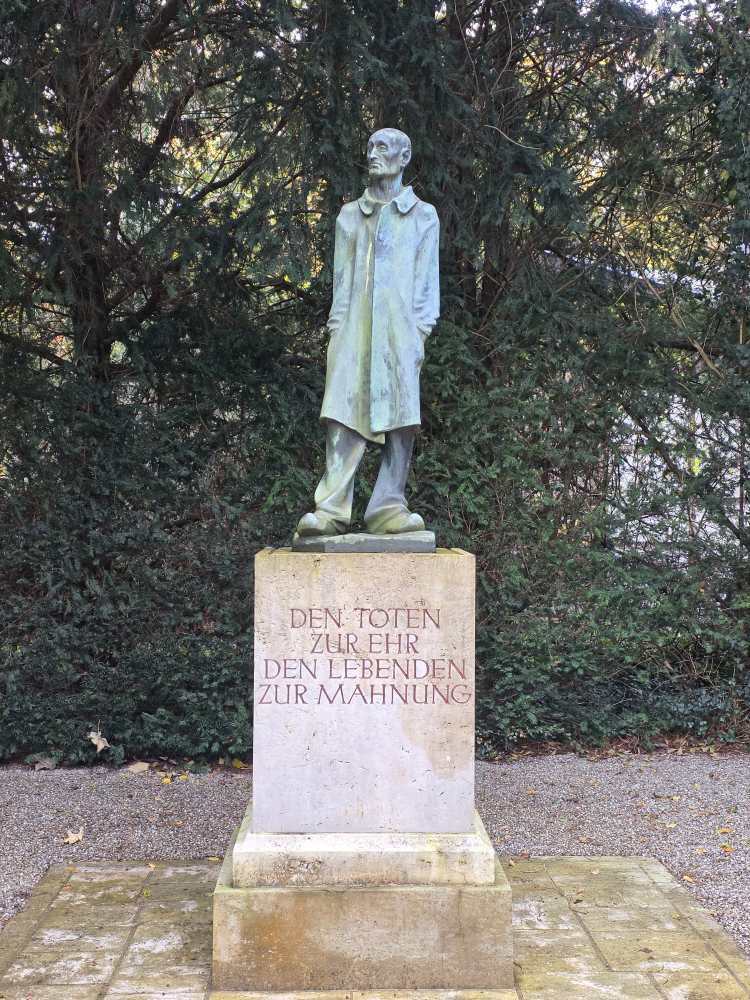
Our last stop – no pun intended – is the crematorium. Walking through the different areas, the disinfecting chambers, waiting room, disrobing room and the gas chambers is just eerie and horrible. Supposedly the gas chamber was not used for mass murder, but for individual or small groups killed with poison gas. Either way, it is just a horrible place, and the photos of the bodies too gruesome. Leaving the crematorium we pass the statue of the Unknown Prisoner with the Den Toten zur Her, den Lebenden sur Mahnung inscription: In honor of the dead, for the warning of the living. So poignant and sad and, well, with the state of our world today, so obvious no one is learning from the past. A somber visit, but something that is necessary to do whenever visiting this part of the world.
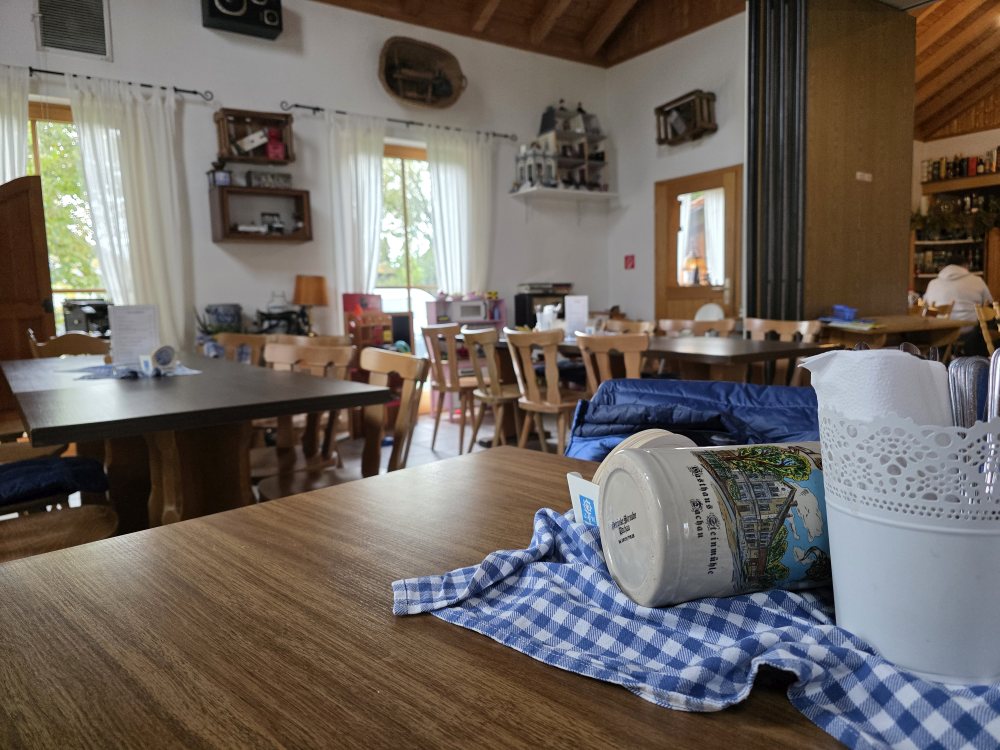
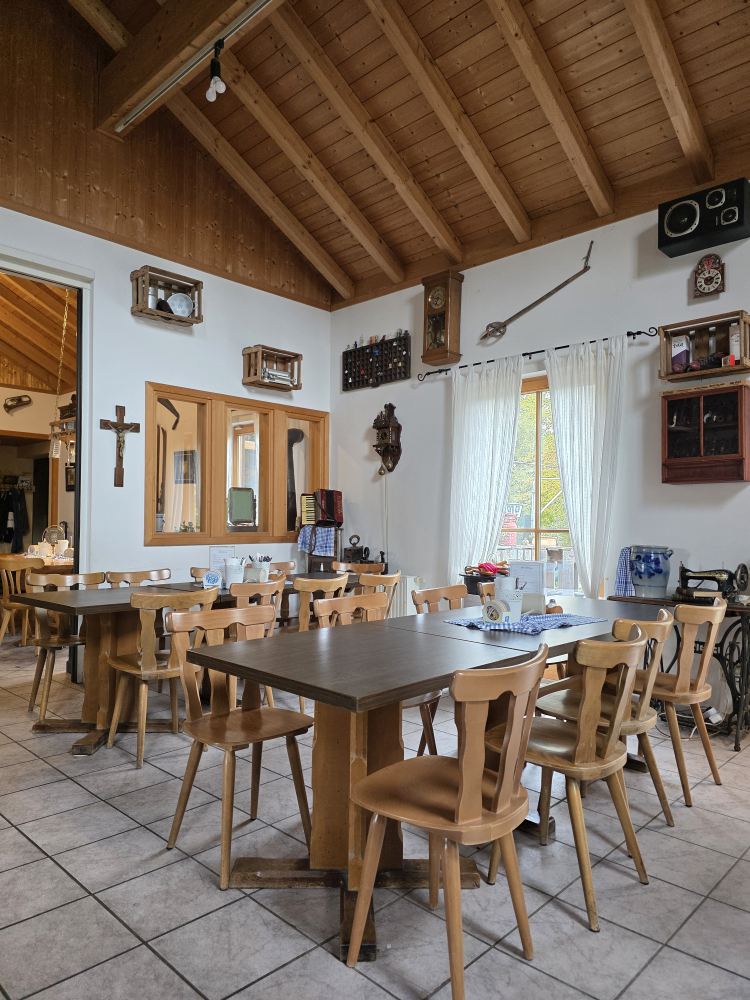
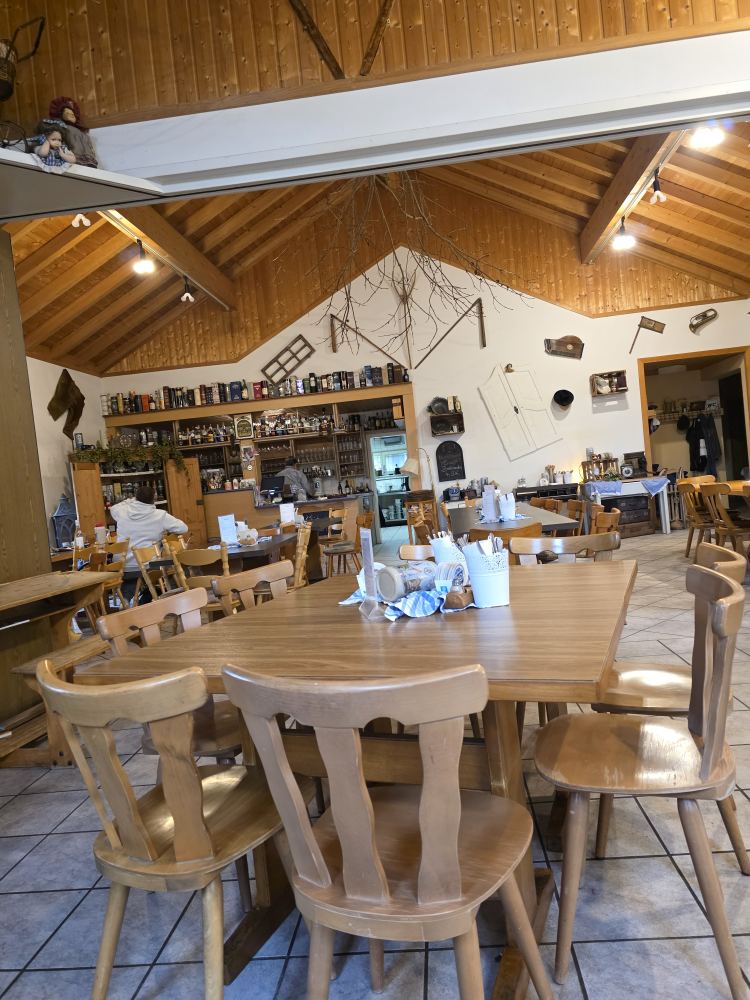
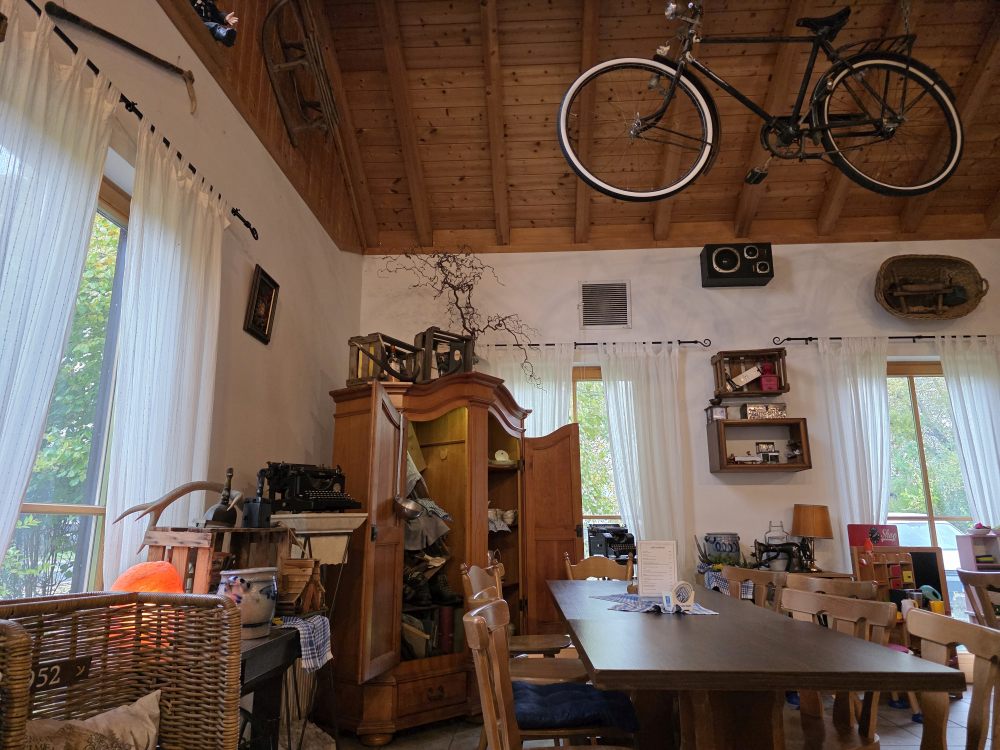
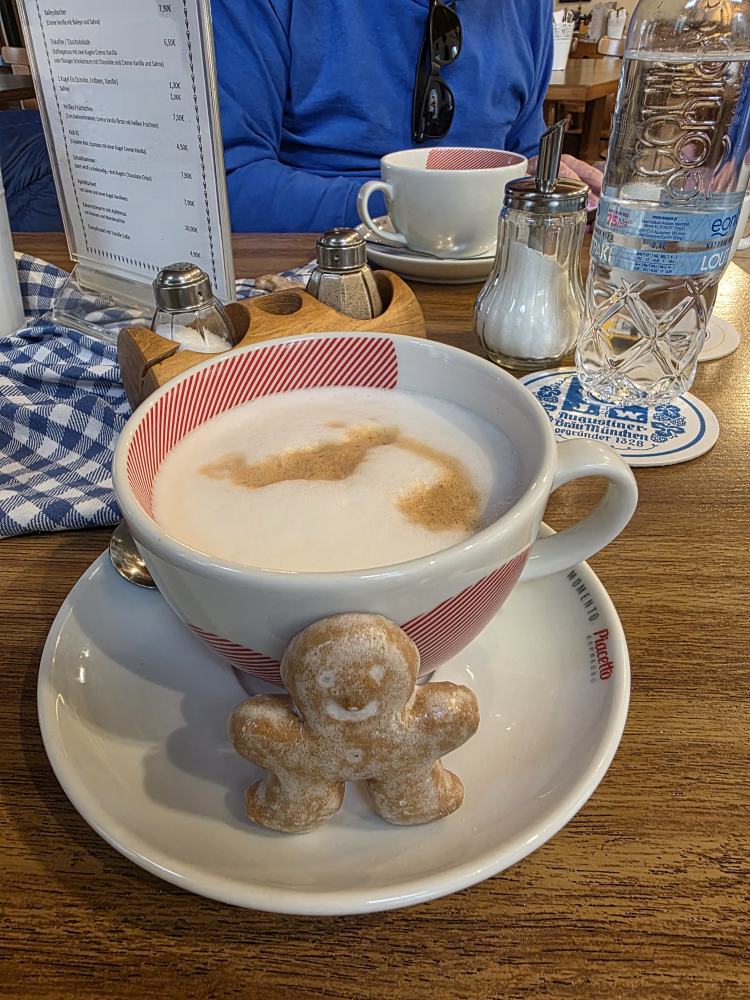
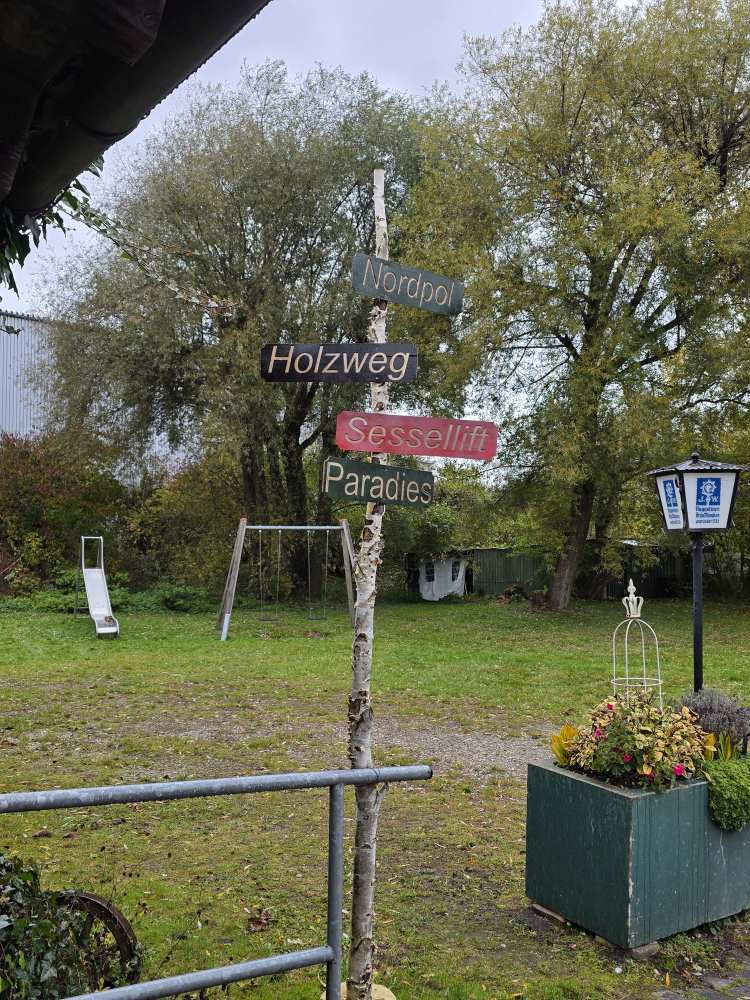
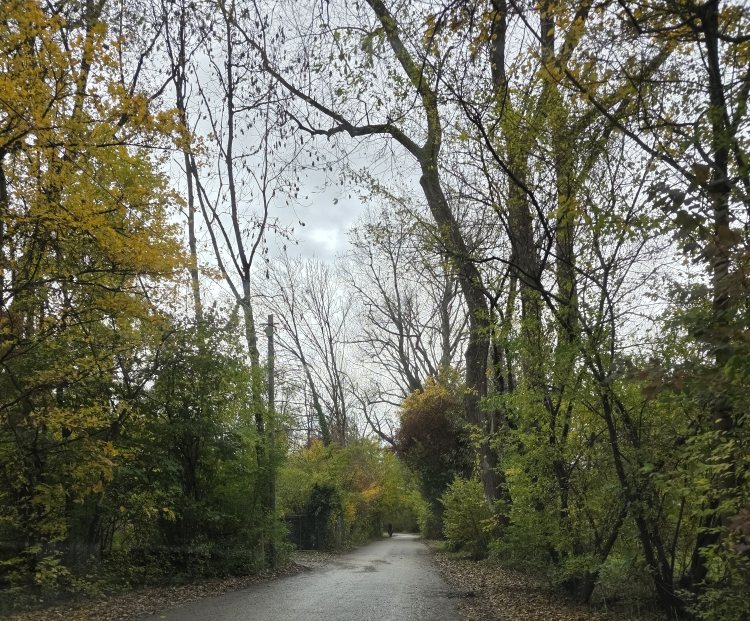
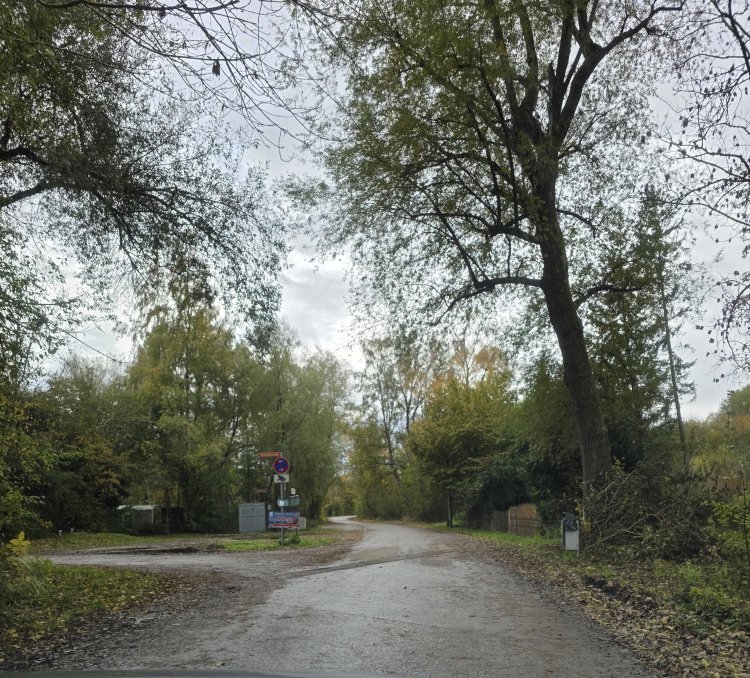
Finished with our touring, we hop on the local bus to ride back to the train station while we strategize about lunch. There wasn’t anything we saw that interested us in the town of Dachau – there was nary a German restaurant around! All Kebabs and Chinese and Japanese. Perusing our maps and searching about we find a little out of the way place close by that gets great reviews called Gartlerstuberl that is actually open now, a little before noon (another issue, as most places don’t open until after noon or 12:30). Off we go through the town, then onto this little dirt lane that runs through a farm field, across a one lane bridge and into a tree lined forest area. Where are we going? To Gartlerstuberl Dachau of course! Which appears like magic on the side of the road, with its grand entrance arch, a huge courtyard with all sorts of household memorabilia perched everywhere and the coziest and most charming dining room hosted by Angelika and her hubby and daughter? Or friend? We never found out, but it was just the 3 of them there when we arrived, eating their lunch (or more likely breakfast) and cheerily greeting and seating us.
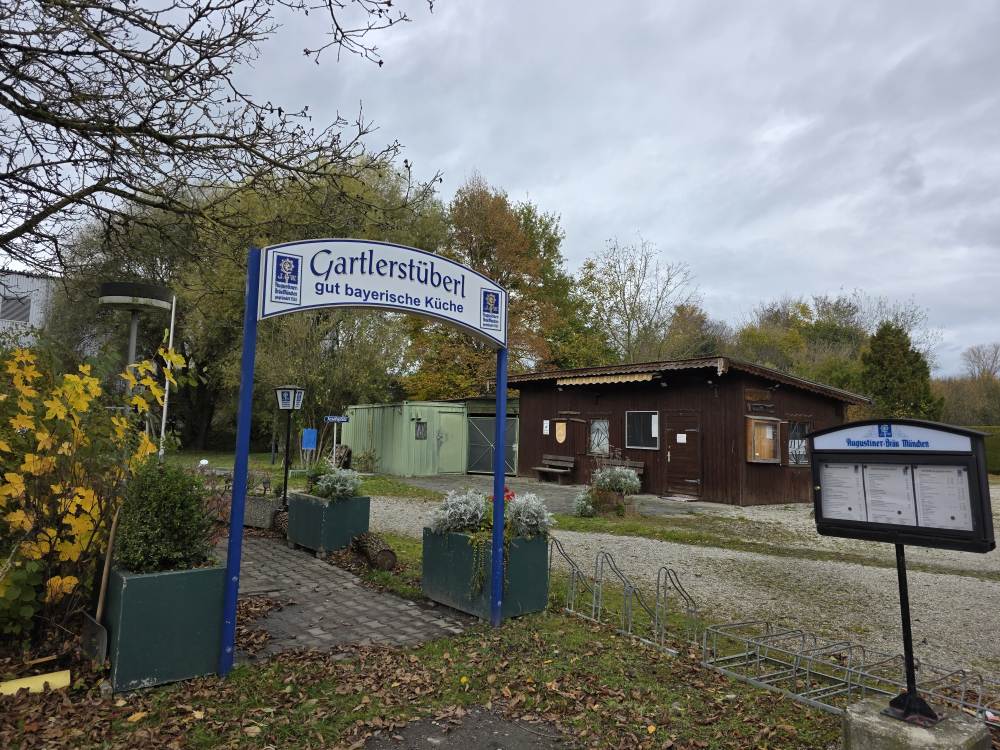
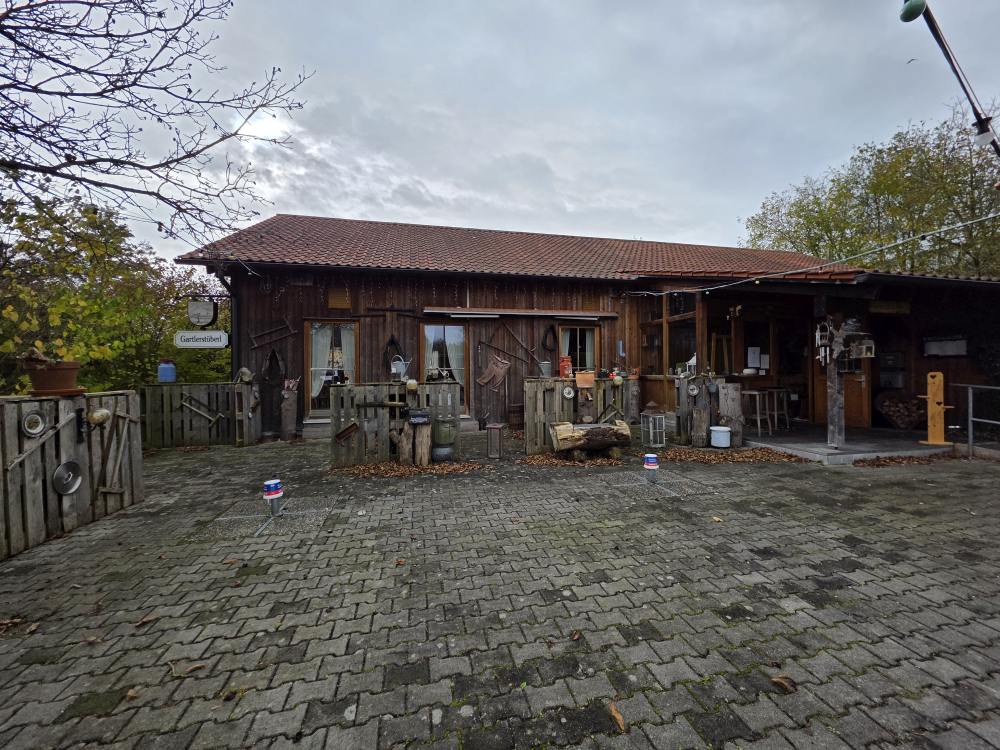
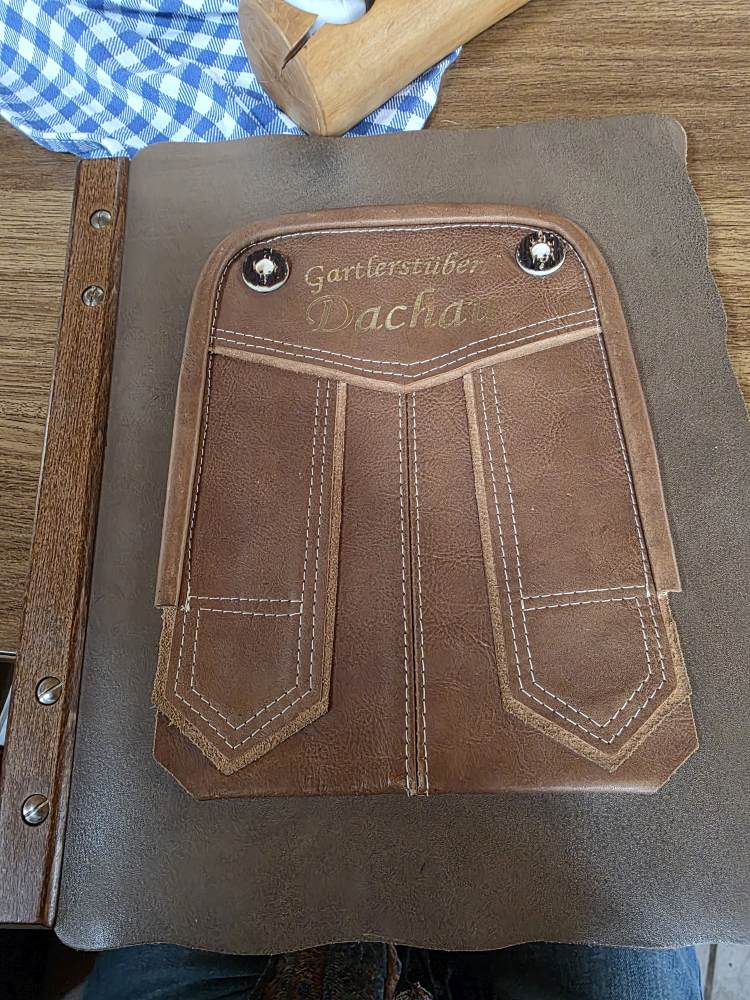
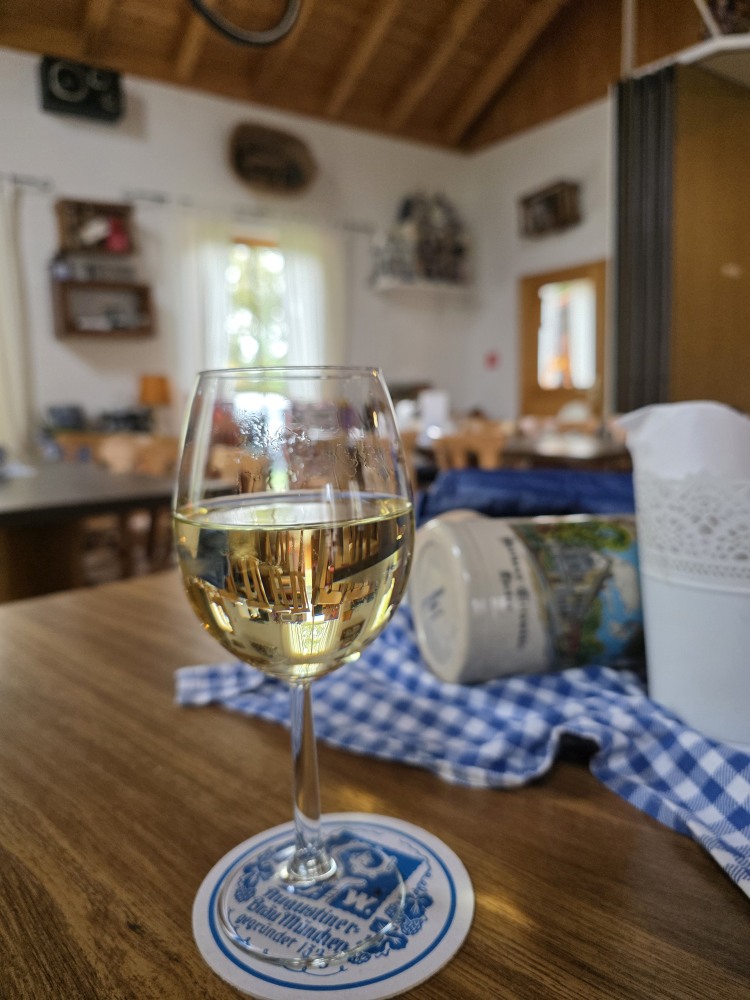
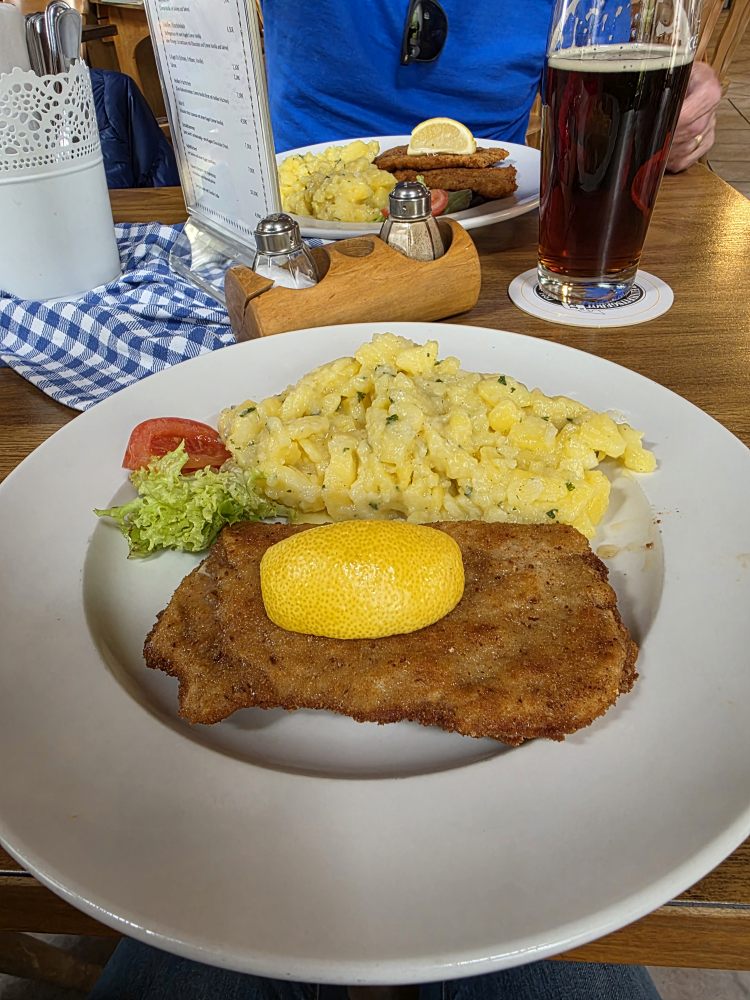
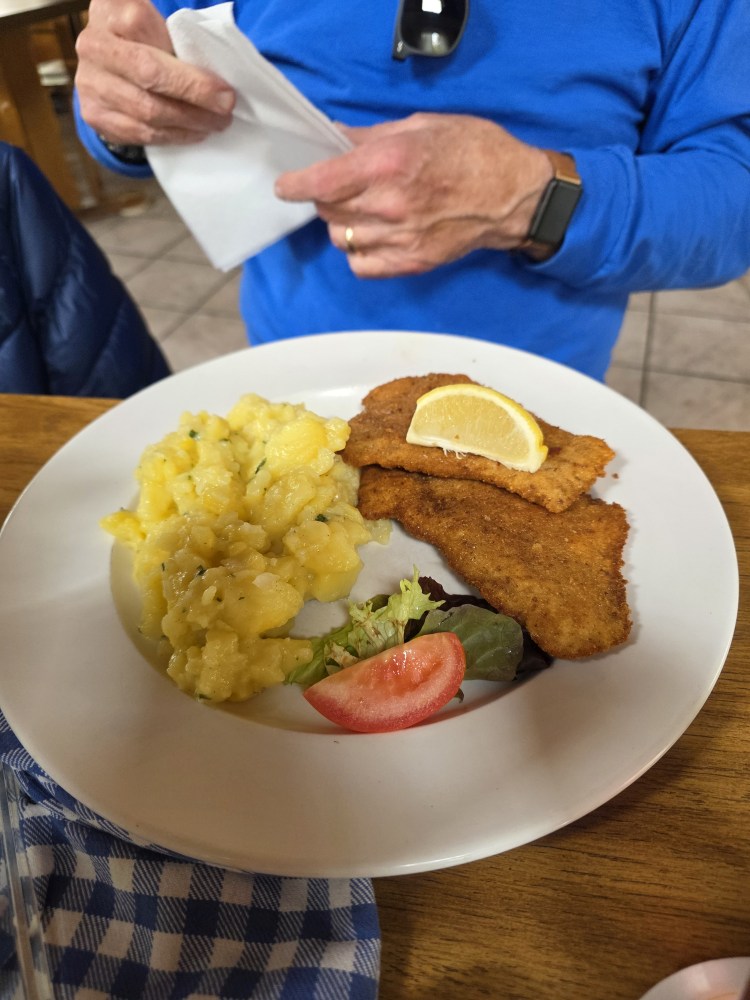
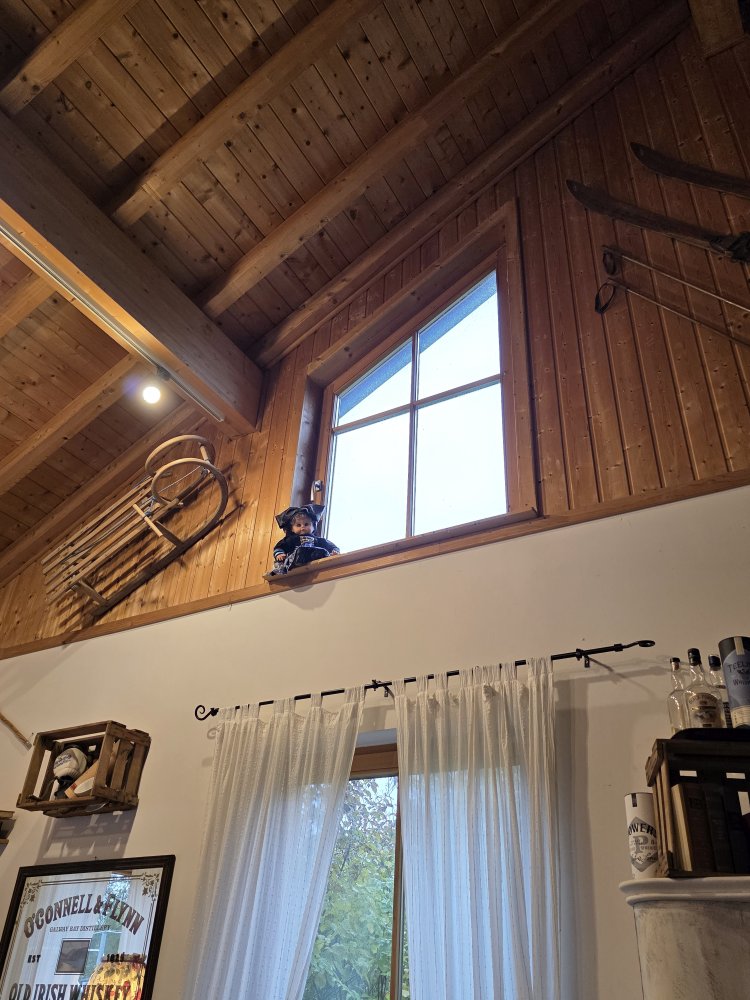
This place is a find! First of all there is memorabilia out the wazoo – an antique village on steroids. Dolls on the windowsill, old typewriters (go figure) everywhere, Mama (Angelika) presiding over the entire place and the best menu cover ever. It was fabulous! Our broken Germglish matched Mama’s English and we had priceless conversations. Plus, the food was so good! I ordered a Cordon Bleu which was massive, and Ed had Putenschnitzel or turkey schnitzel which was even bigger! Each was accompanied by more fab Kartoffelsalat, which we could not finish for the life of us. We asked for a box (Karton) to take it home and Mama came back with this huge tub – and added extra. Ay yi yi! Dinner tonight. So nice!