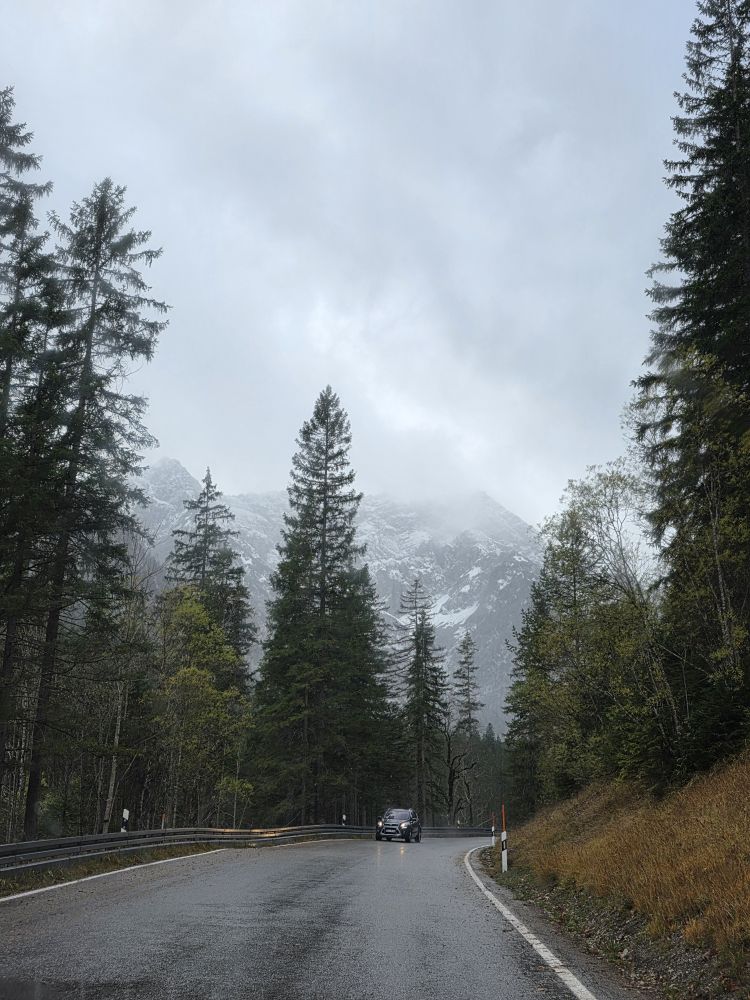
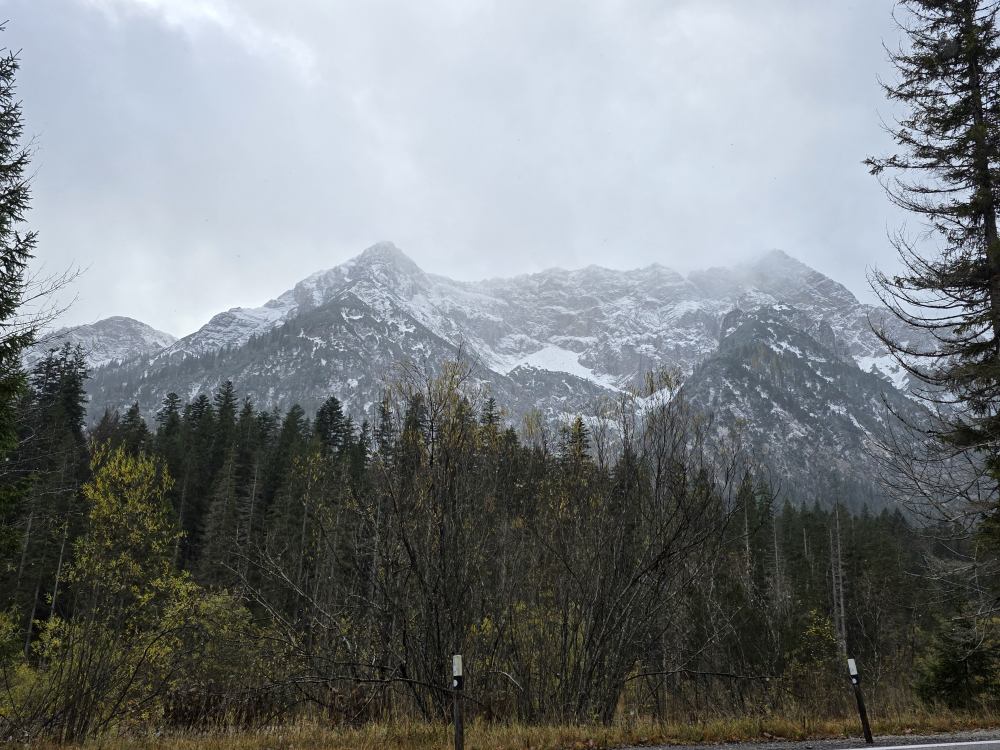
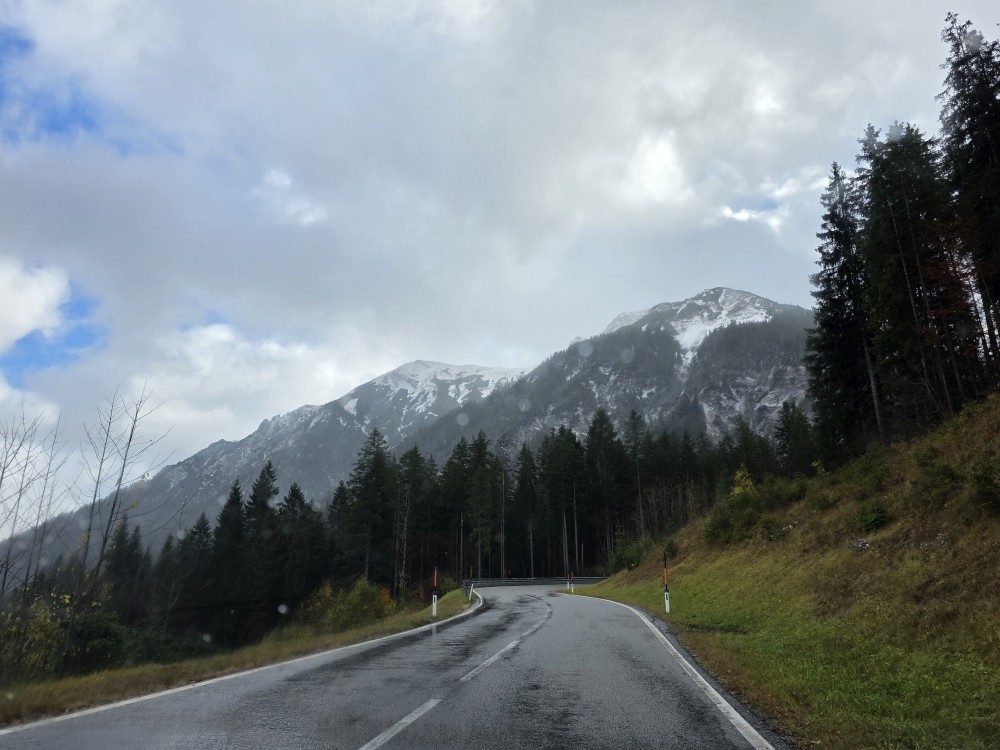
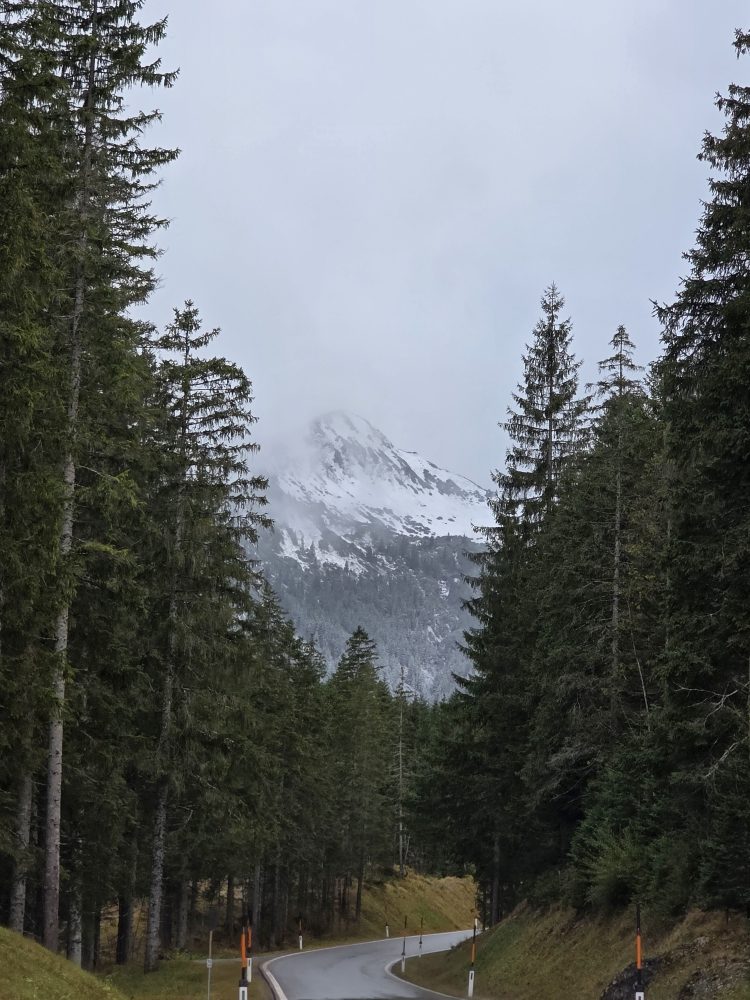
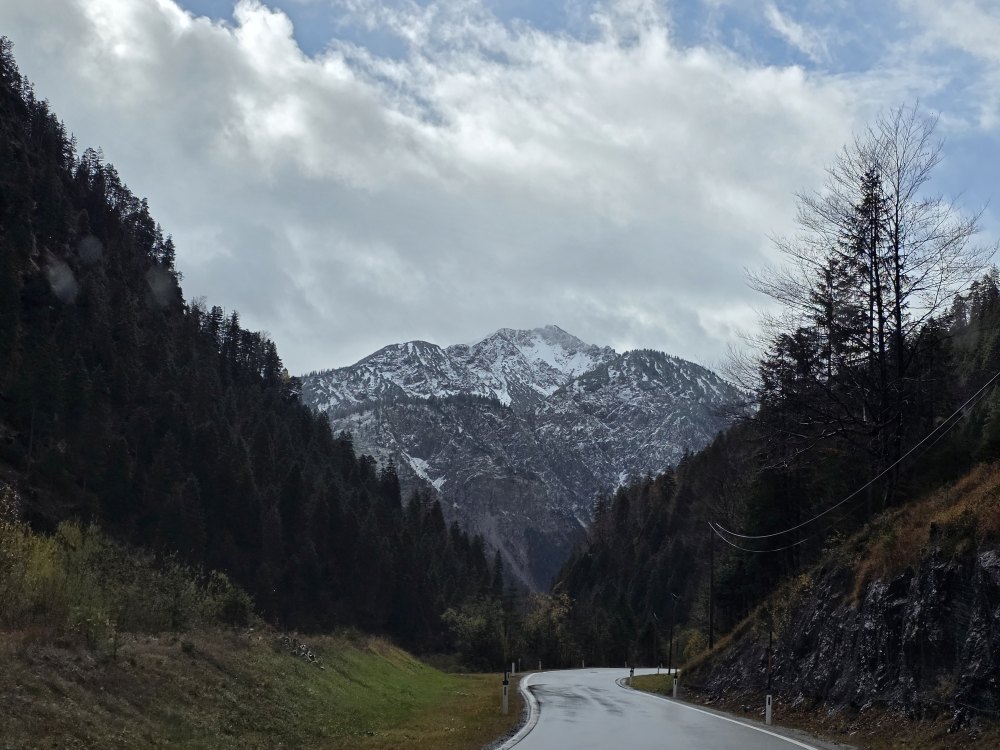
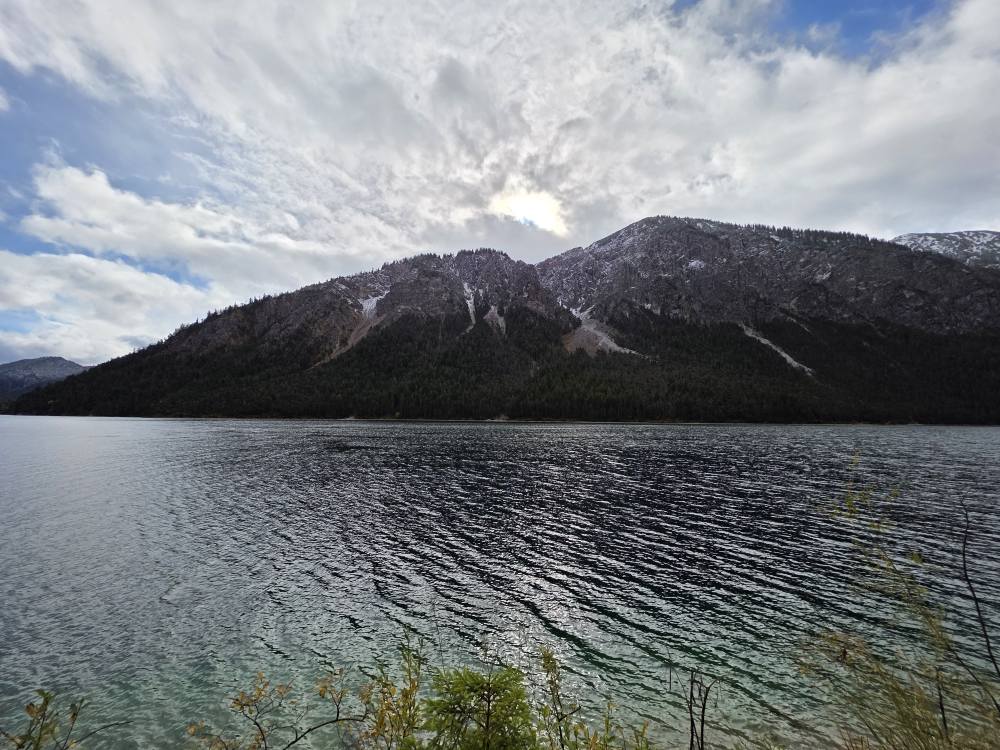
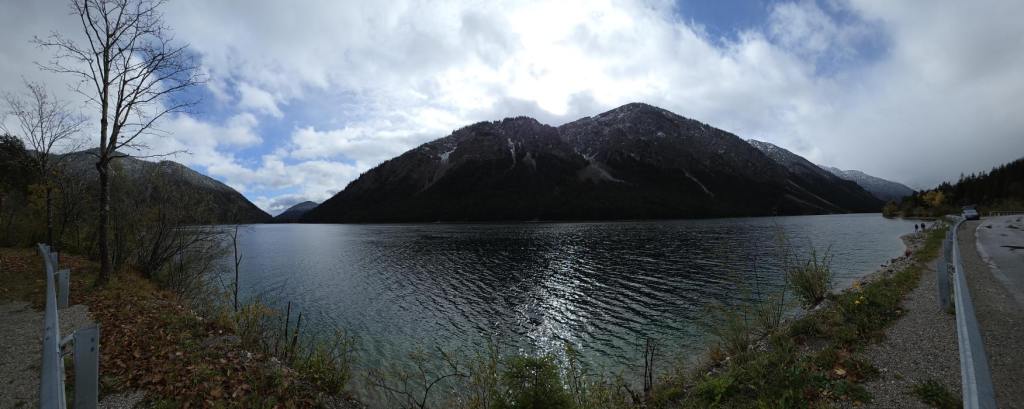
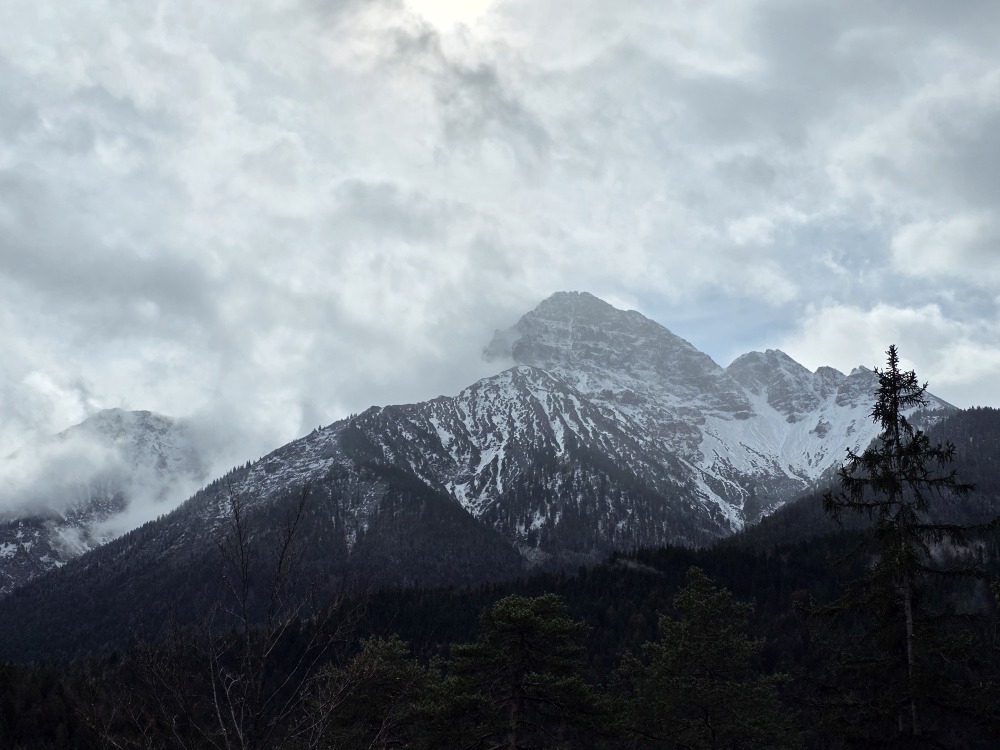
Once again, the drive is stupendous, though the Alps and past the gorgeous lake Plansee ringed with lightly snow capped mountains. It rains, it snows, it clears. The weather is so crazy, changing from one minute to the next, but also making the vistas beautiful in a cloudy, sort of moody way.
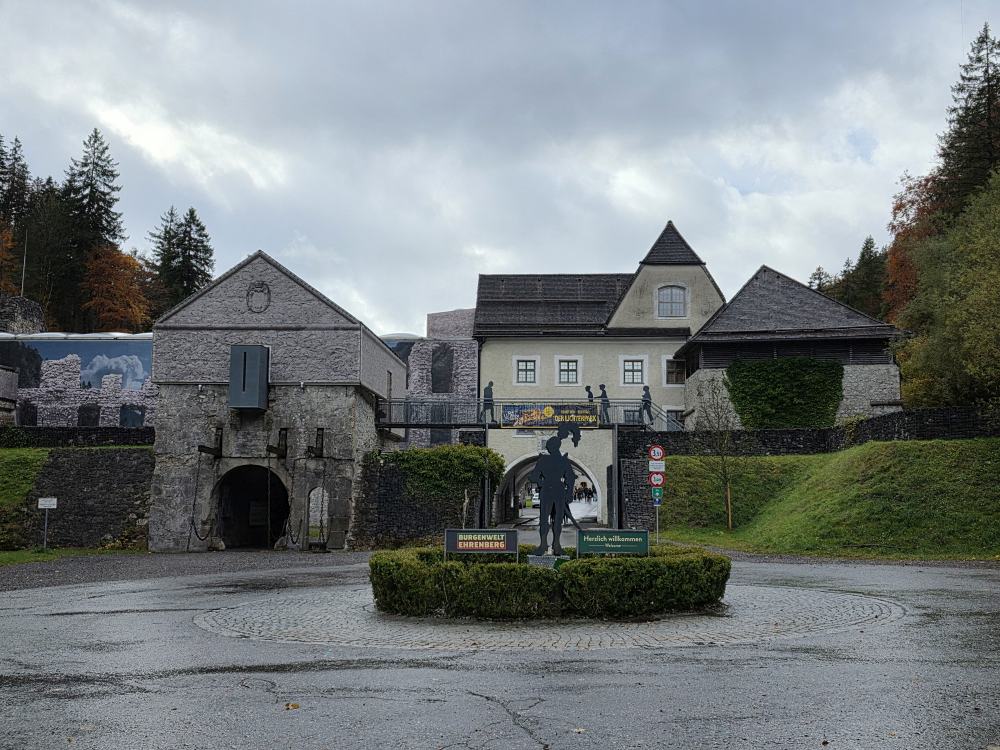
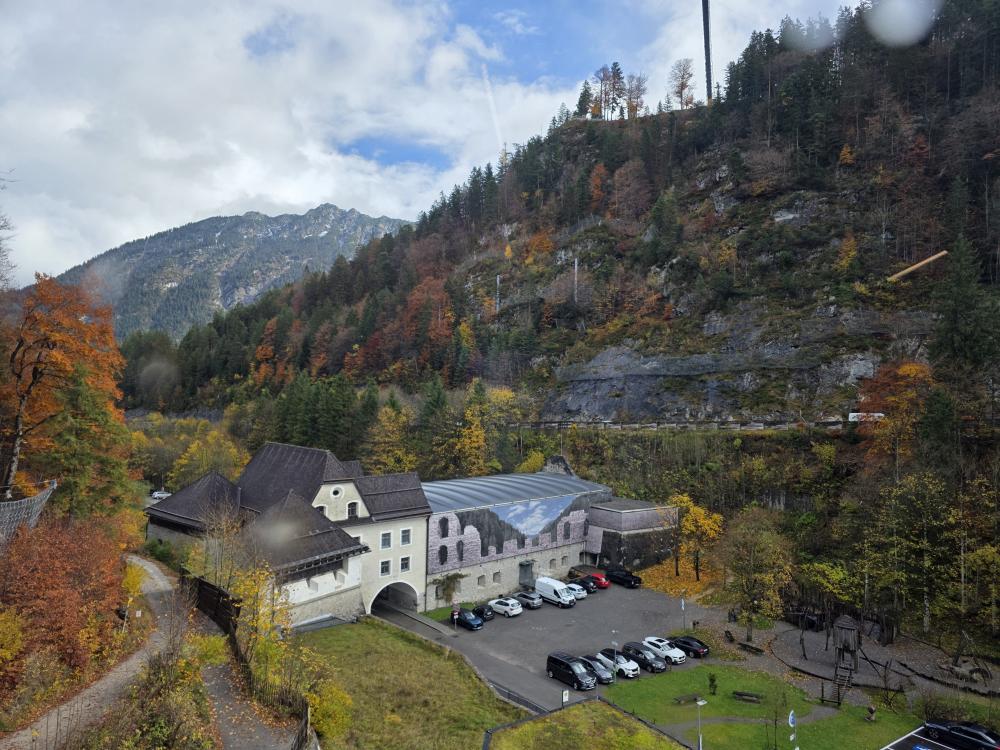
Arriving at Ehrenburg, the skies are actually fairly clear (although that will change quickly), and there isn’t any snow even though we are still up in the Alps. Parking the car, we get our bearings, checking out the large map that shows all the trails and the cluster of 4 castles that make up the defenses of the area. Ehrenburg is the oldest, initially built in 1293 but bombed and ransacked repeatedly, the last in 1703 when it was all but destroyed and left as we see it today. The other castles – Sclosskopf (above Ehrenburg, built in 1741), Fort Claudia (across the valley on the other side of Via Claudia – the main thoroughfare and salt trading route from Italy to Germany in the day, built in 1645) and Klause (the walled fortress we enter through to access the complex, built in 1480).
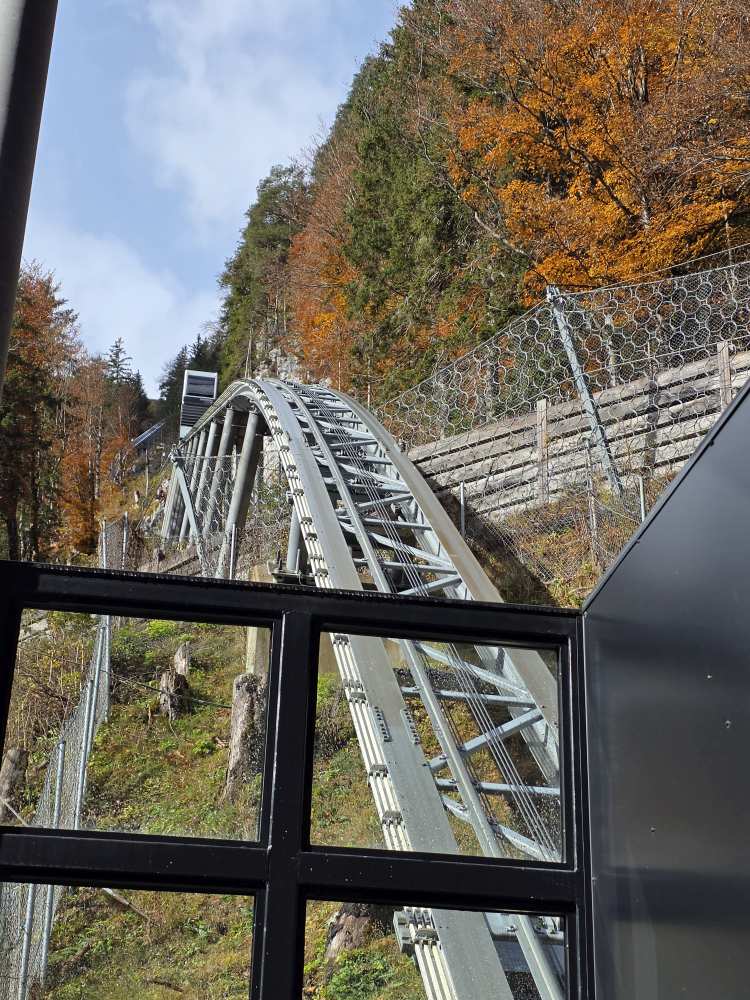
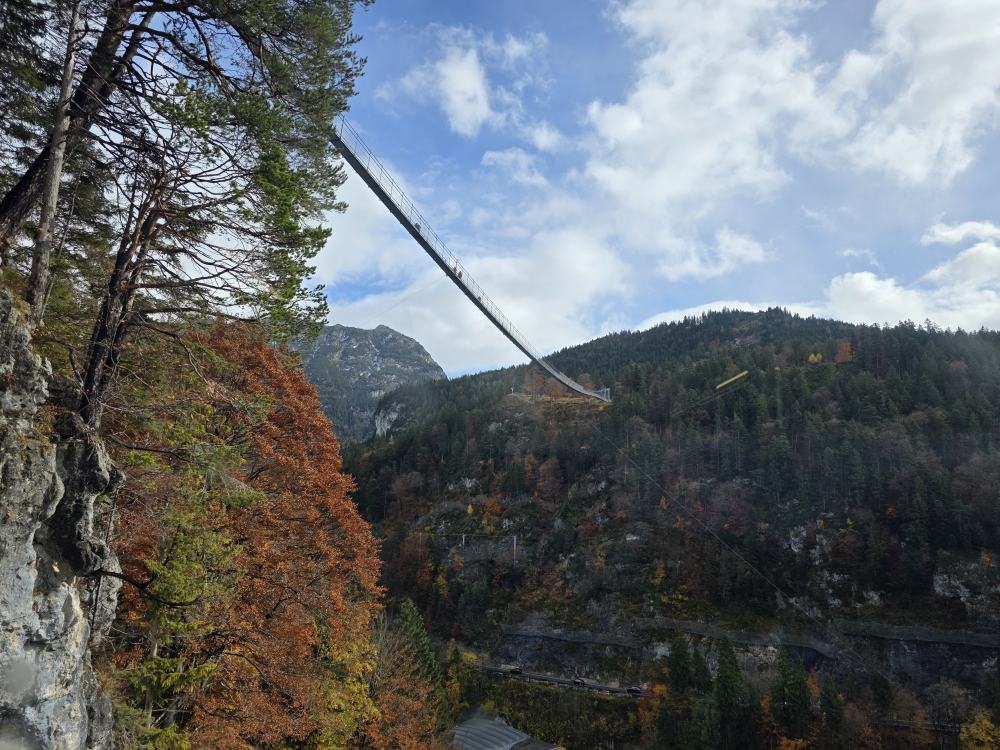
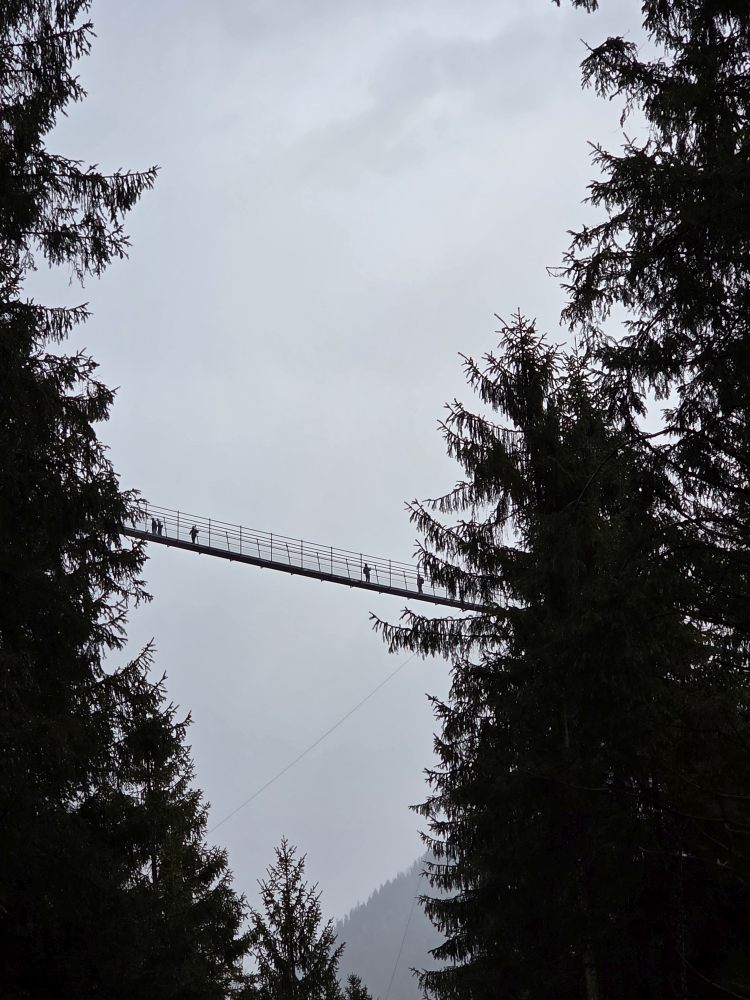
There are trails that lead up the steep hill to Ehrenberg, and then again up to Schlosskopf, and while you know us, we never turn down a good hike – between the elevation gain, the incline (literally straight up) and the unpredictable weather (it is cloudy and threatening again) makes us think twice and buy a funicular ticket to take us up the mountain. The ride is quick and comfy, providing us with fabulous views out over the Klause and the surrounding mountains, not to mention great views of the pedestrian suspension bridge (called Highline 170) that spans the valley and leads directly to Fort Claudia. Eek. Not happening. Ehrenburg will be perfectly enough for us!
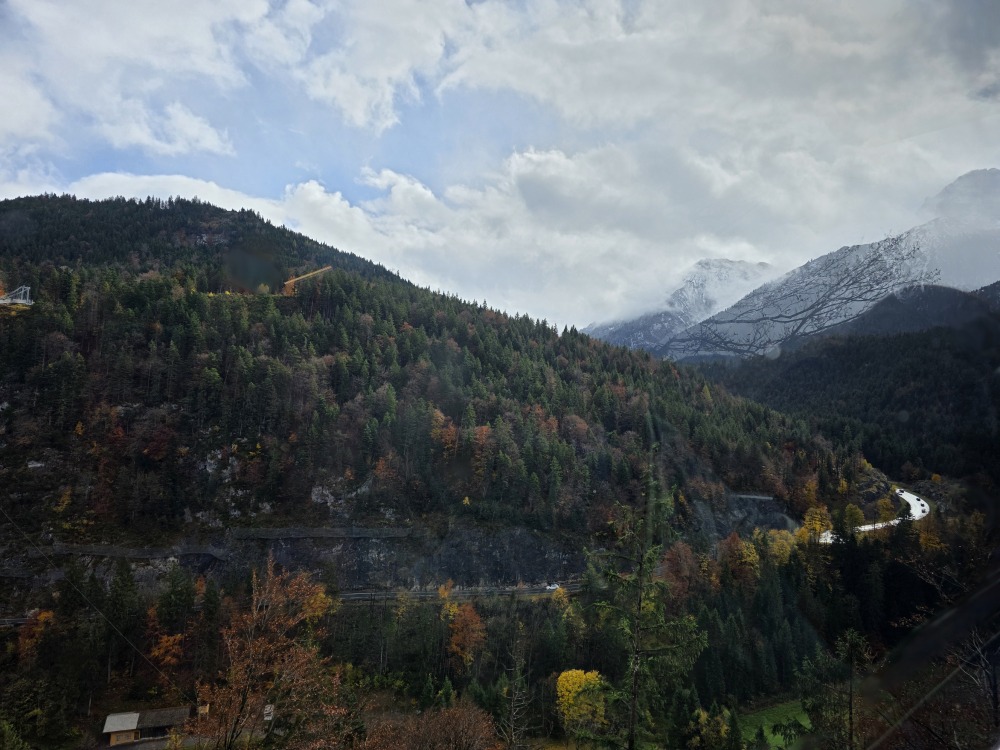
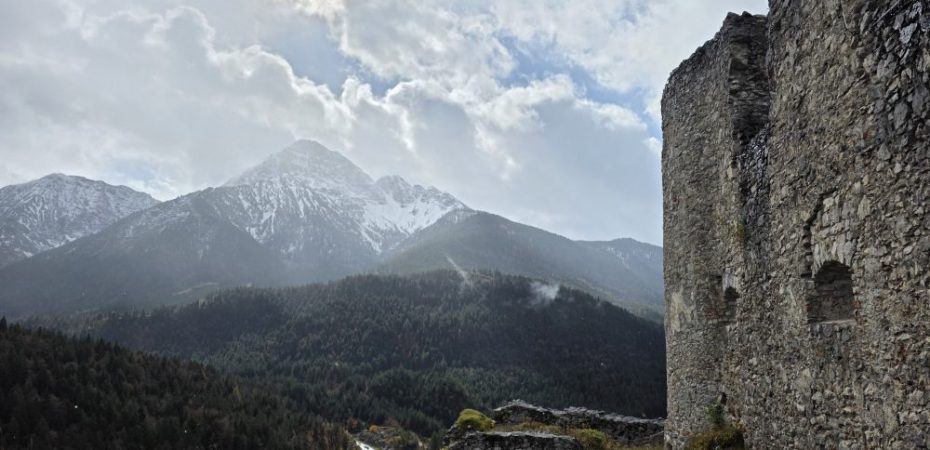
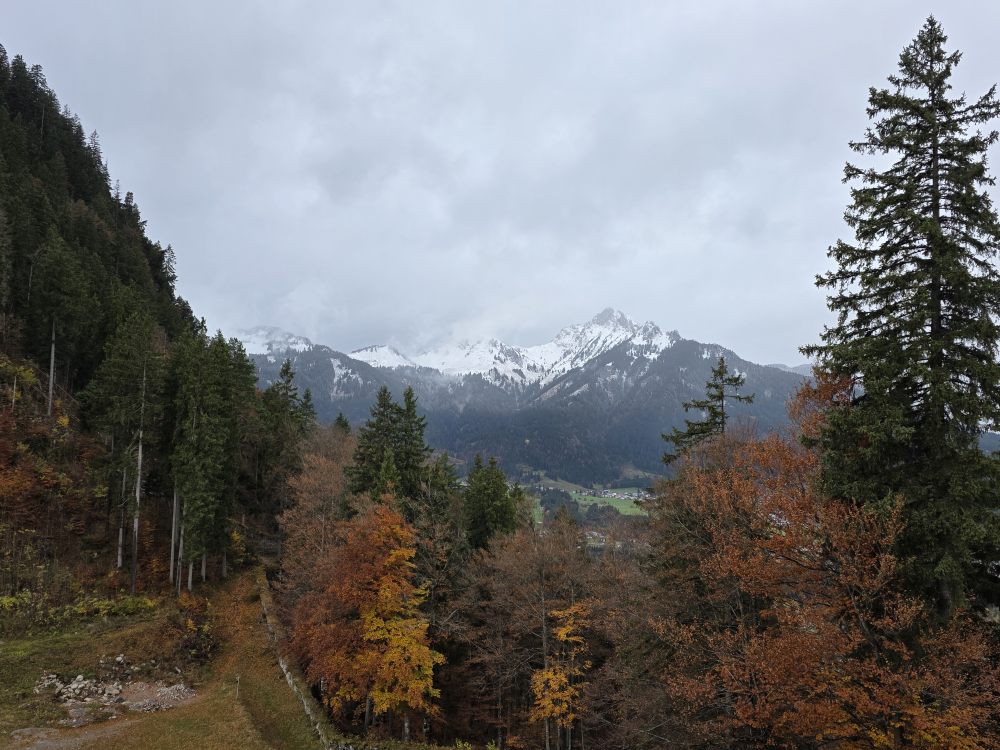
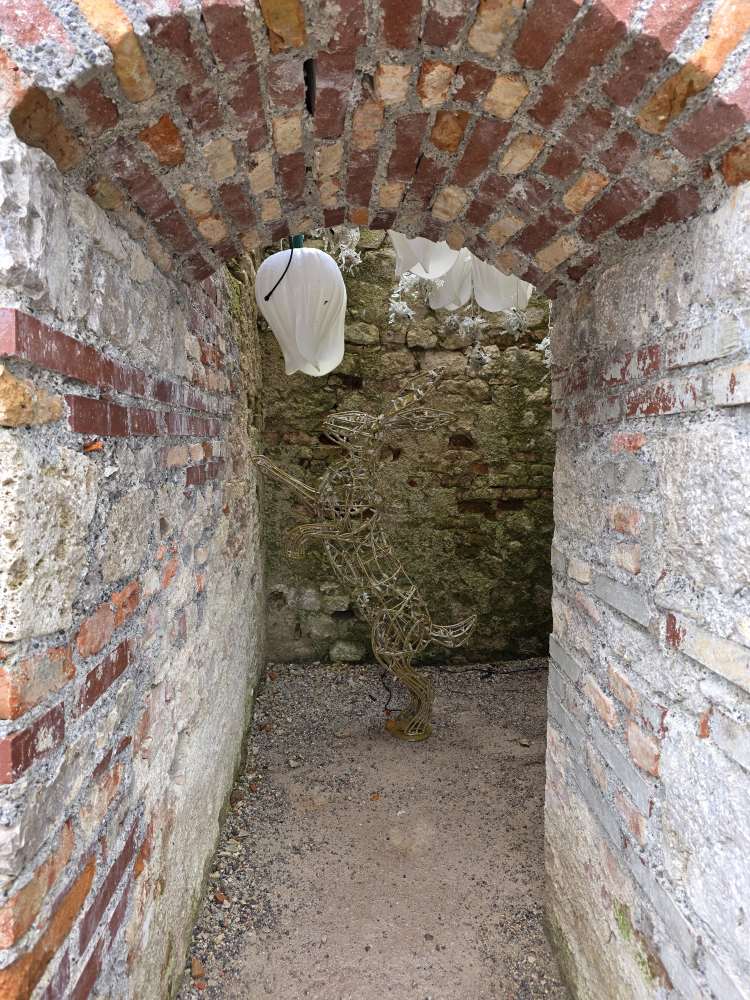
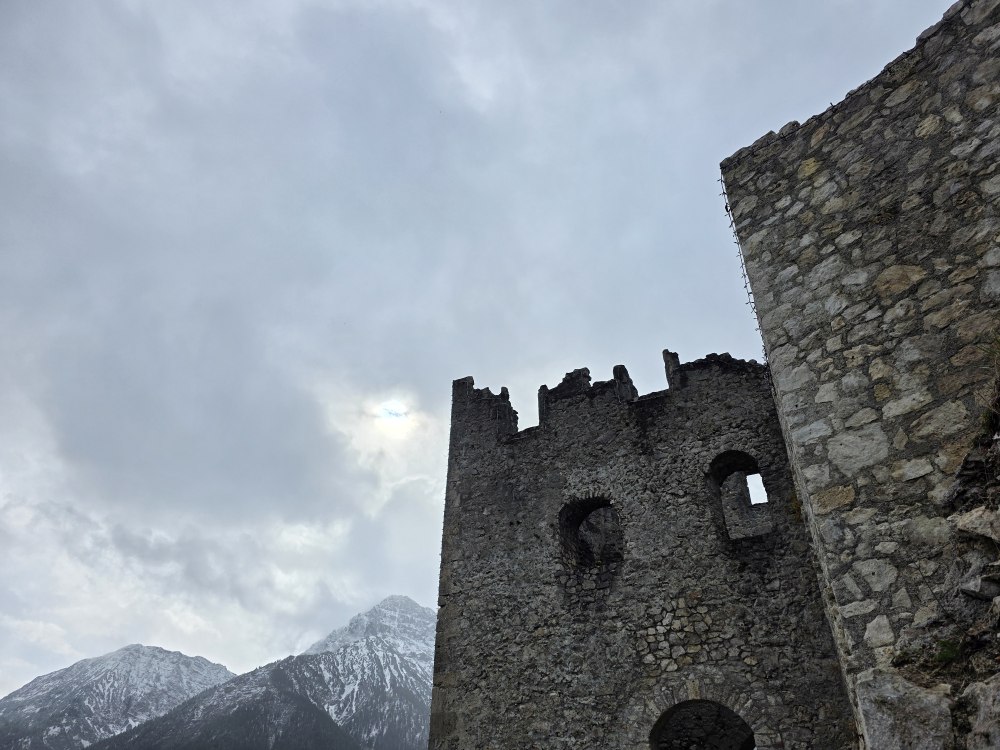
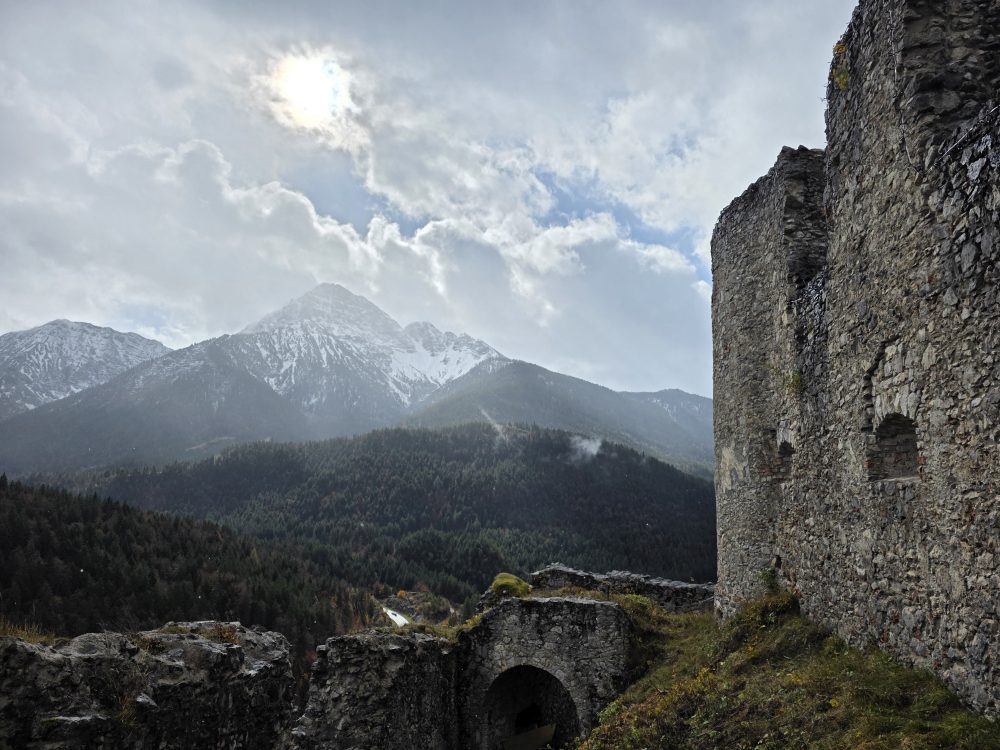
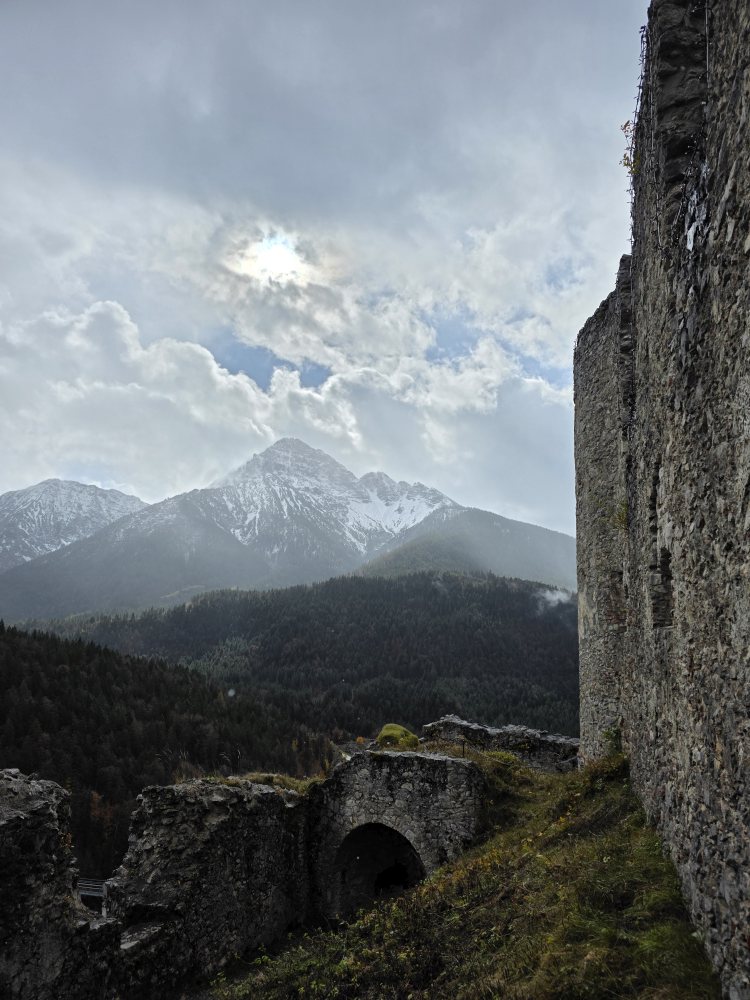
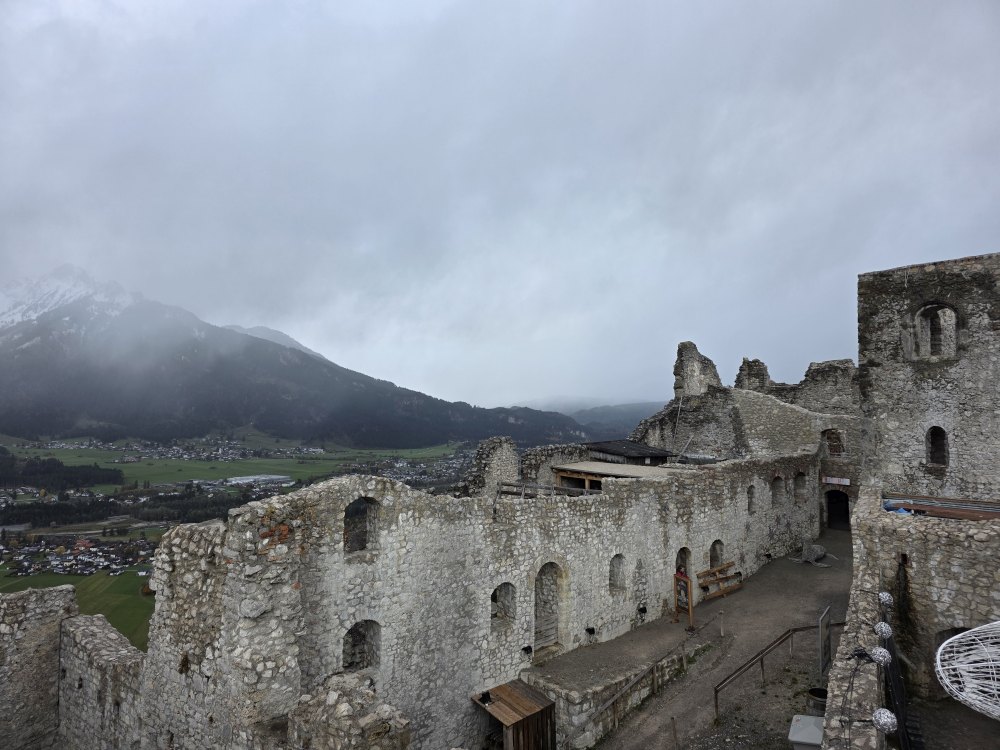
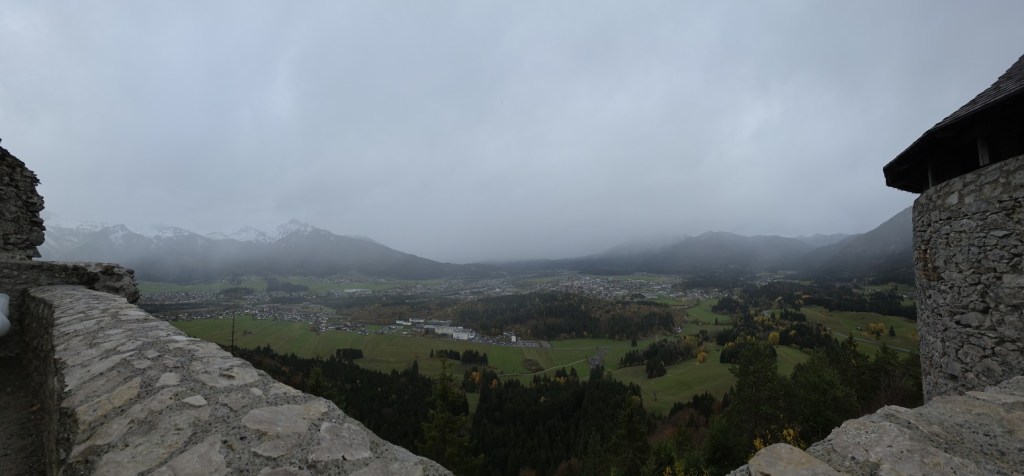
And wow, is it ever. The castle ruins are really a sight to behold (even if they are in the middle of putting up all the Christmas lights (similar to the NC Arboretum Winter Lights display). The sweeping views out over the valleys, the bastions and fortress walls that are still standing, providing protection from the wind (if not the rain and spitting snow that comes and goes), the high towers. You can just imagine the emperors and kings that stayed here in medieval Gothic glory.
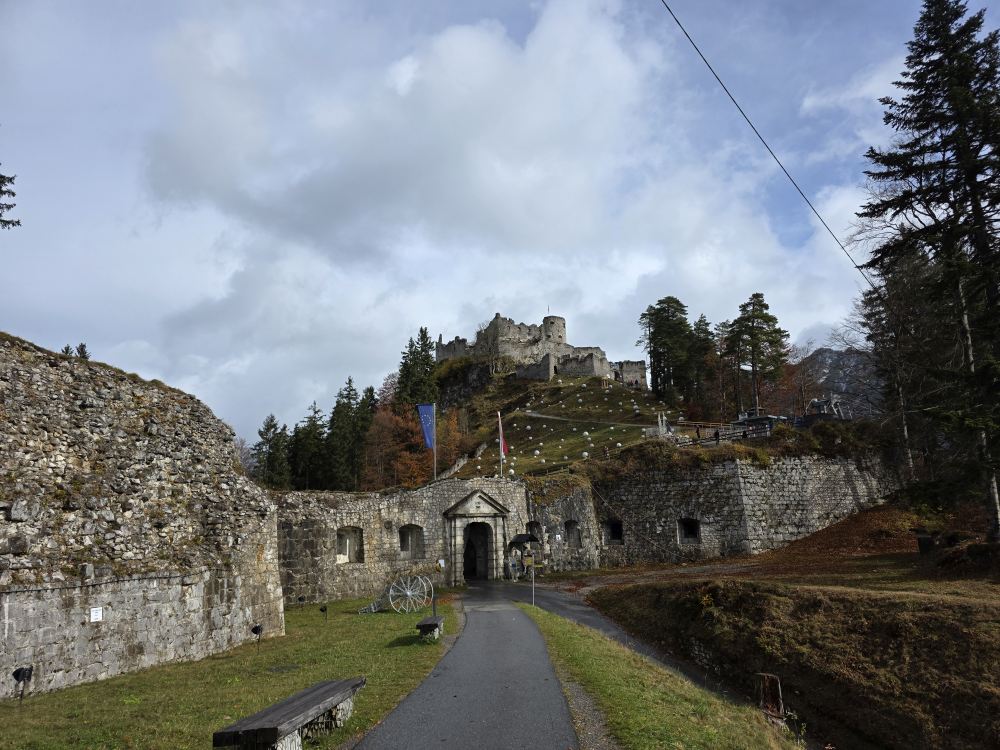
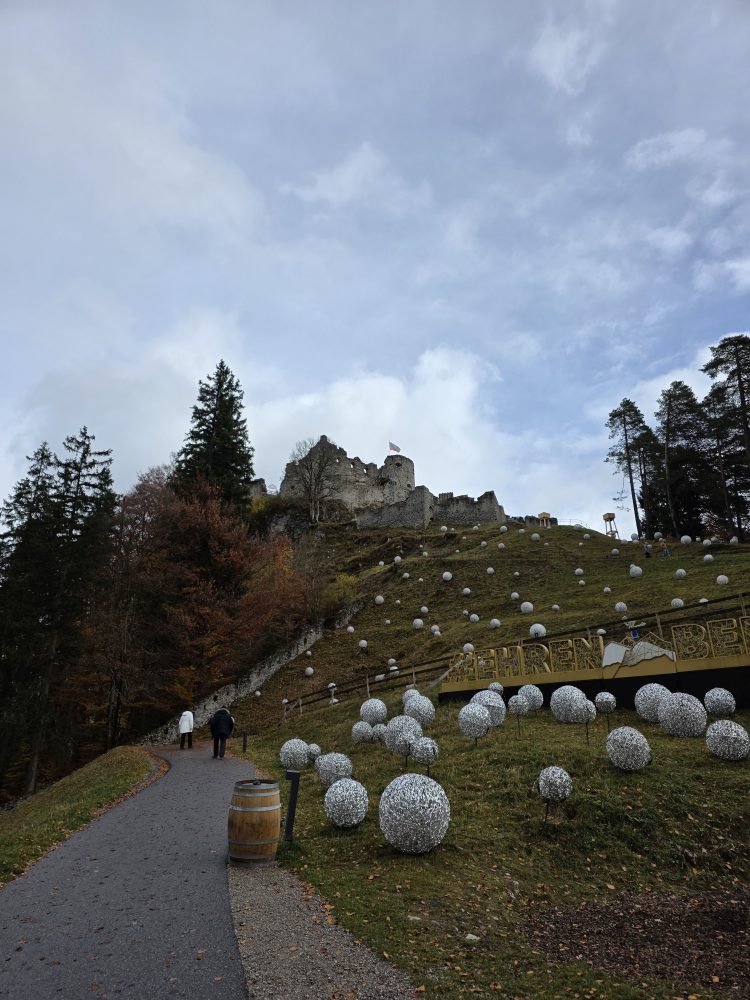
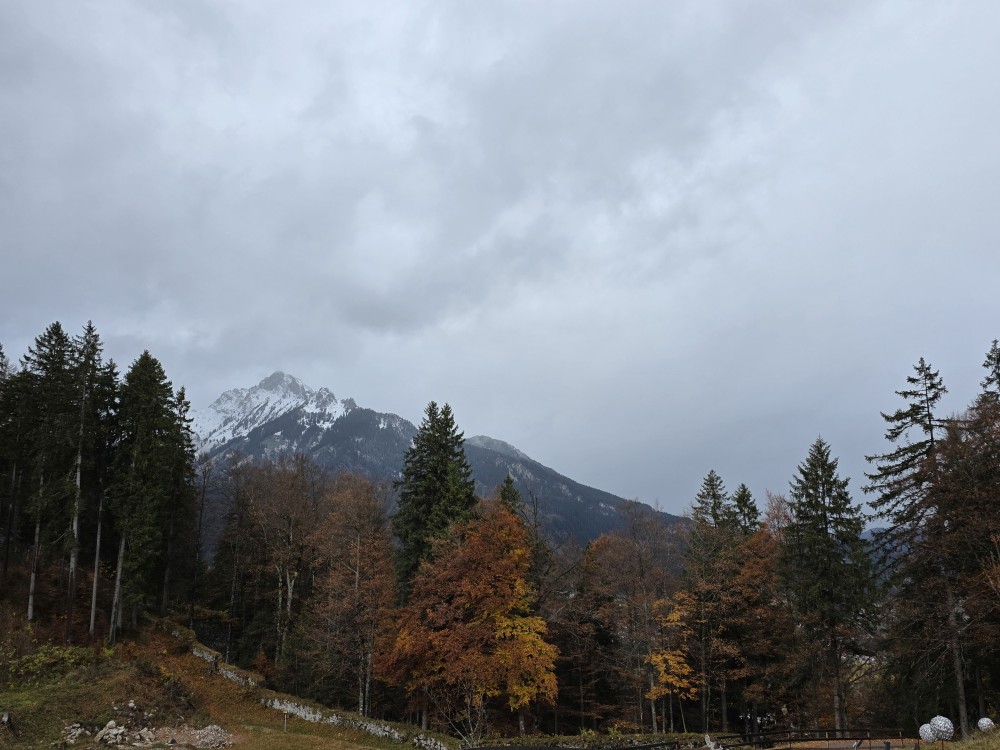
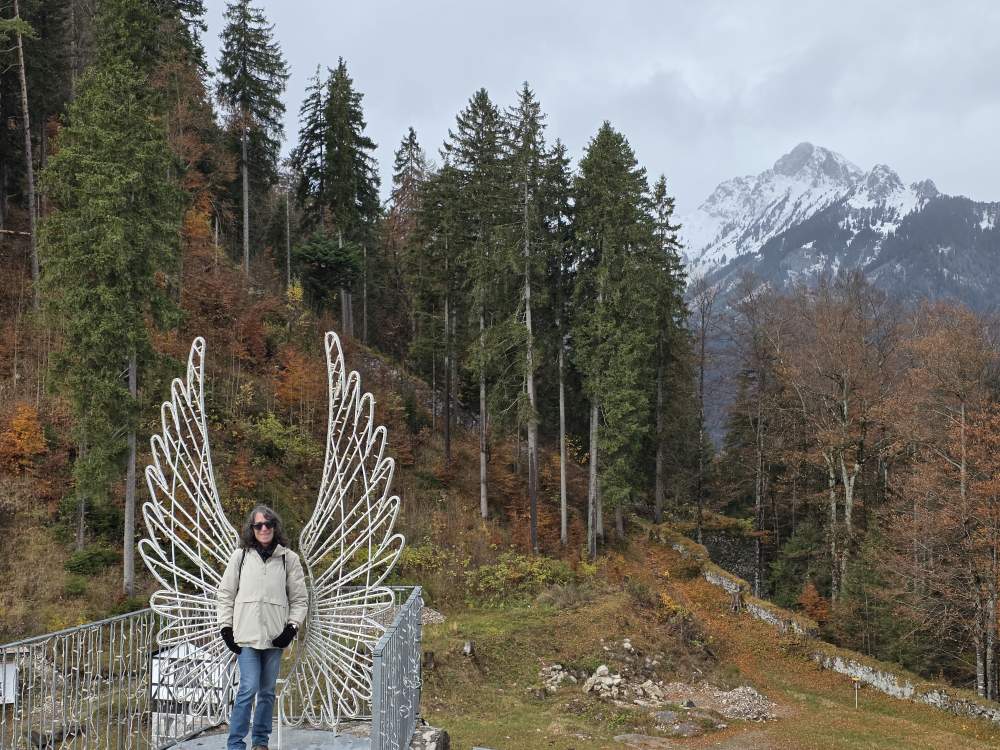
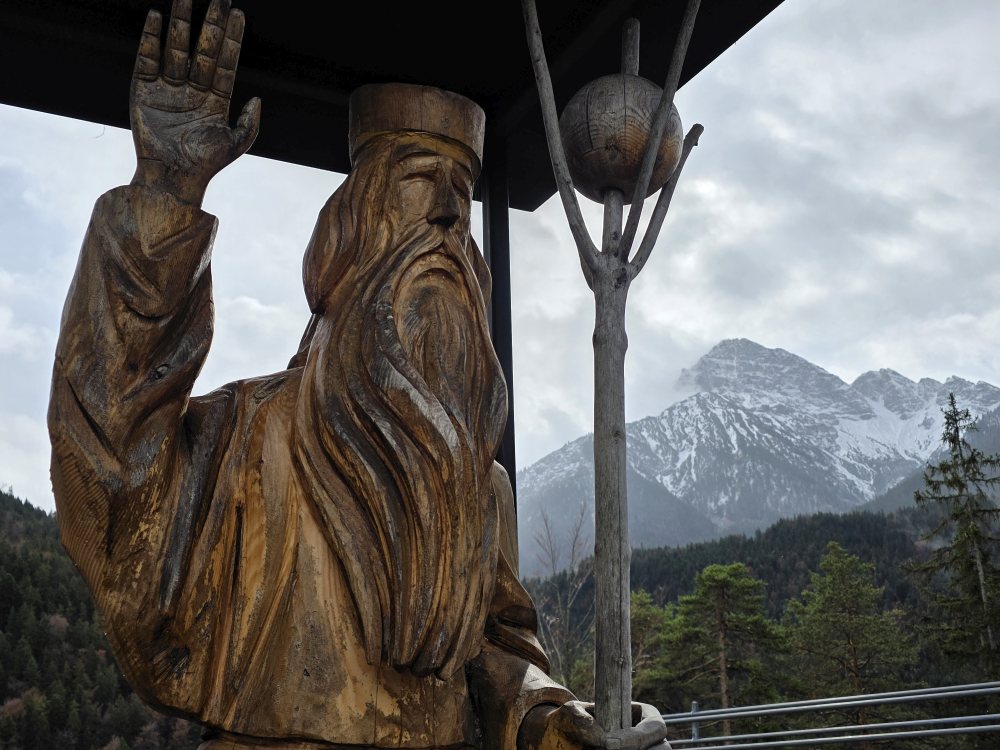
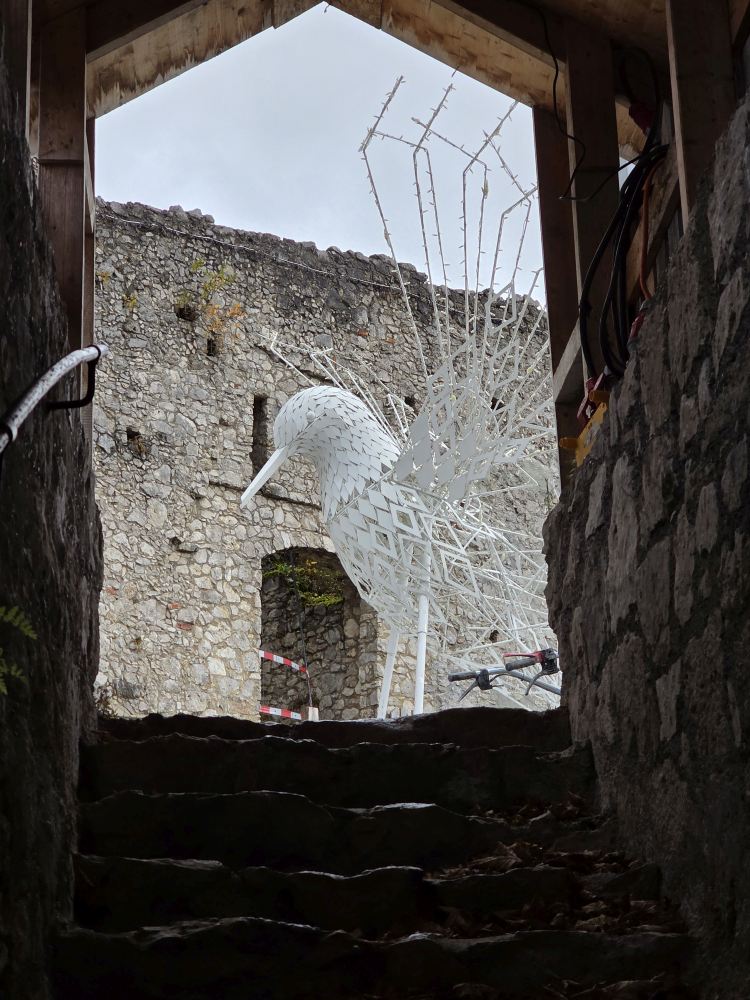
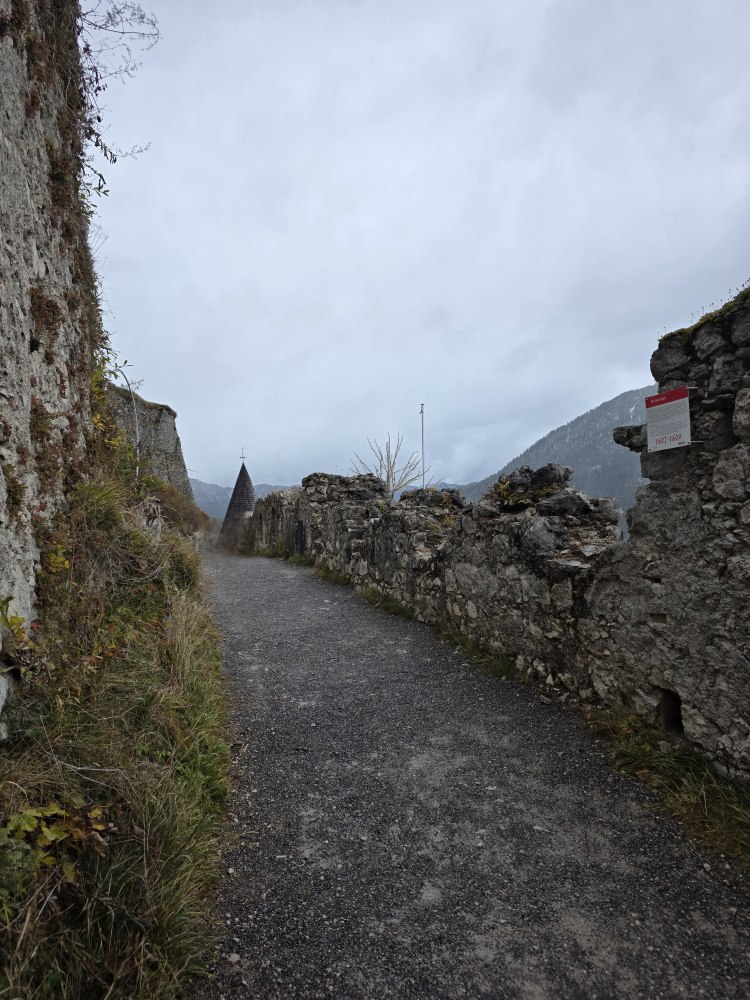
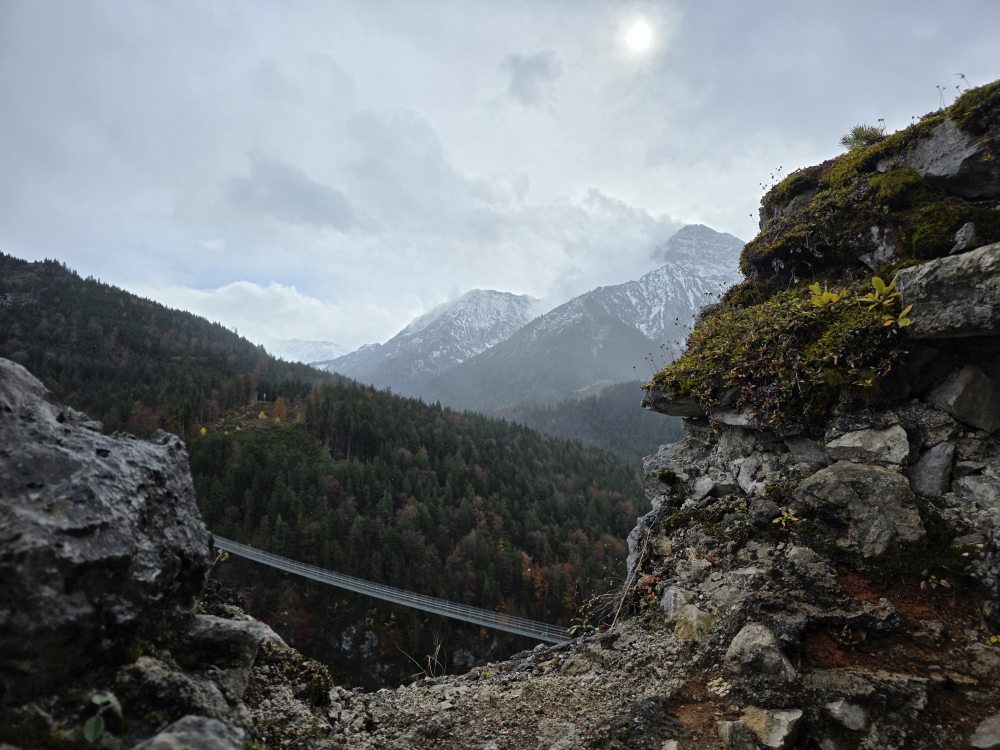
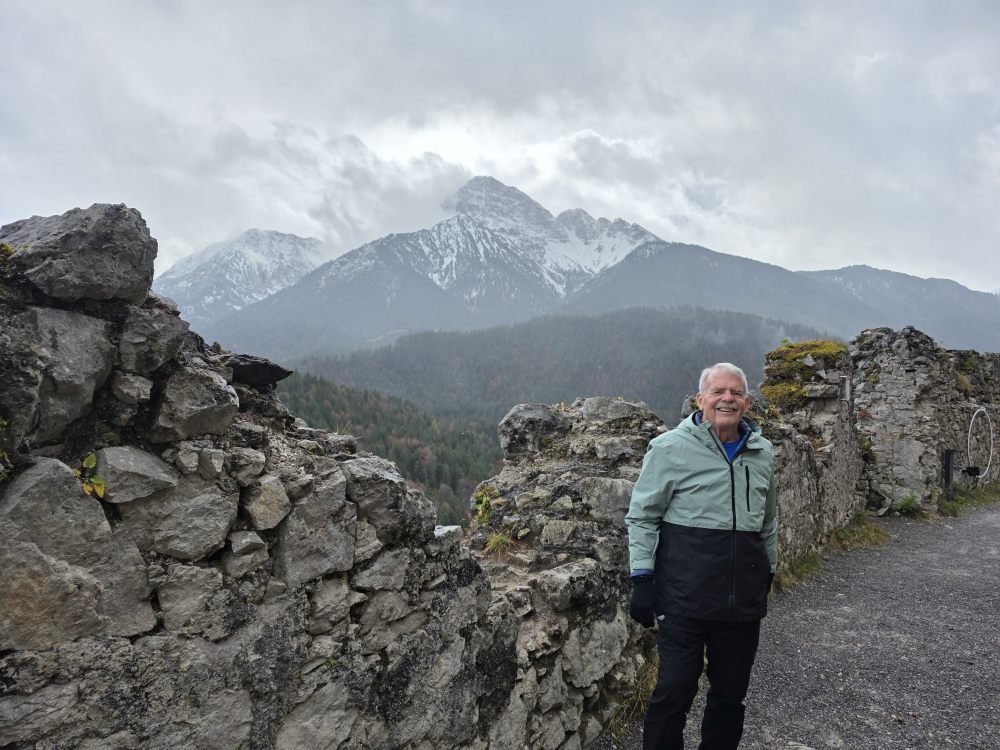
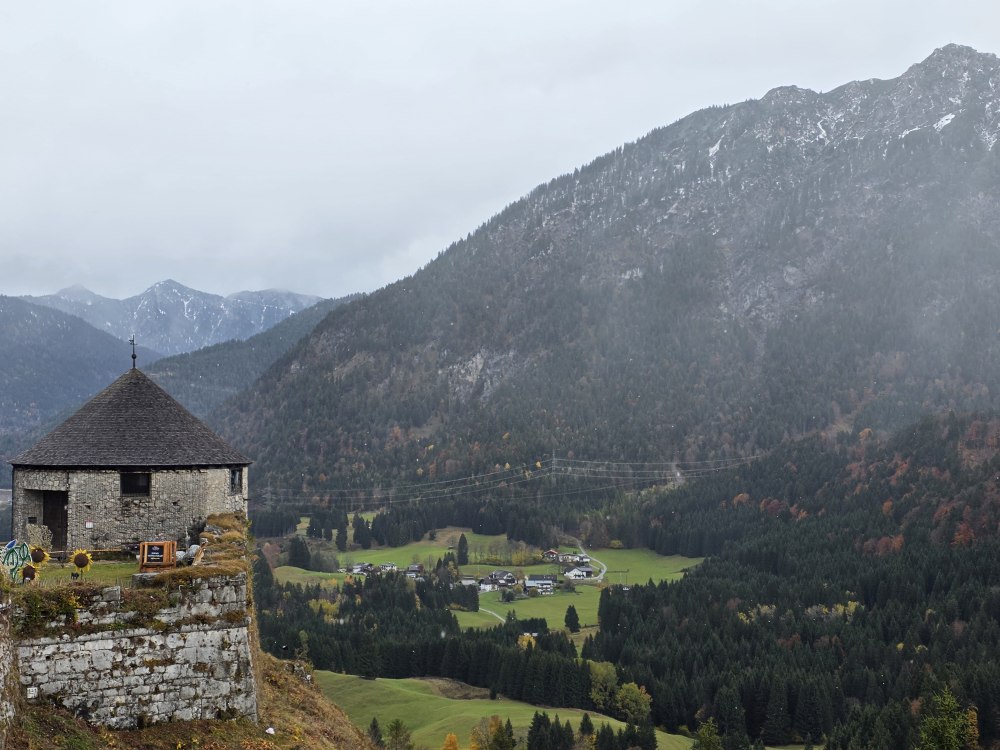
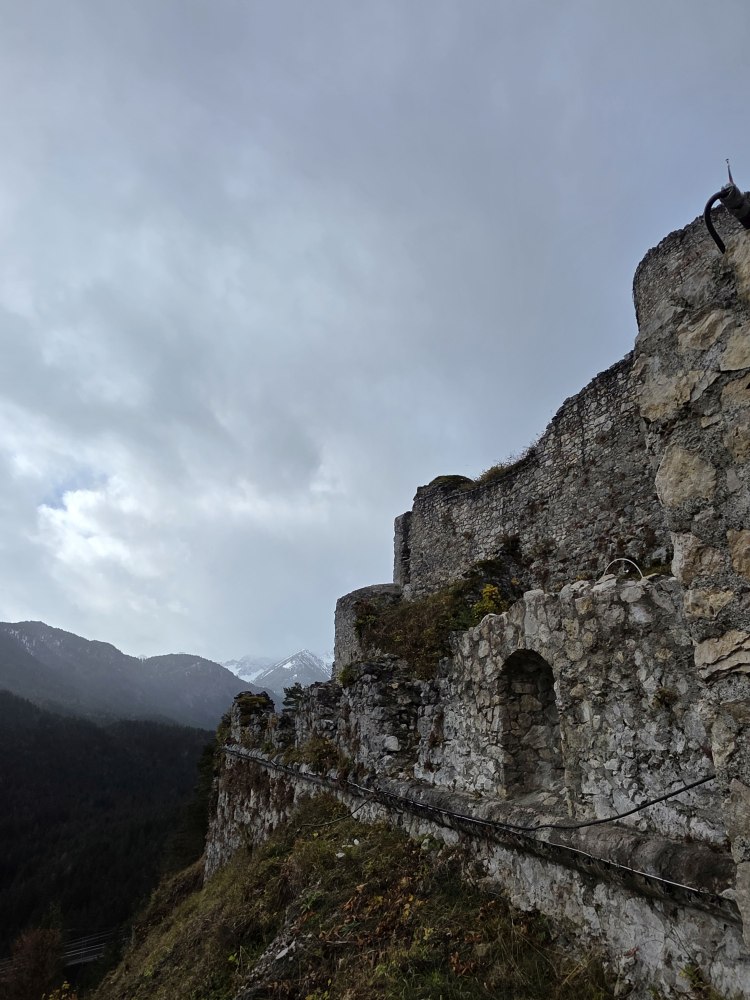
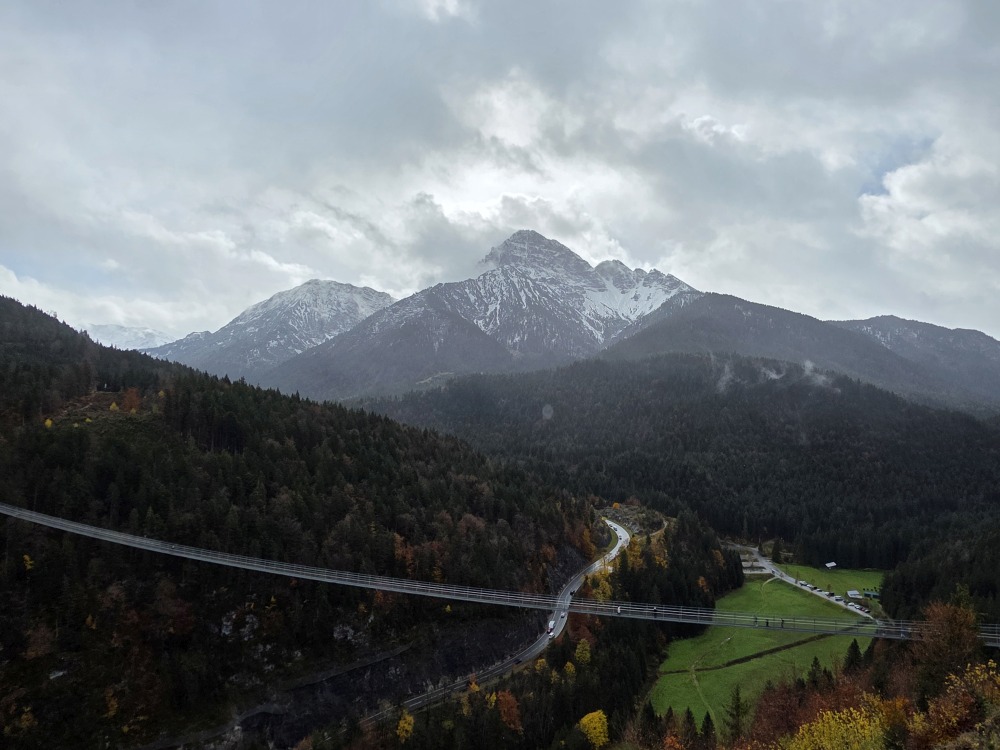
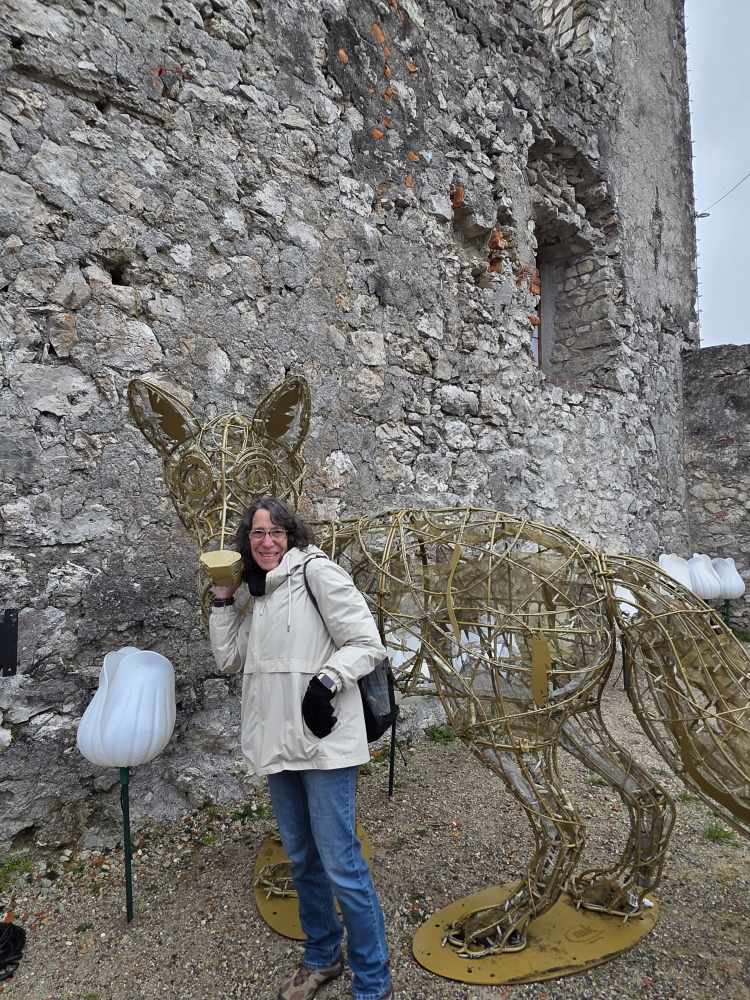
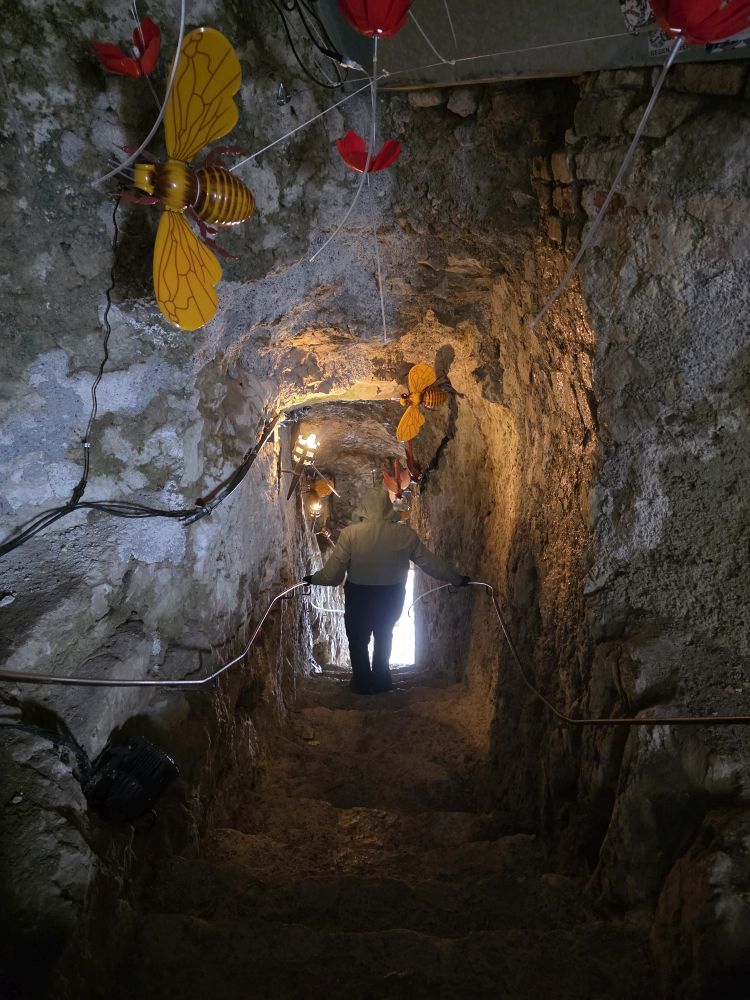
It is easy to lose track of time here, climbing all over the battlements and exploring what is left of the inside of the castle. There is something different and special around every corner. Including the cute Fox and Bunny lighted statues that have been erected in the courtyards. It would be totally cool to visit here once all the lights are in place and working.
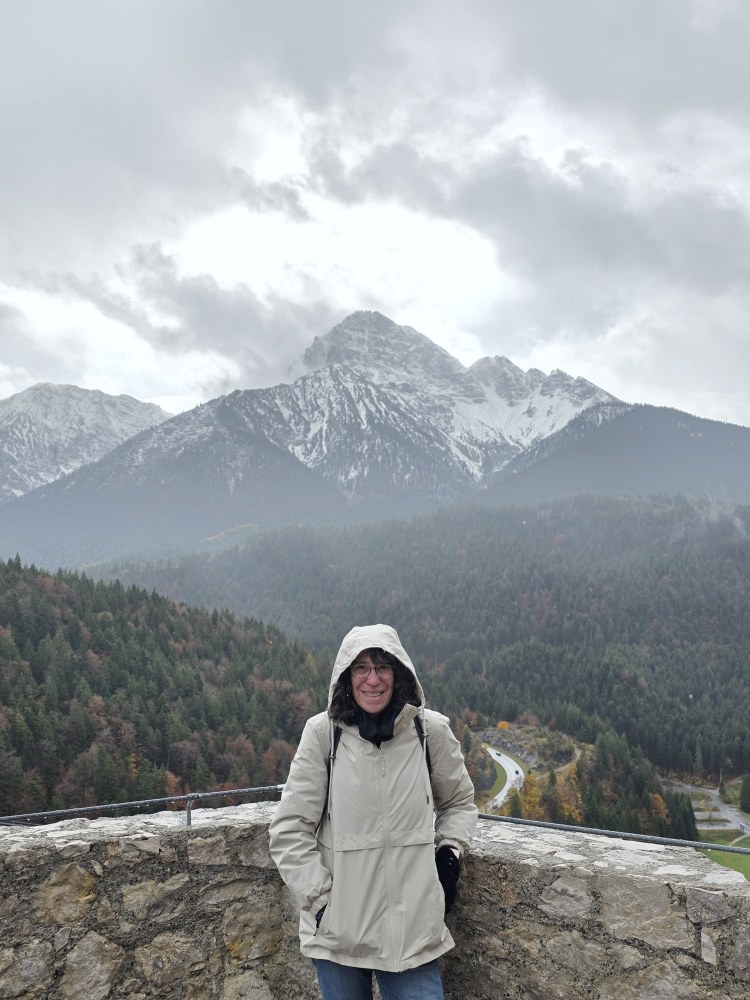
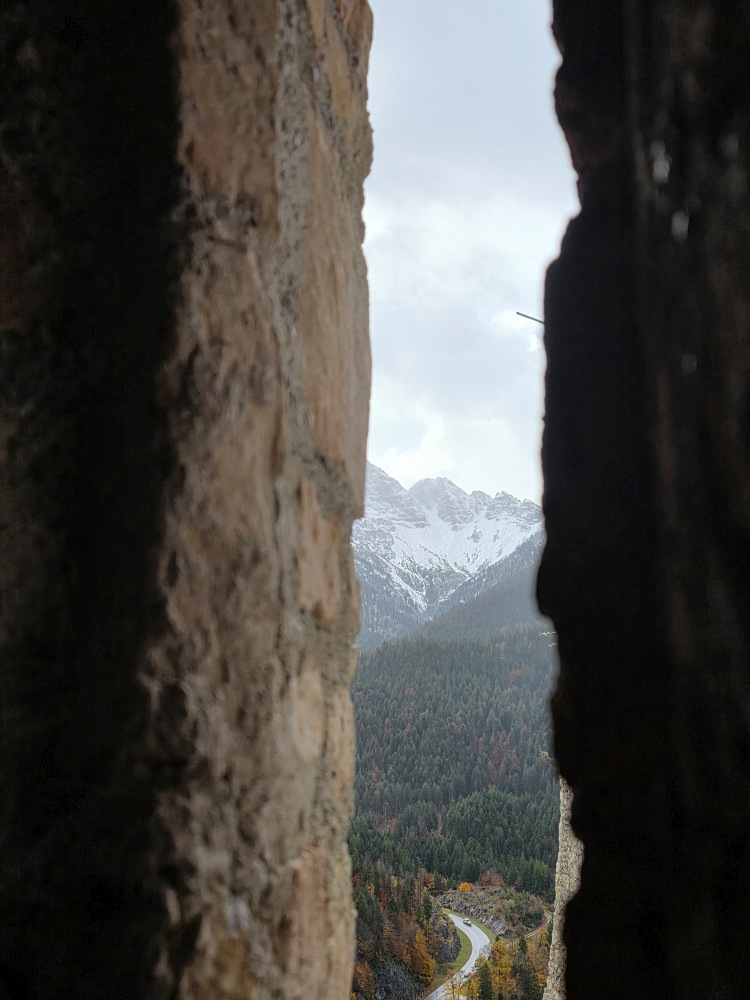
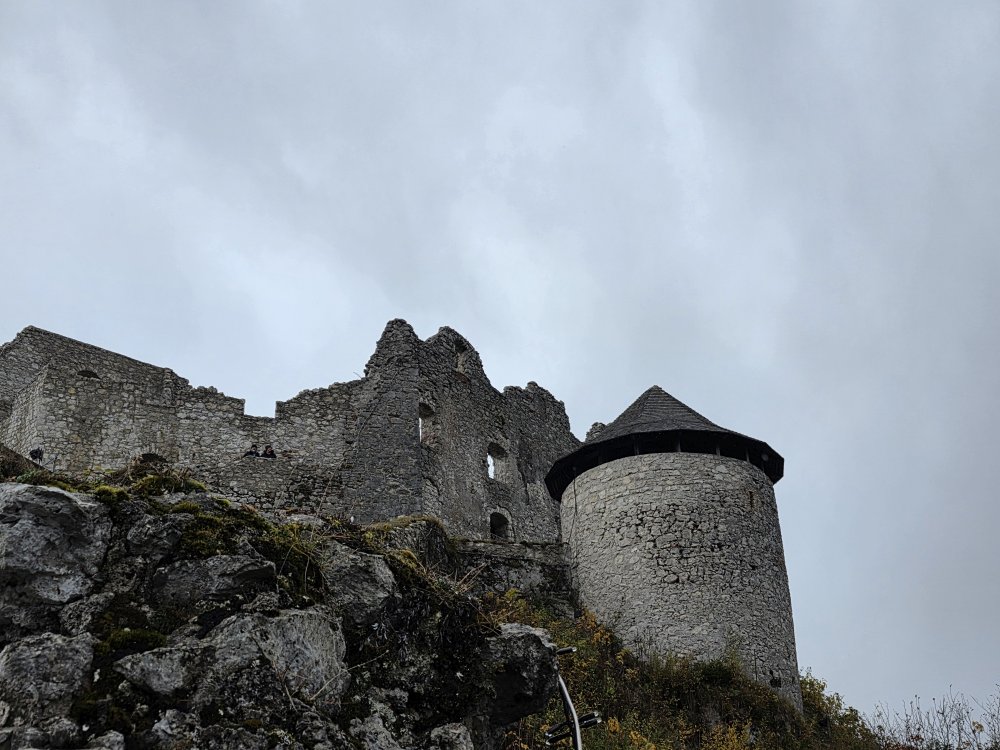
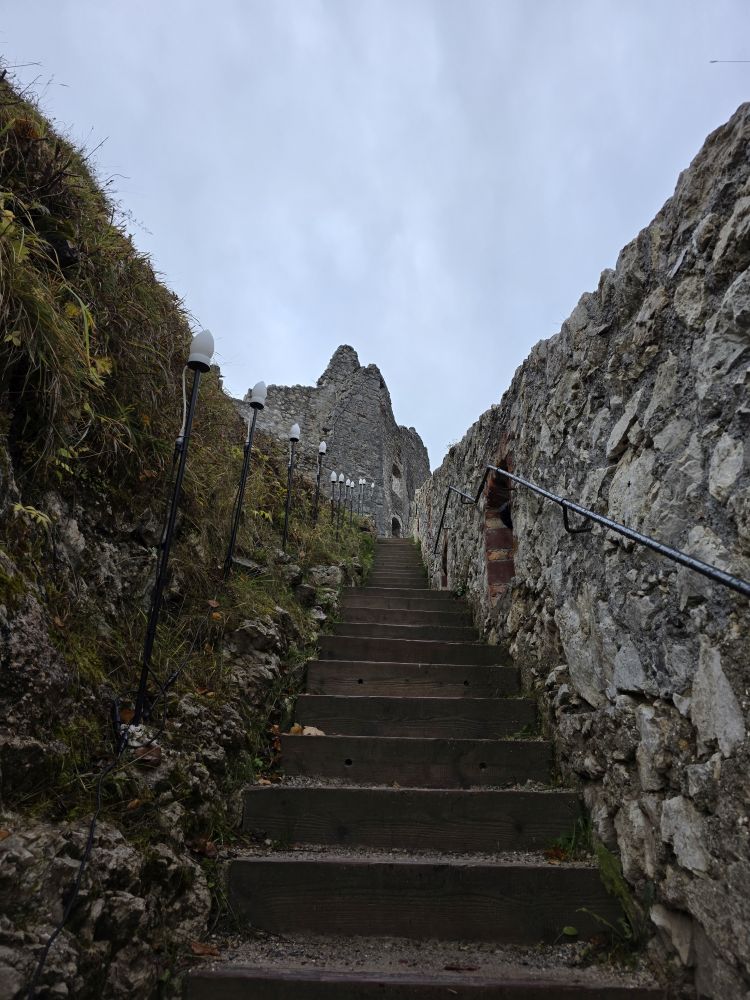
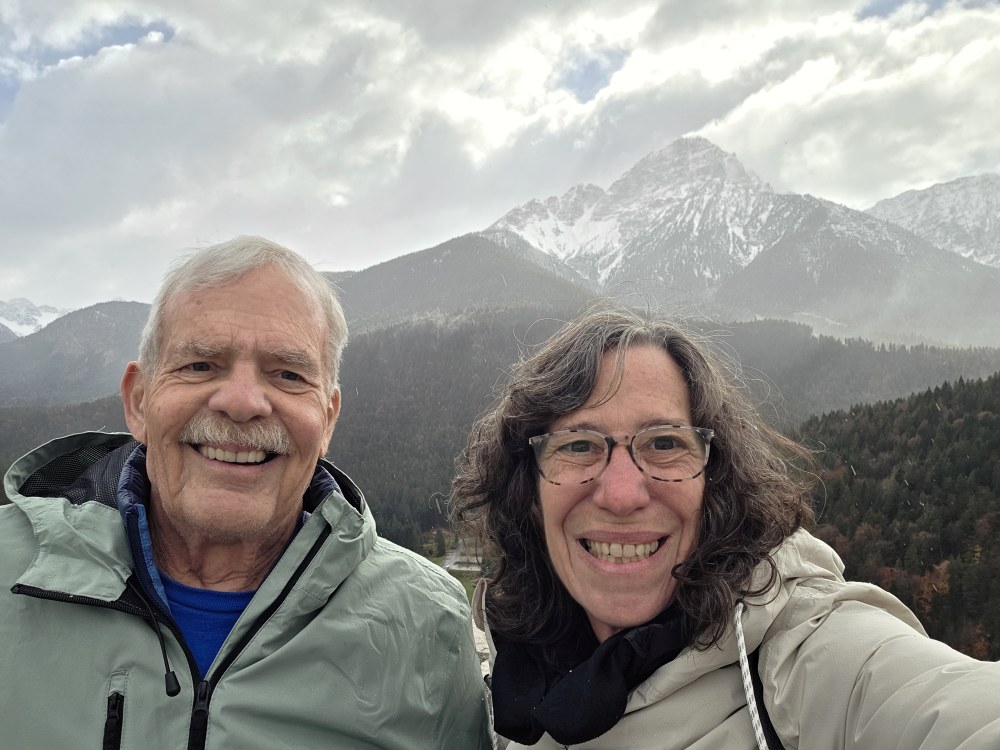
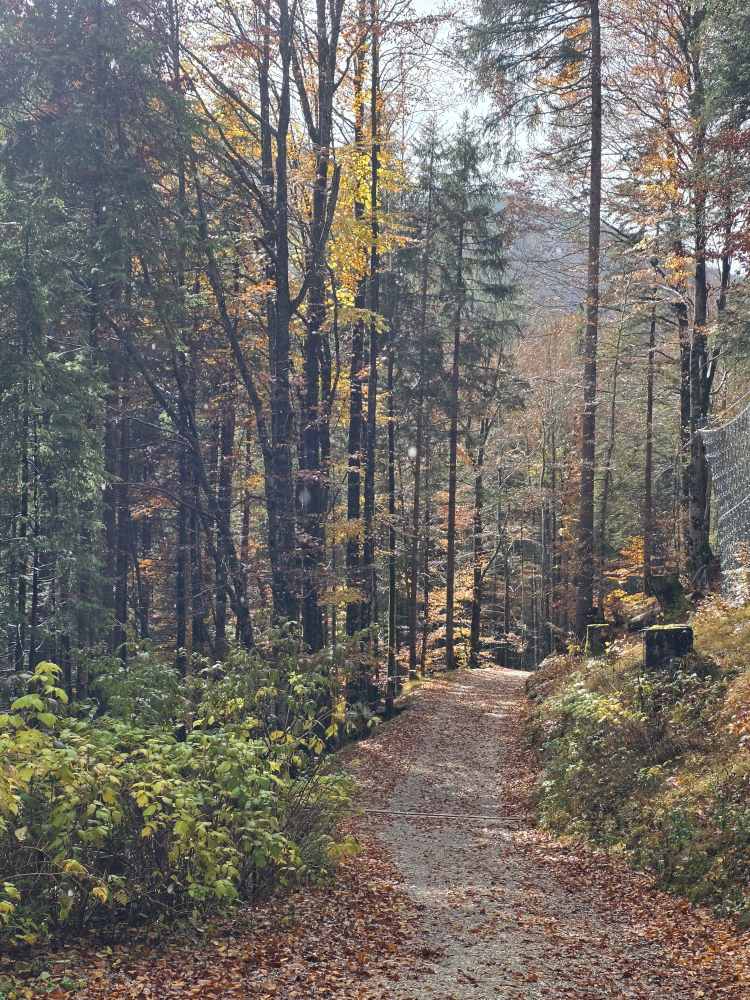
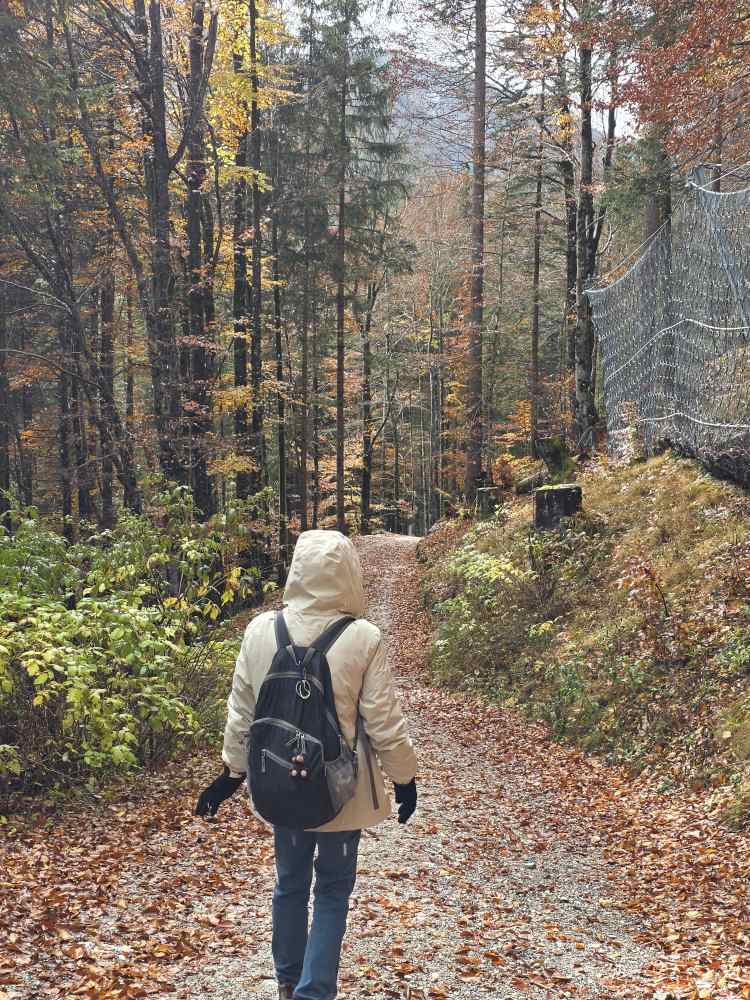
Finally getting our fill of the ruins, we head down to the Klause, following the well marked trail. Oh boy! Was that funicular ride up the mountain worth it! The trail is non-stop downhill – meaning non-stop uphill incline if we had walked up to the castle. We are very happy we wussed out and rode. The walk down is great though – with lots of fall foliage and views up to that scary suspension bridge, plus placards that explain some great legends of the castle: The Stone Worm that was summoned through St. George, which wound its way up the castle hill, coming to rest outside the castle gate and crumbling into thousands of individual stones then used to restore the castle after a fierce battle; The 3 “Salig” Women who have been seen over the centuries, dressed all in black, braiding their long hair into thick ropes that are then hung with white cloths spelling out a message, bringing great fortune to those who can read it – they also can be heard crying over the fate of the Ehrenberg castle, and where they shed their tears, red roses grow; and The Schnurfler, a gnome living on the fortress hill long before the castle was built who was disturbed by the humans and the building and manifested himself in a ball of lightening that flew through the forest and the castle corridors as well as rock falls that besieged the castle. Fun!
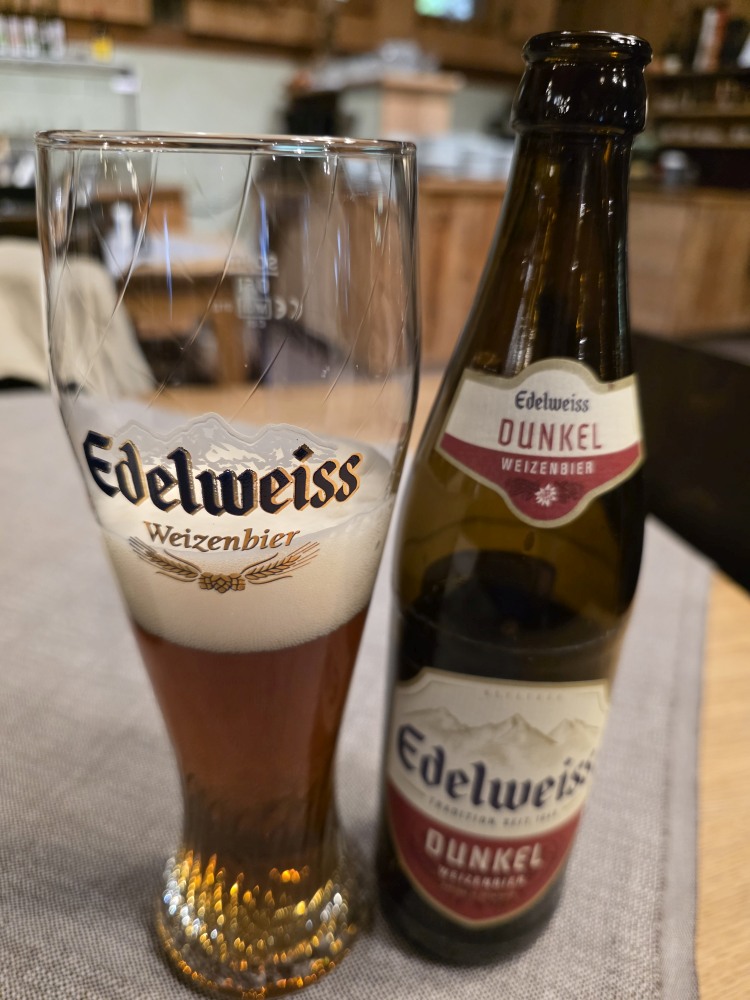
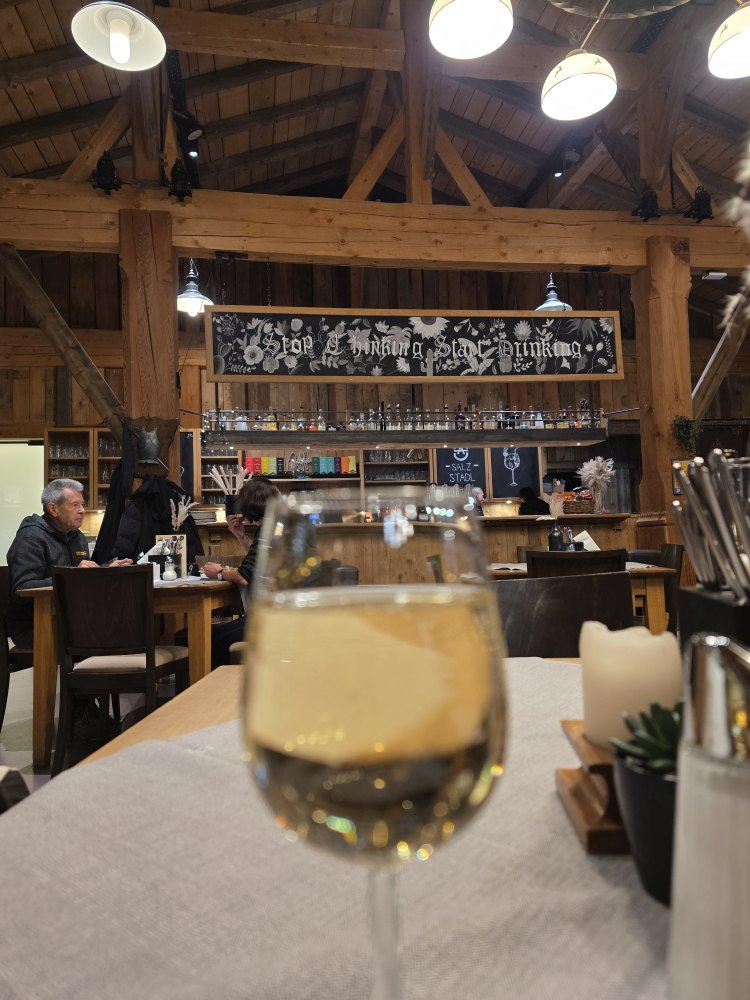
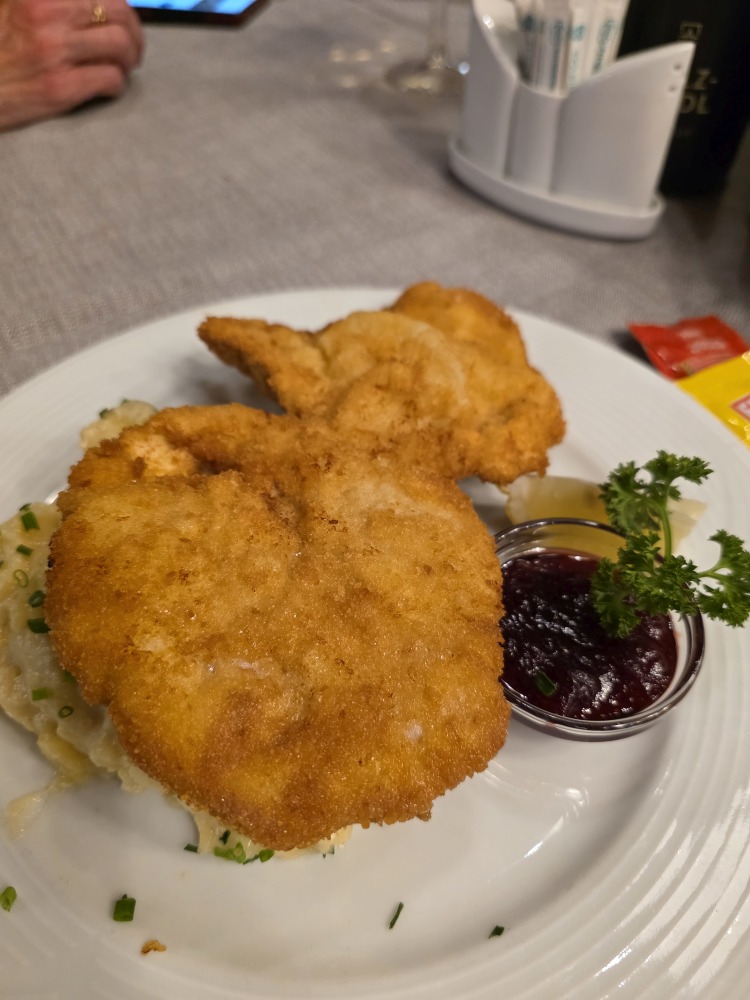
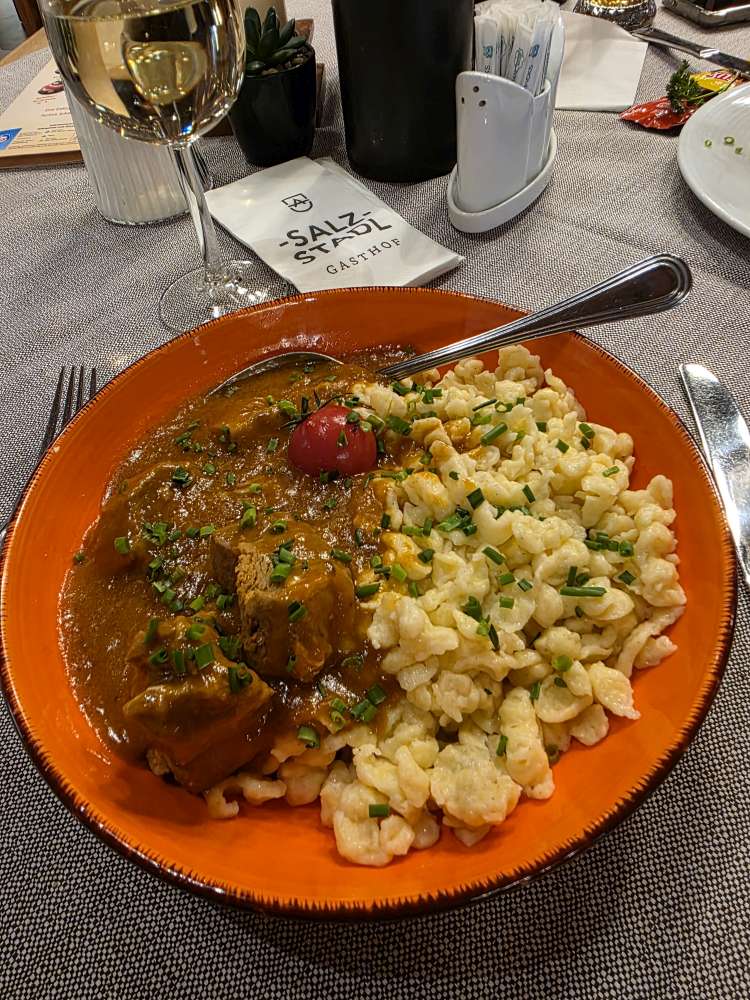
Exercise and legends complete, we wander into the Salz Stadl, a historic building from 1679 that once served as a storage facility for salt – a precious and valuable form of currency in the day, more valuable than gold. Great place to warm up and fill our bellies with good Austrian food! And good it was – not only do they know how to pour wine, they also make an excellent Pork Goulash with Spatzle (Schweinerahmgulasch), as well as a monstrous Schnitzel! Excellent late (well, normal Austrian time, late for us) lunch.