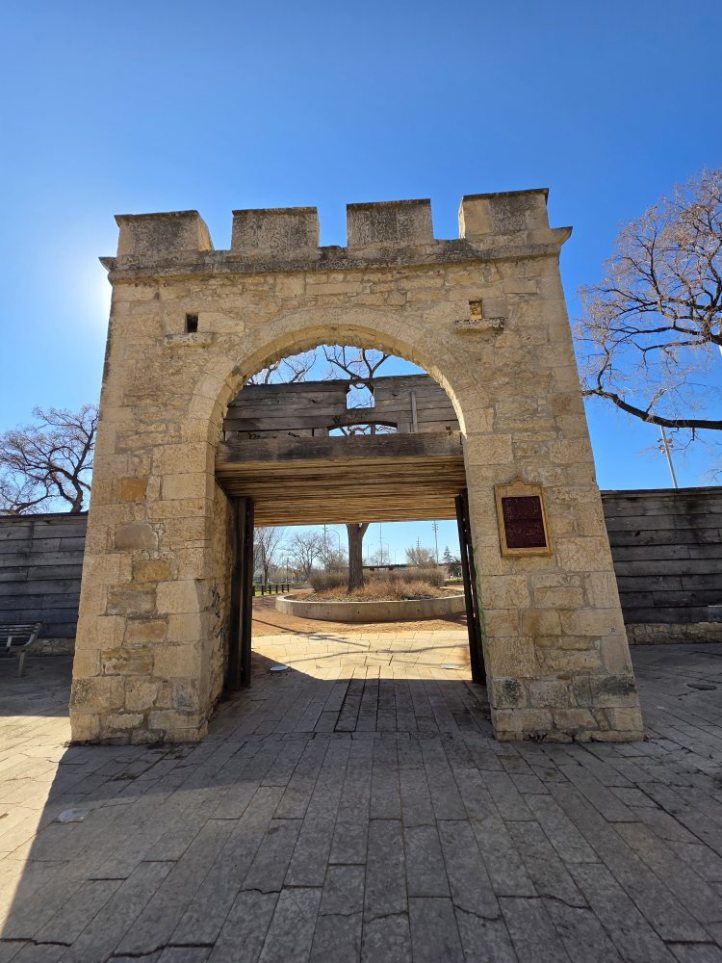
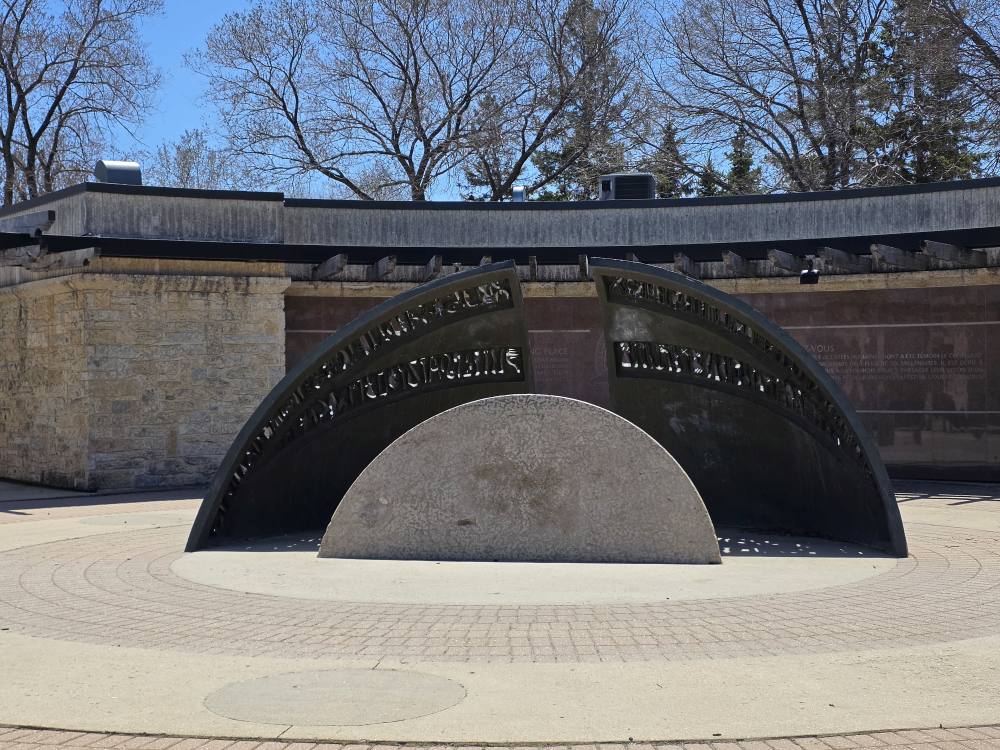
After our morning gym visit, we gear up and head out into the sunshine for our walk around Forks Park – beginning with a tour of what remains of Upper Fort Gary, established by the HBC, the 5th European trading post in the area and the center of cultural and social activities in the 1800s. Demolished once Manitoba voted to become a province and join Canada, pieces of the fort – this entrance gate – were preserved as a historical park for remembrance.
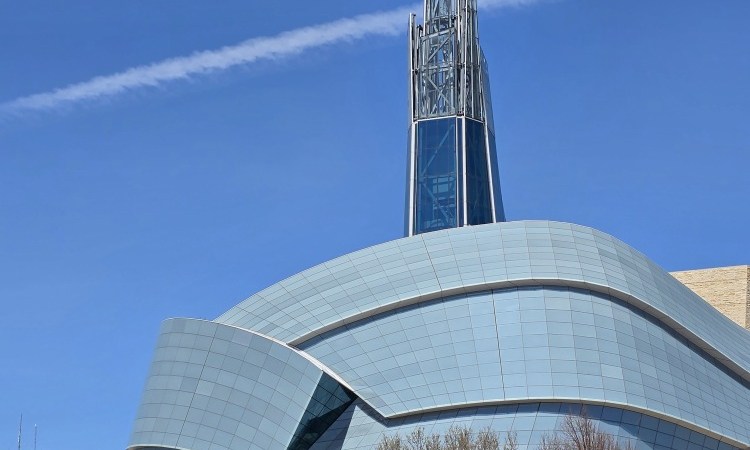
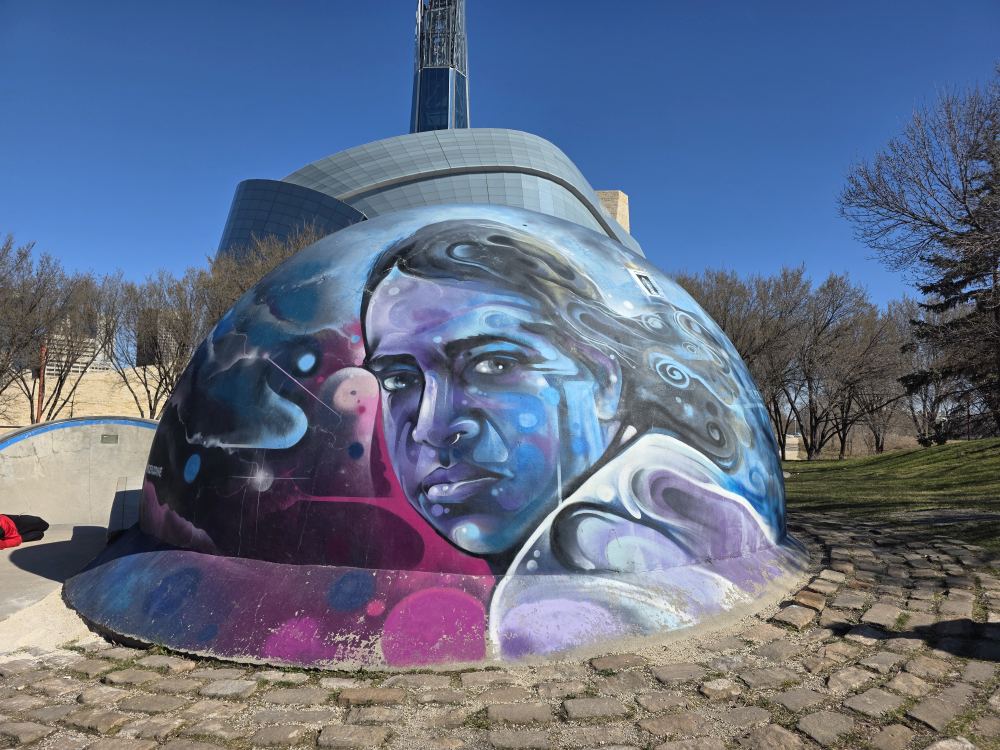
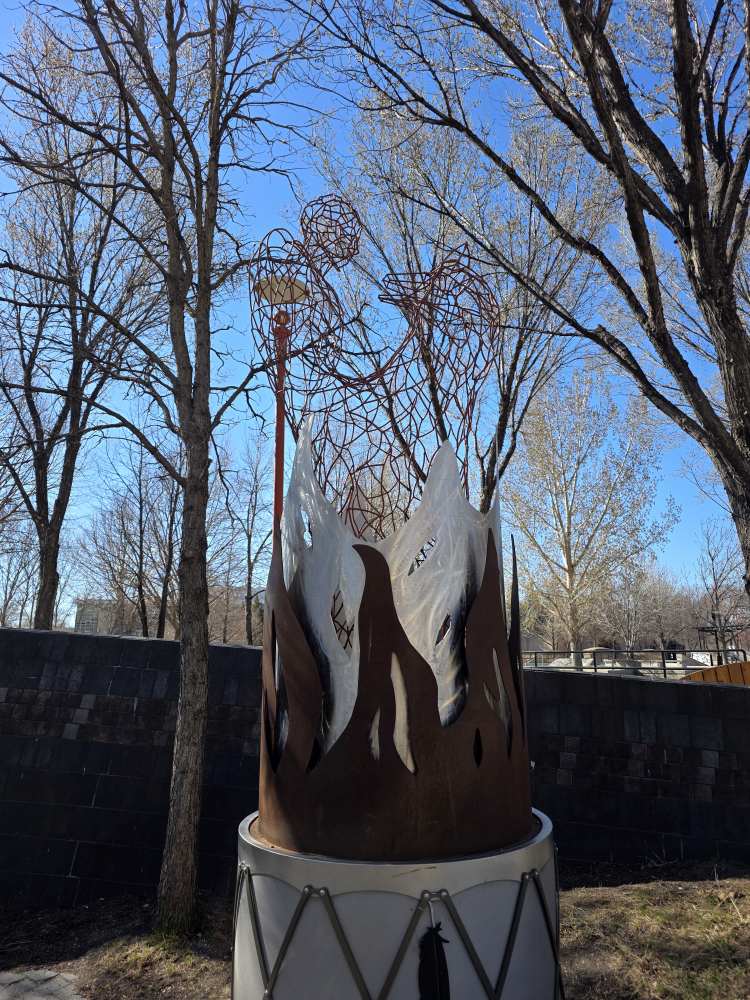
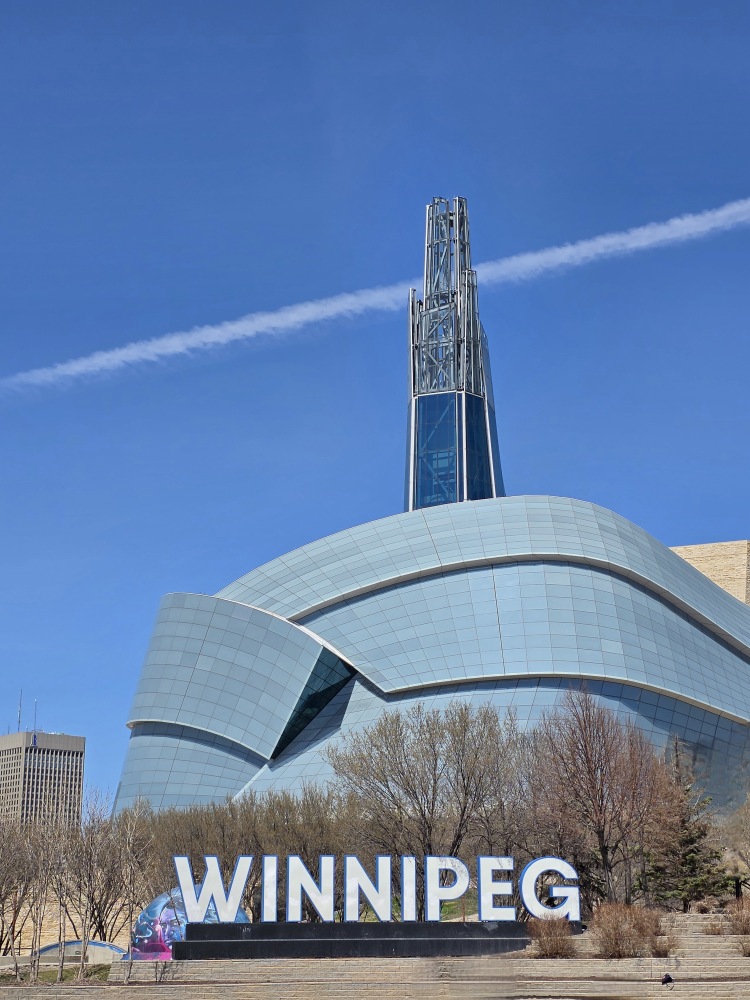
From the Fort it is an easy walk over to Forks Park, where we head toward the Canadian Museum of Human Rights, located in the futuristic steel warrior helmet looking building. Arriving a few minutes before opening hours, we have time to wander around the park a bit, enjoying the murals and different artwork scattered about.
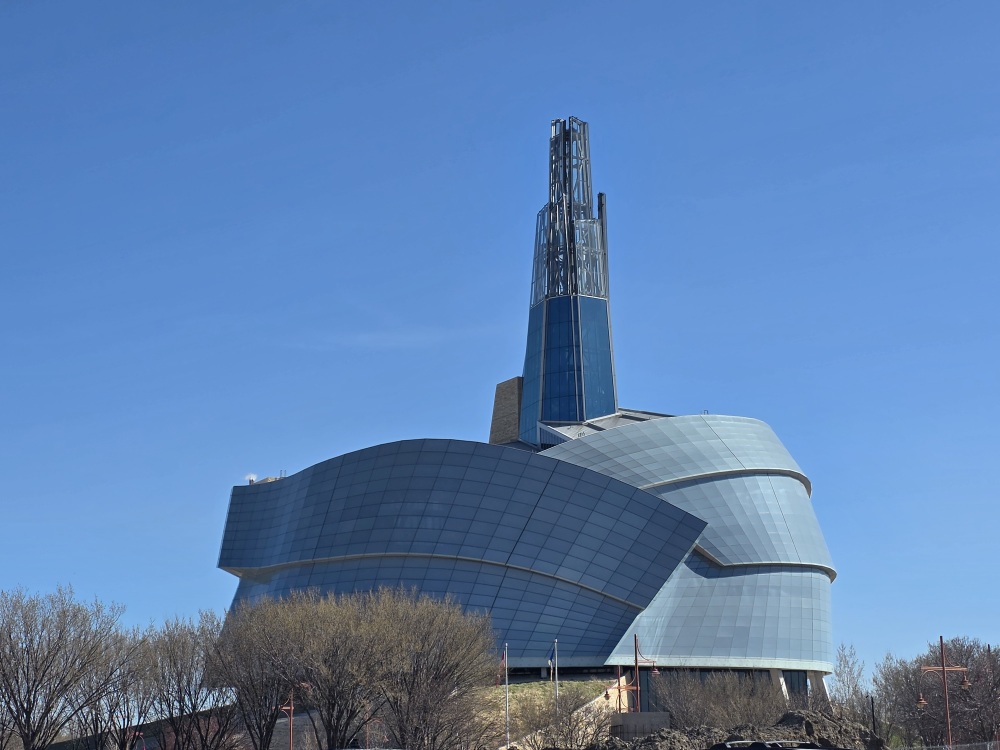
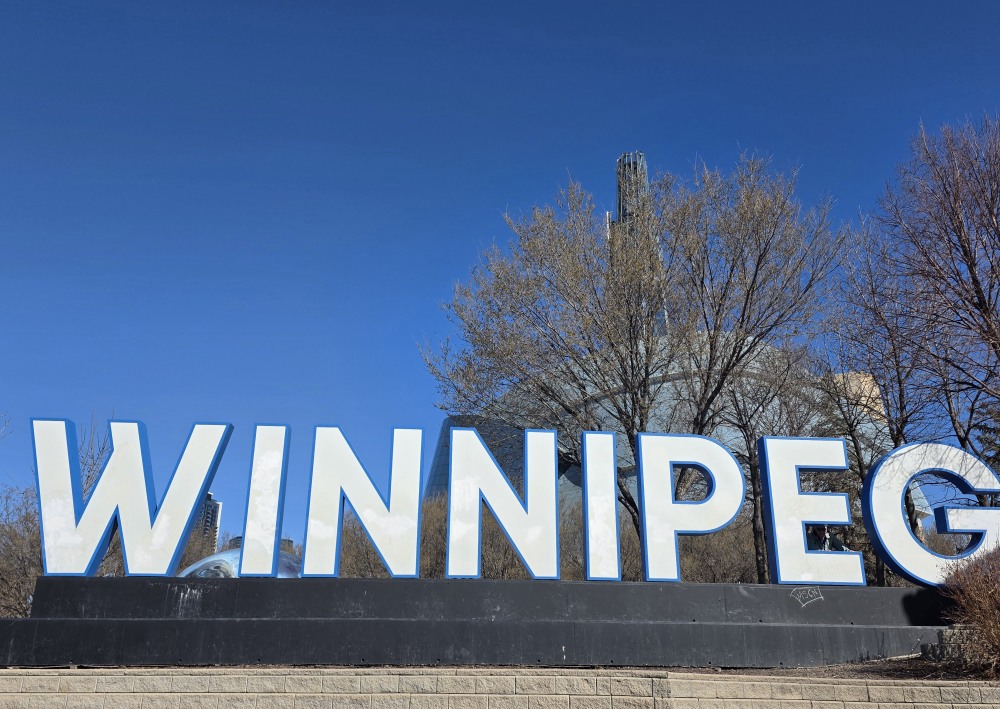
A little before 10, the museum opens and we begin our explorations – starting at the top floor (of course) where we can climb the Tower of Hope (dedicated to Israel Asper – the same family who dedicated the Lady in the Park statue – who imagined an institution that would focus on Canadian human rights) with its bird’s eye views across Winnipeg.
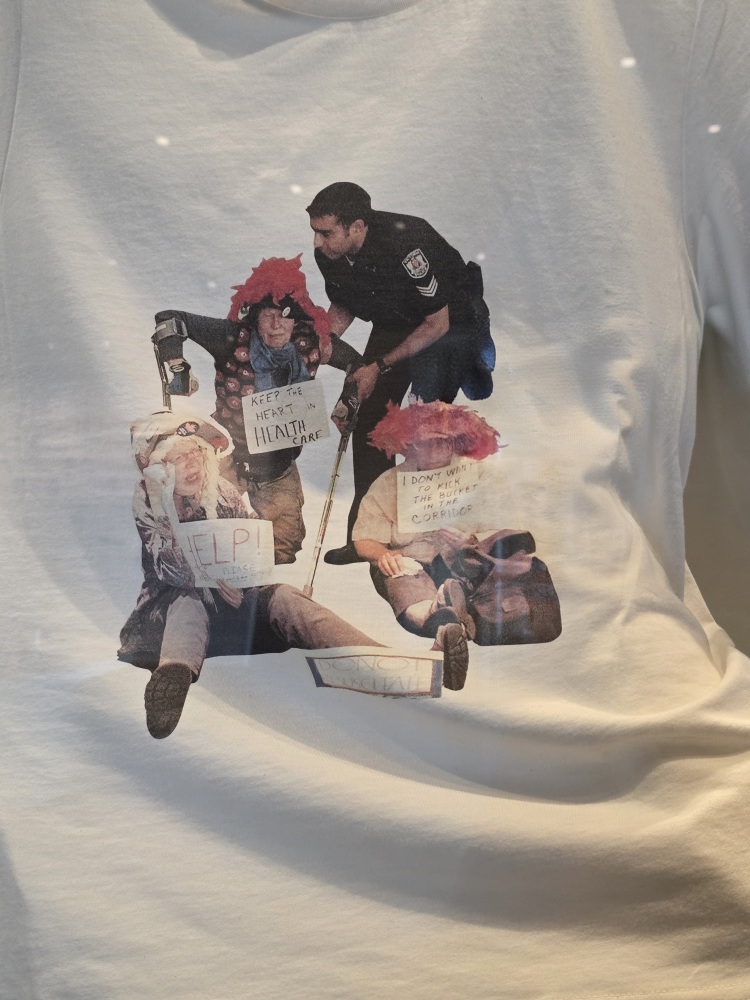
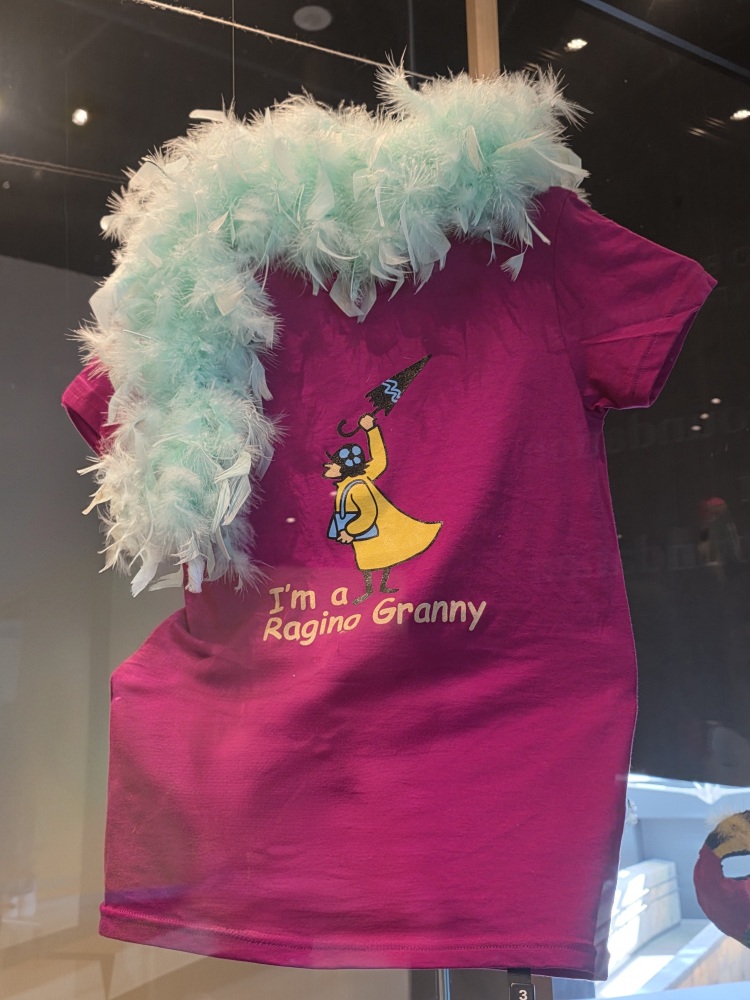
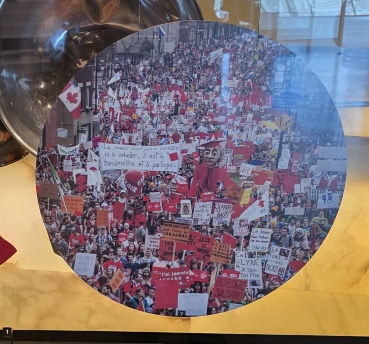
Into the main museum area, we peruse the exhibits, beginning with the Raging Grannies, a group of elderly women who would wear costumes and use humor as a method of civil disobedience to promote a more sustainable world for their grandchildren.
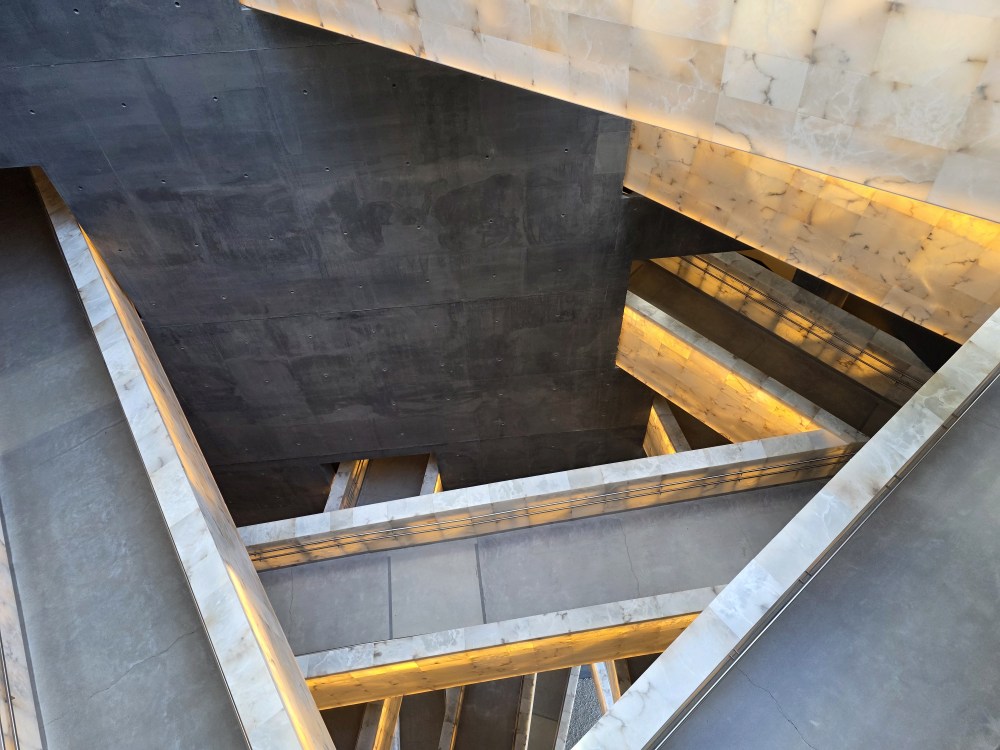
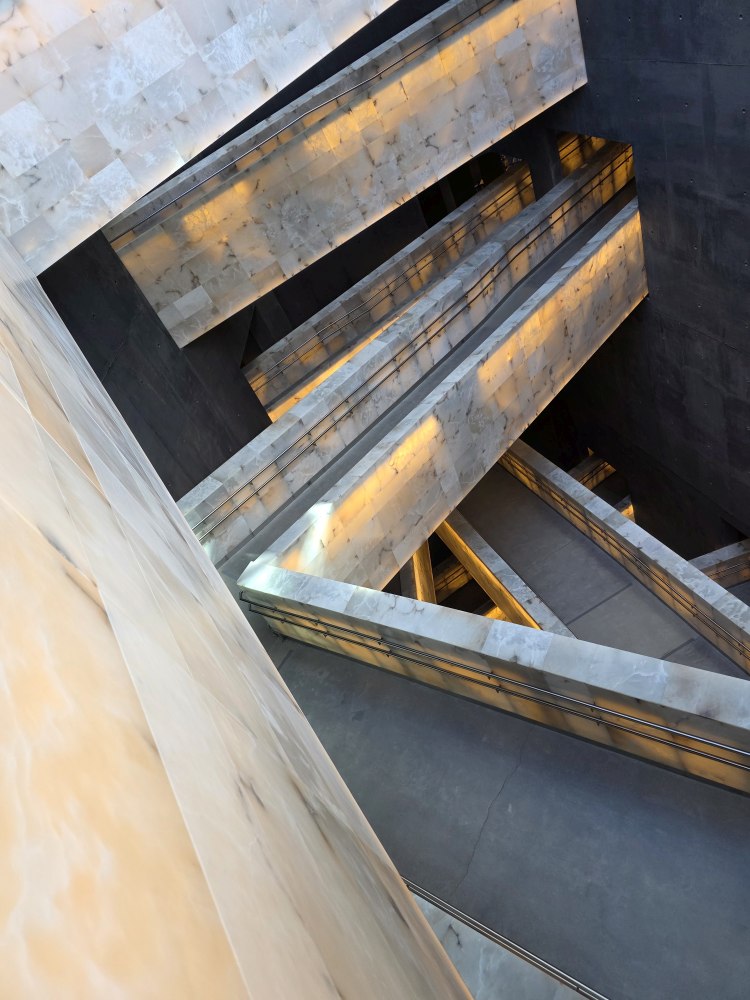
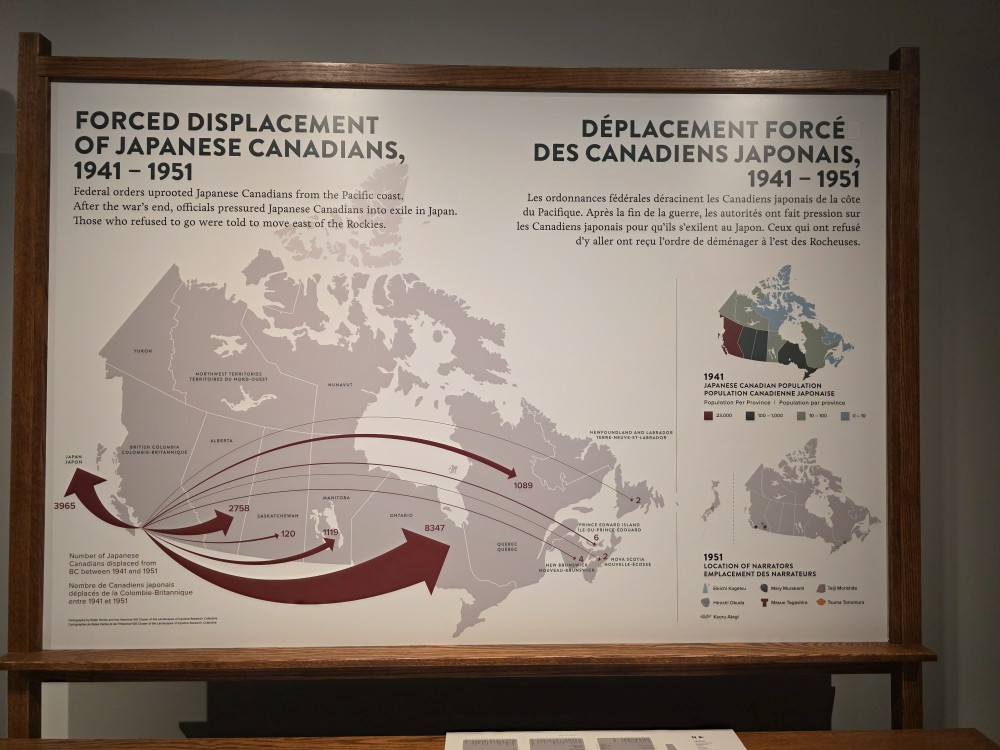
Down to the next level on the totally cool marble rampways, we move backwards through time, now learning more about the forced displacement of Japanese-Canadians during WWII that was touched upon in the Manitoba Museum. A sad tale of citizens who were interned across the country, their now vacated homes looted by neighbors and a government that promised to protect their property but ended up doing exactly the opposite: becoming a headquarters of dispossession, selling off over 1700 parcels of real estate and tens of thousands of belongings without consent. Gut wrenching.
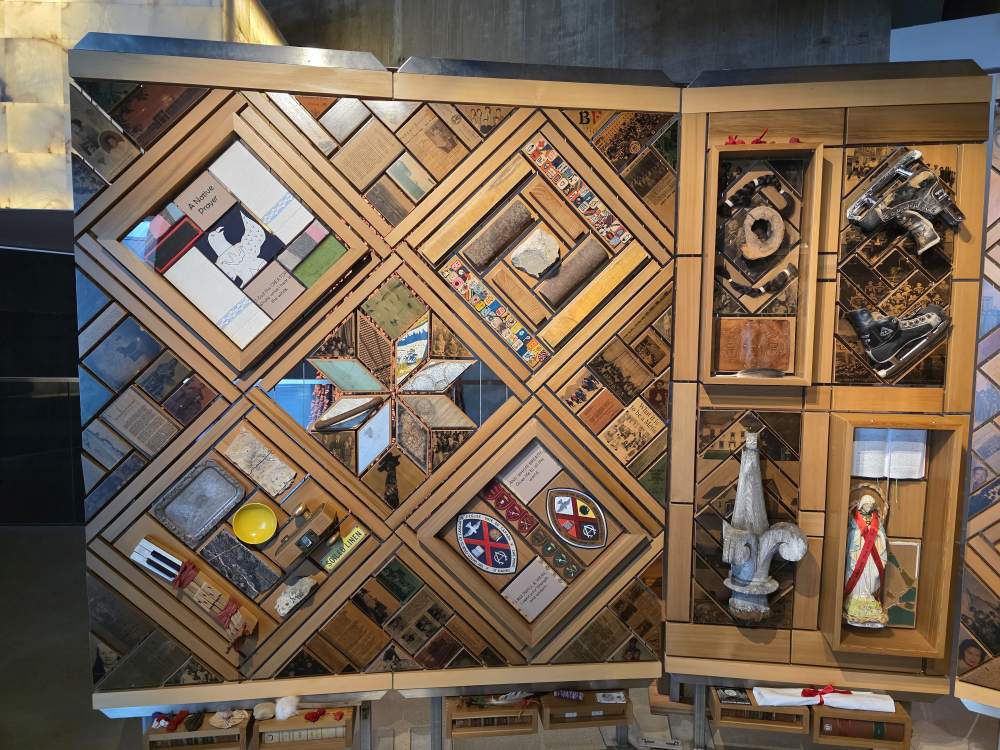
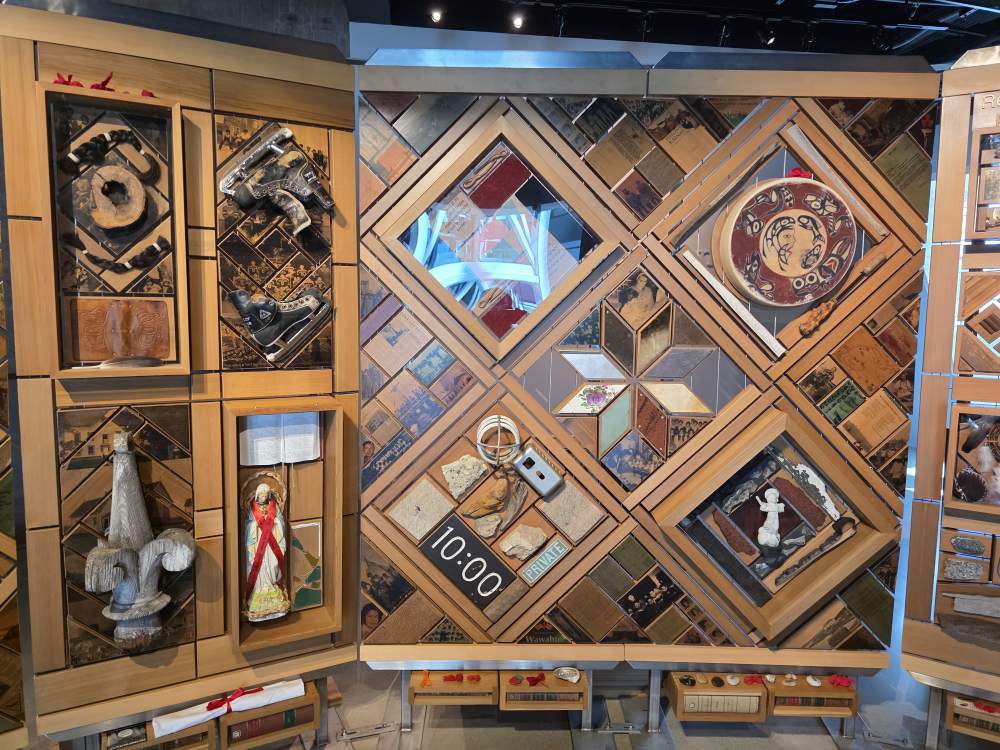
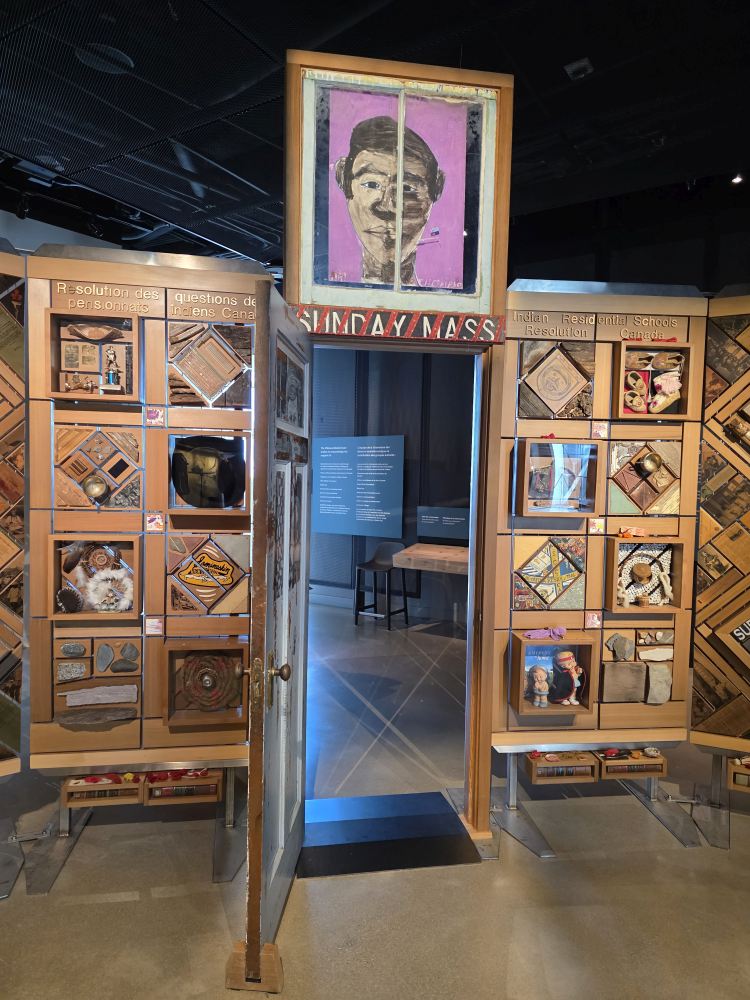
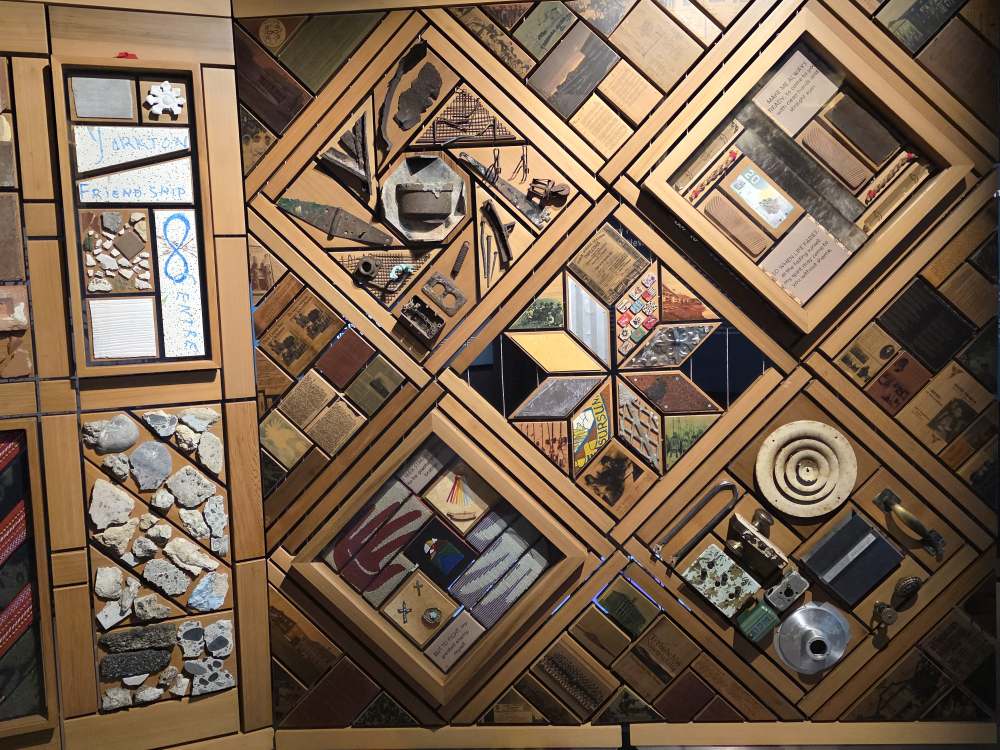
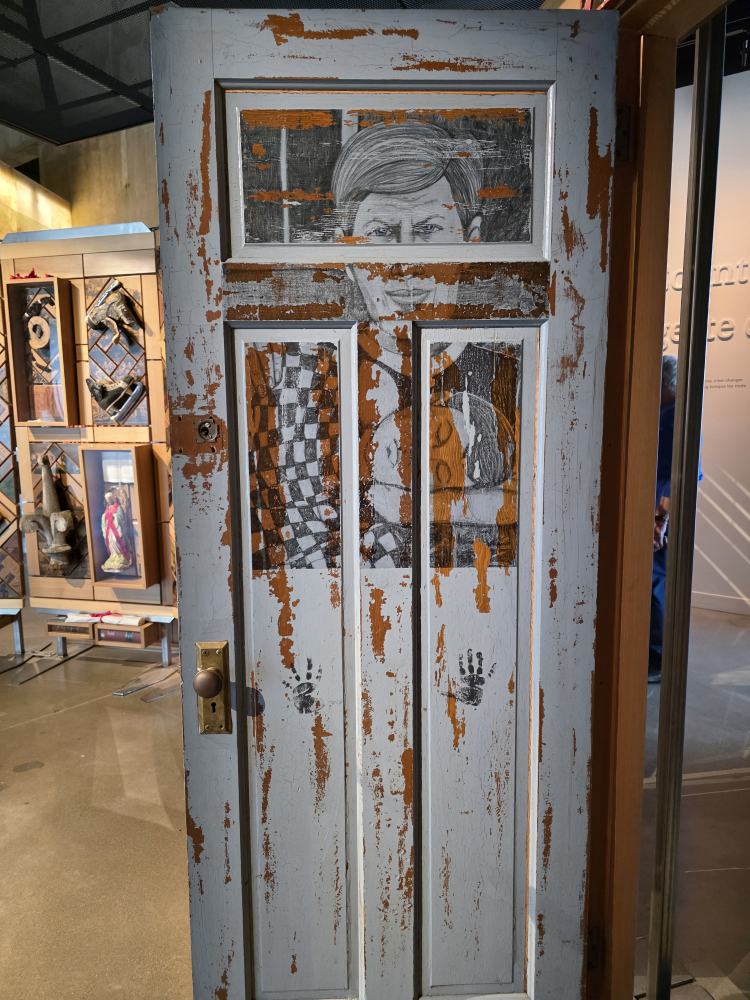
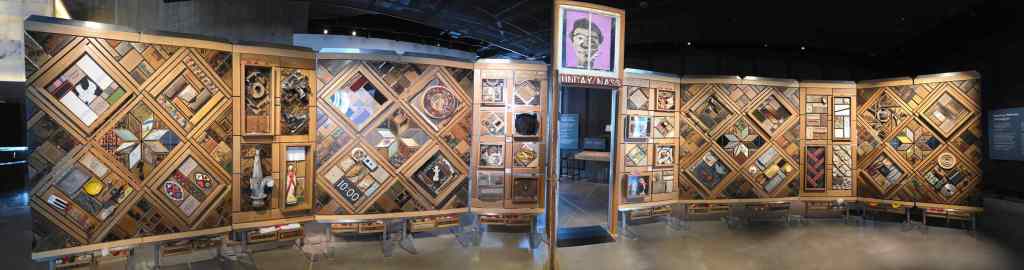
On the next floor we visit the Witness Blanket, an incredible installation made out of cedar from over 800 pieces of Indian residential school history to honor the children who were forced into the school system in Canada. Everything in the “blanket” was donated by residential school Survivors and their families, Indigenous communities and governments. The tales of abuse, degradation, beatings – so hard to think about, and so hard to justify.
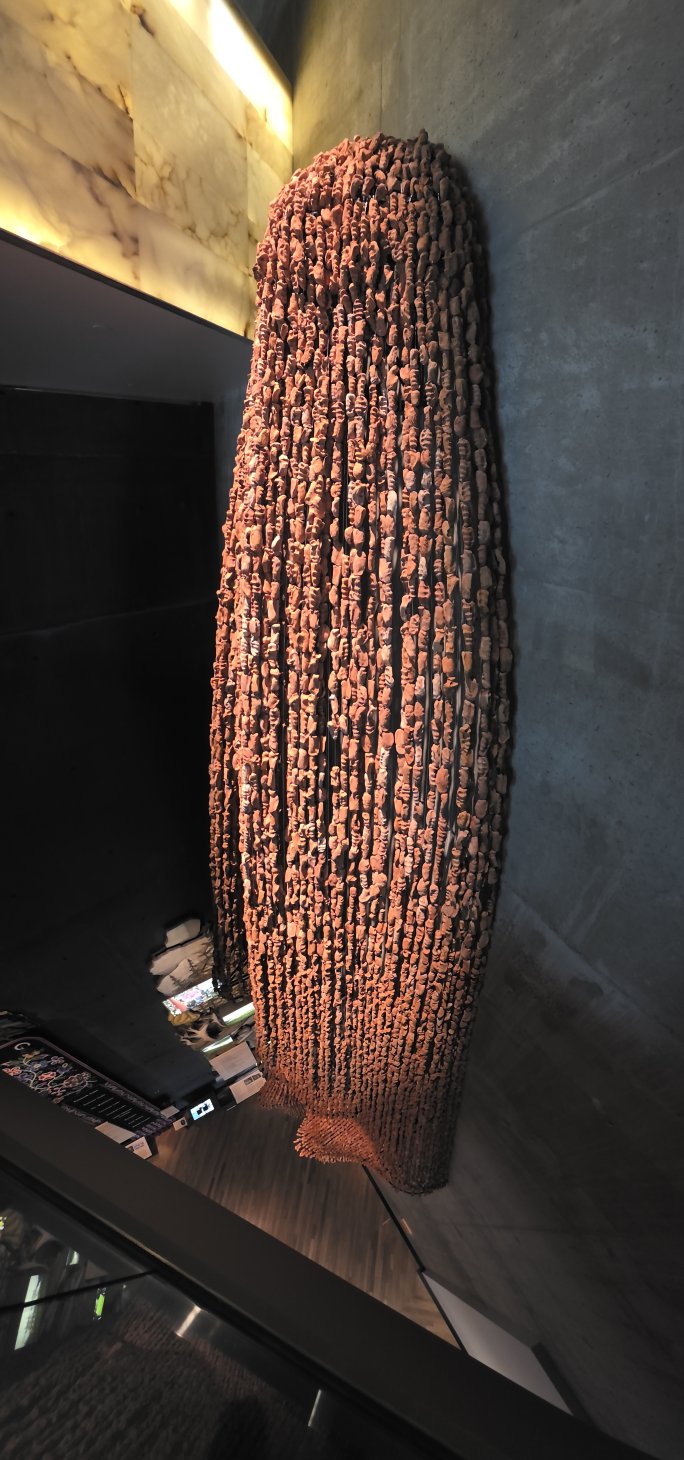
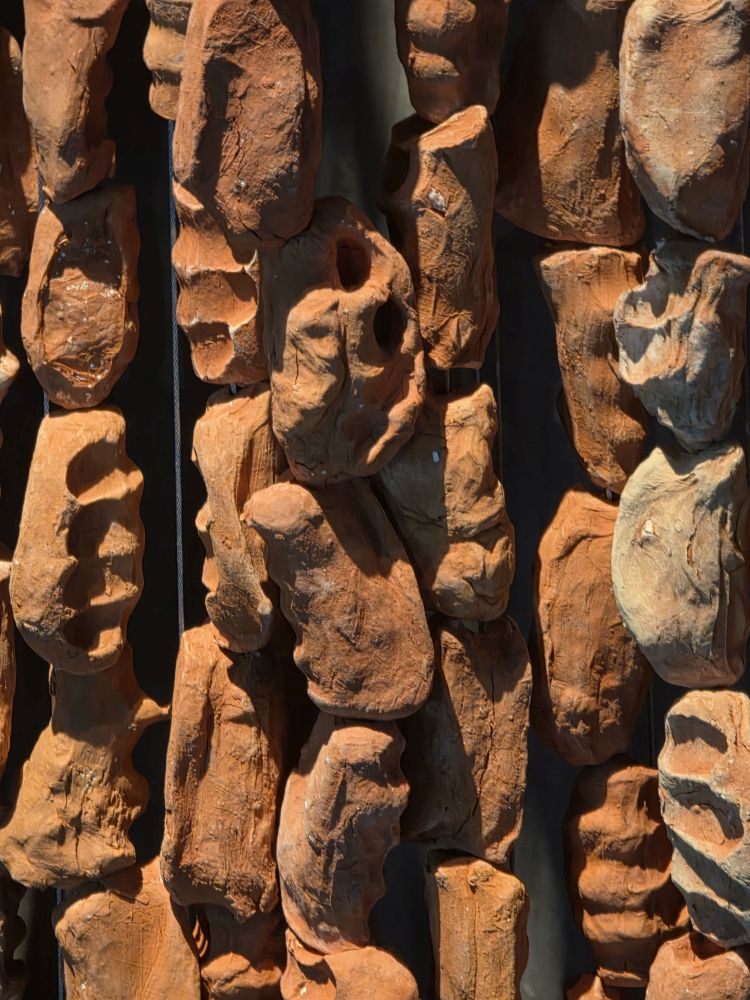
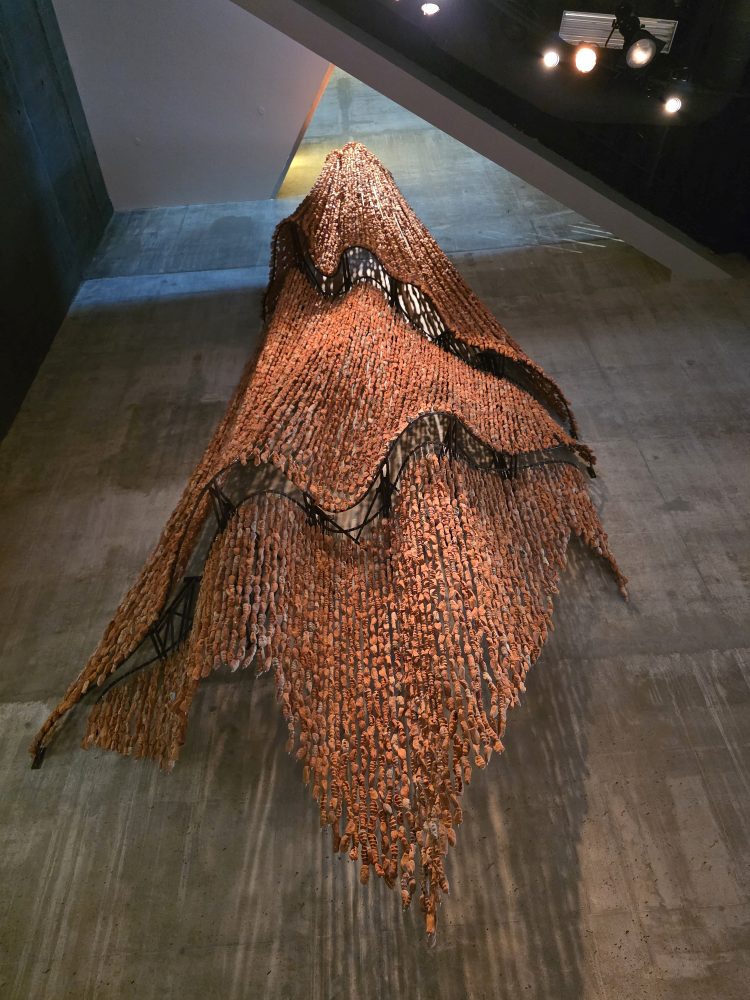
Continuing on, we pass a hanging installation called “Trace,” beads created from clay dug from deep underneath Winnipeg to symbolize the depth of Indigenous history.
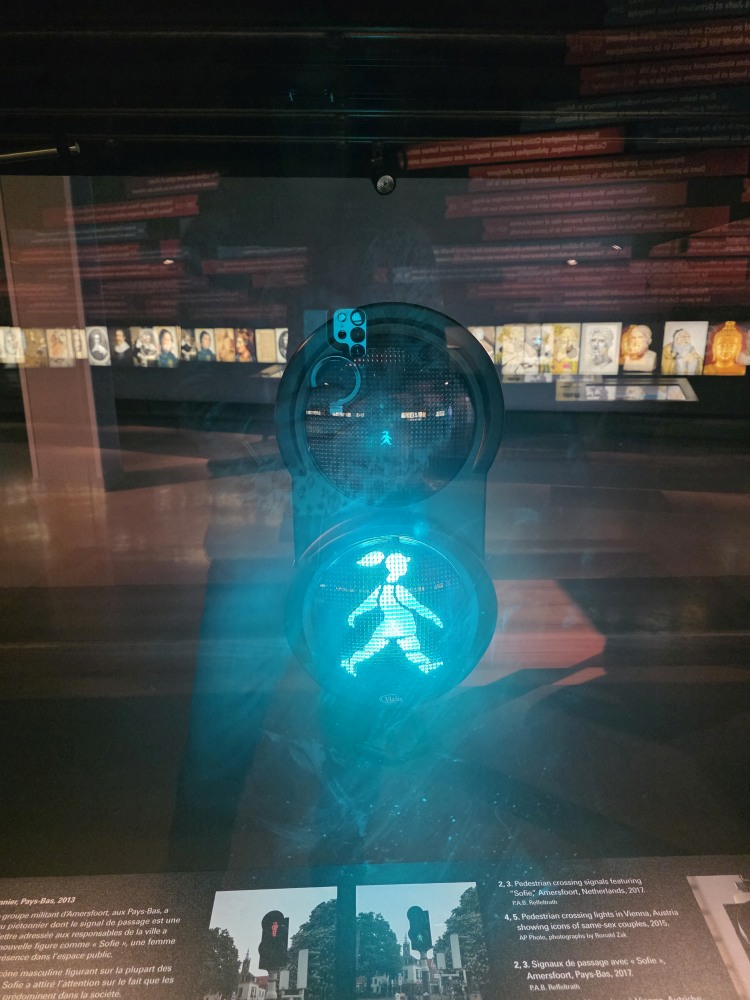
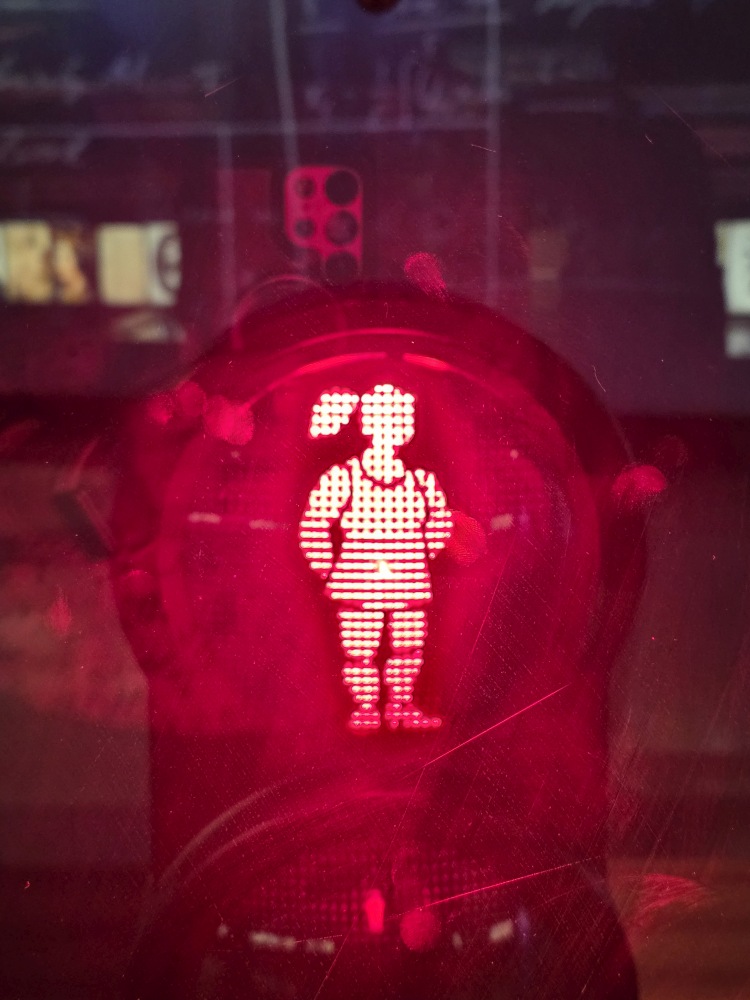
There is a section on Indigenous women and girls who go missing “with disturbing frequency in Canada.” Sigh. A somewhat more uplifting display of a fun traffic crossing signal with girls as the walkers, installed by an activist group in the Netherlands in 2000. The Netherlands has subsequently installed more of these lights around the country.
The final section deals with LGBTQ+ rights and the “purge” the Canadian Government performed to eliminate LBGTQ+ individual from federal employment.
And on that note, we end our visit. Definitely a vital place to visit, and extremely well done. Not necessarily uplifting, but a necessity, nonetheless. These topics and subjects can’t be shoved under the rug like they didn’t happen – and won’t happen again.
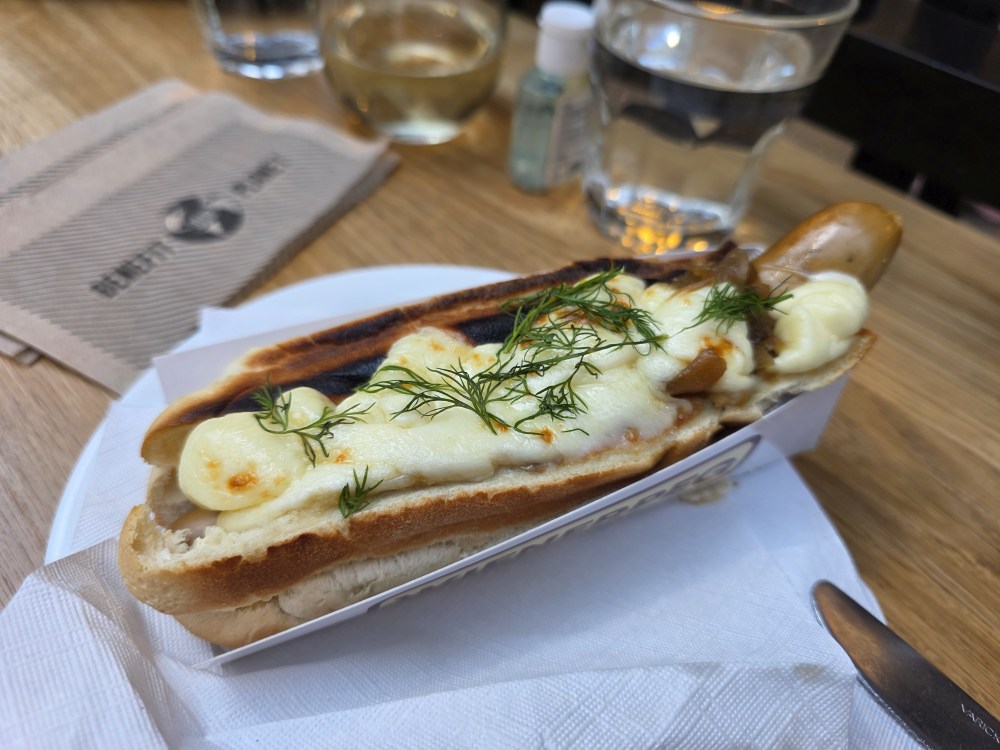
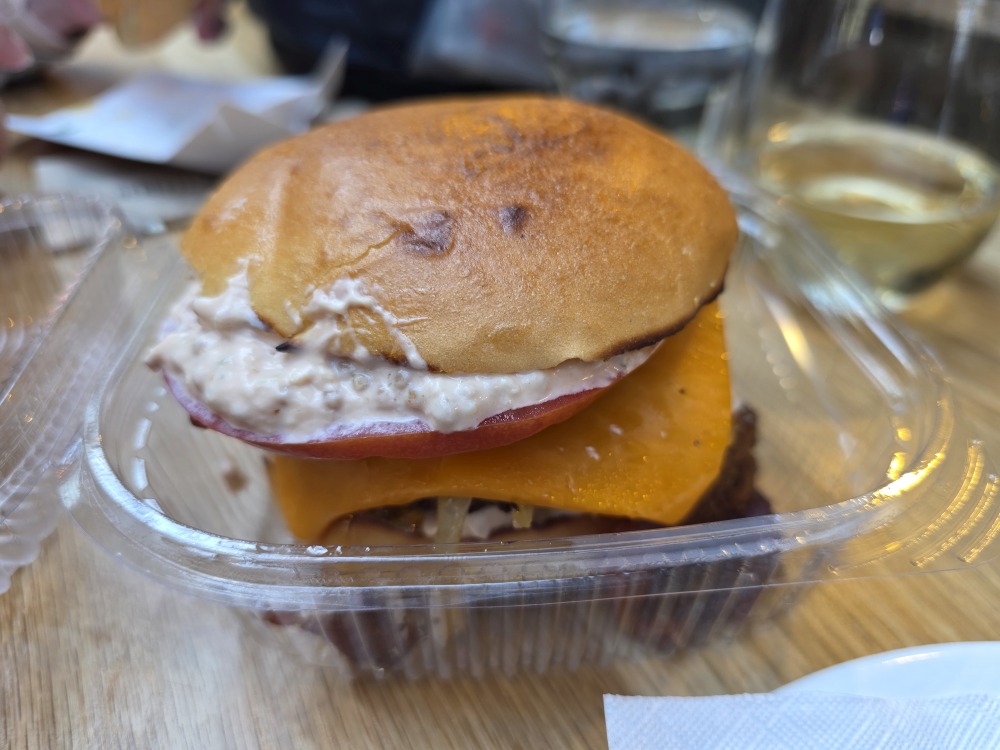
Exiting the museum, we make our way back to the Forks Market for lunch reflecting on all that we have seen. A beer and a wine are definitely in order after the morning excursion – which we find easily enough. Choosing our food is not quite so easy! The market has over 20 food stalls to choose from, some with only ice cream or sweet treats, but most with food food – from Greek/Italian to Wieners at Wienerpeg. We finally settle on Wienerpeg – I mean how can we not? – ordering an aptly named “Wienerpeg” that comes with hot honey, caramelized onions and cheese curds. Over the top good. And a Mack Burger from NuBurger, topped with secret sauce, candied bacon, old cheddar and more. Yummy.
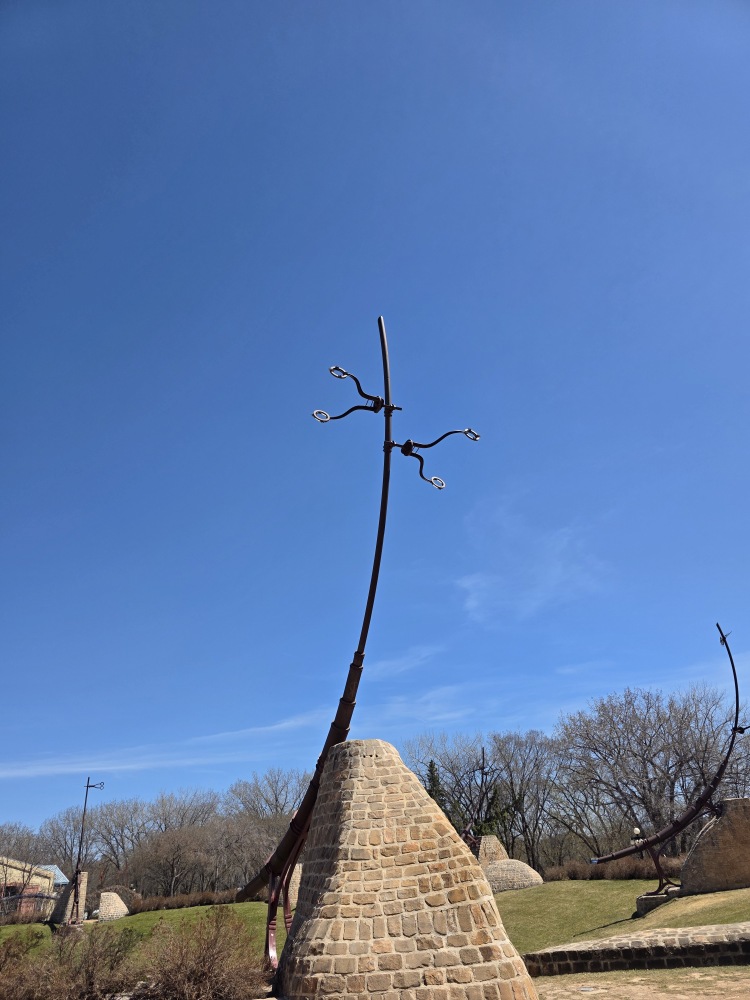
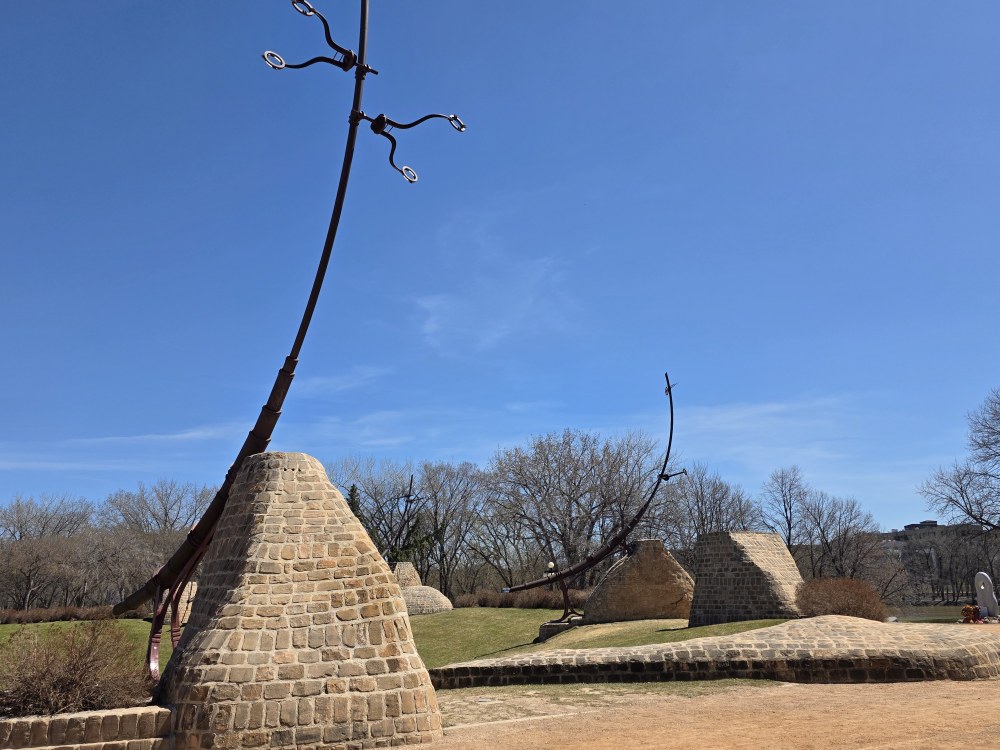
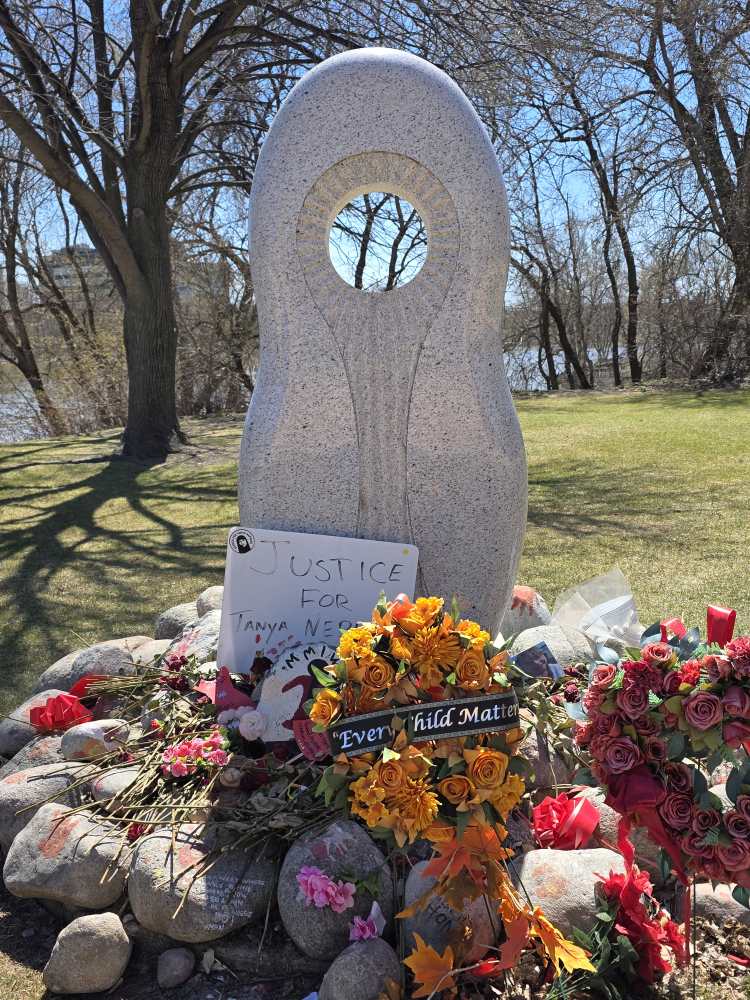
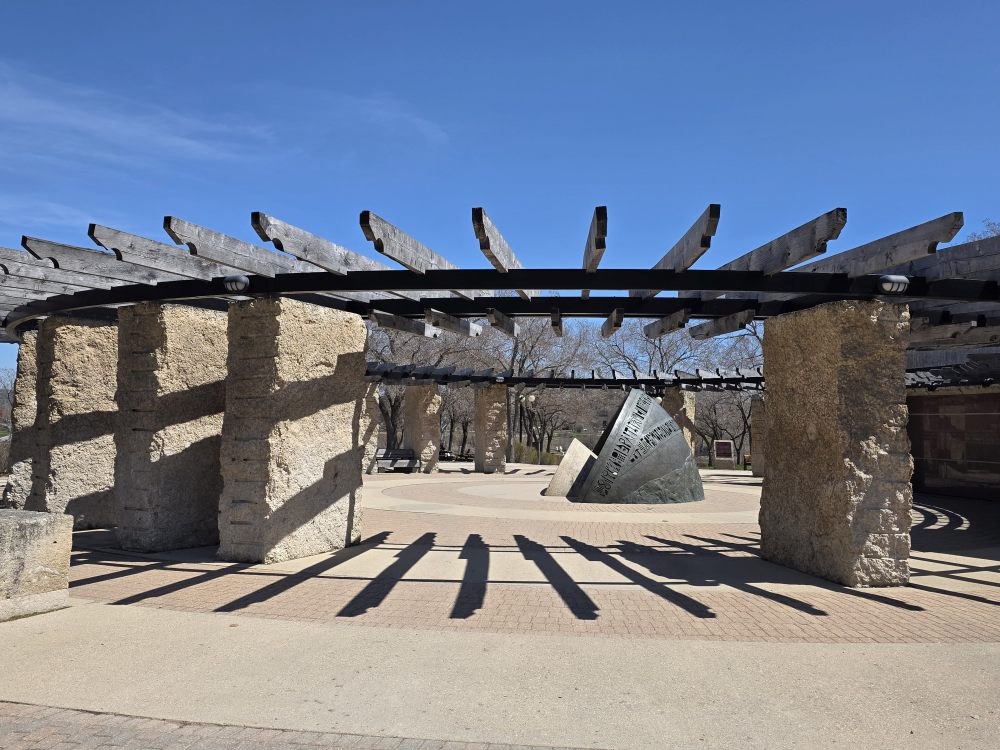
Our afternoon wanderings take us out into the Forks Park itself, walking through the various artwork, monuments to missing and murdered Indigenous women, learning why this is called “The Forks” – it is the traditional meeting center where the 2 rivers, the Red River and the Assiniboine River, meet and connect all the Indigenous nations across North America.
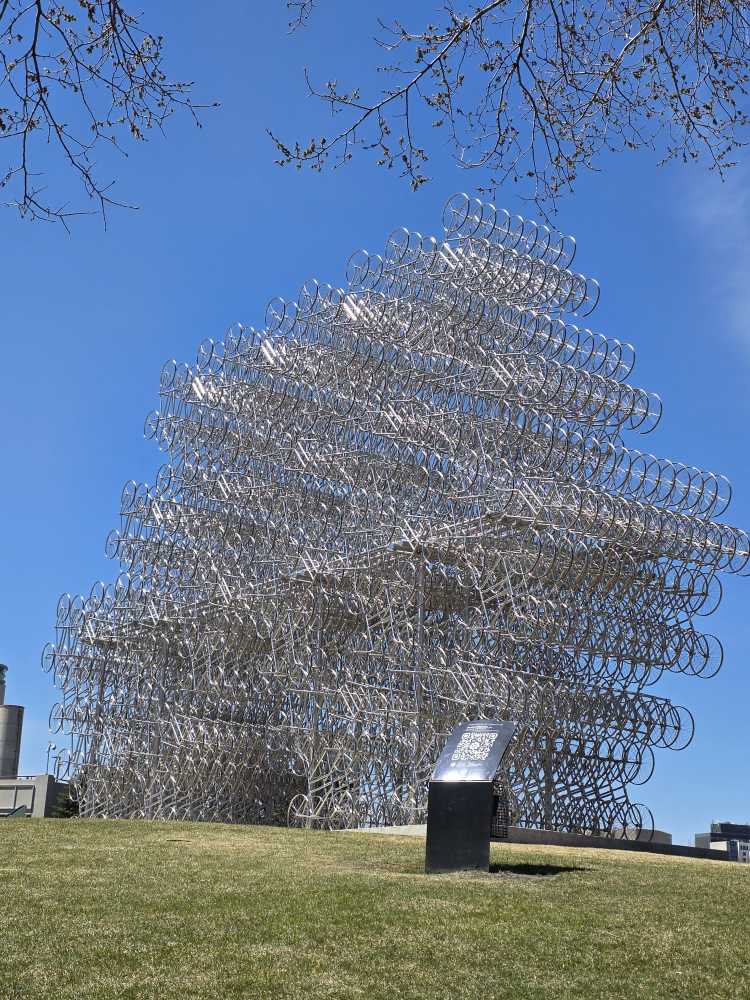
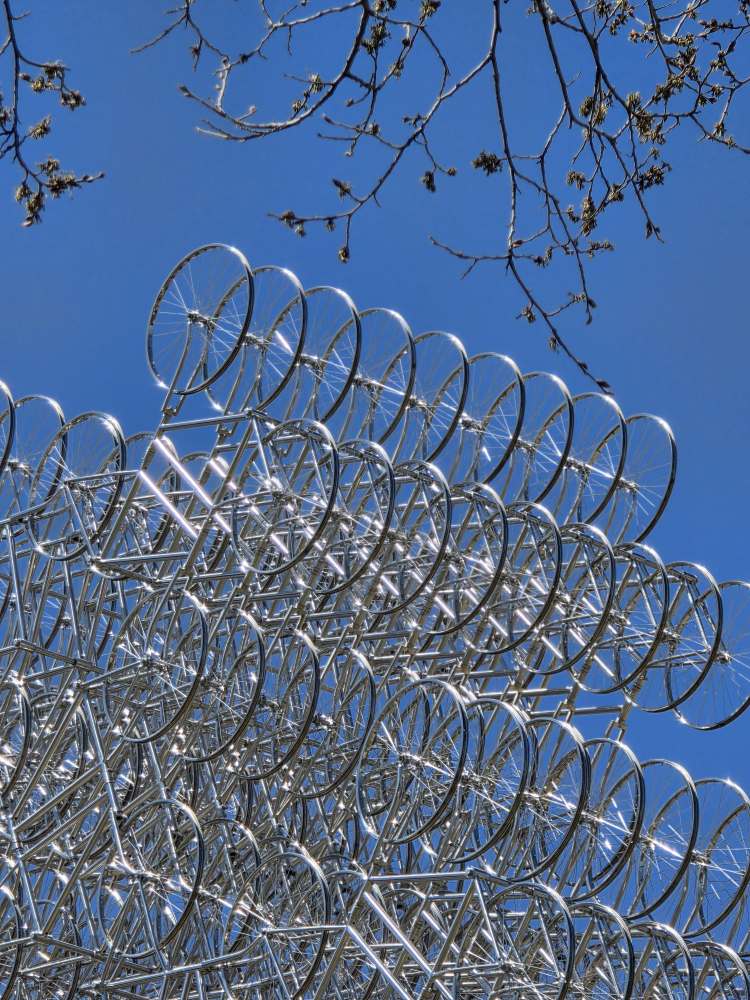
Circling back toward the Human Rights museum, we pass the Forever Bicycles installation – a combination of 1266 bicycles created by a Chinese artist who is known for his human-related activism. The artwork is a tribute to the popular means of transportation in China, as well as the name of the brand of bicycle, “forever.”
Park exploration complete, we head through town on a 30-minute walk to the main WAG museum, including the Qaumajuq Indigenous exhibits. I know I said the Winnie gallery was the best – and it was, especially for me, a Winnie lover – but this place? One of the best museum experiences we have had – and that says a lot as you know we visit a whole lotta museums!
Starting on the top floor with an exhibit of drawings and sculptures by Omalluq, a woman who drew her daughter and depicted her personal experiences – one of which is the well-known Indigenous story of the owl and the raven – how the owl let the raven decorate its feathers with soot from her lamp and when it was the raven’s turn, the owl became impatient with the raven’s fidgety behavior and dumped all the soot over the raven, making it black all over.
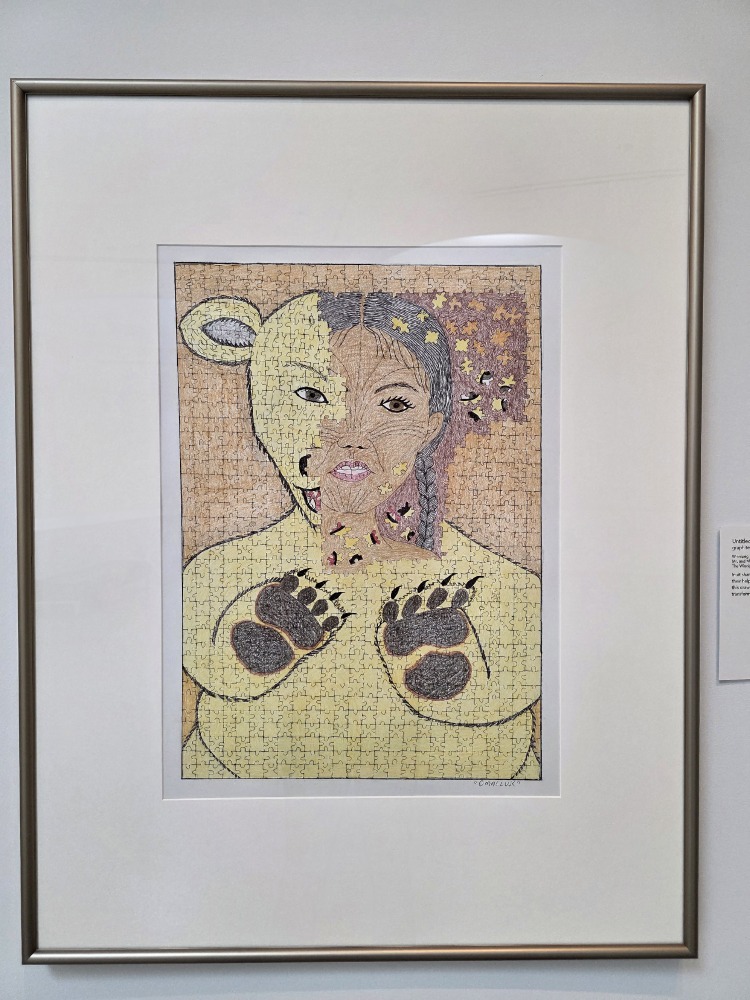
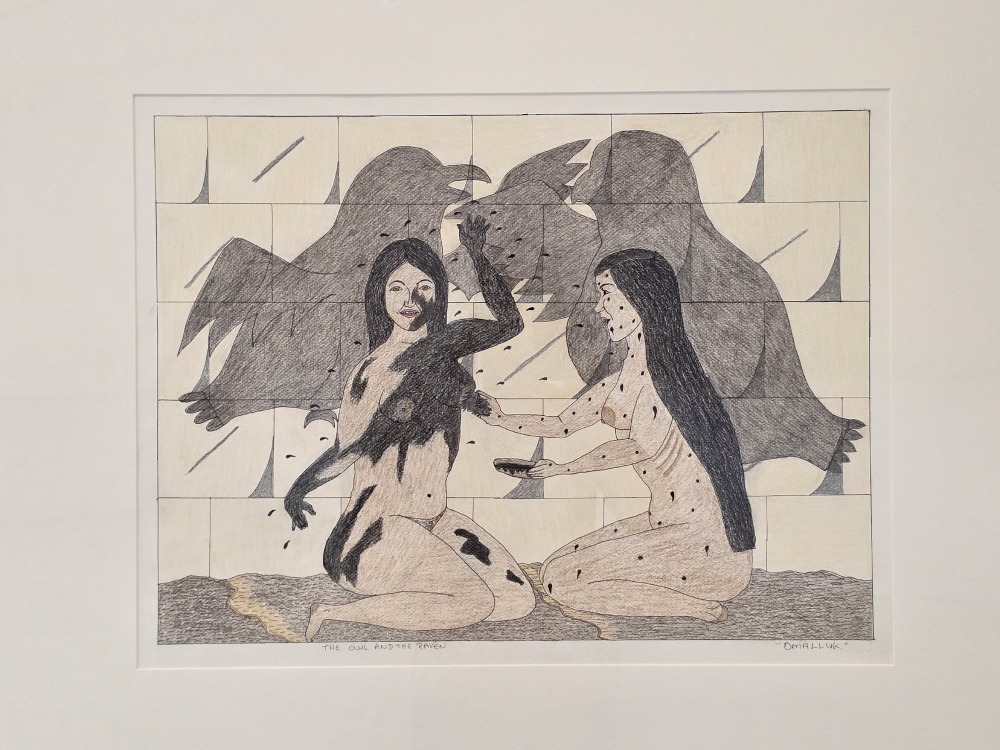
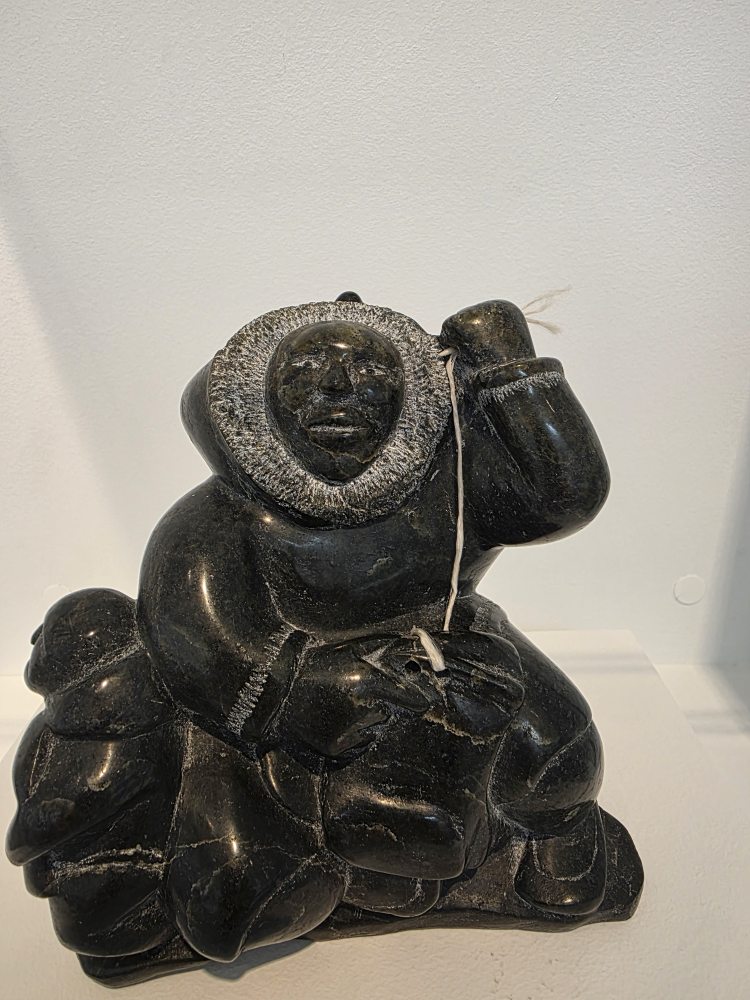
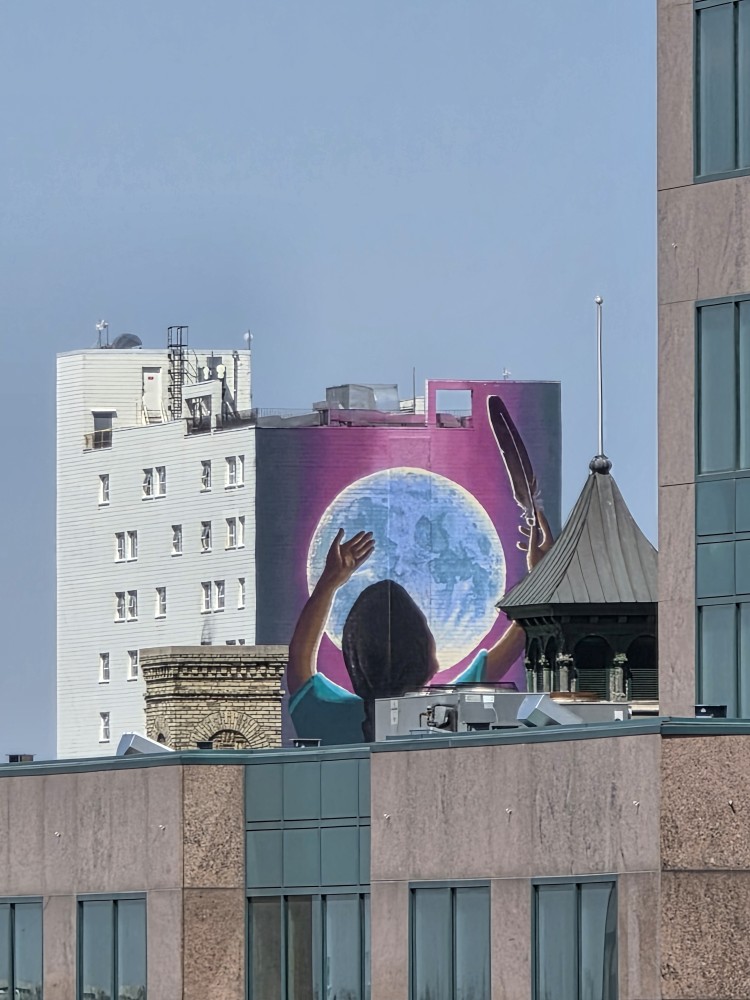
We visit the amazing sculpture garden on the roof – with really interesting designs and a view of a cool mural on a building in the distance.
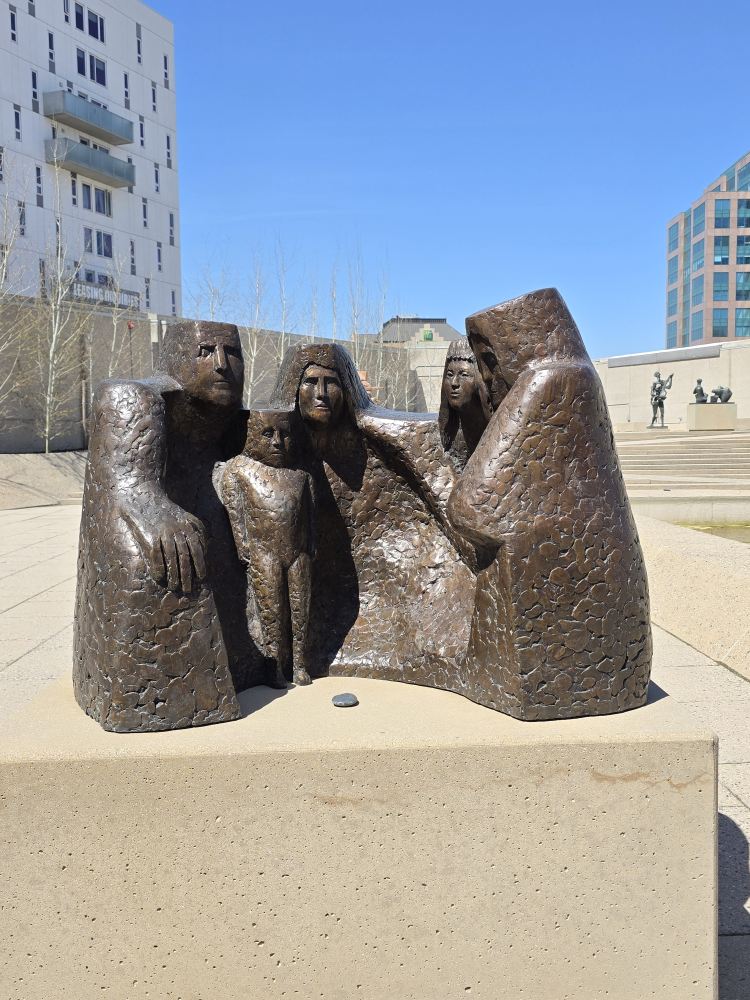
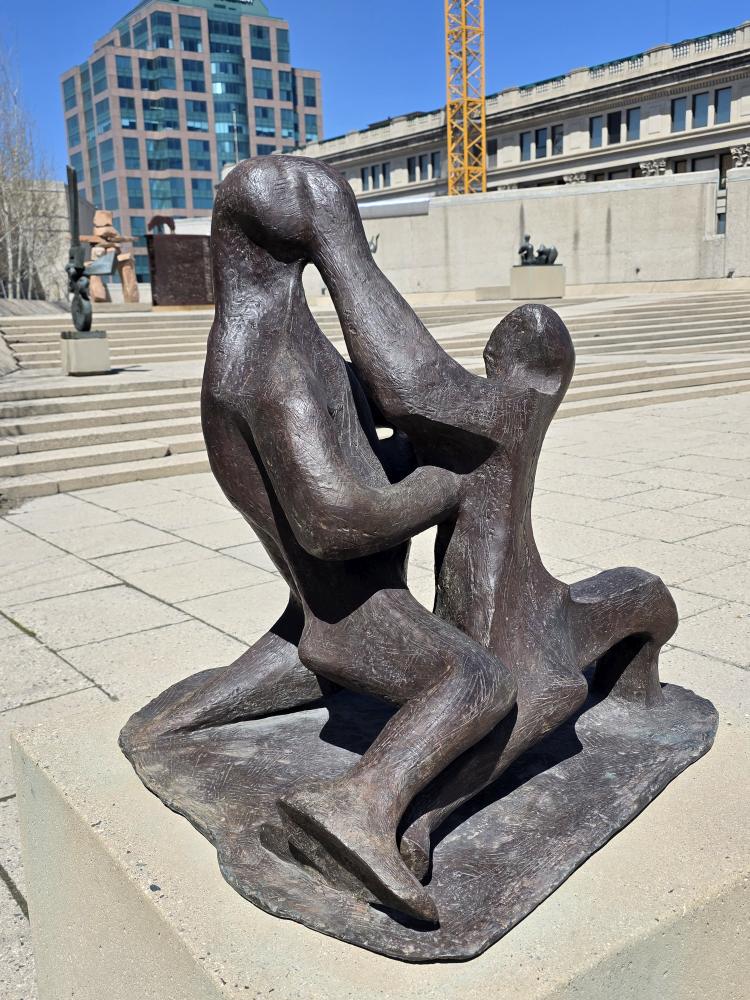
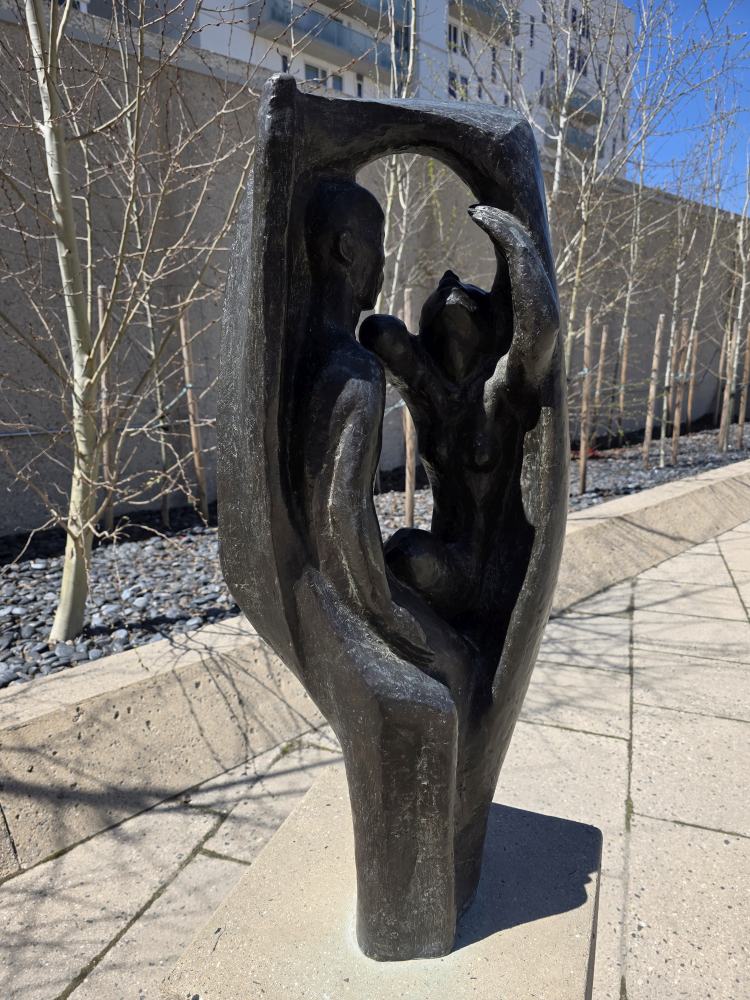
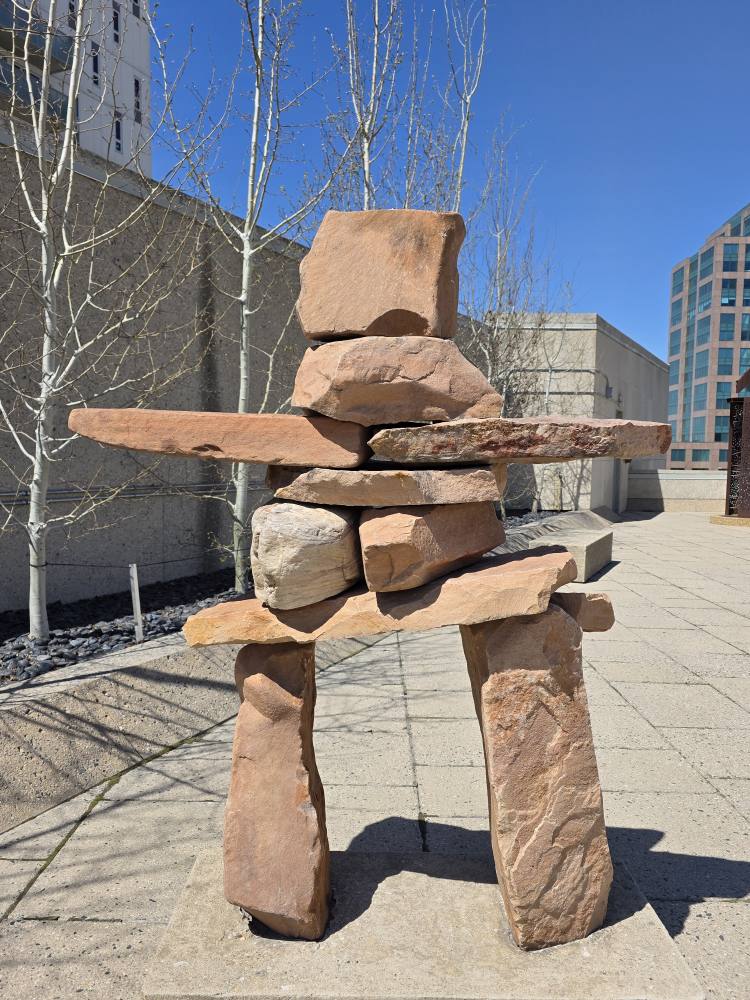
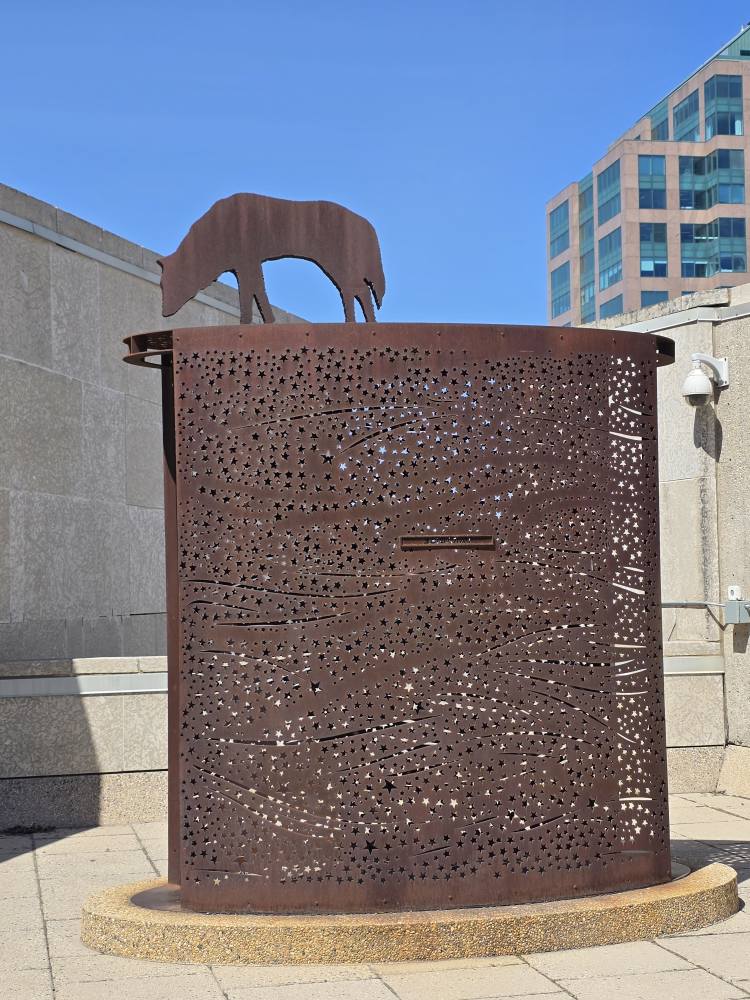
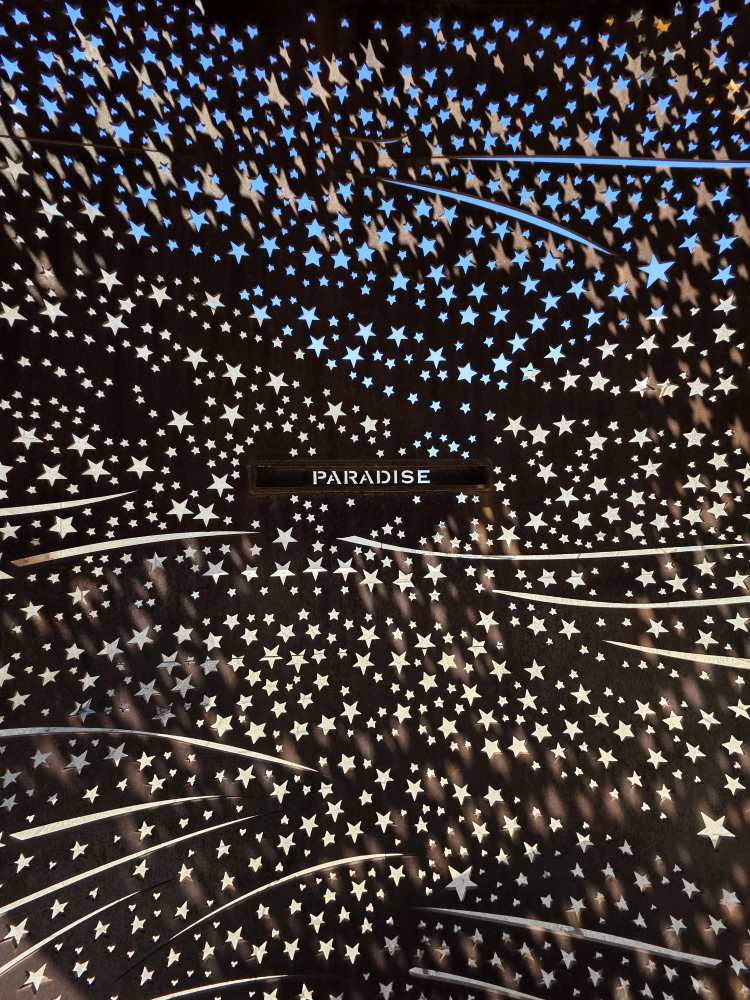
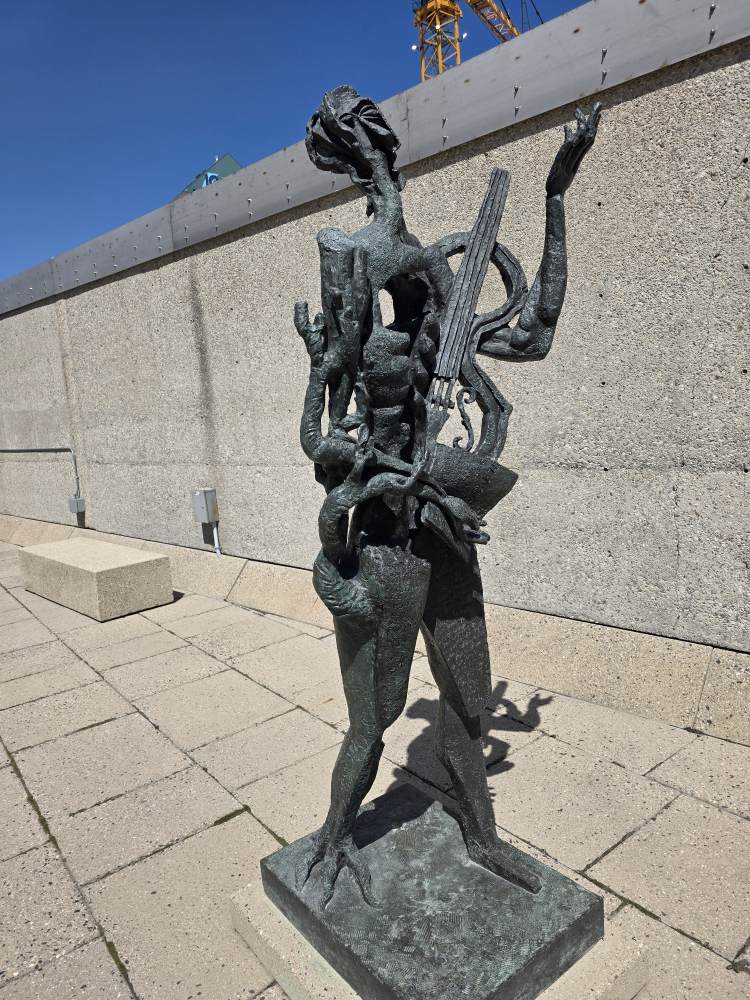
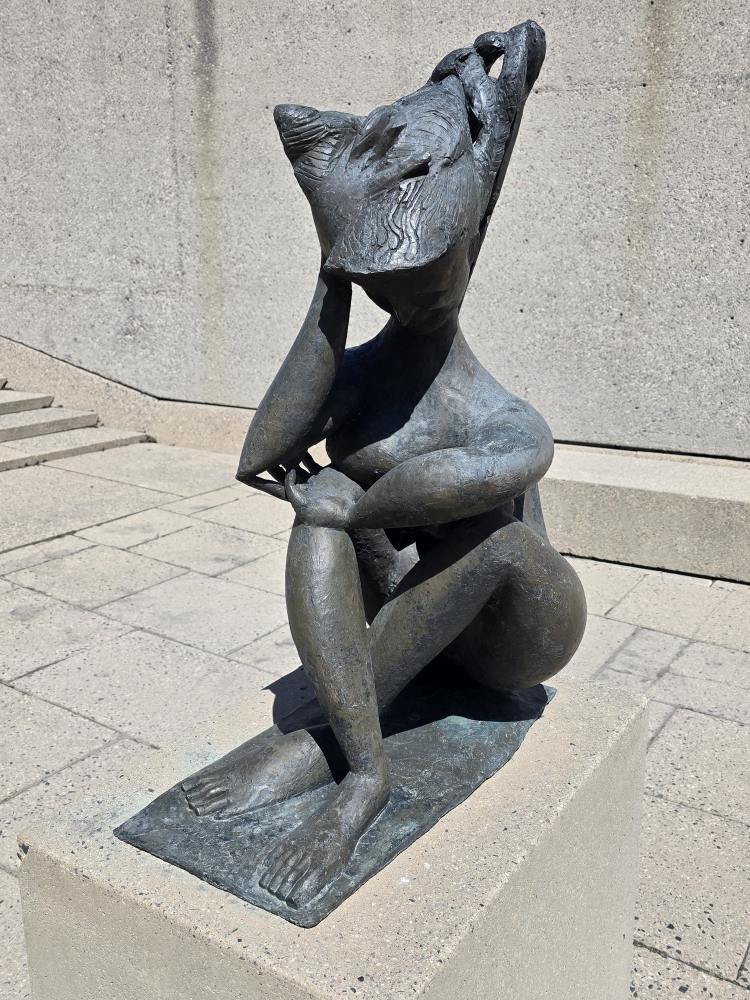
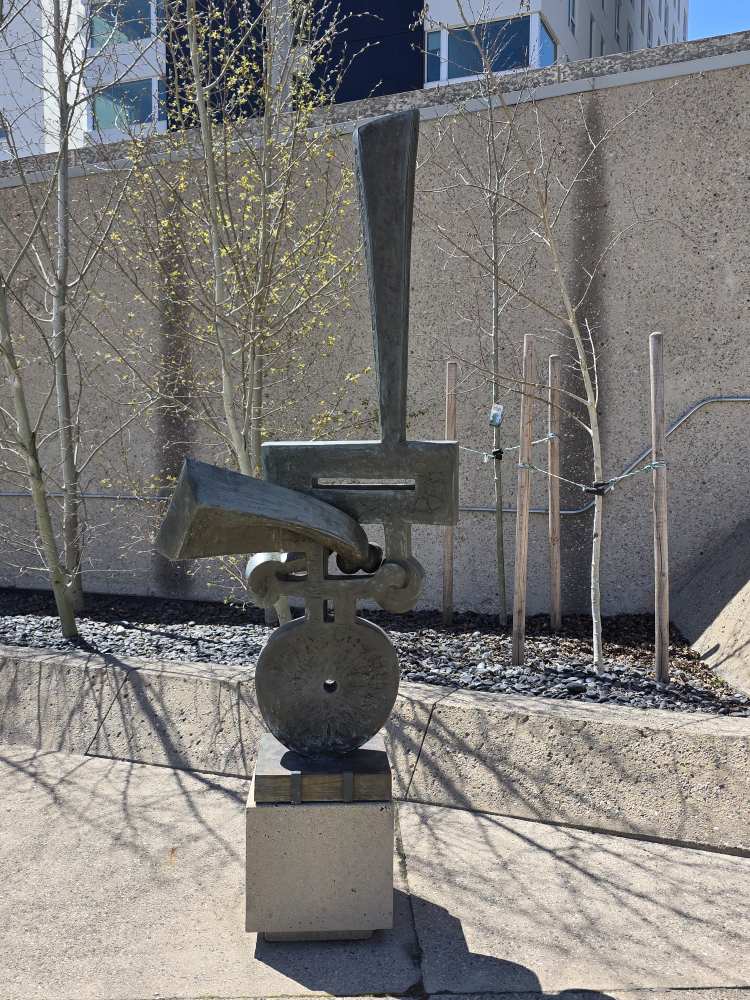
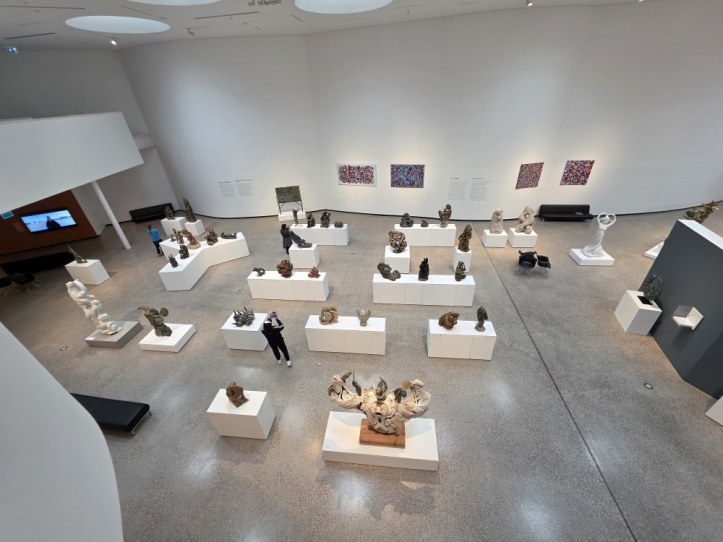
Back inside there is a balcony that looks down upon the main exhibit here in the gallery – an Abraham Anghik Ruben retrospective. Ruben is one of Canada’s must famous contemporary artist. An Inuvialuit (Western Canadian Inuit), he creates soapstone and whalebone sculptures exploring Inuit myth, legends and Nordic/Viking people history. OMG. We just don’t even know where to begin. We could have spent hours just wandering around and around this gallery – his pieces are so deep and incredible. The 3-piece series of the modern apocalypse, “Global Warming: The Apocalypse” piece that needed a video just to get the entire scope and detail. The “In Their Memory (Holocaust Memorial Sculpture)” –the imagery, the depth of emotion.
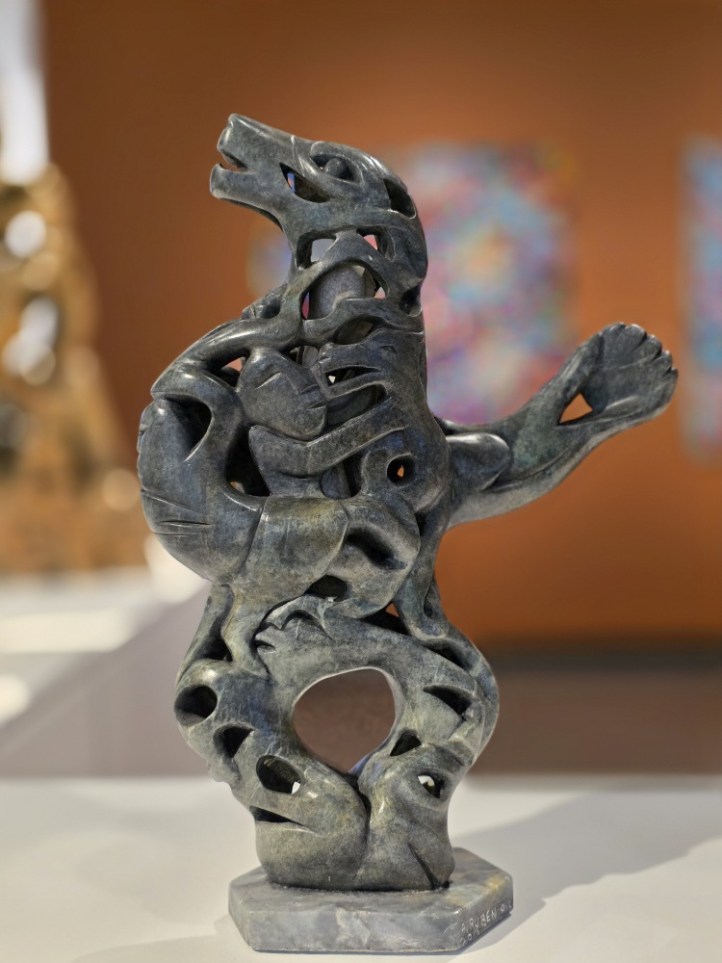
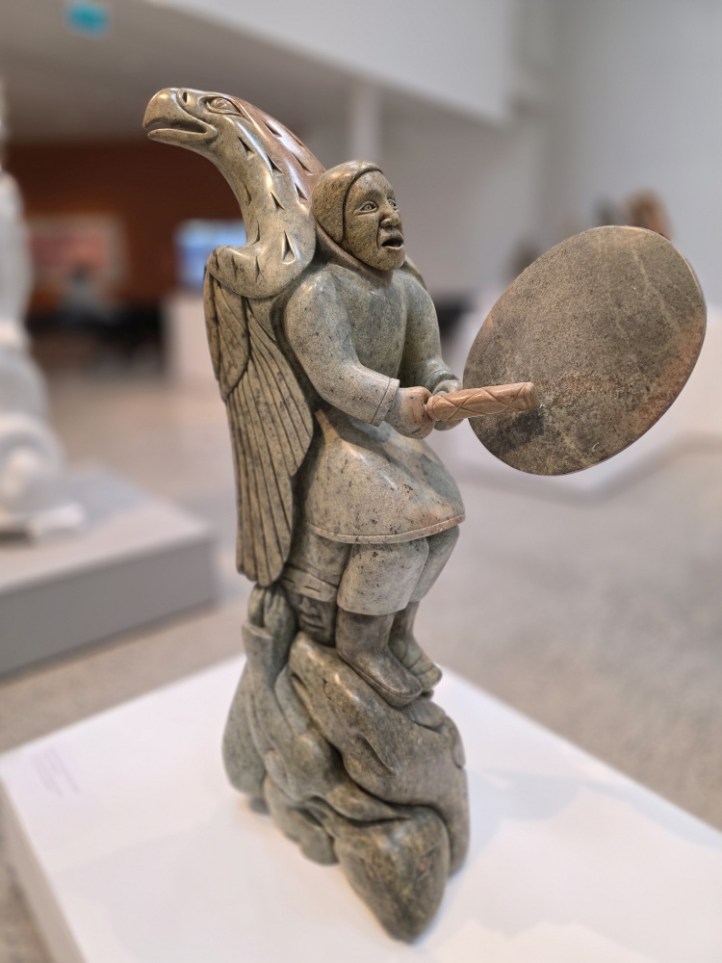
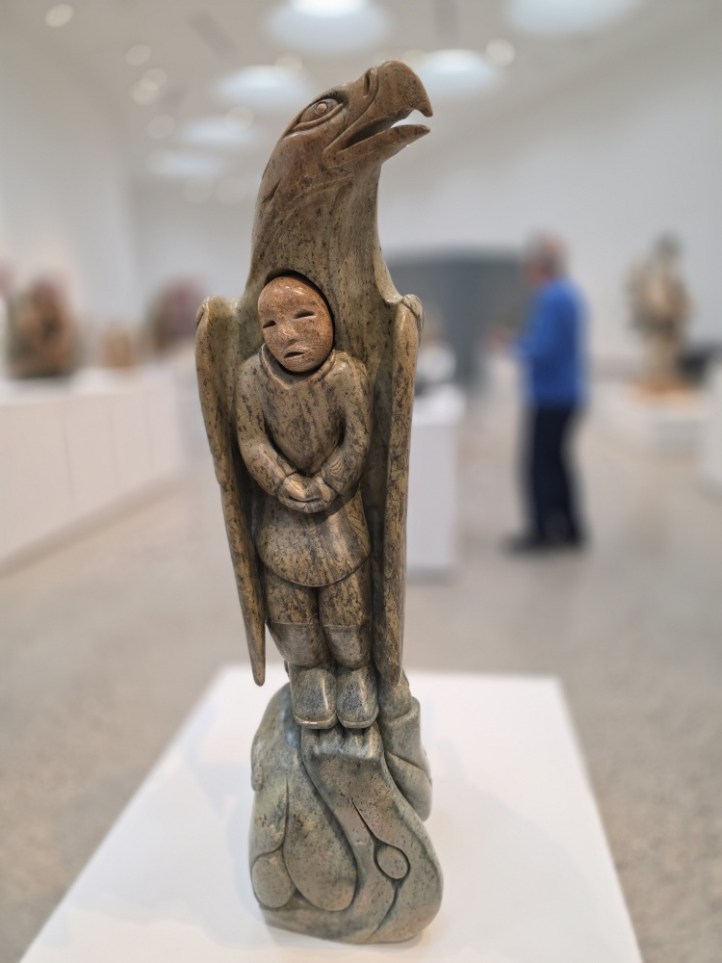
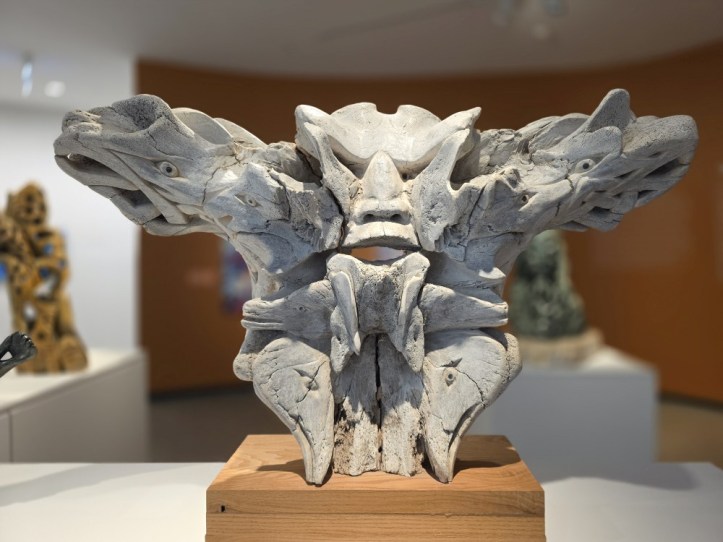
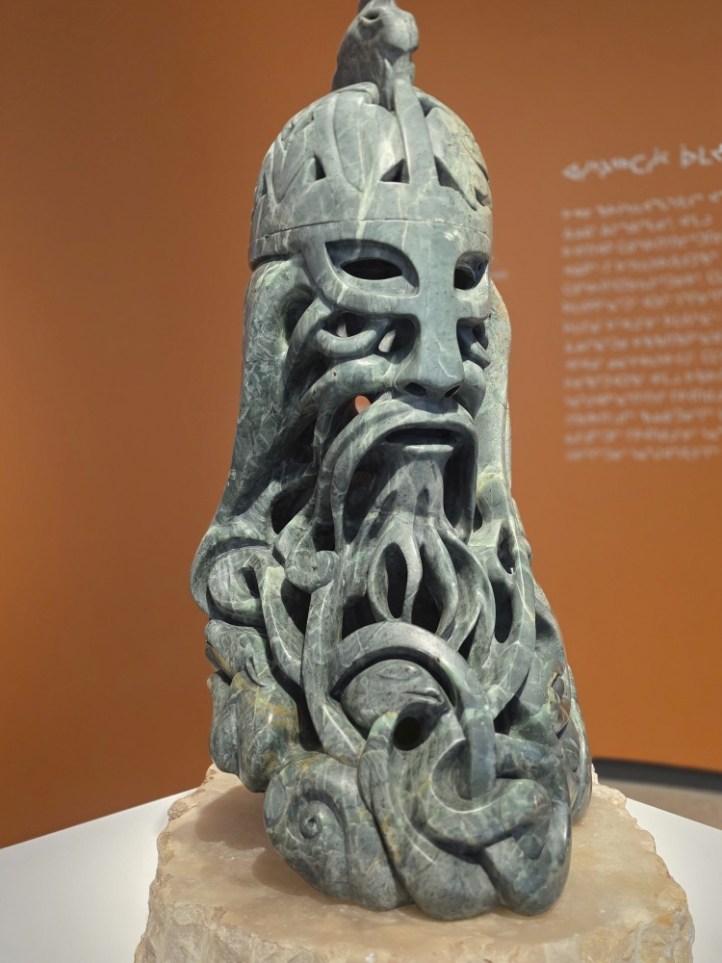
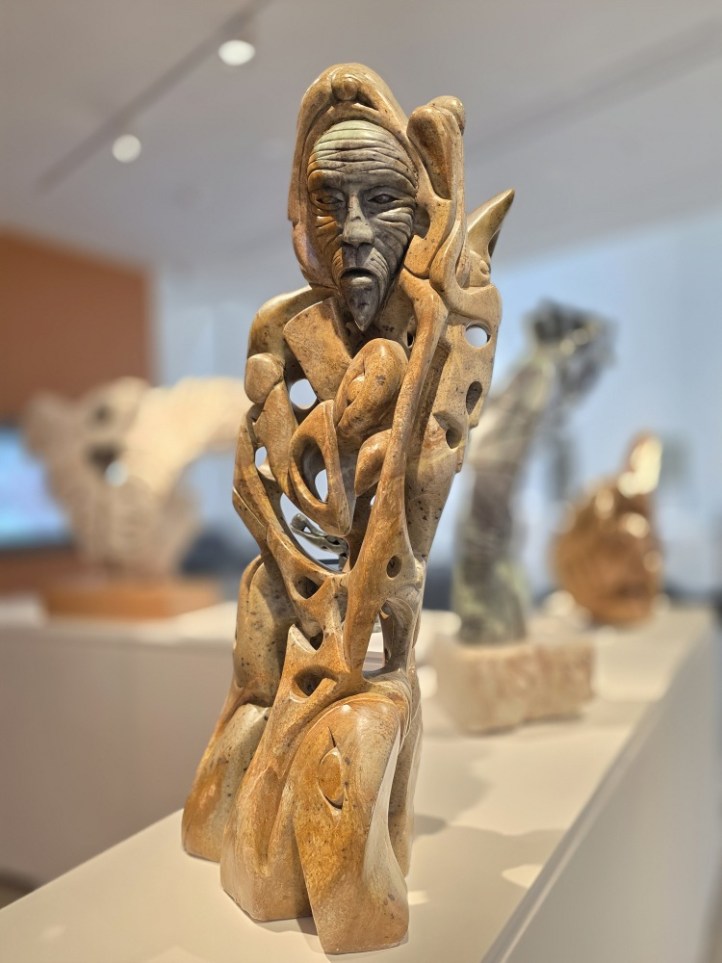
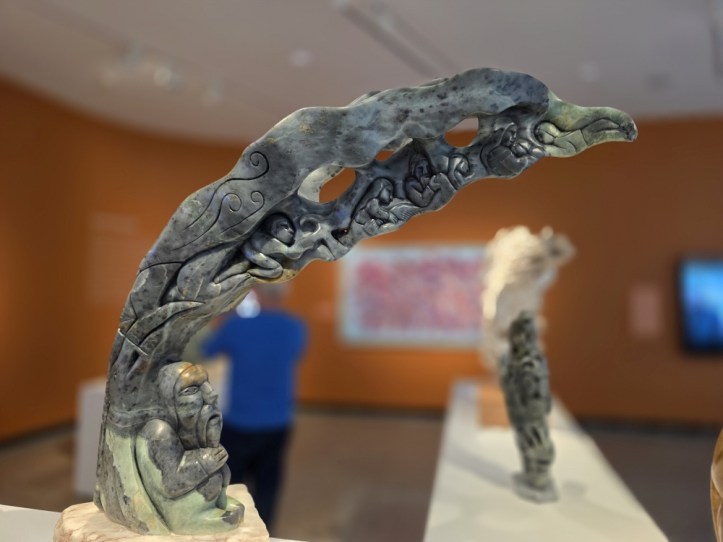
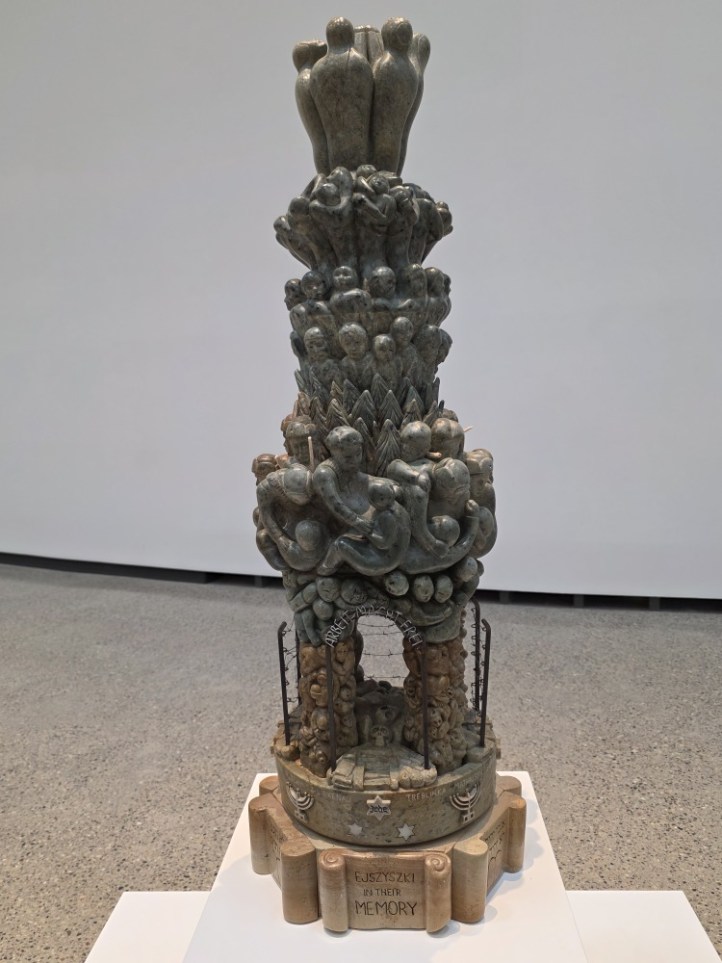
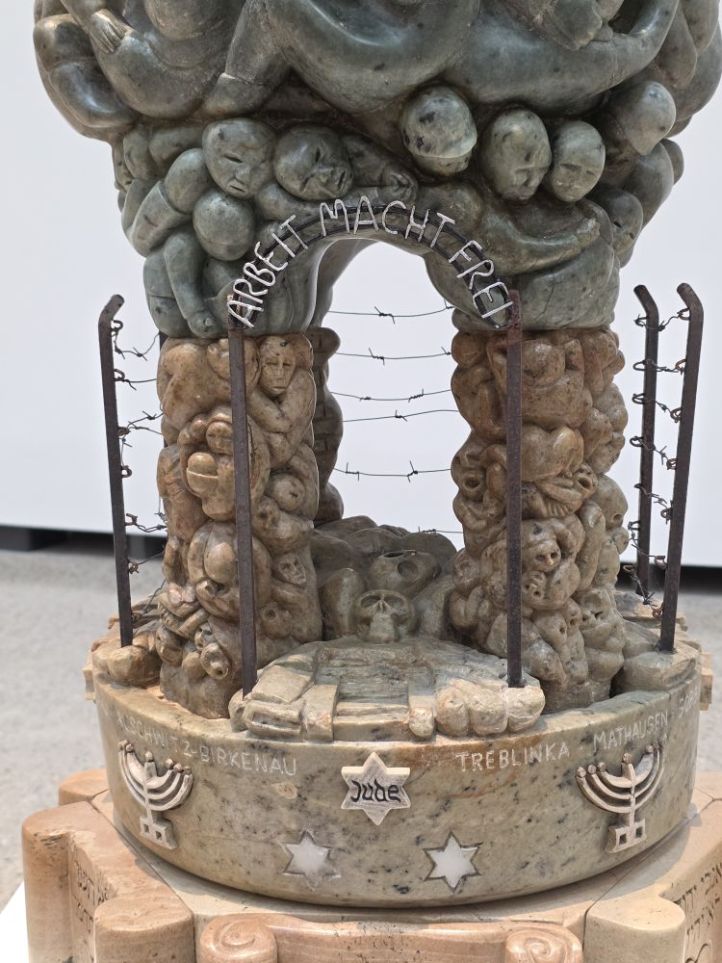
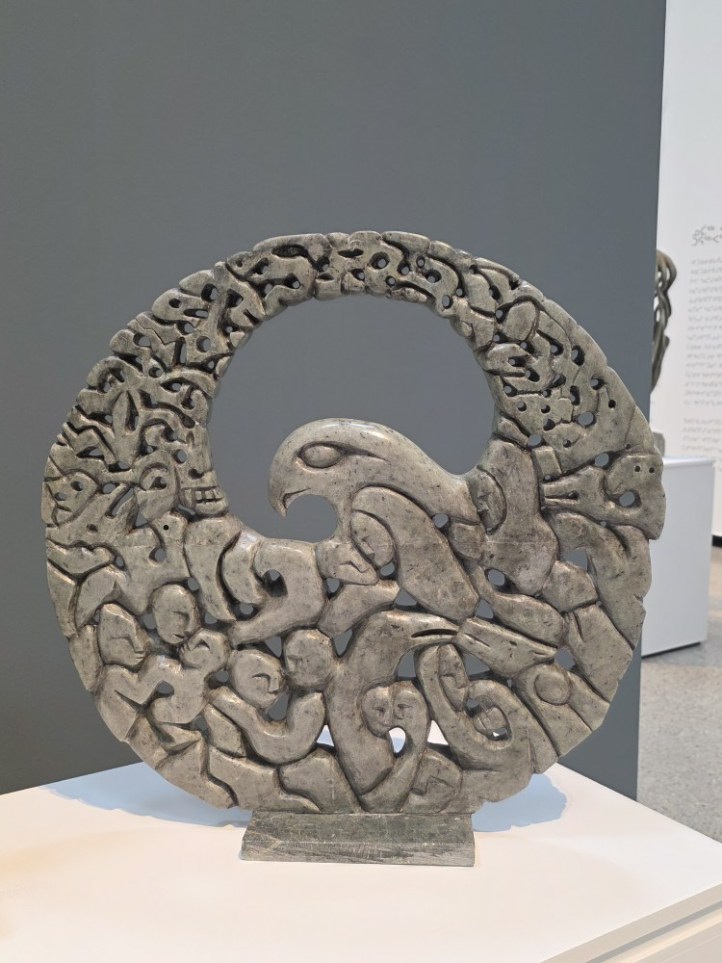
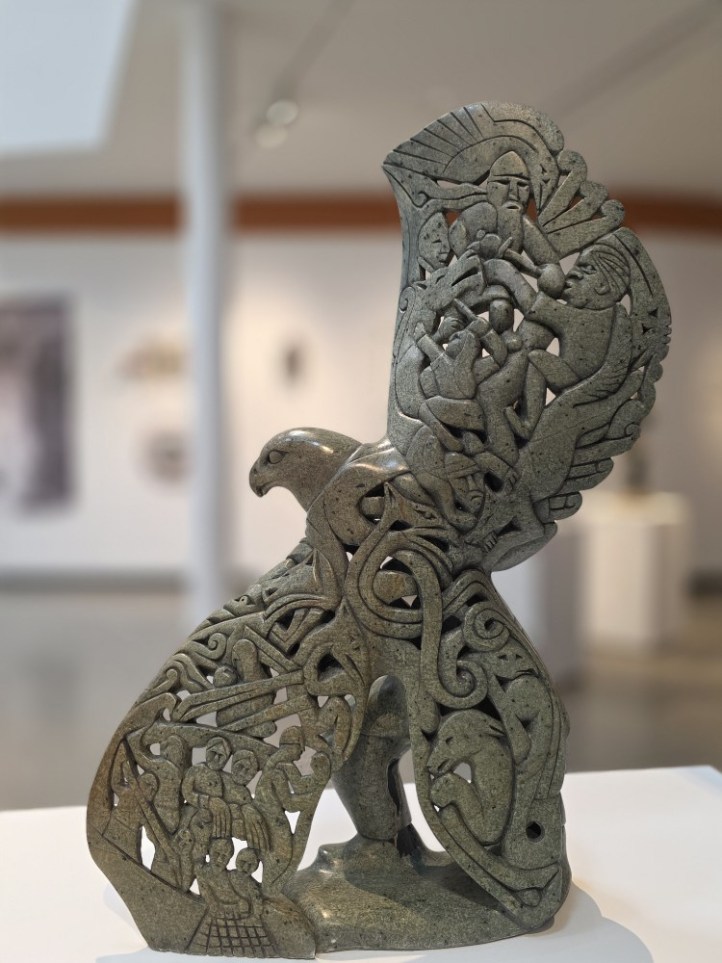
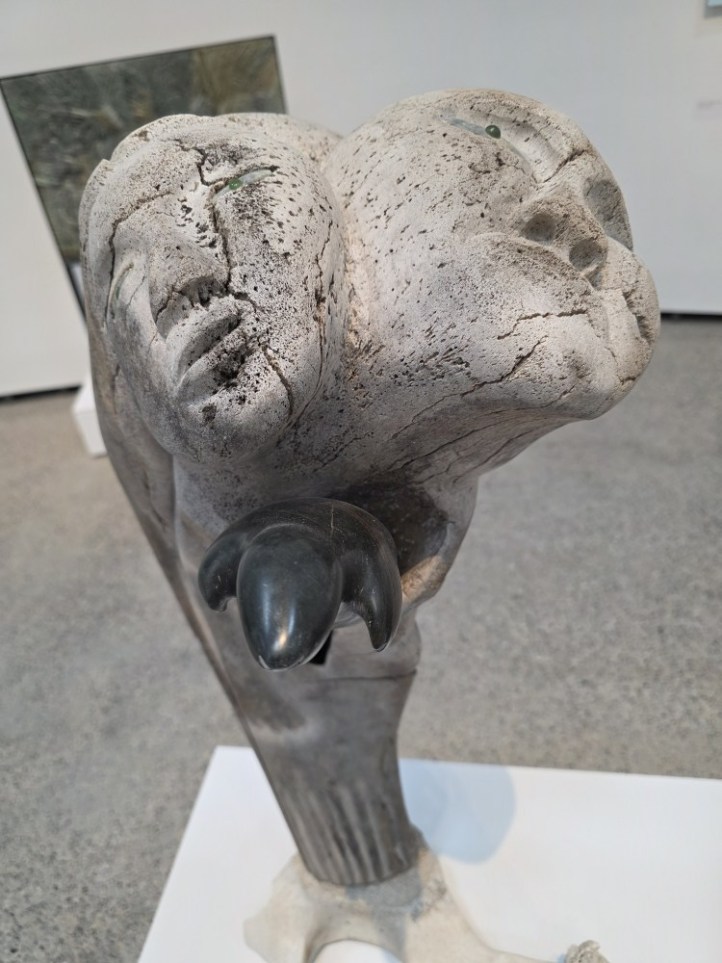
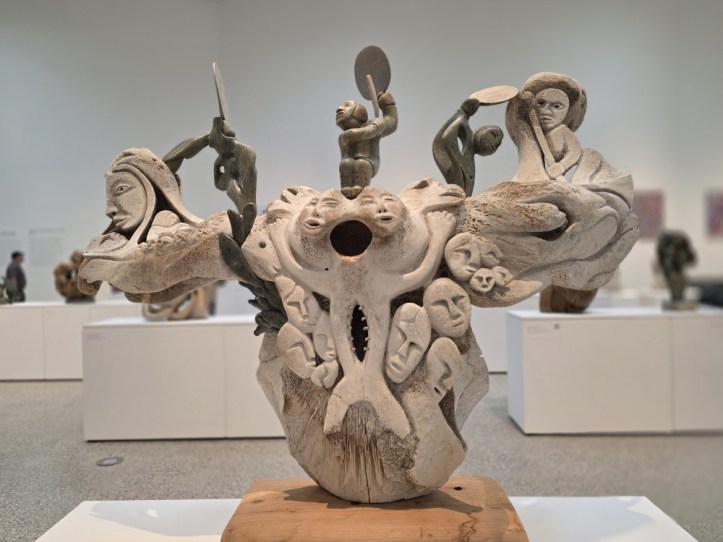
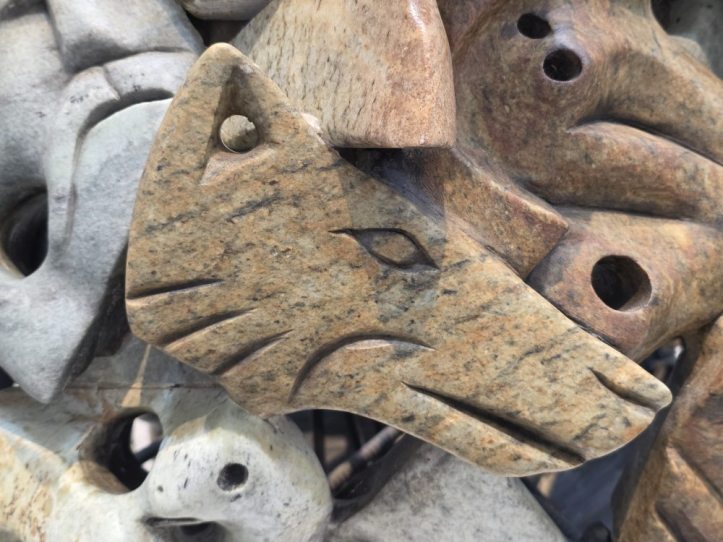
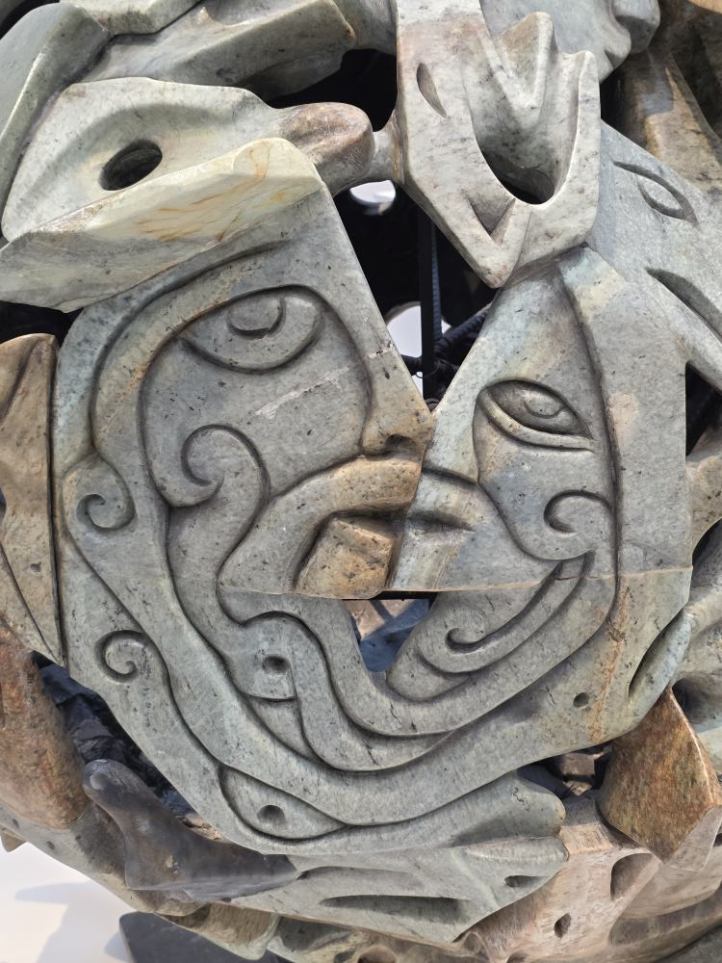
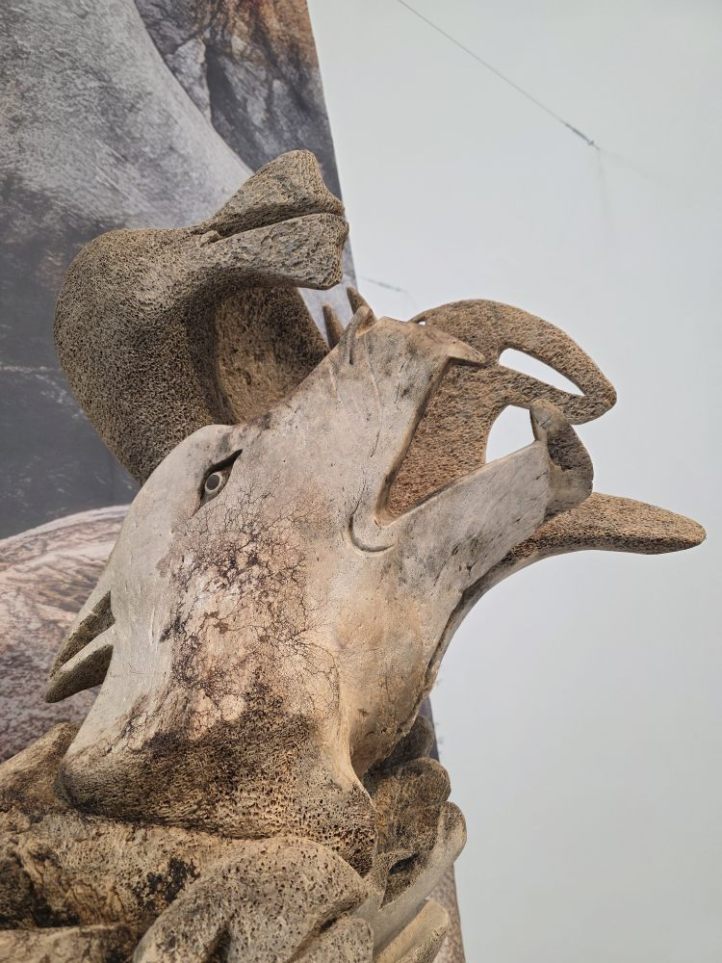
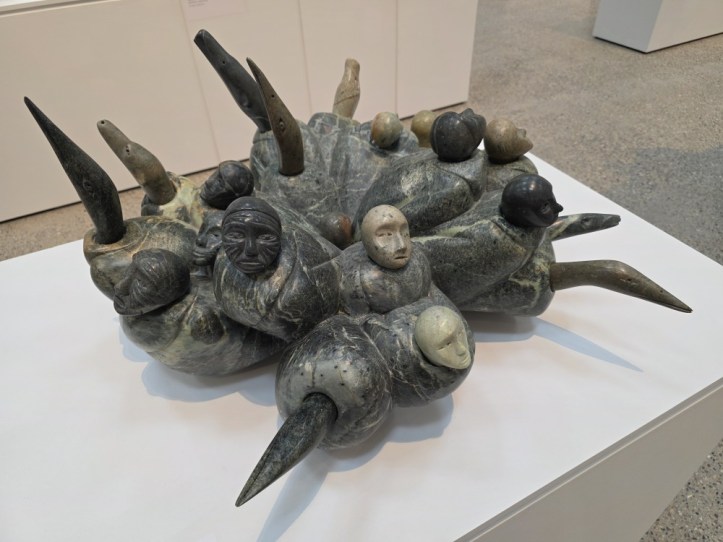
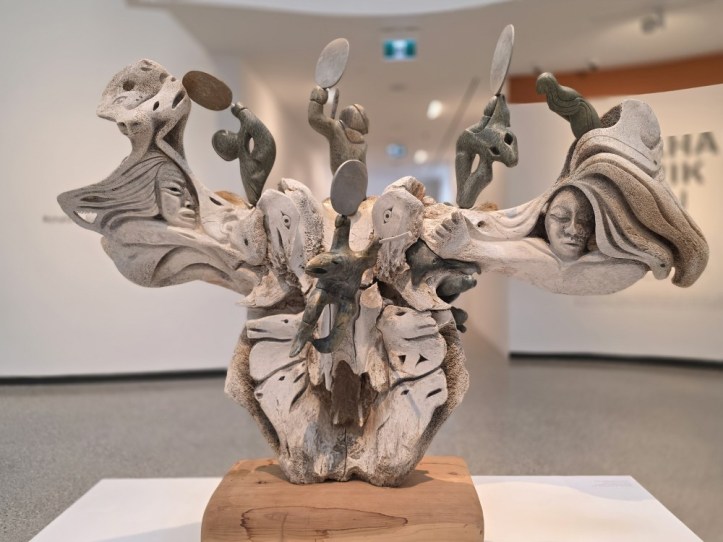
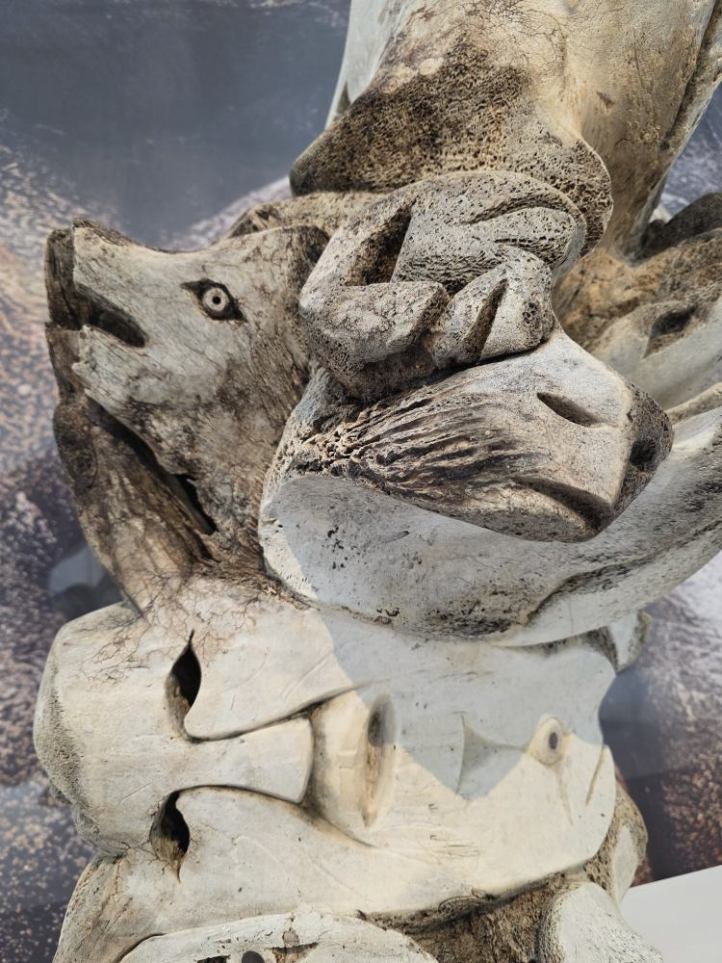
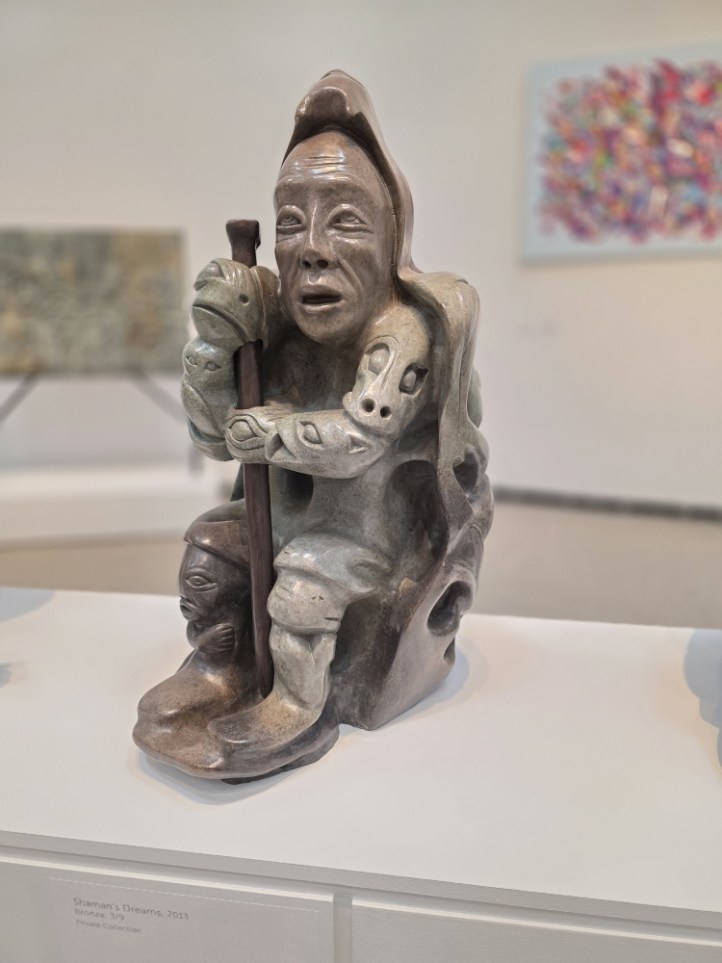
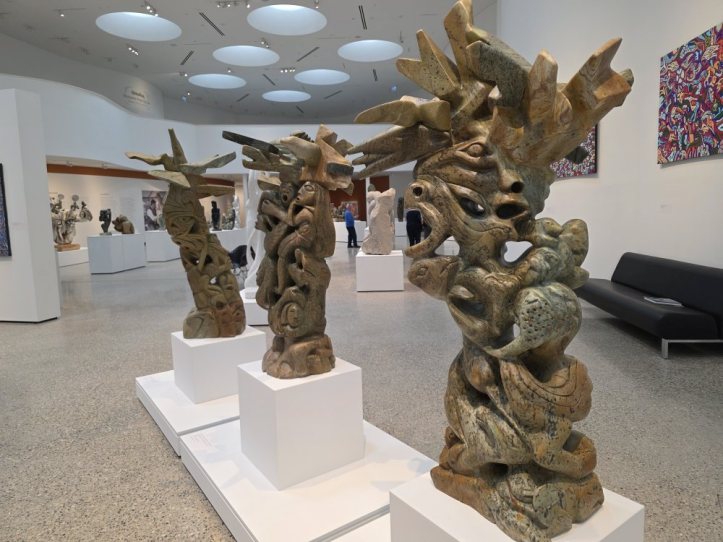
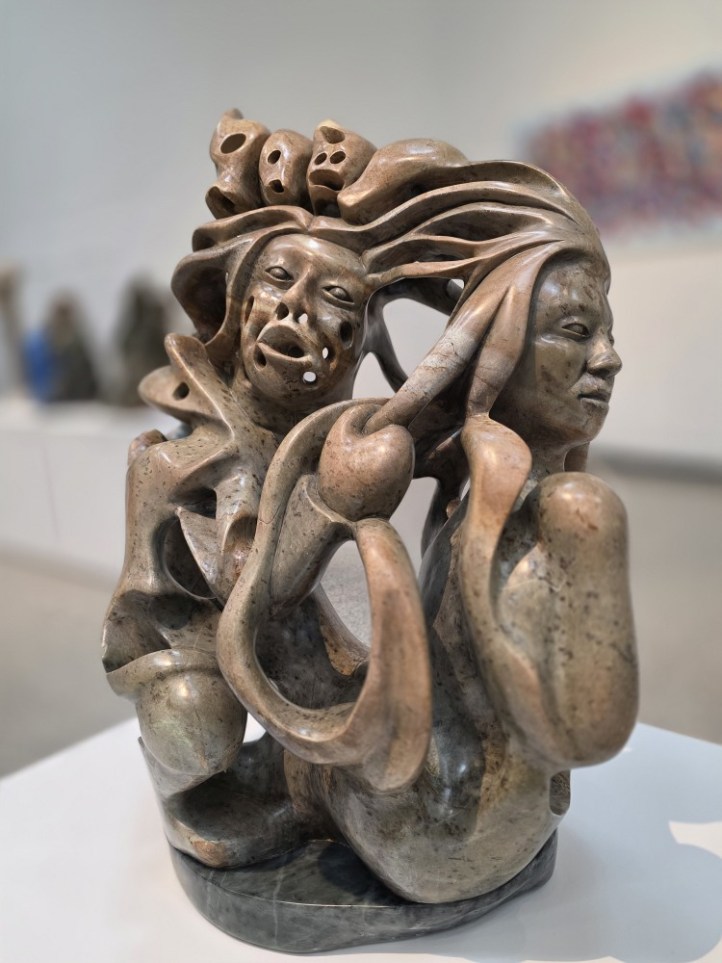
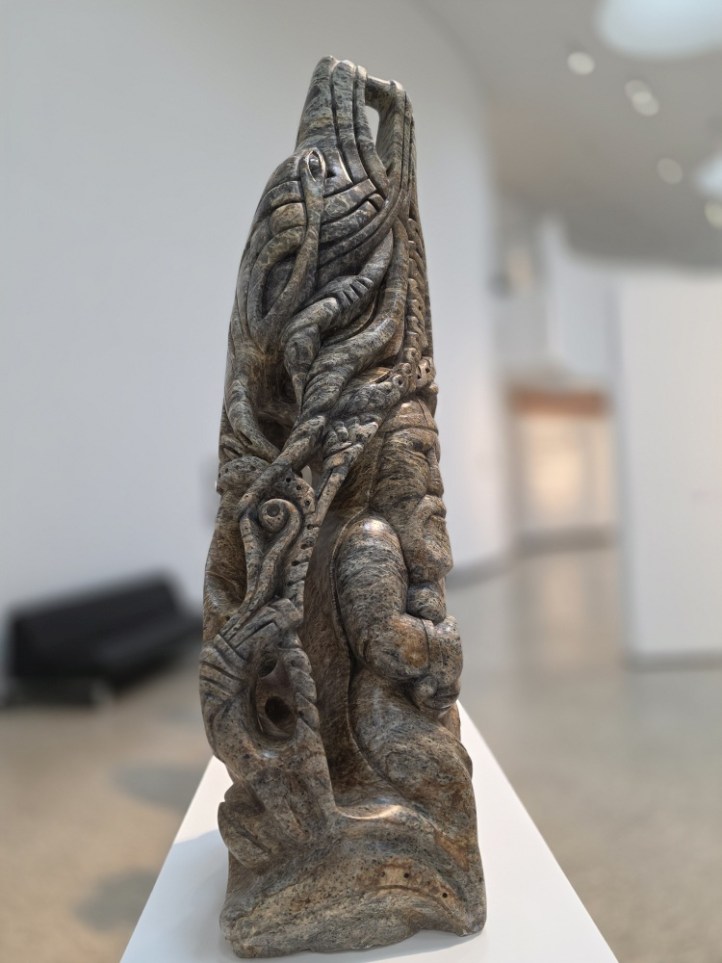
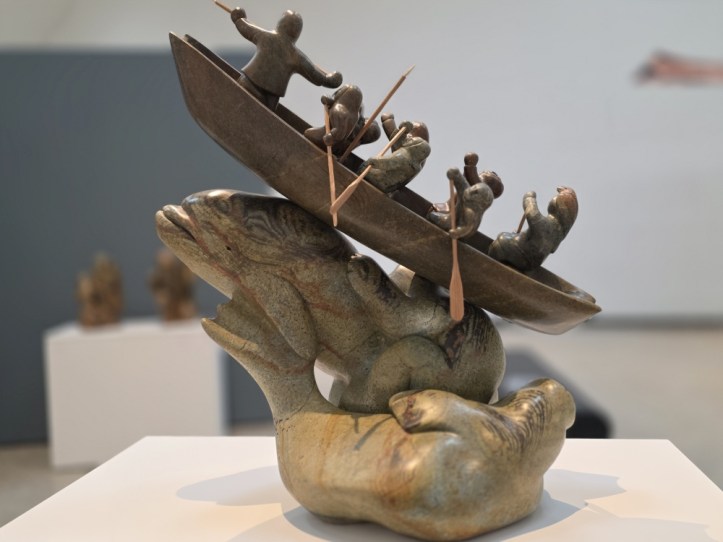
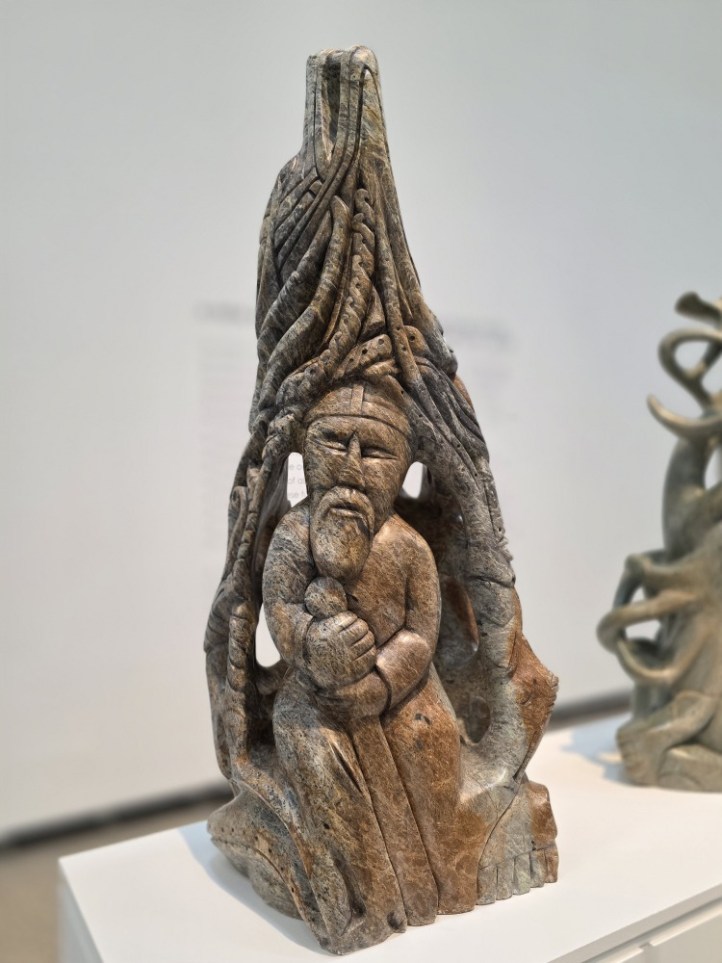
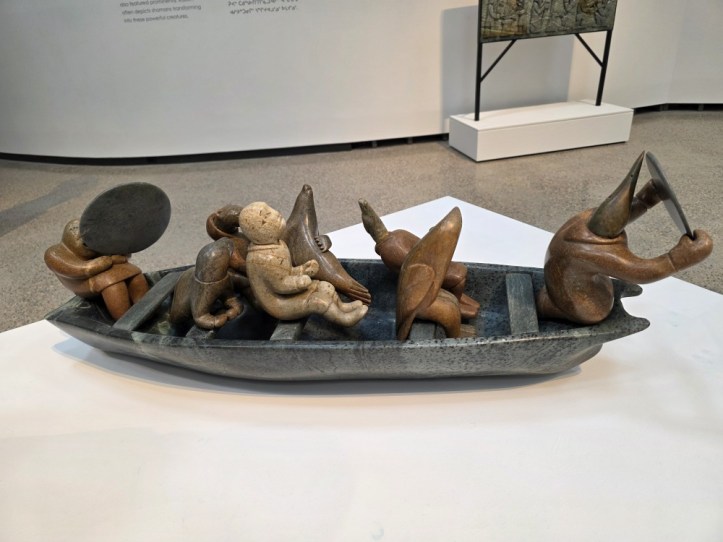
And so much more. Incredible.
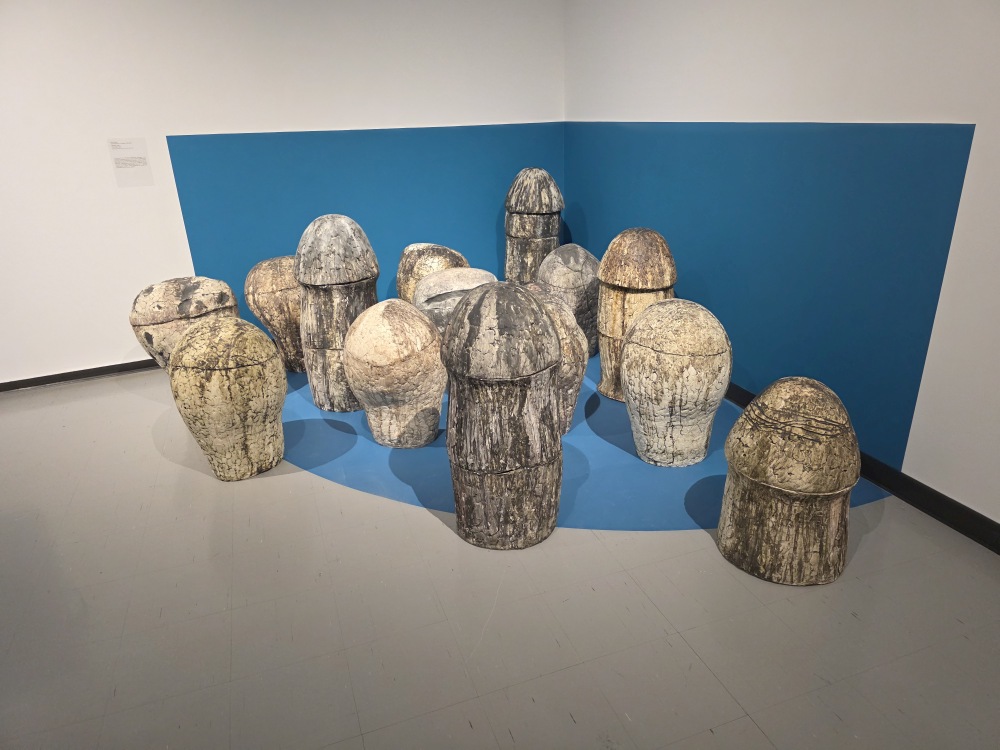
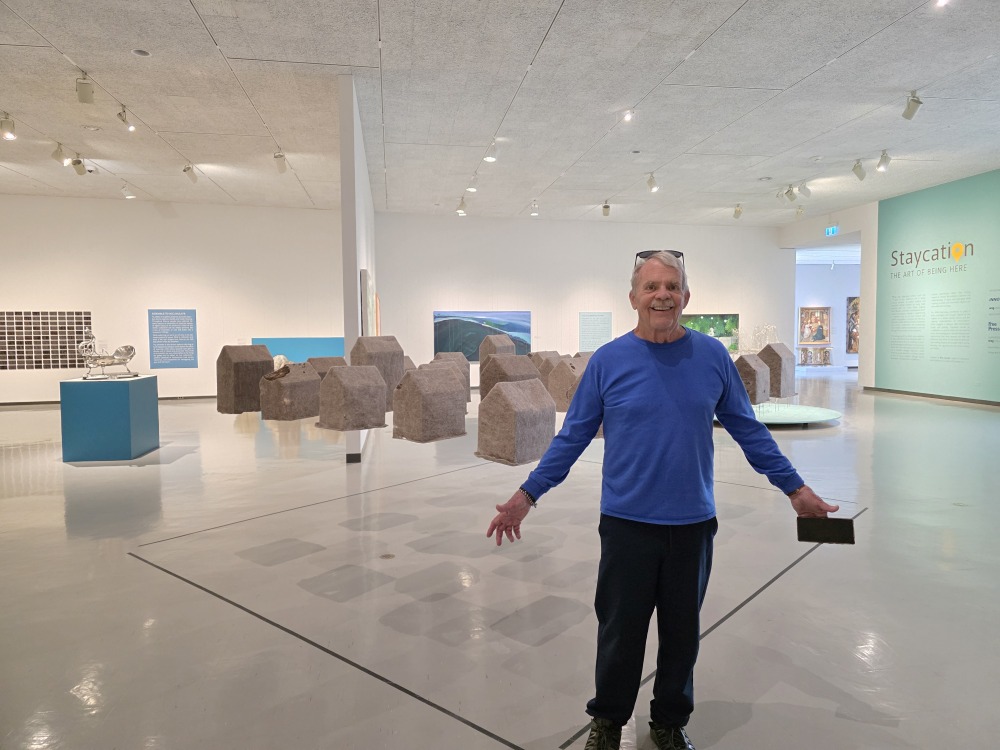
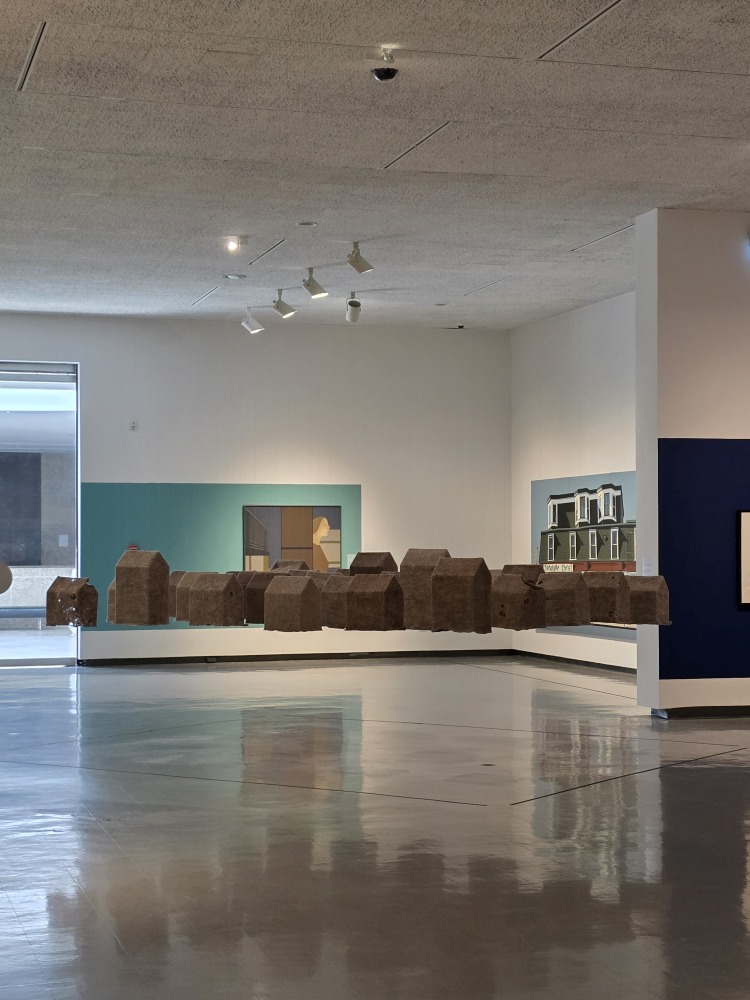
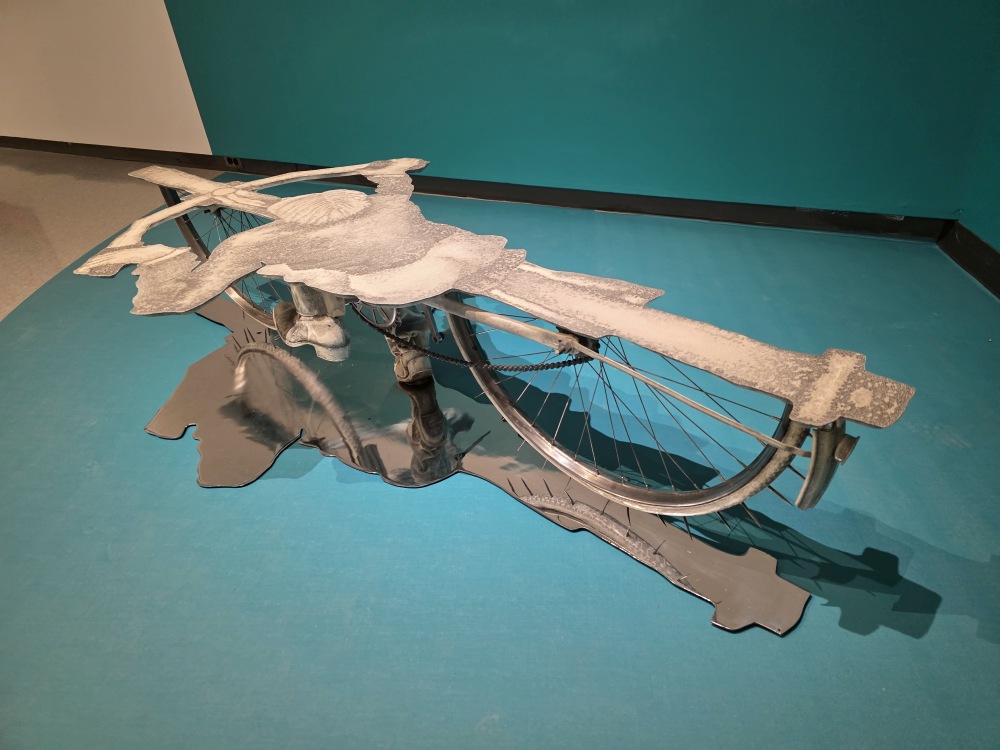
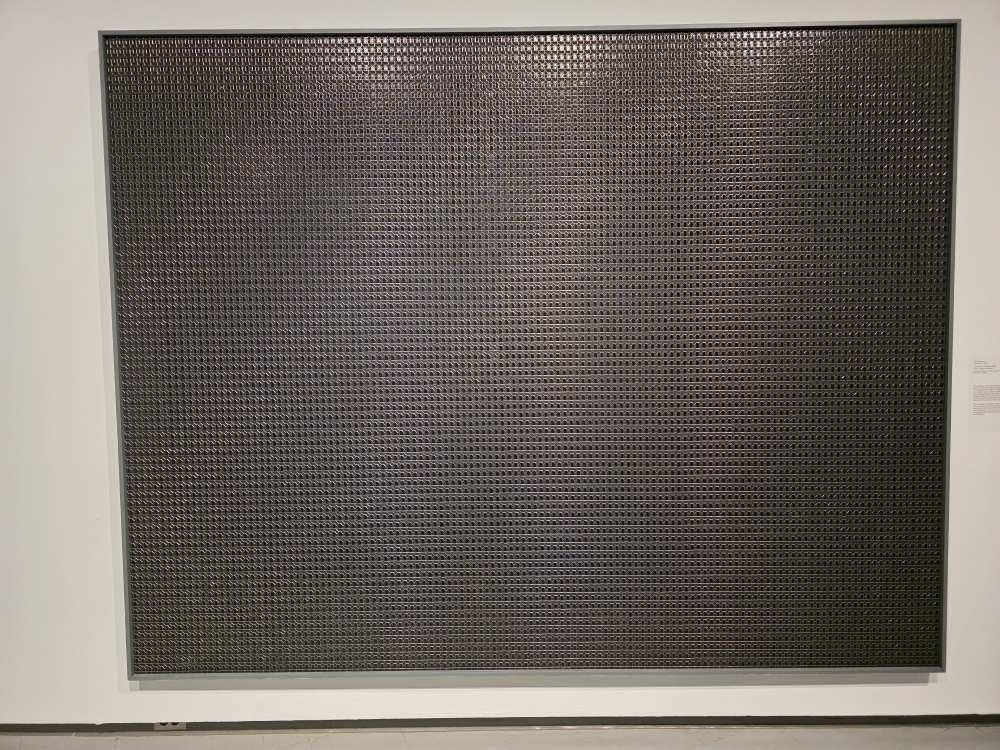
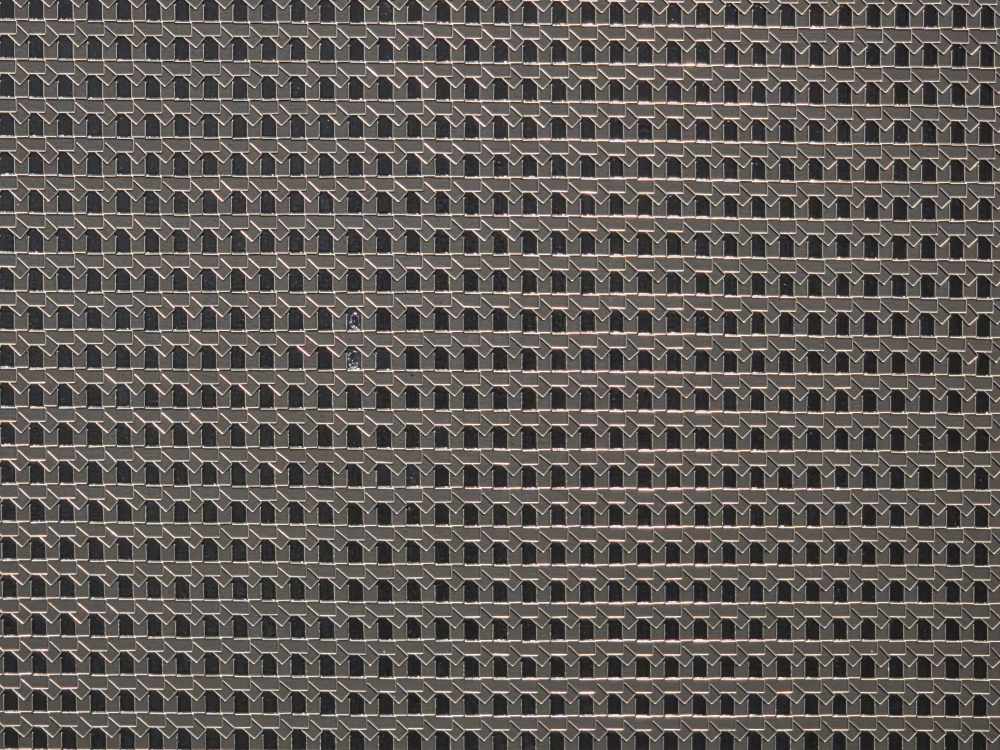
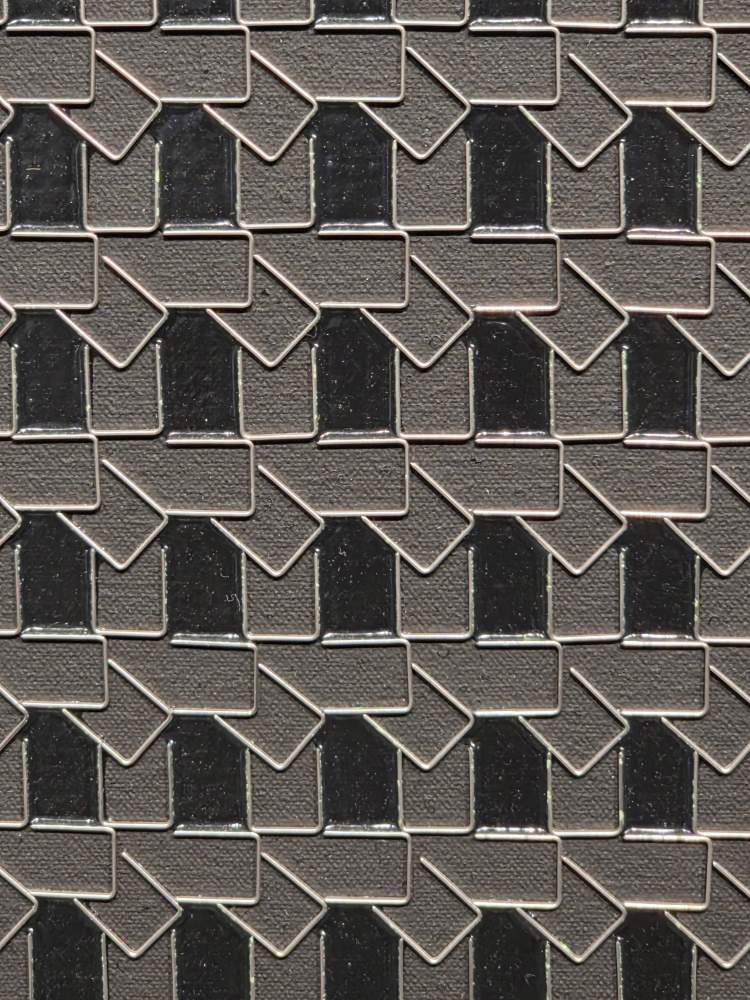
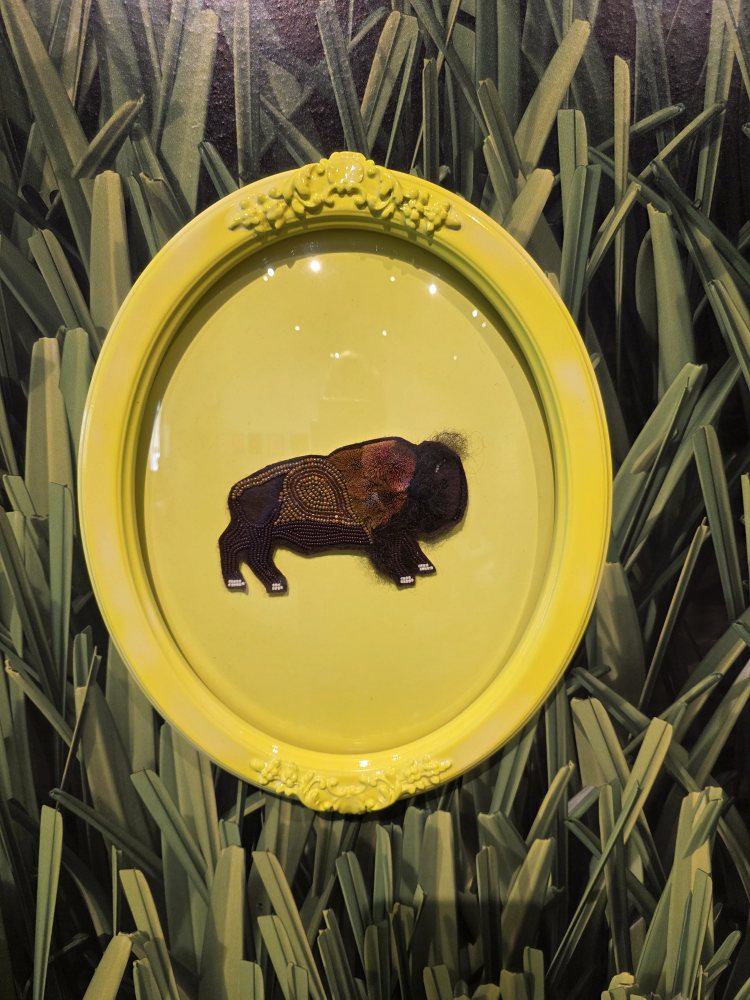
It was really hard to tear ourselves away from his exhibit. But we still have a lot of rooms to cover, so hard as it might be, we turn away toward the other galleries on the floor containing a mix of different artists and styles and messages. Like the odd display of oversized mushrooms. Or the floating wool houses. The flattened bicyclist that is reflected in 3-D from the floor. The massive staple piece entitled “St. Jerome in his Study” (St. Jerome the 2nd most voluminous writer in ancient Latine Christianity) – those are all industrial staples that form compartments and you can just see 2 tiny paint drops in the middle. And other odd, Indigenous related artwork.
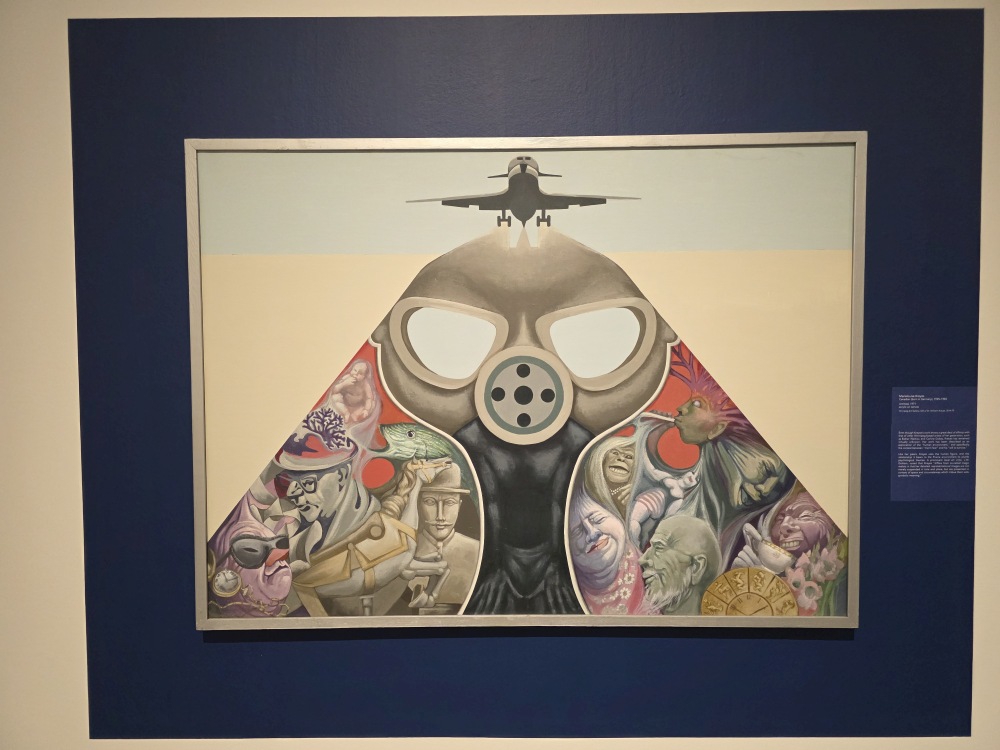
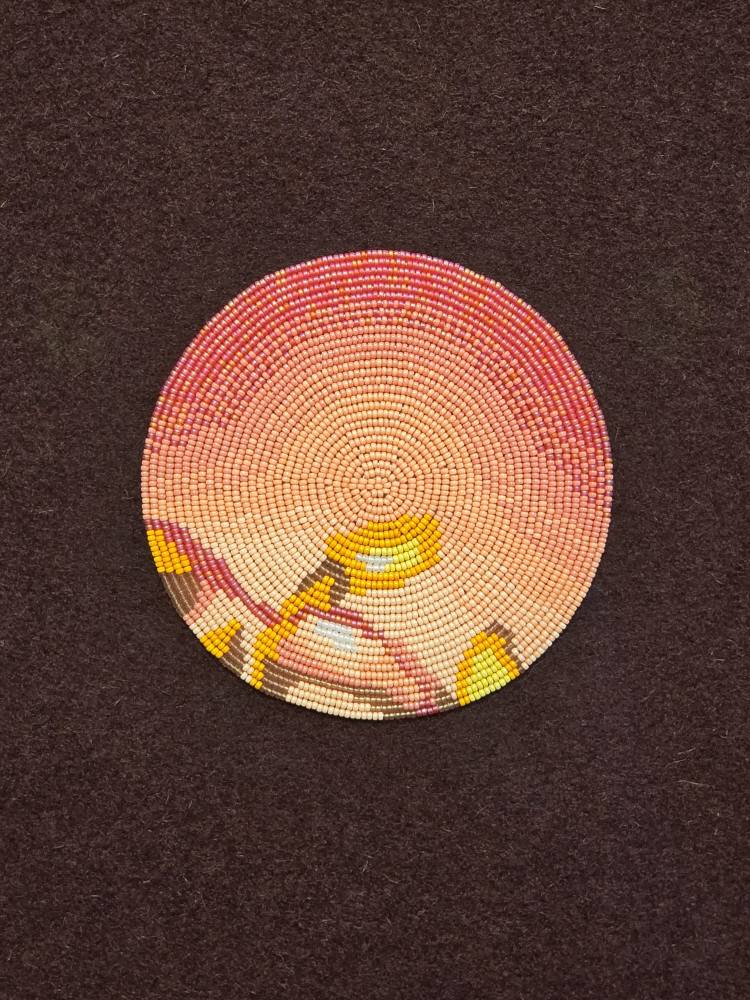
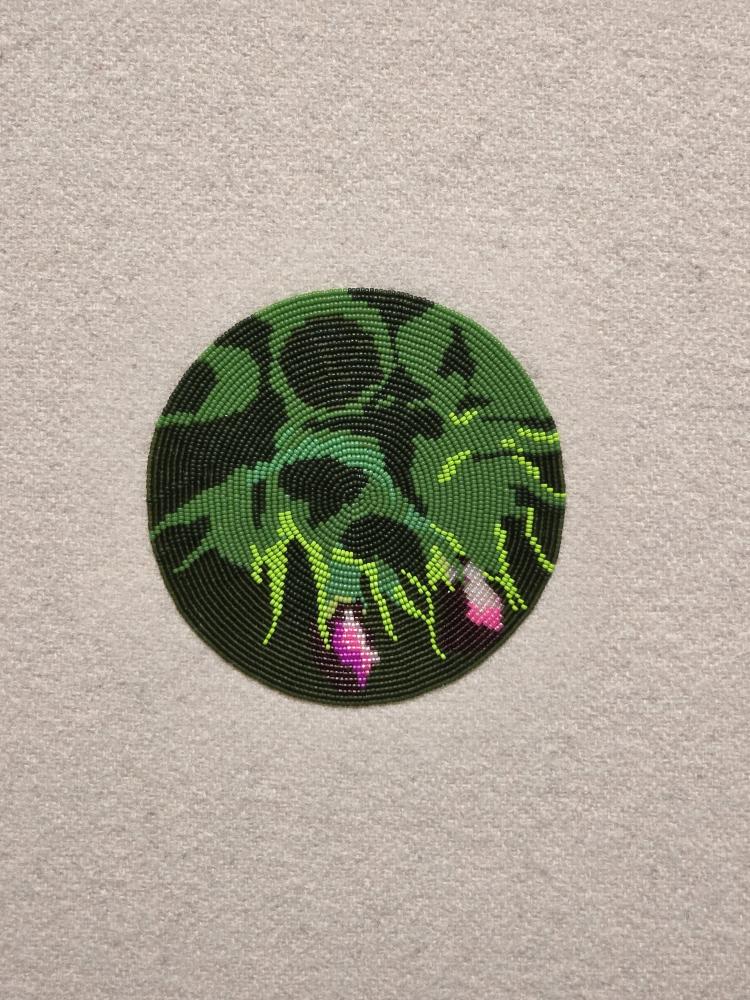
Fantastic visit – and a great way to end our Winnipeg explorations. We can’t say enough about WAG and the art exhibits there.
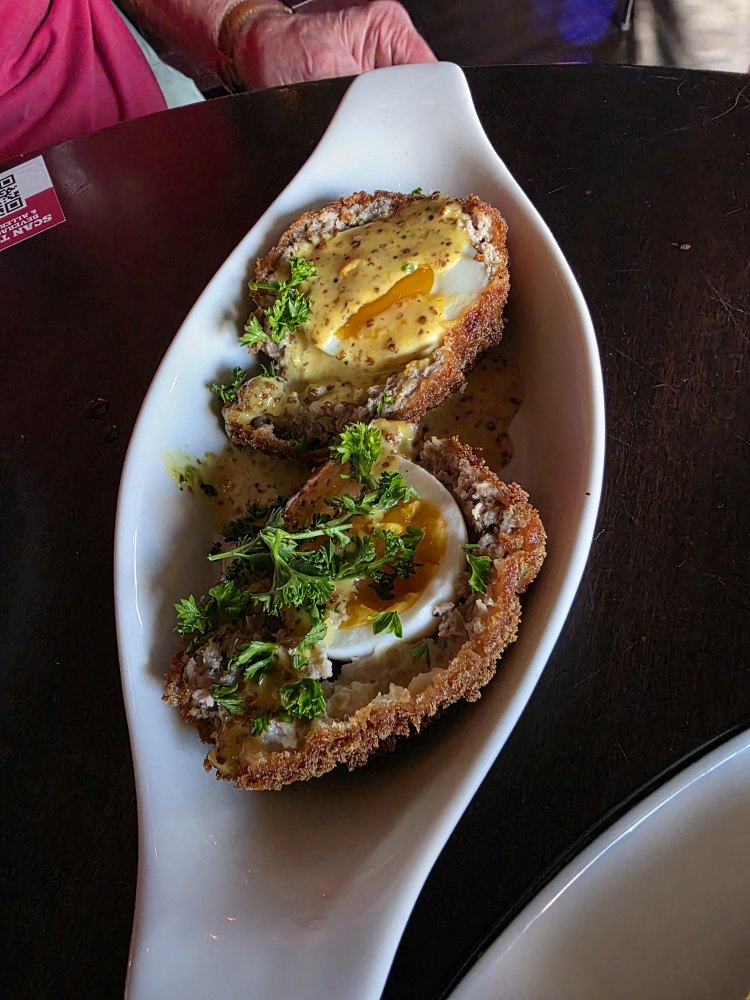
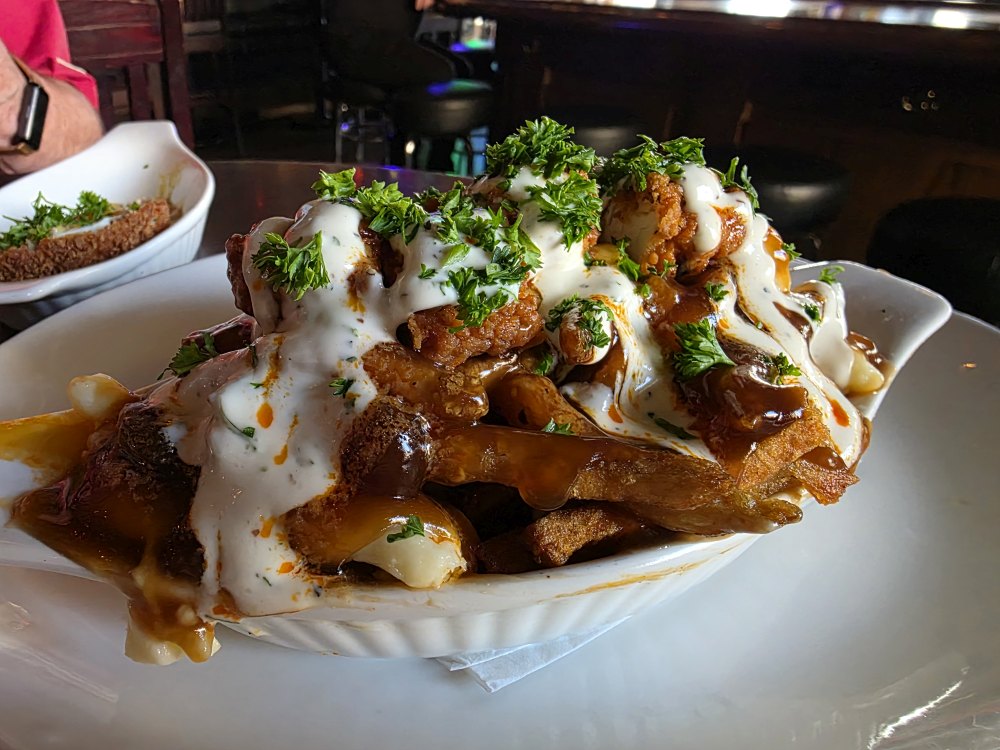
Later that evening, we walk back over to Osbourne Street for our last Winnipeg dinner at Leopold’s Tavern. Truly a pub. Truly pub grub – but oh such good pub grub! A huge Scotch Egg for Ed and delicious Poutine for me – makes us very happy we have a nice walk home to at least shed some of this food!
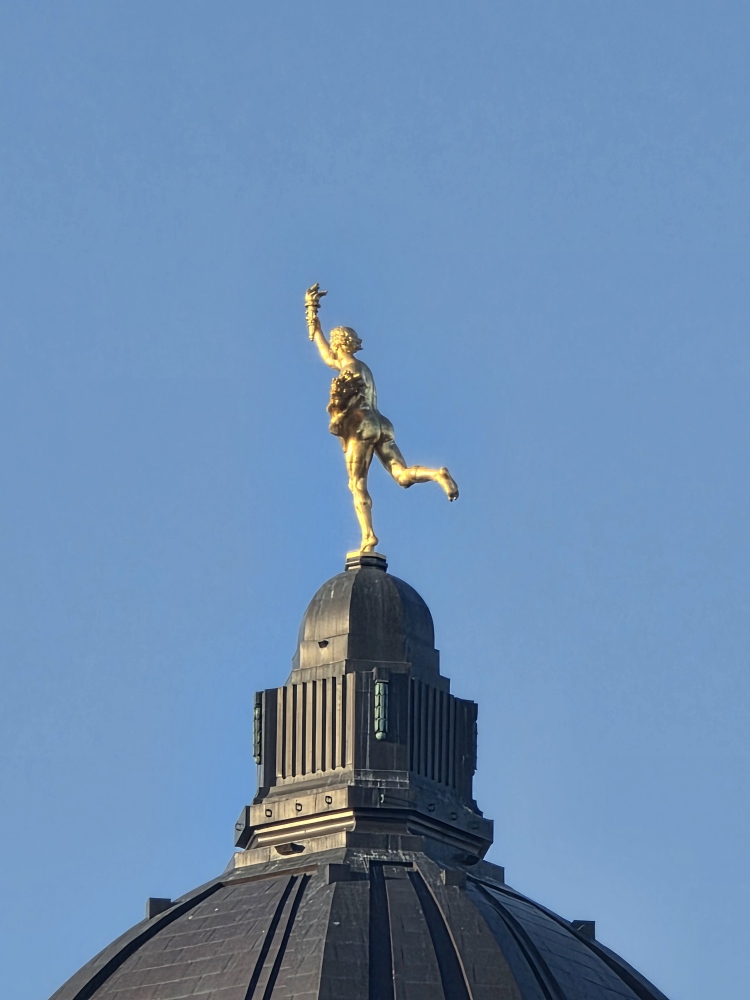
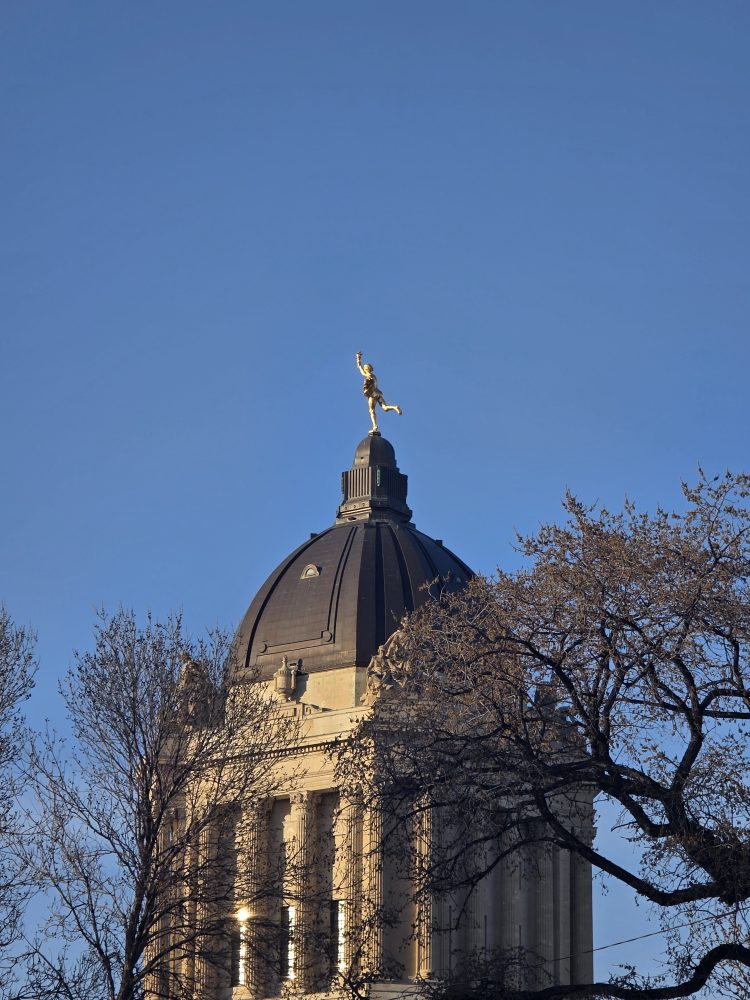
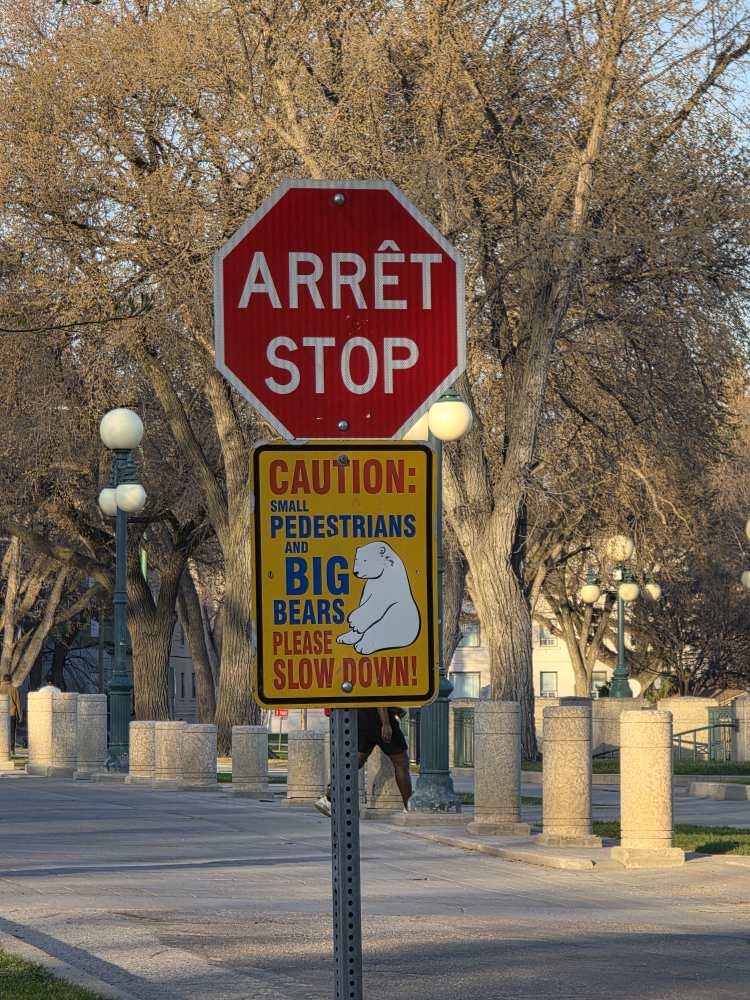
Reversing our steps past the government building, with its lady of justice golden statue on the cupola a glow in the setting sun, past the “Slow down for bears” sign in the park and back to our little apartment to finalize packing and get ready for our travel day in the morning.