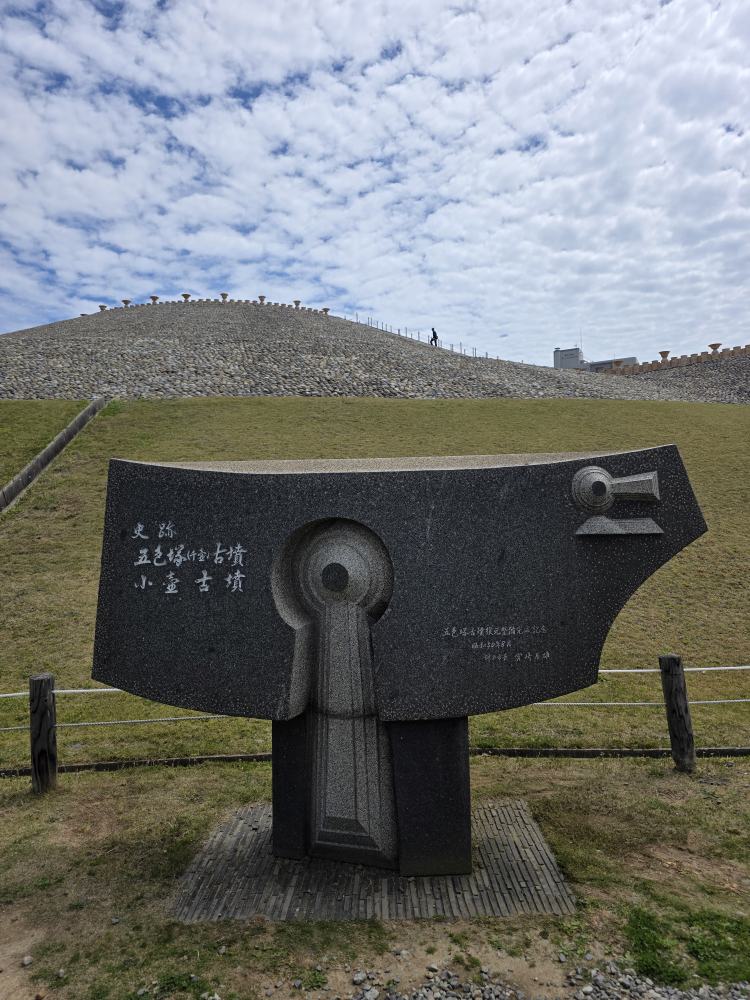
A partly sunny day greets us as we arise and get ready for our full day tour of Kobe with Madoka, a tour guide we found. Since we’ve been here already, we wanted to do some different things, more historical, as well as different foods – Madoka was the perfect choice with her education and history background, as well as the fact she is a writer and wants to do that full time for a living. We meet at the train station right outside the cruise terminal and begin our adventures, hopping on the JR line for an hour-long ride south to the historic site of Goshiki-zuka and Kotsubo Tumuli.
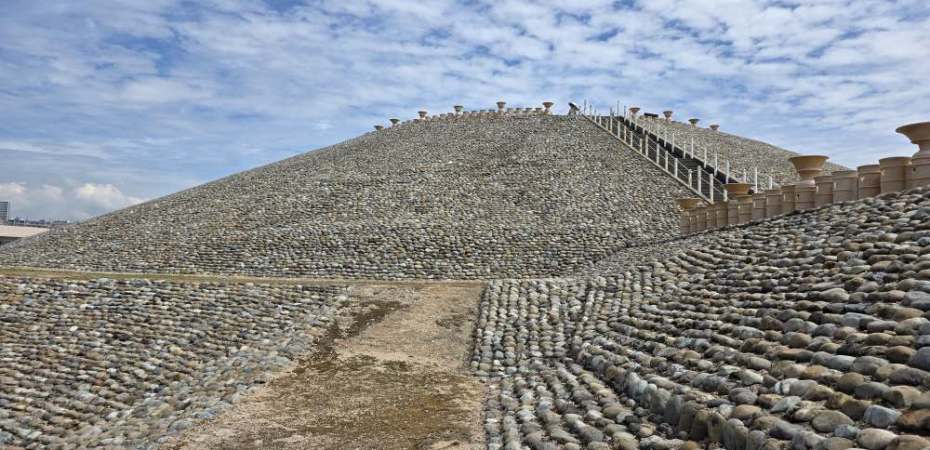
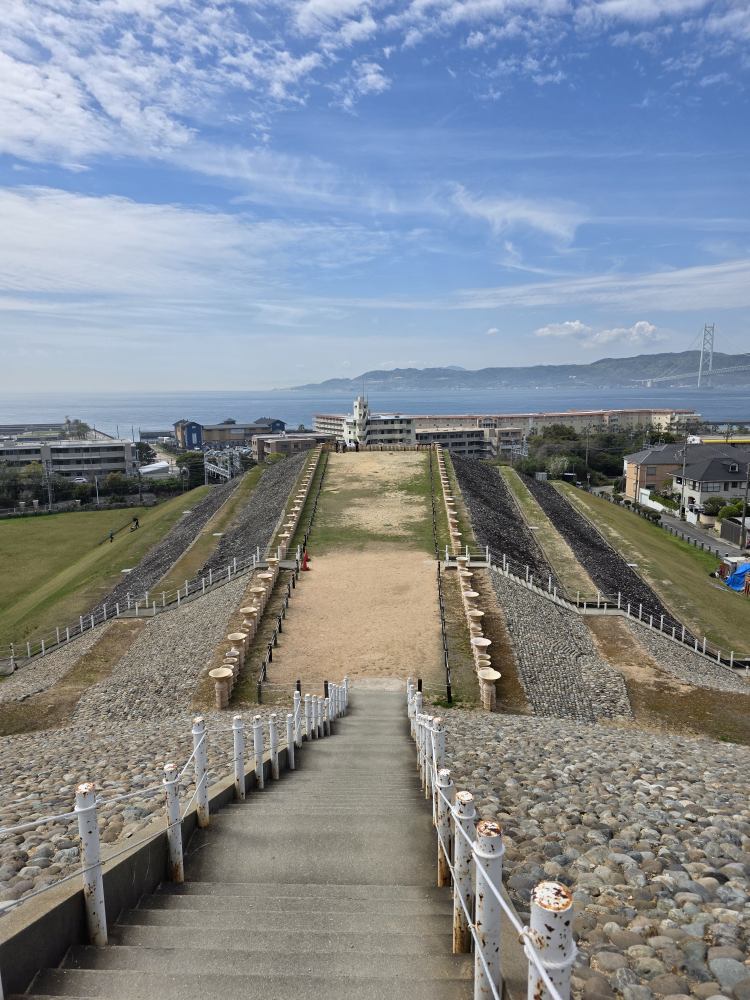
The site is a huge keyhole shaped tomb built on a hill overlooking the Awaji island across the channel – that Madoka says is a big holiday and daytrip spot for locals. Built during the 4th Century, it is thought to house a clan chieftain who ruled the channel and surrounding area. They’ve not done any excavations in the tomb though, which is why they don’t know exactly who is buried here. Pretty weird they haven’t been down there since they had to completely reconstruct the area and do excavations, beginning in 1965, to restore the burial site. Over the years, pine trees had grown all over the mound. These trees were logged for shipbuilding during the war. After the war, the farmers took over to help supply food during the shortage years. It wasn’t until the early 1960s that a resident movement to reconstruct and restore the mound began to swell and finally convinced the government to save the site.
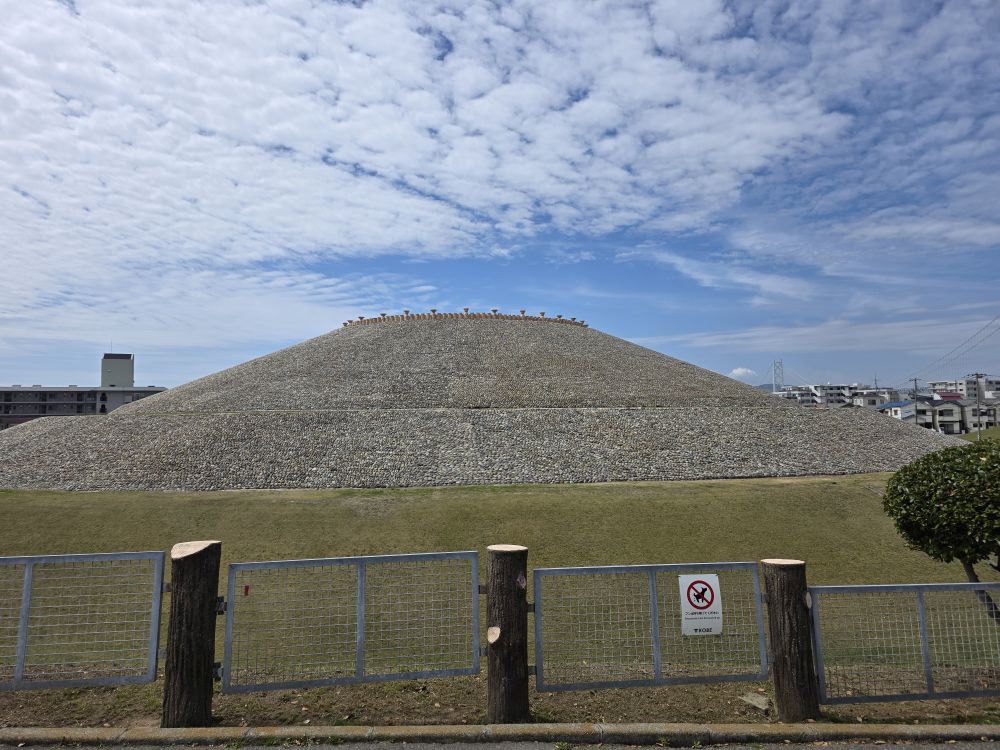
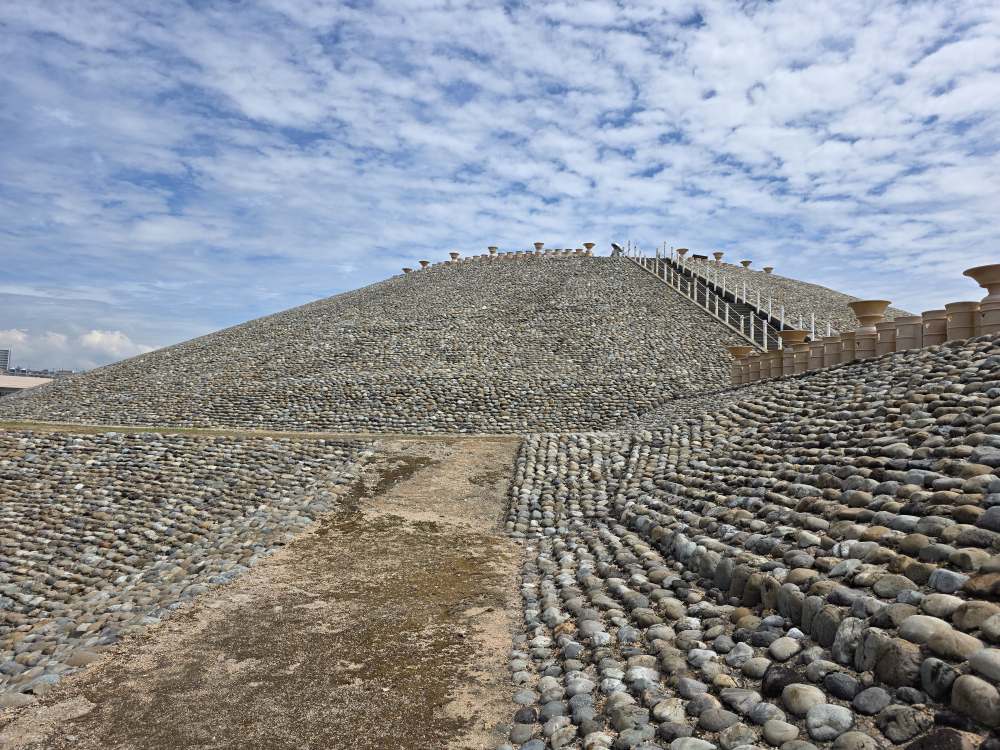
Excavations found a three-tier burial mount, the top and second levels covered with packed cobblestones. There were also 2 moats originally surrounding the mound. The archaeologists also found Haniwas – ancient Japanese terracotta clay cylinders used for rituals to bury the dead – surrounding the mound. It was estimated that 2,200 Haniwas surrounding the mound at one time.
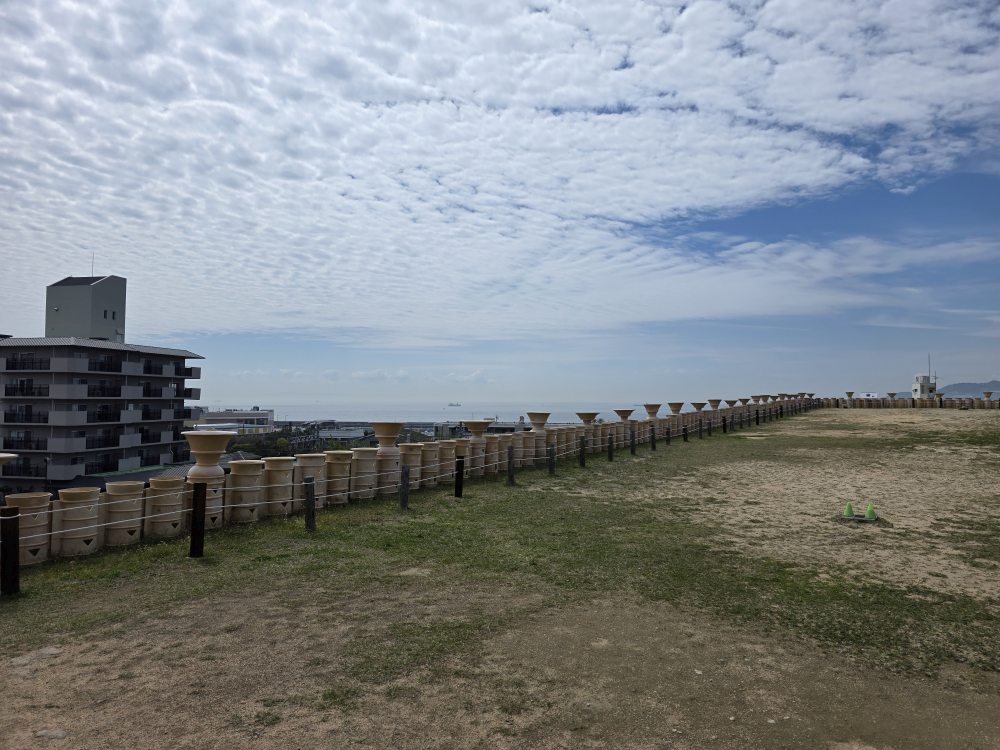
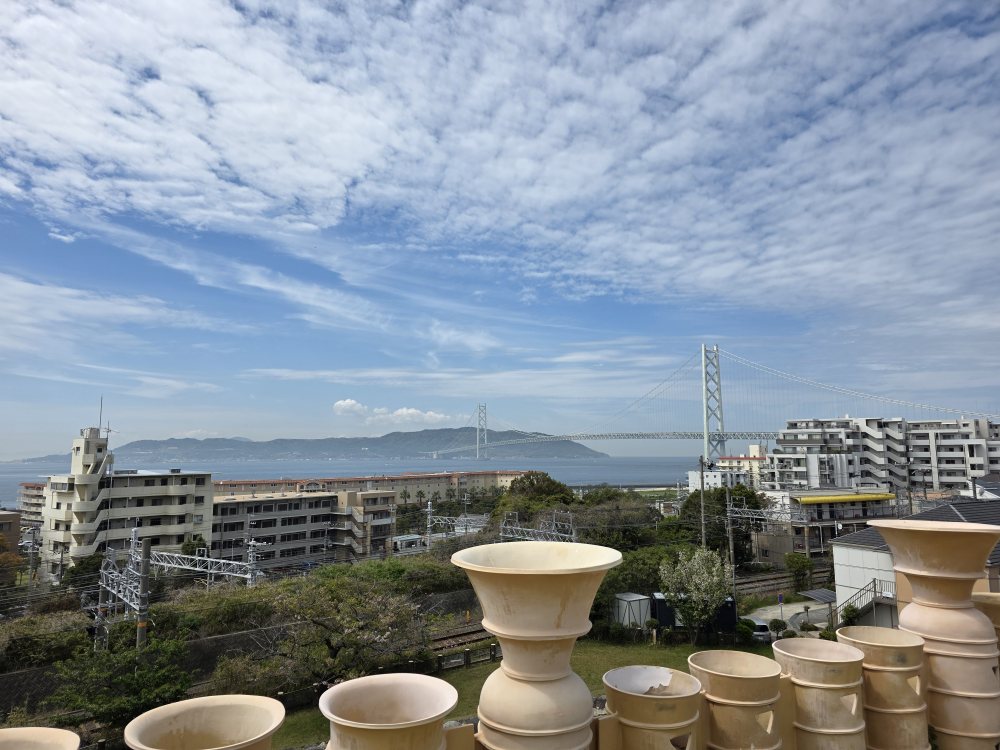
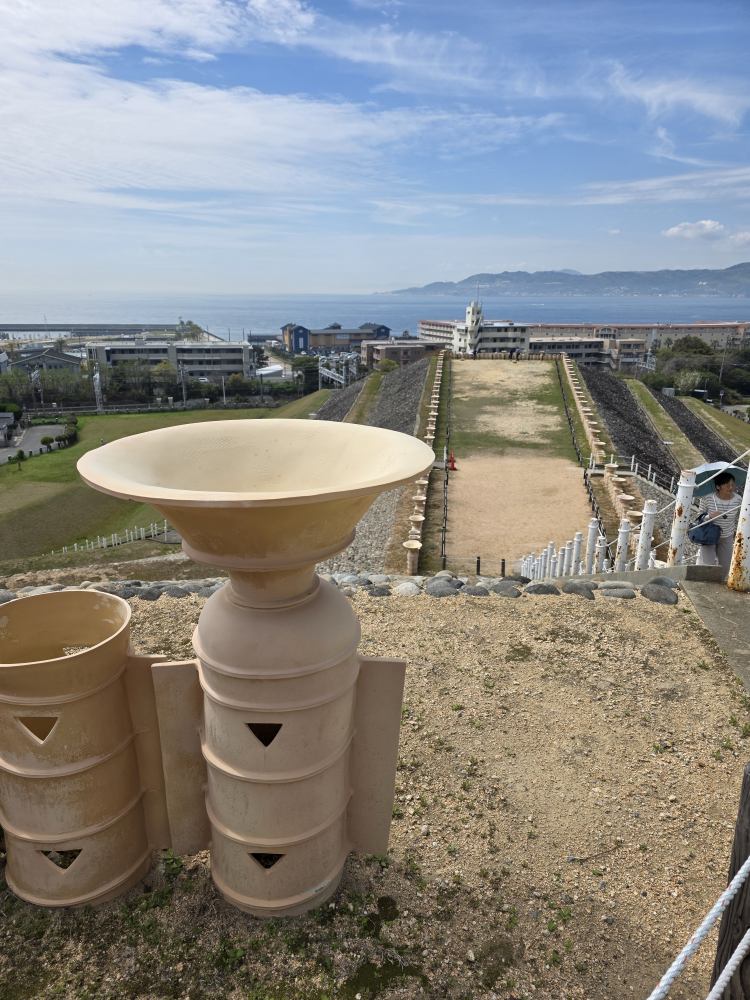
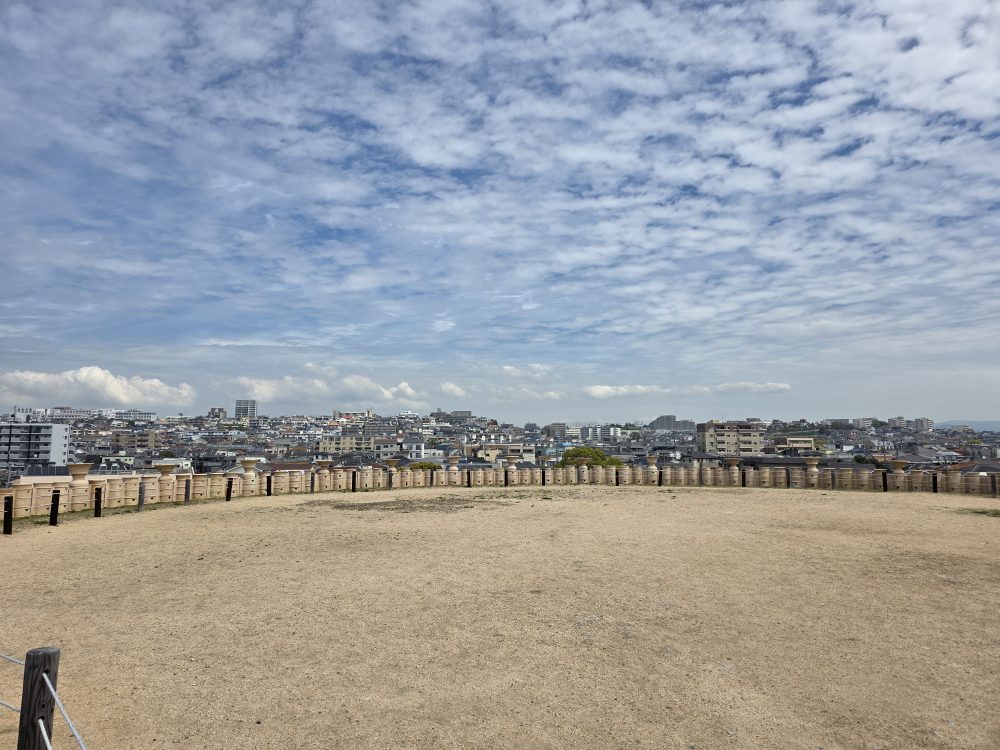
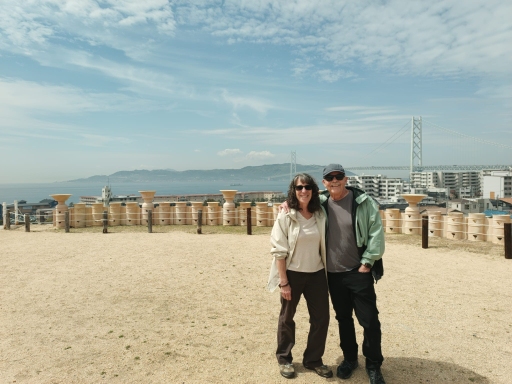
Everything here (at least above ground) is a recreation – but it is still an amazing thing to behold – so huge (300 feet long and 62 feet tall). It took over 10 years just to reconstruct this thing in painstaking detail! How long must it have taken, and how exactly were they able to build this in the 4th Century? Incredible. An amazing visit – and one we would never have ever thought to do here in the outskirts of Kobe.
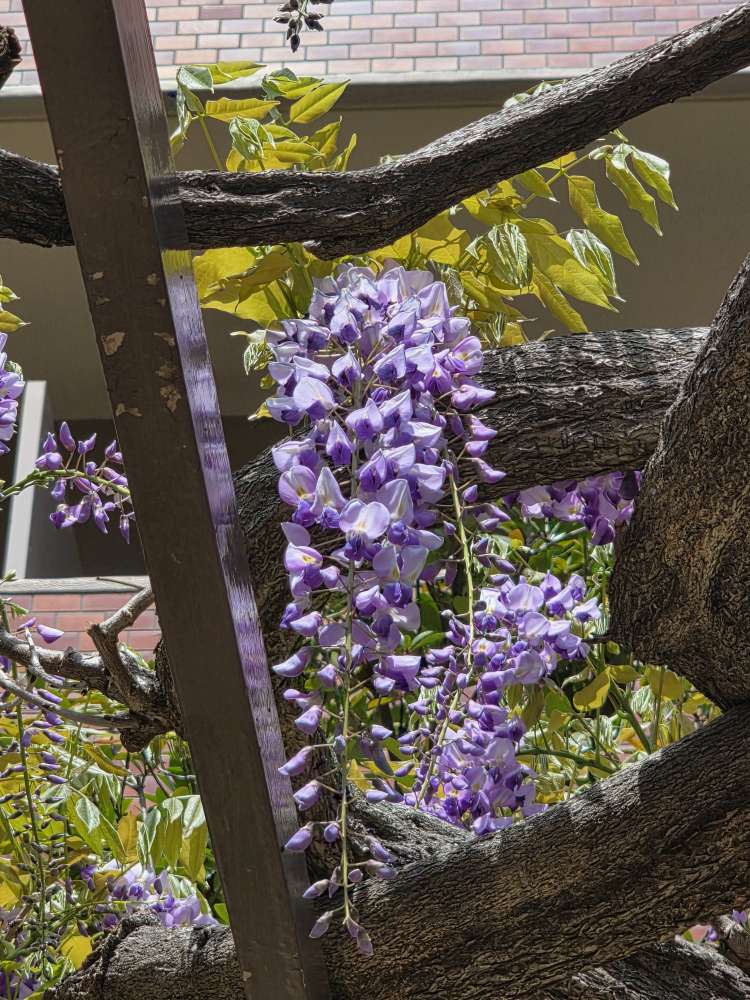
After wandering around the mound for a bit, we head back toward the center of Kobe, on our way to the Sorakuen Gardens – the gardens that were closed on our last visit here with Zo. Before we reach the Gardens though, we pass by the Hyogo House, one of the prefecture buildings, built by a renowned Japanese architect in the French Renaissance style. Of course restored – as it burned once, and then was heavily damaged in the war, its foundation and exterior walls are original though, and have stood here for 125 years. The beauty of the house is complimented by a lovely, lush garden that surrounds it. Tons of different flowers – variations of cherry blossoms – and trees make for a nice respite from the city streets.
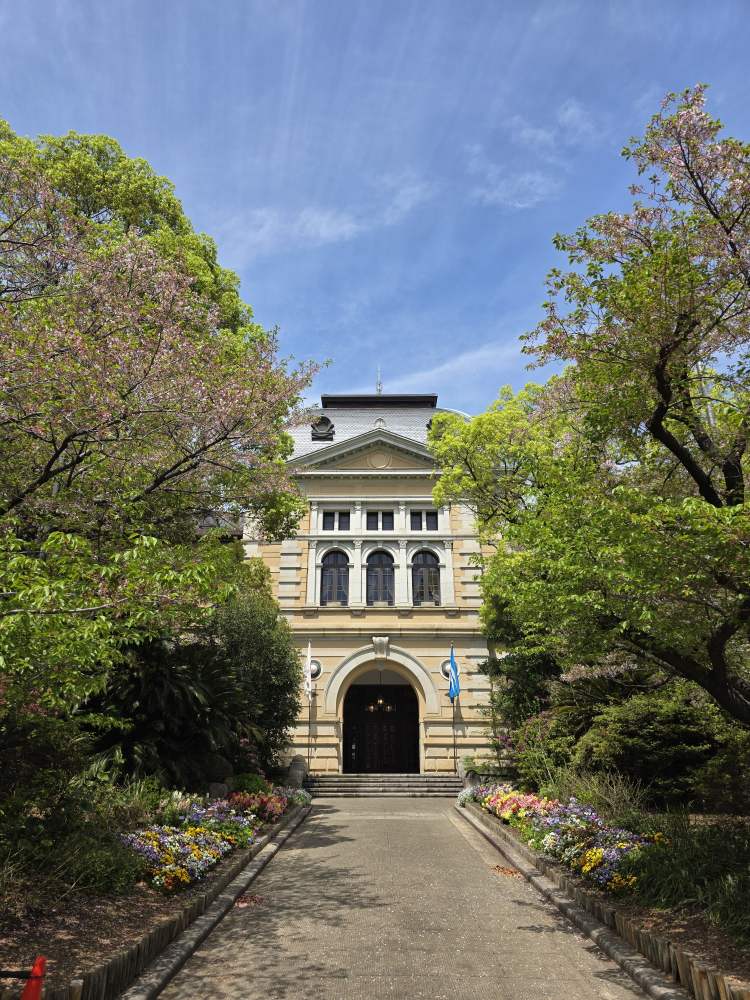
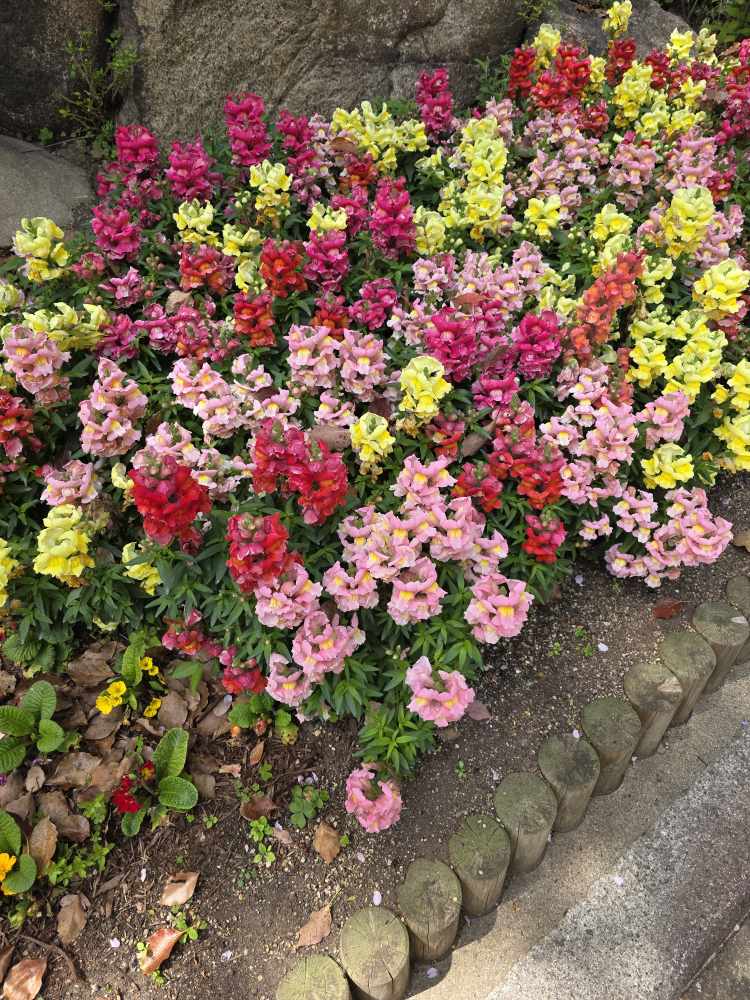
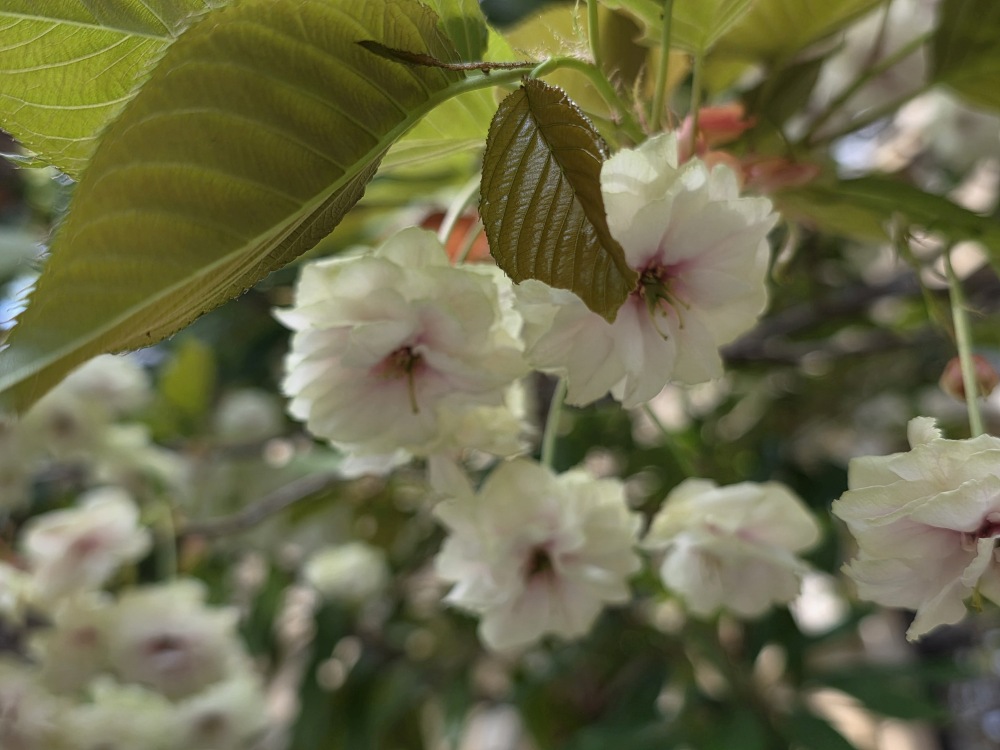
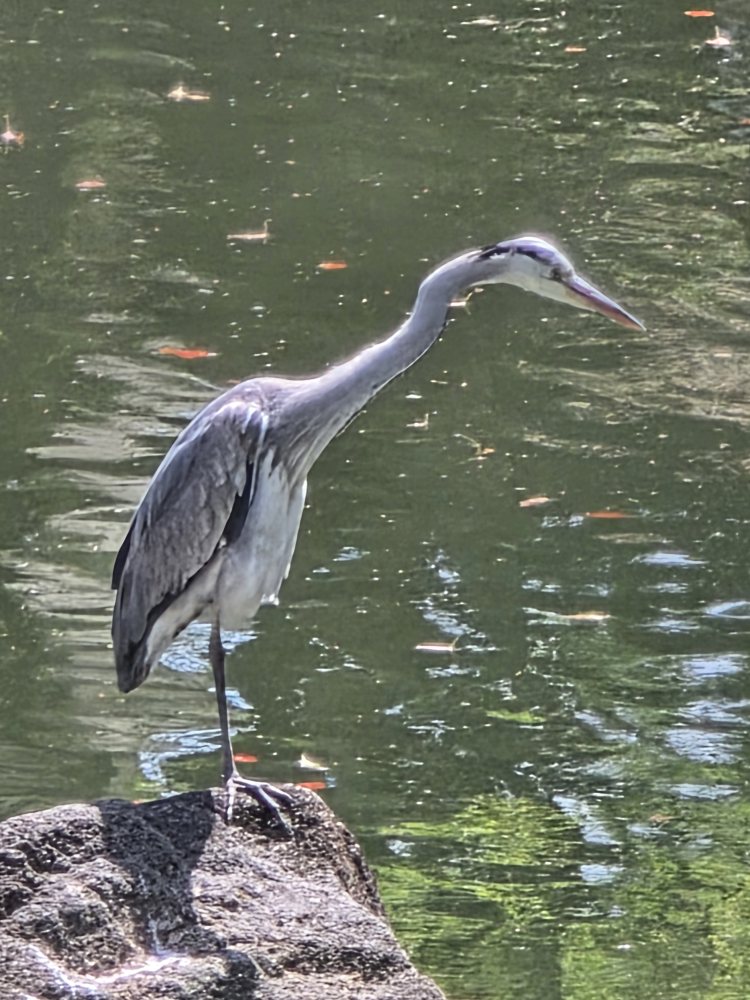
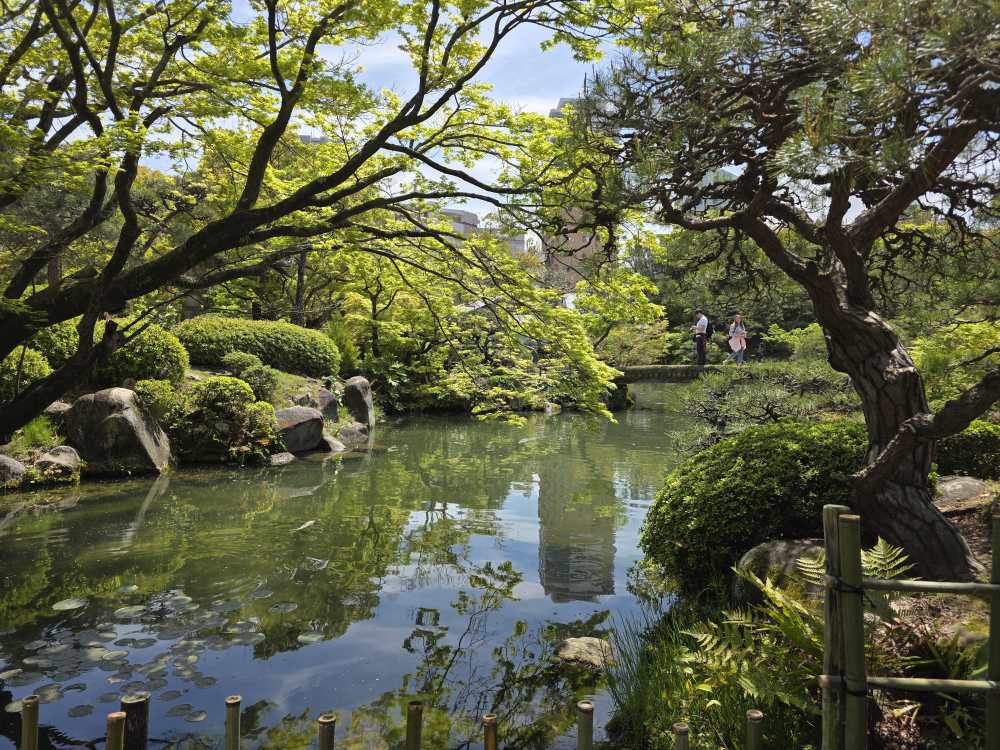
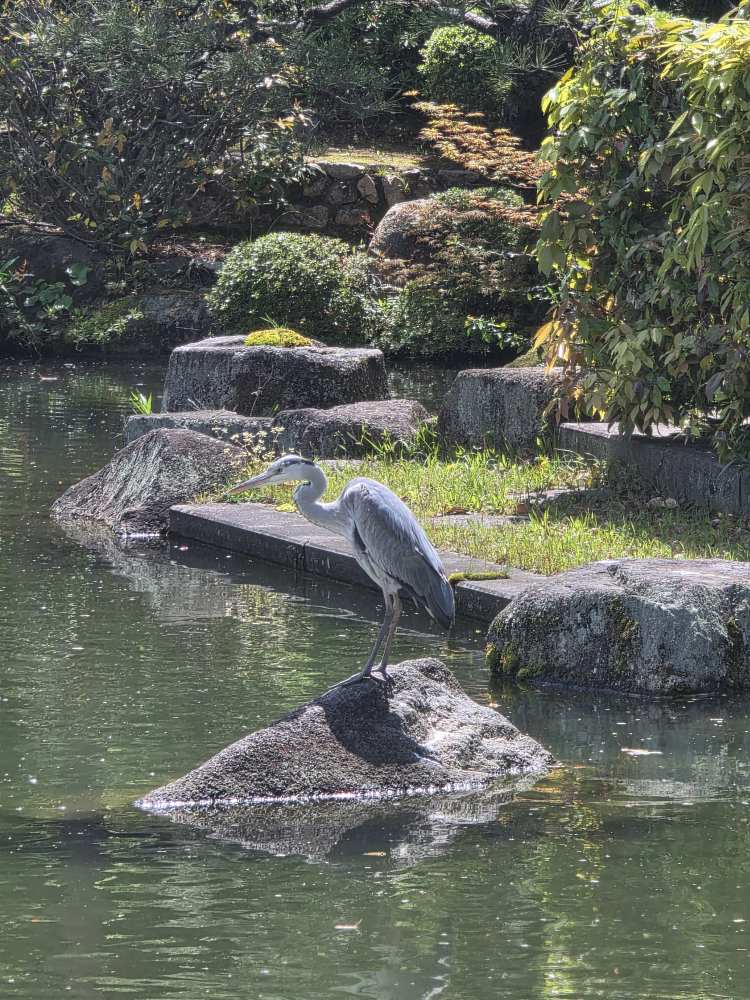
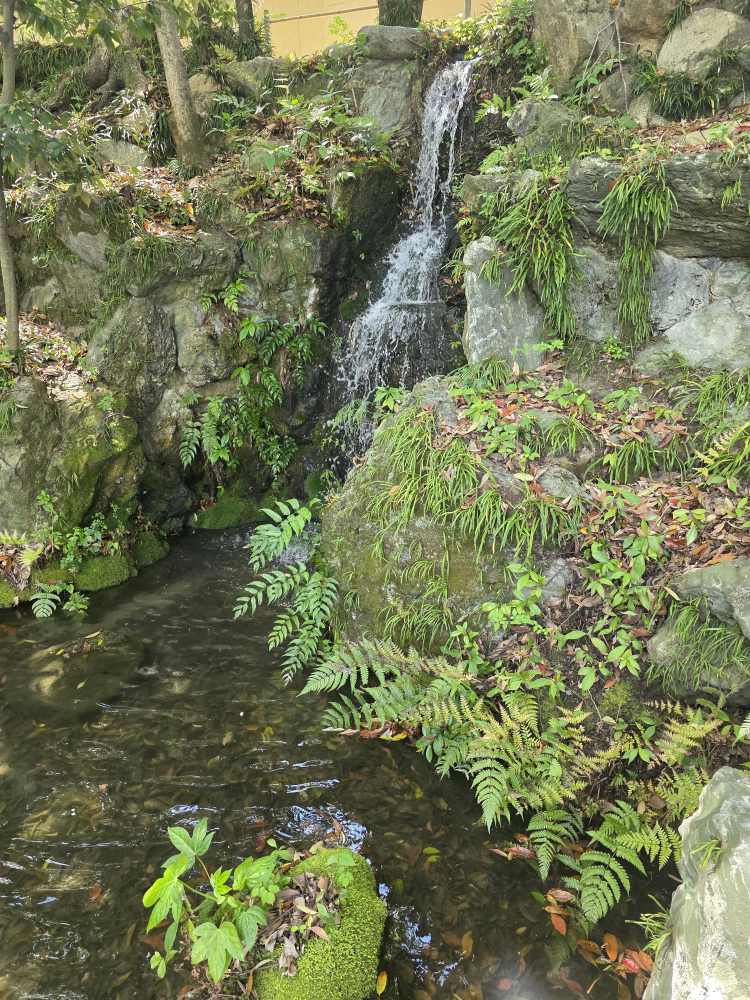
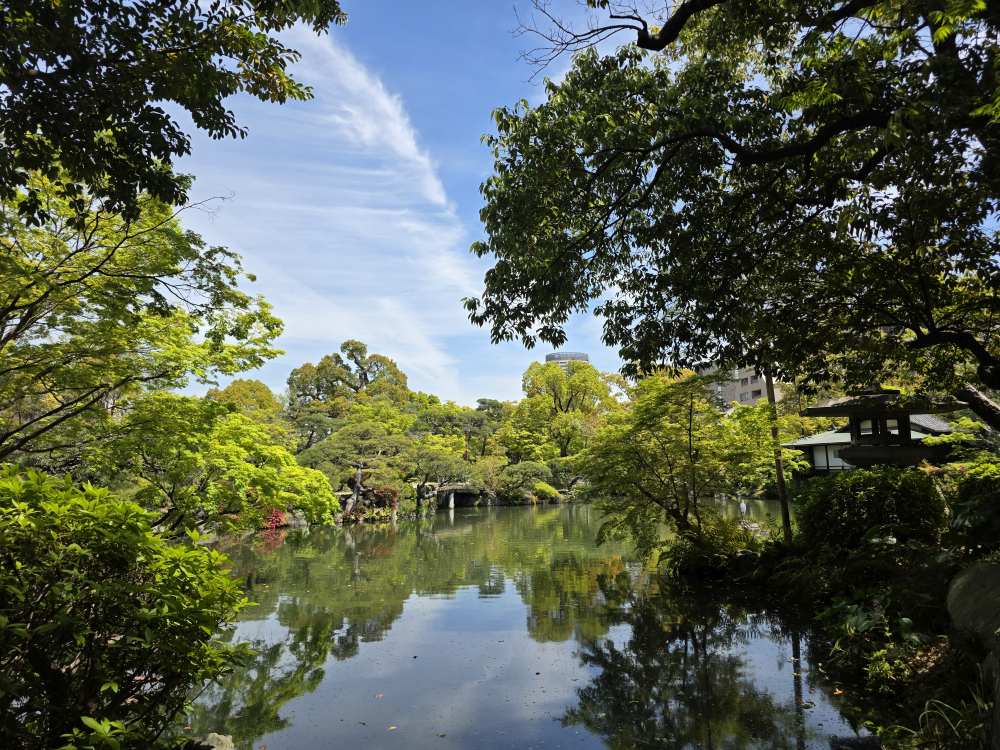
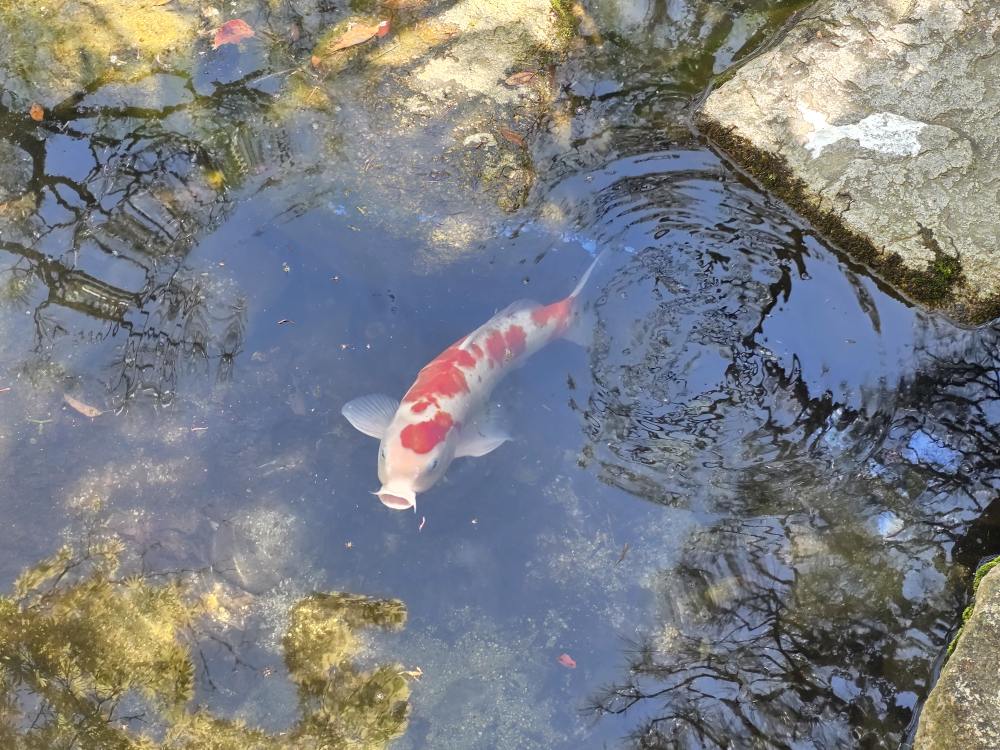
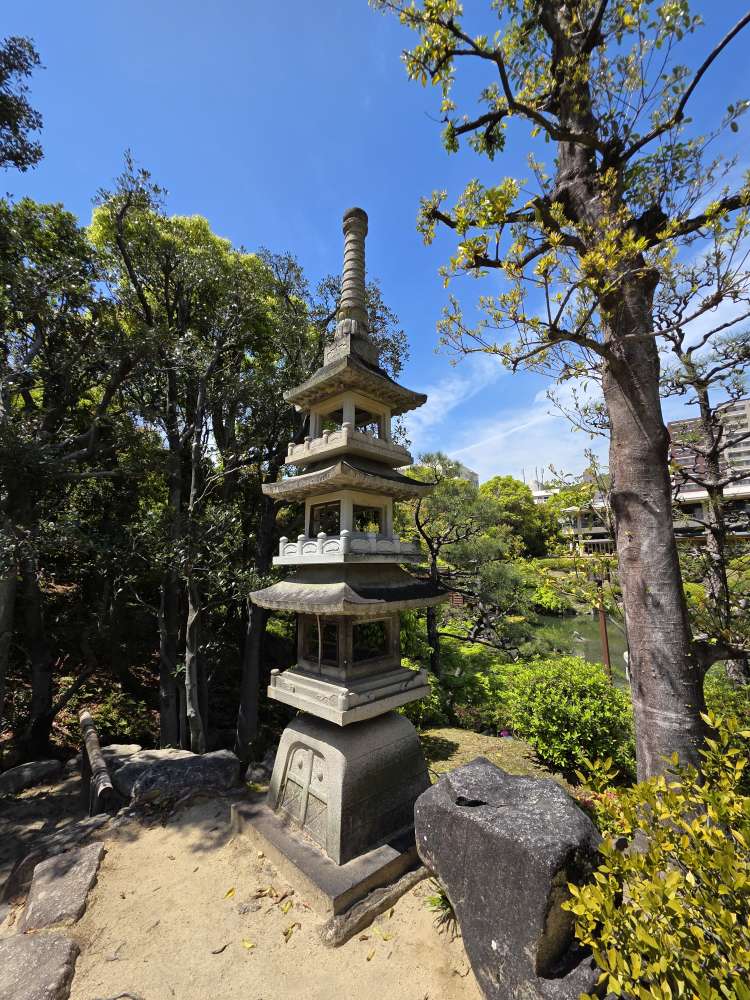
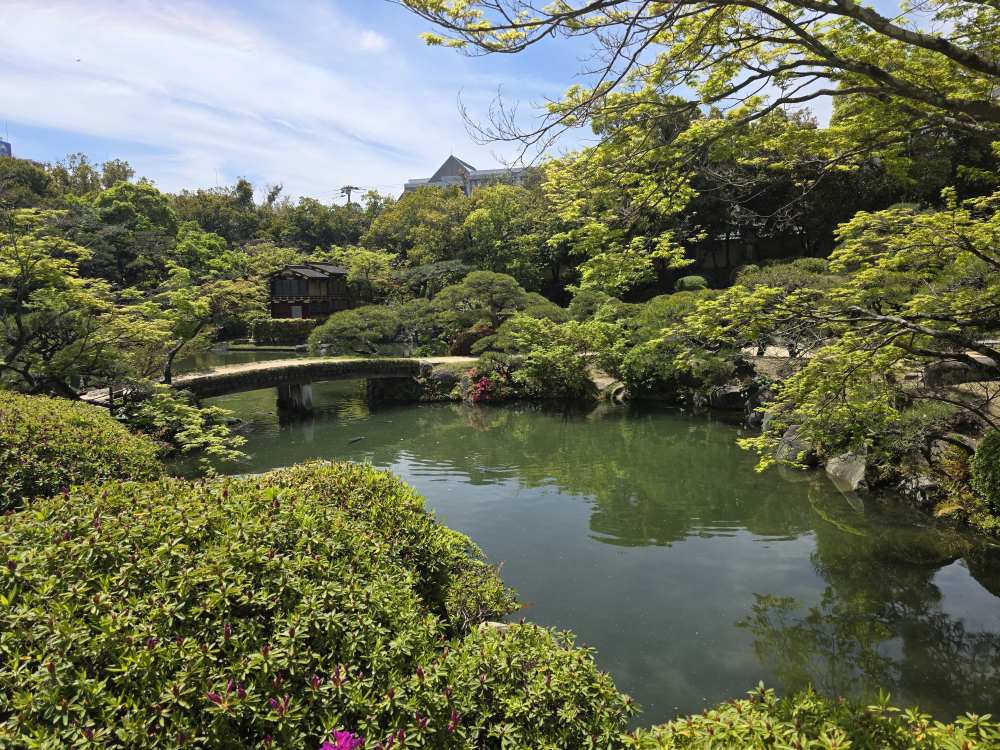
While quite pretty, the Hyogo House gardens have nothing on the Sorakuen Gardens where the azaleas are in bloom. The only traditional Japanese style garden in all of Kobe’s city parks, the gardens are a serene and peaceful 5 acres of trees, lanterns and well, yes, beautiful flowering azaleas – although we were at the end of some of the blooms. Nonetheless, it was a wonderful spot, filled with traditional Japanese ponds and streams, this really cool bamboo watering device, and a great Blue Heron fishing in the pond. Perfect!
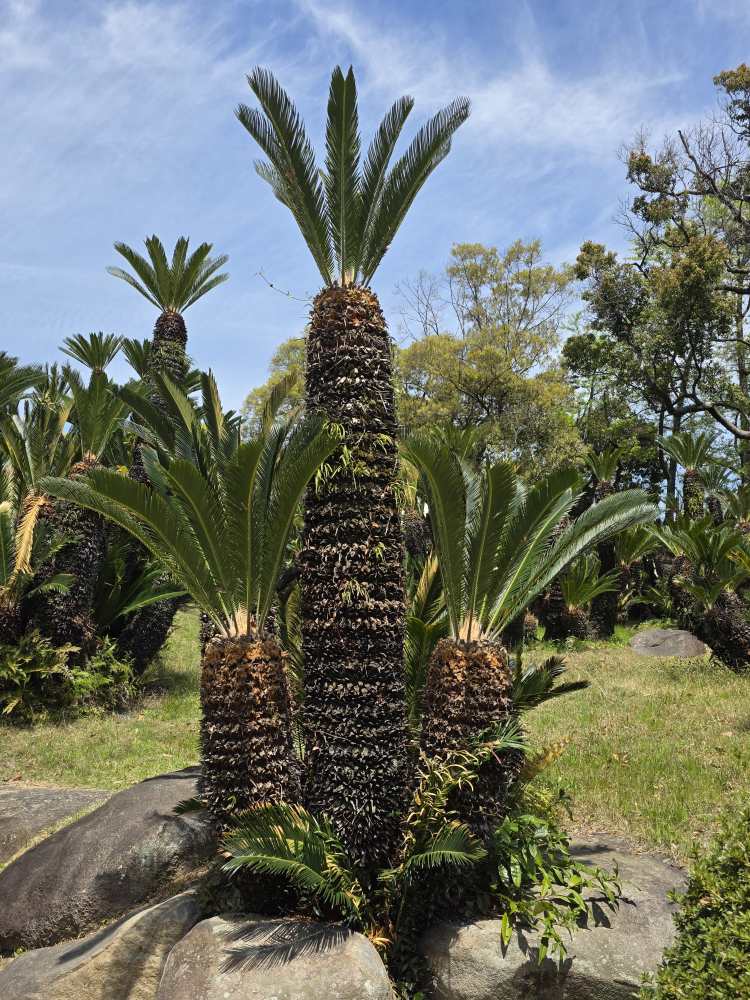
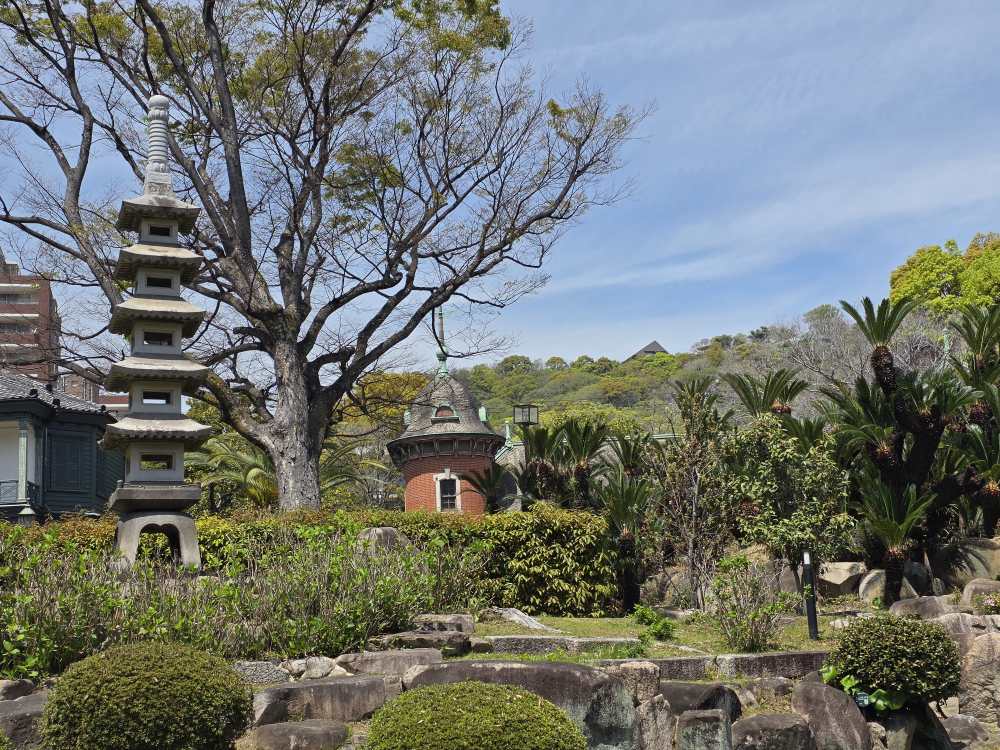
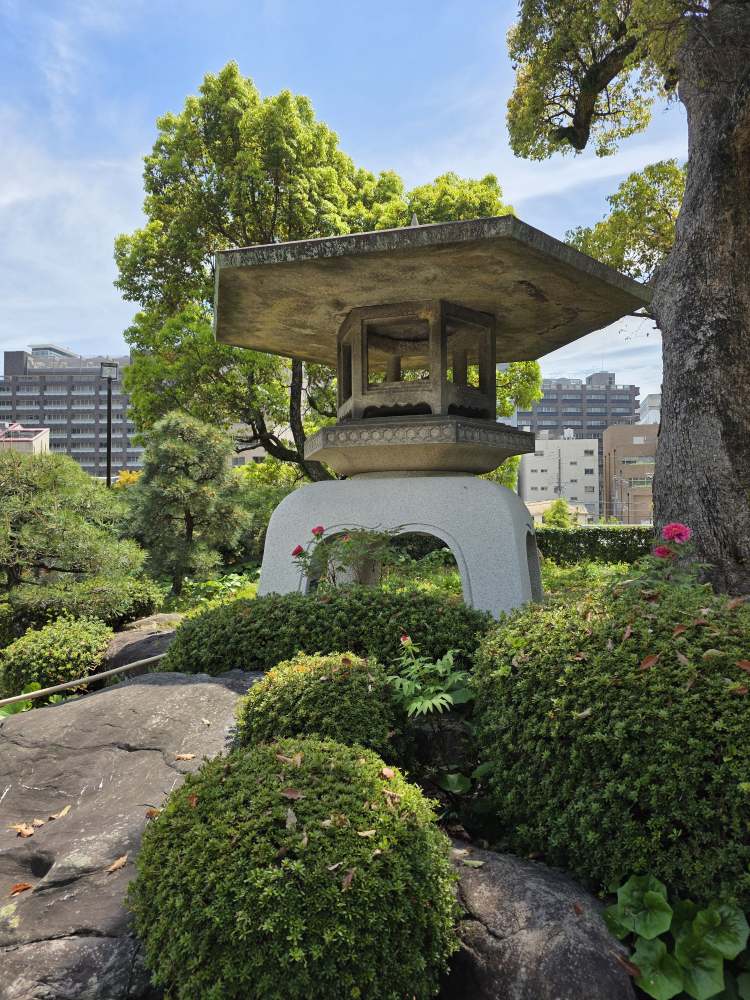
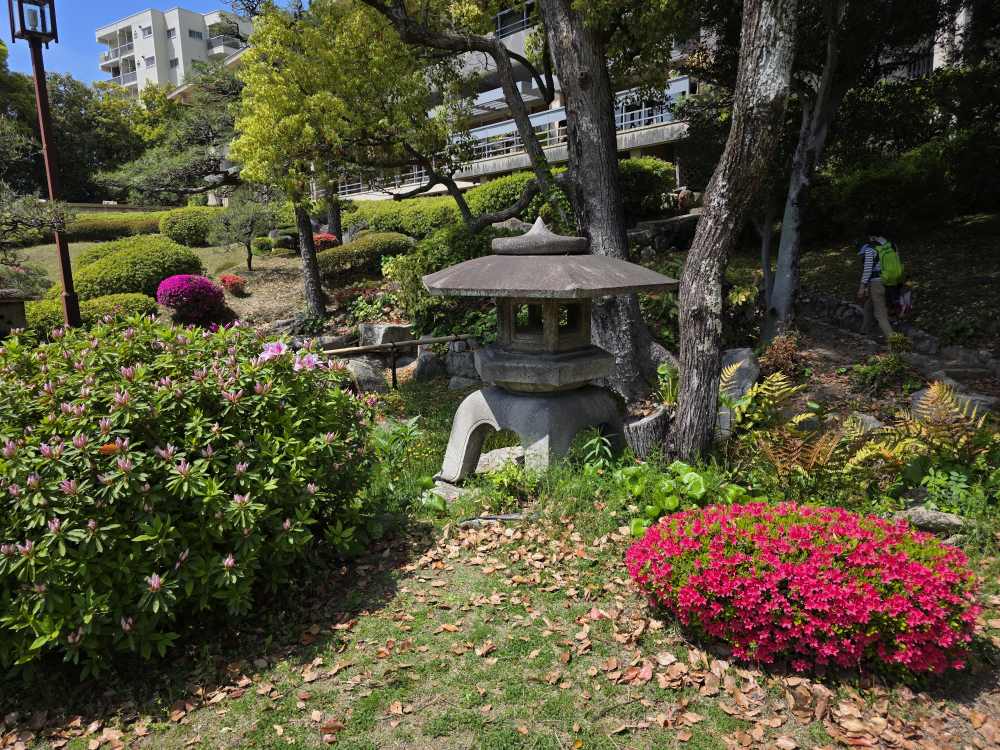
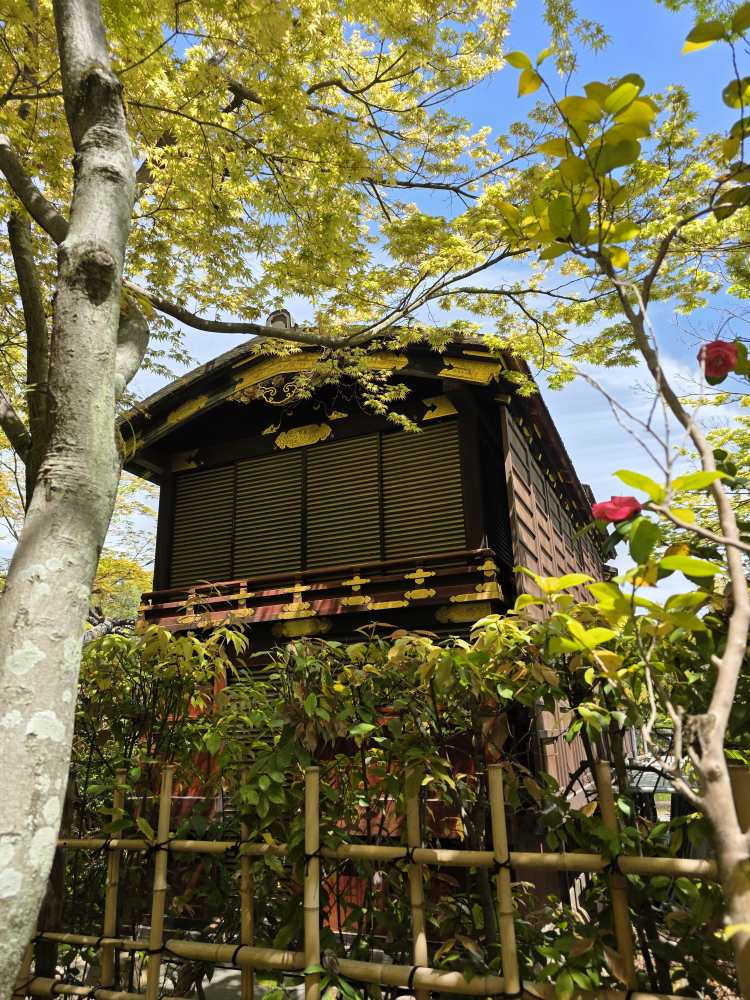
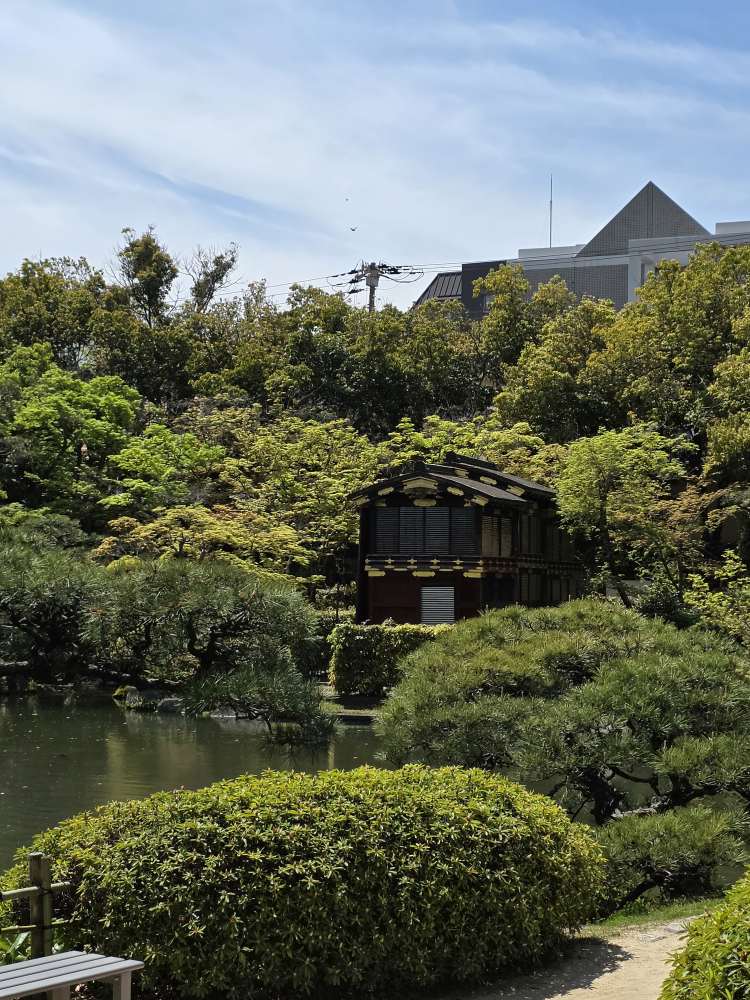
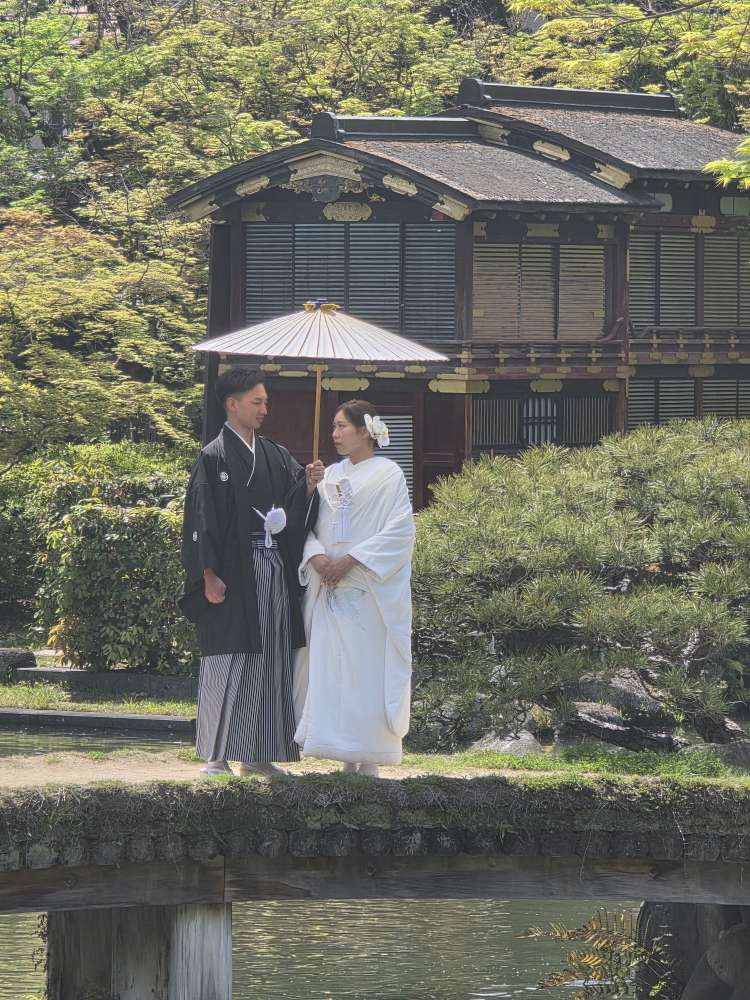
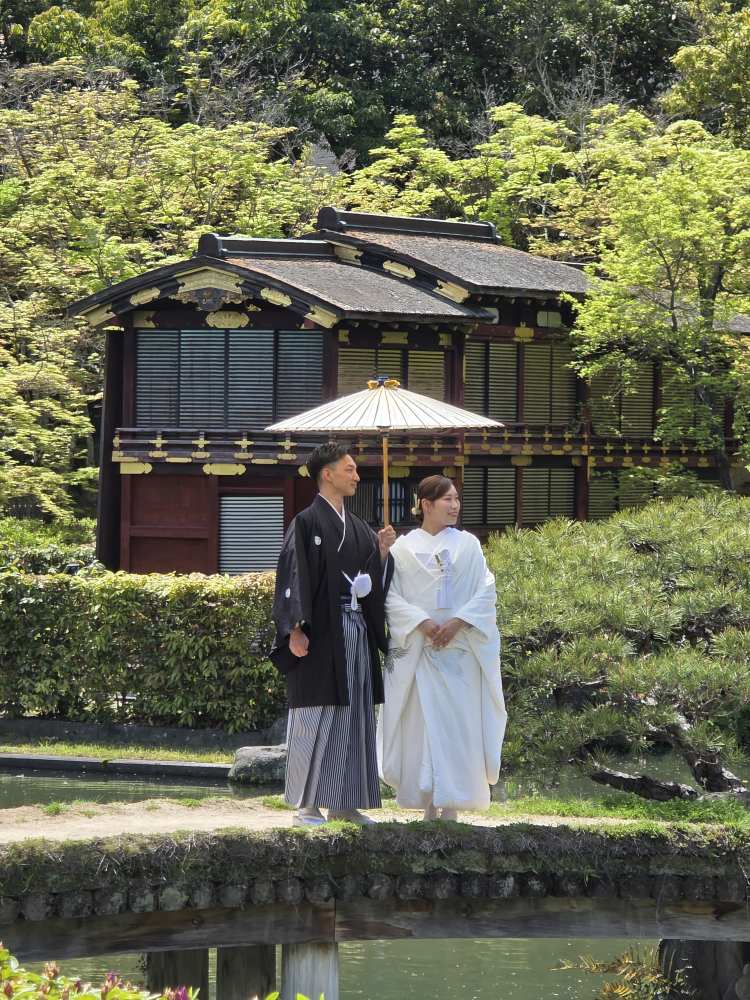
Serene and gorgeous, we spent 45 minutes just meandering through the paths, passing the Funa-yakata – the cabin of a barge from the Edo period (built in the early 17th C) that was detached and moved to Takasago in the Meiji period (1868 – 1912) to create a Tea House. Eventually donated to the City of Kobe in 1978, it was moved here for its final – and historic as it is the only remaining example of a pleasure boat for river use from the Edo period – resting place alongside the Koi pond.
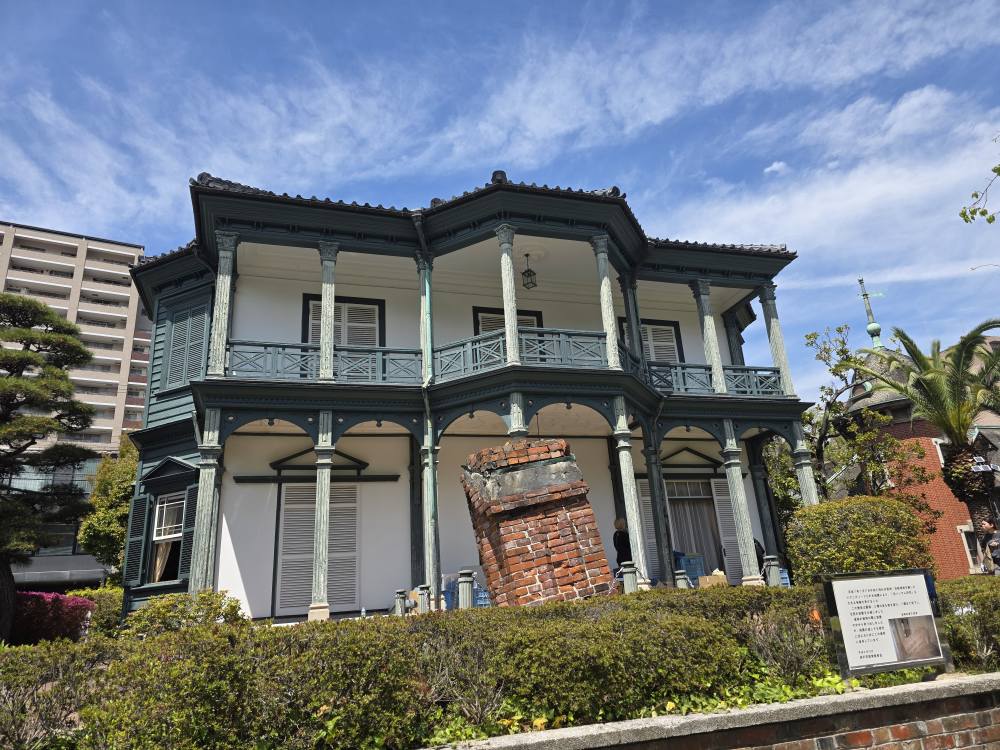
Circling back around toward the entrance gate, we watch – and of course take photos – a wedding couple have their portraits taken. Then pass by the Hassam House, built in 1902 and belonging to an Anglo-Indian trader, which is not an event space. The chimney displayed in the front fell from the roof during the great Hansin Earthquake in 1995.
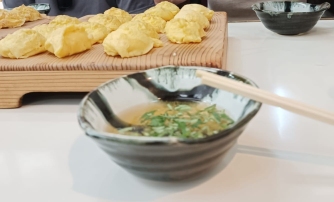
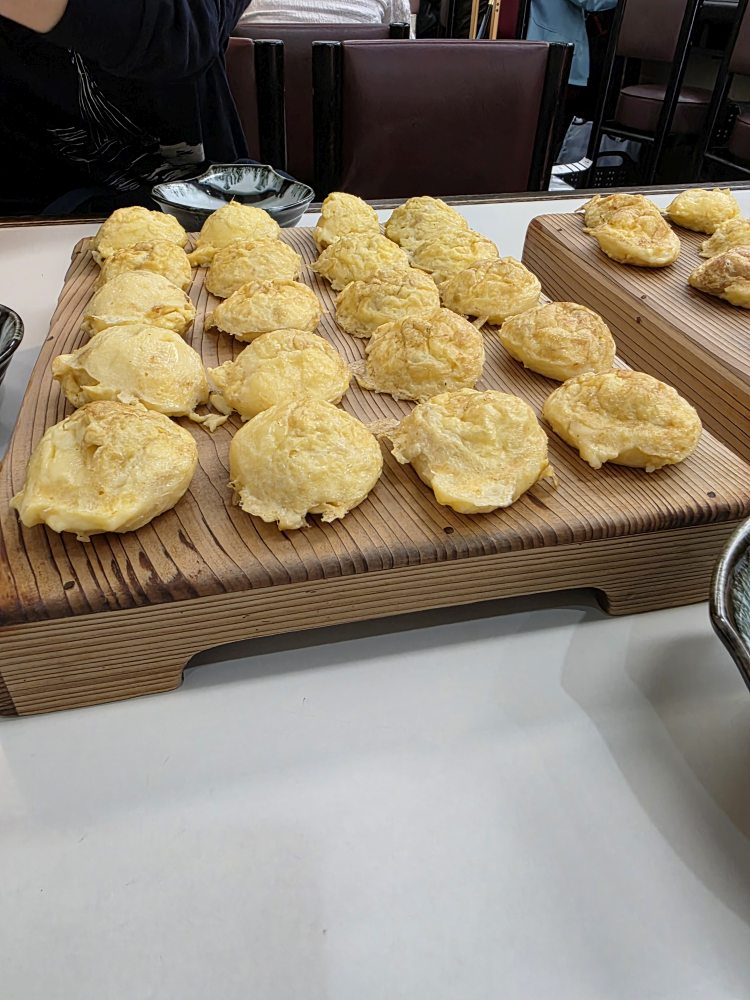
We are getting a bit peckish by this point, so we ask Madoka to take us to someplace local that she likes. Madoka leads us over to Motomachi, walking us through endless little streets and alleyways with tons of restaurant and shops, ending up at this little flat top grill place run by a bunch of mammas who serve Akashiyaki – Kobe style Takoyaki. Oh yes! Takoyaki, but instead of a pancake batter type dumpling, this is more like an egg omelet dumpling containing a big piece of Octopus. Perfection! Absolutely excellent!
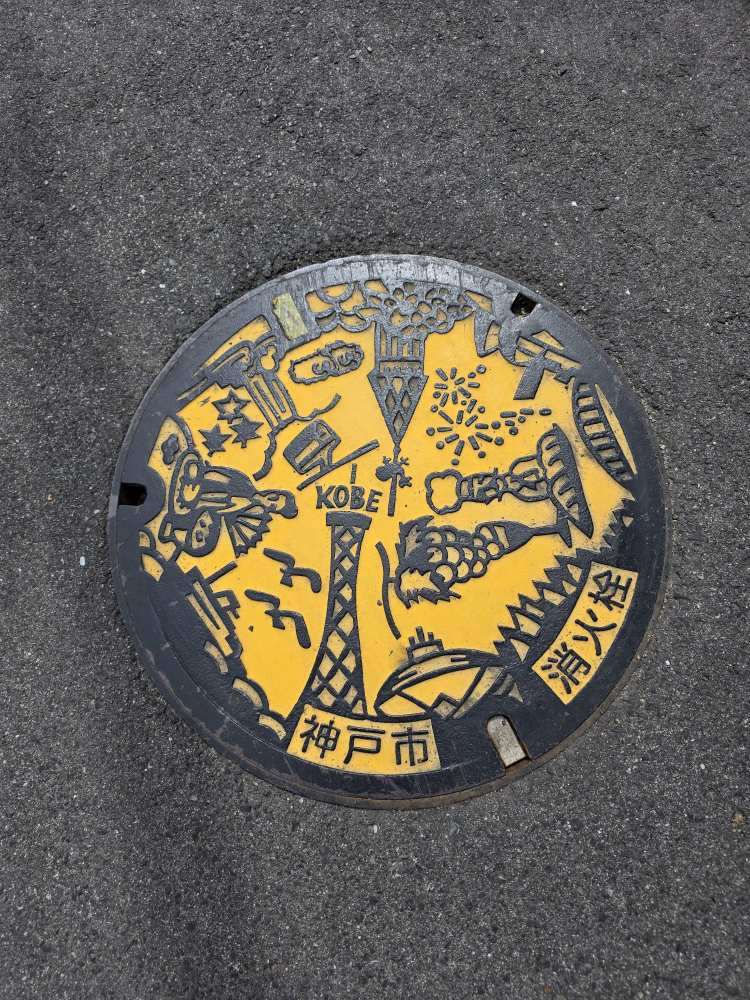
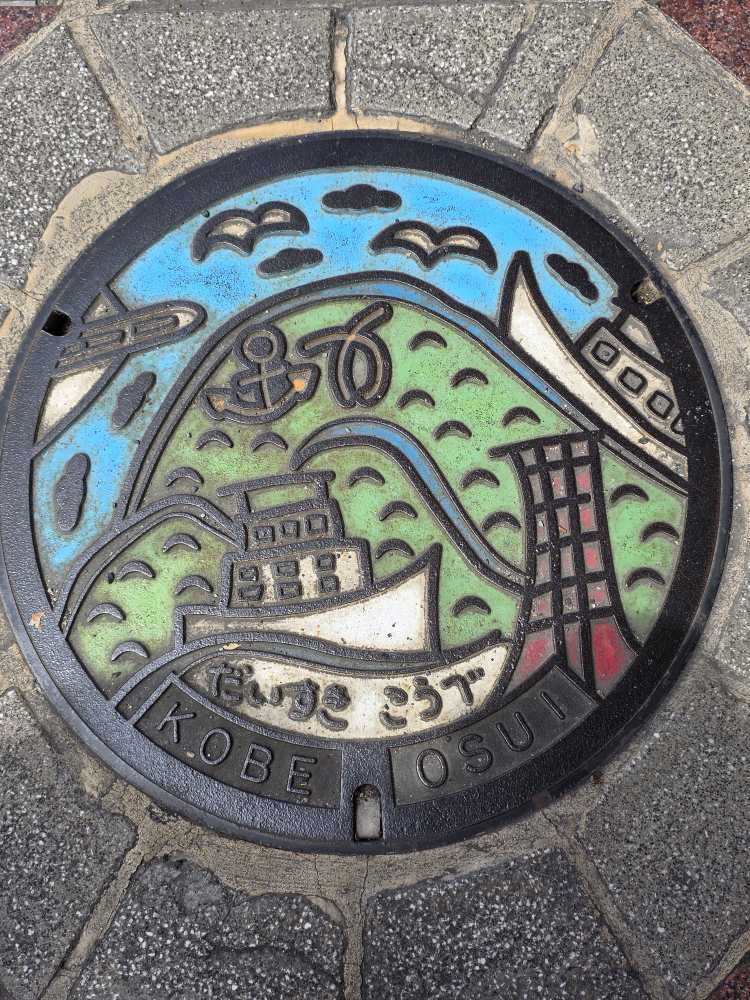
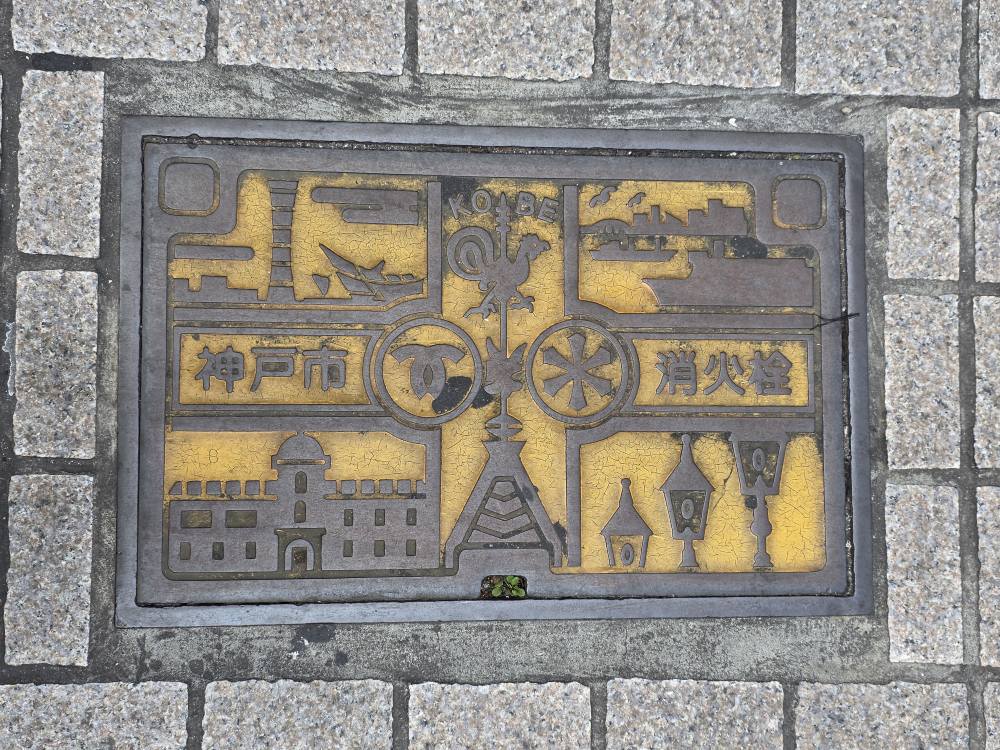
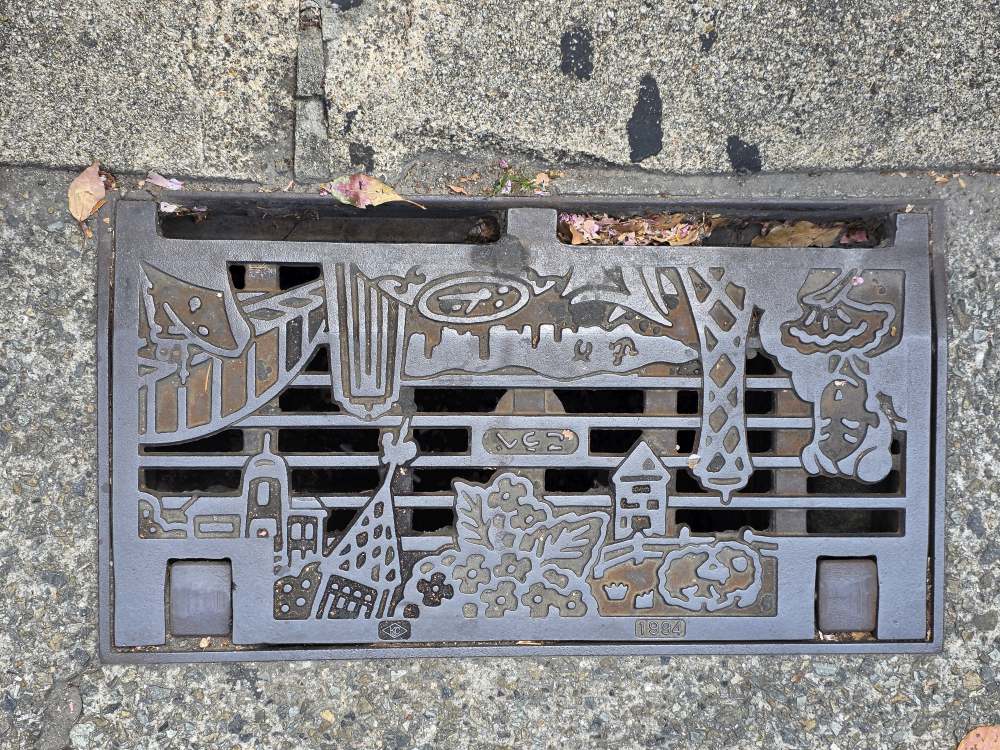
Next up is the Ikuta Shrine, a quick walk (with a few neat man hole covers) away. The Ikuta Shrine is said to be the resting place of the younger sister of the Goddess of the Sun and is revered as the goddess who gives birth to and nurtures things. And true to its heritage, there were a lot of parents here with their newborns doing blessings. Very sweet to watch (but uncomfortable to take pictures – so just imagine it!).
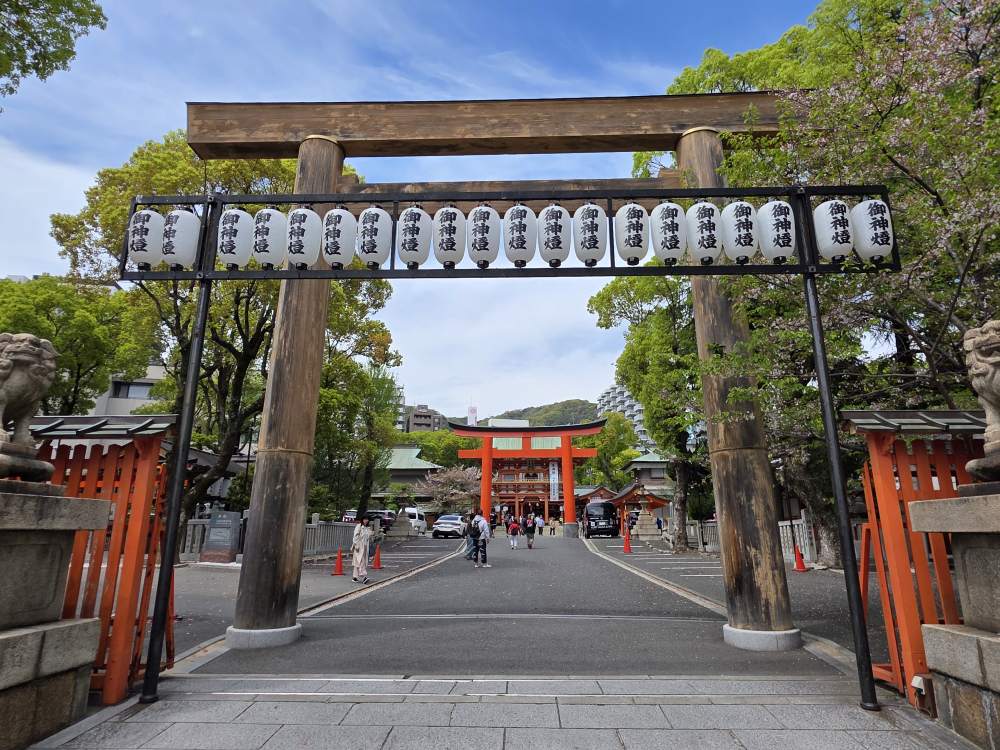
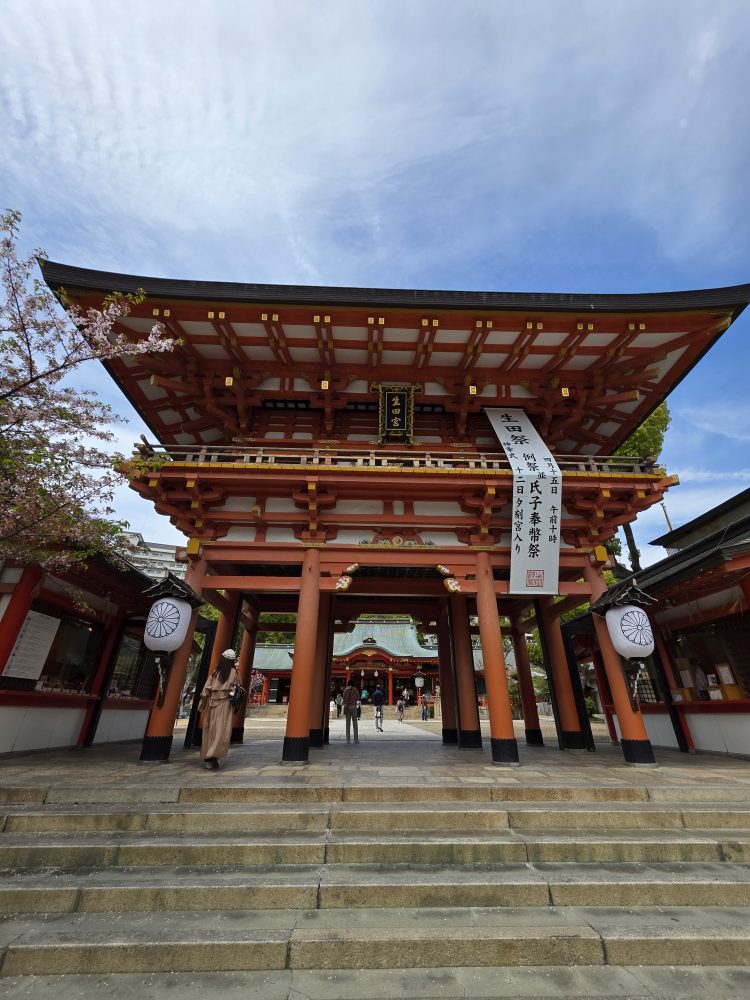
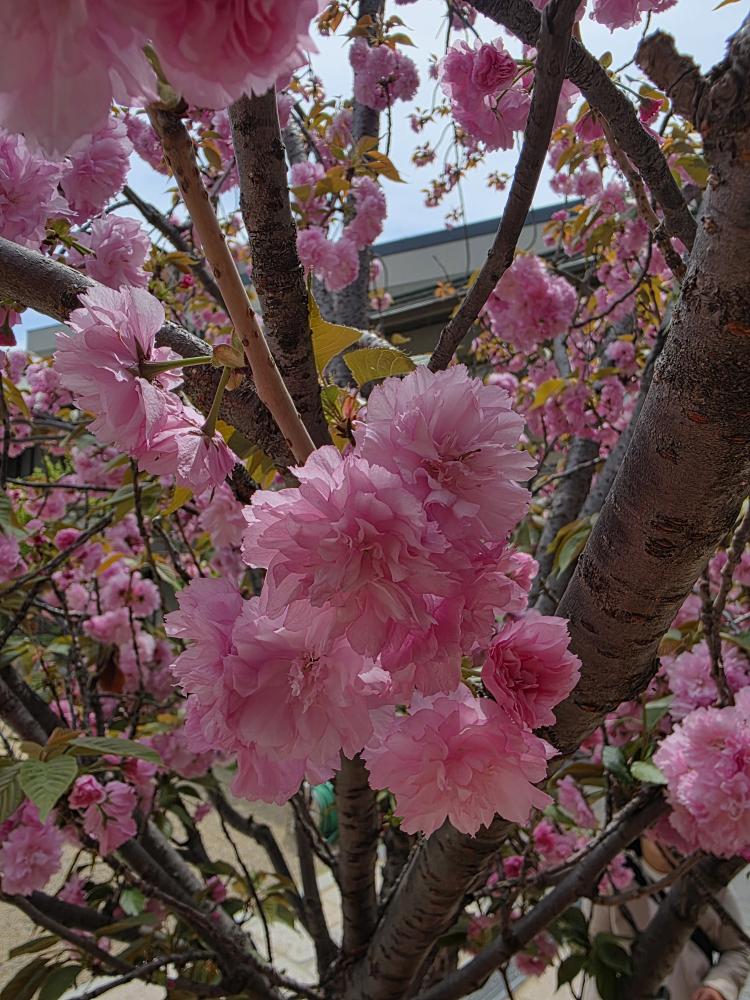
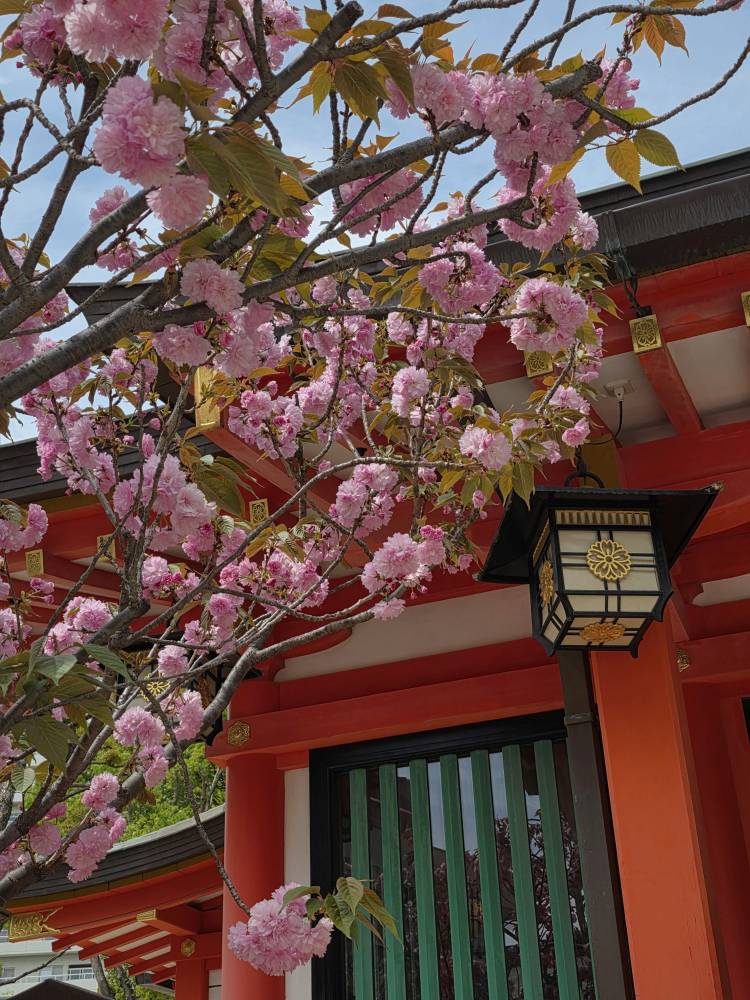
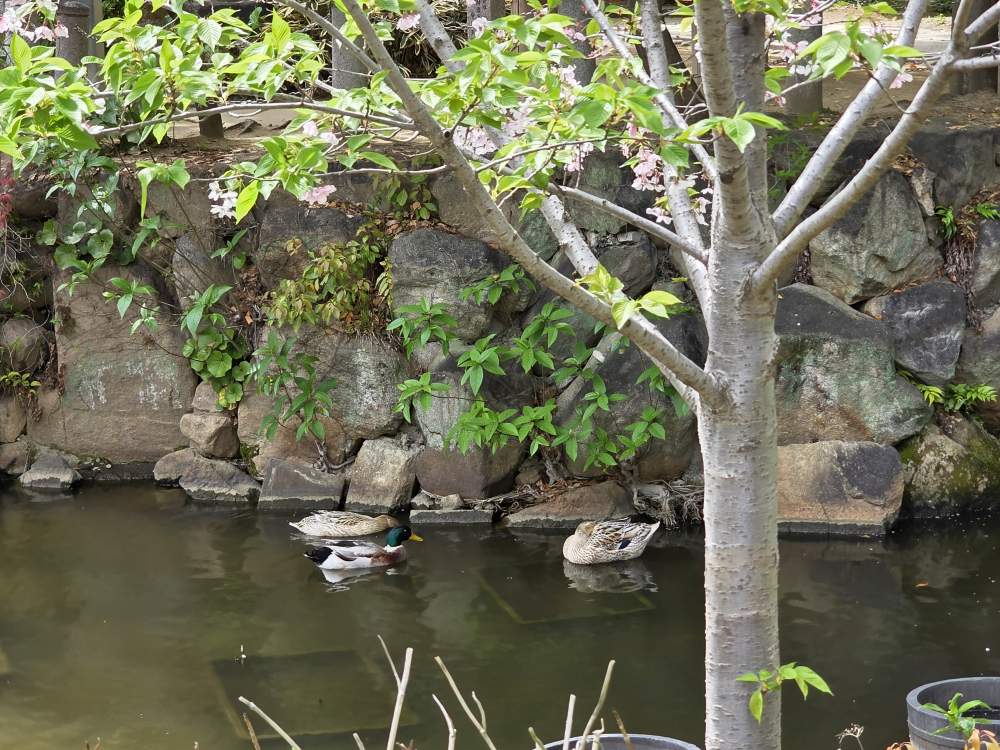
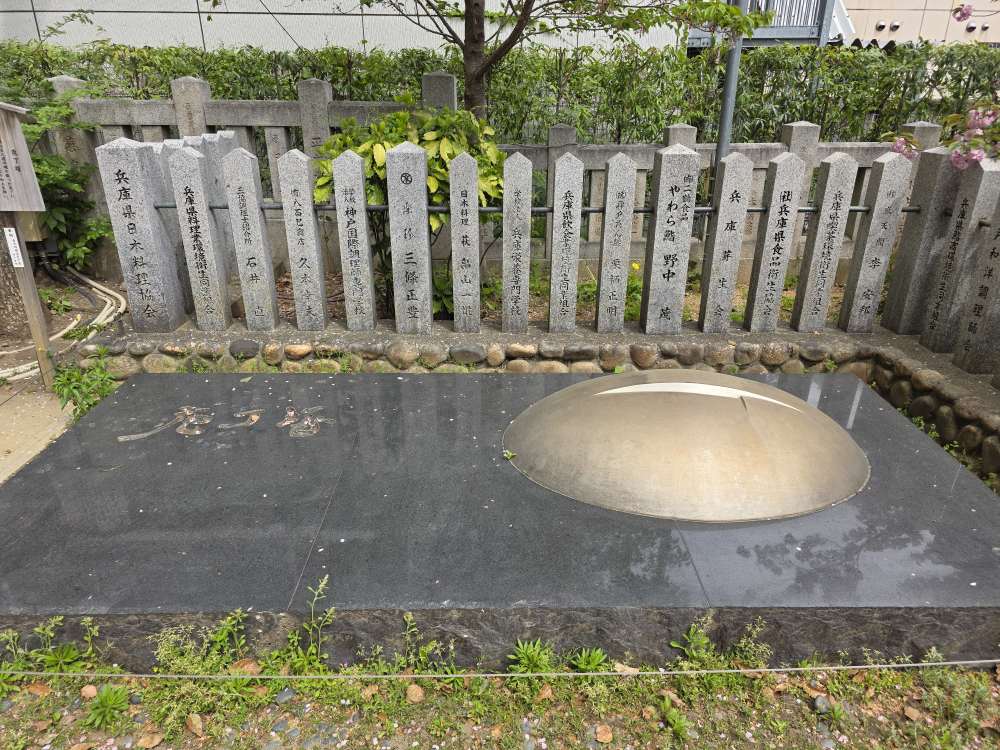
The grounds are quite beautiful as well, the peaceful water features, spiritual forest and the Kitchen Mound – a monument erected with “gratitude for the knives imbued with the souls of those involved in cooking…by people involved in the food and culinary industry in Kobe City” to commemorate the rebuilding of the Shrine. The golden mound has a knife mark on the top and all the stones around it have the names of donors associated with the Mound. Strange, but interesting.
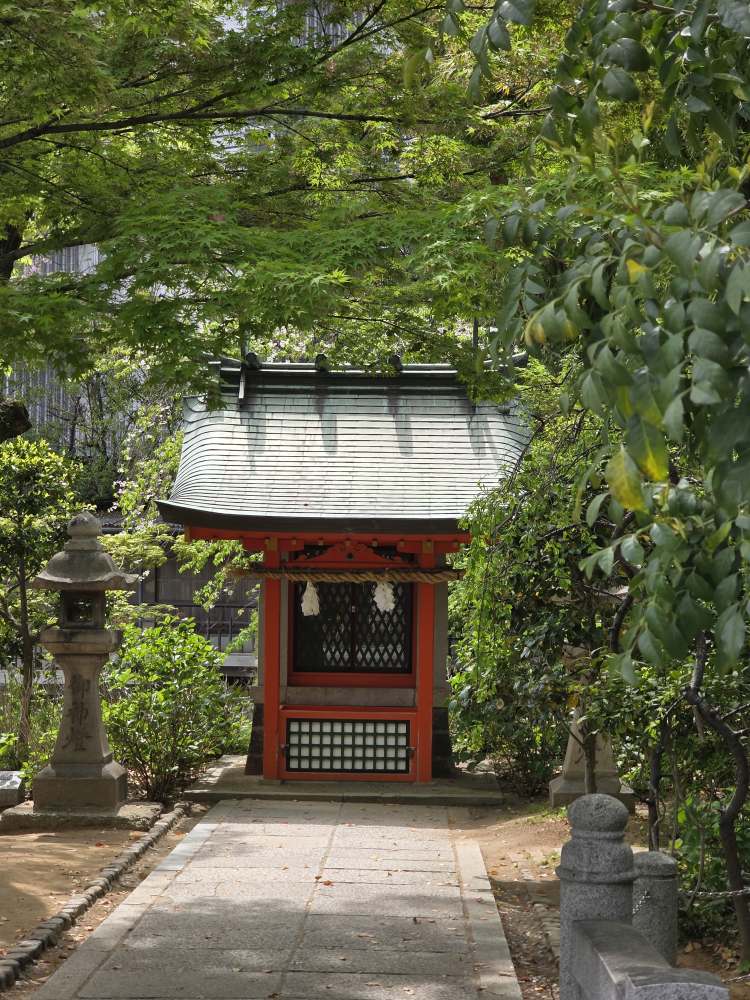
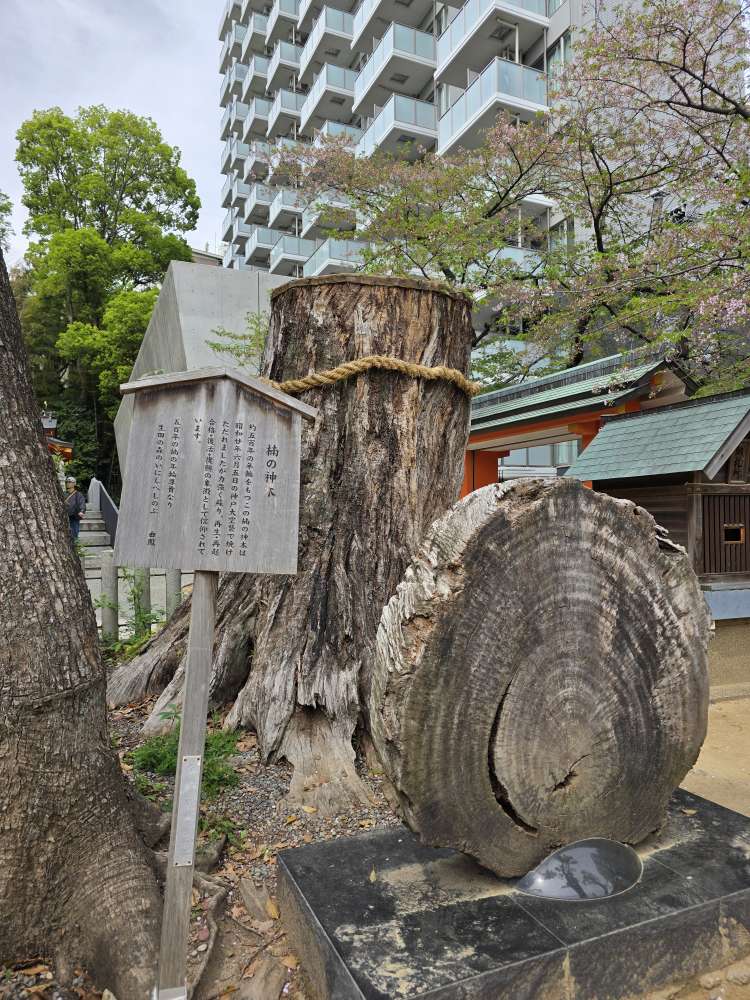
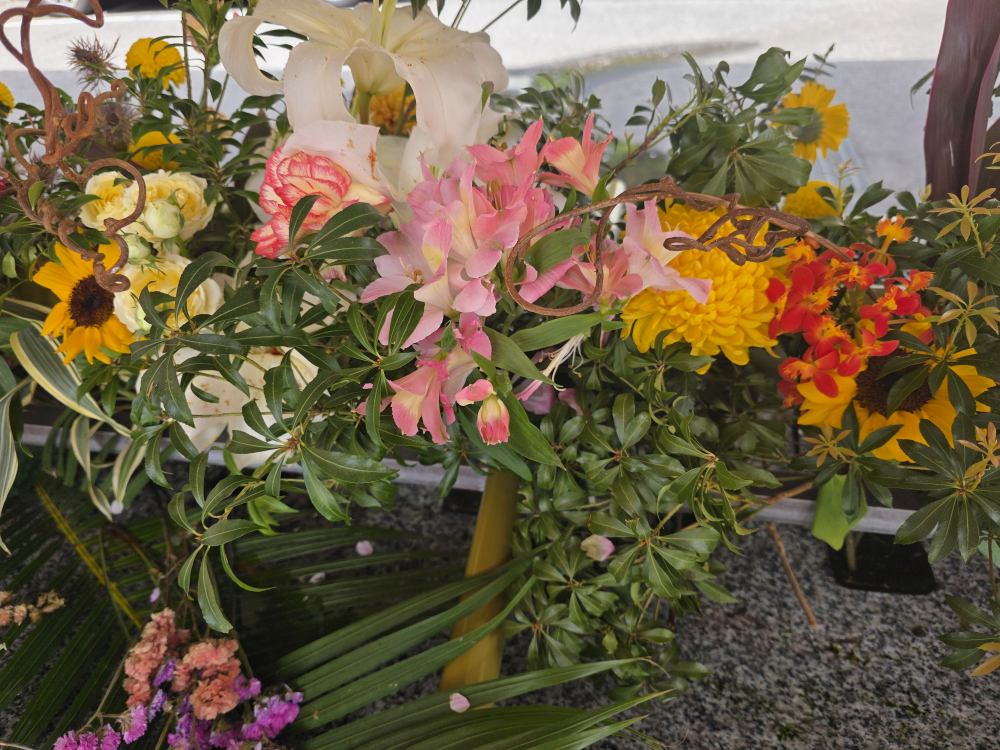
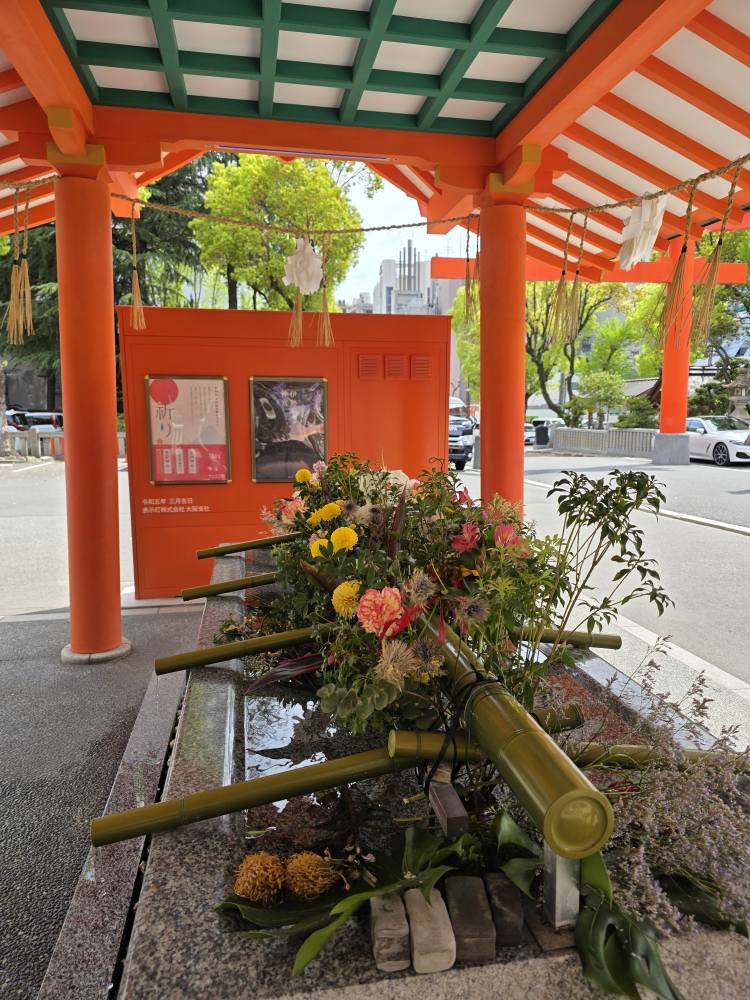
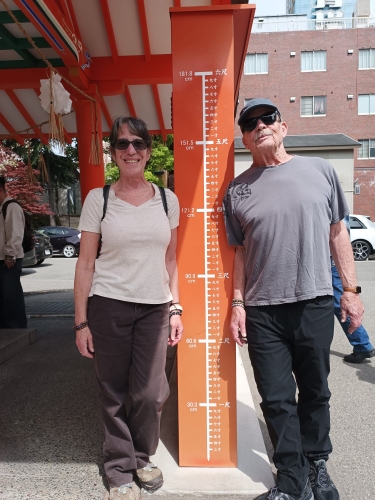
On the way out, we passed the water trough for handwashing, but this trough was filled with flowers almost like a hanging garden. Along the side of the pagoda structure were marks to measure height – we were 5 shaku 3 sun – the old way to measure height in Japan.
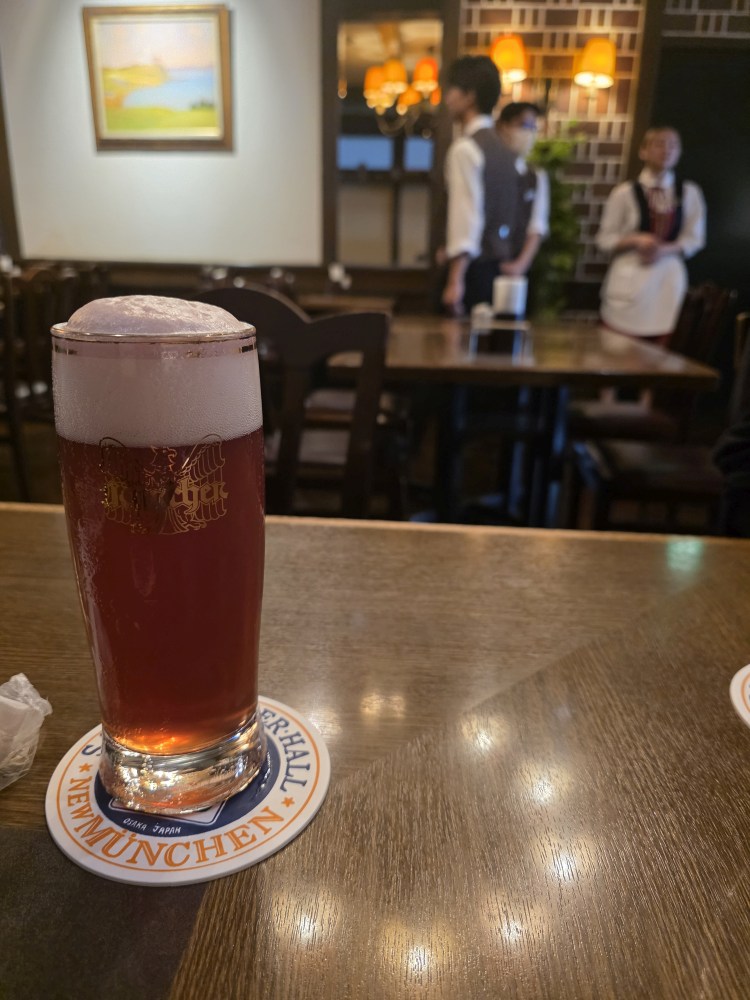
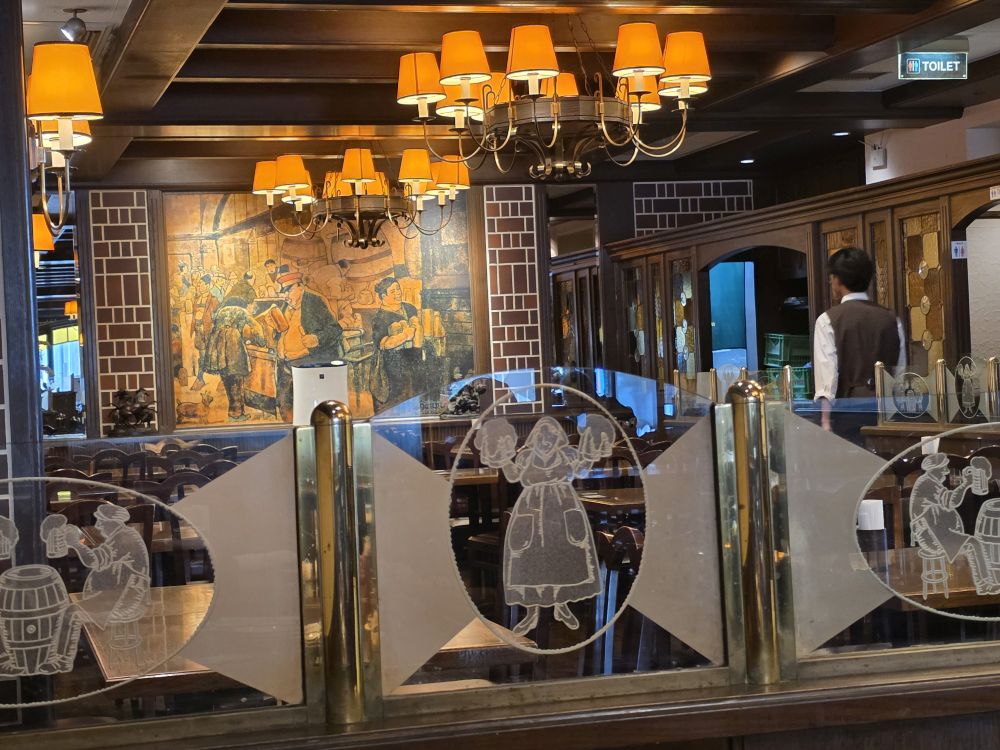
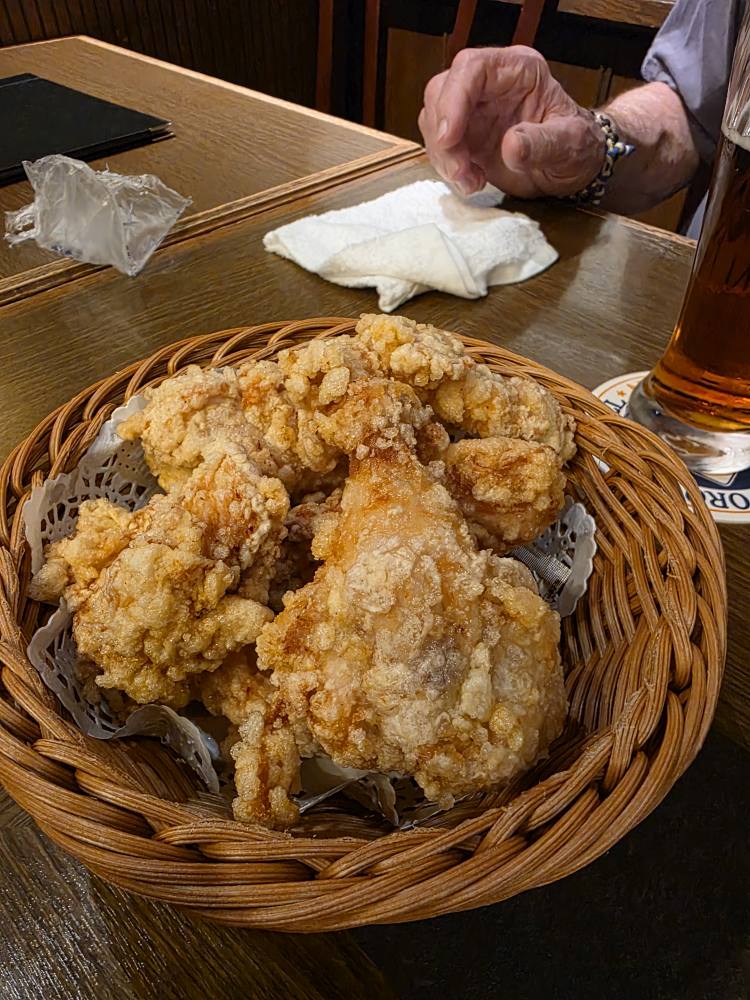
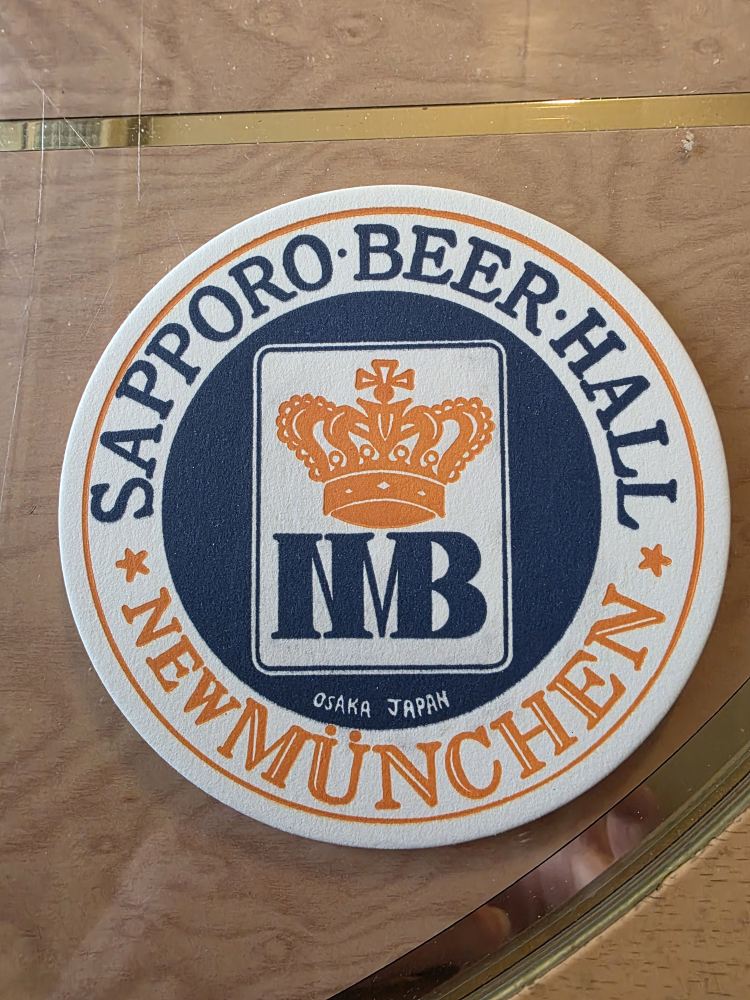
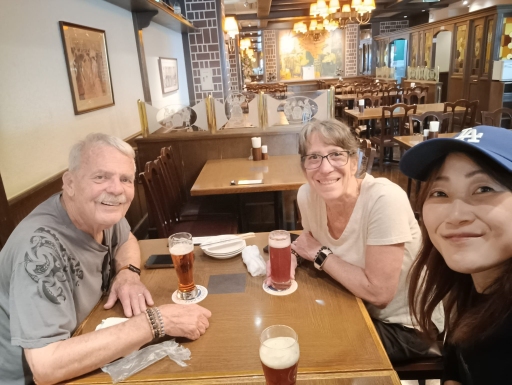
Our tour basically over, we decide to have a farewell drink at one of Madoka’s favorite places: The New Munchen or The New Munich Sapporo Beer Restaurant. Too funny. But she really does like it here – and she is a beer aficionado, so who are we to argue! In addition to some great beer – I had Cassis Beer – we decided to snack on some wonderful Karaage, sitting back and enjoying the company, the food and the drinks.
An excellent day overall in Kobe.
Madoka puts us on the JR line back to the port where we hop back aboard for a normal afternoon – gym, dinner, drinks, then Netflix. All is right with the world down here!

