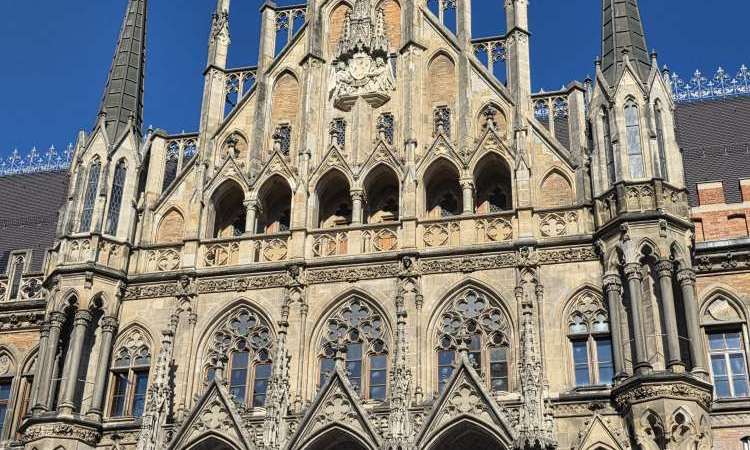
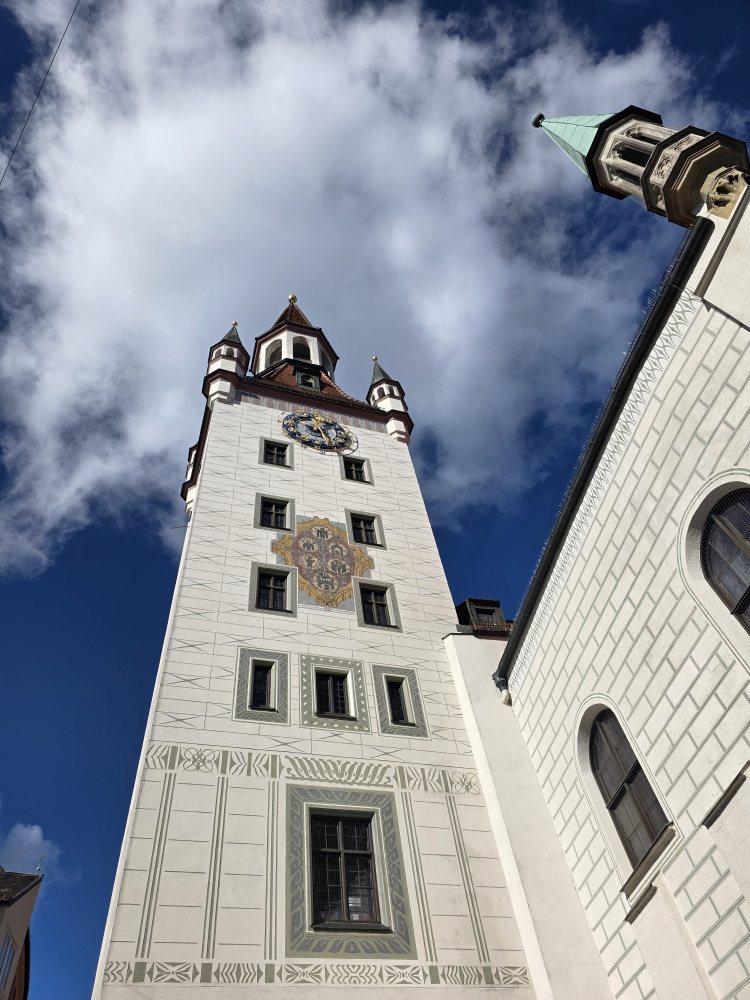
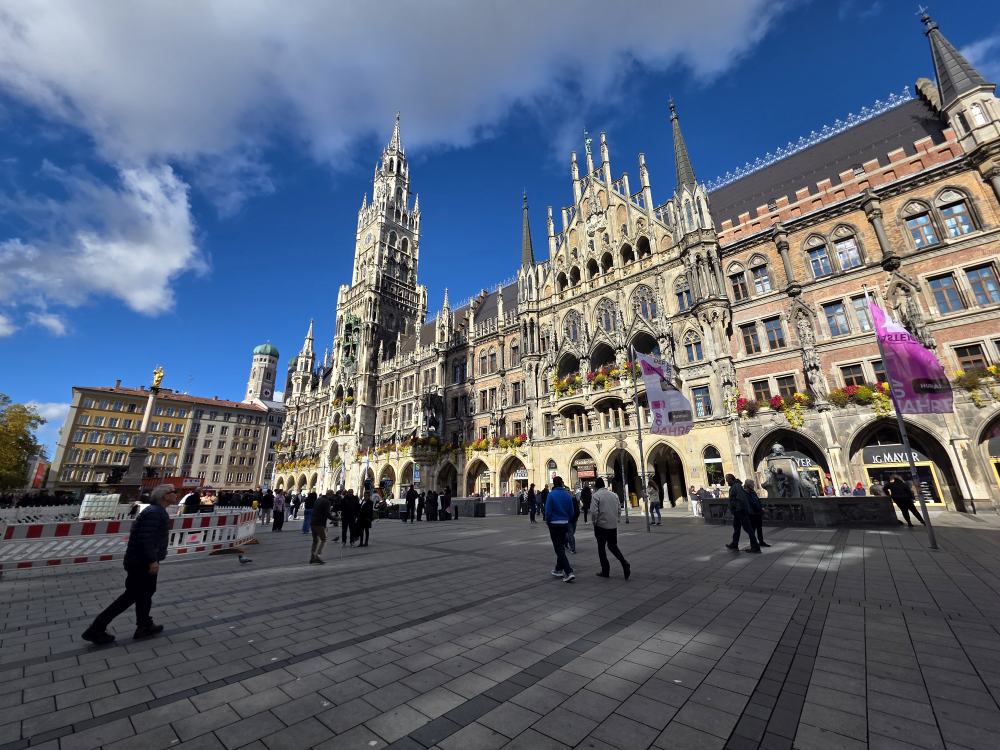
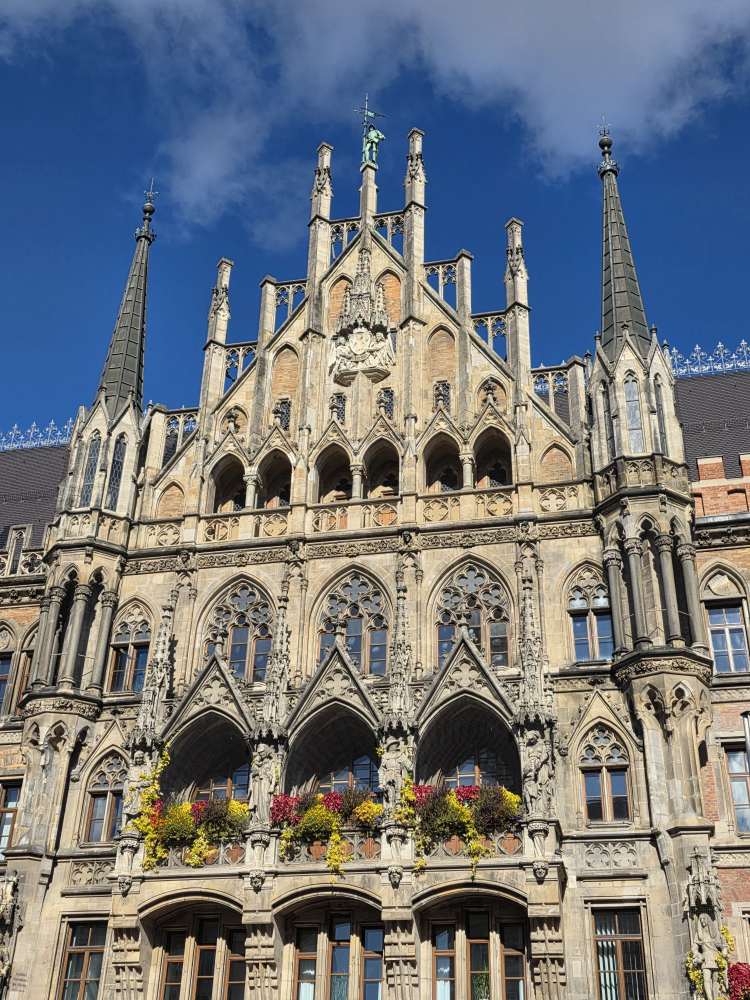
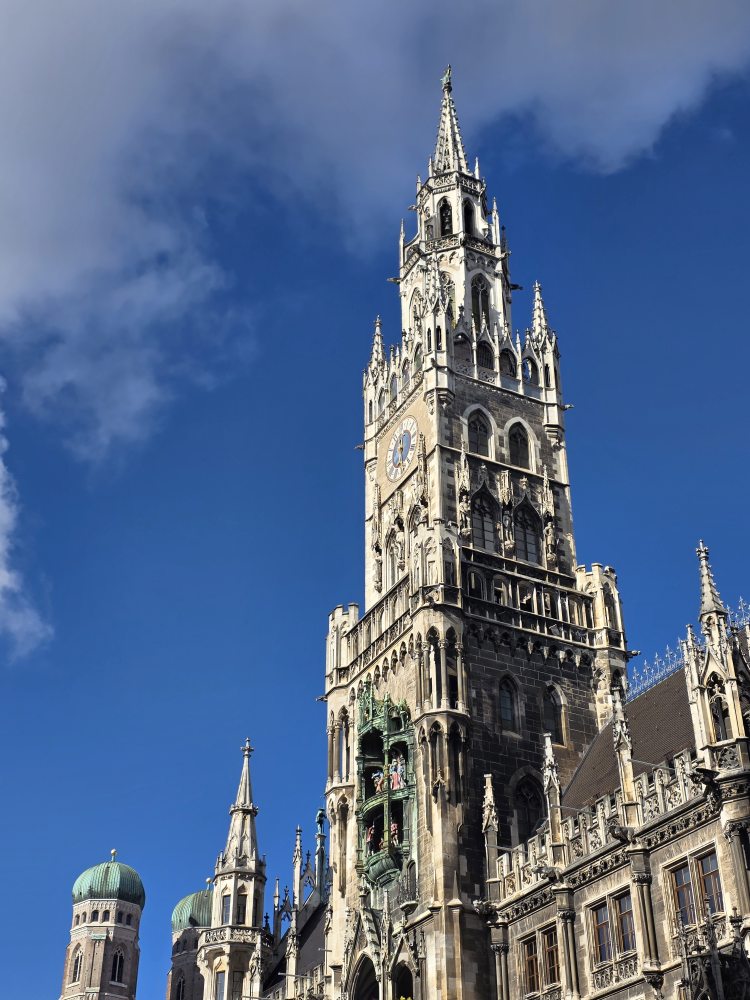
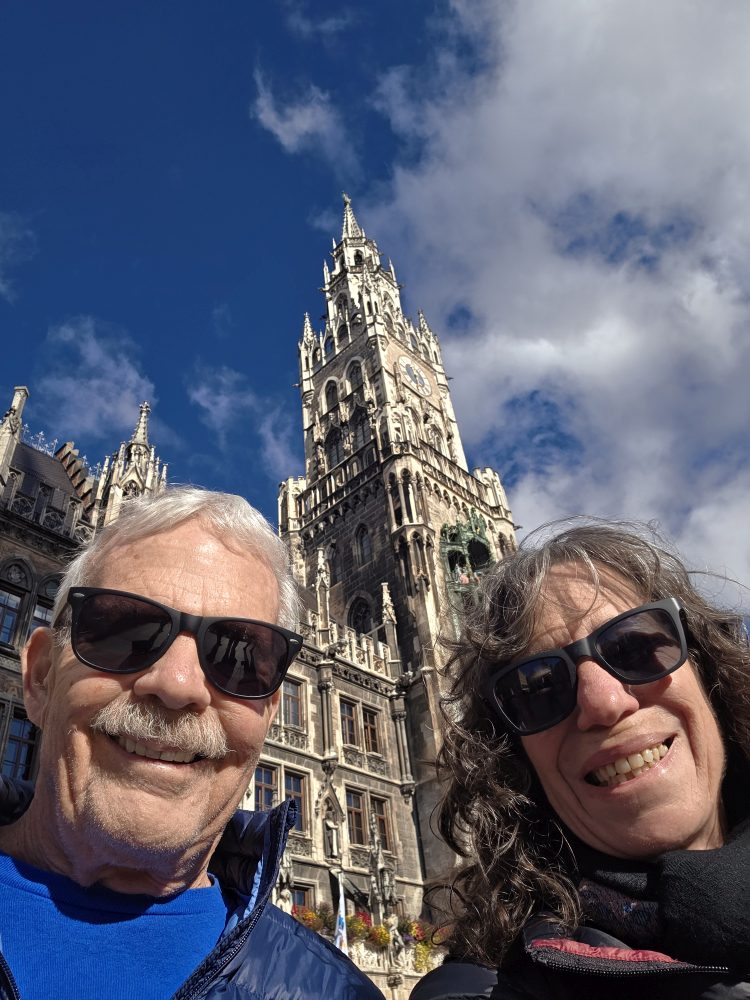
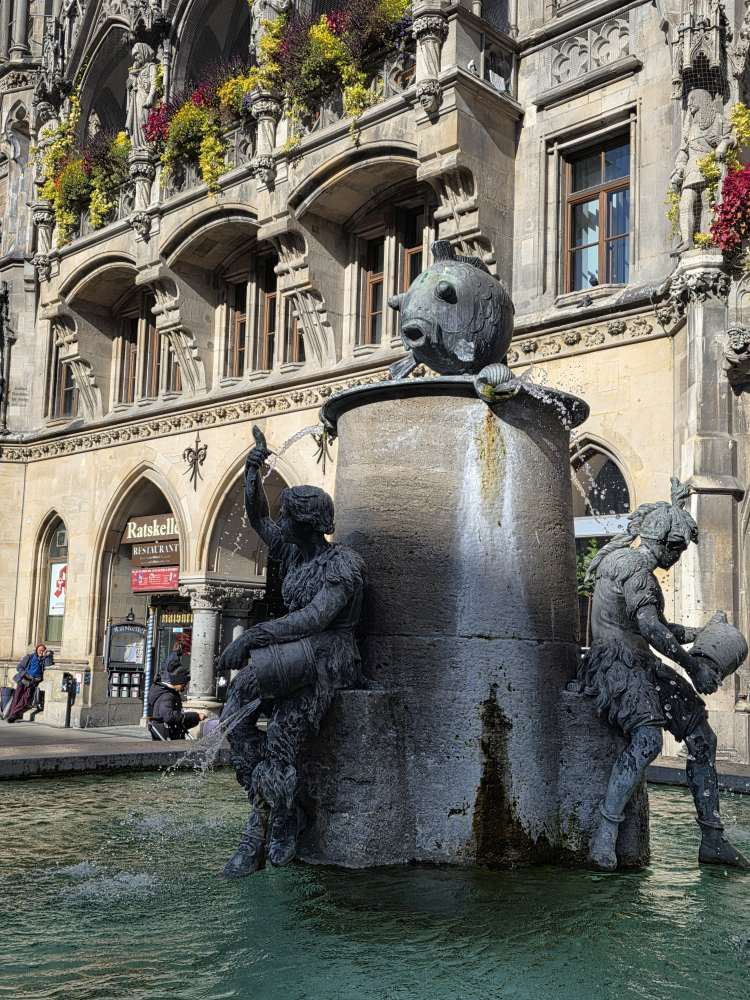
From here we head to the Residenz, passing through Marianplatz, the square in the city center with the gorgeous St. Peter’s church and town halls ringing the enormous square. It is a gorgeous example of Gothic and Neo-Gothic architecture, from the Neues Rathaus (new town hall) to the Altes Rathaus (old town hall), that amazing clock tower with the figures that dance when the clock strikes 11am and 12 noon (sadly we missed that today) and the cool fountain with the fish on top (that I think looks like a pig).
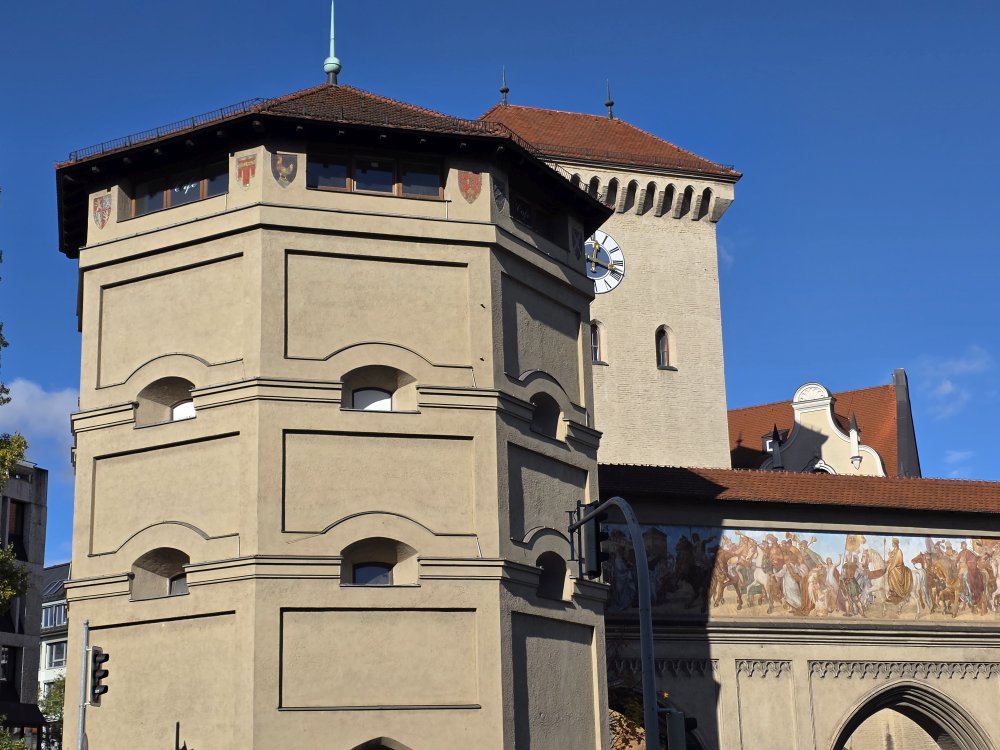
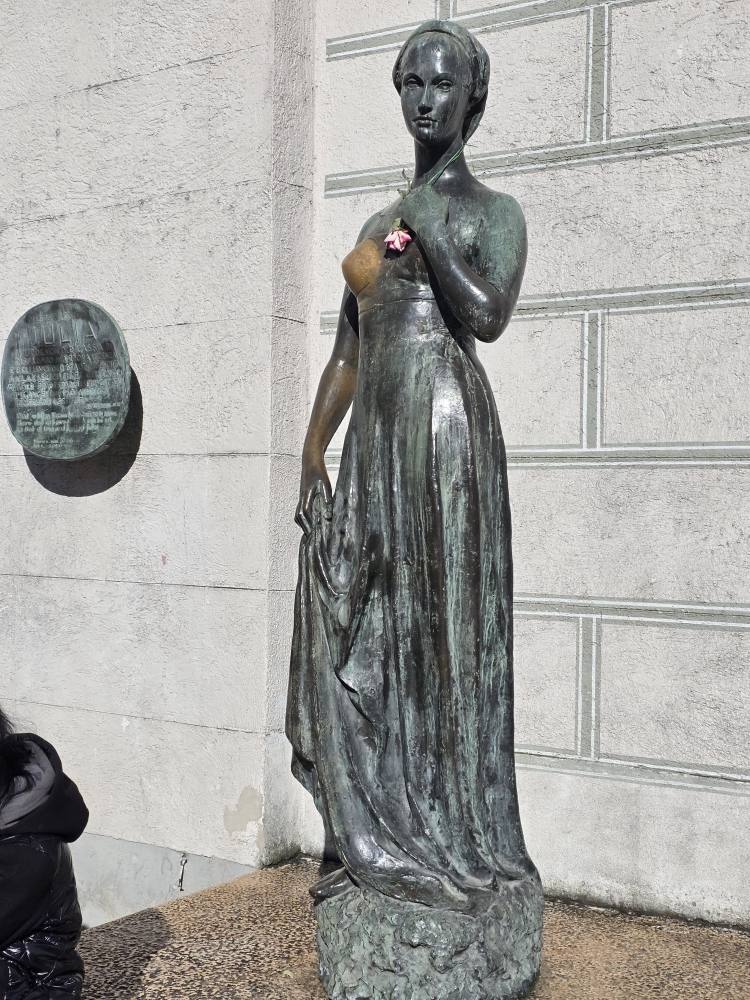
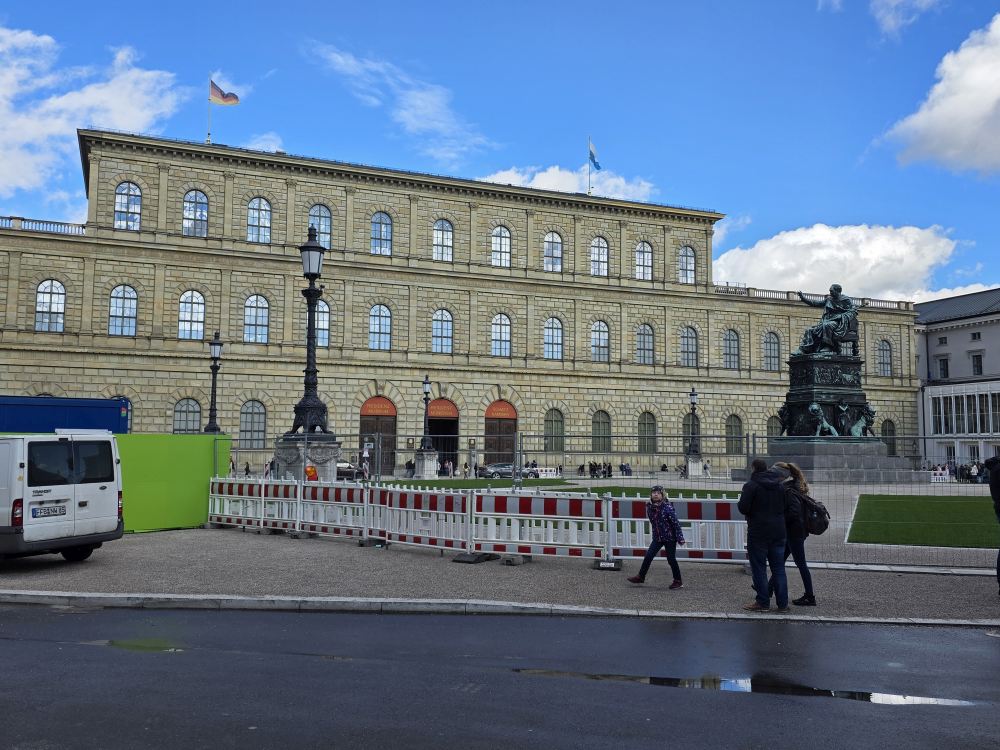
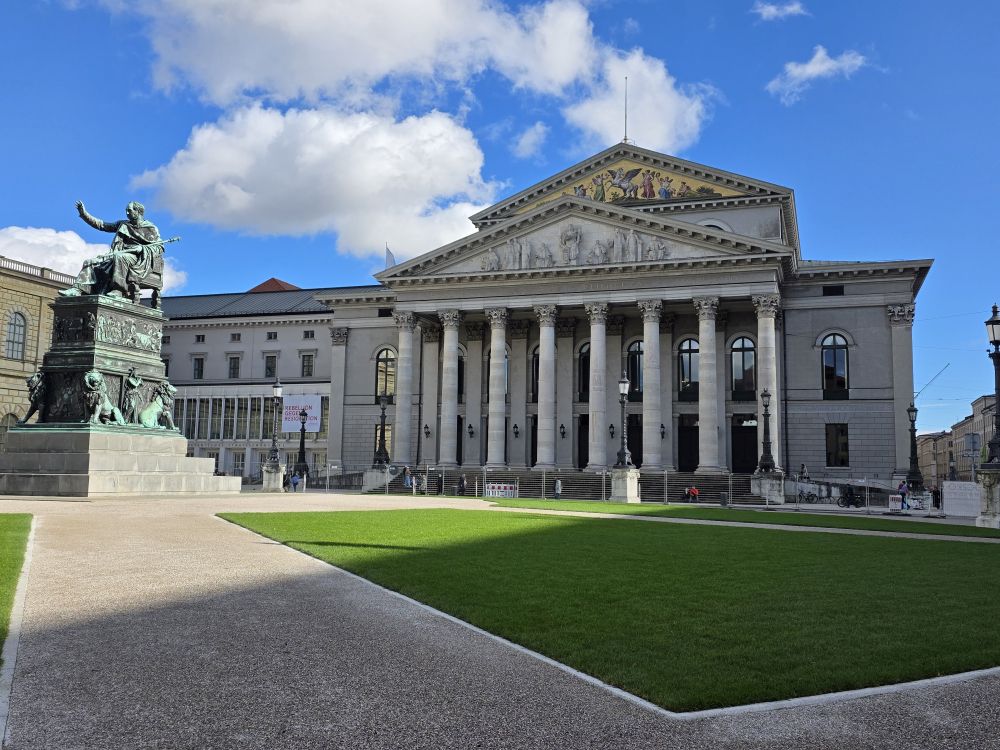
Arriving at the Residenz, we get our first glimpse of the Bavarian House of Wittelsbach principal palace and seat of government for over 400 years. It is massive, for sure, fronting the Max-Joseph-Platz with the Bavarian Opera House off to one side. The Residenz has been open as a museum since 1920, fully restored after “severe damage” during WWII (in other words, bombed almost out of existence in WWII). They have made every effort to restore the rooms and areas to their original glory, returning many hidden art pieces to the museum for us to behold today.
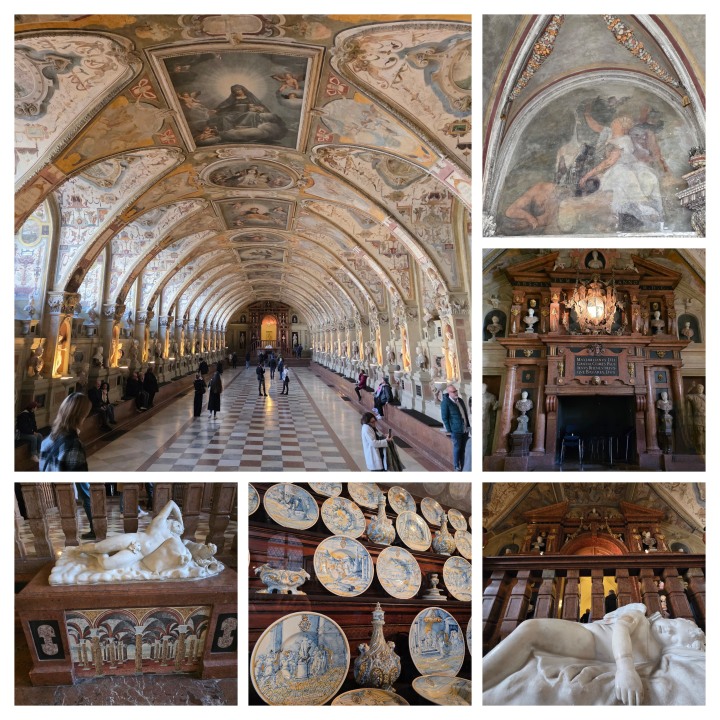
And oh, did they restore it to glory. I don’t know how many rooms we actually visited, but there are 130 here in the museum. Each and every one was just a study in opulence and gold. The Ancestral Gallery with carved, gilded wall paneling, paintings of every one of the Wittelsbach rulers, a huge family tree and frescoes galore; the wild Grotto courtyard, inspired by Italian Renaissance gardens, built in 1583 to mimic a grotto, including the tufa with stalactite and stalagmite shapes with embedded shells; the huge gold and frescoed Ceremonial Hall, originally designed as an Antiquarium to showcase antiquities, but redesigned in the late 1500s as the ceremonial hall – it almost too much to take in all at once! We actually have to sit down on the side for a bit to absorb it all. .
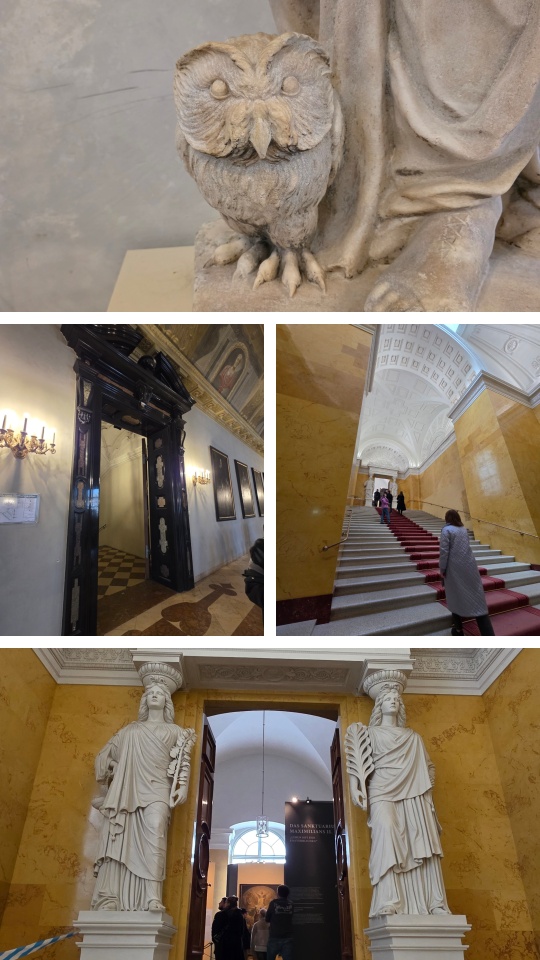
Continuing on, we walk through hallways and vestibules with views out to the center courtyard and different interesting statues, arriving at the Black Hall, so named for the 4 black door frames (called Scagliola portals). The ceiling fresco which is an illusion of a tall domed space is a reconstruction from the original design that was destroyed in the war. Then it is up the Yellow Staircase which leads to a room full of busts of various rulers – including Napoleon.
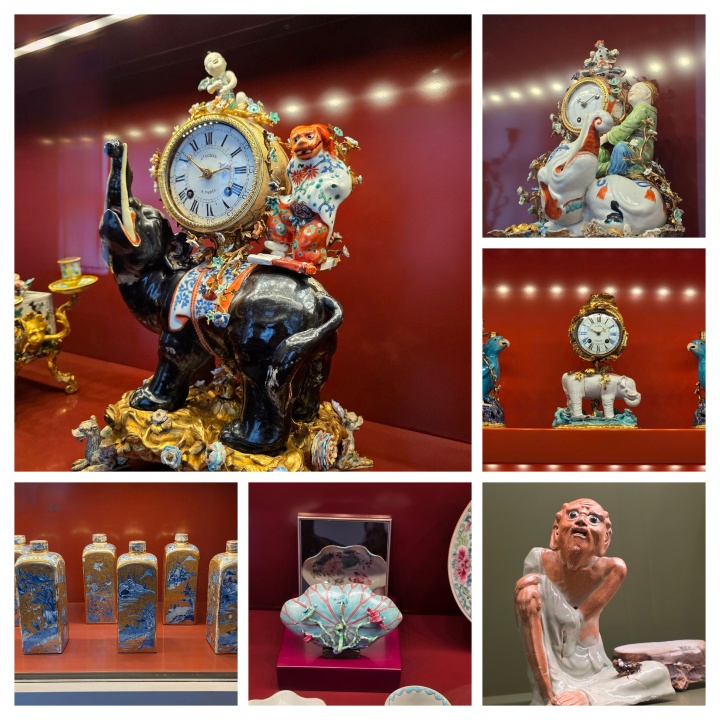
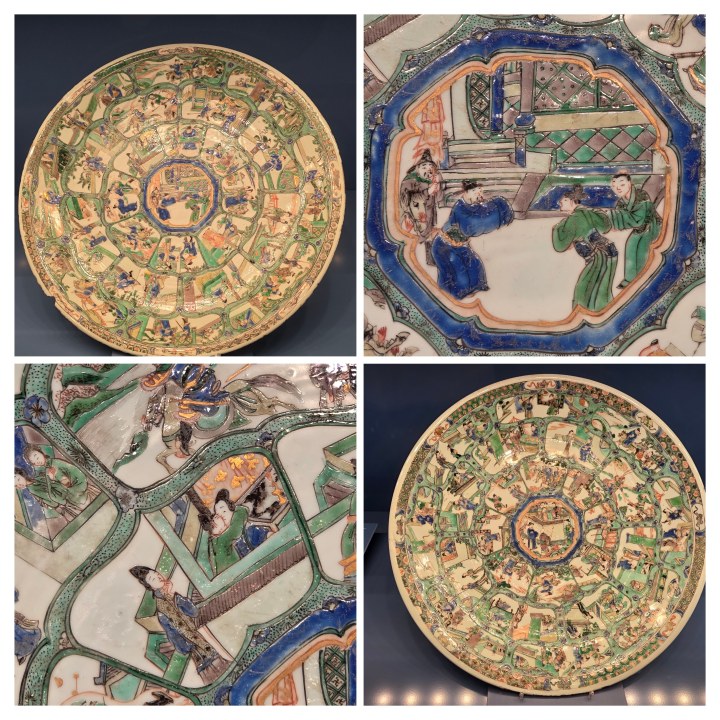
Then we arrive at the porcelain section – rooms full of different porcelain figurines, serving wear and other pieces either purchased or given to the rulers over the years. Again – overwhelming in the vastness and collection here. And all hidden during the war obviously! Some of the most intriguing pieces are 2 large Chinese bowls that have 25 pictures each telling the love story of Zhang Jingje and Yingying from the Chinese legend, The Story of the Western Wing. The detail is just amazing.
Back in the living quarters, we wander through the Elector’s bedrooms, long, gorgeous hallways bedecked with portraits, into the Prince’s dining room, out into the hallways with statues and marble columns, ending up in the massive Stone rooms, the largest and most important rooms in the Residenz, used as guest apartments for visiting emperors.
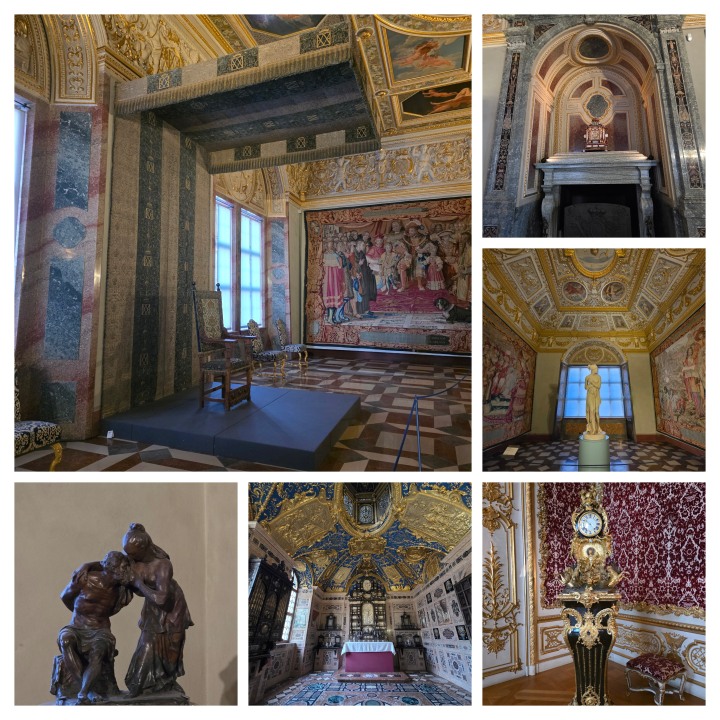
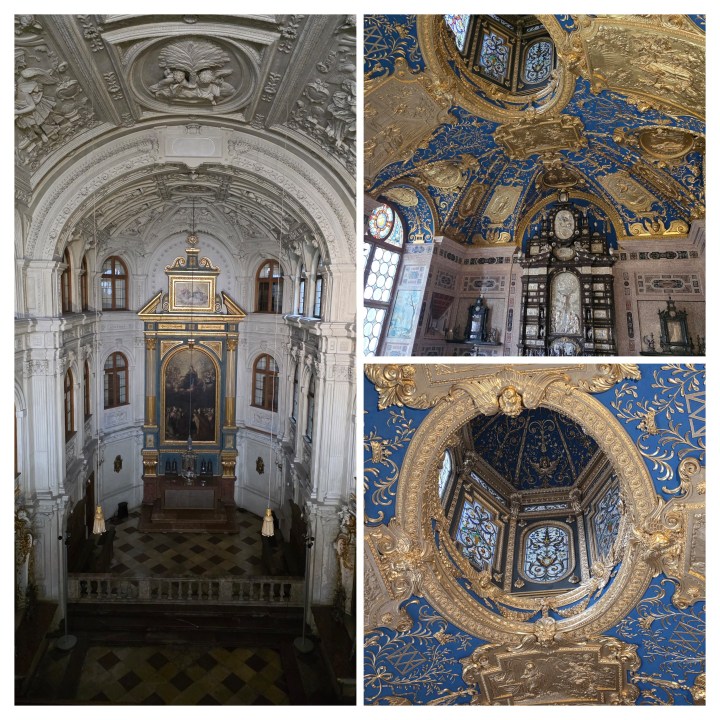
Of course, our tour is not yet done, we still have the Chapel to visit, a 2-story masterpiece in imitation marble inlay and frescoes, continuing on to other various rooms with thrones and gold leaf and canopy beds and mirrors, oh well, just everything a ruler could desire!
And after all of that, at the end of the visit are photos of what the palace looked like after the war. It is amazing the restoration and reconstruction that has been done to make it the crazily over-the-top, beautiful, massive, fabulous museum we saw today.
And now it is back out onto the streets, dancing through the raindrops, walking down the Odeonsplatz lined with gorgeous, ornate buildings, making our way to the Documentation Center – our final stop of the day.
 Andiamo