We have an early port call this morning, and an early tour pick up at 8:30, so we walk Deck 10 for a bit before hitting Windows and getting ourselves ready to go meet Riaan and whomever our tour guide will be today for the Schotia game preserve drive.
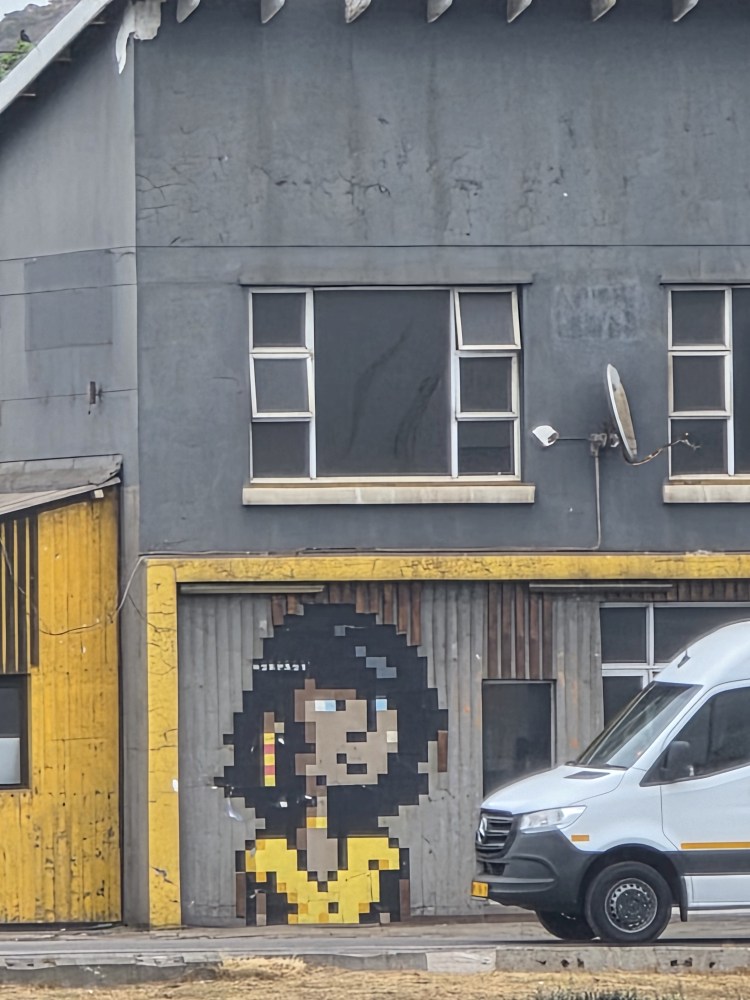
We are at the crappy warehouse dock – Regent is at the good dock, so we have to traipse down the commercial pier almost 1K to get out to the gate where all the tour guides are waiting. Of course we are early – it isn’t even 8am yet – but we figured we’d rather be out here and waiting than getting caught in a tour clog getting off the ship. No worries though because Riaan is right there with a big sign and a few drivers, one of whom, Alan is our guide for the day. Perfect – we’re off!
Alan is a hoot – just a funny and fun loving guy. We hop in the vehicle and begin our drive to Schotia, hearing all about his history (he used to ride motorcycles until he crashed and lost his right leg, and is totally comfortable talking all about it and all things motorcycles), where he lives (70K away, staying with Riaan while he is here with back to back tours), etc. Very fun and entertaining for our almost hour drive out to the game preserve.
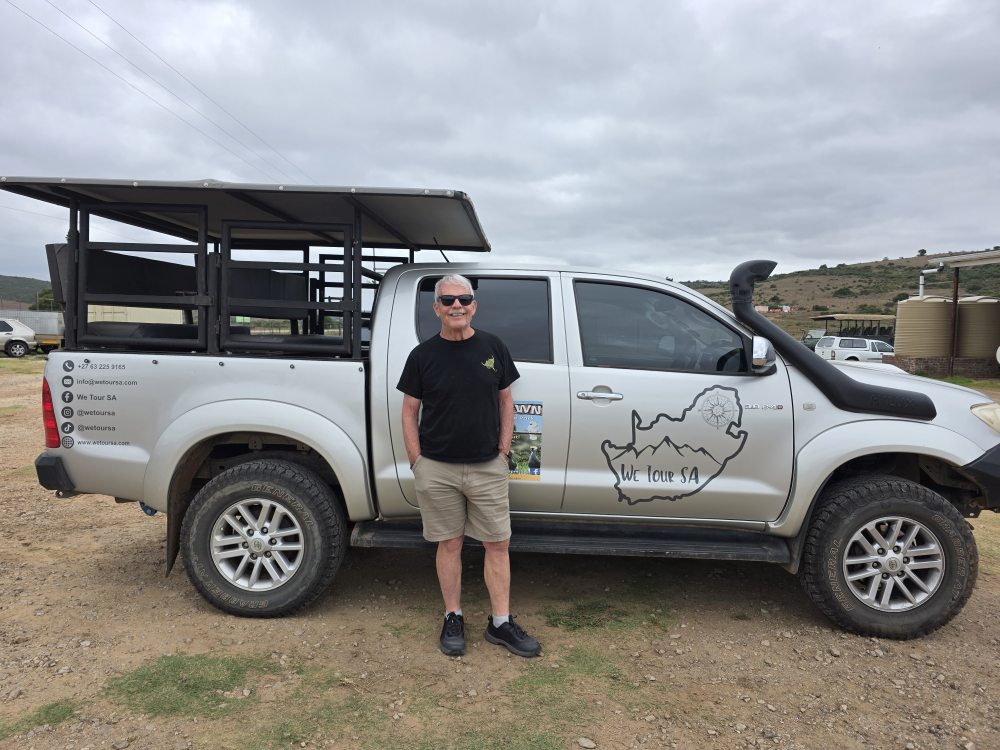
After a short bathroom break, we hit the reserve with Alan explaining that Schotia is one of the oldest game viewing preserves in the Eastern Cape. Owned by the same family since the early 1800s, it is currently managed and run by the 6th generation of the same family. The preserve was established in 1982, when the son who currently runs the preserve decided to switch from cattle farming to wildlife, over the objections of his father. He has since turned the reserve into a worldclass game viewing location. Their goal is to show visitors how Africa looked when the Europeans first arrived.
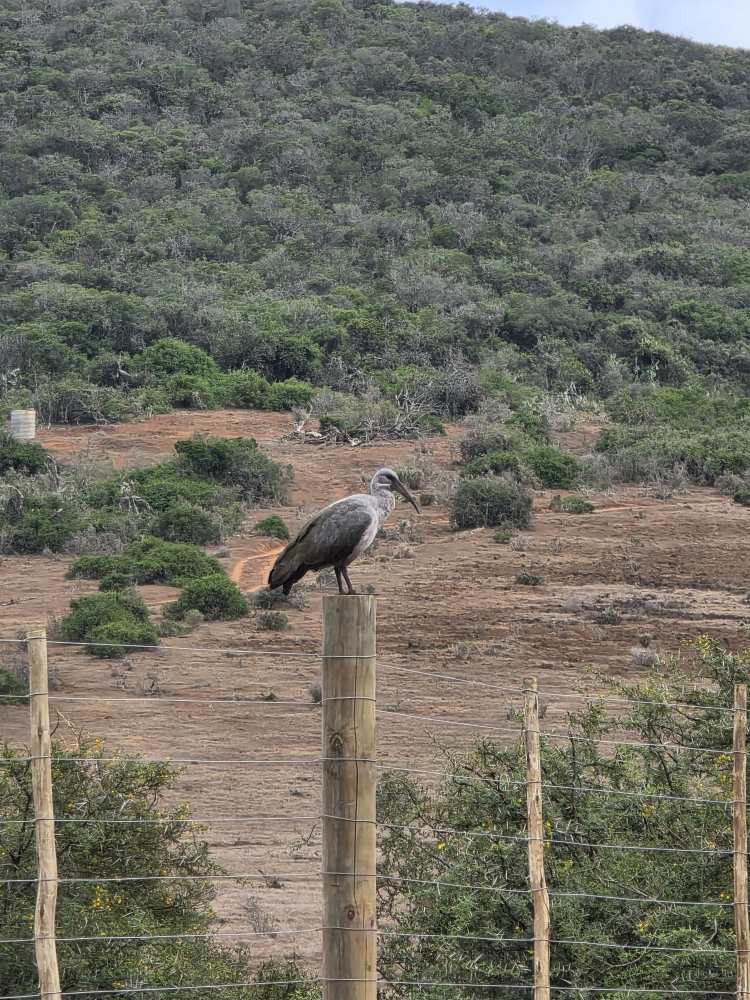
There are currently 1,000 animals and over 30 species on the reserve many of which we begin to see as soon as we go through the gates to the property. First off is a Hadada Ibis which Alan says are the most hated bird in S. Africa because they have a loud and annoying cawing call that they typically scream at sunrise or late at night, annoying and waking everyone around.
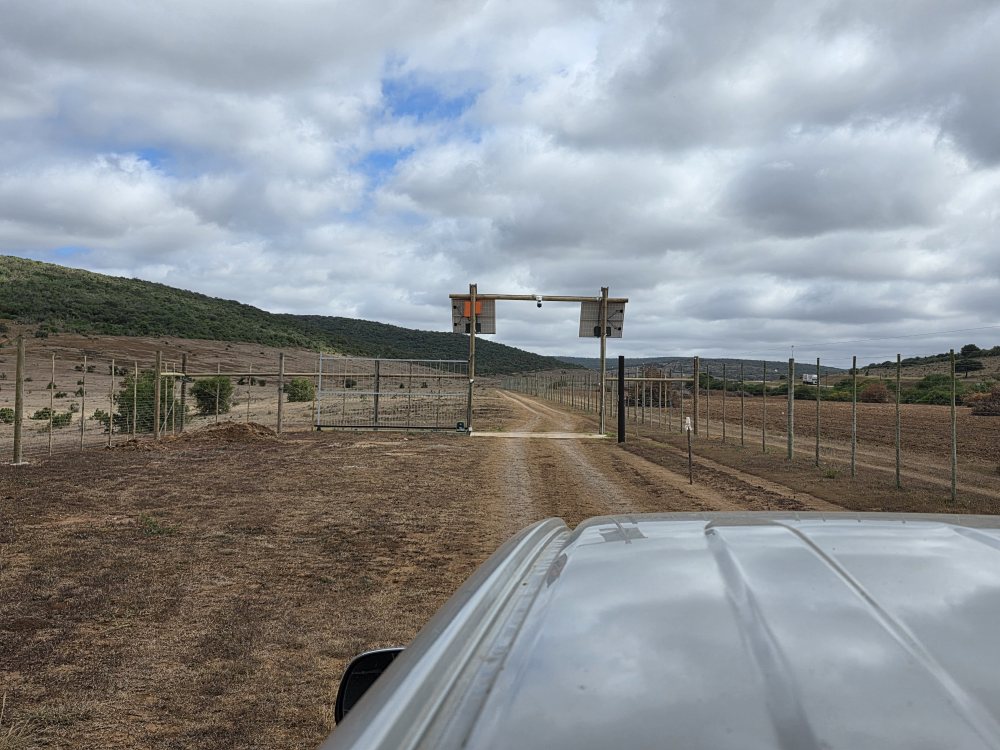
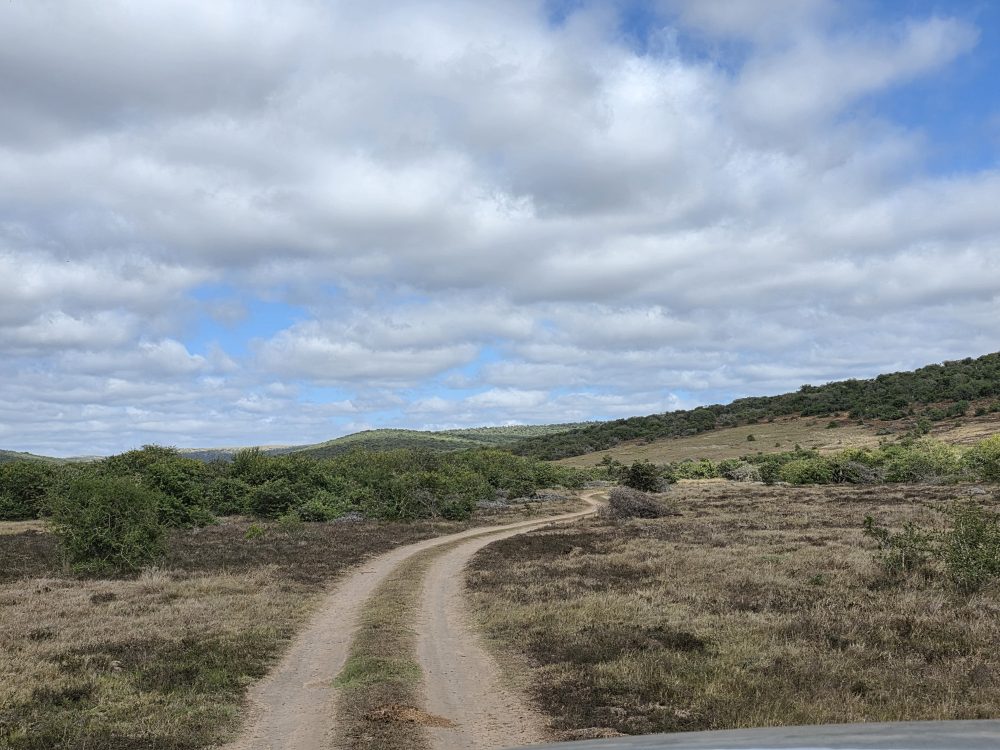
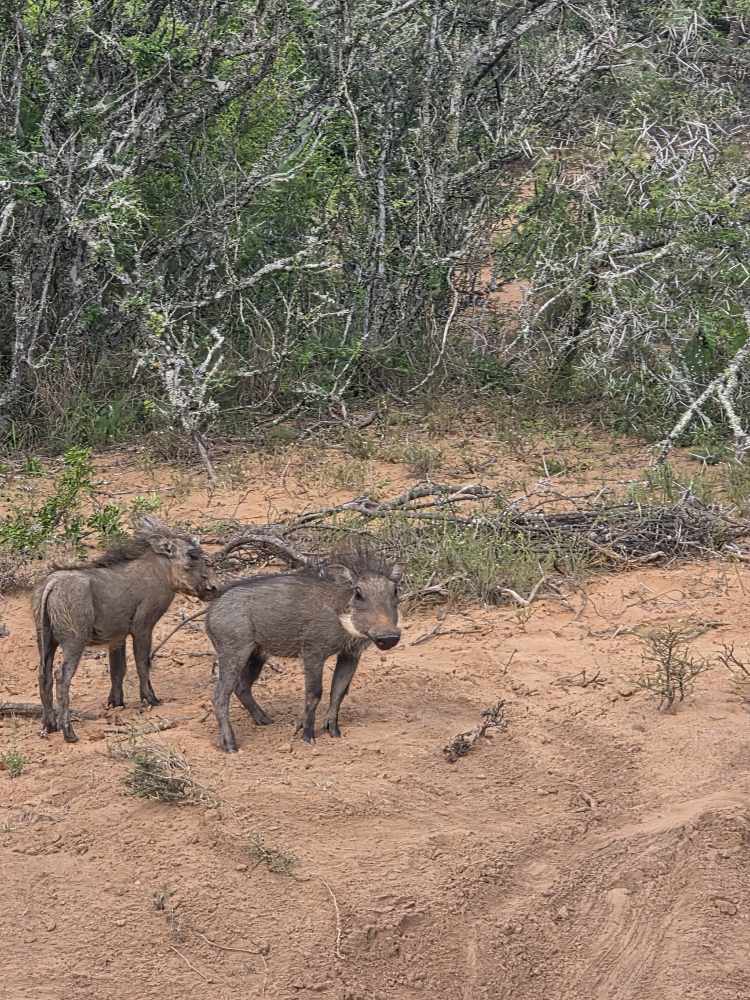
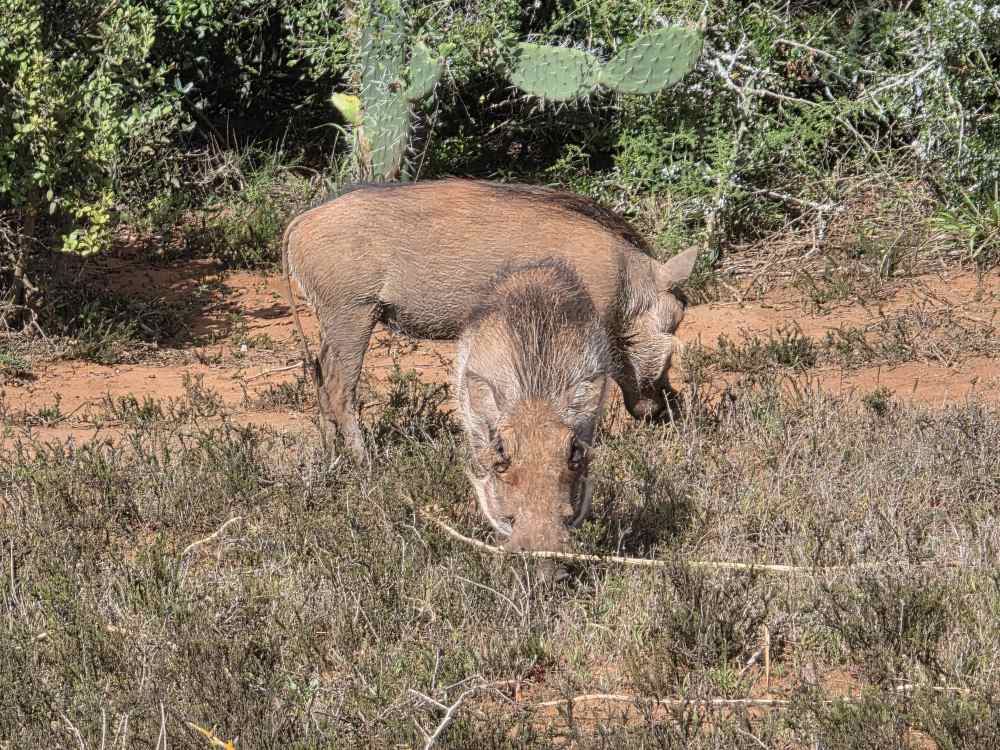
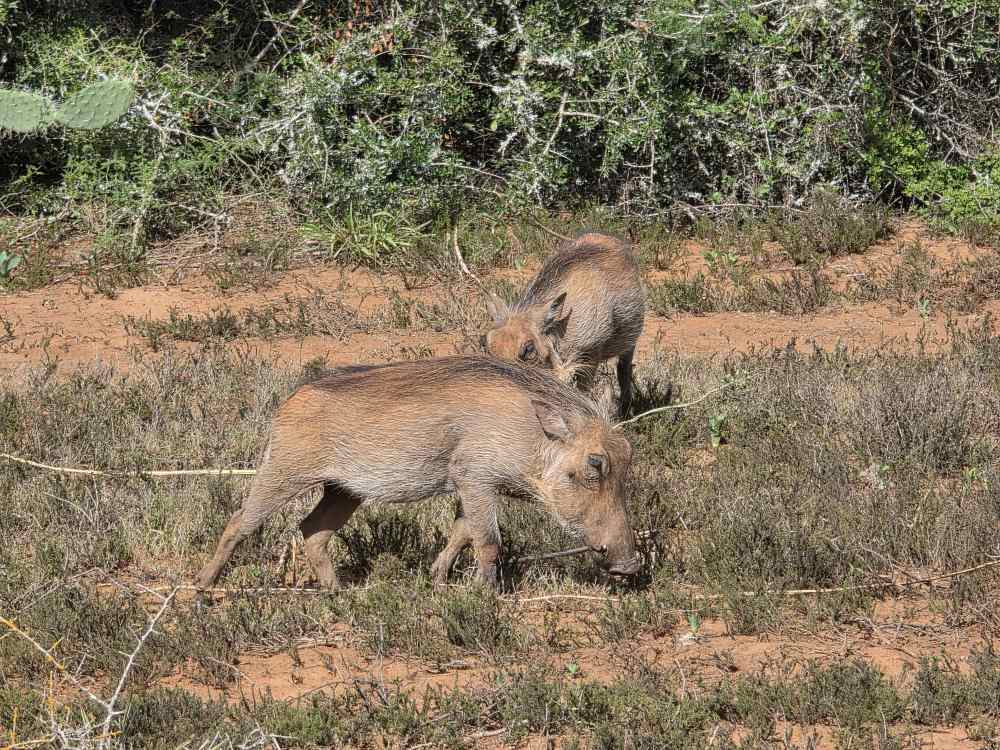
Driving off into the reserve, the weather is perfect – partly cloudy and cool with a nice cool breeze, and so peaceful. There isn’t anyone else around, it is peaceful and quiet and just gorgeous. We spot some baby warthogs, only a few months old, and then a dung beetle. Ok, well Alan spots it. How? We’ll never know! It is crazy how he can drive, focus on the road and find a little beetle pushing a ball of poop along the side of the road!
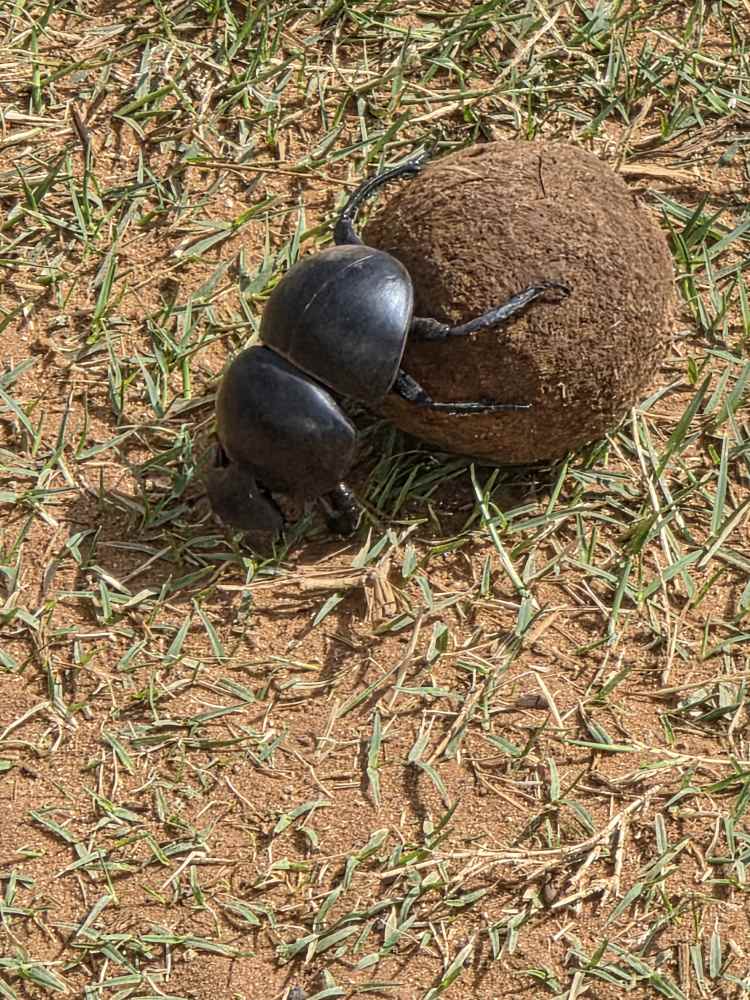
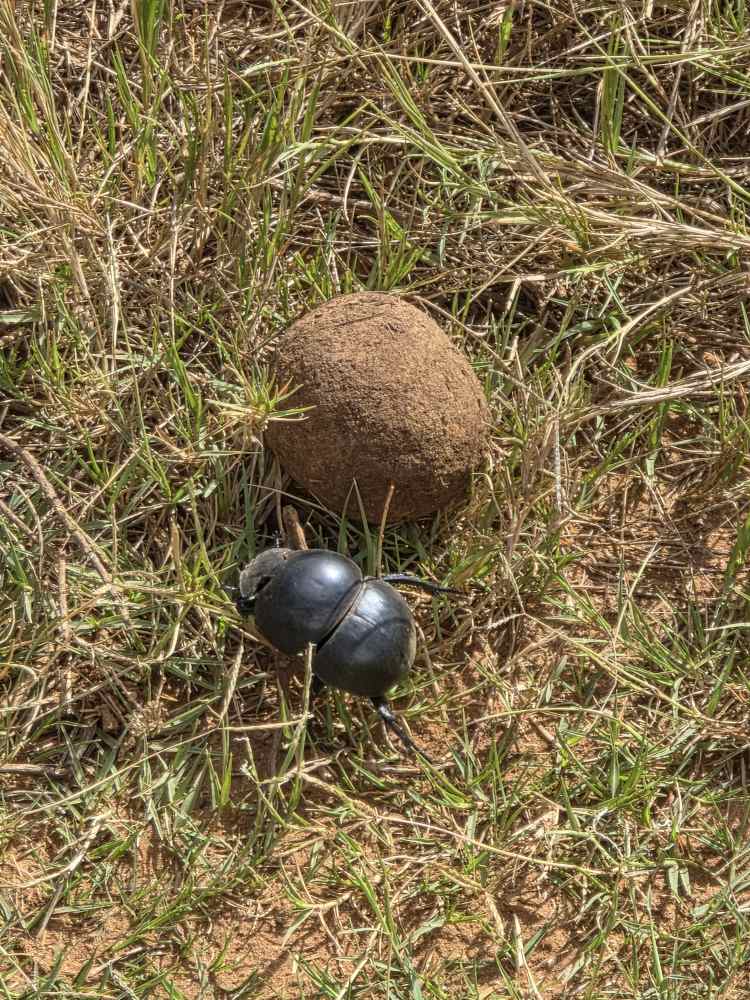
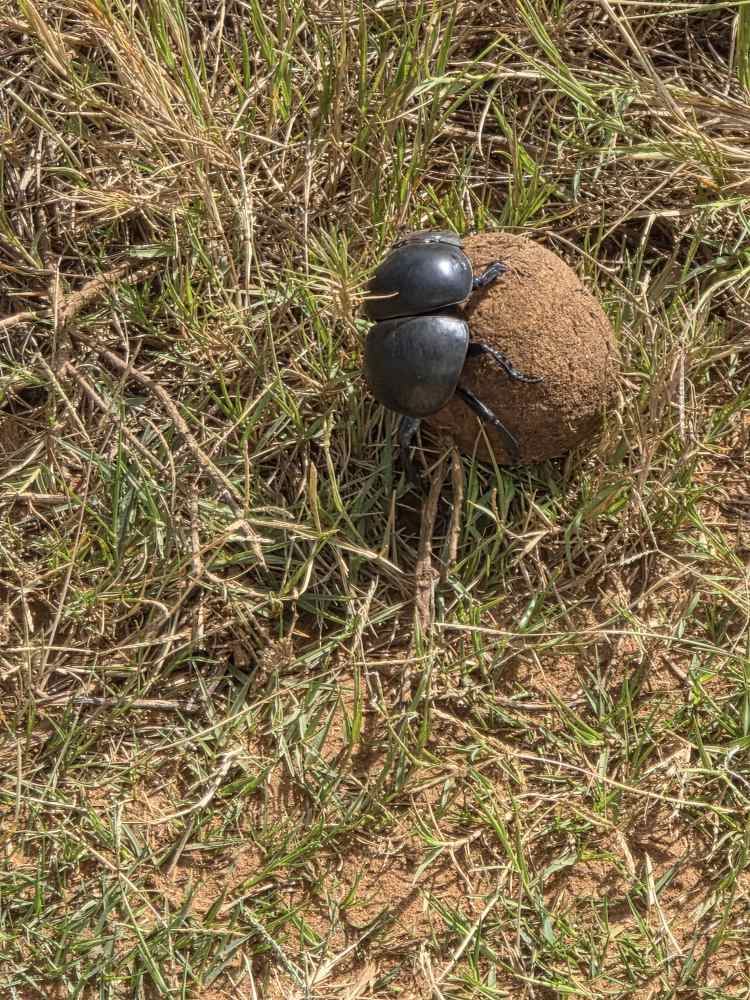
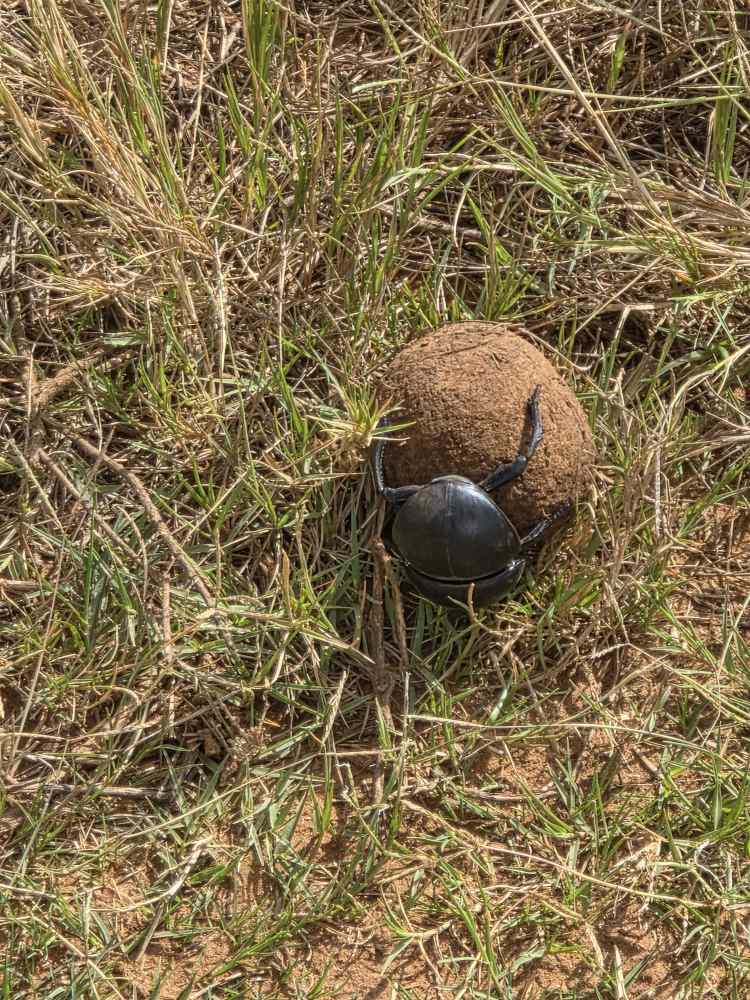
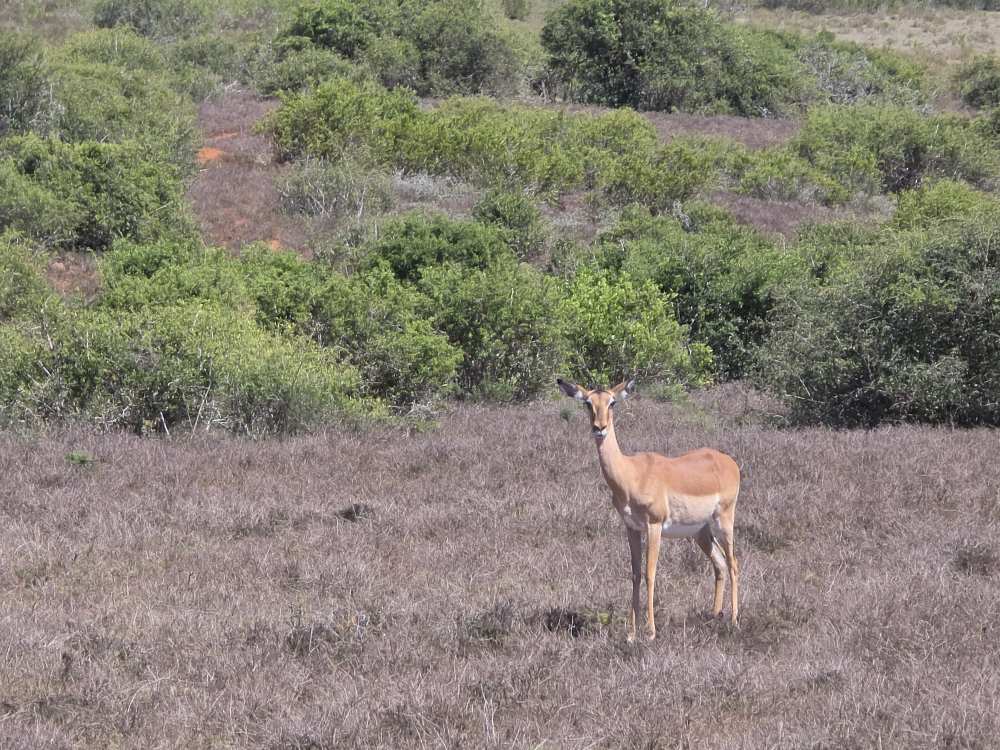
After too many dung beetle photos – but it was a really good, active little beetle sighting! – we find more warthogs, grazing in the field, zebras along with a Wildebeest and lots of impalas.
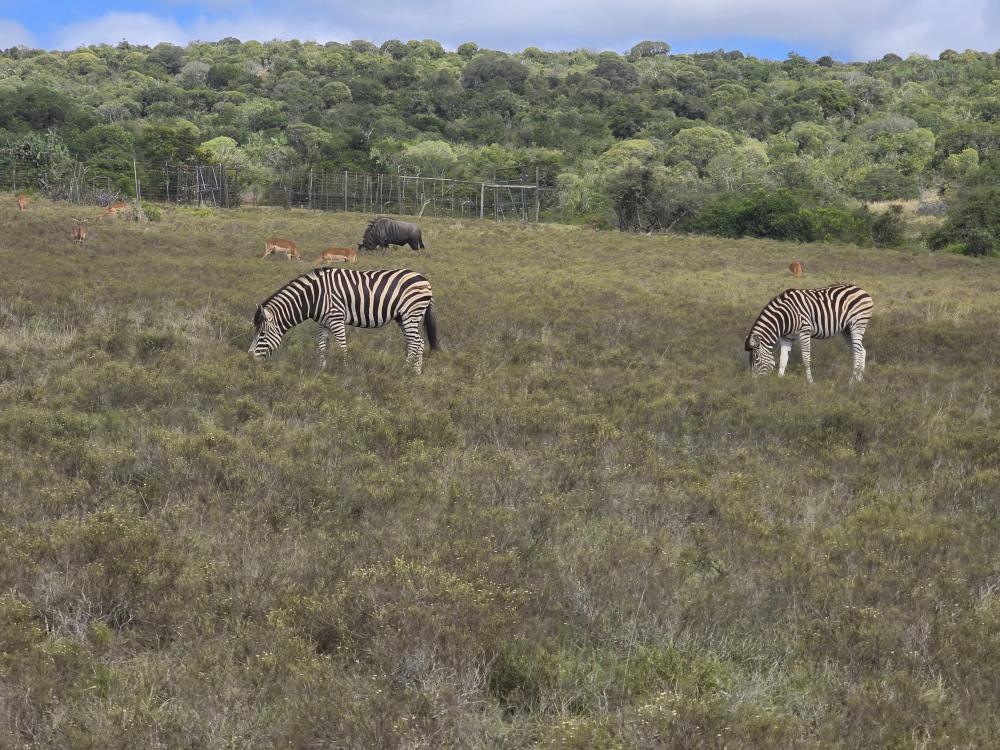
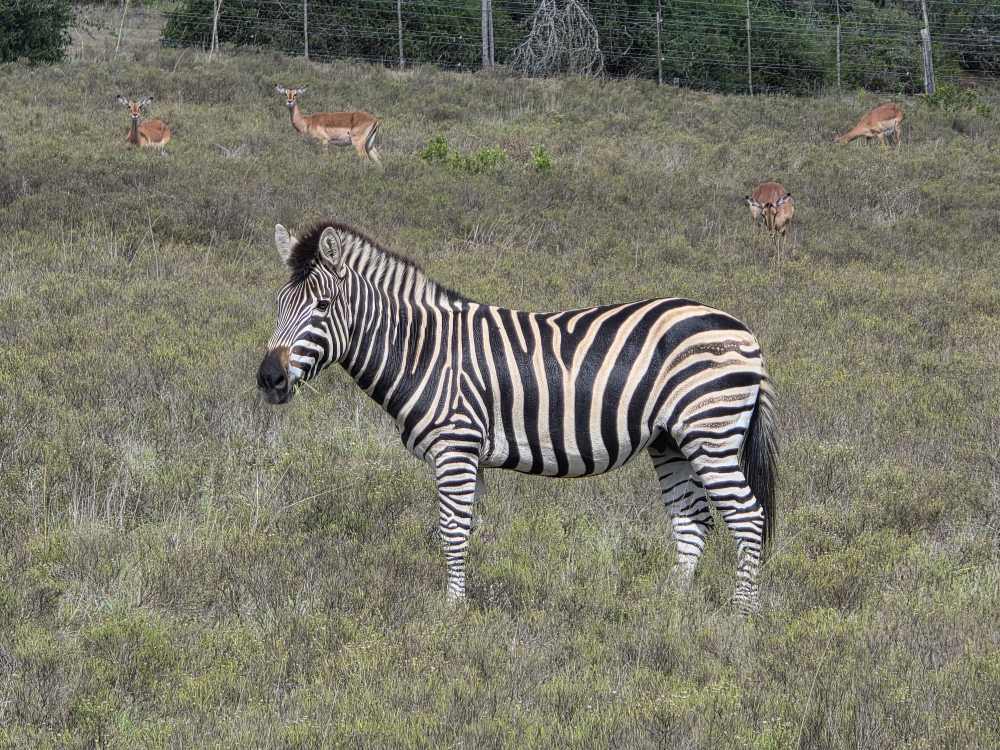
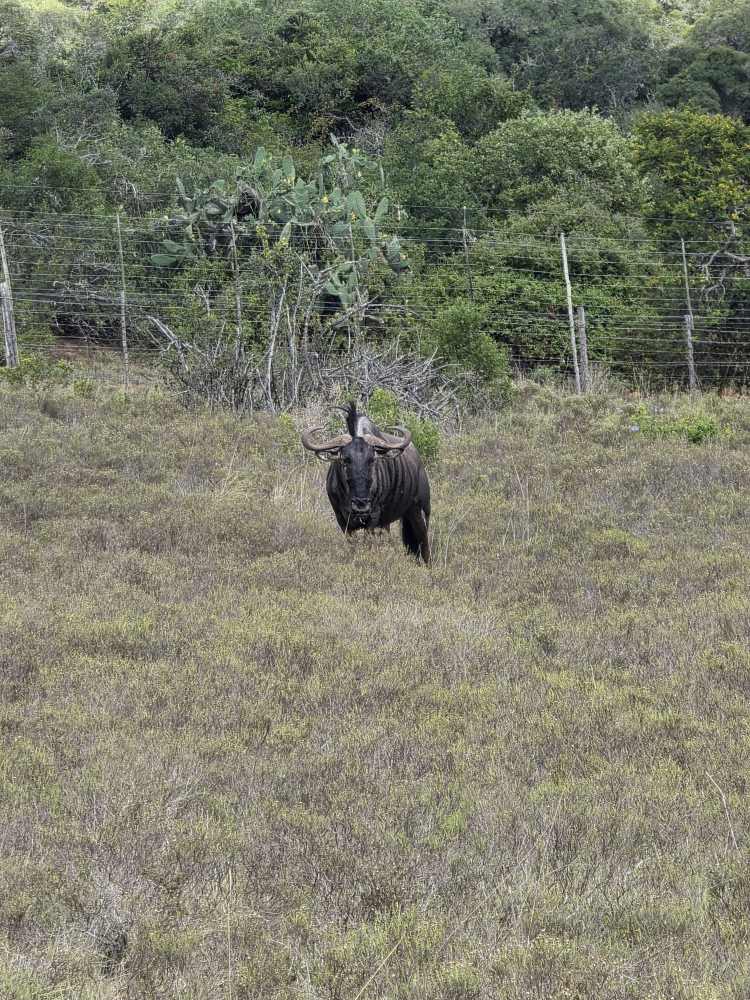
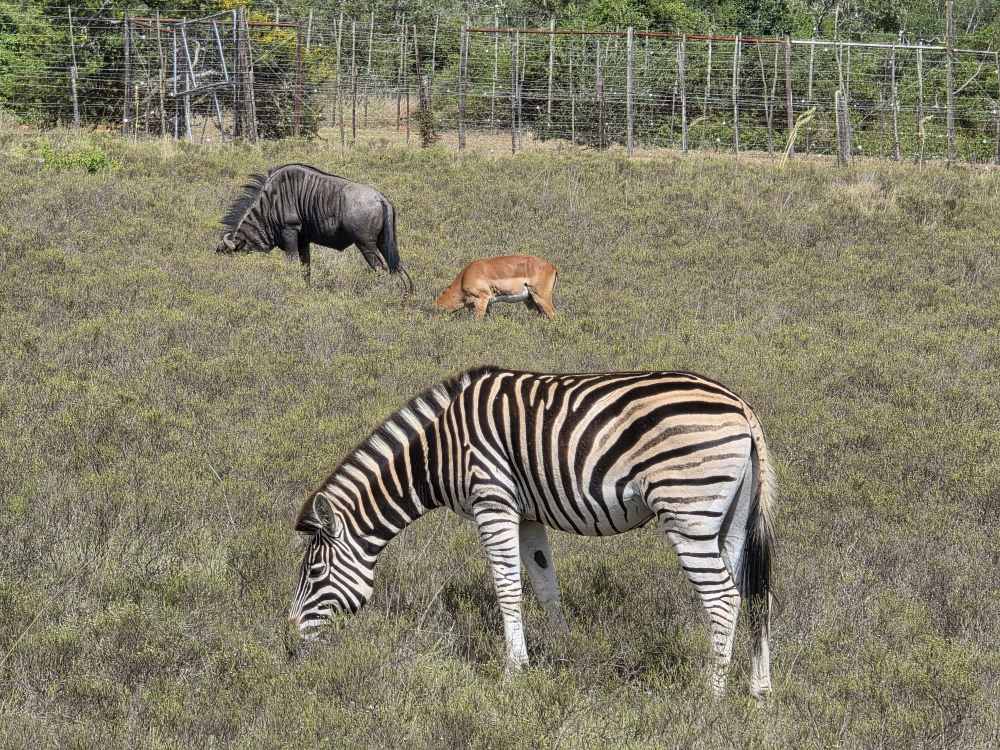
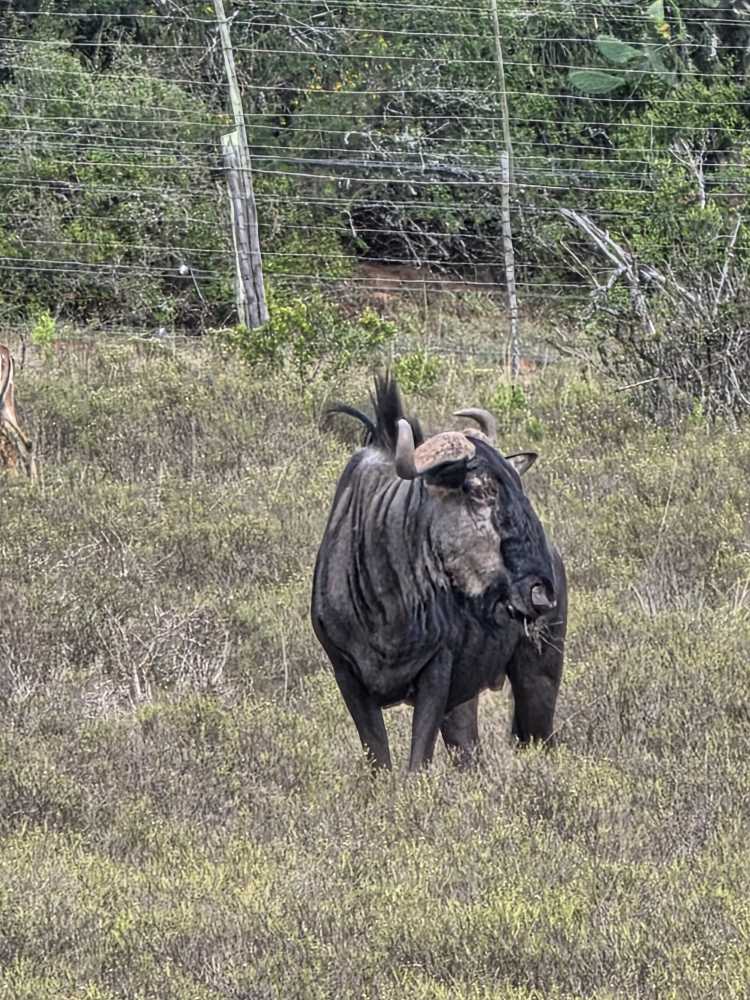
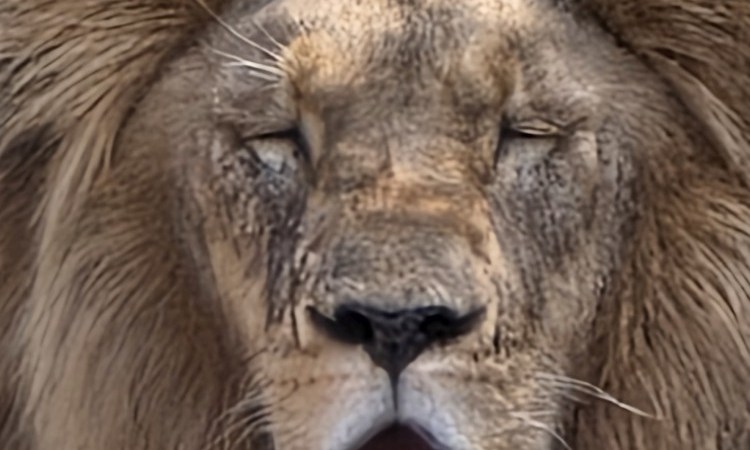
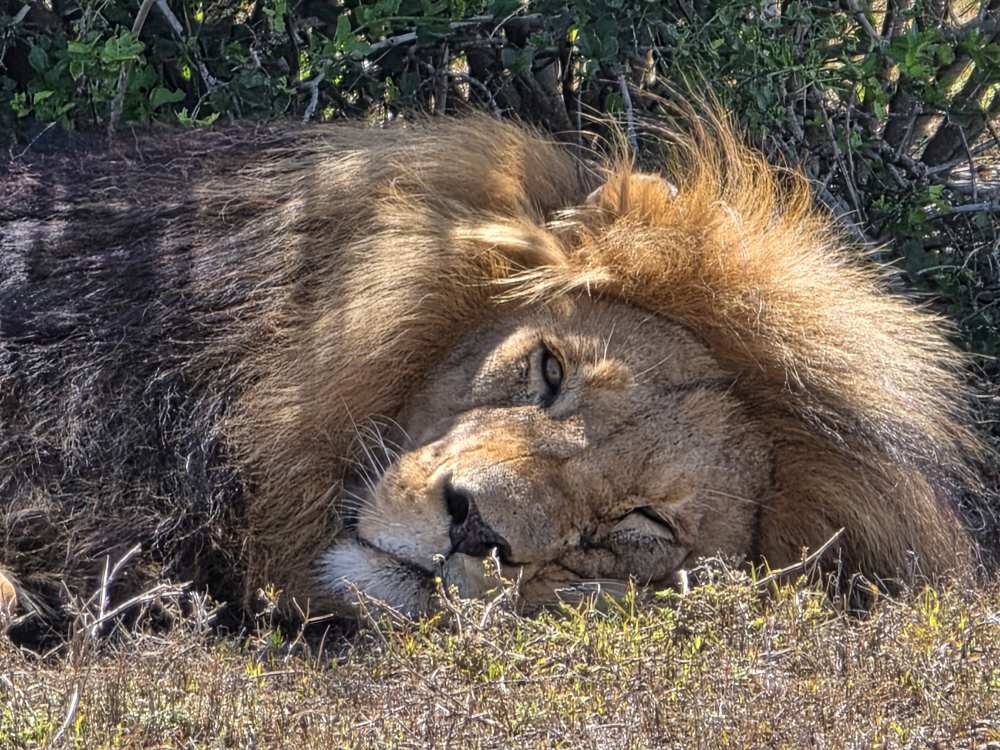
As we are watching the impala, they all look behind them, and then we can hear it: a lion’s roar and call. OMG! We’ve never heard that before – it is amazing, and could be quite close, so of course we are off to find him – and we do! Right over the next hill. The male of the pride, lazing about in the shade of a bush. He is gorgeous! That full mane of hair, running all the way down his stomach – just majestically laying there totally ignoring us completely. Totally Lion King material. Amazing. We sit there forever, just watching him hang out watching us – those eyes! – then roll over and sleep.
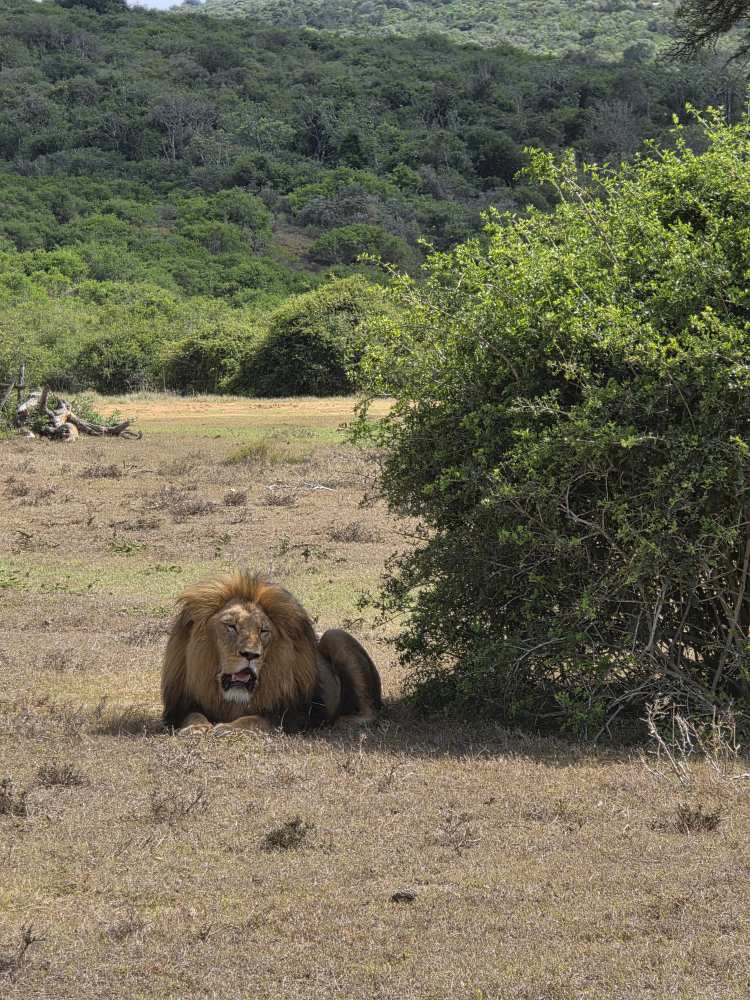
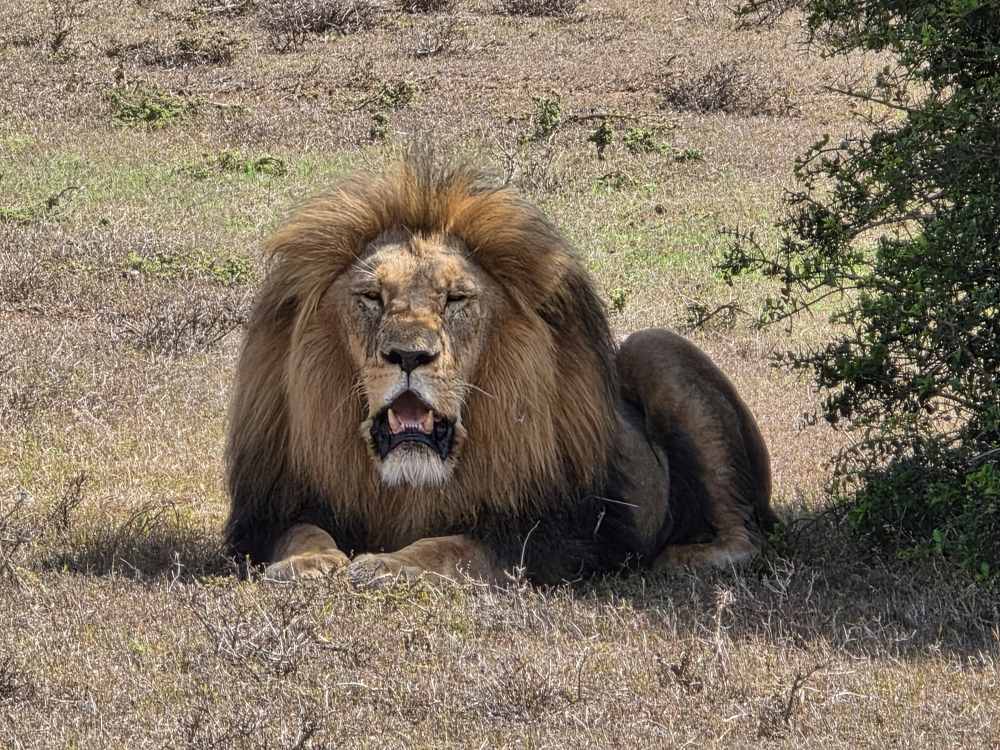
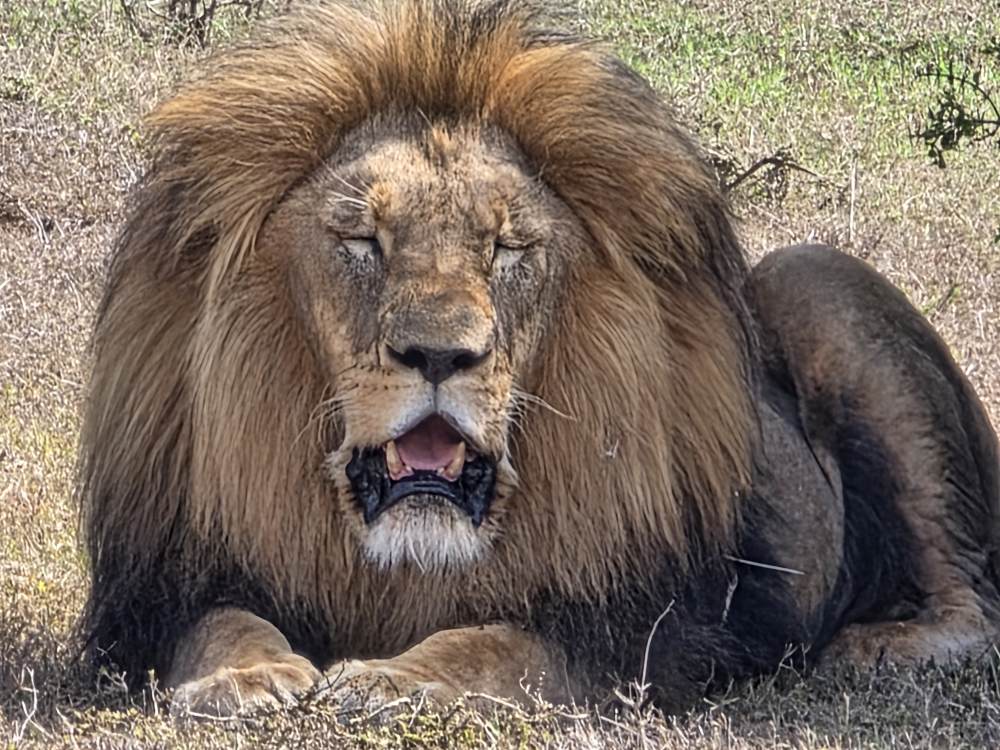
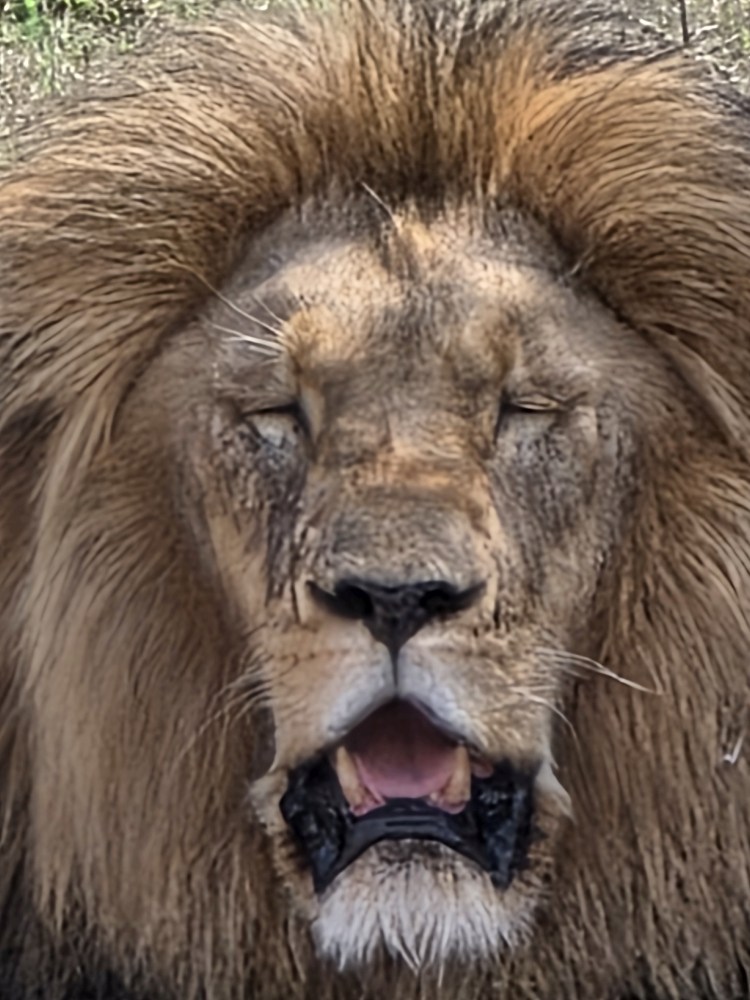
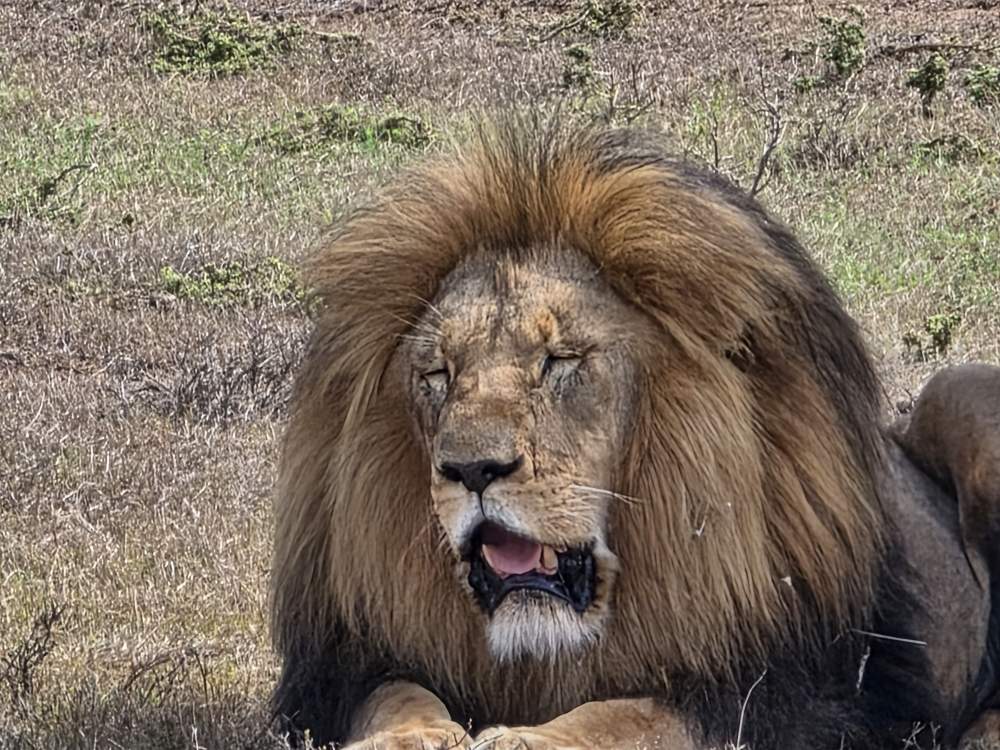
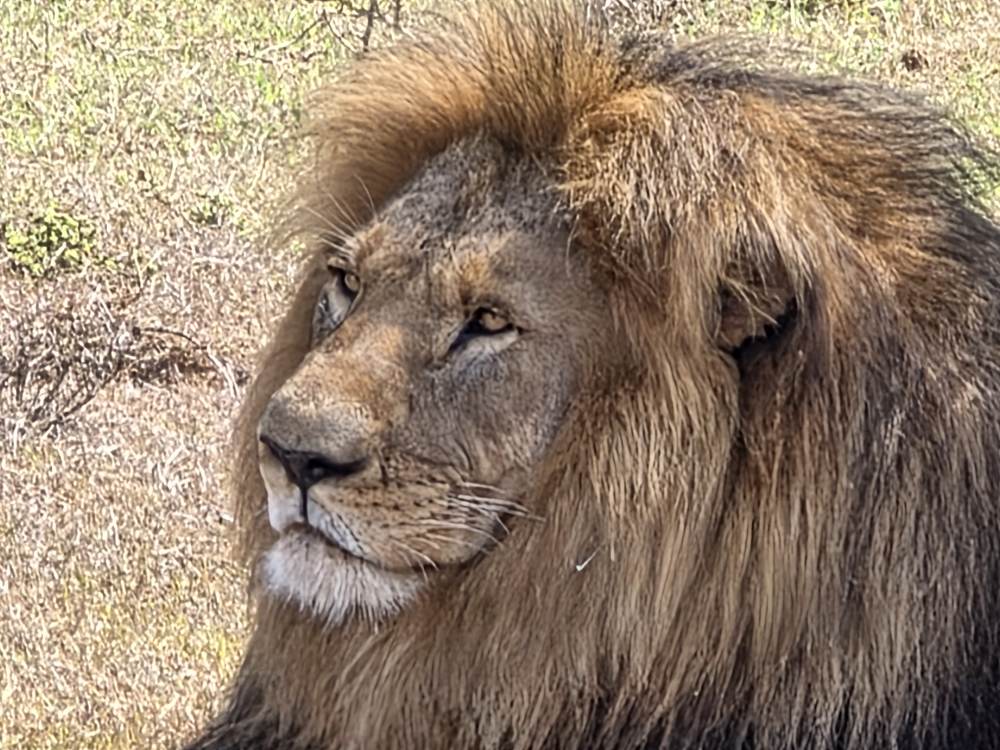
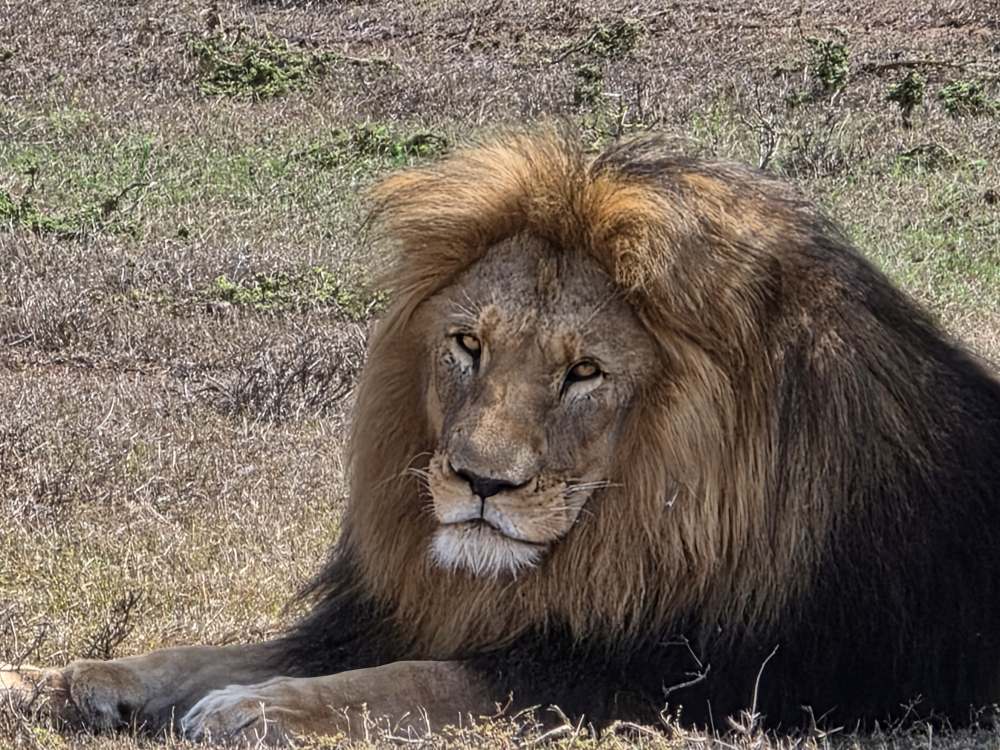
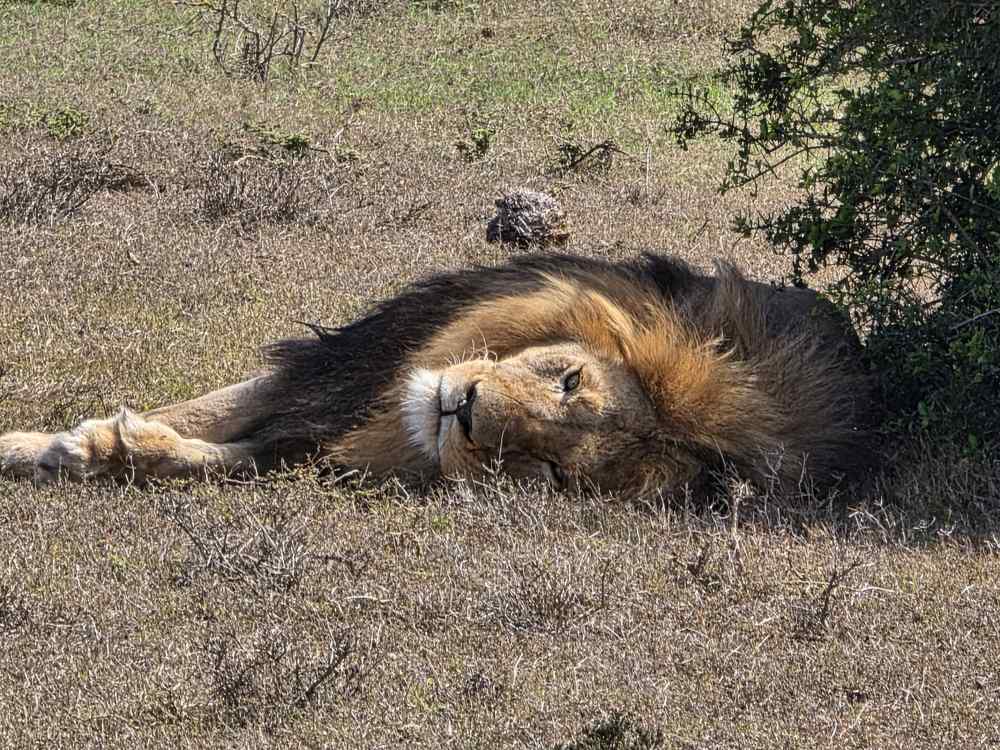
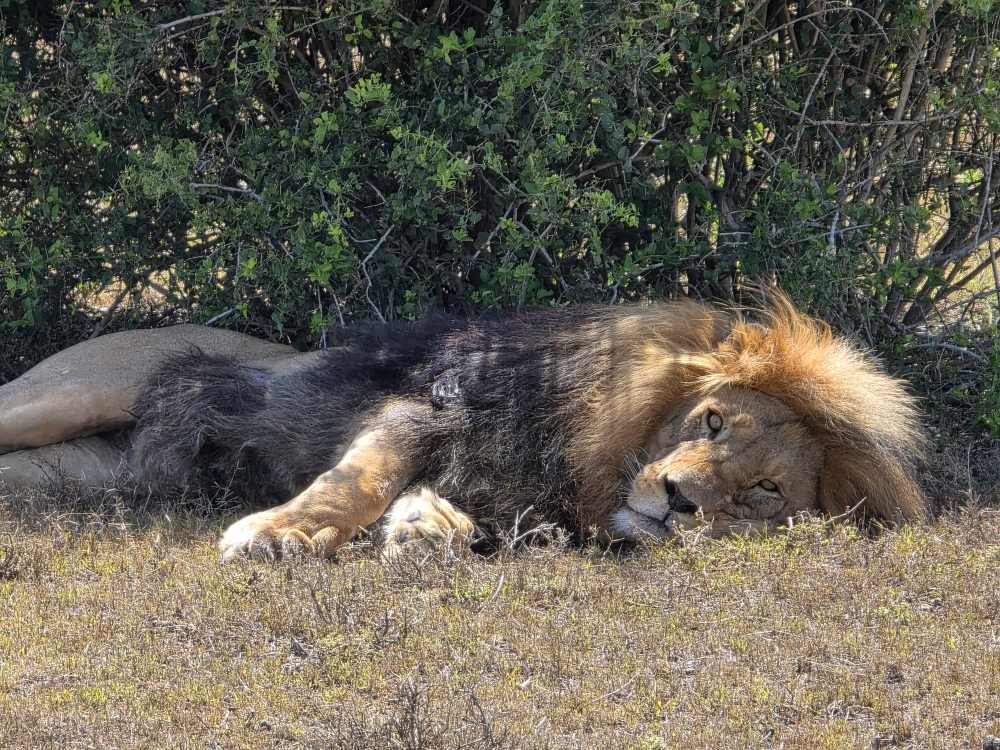
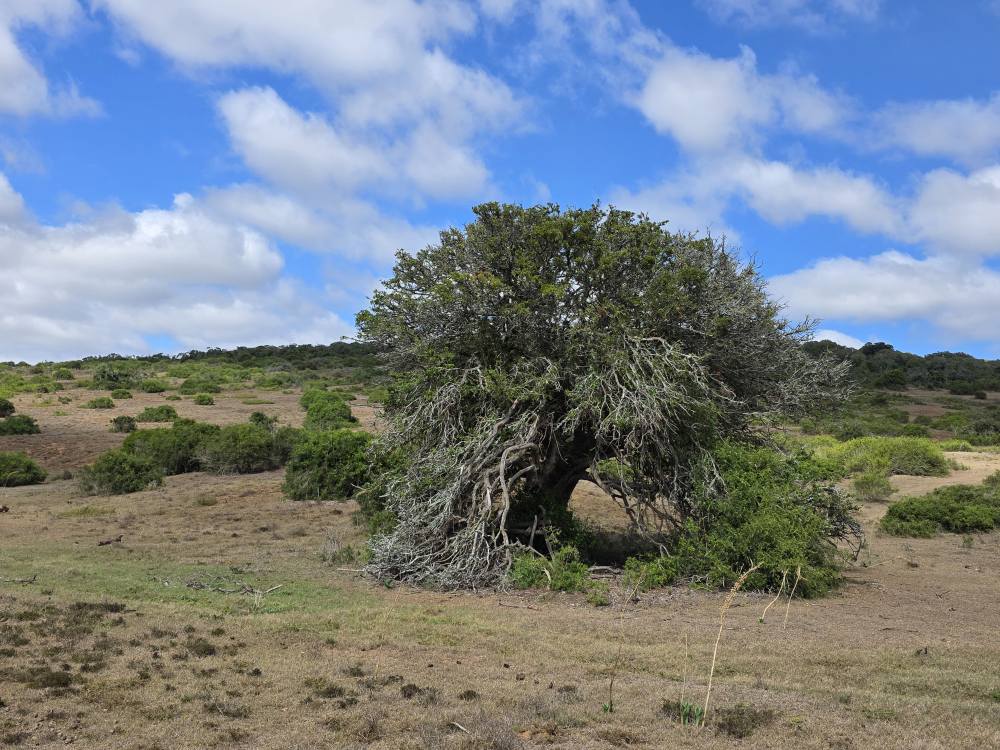
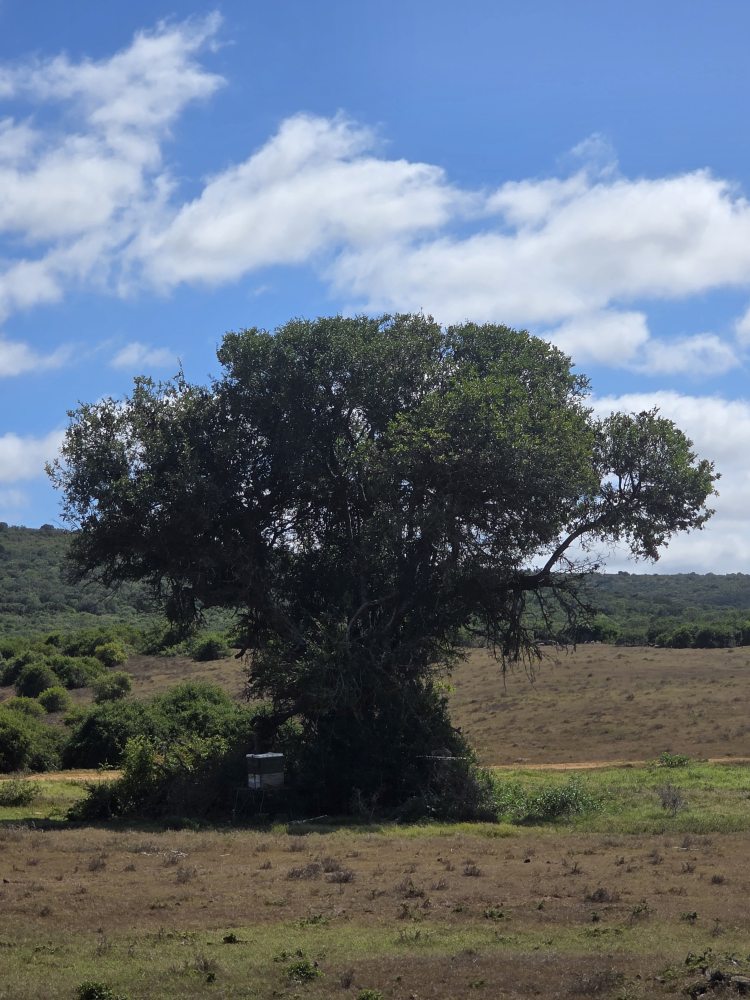
Awesome! And while we are there, we get the background on the Schotia tree – called the Boer-bean tree here. Boer means farmer (referring to the Dutch settlers/farmers called Boers) and Bean refers to the seed pods on the tree that have edible seeds. Since the family that owns the reserve is named Bean and started as farmers, it makes perfect sense to name the reserve Schotia. Along with that explanation Alan also shows us the bee hives located under the trees. The family harvests the honey and sells it to raise funds to buy a White Rhino as the two they had on the property were poached a few years ago.
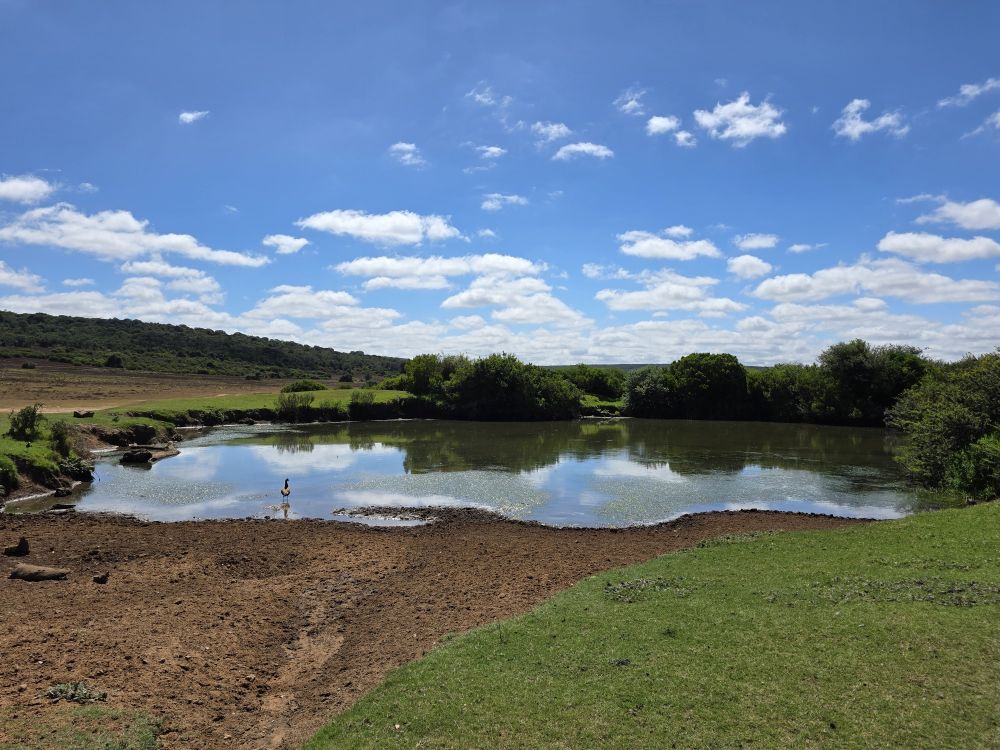
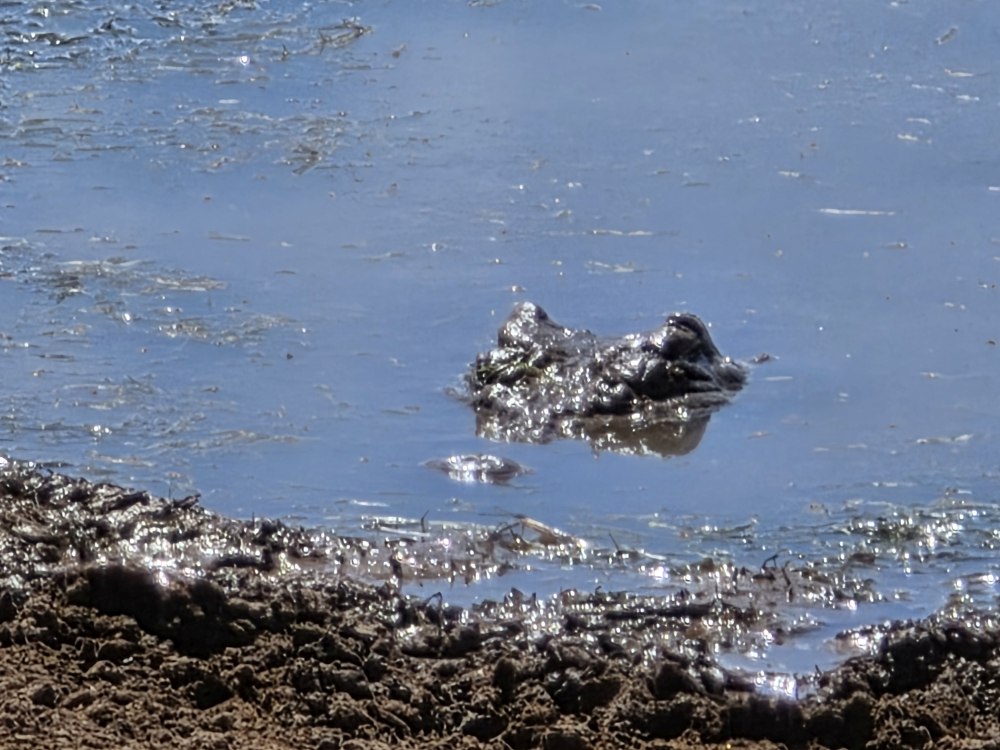
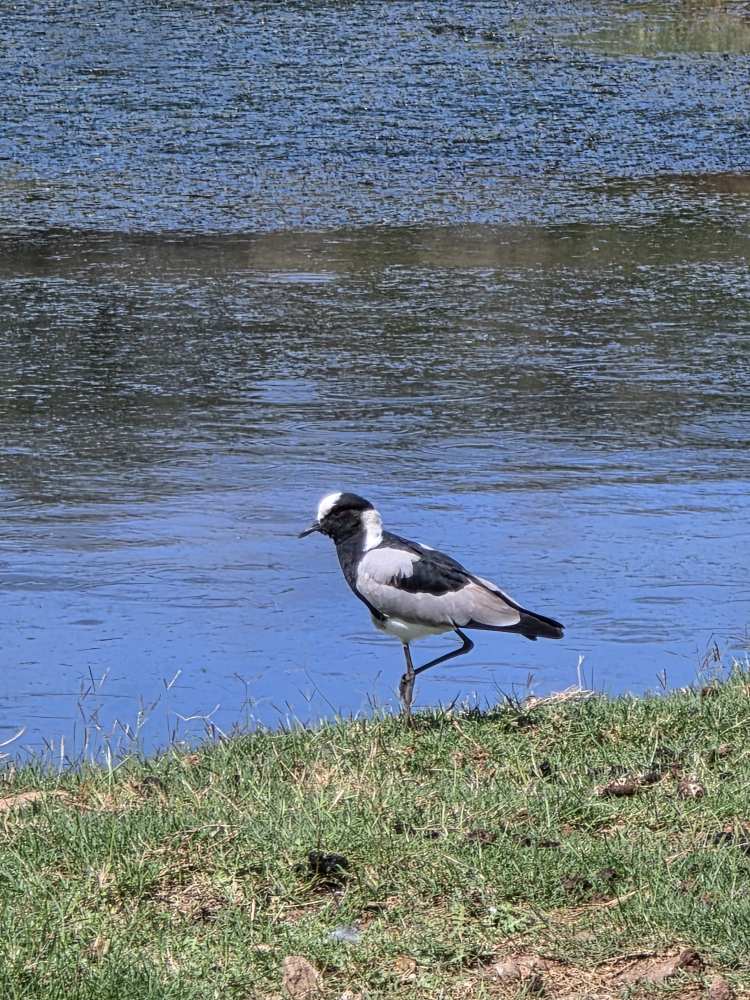
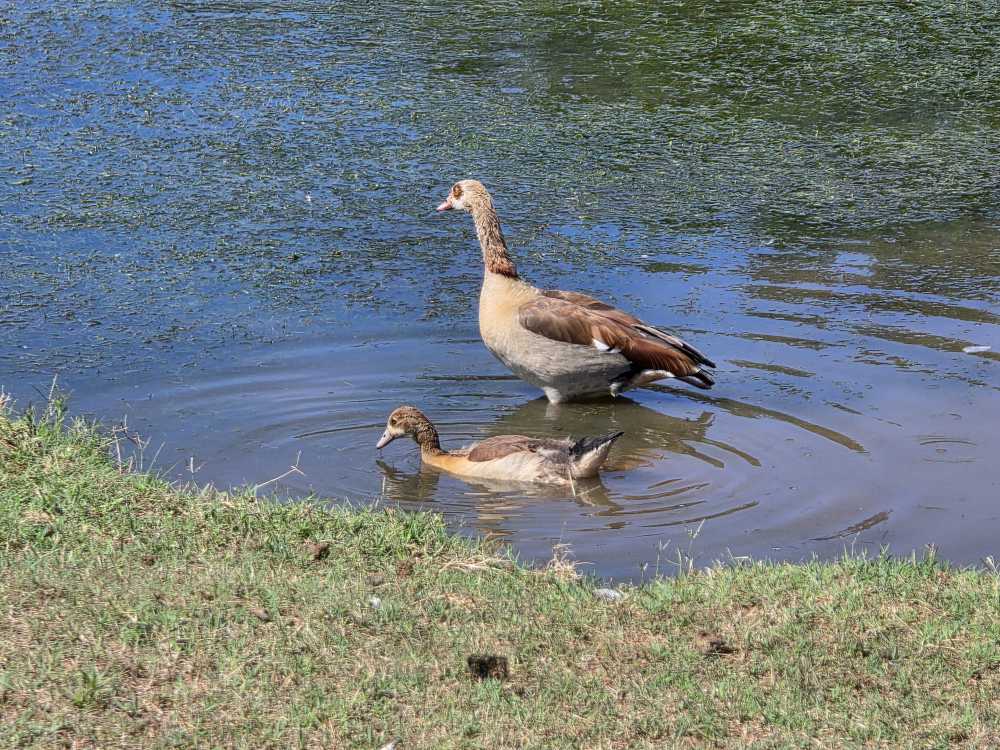
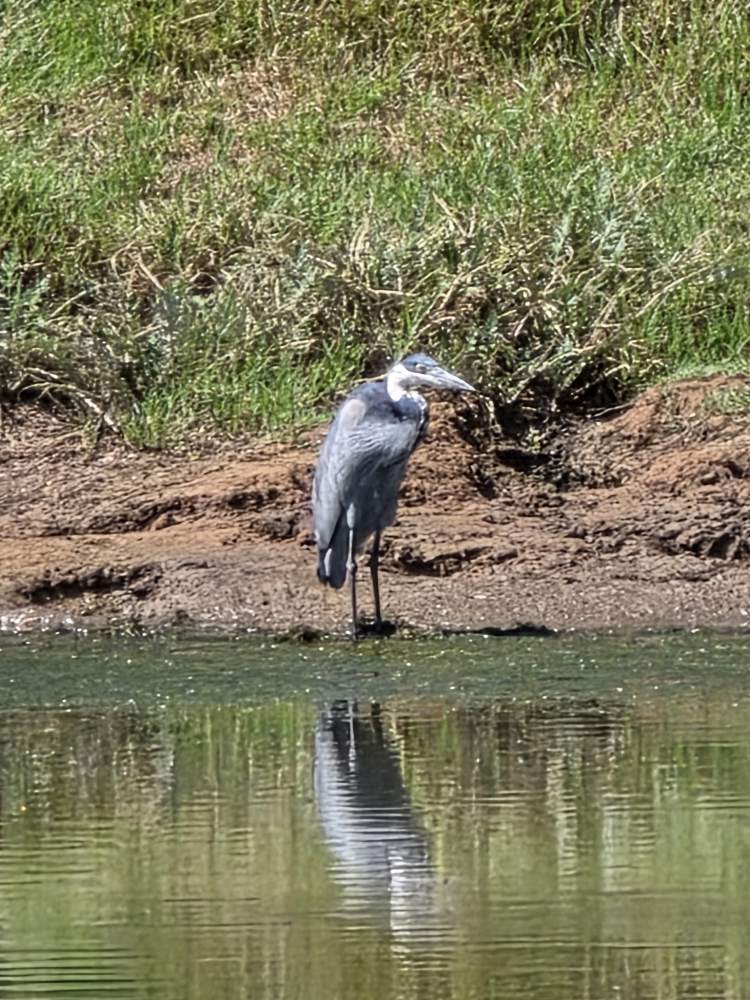
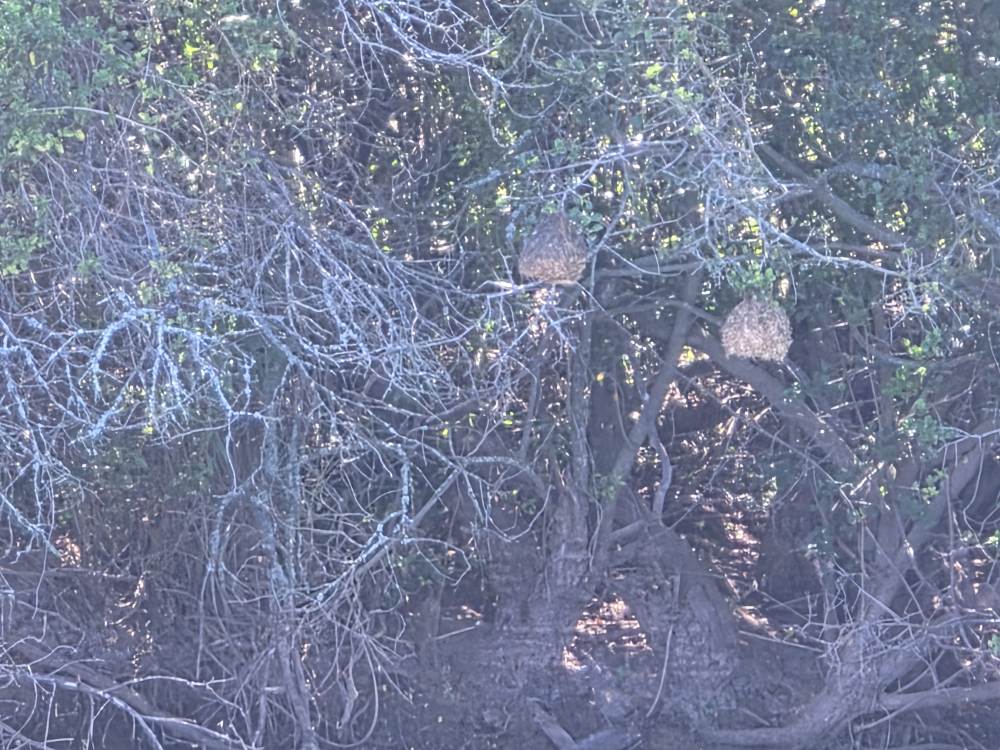
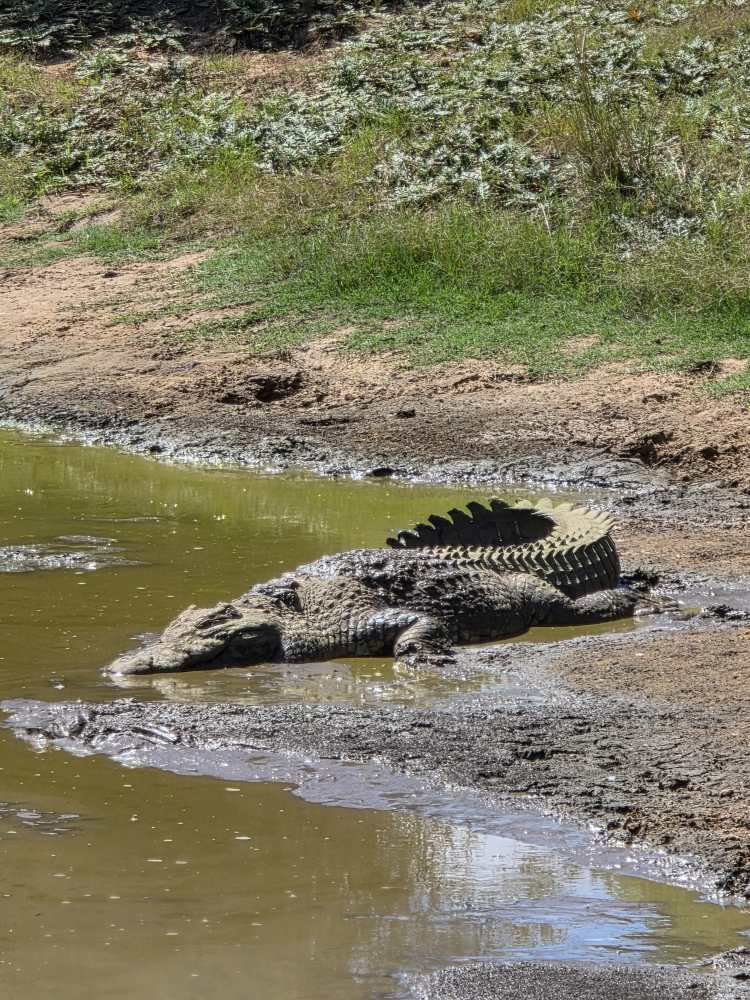
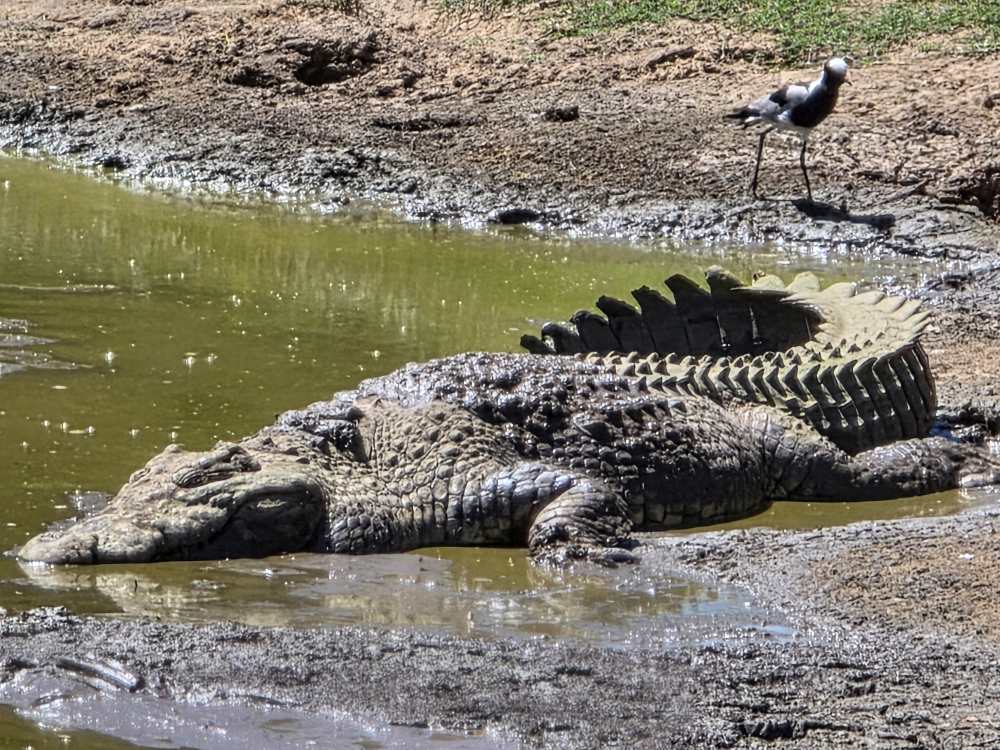
Then we are off to one of the lagoons where there are Egyptian geese, a Blacksmith Lapwing and Blue Heron lounging around while a crocodile sleeps in the shallow section of water near the shore. On the far side of the lagoon are the Weaver’s nests. Alan tells us that the crafty crocodile floats underneath them as the chicks begin to come out of the next to snatch them as they try to fly for the first time. Yeah. More reasons not to like crocodiles.
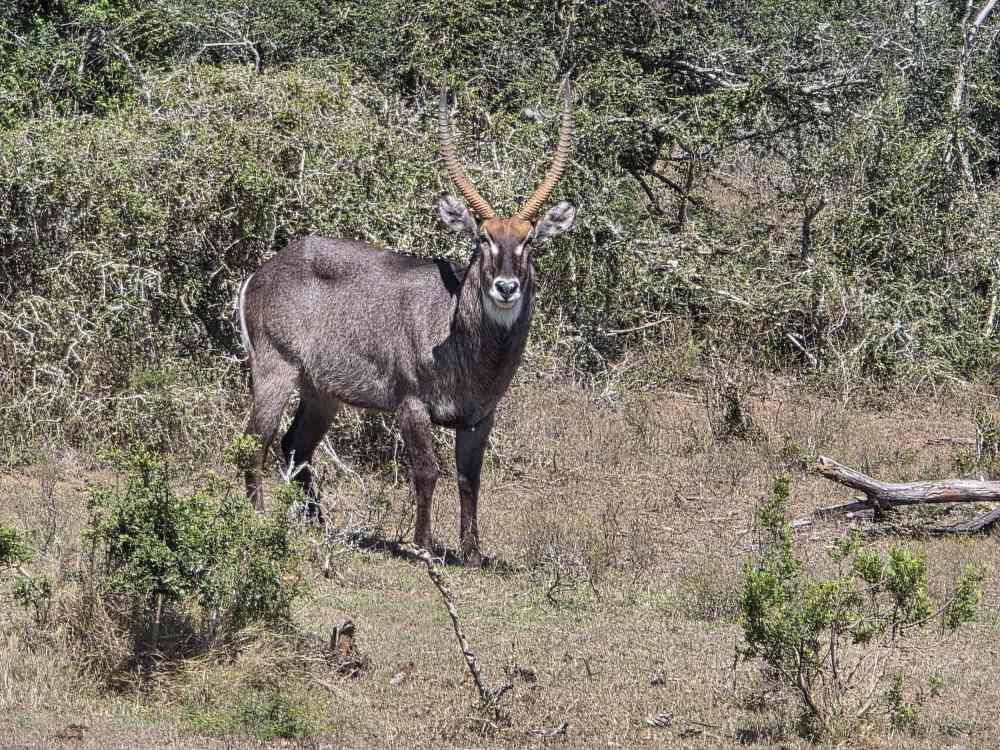
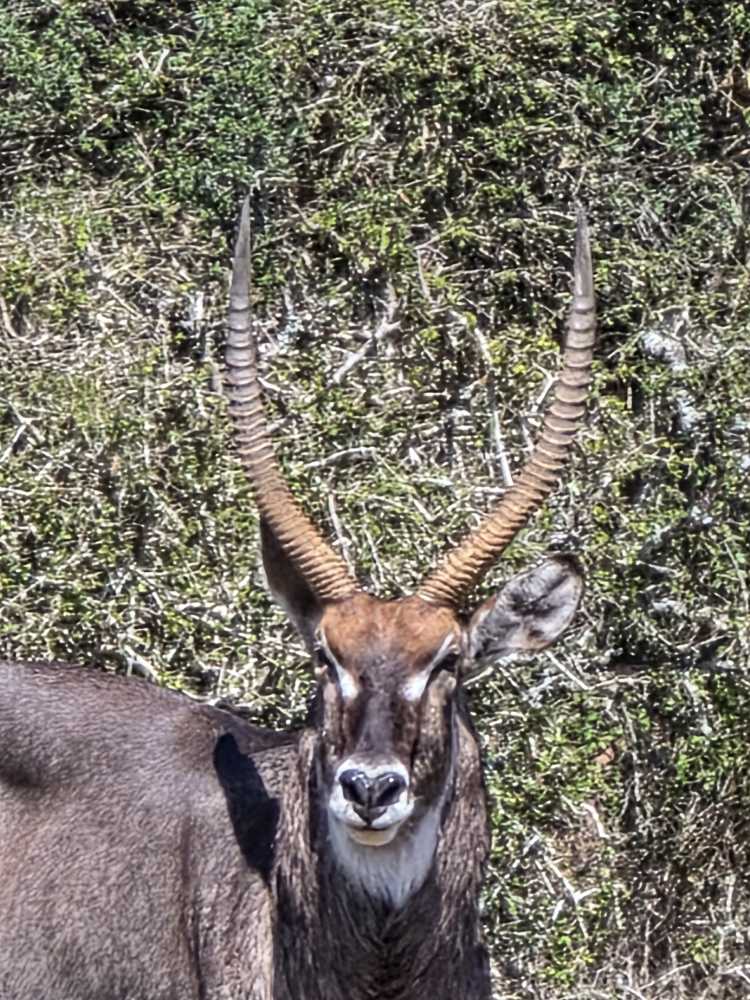
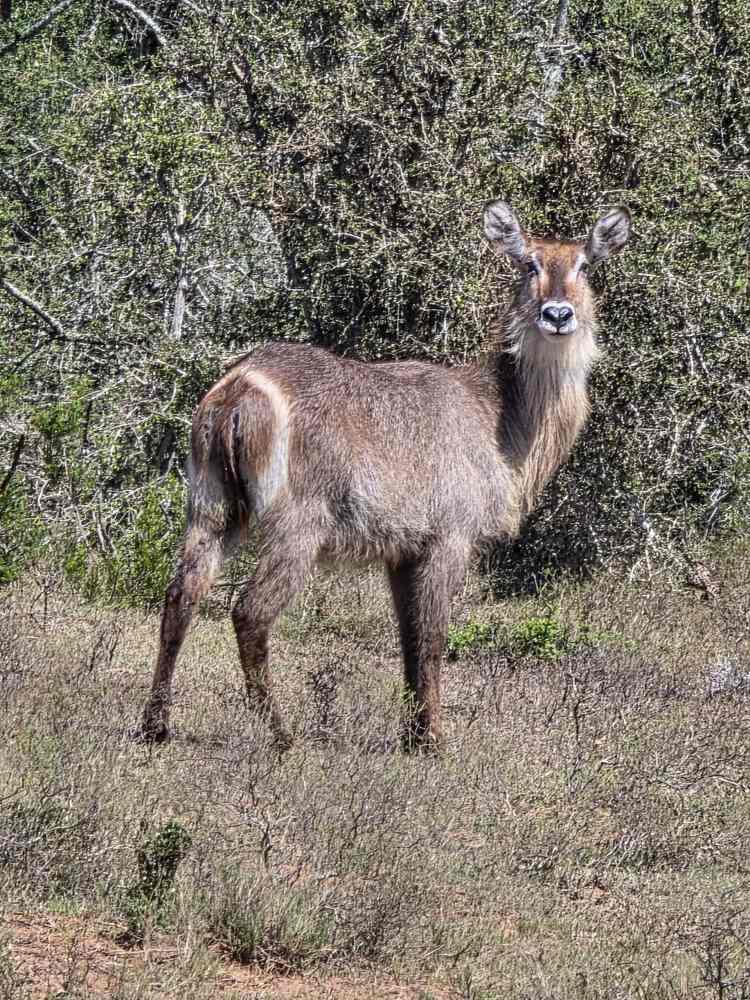
Further on we spy a Waterbuck along with a couple of “toilet seat” antelope – so named for the white color around their rumps that does indeed look like a toilet seat!
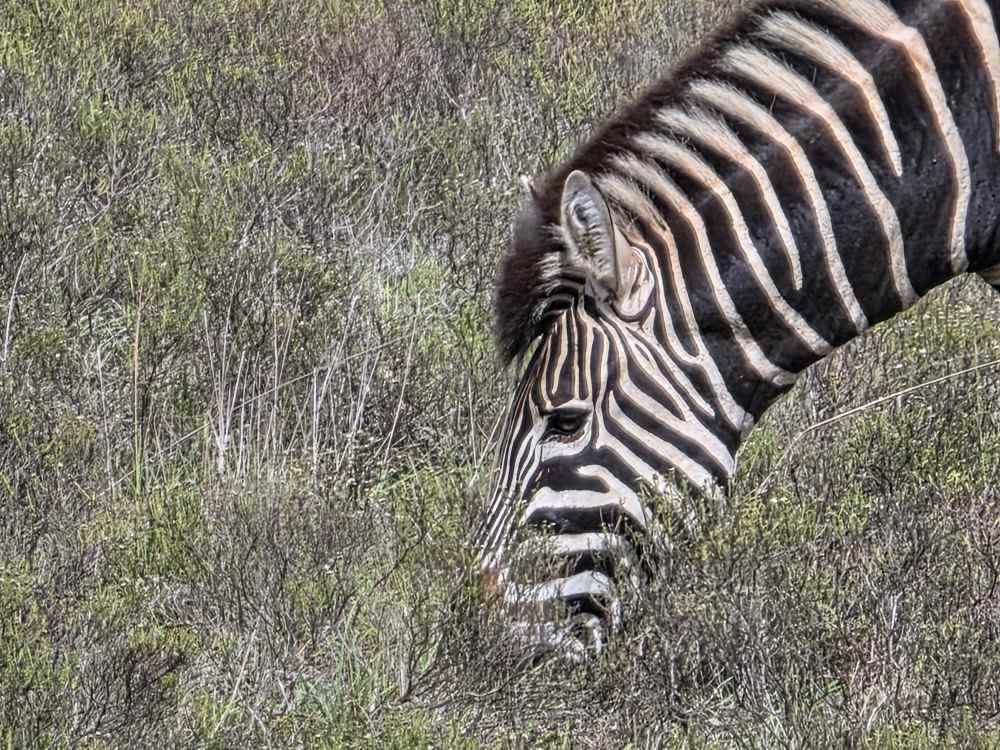
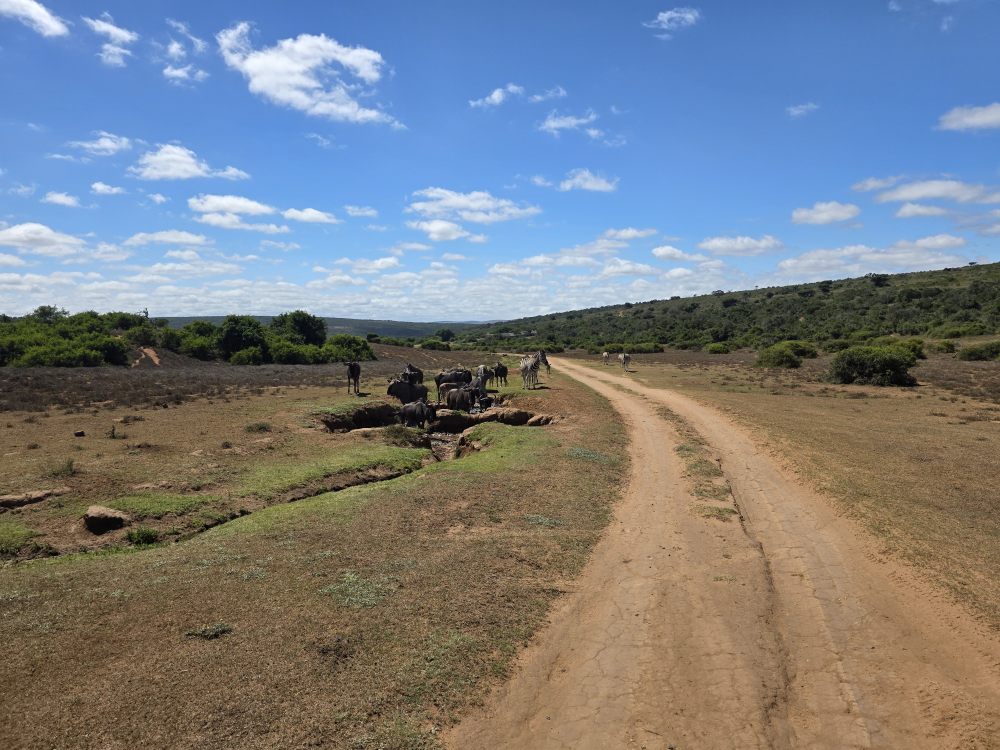
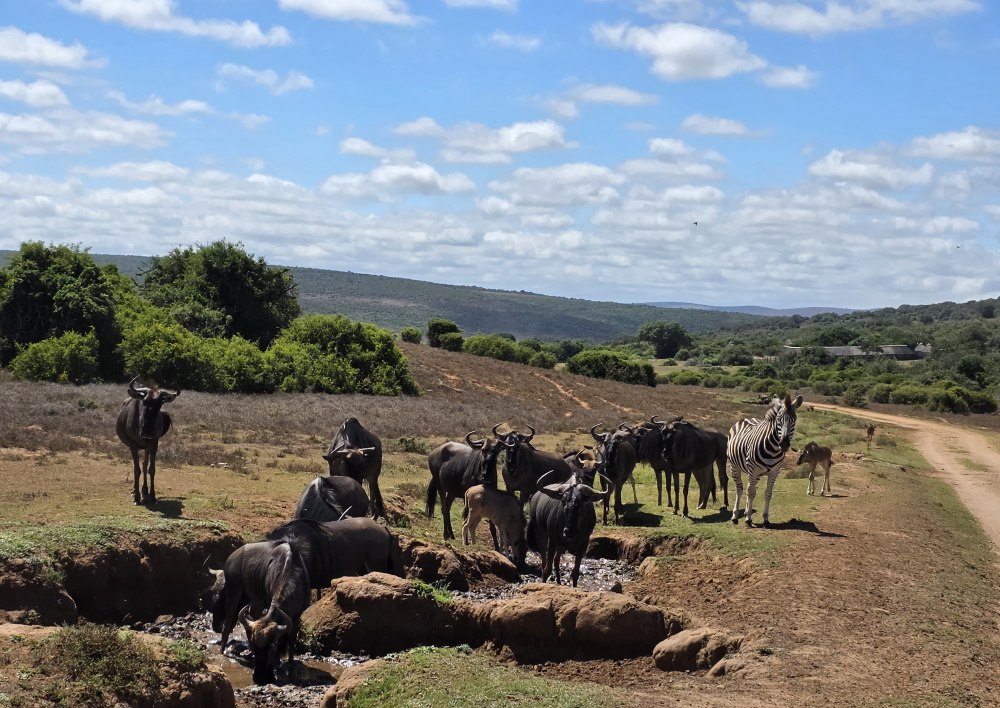
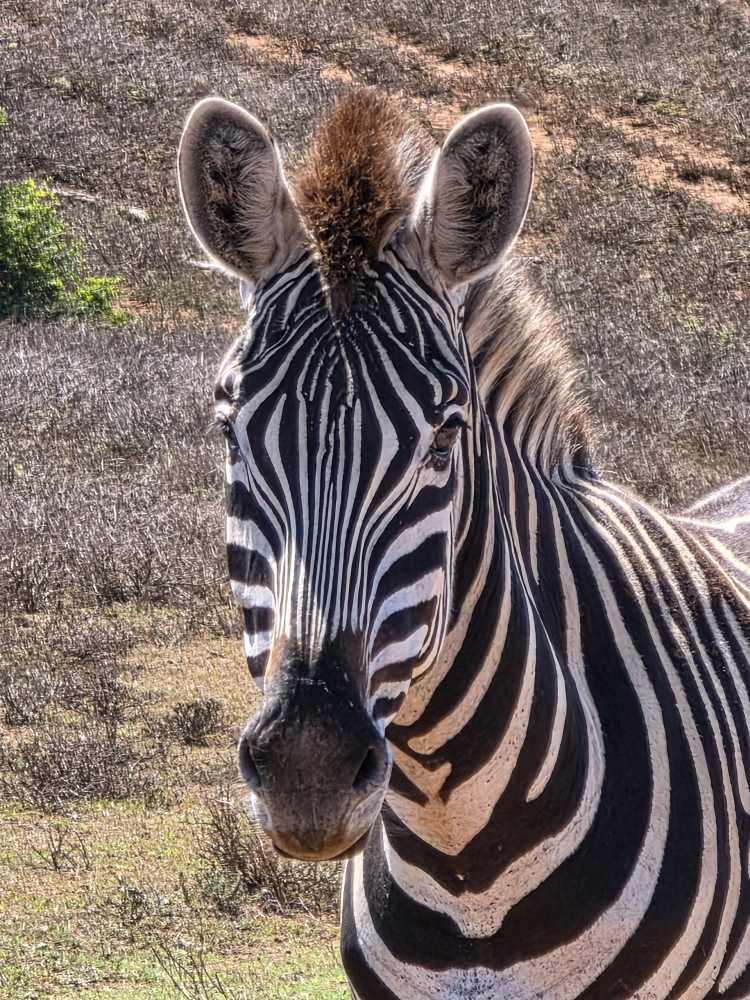
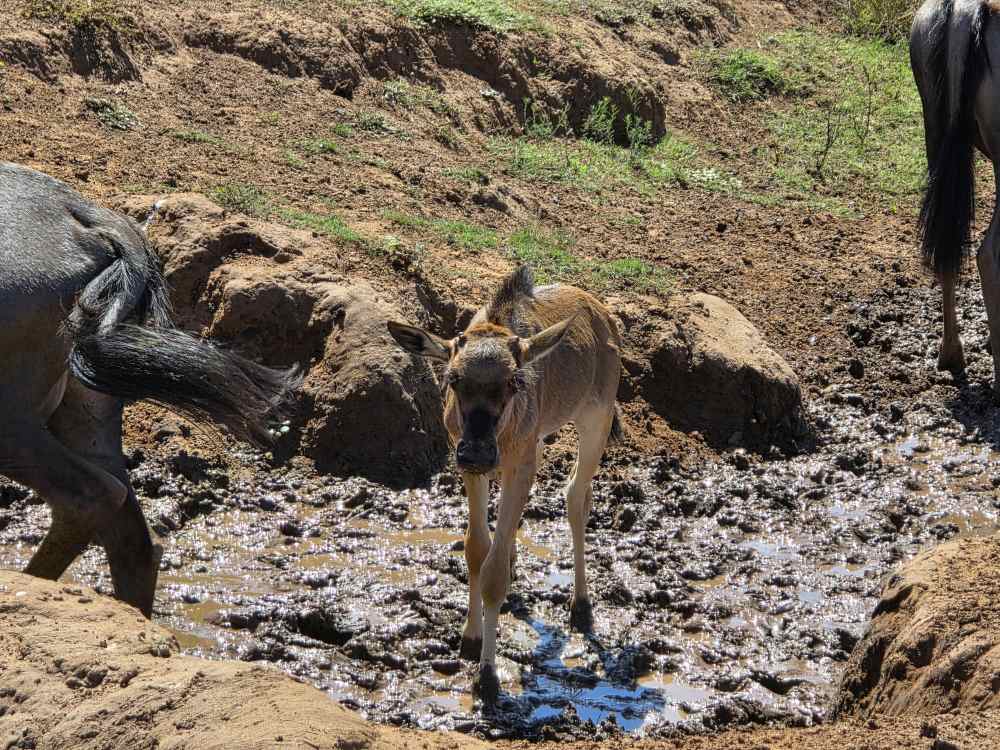
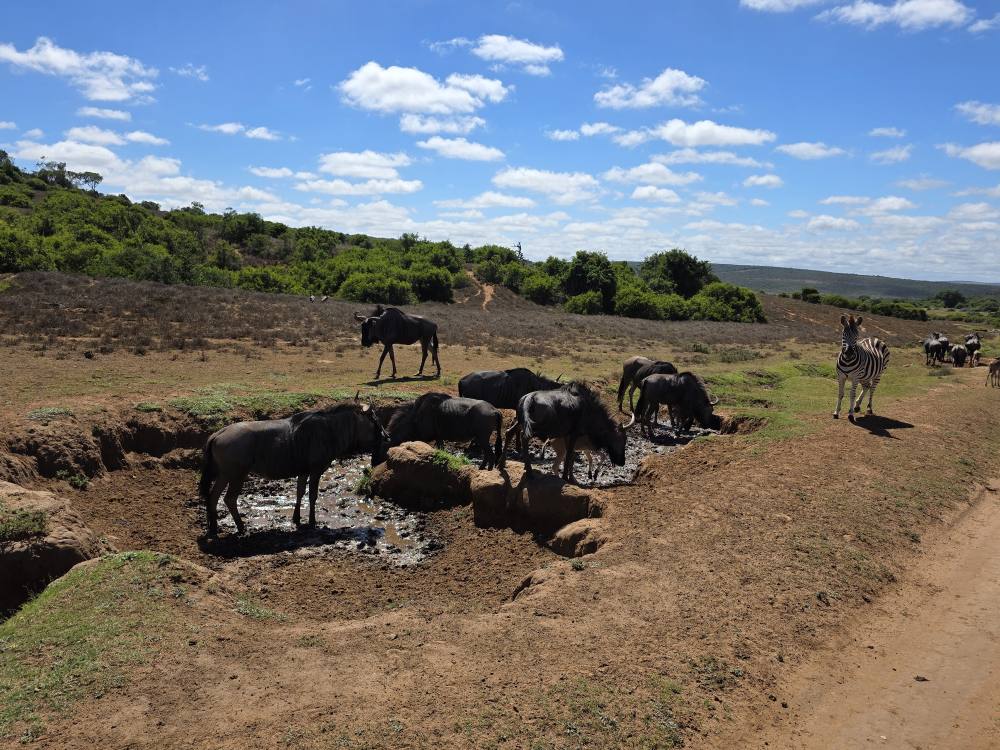
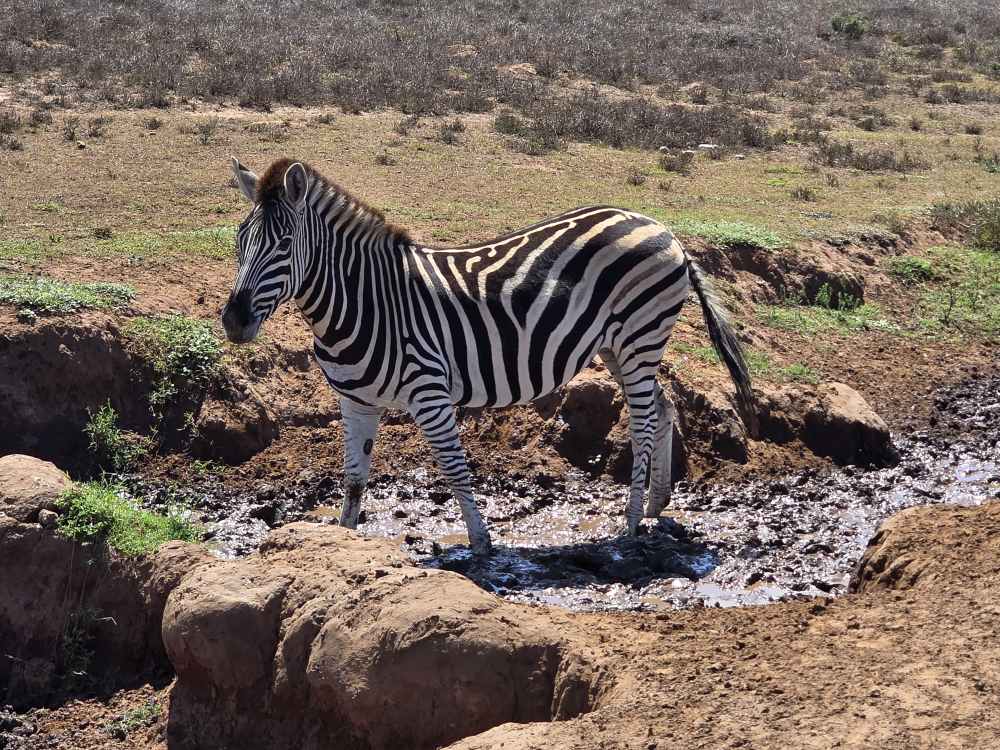
Driving further, we encounter a herd of Wildebeest, along with a baby, running and walking alongside the road eventually stopping at a crossroads to watch the herd, now accompanied by zebra, as they frolic and drink at the muddy waterhole. The zebras, as always, wait until the Wildebeest are done before hopping into the mud pit themselves. I’m always fascinated by zebras – their patterns, their coloring, their sort of regal aloofness. I could stare at them forever.
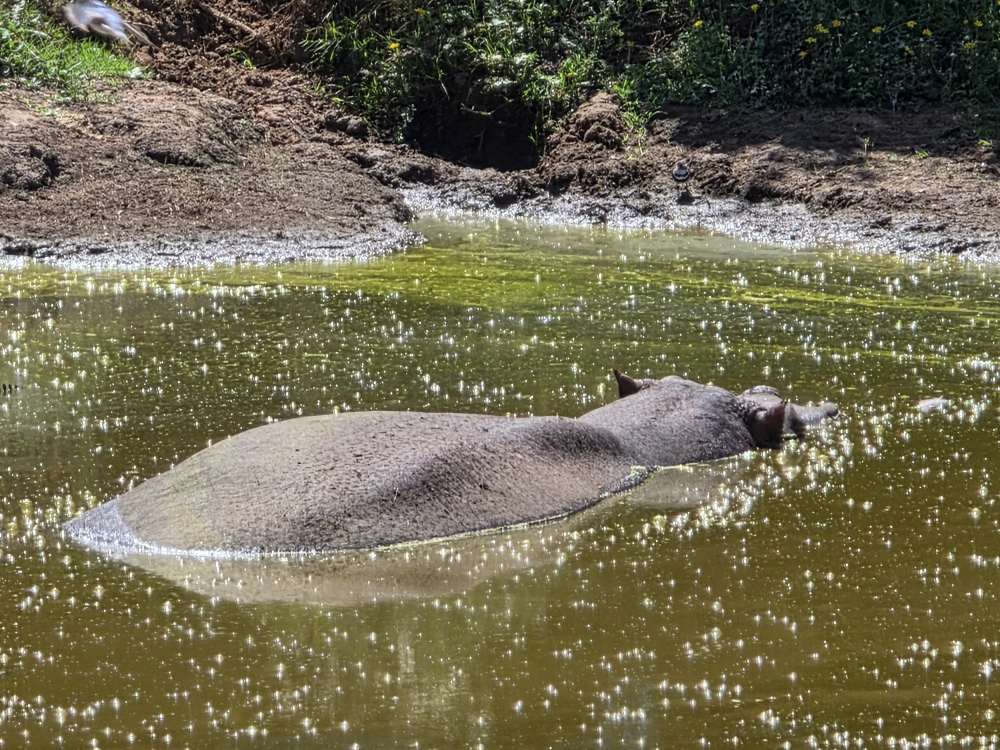
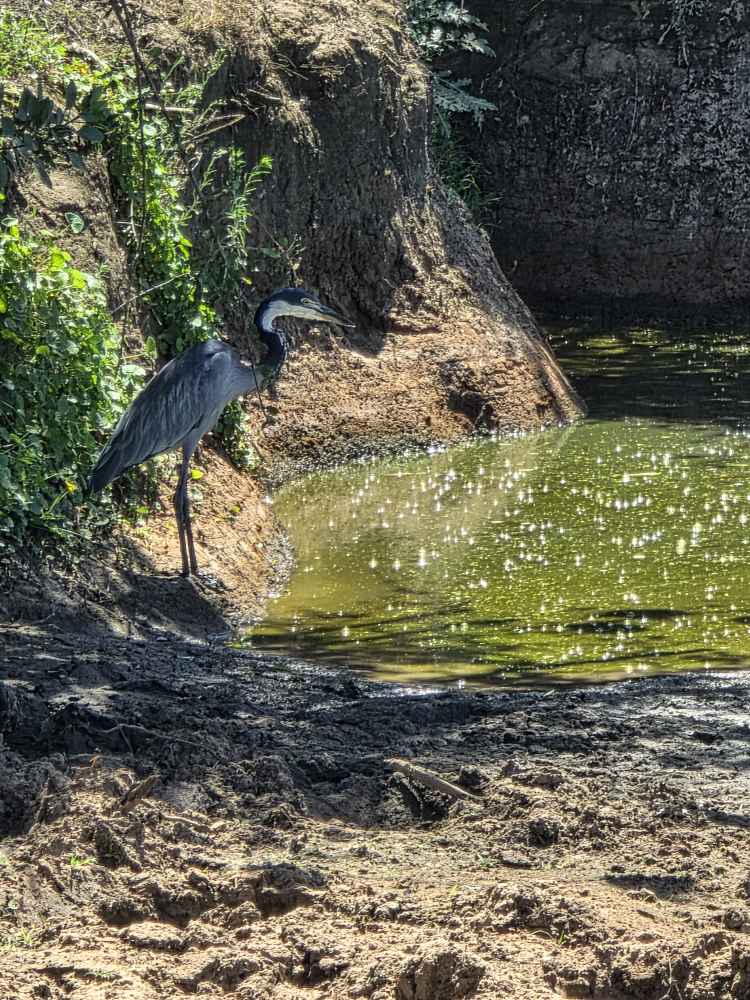
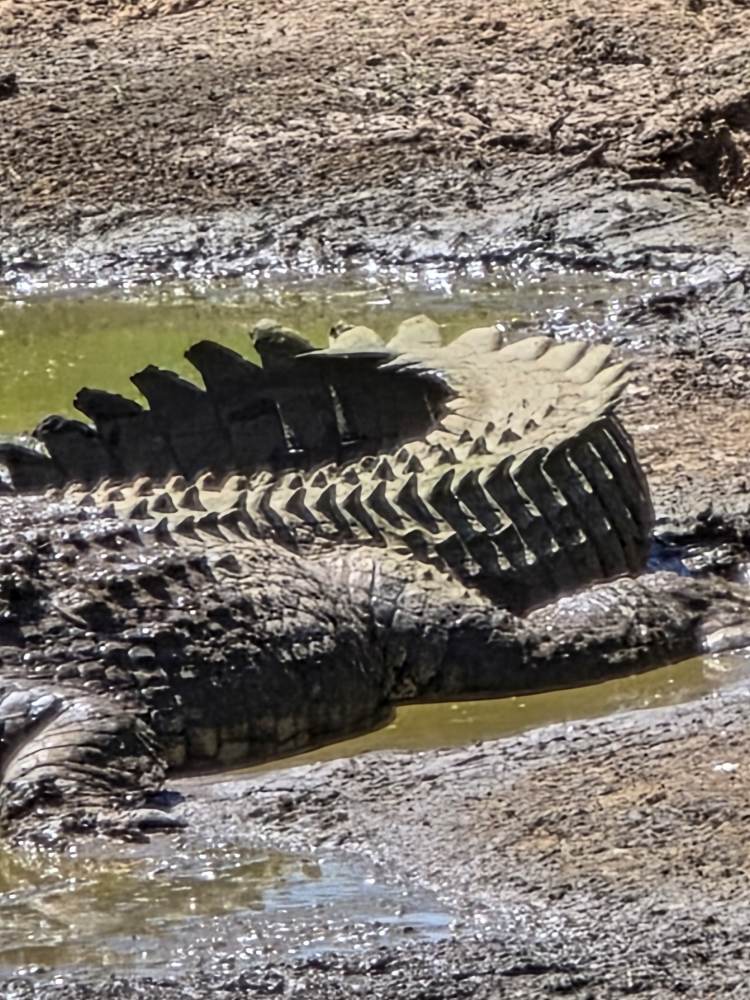
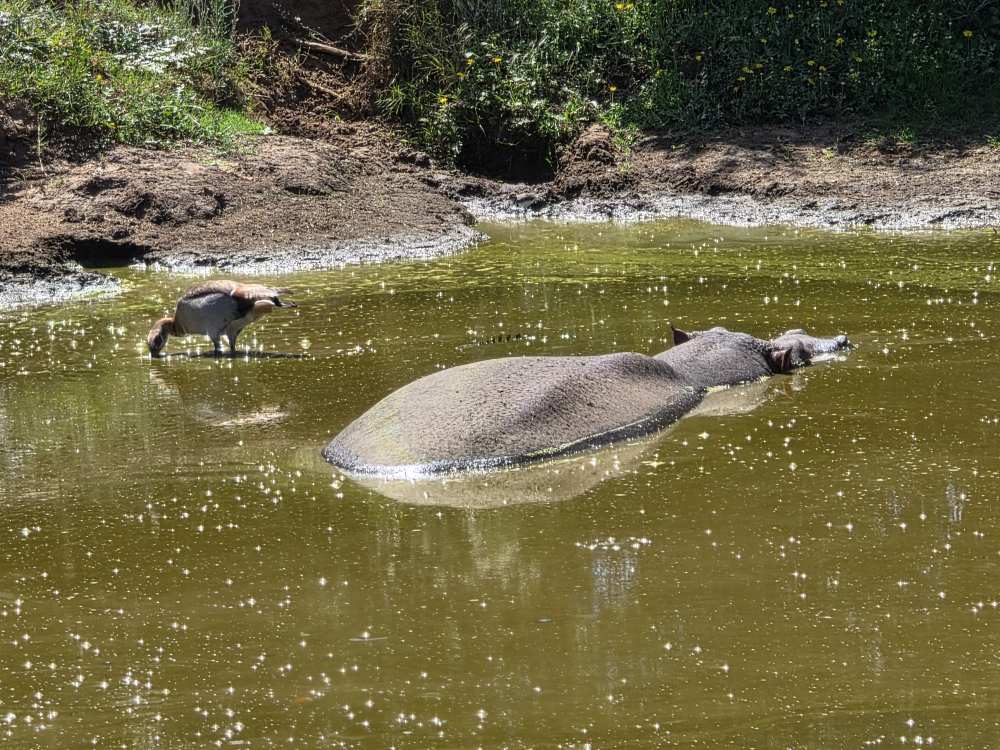
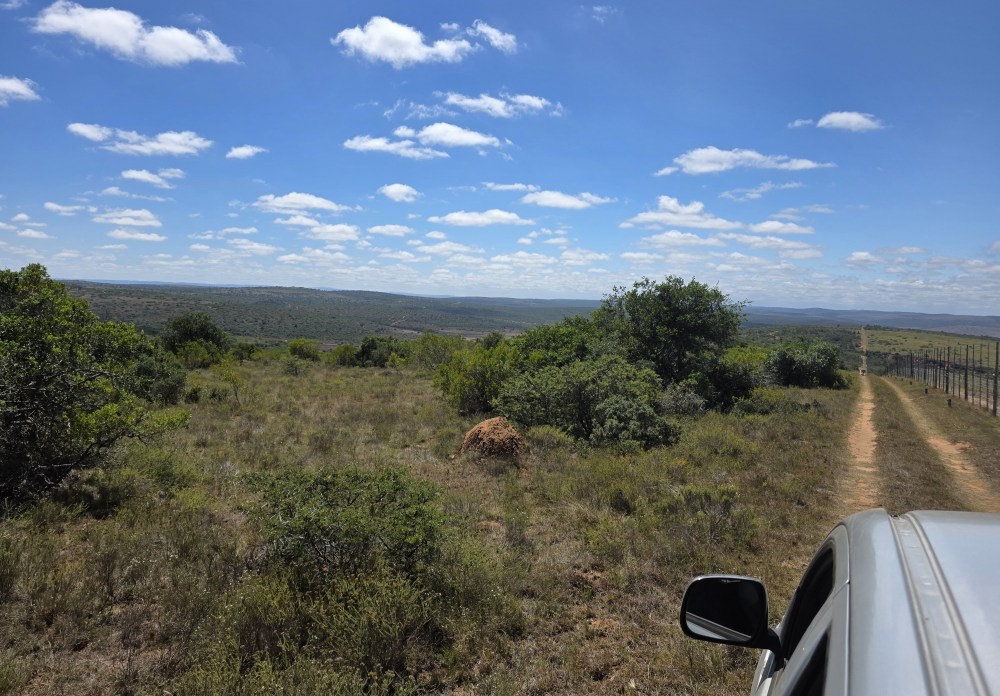
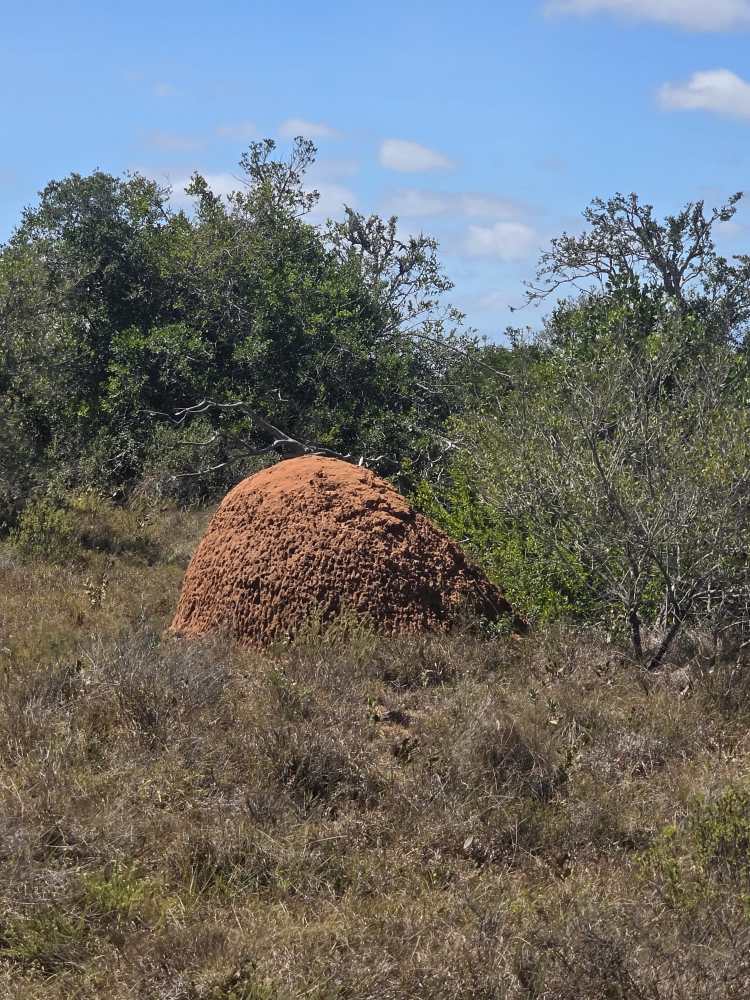
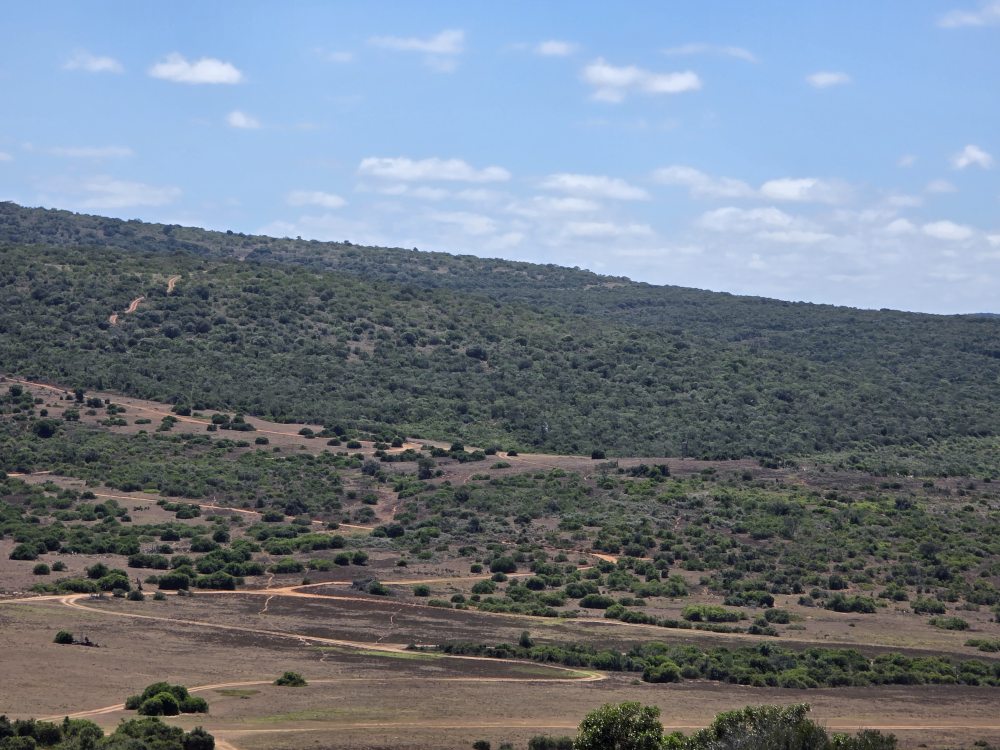
But we must move on – out into the furthest reaches of this part of the park – where you can see the monstrous termite mounds dotting the rolling hills in the distance – to yet another lagoon, this one with a sunning crocodile who is really big and really scary looking. His tail looks like a huge tractor tire or something. And on the other side of the lagoon, near a couple of geese and a black headed heron, a huge hippo keeping cool in the water. This not very submerged as we can see his huge backside and most of his face out of the water.
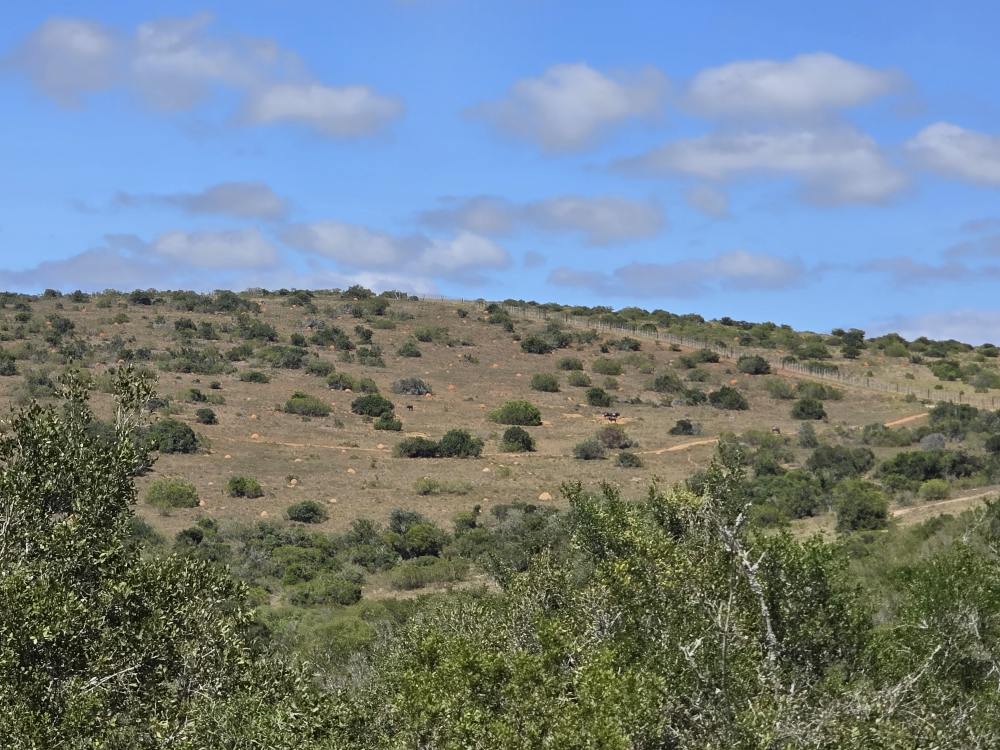
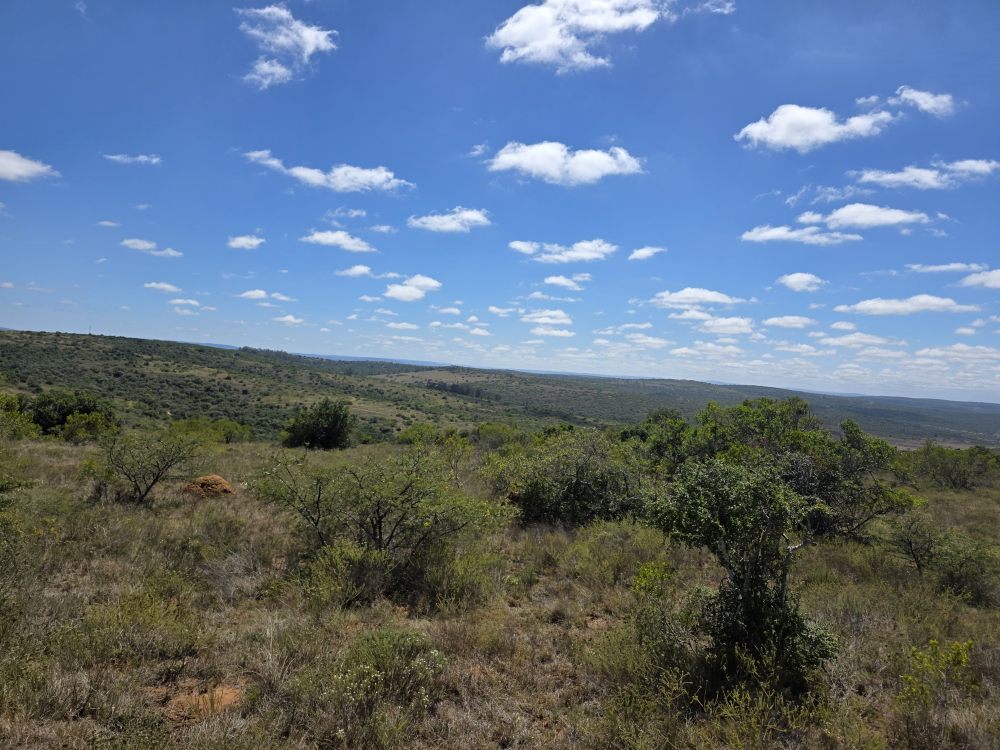
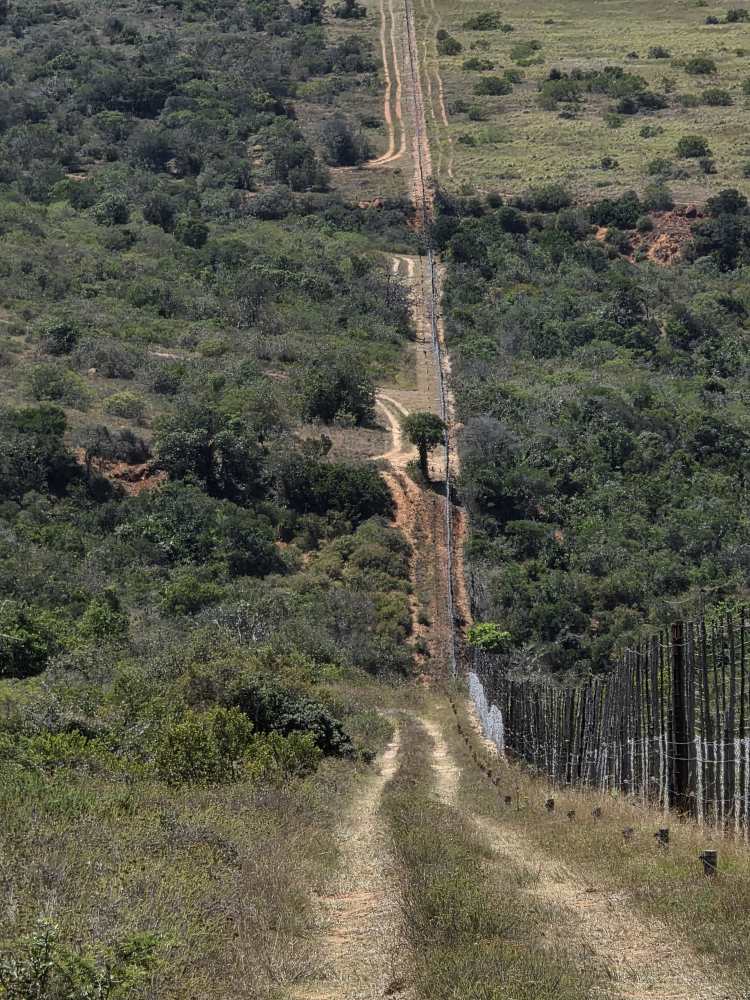
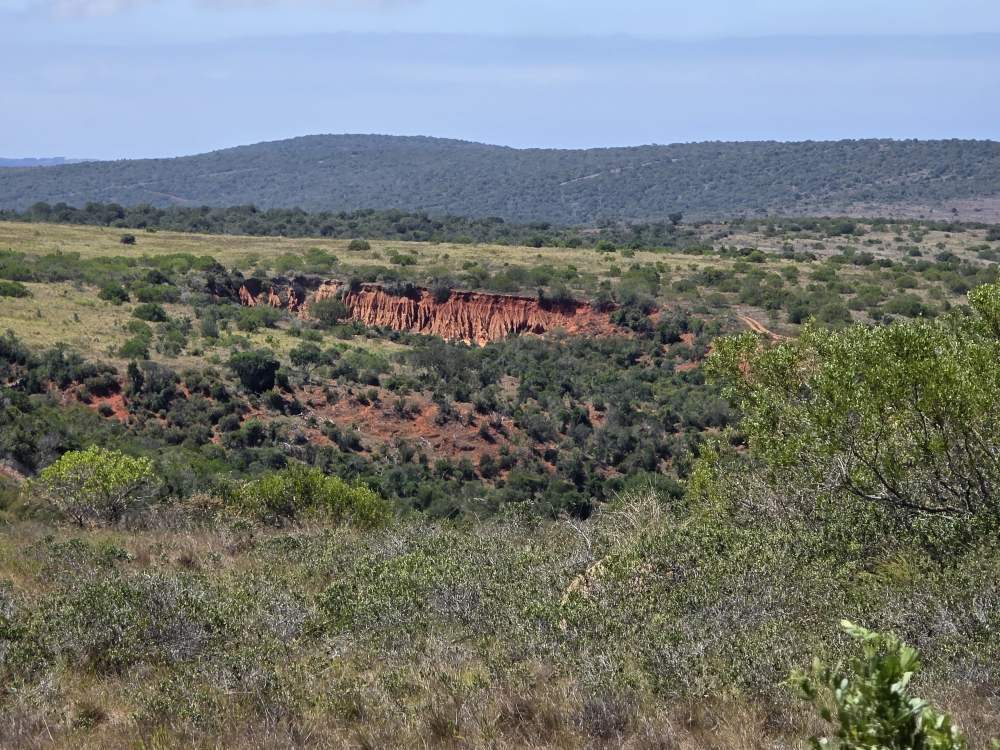
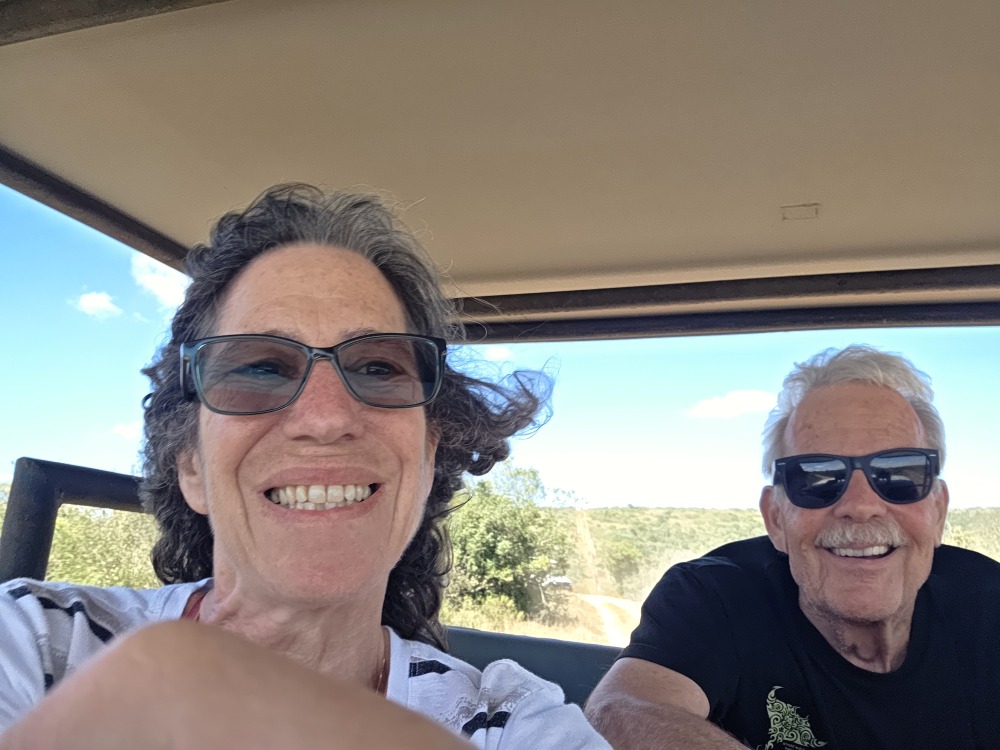
Then we are off in search of the giraffes – which we don’t find, but we do drive through stunning landscape with rolling hills and eroded cliffs all around us. And while there are other vehicles out here, Riaan and his tour included, we hardly ever see them. It is like being all alone in the wilderness with the wind keeping us cool and nothing but the sound of the truck engine and branches scraping the side all around us.
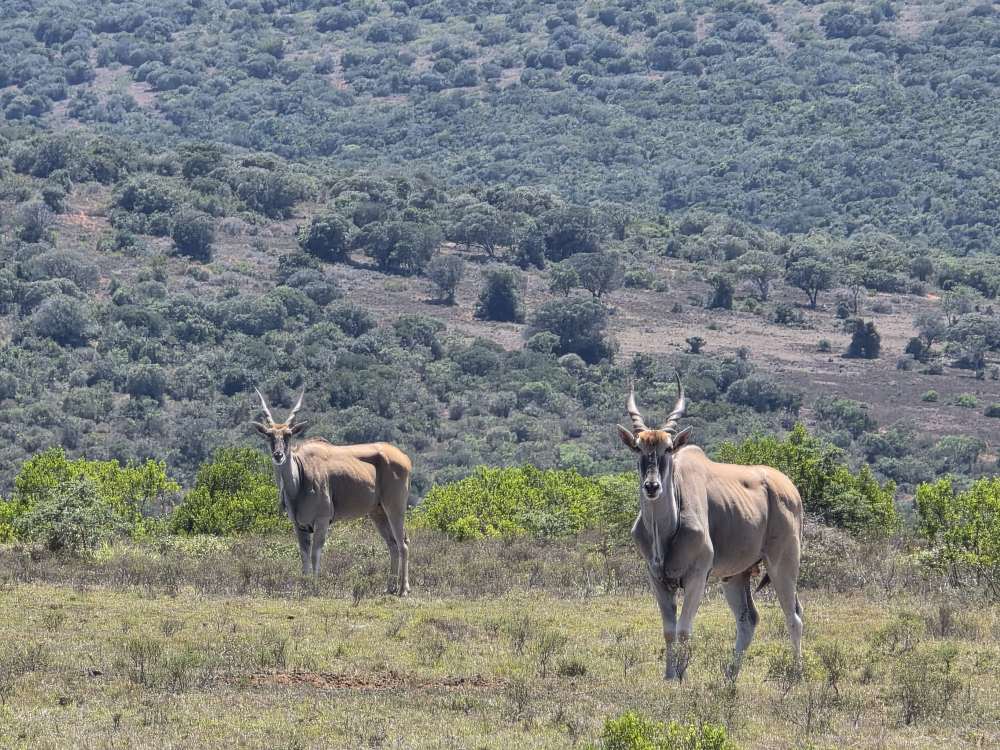
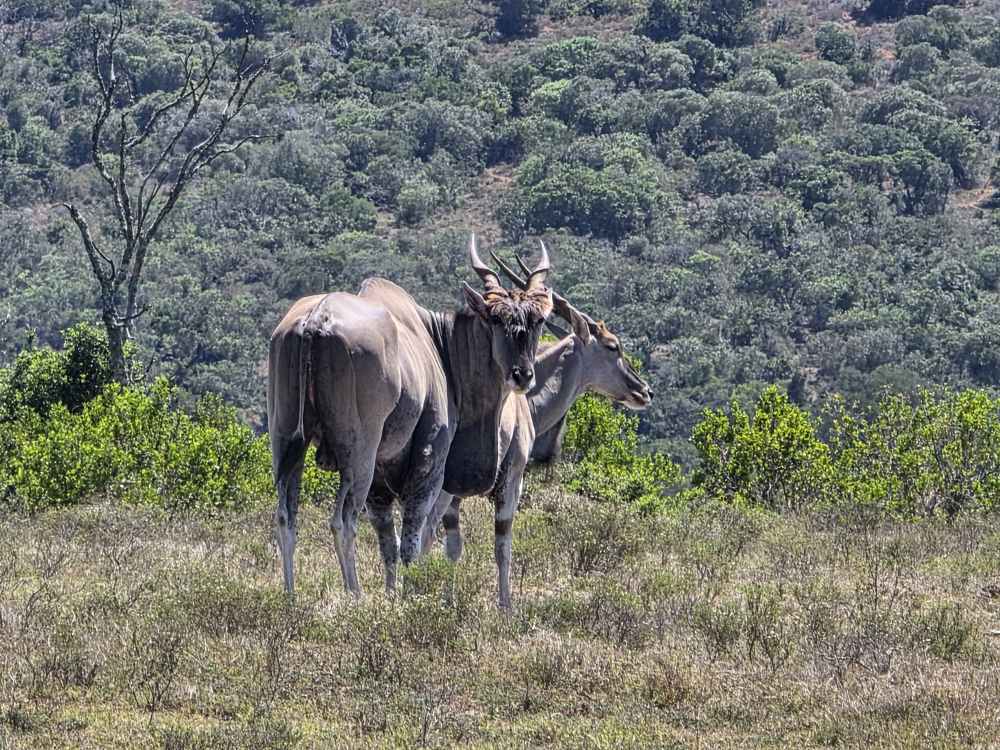
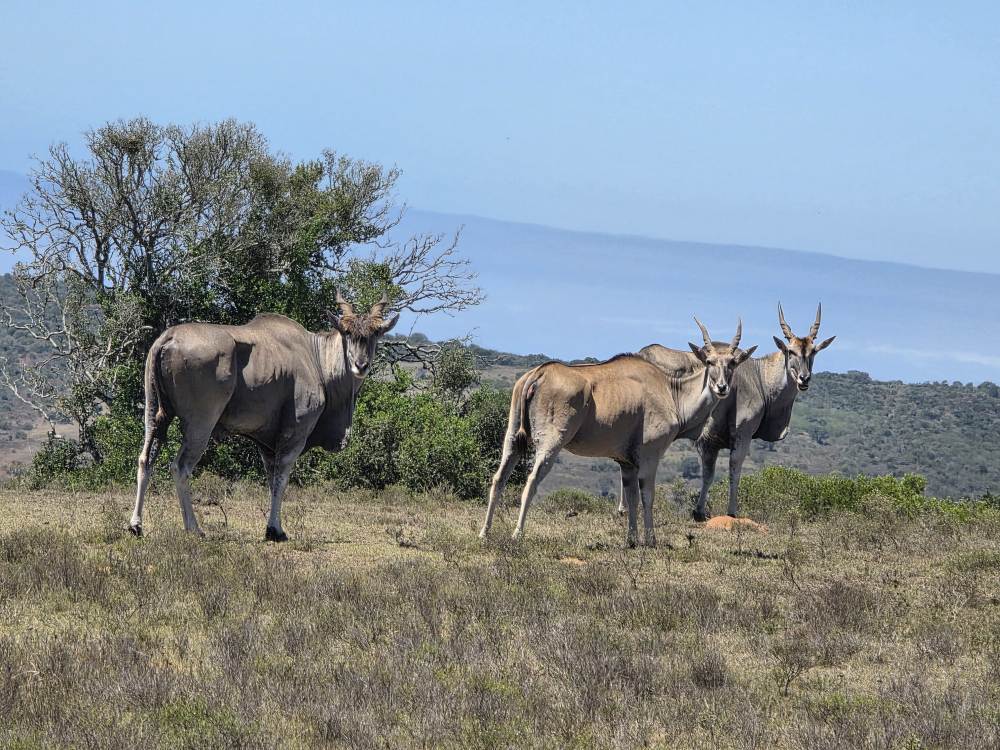
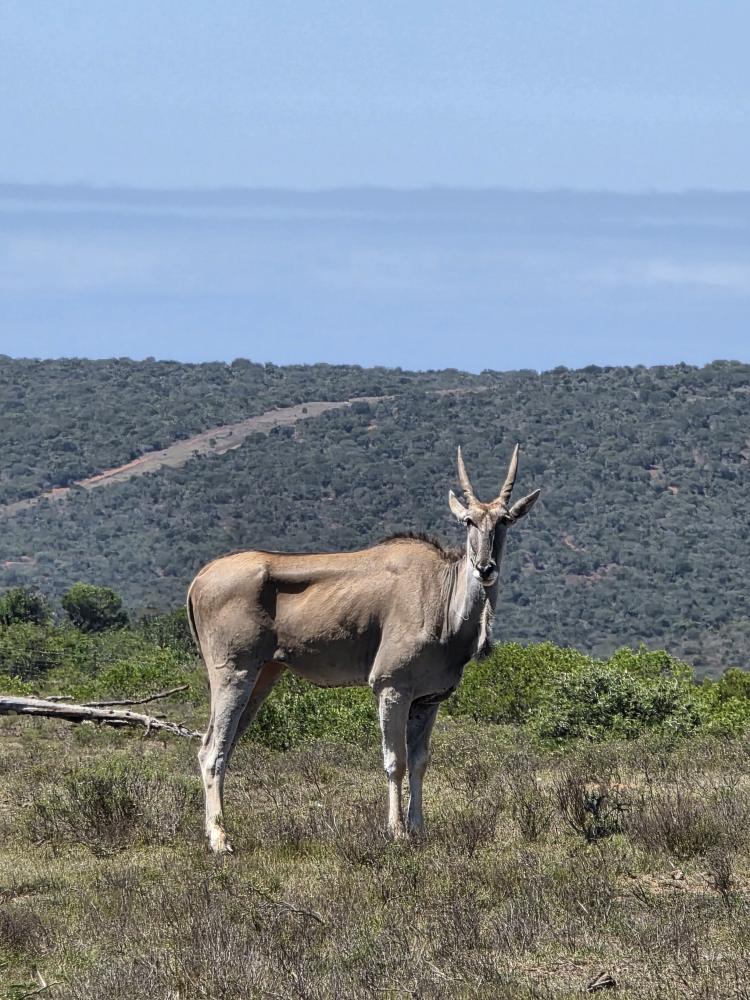
We find a herd of Grey Eland, with the pouches underneath their necks. The older they are, the more blue colored they get – you can see it on their legs creeping up bodies. They have the most amazing twisted antlers – very dangerous looking – and interesting all at the same time.
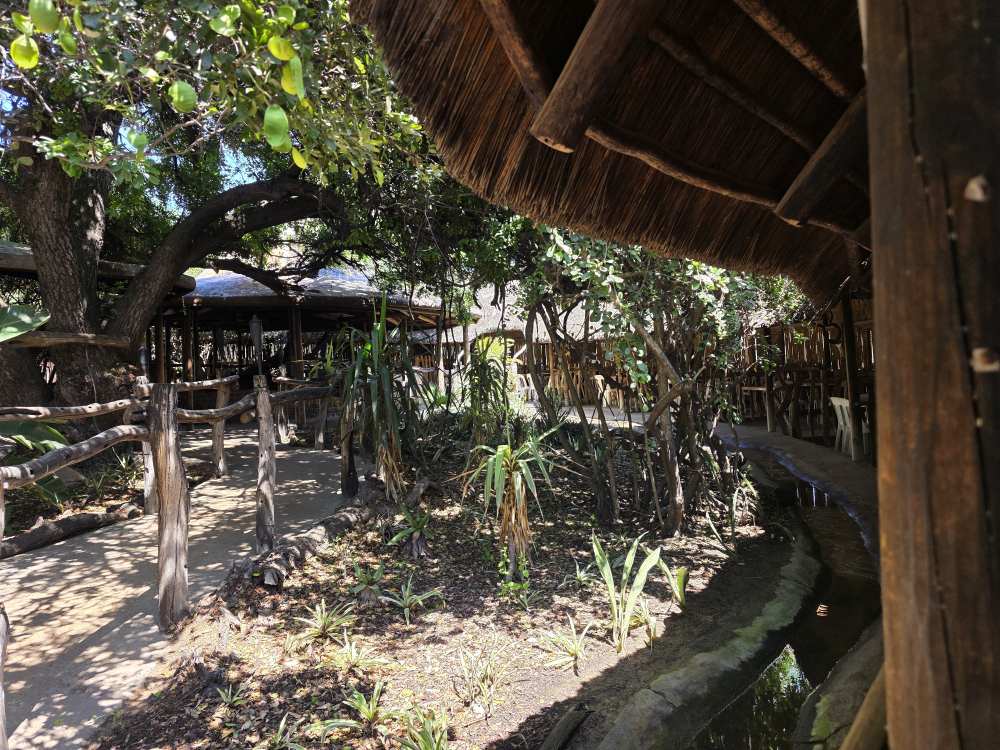
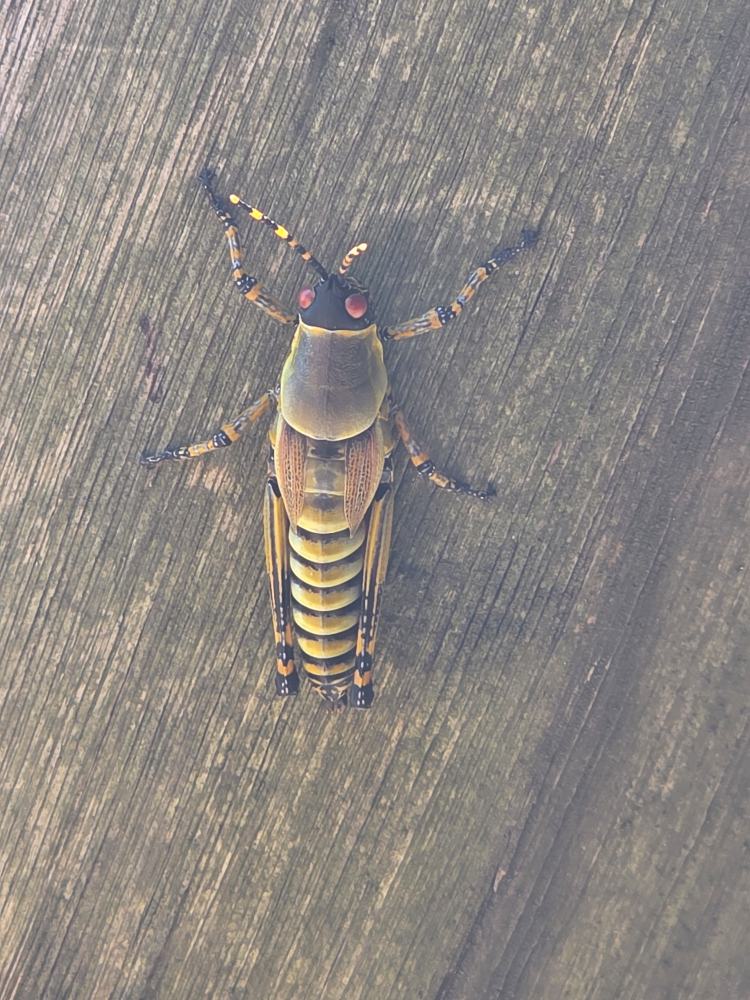
Taking a short break at the open-air Lapa, we have coffee and a restroom break while wandering around what is obviously used as the dining area here at the preserve. Open air with seating for easily 100 people, there is a little stream running through and around the Lapa plus an open BBQ pit we can just imagine in use with fabulous S. African Braai delicacies. On the way out, we spot this little Rainbow grasshopper hiding in the shadows.
 Andiamo