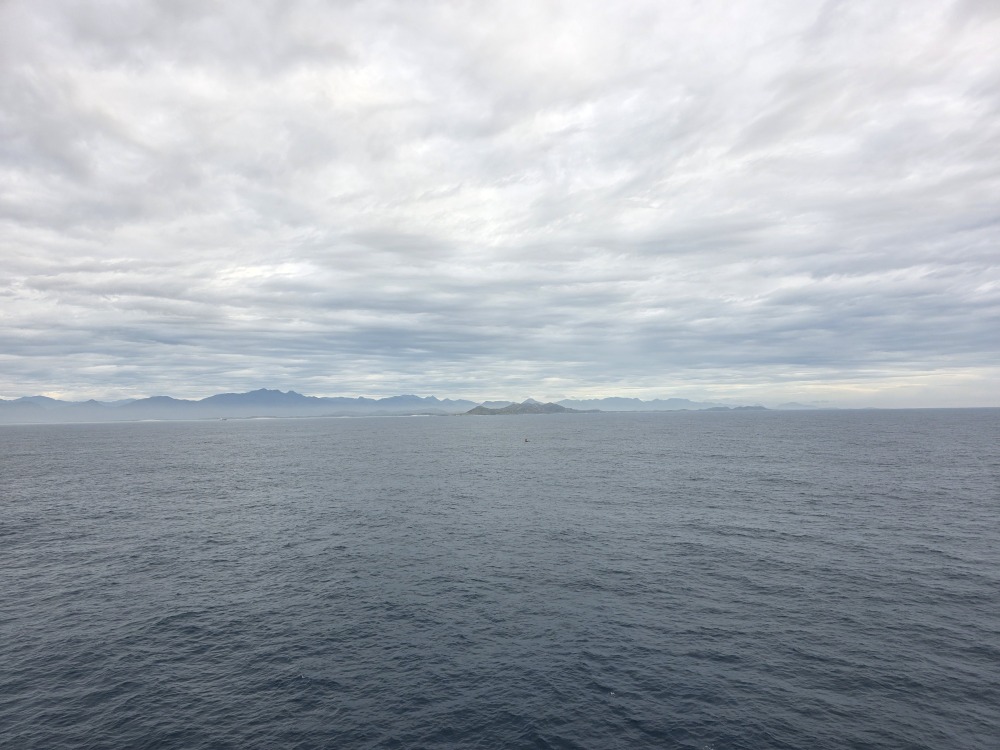
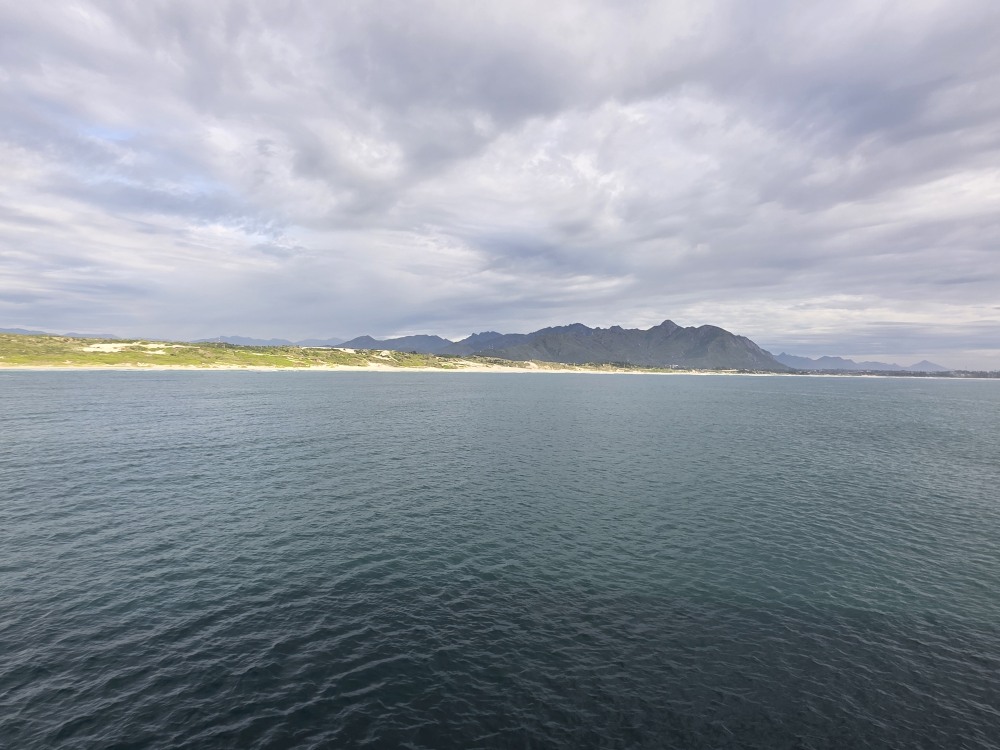
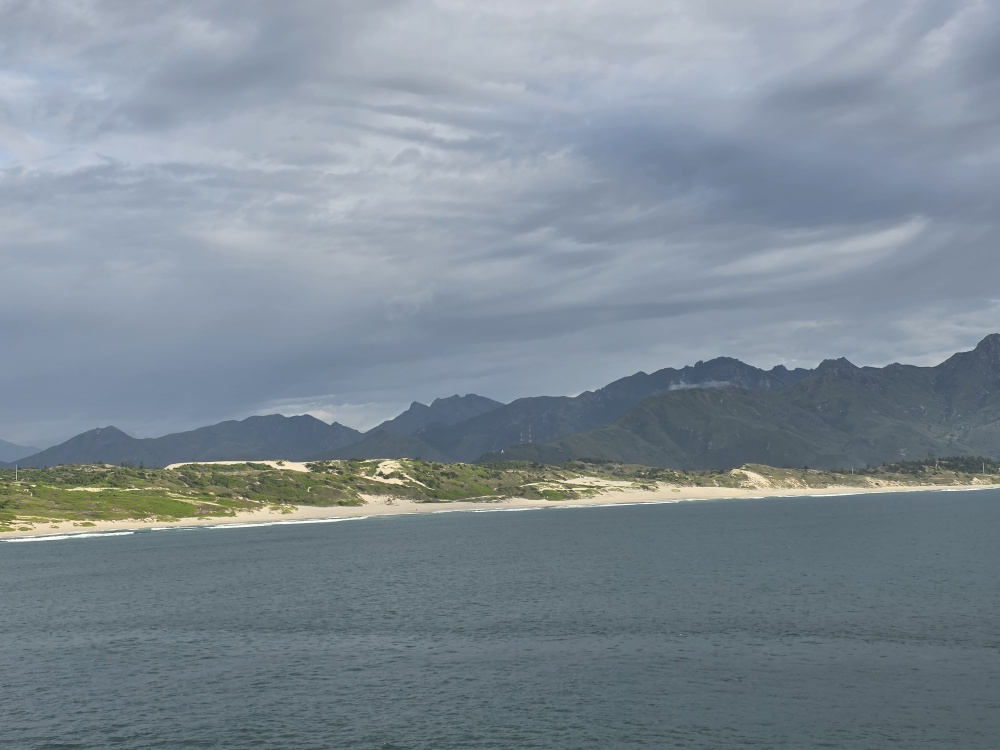
Sail in to Toalagnaro is a slow and arduous – but beautiful process as we skirt the southern coast of the island. Docking takes a while as the dock is a mess of water from all the cyclone rains (we were so lucky to miss both cyclones circling around the Indian Ocean! We quite literally sailed in between them with little to no sea state affect, thank heavens) and securing the lines, getting the gangway down, etc., takes a really long time.

We have met our group at the gangway door (first and only cruise critic tour these sailings) and are all together when we are released out into the hot and humid day. The tour company had said they would be outside the port gate, but they have somehow managed to get inside and are waiting for us right in the parking area outside the ship. Excellent. We meet our guide, Aime, and driver, Ricky, then head off for our full day adventure to the Nahampoana Reserve for Lemurs and then the Domaine de la Cascade waterfalls.
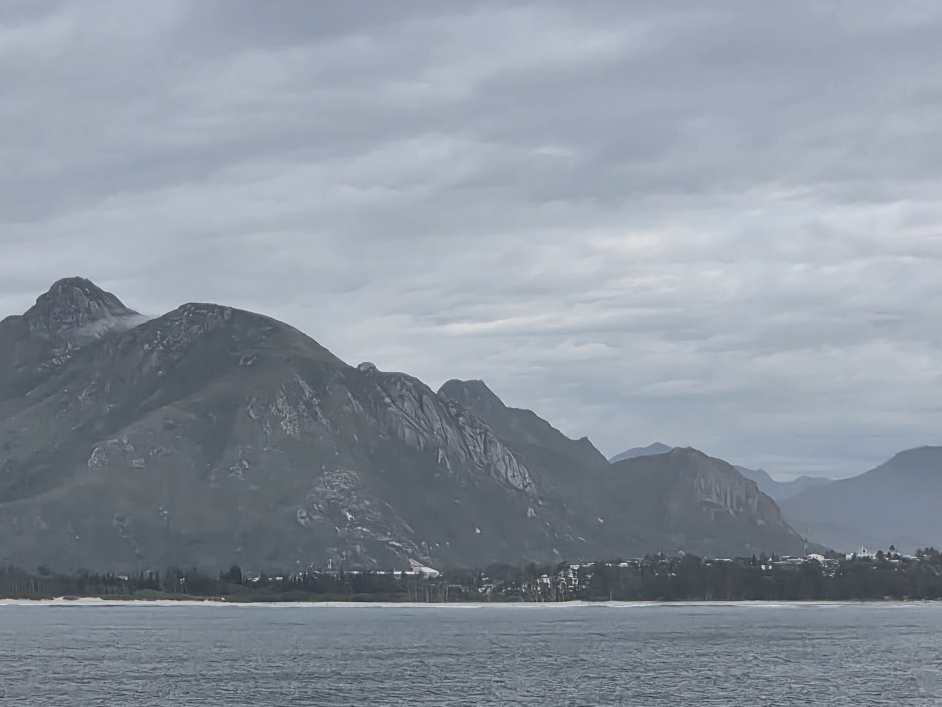
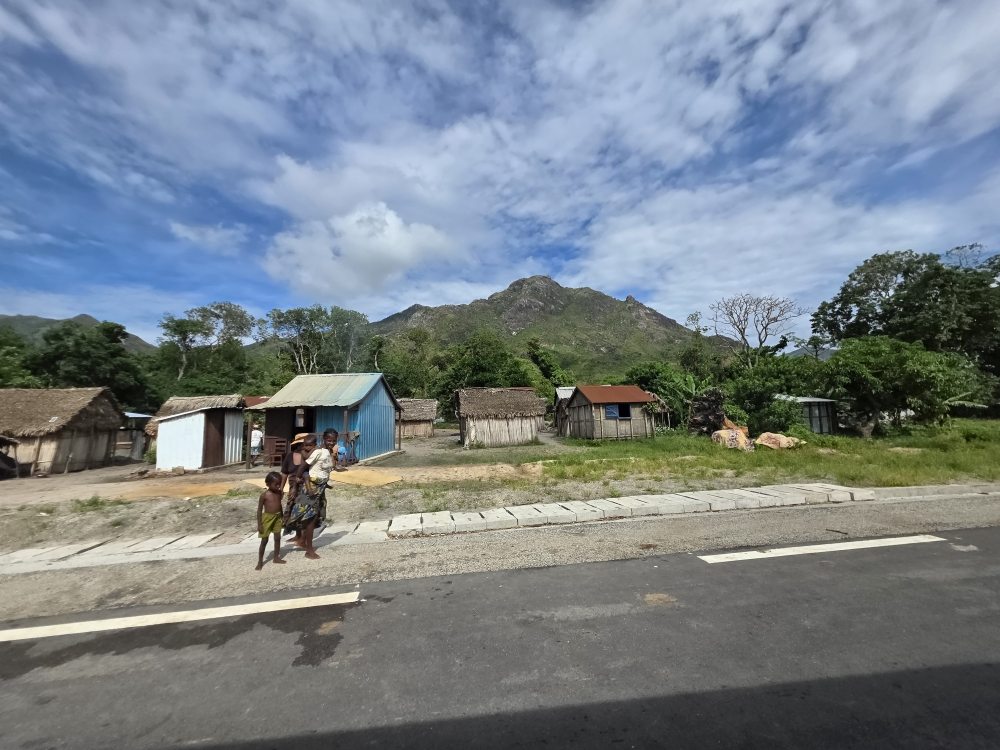
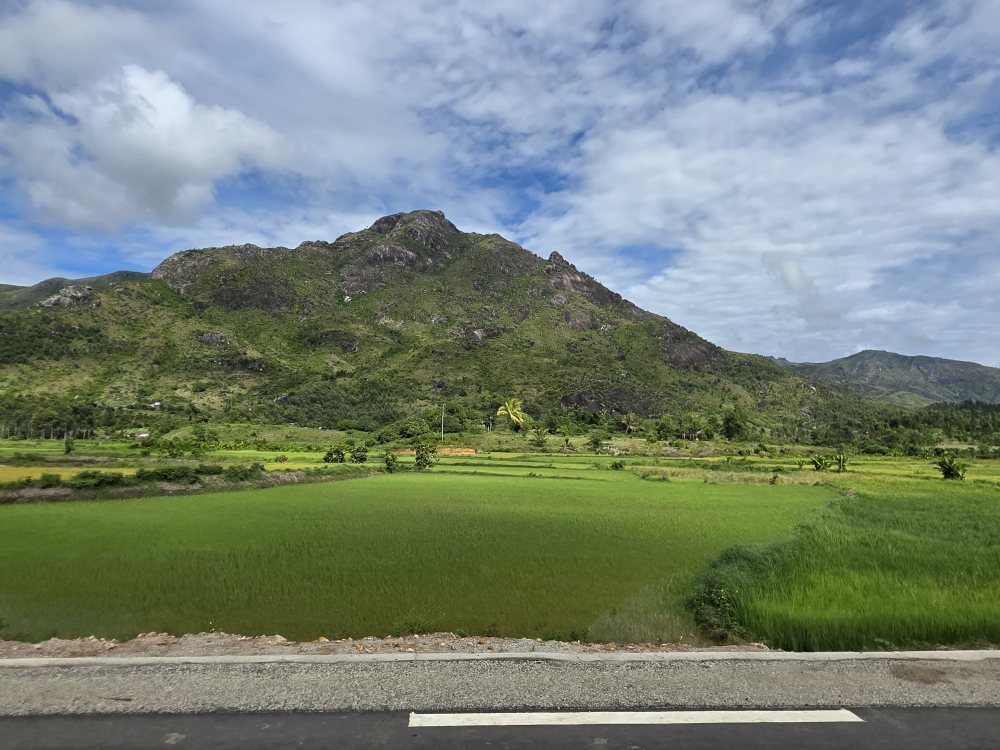
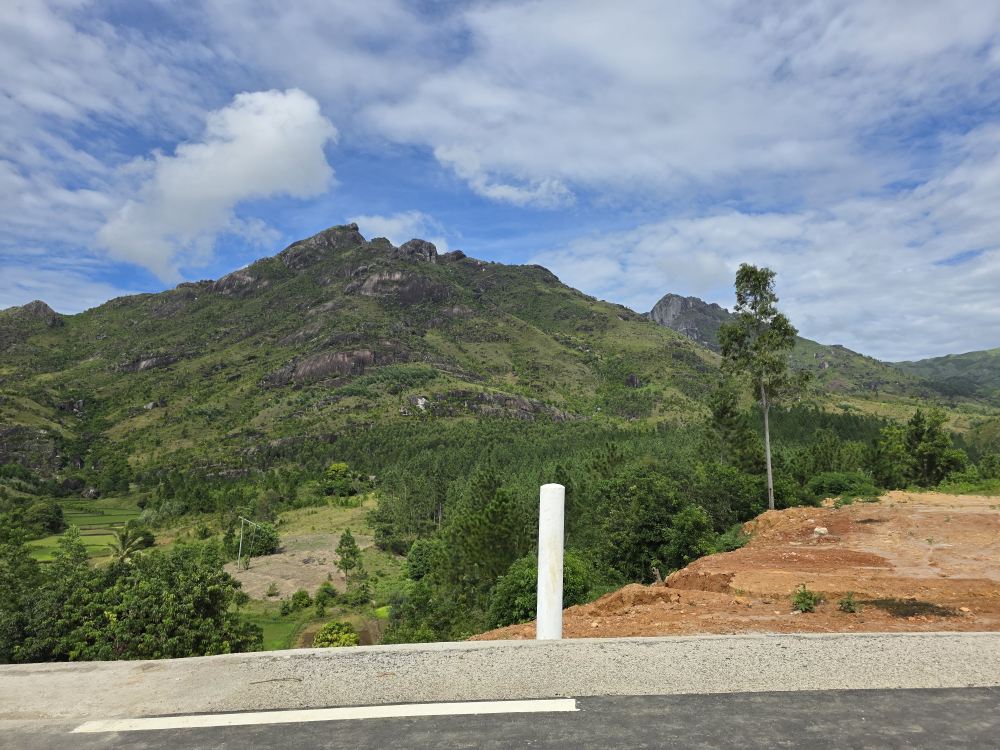
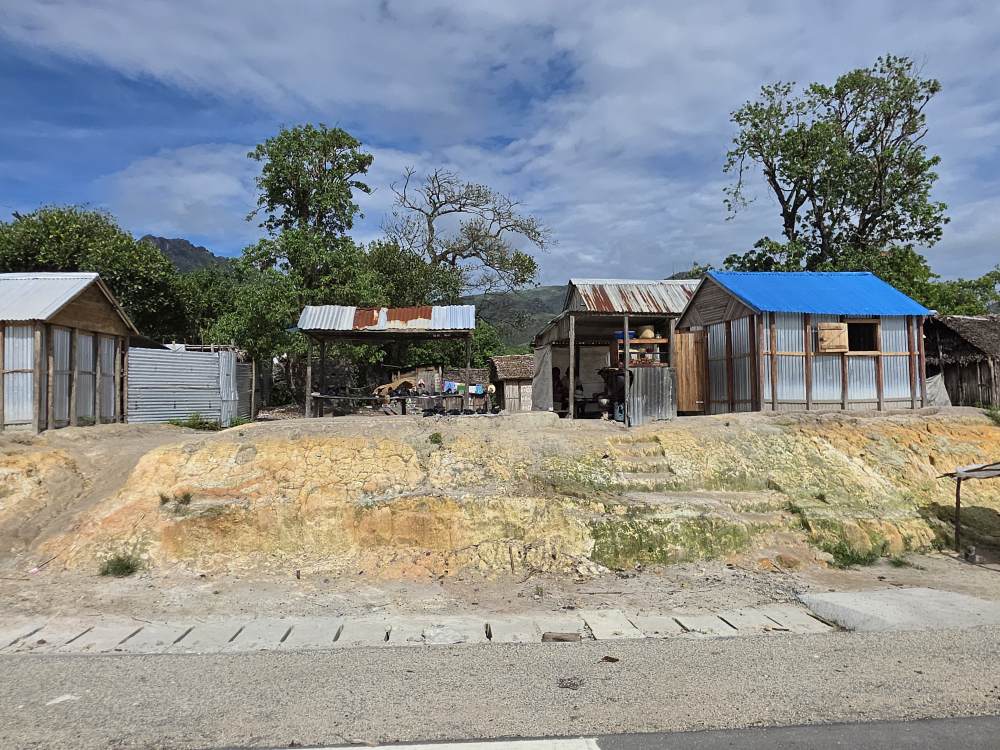
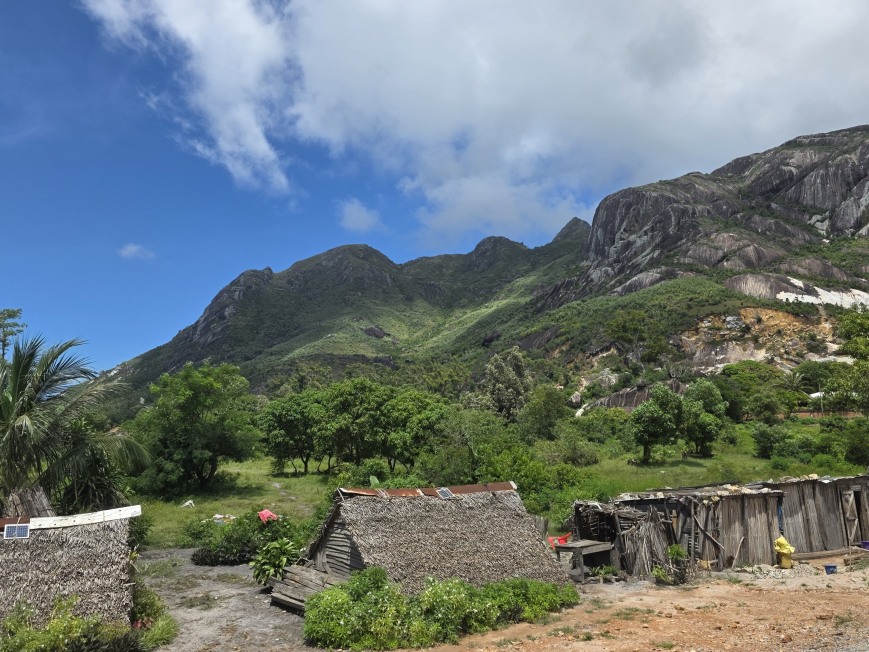
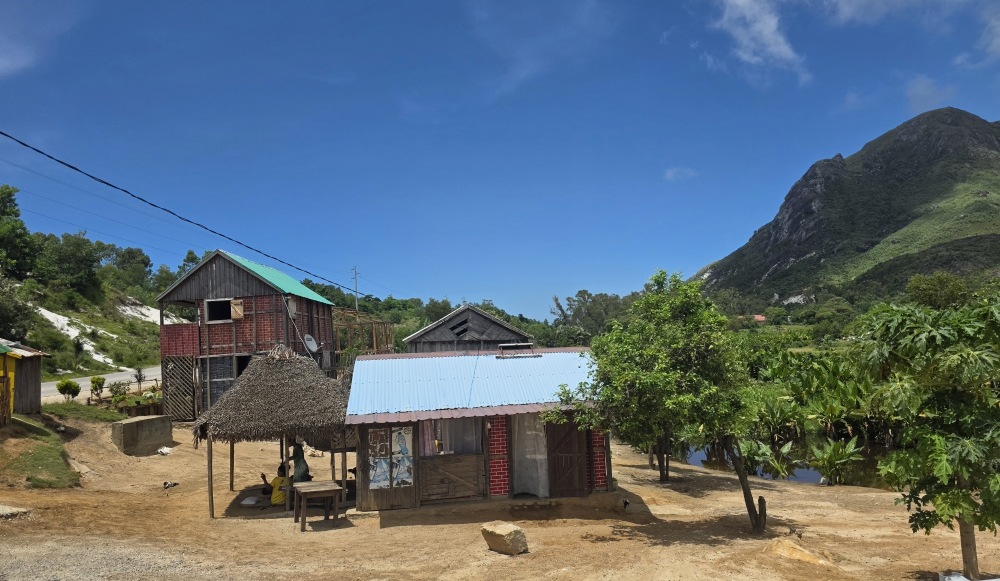
The 30 minute drive to the reserve takes us along the coast then out into the interior of the area, passing gorgeous mountainous scenery as well as little villages and village life along the way.
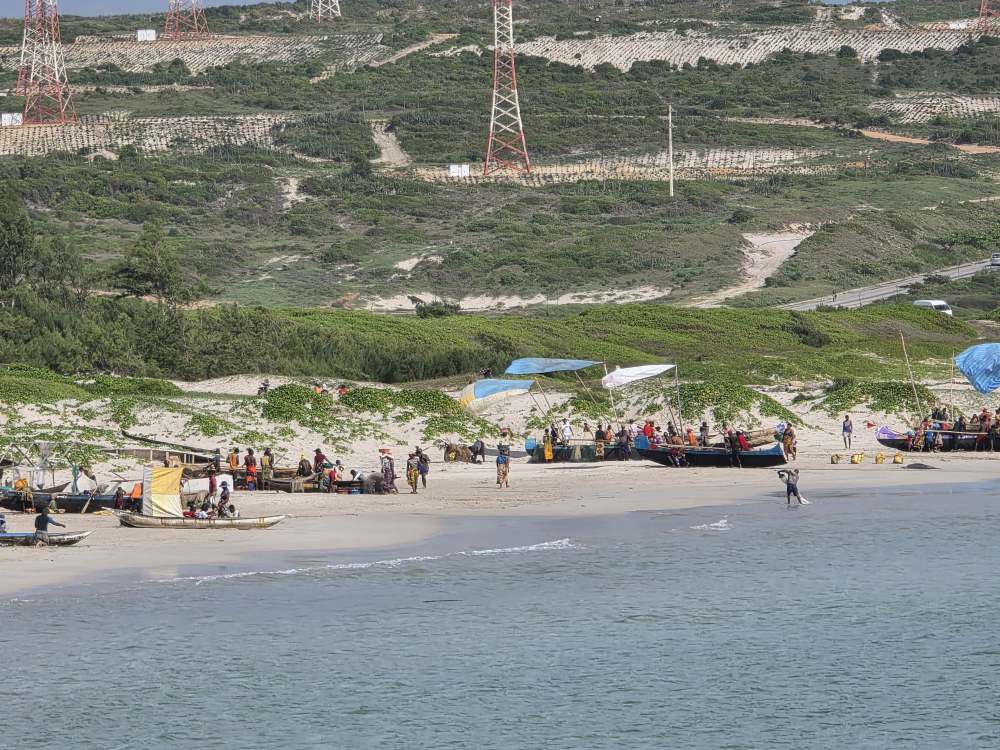
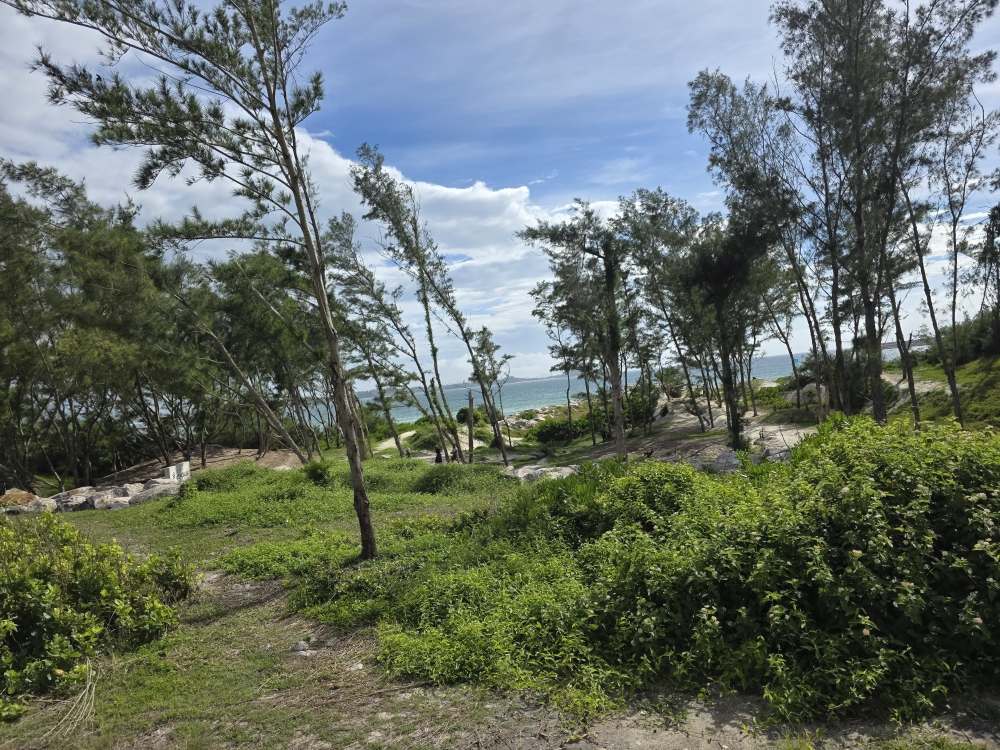
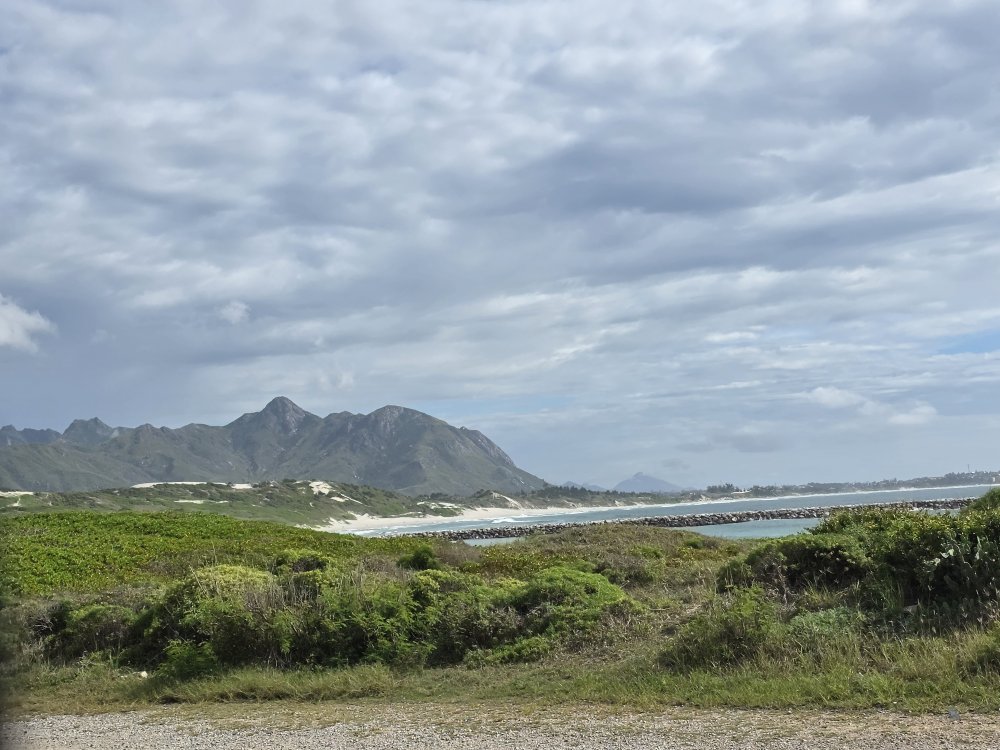
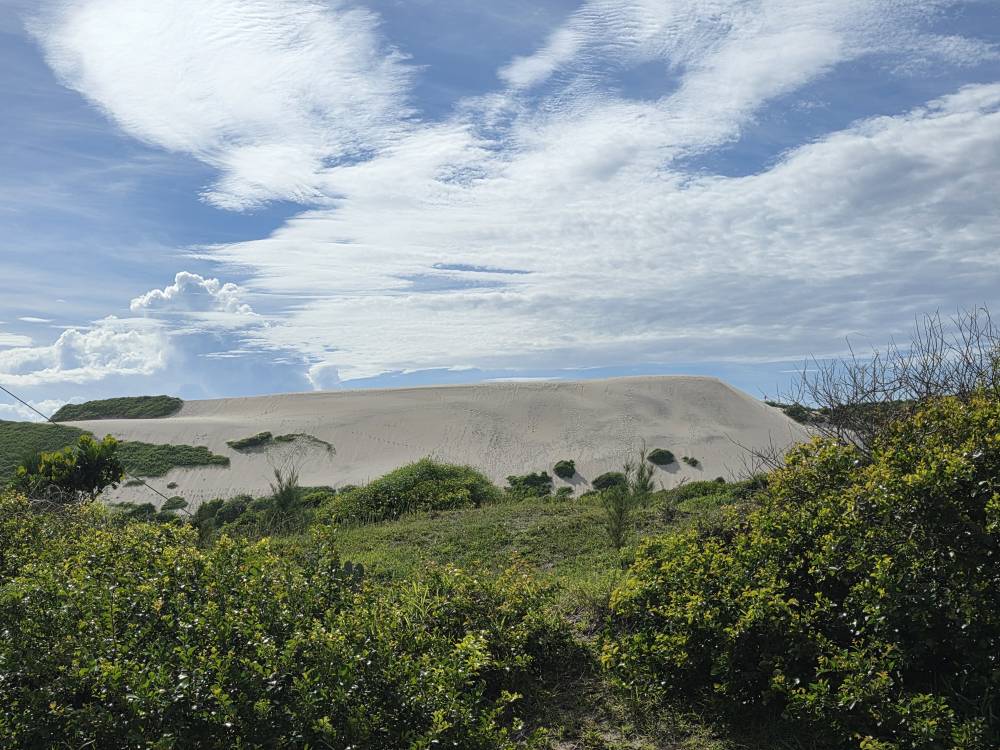
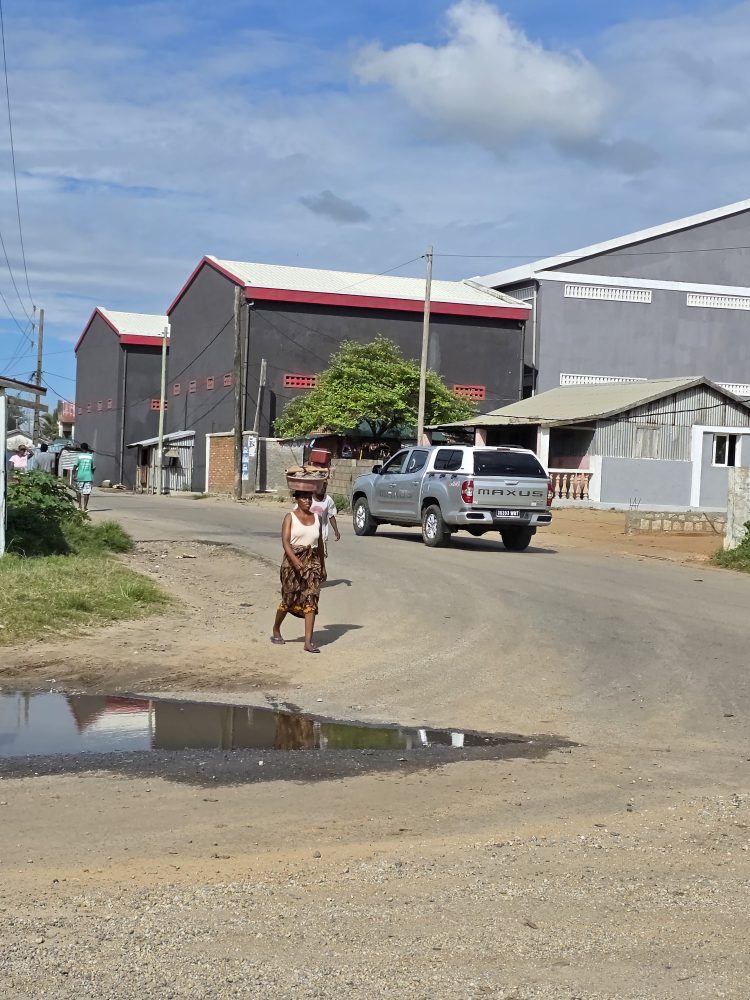
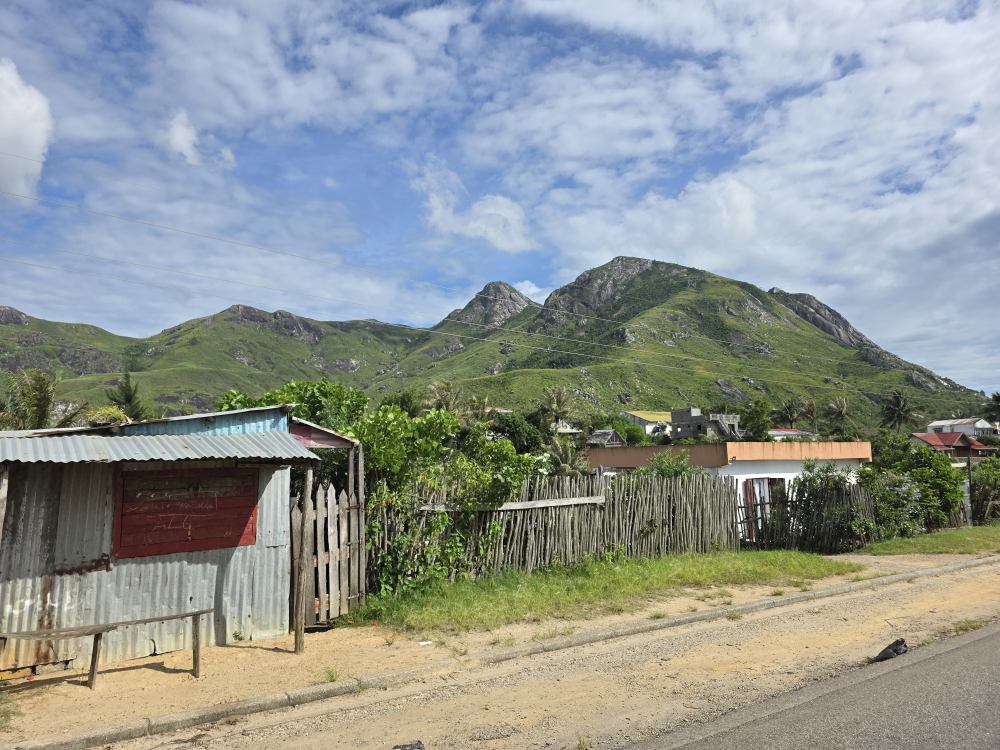
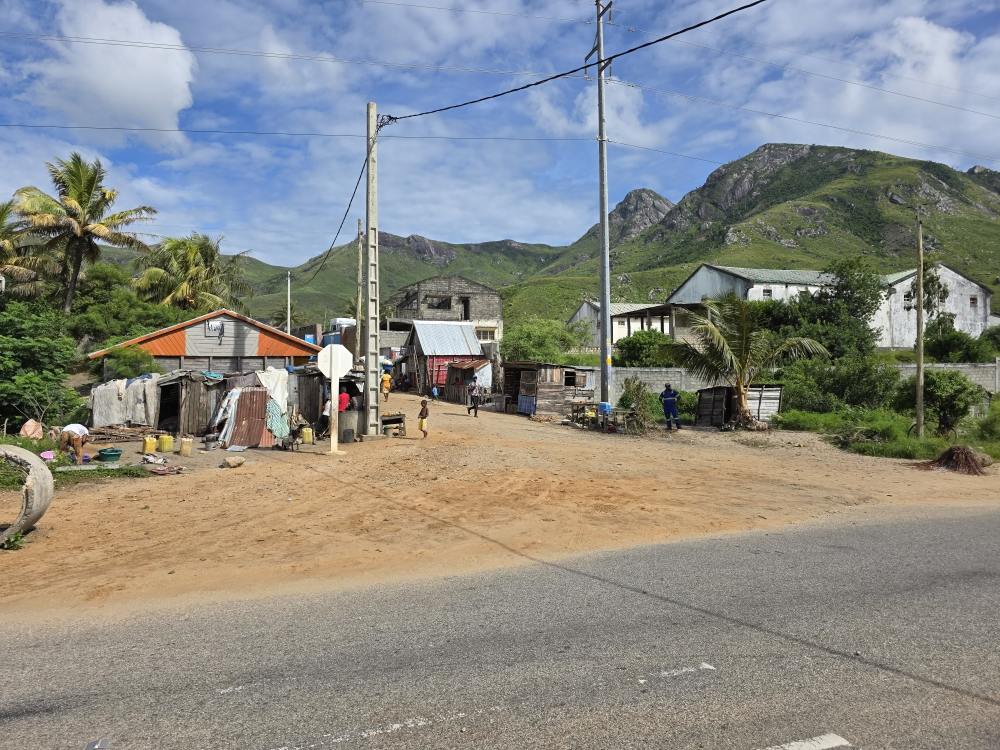
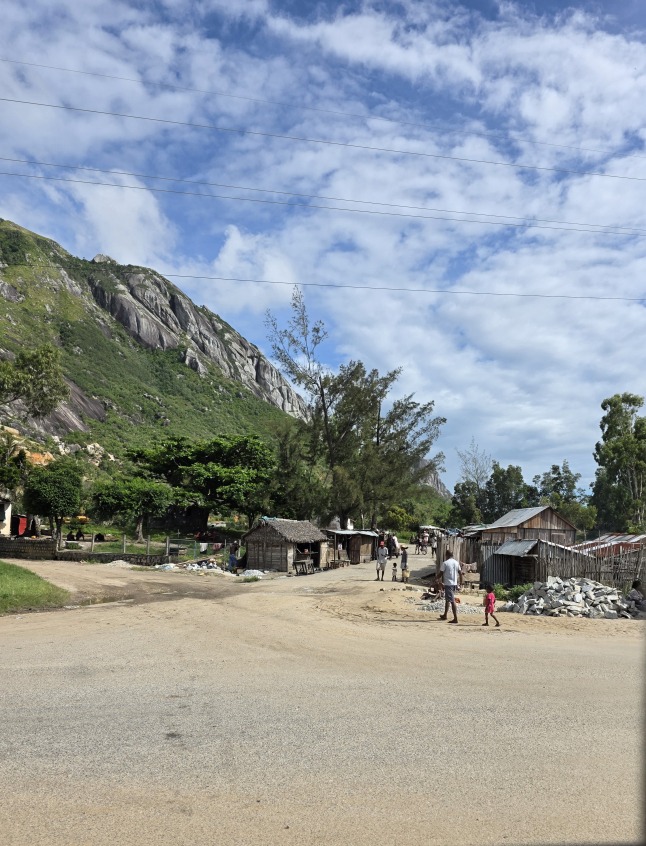
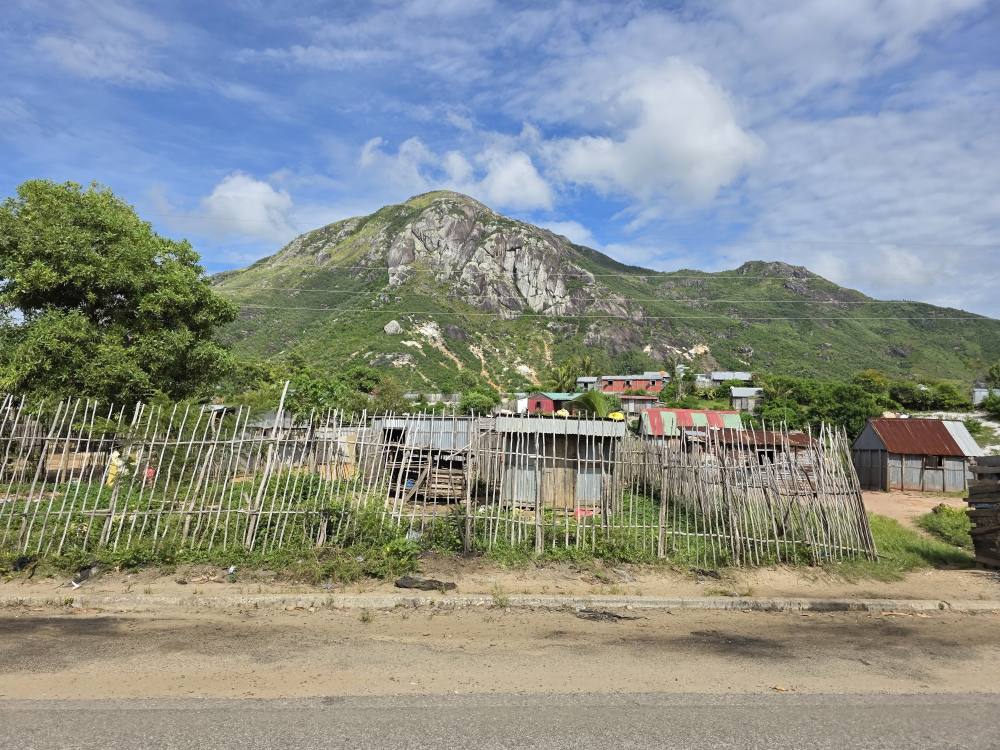
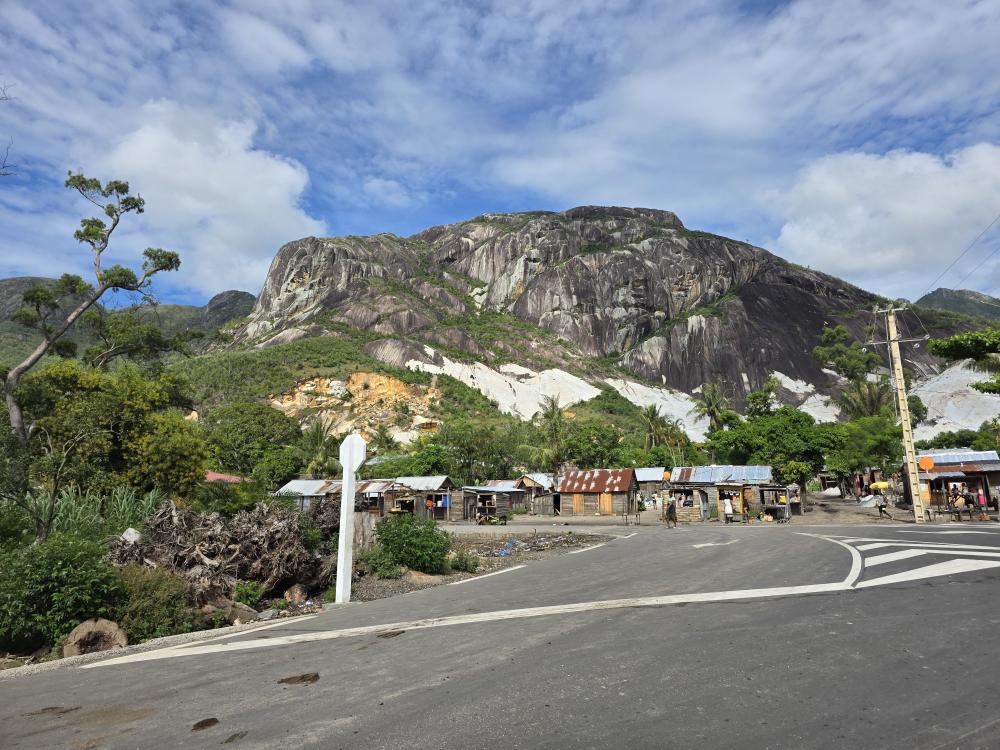
We also pass the “Granite mountain,” looking like snow on the slopes of the craggy hills. Here there are a lot more village houses, and we can also clearly see the granite being harvested – by hand! – up on the slopes.
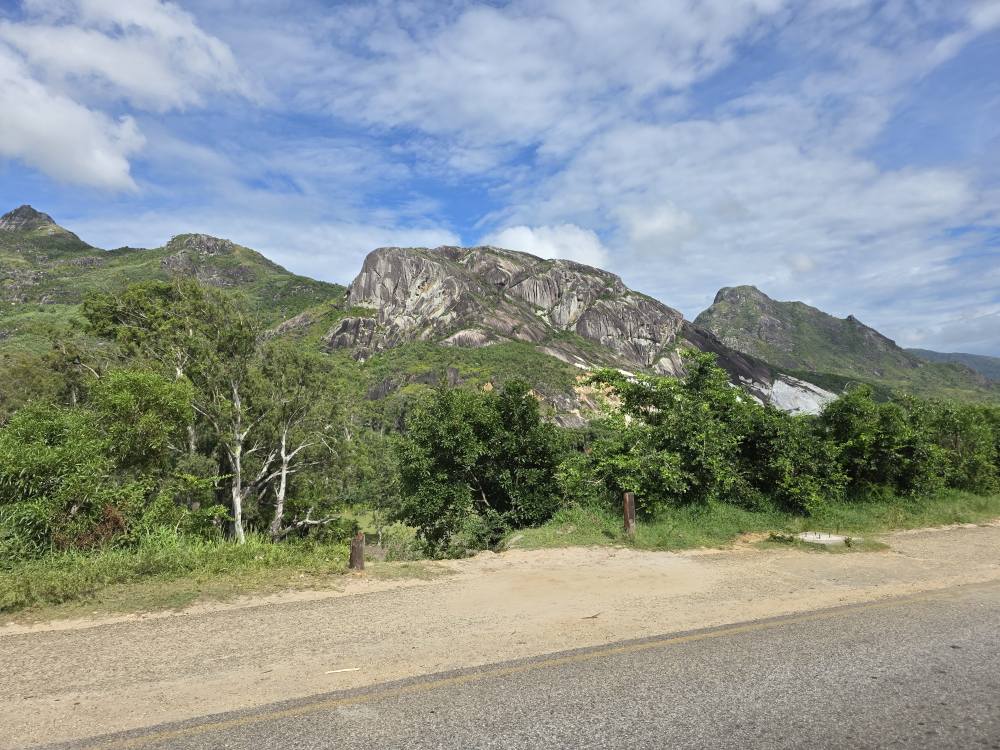
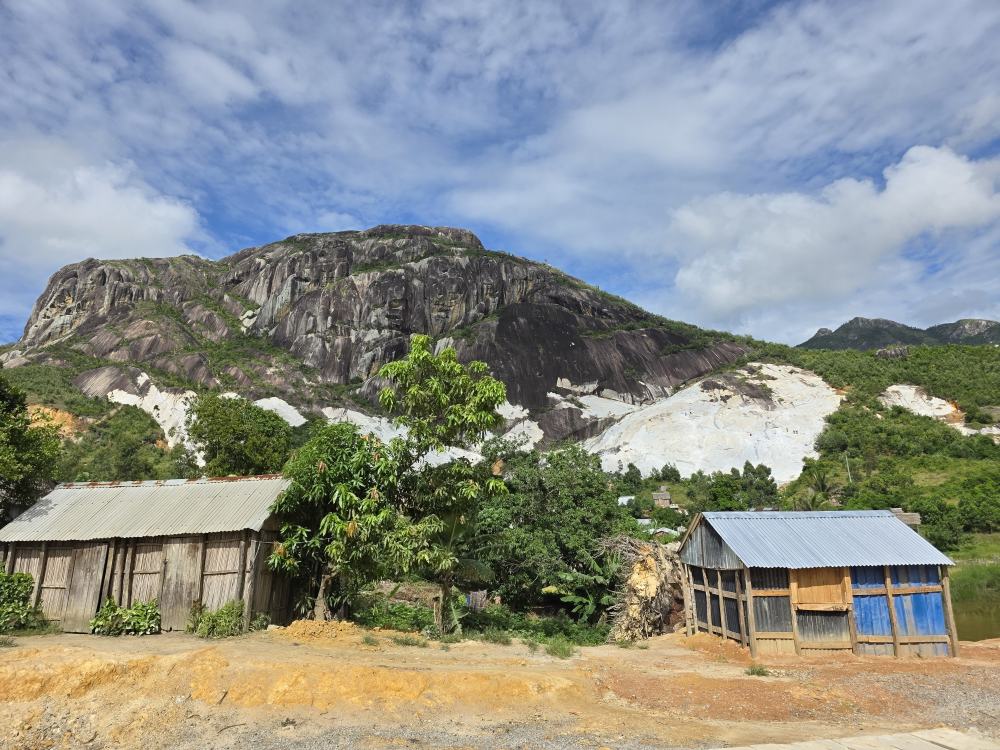
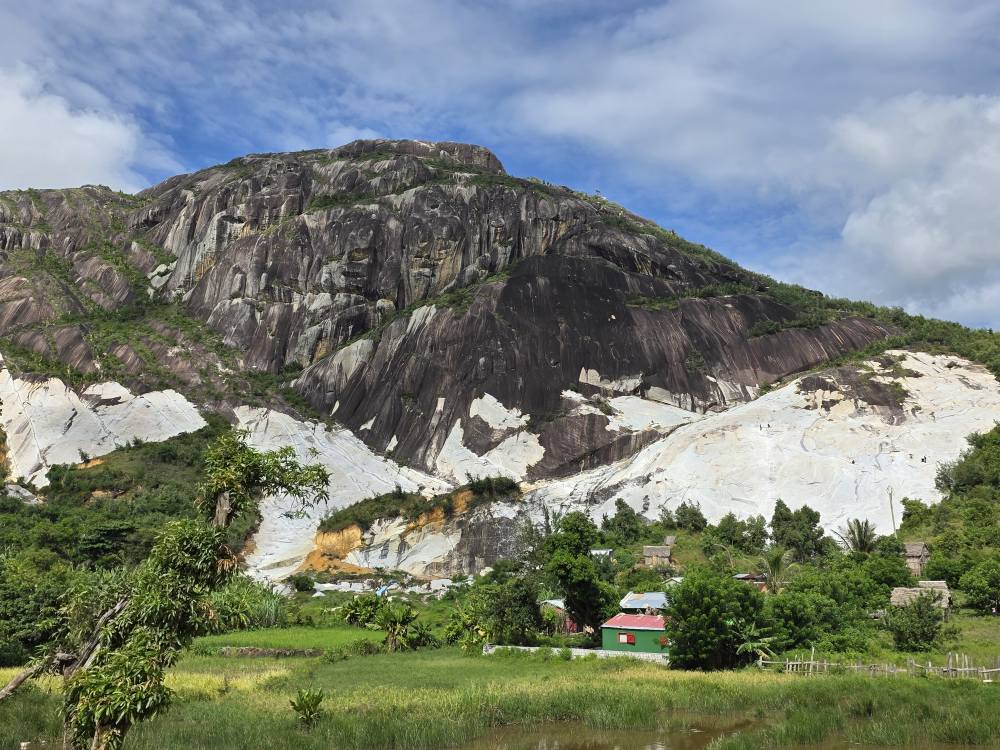
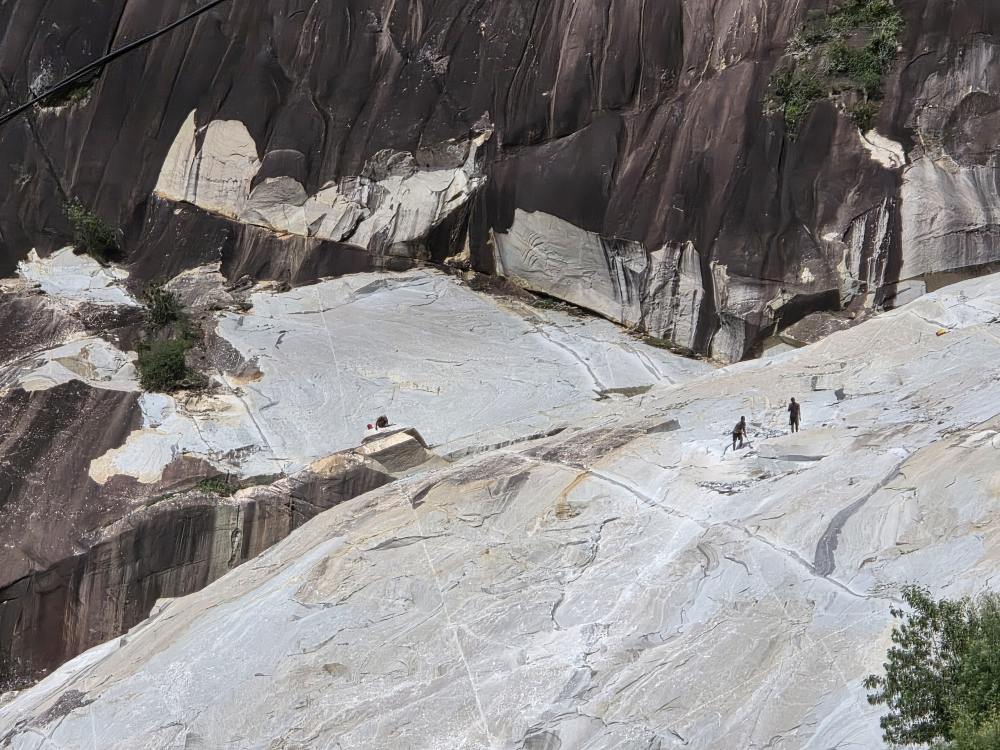
More village life dots the landscape as the stark mountain valleys turn into more luscious green rice fields and dense forests.
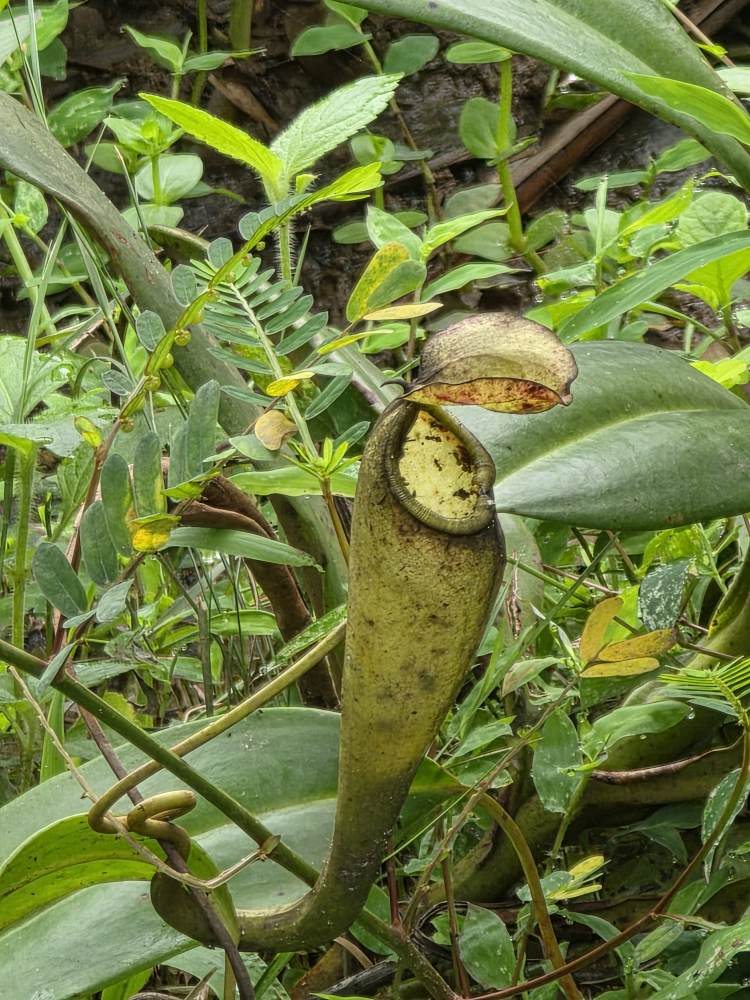
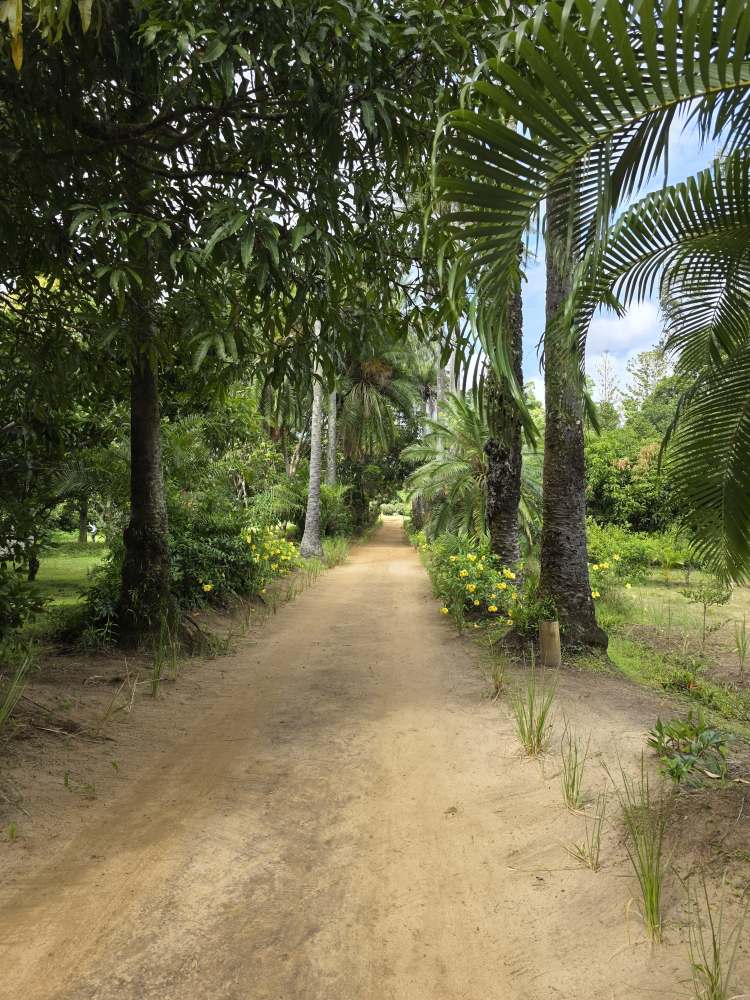
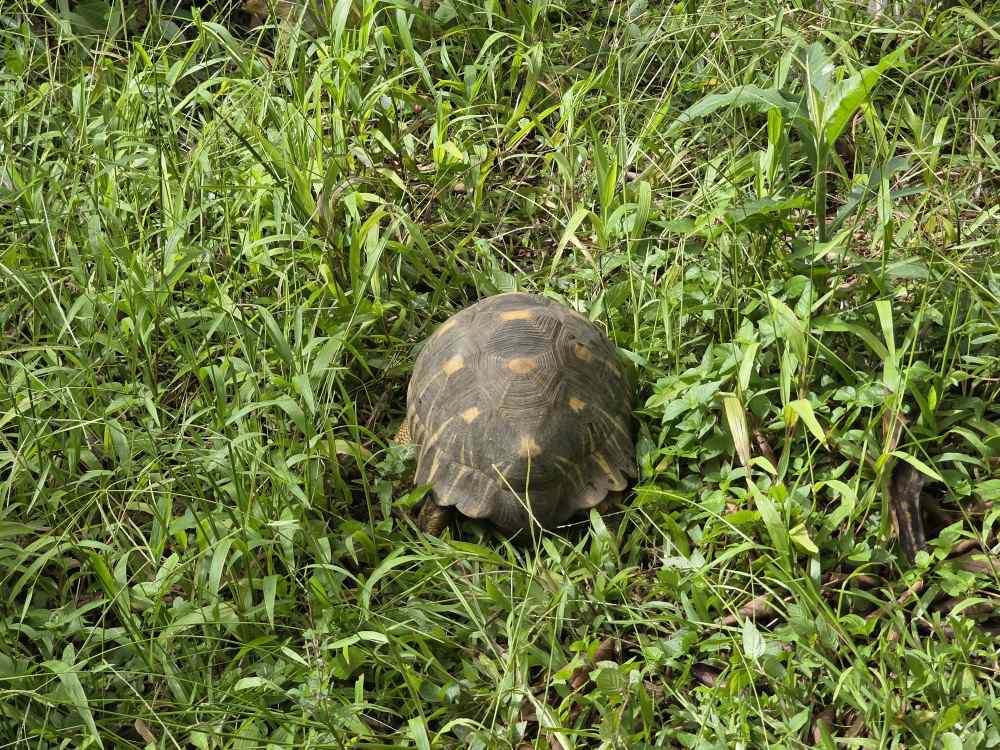
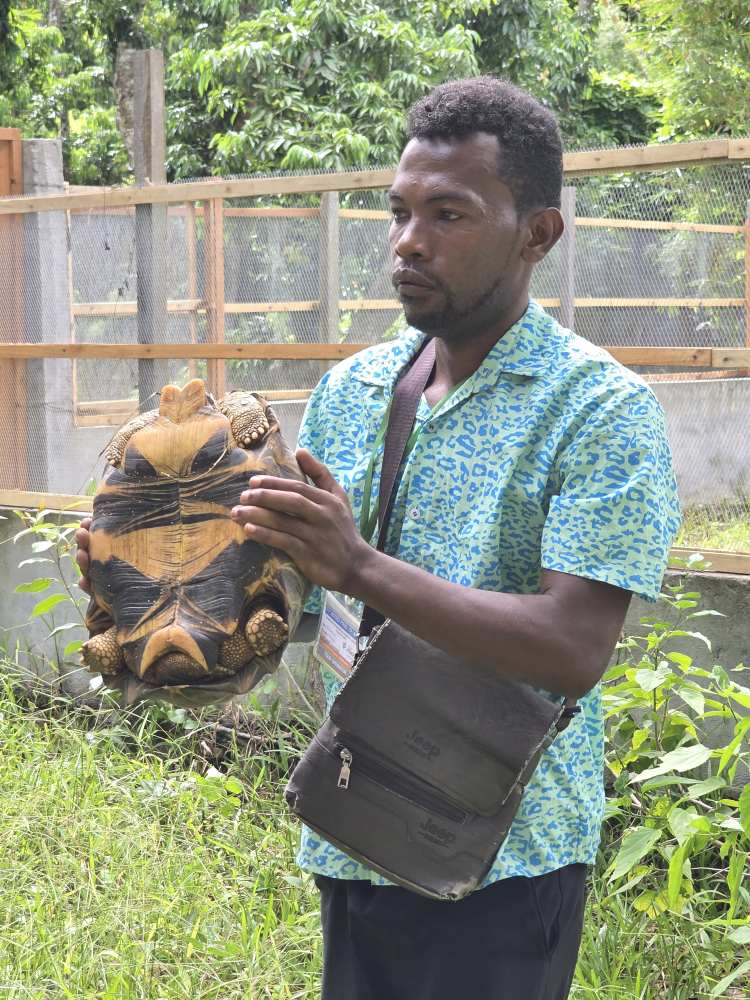
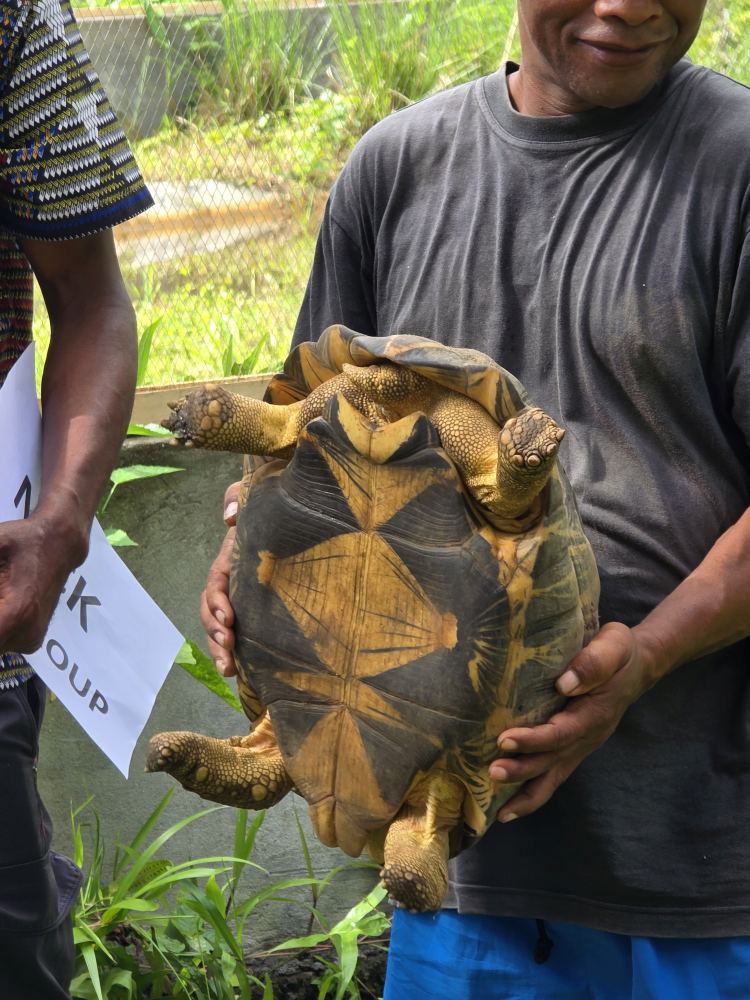
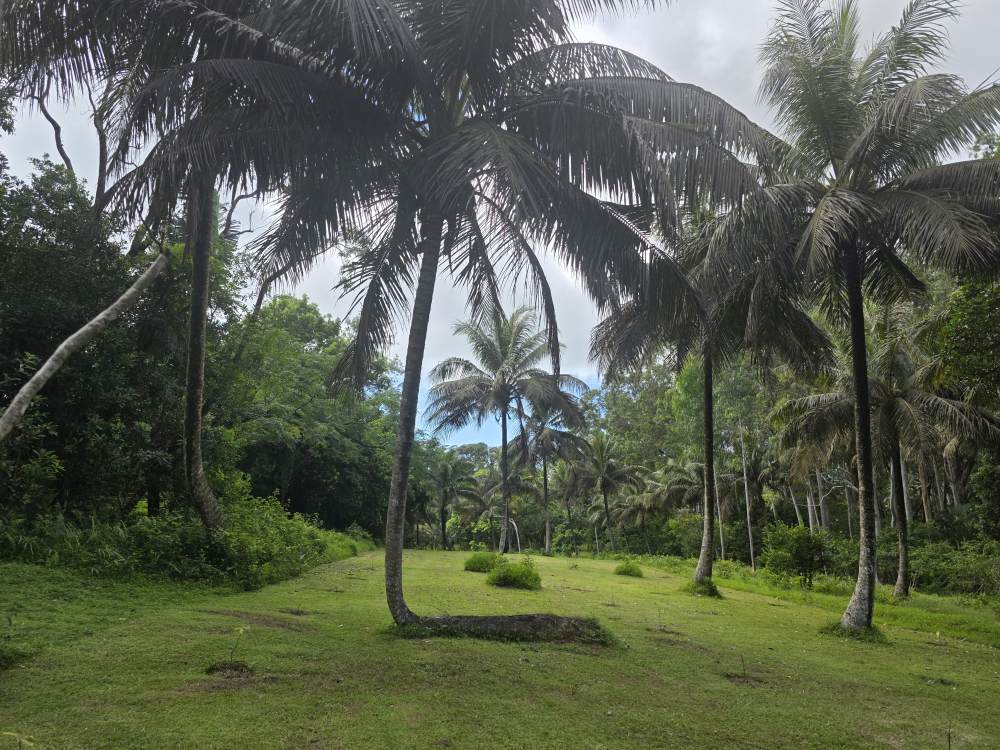
Arriving at the Reserve, we hop off our bright yellow van and begin our forest walk along very well maintained manicured paths – Lakobe this ain’t! Aime and a local guide point out different flora as we go – the carnivorous Pitcher plant (or monkey cup) that traps and eats insects – and then explain the turtles living in a pen here (males have a curved underbelly, females a flat underbelly)…..
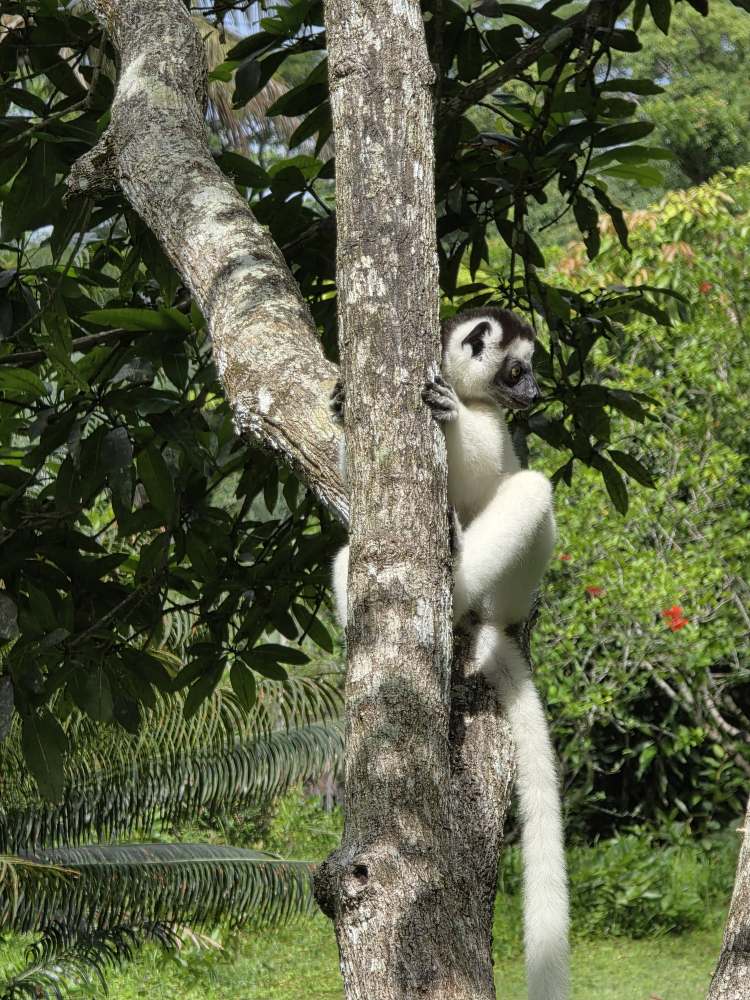
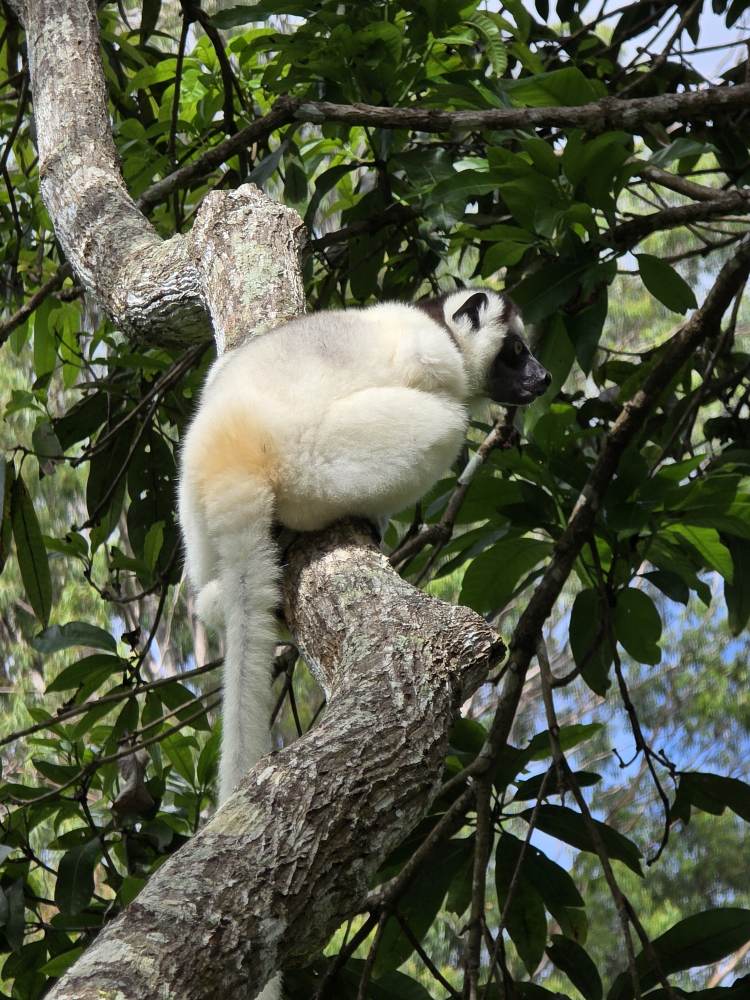
….before arriving at one of the main attractions. Coquerel’s Sifaka Dancing Lemurs! Sooooooo cute! They hang from the trees, jumping from limb to limb and tree to tree in nothing short of acrobatic moves – then they don’t just walk around on the ground, they hop around on 2 legs, making it look like they are dancing. So fun and cute. Those eyes. Those little bowlegs. Absolutely adorable.
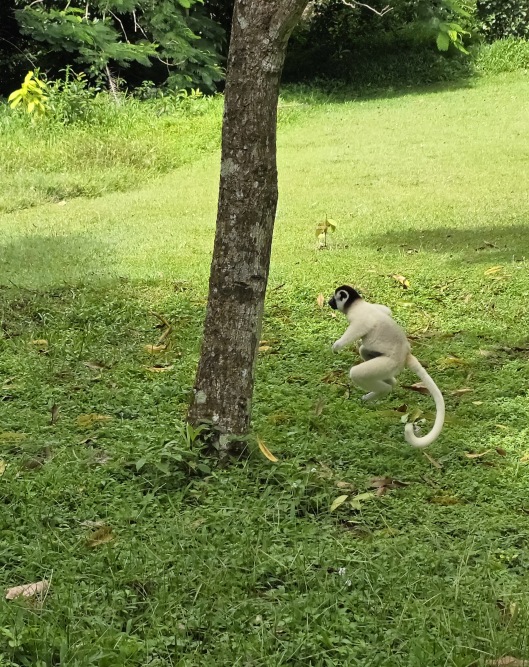
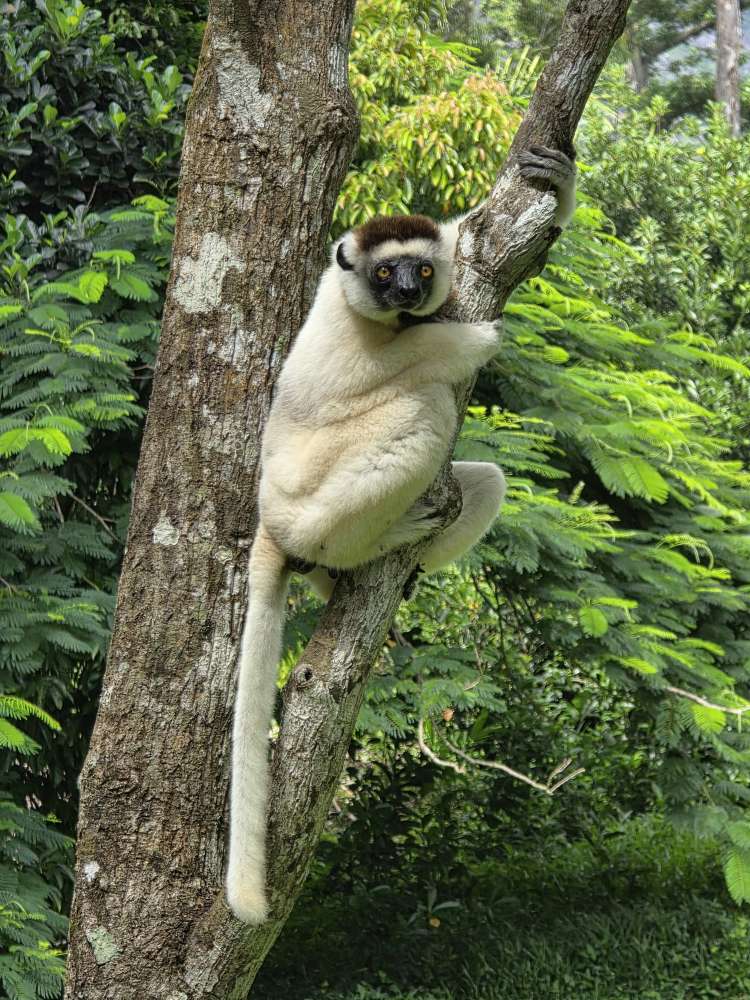
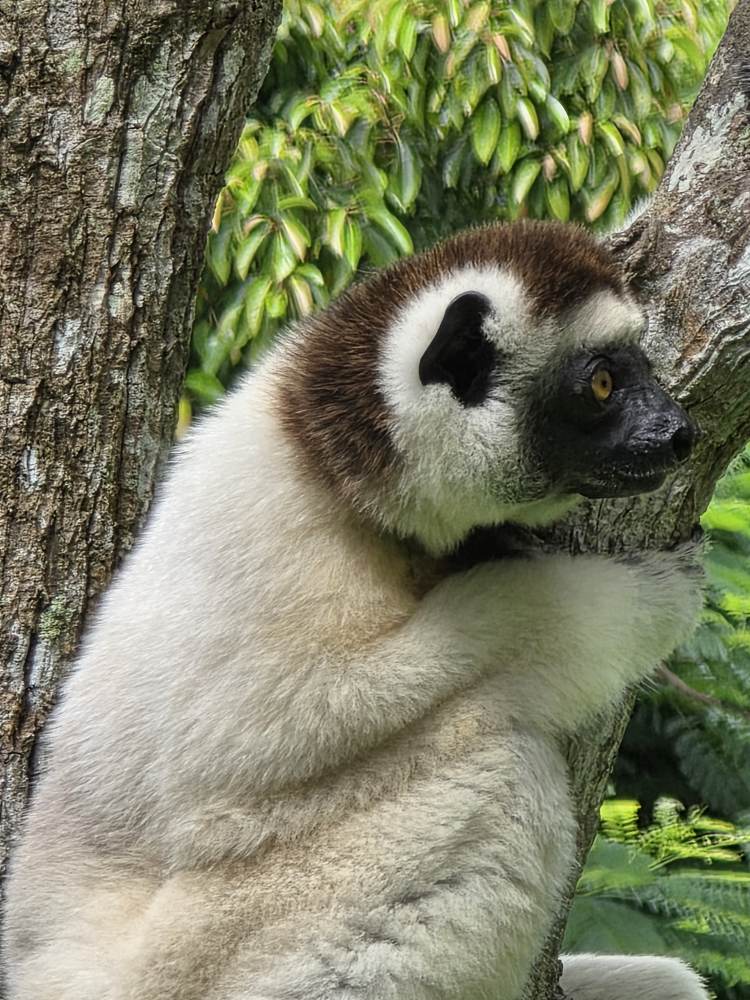
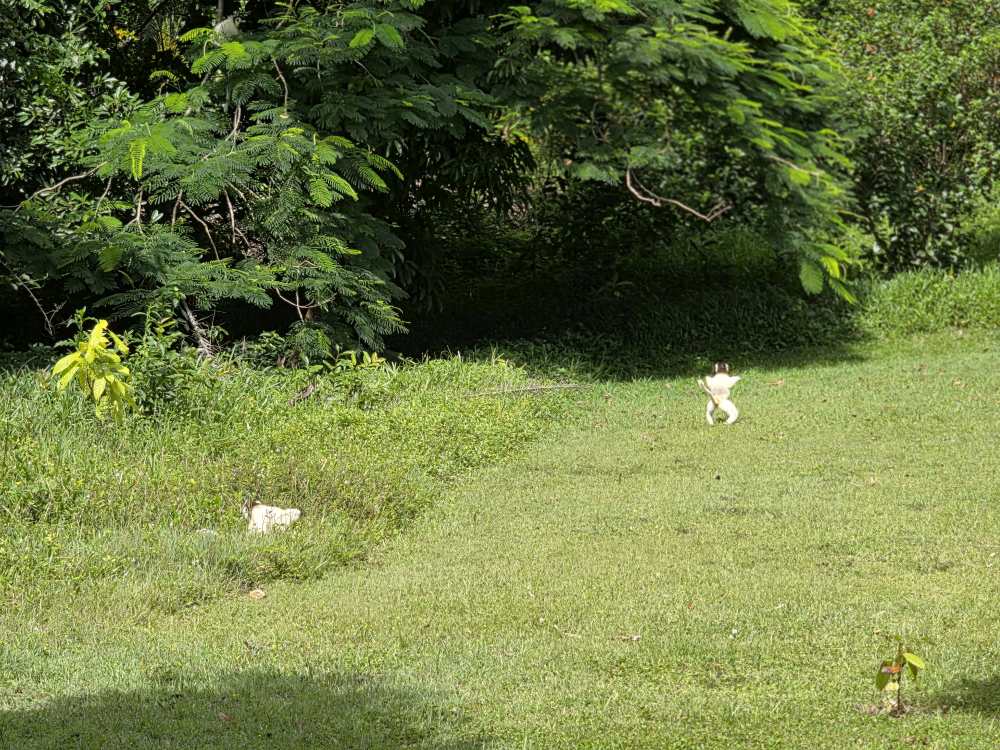
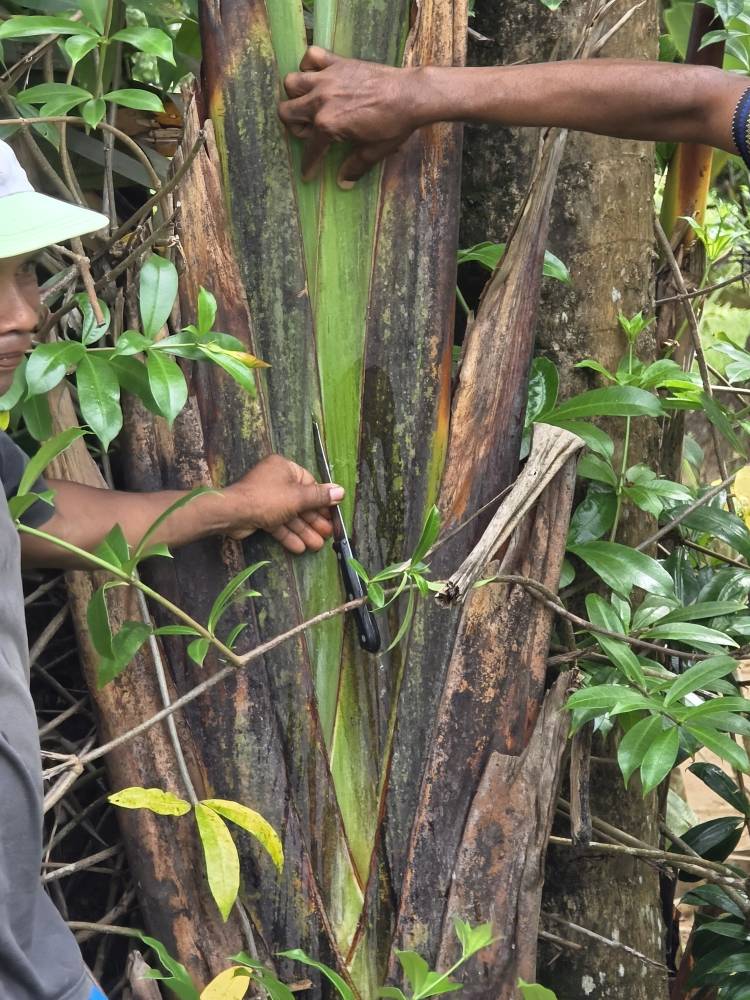
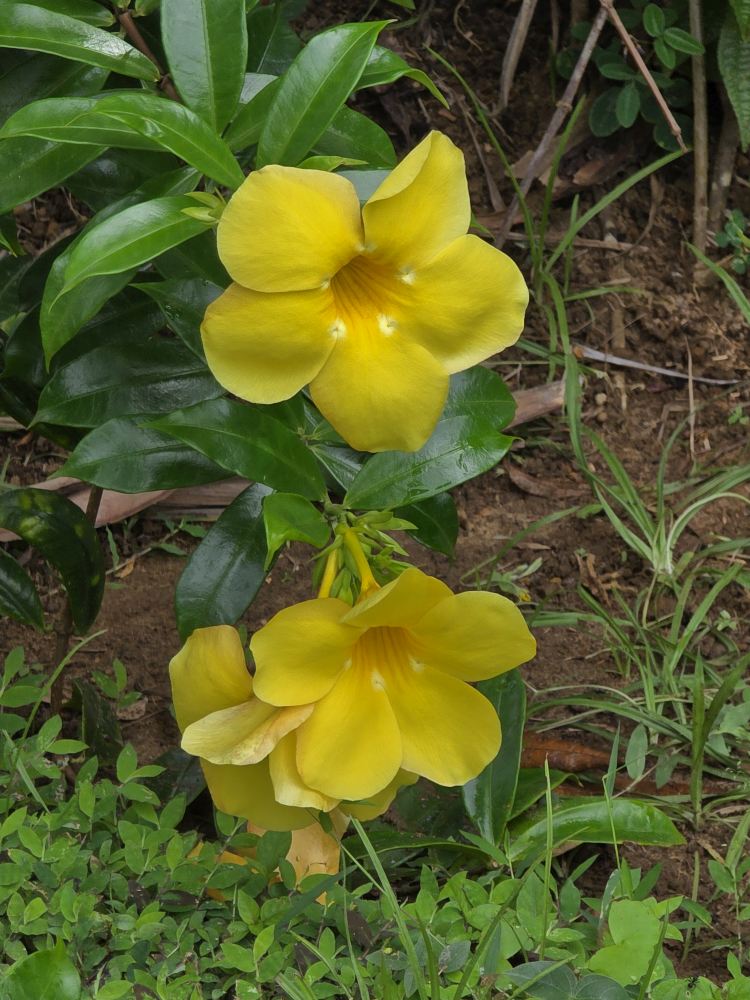
As we walk through the park, Aime stops us here and there to explain the plants – like a demonstration at this one tree that can be cut into and provides fresh water to drink and an explanation of the beautiful yellow flowers, Golden Trumpets or Allmanda, that are absolutely everywhere here.
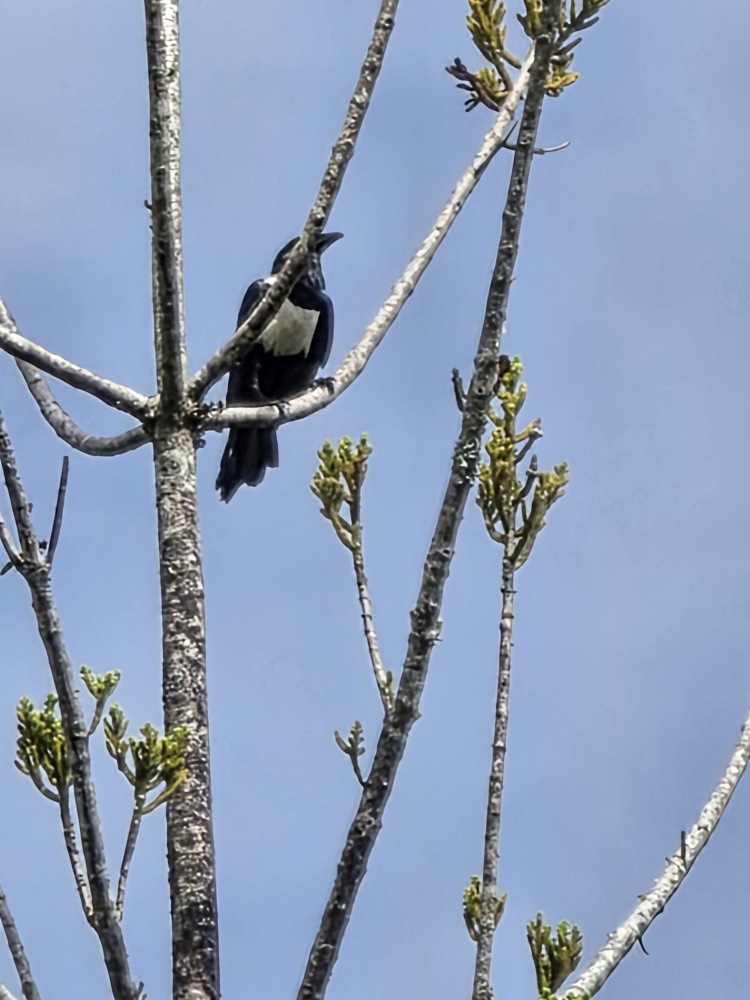
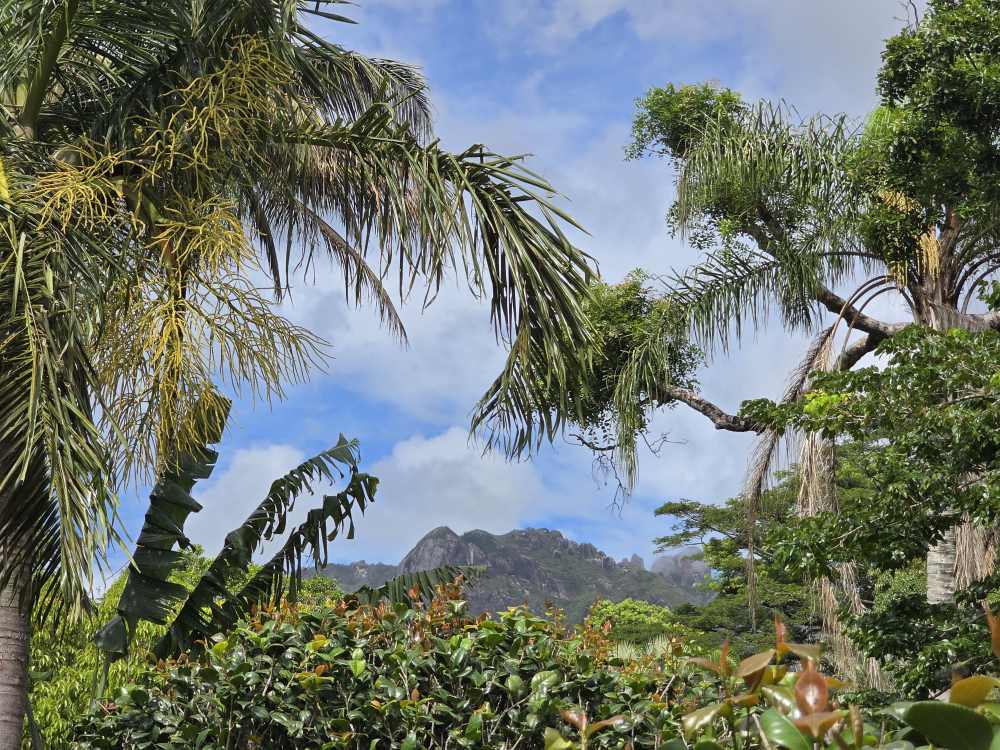
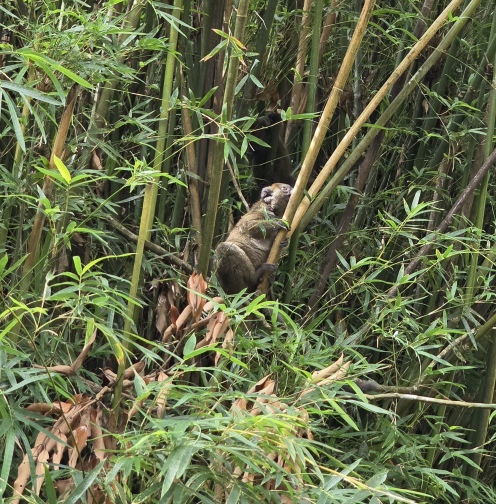
Our next sighting is the elusive bamboo lemur – elusive because they hawks are their predators and they hide in the thick bamboo trees to escape them. The guide has found a family, rattling the bamboo to get them to move closer to us so we can see them. Small and brown and a little creepy looking, these guys show themselves only briefly before diving back into the depths of the thick bamboo plantings.
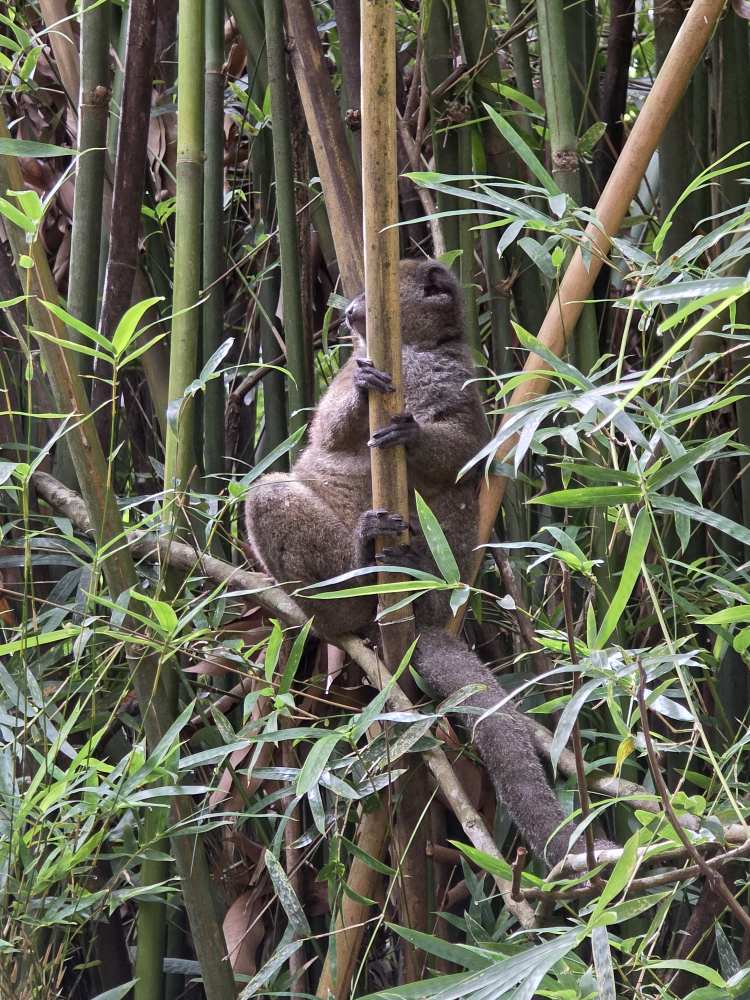
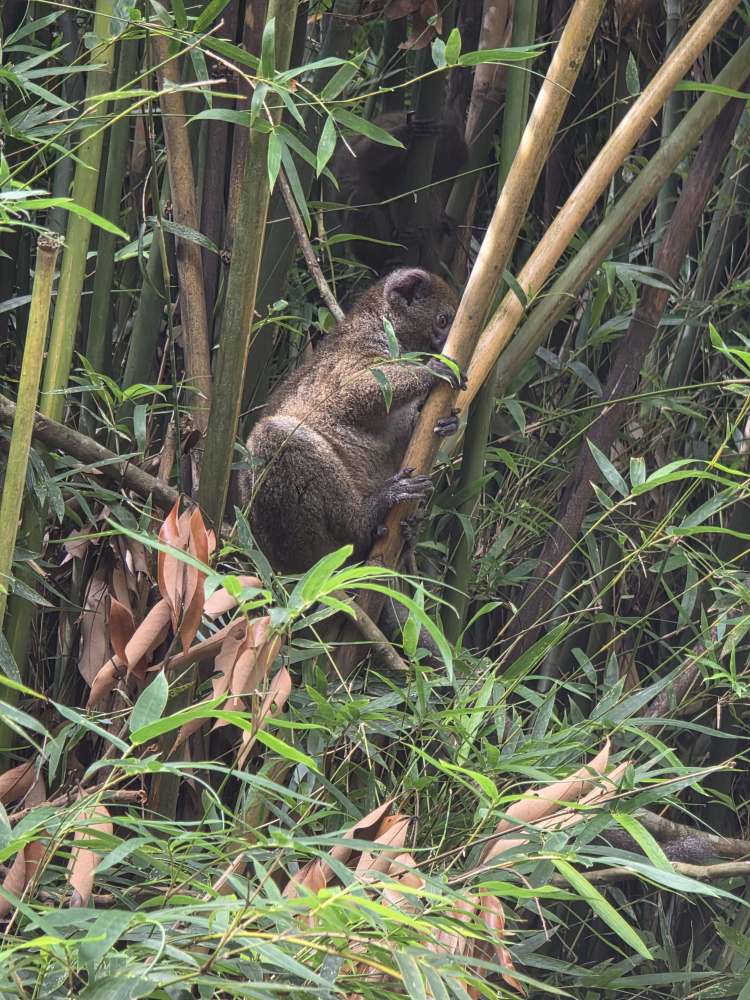
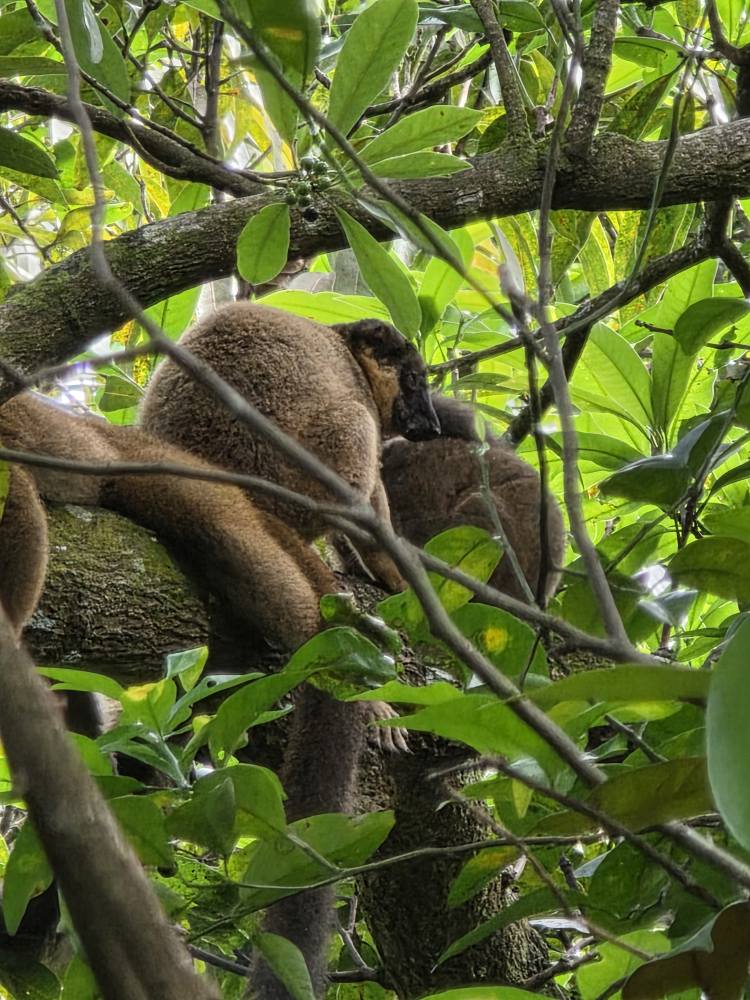
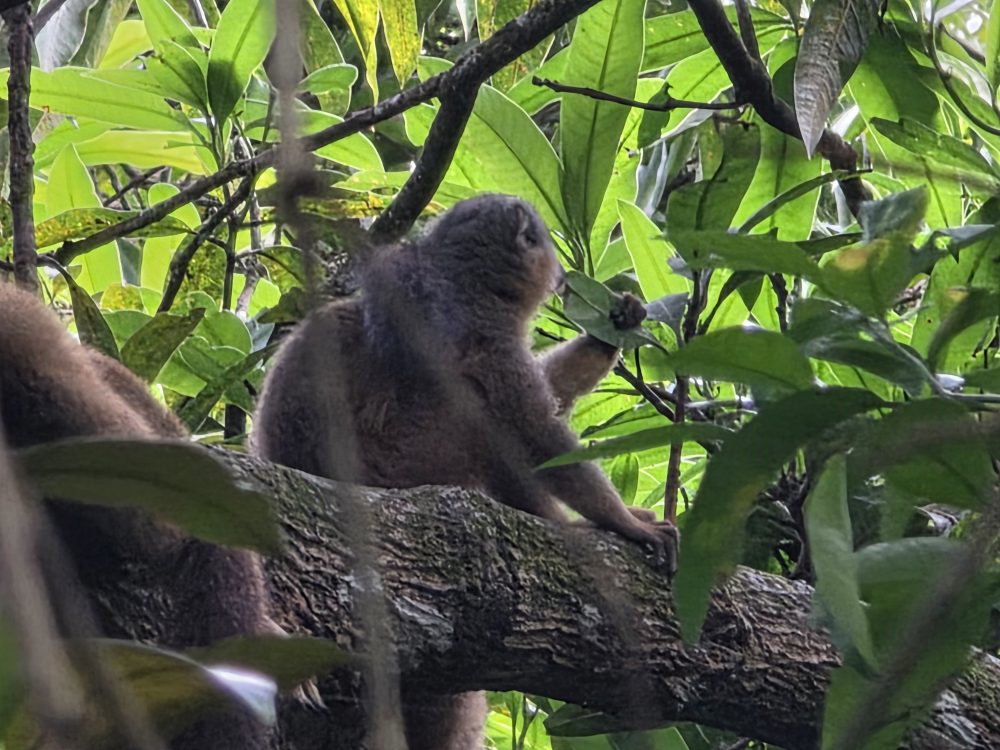
Then we are onto the Brown lemurs, which we find up in a tree high above us. The guide beckons us forward so we are virtually right underneath them – another little family of male, female and baby. The male is stretched out on the branch, just lounging. The baby is grooming the mom and at one point it looks like they are kissing each other.
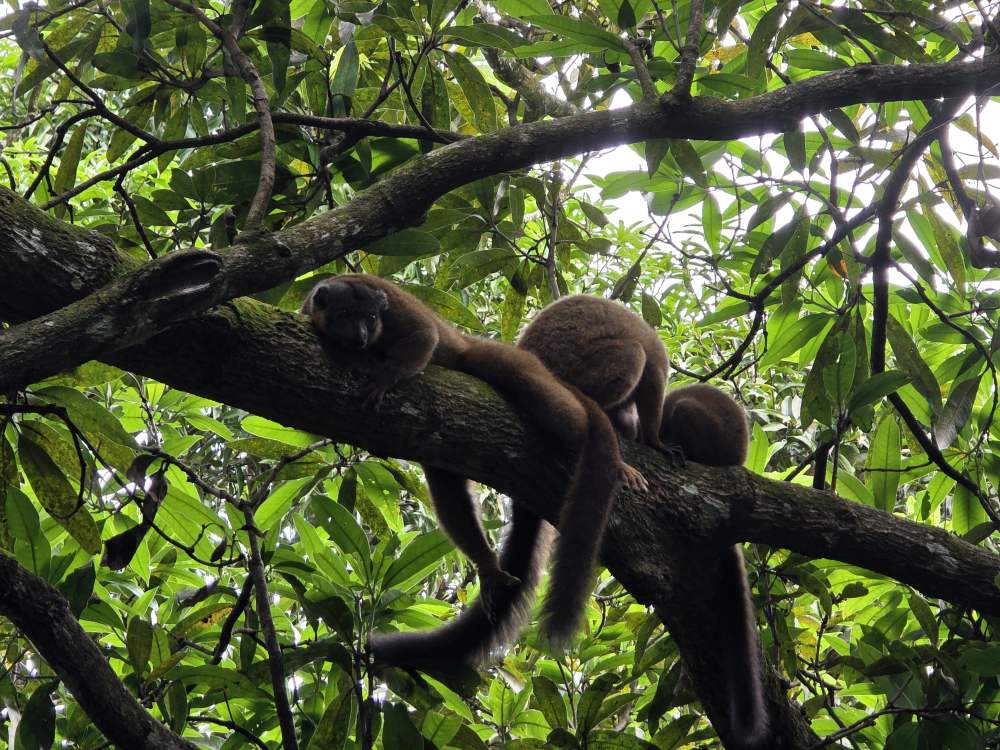
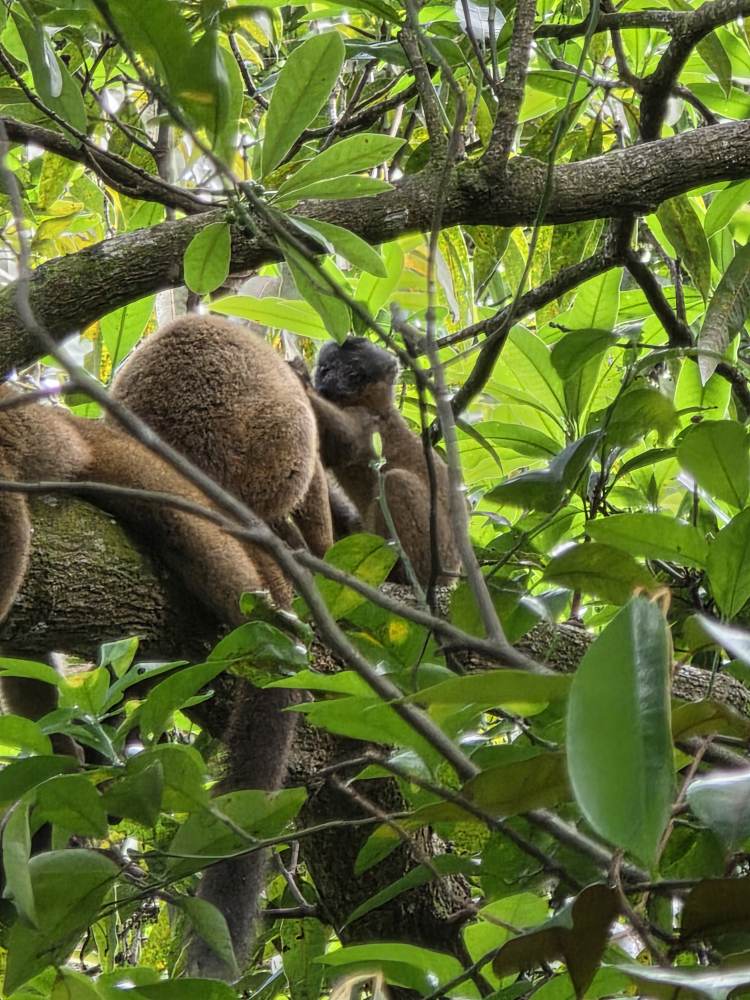
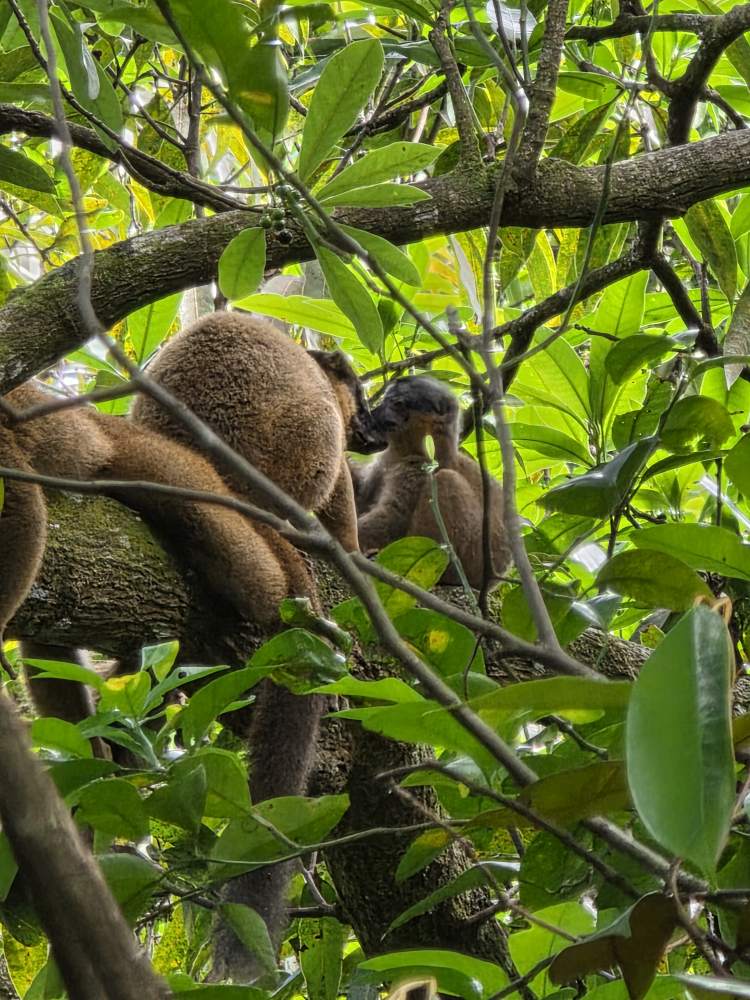
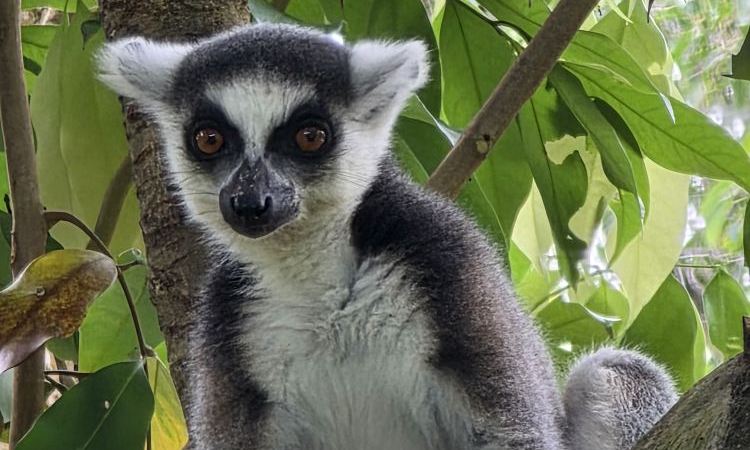
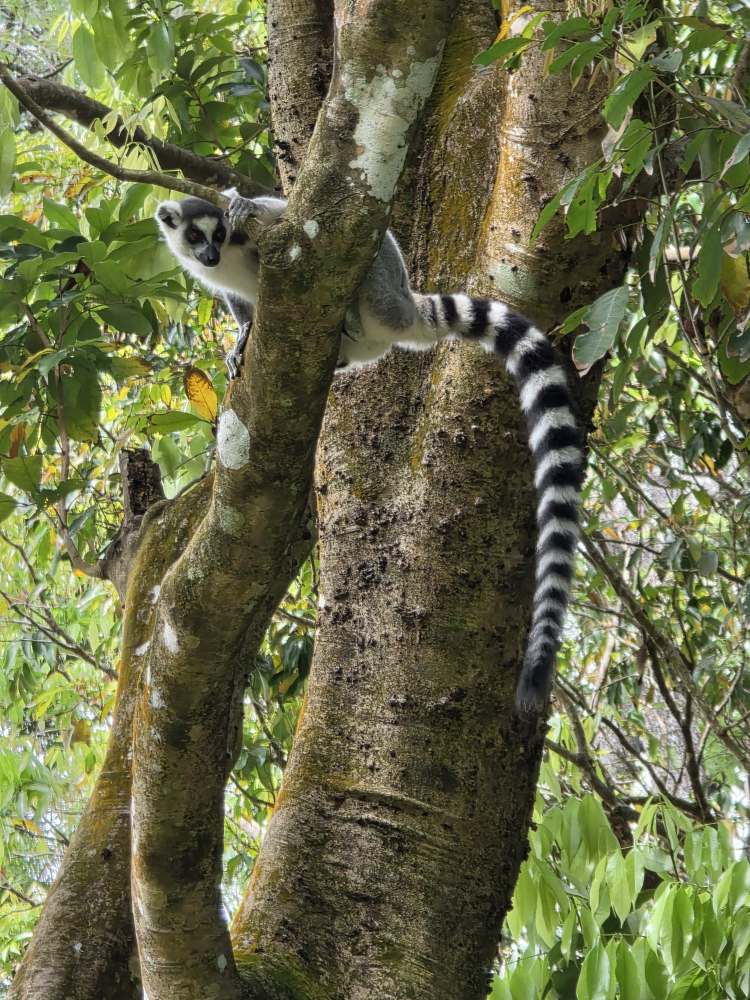
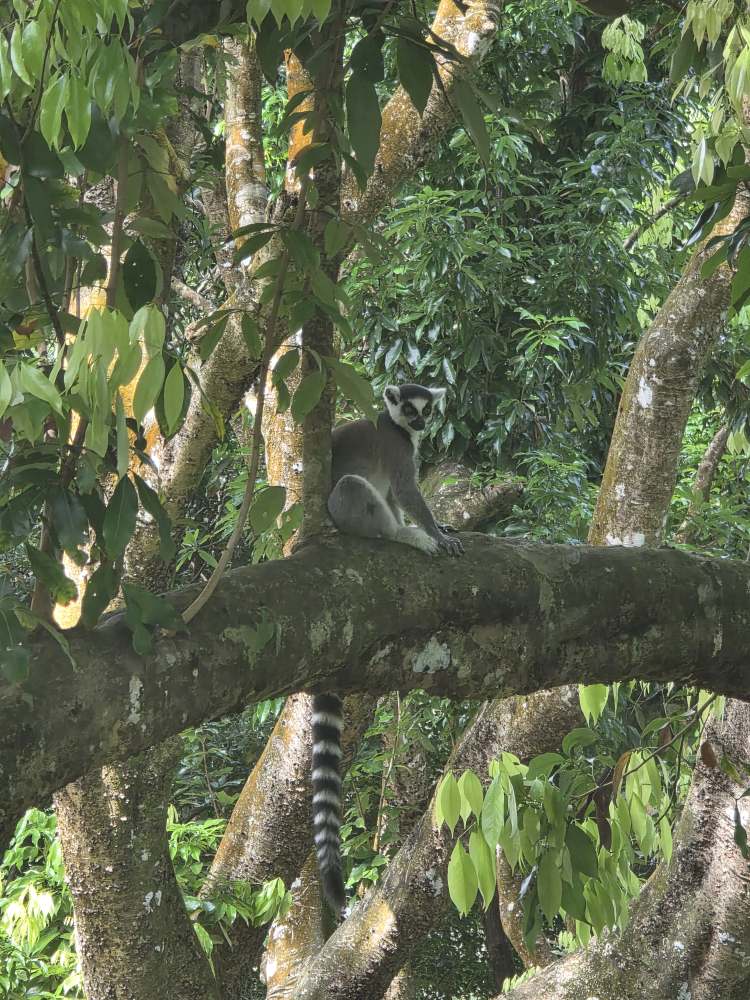
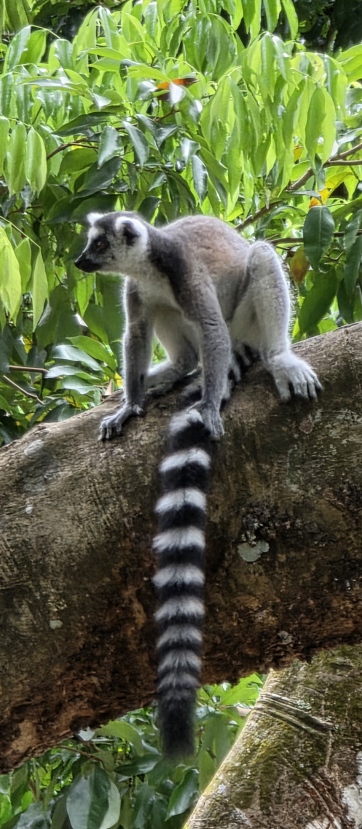
Finally we luck (well, you know – it is basically a zoo/park, so there really isn’t any “luck” involved) on a whole troop of Ring-Tailed Lemurs. Aime tells us they are very communal and always travel and live in these large groups – which of course makes it perfect for us to view them and watch in awe as they watch us back. Too many picture opportunities! Enjoy.
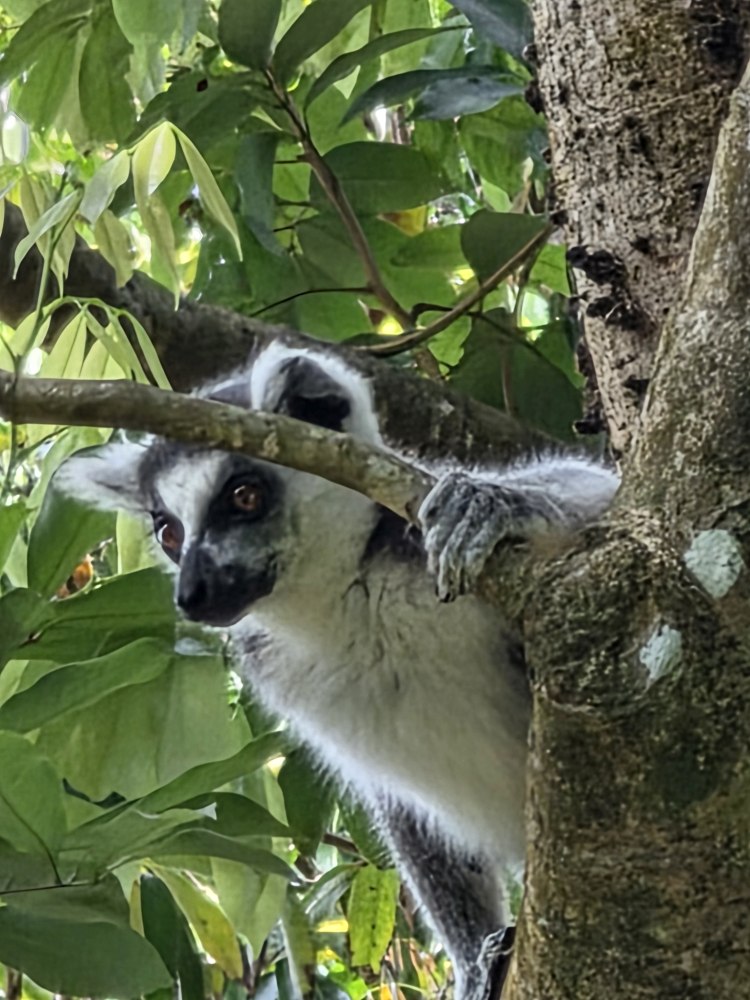
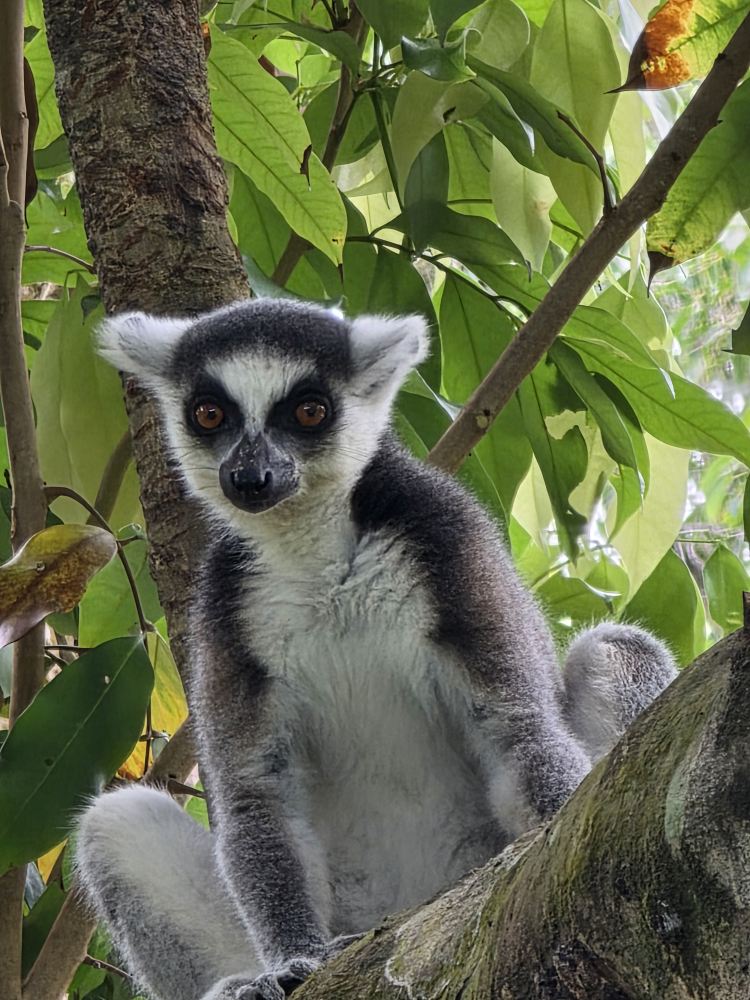
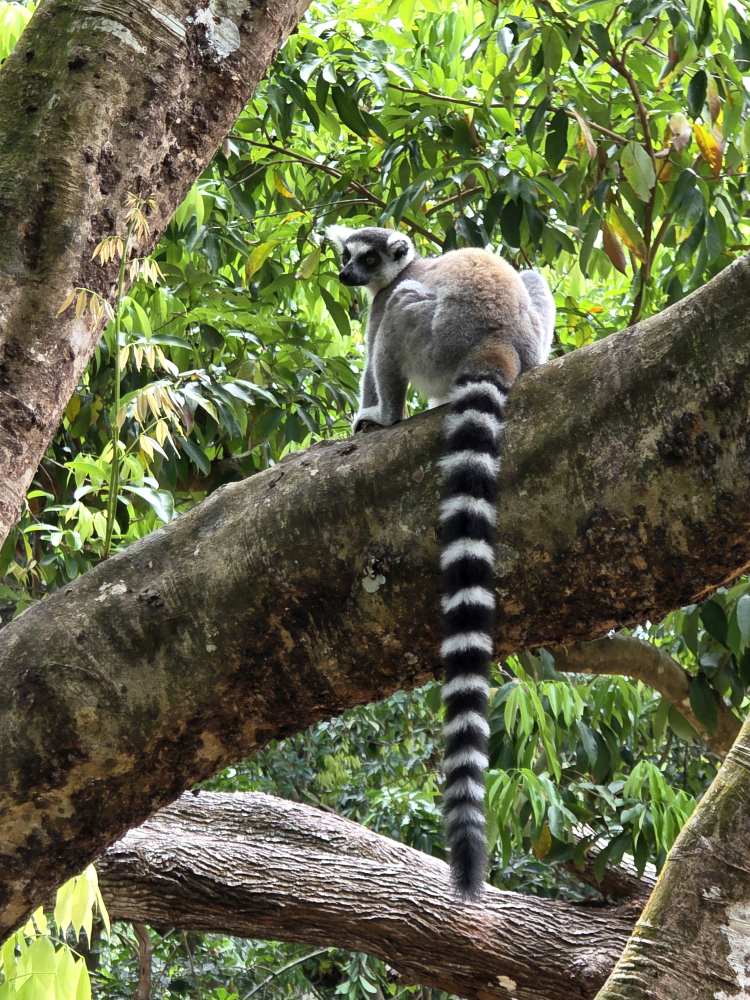
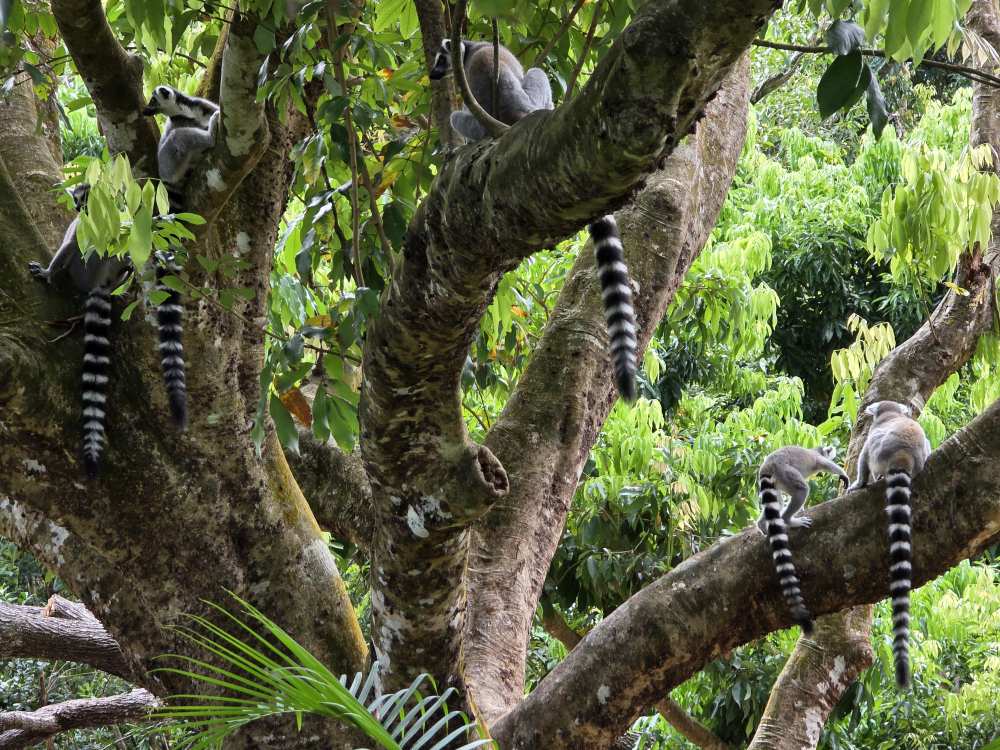

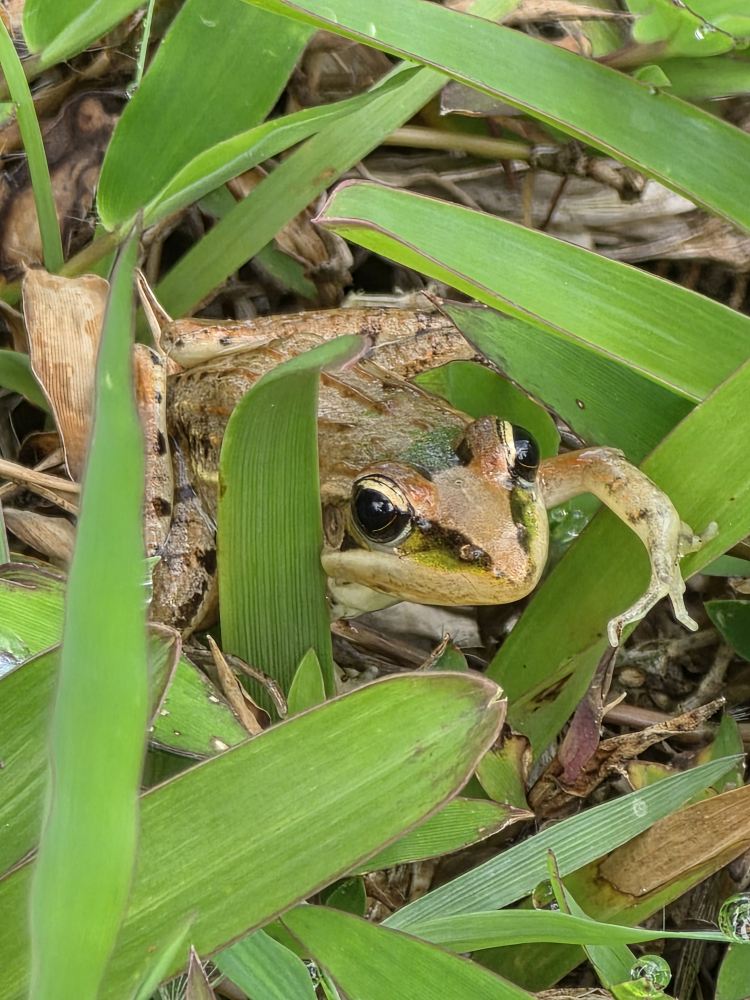
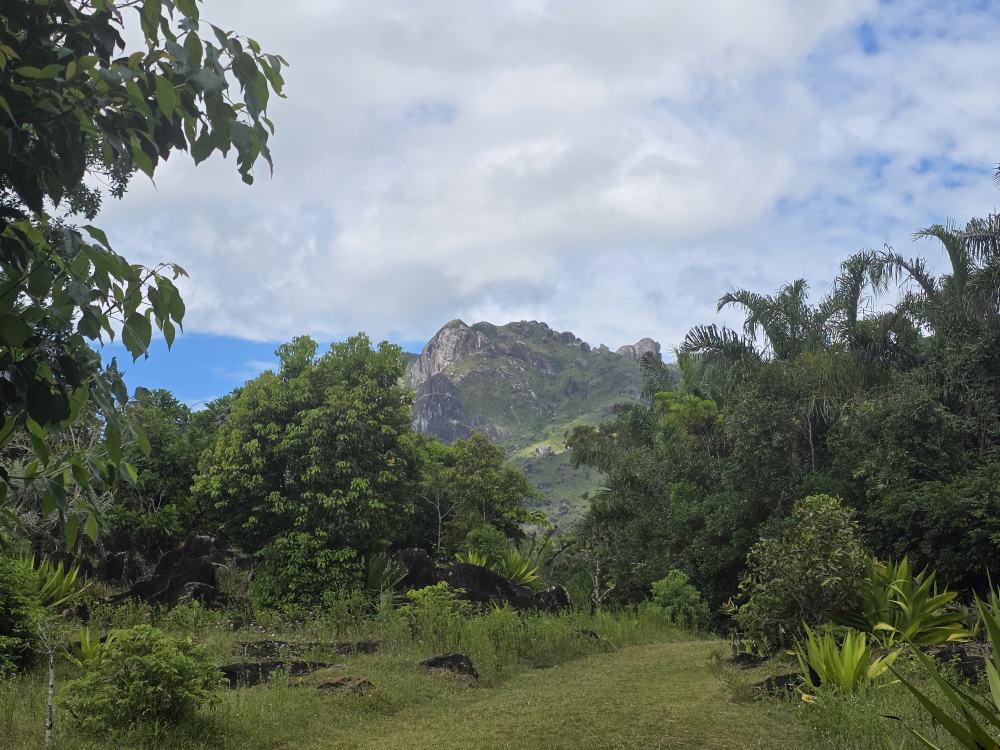
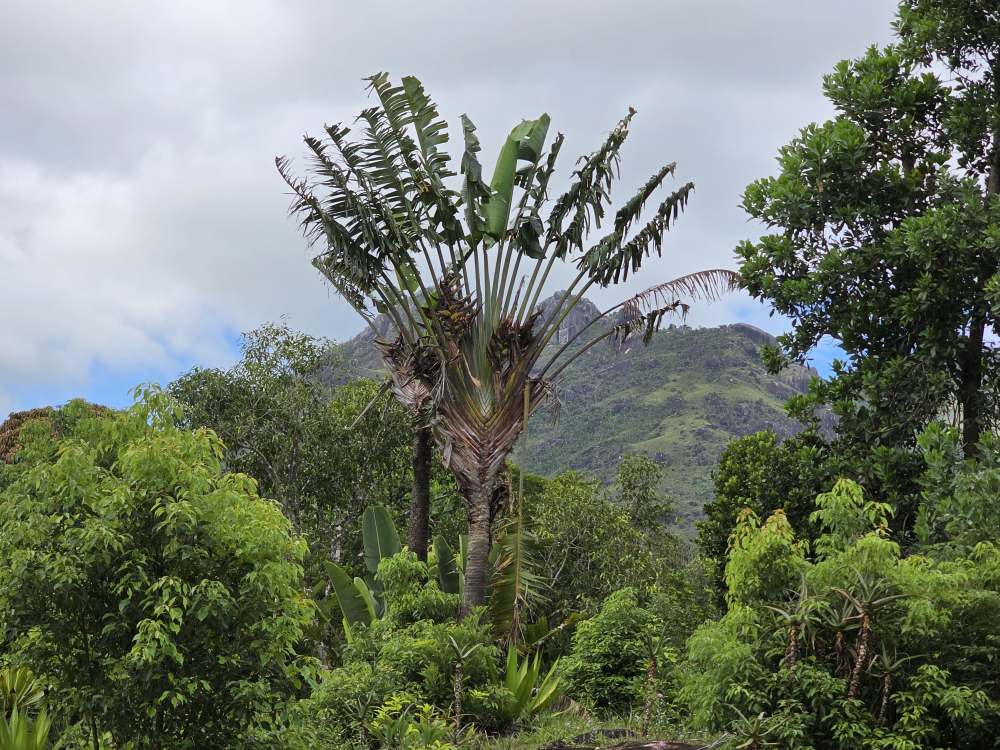
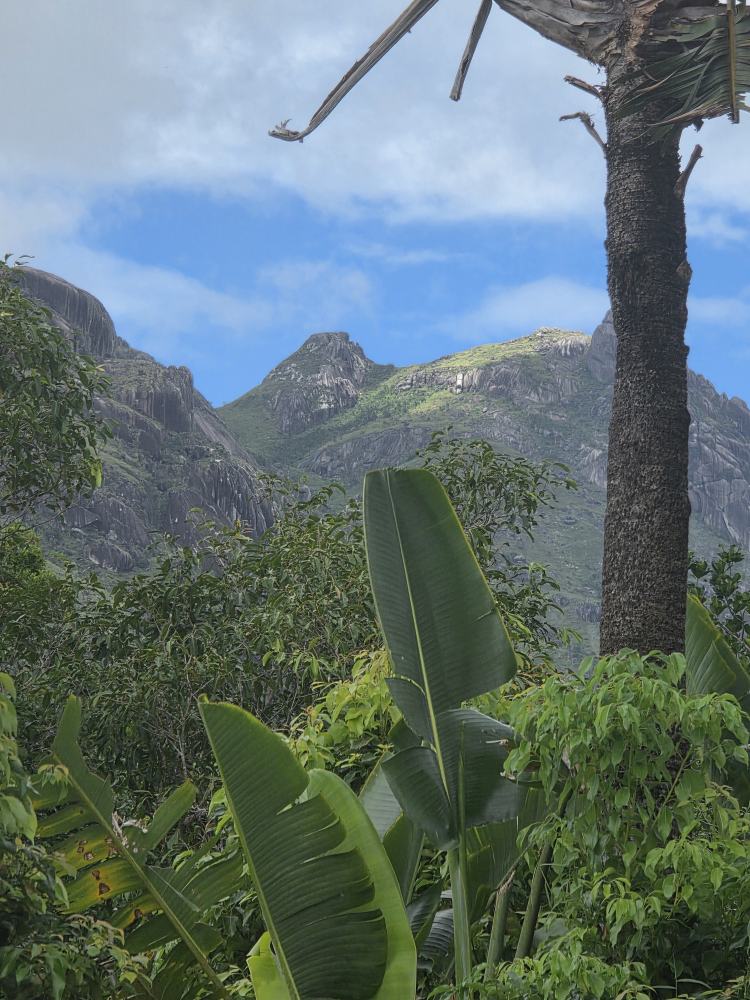
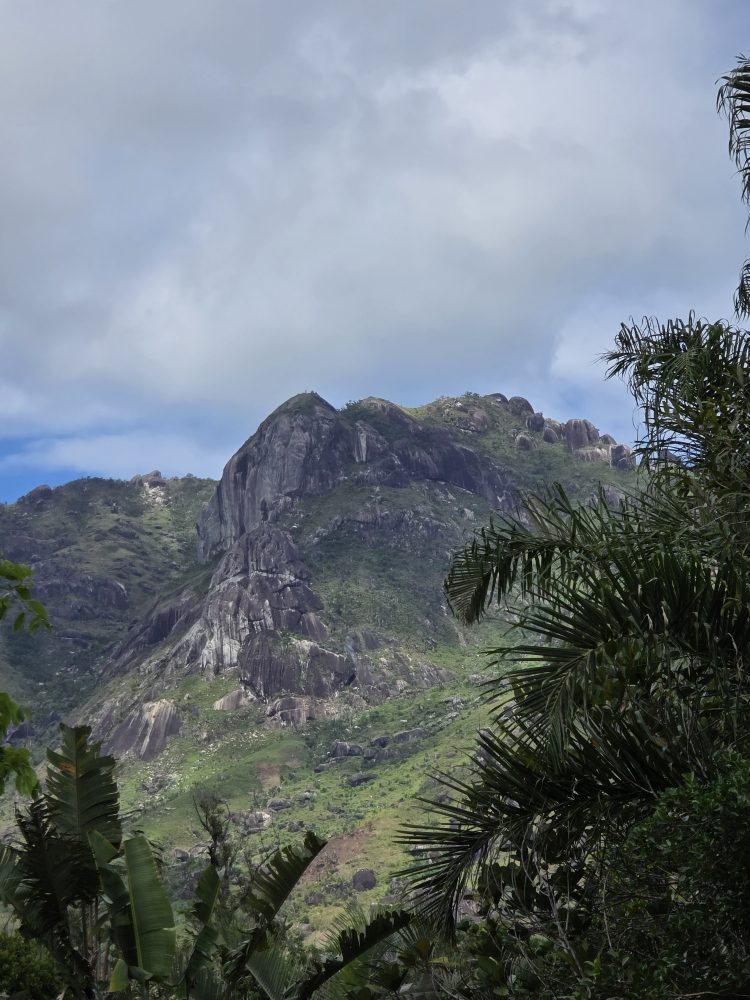
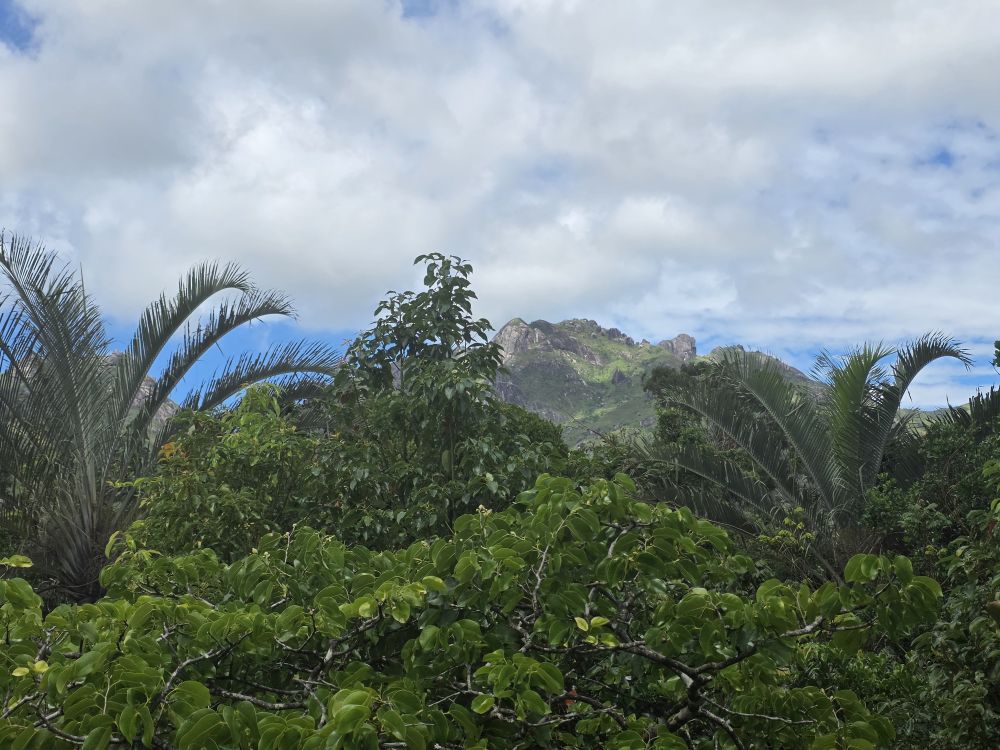
Soon, we are off, returning toward the van, finding a teeny little brown frog (how do they see these things?) hiking in the green weeds on the ground, and circling around a lovely garden area with the craggy mountain peaks as a constant background.
Back in the van, which is surrounded by children and people selling things and begging for money (which of course is what Jose, et al, have been warning everyone to expect – this is one of the poorest nations in the world), the organization of our group – Nick and Jane – have brought things for the children, school supplies, pencils, notebooks, stickers, etc., and want to hand them out. Such a sweet thought, but oh, such a melee it causes. Aime tries to manage the distribution – handing things out, but the children soon become an unruly mob, almost grabbing Aime out of the van. Finally he virtually beats them off and tells Ricky to shut the door and we are off on our city drive. Phew.
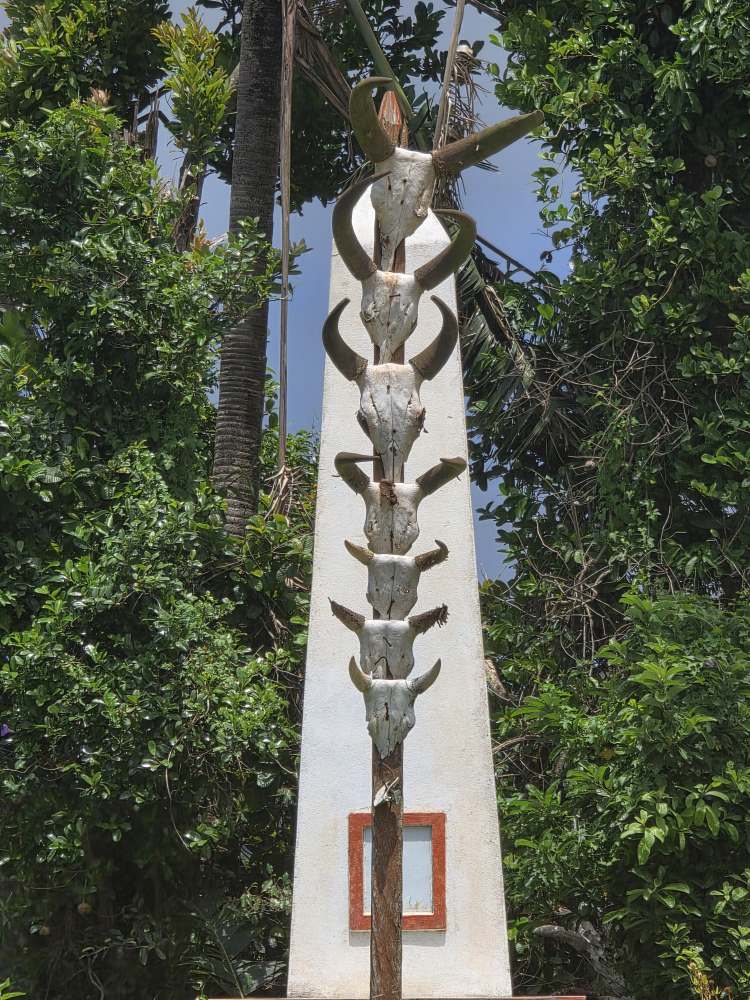
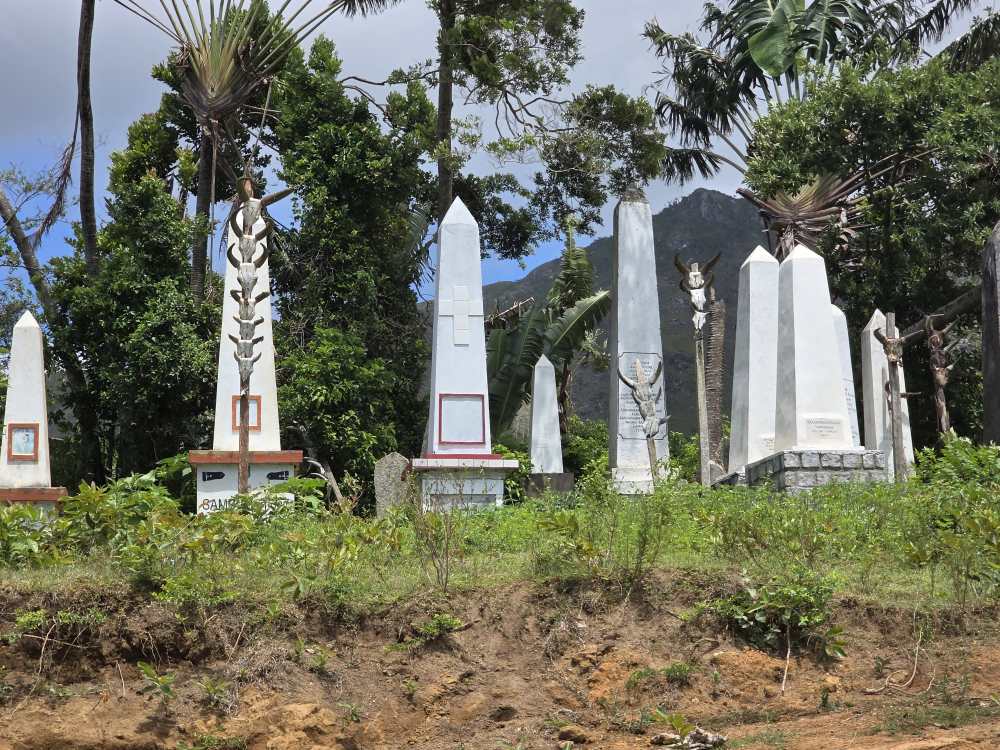
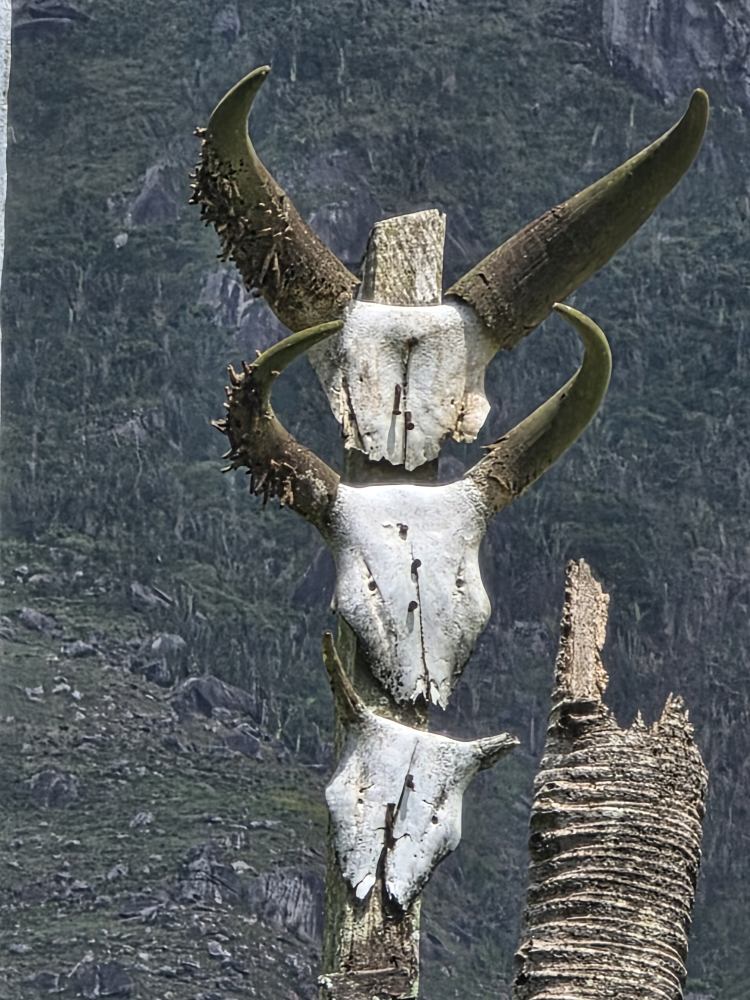
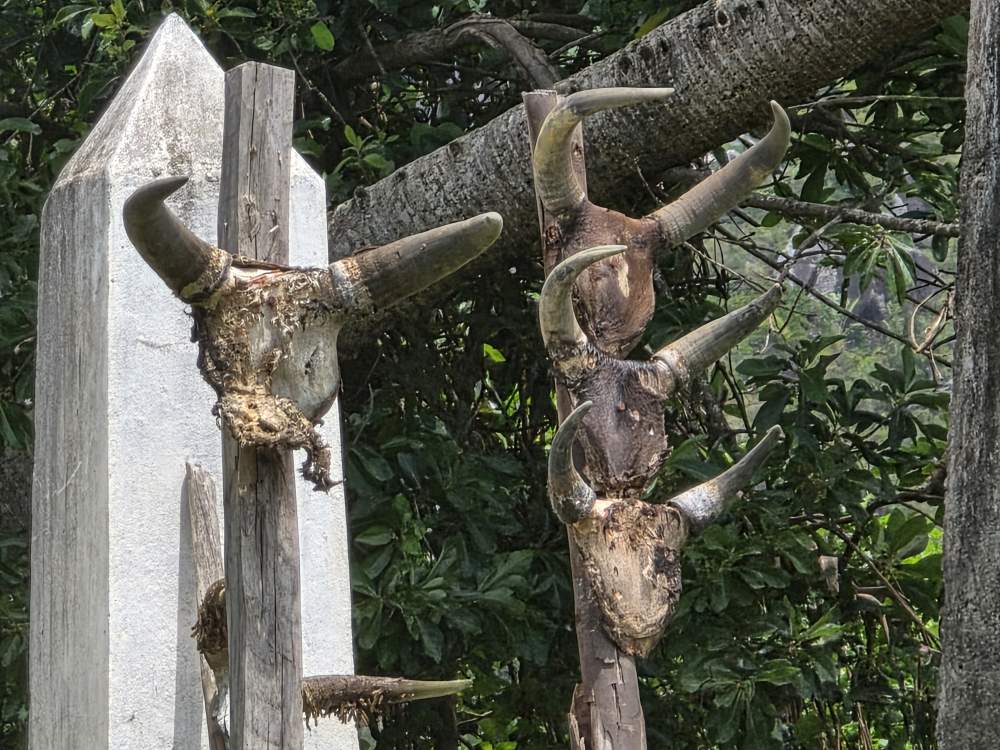
First though we stop by a Cemetery perched atop a hill on the side of the road – Aime explaining that the tall grave stones are for the men, the shorter ones for the women, the number of zebu heads in front of each grave indicate how rich and important the person is.
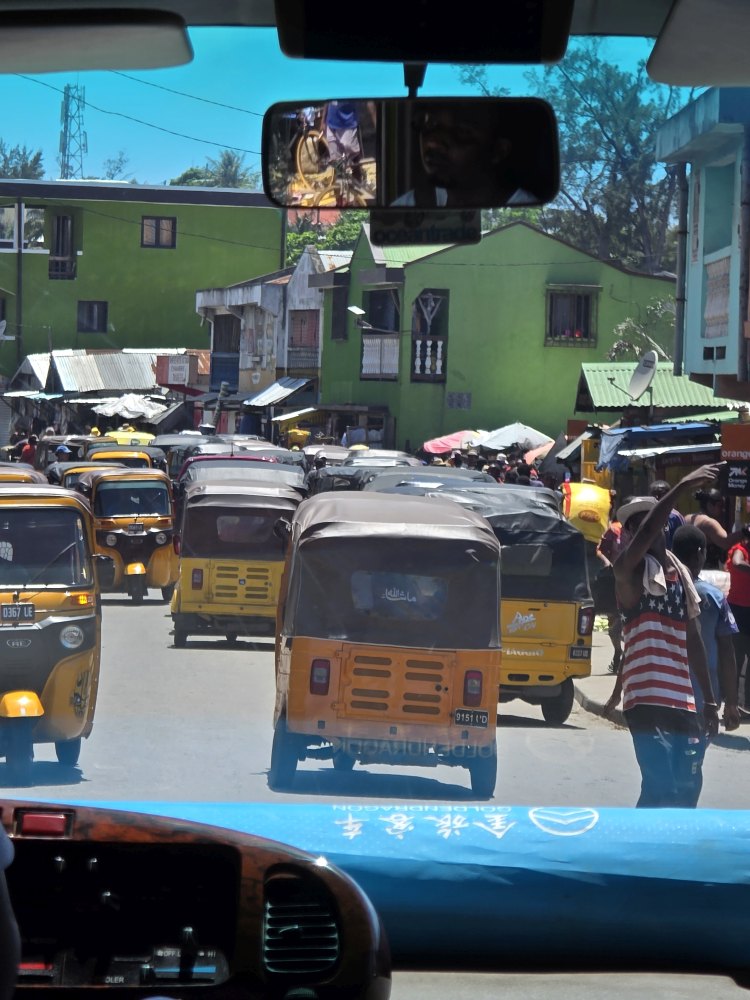
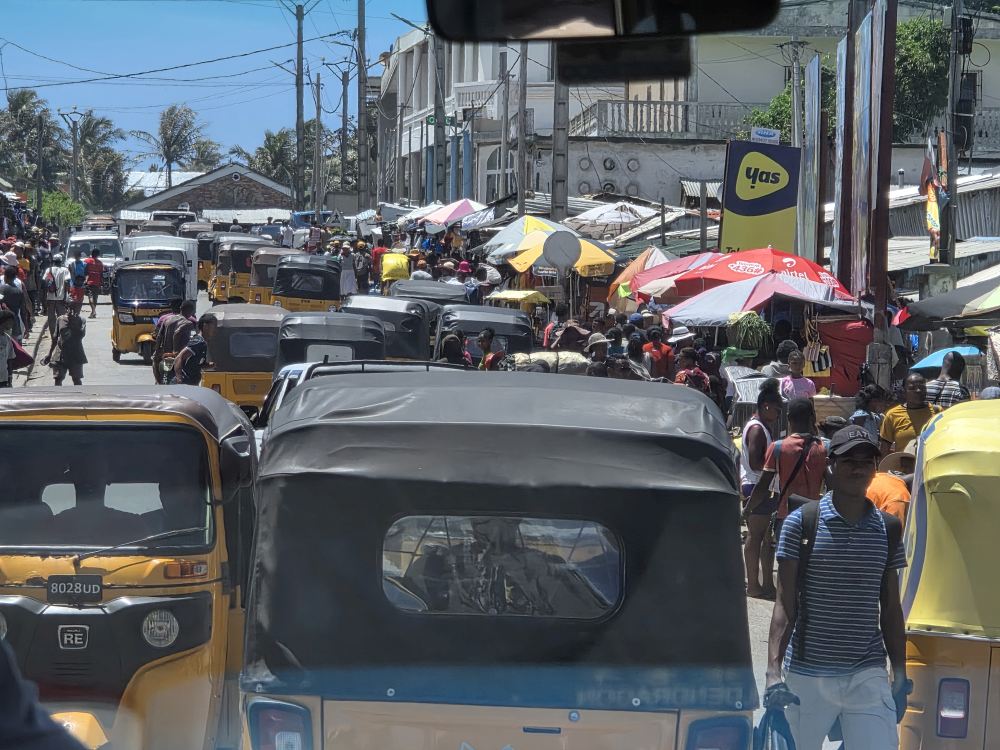
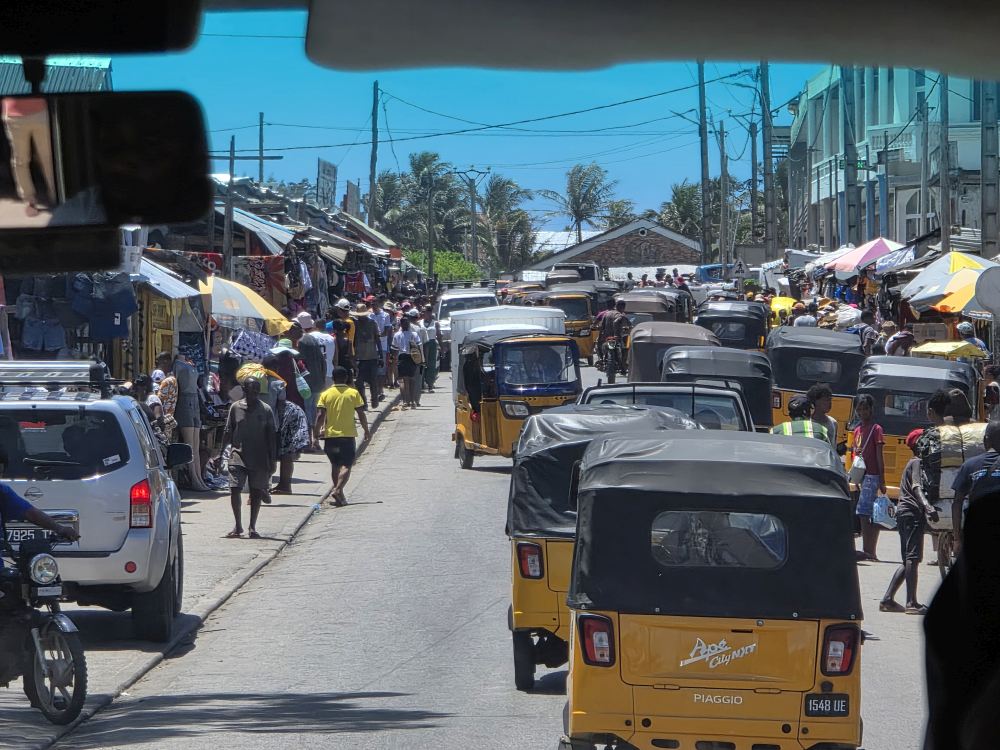
Back past Granite Mountain and the little villages and onto the hustle and bustle of the Taolagnaro city center. Wow – Tuk Tuks everywhere (cheaper and easier than cars), people, bicycles, shops, sounds – it is a cacophony of noise, motion and humanity! We don’t stop anywhere here – just feast our eyes on the scenes and life going on outside our little van.
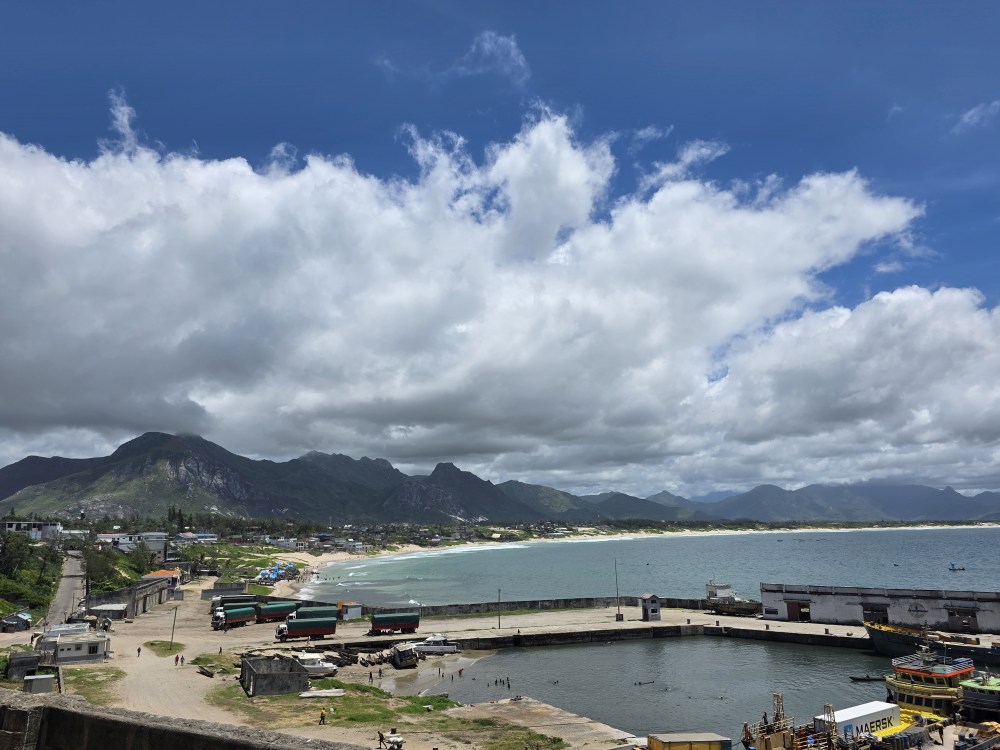
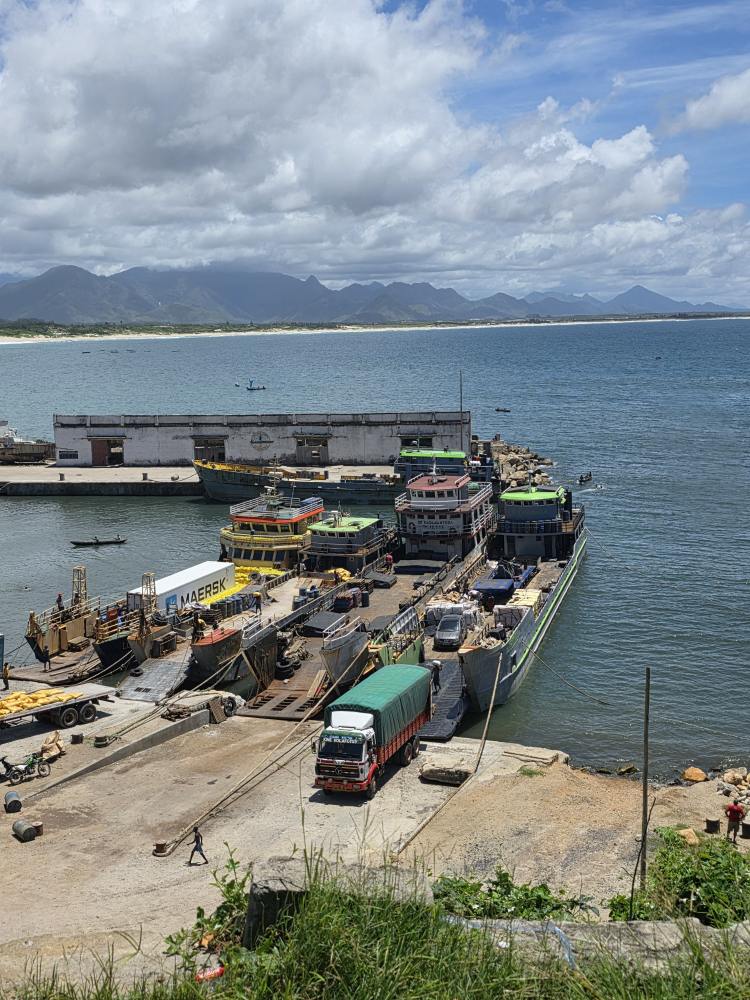
Aime takes us on through the city to the old port, where we have a good view of the bay and the city behind us. He walks us to the viewpoint, as the children and women and mothers with babies strapped on their backs follow us trying to sell us souvenirs or just ask for money. Aime tries to corral us to explain that officials closed the old port and tried to shift everything to the new port where we are docked, but it proved too expensive for the incoming goods – so the old port was reopened – and as we can see today, heavily in use.
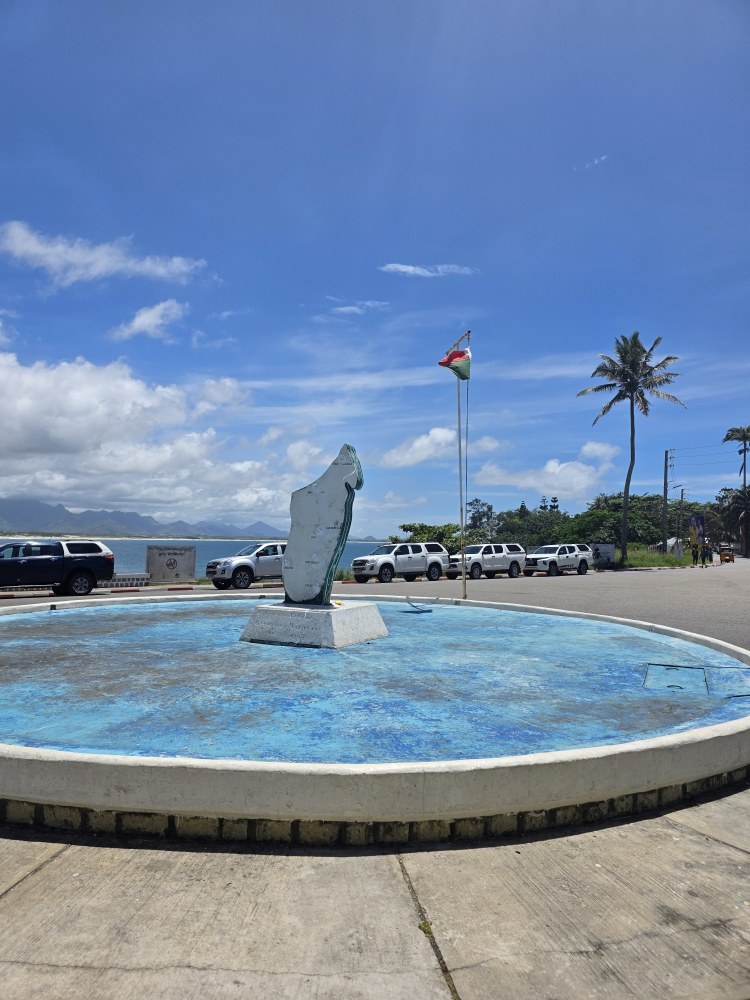
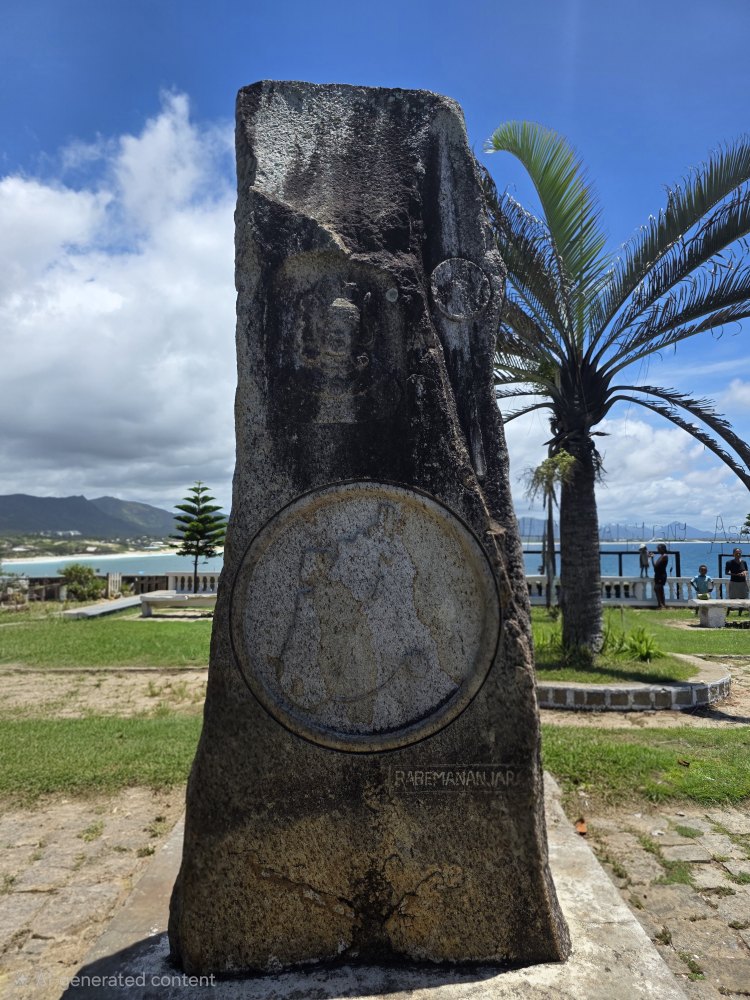
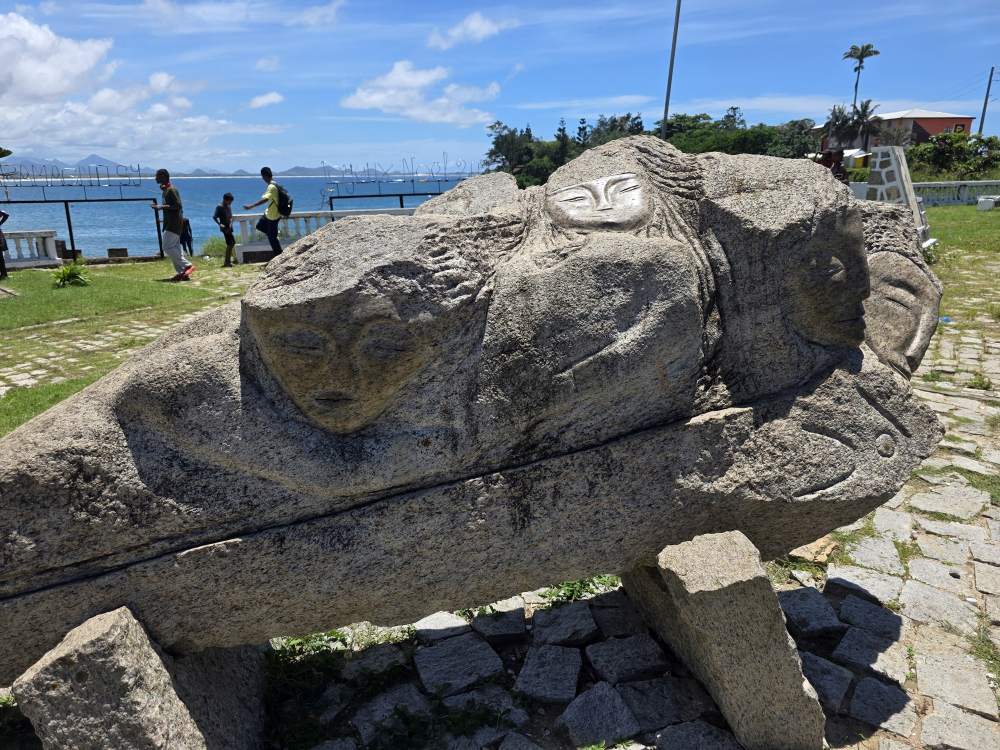
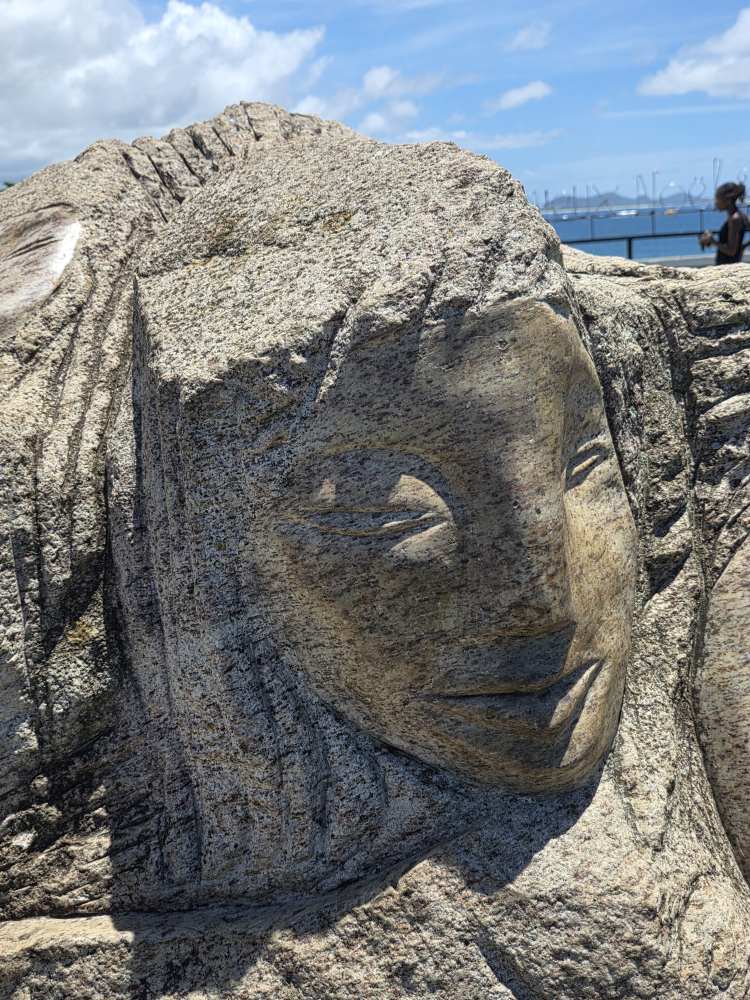
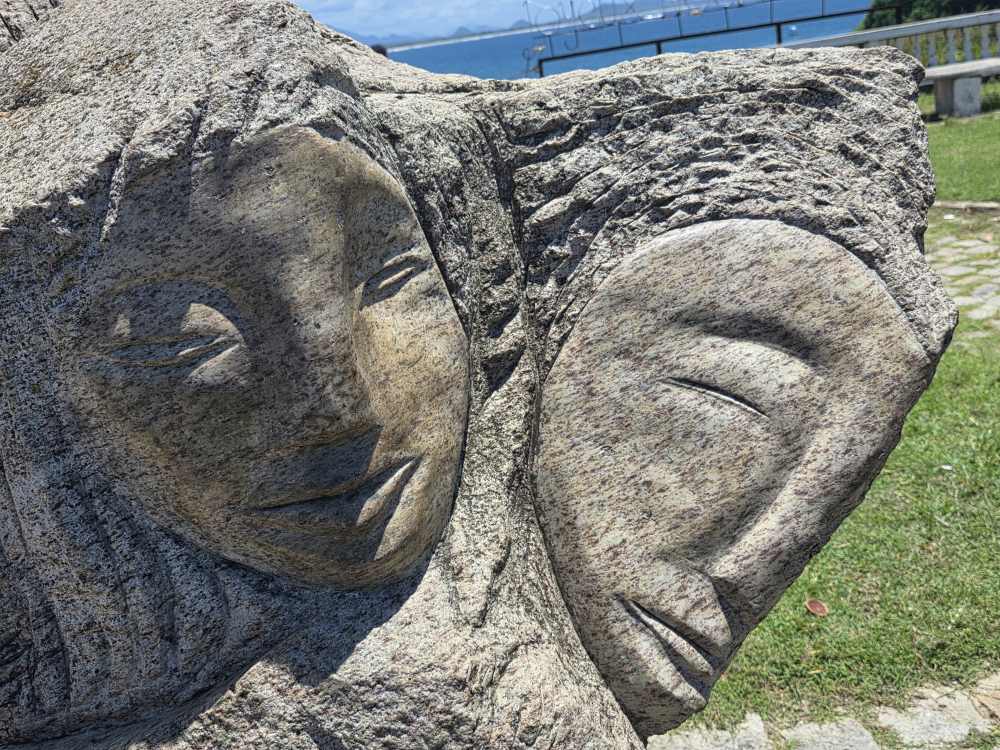
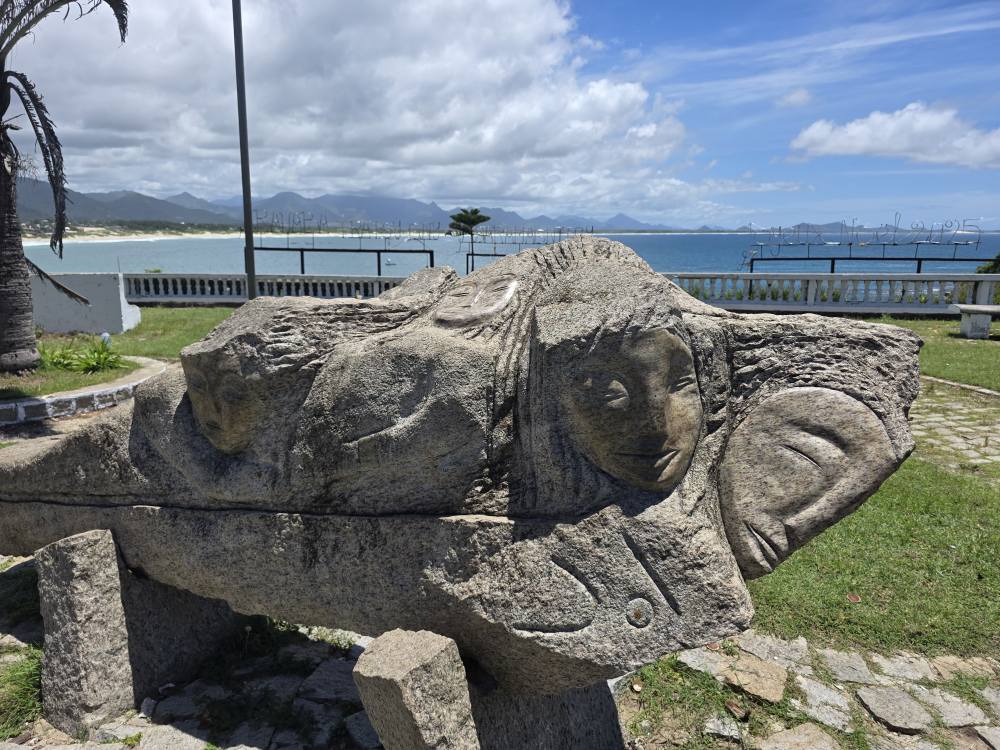
We walk back into the little park like area for an explanation of the two stone carvings here in honor of Jaques Rabemanajar, a former vice president of Madagascar as well as a poet and playwright who focused on history, culture and the struggle of the Malagasy rule against colonial rule. The obelisk has a carving of the Madagascar island along with some symbol at the top, the other carving shows the faces of people he fought for and wrote about. At least I think that’s what Amie said – it was hard to hear him and understand with all the begging and selling going on around us. ”Madam, madam,” “lady, lady.” Some of our group got really out of sorts at this, which we guess we can understand except that this is what poverty looks like – and maybe they haven’t traveled as broadly as we have? These folks aren’t aggressive in the least (not like the unruly children), just very persistent. What can we say?
At any rate, we all finally make our way out of the park and back to the van heading to the Ankoba beach resort for our refreshment/lunch stop.
 Andiamo