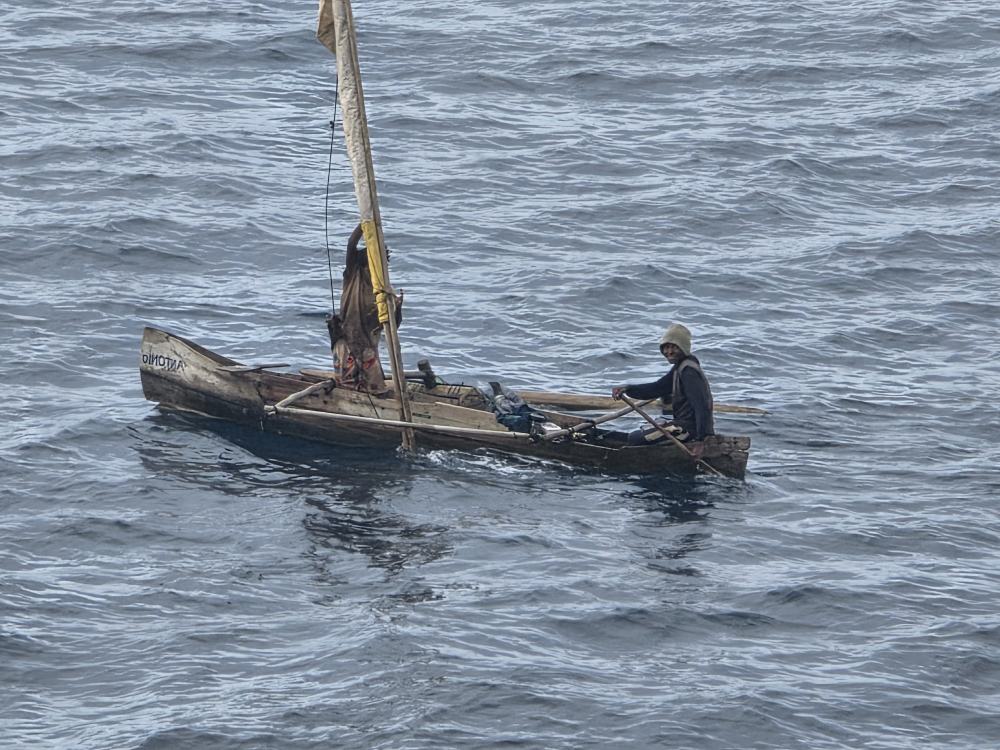
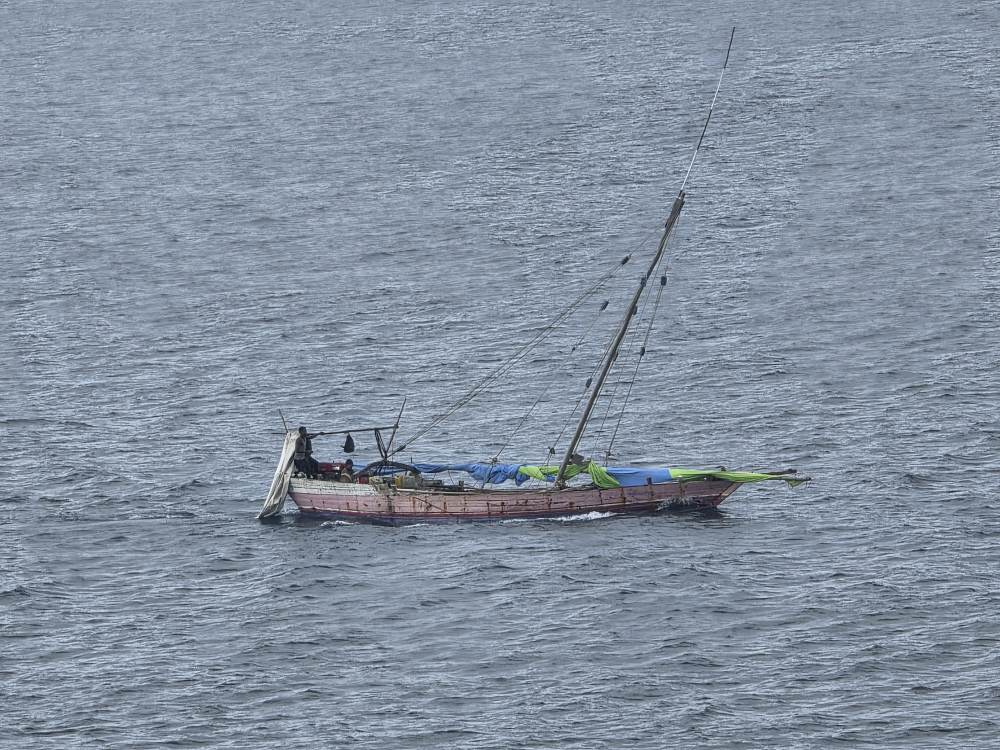
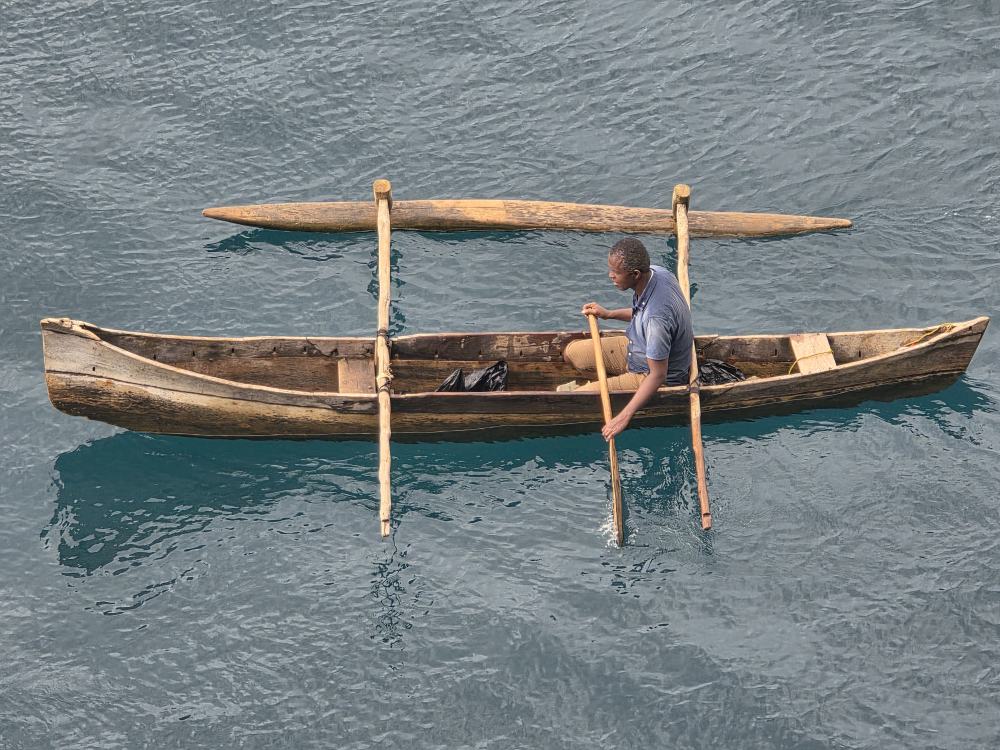
We’re not even bothering with the gym today – why? We’ve an early tour and figured we’d just walk the deck, which was nice and not too terribly hot yet. Which gives us the added bonus of watching all the fishermen in their little pirogues (canoes that look like outriggers) and other odd fishing vessels paddle about around the ship.
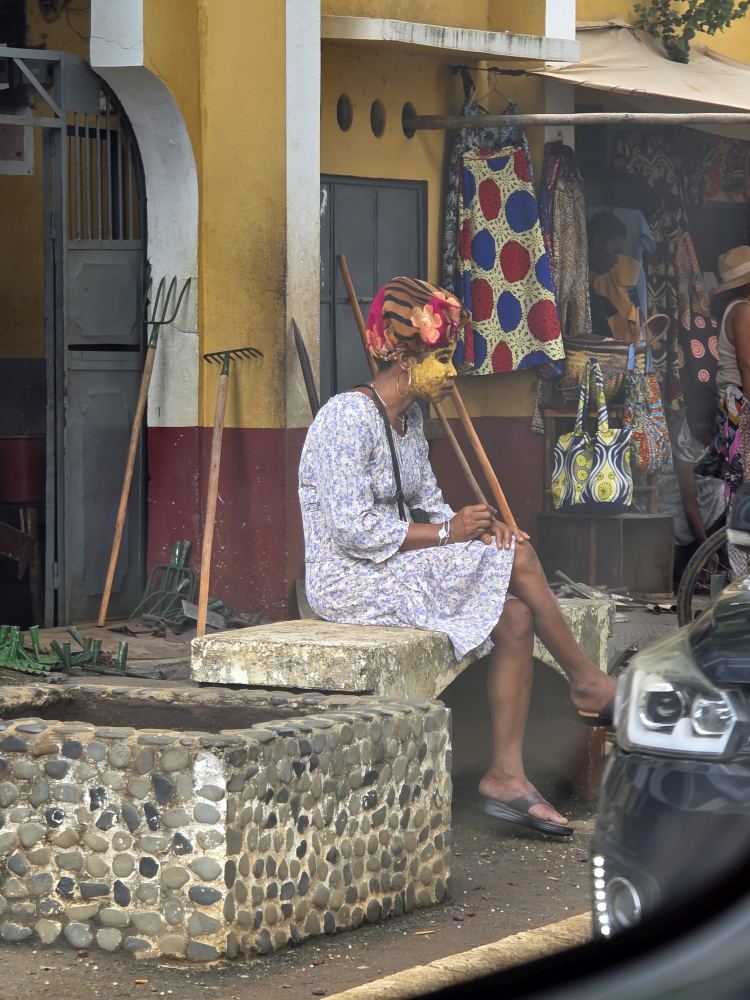
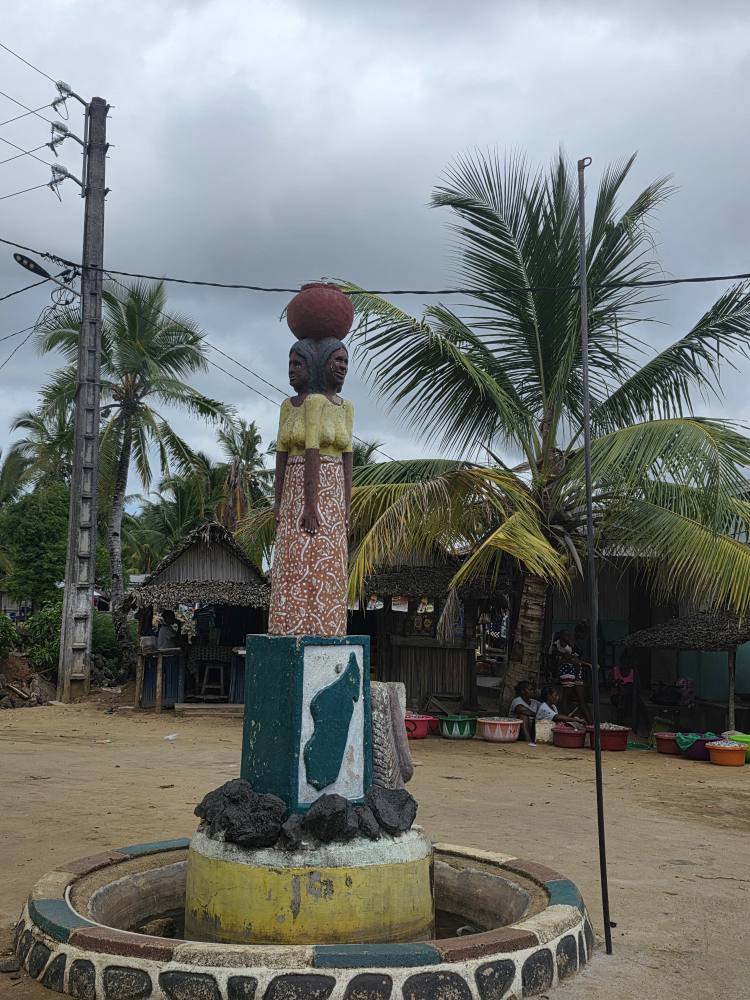
Then it is off to get ready for our next ship’s excursion to Lakobe National Park for a rainforest walk. We’re queued up and ready to go when our group is called – so its off to the tender and then off to the pier where we are sorted into Vans of 8. We’re behind these slow people who are getting in our van too – sigh – hope this doesn’t portend what is to come on our walk/hike. Our guide, Nicoli, is great – full of knowledge and interesting as he talks the entire time we are driving out to the reserve, explaining that Madagascar is the 4th biggest island in the world. He explains the city as we pass by buildings, people shopping, different statues and women with their faces “painted” so that the sun and the heat of the fires they cook on don’t hurt their skin.
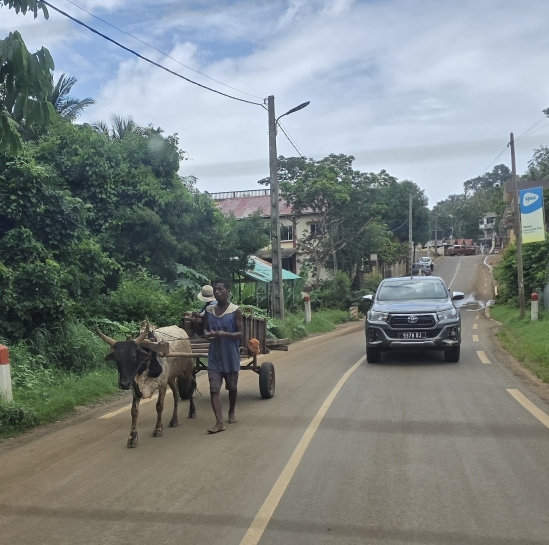
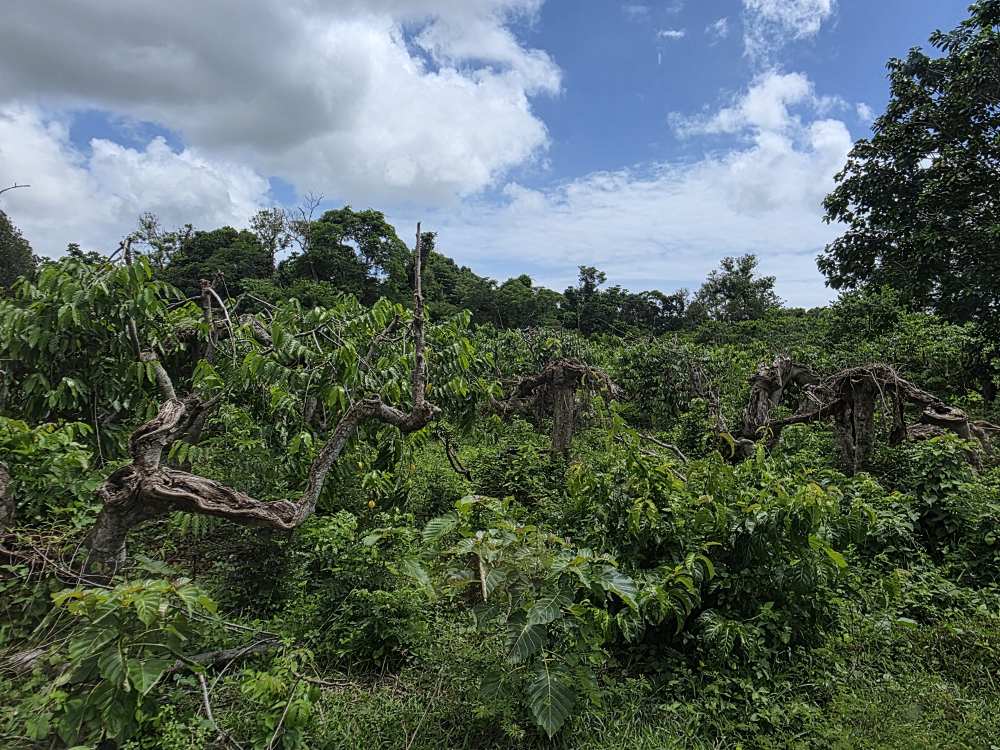
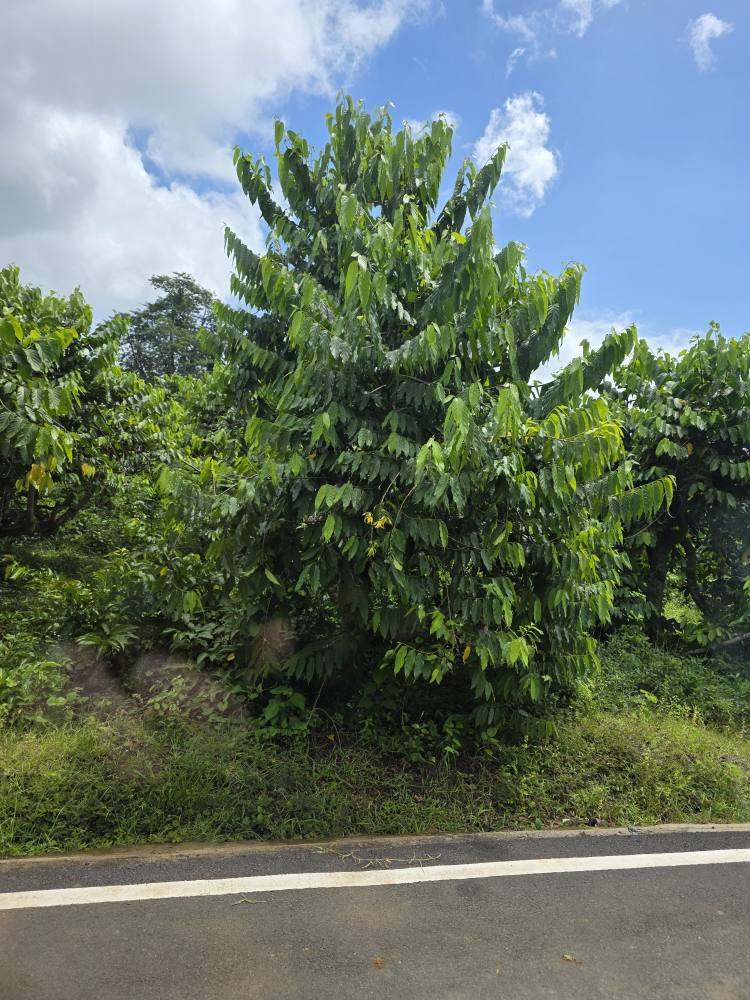
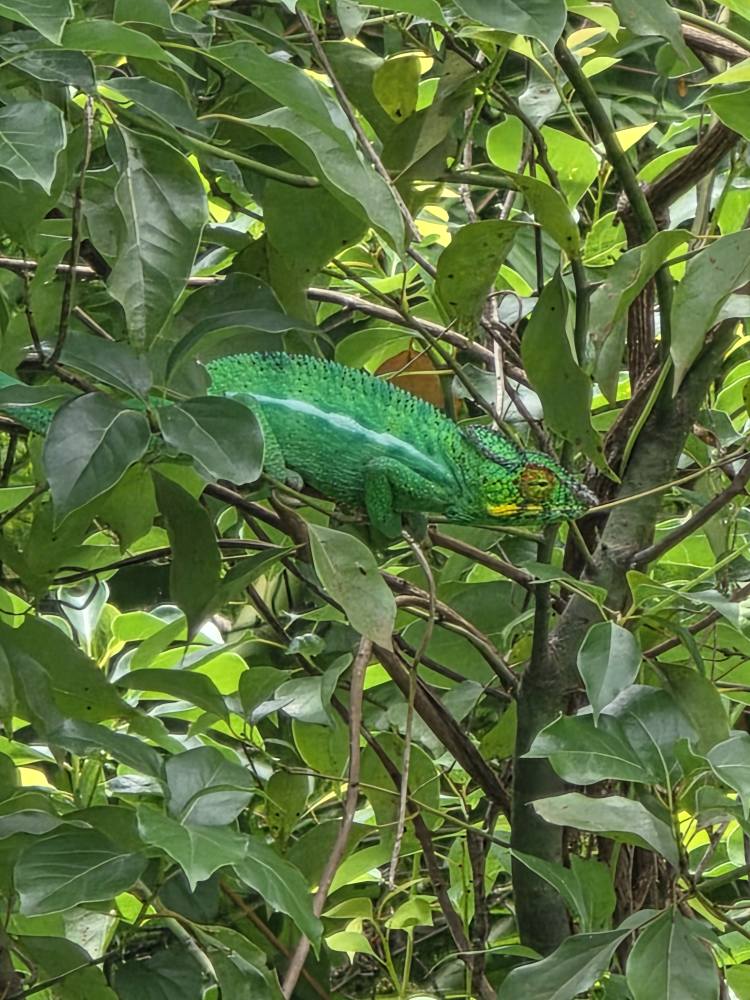
Heading further out into the farmland of Nosy Be (which translates literally to Big Island) we pass more Madagascar 4x4s as we begin to see the many Ylang-Ylang flower trees, planted by Europeans as a cash crop. The flowers are used for perfume, Chanel #5 as a matter of fact. Nicoli even stops to pick some flowers for us all to smell – sort of reminds us of a hyacinth. A little further on we also spot a Panther Chameleon – these guys have eyes, I tell you – perched in a tree off to the side of the road.
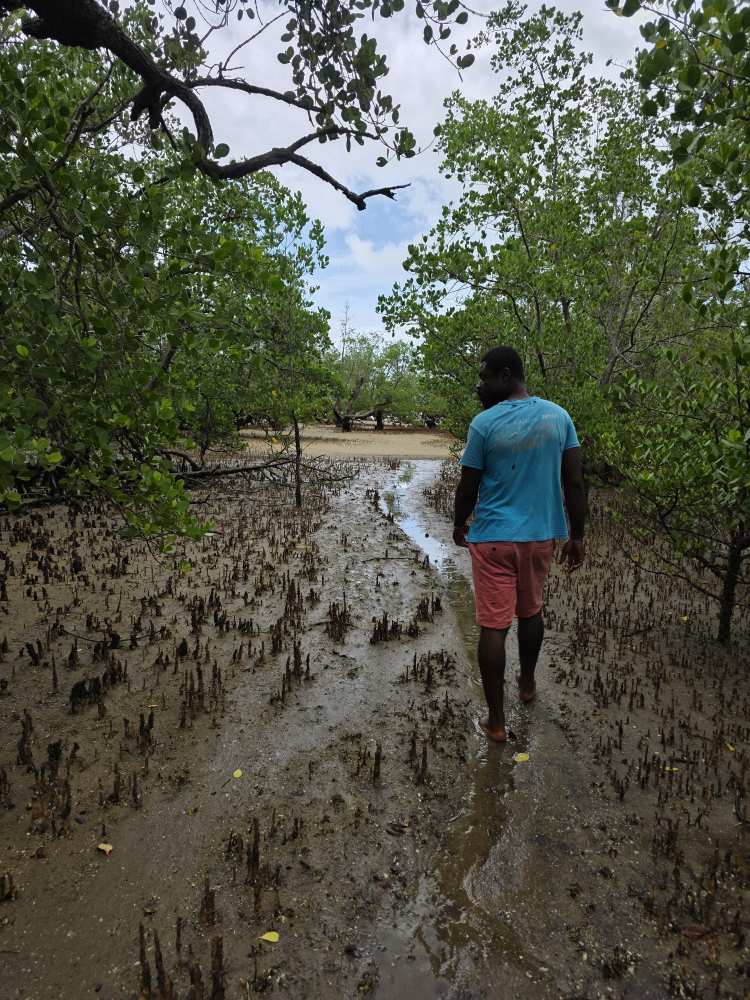
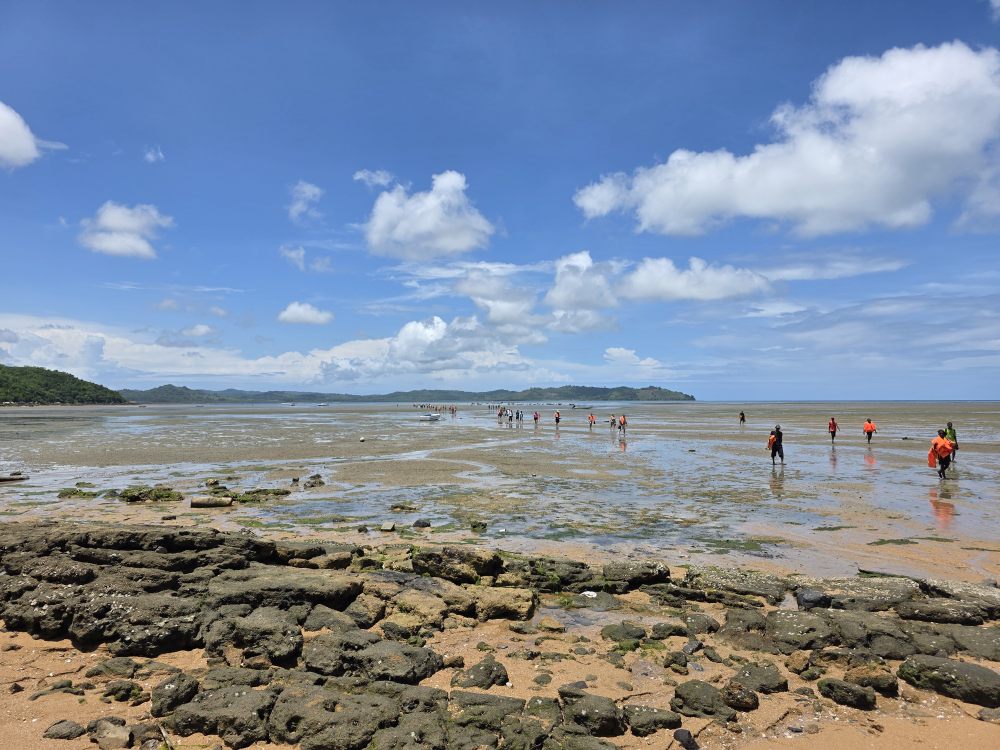
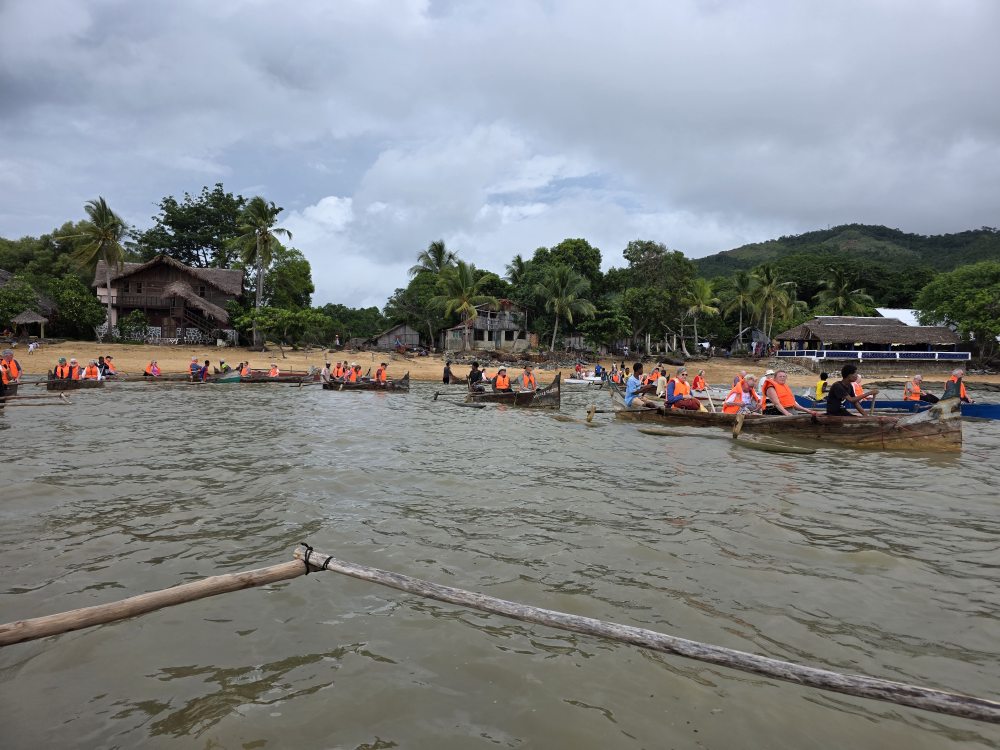
Excitement done, we continue on to the little village of Ambatozavary to board our Pirogue boats that will take us to Ampasipohy, the Lakobe reserve village. Only one little hiccup here, it is low tide – and this is a big tidal region so it is really low tide. So low in fact, it means we have to hike through the Mangroves to get to the water line where we then have to take our shoes and socks off and wade through knee deep water to clamber into little teeny outrigger type boats! Fabulous!
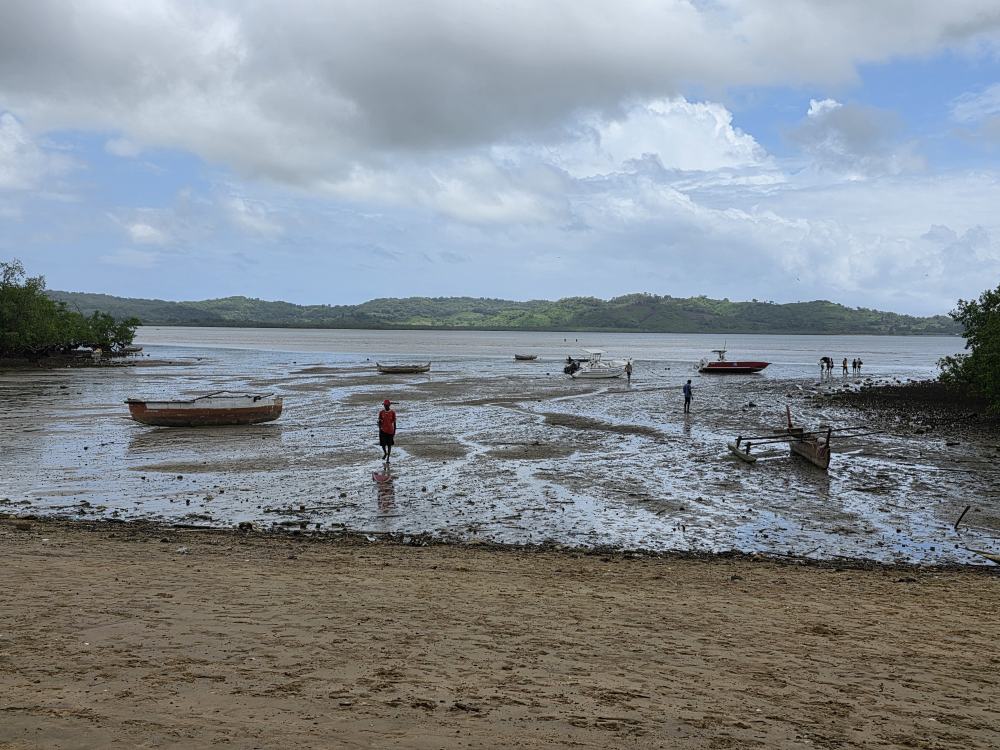
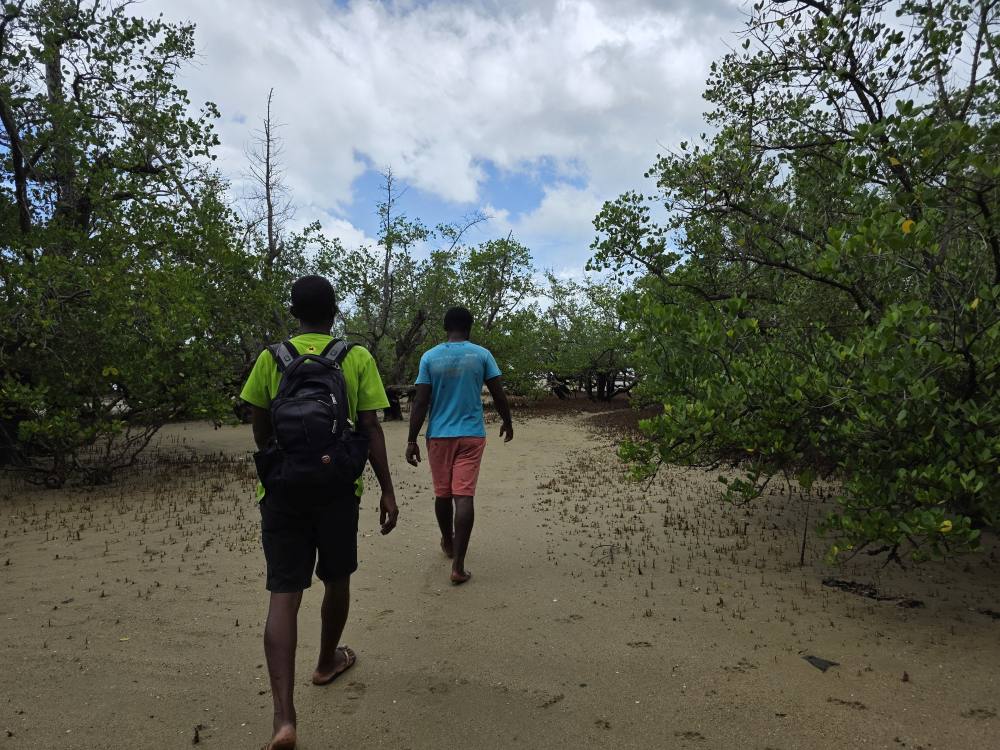
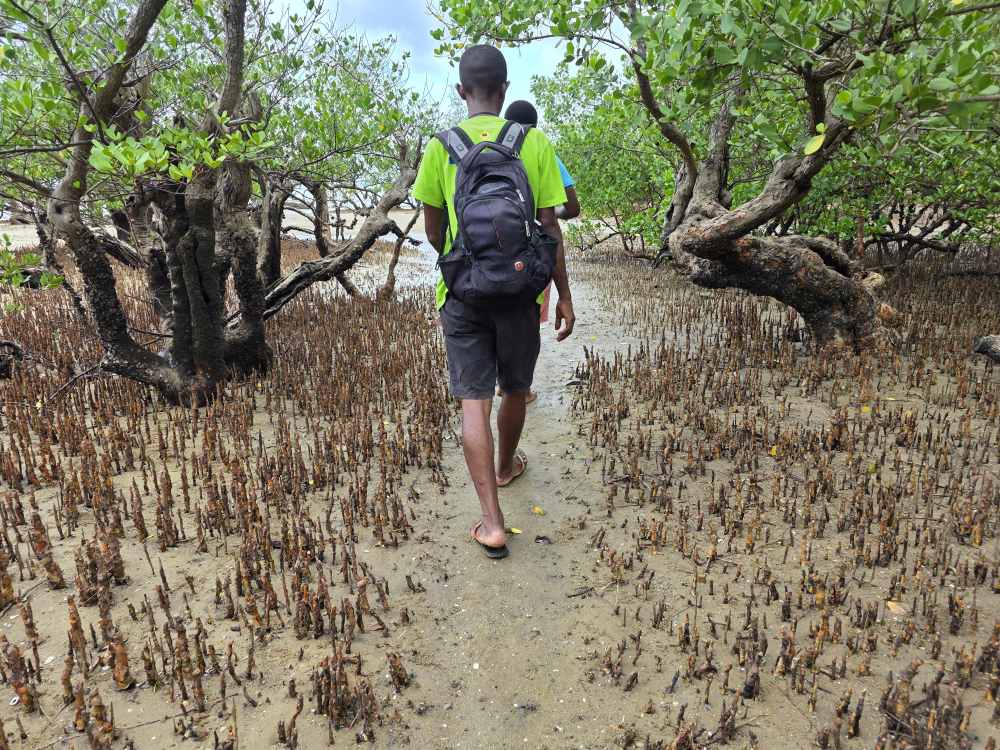
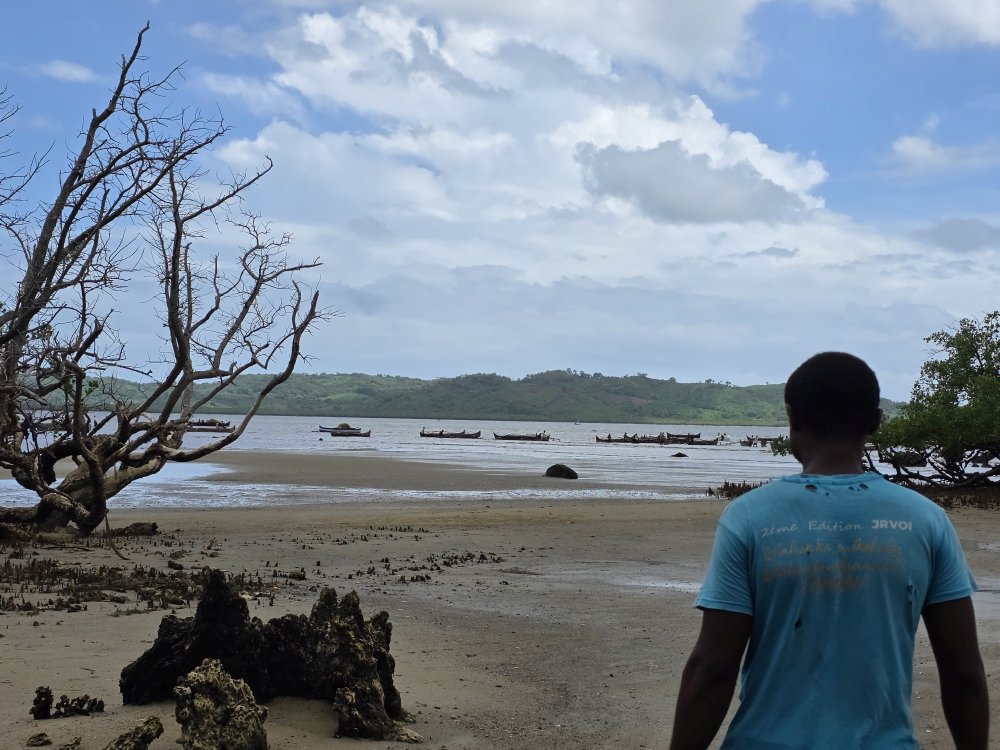
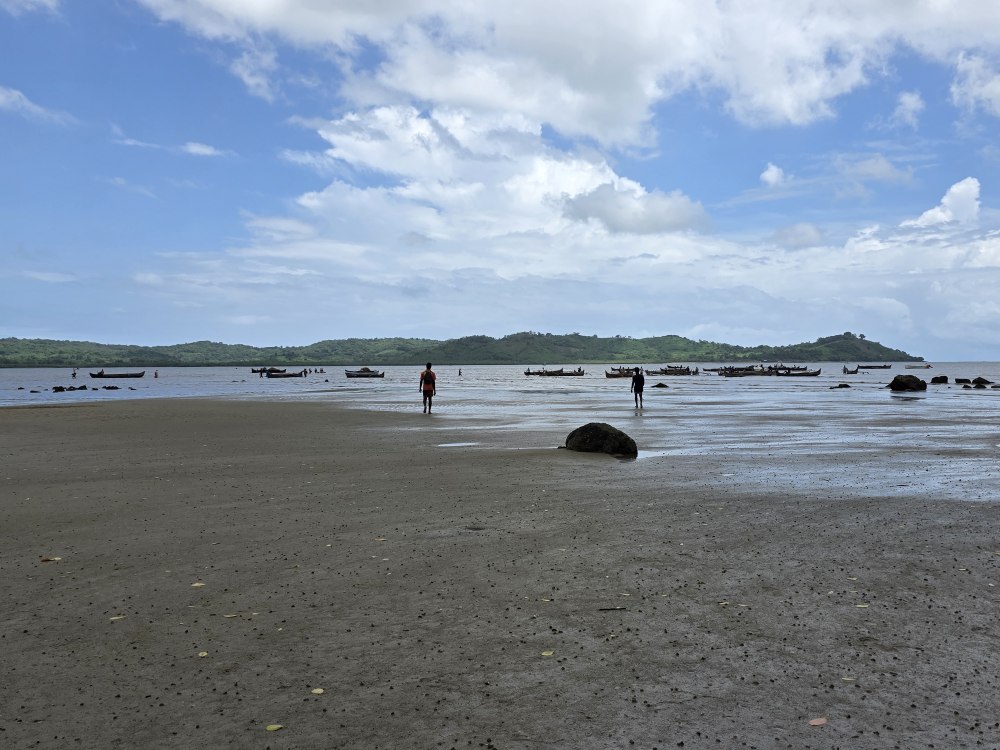
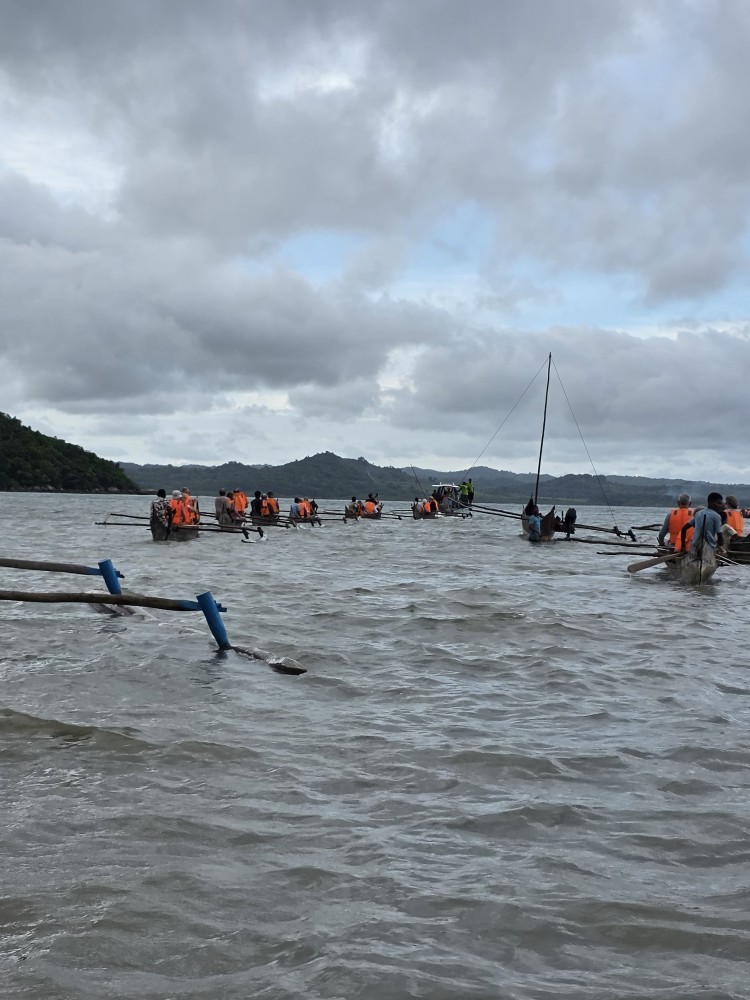
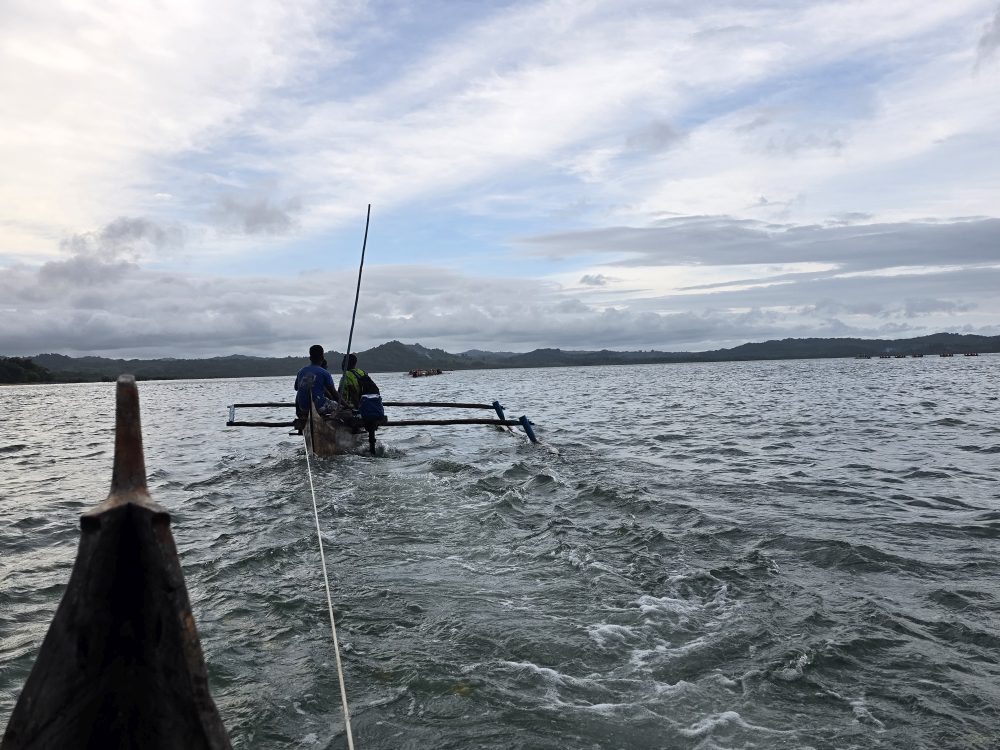
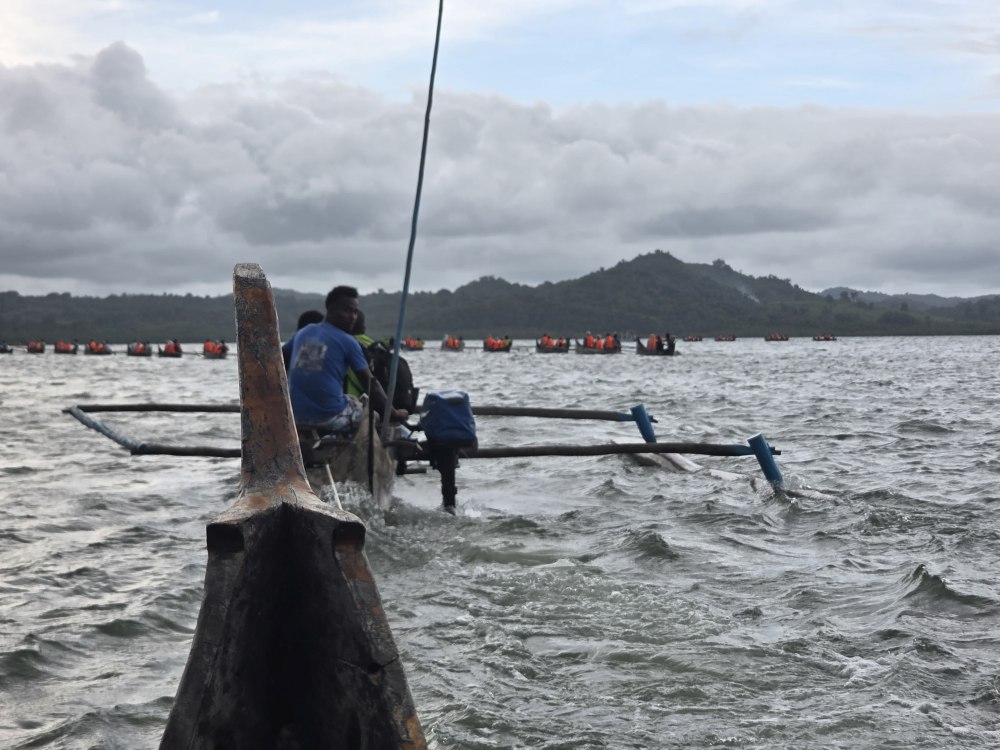
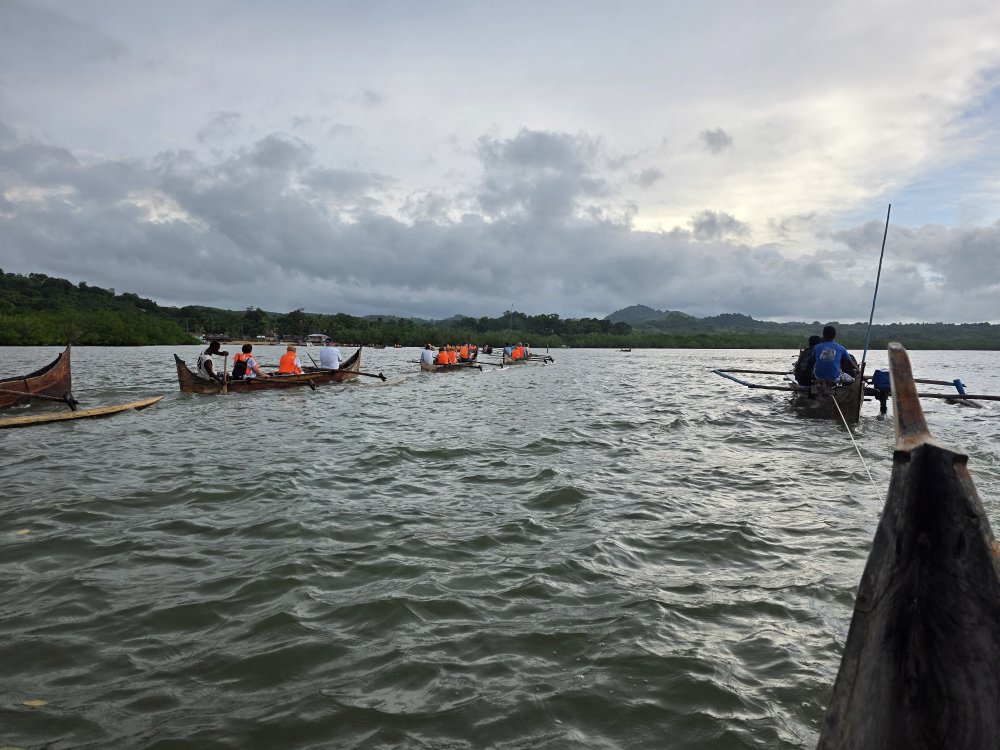
Then, it gets even better: Our boats are lashed together and tied to a motor boat that pulled us across the bay. Like a huge train of pirogues stretching across the water. So fun.
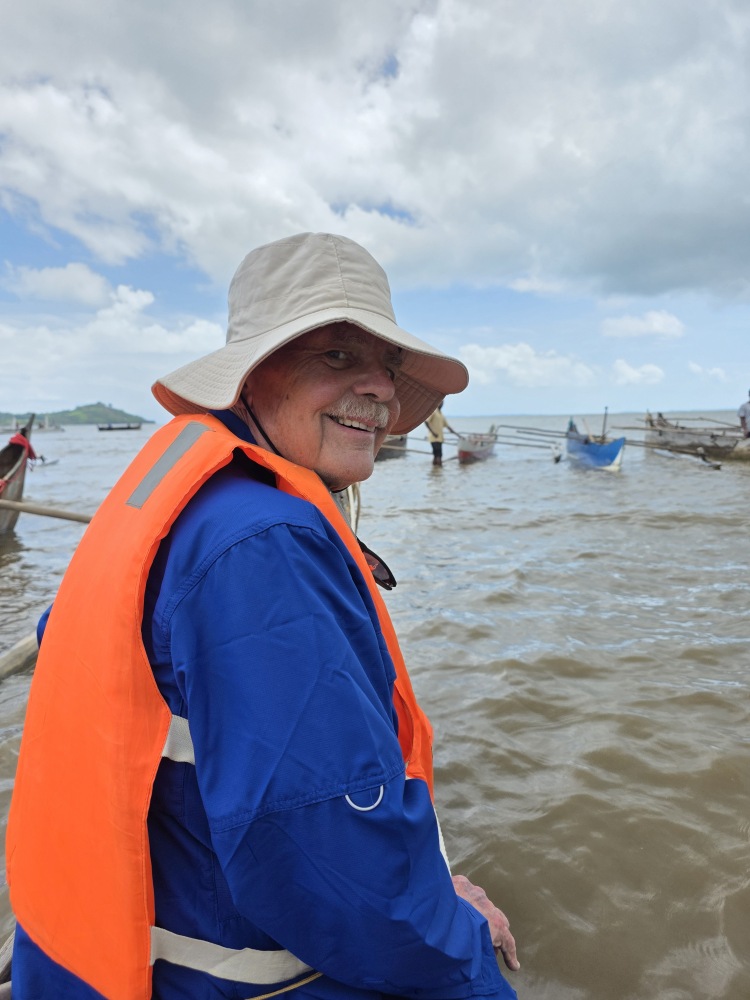
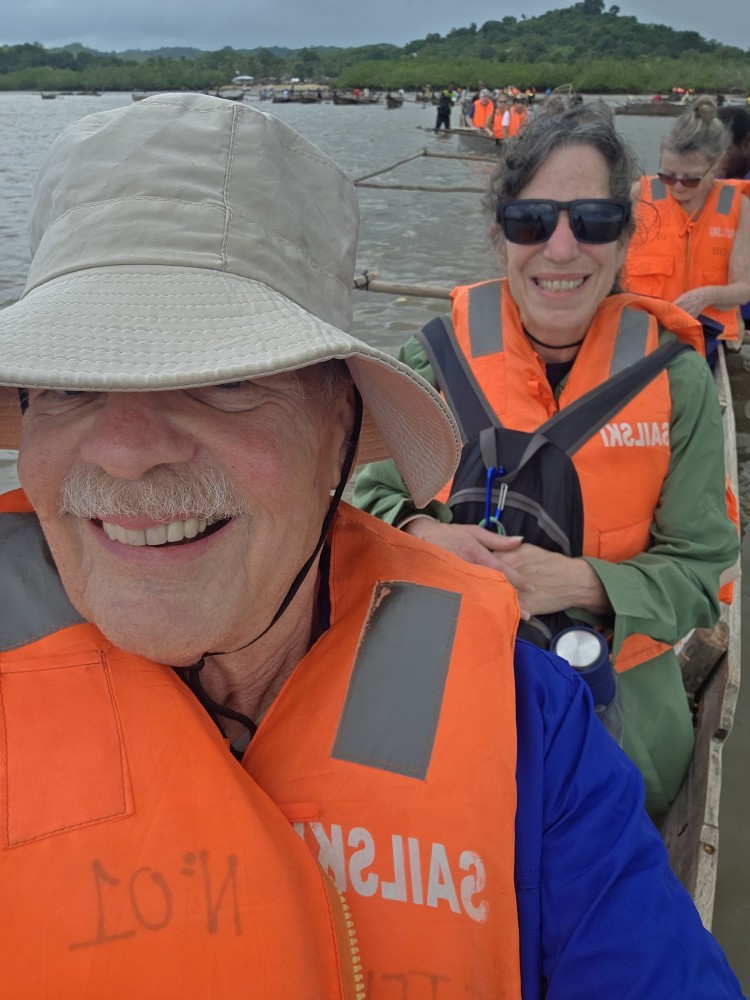
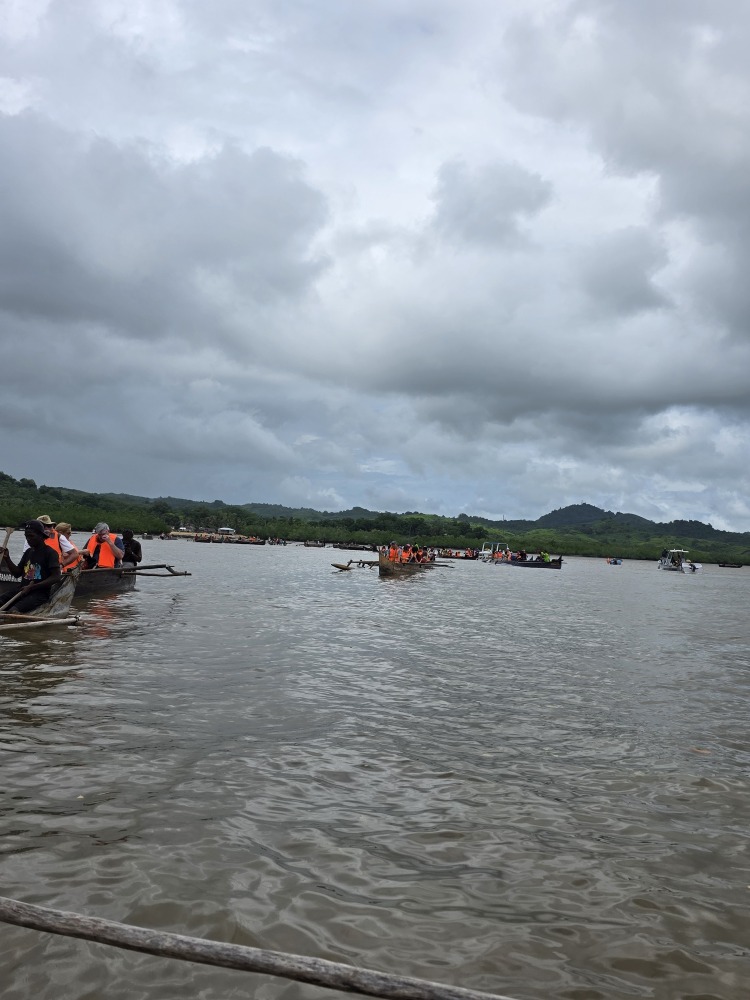
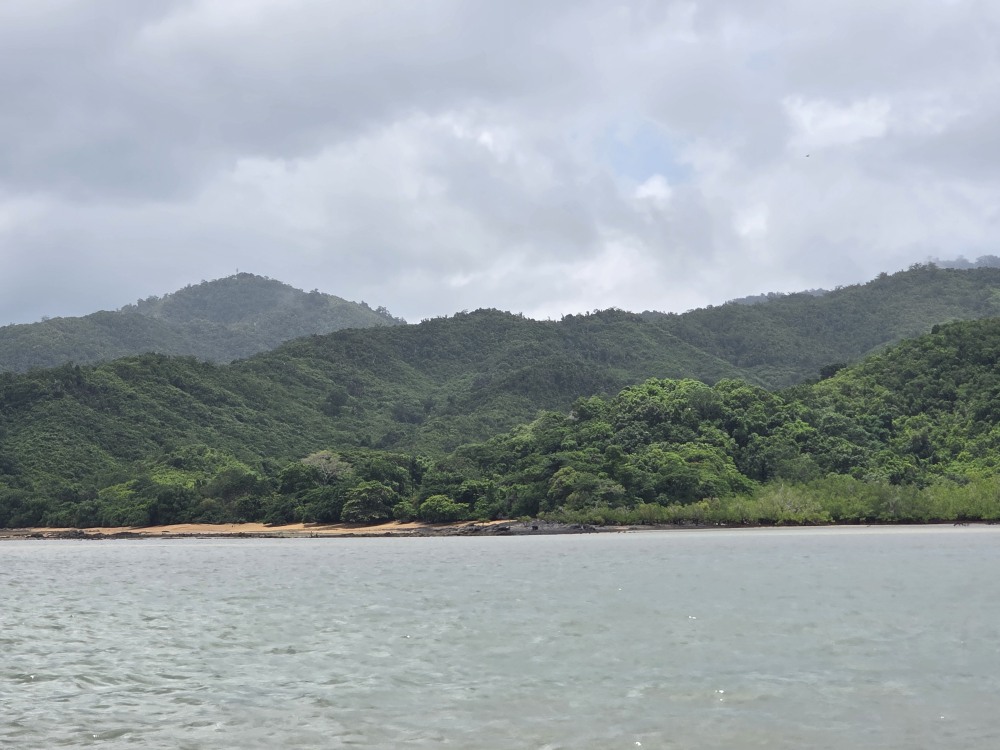
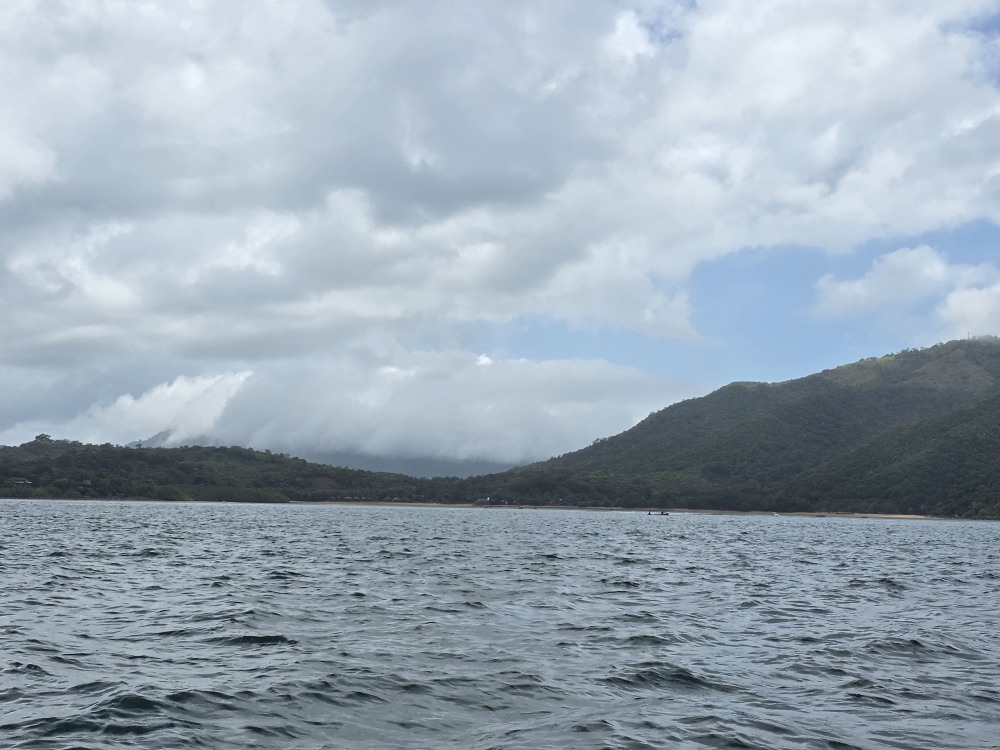
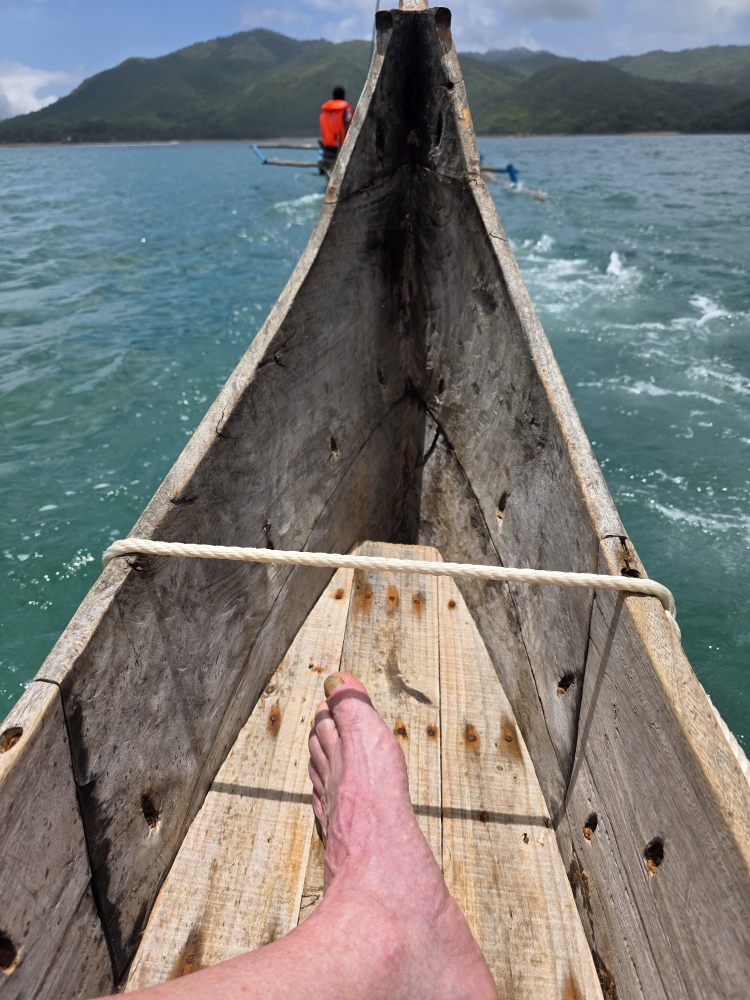
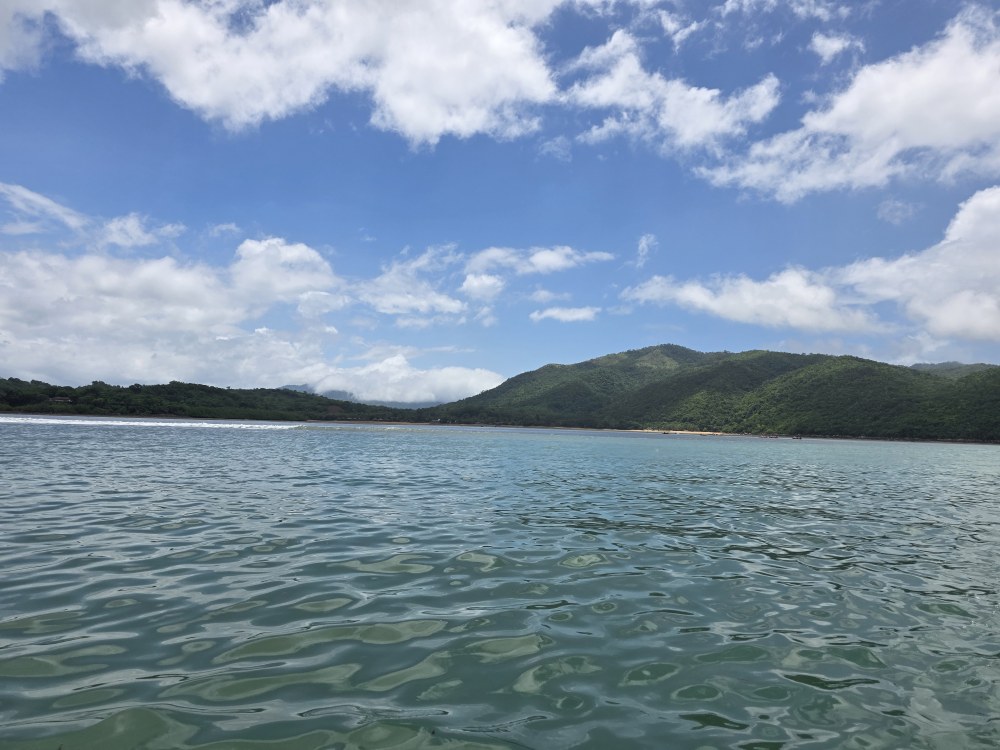
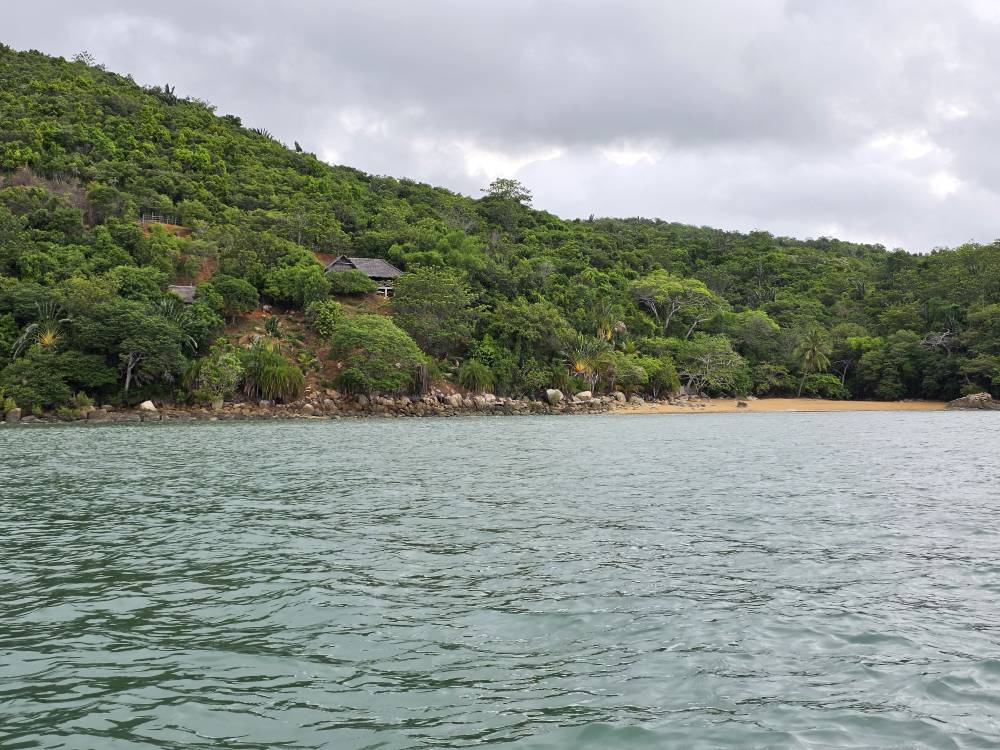
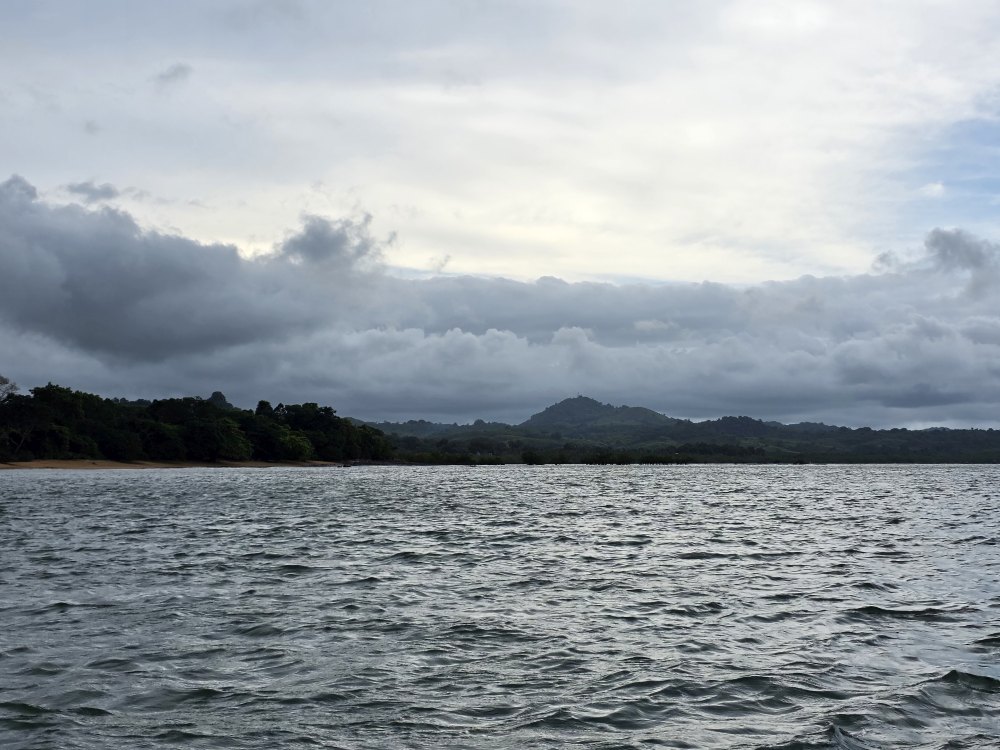
It takes about 40 minutes of gorgeous vistas and relaxing on the Pirogue to get across the bay to the reserve. Then more fun begins! Once the reserve was in sight, we had to paddle to get in as close as possible, then we ran aground and had to wade through the shallows about ¾ mile to get to the shore. ADVENTURE! It was a blast for us. Most people seemed to take it well – others, well, you know how people can be. This is Africa people! Things happen! And while the description of the tour was listed as moderate and really should have been listed as strenuous, a lot of the people on this tour still should not have been there. The description specifically said it was not suitable for mobility challenged or if you have problems walking over uneven surfaces. A number of fellow passengers did not pay attention to that warning for certain!
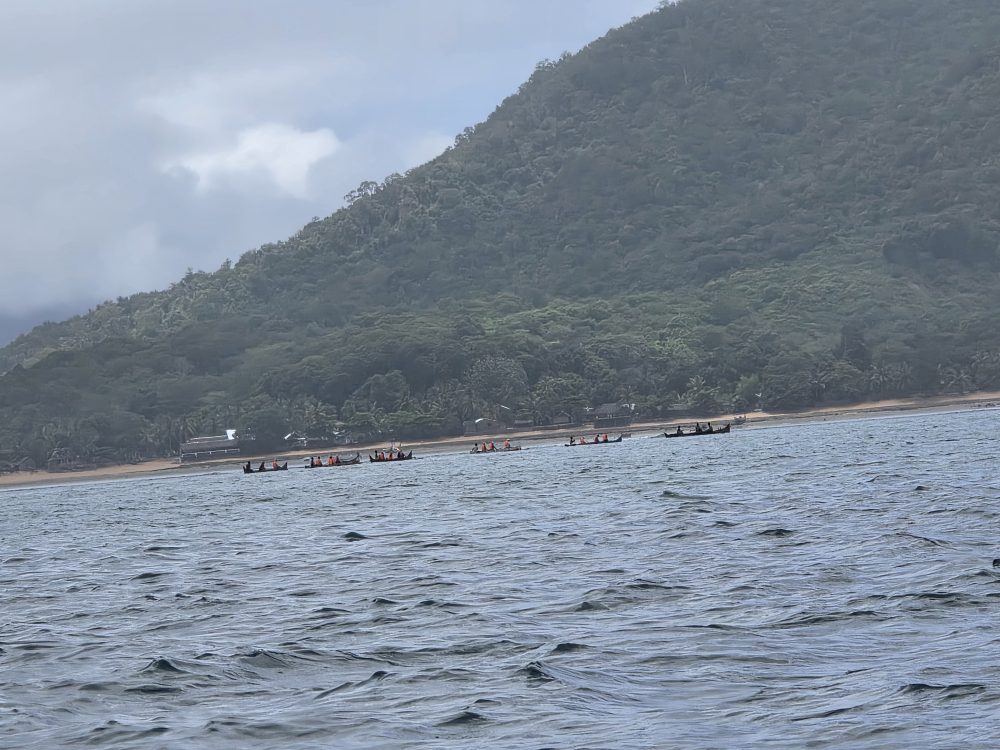
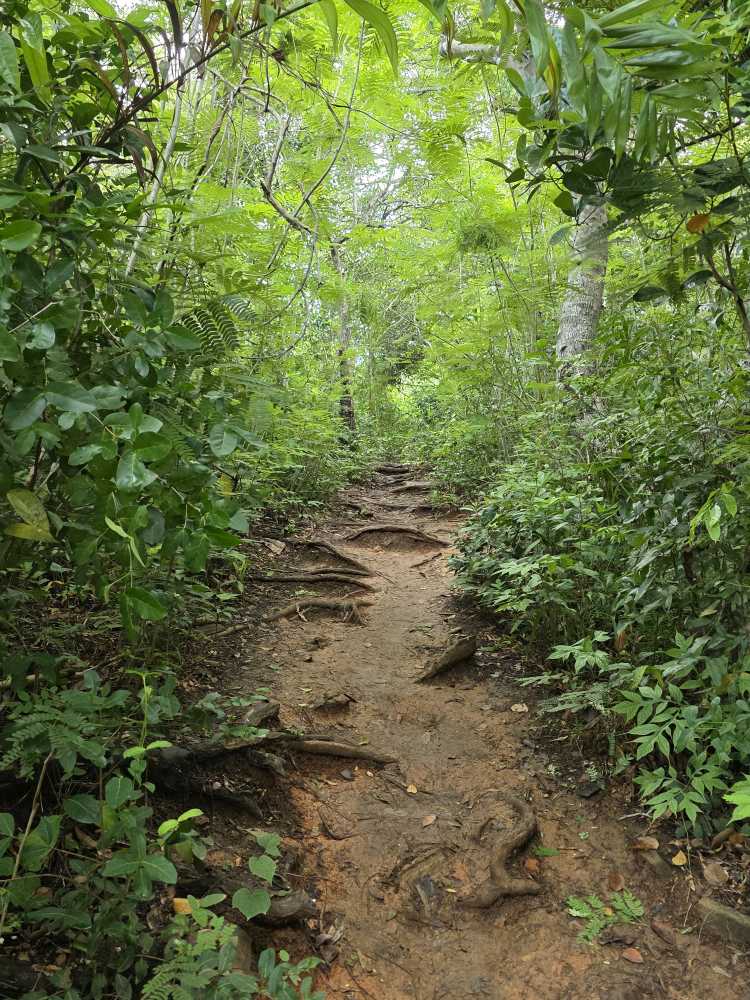
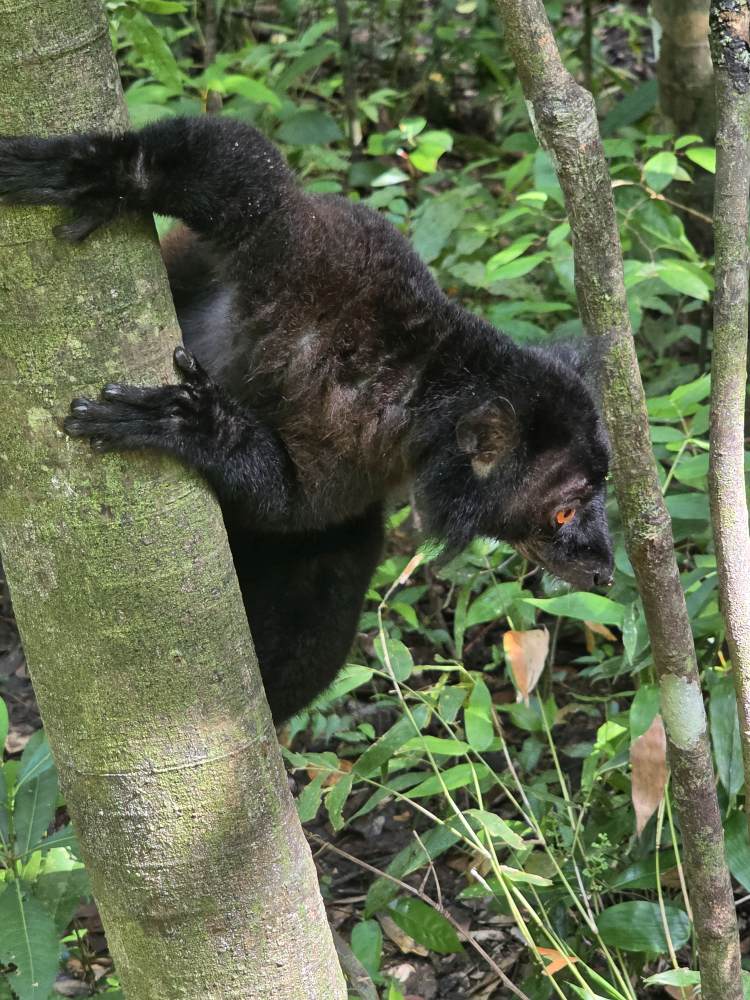
Finally on dry land, there were basins for us to wash our feet and towels to dry, then we put our shoes back on and hit the trails in the rainforest. Before leaving, Nicoli explains there are 113 species of Lemurs throughout Madagascar, only 3 species can be found here – the Black Lemur, the Sportive Lemur (Nocturnal) and the tiny Mouse Lemur (Nocturnal). He also explains the forest has been preserved with lemurs because the elders decreed they would not kill the Lemurs because they are one of the original primates, basically their ancestors. So they don’t kill it or eat it, passing down this belief from generation to generation.
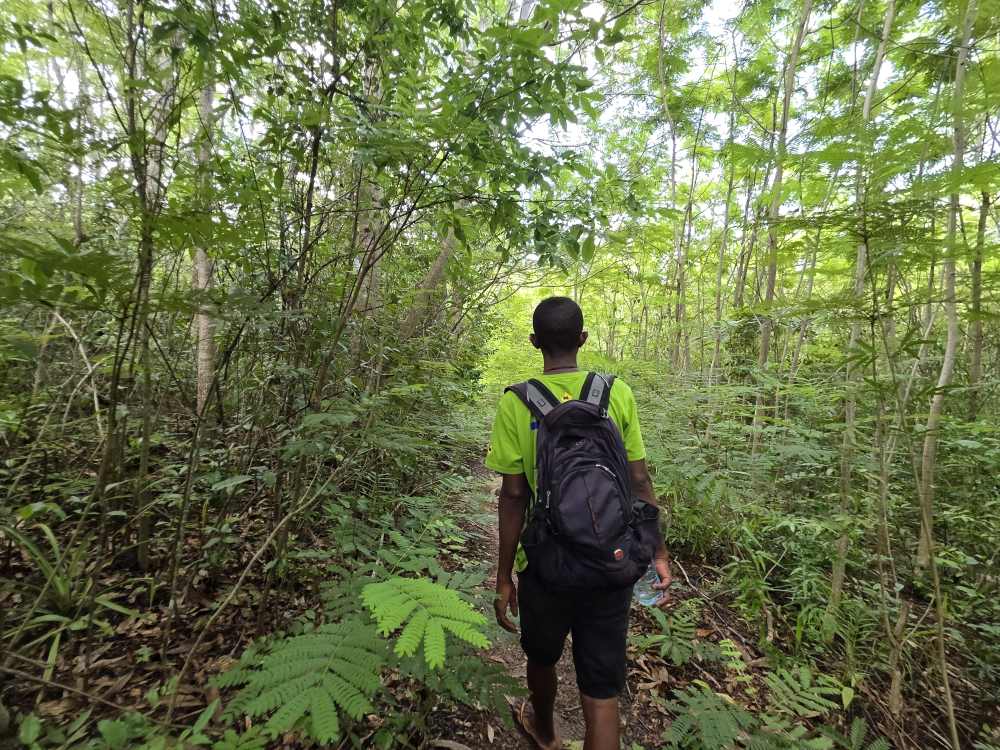
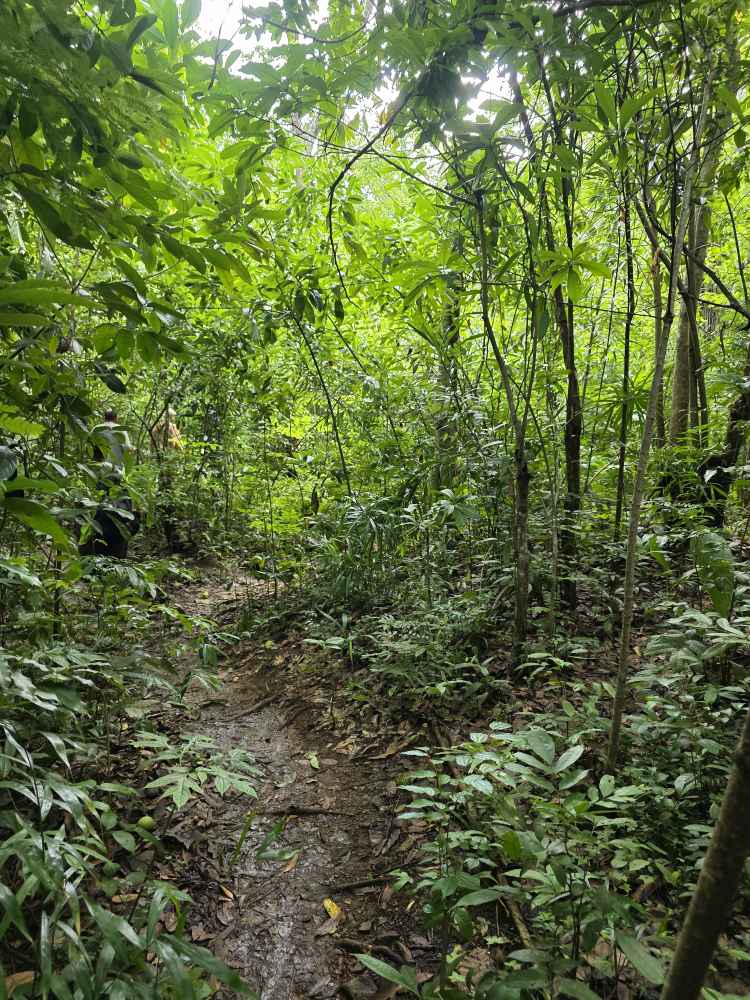
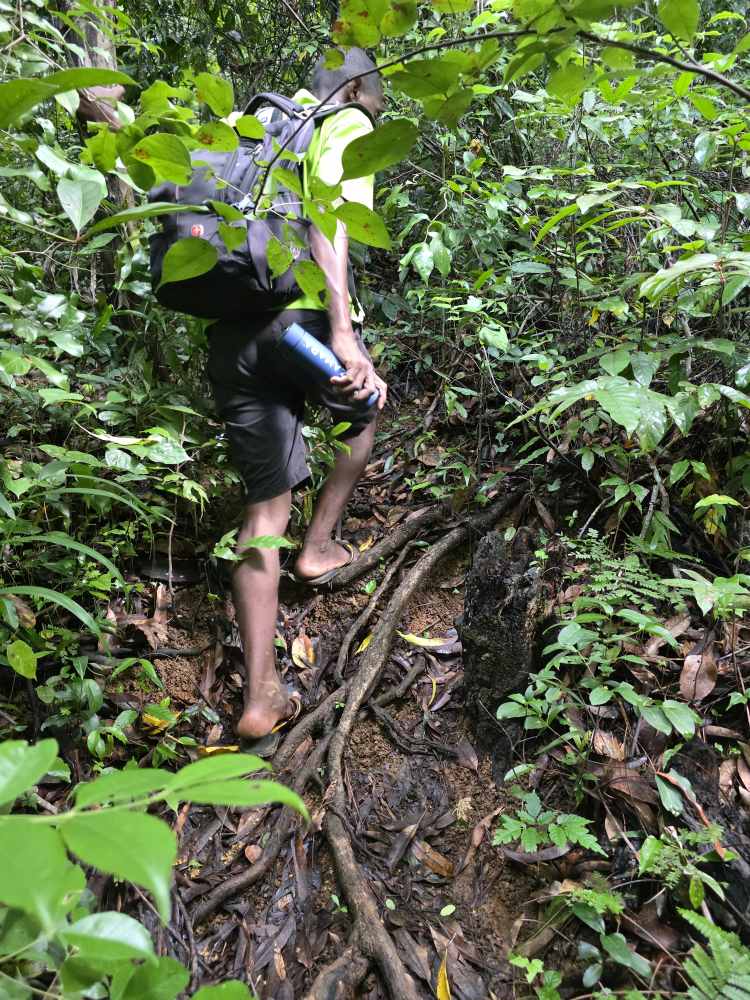
Introduction handled, off on our forest trek we go. And, oh man, talk about Forest Trekking. It is rainy season, so of course everything was wet and muddy – and slippery. We had a local guide as well as Nicoli and the local guy led us all through the forest on these little trails that were more like bushwhacking than trails. He’s barefoot, btw, we’re all slipping and sliding in our hiking shoes (well those of us who wore their hiking shoes and not regular shoes – don’t go there – the description specifically said sturdy slip-proof shoes) and he’s just motoring along. It was amazing.
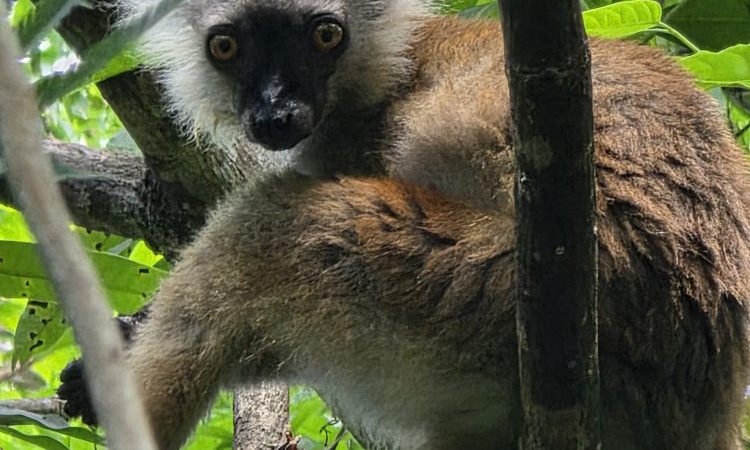
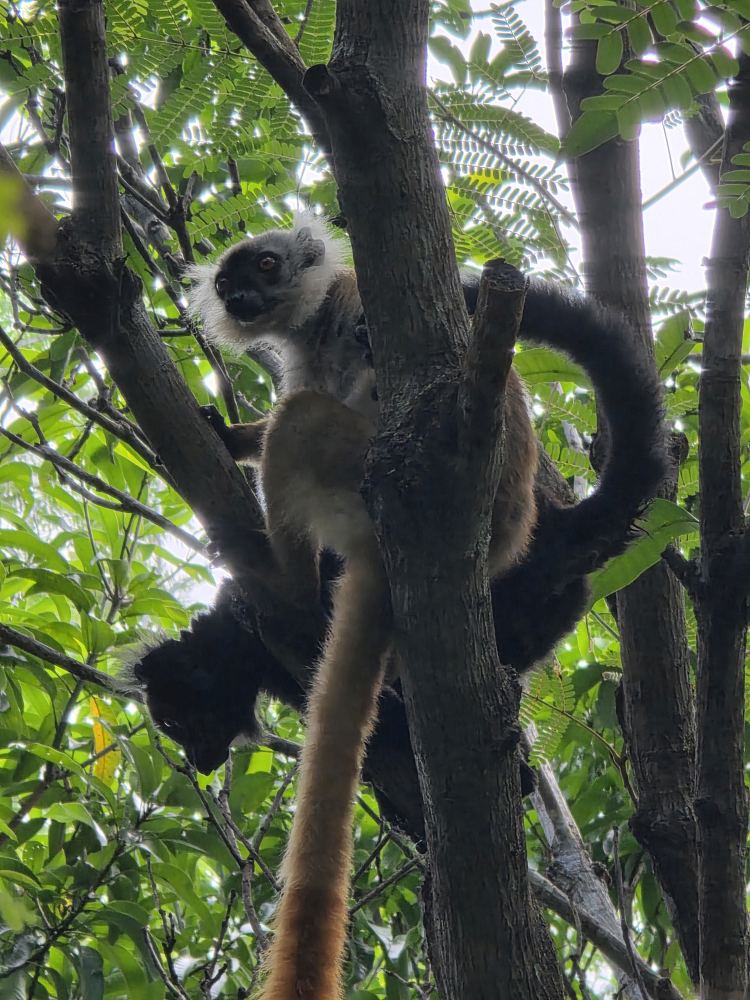
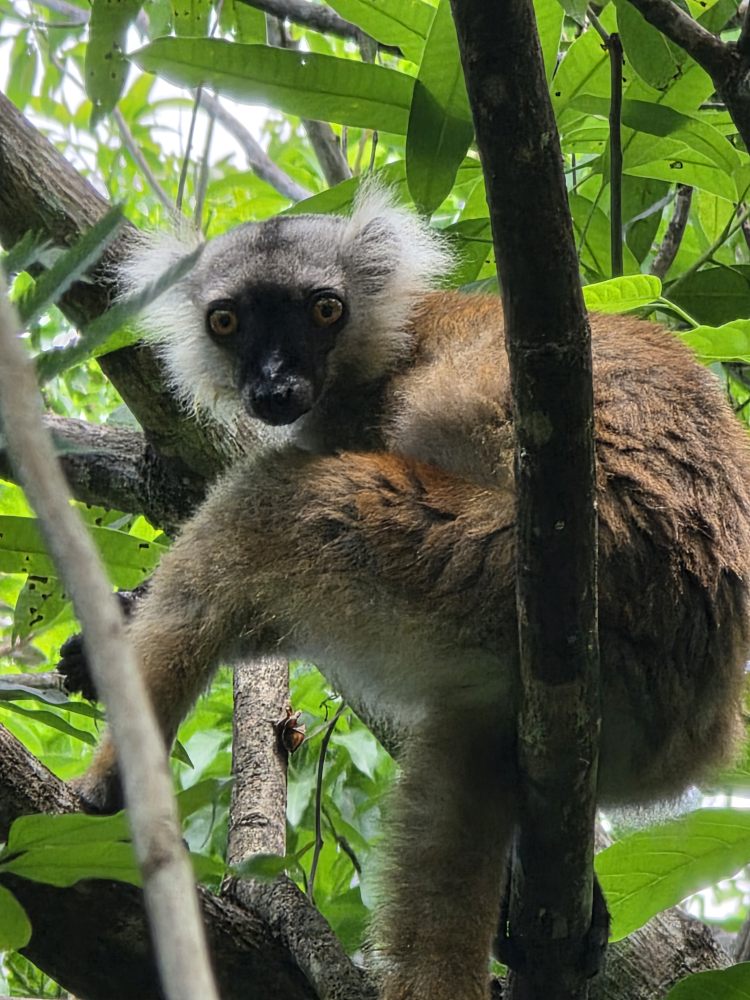
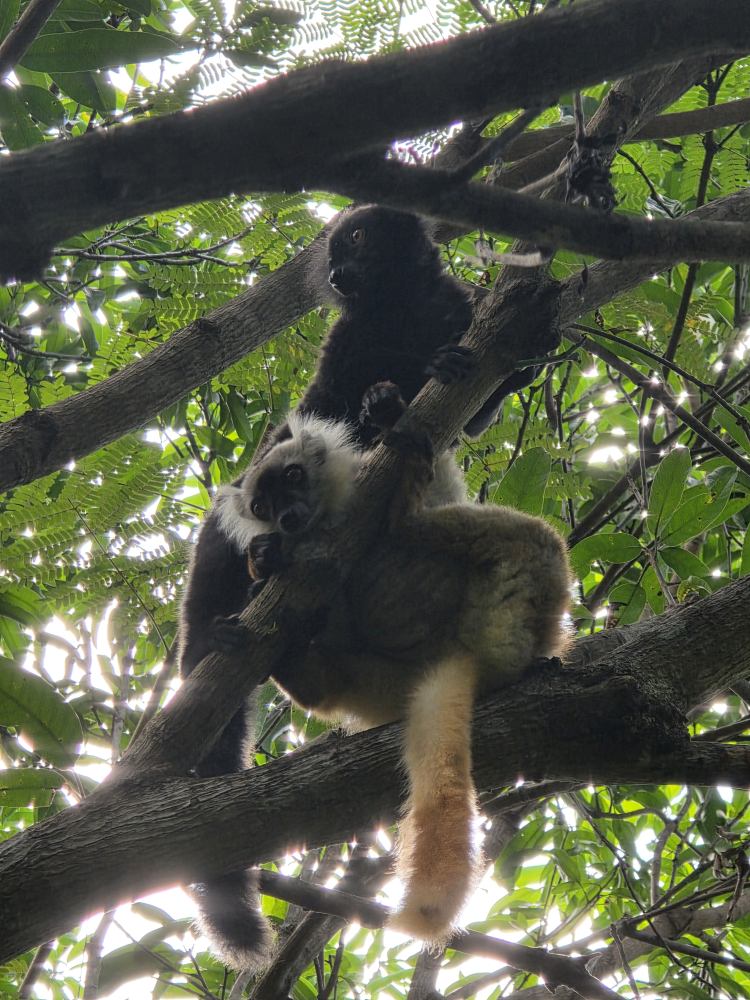
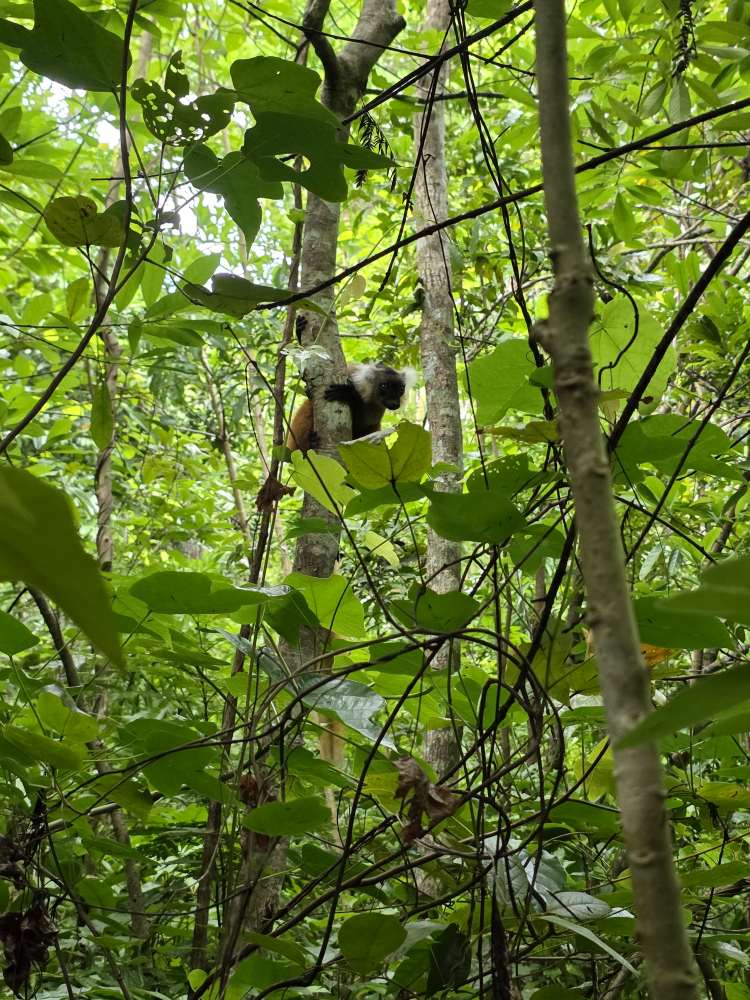
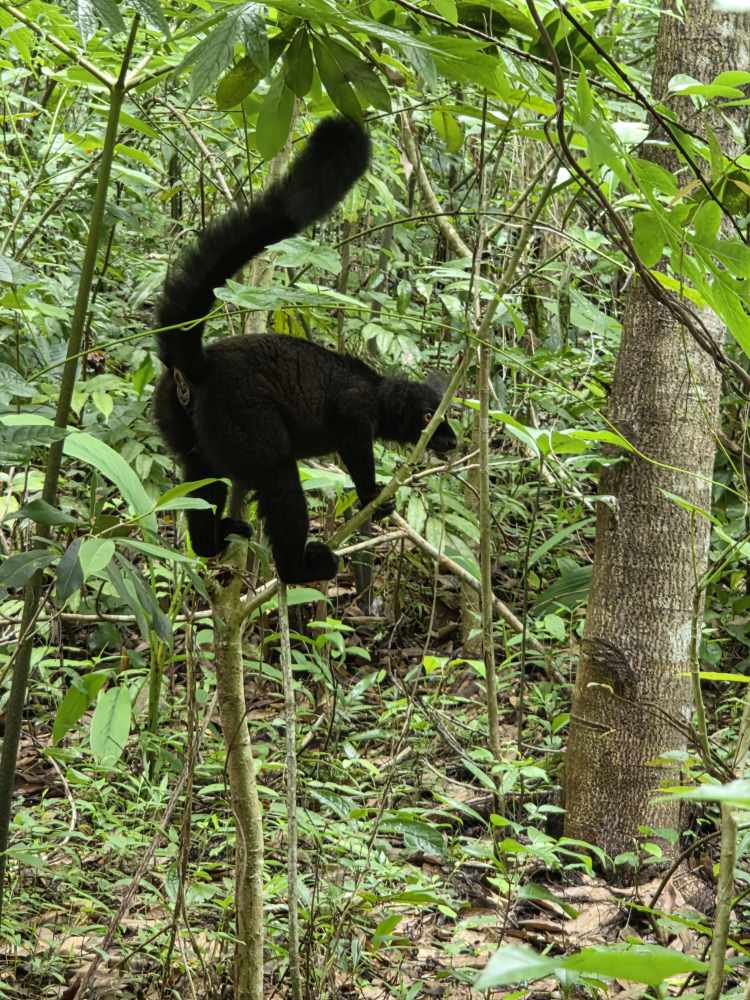
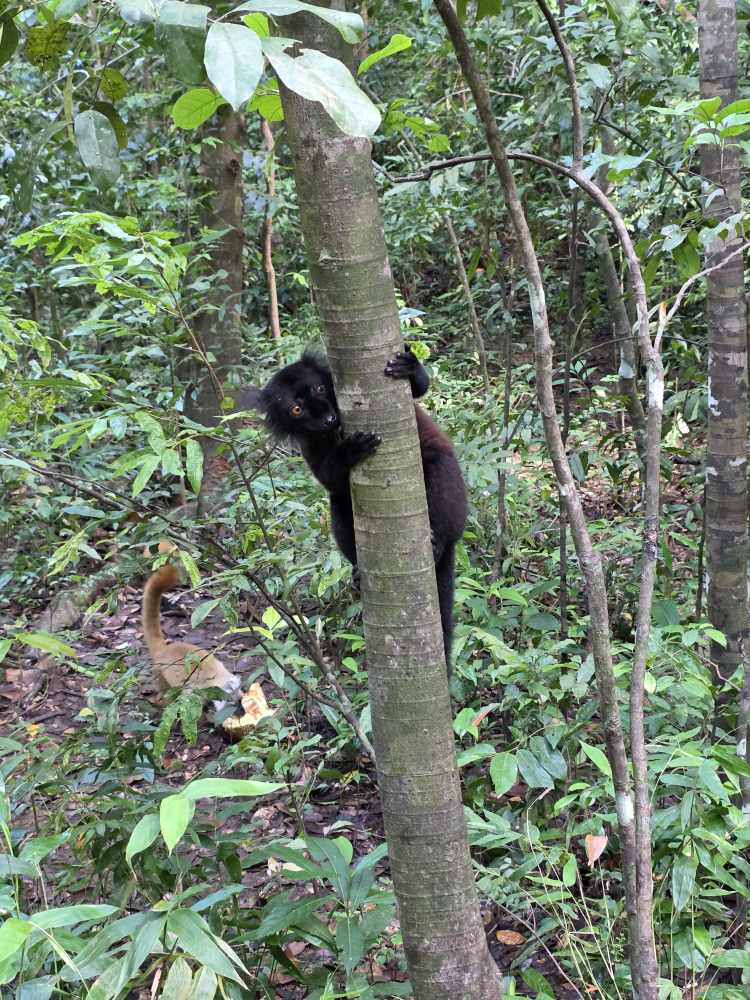
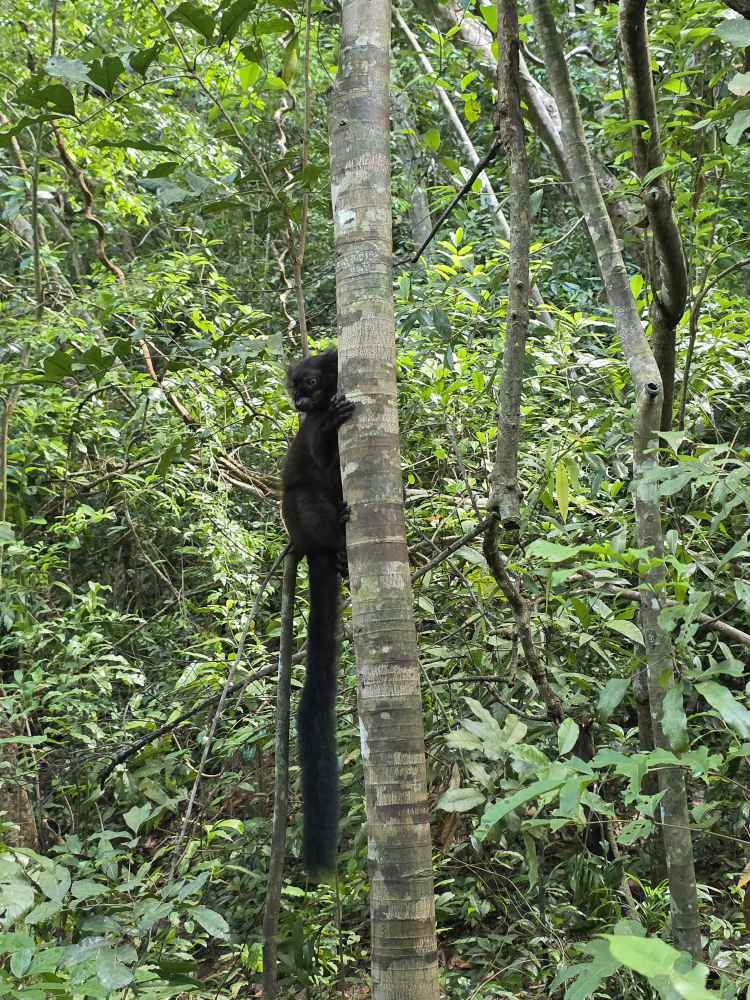
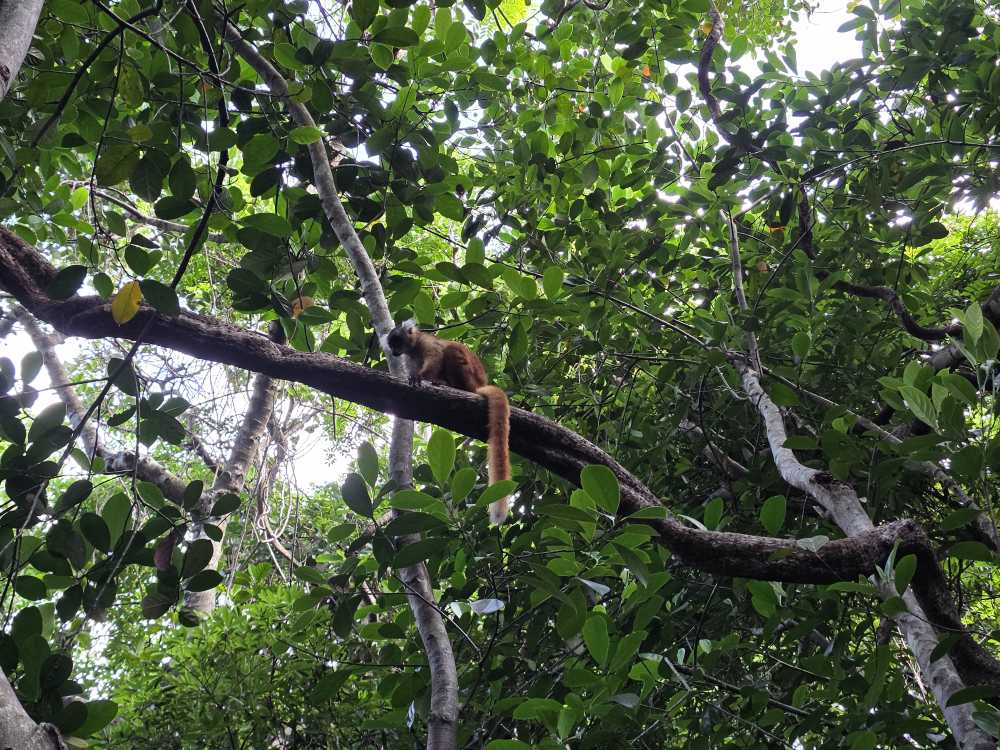
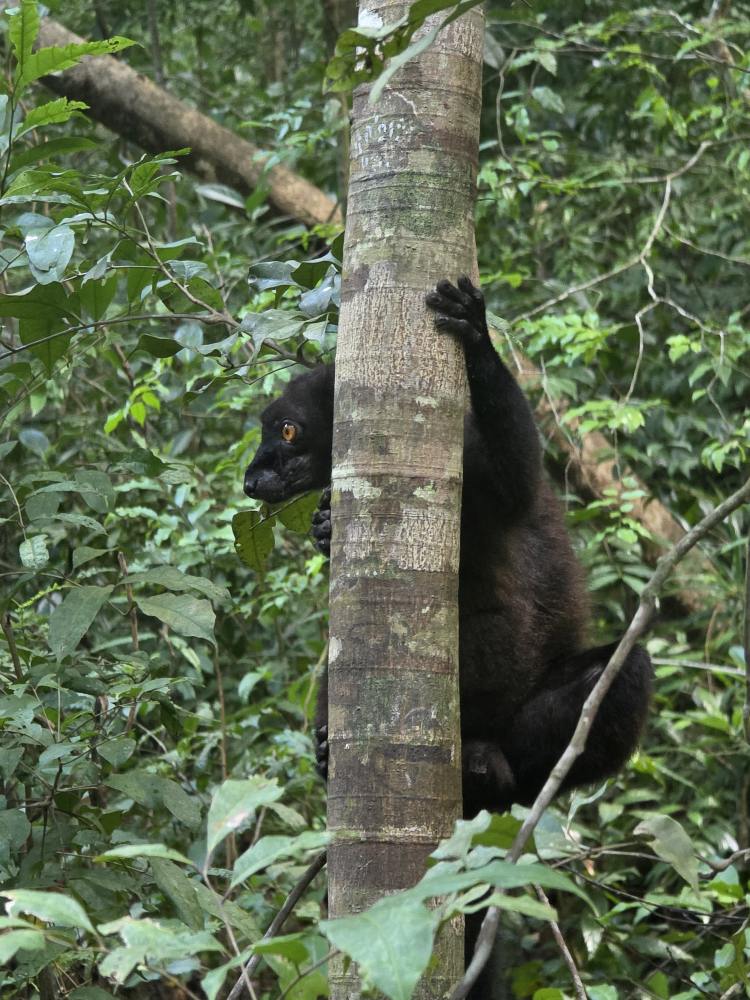
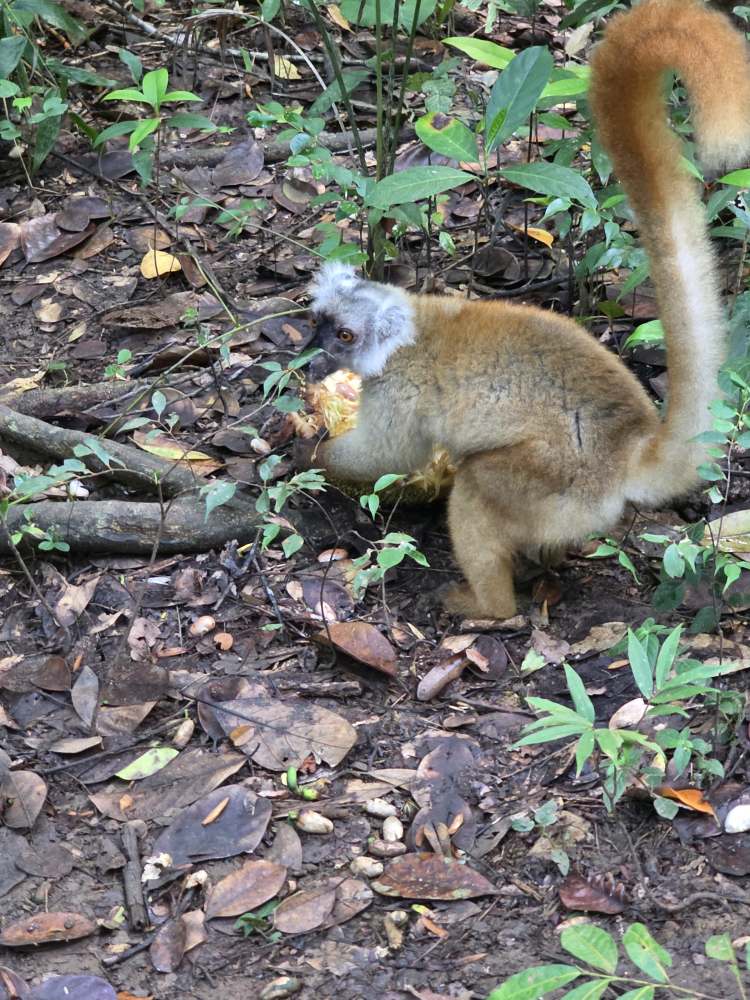
Right off the bat we see a couple of Black Lemurs in the trees. The males are always black, the female always brown. They are so cute, just hanging out in the trees looking down at us. Fabulous.
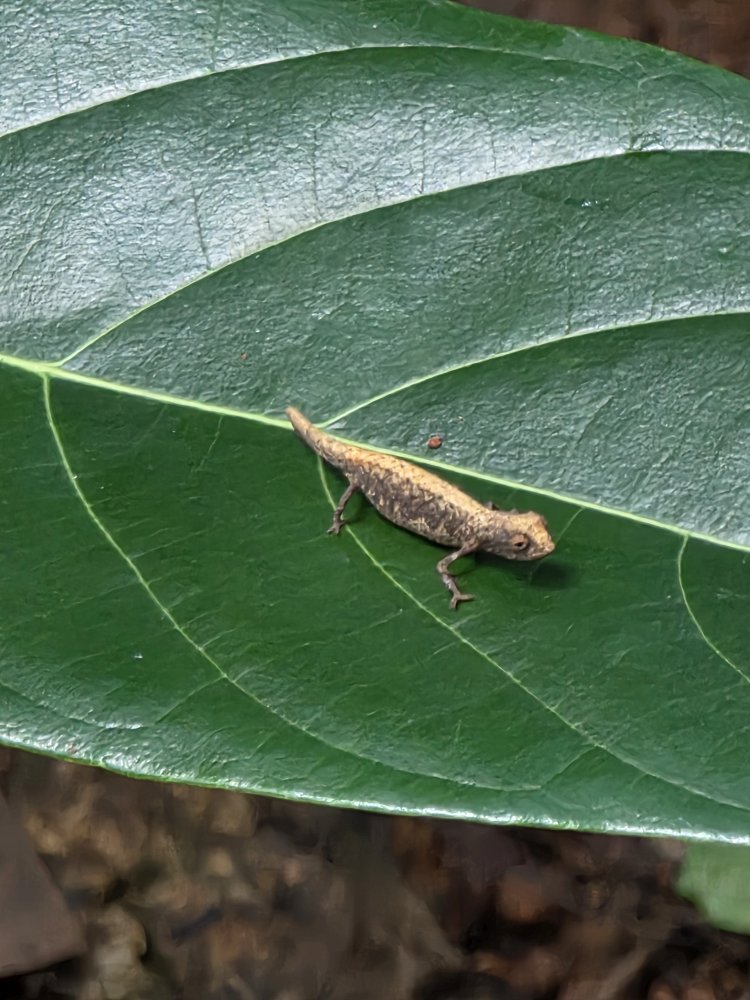
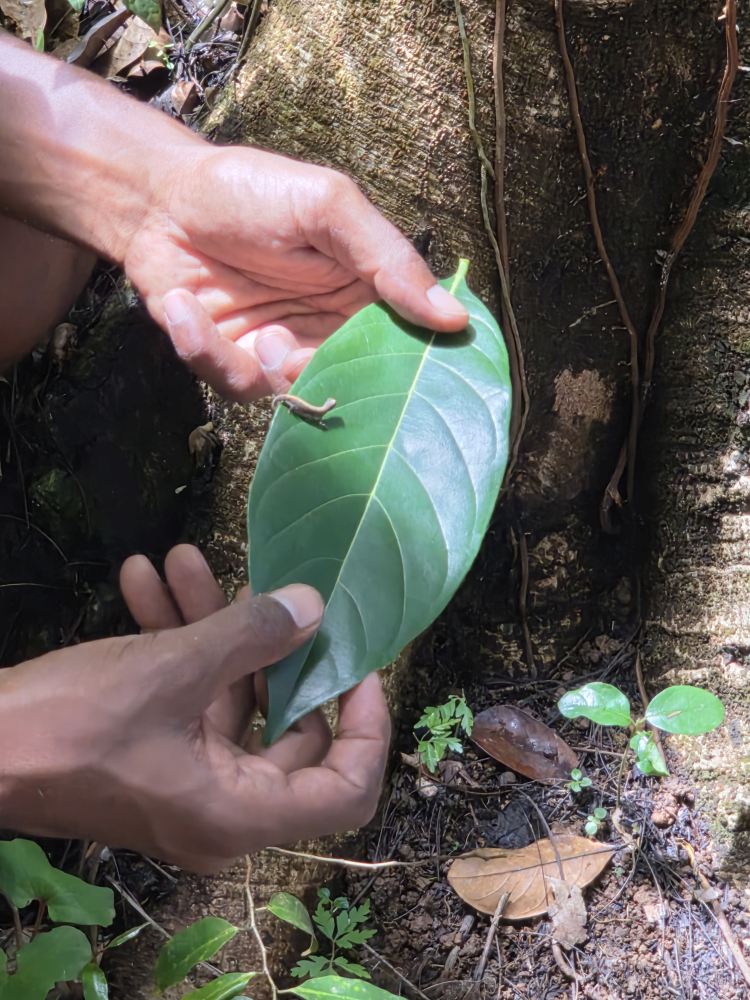
Next up our guide finds a teeny Brookesia minima chameleon – same as yesterday but even smaller if possible. No way would I ever have been able to spot that in the middle of this jungle land. These guys are all just amazing.
We actually moved onto a little trail, winding our way through the forest when we luck into spotting (well, the guide is the one who does the spotting) a Sportive Lemur. They are really hard to find as they are nocturnal, and this little guy was just sleeping in the tree right above our heads. See his eyes? They don’t have eyelids so they sleep with their eyes open! They are called Sportive because when awake, they are very active and can jump up to 4 meters from one tree to another.
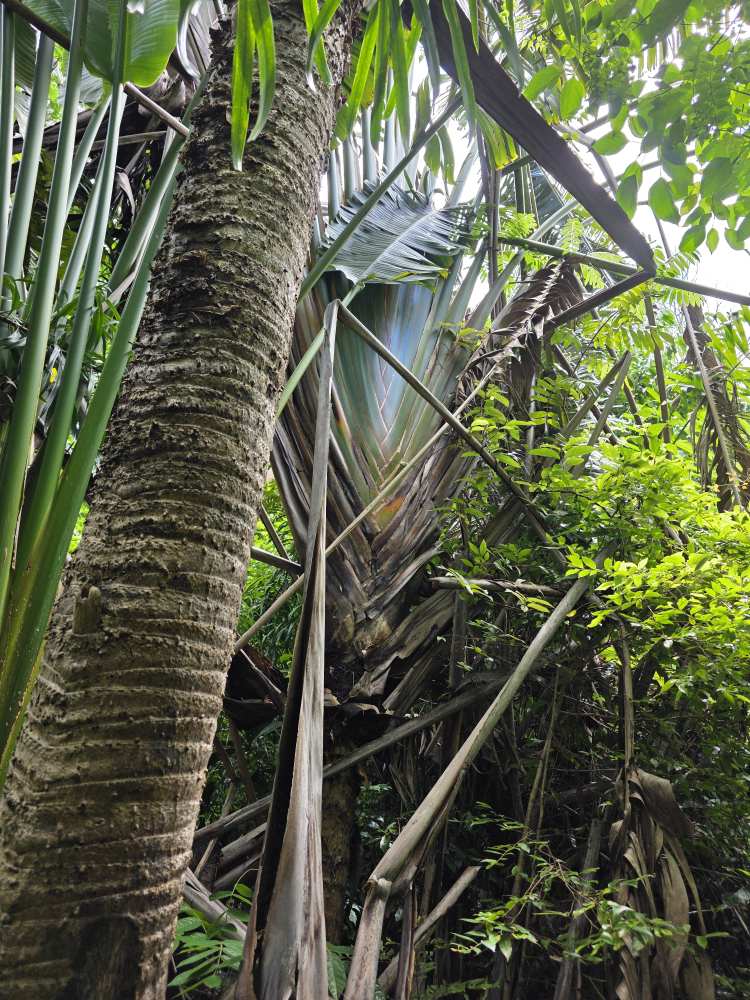
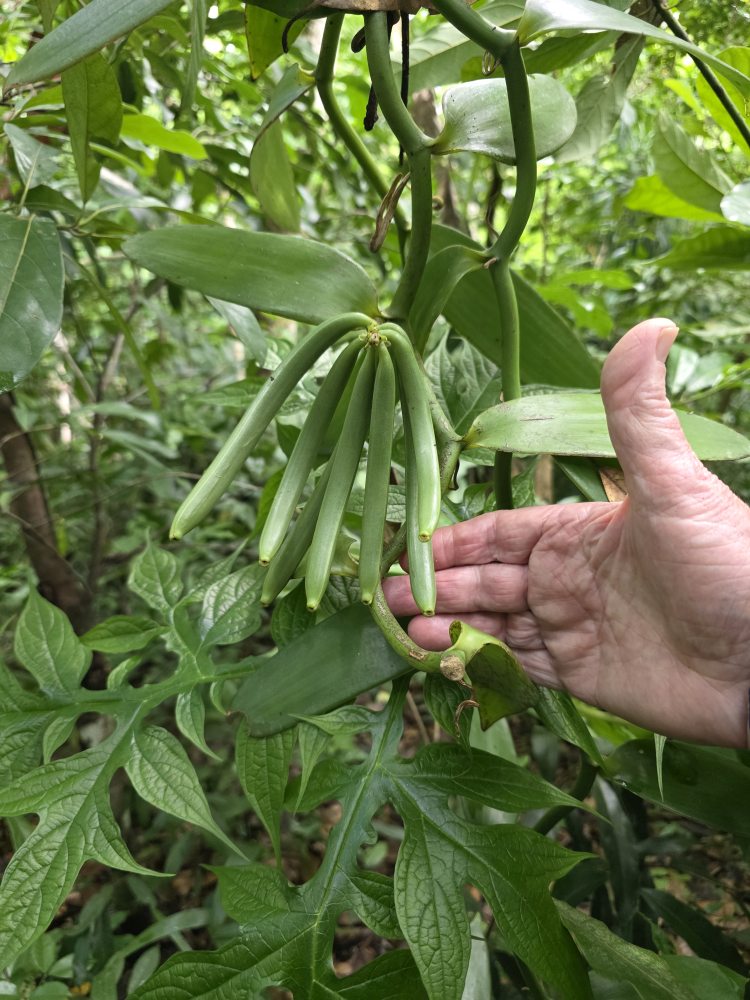
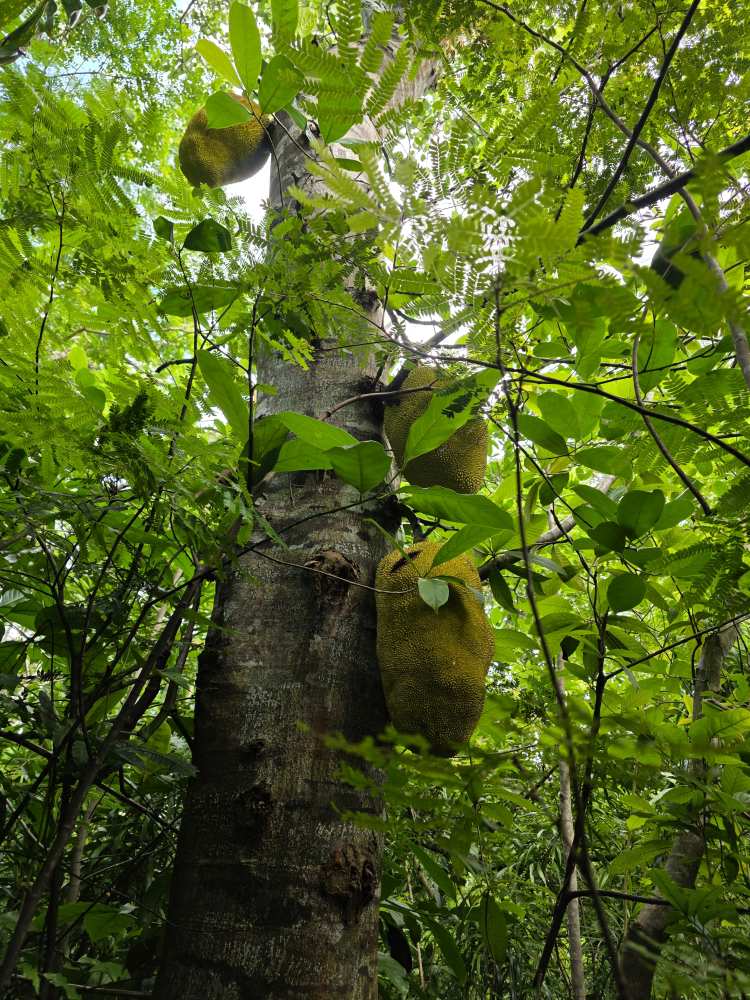
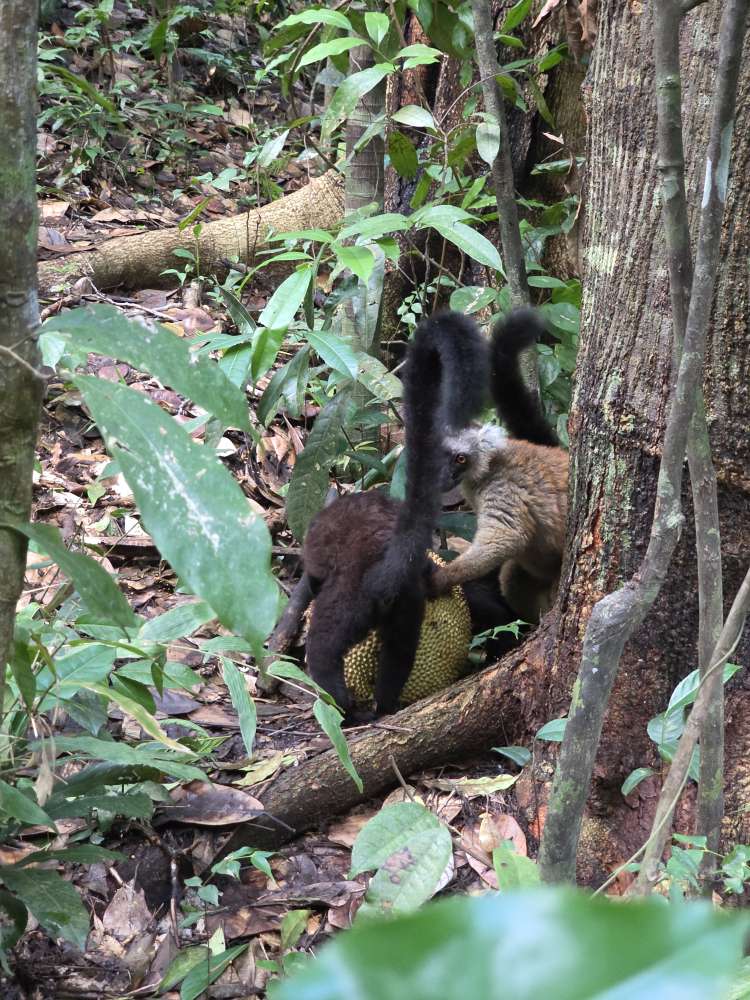
Along the way we also get a lesson in the flora of the area – passing a vanilla tree with beans almost ready to pick and jackfruit!!! I was so tempted to pick that darn jackfruit and bring it back with us – you have no idea!
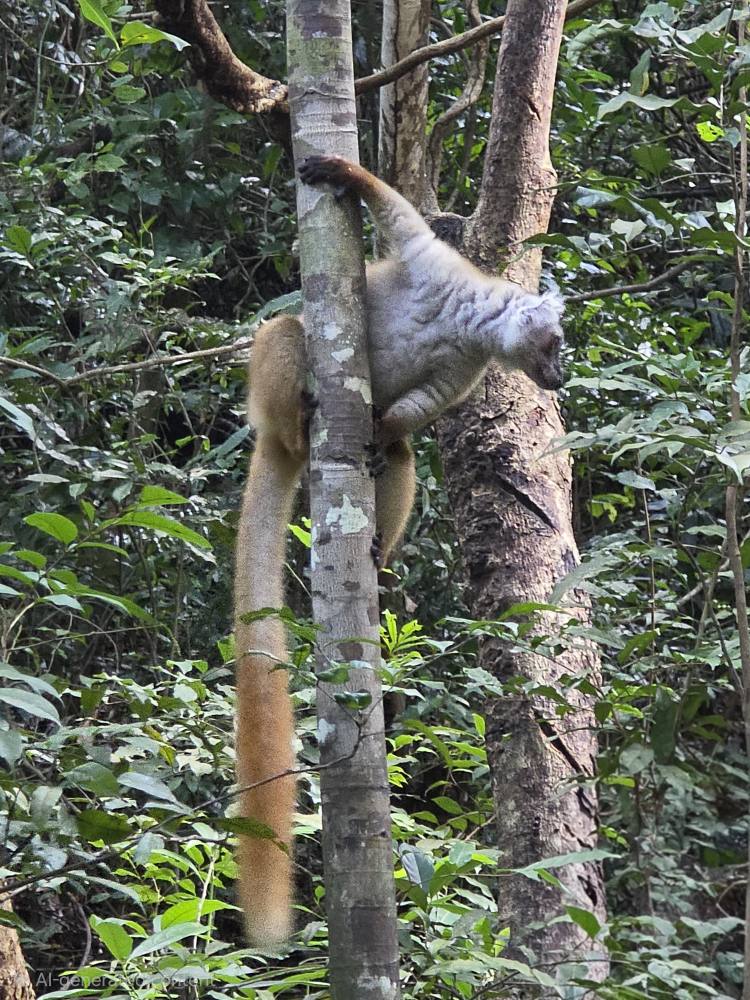
Next we find a family – dad and baby, way up in the tree, with mom coming to join them once she sees us watching, jumping from tree to tree to see what we are up to. Reminds us of our own very protective mama bears, just in diminutive form.
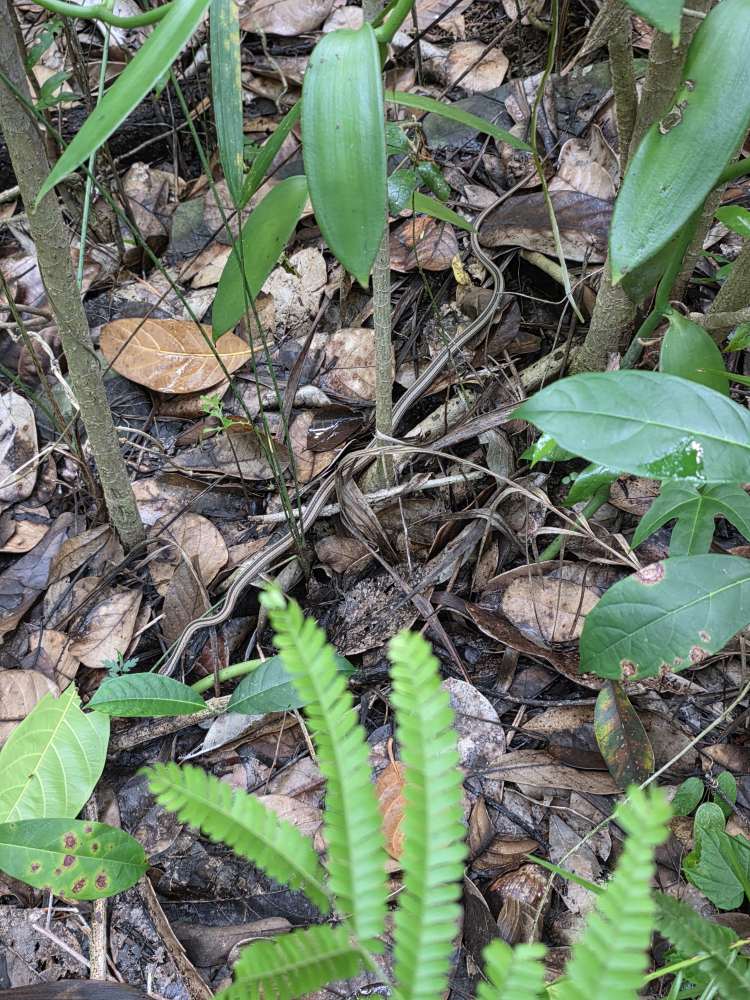
Moving on, it is reptile time – First a Brookesia nana chameleon. Larger than the minima but still small – this little guy is totally active, climbing all over Nicoli’s hands and arms. Then there is a little painted bronzeback snake who blends perfectly into the foliage – you have to really search and focus to find him. Followed rapidly by a Ta gecko or leaf tail gecko. Again, so very hard to see – and definitely part of its defense mechanisms. It is nocturnal and has no eyelids as well, so it too sleeps with its eyes open. This species though also sleeps with its head down to avoid the light and the predators. We can barely see him, he blends in so well and it is equally difficult for birds to see and catch them. Whenever they feel threatened as a predator approaches, the gecko automatically cuts off its tail, which then falls to the ground wiggling. The bird sees it and grabs the tail, leaving the rest of the gecko alive. They can grow their tails back, but only 3x in a life cycle.
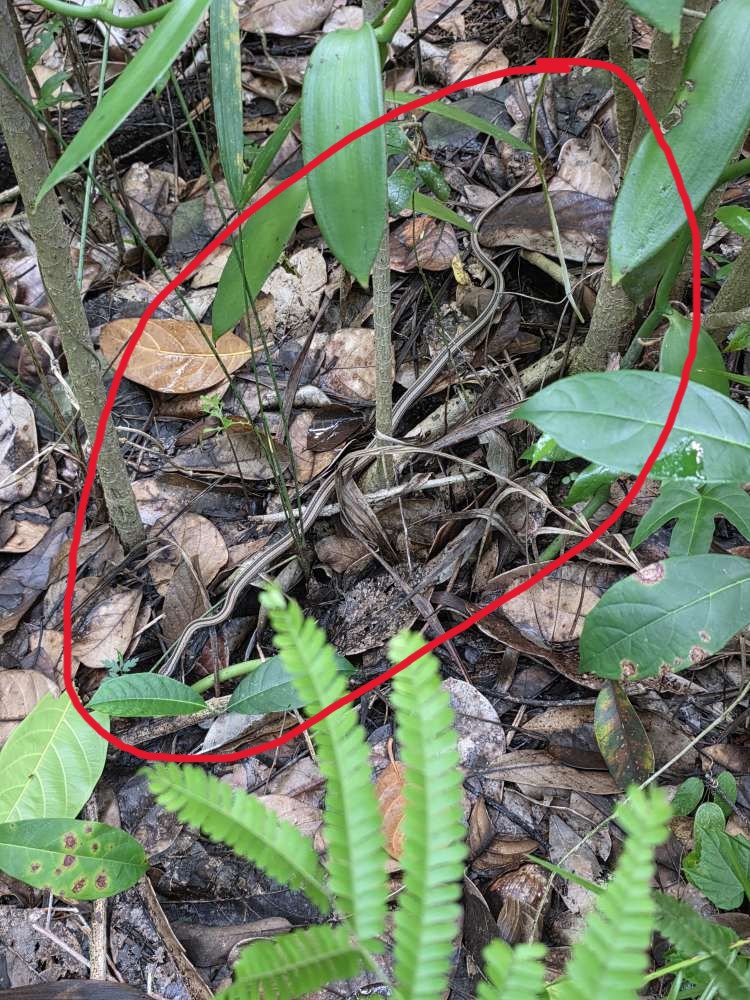
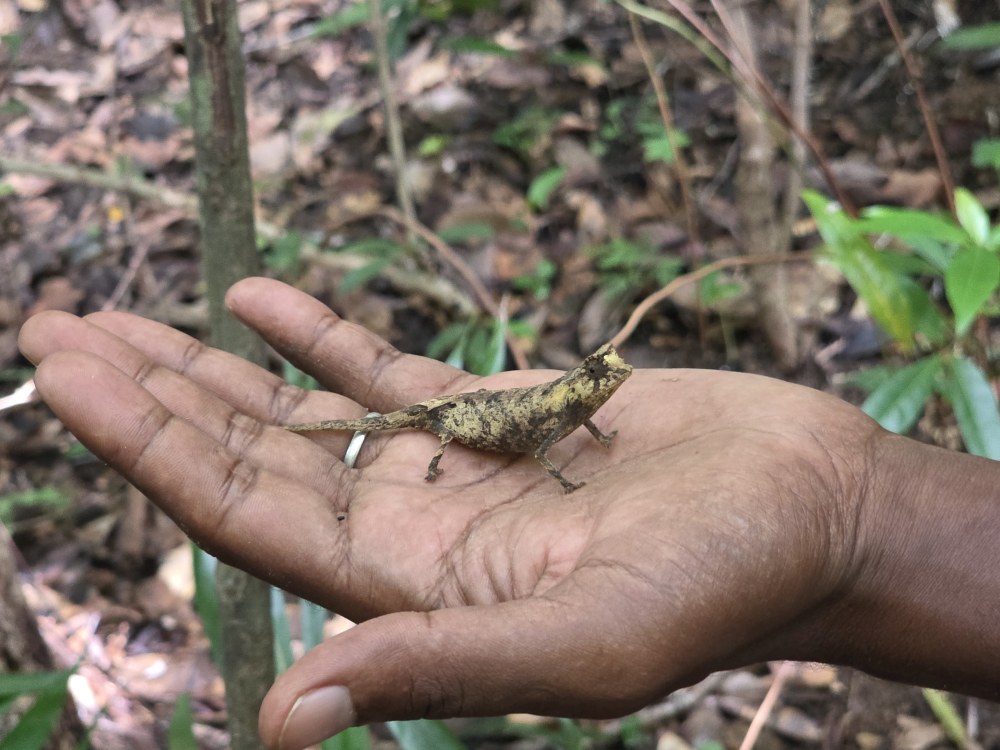
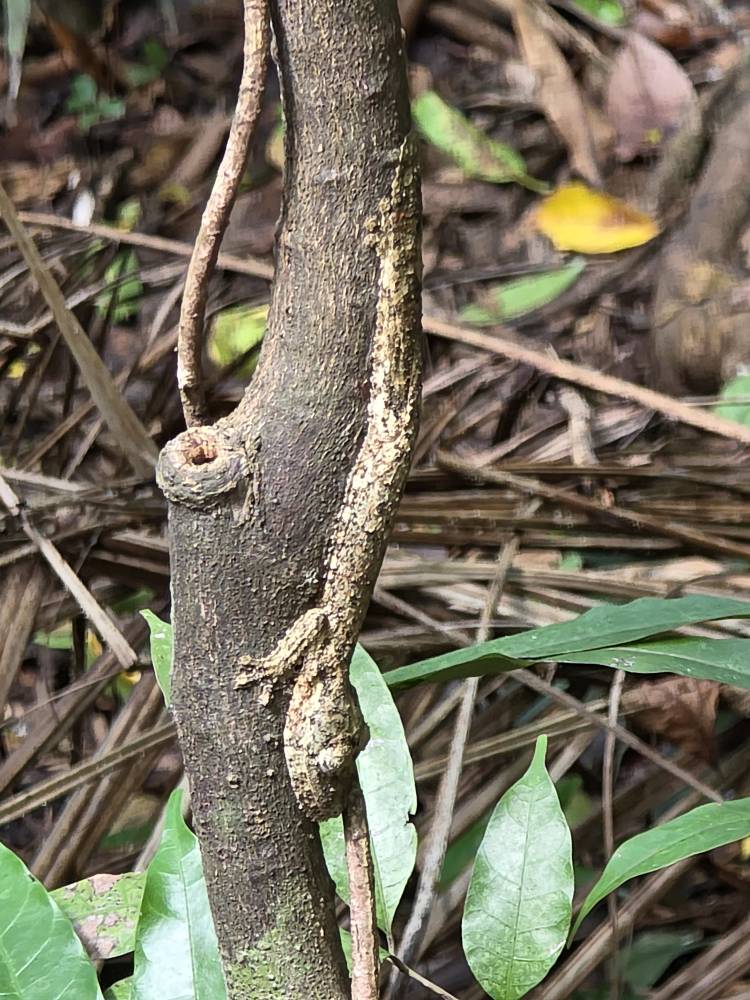
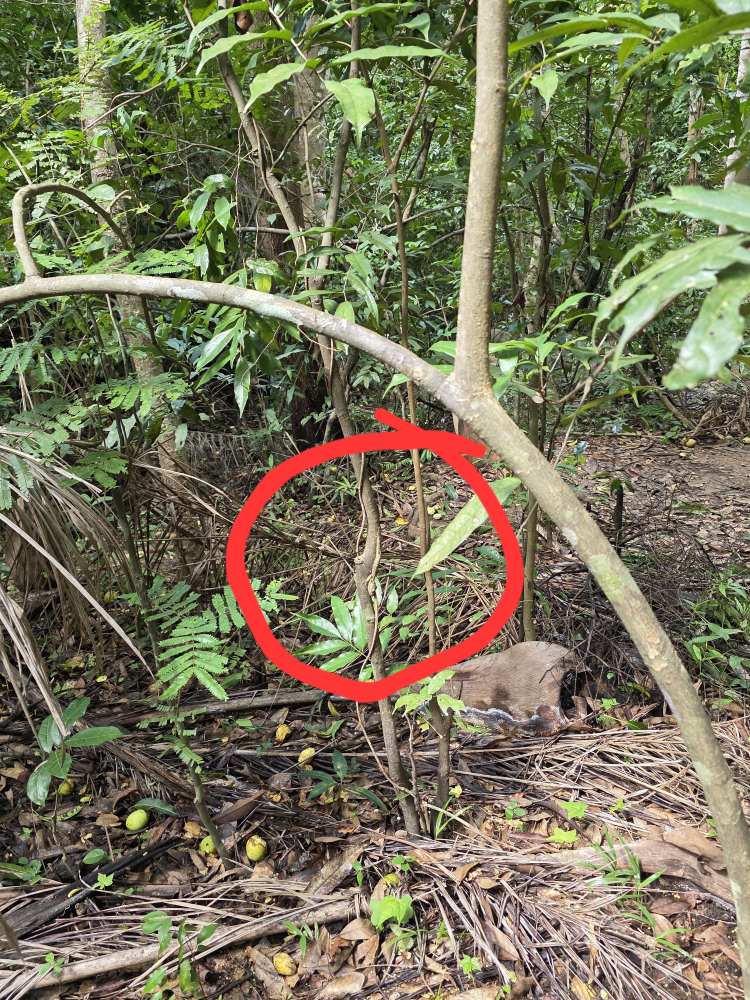
More bushwacking ensues until we come upon 4 lemurs on one side of the trail and 3 on the other, happily playing and eating away – not 3 feet from us – occasionally looking at us, but basically going about their business. It was such a magical experience to just stand there and watch them – also an envy producing experience as they were eating Jackfruit! Little buggers didn’t even offer to share. Come on Lemurs! But seriously, so amazing. I could have just sat down right there on the trail and watched them for hours.
On our way back to the base camp for our lunch, we encounter our last sighting – a huge Ground Boa Constrictor lounging on a limb above a stream we had to forge. Creepy scary, especially for the Lemurs as he preys on them.
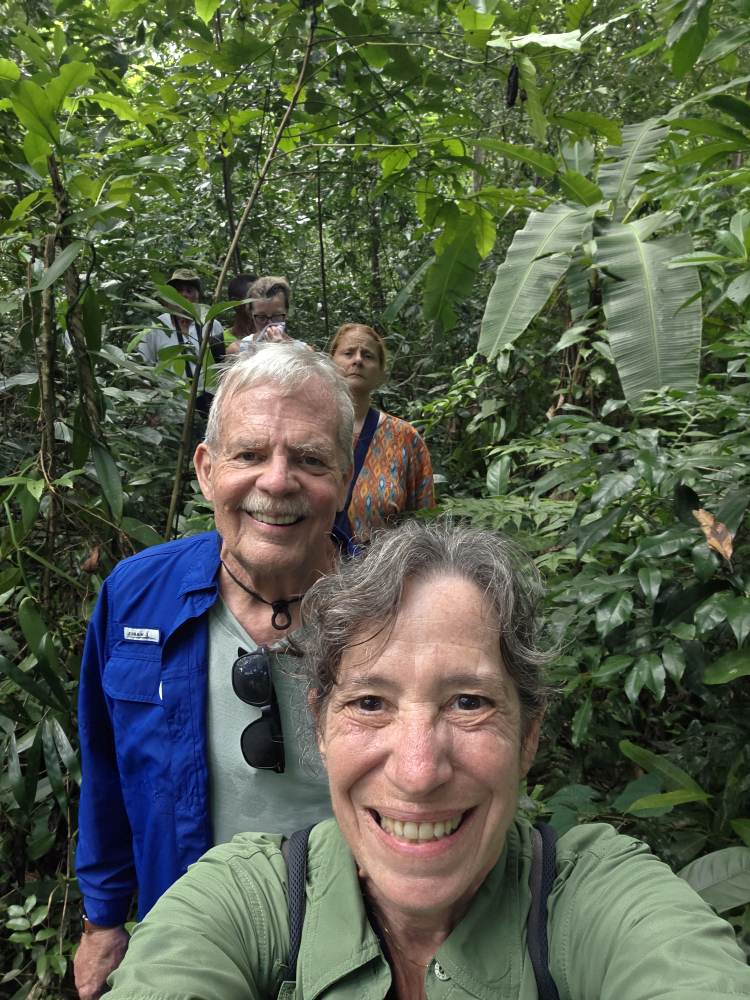
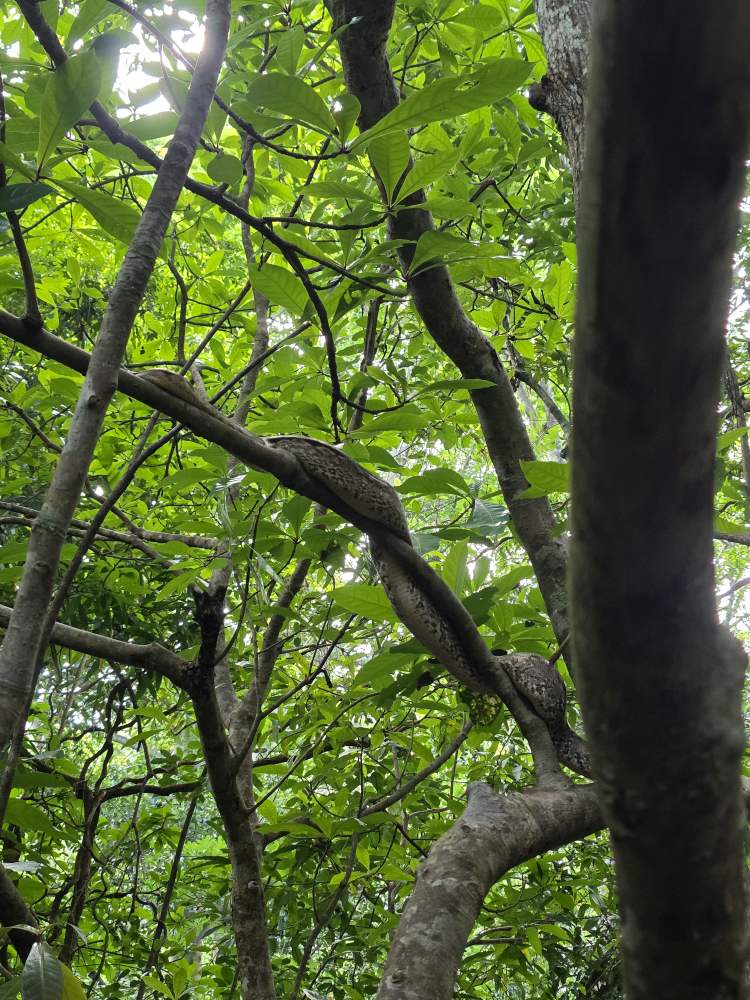
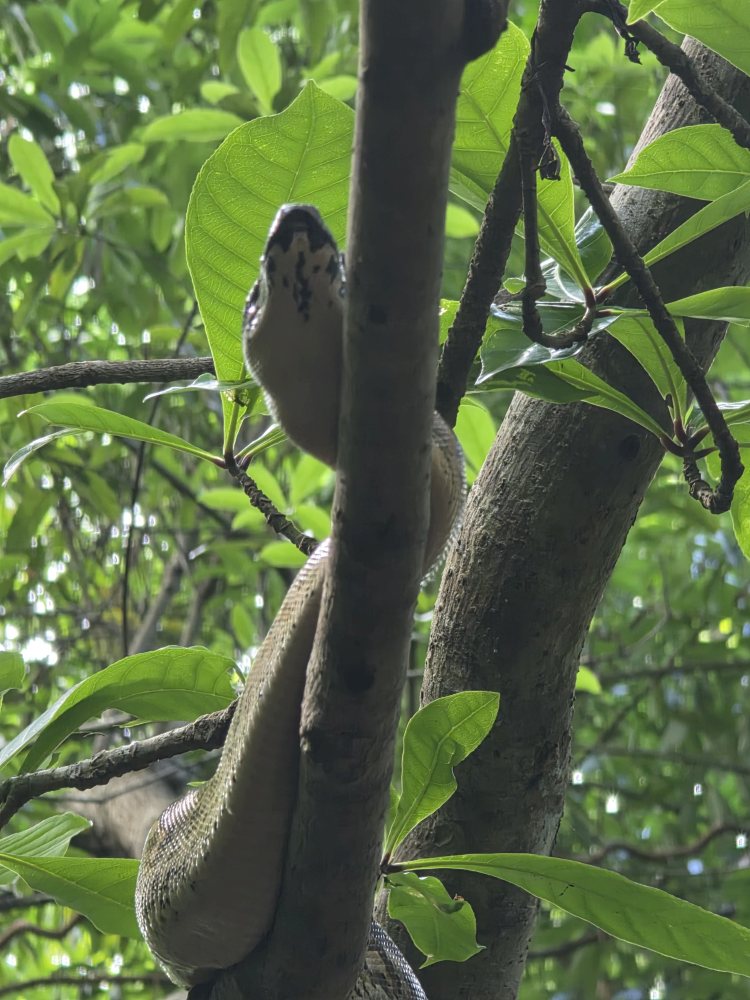
Our guide leads us through the forest, down slippery slopes, bushwhacking more ways through the brush to avoid slow moving groups of other passengers (complaining and whining their way back to the base camp), finally safely depositing us back at the picnic area where we will have our lunch. Fabulous adventure! One of the ladies in our group who decided to stay at base camp and not do the trek said we were the first group to leave and the 2nd to last to return! Best guide. Best trek. Definitely!
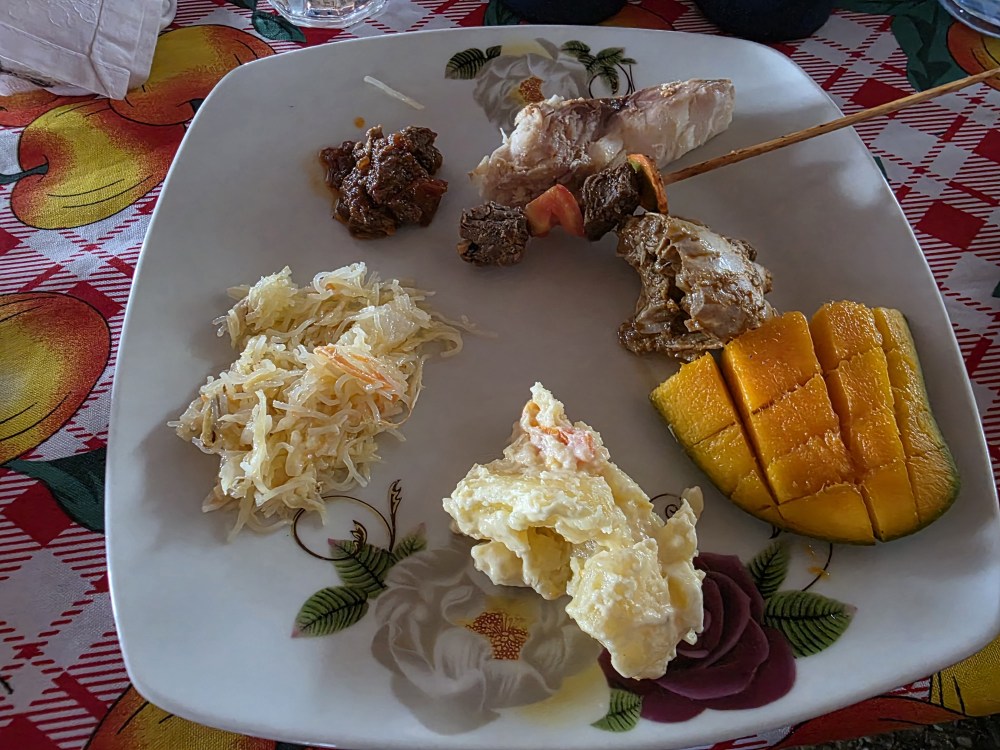
Lunch was a plated appetizer of Zebu (a type of cow) samosa and fried bananas, then a buffet lunch of fish, crab, grilled zebu, zebu stew, fruit, potato salad (weird, but true) and a variety of veggies. All very good.
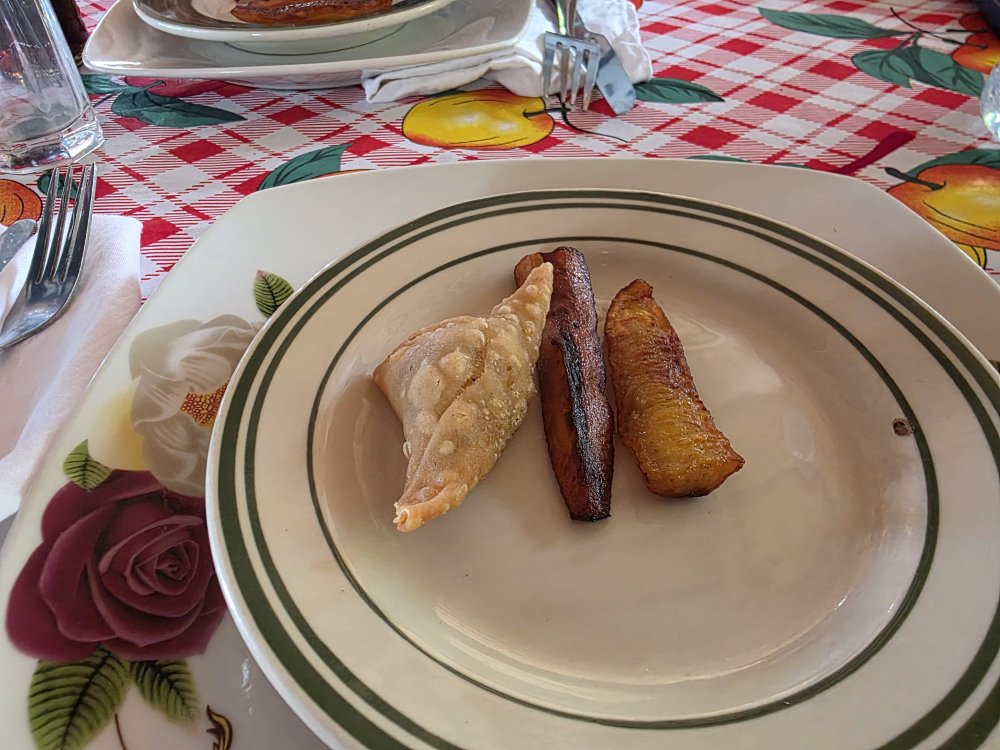
Then it was back to the little boats. The tide has come in by now – 4 hours and the water is all the way up to the beach level – so we only have to wade out in water up to our knees to get in, which is a bonus as we take the opportunity to keep our pants legs down to clean some of the mud off of them! Reverse course – we are all lashed together, once again heading off behind a little trawler propelled skiff with only 4 boats in tow (some of the other trains have 6 to 8 boats in tow), getting a little ways out when our tow rope snaps and having to paddle over to the lead boat. Then once we start off again, the tow rope to the boat behind us snaps. This is a hoot. Seriously, very fun and very African! All ropes secured, we motor our way back across the bay under darkening skies, listening to the thunder rolling in across the island.
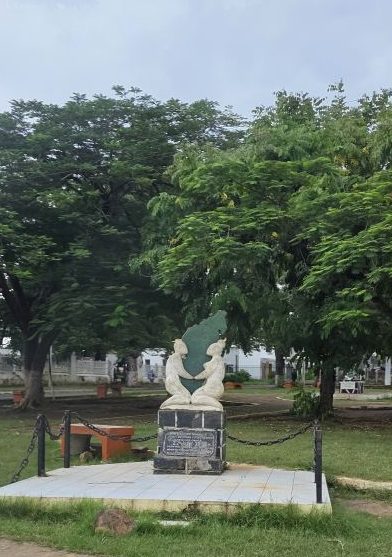
Successfully making it to the vans before the rain (or lightening hits!), we wind our way back to the pier, hitting stop and go rush hour traffic as we navigate through the town. Ship’s tour is the way to go on this particular stop, that’s for sure, as we are definitely on one of the last tenders – but we know they would have waited for us since we were on their tour.
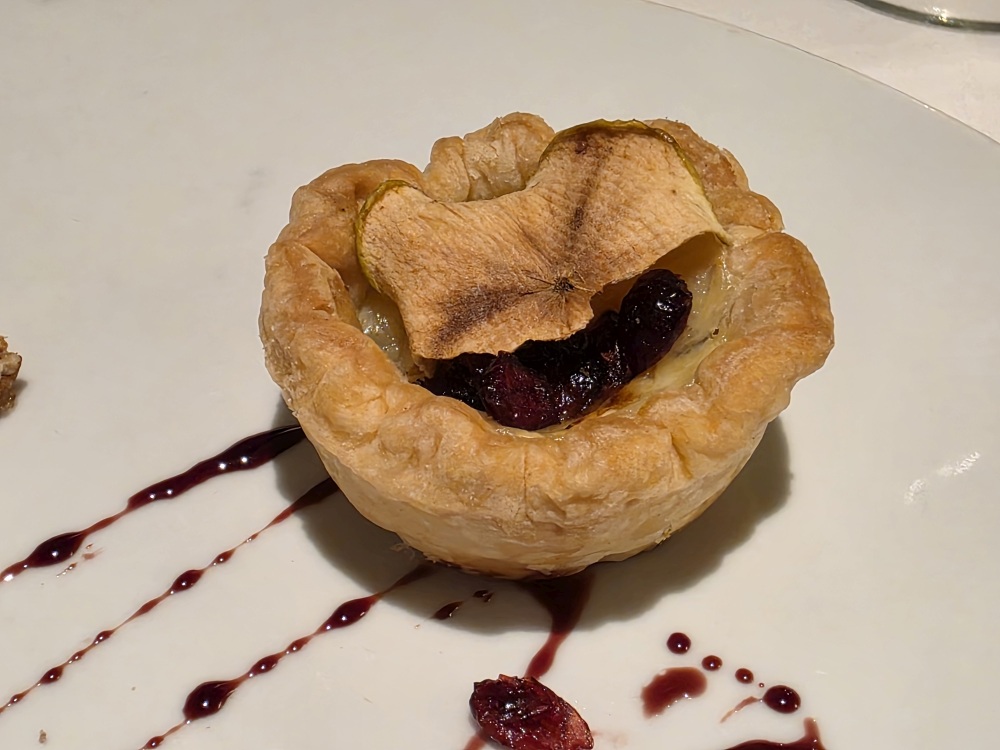
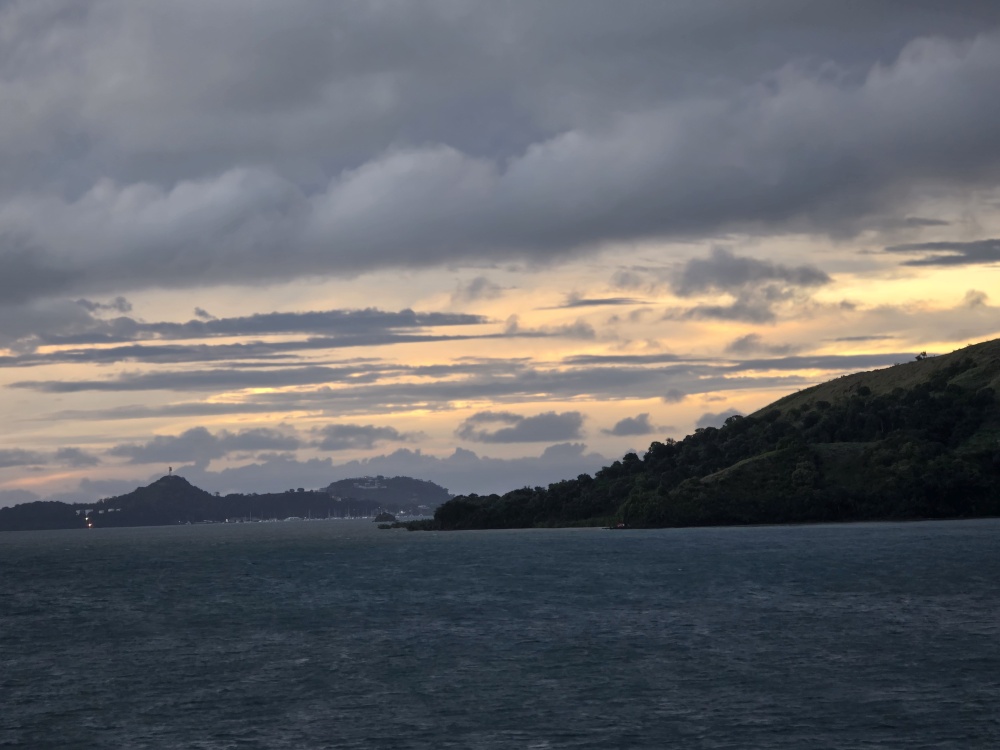
Excellent adventure all the way around. Maybe not for others (there was a dude in a walker/wheelchair type thing – what?), but for us? We couldn’t have been happier. Back onboard, the shower never felt so good! Clean and refreshed, we watch the lovely sail away then head to dinner where there is an excellent Brie en croute – 5 star presentation!
Then to the Den for Felicia on the piano – it’s Harmony Hive’s night off and the show is the “resident” comedian/magician who we may or may not choose to see on these voyages. And then it is off to bed for us, our heads filled with sweet Lemur dreams.
 Andiamo