It is a brilliant sunshiny not a cloud in the sky day today. Perfect for a day of wandering around town, hitting museums and trying to find all the artwork scattered around the largest town in Greenland. We are up, in the gym, breakfasted and ready to go way too early for the first shuttle at 9 – so off we go on our trek into town. The weather is supposed to be a balmy 60 degrees today, but at 8a? Oh now, more like 45 degrees! We’re dressing in our puffy coat layers for certain. And wise decision that! It is still freezing out here – cold weather gear is an absolute necessity.
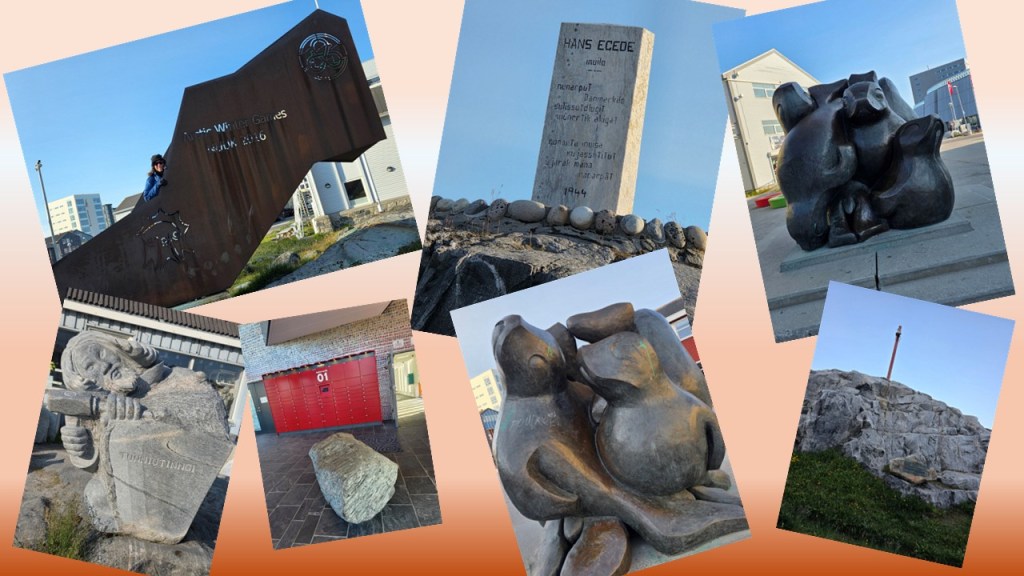
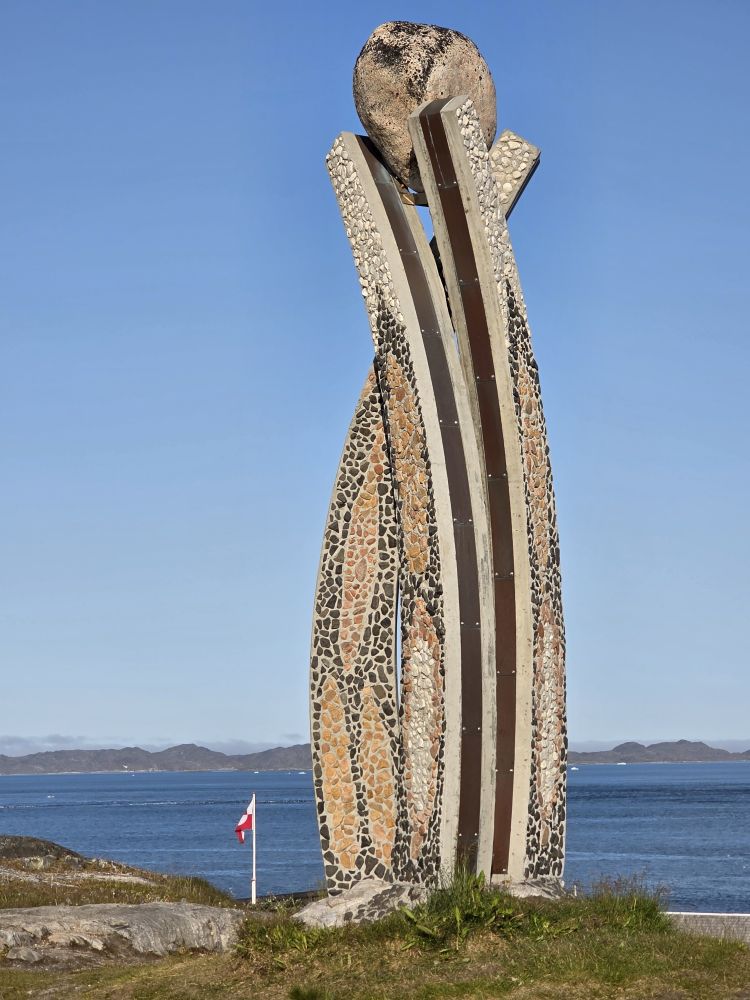
The walk into town takes about 25 minutes, mostly uphill in the beginning, but then leveling out once we are in town. Our route takes us through the main center of the New Town area, down Imaneq, the pedestrian shopping street and past some of the many sculptures and monuments to Hans Egede – yes, the same Norwegian Lutheran Missionary who was all over these parts of the world – as well as a cool statue in front of the gravestone carver, the landmark commemorating Samuel Kleinschmidts, a missionary who wrote about the Greenlandic language and translated the bible to Greenlandic, a bizarre rock and strange wallpaper like paint inside the post office (on the art walk list, don’t ask!), the stone seals (oh so cute) and the monument to the Arctic winter games in front of the Katuaq Cultural Center.
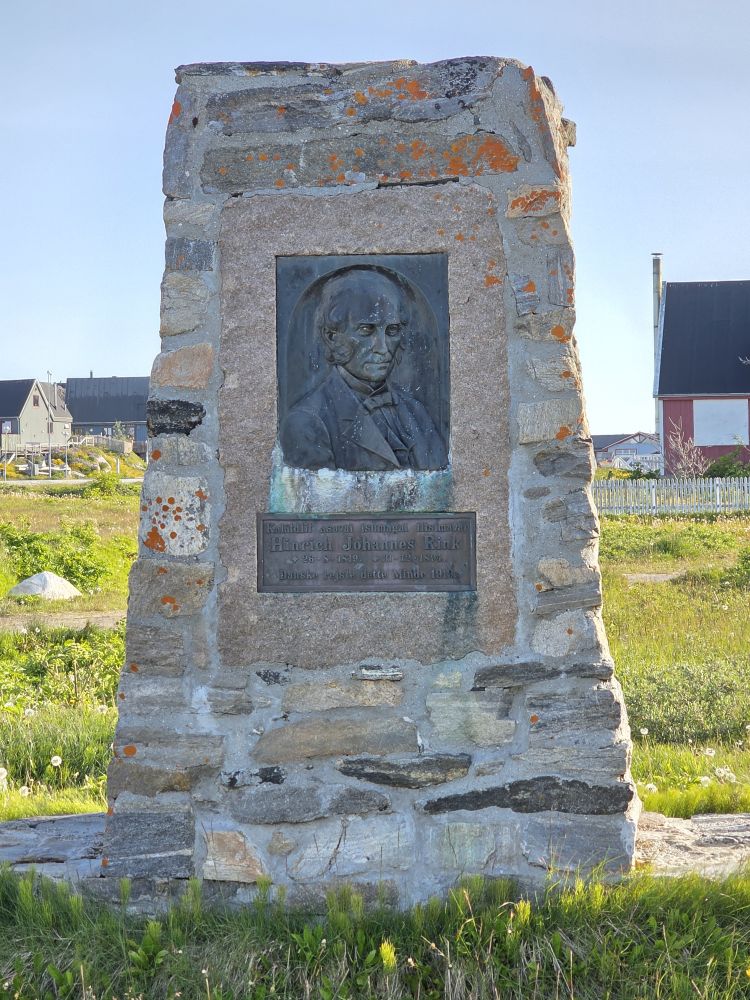
We are, of course, too early for the Cultural Center which opens at 10, so we head down into old Nuuk where the Church of our Savior and the Hans Egede statue are located, passing another cool sculpture at the top of the cliff leading down to the waterfront, as well as the monument to Dr. Hinrich Johannes Rink, a Danish geologist and pioneer of glaciology, and a bust of Jonathan Petersen, the Greenlandic songwriter who composed the music to the national anthem. They have statues and monuments for everyone!!!
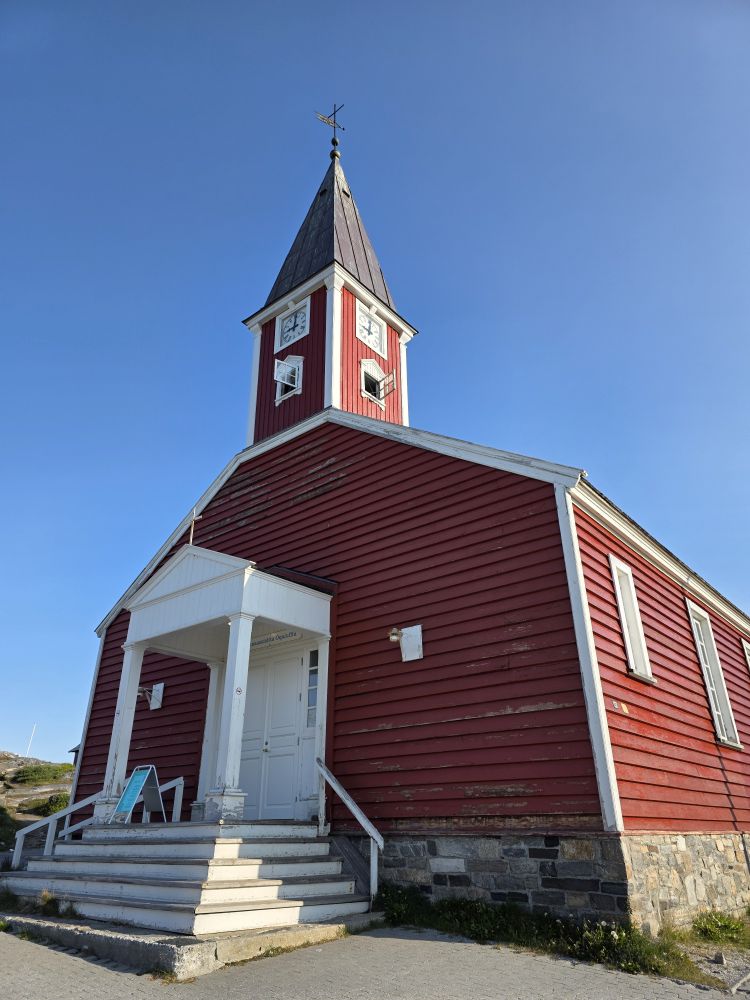
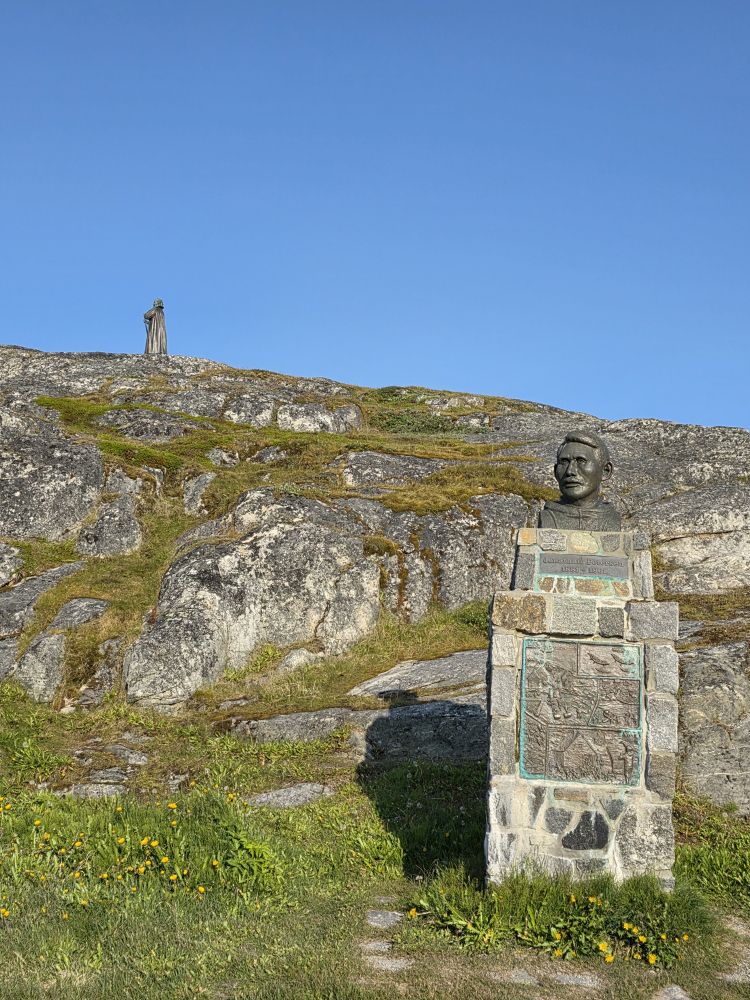
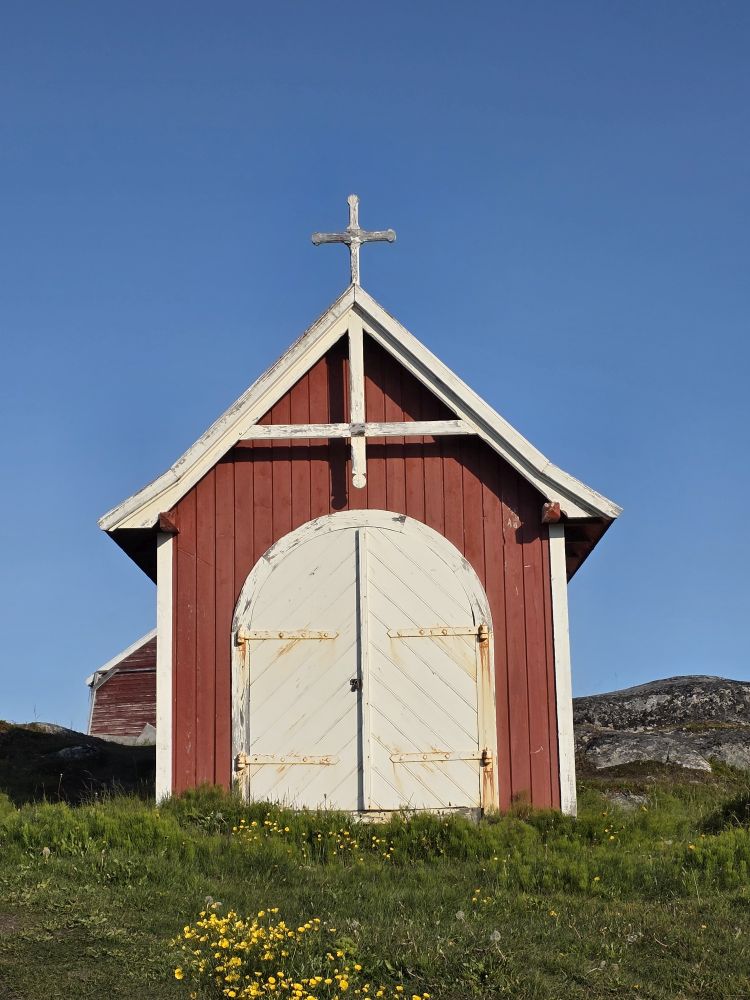
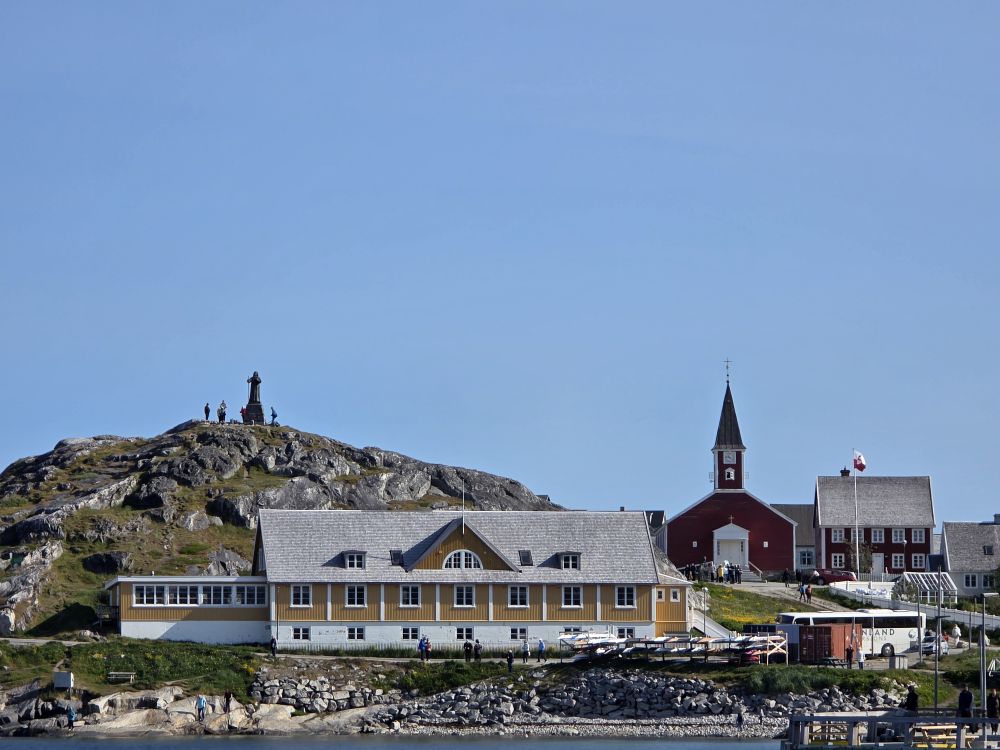
Arriving at the church, we find it closed for a funeral, which is fine by us – it is picturesque enough outside for photos. And since we are so early, we are all alone to snap as many beautiful empty pictures as we want! From here, we mountain goat our way up the rock mountain to gaze at the very backlit Hans Egede statue – as well as to enjoy the panoramic views across the town.
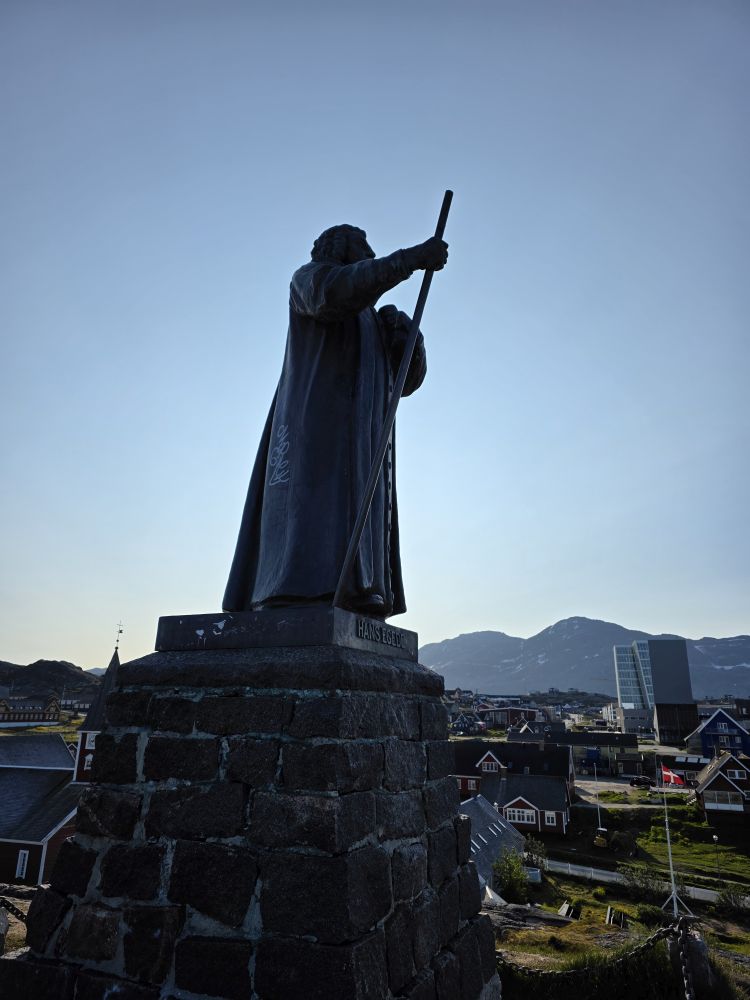
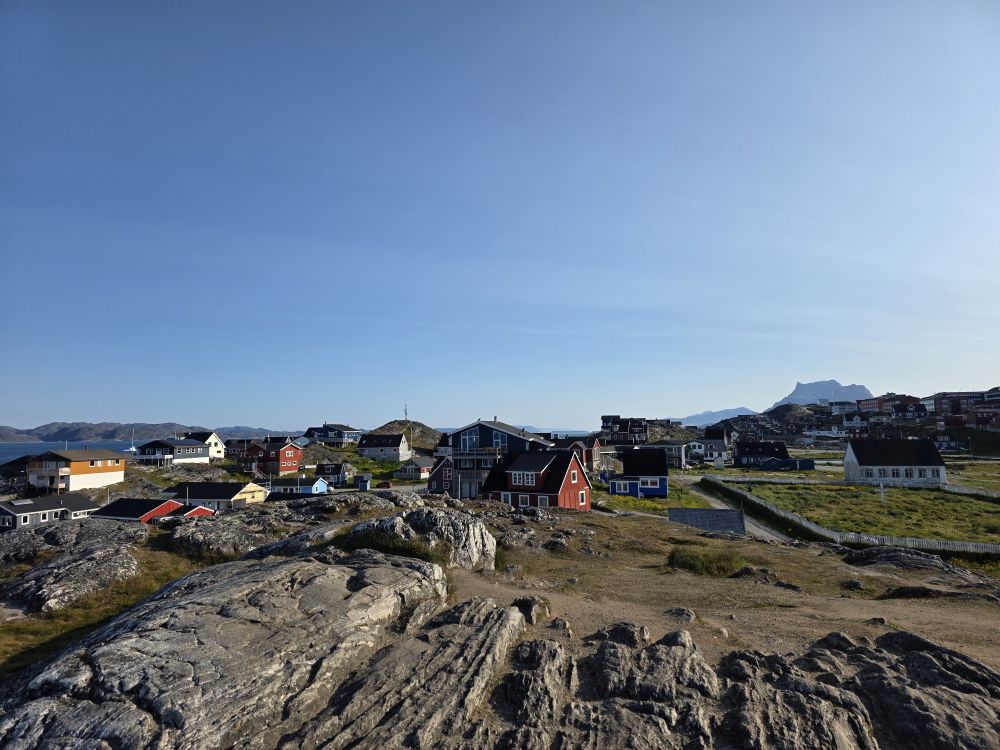
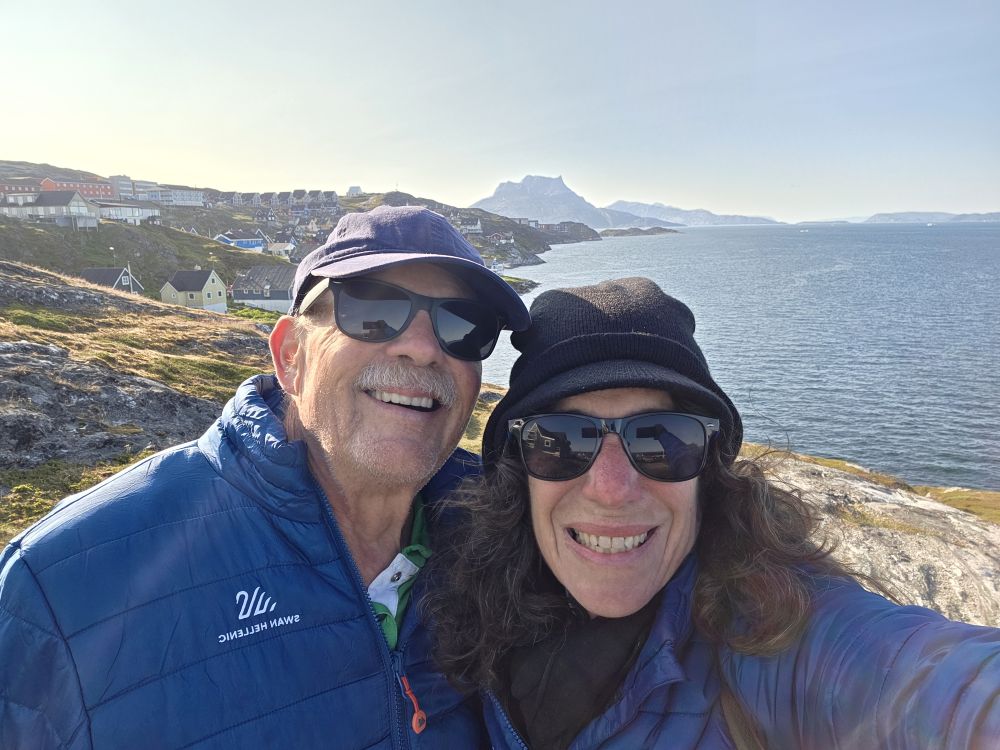
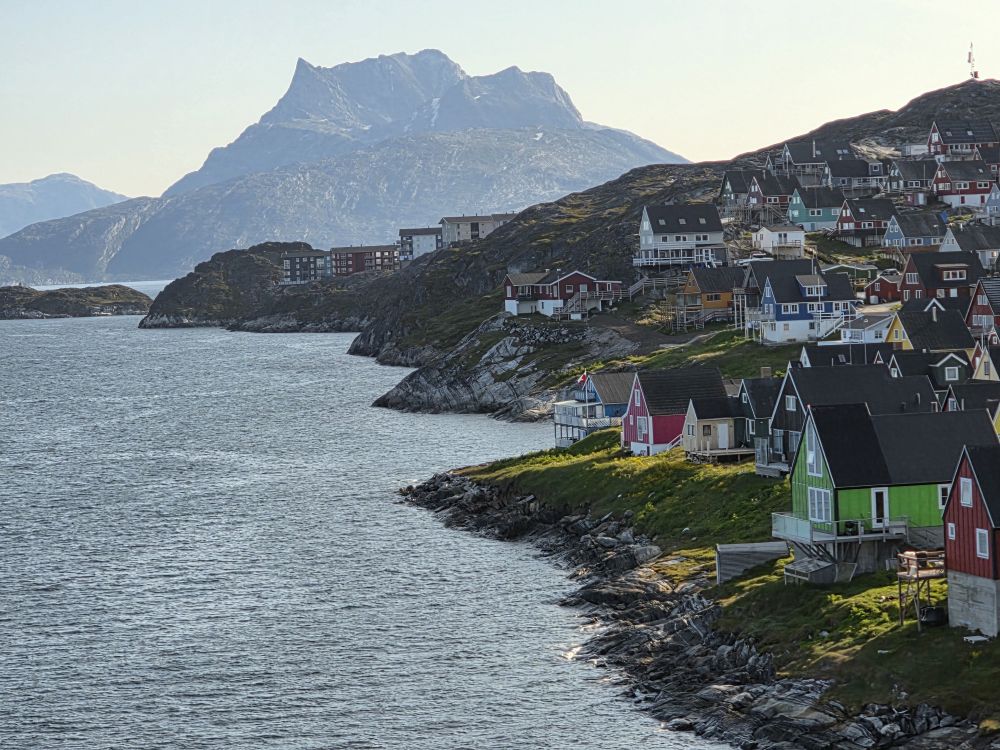
As we start to descend, I look at the map and actually find the Myggedalen viewpoint that was listed on the Nuuk overview the ship provides. Don’t know why it didn’t show up when I searched for it earlier, but nonetheless, it is a quick 10-minute walk away. We’ve still got plenty of time, so off we go through a little local neighborhood of pretty houses perched on a cliff up above the bay. Supposedly more beautiful at sunset – which we will not see here tonight – the daylight view is pretty amazing to us. You can see all the way across the bay and up into the fjord as well as the coastline of the city – with the vibrantly painted houses all along the craggy shore. It is just lovely up here, with ravens flying around and the lone iceberg floating out in the bay – and we are totally alone, a fabulous sleepy Sunday in Nuuk.
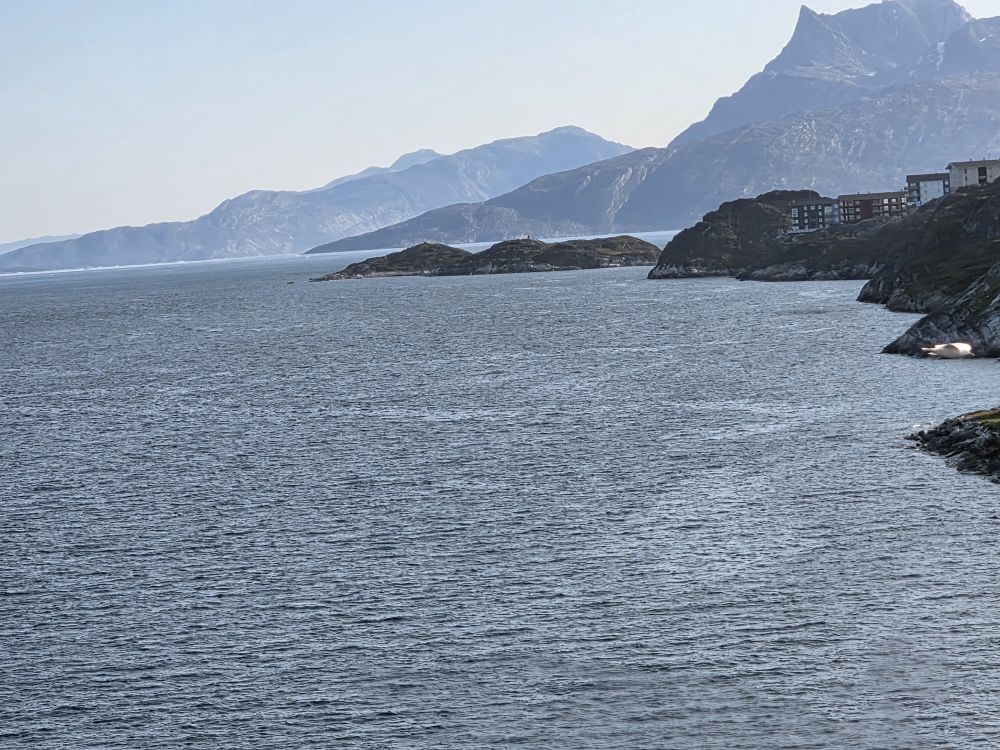
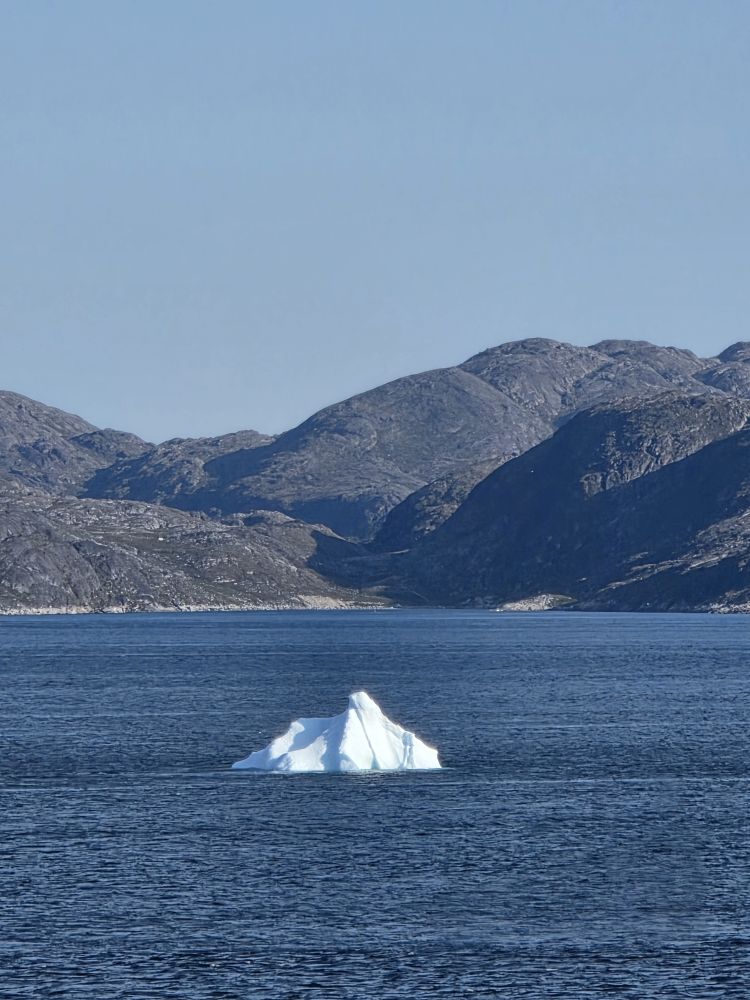
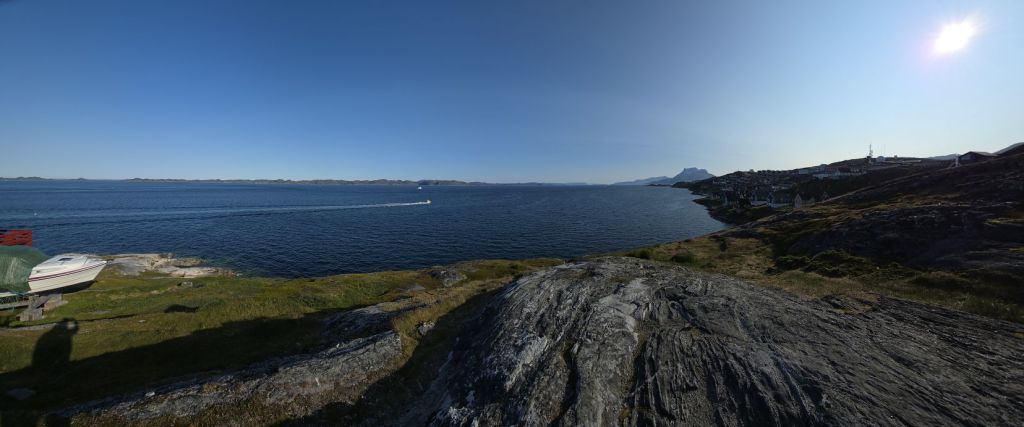
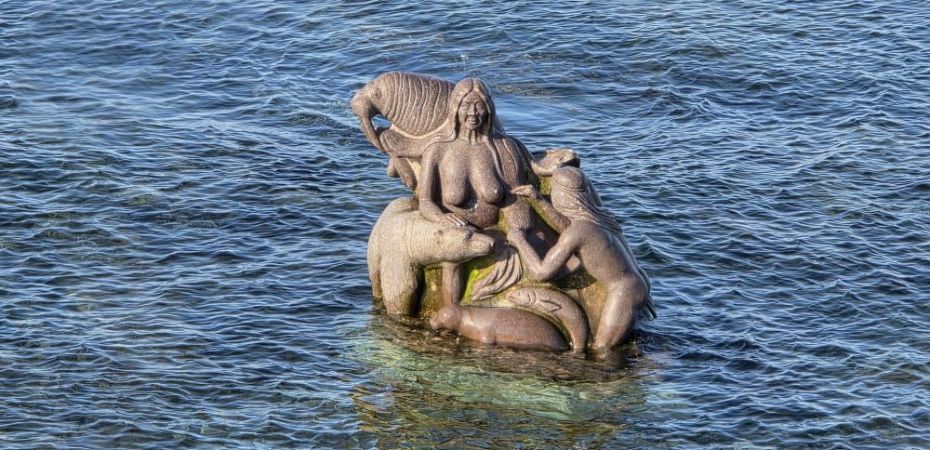
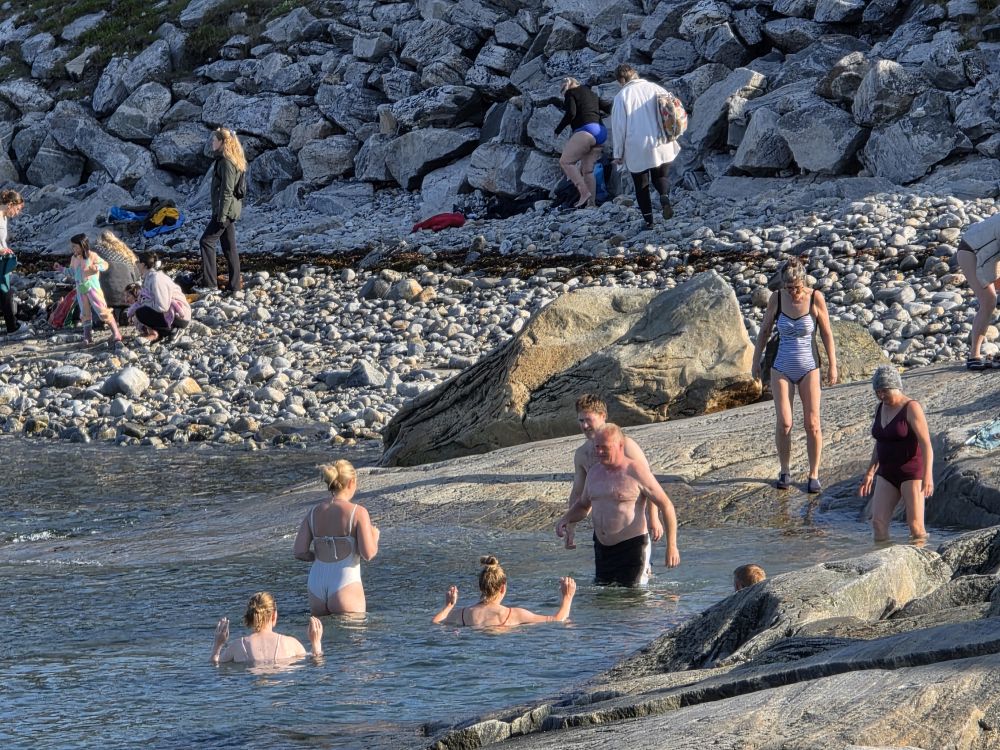
Heading back to the old harbor area, where the museum is located, the ship passengers have arrived! Our once empty streets are now virtually teeming with people. Ah well, we had our peace, now we will coexist! Back down at sea level, in front of the Hans Egede statue mountain, we find the Mother of the Sea statue – depicting all her mammal offspring from the legend. We also encounter a huge group of Europeans (Swedes? Danes? Greenlanders? We don’t know) taking a polar plunge! OMG – not a chance in hell would we ever do that, we barely want to take off our puffy coats, much less all our clothes and jump in the water. Much hardier souls than us, that is for certain!
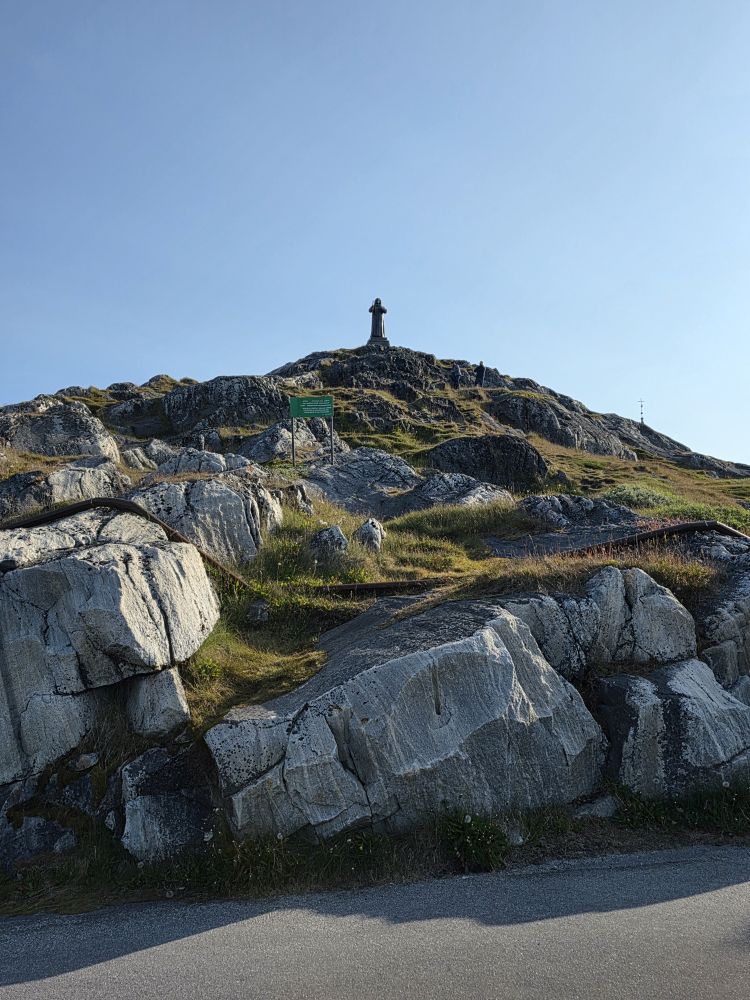
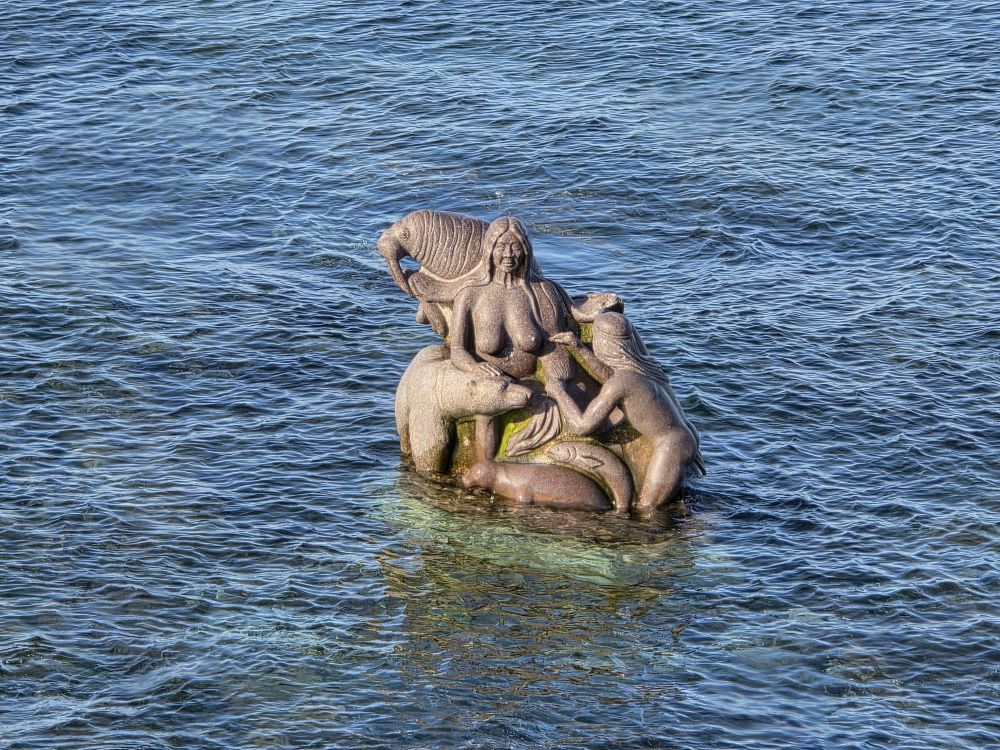
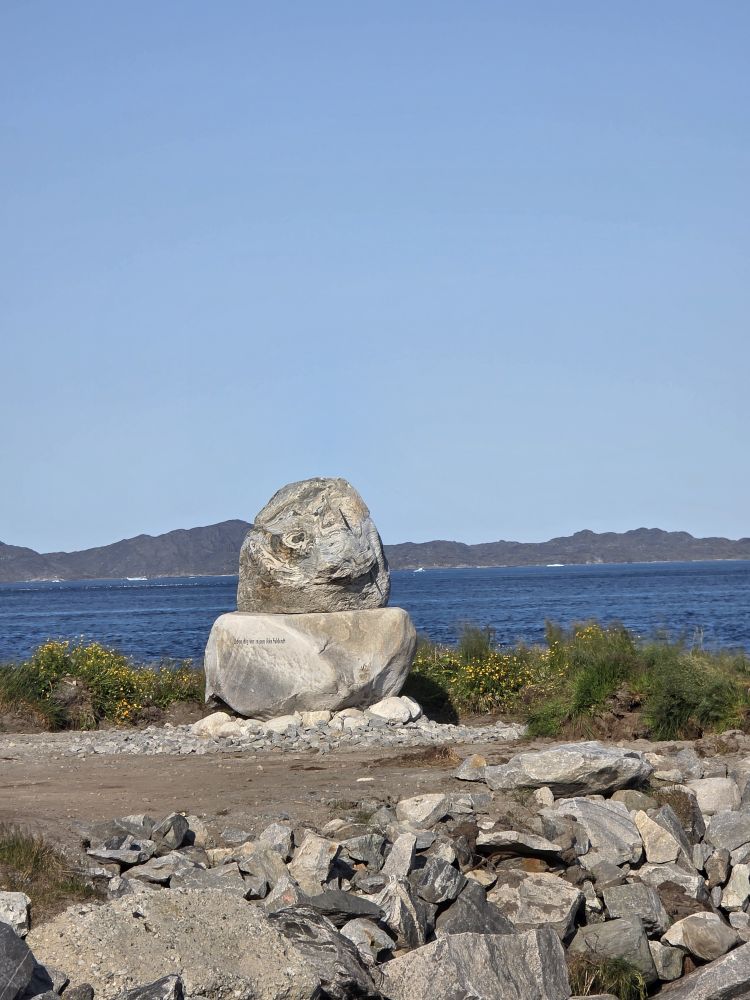
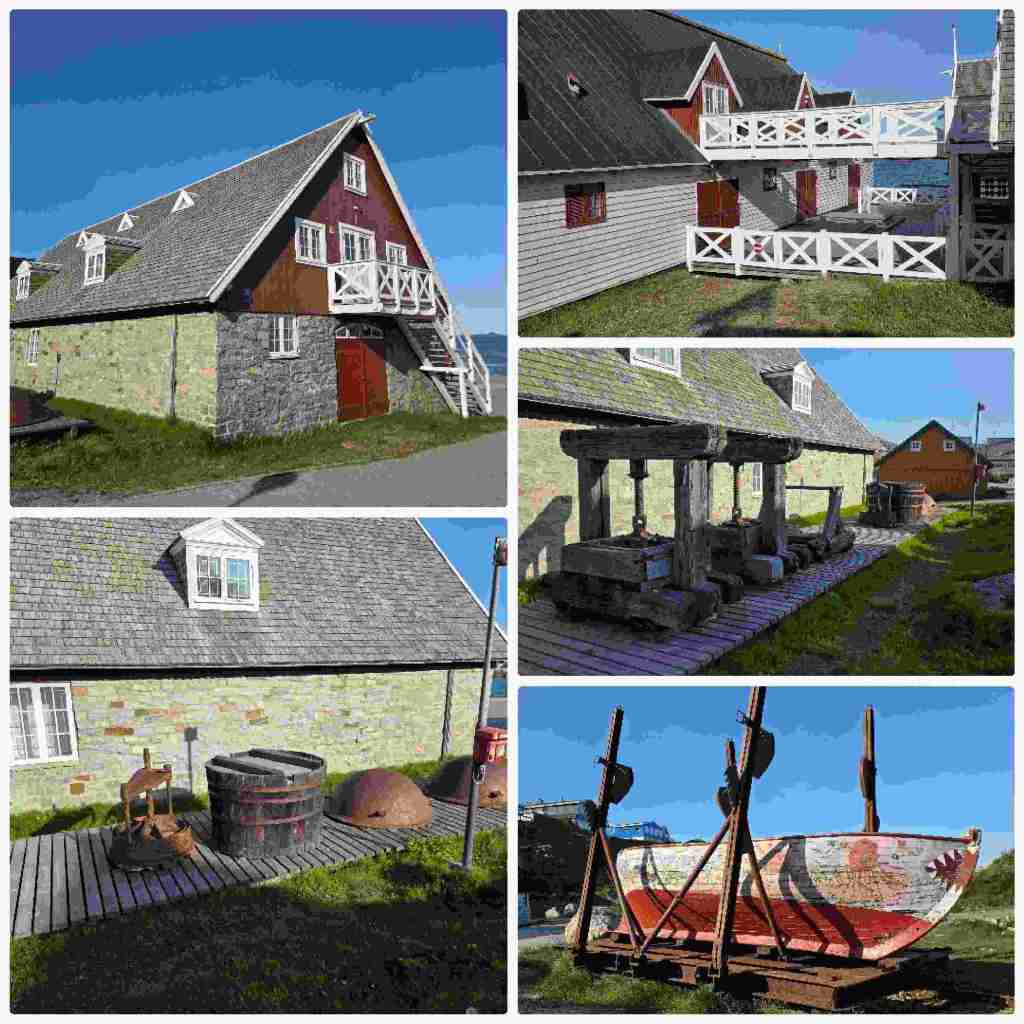
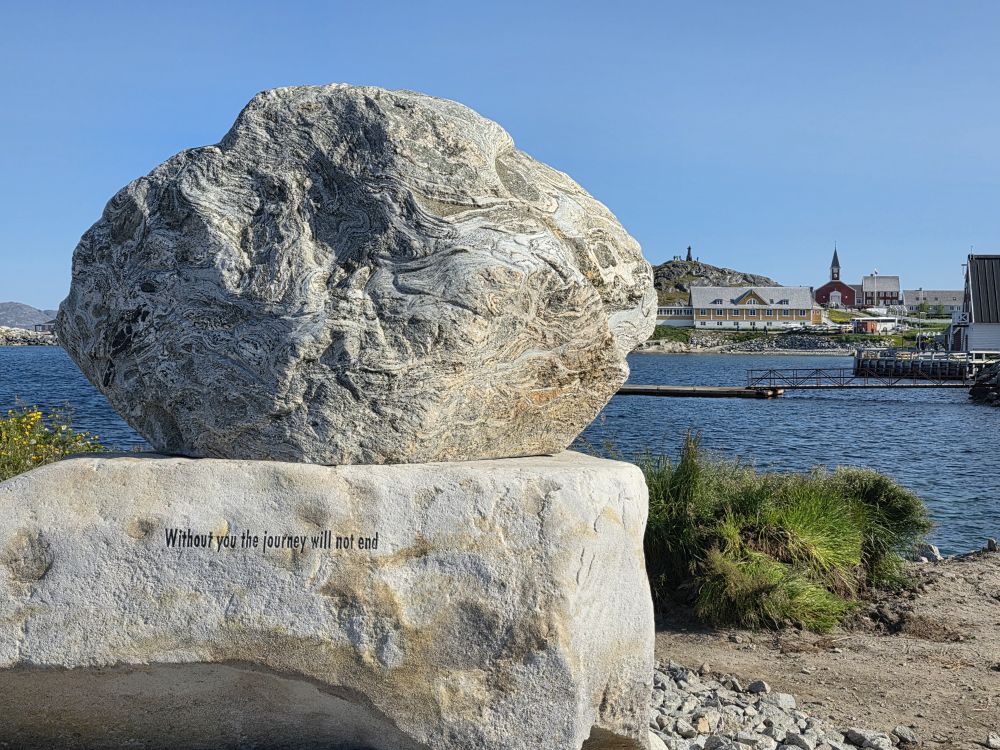
Even with all our wanderings, we are still too early for the National museum, so we waste time taking some photos of the outside of the old buildings housing the museum, the train oil production display (a huge industry here at one time), and then some interesting rock sculpture/statue and old wooden boat along the shoreline. Then we just sat on the front step of the museum, in the sun, waiting for opening time.
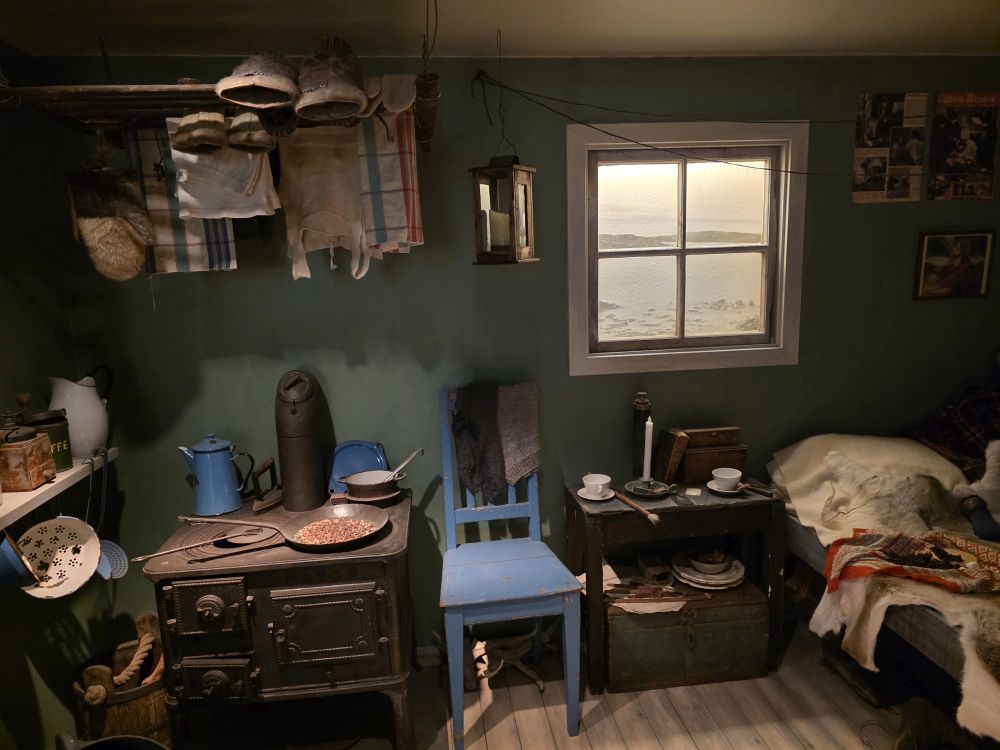
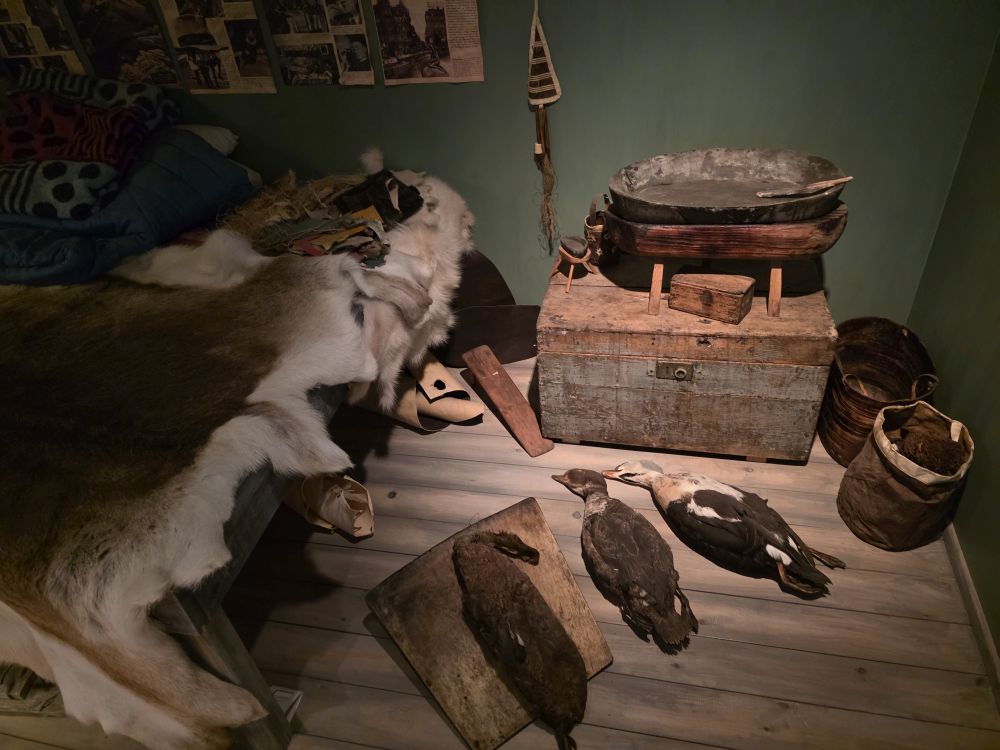
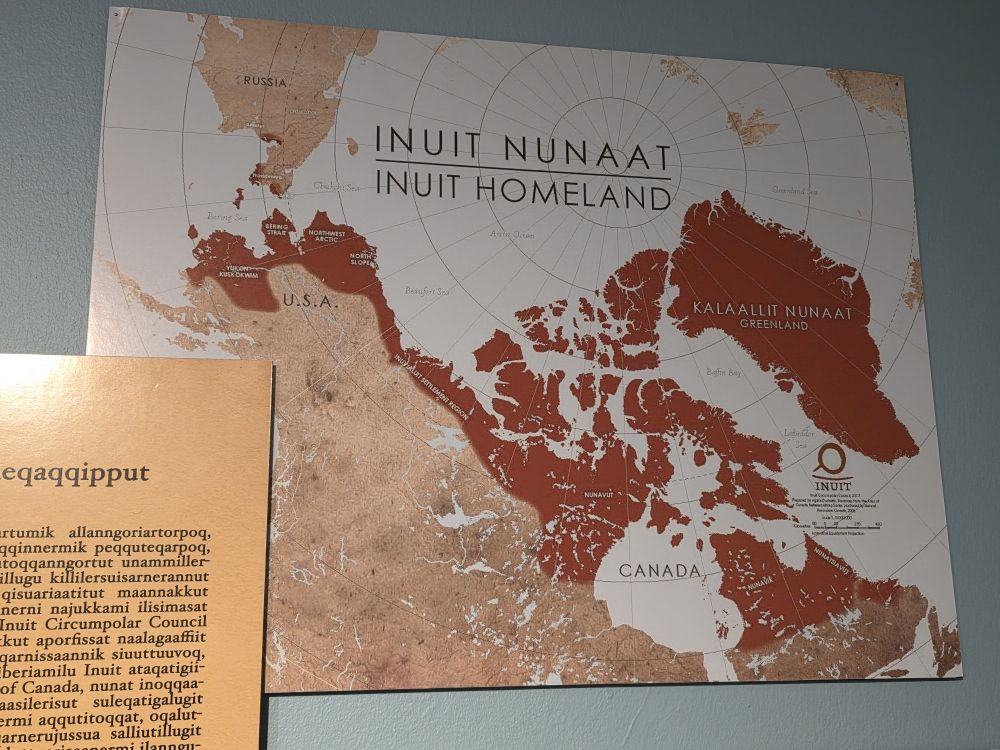
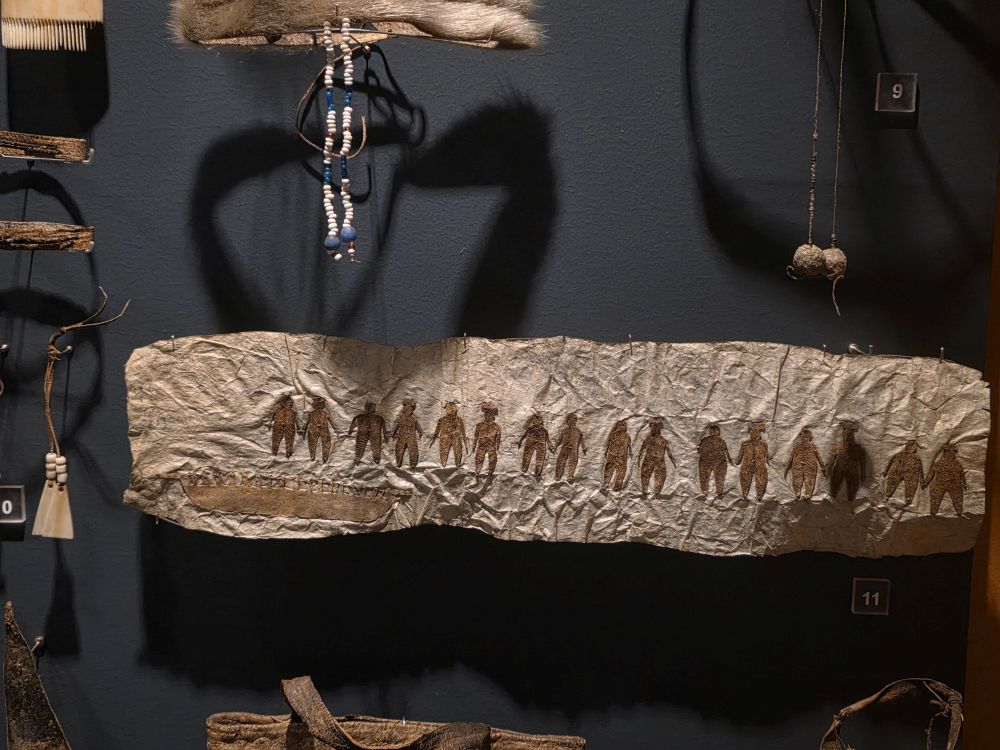
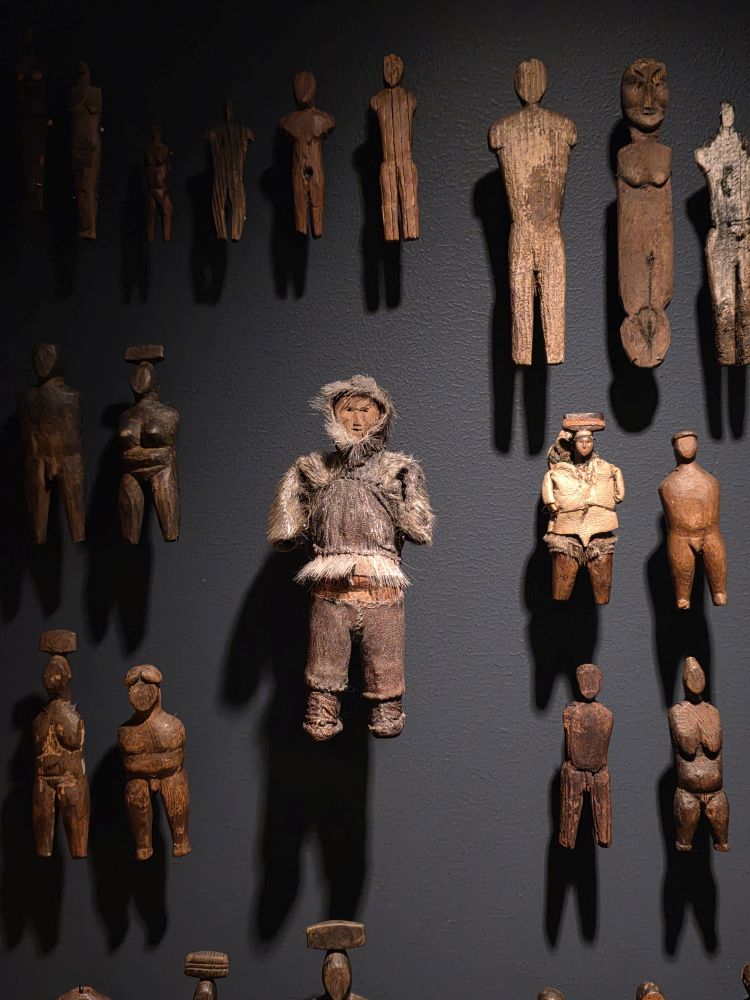
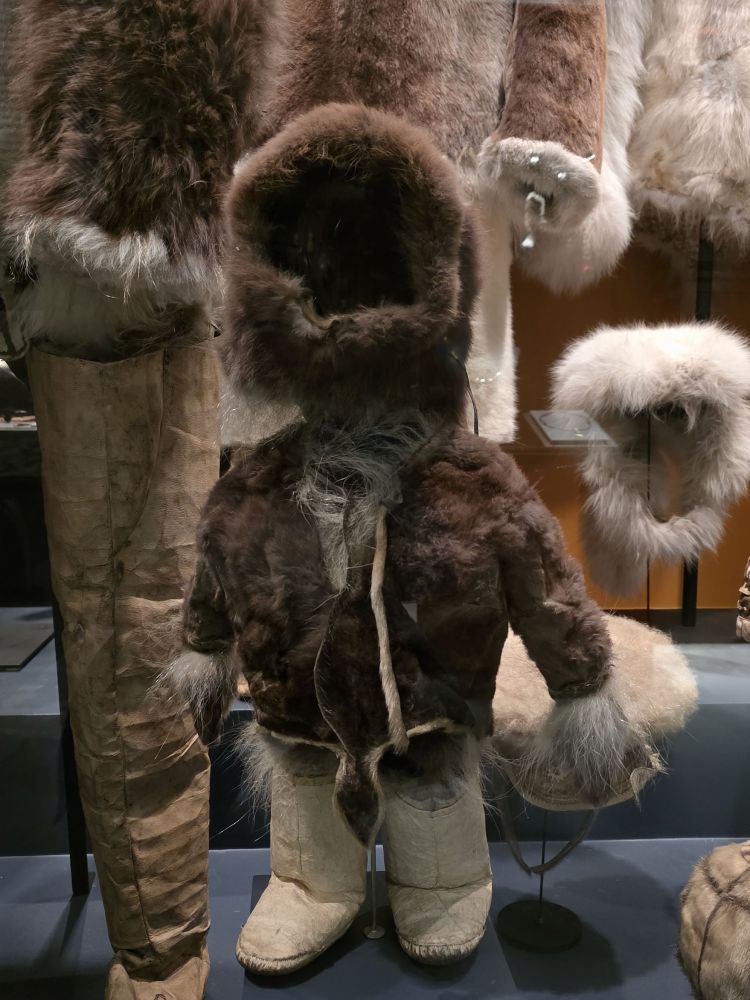
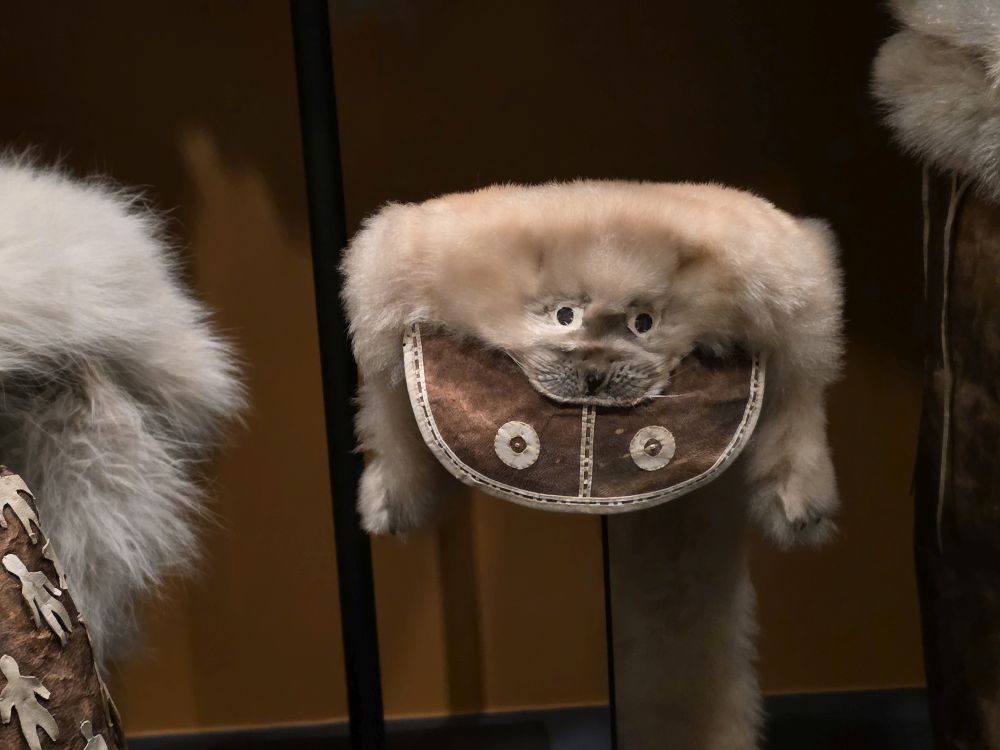
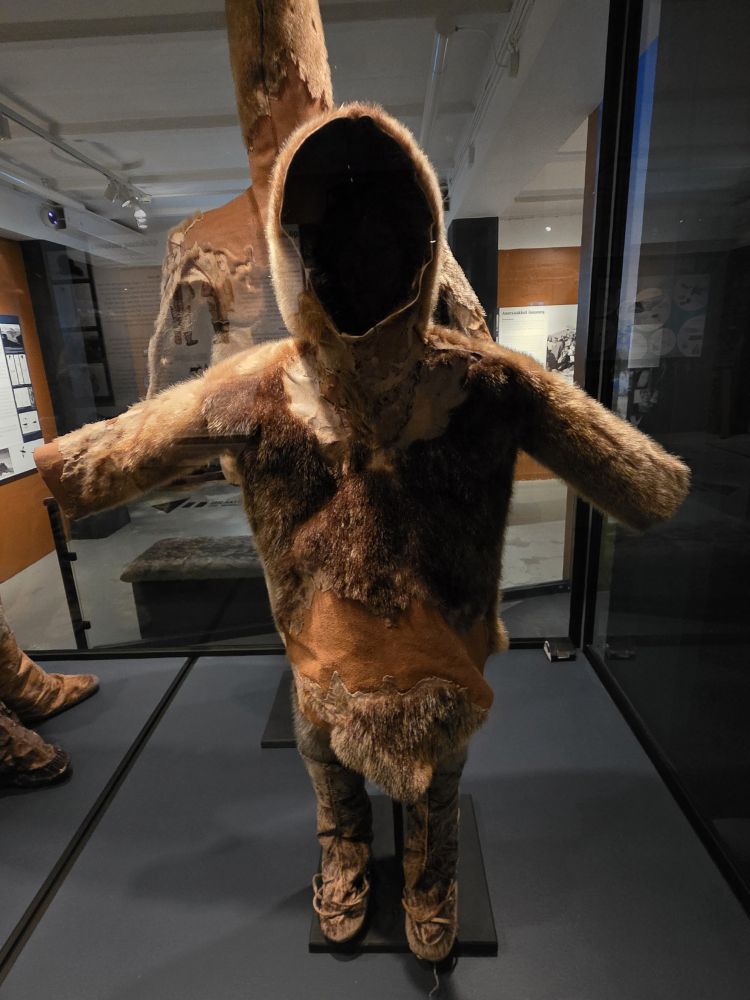
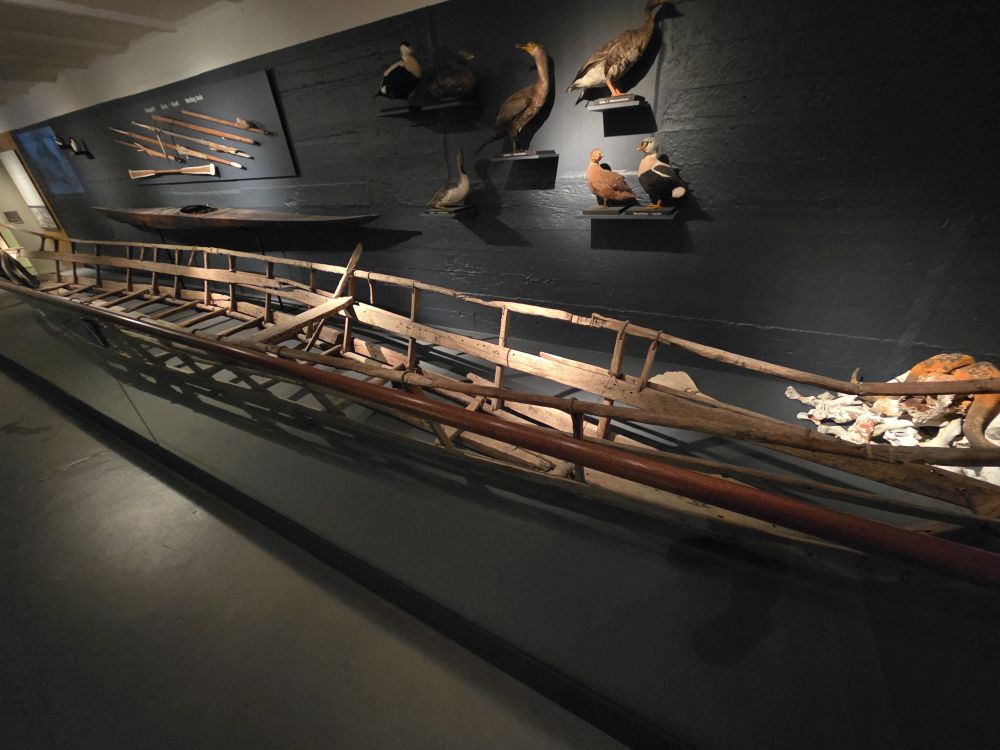
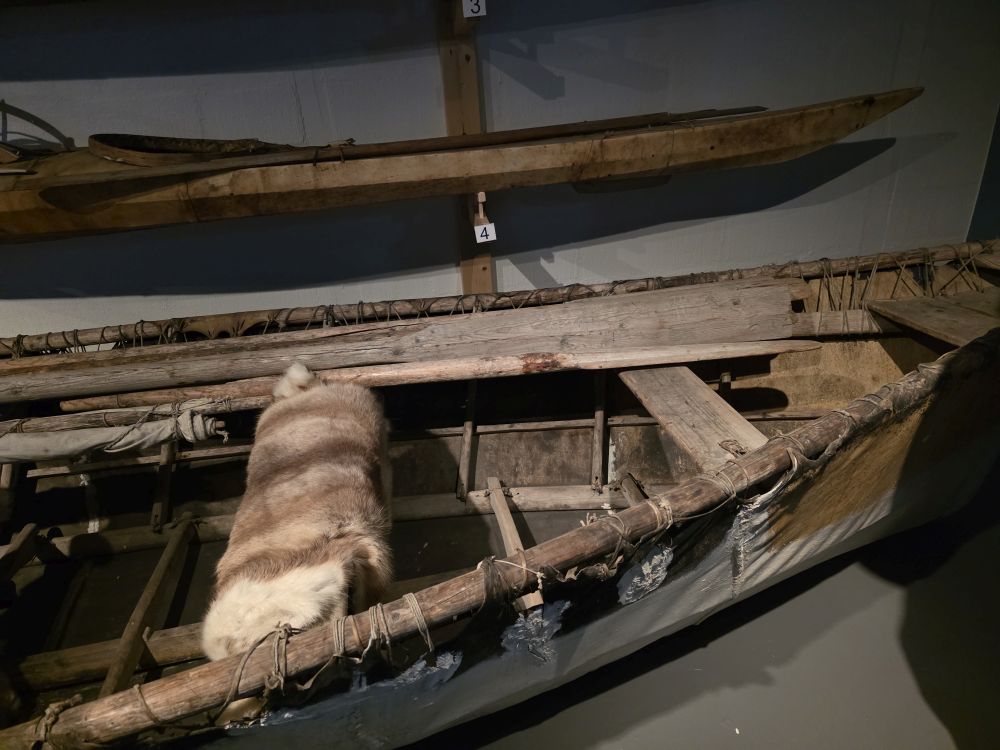
The National Museum opens promptly at 10, and bonus! It is free for all today. Nice. We are first in to explore the different buildings and exhibits ranging from Ancient People to Recent Times. There are examples of Arctic Farmers’ homes, complete with their hunting spoils, great maps detailing the Innuit people territory all over the world – graphically showing how close the Canadian Innuits are to the Greendlandic Innuits. Explanations of the Thule people, the ancestors of current day Innuits who arrived here – and in Alaska and Canada – around 1200 AD. There are old dolls, and jewelry, and handmade belts and incredible seal, reindeer and bird skin lined clothes – including the adorable little kid’s jacket and the cute fox head (we think?) hat. Plus, a massively huge kayak – actually boat – frame along one side of the room.
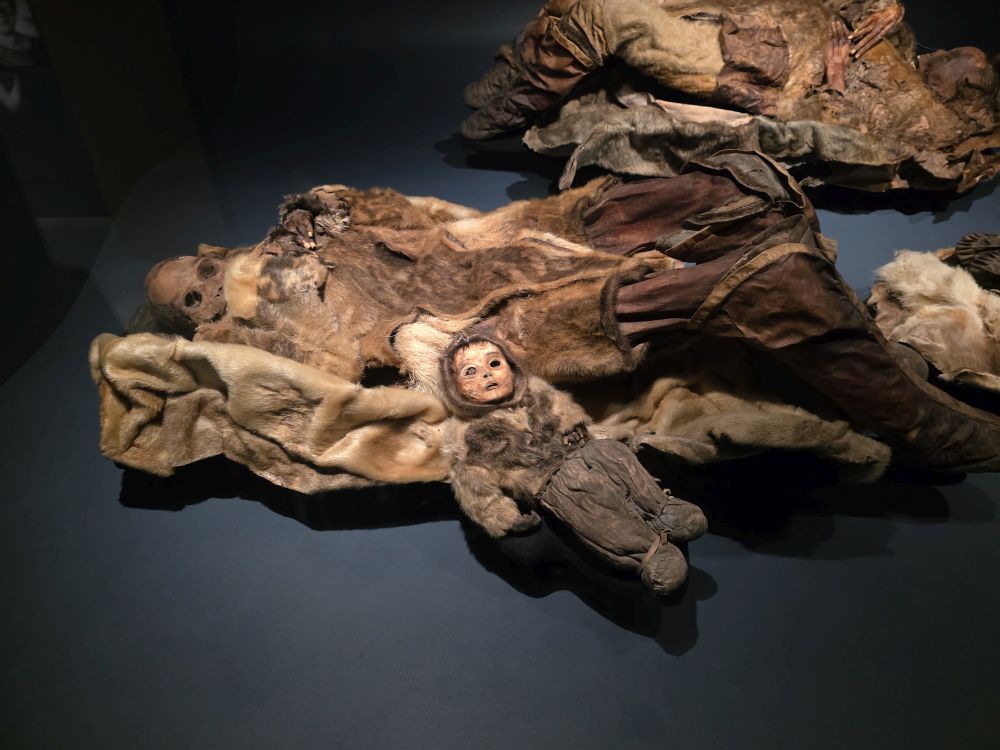
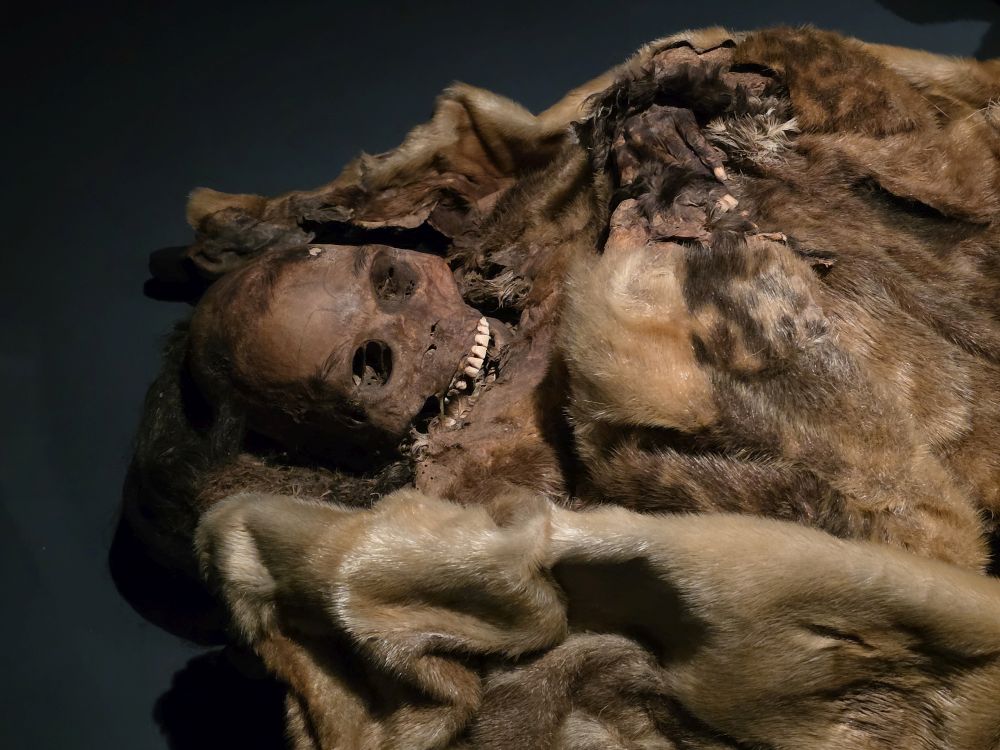
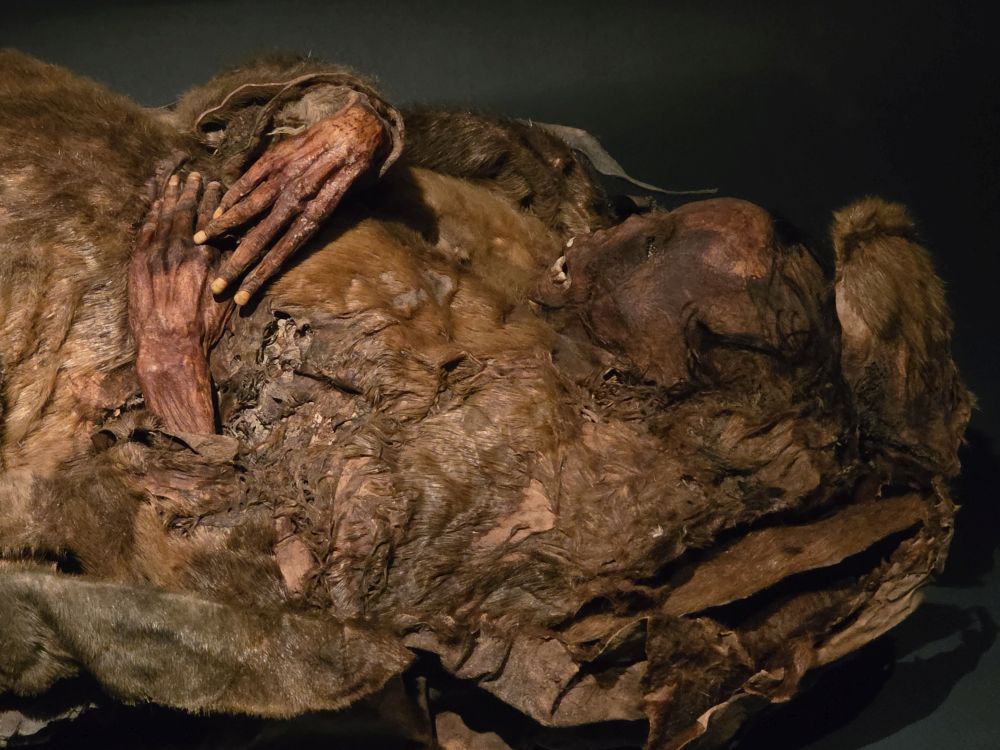
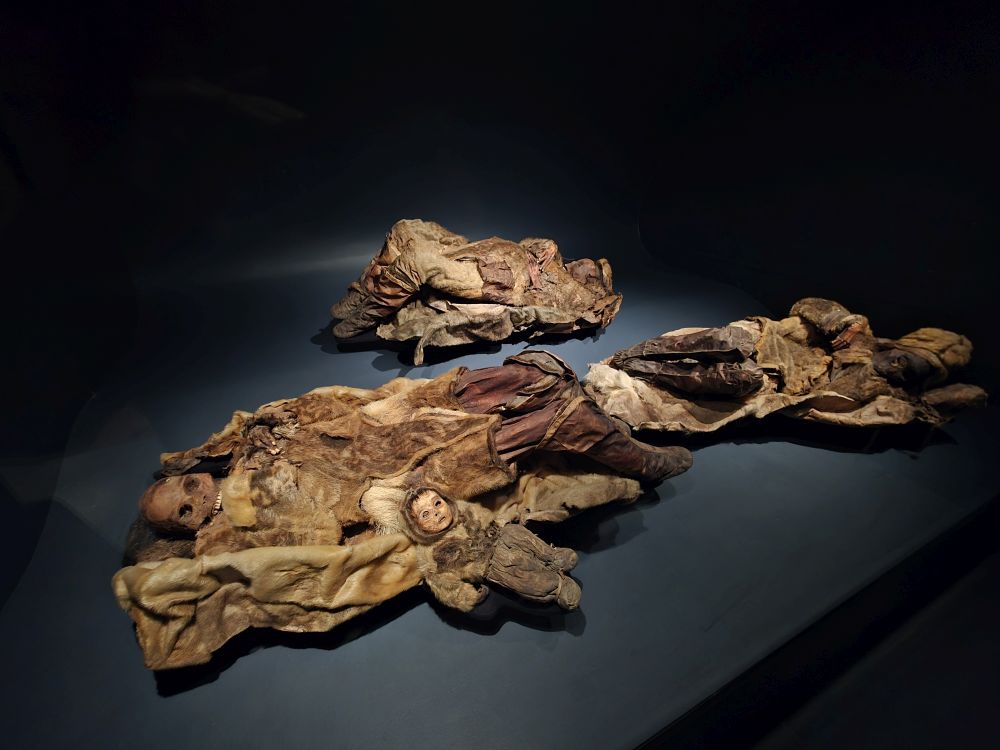
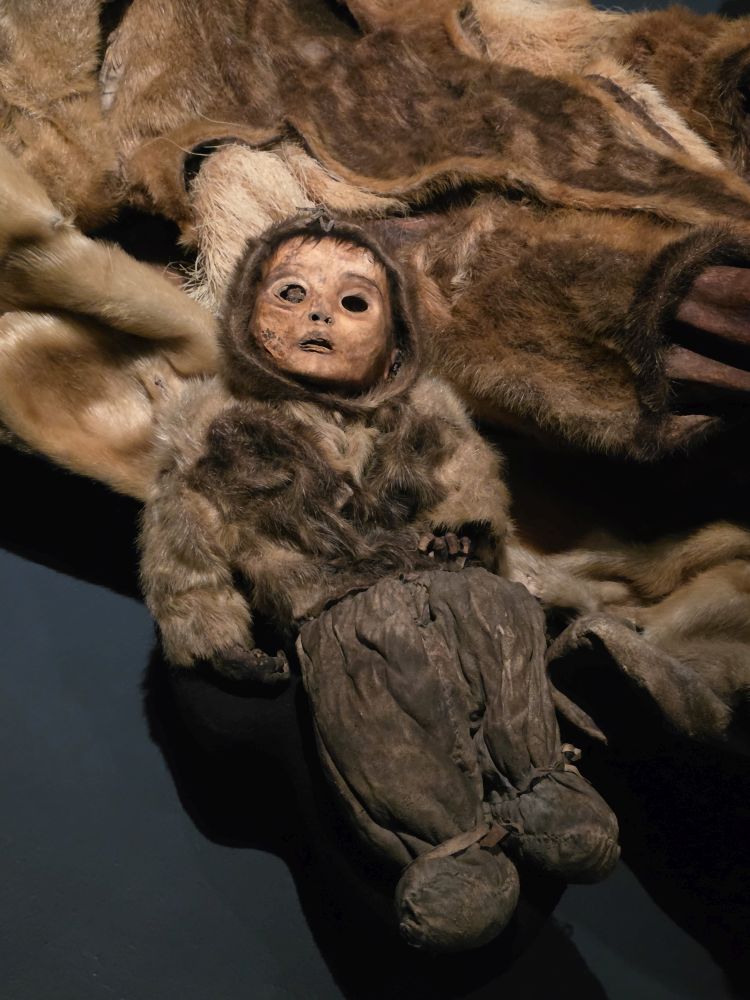
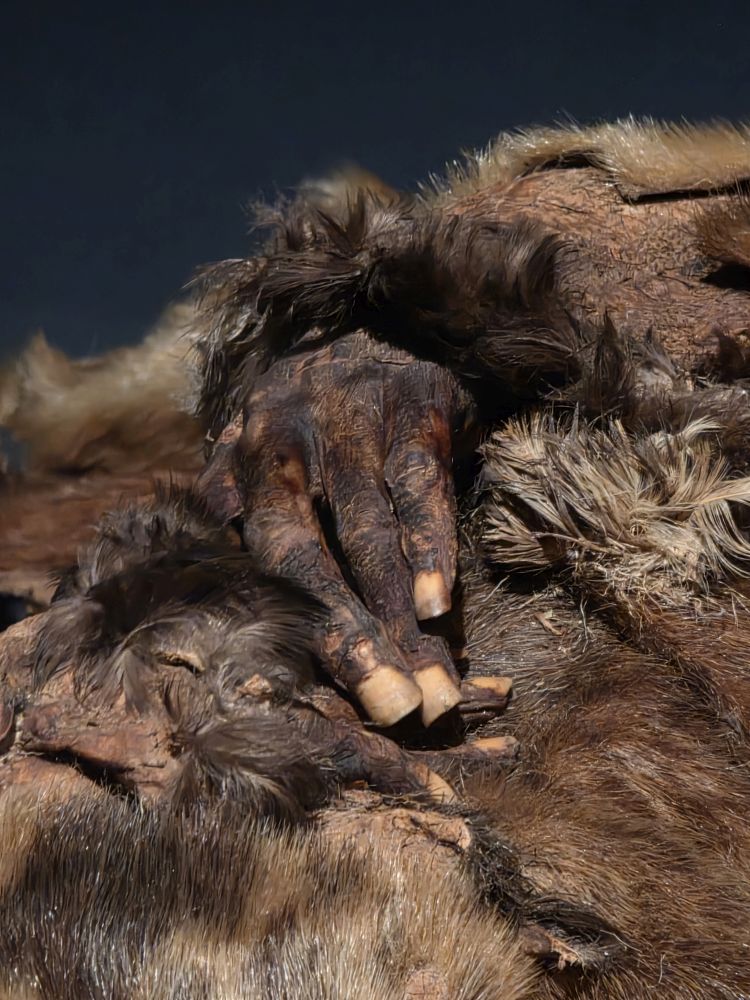
But probably the best, most fascinating exhibit is the Qilakitsoq mummies. These 4 mummies were found along with 4 other bodies, encompassing 3 generations of close familial ties. They were buried around 1475, wrapped in fur and fully dressed. Discovered in 1972 and then exhumed in 1978, these mummies are amazingly preserved. The details you can see! The hair on the baby, the fingernails on the women, the facial details. The oldest preserved remains in Greenland, they were essentially freeze-dried and now preserved here in the museum. Because of the incredible preservation, archeologists and scientists have been able to learn an immense amount about the Thule people’s life in the 1400s – how they lived, ate, hunted – amazing. While there isn’t much information on how they died, there is speculation that maybe the baby didn’t die naturally, but was buried alive with its dead mother. In the Innuit tradition, a tribe might suffocate or inter a child alive with its mother if they could not find another woman to care for it. Wow.
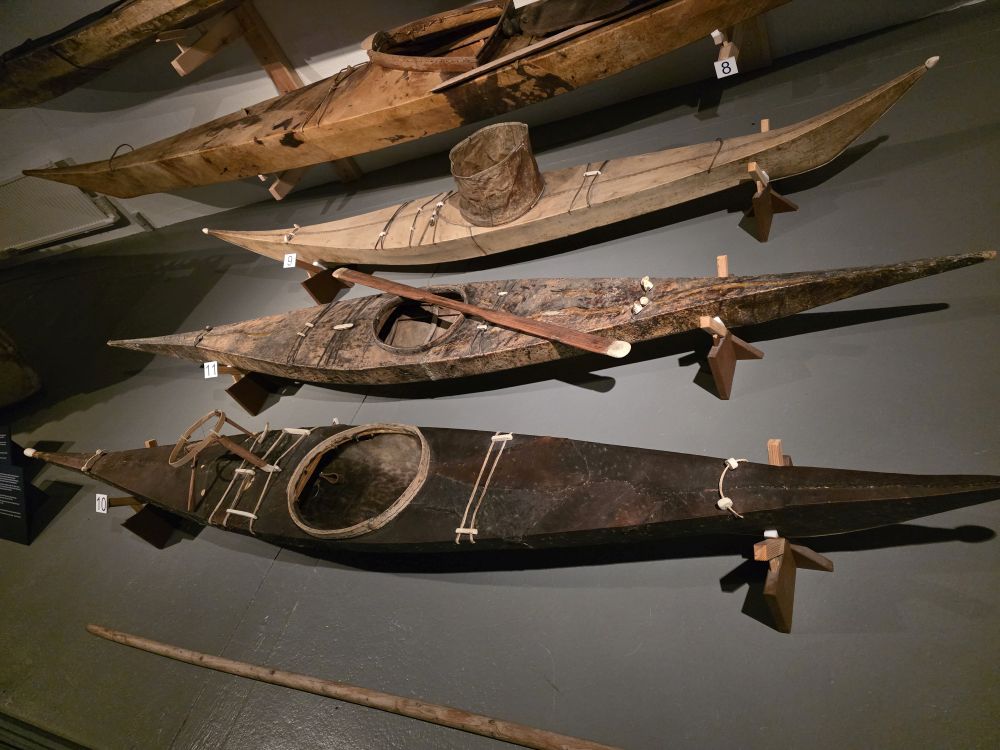
More kayaks and boats, more carvings in typical Innuit style, explanations of the old cultures and some interesting descriptions of how WWII brought changes to Greenland in the form of paraffin lamps that were prohibited before 1940 (why? They never explained that!), contacts with the USA and Canada that allowed a greater variety of goods in shops, ordering from Sears and Roebuck, all sorts of new economic opportunity. As a result, Greenland was one of the few countries that didn’t suffer from great shortages during the war. A truly fascinating stroll through Greenland history.
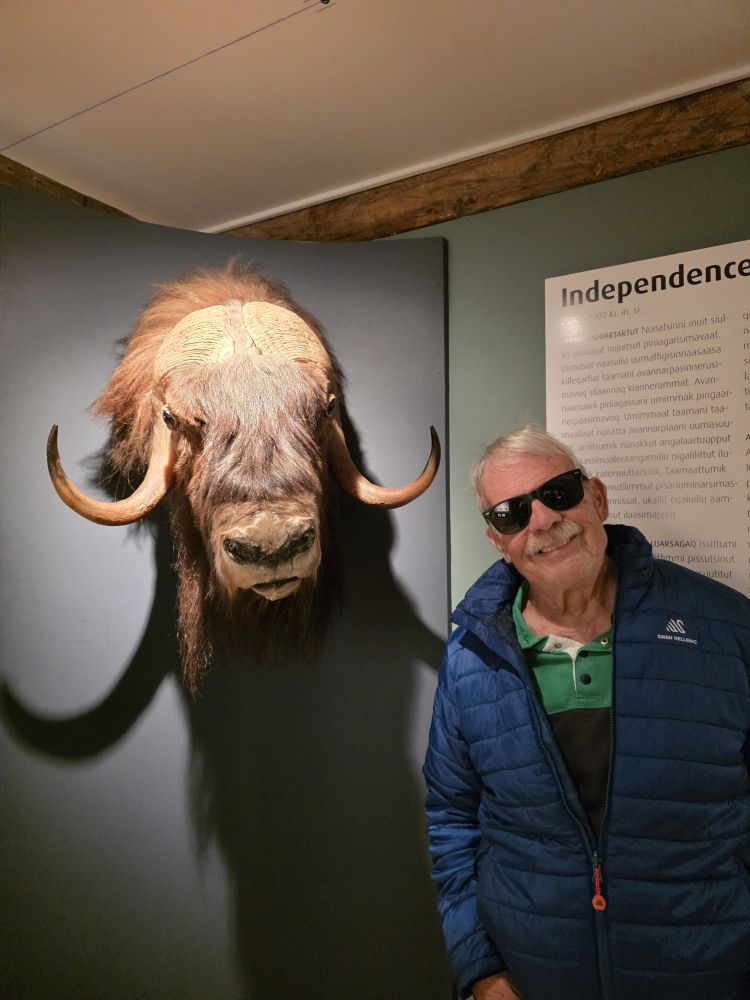
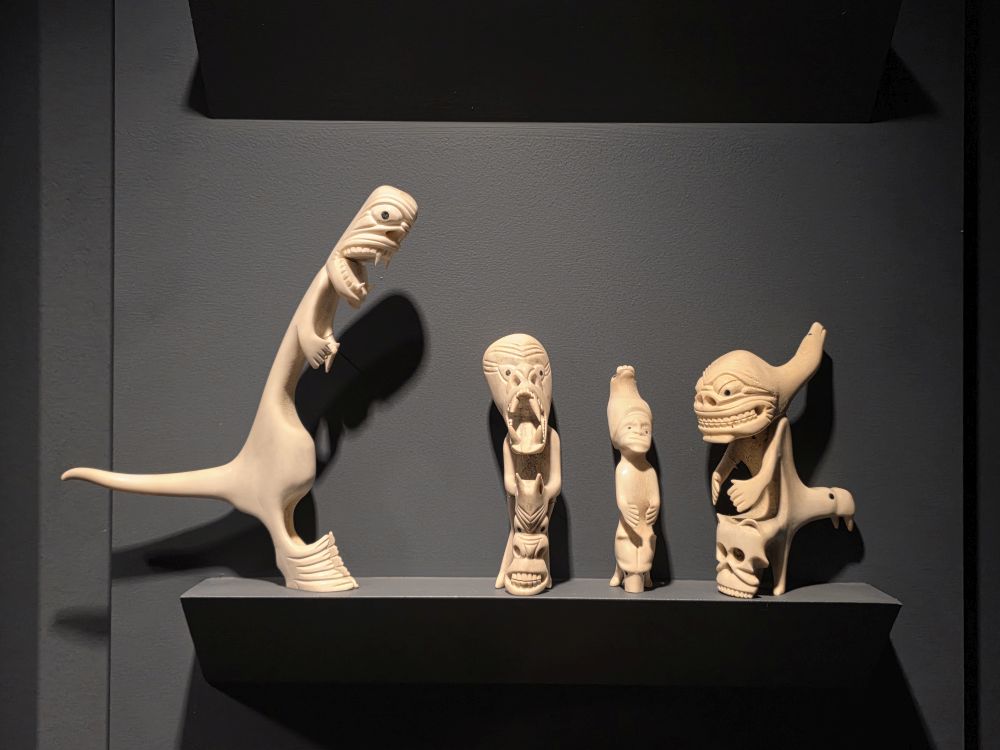
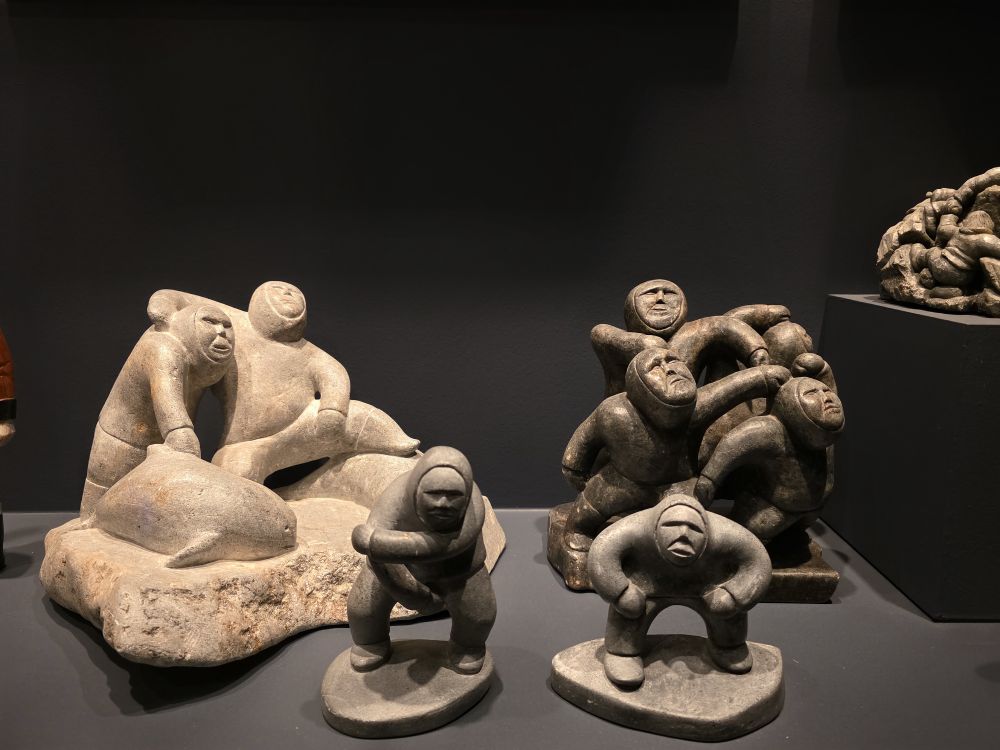
We didn’t spend as much time here as we had planned, giving us about 20 minutes to wait for the Local Museum to open. This is a perfect time for a snack. It is a little early, but what the heck? We aren’t eating anywhere shoreside, no way are spending $50 or $60 each for one dish. While we love to experiment and try new things, that’s just way too pricey for our tastes. So, we sit on a perfectly placed bench looking out over the water and eat our raisins and protein bars brought from home for just such a situation. From our location, we can also see the Nuuk boardwalk, famed for its “scenic walk.” Good thing too, because this was on our agenda, but tbh it is just a boardwalk along the coast. Nothing to write home about after all we’ve seen already, so a good deal we’ve scoped it out now and changed plans.
 Andiamo