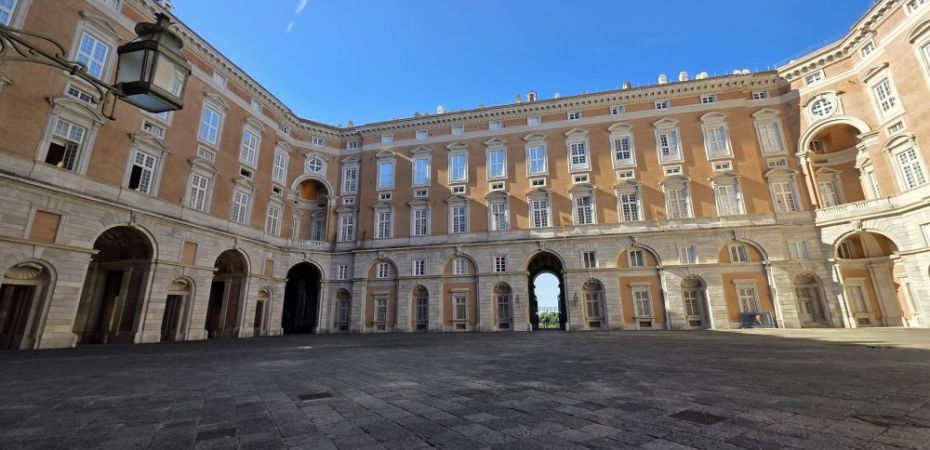
Alarm is set early this morning, as we have an 8:30 entry time at the Reggia Caserta, the Royal Palace of Caserta. This is the main attraction here, and we have purchased our tickets in advance to ensure we will see the Palace and gardens in all its glory. We head out of the apartment at 7:45 for our almost 30 minute walk to the Palace, knowing we’ll be early, but rather wait in line there then miss our opportunity. Plus it is a gorgeous day, so why not take advantage of the sun and temperature to walk and hang out.
It’s an easy walk, all flat, right through the city, across the railway tracks (which take forever to cross when a train is coming) and into Piazza Carlo di Borbone where we get our first in person look at the massive structure that is the Palace. Wow. It is immense. We are, of course, early. By almost 30 minutes, but that’s ok. We can just hang out in the sun and people watch on the Piazza – oh, and watch Vesuvius out in the distance, fortunately dormant today, LOL.
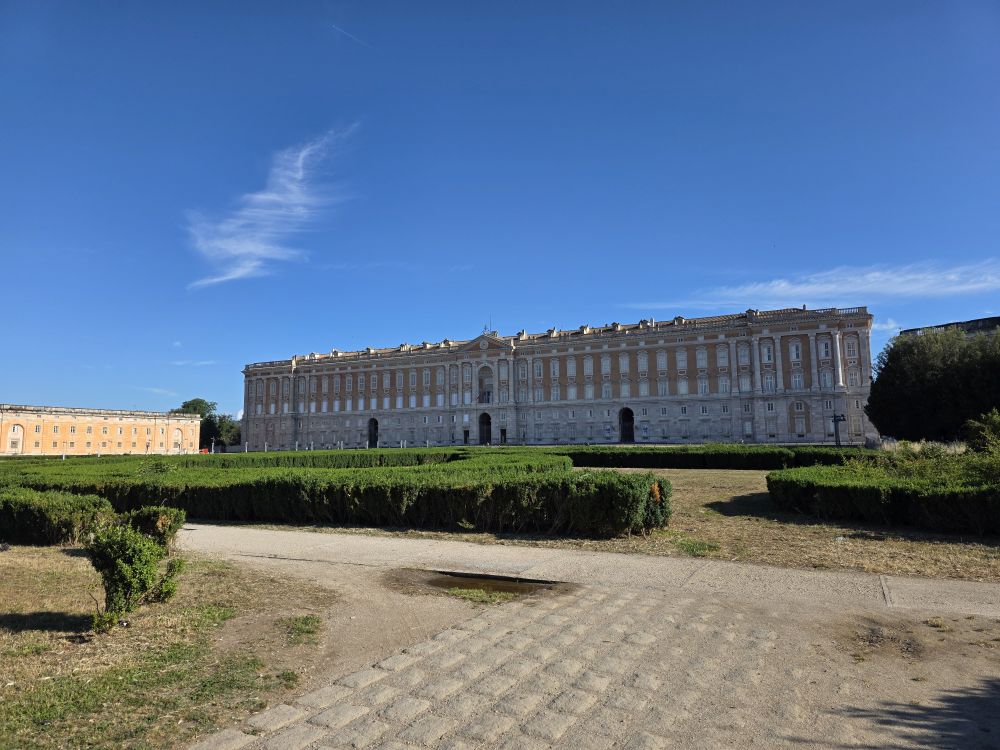
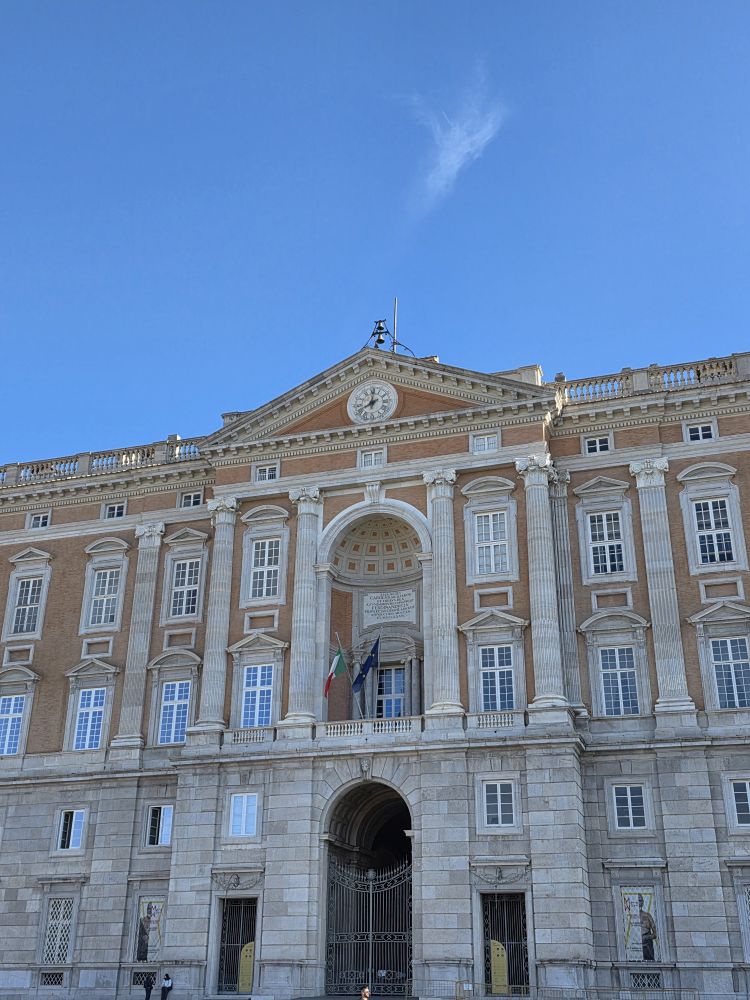

Little by little, the Palace employees show up in a stream of never ending cheers and hugs, and apparently the Napoli Futbol club theme song. Everybody’s happy today – if not a little bleary eyed from their celebrations last night. At exactly 8:30am we are allowed into the Palace, where we wander through 2 of the 4 massive courtyards, simply awed at the vastness of this building complex. We walk all the way through to the gardens, before realizing we should go into the Royal Apartments right away so as to miss the crowds. Duh. So off we go, backtracking our way to the Apartments entrance, scanning out tickets and entering into the amazing, over the top, opulent palace.
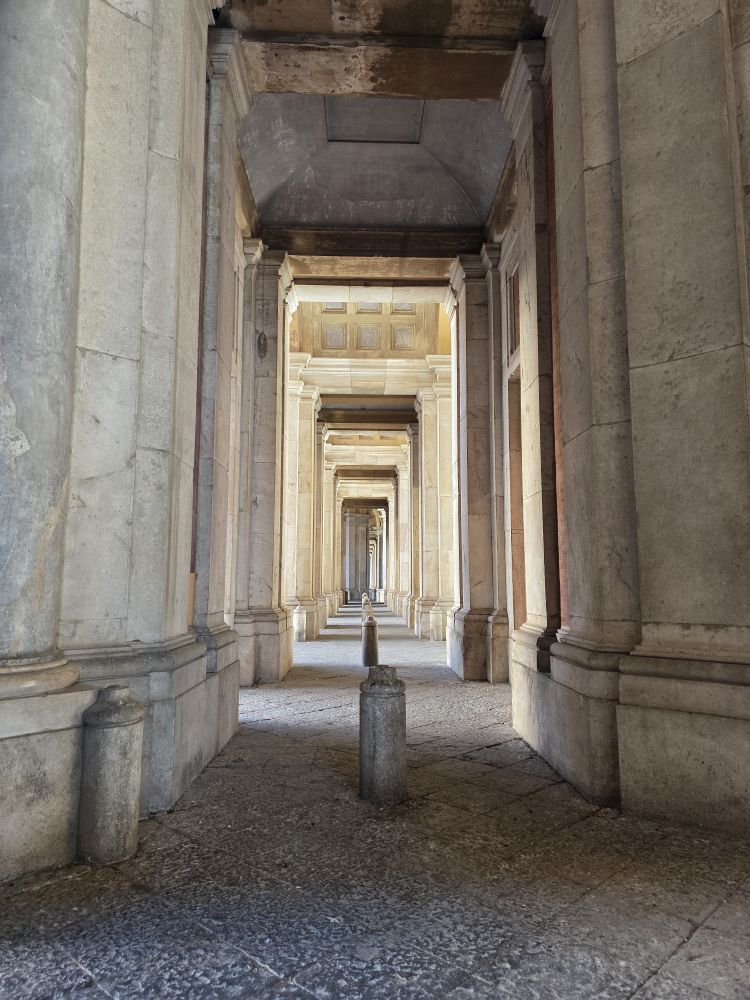
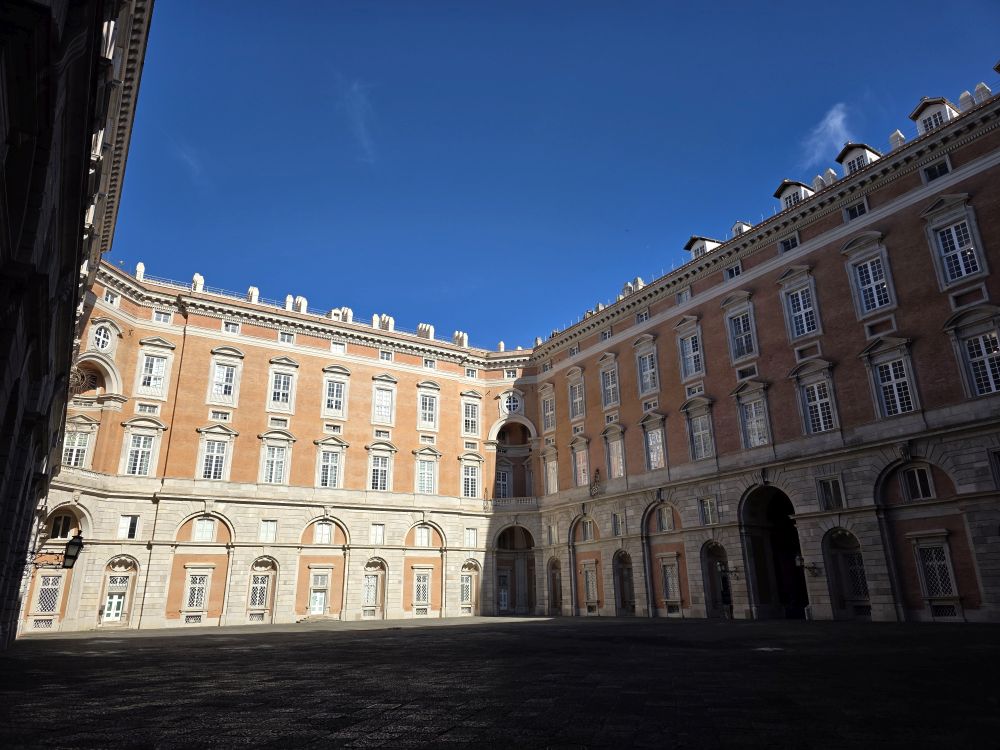
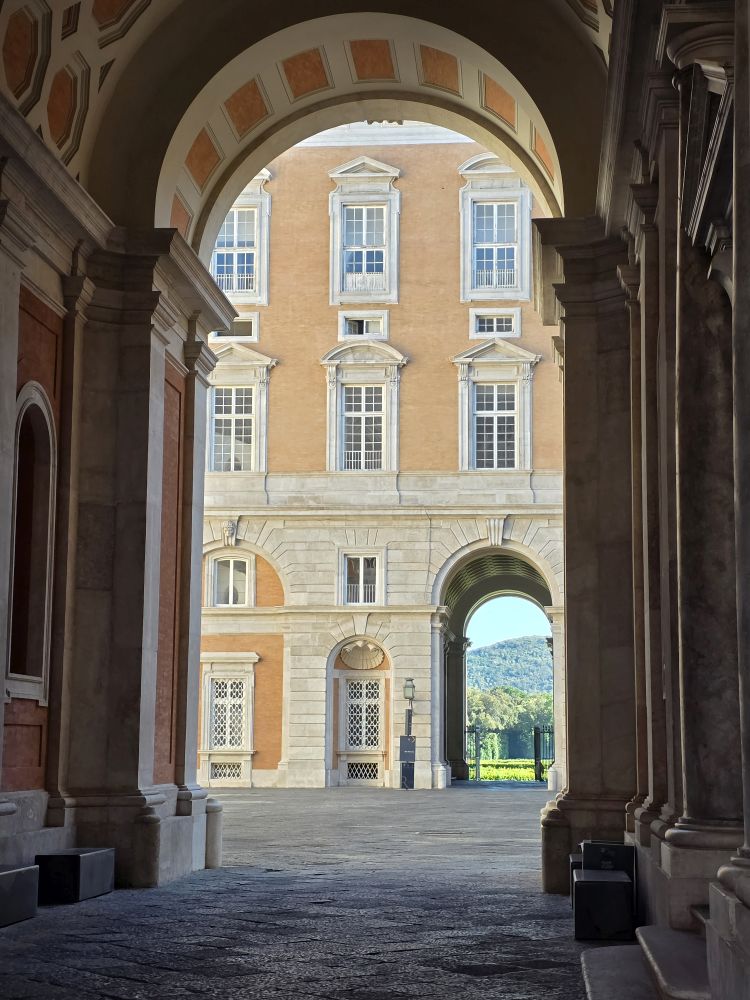
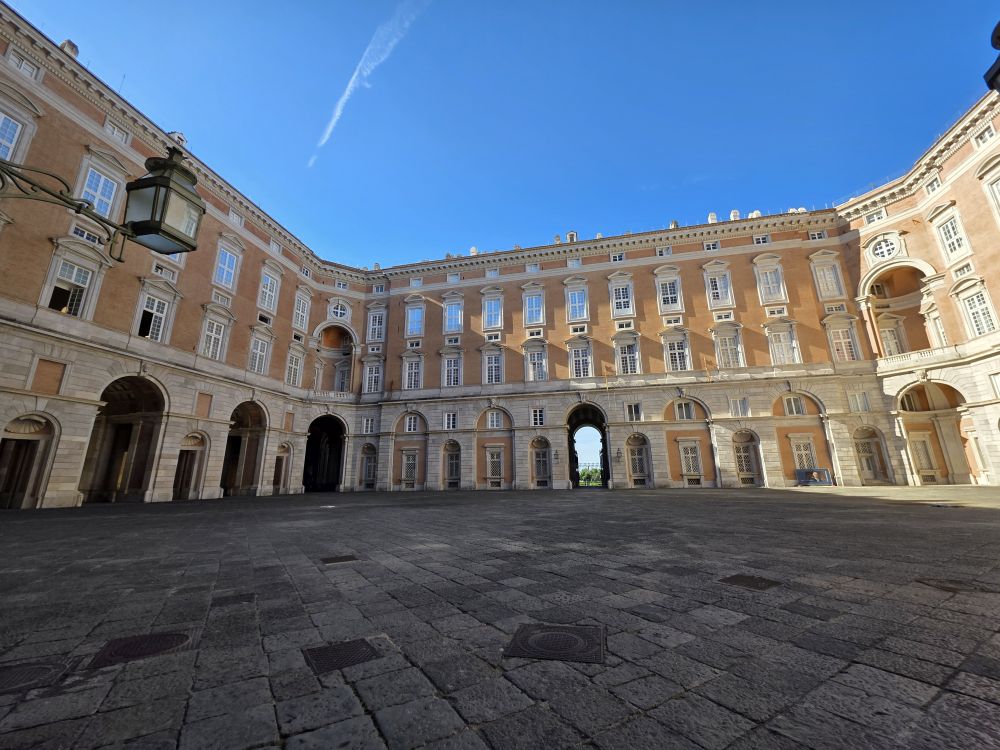
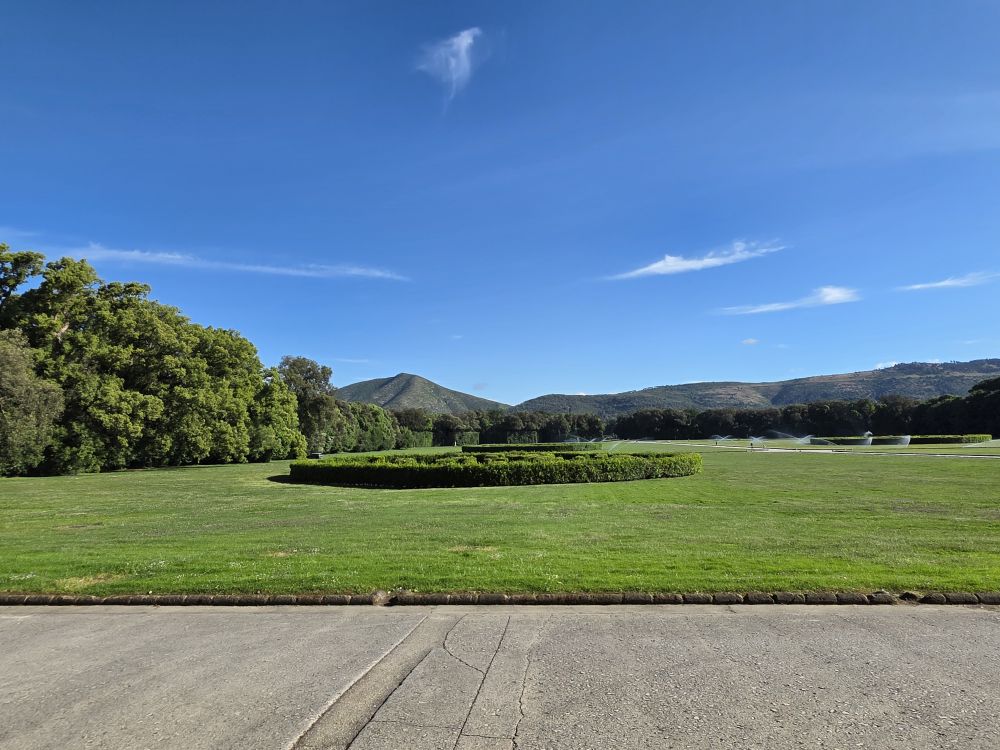
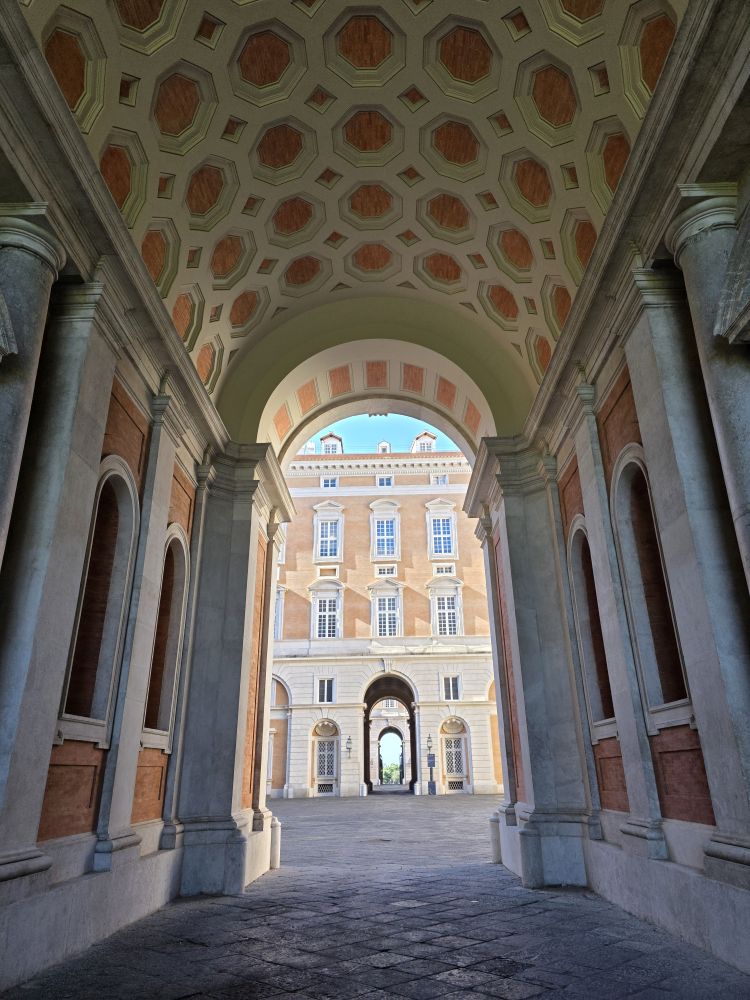
Built For King Charles of Bourbon who purchased the fiefdom of Caserta in 1750 with a dream to build a new capital in the hinterland near Napoli, developing the city and surrounding areas and creating a palace that would compete with Versailles. The King laid the first stone for the project in 1752, on his birthday, January 20, and his architect, Luigi Vanvitelli, who was well known for his many restoration and renovation projects, began what would be a 20 year odyssey to complete the Palace. Once finished, the 5 story Palace measured at almost 485,000 square feet with 1400 rooms and1472 windows! And everywhere, opulence and crazy beauty – furnishings, paintings, gold chapels. You name it – incredible.
Entering through the Royal Staircase, we mount the 116 steps of Trapani marble, to the end of the central ramp where statues of the Royal Majesty King Charles riding a lion, Merit and Truth preside over us. Merit and Truth represent the qualities that every guest of the Royal House muse possess in order to be in the presence of the King. There is marble from the Kingdom’s quarries everywhere. The panels lining the staircase. The carvings that flank the statues and the stairs. The arched pillars. And an amazing double Elliptical vaulted ceiling with a fresco of the four seasons crowning it all. Magnificent.
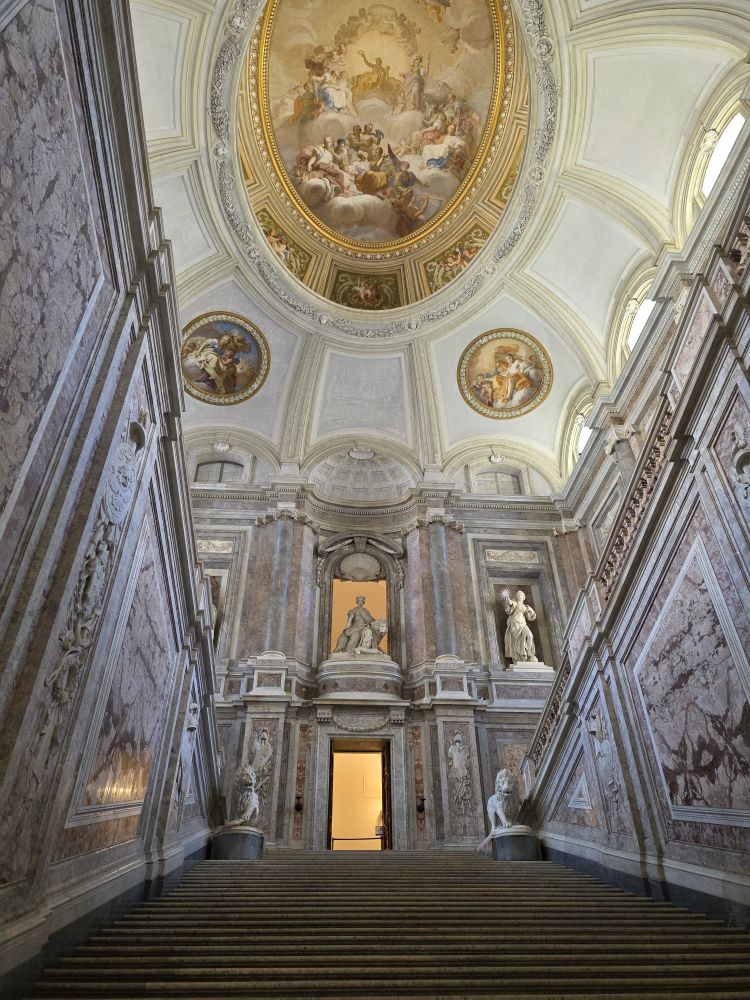
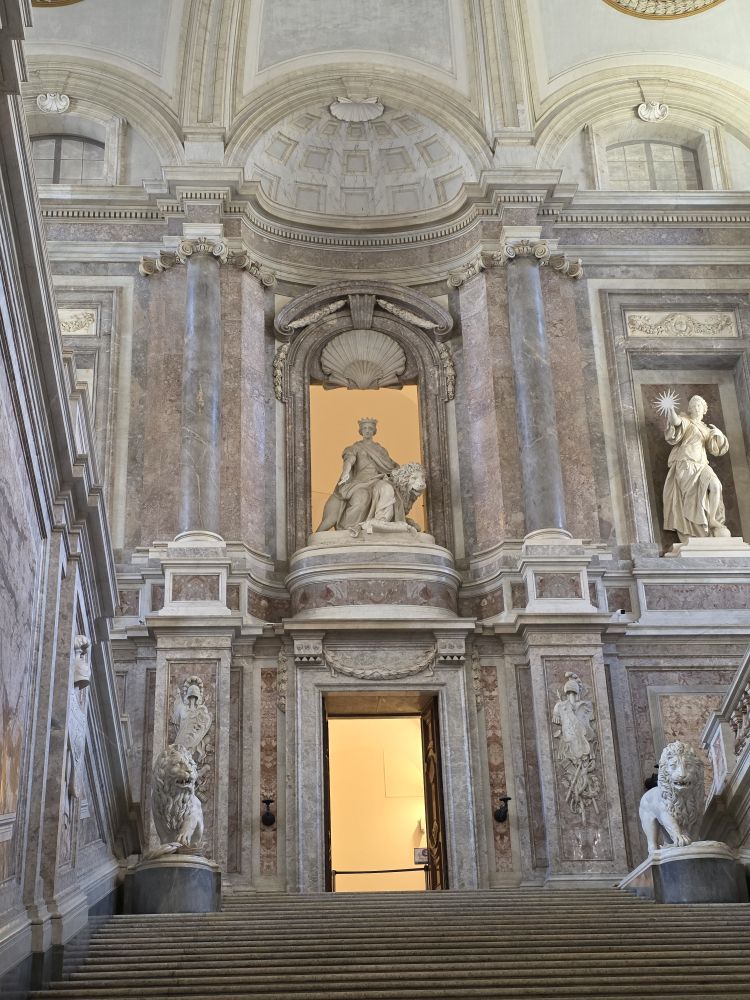
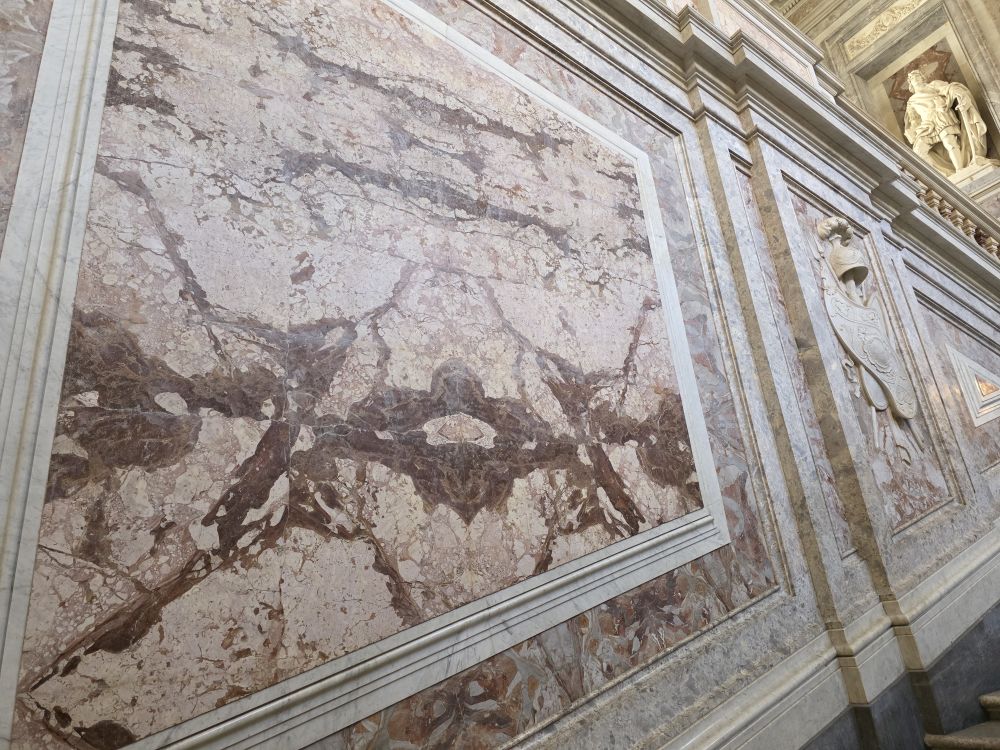
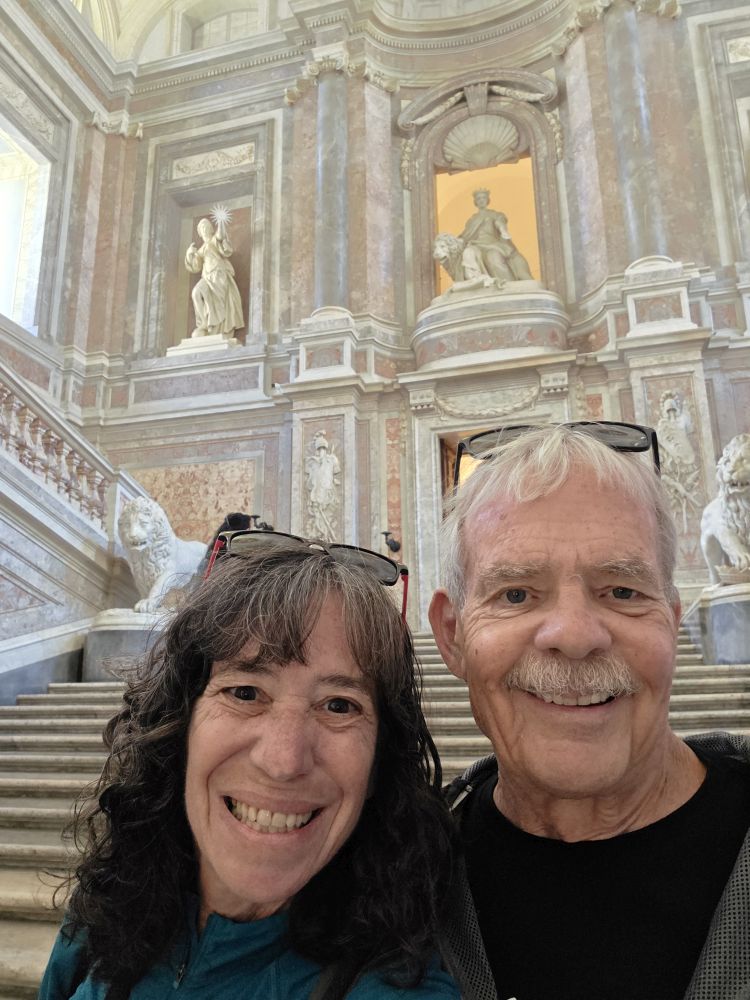
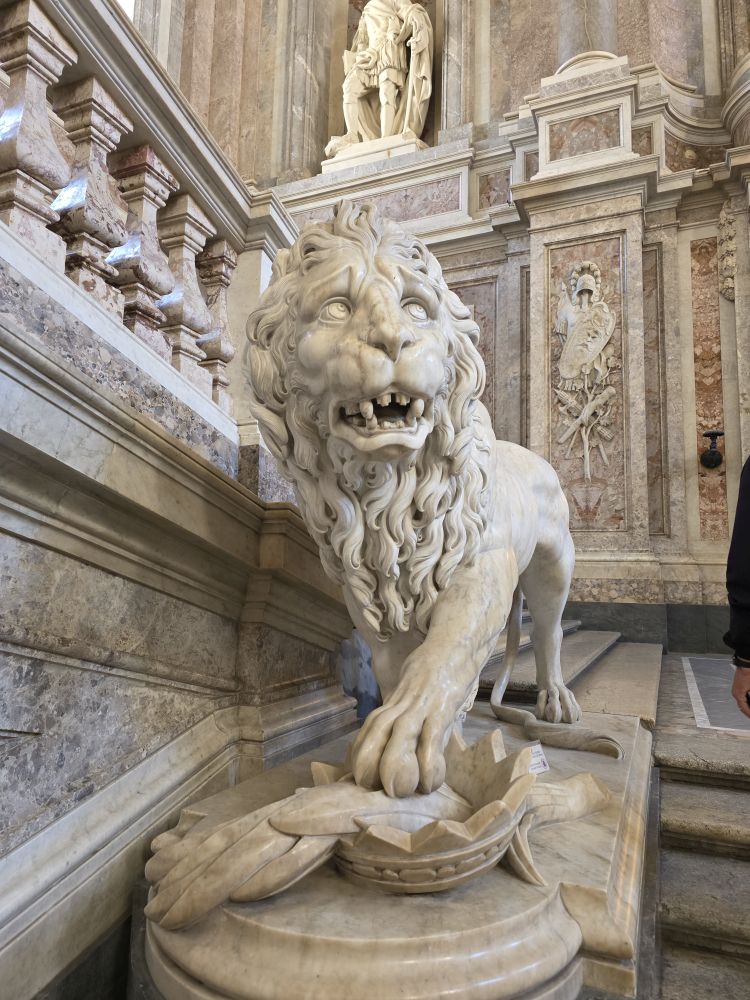
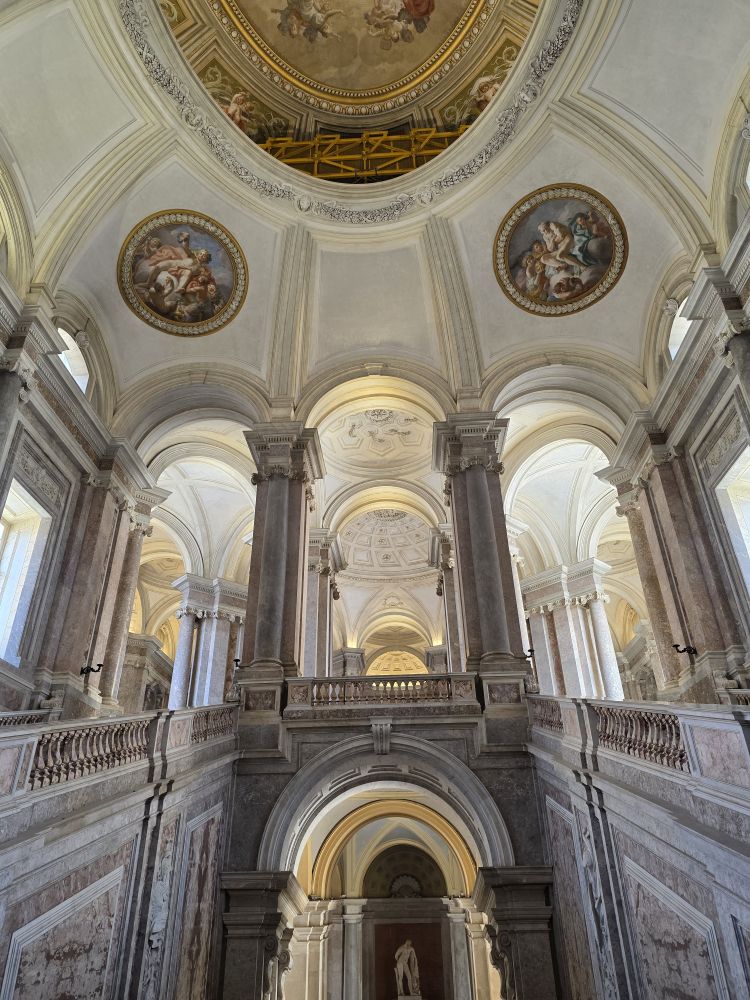
The staircase lets us out onto the Upper Vestibule which is octagonal and the heart of the palace, where the central arms of the palace all meet. From here you can reach any section of the palace. We’re still googly eyed, just turning around in circles trying to take it all in. Before heading into the apartments, we stop at the Palantine Chapel, built after the rest of the palace was completed by Vanvitelli’s son, Carlo. It is similar to the chapel in Versailles with geometric marble decorating the floor, gold covered carvings and stuccos in the Vault at the end of the chapel and a 2nd story balcony for the women to attend activities here. Here we can also see damage on the columns from the WWII bombing in September 1943 that also caused the loss of valuable sacred furnishings and paintings.
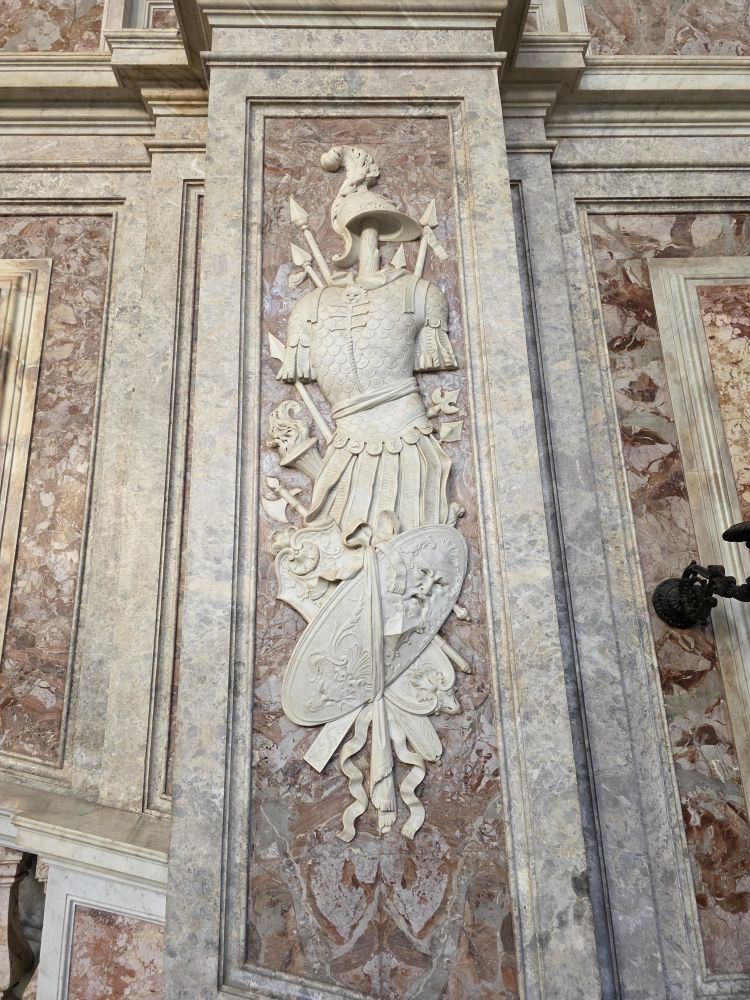
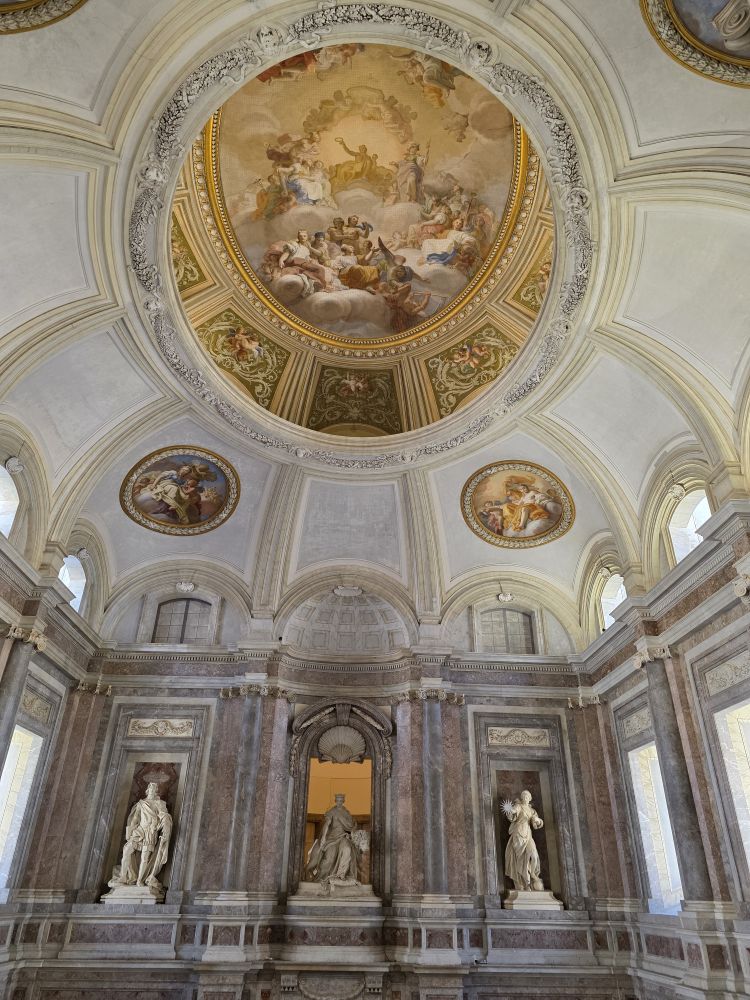
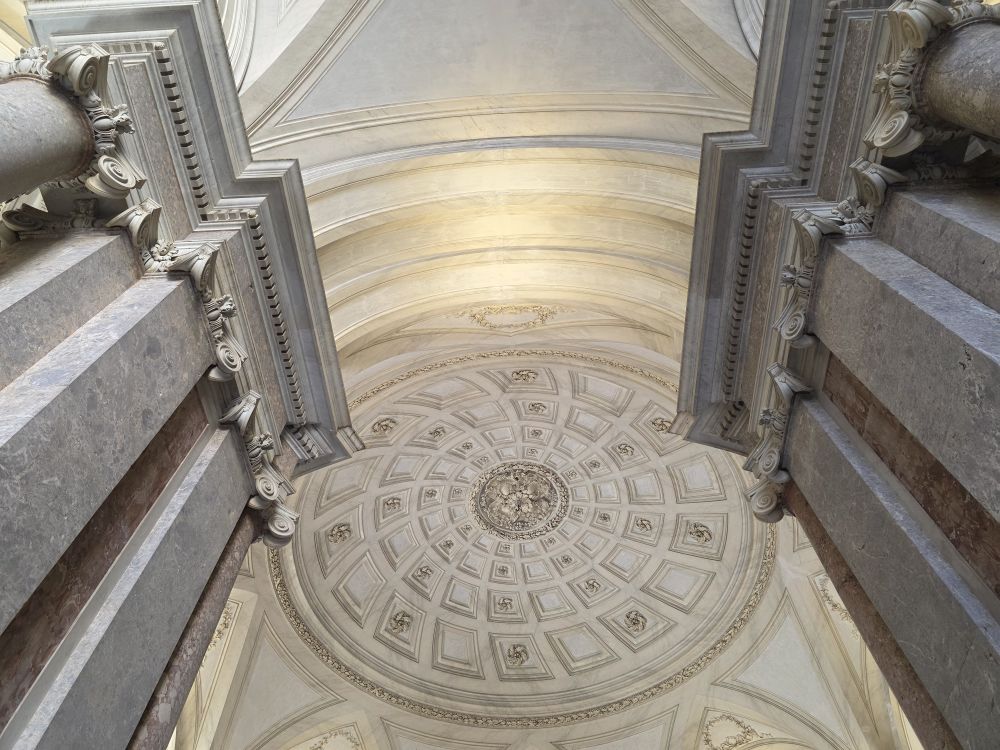
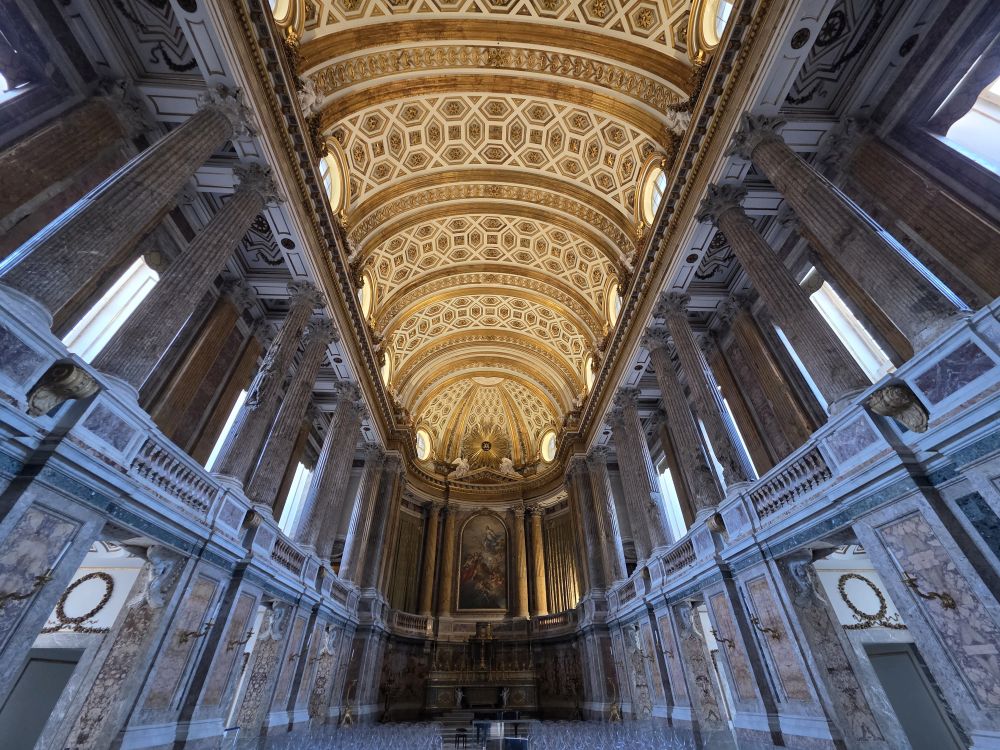
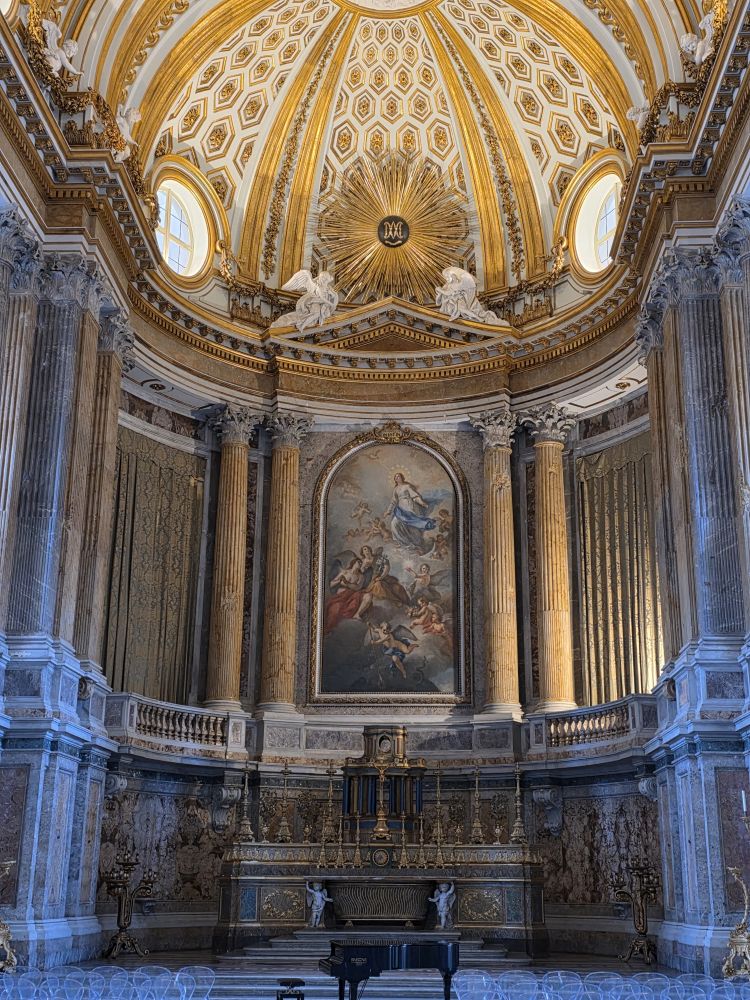
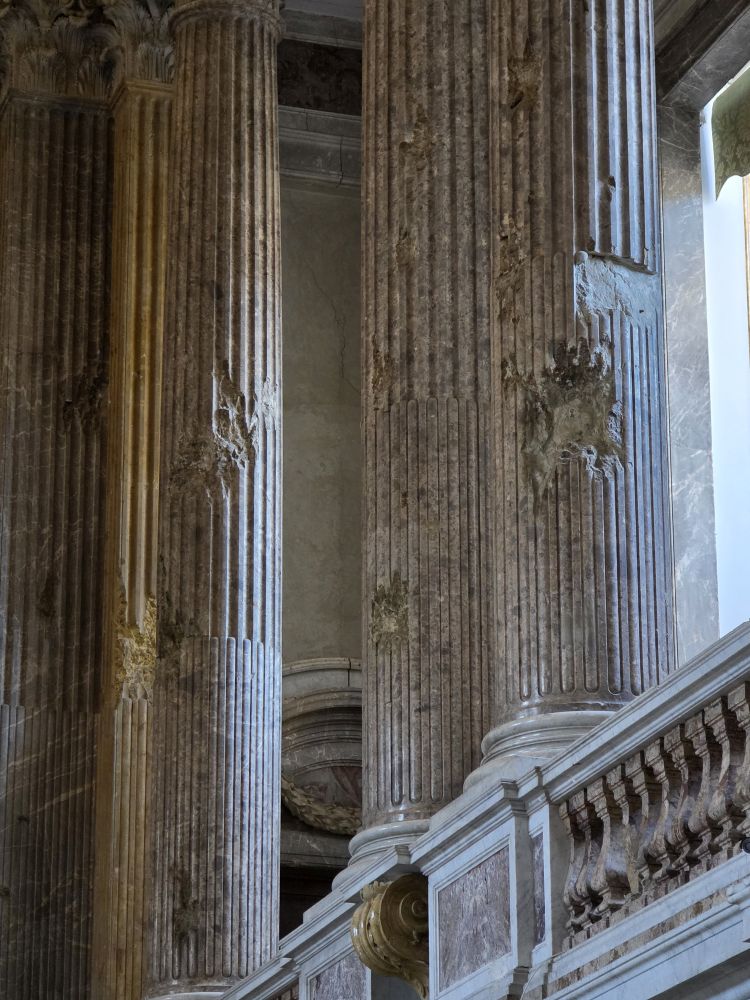
In addition to just the basic grandeur of the whole place, there is also a special exhibition going on here with contemporary artwork. In the chapel, the artwork is related to Michealangelo, elsewhere as we will find, it is related to the major earthquake that affected the area in 1980.
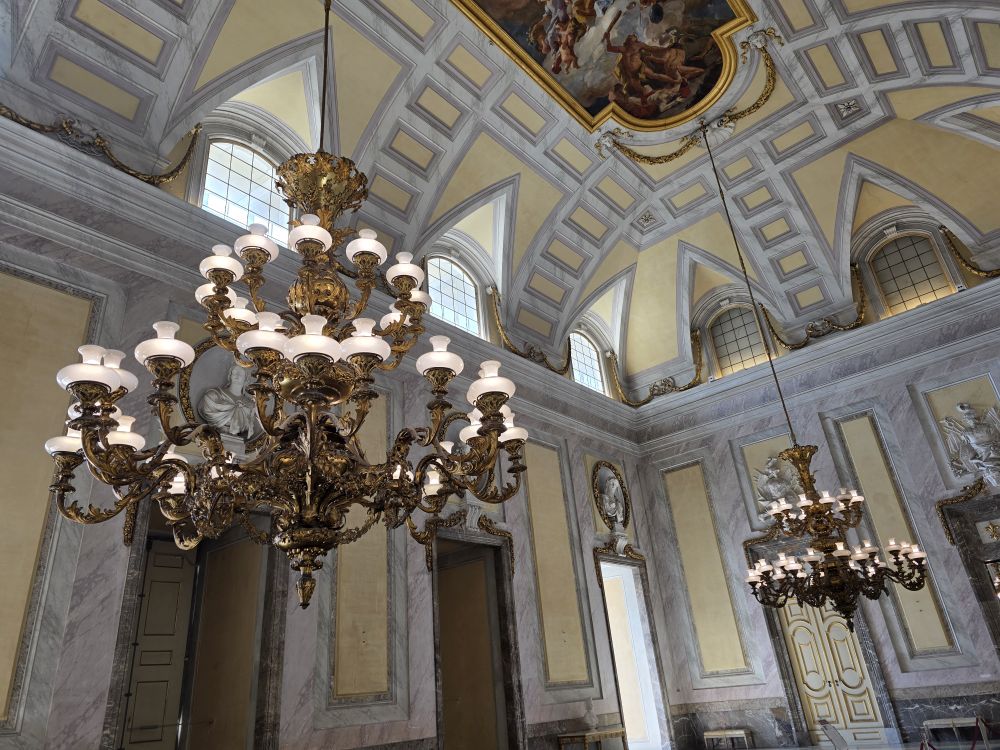
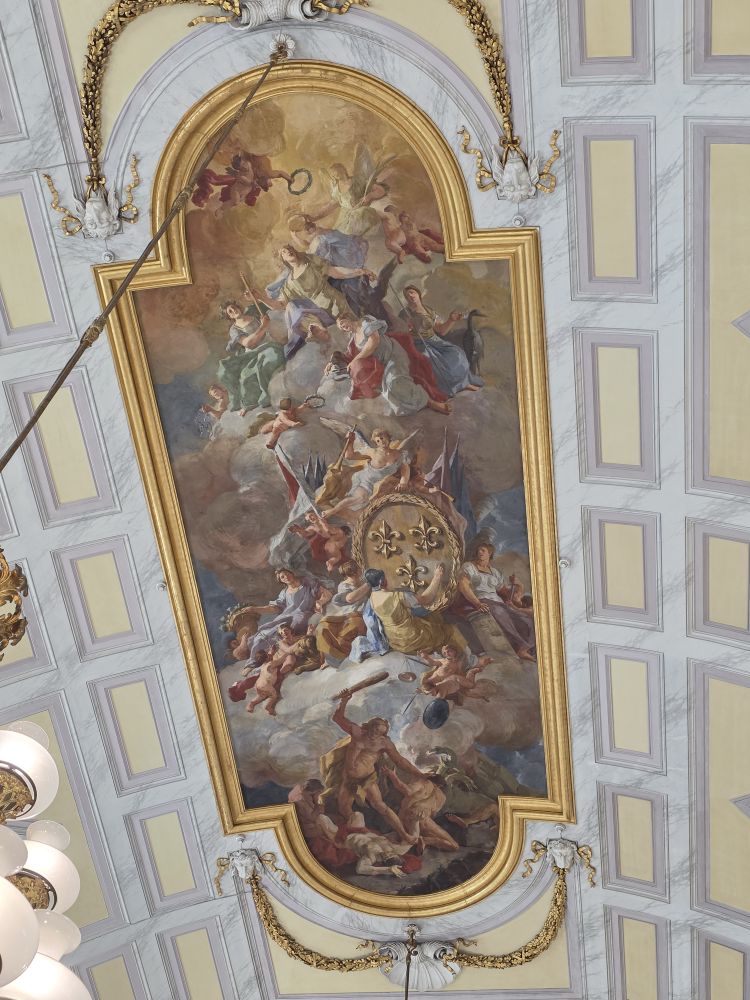
The Royal Apartments were divided into 4 quarters around the 4 courtyards. We will be able to visit 2 of the quarters – the 19th C King’s quarters wing and the 18th C Wing, facing the square, which was the first to be completed and the only wing inhabited by the Borbones. We start in the Hall of the Halberdiers – named for the soldiers who protected the Royal family (at least that’s what we glean from the literature). This hall is representative of what we will see on our upcoming visit. Each Hall (or room) has its own motif or specialty, plus just incredible art and facades and frescoes.
We take a brief detour through an interactive exhibit all about Luigi Vanvitelli – which is very interesting and explains the massive undertaking that was the Palace. As the film indicates, Luigi will not see the Palace and its gardens to completion, dying before they are finished. But his son Carlo takes over when his father passes, and completes the project, faithfully following his father’s designs.
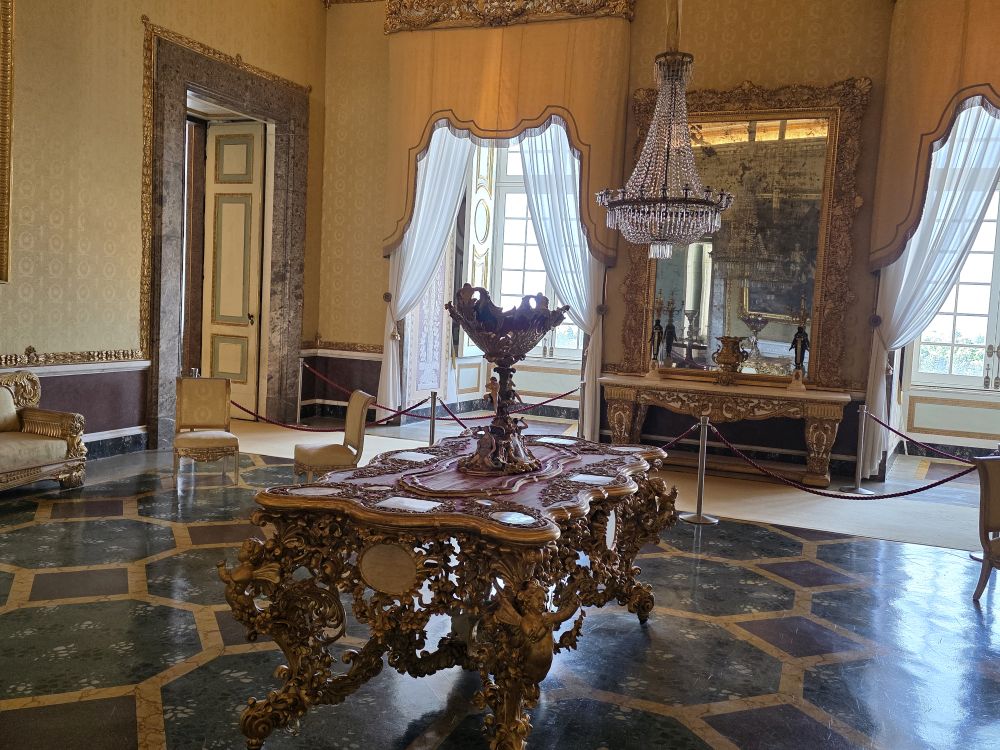
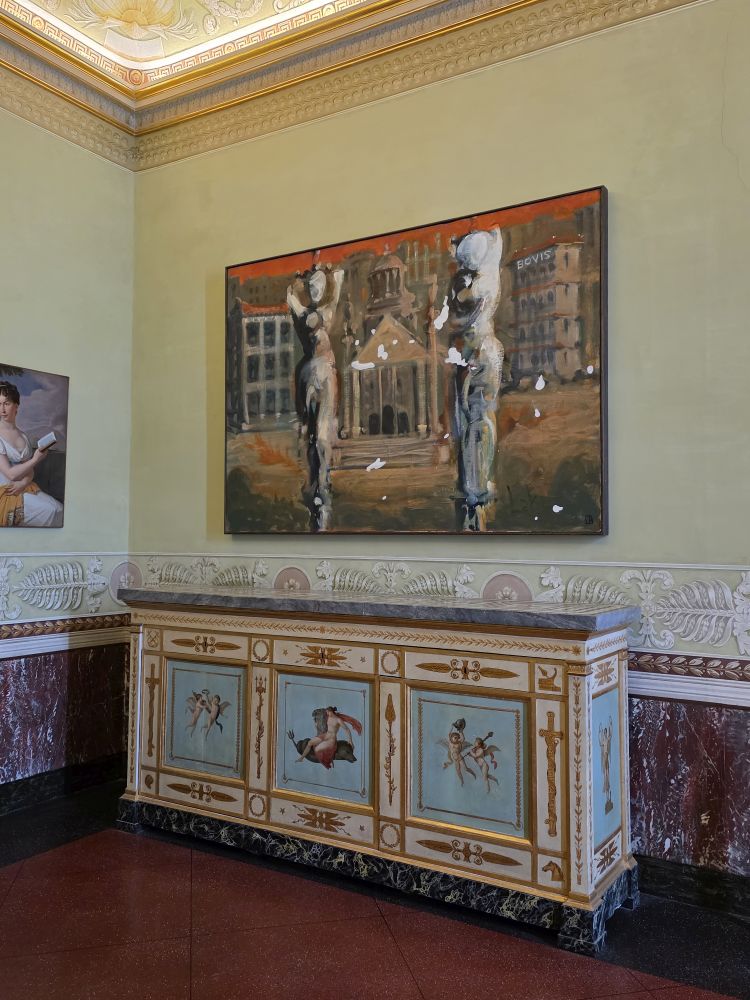
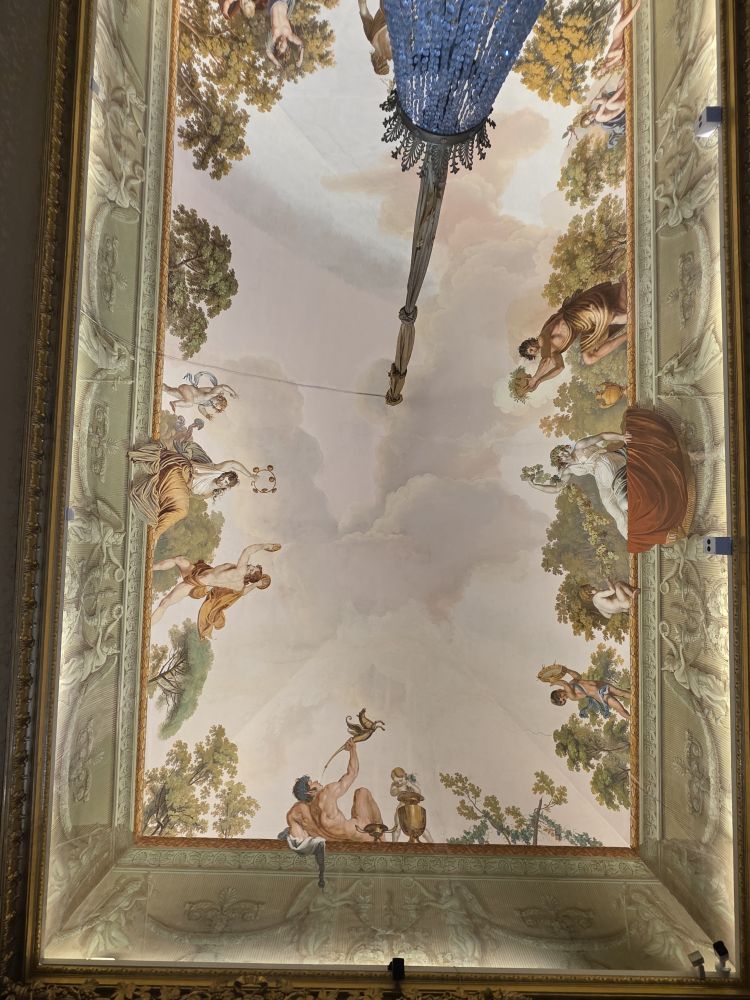
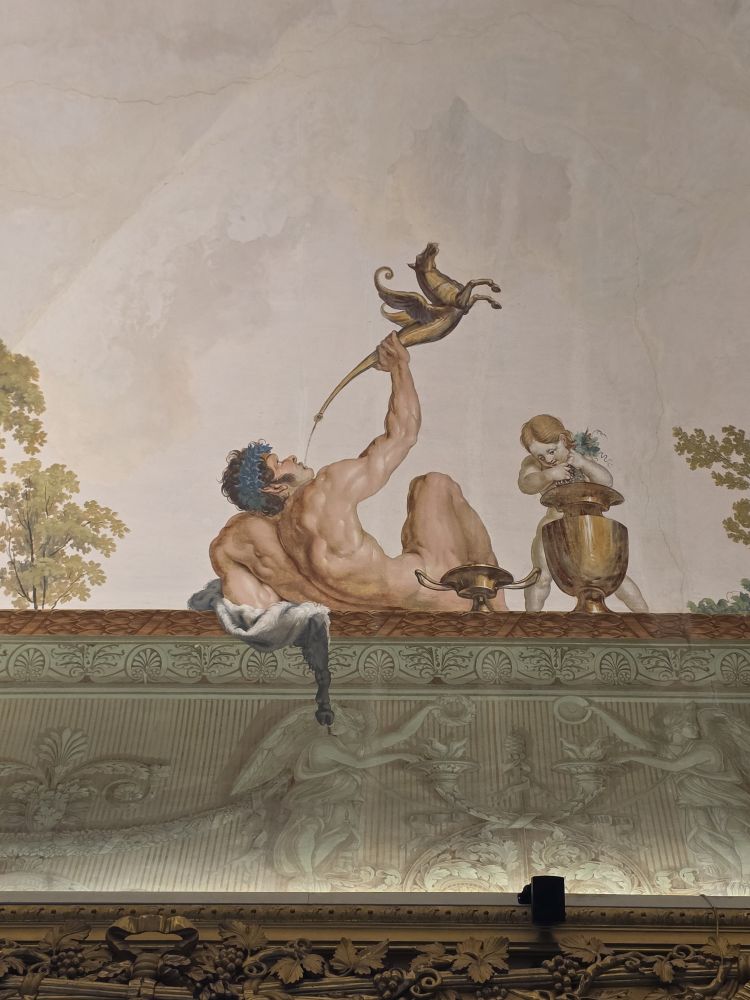
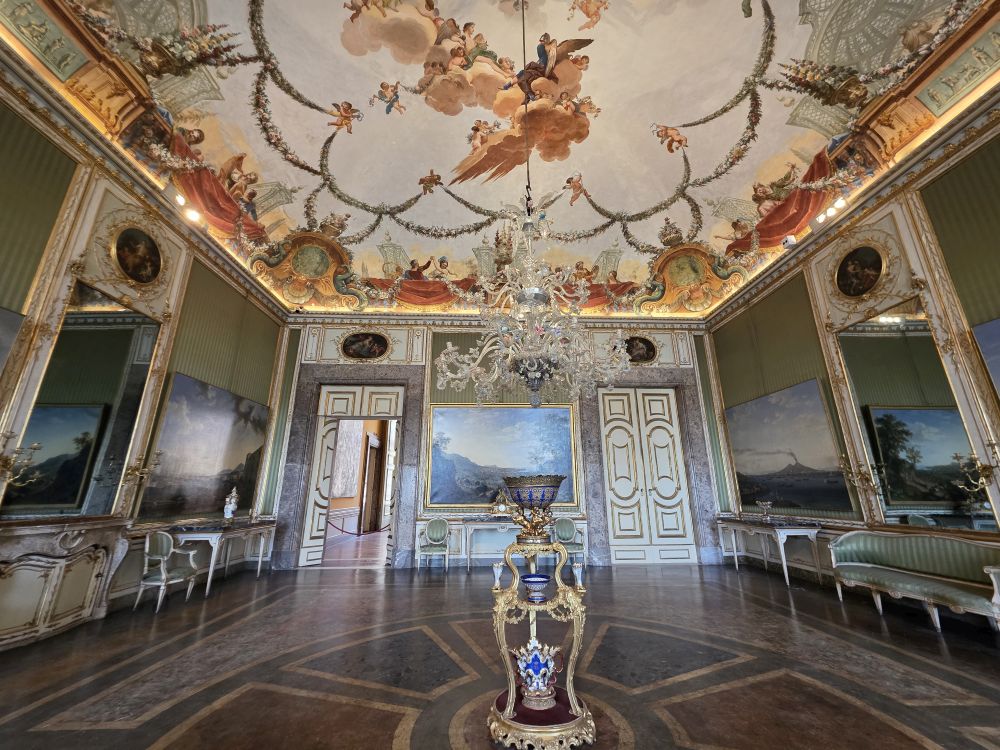
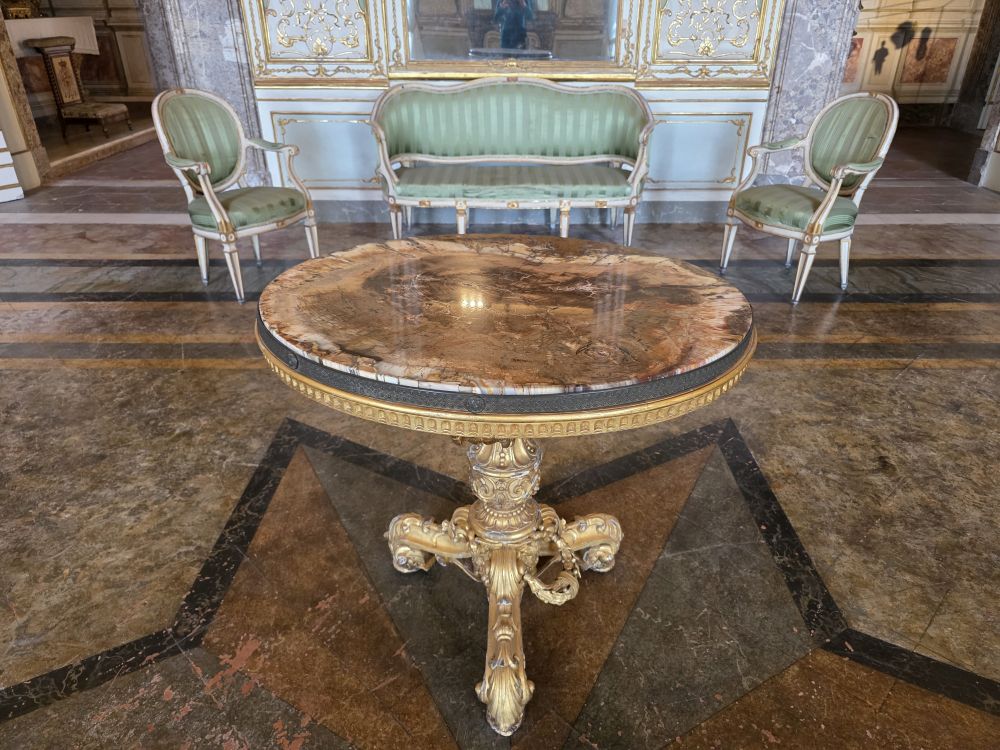
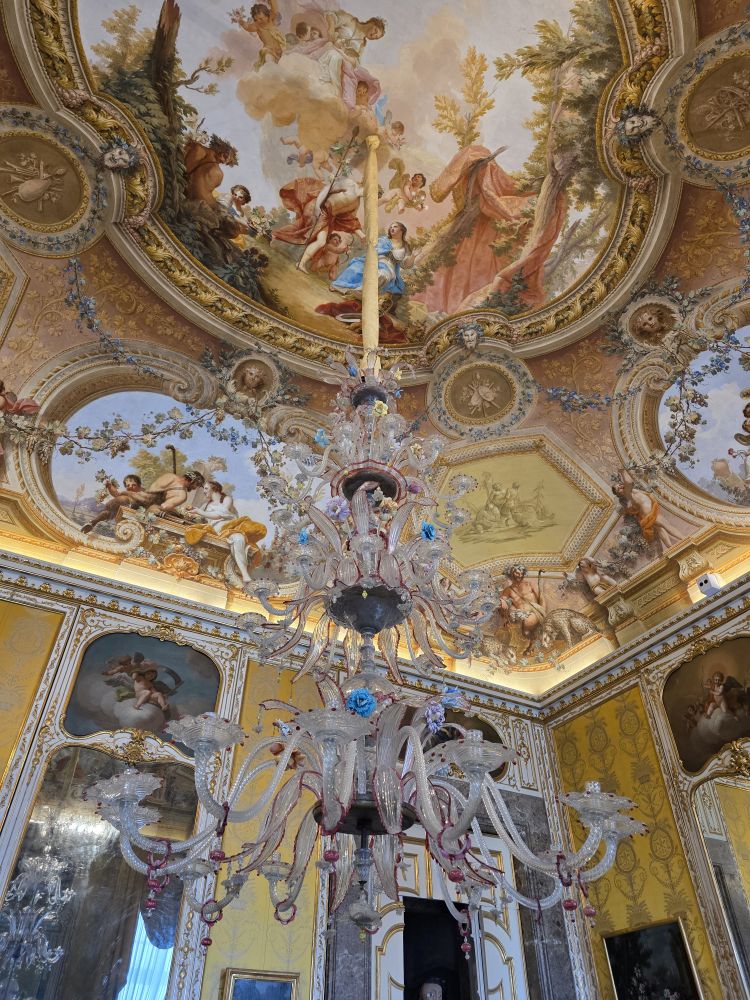
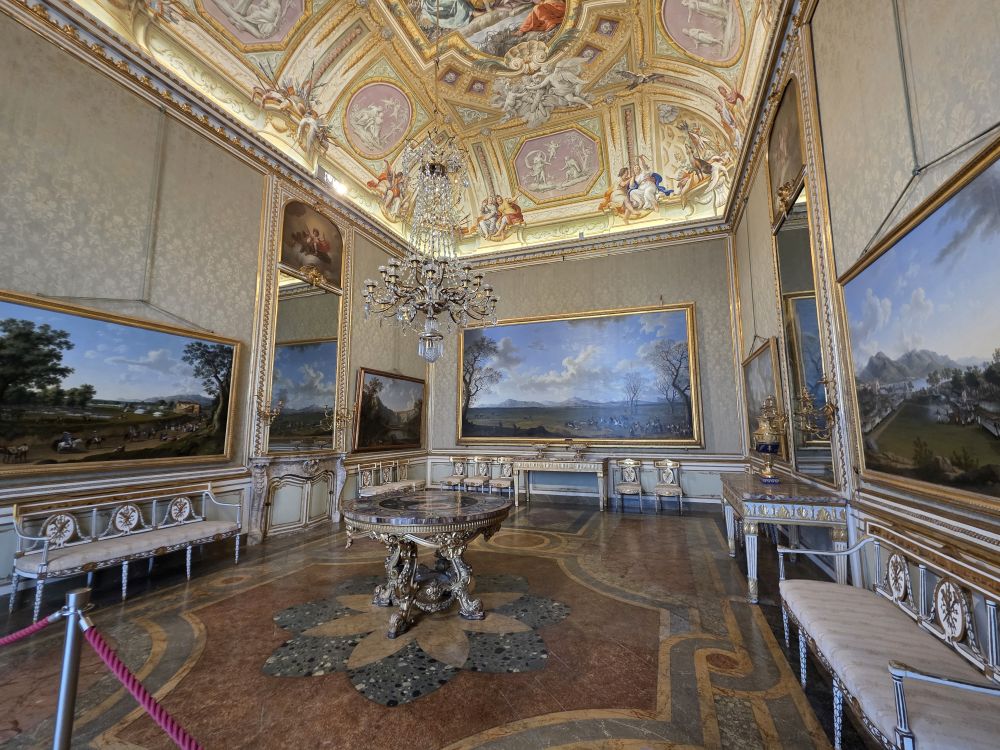
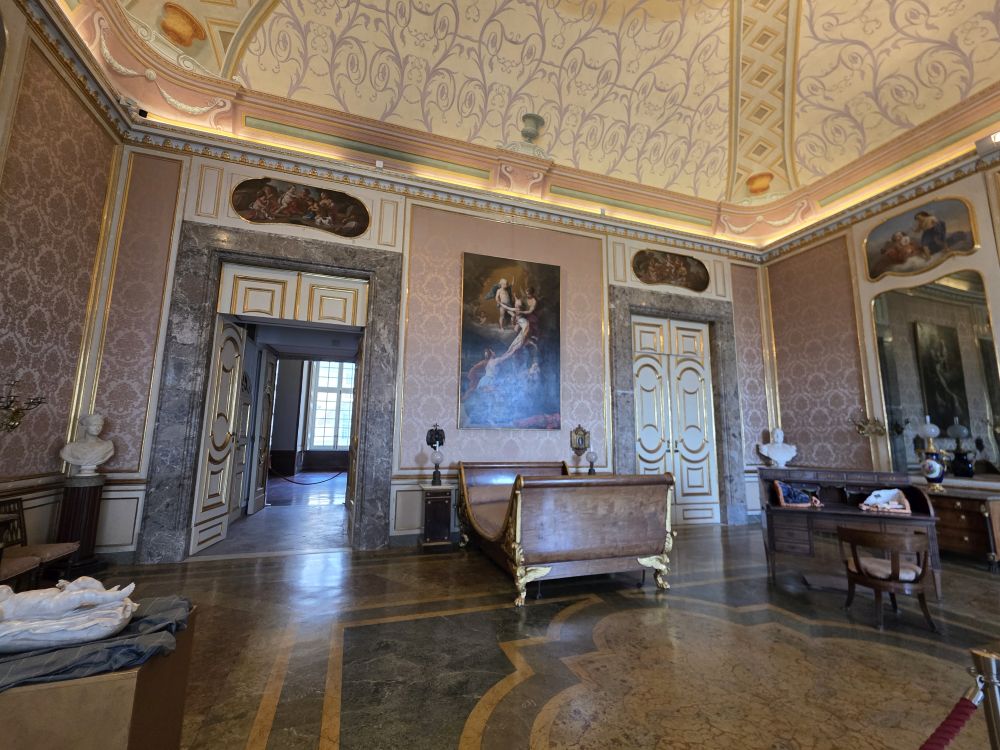
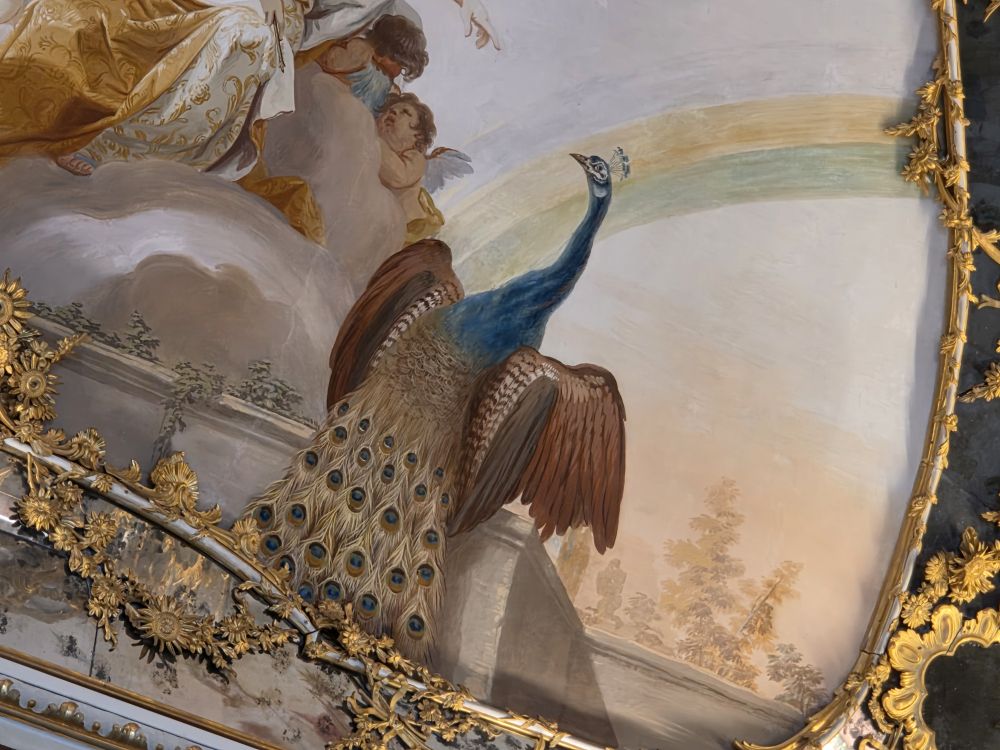
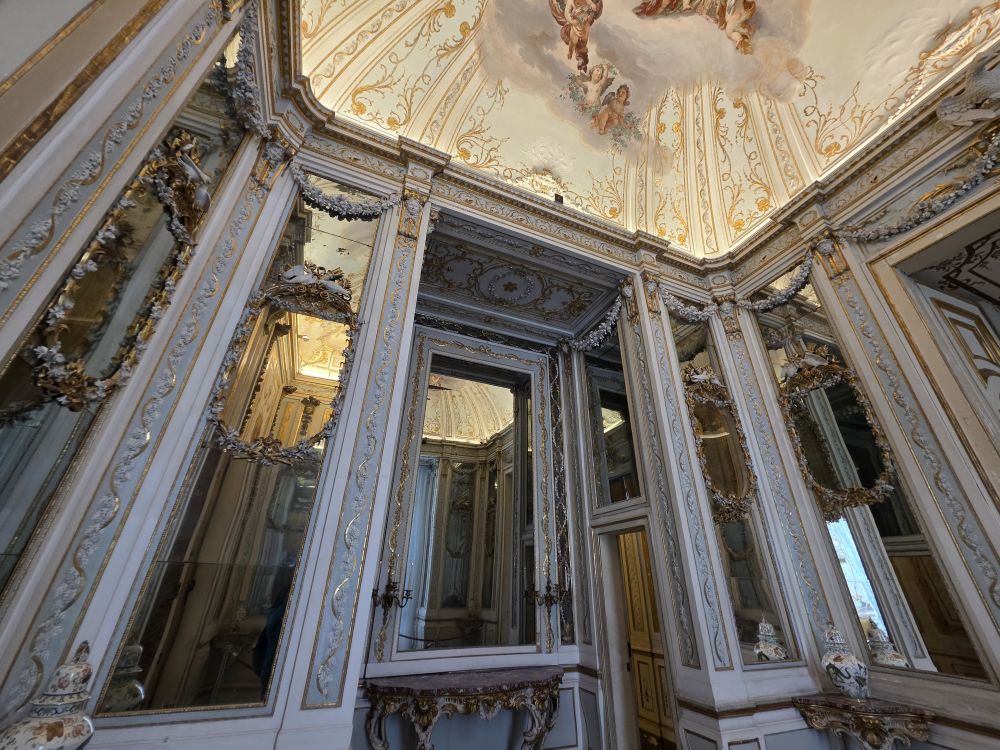
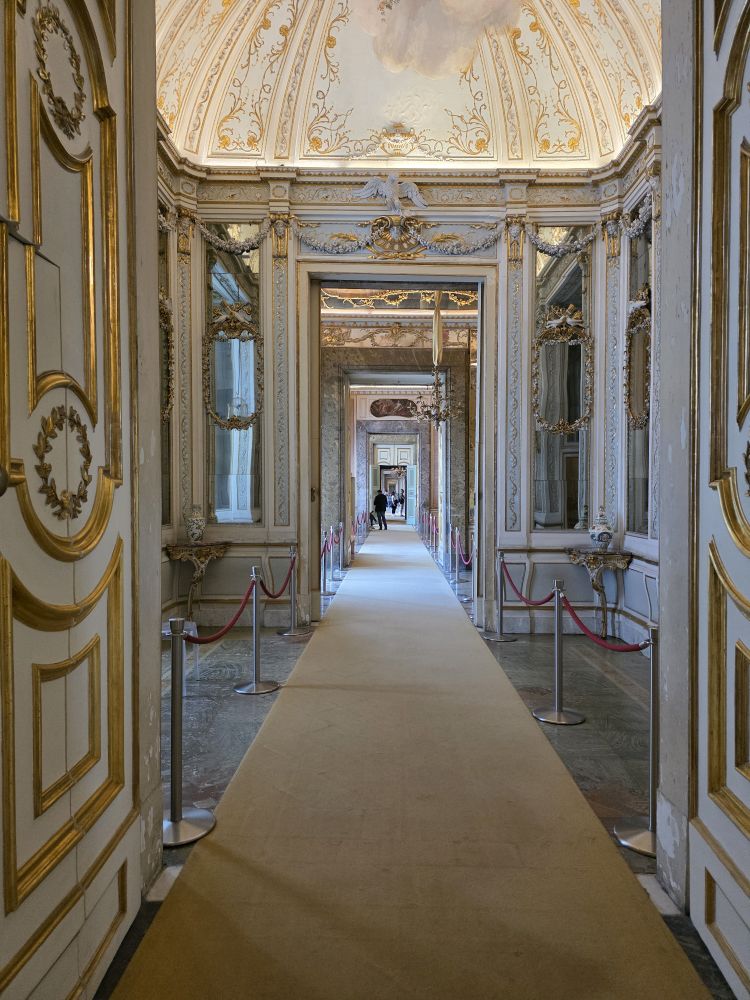
Hall after hall, we walk through more and more incredible architecture and art. It would take many blog pages to explain it all, so here are just some of the best photos from the first rooms we visited.
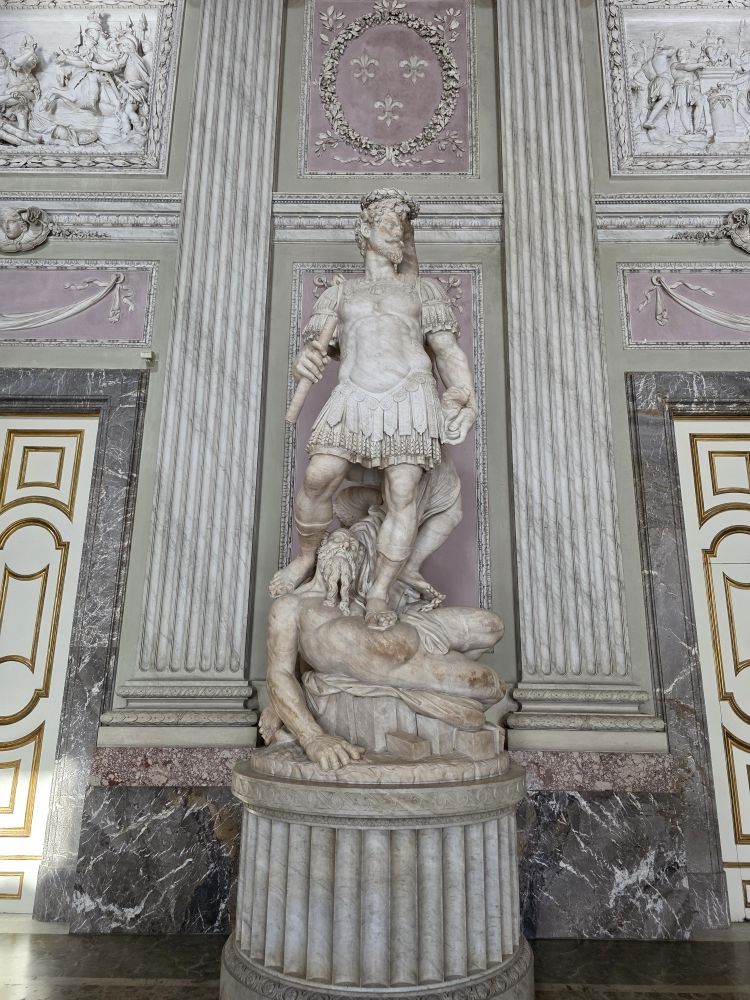
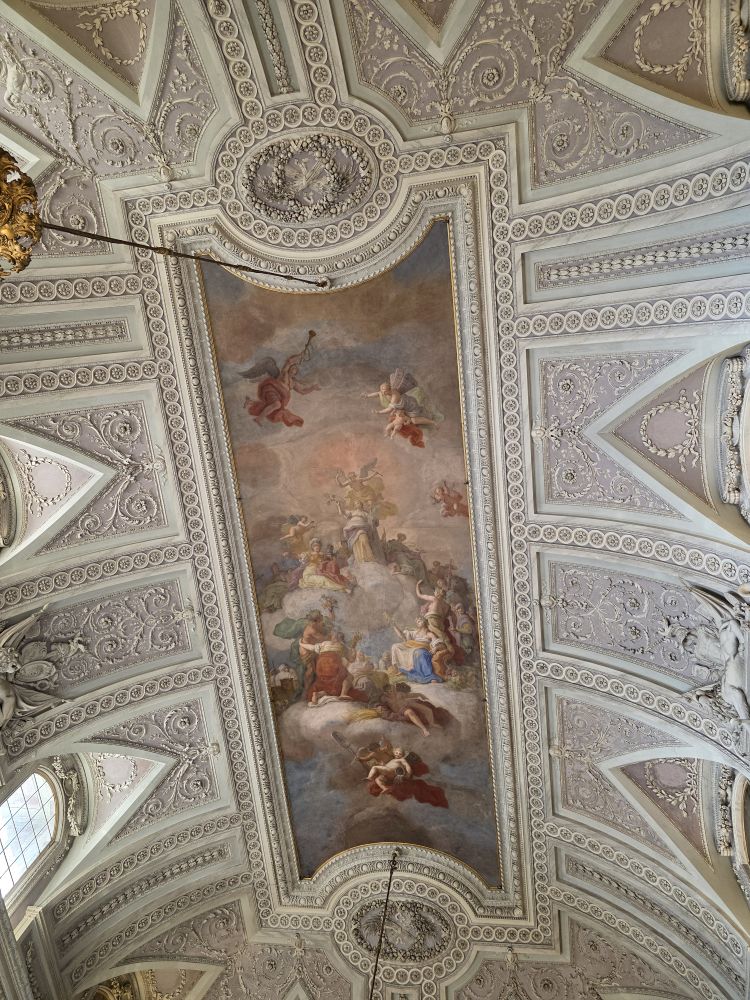
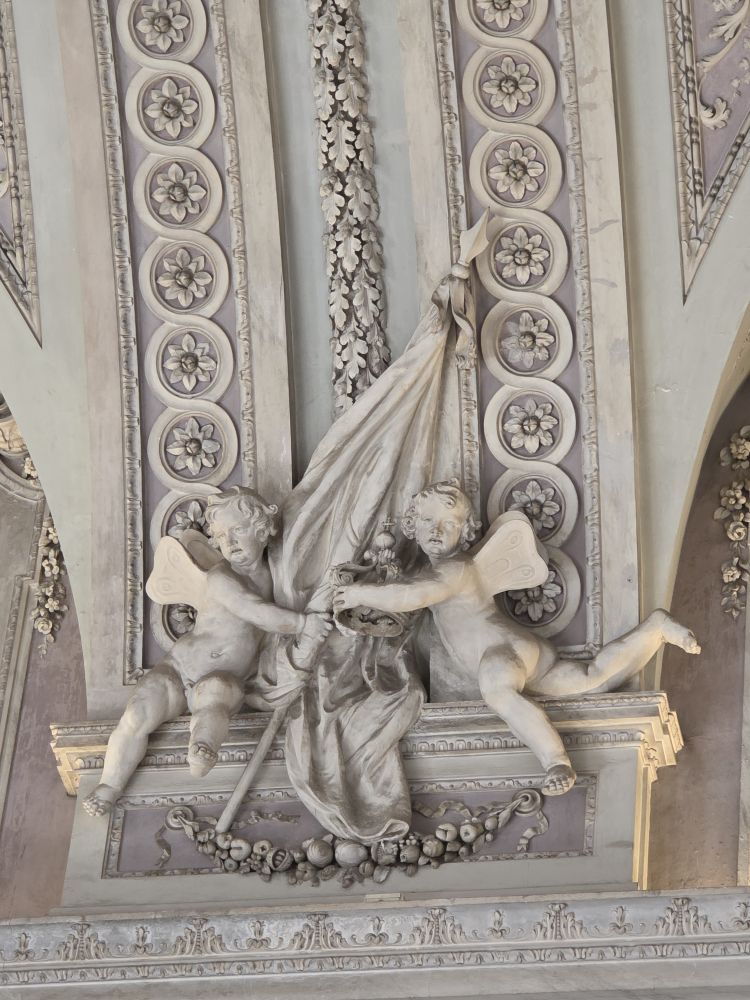
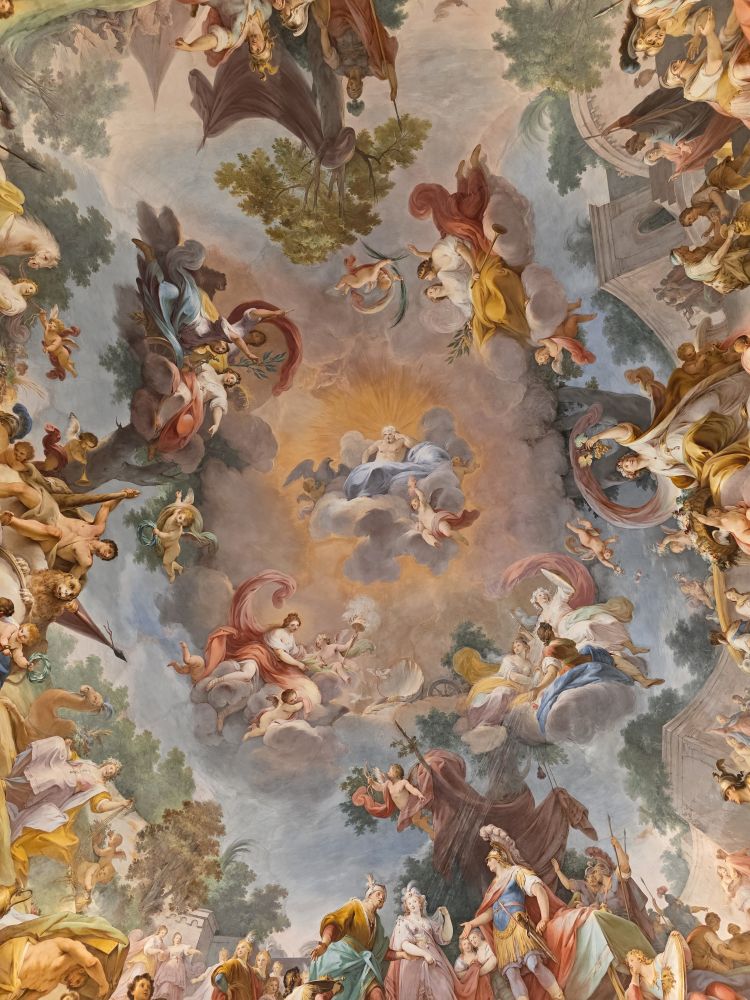
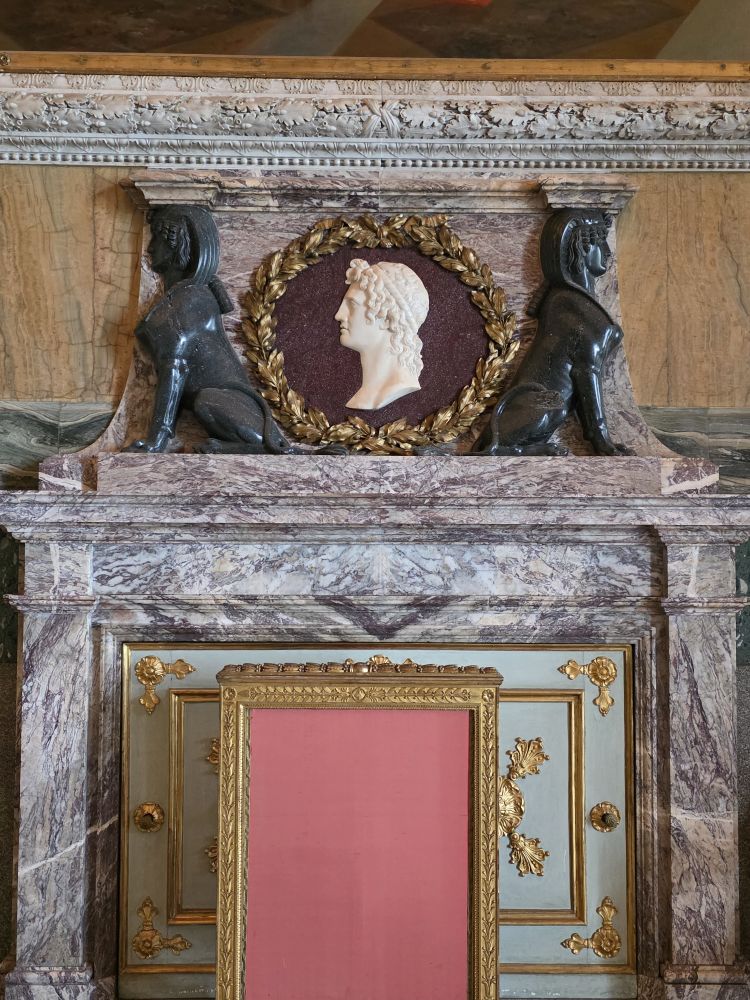
The Hall of Mars, named after the God of War, is the first room of the King’s Quarter, with Mars depicted in the fresco on the ceiling as well as in the bas-reliefs around the room.
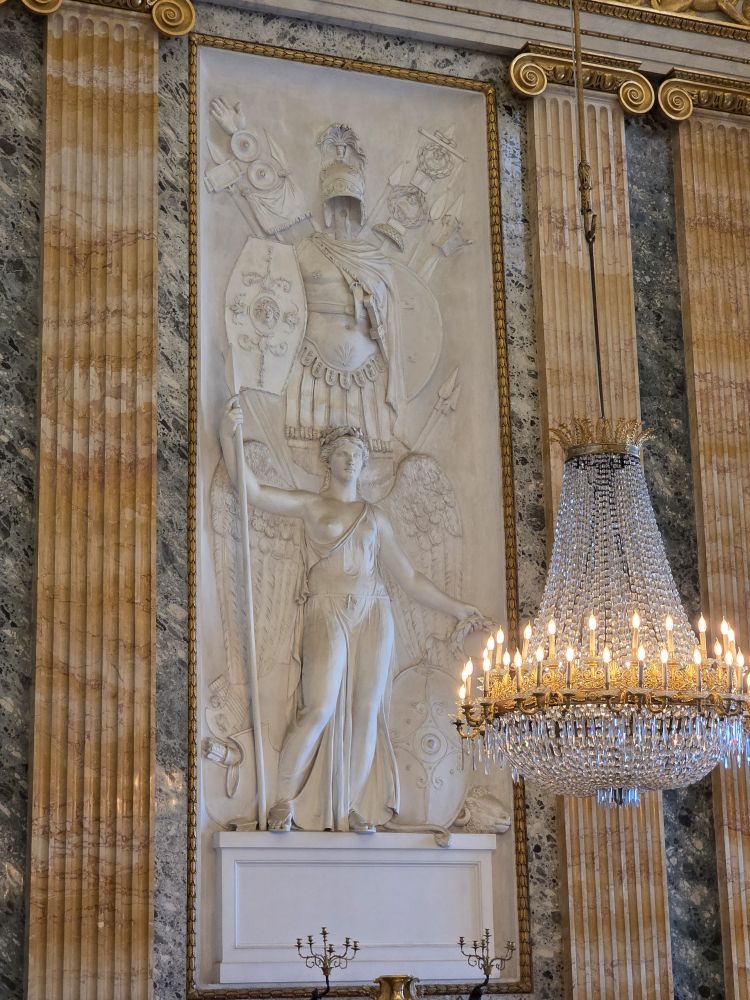
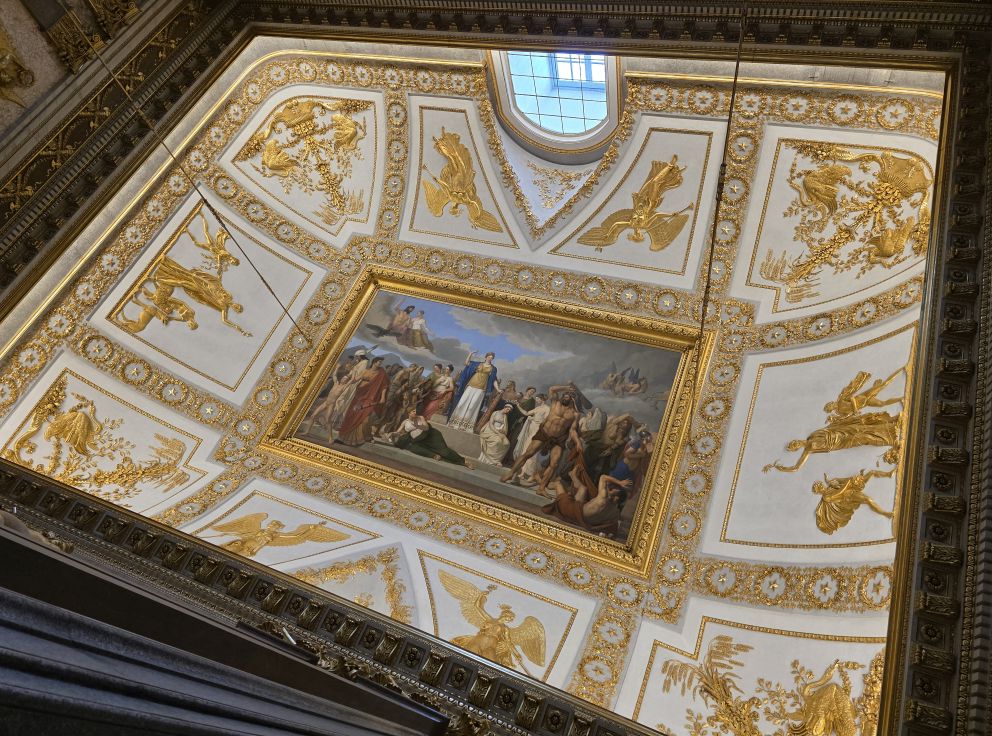
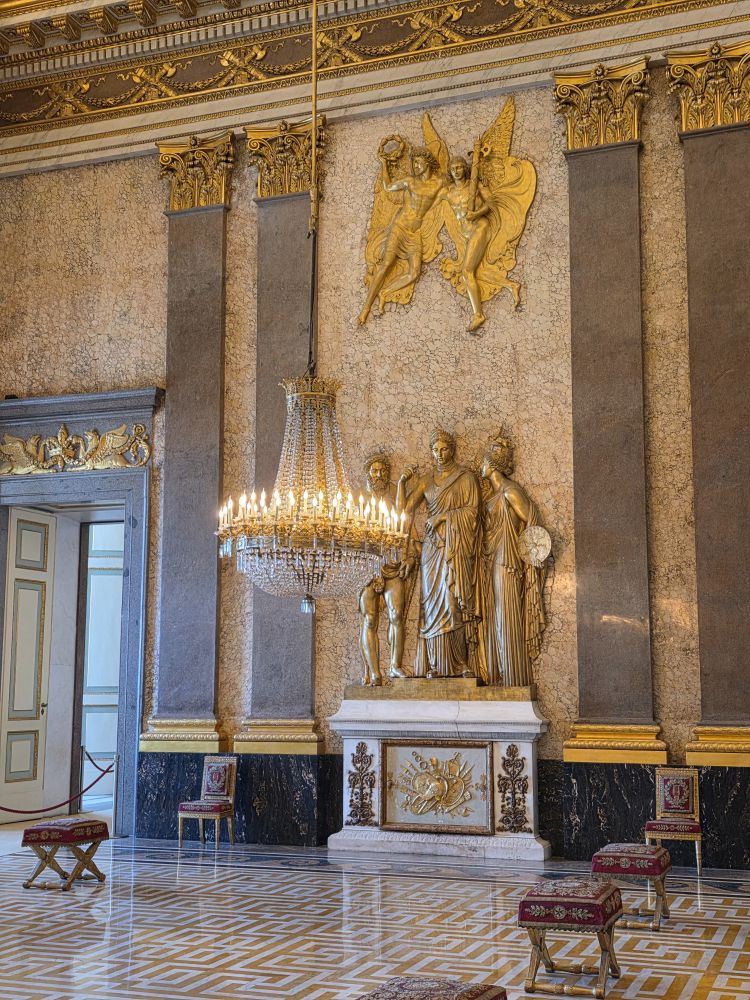
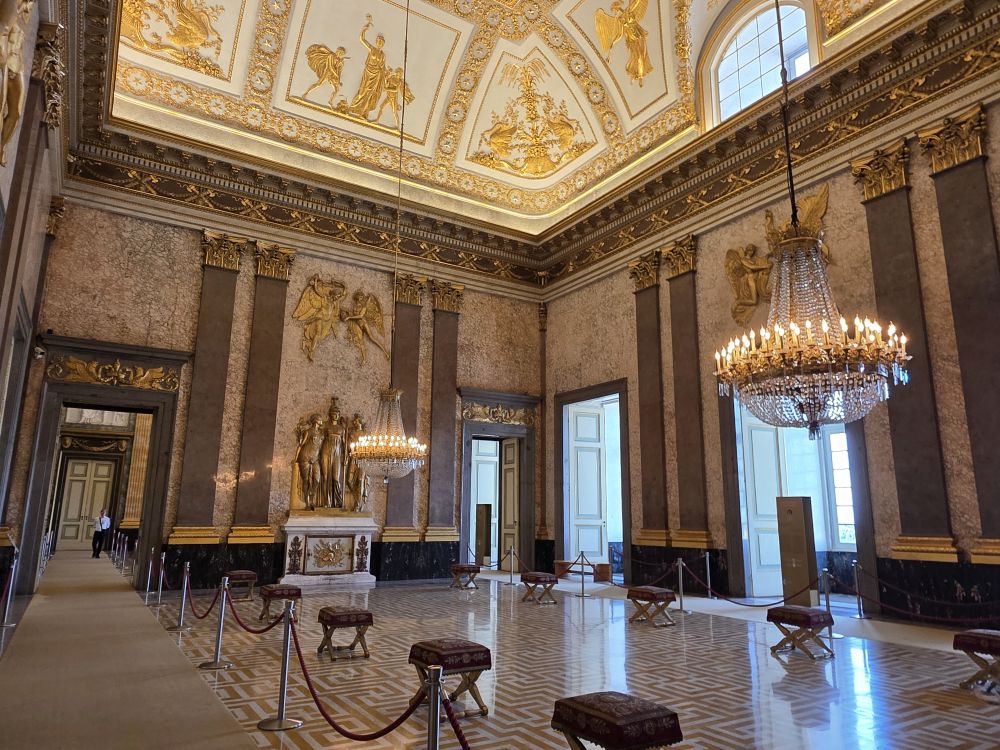
Then there is the Throne Hall – with the relatively small and unobtrusive throne curved in the shape of a shell sitting at the end of the massive room. Here there is also a contemporary earthquake art exhibit of Vesuvius stone in a circle outlining some of the marble decorations on the floor.
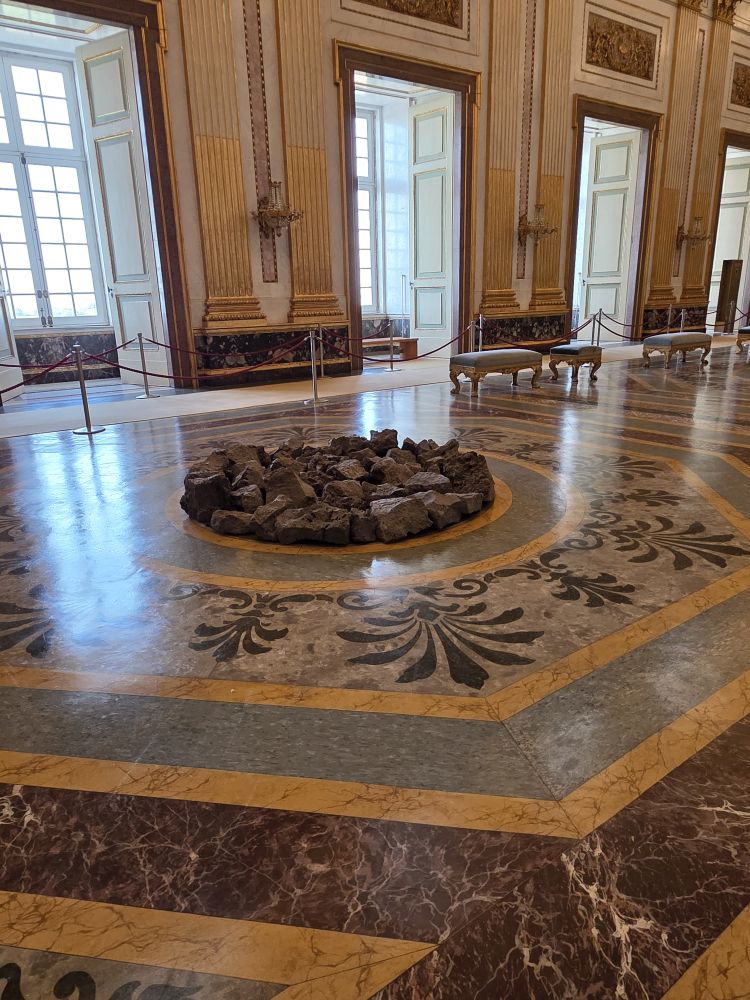
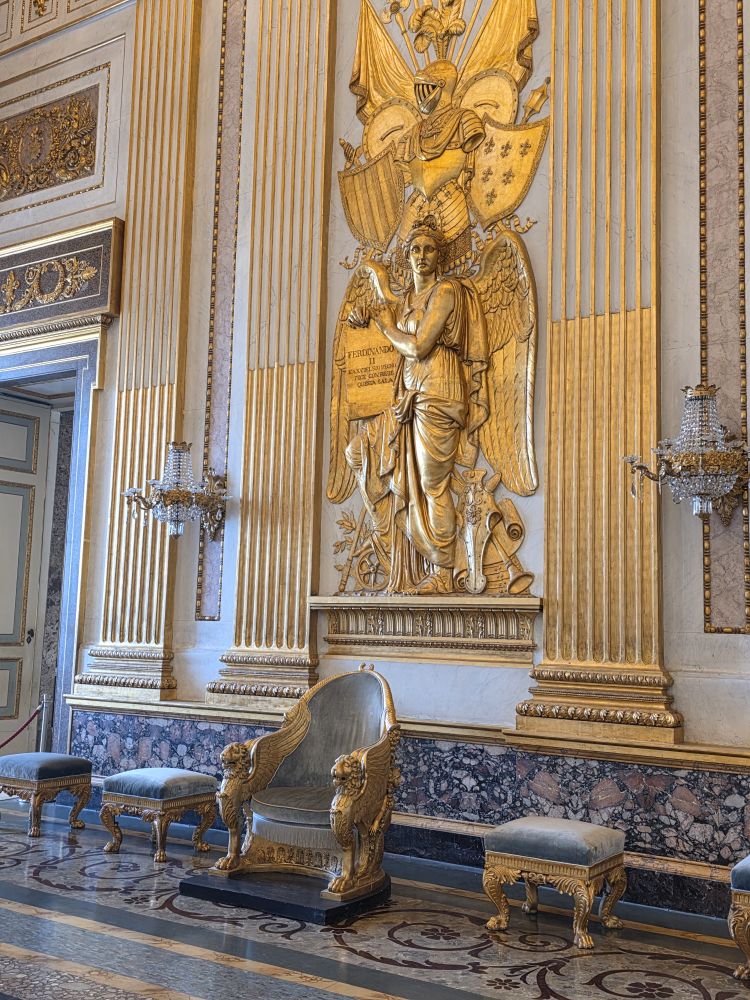
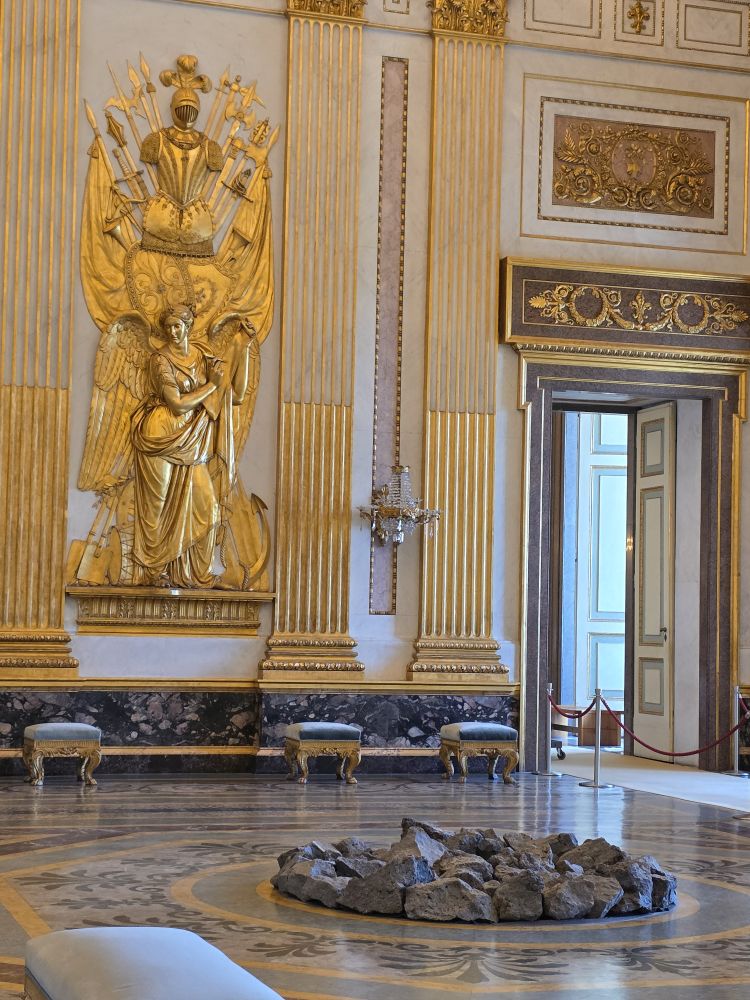
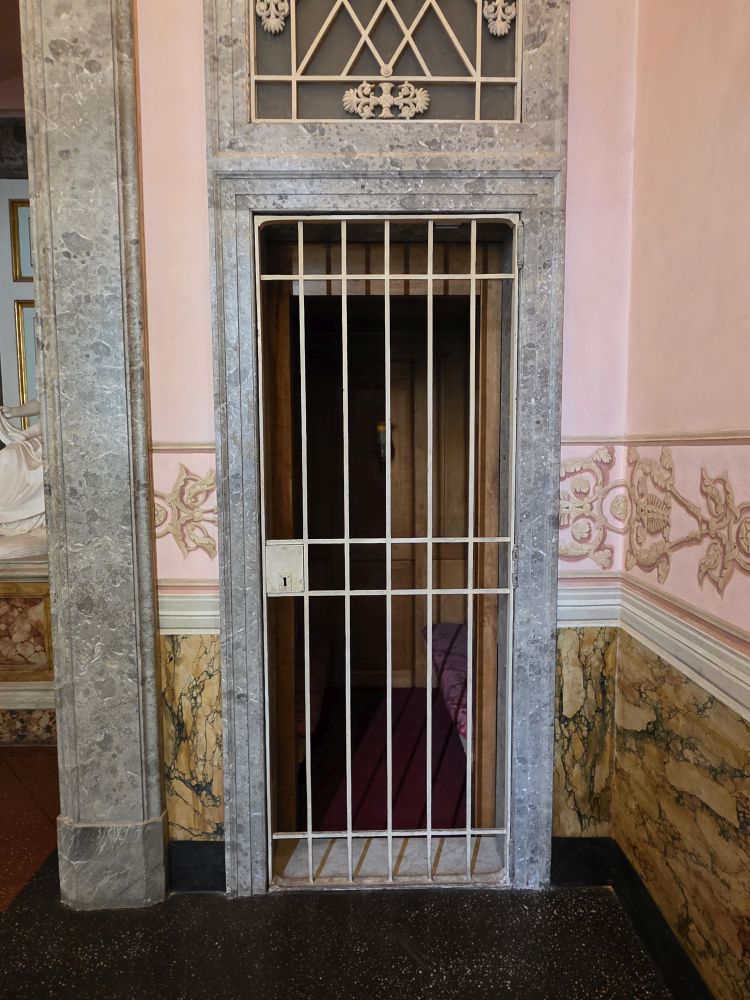
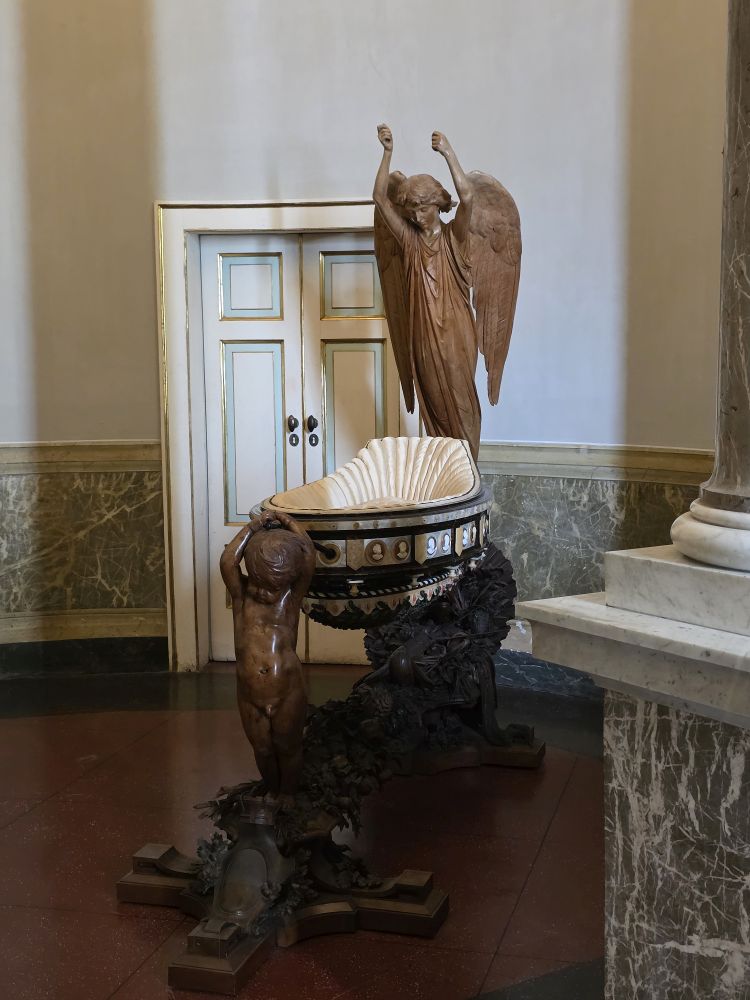
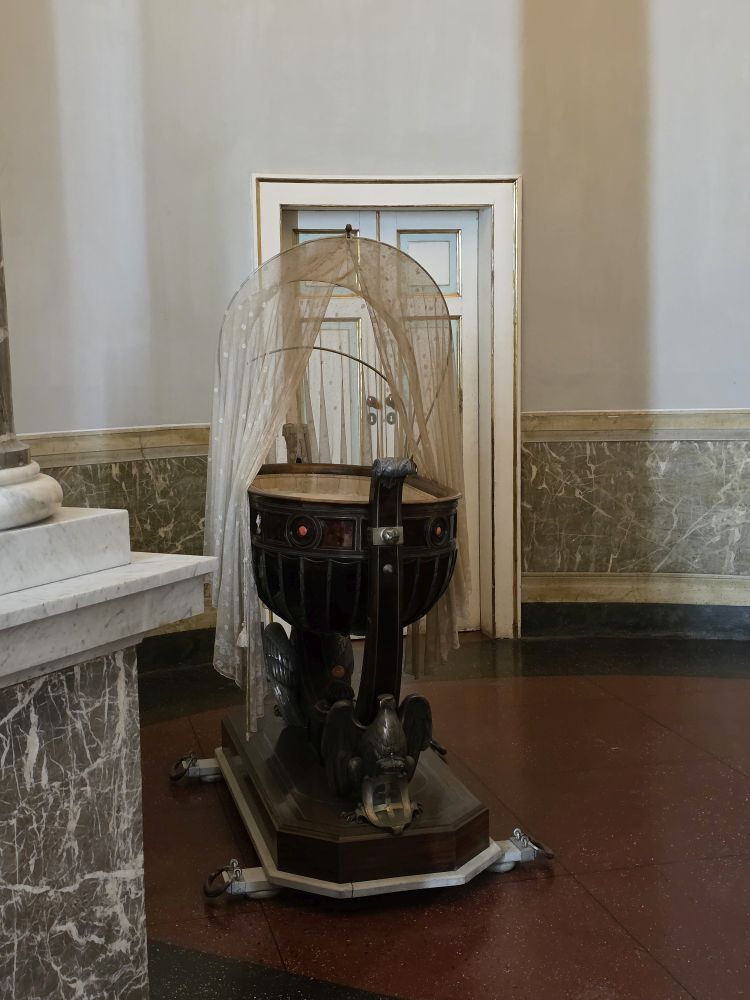
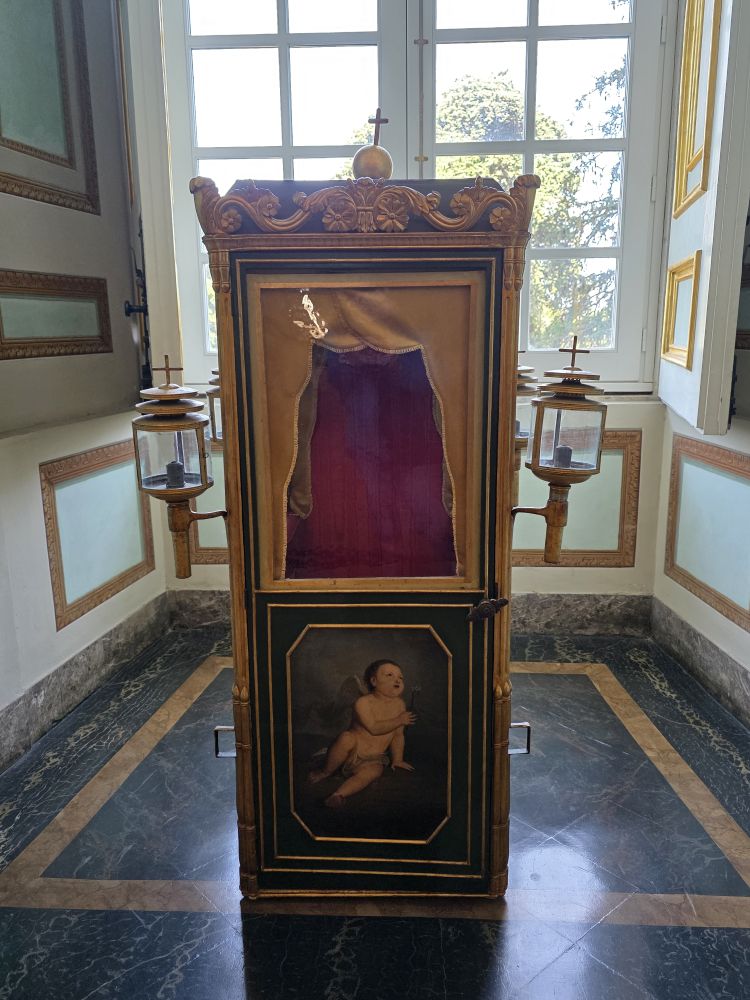
More Halls, more contemporary exhibits, a totally fascinating ‘flying chair’, the ancestor of the modern elevator. Now that was totally unexpected and cool! Looked like a prison cell with velvet bench seat! Then the cradle room with cradles given as gifts to the princes of the House of Savoy.
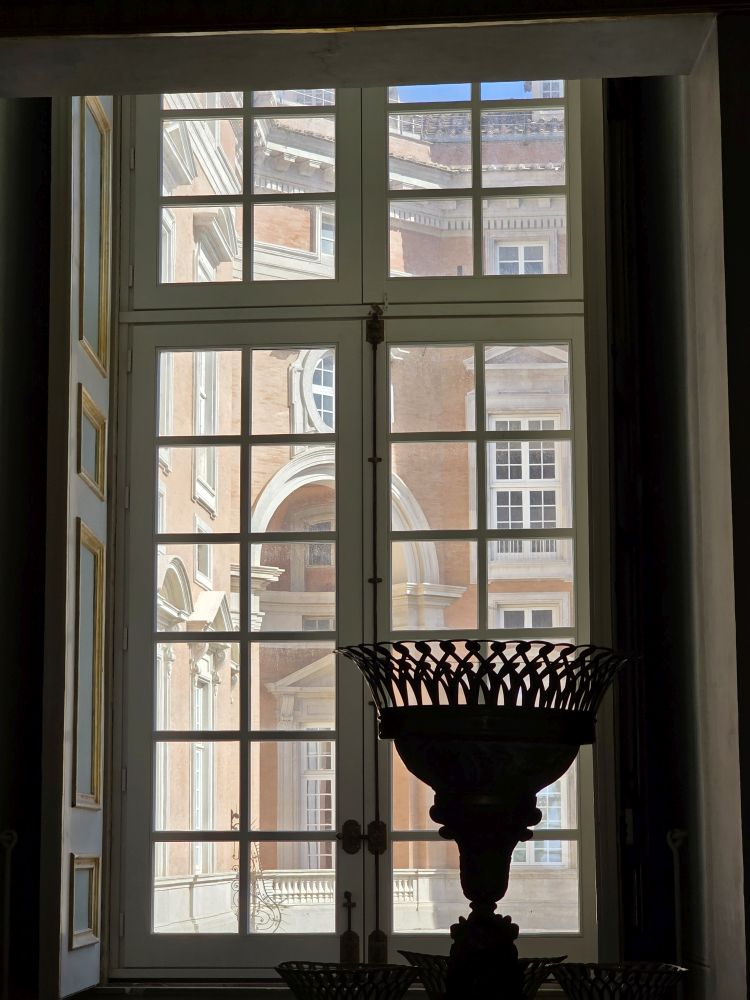
There is also Joachim Murat’s bedroom – a later king of Napoli who died by firing squad for betraying Napolean – with a magnificent bed from the Royal Palace of Portici, the favorite residence of Murat and his wife, Carolina Bonaparte (see the connection there?).
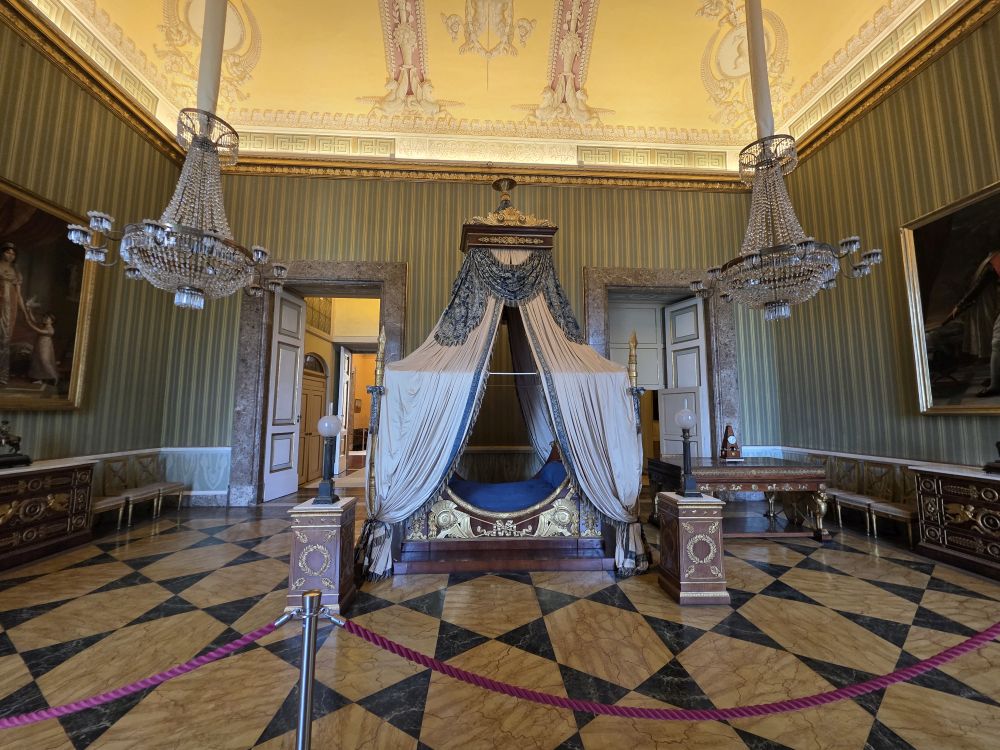
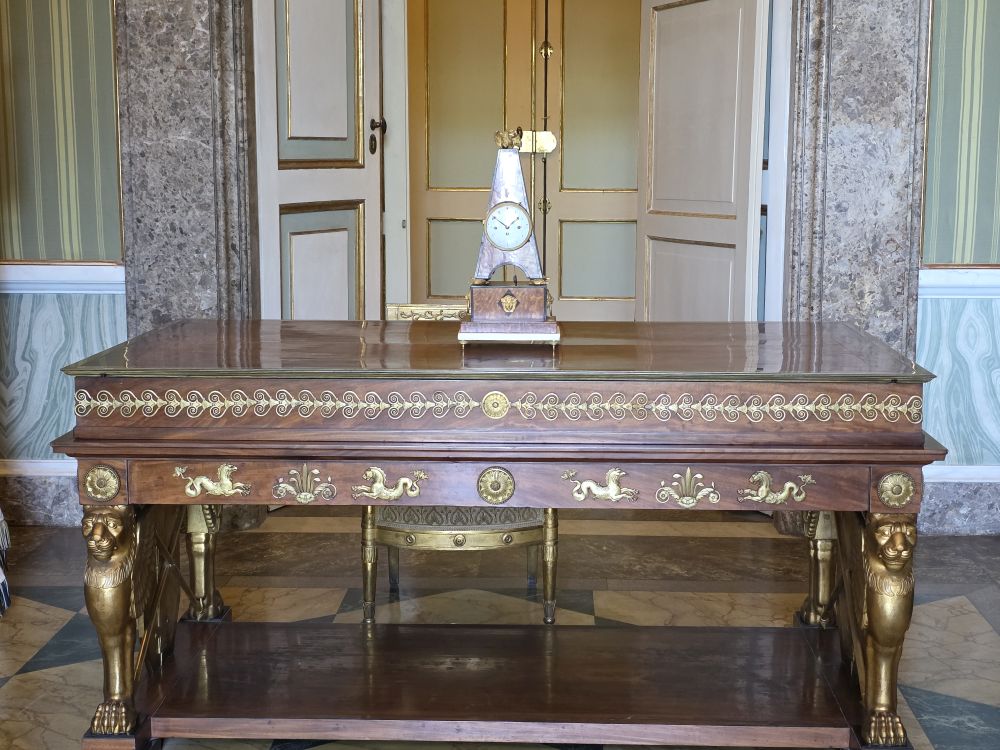
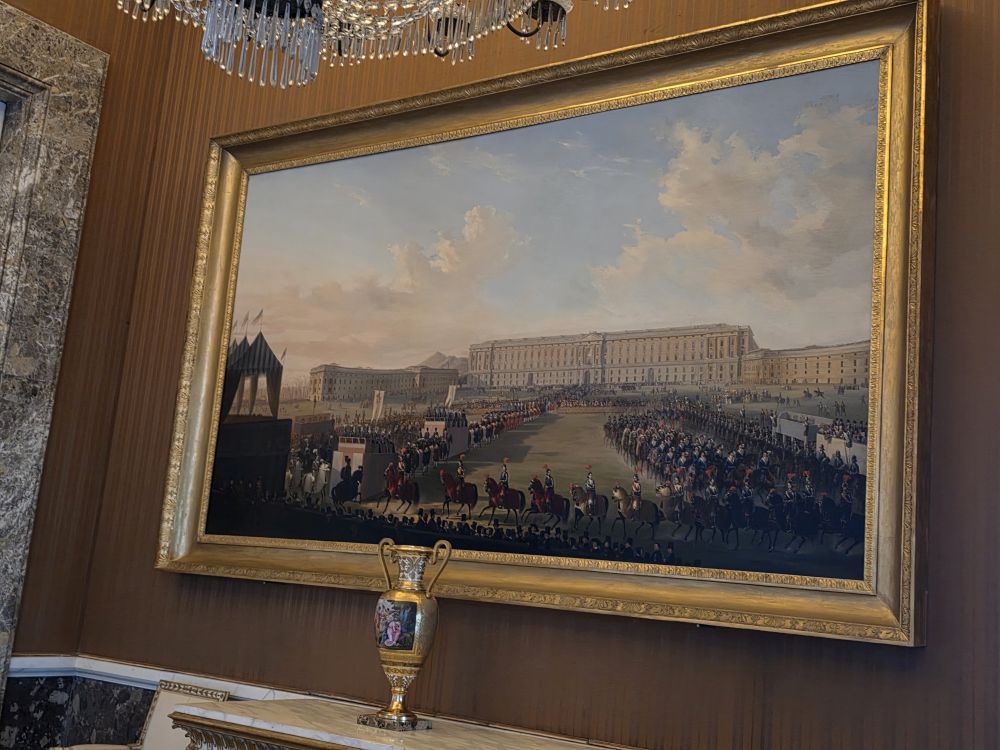
Finally we arrive at the King’s bedroom which is, well, fit for a king! Mahogany wood and gilded bronze furnishings, a huge 4-poster bed and a fresco depicting the Glory of Theseus for the killing of the minotaur. We can also see into the King’s chamber, which was more modern than expected.
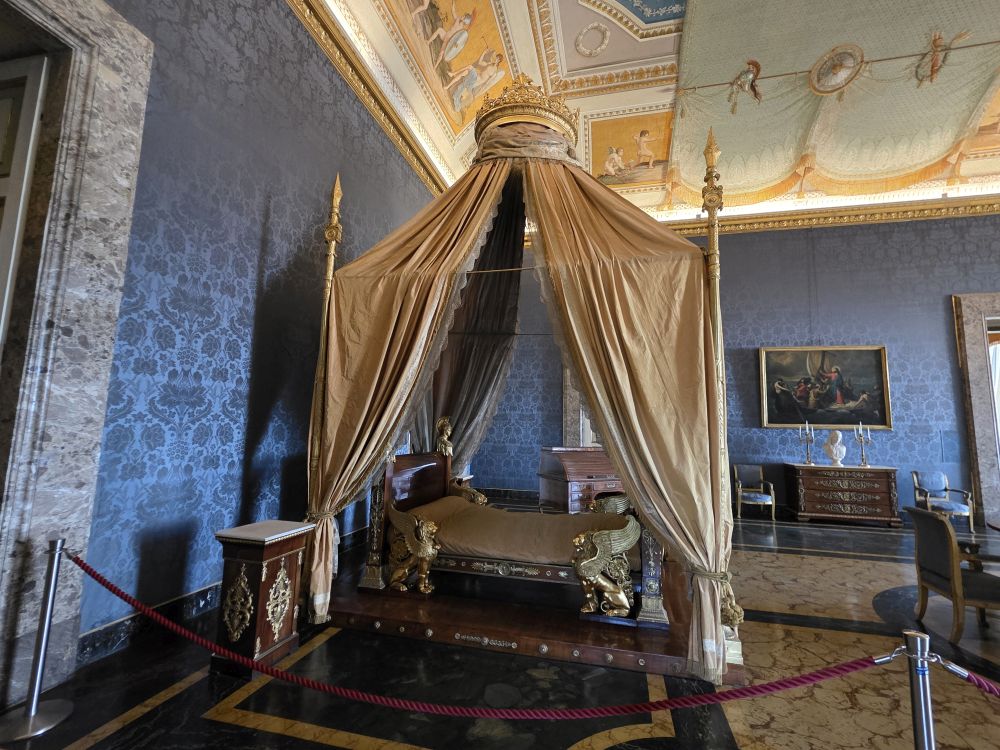
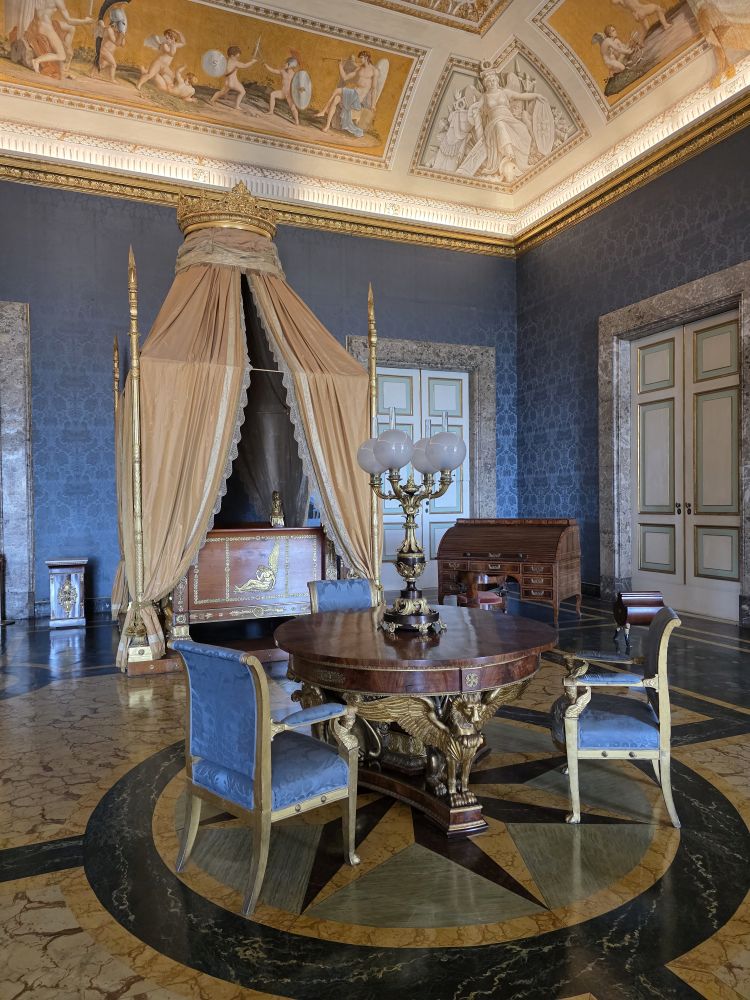
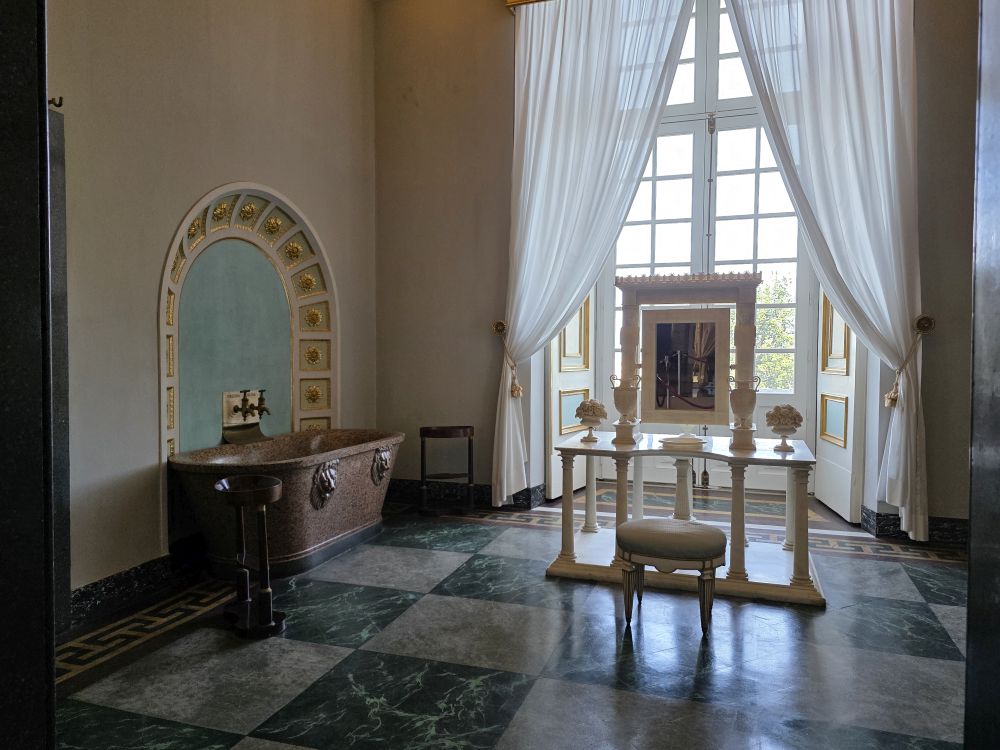
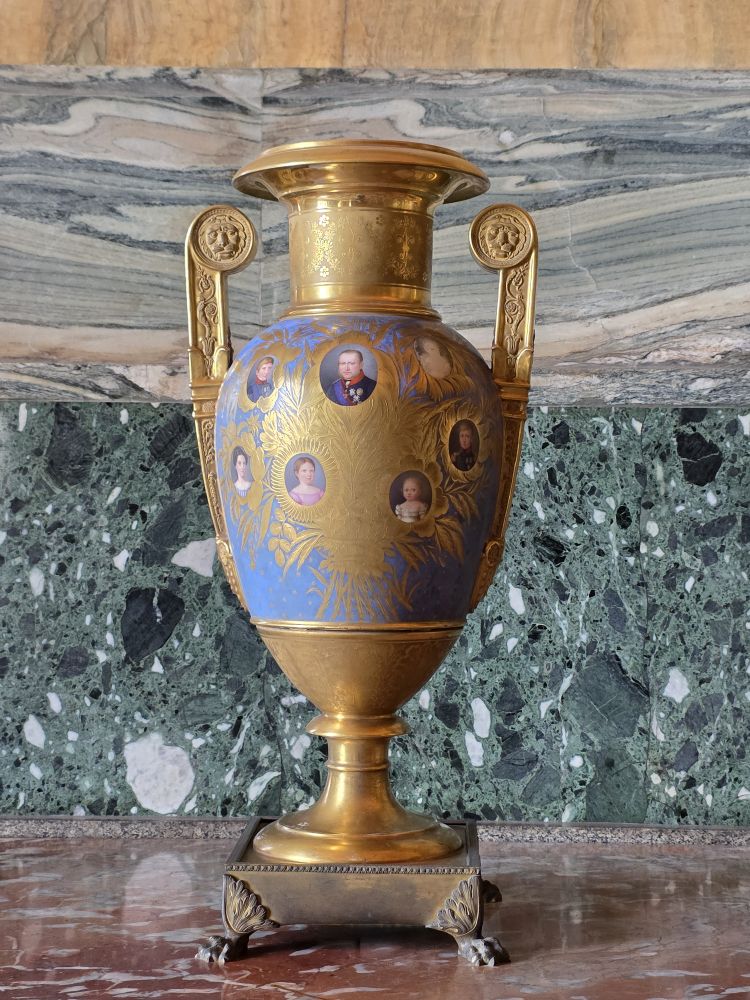
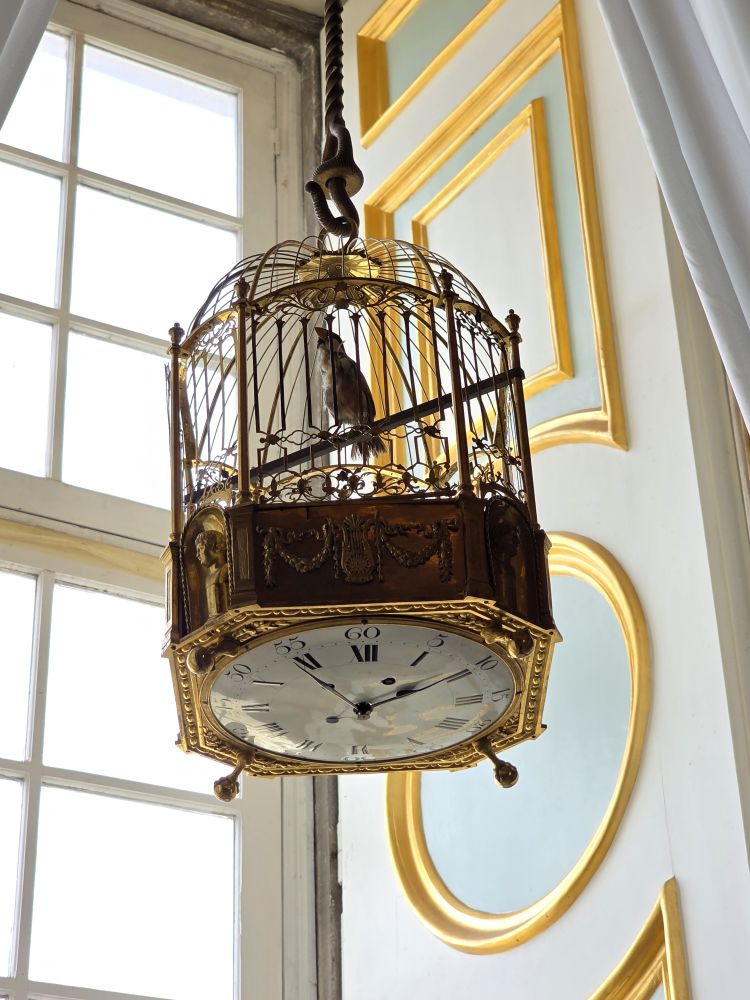
On we go, now on the back side of the rooms we have visited, so we get another view of all the magnificent furniture, the ceiling frescoes that look almost 3D, the furnishings, including this great ‘family’ vase and these wild bird cages with clocks on the bottom. How ingenious!
Some of the last series of rooms contain the library – which is vast and organized and amazing with the depth of material held in gorgeous mahogany bookcases.
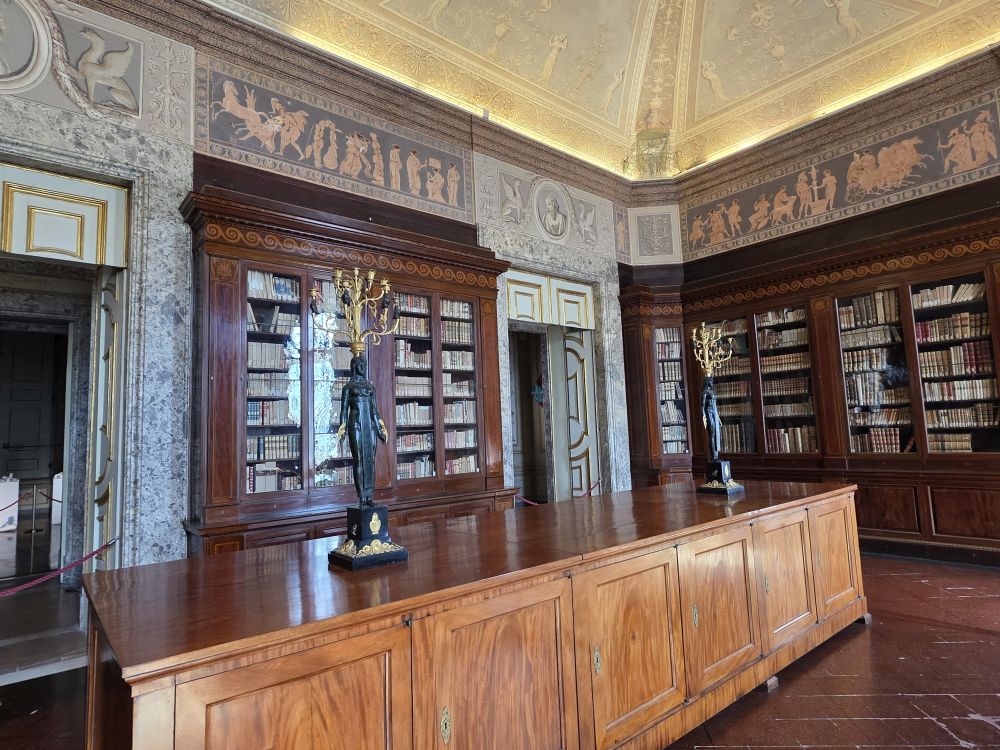
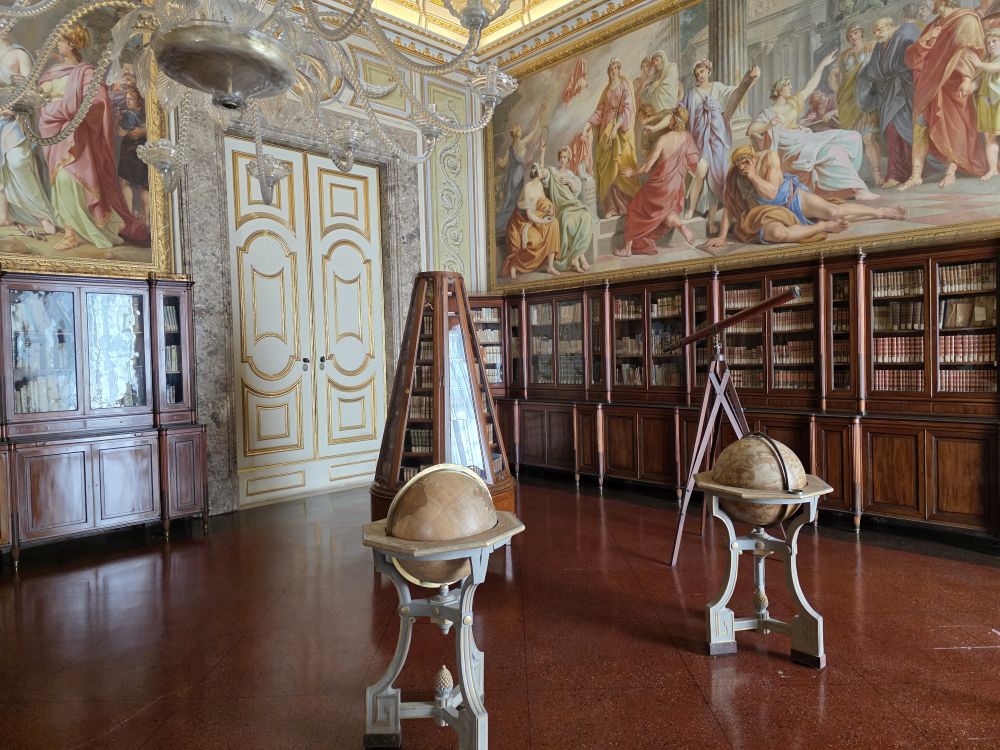
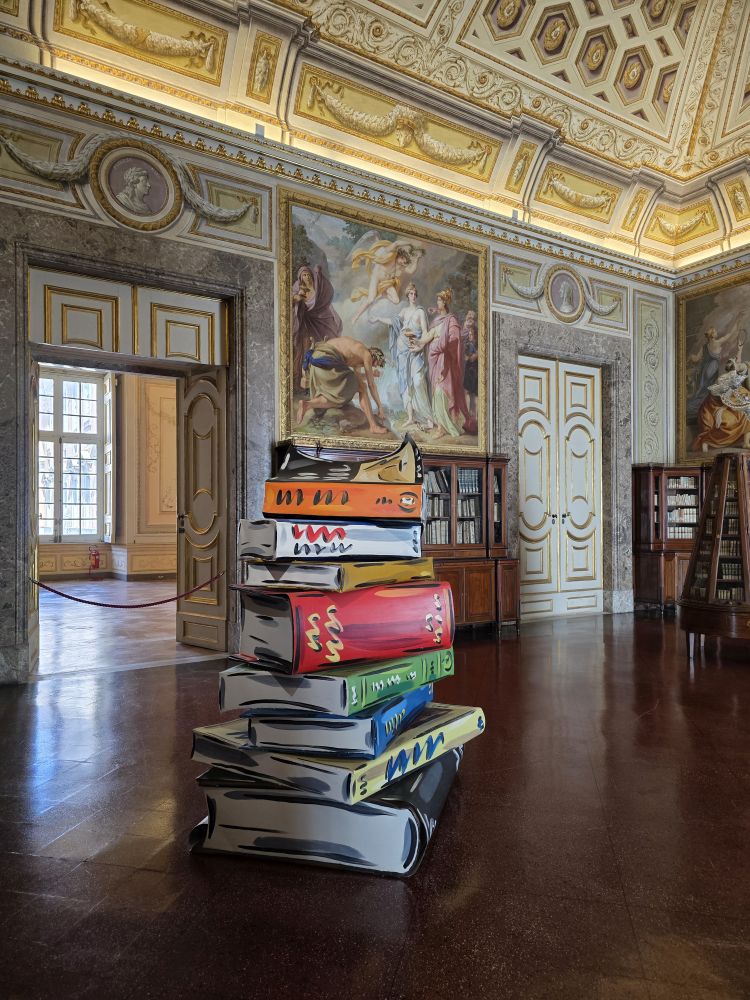
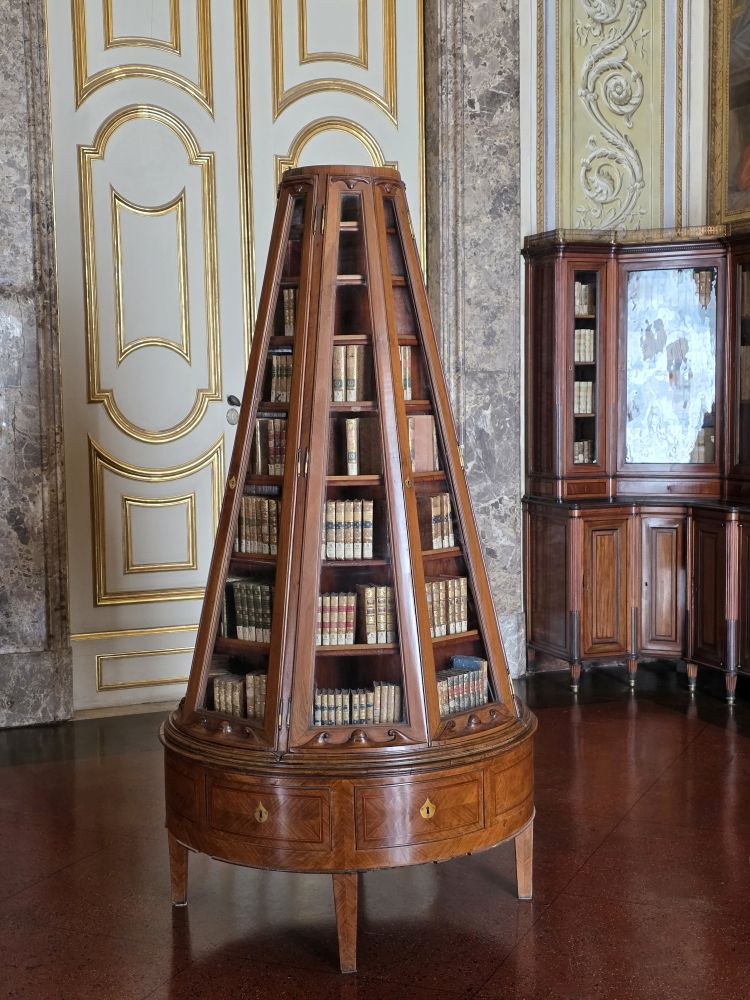
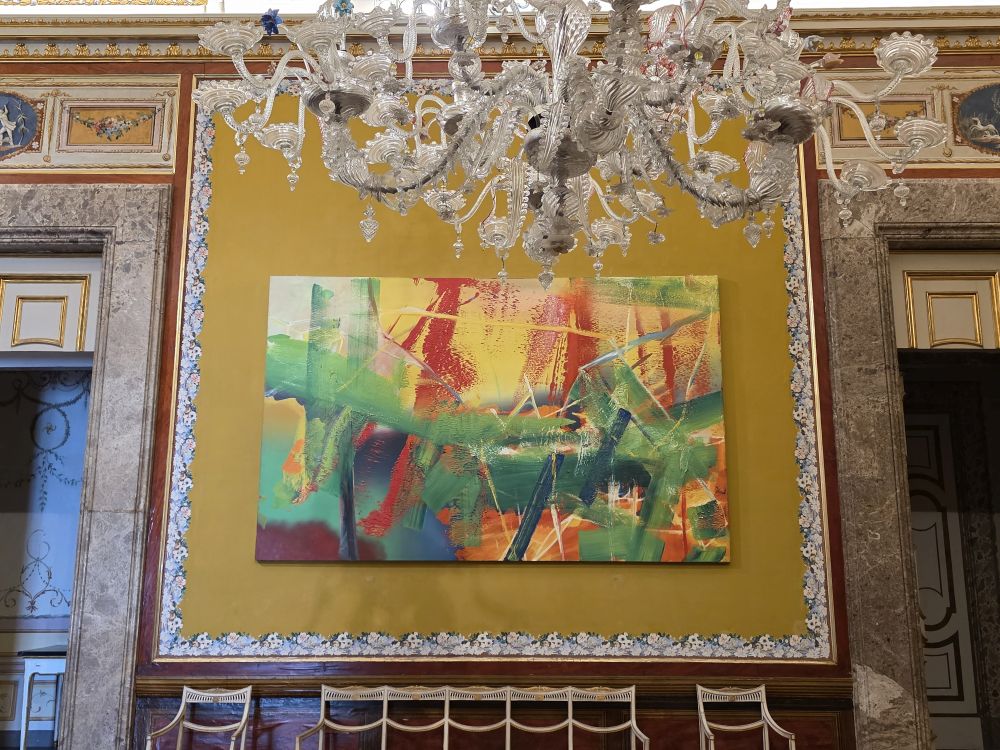
The contemporary art placed in the many of the rooms adds an interesting twist to the visit. As we walk past contemporary paintings and odd depictions we can’t help but wonder how it was determined where to place each piece of art. How did someone think the bright almost modern painting should be hung in the Wardrobe of the Royal Princesses? It’s a wonderful painting, but why there? The books you can figure – we’re in the library, but some of the other pieces? Would love to pick the brain of the person in charge of placement.
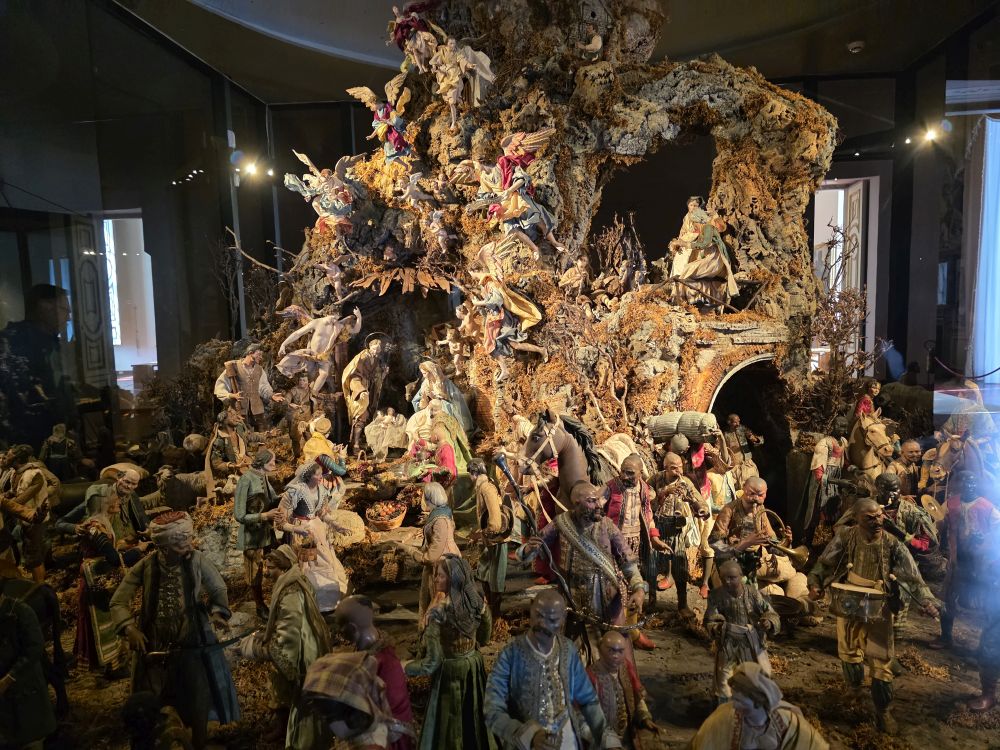
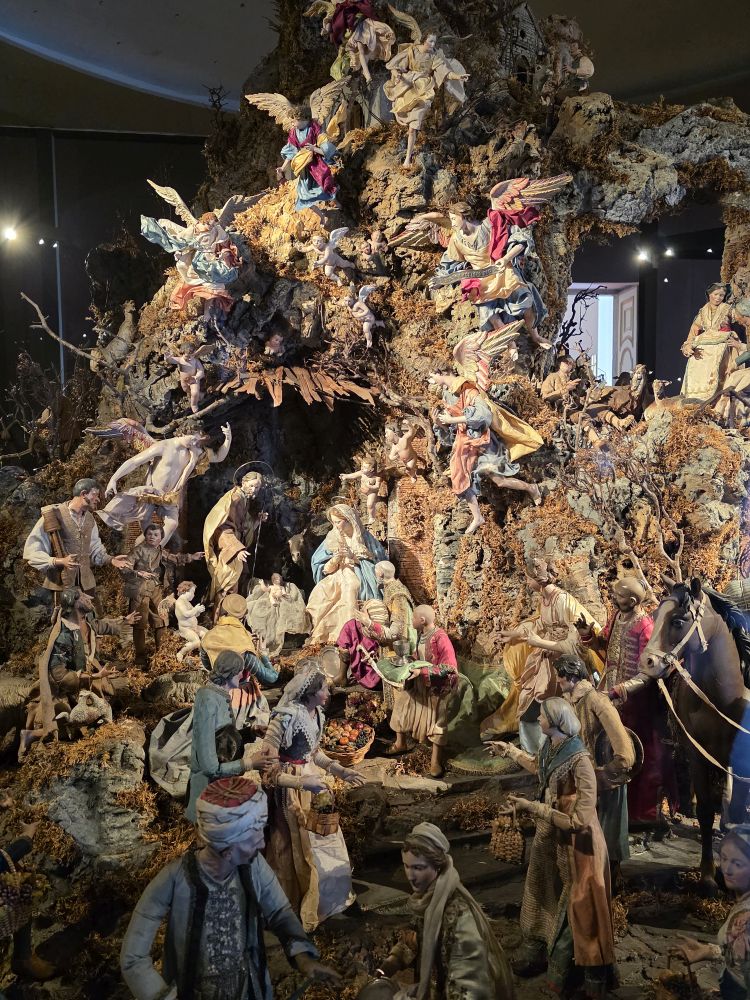
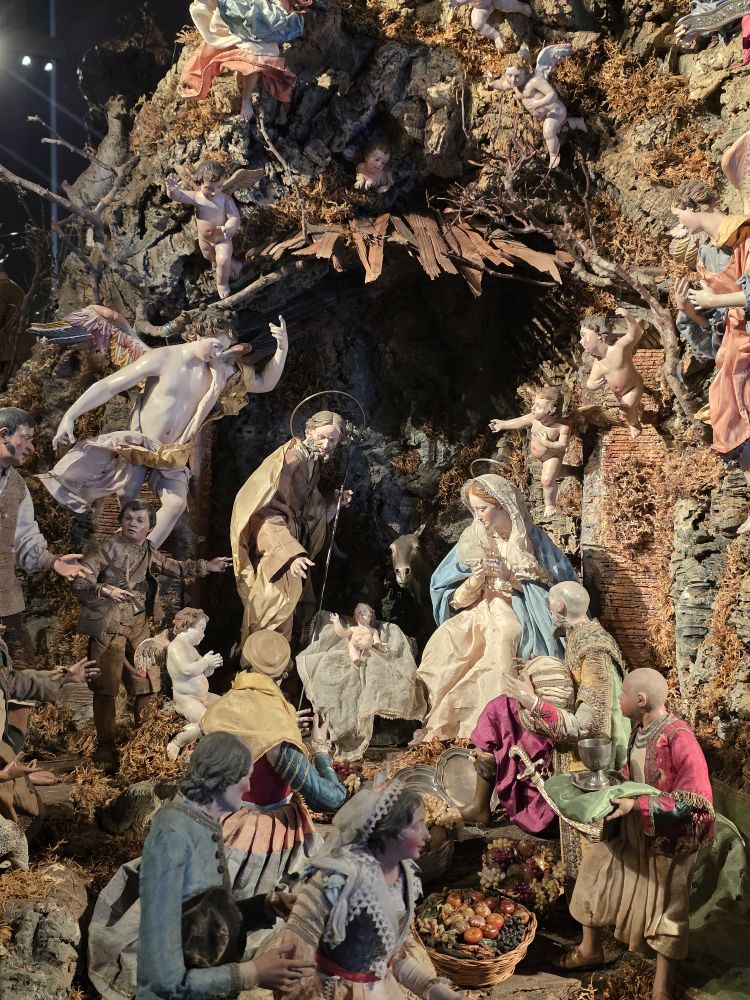
One of the last rooms of the visit holds the Royal Nativity scene. Wow. What a Nativity Scene. The only one commissioned by the Royal family, figurines with terracotta heads, hands and feet and tow and wire bodies are placed on a cork base the size of which I can’t even begin to guess. It’s huge with so many different scenes, every where you look there is something different and so lifelike.

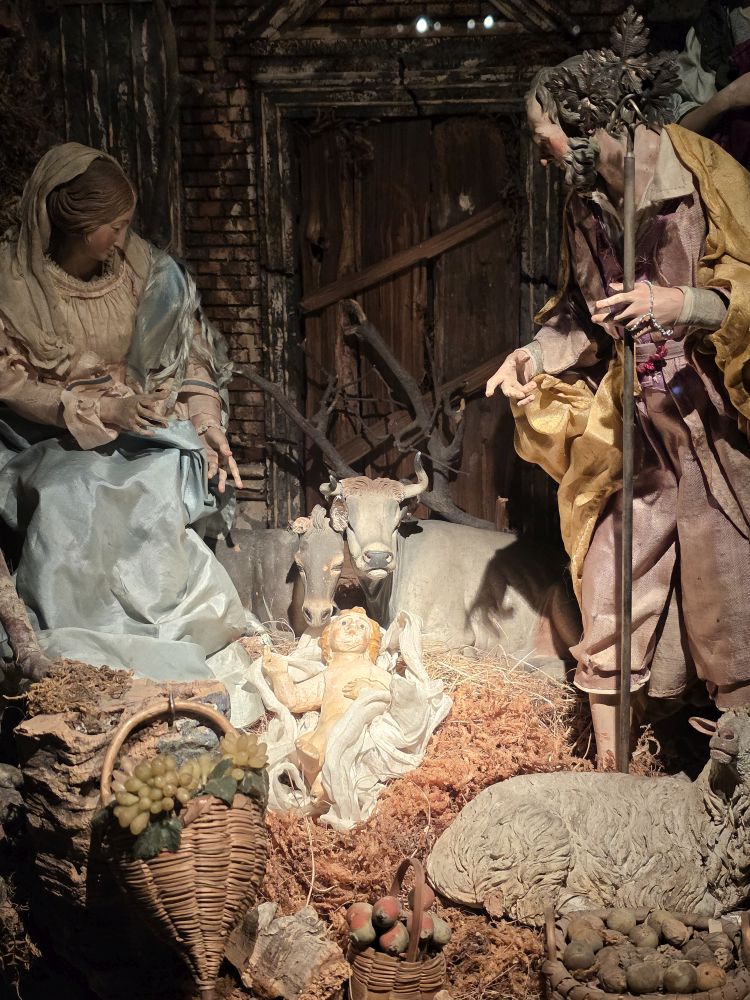
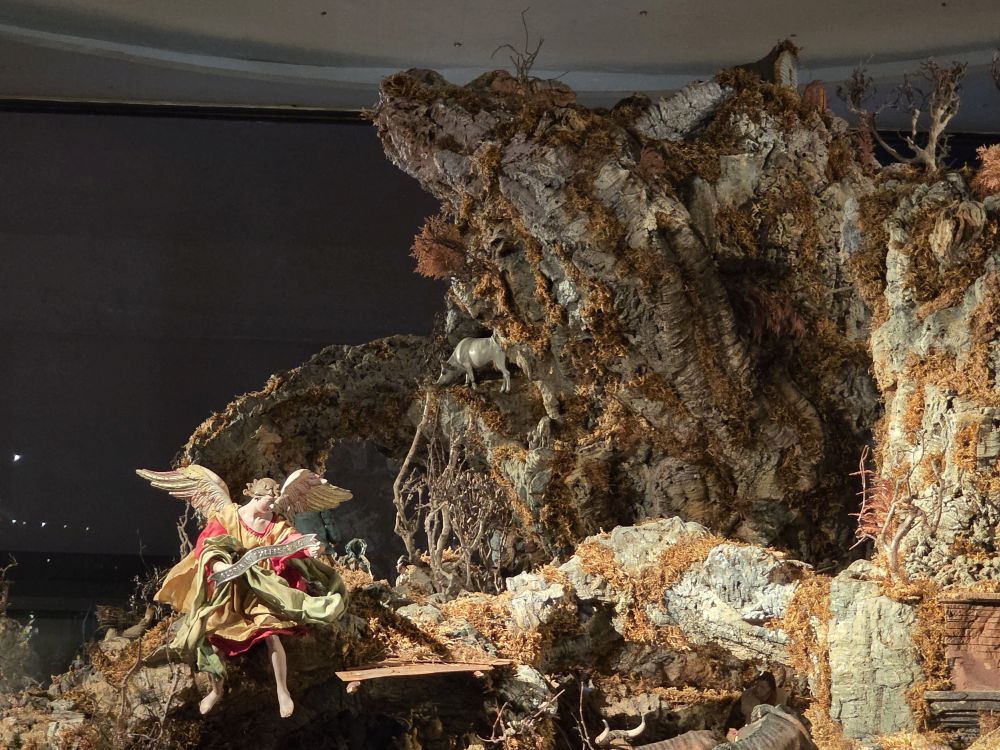
The last rooms have artwork – contemporary and original – with a great mirror image display in one, and a contemporary “Go West” metal piece (designed by an artist from Texas and Captiva Island, FL) that is placed in the allegory room – a testament to pioneers with the strength and courage to conquer the unknown. Interesting.
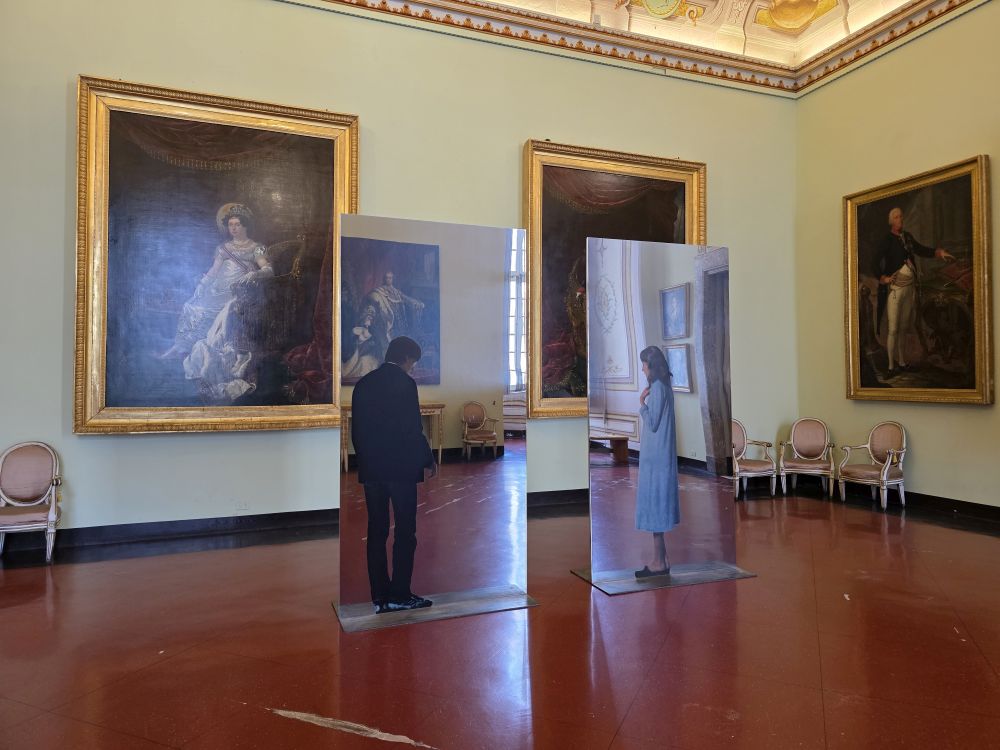
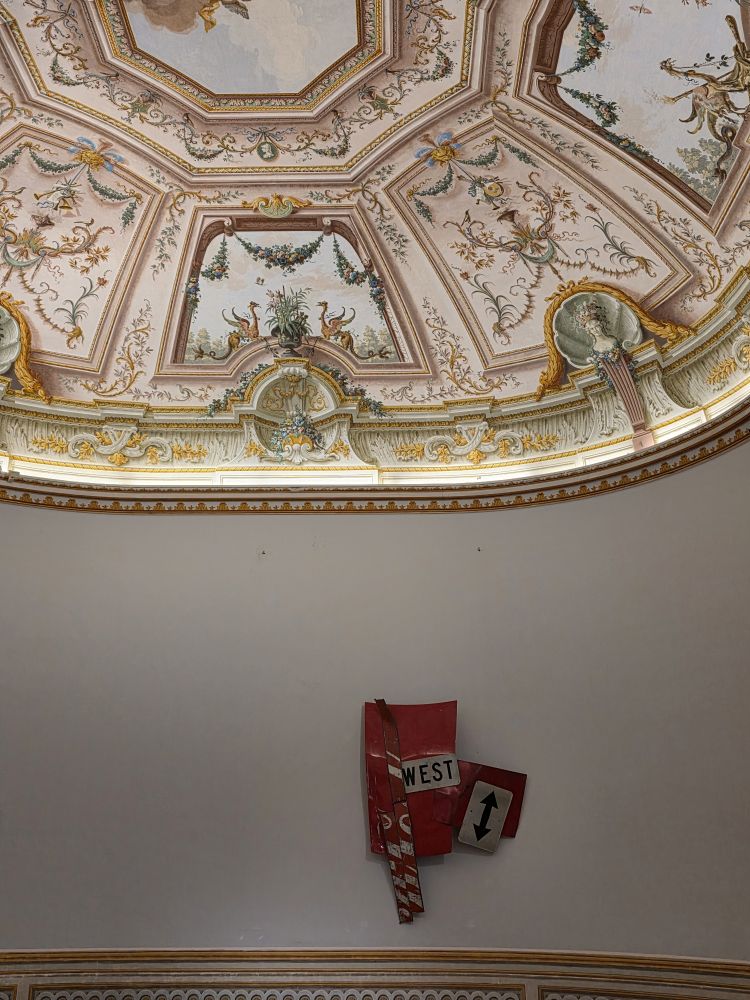
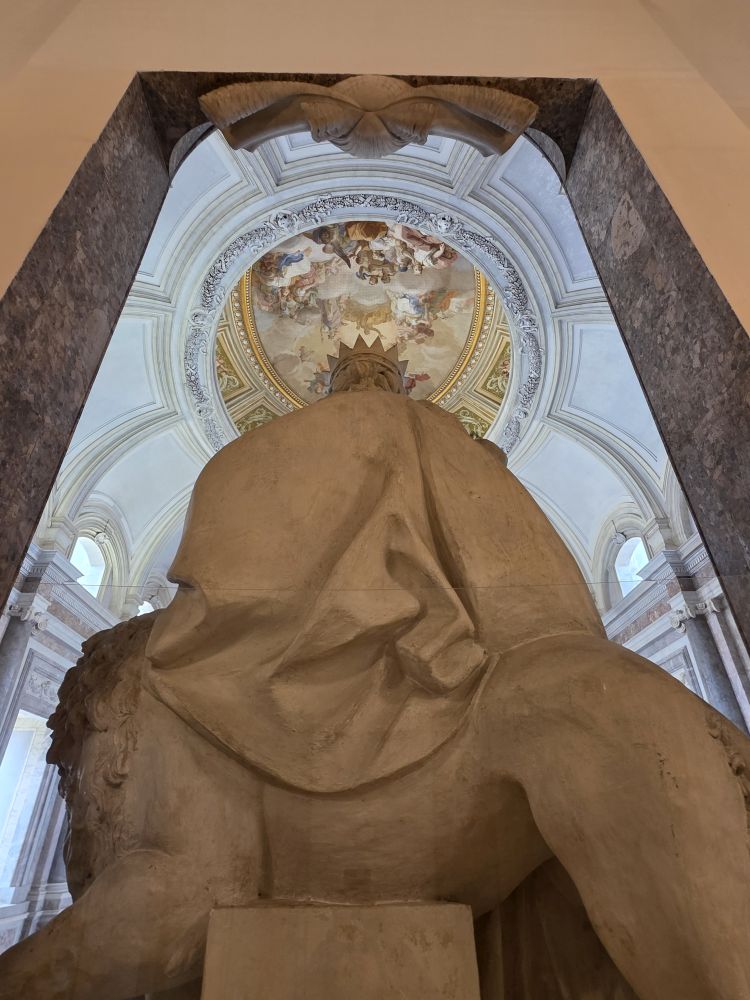
And then we are done, exiting down the staircase behind the Royal Staircase, providing an interesting perspective on the back of the King’s statue.
We spent over an hour and half exploring the palace and the royal apartments. Wow. Just wow is all we can say. It was an amazing experience. And now we are onto the royal theater and the gardens!
 Andiamo