Sad to say goodbye to Archetipo and Luigia, not necessarily Lecce which was fun, but way over touristed and a one and done kind of place. But on we must go to the last stop on our journey: Caserta by way of Craco, an old abandoned ghost town. Let the ghost town explorations continue!
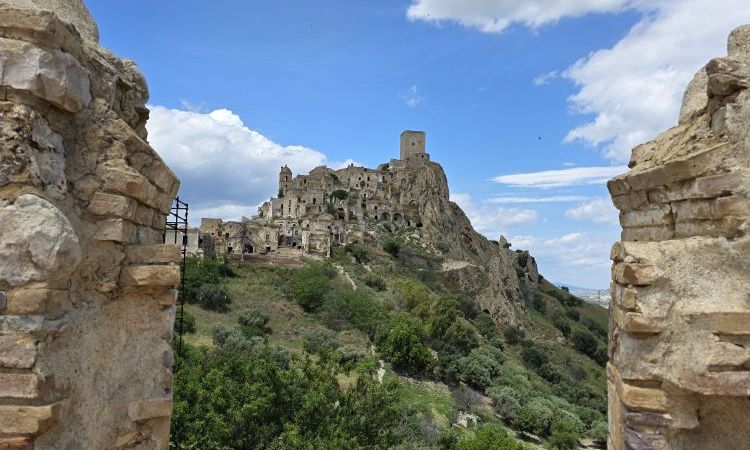
Driving out of Lecce seemed easy (when we were walking around and trying to scope out our exit), but of course the GPS has different ideas and takes us on a round about route through the damn narrow old town streets until finally dumping us out onto some main roads leading the Autostrada. Geez. Anyhow, once out onto the faster roads we watch as the scenery changes from olive groves to all vineyards, then back to olive groves but with different type trees – these all have massive, gnarled trunks as opposed to the smaller trunks on trees to the north. The closer we get to Craco, the farmland changes a few more times until we are up in the hills, driving through what looks like sandstone mountains to the base of the hill where Craco can be seen above us.
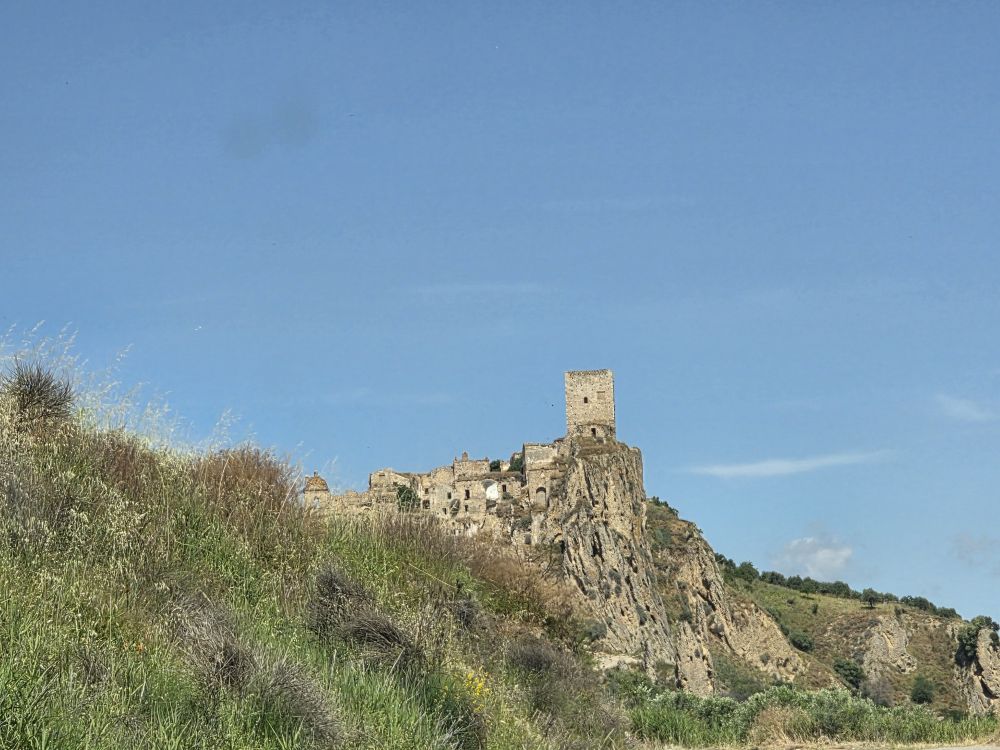
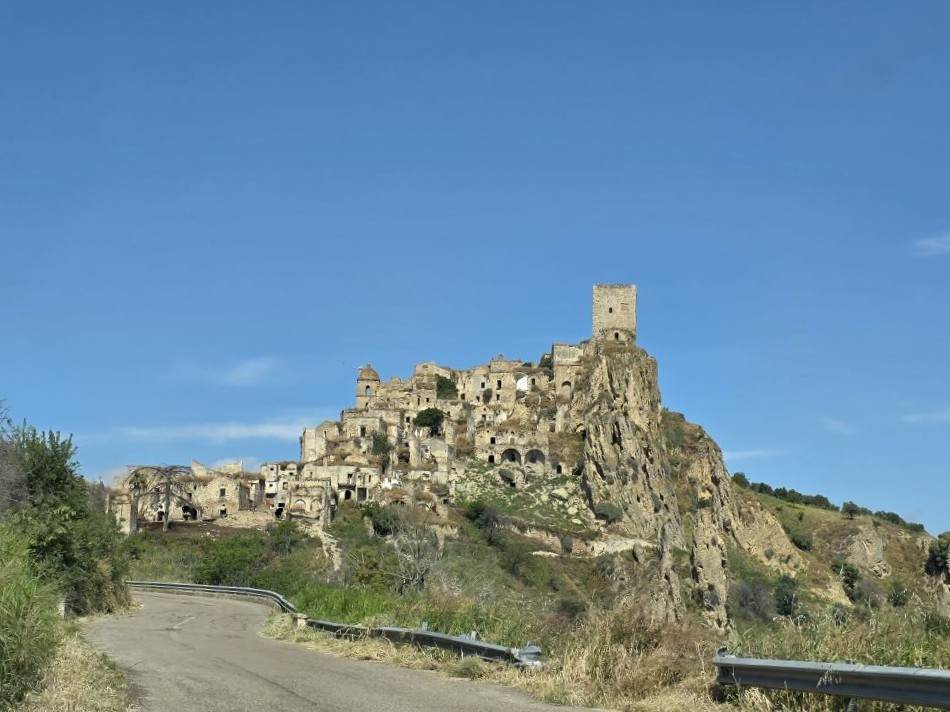
Successfully arriving at the ticket office with 15 minutes to spare before our 10:30 tour time, we check in, get our time to return to visit the “Emotional” museum, then hoof it up the hill to the entrance to Craco where we were the last of 6 to arrive for our tour (we could drive or walk – what else would we choose? In hindsight, we probably should have driven so we could be more timely.)
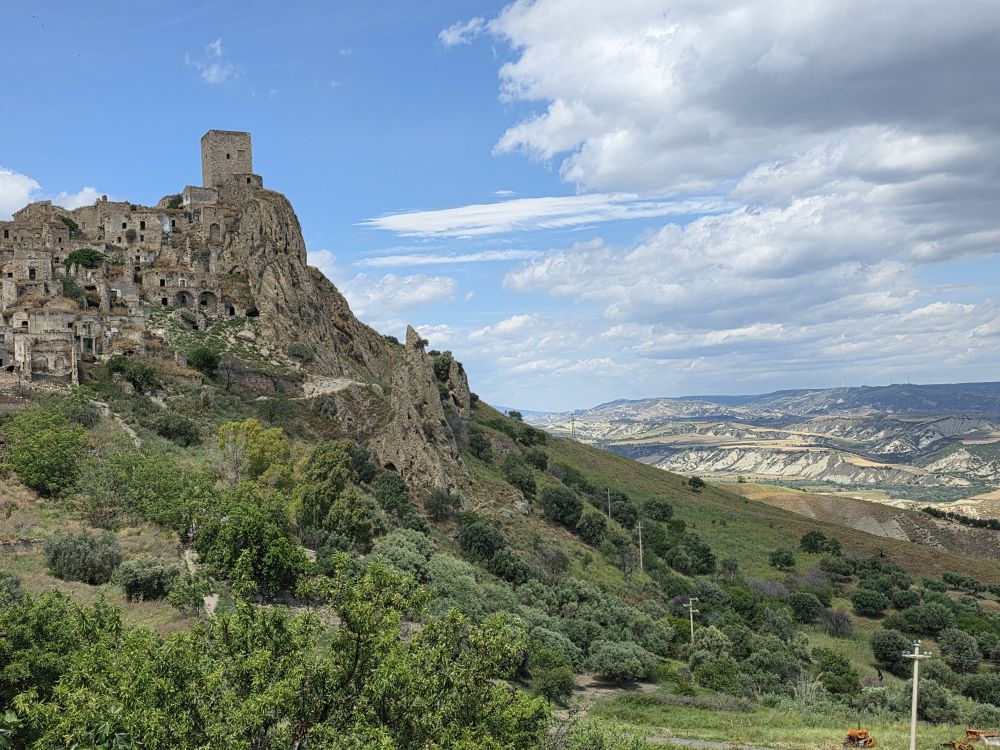
The origins of Craco date back to the 8thC BC, however the community really prospered beginning in the Middle Ages, experiencing a period of growth and wealth that ended in 1500 as the city was passed from feudal lord to feudal lord. Perched on a 1300 foot cliff, Craco was a defensive stronghold, and while prosperous, also was tormented by feuds, wars and civil uprisings, being attacked repeatedly until the unification of Italy in 1861.
The next century saw a decline in population due to poor farming conditions – many of whom emigrated to the US. Then in 1963, a violent landslide (said to be caused by infrastructure work on sewer and water systems) changed the history of the community forever. After the landslide, instead of building terraces with trees to block the sediment and reinforce the ground, the community decided to build retaining walls of reinforced concrete which soon began to collapse. In 1972 a flood sealed the towns fate, forcing the entire population to be transferred to Peschiera, a town downstream. The Irpinia earthquake in 1980 made the town uninhabitable, and it has been abandoned ever since.
By 2007, the place had become a disaster, falling prey to graffiti, looting and other acts of vandalism. The descendants of the emigrants in the US formed a non-profit organization to preserve the town and its culture, traditions and history. Thus, the fenced off, guided tour only ghost town. And the scene of our guided – with audio guide only – speed tour.
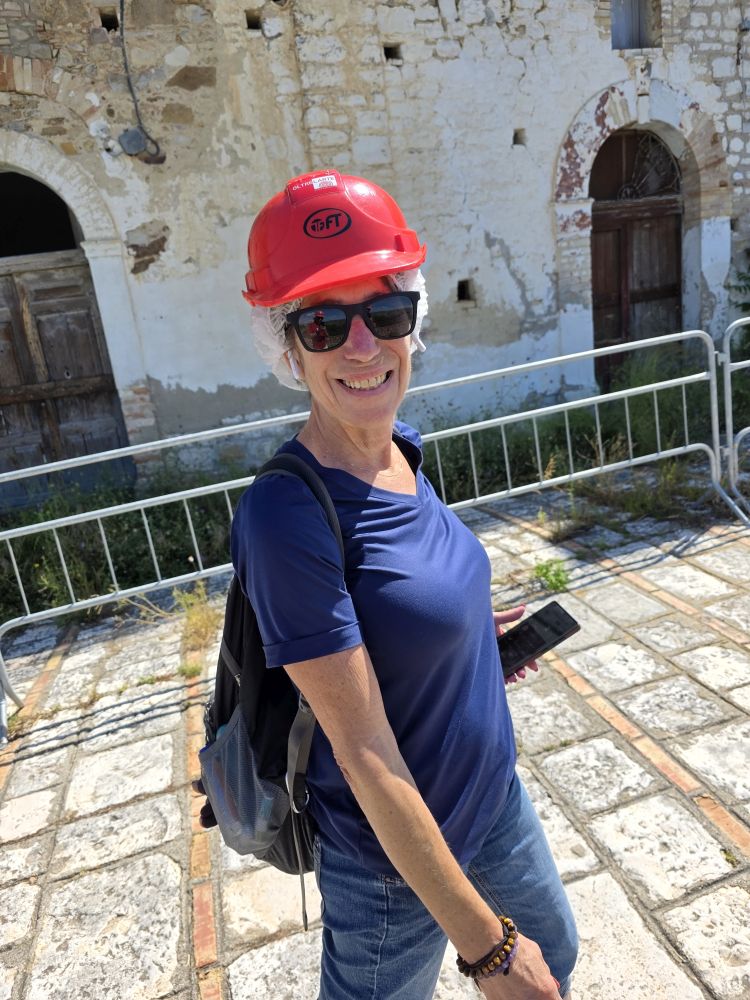
We don our hair nets and hard hats and follow our guide on a race through Craco. We all have our audio guides (there are 2 other Americans with us, and 2 Germans), as we race from one section of the town to the next, listening to our English orator explain what we are seeing. To be honest, it was a little hard to follow and retain – as there was so much information and our “guide” just stood around, more of a security guard/escort than a guide pointing out helpful landmarks.
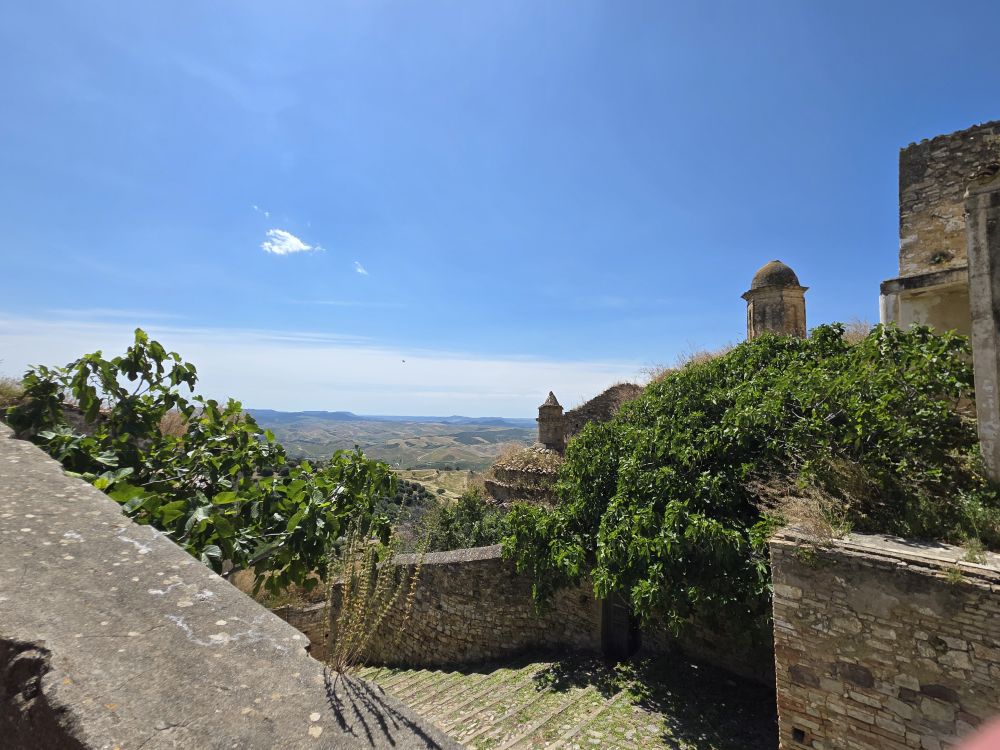
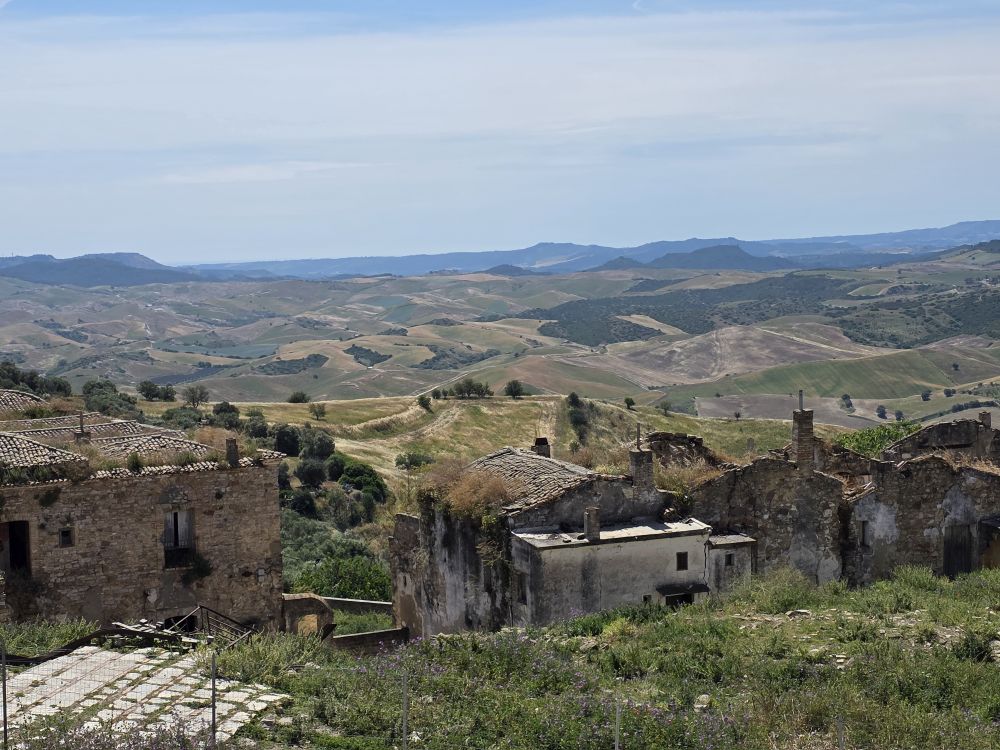
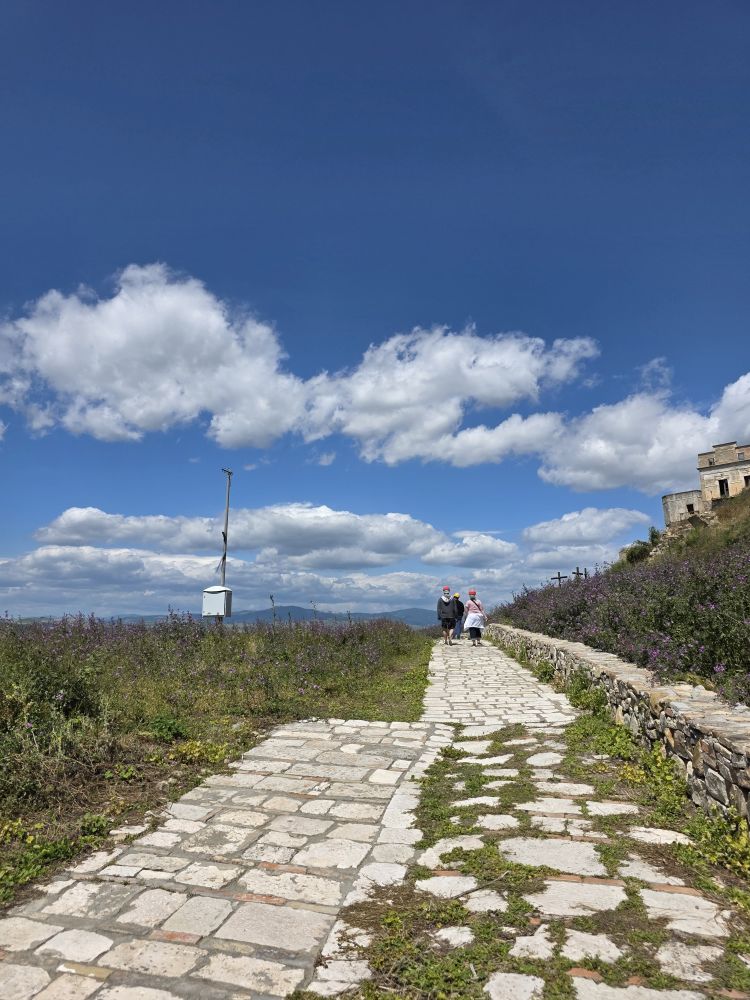
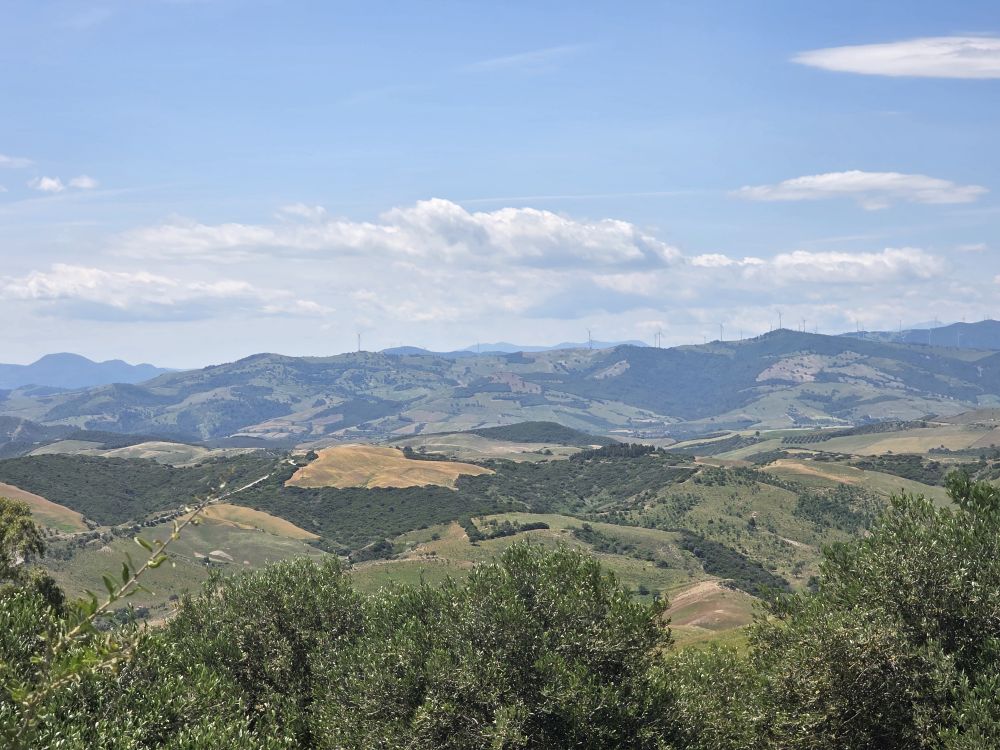
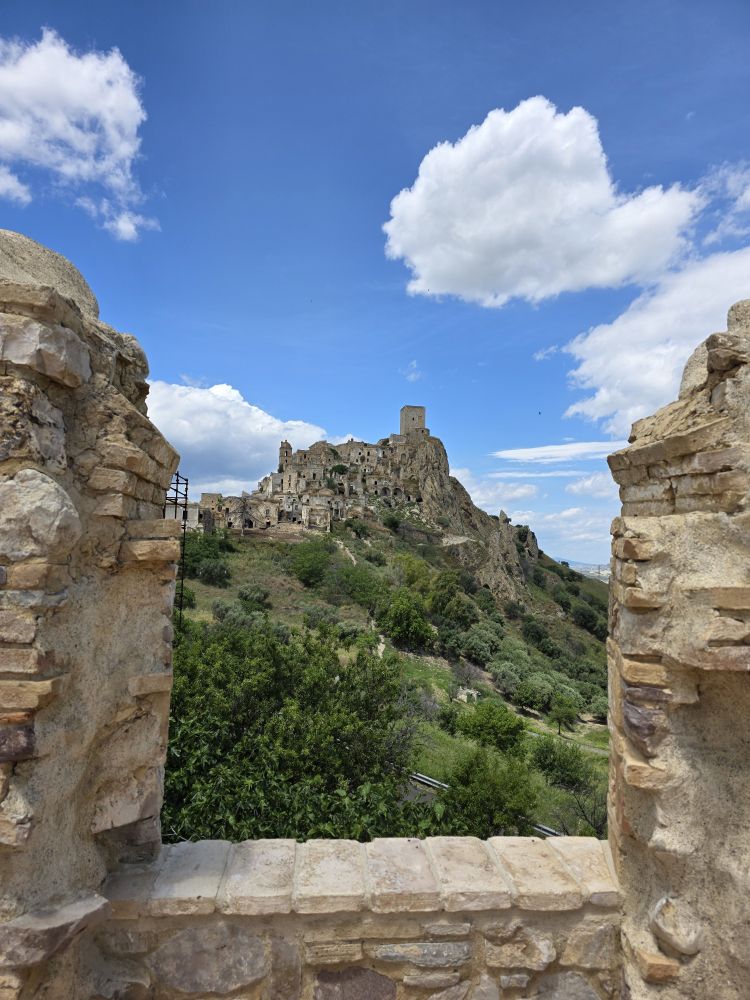
We start on the retail street with the remnants of all the shops lining the road, then make our way up the steep hillside with incredible views out over the valleys and up into the crumbling town.
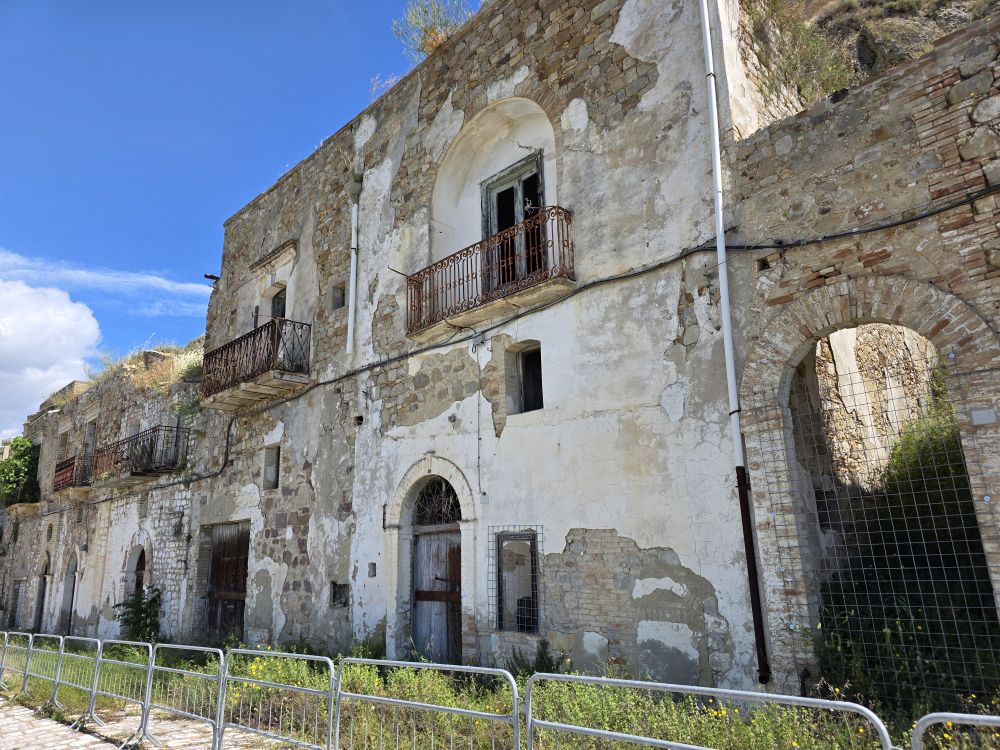
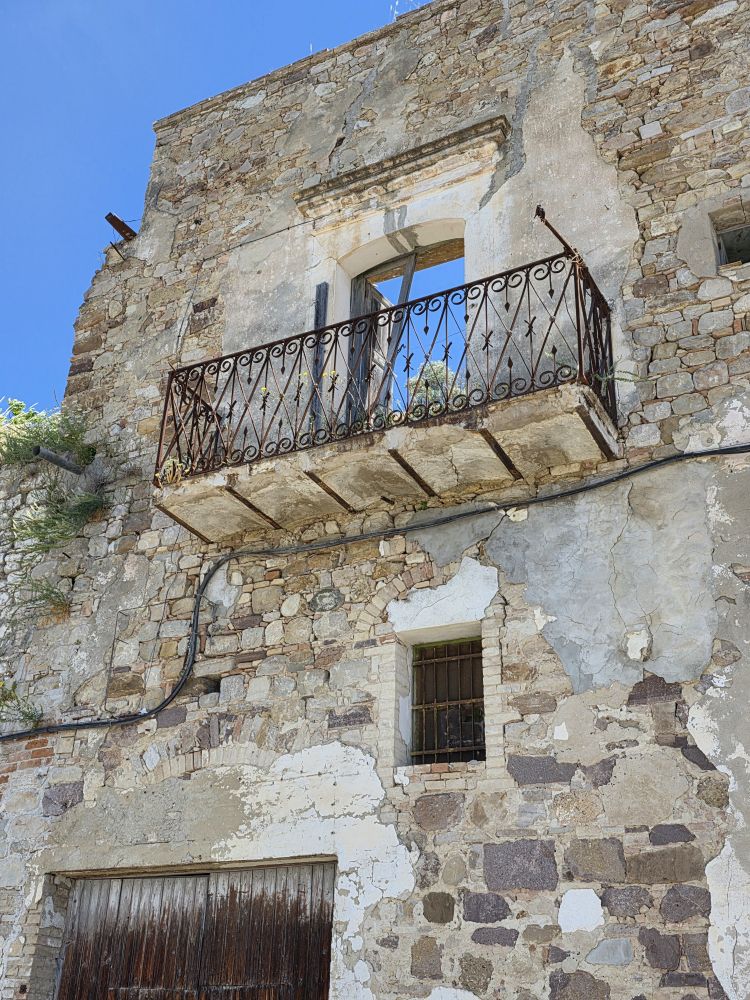
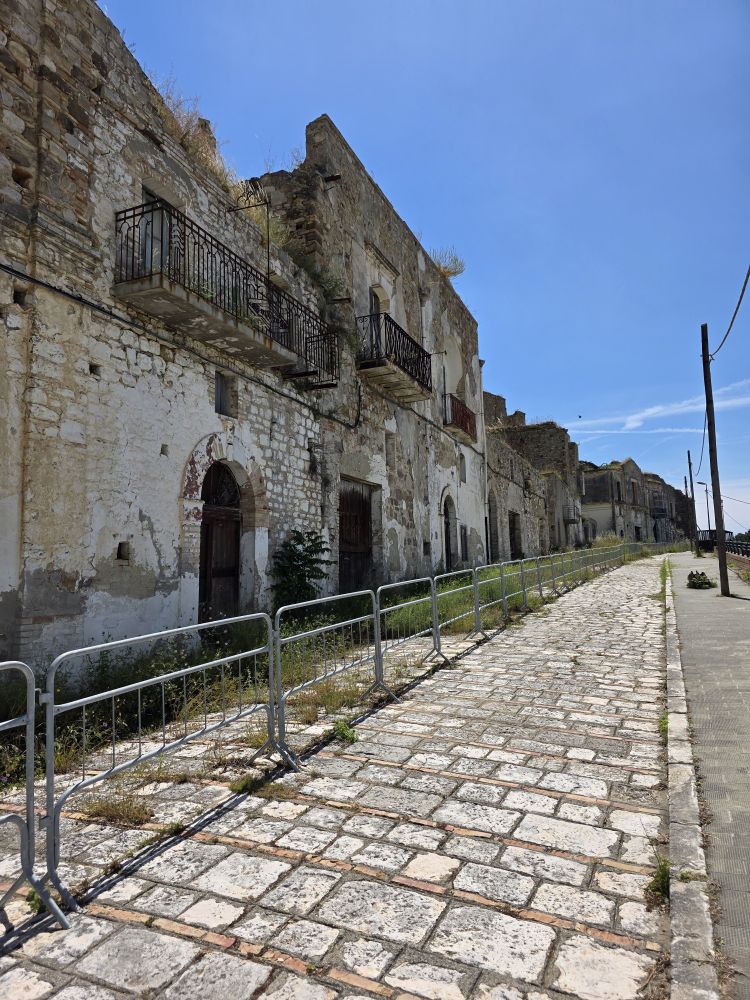
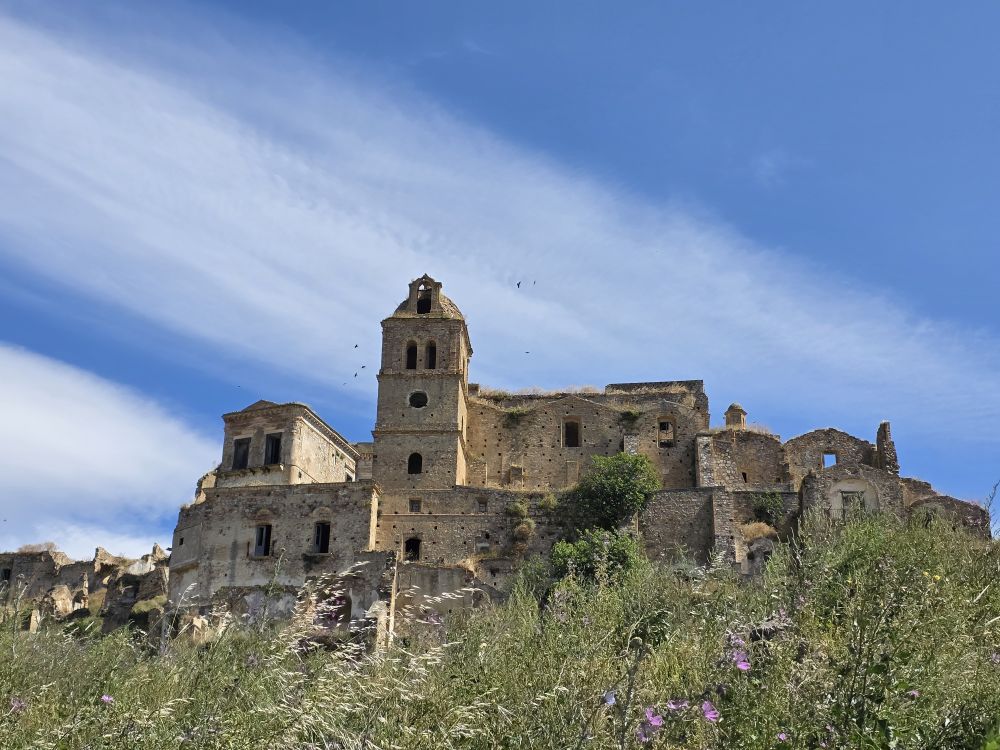
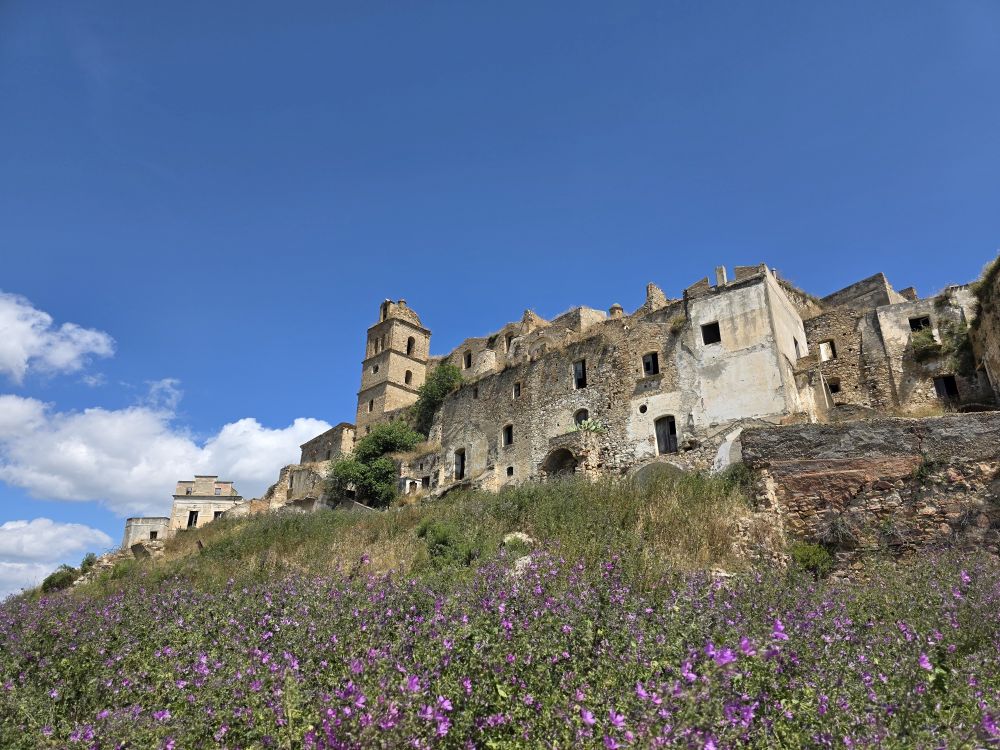
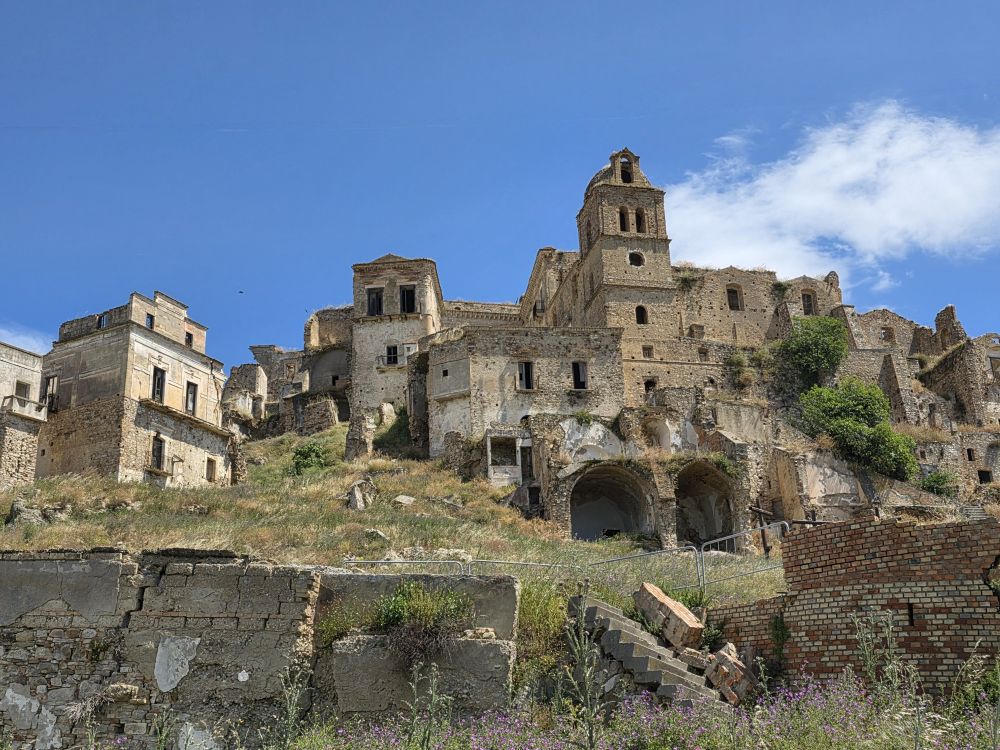
We stop at a viewpoint up to the church steeple behind two gaping archways that used to be part of the bakery and 3 wooden crosses that were used in the film “The Passion of Christ” that Mel Gibson created, starred in and produced.
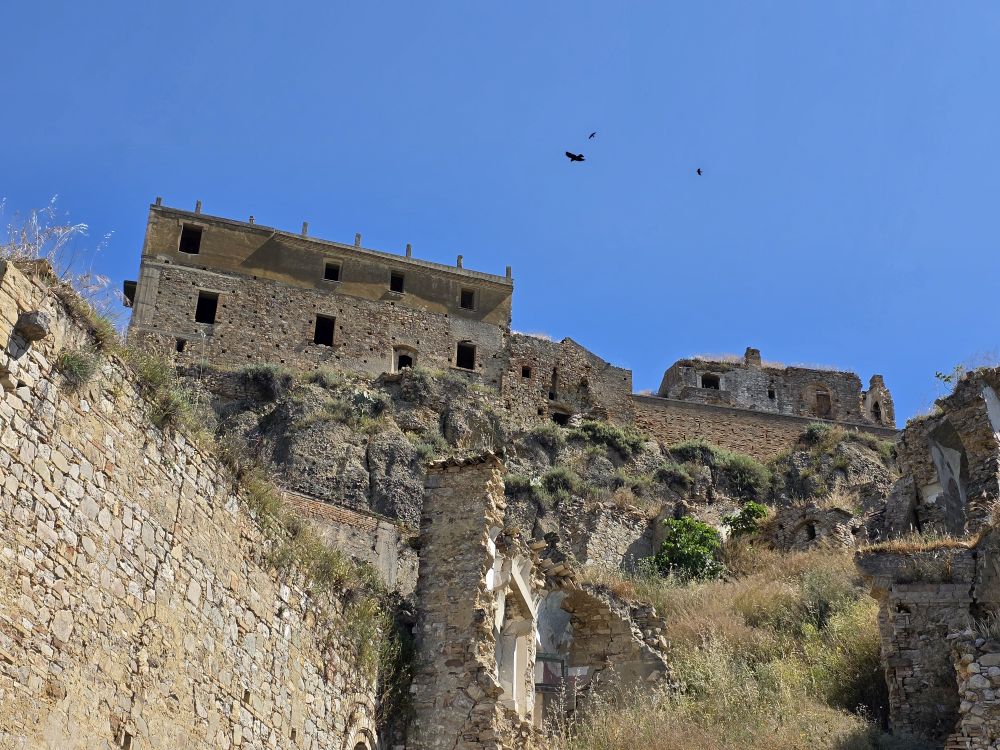
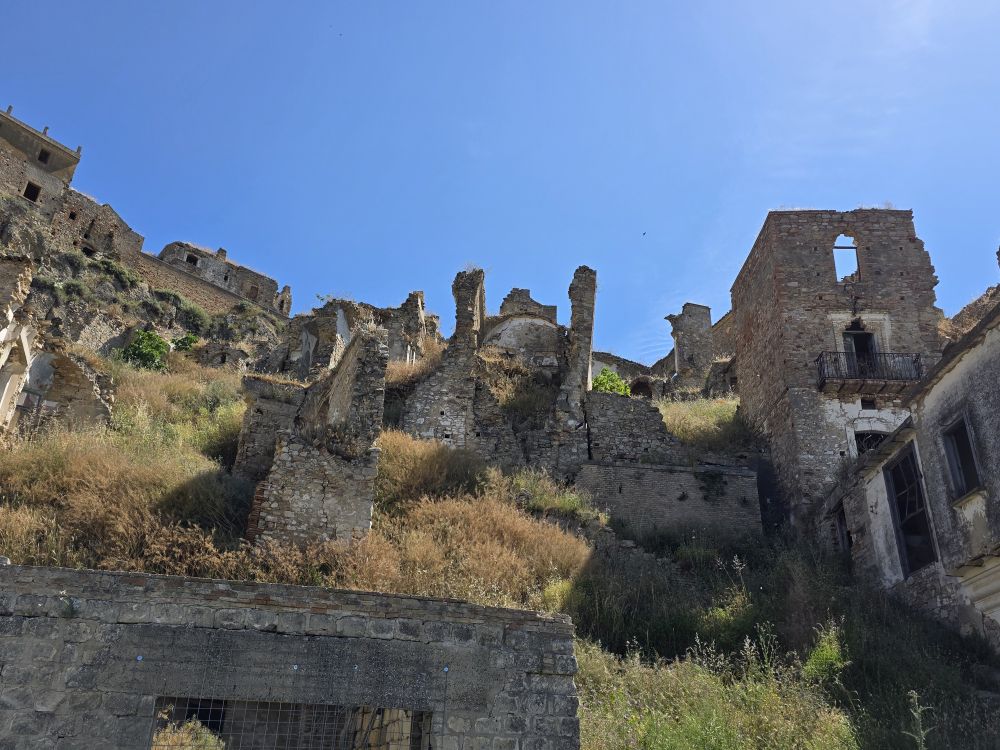
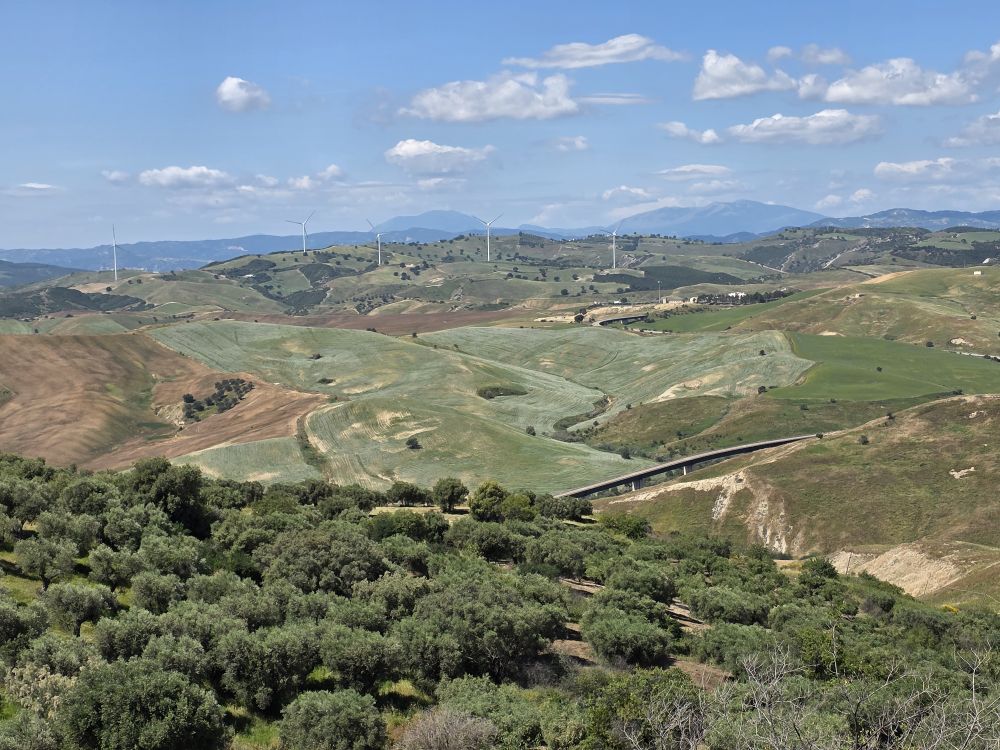
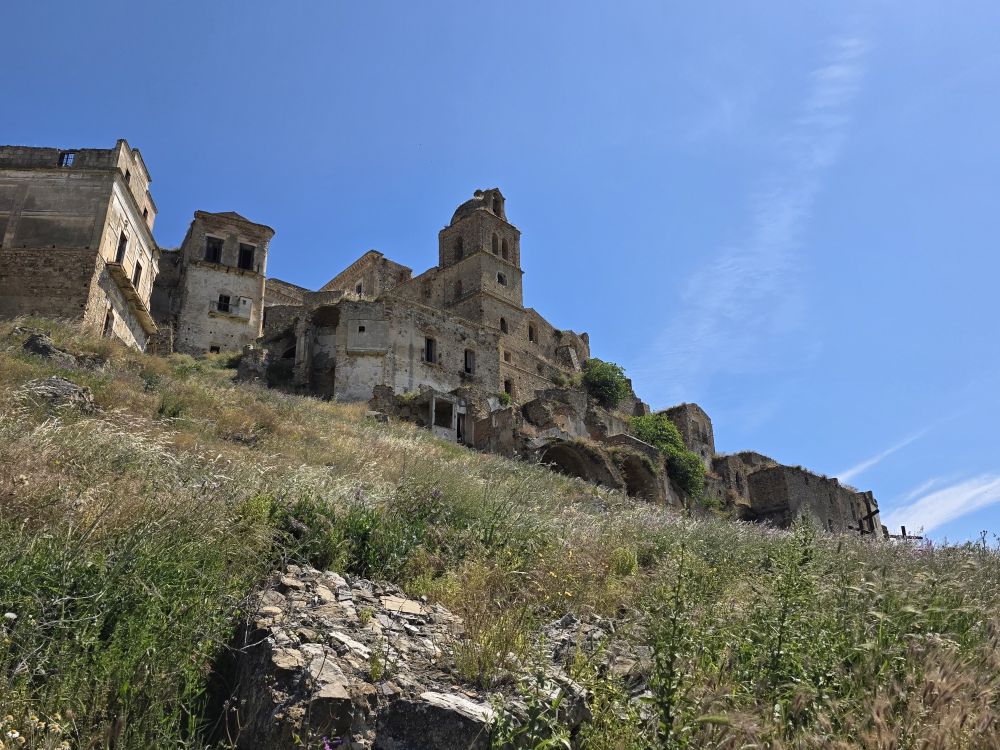
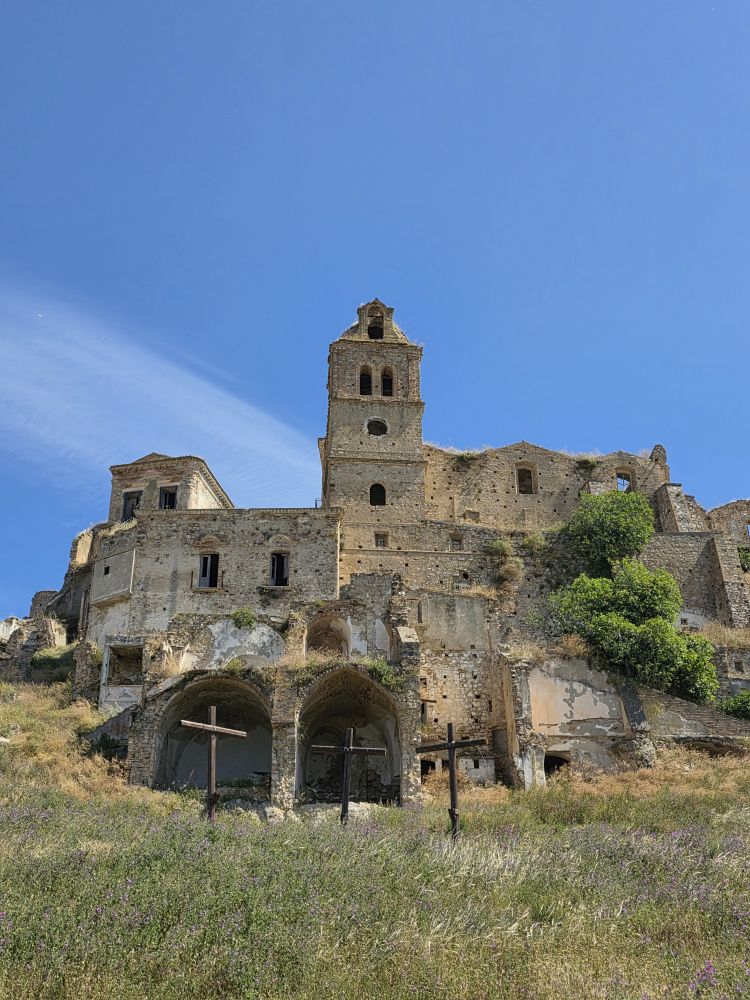
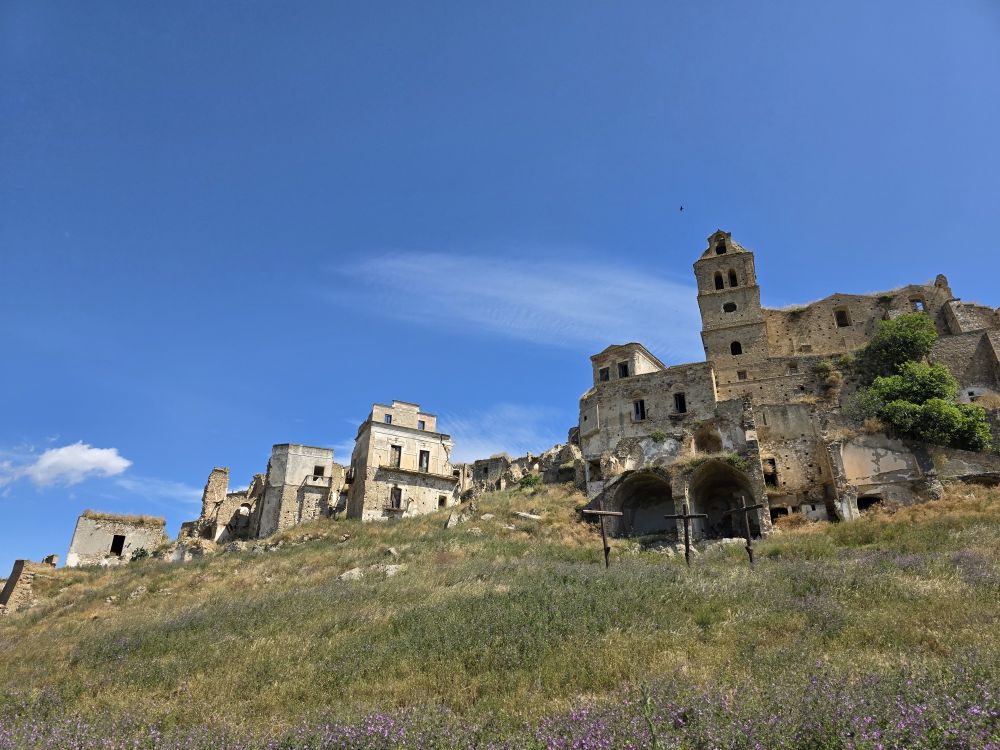
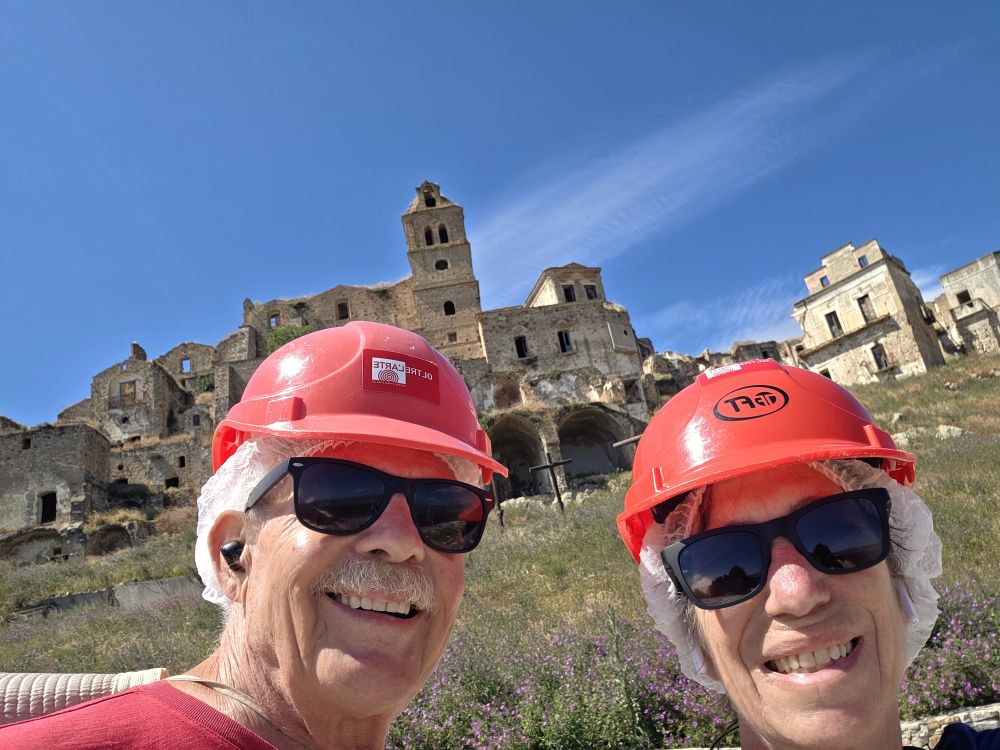
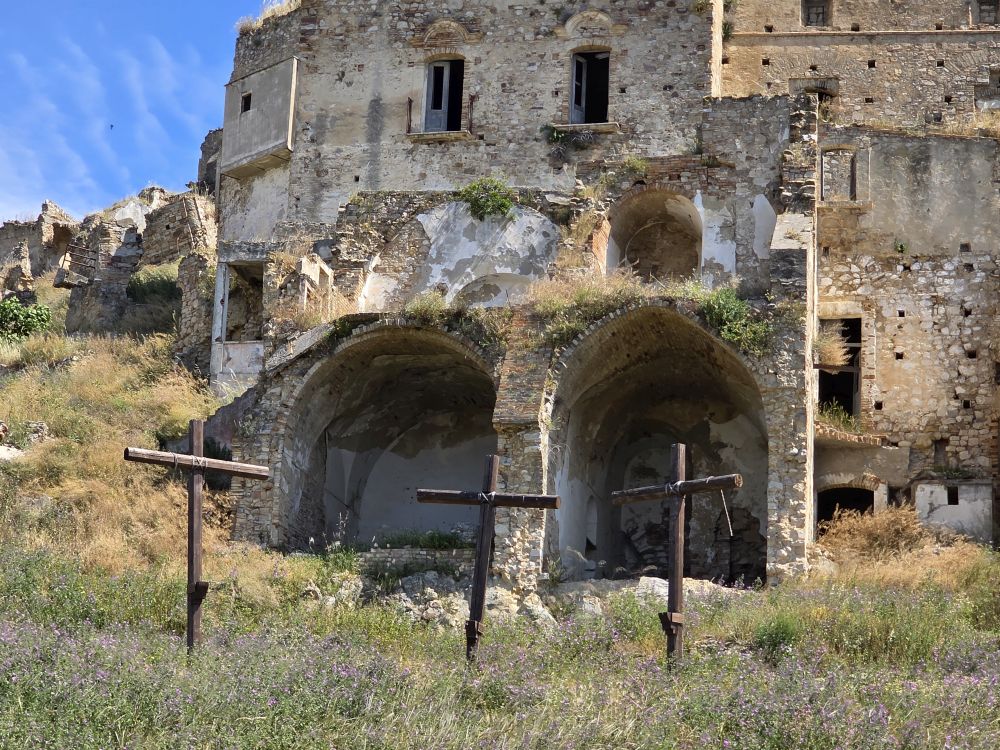
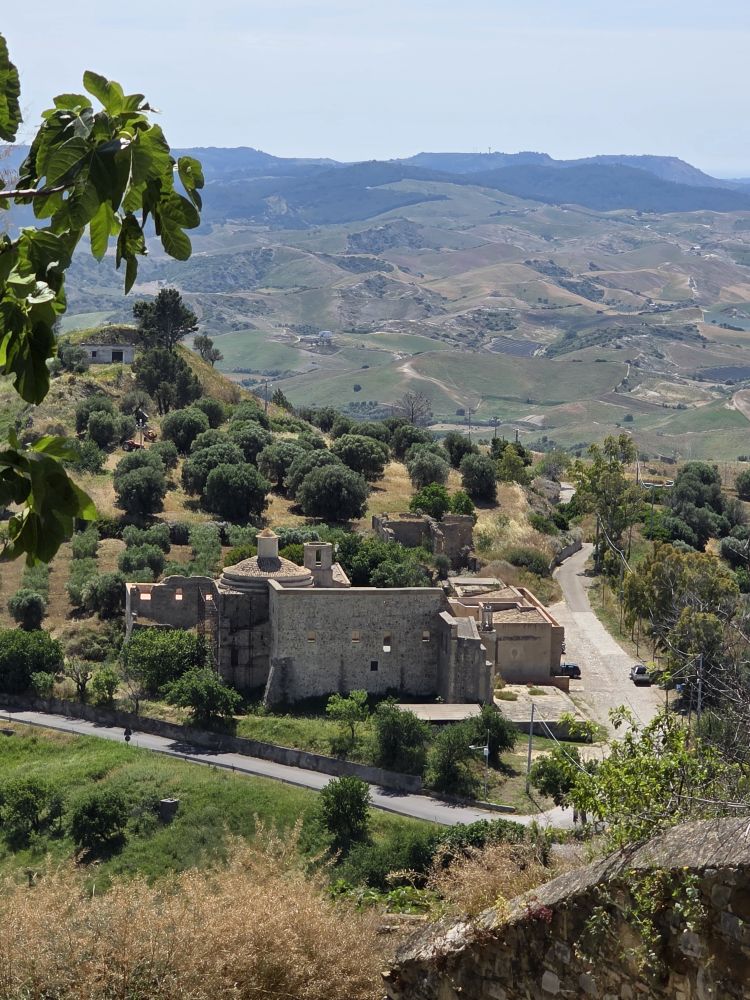
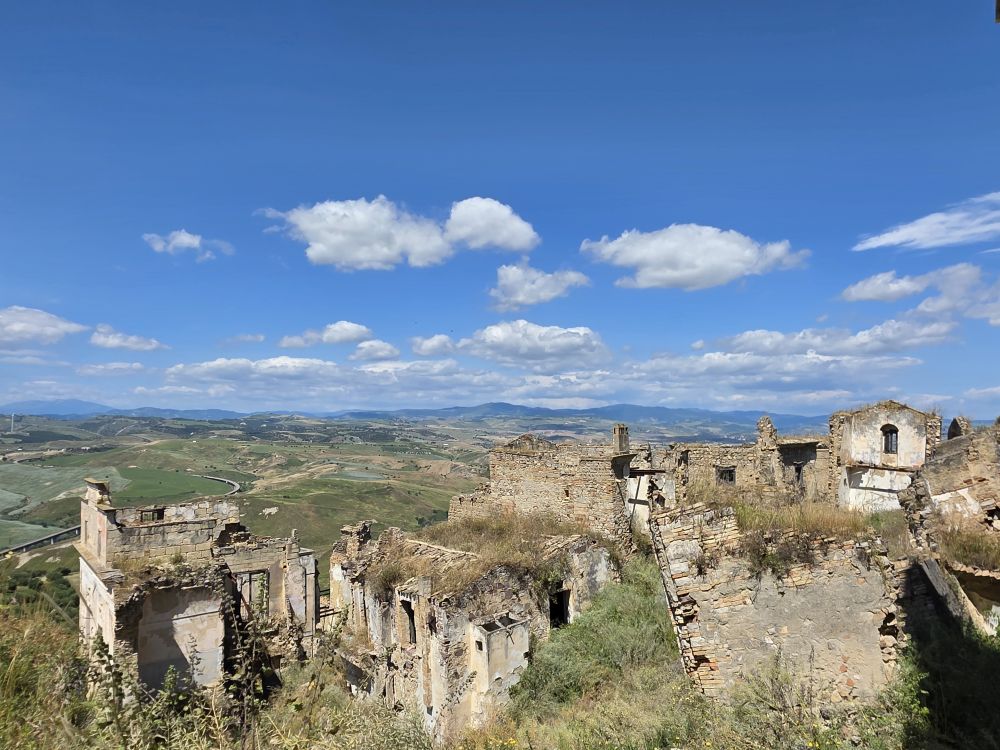
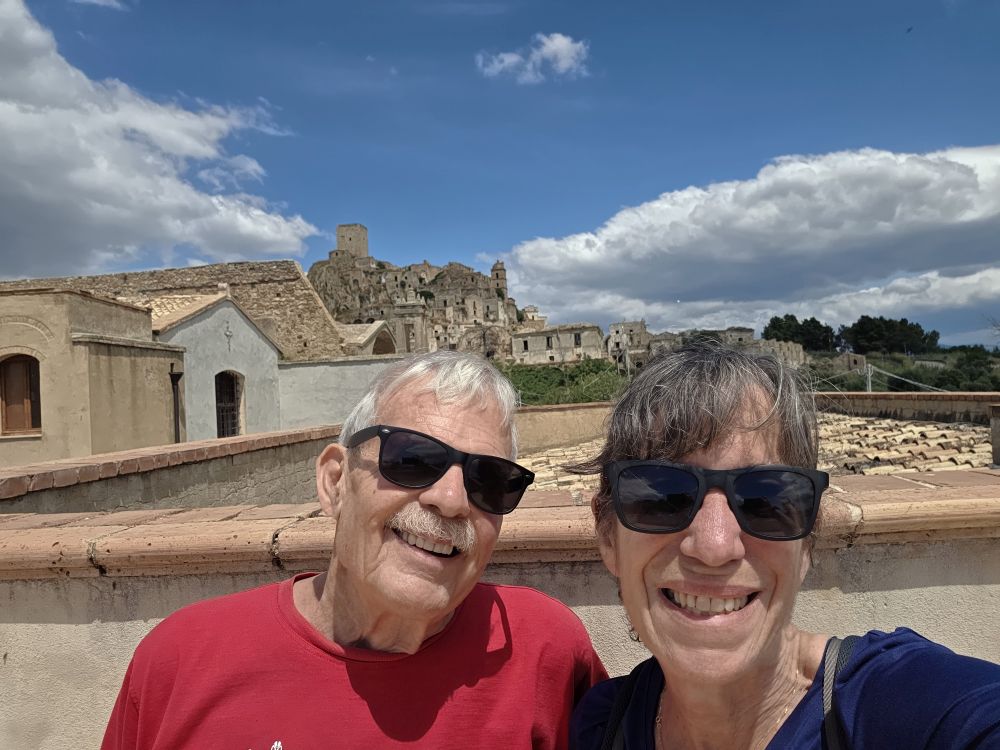
Continuing our hike up into the town, we pass more and more incredible buildings, plazas, stairs (oh yes, lots of stairs!) we stop at the Onorati Road, the route leading to newer areas on the lower level, typically belonging to the less well-off. The architecture, what remains, and the views are just incredible. We can’t get enough of the views across the countryside – including the ruins of the convent at the bottom of the hill, where the emotional museum is located.
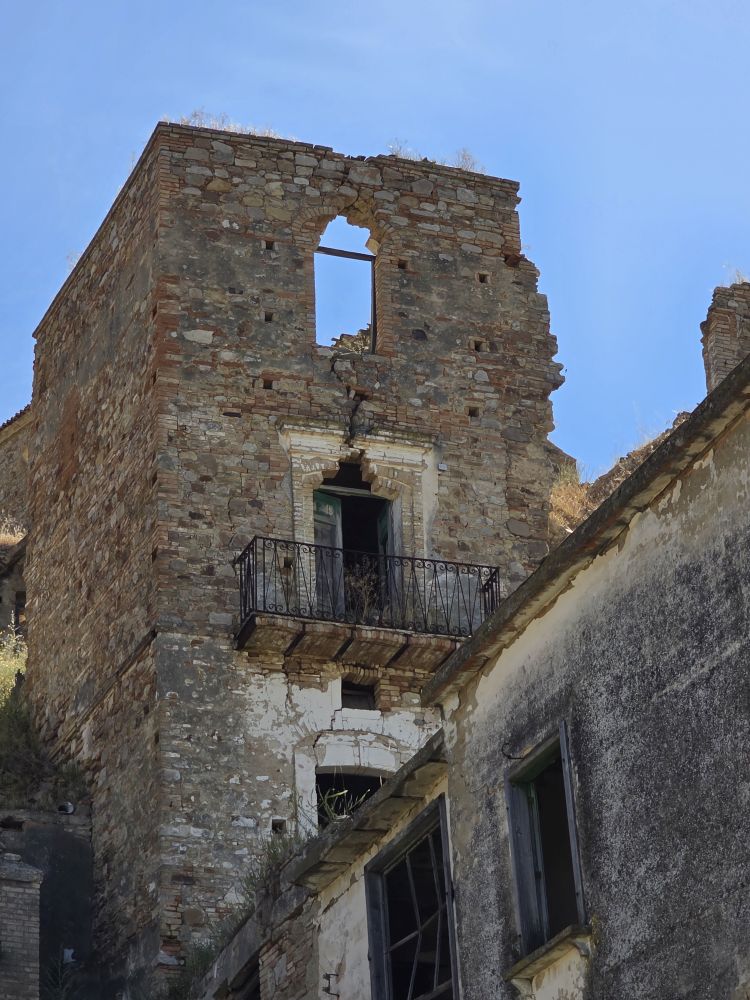
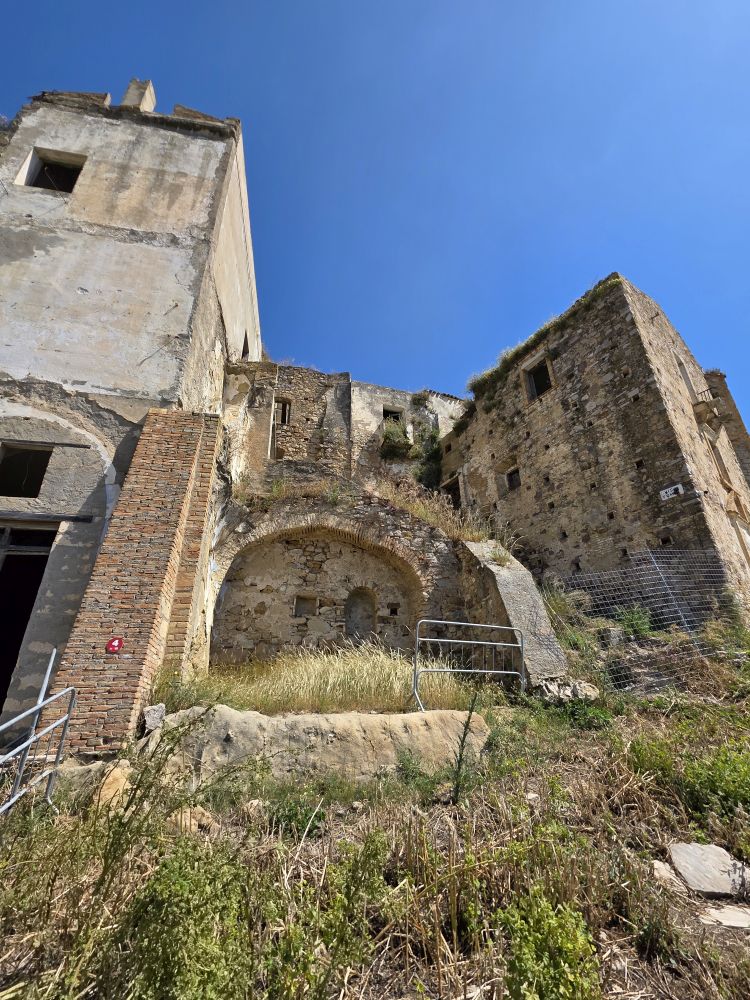
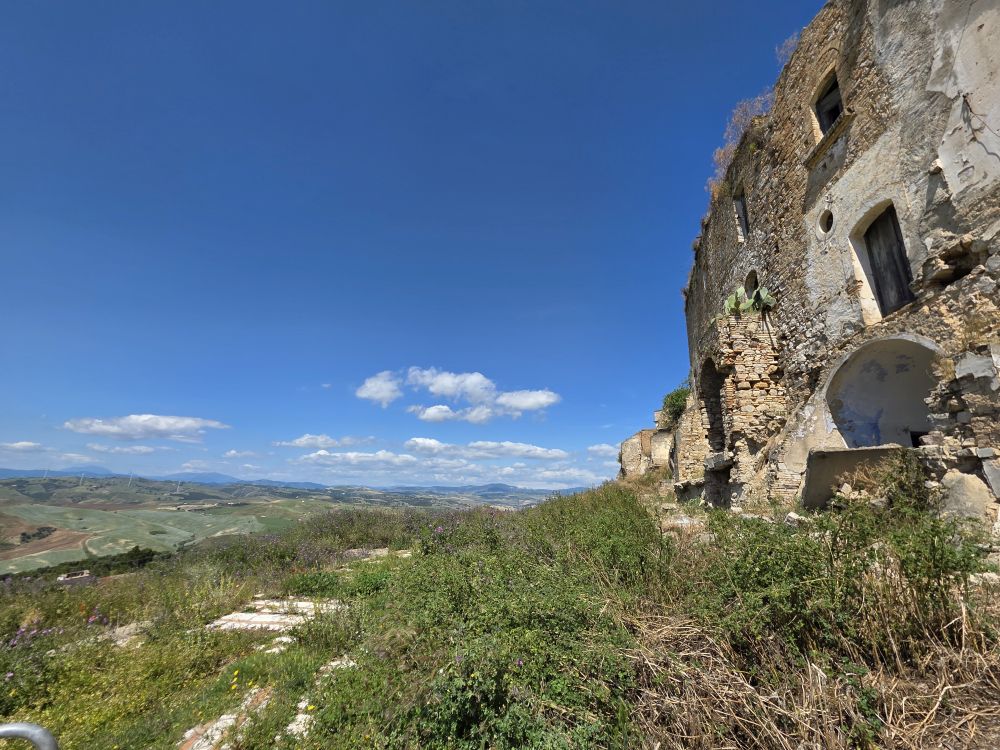
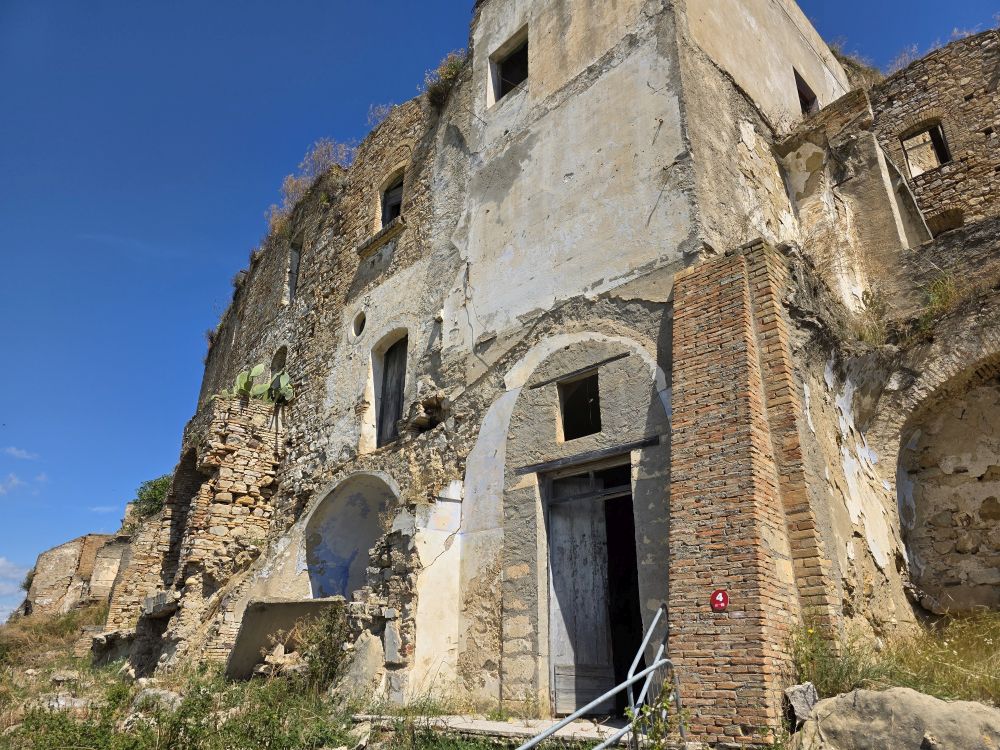
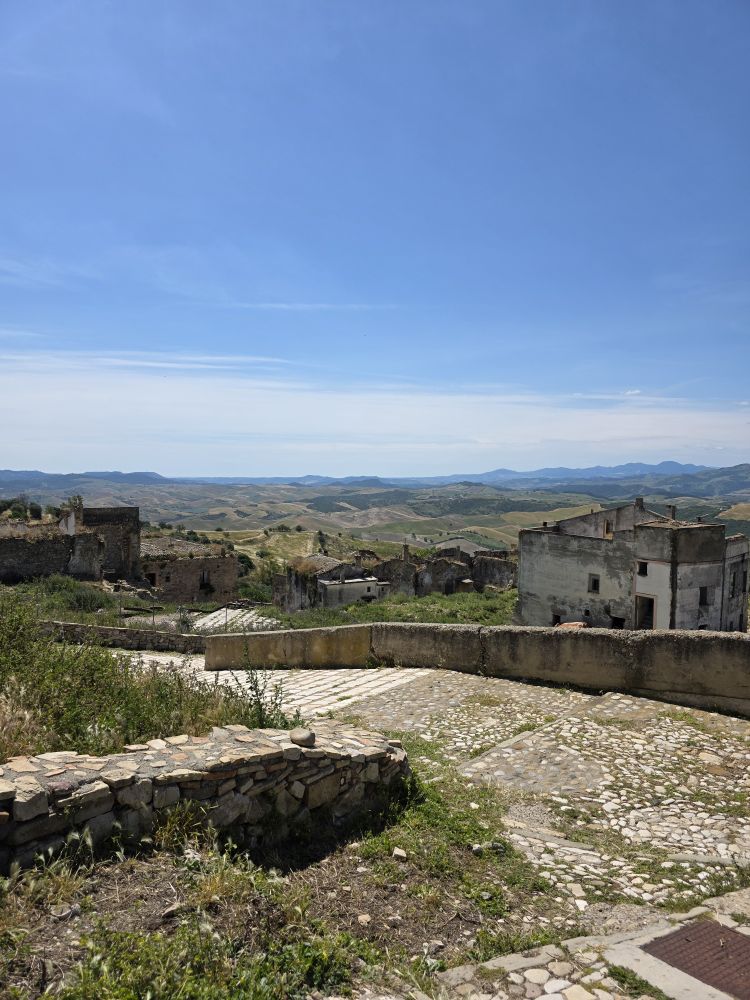
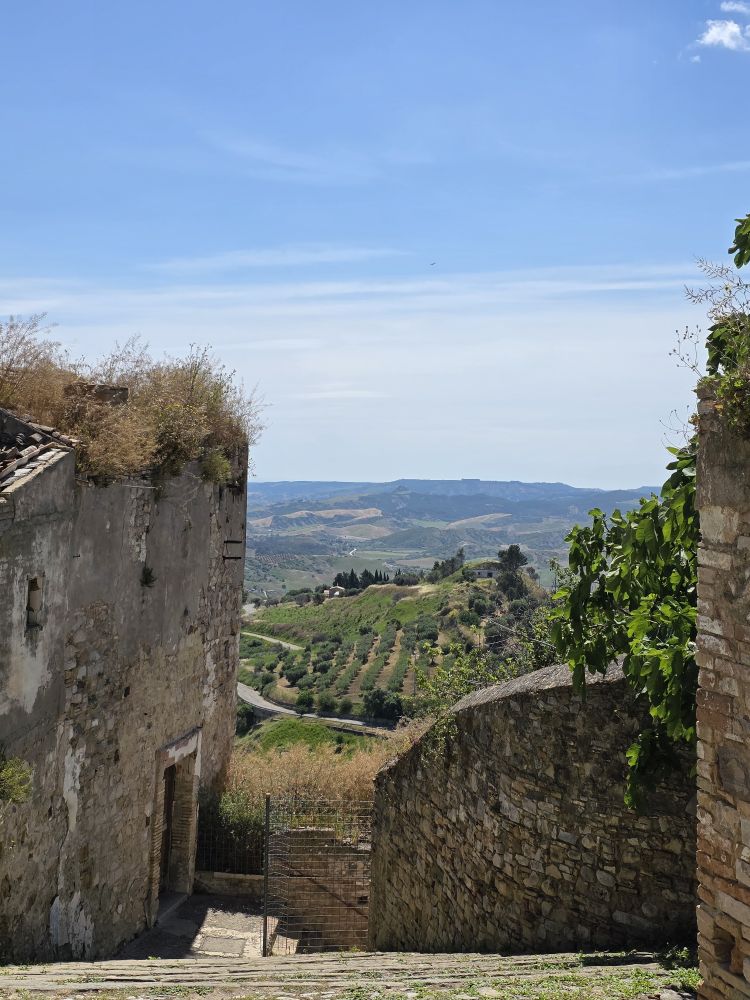
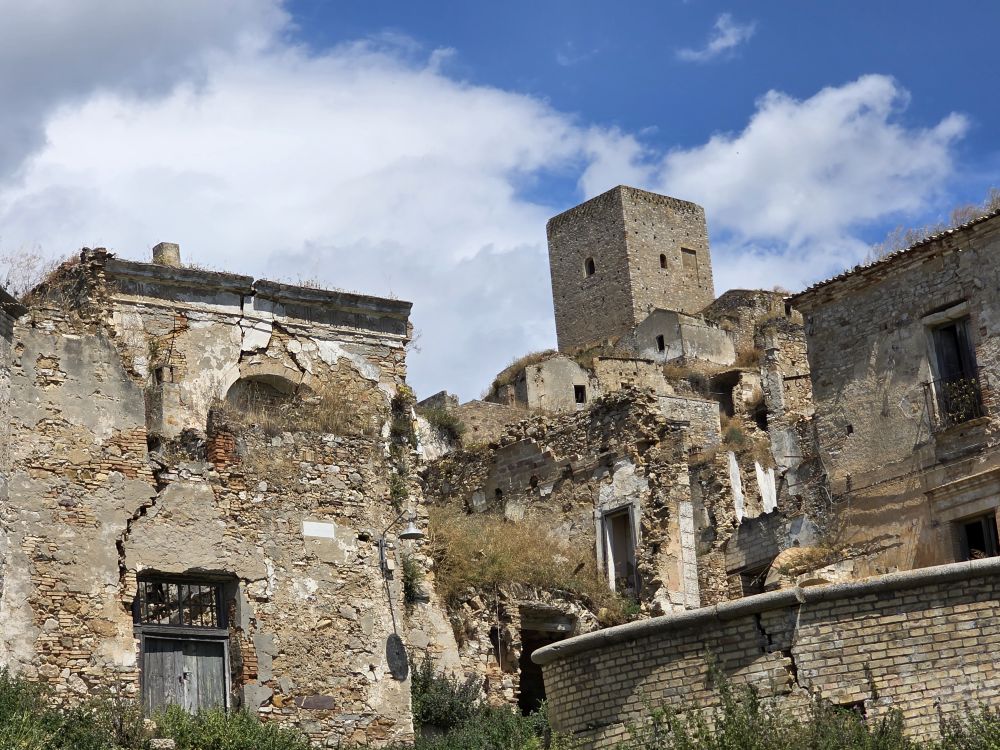
Climbing higher, we pass through the arched portal to Palazzo Grossi, one of the 4 main Palazzos in the town. Obviously too dangerous to enter, we can at least wander about the courtyard to view the wrought iron balconies still in place and the outstanding cornices supporting a large upstairs terrace. And the views. Always the views.
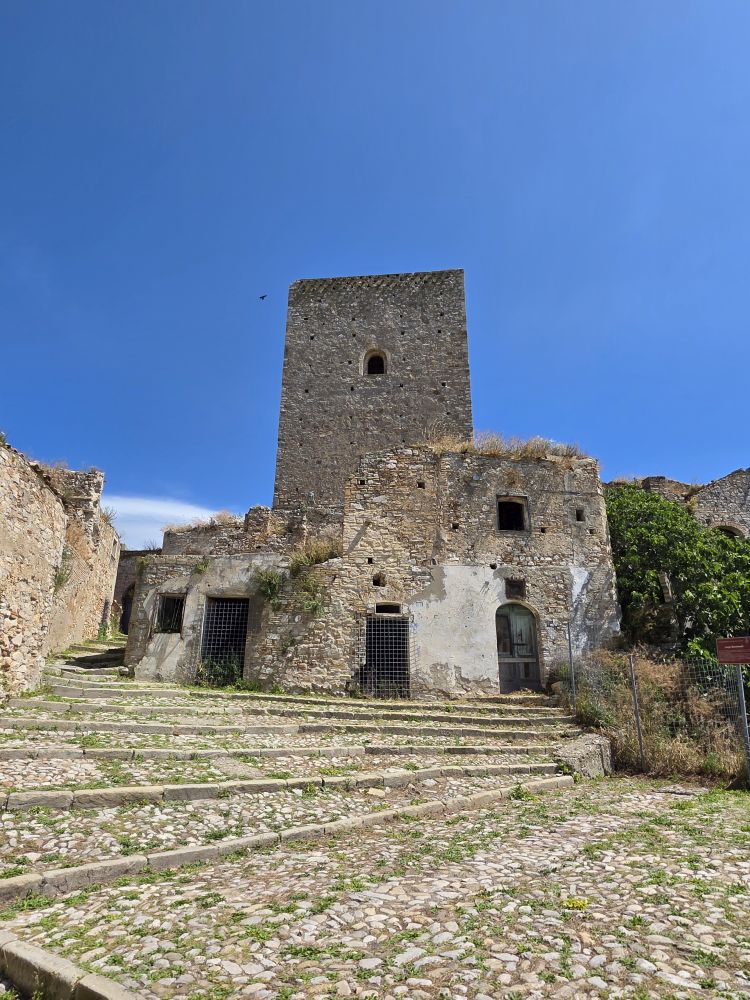
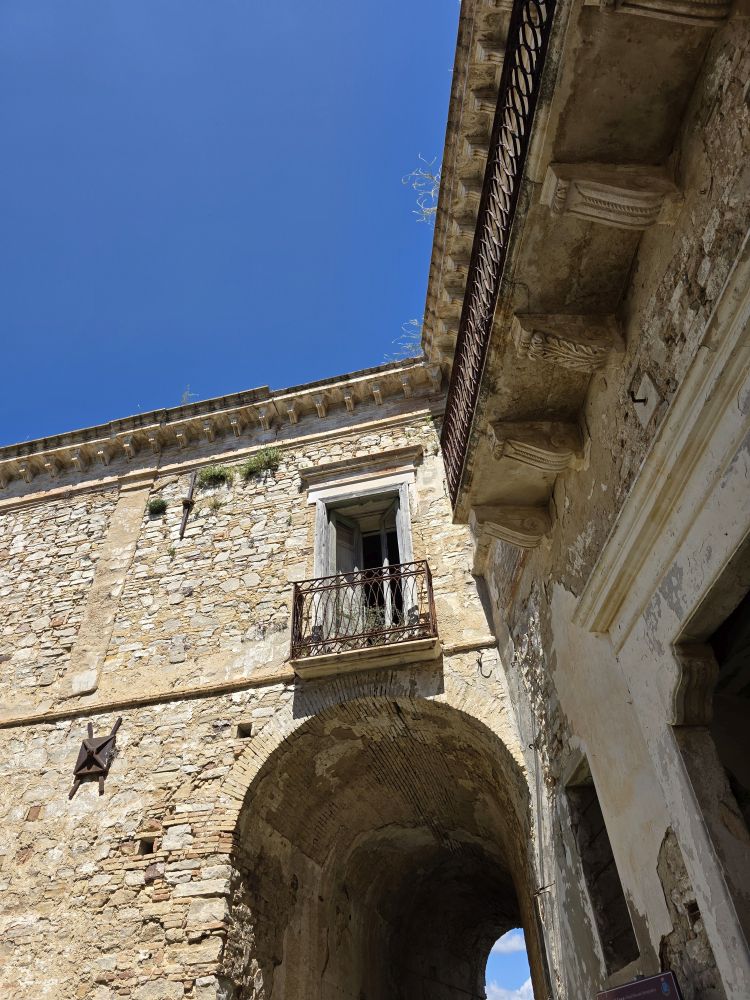
The Palazzo is next to the Chiesa Madre di S. Nicola, the “mother” church of the town, which we “visit” next. Built in the 11thC, then expanded in the 16th and 18th Centuries, the church now stands stripped of all its decorative elements, including the carvings on the entrance, which were stolen, but then recovered and restored in 2015. Again, there is no going inside any of these edifices, but we can view the interior through a fence that blocks access.
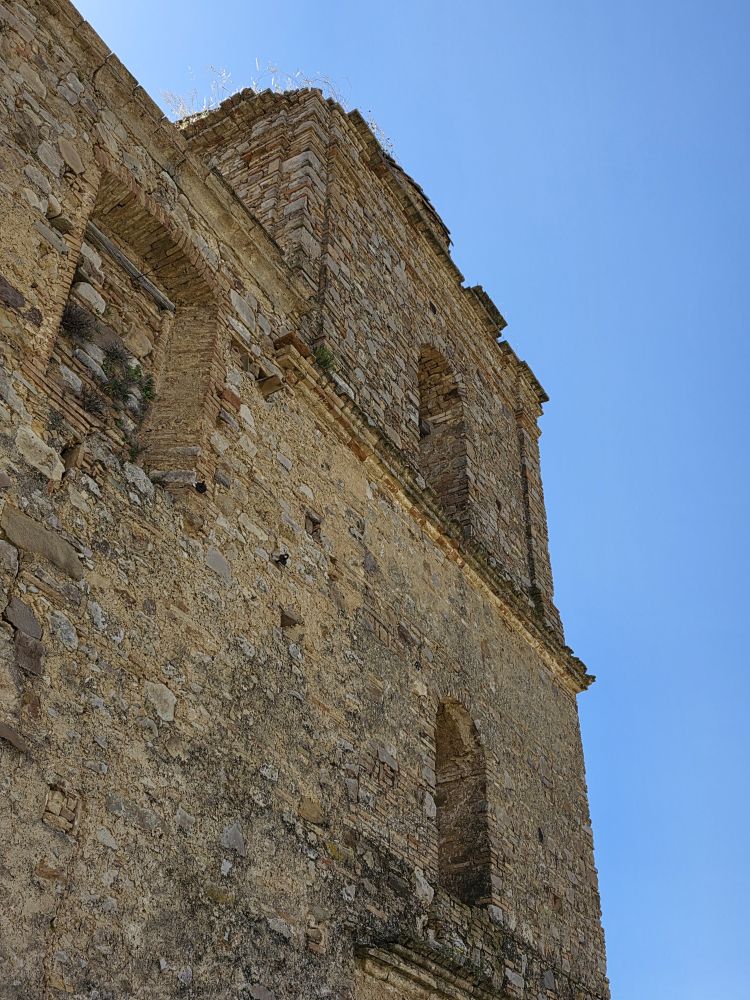
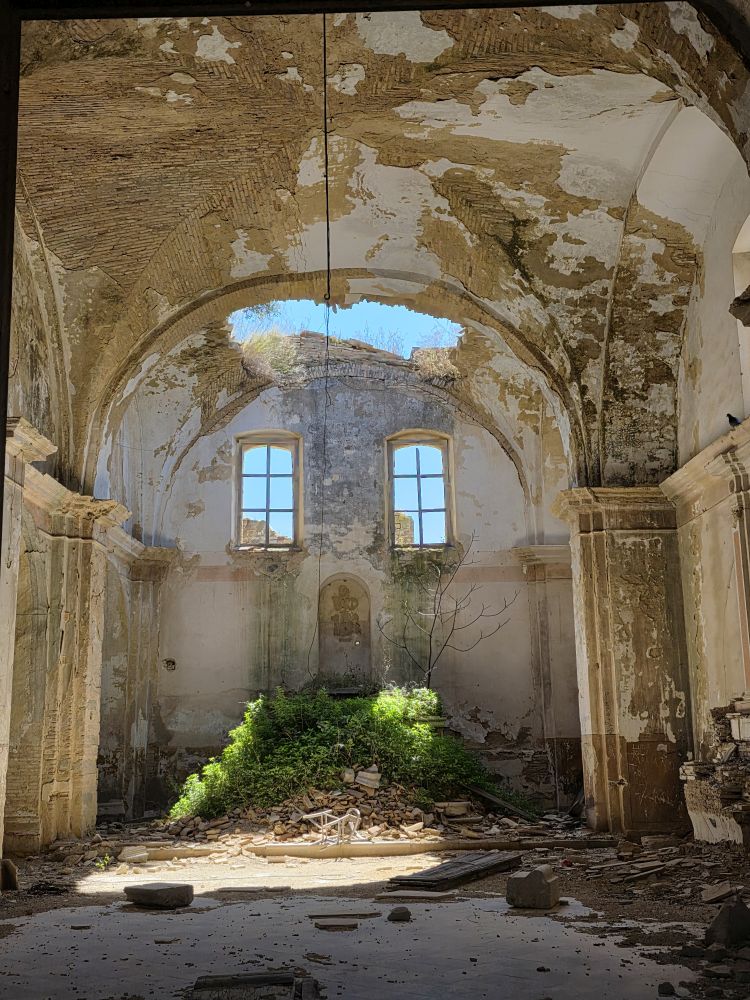
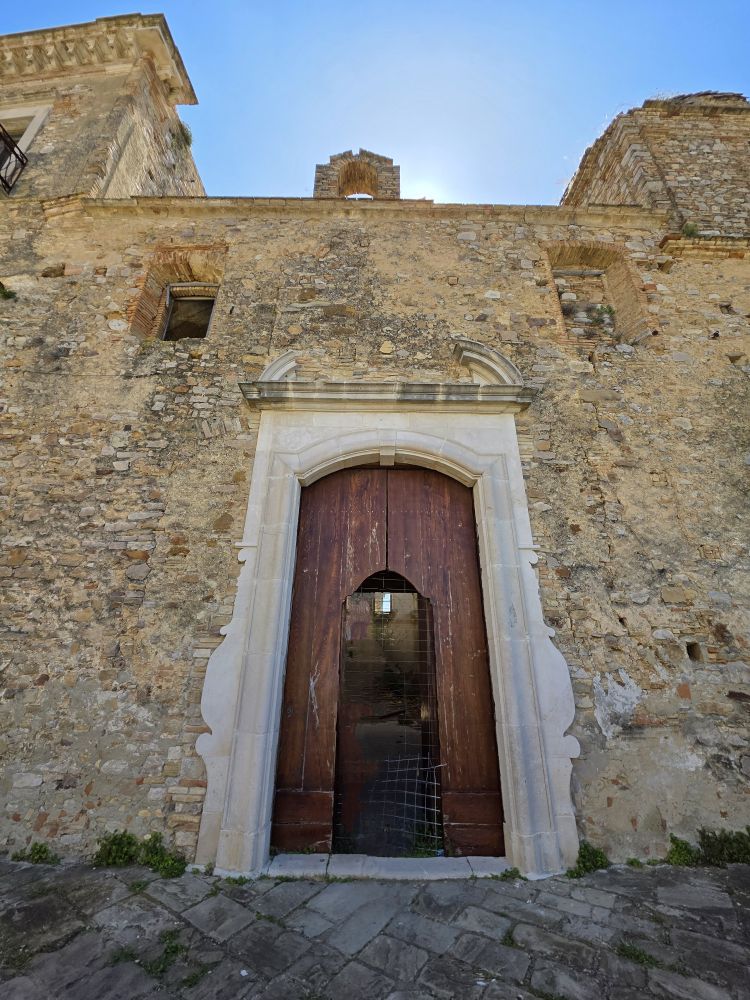
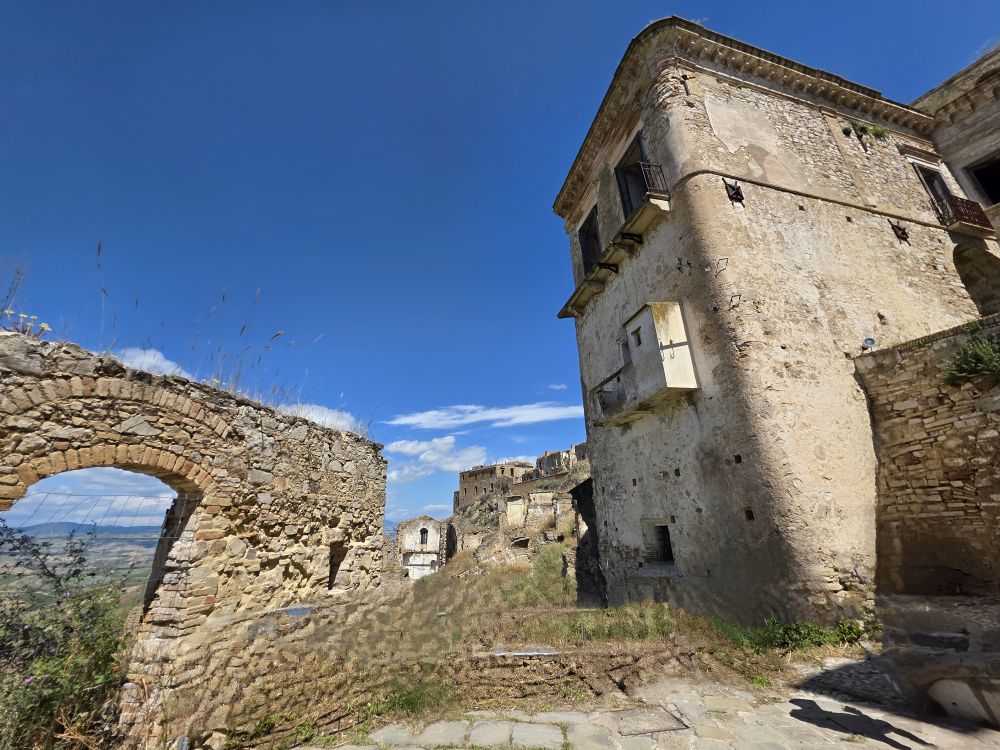
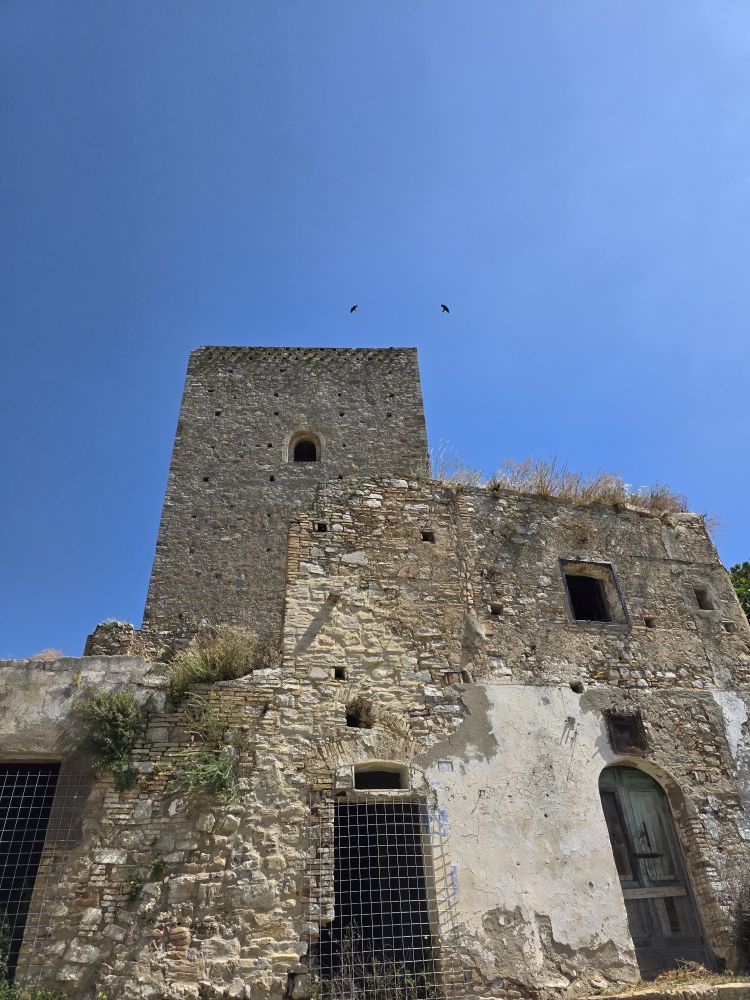
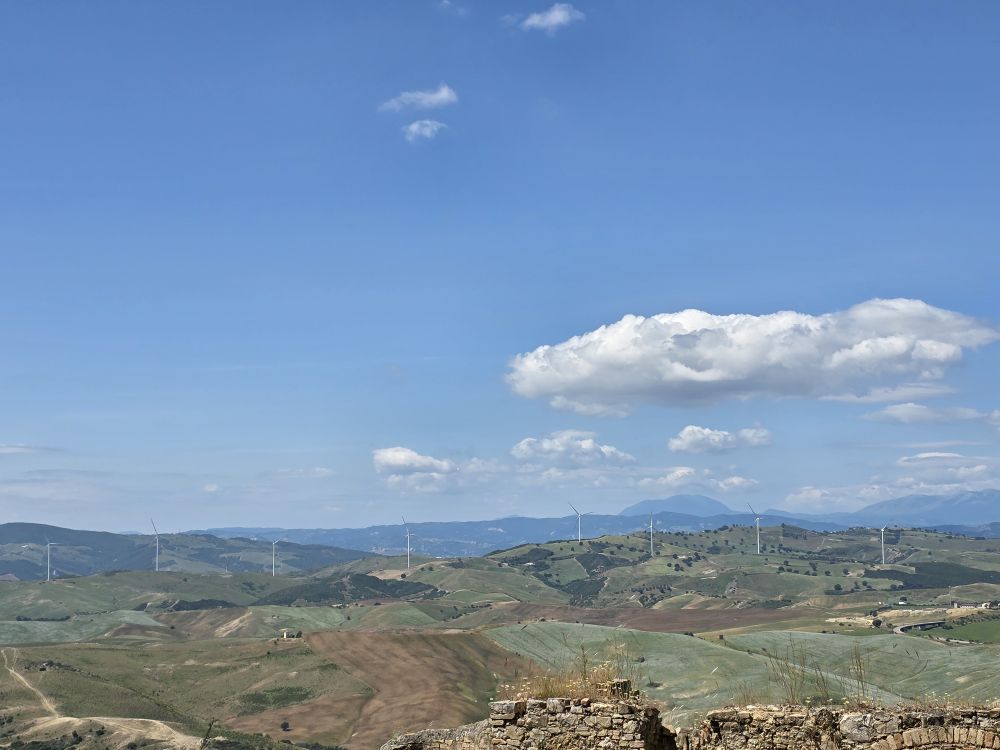
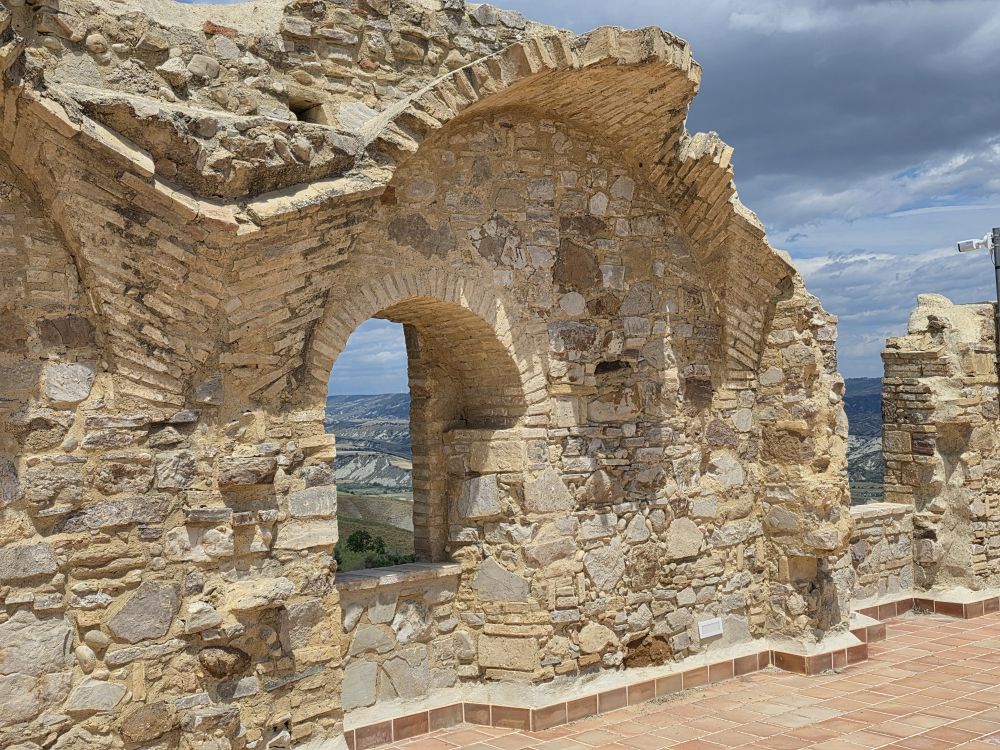
Passing by the Largo Machiavelli, the heart of the village and hub between the main urban areas of the original settlement, we head to our final stop: the Torre Normanna. The Norma Tower, built in the 12th C has served as a defensive lookout, a space to hold prisoners and finally a water tower complete with water tank. Presiding stately over the entire town not to mention the surrounding countryside, it provides us with amazing views out over the farmland and to the horizon beyond.
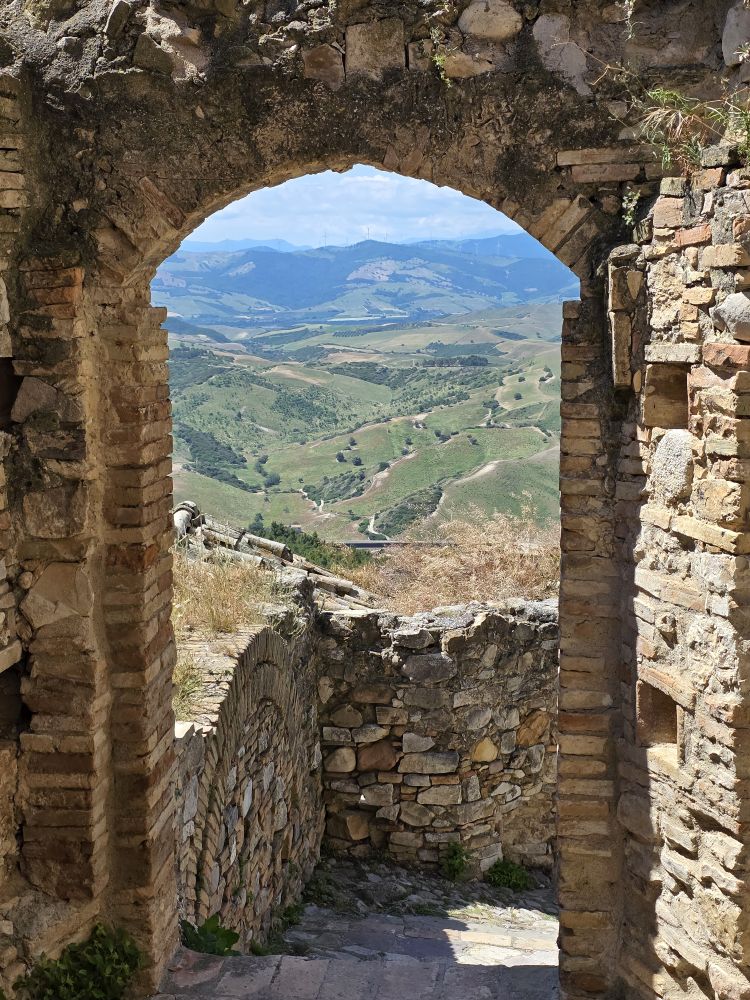
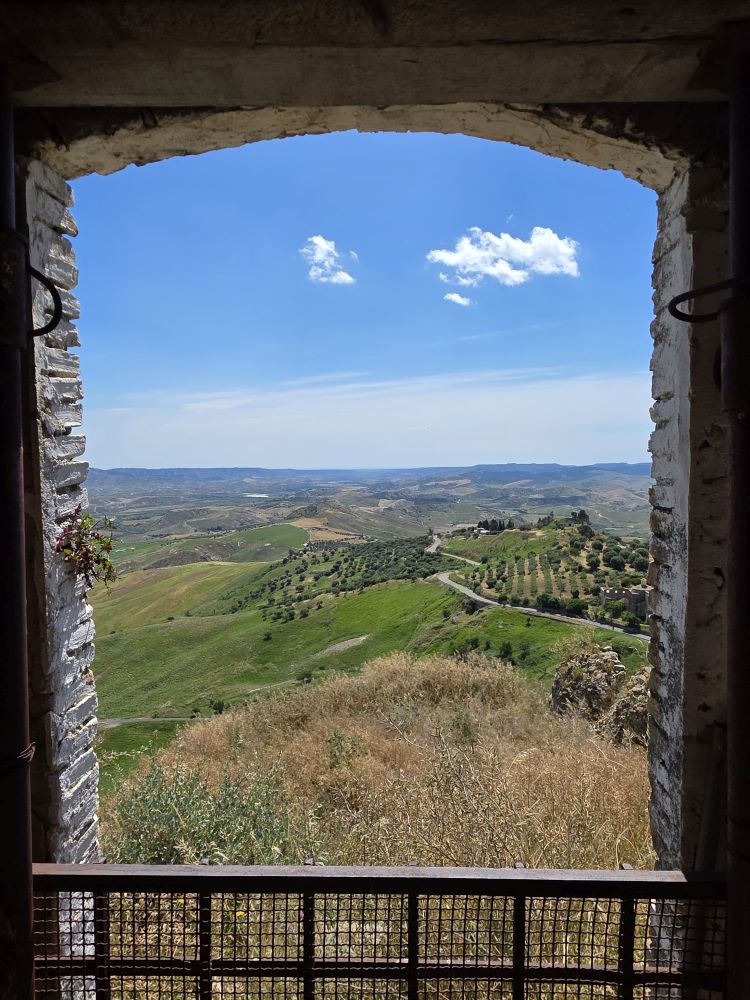
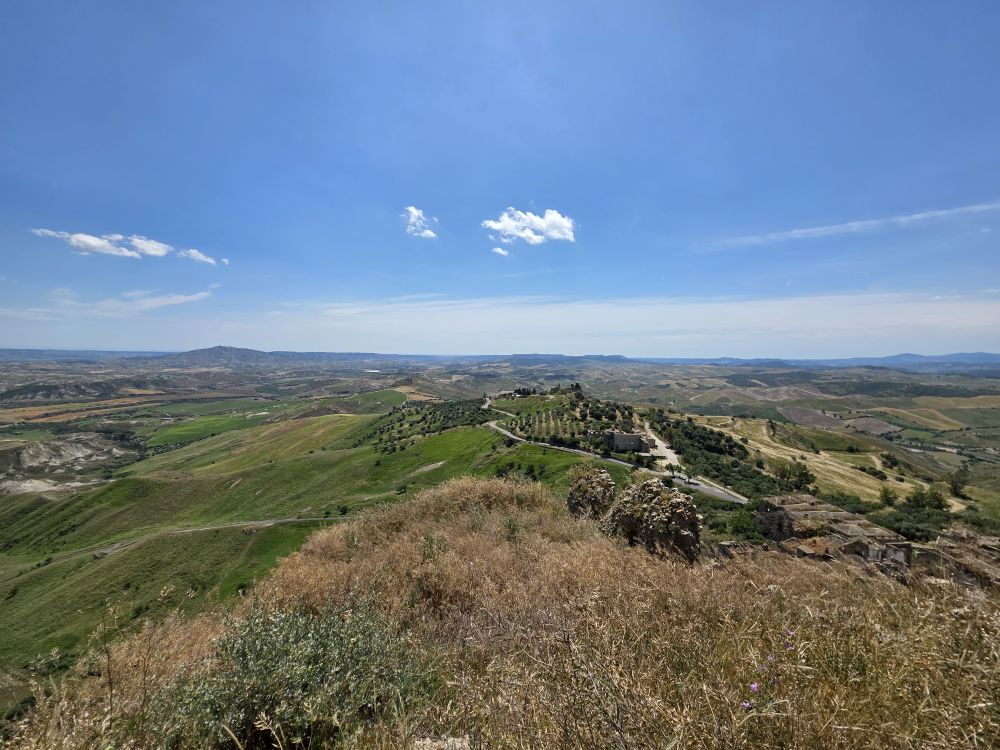
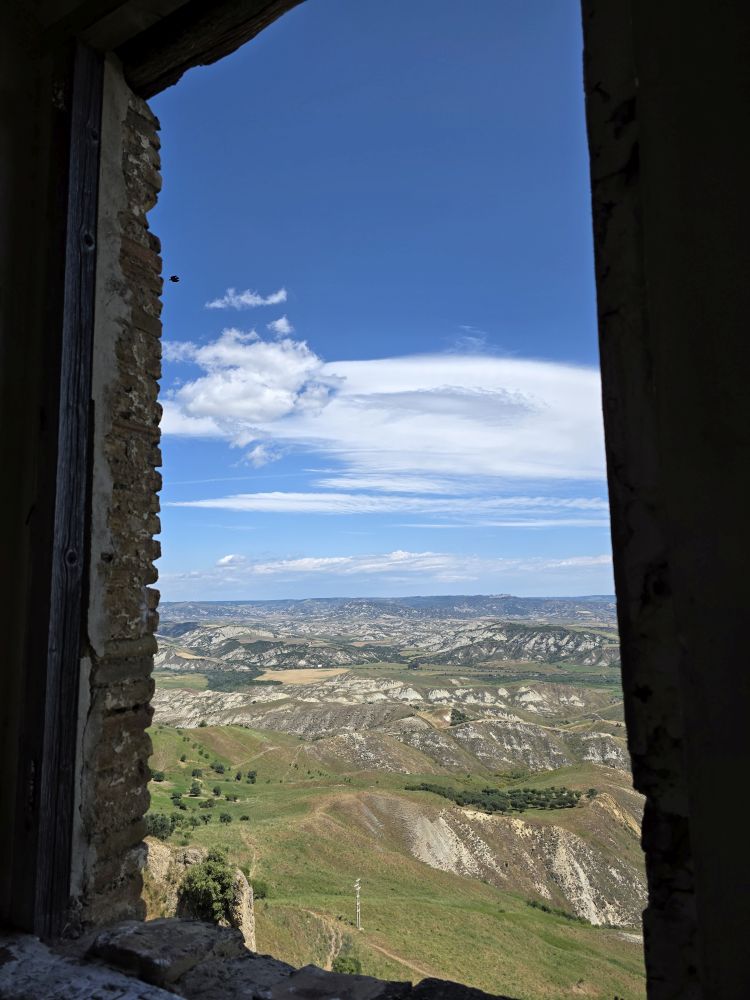
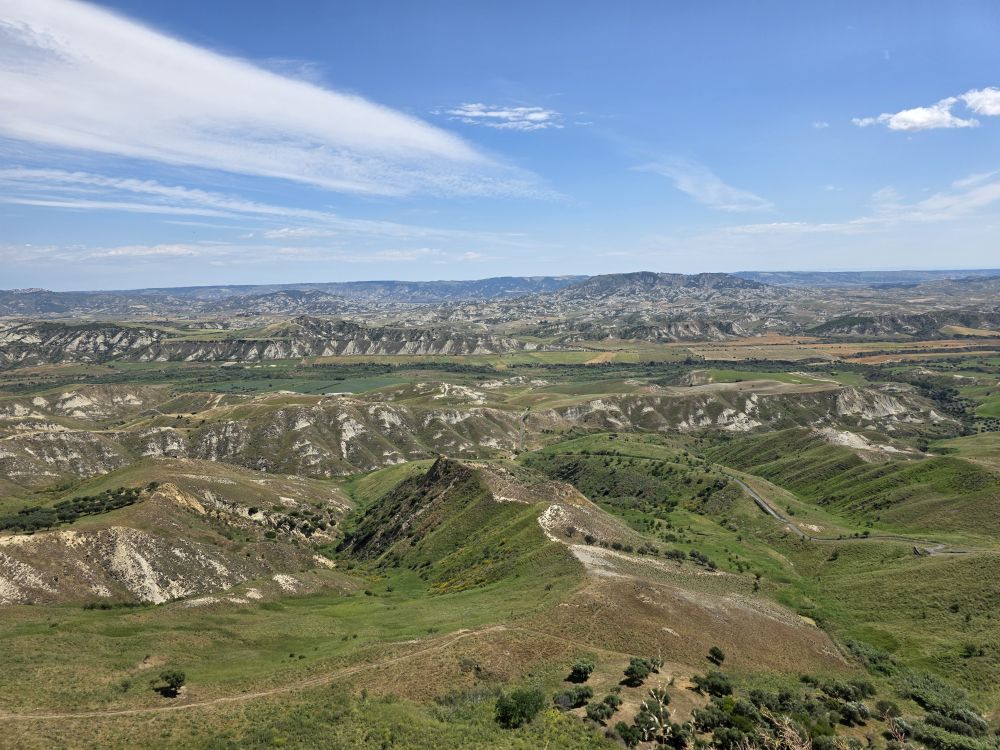
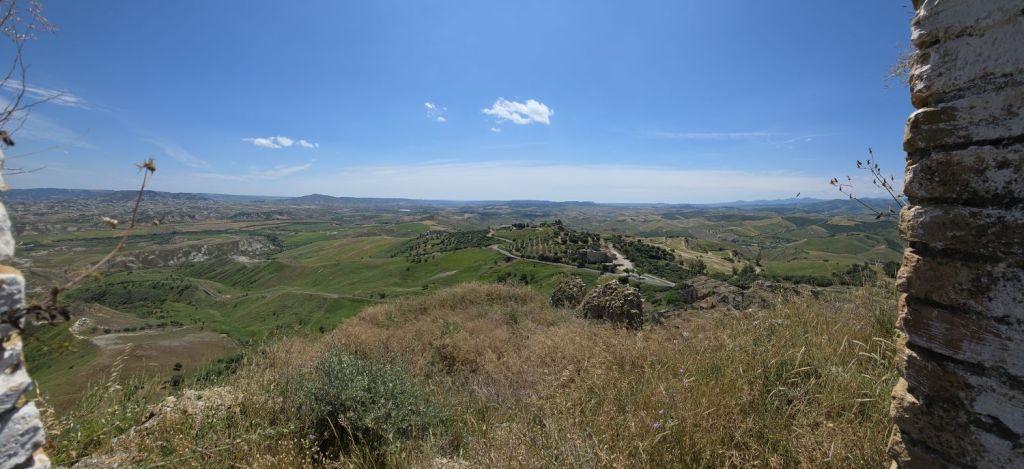
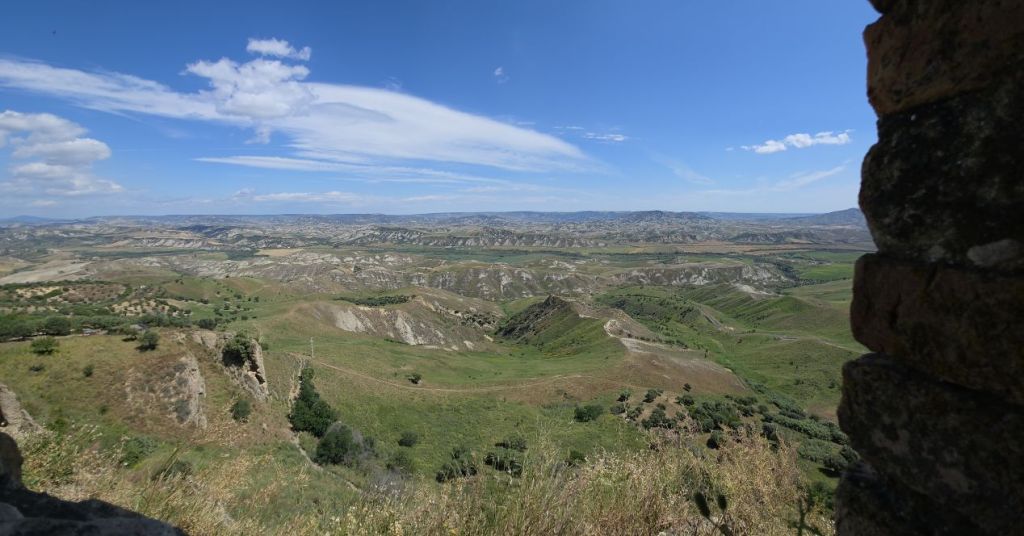
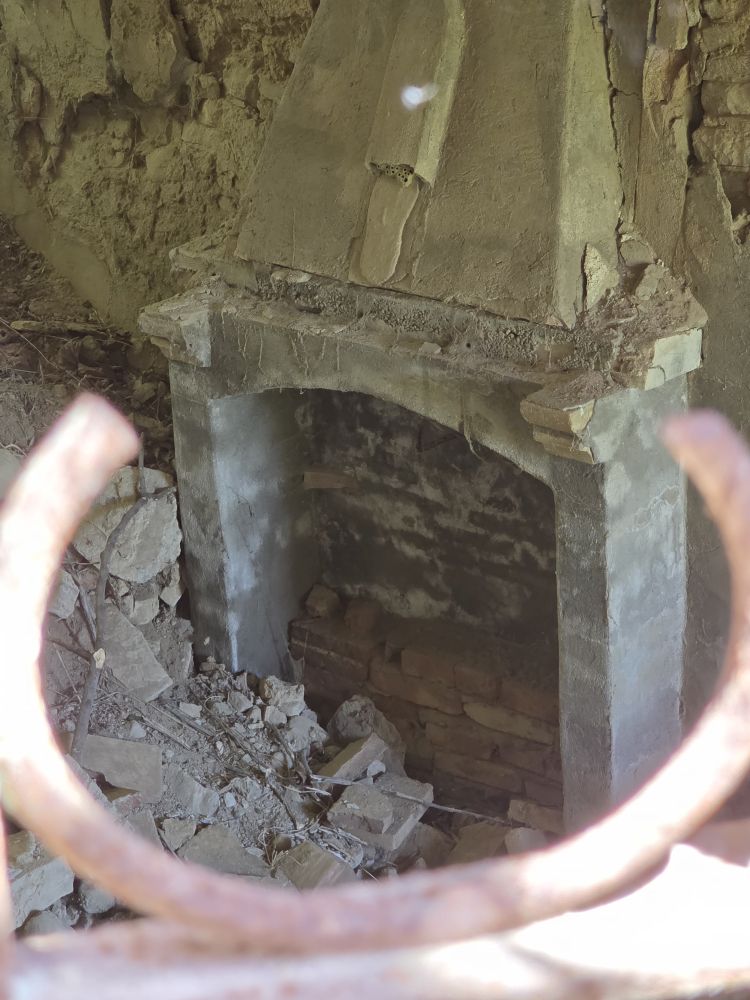
And then we are done. Following our rushing guide down through the town, racing down stairs and pebbled walkways, snapping as many photos as we can in our race to get back to the entrance. We are allowed a brief stop at a window allowing a view of the landslide debris that rests up against an indoor fireplace, and a look at a hallway that has crumbled due to the catastrophes. But otherwise, we’re outta here!
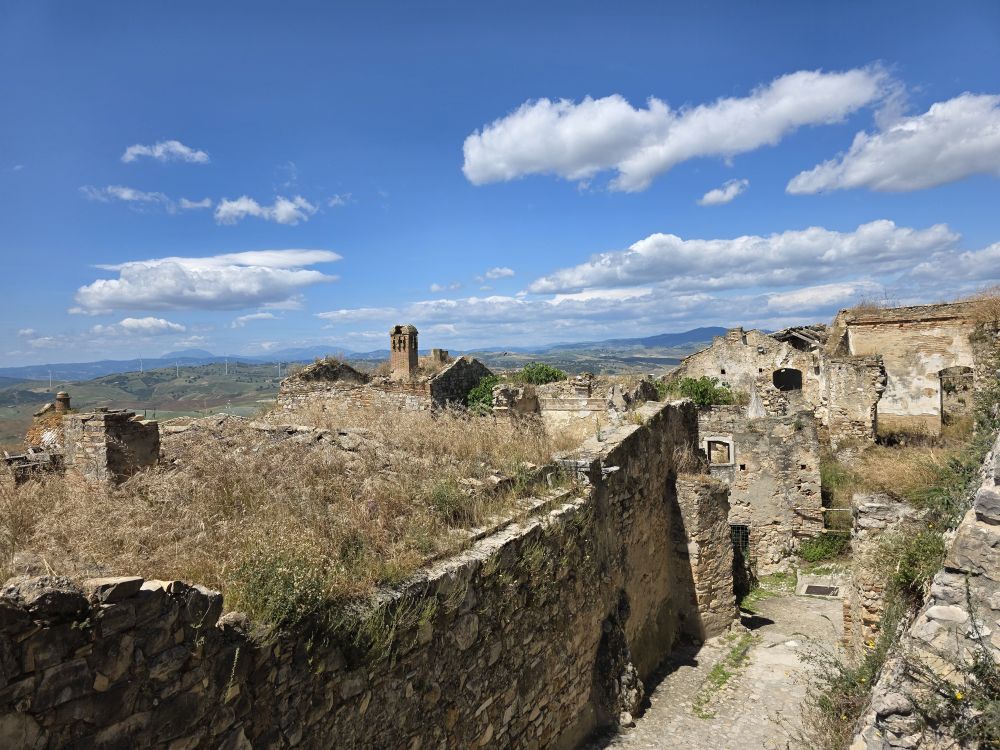
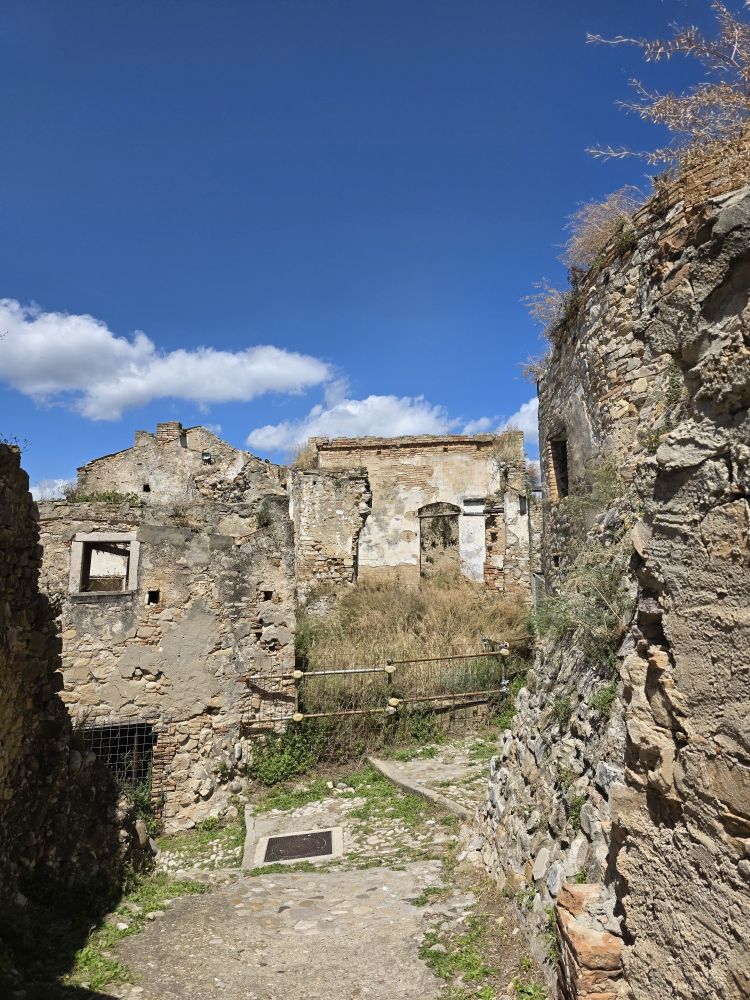
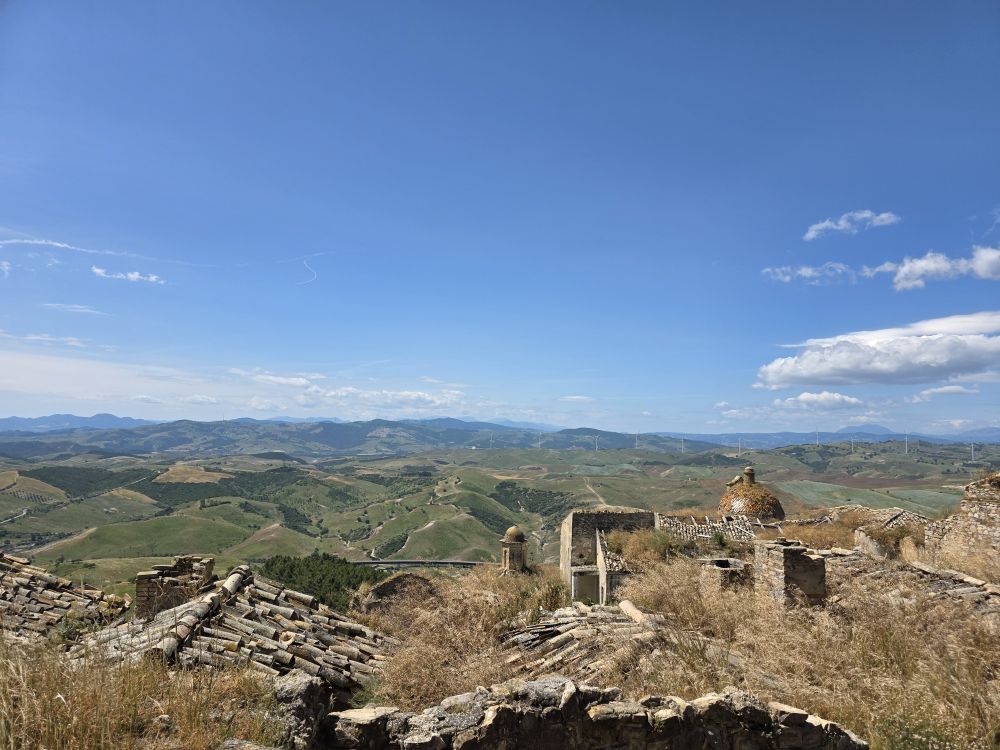
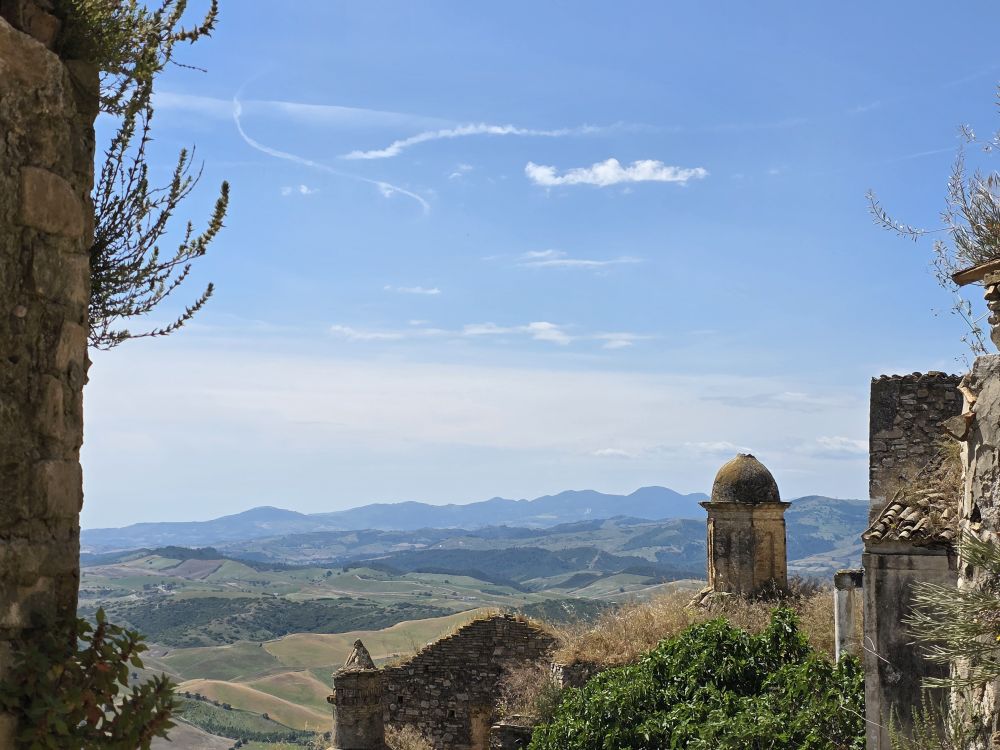
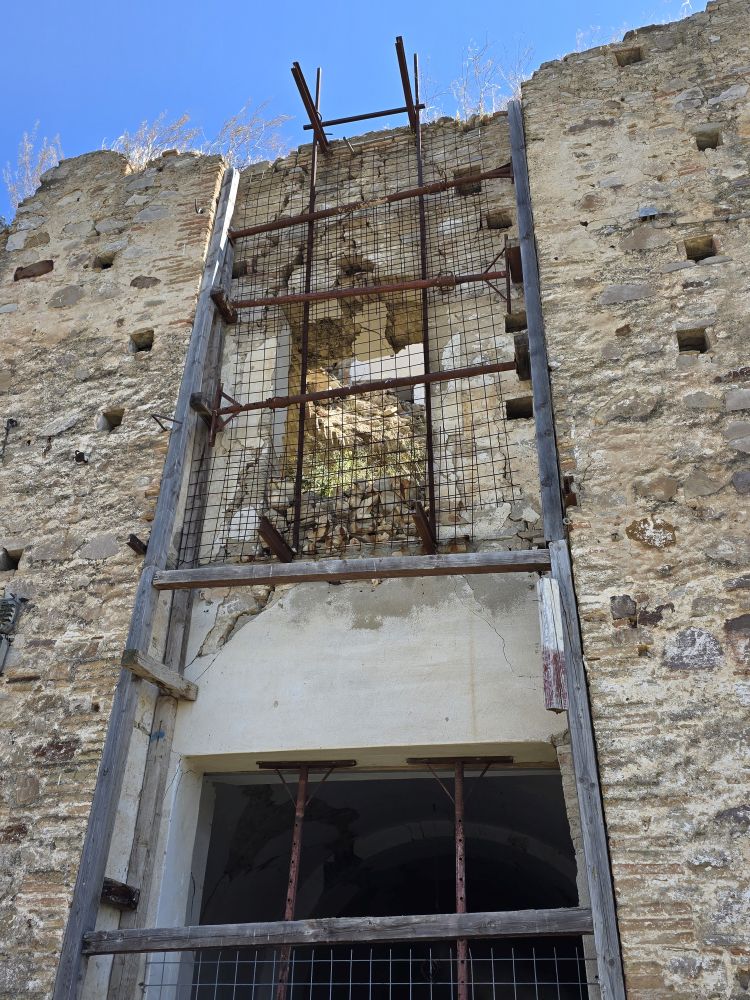
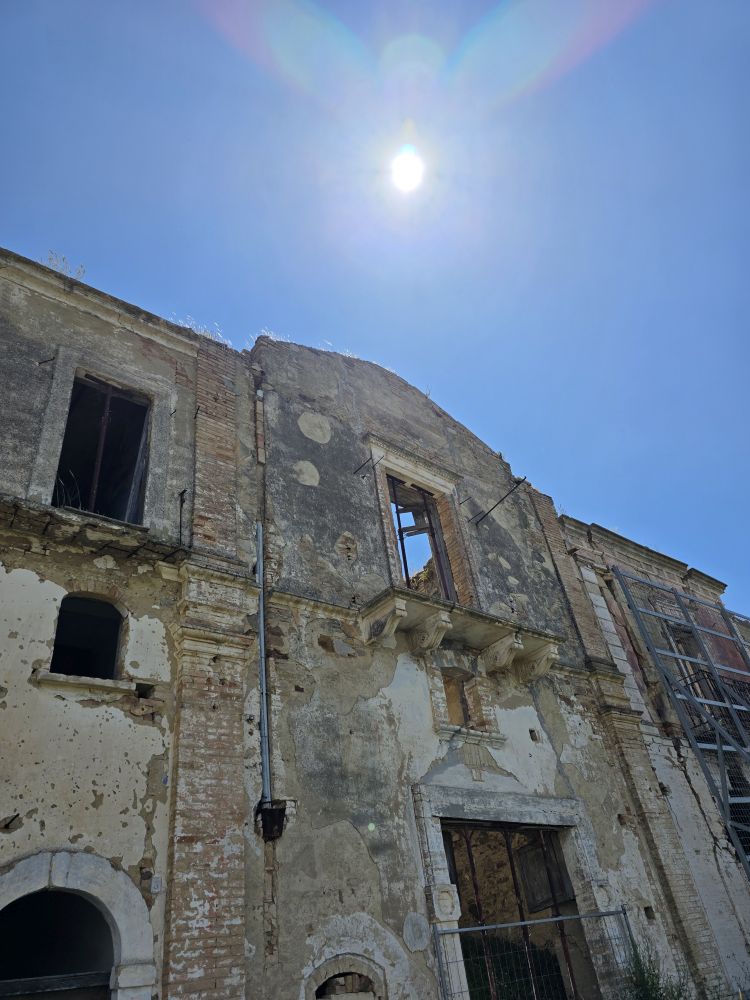
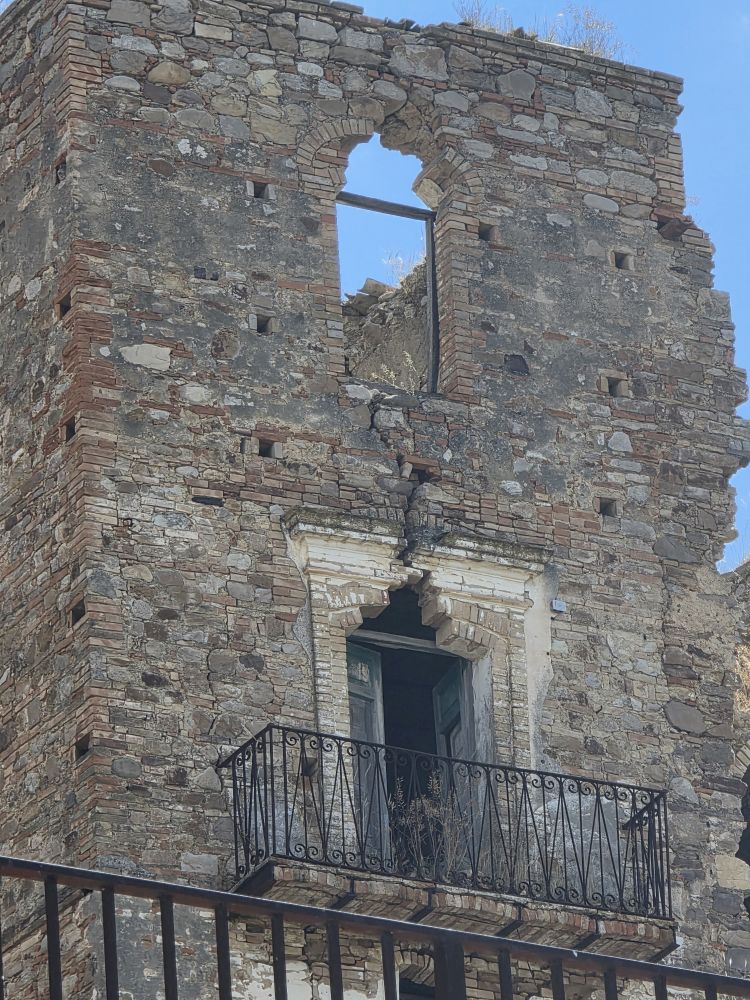
Crazy, but so amazingly fantastic. The buildings. The destruction and now the desolation. The silence. The views. Even though we are admittedly speed tourists, it was really all just too fast. This is one place we would have to have more time to just look and see and feel the place.
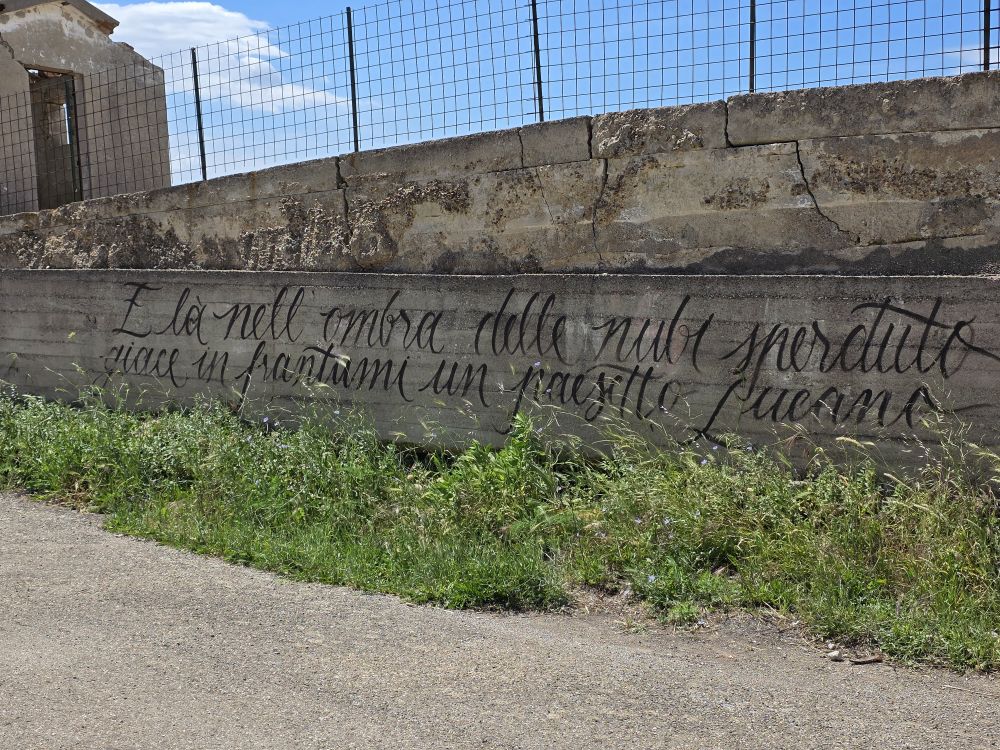
Walking back to our car we continue the photo-palooza – you just can’t stop taking pictures of the countryside and the ruined village. You can’t! We pass by the painted epitaph: E la nell ombra delle nubi Sperduto giace in frantumi un paesetto Lucano. And there in the shadow of the clouds lost lies in pieces a Lucano village. Totally fitting.
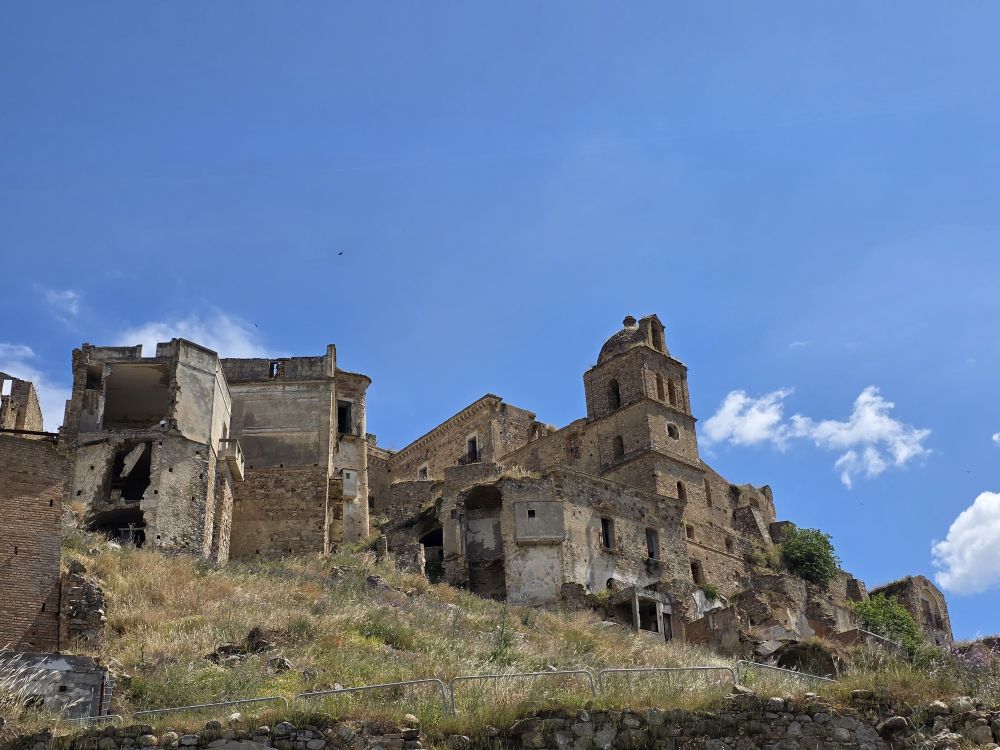
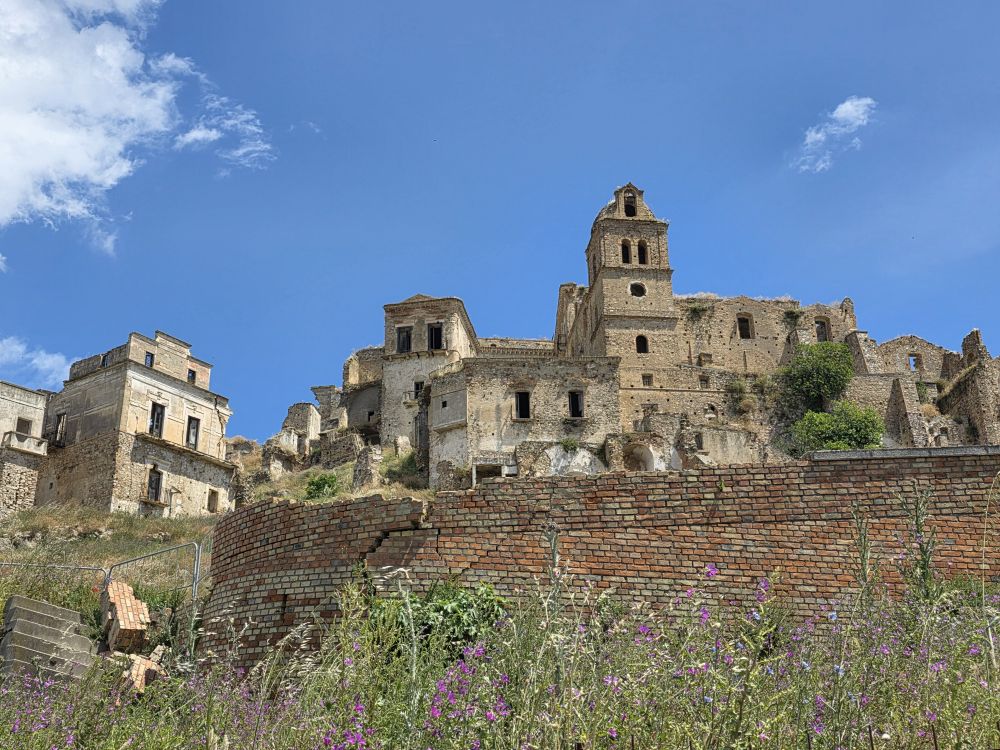
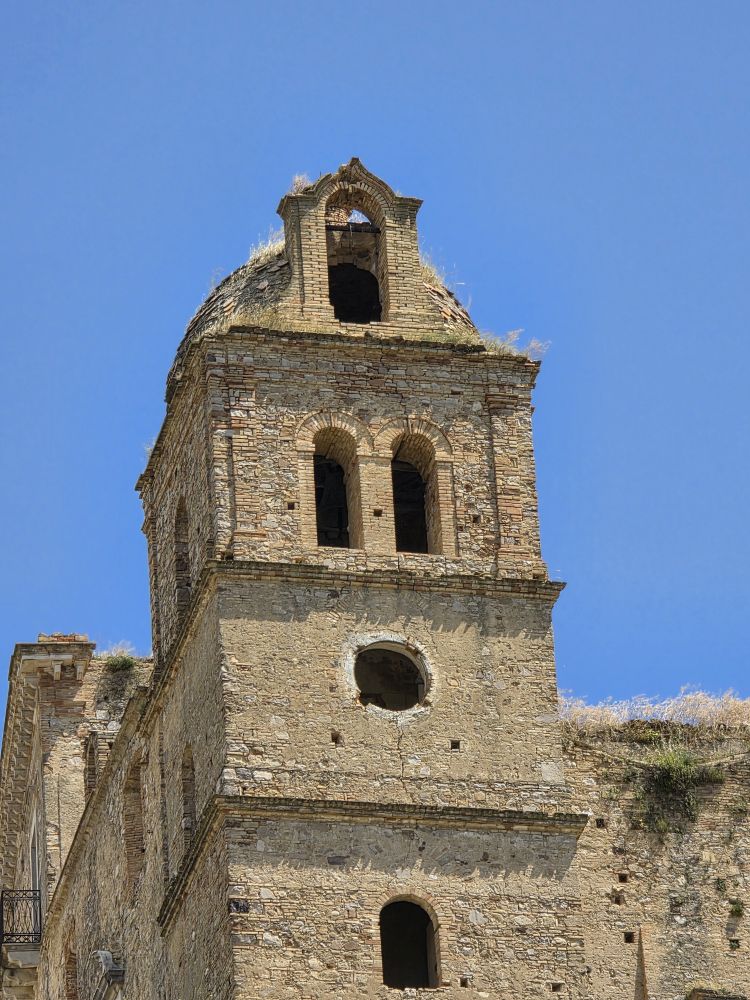
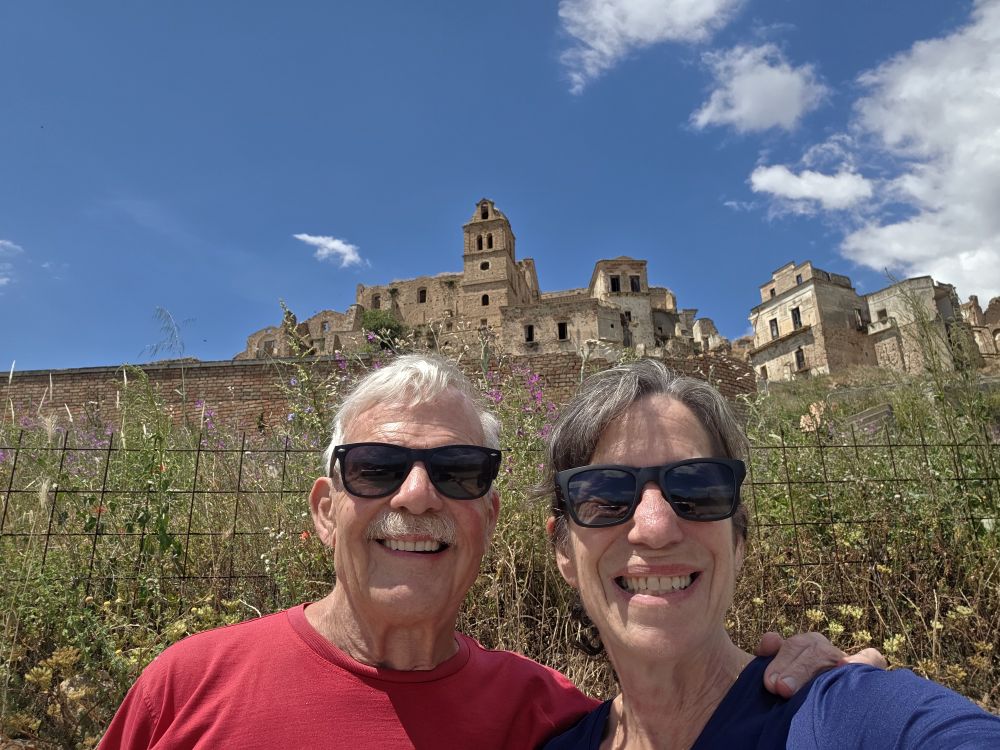
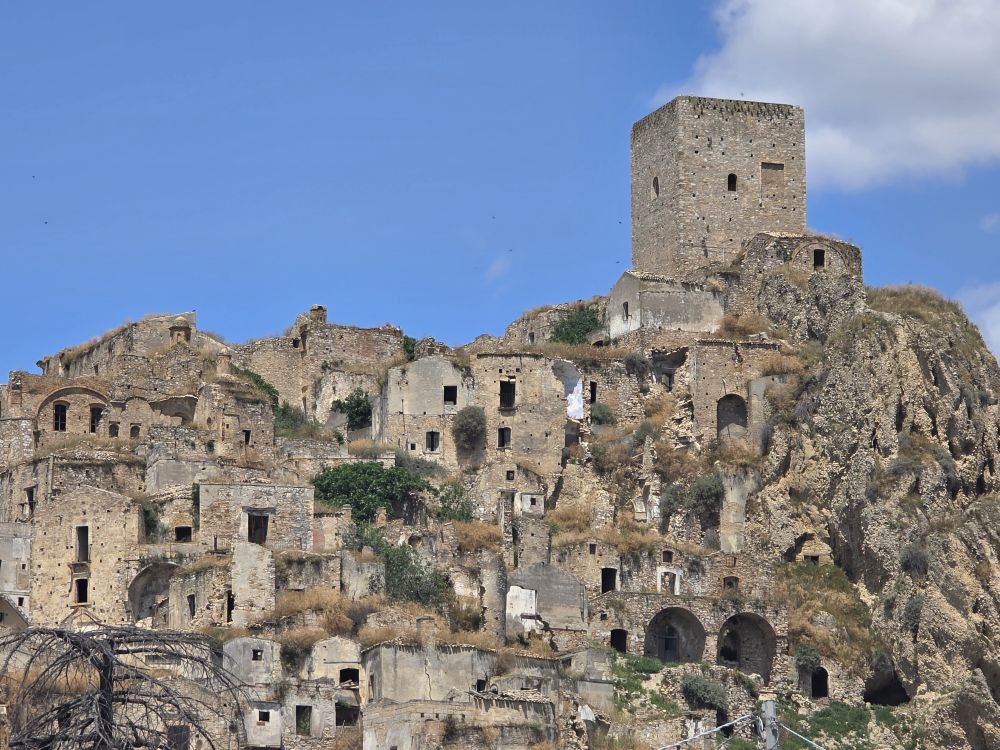
So fitting in fact, it is here that we decide to have our picnic lunch! After retrieving our car, we drive back up to the top of road, parking by the lost village sign to have a nice little sandwich lunch while surrounded by such amazing scenery.
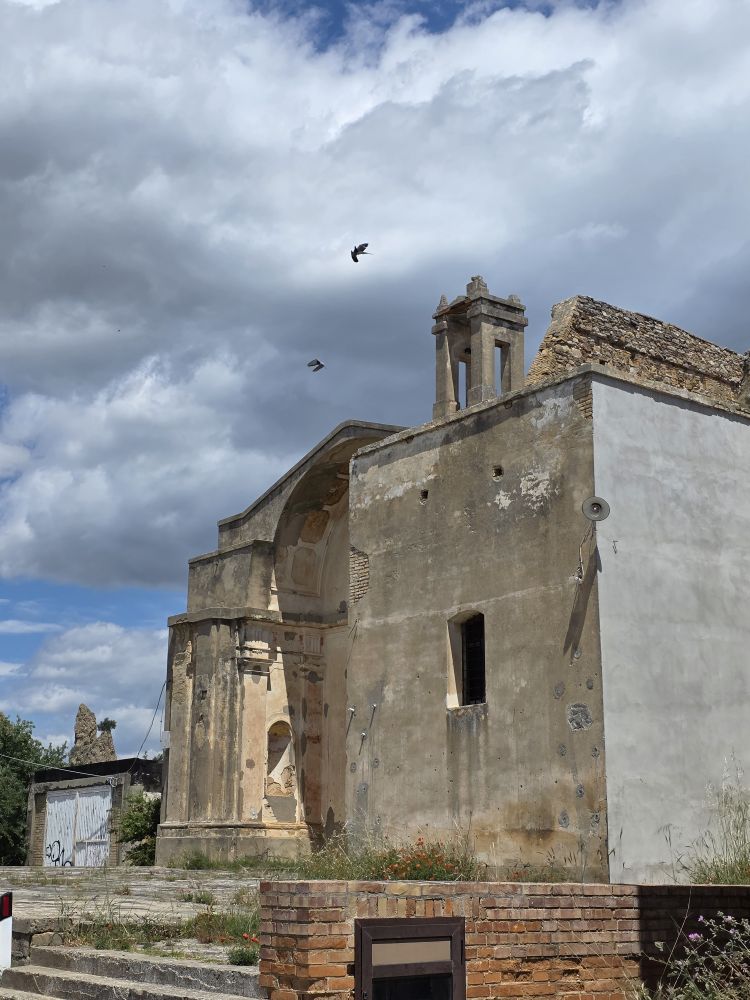
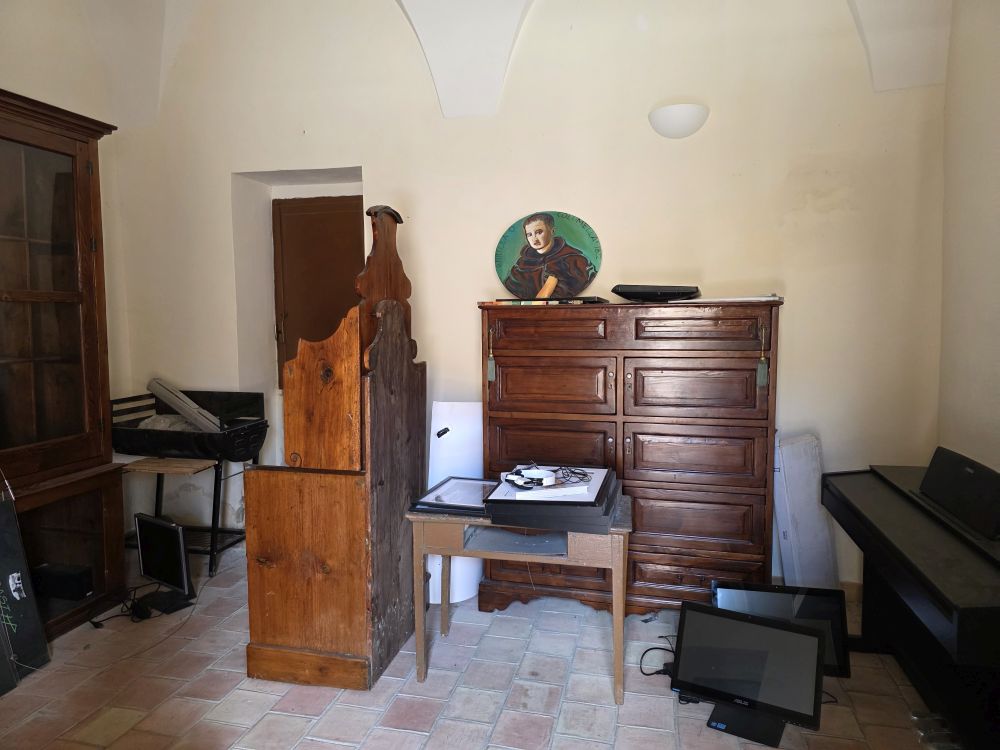
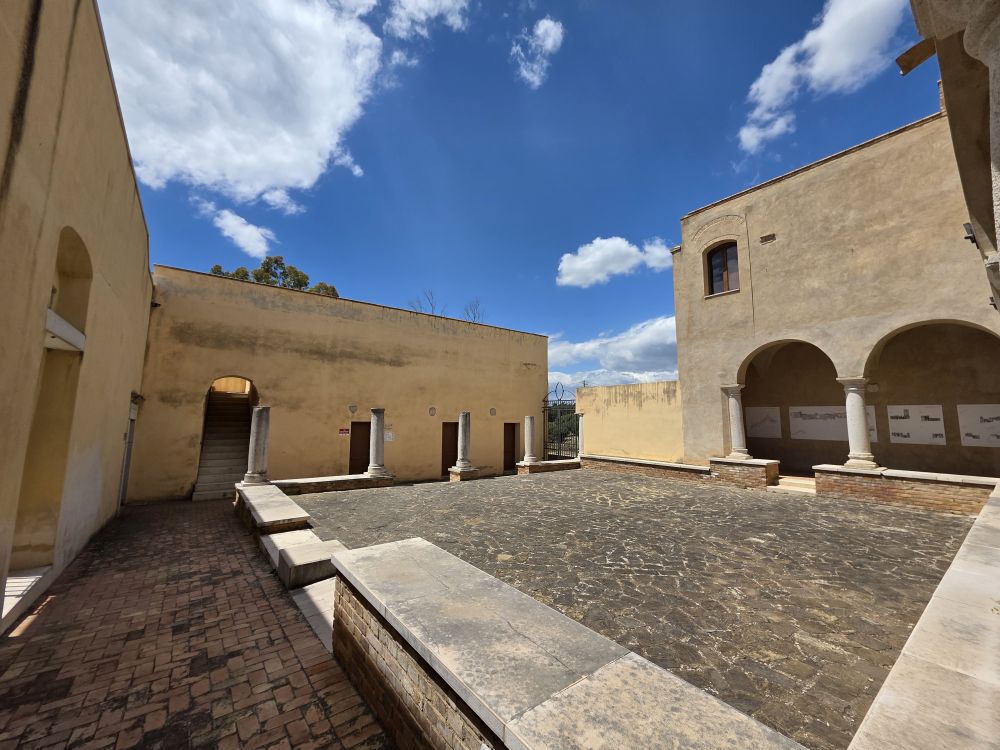
Then it is back down to the ticket office for the “Emotional” (we think they mean “remembrance”) museum. They had said to be here at noon, so we figured it might be guided. But no, they just let us in the back door which is open anyway, and leads to the bathrooms– but we think they had to unlock all the museum rooms which are the old rooms of the convent. As mentioned, the museum is located in the old Convento di S. Pietro Apostolo, built in the 17th C and closed in the 19th C, the chapel was open for worship until 1980. Now, all the rooms hold content pertaining to the history, destruction and reconstruction of Craco.
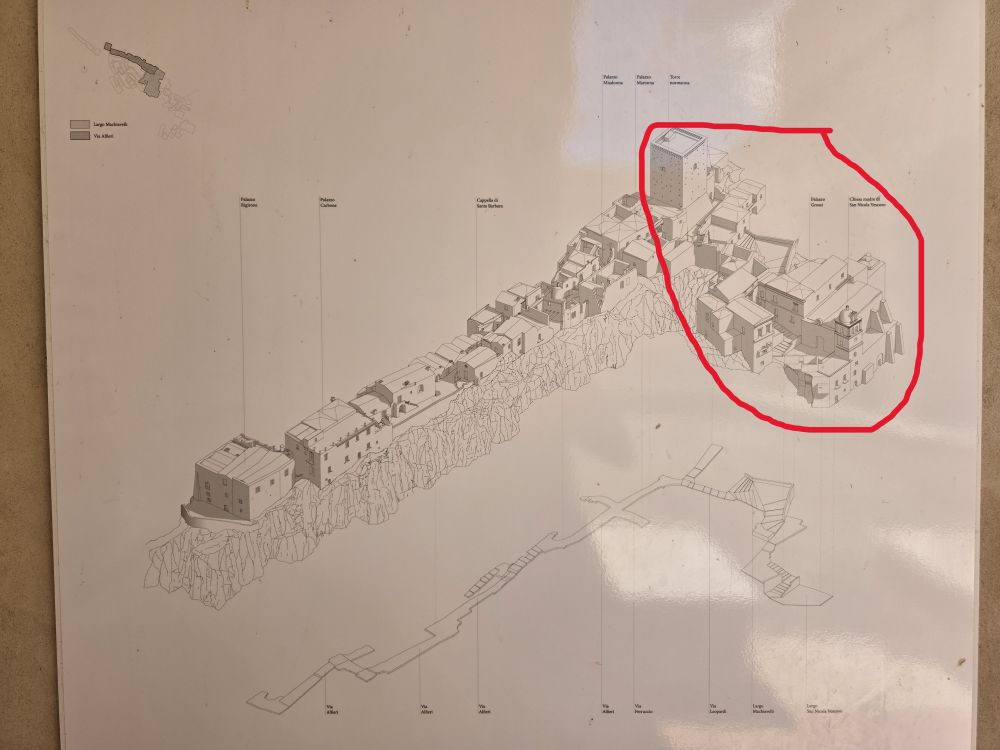
Most interesting are all the maps and 3D reconstruction plans of the town. From these blueprints and maps, it is easy to see the whole town – which is quite large – the small area we visited (circled below) and what the Society would like to do with reconstruction. A really comprehensive look at Craco, past, present and hopefully future.
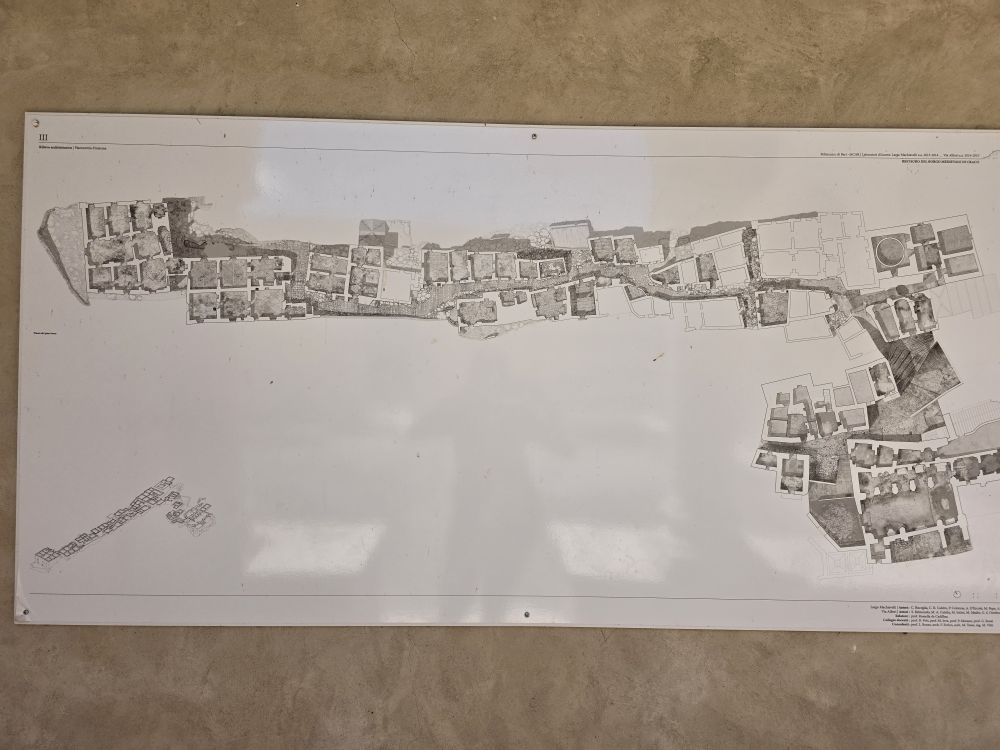
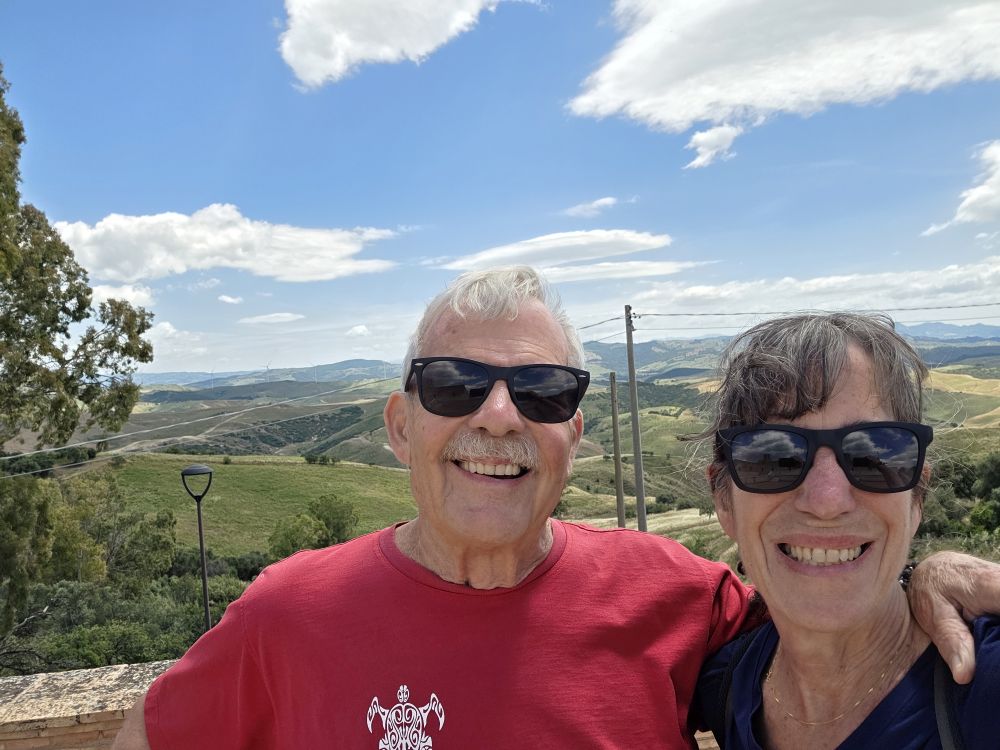
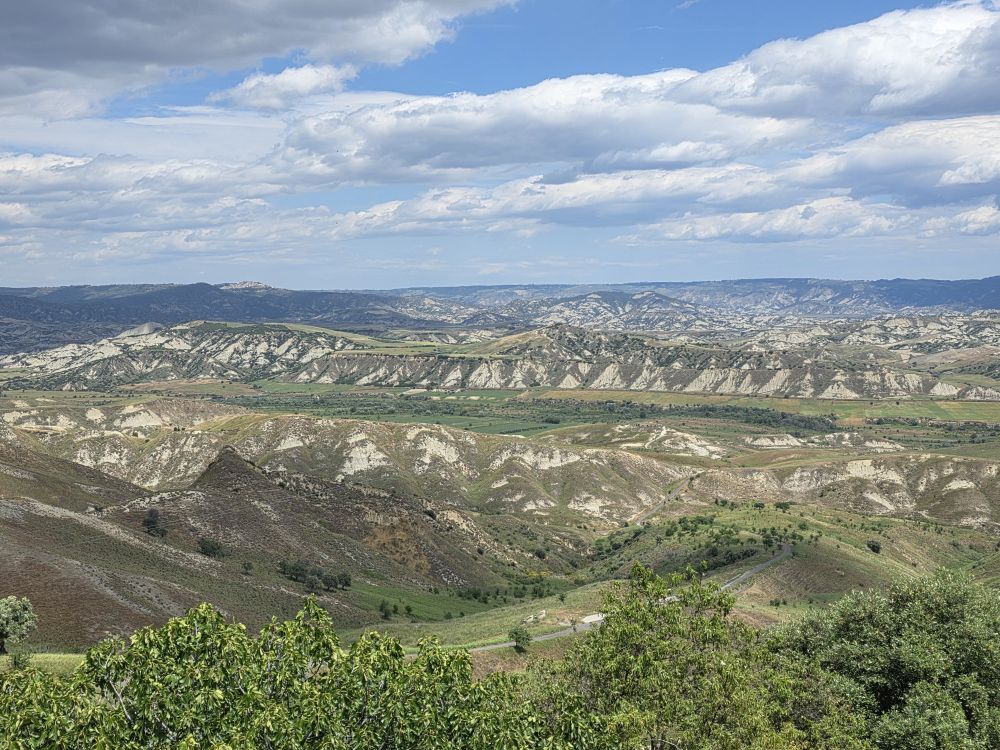
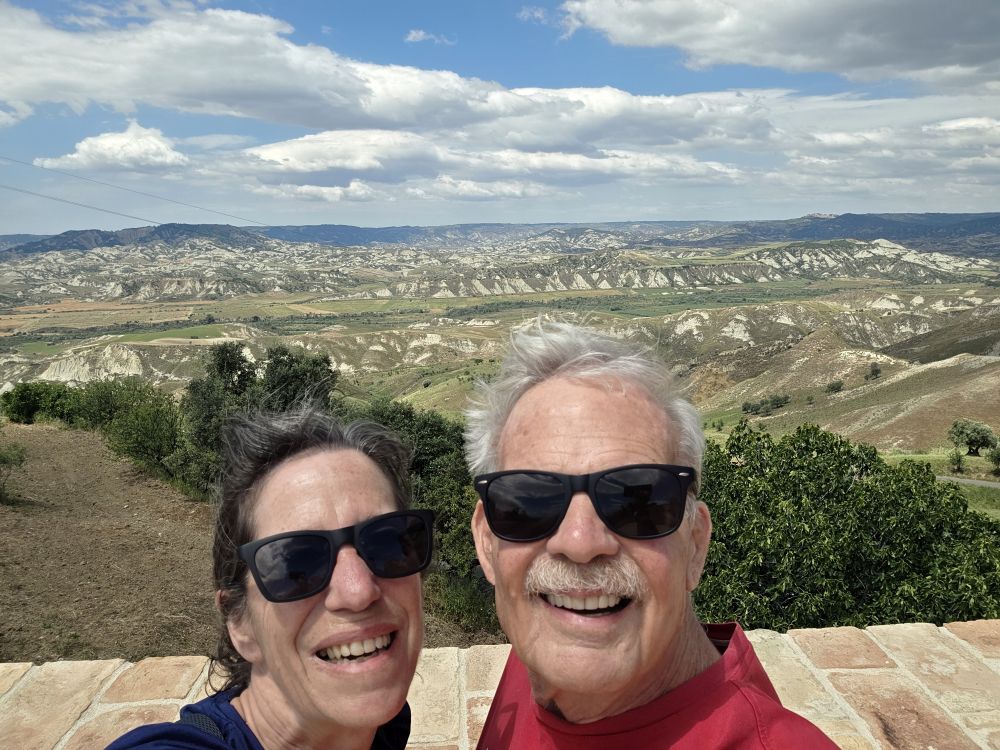
While I explore the maps fully and then wander through the cloister, Ed finds another whole room with tons of memorabilia and information about all the movies that have been filmed here. More than a dozen films have used the Craco location at a set – most European, but the already mentioned “Passion of the Christ” as well as the James Bond “Quantum of Solace” film. We meet back up on the upstairs terraces for stunning and incredible views across the countryside.
Making short work of the last rooms filled with geographical, geological and historical picture information (easier to look at when we are back home and can focus on all that Italian translation – but score! There is a great map of ALL the ghost towns in Italy that will definitely come in handy for us!), we hit the restrooms and then hit the car for our 2-hour trek to Caserta, the last stop on our Italian Loop tour.
Back down the other side of the mountains we go. On these little twisty, turny mountain roads with stunning views across the valleys and weird sandstone hills. It is a gorgeous, if not hair raising drive, through little villages and farmland, with Ed navigating these crazy roads superbly.
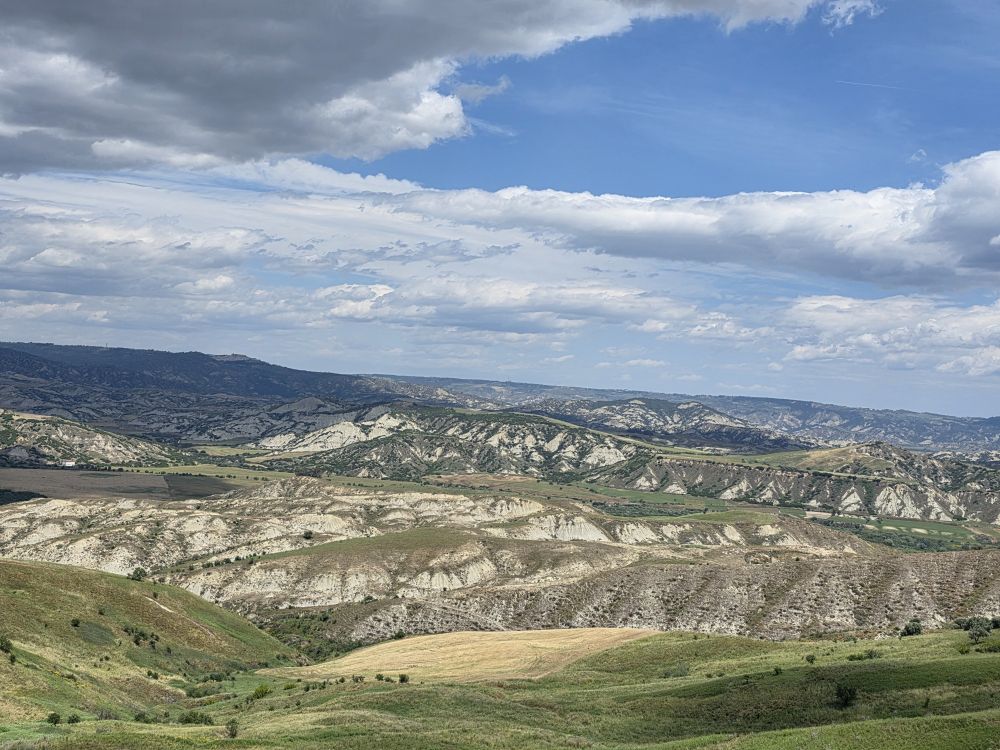
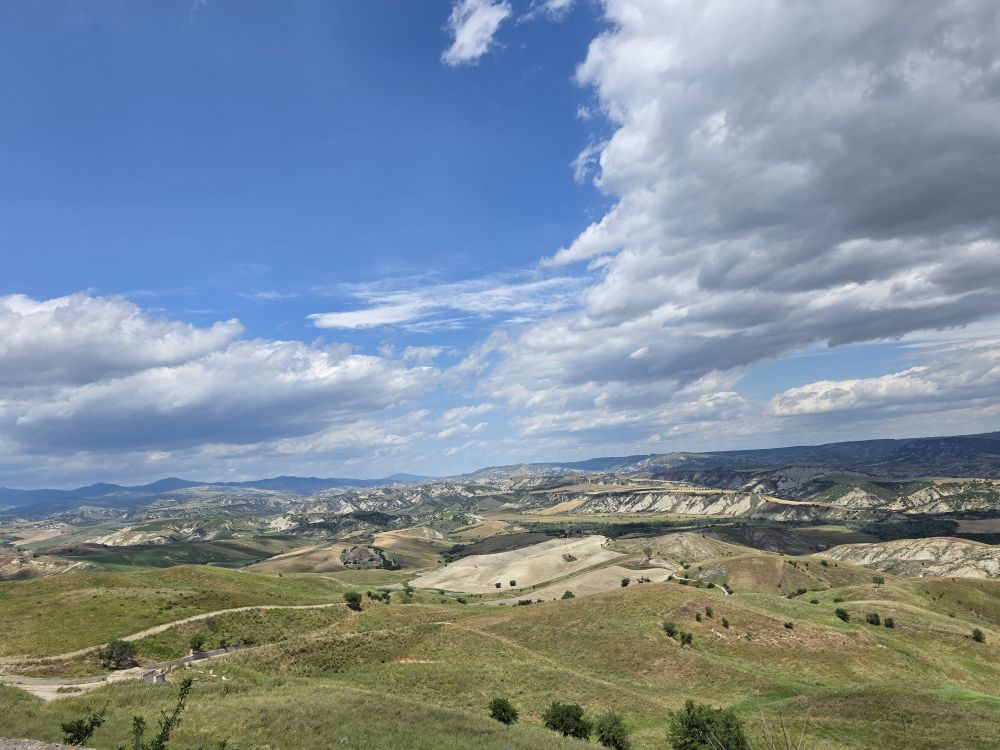
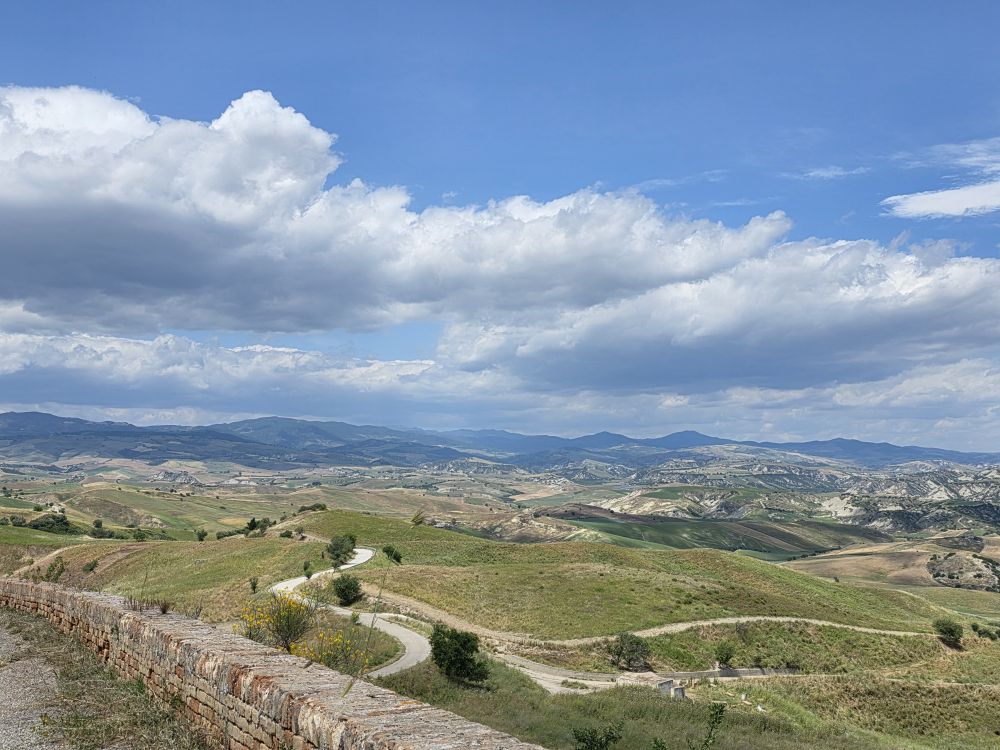
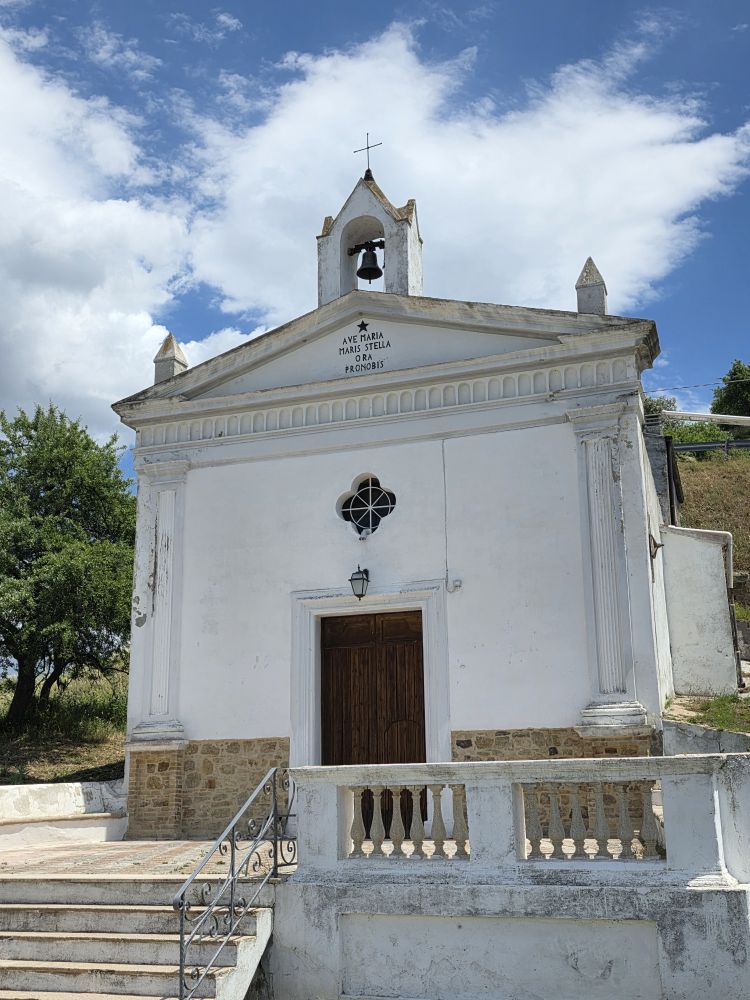
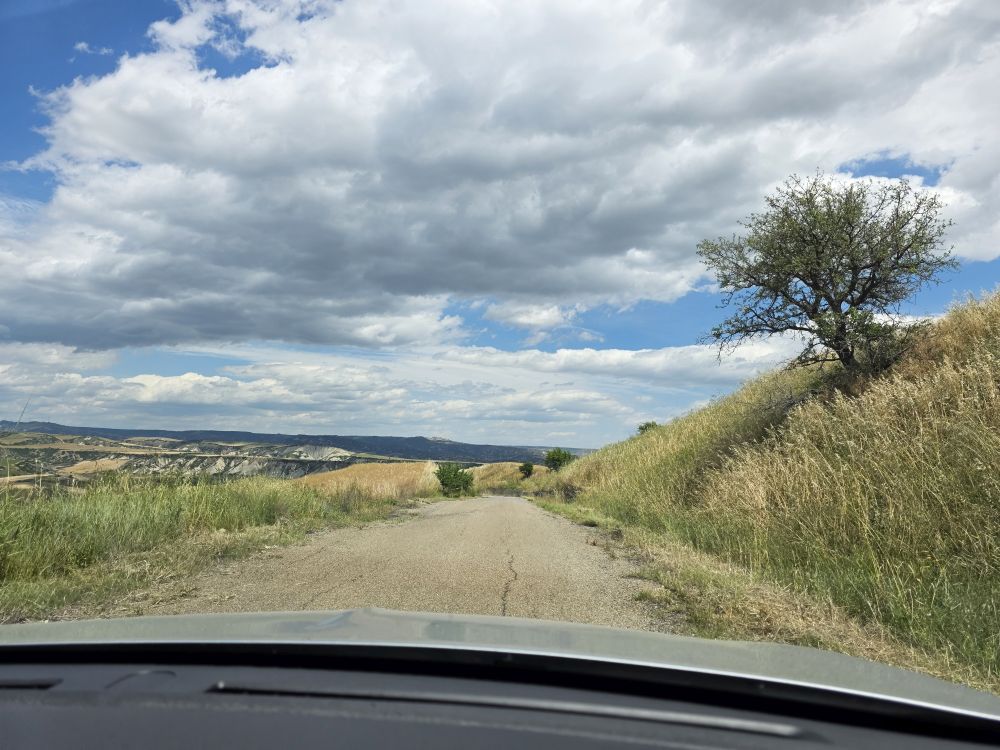
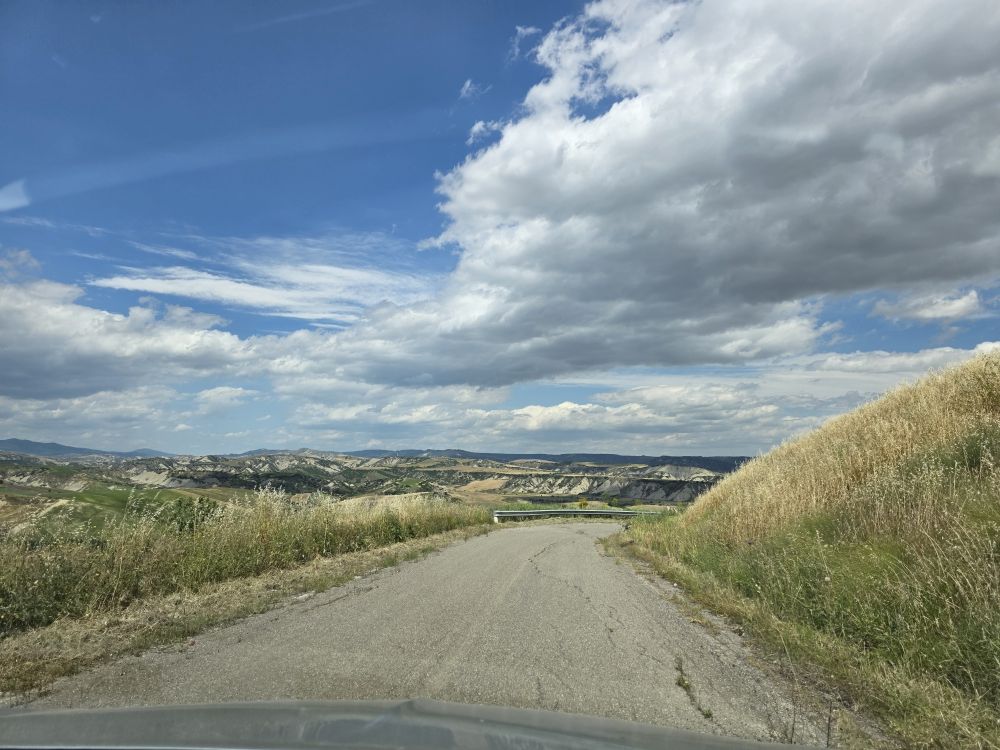
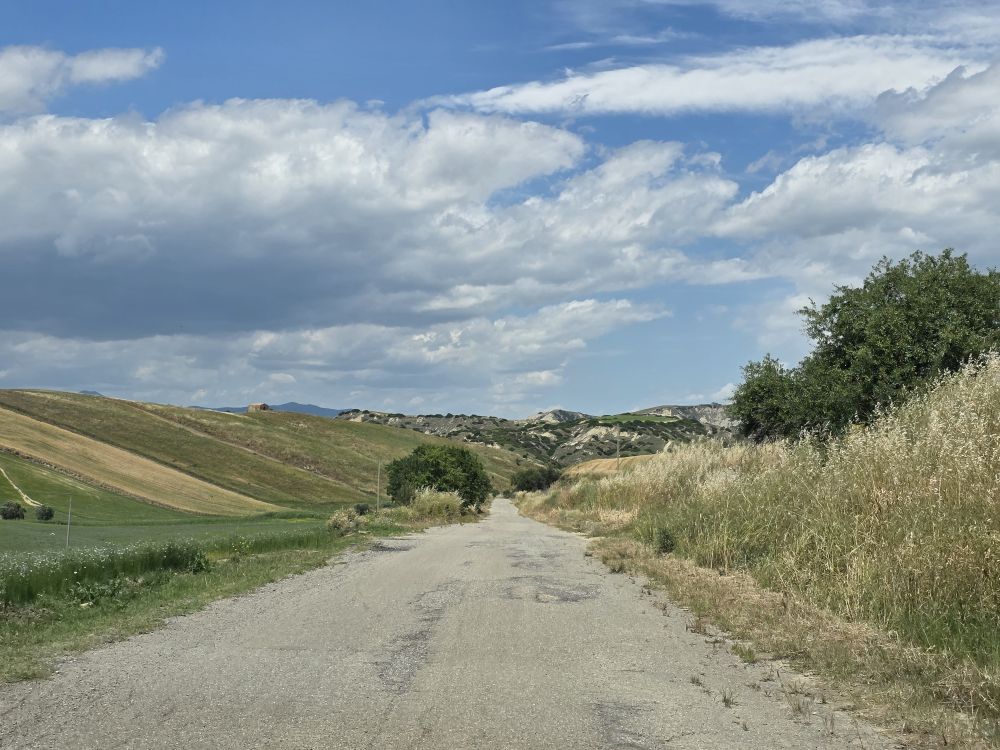
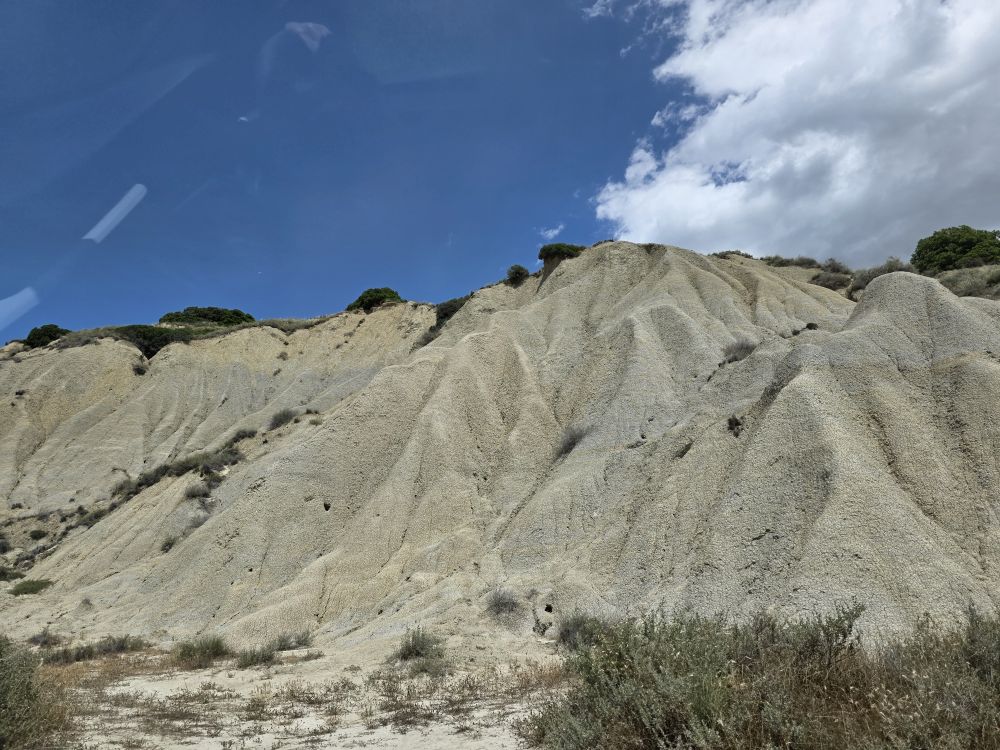
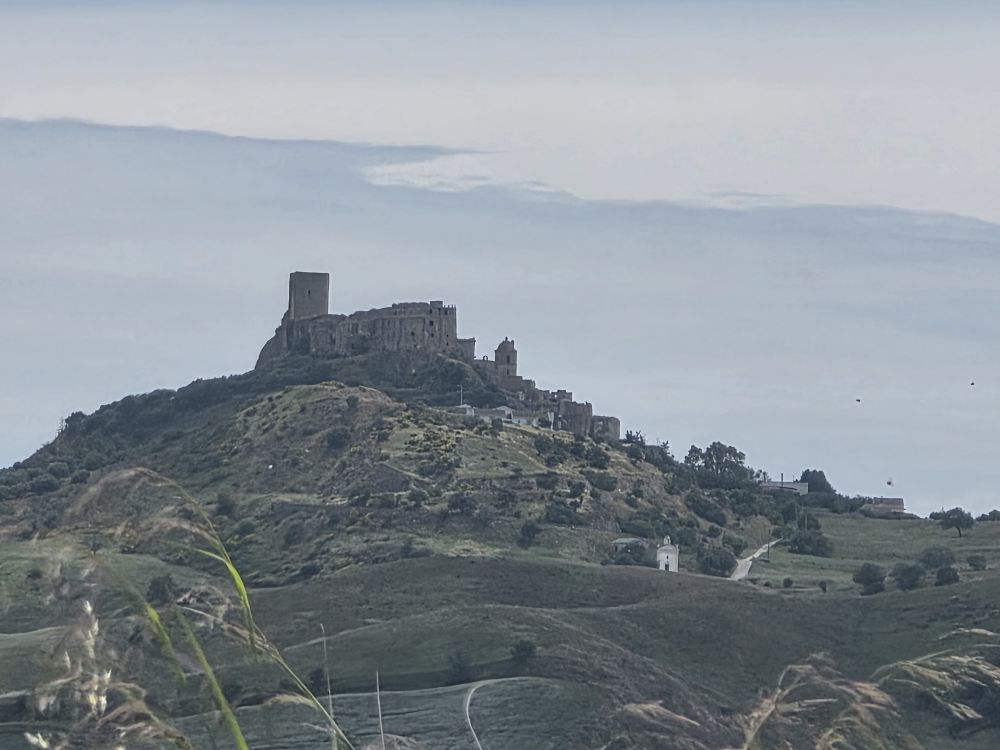
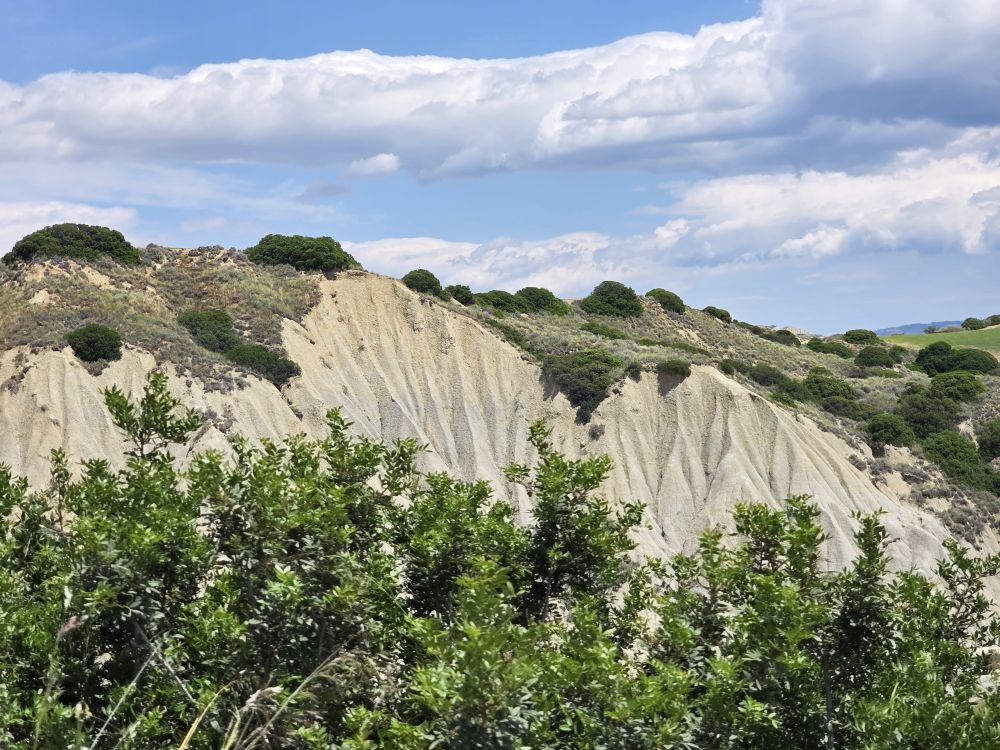
Finally on the main roads, we head northwest, the landscape changing dramatically as we drive. Craggy tree covered cliffs and mountains begin to replace placid farmland, and more hilltop towns begin to appear in the distance. We skirt around the harbor of Salerno, making our way north through the numerous lane closures that seem to be everywhere in Italy. Nobody is working them, the lanes are just closed.
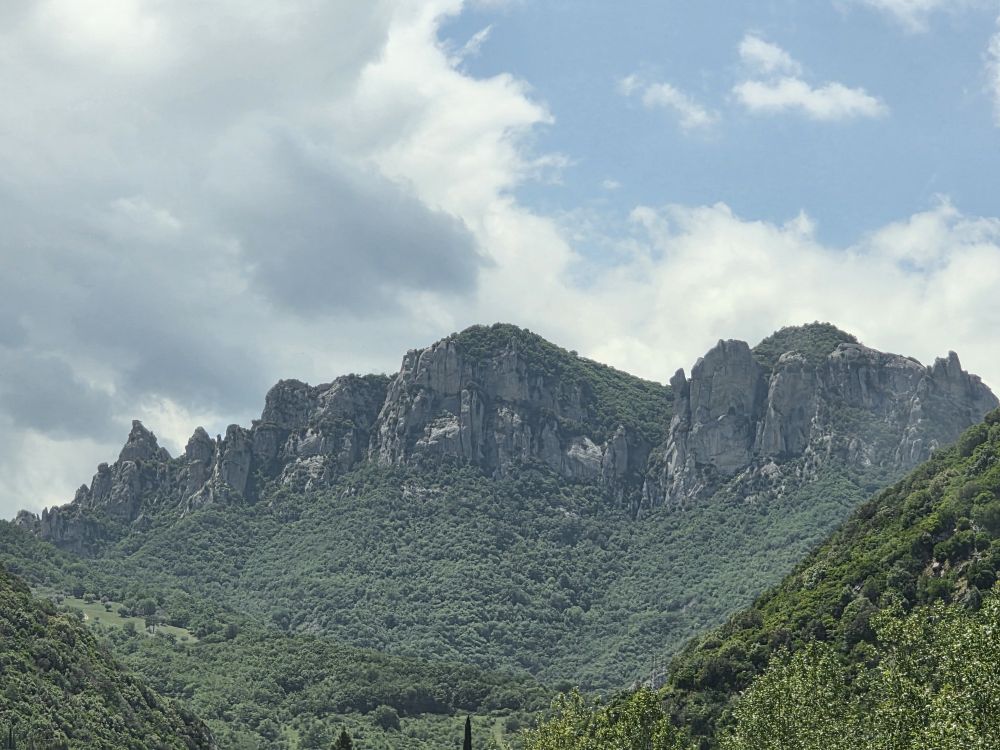
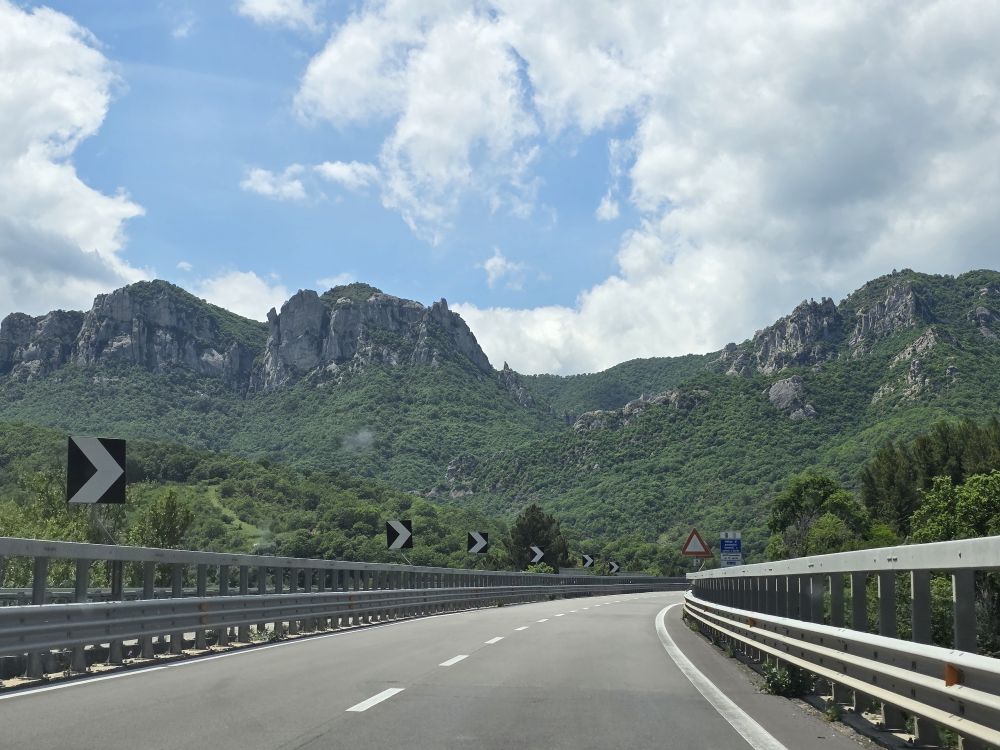
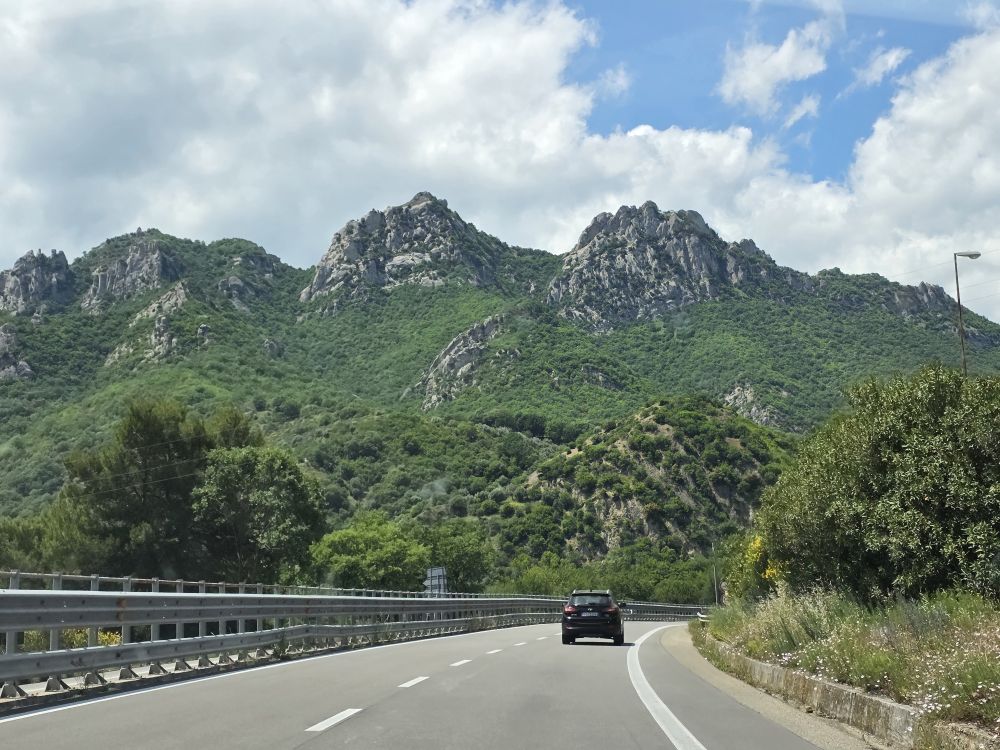
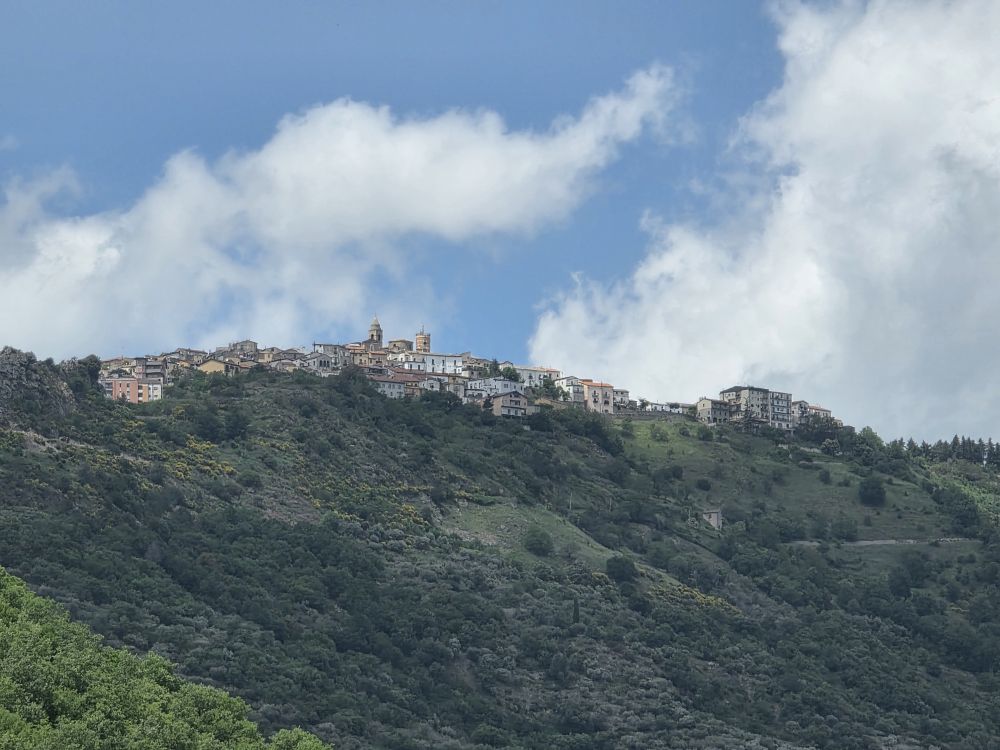
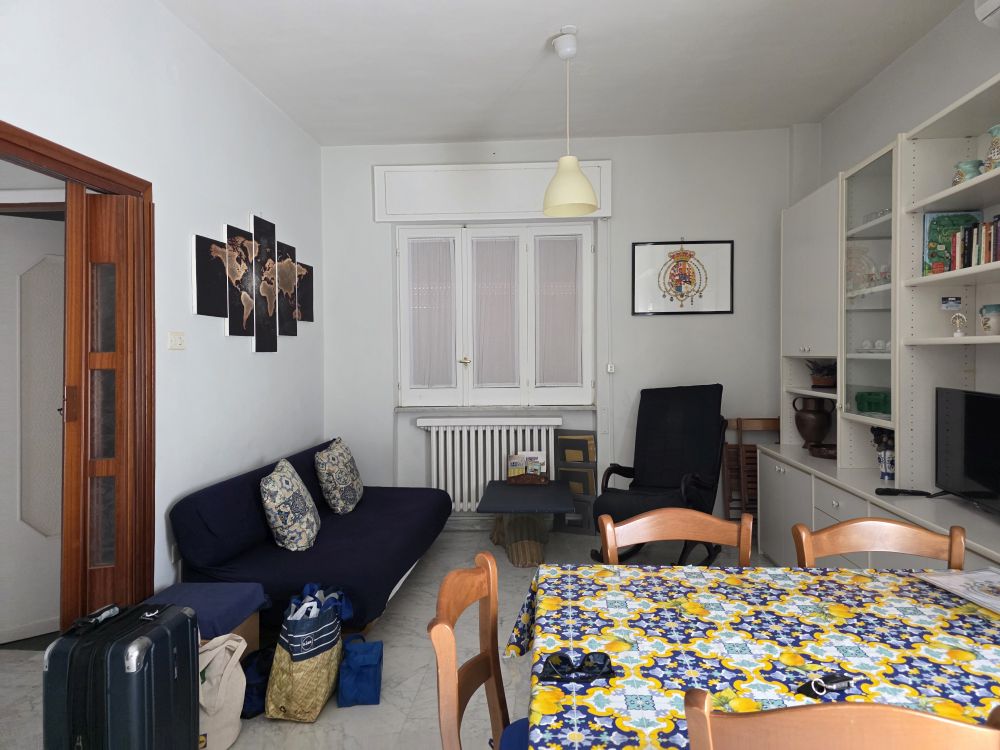
The already long trek is made even longer by the fact that our Autostrada exit mojo is in full force again. This time a wreck on the A30 exit holds us up for 45 minutes. Sigh. Fortunately, we are in contact with our host, Carmine, letting him know of our delayed arrival. When we finally do arrive in Caserta, Carmine is waiting for us, and after Ed stuffs our little car into an equally little spot on the street we ascend to our apartment for a quick tour. It’s lovely, another grandma’s house with old style glass chandeliers and definitely grandma period furniture. But oh, what a difference from Lecce!
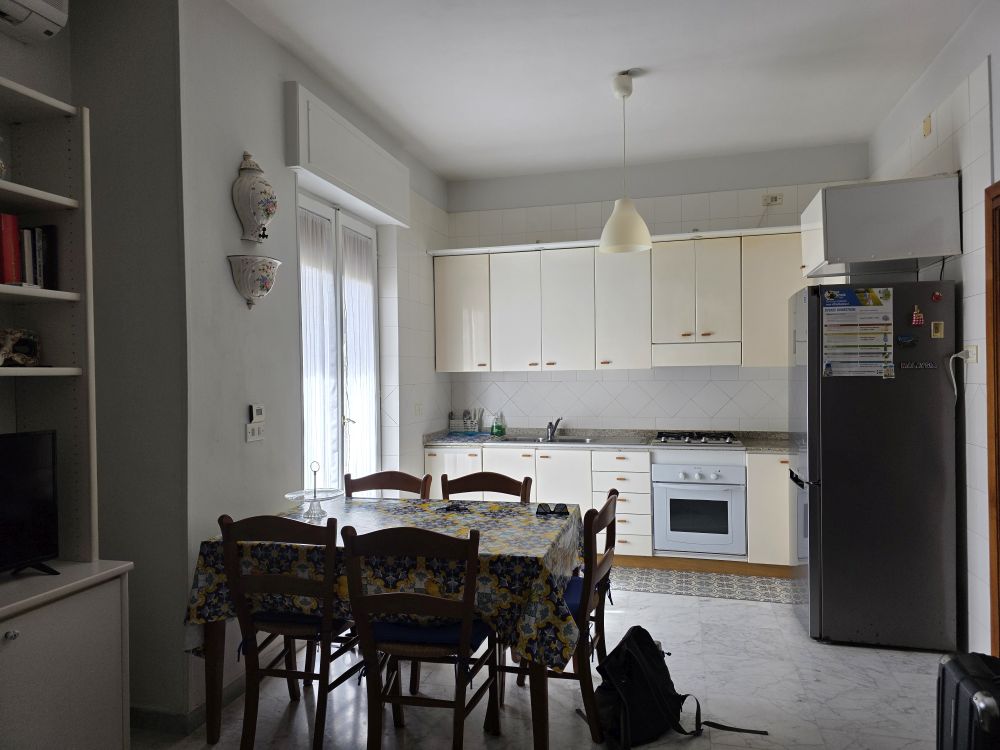
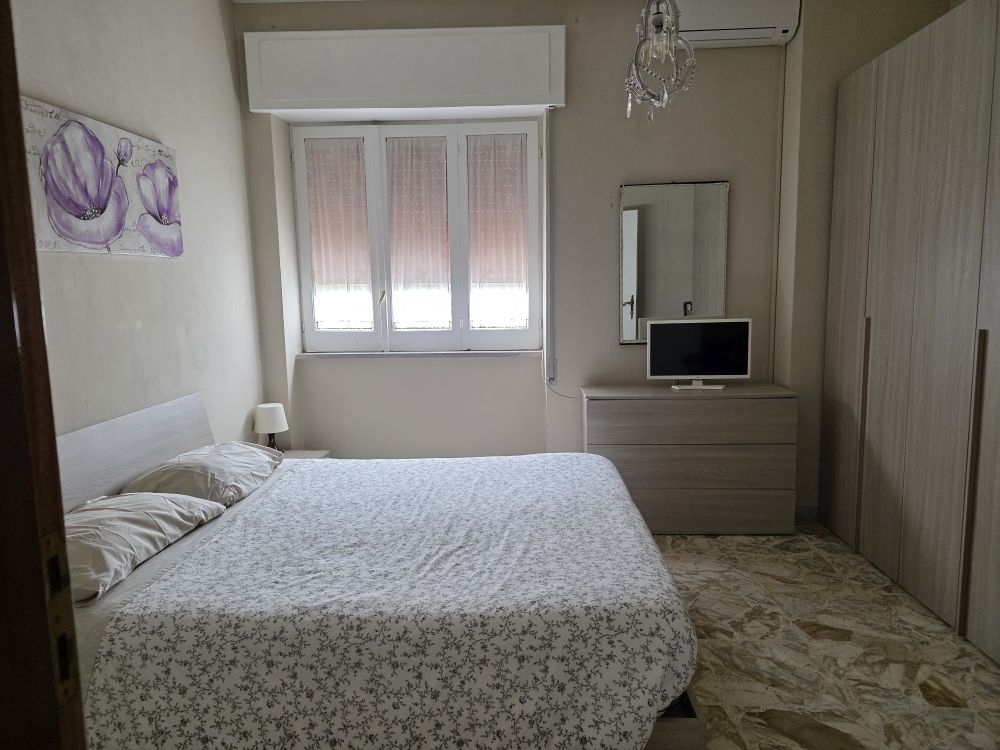
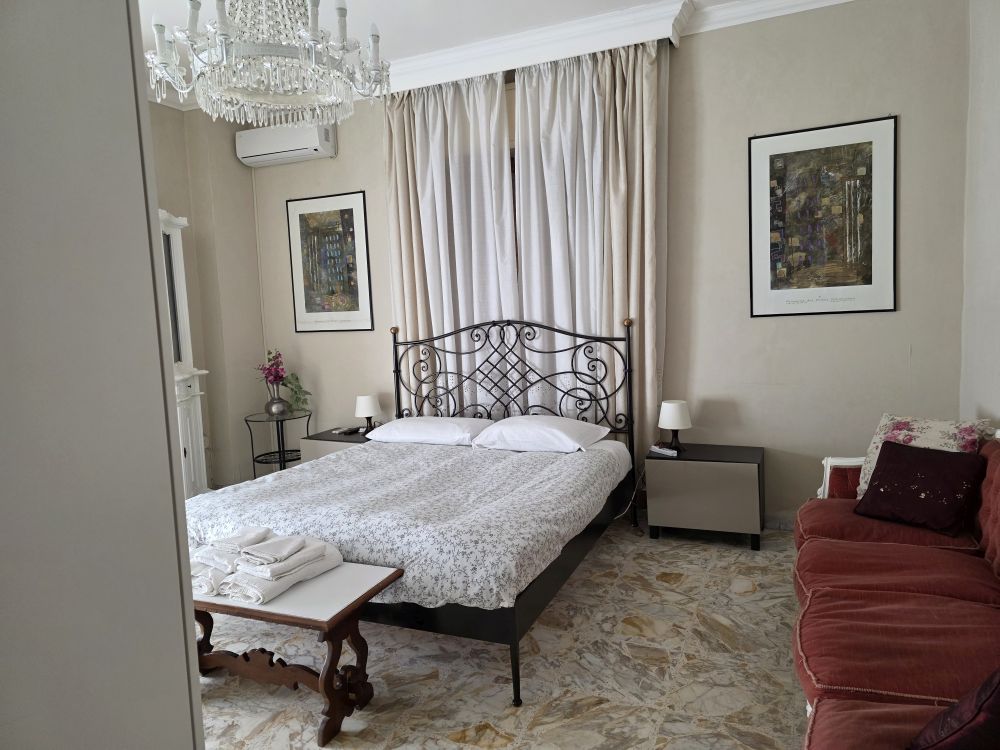
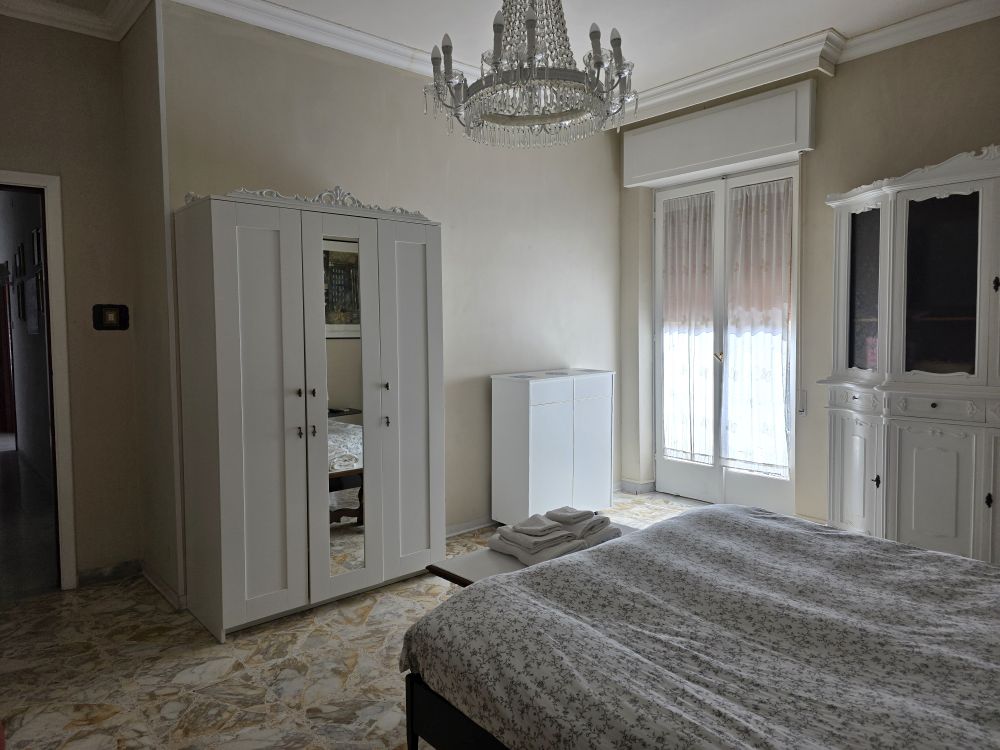
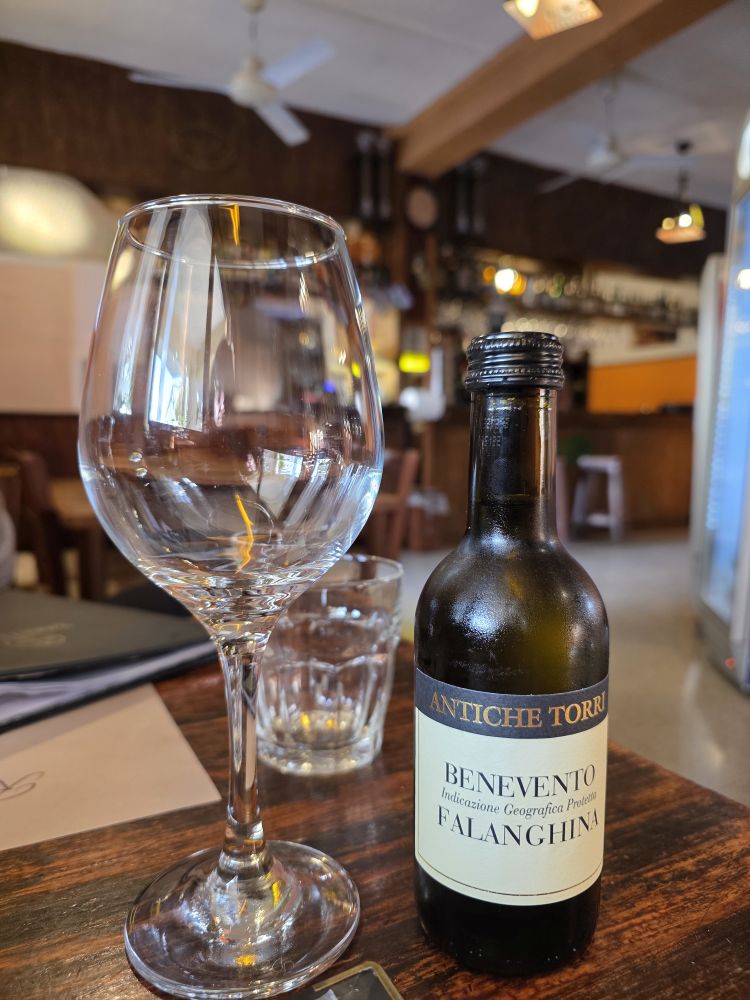
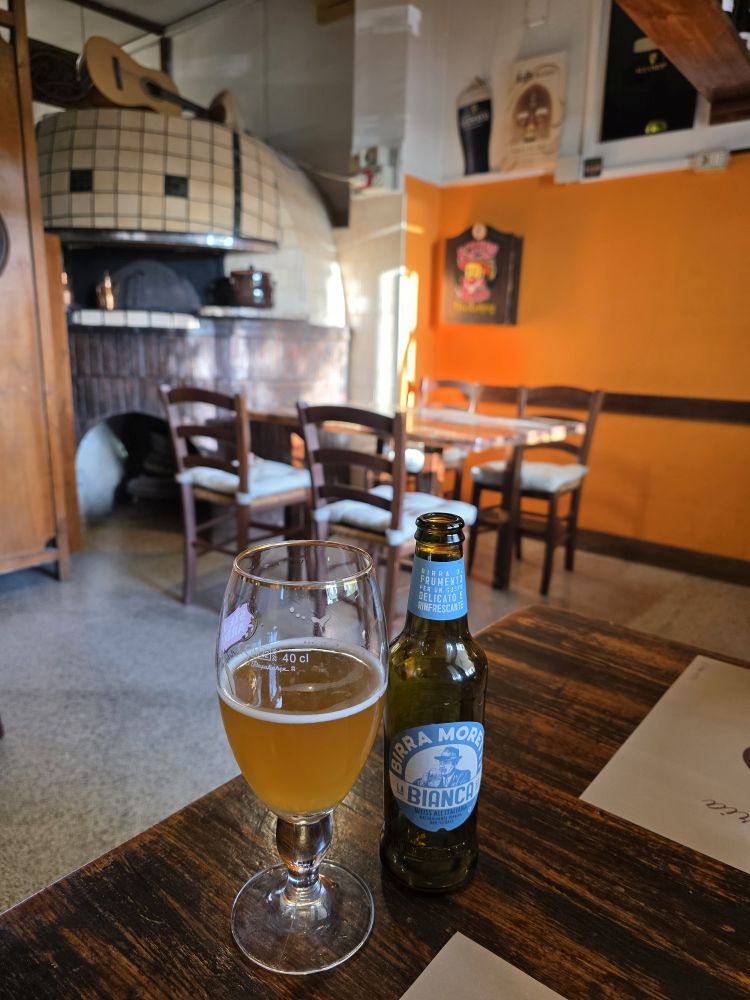
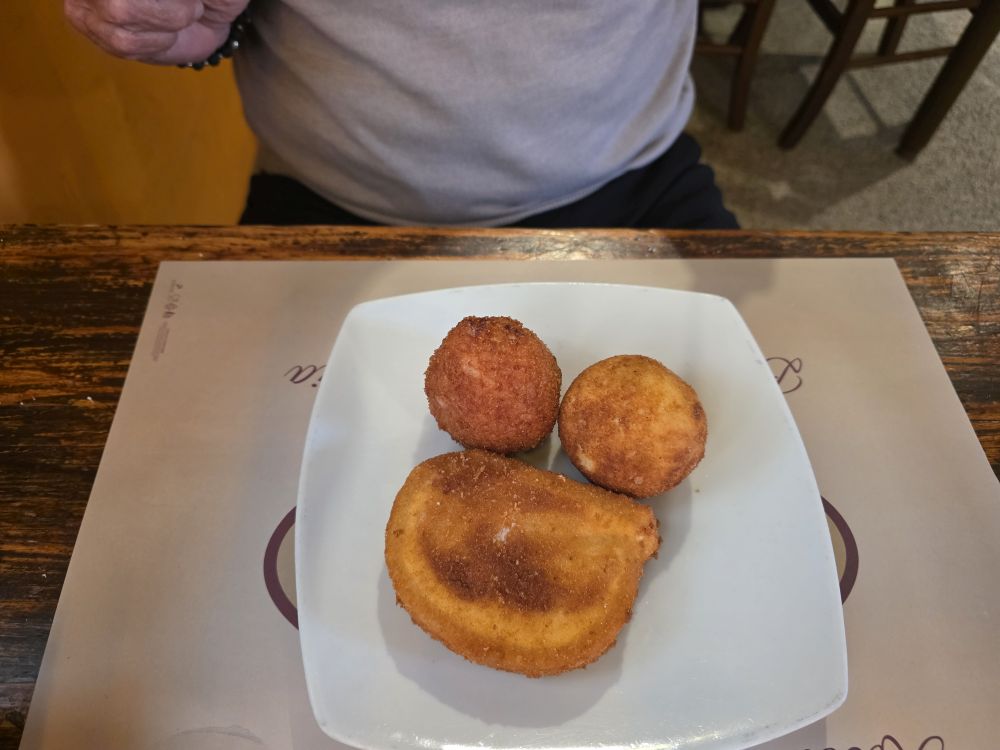
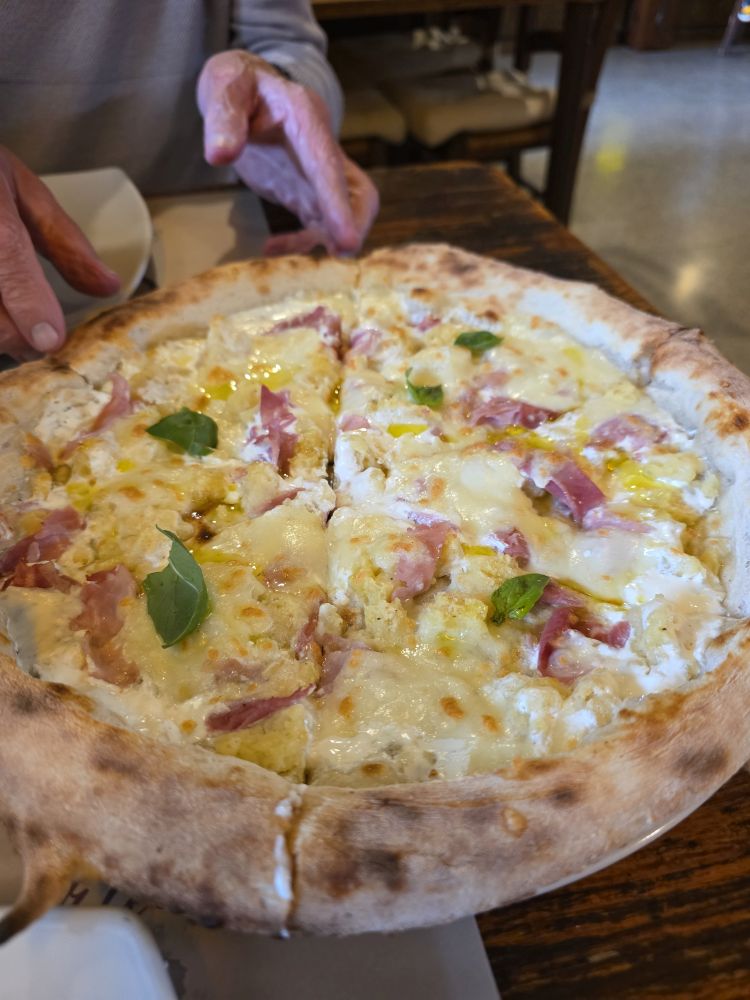
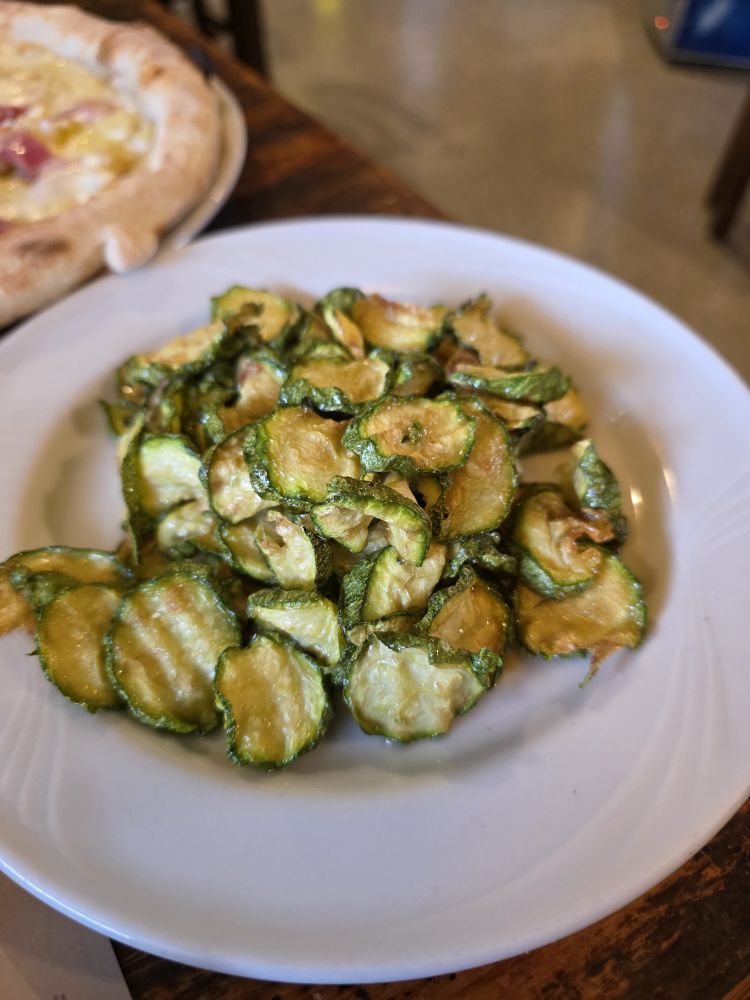
We get settled – hit the grocery store for supplies then walk up the street for dinner at 2 + 1 Pub. Carmine had told us that Napoli was playing in the championship tonight and that it would be crazy in town – “no cars” he says! Oh, no worries – we’re staying local, not going into old town tonight. We were a little concerned the Pub would be busy, as it is billed as a “sports pub,” but we had the place to ourselves and settled into to order way too much food – as usual! Starting out with “snacks,” we order one Arroncini, two Bonbons – Fried balls of ricotta and ham, two involtini – like little baby fried pizzas. And that was just to start! Then I had to try the Zucchini alla Scapece – a local specialty of roasted marinated zucchini – and we split a pizza. Ay yi yi! We took the zucchini home for a snack tomorrow. Excellent, but now we are totally stuffed.
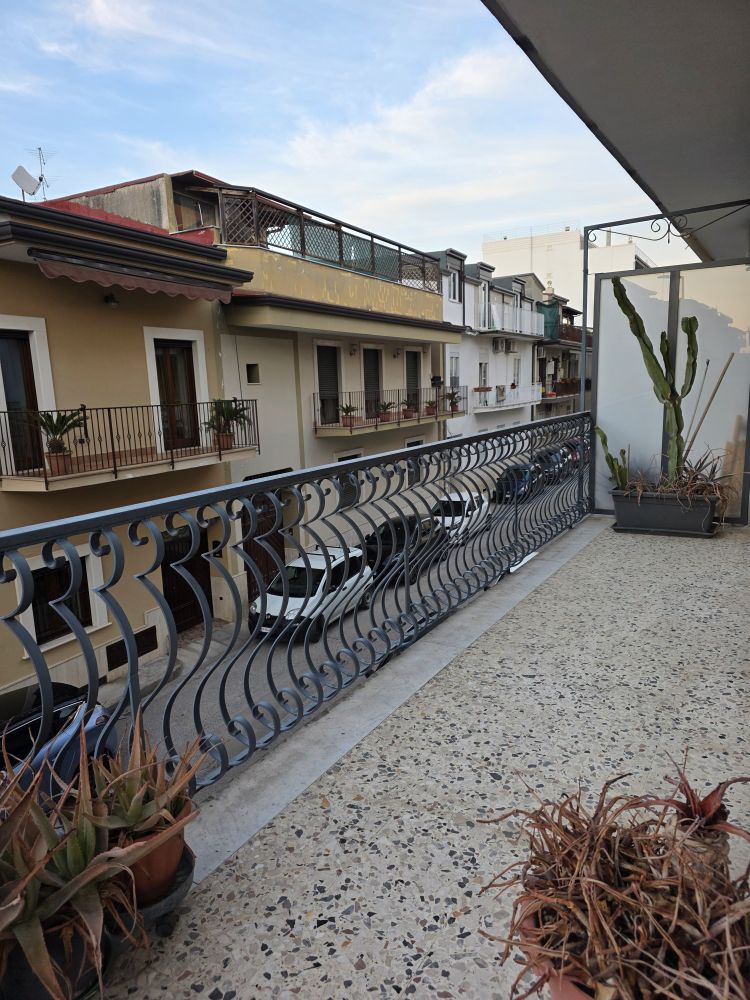
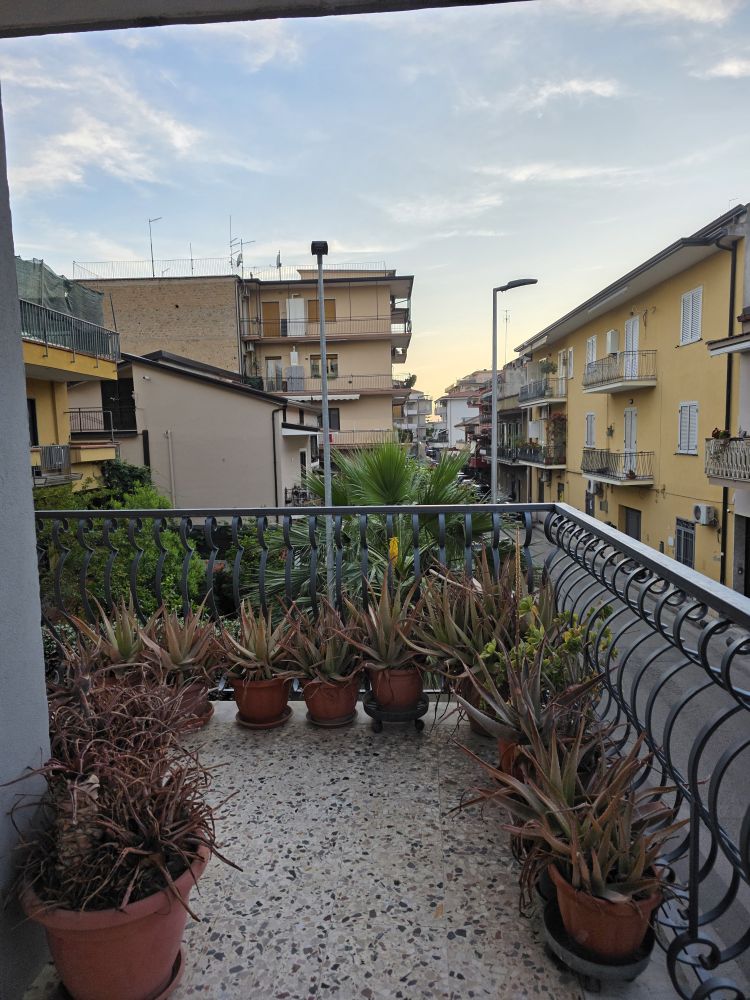
Back at the apartment, we settle in for the evening, enjoying the cool breeze on the balcony and listening to the cheers and fireworks when Napoli scored a goal. It was all quiet after that as we hit the bed, which we took to mean Napoli lost. Oh not so. I crash so hard I never hear the celebrations! Ed said they went on forever, cars, horns, a throng of people right outside in the street, fireworks. Never heard a thing. LOL.
 Andiamo