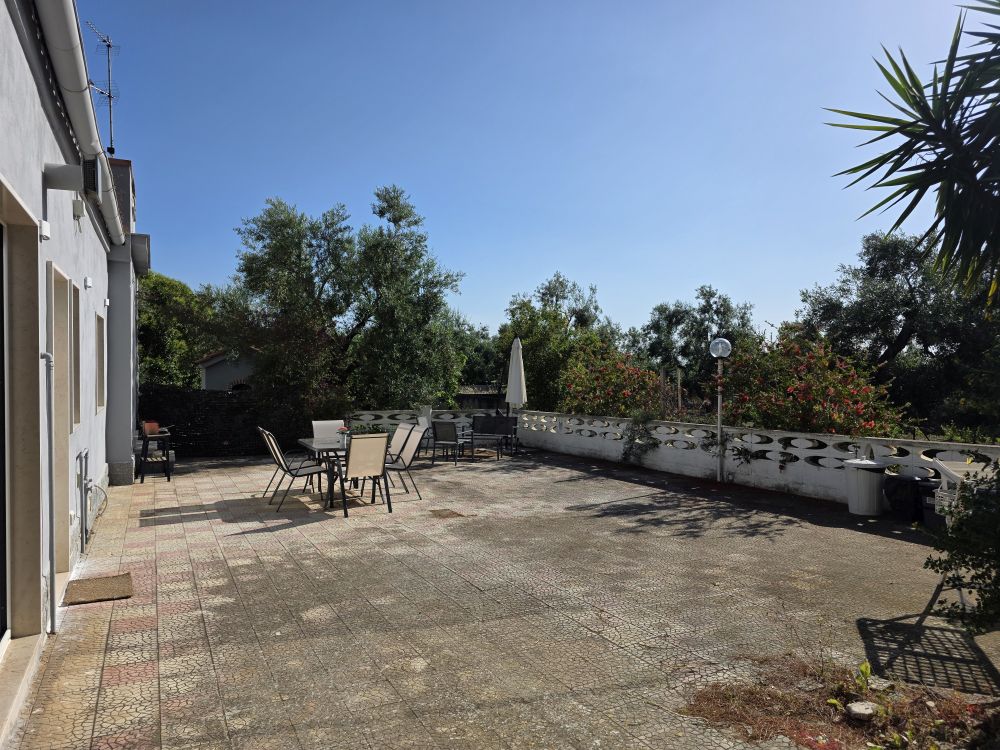
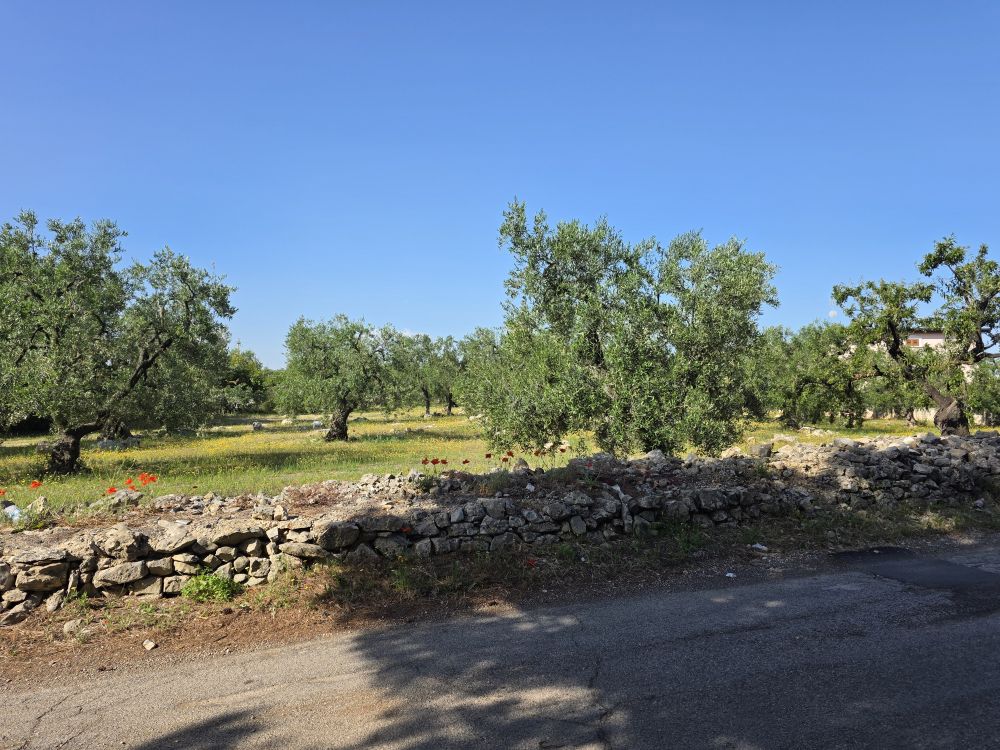
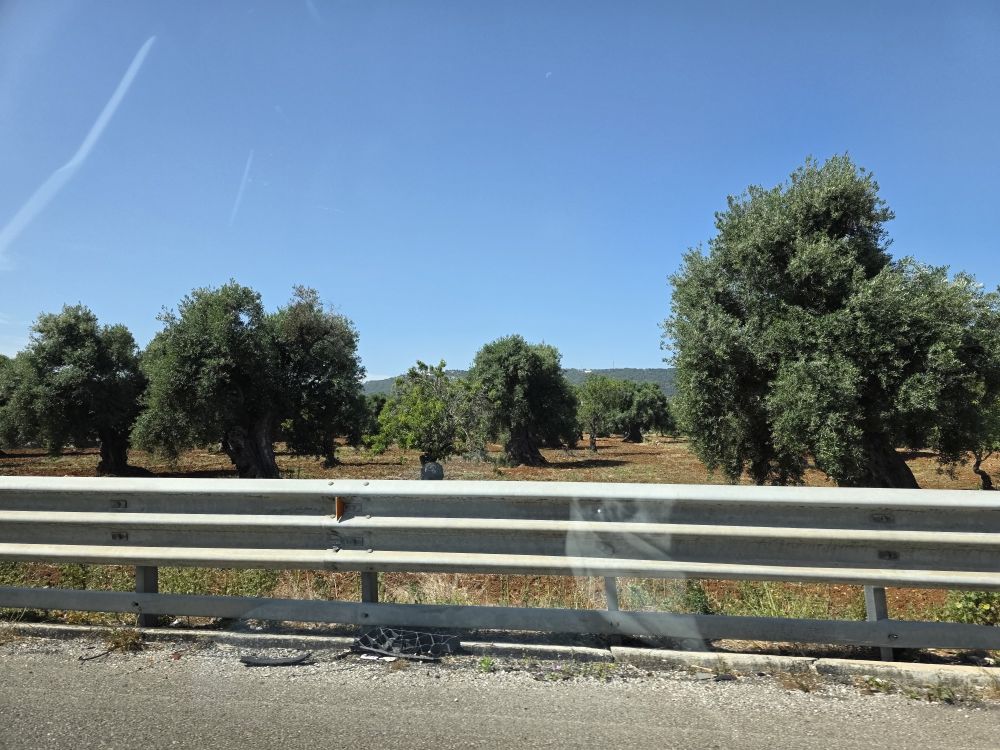
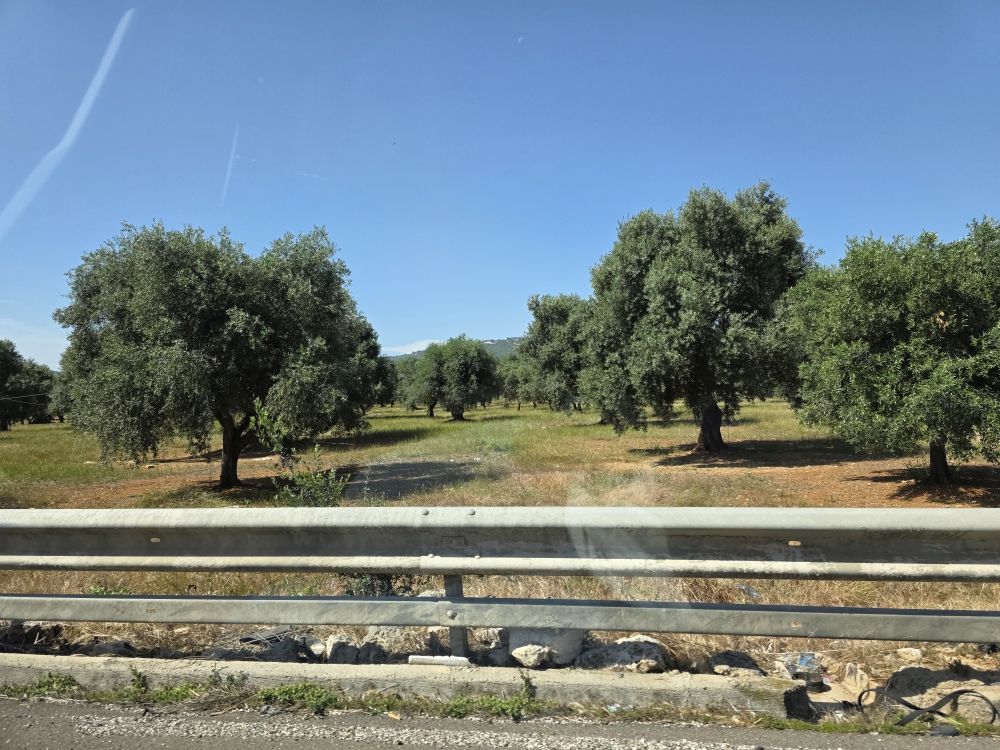
We don’t have to move too fast this morning as it is only a 2-hour drive to Lecce. Plus, we didn’t scare the stupid Alarm Owl away last night; it showed up at 4am this time. Sigh. At least we don’t have to get up early and rush out because our sweet and obliging host in Lecce, Luigia, has told us we can be there at noon to drop our bags and car (and use the restroom) before exploring the town, while she gets the house ready. After a leisurely coffee on the patio, we hit the road a little before 9, driving through down our narrow little lane to the main road, then passing through olive grove after olive grove on our way to Lecce.
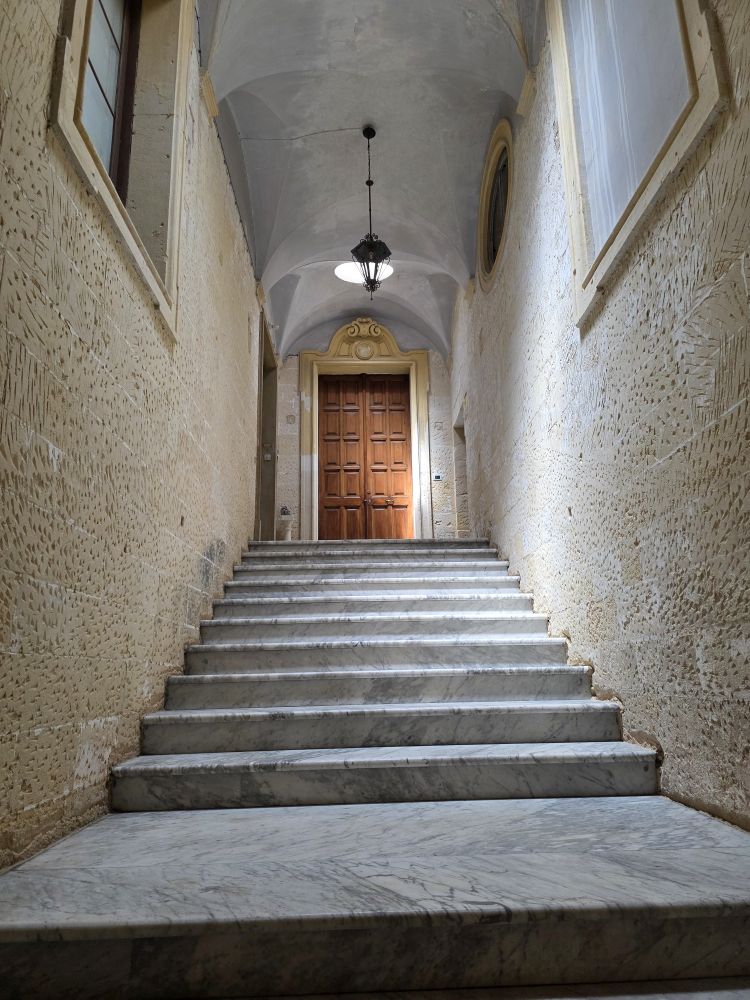
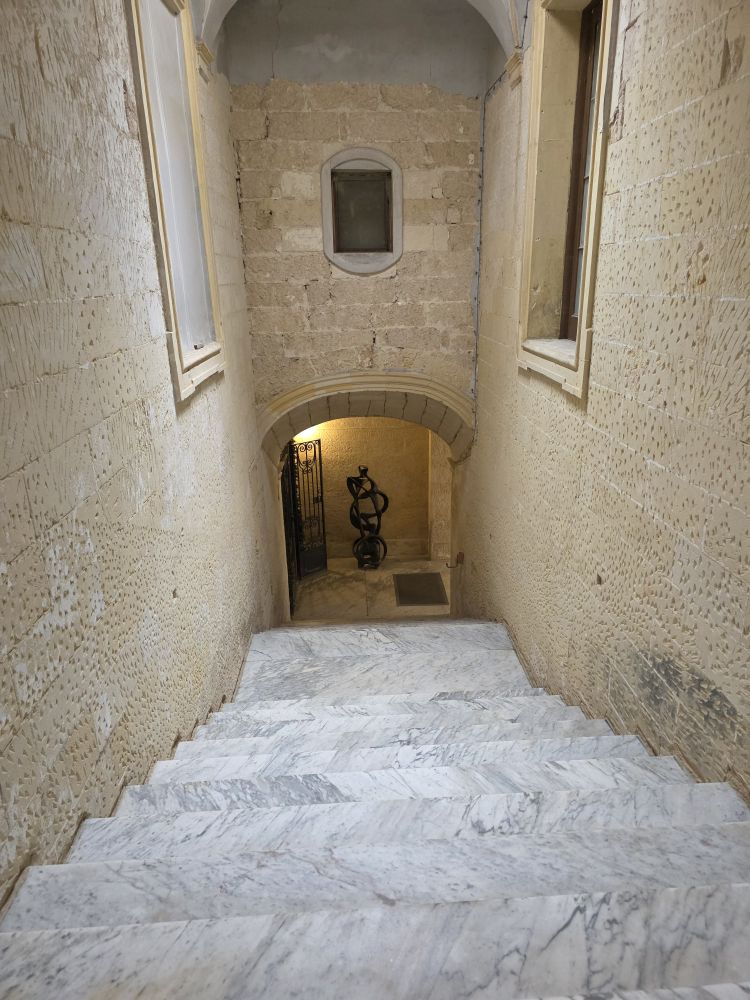
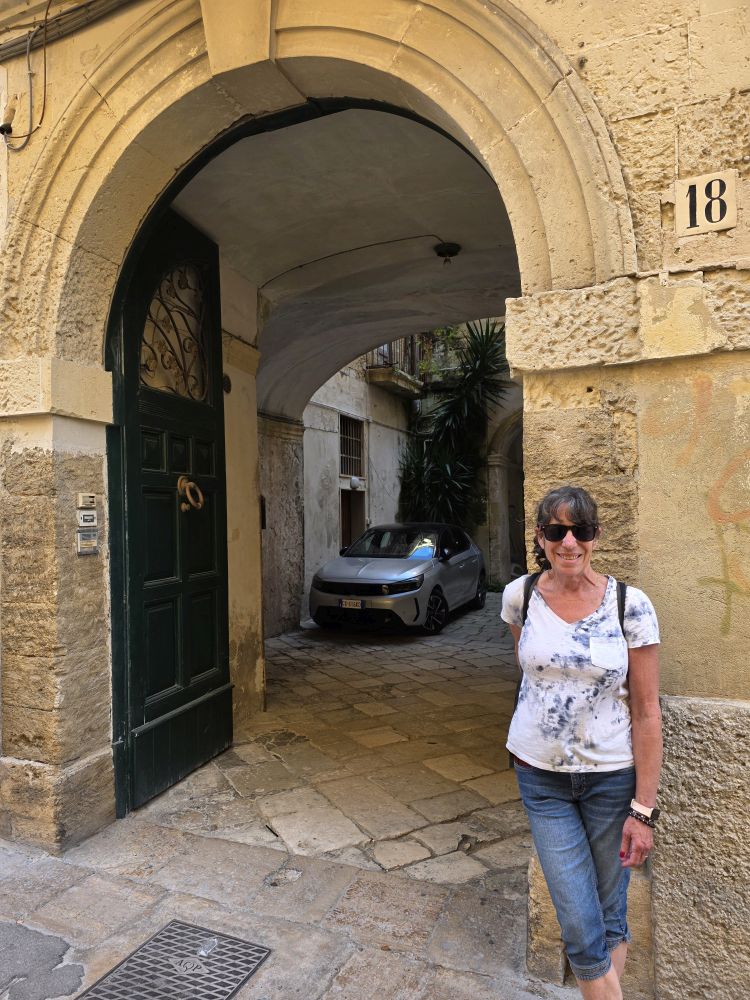
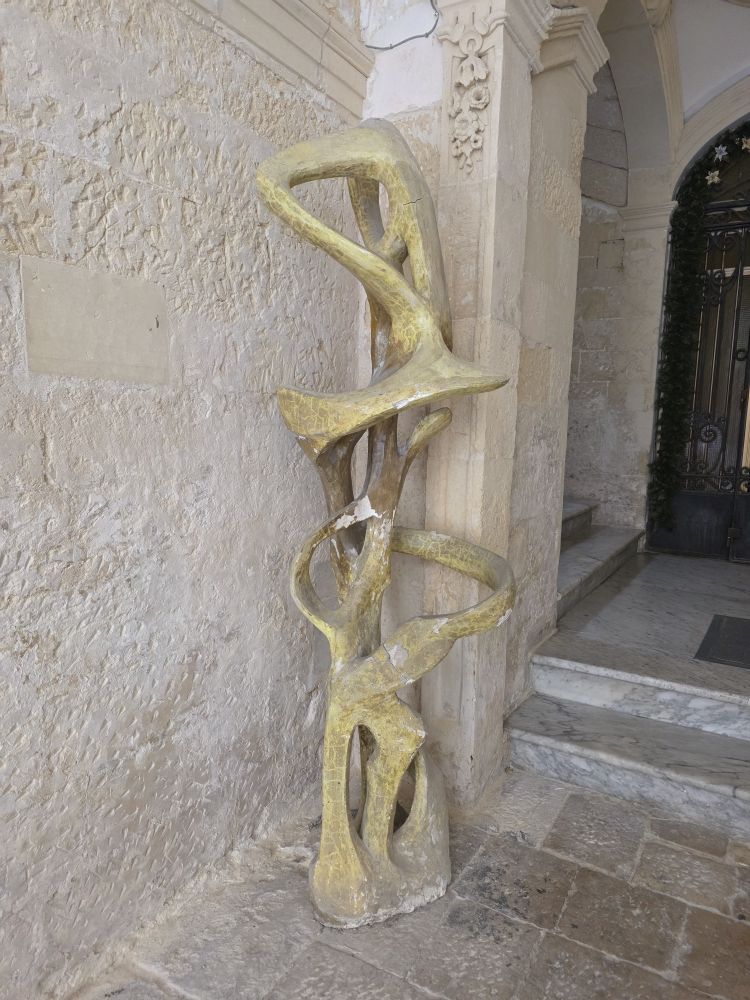
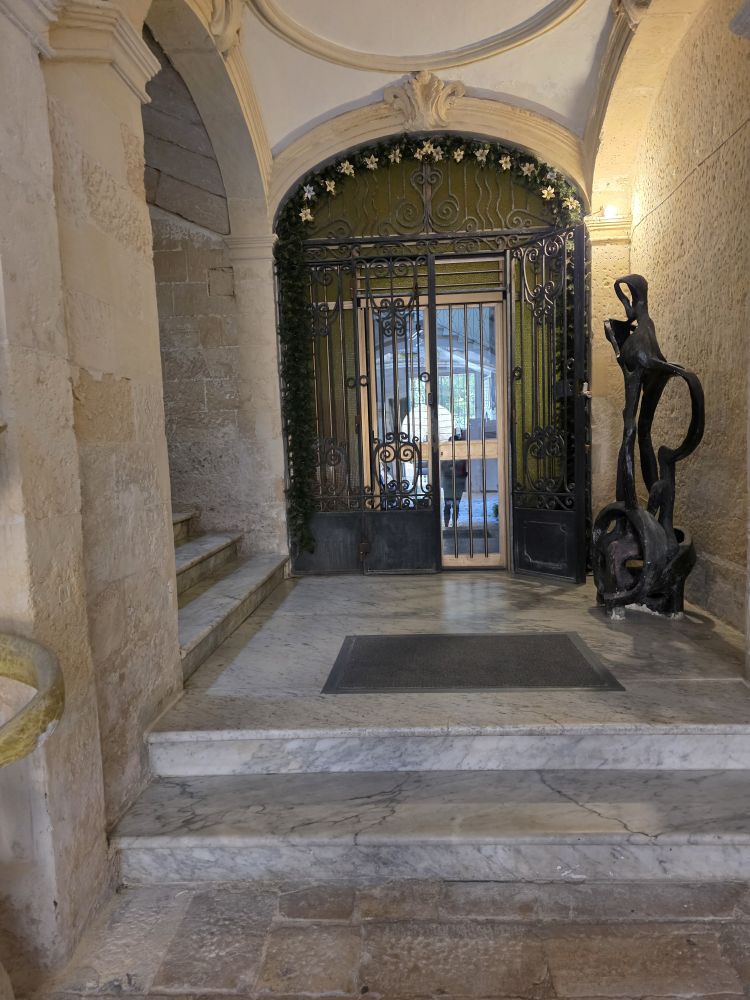
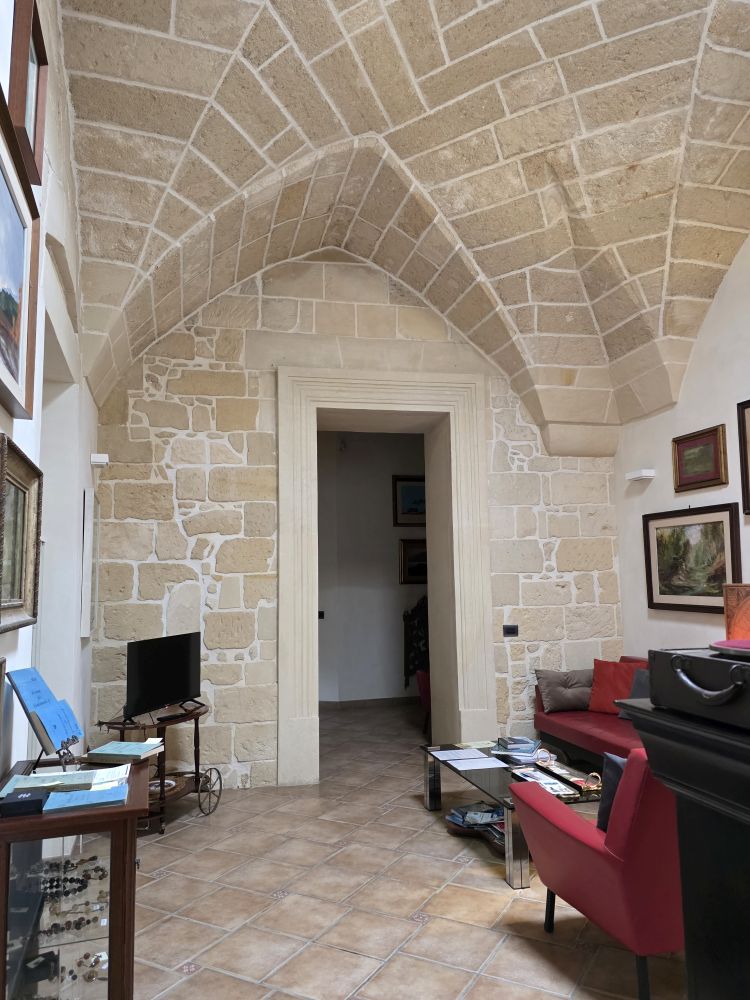
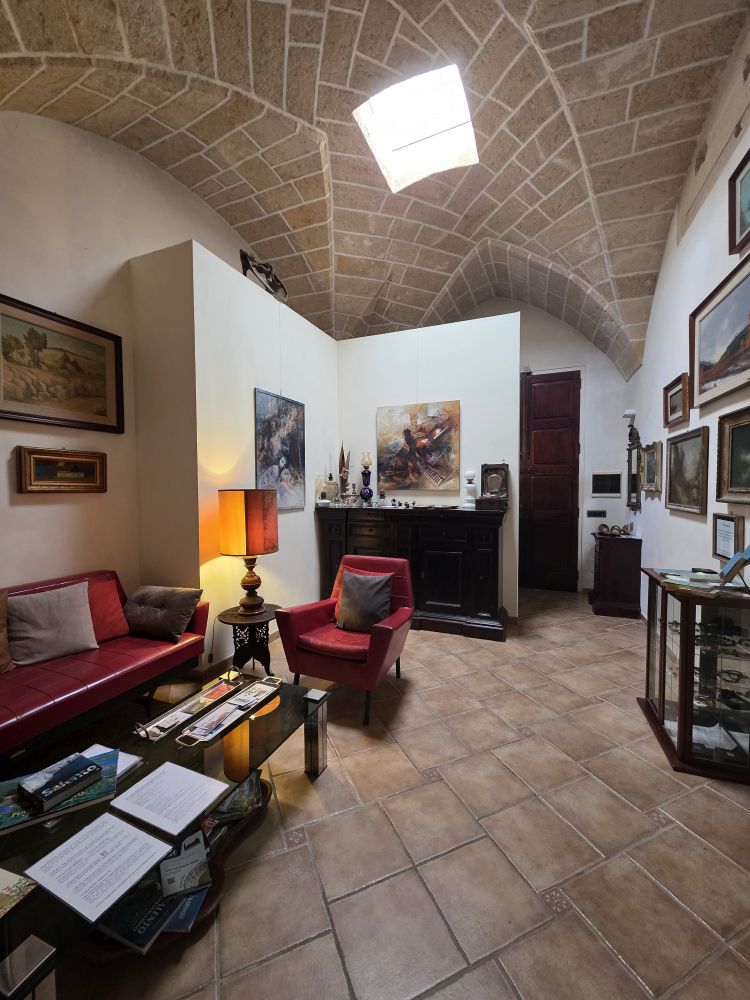
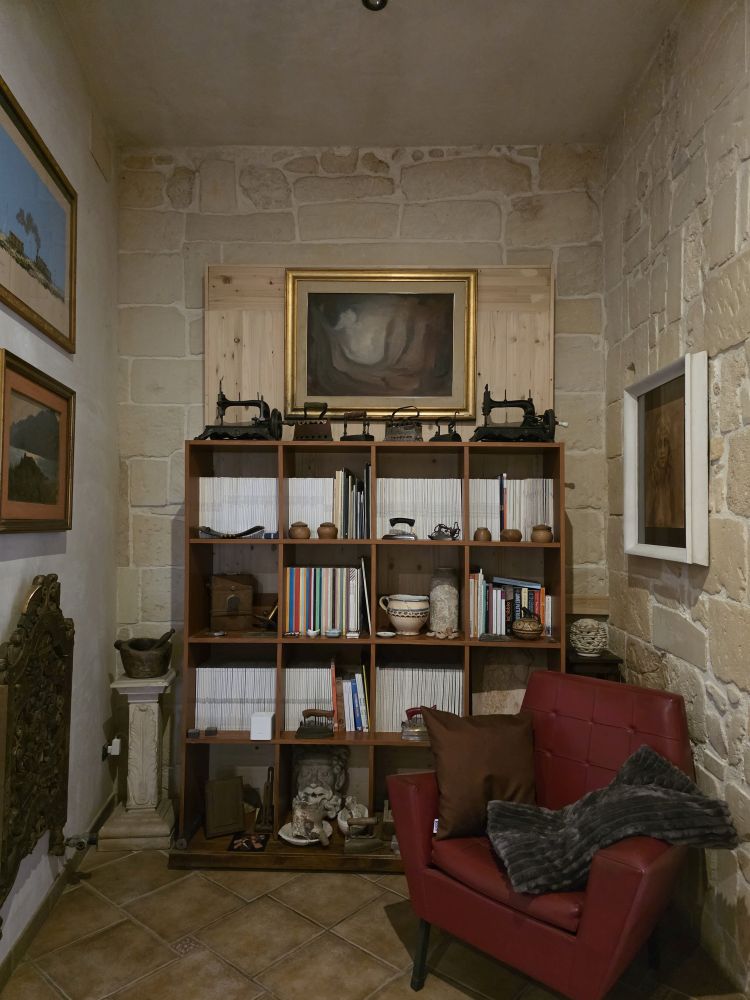
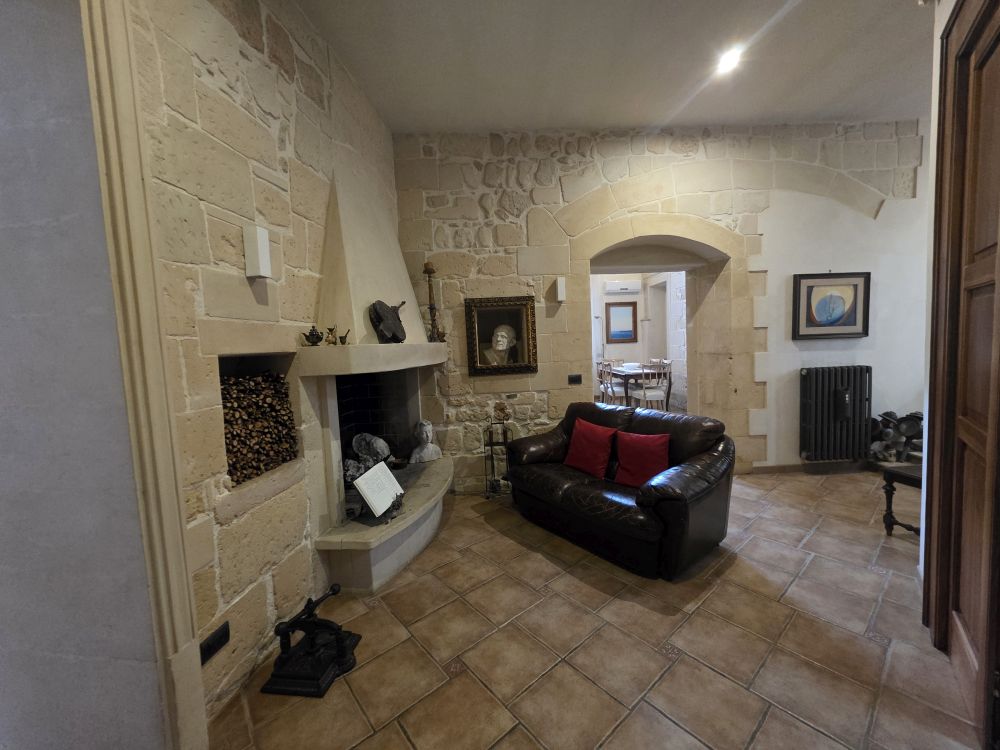
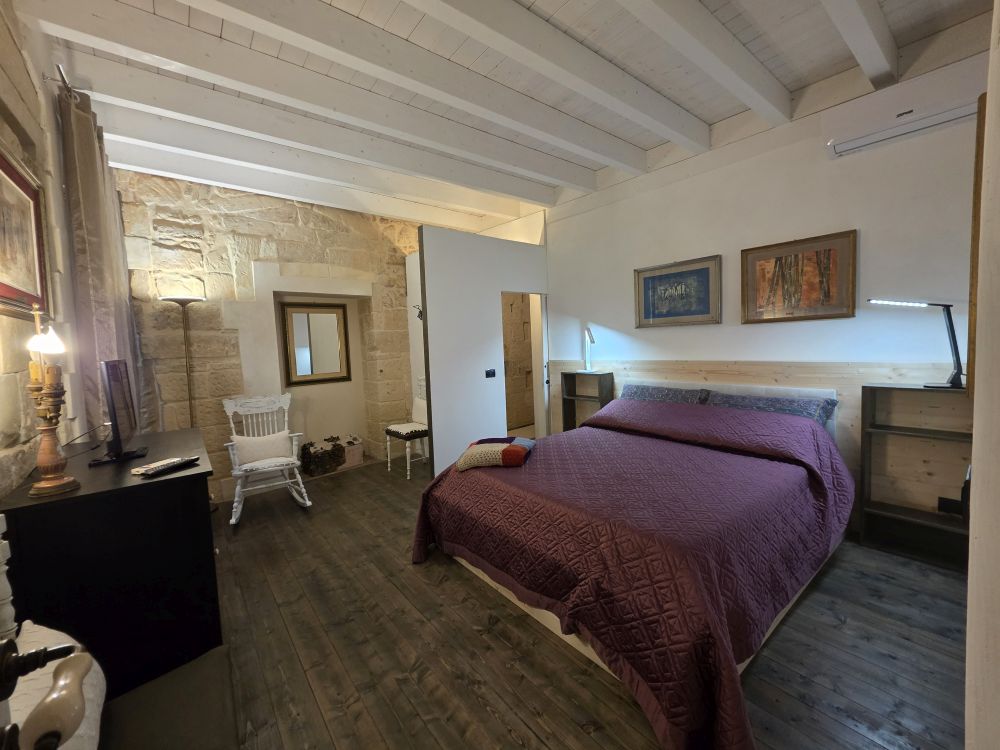
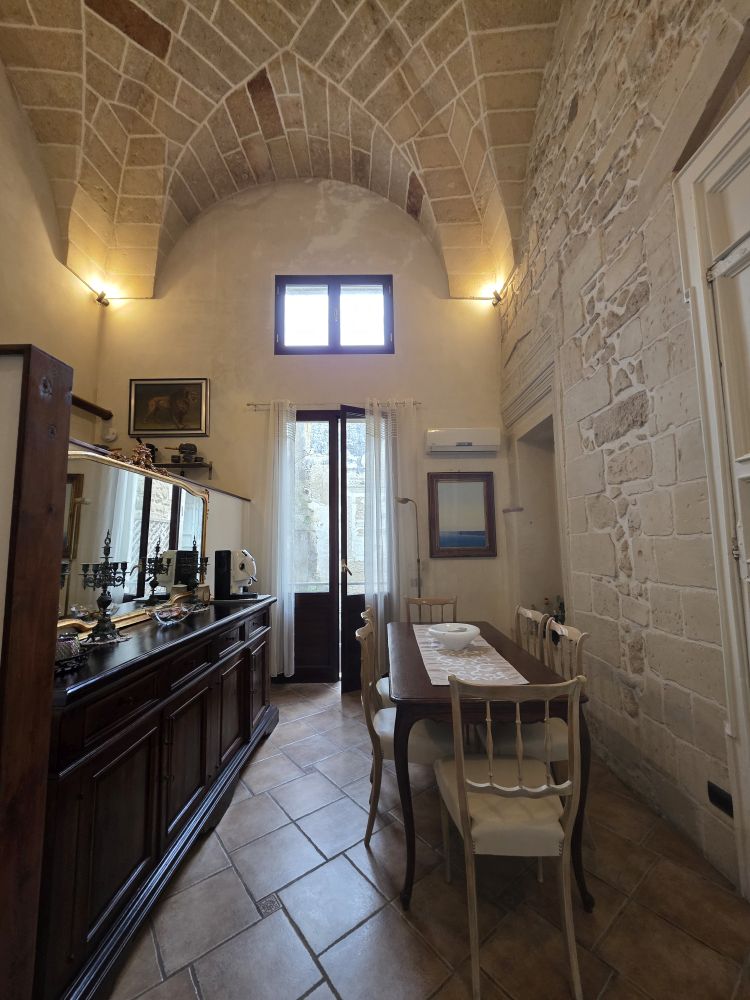
Going just at or below the speed limit, we try to take our time but end up arriving early anyway. After navigating the car into the little courtyard area (the courtyard itself was fine, the arched entrance to the courtyard a little challenging – but Ed expertly stuffed the car through the entrance and into the space where it would remain for our entire visit! Thank God for a small car!!), Luigia was there to greet us and the house was ready! Bonus. Then Luigia gave us the tour. OMG! Never have you ever seen anything like this. Built in the mid 1400s– this apartment/house was over the top gorgeous. Hard to believe that this house existed before Columbus was even born!
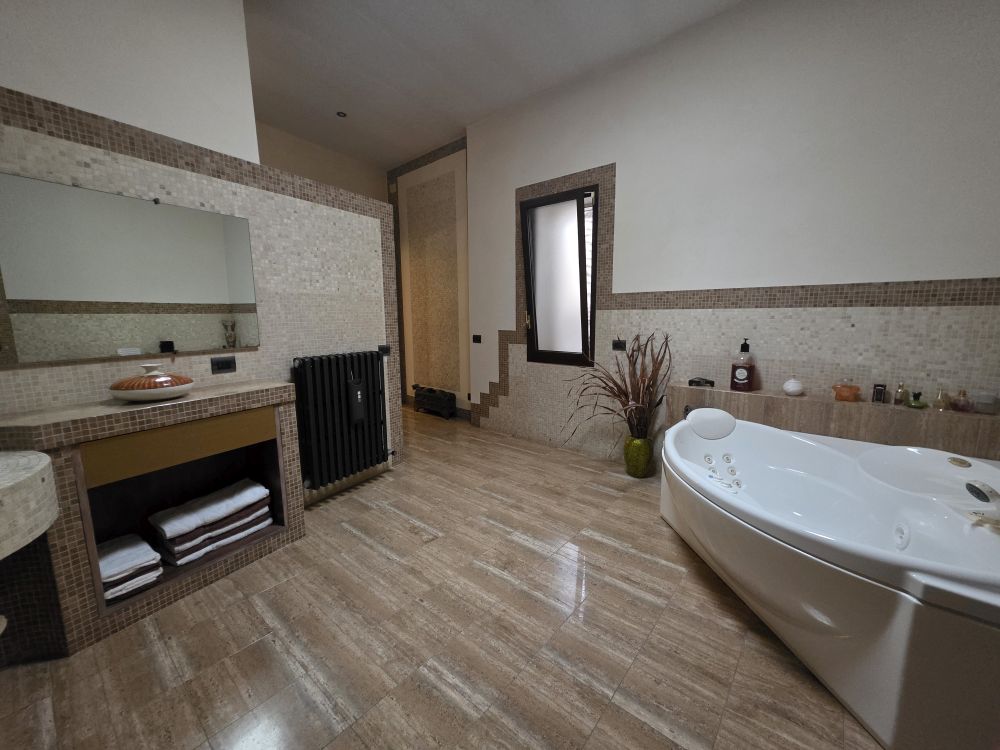
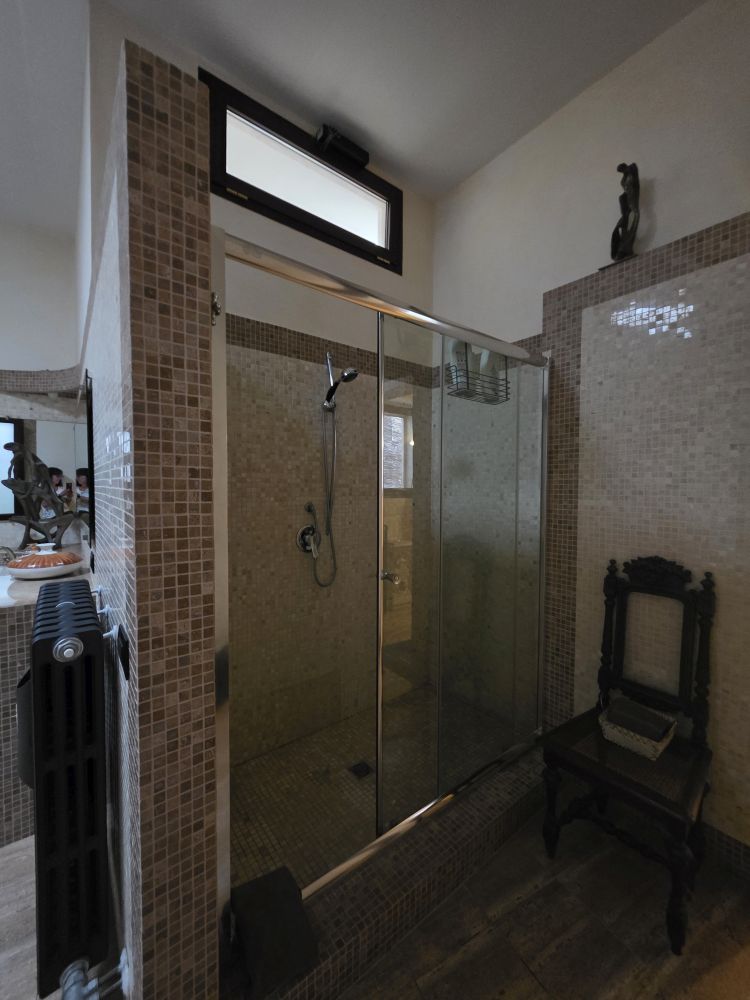
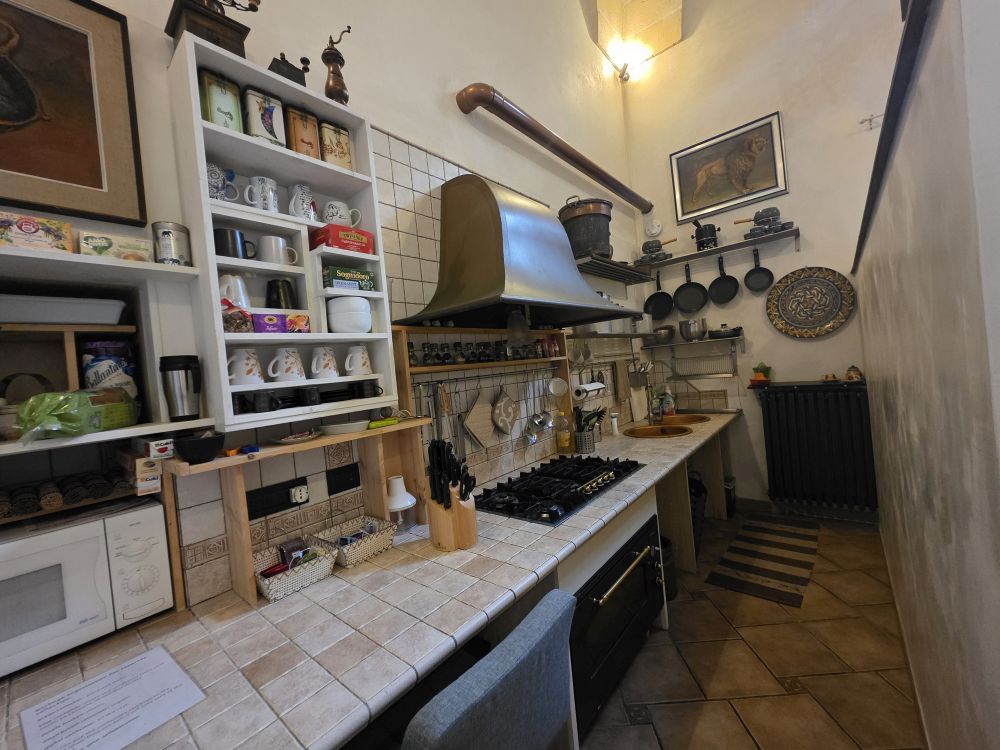
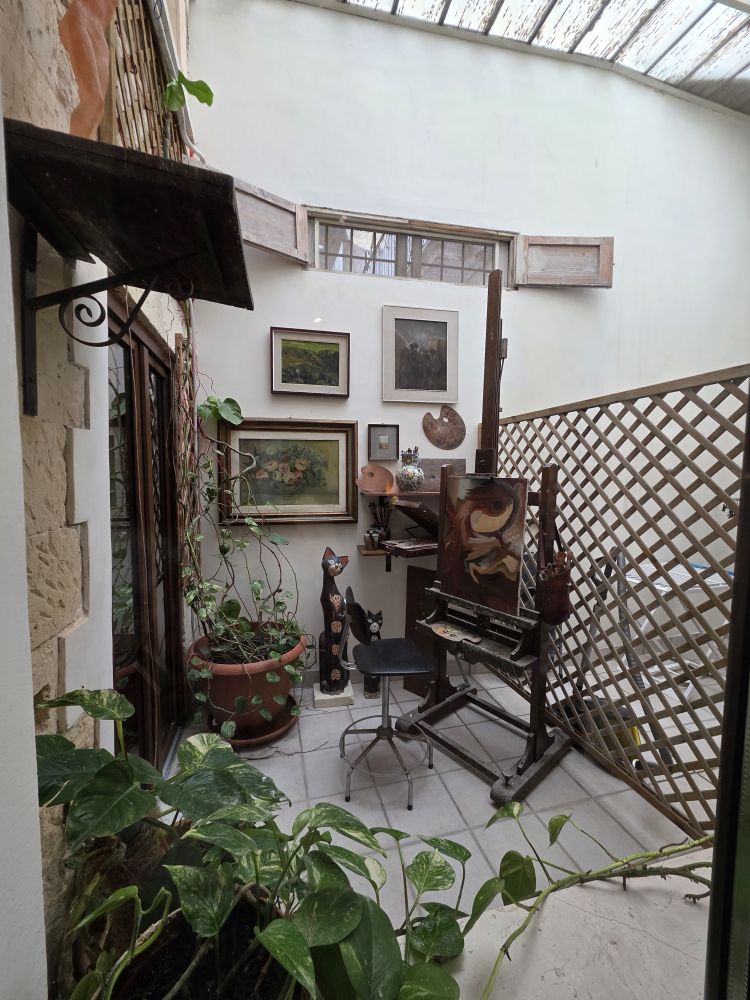
Decorated to the nines with original and period art everywhere, tile, wood burning fireplace, a bathroom that was bigger than our kitchen and dining area combined, all the modern amenities along with the ancient building too! And stocked full – bread, cereal, crackers, milk, water, even butter! She thinks of everything. It was fab.
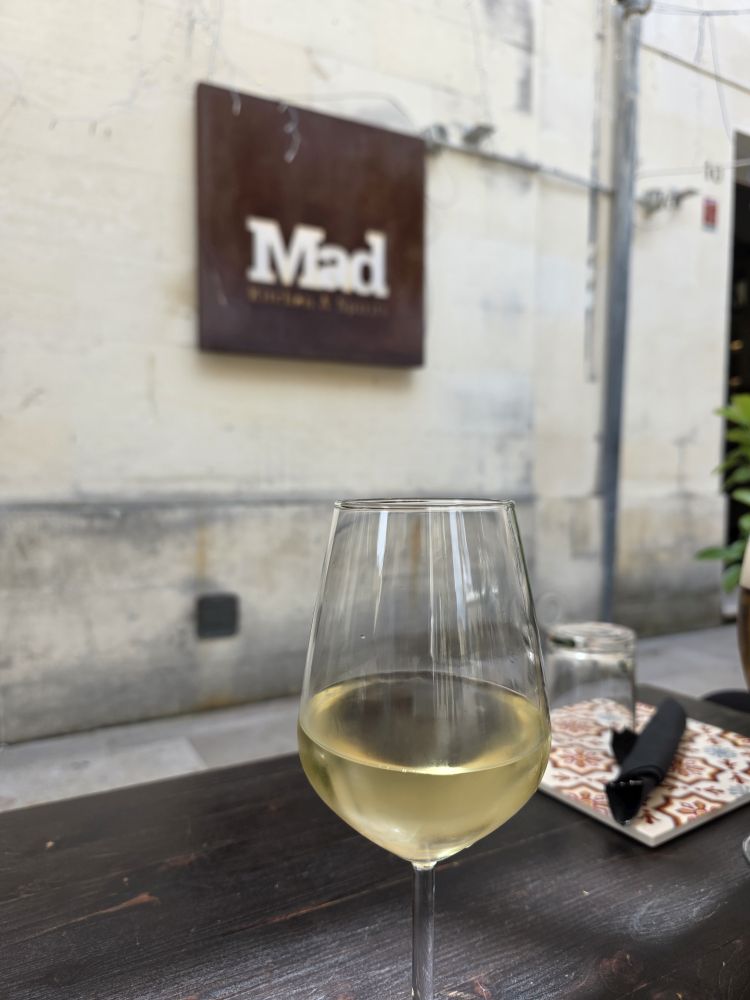
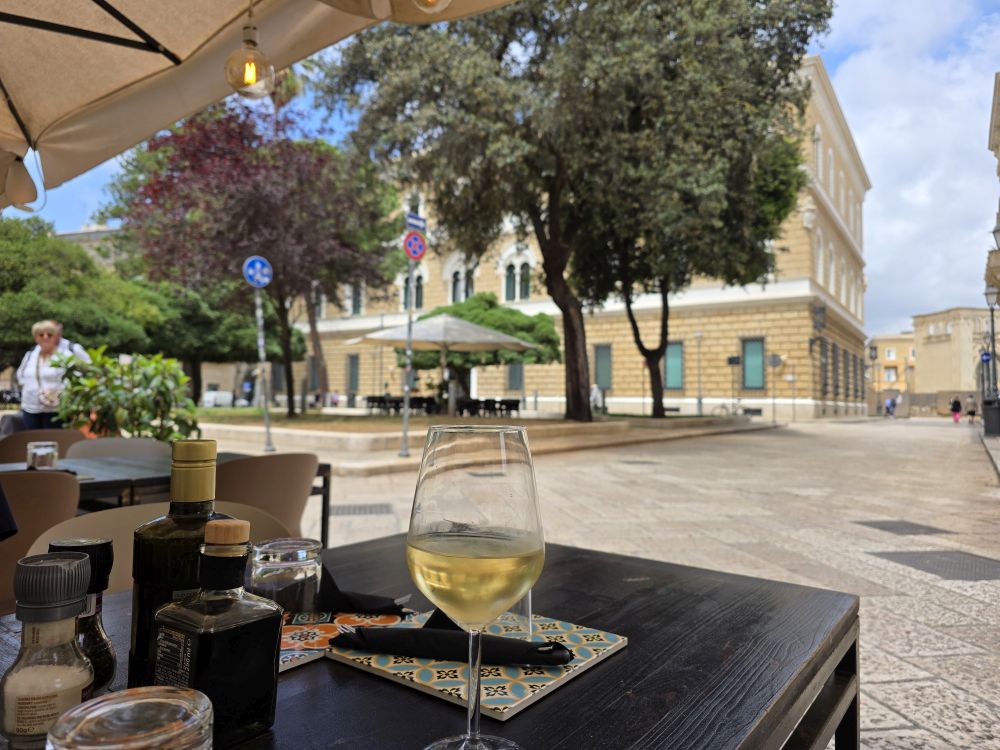
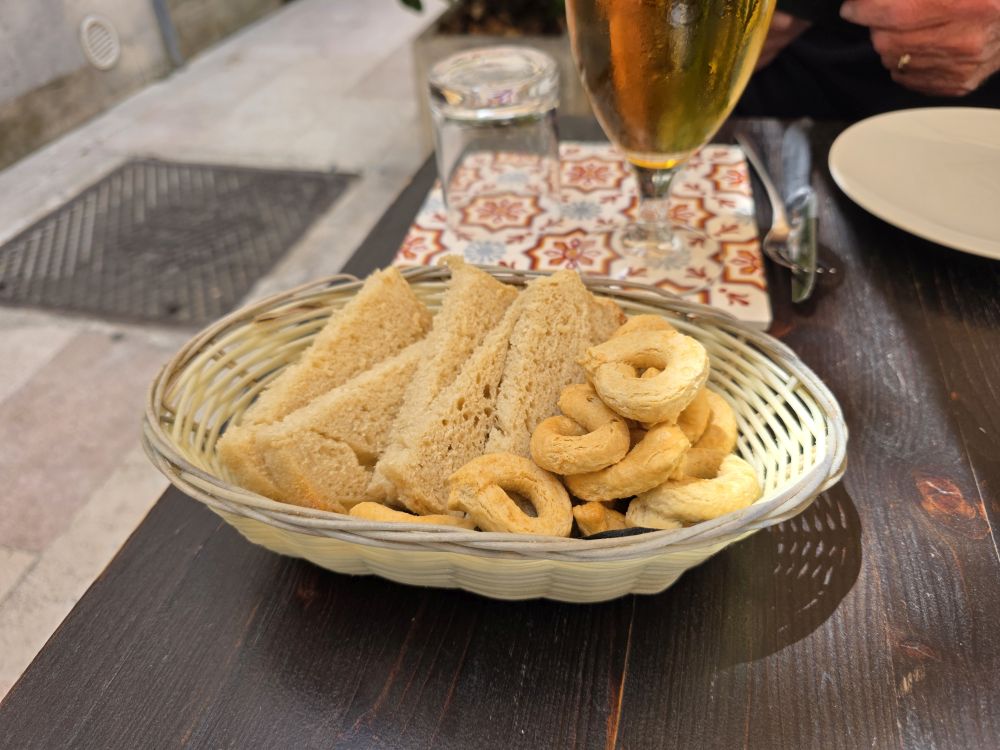
With all afternoon on our own now, we wandered out through the narrow lanes of the old town to the Piazzetta Santa Chiara where a ton of restaurants lined the square. We chose Mad where we dug into a huge plate of Fritto misto – an assortment of potato croquettes, fried zucchini flowers, vegies and “local/traditional” pittule, little fried dough balls stuffed with cheese – and polpette -meatballs – as well as bread and those little taralli breadstick sort of things that came with our drinks. Oh so good.
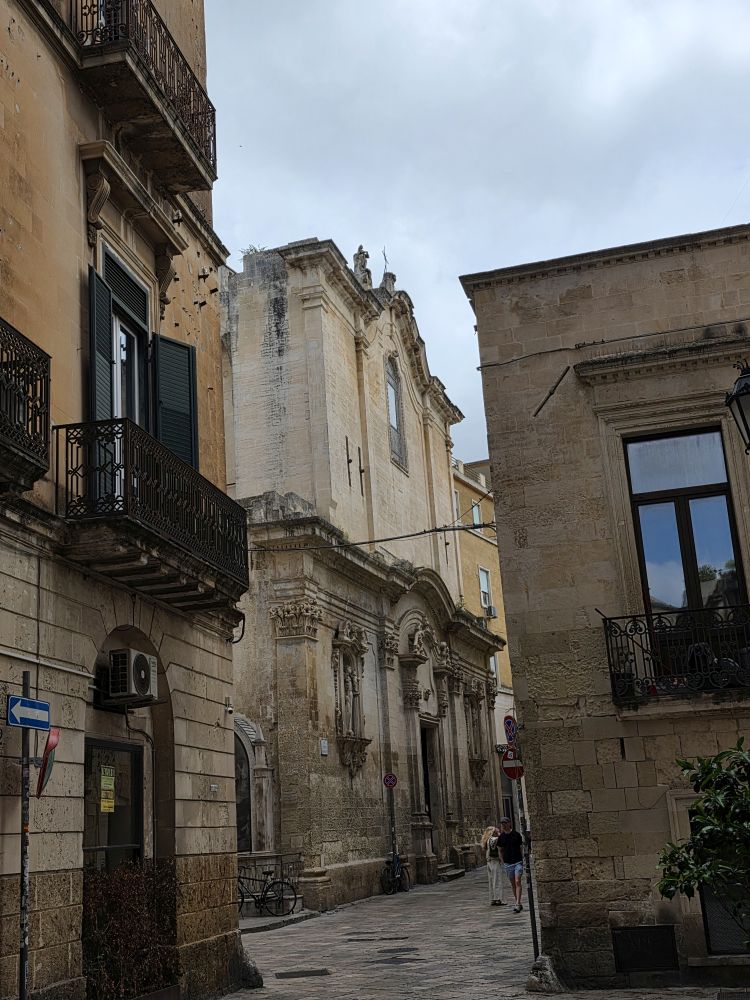
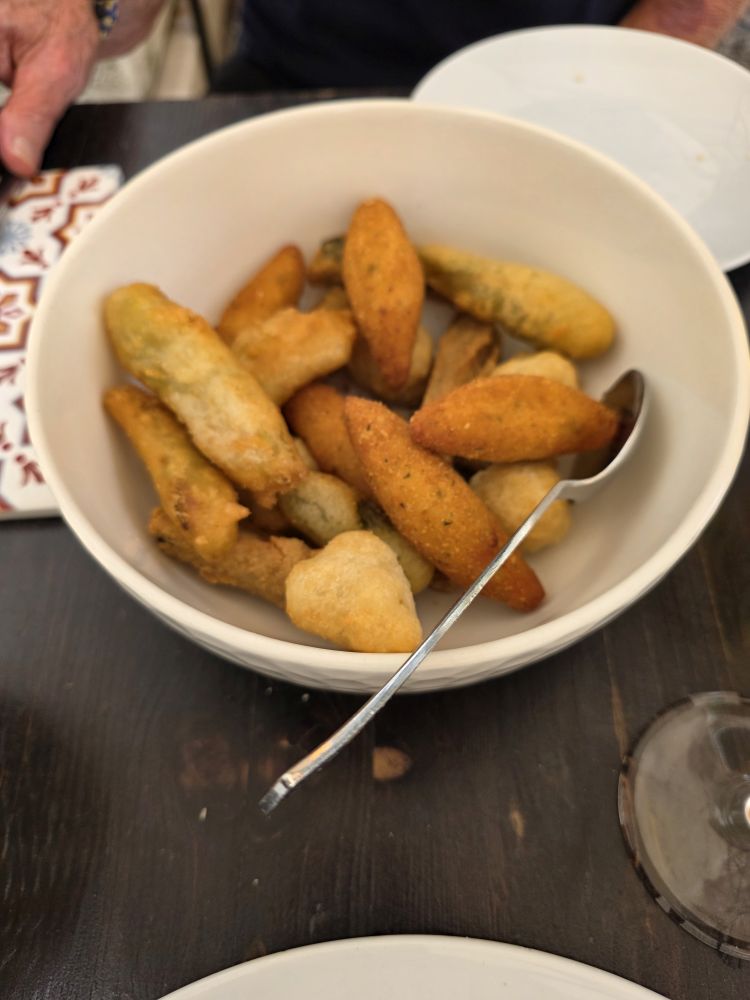
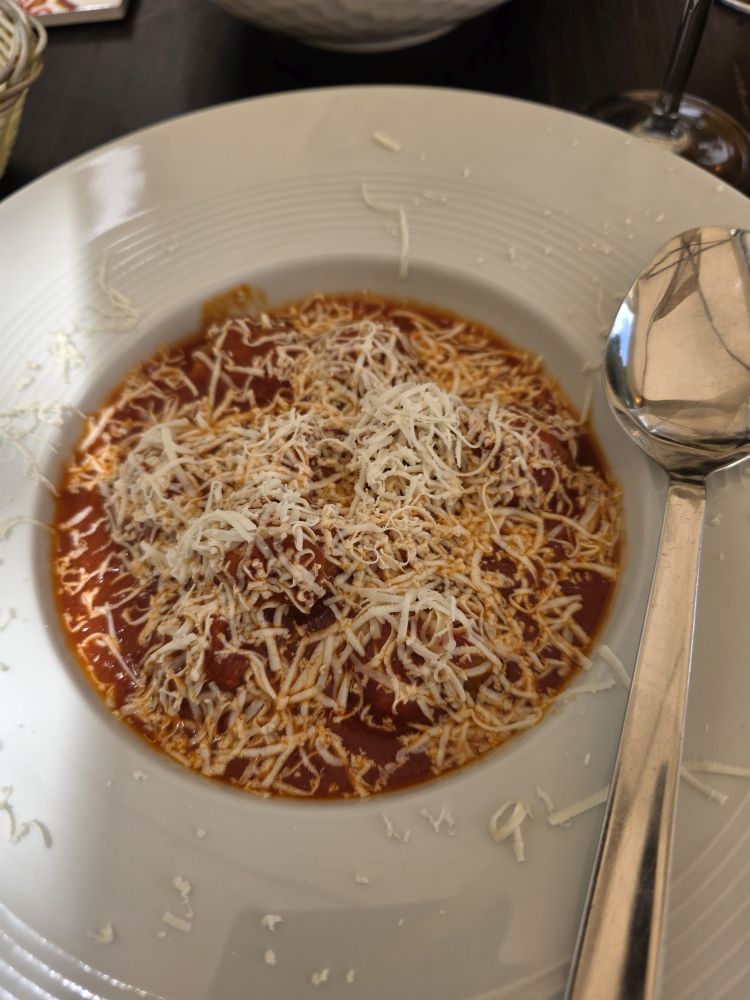
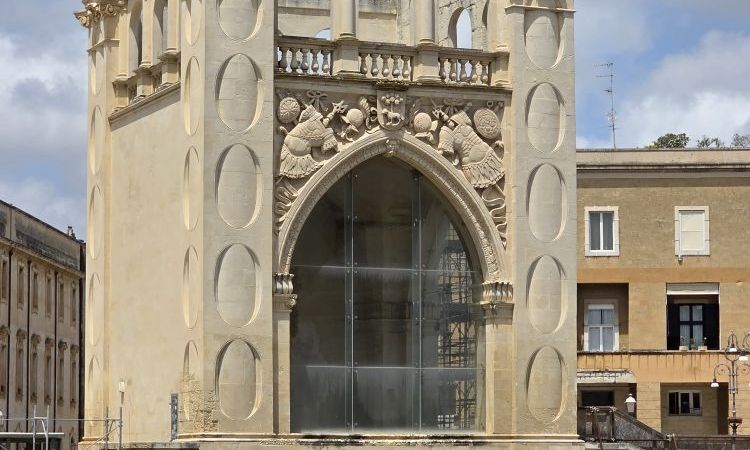
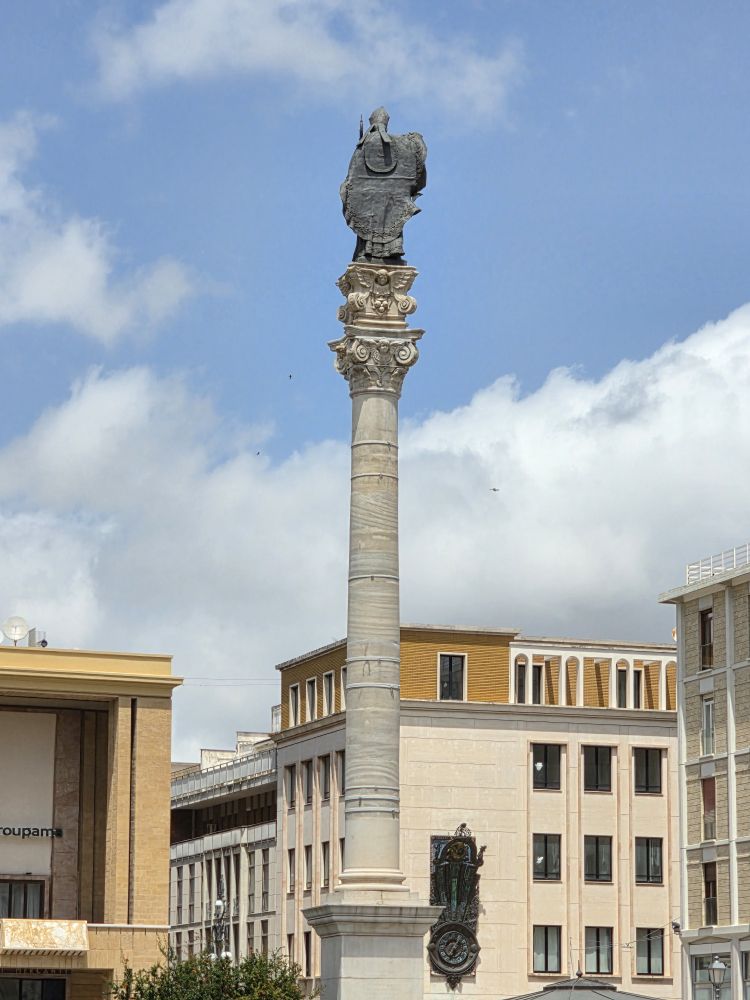
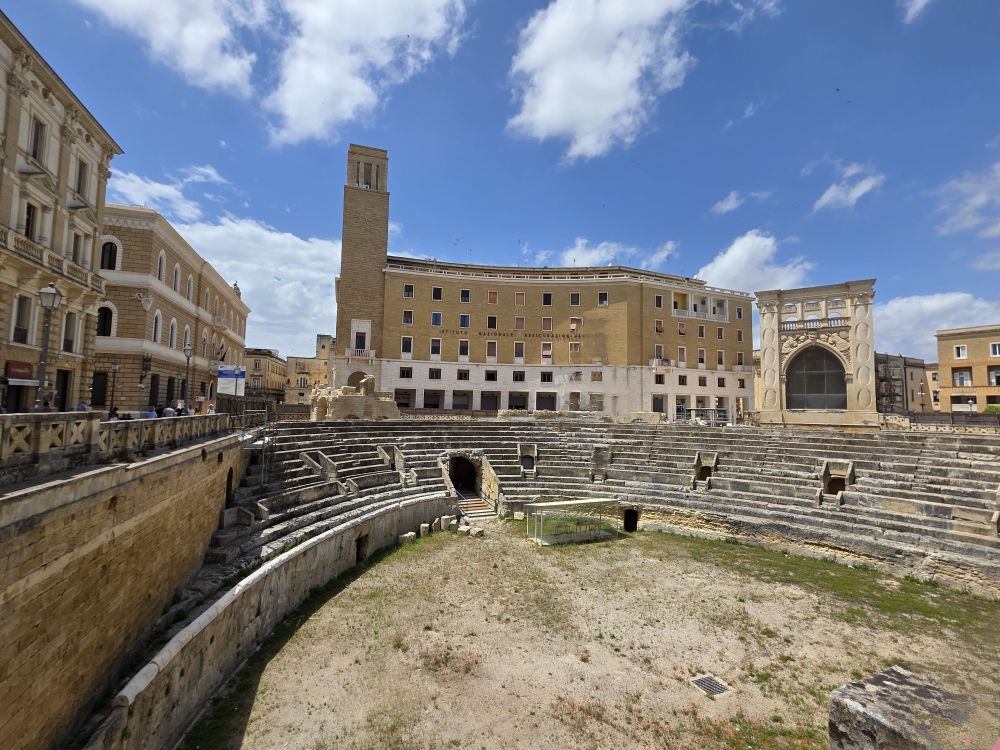
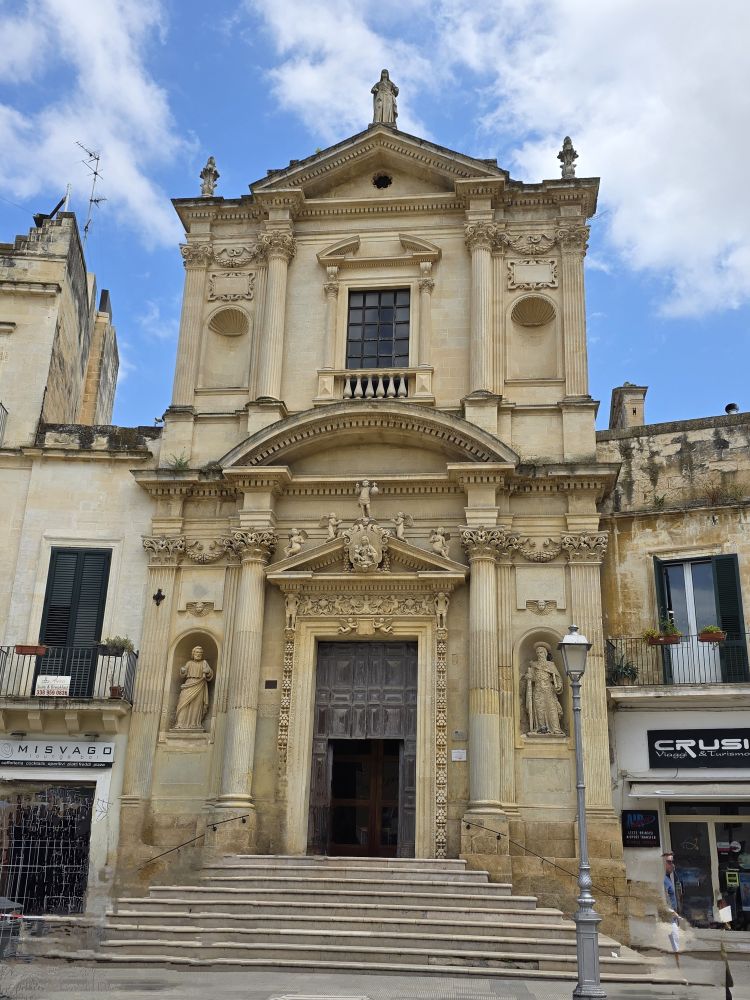
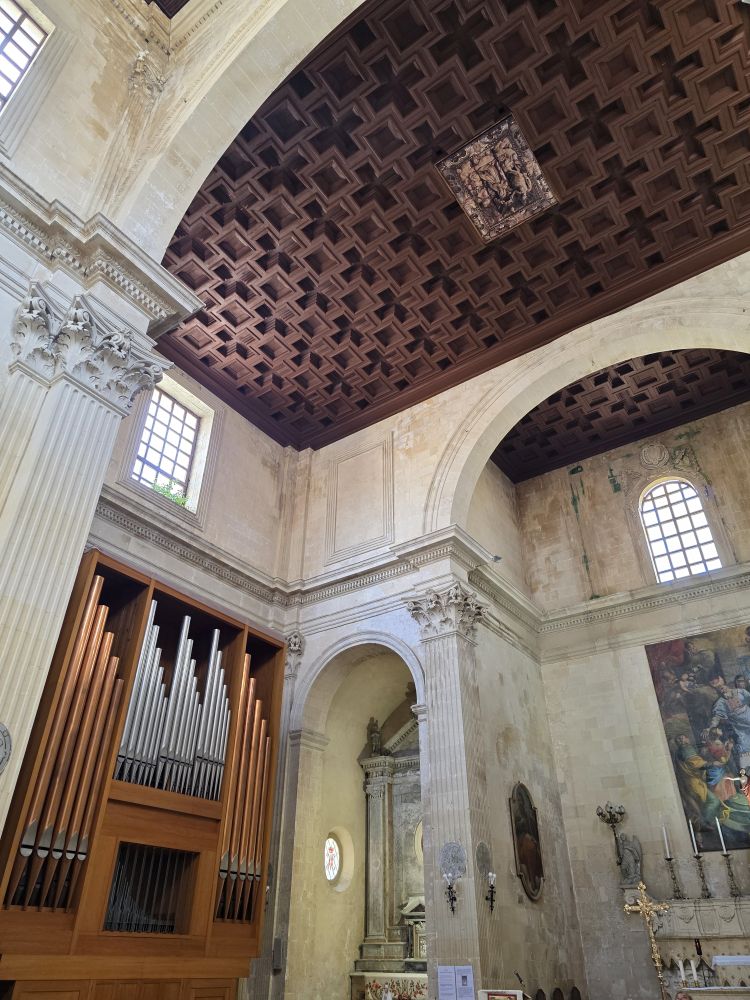
Now it is time to wander. Heading off toward Piazza Sant’Oronozo, we make our way to the Roman Amphitheater, then to the Chiesa di Santa Maria della Grazia, where we wander through the small but elegant chapel.
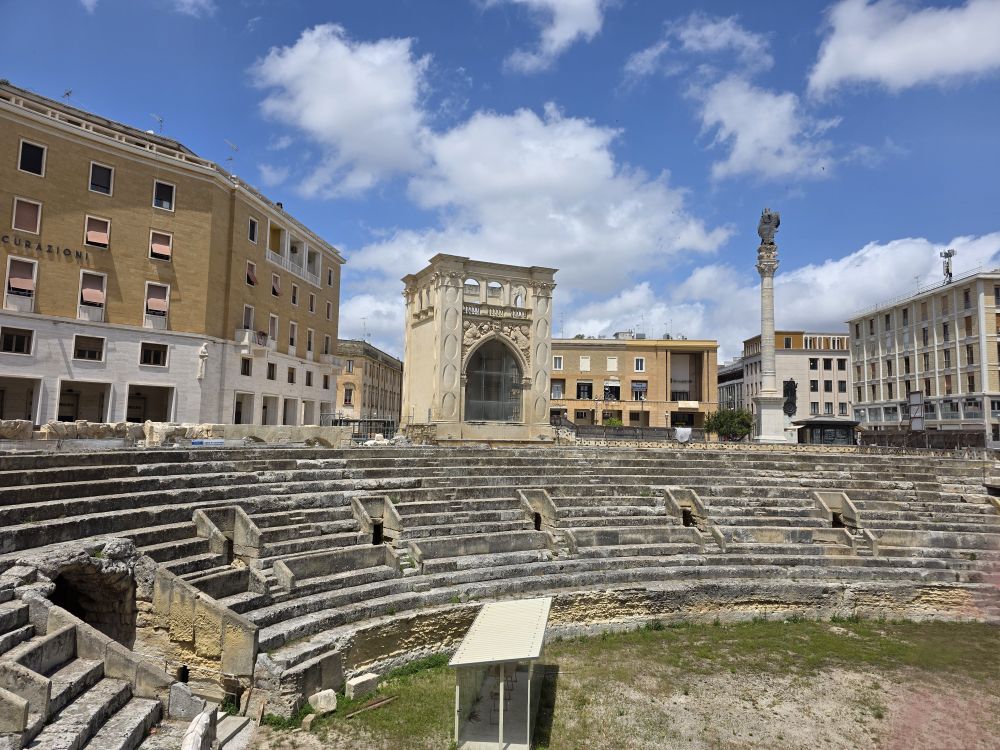
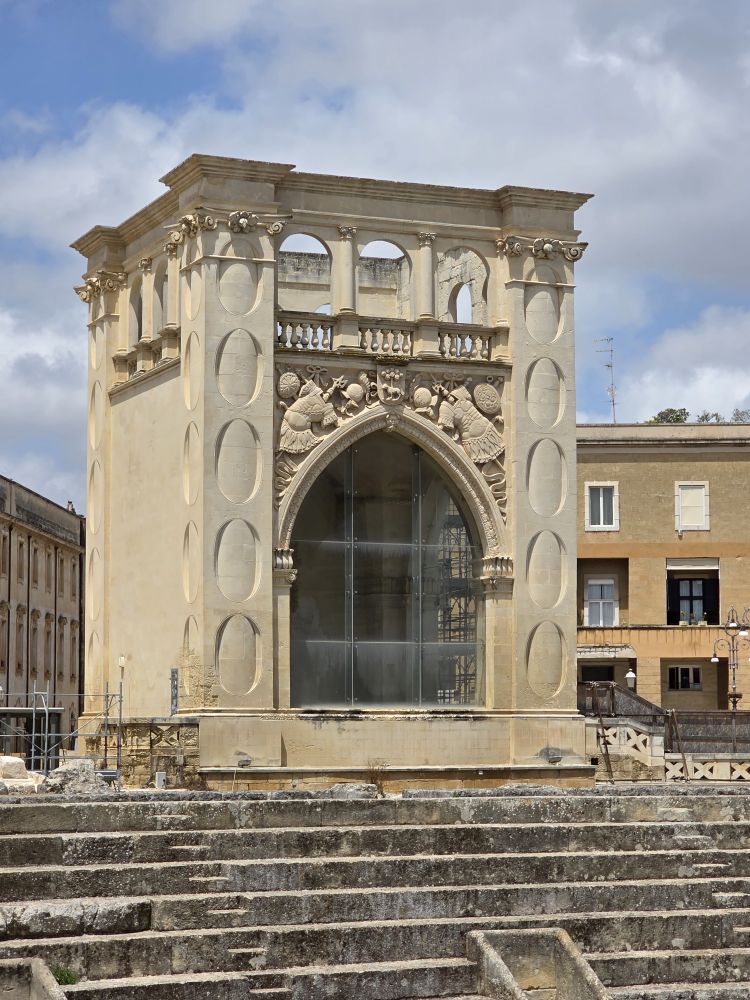
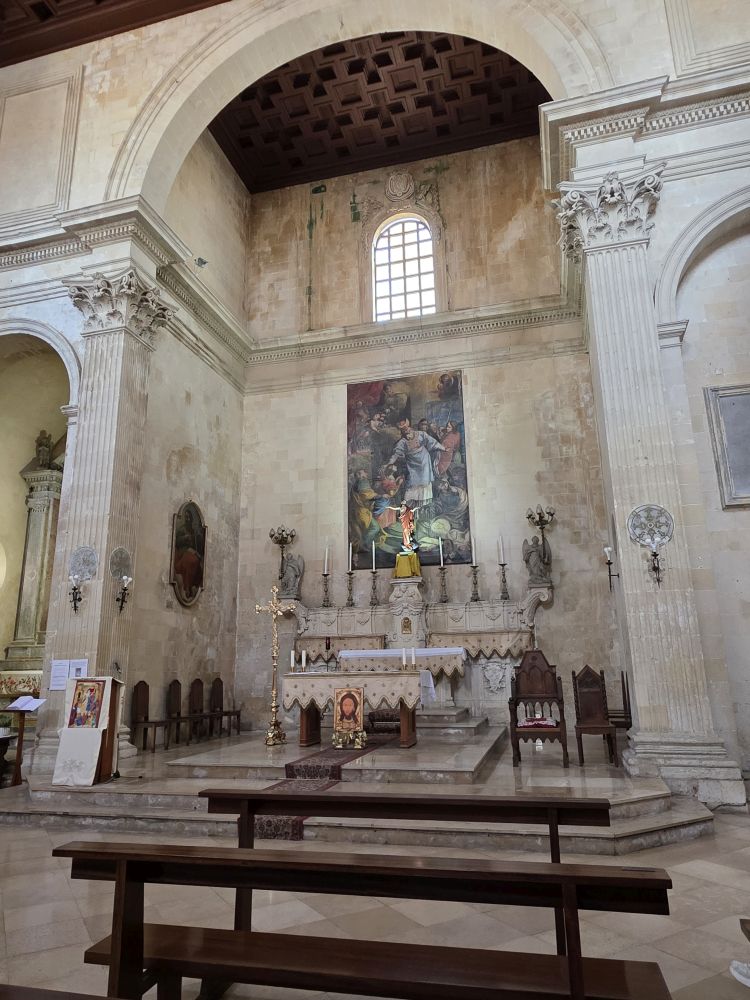
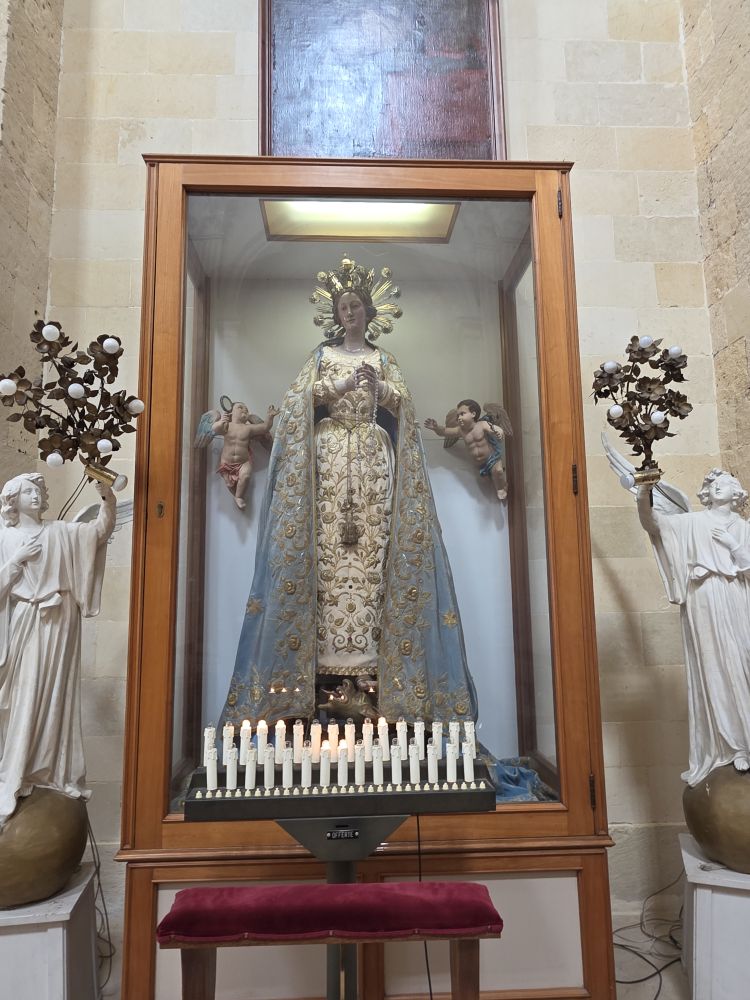
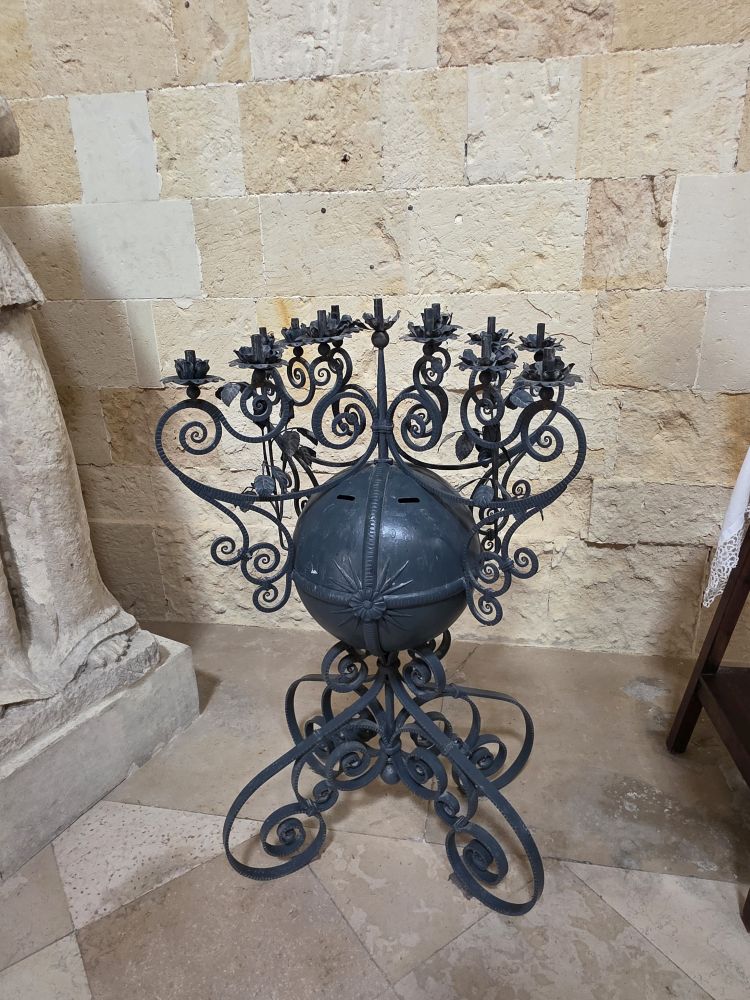
Back on the streets we head toward Museo Faggiano, a private home turned museum with underground chambers and tombs dating back 2000 years. This is a great story. The owner, Luciano Faggiano, purchased the building in 2001 with the idea to open a trattoria, but had problems with the toilet and the sewage. He enlisted 2 of his sons to help build a trench and investigate. What they found were underground corridors, cisterns, tombs, a Franciscan chapel, all dating back to the Mesopotamia era 5C BC. His trattoria quickly turned into a museum (opened in 2008), which we are visiting today.
It’s a great little place – all marked by number, with an English handout – we follow the numbers through the entry room with the old floor excavations and the rope wench used to extract water from the cistern. Then into the next room, an 11th silo used to conserve grain. In a corner of the room are 17th C tiles revealed under the old plaster of the house, used to eliminate seepage from water flowing from the terrace to the cistern. Then down into the cistern itself, with the carved out walls and fun acoustics!
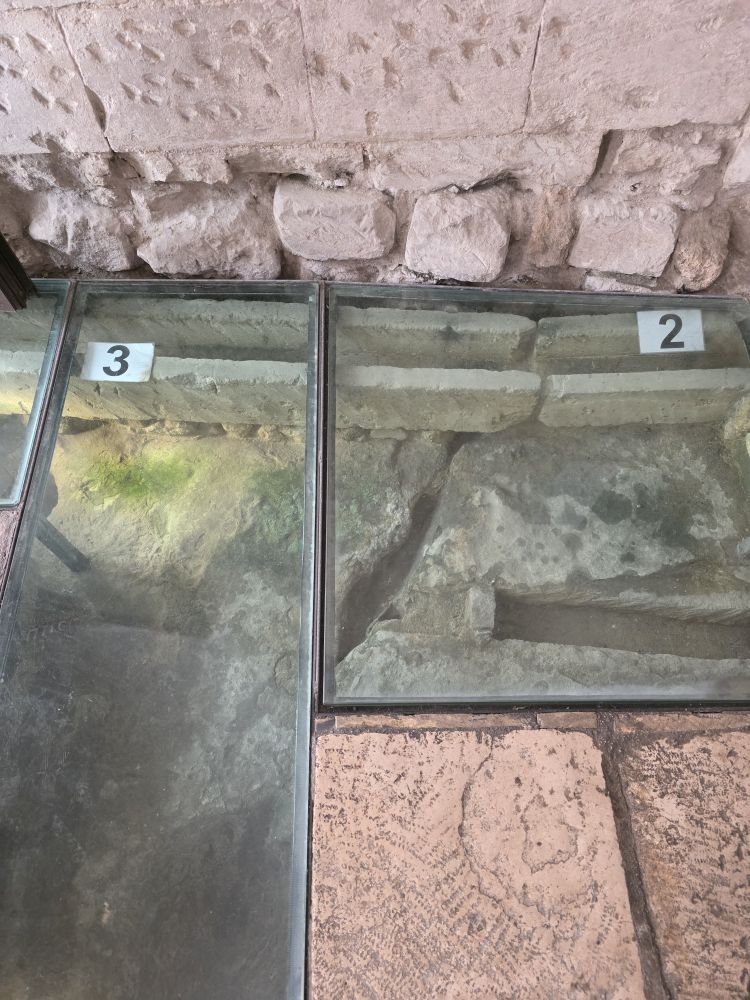
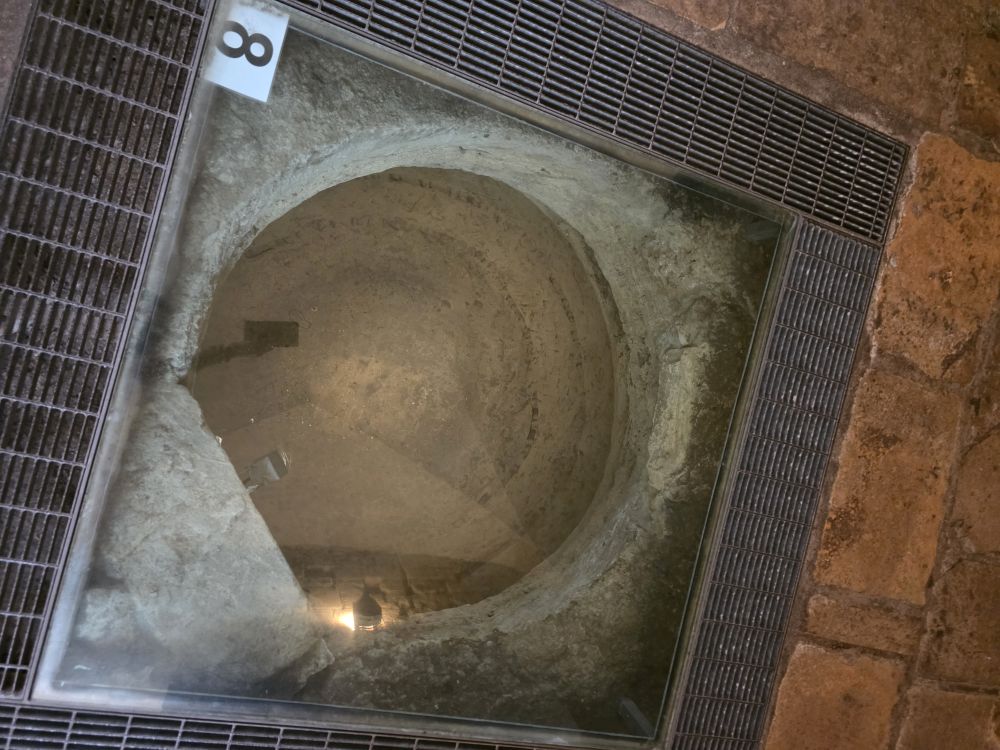
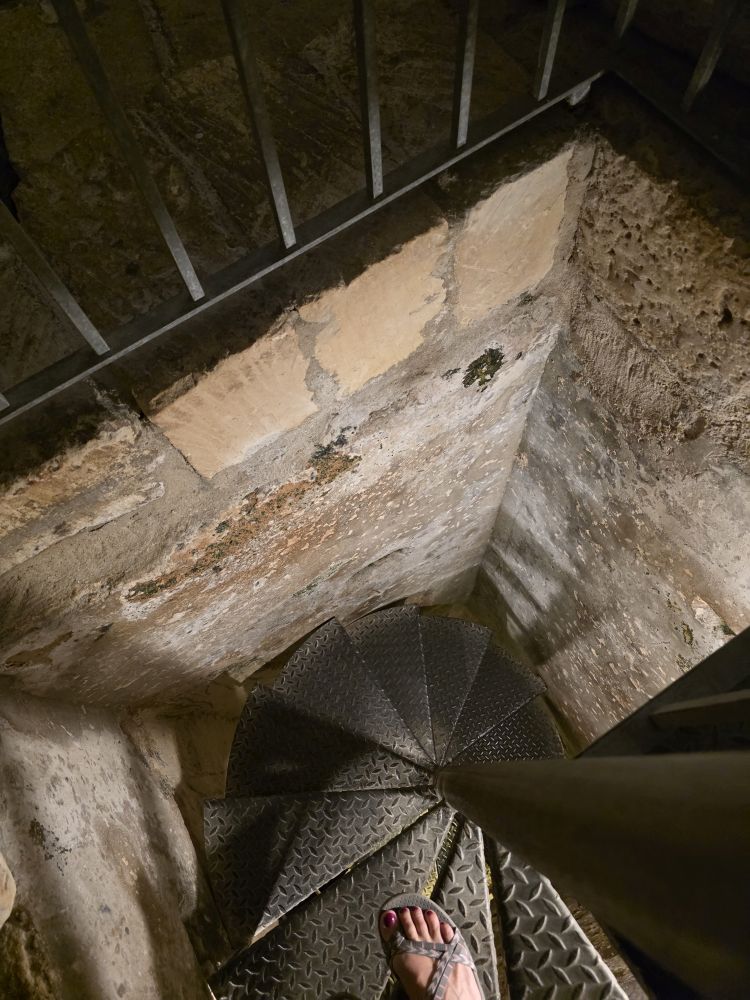
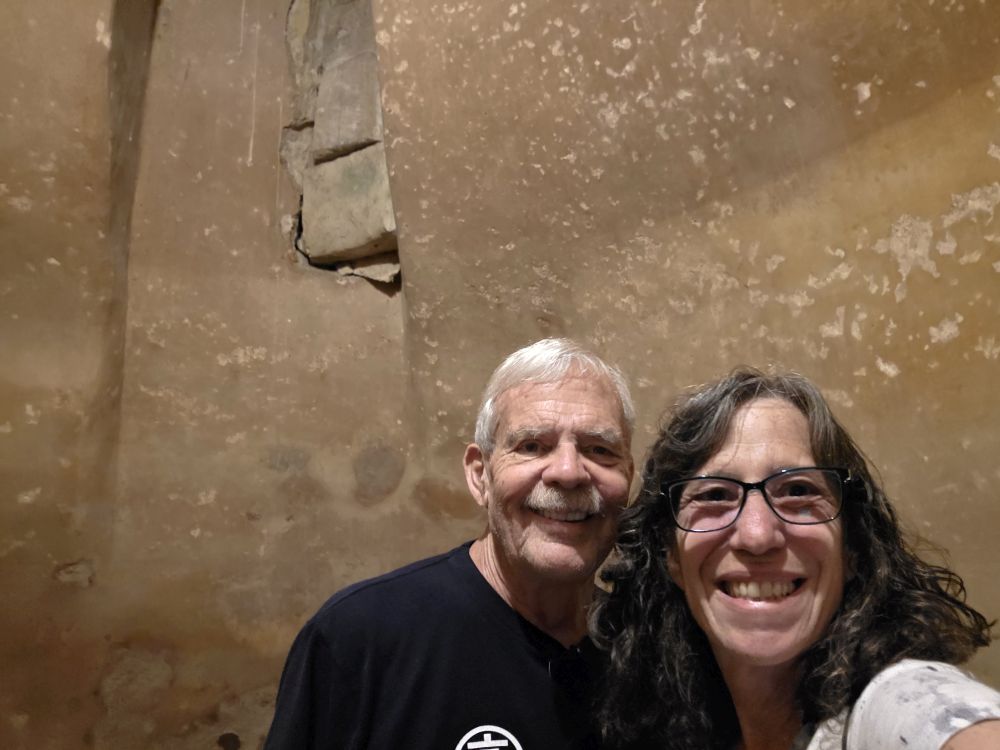
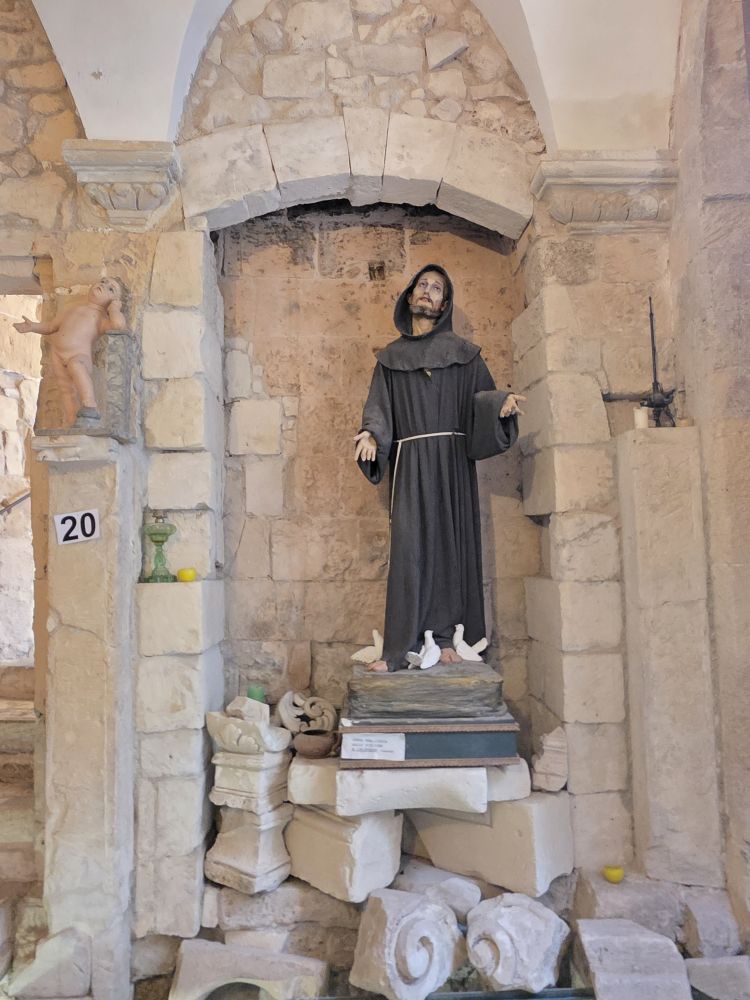
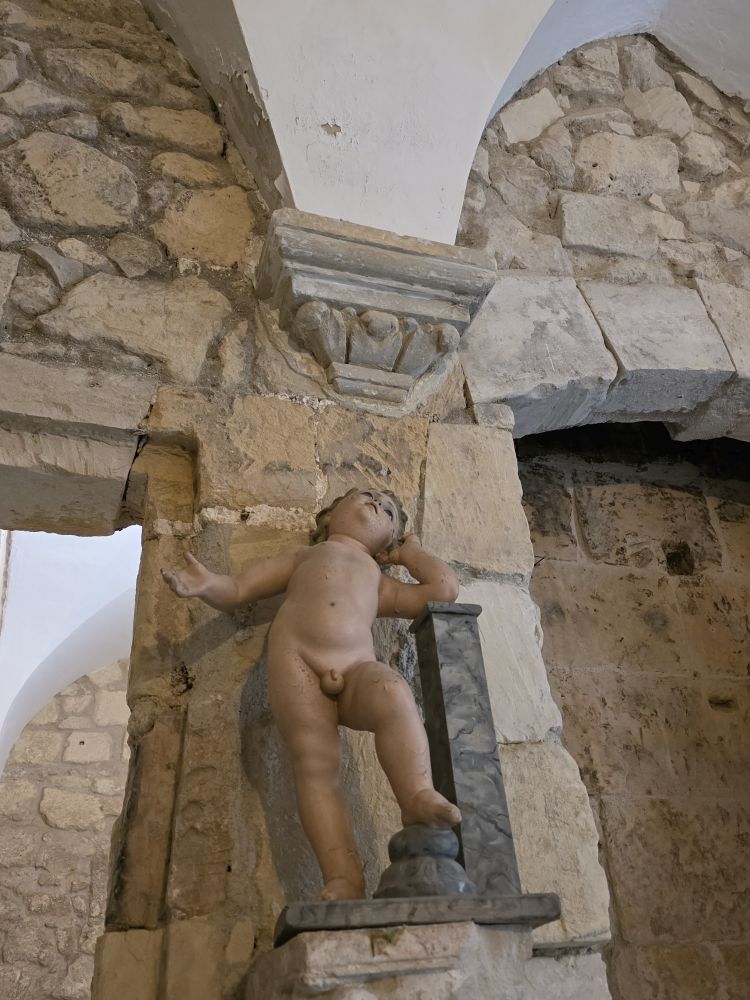
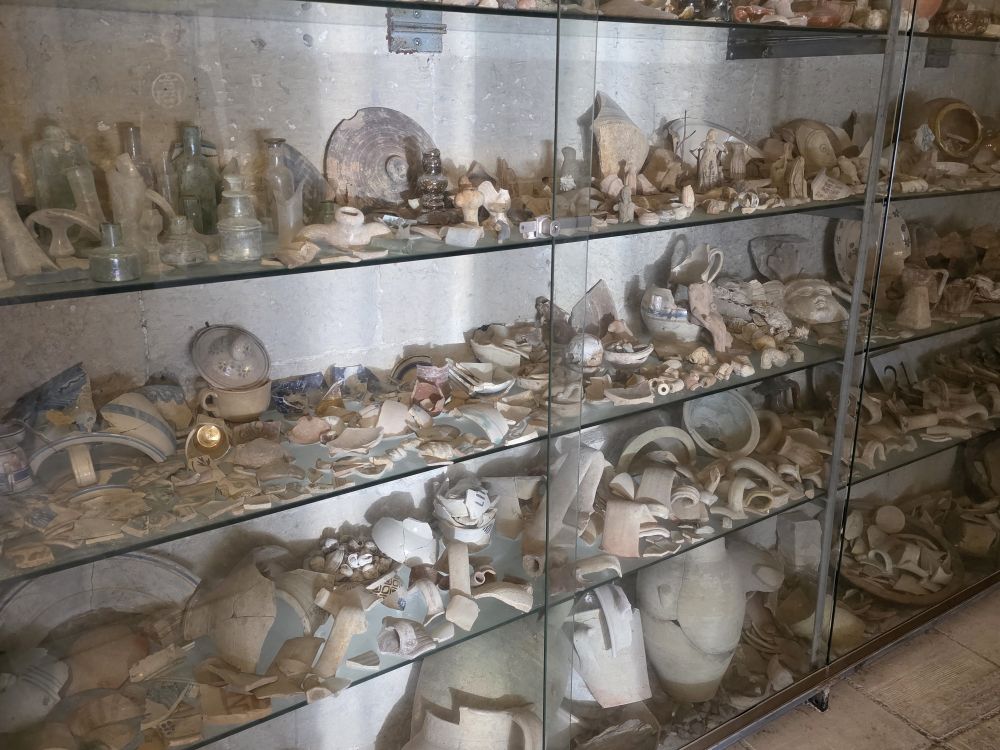
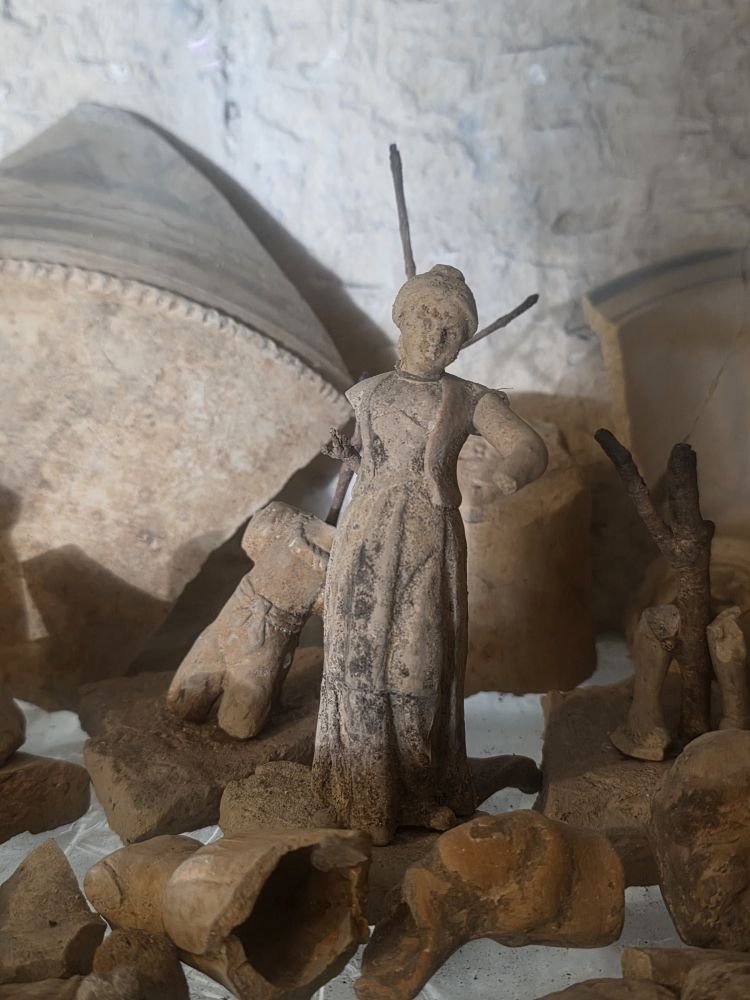
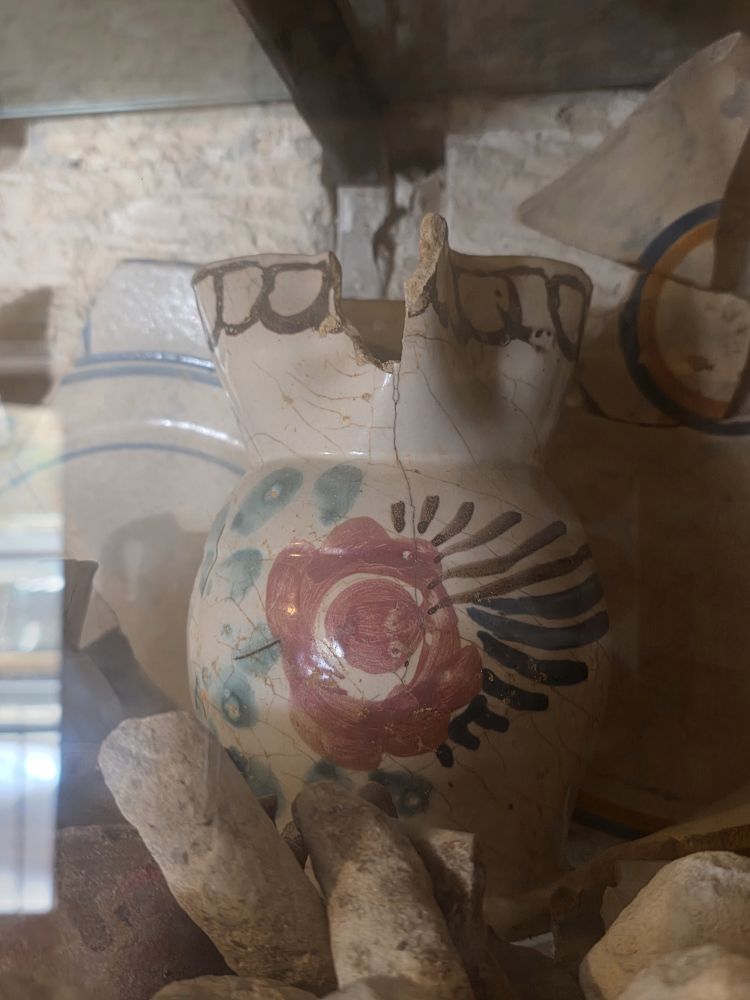
Up and out of the cistern, we just wander through the rooms, marveling at the different wall decorations and carvings. And niches filled with pottery and pieces found during the excavations.
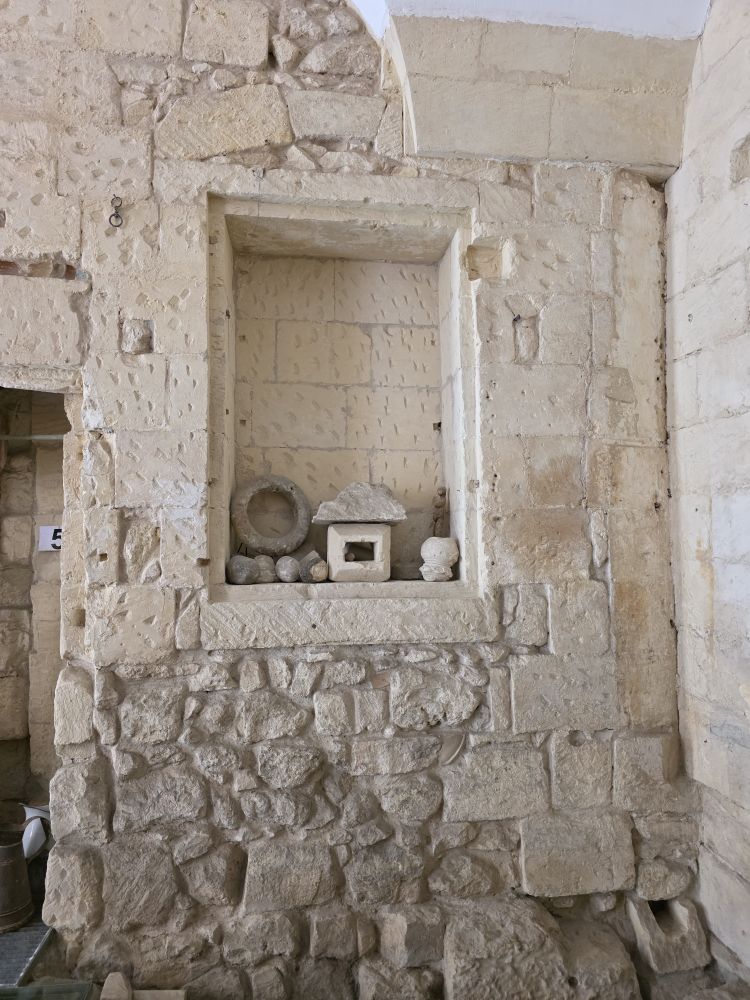
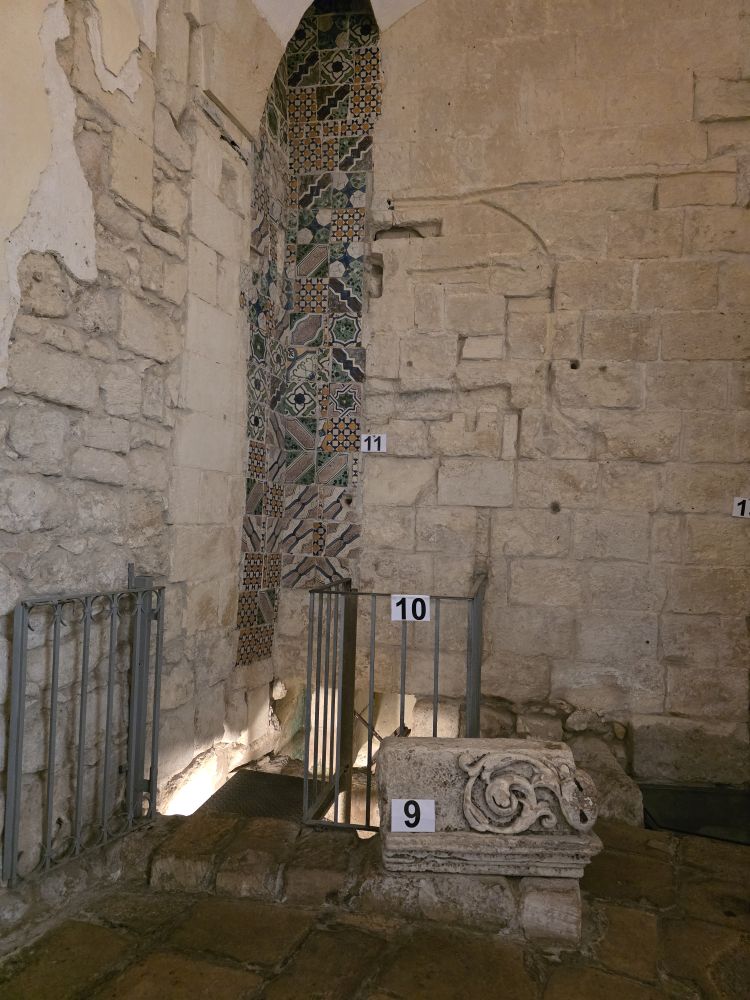
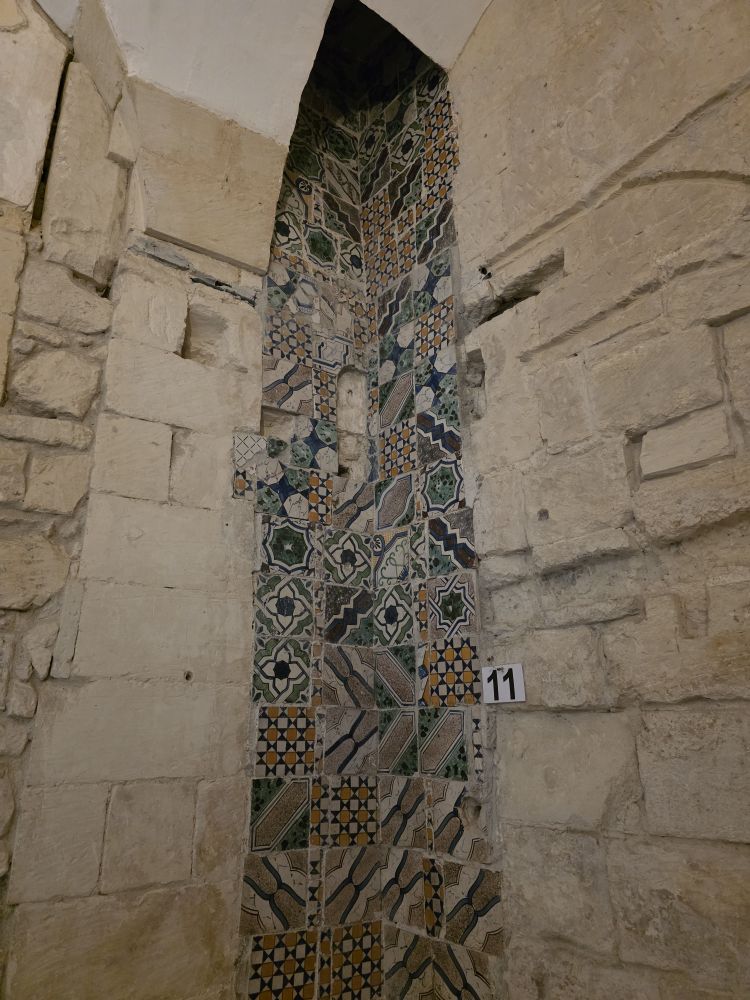
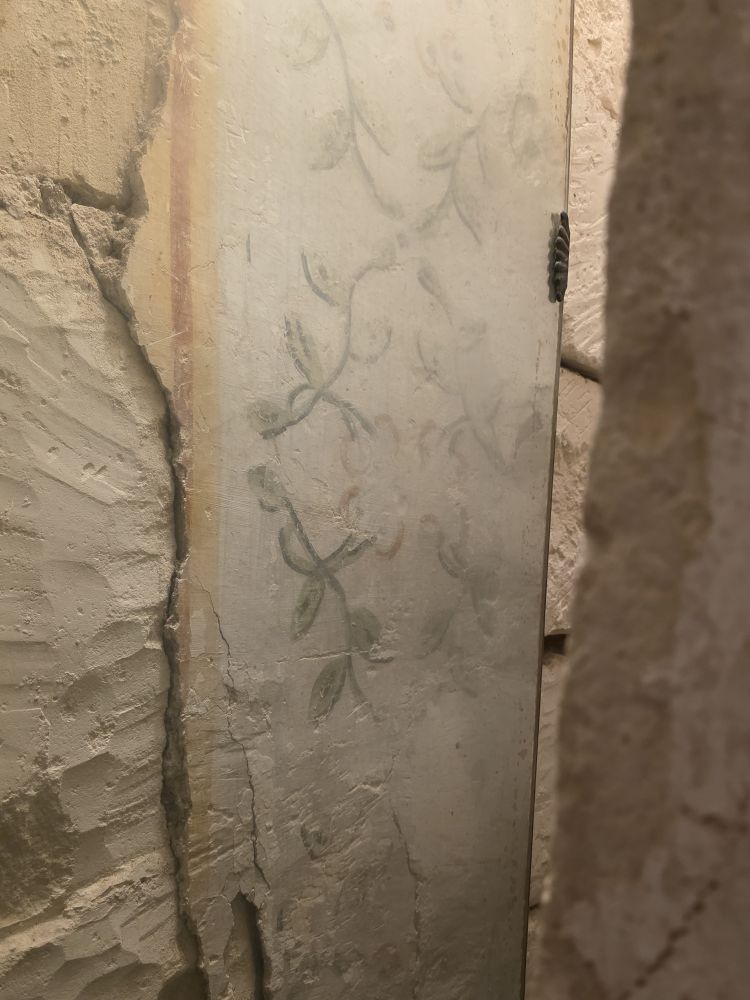
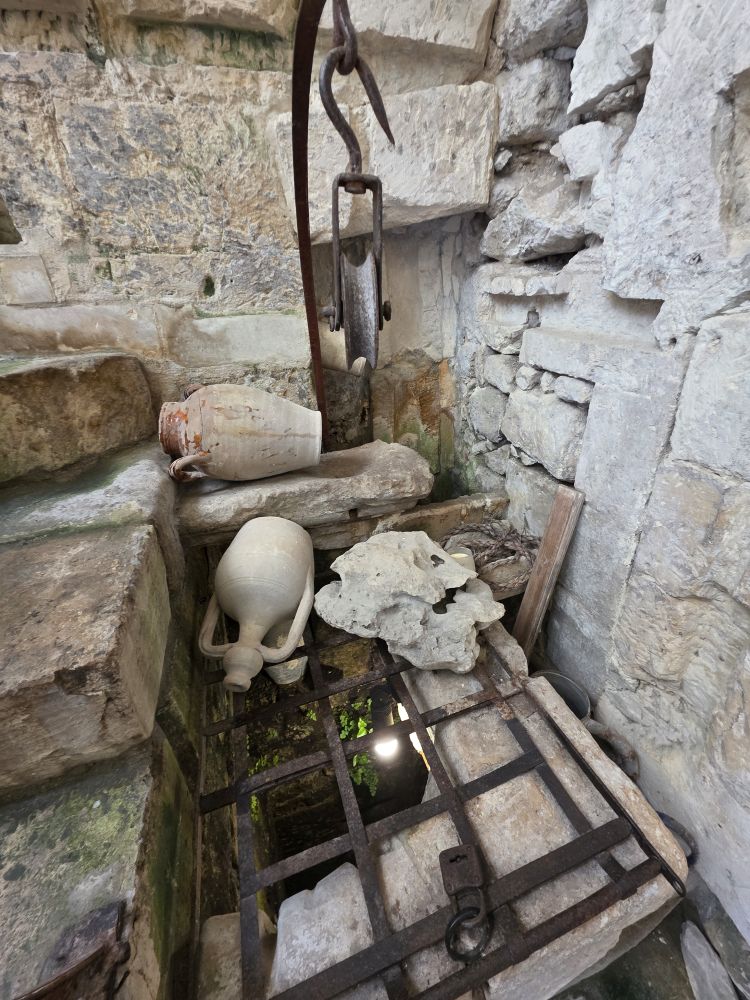
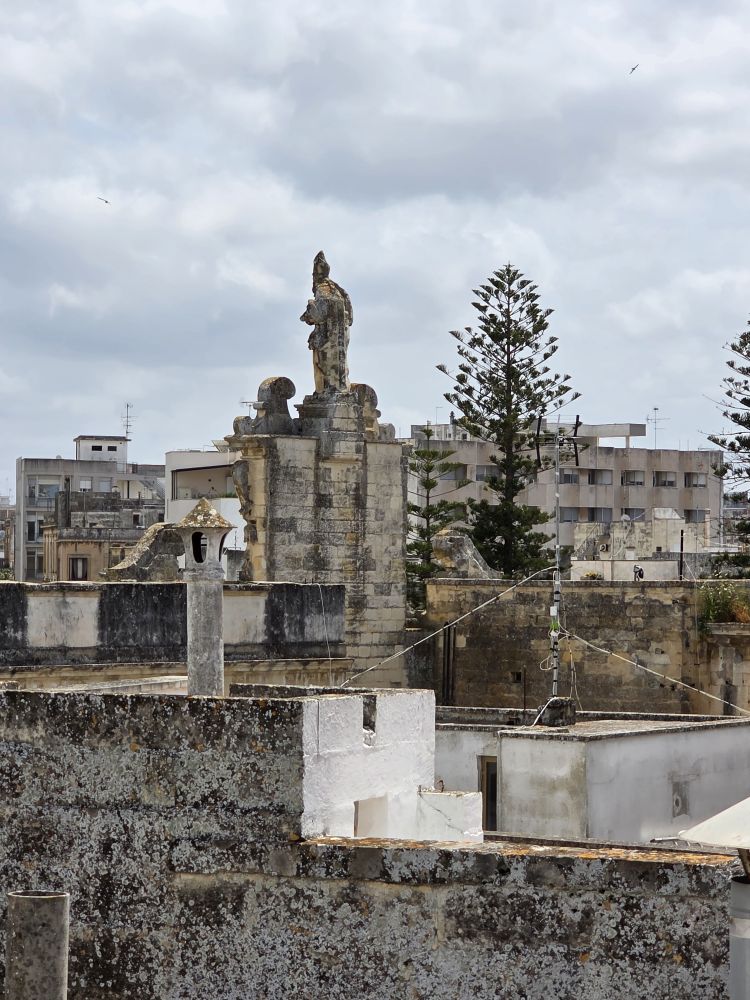
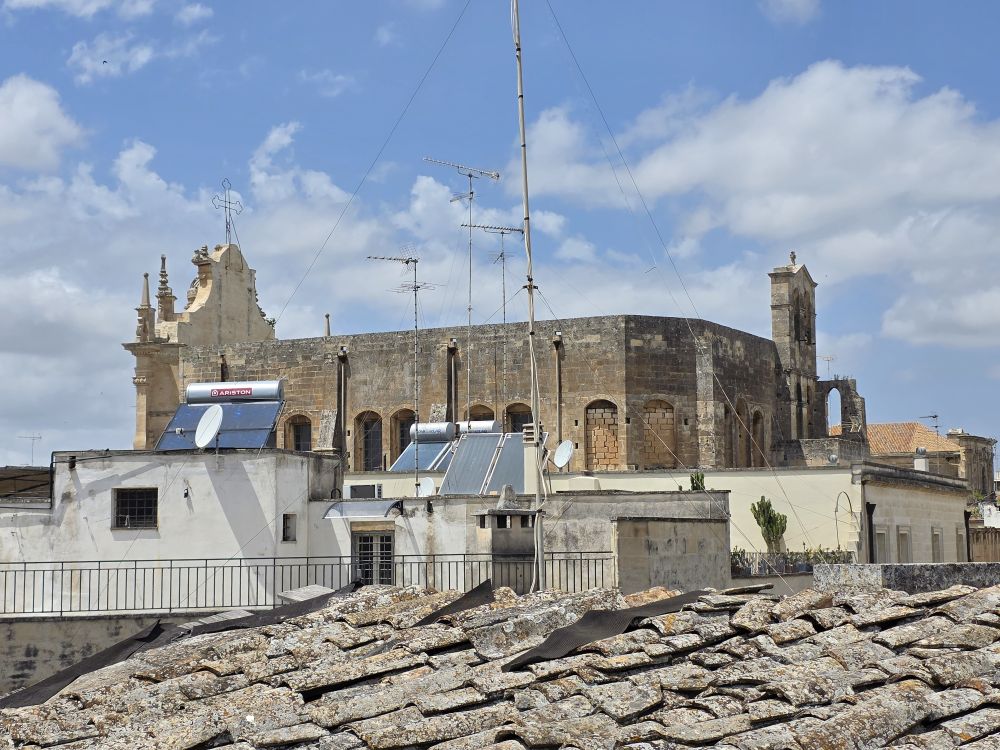
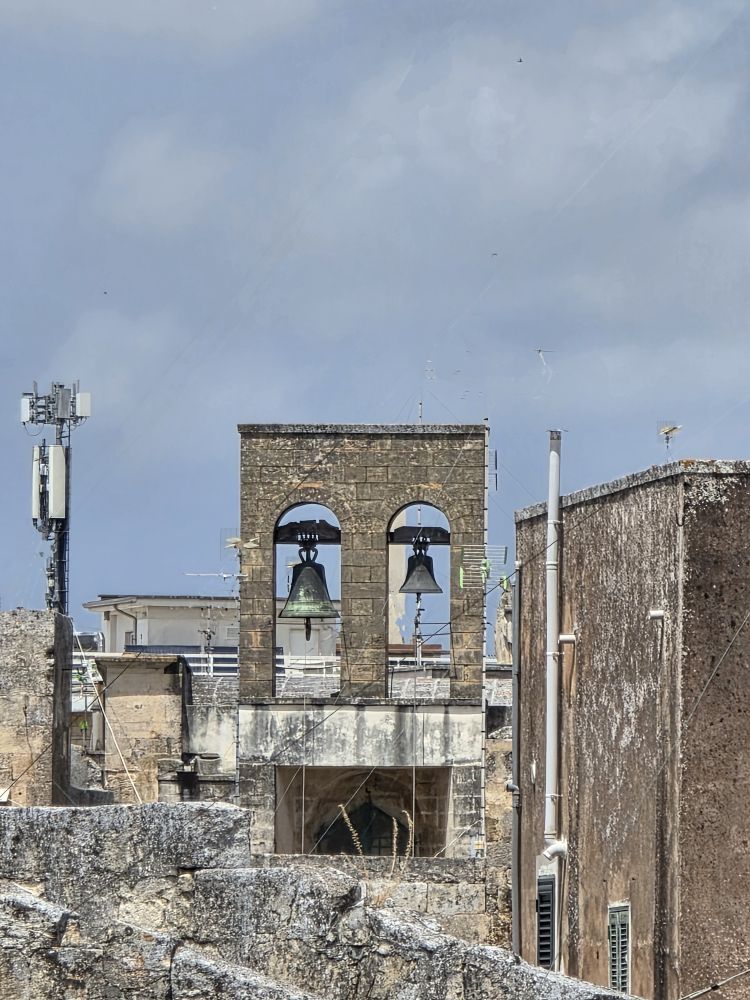
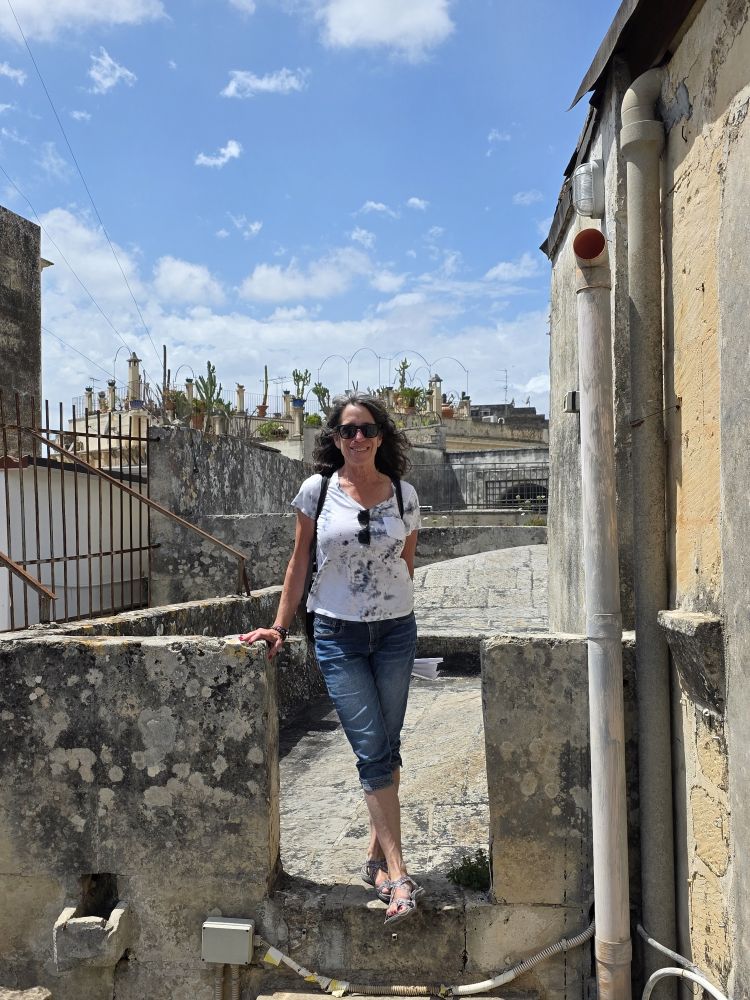
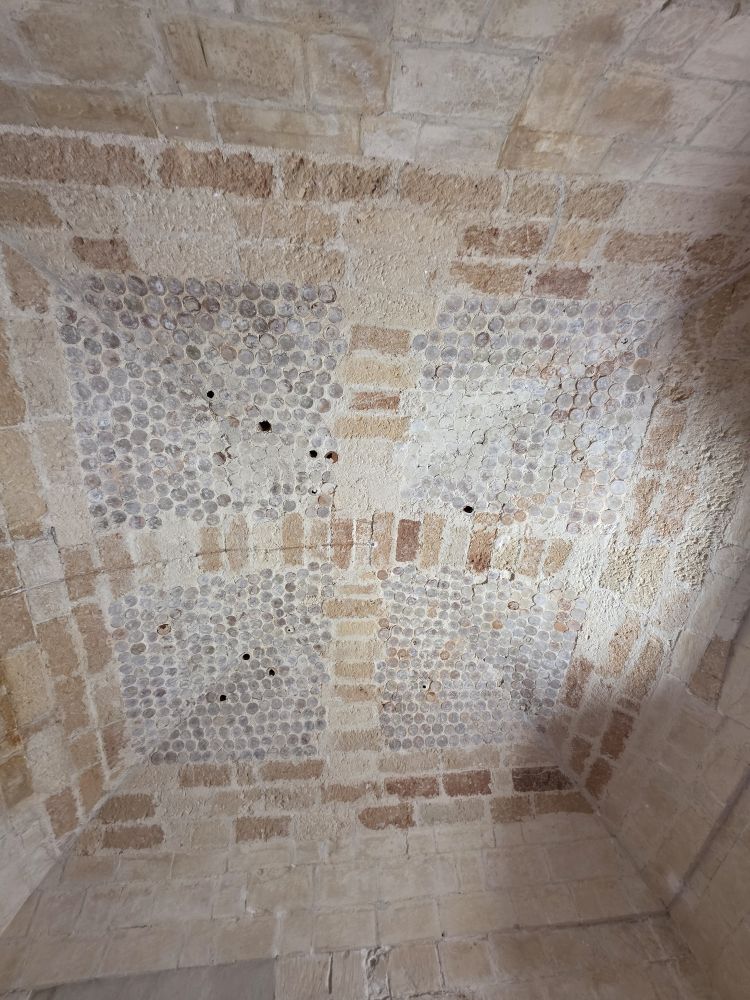
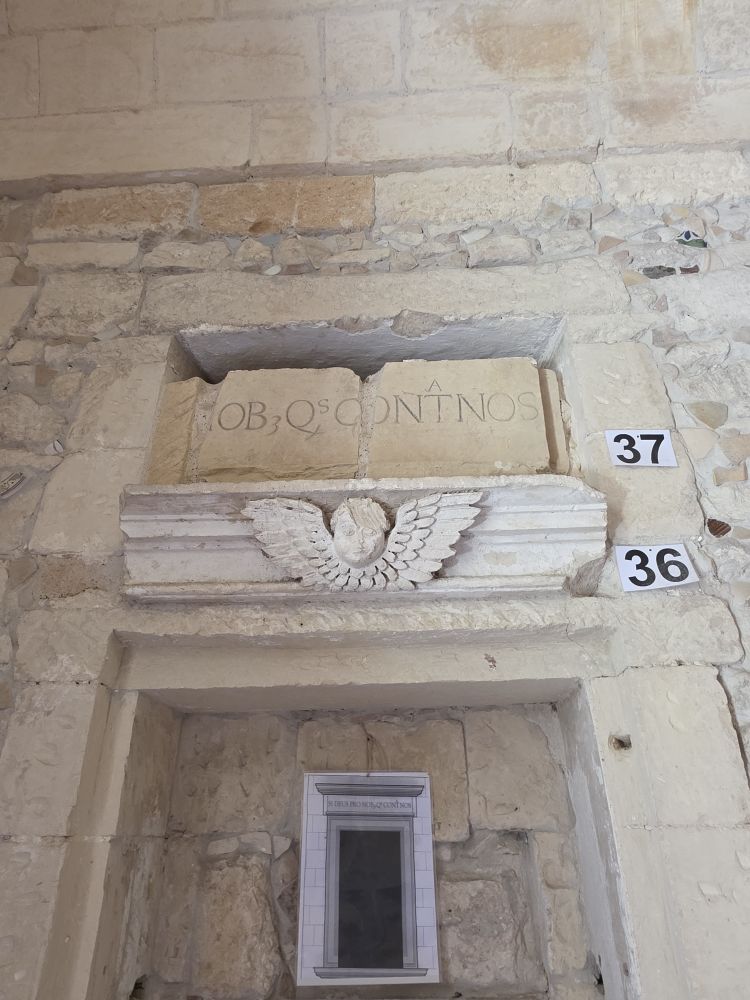
Eschewing the direction of the tour (basically to avoid the people in the building) we walk up to the rooftop terrace for views across the city – then back down into what was the convent area – with period furniture, glass showcases full of excavated relics, a 16th C ceiling made of 600 cylindrical earthenware jars used as thermal insulation and to lighten the weight of the tufa ceiling, 12th C sculptures and a fragment of an epigraph that was originally placed at the main entrance of the convent.
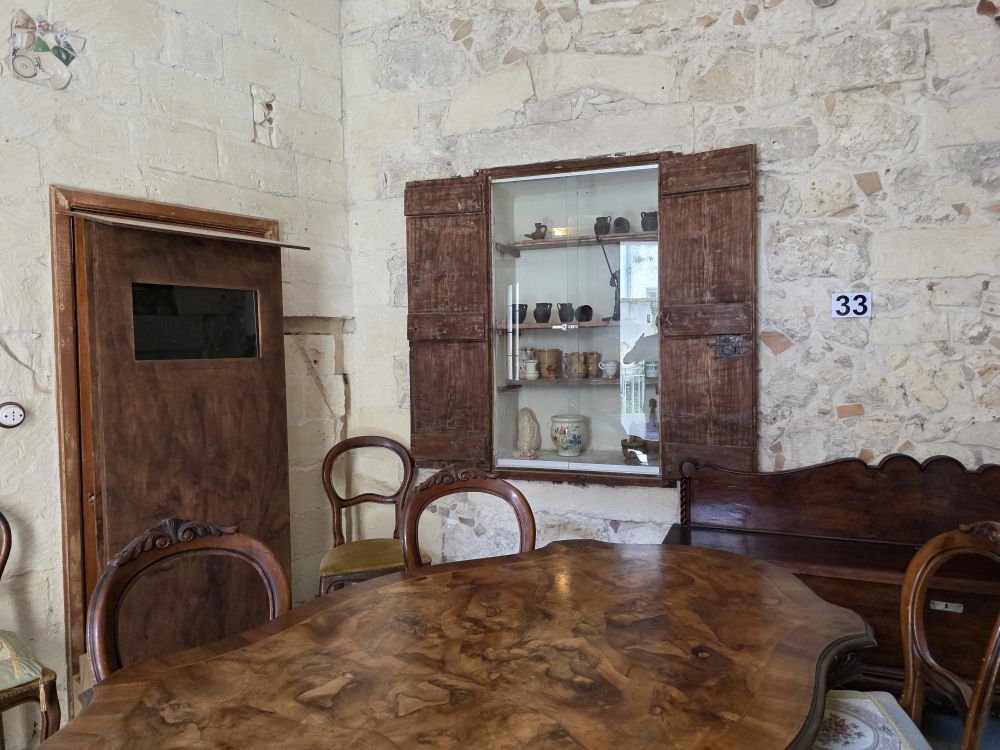
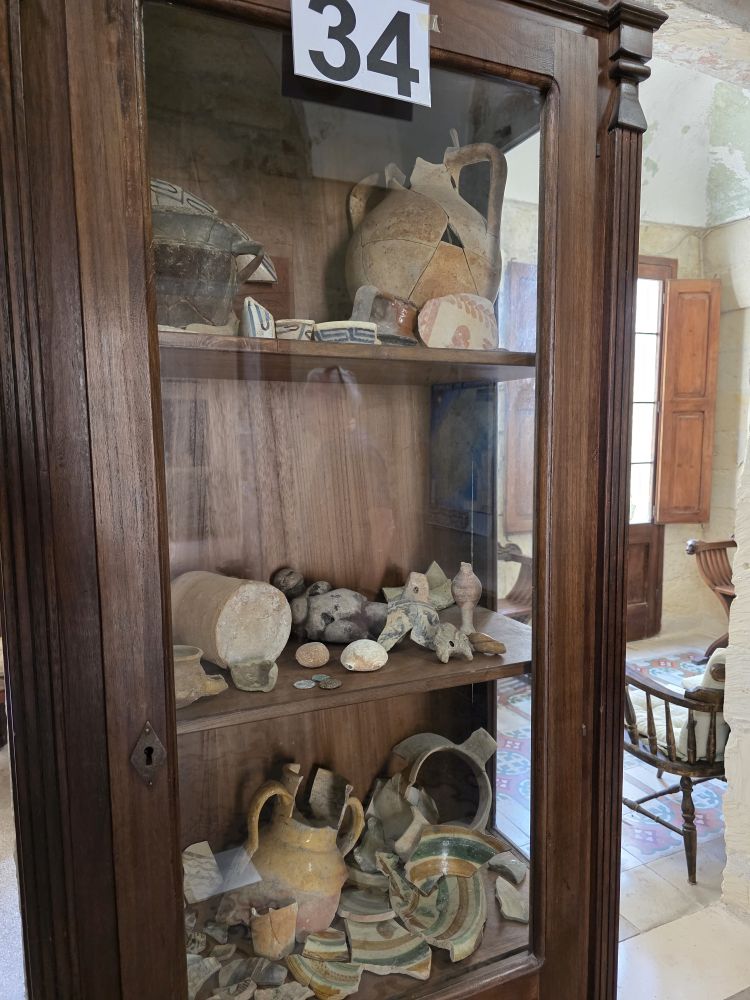
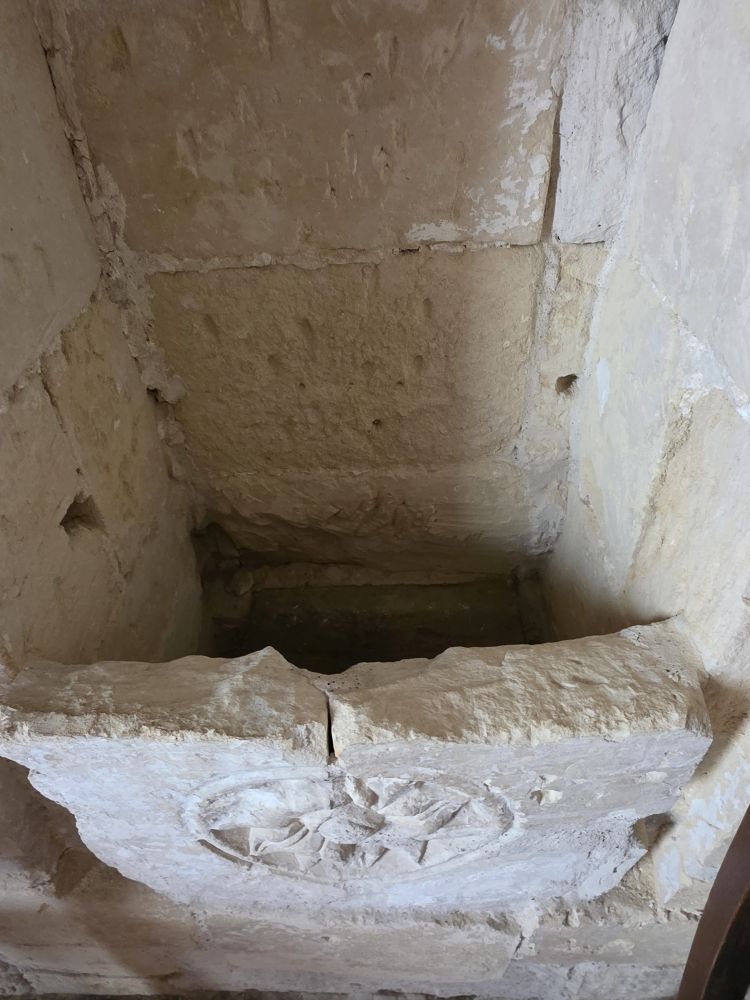
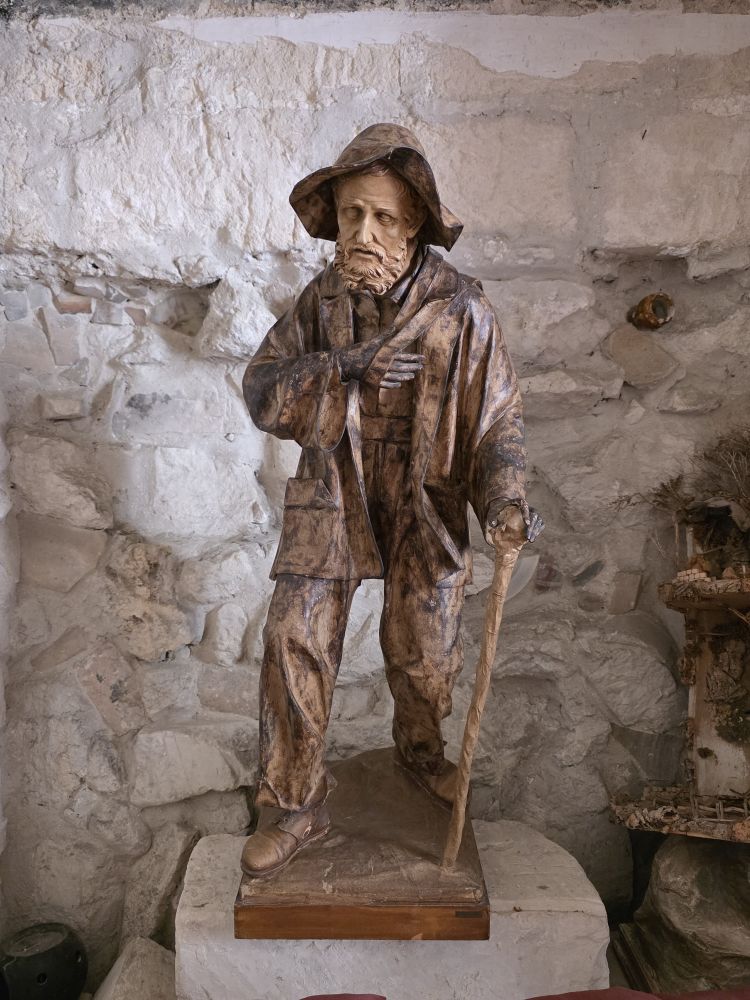
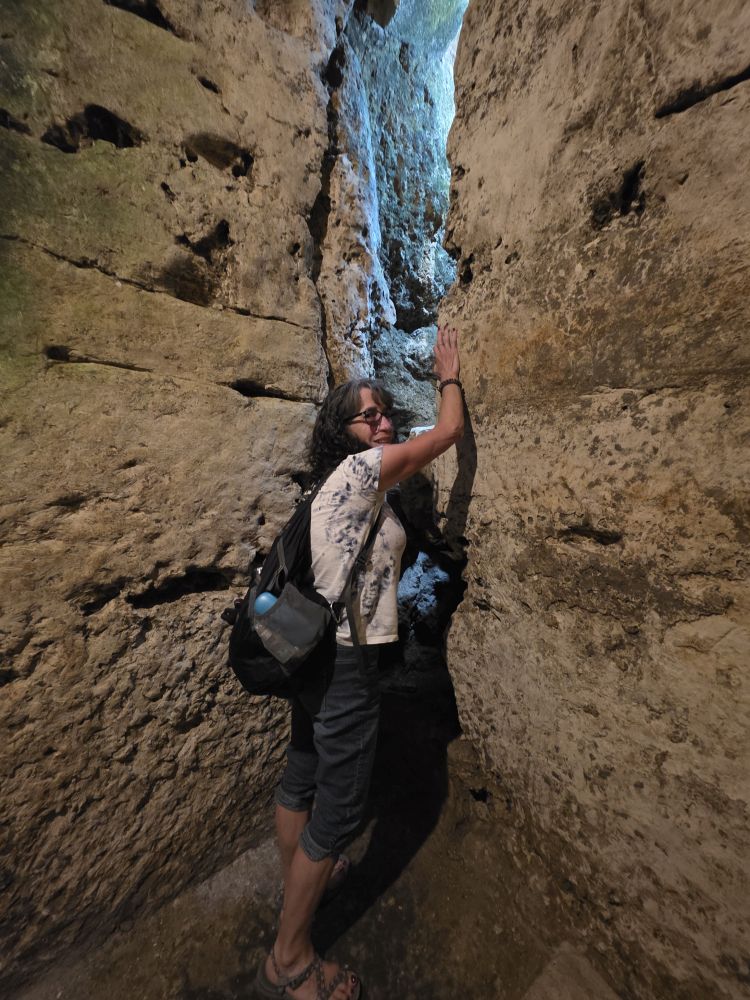
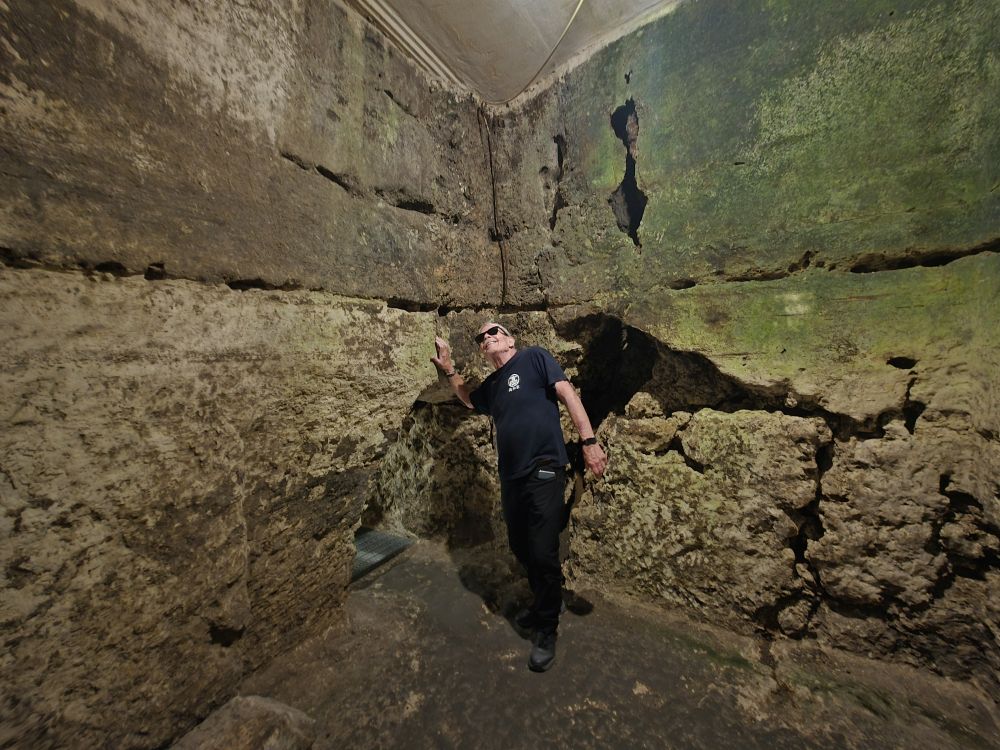
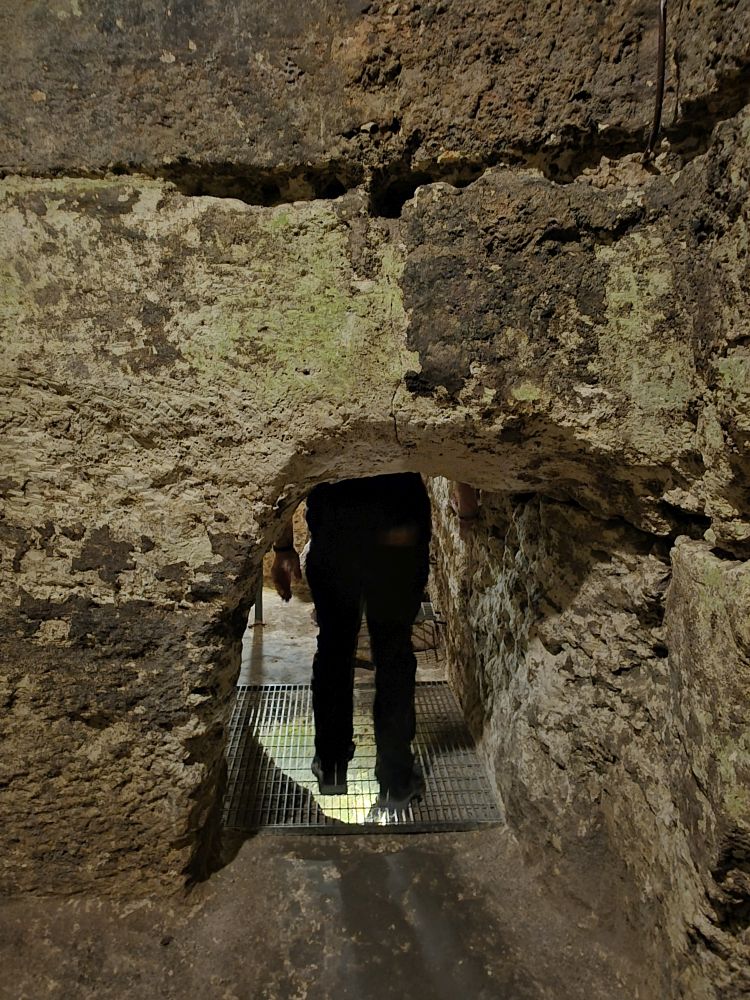
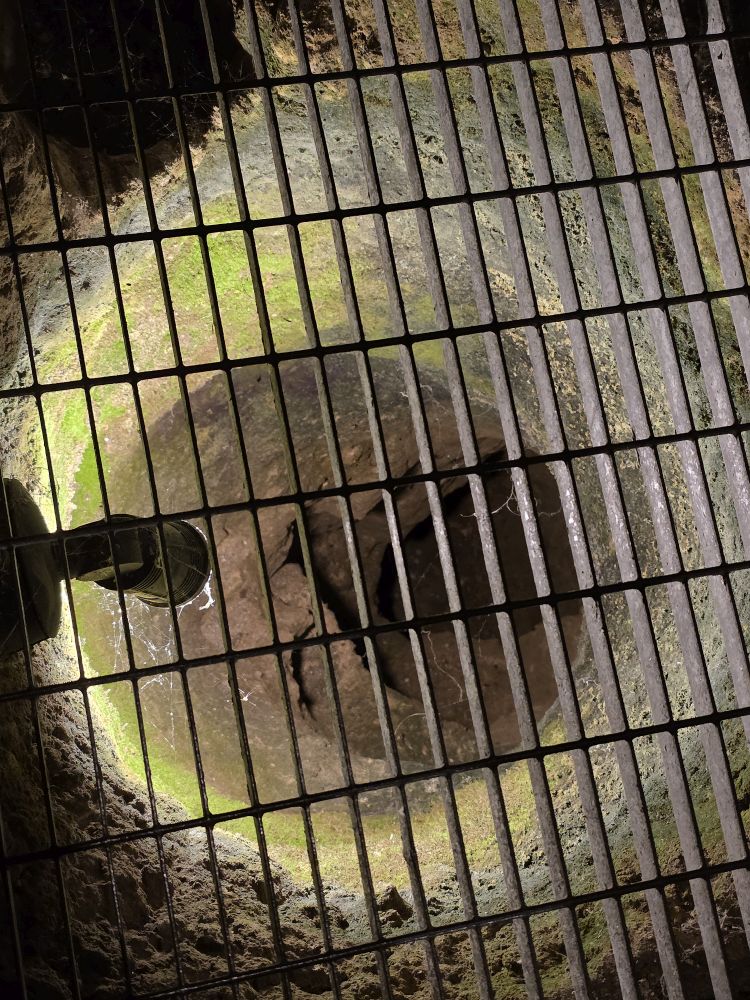
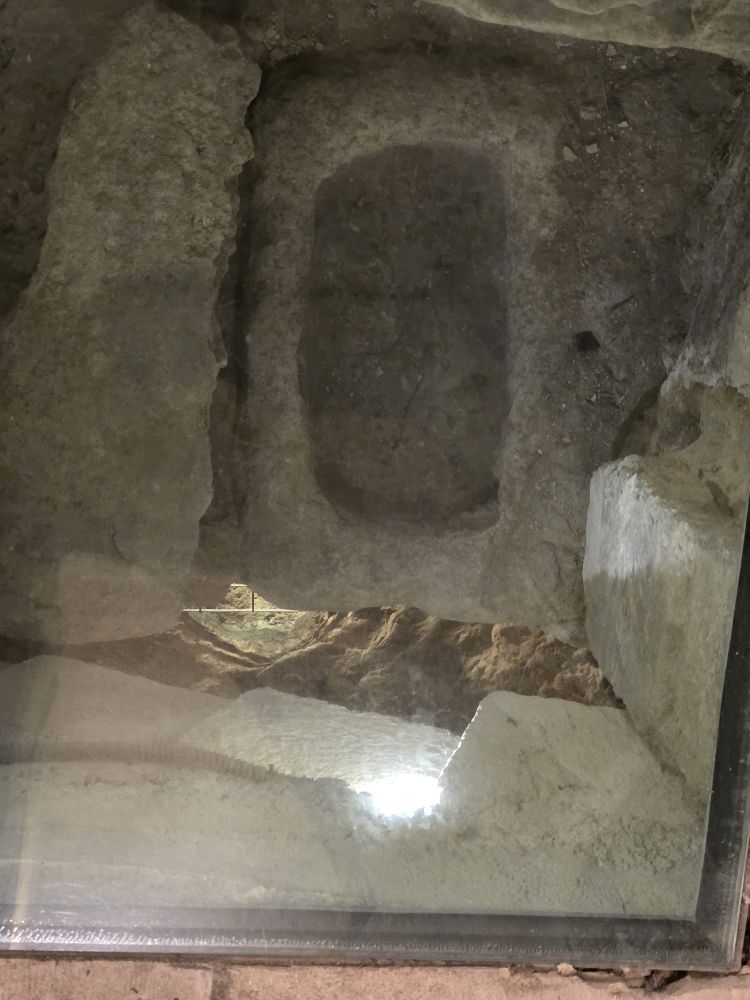
On the next lower level, we enter the “underground” rooms with an entryway into an underground walkway archeologists believe is connected with the amphitheater in Sant’Oronzo square, a common burial tomb where coins, a ring belonging to a Jesuit Bishop, pipes and various pottery were found. The next underground room was actually used as an escape tunnel connected to a large tank. We have fun playing in there, until we look down into the deeper ditch, which was used as a “dead drier” to decompose dead bodies, dripping the blood of the body down the ditch. Ewwwwww.
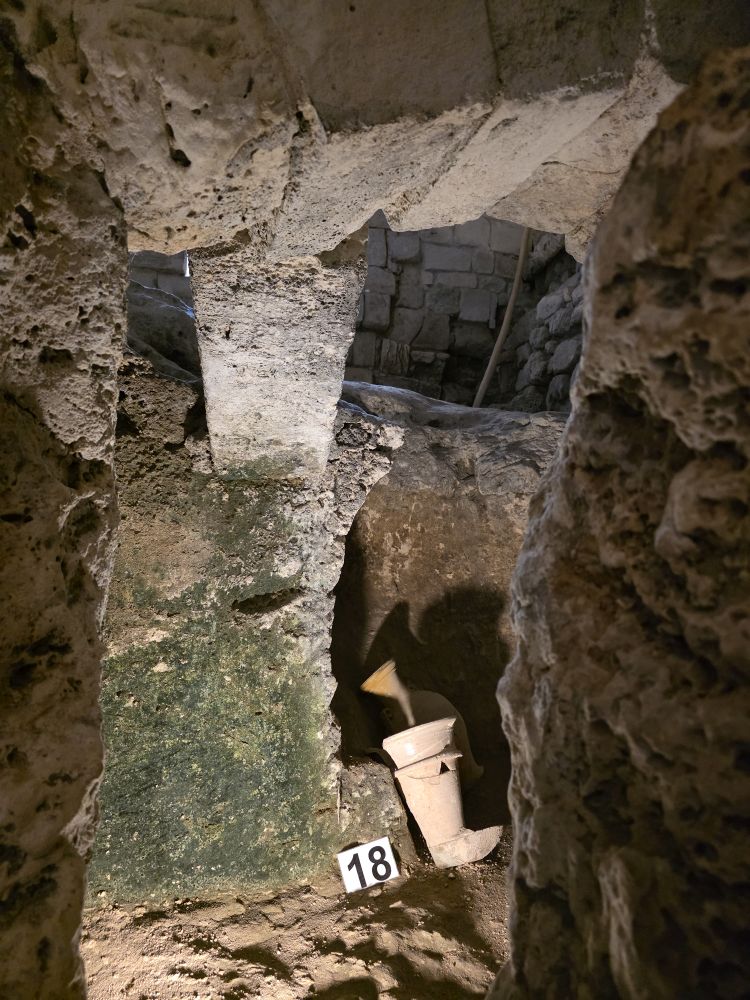
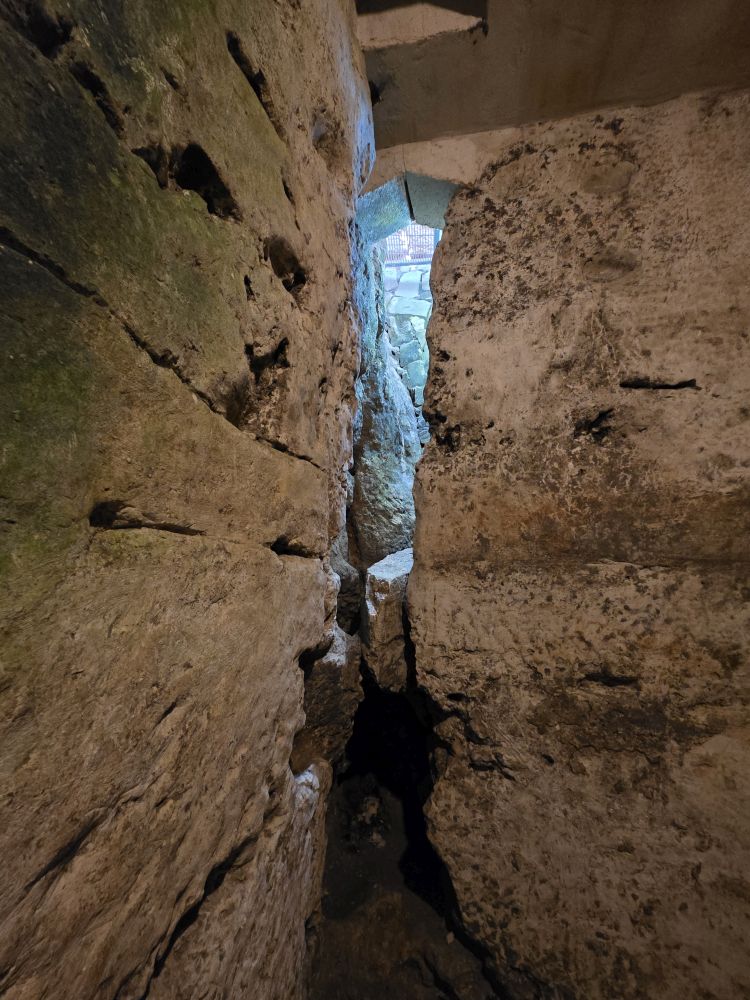
Ok – back upstairs we go to the chapel of the convent – we sort of need something holy to wash away the dead drier image – where you can see the remains of an altar, Franciscan iconography and the foundation of an old medieval wall that was demolished to enlarge the room.
More tombs, more medieval walls, pottery fragments and pieces found during the excavations….this place is just incredible – and to think, it just sat here underneath this house, undiscovered for centuries! All for the wont of a toilet that worked!
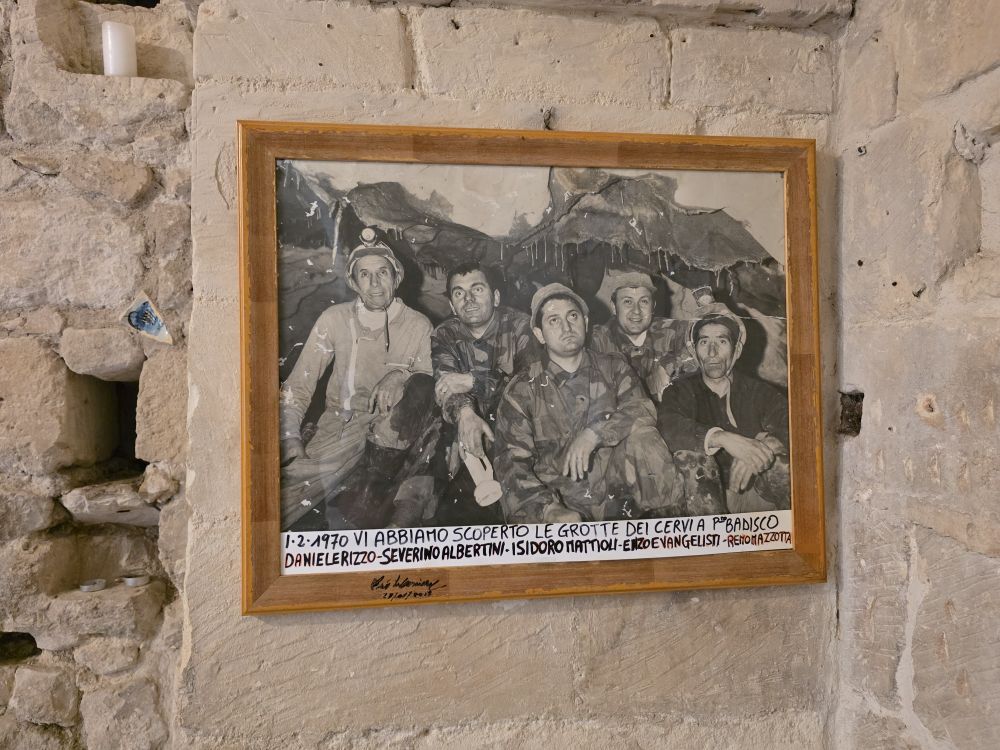
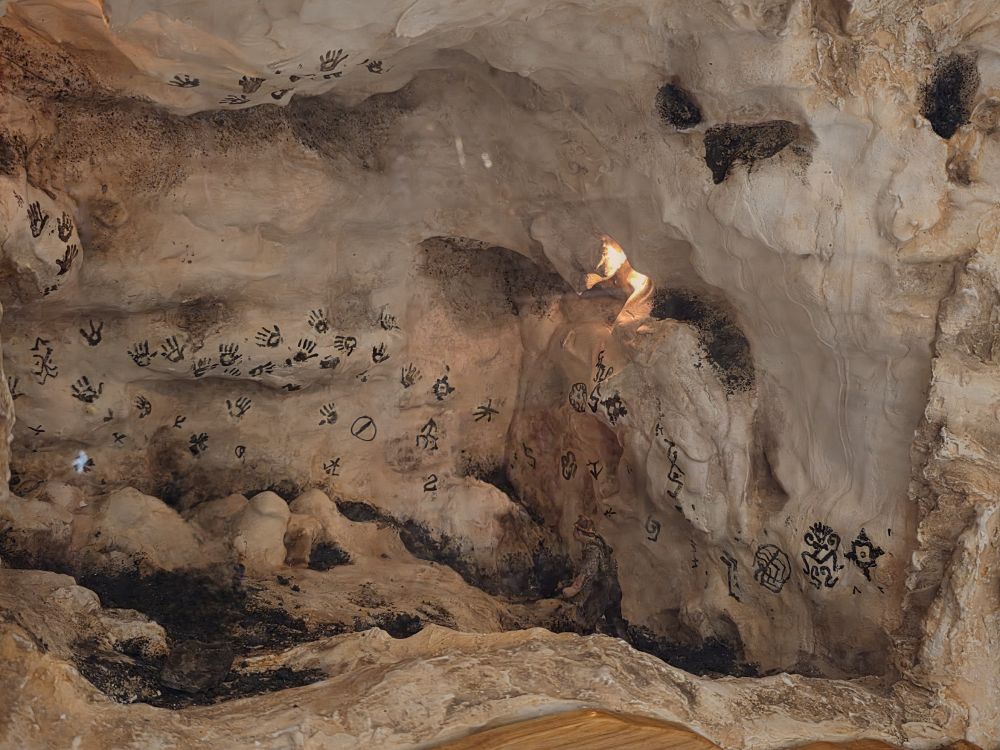
The last room we visit is dedicated to the five cavers who discovered the Deer Cave in a location near Otranto in 1970. The Deer Cave is considered one of the most important caves in the world because of the thousands of pictograms found on the walls, dating around 8000 BC. The wife of one of the cavers donated many finds that her husband discovered around the world to this museum, thus the room dedicated to the cavers.
A quick pit stop at the house, and then we are back out on the streets for more Lecce wanderings.
 Andiamo