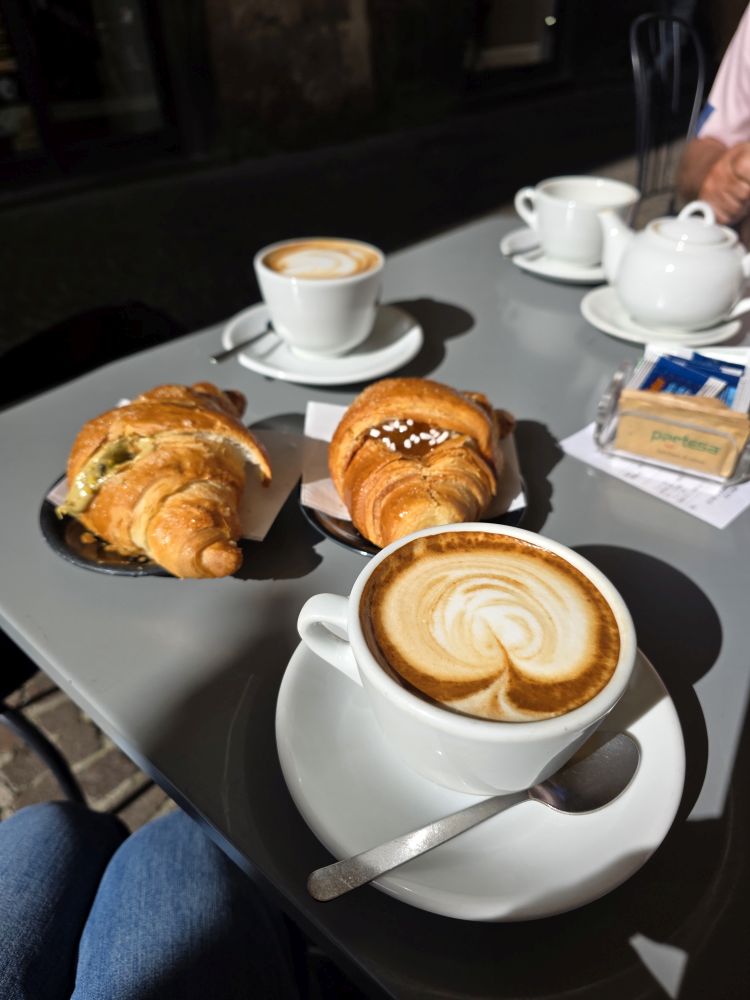
A bright but chilly day dawns as we meet G&S on the steps of the Duomo for our morning coffee and cornettos. We end up at L’Officina Del Gelato again – why mess with success. This food and coffee here is so incredibly good and cheap! Today we tried one pistachio and one apricot cornetto. Yum. Then onto our Orvieto walking tour.
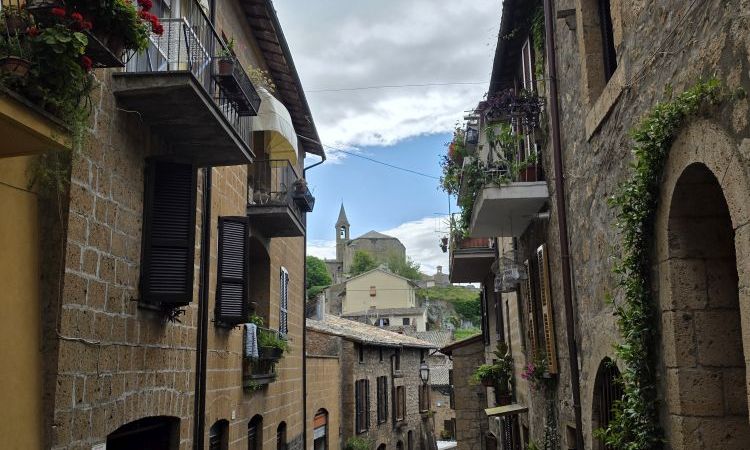
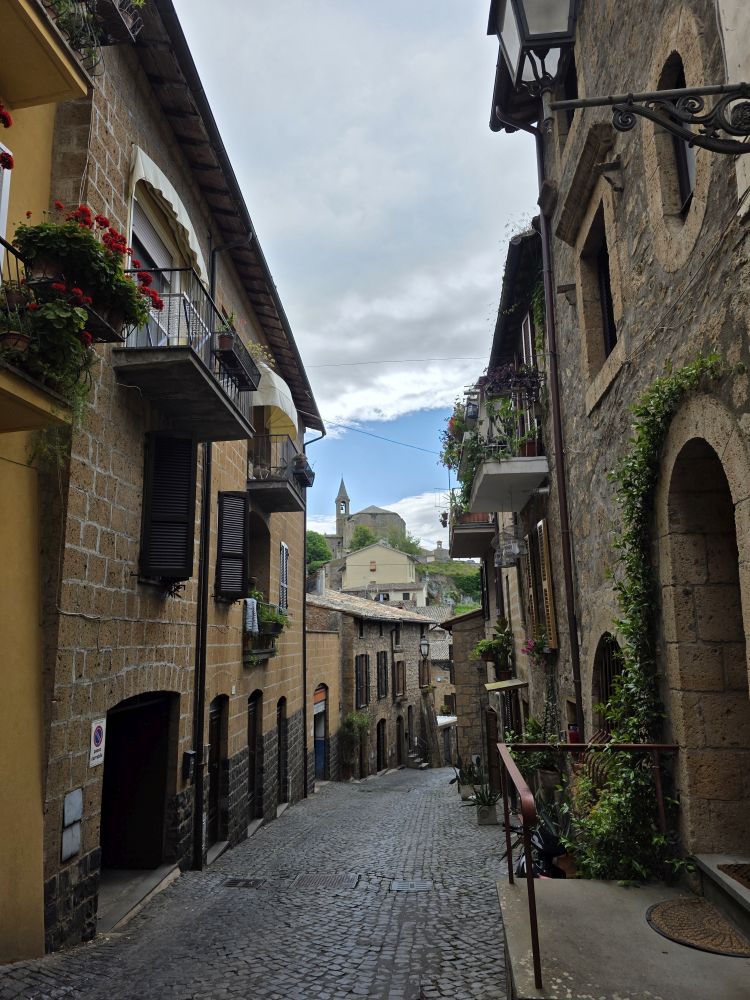
We walked to the far side of the town for the view, passing yet another of the apartments in which we have stayed, and stopping into Galleria del Pane to pick up some of those yummy lumachelle for G&S to try (because of course we need more food after quaffing down our cornettos!). Enjoying the typical Orvieto lanes, architecture and greenery as we walk and talk, we reach the stunning viewpoint overlooking the valley, the small little towns and the hills out in the distance. These views never cease to engage us – so green and lush and, well, Italian.
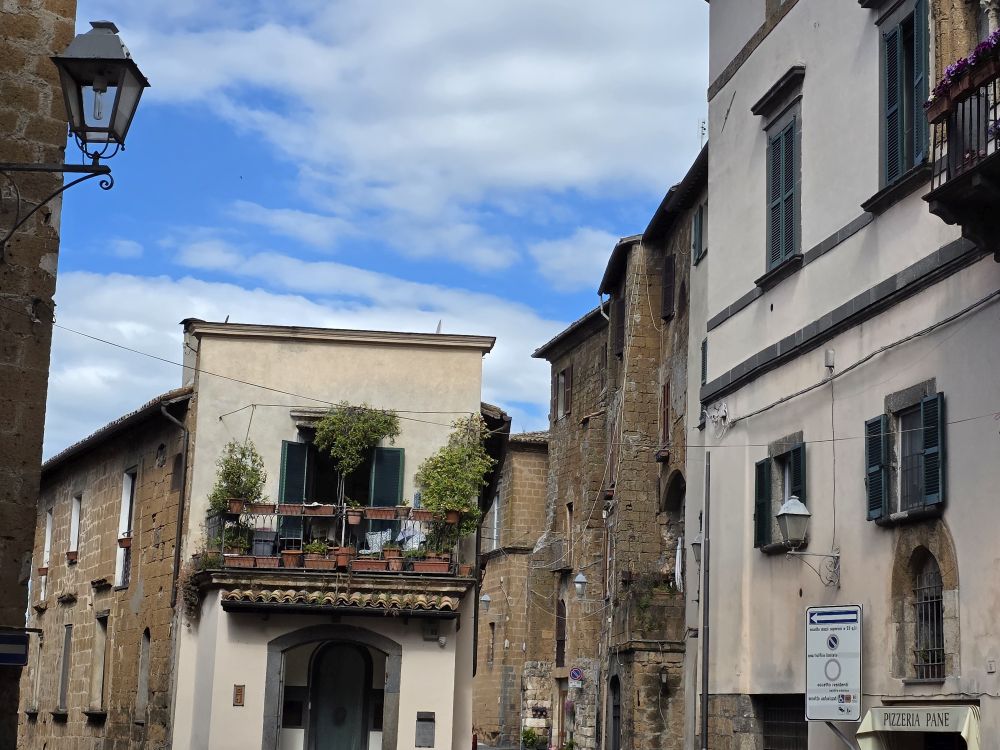
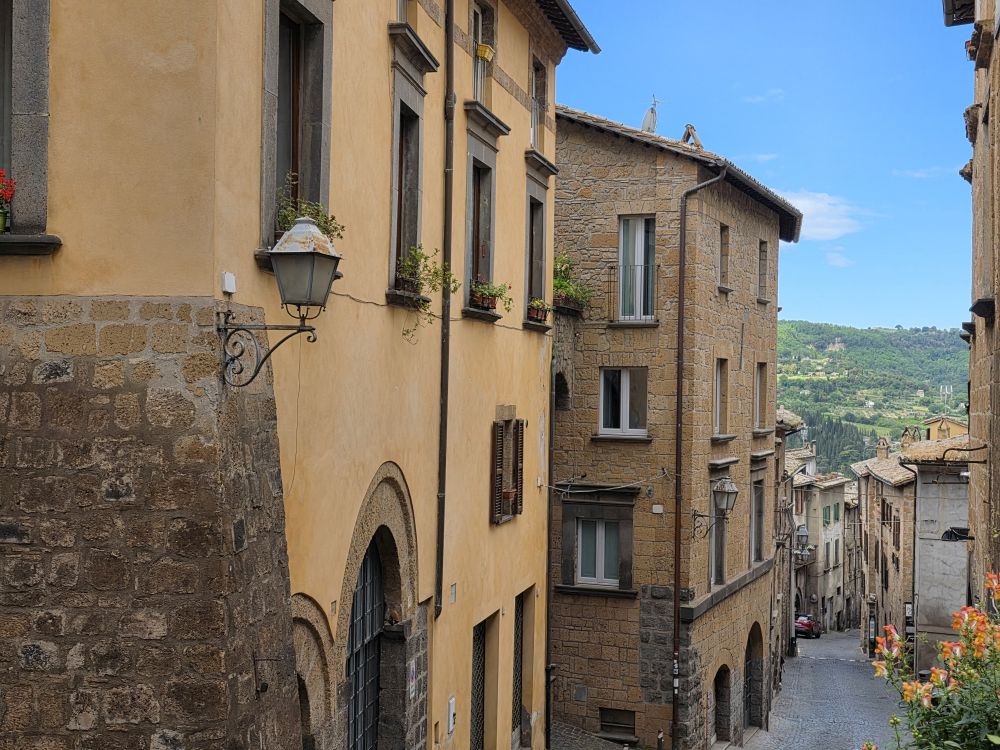
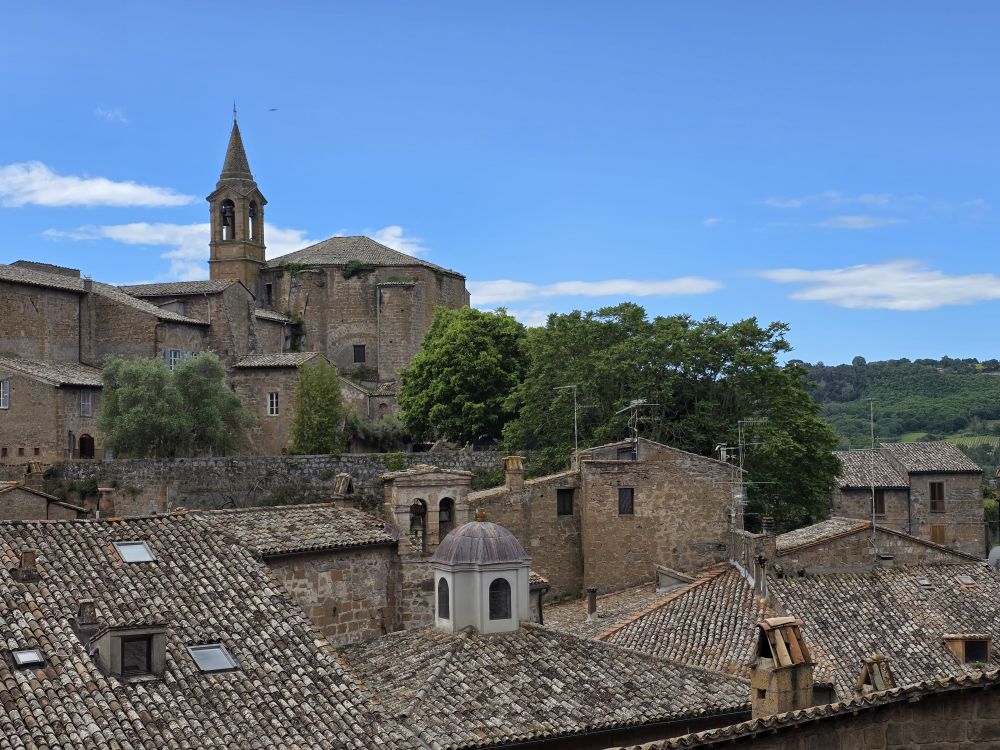
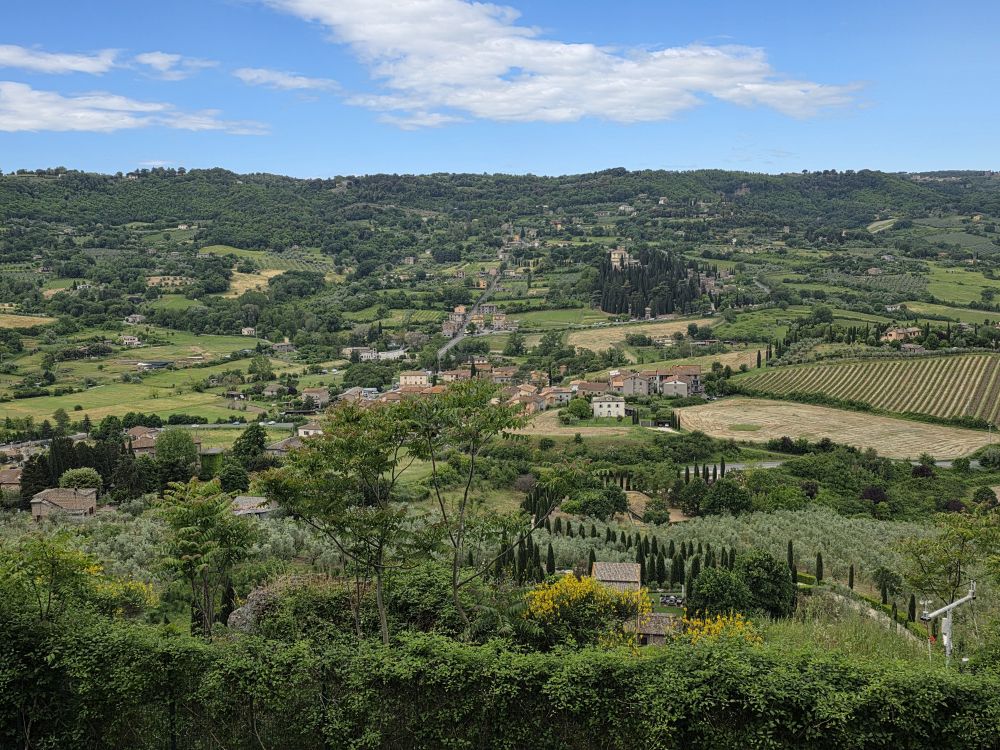
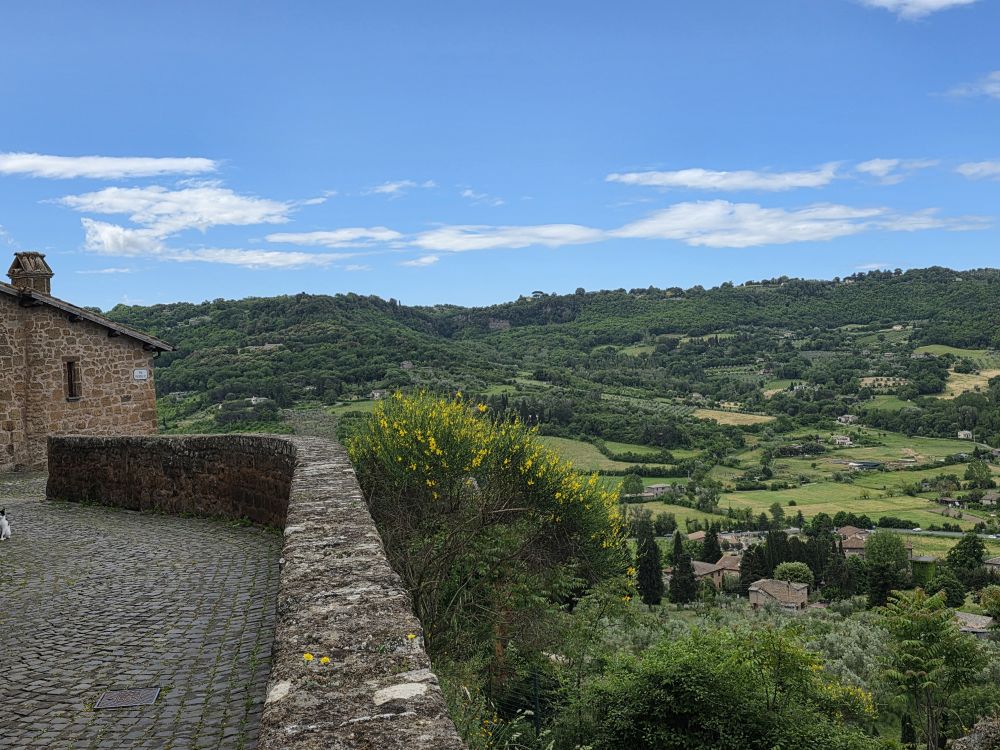
Turning back toward the main part of town, we head toward Pozzo della Cava, stopping only for the little city bus that needs all the room on these narrow corners to turn.
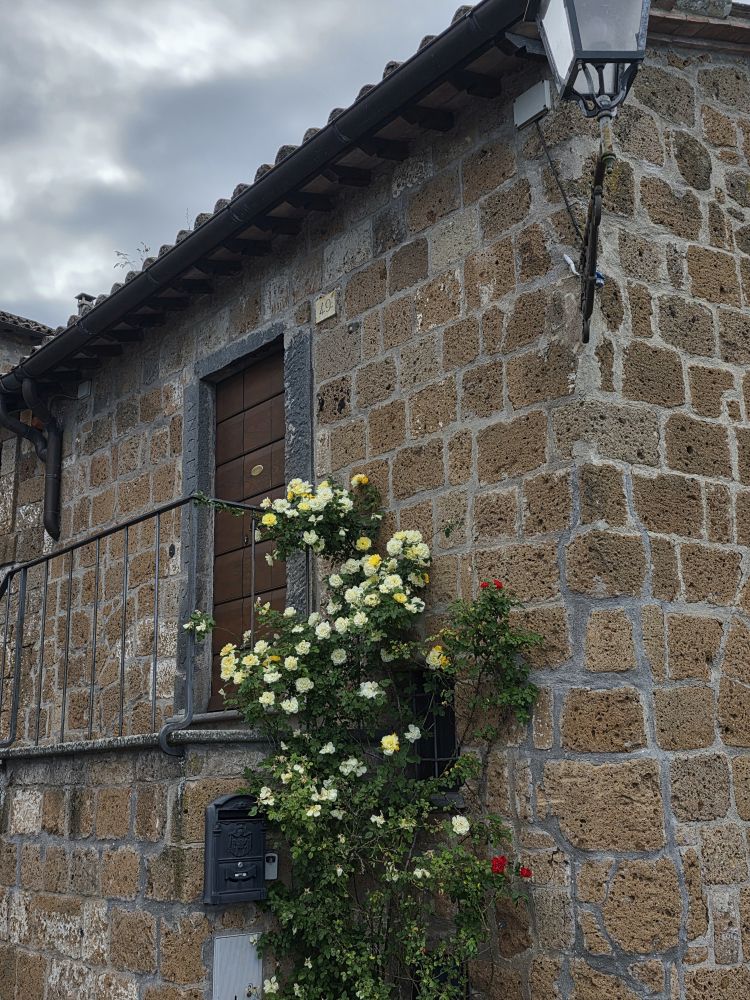
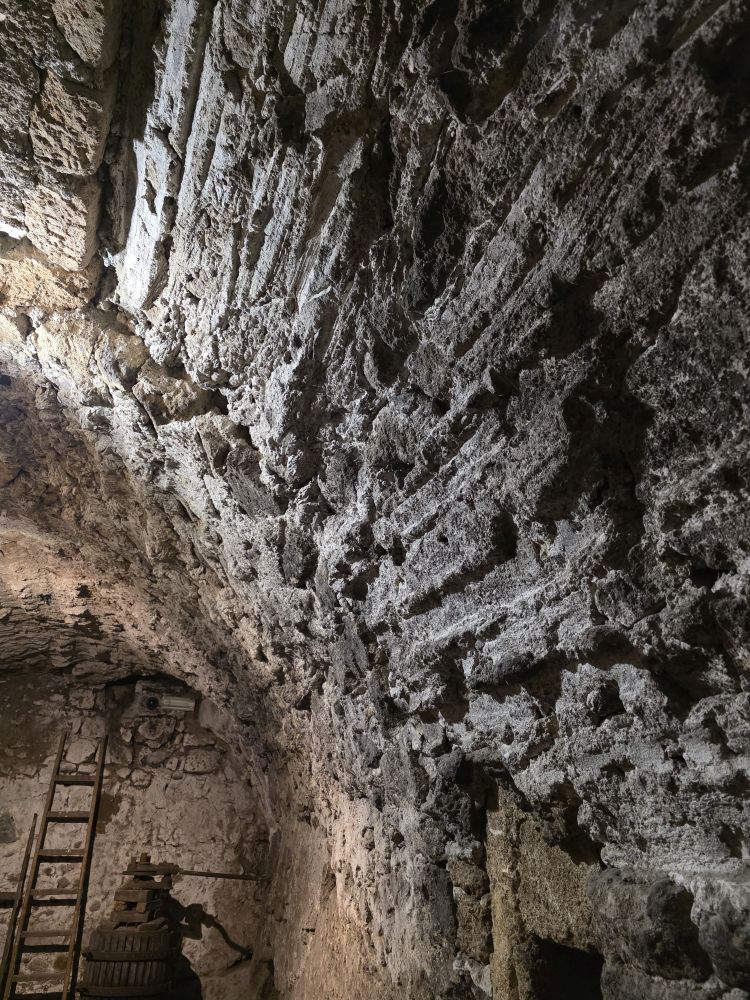
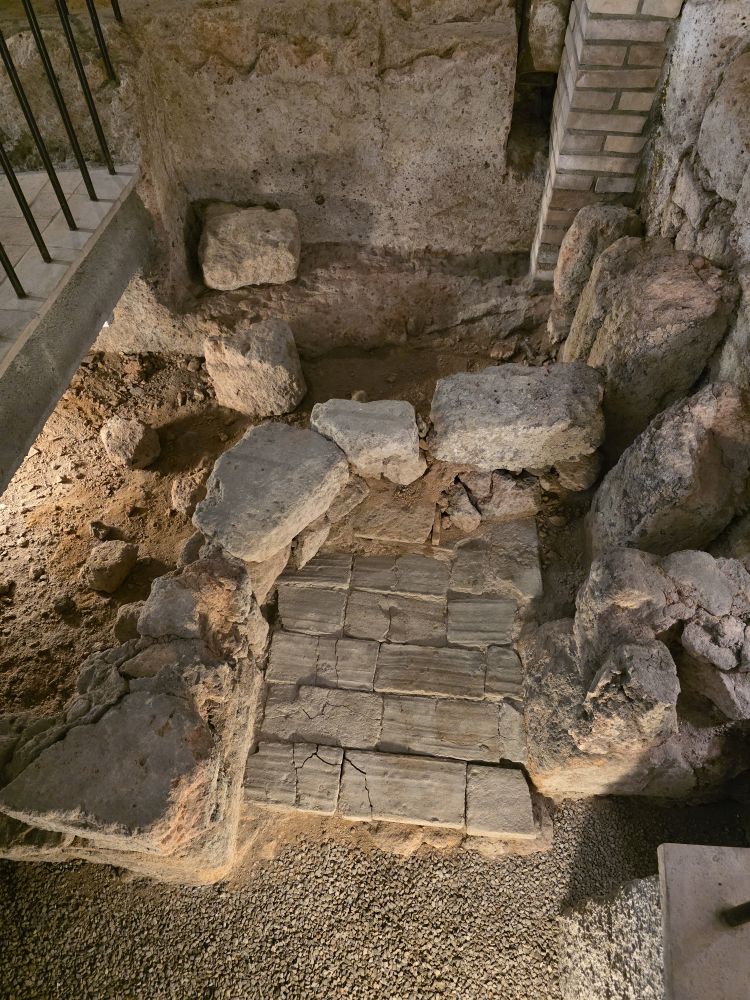
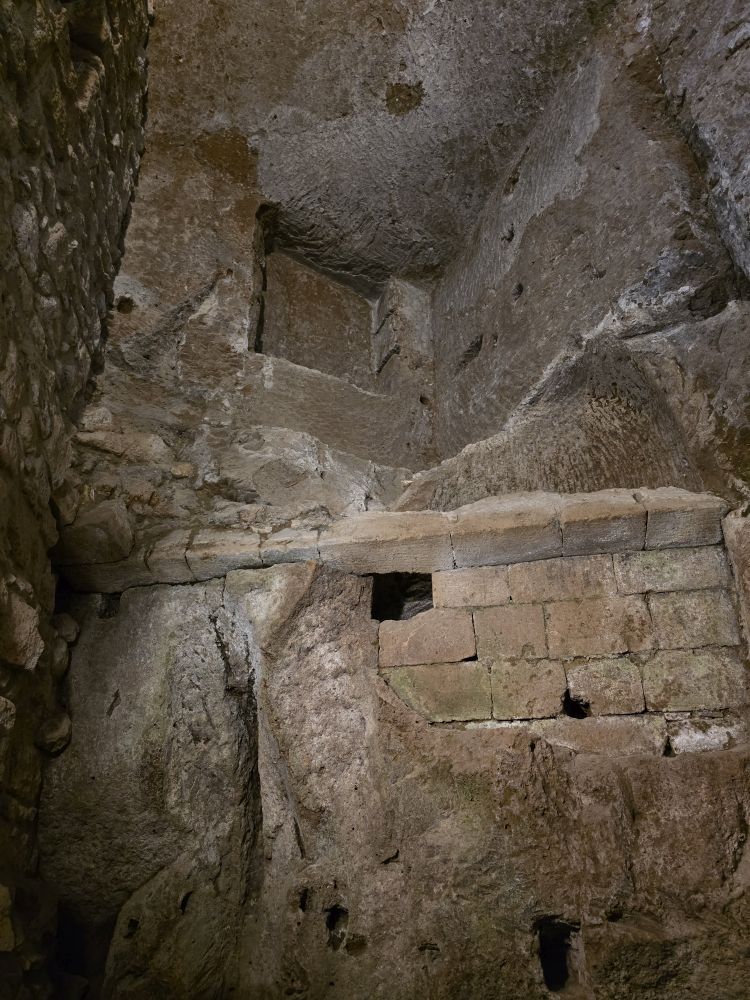
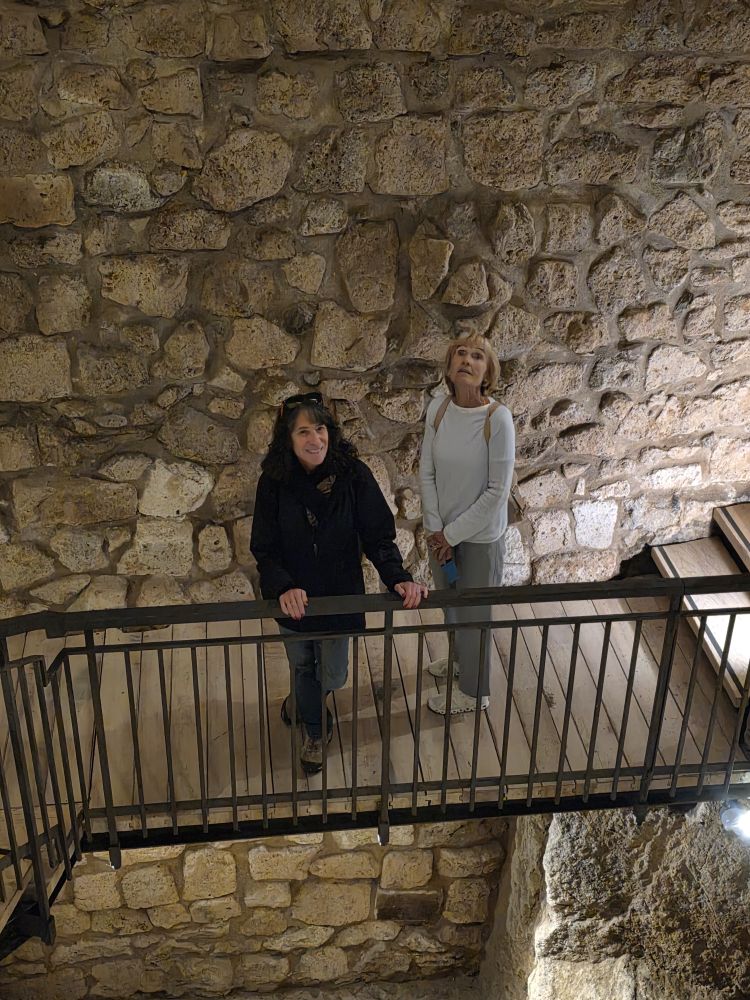
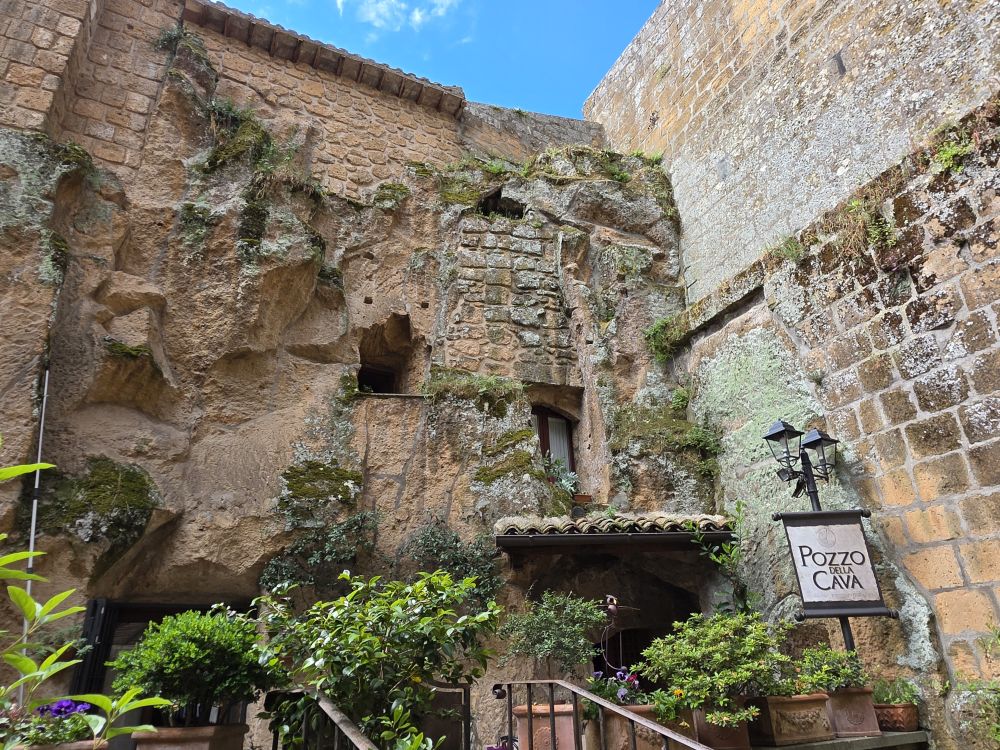
Arriving at the Pozzo, we have the caves all to ourselves, exploring the Etruscan excavated tunnels originally used as a tomb-bed, and the original well they created.
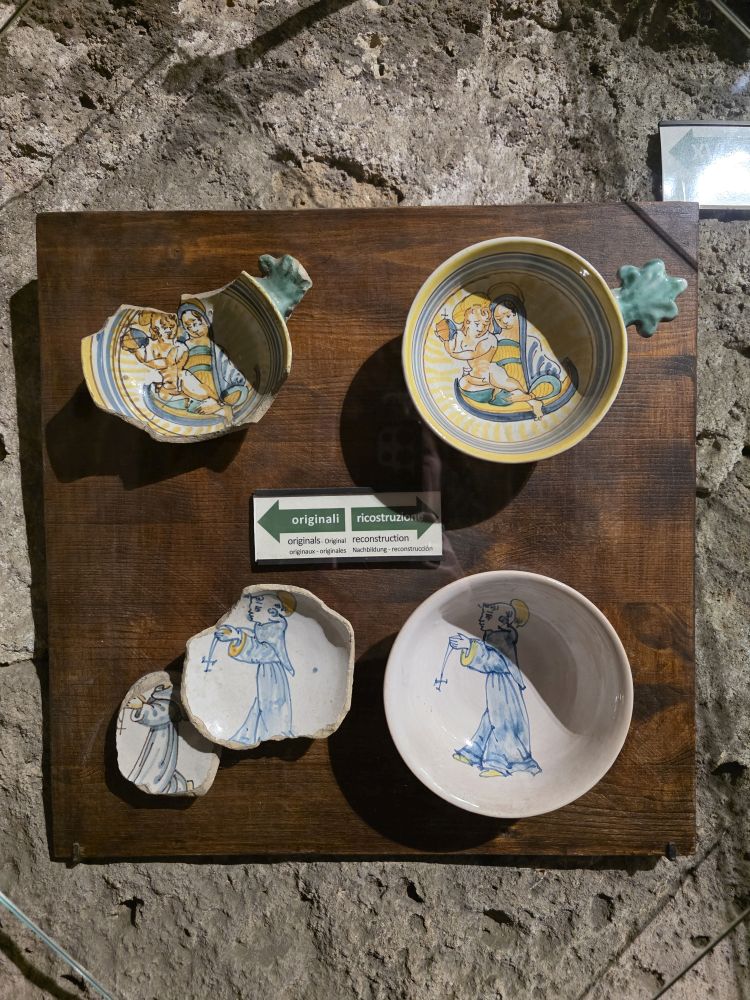
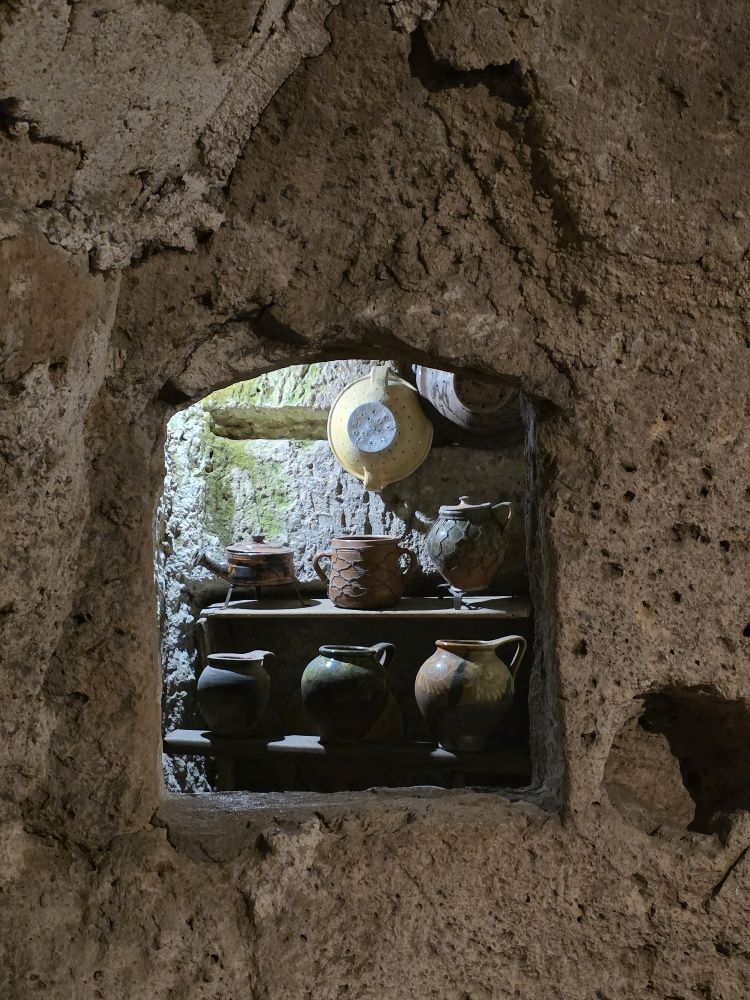
First we explore the upper chambers, that were later (as in 13th to 16th C) used as a ceramic workshop, complete with kilns. There are pottery fragments and representative pots and items placed around to give you a feel for what was created down here.
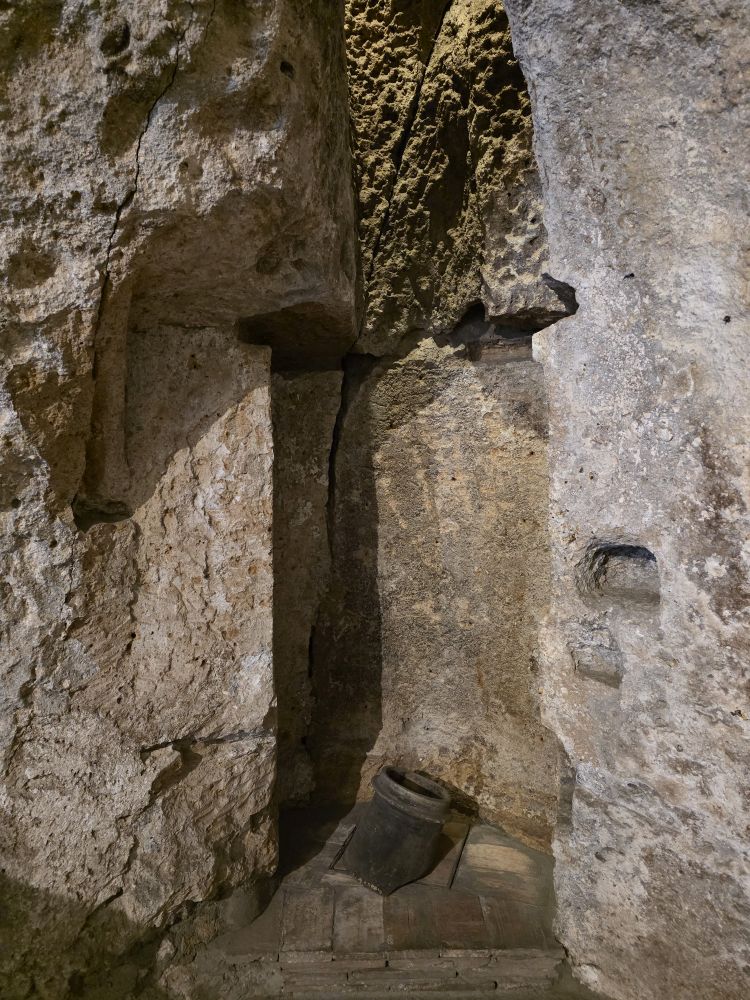
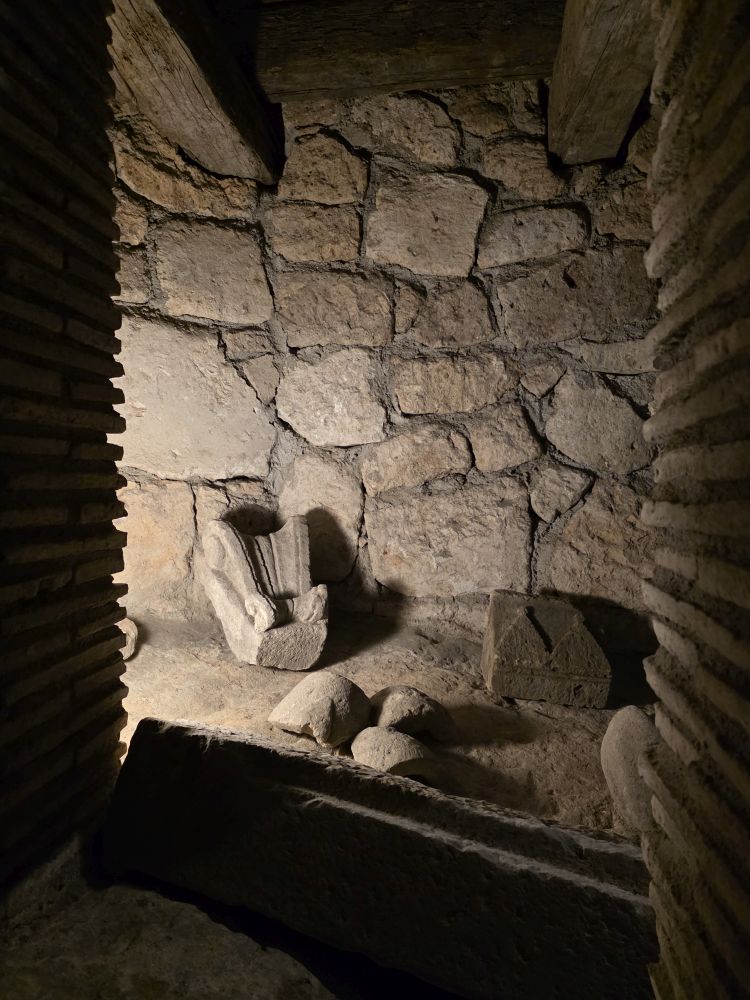
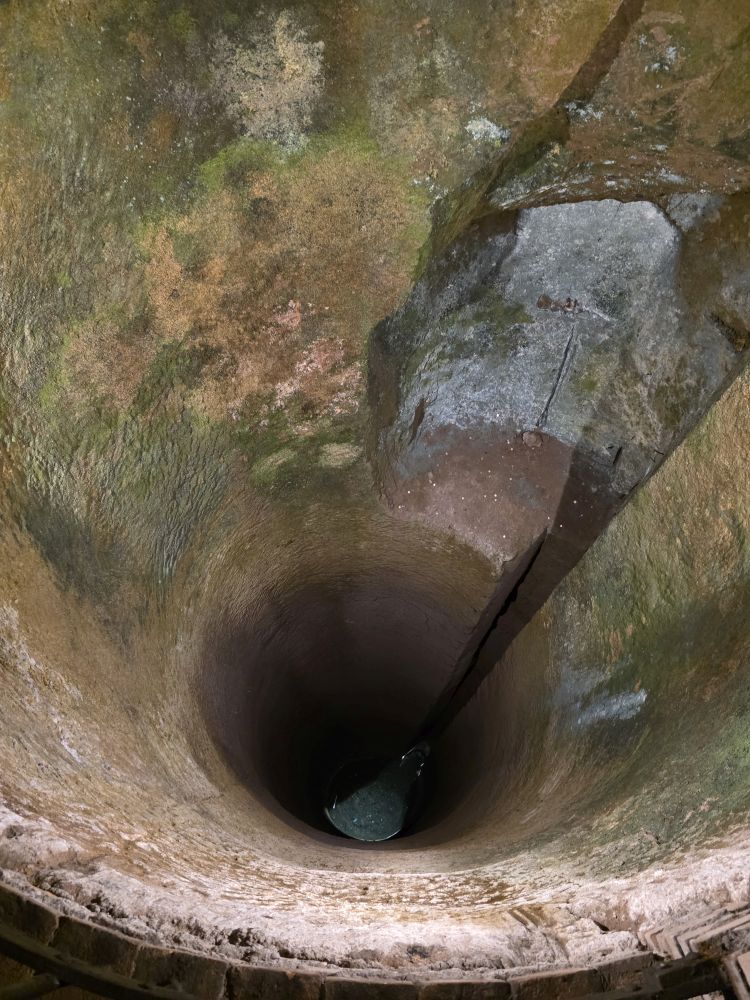
Moving on through the complex, we reach the Etruscan well, which in and of itself has quite a history. Originally excavated in the 6th and 5th C BC by the Etruscans, in 1527 the Pope sought refuge in Orvieto and commissioned the creation of 2 public cisterns, including the well here in Cava. The well was closed in 1646, ostensibly because of the sieges taking place, when all openings in the city (doors, lanes, etc.) were walled up to prevent enemy troops from entering. In recent times, the well had a bad reputation as a place to cover up crimes. But then in 1984, the owner of the home above it re-discovered it, and in 2004 the access was restored and opened to the public.
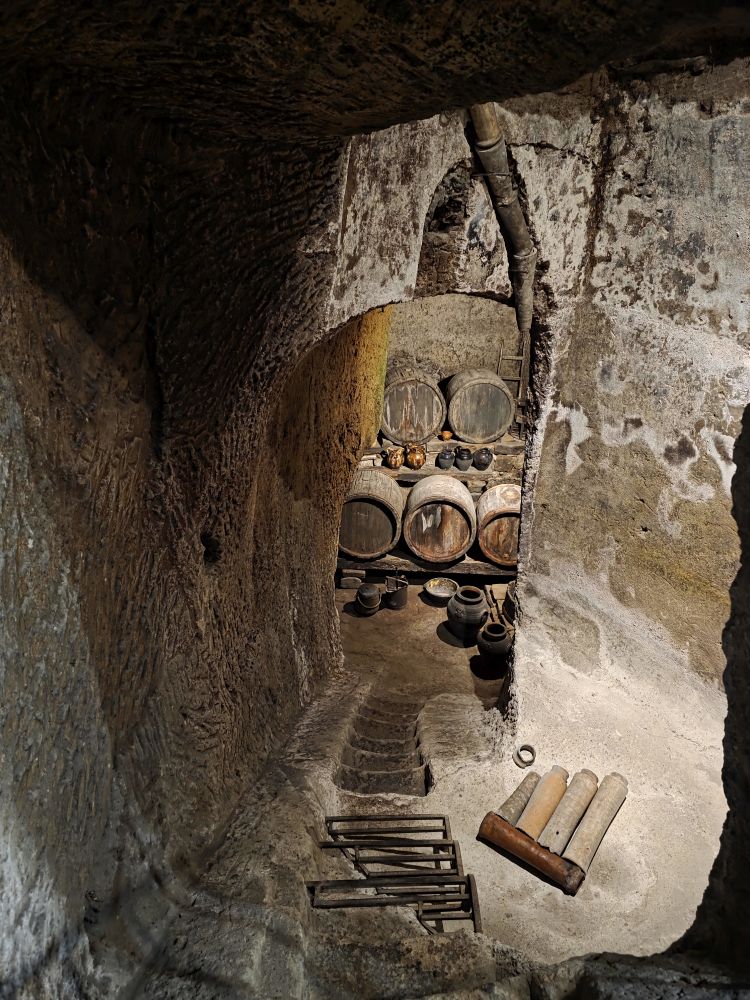
Another lower section of the cave was used for crushing grapes and fermenting for wine production. And below that level was a room for storage of oil, fruit, vegetables, and for more wine fermentation.
More rock kilns, tomb cut outs, stairs, levels and fascinating displays of pottery and ceramic techniques are found in the remaining areas of the caves. Along with a gorgeous patio garden area that was not here the last time we visited (all those “ages” ago!). Too fun.
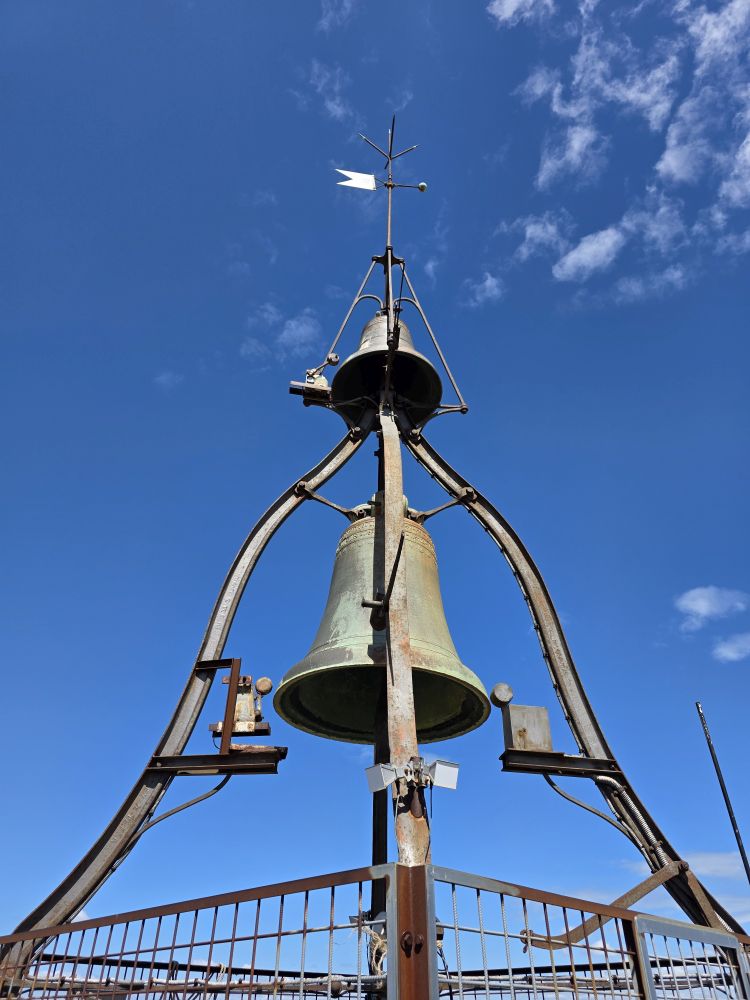
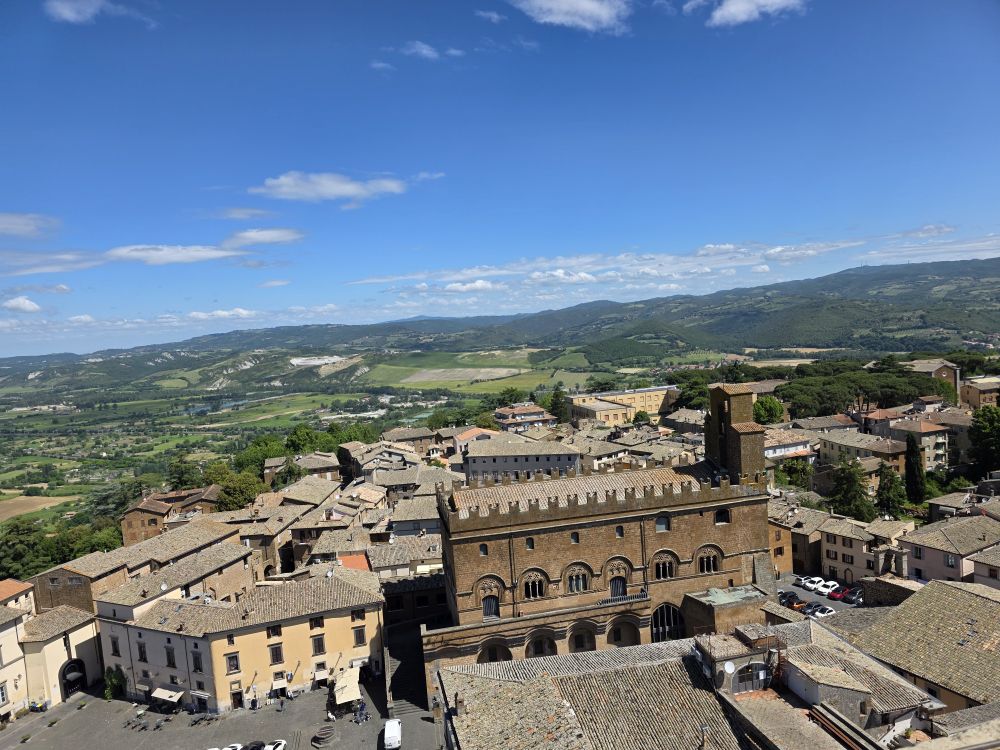
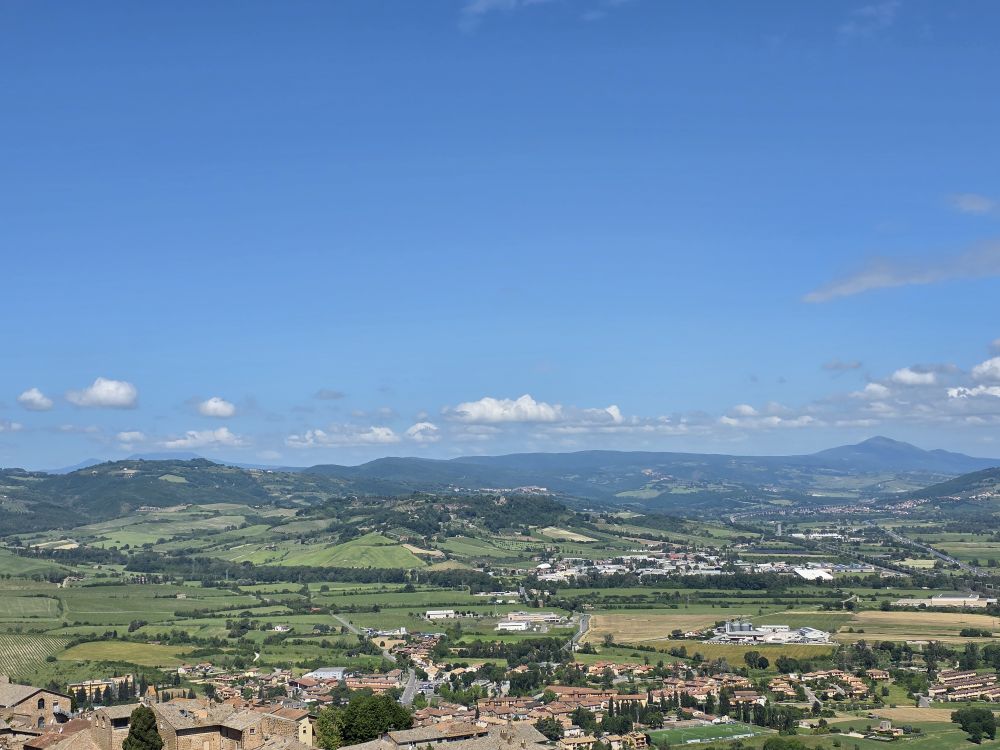
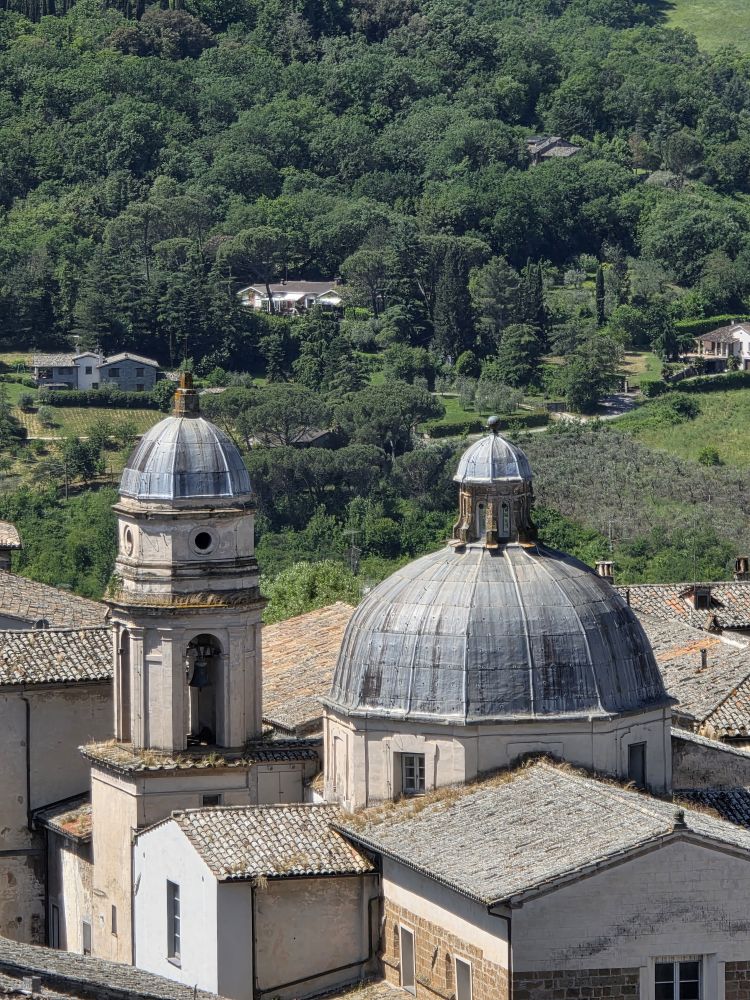
Back up the sloping hill town streets we go to our next stop: the Torre del Moro, the city clock tower! Built in 1200 in the center of the city, it provides a 360 degree view of Orvieto and the surrounding territory. Originally named after the Della Terza Counts, who ahd the tower built, the name was changed to Torre del Papa when it became Papal property, then finally renamed del Moro in the 16th C when Pope Leo X ceded the tower to the Town Hall. No one really knows why “del Moro.” It is assumed that it refers to Moor, a named linked to someone named Raffaele di Sante whose nickname was Moro. Regardless of the name, the 248 stair climb is great exercise – even if we do stop halfway for a break. The views are outstanding – on this clear, yet windy, day you can see forever into the distance. Simply stunning.
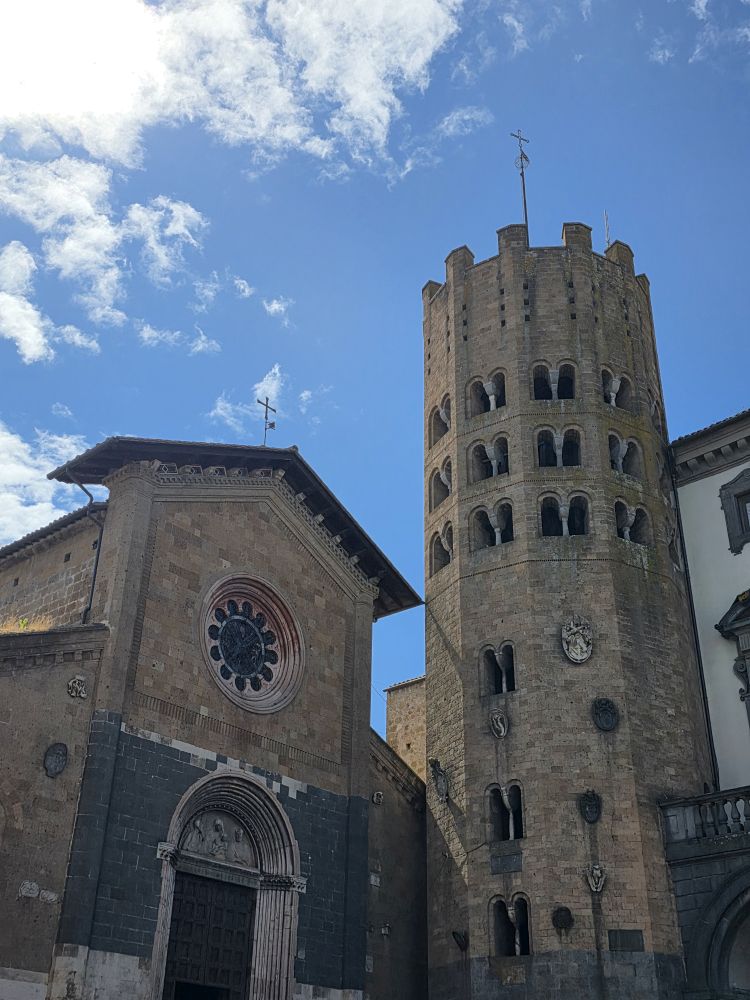
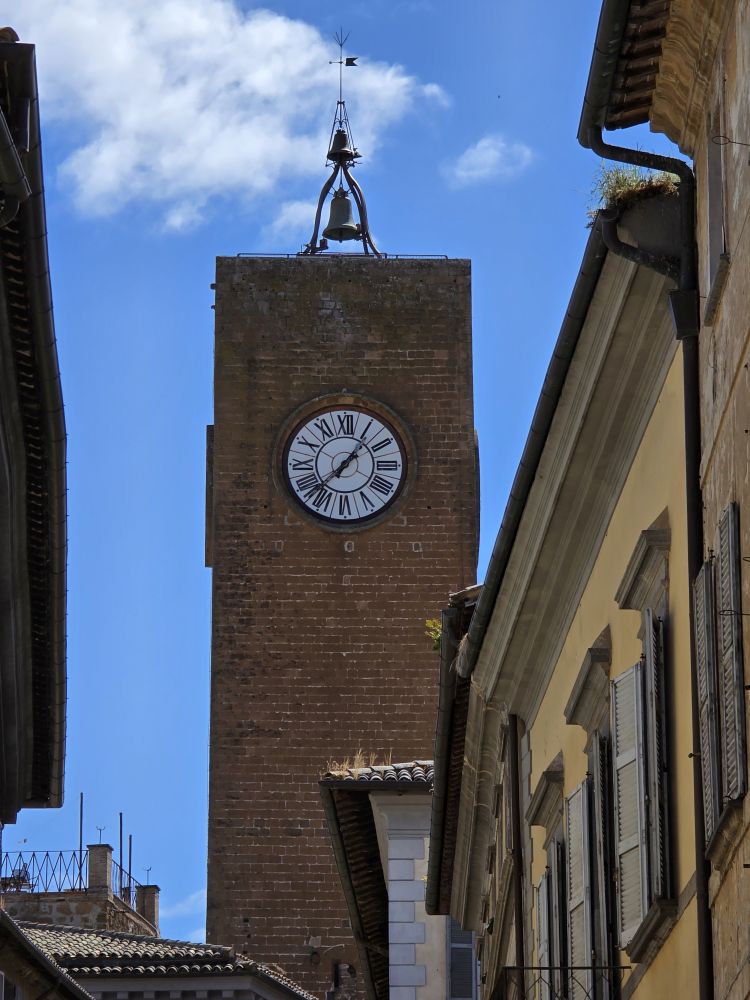
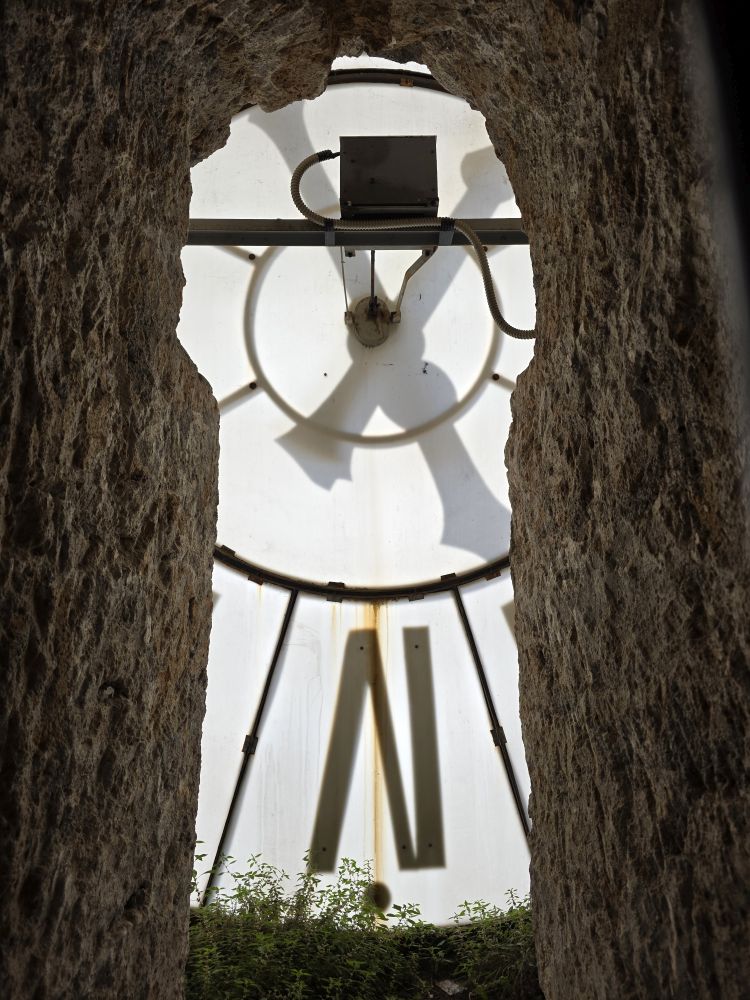
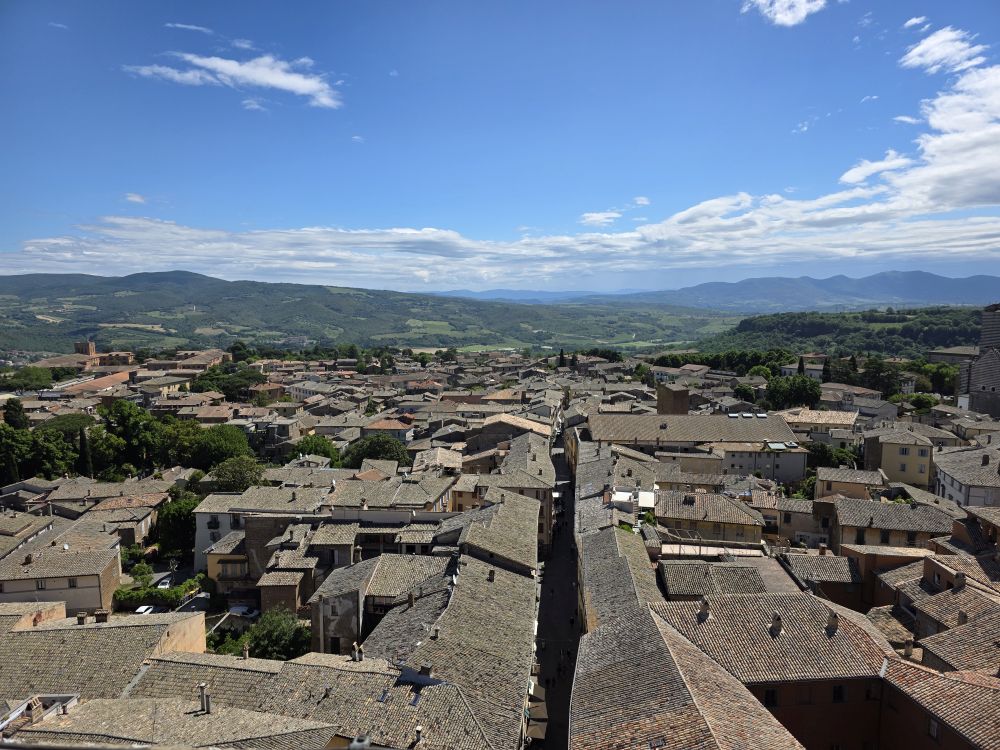
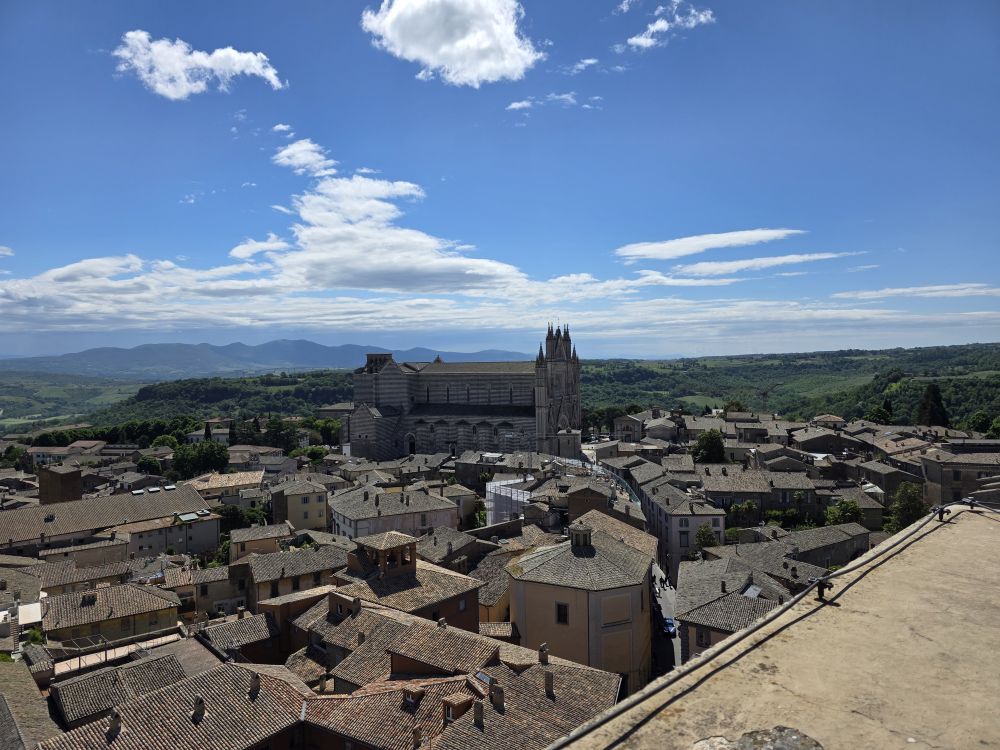
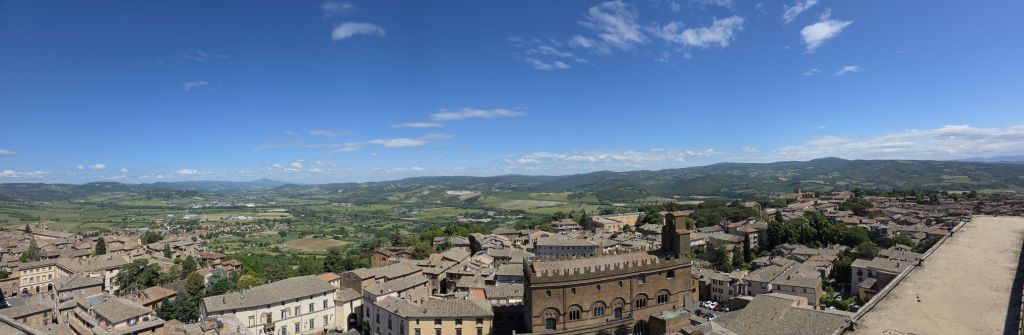
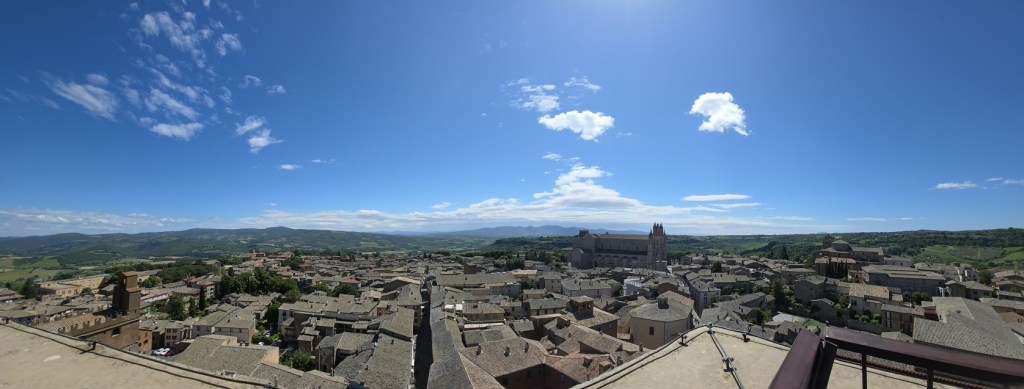
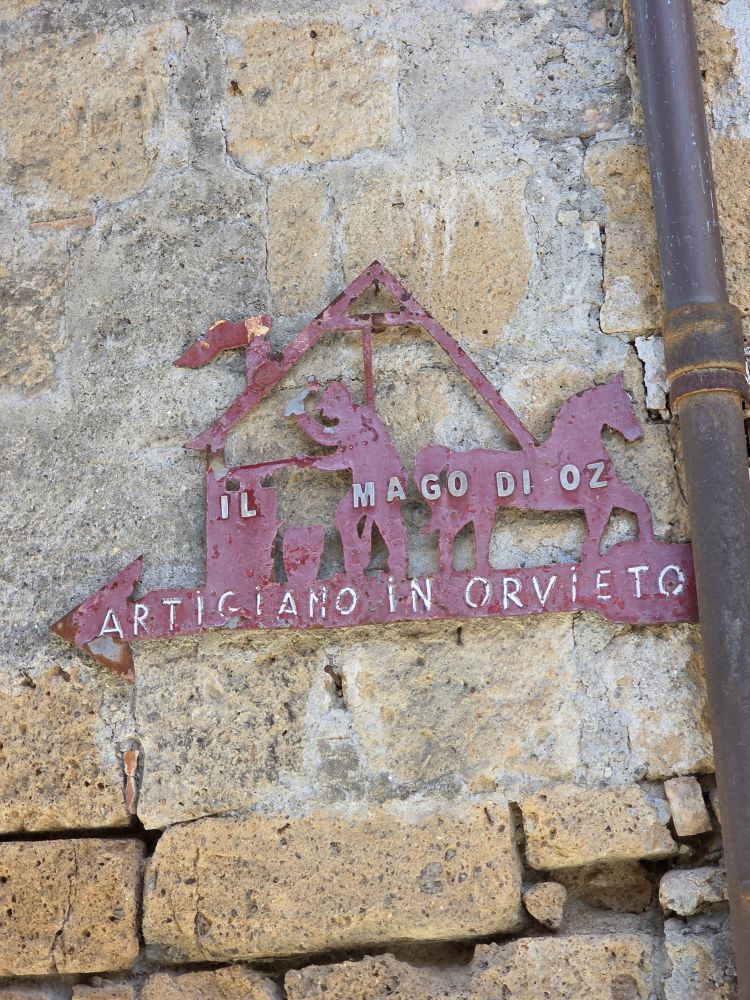
Back down on the ground, we make our way to the Duomo, with a quick diversion up Via di Maurizio, where all the artisan craft shops are located – even the Olive Wood crafter shop where we have shopped previous, but who was not open the last time we visited Orvieto (COVID times) – stumbling upon Il Mago di Oz – the Wizard of Oz shop. A new and fun little find for us. Then it is onto the main attraction: The Duomo.
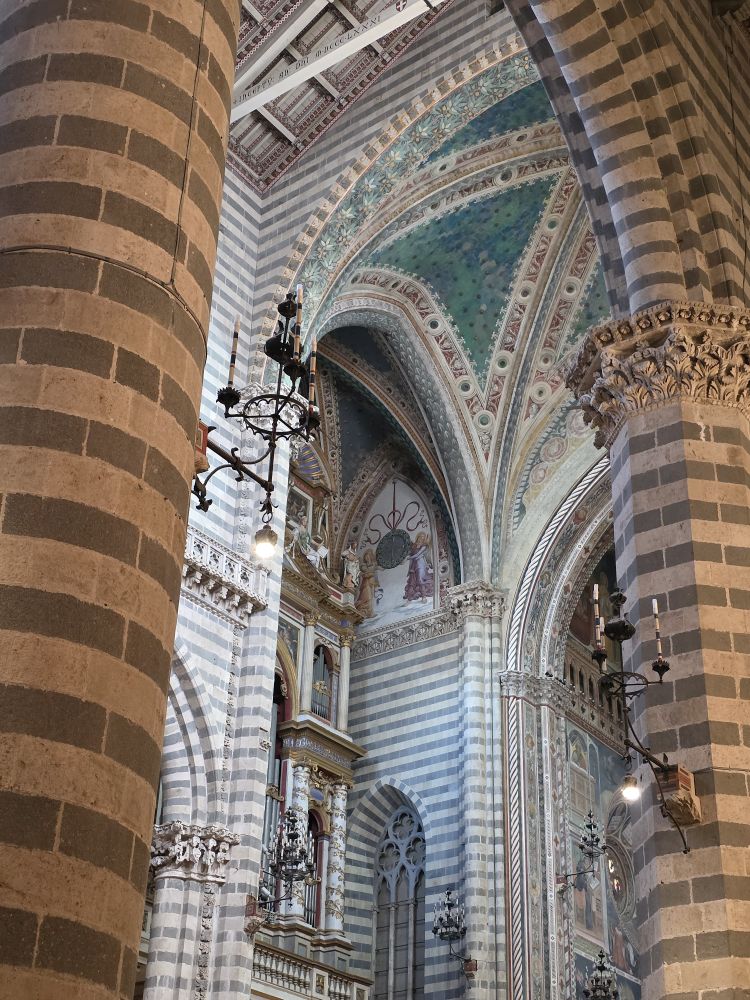
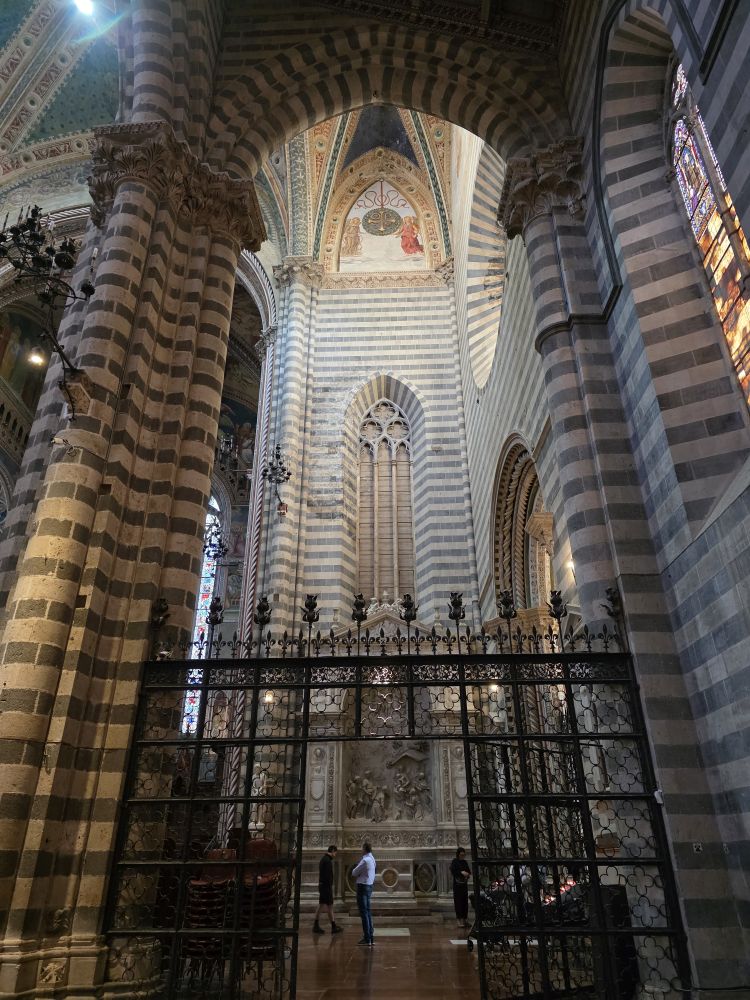
No matter how many times you come here, the Duomo is always a sight to behold. The Built in 1290 and saved from destruction during the war by a fortunate meeting of a priest and a military commander, the Duomo combines both Gothic and Romanesque architectural styles in a magnificent combination. The Duomo is dived into 3 naves with 10 small apses on the side. 12 huge statues of the Apostles stand next to each of the main columns, only returned to the cathedral in 2019 after being stored in a Palazzo and then displayed in another church in Orvieto. It is all just exquisite.
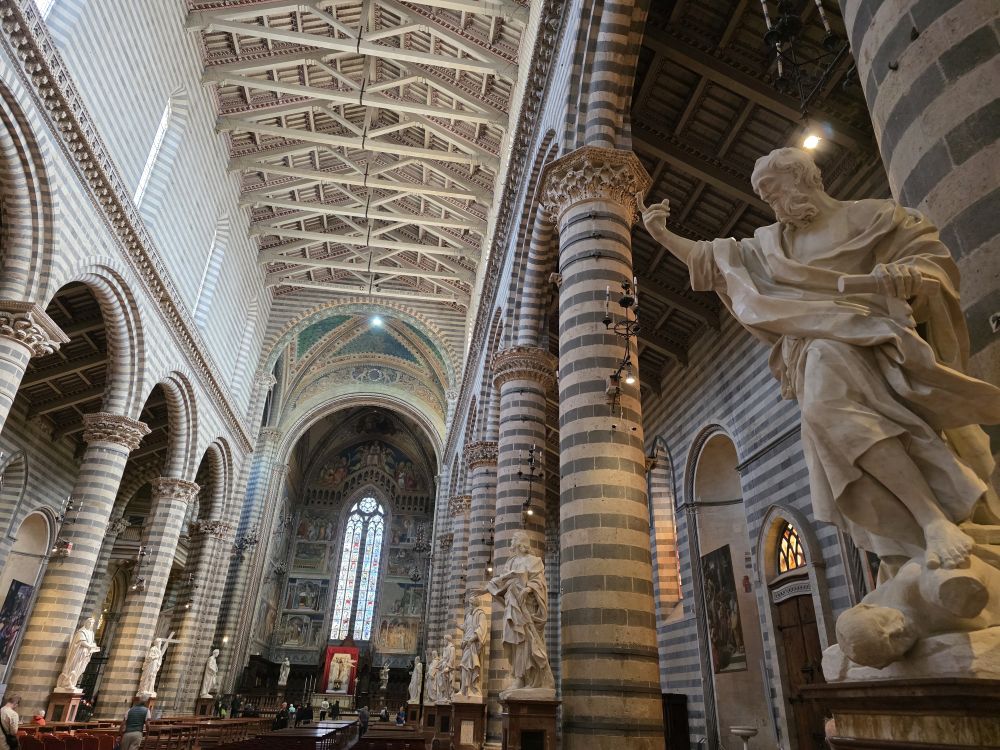
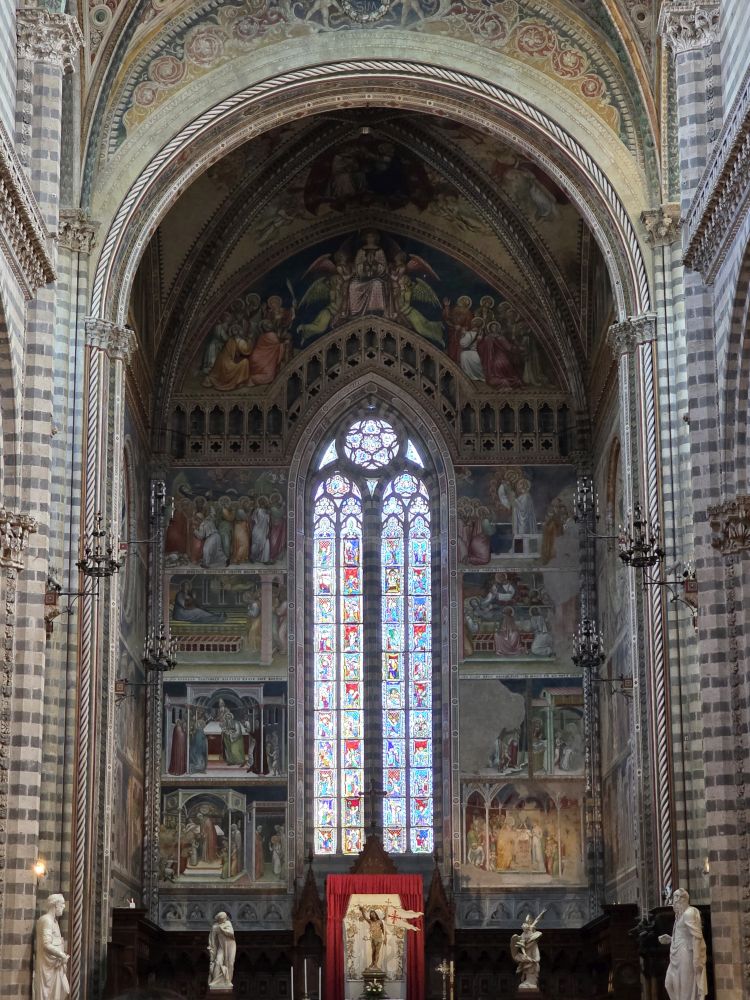
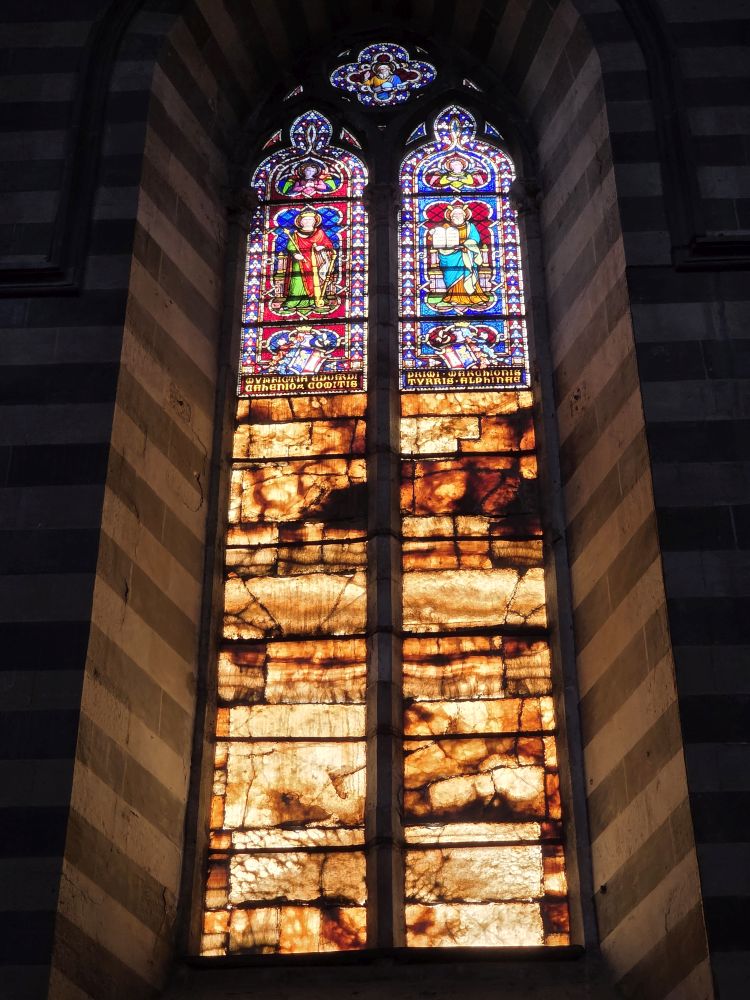
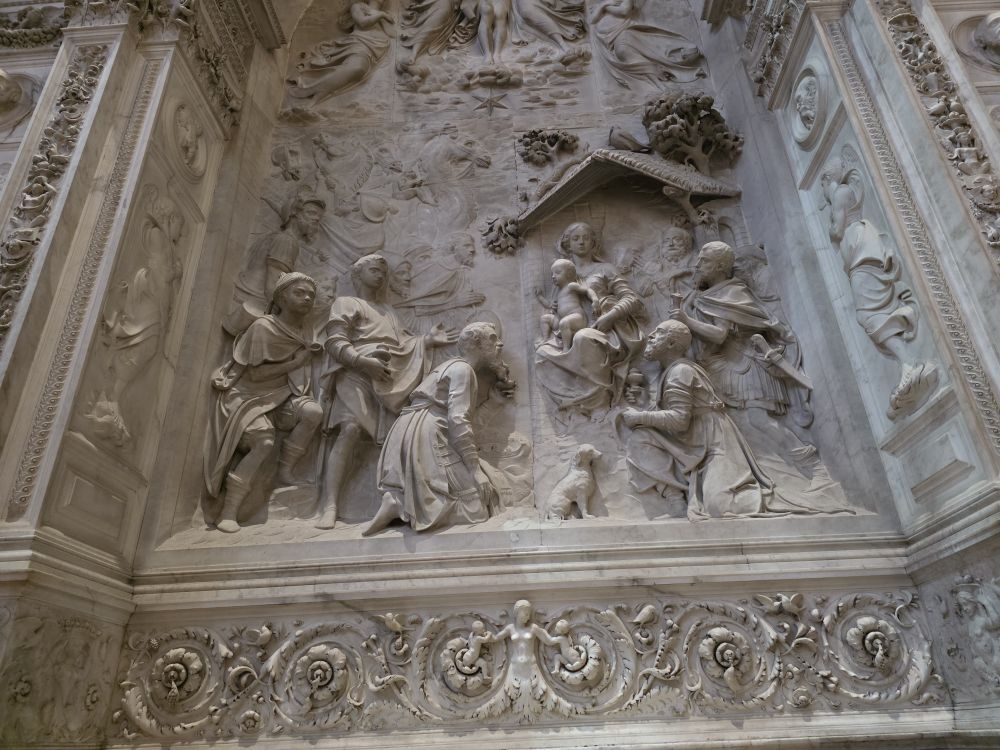
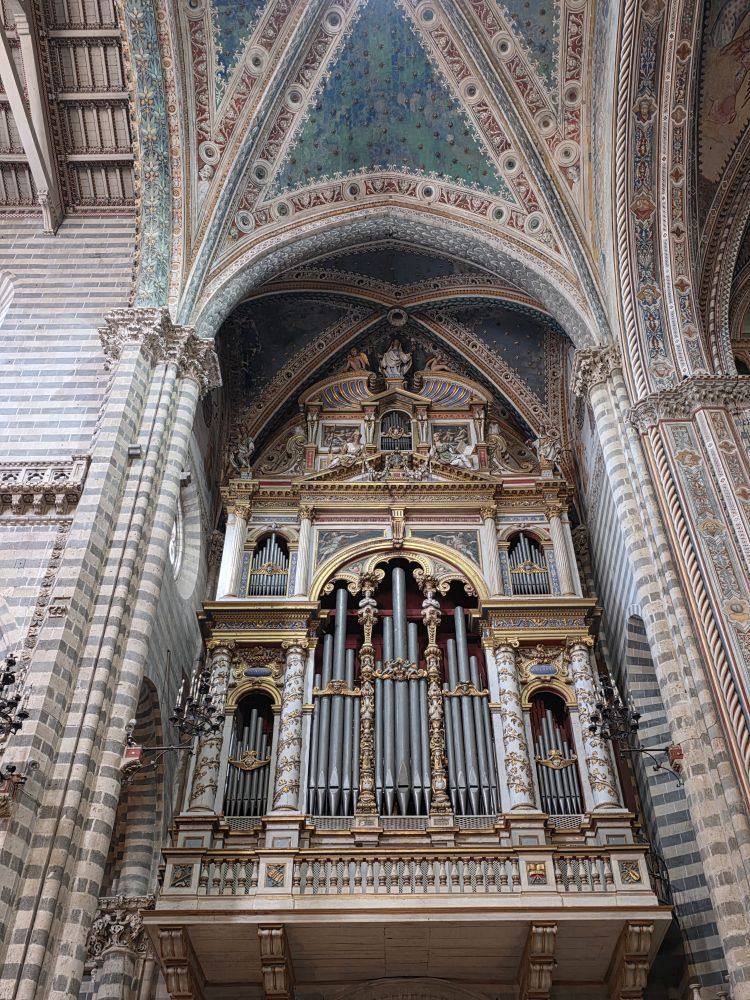
The alternating Basalt and Travertine stones create such a stunning backdrop for all the frescoes and tile and stained-glass windows. Not to mention the bas relief statues and the organ, which is one of the largest in Italy and dates back to 1584.
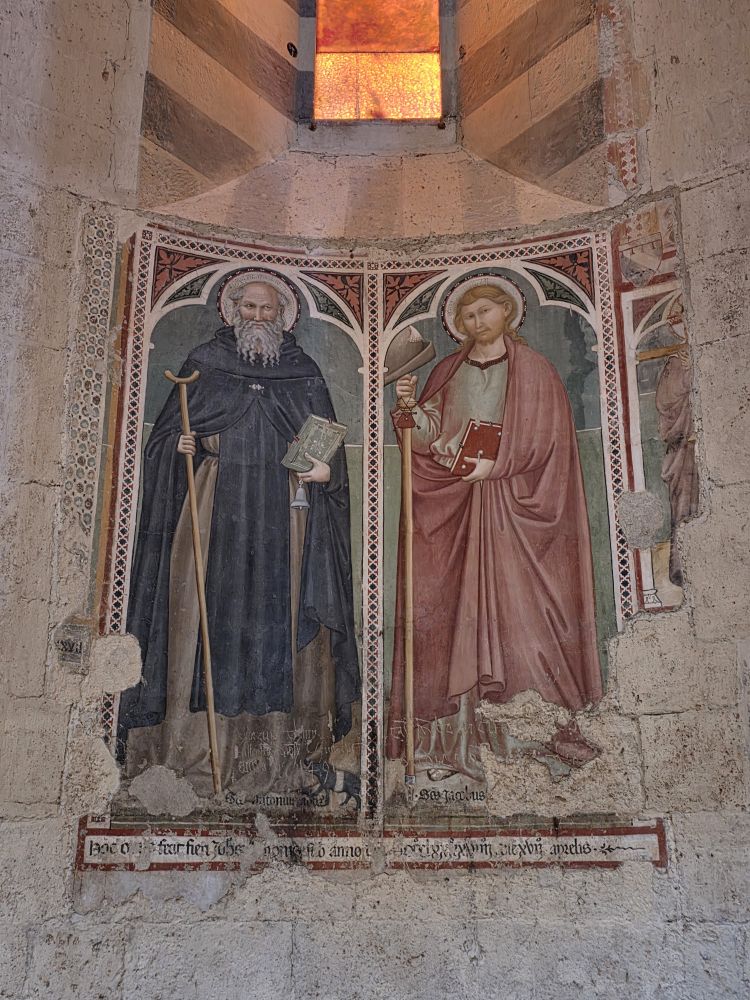
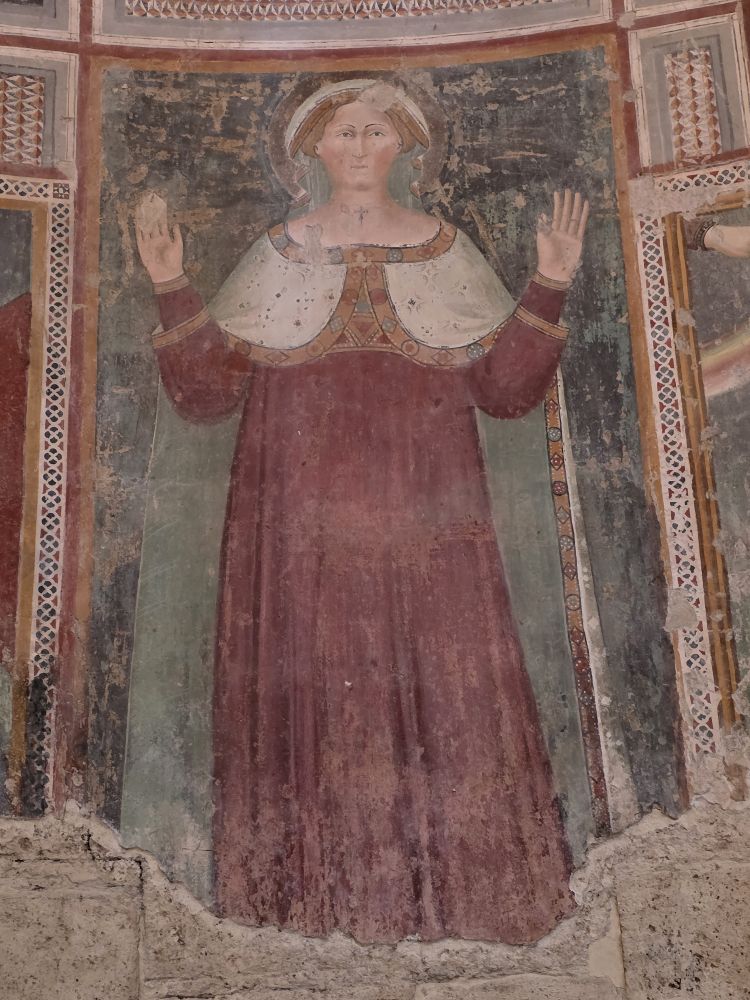
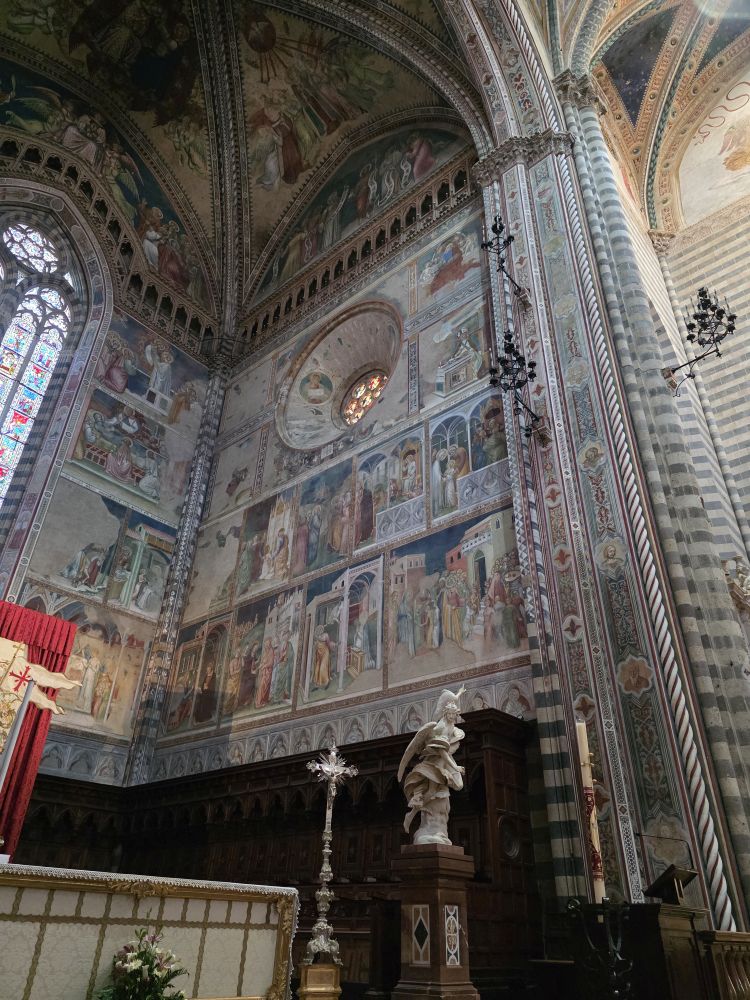
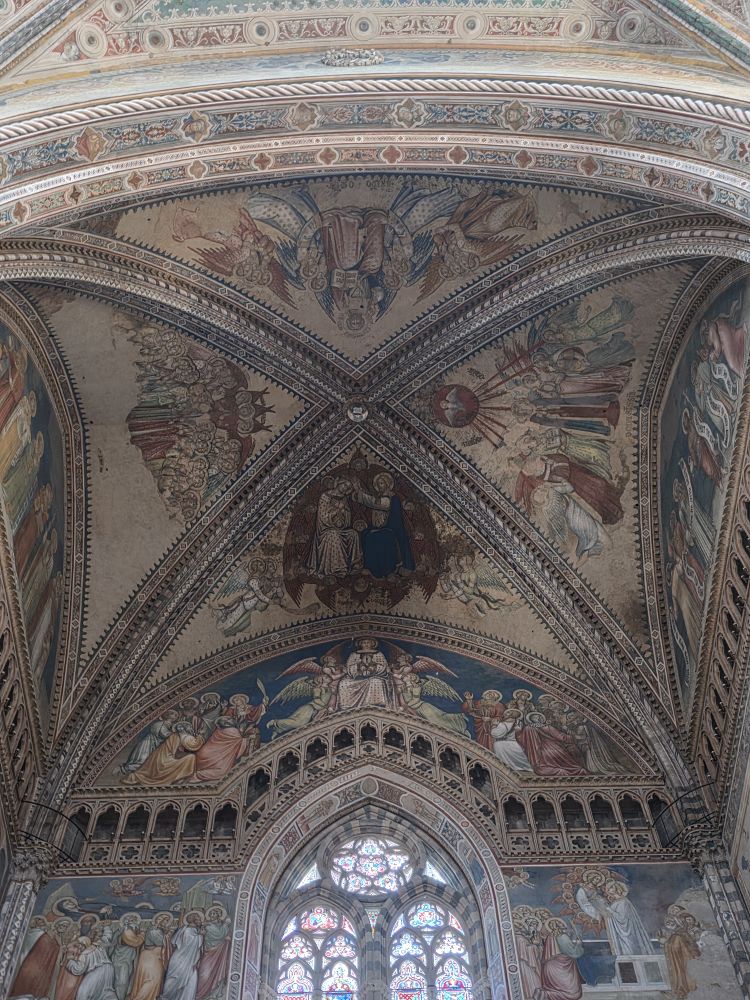
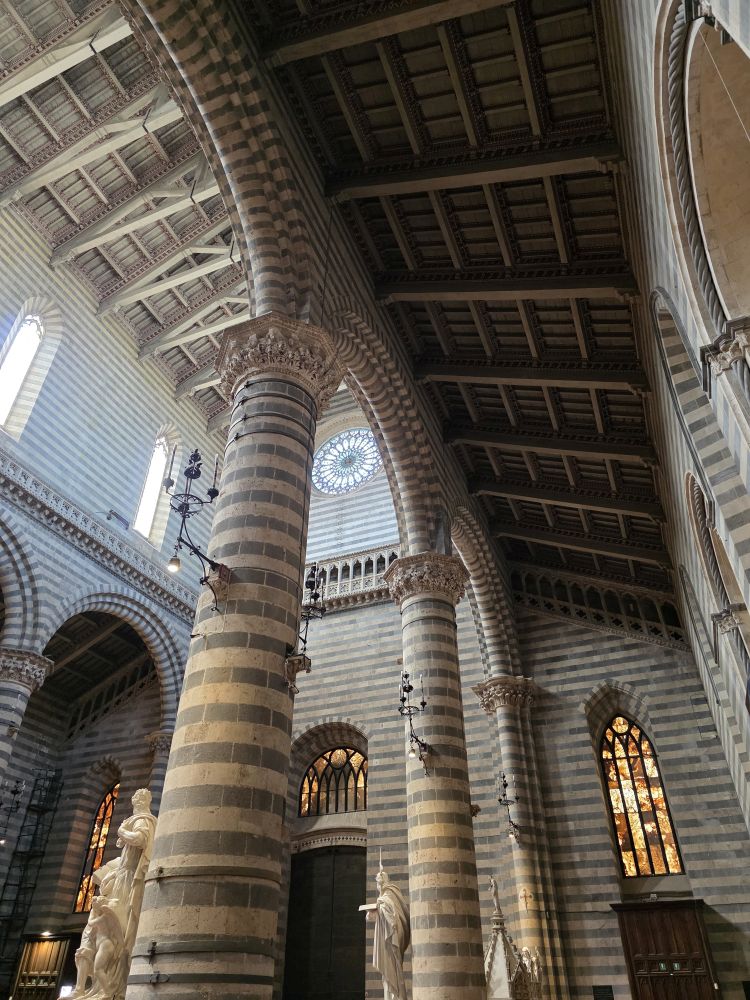
Interestingly enough, in some of the side chapels, the frescoes have been damaged. It looks like someone has chipped out specific pieces of the painting – the baby Jesus in one, Mary in another. It’s bizarre, and we can’t find any explanation for it. After all the restoration, we would think they would be fixed or at least explained.
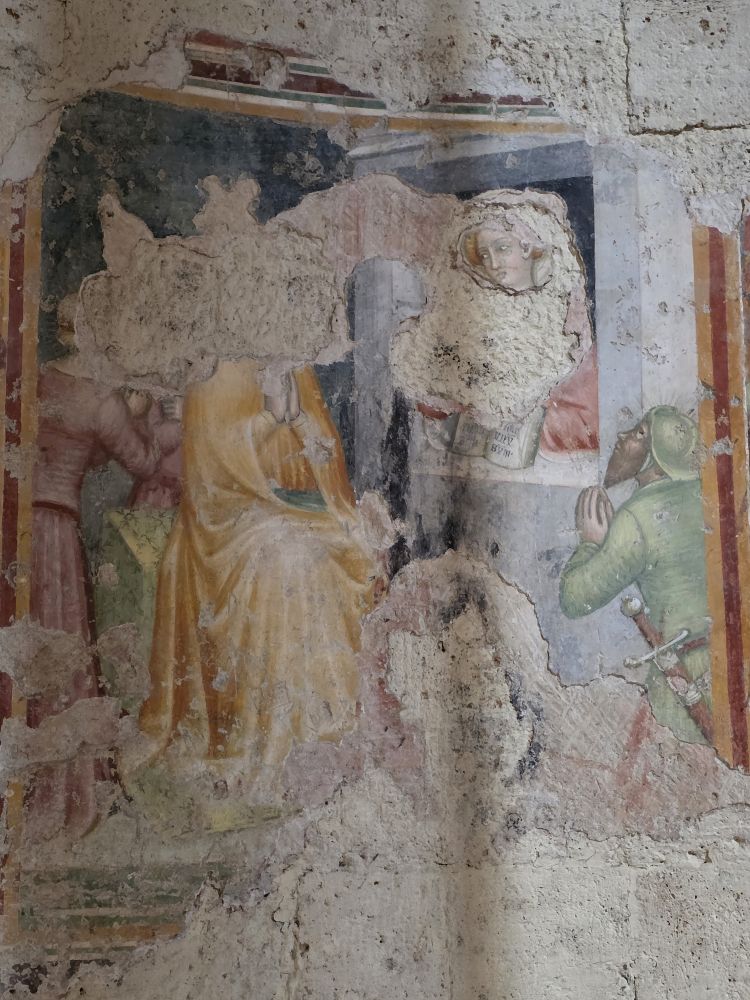
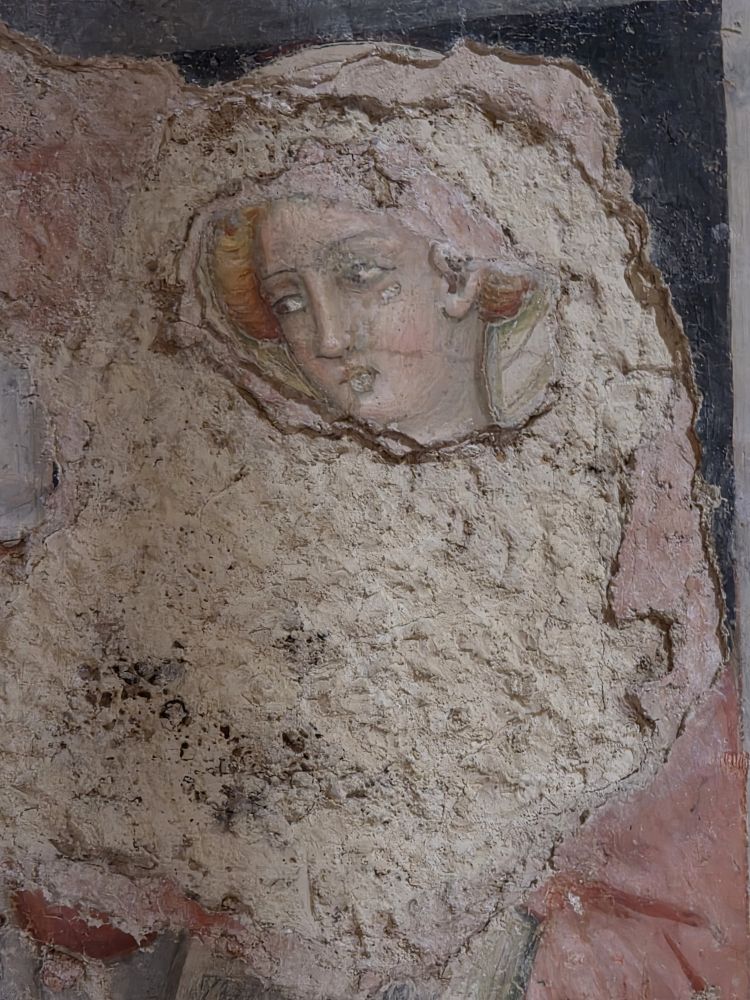
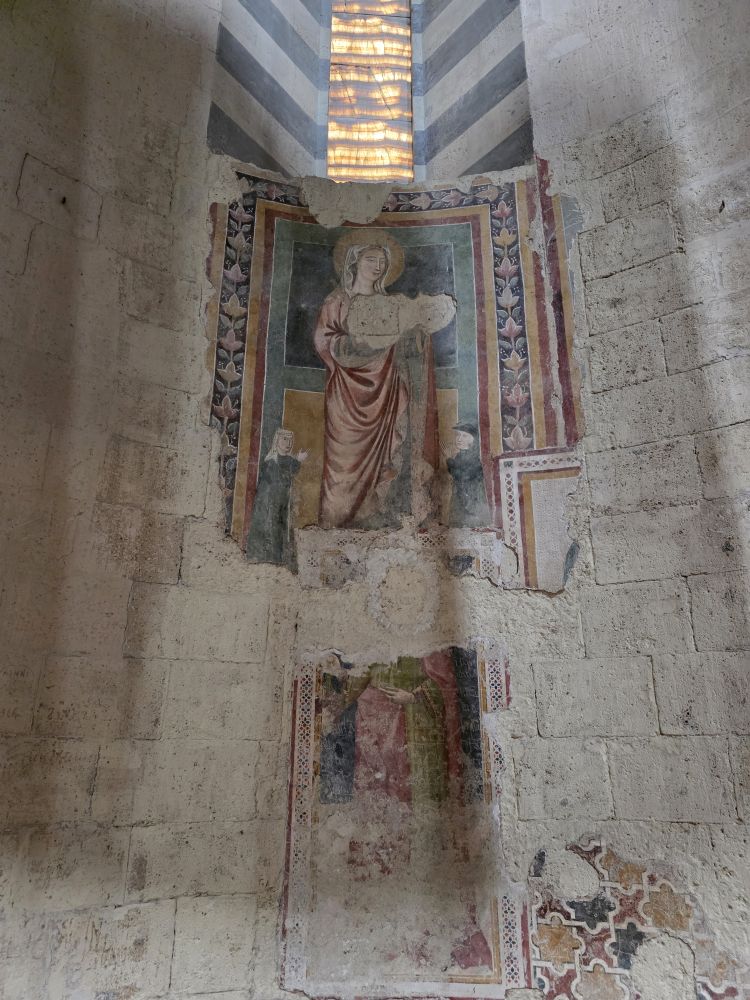
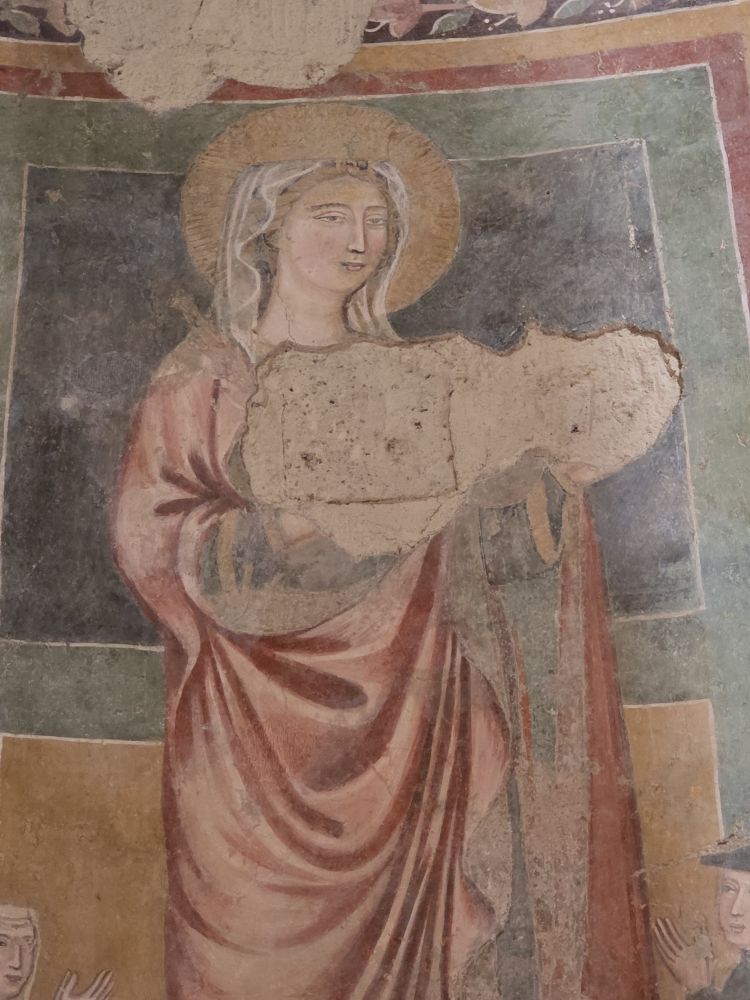
We circle the cathedral twice, losing sight of G&S along the way, but reuniting in the San Brizio chapel which we had skipped on our first time around as there was a large tour group there. Now, it is relatively empty (relative is the term) and we can enjoy the incredible frescoes by Signorelli depicting the Last Judgement that were the inspiration for Michelangelo when he created the Sistine Chapel. Surprisingly, some of the frescoes have an almost contemporary feel – in particular a scene to the left of the altar.
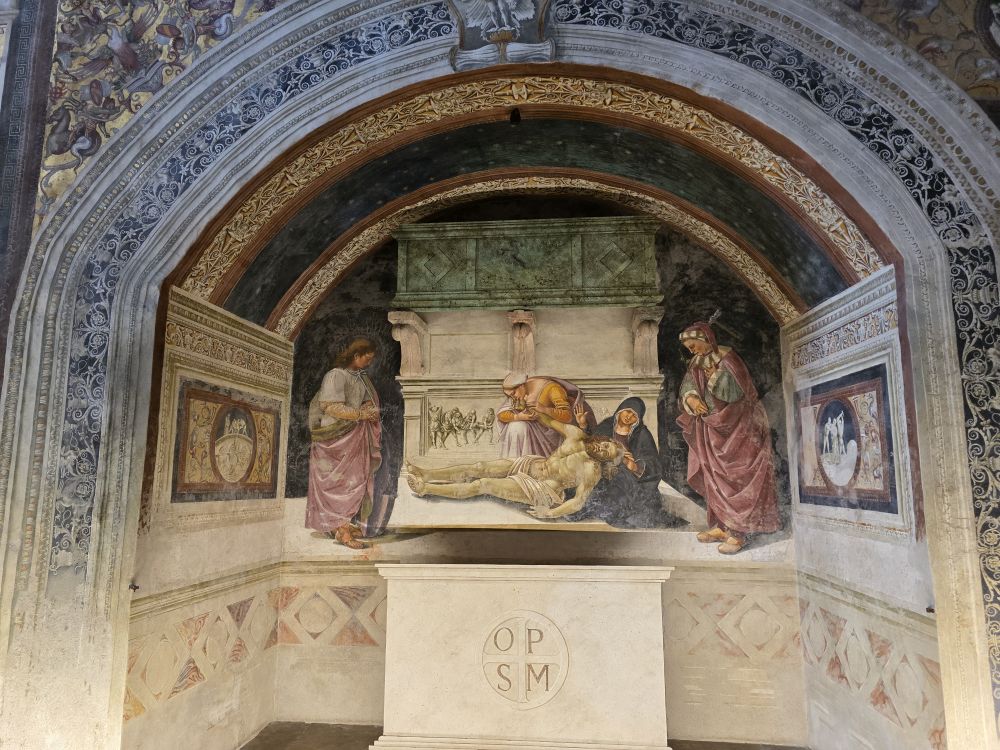
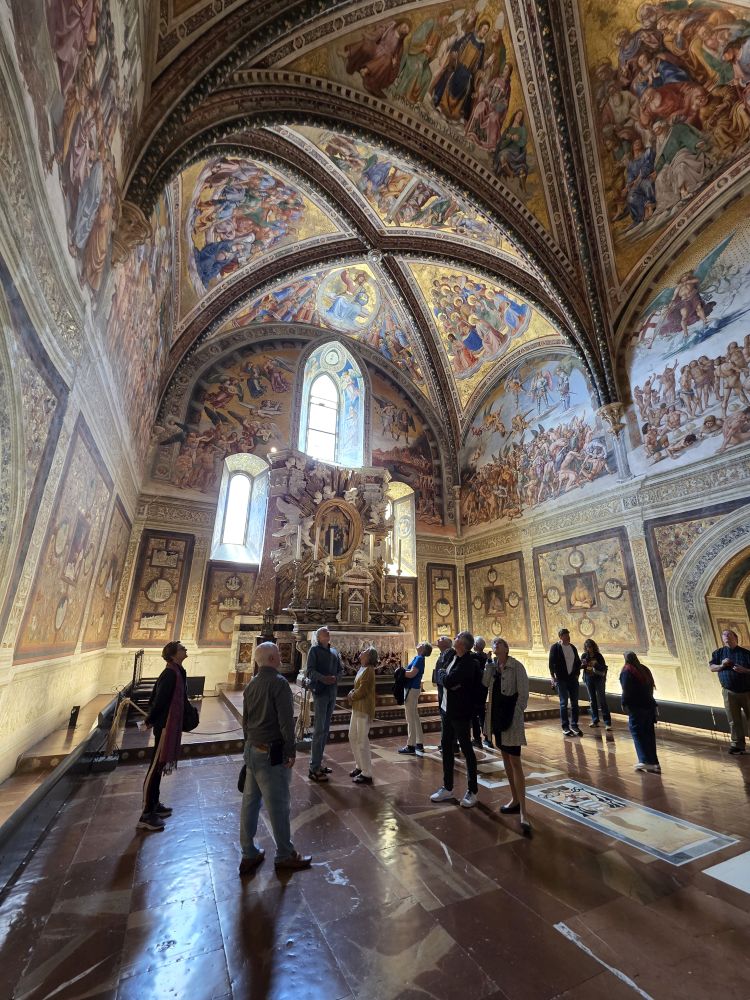
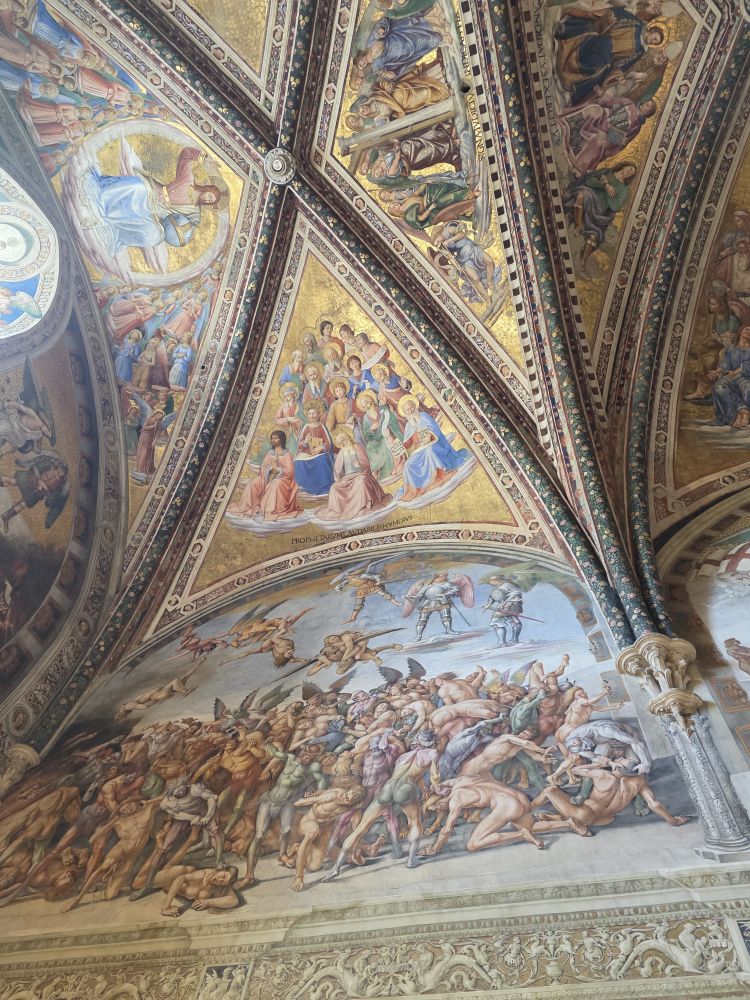
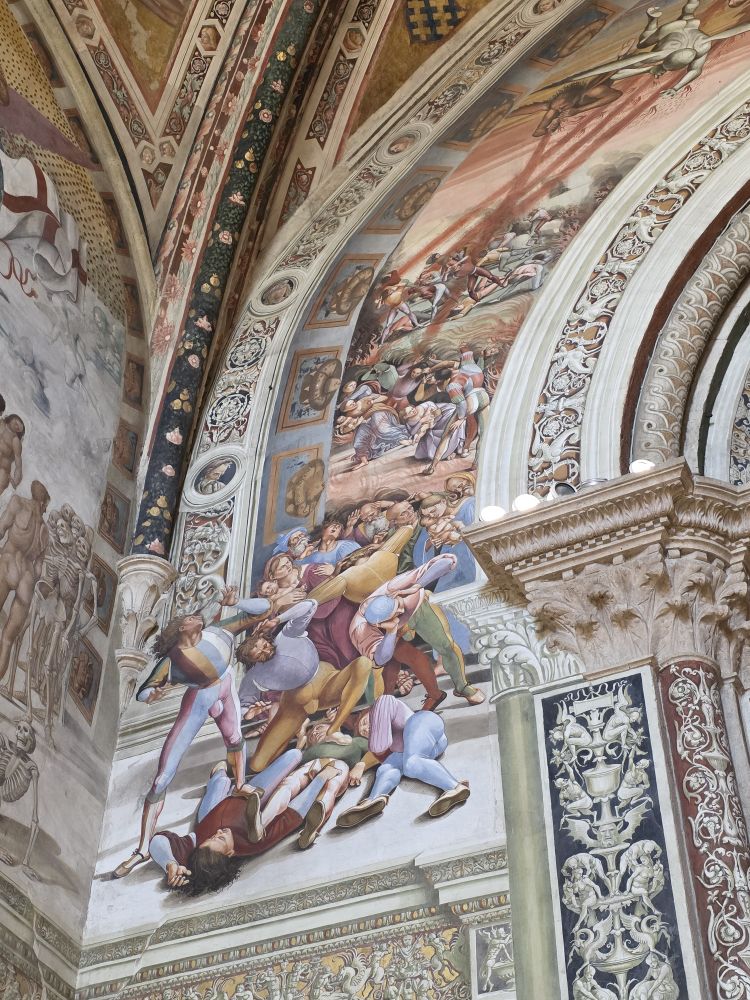
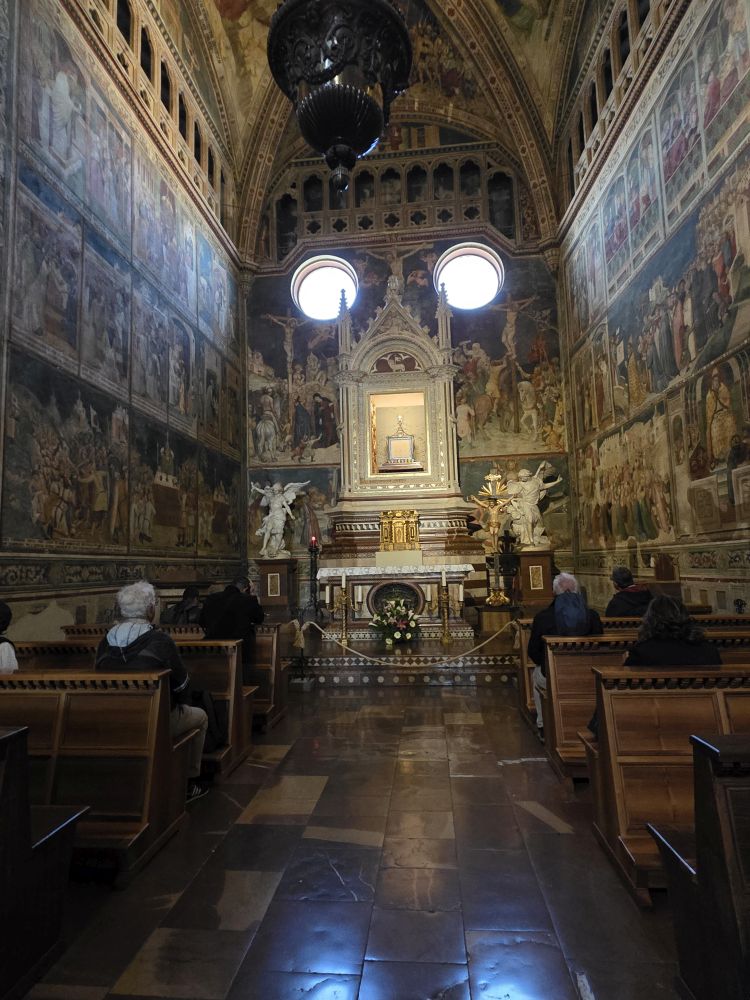
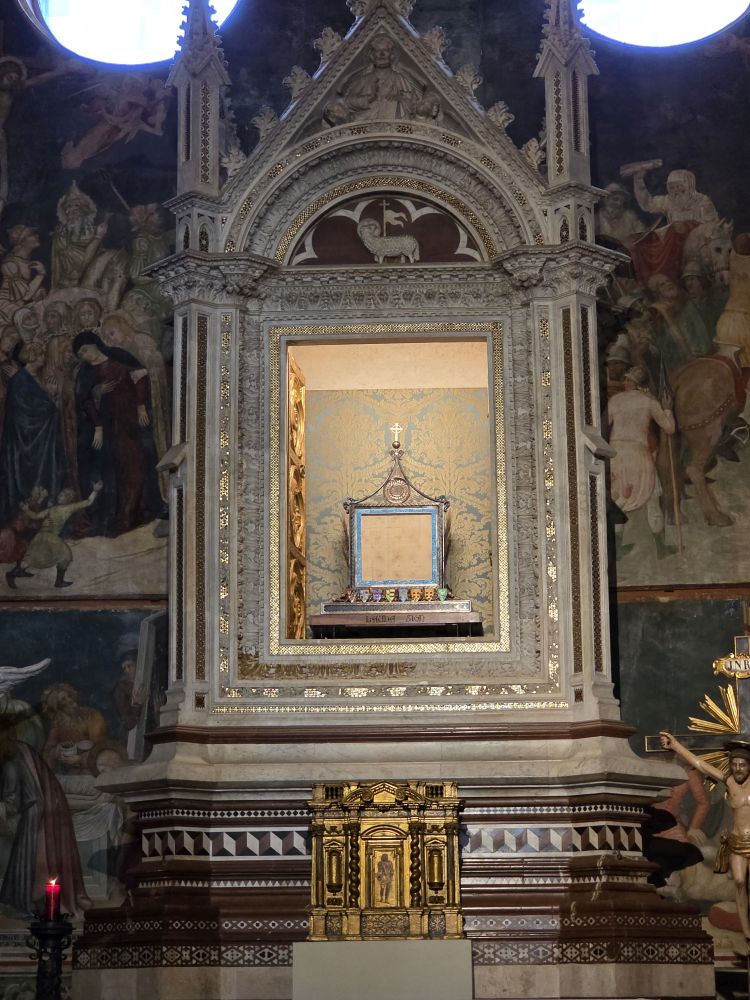
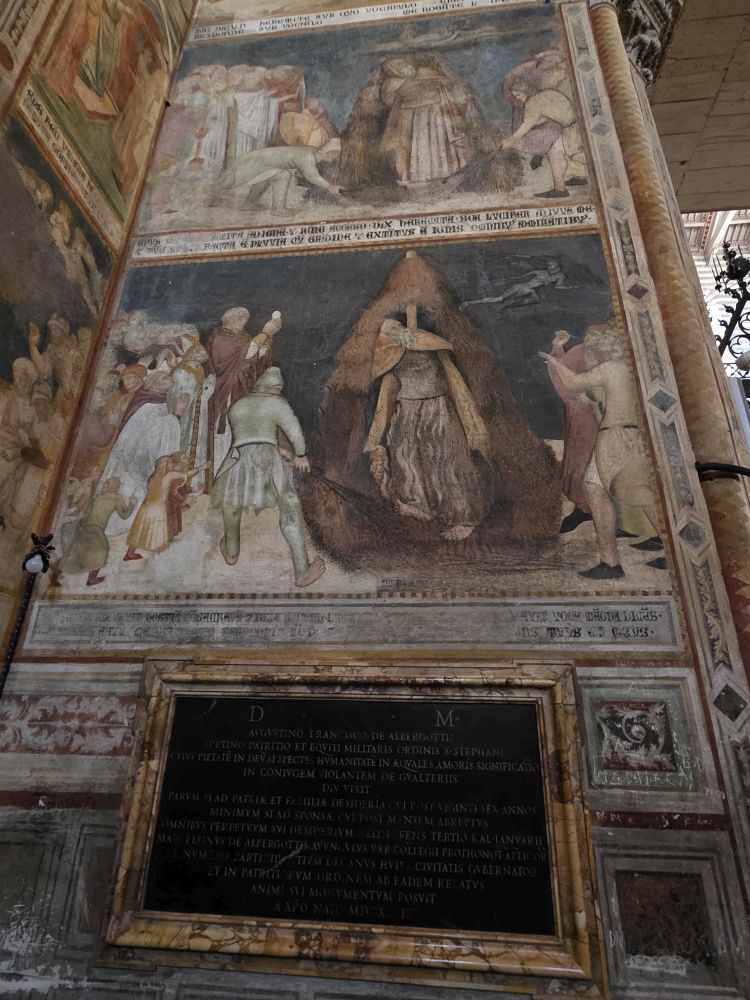
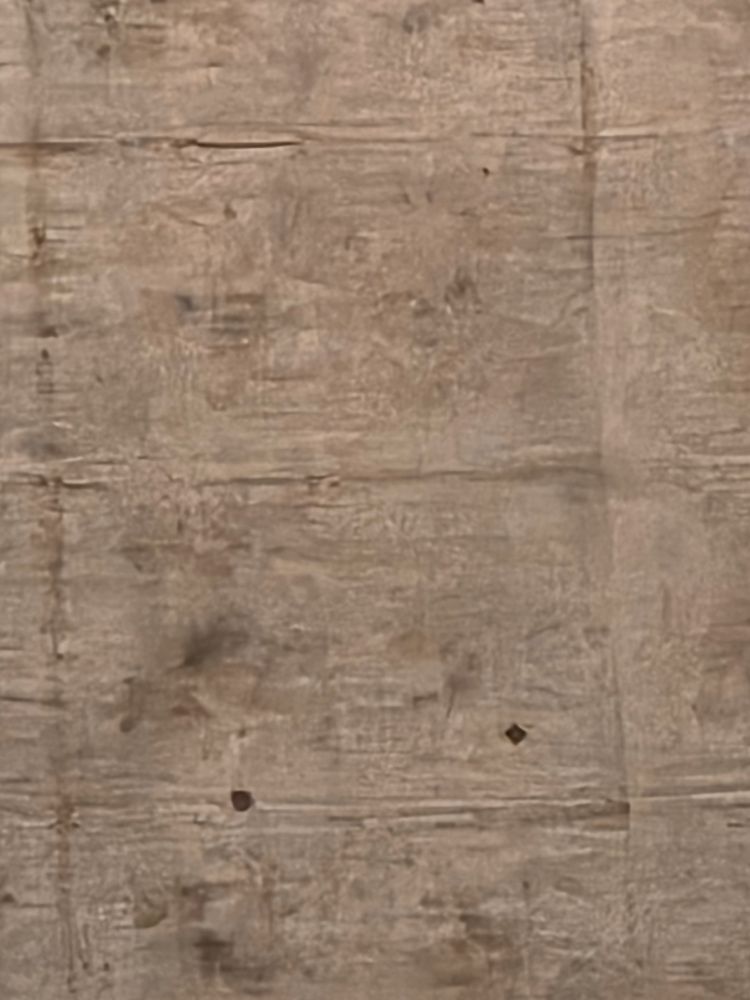
Anyhow, back out in the main cathedral we exit and make our way to the exterior entrance to the Chapel of the Corporal which holds the relic of the Sacred Altar Linen of the Miracle of Bolsena. The miracle happened in 1263 when a priest, who supposedly had doubts about the idea that during consecration, the communion bread became the Body of Christ, was celebrating mass in Bolsena. As he celebrated mass, drops of blood began to fall from the communion bread he was holding, staining the corporal. When the Pope learned of this miracle, he had the Linen moved to Orvieto where he established the feast of Corpus Christi and plans for the Duomo began. (And the priest no longer had any doubts, we’re sure!) The cathedral is decorated just as opulently as the main cathedral, just with the Altar Linen as its focal point. We tried to get pictures up close of the blood – you can use your imagination.
And we’re done. Time to move on….to lunch!
 Andiamo