Good morning Catalunya! We arrive early, as scheduled, and are docked at one of the very last berths, Terminal E, boo hiss. Oh well – we’re just taking the allegedly free shuttle into World Trade Center and hitting a few museums today, so it doesn’t really matter where we are. The morning unfolds as normal, a quick walk in the gym then Pinnacle for breakfast, as we are not even going to try to chance the buffet on turn over day. Nope. Plus, we’re in no rush, so we can leisurely eat and drink our coffee. We’re done earlier than planned (what a surprise!) and decide we’ll just venture out early and grab a coffee or something off Las Ramblas. Oh. Good thing we did too! The line to get off the ship is wrapped from mid-ship all the way down to World Stage in the absolute front of ship. There is obviously some issue with something in the terminal and the flow is really slow – even for us Transit passengers who don’t need to go through Immigration. Wow! We need to consider this for our disembarkation – not that we have a rush, but still.
After a while, the line does start to move a little more quickly, and once we are out into the terminal, we see that it was immigration holding everything up, but more immigration officials have just arrived to help with the passenger flow. We, of course, walk right past immigration with our In Transit cards – and we’re out of the terminal in no time. Now to find the “complimentary shuttle provided by the port.” A port guide tells us to head to the Blue bus, which is the normal shuttle. We’re not sure about that, so we go up to the ShoreX guys near the HAL paid transfer shuttles to ask them. They say yes, it is the port blue bus, and it’s free. Ok, well, cool? But weird. Arriving at the bus stop, we are about 6th in line, behind 2 crew members, all waiting to get on the “free” shuttle. It takes a while, maybe 15 minutes, before a Blue Port Shuttle bus shows up, and yep, it ain’t free! Duh. We knew that, we have our 10 Euros all ready to go (4.50 Euros roundtrip each), but nobody else does. The poor crew guys start looking around, trying to back away, when we ask if they have the Euros. They look like adorable deer in the headlights, and we know they weren’t planning on paying for the shuttle, so we give them the 10 Euro bill we had ready, over their protests, and tell them to consider it a tip. No way were we letting them not go into town as they’d already invested however much time in just getting out here and waiting for the bus. We also forced them on the shuttle right behind us (because you know they are always so polite and are told to wait for all the guests to go first). So at least they get on the bus – and they are so appreciative, thanking us over and over. We just told them to have a good time, that’s all that matters!
A long 15 minutes later (the bus also goes to the F terminal for MSC but is too full to pick anyone up – what sense did that make?) we are at World Trade Center and ready to go. Along the way we have been showing a couple standing next to us where we will be let off, where to go, how to be careful with their belongings, etc. There were appreciative as well, and yes, we know that Barcelona could be our 2nd home, we’ve been here so much – but come on, has no one done any research? Anyhow, we’re off and we’ve got loads of time to kill before the 10am maritime museum opening. We wander up Las Ramblas, through the massive construction they are doing to remake the street into “Neuvas Ramlbas” and out into the little old city streets in search of an open café. We find a nice little takeaway spot, grab 2 cappuccinos then head back to the museum, which opens its doors about 10 minutes early! Sweet!
We wander in, only to find that while the doors and lobby is open, paper tickets aren’t available until 10am on the dot – it is now about 9:52. Ok, we’ll just hang out – there is a great display in the lobby about the environmentally unfriendly way ships are salvaged in certain countries – sad, but true – and a really neat little Vinta, a traditional Filipino boat made out of a carved trunk. Other people come up and stand around waiting, and when 10am rolls around, the ticket guy points at me and says Abierto. Nice. He was really sweet too – as I try to say Reducido for our reduced tickets (old people price). I had already told him in my broken Spanish that I only spoke poquito Espanol, lo siento. He took that to heart, talking to me in English, but then switching to Spanish and speaking very slowly so I understood everything he said – giving us the reducido bolletas and explaining the bolletas also included the Santa Eulanlia Schooner in the harbor a short 3 minute walk away. Nice.
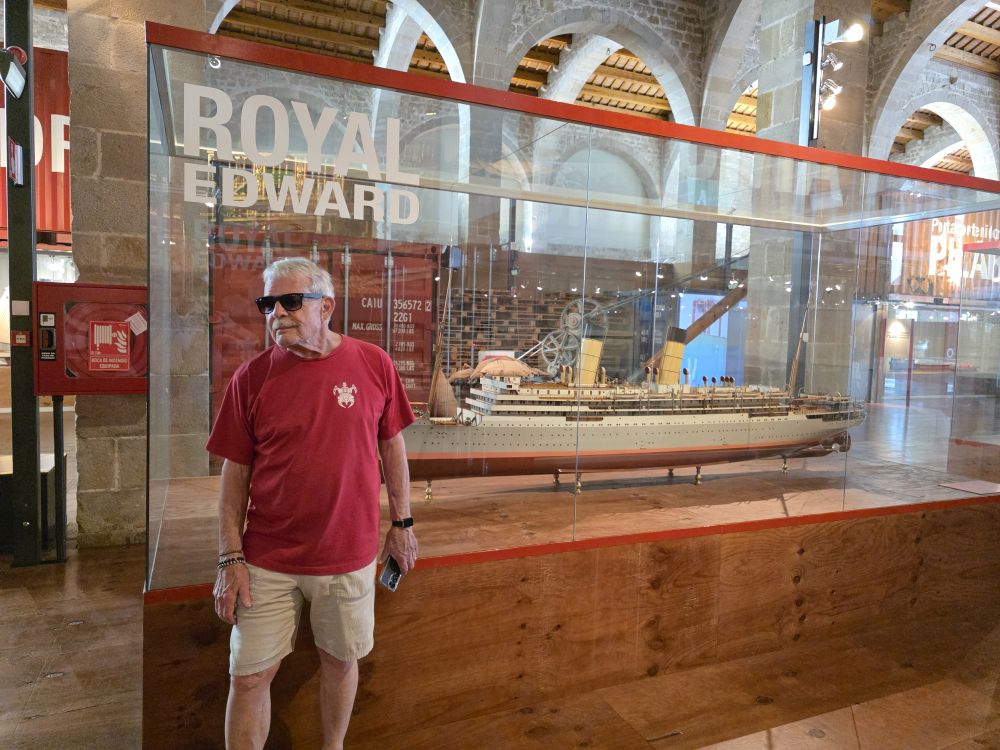
We are the first to enter the museum and begin, what was for us, an excellent hour plus walk through the history of shipbuilding and shipping in Barcelona. We first went through the temporary exhibit all about the Catalan participation in the Atlantic Slave Trade – both passing through and used by Catalan business owners in other parts of the world, then into the main exhibitions beginning with 7 Vessels, 7 Stories. This interactive exhibit is narrated by 7 different types of passengers/crew about 7 vessels. Everything is set up in a shipping container, and the narration, a TV screen attached to a container, begins when you walk us (started by a motion detection system). Not only is it a fascinating exhibit, just the sheer creativity of the design and materials used in combination with the actual building make it a stellar museum to visit. We are enthralled. Especially when we find the model of the Royal Edward Packet boat. How could we not be?
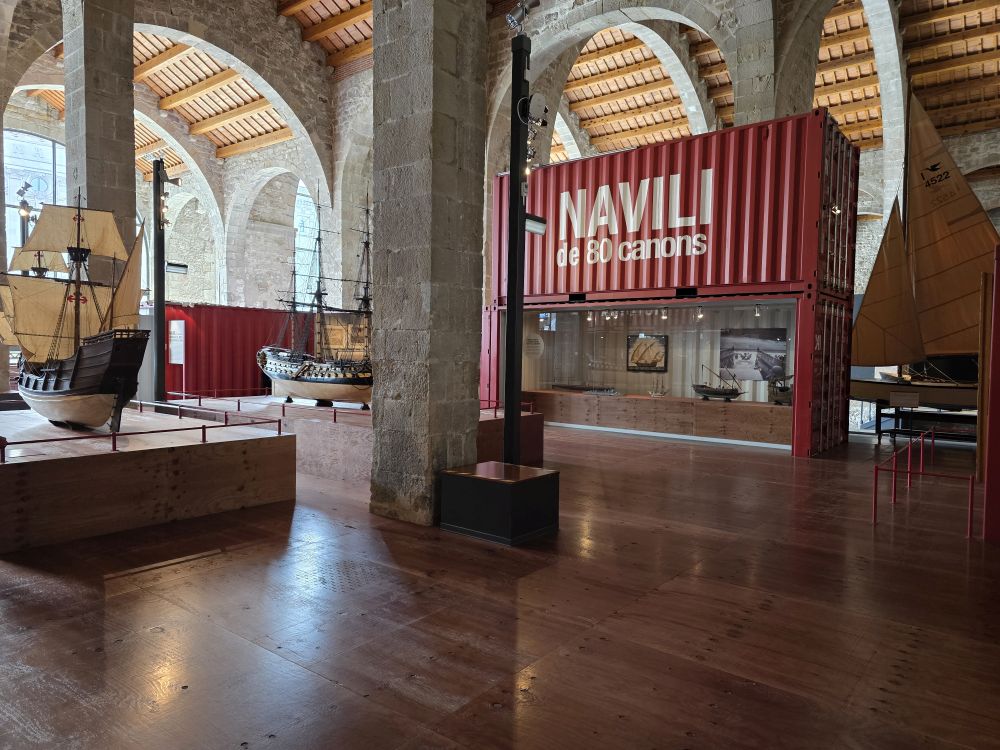
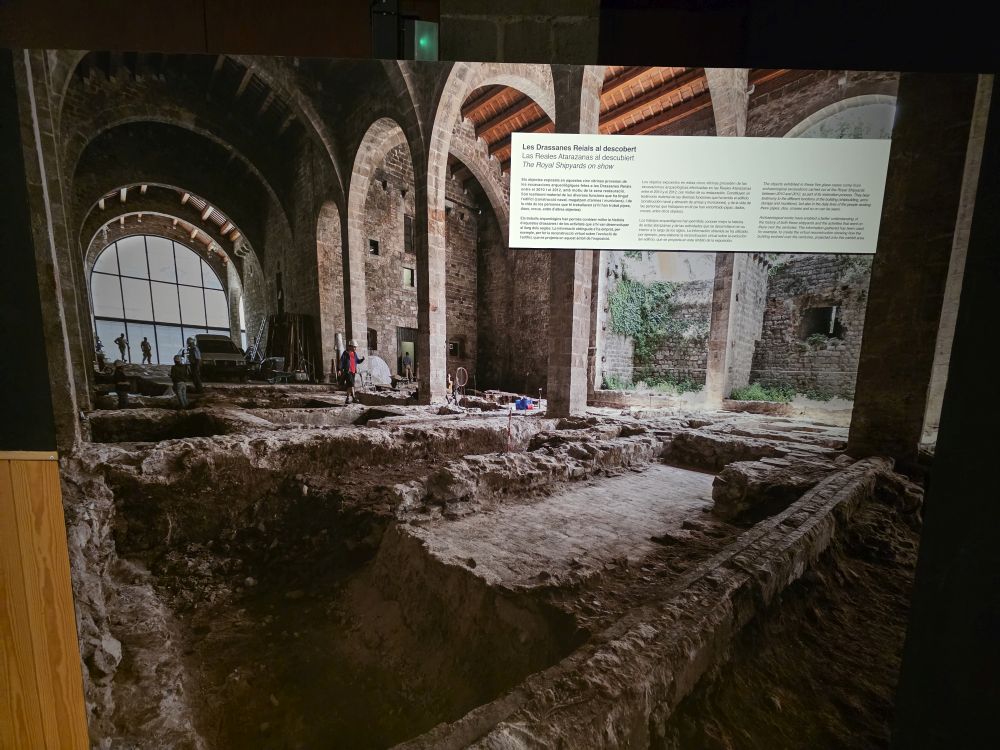
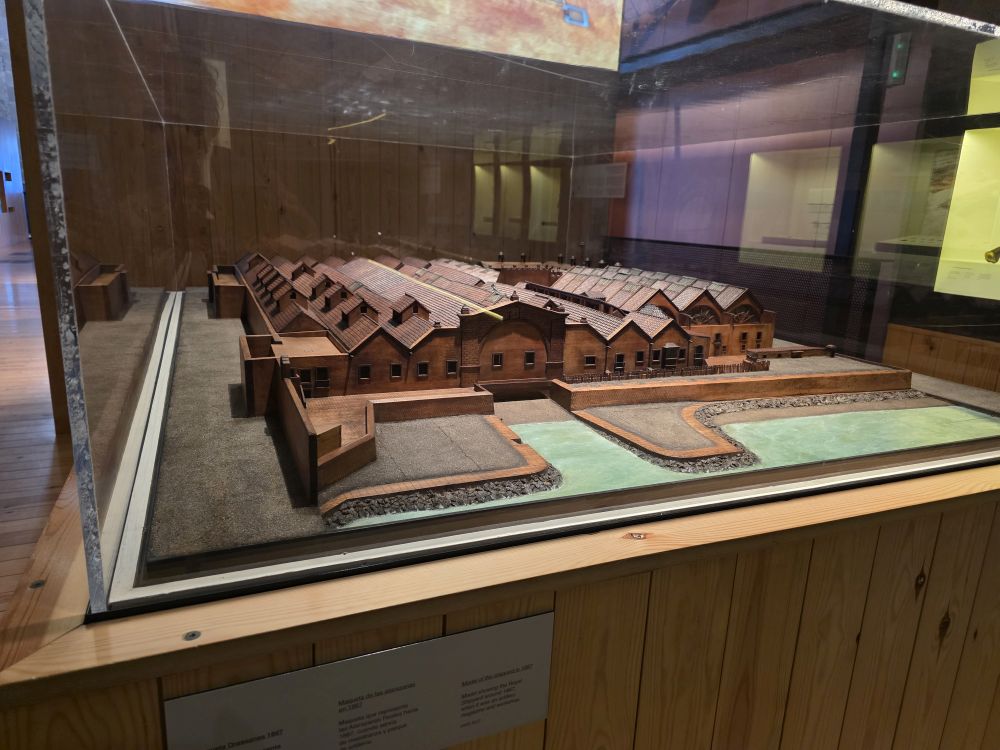
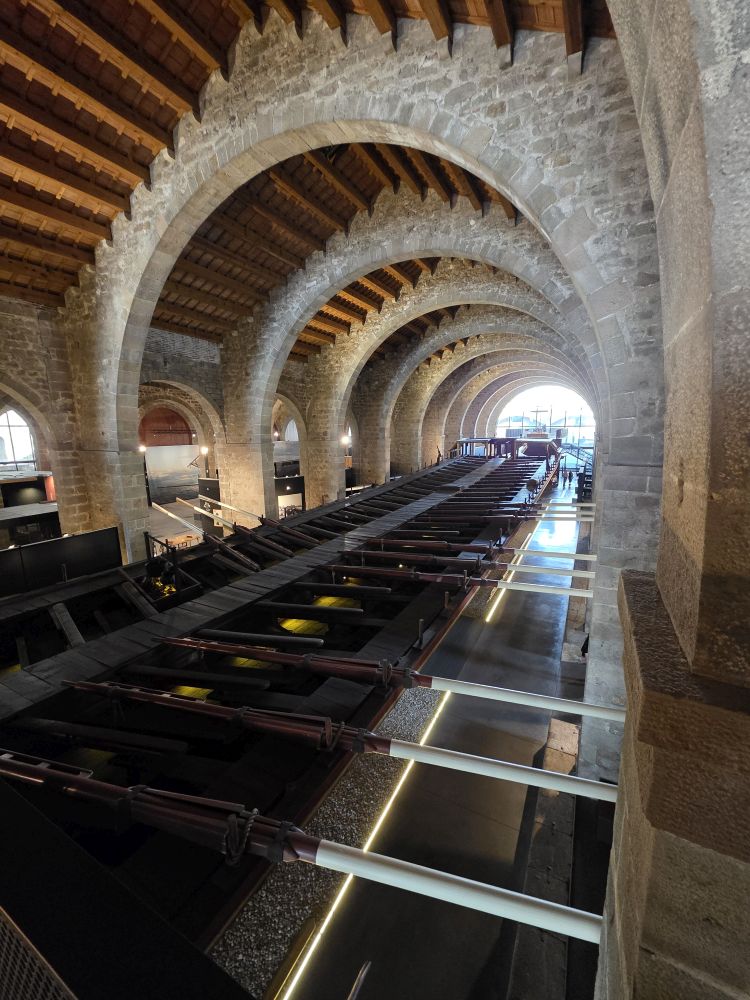
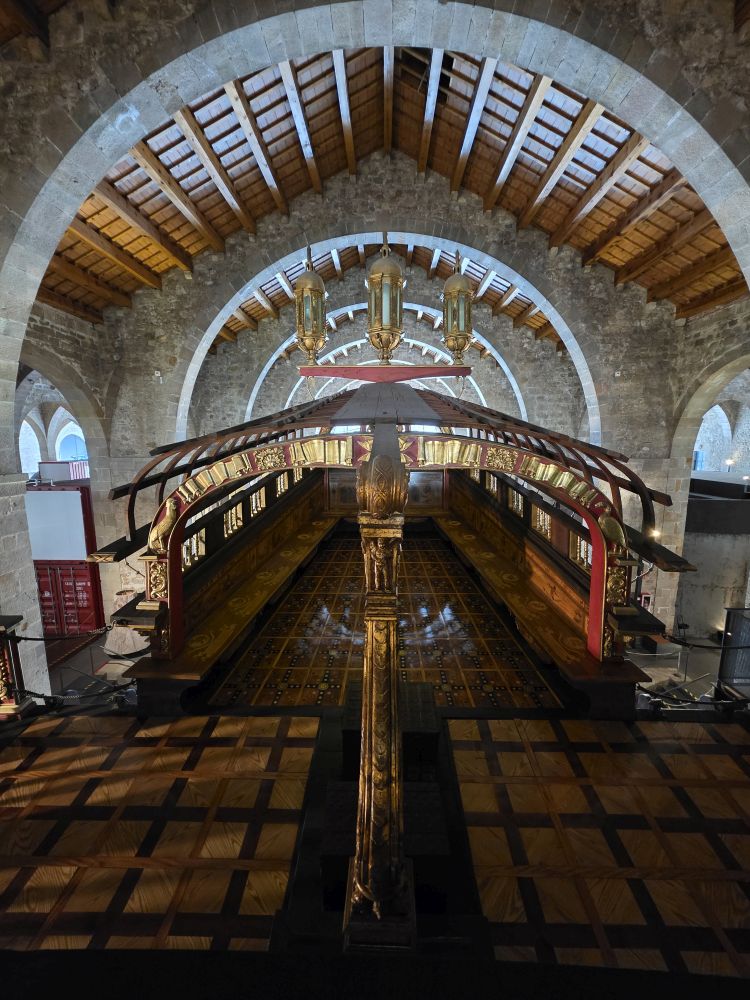
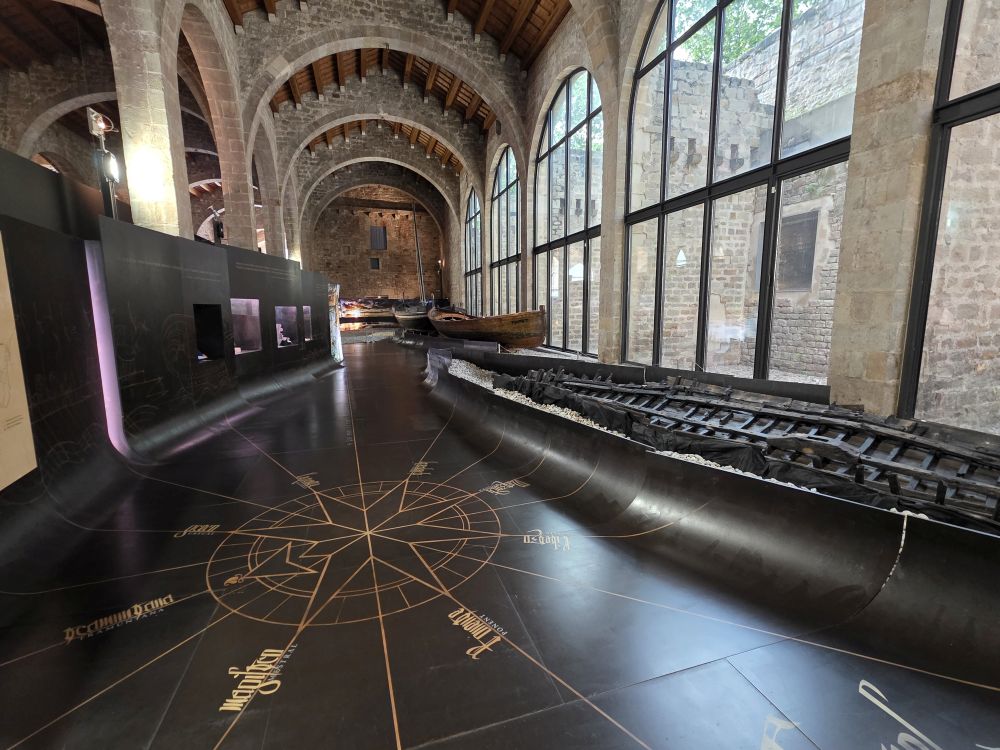
The next section, the Shipyards and Galleys, revolves both around the history of the Drassanes Shipyard (the Royal Shipyards building we are standing in today) and a massive, true to life scale Royal Galley. The building history in and of itself is interesting, built and operated first as a Military Barracks in the1600s, it was converted to the Royal Cannon Foundry in 1745 and continued to be used by the military until 1927. In 1935, the army gave it to the city and in 1936, just after the beginning of the Spanish Civil War, the Catalonia Maritime Museum was created. Unfortunately, due to the war, the museum couldn’t open to the public until 1941, when it was renamed the Barcelona Maritime Museum, occupying a small part of the entire Royal Shipyard site. Sometime in the 1970’s, the city proposed a plan to demolish the Drassanes in order to build homes. The site was saved due to an immense public outcry, and in 1976 the buildings were listed as a historical-artistic monument. Restorations and excavations for an expansion of the Maritime museum began in 2010, producing this fantastically restored building we are visiting today.
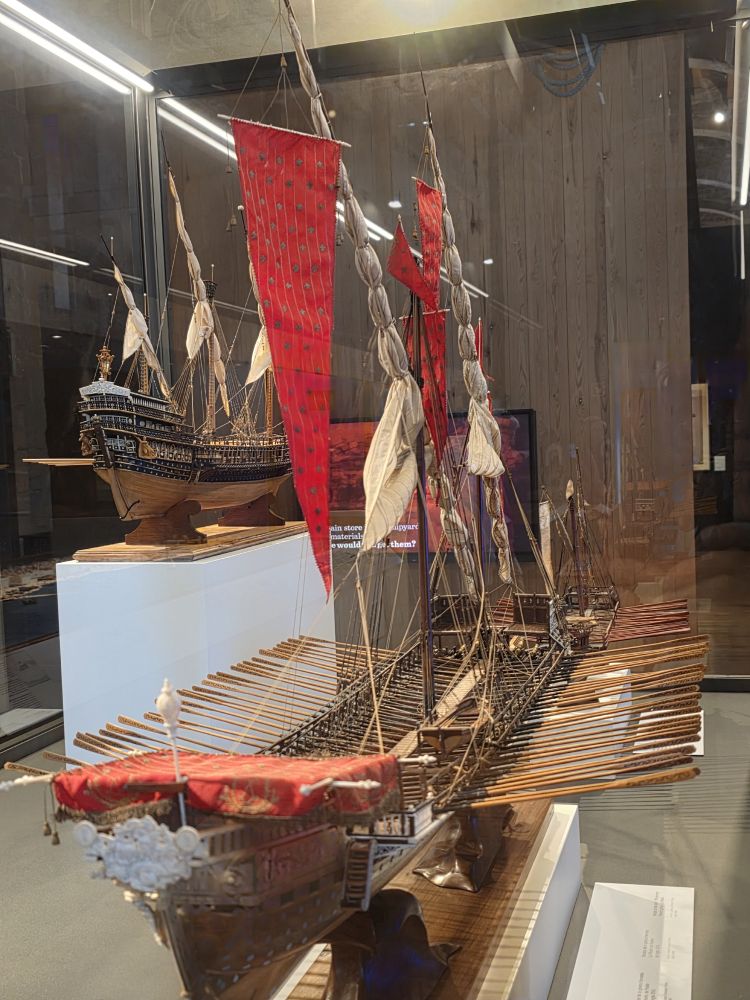
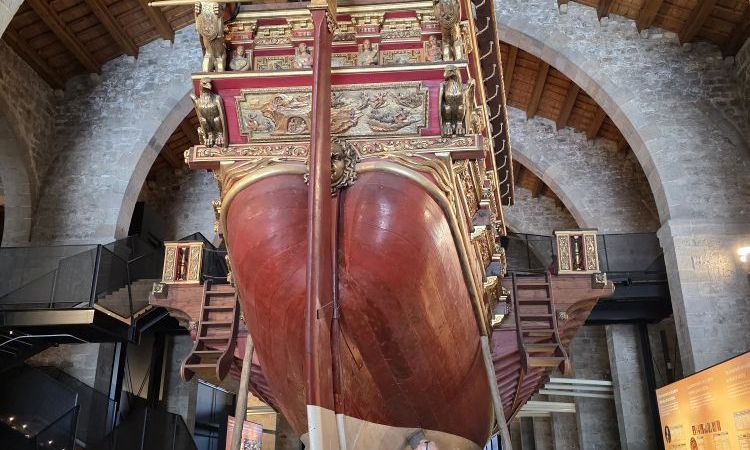
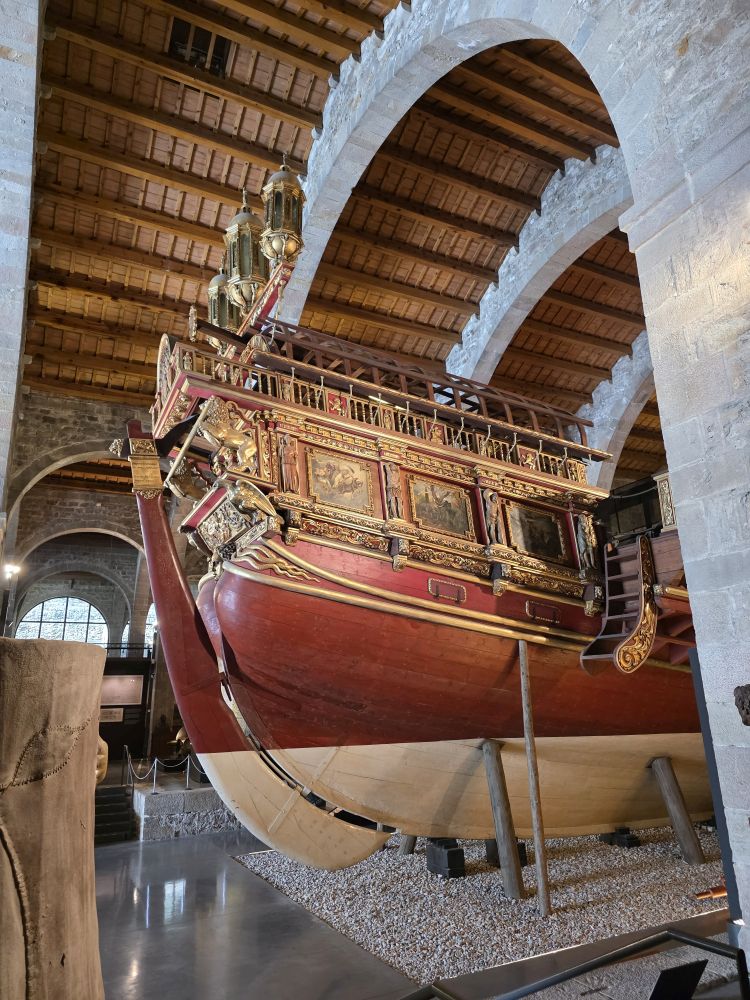
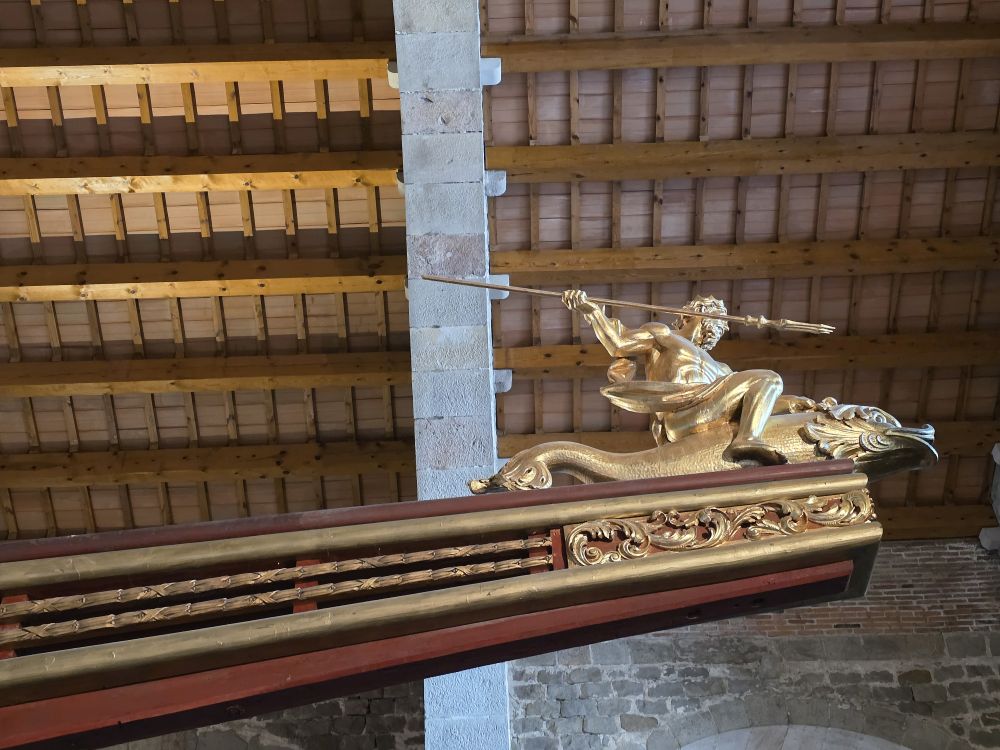
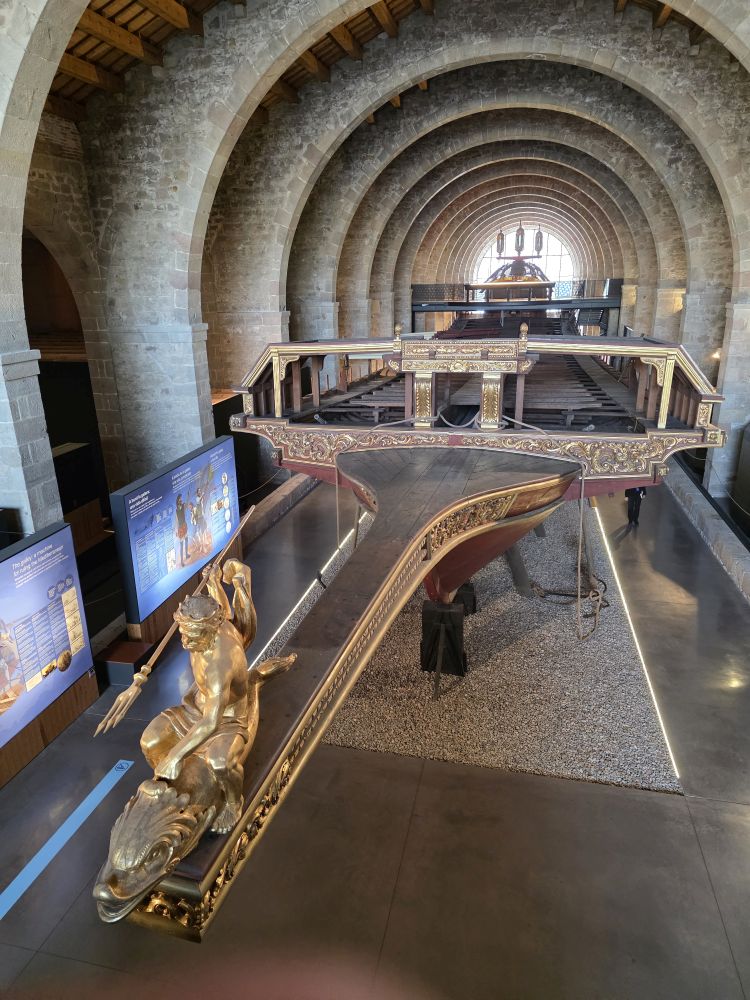
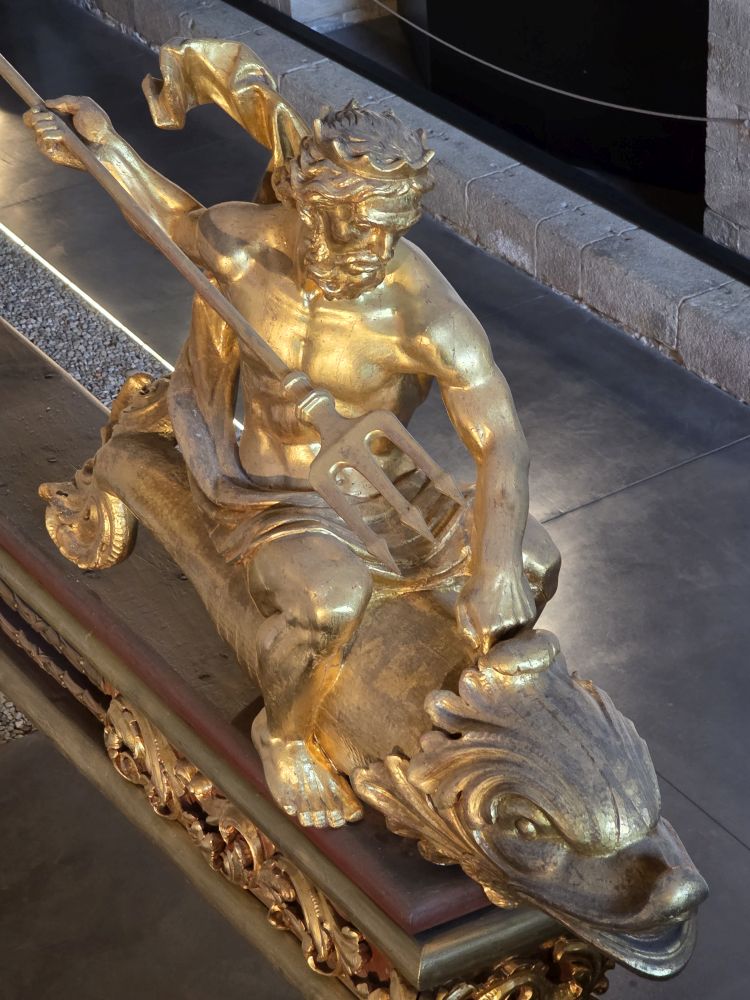
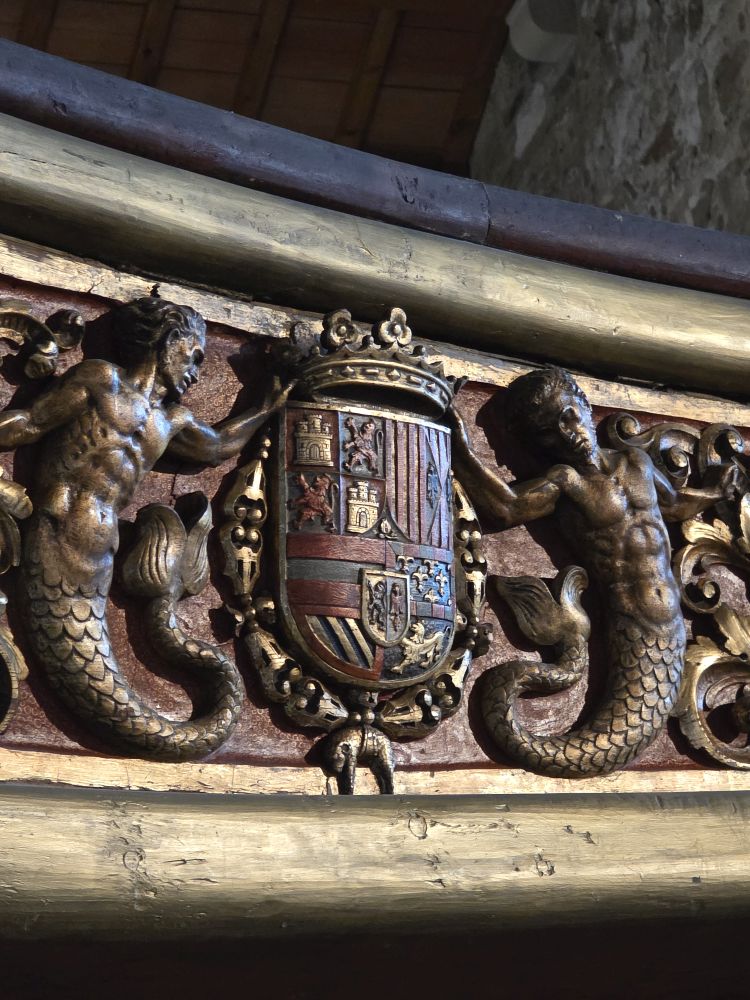
If that isn’t interesting enough, the Royal Galley is just astonishing. Originally built here in the shipyards, on the beach, this reproduction faithfully recreates the beautiful 16th C ship. It measures 60 meters long, weighs over 200 tons, includes its huge 59 oars and the gold leaf Neptune at the prow of the ship. The carvings and artwork adorning the ship are wild – we know it was traditional to build like this, but why? All that beauty is just going to rot in the sea water and salt-ladened air. Whatever the crazy reasons they had for decorating ships this, way, it does make for a gorgeous and opulent piece of craftsmanship.
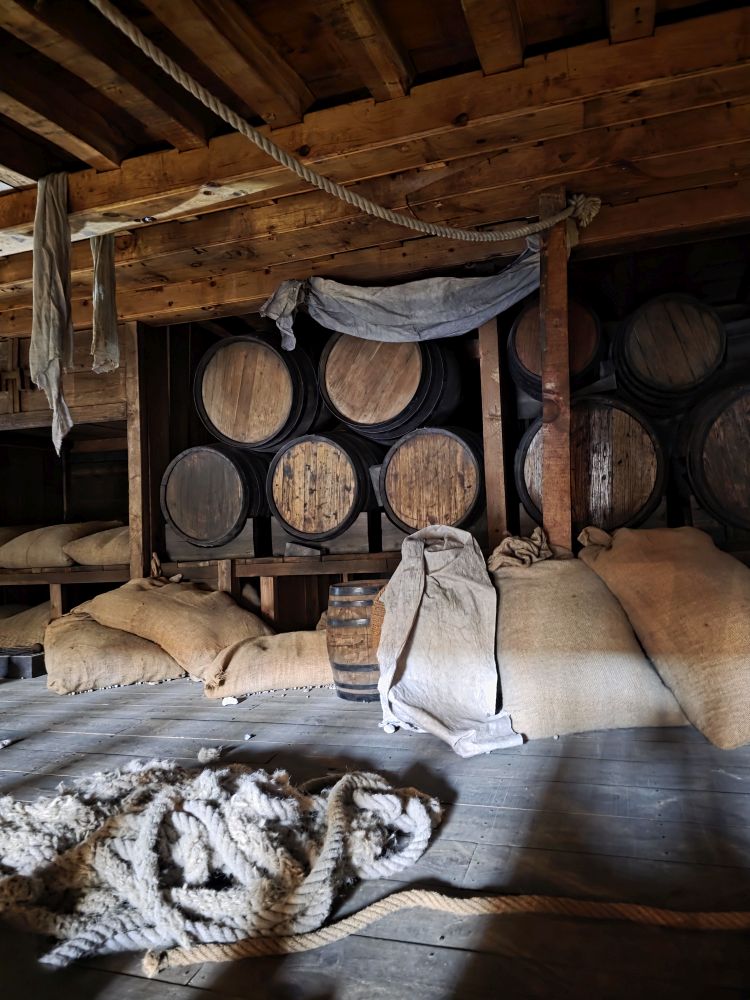
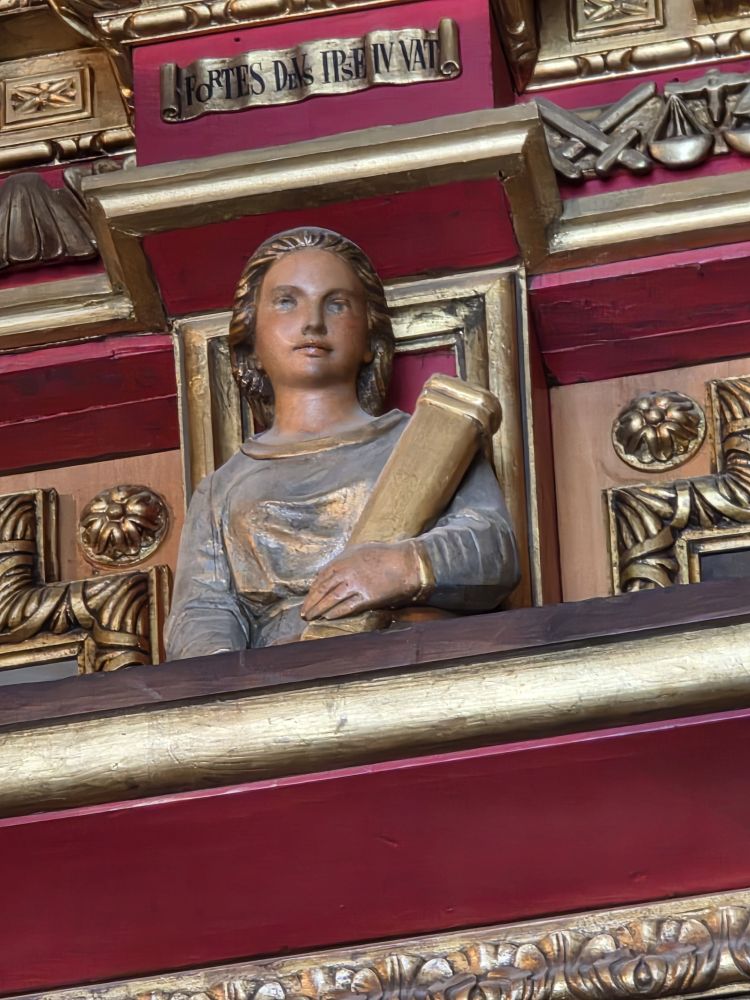
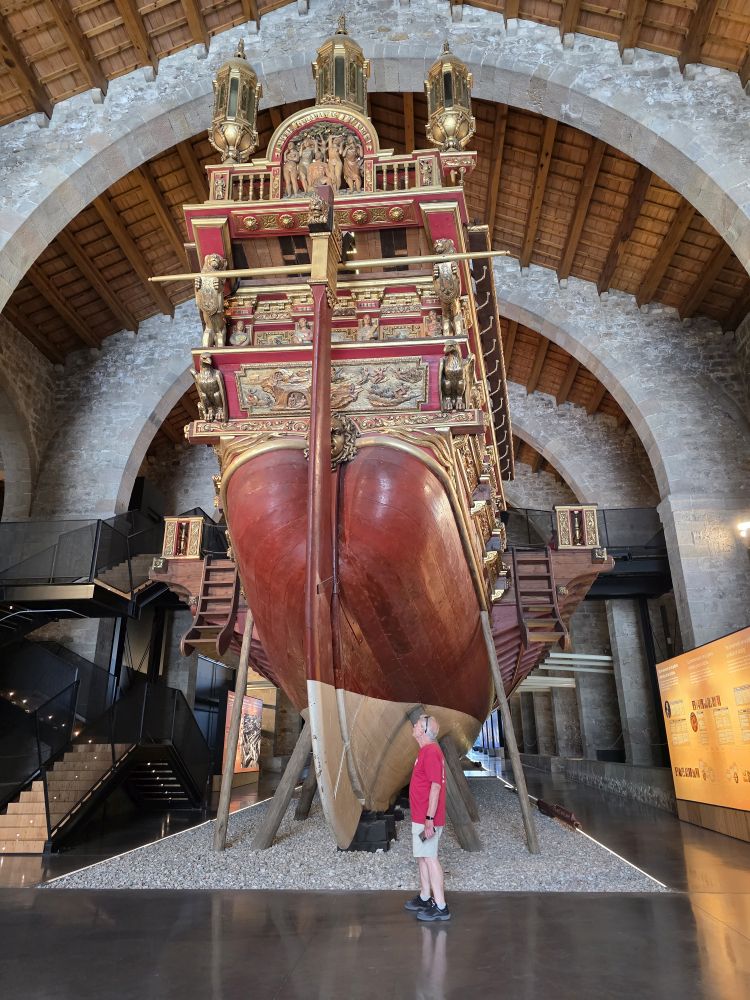
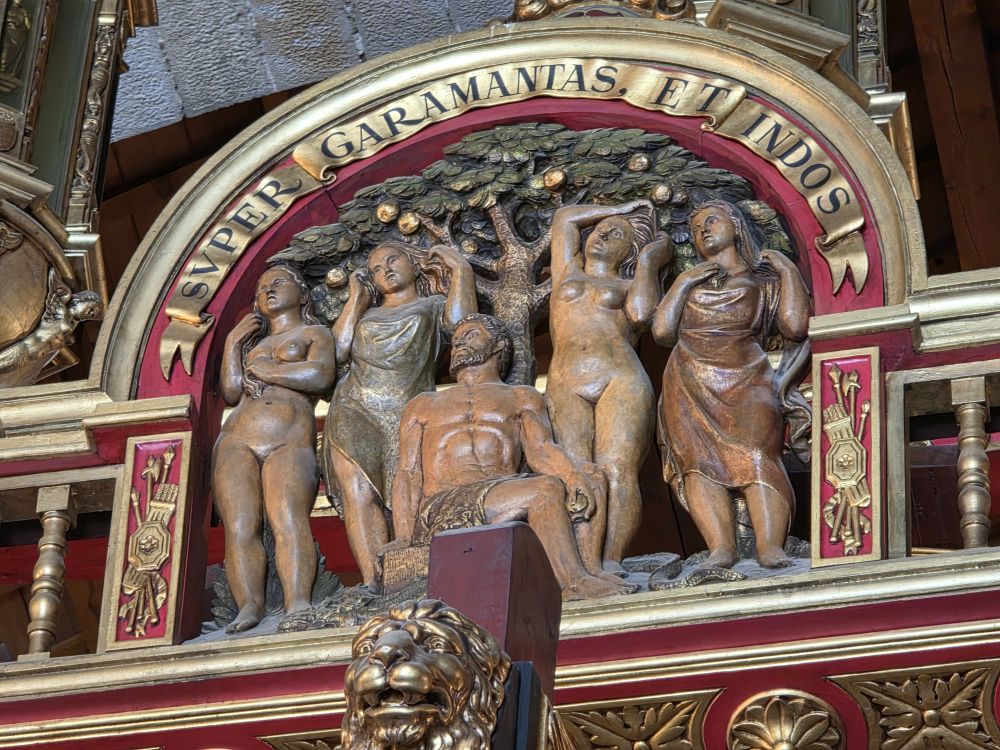
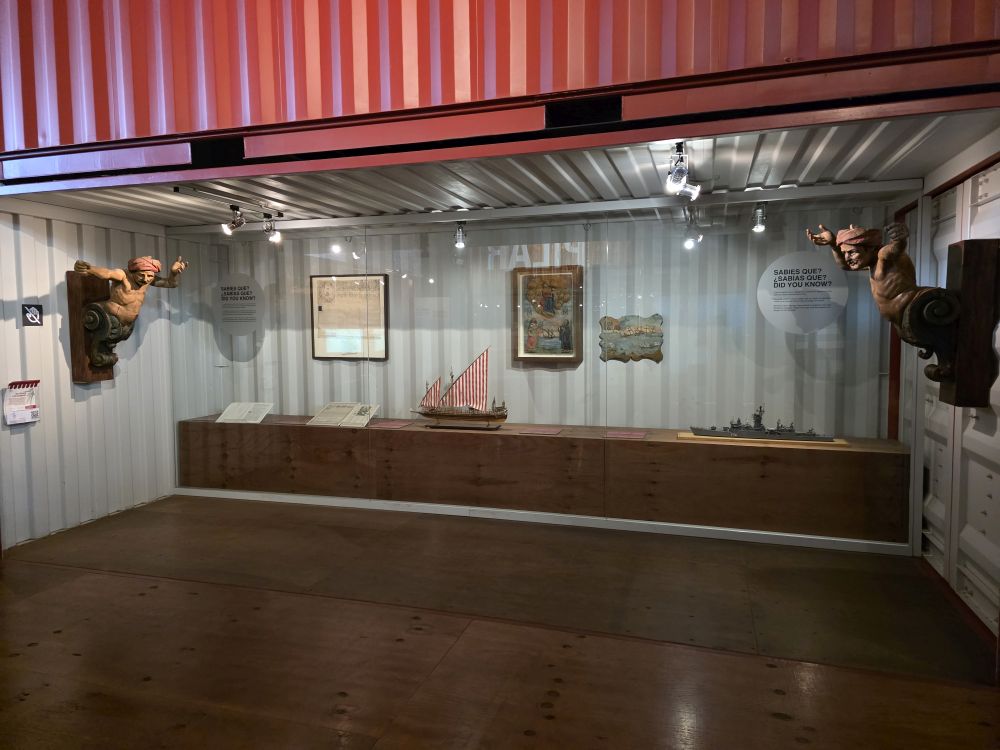
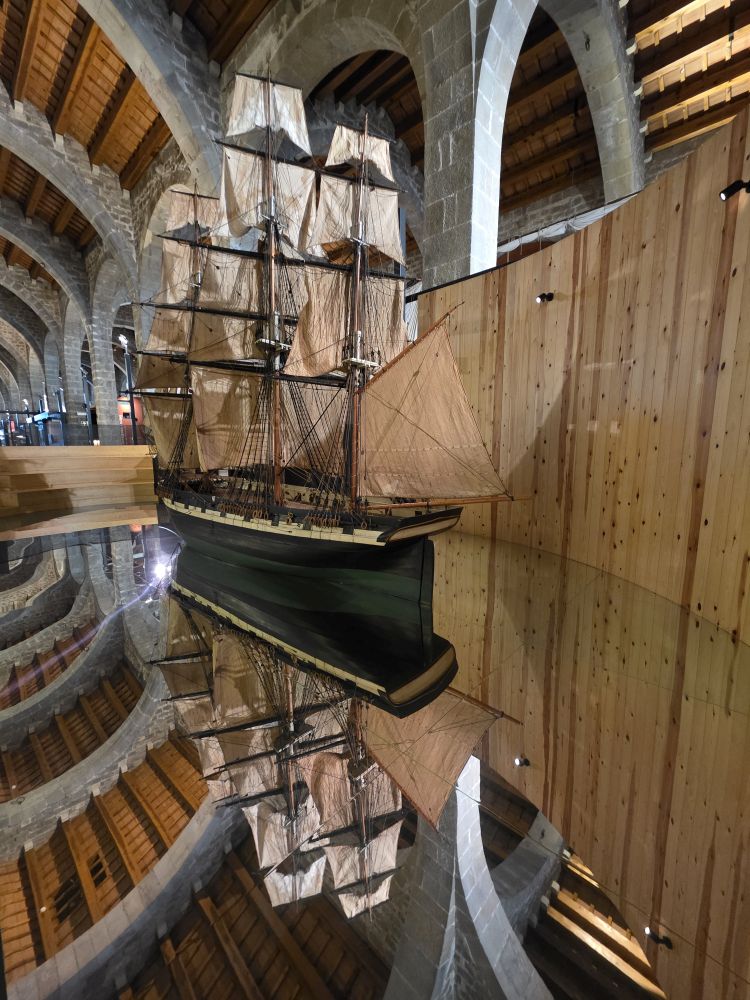
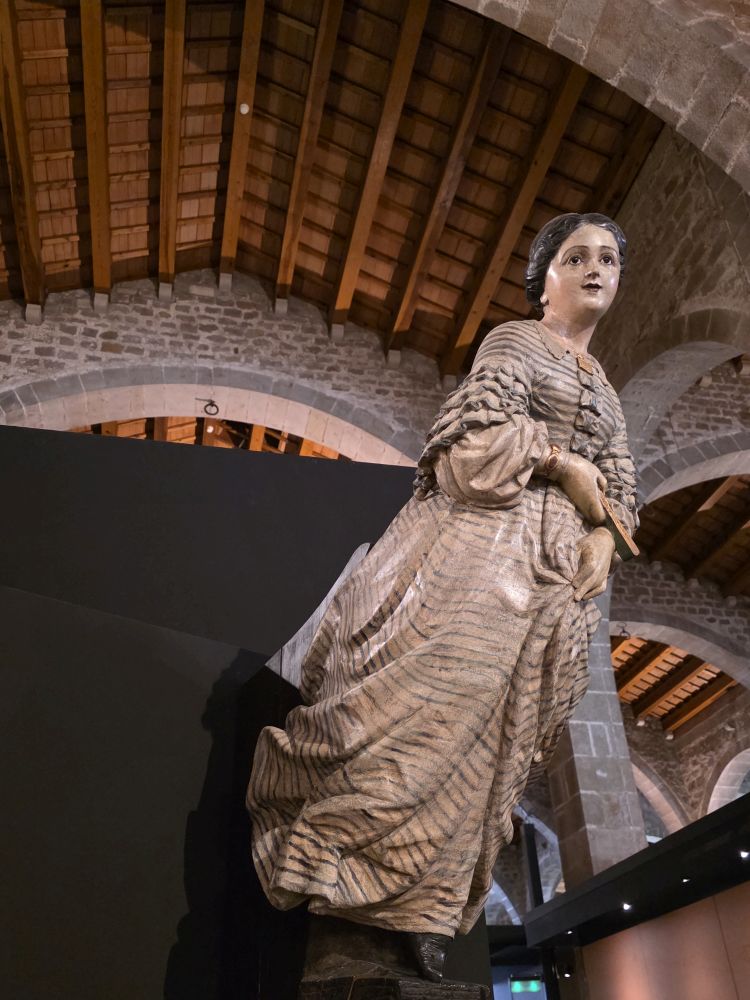
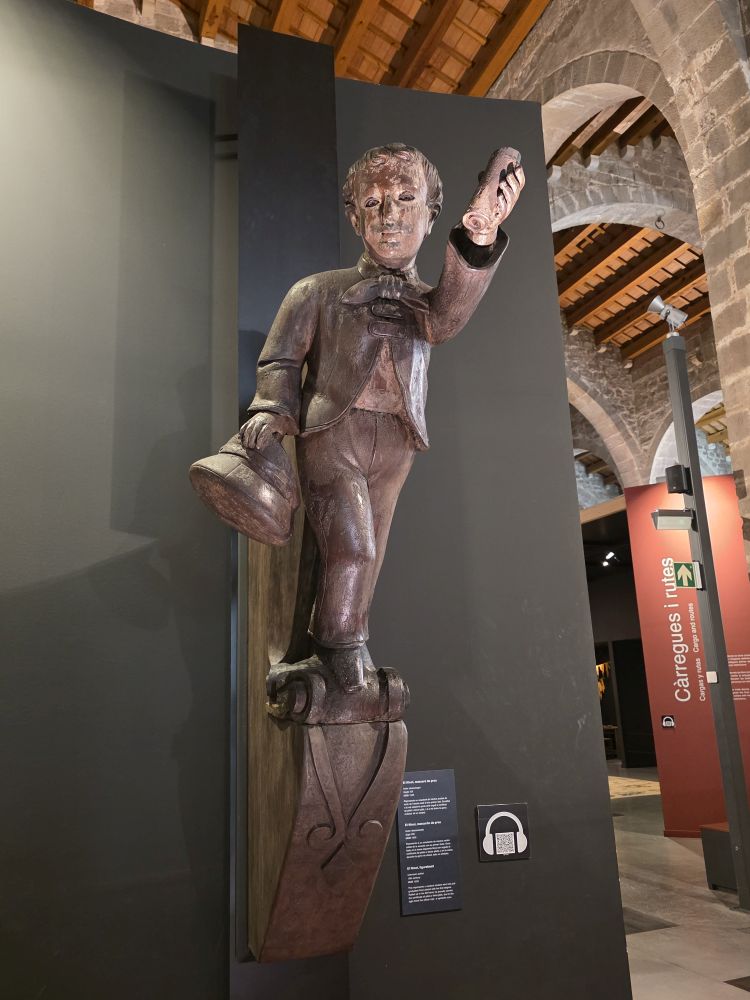
Finally tearing ourselves away from the Galley, we wander through Catalonia beyond the Sea, chronicling 300 years of Catalan shipping, including some really neat looking figureheads along with a model of the Barcelona frigate, a training model for 19th C sailors.
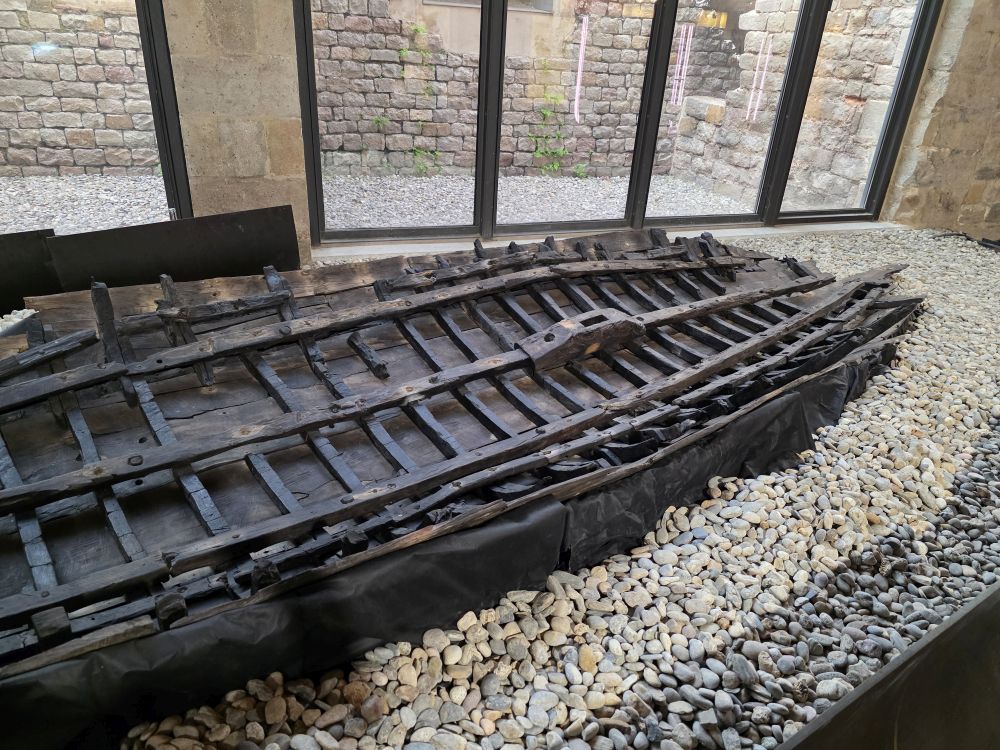
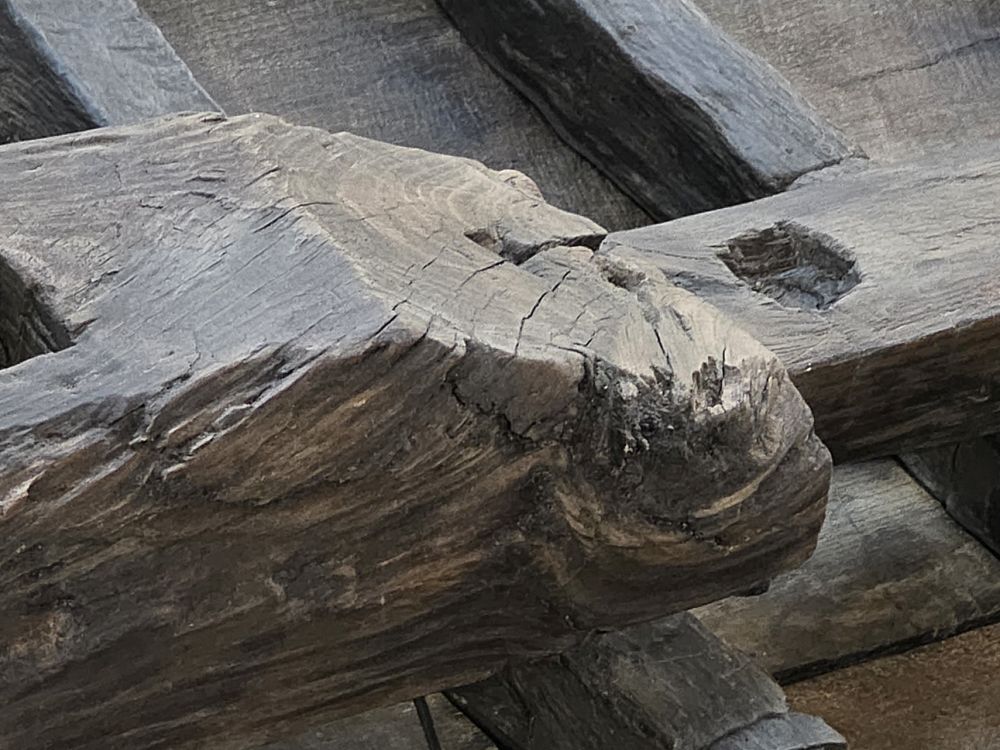
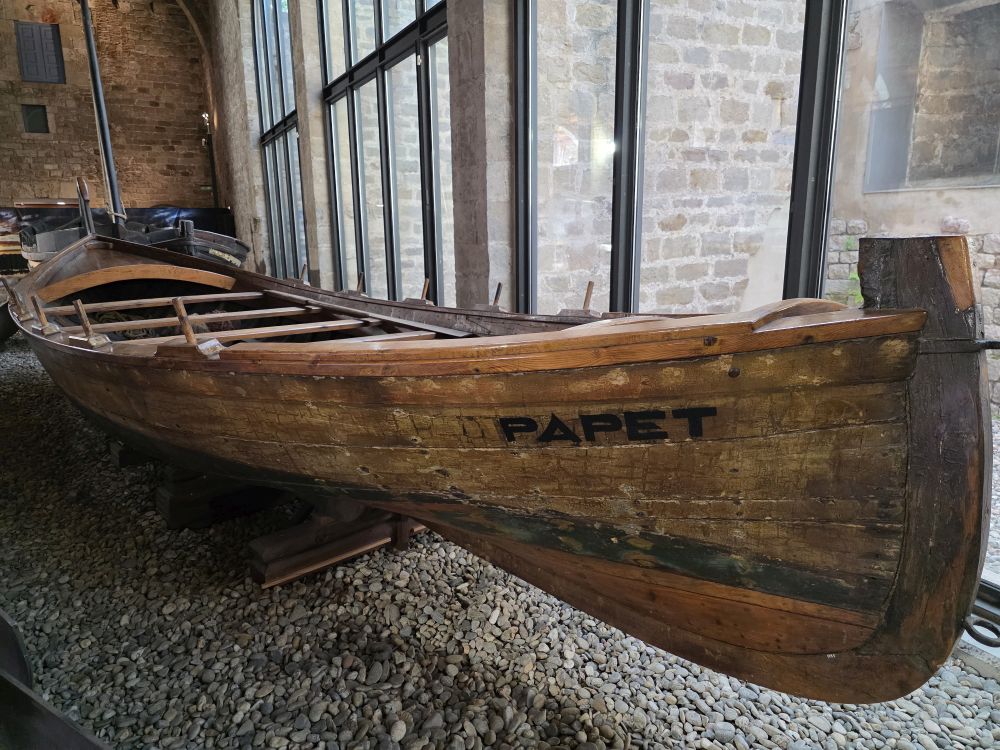
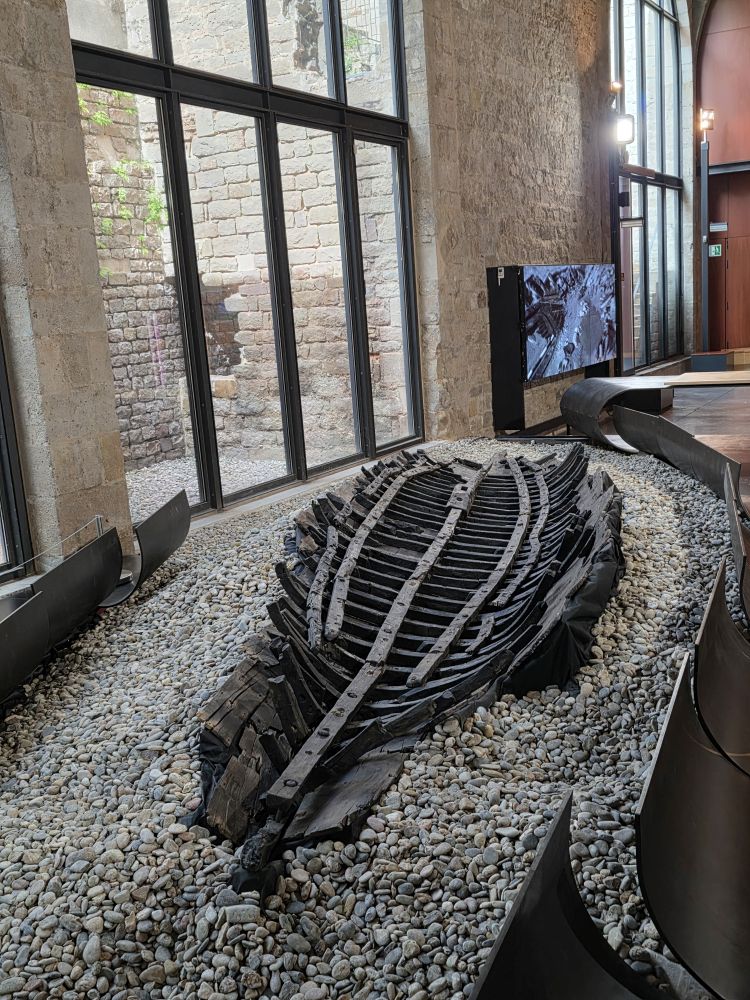
The last area focuses on the Les Sorres X, a 14th C medieval boat found during excavation work to build the Olympic rowing canal in 1990. Since the canal needed to be finished quite rapidly, a fast excavation was carried out, the boat was completely dismantled and moved for restoration and conservation. Along with the actual boat, there is a really good video showing the restoration and piecing together of all the different pieces, along with how they created the exhibit hall where Les Sorres is displayed. Also displayed here 2 more modern forms of the same type of traditional fishing vessels, called a llagut; the Papet and the Madrona.
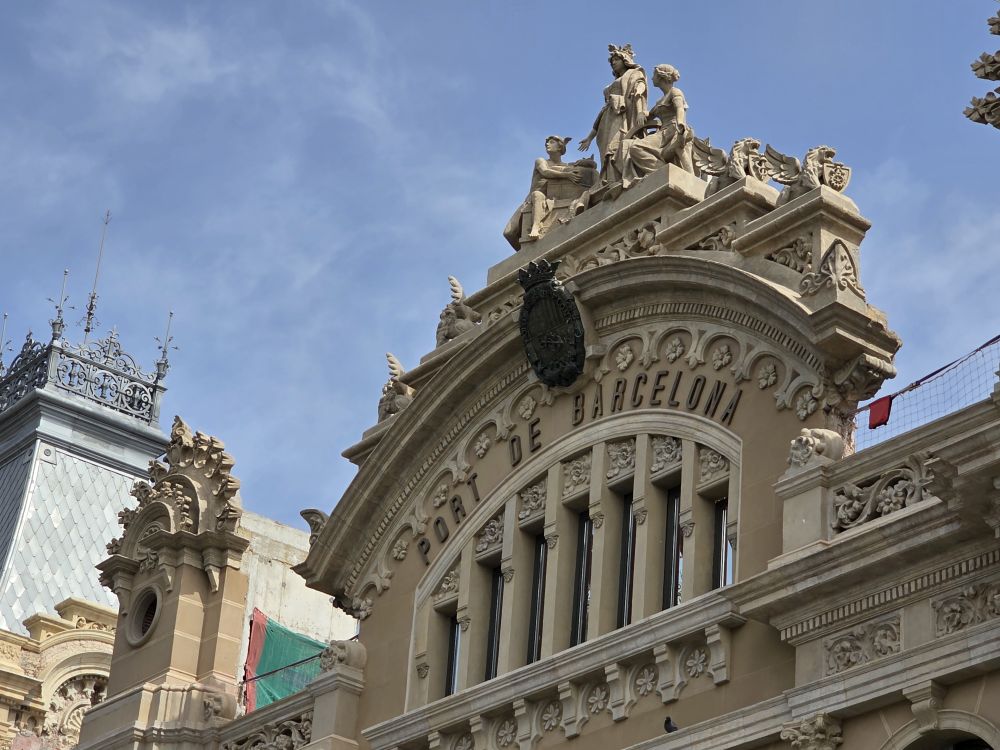
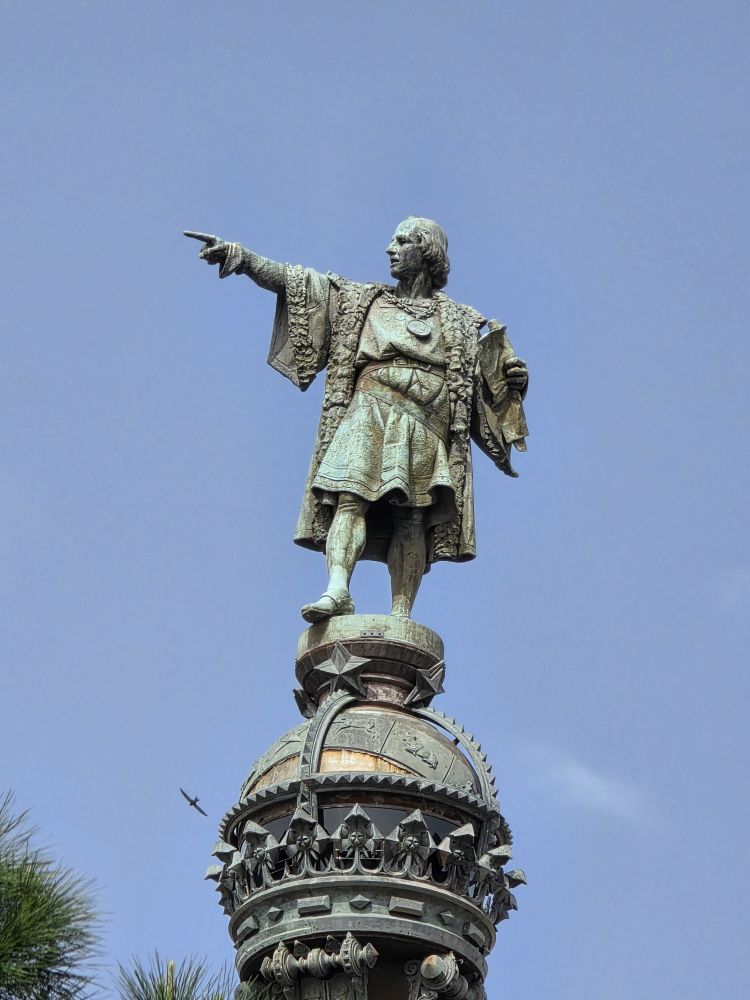
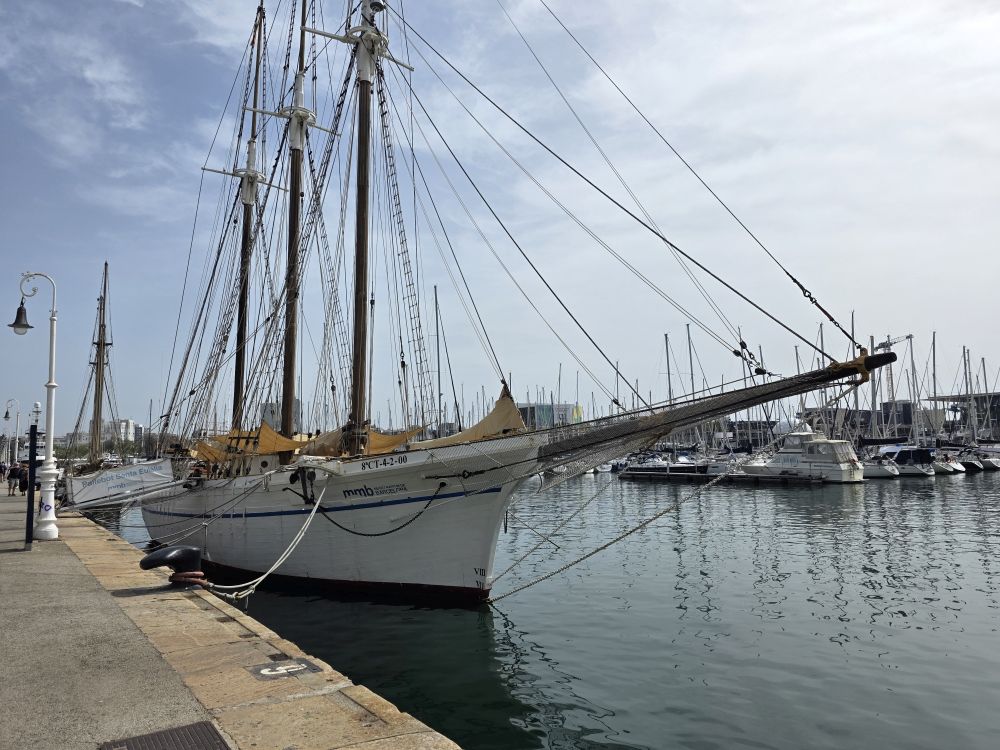
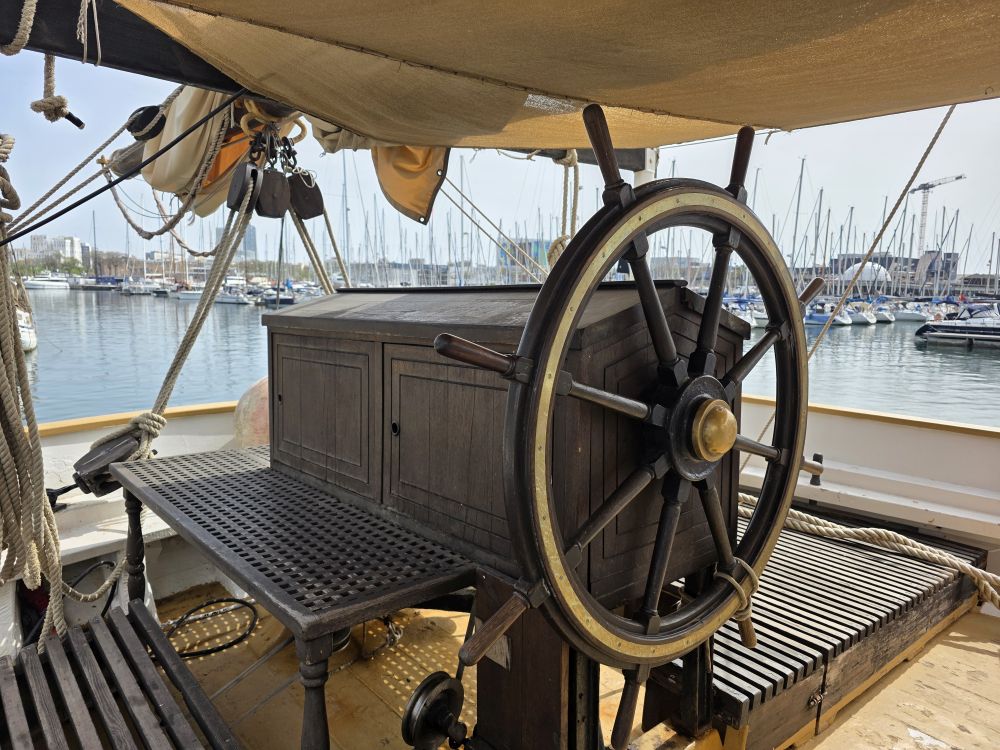
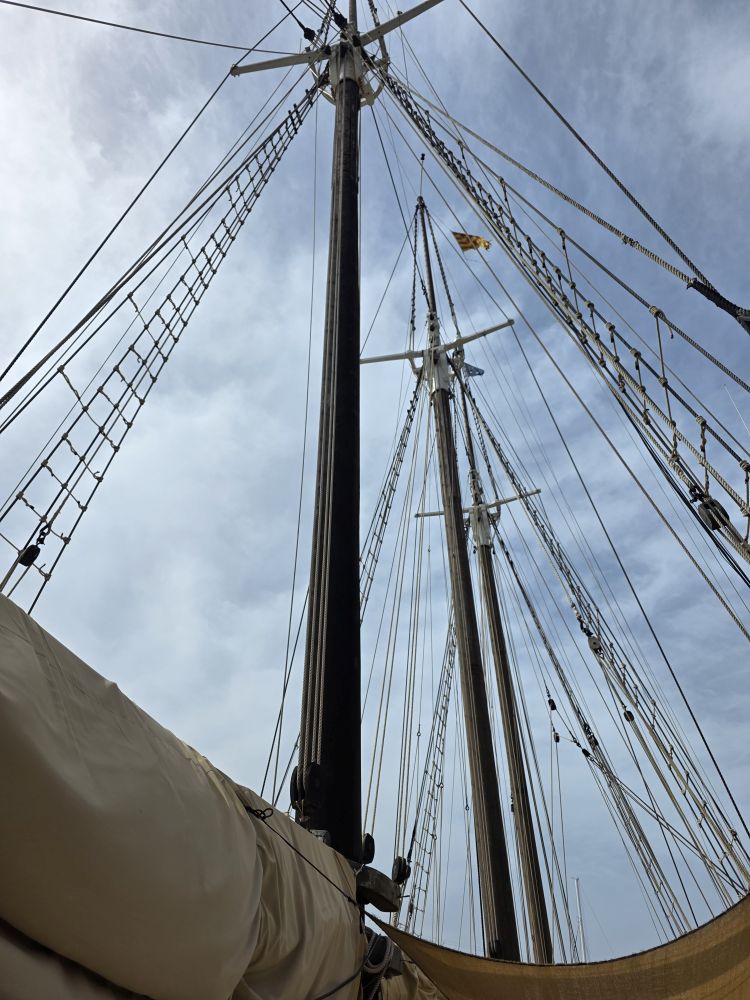
An excellent visit for our short Barcelona day. Outside in the fresh air, we head toward the Santa Eulalia Schooner, which is fortuitously right on the way to History of Catalunya museum. Passing the Christopher Columbus statue and the port building, we arrive at the harbor and board the Santa Eulalia, a 100 year old sailing ship, one of the last to be used for transporting goods in the Mediterranean. 47 meters long and 8.5 meters wide, she has 12 sails and can carry a maximum of 30 passengers. It’s cool to walk around her – but um, no way we’d be sailing her! We could almost get sea sick just wandering around – and she’s hard alongside the dock! We’d never be good sailing sailors – no how, no way. But it’s fun to at least see the inside of a boat like this.
 Andiamo