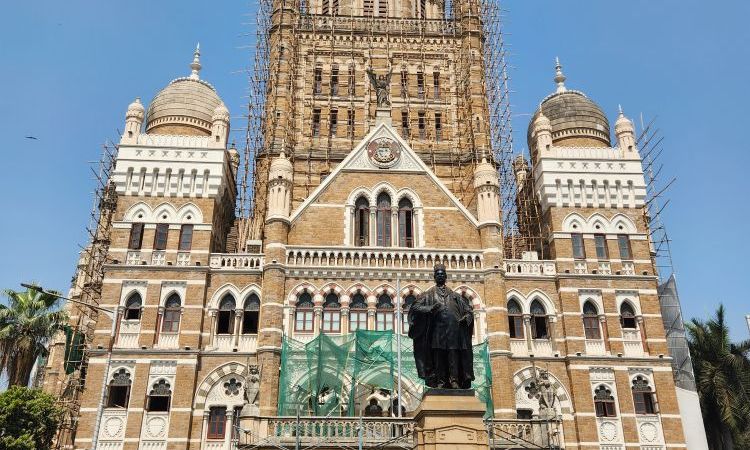
We are up early – not only from the alarm, but also from the call to prayer at literally the crack of dawn! Crazy. But we wanted to get down to breakfast early, not knowing what the huge tour group (that arrived yesterday after us) breakfast timing would be. As it turned out, no worries whatsoever. We were the first down there, and they even opened up before 7:30. Perfect! The highlight of the meal was the Dosa with cheese. Like the best flaky perfectly griddled grilled cheese sandwich you have ever had. Heaven. A great base for day’s explorations (as if we need it after last night).
The itinerary behind the Kipling tour:
Now is probably a good time to interject a little blurb about the rationale behind our itinerary – not that this was ever provided, we just researched Rudyard Kipling and his India years!
The Kipling Mumbai Connection: – Rudyard Kipling was born here (at the time Bombay) and lived in Bombay until age 5 when he was sent back to Britain for schooling. Thus, the Mumbai connection.
Back to the current day adventure: After all the mess yesterday, Amit has said our guide will be here at 9 – so we are trying to trust him. Sitting in the lobby, we are the only people that appear to be waiting. Fingers crossed. Maybe it is only us 2 for the tour?
At exactly 9am, a tour guide looking guy strolls into the parking lot and lo and behold, it is our guide. Yay. Maybe this will all work out after all. And bonus! It is just us! Private tour. Fab. Husain, our guide for the day, introduces himself and off we go for a morning tour of what Husain thinks we should see in Mumbai. Since we’ve been here before, there are some repeats, but he also adds in things he likes and wants to share.
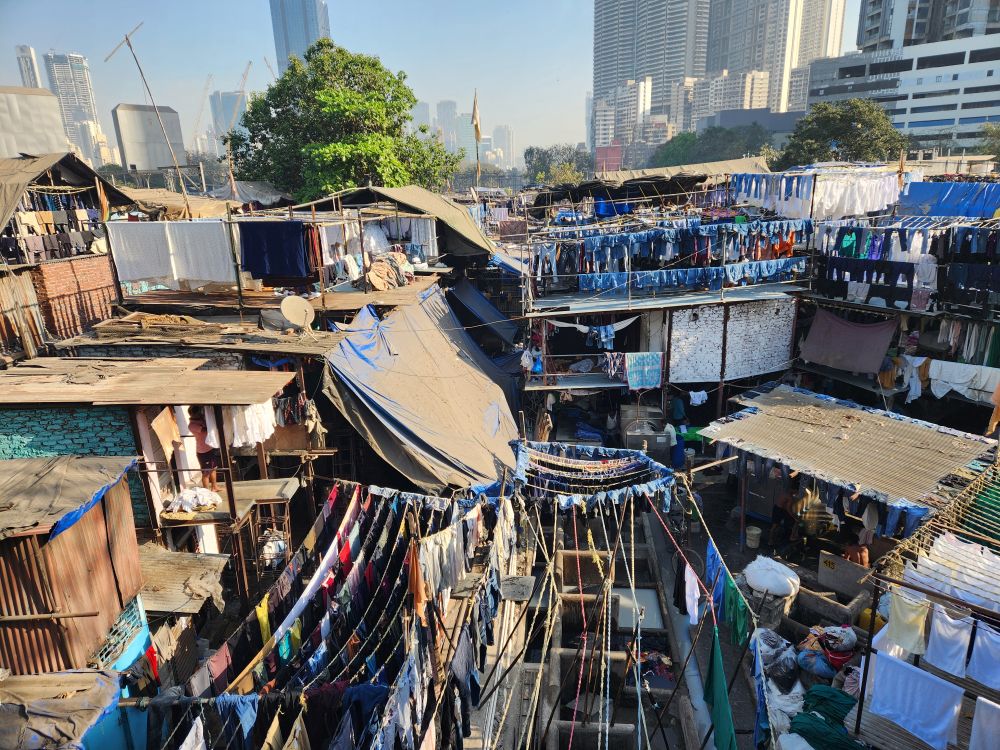
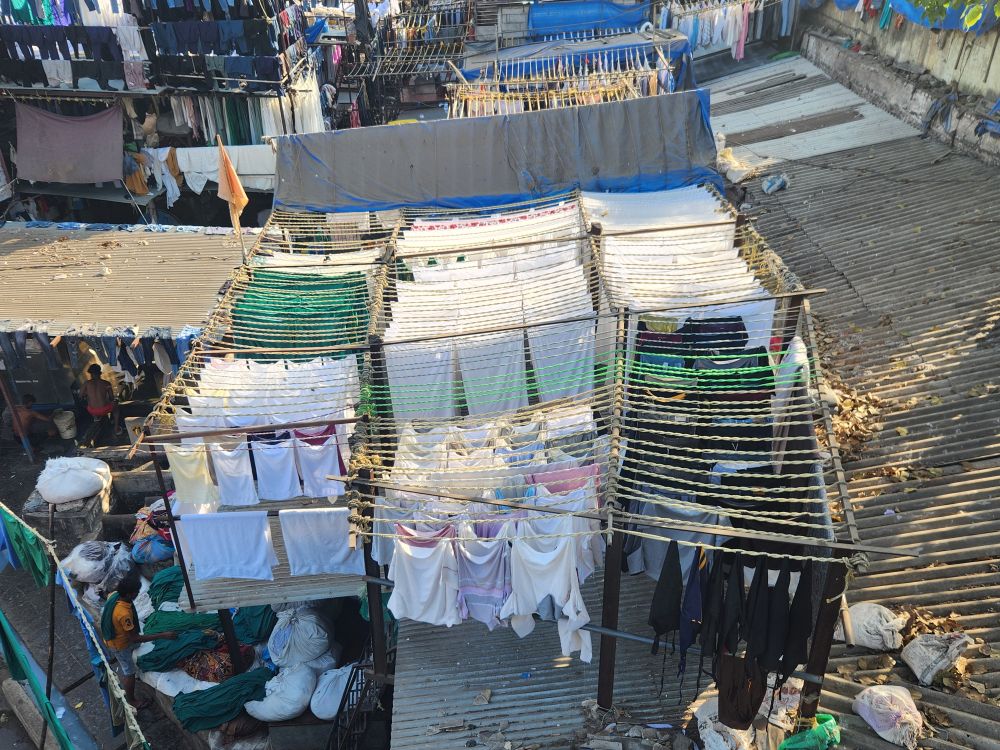
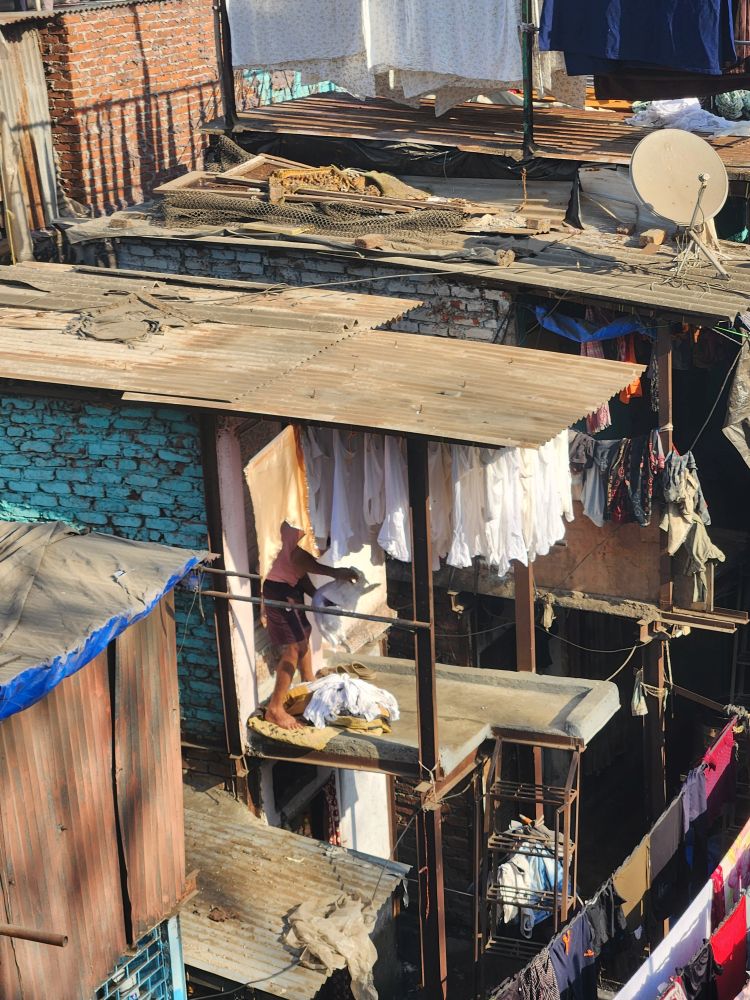
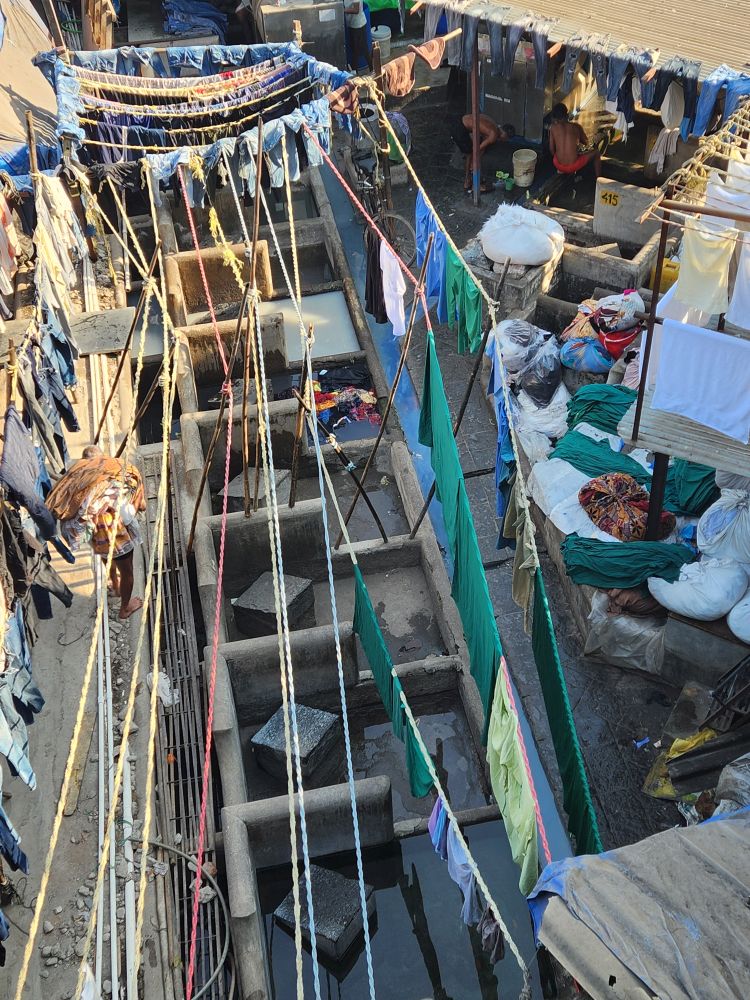
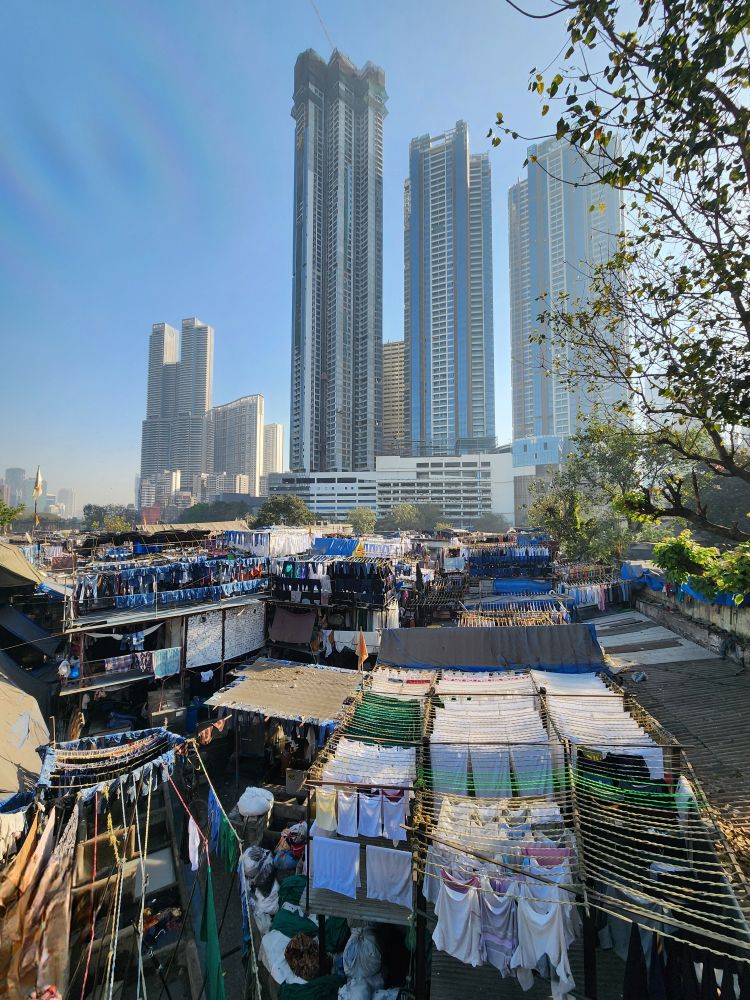
Our first stop is Dhobi Ghat – Dhobi meaning the person who is washing; Ghat the place where the clothing is washed – where we have been before, but our last visit was late in the afternoon and not much was happening. Today, the Dhobis are in full washing mode as we stand on the viewing platform looking out over the acres and acres of open air concrete washing stones and basins. Husain explains that over 7500 people work in Dhobi Ghat, washing over 100,000 pieces of clothing and linen each day for individuals as well as hotels and businesses across the city. Each Dhobi has their own assigned wash basin where they wash and scrub the clothing against the large rock in the center of the basin. Talk about tough work. All the Dhobis live here; profession and housing passed down from generation to generation. But, as with most manual professions, more and more of the young people are going to school and moving away for better jobs – making the number of Dhobis dwindle each year. There are fears of the whole profession, and area, eventually dying out.

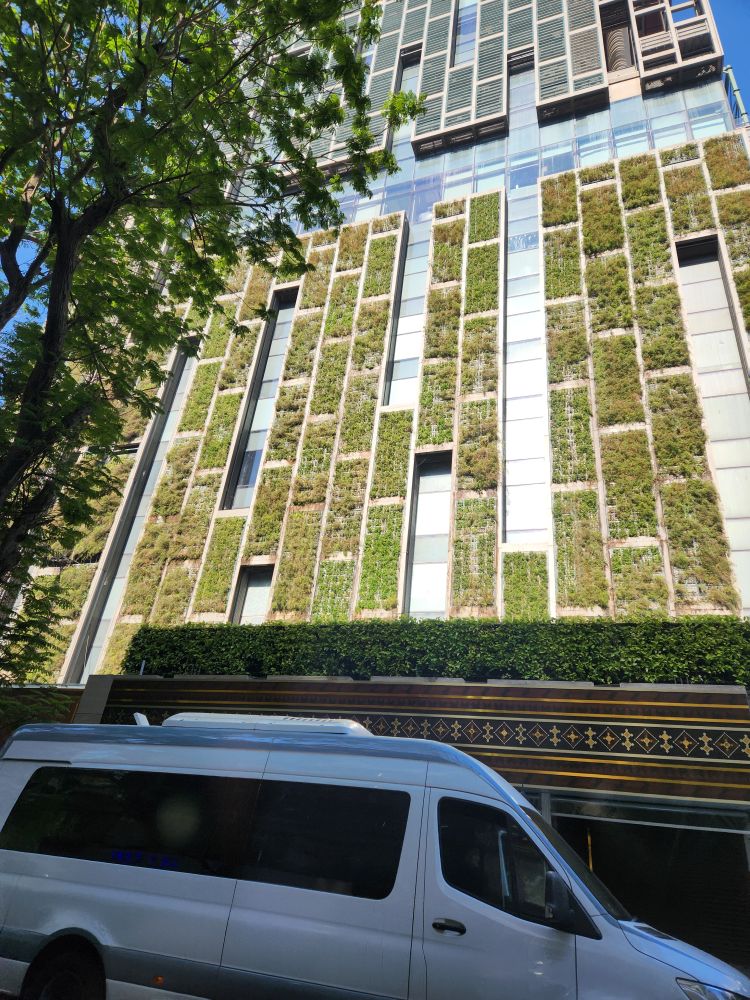
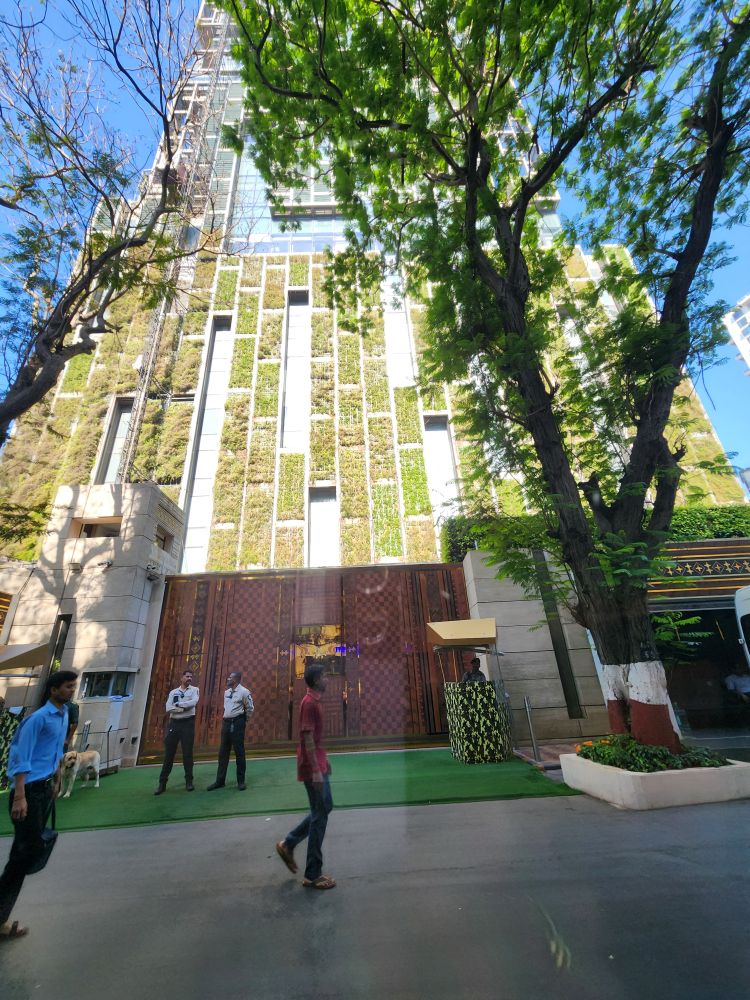
Back in the car, we wind our way through more business and residential areas, “the other side of town” quite literally, down Altamont Road, one of the main avenues through the “rich” section of town. Husain points out and apartment building called Antilia, owned by Mukesh Ambani, the richest man in India. Making his money in petroleum and gas, Ambani is the 7th richest in world and his home makes sure no one forgets it! A 26 floor apartment building with 5 floors parking, 3 helipads, 850 servants, an army of private security personnel along with their weapon of choice, a tank. Seriously. Oh, and all this? For only 5 people! Rich. Yep.
Onto the Mani Bhavan house, the house where Mahatma Gandhi lived from 1917 to 1934, and from where he started the successful Satyagraha (nonviolent resistance translated to mean “Holding firmly to truth”) against the Rowlatt Act in 1919, which allowed for “revolutionaries” to be arrested and detained without trial and was ultimately designed to suppress dissent and maintain British control. We were here in 2017 as well, and remember the highlights, but it was nice as a refresher. The museum is pretty small with 3 floors, but tight spaces. We were lucky that we were in between school tours, we followed one group in and were finished by the time more arrived. Gave us plenty of time to explore the top floor which holds the miniature dioramas depicting Gandhi’s life. They are so detailed and lifelike! Then only his room, kept exactly as it was when he was living here, and the famous terrace where he slept and prayed in his tent, and where he was arrested in 1932 after the civil disobedience movement was reinstated. His arrest ultimately led to the independence movement and the partitioning of India.
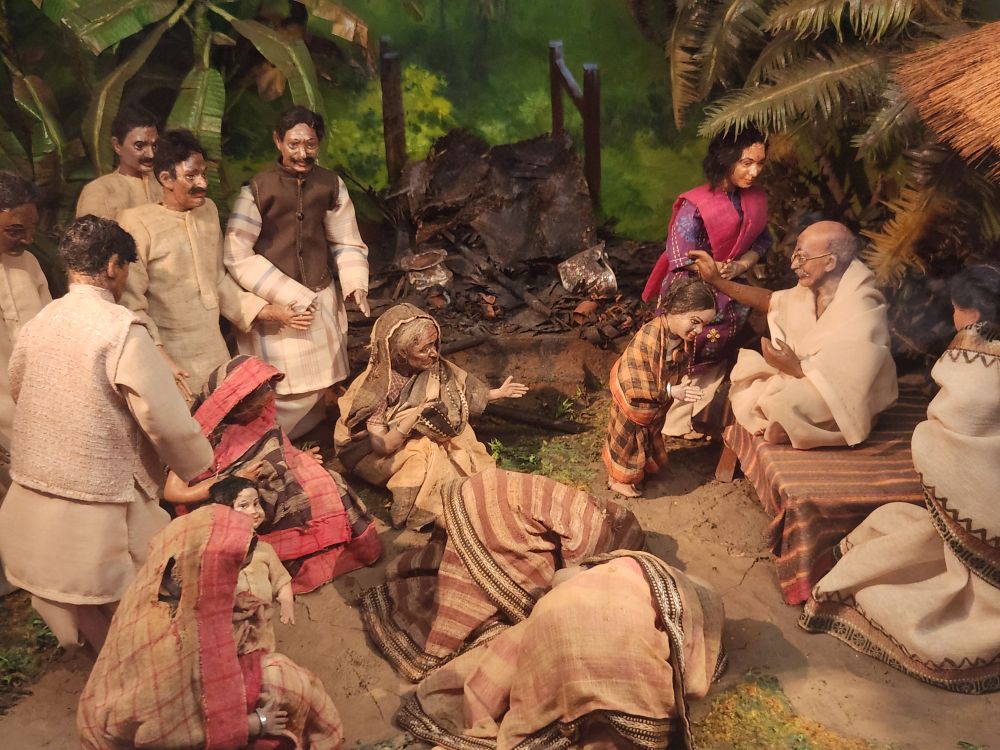
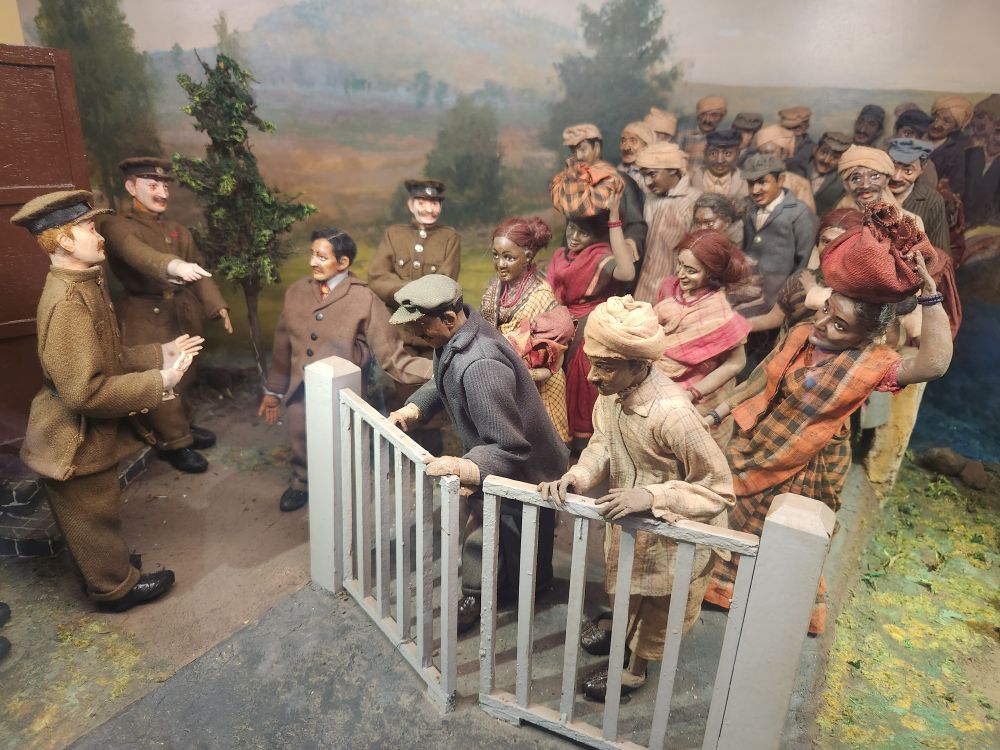
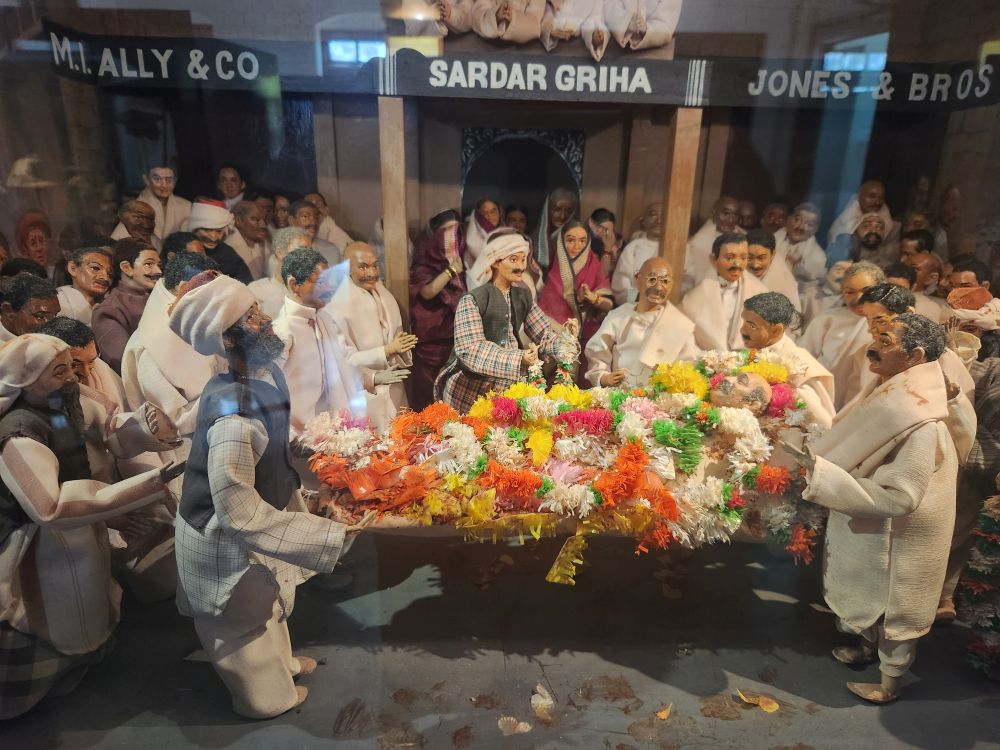
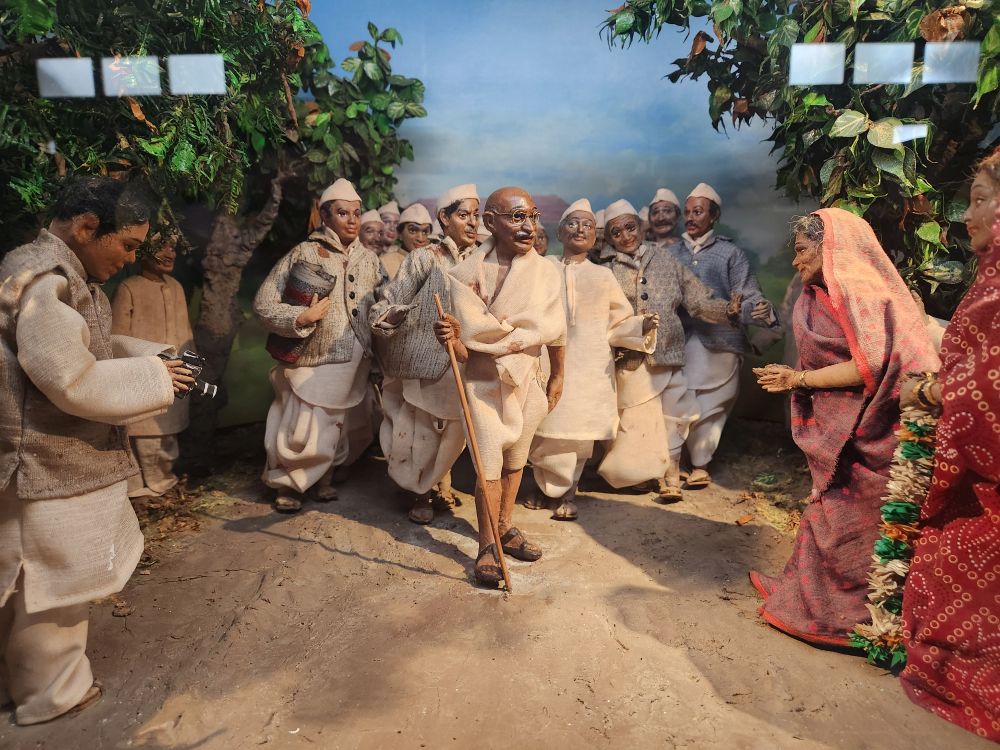
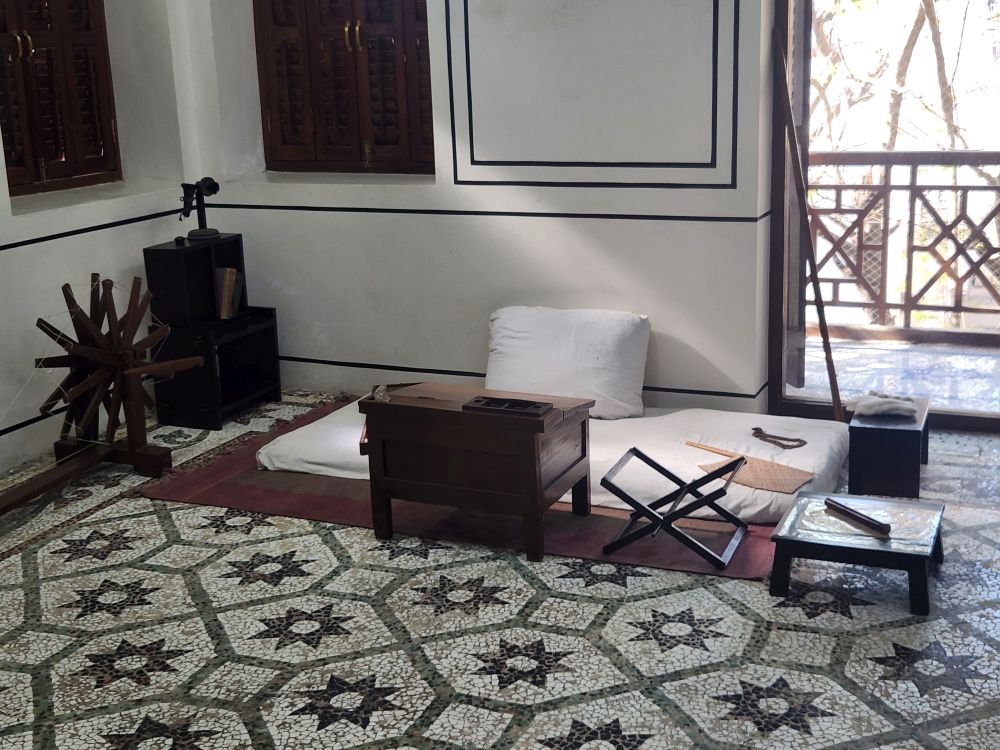
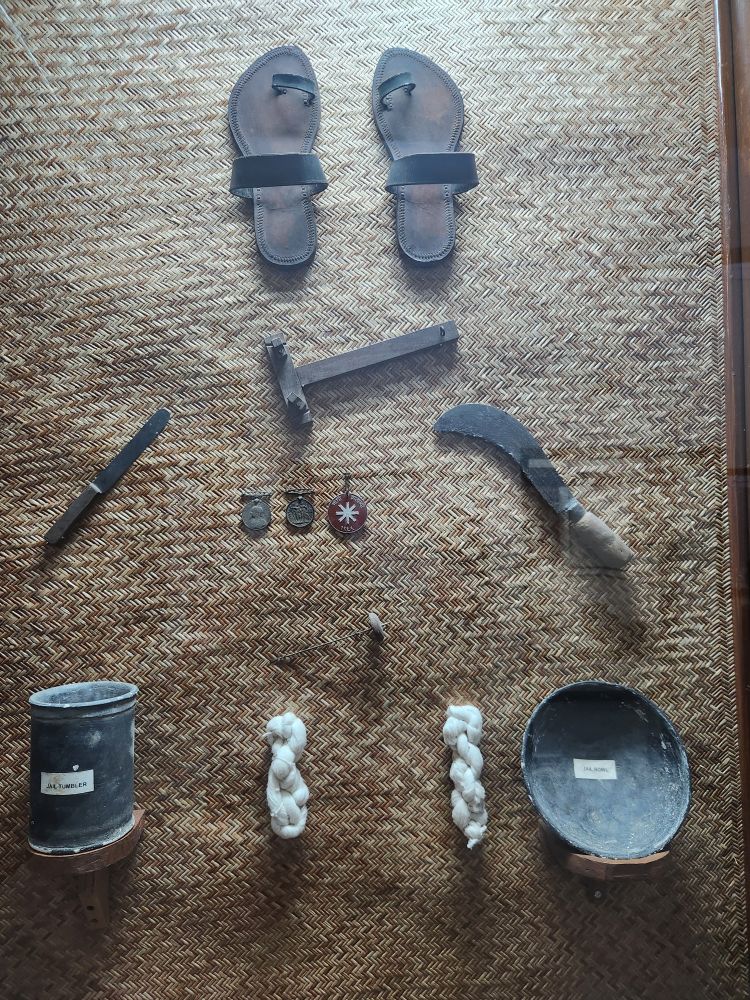
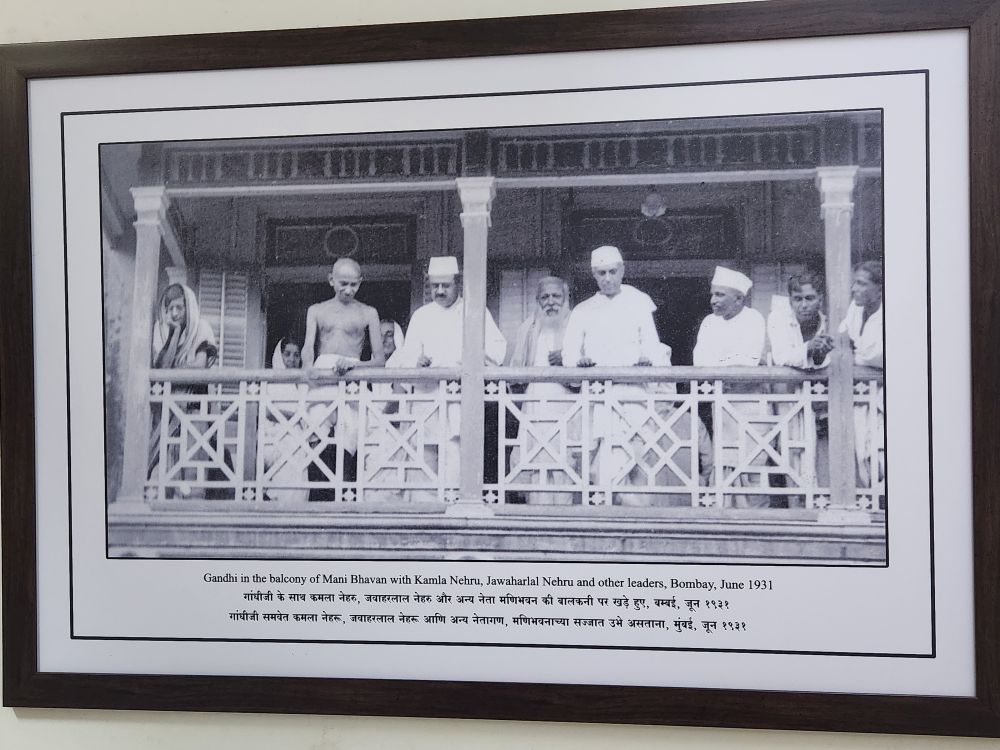
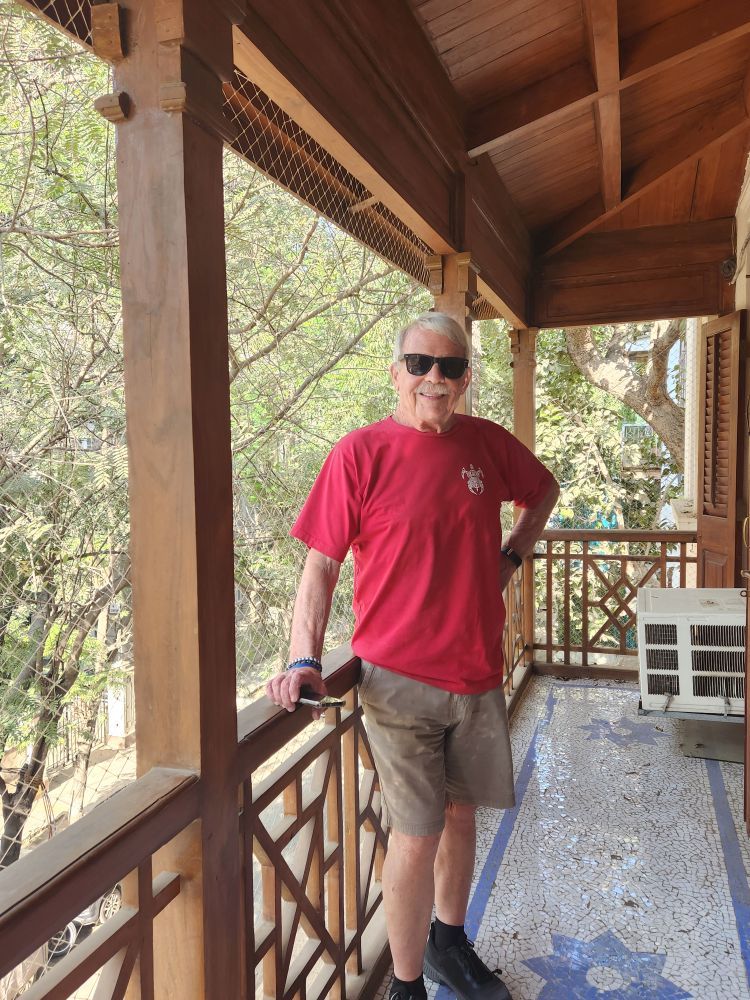
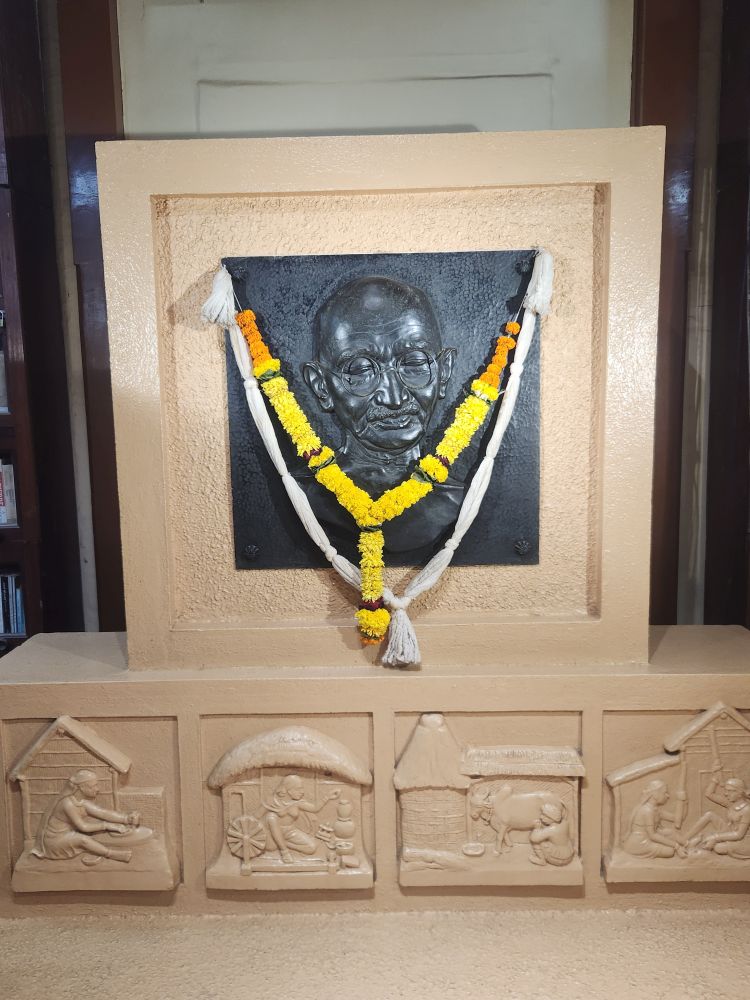
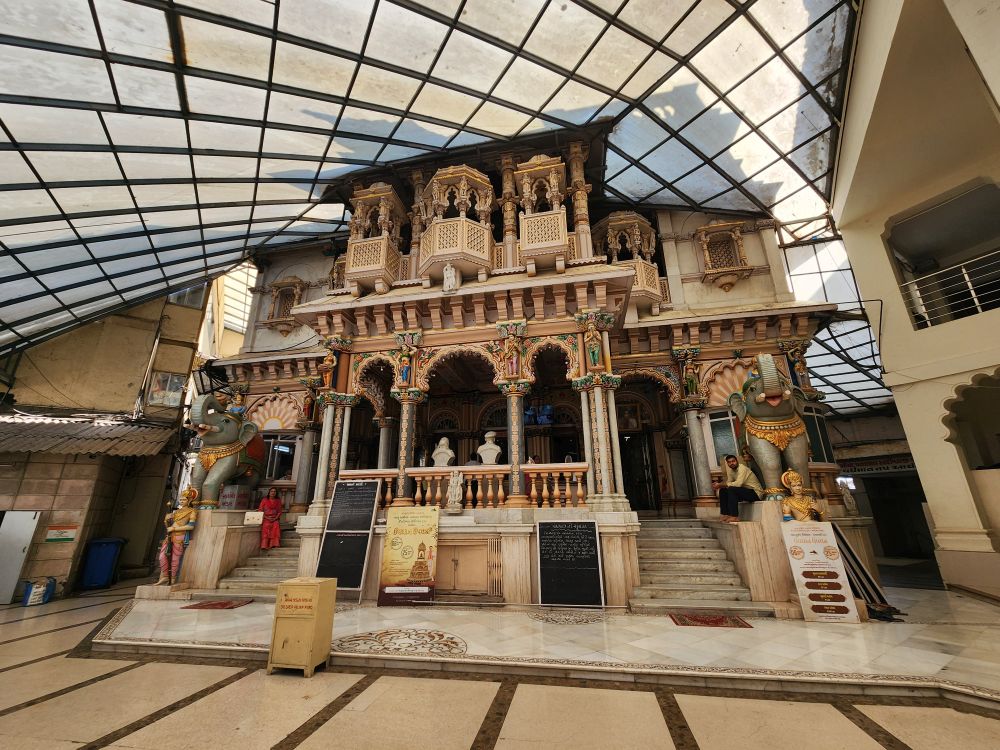
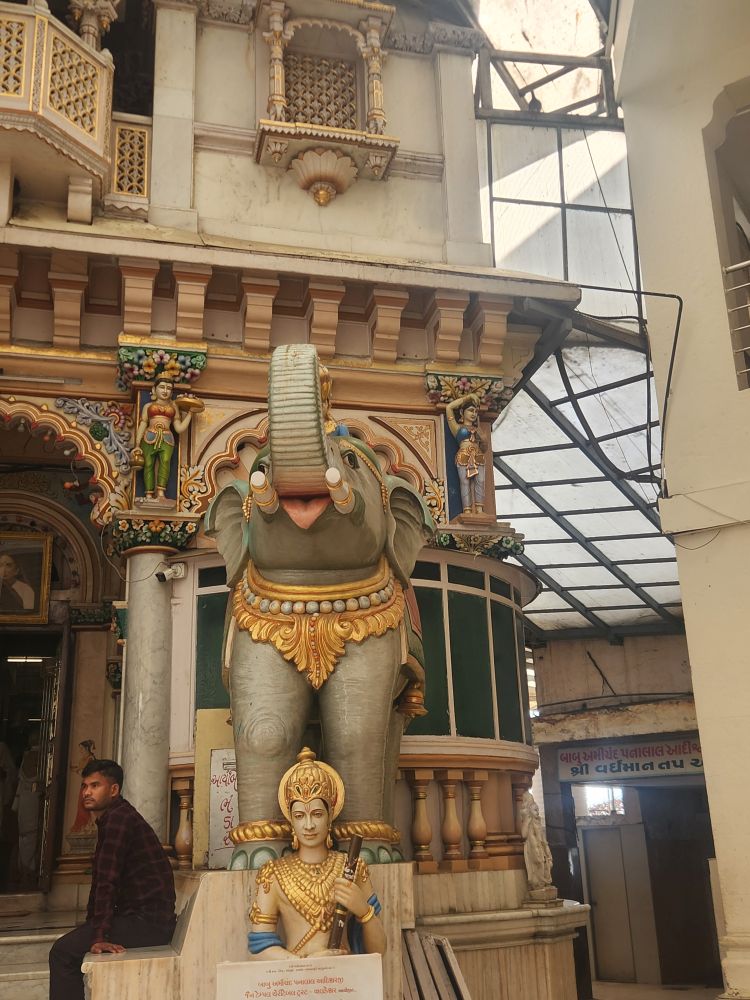
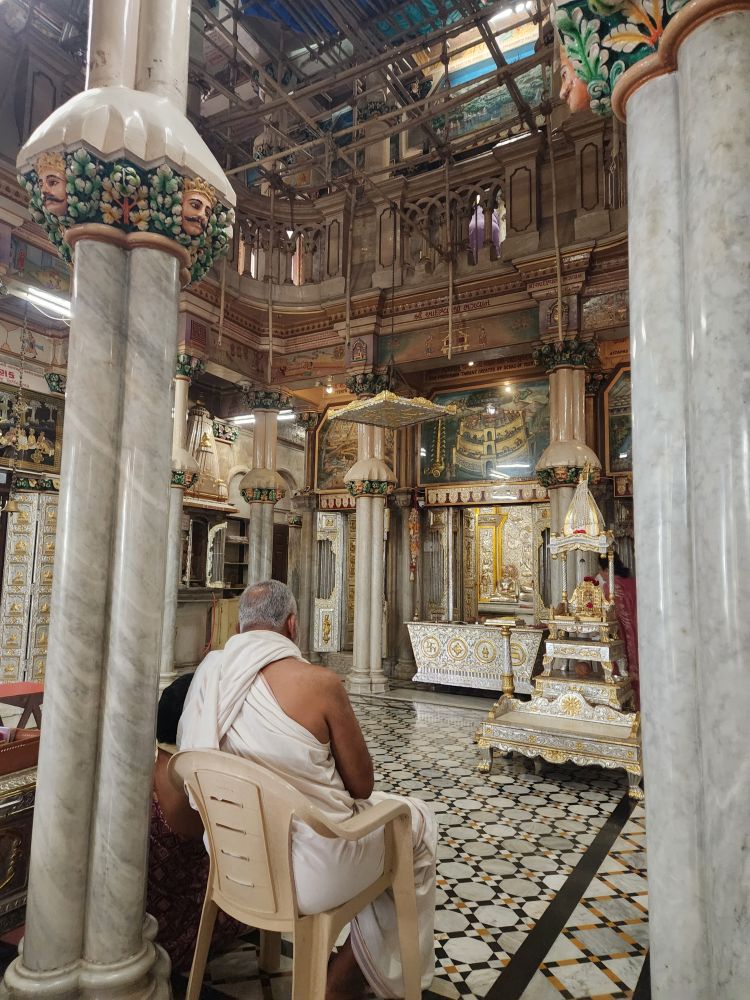
We explored the second story photo gallery, marveling at all the different things Gandhi accomplished and people he met, then onto the ground floor library, jam packed with more than 50,000 books all dealing with Gandhi and “Gandhian Thought.” And then we are out, before the next influx of tour people, and back in the car heading to the Babu Amichand Panalal Adishwarji Shwetambar Jain Temple, the largest Jain temple in Mumbai. Jain is an ancient Indian religion that, as opposed to Buddhism, does not believe in rebirth, but in achieving an all-knowing state called “moksha.”. Their temples are traditionally intricately designed and decorated ornately – which is definitely on display in this 120-year-old temple.
Husain walks us through the ornately carved entrance explaining different statuary and items – most of which we have completely forgotten. Entering into the main sanctuary, we circle the area, exploring the different little “chapels” with the different gods and upstairs to the Padmavati Devi where women come to give offerings asking for happiness and fertility.
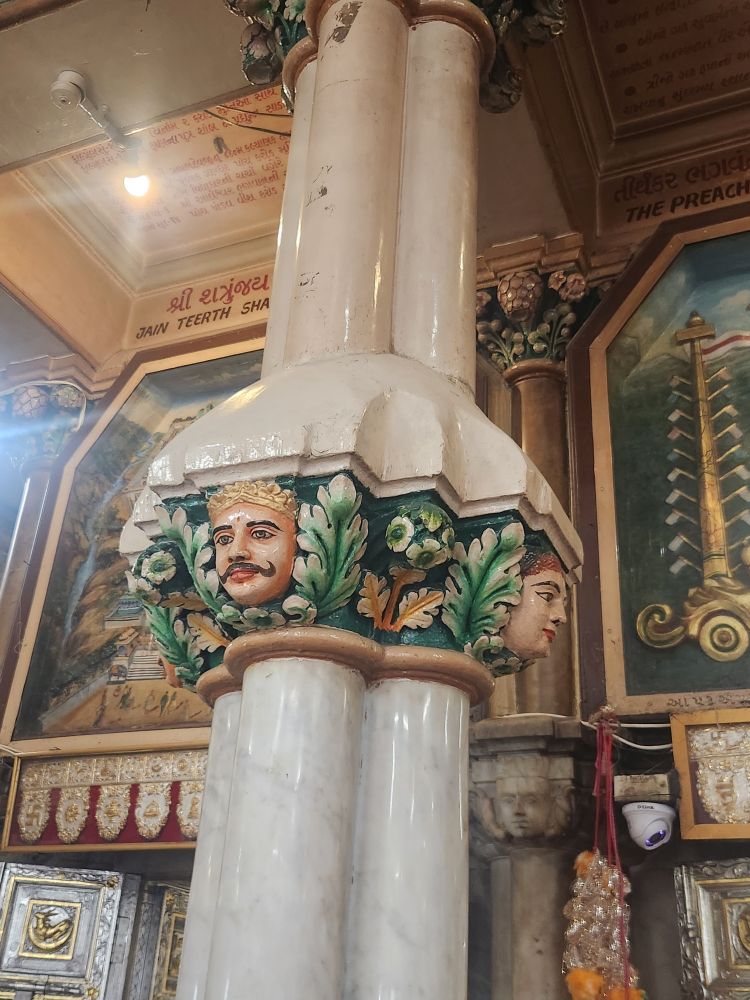
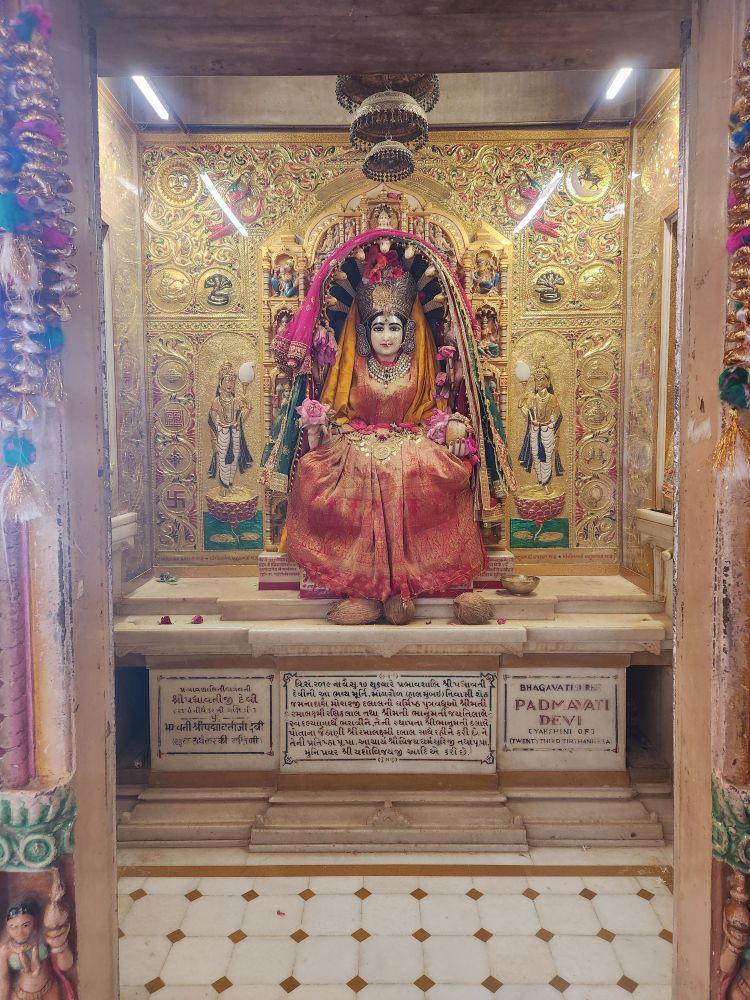
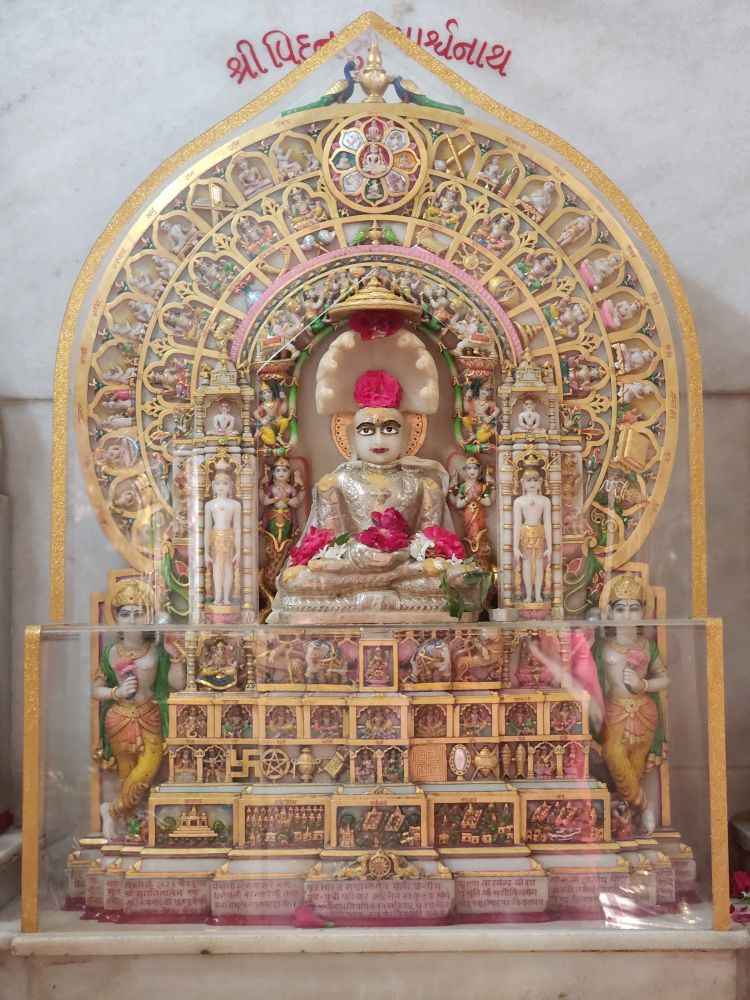
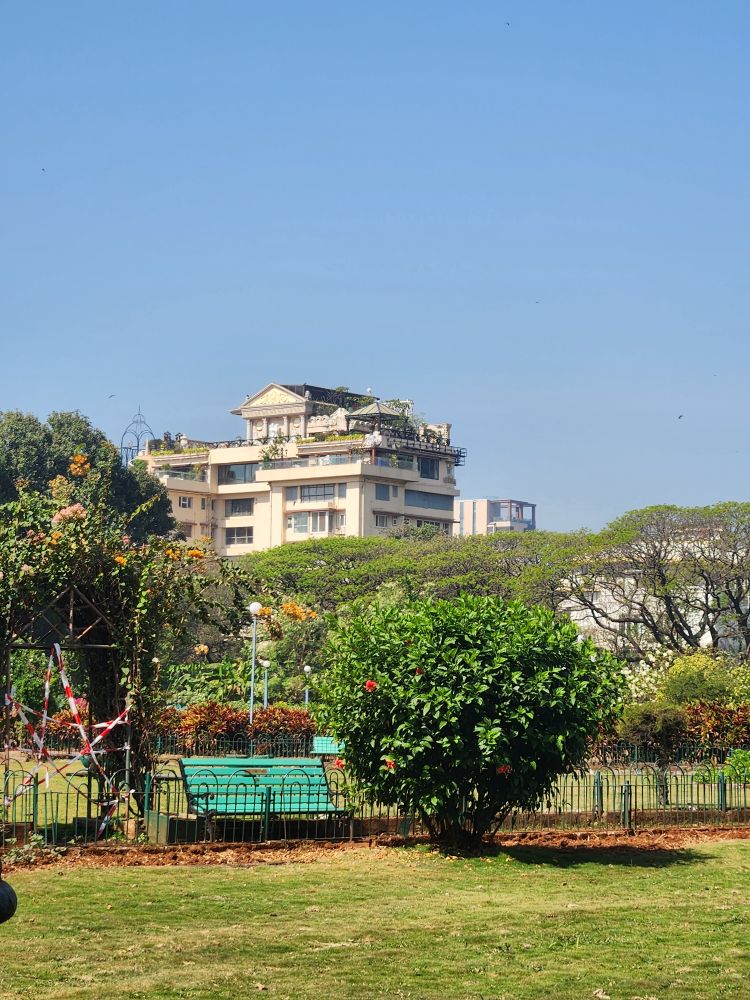
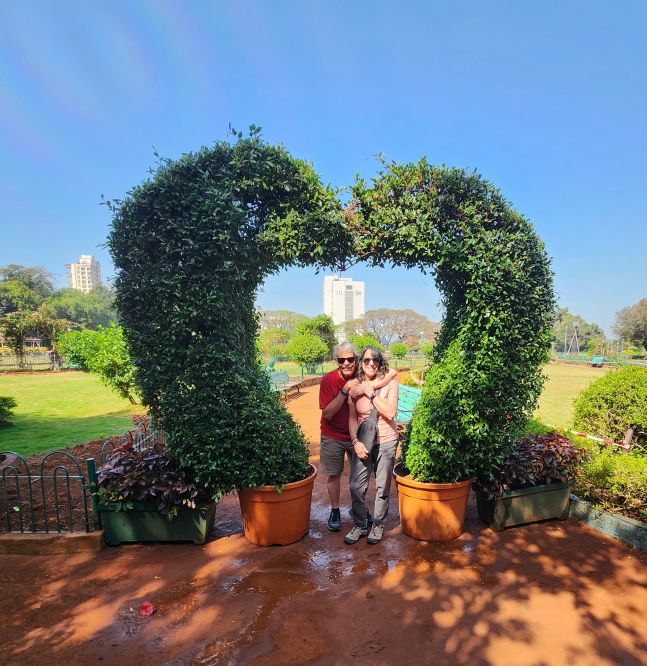
Our next stop are the hanging gardens created by the government to cover the wells and waterworks they developed to provide drinking water to the city. They are pretty and green and a lovely place to walk around in the sunshine. Across the gardens, Husain points out a beautiful multi-story house with gardens on the rooftop built by the owner of Kingfisher beer. He branched out and started an airline which didn’t make it, running up huge debts and borrowing huge amounts of money from banks. He couldn’t pay off the debts and ran off, leaving the house which the Government took over and owns now.
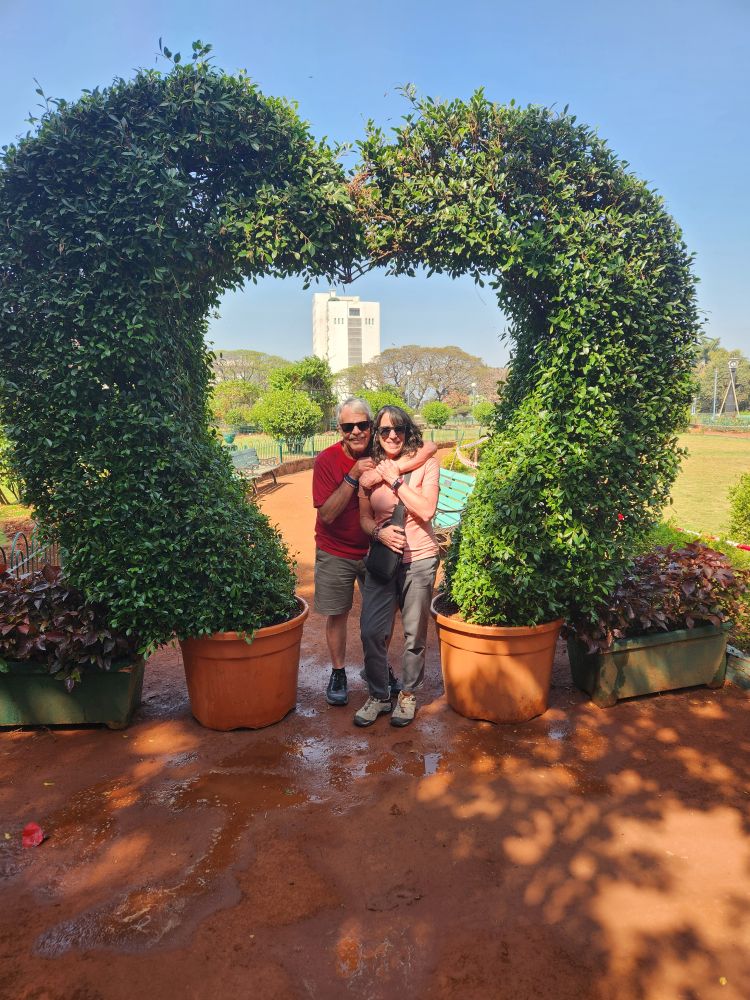
Asked about all the birds, Husain explains that the Farsi community here has a burial site, called the Towers of Silence, right next to the gardens. The Towers of Silence is a huge stone dry well where the Farsi leave the dead bodies laid out on the top off well to decompose and go back to nature. The eagles and vultures eat the flesh, thus “feeding the environment,” then the bones drop into well. Thus, the circling birds. Okie dokie!
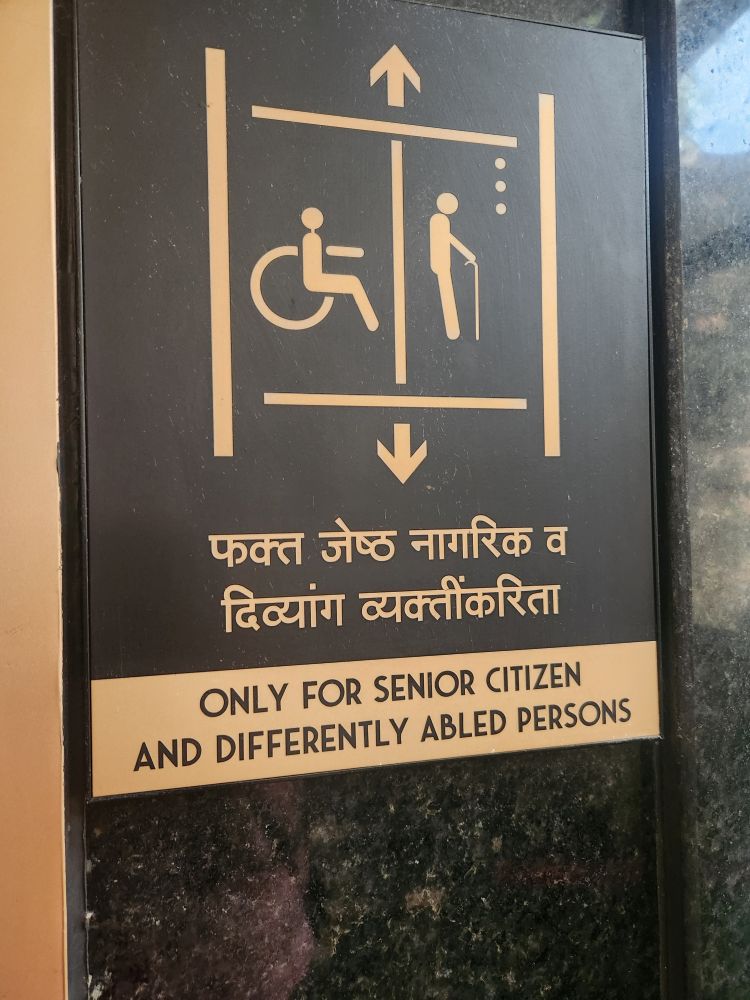
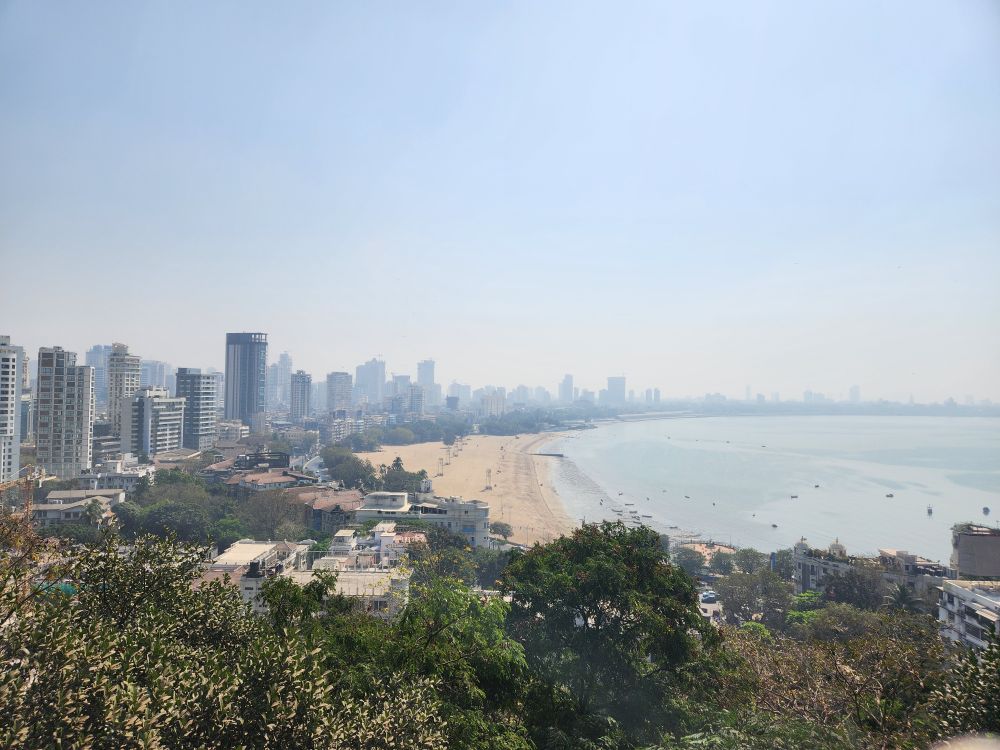
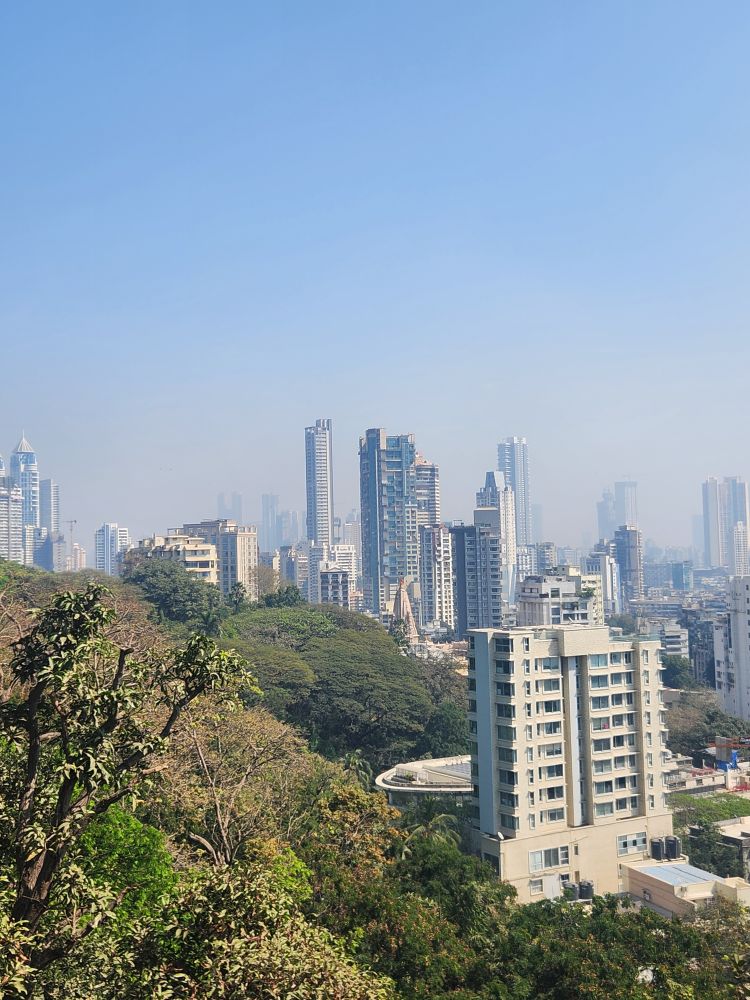
Husain then walks us across the street to a really great lookout tower with spectacular views across the bay and Nariman Point. We get to use the “senior” elevator. LOL! Guess we do meet the age requirements!
Our next stop is the Dabbawala corner – across from the Churchgate train station and Western Railway Headquarters (an old colonial heritage building), where the lunch deliverers come from the villages on the train. Each of the Dabbawalas starts in the home towns outside the city, picks up the lunch bags, then takes the train into Mumbai and delivers the lunches. The bags are all marked in codes, meaning only the specific Dabbawala can deliver them, because no one else knows the code or where the lunch goes. They’ve “modernized” their service and now use lunch bags, not the big silver round stacking containers of old. But they are still on bikes, with all those bags strategically hung on the rear baggage racks. So amazing!
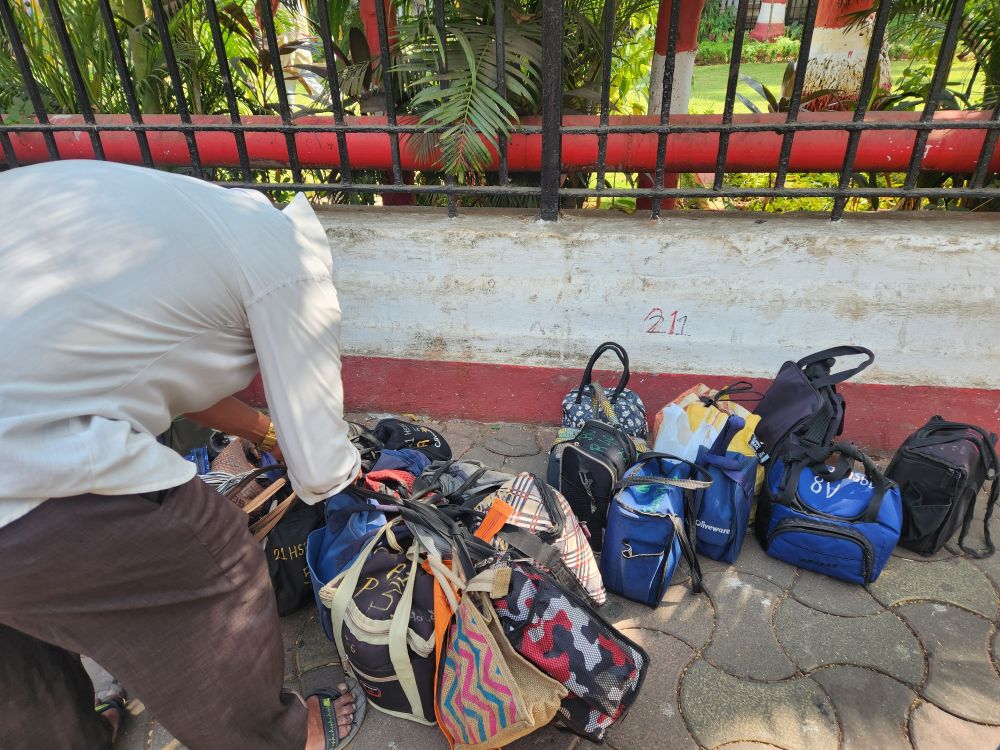
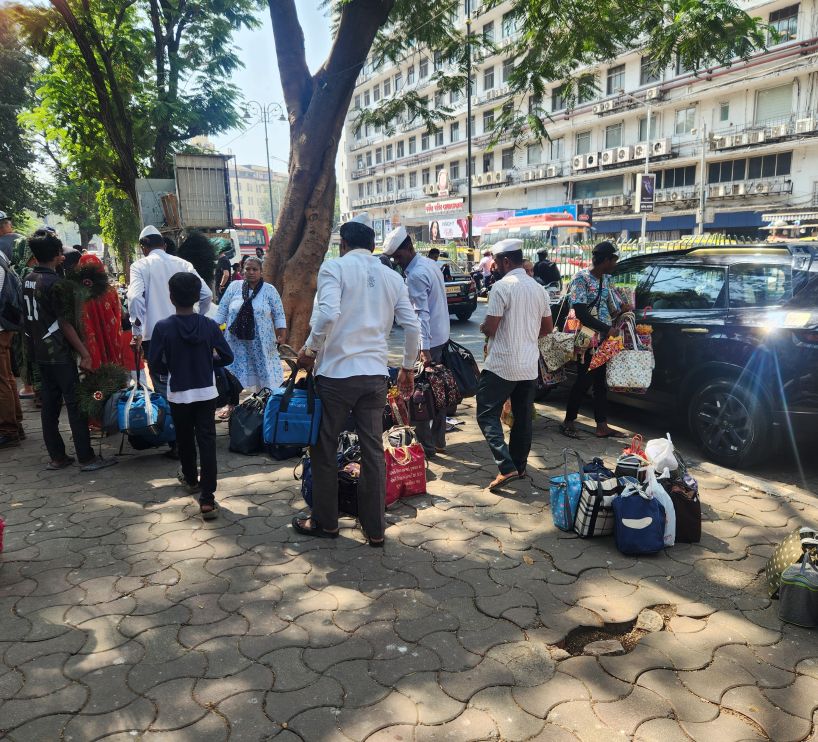
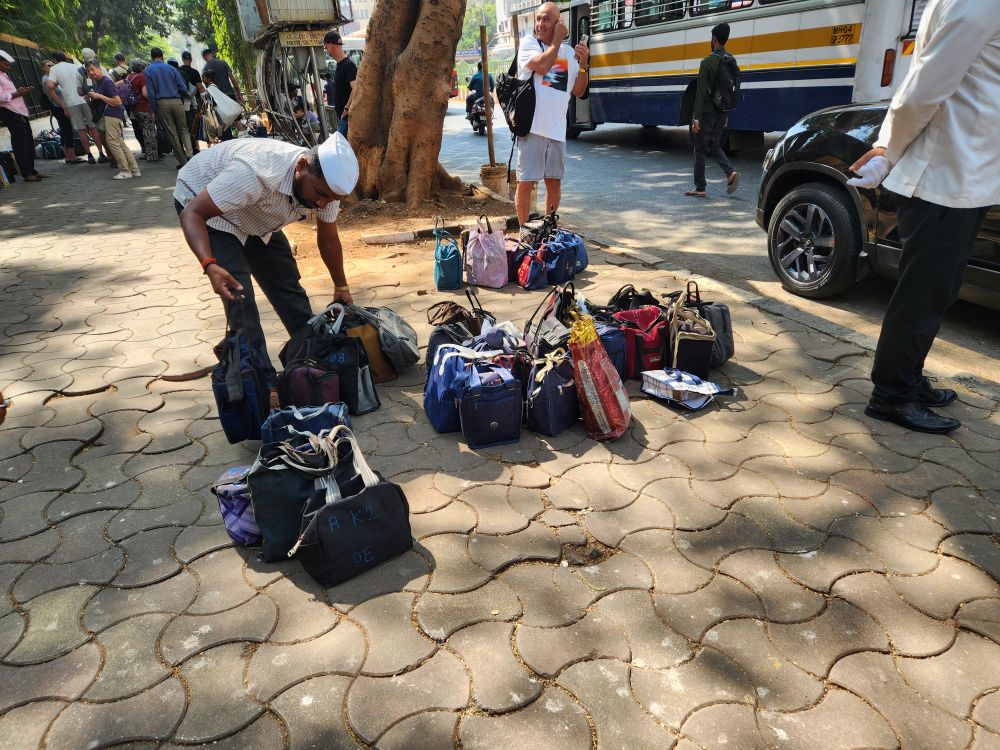
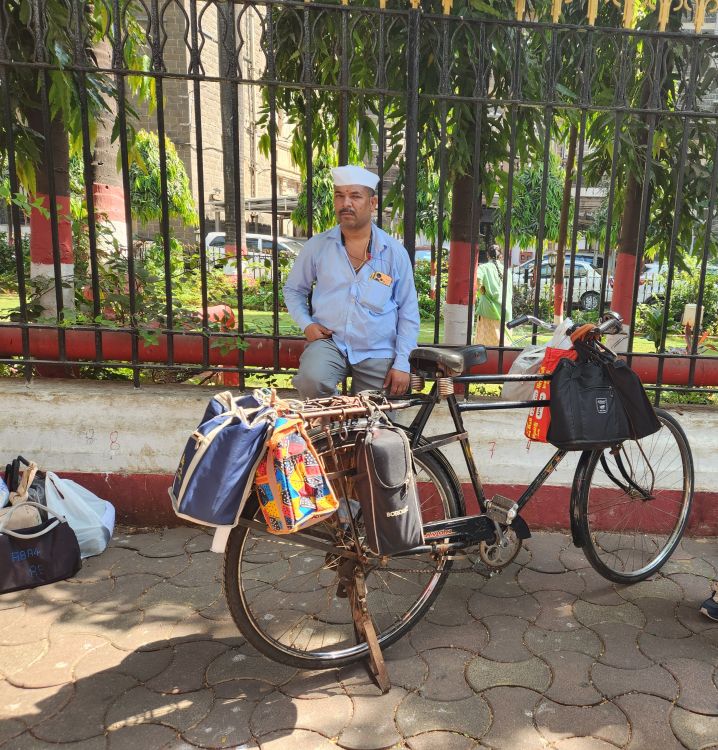
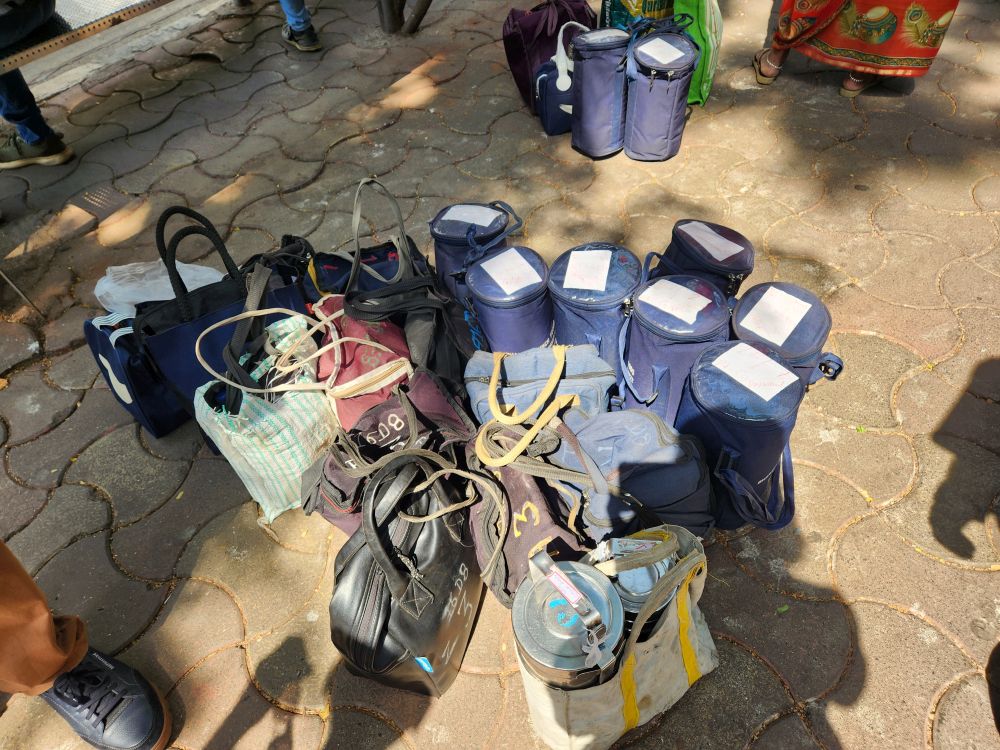
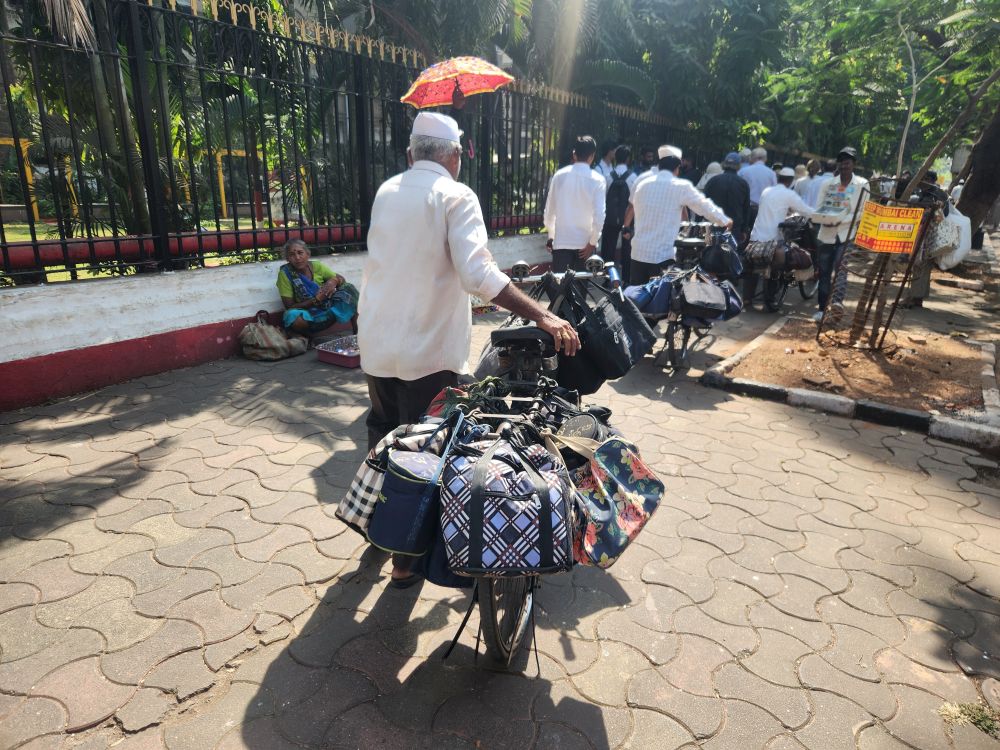
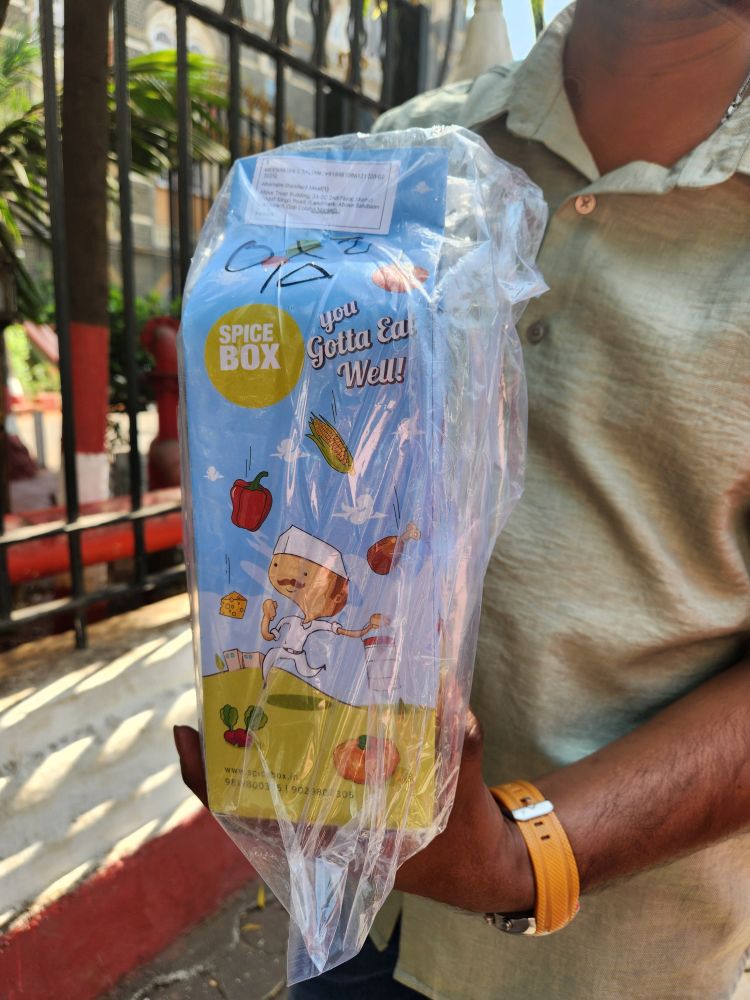
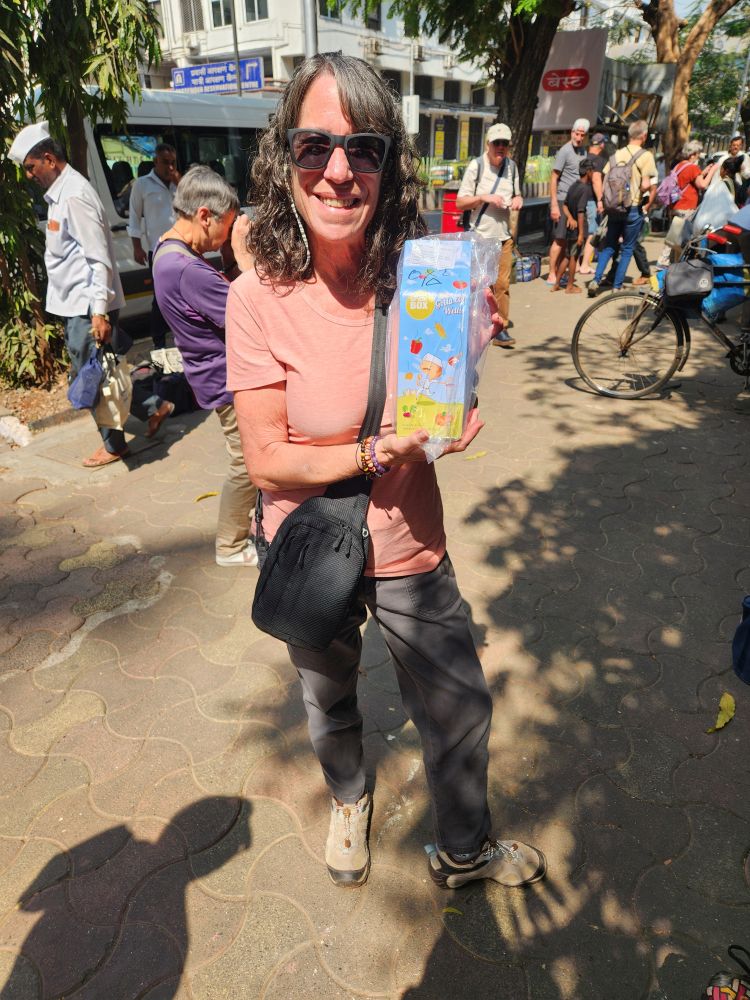
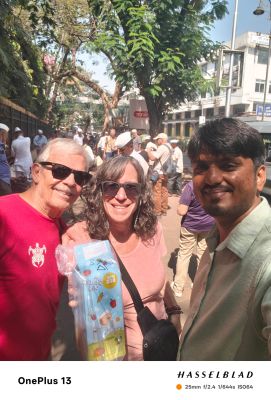
Husain says it is a great service. Most of these lunches are prepared by the family for the worker, but even if you have no one to cook for you, you can purchase a daily delivery for $50/month – which gets you 26 days of meals. Husain shows us one of the purchased meals, all packed in what looks like a milk carton. Awesome!
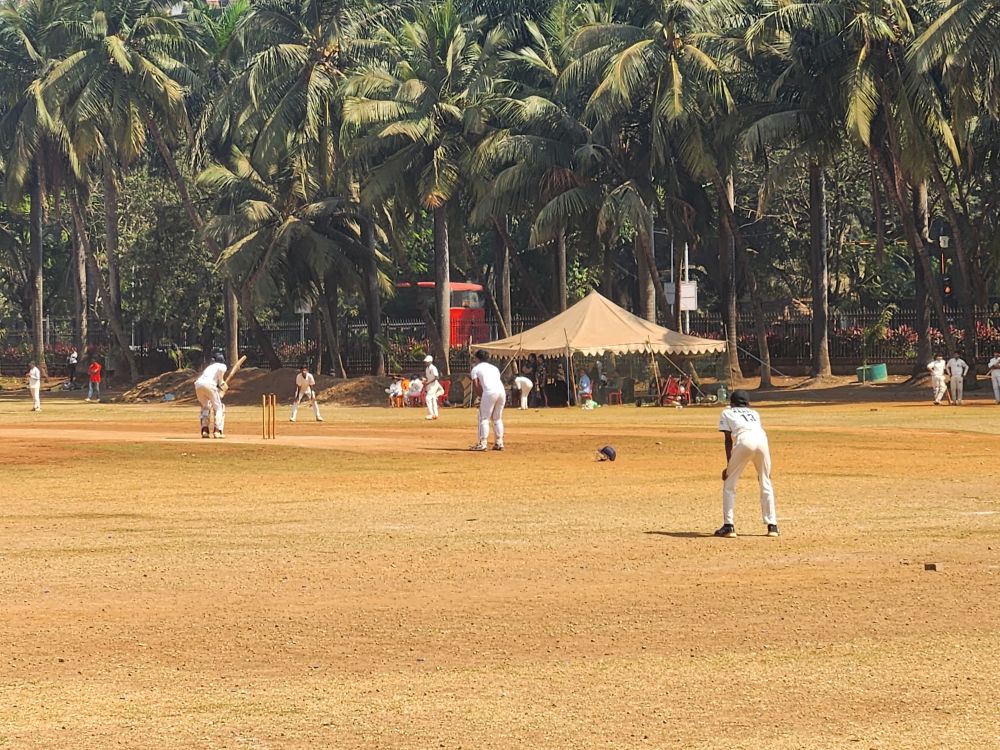
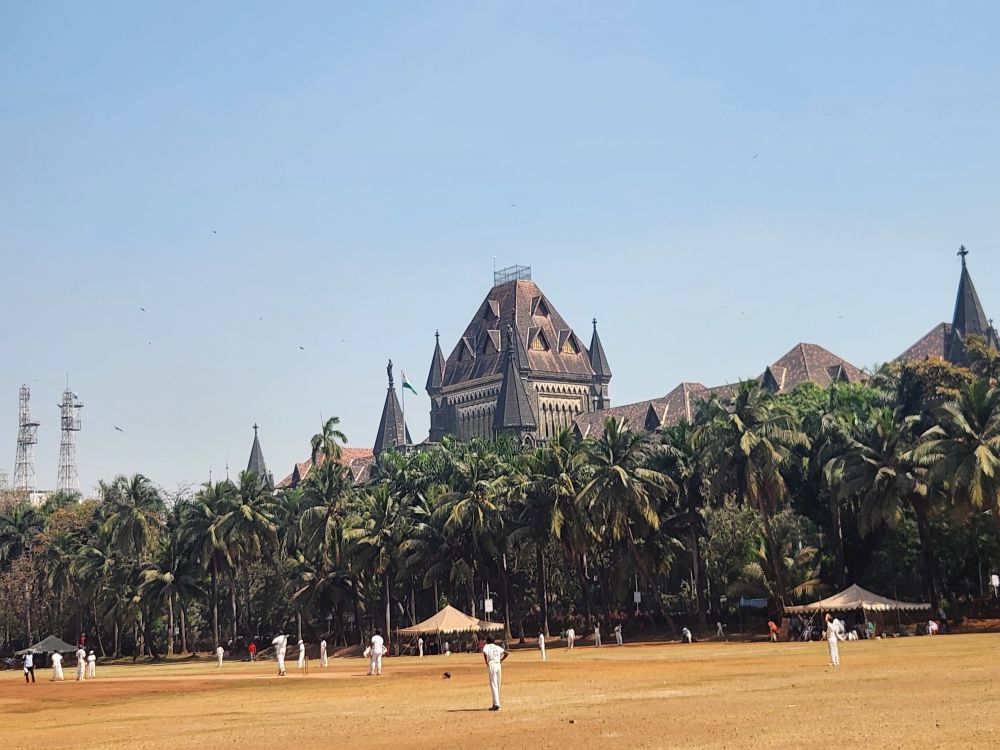
Back in the car, we literally drive around the block to the Oval Maidan, a huge, long recreational area filled with cricket pitches and football fields. There are lots of cricket teams out practicing and playing. When we explain we are fascinated by cricket, but don’t understand a thing, Husain excitedly explains the basics to us. Yay! Now at least it is relatively understandable, and we can enjoy it more when we watch the matches – which are all anyone plays on the TVs around here, so of course, we watch!
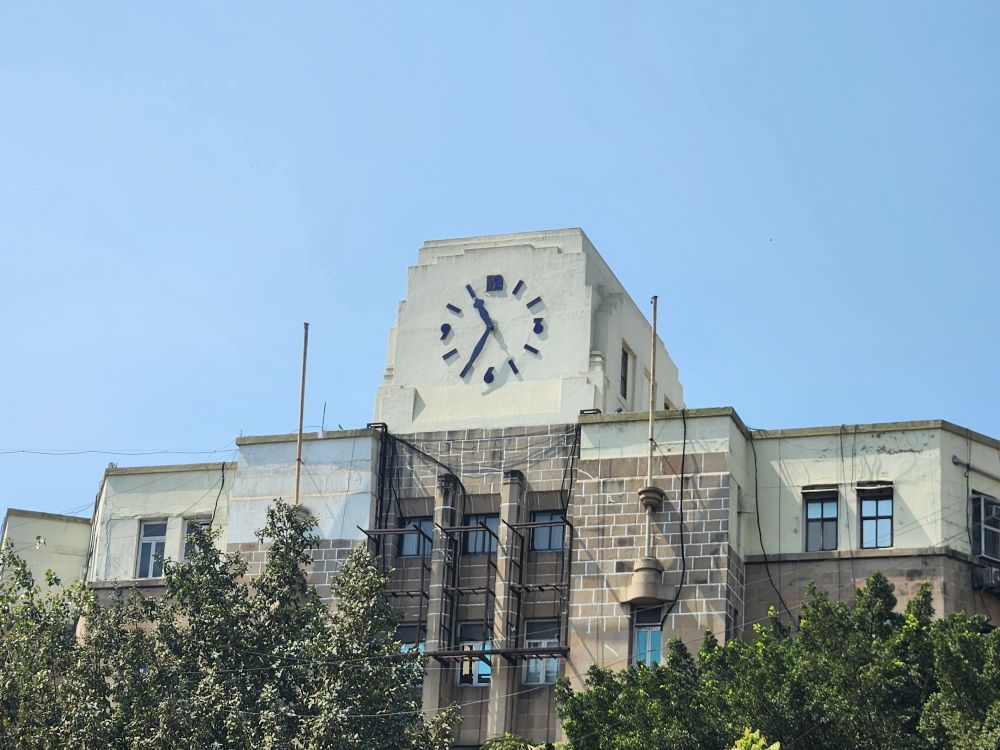
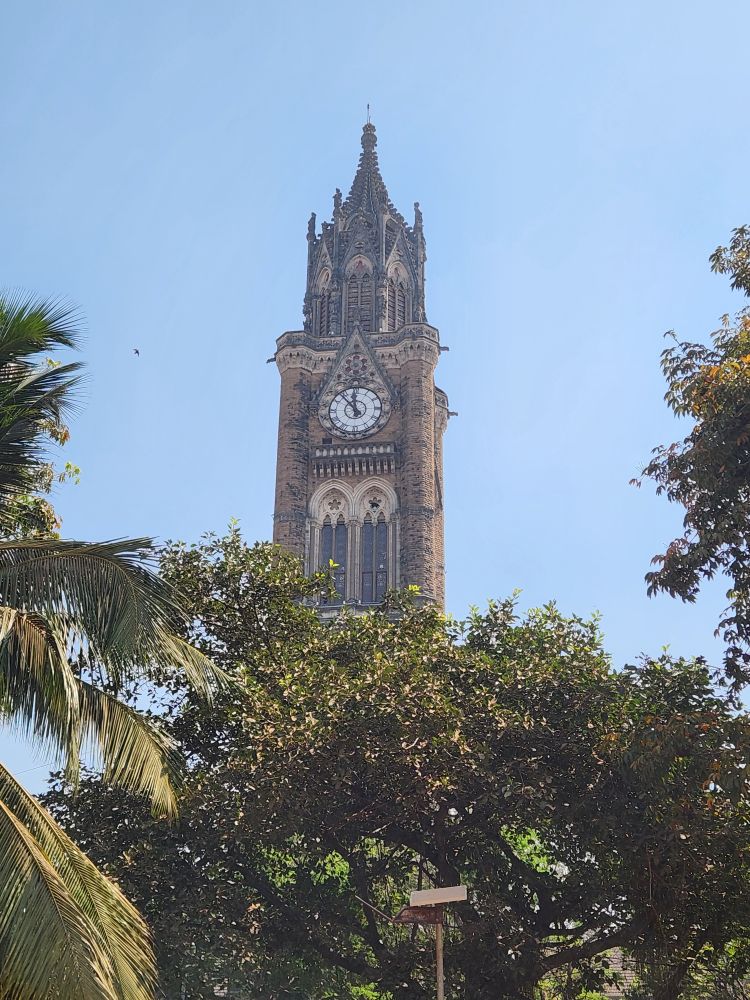
Across the playing fields is the Rajabai Clock tower, inspired by Big Ben (obviously built during the English era), located on the University of Mumbai property and in the center of the Art Deco area. Mumbai, it turns out, has the 2nd most art deco buildings after Miami. Who knew?
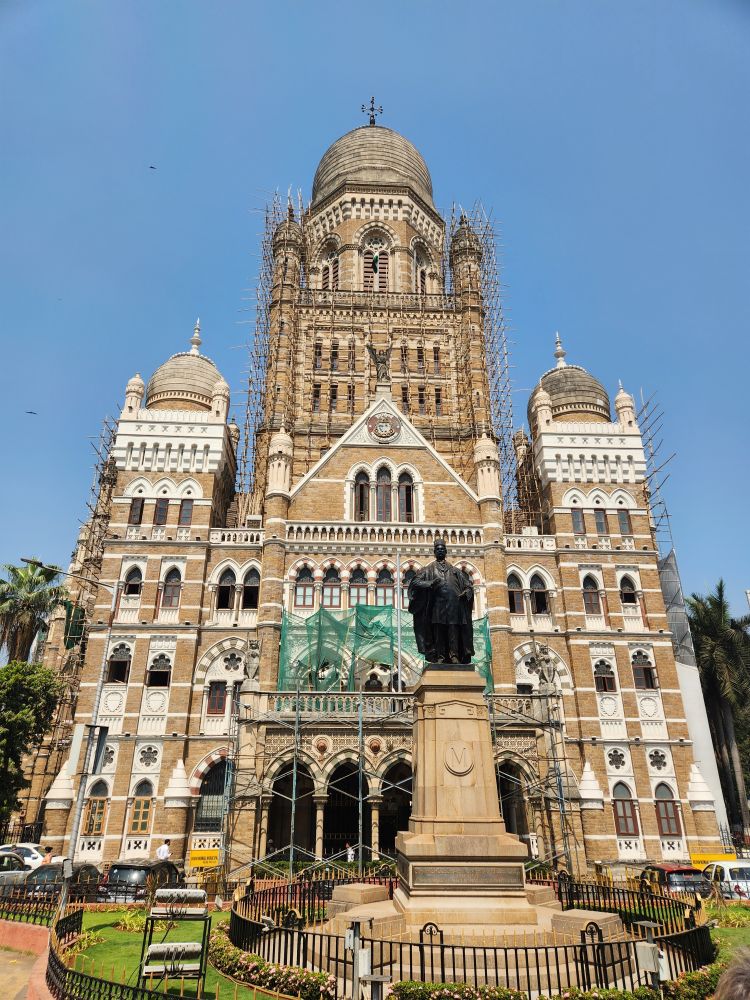
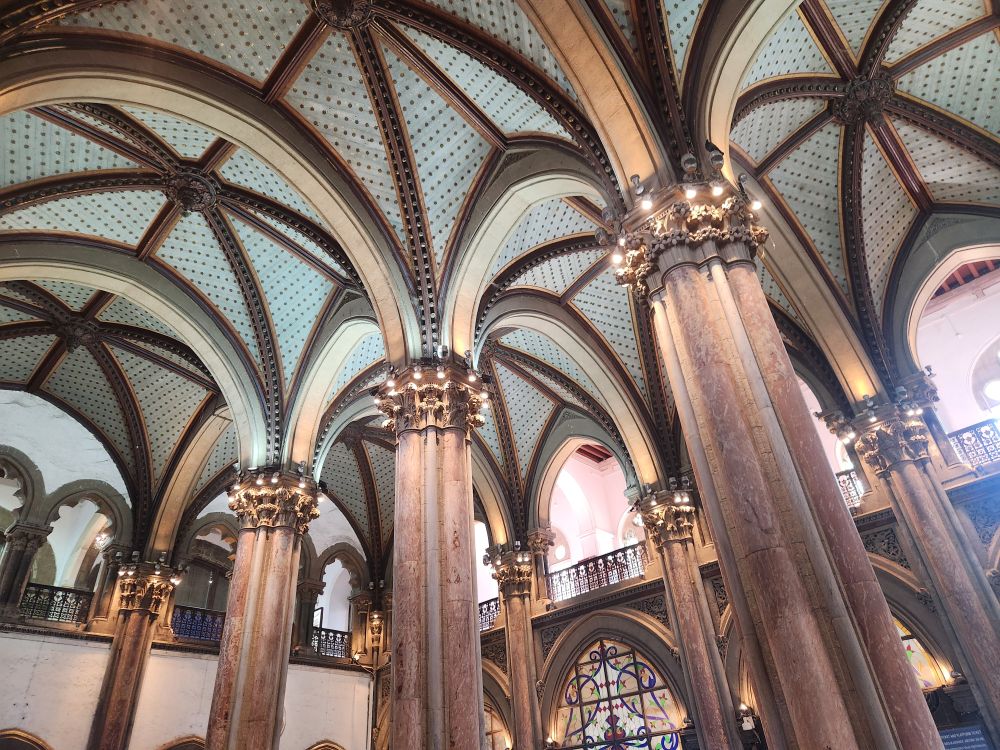
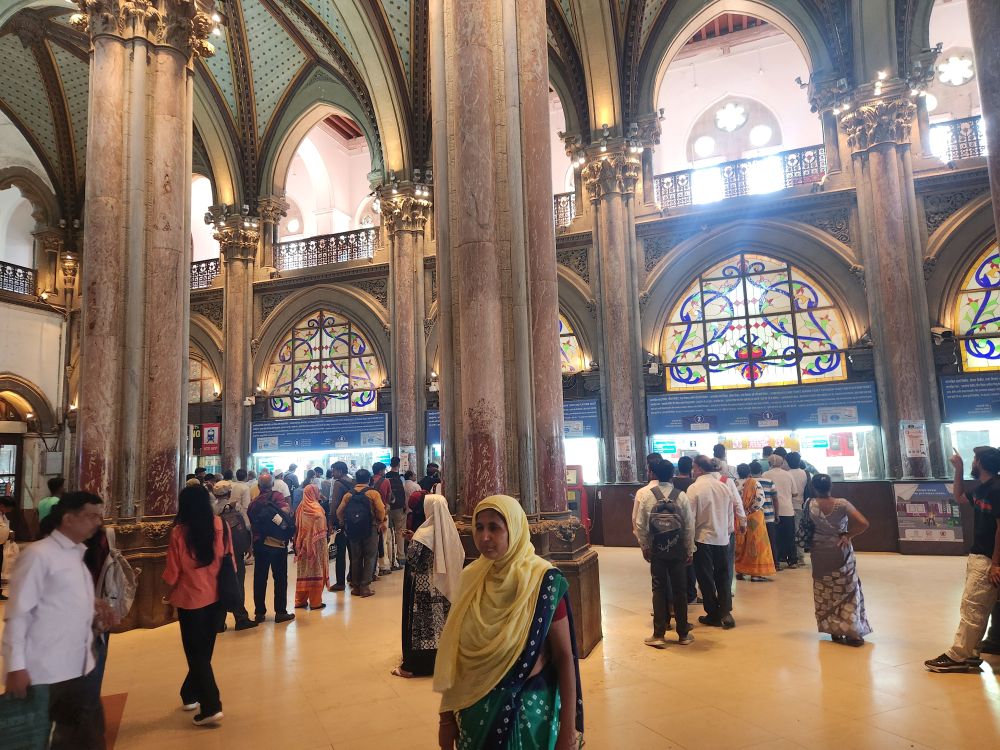
Our last stop on this part of the tour is Victoria Station, now called the Chhatrapati Shivaji Terminus, or CST for short. Husain walks us inside, which is sort of crazy, but he tells us not nearly as crazy as during rush hour. Yeah, we can totally understand that.
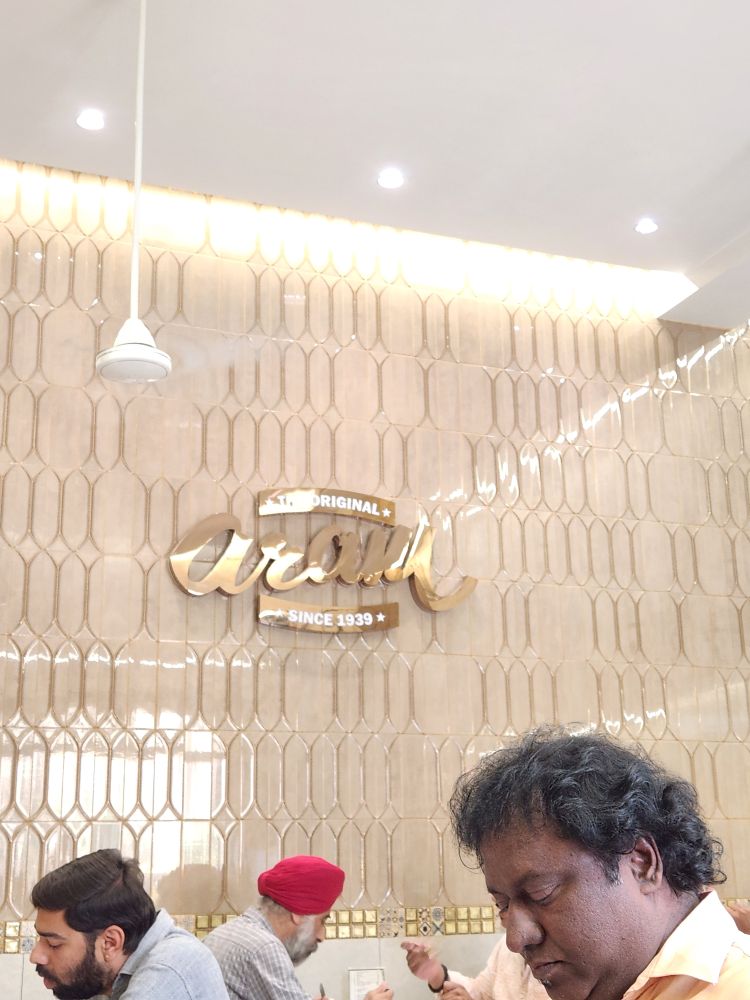
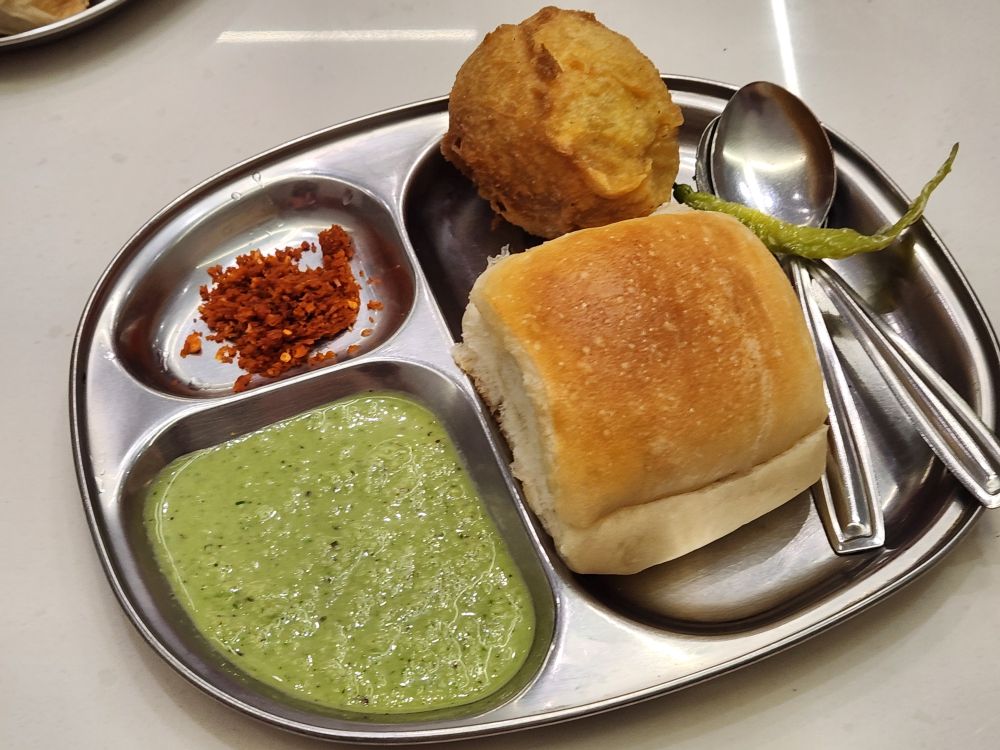
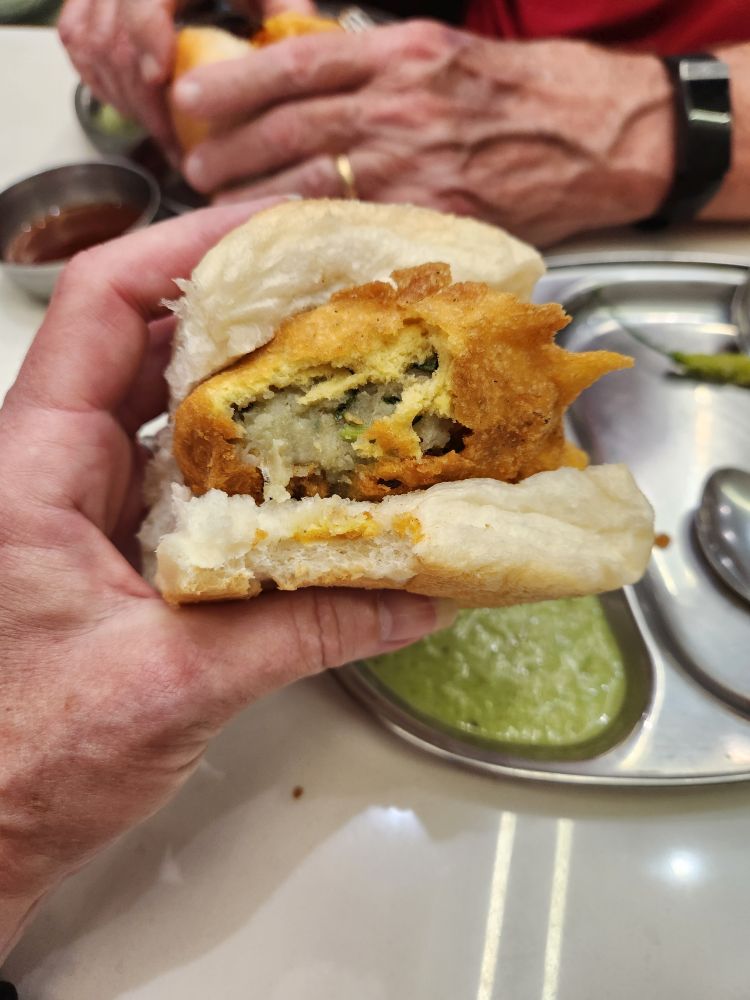
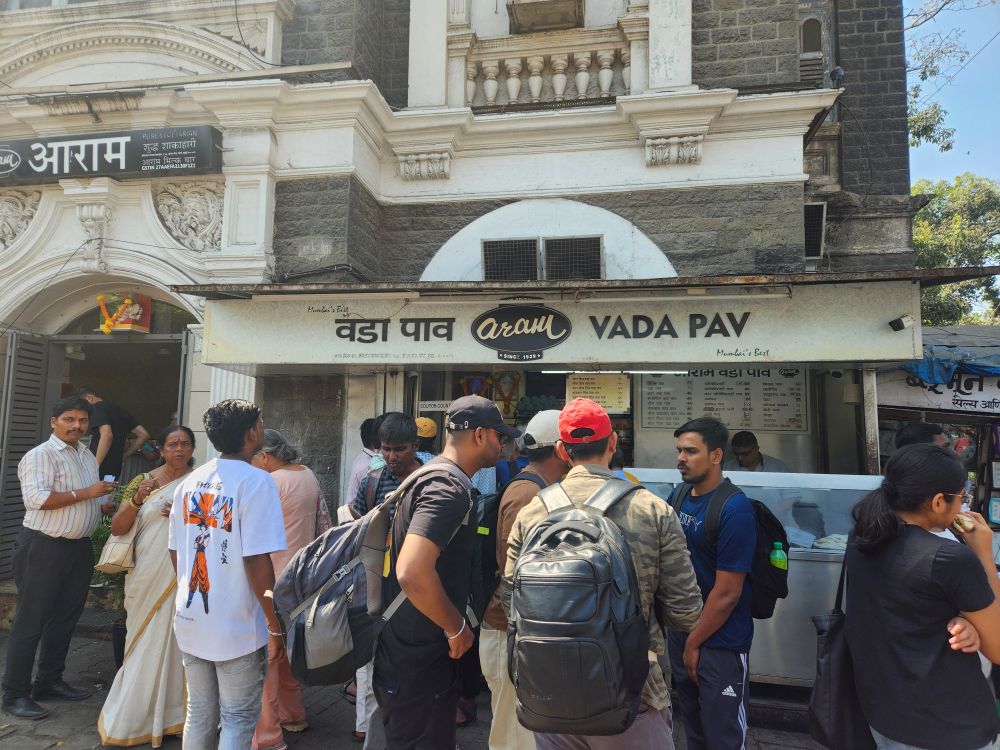
Next, we are heading to the ferry for Elephanta Island, but first we tell Husain we are hungry, just need some sort of snack to keep us going the rest of the day. He has the perfect place, which is right across from the train station: Aram Vada Pav – the most famous place for Vada Pav, the typical Maharashtra street food snack made up of a deep fried potato dumpling or fritter really, sandwiched between a fluffy bun. We manage to snag a table in the corner of the small restaurant (which also does a huge take away business from the open fronted window out front) and have Husain order us our meal. 2 Vada Pav, complete with chutneys, and 2 bottles of water. OMG – it was so good! And so huge!! We had a blast eating it, laughing and giggling and taking pictures of each other. Too fun. And get this, only 118 INR – that’s like $1.30 USD for all that food and 2 bottles of water!!! Crazy.
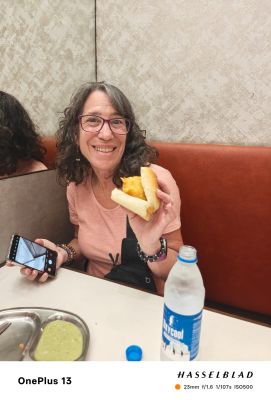
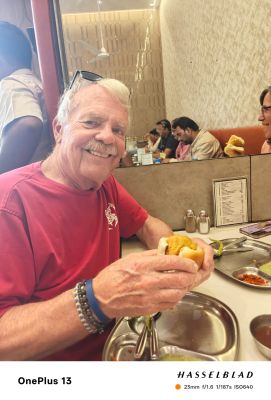
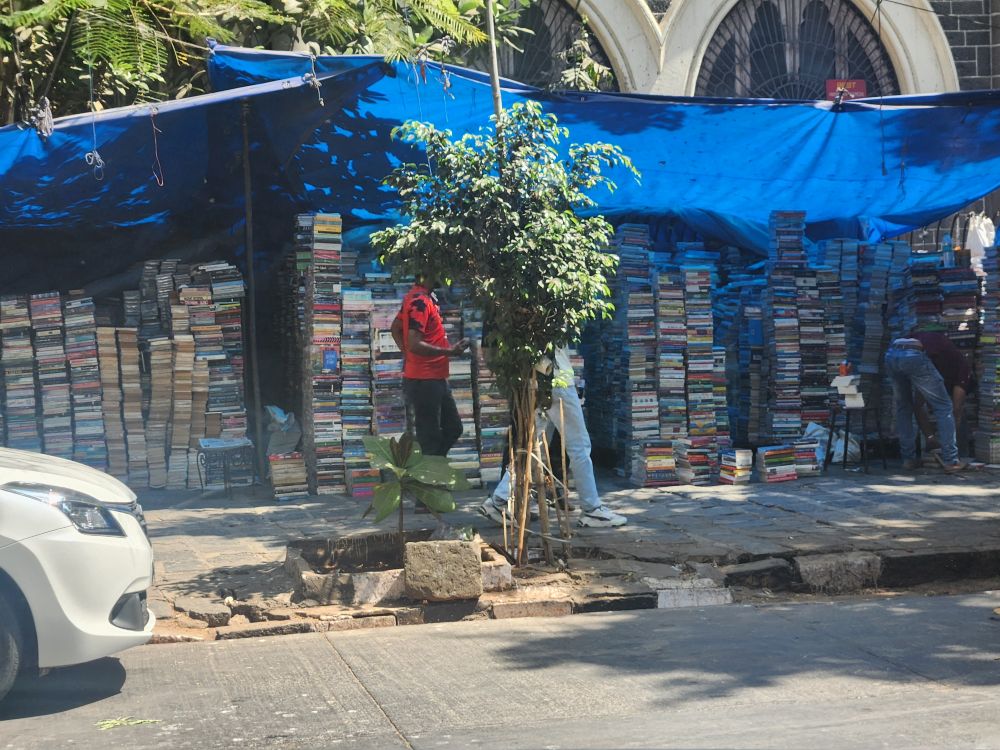
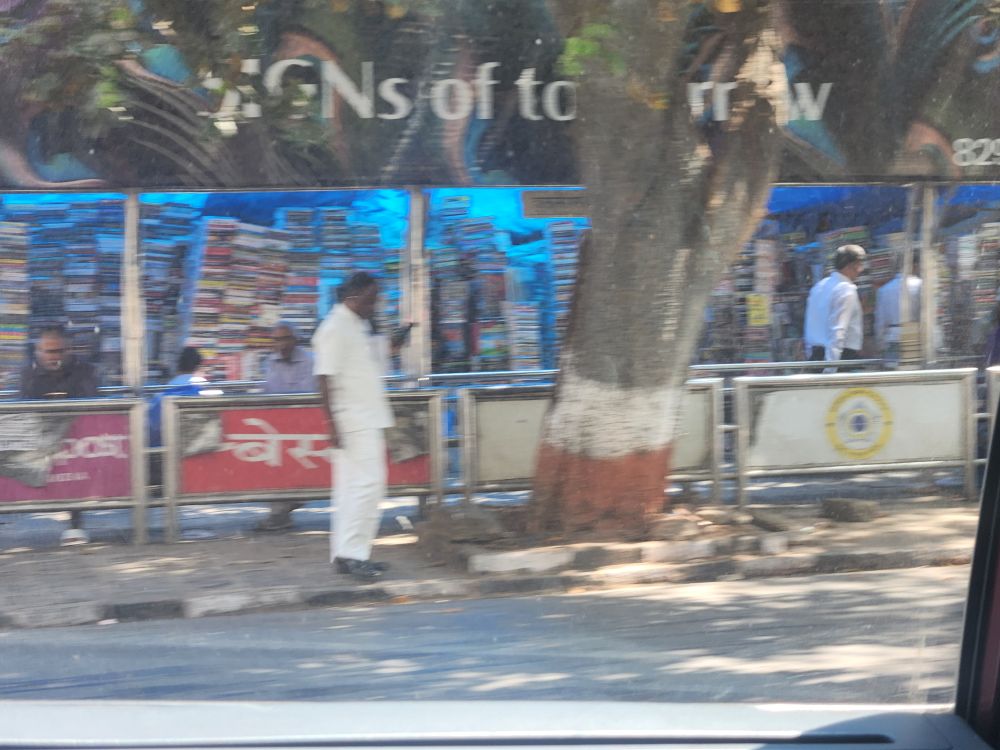
Morning tour complete, Husain and driver take us to the ferry at the Gateway of India, first passing by the “book corner” – an area with bookseller stalls lining the streets. Husain says it’s a big thing here, there are stalls everywhere, for used and new books. Amazing.
On to the Gateway we go, with Husain telling us the driver would be here to pick us up when we returned. He would send me the driver’s number and we were to call when were 10 minutes out on the ferry. Okie dokie. Again. We have Uber if this doesn’t work out – because there isn’t a parking lot or anything here, just an area in front of the Taj Hotel where the driver drops up. Sooooooo, finding him may be an issue, but we’re not really concerned. We’re more interested in how this island tour will work! Husain takes us to the ticket counter, buys our ferry tickets, deposits us on the ferry, taking a picture of us that he will send to the guide that will allegedly meet us on the dock at the island. Okie dokie, this is all just a faith/trust thing, we have no guide name, no WhatsApp contact info – just Husain and his word. The entire tour is just one big trust tour!
 Andiamo