We are docked! Finally – the ship is no longer moving and I for one am a very happy girl. This morning we are on a completely unusual schedule for us. Because the tours are leaving around 8, we just hang out in the cabin before heading to breakfast a little after 8, successfully avoiding the crush and any fall out from us cancelling so late. The plan works perfectly and we are soon out on the dock – stepping on dry, unmoving land for the first time in 8 days. What a fabulous feeling.
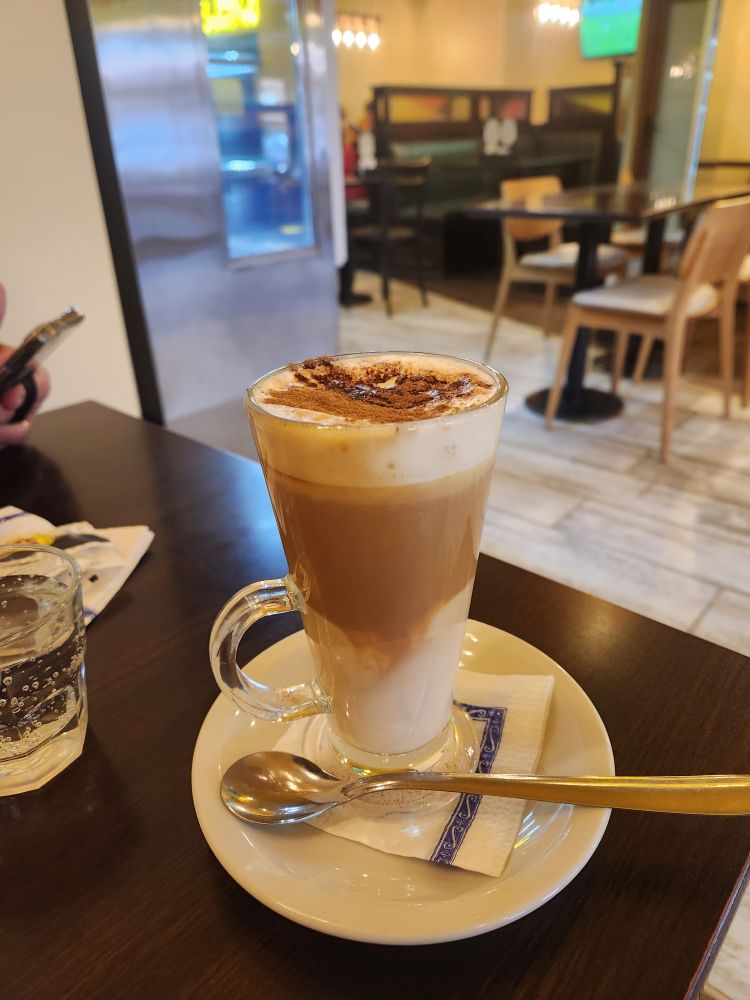
Even though the weather is definitely not pleasant (hey, why break a streak now? The weather has been against us this entire voyage!), we just pull up our parka hood and head out into the wind. We don’t care, we’re on land! Our first stop is the Maritime Museum which we eschewed years ago because it was too expensive then – ha! Now? Crazy over the top expensive, but it is supposed to be really good and we can use the time to walk and stretch our under-worked leg muscles!!! We end up way too early for the museum, deciding to stop at a cute little café called Banana for coffee – 2 awesome cappuccinos later and we are ready to roll.
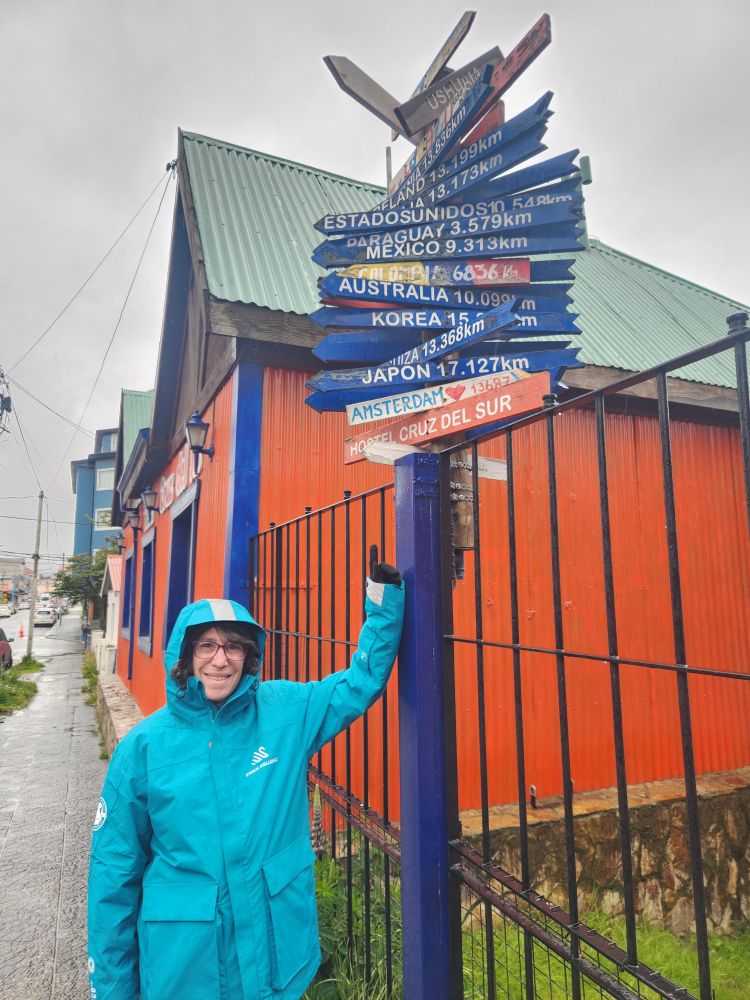
A quick walk up the hill – passing the great directional sign with every country imaginable – and we arrive at the museum right at opening time. Standing in line, we move up quickly as a few people look at the price and pass (it’s $36 US each – totally steep – but we are not complaining if it means a day out on our own!) and end up being the 3rd or 4th people in the massive museum. Housed in the old Military Prison – the prison at the end of the world – there are 5 pavilions of exhibits housed in the old cell block wings. The history of the building is intriguing in and of itself – built in 1902 for humanitarian reasons to replace previous prisons located on the small islands in the Beagle Channel, it housed prisoners until 1947 when the building was transferred to the Marine Ministry and later the Naval Base was established around it.
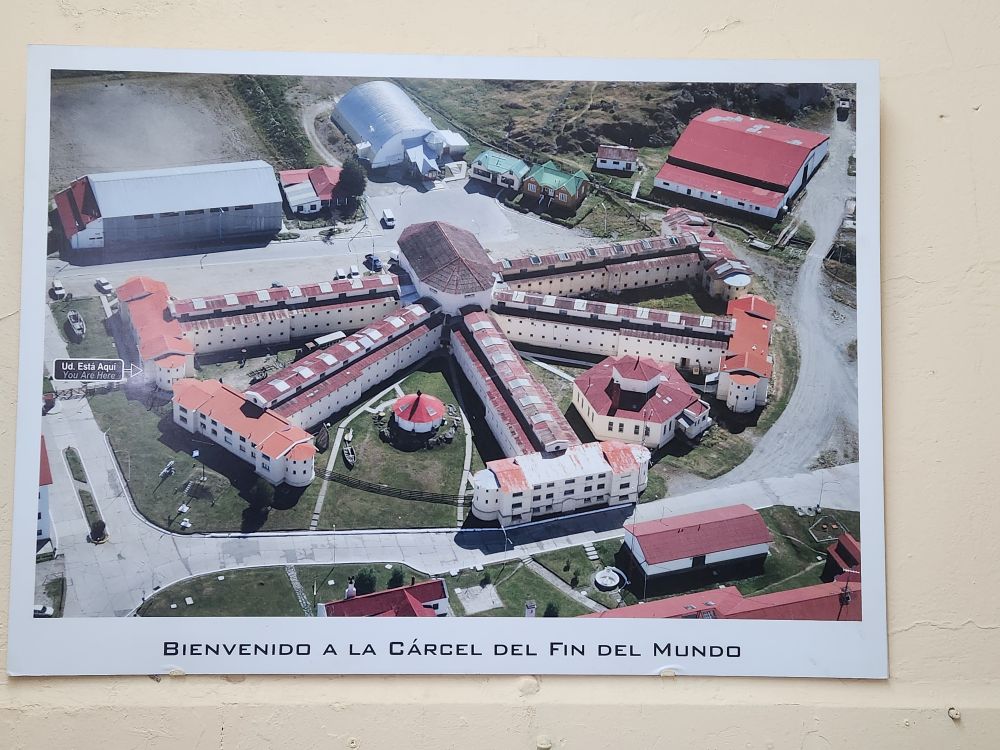
As such, one of the main exhibits is actually the Prison Museum in the first wing. But as people begin to arrive, that wing fills up pretty quickly, making us bide our time in the Ground floor portion of the Maritime Museum, which was full of disasters and models of sunken ships. One really pertinent display showed a cruise ship stuck in the ice with icebreakers coming to save her! Yep – that is EXACTLY what we did not want to happen to the Diana!
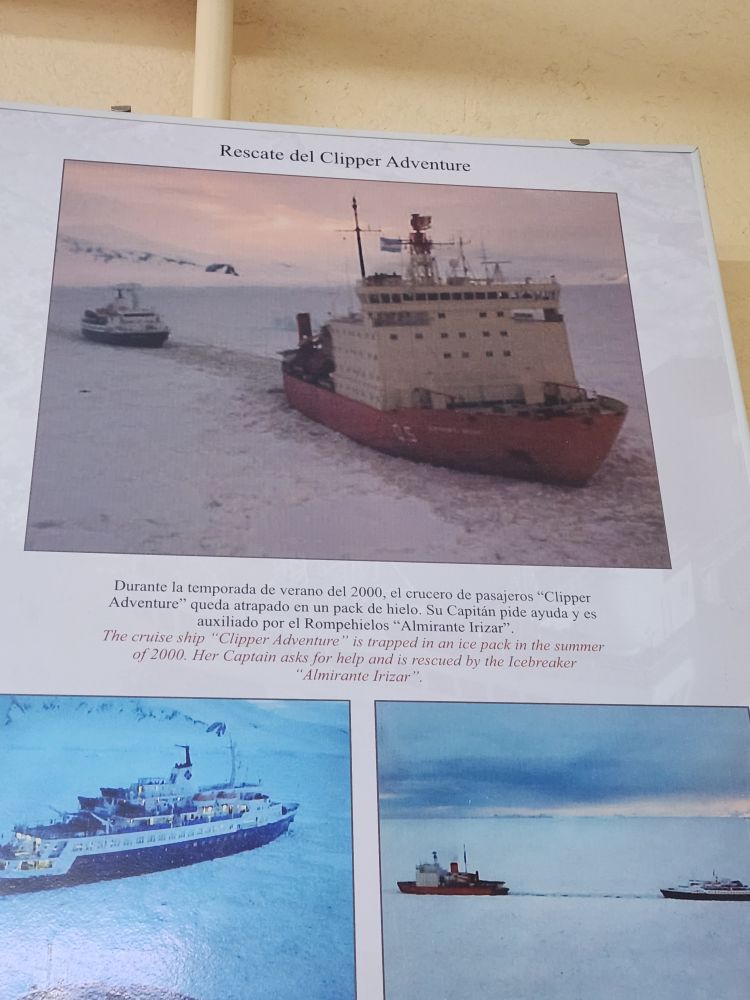
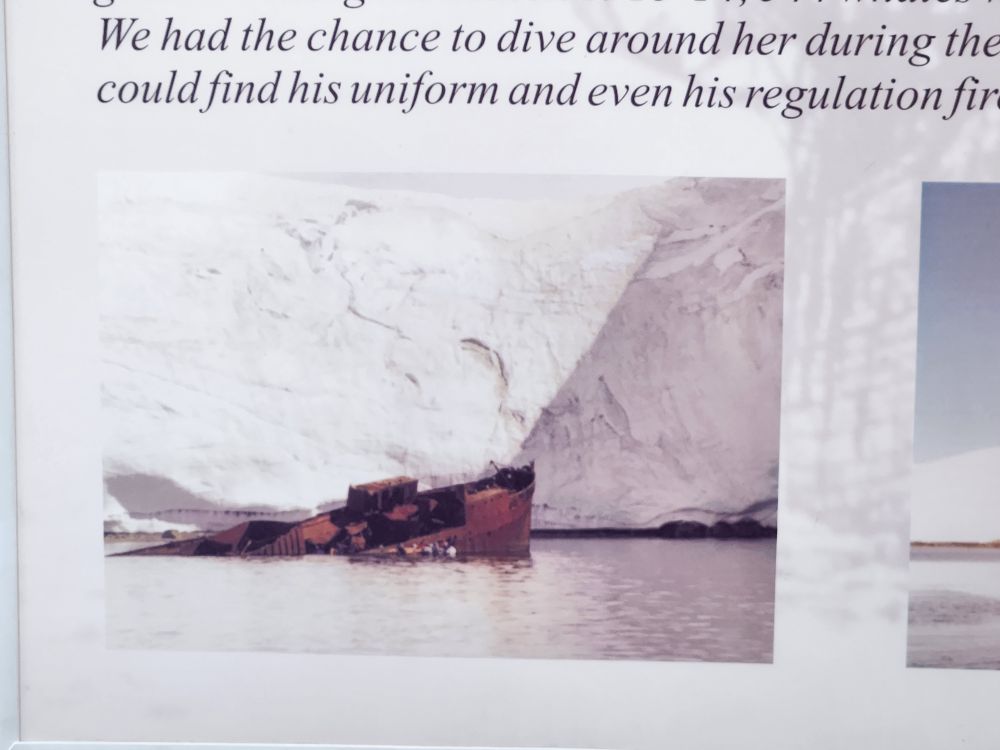
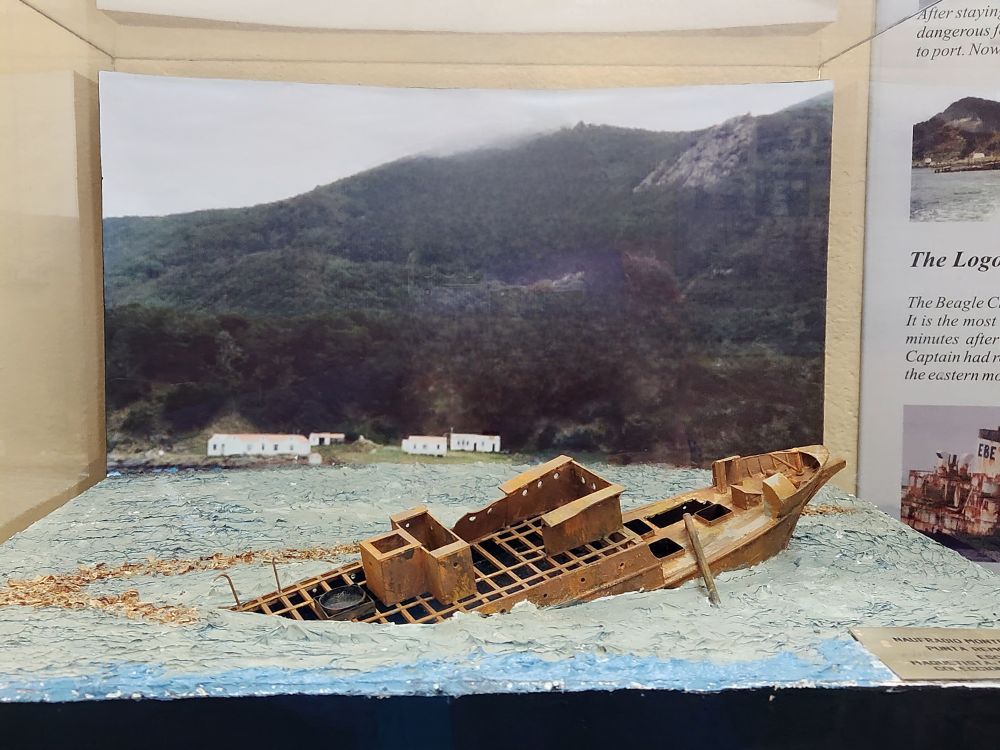
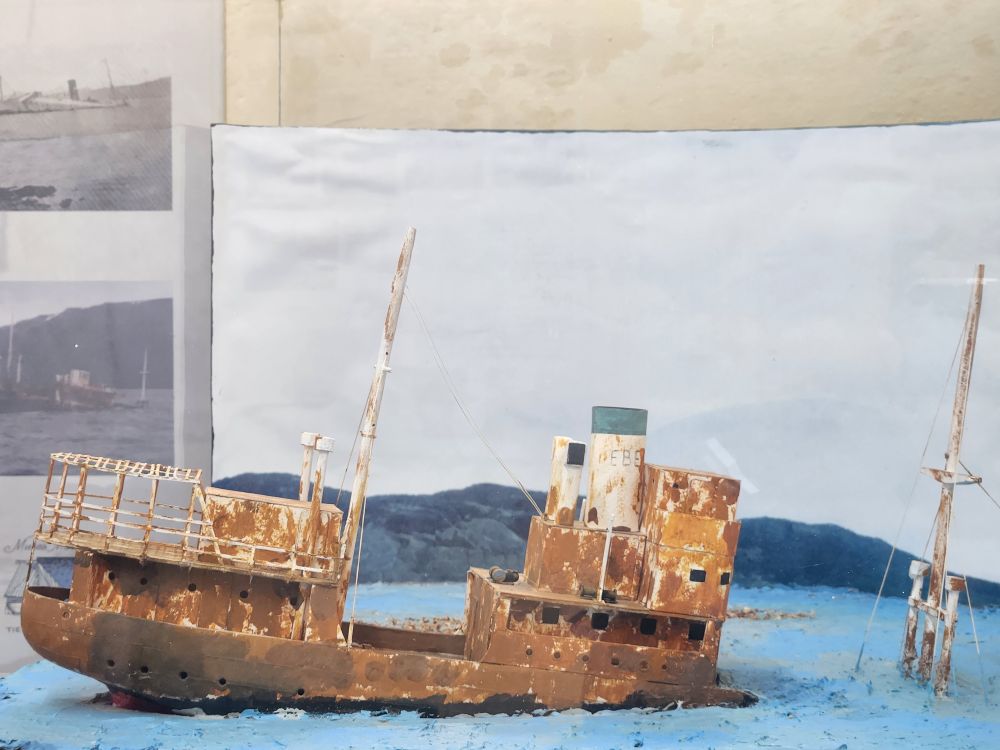
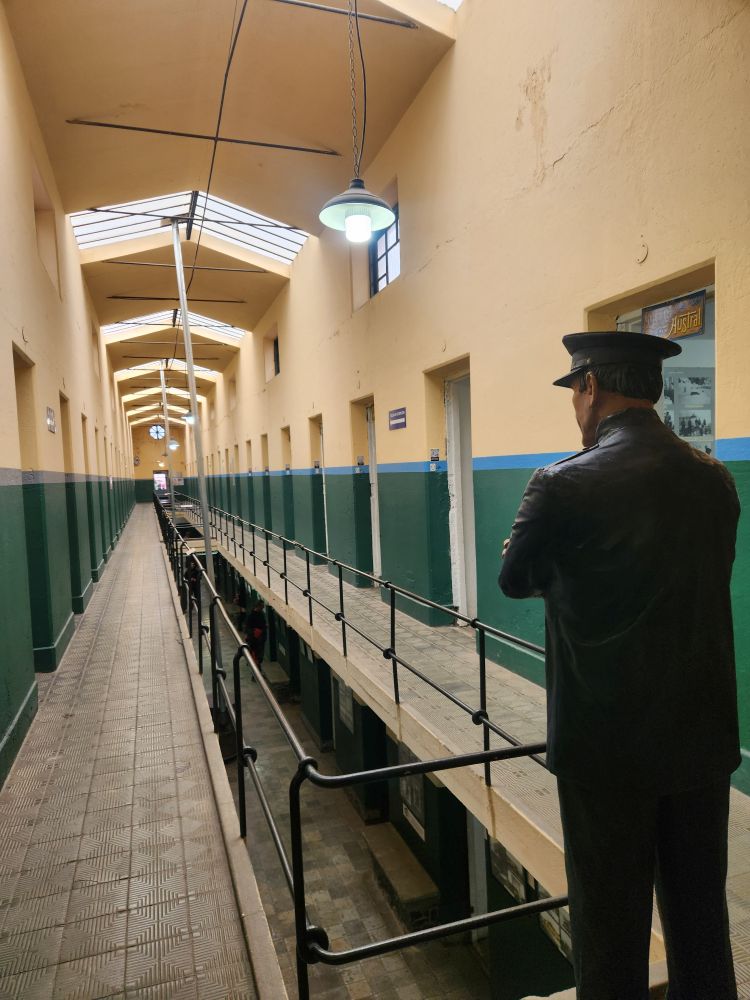
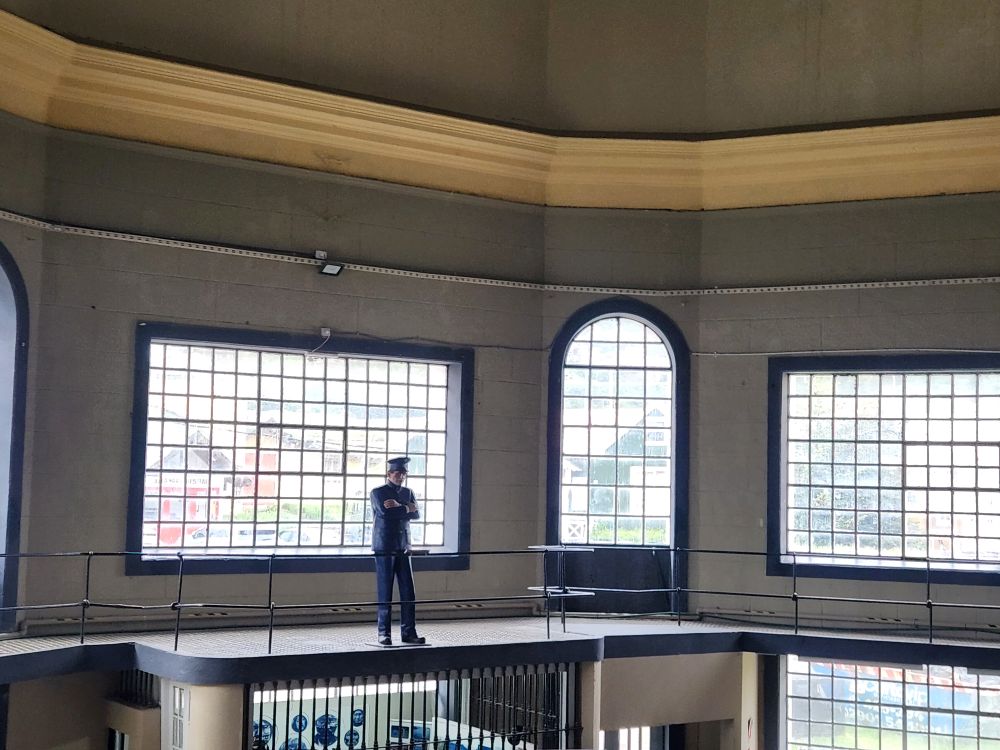
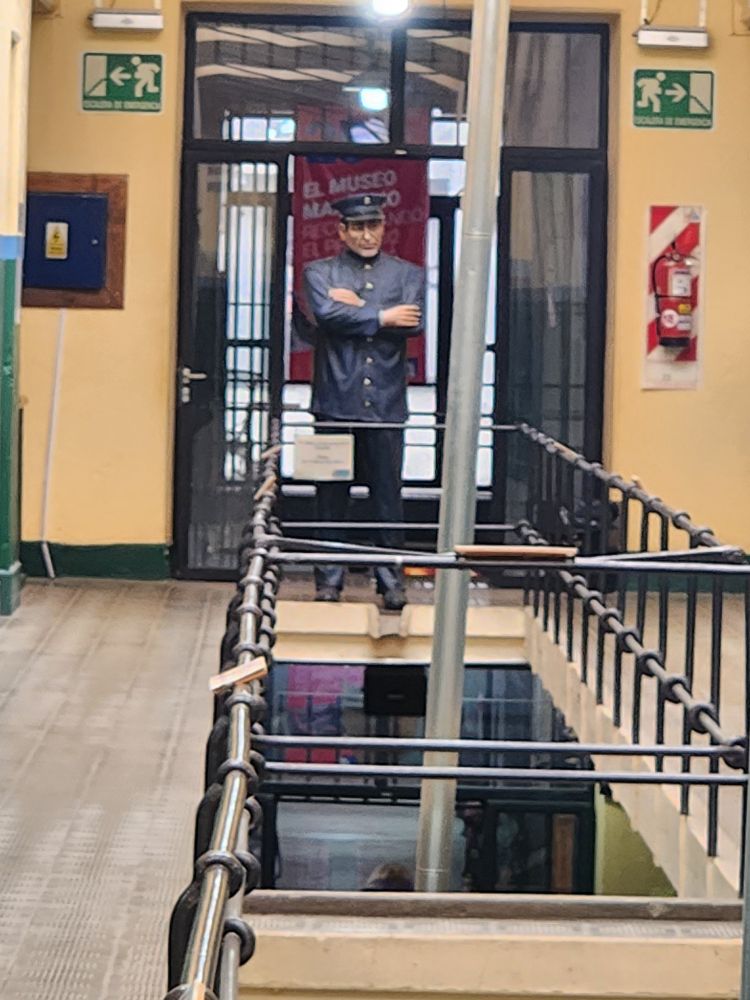
Moving on – we bob and weave our way through the crowds to get through the prison wing, heading upstairs for the rest of the Maritime museum. Upstairs we find the Guard – who watches all his charges on both floors (fun!) – plus a look out onto the balcony surrounding the Central Hall atrium. A cute representation of how it once looked as a prison, complete with additional guards and inmates on the ground floor.
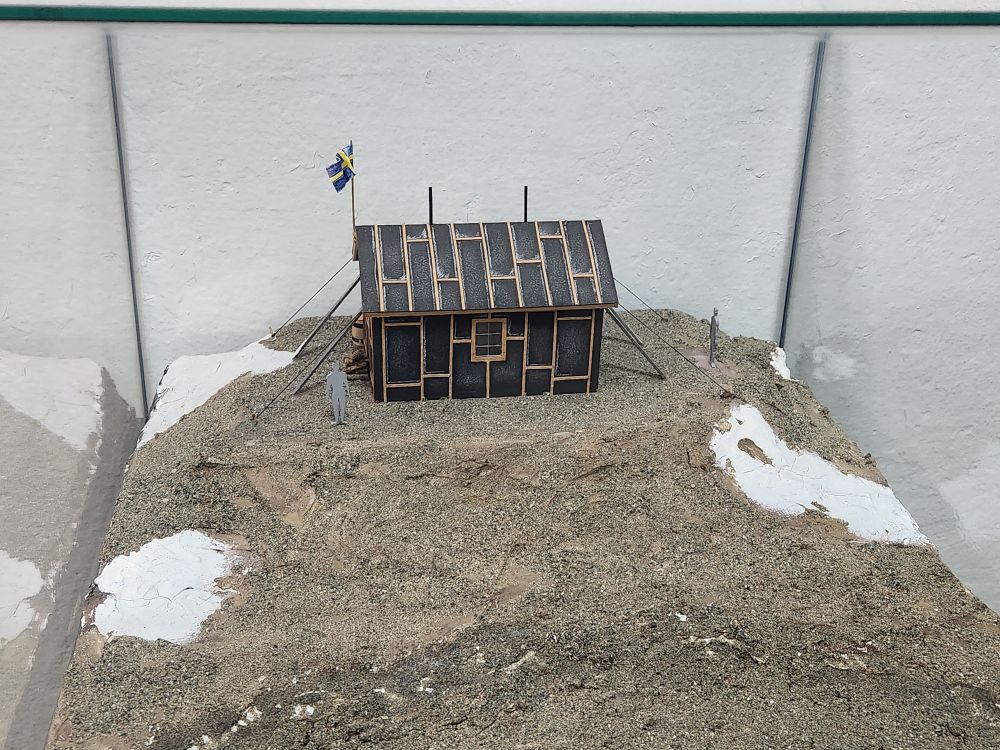
Turning back to the cell block, we begin our examination of the Antarctic voyages and Explorations chronicled here. We have learned about virtually everything here from our lectures on board! Totally cool – lots of additional info – and amazing photographs. A whole series of rooms about the SS Antarctica, the Swedish Expedition led by Nordenskjold we just learned about yesterday. Two years on the snow! Here though we can see actual photos of the cabin they built, the huts, the dogs, the skis, plus artifacts that were found later when others went back to create a museum in the buildings.
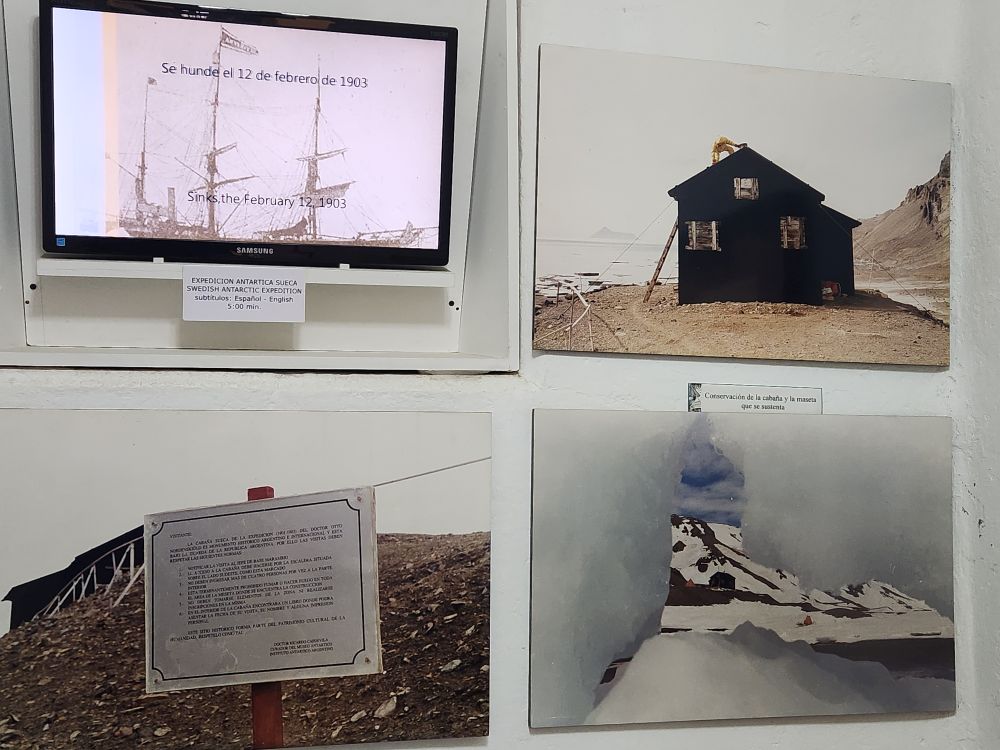
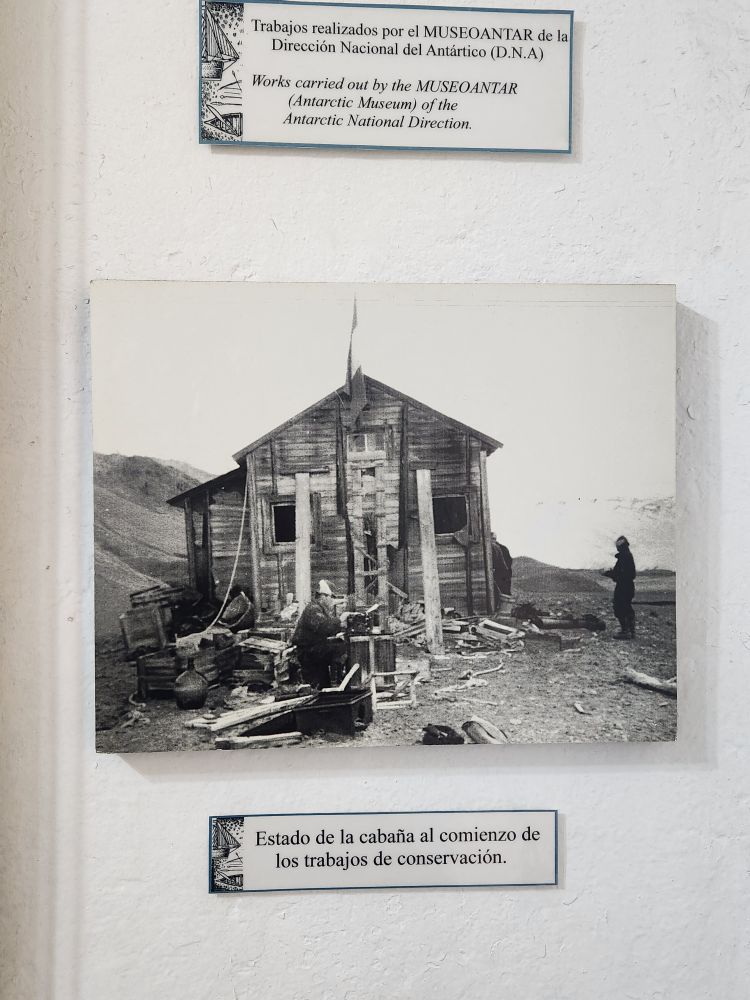
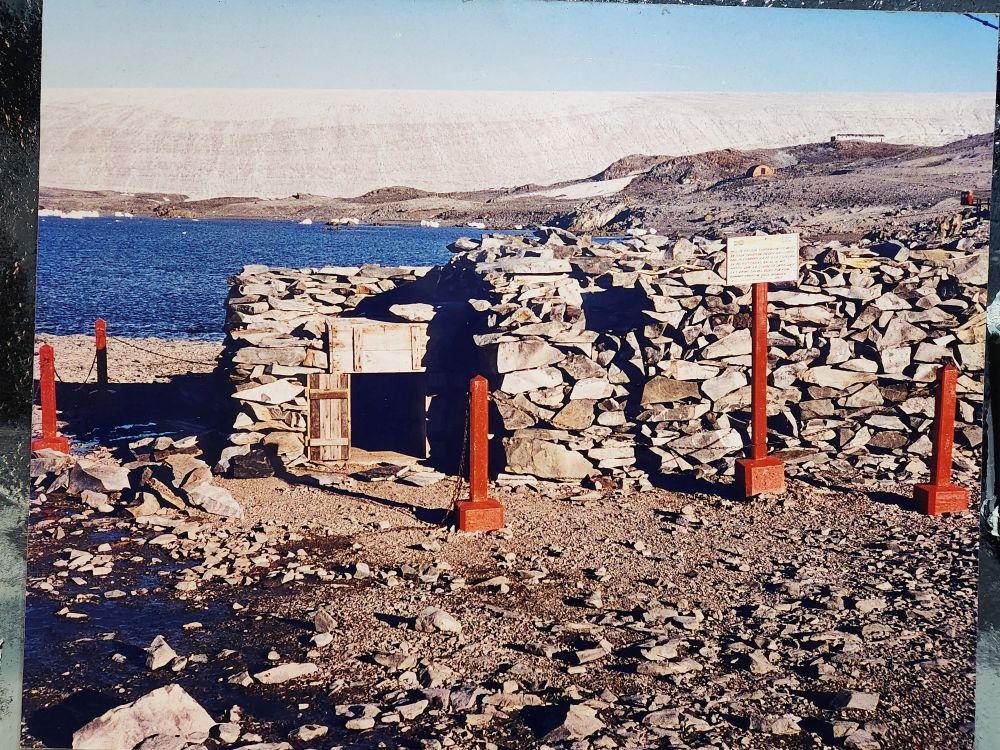
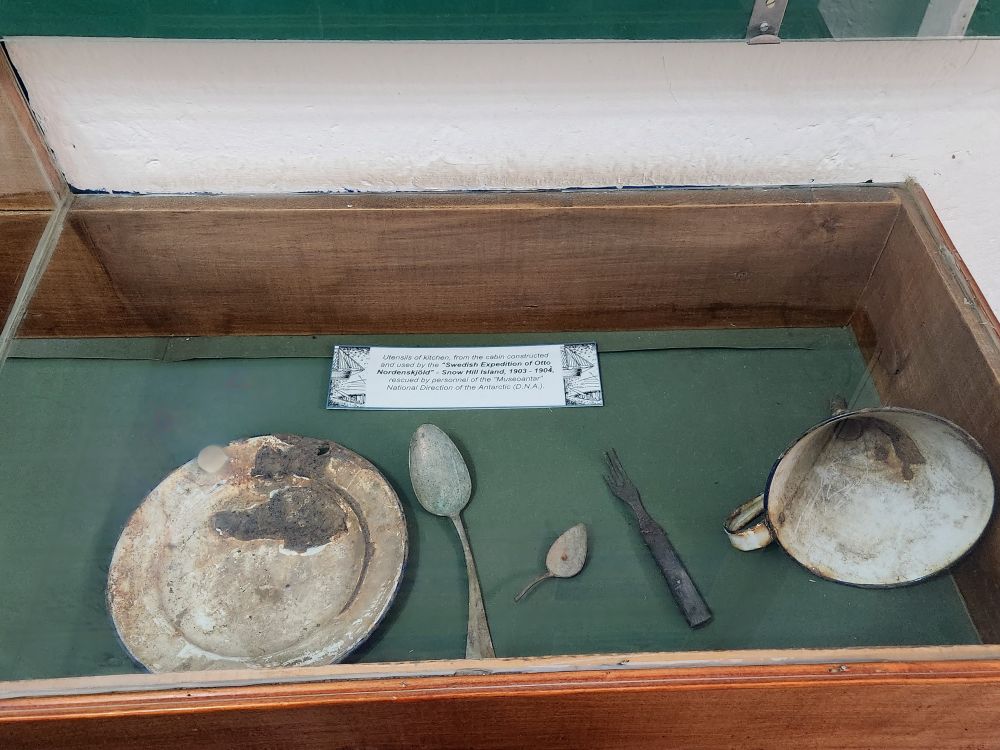
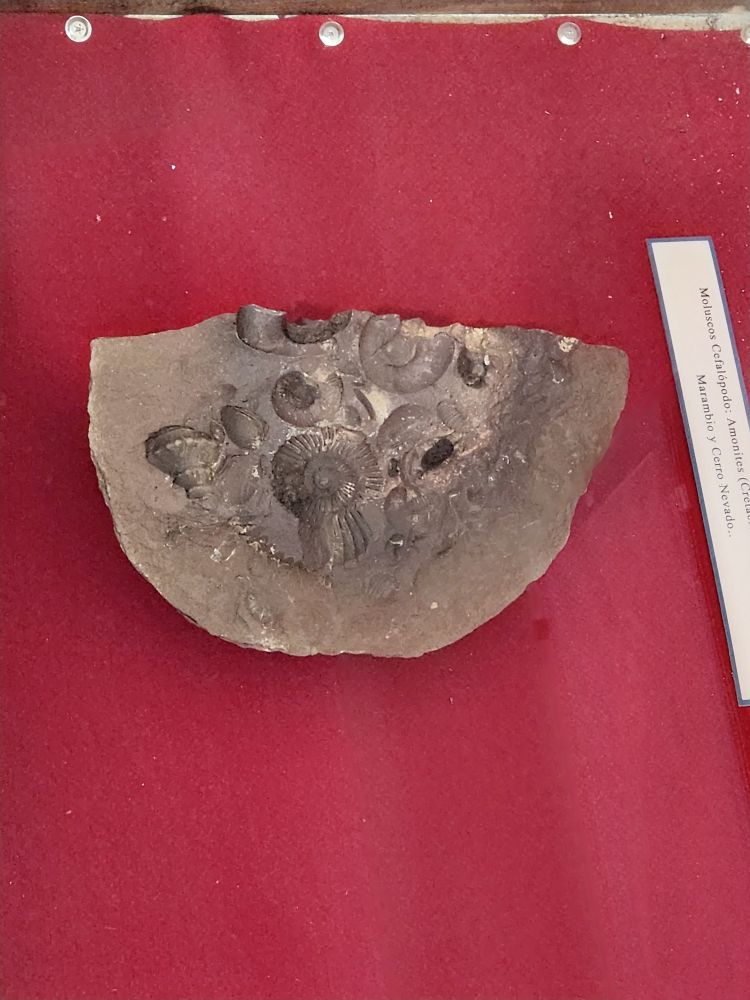
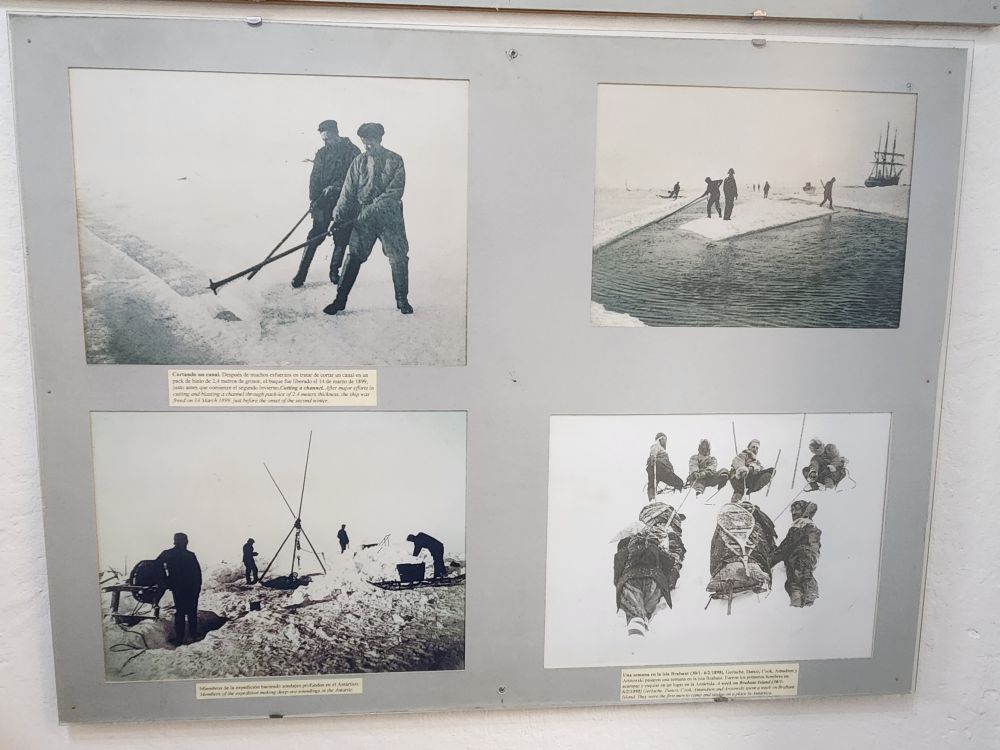
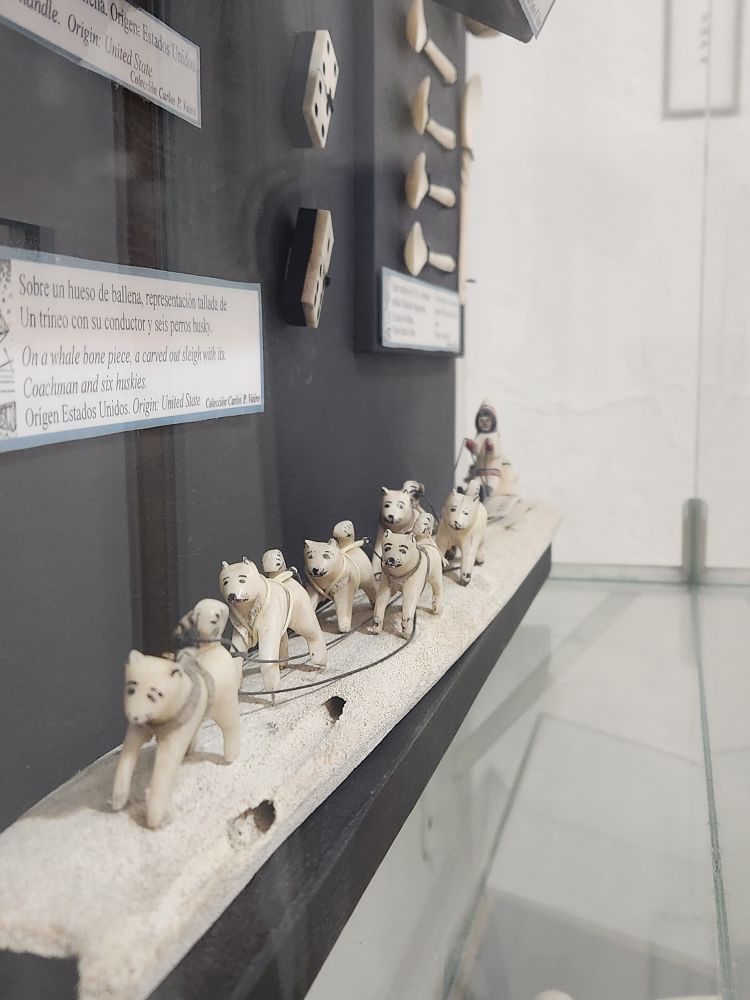
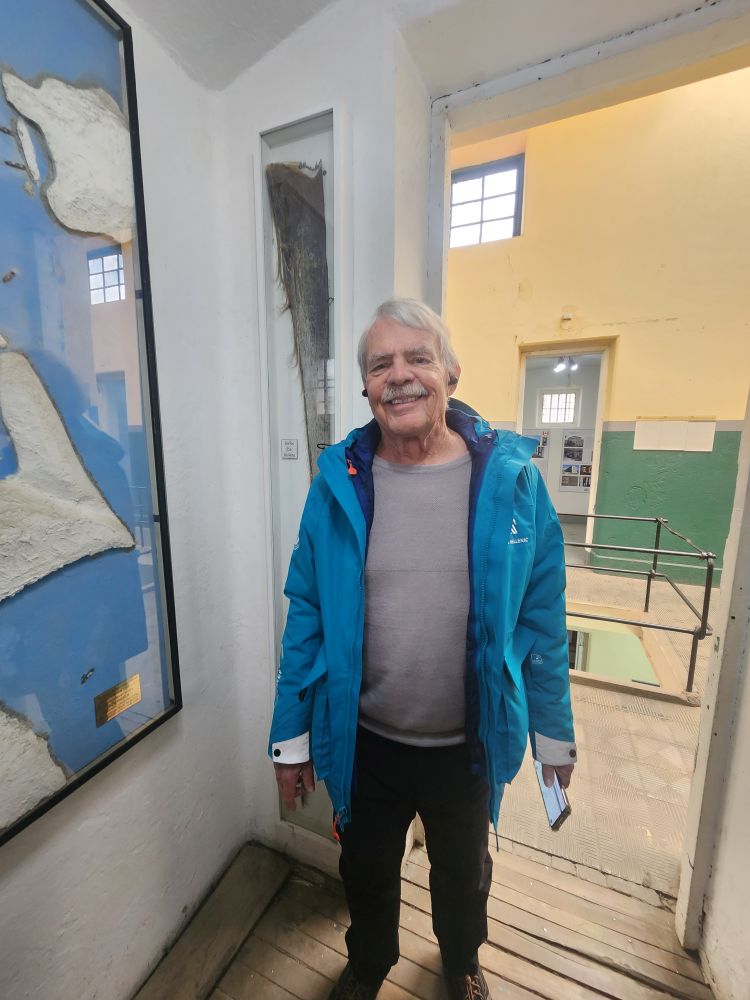
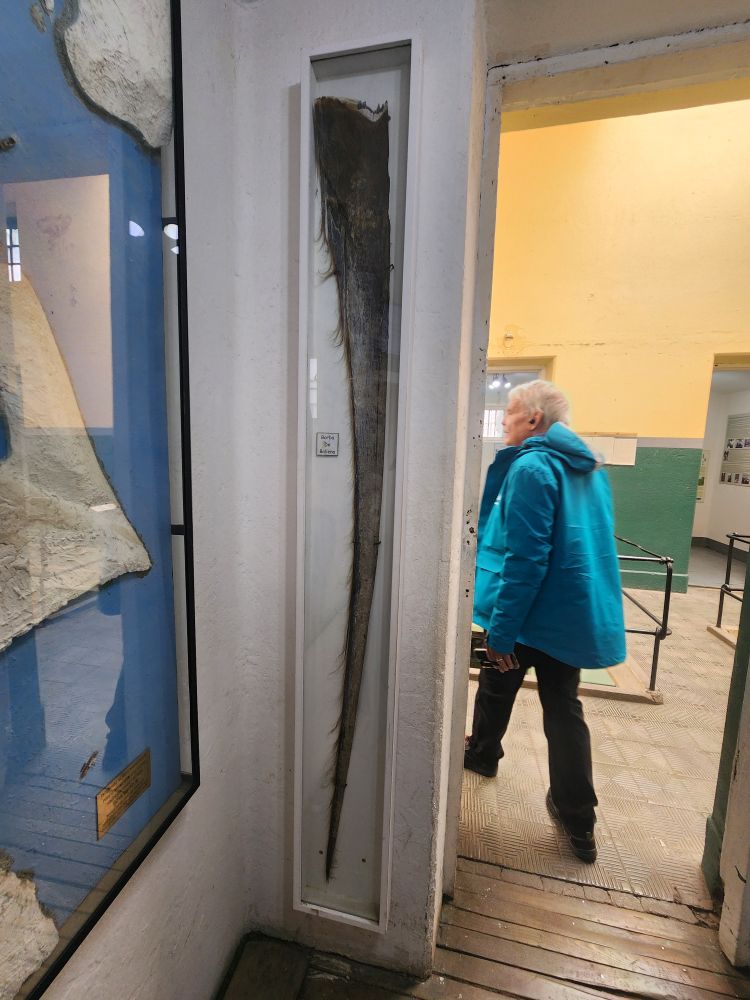
There are fossils that show sea and plant life where it doesn’t exist now on the White Continent. An exhibit on the Belgica, with photos of how the men cut the ice to get the ship free. Cool displays of carved whale bone (ok, not cool it was whale bone, but the little dog sled was just amazing) and an example of a piece of baleen from a whale’s mouth. You can see how big it is compared to Ed – it must be about 7 feet in length.
On the other side of the hall, the cells contain prison memorabilia as well as display posters for each prison turned museum across the world. We have decided we must be prison junkies, because we have visited the vast majority of the prisons displayed there.
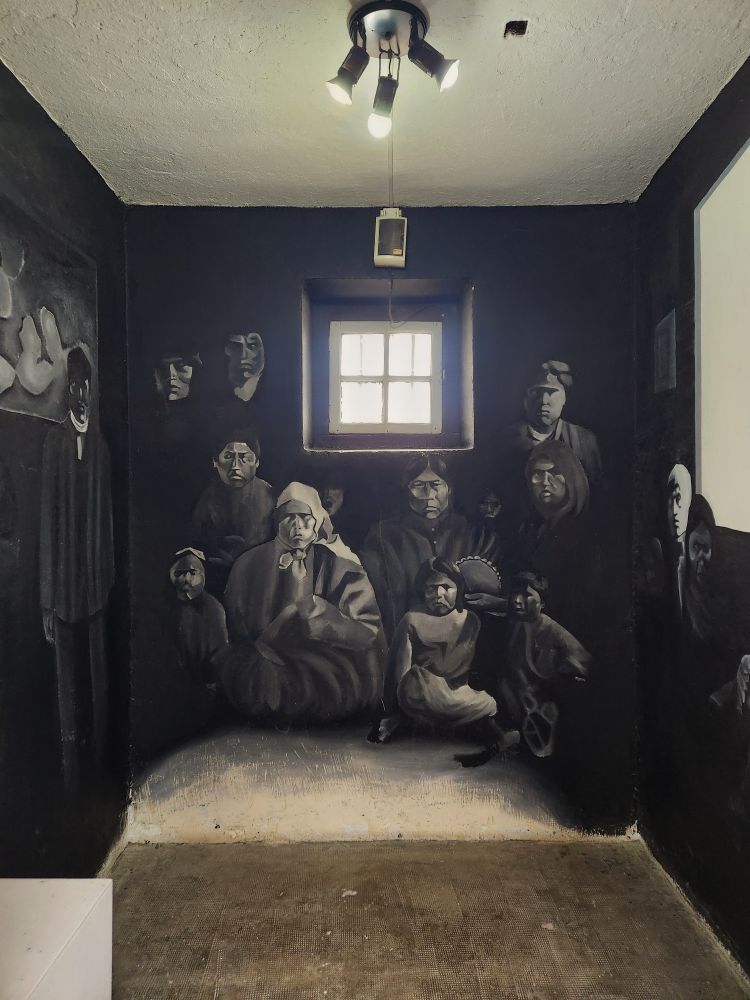
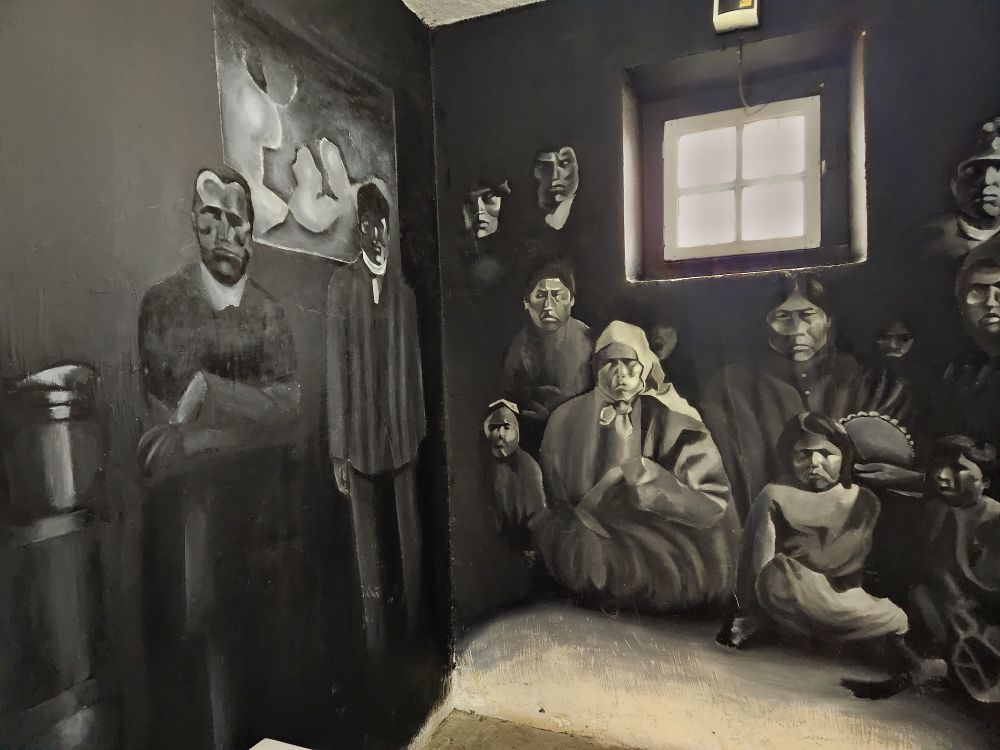
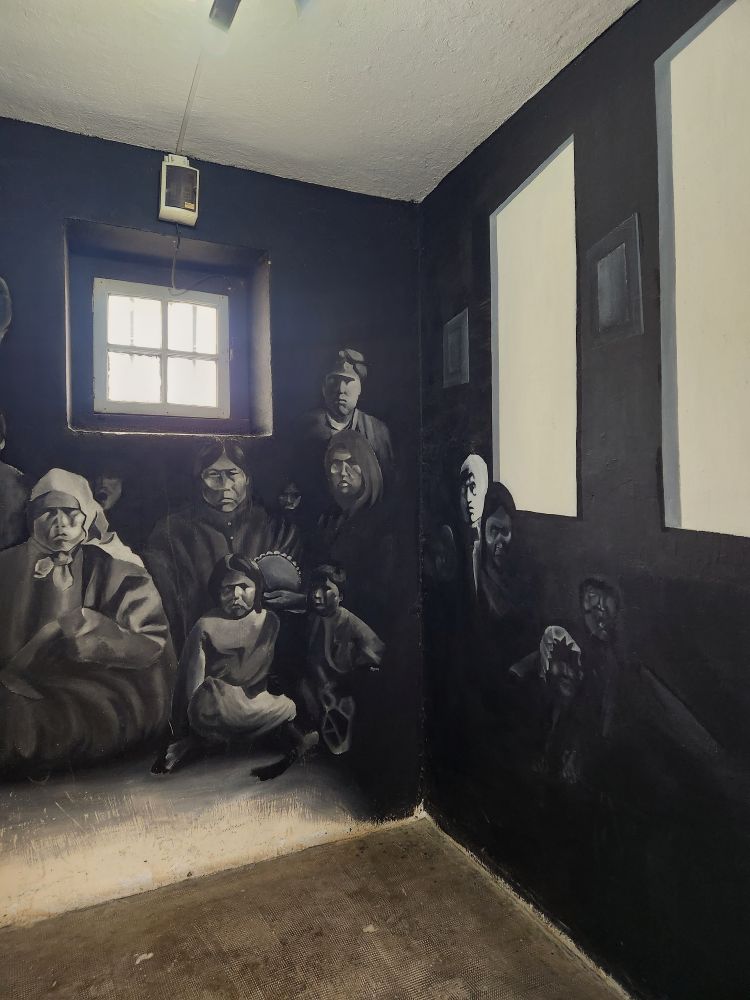
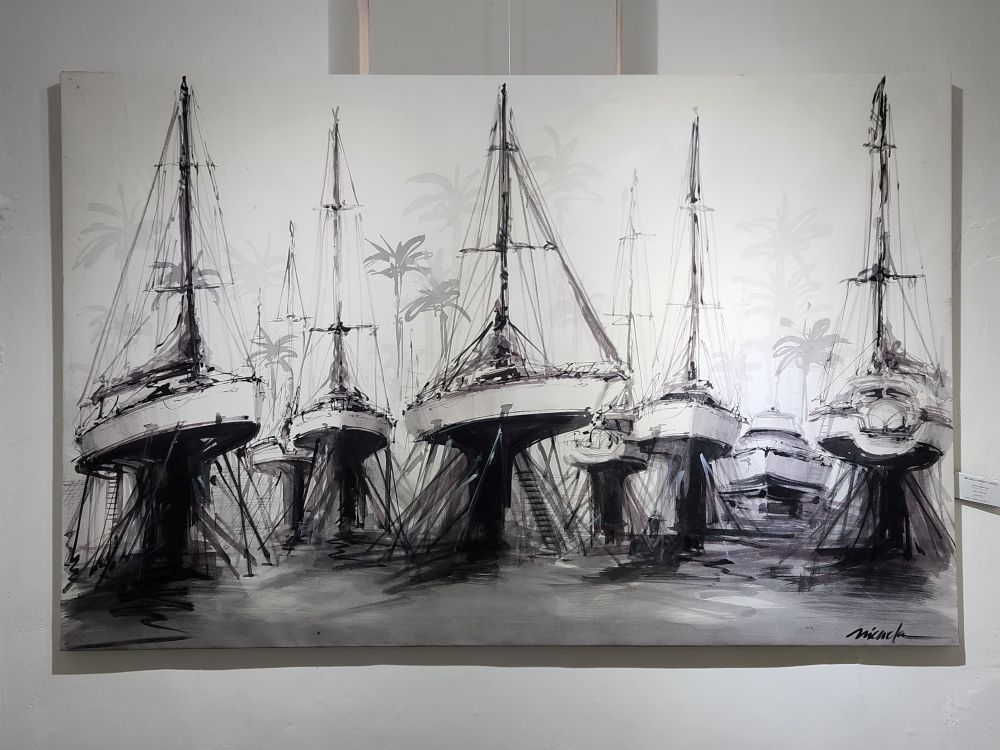
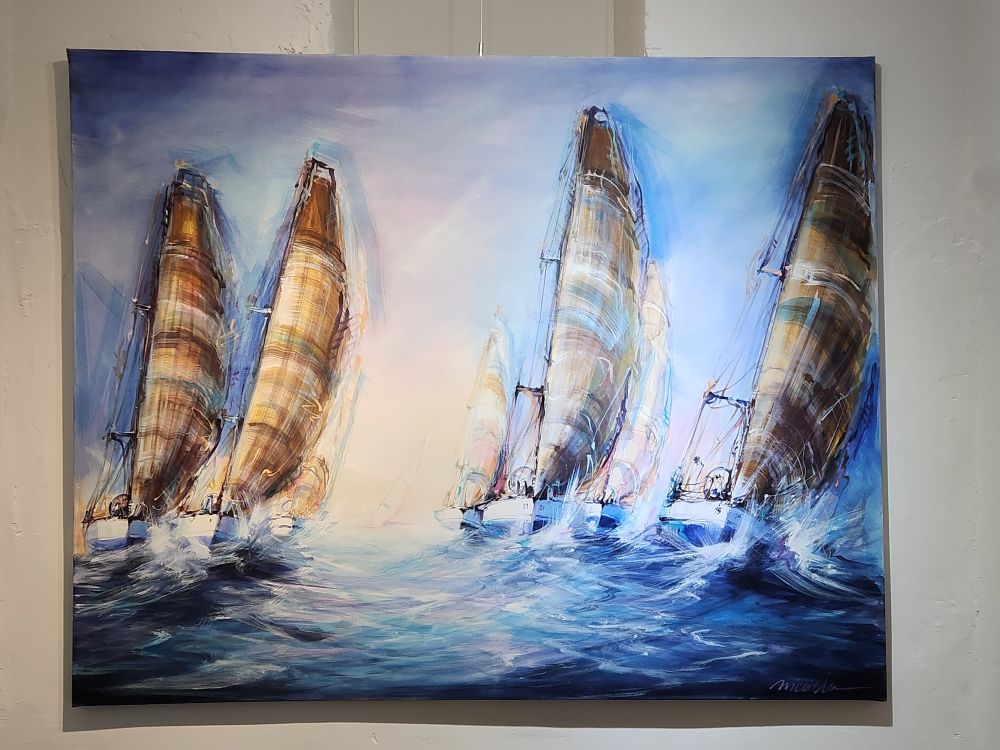
Back downstairs, we head into the art gallery pavilion which contains some really stunning pieces – including an amazing mural that wraps around the walls of one of the cells.
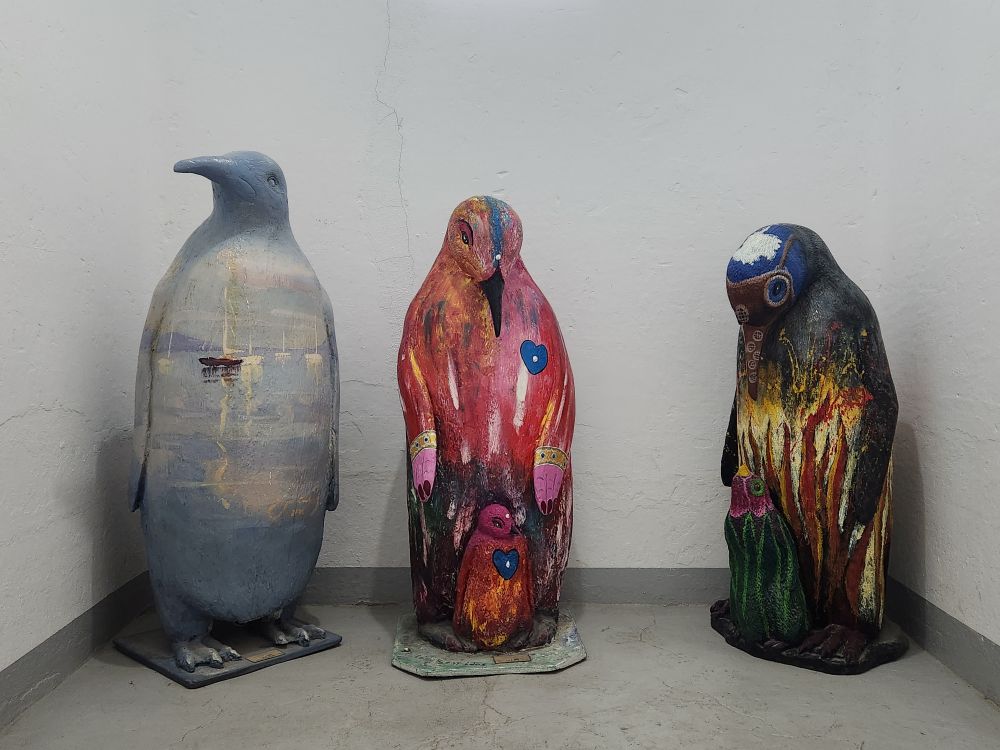
But the best was the Penguin statue exhibit. Life sized depictions of Emperor Penguins painted in every different way imaginable. The so called “Penguin Project” was begun by Carlos Vairo who first visited Patagonia in 1973 and became enamored with the penguins. Captivated by the Emperor’s “devoted hatching,” he decided to create a 3-dimensional cast for penguin statues and began to paint. Knowing that the Art Gallery of the Maritime Museum was already open, he envisioned a “guard” of penguins in the prison. Now other artists have also begun to paint from his penguin cast and they line the walls and cells of one of the pavilions, absolutely looking like guards…or the inmates themselves.
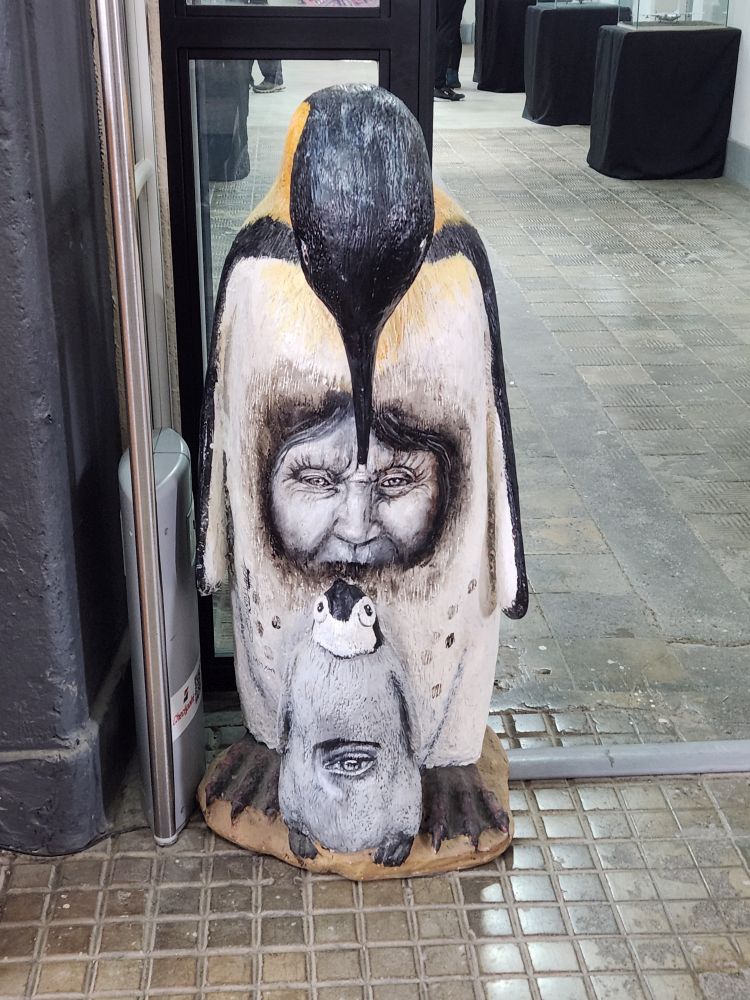
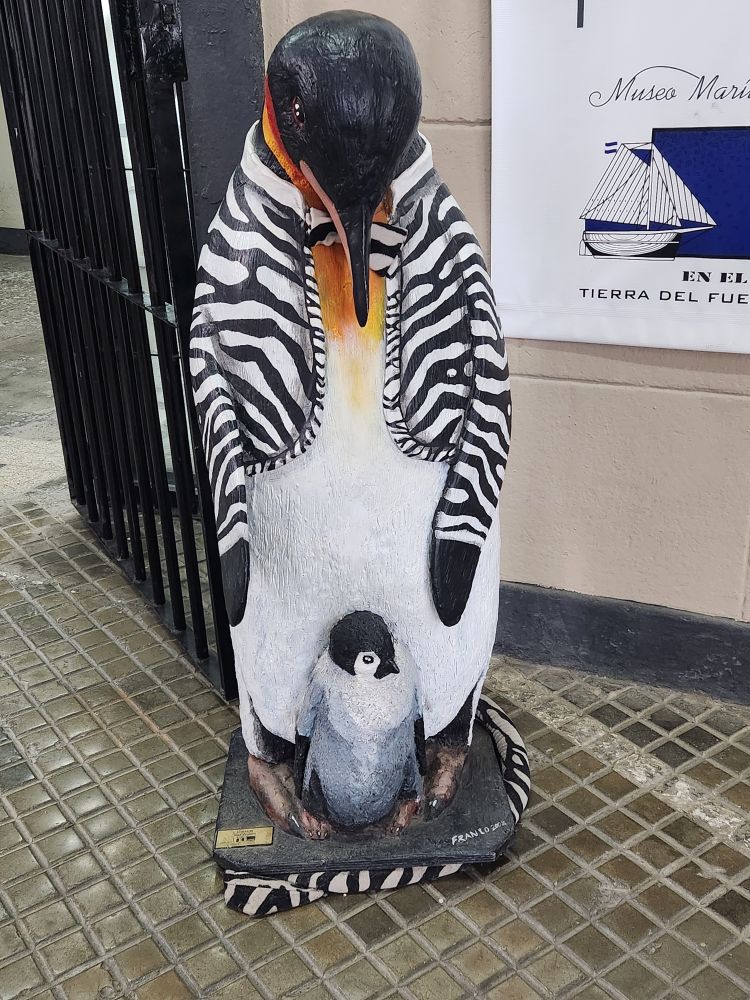
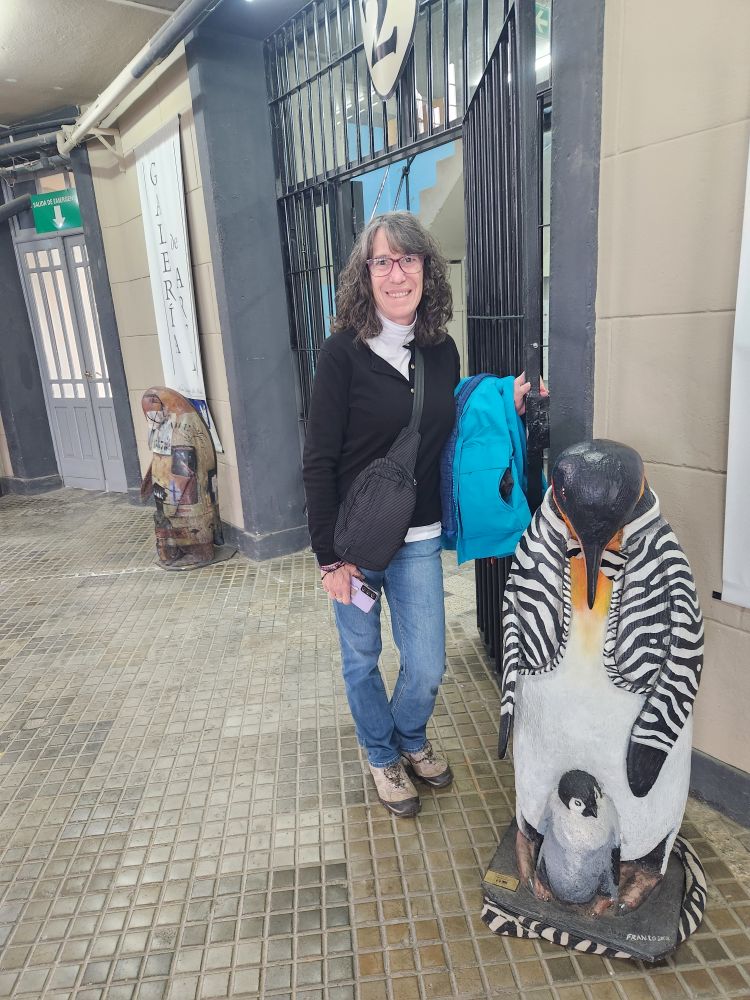
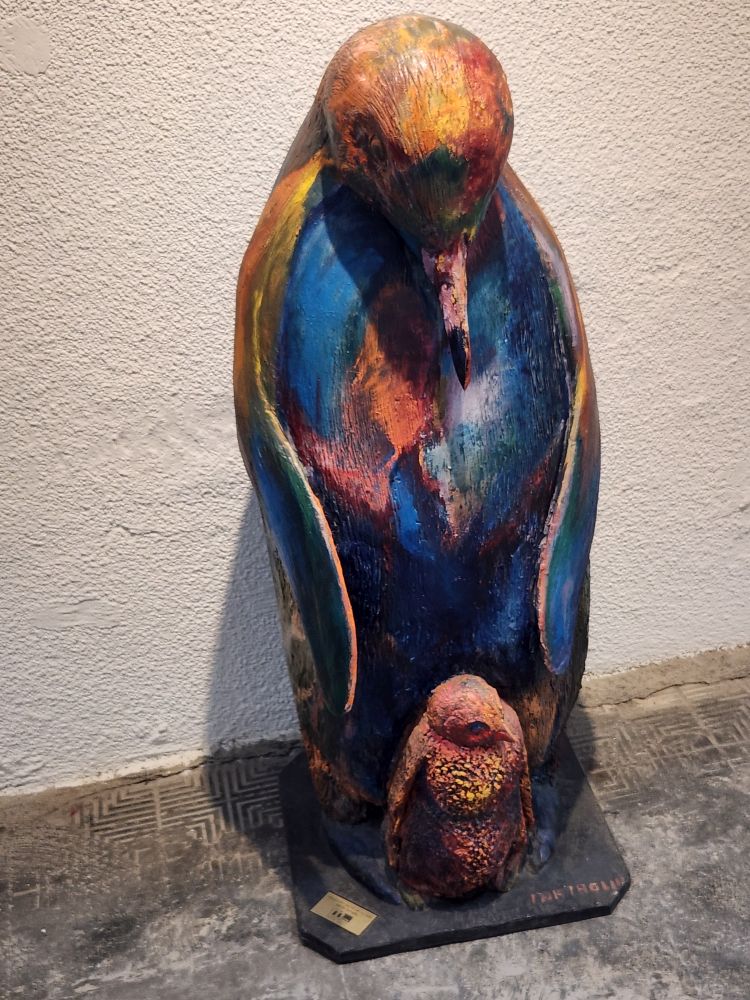
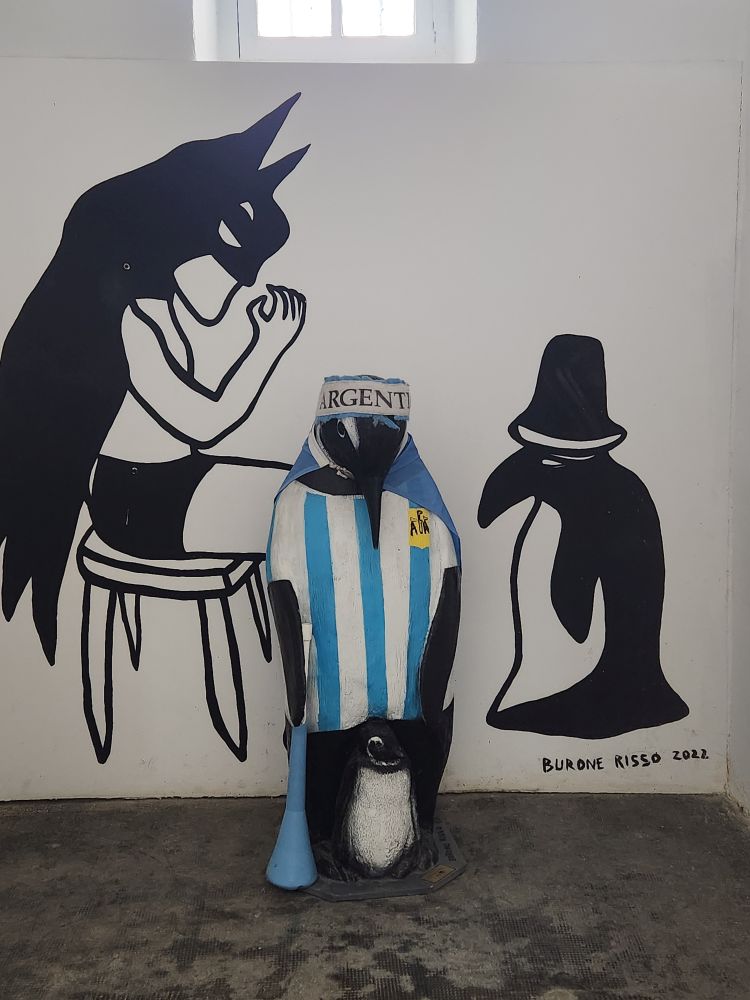
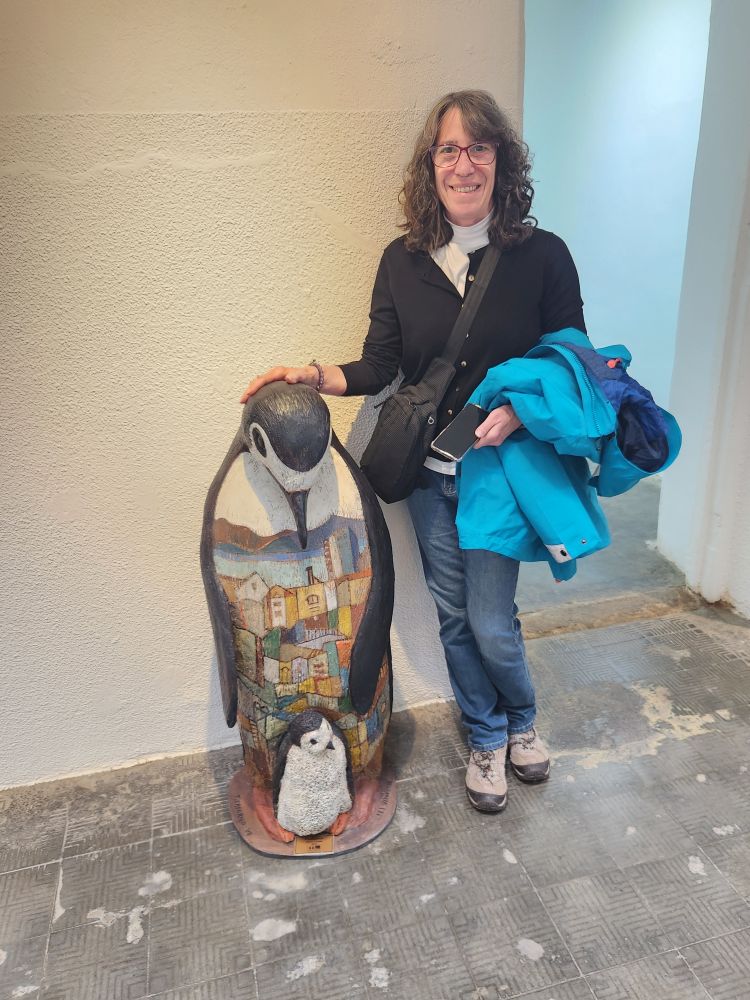
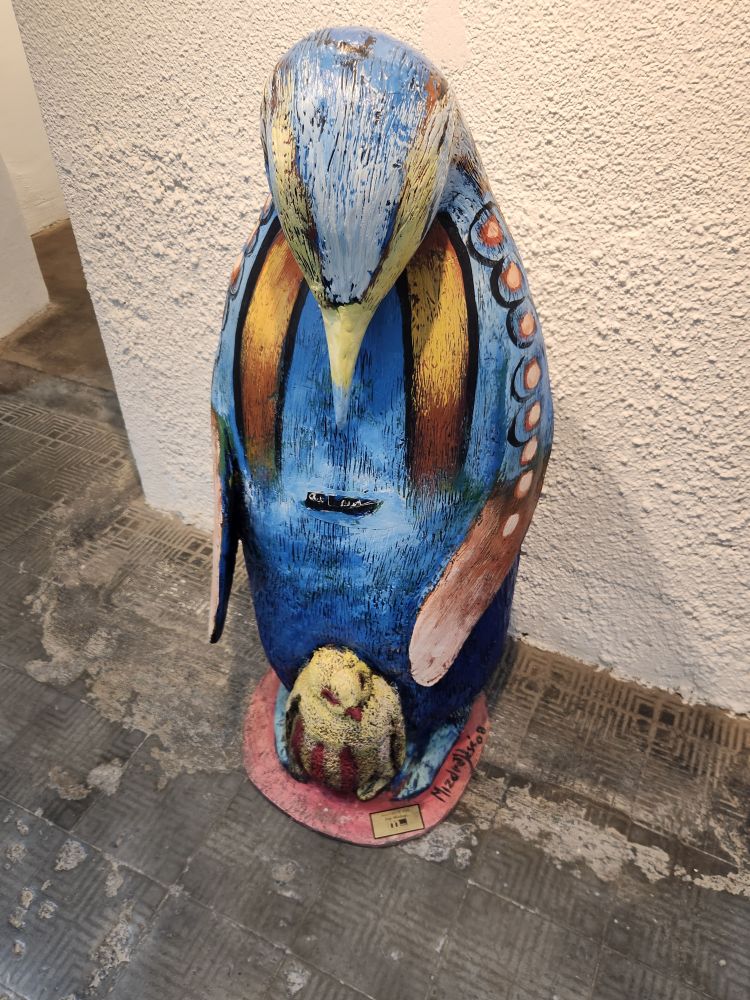
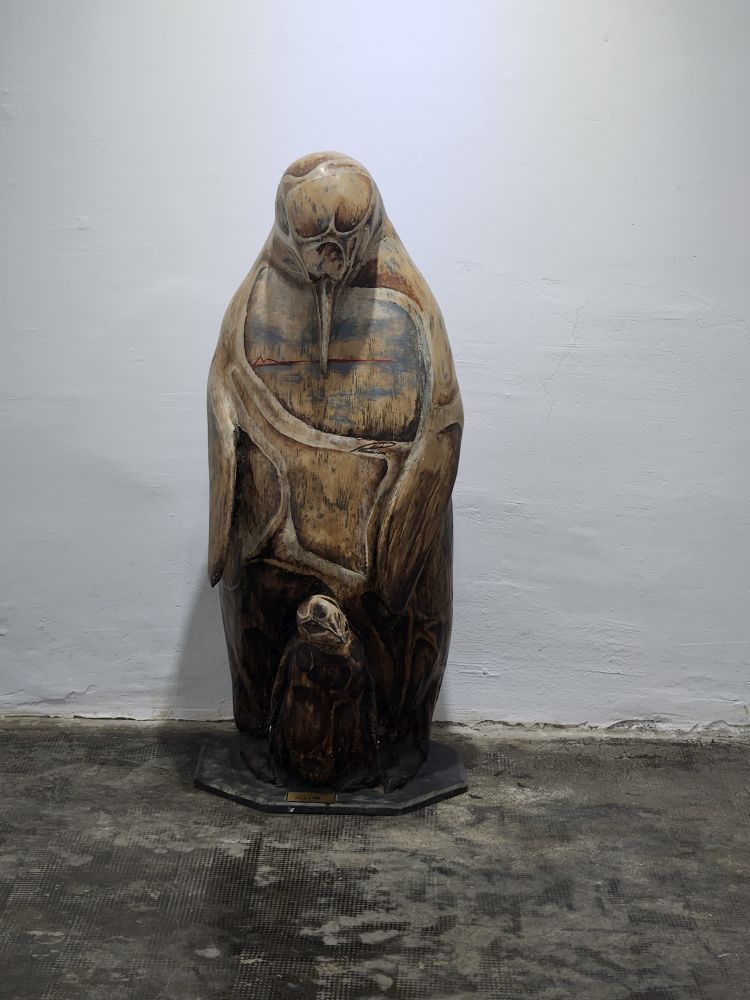
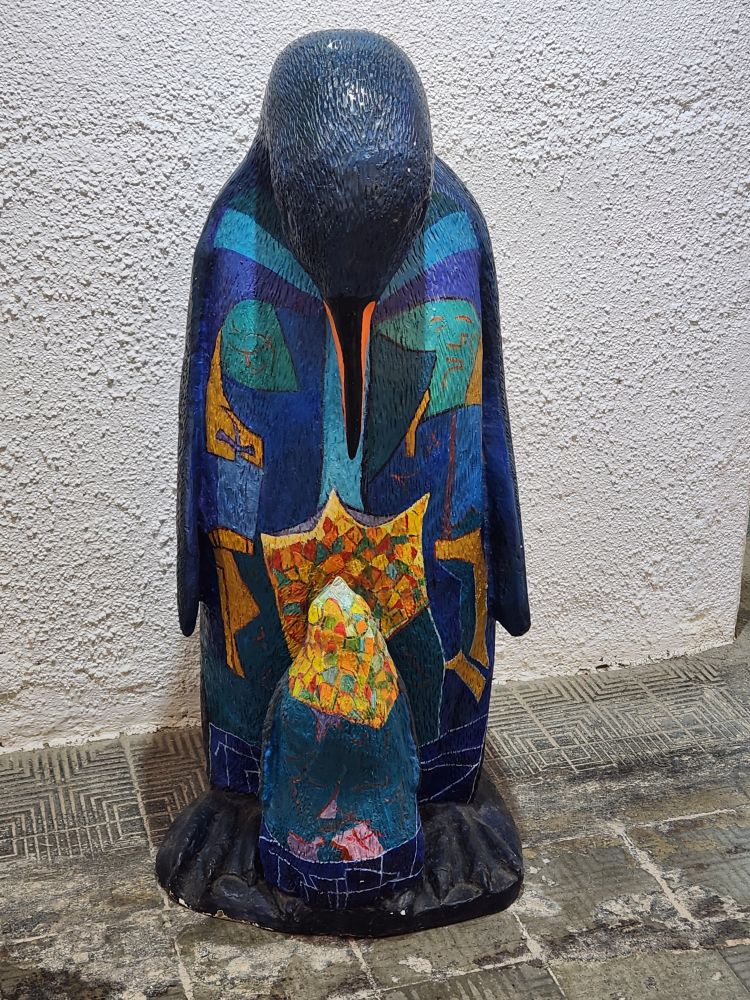
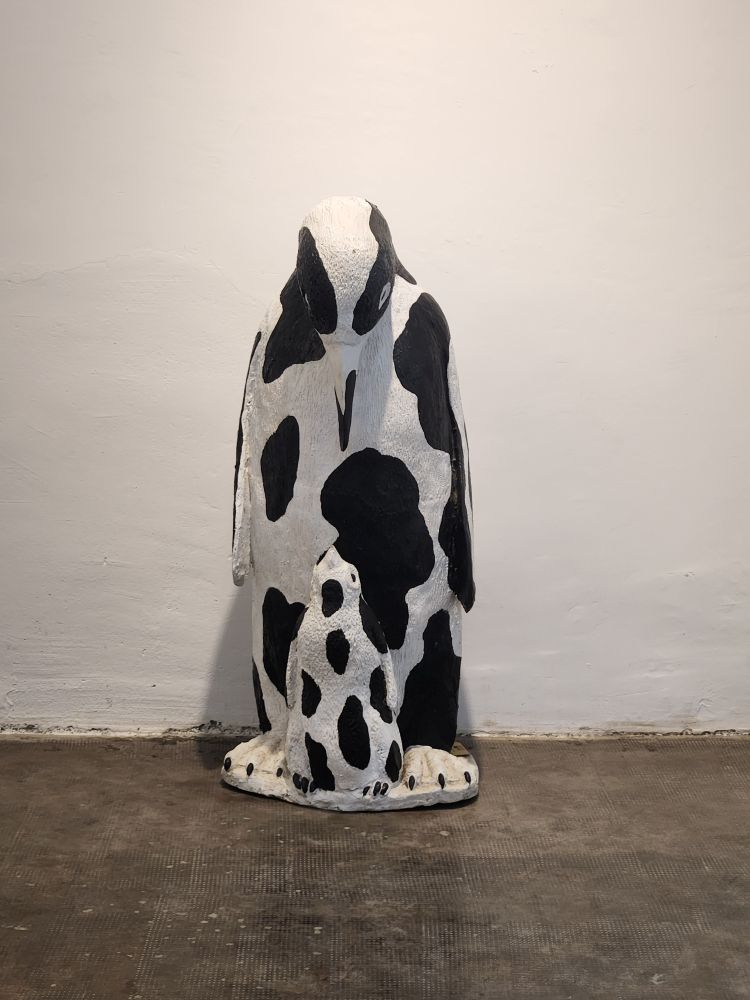
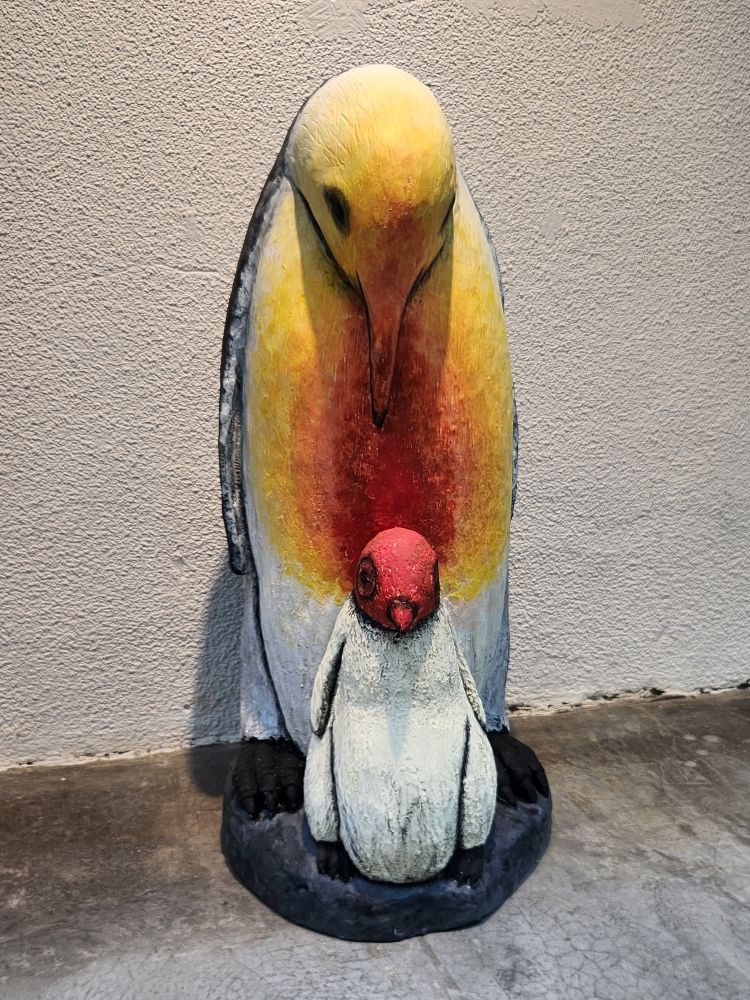
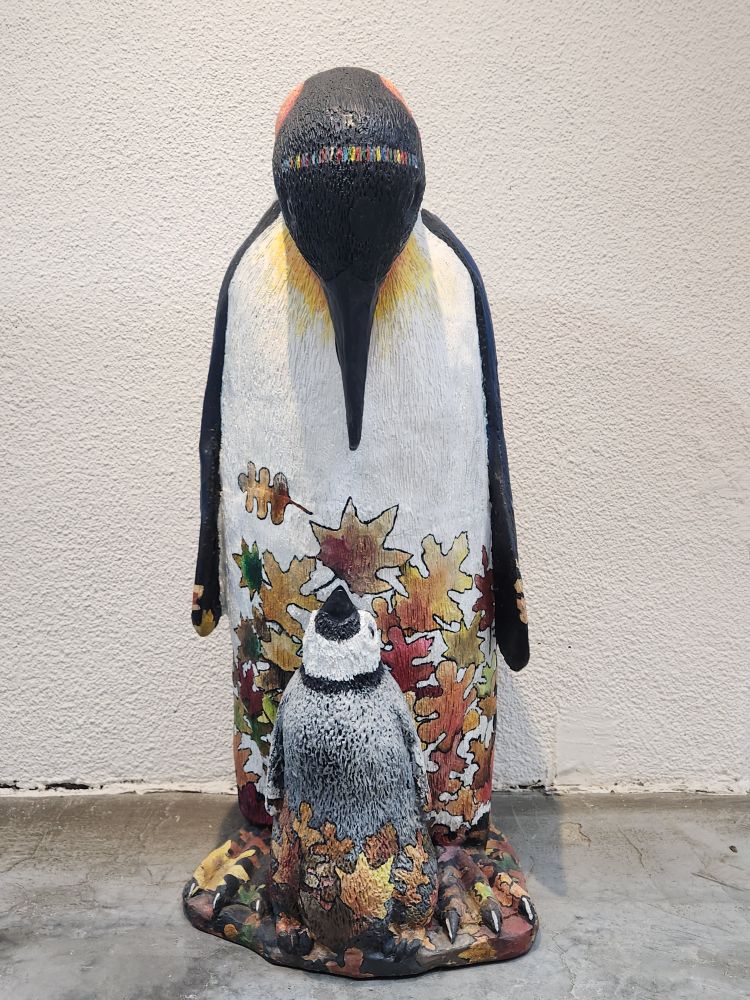
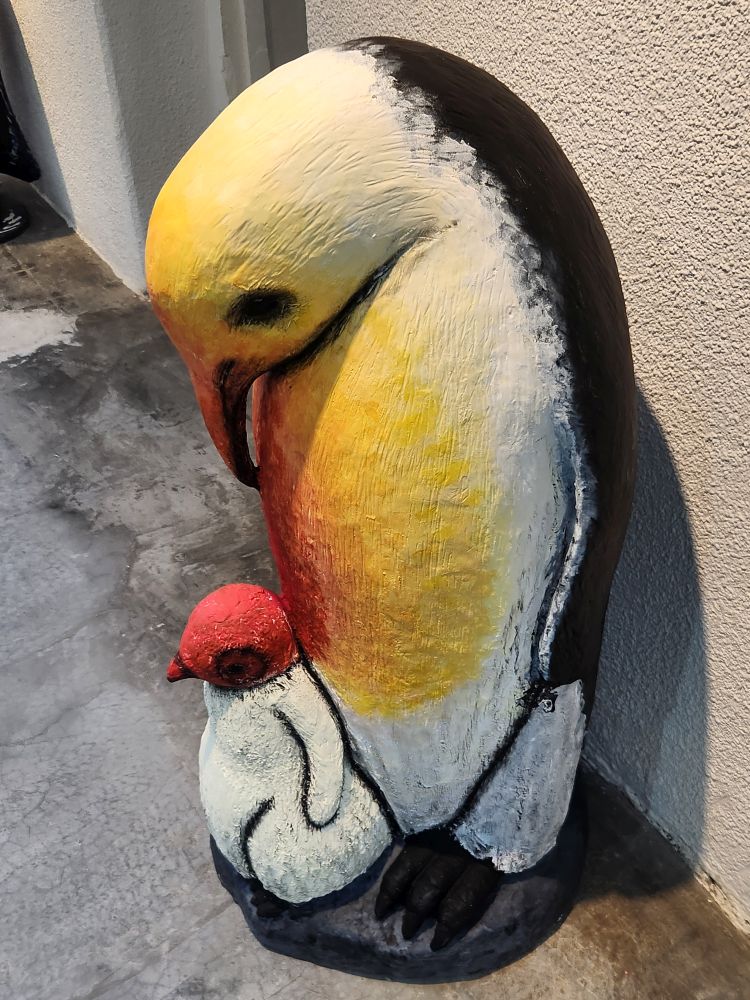
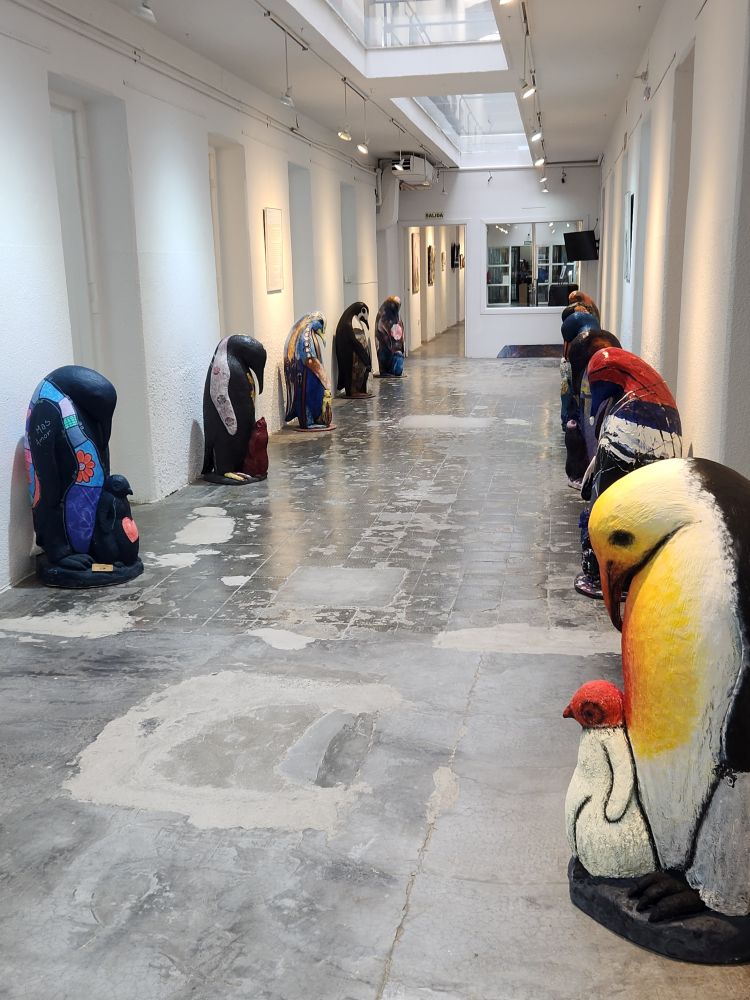
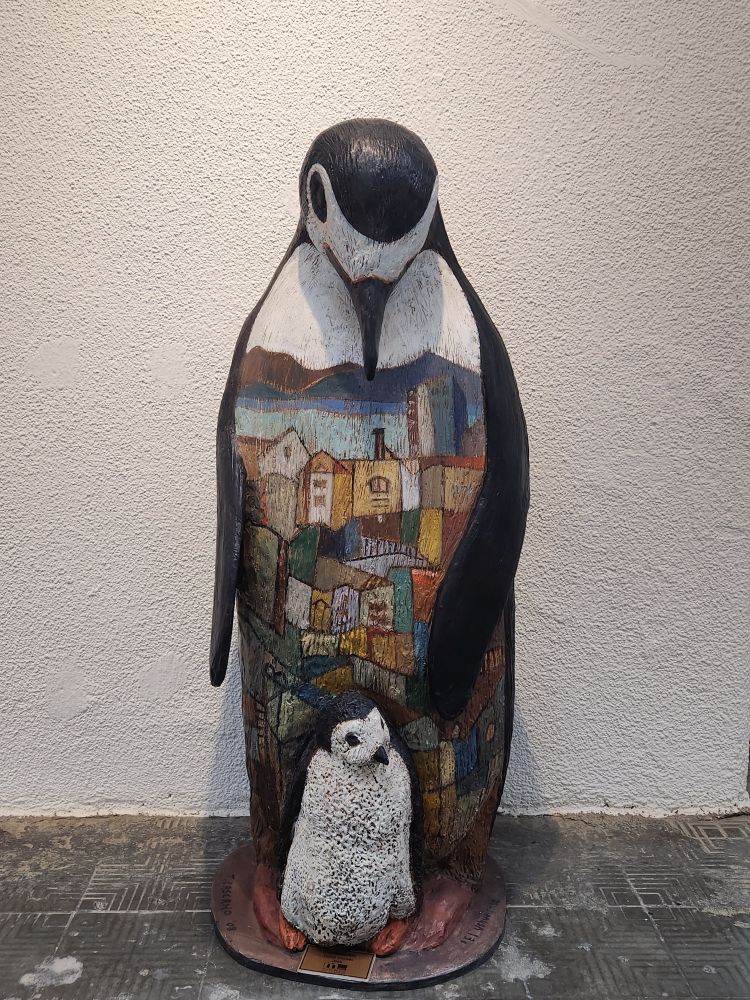
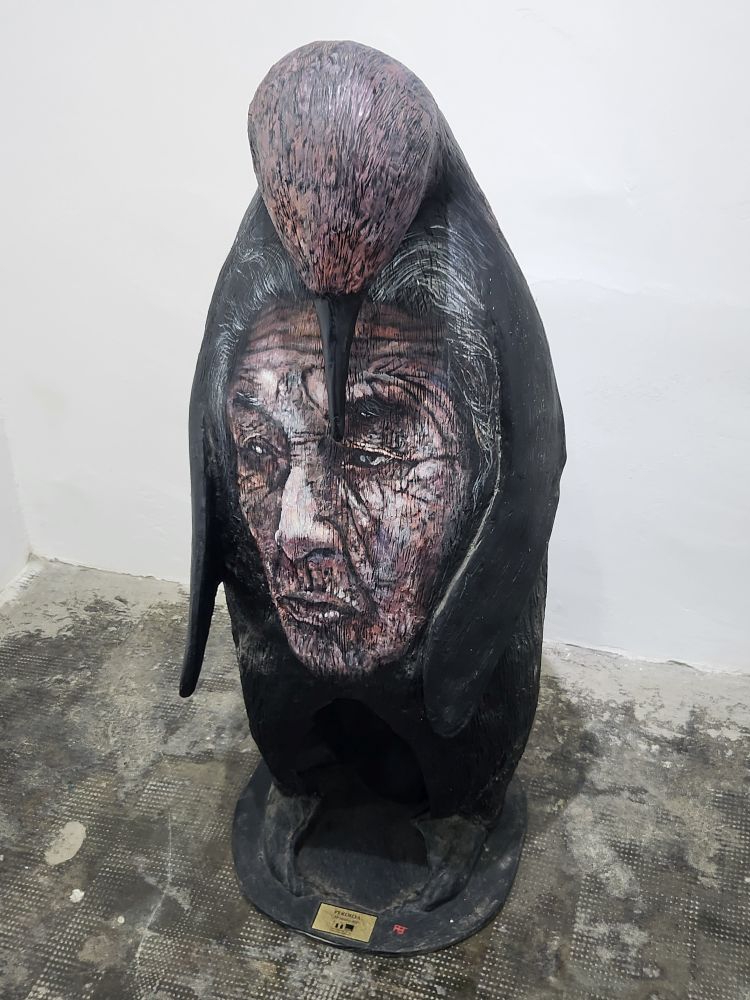
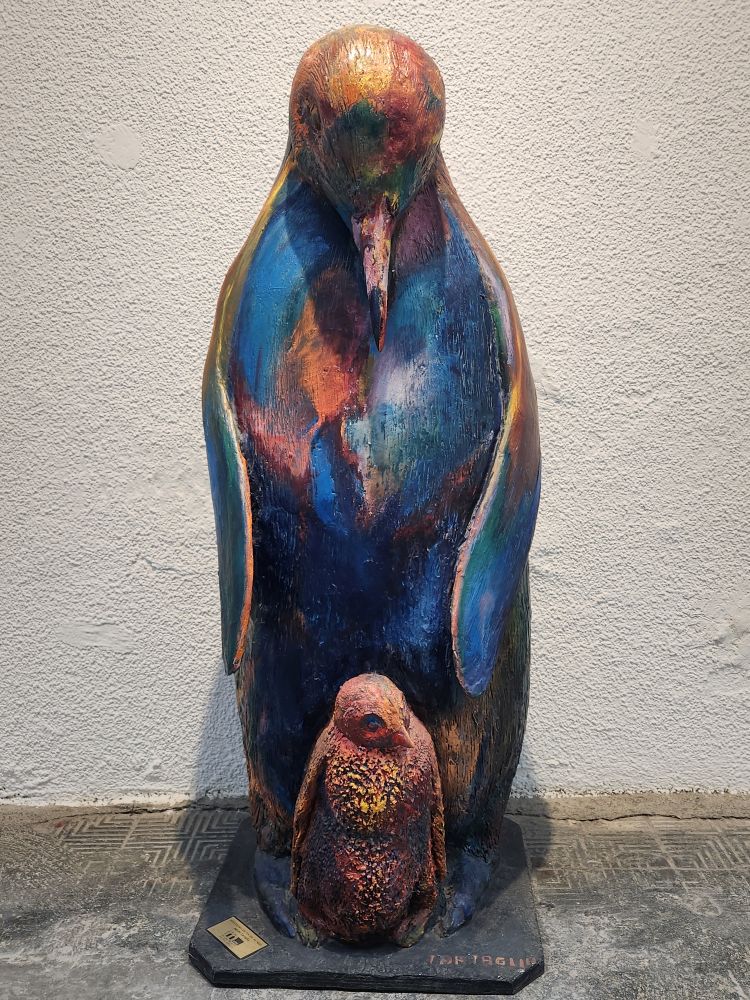
Definitely my favorite exhibit here!
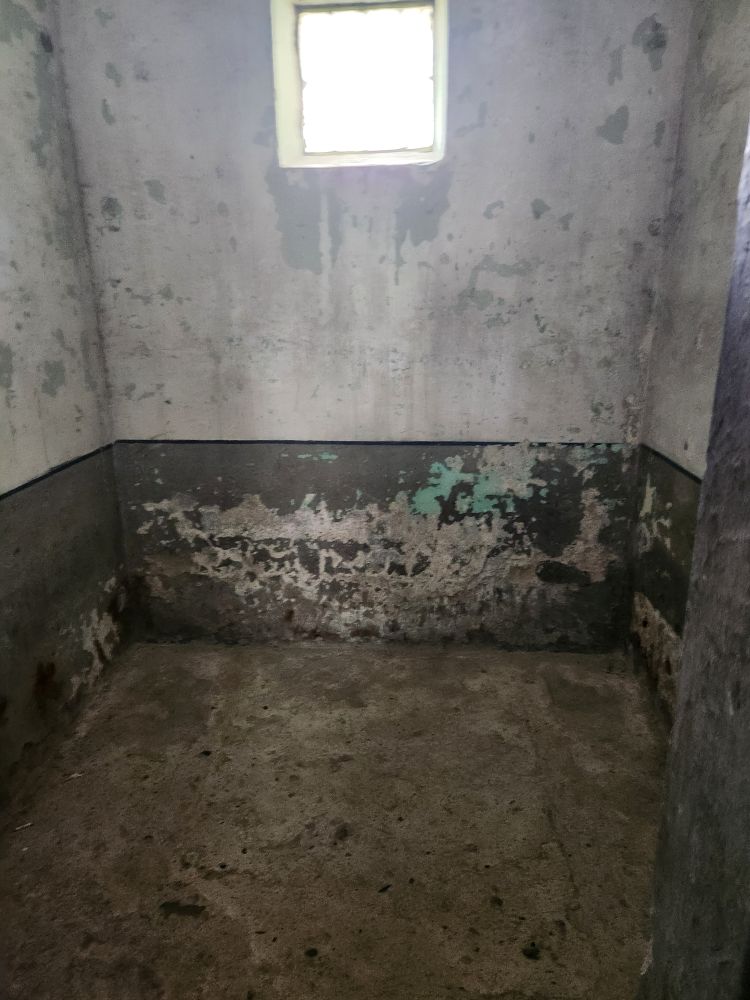
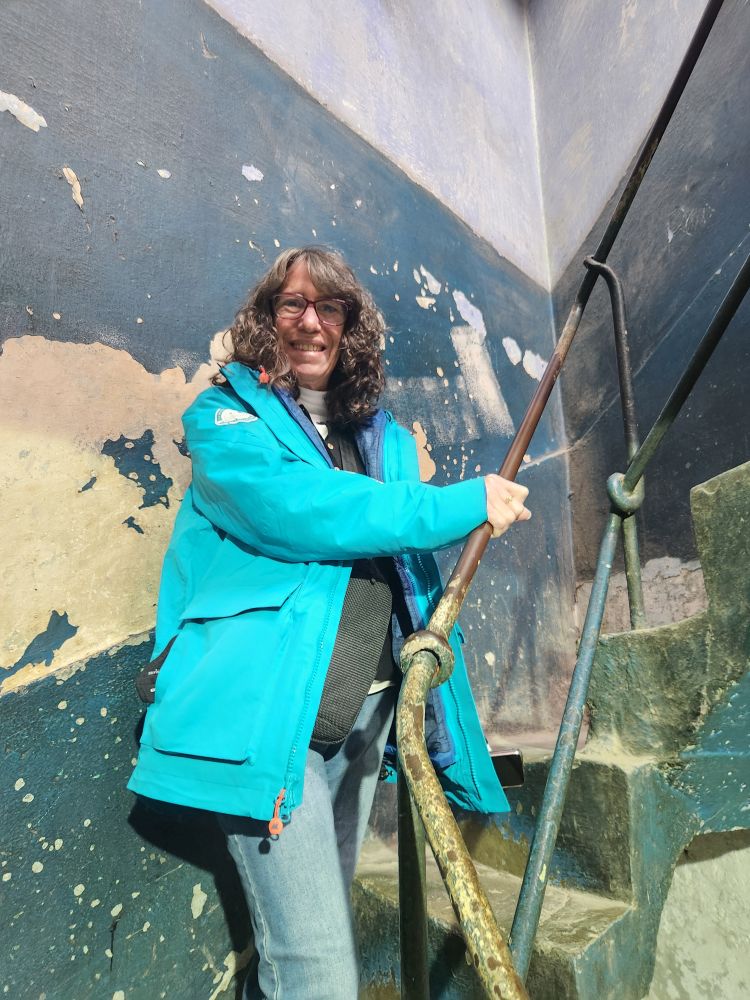
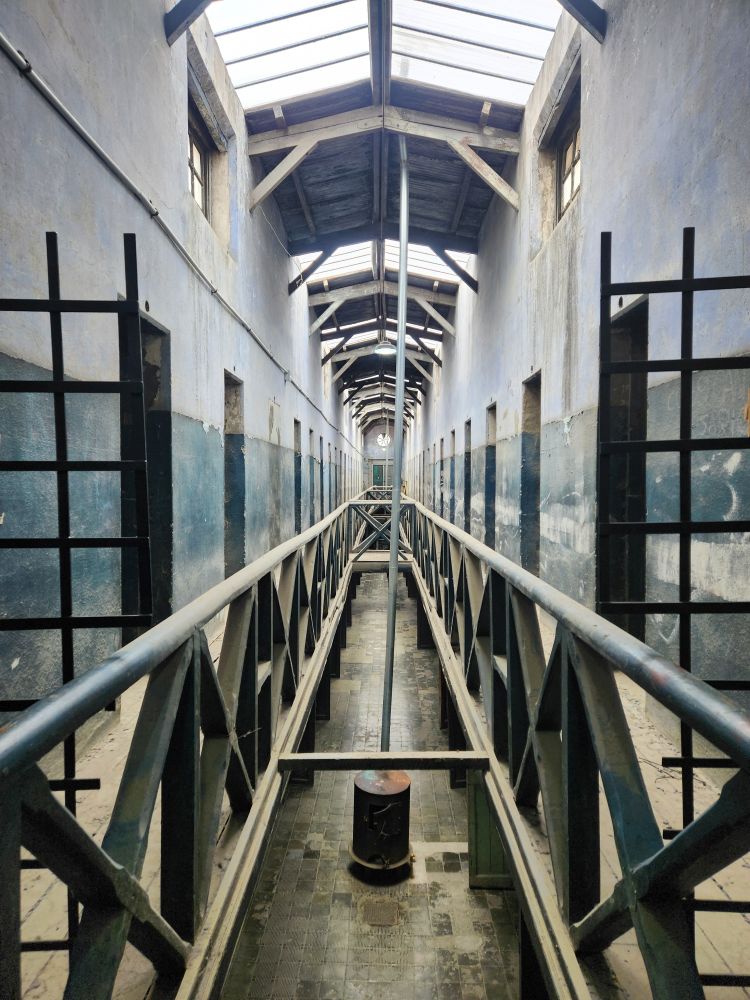
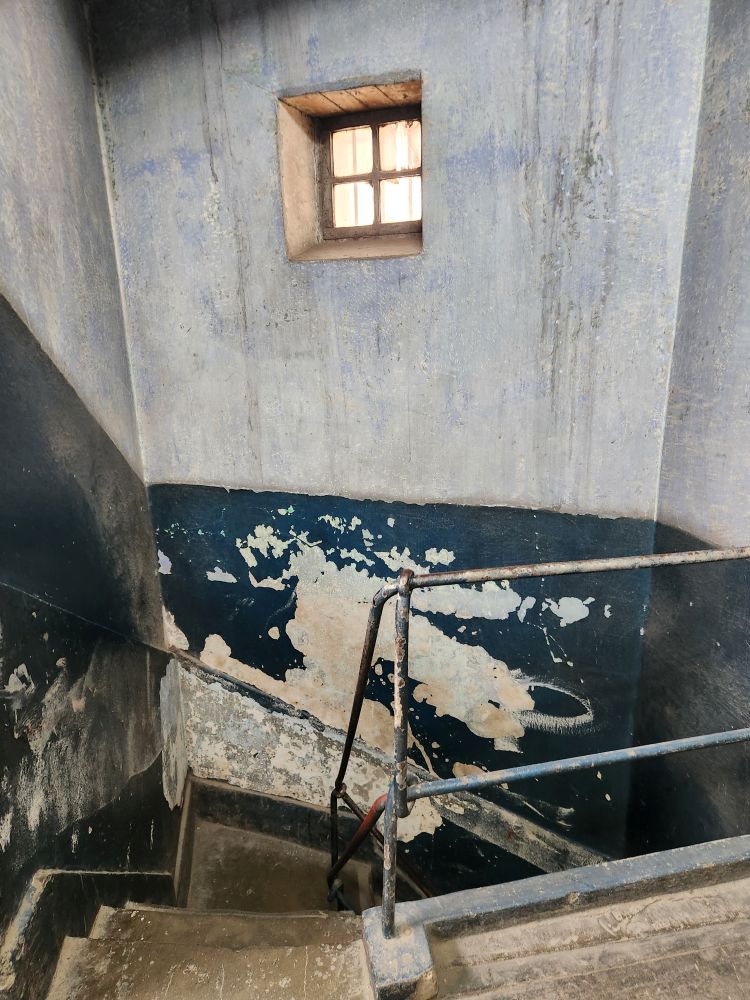
Dragging me away from the penguins, we enter into the Historic Pavilion which is essentially an un-touched cellblock wing where no restoration or repairs have been made. You can get the real feel of what it would be like to be housed in this prison – complete with no heat and virtually open windows. Dark, damp, brutal. The stairs alone are frightening in their narrow steepness. And the rest? Shivers….
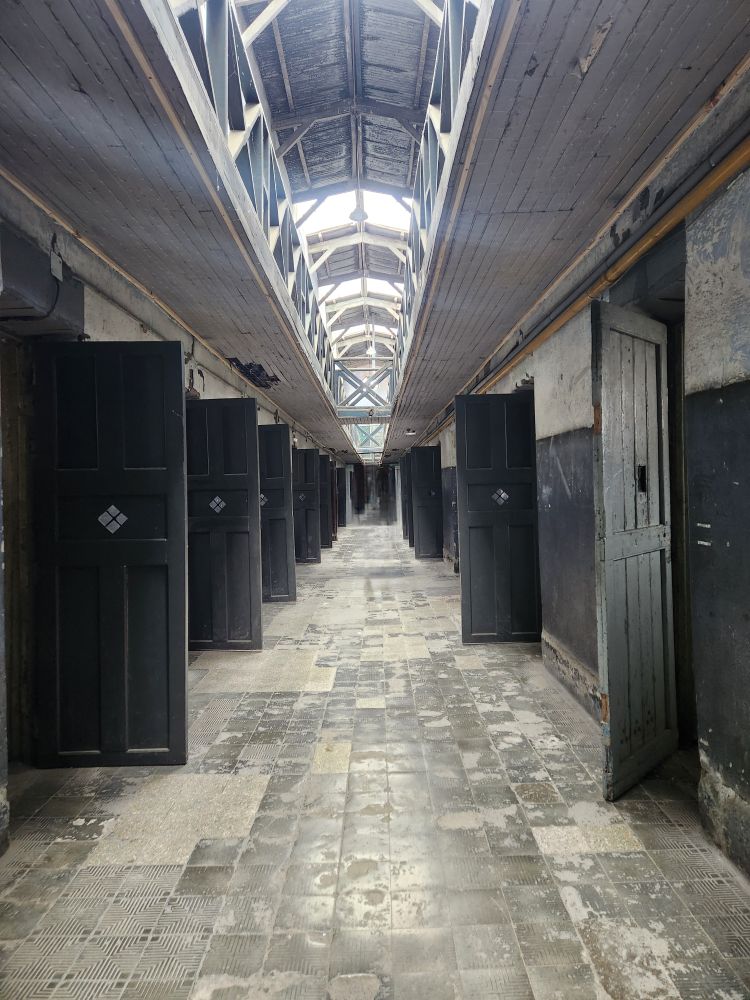

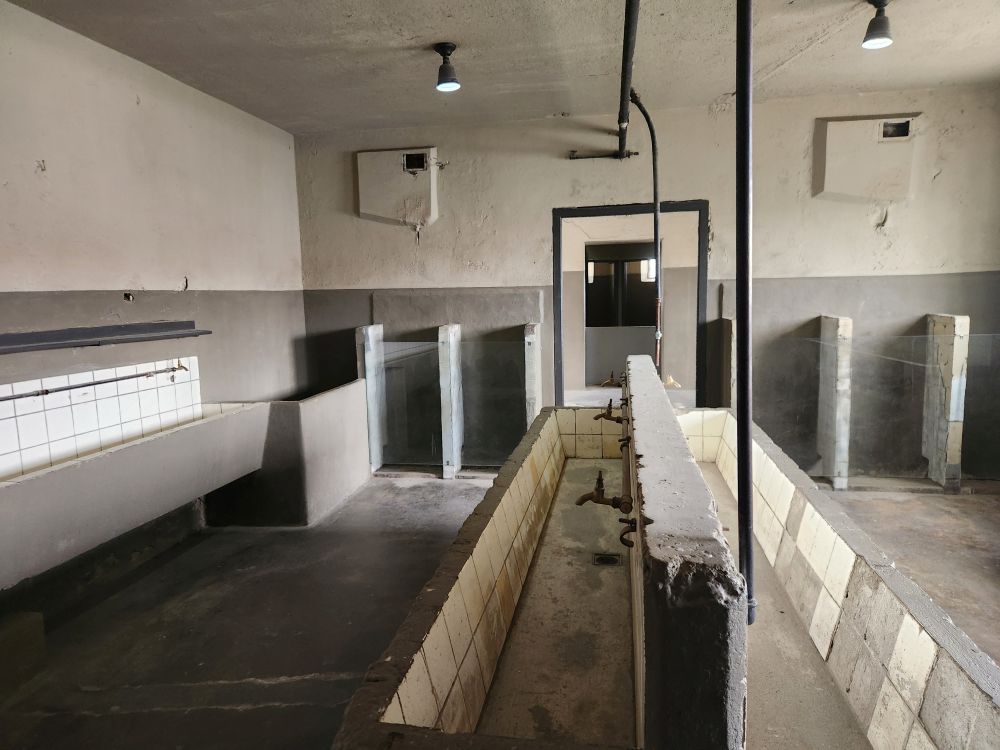
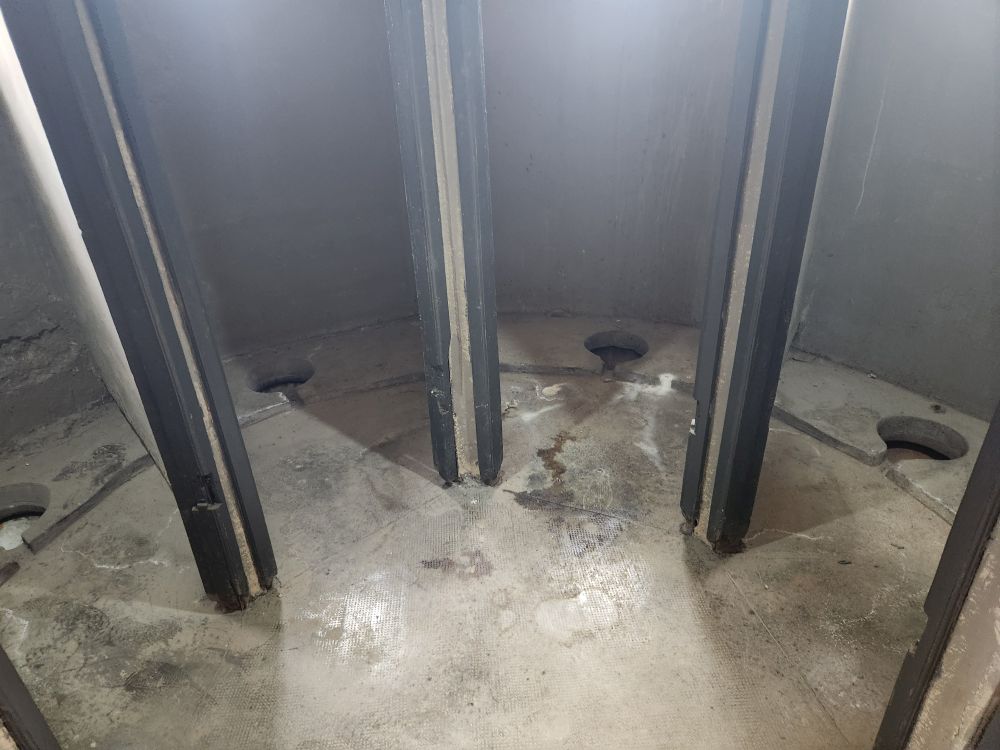
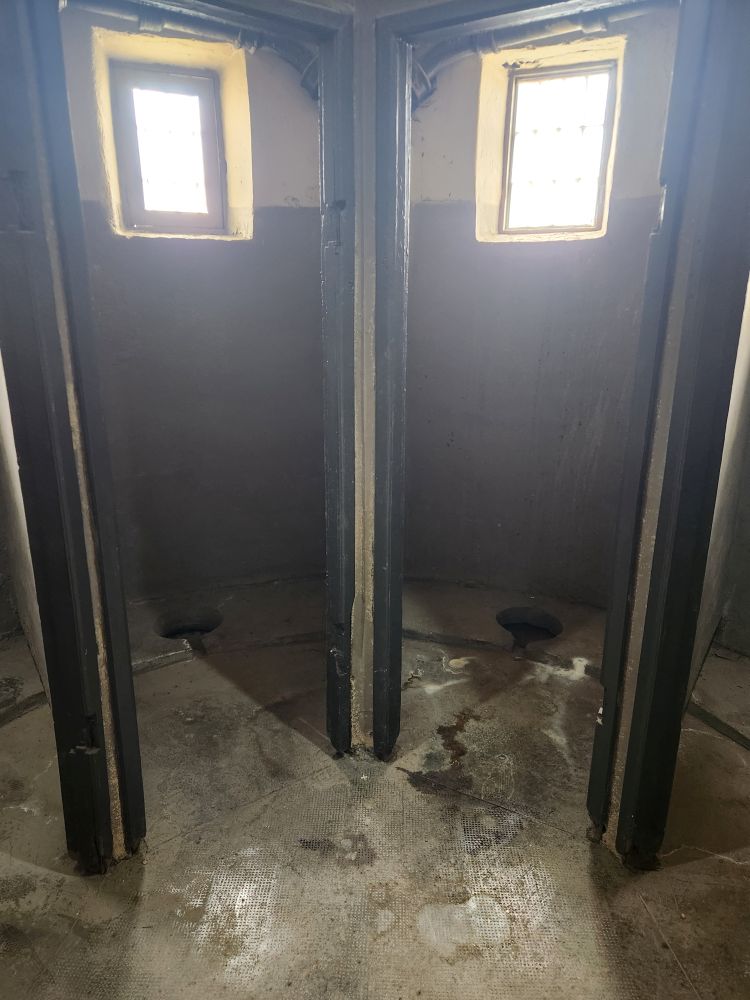
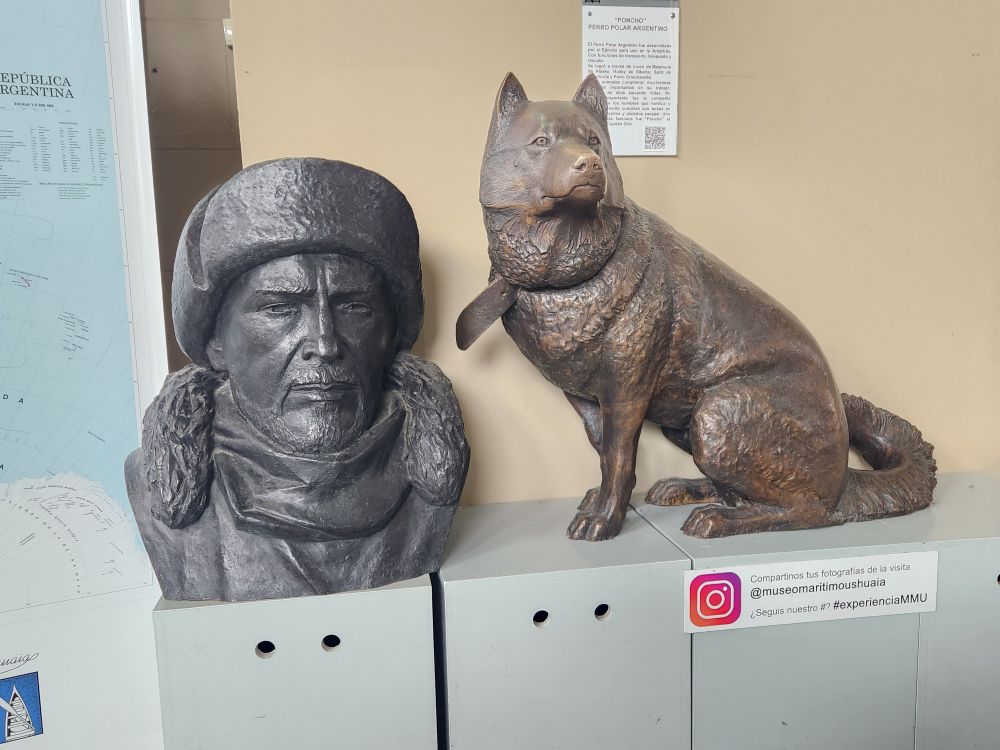
The rest of the museum is light on displays – a few more pieces of art, a bronze bust of Poncho, the Argentine Polar dog that was said to be able to warn men about cracks in the ice and snow, with his handler, Captain Giro, a couple of gift shops (everything is so expensive here!) and that was about it.
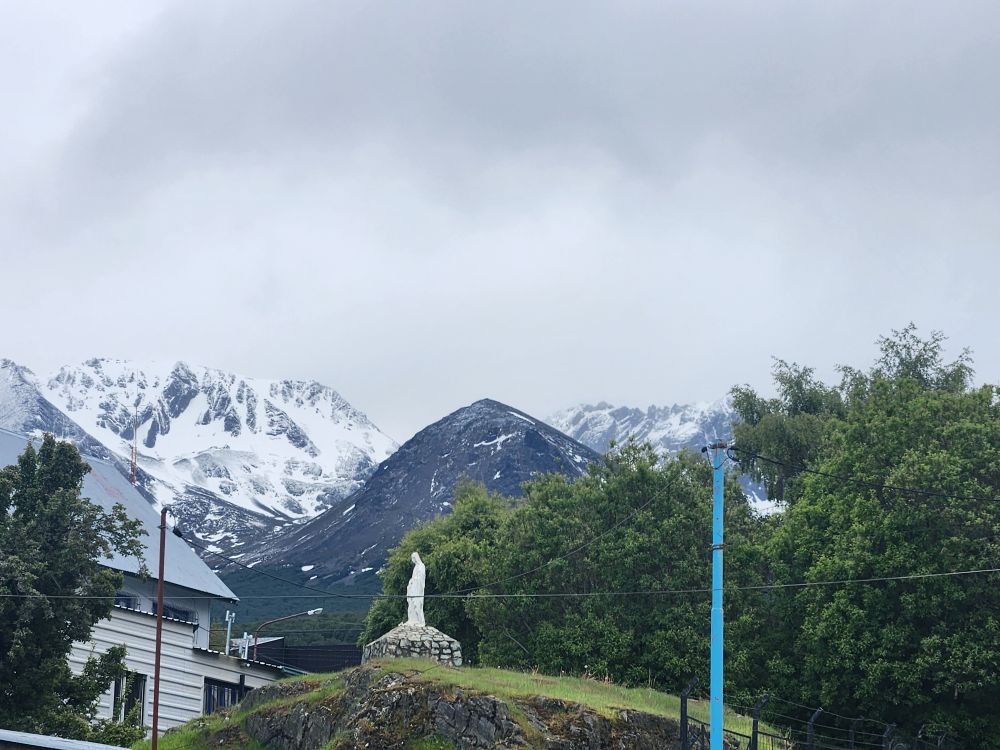
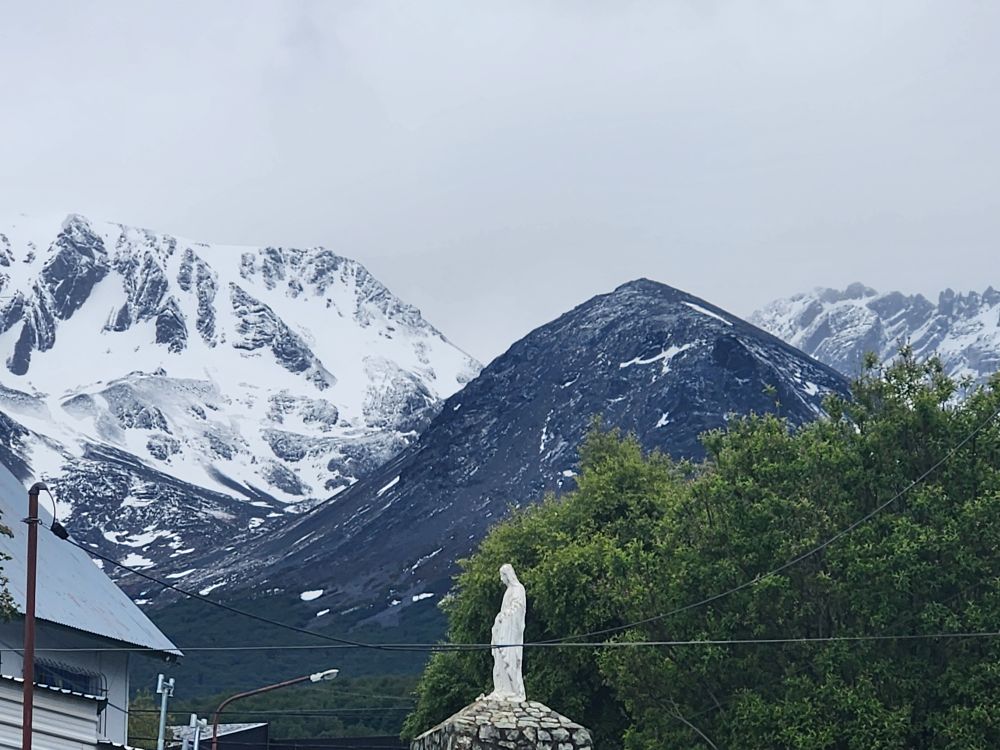
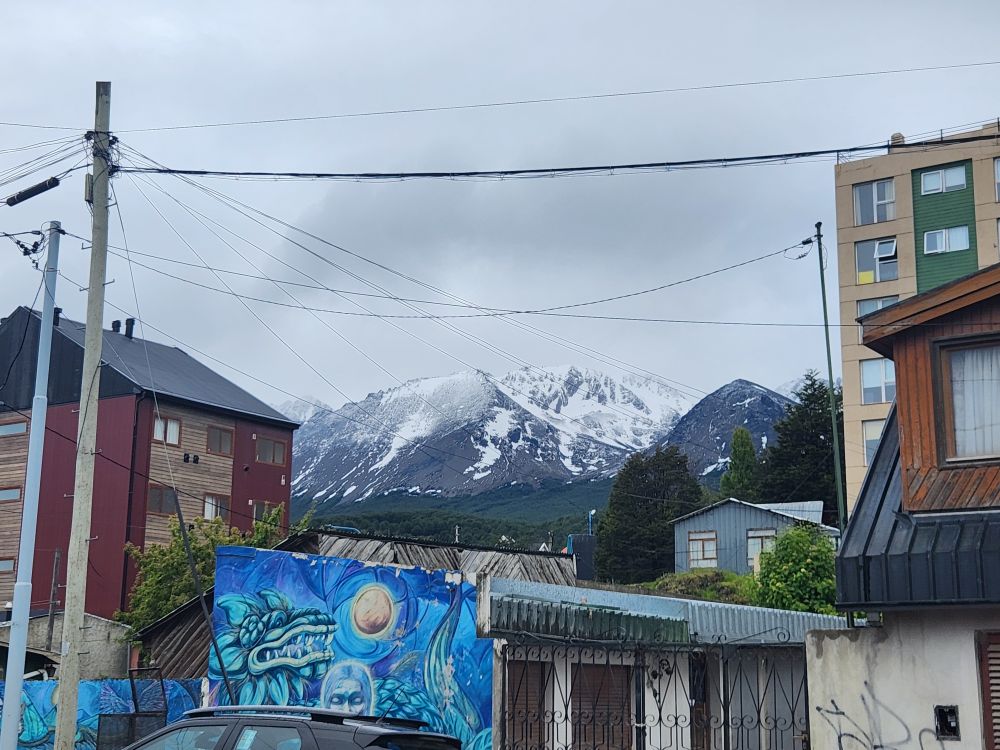
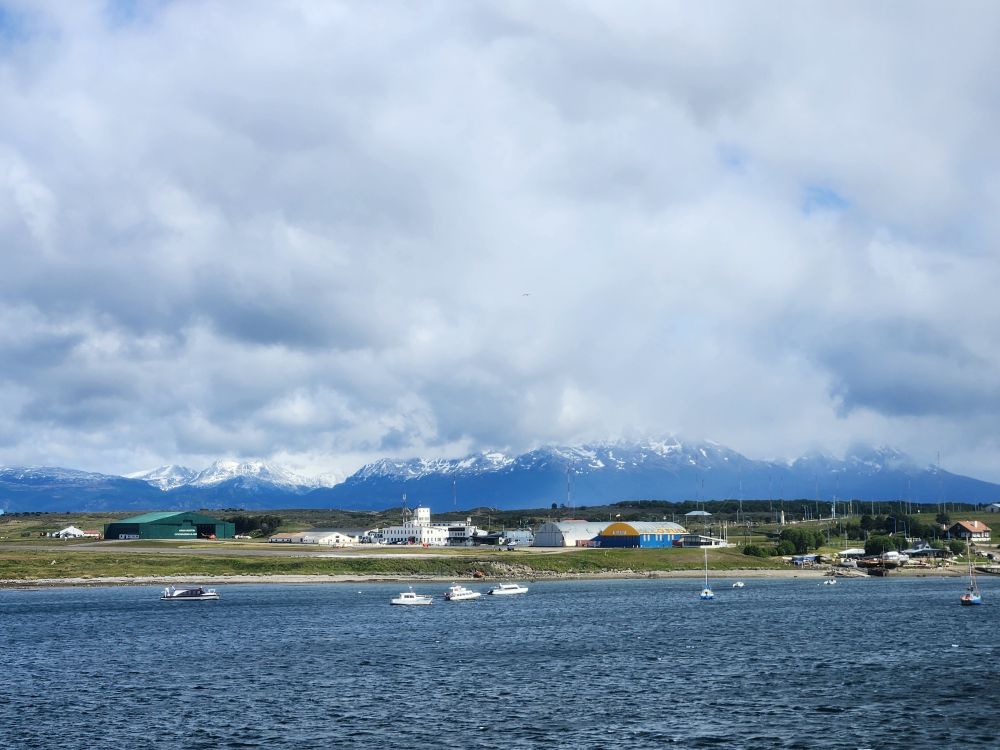
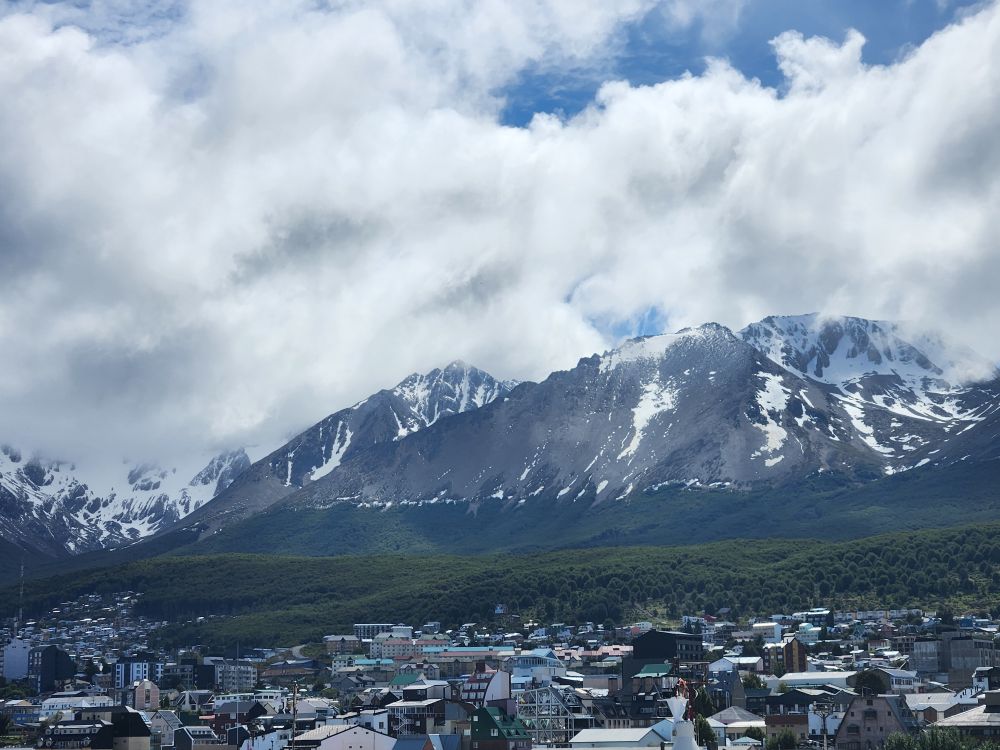
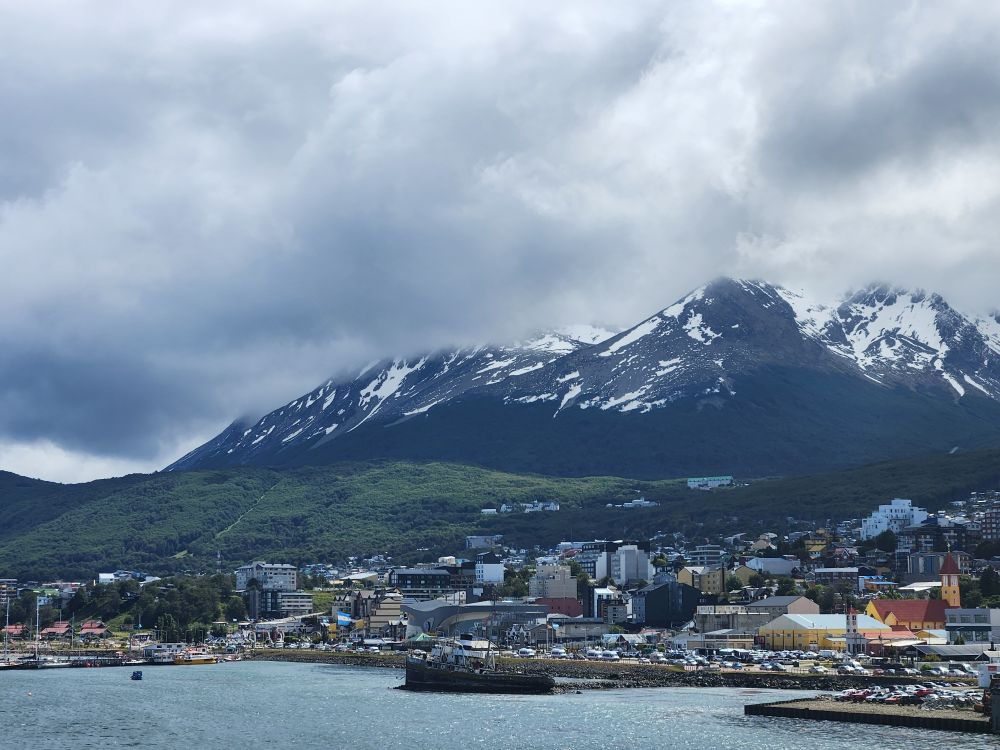
A fantastic way to spend a few hours though. Very immersive and full of interesting information and displays. Outside, the weather has brightened a bit – at least there is no more rain – and we enjoy the brisk walk looking at the snowcapped mountains -which we’ll be darned if we can’t get a good picture of them without the ubiquitous electrical wires strung everywhere. You’d think we were in Thailand or Nepal!
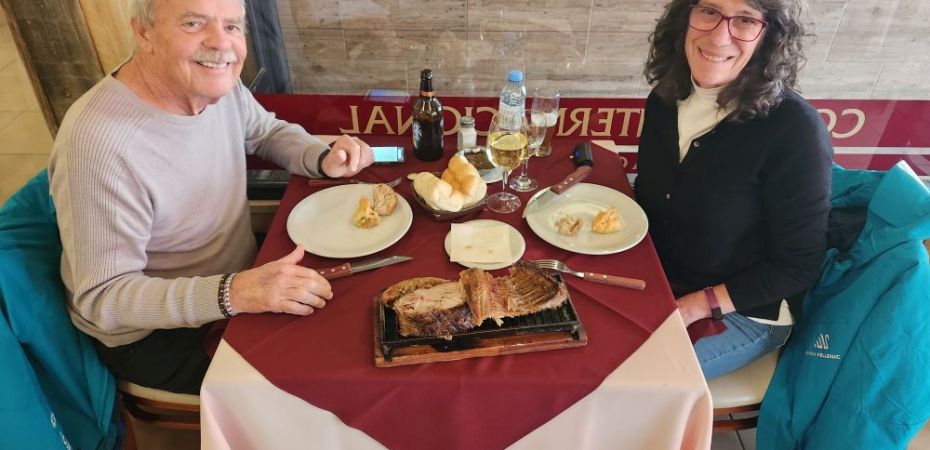
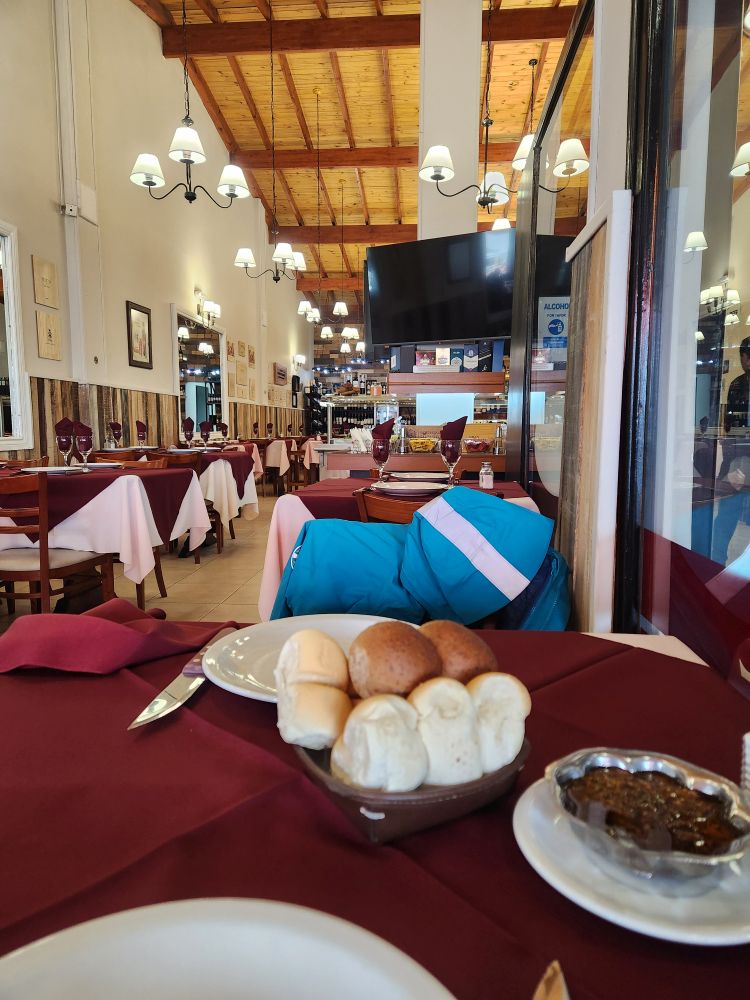
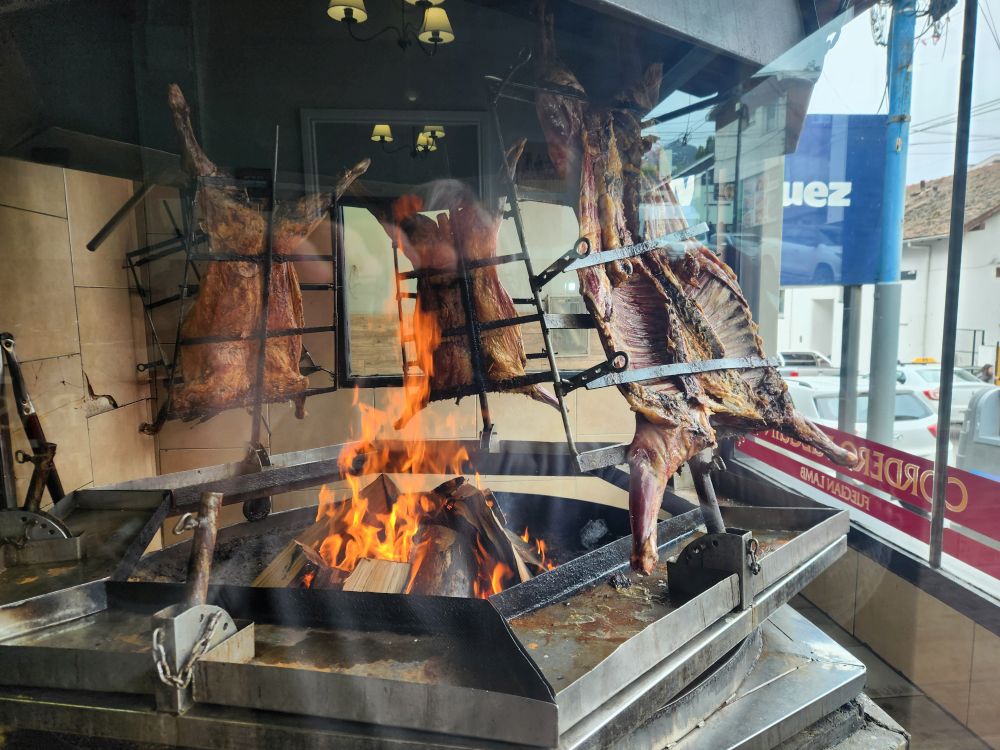
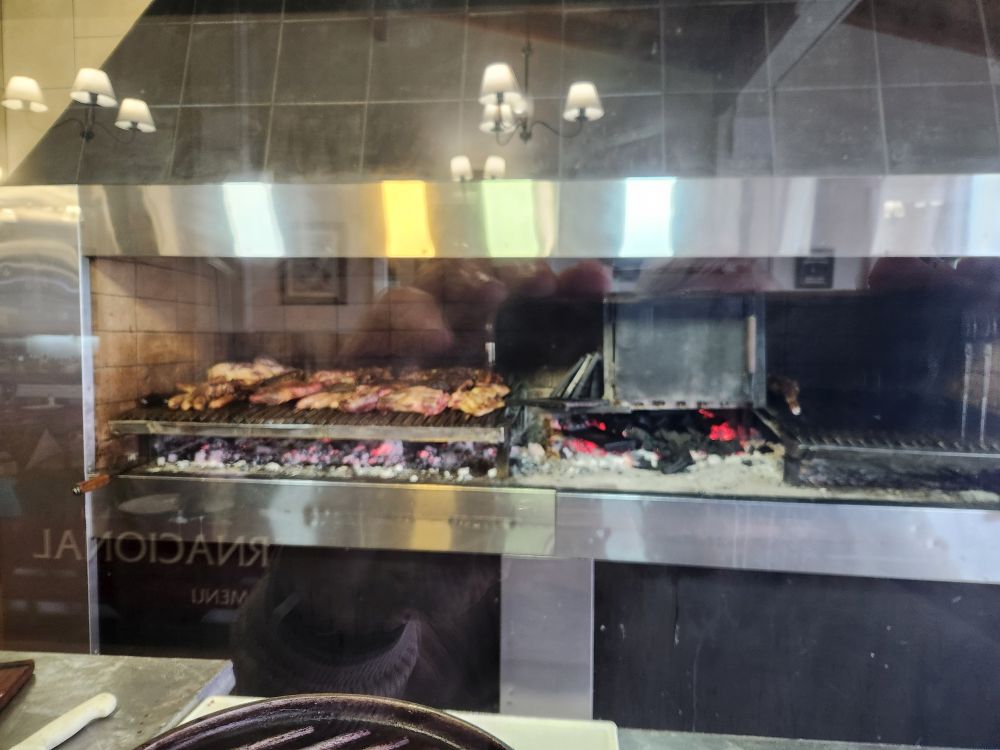
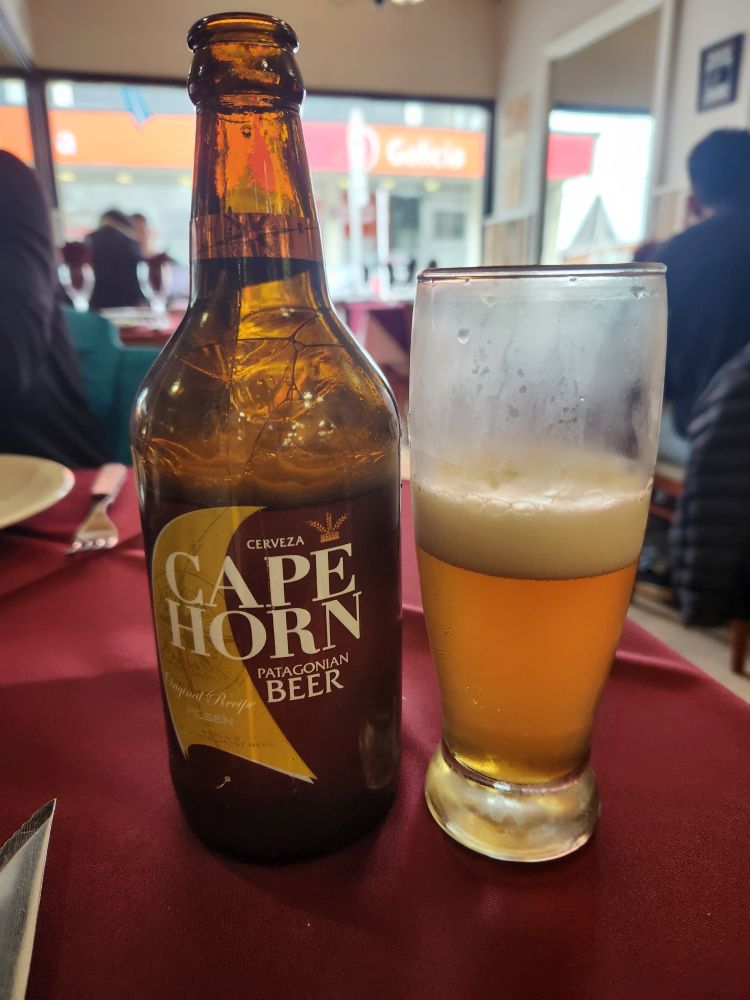
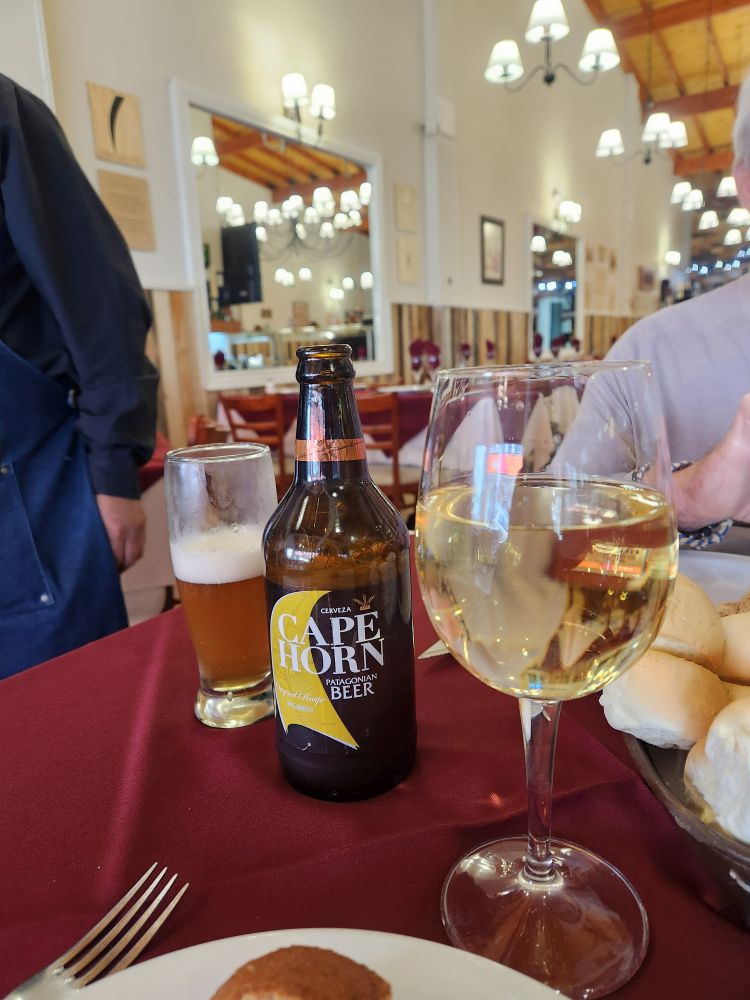
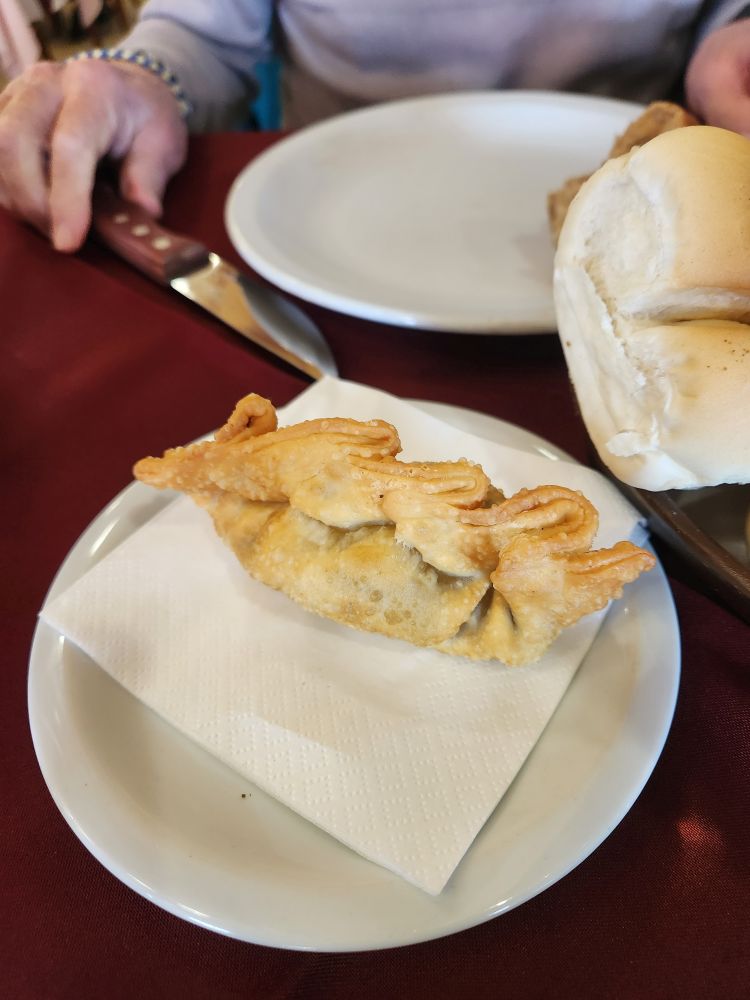
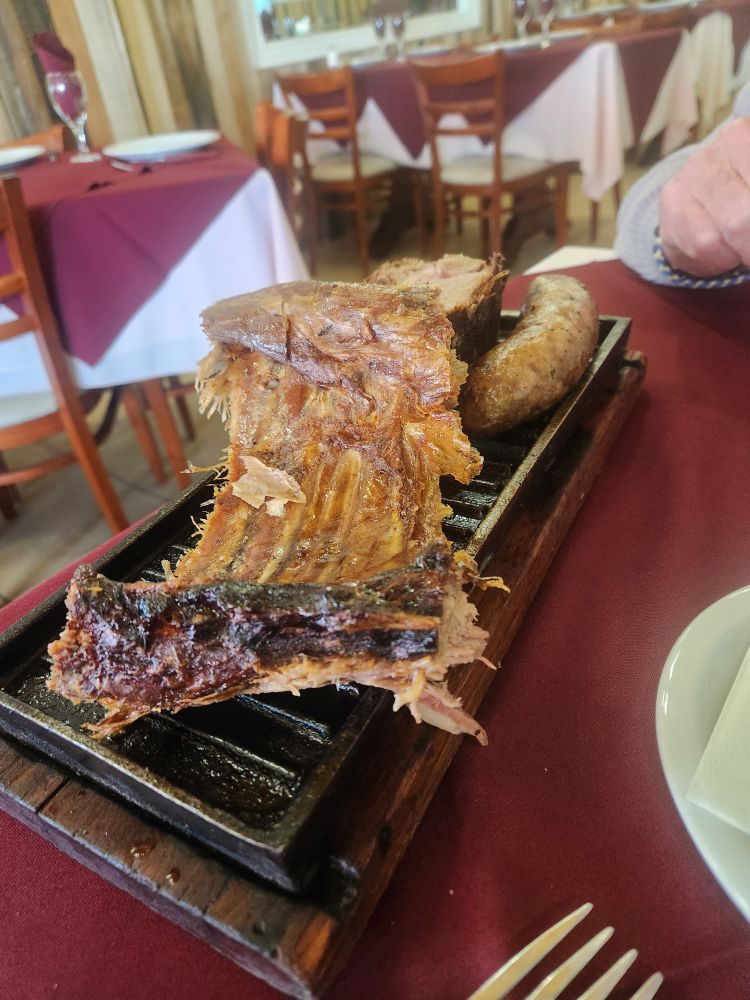
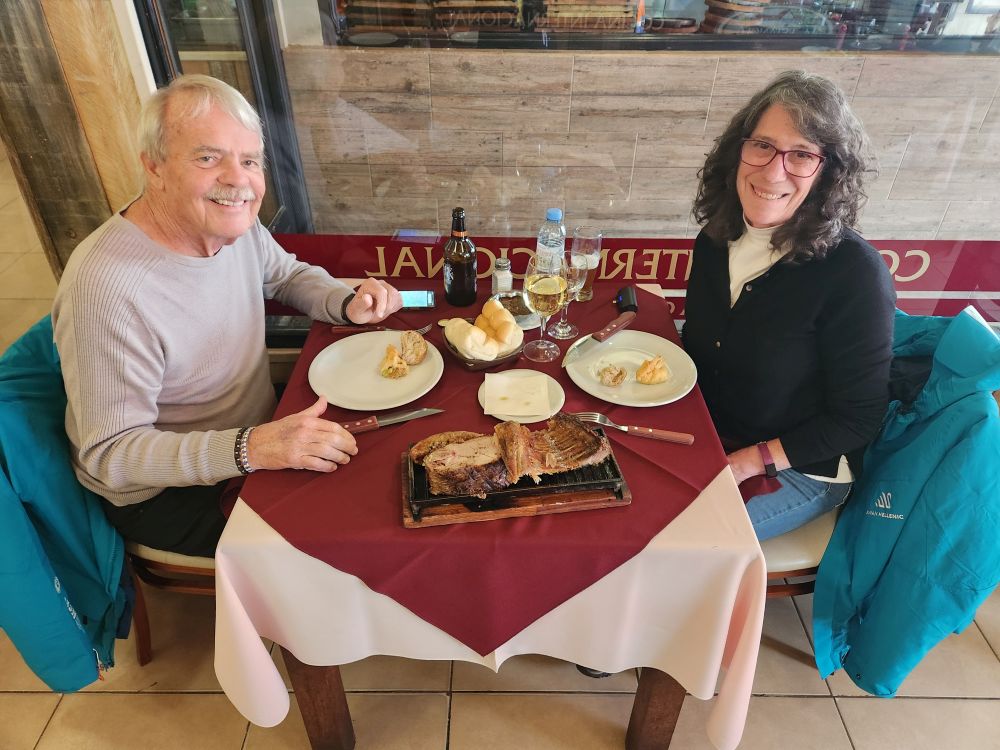
Arriving at Estancia, the great Parrillada where we ate oh so long ago (and that Javi recommends) we plop down at a cozy table for a meat-palooza feast. Well, ok, we aren’t going whole hog here (excuse the pun), but we do want some of their great wood roasted lamb and an empanada. And yes, it is really expensive here as well, not only from the “tourist” pricing, but also the darn inflation. It is supposedly better – but it is still crazy expensive. We end up with a nice meal – just enough to keep us sated – along with an excellent pour of wine, Cape Horn beer and a lovely server. Unfortunately, another server gives us our check and then proceeds to rip us off for the tip – my fault – I wasn’t tracking exactly how much it should be – but still. The hazards of over-touristed venues. Ah well, the meal was still excellent – nothing taking away from that.
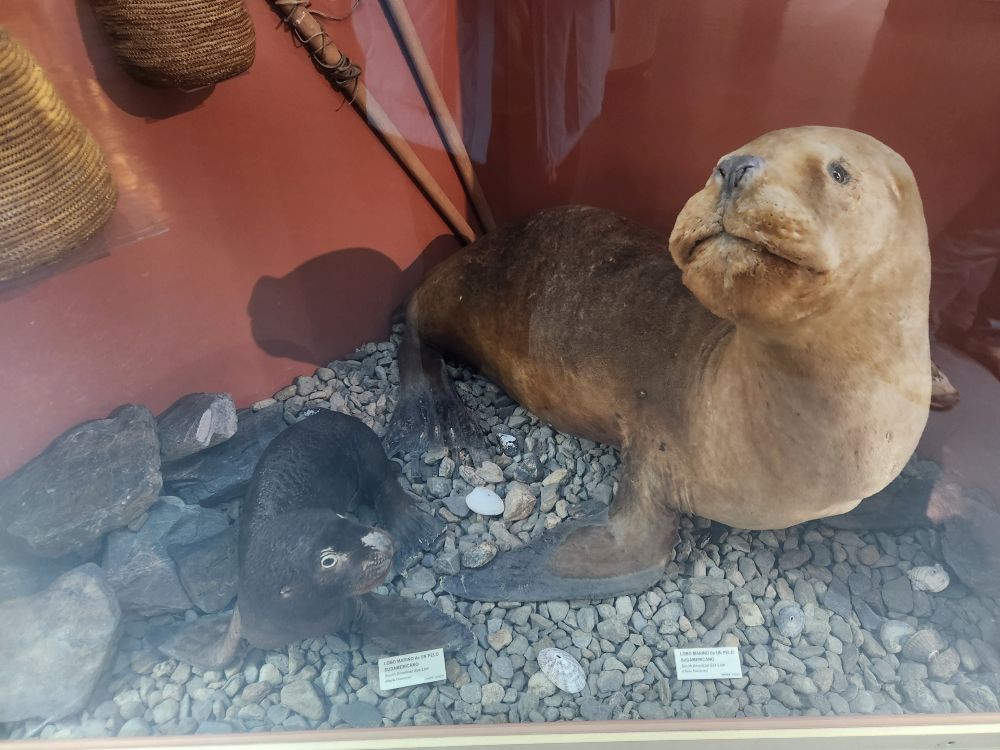
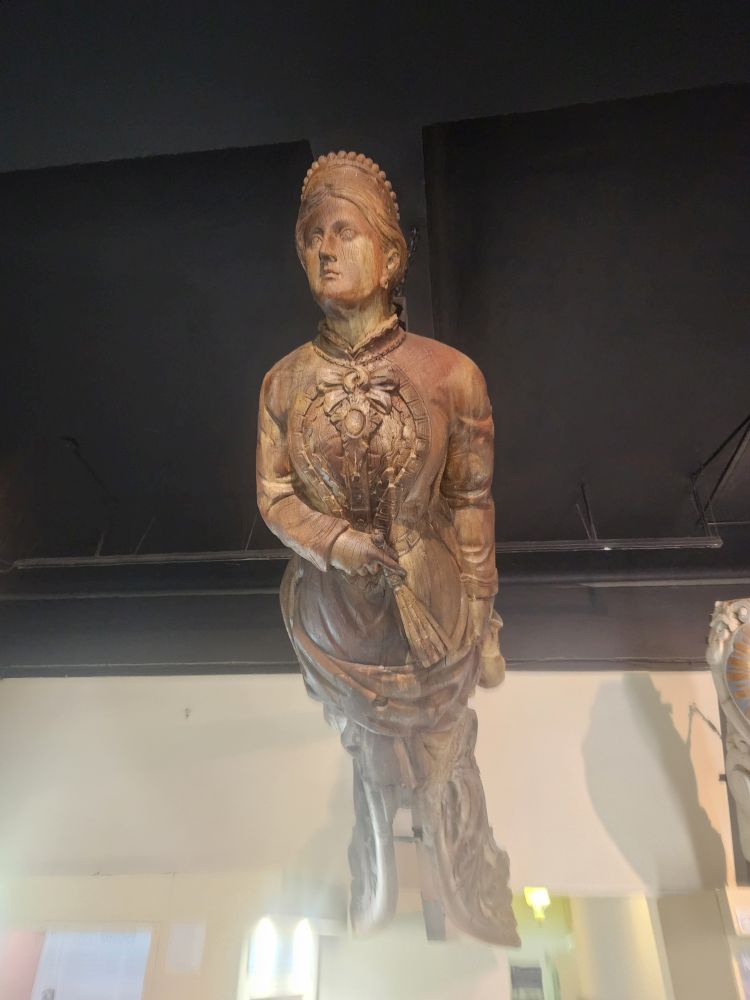
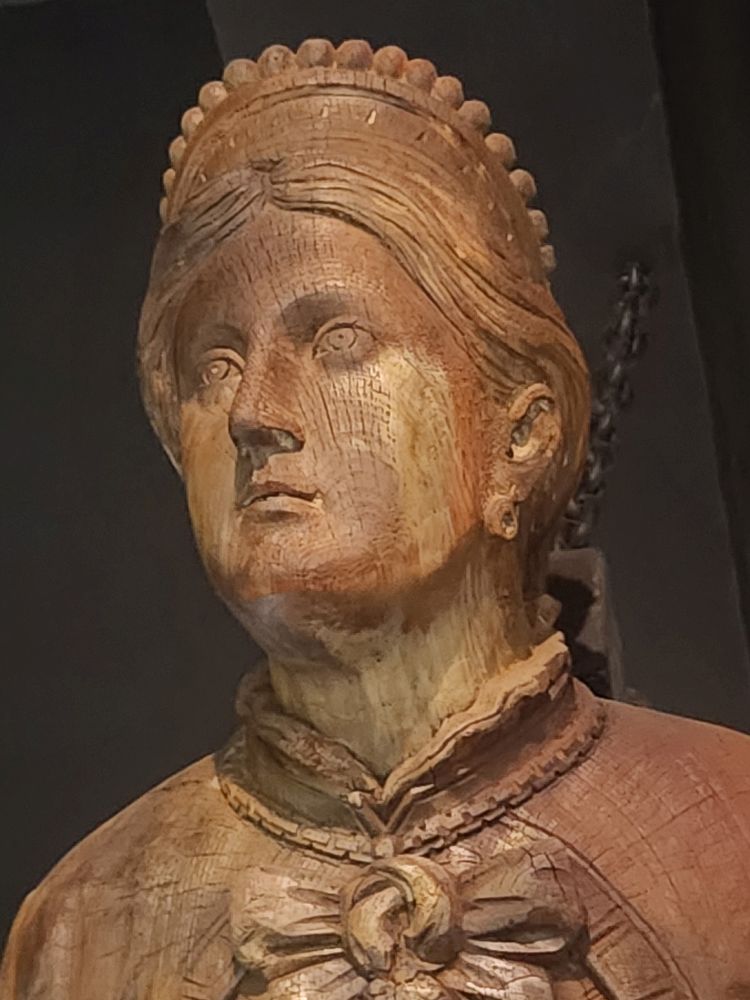
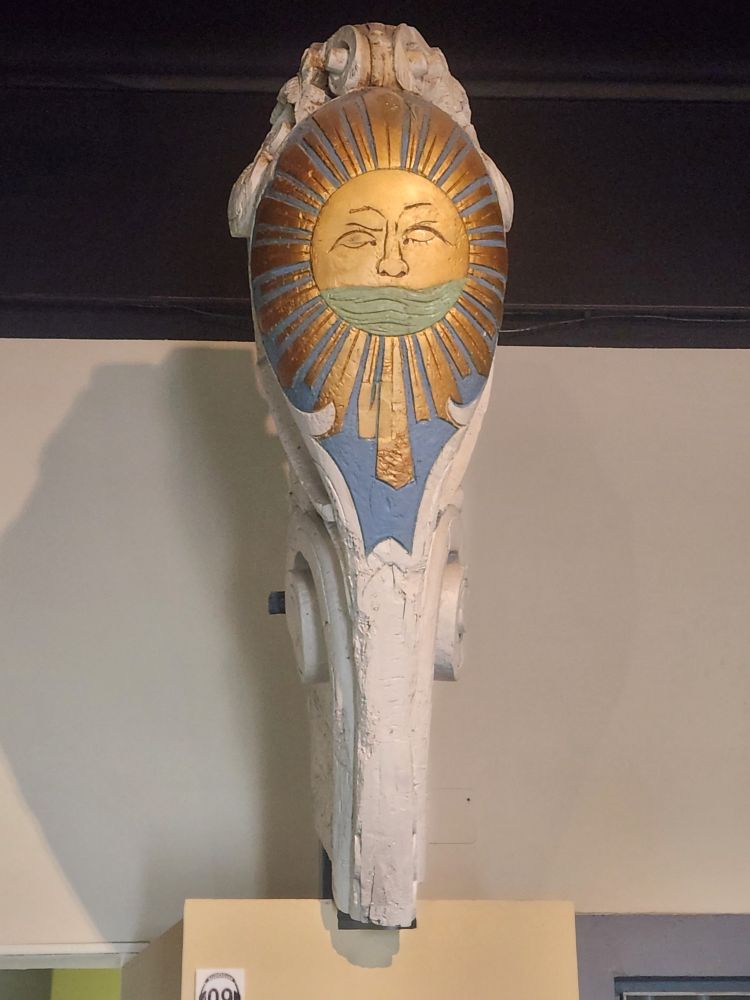
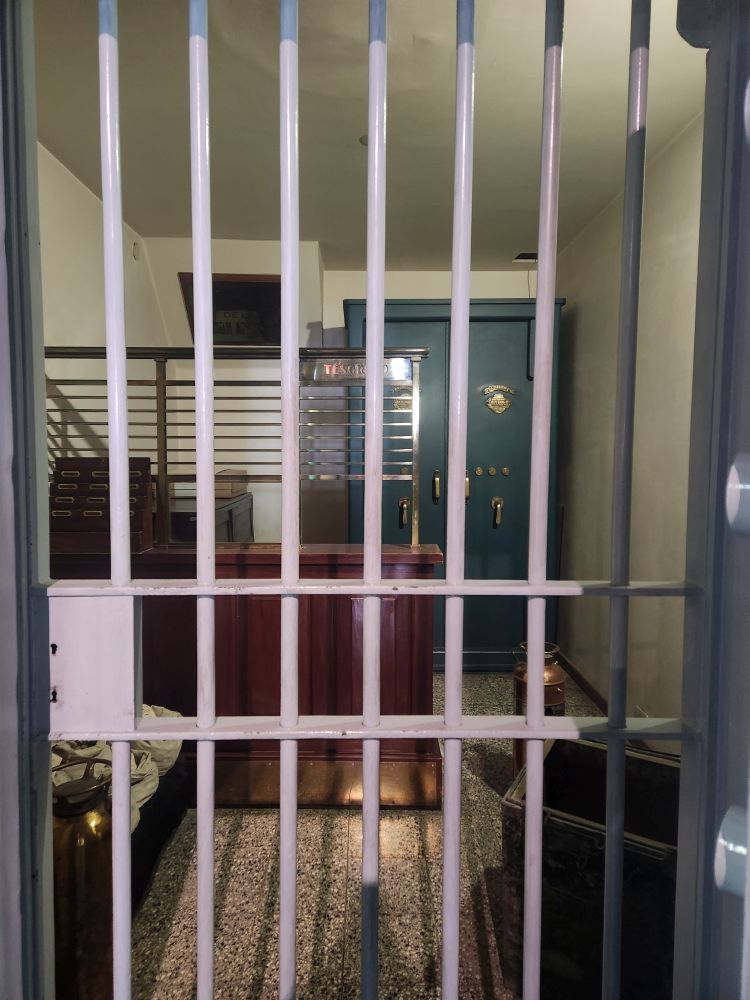
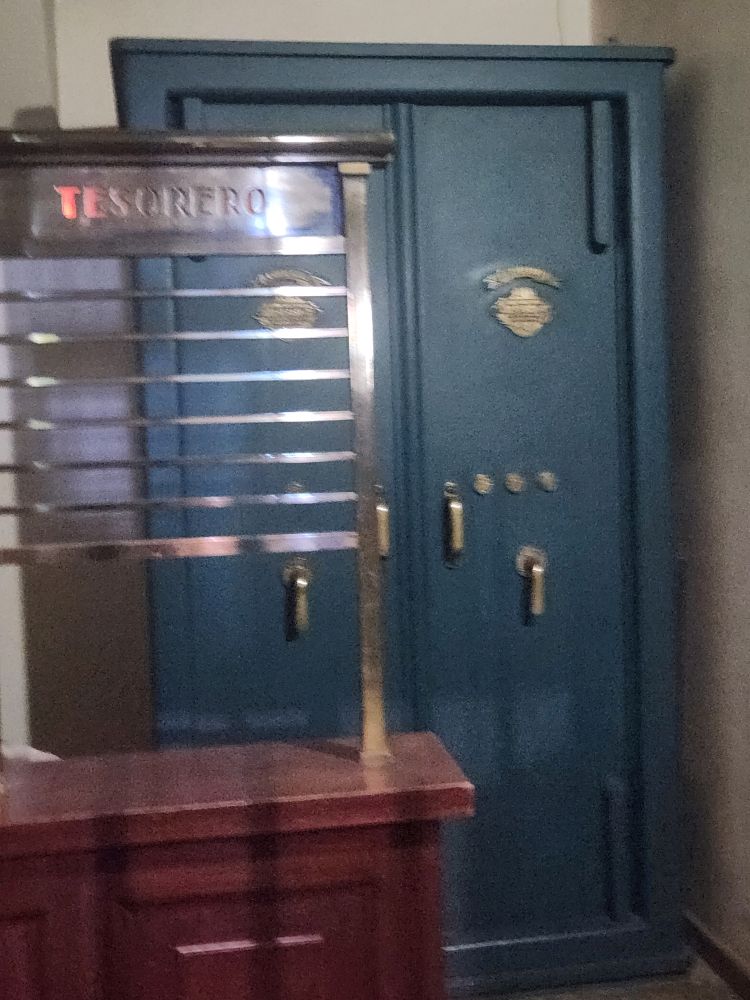
Continuing on with our museum day – we next head to the Museo del Fin del Mundo (a much better buy for the money at $6USD each!)_– housed in 2 buildings; the former Banco Nacion and the Former Government House. We start at the Bank building, now the Museum’s founding headquarters, with all sorts of maritime displays, ship figureheads, natural history exhibits and shipwreck photos – all surrounding the banks’ original vault.
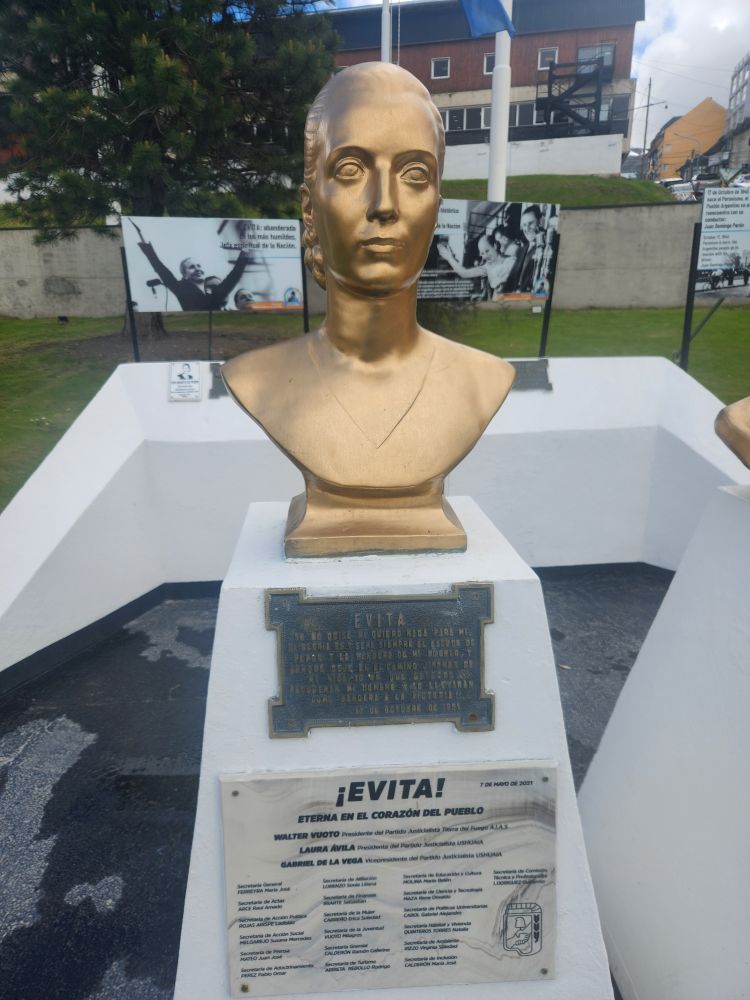
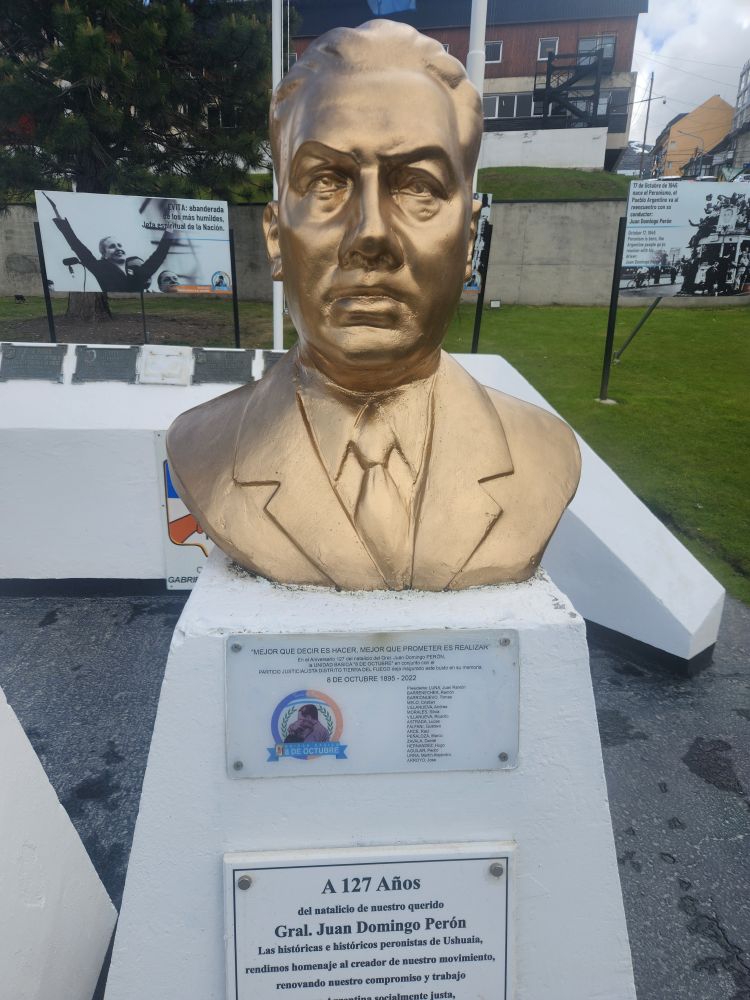
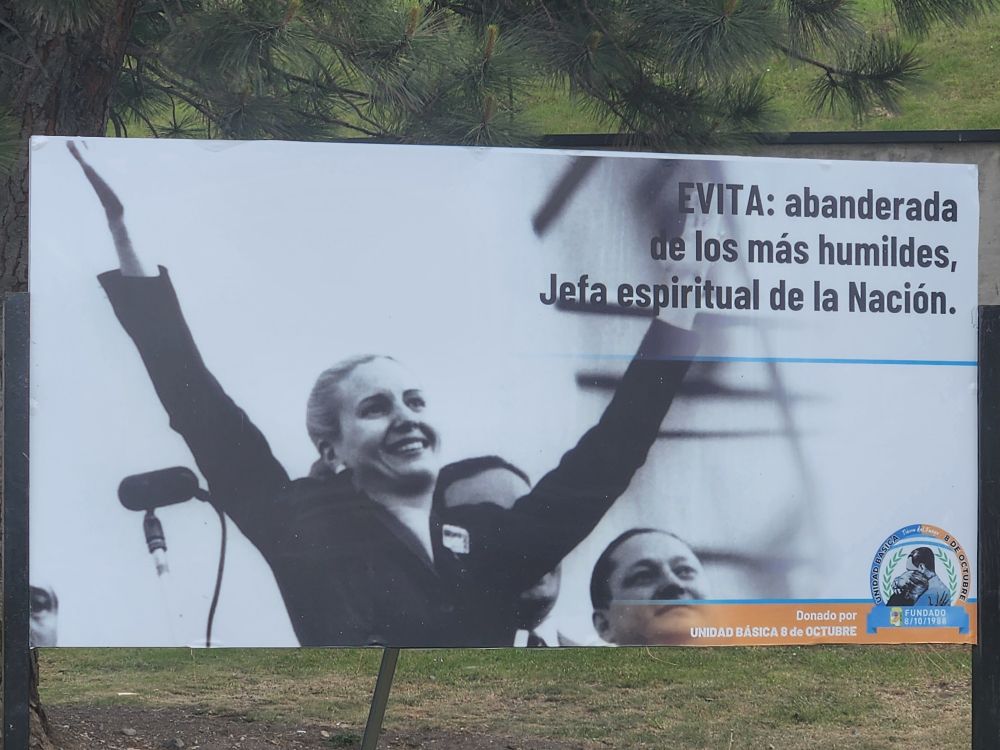
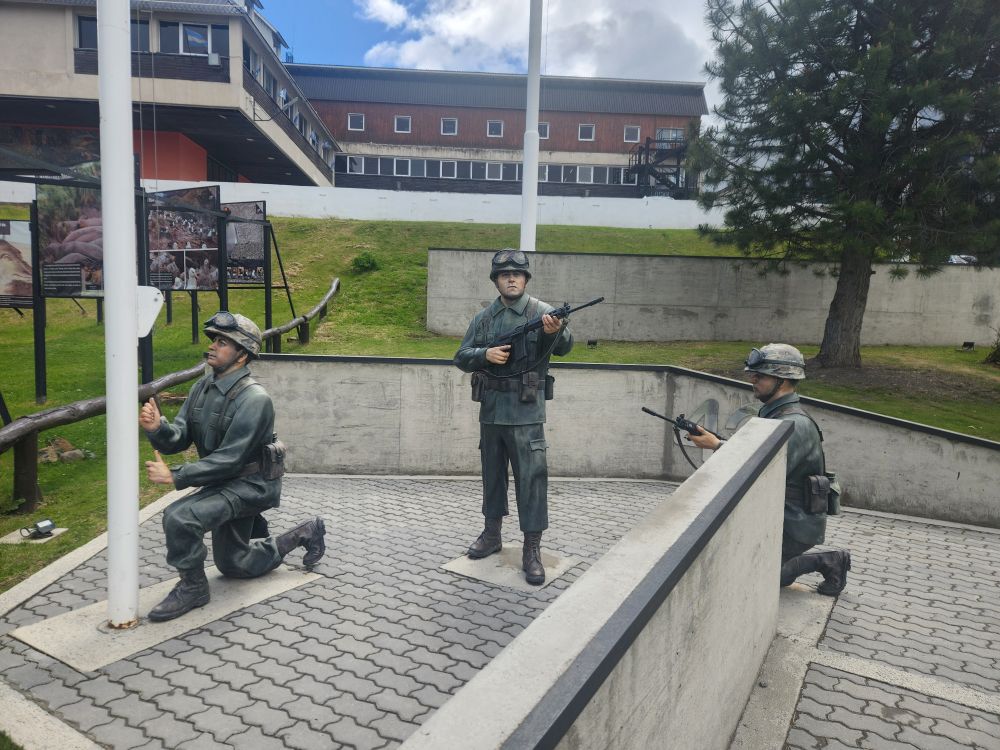
Next we head up Maipu Avenue – the main drag – passing the square dedicated to Evita also with oddly placed soldier statues – Malvinas maybe (weird)?
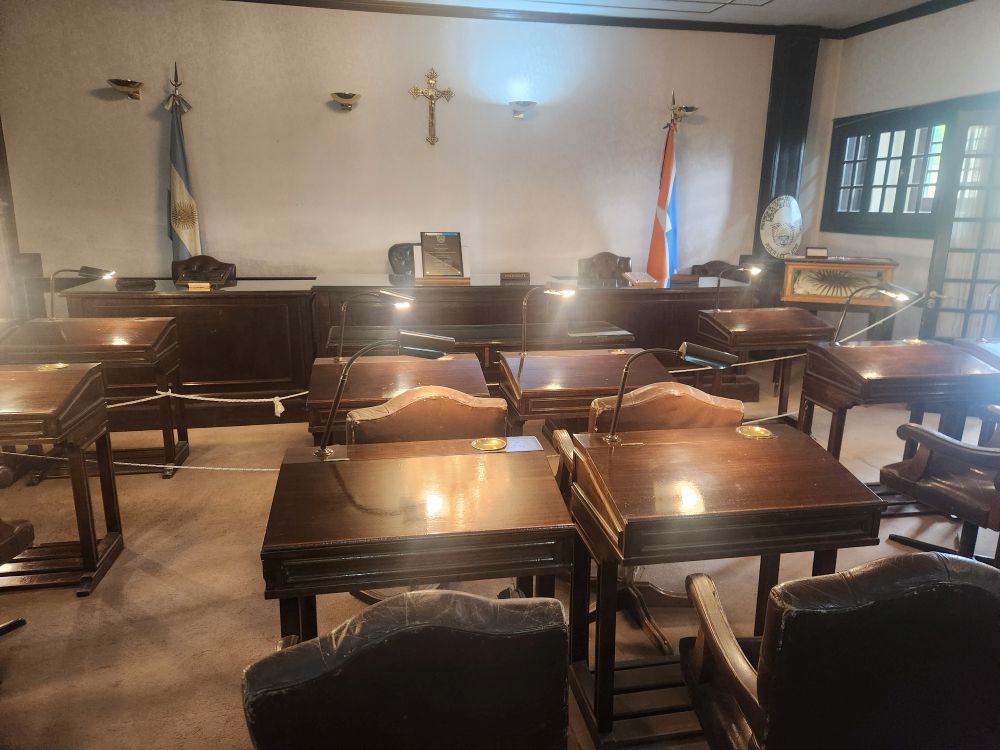
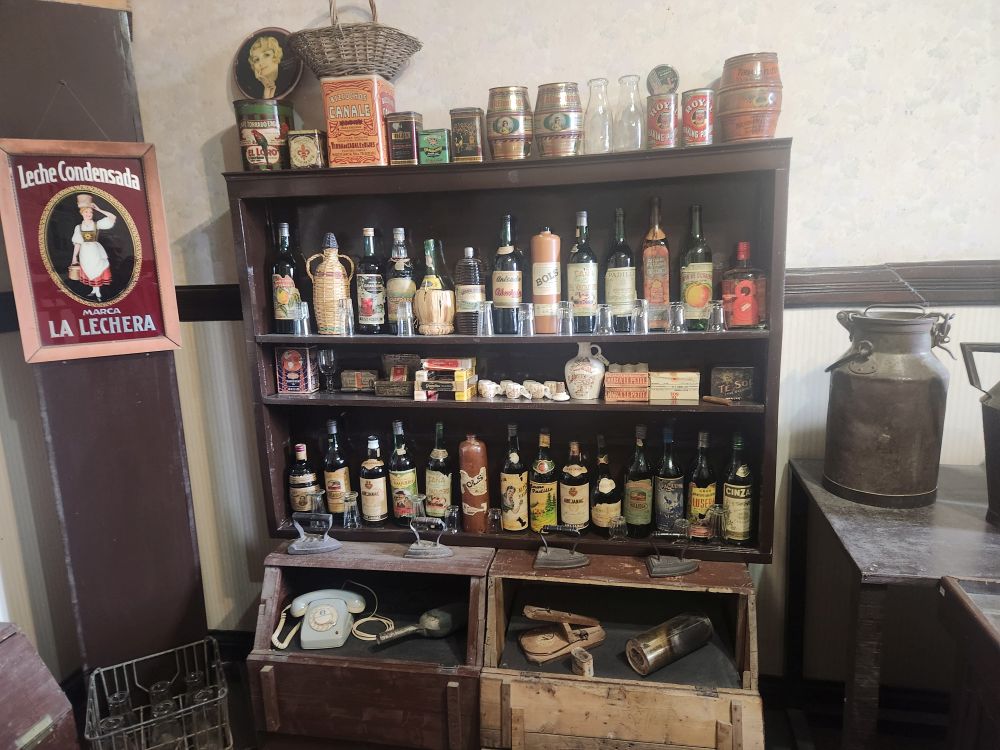
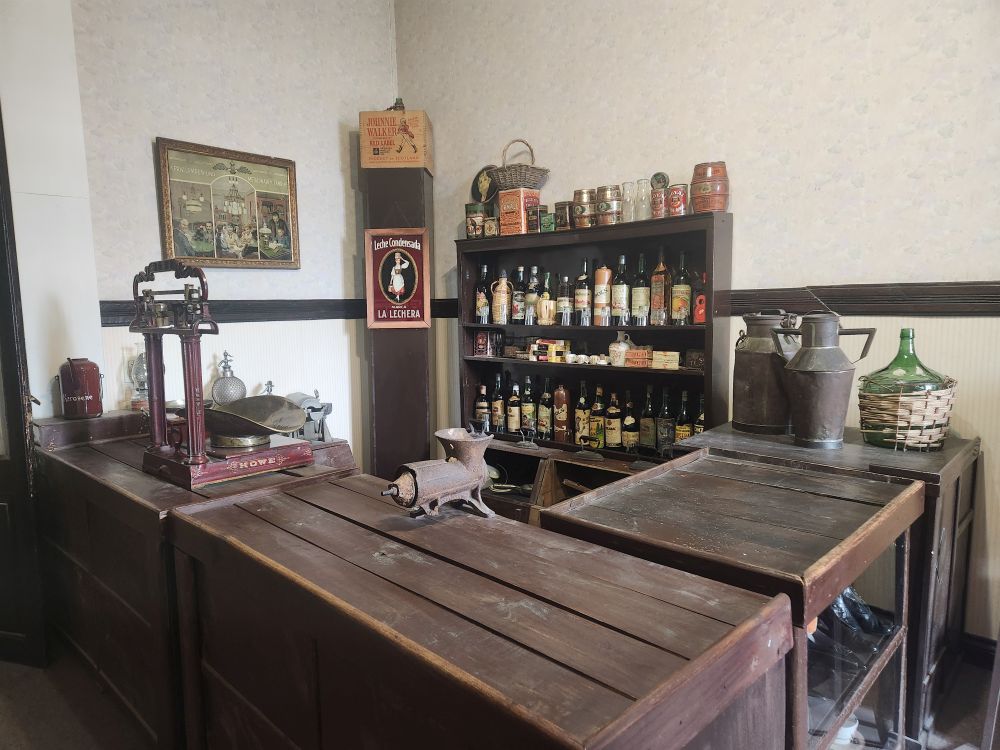
Arriving at the Government house in no time, a gorgeous old building that is a beautiful example of local architecture, this part of the museum has displays mostly about the house itself. The old parliament seating is still in evidence in the main room, then side rooms have information about the history of the house and construction. There is also a period reproduction of a typical General Store.
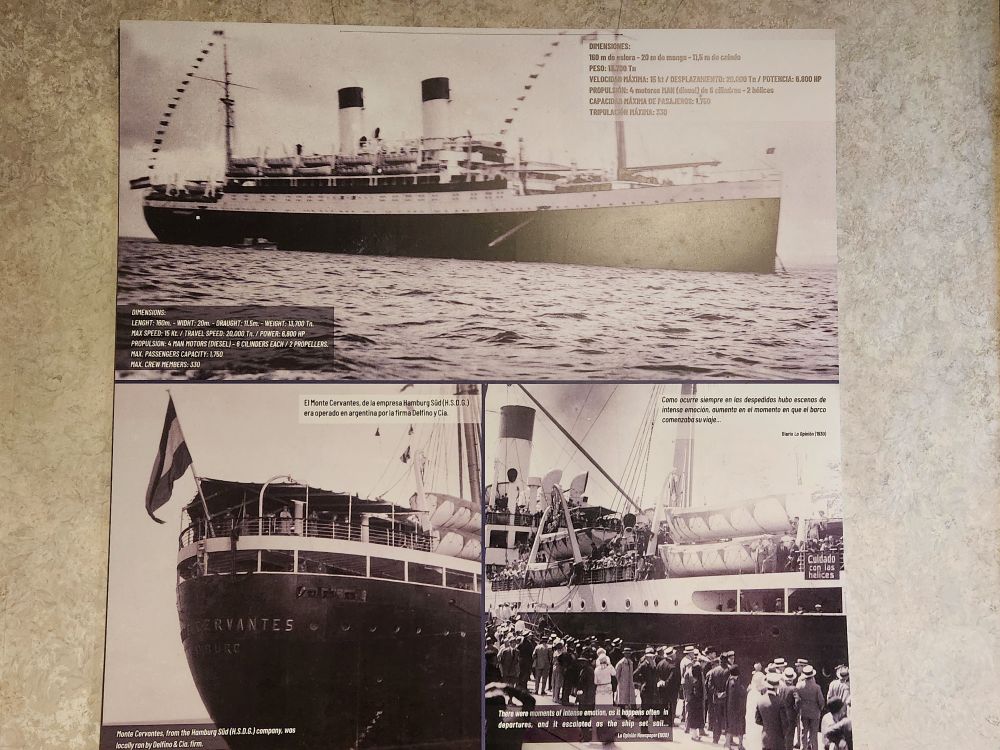
A large room of displays focused solely on the 1930 wreck of the Montes Cervantes, billed as the most important shipwreck of the Beagle Channel. The ship was on a “touristic” sailing, heading to the Fuegian channels when it stopped in Ushuaia for a port call. Shortly after leaving, a navigational error caused the ship to hit rocks and begin to sink. The Captain managed to turn the ship toward the coast to run it ashore and provide more time to evacuate. All passengers and crew were safely evacuated to Ushuaia and in a matter of hours, as the story goes, each household in of Ushuaia (800 residents total) took in the 1400 passengers and crew, housed and fed them until rescue ships could come to take them back to Buenos Aires, 6 days later. Pretty impressive. The Monte Cervantes lay on its side in the Beagle Channel for 14 years after the wreck, until 1943 when an Argentinian businessman began refloating operations. During the final stages of flotation, 10 years later, as the ship was being towed toward Ushuaia, the Monte Cervantes finally sank forever in October of 1953.
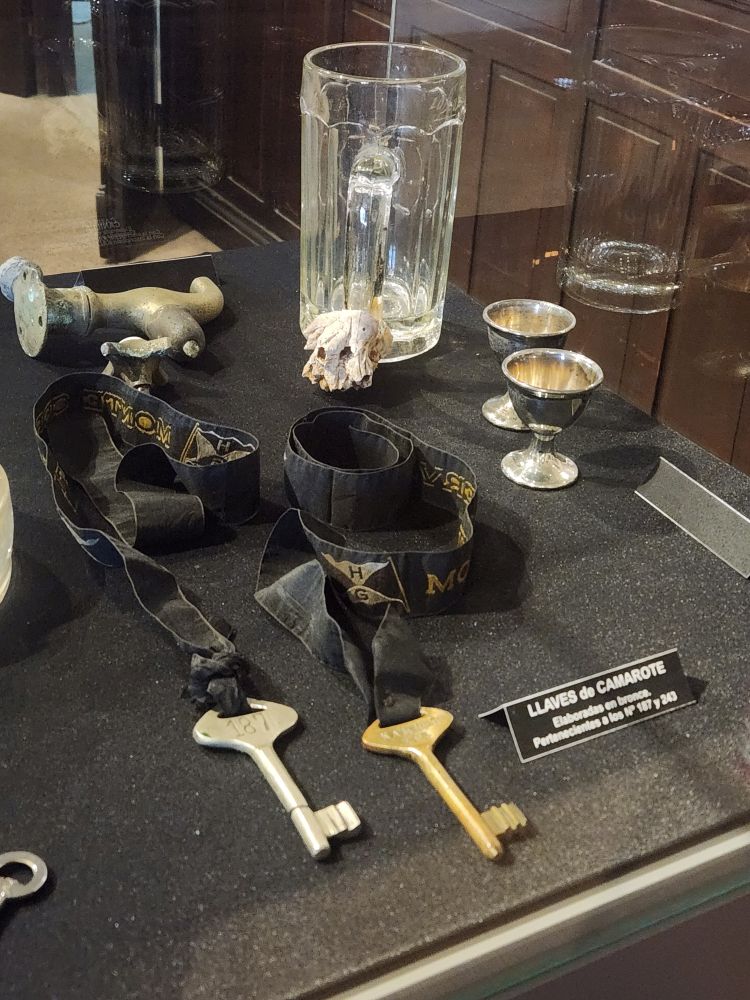
There tons of photos, explanations, a model of the ship and artifacts saved from the shipwreck – including these old school keys on a lanyard that remind of our SH Diana old school keys, and we find hysterical. (We show the picture to Robinson, our wonderful Guest Relations pal – explaining that these keys are from 1930 but are just like ours! – which he completely gets and giggles along with us.)
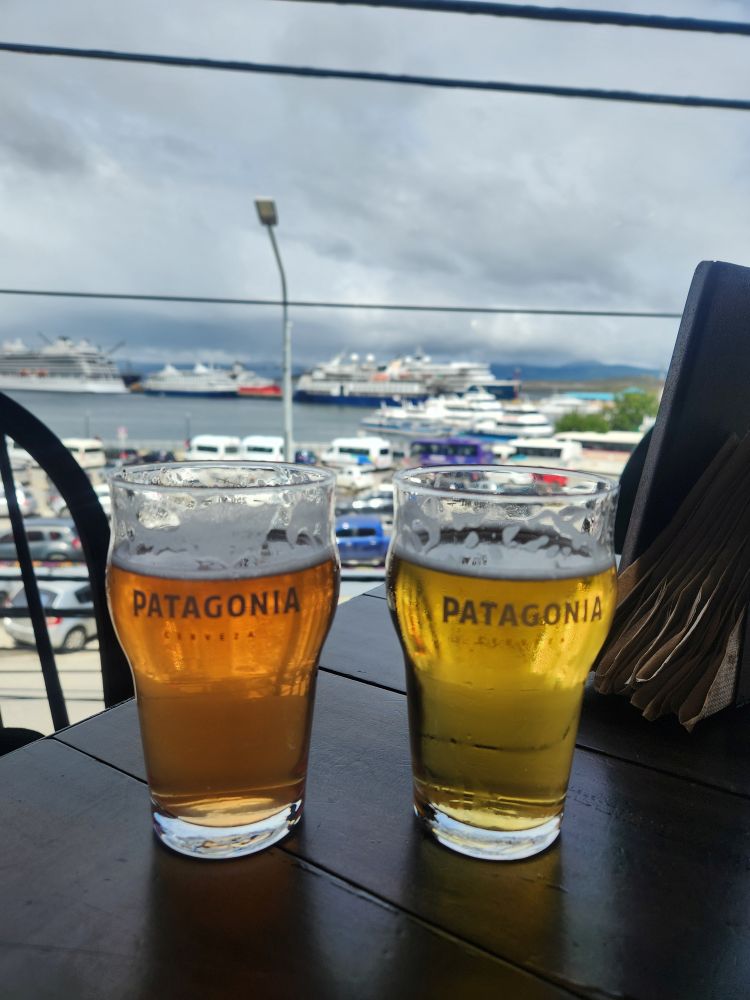
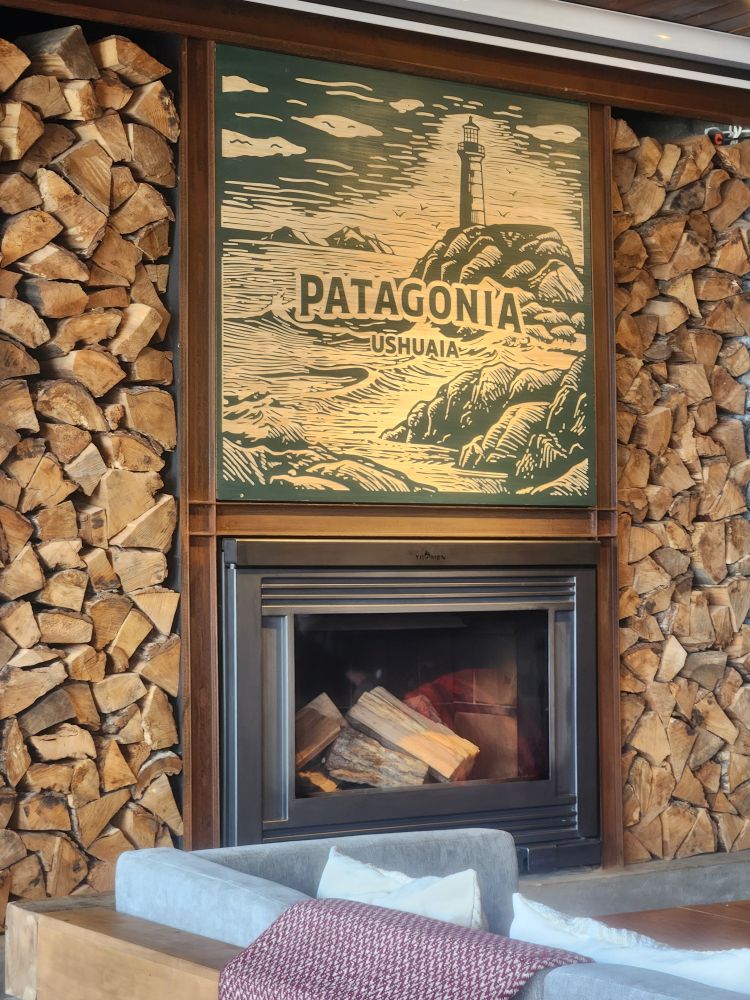
Deciding to walk around a bit as it is still too early to head back to the ship, we hit a couple souvenir shops, making a fast friend of another cruise passenger (from another ship) after she overhears us say “Unless you really have to buy something, there is no need to be here – run!” She laughs so hard and completely agrees – I mean the prices are ridiculously crazy high. We bought some really cute little penguin coasters cheap at the museum store, and that was it. Shopping a bust – we make our way to Patagonia Brewery, which was closed for renovation the last time we were here. Grabbing a great seat upstairs at the windows, we look out over the now jam-packed dock while we enjoy our beers (after the waitress dumped one all over the table – missing us, but not the phone or backpack! Fortunately the phone was no worse for wear.)
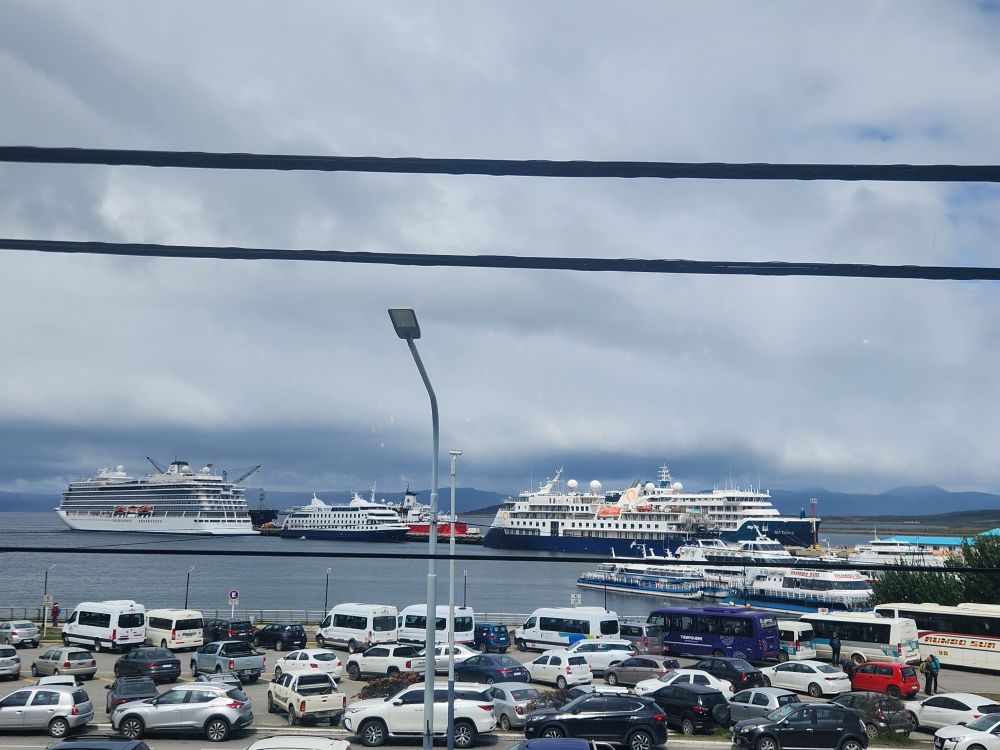
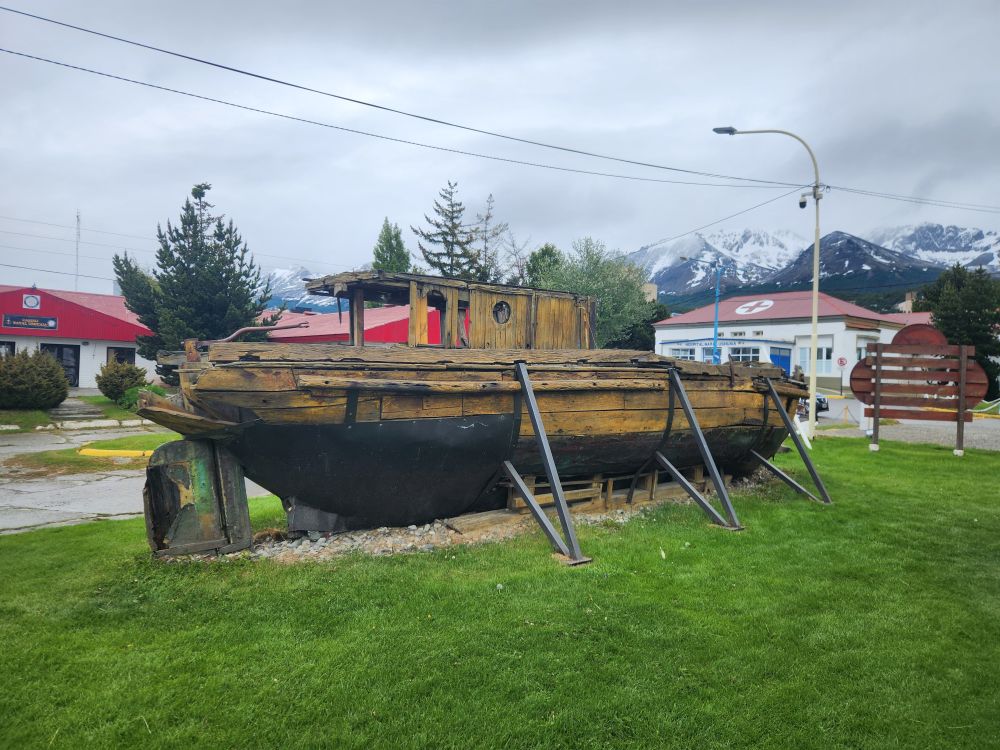
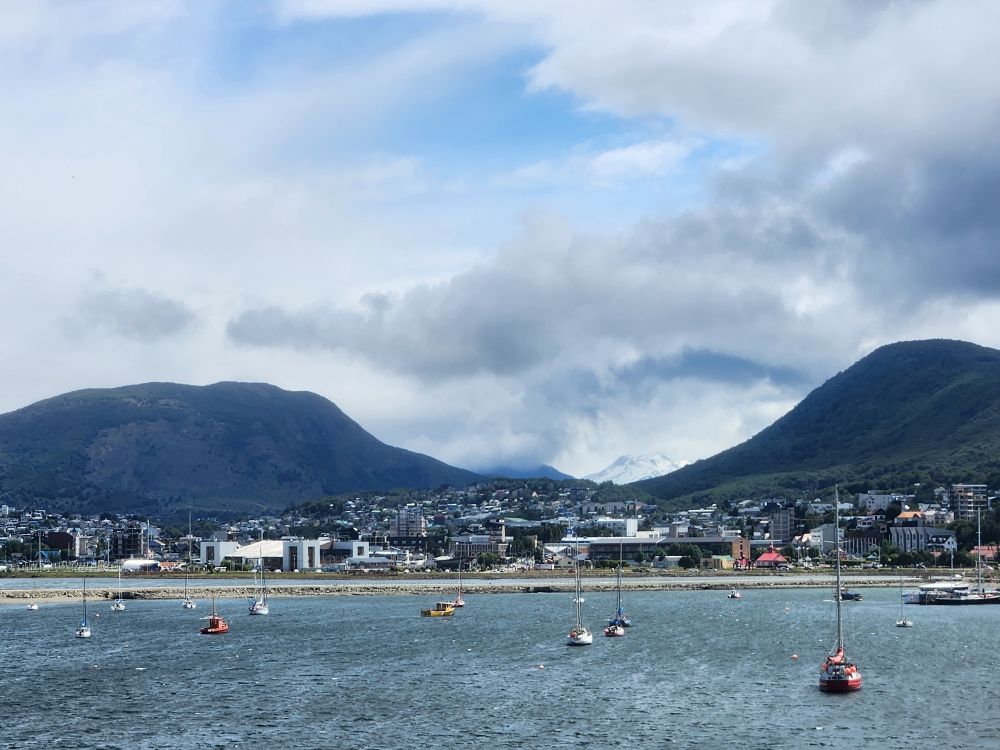
Finally we make our way back to our final night aboard the lovely Diana. Packing finalized, we head upstairs to take some last pictures of the town – including the wreck of the tugboat Saint Christopher – and the snow capped mountains in the distance. So pretty.
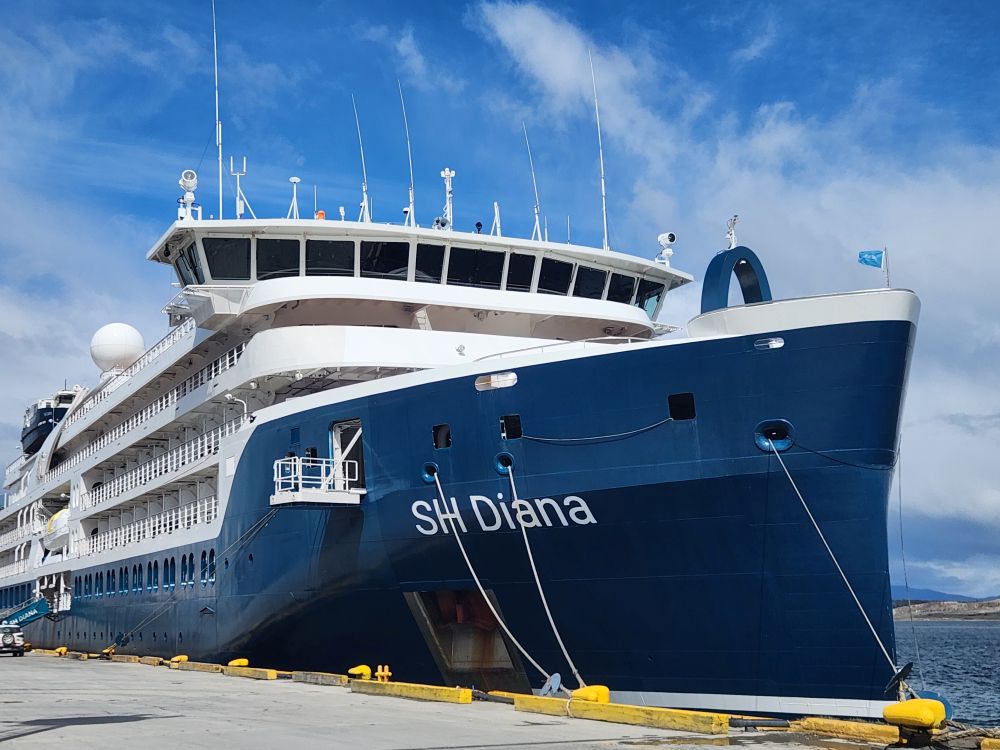
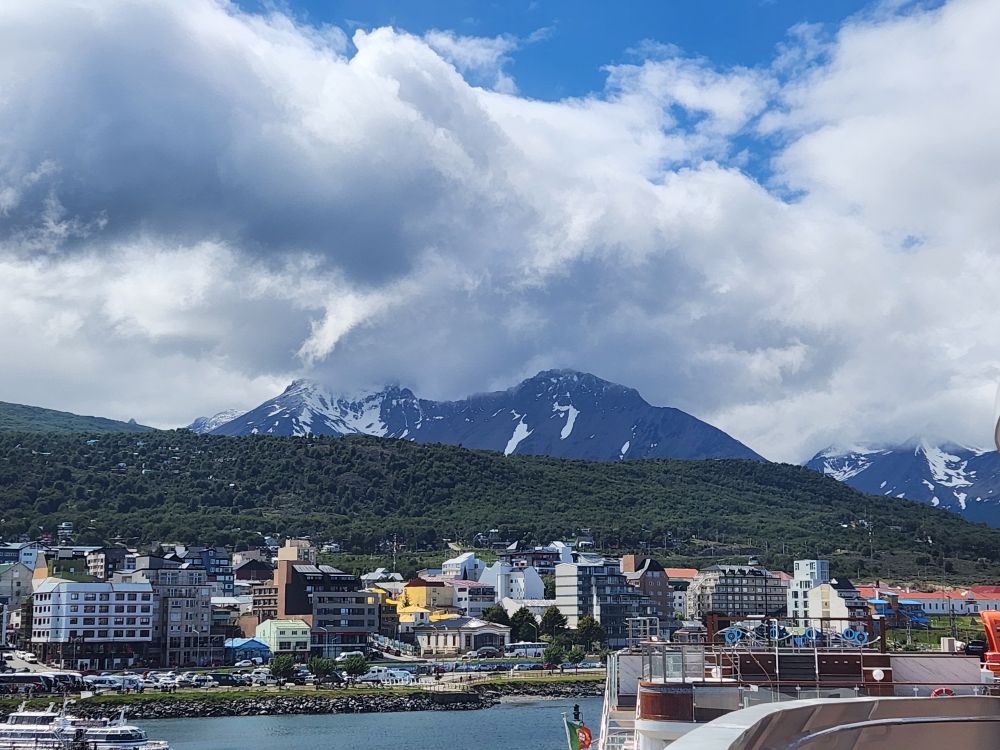
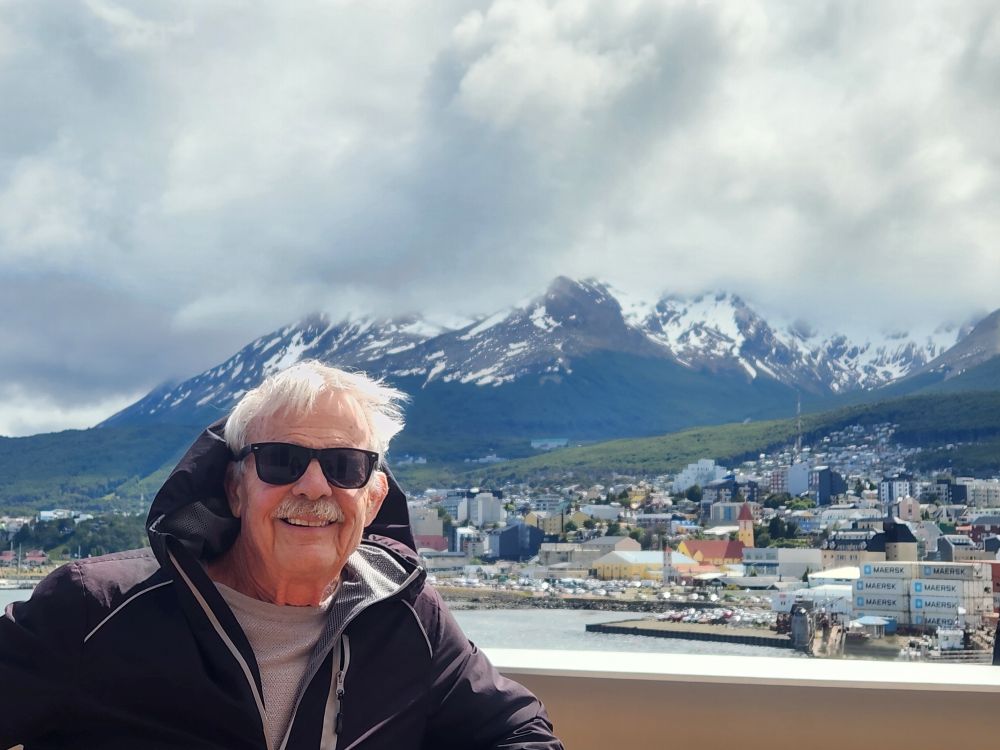
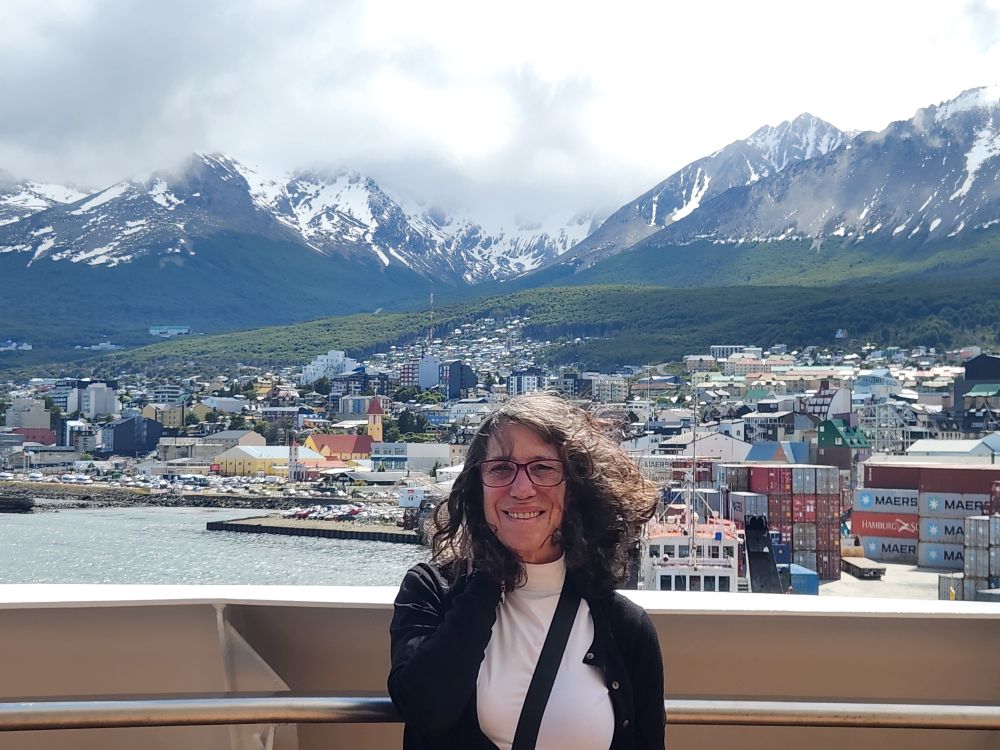
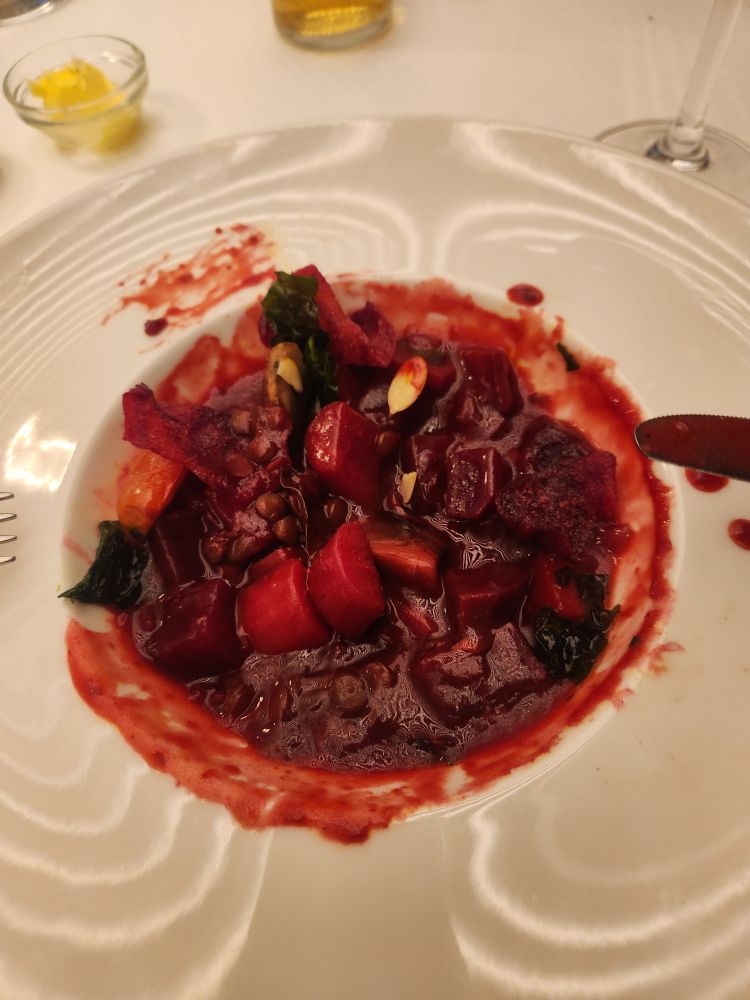
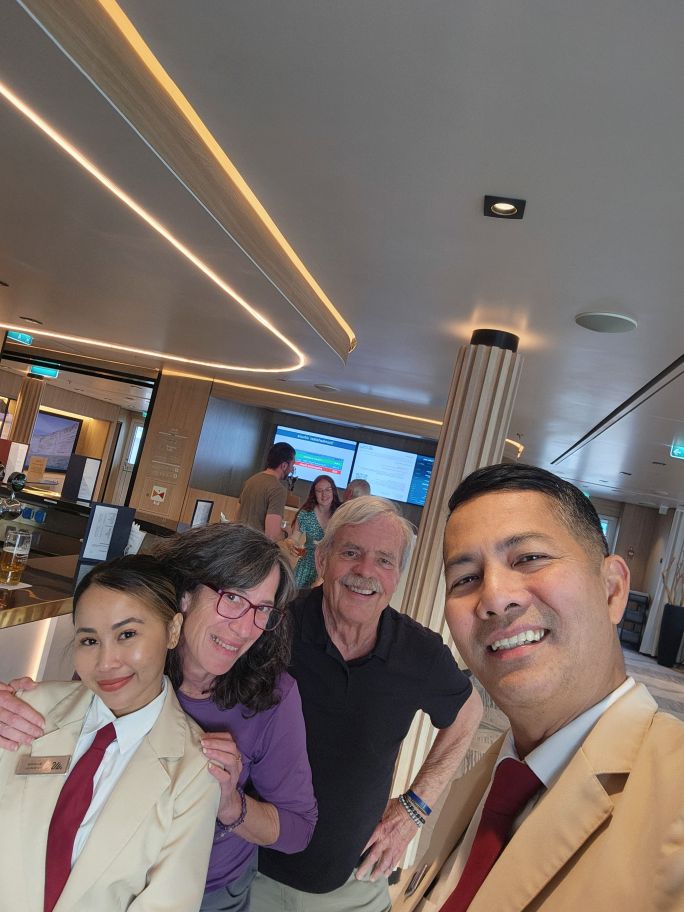
Then it is the sad night when we wish everyone farewell – saying goodbye to all our wonderful waiters and Cherry, our sommelier. Dinner is a fabulous beet bourguignon – amazing! If it weren’t the last night, I’d definitely ask for the recipe – but Google will have to be my friend. Then it was up to the bar for our last drinks with Allan and Sunshine – and off to bed we go, placing our luggage outside by 10p and hitting the hay for our early morning abandon cabin call.
 Andiamo