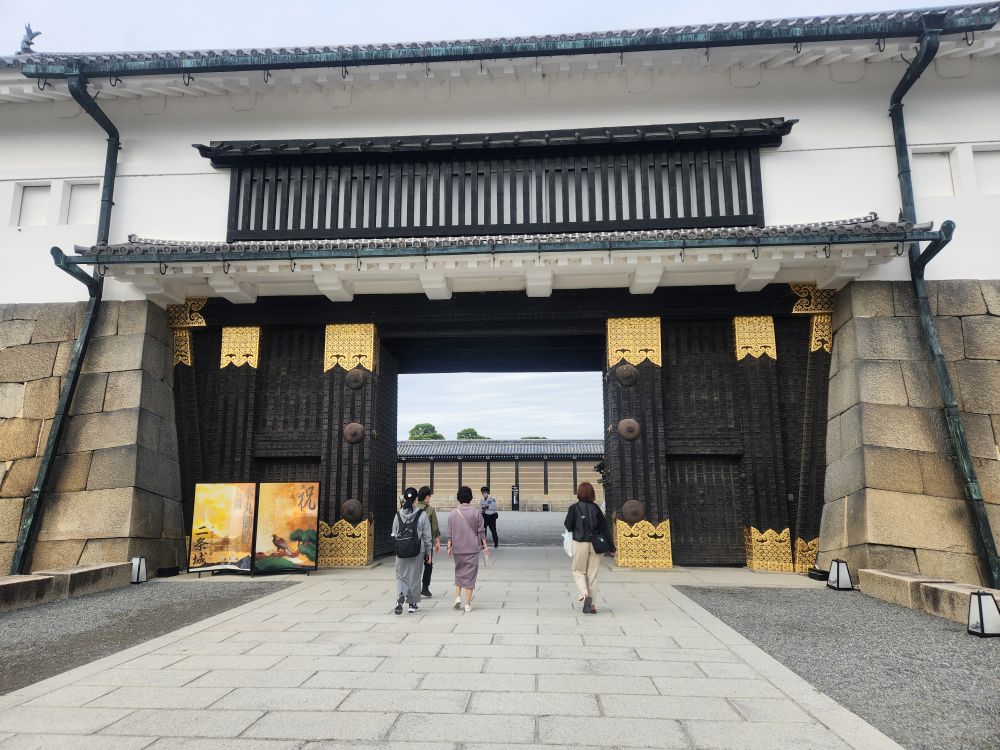
We are braving the tourists today. Wish us luck! We have decided that we have to at least visit the Nijo Castle, built on the orders of the first Shogun, Tokugaway Ieyasu in 1603. He brought an end to the 130 years of Civil war and was given power over the country by the Emperor. Thus began a prosperous and stable time in Japanese history when the country was united under feudal lords. The castle was the Kyoto residence of Tokugaway when he visited and remained. It was the place where the 15th Shogun announced the end of the Tokugawa rule, when political control was returned to the Emperor. The castle basically staged the opening and closing ceremonies of feudal rule and was where the creation of the modern Japanese state began. Ok – we are into the history.
The castle is located in an area that is tough to get to on the subway, so we figure its easier to just get a taxi then to try to navigate the overcrowded buses (again, we are on a bus boycott!). Worked pretty well, actually. Ordered the Go taxi early, and he came right away, although the house is located right by a school and the parents “shut down” the streets when the kids are going to and coming from school. It’s not a legal thing, they just do it to protect the kids since all the roads are very narrow and one way. Unfortunately, we didn’t realize this, nor did our taxi driver, and the parents were yelling at the guy coz he was driving on the streets! He spoke perfect English, that’s how we knew – and he was pretty perturbed that they were so mean. Oops – sorry!
Anyhow, we made it to the castle easily enough, chatting away with the taxi driver about why we like Kyoto, what he thinks about the overtourism, etc. Fortunately, we had bought tickets online last night. Good decision!! We were the 4th and 5th people inside – and the line for regular tickets was at least 300 people long. Not to mention the group tour line of at least 100-200 people! Crazy. The pre-purchase line was nothing, and they literally let us in first. It was great.
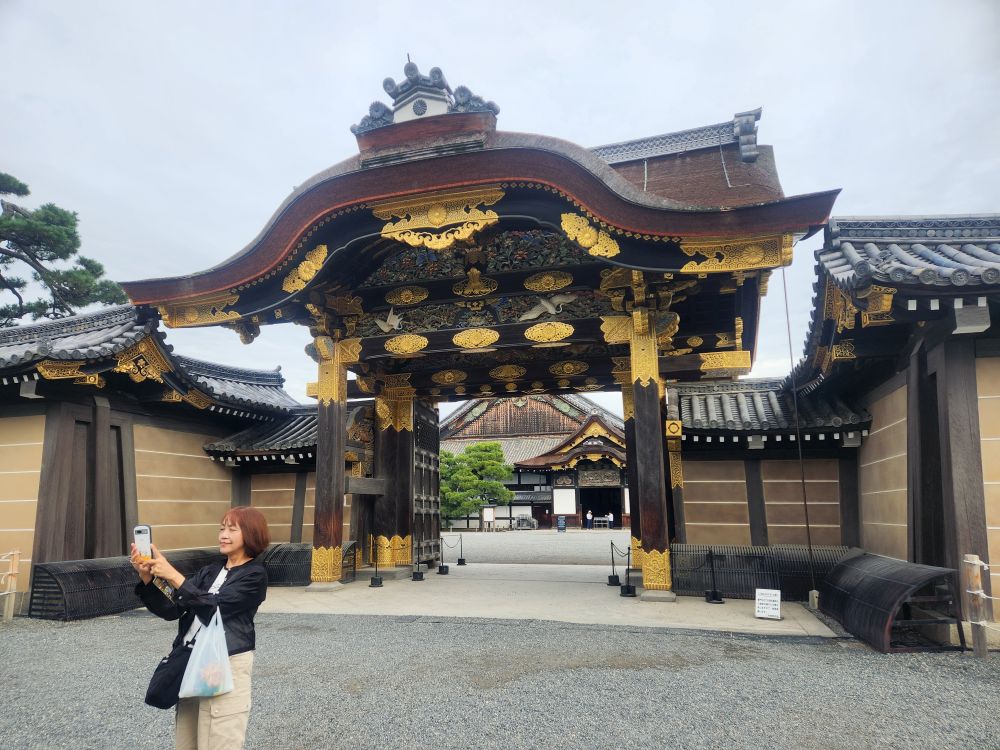
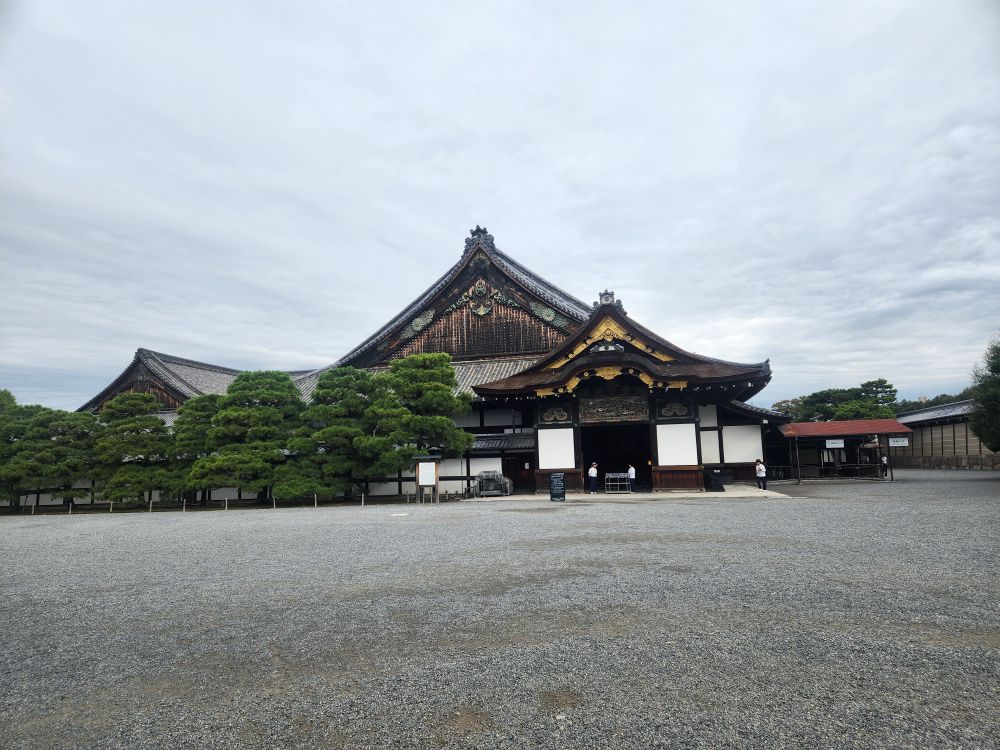
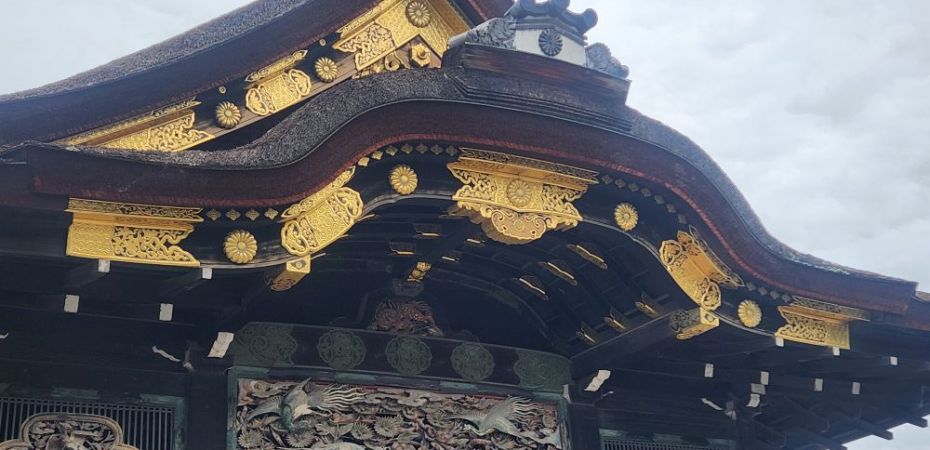
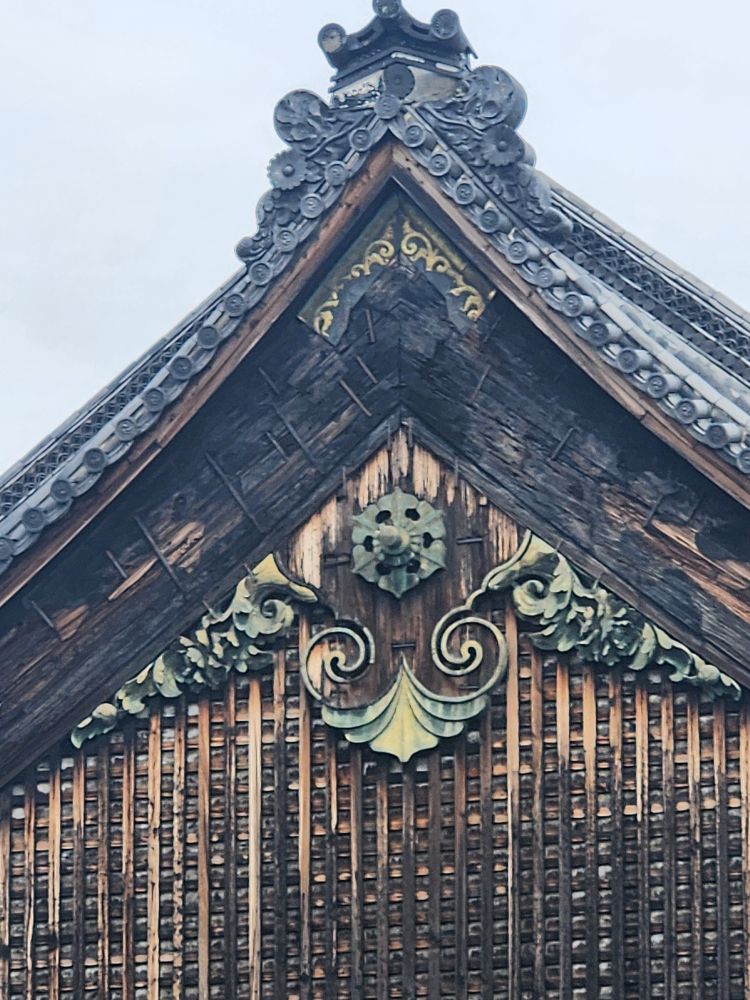
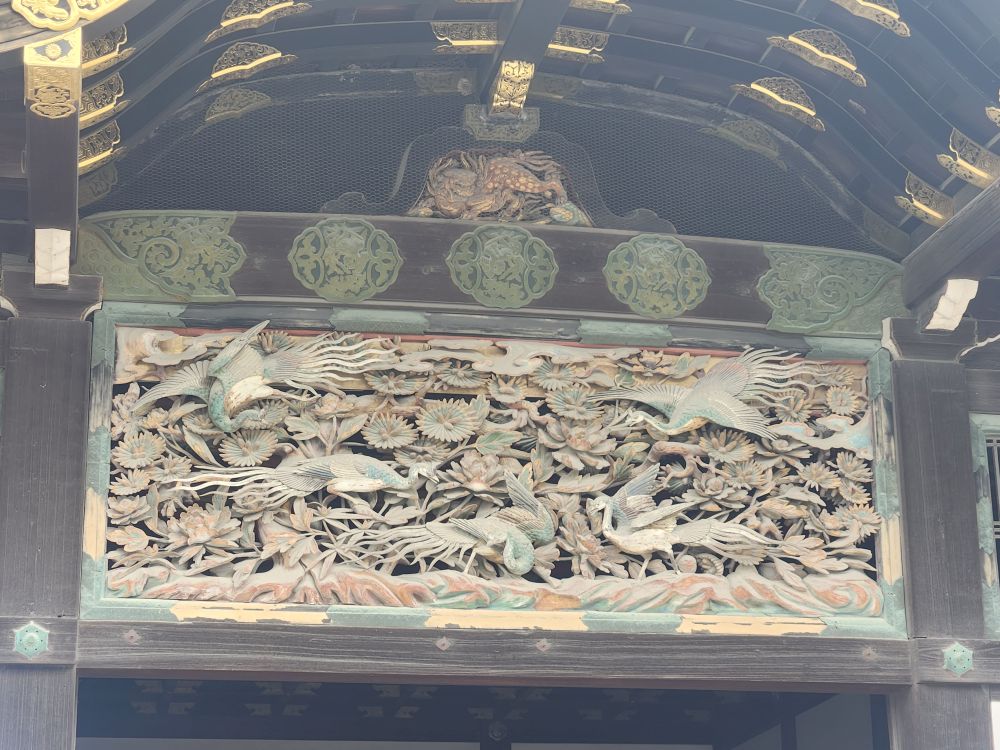
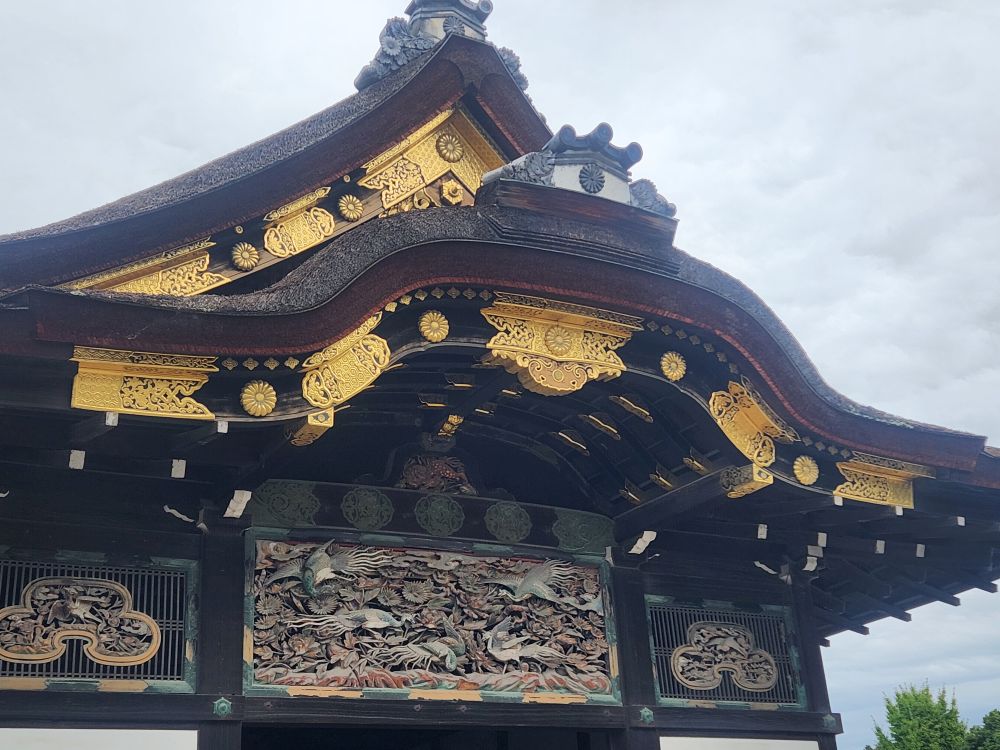
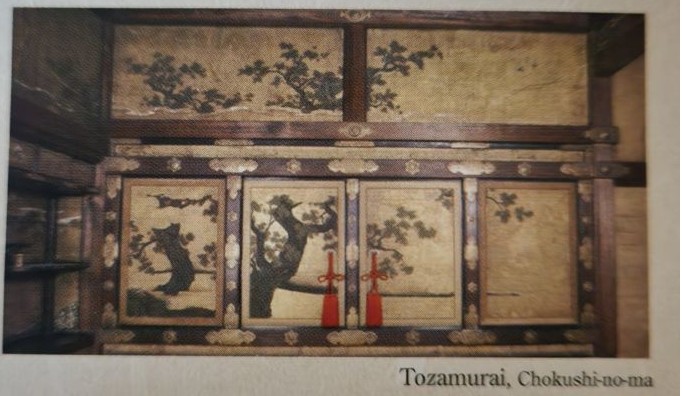
The castle has had many restorations, but it is still true to the original design and structure – which is so pretty and ornate. The carvings above the entrance way to the Ninomaru Palace are so detailed and exquisite. The gold inlay and the flower motif add to the beauty and royalty of the place. It is very befitting the Shogunate as a place to greet royalty, messengers and hold assemblies of the feudal vassals. We were the first people in the Palace and had the place all to ourselves. It was a lovely visit, even if pictures were not allowed (but we do have photos of the brochure so you can at least see some of what we are talking about)! We walked through all the different rooms, along a hallway that squeaked when we walked – just like yesterday at the To-ji palace. I thought it was fun, but didn’t realize it was a specific design – the Nightingale corridor! Designed to make a noise like the singing of the nightingale, caused by clamps that move against nails driven into the wooden beams that support the floor. Ok, I’m still going for squeaking, not birdsong, but still, it is really fun to walk along these corridors making noises – and ingenious for 400+ year old technology. We take our time wandering down the corridors, squeaking away, looking at the over 2,000 wall paintings that grace the walls in every single room. Designed to impress, the different styles to each room (that then designate for what the room is used) are interesting to learn about. Tigers in a room that denote strength, pine trees depicted as reaching toward the Shogan in assembly rooms, but arching over him in is private residences. Each has a meaning and are in harmony with the room’s function.
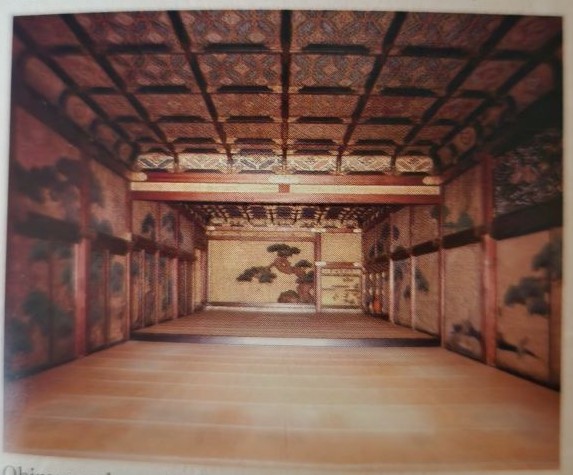
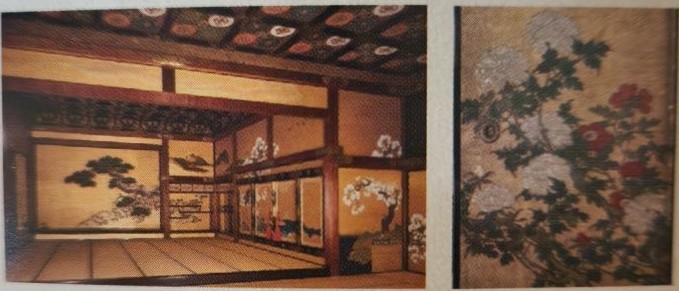
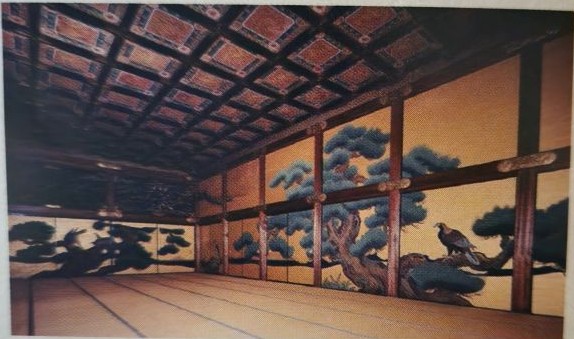
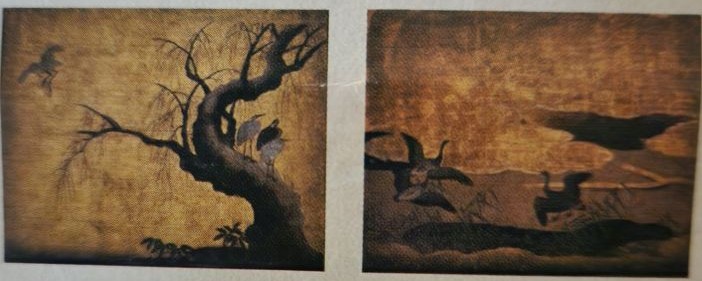
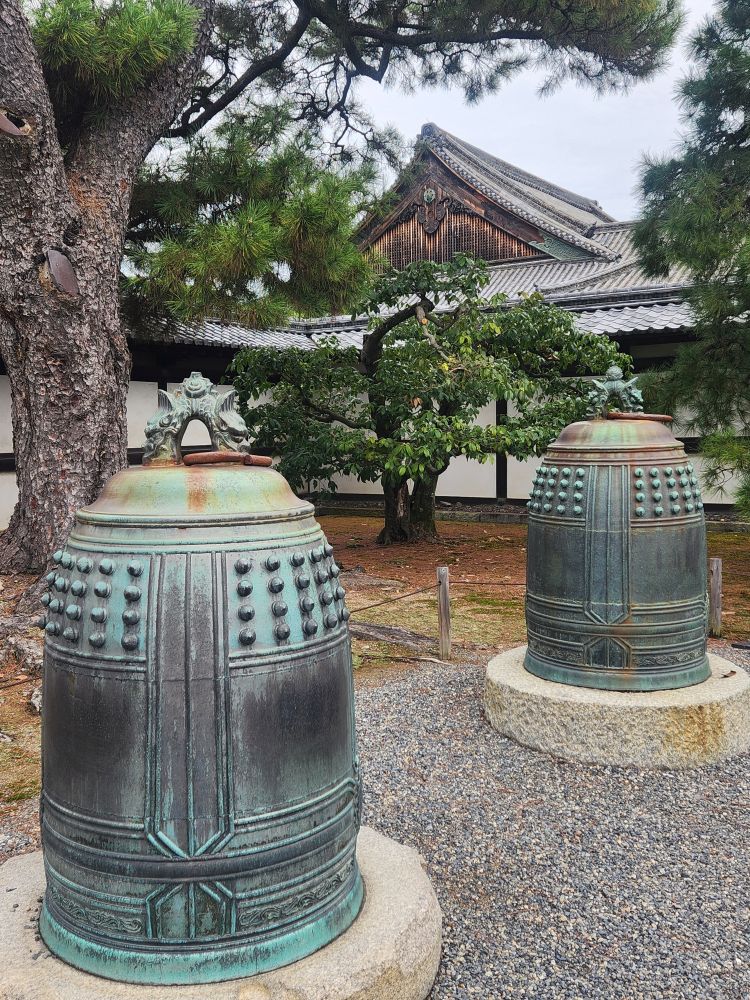
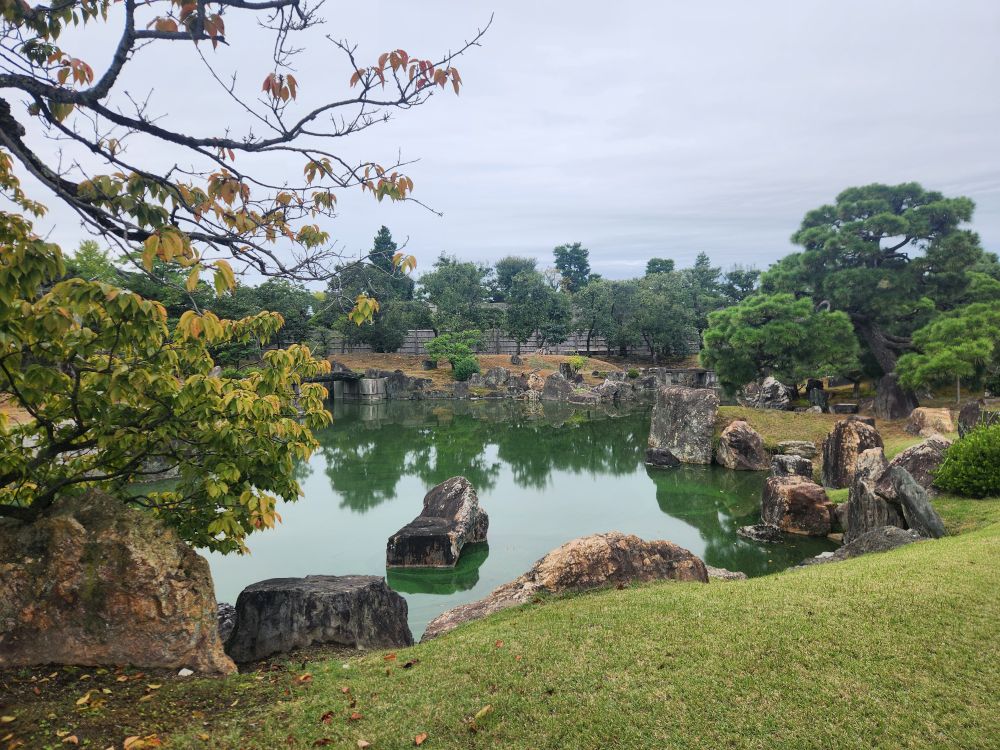
The visit was excellent, and perfectly timed. We were finished and leaving as the hordes descended. Perfect time to boogie out into the gardens. The hanging bells that once alerting residents to fires or emergencies are now located here at the entrance to the garden walk. Passing by them, we enter the main gate and wander through an assortment of manicured gravel paths, lovely flat calm ponds with beautiful rock formations and oddly enough palm trees.
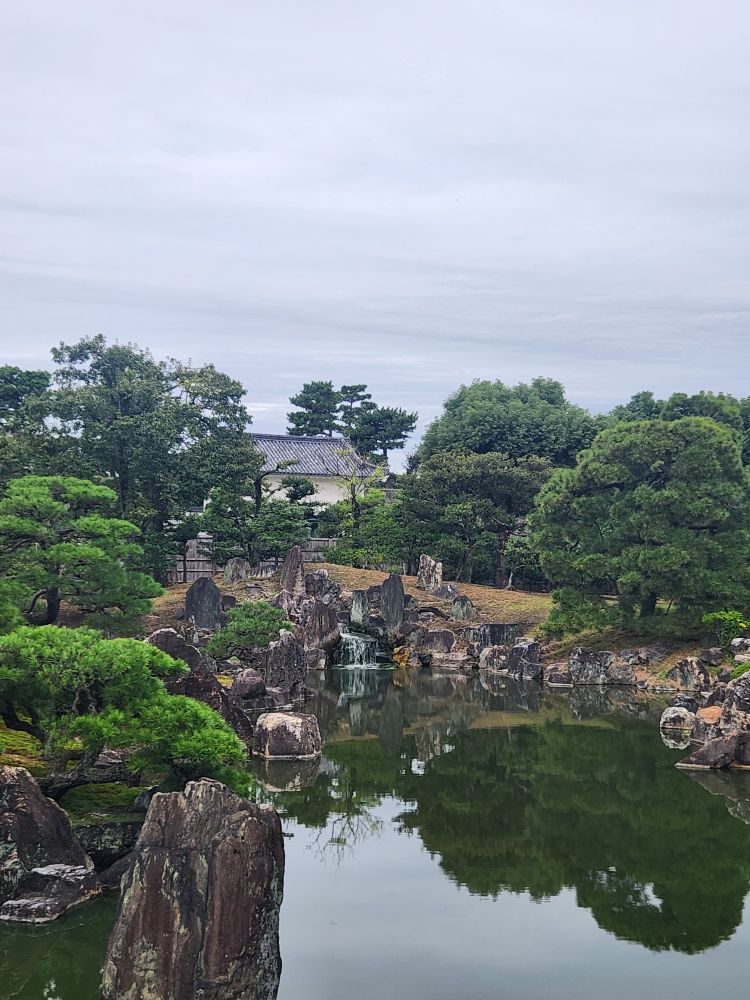
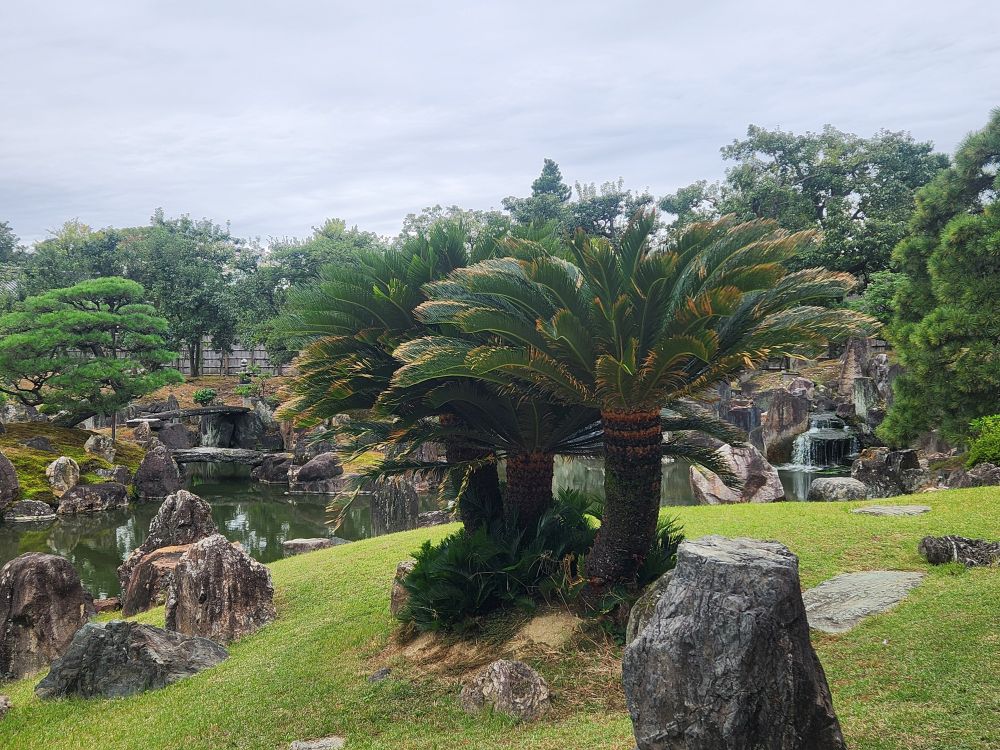
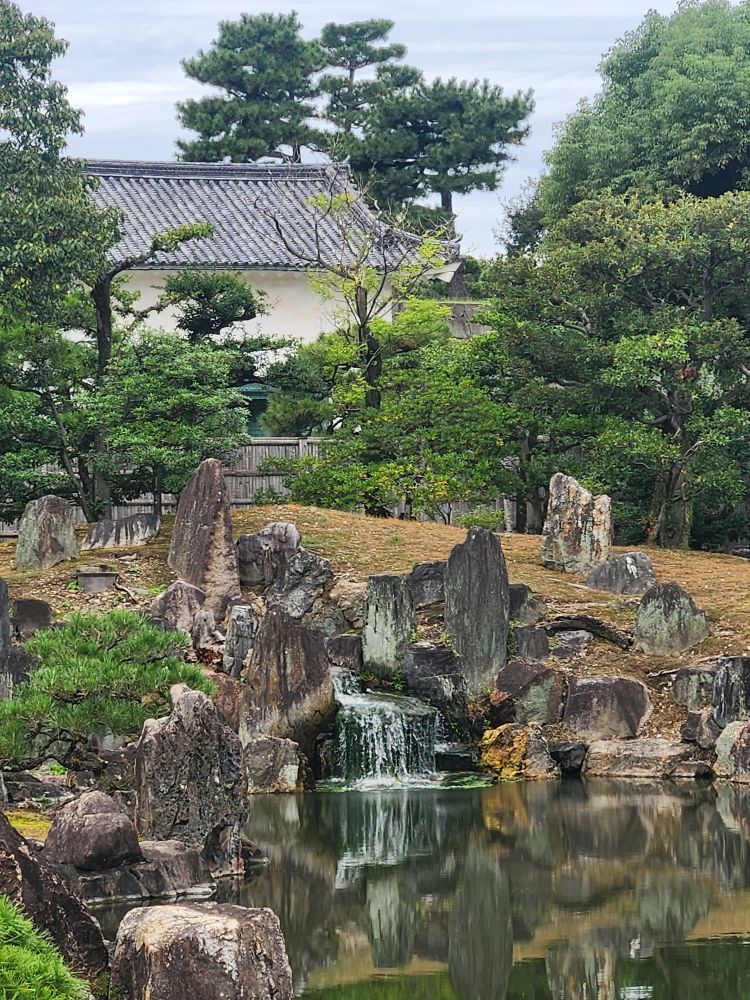
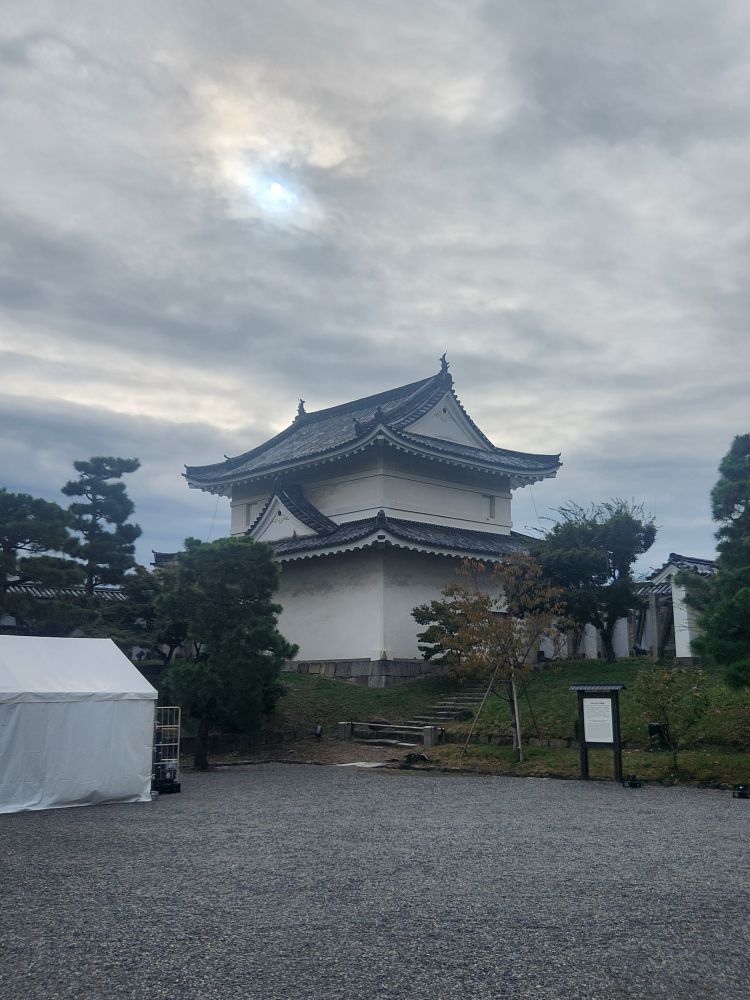
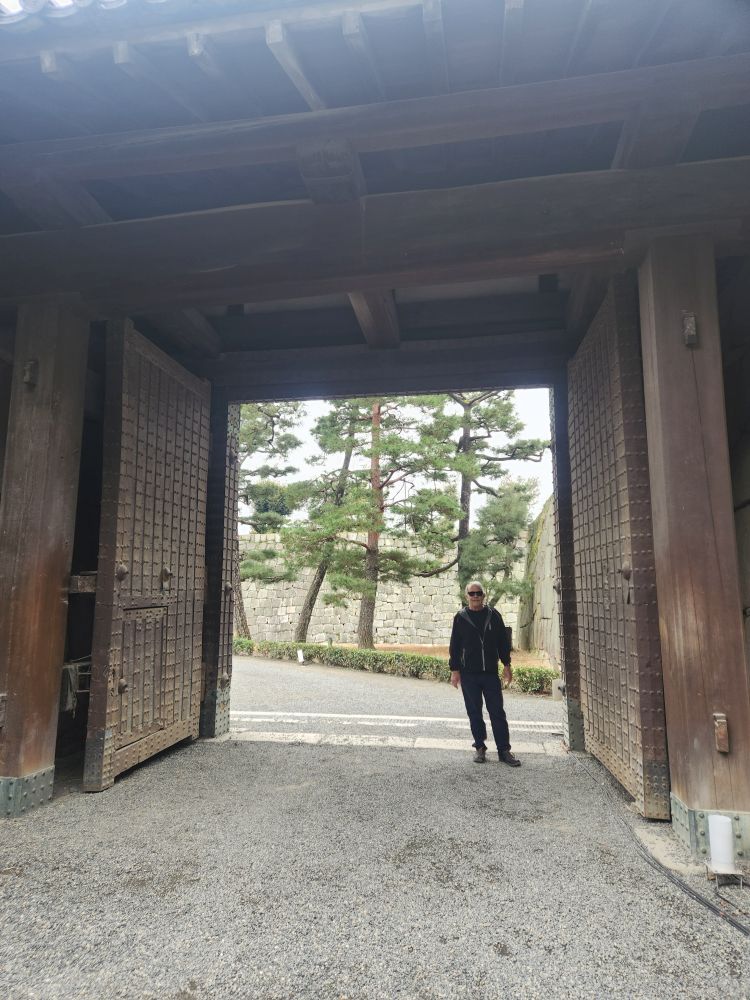
Moving on, we reach the Honmaru Yagura-mon gate – which served as the defensive gate to the main keep of the castle – Honmaru – and head toward the keep tower. We decided last night not to buy tickets for the Honmaru, as the entry is timed and we didn’t have a good feel as to what time would be best – which is fine. We were perfectly sated with the Ninomaru alone.
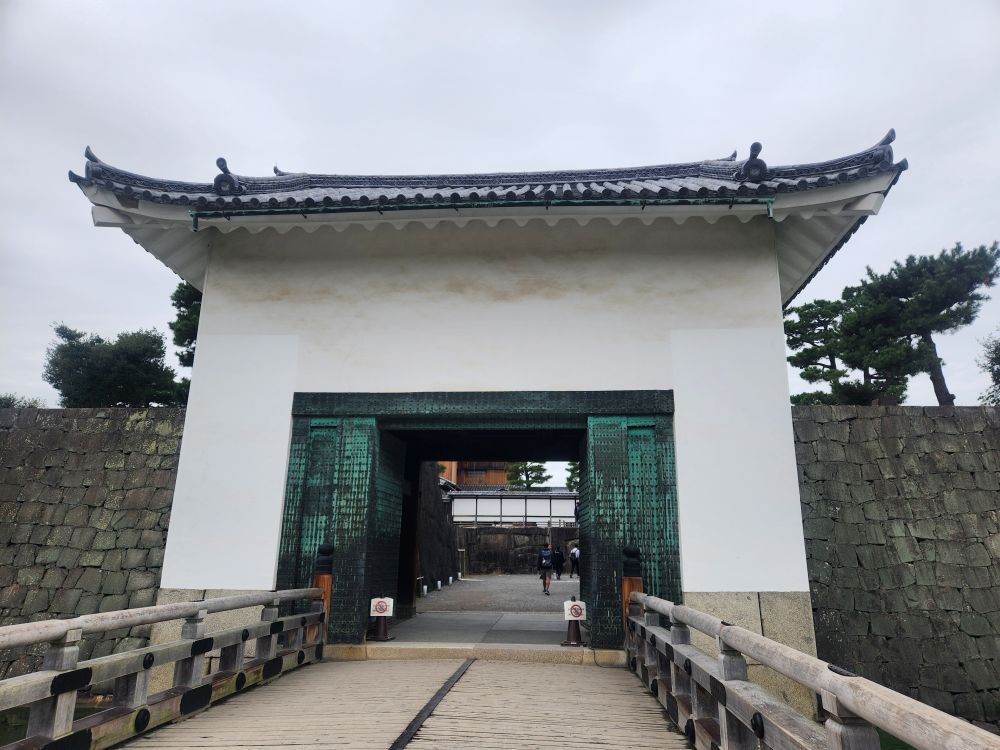
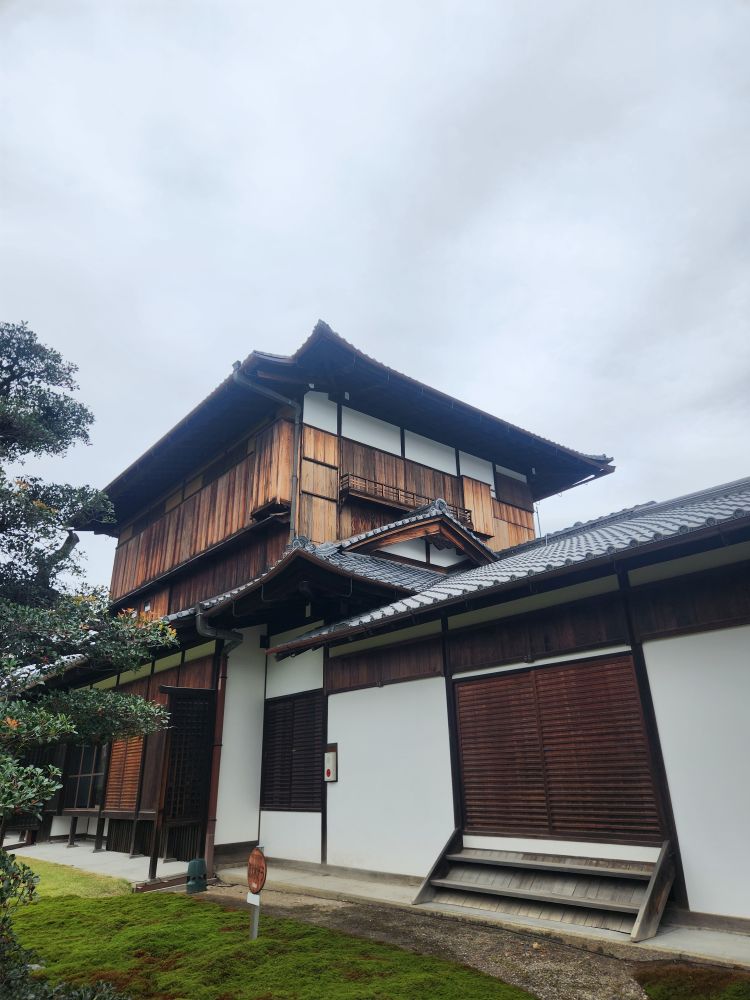
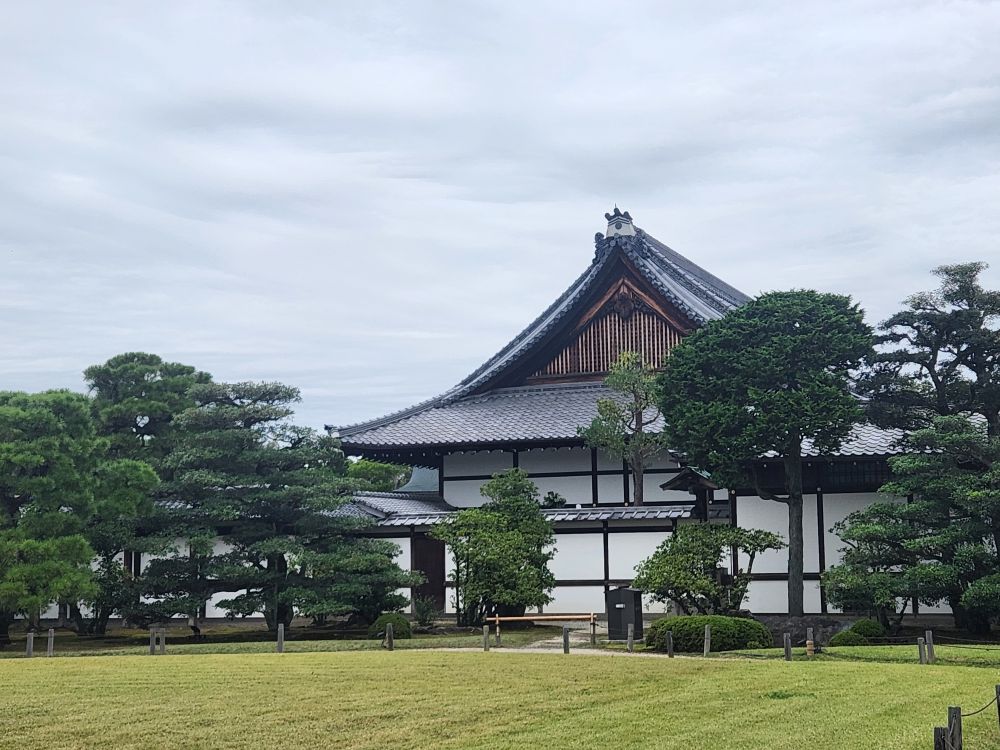
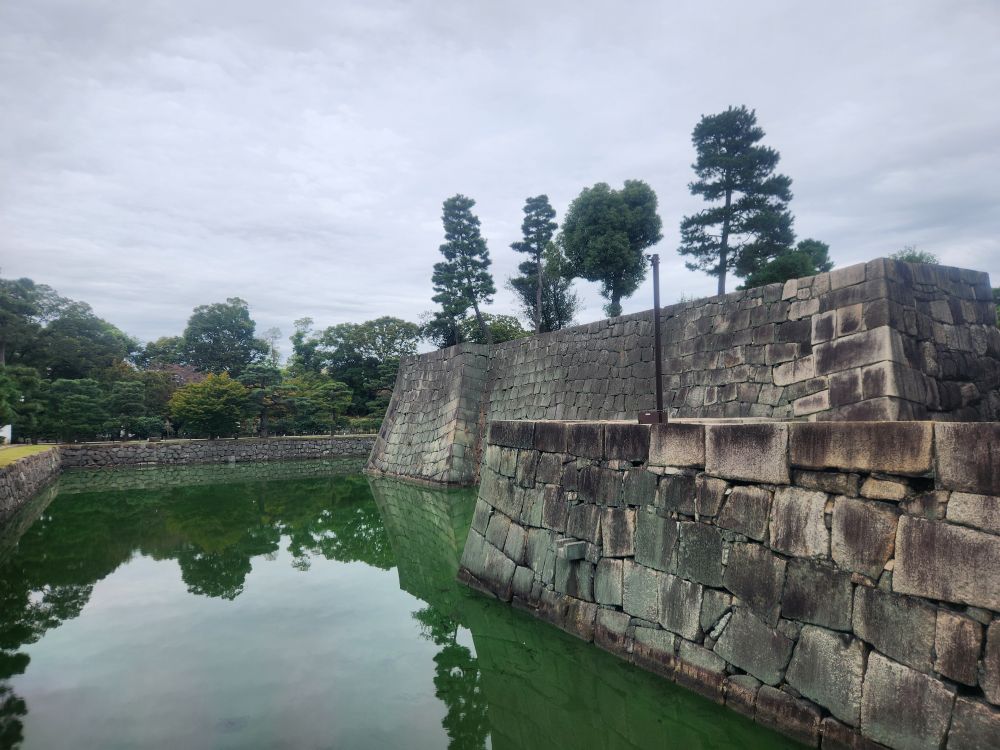
Continue our explorations, we made it to the base of the keep tower – the only thing that remains of the five story structure after it was hit by lightning in 1750 and destroyed by the ensuing fire – where we have beautiful views out over the Nijo complex. We can’t even imagine how great the views would have been if the tower was still in existence.
The fall colors are just beginning to show, making for pretty vistas and lovely red/orange leaves. It would be fabulous to be here in a few weeks when the colors really start to peak – but we have many more miles to go on our journey – none of which include fall leaf peeping this year!
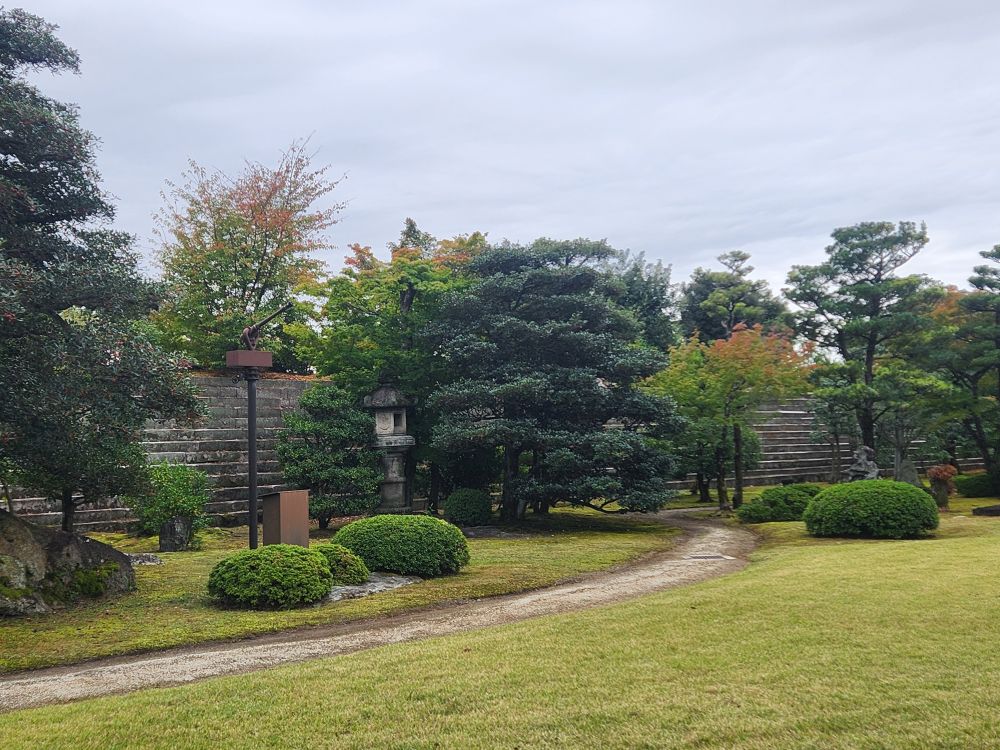
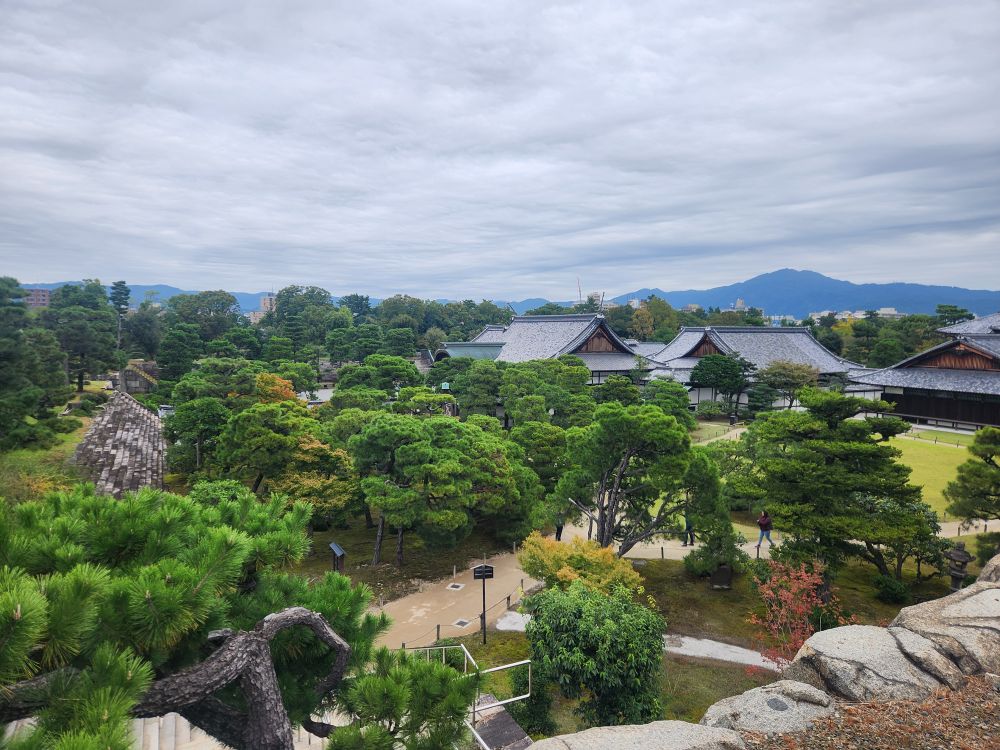
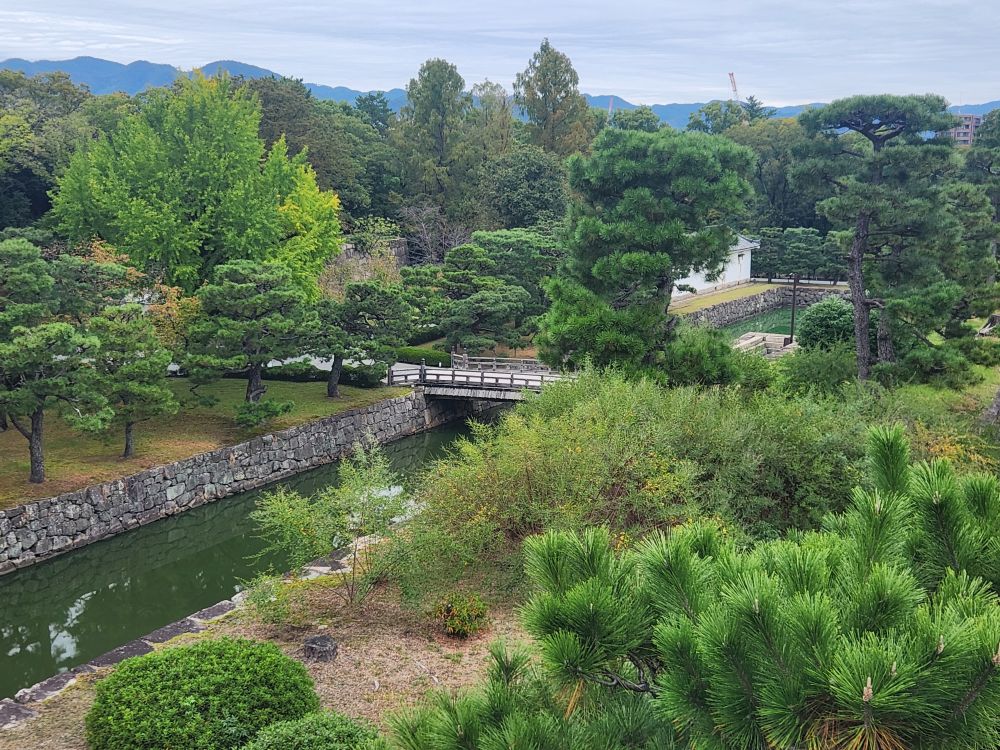
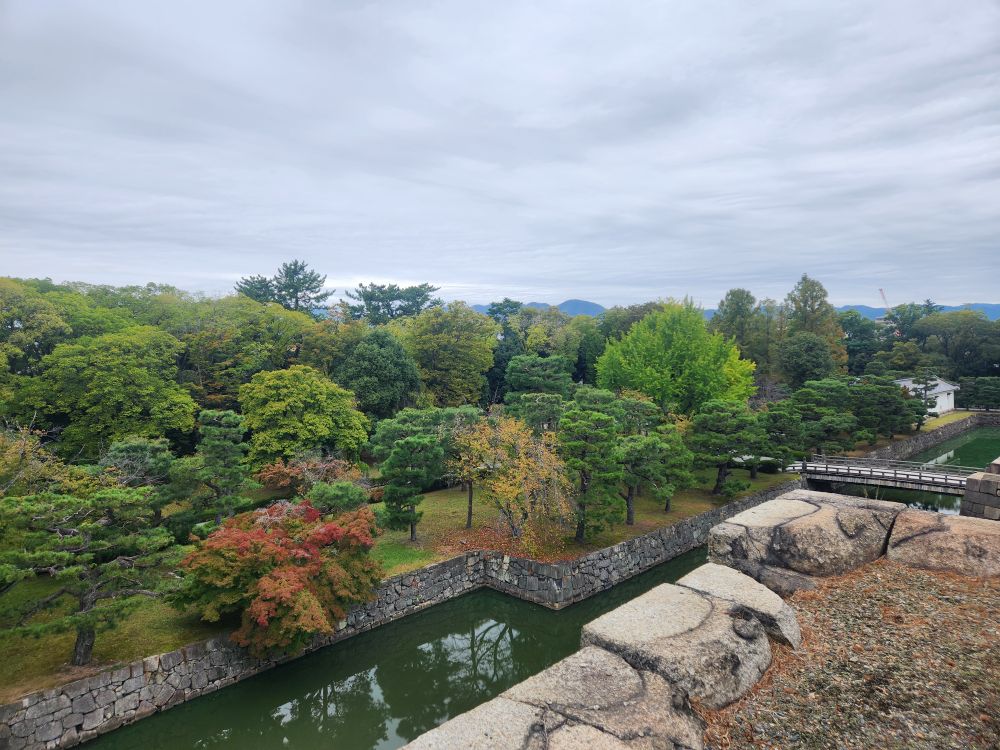
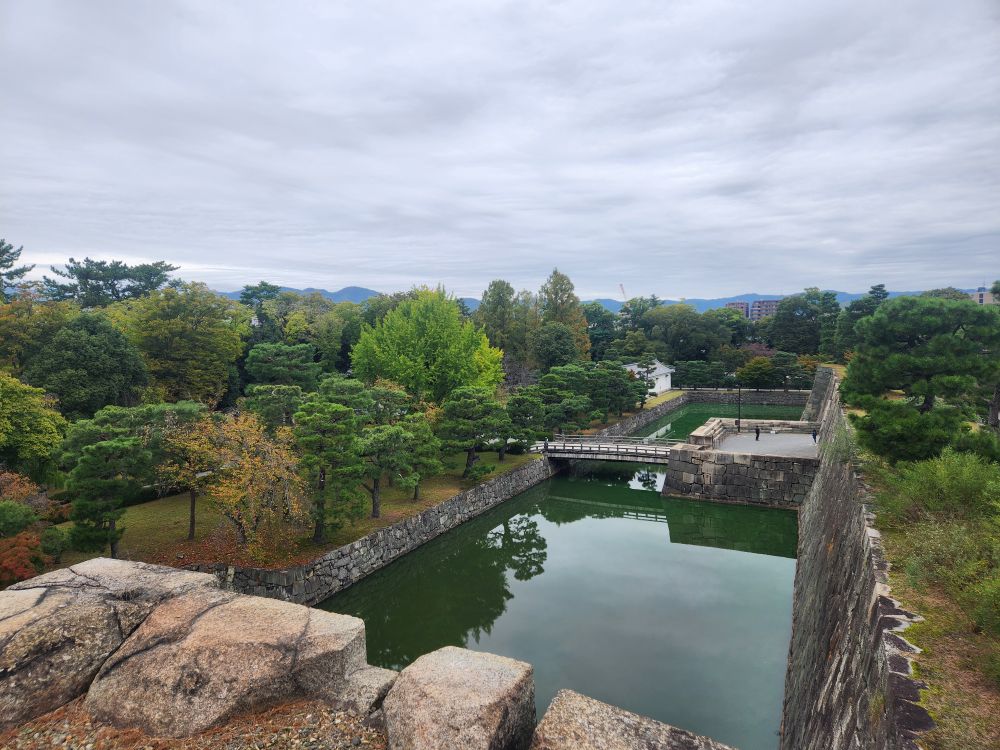
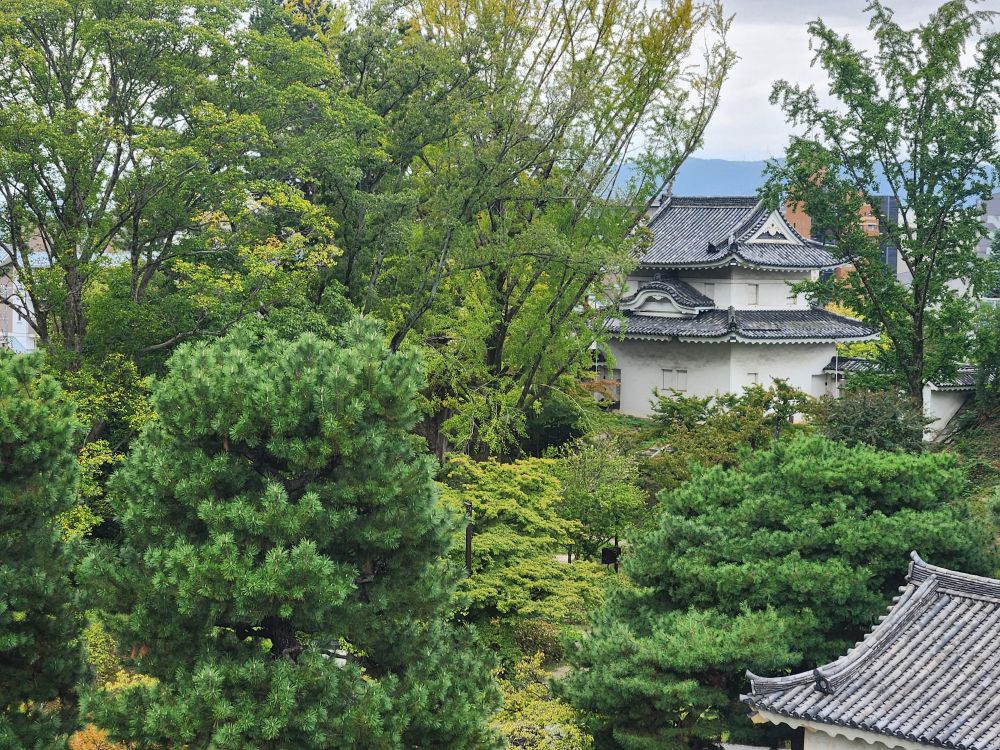
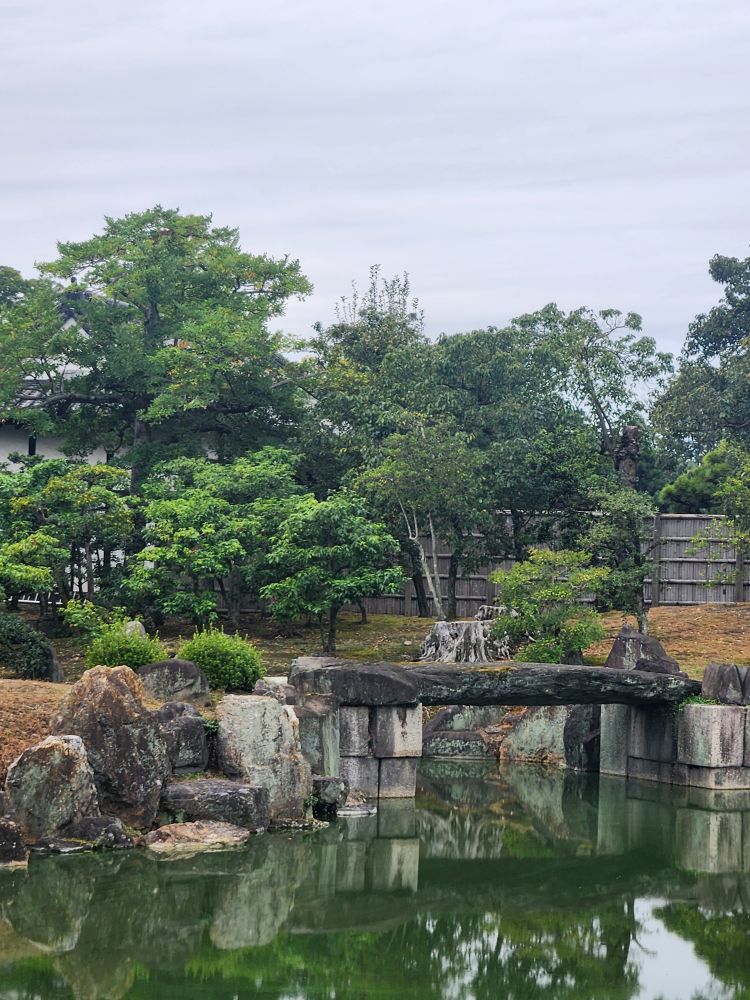
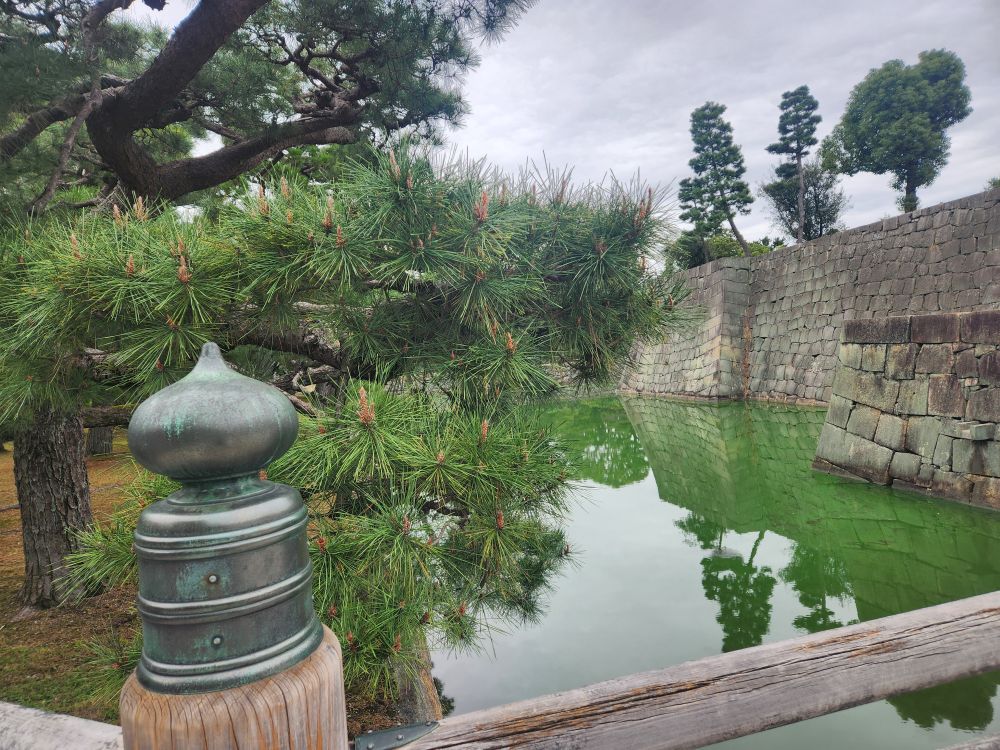
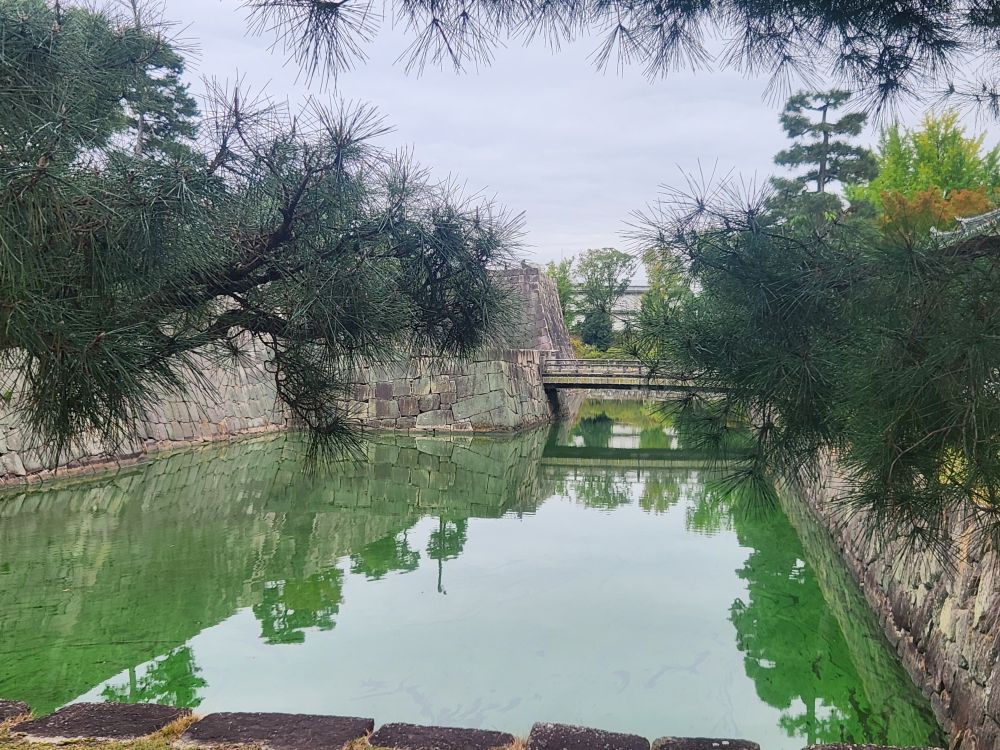
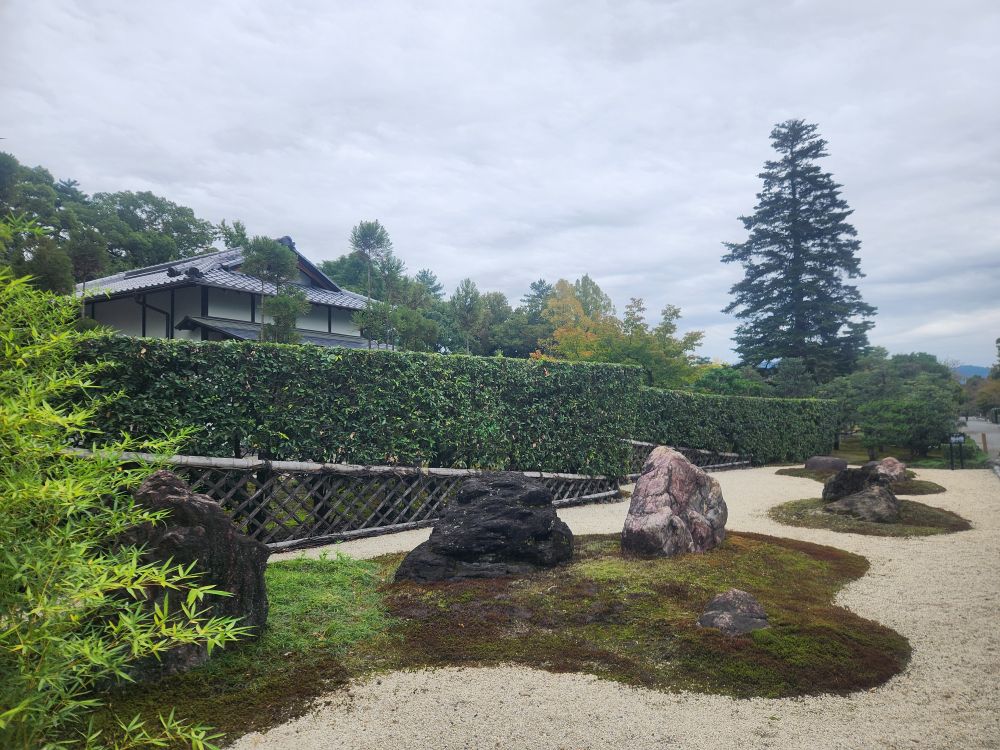
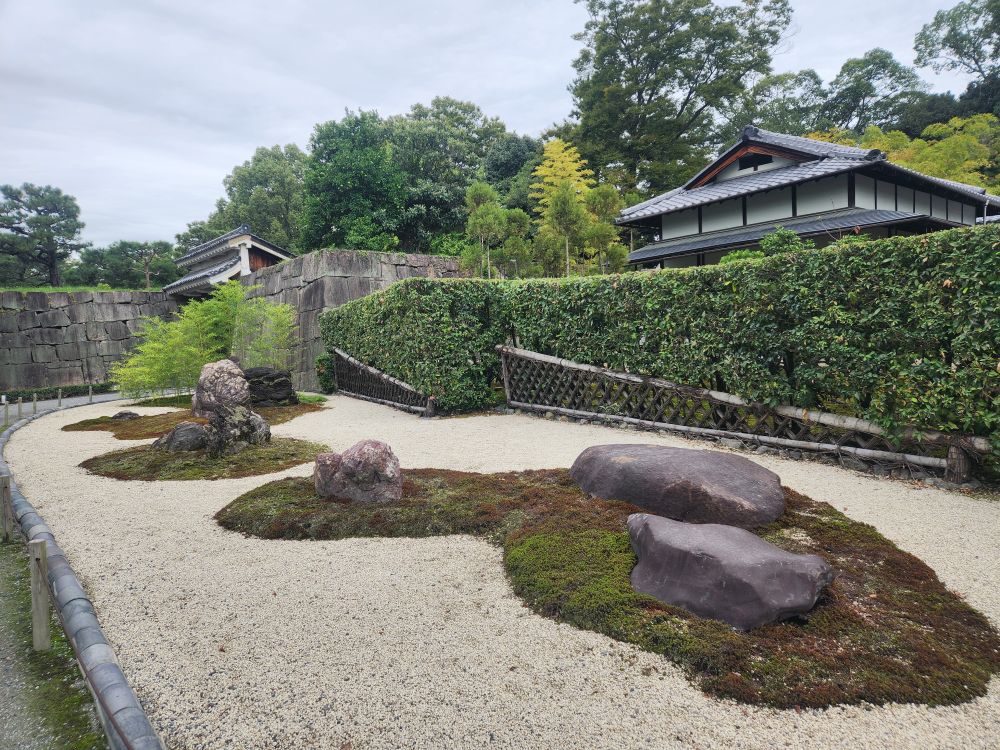
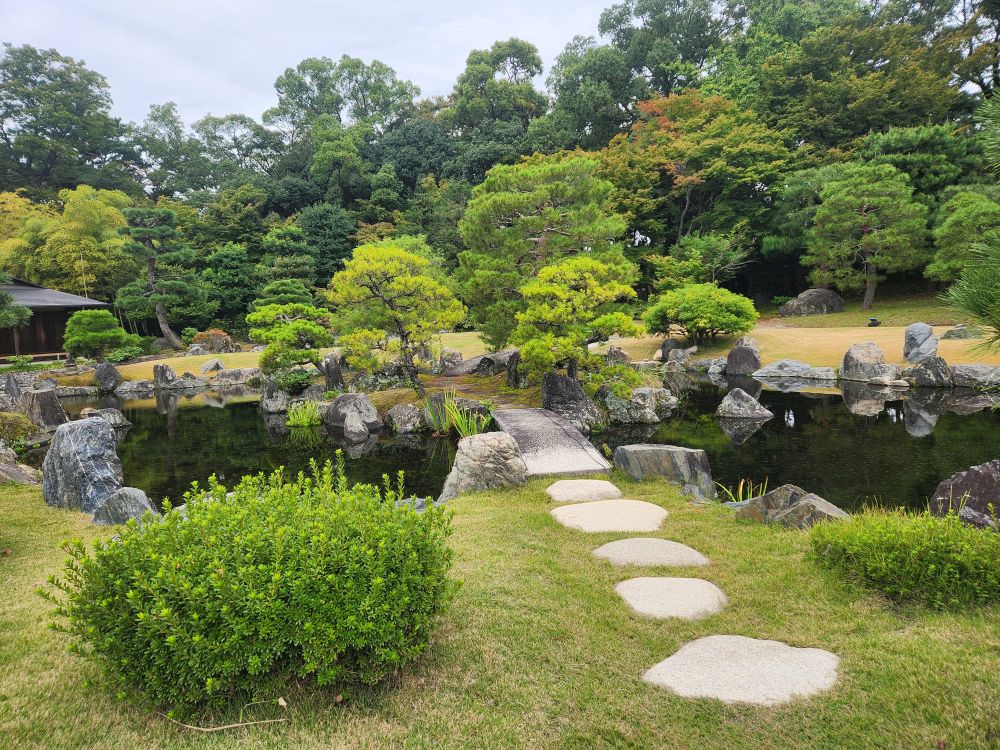
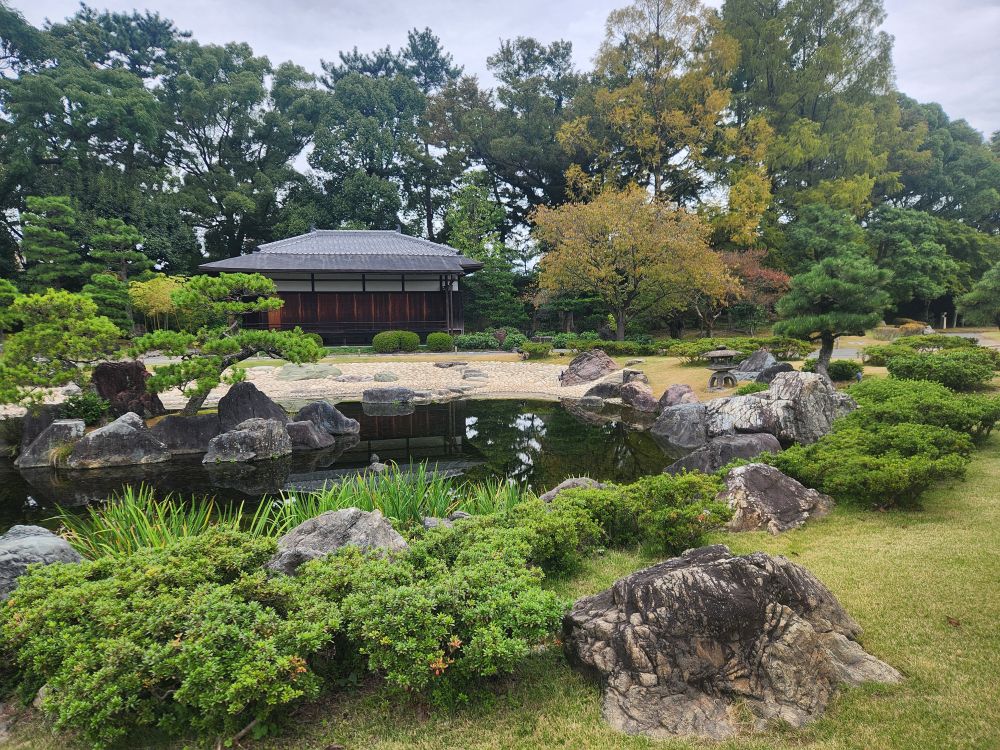
Circumnavigating the moat, we pass through the Kita Nakashikiri-mon gate and enter the Seiryu-en Garden, a more modern addition to the castle grounds. This garden was laid out in 1965 as a reception area for visiting dignitaries, using some of the buildings, trees and stones from the garden of the a wealthy Kyoto merchant family. It is a fusion of Eastern and Western styles, with a strange little area where 7 stones are specifically placed. These are Kamo-nana-ishi stones, different stones with different colors and textures from the upper Kamo river. These stones had a reputation during the Edo period as the best garden stones because they were found in Kyoto, the capital city. Most of the stones were taken to Tokyo when the capital was moved, making it extremely hard to find the stones today. Plus these incredibly oddly shaped and manicured pine trees. Almost like Bonsai – but using a huge pine. Weird.
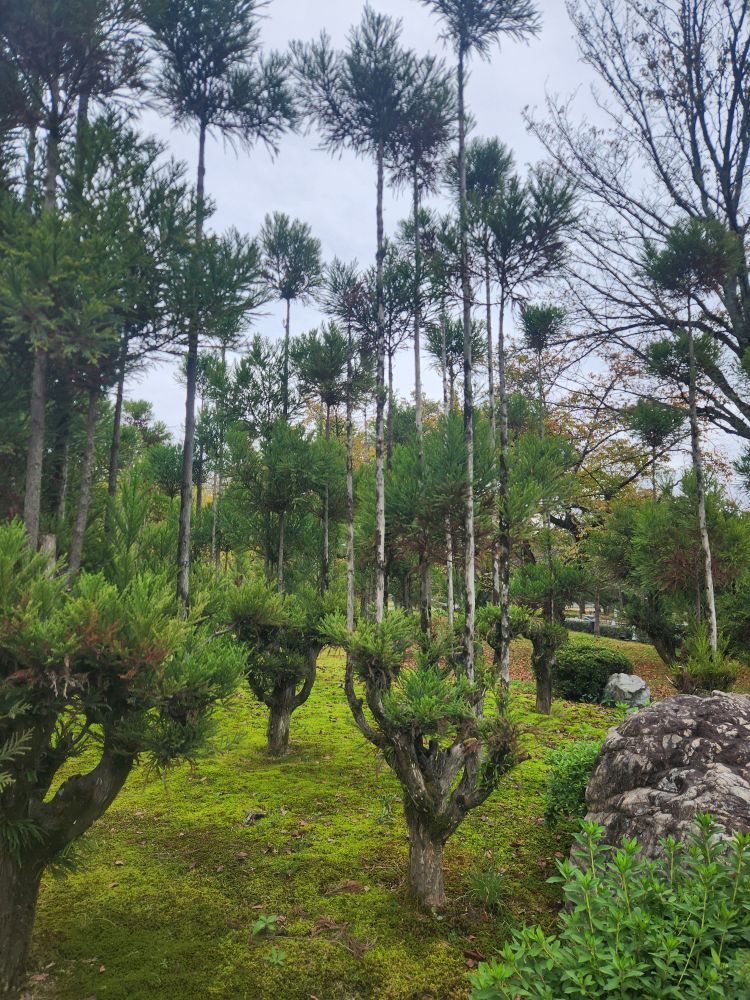
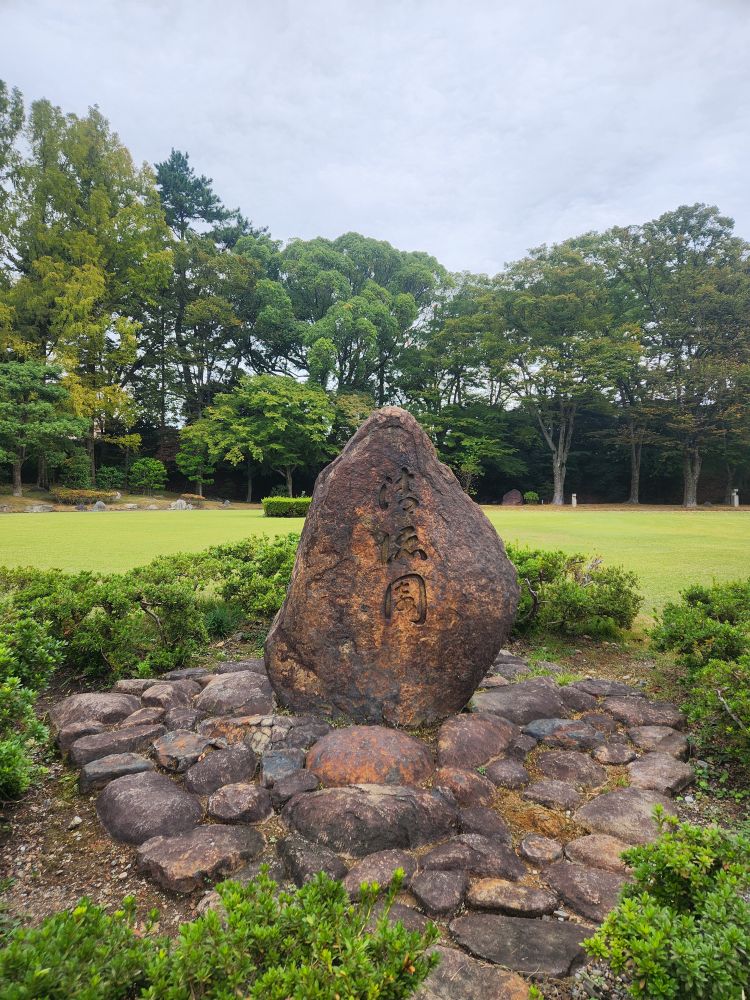
Finishing our garden walk, we visit the painting gallery – again no photos – sigh – where we view some of the original wall paintings and artwork from the castle. Most of what we saw were reproductions, still powerful, but not original. These works of art – over 400 years old- are just as intriguing, if not as vibrant due to their age. There is also an excellent explanation and display surrounding the theme change that took place in the late 1800s. When the Emperor Meiji began to reside at the castle, the wild ginger flower pattern, found on draw pulls and all decorative metal fittings, was changed to a chrysanthemum pattern that was the Imperial family crest at the time. Seriously – they switched out every single Wild Ginger flower and replaced it with a chrysanthemum. Every little piece of metal was measured and designed to replace the existing fitting exactly. The work that must have taken! The exhibit shows exactly how the metal was measured and then created, as well as examples of exactly where the metal fittings had been before being replaced. Sheesh – and awful lot of work for a flower design!
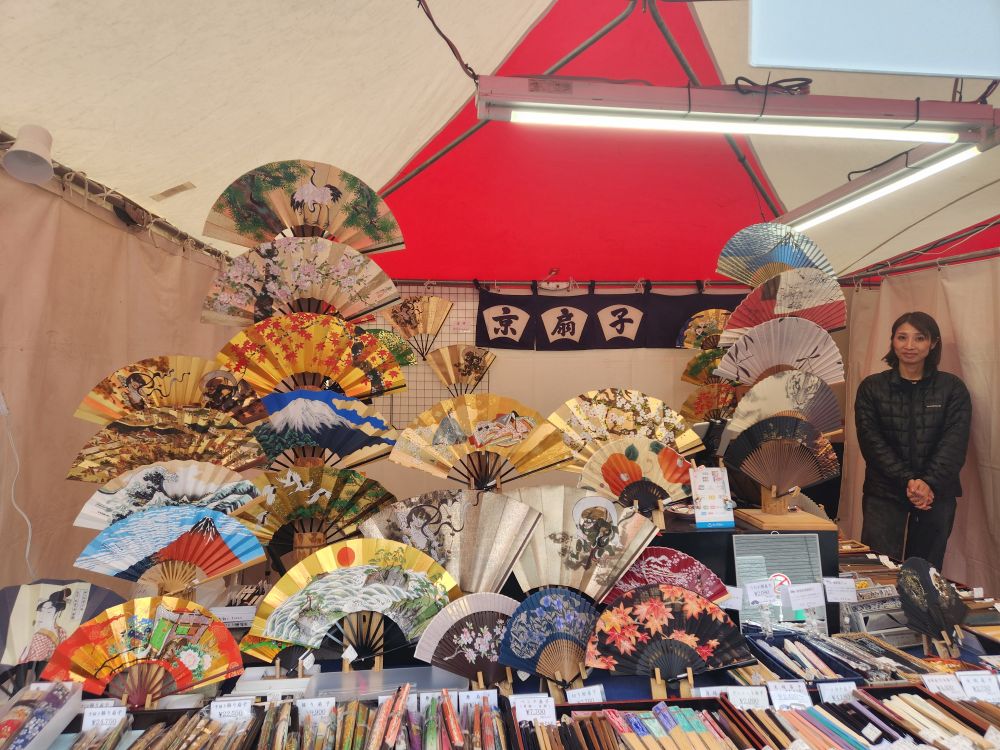
Outside of the painting gallery, there is a little craft market going on with tons of packaged specialty food as well as beautiful fans. Oh I love these things, but they are far too rich for my blood. I’ll take the 1 coin store version please! Making our way toward the entrance, we are so glad we came early and pre-purchased tickets! Because, it is crazy how crowded the castle has become. We are so not into the crowds! This may be the last castle or shrine we manage to visit – but so be it. We’d prefer to do other things than to be caught up in the middle of this type of mayhem.
Now, we are free to wander over to the museums – hey – why destroy our streak so far? Plus, we have a specific museum we must visit which is close to the castle – the the Kaleidoscope museum – yep, seriously! We had met a local Kaleidoscope maker in Asheville when we were at one of the Literacy Together events. He has a gallery in Black Mountain (we hope he still does) and is part of a national society of Kaleidoscope makers. One thing led to another and we started discussing our trip and coming to Kyoto. When he found out we were coming here, he gave us his card because he was awarded top prize during the international meeting of the society in Kyoto, and one of Kaleidoscopes was displayed in the museum. We’ve been looking forward to going there ever since. And bonus, it was on the way to the food market we wanted to visit, so it was perfect.
When we arrived and paid our entrance fee we told the sweet little receptionist about our friend who had piece in the museum and showed her the business card. She took it, and then brought the owner over to us, who thought we were the Kaleidoscope maker! Totally lost in translation, but so sweet – they thanked us profusely even after they figured it out! And sadly, our new acquaintance’s kaleidoscope is no longer on display – they had changed exhibits and his is in warehouse storage. Oh well – that was a bummer, but the museum was still amazing. It was small but packed a punch. Probably 40 or so kaleidoscopes of all different shapes, sizes and designs (again, no photos). Those things are wild! We could look through them all, touch them, hold them (all the while sanitizing our hands as the sweet receptionist told us to do!). And if we wrote down our 3 favorites, we could have a postcard. Can’t beat that!
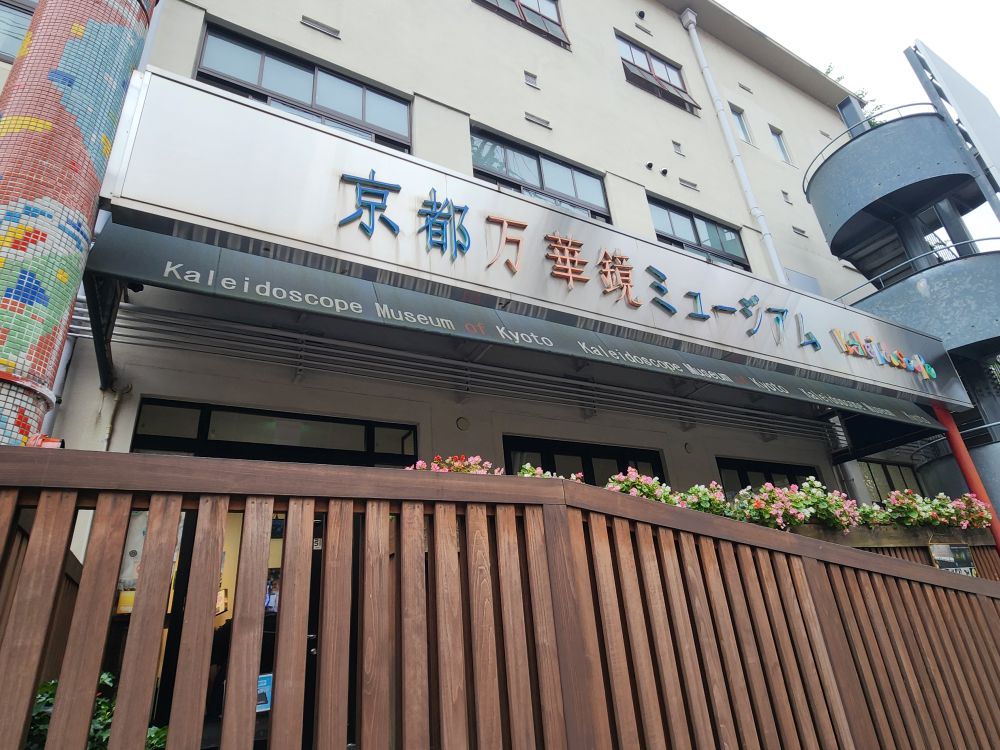
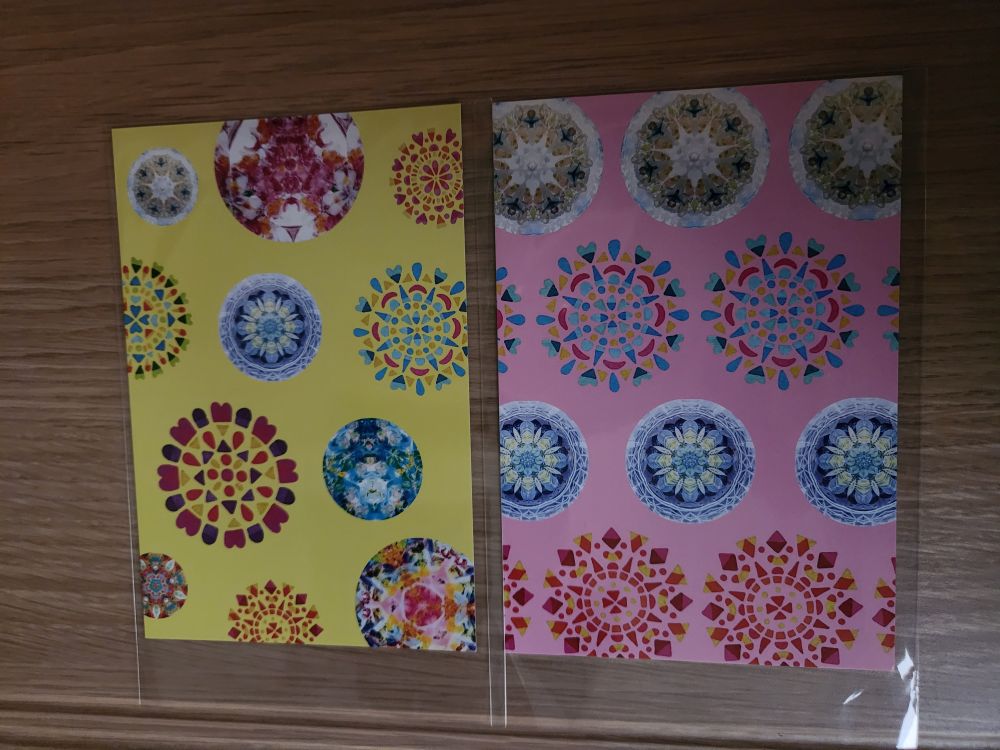
But, now, I’m sort of hooked. I’m all about finding how to make a kaleidoscope, how do they make those prisms out of random beads and things. How do you even begin to think about a design like that! I have an information sheet that describes all the different mirror systems, but it still fascinates me no end. And, no, this is not going to be my next hobby, but I am intrigued!
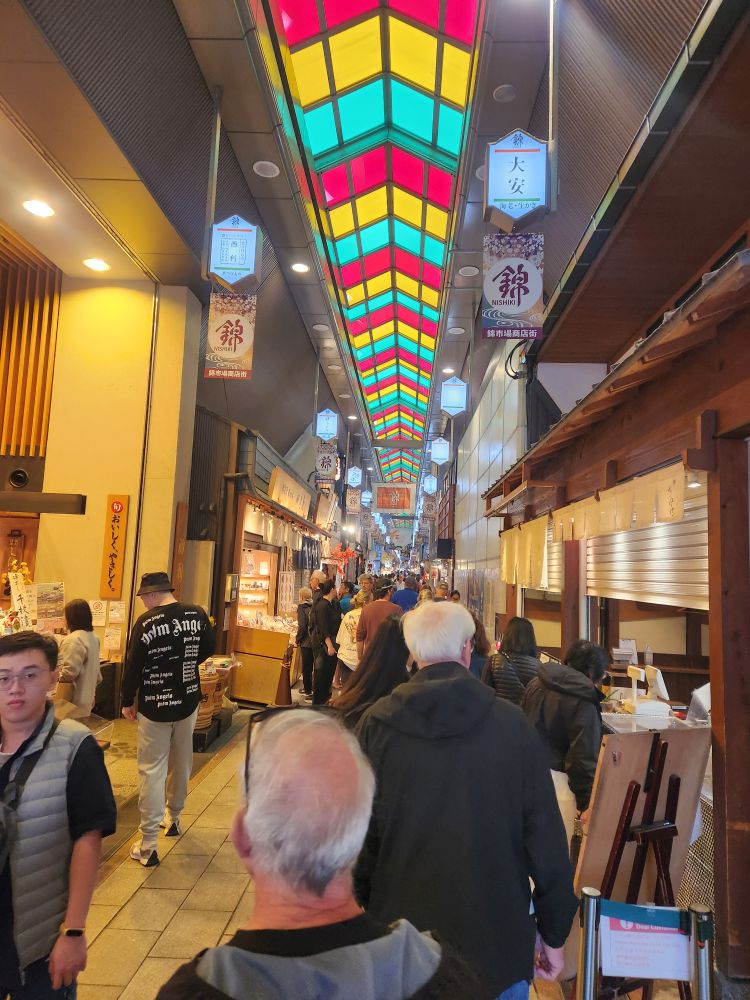
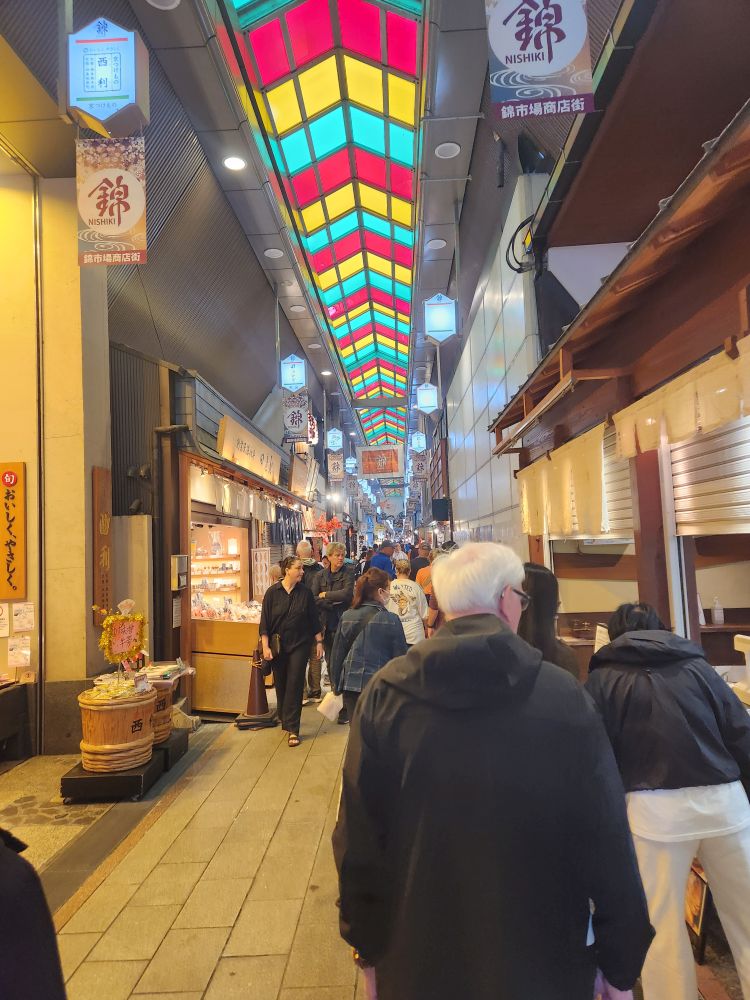
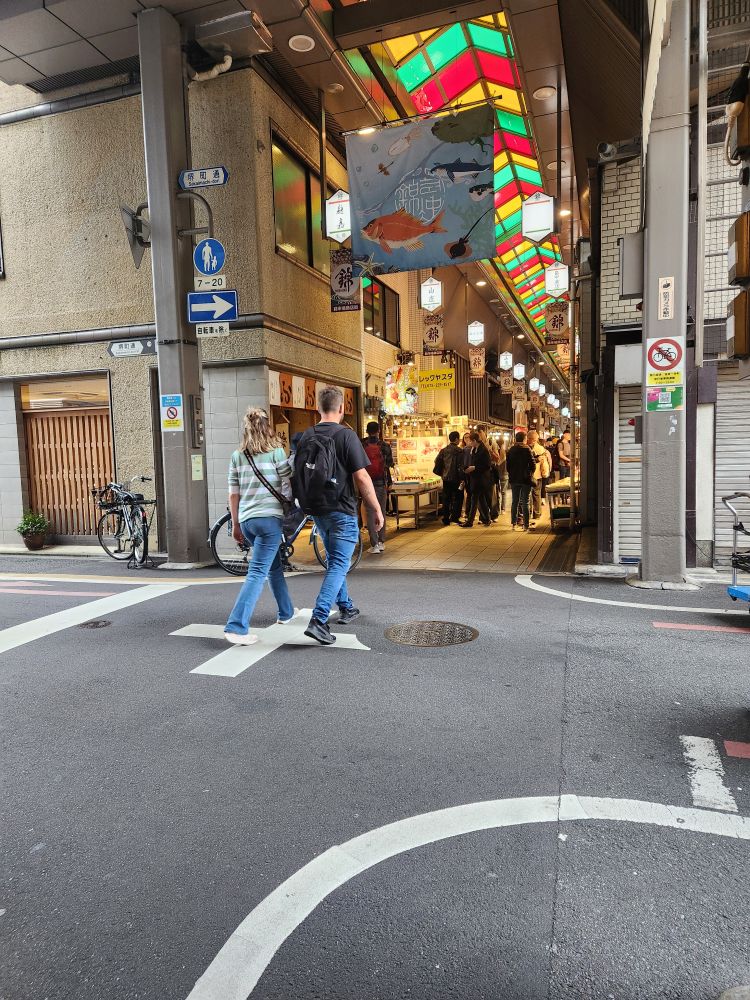
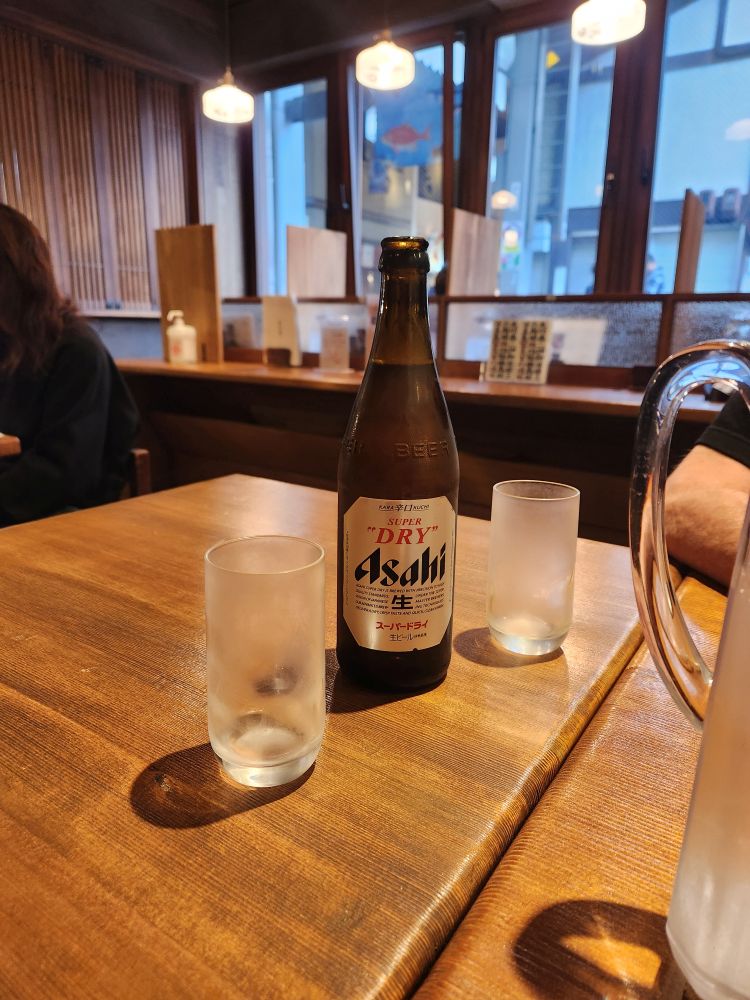
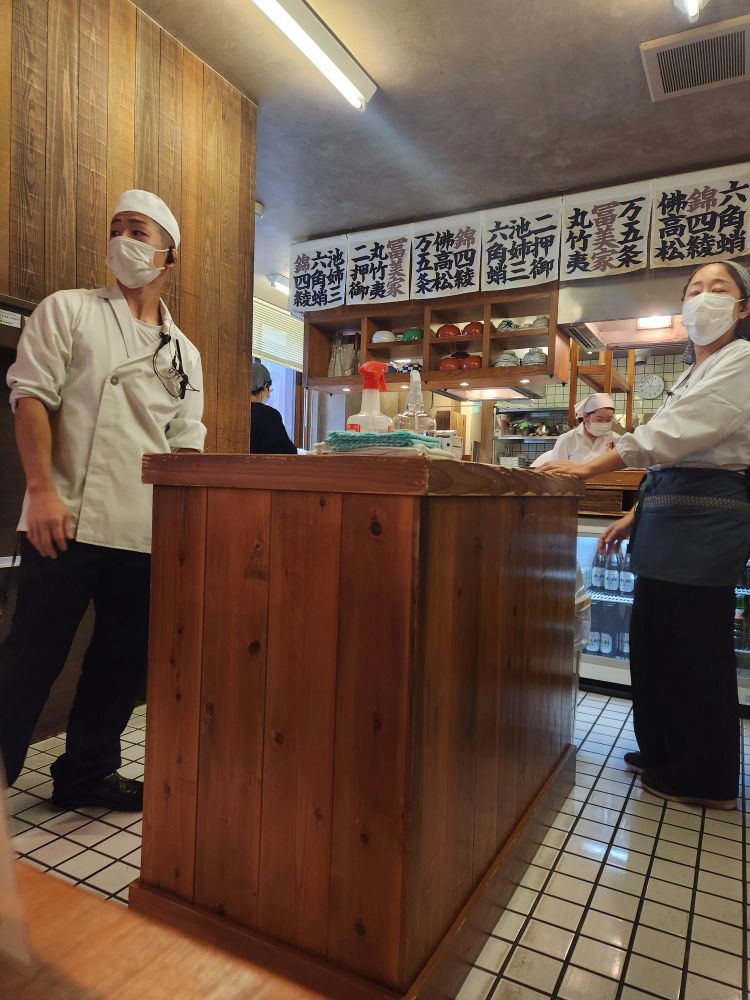
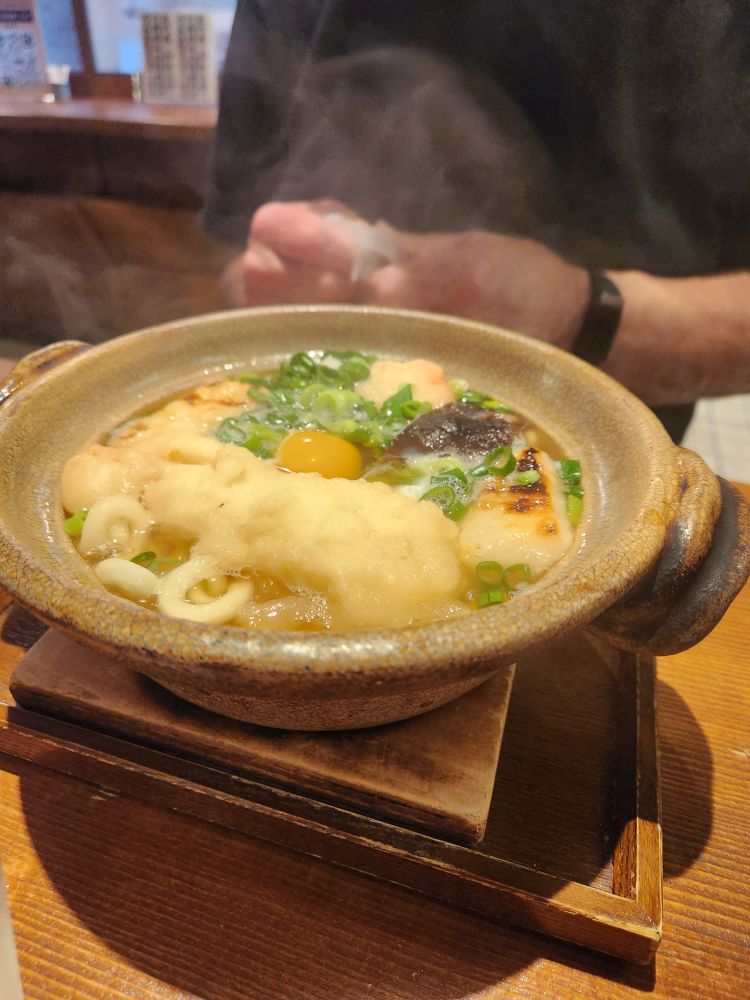
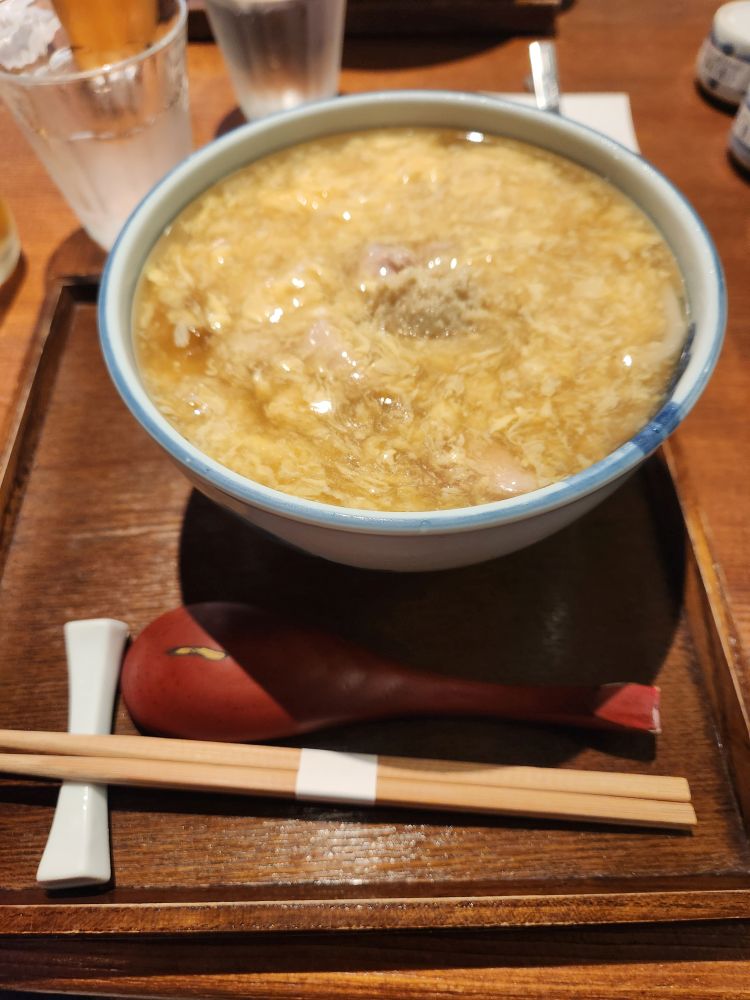
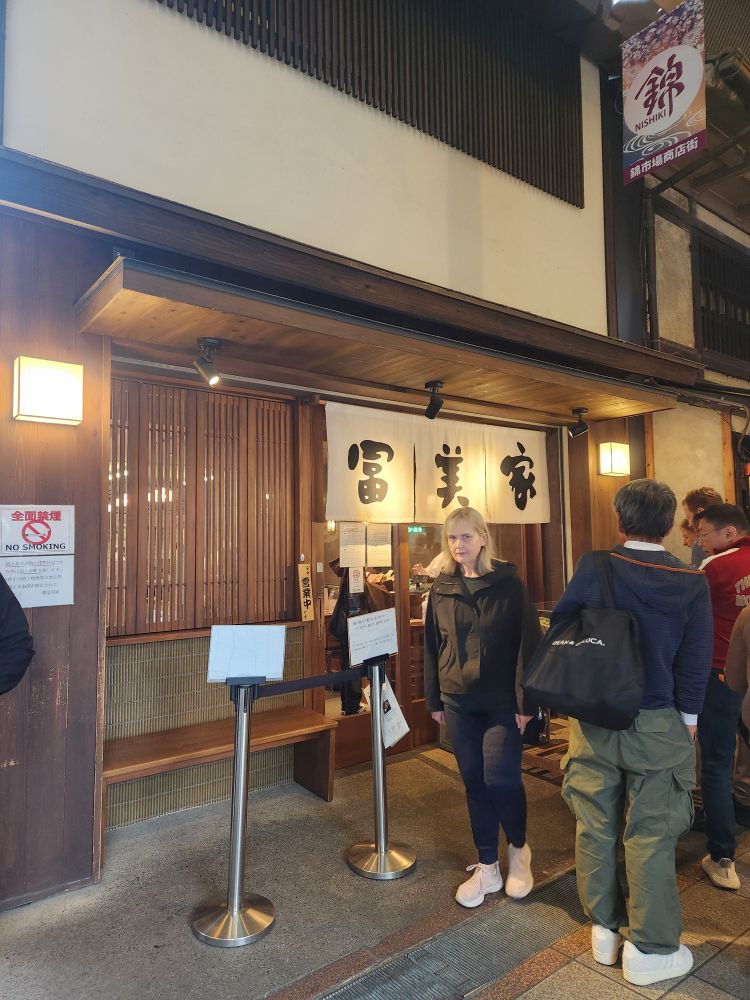
From the museum, it is a quick walk to the Nishiki market which is described as Kyoto’s kitchen. Yeah, well, here we go….touron central. It is the typical touristy high dollar souvenir food stuff we’ve been seeing everywhere – much more tourist-oriented than Kuroman in Osaka or the Fishery market in Sokcho even. Sigh. We just want lunch, so you know what? We stopped at the first restaurant we found, Fumiya, which turned out to be an excellent udon place. We were 2nd in line when they opened, had a great table and dug into a fabulous lunch of Tanba-Dori Ankake Udon (Kyoto’s local tanba chicken and egg in a thick starchy broth – oh, comfort food to the nth degree) and Fumiya Nabe, Nabeyaki Udon, which is Udon with a variety of Kyoto ingredients such as tempura shrimp, other white fish, pork, vegetables and those every so wonderful thick udon noodles. Yummy and filling.
After lunch, our next stops were a couple of art museums, which were a 35 minute walk away. Normally we would just hoof it, but the forecast called for rain, and the skies looked threatening, so we called a taxi to go over to the complex. Turns out we could have just grabbed the subway, but every time I put the museums into Google Maps it would give me only bus routes – no subways. And no way are we getting on a local bus here, as we talked about in yesterday’s post.
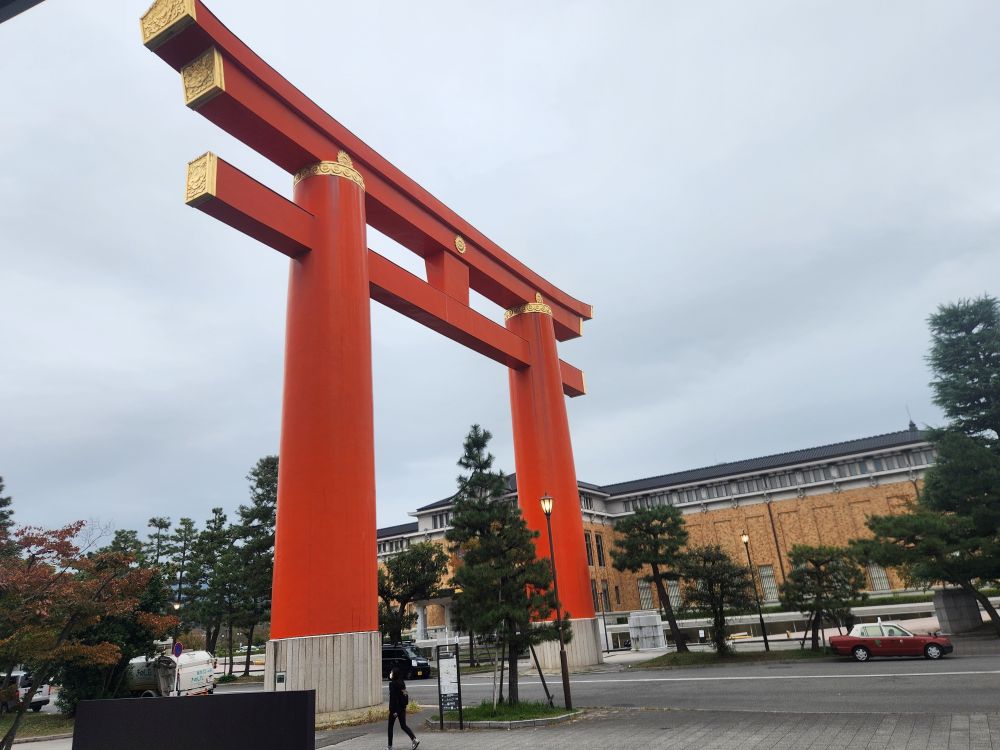
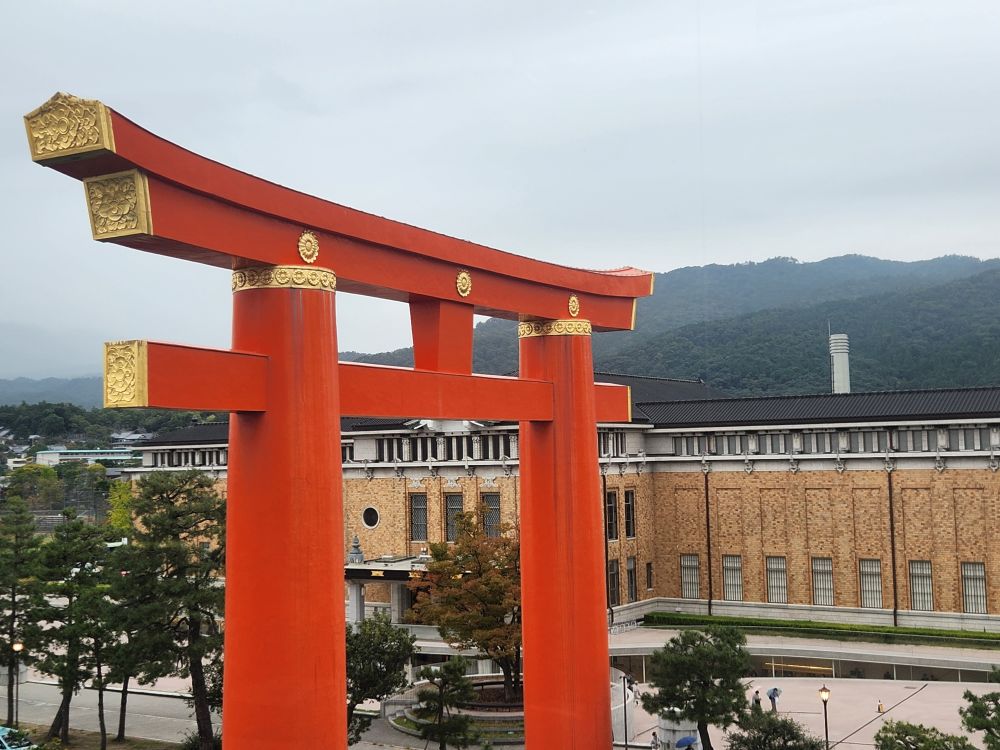
Anyhow, the taxi got us to the museum perfectly, easy, super simple. There was a huge Tori gate at the entrance to the complex which is a huge 2 block complex housing a lot of different museums. Visiting the Museum of Modern Art first, we once again were engulfed in weirdness. It’s Modern art. What do you want! Of course no photos in most places – so….use your imagination.
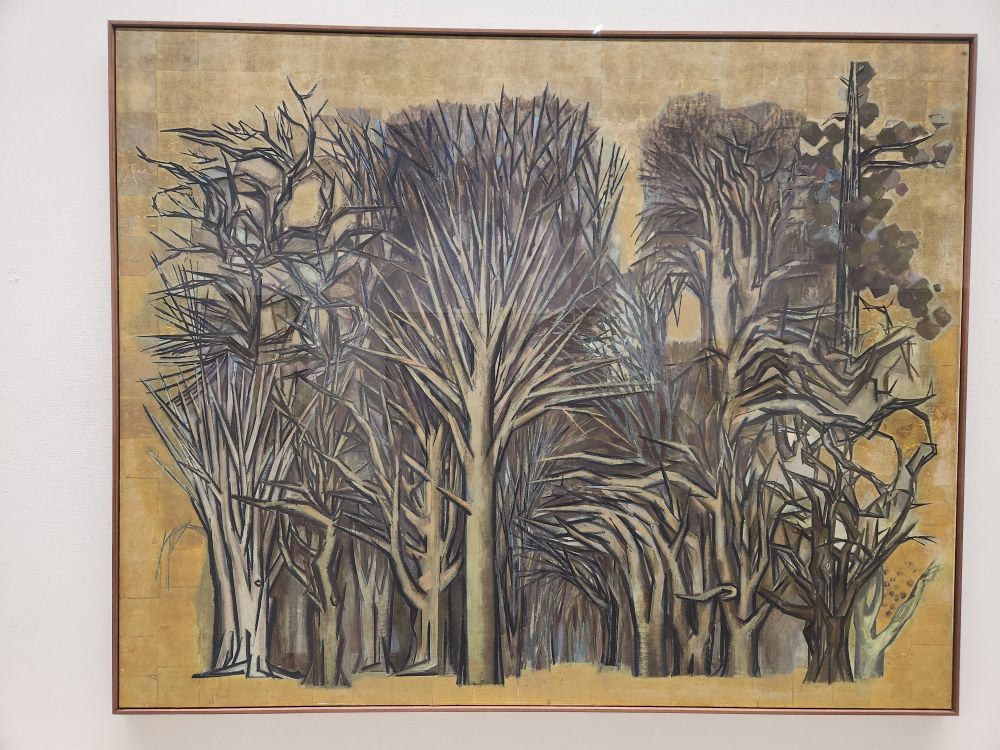
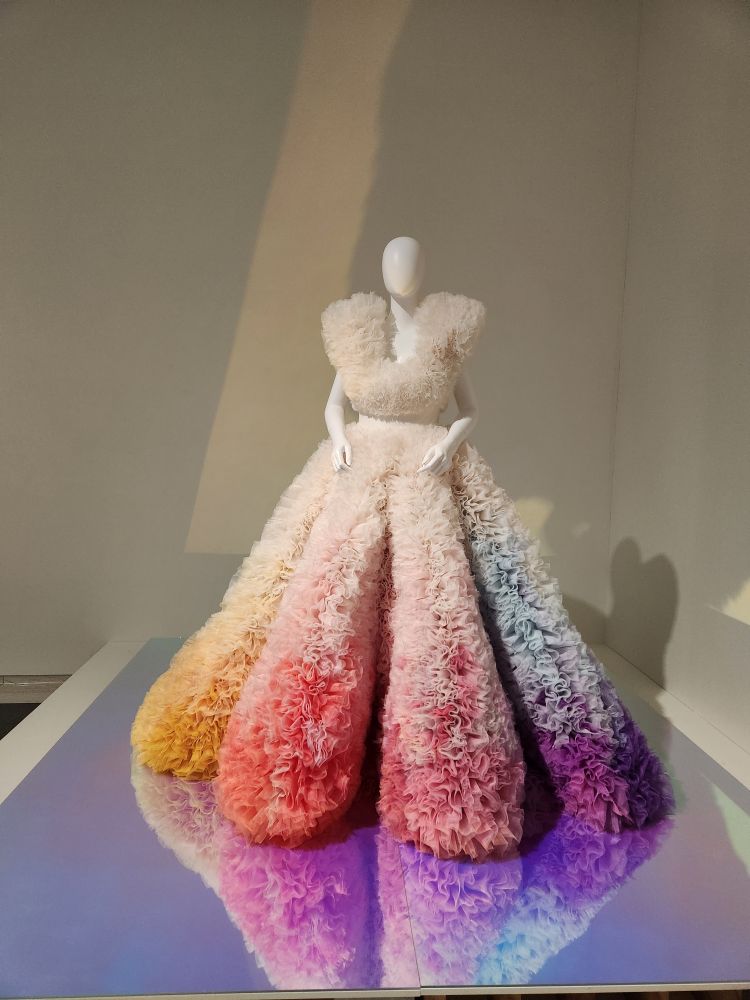
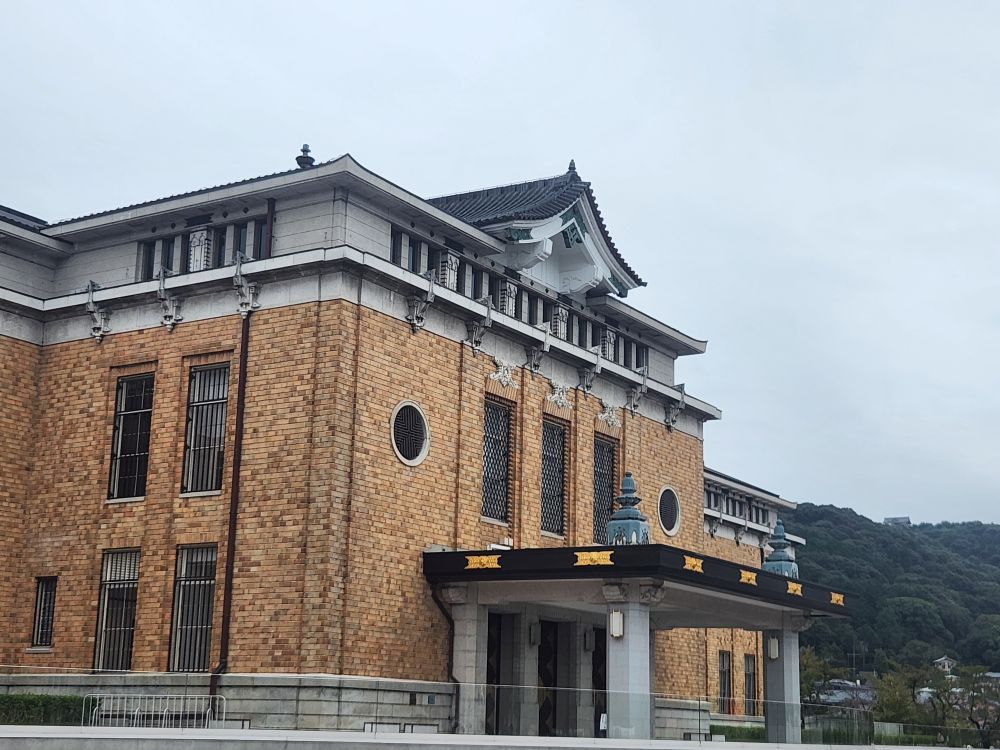
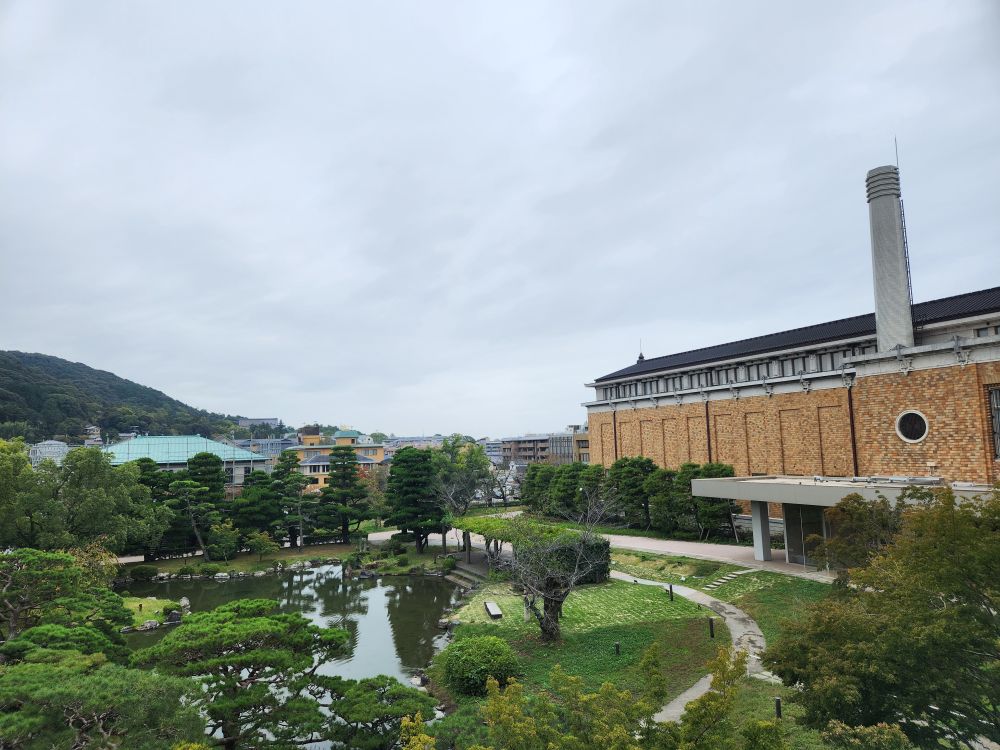
Next we crossed the street to the Kyoto City Kyocera Museum of Art, the oldest art museum in Kyoto, begun in 1933 and which turned out to be even weirder. Again no pictures in most of the exhibits, but there were a couple of places we could snap – so snap away we did.
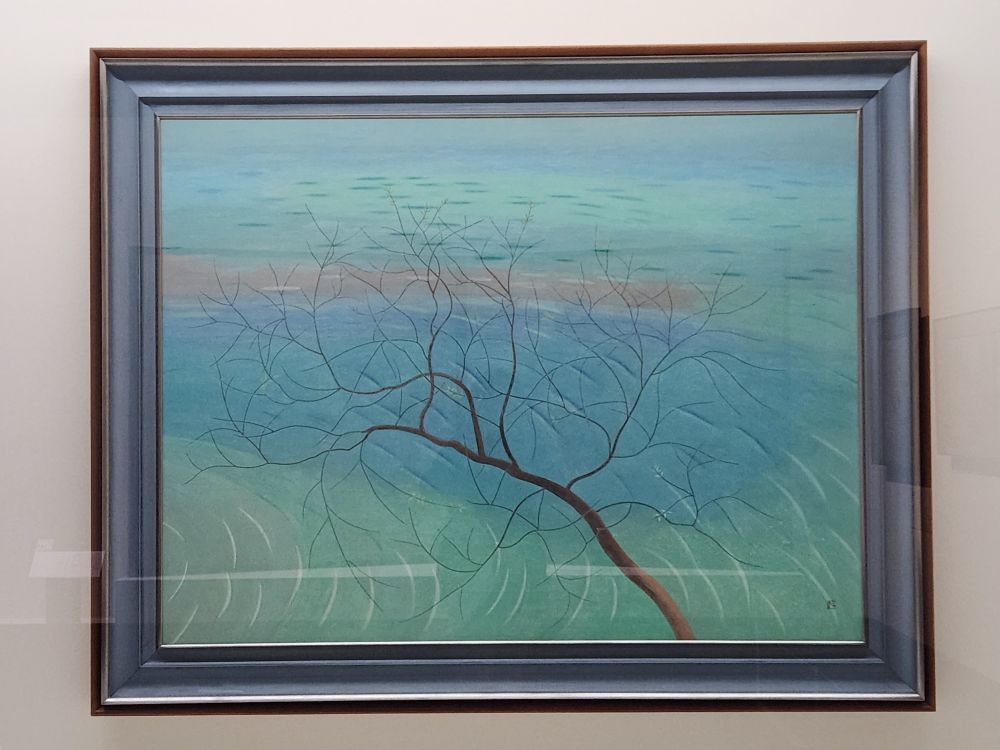
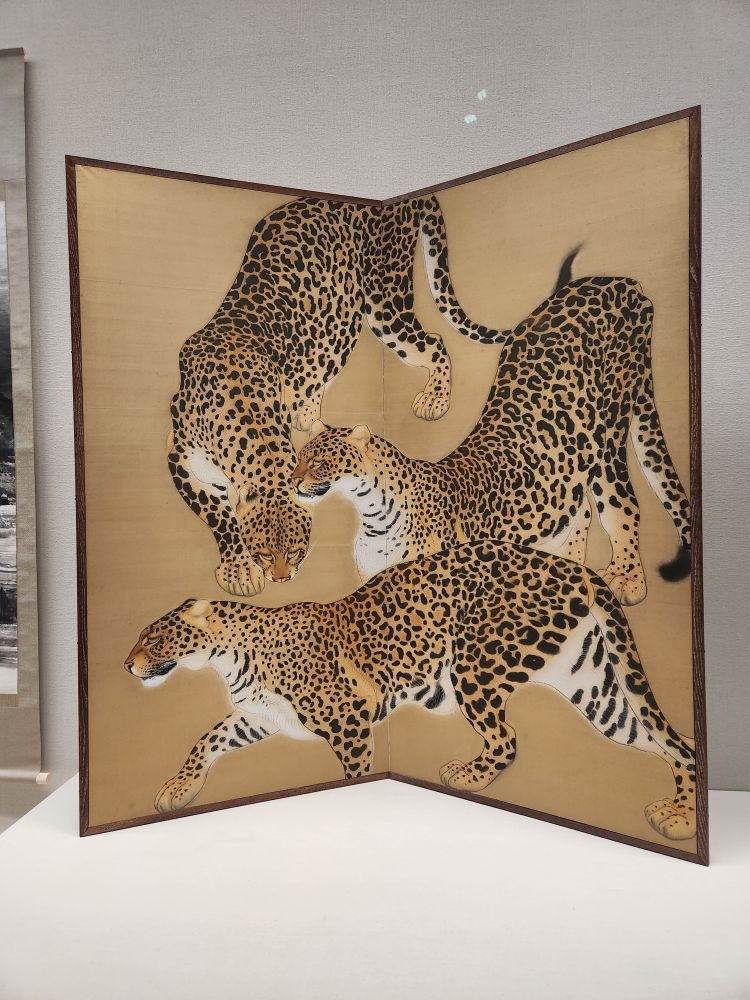
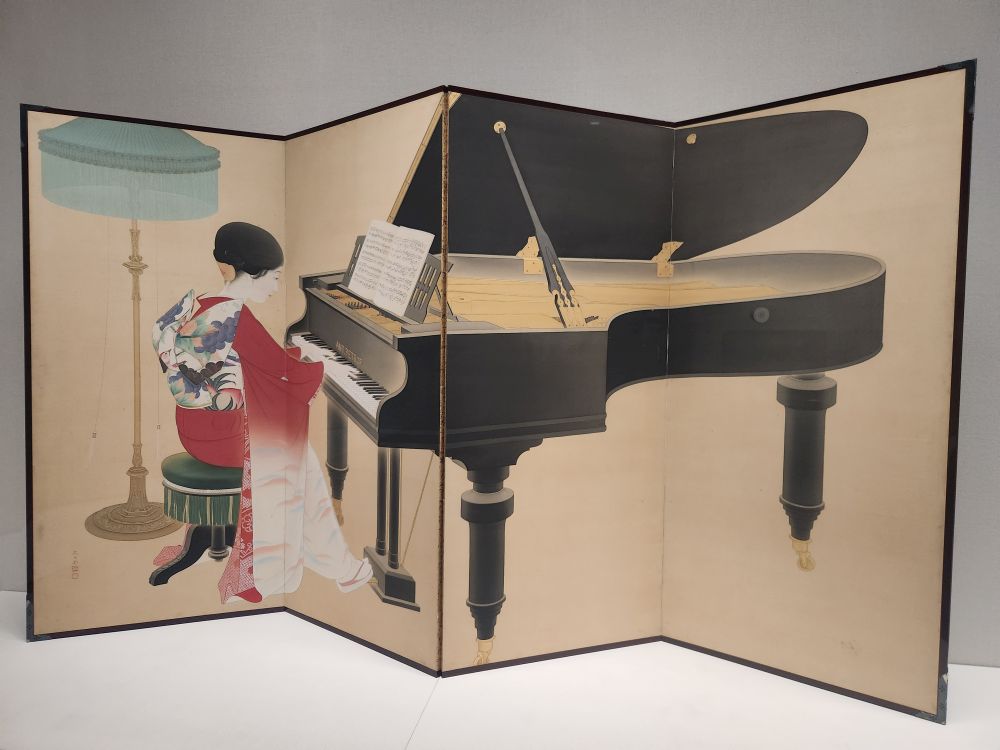
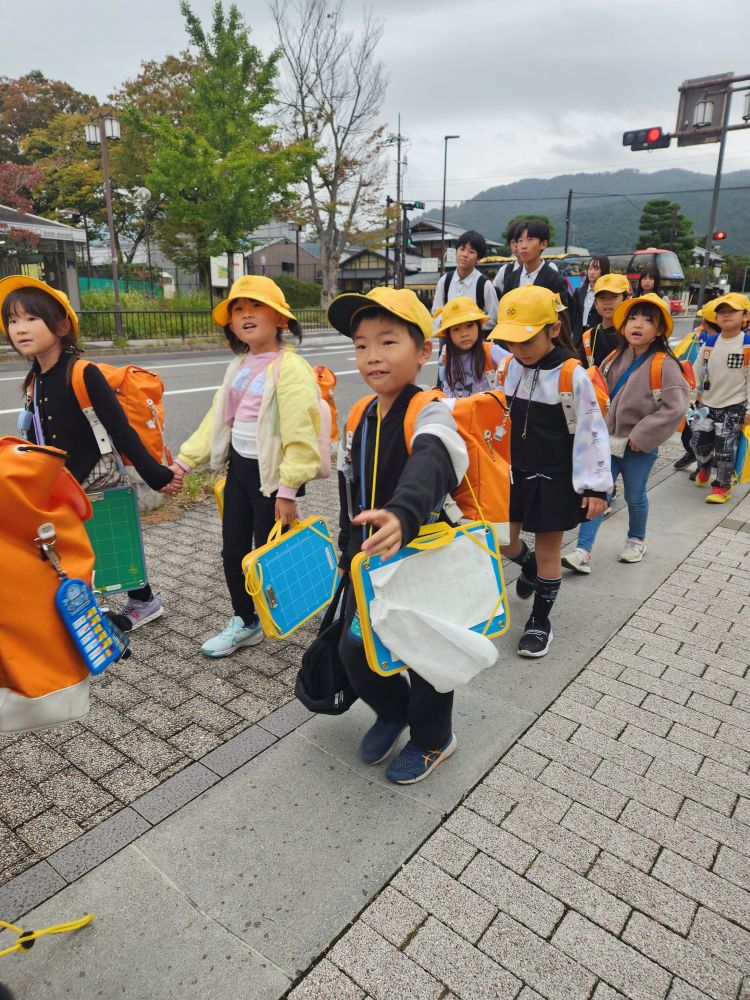
After exploring all the galleries, we wandered outside on the “cube” terrace (don’t ask, I don’t know) and enjoyed the view from a promenade around the top of the building. An excellent visit that took up our entire afternoon, which was what we wanted. As we were waiting for our taxi home, we were treated to a parade of school children marching by – all so cute and friendly saying hello, hello to us!
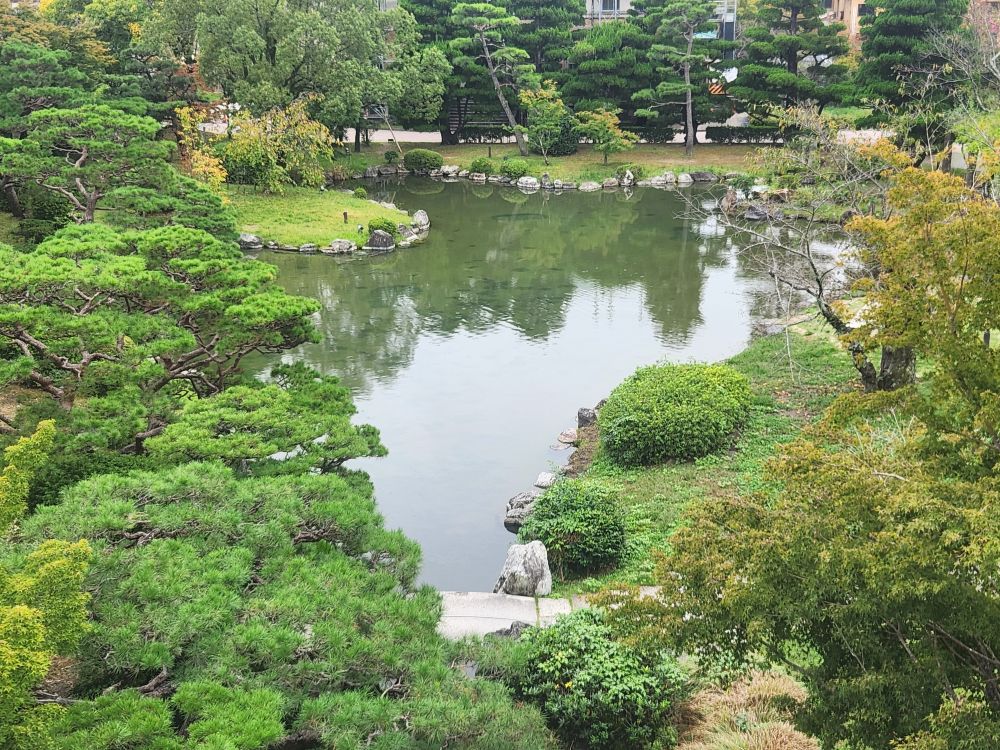
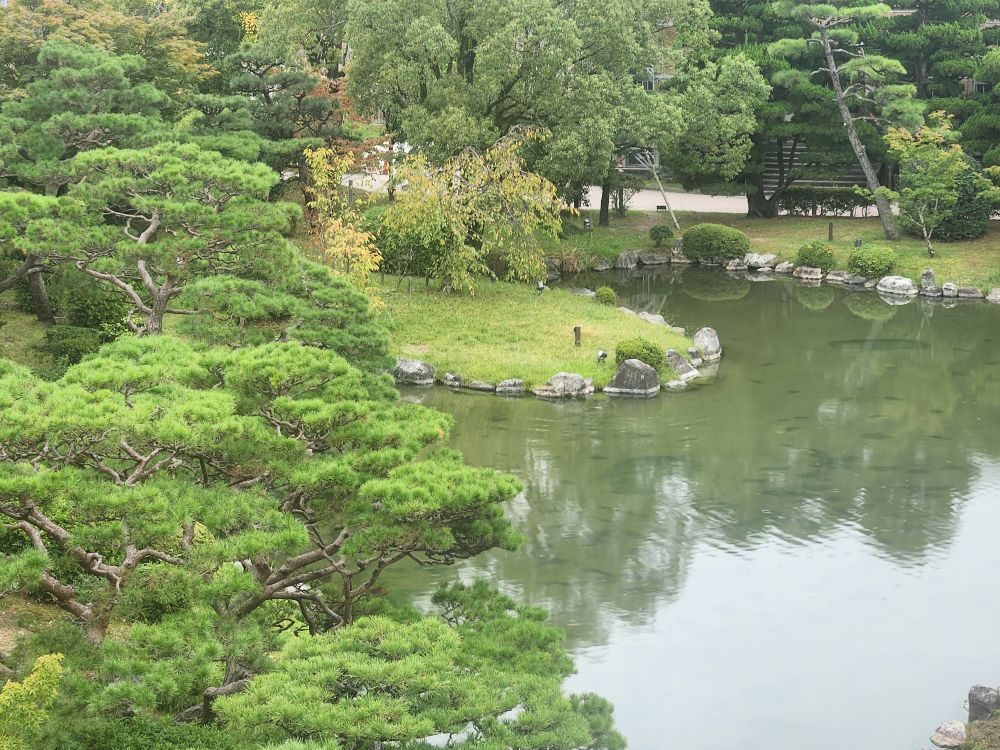
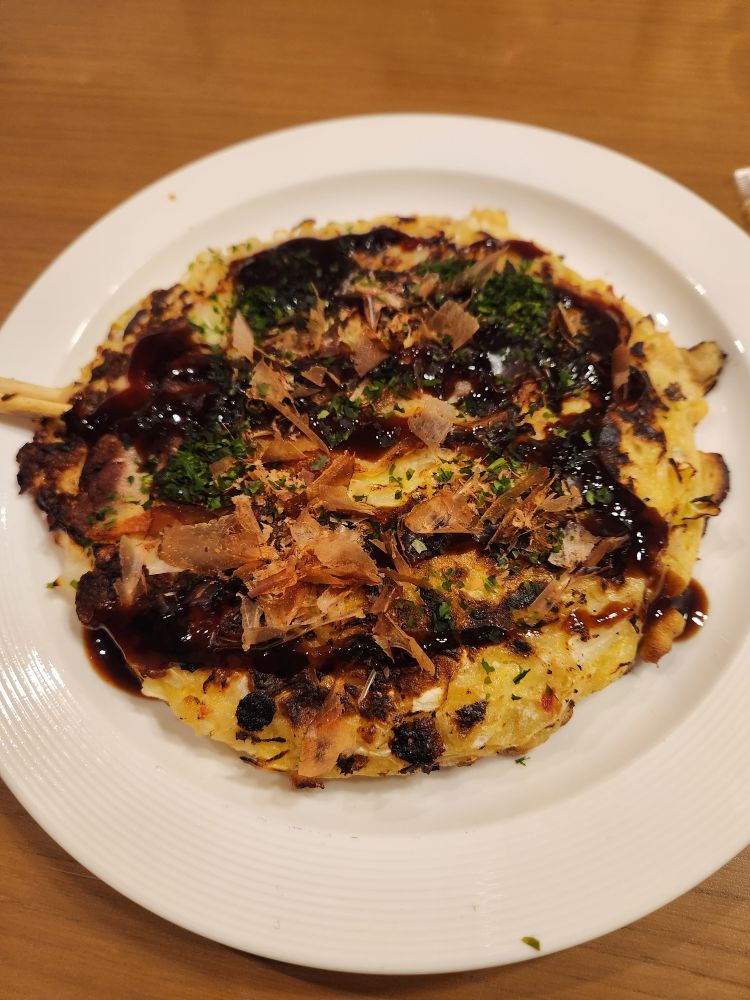
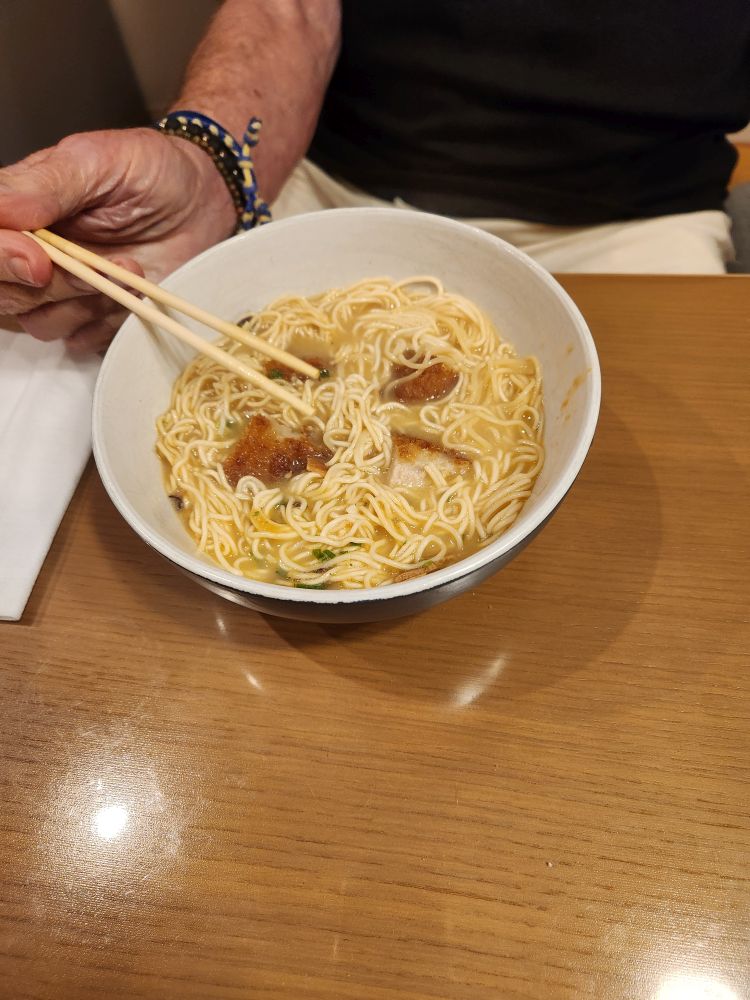
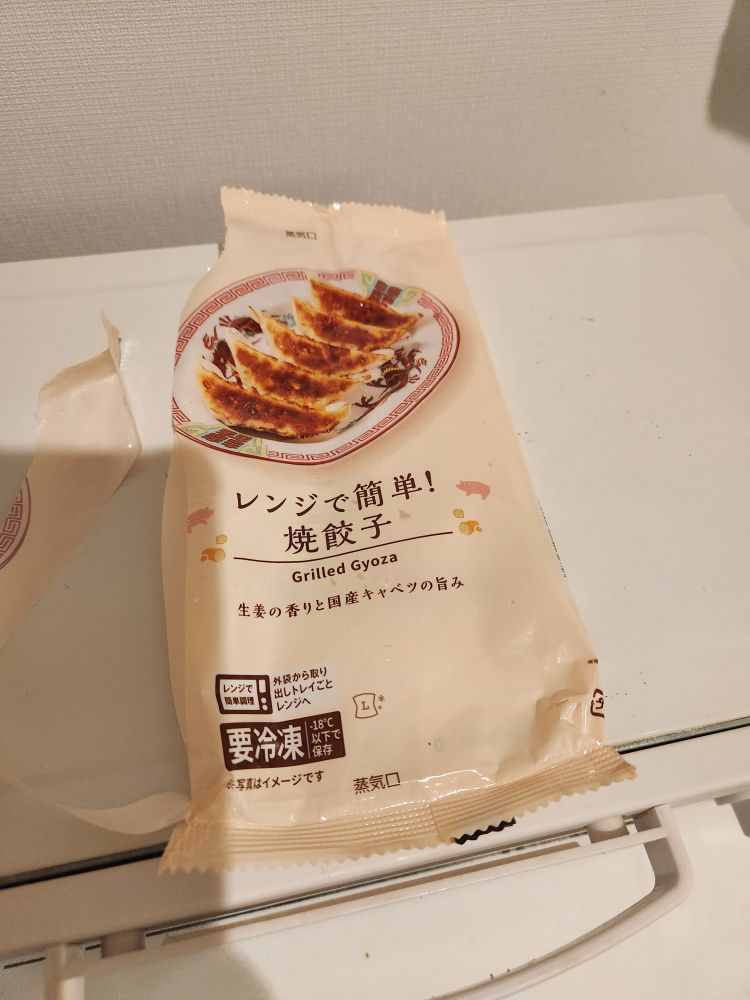
Nice to take it easy and relax a bit – especially after the last 2 weeks of daily touring and exploring – and the fact that while we were as careful as we could be on that damn ship, masks, hand cleaning, leaving areas when people (multiple people) were hacking a lung up – on day 26 we still got the creeping crud of the Noordam. We are now on day 4 of coughing our own lungs up, making an easy day even more attractive to us. And in the same vein we decide to just stay in and eat tonight. You can’t beat the convenience stores for pre-made food – so we hit Lawson’s and actually scored a frozen Okonomiyaki! Could not believe it! Also picked up some gyoza and ramen noodles for Ed. Perfect dinner. And everything was amazingly good. Including the sauce and bonito flakes that came with the okonomiyaki! Just like traditional at a restaurant. And with that, our day ends in our lovely traditional Japanese house in the middle of Kyoto.
 Andiamo