Our morning is the norm, although there is some confusion around our arrival time into port. The original itinerary said 8, then somewhere it was 9, now it is 9:30? Weird. We’ve told Sayuri, our guide who has been a doll and communicating with us for a year now, to meet us at 9:30. We’re hoping we can make that!
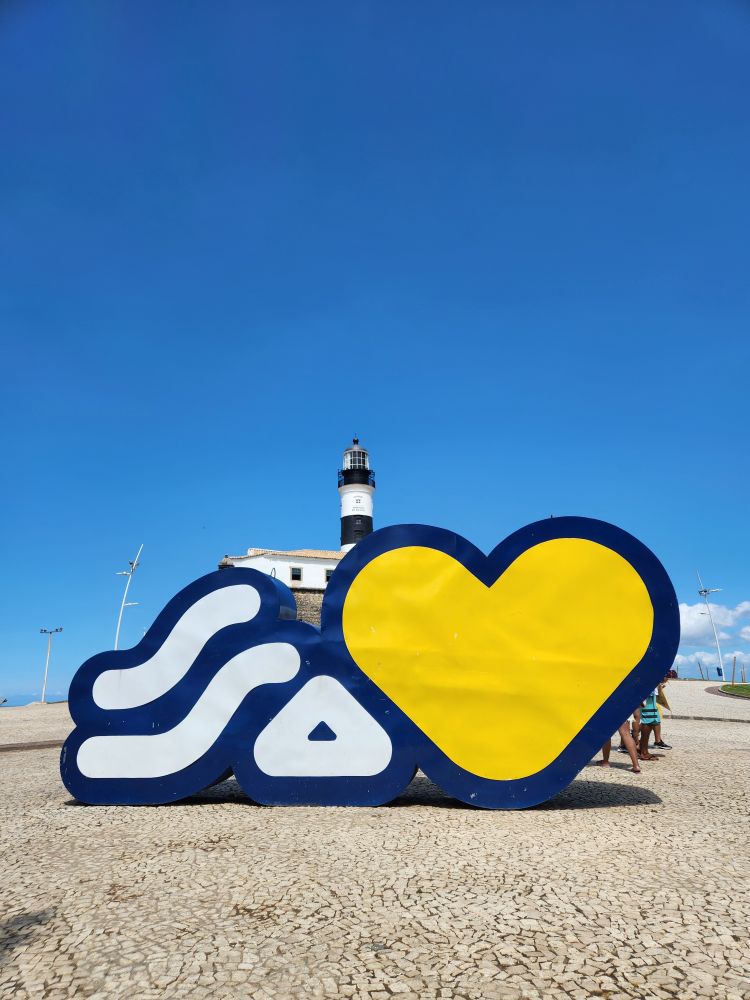
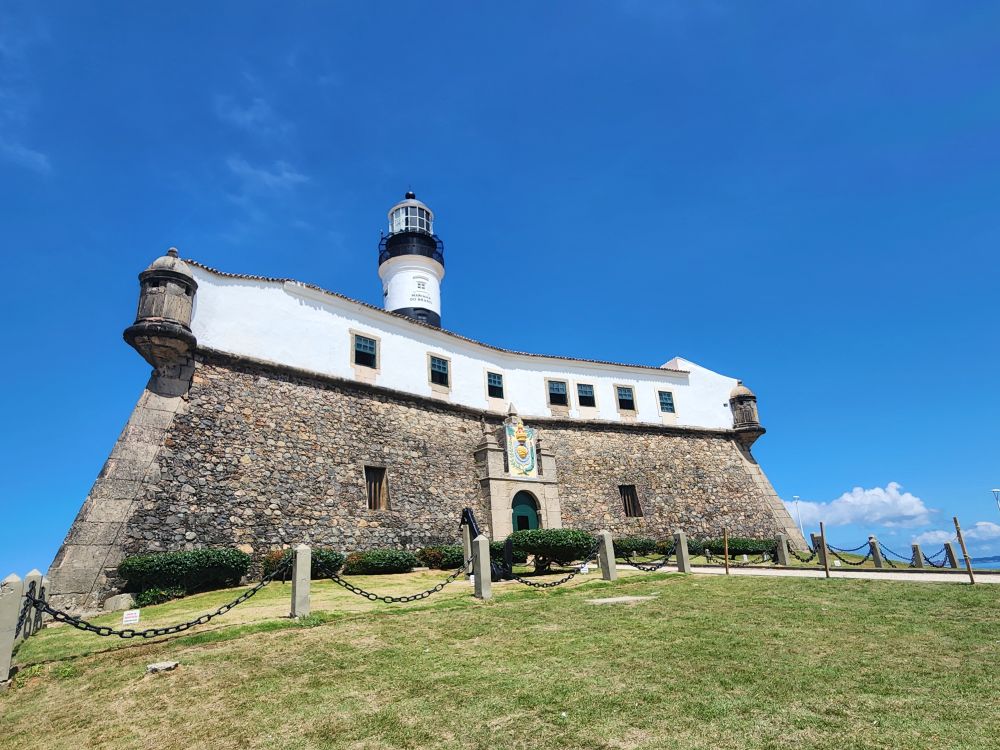
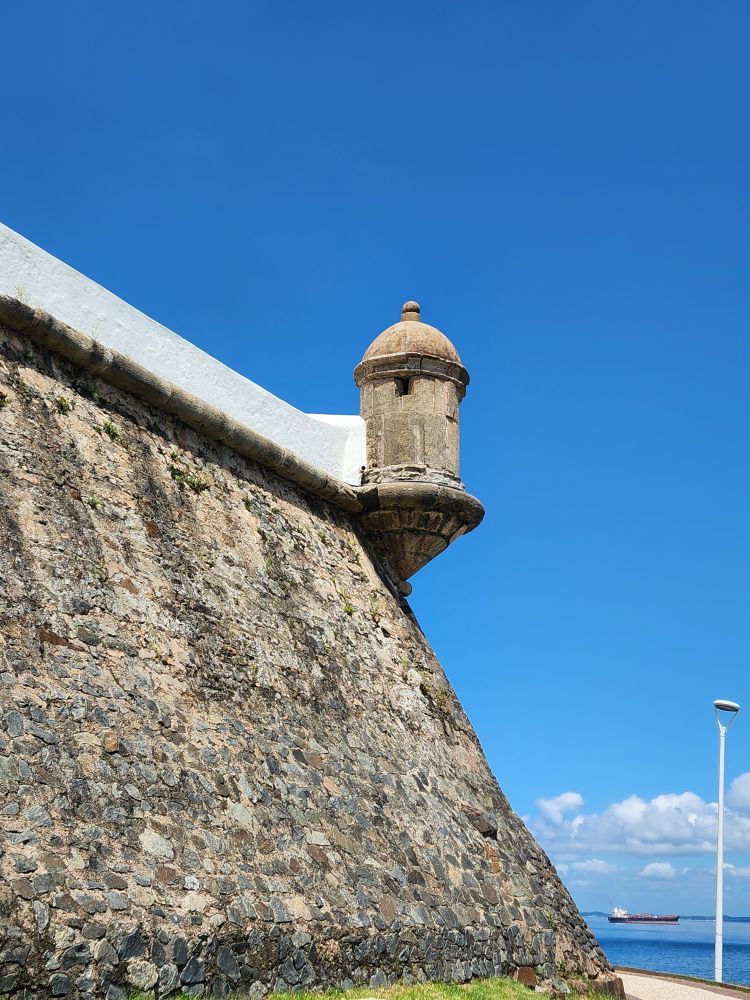
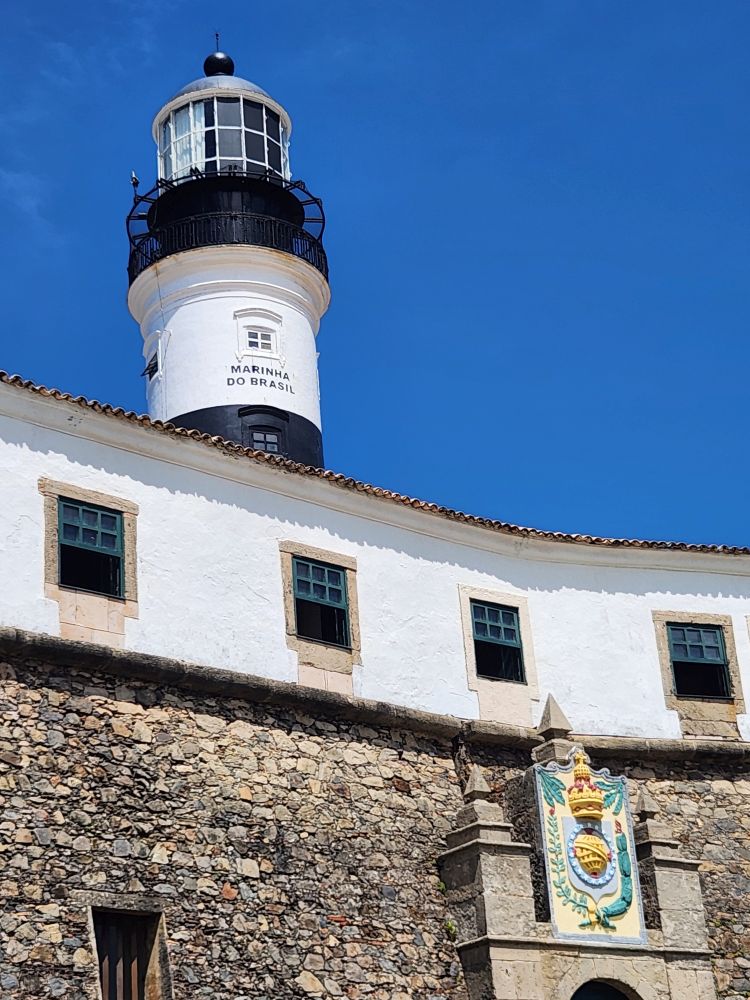
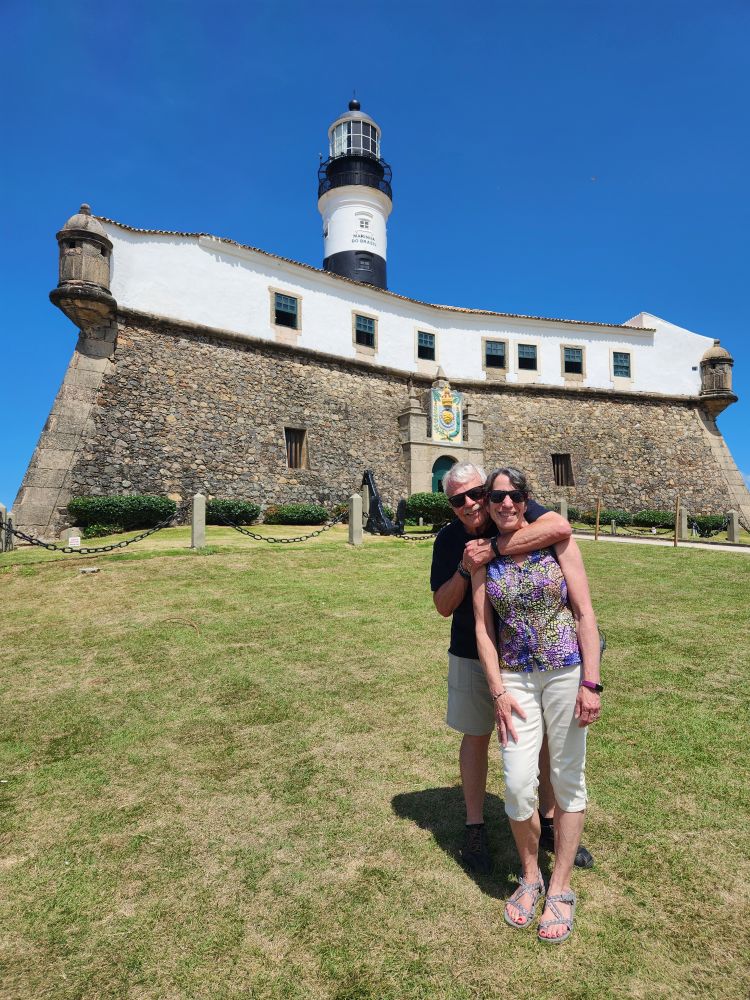
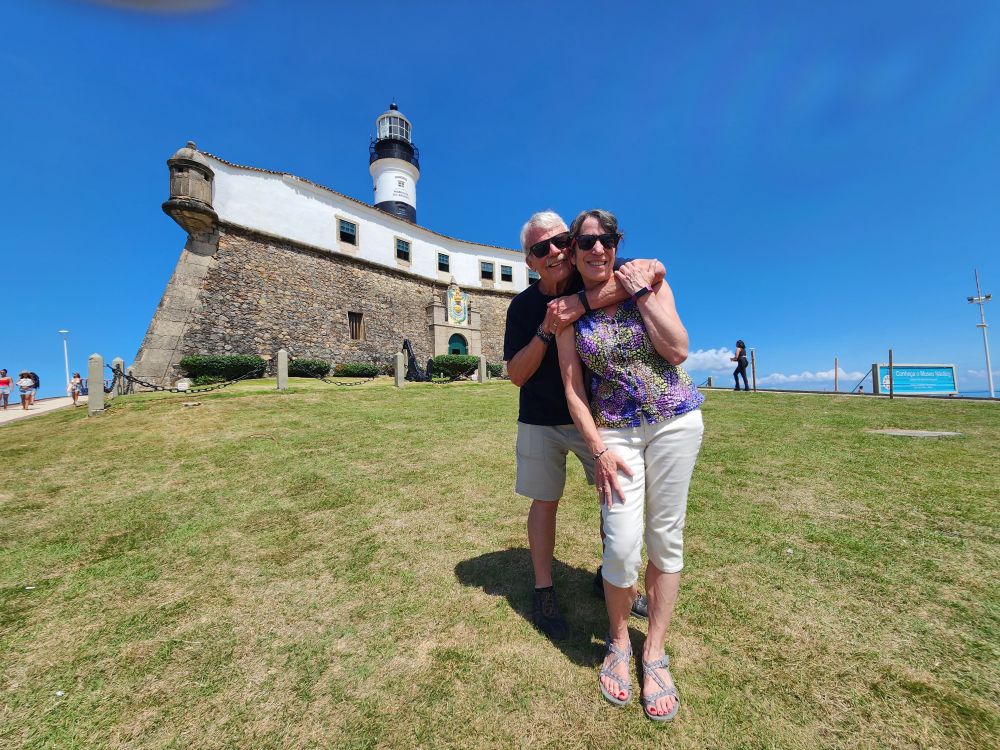
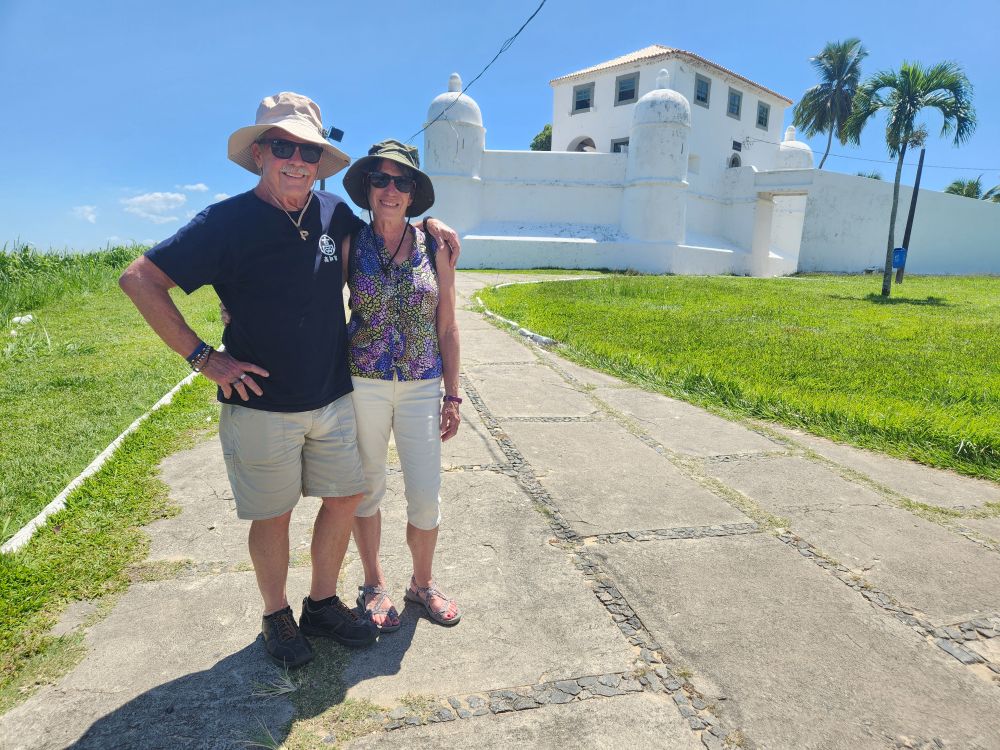
As it turns out, we get in “early” at 9:00 and Sayuri, being her fabulously organized self, is at the port early too and waiting right outside when we arrive. So begins our combination city and Afro-Brazilian history tour. We begin with a drive around the city, stopping in Barra at the lighthouse, built upon the San Antonio Fort, the oldest fort in Brazil and one of the 4 defensive forts that surround the bay. In front is the new logo for the city, which is the acronym for the international airport and has caused some controversy because many people don’t know what the initials mean. Understandable, but it still makes for excellent signage, and it really stands out against the green grass and white fort/lighthouse.
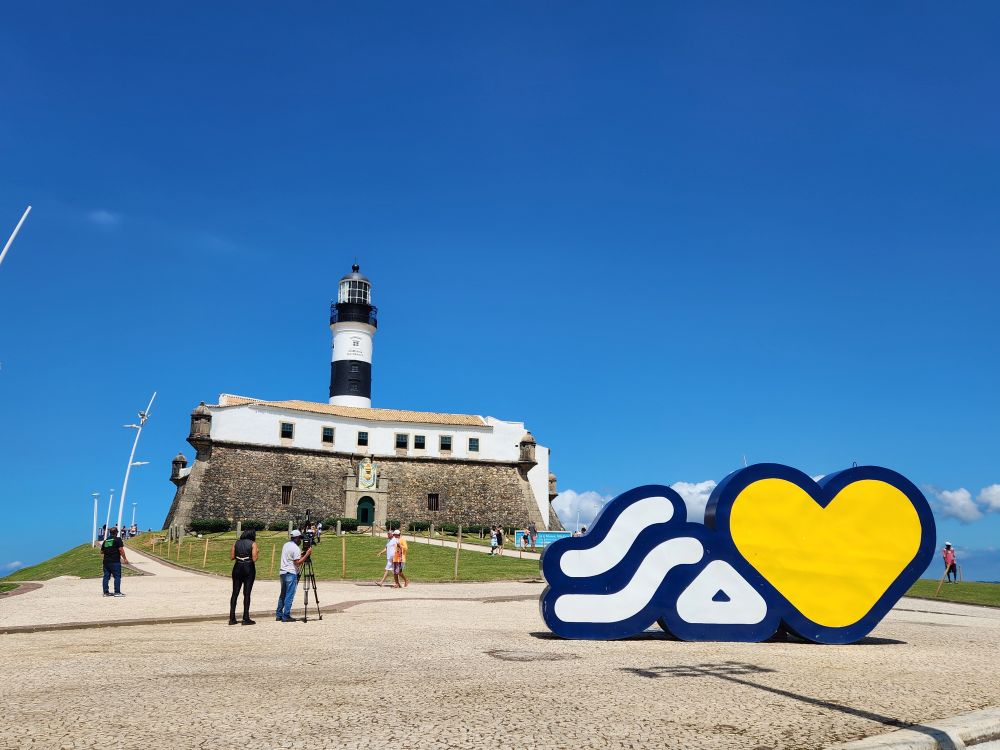
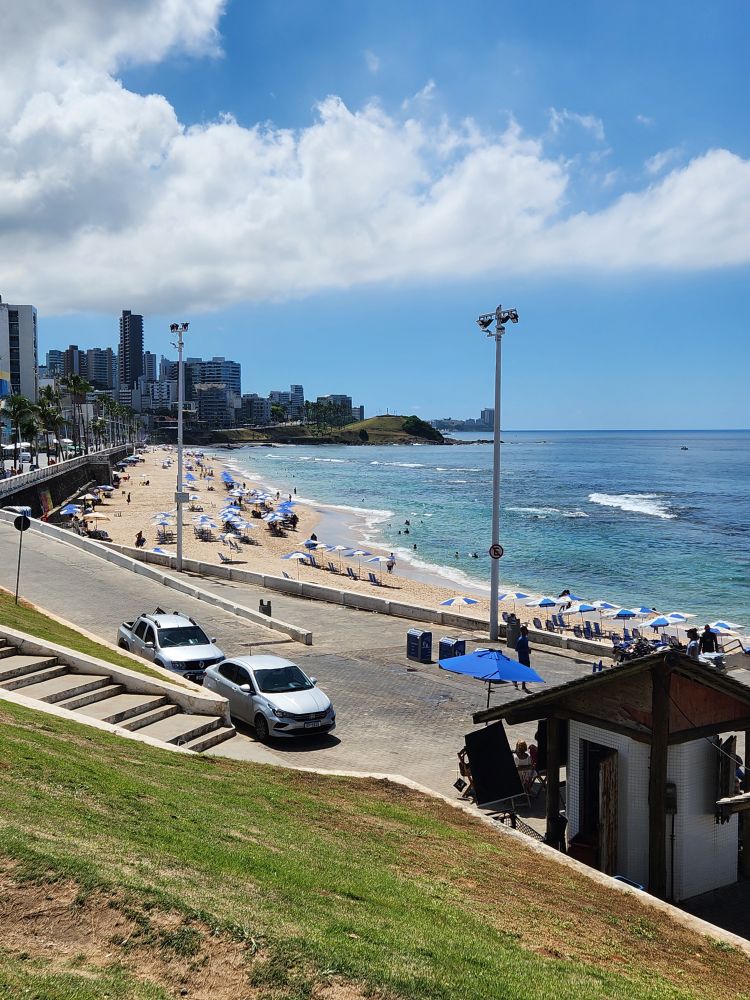
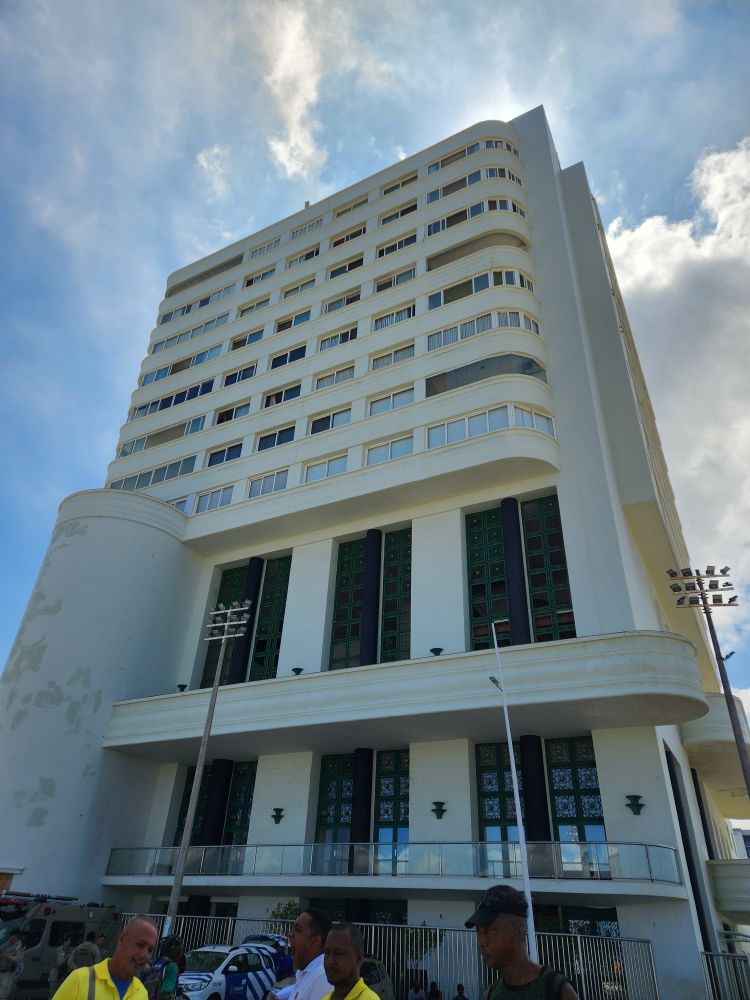
As we walk around the fort/lighthouse, Sayuri gives us background information on the city, shows us the other forts in the distance as well as the beaches along the shore. Salvador de Bahia has miles of sandy beaches and is a popular destination for tourists to come for the water and the sand. And there is no lack of sun, that’s for certain! We also learn about the art deco building across the street from the lighthouse. It is called 222 espresso for a famous song that one of the original owners. It was designed in a circular fashion so that the residence doors open up on a balcony overlooking a courtyard and is very convenient for socializing. The concept is that the building is a community and not just isolated apartments. Very famous and rich people lived here in the early days, now it is still residential, but also an event venue using the existing ballrooms.
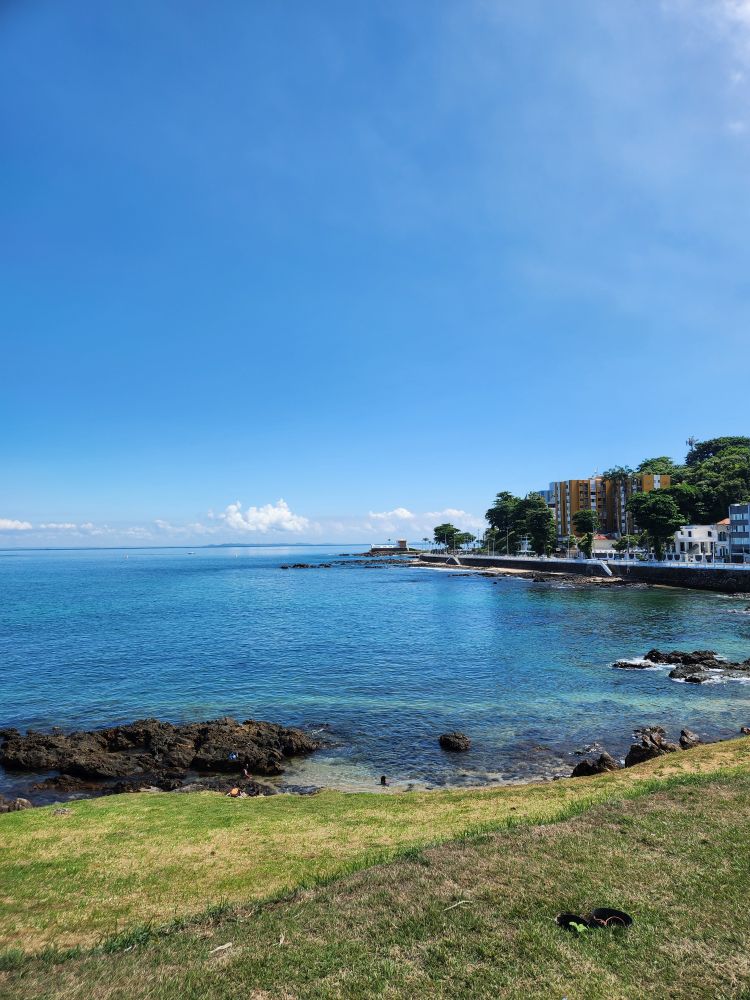
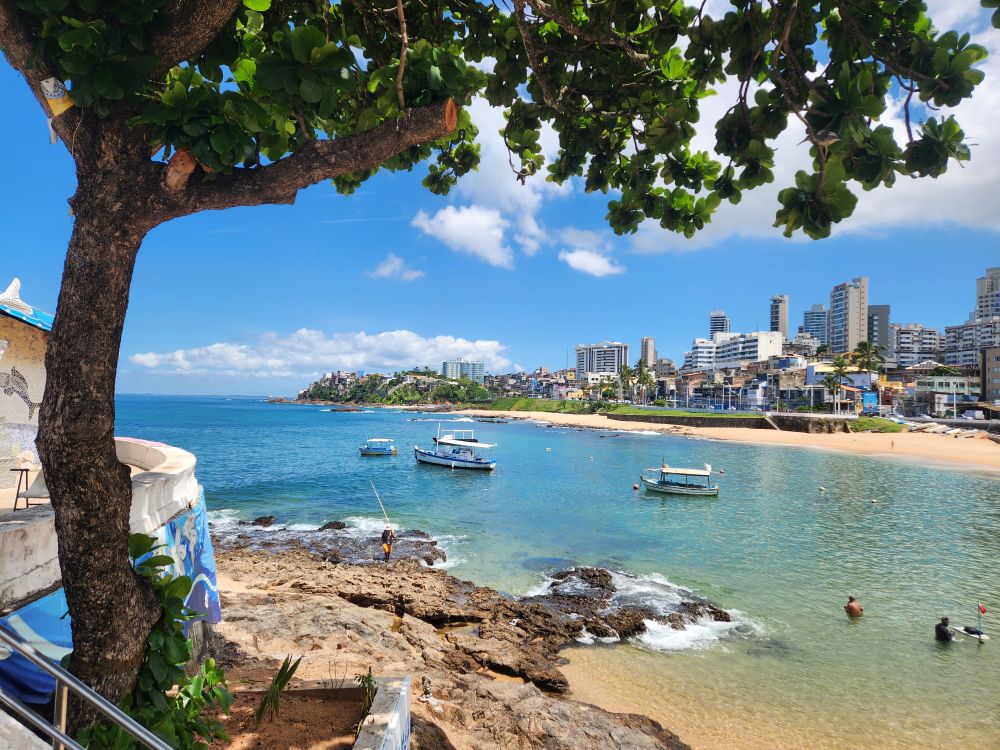
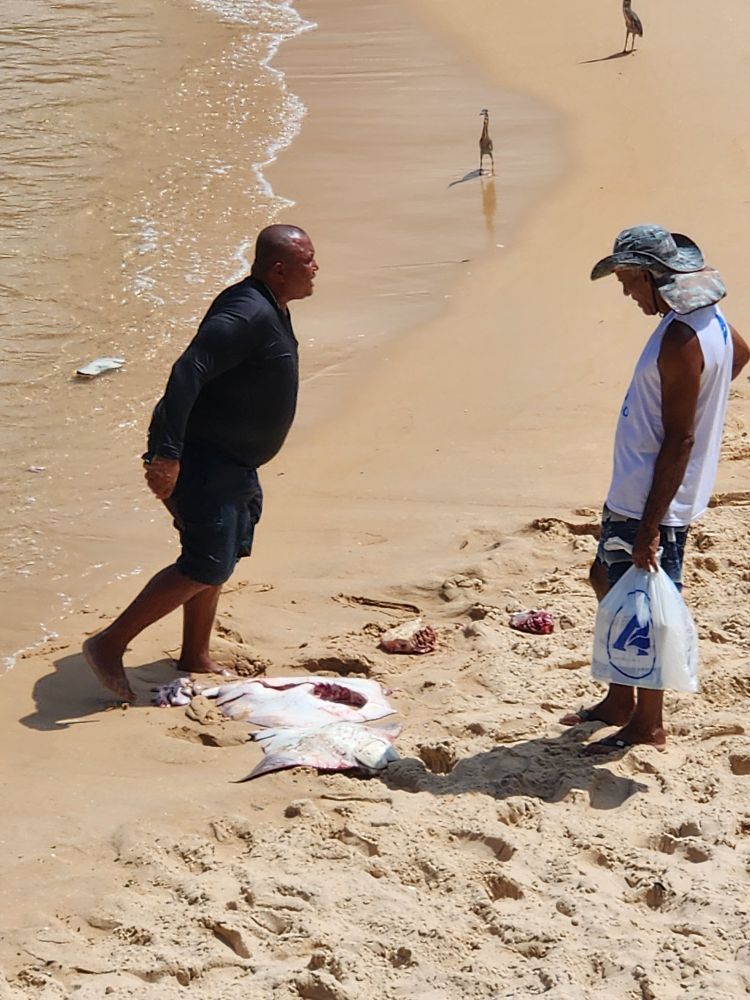
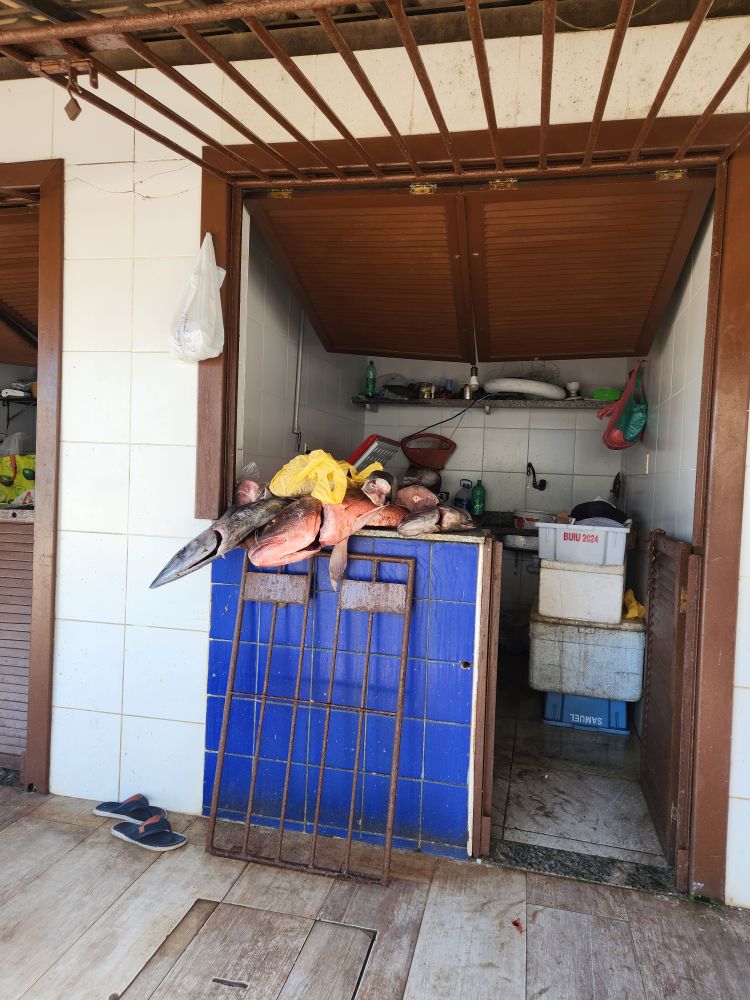
Our next stop is the fisherman’s chapel that is dedicated to Yemanja, the goddess of the sea. This is part of the religion that the Africans brought with them when they arrived here. And sailors and fisherman still come to the chapel to pray for good weather and good catches. As we listen to Sayuri explain the goddess and her meaning, we watch as fisherman cast from the beach or dive for shellfish, and as 2 fisherman clean their catch of stingray. They are enormous and look so good!
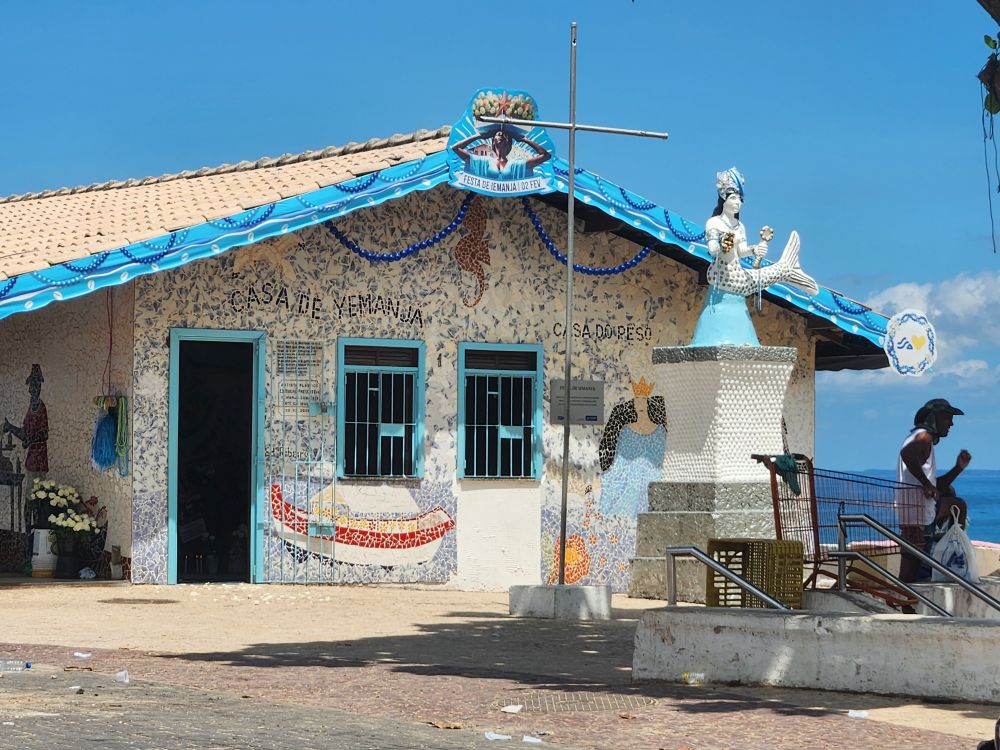
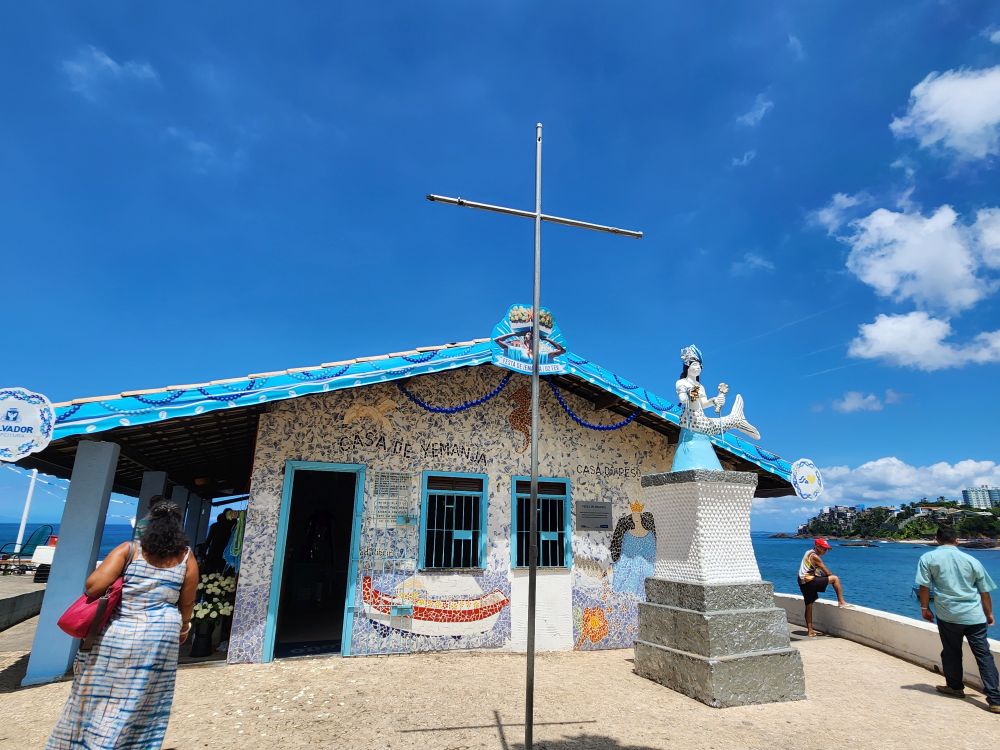
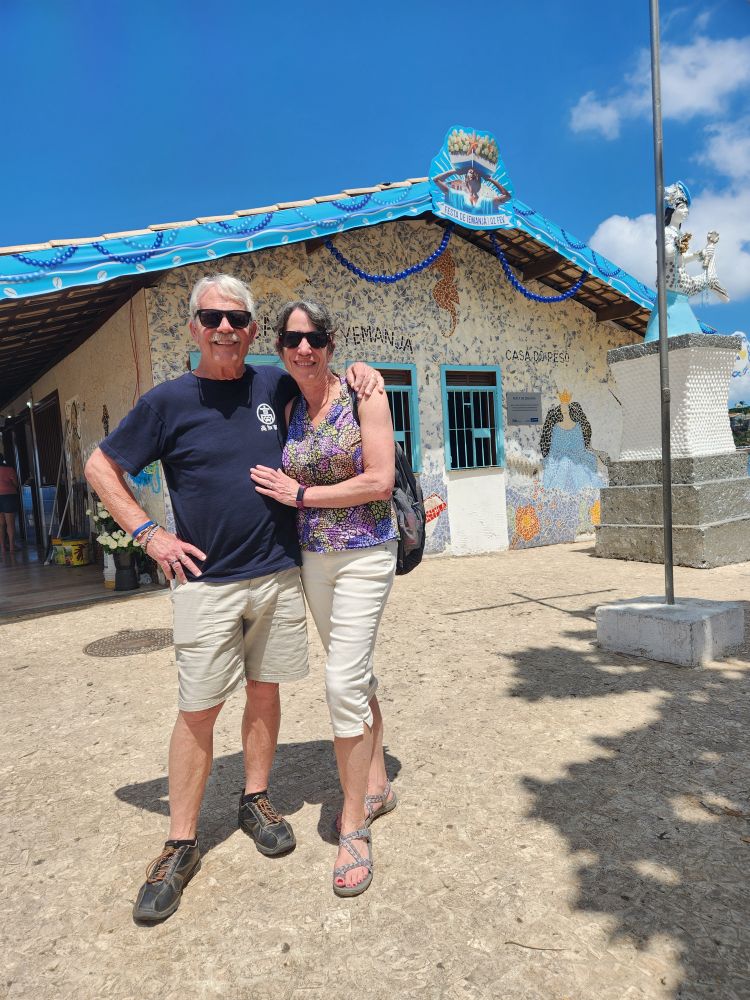
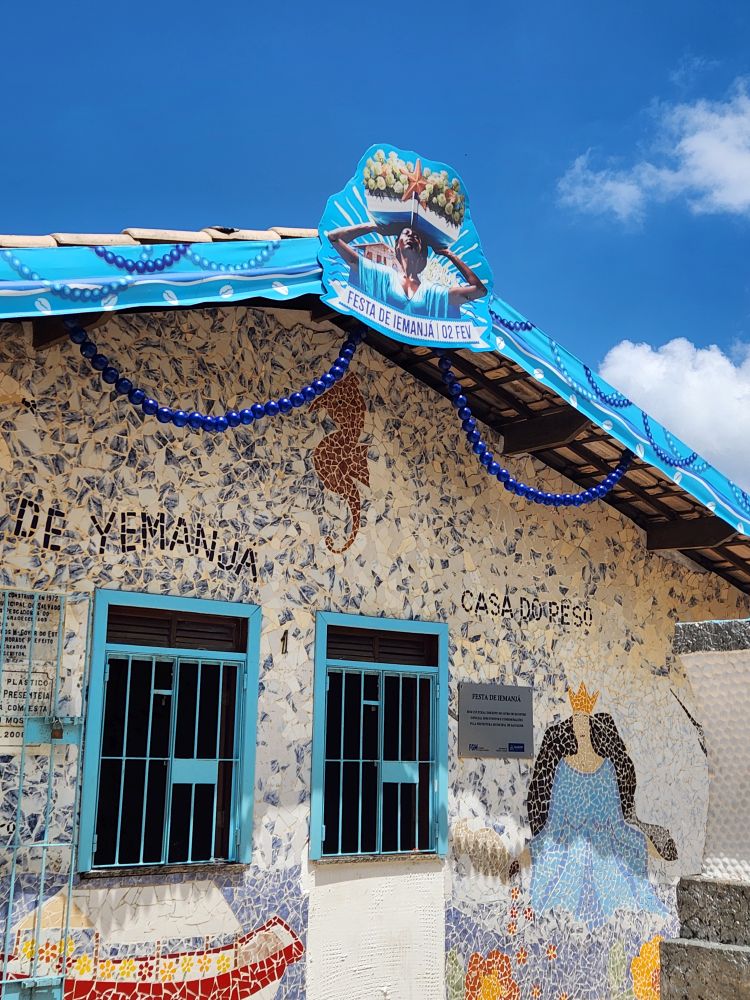
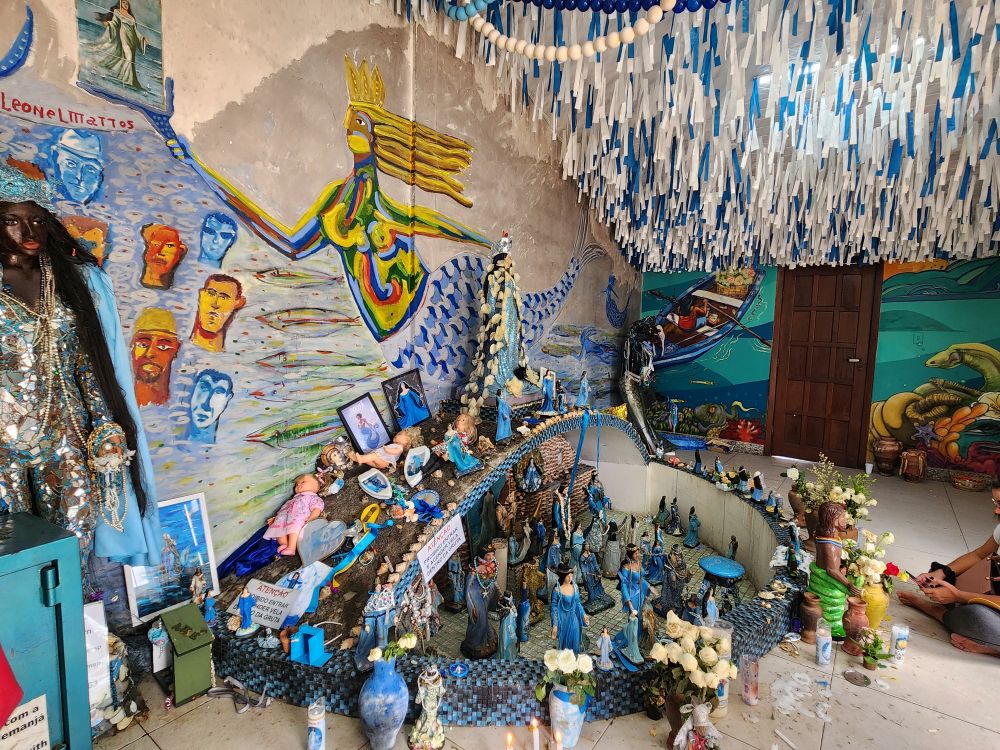
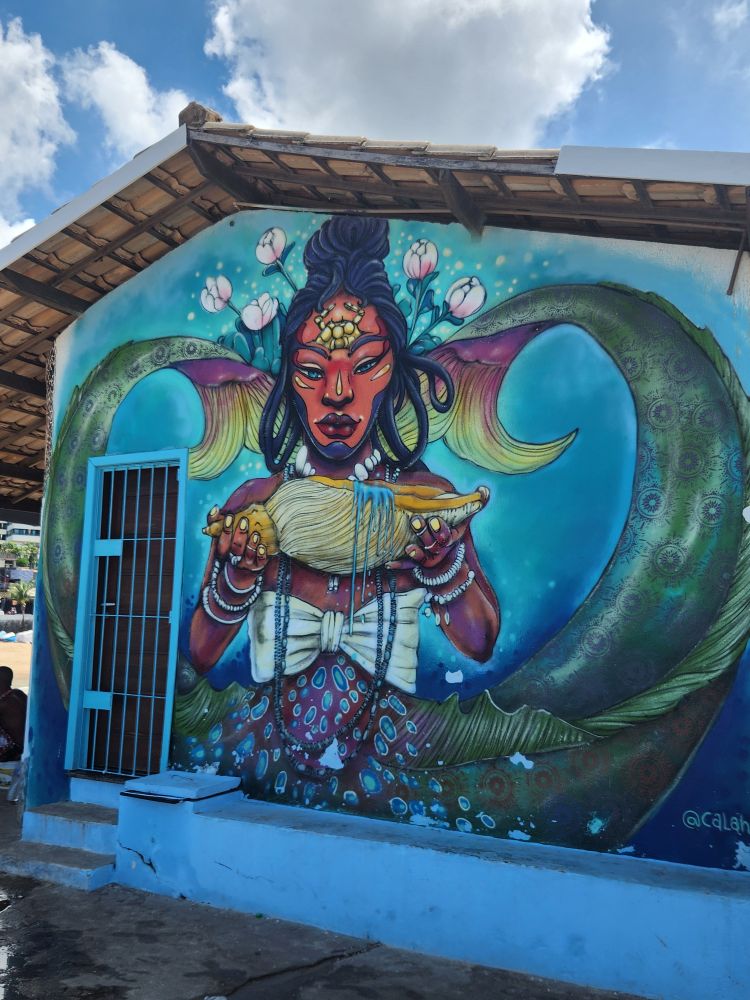
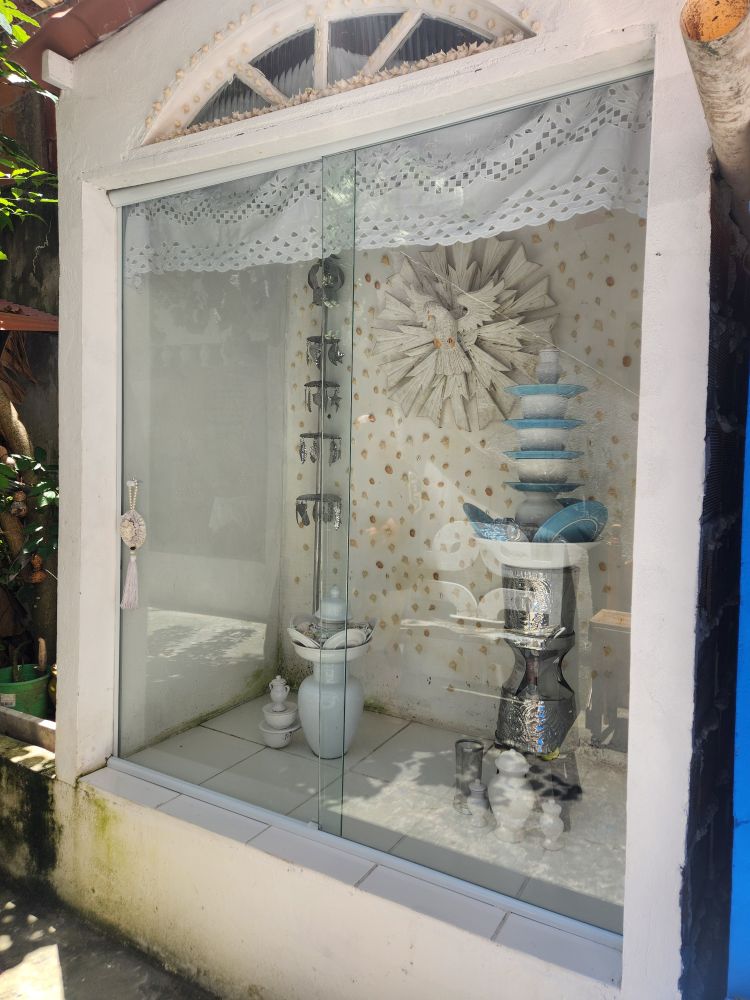
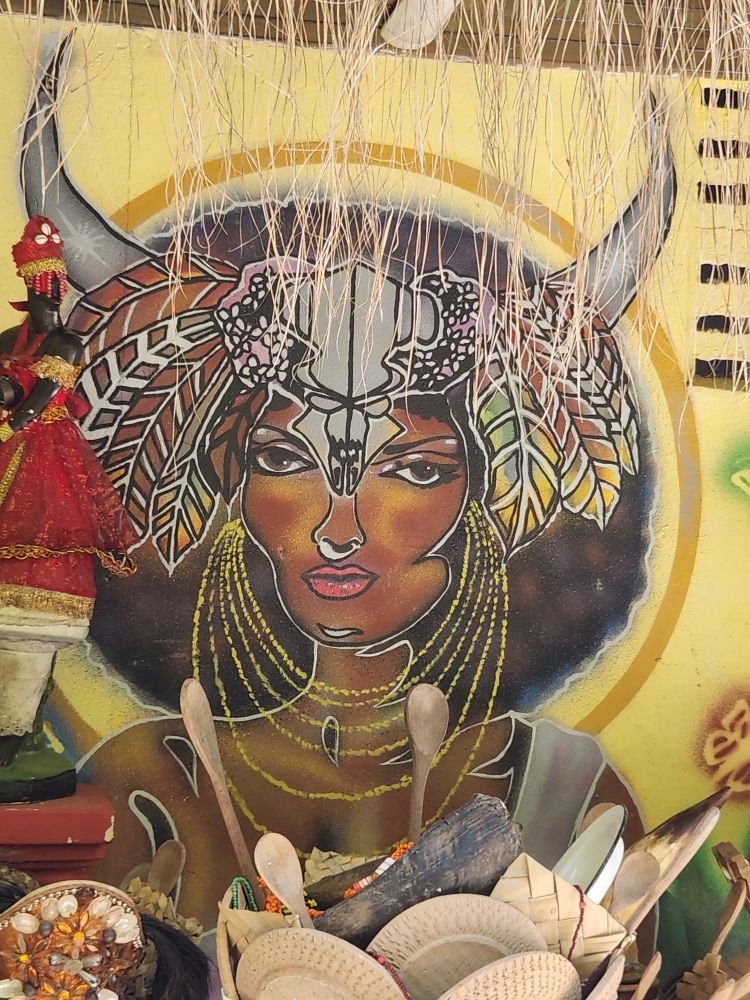
Inside the chapel are an array of figurines, most white and not necessarily representative of the African people. This is one of the ways the religion managed to continue on along with Catholicism. Whereas in other countries, the missionaries came in and abolished the local religion, in Brazil they were allowed to co-exist. But there weren’t any representative figurines because they were all created in a more Roman Catholic style. So, the people just adapted. On the outside of the chapel though, in the back, is a full wall mural of Yemanja in all her African splendor. A nice way for everything to co-exist, honestly! Also around the sides of the chapel is a little fish market where the fishermen sell their catch. OMG – the size of the fish! If only we were staying here in an apartment! We’d have food for days – and Sayuri tells us the fishermen will clean and filet the fish for you right there. We’re all in! Sayuri also explains about a festival on February 2 that draws thousands of people here to pray and leave gifts to Yemanja for blessings and good luck. There is even a sign on the chapel with the name and date and lots of videos online you can search for to view the spectacle. Fun to watch – not necessarily to participate. Talk about too peopley!
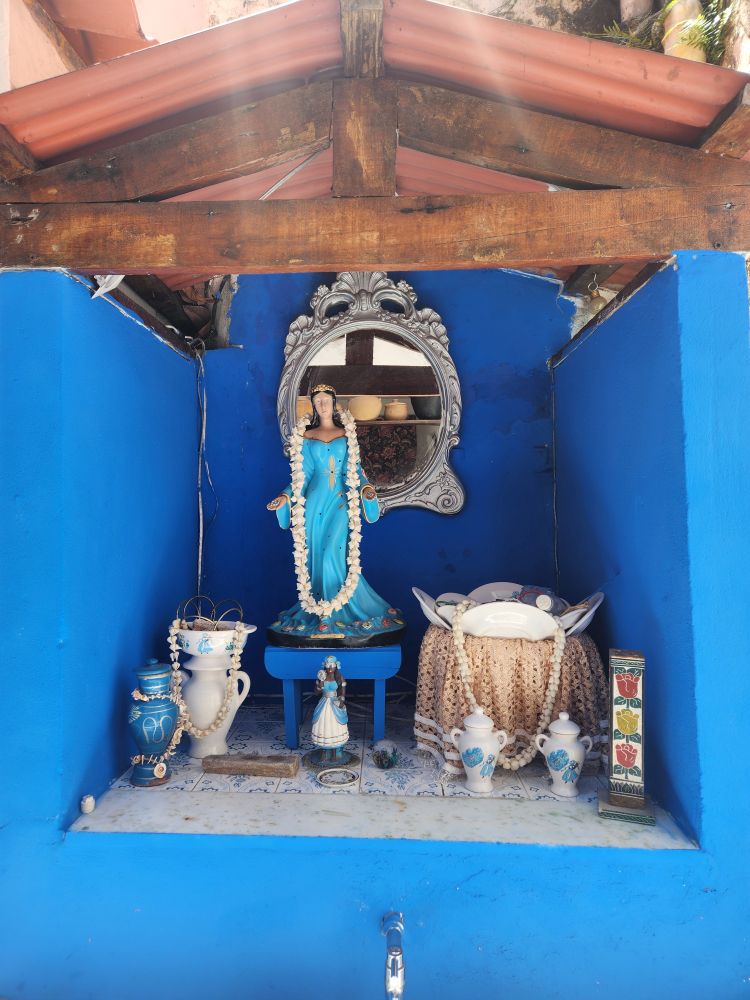
Next we head to a Candomble house, which is essentially the church or chapel for the Afro-Brazilian religion of the same name, that worships what are called Orishas, the different deities for the sea, motherhood, earth, etc. Candomble is a mix of three African religions: Yoruba, Fon and Bantu. Practitioners believe that everyone has their own individual Orisha that controls their destiny and act as their protector. There is one all powerful God called Olorun, and all the Orishas serve that God.
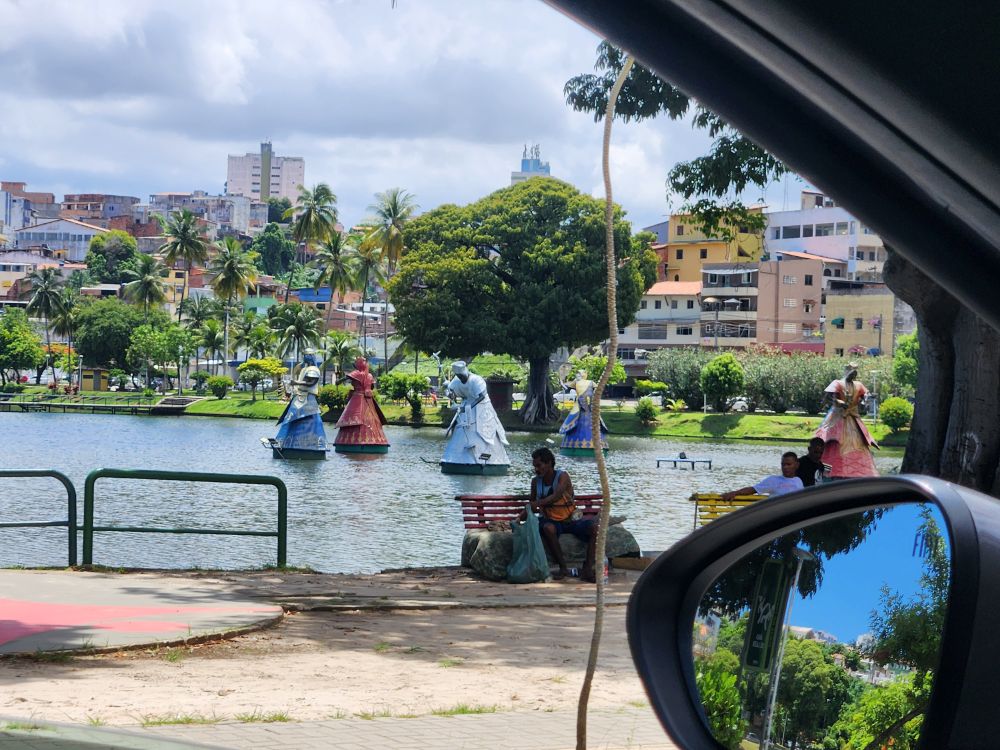
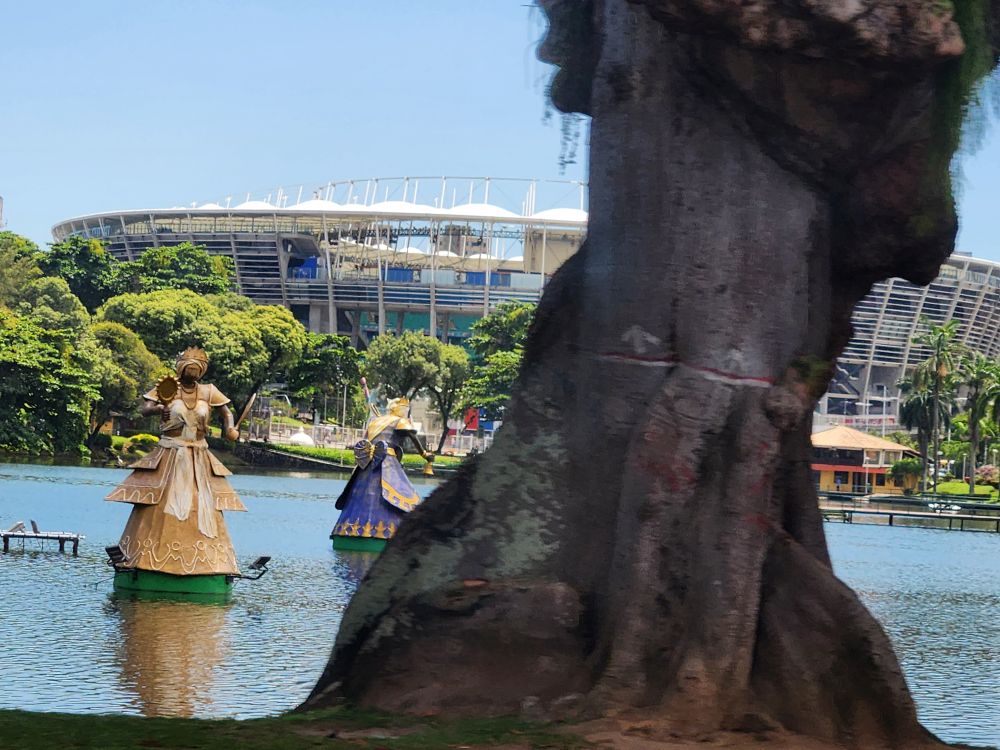
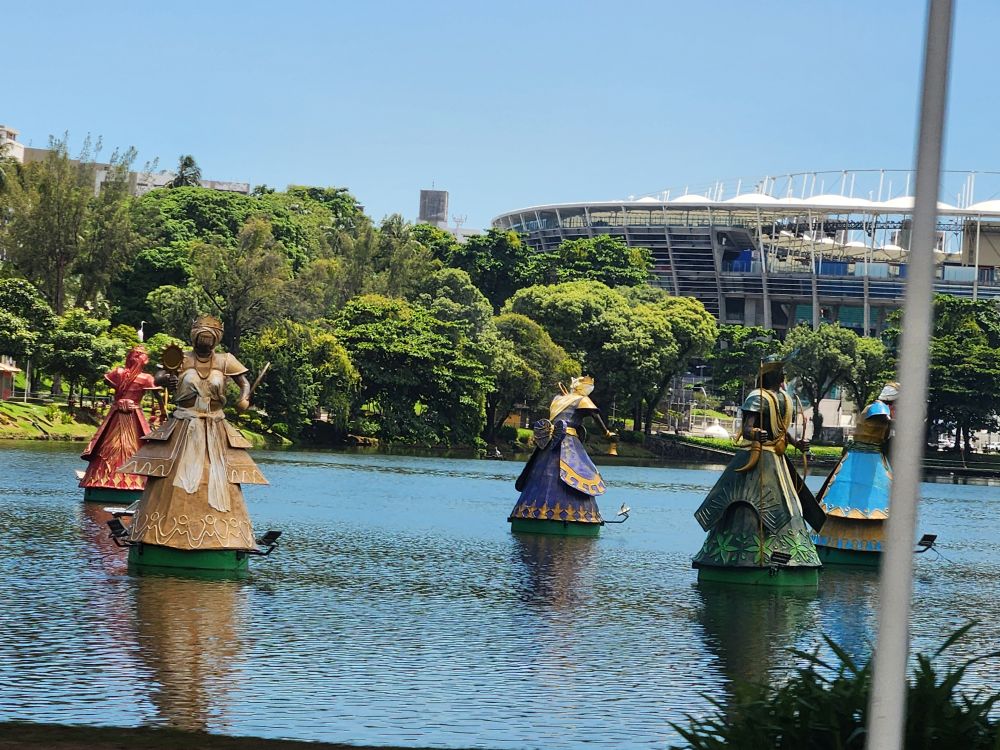
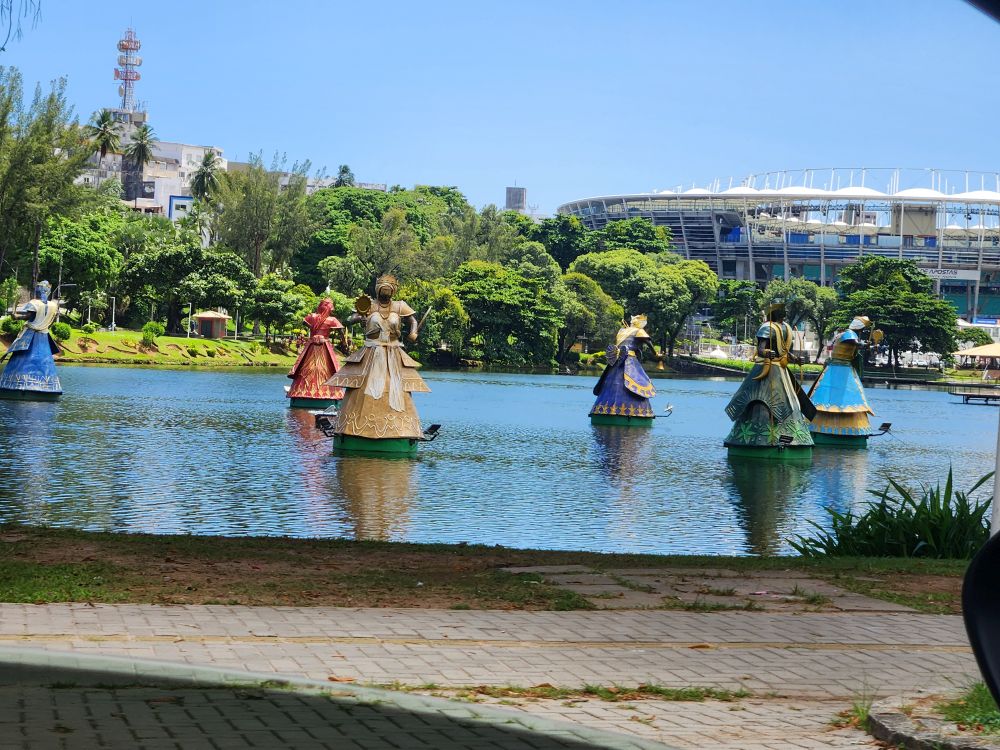
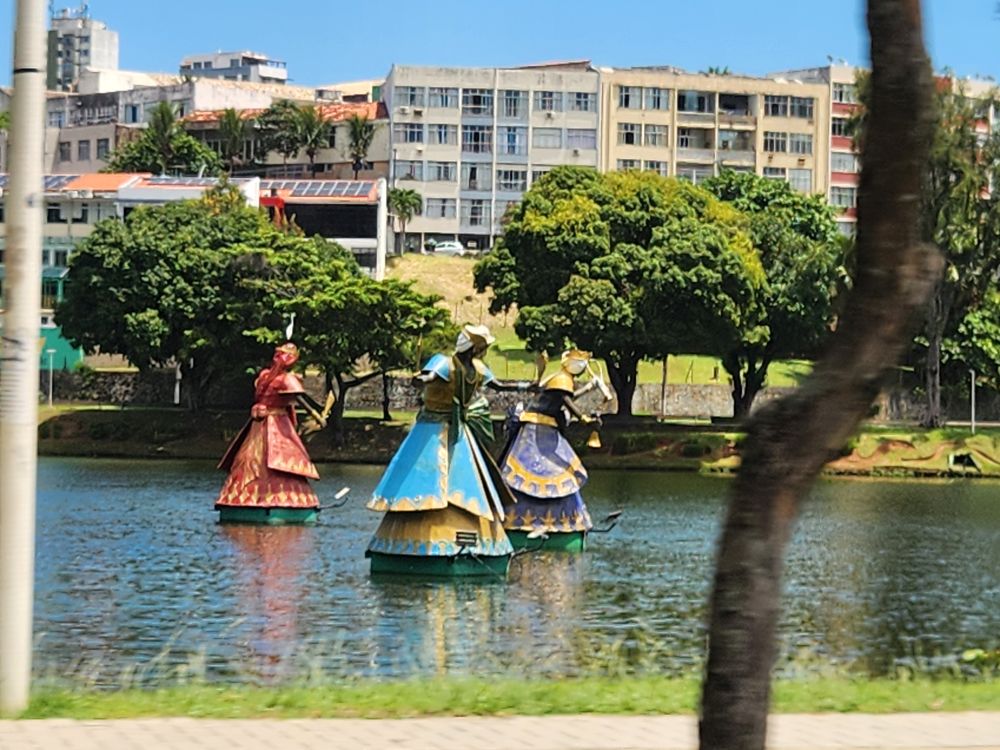
On the way, though, we pass by the Dique do Torroro, a massive fresh water lagoon that is the only natural source of water in the city. Beyond that astonishing fact, the most interesting thing are the 12 massive Orisha statues created by the sculptor Tatti Moreno in 1998. All the major Orishas are here – and while Sayuri tells us each one’s name, I can’t remember them at all! Each is associated with a specific color, so they are easy to distinguish, but….I’m still clueless as to which is which! Regardless, they are a wonderful sight to behold and are a recognition of the religion and how sacred this lake is to Candomble practitioners.
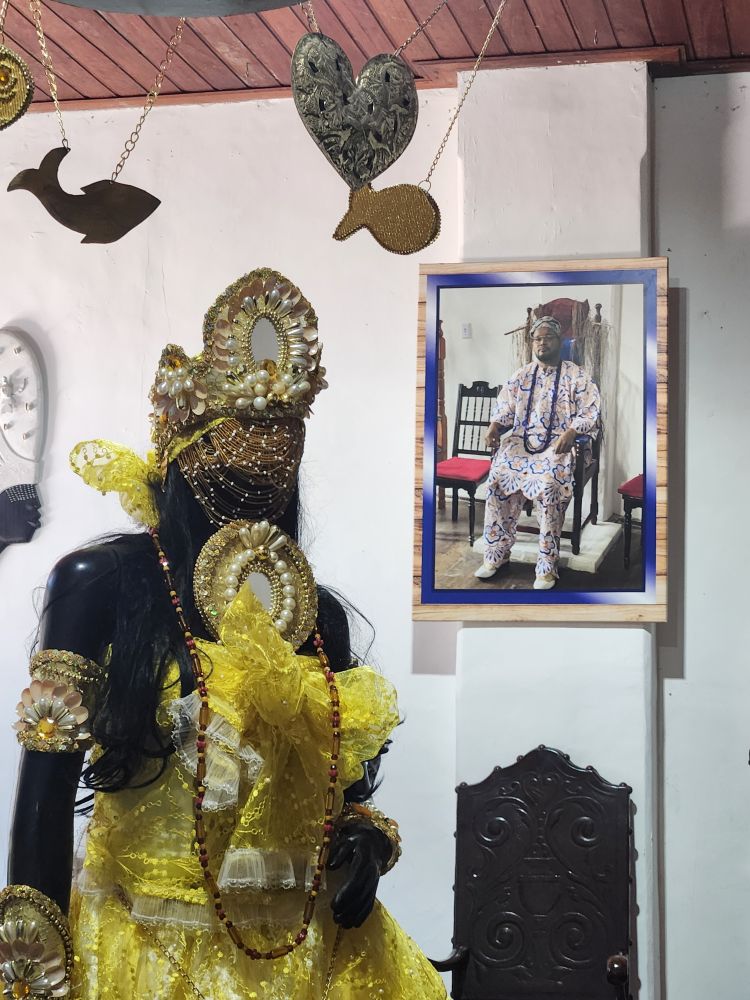
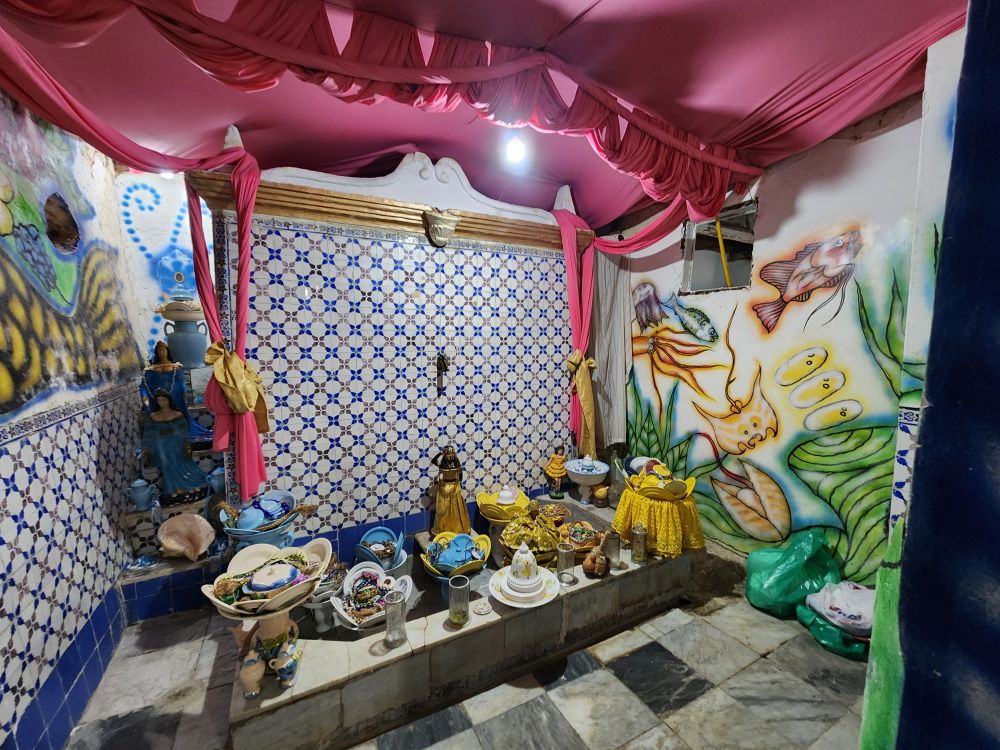
The Candomble house we will visit is actually right around the corner from the Ingrejo del Nosso Senhor do Bonfim which we will visit next. This Candomble house has opened just for us, it is not normally open to the public. We are greeted by one of the main priests of the house and he explains all about the house and what goes on here. People come to celebrate events in their lives, or have their spirit read or to pray to their Orisha. When there are ceremonies, the priest tells us he goes into a trance as the spirit enters him and he doesn’t know what he does. When he comes out of the trance, the practitioners there tell him what he did.
It is a simple house, the main room ringed in chairs and a large representation of a deity in the middle. Off to the side are two rooms for spirit and card reading.
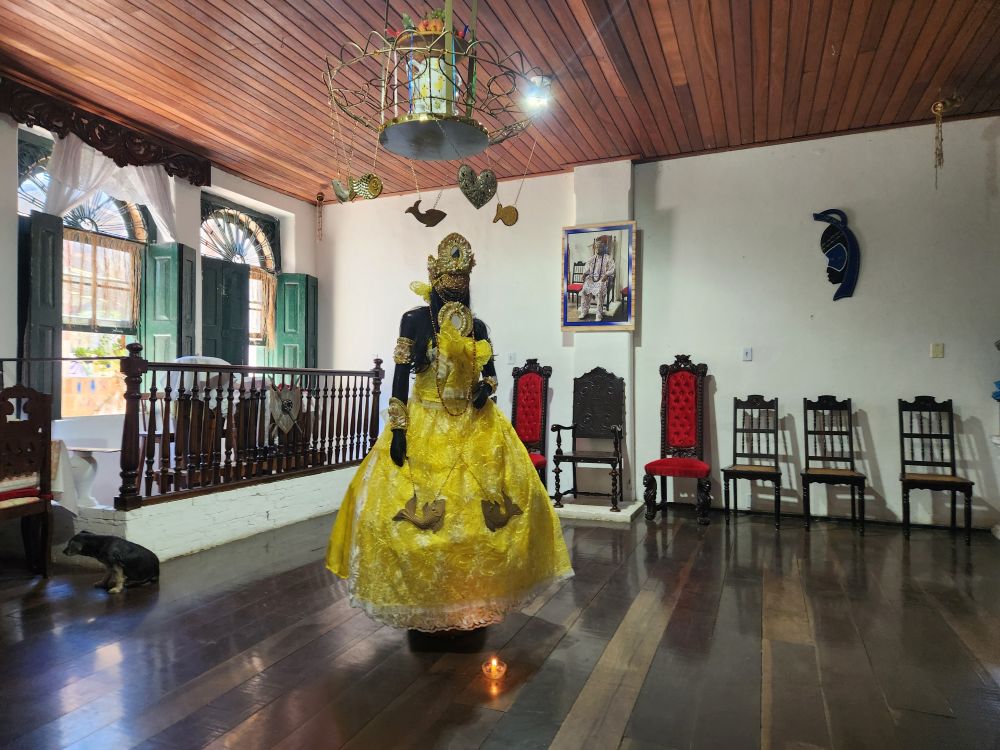
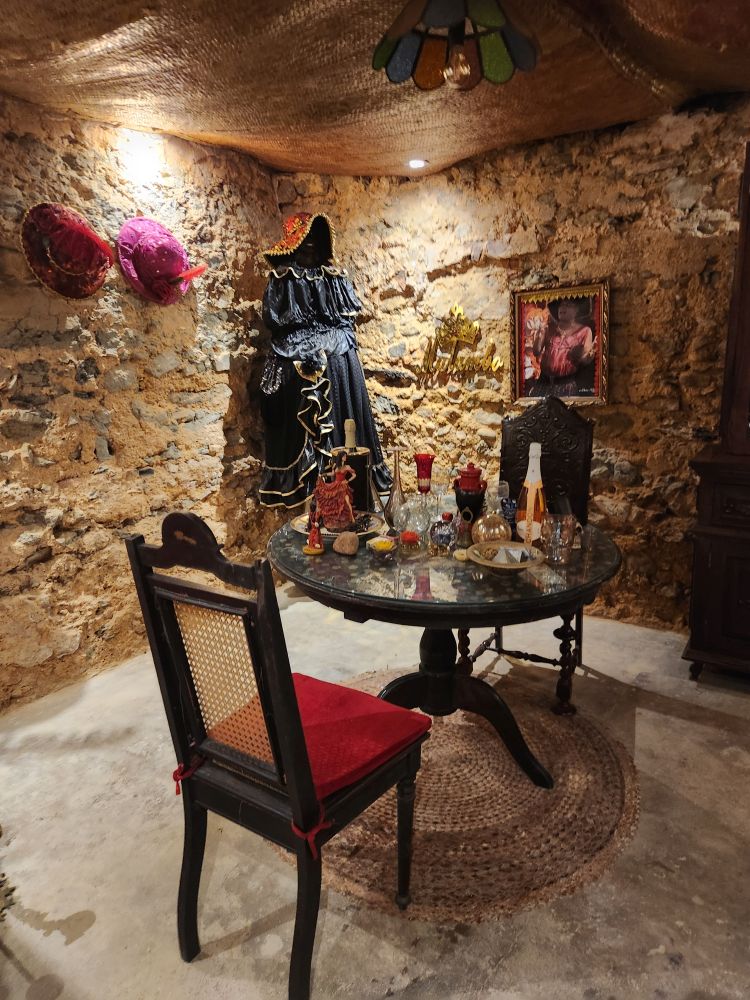
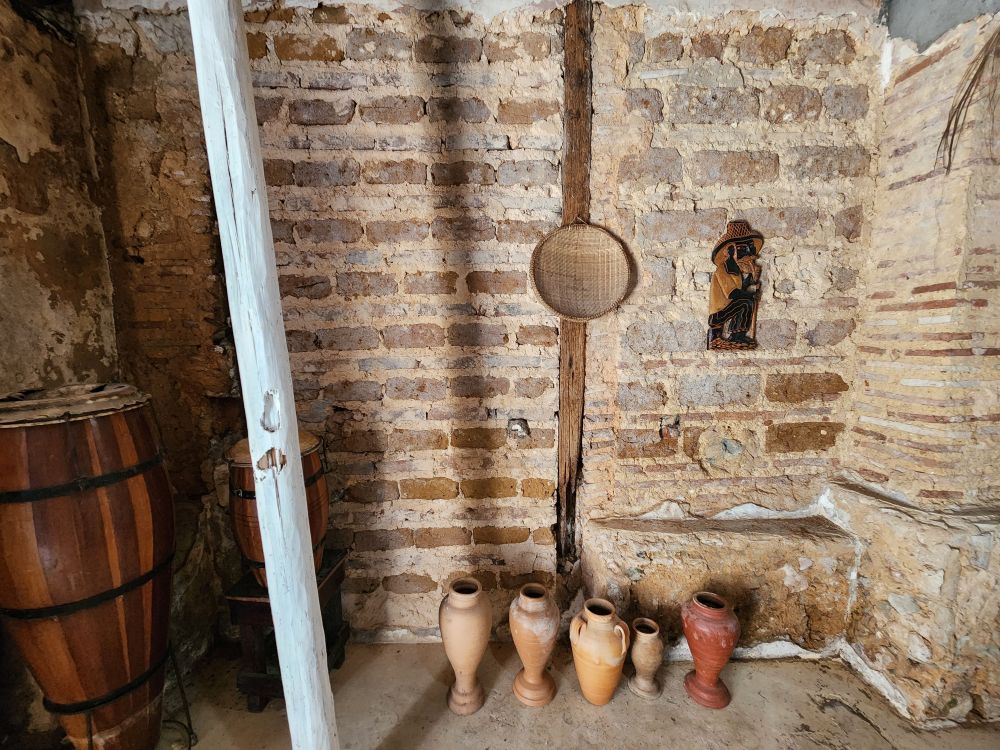
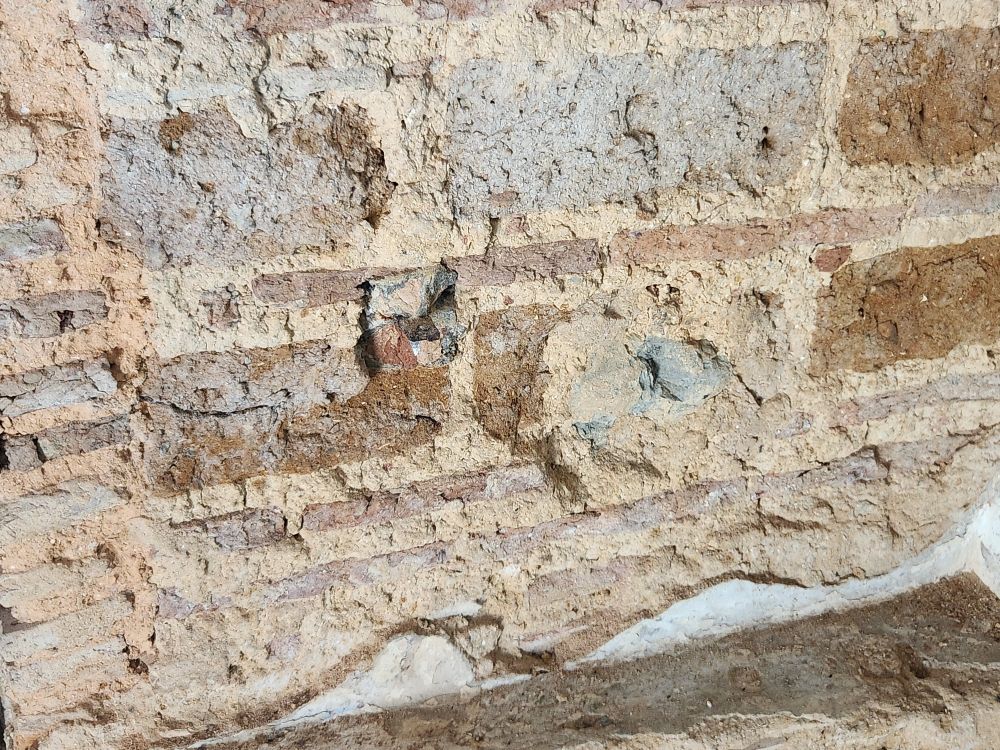
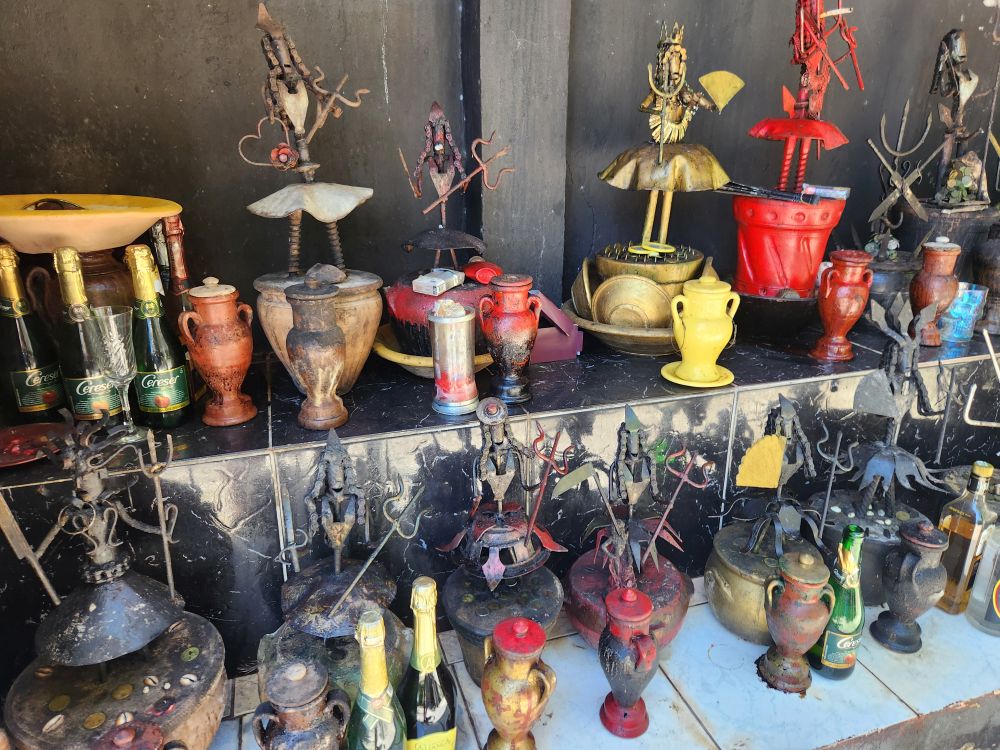
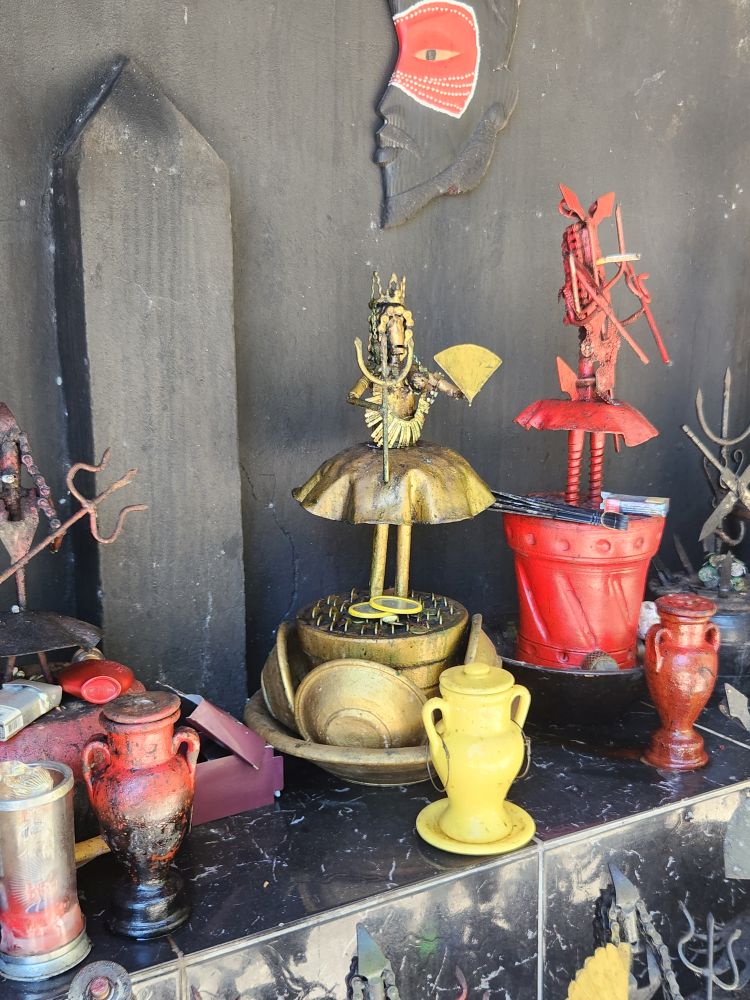
In the basement are more rooms for offerings and readings, one of which is specifically for women to ask for different protections and blessings. The offerings here are mostly alcohol, which is interesting. I think the cobbled together story is that in the early days most of the women were prostitutes and liquor was used to make them do things they didn’t want to, maybe? Anyhow, there are tons of shrines down here for all sorts of different Orishas. And more out in the courtyard. Along with tons of different figurines and offerings. There is also one wall that still has some of the restraints that were used when slaves were kept in the basement.
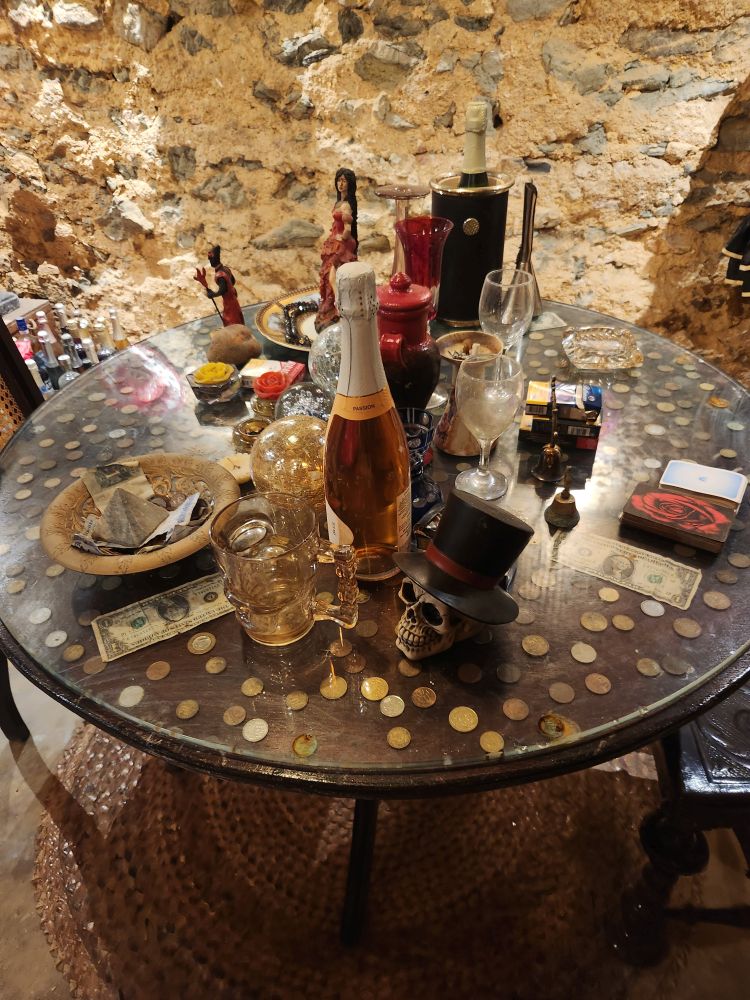
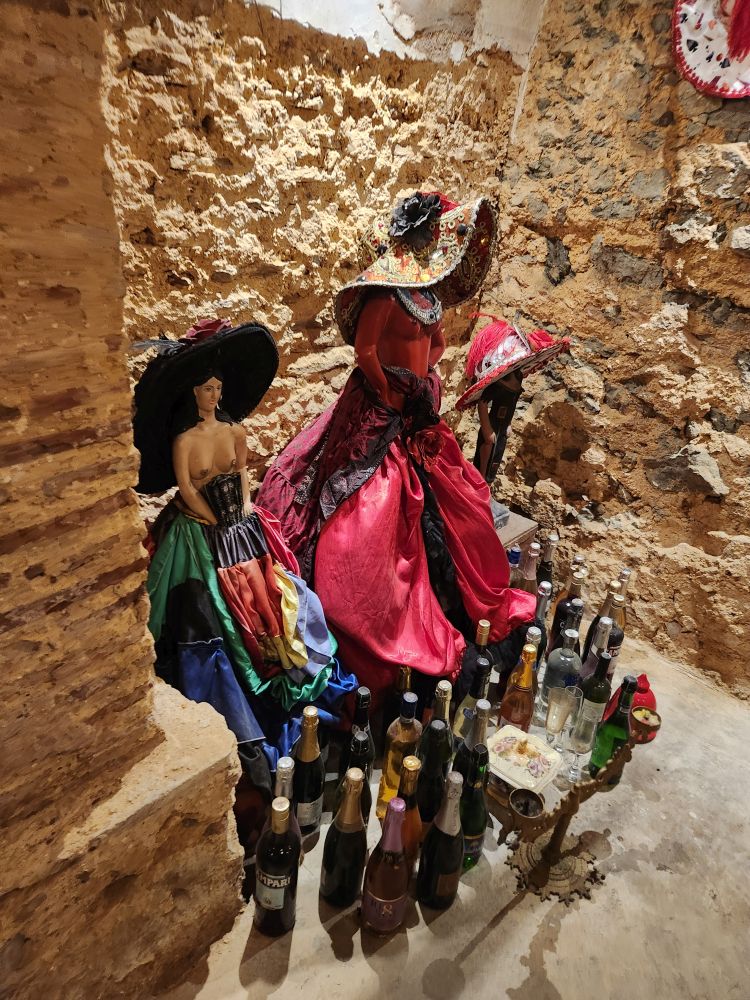
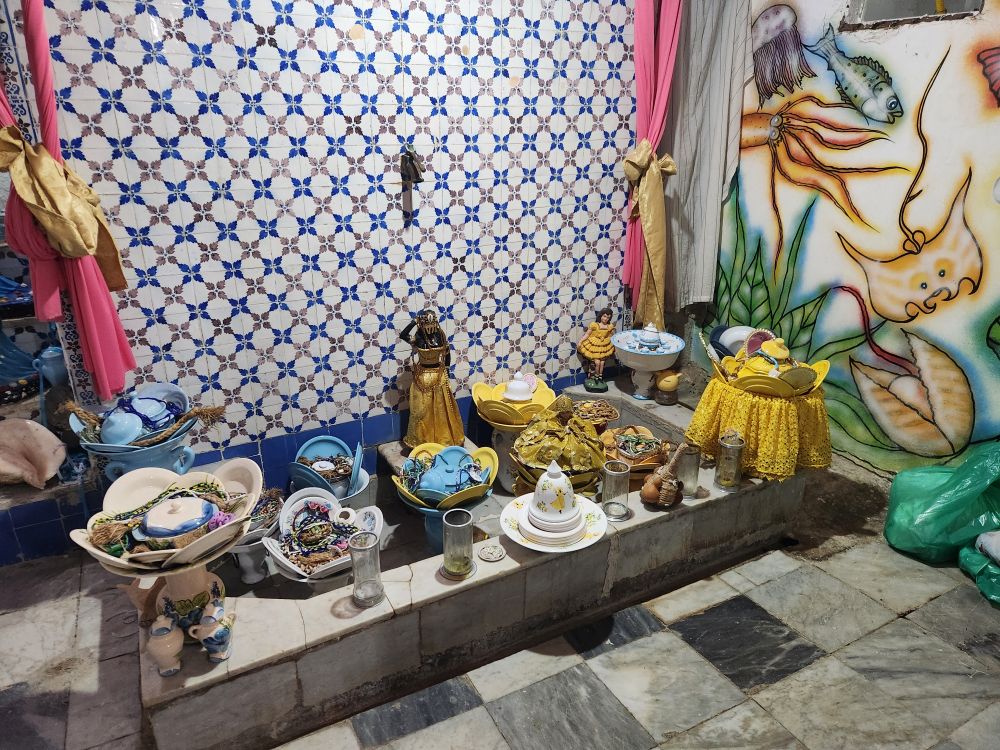
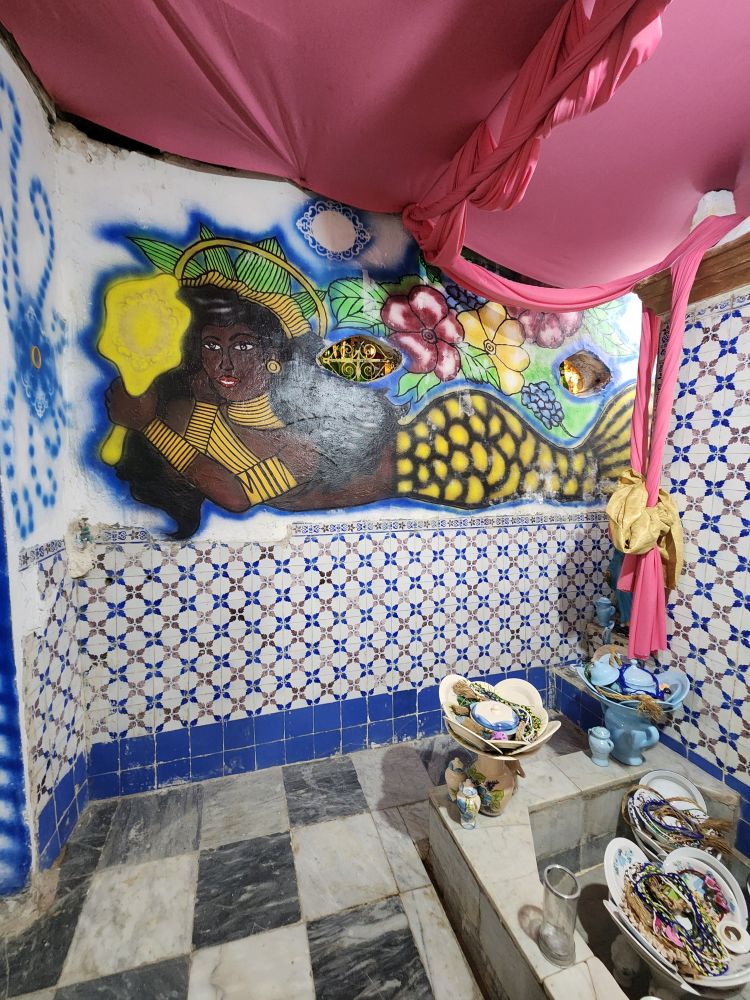
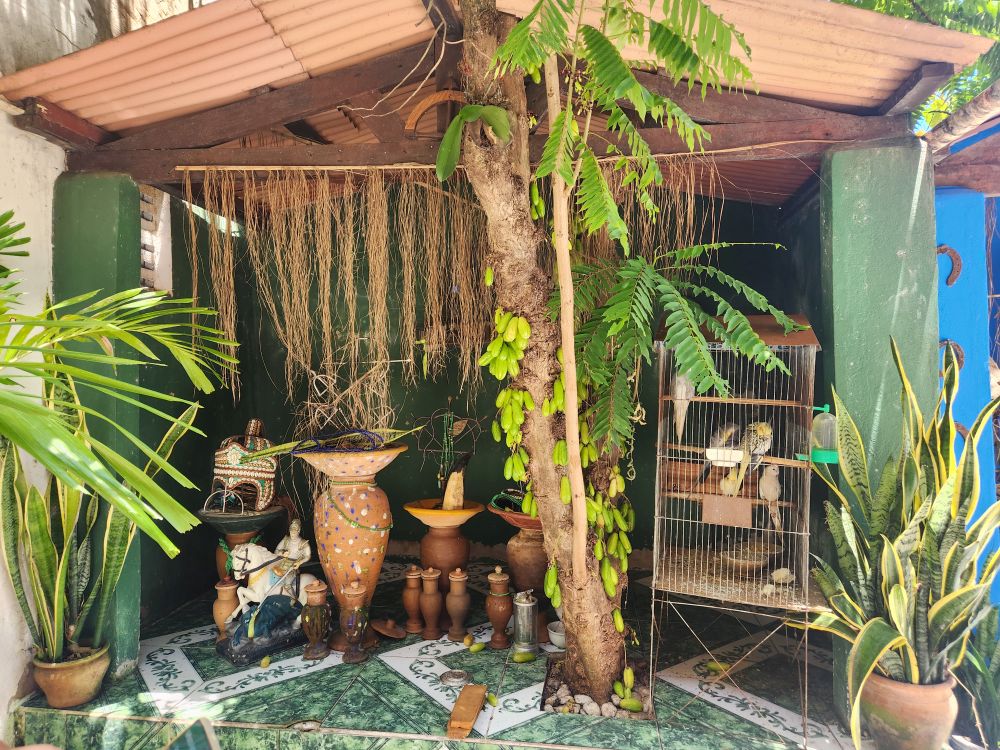
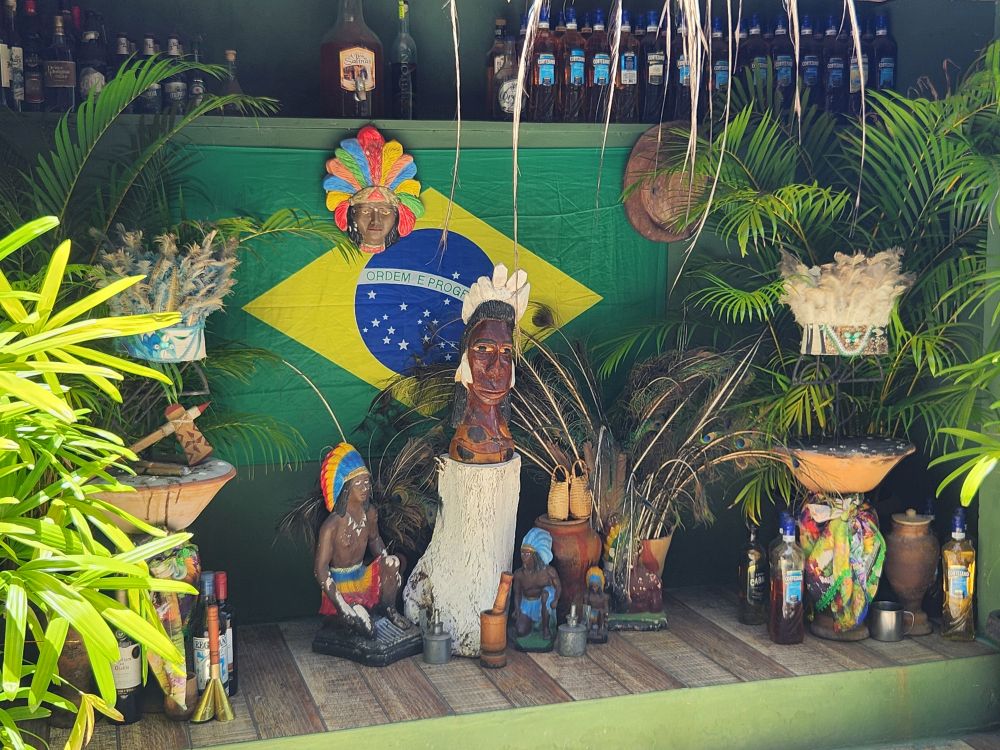
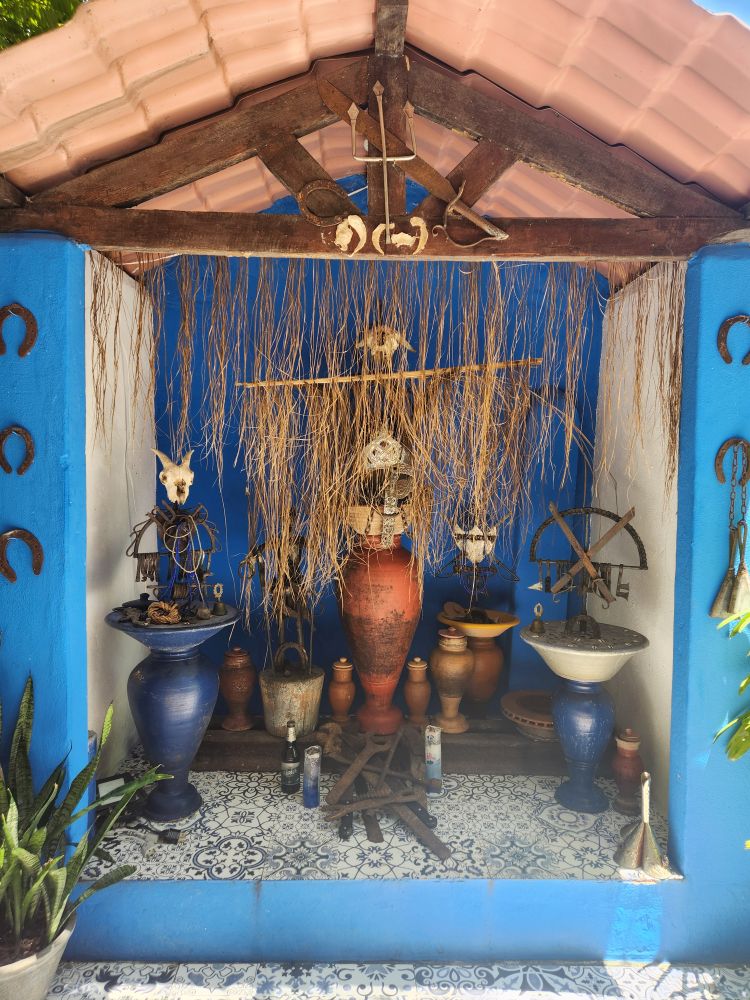
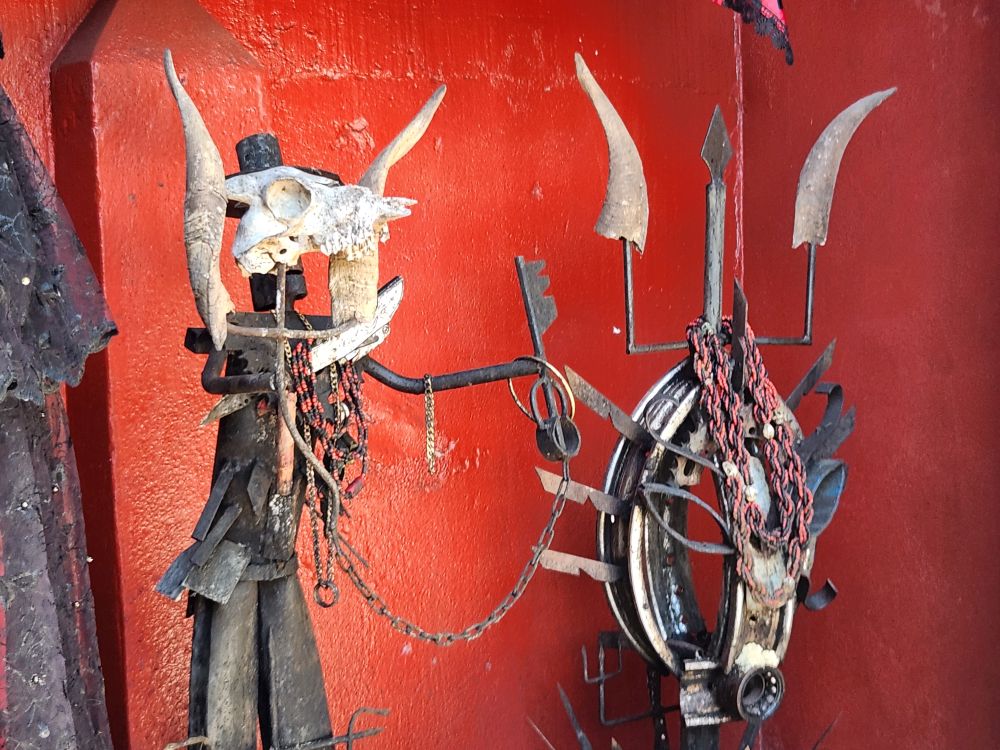
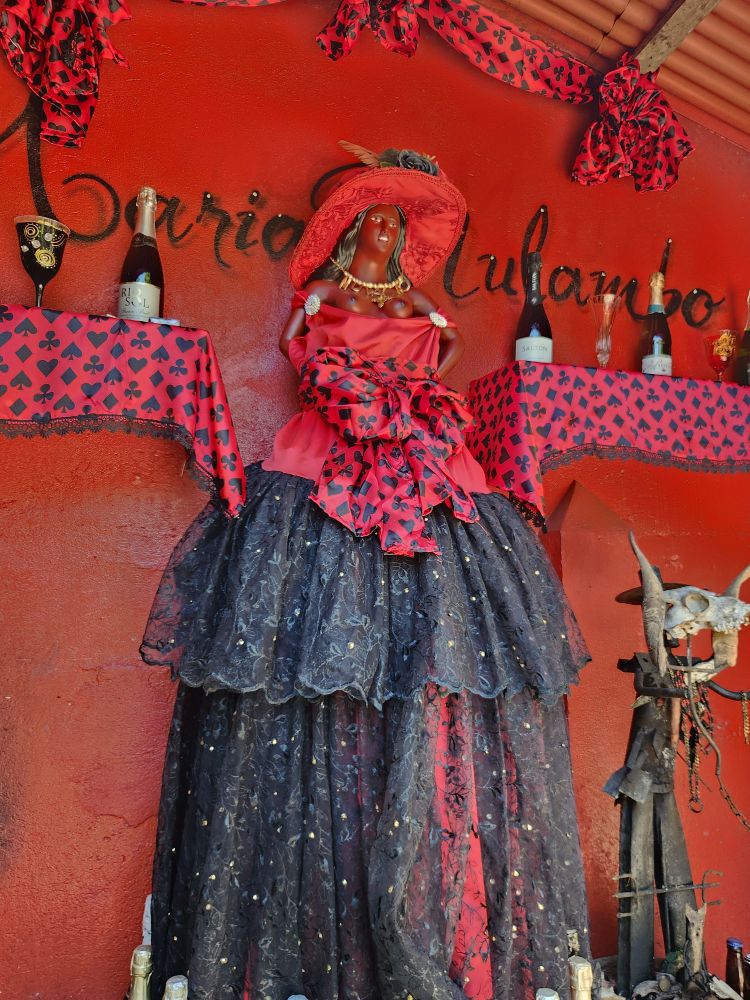
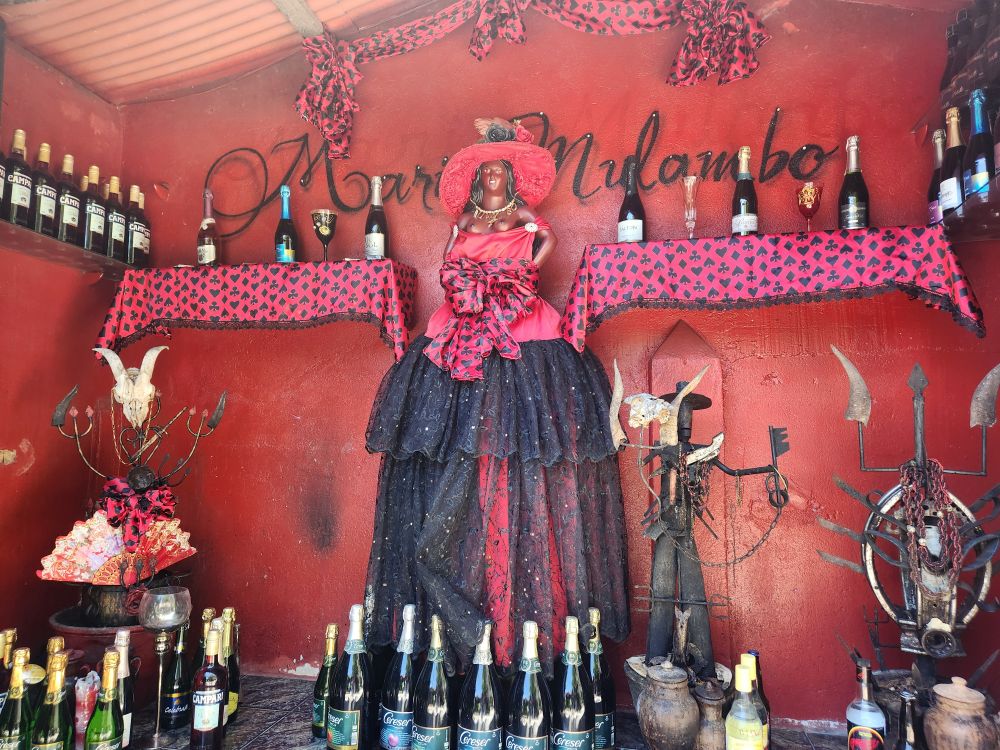
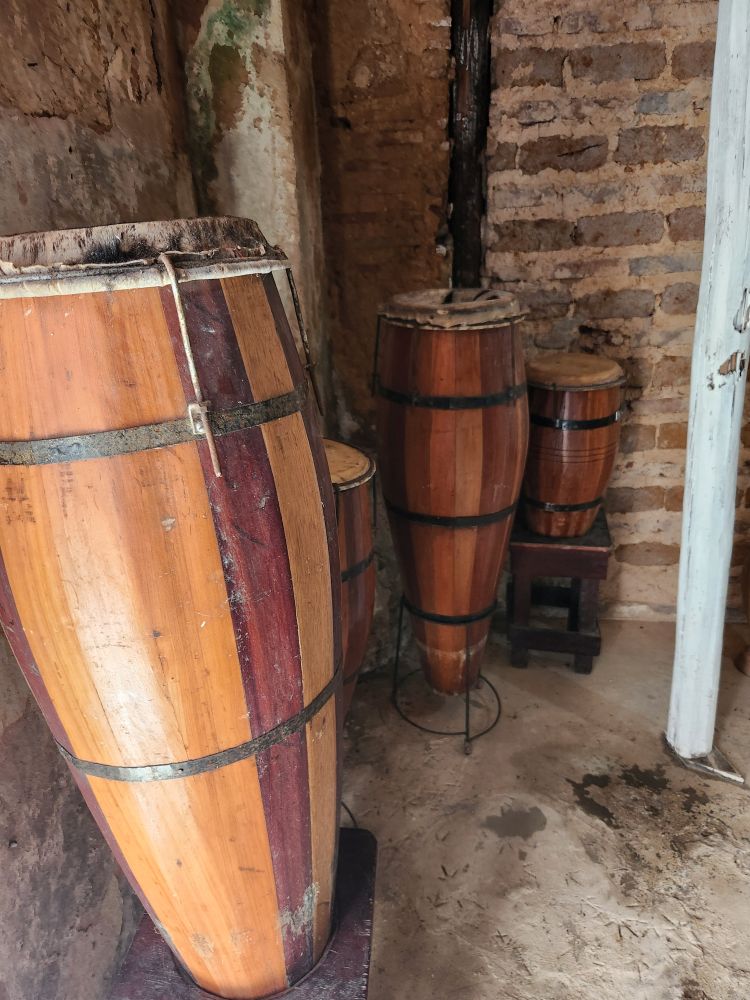
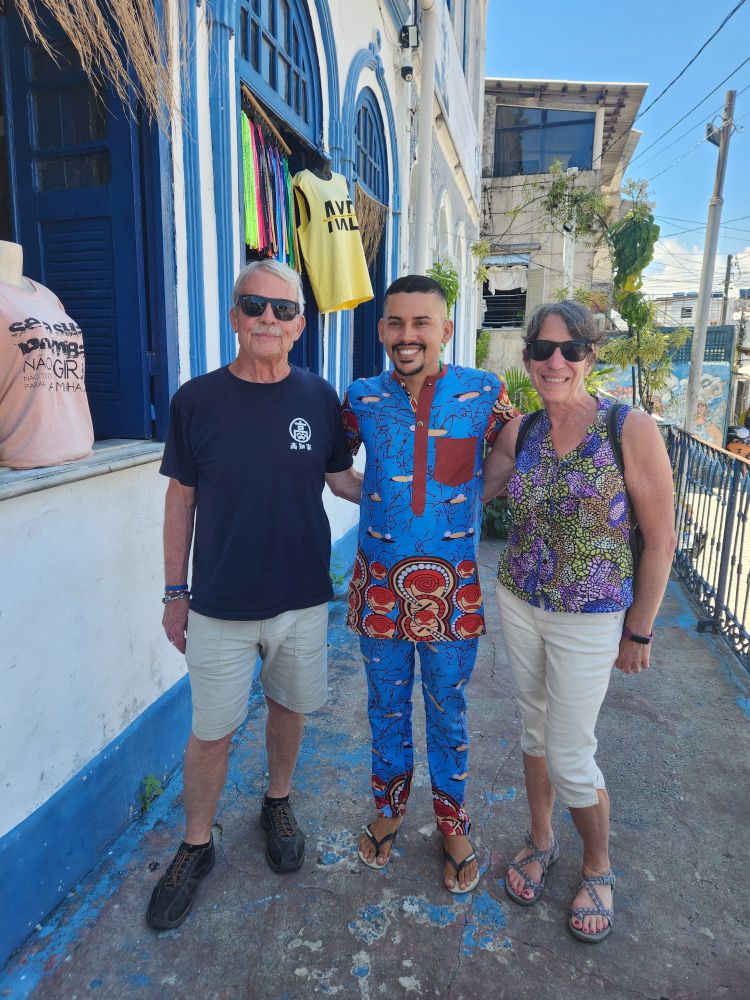
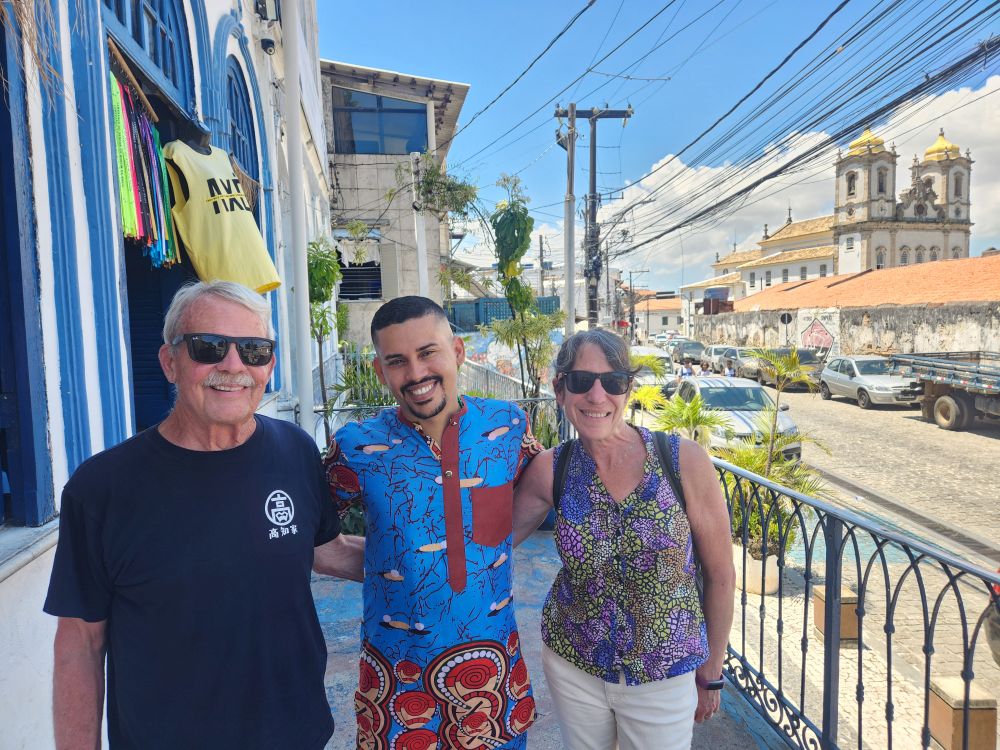
A fascinating visit – and on the way out we take a photo with the sweet priest who took us on the tour. Very nice.
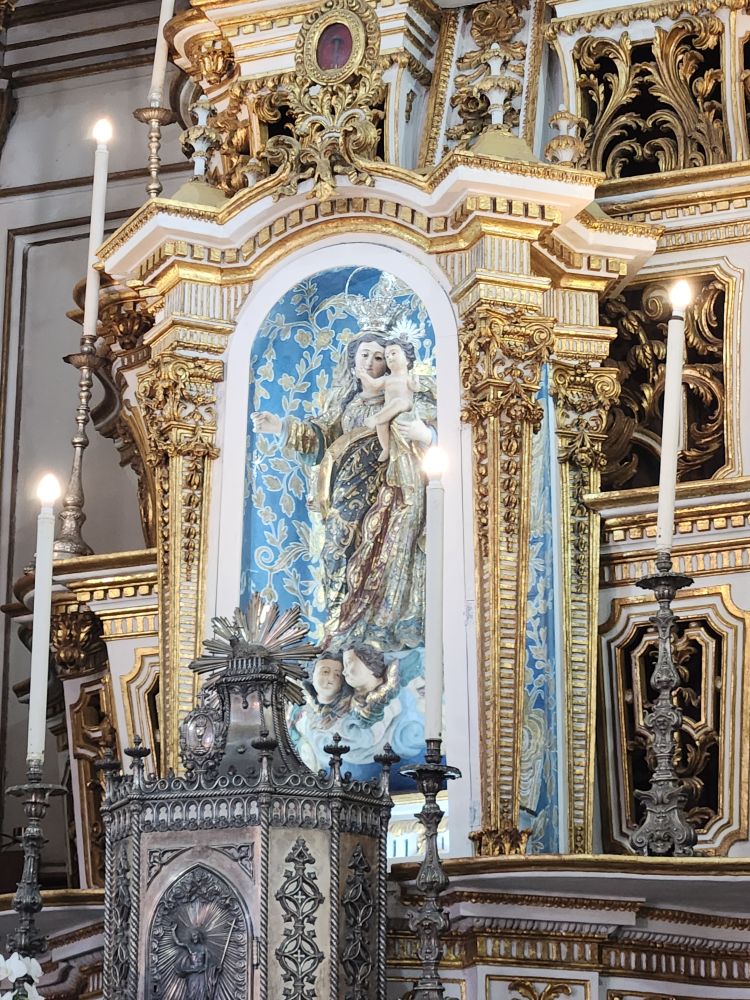
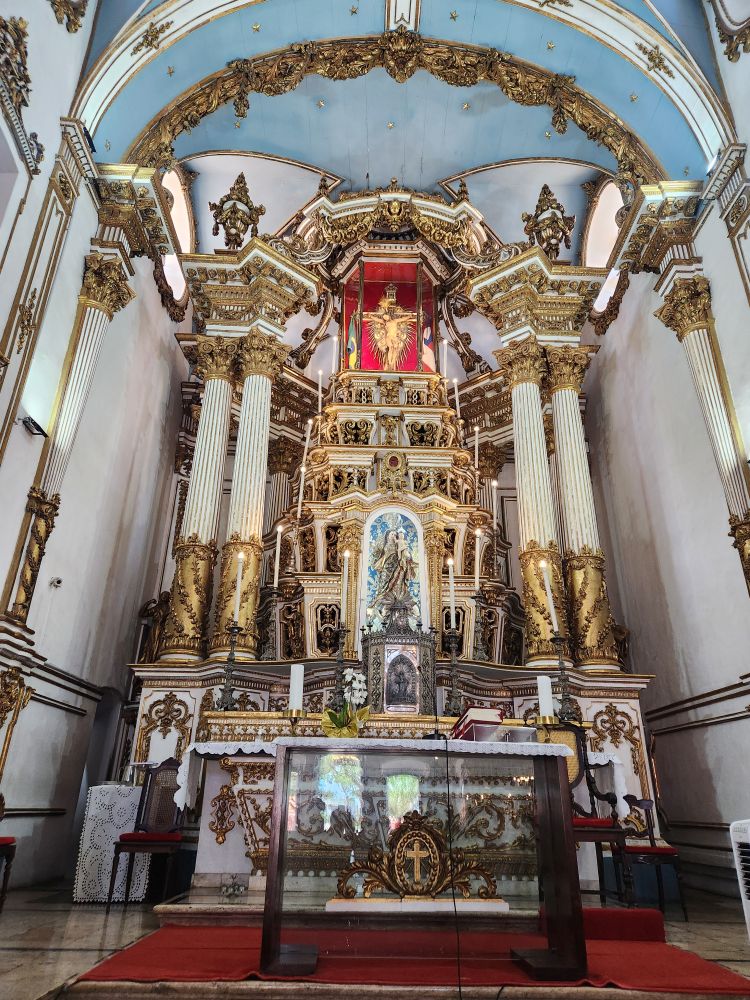
Then it is onto the Bonfim church. Bonfim means good death, and Nosso Senhor Bonfim means Our Lord of the Good End. The statue of Bonfim was brought to Brazil during colonial times by a Portuguese sailor who thought he was going to die in a horrible storm at sea, but survived, and ended up in Salvador. He vowed to return, and when he did, he brought the statue from Setubal, Portugal where the devotion to Senhor do Bonfim originated. Later a brotherhood dedicated to Bonfim began to build the church here on top of Colina Sagrada (holy hill) to house the statue.
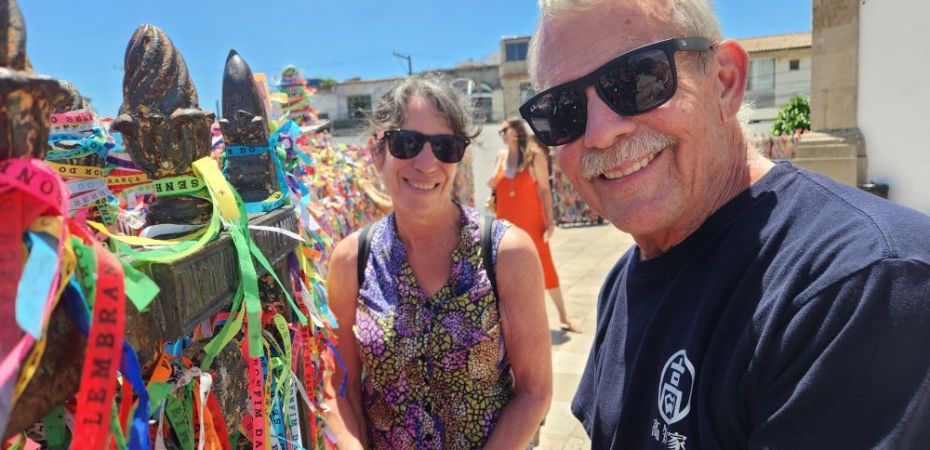
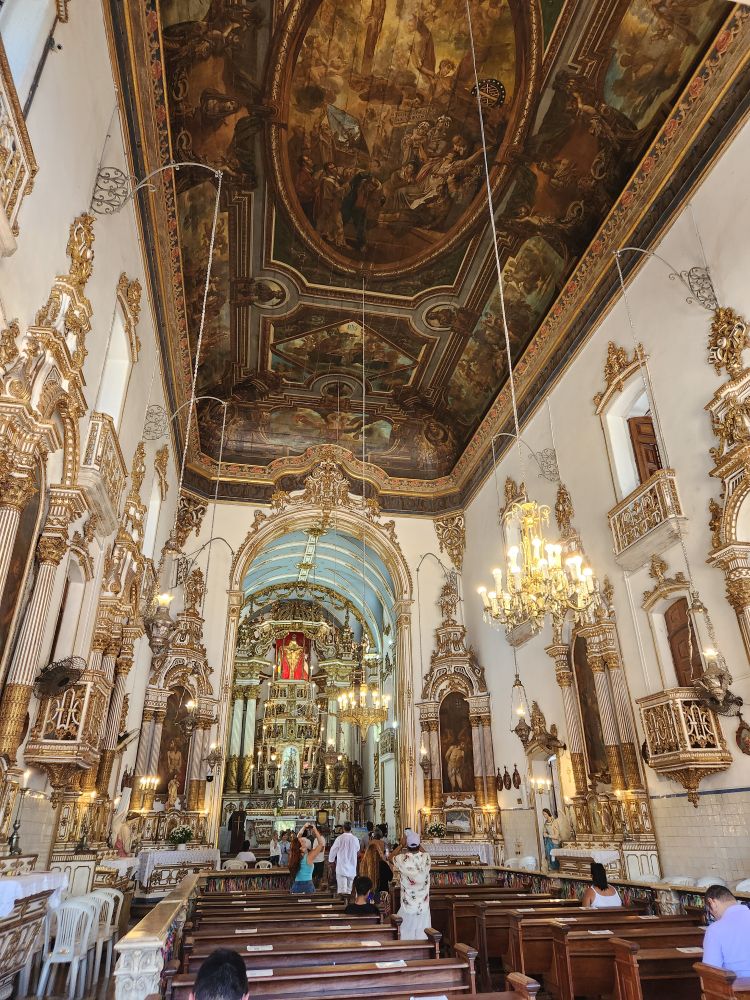
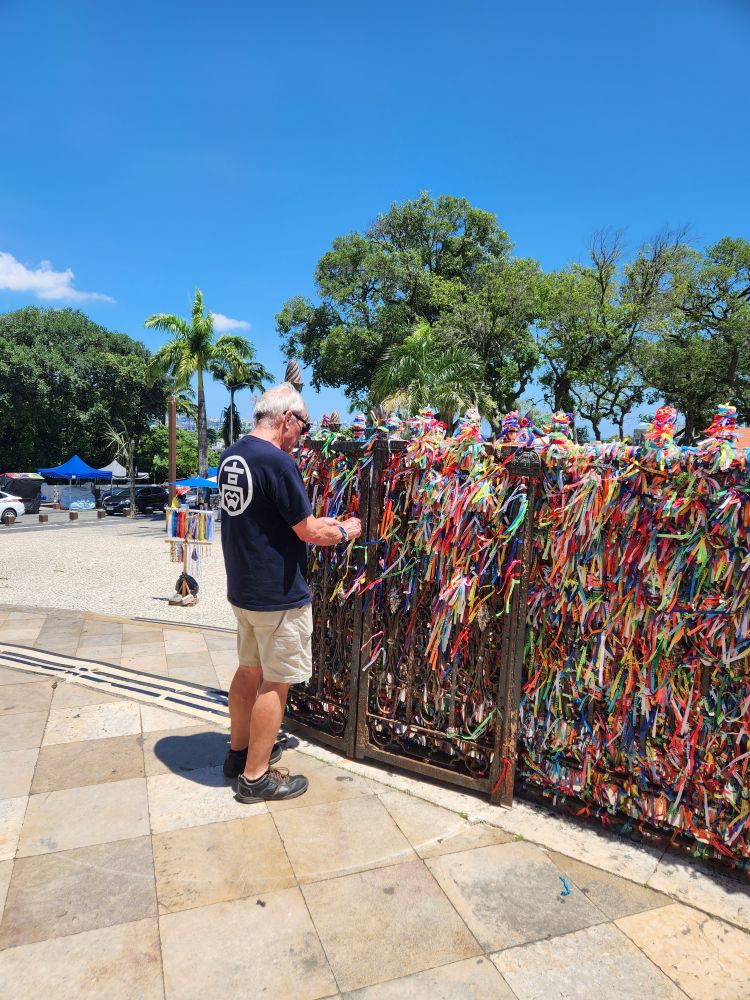
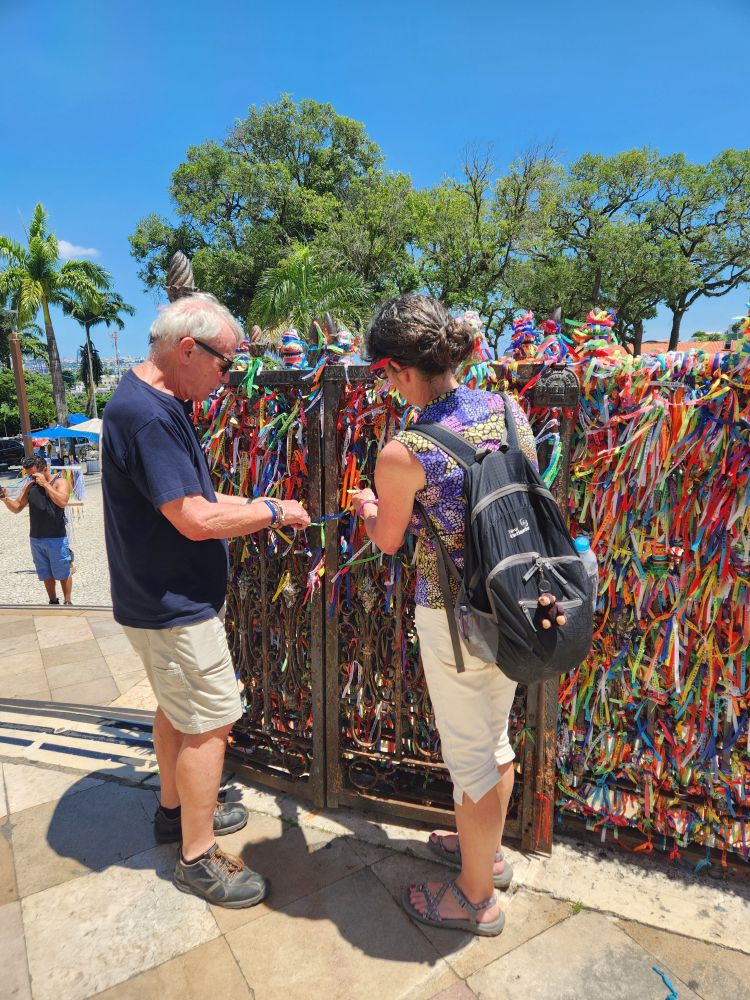
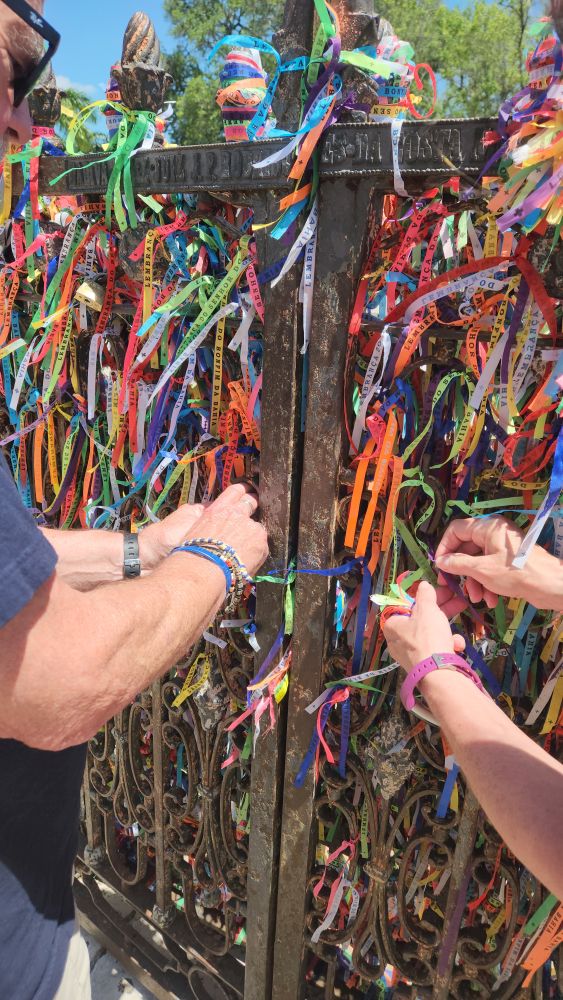
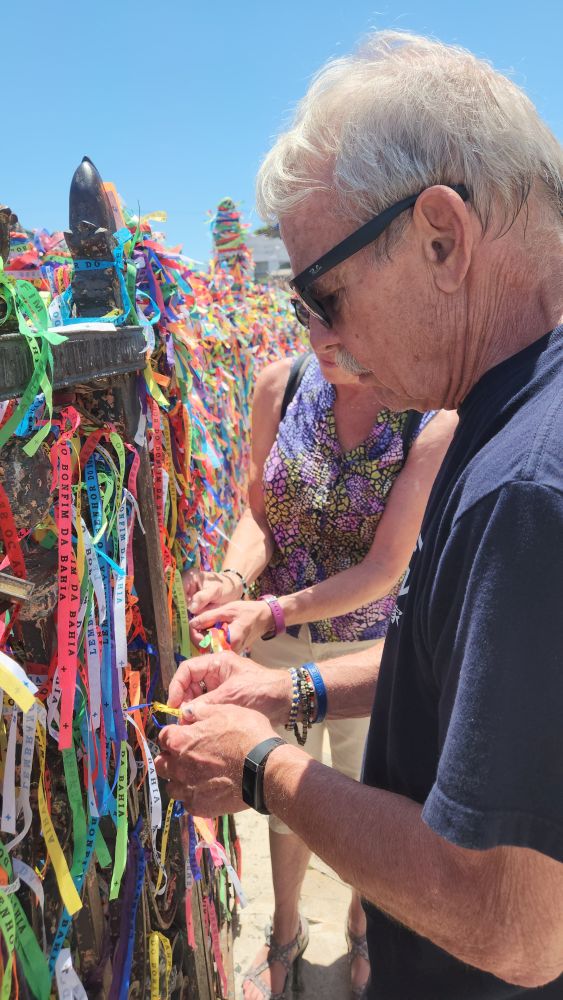
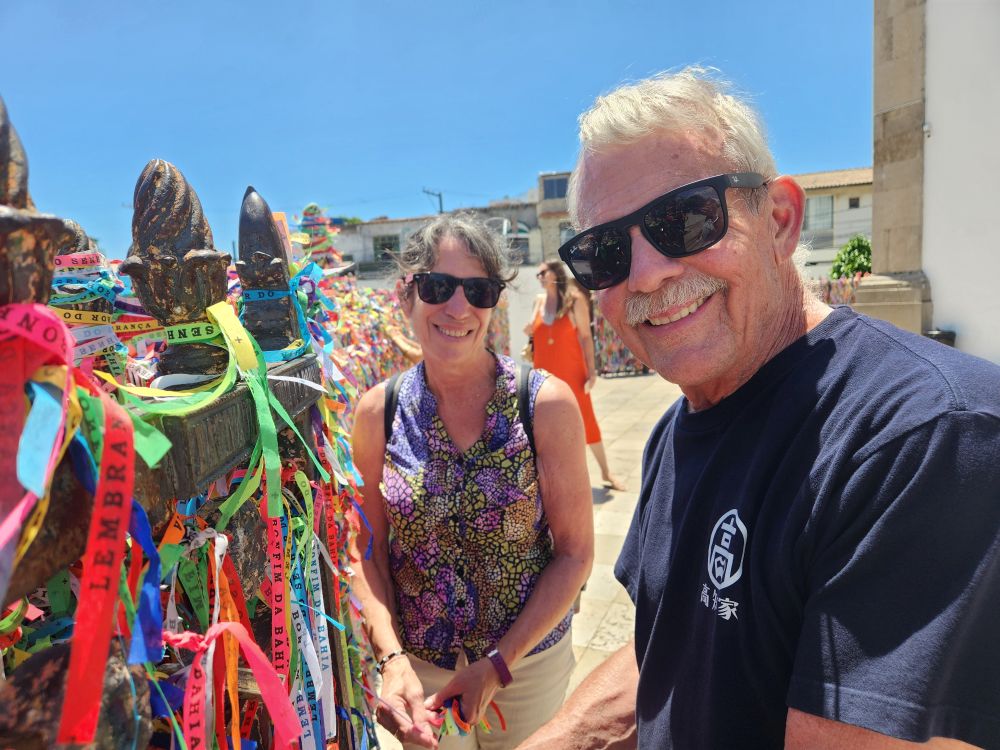
Outside the beautiful Baroque church are fences filled with Bonfim “bracelets.” Millions of them, everywhere along the perimeter. These bracelets are used to make wishes then tied with 3 notes onto the fence. Every couple of months the church takes them all down, and the process starts again. That’s how many they sell! And how popular this Saint is in Bahia (and for tourists of course!).
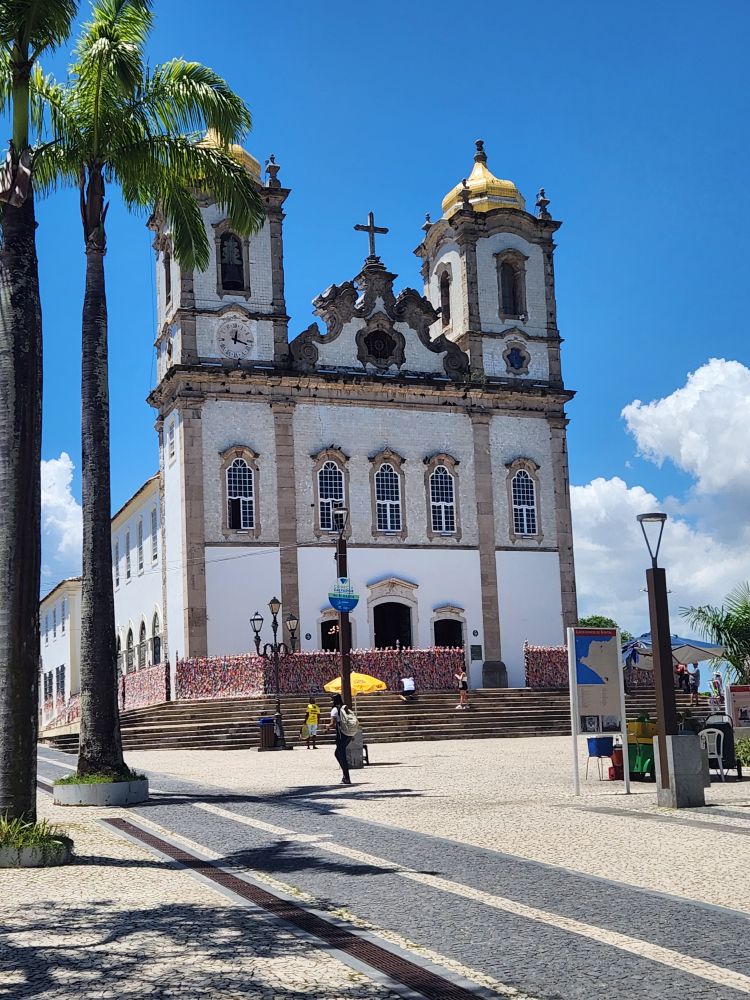
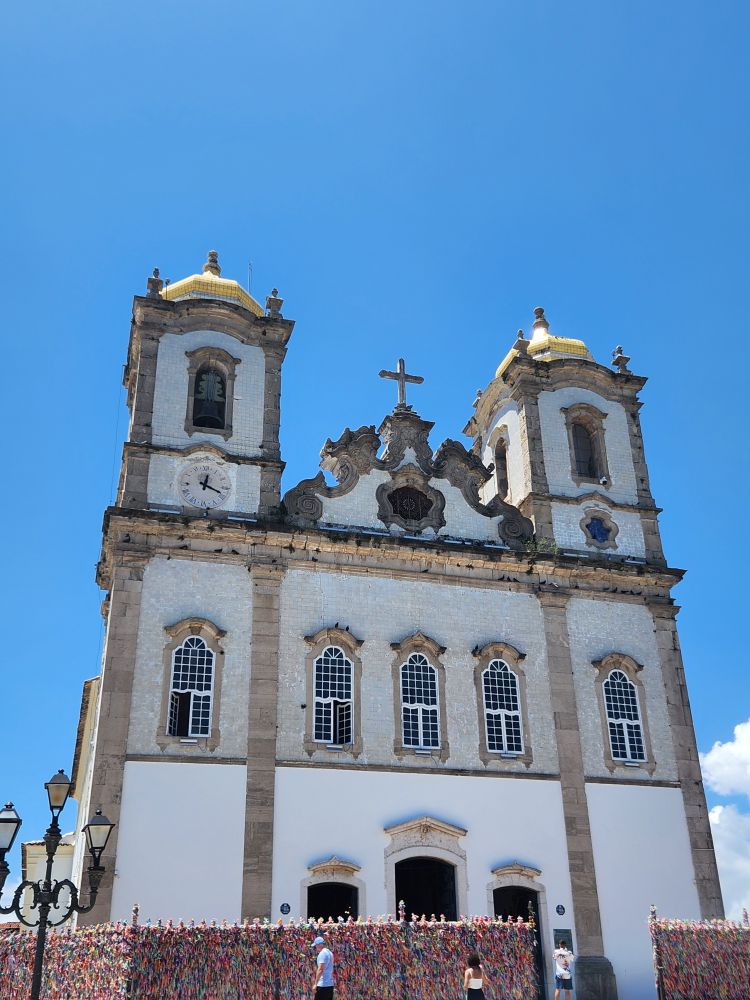
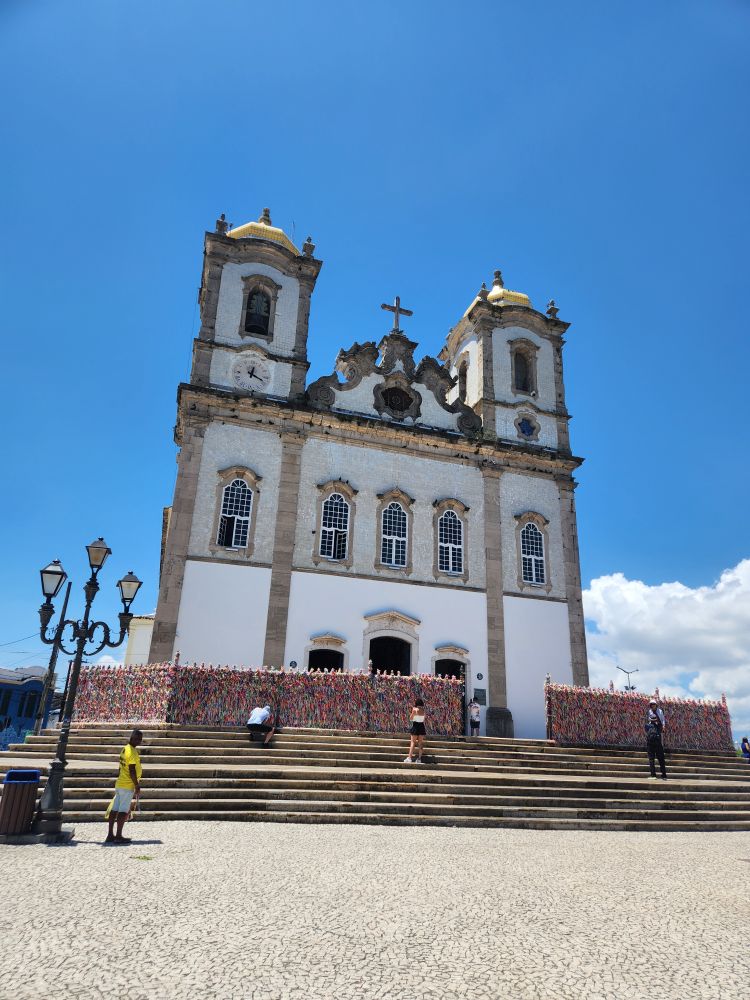
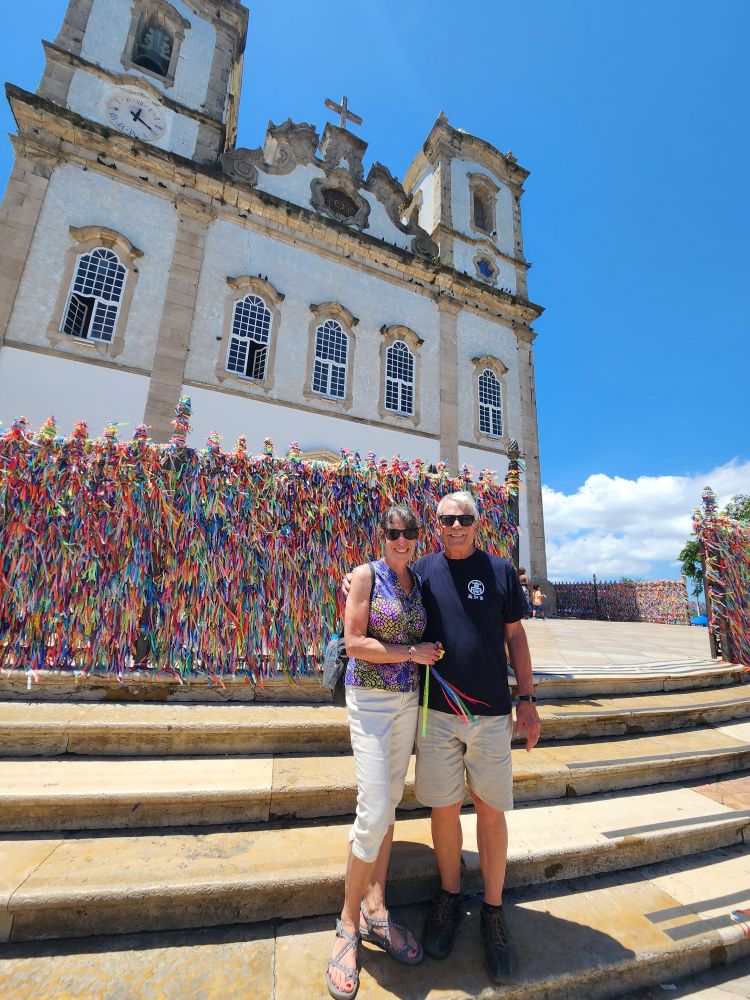
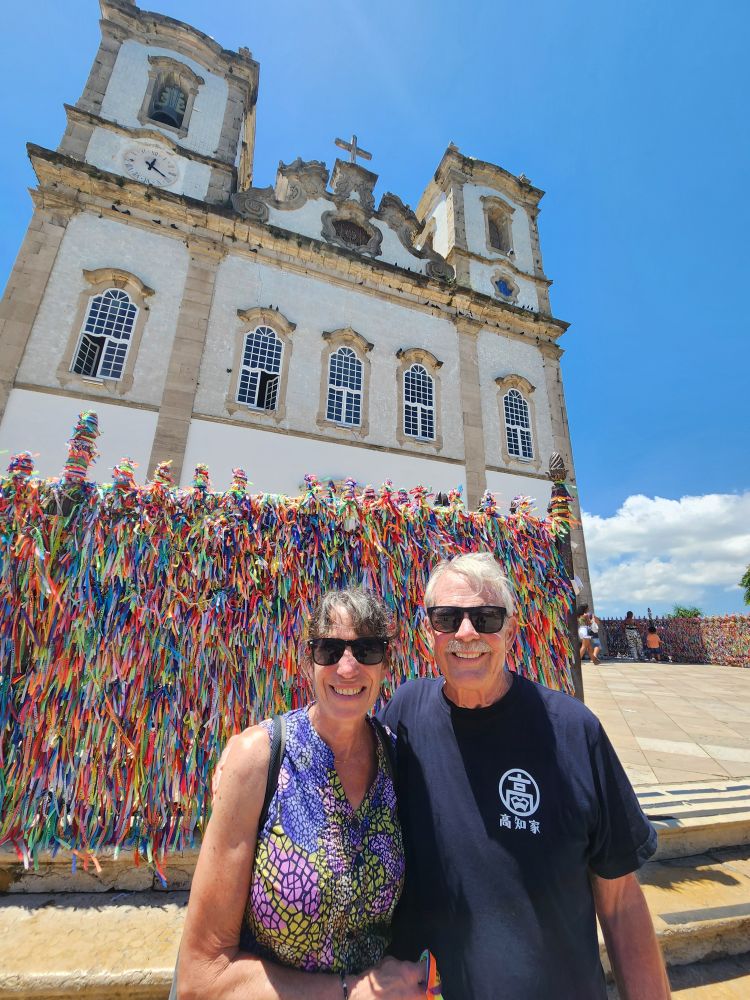
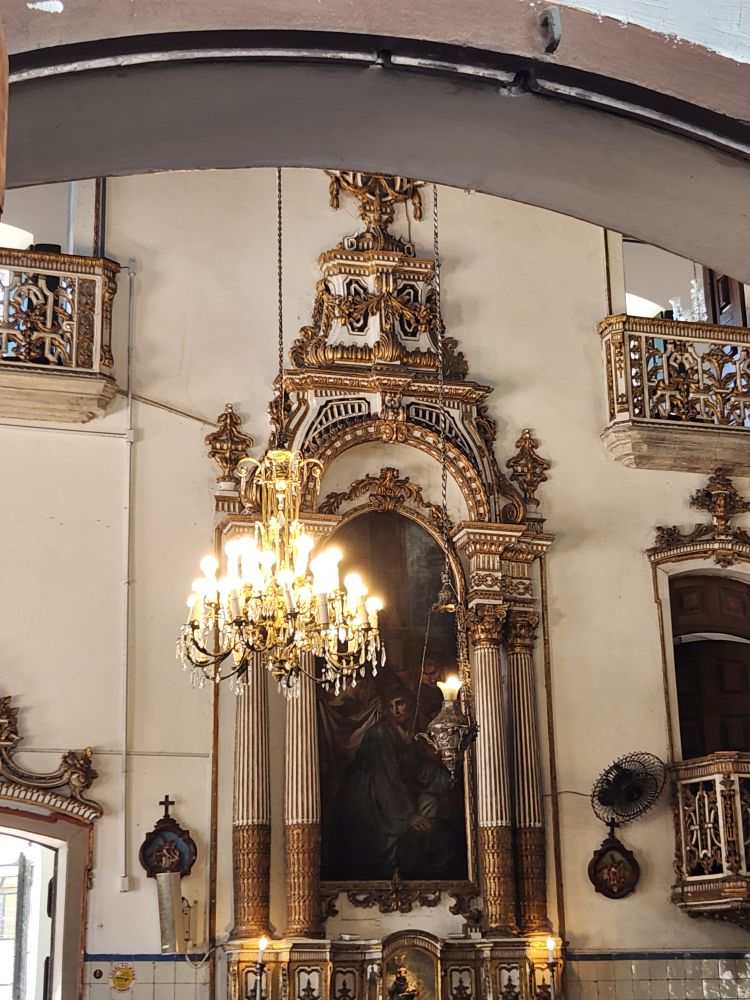
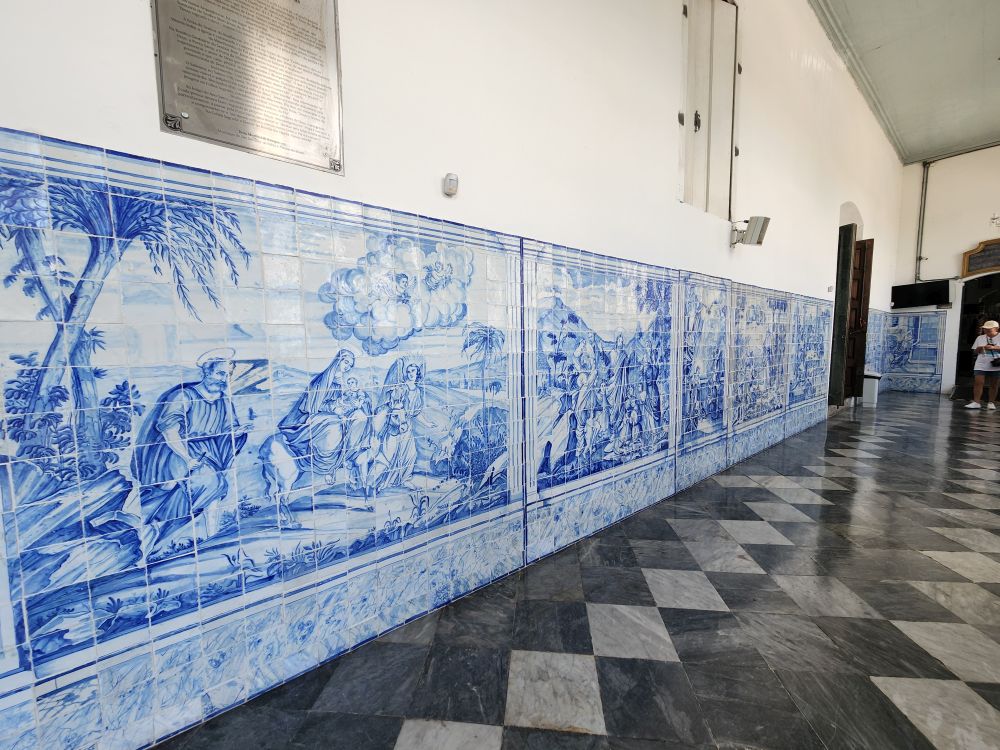
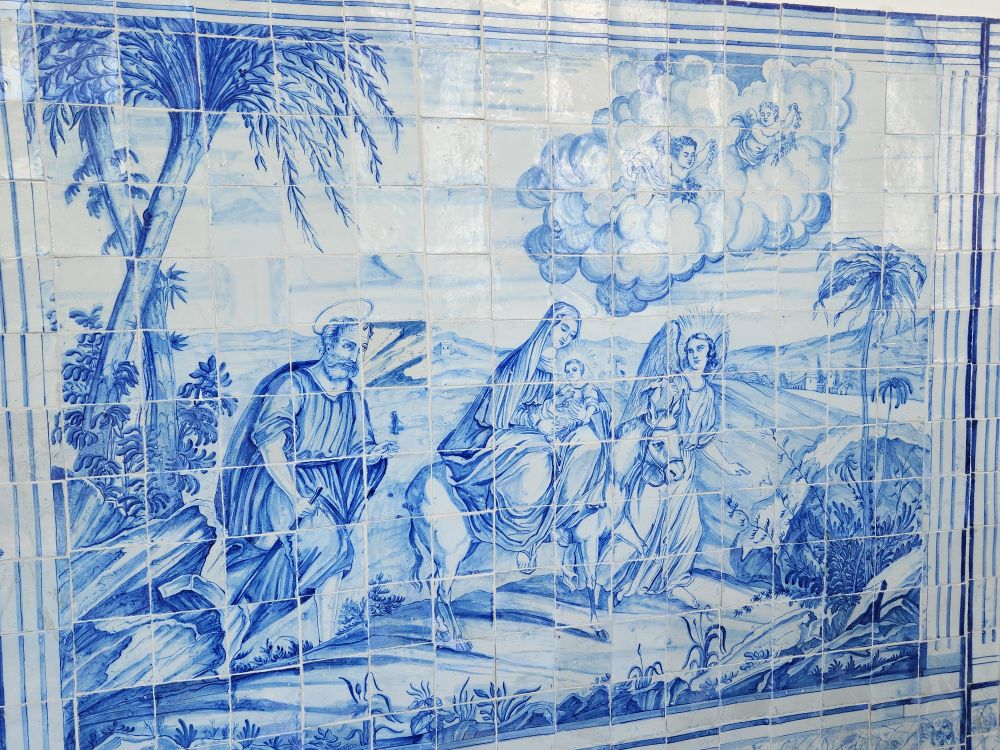
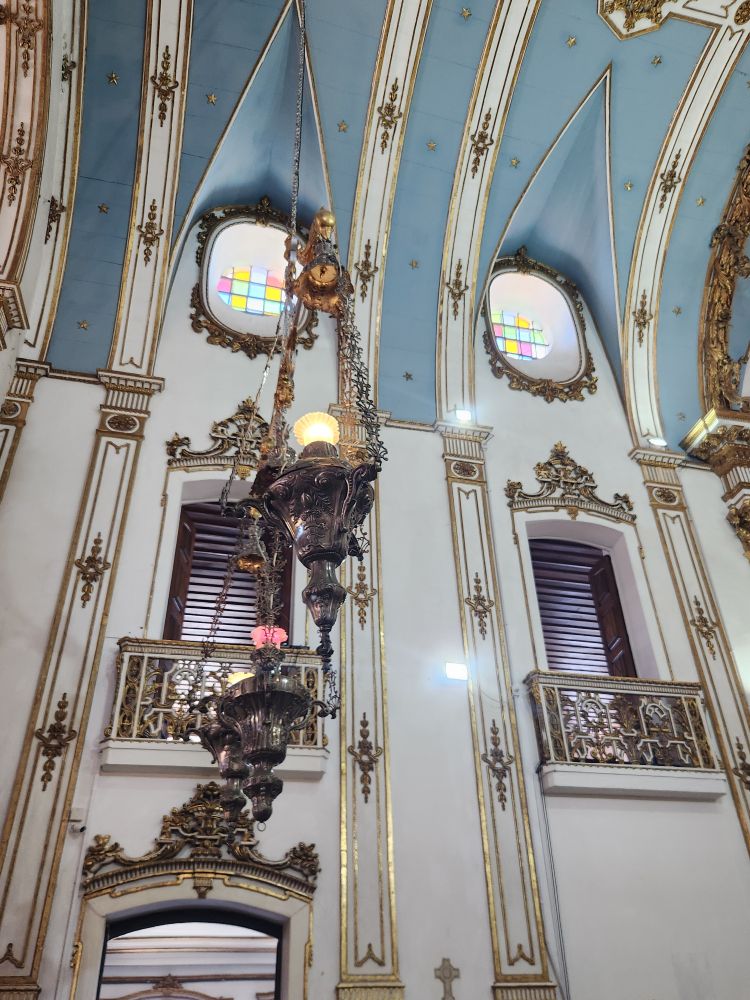
Inside the church is a beautiful example of Baroque architecture. The side halls contain pretty azulejos tiles and the main cathedral has the traditional soaring rounded arches, light blue ceilings and gold accents. And beautiful frescoes inlayed in the main part of the church ceiling. Oh, and of course, more wish bracelets!
Sayuri has purchased some wish bracelets for us, so as we leave, we make our wishes and tie them to the fence along with all the others.
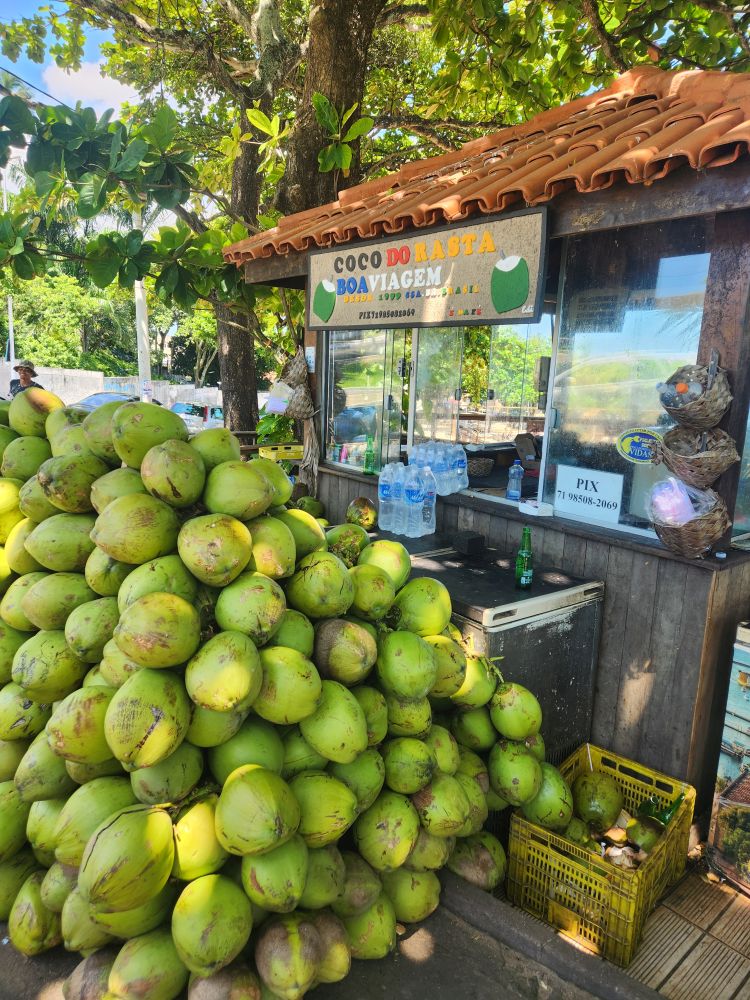
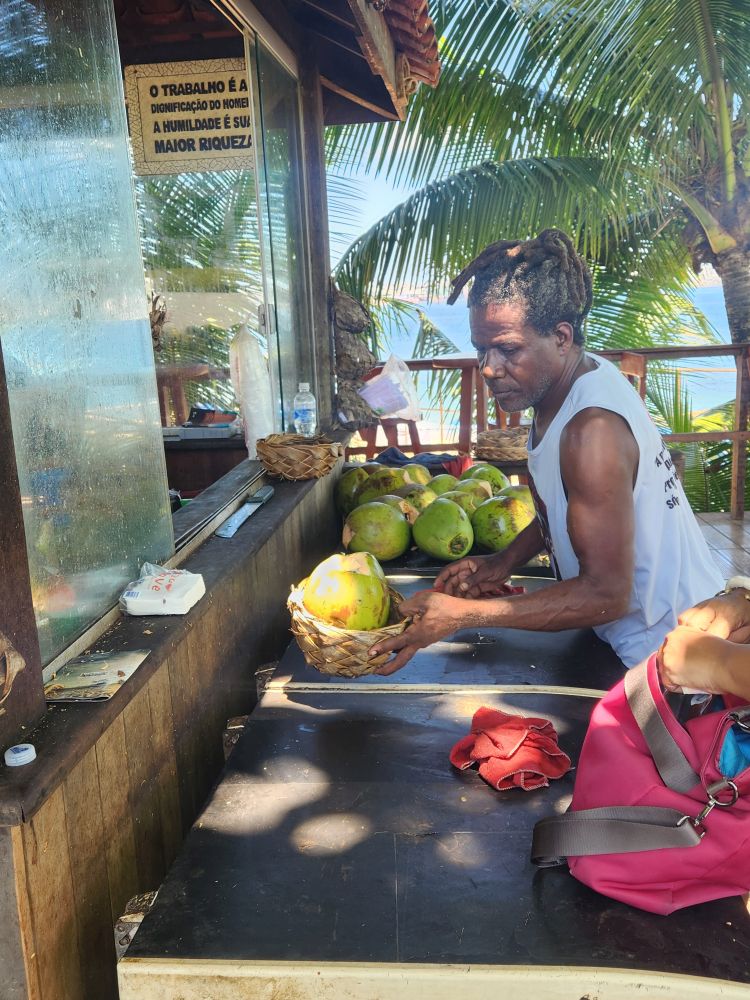
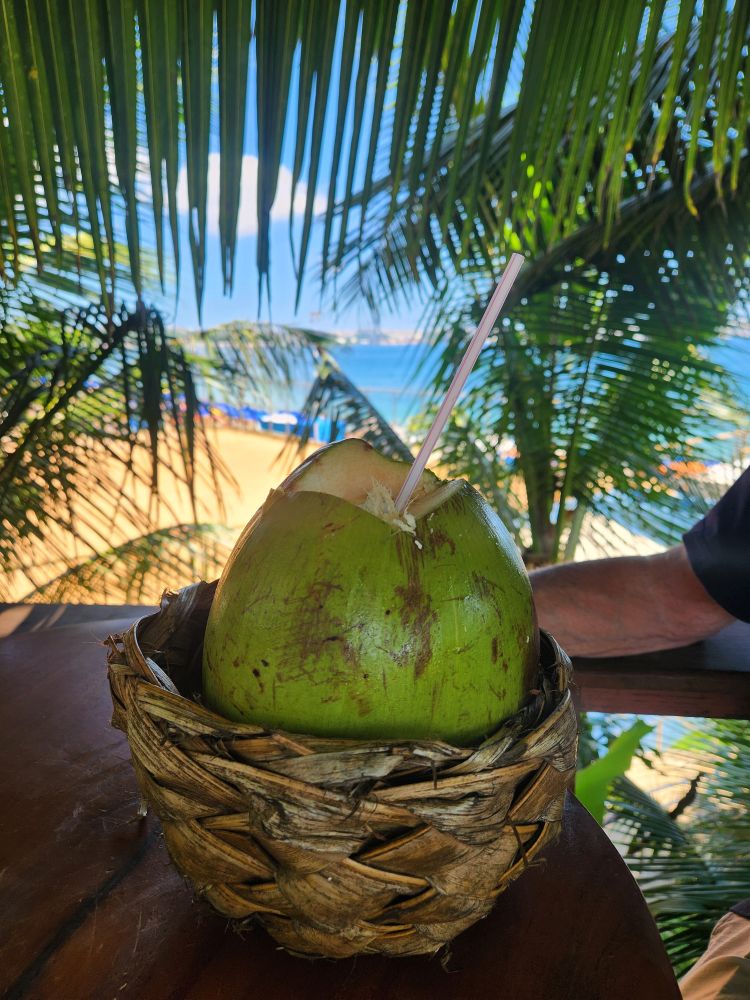
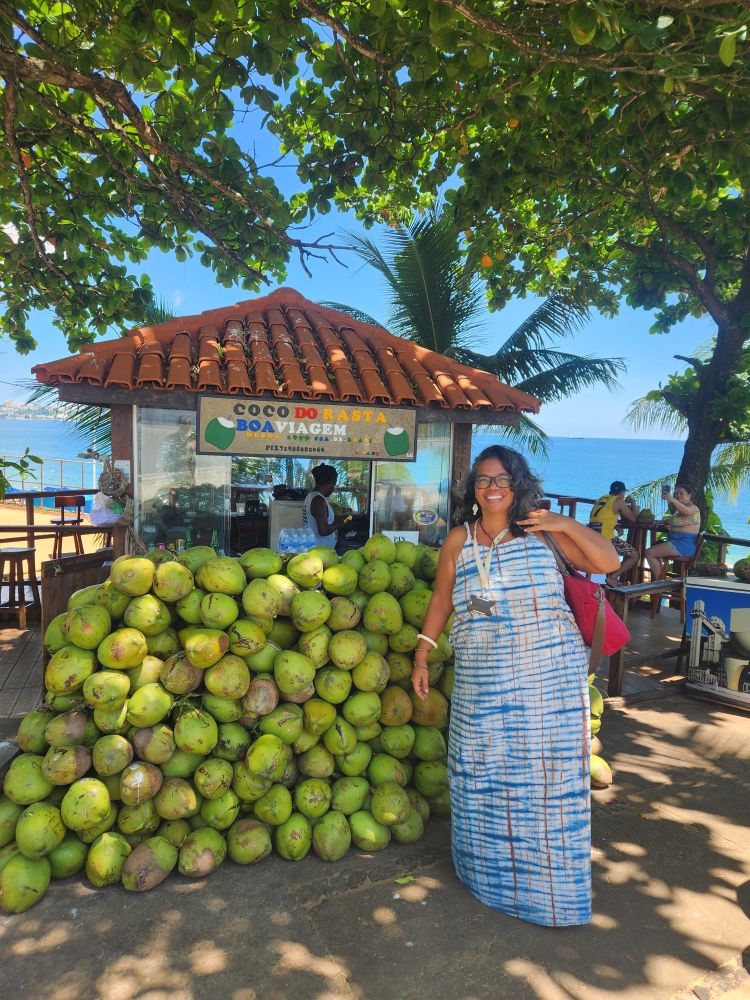
Next we head out to a popular local beach area, Boa Viagem, for some fresh coconut water! We visit a little local place called Coco do Rasta which Sayuri has been frequenting for years. The owner actually started this business with a mobile cart here on the beach. And now look at it! And look at him cutting the coconut for us to drink! Too fun. And an absolutely lovely place to hang out and relax, in the shade where we aren’t melting so much!
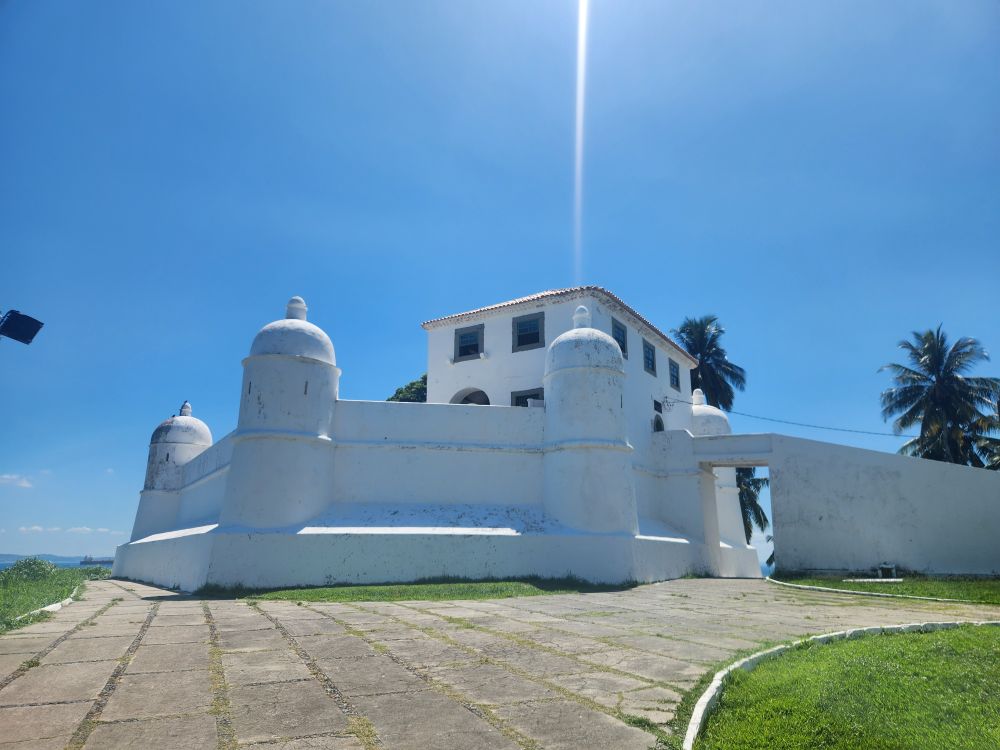
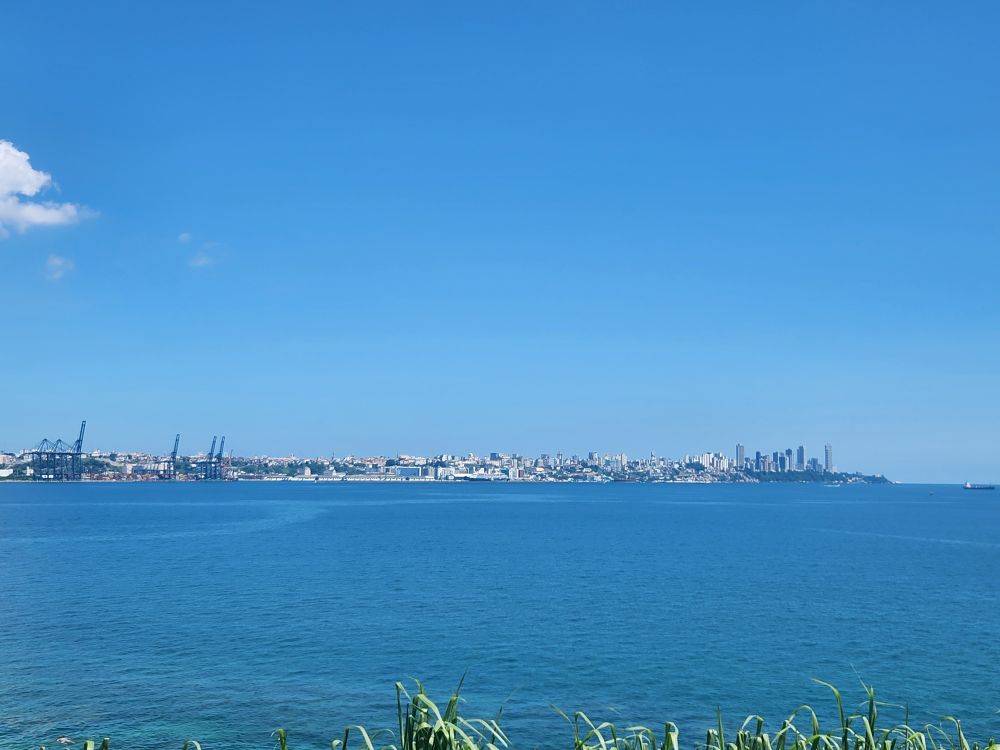
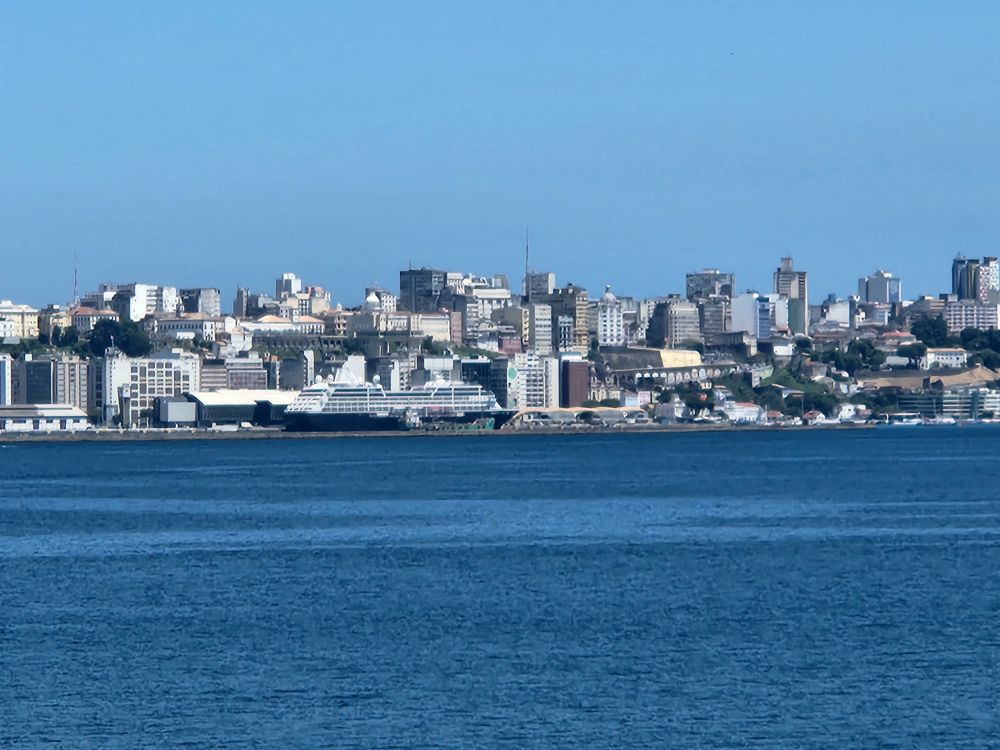
After our refreshing snack, we walk around the monastery on the promontory, snapping pictures of Quest all the way across the bay – we are on the absolute opposite side of the city now! Then head back to the car to visit the old city of Salvador.
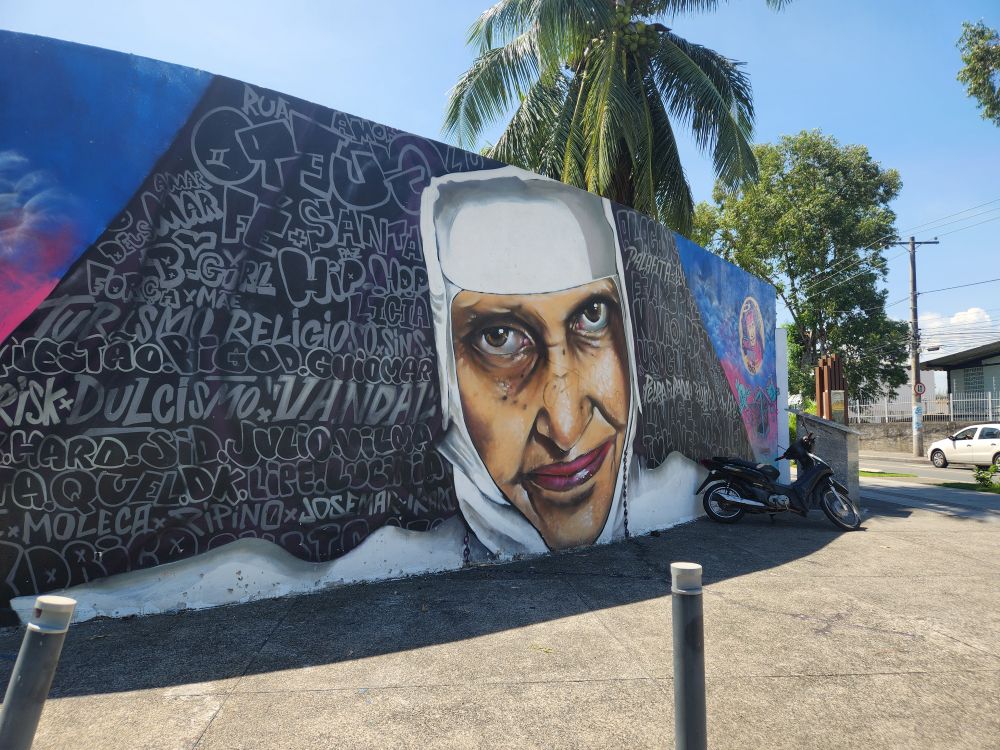
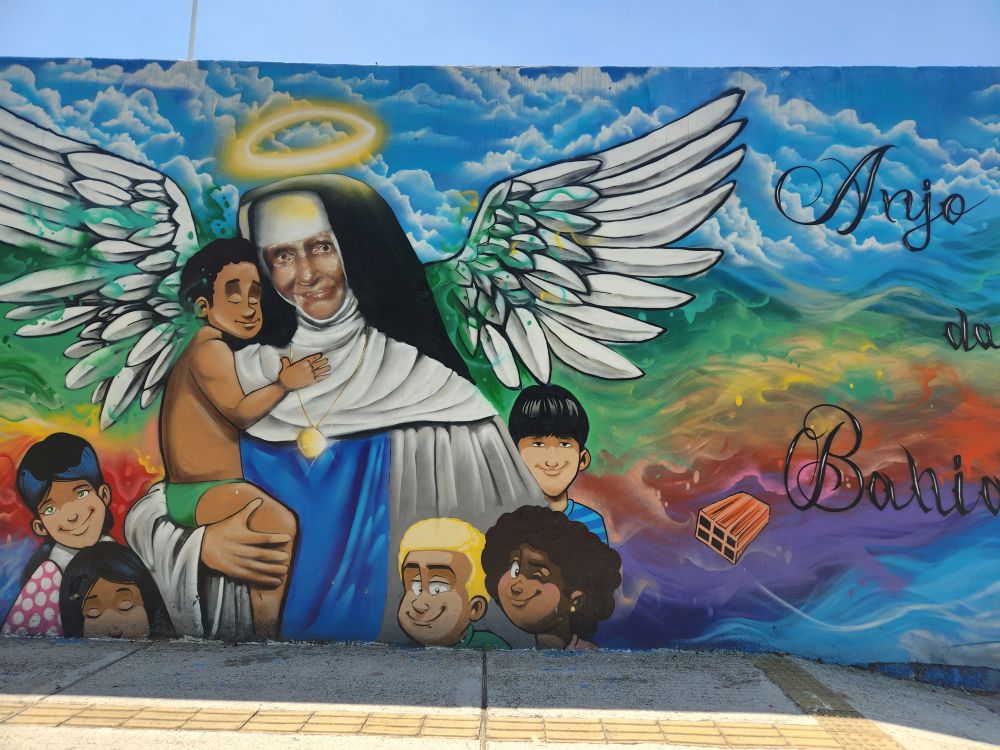
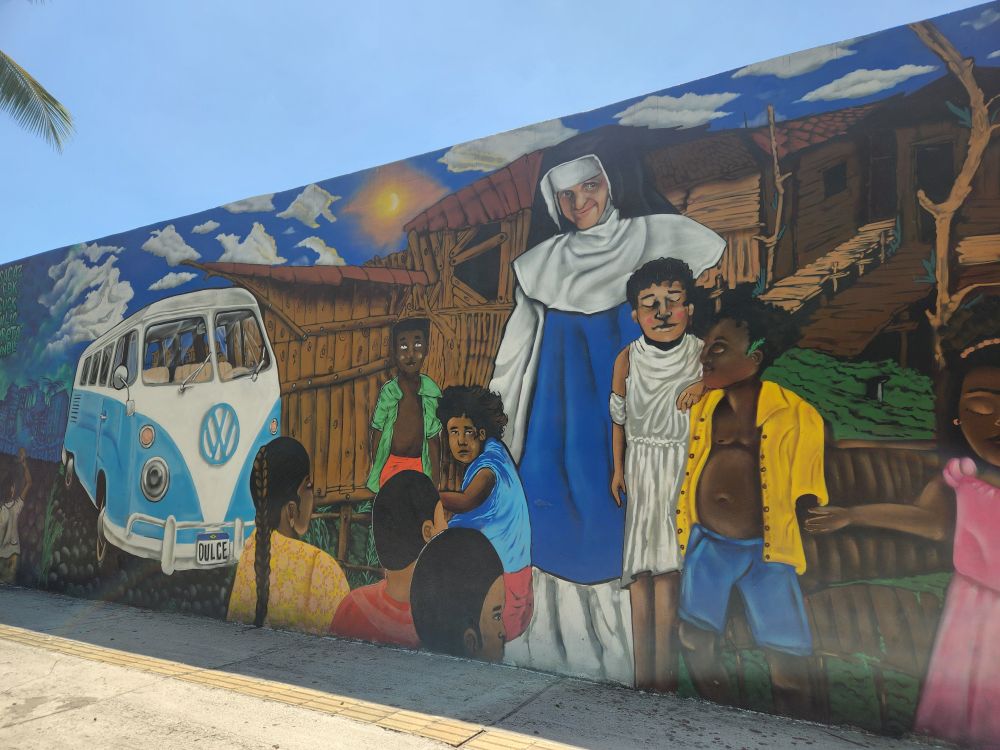
On our way, we pass by the memorial to Irma Dulce, an influential nun who became a Saint here in Salvador. She is renowned for taking care of the poorest of the poor. She fed children in her convent’s chicken yard, took food to impoverished areas in her VW van. Her charitable work made her beloved by all, and once she performed 2 miracles (took away one man’s blindness and helped a pregnant woman who was losing her baby have a healthy child) she became a Saint. You see her likeness all over the city.
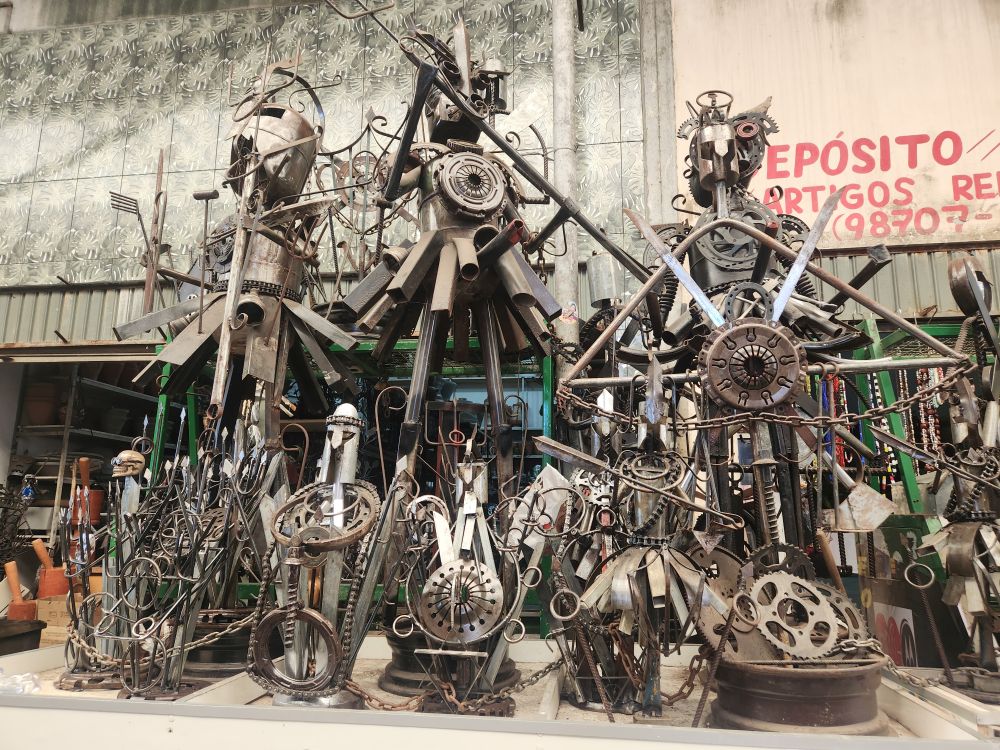
Our next stop is the Feira Sao Joaquim local market with all the produce and meat and fish and you name it, where all the residents come to shop. A lot of the stalls are closed today, weekends are busier, but it is still nice to get more local flavor and see the differences between the renovated market and the old section.
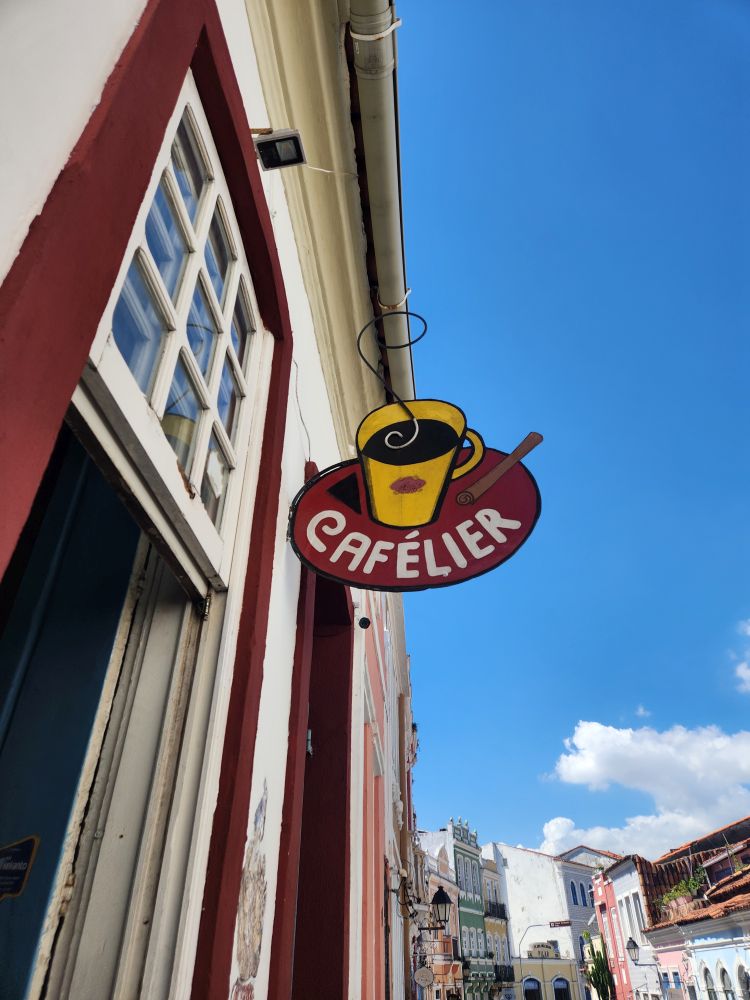
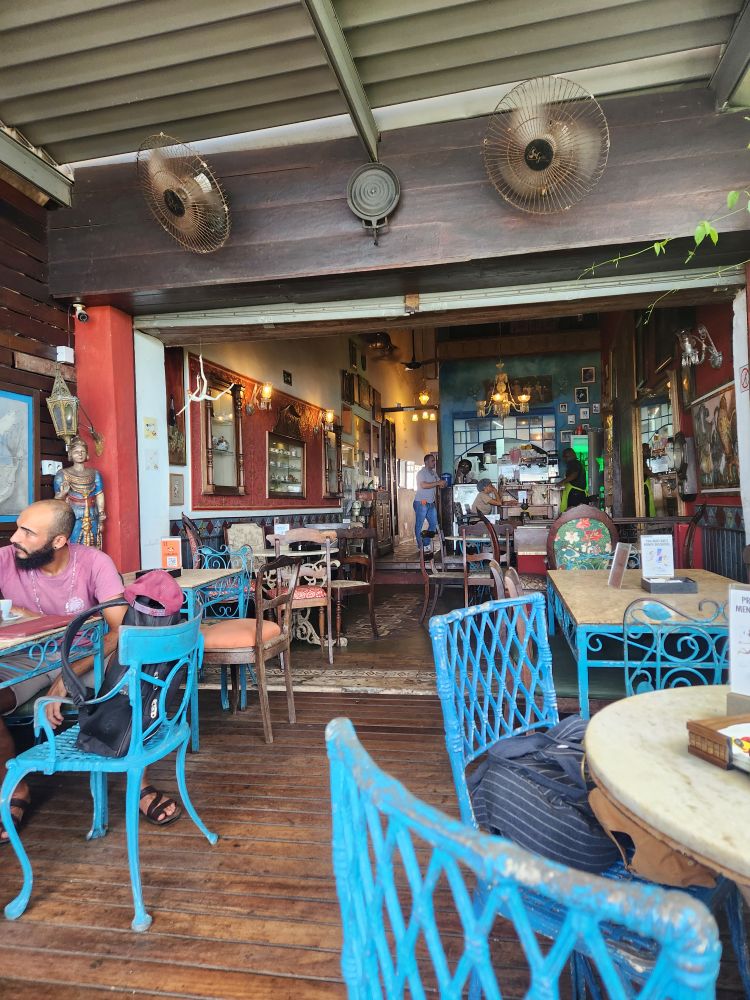
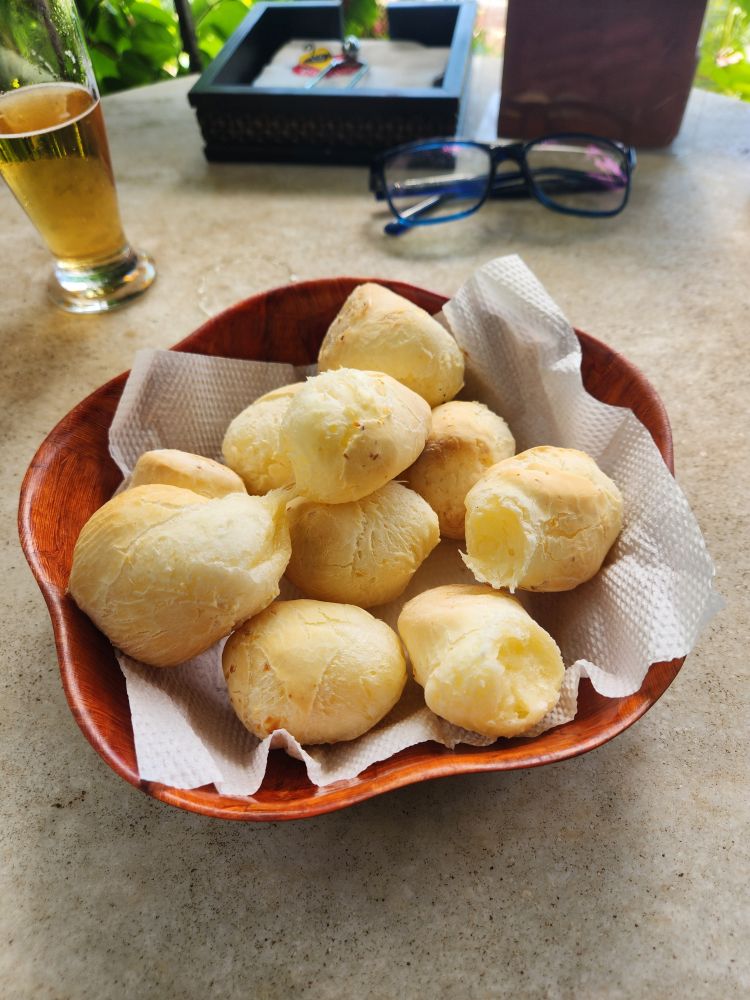
Arriving in the old town, we head directly to Cafelier, a favorite café of Sayuri’s that has Pao de Queijo. I had asked her about getting some today, only to find out they aren’t a big thing here. They are more popular down south. But she loves them herself, and does know of this café and she even called the owner to make sure he had them, then as we were heading there, called again to tell him to start to put them in the oven so they would be ready when we arrived!
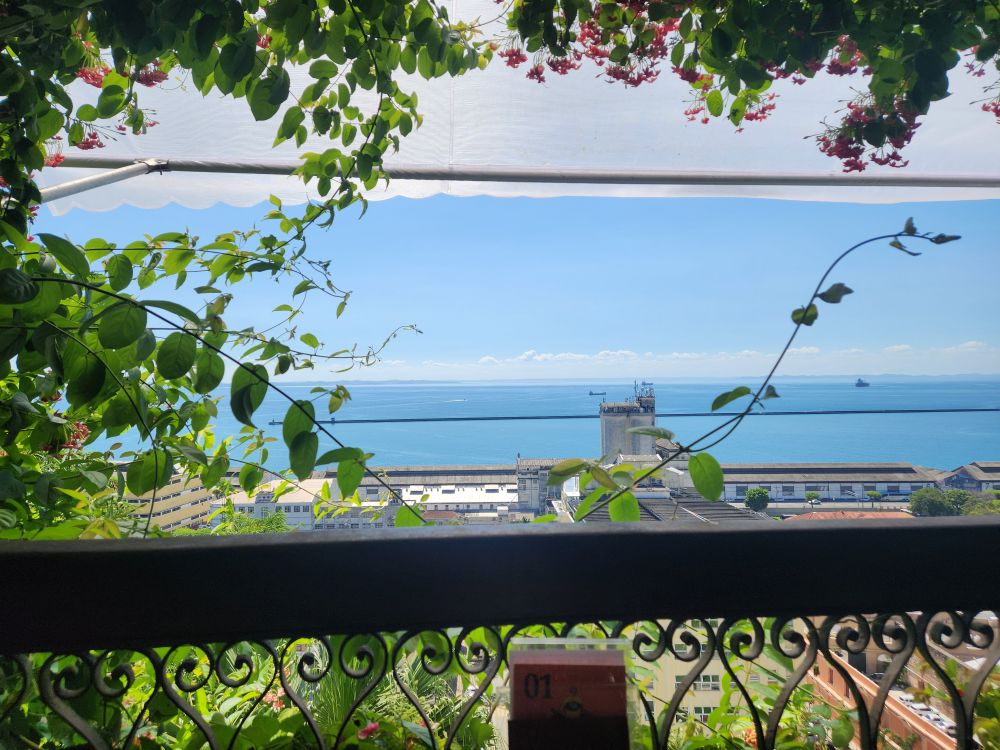
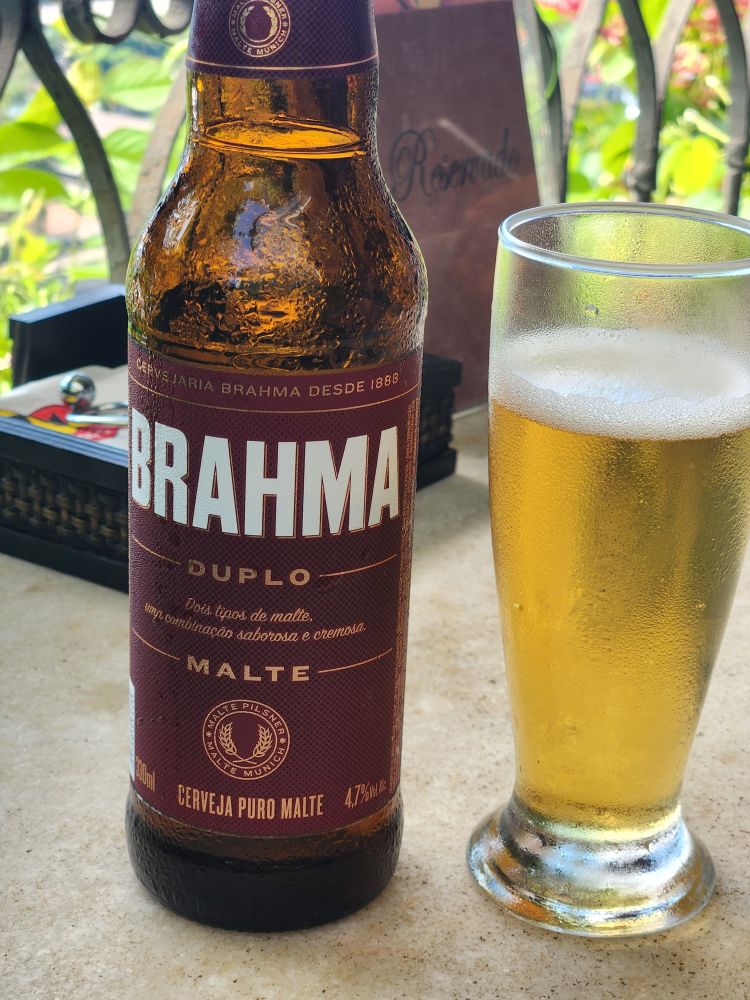
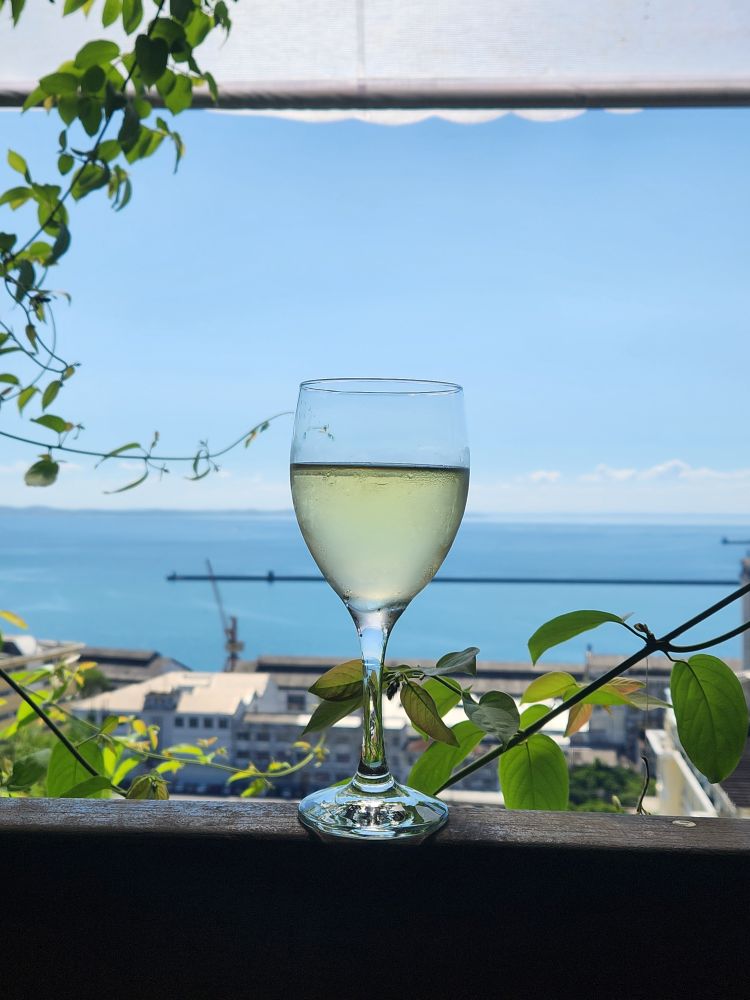
The café is adorable, and picturesque with a fantastic covered outdoor seating area overlooking the water. The perfect place for another break – and a beer and wine to go with our Pao de Queijo. Yum!
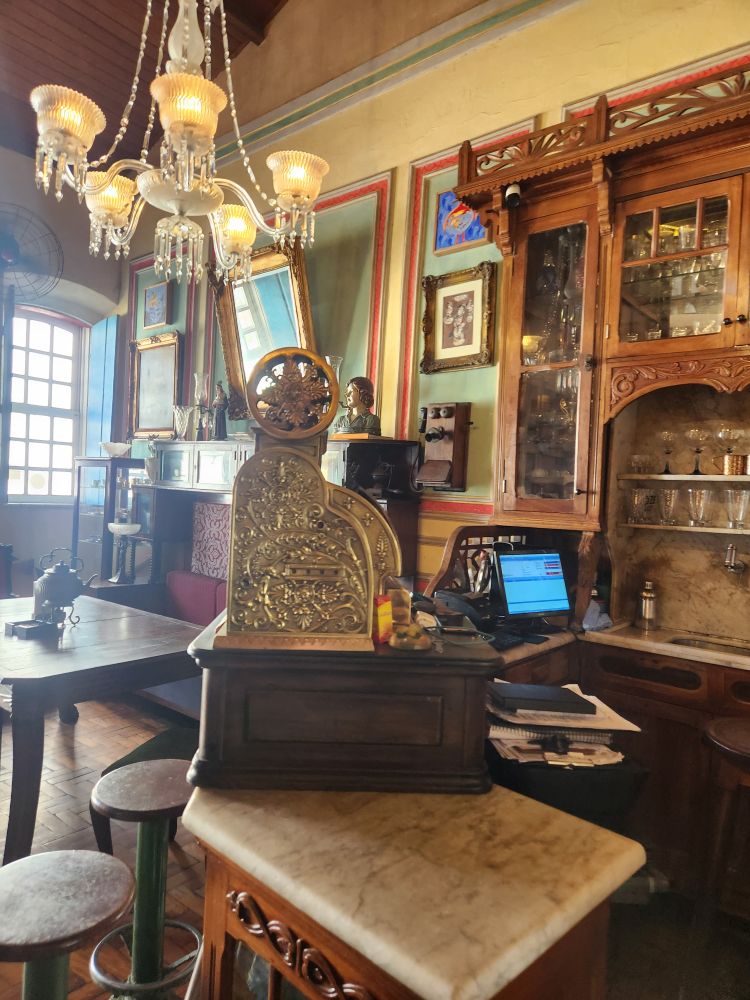
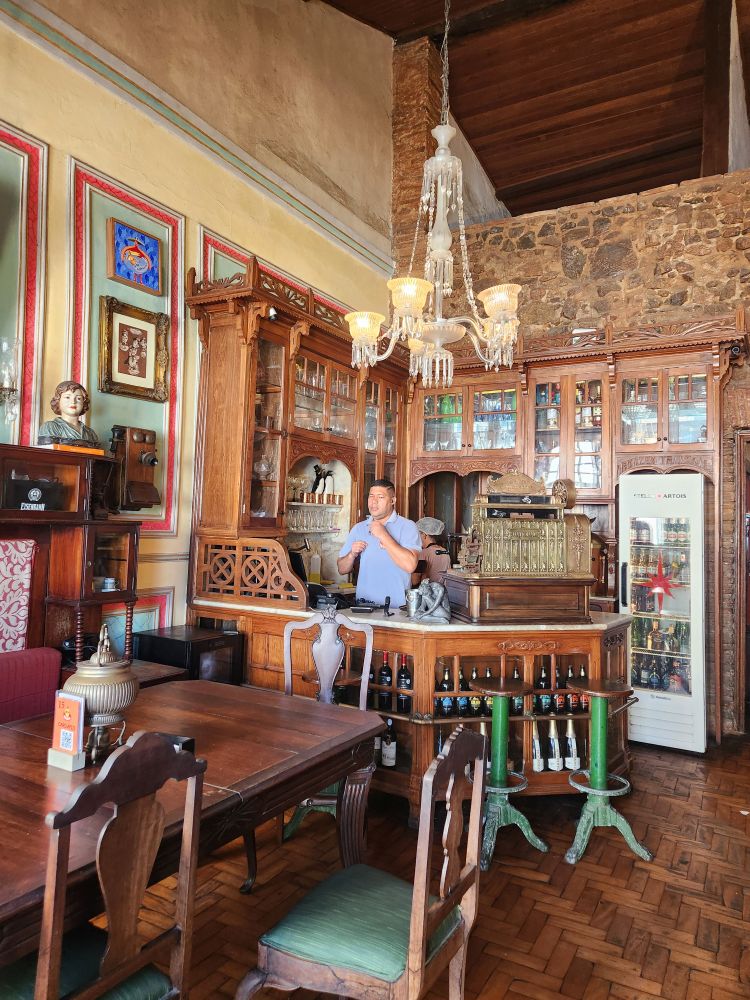
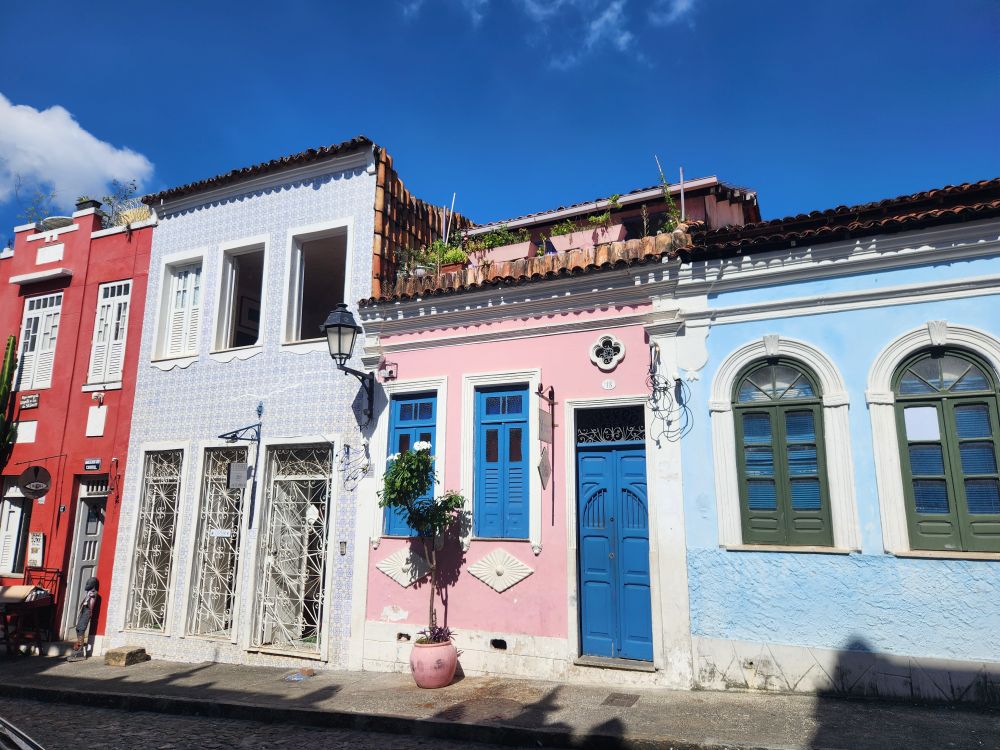
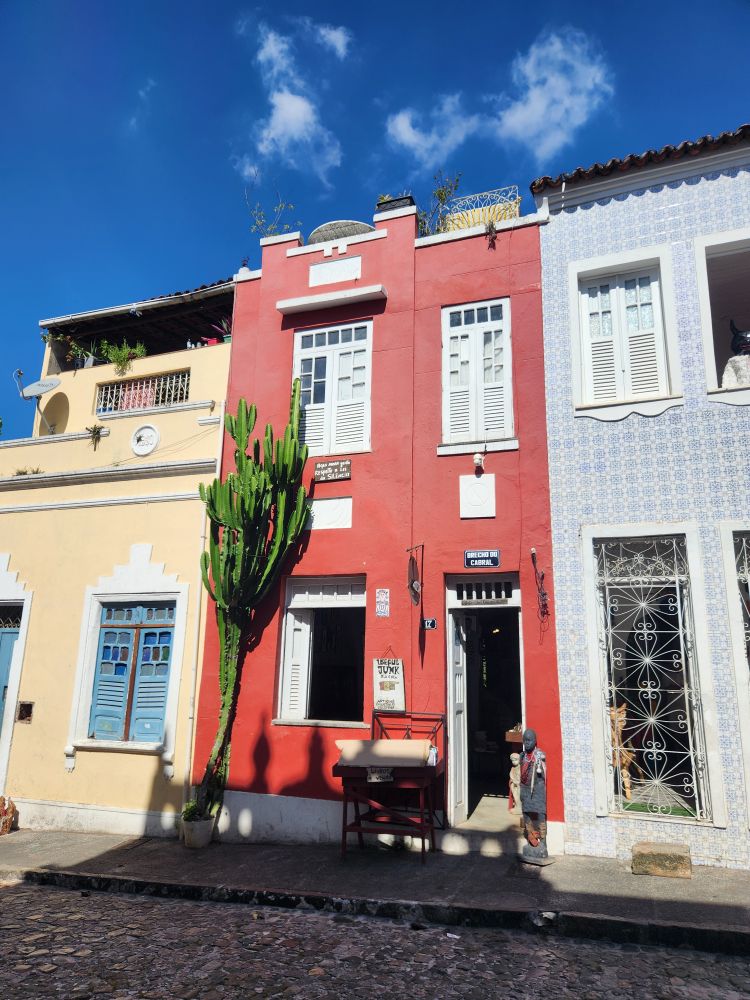
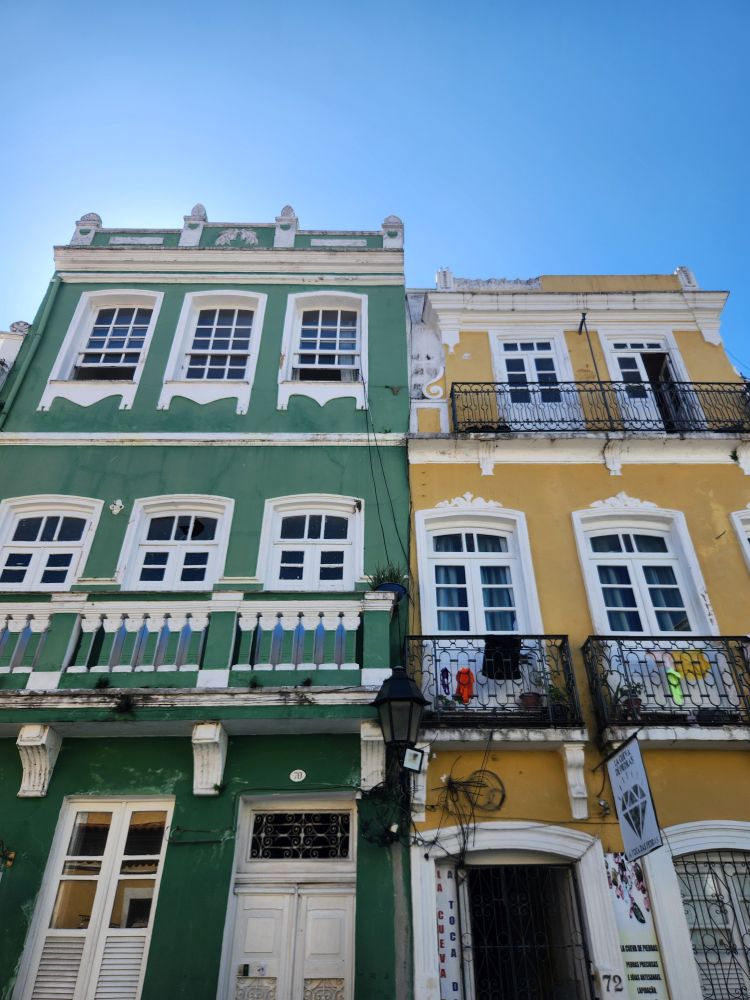
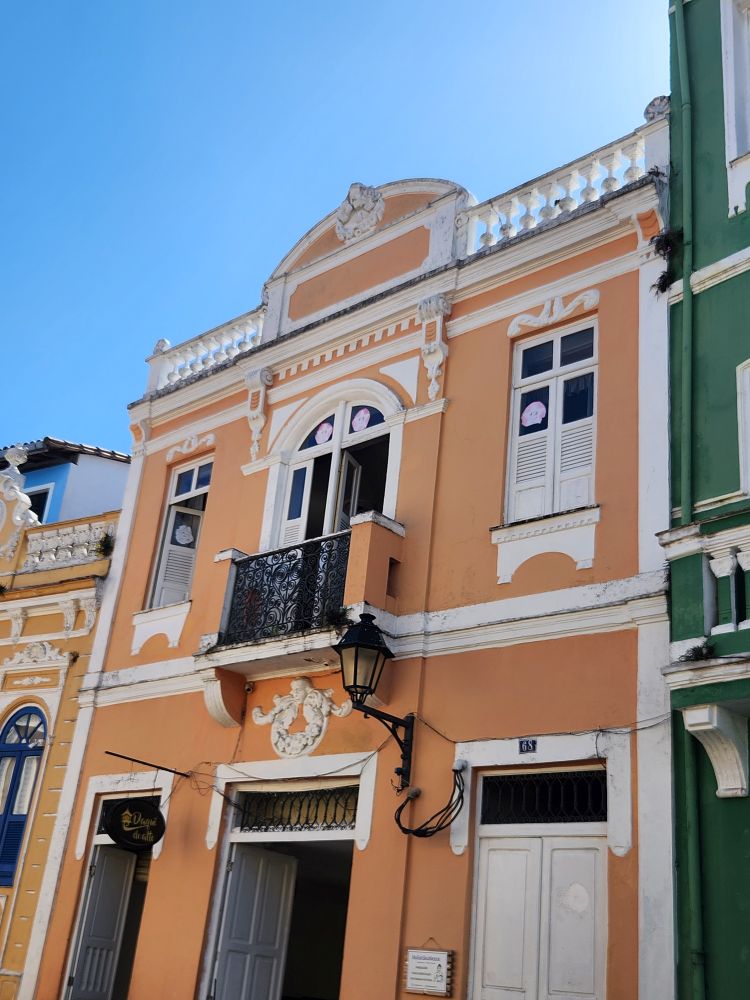
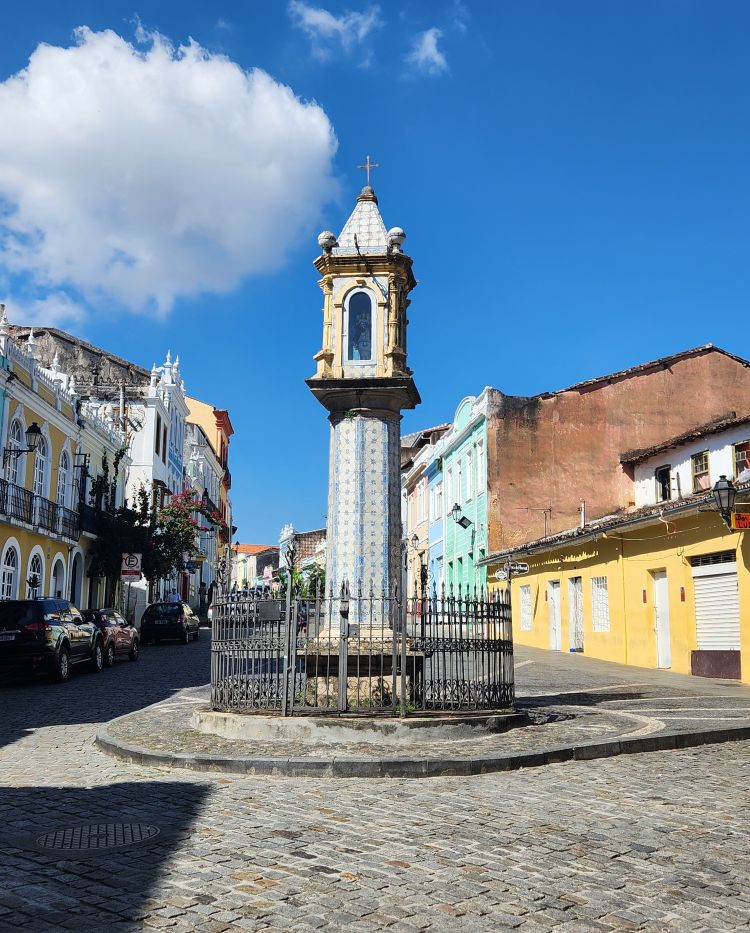
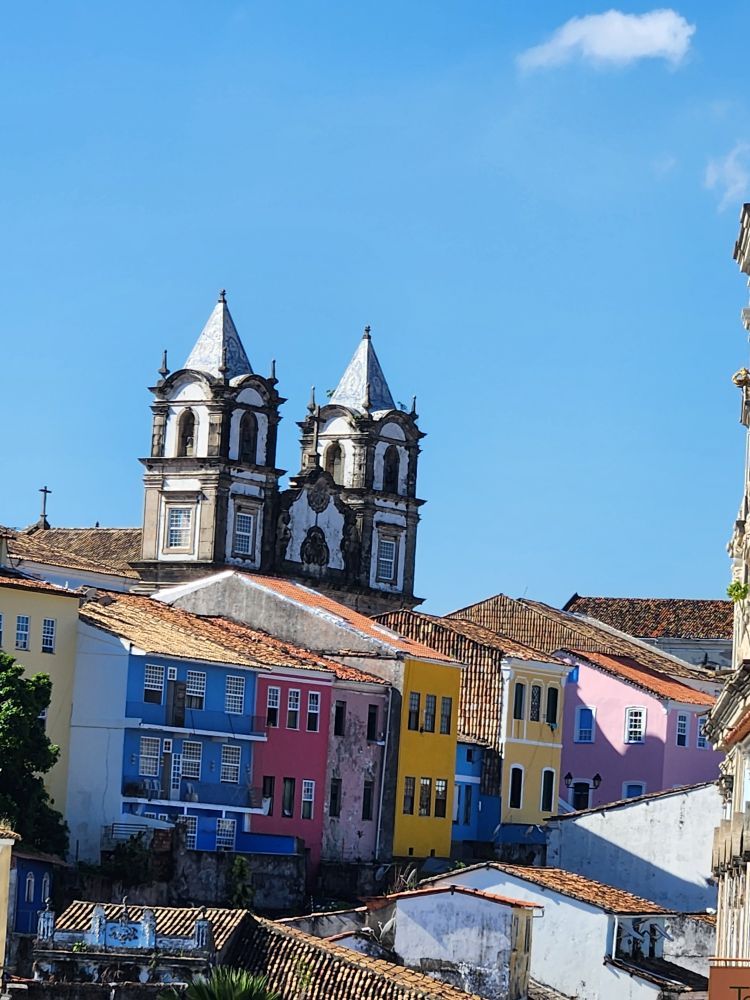
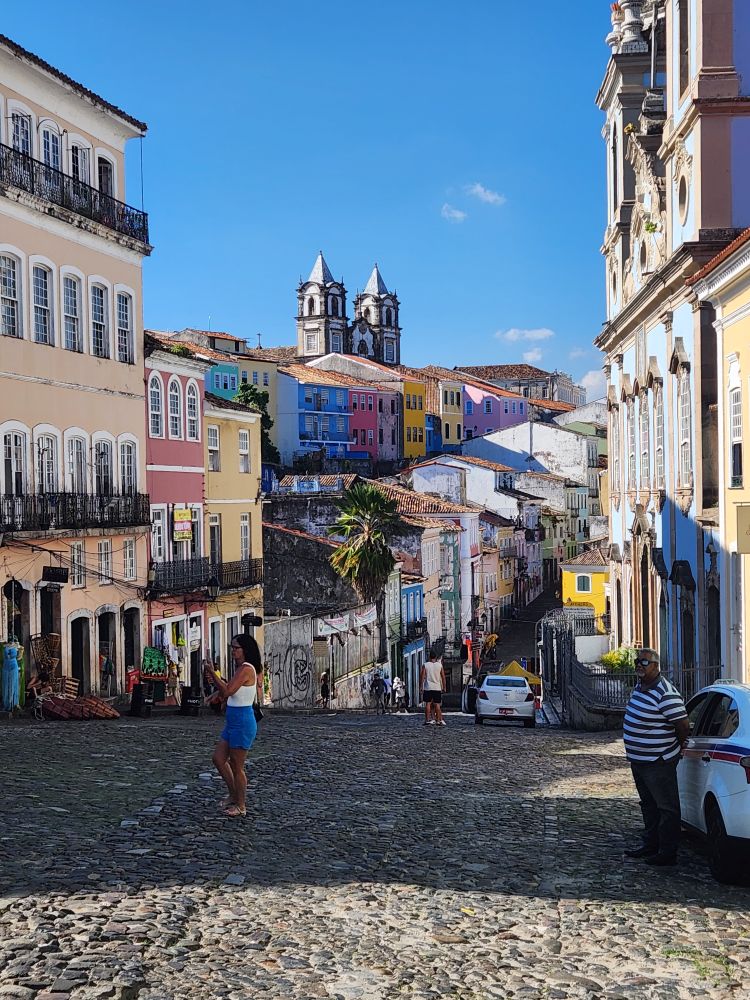
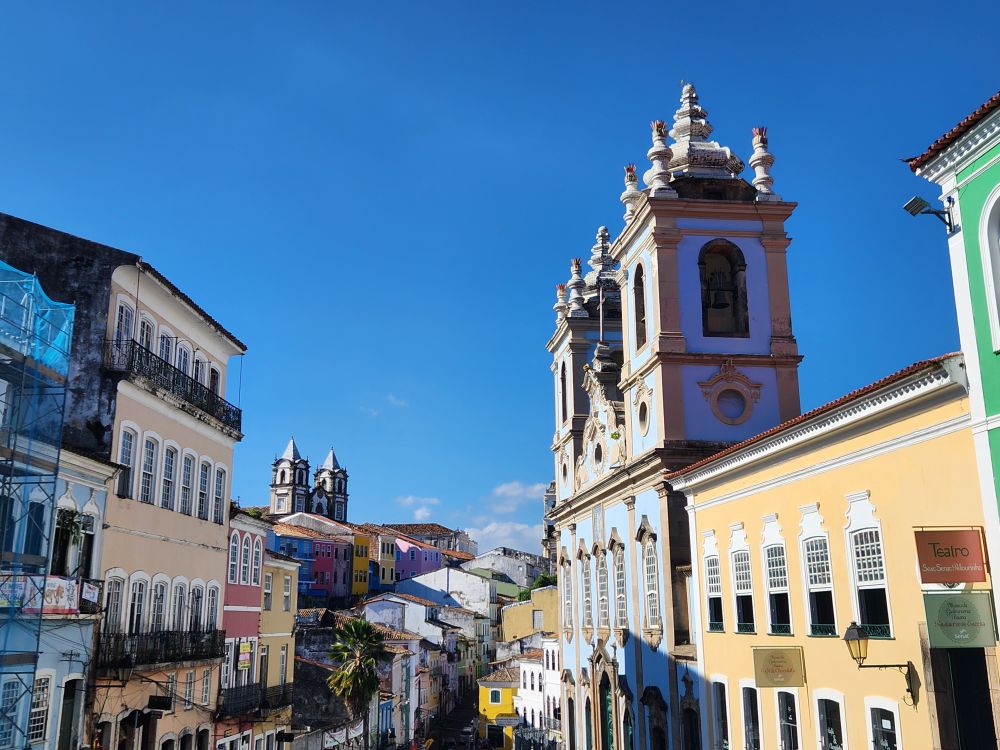
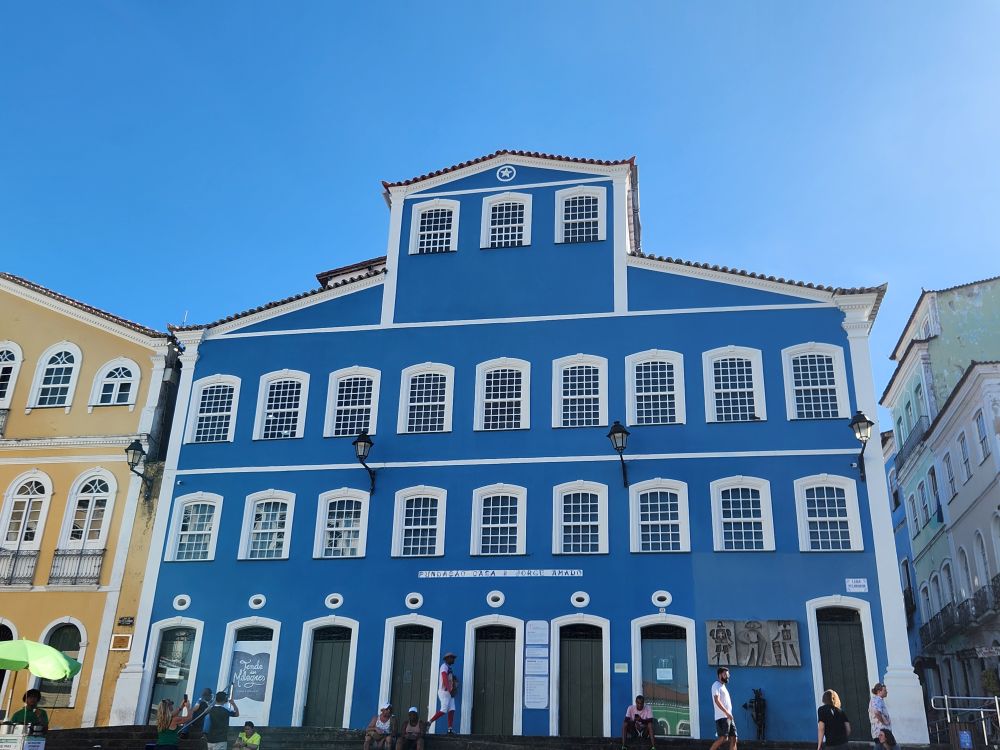
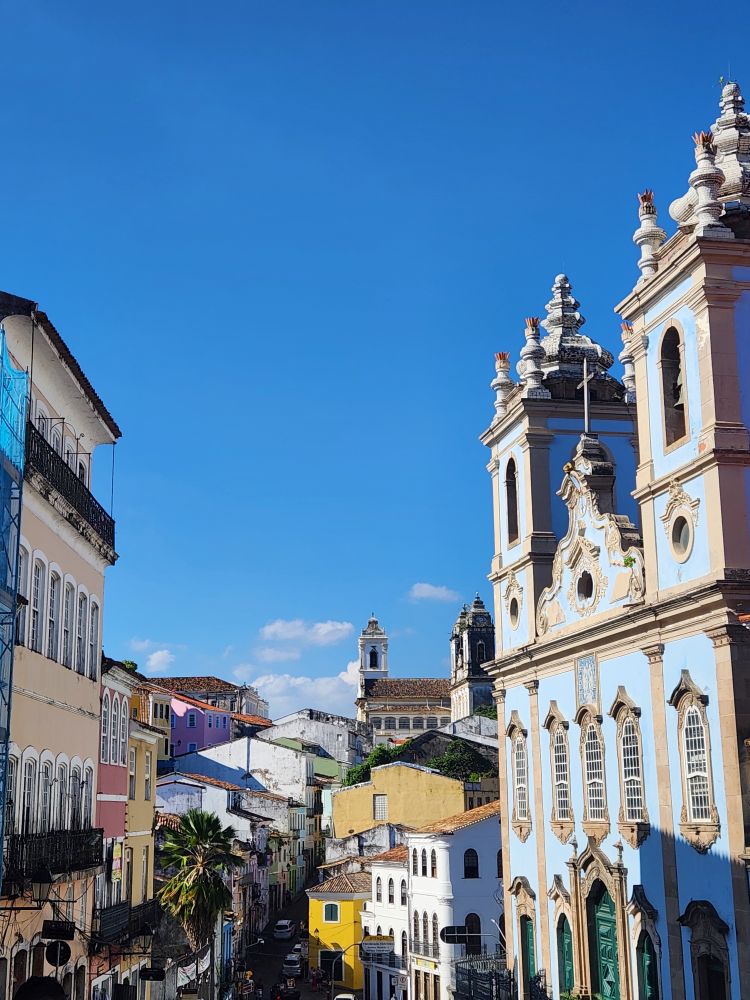
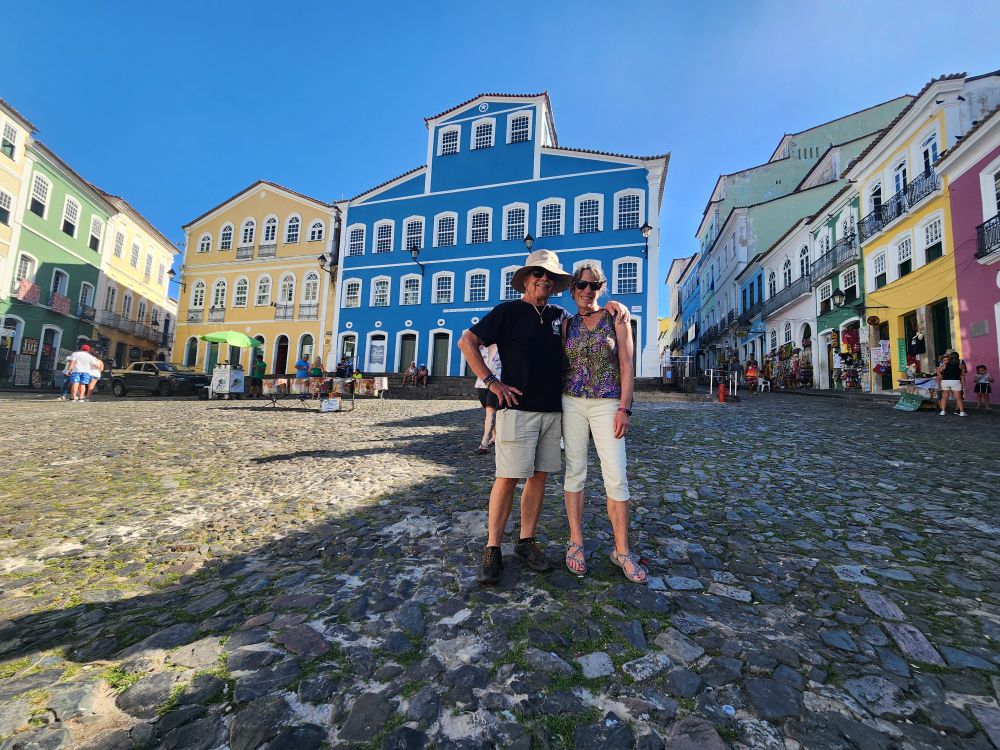
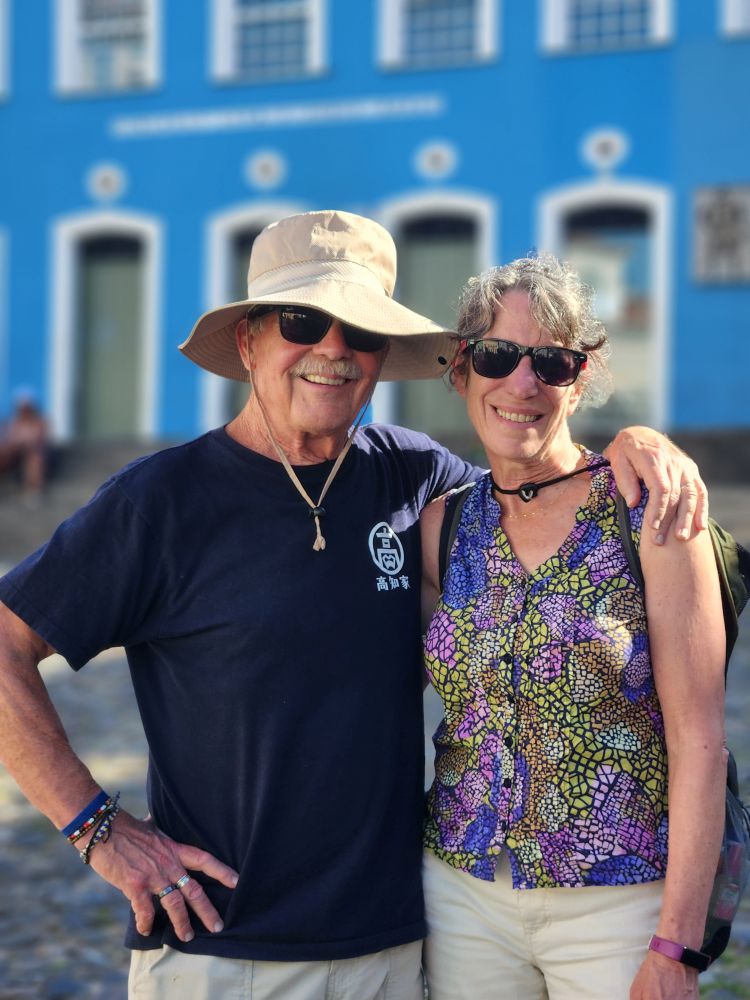
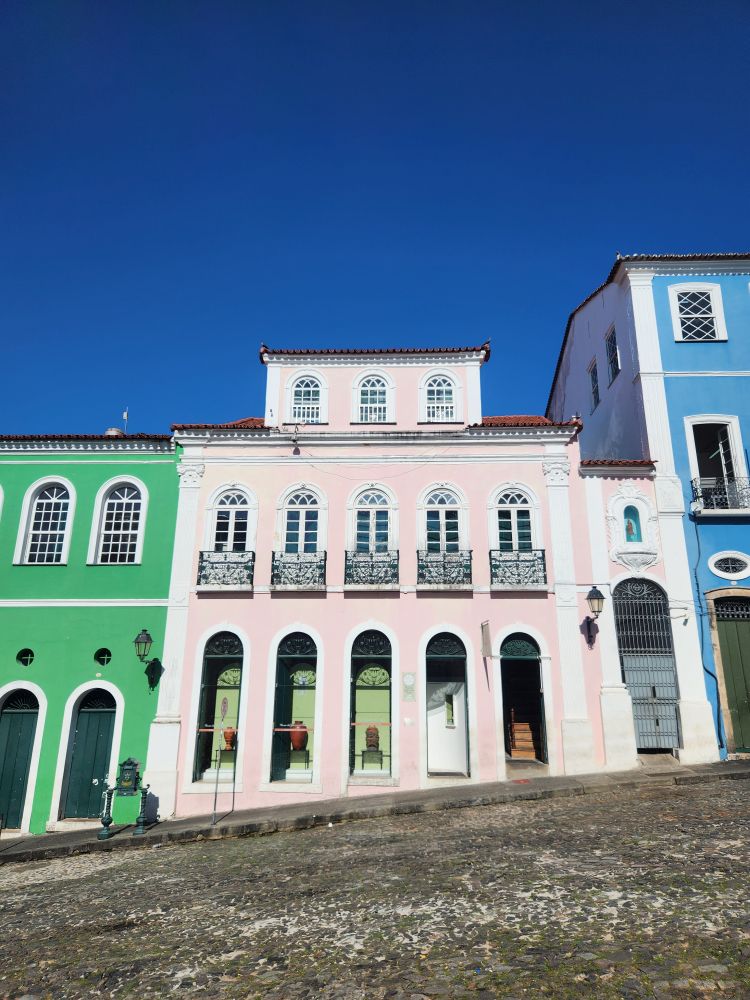
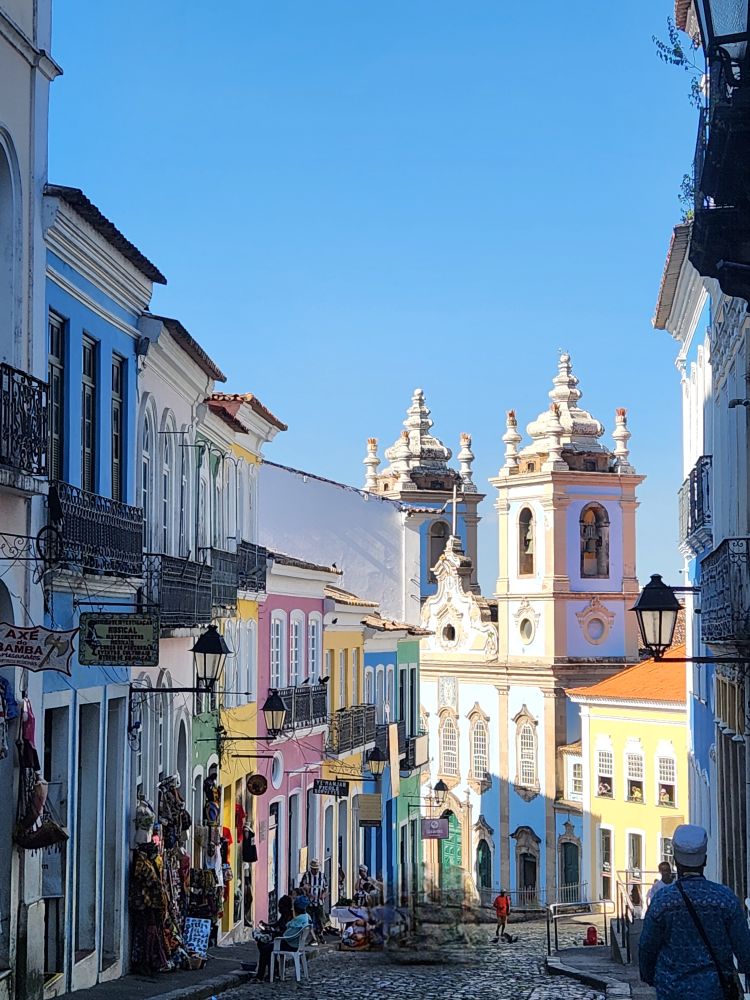
Finished with our snack, we wander through the old town, looking at the pretty colorful buildings and the lovely little square by the funicular stop, which we will be using later to get back to the ship.
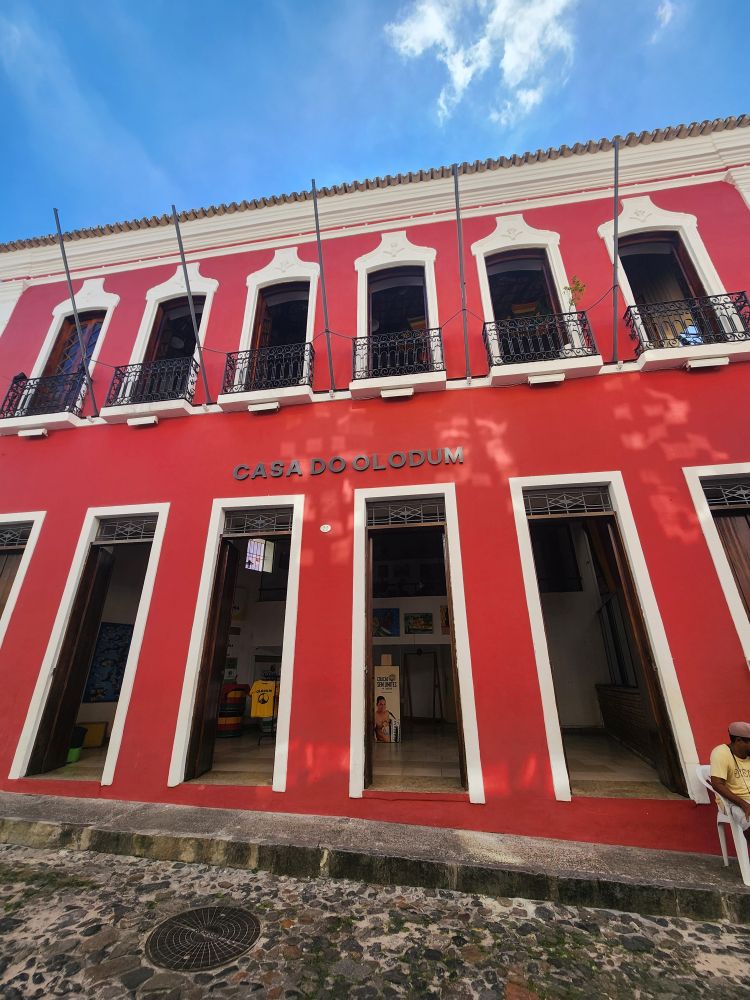
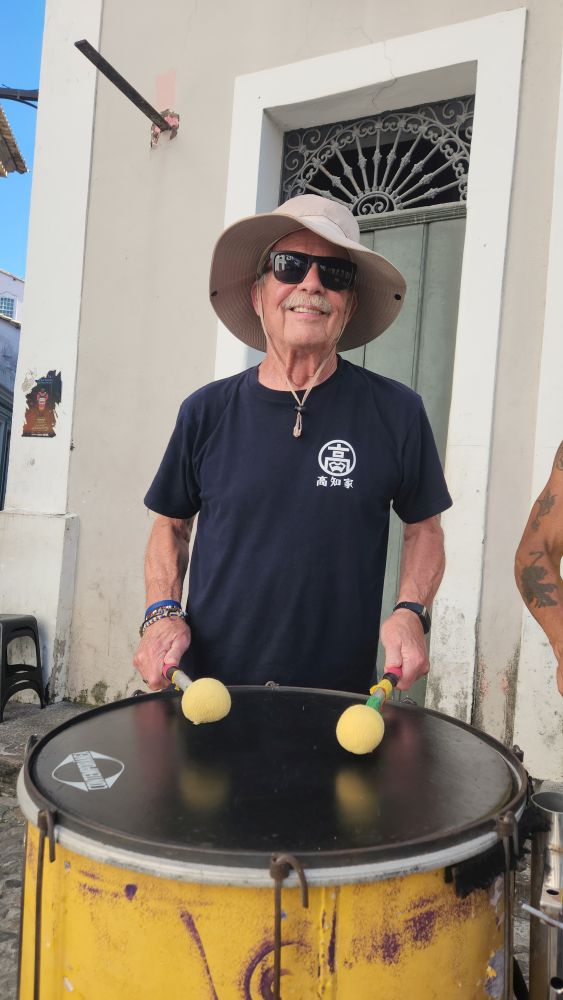
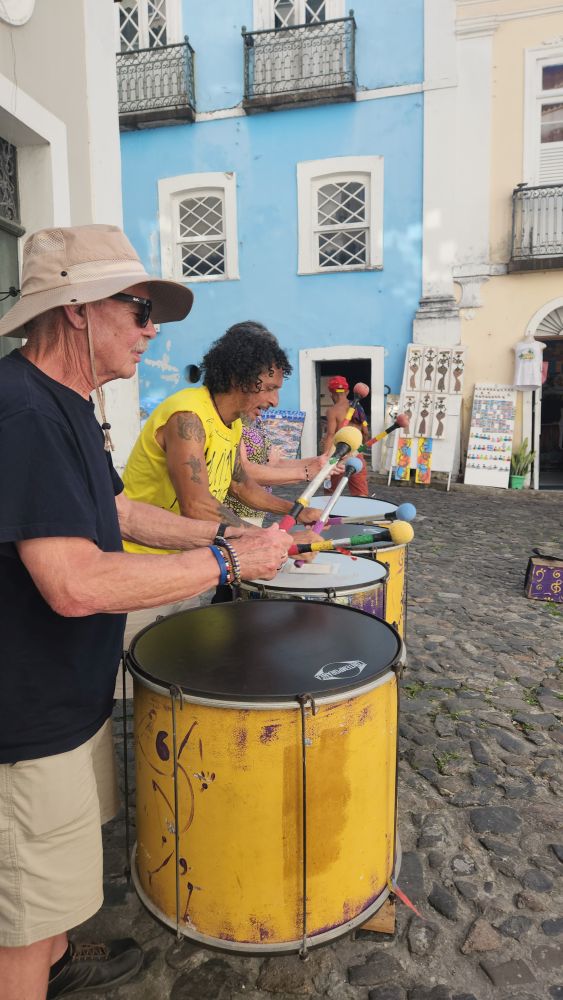
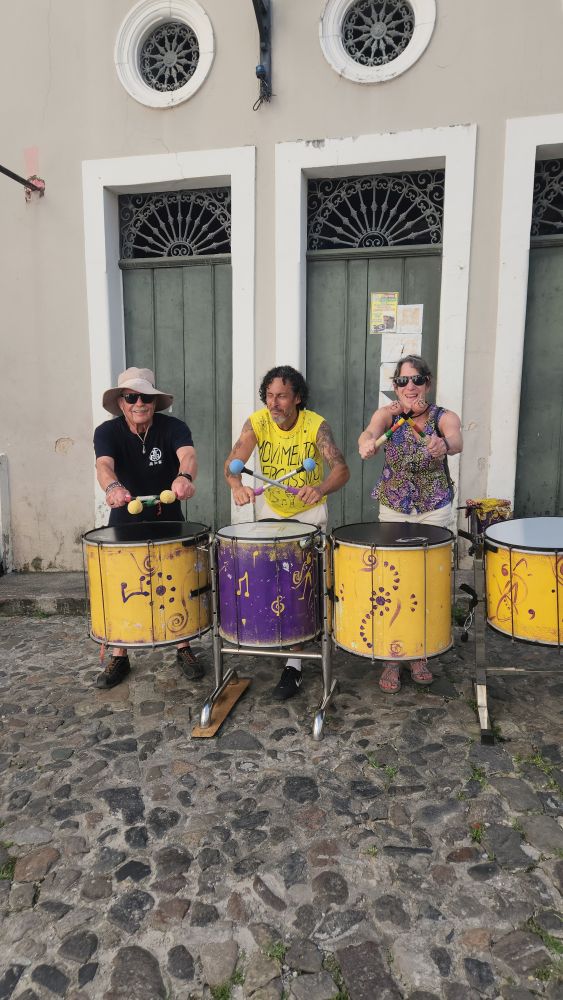
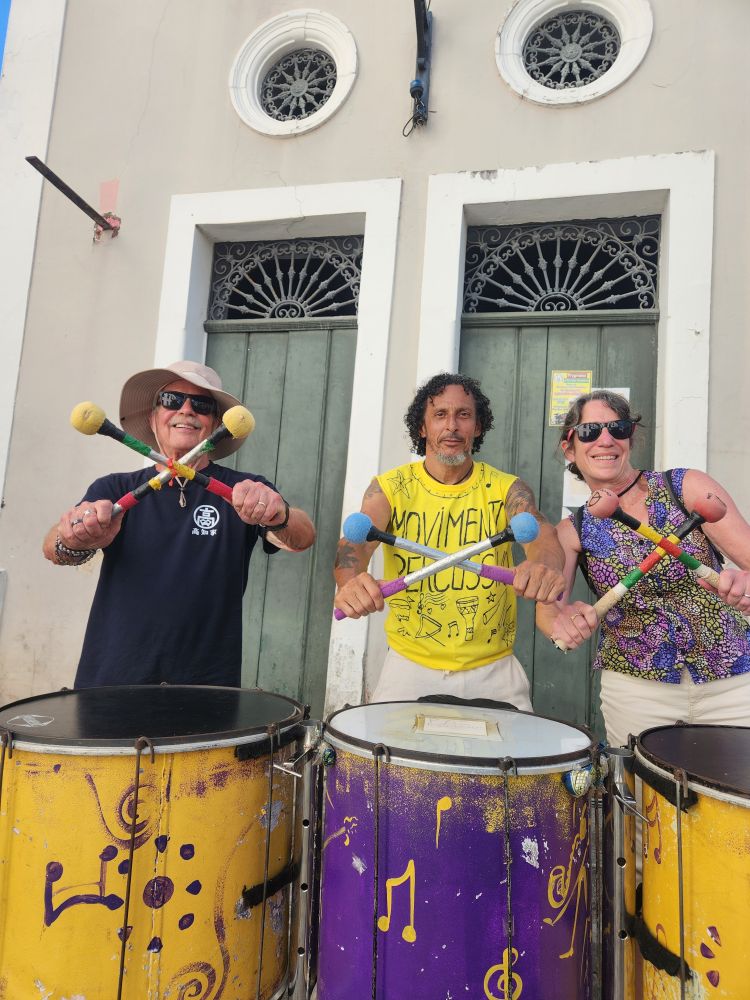
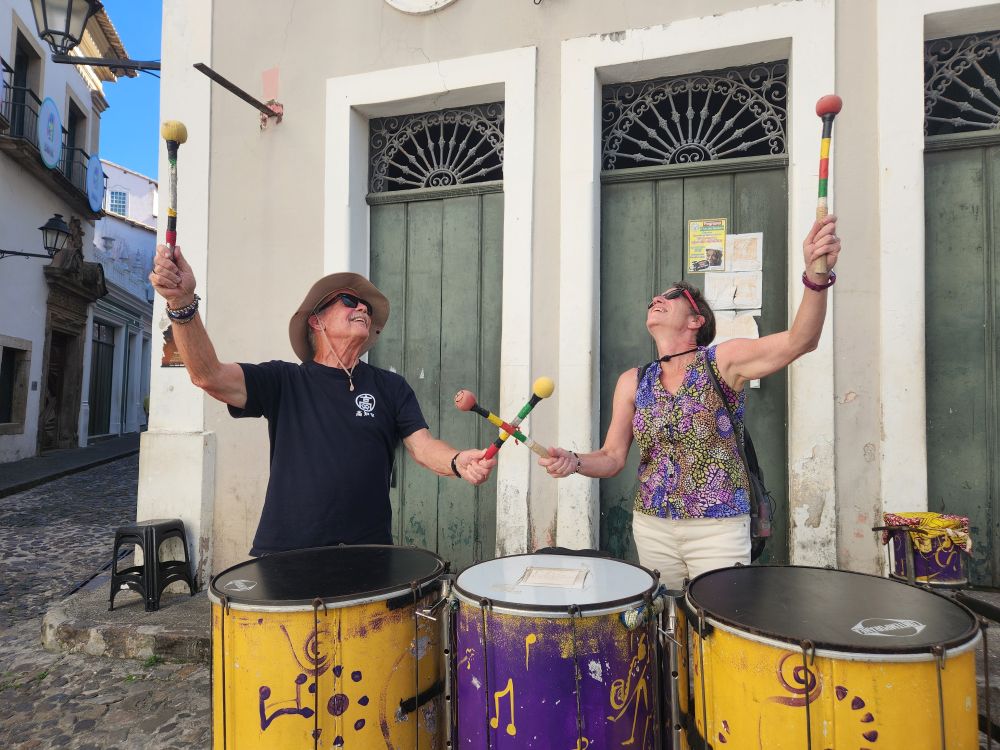
On the way through town, we run into Gilmario Marques, a percussionist who played with the famous Olodum band all around the world. This band made the music of Salvador famous, Michael Jackson and Paul Simon played with them. Michael Jackson actually filmed the music video “They don’t care about us” here in Salvador with them. Gilmario is a lively, fun guy, even if we don’t have a clue what he is saying! He invites us to play the drums with him – and well, how can we refuse! Such fun!
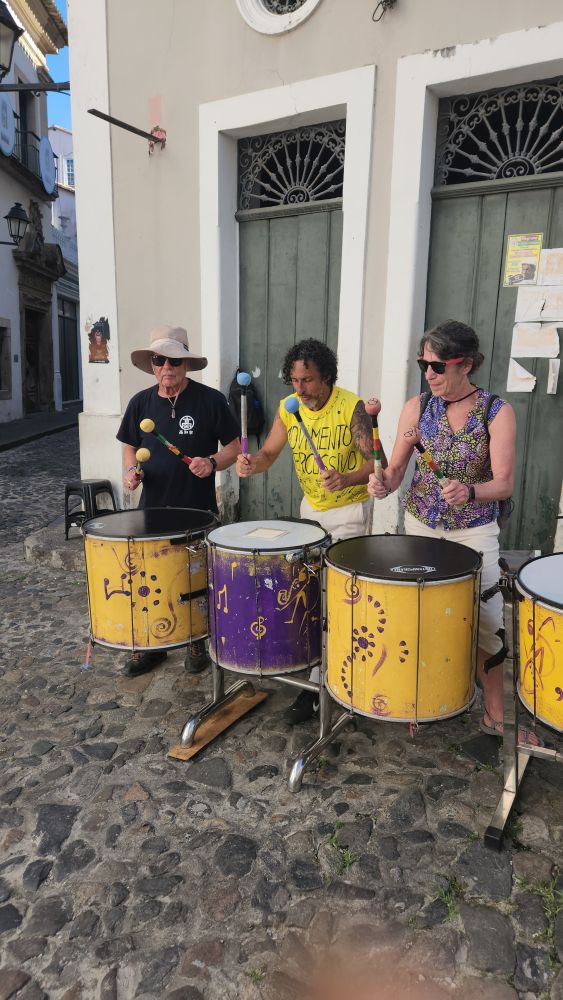
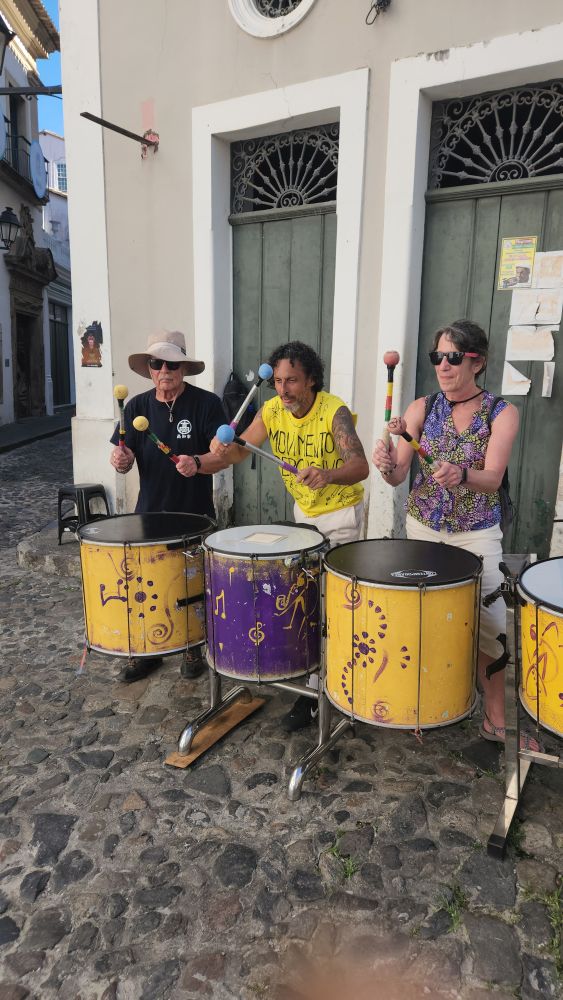
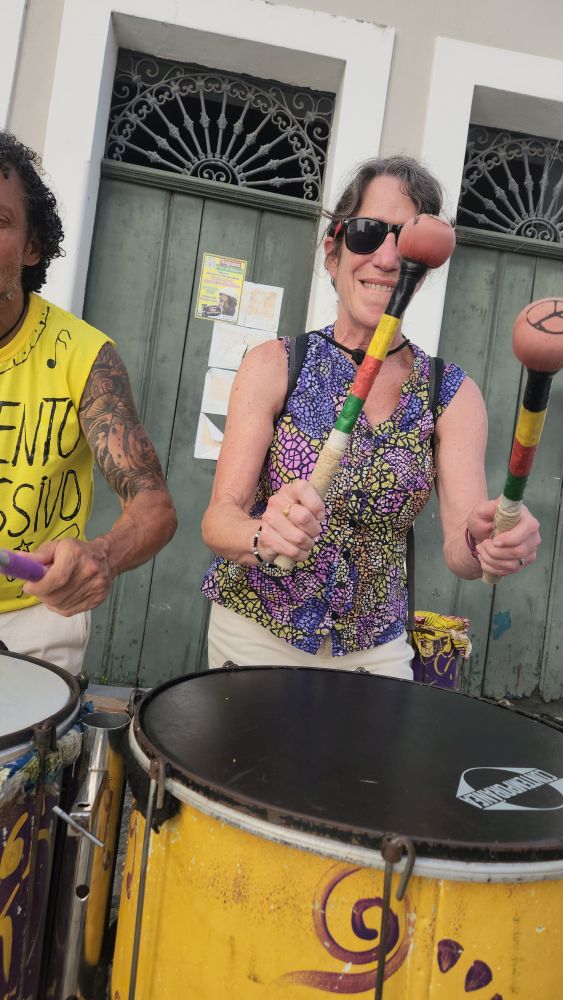
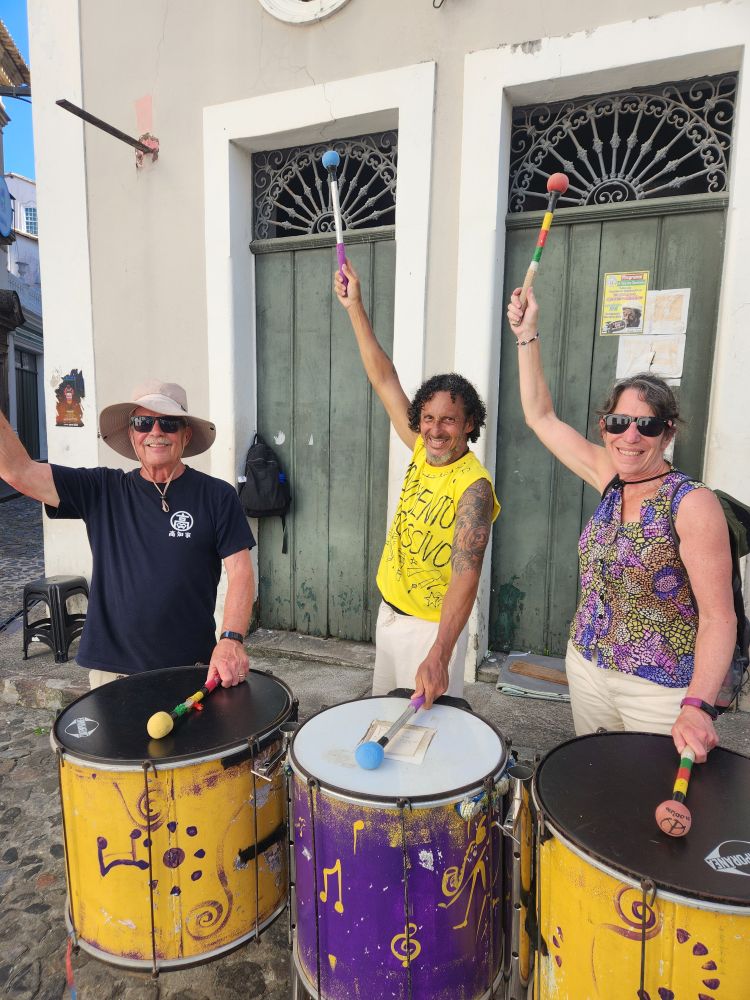
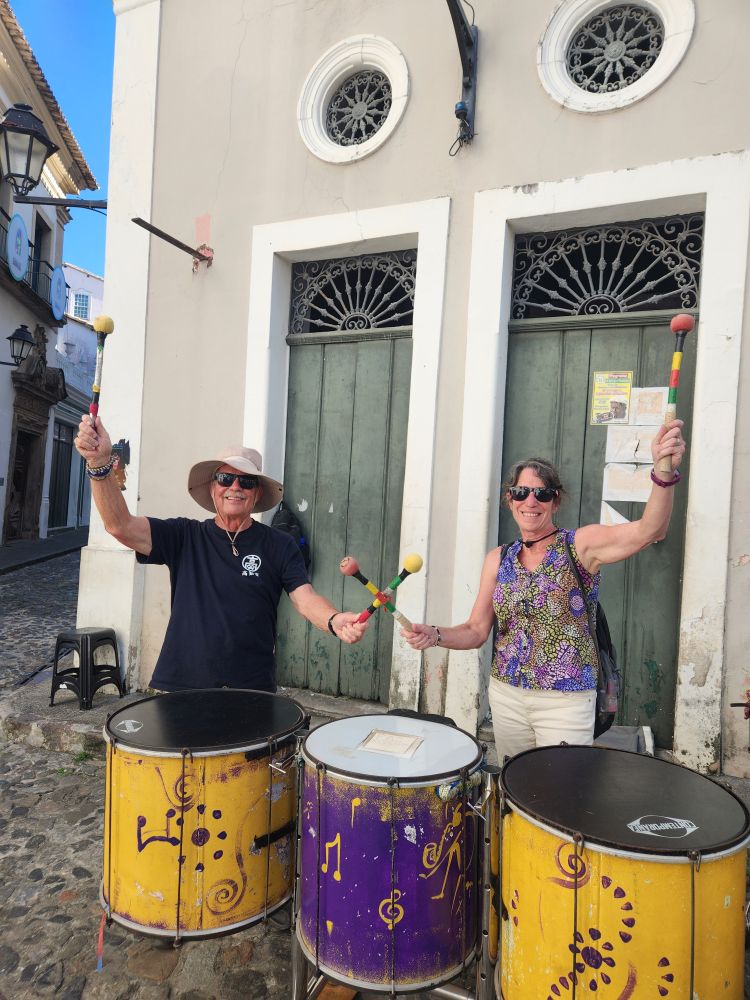
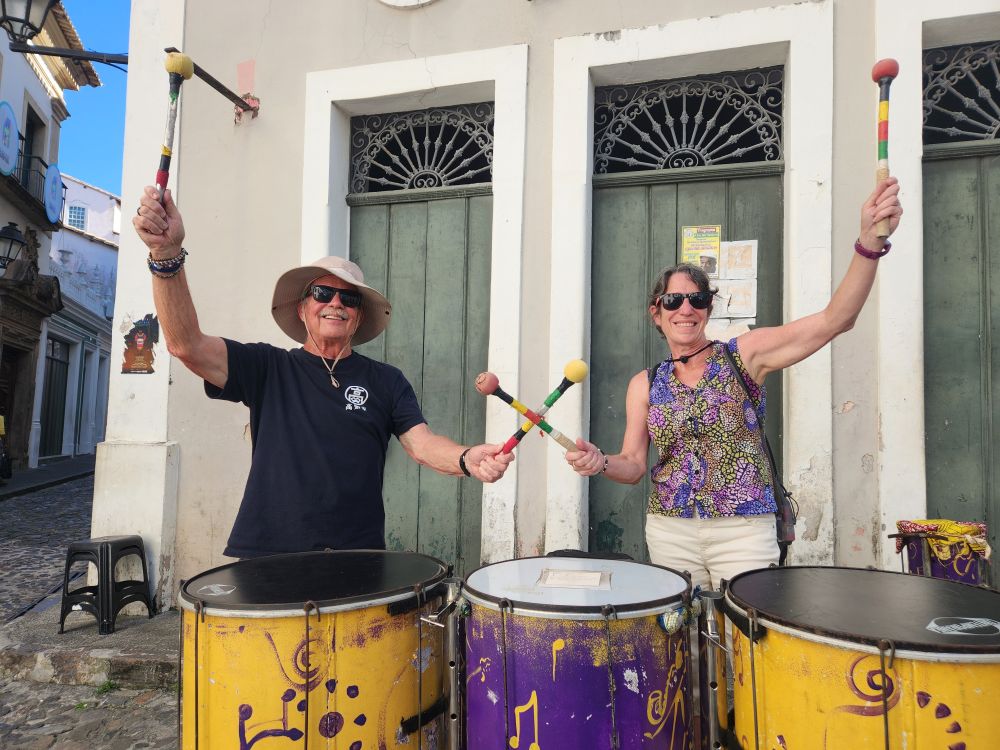
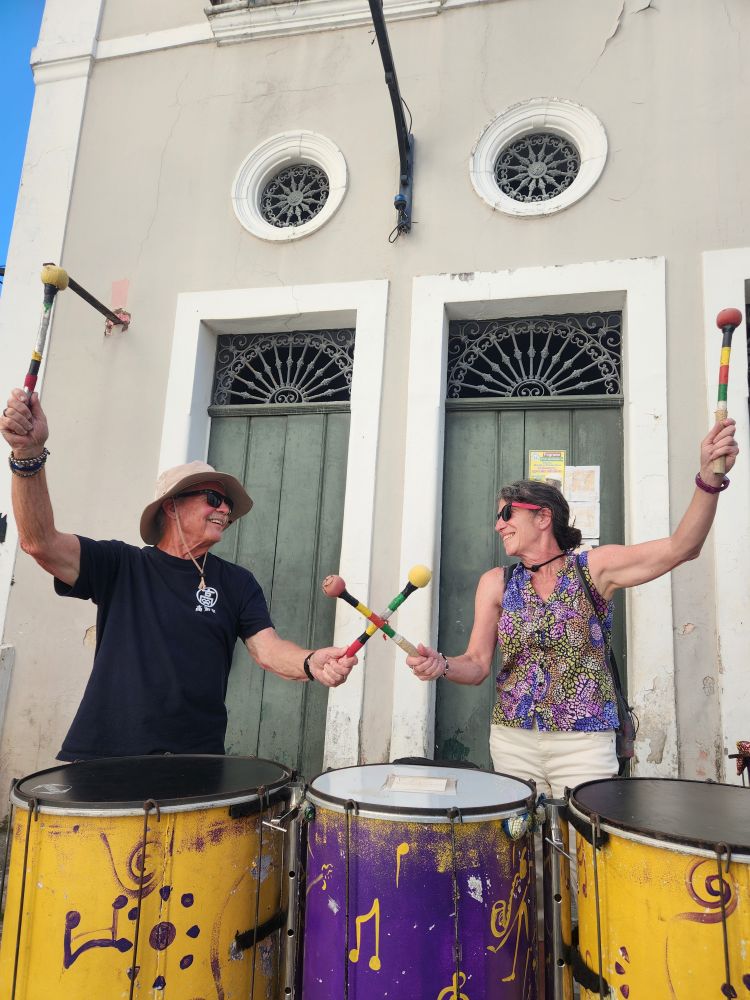
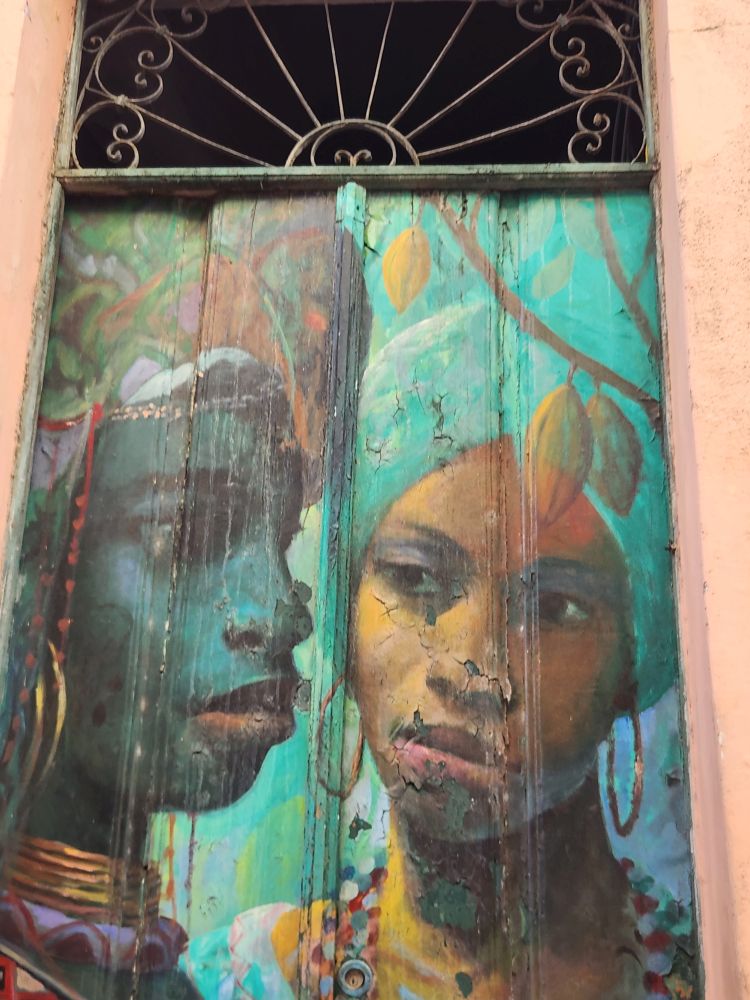
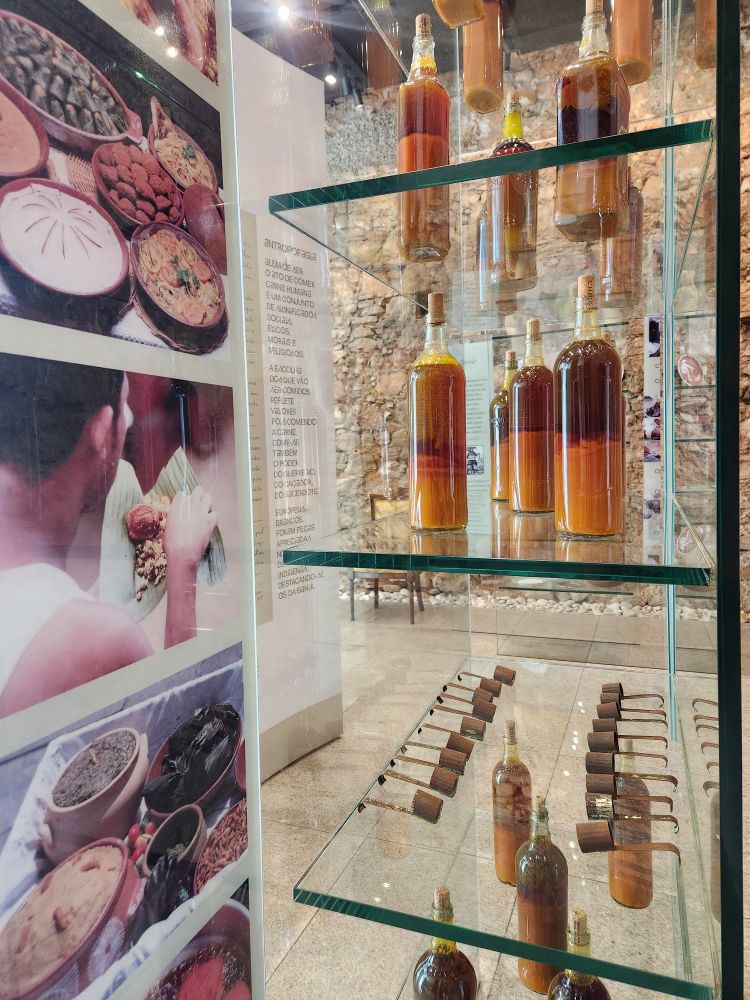
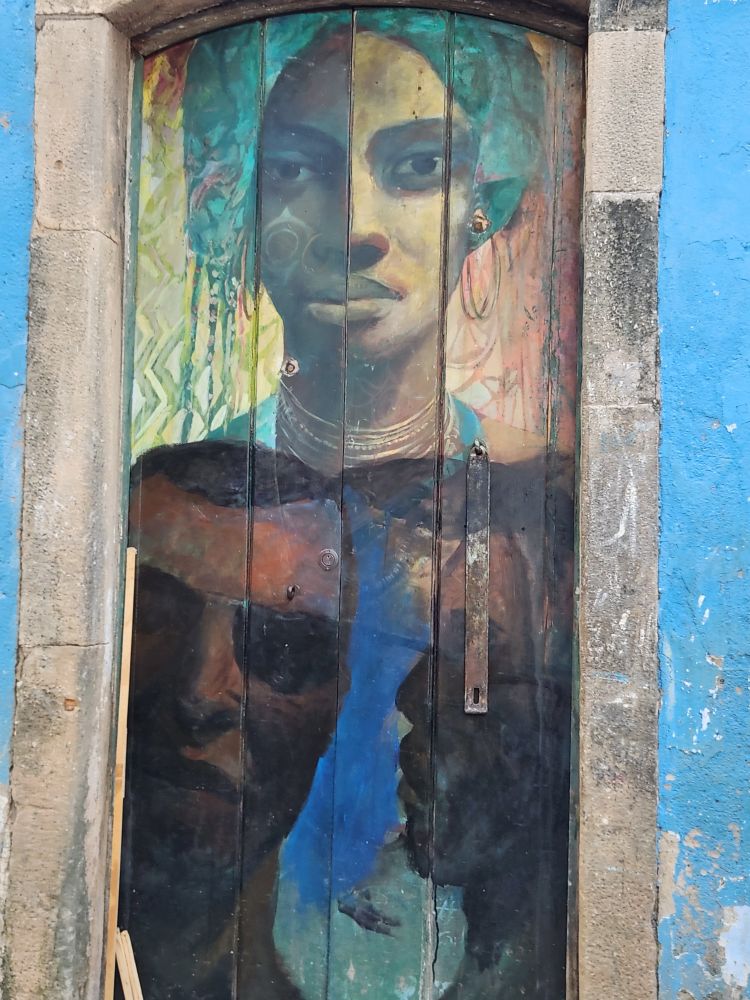
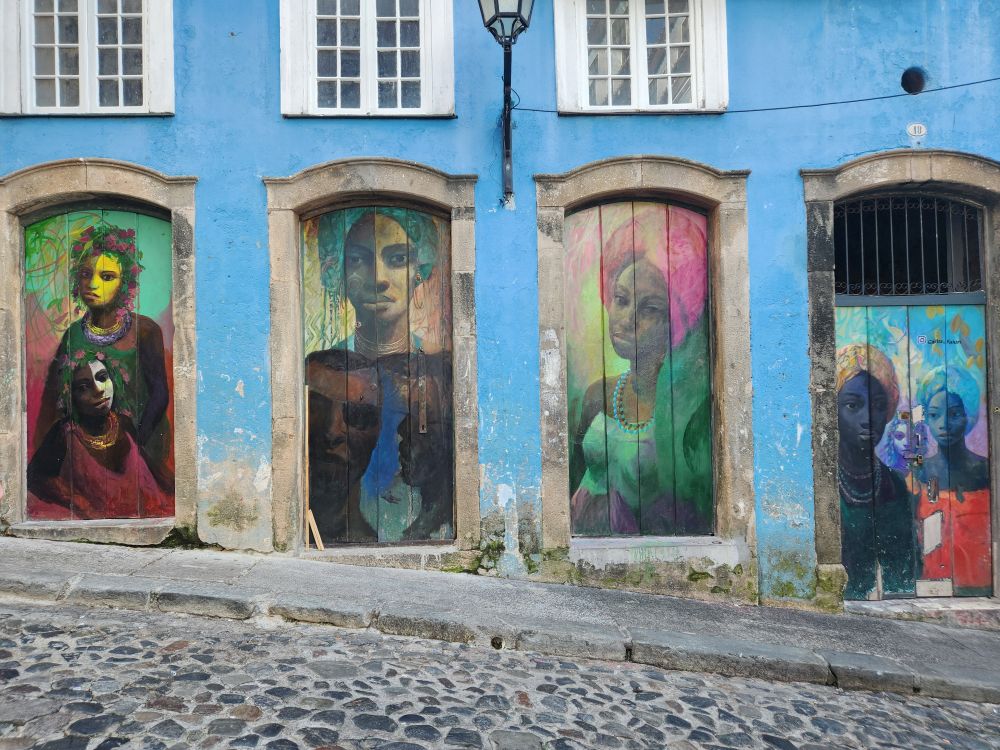
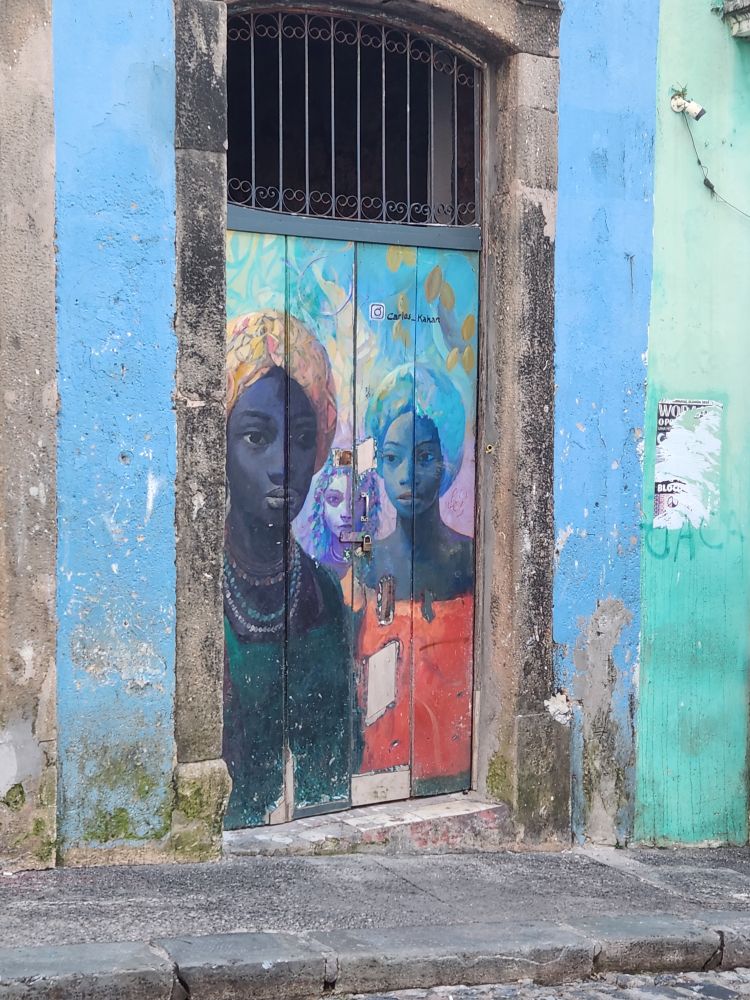
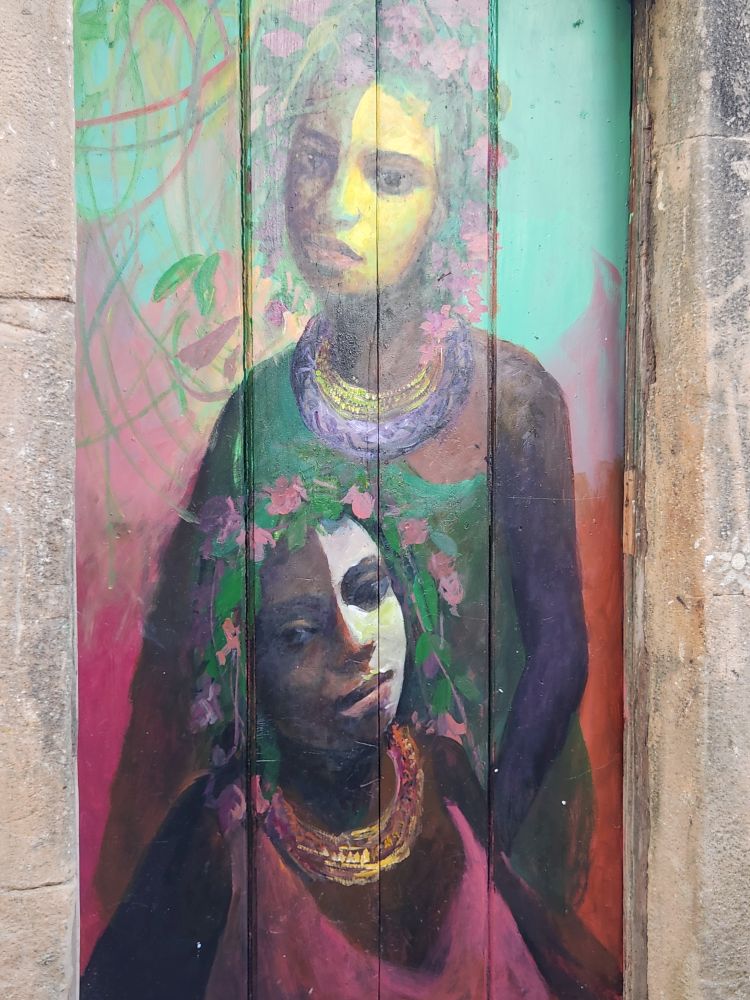
Meandering through the old town, we stop at a little museum about food and culture, more to cool off in the air conditioning than for the actual museum. It’s a sweet little place with lots of displays on food, Candomble and the city, and very refreshing in the cool air. Then we are back out on the streets, looking at the beautiful architecture and the different houses and buildings along the street and in the square. And the artwork. There is a fabulous artist who has murals all over the city, some of which are here on wooden window or door shutters.
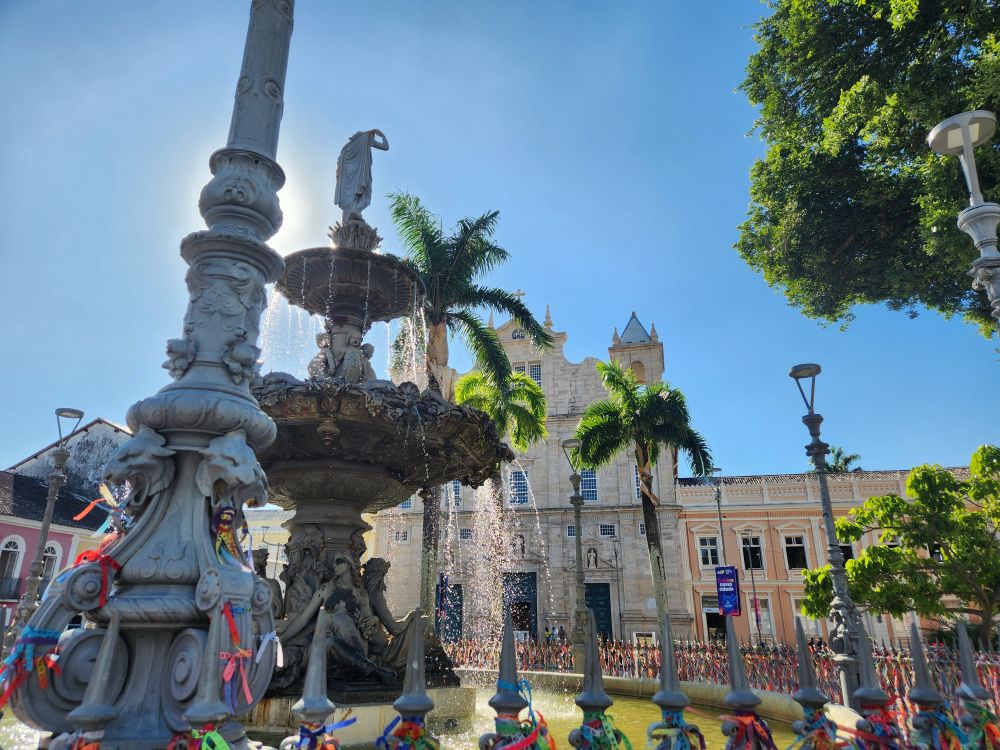
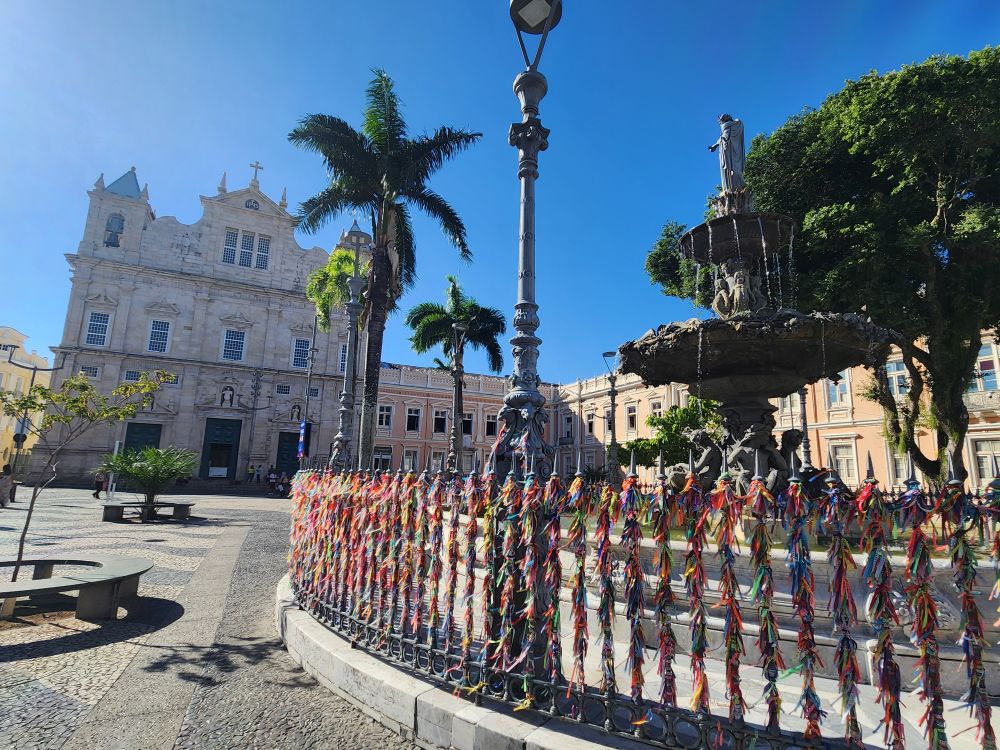
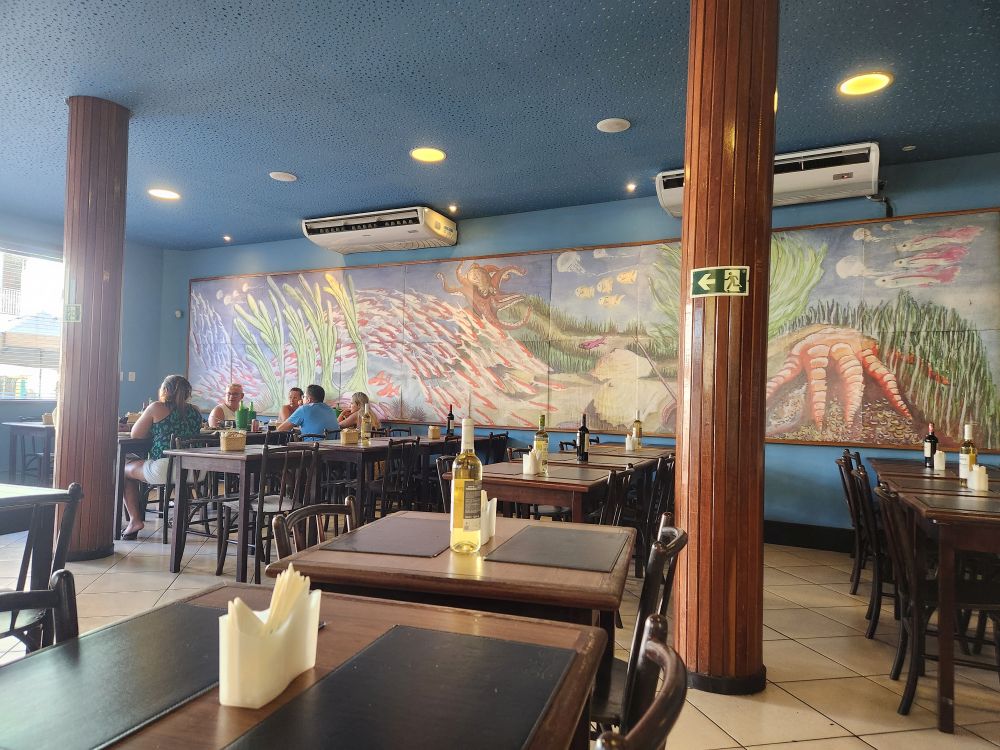
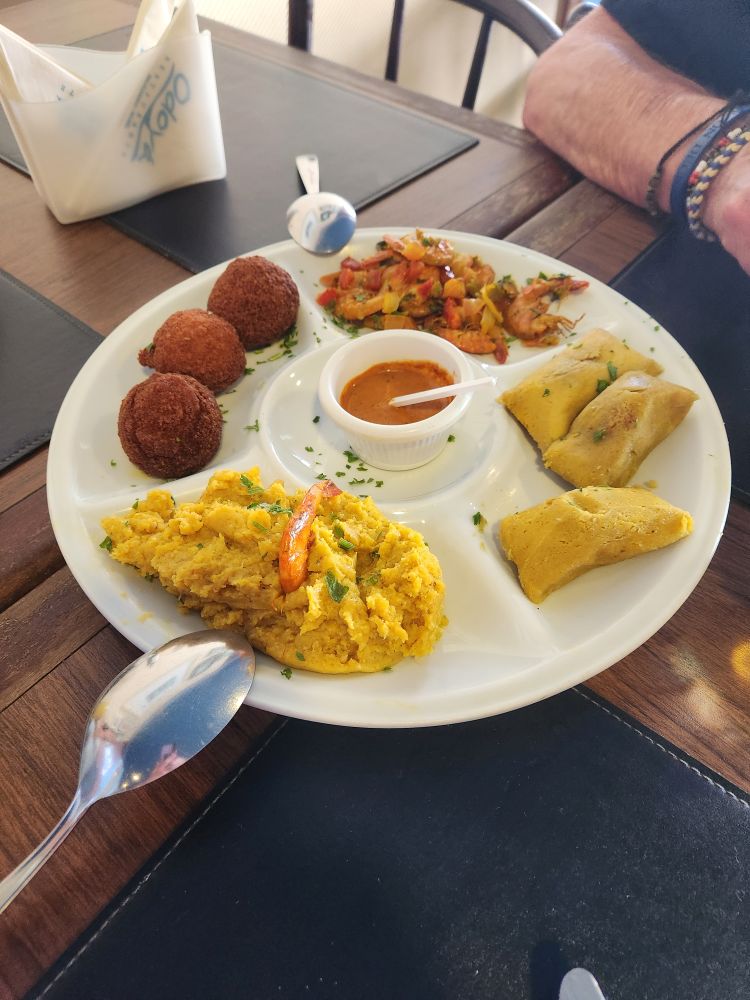
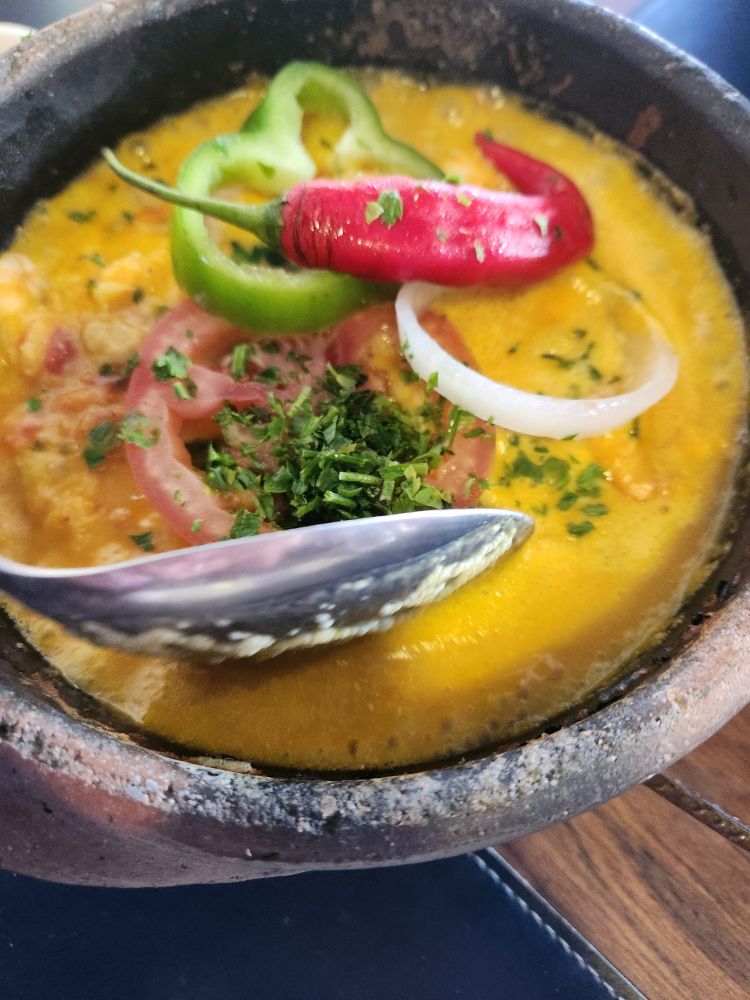
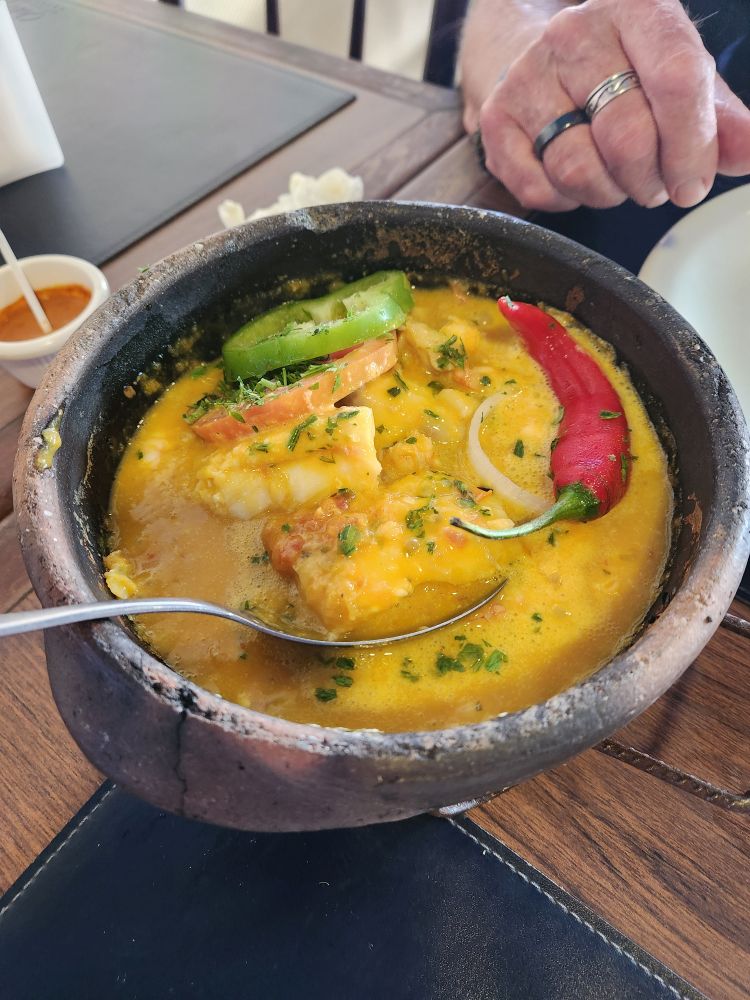
Then it is onto lunch (yeah, at 3:30 in the afternoon!), past the fountain in the square in front of the Catedral of Sao Salvador with more Bonfim ribbons tied all around the fountain fencing. Our lunch stop is at Odoya for a traditional Salvadoran meal. Sayuri has said we could eat on the street, for a more authentic meal, but portions are too big and here, at least, we can sit in the cool a/c and relax, have a drink and get a broad taste of everything. Works for us. She does the ordering and we end up with a feast of Couvert Baiano – a selection of Acarajes (fried black eye pea dough balls, similar to hush puppies), Abara (the same dough, but steamed in a banana leaf), Vatapa (a totally yummy puree of black eye peas, peanuts, ginger with pieces of shrimp mixed in), Camarao (smoked shrimps you eat in their entirety, shell and all) and hot sauce. To eat, you take either a piece of Abara or Acaraje, slather it with Vatapa, put a Camarao and a drop of hot sauce on top and voila! Excellent food! Oh my gosh – so good! And that wasn’t all – then we had the Moqueca – a traditional Salvador stew with huge meaty pieces of an excellent white fish and shrimp all in a wonderful creamy tomato base, which is delivered bubbling hot in an iron cauldron type thing. All was excellent – and so filling! And it’s now 4:30 – not much of a dinner in our future, that I can tell you.
The only negative really is how expensive it is here. Both the Pao de Queijo and the lunch were really pricey. Of course we love to try different cuisines and different foods, but phew, that was an expensive day!
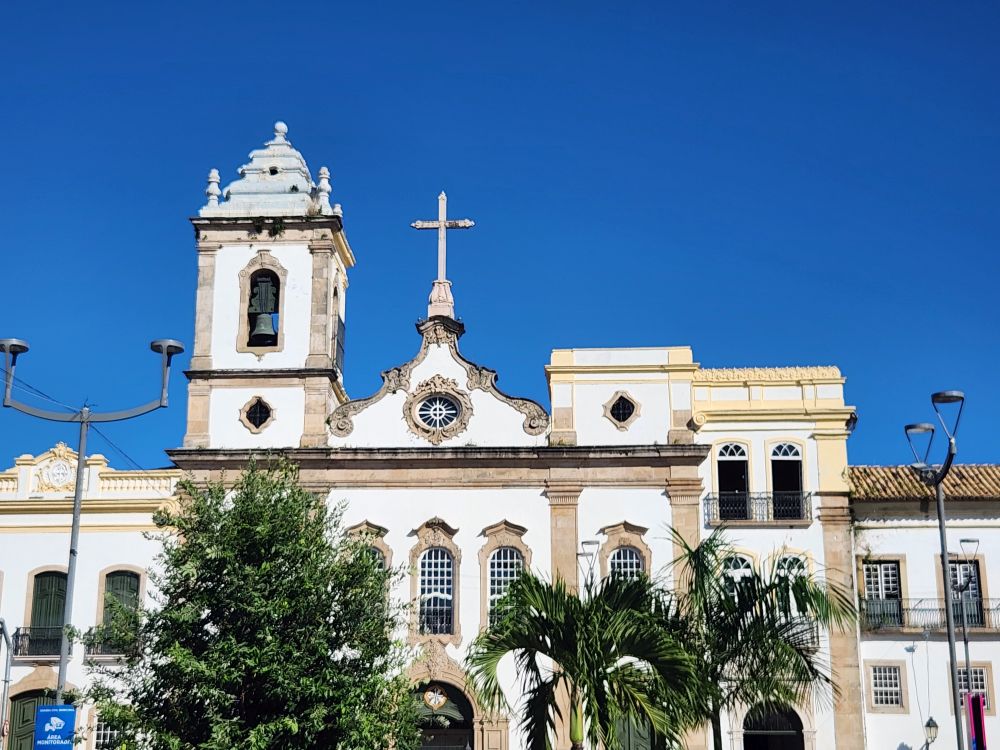
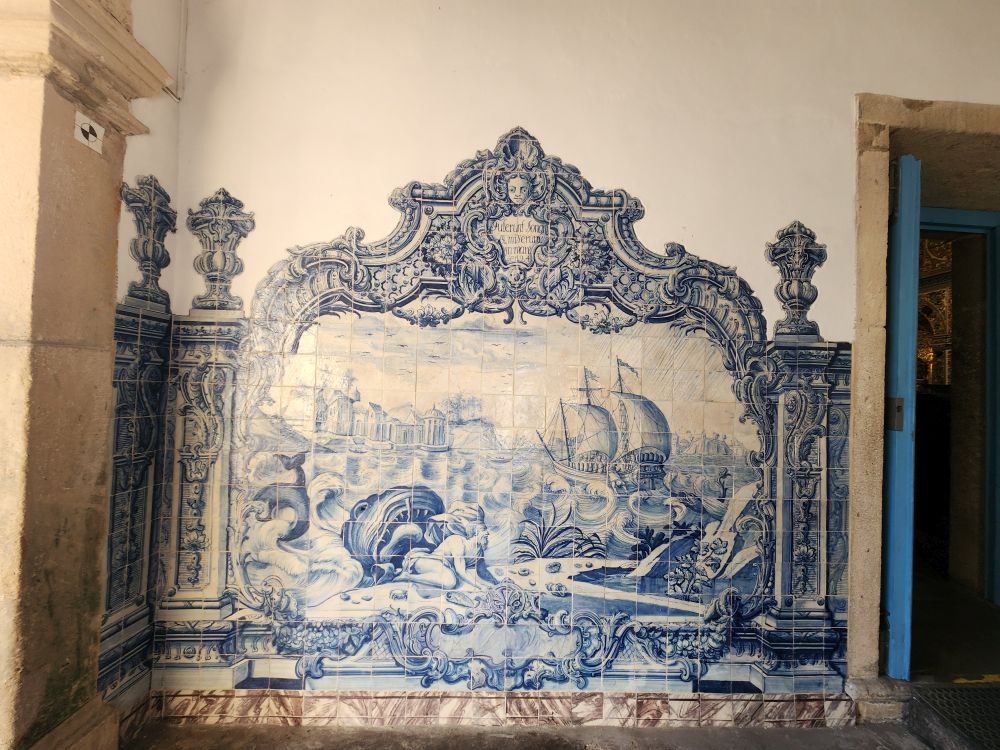
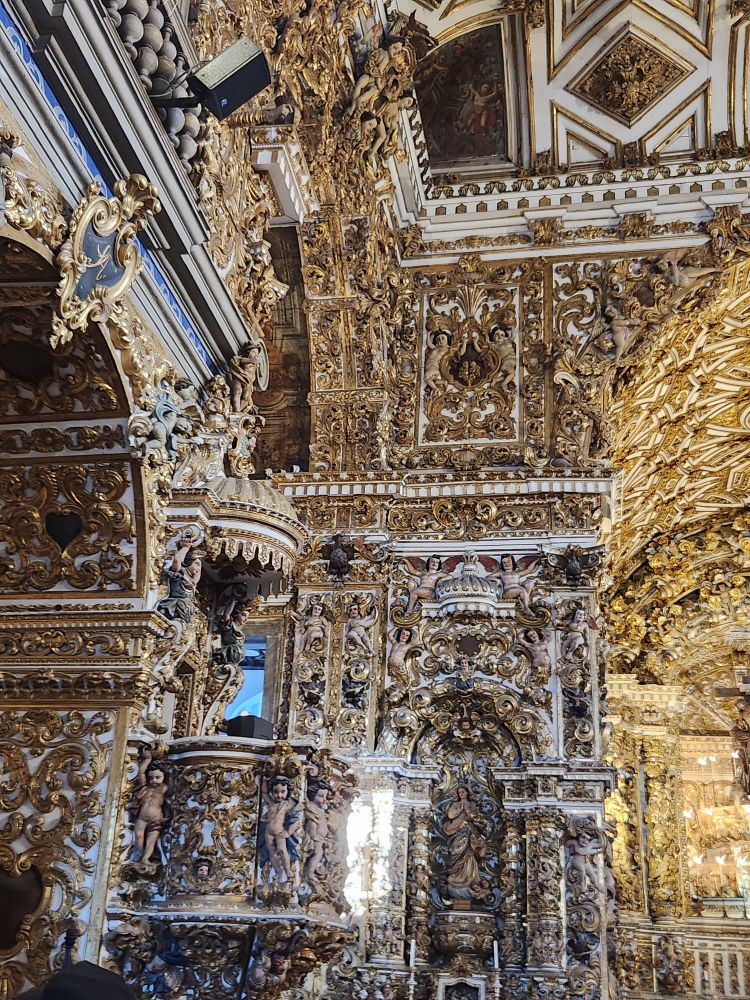
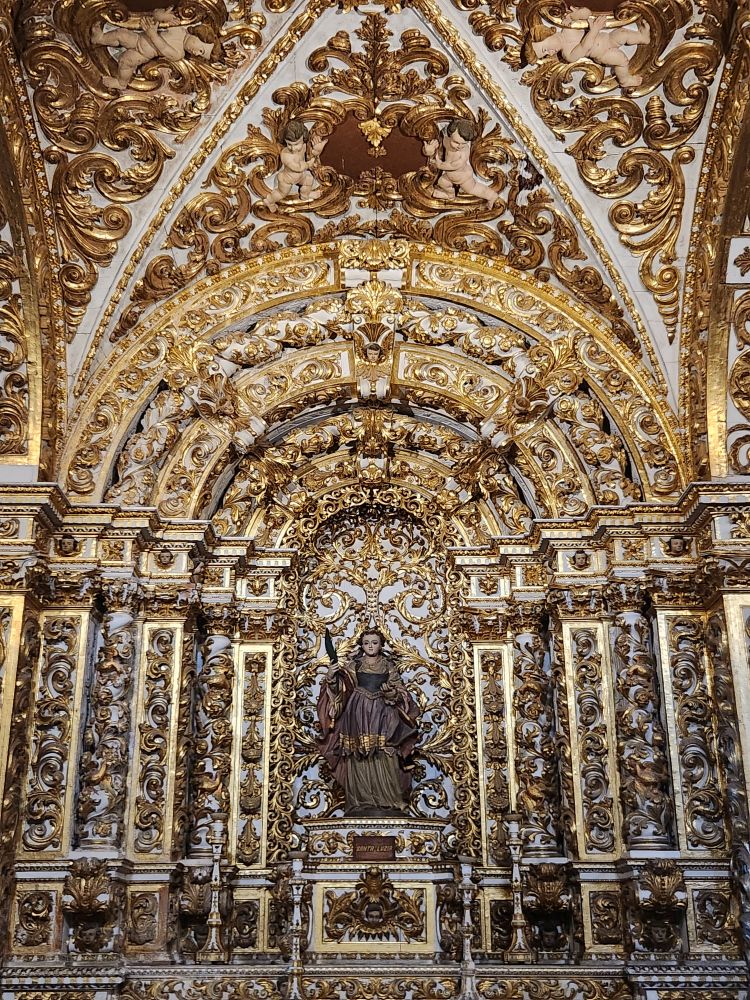
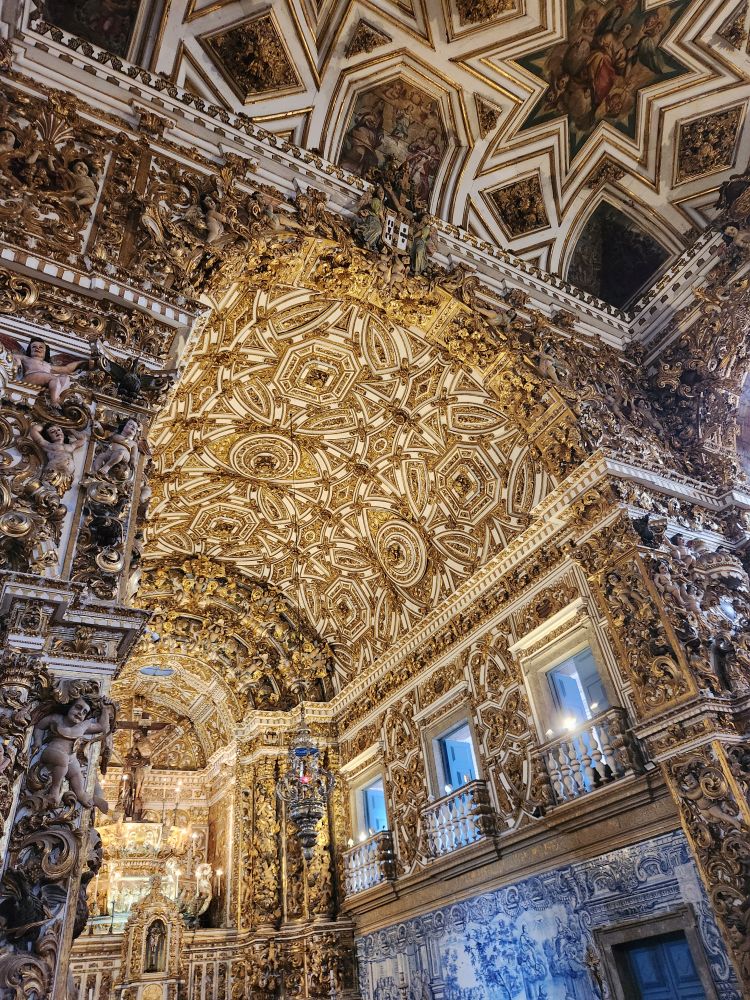
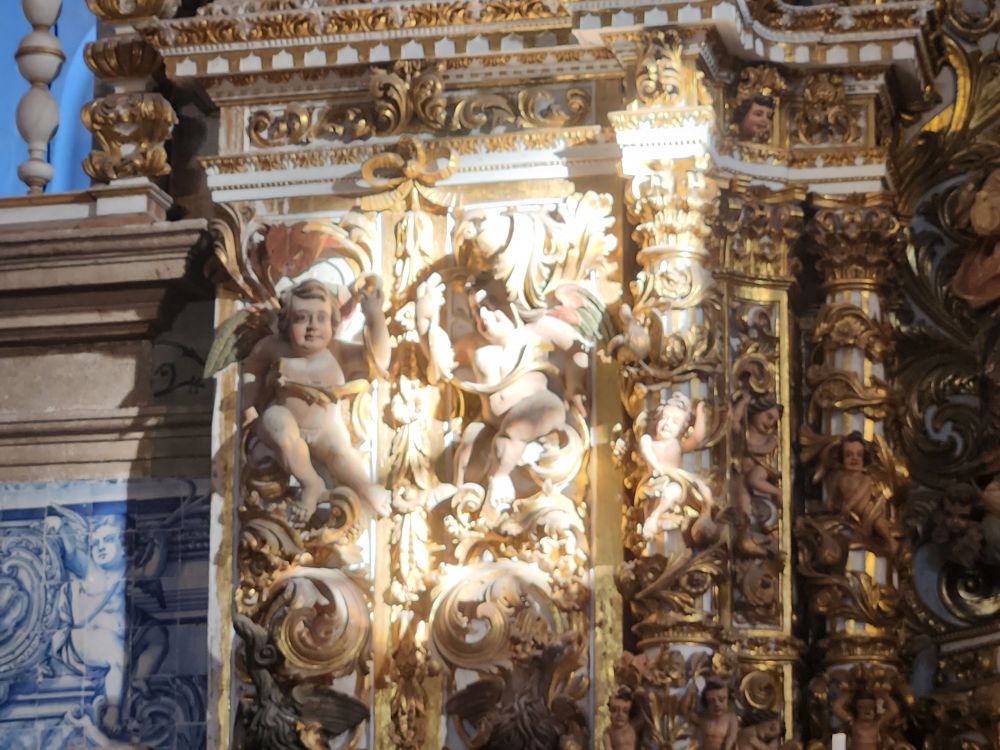
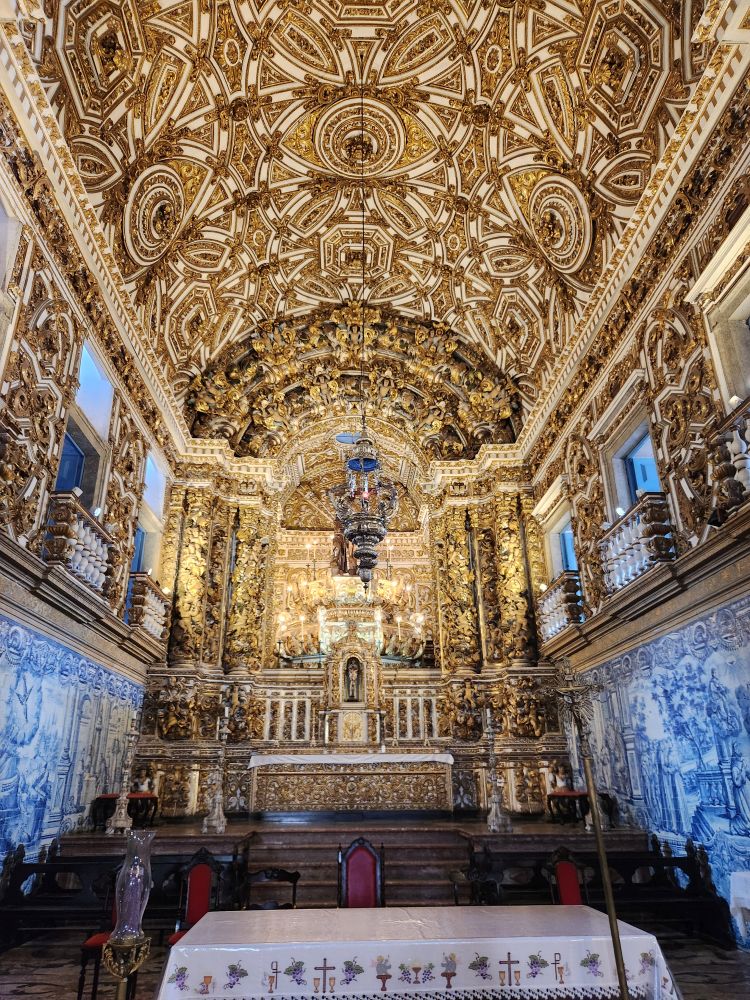
Our last stop of the day is the church of Sao Francisco, known as the gold church. We enter through the convent, enjoying walking past the Azulejos, the Portuguese blue and white tile mosaics, that line the walls surrounding the entire courtyard. The church and convent over 55,000 of these tiles, the largest number of any church in Latin America. Then Sayuri leads us into the church, directly to the back (or the front door entrance), telling us not to turn around and look yet. She explains the church and convent are important monuments in Brazil, one of the 7 wonders of Portuguese Origins in the world.
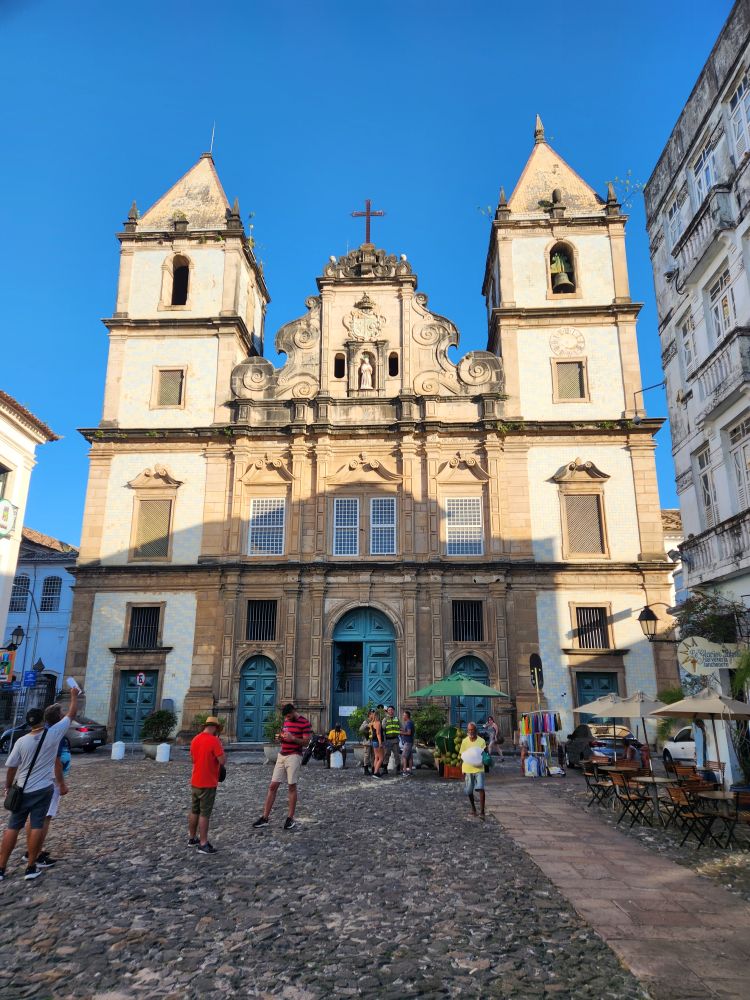
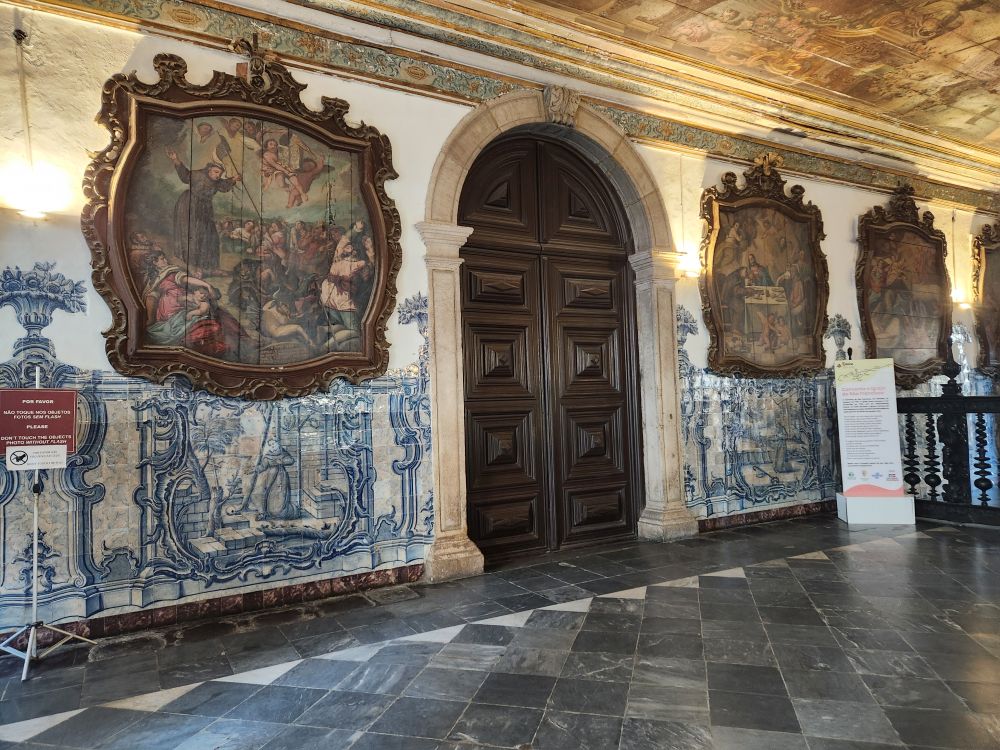
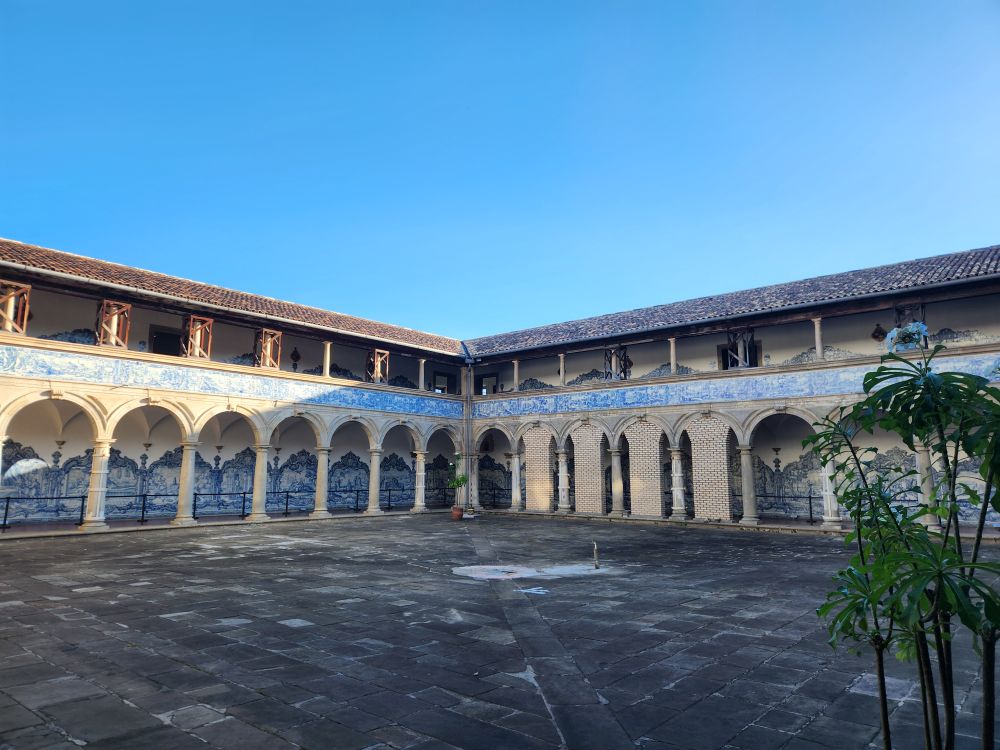
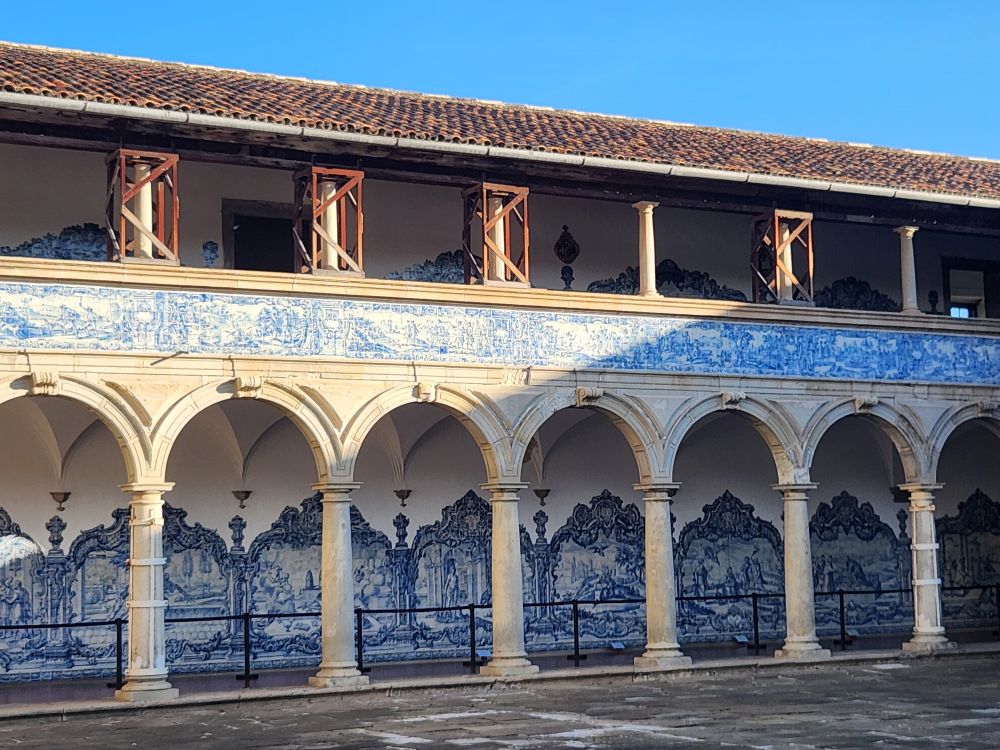
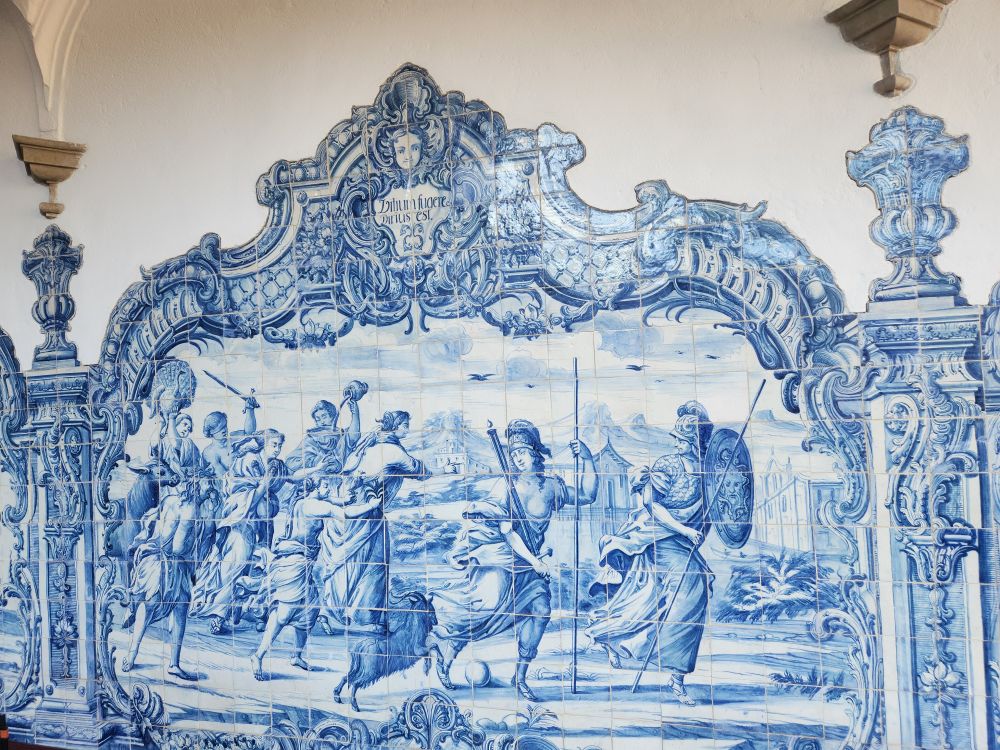
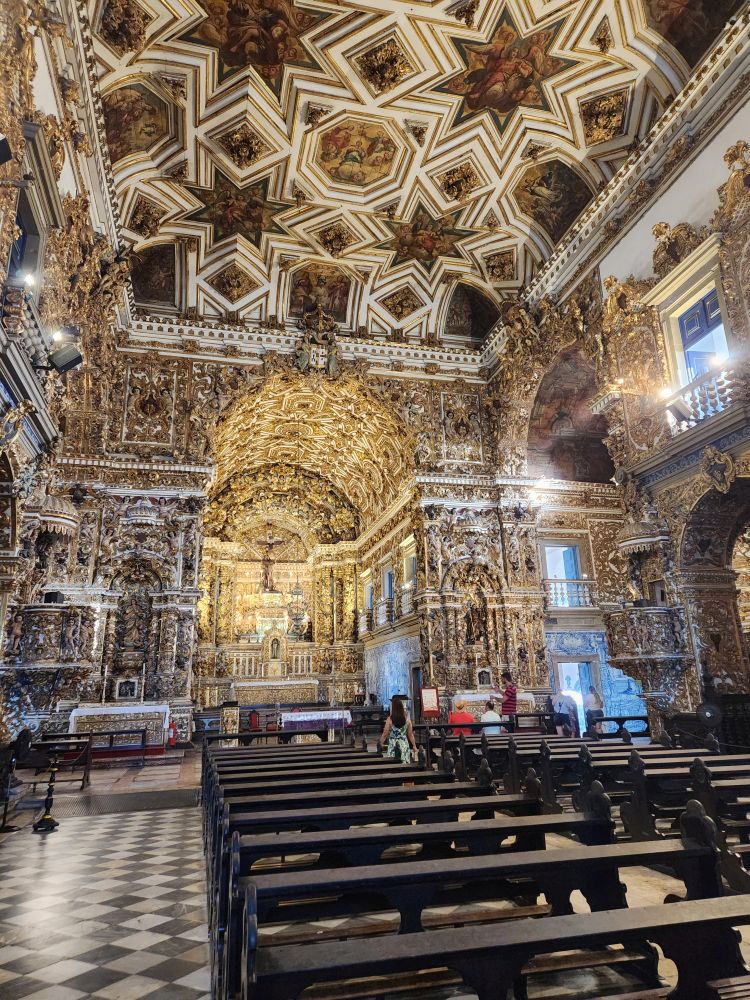
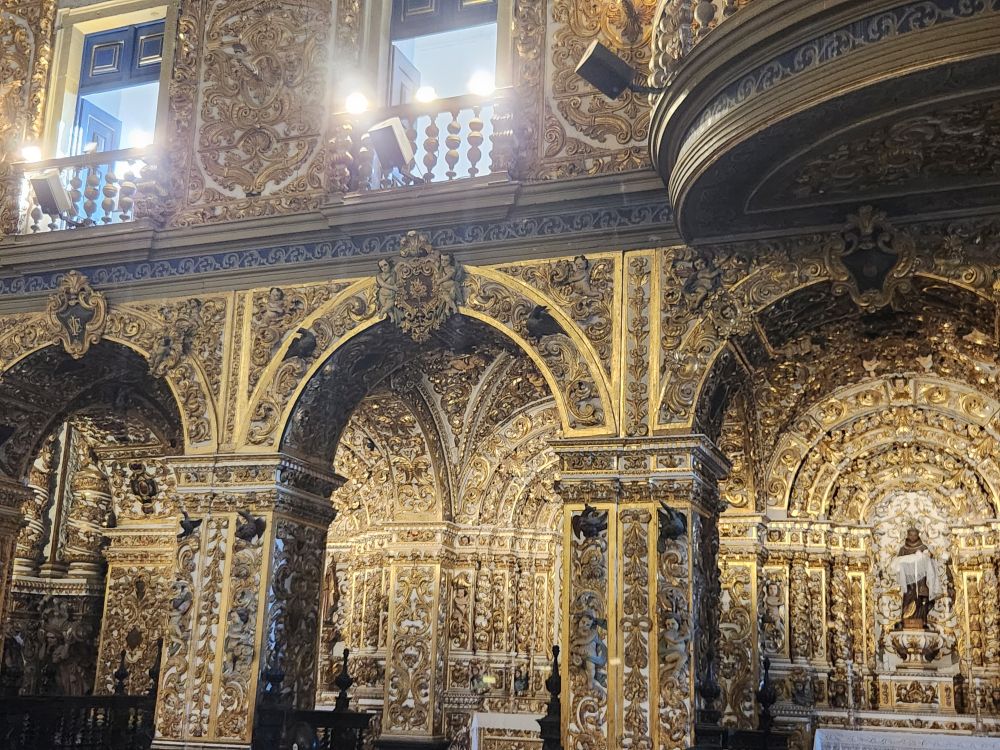
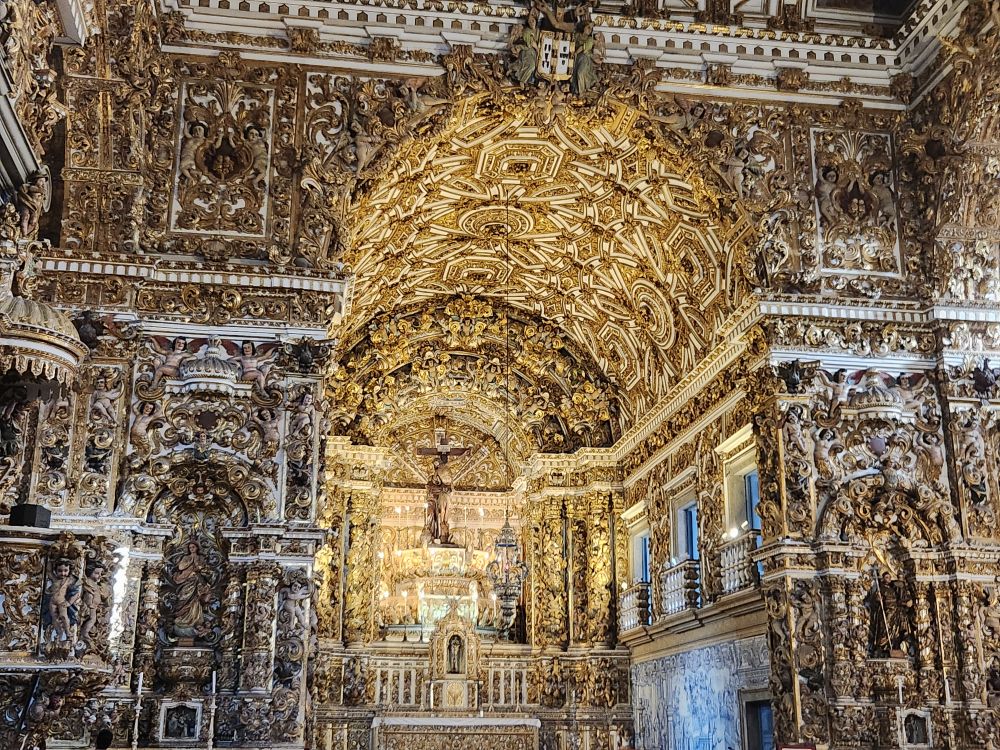
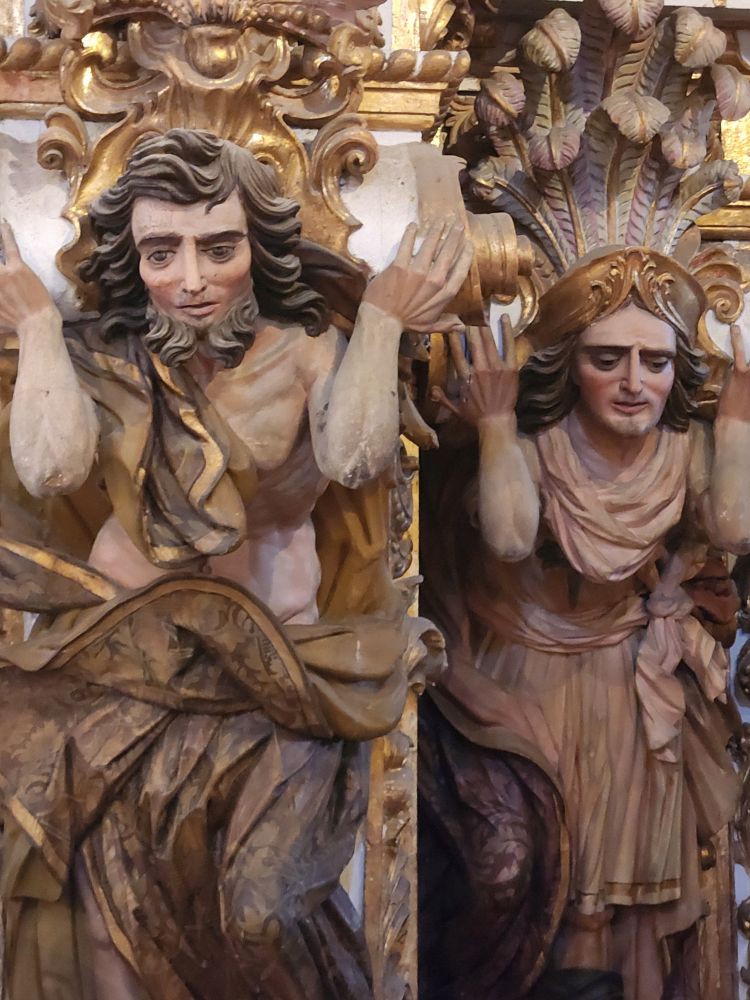
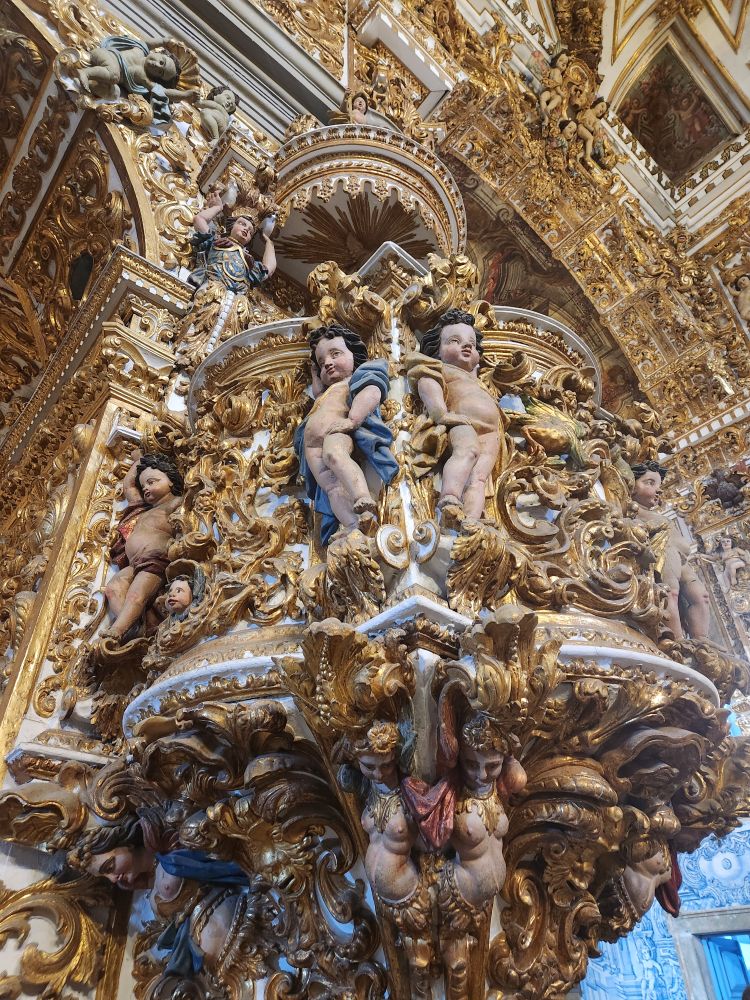
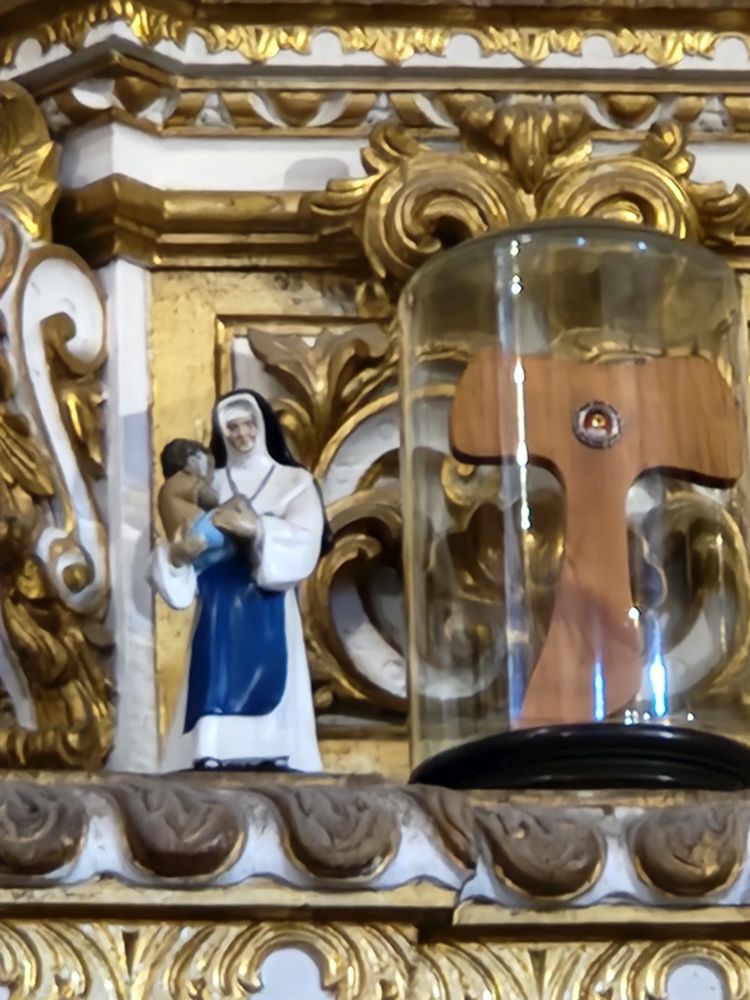
Then she lets us turn around. Totally awesome reveal! It is called the Gold Church for a reason! Talk about ornate and over the top, yet entirely gorgeous. Everywhere you look there is gold – it is almost overwhelming! The nave is particularly stunning in its goldness. As are all the carvings and the detail. Overwhelming is definitely the word.
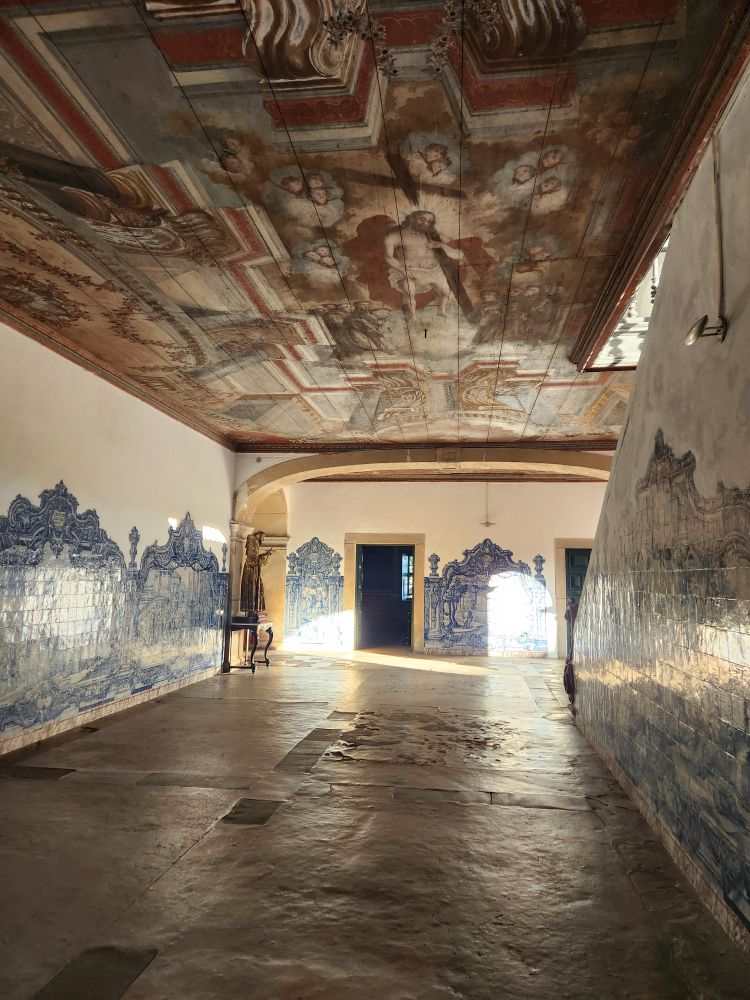
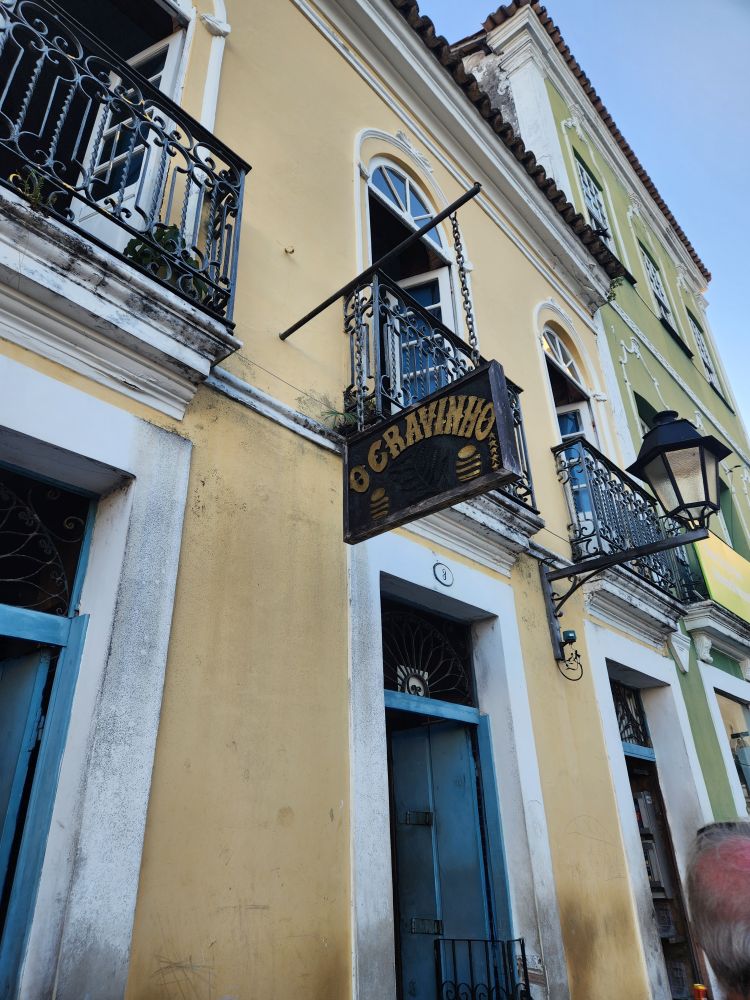
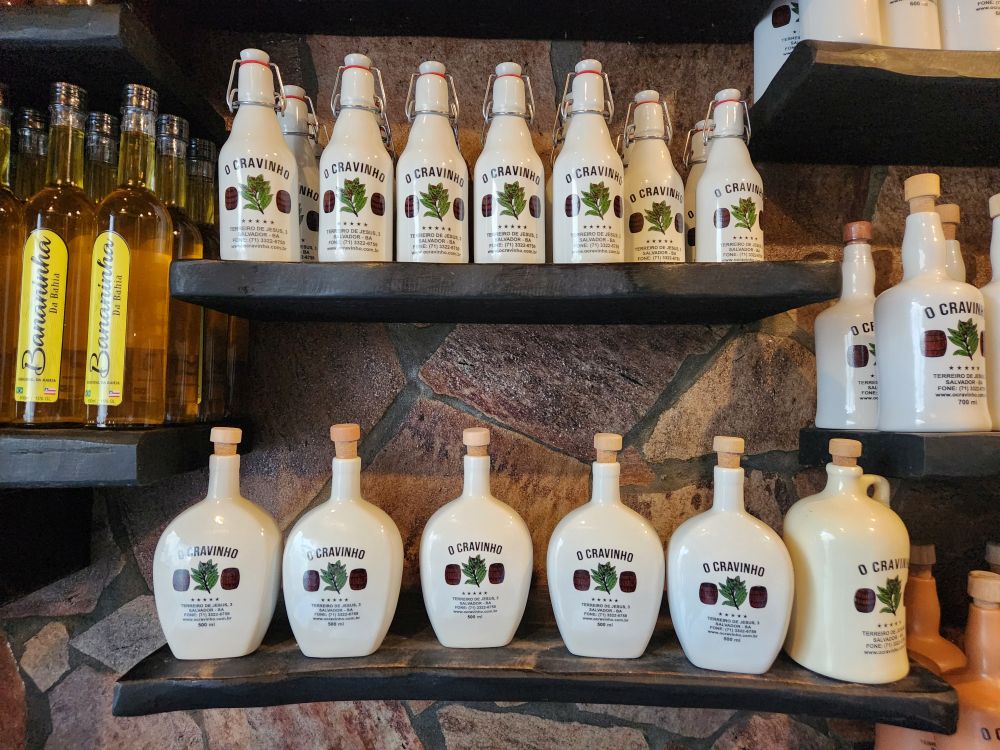
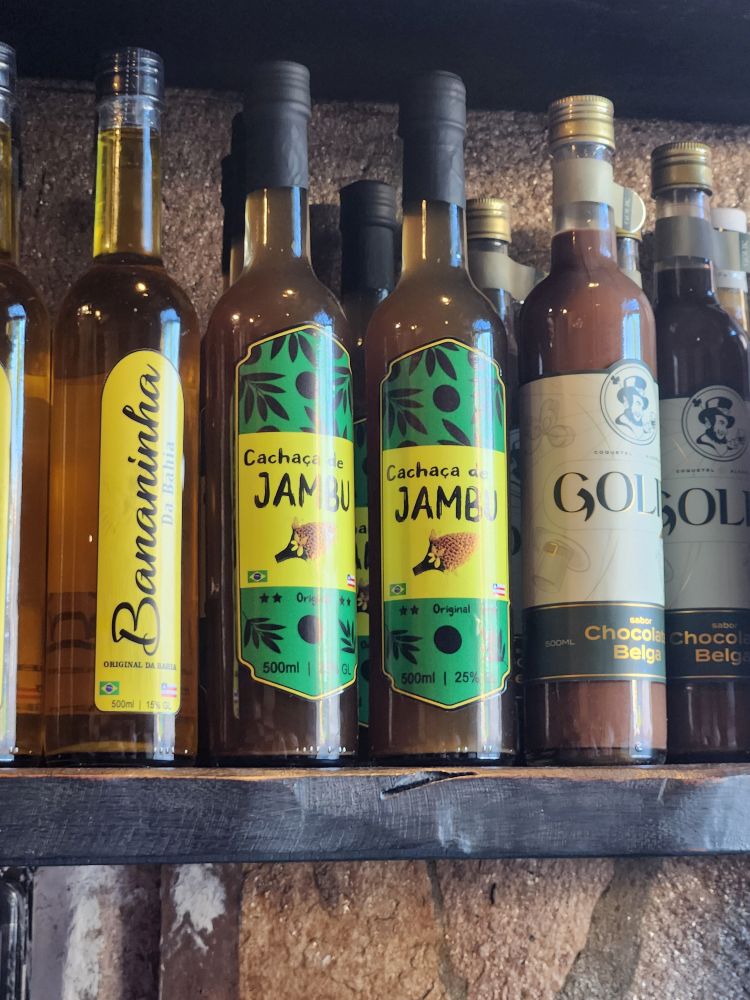
Visit complete, we make our way toward the funicular that will take us down to our ship, stopping for a cachaca tasting. This is the local Brazilian liquor we tried in Paraty that was worse than Ouzo. But here, at O’cravinho, they have all different flavors, and we try a cinnamon type flavor that is actually decent. But then we try the chocolate. Oh no – that is so not good! It tastes like the best, richest chocolate drink….only it packs a punch! Definitely not buying that to bring home, way, way too deadly! But a lovely way to end our tour of the old city of Salvador!
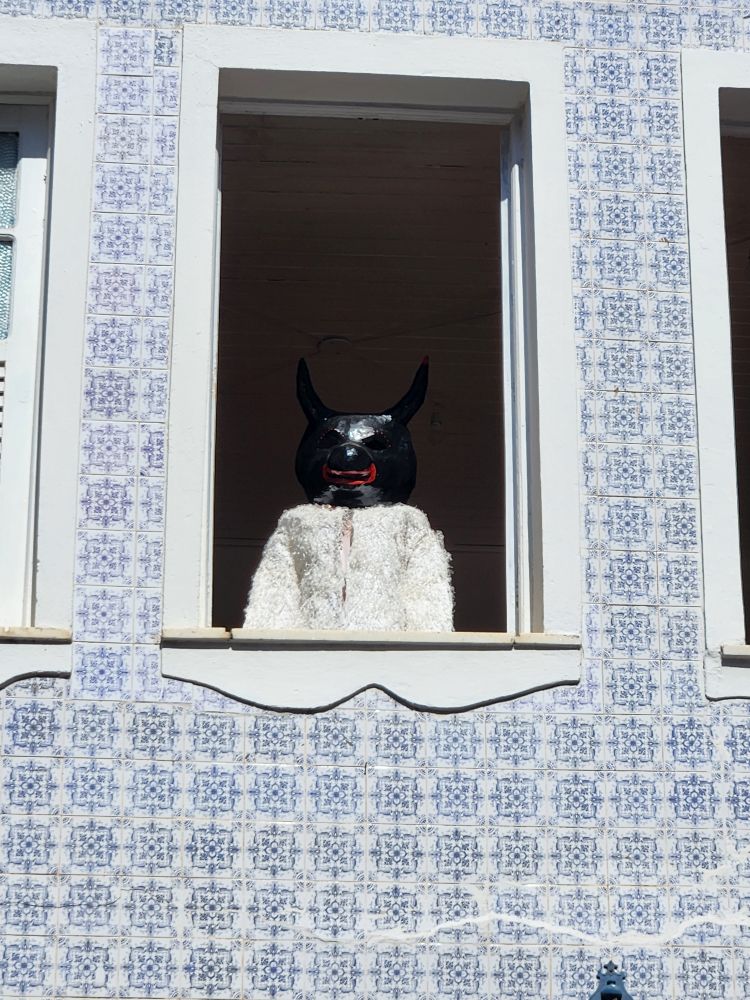
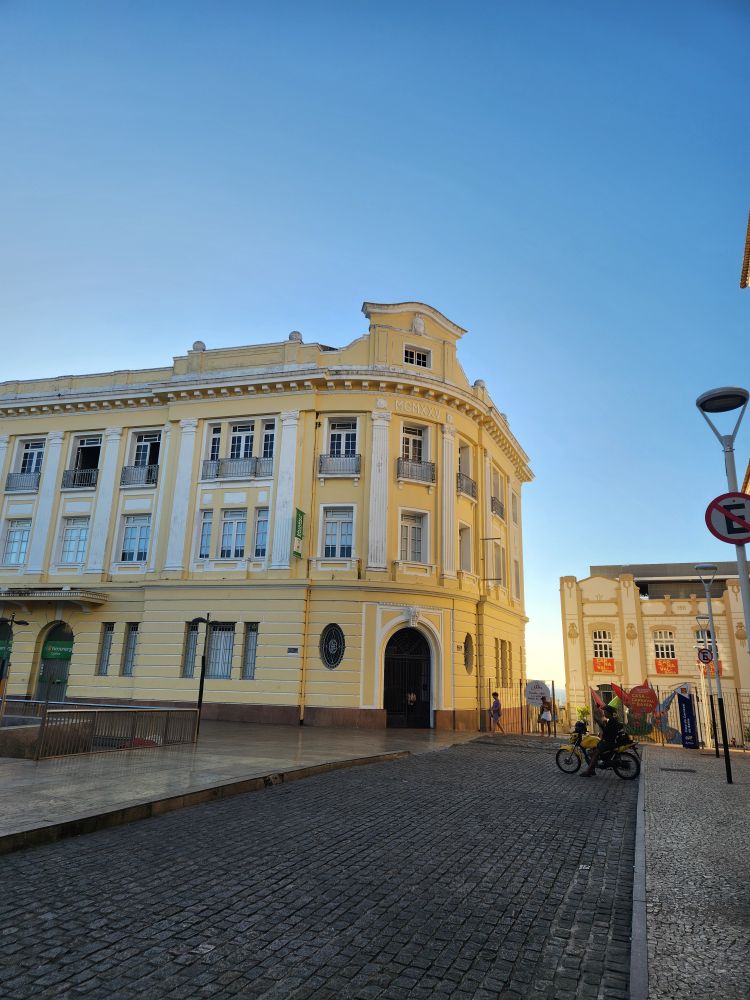
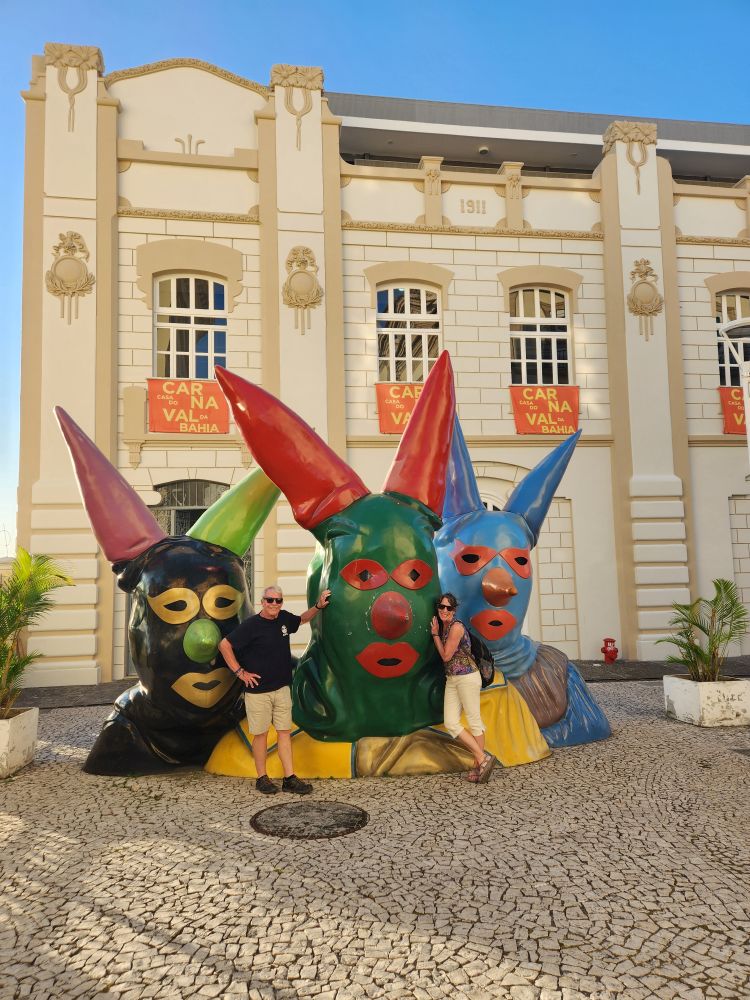
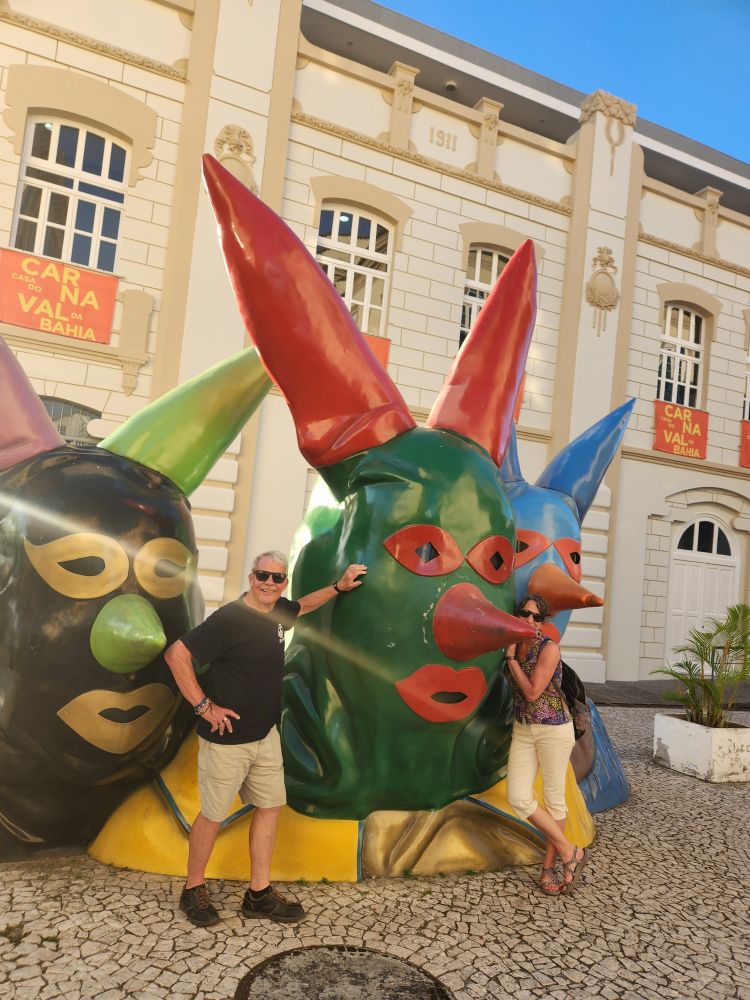
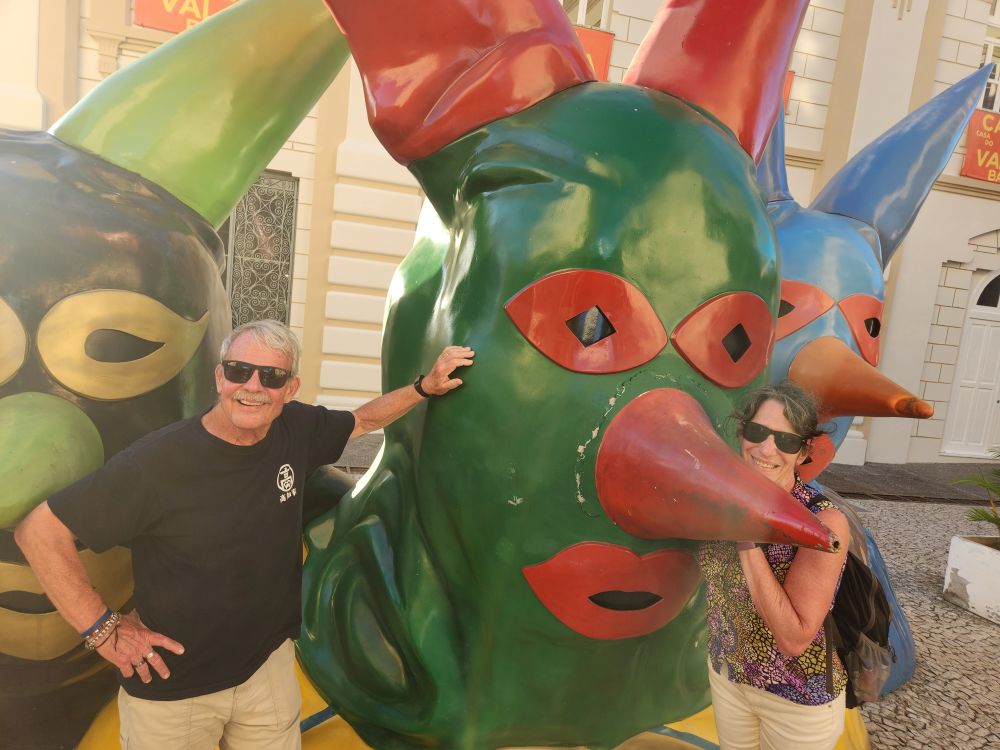
On our way to the funicular, we walk through the courtyard of a theater that still has a display of the big Moi Moi heads from Carnaval – so of course we can’t resist stopping for a photo opp!
Then it is onto the funicular for our quick – and super cheap, still only .15 real each, which is the way we remembered it from way back when – ride back down to sea level.
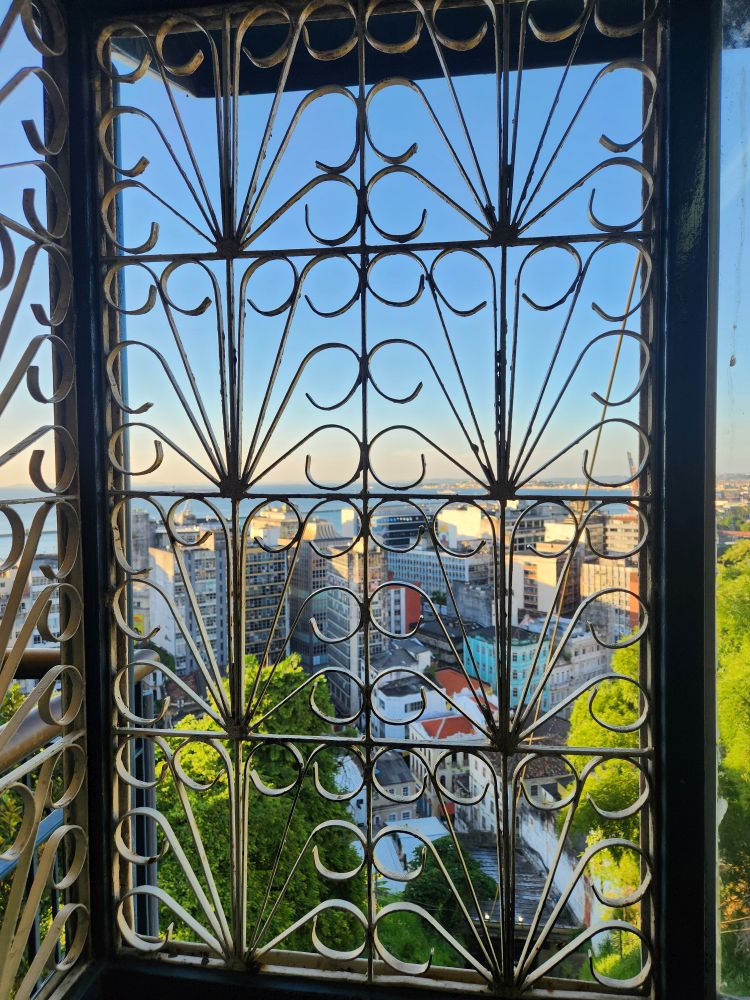
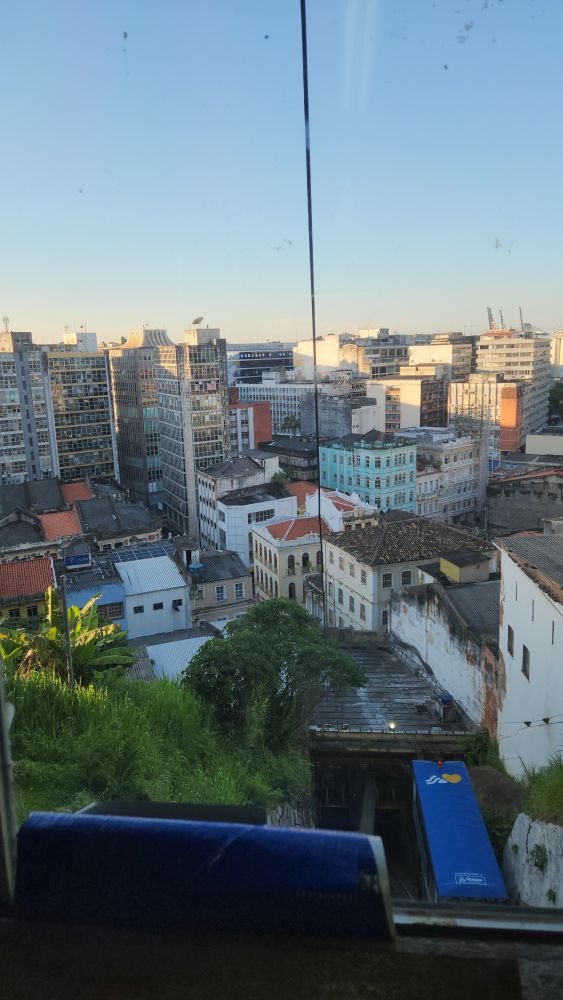
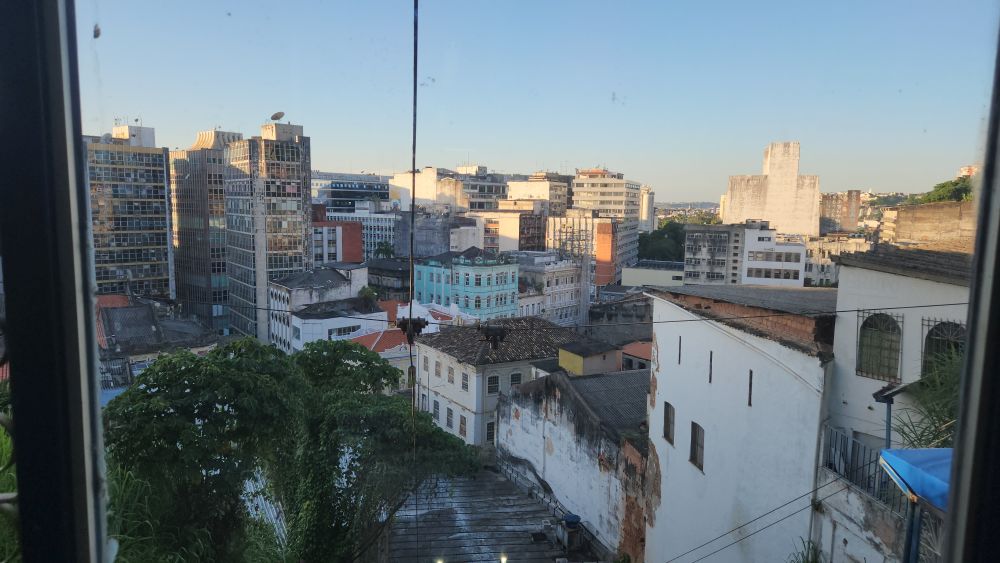
Sayuri escorts us through the old commercial center of the city that is now pretty empty and deserted. Apparently most every business has moved since the pandemic, leaving only a few restaurants and souvenir shops left to occupy the old buildings. After a short walk to the port, we say goodbye to Sayuri, wishing her a happy birthday tomorrow. Another fabulous day with an equally fabulous guide!
Back aboard, we are treated to a spectacular sunset….
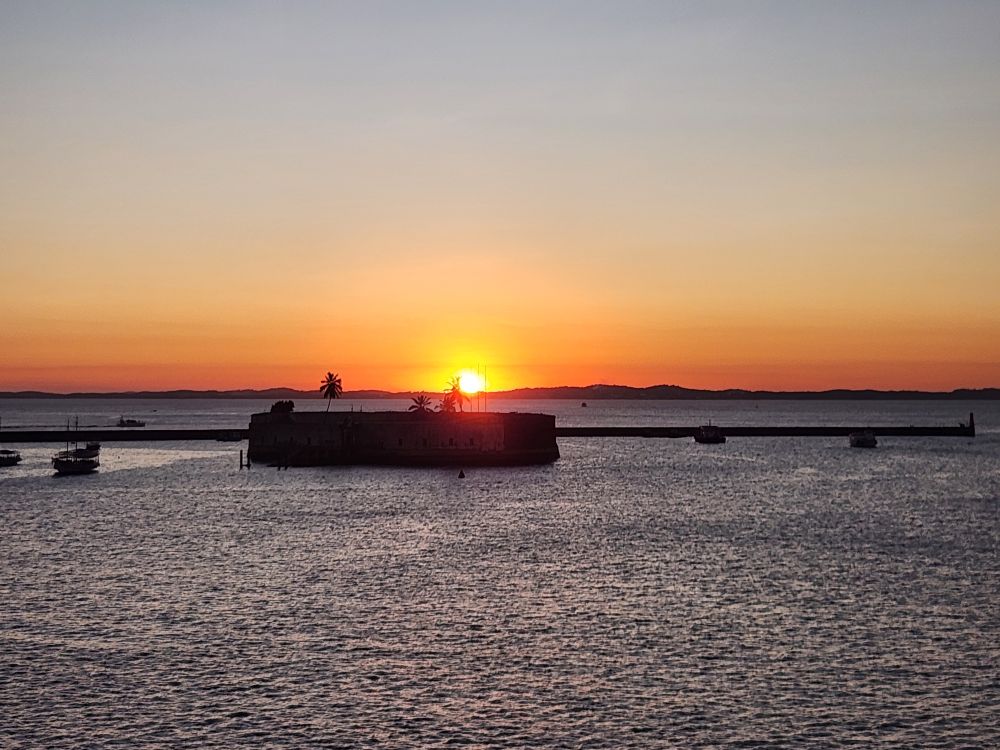
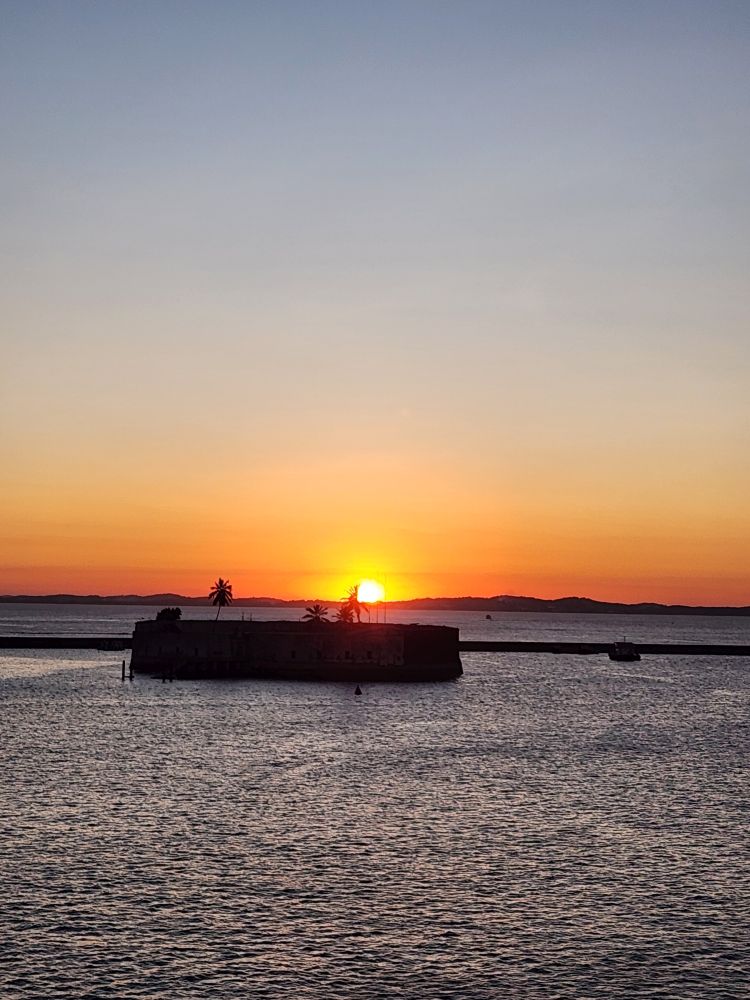
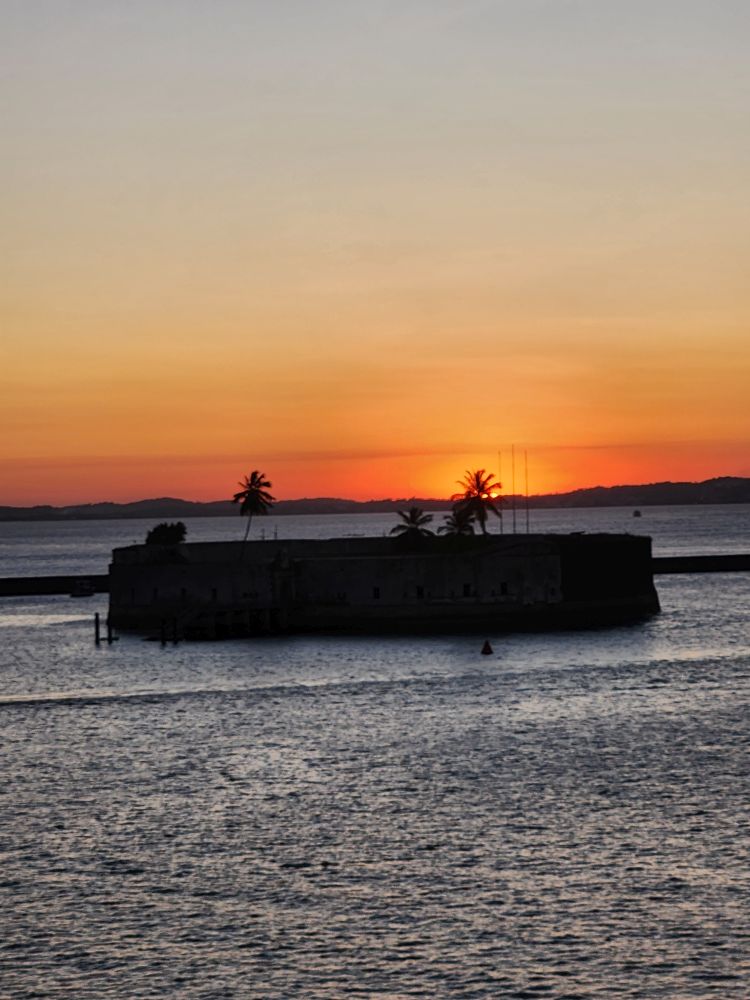
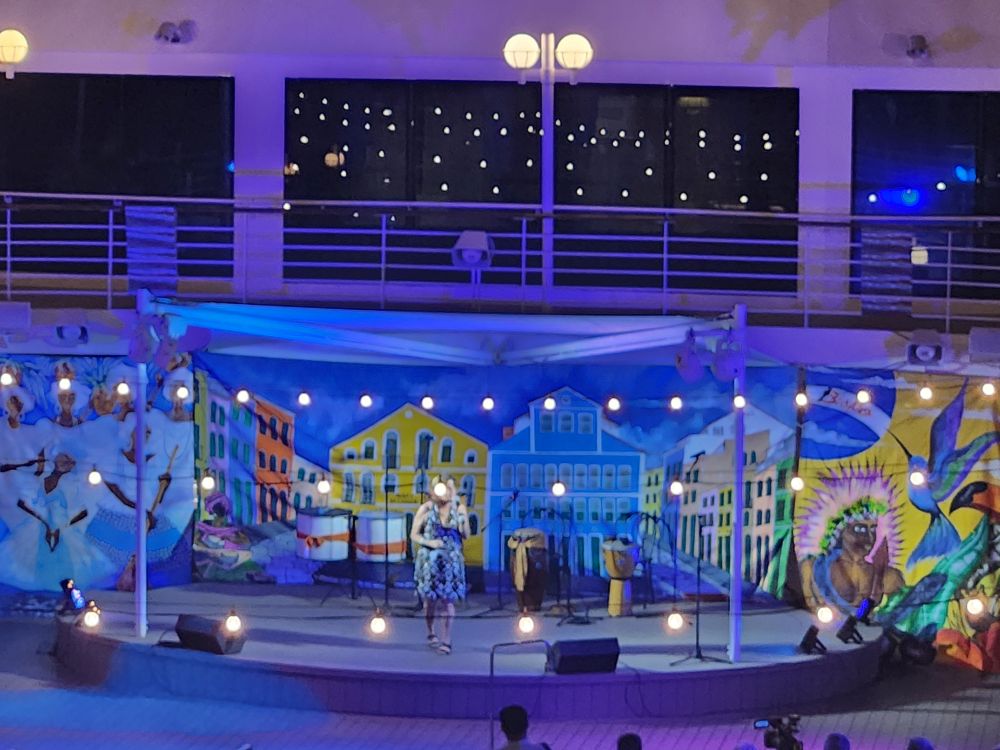
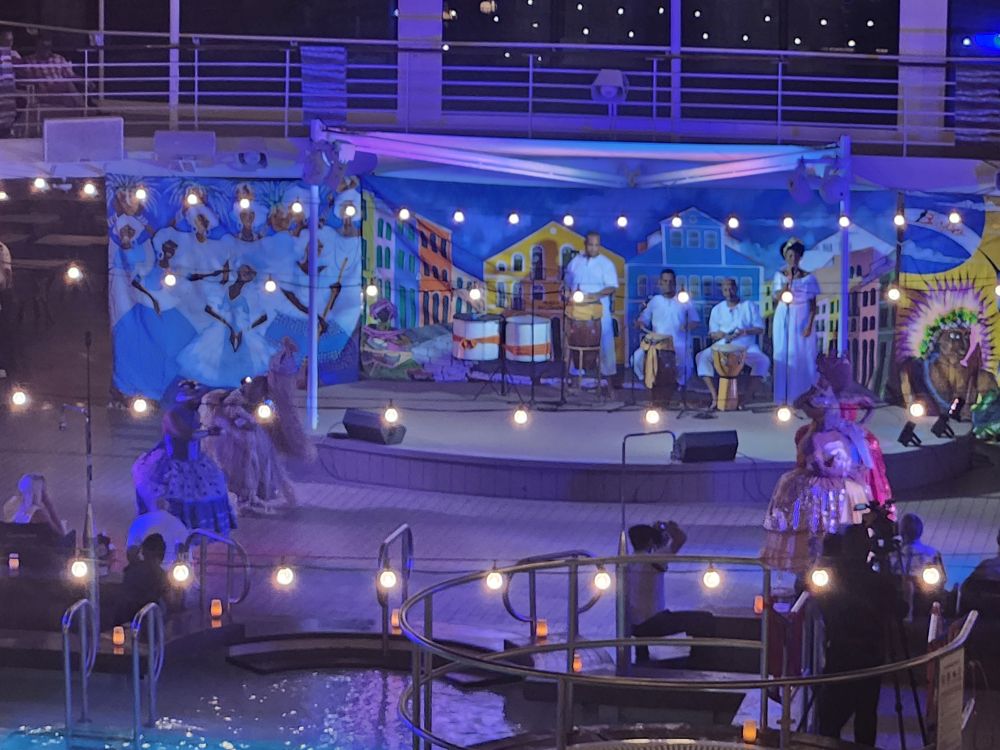
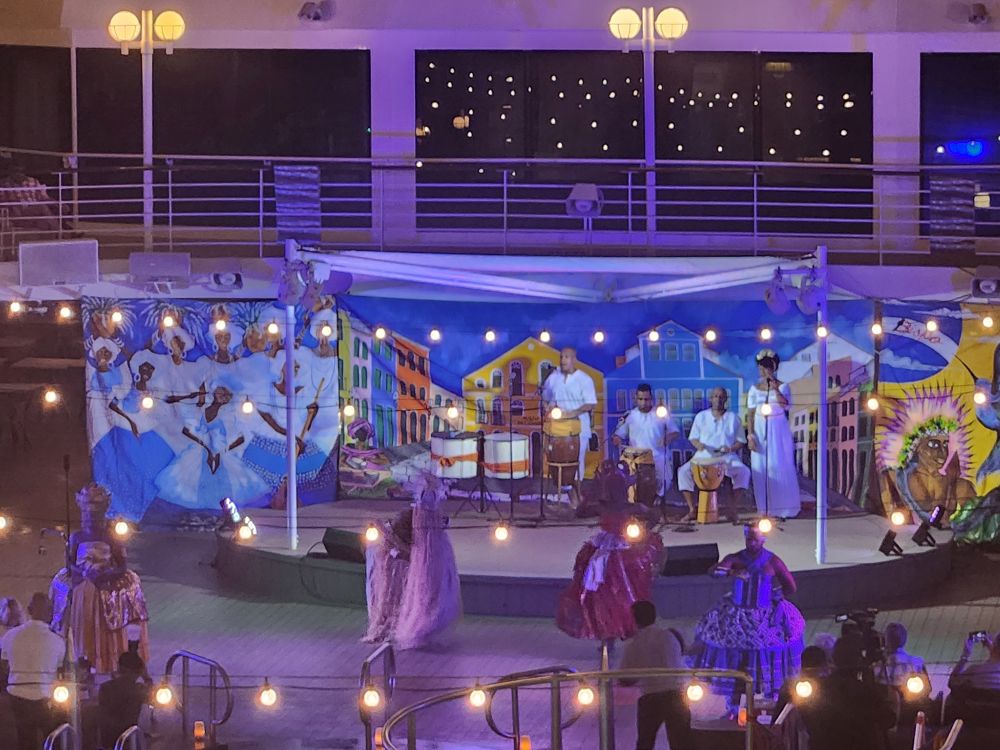
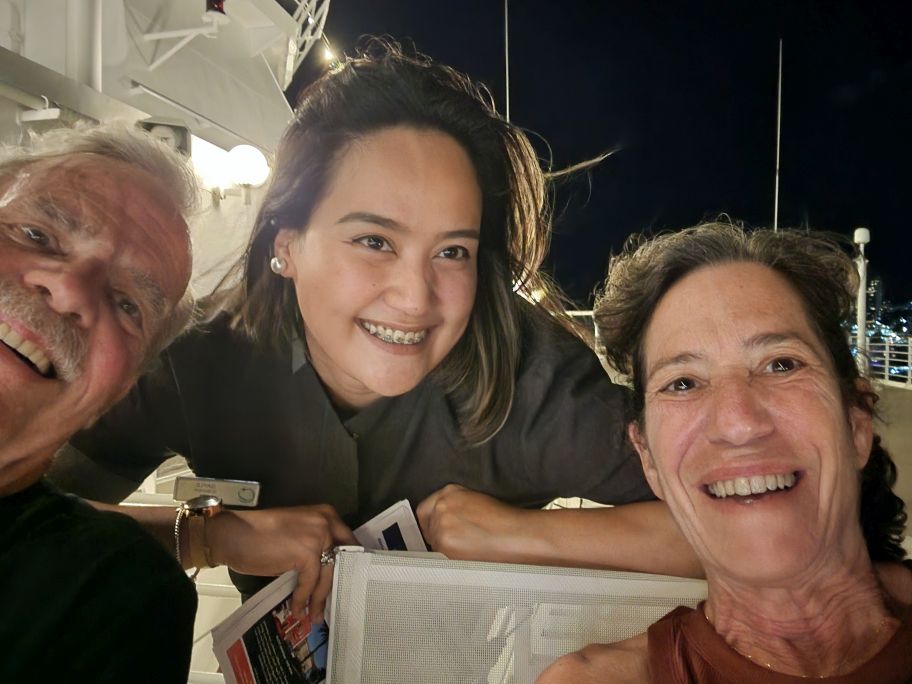
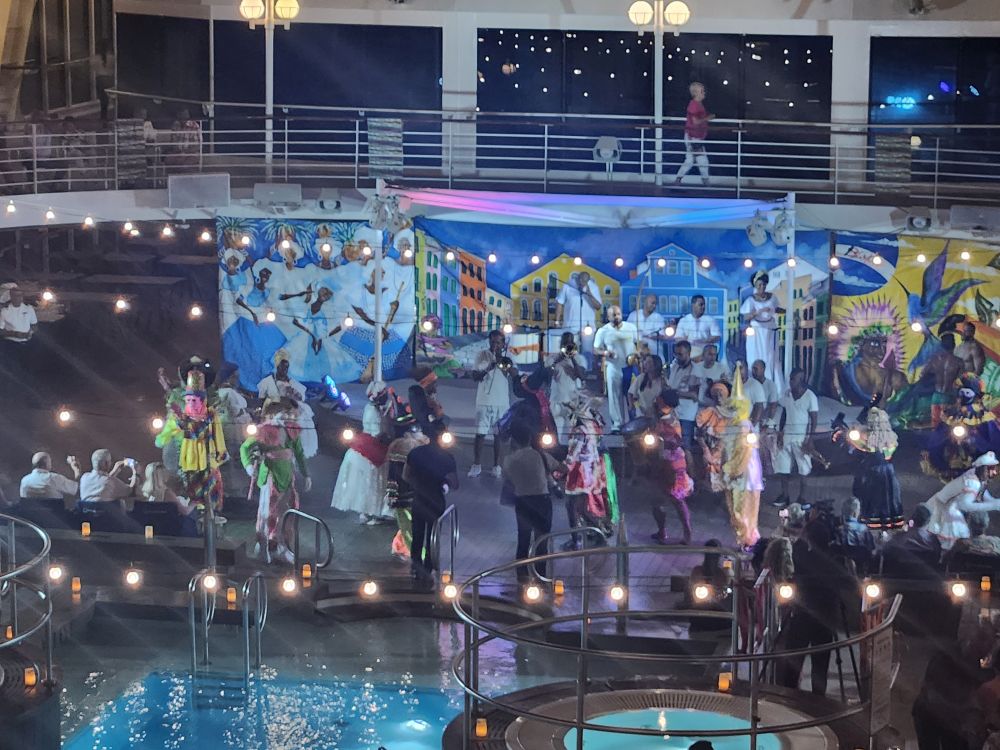
…then we run to the dining room for a quick salad and upstairs to Deck 10 so we can stand in line to get good seats for the Destination Celebration. Doors won’t open until 8, and we want to be in position. But when our doors open at exactly 8pm, other doors have apparently been open for a while, because the deck is completely freaking full. Really? Come on! Sigh – the best laid plans. But, there is a silver lining – we actually go all the way up to the 11 and have birds-eye views of the whole stage and dance floor. And double bonus, Agnello starts bringing chairs up to us. Perfect! Oh – triple bonus! Bar manager Arno is up here and we get his signature. Our night is complete!
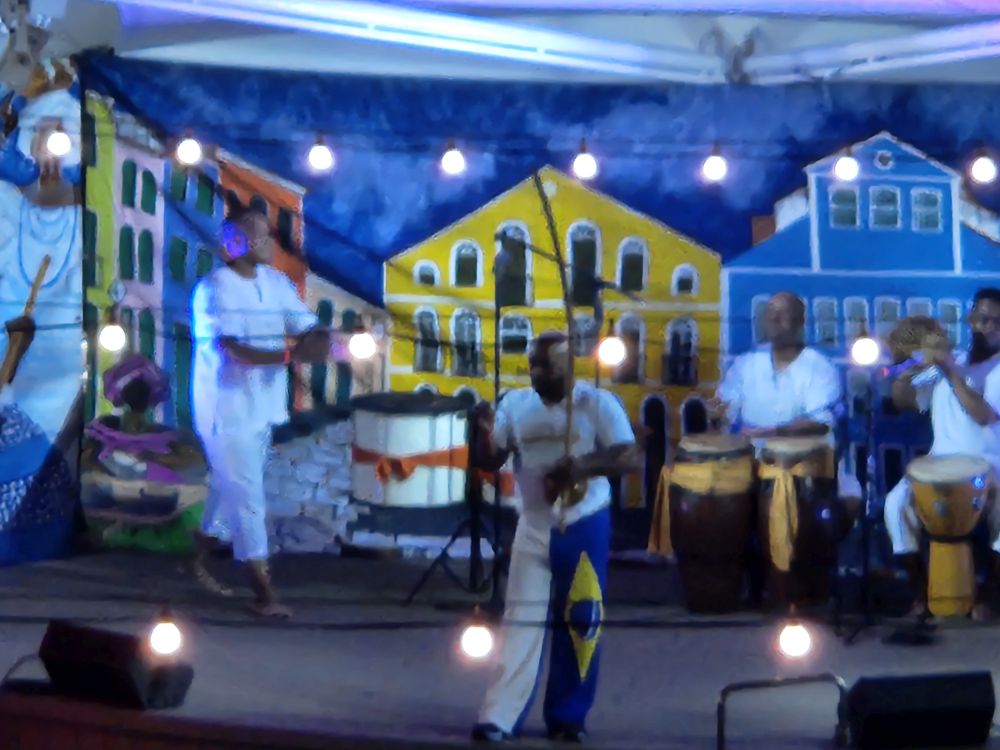
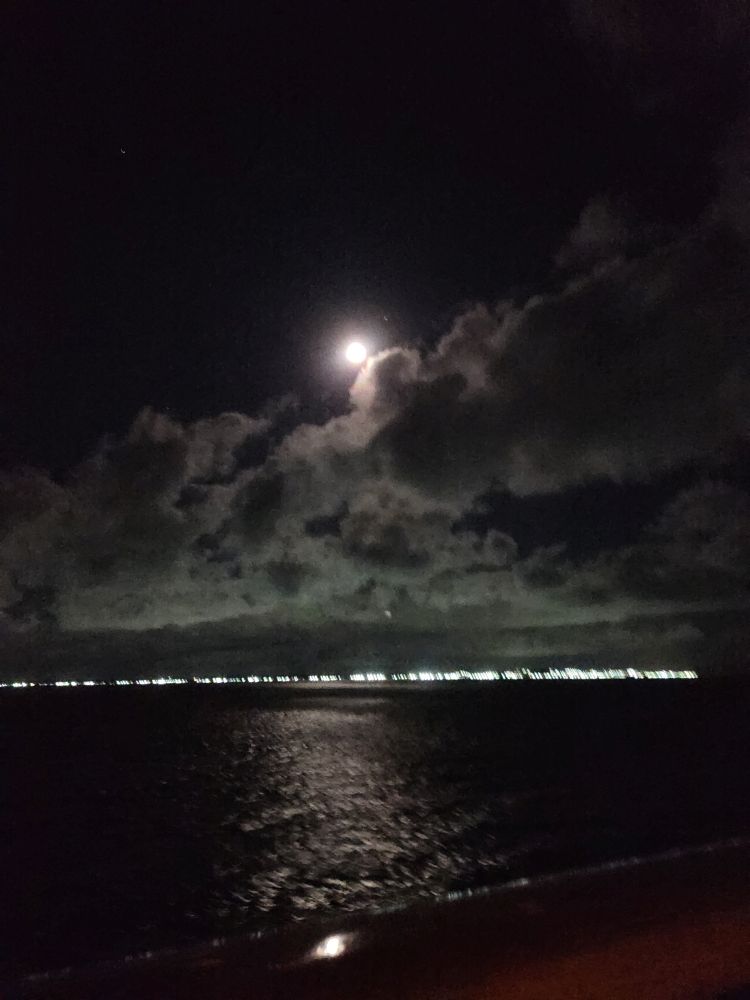
The show begins with some excellent drums – the Olodum music – and traditional Samba dancing then continues with a fabulous troupe of acrobatic dancers. And best yet – Gayle comes us to visit while she is watching the show! Destination Celebration complete – a lovely evening, finished off with a beautiful moon shining over Salvador as we begin our journey across the Atlantic to Portugal. Ciao, ciao Brazil.
 Andiamo