Last day for our HAL cruise – and it has been wonderful all around. Today we had planned to have a private tour around Buenos Aires, but we got a message yesterday that our driver had a “small accident” with his car and couldn’t make our tour today. Scramble! We ended up finding another tour through another company – the Dirty War tour – a historical journey all about the so called “Dirty War” the Argentinian military waged against its populace from 1974 to 1983. We lucked into a guide who was available to pick us up in the morning and bring us back in time for us to get ready for our closed door dinner this evening (a shore excursion through HAL).
As usual, we are off the ship early, but our guide Howard is an early bird as well (having to drive in from over an hour away, he always comes early to avoid the traffic). A lovely and knowledgeable Brit, who moved here when he met and married an Argentinian woman (as we have said dozens of times around the world, “it always involves a woman!”), he takes us on a great tour not just of all the Dirty War sites, but also different places around the city. Because it is so early – too early to visit the museums – we start out driving toward the Rose Garden while Howard gives us a lesson in Argentinean words – like quilombo, which means a complete mess – which is what the cruise terminal is after the earthquake that totally destroyed most of it. And Baludo – which means either do you want to go or a bad word which we will now use for just about everyone who is being, well, an idiot (but worse!).
As we drive, Howard also gives us the tour of the area, pointing out the temporary cruise terminal where we will embark the Quest day after tomorrow, and then onto the Rose garden set around a lake with tons of palm trees that were imported by President Thays who loved architecture and plants and when visiting Europe in the mid-1800s saw the palm trees and brough them back here. The rose garden is closed today, yep it’s a Monday, so we end up just walking around the perimeter, but it is a beautiful sunny day and a lovely little walk to start our tour off on the right foot.
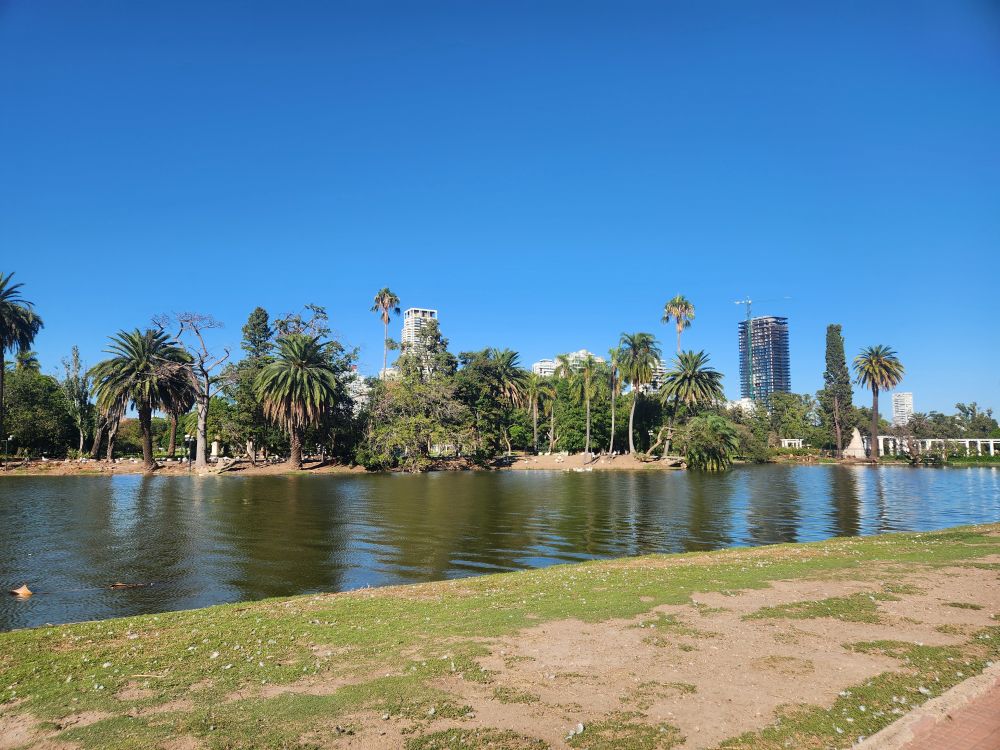
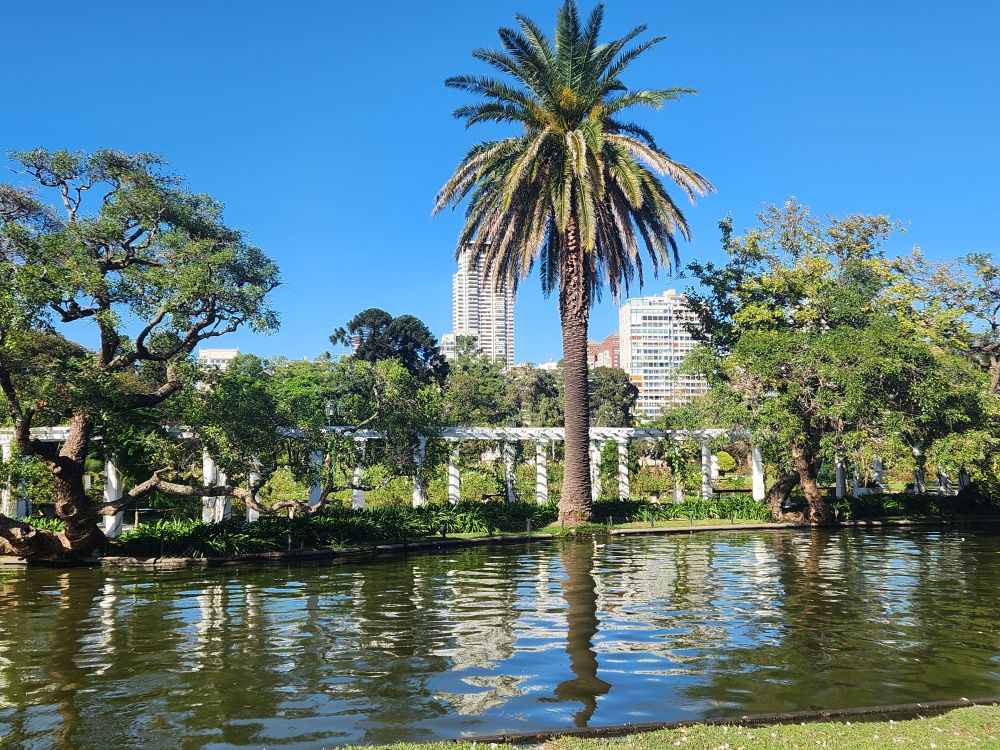
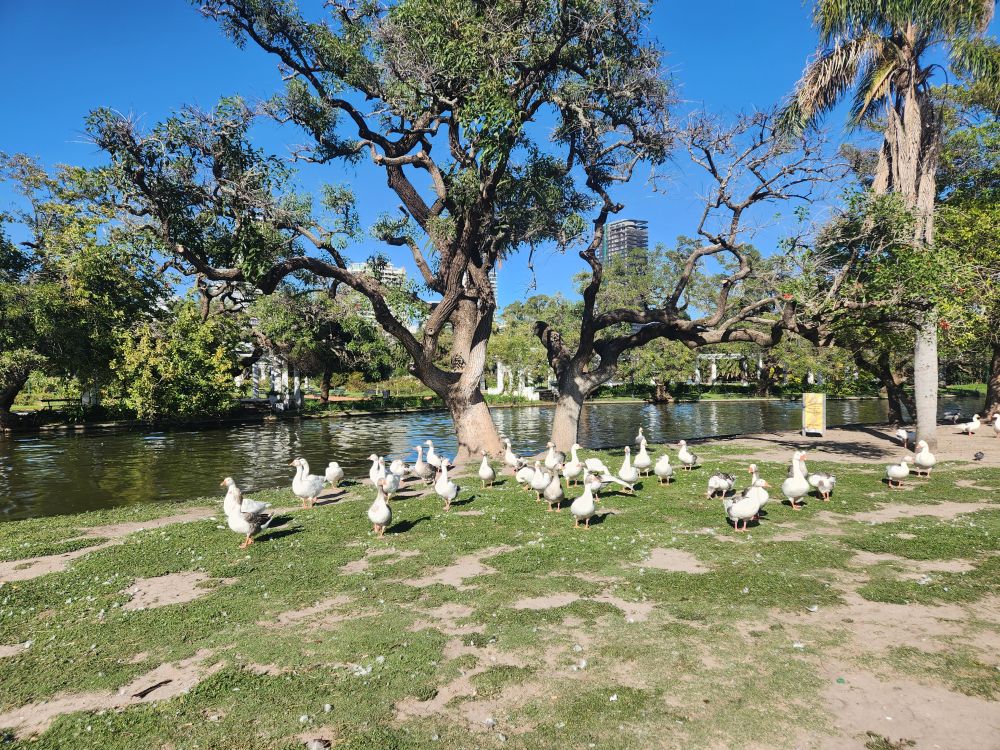
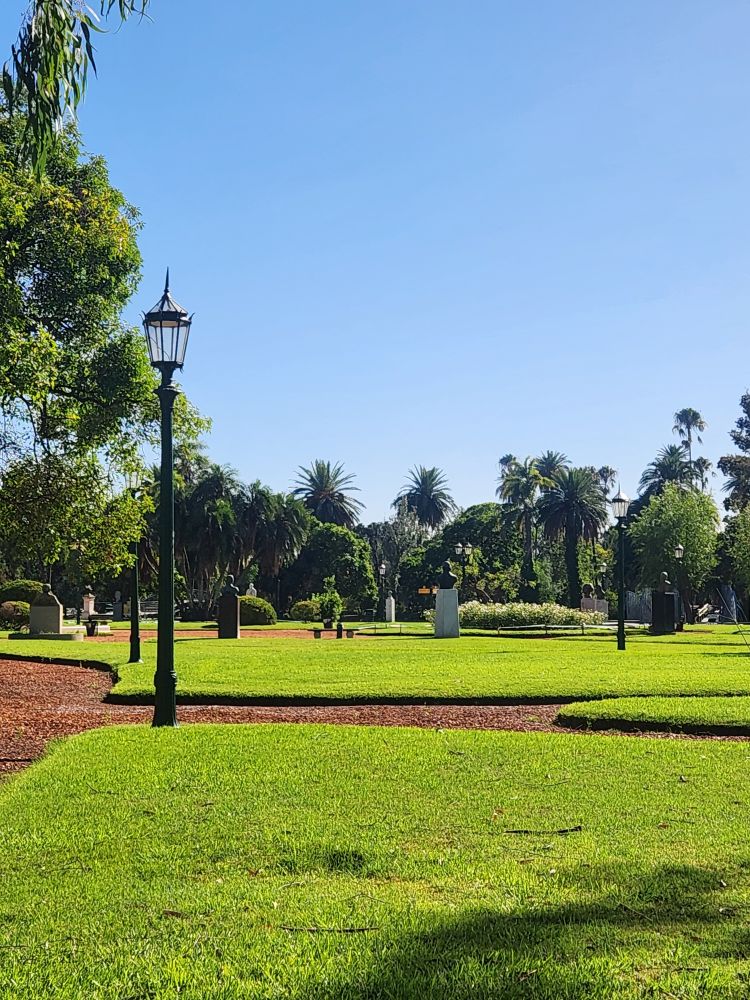
Walking back through part of the park we learn that the main avenue here is JFK Avenue, and that the American Embassy is on the corner across from the park. The story goes that the American ambassador at the time fell in love with the building which was then the French Embassy. When the French wanted to sell it, the ambassador offered them 3x the asking price. No comment!
Our next stop is the Parque de la Memoria – Monumento a las Victimas del Terrorismo de Estado. Essentially a memorial to the victims of the State terrorism. Here, we walk past sign posts that tell the haunting history of the almost decade of torture. A visual depiction of all the dictatorships across the continent, a communique announcing the dictatorship to the public and recommending that they “strictly comply” with directives given by the military, the outlawing of public meetings or gatherings, how the Government used Ford Falcons to kidnap people, setting up shop at the Ford factory, intimidating workers at gunpoint, how more than 360 clandestine detention centers operated around the country.
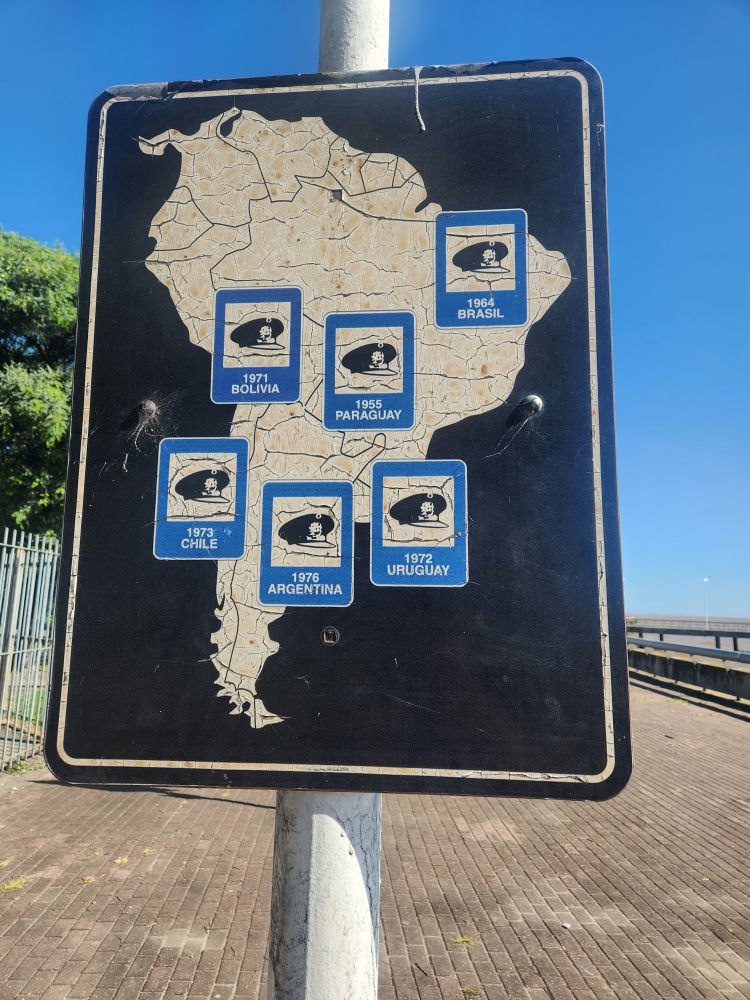
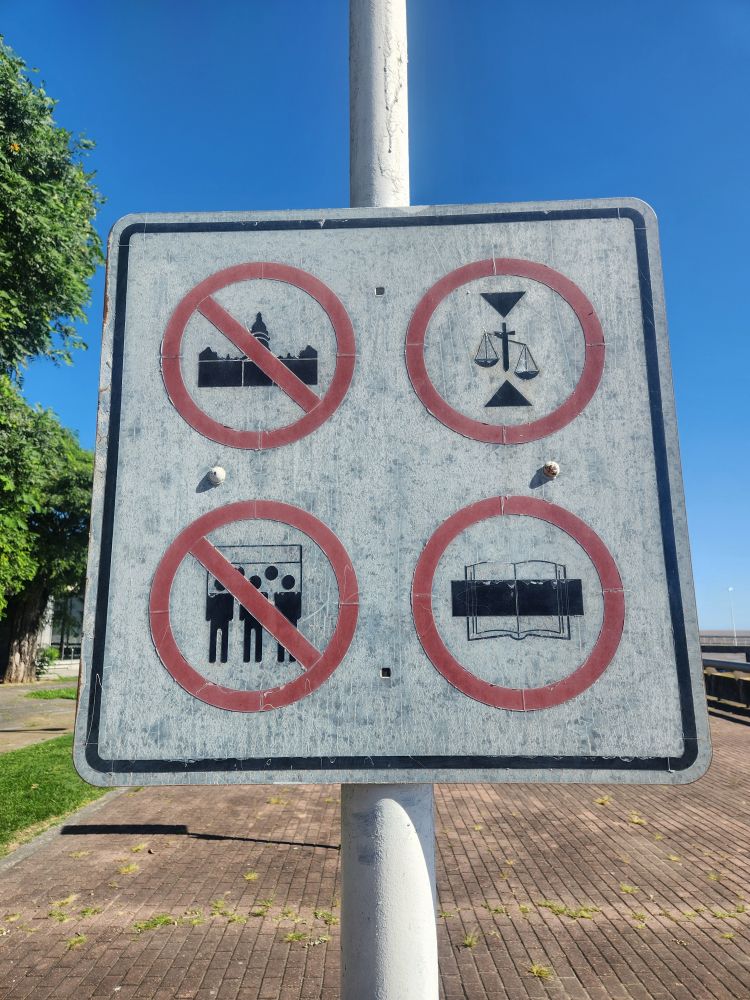
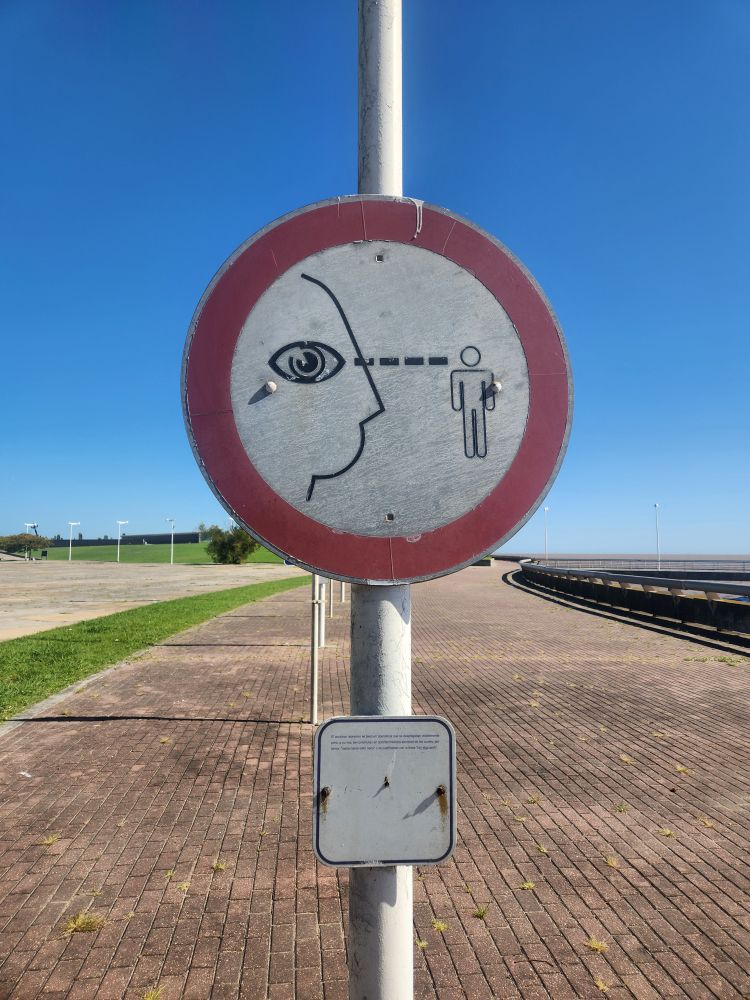
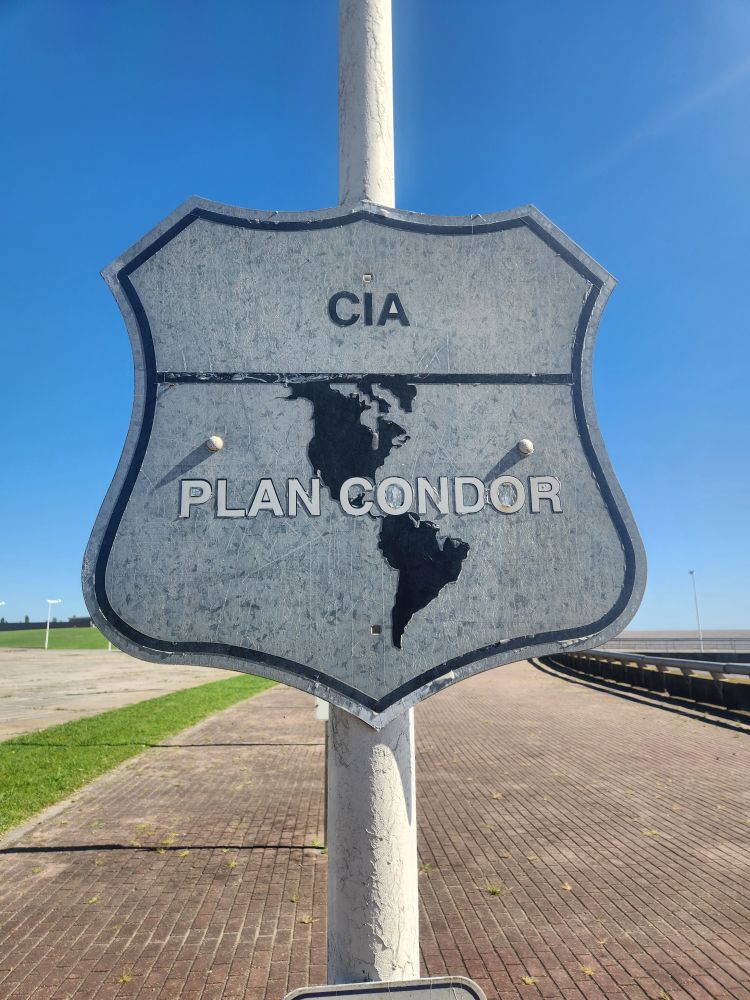

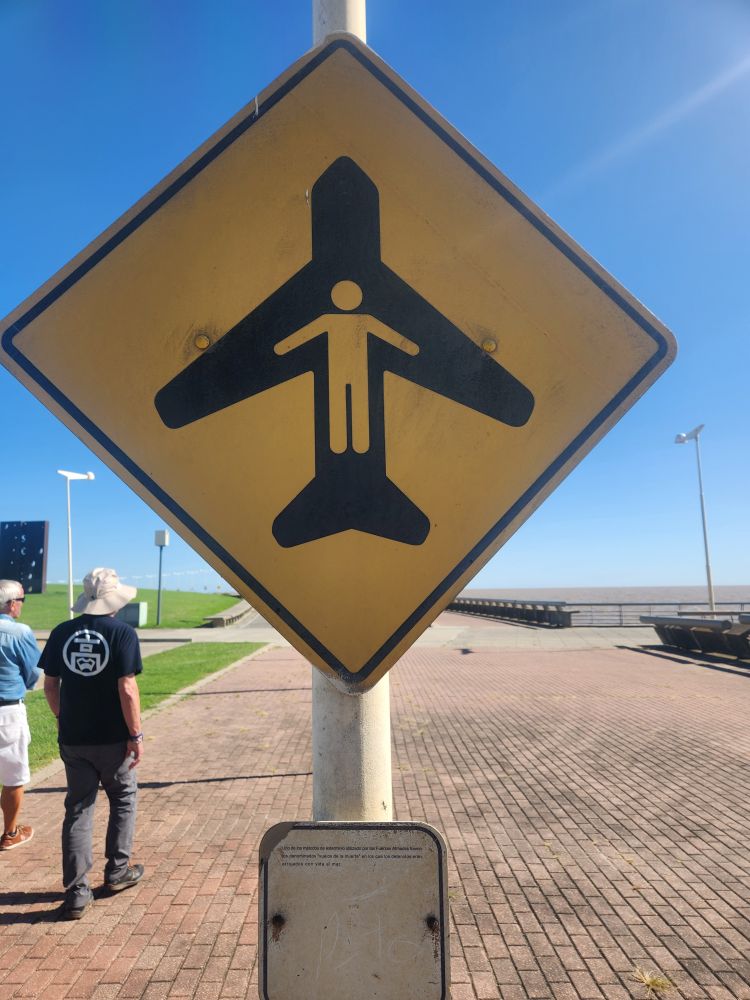
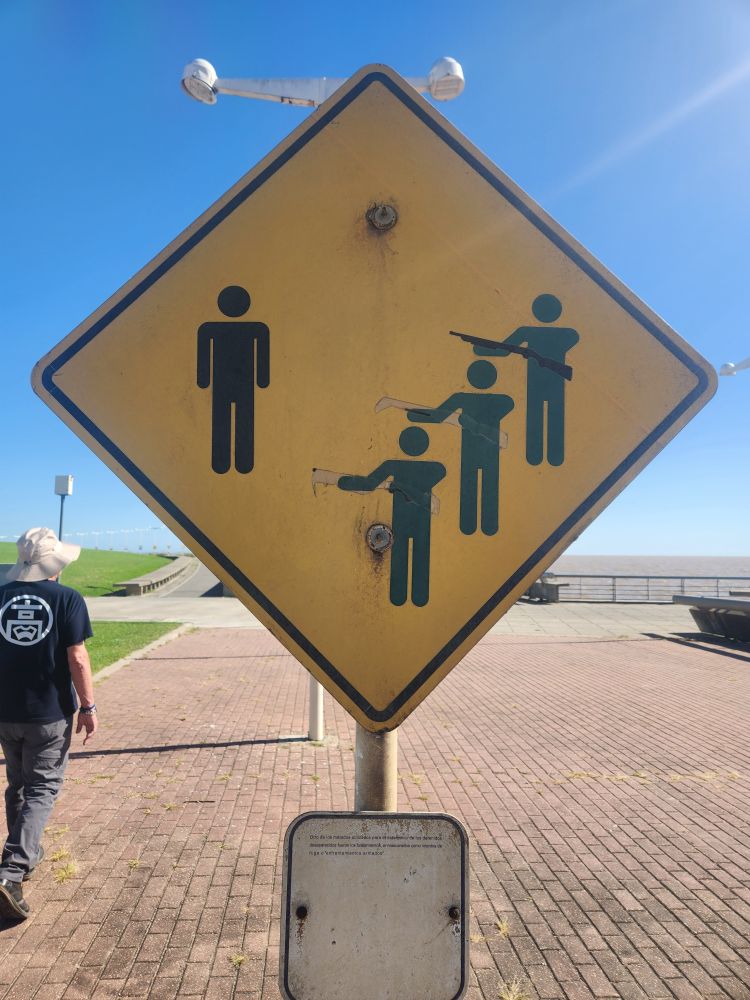
In such a beautiful setting, a very sobering story to be told and remembered. The location was chosen with the University in sight, because that is where most of the students were taken, and the memorial is also near the spot in the river where the military planes would dump the bodies – dead and alive.
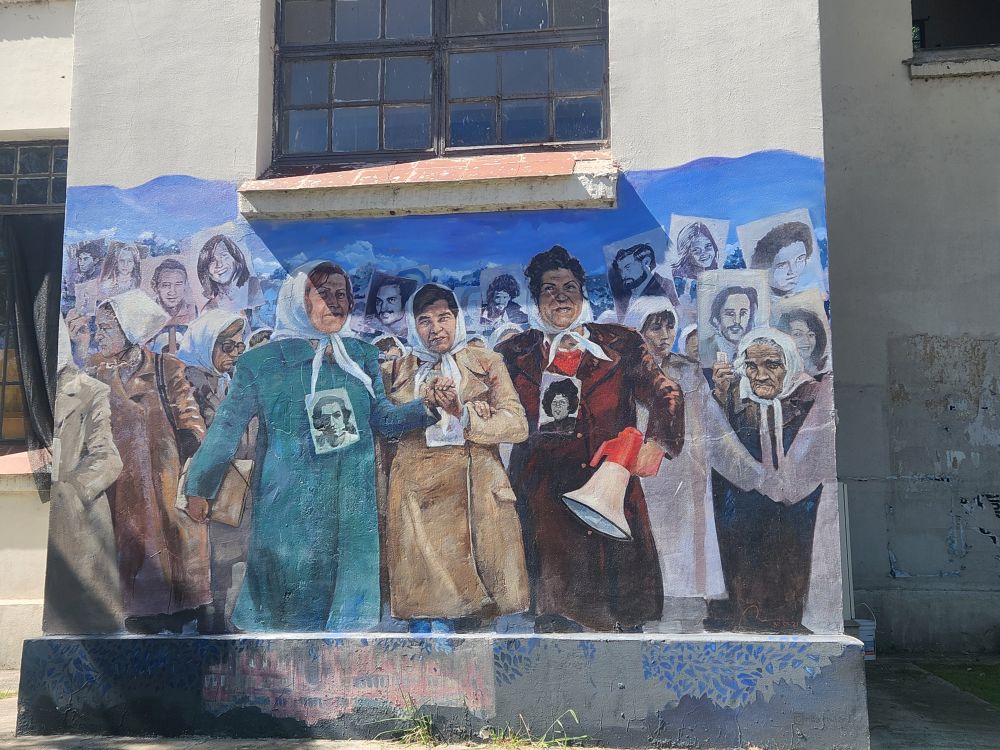
Walking toward the monument walls – sort of like the Vietnam Memorial wall in DC – Howard tells us about the Abuelas who, in 1977, started marching around Plaza de Mayo every Thursday at 3:30 to protest all of the thousands of people being disappeared. They all have one thing in common – a family member that has disappeared without a trace. They still today march, the few that are left, wearing the white scarf and holding pictures of their loved ones.
The monument itself is a series of 4 walls, each depicting a different year or series of year of disappearances. It is estimated that 30,000 people were taken away – never to return. The years of 1976 and 1977 were the worst years for disappearance, each with their own wall. And the most astonishing thing was this was all happening secretly -at least from a worldwide perspective. Juan Peron was in the middle of it all – Eva must have been turning over in her grave – the church was involved with the Junta, standing side by side, allowing all this to happen. Pregnant women were taken, tortured, had their babies and then they would both disappeared. No one outside the country or probably S. America, knew what was going on until the government decided to hold the 1978 World Cup here. The Cup itself was rigged so that Argentina would win, but as it happened, the reporters here for the match found out about all the disappearances and begin to investigate and report. Crazy, awful, sad.
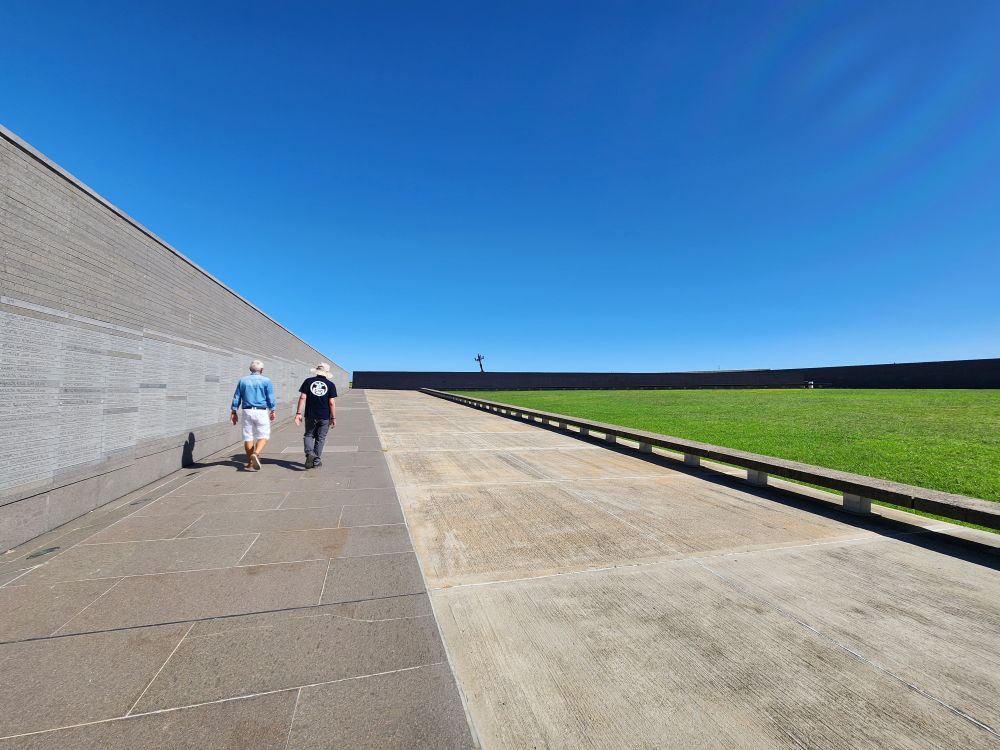
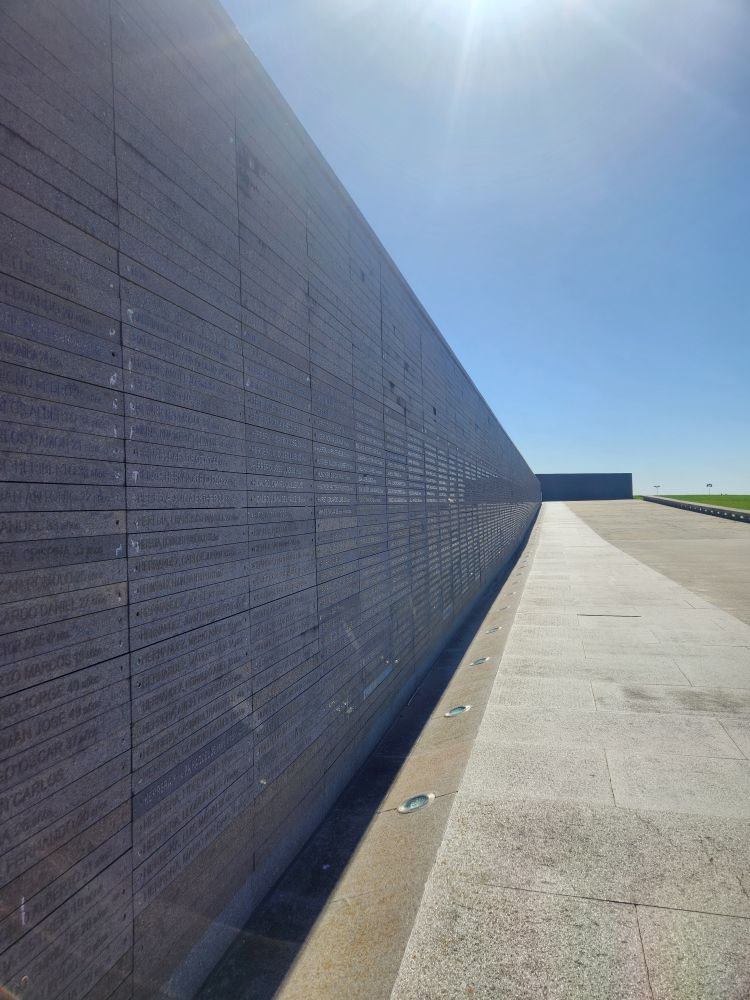
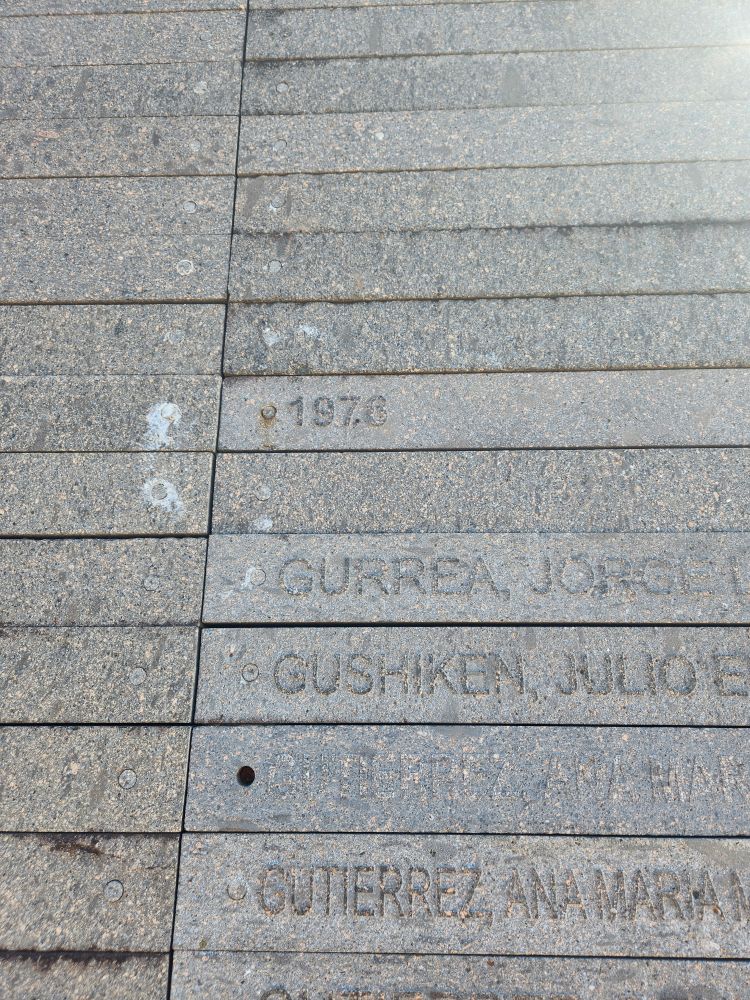
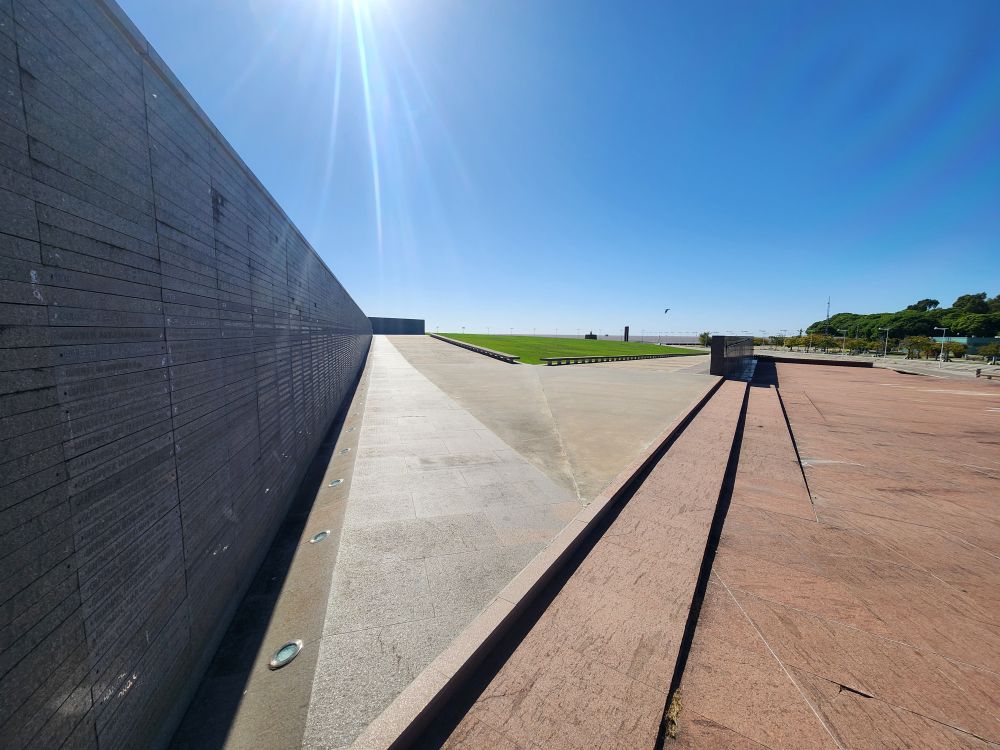
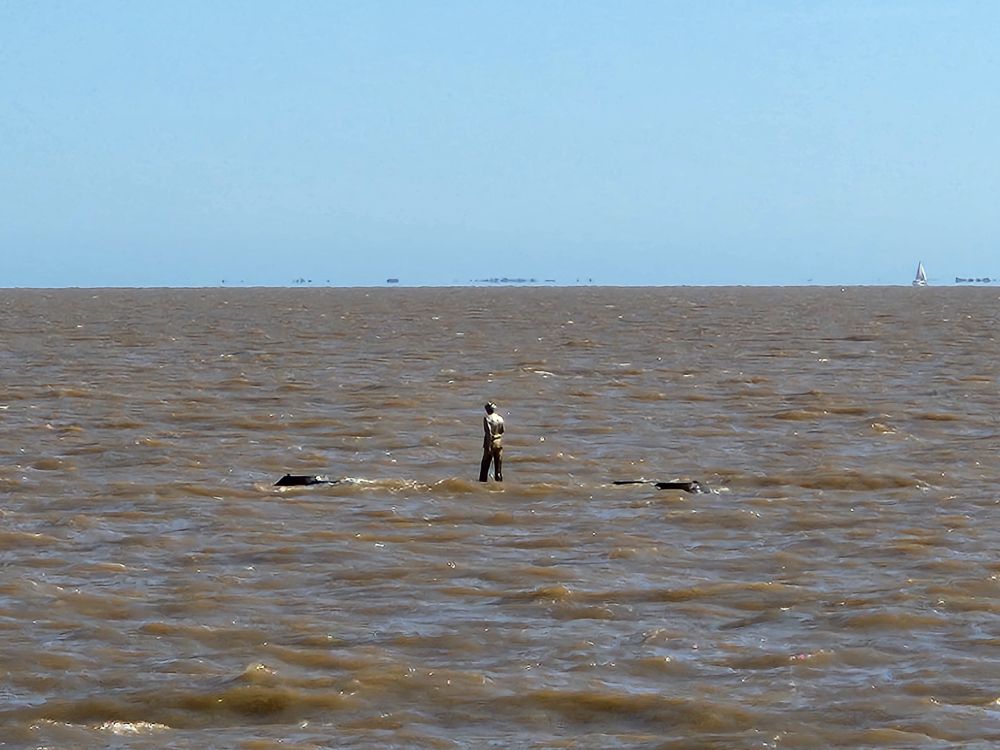
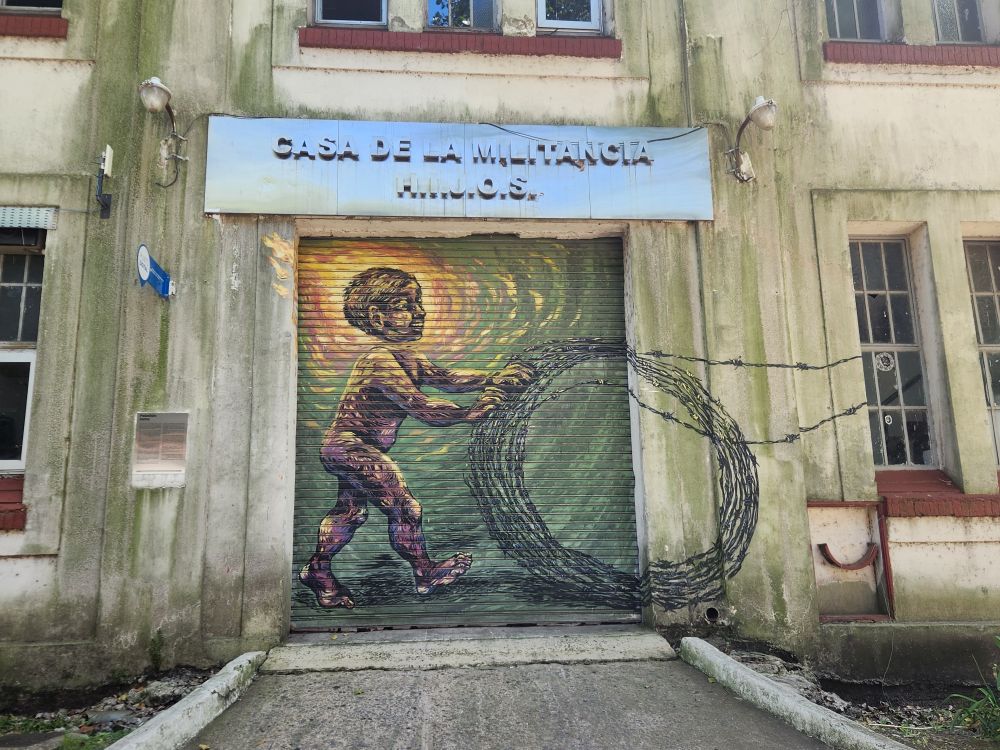
Near the wall is a statue depicting all the tools of torture, soldered together. And out in the water is a statue of a boy looking into sea, trying to find his lost family that were taken.
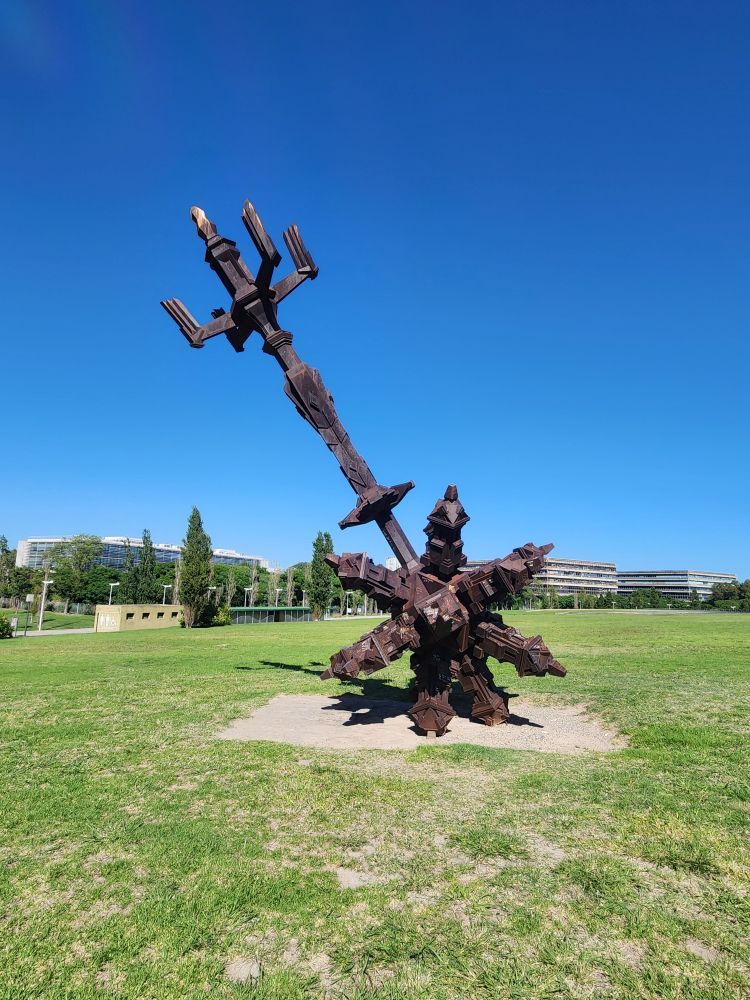
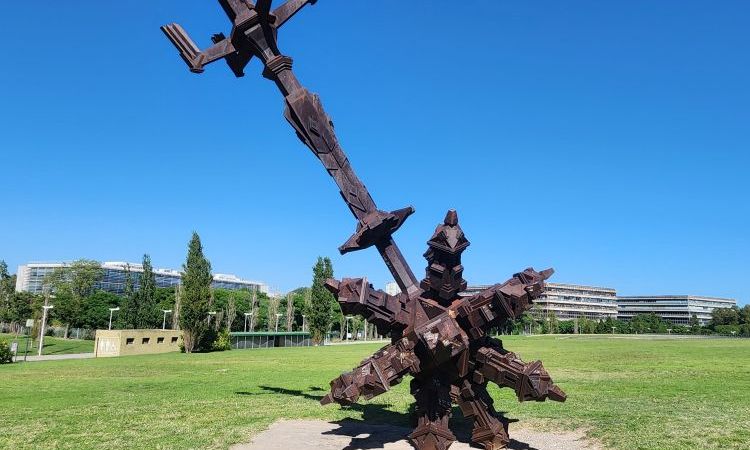
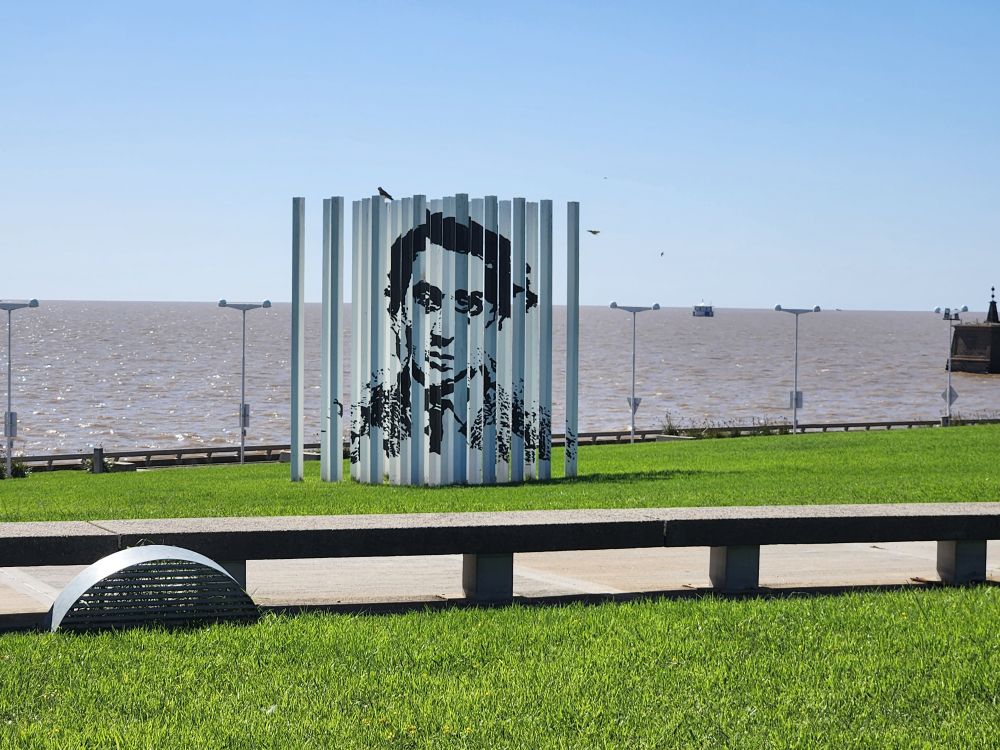
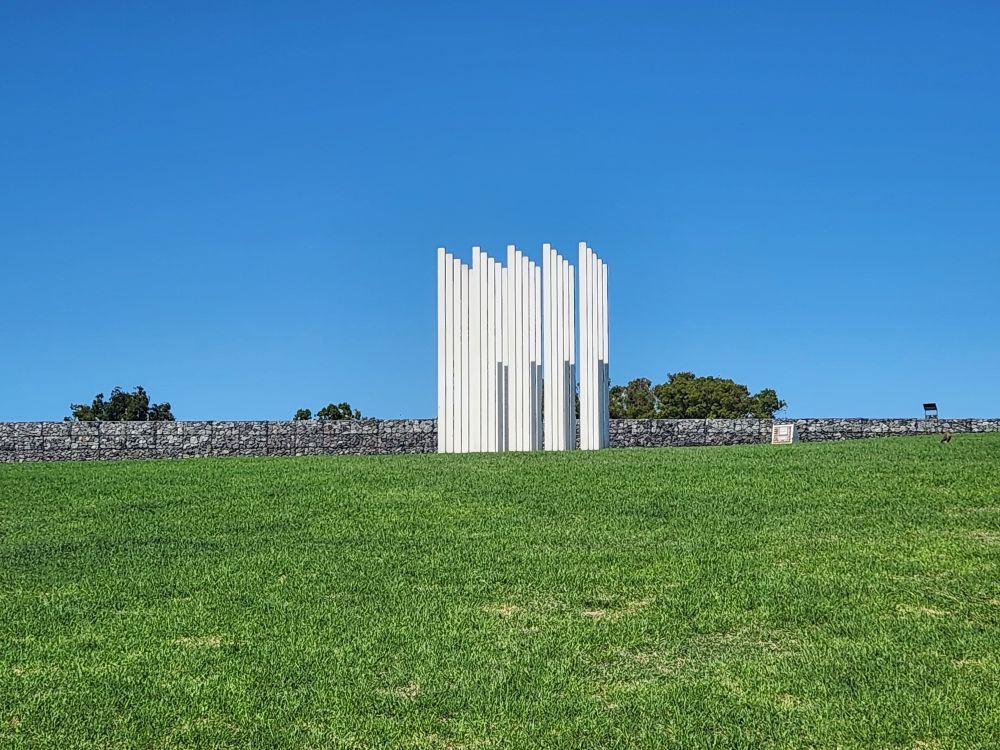
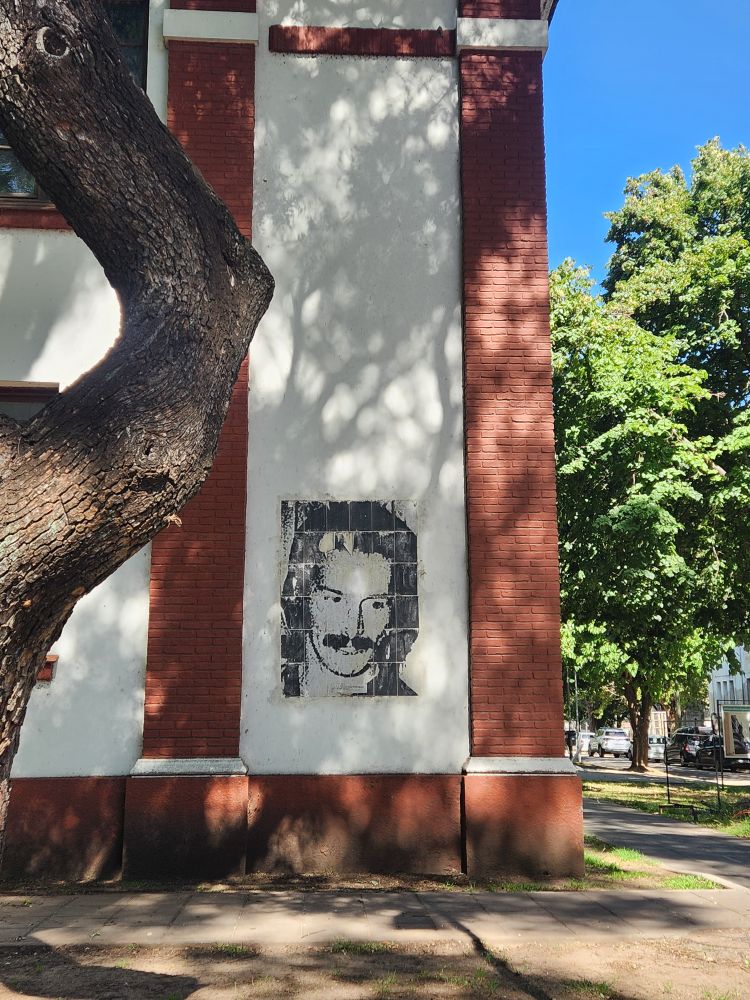
There is also a cool exhibit of tall flat steel posts that have the head of a man painted on them in black and white. This is the father of the artist who designed the park – and when you walk around at certain angles, the picture of the man disappears, just like he did. Phew.
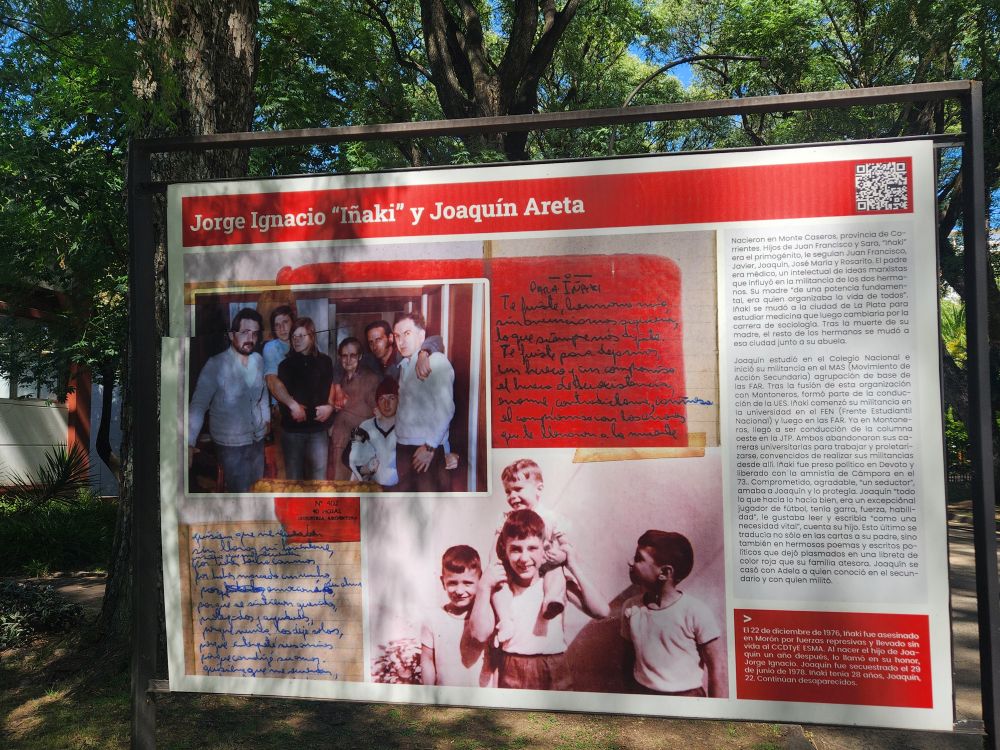
Next we head to the ESMA Naval Training school, the cadet training facility where they military took people to torture – while the cadets were there training! Now a museum and monument to the Dirty War, with large posters telling the stories of people who were disappeared, photos of the people (i.e., bodies) still not found and an explanation about the Ford Falcons used to kidnap people.
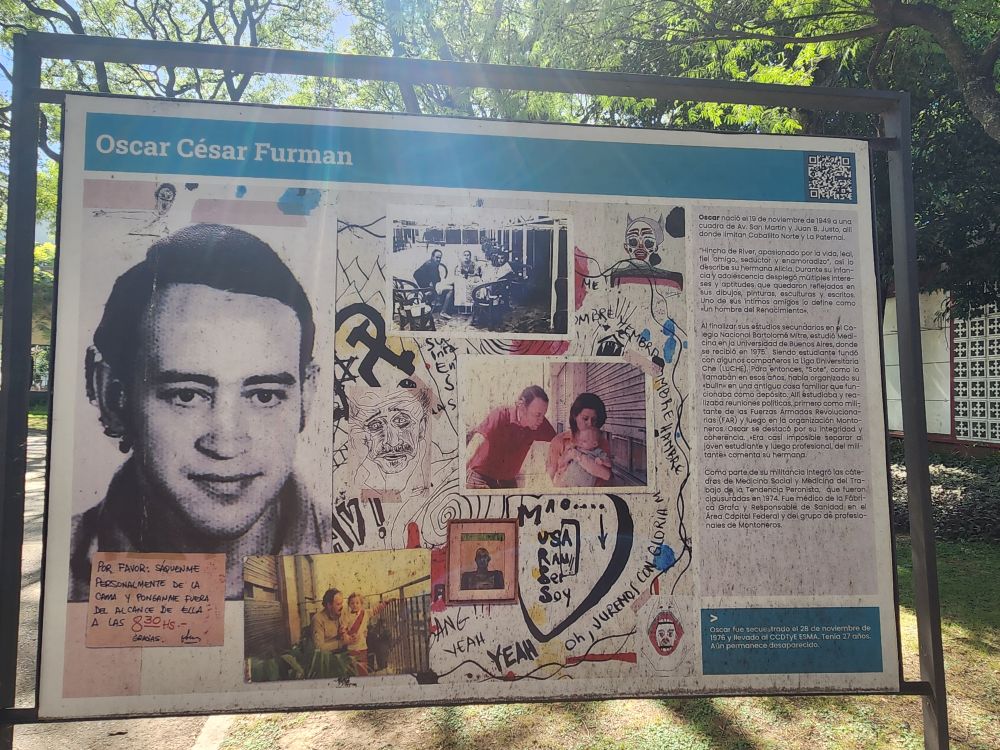
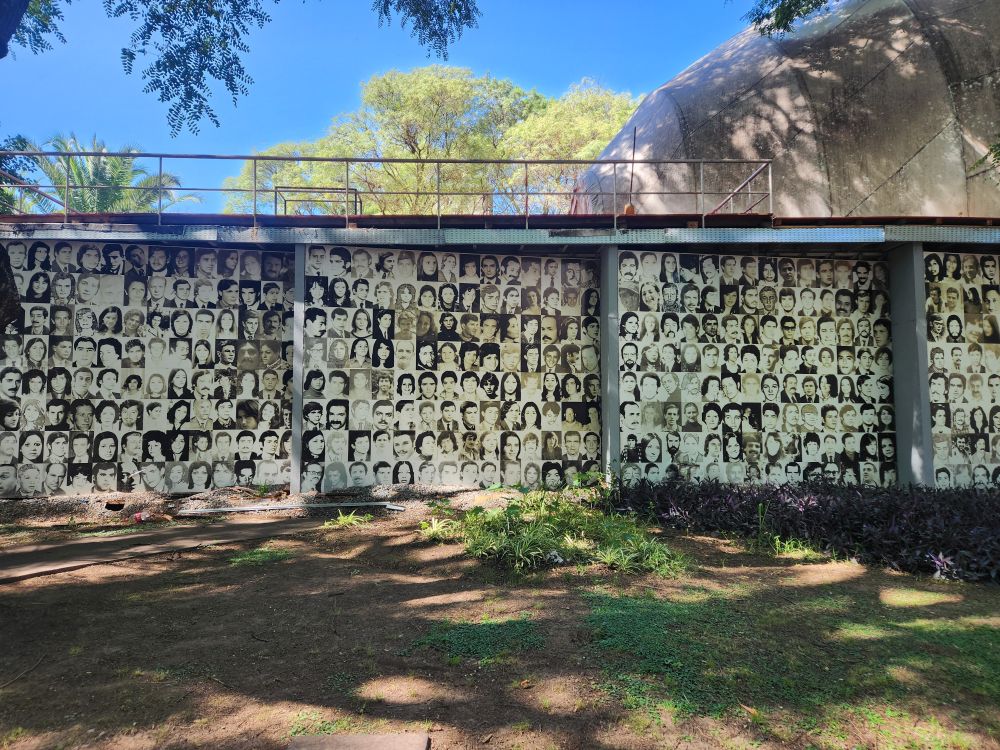
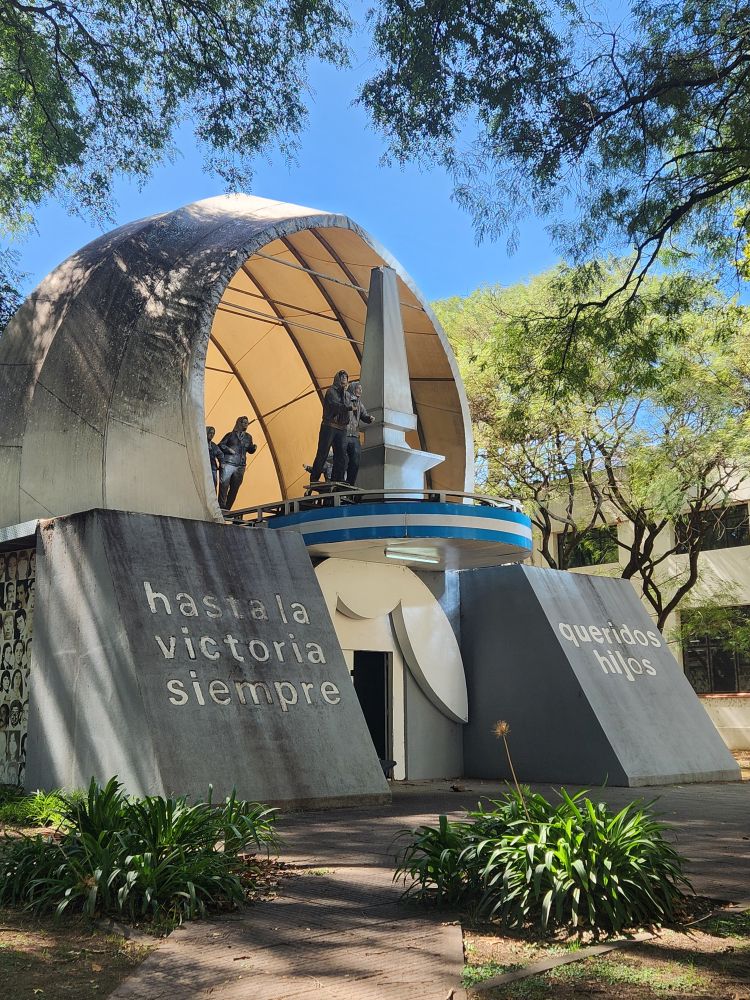
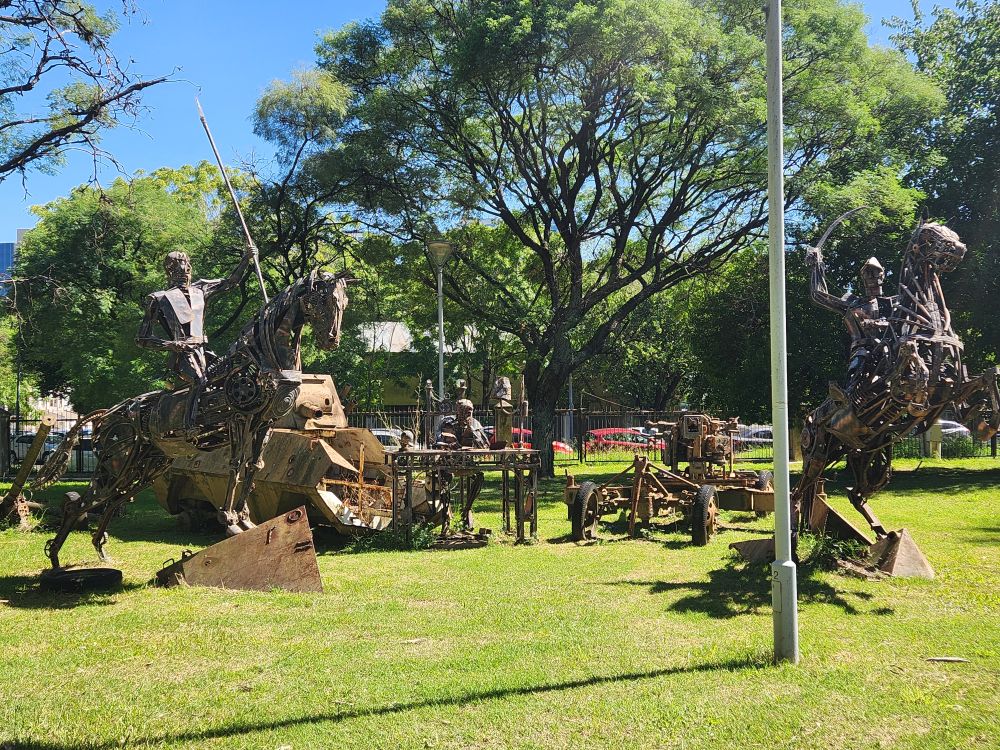
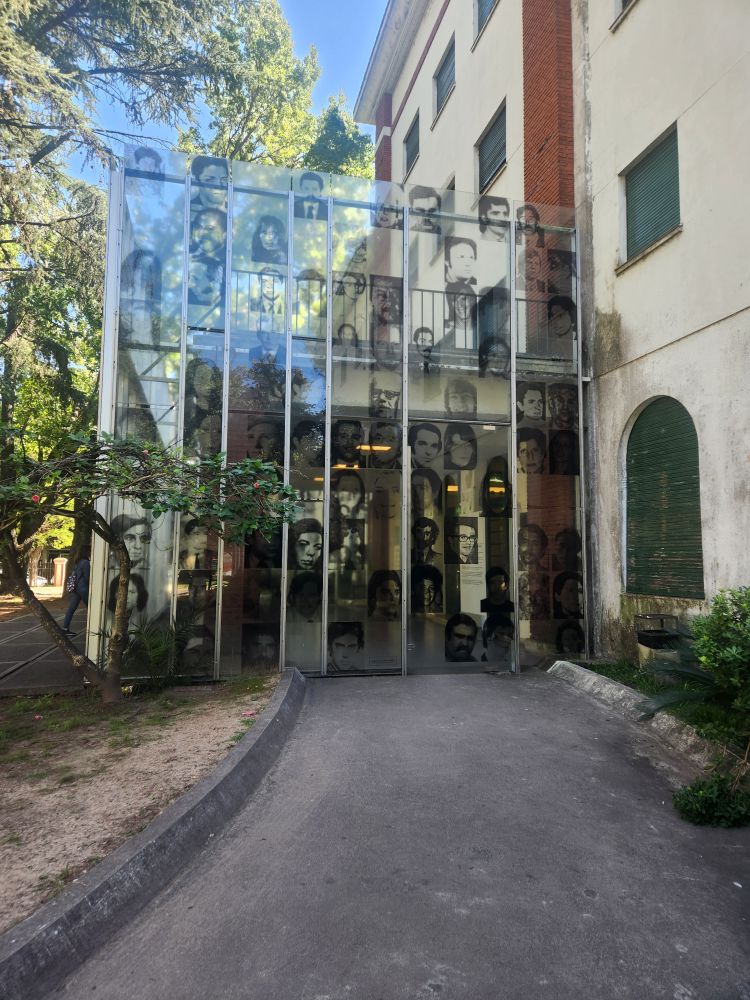
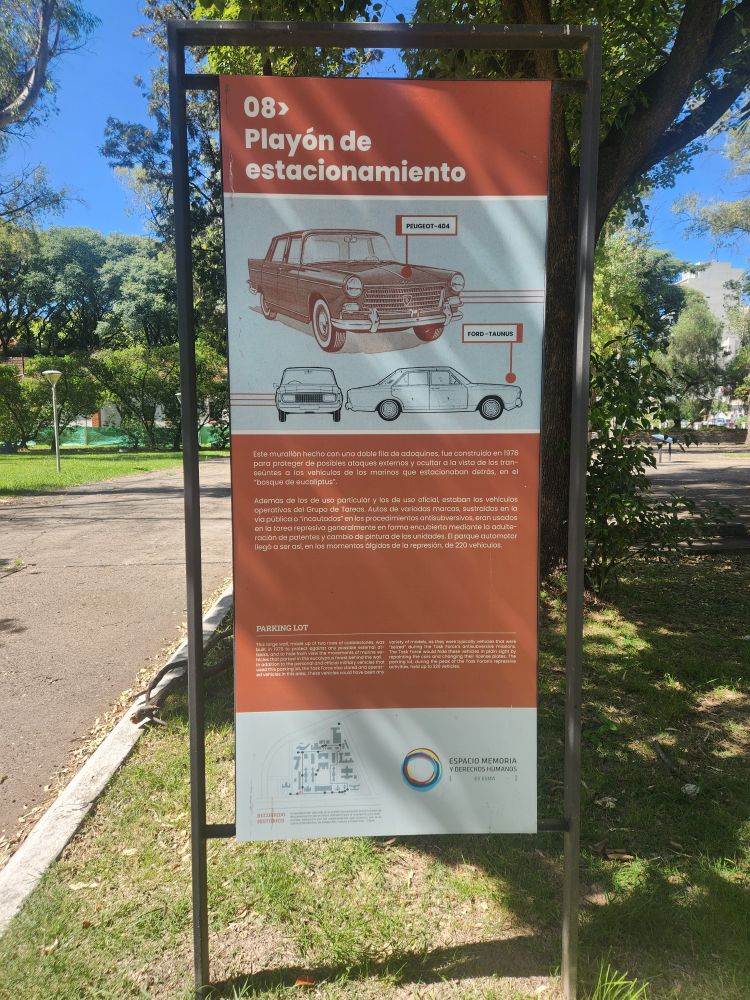
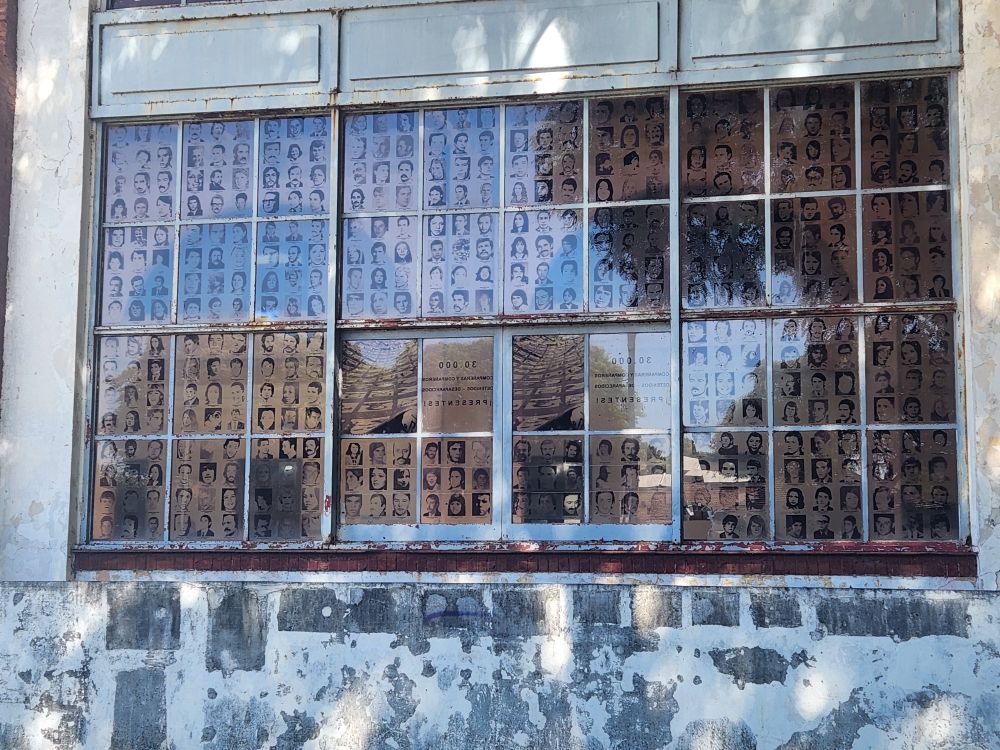
One of the museums there that gives an overview of the war is closed – we don’t know why and Howard says he was just there the other day. The other museum, the Museum of the Malvinas – about the Falkland war, what finally brought the dictatorship down – was closed for fumigation. Oops – well – hey – can’t argue with the bugs!
We can still visit one of the main buildings where they held prisoners and tortured them with those iconic white scarves painted at the foot of the entry stairs, and inside displays and pictures of the Abuelas marching, plus digital displays counting the missing from each province. There are some good news stories though – even among the sad horrors: Of the 500 babies born to prisoners who were then killed and the babies given up for adoption, 129 have been reunited with family members. At least there is that.
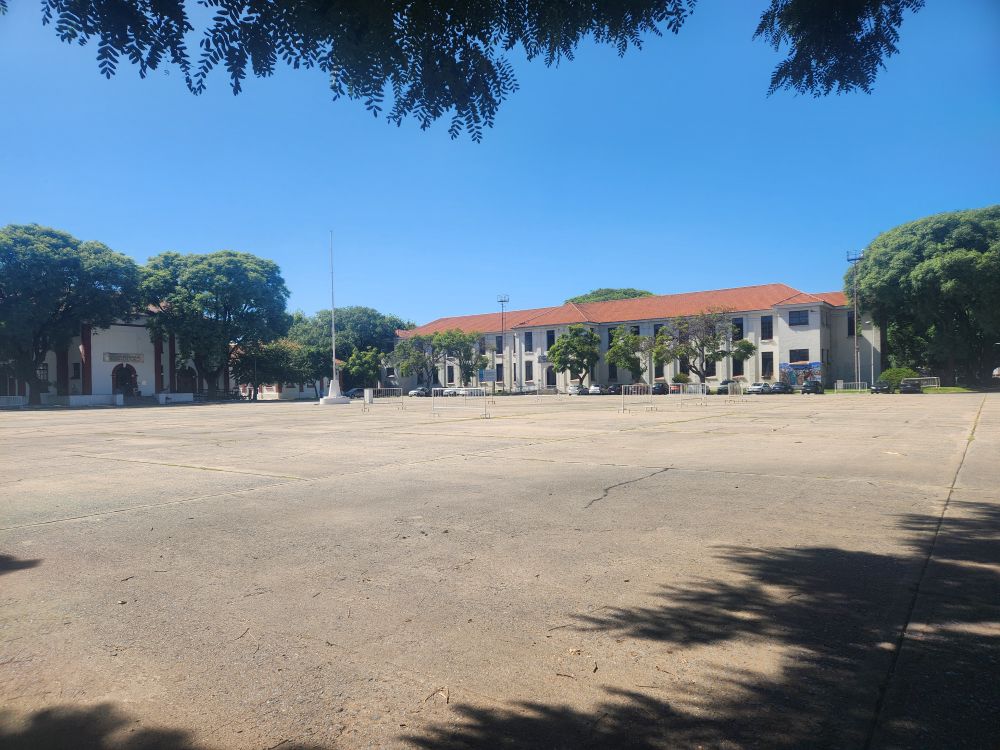
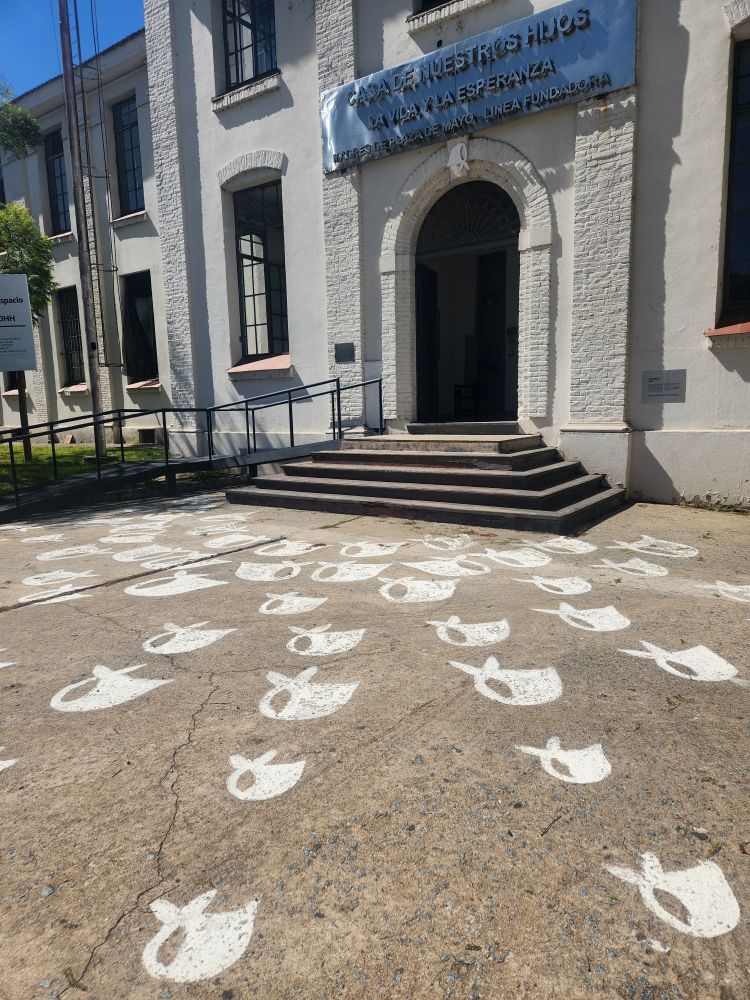
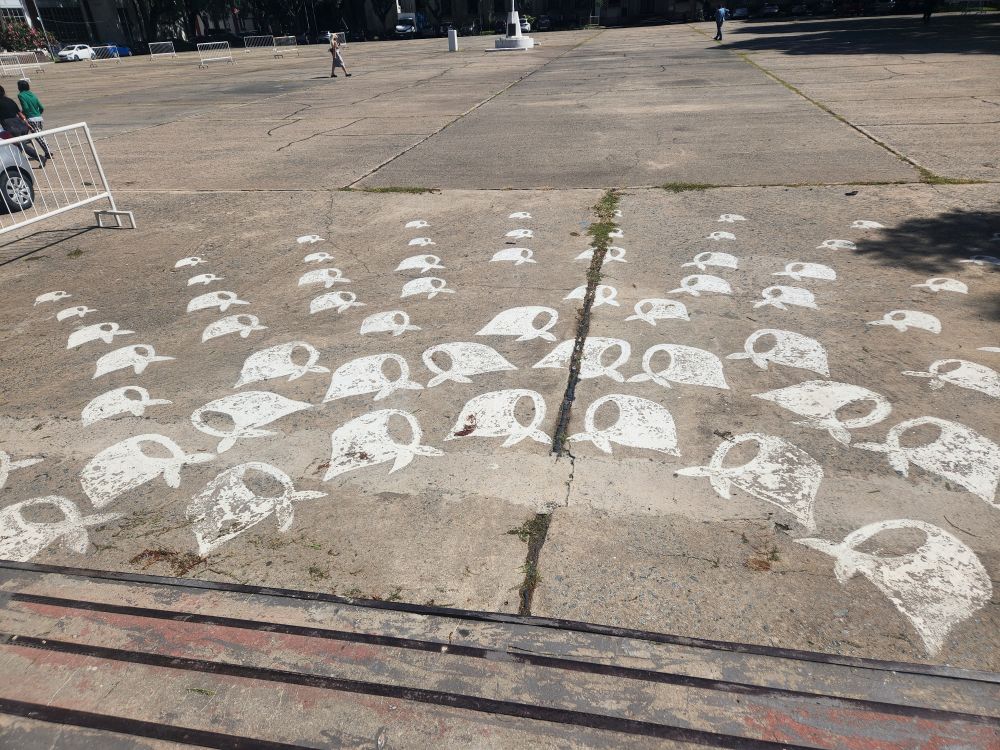
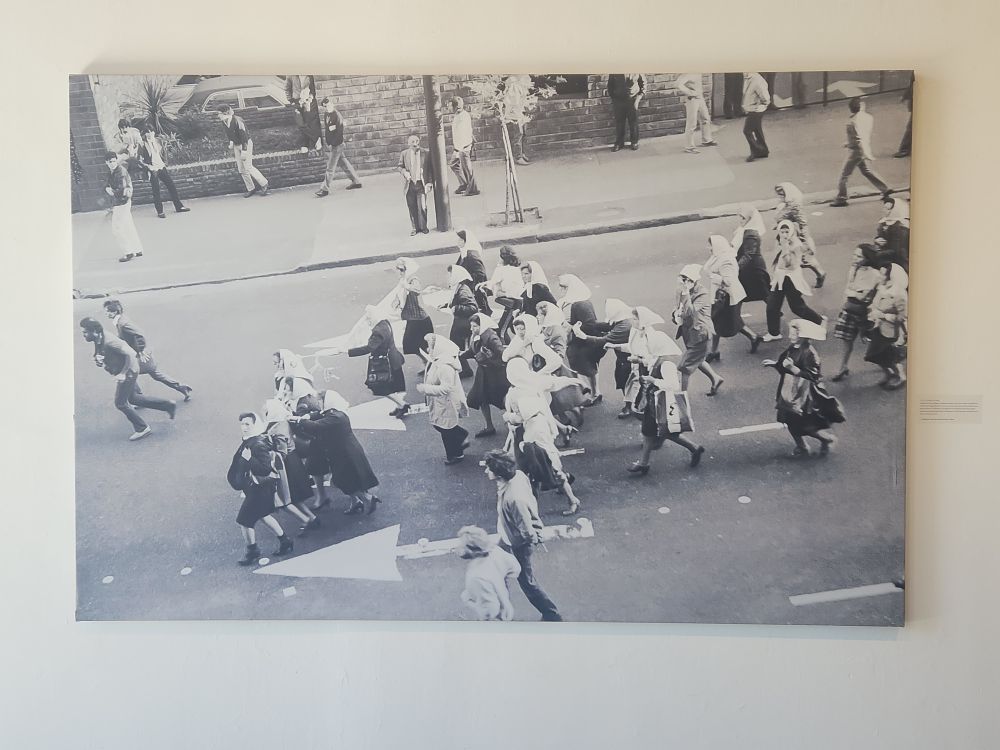
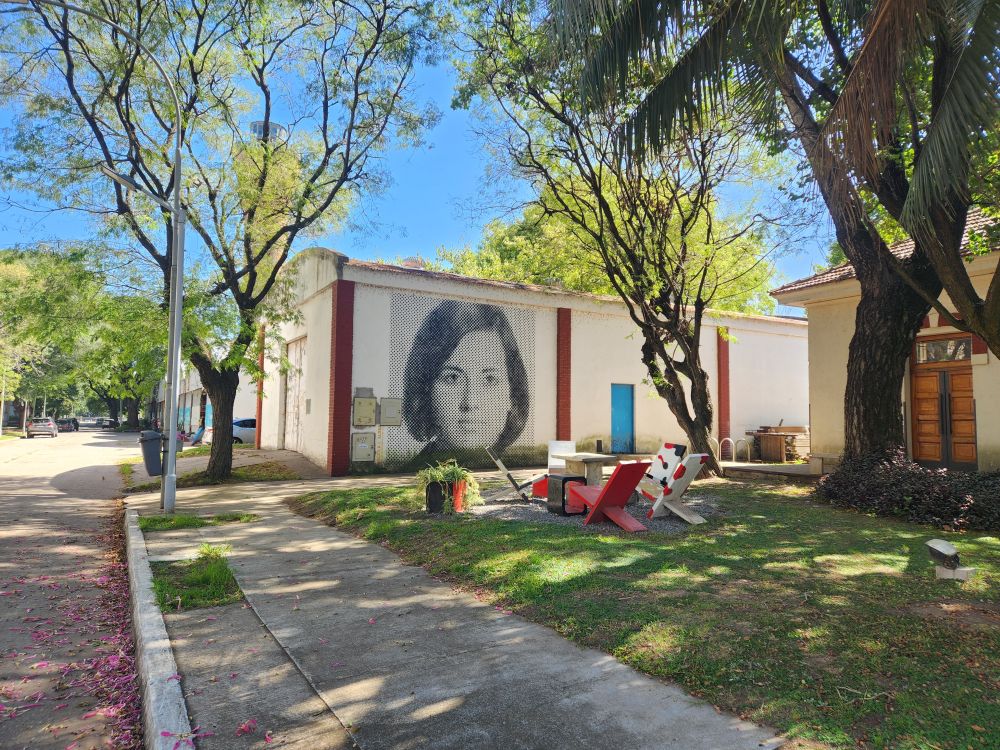
We wander around the grounds a bit more – looking at all the great, but poignant, murals, then hop in the car heading for Recoleta and the cemetery.
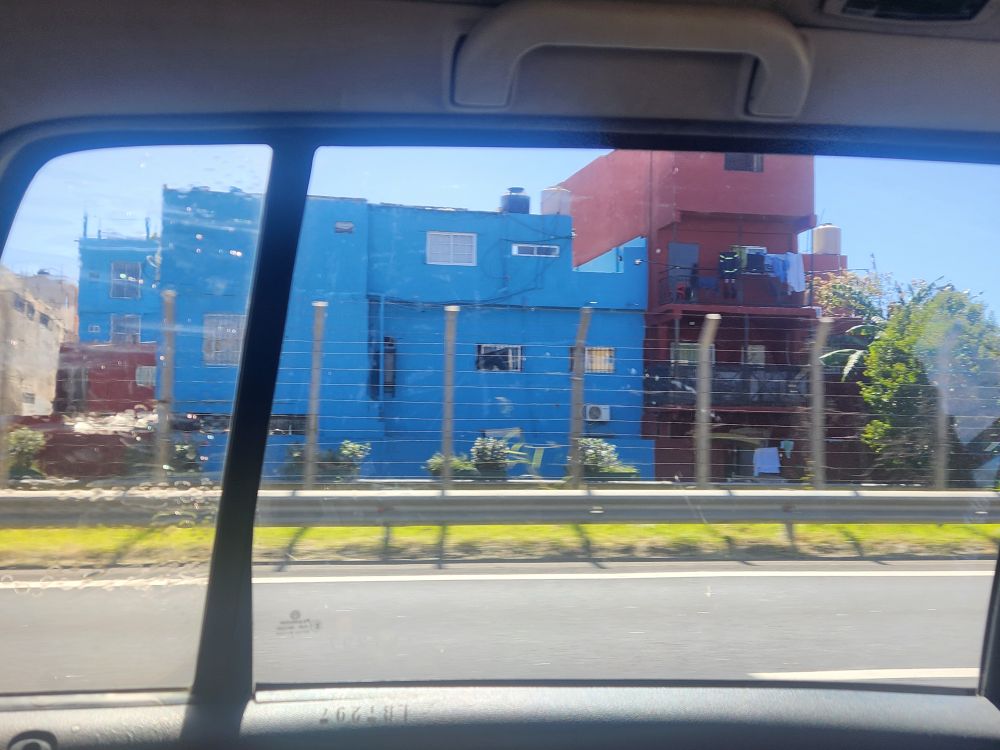
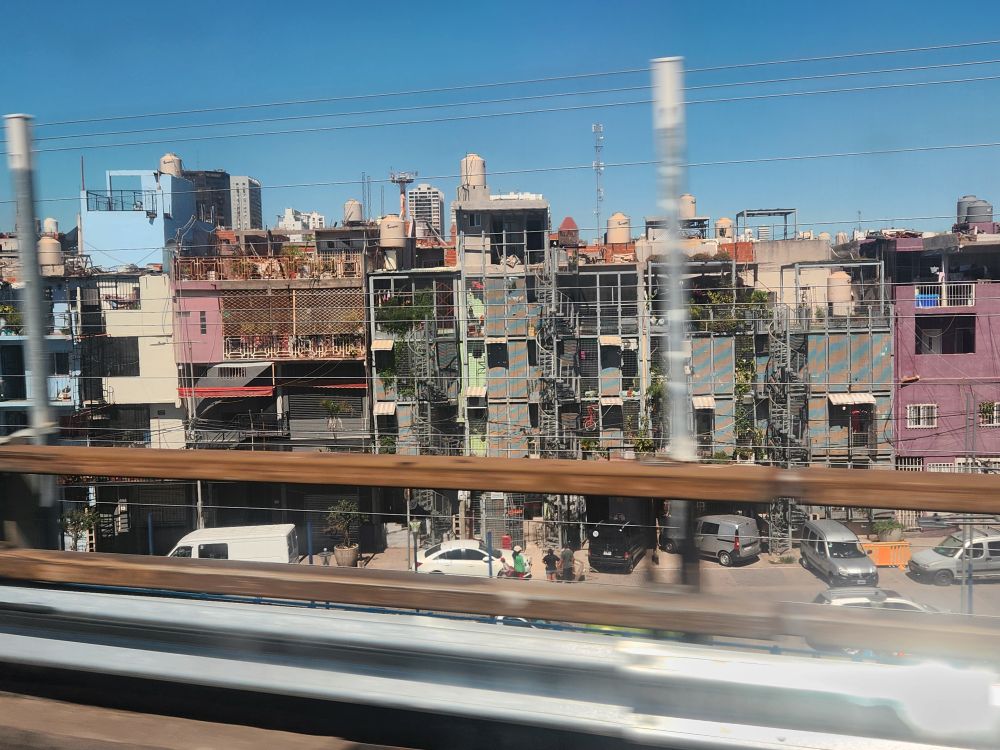
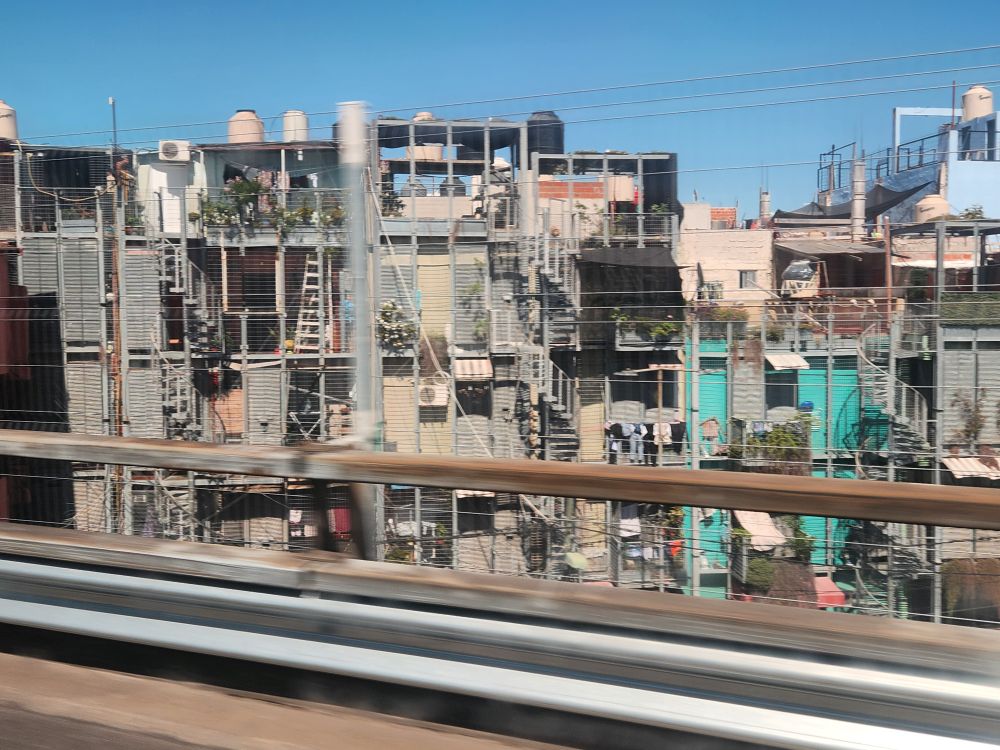
On the way we drive by the Villa Treinta Uno – the original slums which are being rebuilt. People from this area have their own designated train car on the metro so they don’t mix with the public. That is just crazy and not right in this day and age.
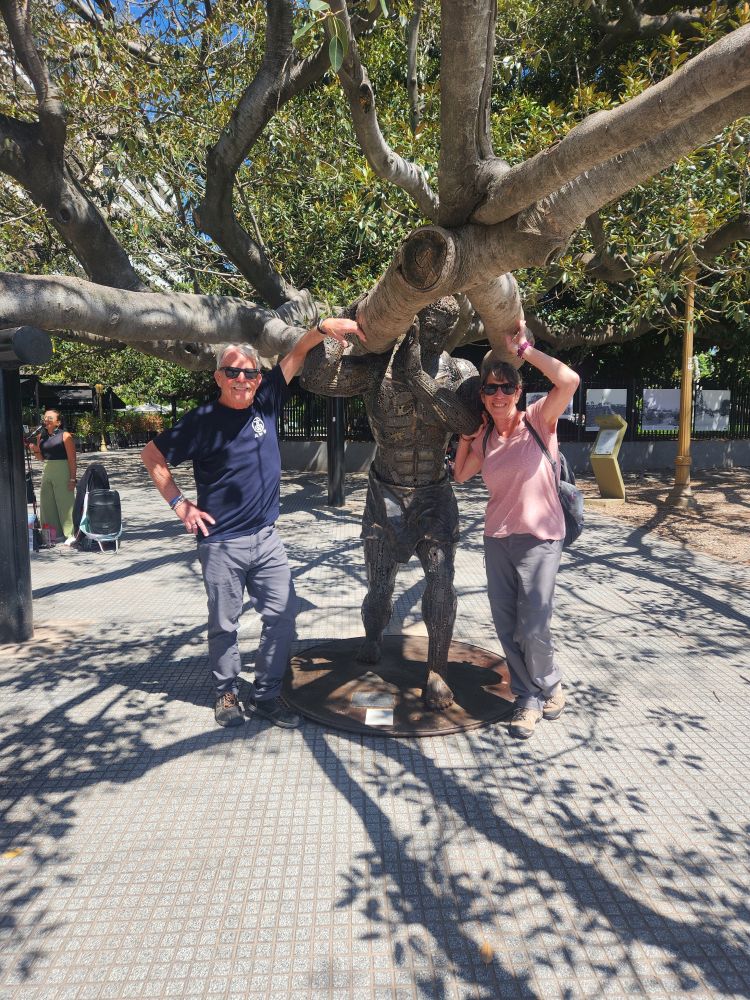
Parking in the garage at Recoleta we have a little inflation conversation. It is crazy here in Argentina with prices changing daily. Case in point: the parking fee here in the garage went up from 1500 pesos on Saturday to 2400 peso today (Monday). Crazy! As we have time to burn, Howard takes us to one of the oldest café/restaurants here in the city – La Biela – stopping first at the huge Ficus tree out front with the statue of Atlas holding up the limbs.
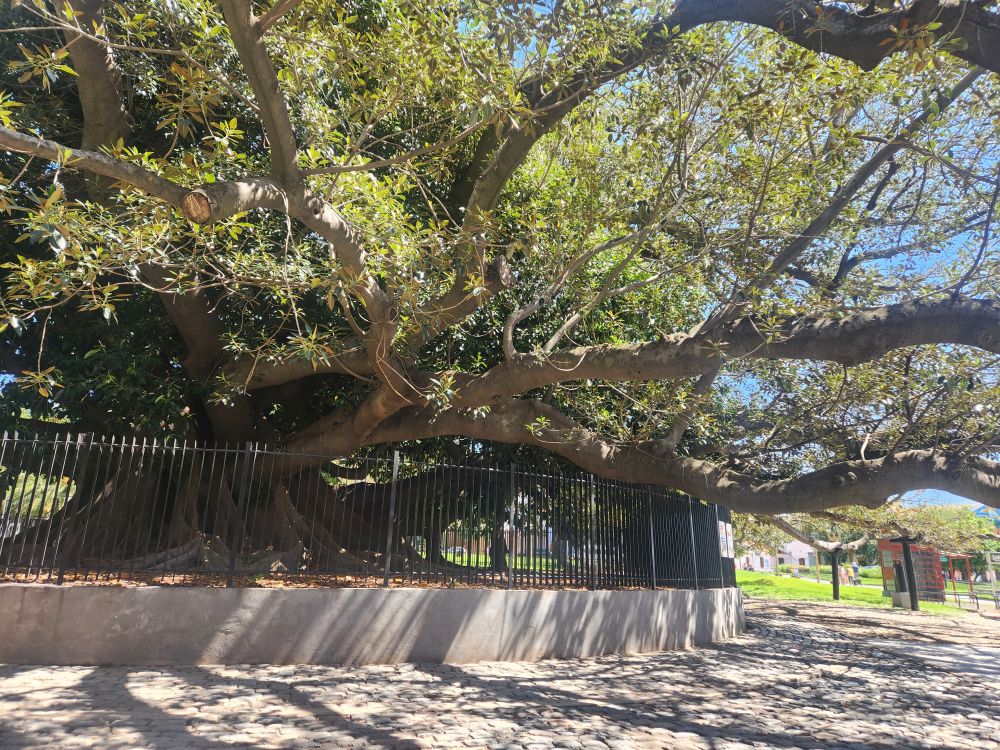
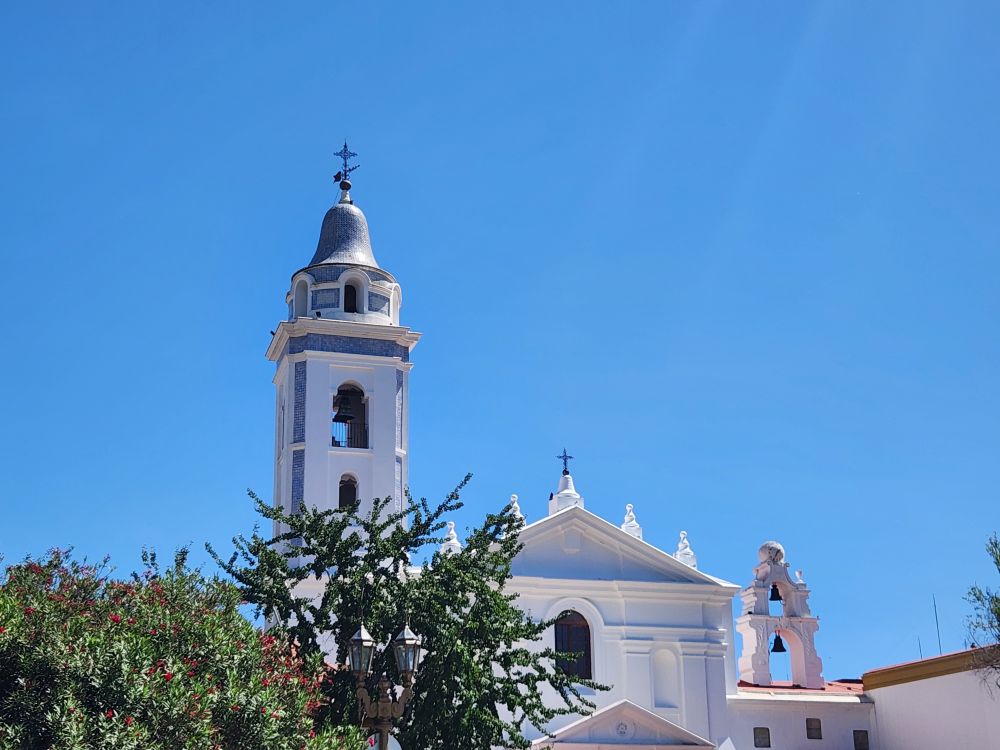
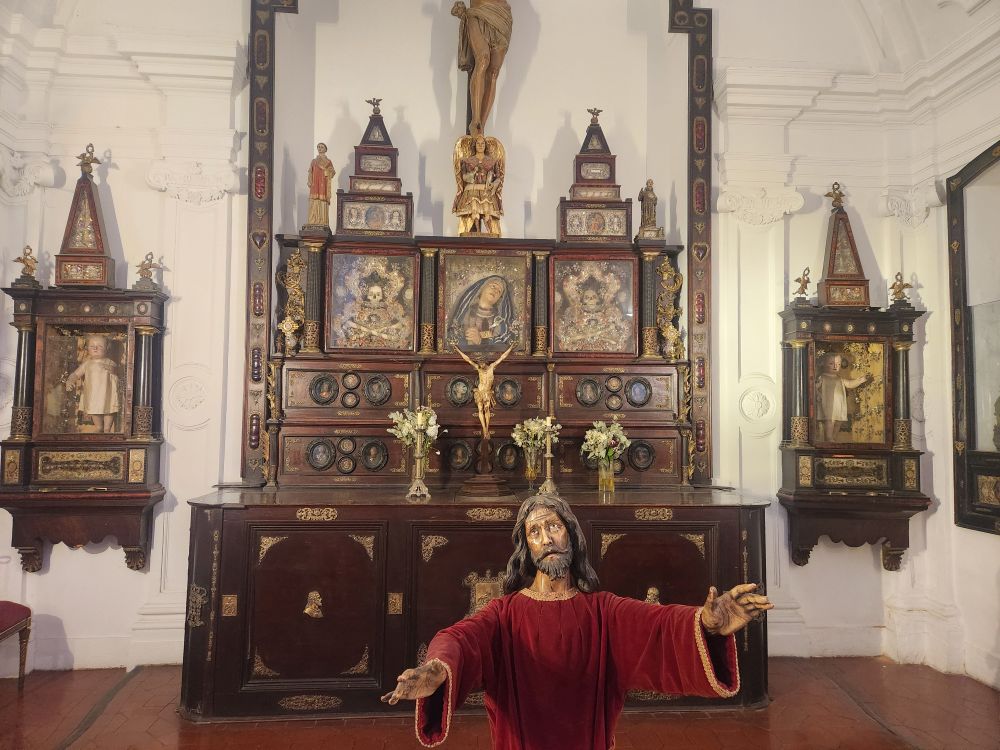
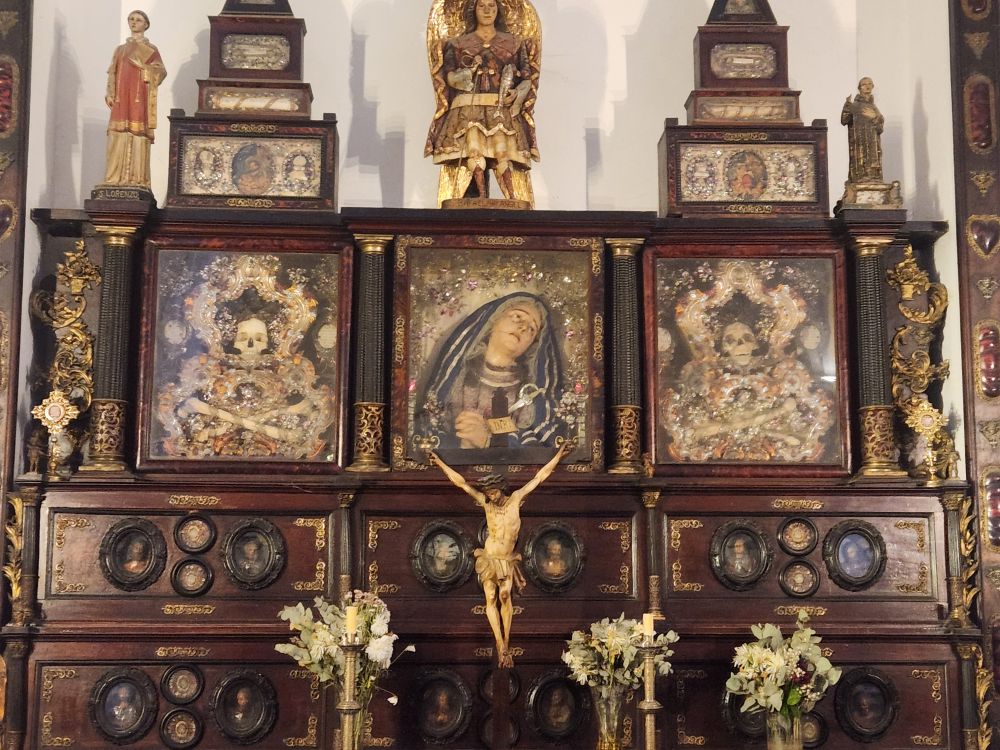
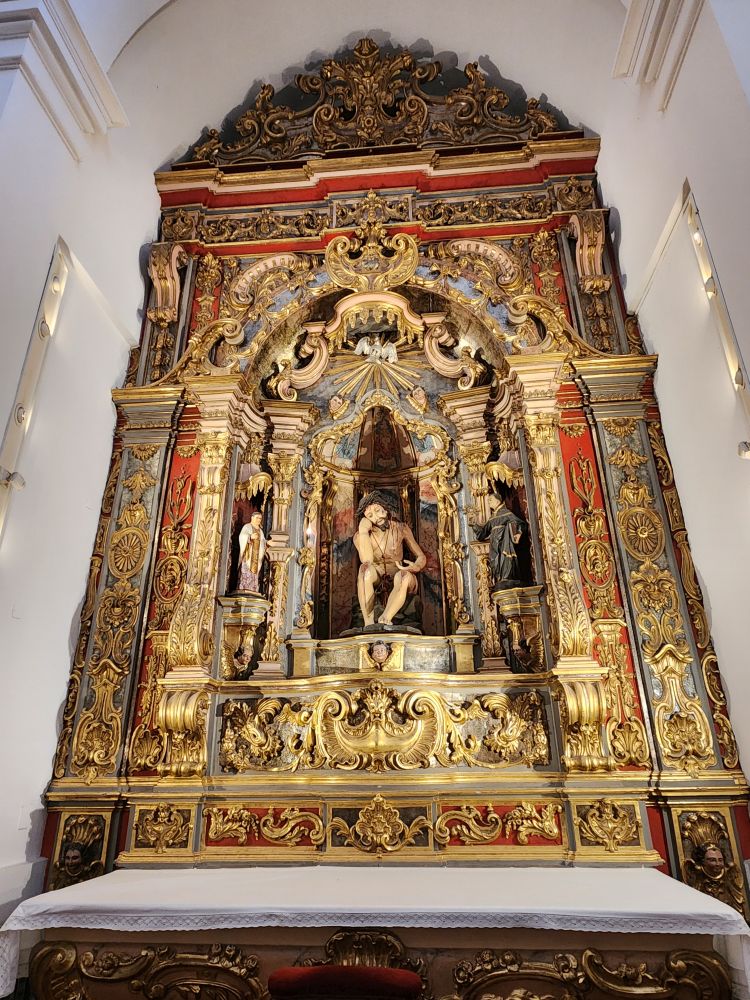
Then we plop down on the outside patio for some cappuccino and conversation. Nice little rest stop before tackling the cemetery. Leaving the café, we walk over first to the Basilca Nuestra Senora del Pilar, completed in 1732 and the 2nd oldest church in the city. It is absolutely gorgeous inside, with incredible altars, wood framed and large baroque nave.
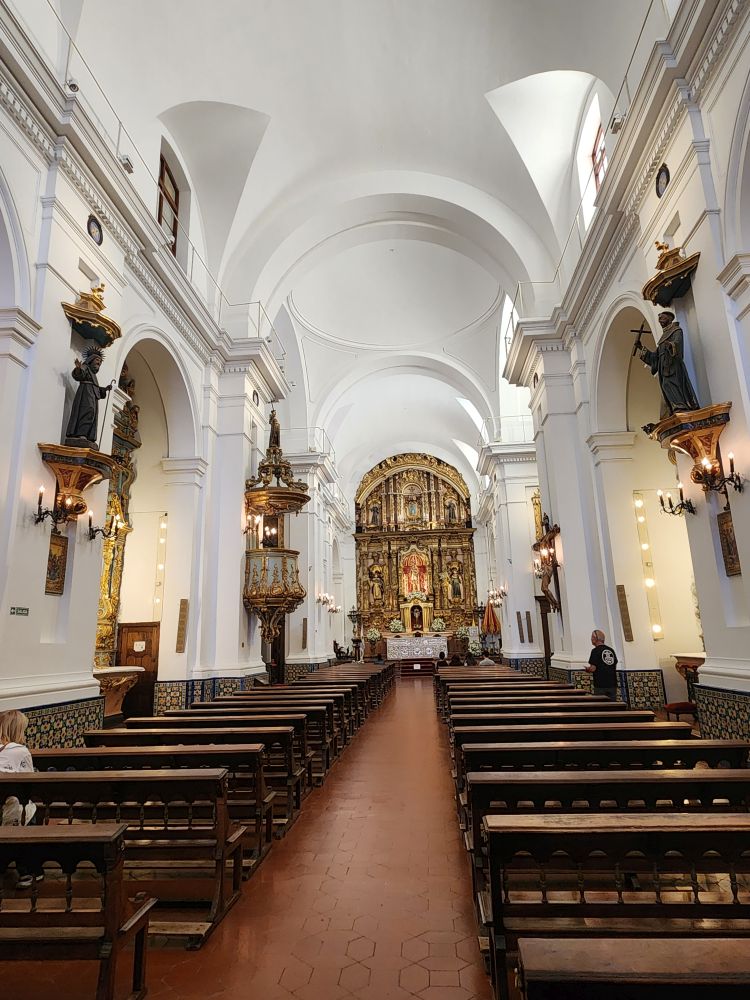
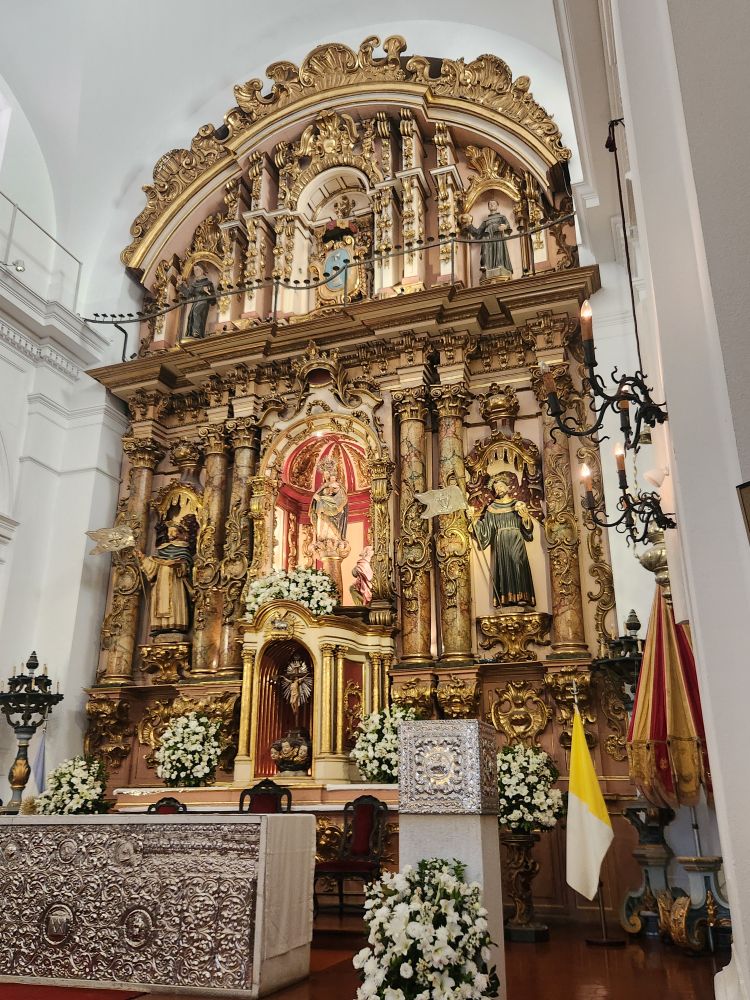
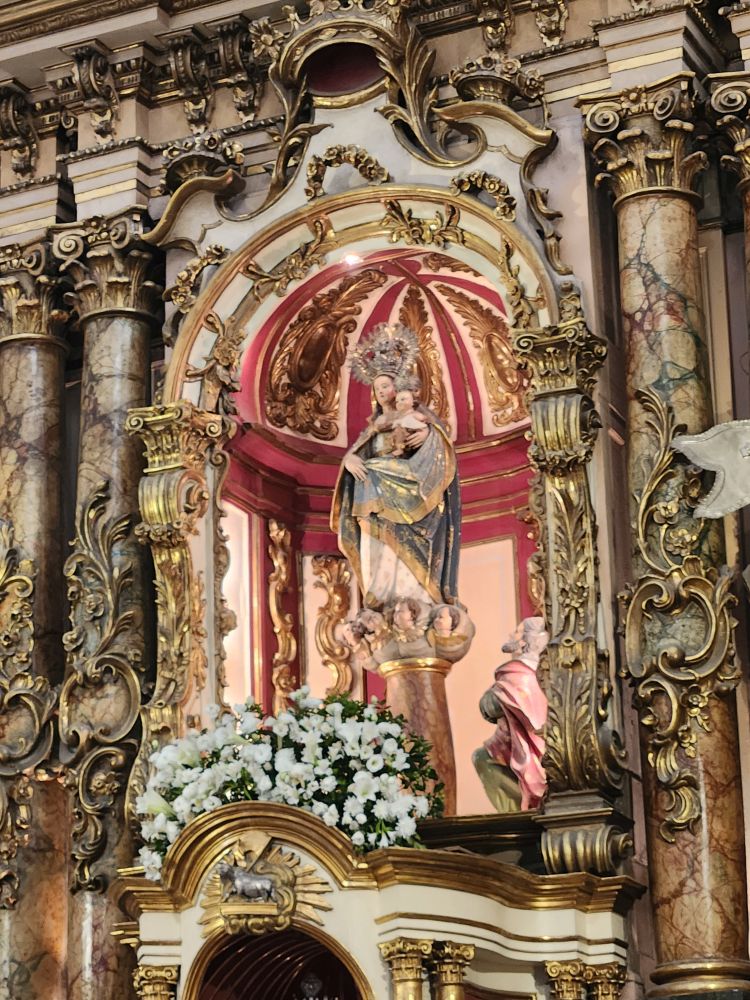
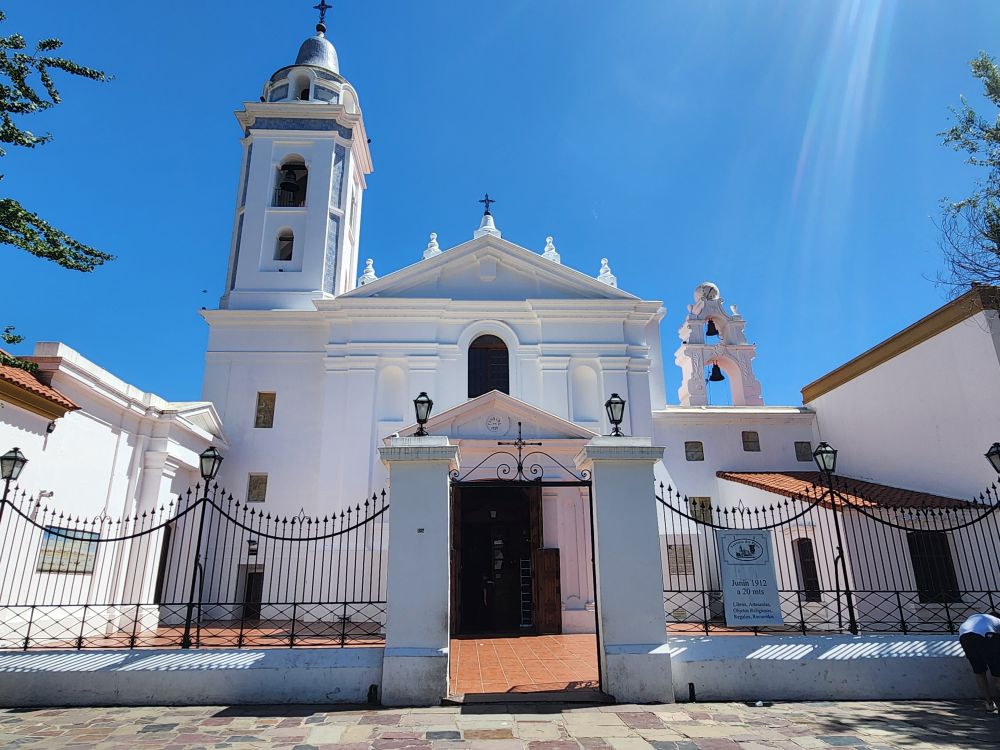
Then it is on to the cemetery – but first we have to try to get in! The main gates are closed and there are police and firemen around the entry circle as well as a truck that appears to be maybe leaking gas or something. We have to circle around and climb over police tape to even get by. Howard tries to go to the exit – but the guards there won’t let us in, even though he explains the situation. Hmmm…..today has not been a good memorial/museum/sites visiting day! Heading back to the entrance, we see that the firemen are now gone and a line is forming at the entrance. Ok, phew! At least that little challenge is over.
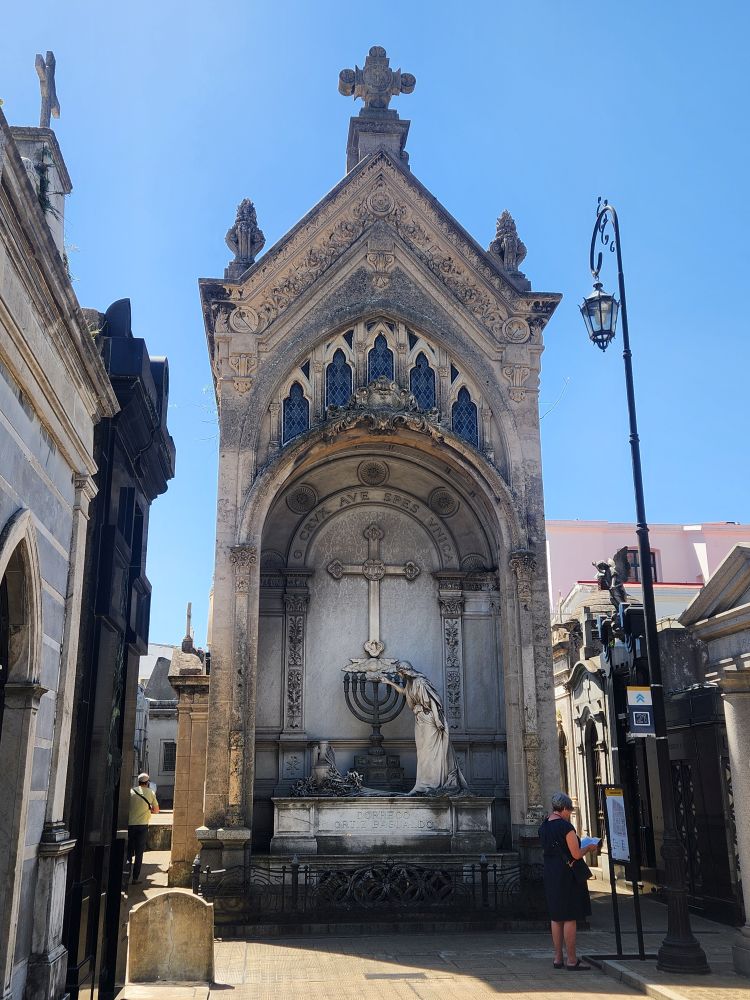
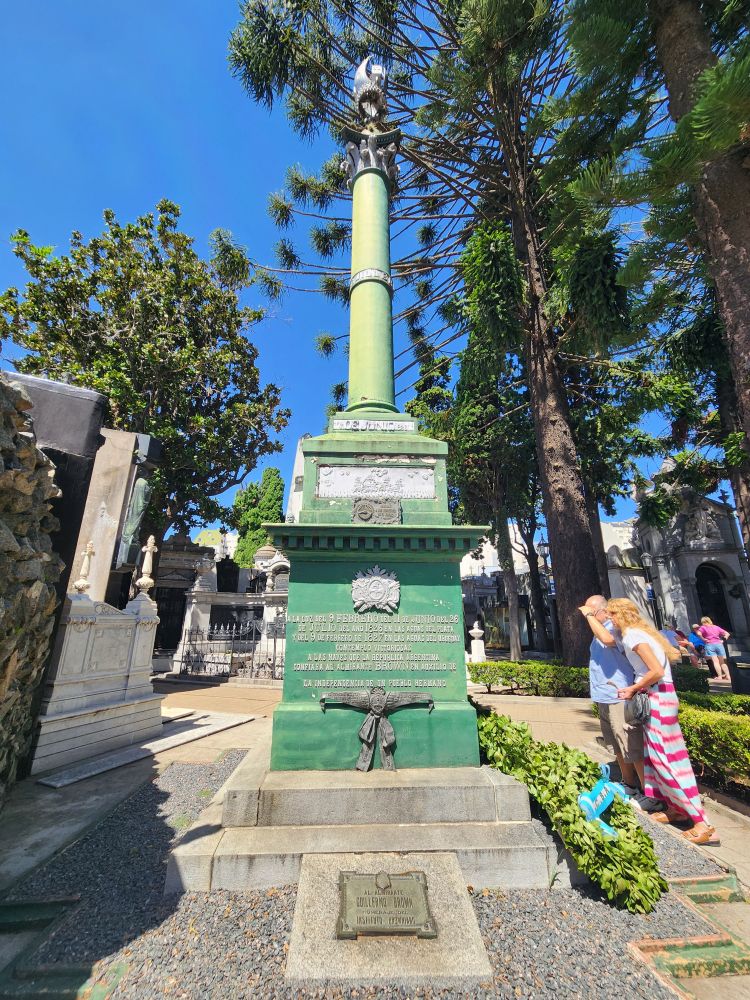
Inside, well, you know how we love cemeteries and the architecture and mausoleums. And Recoleta is no exception. The crypts and gravestones and mausoleums are just works of art – masterpieces in design and building. We could walk for hours through here. And having a guide is fantastic. Howard takes us to all sorts of different mausoleums and graves, each with a story that of course we couldn’t even recount! But it is a wonderful way to wander around through this amazing place.
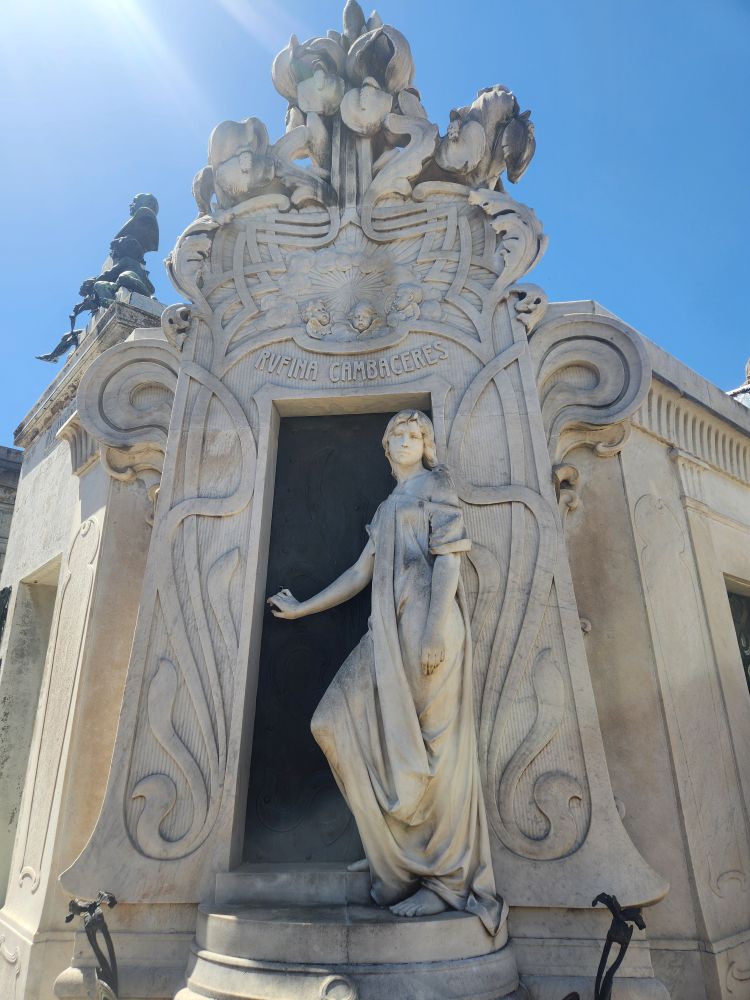
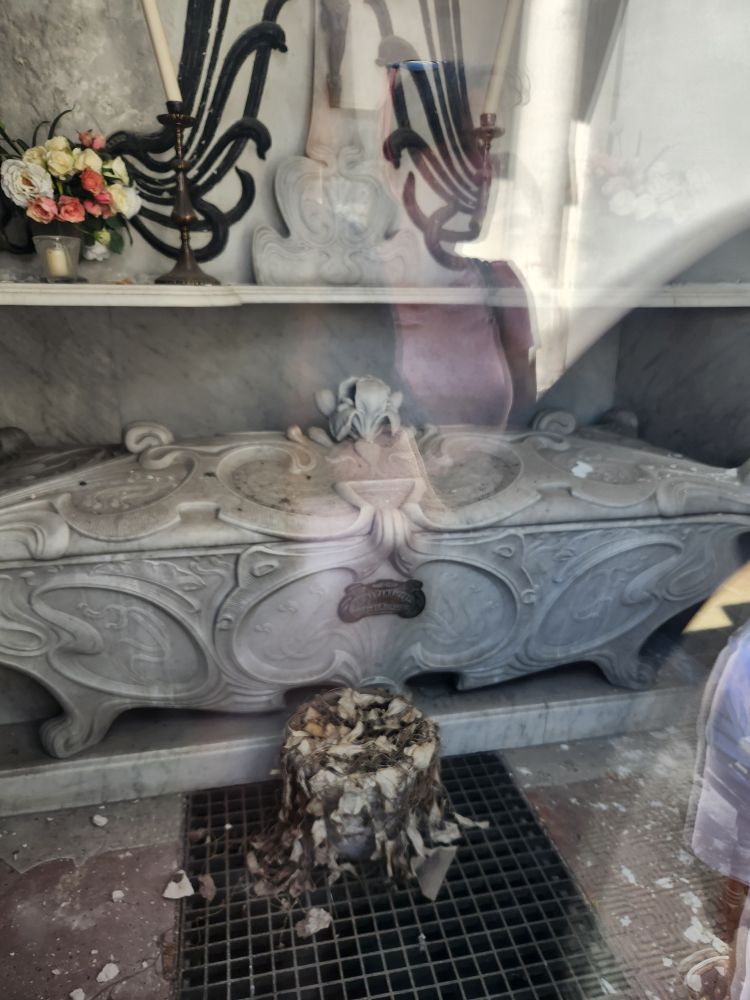
We do learn – and retain – one interesting fact. The term dead ringer allegedly comes from this cemetery and from the mausoleum of Rufina Cambaceres. The story is that, at 19, she collapsed without warning. Doctors were called and 3 of them supposedly declared her dead of a heart attack. She was put in a coffin and sealed in her mausoleum. A few days later, a cemetery worker found that the coffin had been moved and the lid broken, he worried it was the work of grave robbers and opened the coffin to find scratch marks covering the inside of the coffin and Rufina, now really dead, with bruised hands and face from trying to break out. Ever since then bells have been put into coffins just in case someone is buried alive, they can ring the bell to summon help. Thus: Dead ringer! Great stor
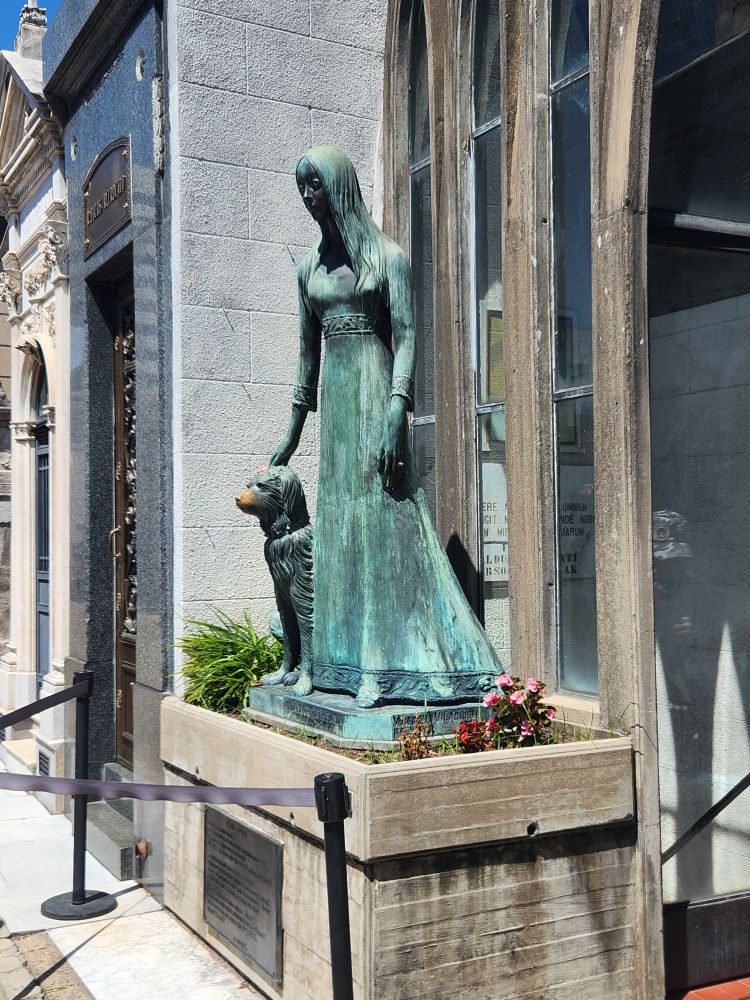
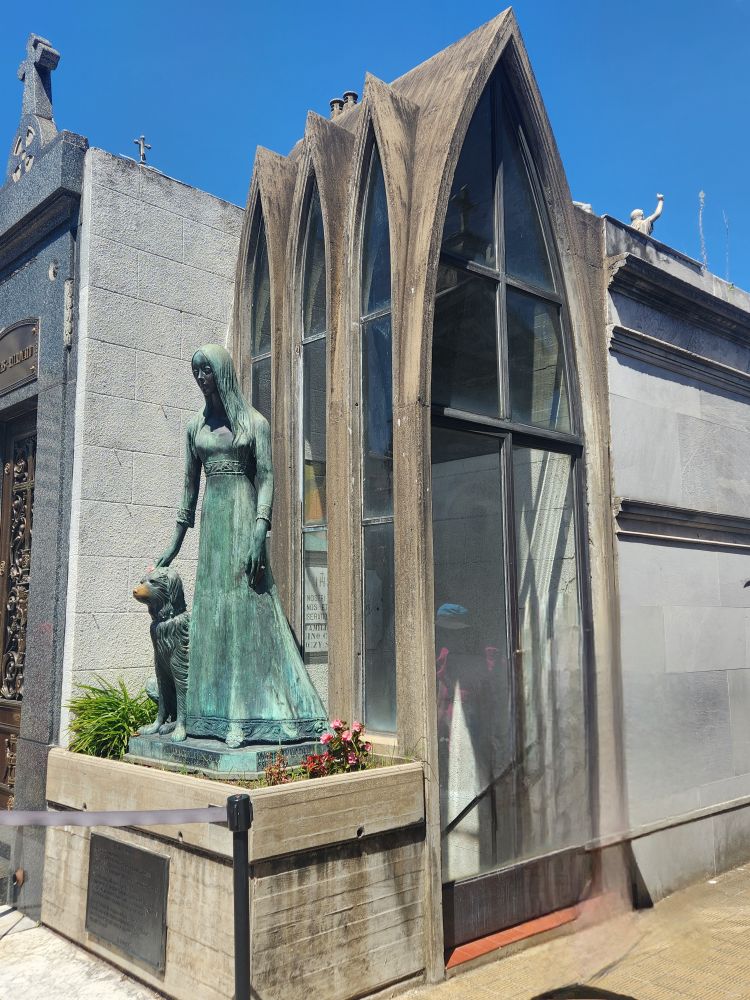
More wandering and meandering. Past the tomb of Liliana Crociati de Szaszak who, at 26 on her honeymoon, died in an avalanche that destroyed the hotel in which they were staying. When you beloved dog Sabu died, a bronze statue of the dog was added to the tomb.
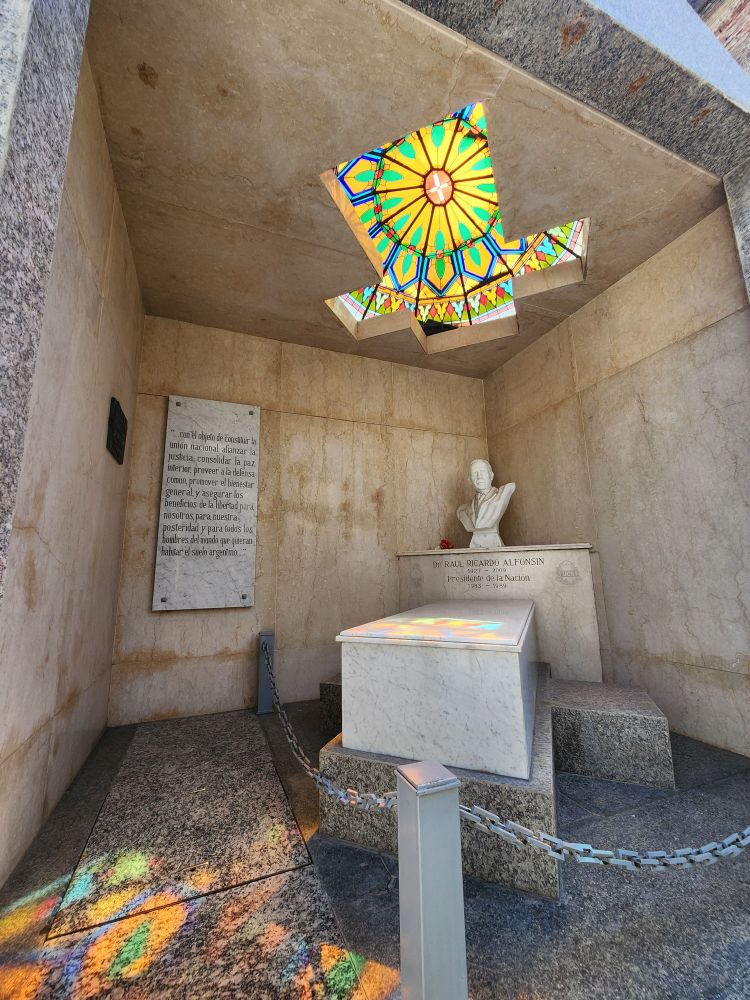
We look inside different tombs and see how deep they go – with coffins stacked one on top of the other. We pass Evita’s tomb, so small and unassuming in comparison to most of the rest of the architecture in here! Past presidential tombs and the tomb of Luis Angel Firpo, Argentina’s first world heavyweight boxer.
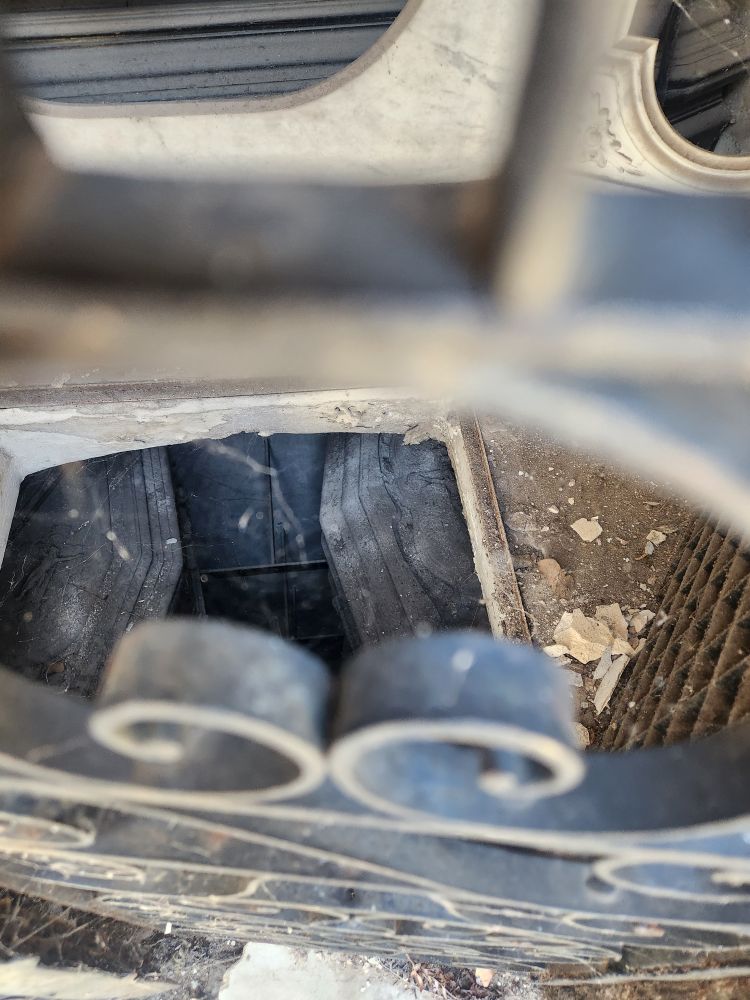
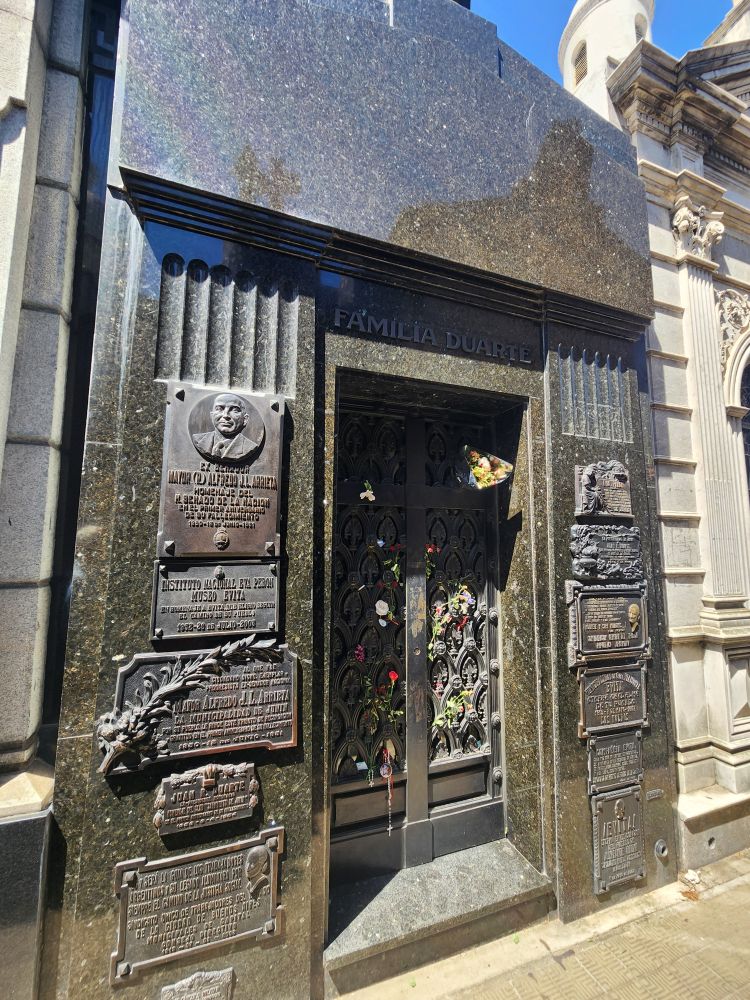
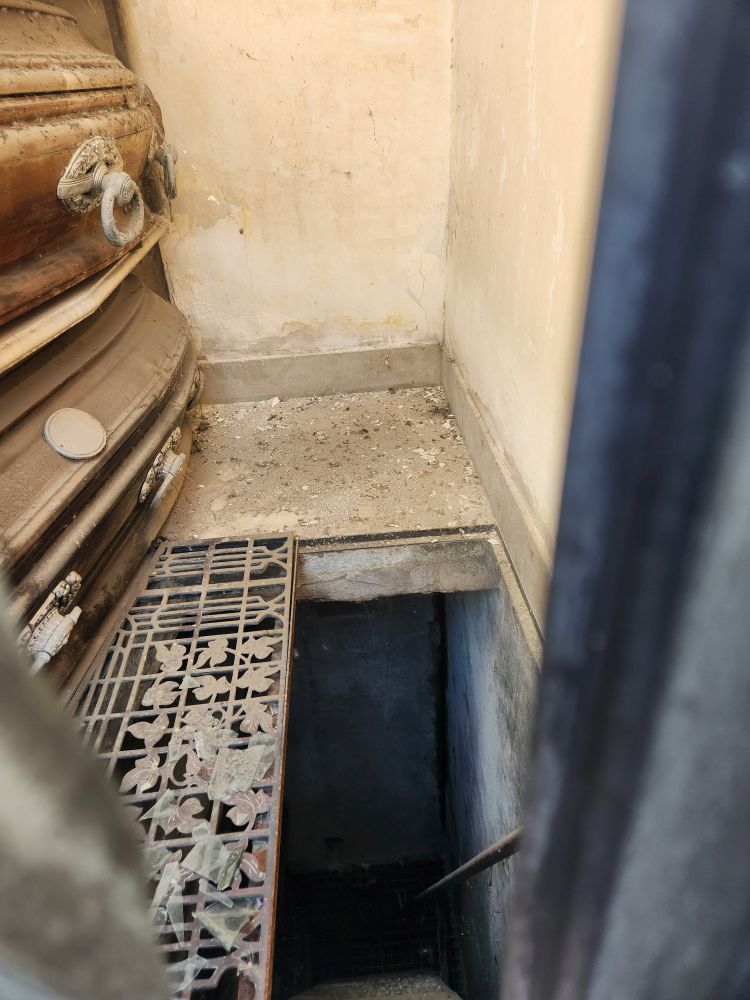
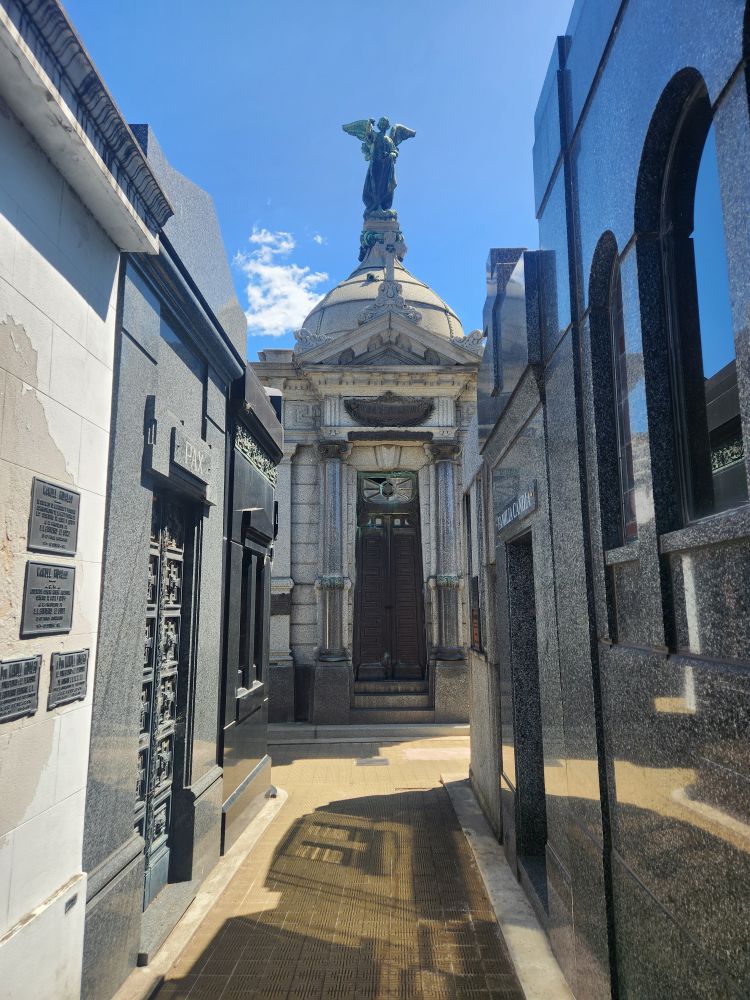
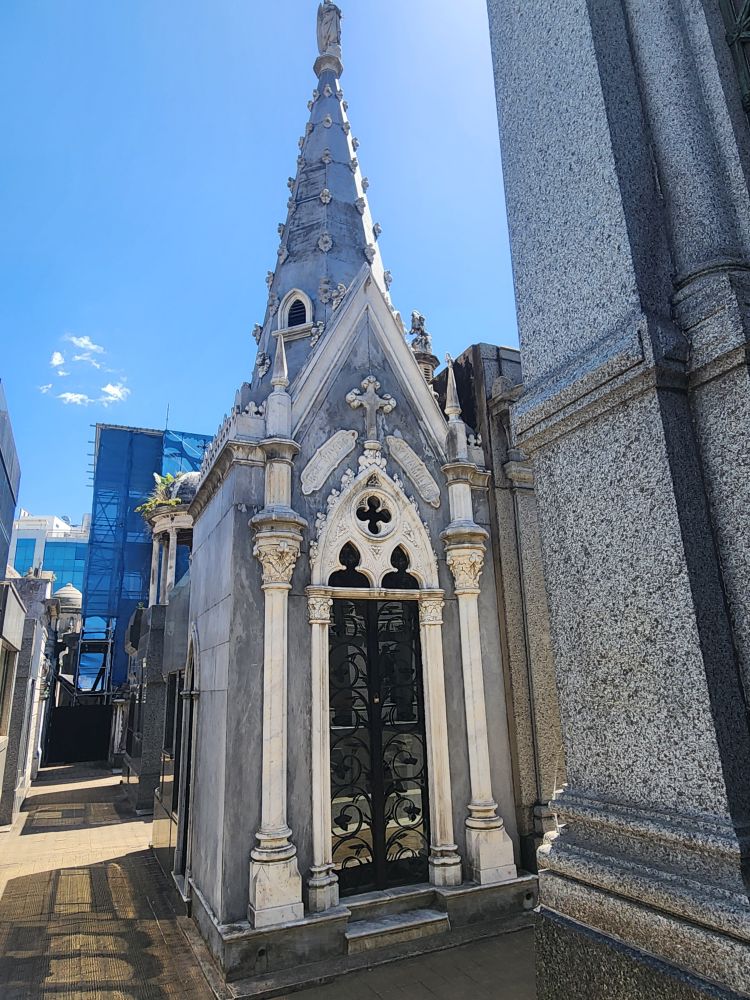
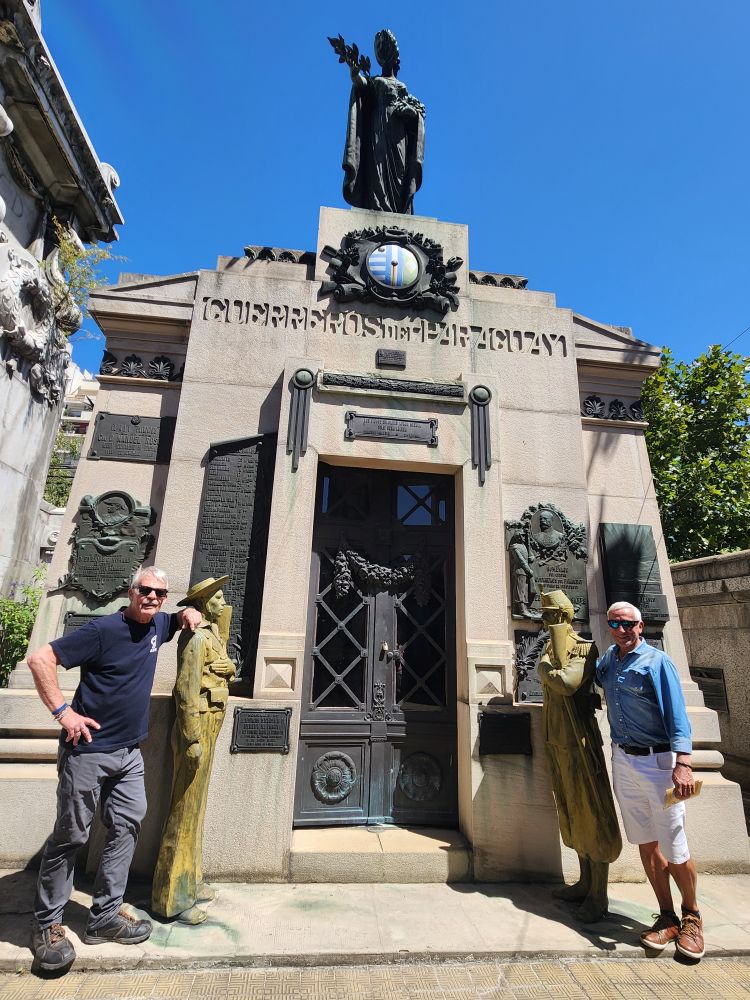
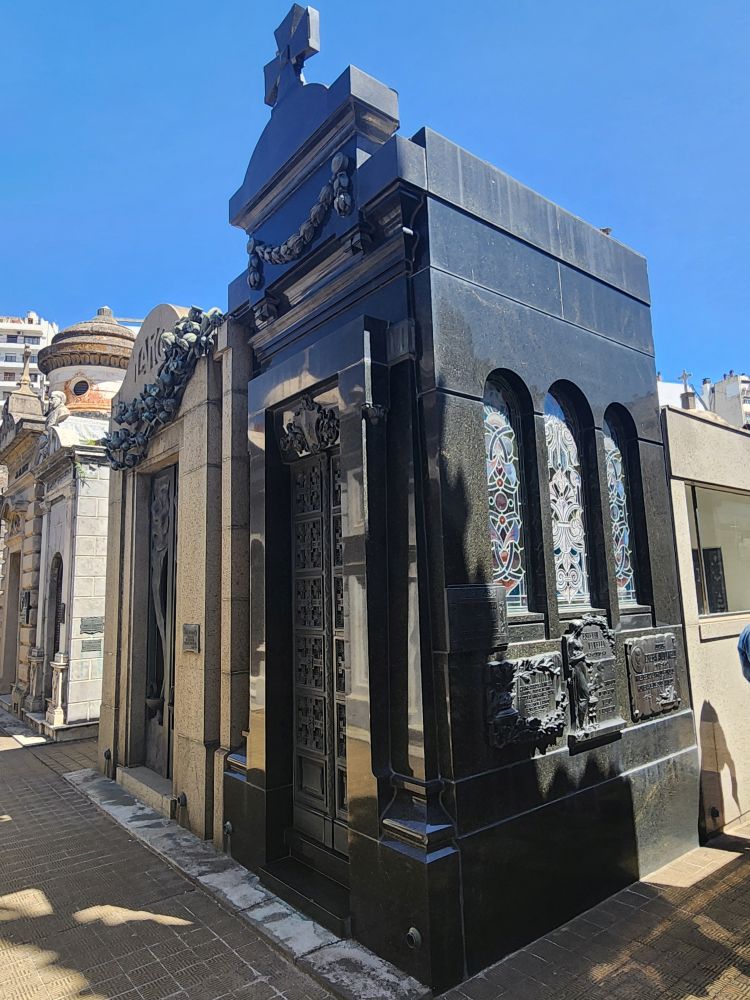
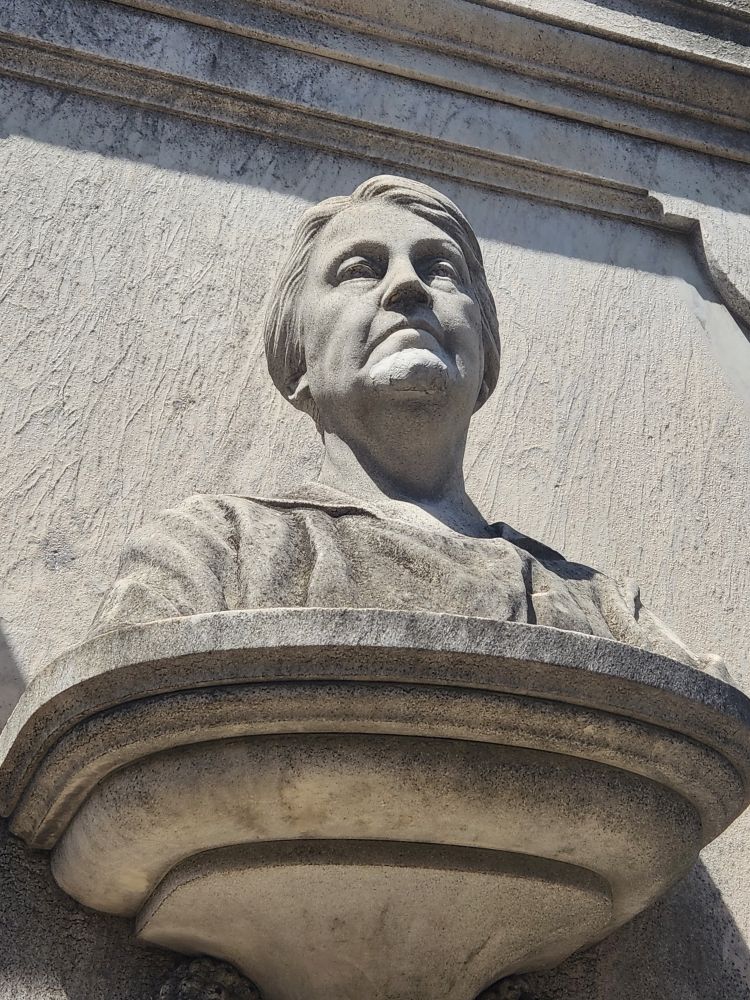
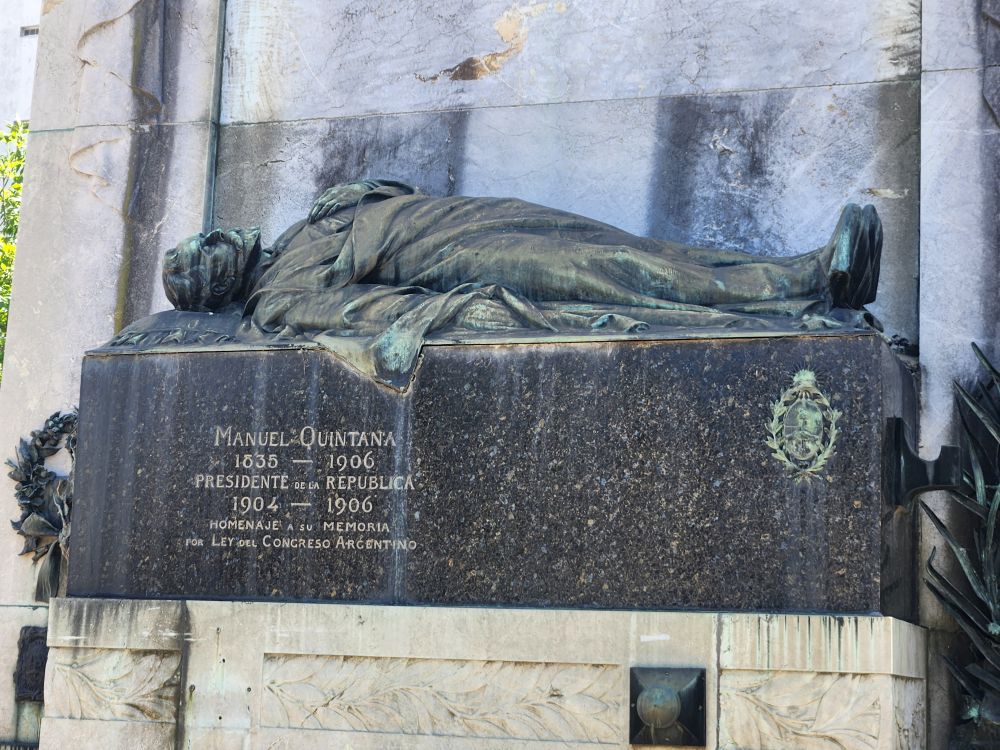
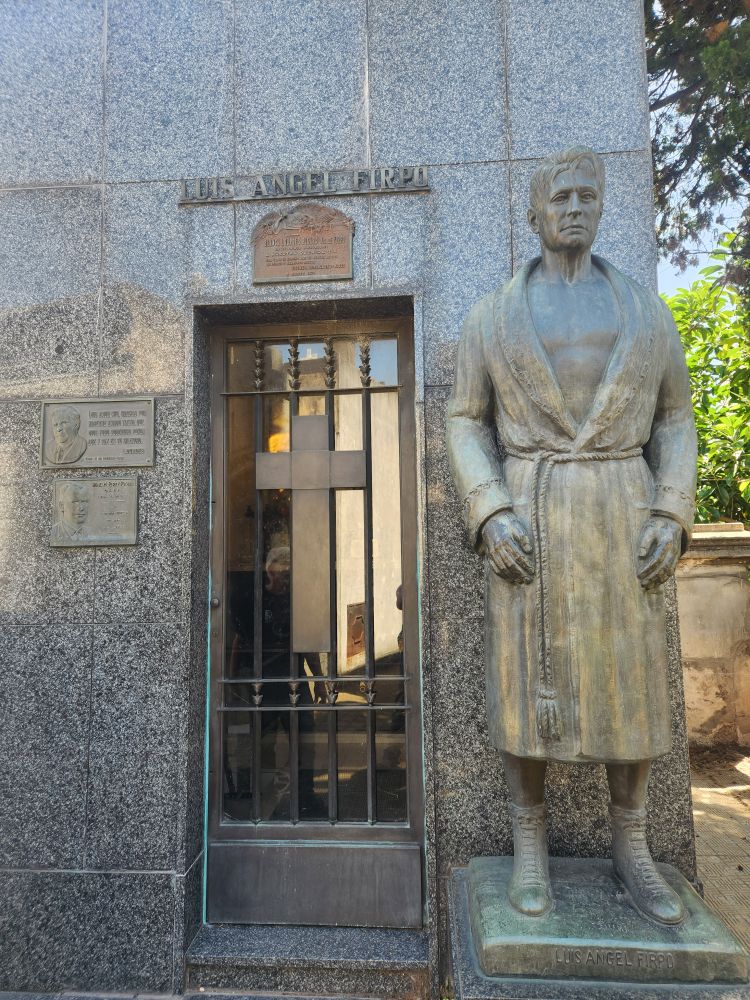
Walking down long streets lined with more and more outrageously lavish tombs – past one that is being rebuilt for someone – which looks to be the biggest in the cemetery. And the stories continue! Like the tomb of Salvador & Tiburcia Carril. A match made in well – not heaven – the two were married, she 25 years his junior, he a prominent businessman in Argentina. She loved to spend money, and spent so much that it infuriated Salvador and he published letters in the newspapers saying he would not cover any of her debts. She retaliated with her own letters telling everyone how rotten a husband Salvador was and vowed never to speak to him again. They stayed married, but she kept her promise and never spoke to him for the next 20 years until he died. When she died 15 years later, her last request was that her bust face the opposite direction of Salvador, because she didn’t want to spend eternity looking at him. Talk about the grudge of Eternity!!! (photos 133525 & 133604)
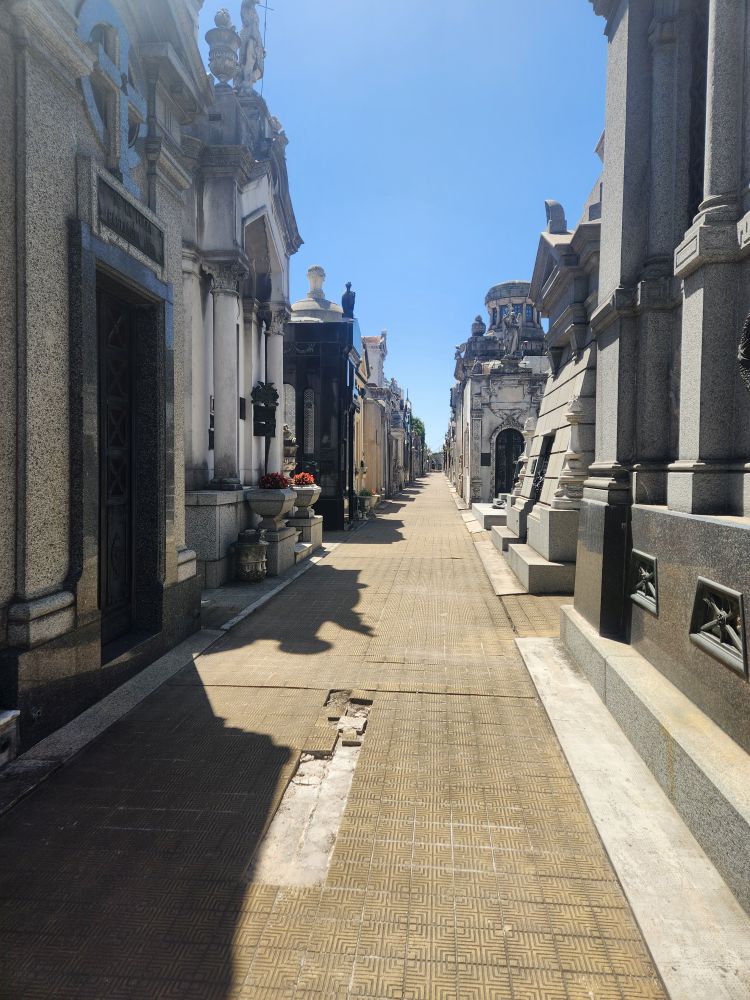
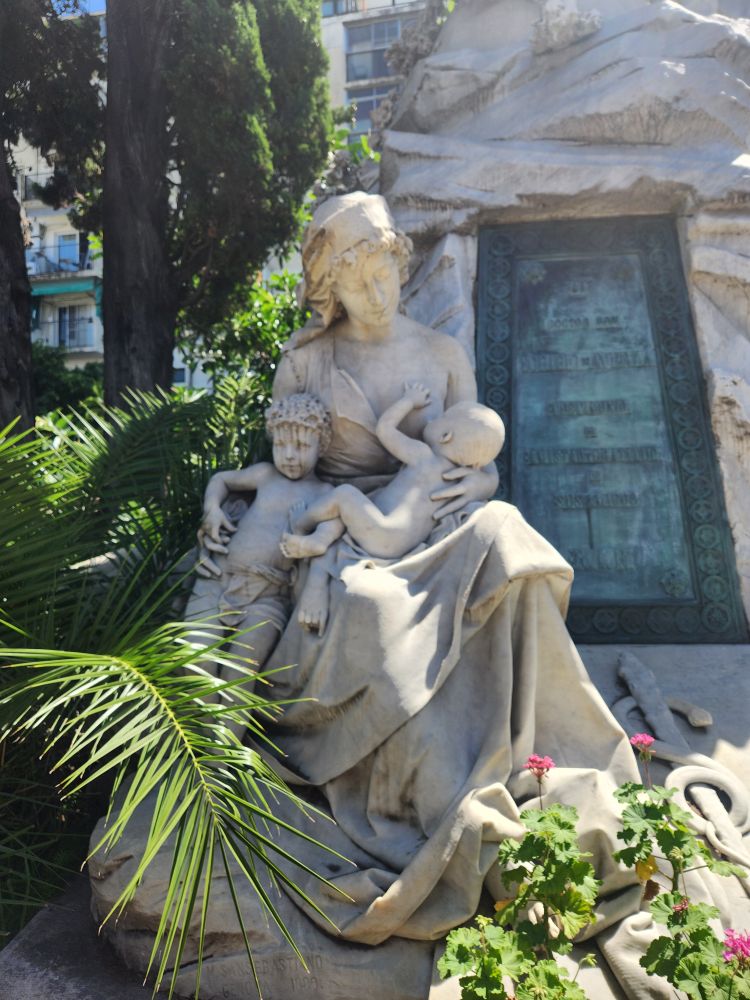
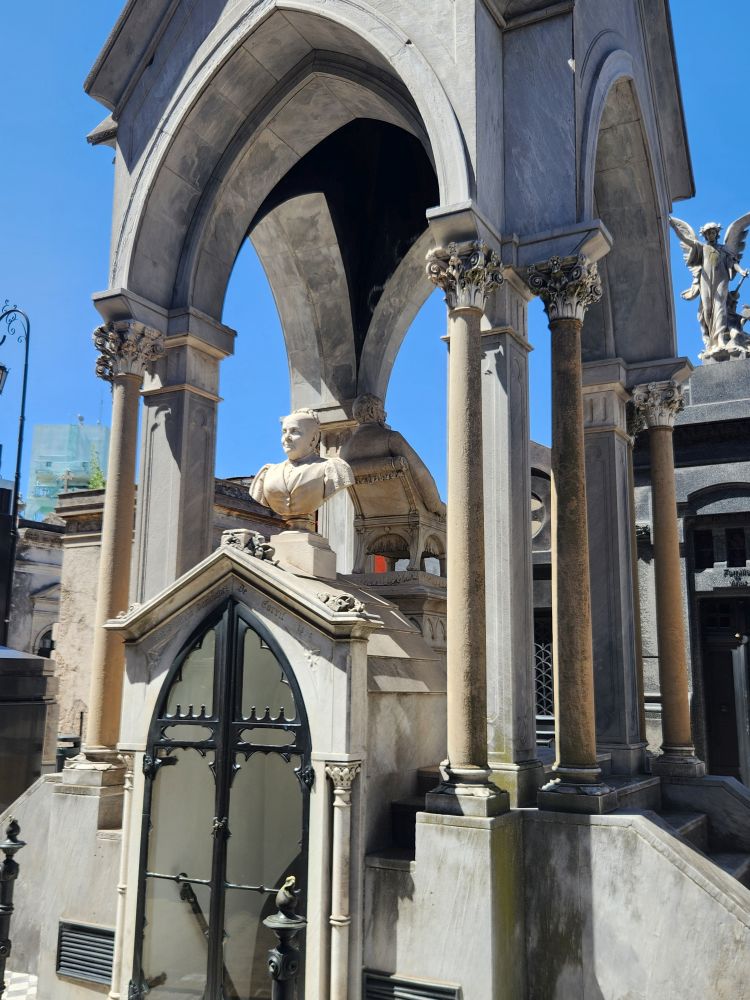
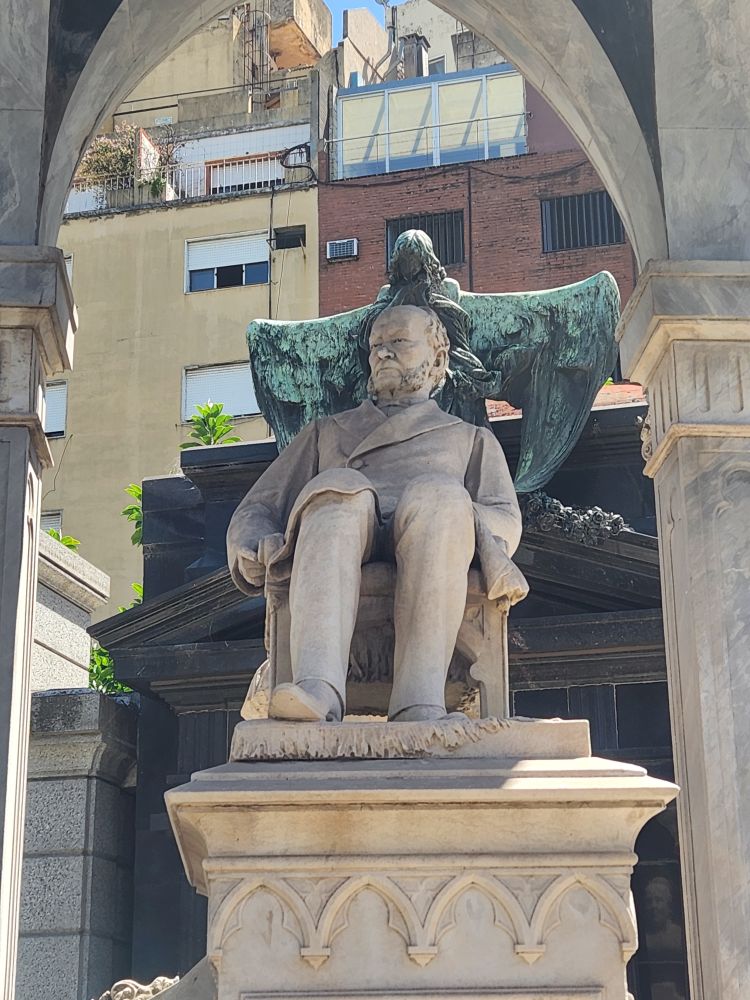
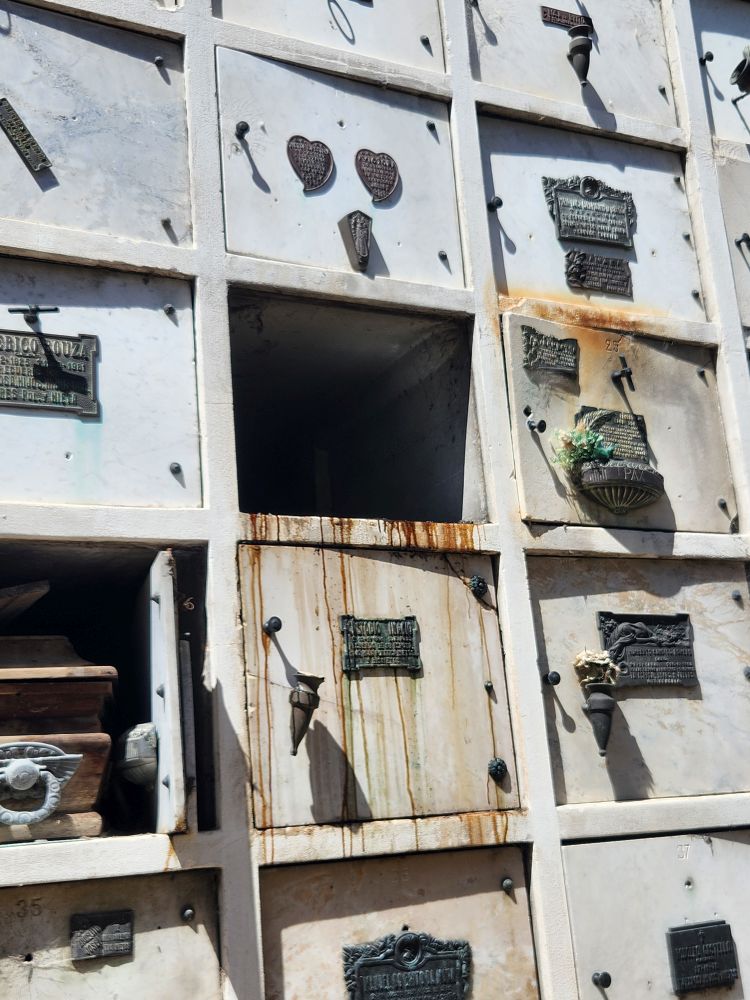
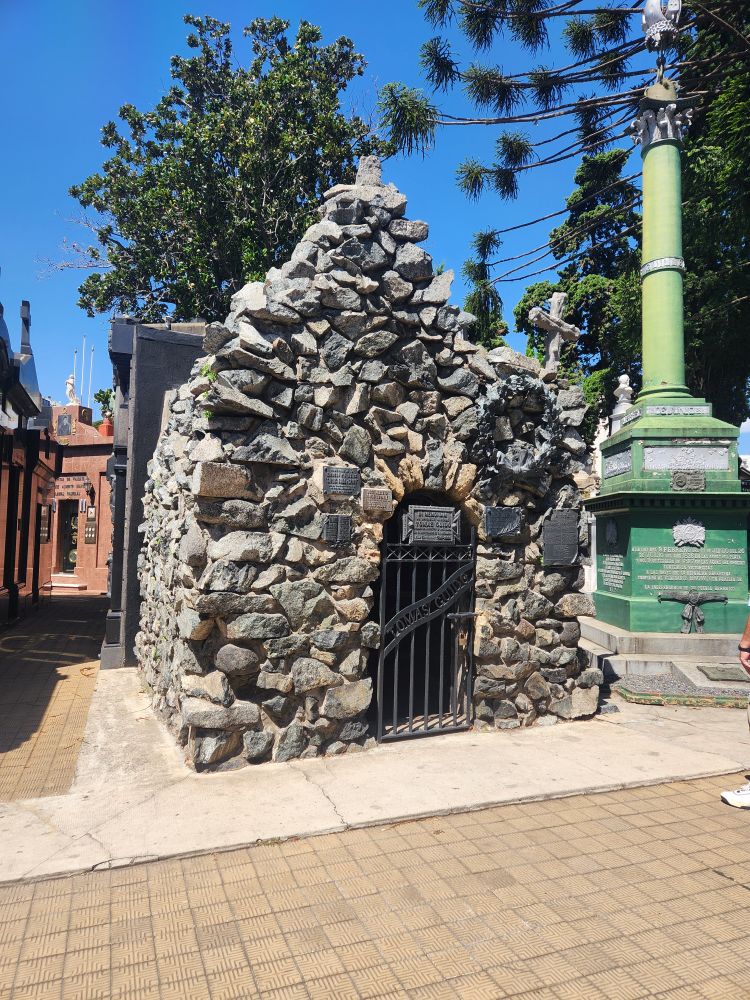
As we pass a wall of crypts, there is one that is empty and appears to have, well, leaked. Ewwww. Howard says it happened last week and when he was here last it smelled….Double Ewwww. More pleasant crypts followed, including Howard’s favorite, The tomb of tomas Guido, a famous Argentine General. The tomb was hand built by his son with stones brough down from the Andes. It was the General’s wish to be buried under the mountains that he and his troops crossed during battle, and his son fulfilled those wishes.
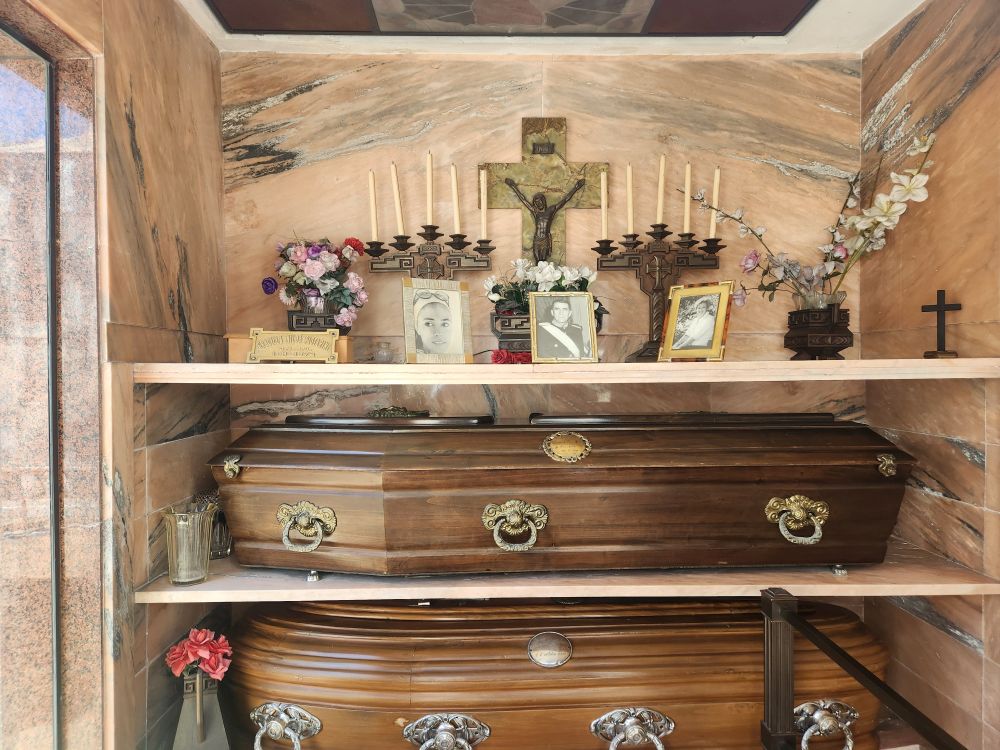
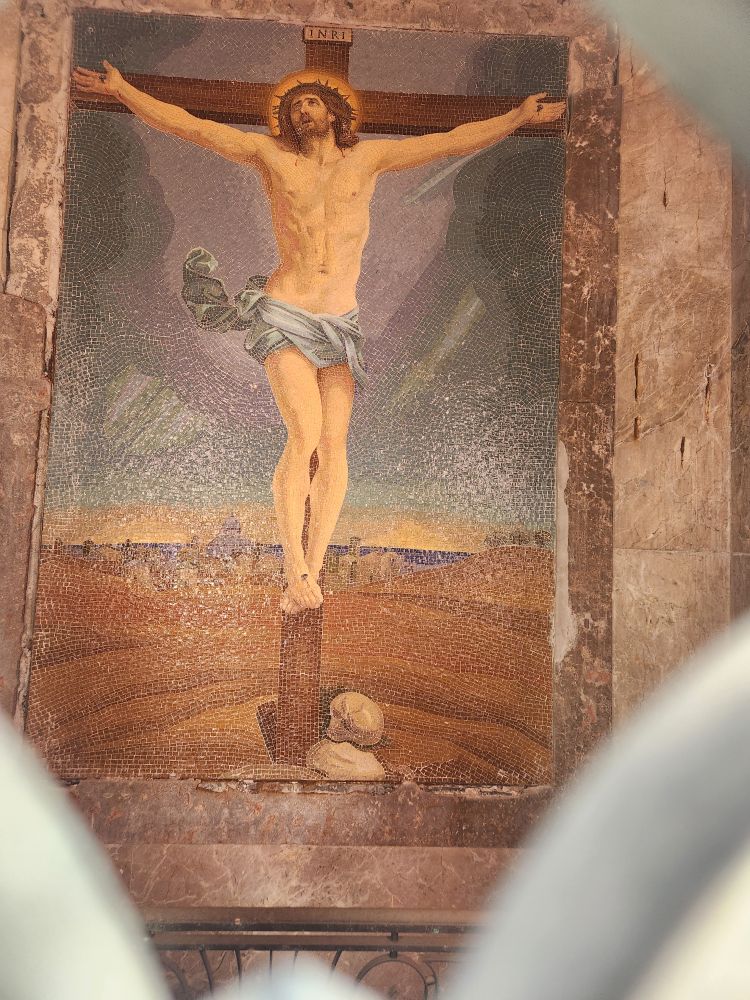
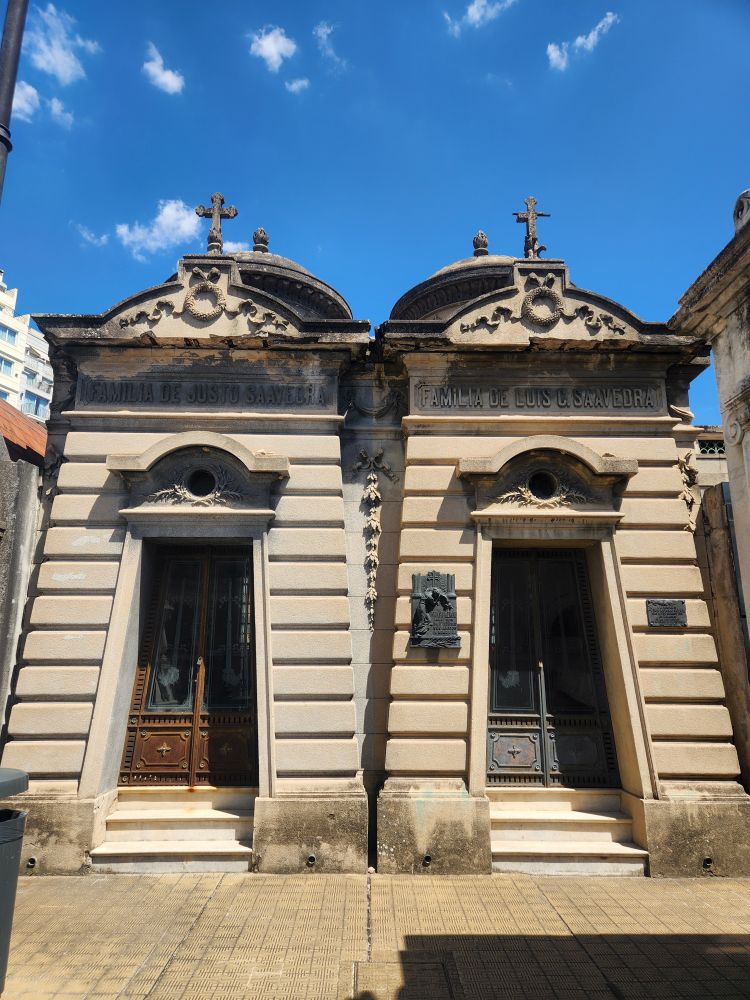
We’d never know any of this stuff without Howard! Awesome way to explore Recoleta! A few more interesting tombs, including the one with the mosaic of Jesus on the cross with bloody detail, and we are done. With plenty of time to spare. Back to the ship we go, for an afternoon of hanging out and finalizing packing before our Closed Door Restaurant dinner!
 Andiamo