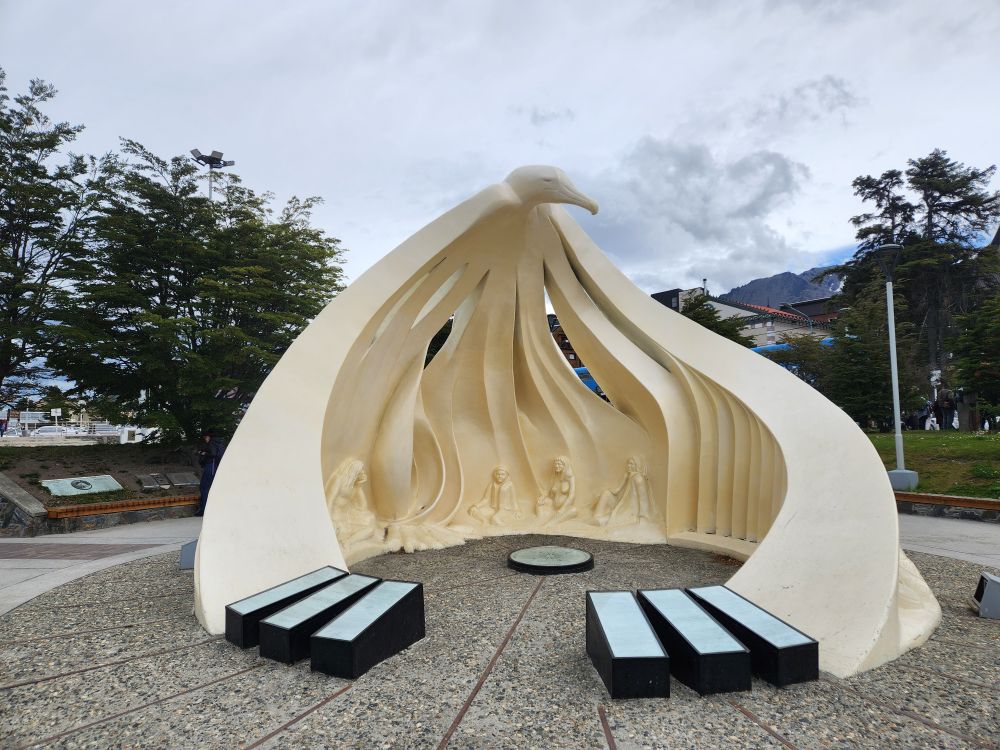
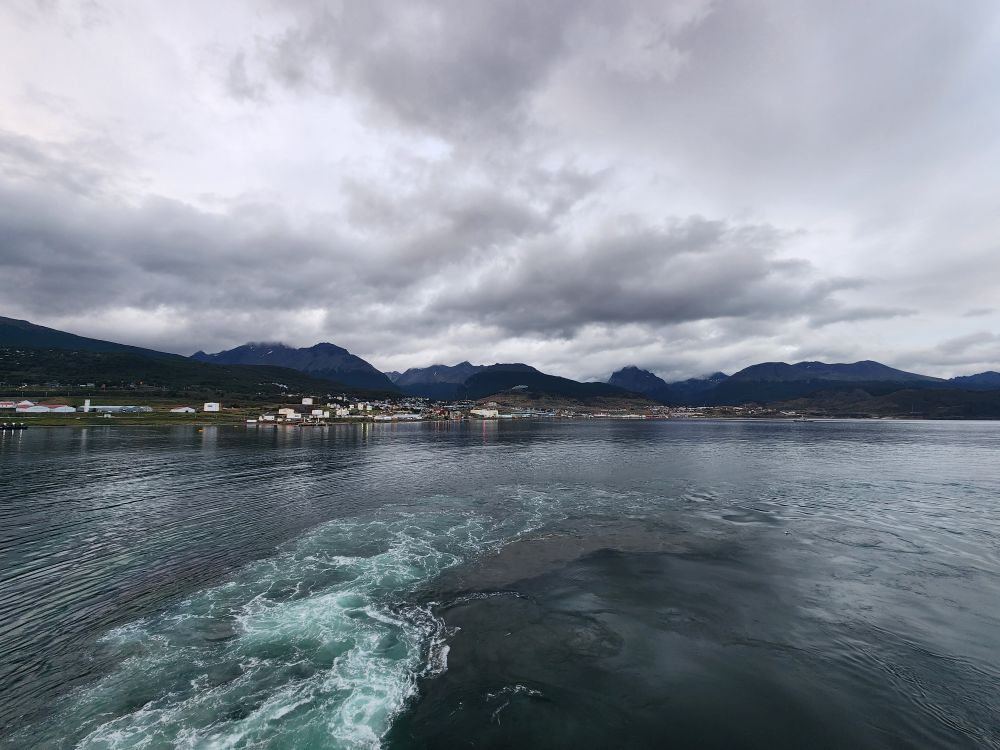
We arrive into Ushuaia early, thank you Captain, which gives us some time to wander about and see the sights before heading back to the ship for our excursion. We are off first thing, heading toward the Antiguos Pobladores statue, meant to resemble an albatross which is the city’s symbol.
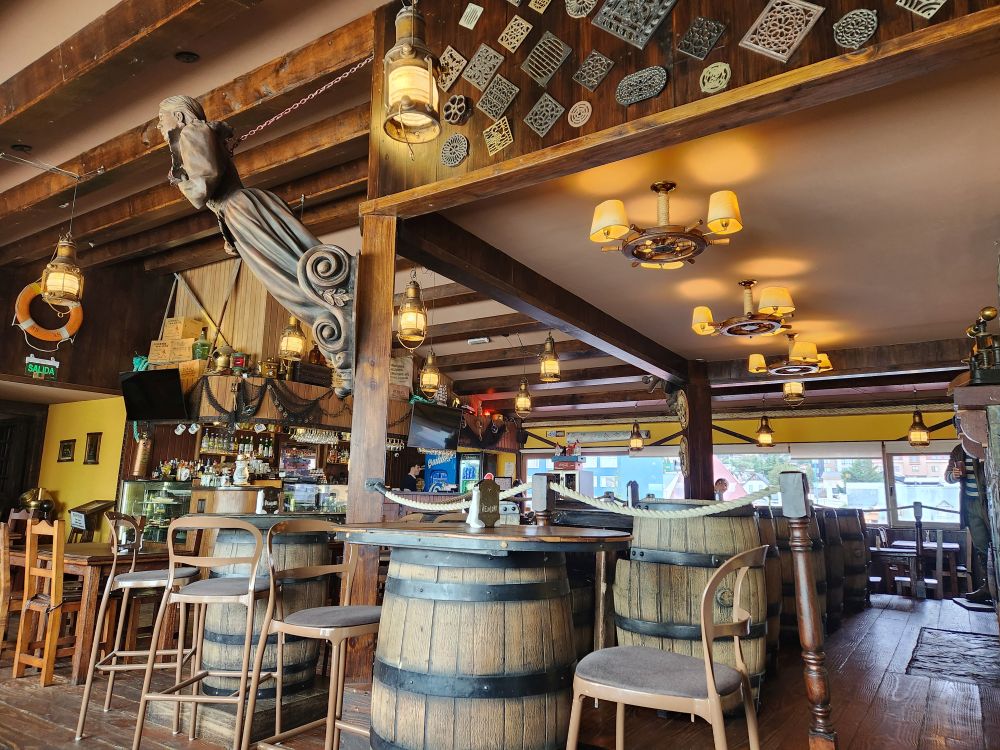
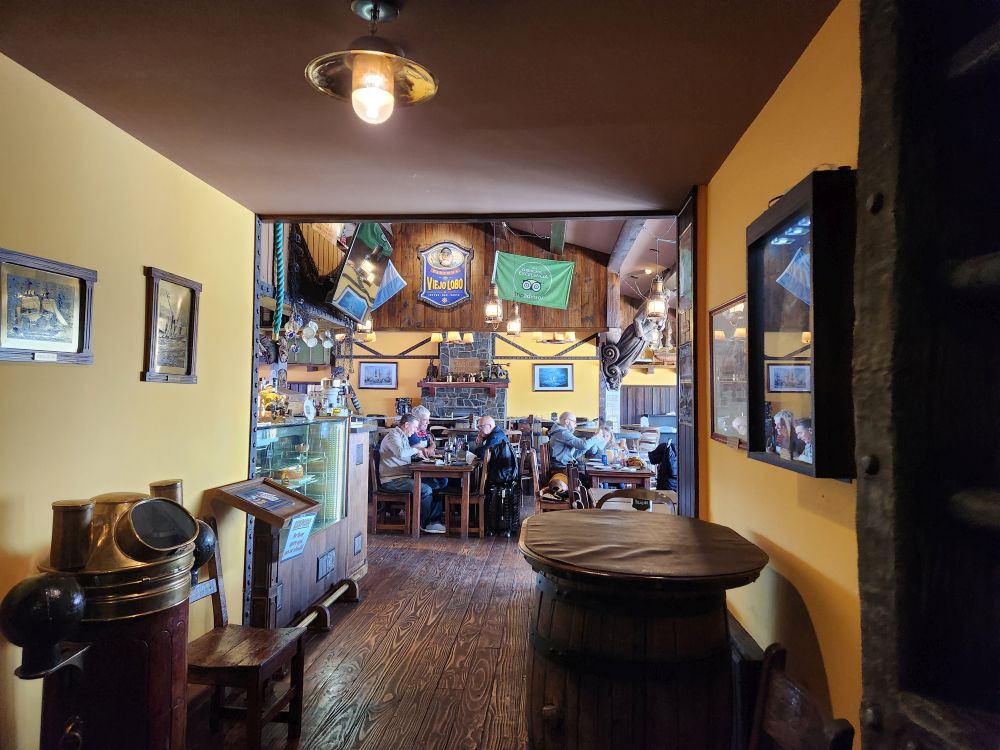
A quick tour through the artisan market – nothing we’re interested in buying – and we are back on the streets, retracing our stay here in 2011 by finding all the different restaurants where we dined! As it is still so early, many places aren’t open yet, but we do end up finding a quirky place called La Taberna del Viejo Lobo, the Old Wolf’s Tavern, located above the prison museum (which we didn’t have time to visit).
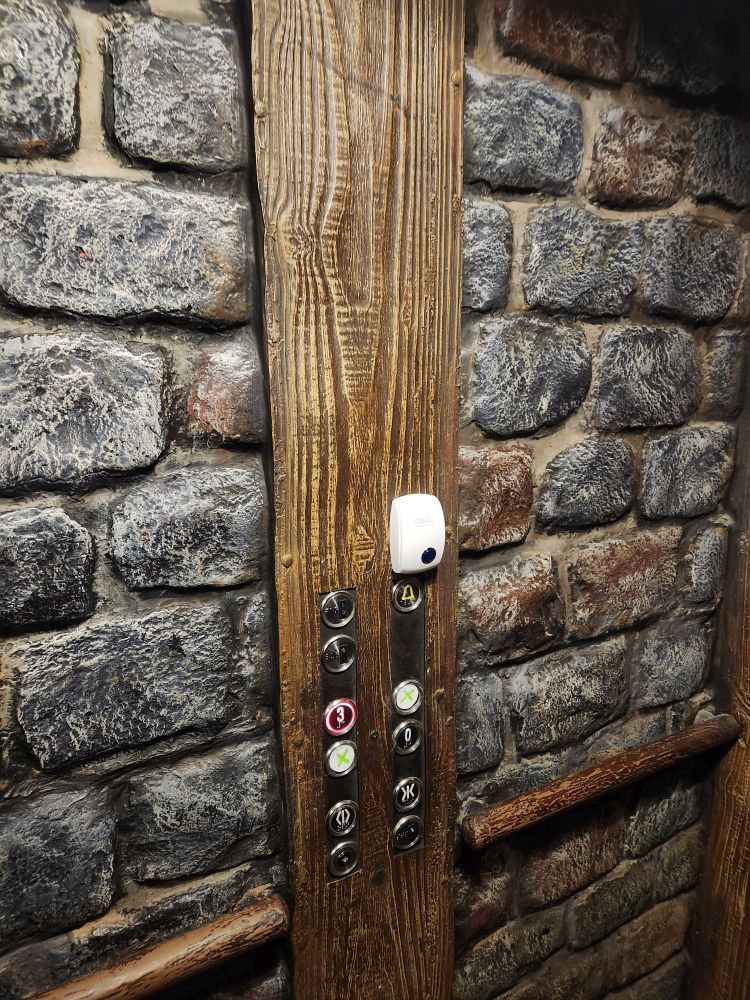
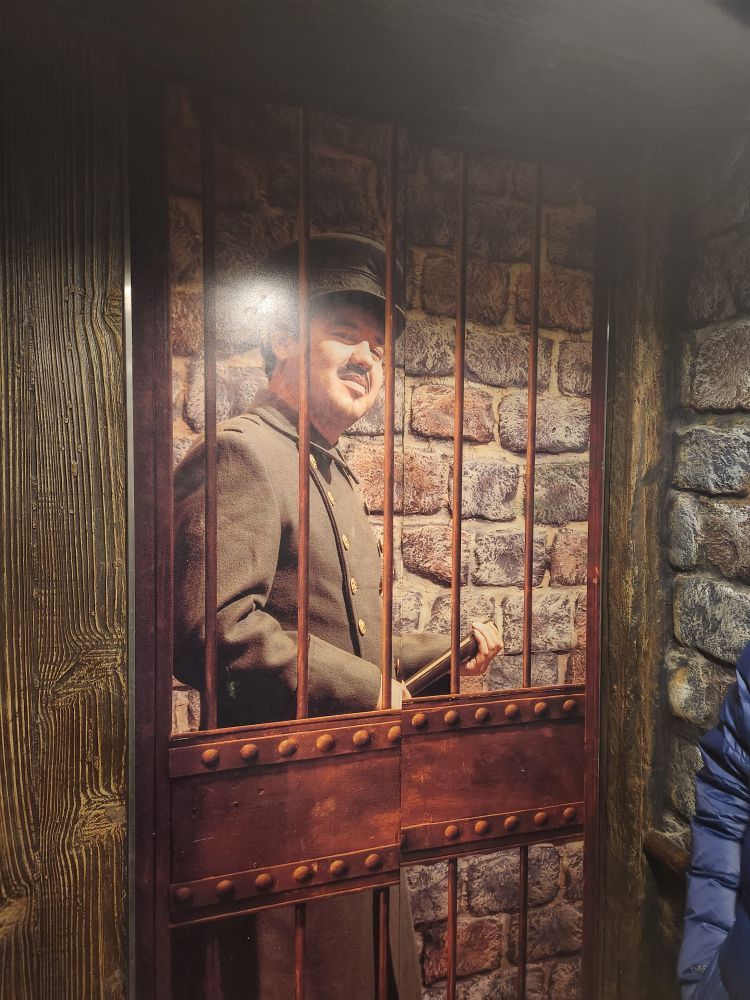
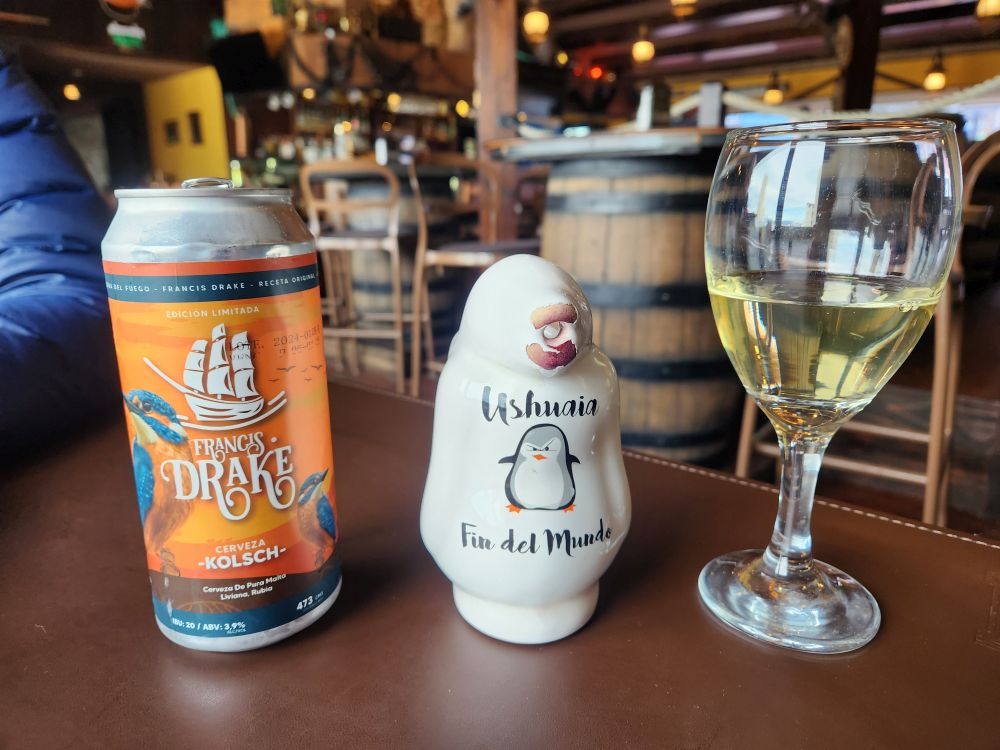
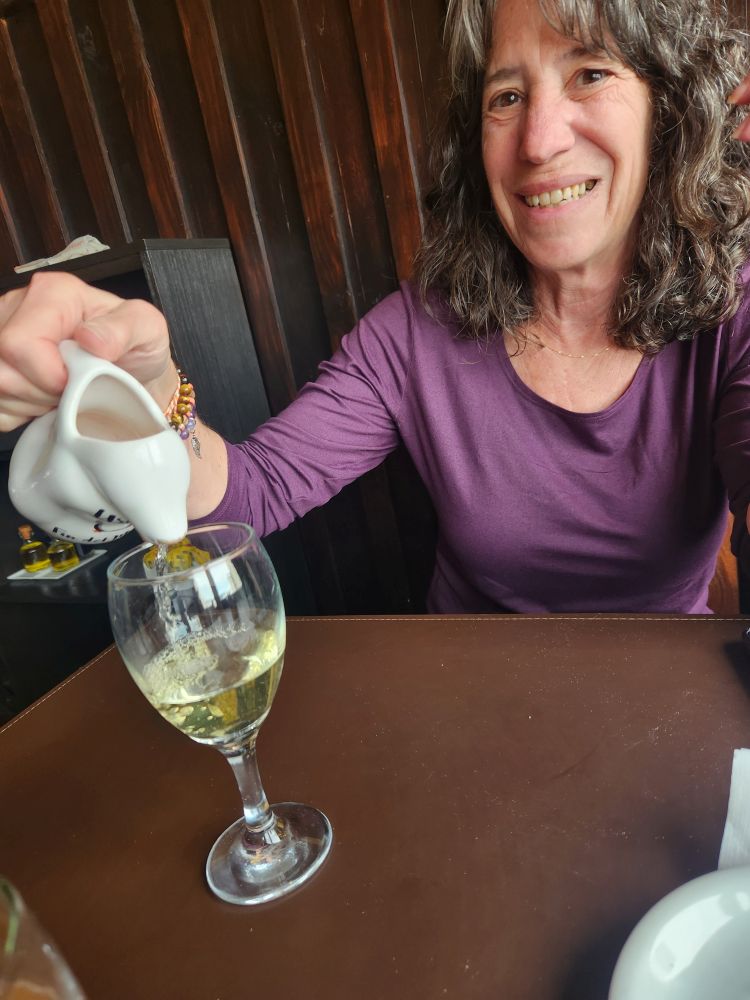
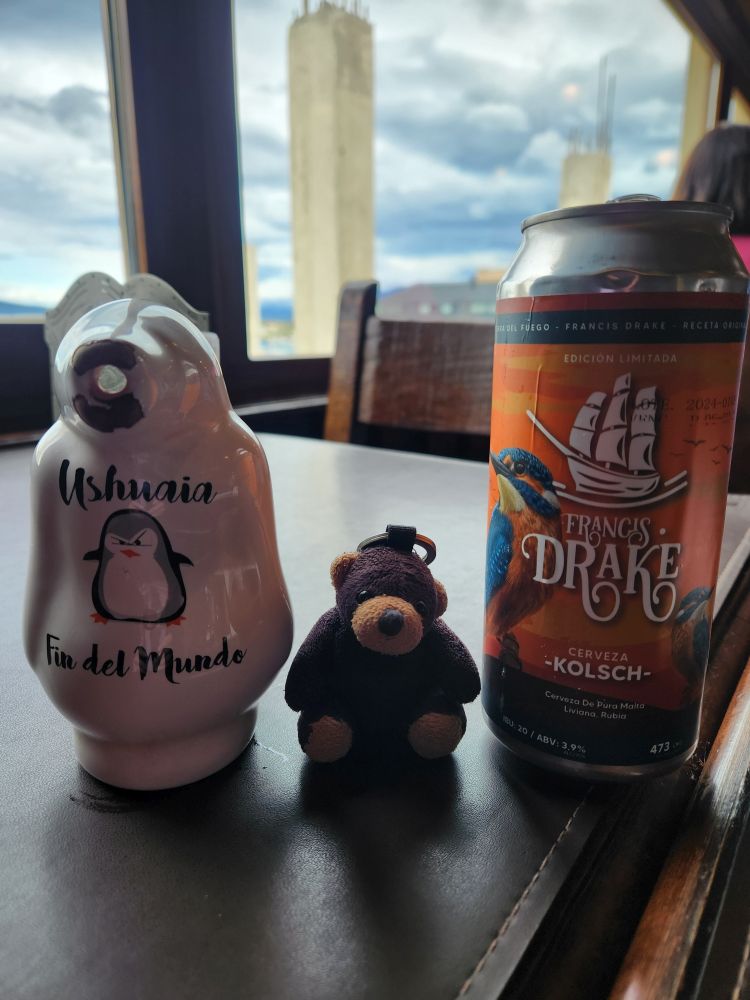
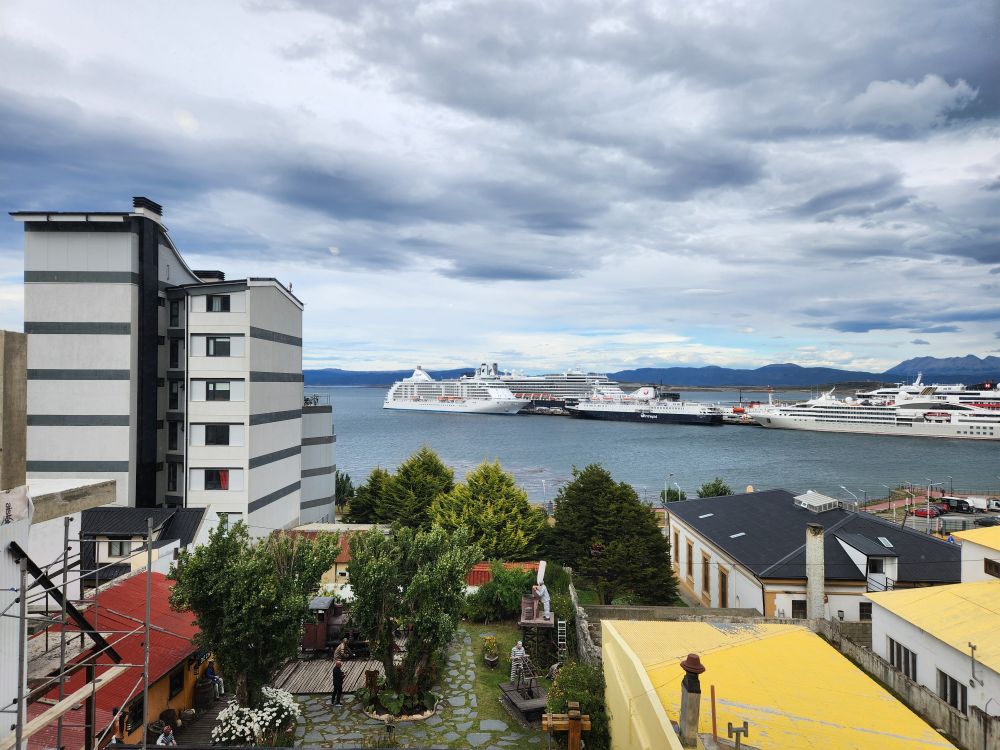
We take the “prison” elevator up to the 3rd floor and walk into the quirky taberna where we have a nice view across the harbor with all the expedition ships, a great local beer, a Francis Drake Kolsch, and a fabulous glass of wine served in a penguin carafe! I so want that penguin carafe!
Then it is back to the ship for our excursion – which we are hoping will be decent, and all the participants will be able to actually “trek” along with us! As it turns out, there is a group of 28 on the tour and all are relatively fit. Phew. That will be helpful. We have an adorable guide, Mariana, who provides us all with tons of information on our 25 minute drive out to the Husky Park where we will hike.
We learn that the first inhabitants here were called Shamanas and lived here naked because there were no animals with fur, so there was nothing to make clothing. The tribes to the north, the Segnam, had fur from animals and were clothed. But not here. There are still no indigenous animals in the area – everything with fur has been introduced by foreigners.
In more modern history, Mariana tells us Ushuaia was not “planified”– too cute, she means the city wasn’t planned out officially, but all the houses were just built on top of each other. The government built concrete slabs, then people just built houses and structures on them. The city, it seems was initially developed as a penal colony; the most dangerous criminals and political prisoners were sent here between 1902 and 1947. The government closed the prison though, because nobody wanted to move to Ushuaia, calling it the city of prisoners. Then, eventually, Italian immigrants came after prison closed, and then others and finally Argentinians came to live.
As we leave the city proper, Mariana tells us we are driving on Government road #3, which leads all the way through the country. We are 3700km away from Buenos Aires, it would take 3 days to drive. As we start to enter the mountainous area, we pass by the Olivia river which flows down from Mt. Olivia. Many people camp here by the river. And the 10 minutes of the movie the Revenant were filmed here by the river.
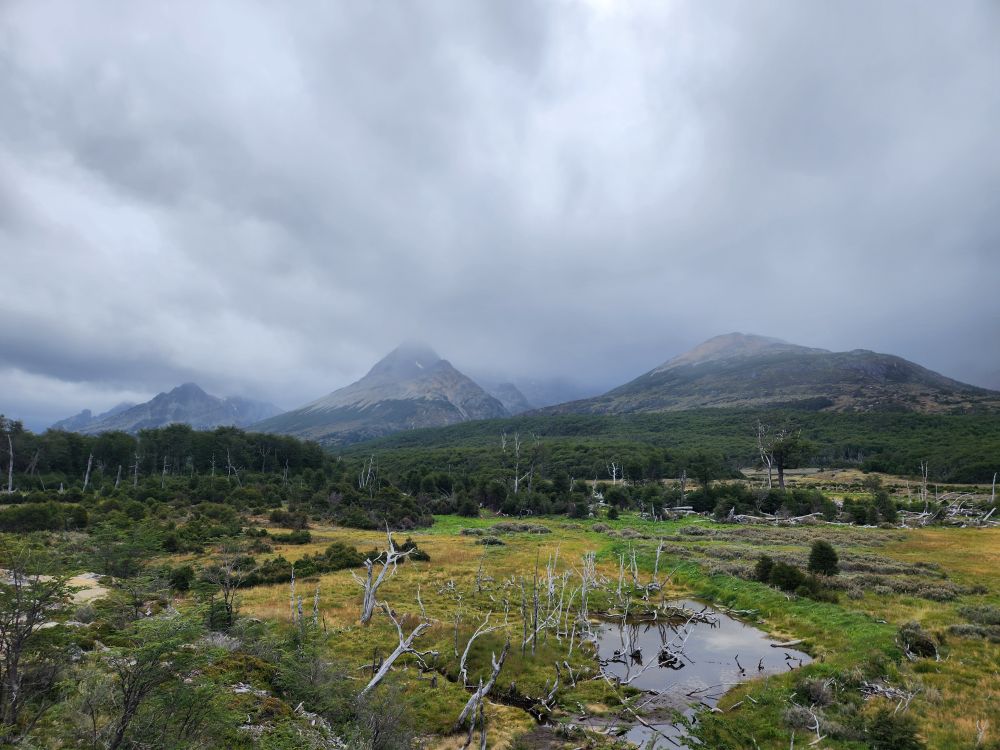
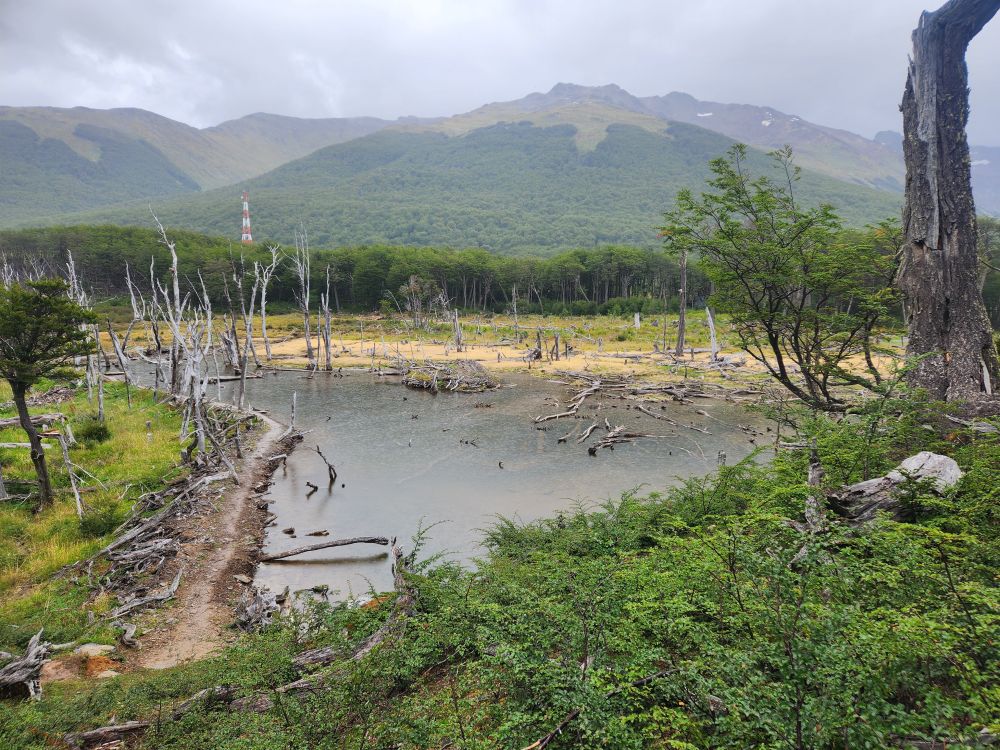
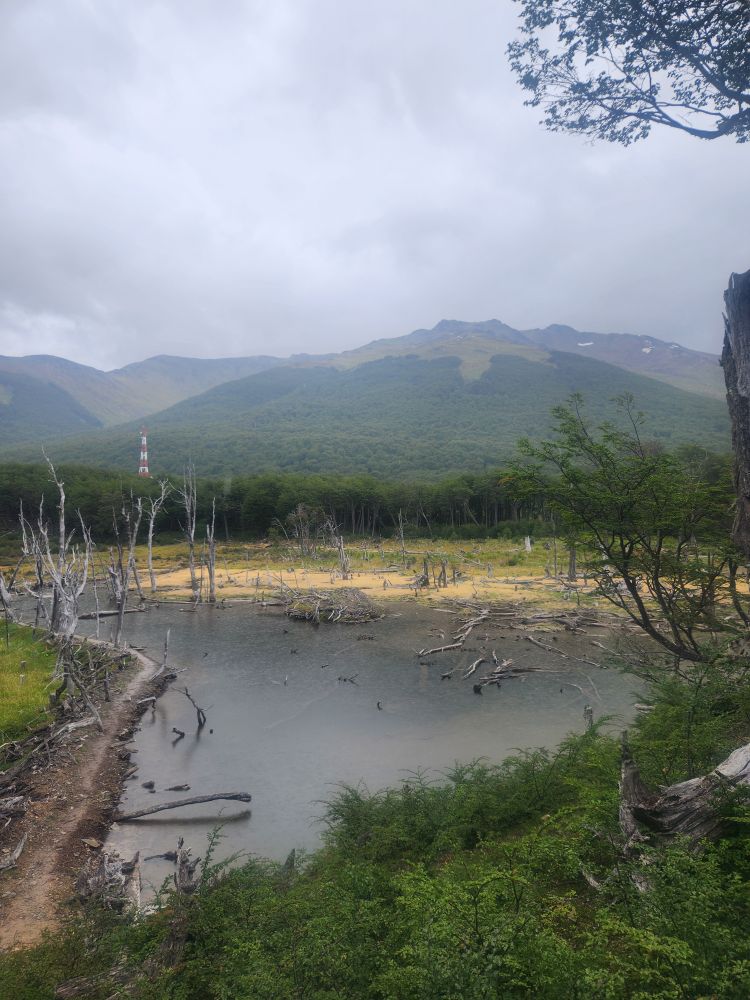
Mariana goes on to explain about the forest, full of high deciduous trees called lenga in Spanish. She also goes into more detail about the animals found in the forest – most introduced here (as mentioned previously). There are 2 types of fox, the grey fox was introduced to eat rabbits, but they found that the grey fox didn’t like to eat the rabbits, so now they have an abundance of fox and rabbit. There is one native fox, and that is the red fox. You can sometimes see the fox in valley. There is a llama called Guanaca in the north part of the island that is native. And then there are mink, introduced from America, to establish a fur trade, but they ended up being short haired mink, so they aren’t any good for clothing. The beaver was introduced from Canada, again to try to establish a fur trade. But that didn’t really happen either and the beavers became invasive and have spread exponentially. They’ve caused millions of dollars of damage to the land and environment but are now virtually impossible to eradicate. Of course, on our trek we are going to specifically go to see the beaver dams, so they are sort of a tourist attraction now as well!
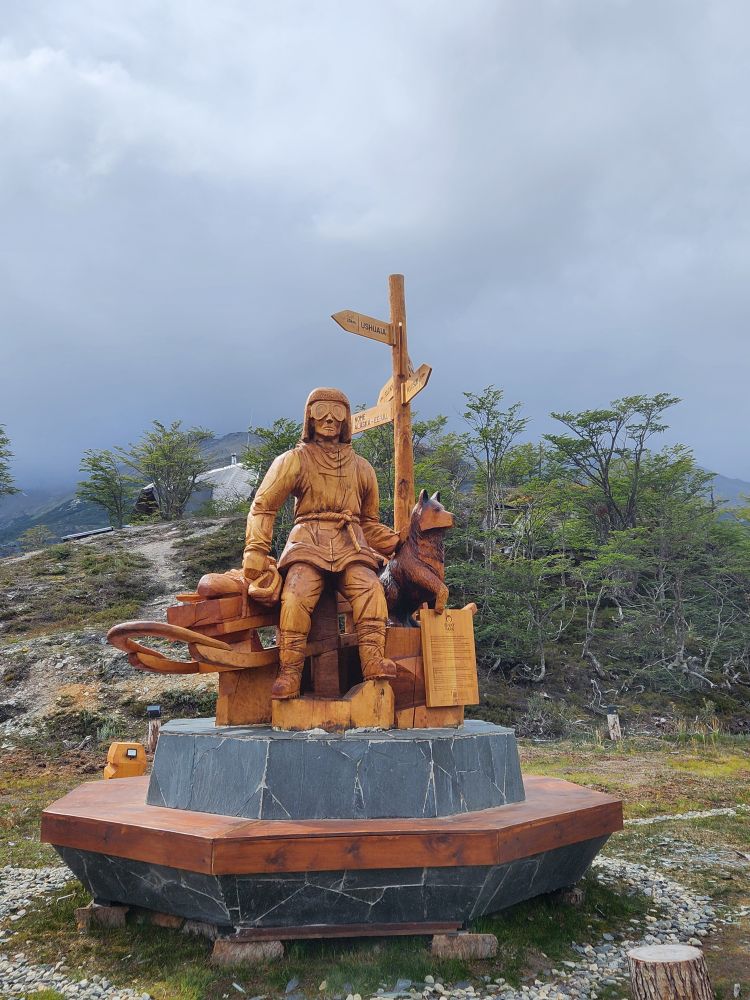
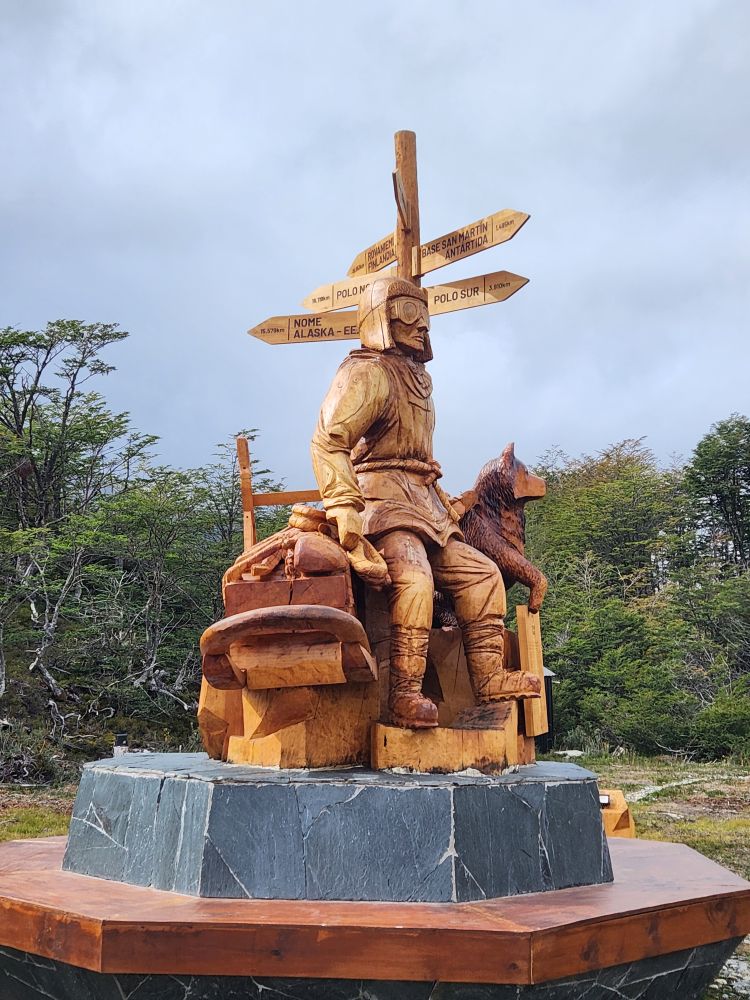
Arriving at the park, we are greeted by a statue of the explorer who founded the camp, his kids now run the place and the “warm hut” that the tour advertises will be our snack break. It also contains the restrooms, so while most of the group makes use of the facilities, we go out to look at the dogs. There must be 100 dogs out here, in their little houses or just milling around. Some are traditional huskies, but there are also other types of sled dogs. These are the dogs they use for their sledding tours during the winter. You can dog sled, ski and snowshoe here, there are also night time tours where you then have dinner in a teepee (that we’ll see later). But back to the dogs – they are going crazy for some reason – maybe because one of their handlers is stirring them up for our benefit!
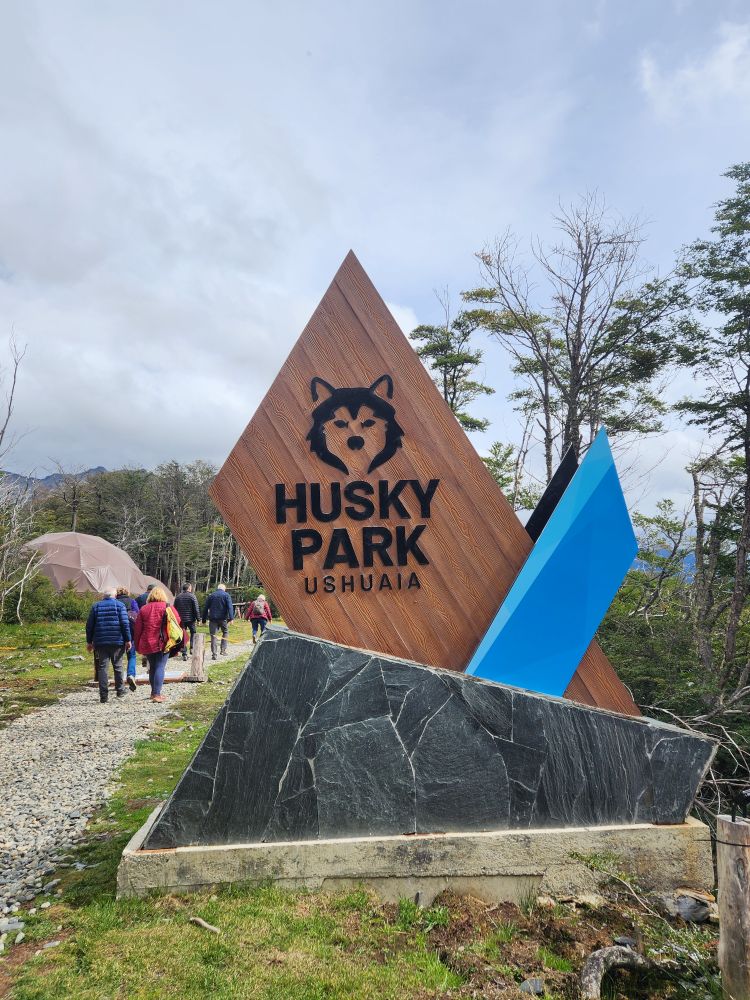
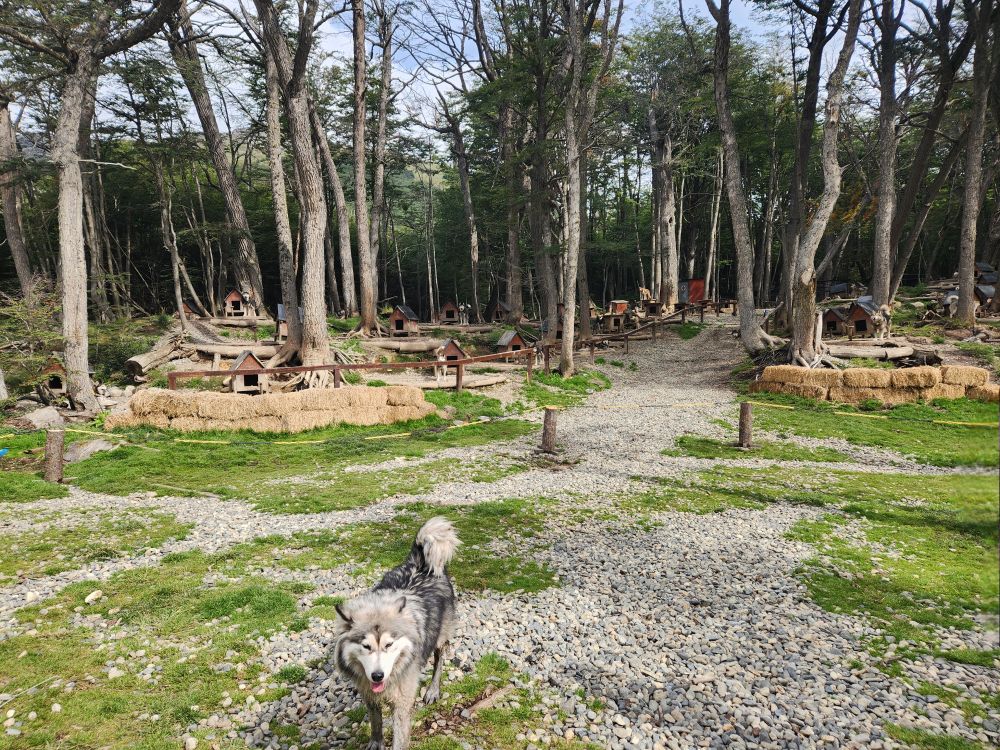
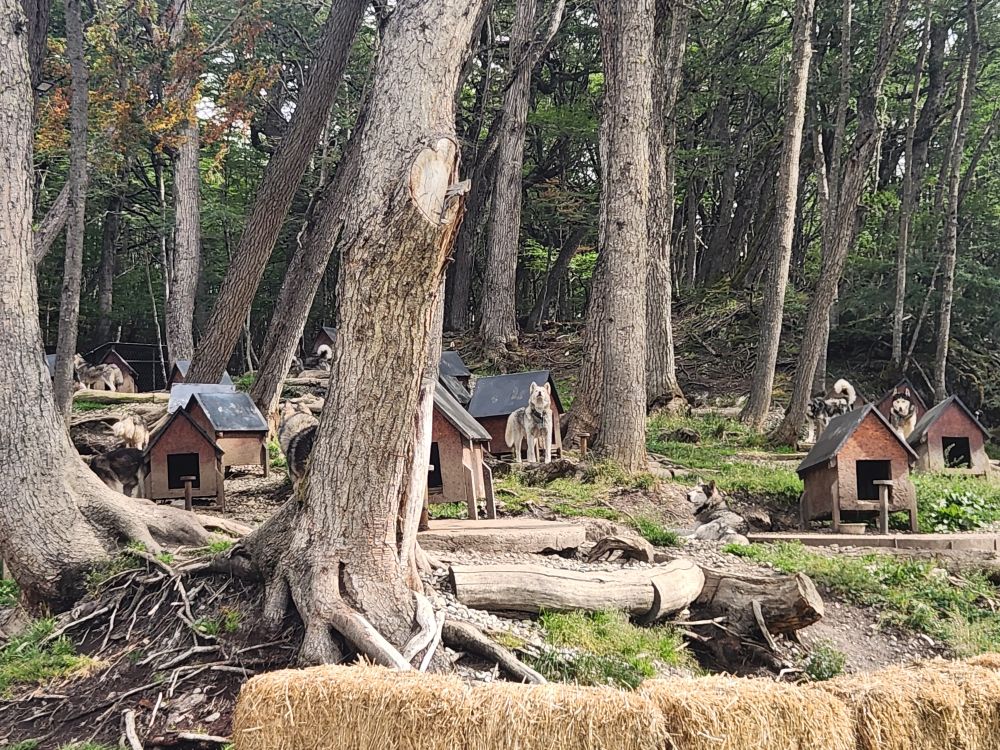
And then we trek – across peat moss that is sponging and moves with every step. Across a large open meadow, toward the mountains in the distance. Eventually, we go up into the trees, climbing a fairly steep hill – which everyone handles pretty well. We are totally impressed!
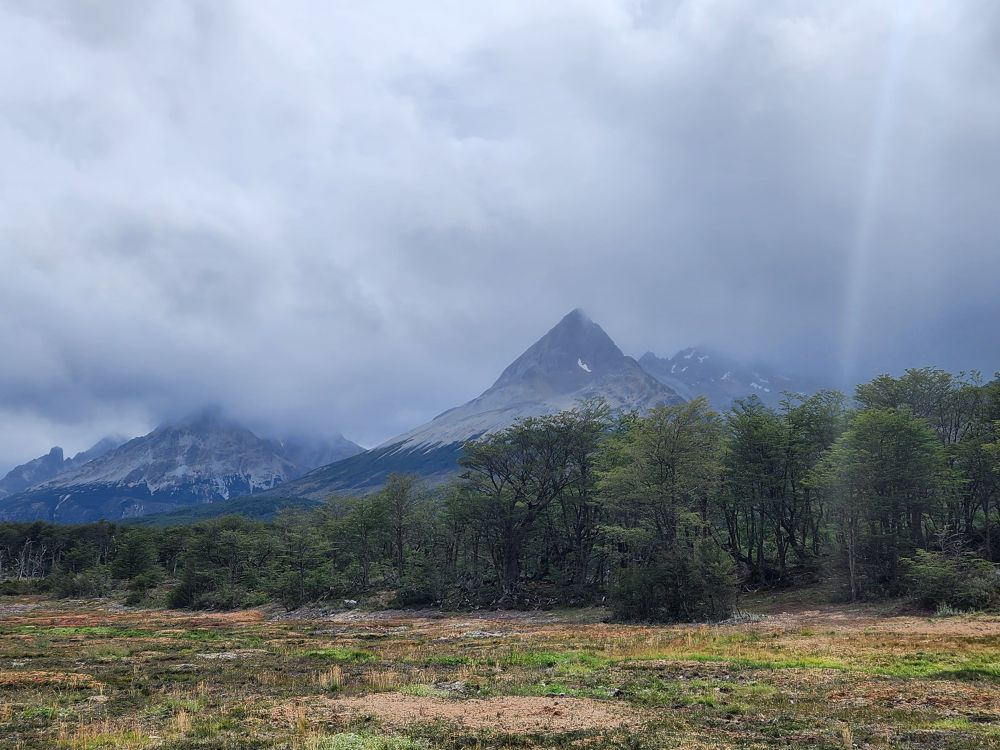
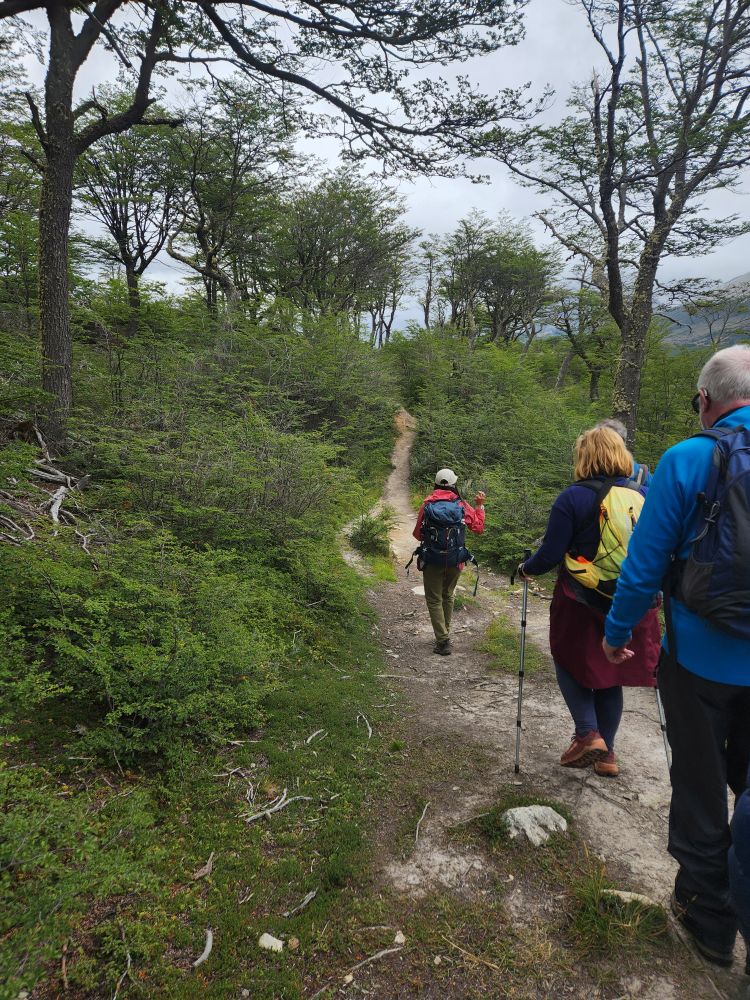
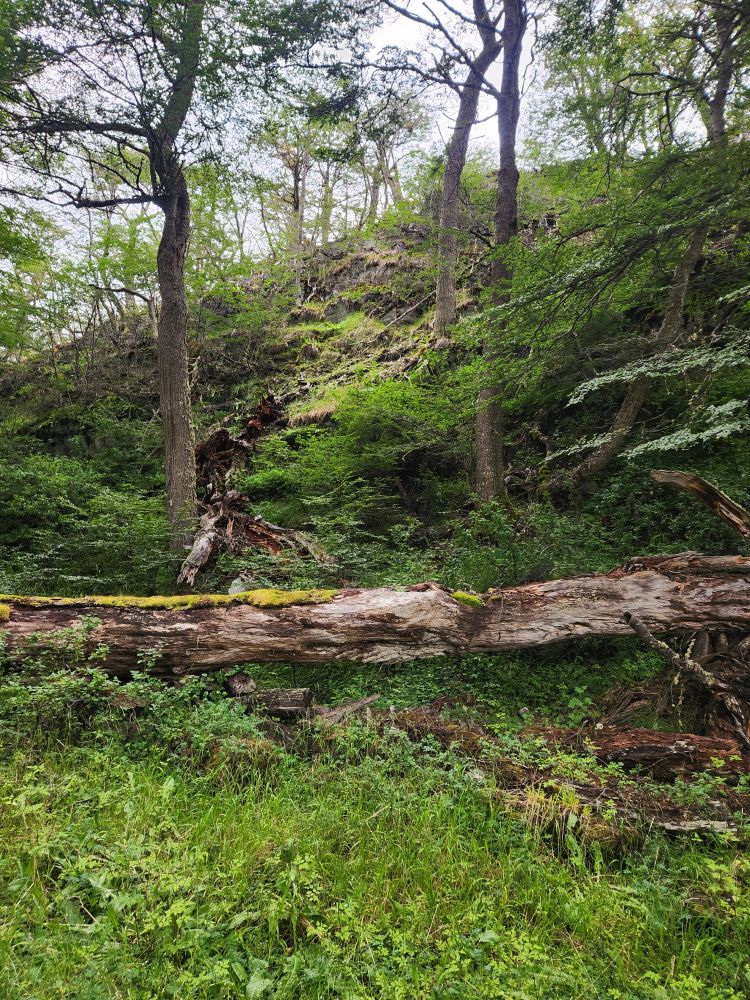
Mariana stops frequently to explain different plants and trees. She points out the False Mistletoe, a semi parasite plant that grows on trees high up in the branches. She also talks about the lichen that is all over so many of the trees. It is only growing because the air is so clean here, it is an indication of a healthy environment.
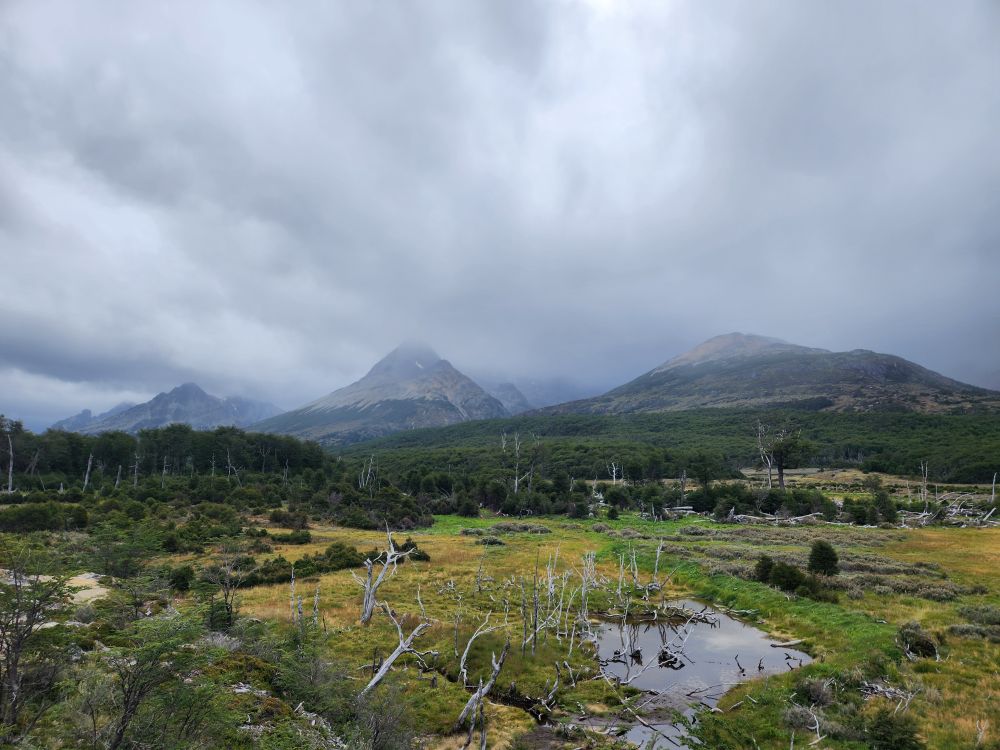
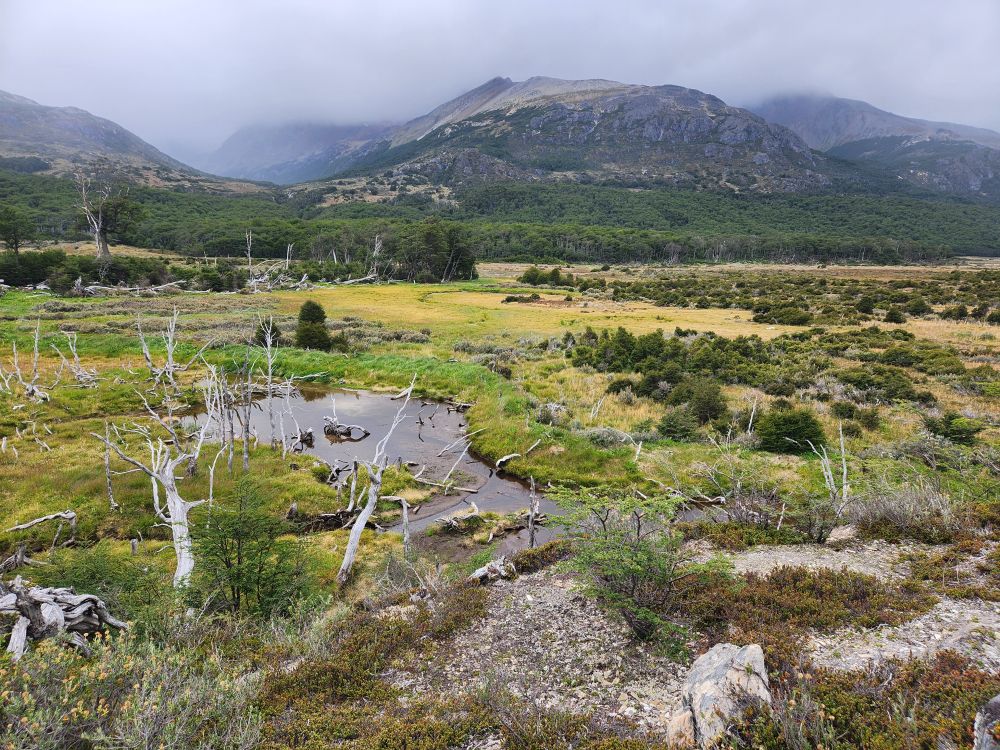
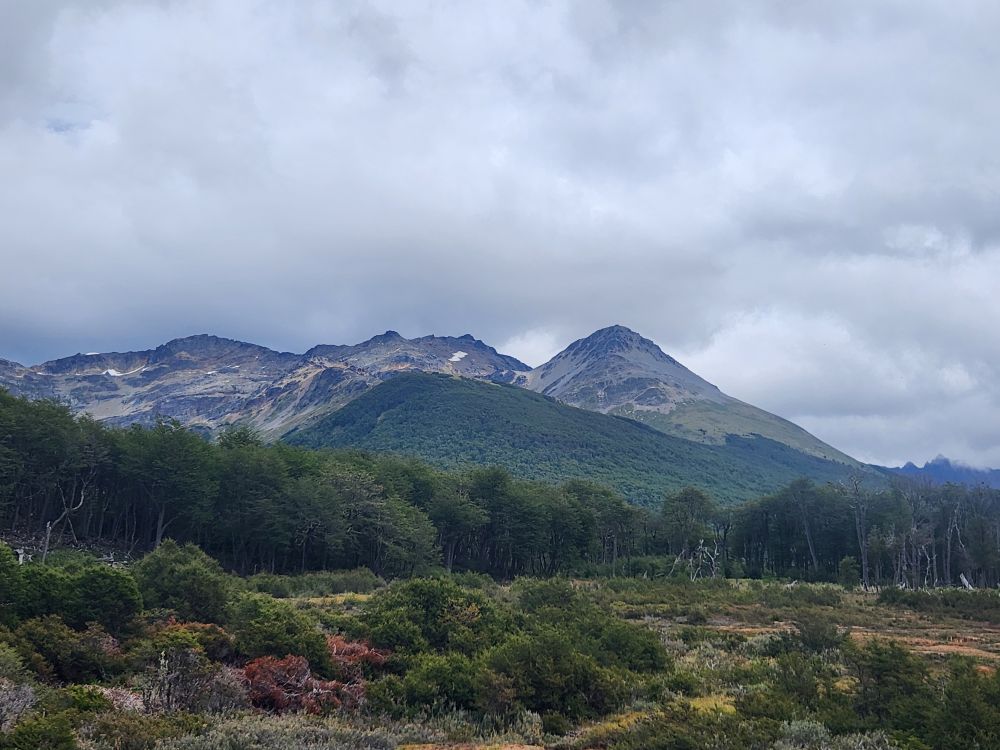
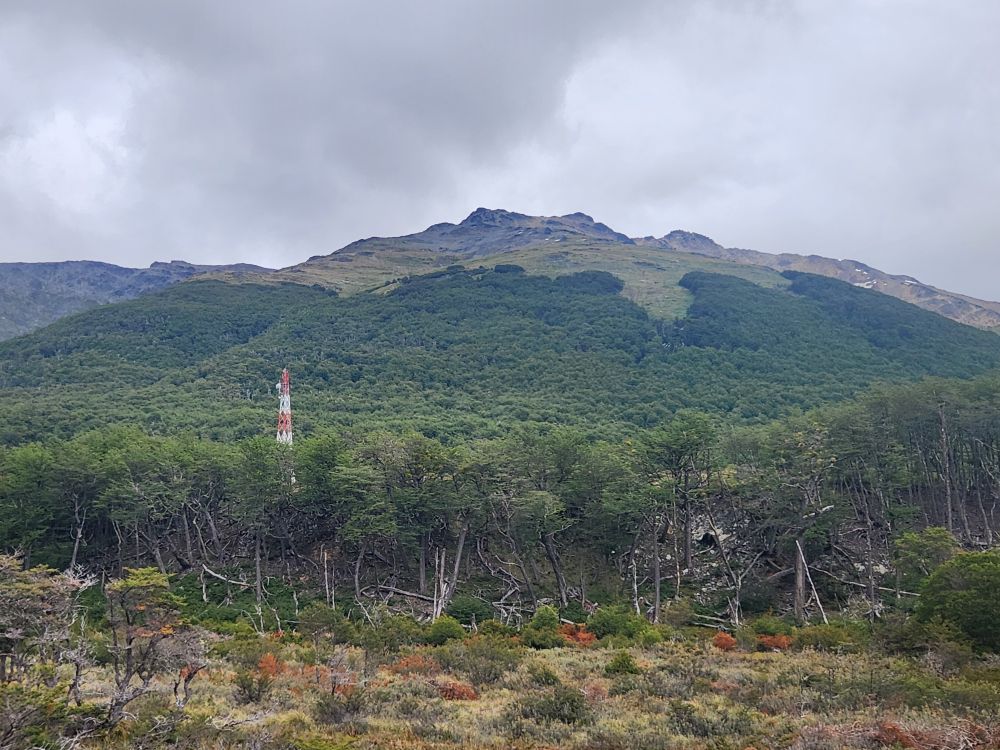
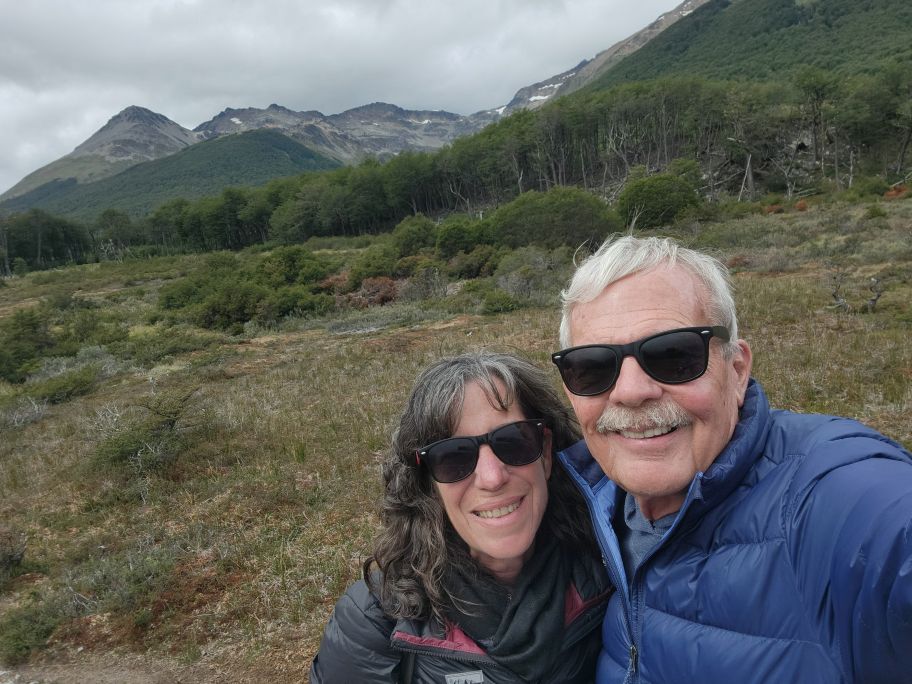
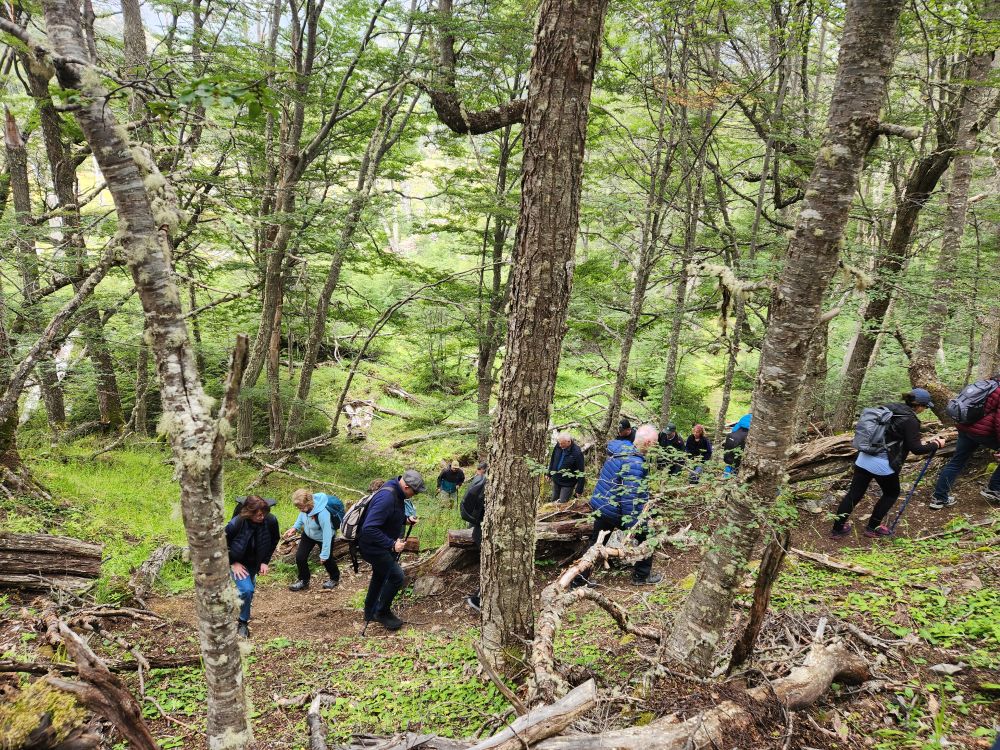
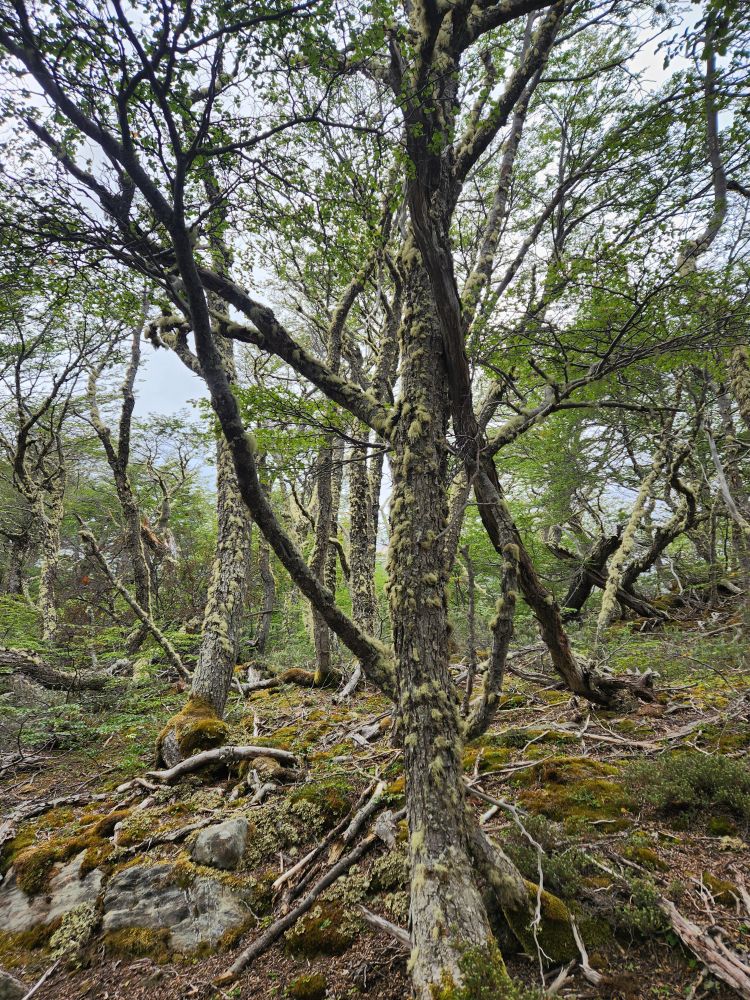
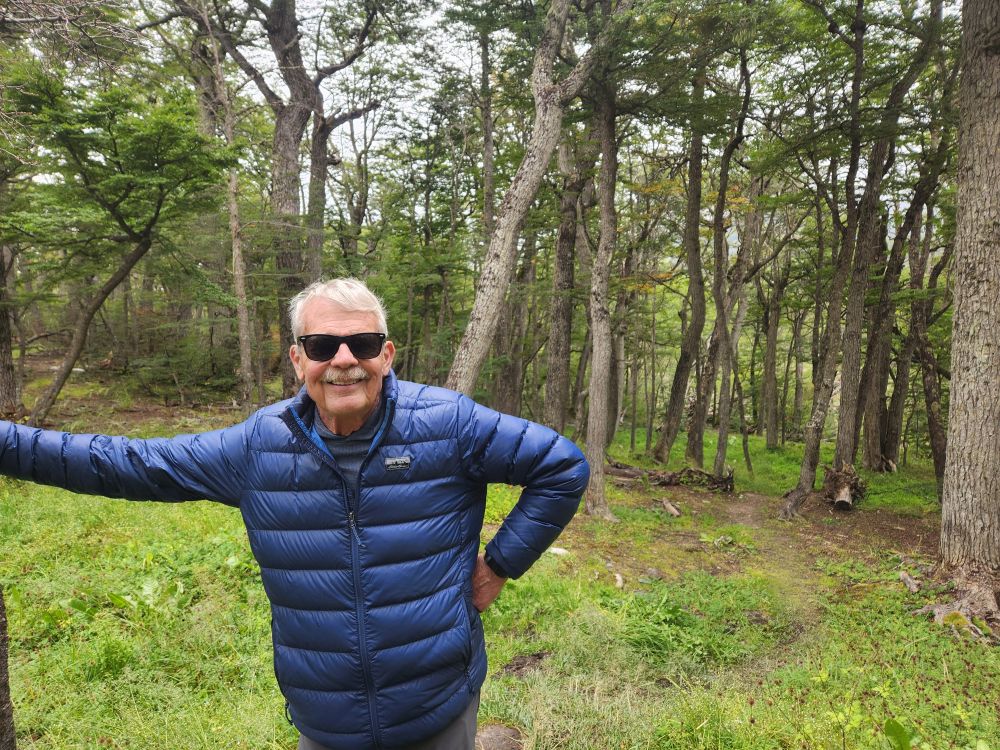
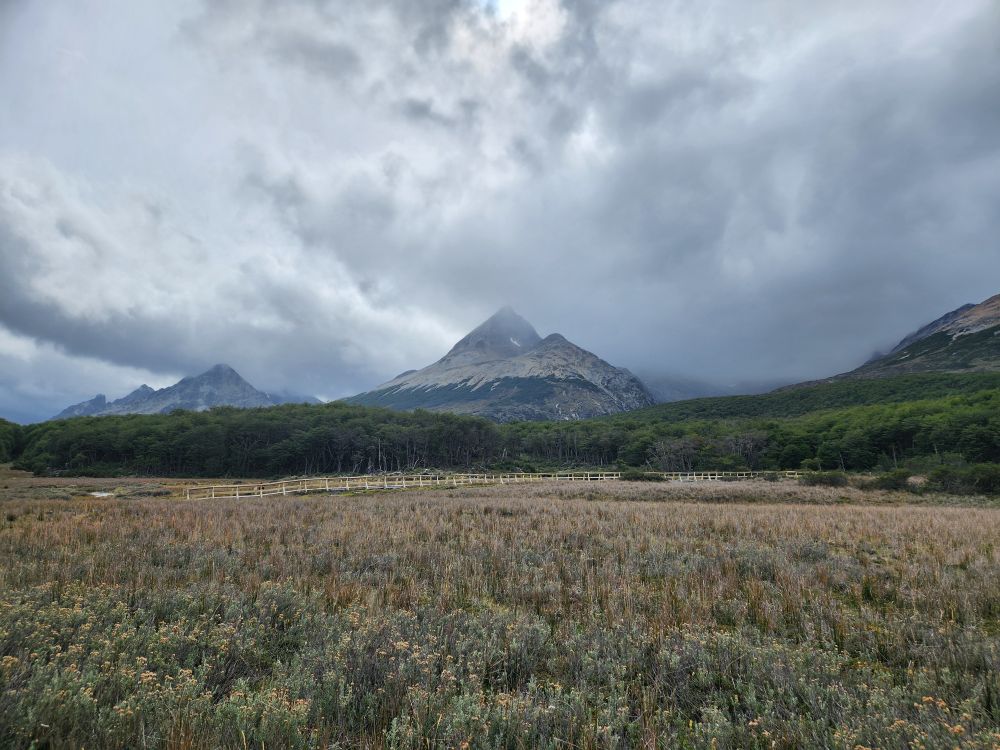
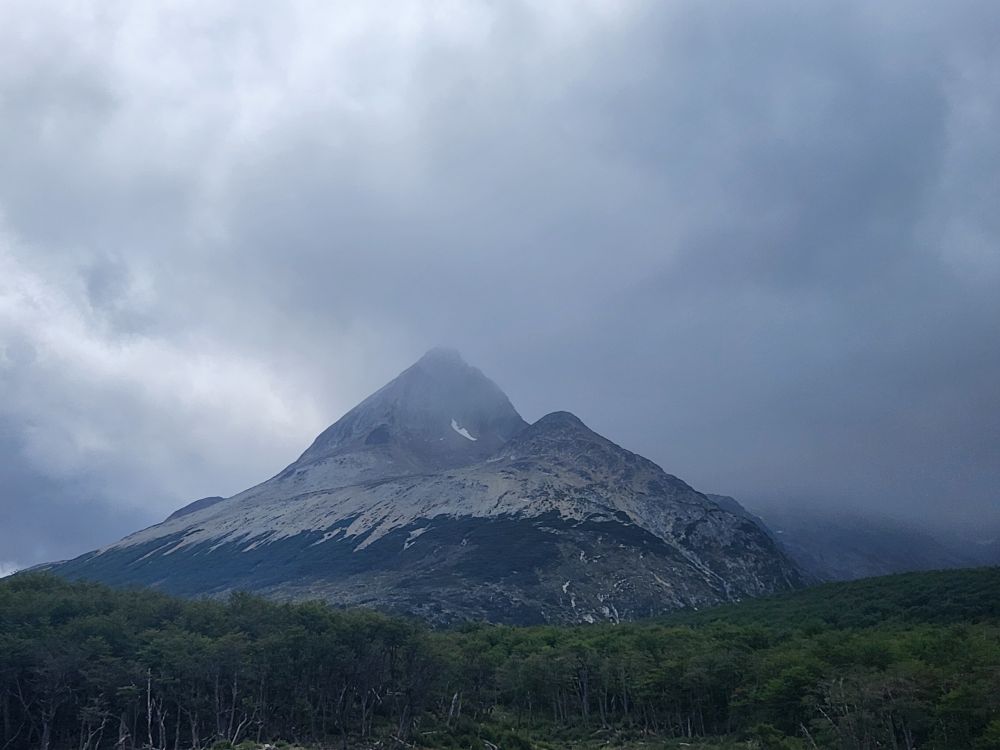
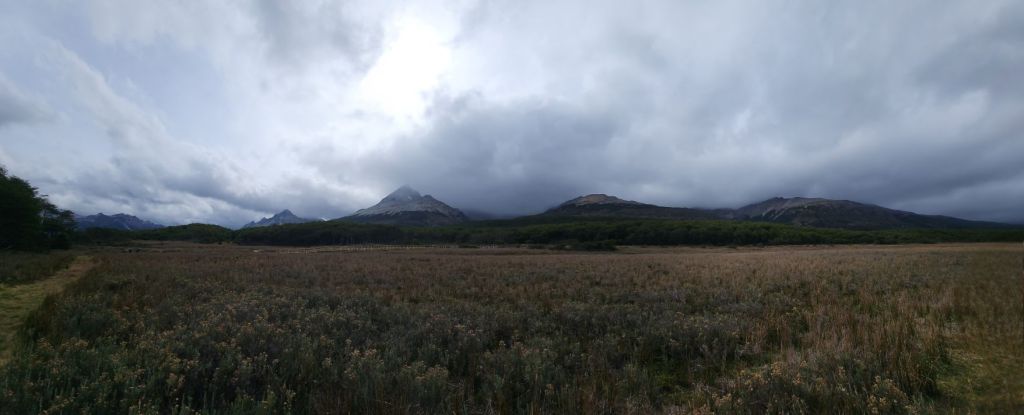
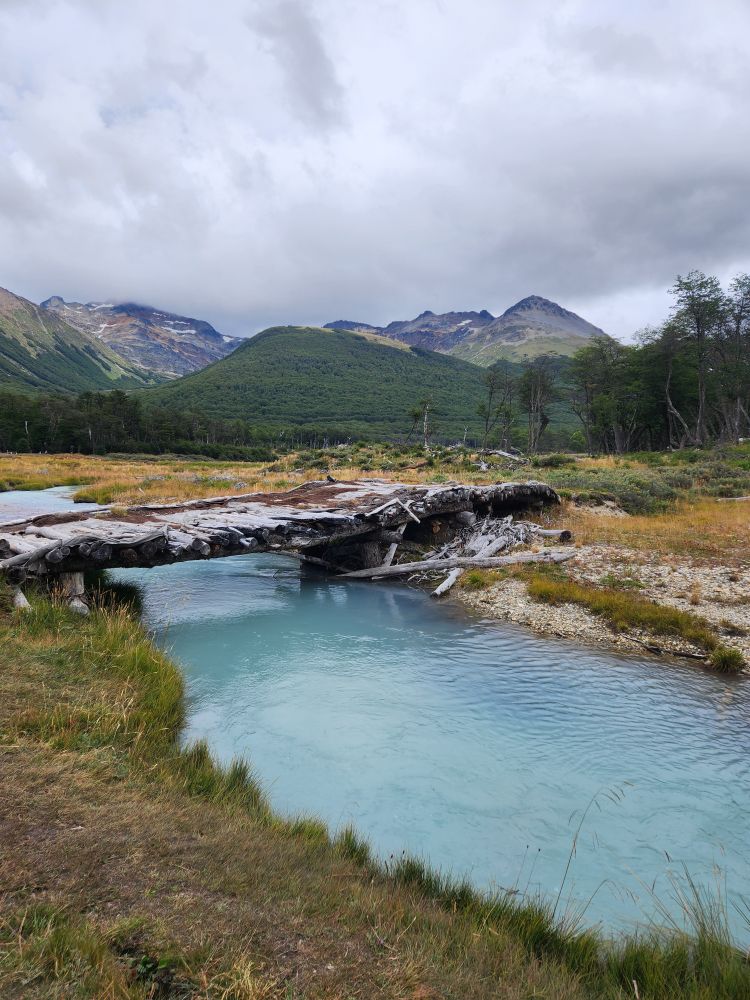
More stunning views ensue as we cross a wooden bridge on our way to a stream that runs from the Emerald Lagoon – which is a huge hiking destination.
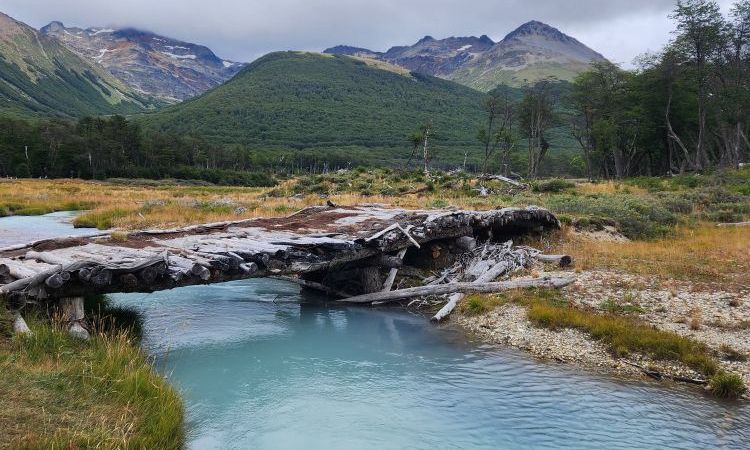
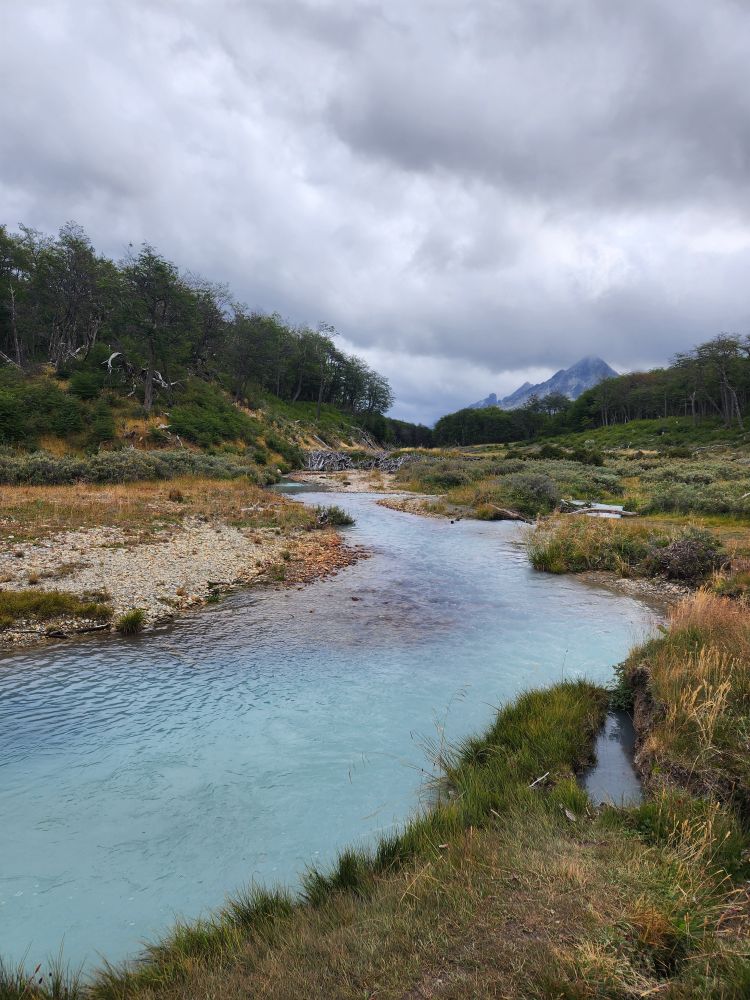
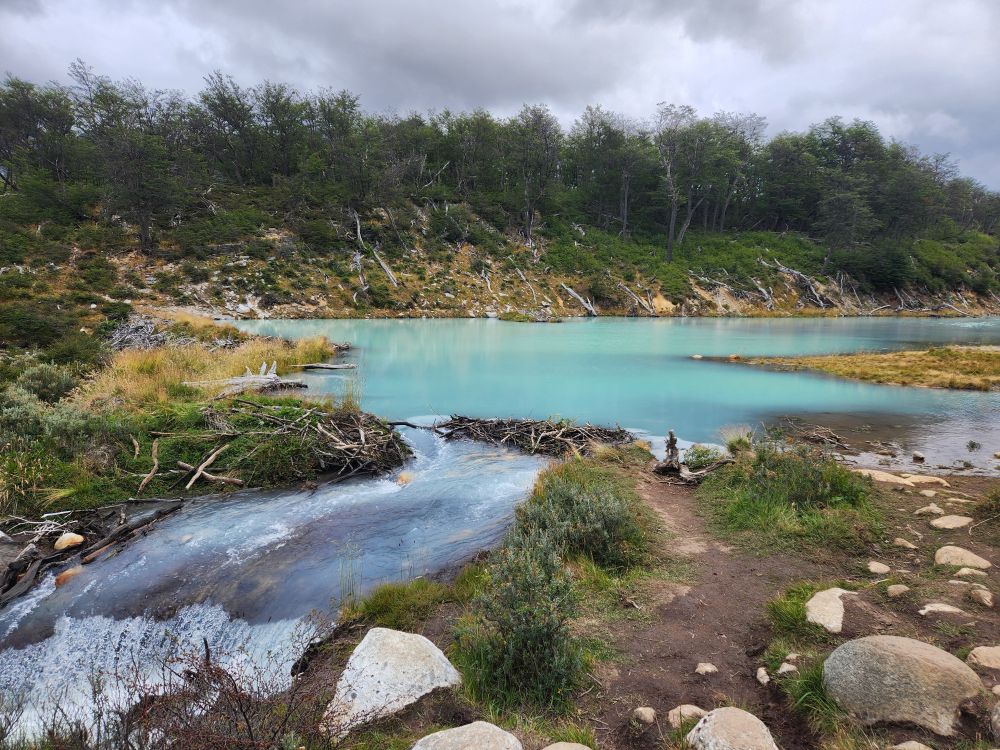
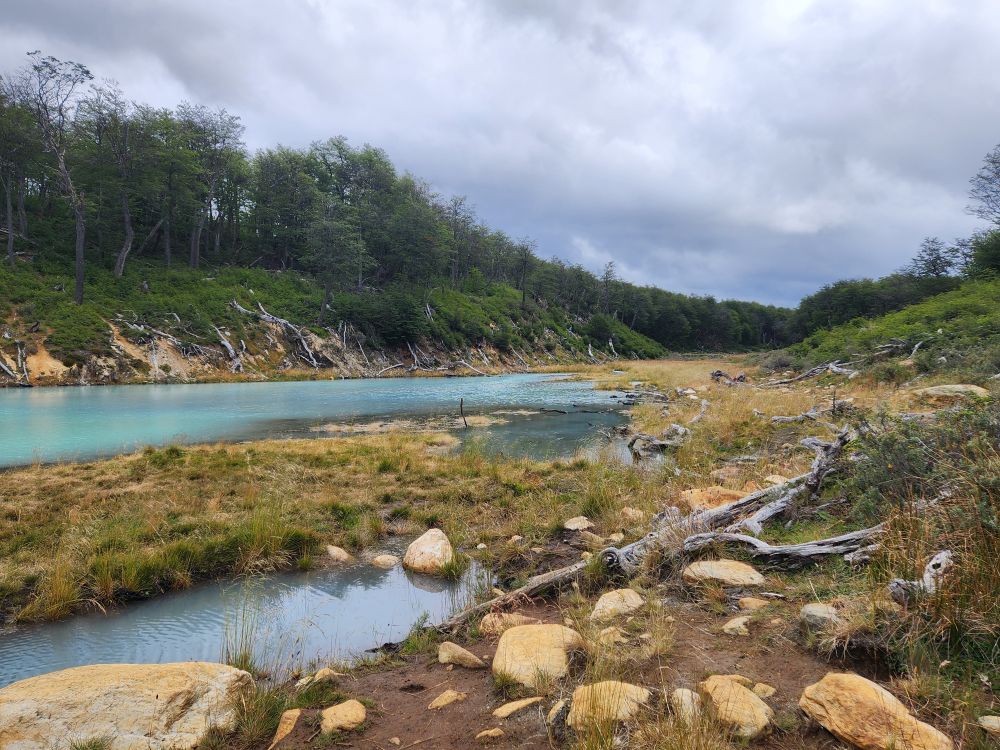
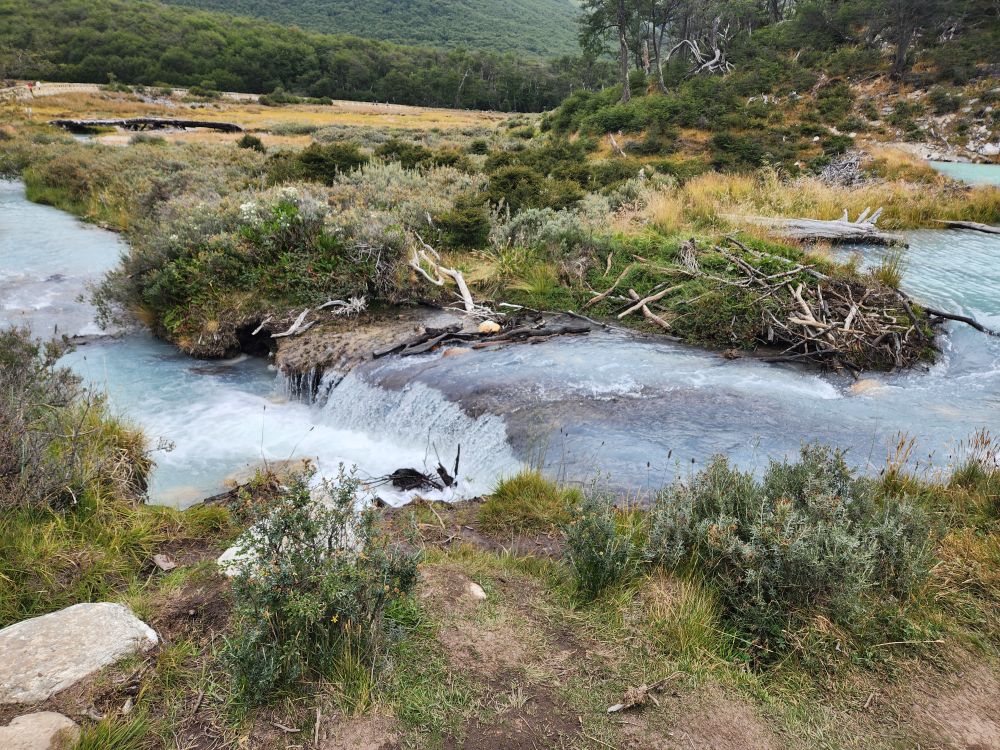
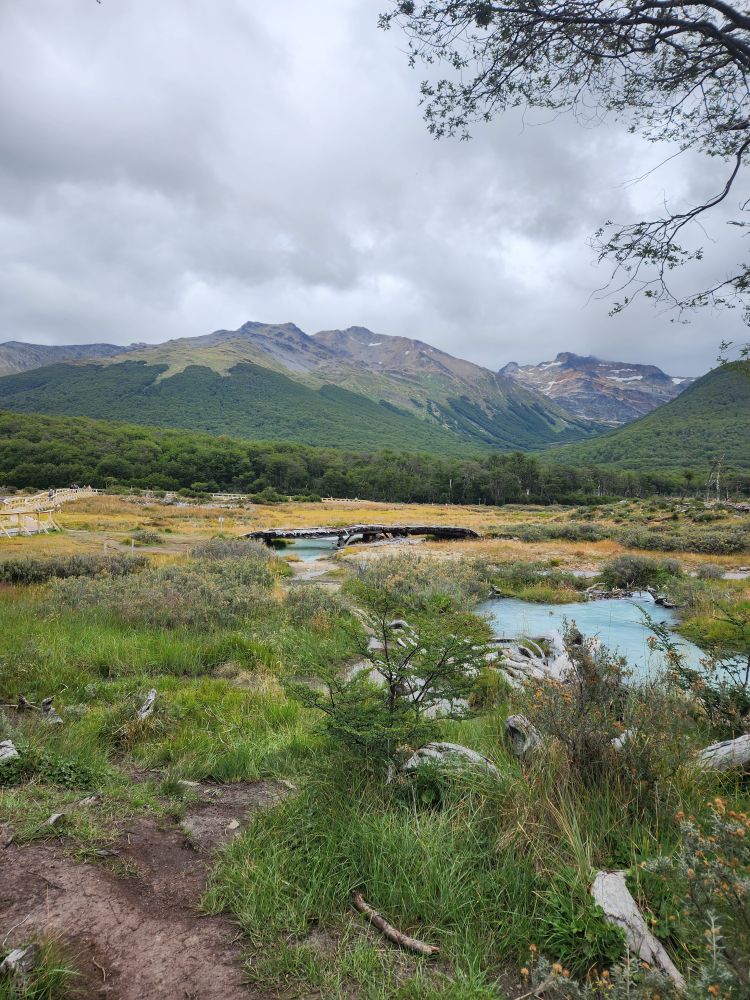
The stream is gorgeous – more azure than emerald in color – with a beaver dam and a little waterfall from the dam. Even though they are invasive, those beavers do make for great scenery!
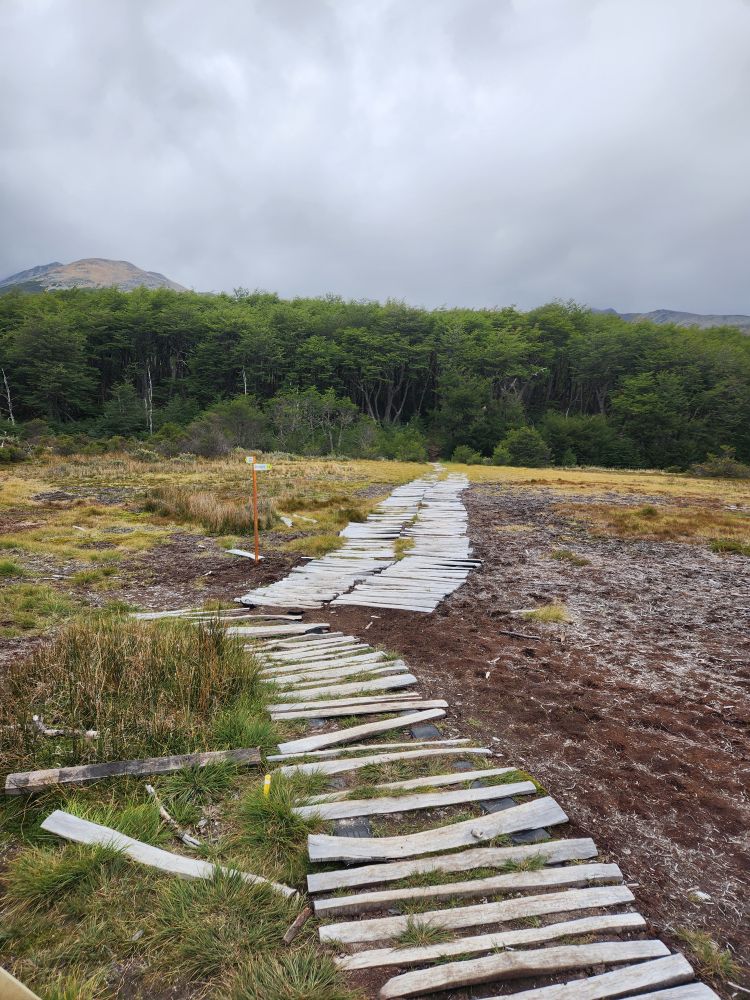
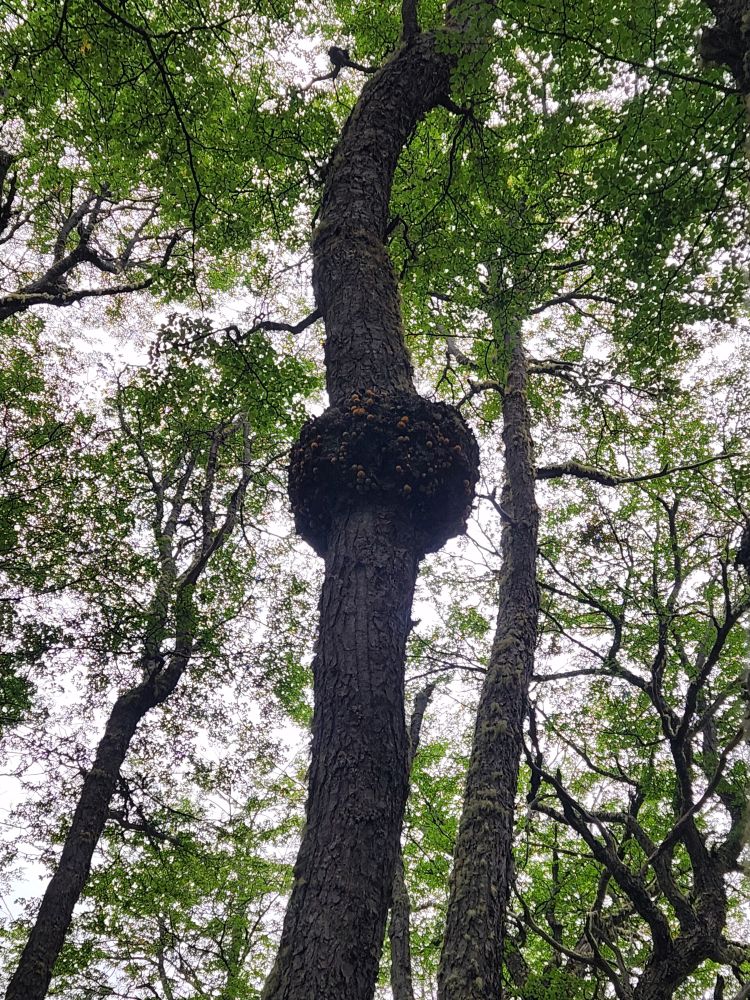
Moving on, we head back into the forest, with Mariana pointing out the Chow Chow or Indian Bread nuts, which are the tree’s reaction to a parasite growing on the tree trunk. The aborigines used to eat them, because they are sweet. You can only pick them when they are yellow and still on the tree.
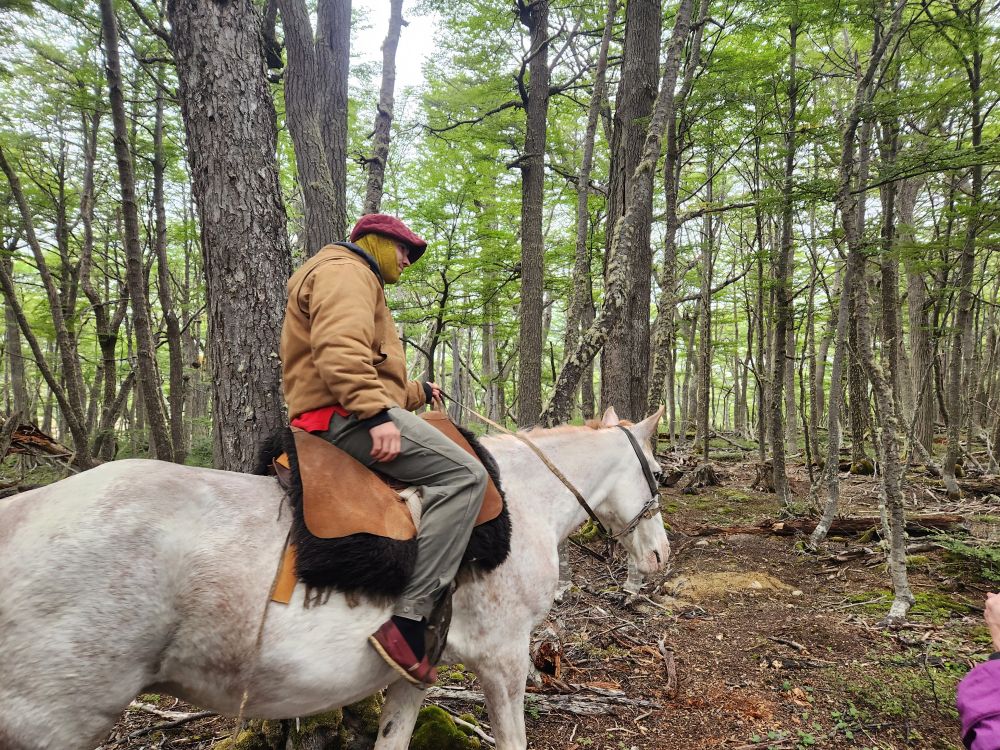
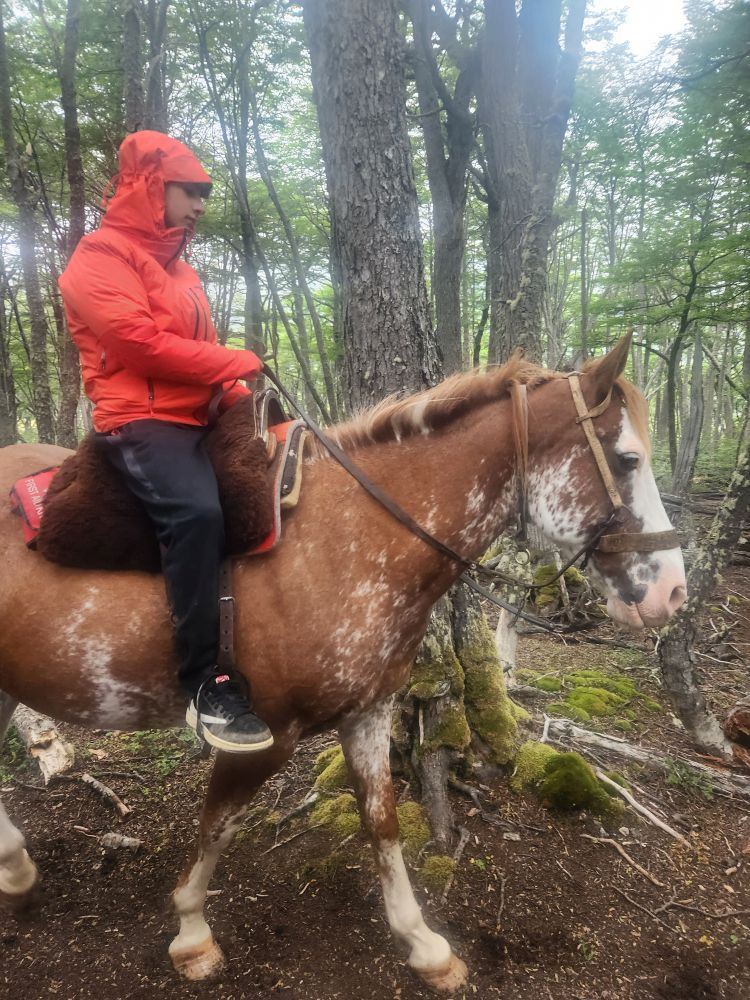
As we walk along the trails, we are passed by a group of men riding and herding horses, including a couple of cute little foals. Then we stop at the aforementioned teepee where dinners are held in the winter.
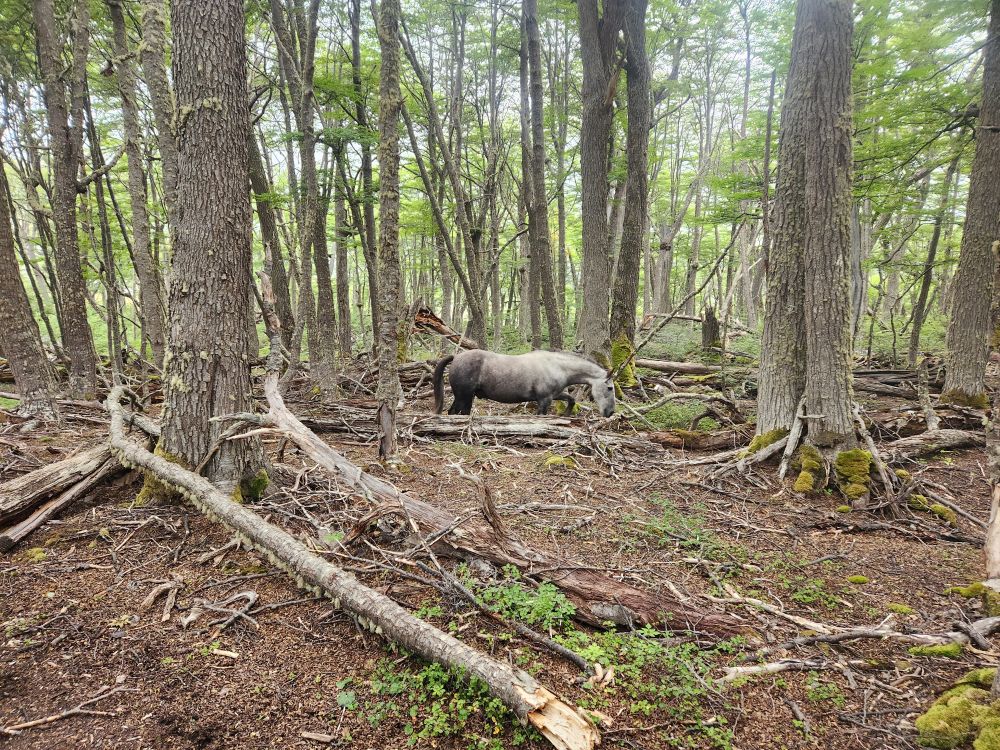
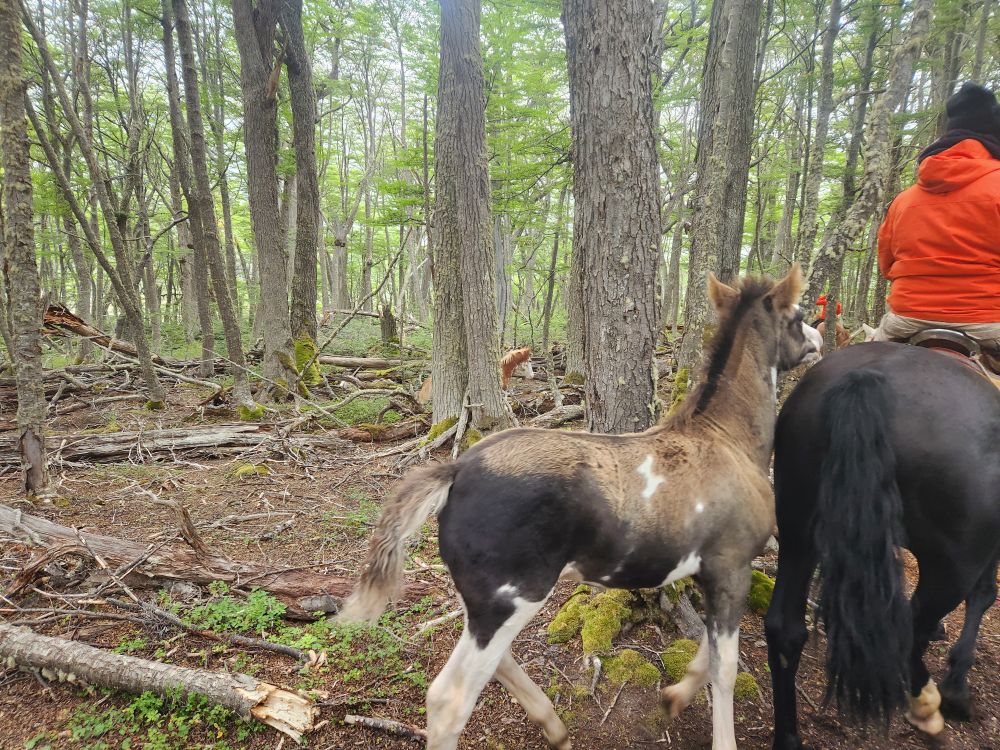
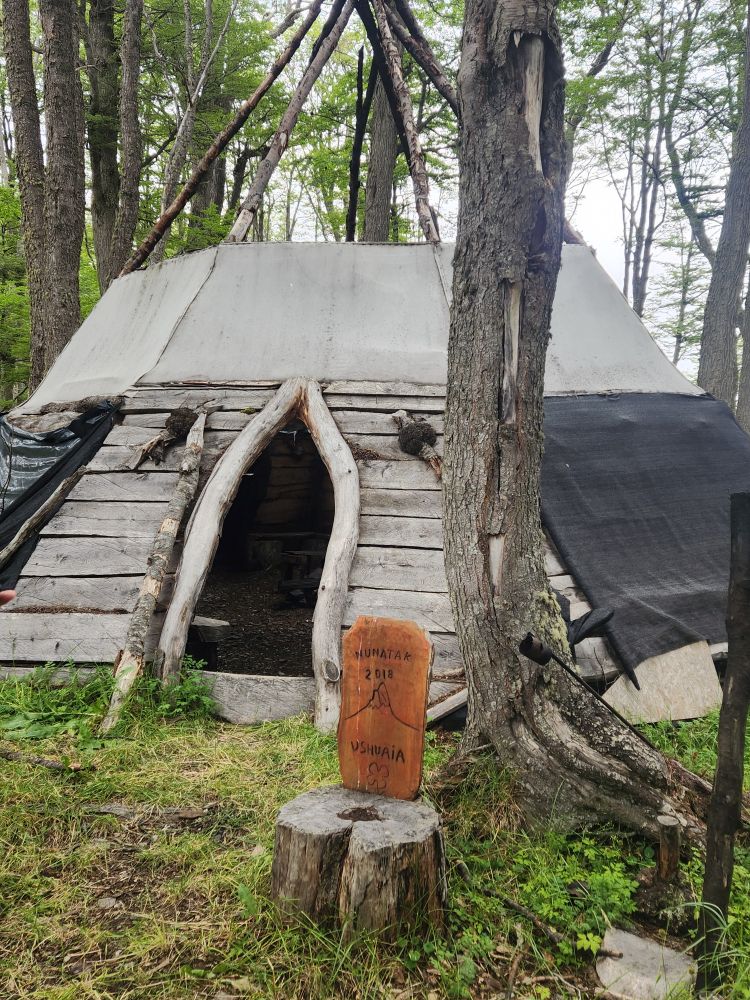
Onto our final scenic view of the large lagoon and beaver dam, and then it is back to the warm hut, which we are all in need of now, as it has started to rain on our last little trek. We are all pretty much soaked to the gills by the time we hit the hut for our snack.
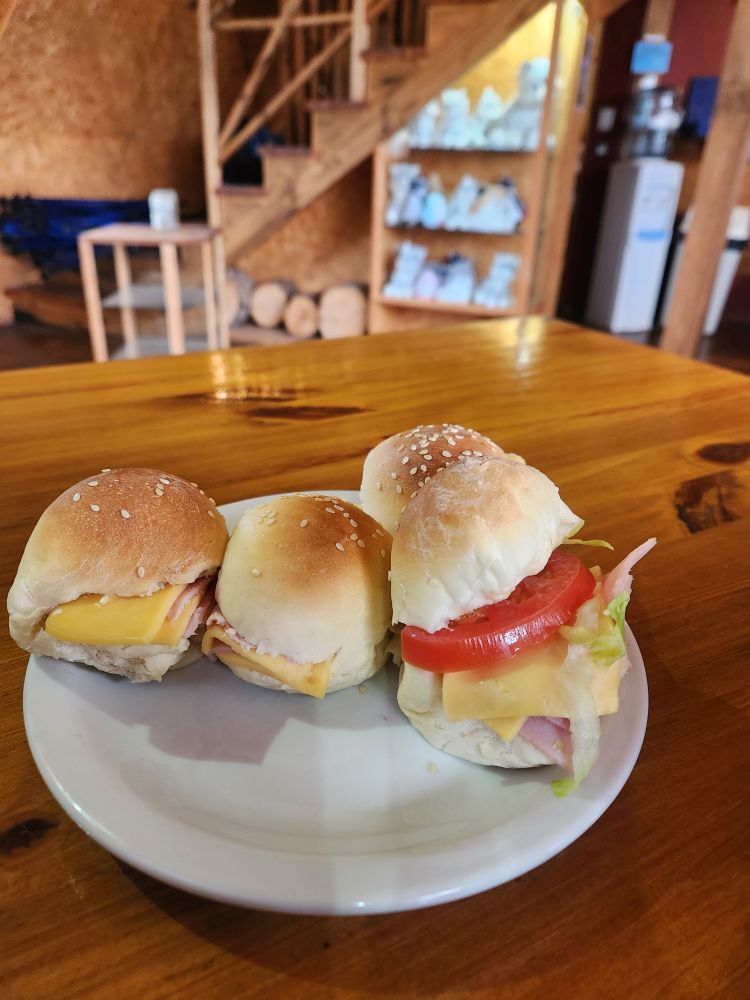
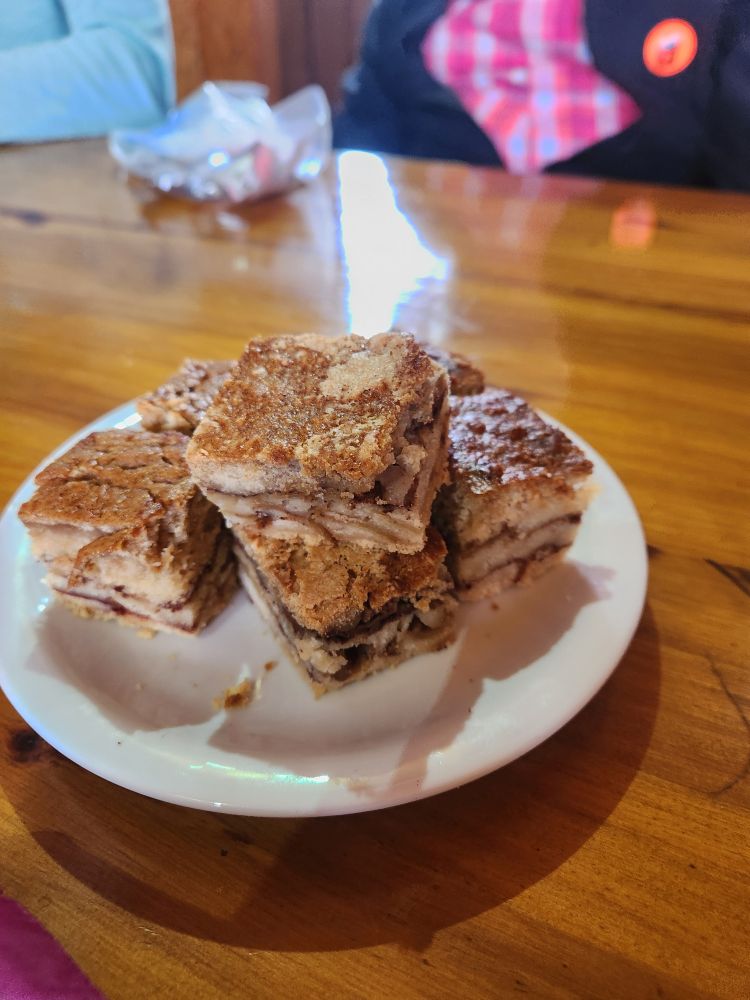
Coffee (thank you!), ham and cheese sandwiches and apple strudel await. We sit with some lovely Canadians and chat while we munch, then head back to the bus for our 25 minute ride back to the ship.
It’s late by the time return, so no time for the gym, just freshen up and dinner. But tonight, we luck out and are escorted to a table on the riser in the middle of the dining room – blissfully separated from the hubbabaloo on the lower lever. We doubly luck out with our waiter, Dade, who has just joined the ship and is adorable! We’re good now – albeit at the end of the darn cruise! The service so far has been hit or miss (particularly a miss on my BD, but, whatever!) and Dade has totally turned all that around. He is outgoing and talkative and interested in everything. He is from Java, and of course I make the big faux pas of trying to discuss suckling pig with him. Duh. Bali. Way different than Java. Sigh. Oh well. He rolls with it!
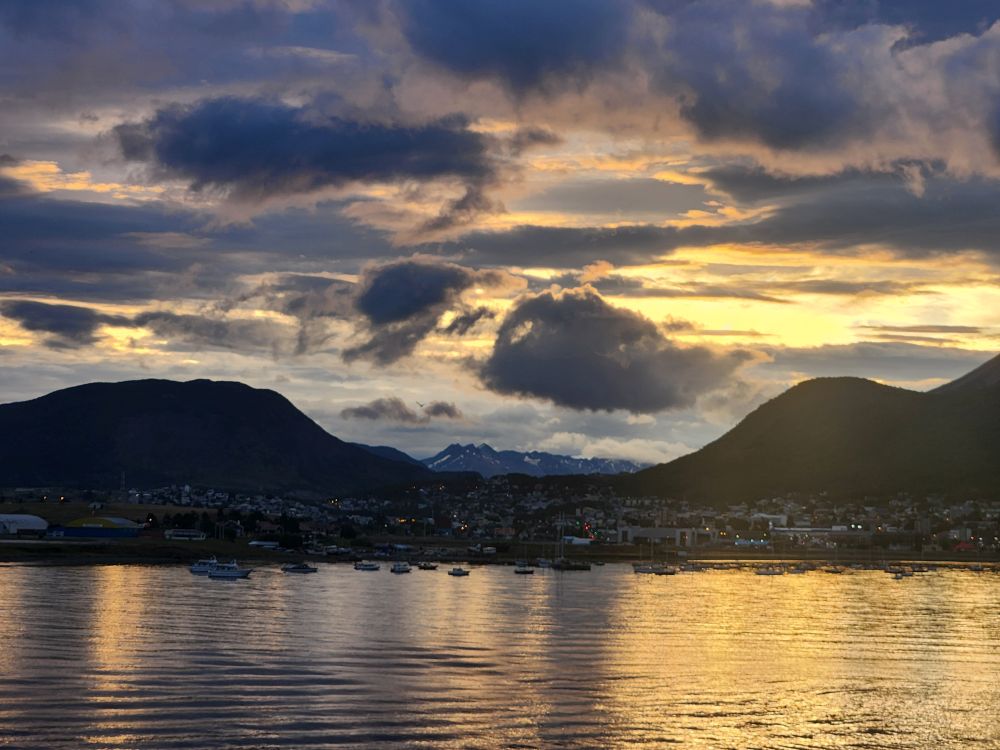
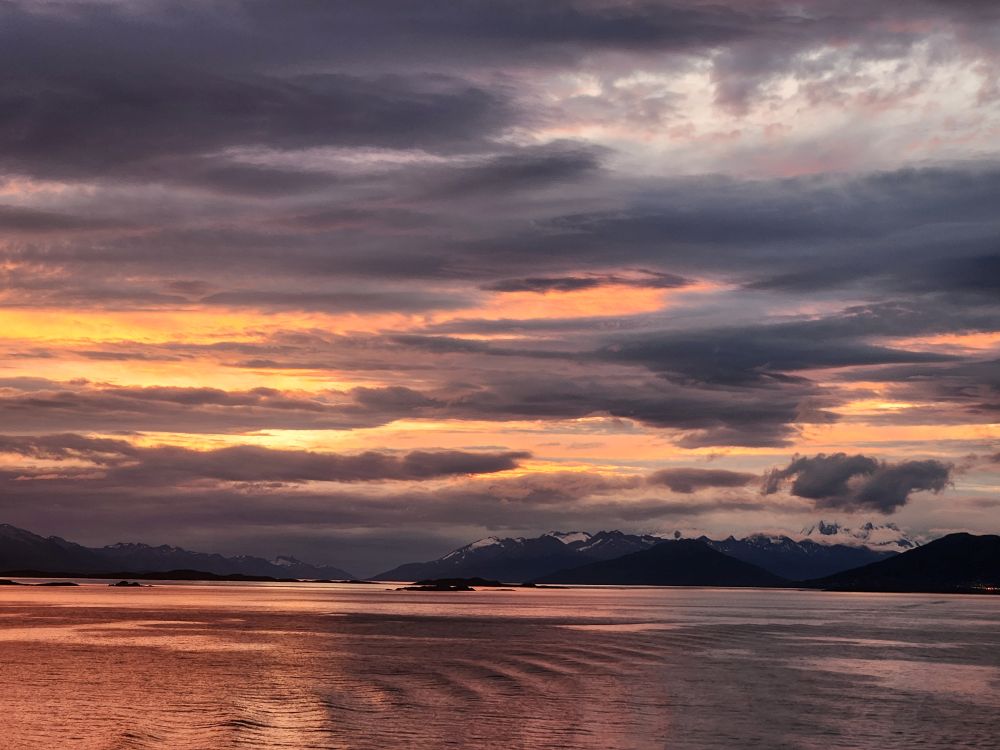
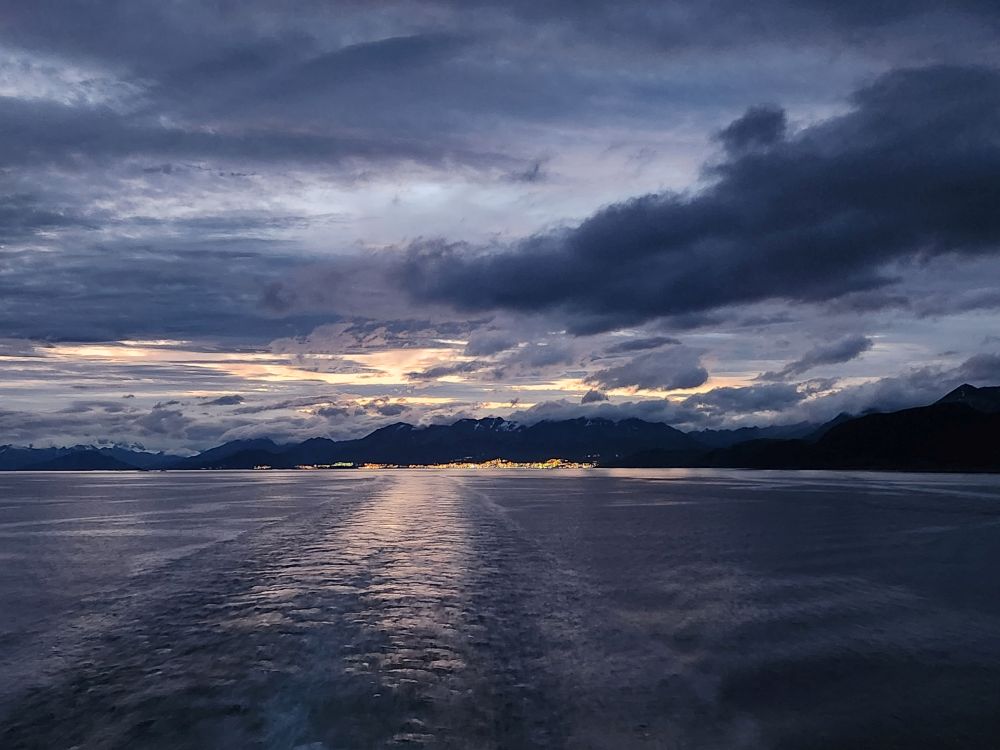
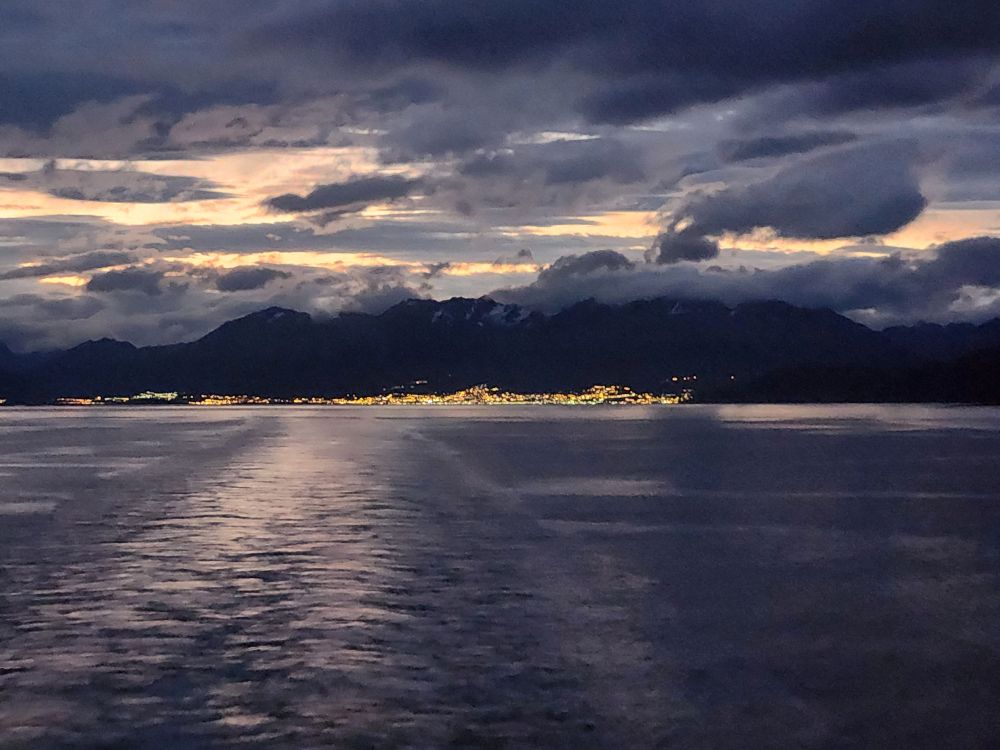
Back in the cabin – no show for us as it is some singer/guitar/piano/I don’t know what in whom we are not interested – we are greeted with a spectacular sunset and beautiful night time views as we sail away from Ushuaia, the southern most place in the world….besides Antarctica!
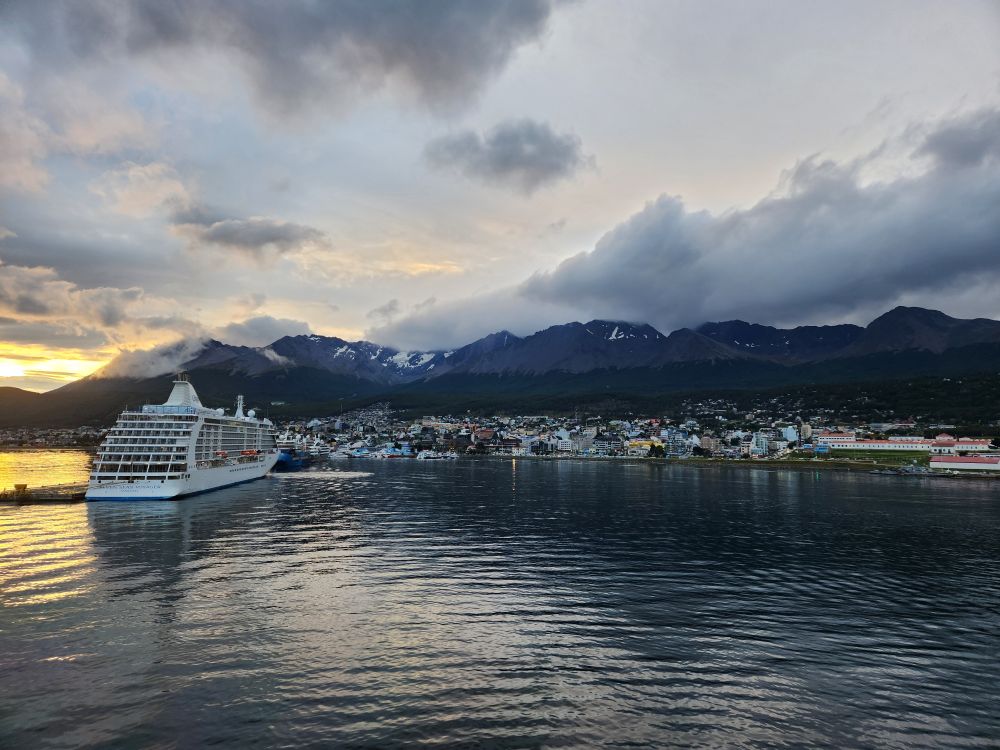
Around the Horn tomorrow.
 Andiamo