After a blissfully quiet sleep – yes, those sliding glass doors make a difference! – we are ready to hit the streets. Today’s plan is to hook up with the free walking tour that starts at the Fine Arts Museum, right across the street from us. We arrive at the appointed hour to find Juana, our guide, waiting on a bench outside the museum. Turns out Juana is originally from Greece. Her mother is German, father Greek. She came here for a photography job in 2019, got stuck with pandemic and decided she liked it here better than Greece and stayed. She also has started a whole dance company which she directs, choreographs and dances in. They travel all around Latin America and she puts on a festival that is very successful. How sweet is that! And even better? It’s just the 2 of us and Juana. Private tour – we’re golden!
For someone who isn’t native here, Juana knows here stuff. She starts with the history of the Museum of Fine Arts. Designed by a French architect as a gift from the French. Then we move through the city, stopping at the oldest building in Santiago, built in 1750, which marked the end of the upper-class area in the old days. This particular corner has buildings that represent Gothic, Portuguese, German architecture – all the different cultures who came here.
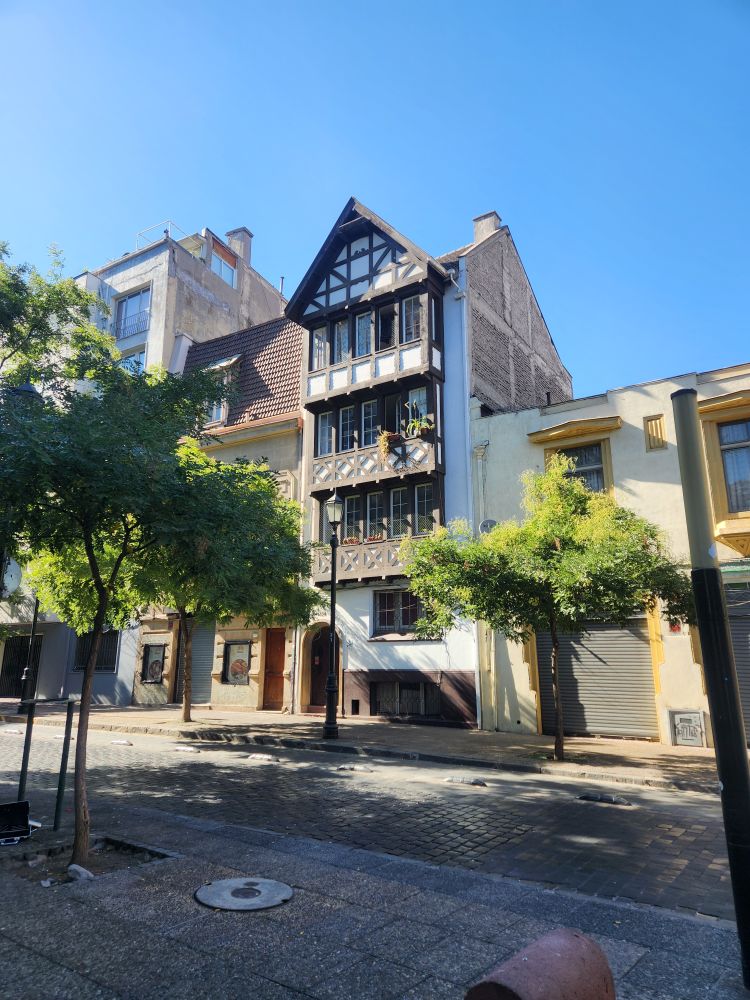
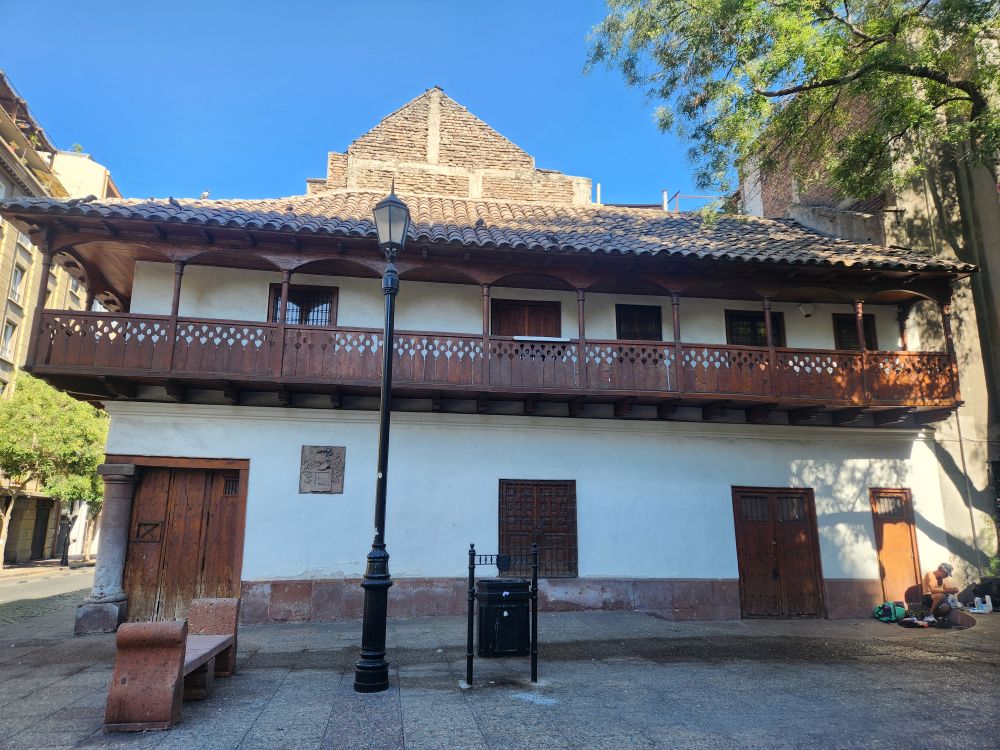
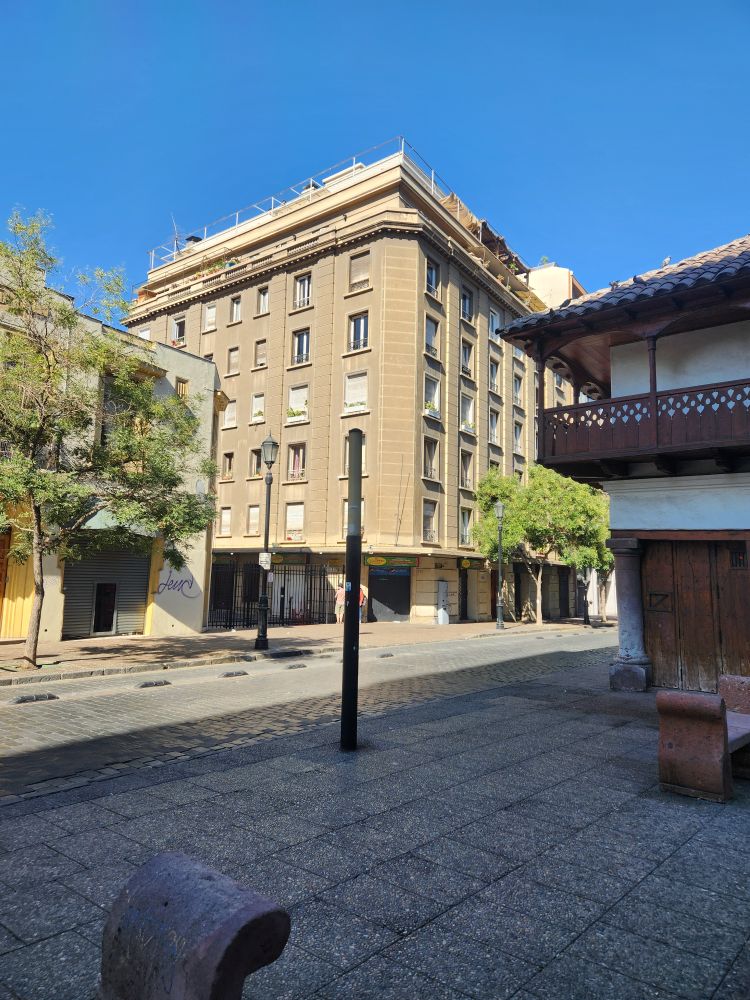
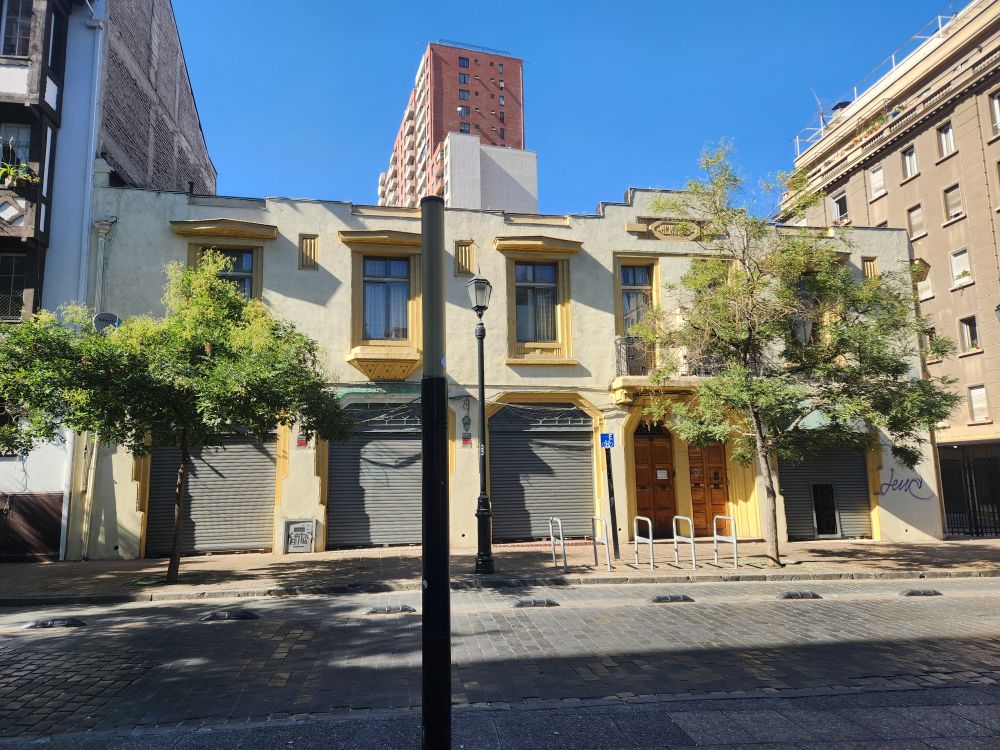
Juana also tells us that the indigenous who migrated here all lived North of the river originally, but as more came, they started settling around the Santa Lucia hill, pushing the rich people further east. Today, the rich areas are toward the east and the poorer sections to the west.
Moving on, we pass Plaza de Armas which was actually important to Incas all those years ago. The first sun beam hit right there and they consider it a sacred place. We learn that the river is named Mapocho, or Mapu Chuco in Mapudungun, from Mapuche, the last indigenous tribe. It is normally dry, which is what we remember from our 2019 visit. This is the first time since the 80s that the river has had this much water in ther summer. There has just been so much rain.
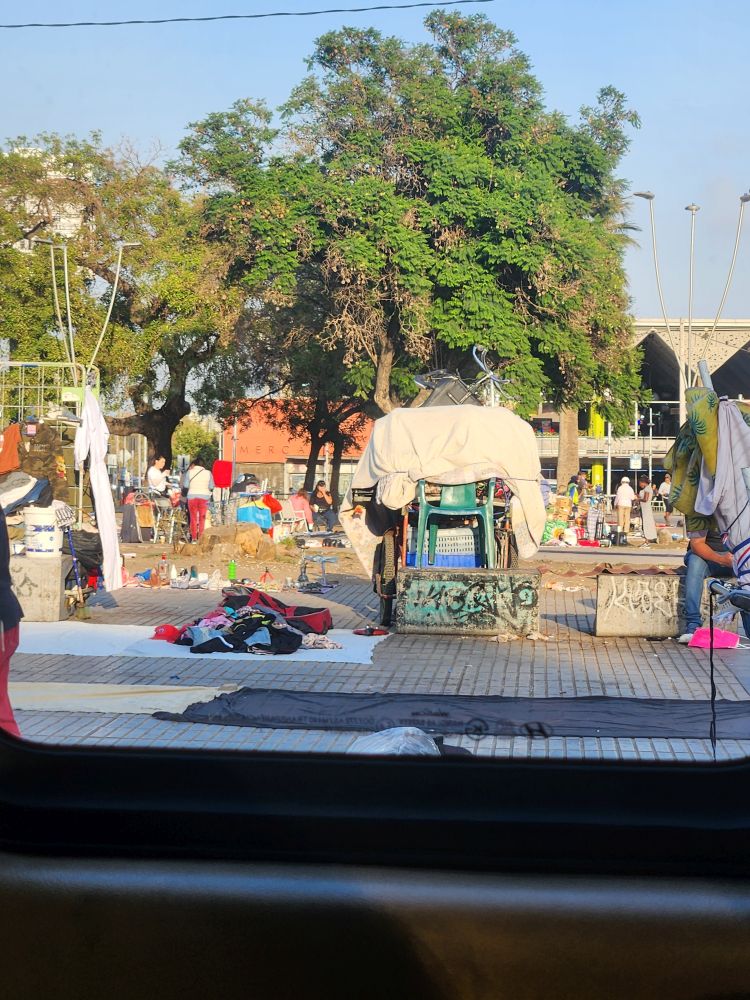
Juana explains that it is really a melting pot here; there are so many refugees, immigrants and way back even the conquerors, that it is hard to tell a Chilean by looks. Santiago also has the largest number of Palestinians outside of Palestine. They are all Christian Palestinians and they have the monopoly on 2nd hand clothing and on fabrics. And it is totally obvious this is true from the 2nd hand clothing market that is in the Plaza Tirso de Molina – just a mess of vendors – all Middle Eastern – with tons of used clothing on display. There is also a clothing “graveyard” in the Atacama Desert here in Chile. Unwanted clothing from Europe, Asia and North America are just dumped there causing a huge national disaster. It is so large it can even be seen from space! Look it up – it is crazy!
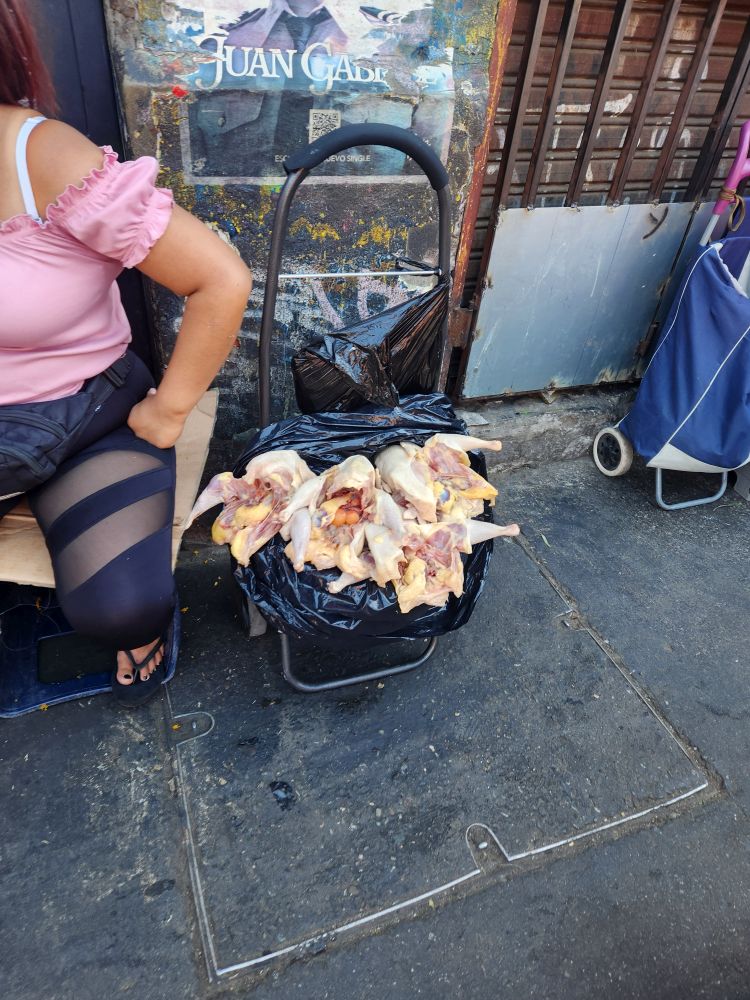
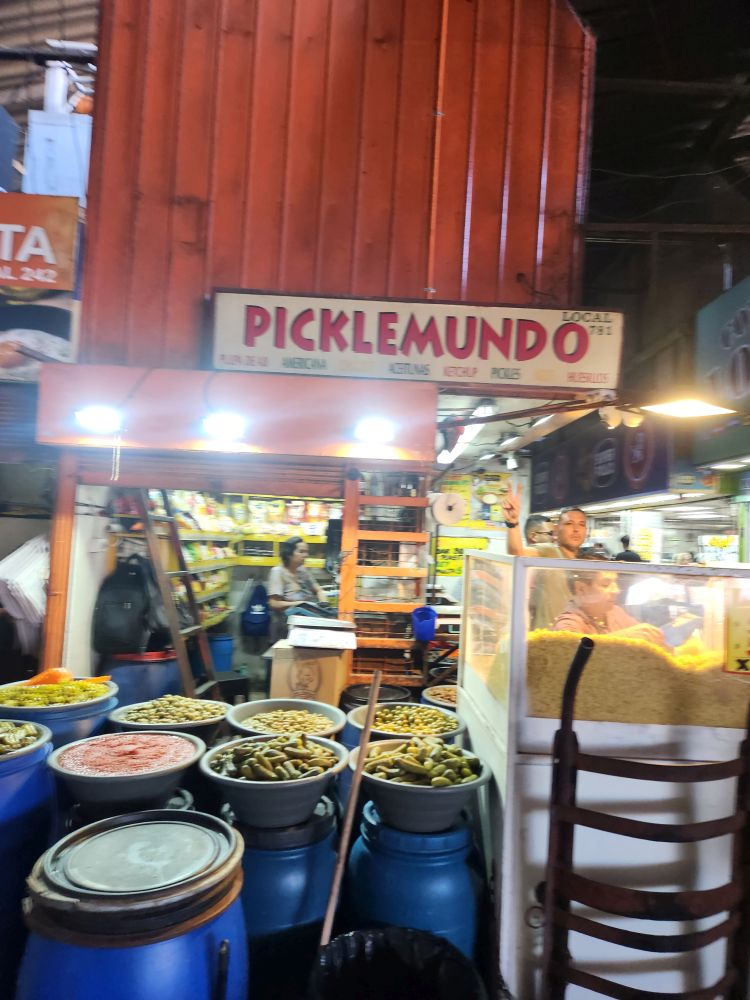
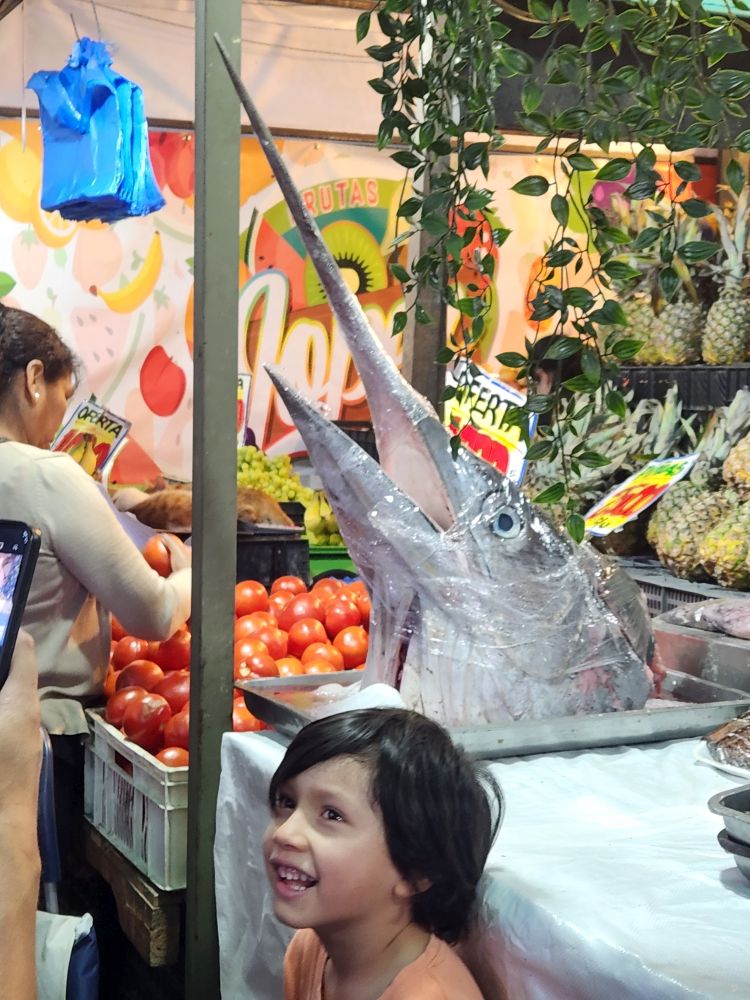
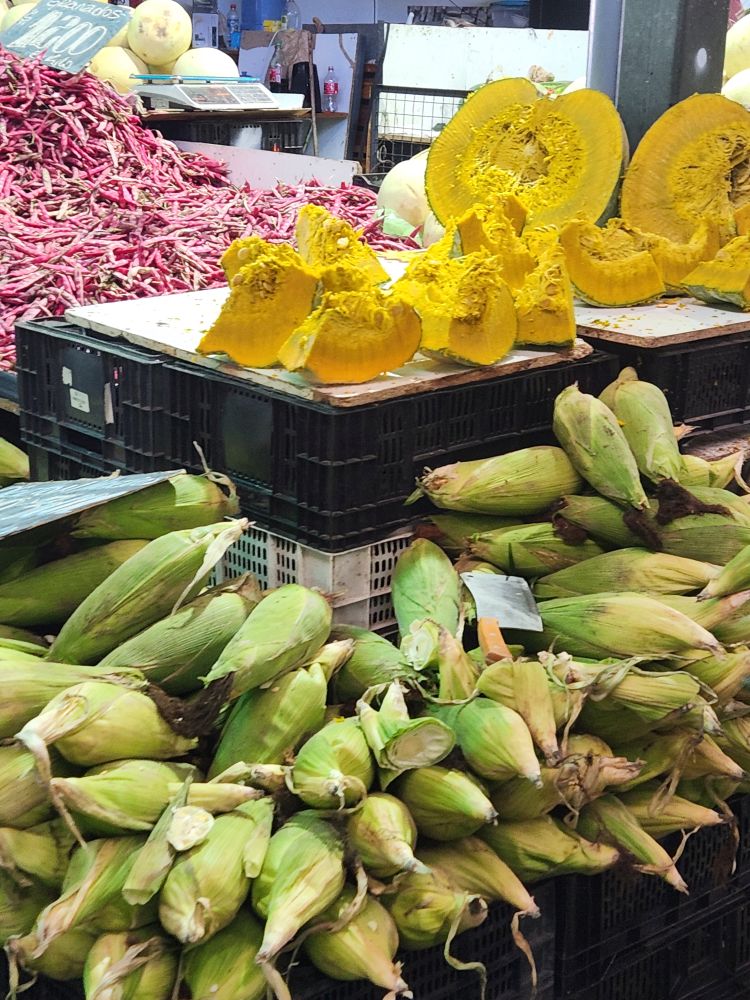
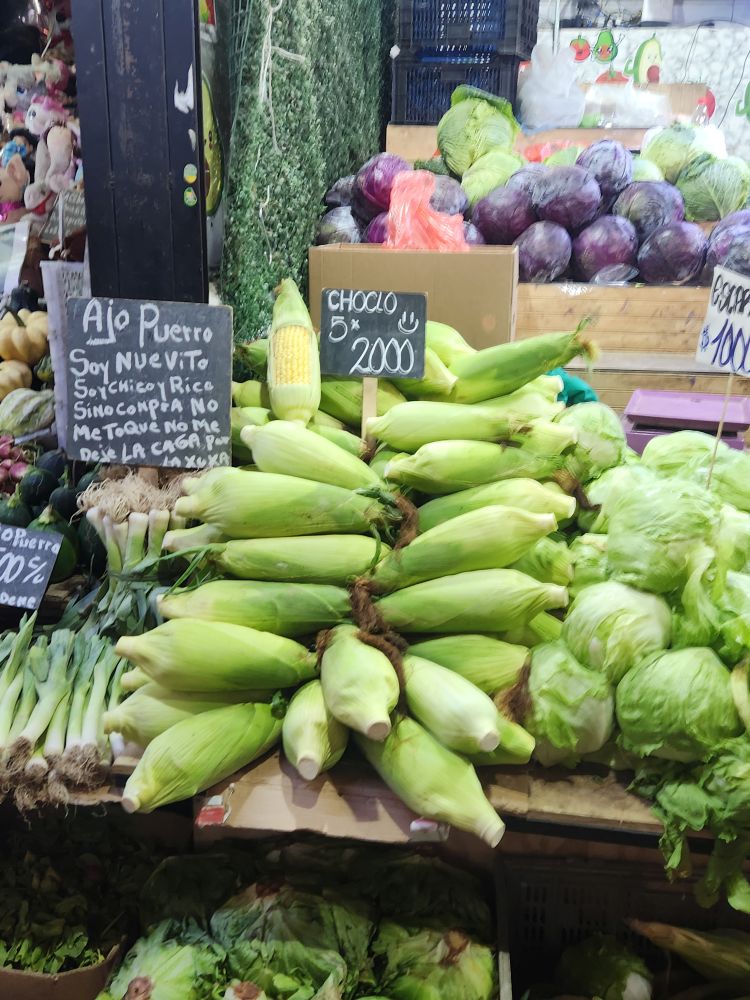
Moving on, we enter into the Tirso de Molina market, where they sell everything – from chickens out on the street corner – to fresh produce and those enormous, tasty Choclo corn cobs! Yum. I just want to buy a bushel and cook them all! There is also an indigenous section upstairs with a public library and different information on the Mapuche tribe. Mapuche means people of the earth. They all share same language and culture and make up about 10% of the Chilean population. Their culture and religion is close to Buddhism; they believe in reincarnation; are in touch with nature, one with nature; they don’t build huge structures that will last forever, they only build things they can break down, or that will revert back to nature; woman are the most important in their culture because they are the healers. The Mapuche are resisters and have refused to give up their language as well as their culture, keeping the traditions strong after all these years.
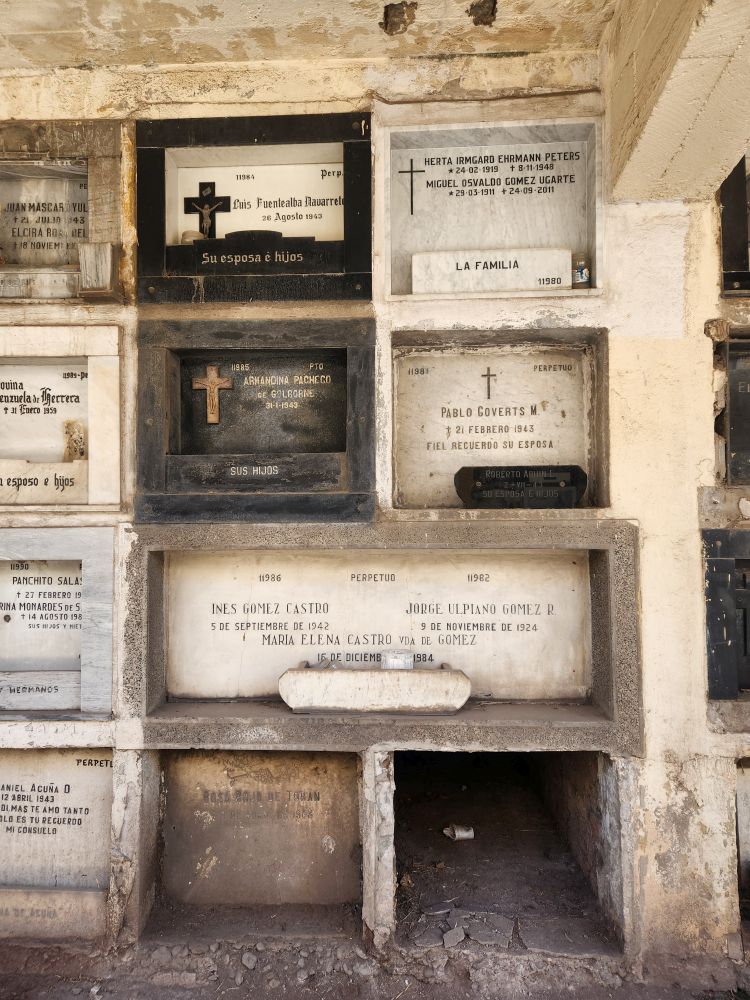
After the market, we took the metro (and re-energized our old Bip! Card that we had been using for a European electric switch card for years! It actually still had 150 pesos on it!!! But they were so old, they were no good, so we put another 3000 on it and off we went!) and headed off to the cemetery. We’ve been here before, but on our own. With Juana, it is a totally different experience! We learned so much. In Chilean culture, they believe the soul stays with people on earth. Everyone believes in ghosts and spirits, even if they are Catholic. The people from the south are more evangelist – more spiritual and believe they can be possessed. Those tilted crosses you see on gravestones? That means the person is Protestant.
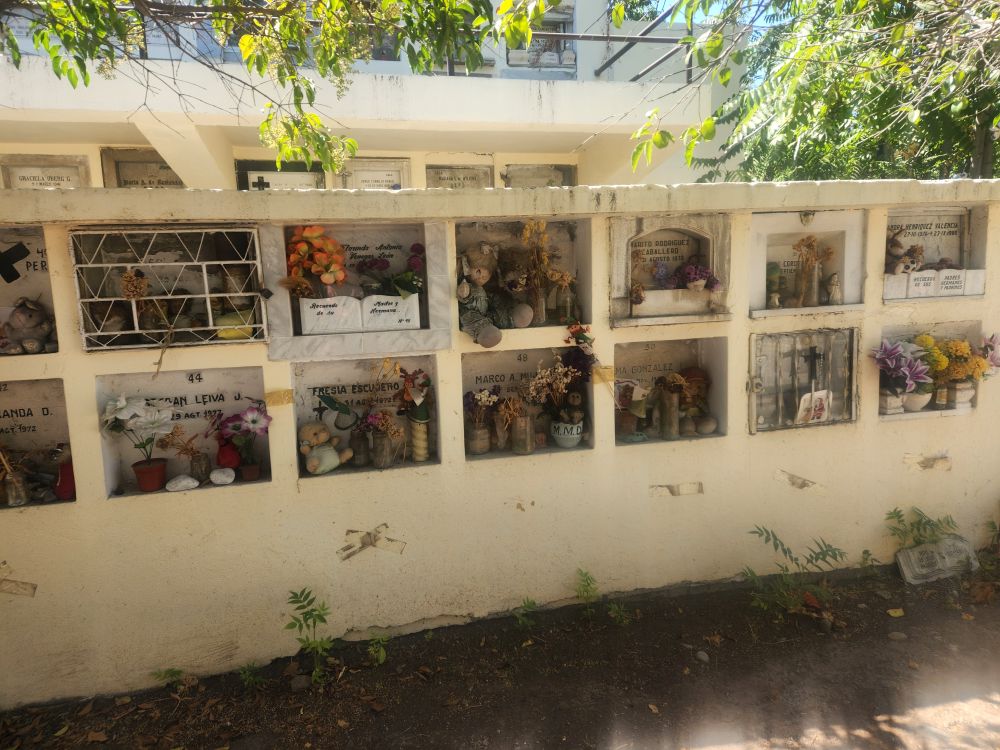
We walk past the “baby street” where the infants and children are buried. This street is more decorated than others because the families believe they are praying to angels. Here, as in Peru, and all over Latin America, families come to the cemetery and have picnics or gatherings or sit around and drink. They talk to the dead, and spend time with them, which is their way of paying their respects and remembering their deceased loved ones.
The architecture here is just incredible. Gothic, Romanesque, Greek revival, you name it, it is here. Huge mausoleums, small mausoleums – it doesn’t matter – they are all built to impress – either the living or the dead, we can’t quite decide.
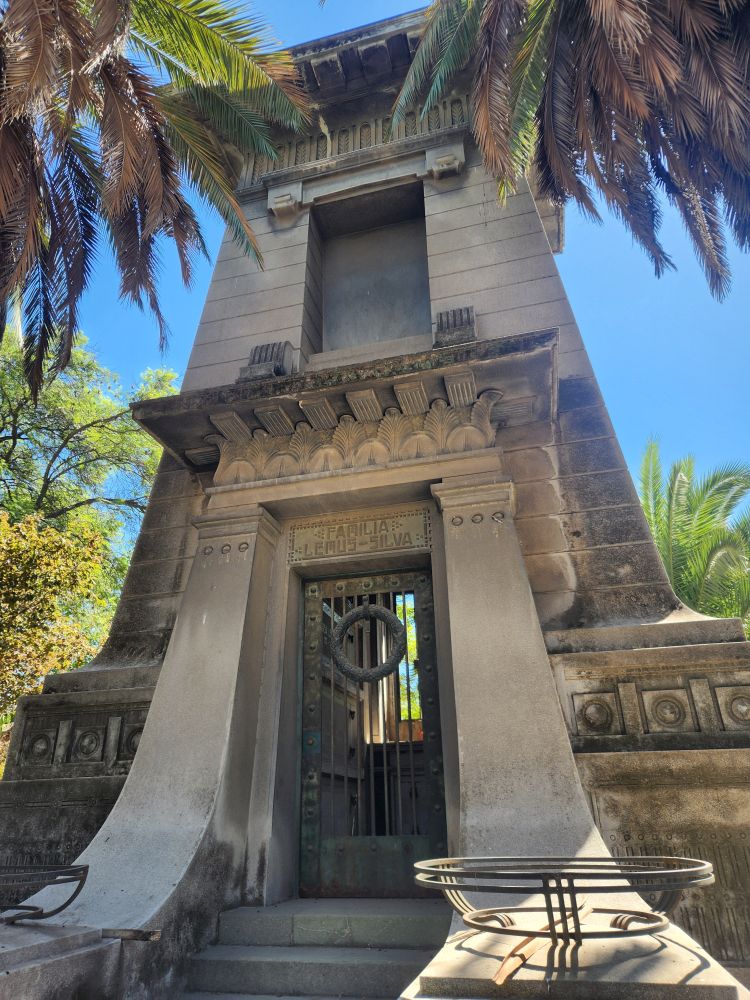
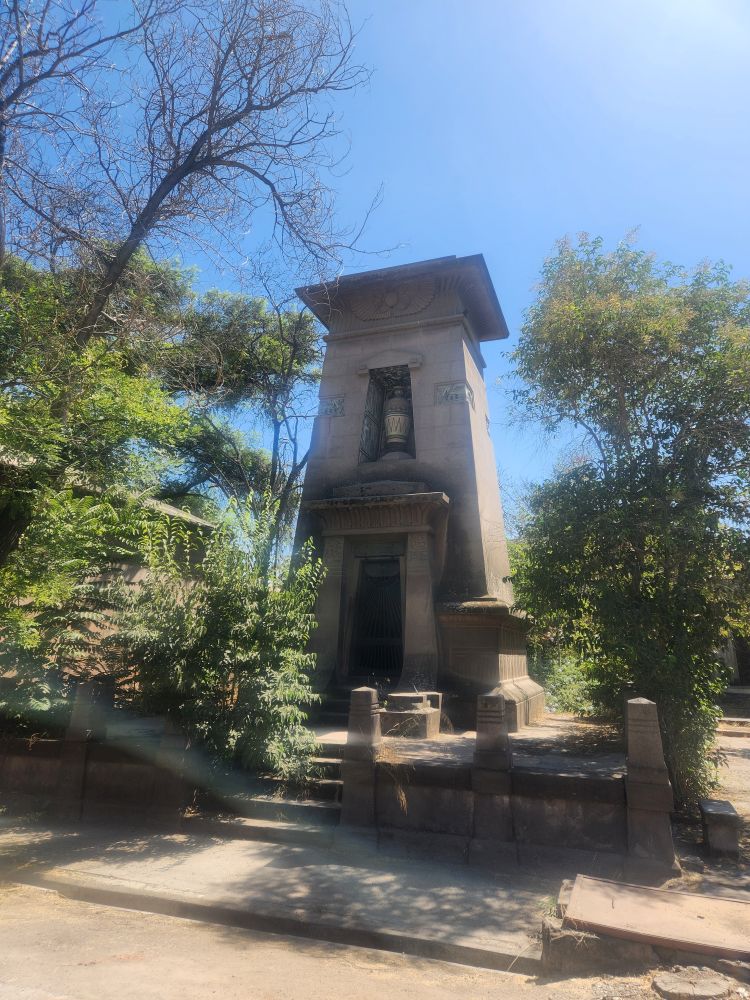
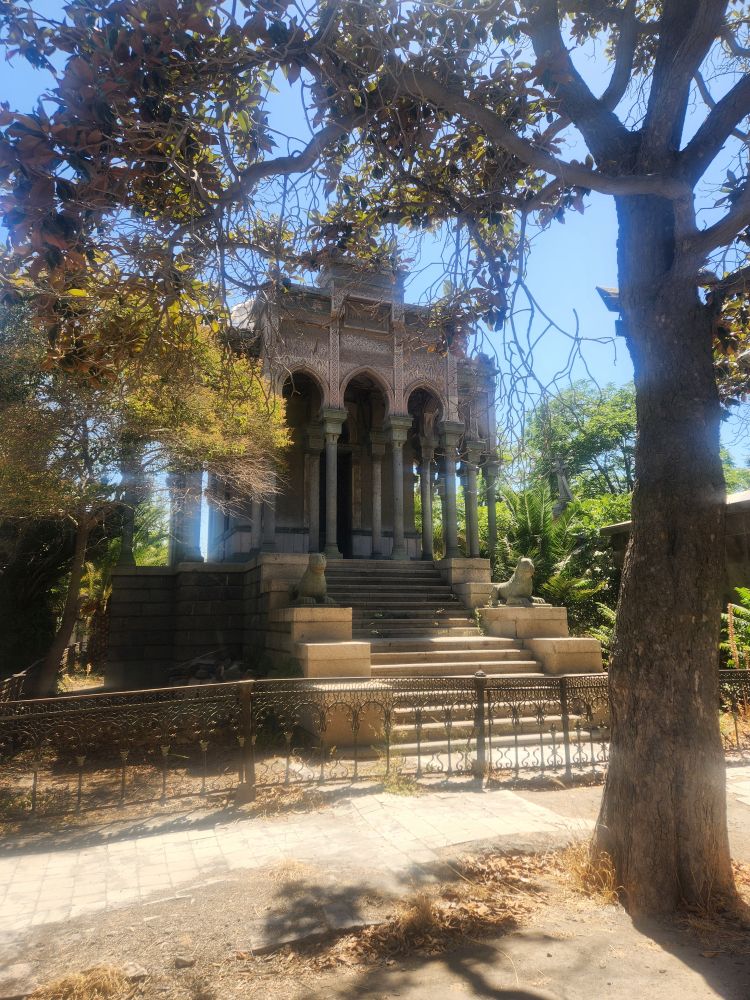
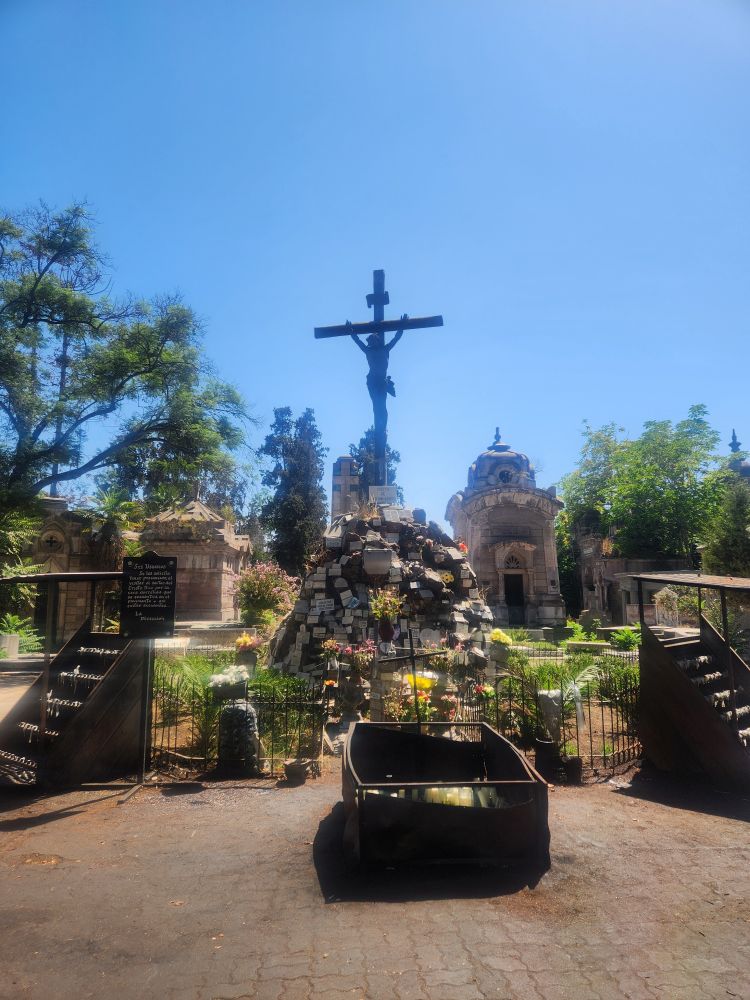
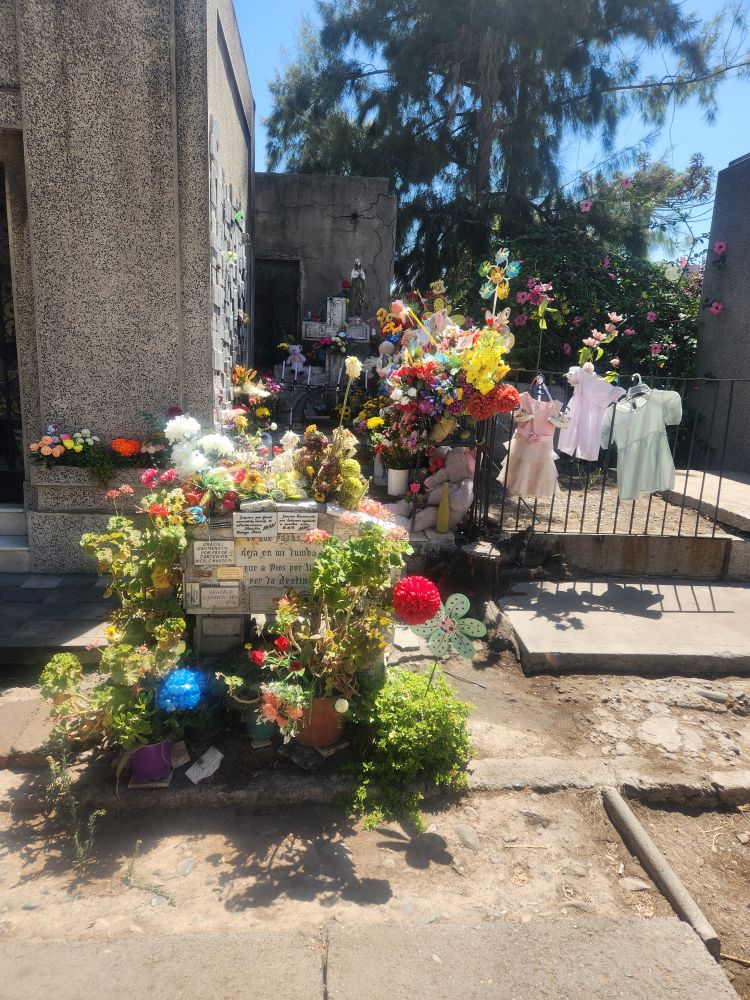
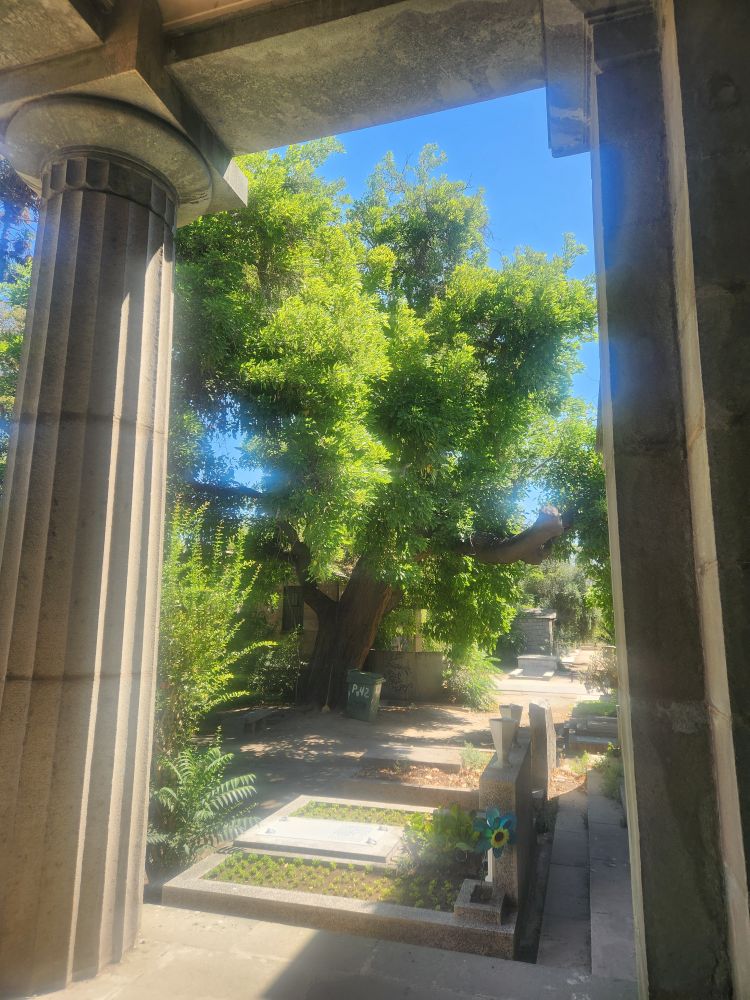
Further into the cemetery we come to the “Green Chapel.” Built by the government for the poor people who complained that they couldn’t ever have a chapel, but always had to have smaller, more inexpensive graves. So, the chapel was built right in the middle of the rich section to house the poorer people of the city. What makes the chapel all the more interesting though is the weeping lady myth. Supposedly a woman and her children where in an accident; the 2 children died and were buried in the Green Chapel. The woman was in a coma and when she awoke and found out the children were dead, she came to the chapel and hung herself from the tree next to the chapel. Workers who come to clean the chapel say they have heard children talking and playing and a woman weeping. We didn’t hear anything but, the potential is definitely there! Shiver.
Our final stop is Allende’s mausoleum – where he, his daughter and grandson are buried. We knew the whole Allende story from the Memory museum yesterday, but Juana also tells us that his daughter committed suicide because of the embarrassment of what happened after Allende was overthrown, and then her son also committed suicide. That’s an even sadder ending to a really sad period in Chilean history.
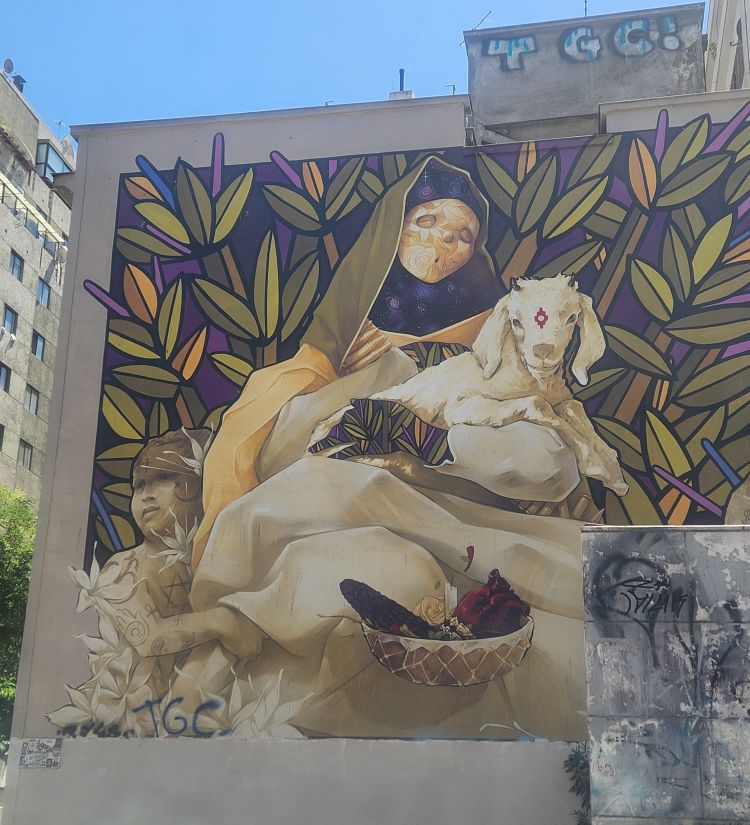
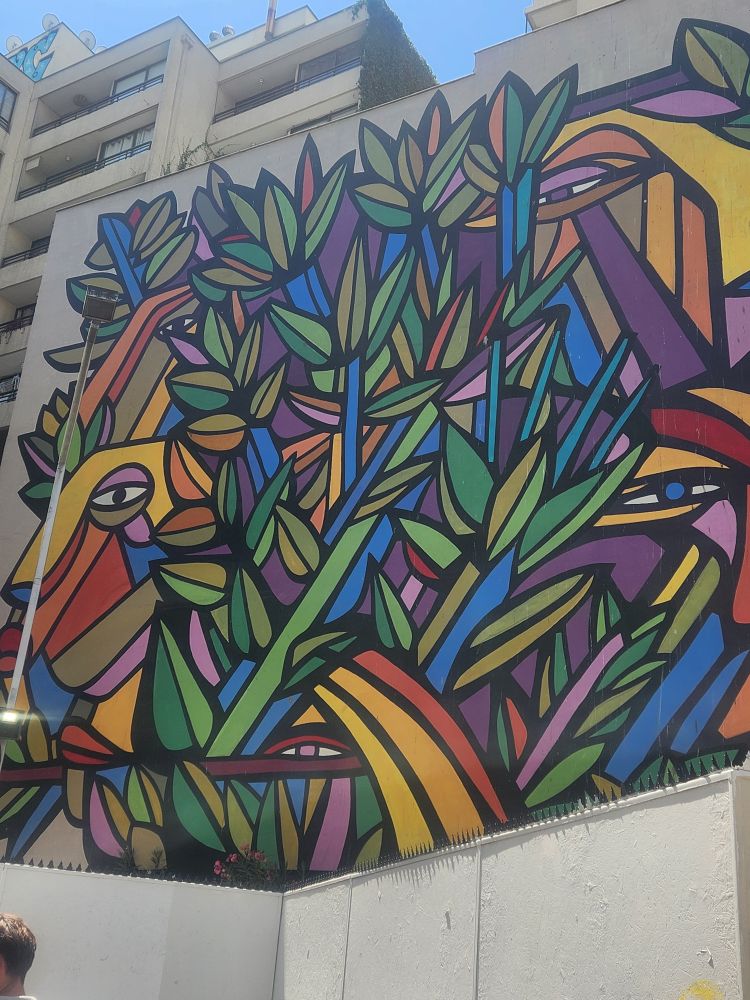
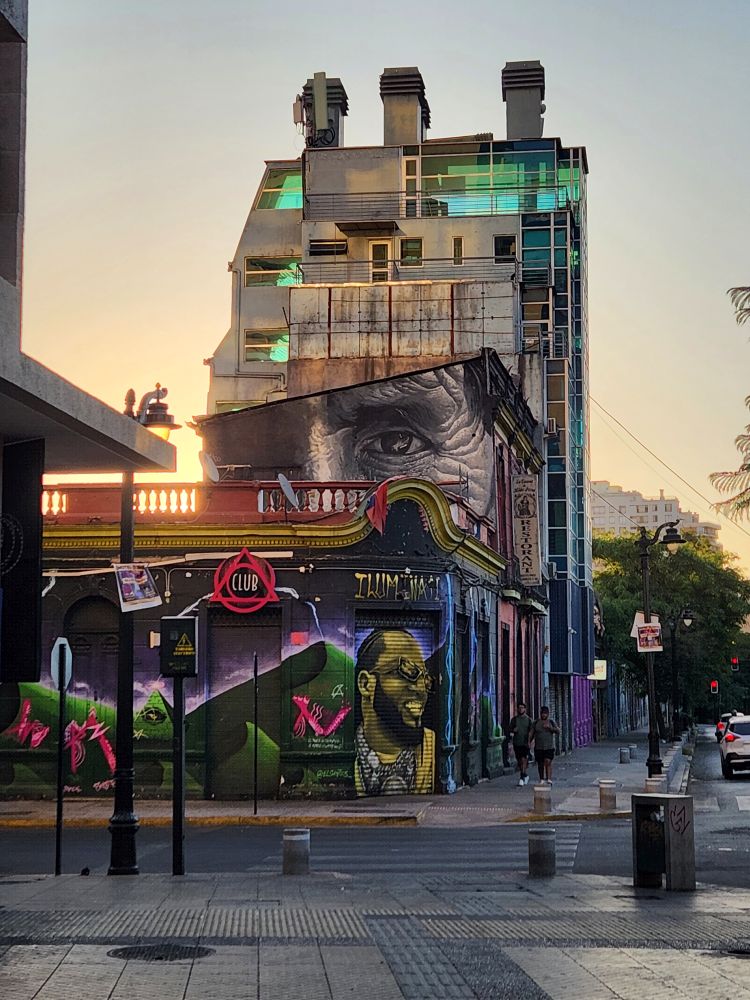
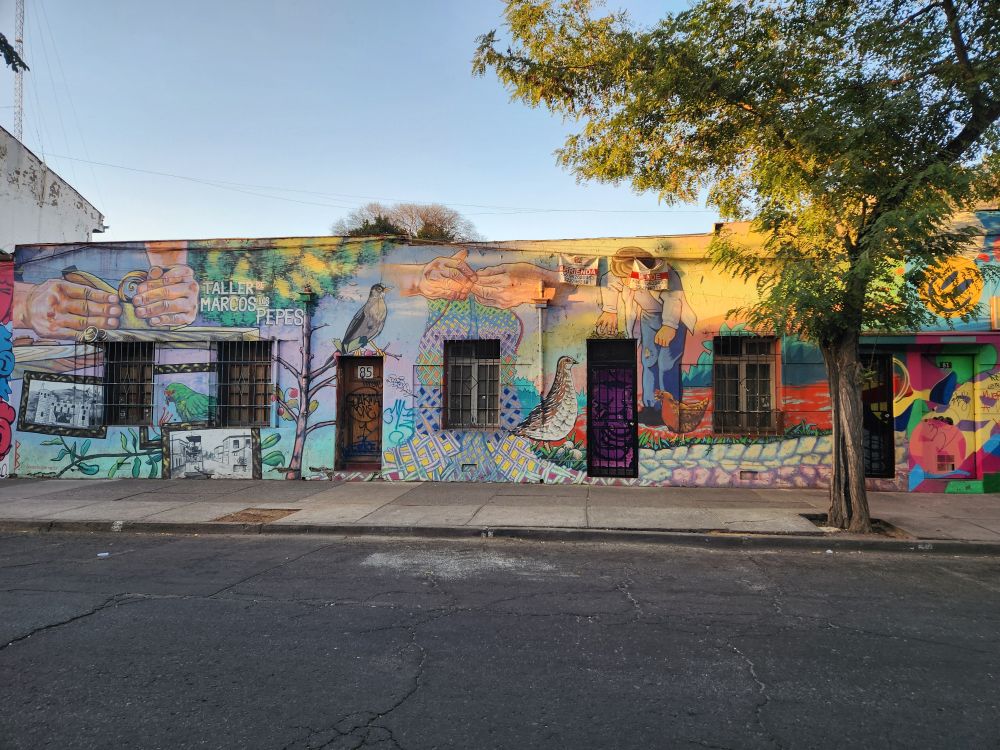
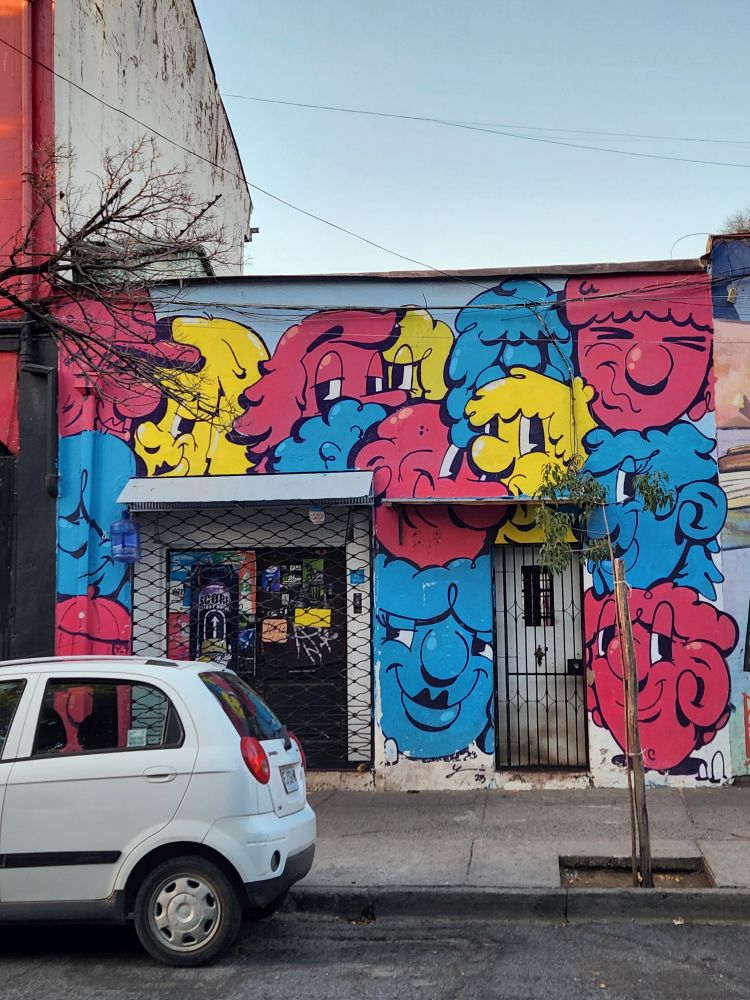
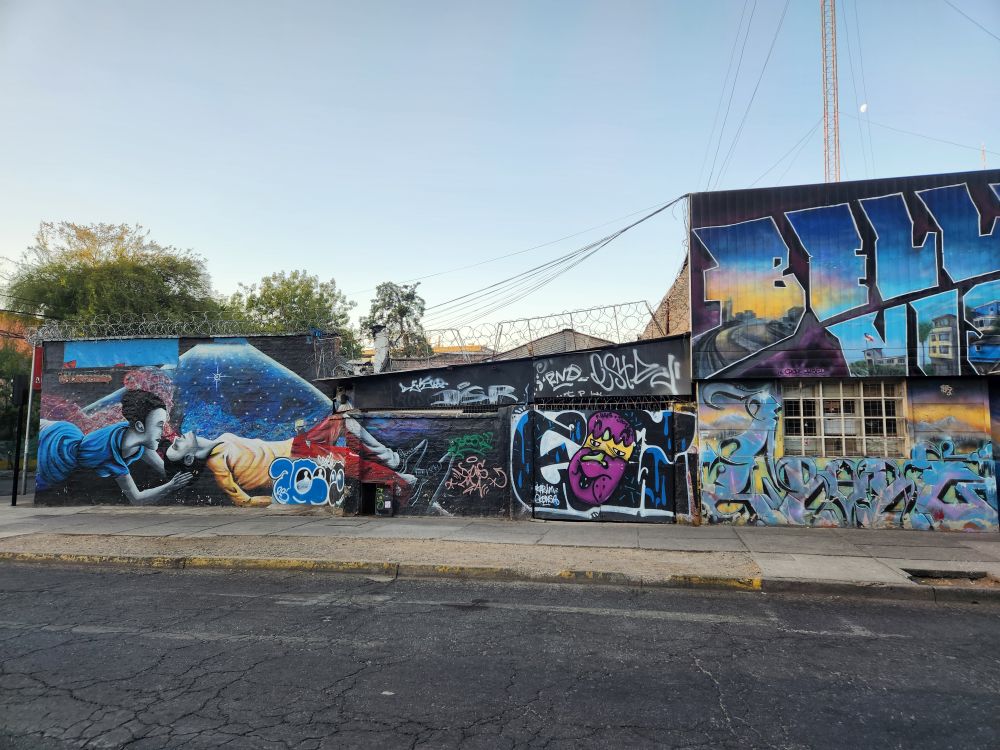
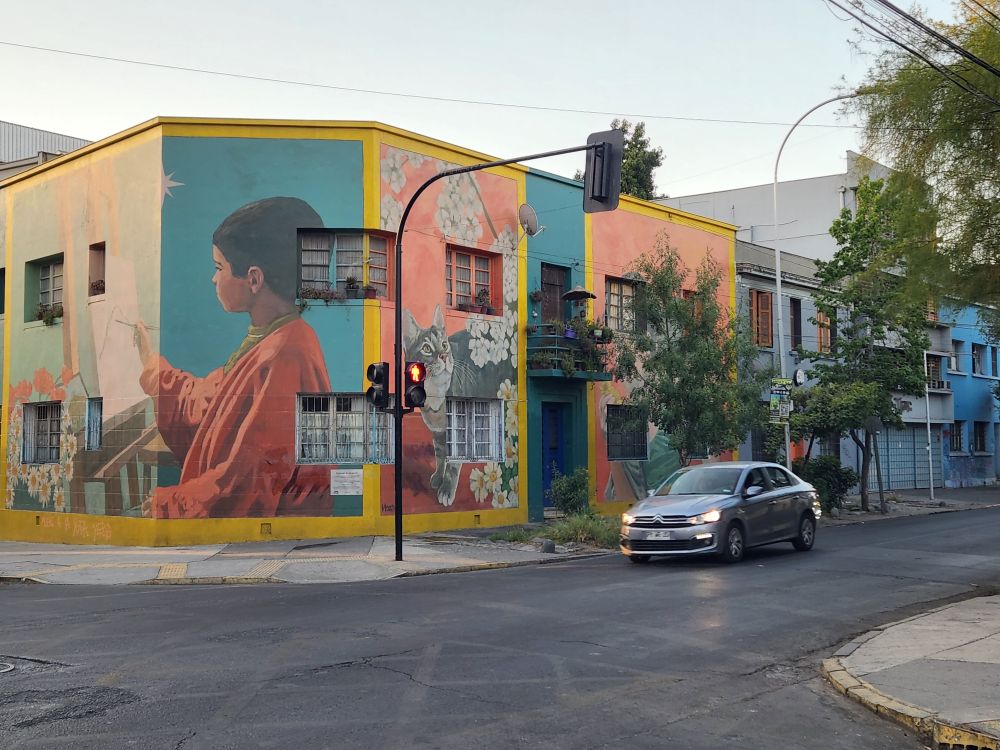
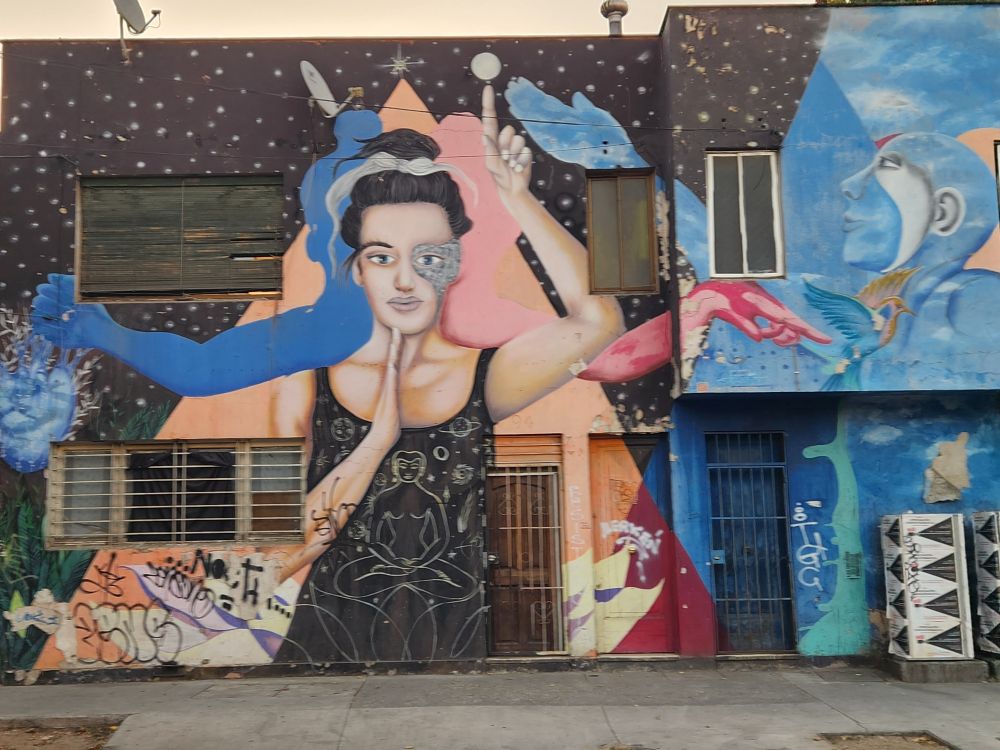
On that happy note – we head out of the cemetery and back into town with Juana on the subway. She says goodbye outside the station near Belle Artes and we head past the vibrant murals and onto the apartment for a quick leftover lunch.
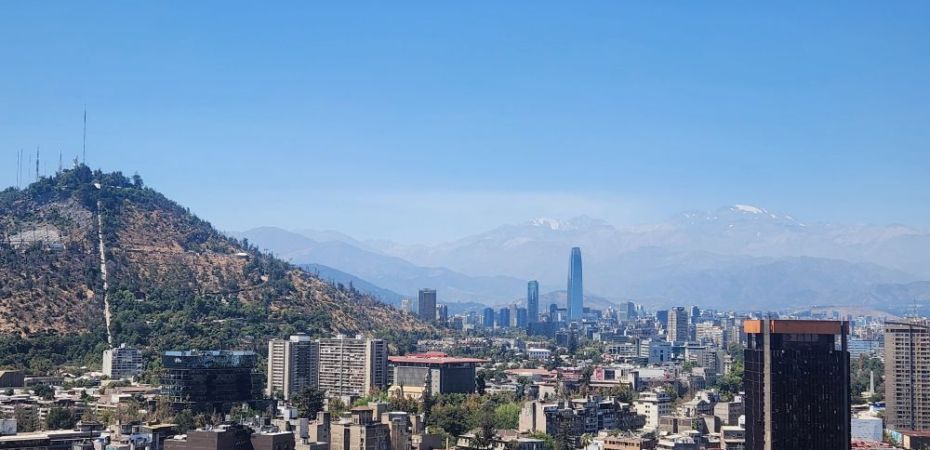
Then, because Juana talked all about the Santa Lucia hill, and we can see it from the apartment, we decided to go walk it. More like hike up, with a 225 foot elevation gain and paths that go pretty much straight up the sides of the 16 acres of parkland. But it is a beautiful, if not hot, day and we may as well take advantage of it. The hill was named for the day in which it was conquered in 1540 – Santa Lucia day. It’s first use was for worship and prayer in the years of the chicken pox outbreak. Then it became a military fortress with two forts (or castles) built on either side. You can see why it would be a great defensive point – the views from up top are extensive and stretch out to the foothills of the Andes.
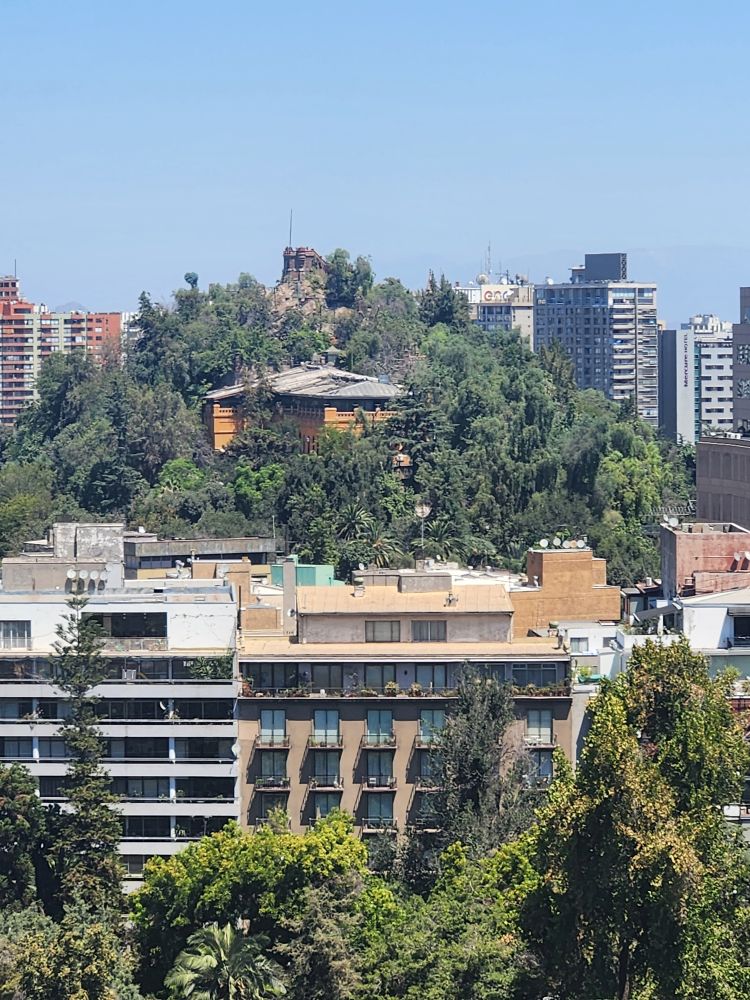
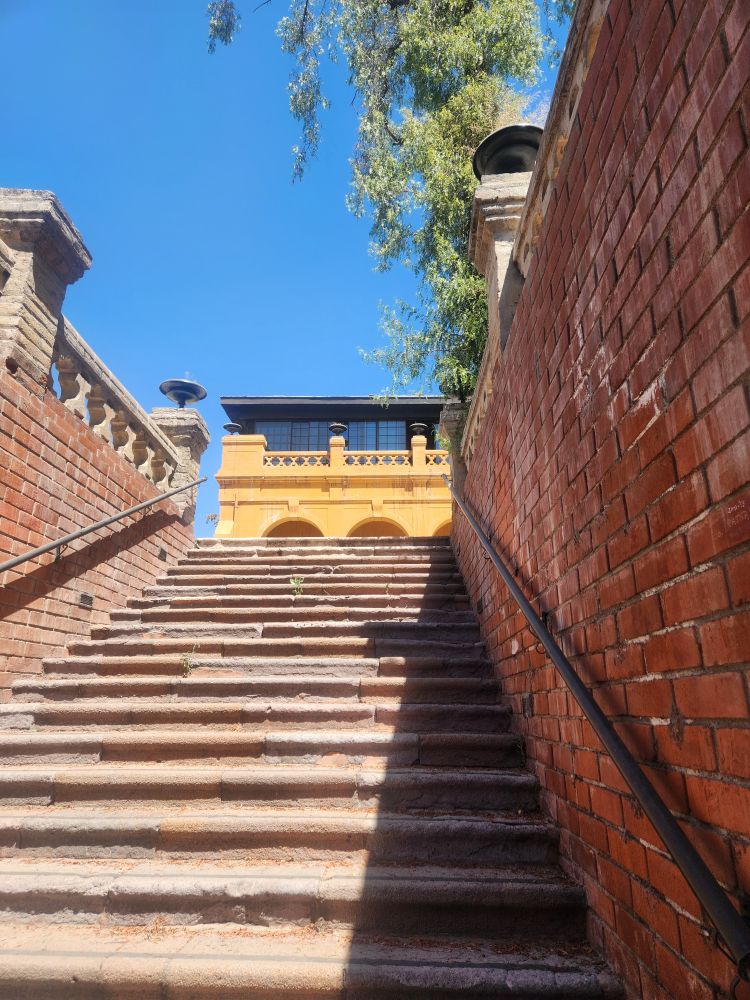
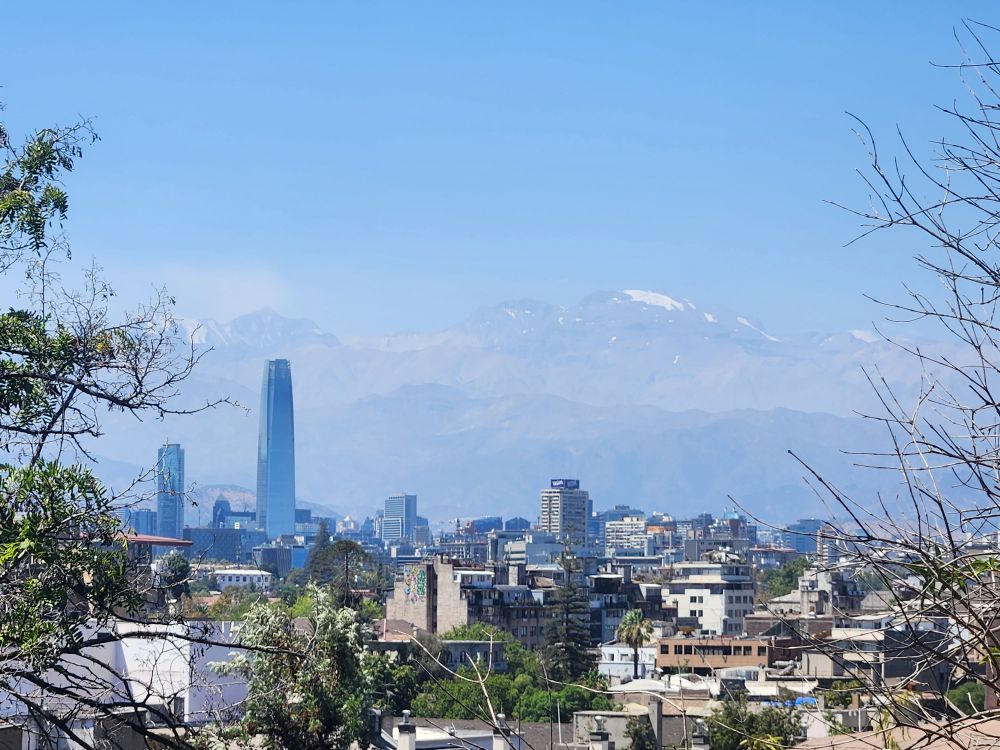
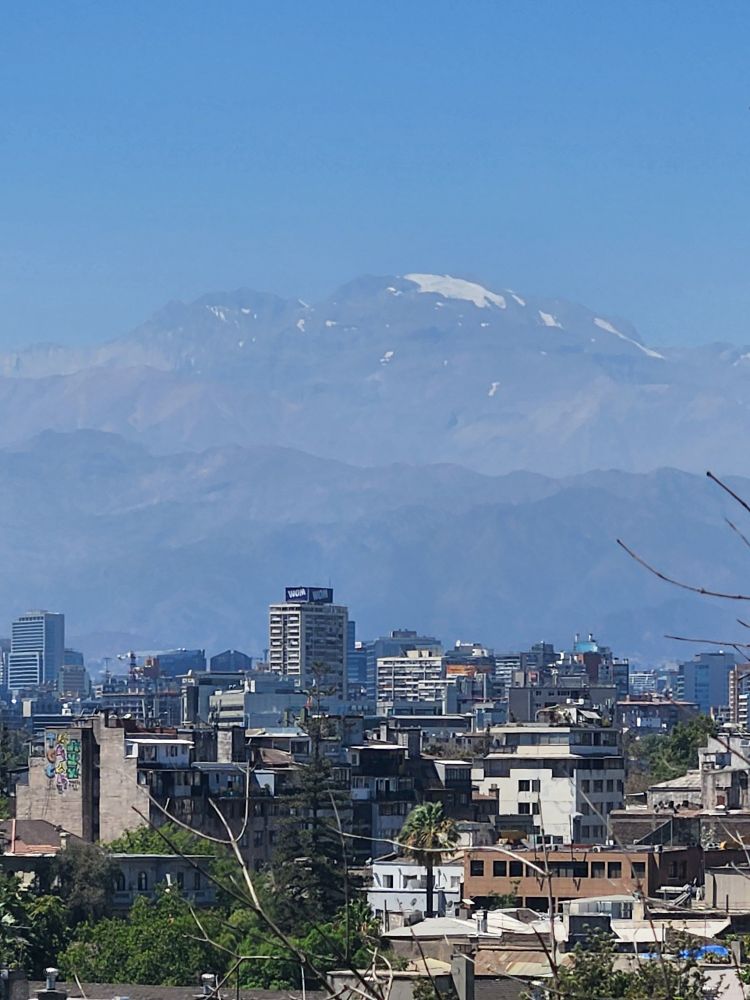
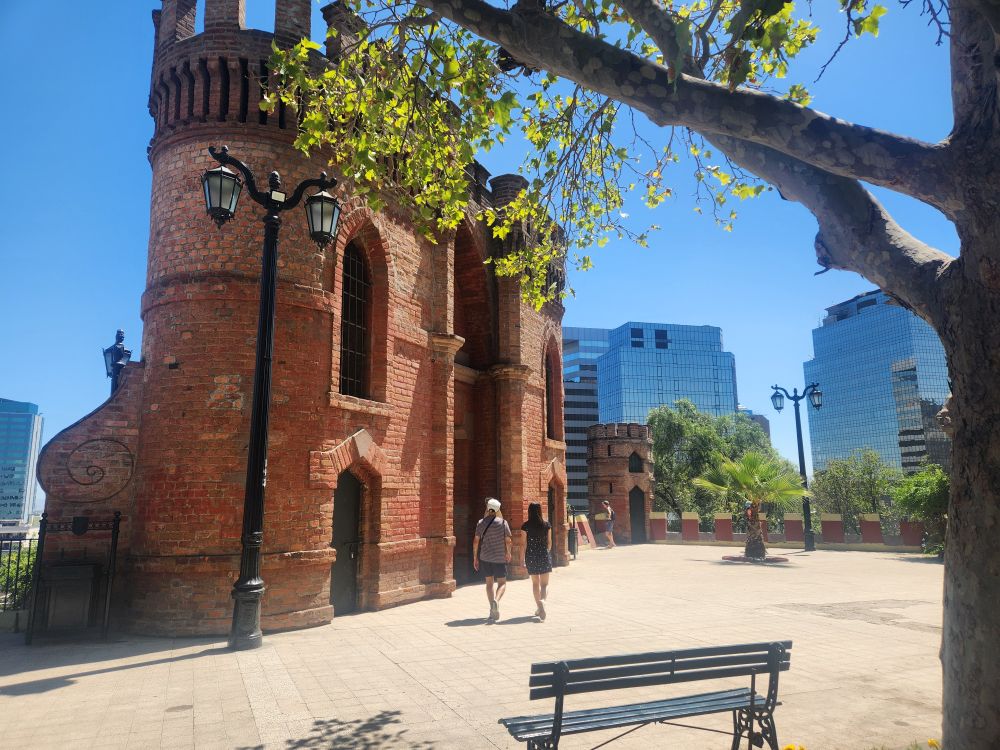
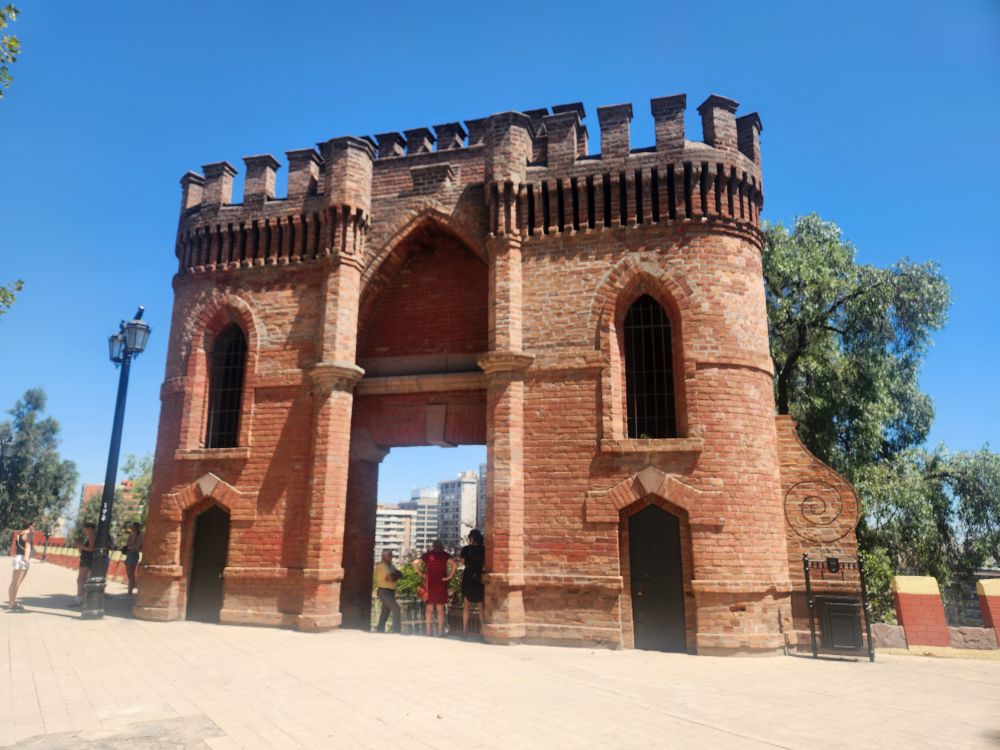
Climbing up to the very top of the Torreon Mirador, you can see everything – out to San Cristobal hill – which we had considered hiking, but decided against due to timing and heat! – all the way over to the Sky Costanera, the tallest skyscraper in South America. You can even see our apartment building and apartment from here. Totally worth the climb!
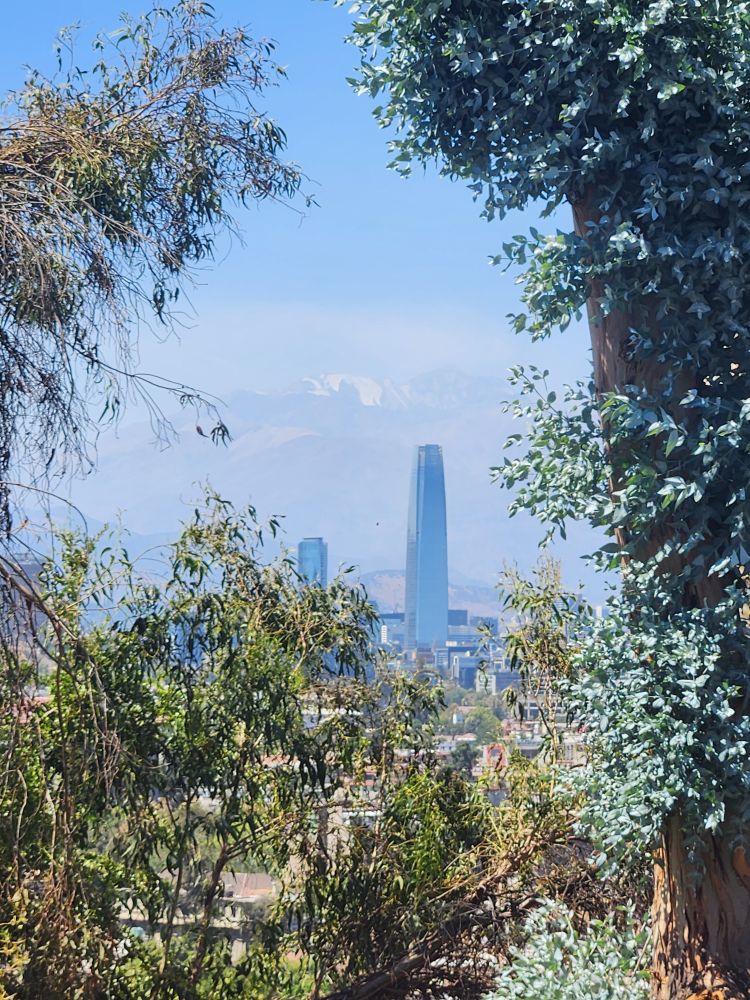
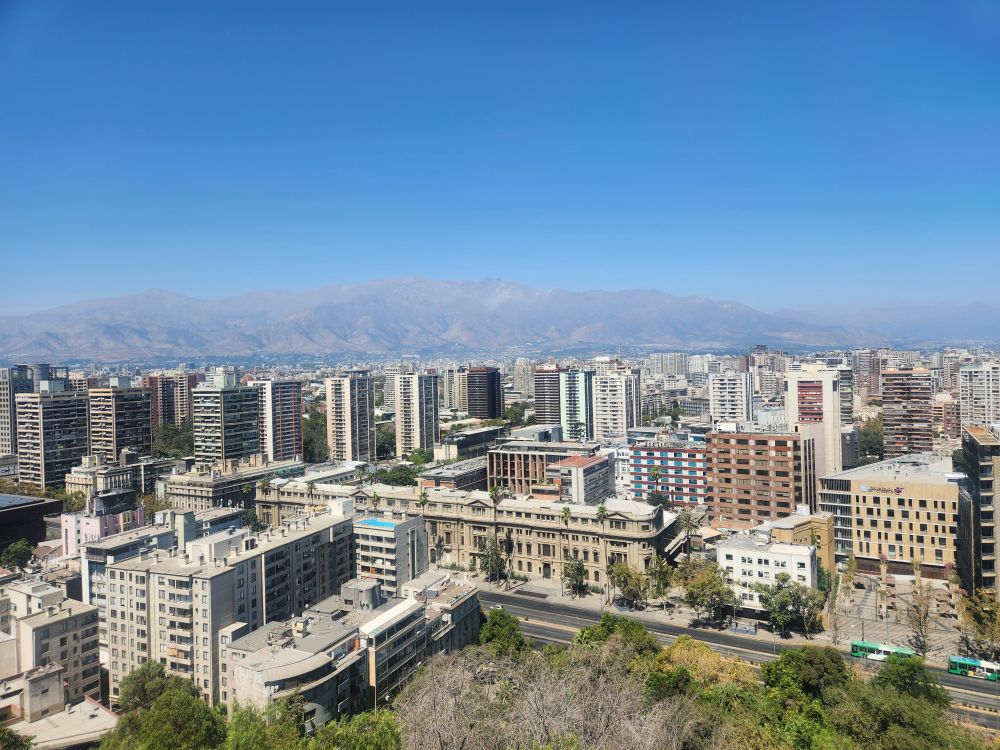
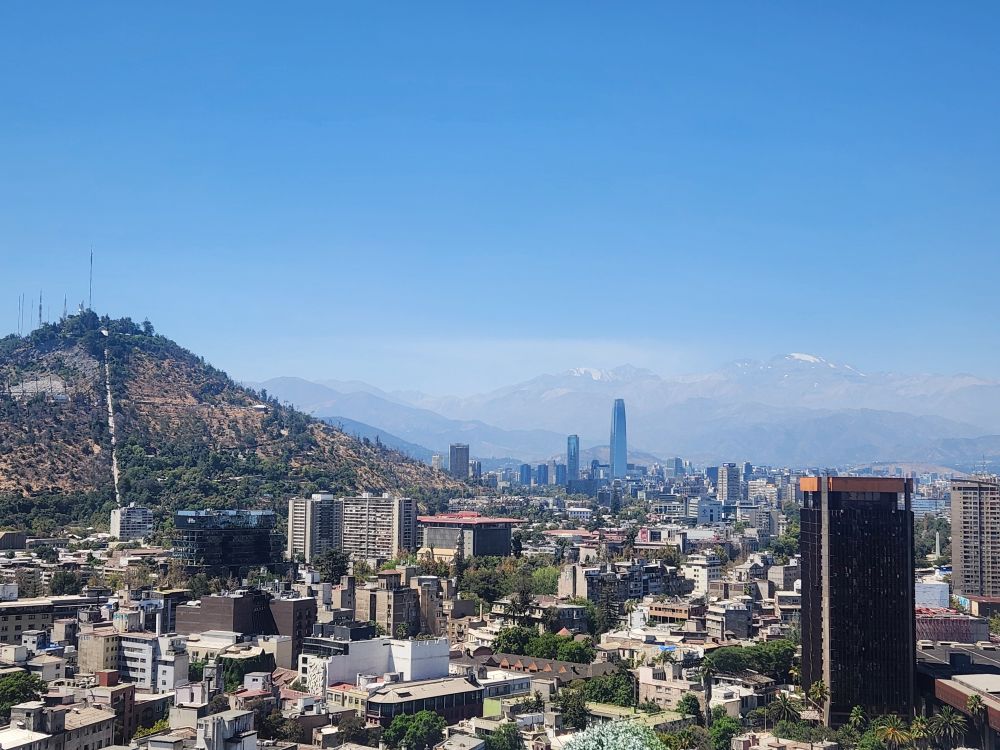
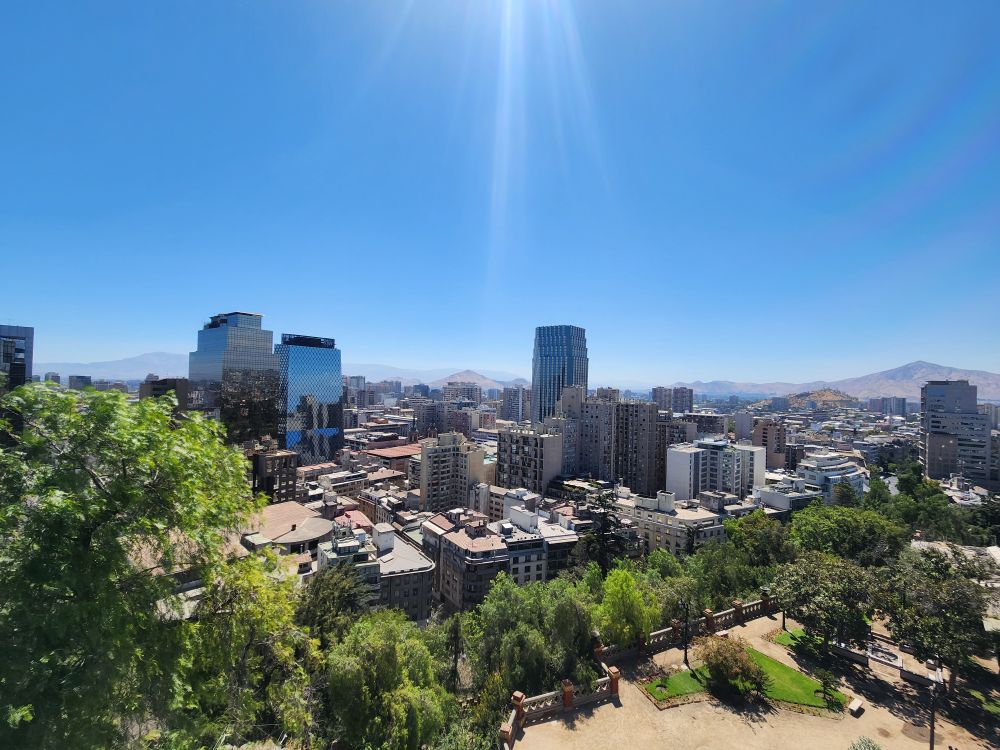
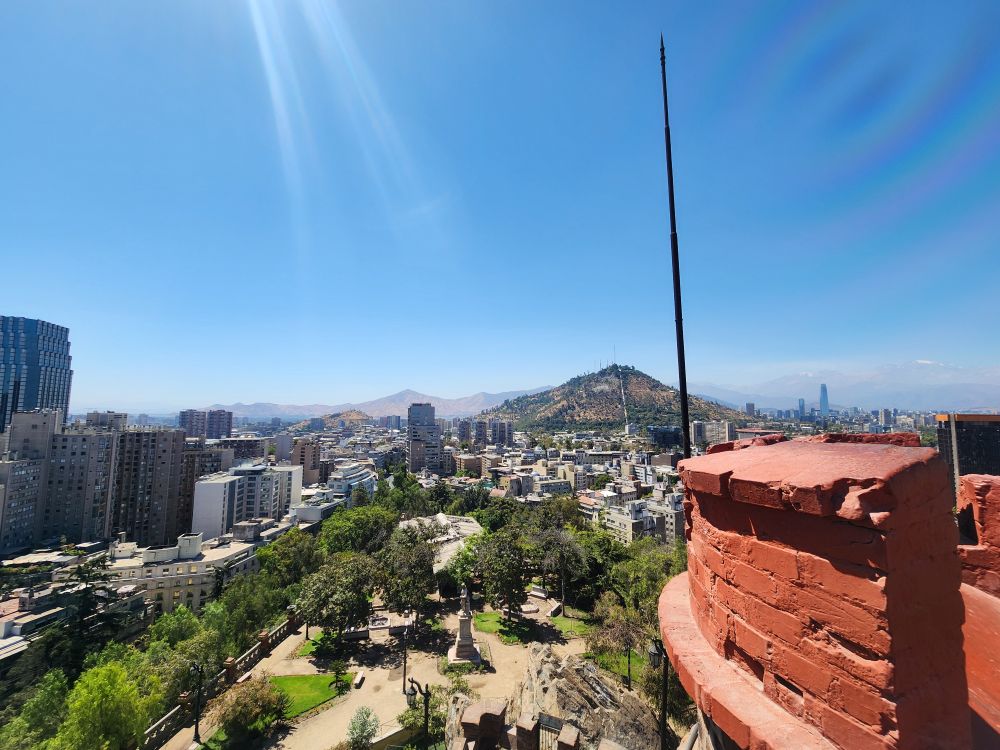
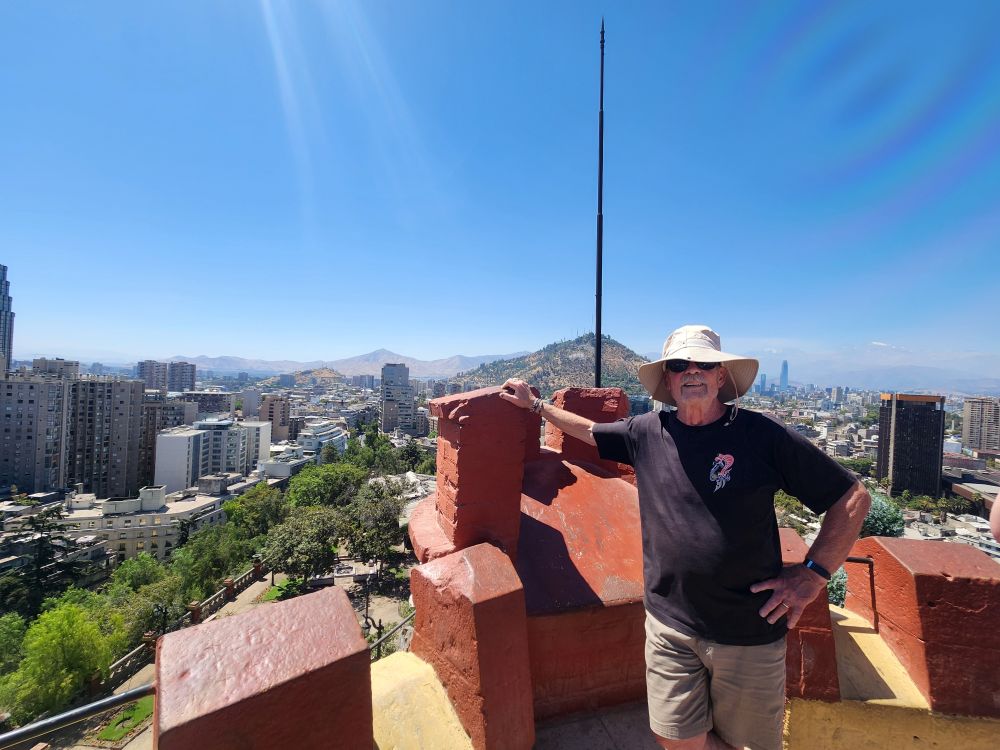
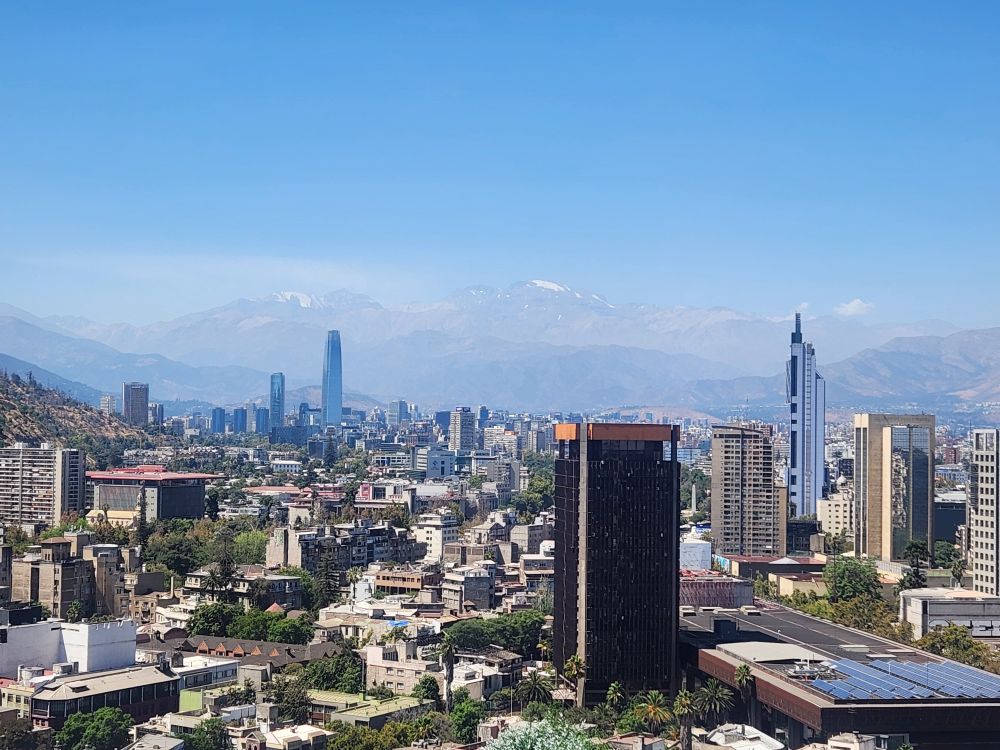
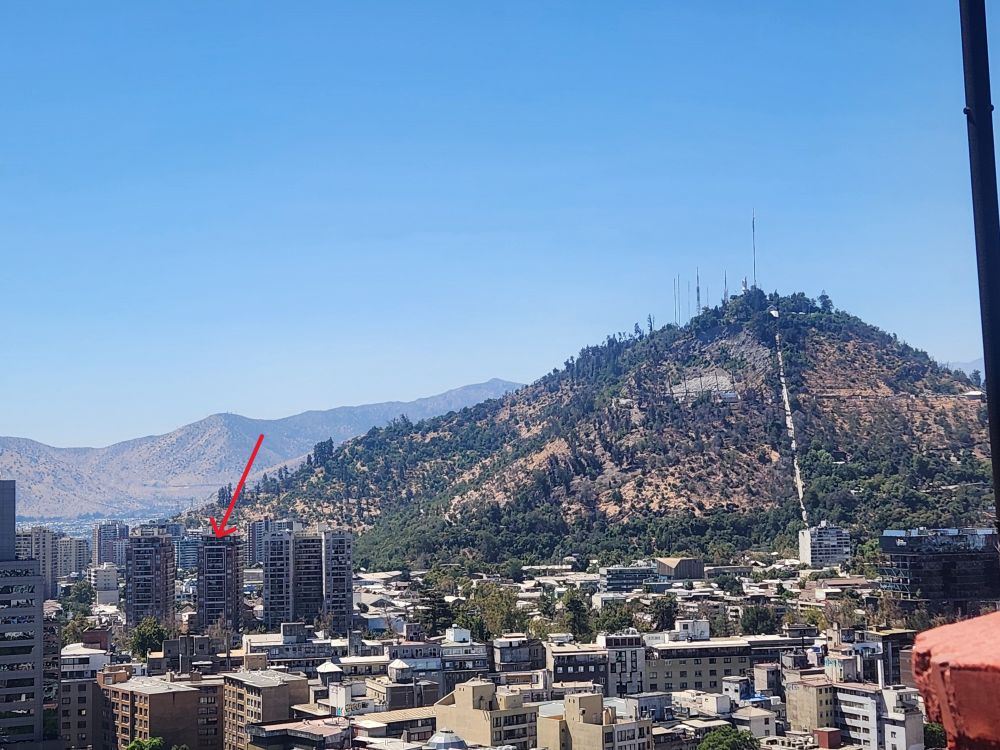
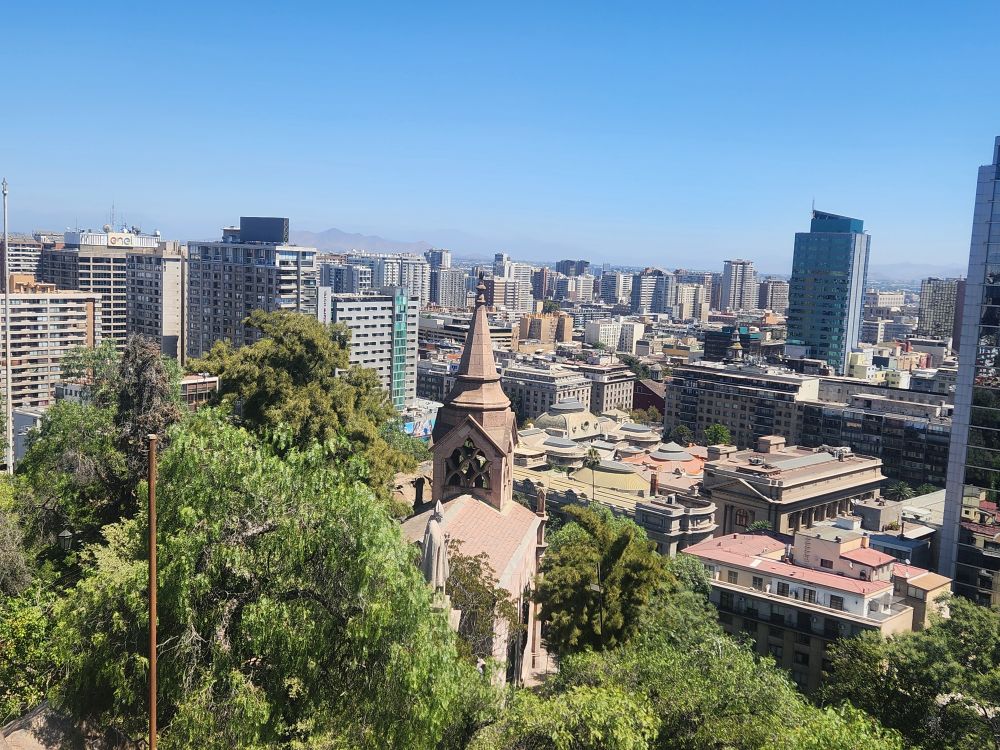
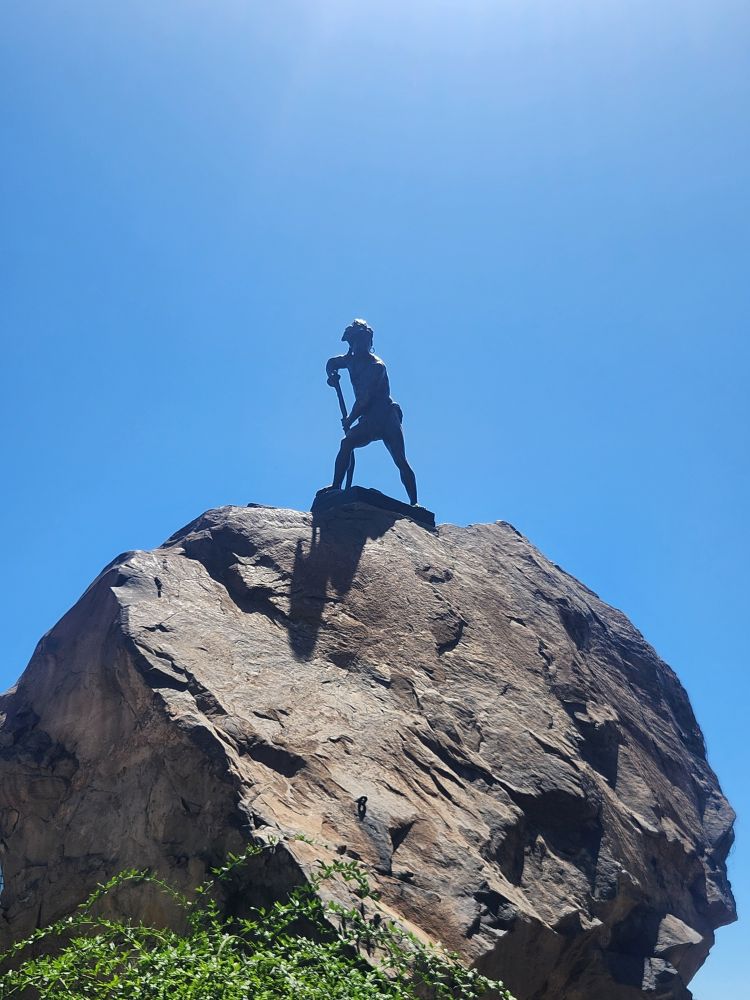
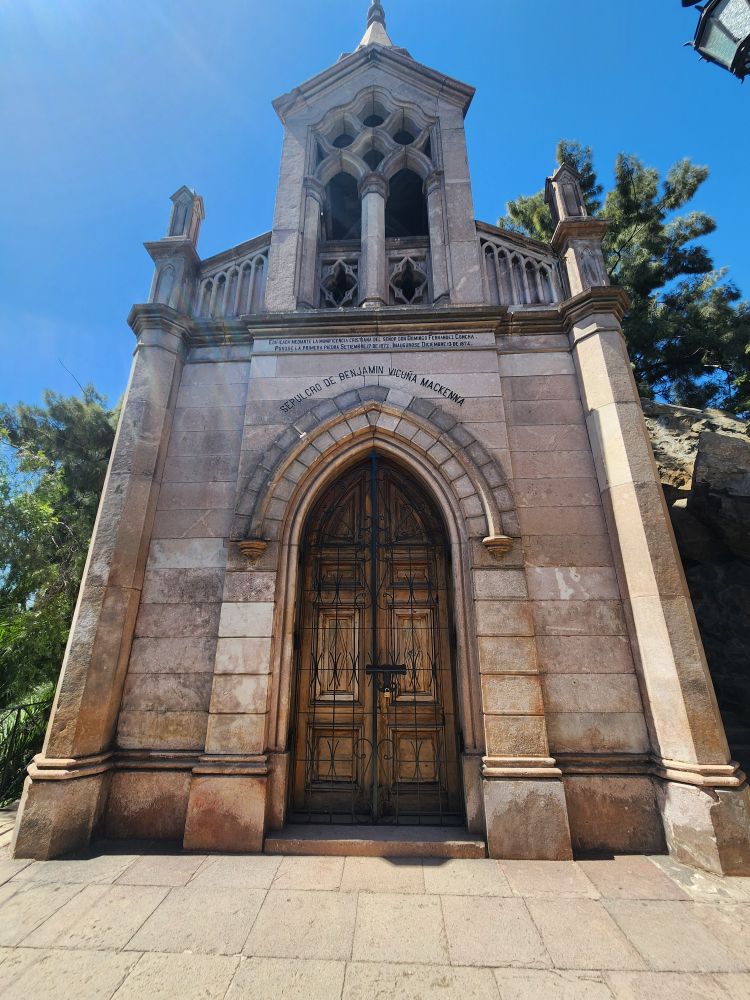
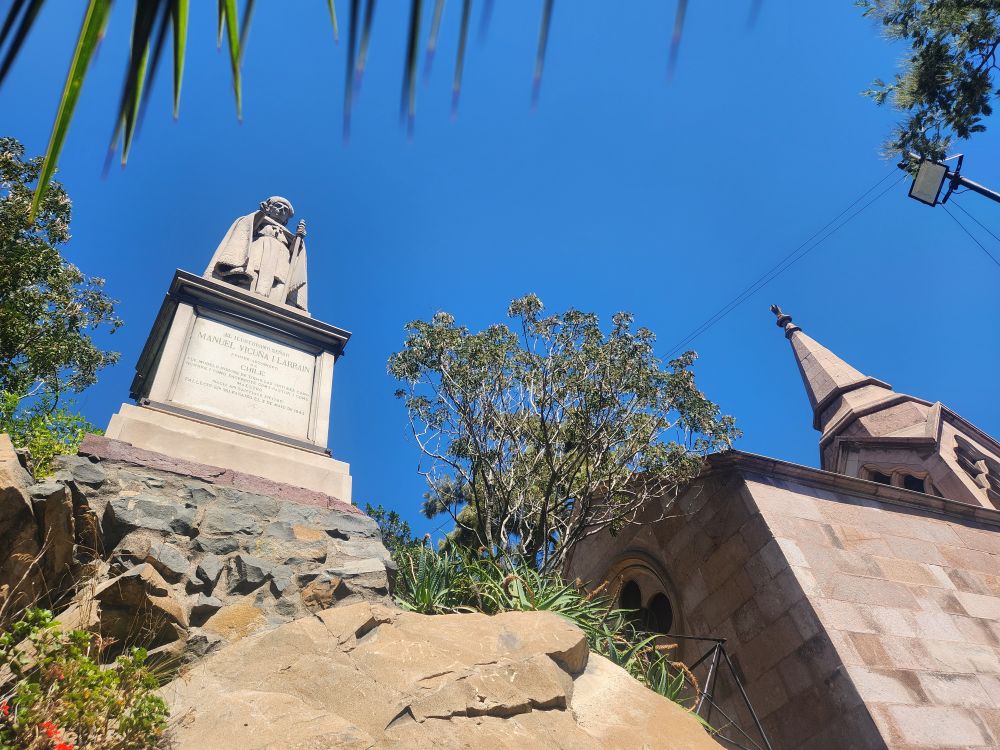
After the tower, we meander about at the top of the hill, exploring the Vicuña Mackenna chapel and associated statues and just generally enjoying the walk and the atmosphere and sights.
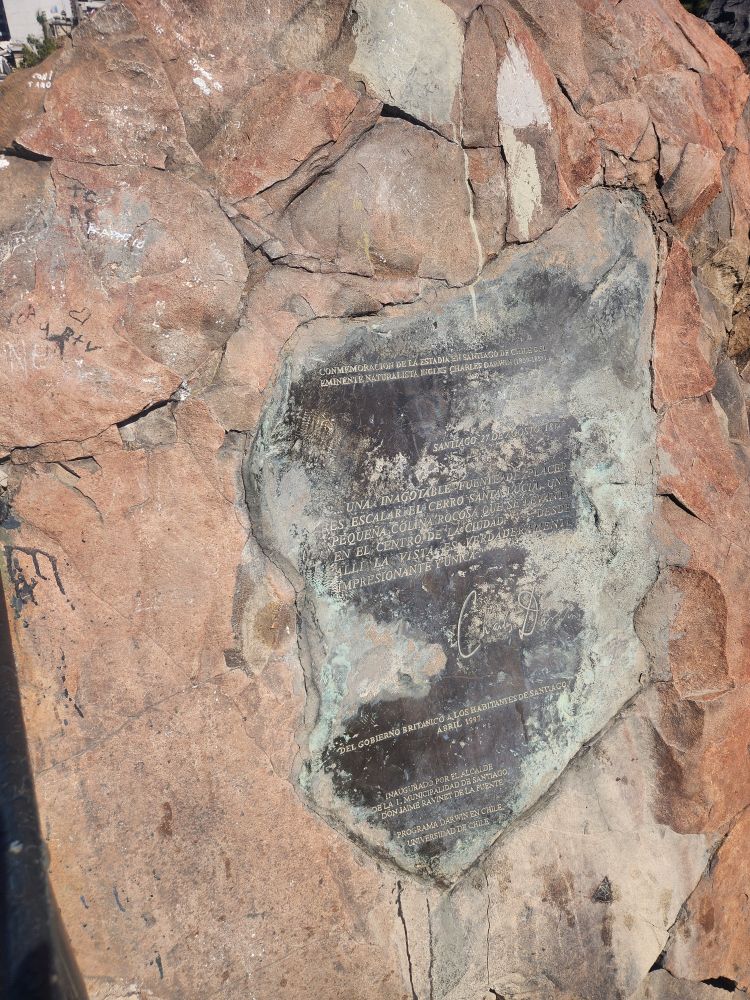
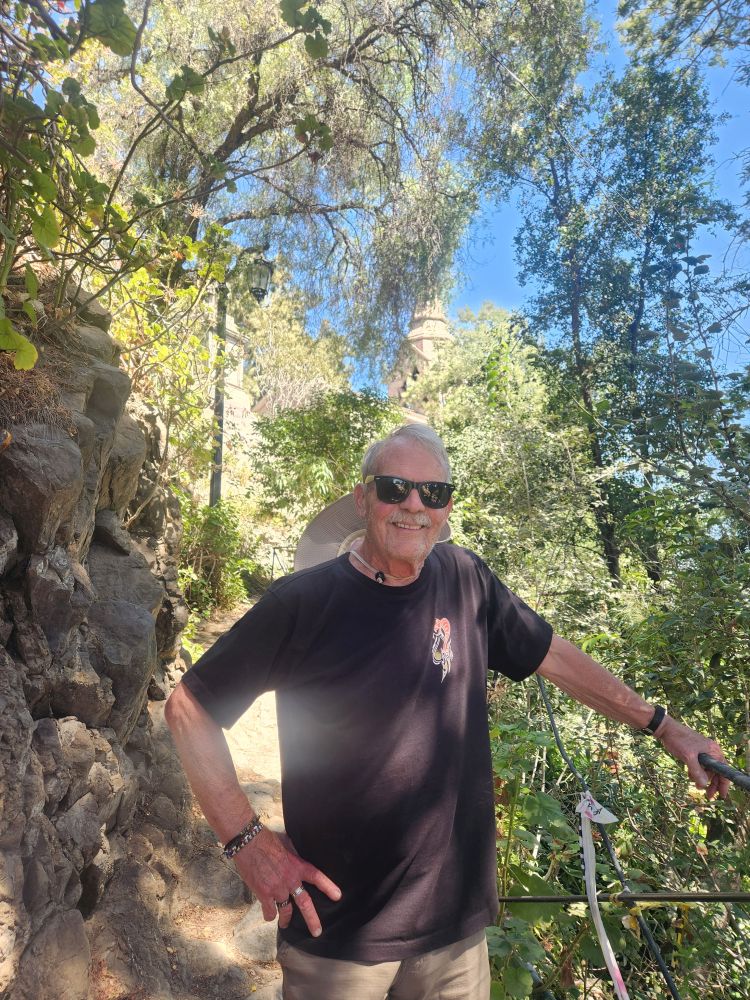
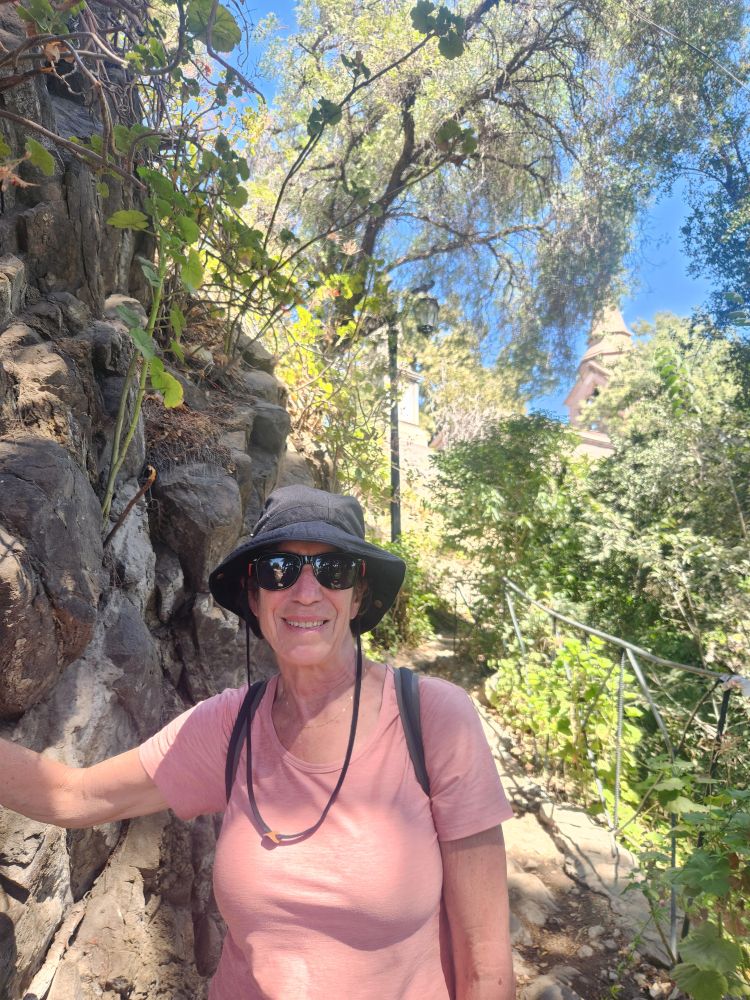
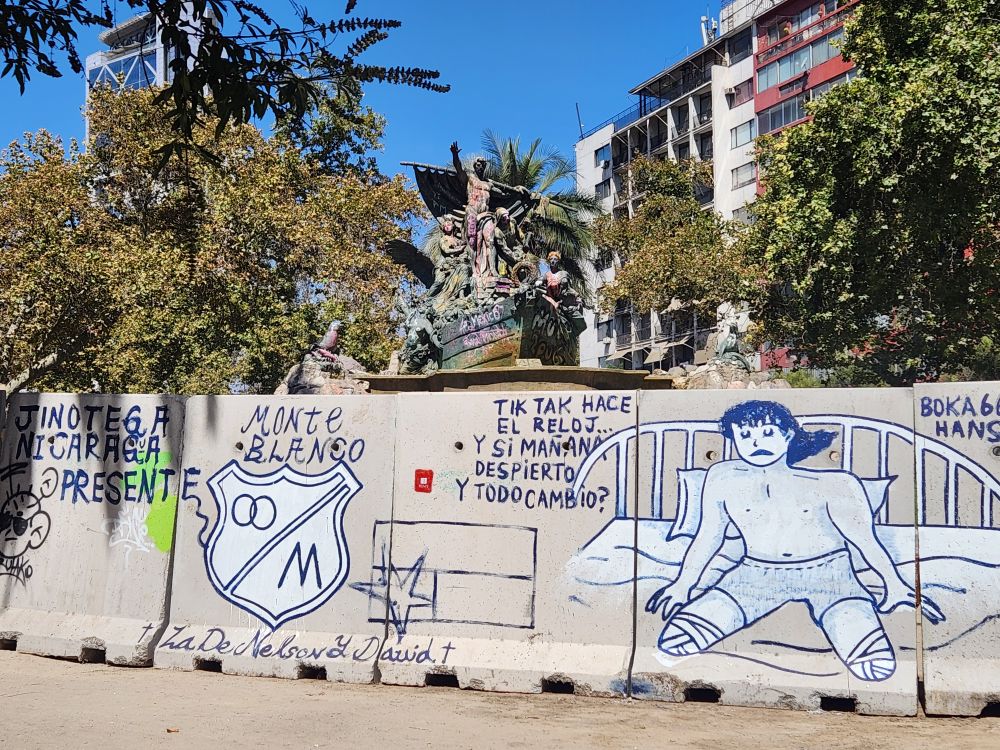
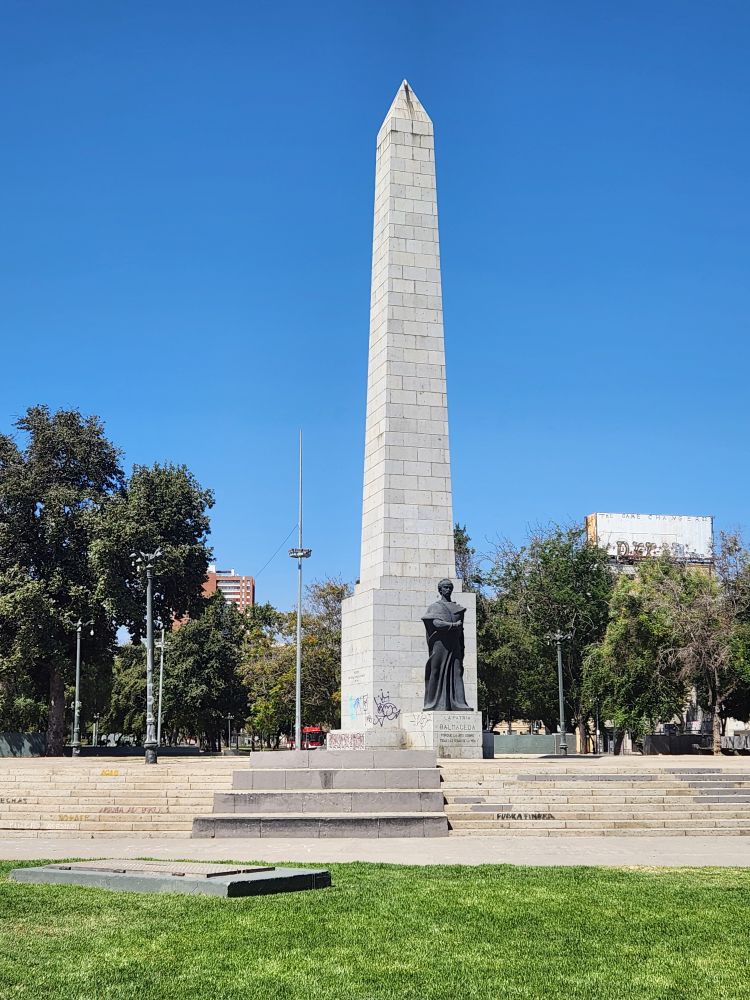
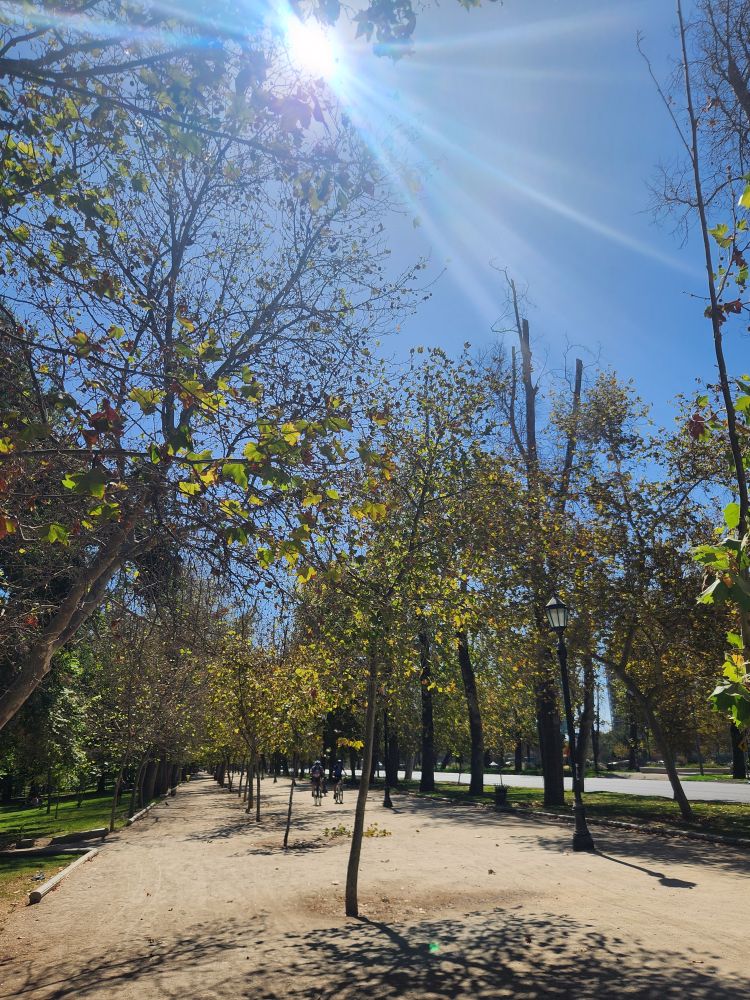
Leaving the hill, we decide to continue on our walk through the series of parks that run along the river, passing by playgrounds and green spaces and statues – some of which are closed because of the graffiti placed there in protests years ago. A good afternoon walk – but it is really hot and humid and it is taking a toll on me, so getting back to the apartment is a nice respite from the heat.
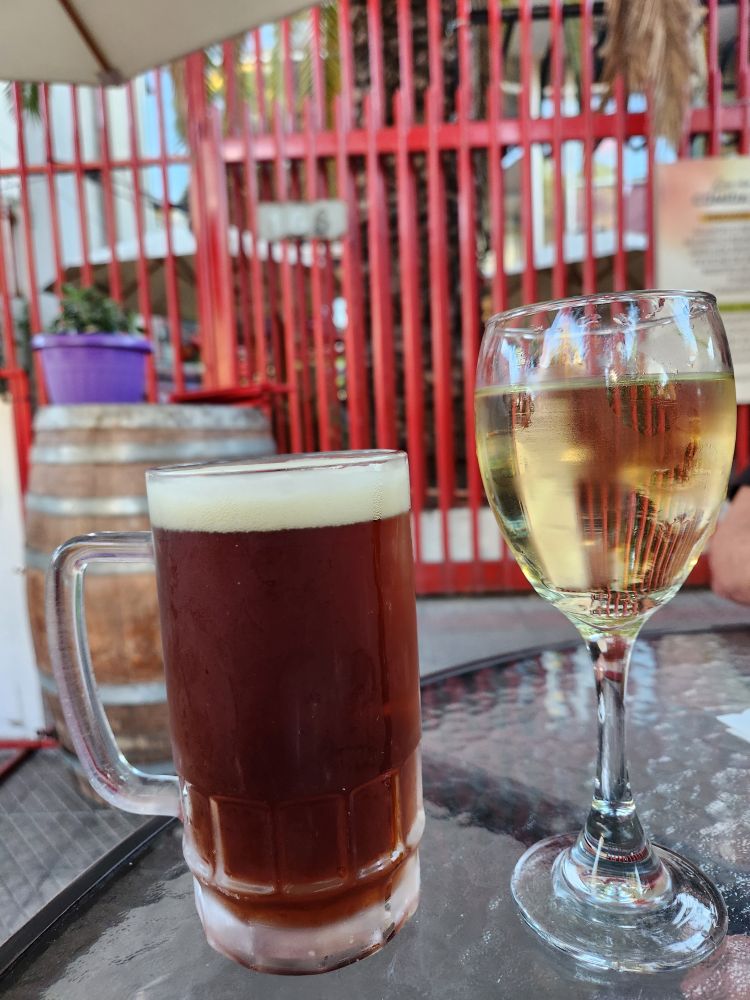
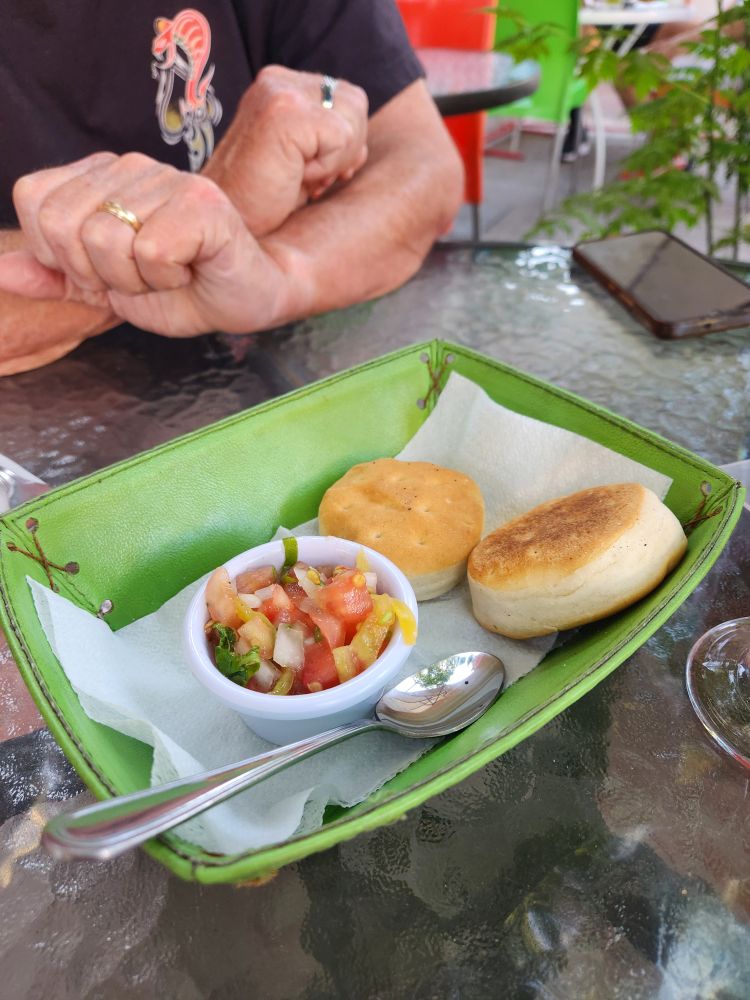
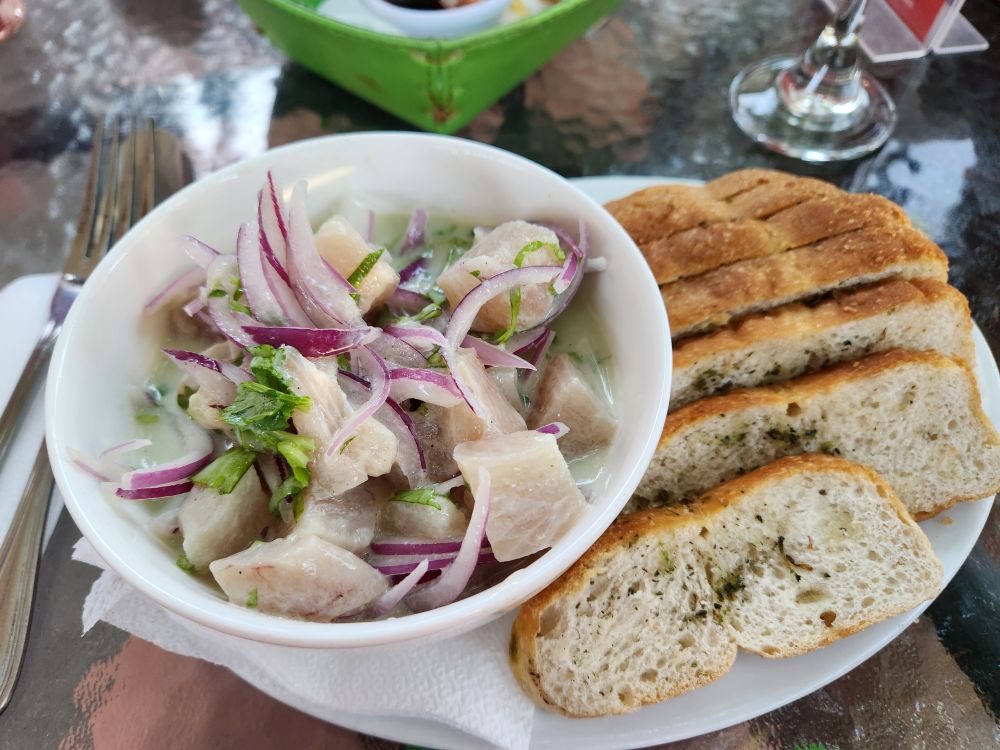
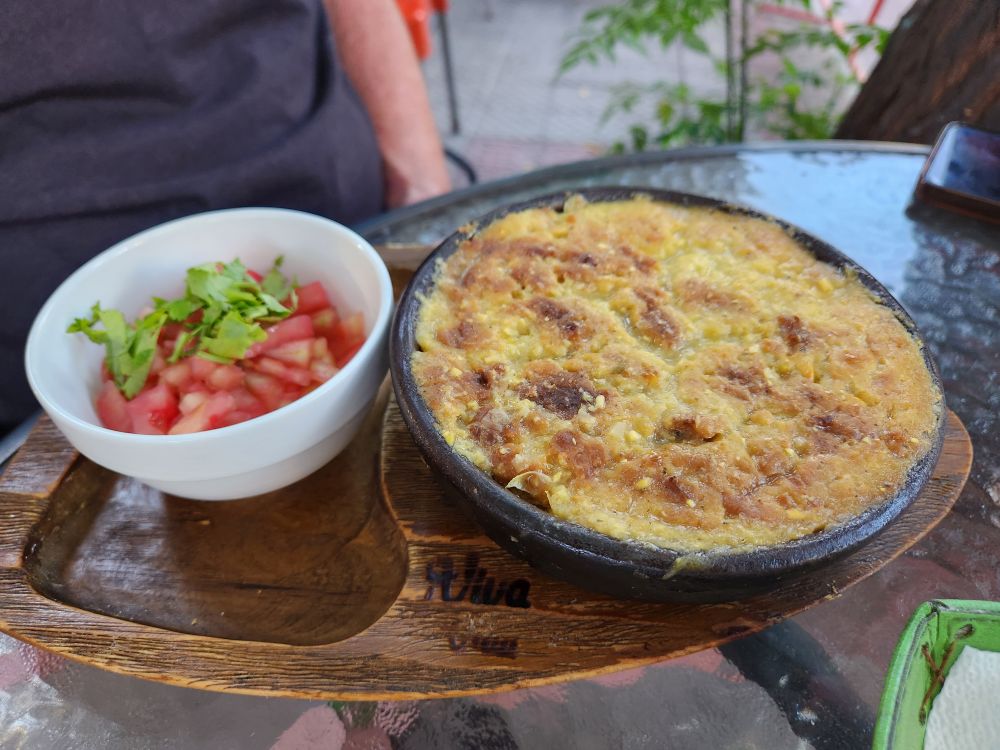
After relaxing and cooling off in the incredible winds that seem to be only high up here on the apartment balcony – we head out to dinner, choosing to revisit a favorite from our visit 5 years ago, Restaurant Vida La Vida. What the heck. We loved the food there and we are dying for some Pastel de Choclo. We essentially recreate our meal from the last time – Ceviche and Choclo. And it is just as excellent as before.
Strolling home past the wonderful murals of Bellavista, we arrive to our balcony to hang out the rest of the evening, ready for our Maipo Valley tour in the morning.
 Andiamo