After a lovely sleep, we are up bright and early and ready to go walk and explore. Our plans today are to take a nice long morning walk, then head over to the Place of Memory, Tolerance and Social Inclusion Museum which details much of the communist uprising in the ‘80s before meeting our Food tour in the afternoon. It is a gorgeous day, and perfect for a walk.
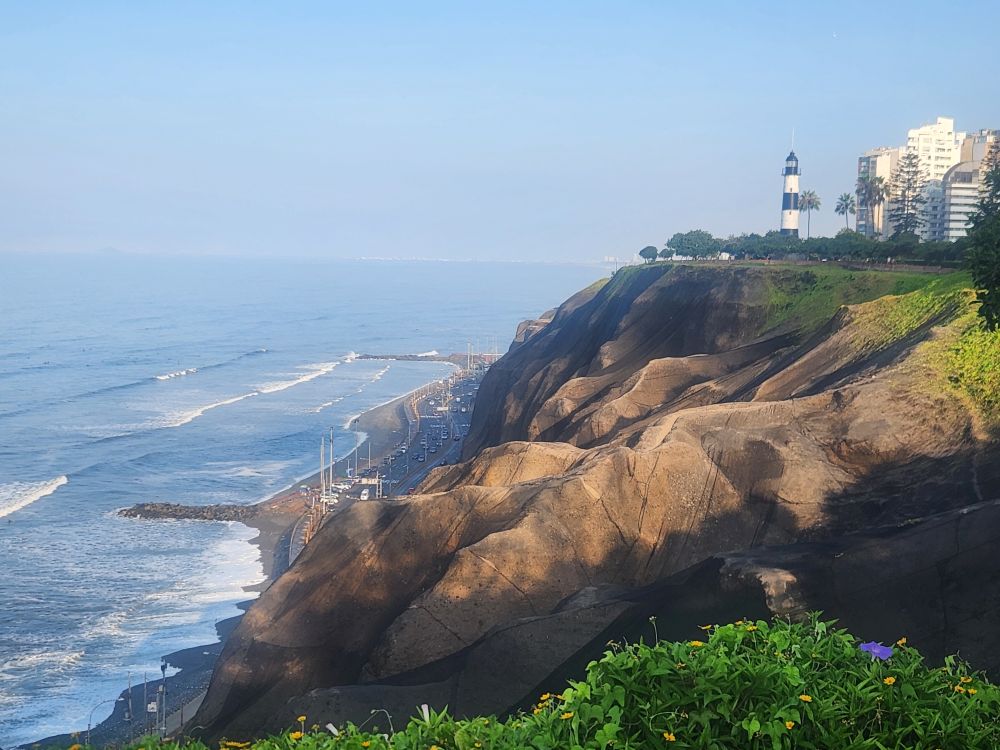
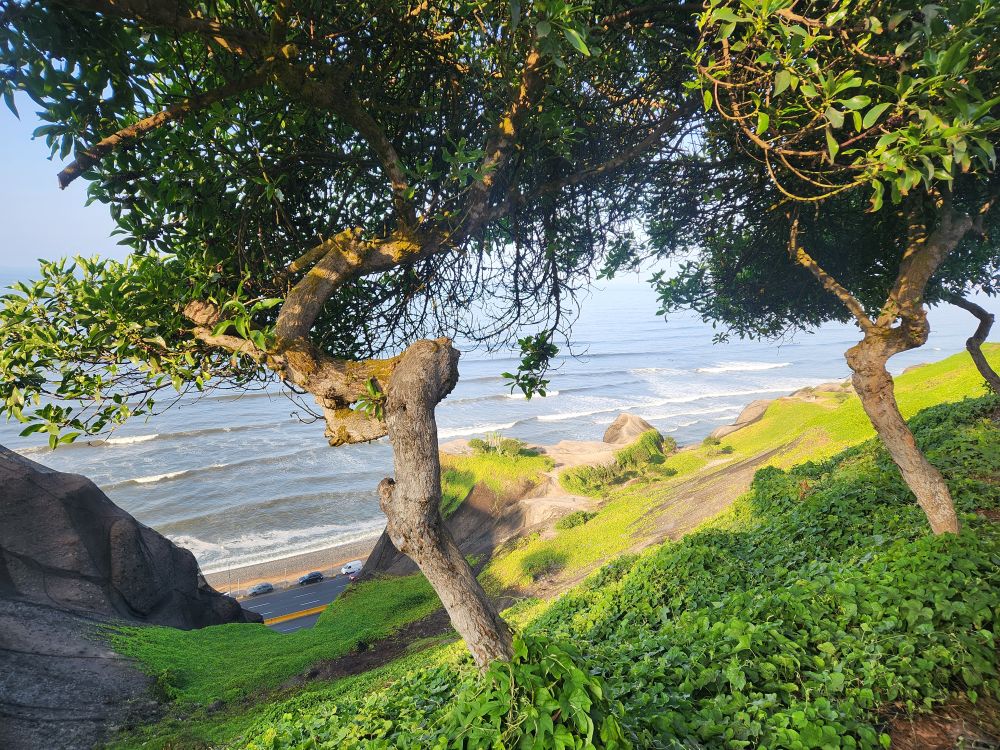
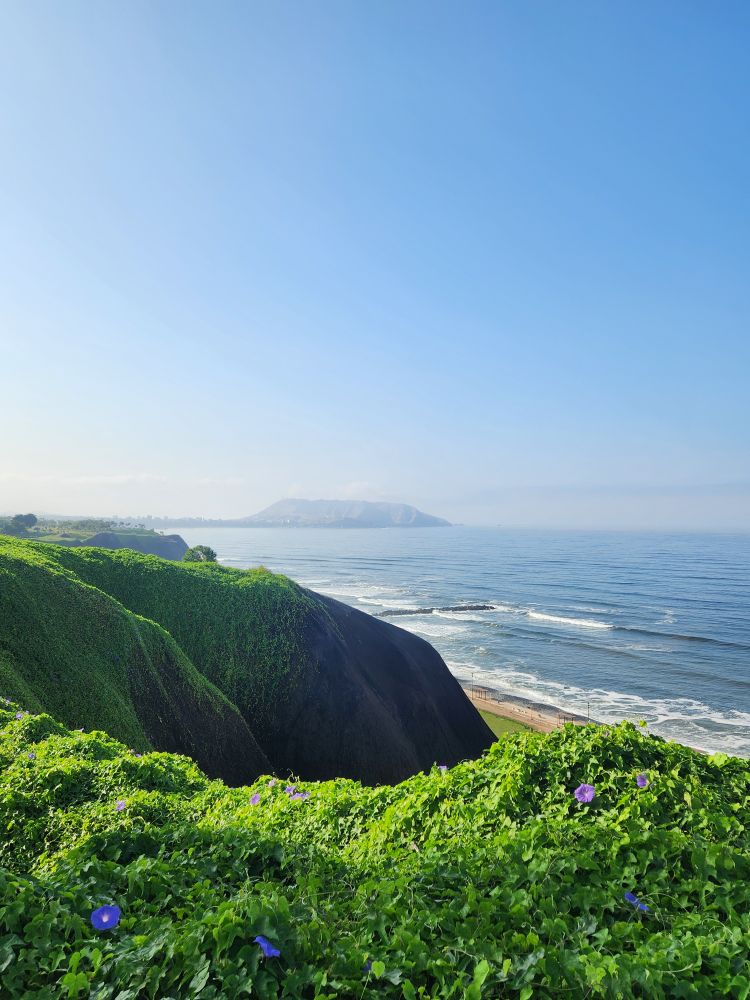
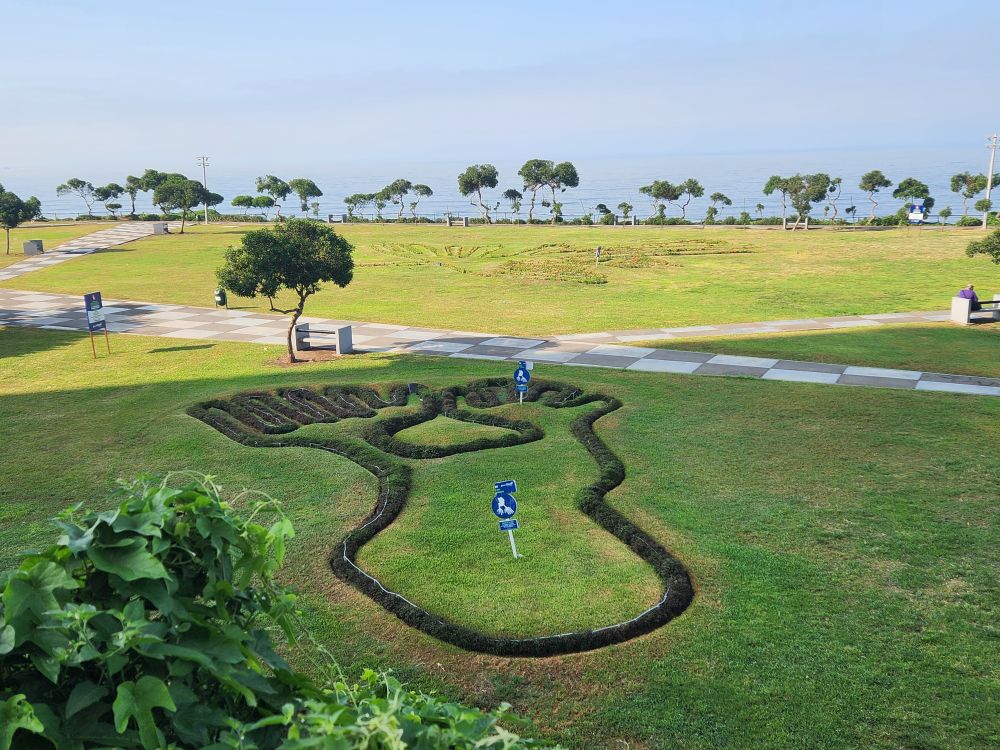
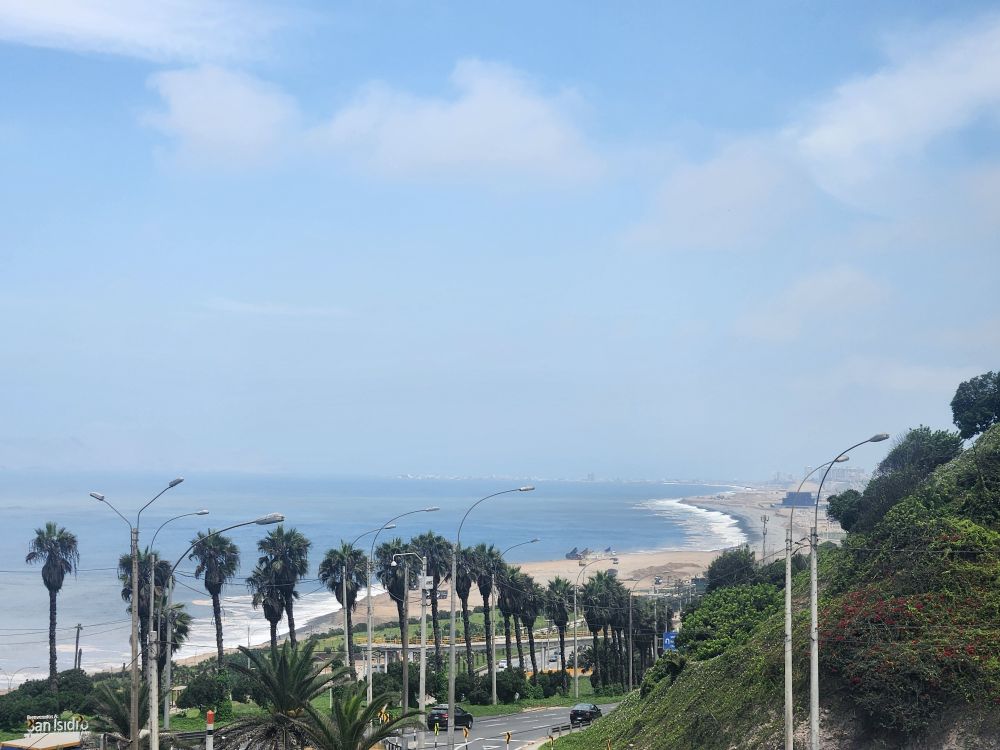
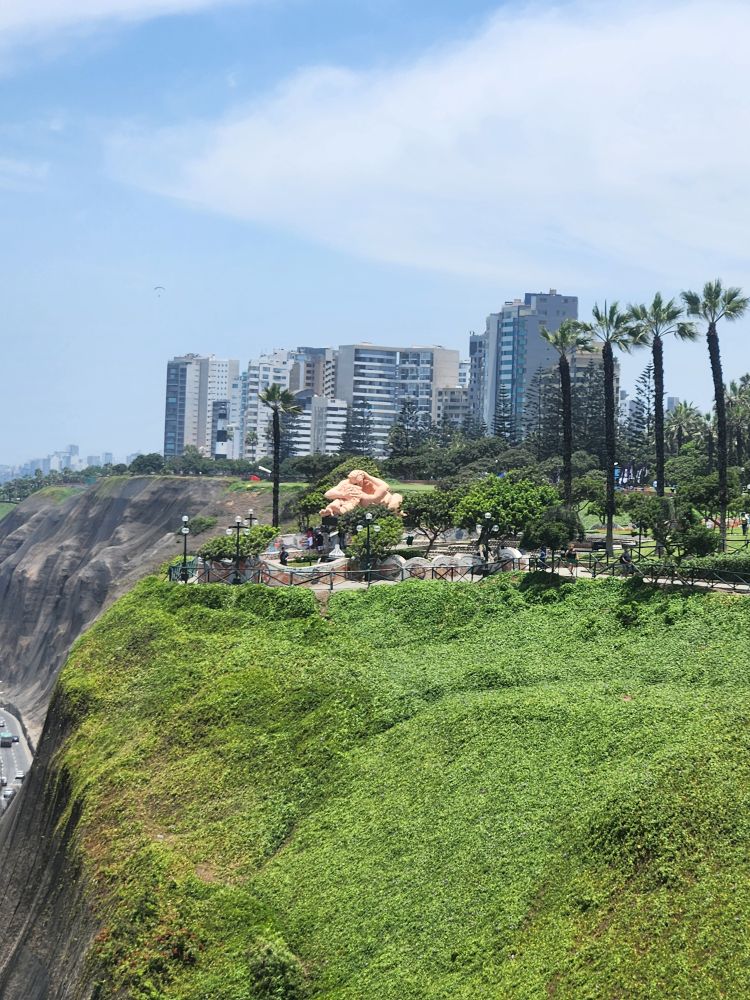
We find our way down to the Promenade that runs along the ridge above the beach and have a wonderful walk in the cool morning air. There are gardens and green spaces along most of the route, and a wide sidewalk along the road in other areas. It is a delightful walk, and despite Google Maps, we find it an easy walk all the way to the Museum we want to visit later! You know our Google Maps rant, so I won’t go into it here, but suffice it to say, always doubt Google Maps!
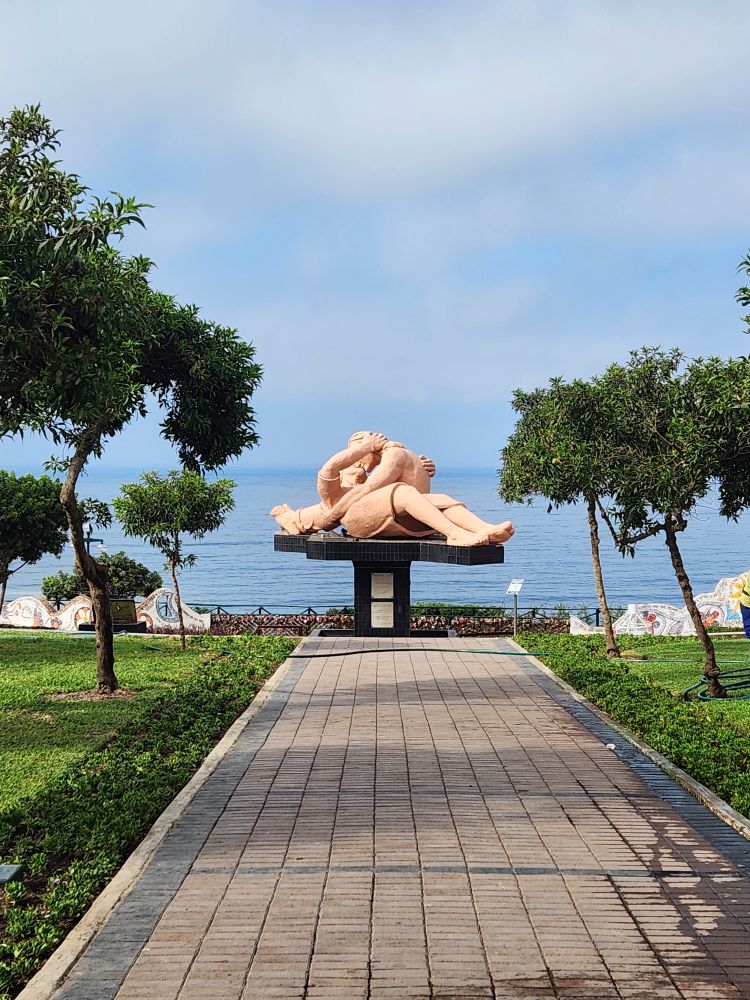
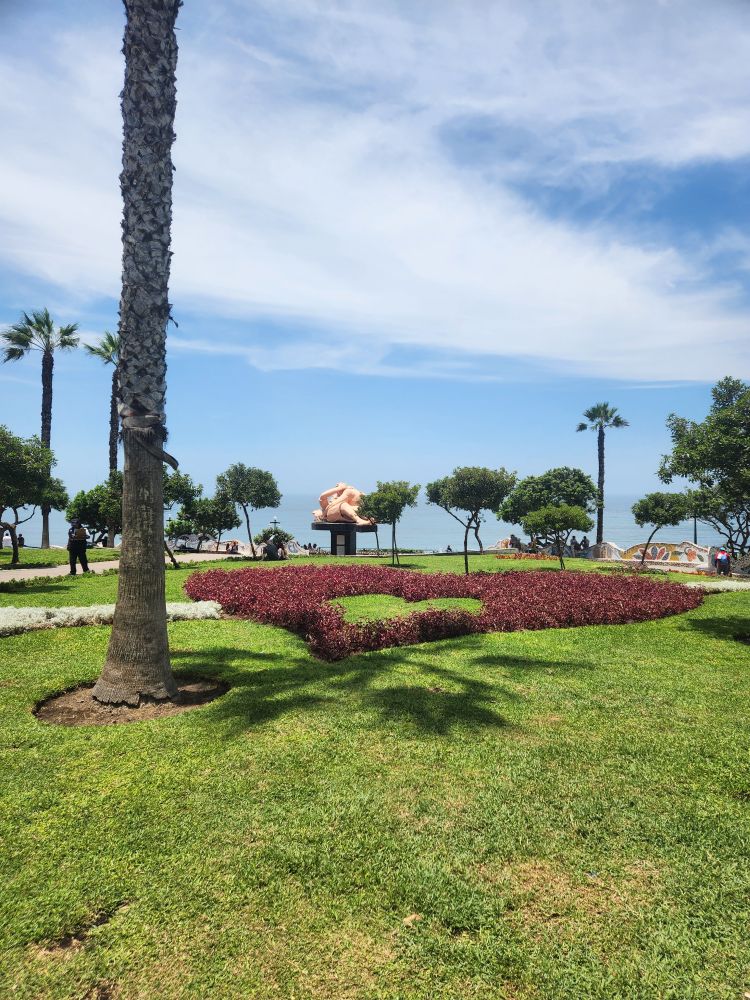
Anyhow, we make the round trip back to the apartment, snapping lots of great scenic shots over the water and the kissing couple statue at the start of the park – we can only imagine how crazy crowded this area must have been last night!
After a light breakfast of bananas (that we bought from a street vendor the other day – don’t ask about getting change for the street vendor, please! Those stupid ATMs that only give you huge bills!) and a roll, we go downstairs, call an Uber and head to the museum. Man, the traffic is still brutal out here. And the way they drive! Oy! Get in any lane, and then get over all 3 lanes to the right. Or the left. Just edge your way in. Everybody is reasonably polite, but the horns. Constant! Just hysterically funny. As Alfredo said yesterday, tranquila, or peaceful, relax in English!
At the museum we practice our un poquito Spanish with the guard, who finally does sign language to ascertain we want to “look” and shows us where to go. Inside, we have to “register” which is really just signing a guest book with our passport numbers, and then we are able to freely wander through this museum – which has an audio guide in English. Bonus!
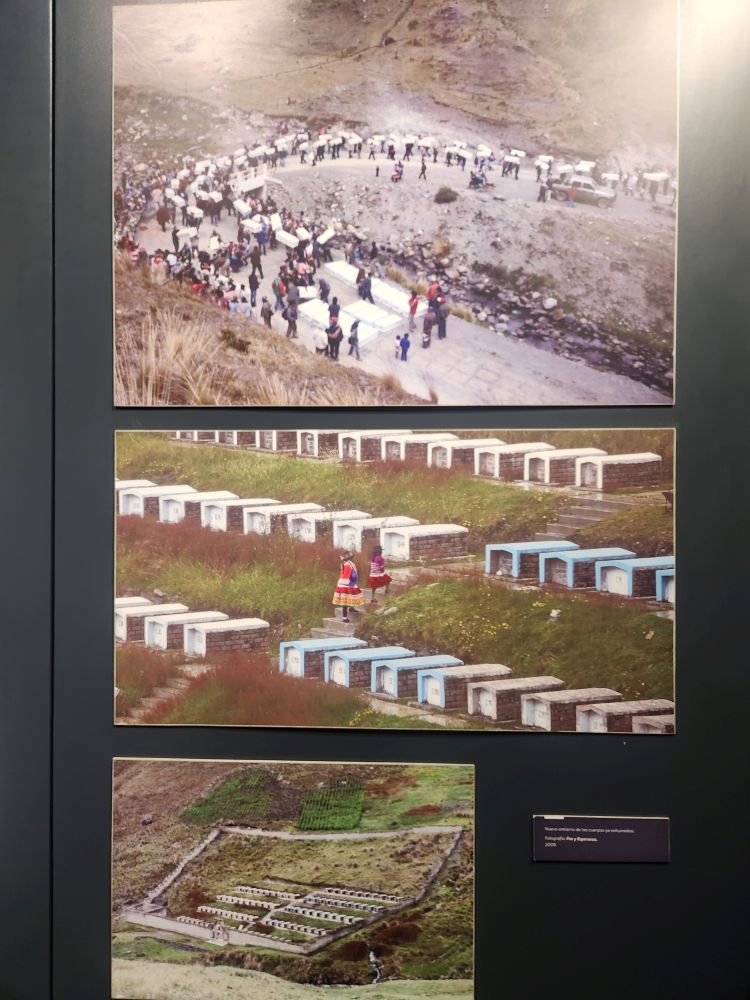
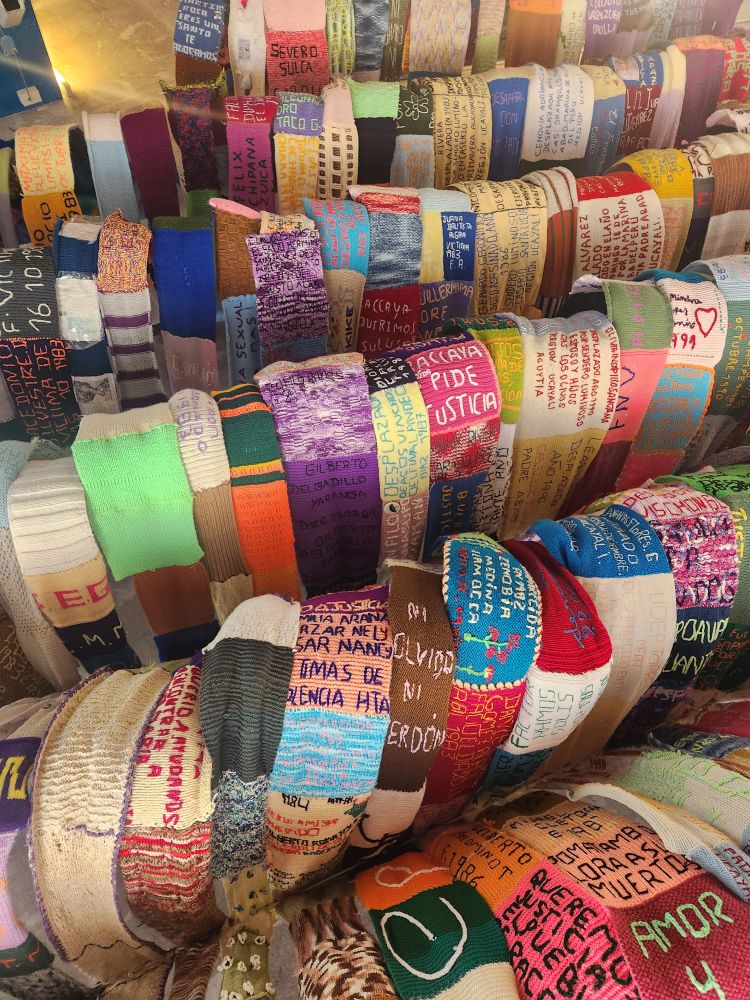
Alfredo had mentioned this museum as it has a lot of information regarding the Shining Path, it’s terrorism and the Ayacucho region, from where most of the people we visited yesterday immigrated. It is an extremely well done exhibit albeit filled with all the horrible things that happened during the uprising and the aftermath of it all. There are displays about the fires that were set in the middle of Lima, about all the missing persons that the Shining Path and the MRTA groups have abducted, killed, made disappear. There are examples of the typical handicraft the women made – like the ones that Sra. Balvina made – depicting the situation in their home towns. There were also these terra cotta figures that poignantly depict the torture endured by the people of the mountains. Brutal.
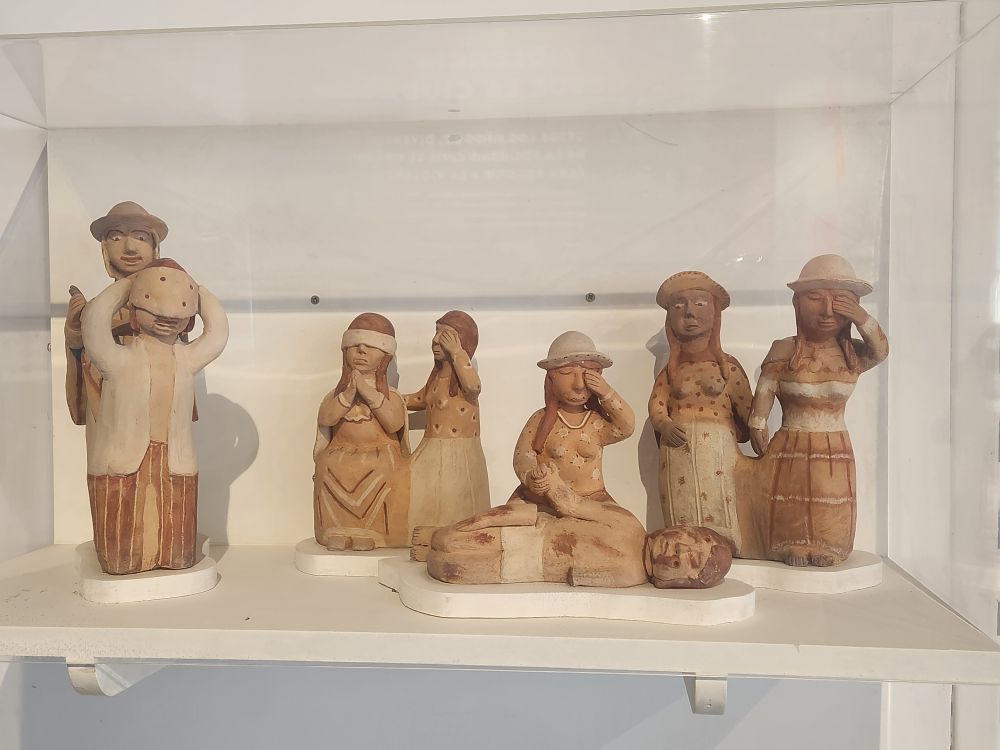
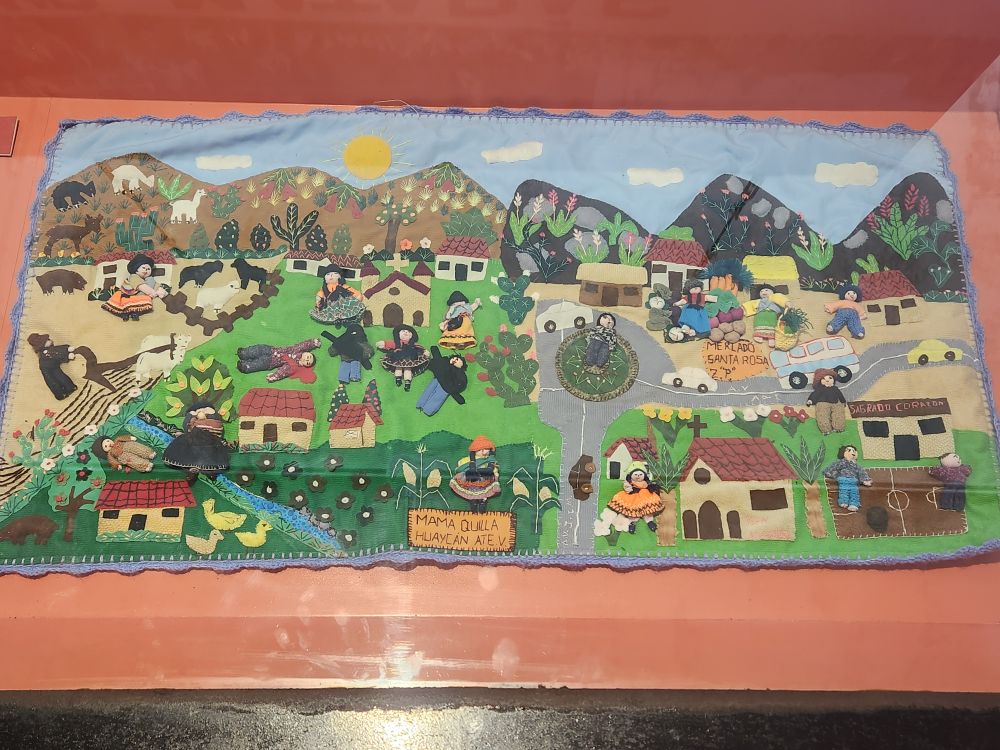
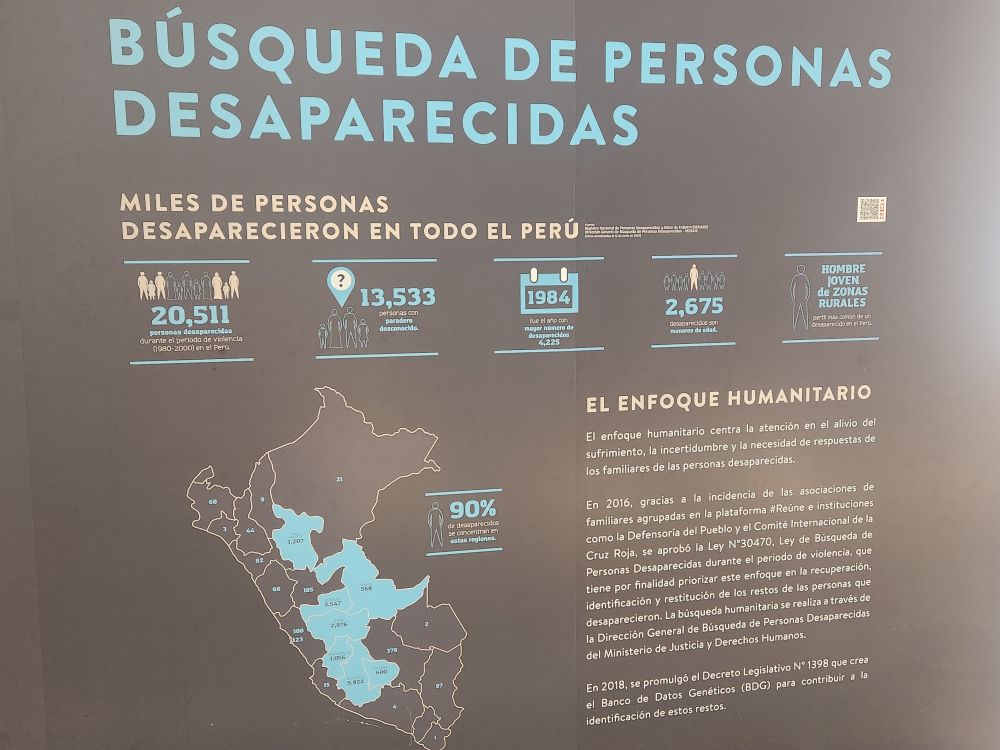
The final display is one of hundreds of knitted scarves hung from the ceiling, all with some saying about justice or name of a disappeared person. Amazing.
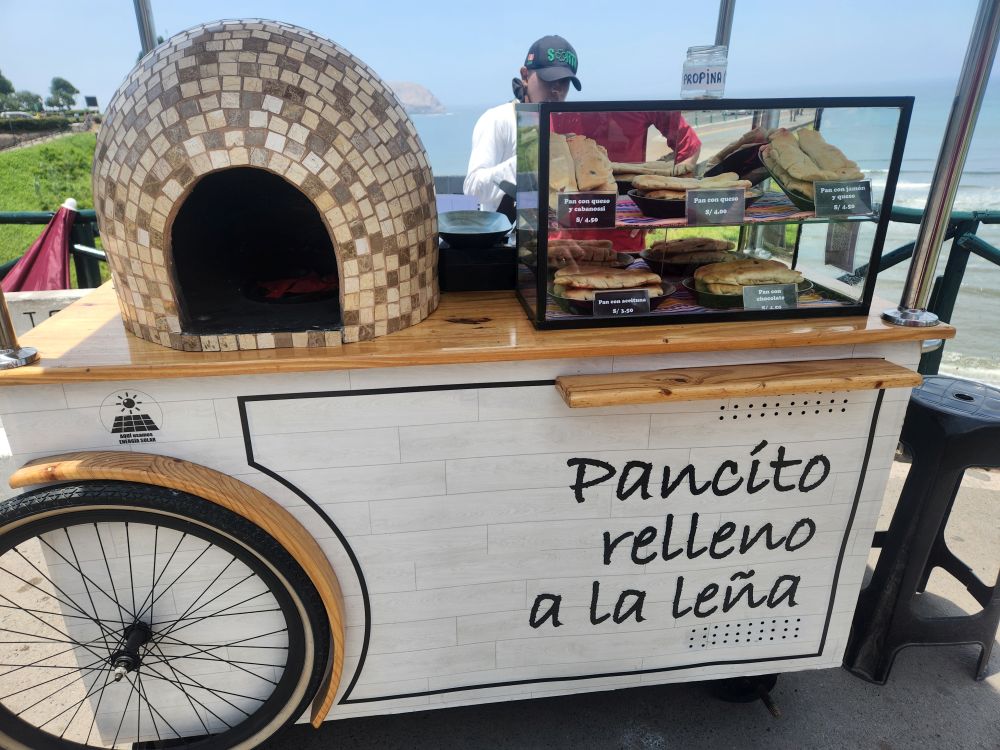
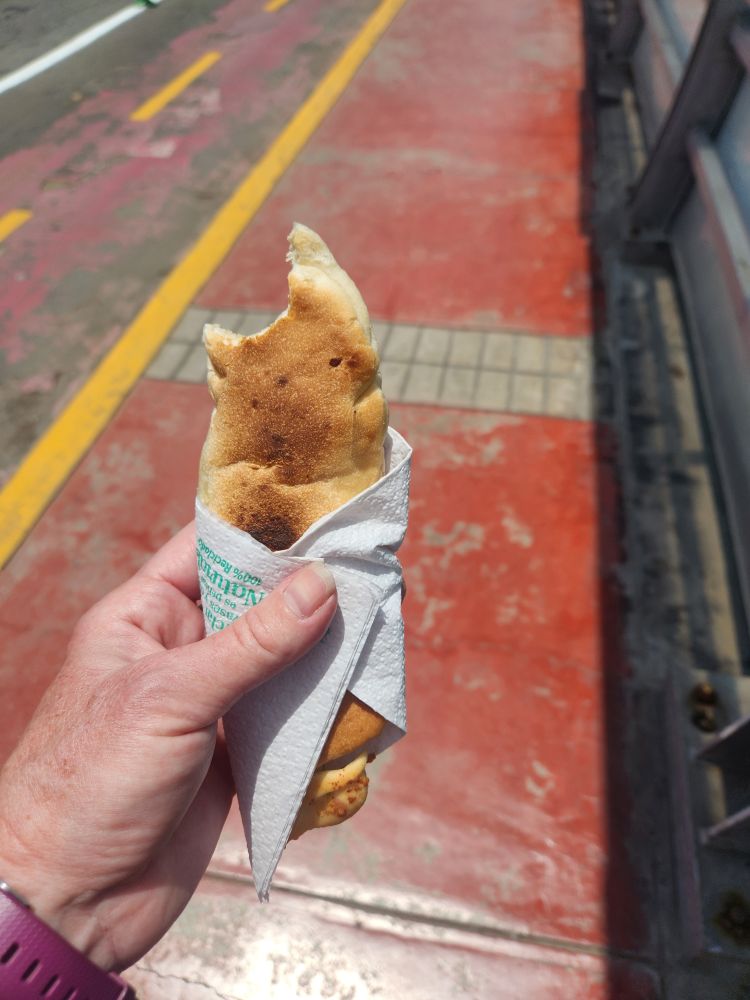
Outside in the bright sunshine, we take a few deep breaths and start our walk home. It isn’t as pleasant now – the sun is up and it is getting pretty warm, but at least there is a cool breeze coming off the water occasionally. The scenery is still beautiful and the gardens lovely with the heart-shaped flowerbeds. Even though we’ve had a light breakfast, we decide we want a little snack to tide us over before the food tour so we grab Pancito Relleno a la Lena (essentially little empanada like sandwiches – one with cheese and jamon, one with cheese and cabonossi – that sausage we found in S. Africa that we loved so much) and happily munch on them as we walk home. A perfect little snack.
At the appropriate hour, we head up the street to go to the Tour company’s office to meet up for our Food Tour. We had the option of the tour guide coming to pick us up, or meet at the office. We envisioned sitting in a van for 30 minutes while we circled the city picking up other tour passengers, and chose to just meet at the office. On the way, we stopped at the Dollar store – yes, the Dollar store where most things are a little over a dollar, but still – when you need shoe polish or even the new water bottle we found – $1.25 equivalent is where you go.
As we were leaving the store, we get a phone call from the tour operator telling us there is a new meeting place, we are meeting at the market. Huh? What? No way, we are literally 1 block away from their office. After assuring the guy that we are 3 minutes away, he actually gives us another address for their office and we walk there, only to find the tour company, Haku Tours, is not listed on the directory and the doorman doesn’t know who they are. Sigh. We debate calling again, when Johnathan comes outside and meets us, escorting us upstairs into their offices. They have just moved into the brand new space, which is where the confusion started, and obviously, it isn’t the norm to meet at the office! Oh well, we are here, and we spend a delightful 10 minutes or so meeting all the travel agents and chatting with Johnathan about Peru and Ayacucho, where he is from, and other parts of the country we should visit.
Junior, our guide, arrives and we are off on our whirlwind food tour of Peru. We have our own driver with us as well, Carlos, and, bonus! It is just the 2 of us with Junior and Carlos. Perfect. We have so lucked out! As this is a history as well as food tasting tour, Junior keeps up a running commentary and history lesson as we go along. I will never, ever do justice to the amount of topics Junior covered – he is so knowledgeable and happy to provide insight into the history and culture of his country. We learn about the guano from the islands of Peru, that is the best for fertilizer and how a German by the name of von Humboldt (yes, the same Humboldt that the water current is named after) discovered the guano and developed the usages for it, thus beginning a huge export market.
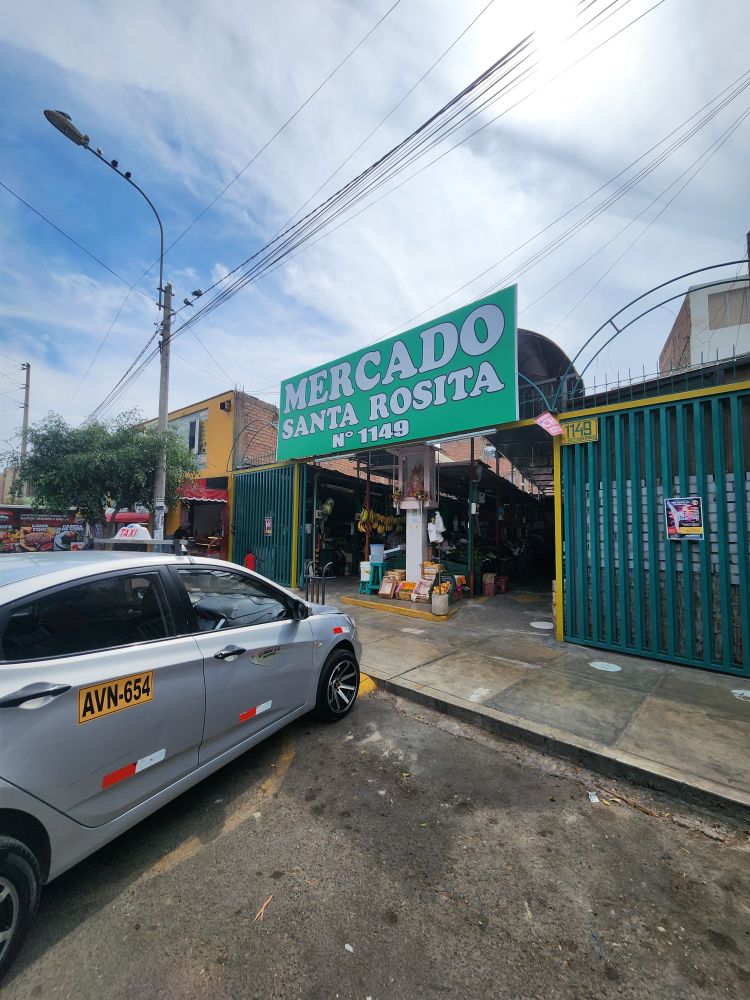
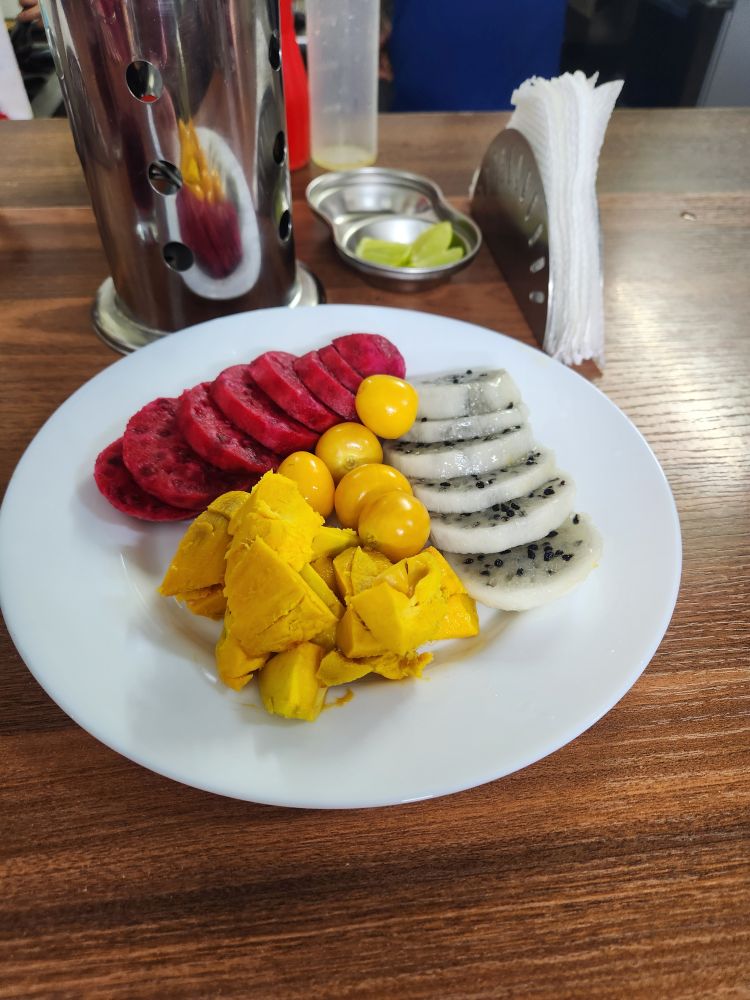
Junior also tells us that Peruvian food is a combination of all the cultures and people who came to Peru, for example limes originally came from Spain, etc. Arriving at our first stop, the vegetable and produce market of Santa Rosita in the region of Surquillo (one of the 43 districts in Lima), we shop with a lovely vendor named Lorena who offered us sweet passion fruit called Granadilla, which we ate right out of the husks, sucking out the sweet and super tasty seeds and pulp. Junior gave us a lesson on all the different fruits, the dragon fruit that is yellow from Andes; prickly pear, a staple around these parts. He showed us quince fruit when is made into drinks and Gooseberries, or Aguaymanto, their papery husks. And explained how big the blueberry industry is here – they are exported all over the world. He purchased a bunch of dragon fruit and gooseberries and other fruits, and it was only 3 Soles total! That’s like 80 cents US. Crazy!
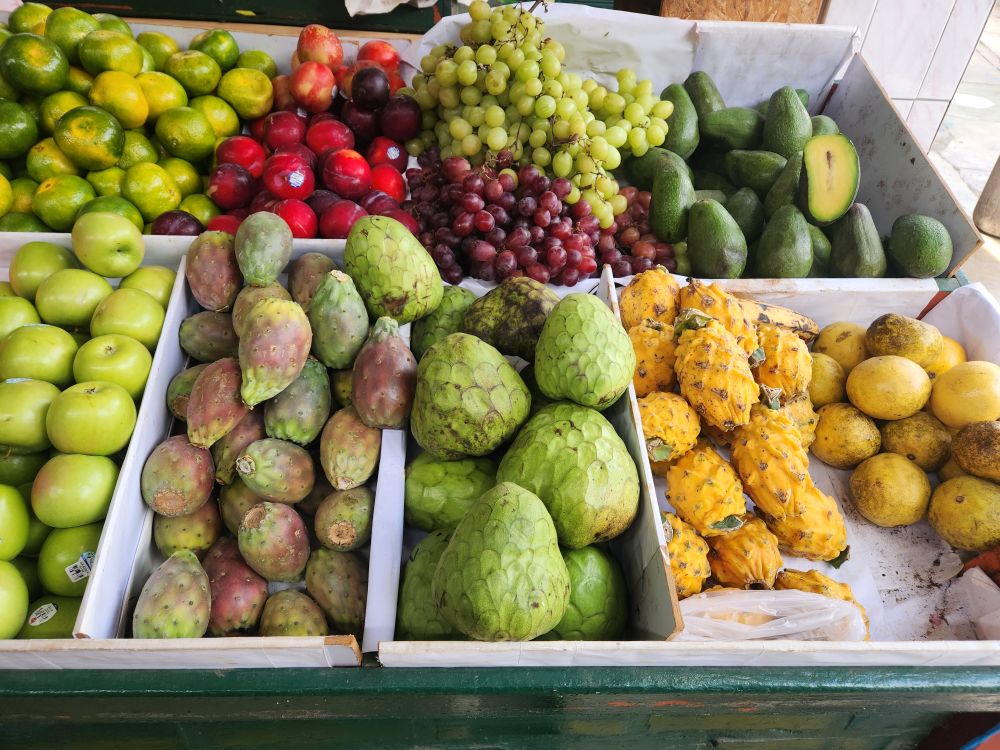
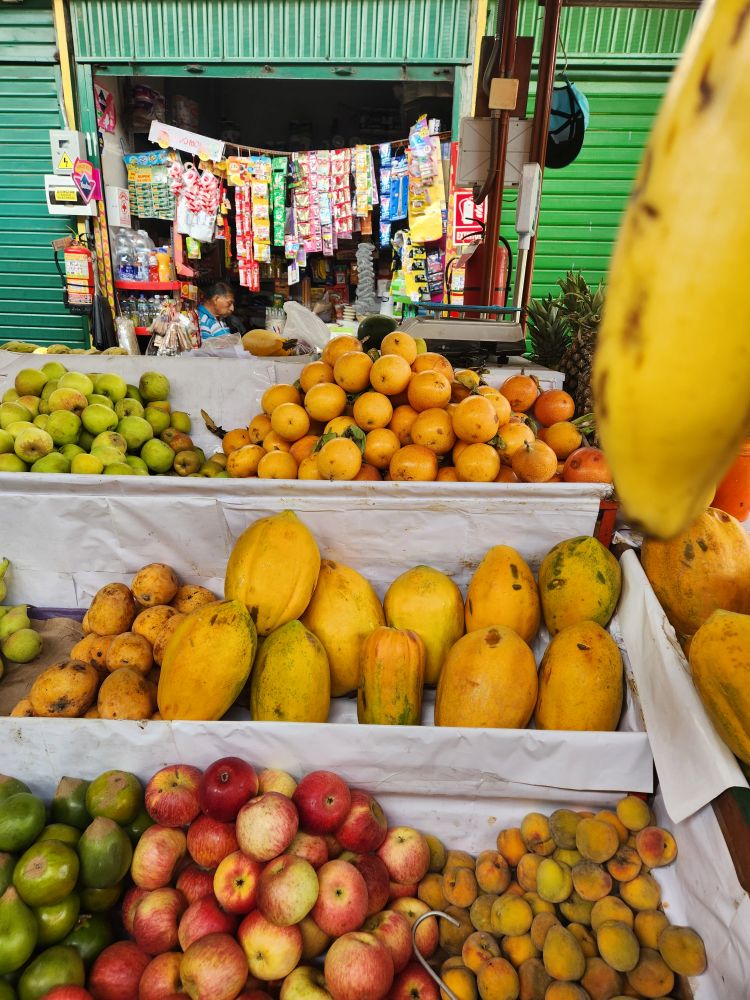
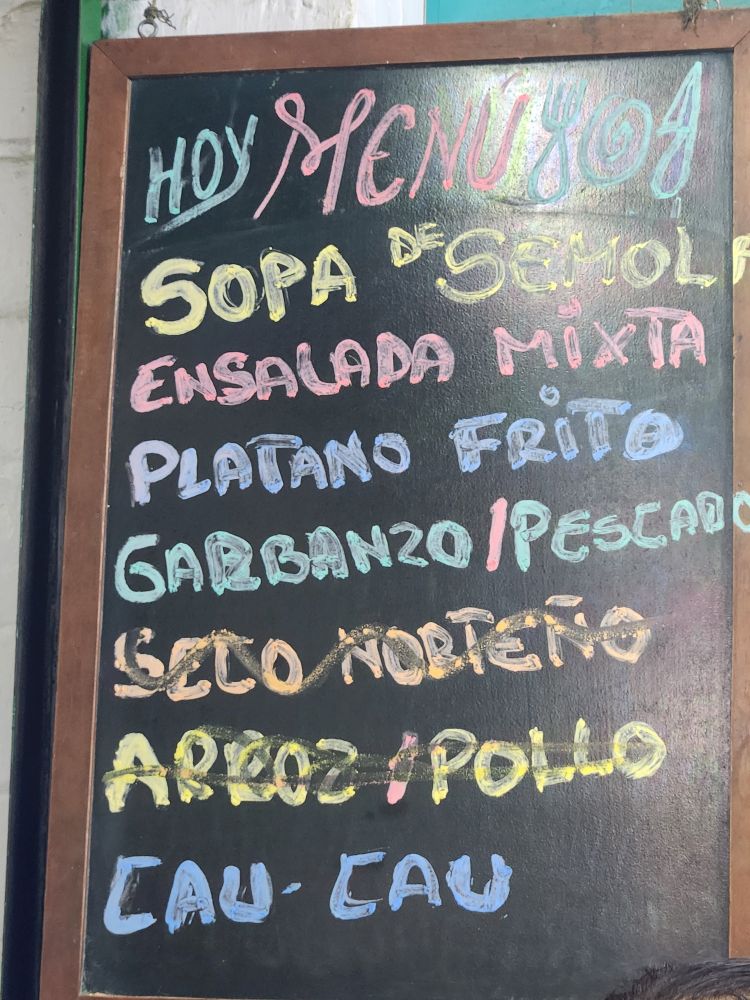
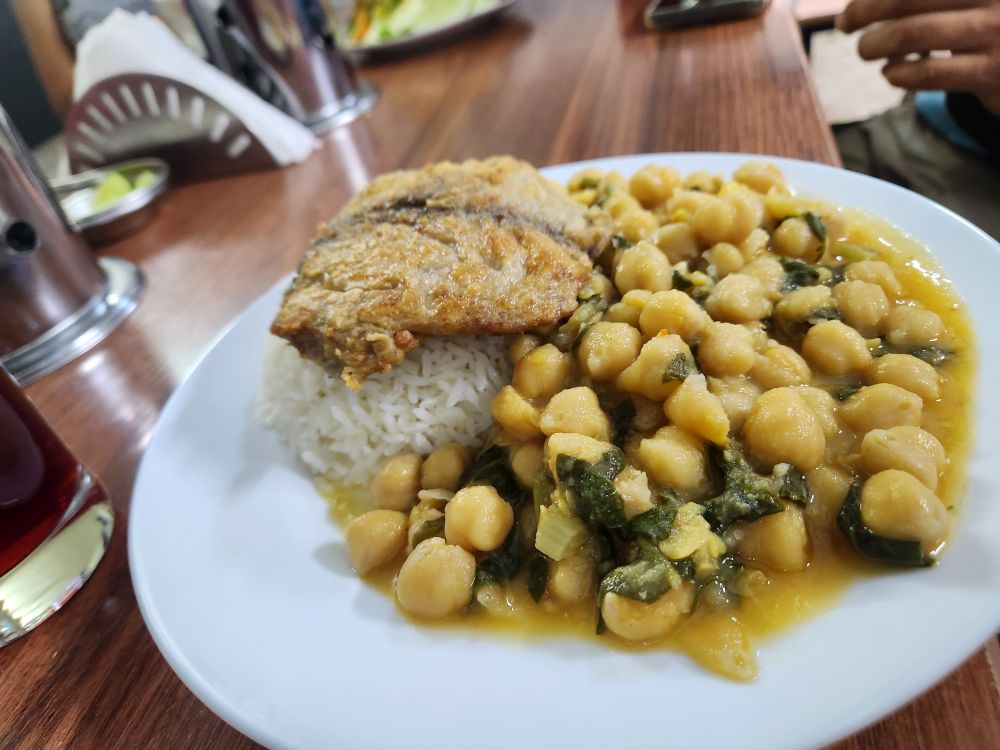
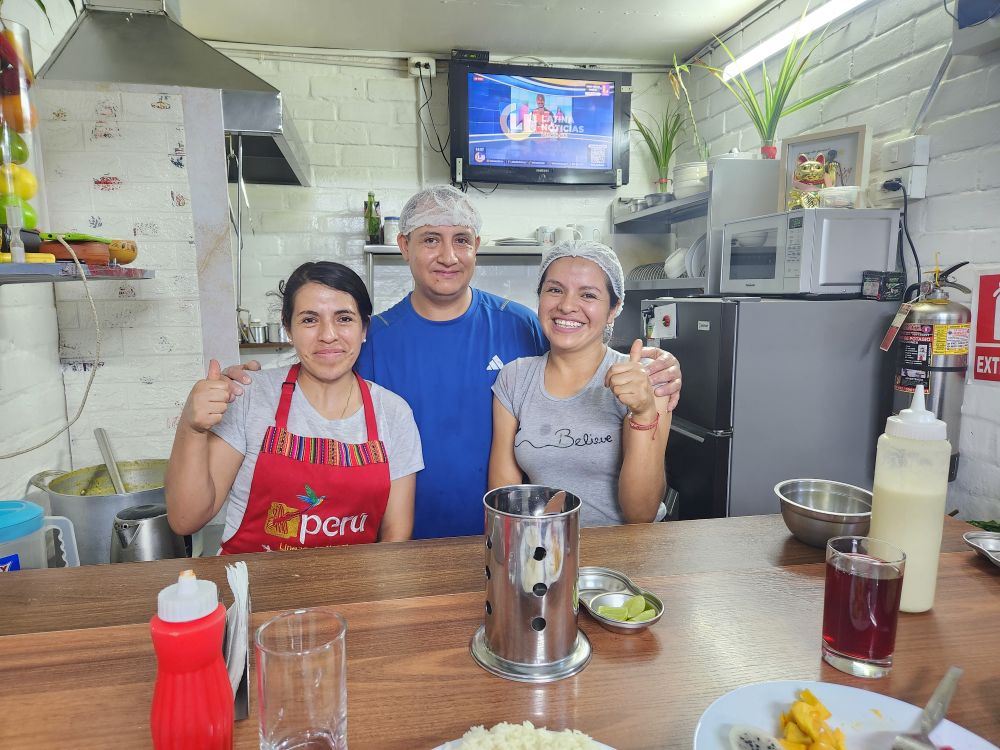
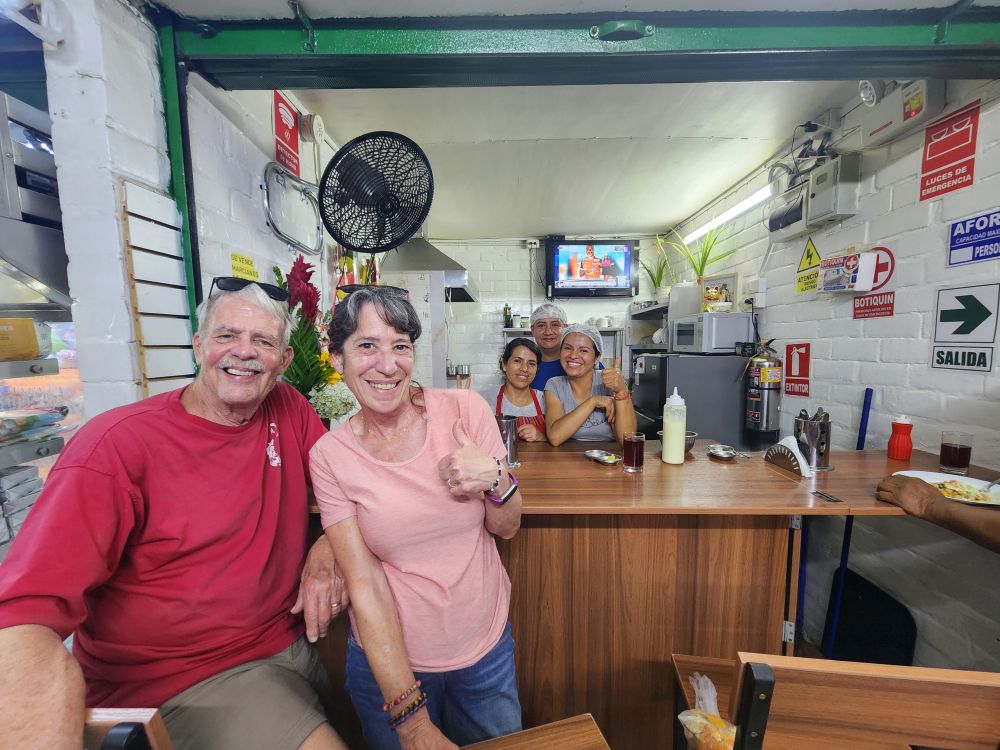
With fruit in hand, we wandered through the little market stalls until we reached a hole in the wall, literally, which Junior says has the best food. He is so pleased we actually know what “hole in the wall” means and embrace it wholeheartedly! The guy and gals working (owning?) here are a delight – his name is Walter, can’t remember the ladies’ names, but they introduced themselves. Junior has a running conversation with them, translating all along, and it is just a wonderful experience to hear them chat and to watch them prepare this great meal of fried Bonita (tuna) atop Alsega (garbanzo beans and rice. This meal is a combination Andes and the Coast – the fist, obviously the coast, and the beans from the Andes.
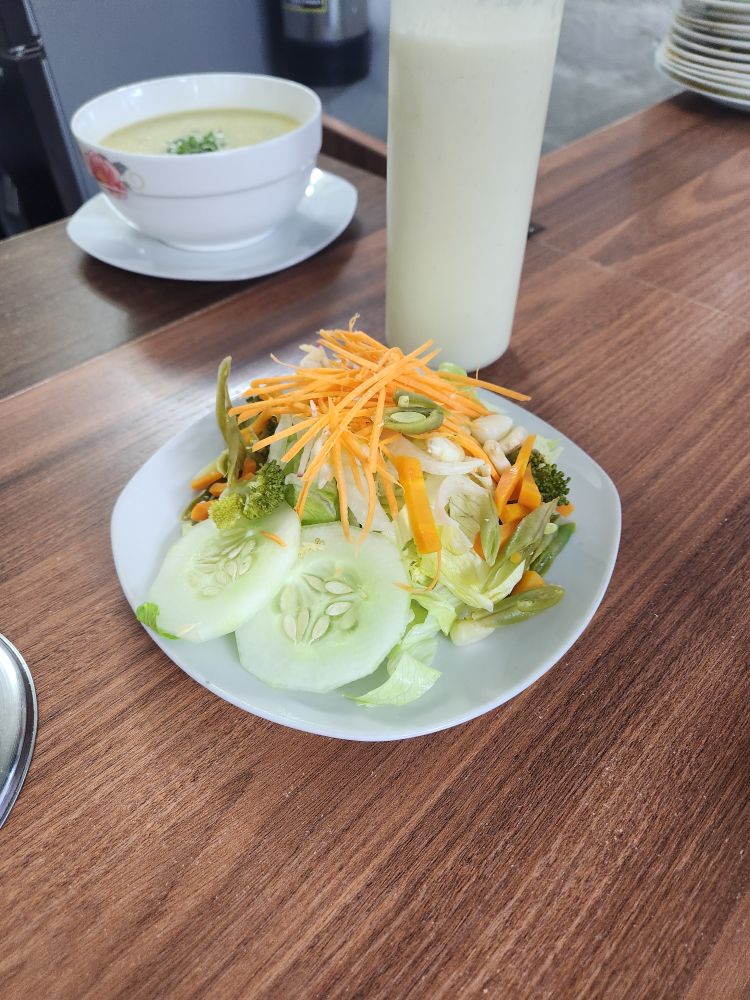
They also prepare the fruit for us and lay it out in such a beautiful fashion. We all share the plates – the fruit, the fish, and a salad that we actually let Junior have in its entirety! We don’t want to be too stuffed and this is only our first stop!
Everything is excellent – those gooseberries are the best! – and not too much as we are all sharing. And oh so cheap – only 11 soles for the salad and the fish dish! Walter says they have to treat the visitors like they would family. He also tells us we can come back anytime – and also that he works at a hotel in San Isadro, I think Dolfinos, and we should definitely go there when we come back to visit. We might just do that!
Back to the car we go, and off to our next stop in the district of Surco. Junior explains that Surco means channel – which Alfredo had told us as well – so we can impress Junior with knowing that there used to be water channels or canals here, but now they are all underground.
We then launch into a discussion around the word Chifa – which is everywhere here. As it turns out, Chifa is the word that means “come here” in Chinese. When the first Chinese immigrants came to Lima and set up restaurants, they would shout Chifa, Chifa, to let everyone know they were open and to “come here” now for food. The locals didn’t know what it meant, and it sort of morphed into the word for that fusion of Chinese and Peruvian food! And now we finally understand the connection between Santiago Vargas, our fav Peruvian chef at home, and his Japanese partner in the formation of their restaurant, Mikasa Criolla. It all makes perfect sense!
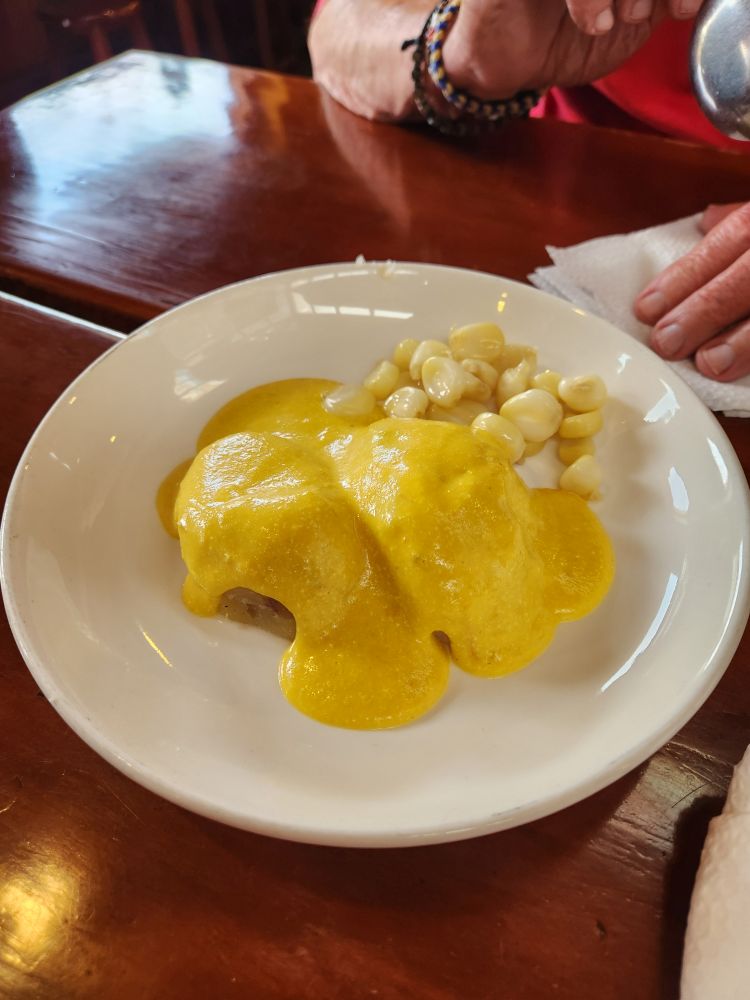
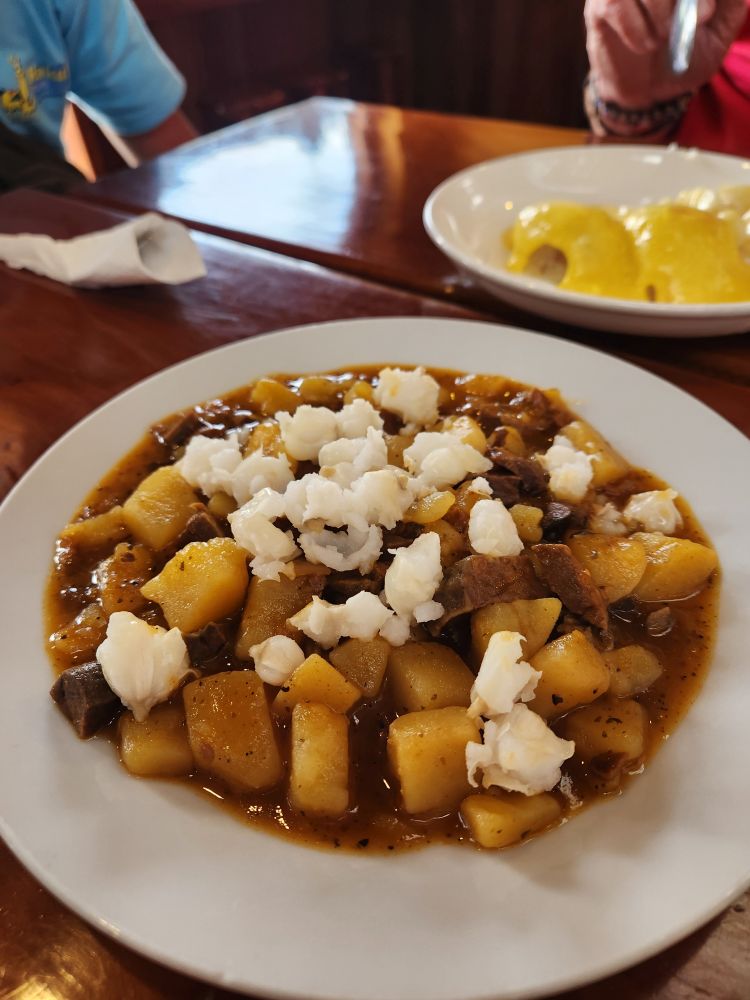
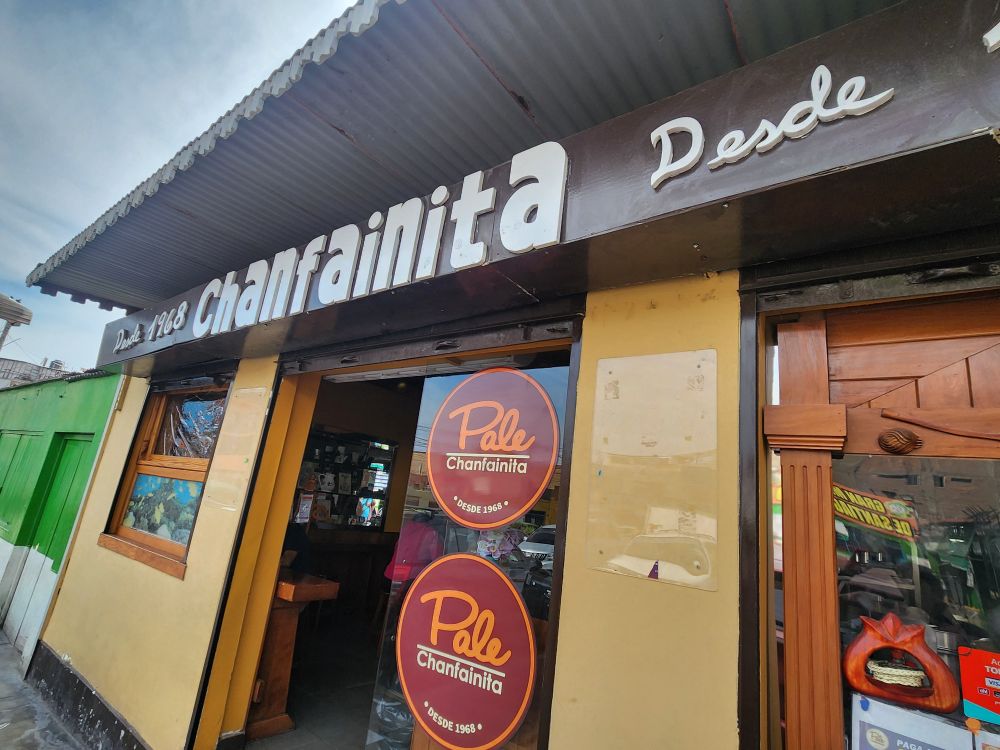
Arriving at Mercado No. 2, we visit an actual restaurant called Pale Chanfainita for coastal food. The owner started out in 1968 with a food cart and then worked his way up to this restaurant and has been here ever since. Chanfainita is the ultimate Peruvian street food and is now one of the most iconic dishes in Peru. Easy and cheap to make, thus making it taboo for the elite to be seen eating it in days gone past, it is a mishmash of African and Spanish culinary trends, combining some type of meat and potatoes in a yummy beef sauce. The Chanfainita we are having today is actually beef lung – OMG I actually ate lung!!! And it was good! The stew also comes with a side of papa ala Huancaina, boiled potatoes covered in an excellent spicy cheese sauce. Totally excellent! While we eat, we get into a conversation with the waitress, named Lady. This spirals us into a discussion on how kids are named here in Peru – from American TV shows! That’s how Junior got his name, and he doesn’t even know which show, he just knows his parents watched American TV and there were people named Junior, and they liked it! Ah, what our culture has spawned…..
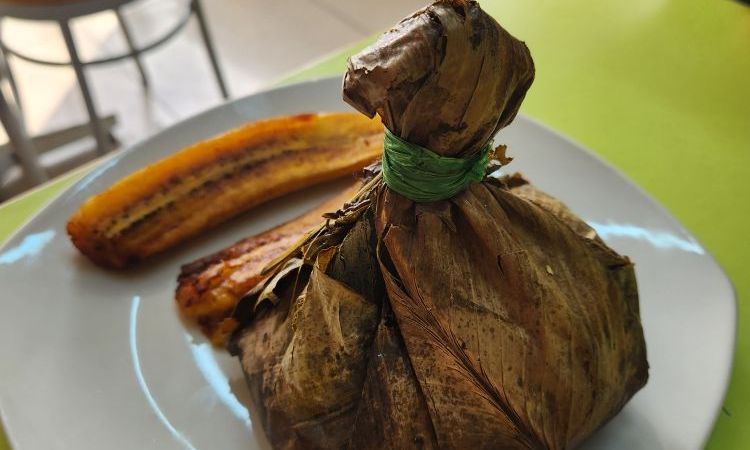
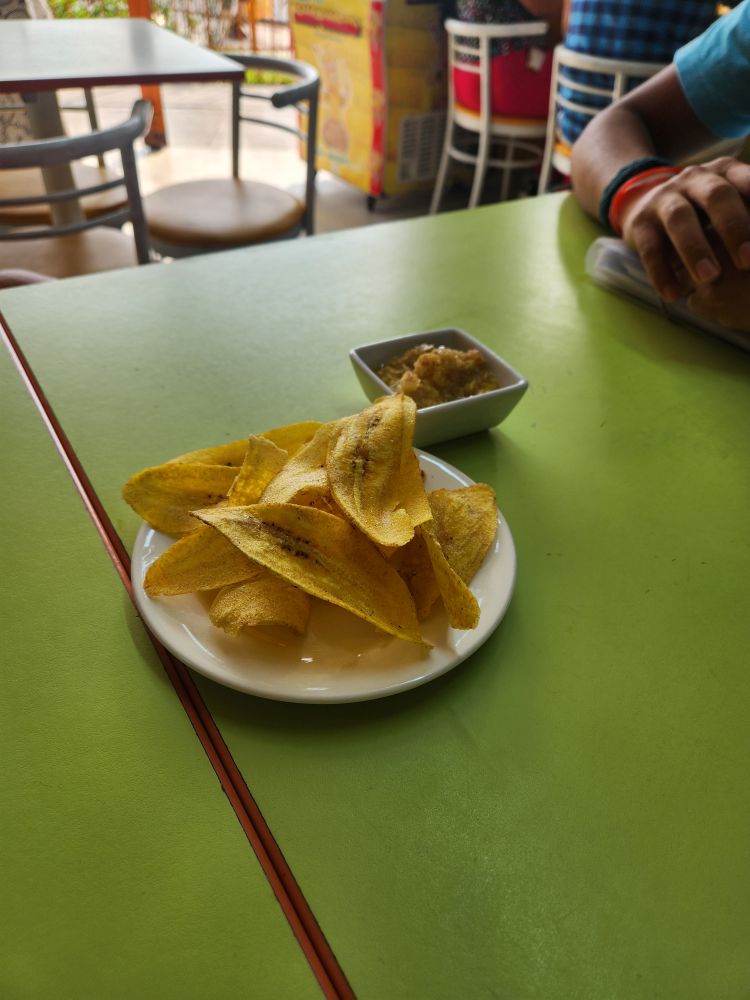
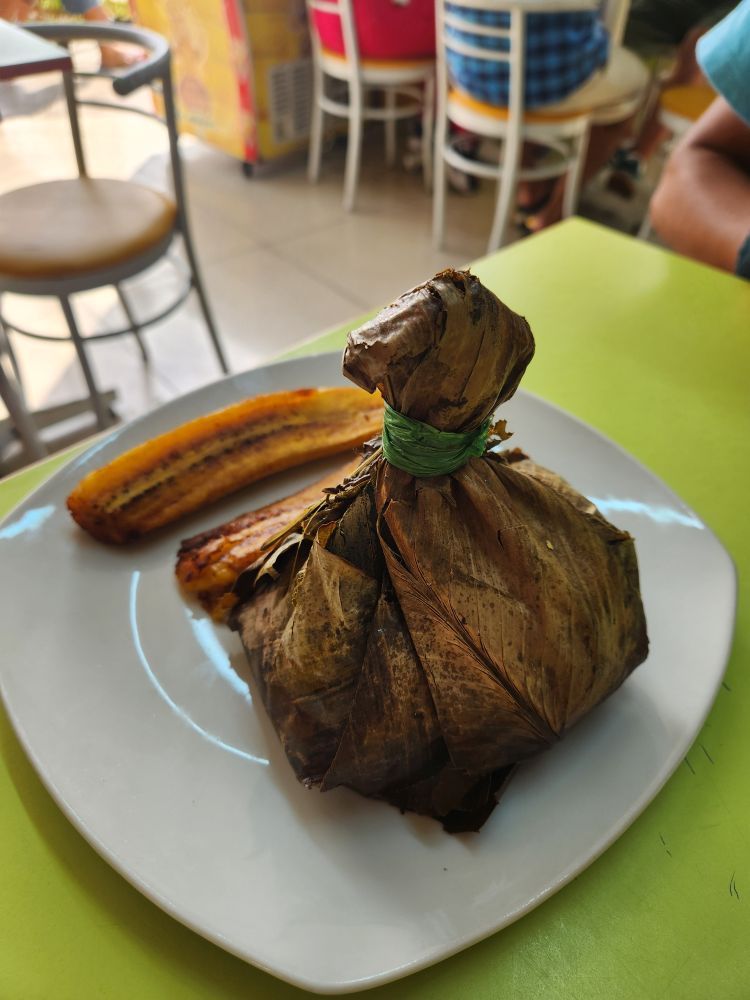
Finished with our Chanfainita, we hit the roads again, heading to Las Brisas del Ucayali de Vicky, an Amazonian restaurant outside a marketplace. Here we dig into a typical Amazonian food – Juane (pronounced Faunie in the rainforest), which is rice mixed with some sort of meat (in our case chicken) wrapped in banana leaf then steamed. The banana leaf forms a little carrying case, so to speak, for the food, and as Junior explains, the hunters carry it around with them for days and it doesn’t go bad when it is kept wrapped up. Junior also explains that the ribbon (a new word we teach him) tied around the top can signify what is in the banana leaf package, so everyone gets the rice/meat/package that they want! Along with our Juane, we also have excellent fried plantains – oh I love those things! – and Camu Camu juice
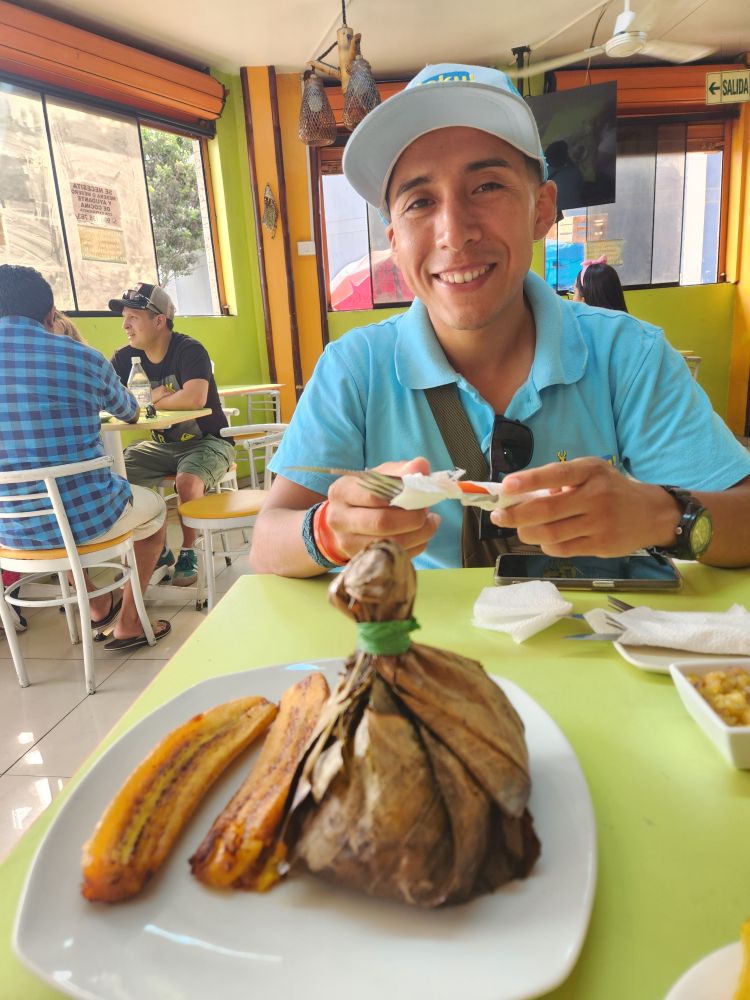
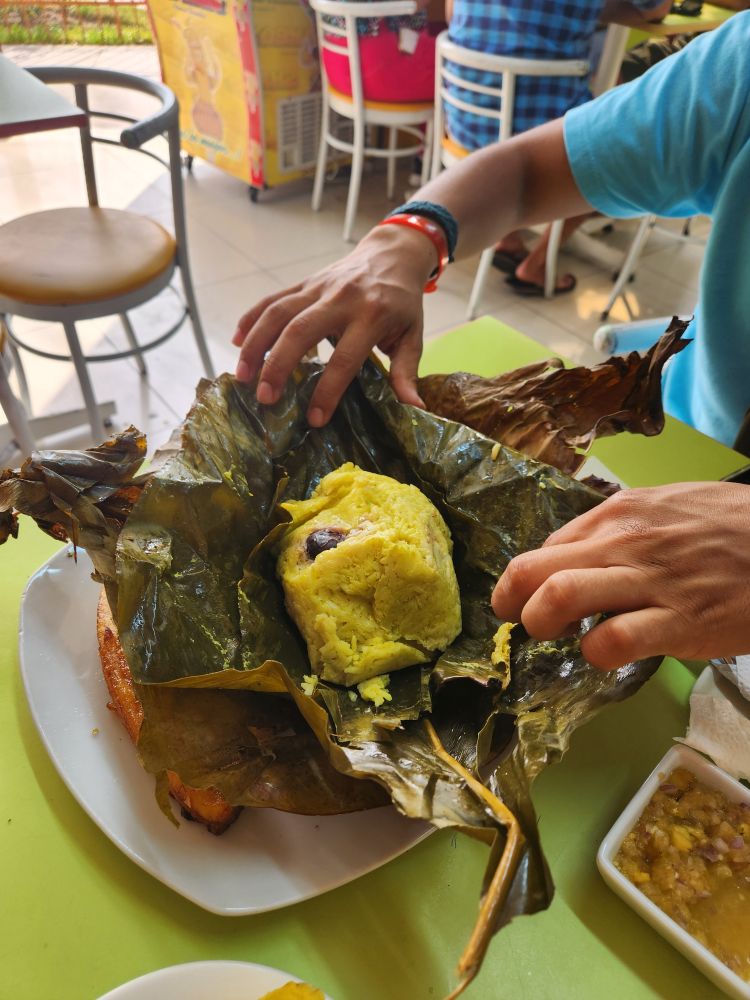
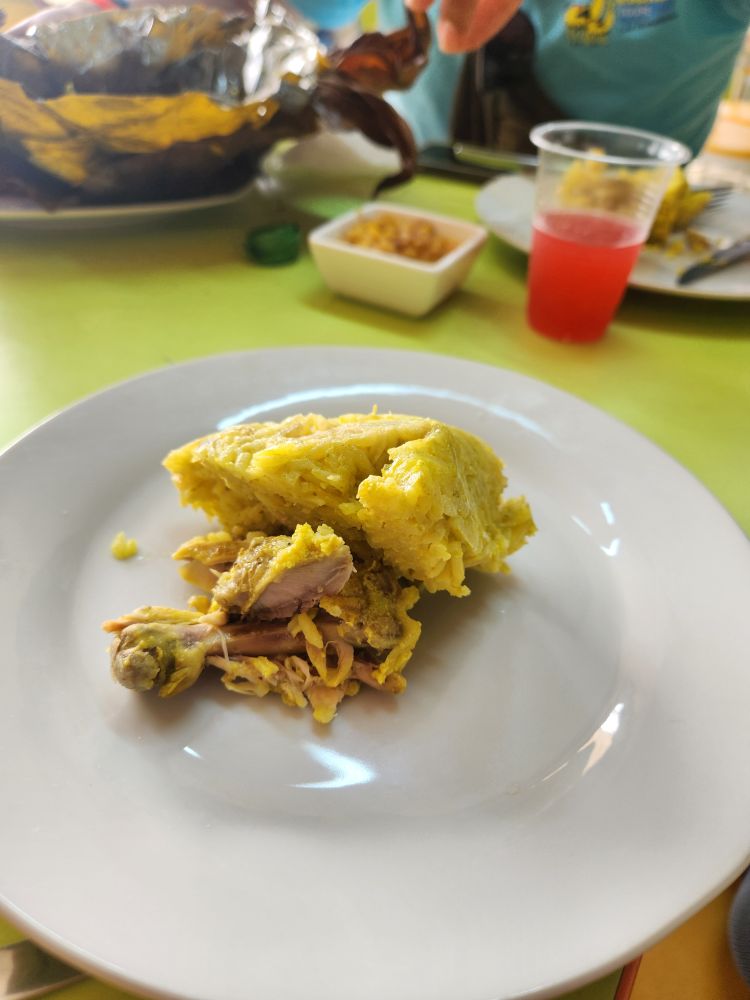
It’s all so yummy and the portions are great – the way Junior orders and we all 3 share, none of us are getting too stuffed form all this great food. As we sit there enjoying our Juane…..there is an Earthquake!!!! OMG! We’ve never been in an earthquake. Everything shook as we sat there calmly eating, while everyone else in the restaurant ran outside! Too wild. And it registered 5.4! Junior! Best guide ever! He gave us an earthquake!!!
Didn’t faze him in the least, he says they happen all the time and then recounted how he and his family were in the car for one of the big ones and couldn’t understand why houses were moving and falling when they couldn’t really feel it driving. He also gave us a lesson on ancient beliefs, well, also today really, about Pachacamac, the Lord of Earthquakes who was feared because it was believed all he had to do was shake his head and cause massive earthquakes. Culture, earthquakes and food. Excellent tour! And we still have one more stop to go, the J. Ugarelli winery, the original winery in Lima.
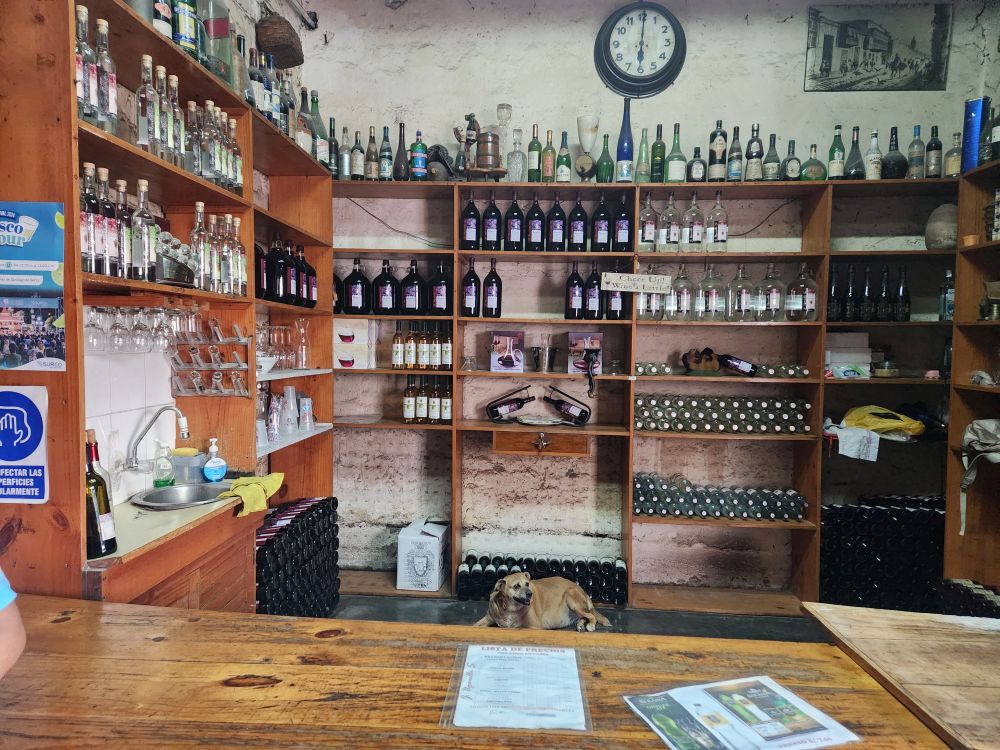
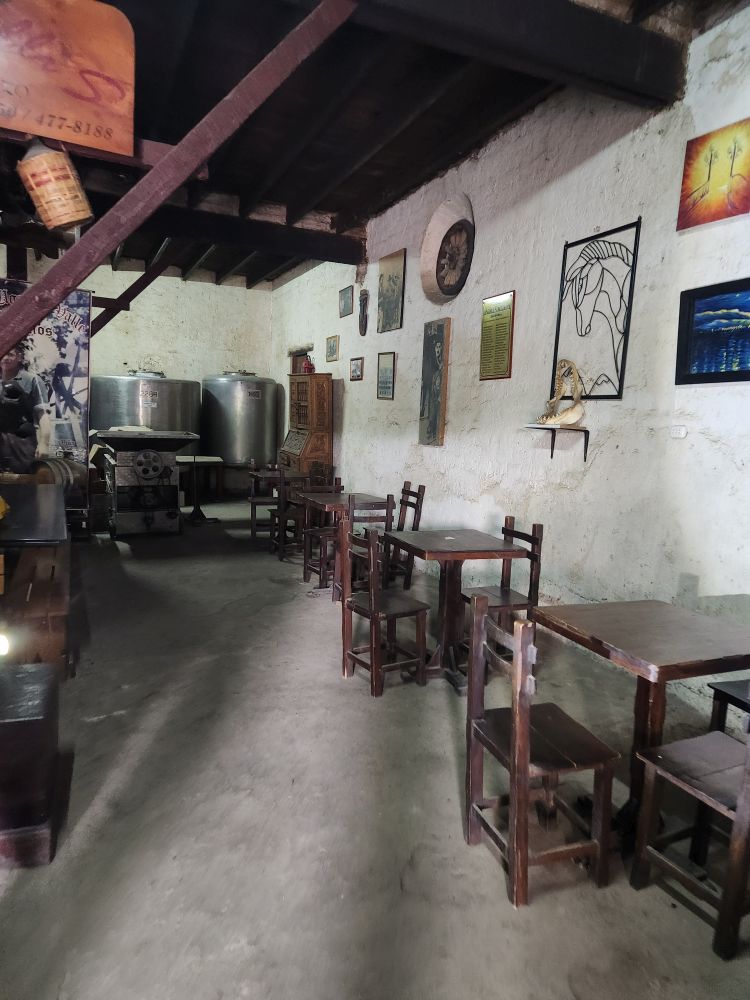
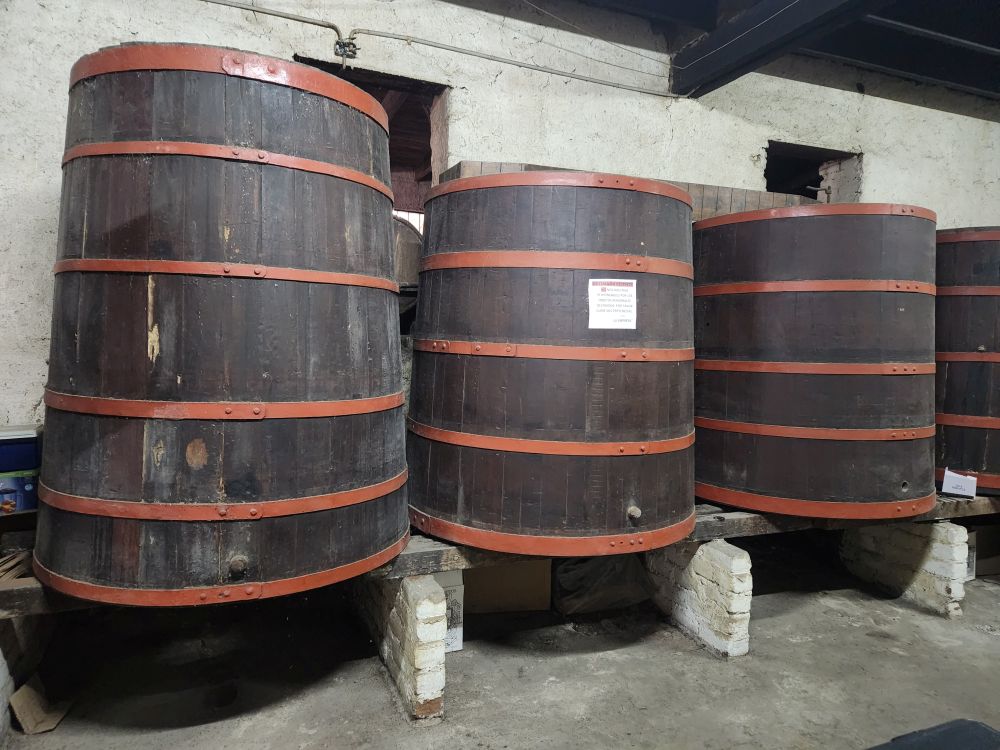
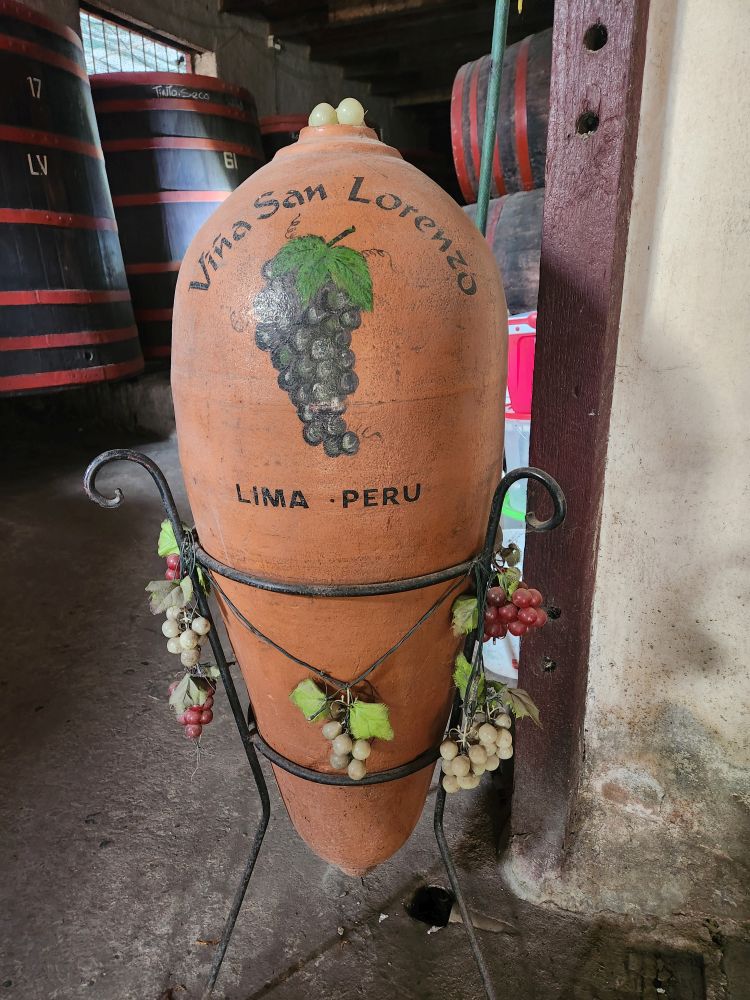
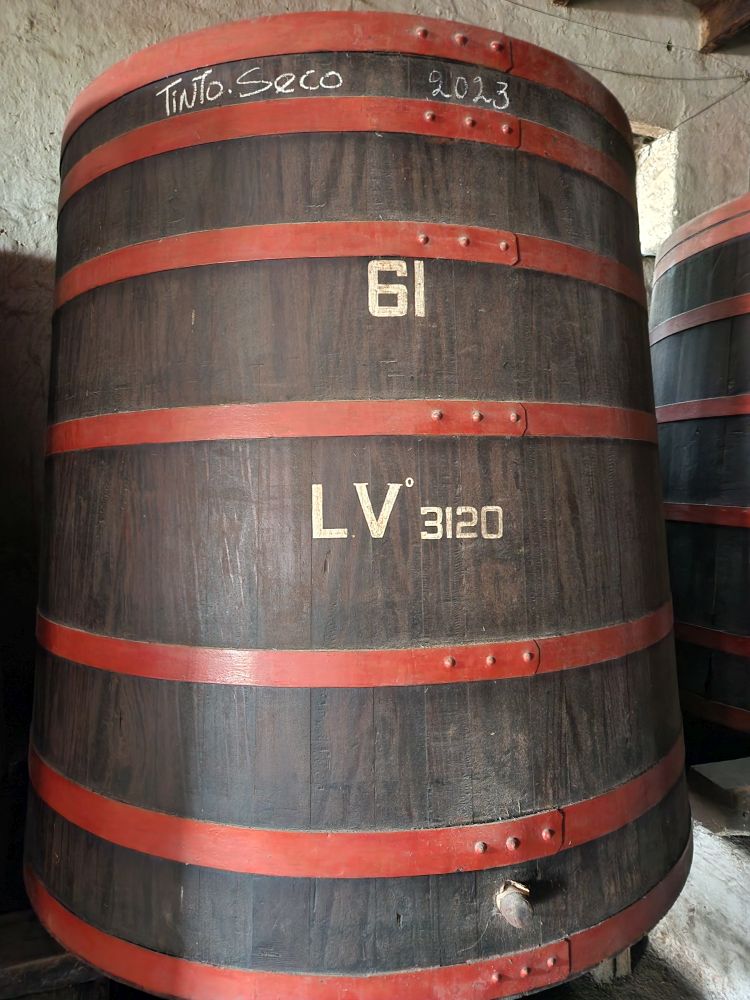
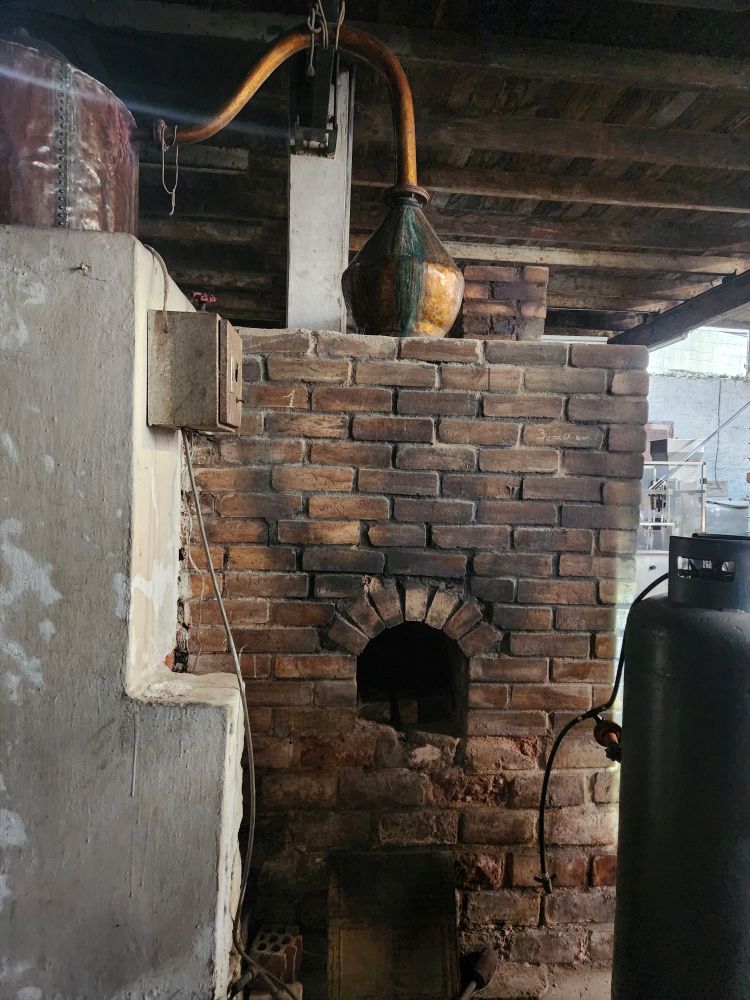
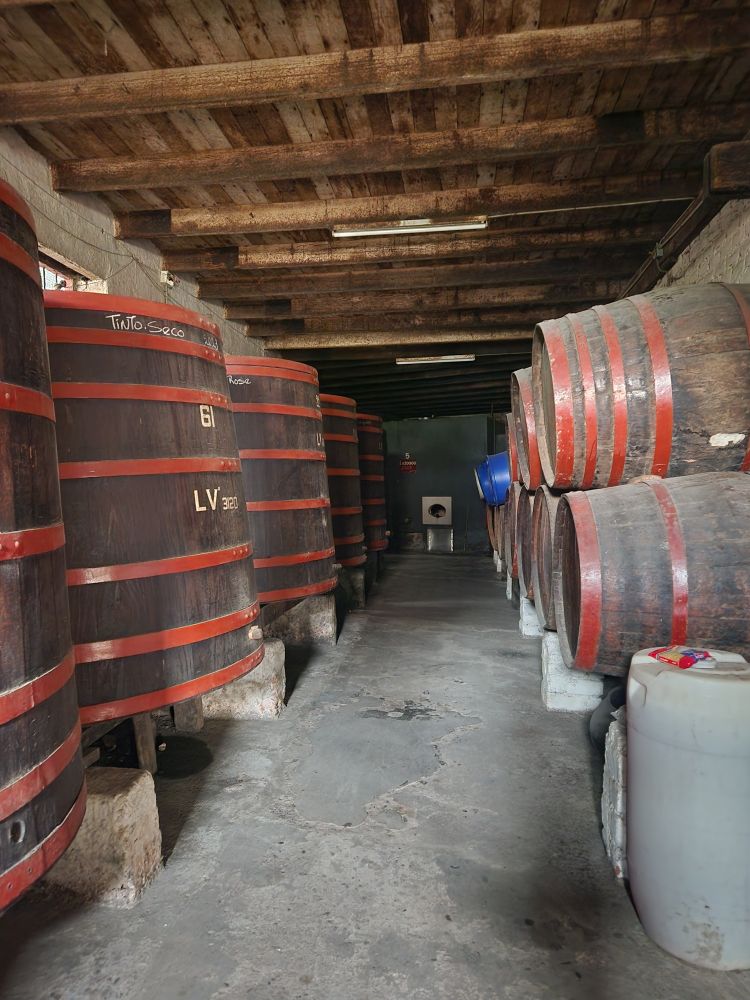
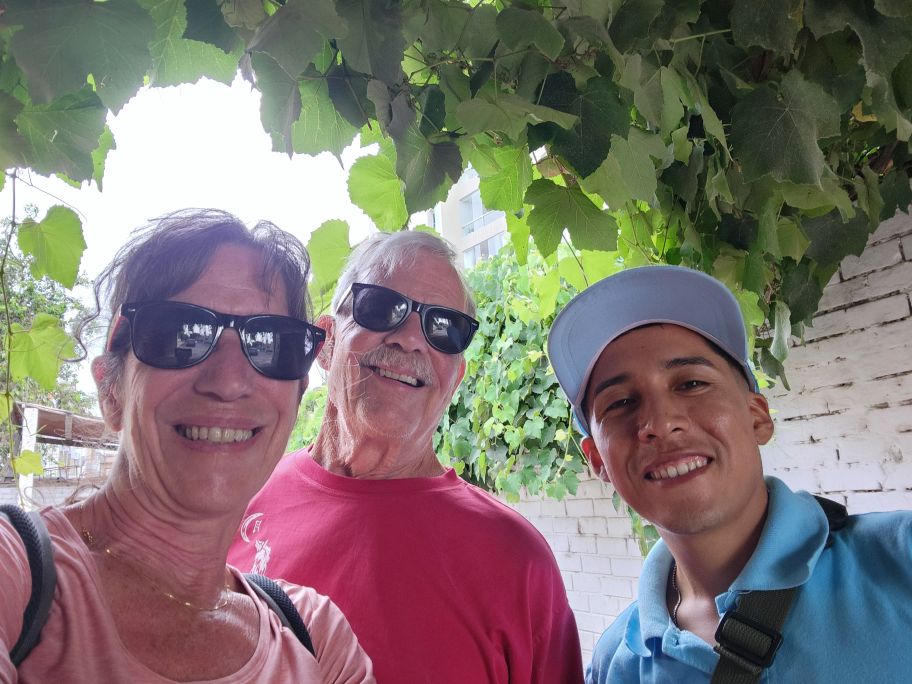
In the 1500’s, a Spaniard planted the first vineyard in Lima. The wine became so popular the King of Spain prohibited the sale of Peruvian wine in Spain. One of the last remaining wineries in Lima is Ugarelli, located in Surco, operating for over 100 years, this facility is used to process the grapes that are grown about 2 hours north of here. They produce young dry and semi-dry wines, as well as the obligatory Pisco. Junior walks us through the cellar area with the huge barrels of wine, then to the old furnace area they still use to this day to extract the wine and funnel it into vats and barrels. Every March when the grapes come in for processing, there is a huge celebration and festival here, and lots of activity. Now, it is empty save us and our tour. Our final treat this afternoon is the wine and Pisco tasting and then our tour is over – too soon. We loved exploring with Junior and learning so much – more than we can ever remember or do justice to here in this recounting! Suffice it to say though, if we ever return to Lima, Junior will be our go-to guy for touring and really hanging out with in general – a great guy, and totally fun to be with all day.
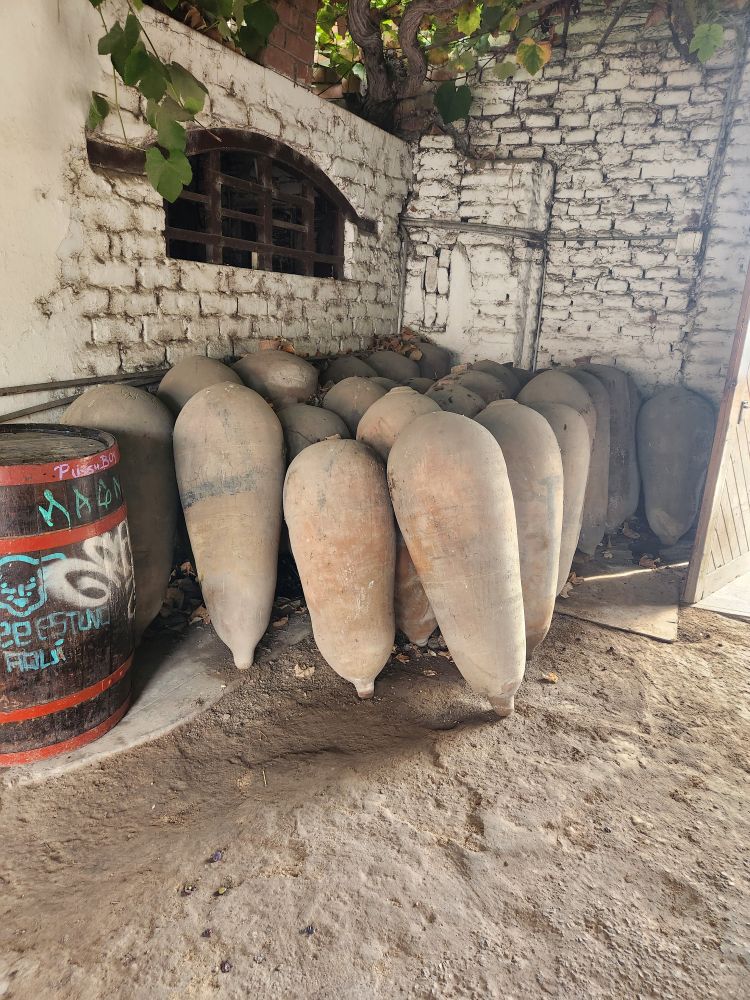
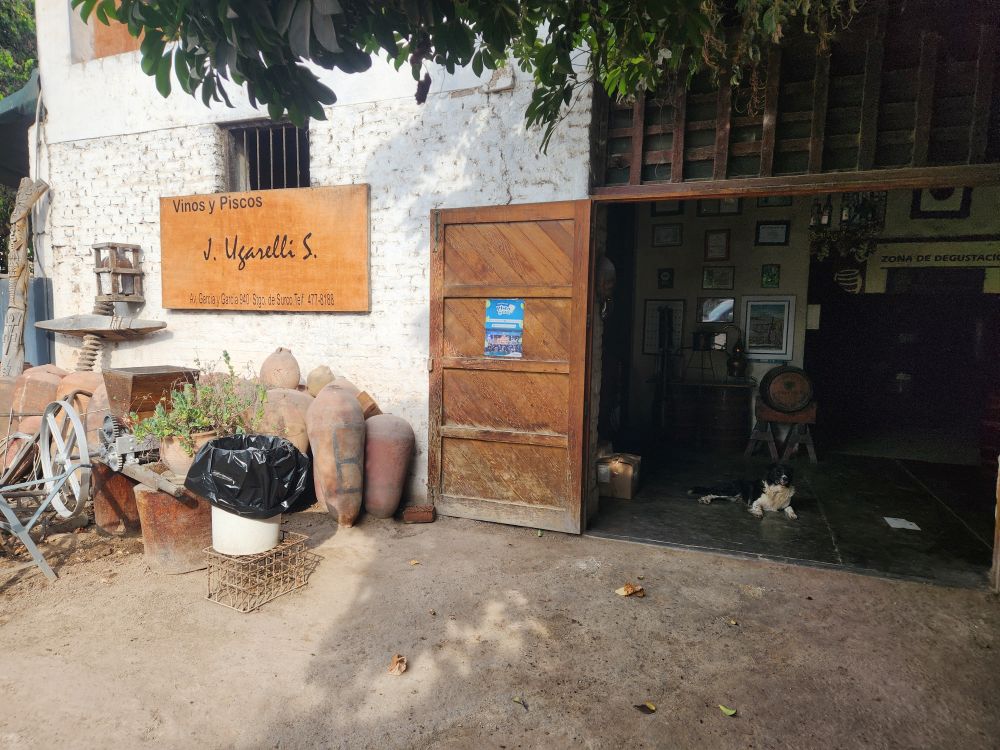
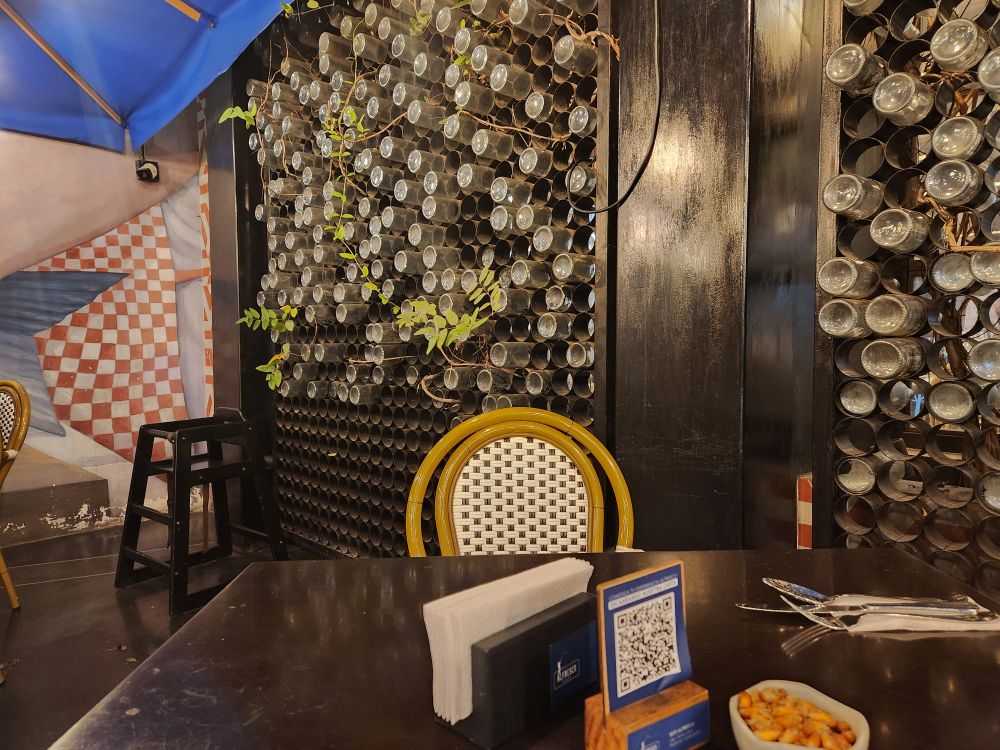
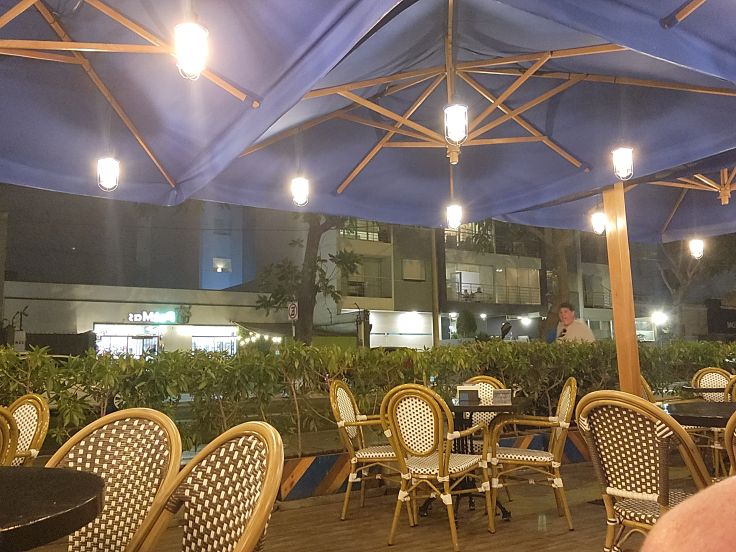
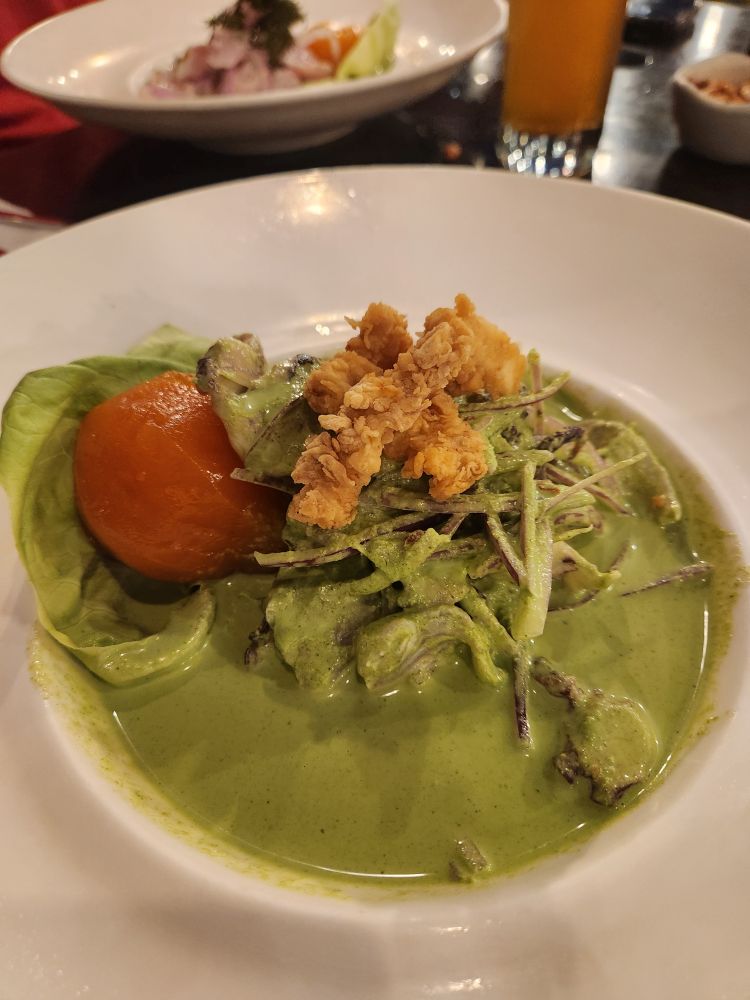
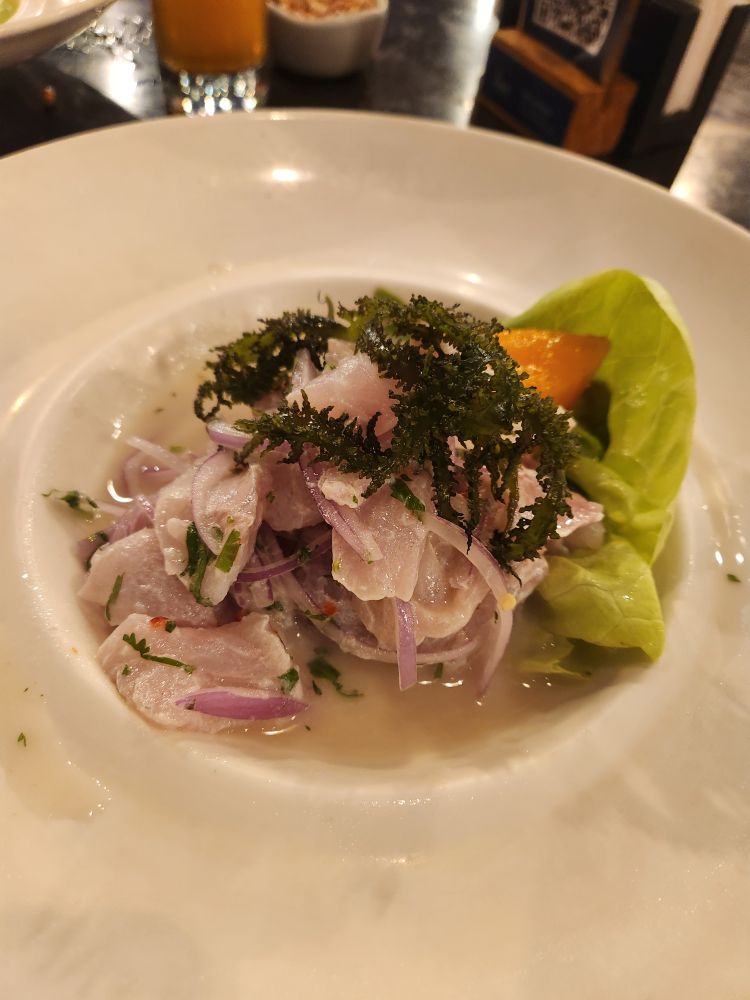
Junior and Carlos take us back to Miraflores, dropping us off near our apartment, and we wish them both a fond farewell, as we head back inside to organize for our last evening here. Later we decide we aren’t too terribly stuffed and can have dinner, choosing to hit one of the many cevicherias around – Alfresco, just a few short blocks from the apartment. Sitting outside on the terrace, we have a wonderful meal of Cilantro Ceviche and traditional ceviche accompanied by yummy corn nuts. You just can’t get fresh corn nuts like this anywhere in the states!
A lovely light meal to complete our visit here in Lima. What a wonderful time – with more to come on the other side of the continent beginning tomorrow!
 Andiamo