Today we have found a guide who has tours into the communities outside of Lima – the “real” people as it were. Alfredo, who we find out actually owns and operates the company Alternative Peru, comes to meet us in the morning at our apartment and as we wait for our driver, Alfredo tells us a little about himself and the company.
He is the sole owner and operator of the company, having initially joined the company when it was run by another lady who was interested in helping the local communities around Lima. She eventually moved away and Alfredo took over completely. His background is advertising and has worked with large advertising agencies in China, India and Thailand. He came back home to Lima and this piqued his interest and passion to find himself and his culture. He’s a wonderful guide and quite the interesting person – and doing such good works by supporting all these communities – as we’ll soon see when we arrive there. But first, we are going to the 2nd largest cemetery in the world.
During the nearly 1 hour drive to the cemetery, Alfredo gives us lots of fabulous background and history to Lima and the country. He tells us there are 66 districts in Lima, only 6 are rich like Miraflores. The rest are various levels of lower economic status. The 1st wave of population in Lima were the foreigners who came after Peru declared independence in 1824. Many Europeans, but also Chinese and Japanese. Then the 2nd wave of population increase in Lima, which was the largest, came in the 80s, when many indigenous people left the mountains to escape the communist uprising and settled here. Because of this immigration, it is hard to find anyone who is not 2nd or 3rd generation Lima born. In the 90’s, the 3rd population increase happened as more indigenous moved down to Lima after an incredibly bad El Nino season, when the rain in the mountains was so strong it created landslides and many lost everything.
As a result, Lima has a huge population of indigenous people from various tribes who have moved here to work and try to make a living. Due to this increase in population there are a vast amount of “informal” businesses – businesses that aren’t technically licensed by the City Government, but that continue to operate. Workers here are also informal, to the tune of about 75%. Informal businesses and work are the only way for the people to make enough money to live.
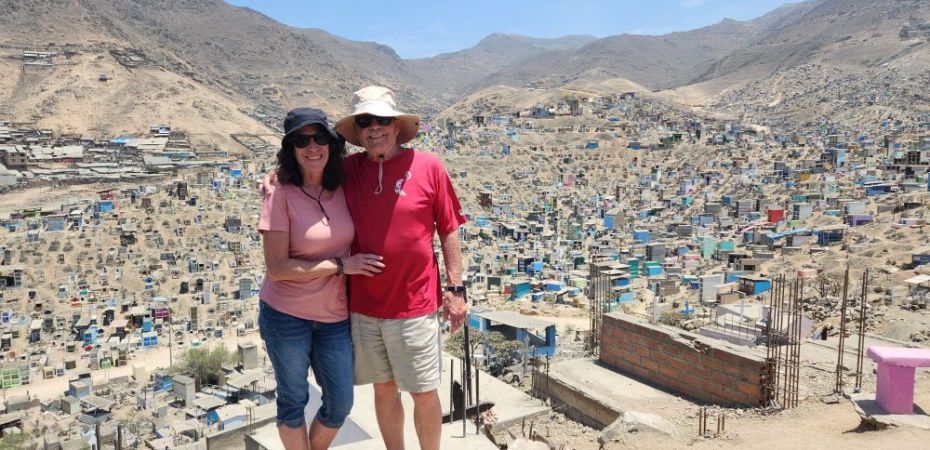
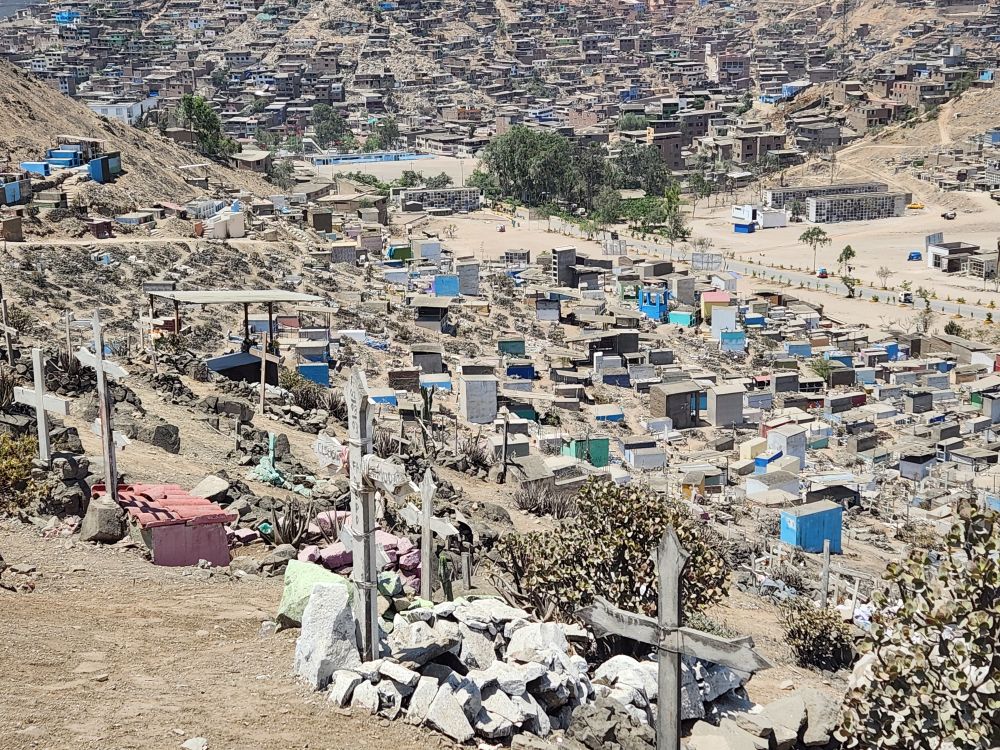
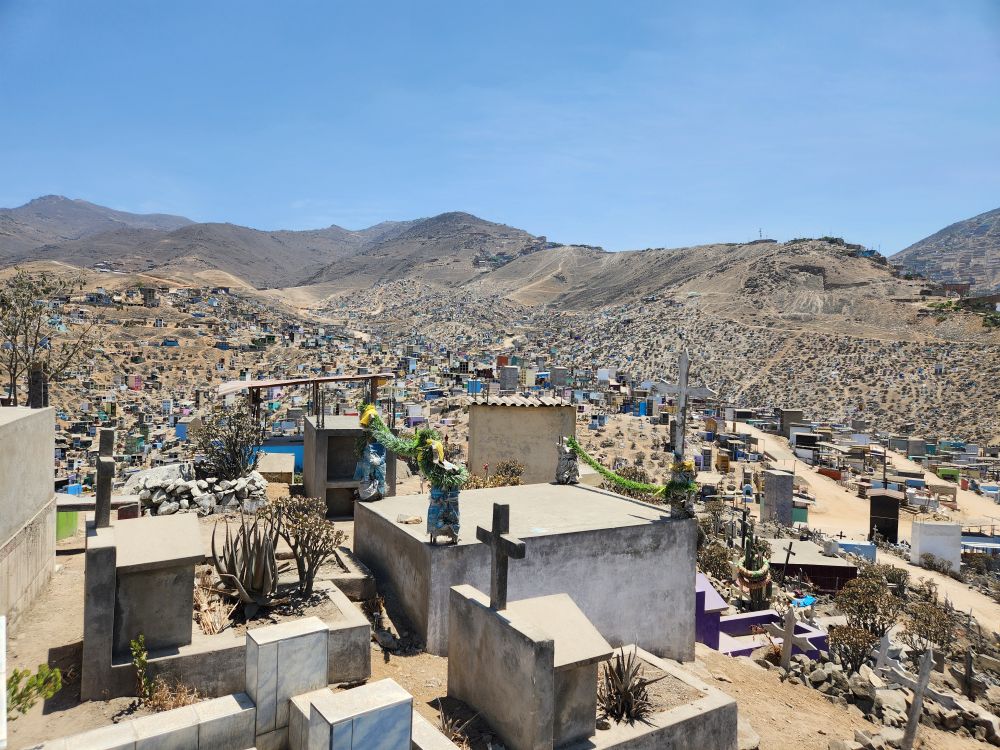
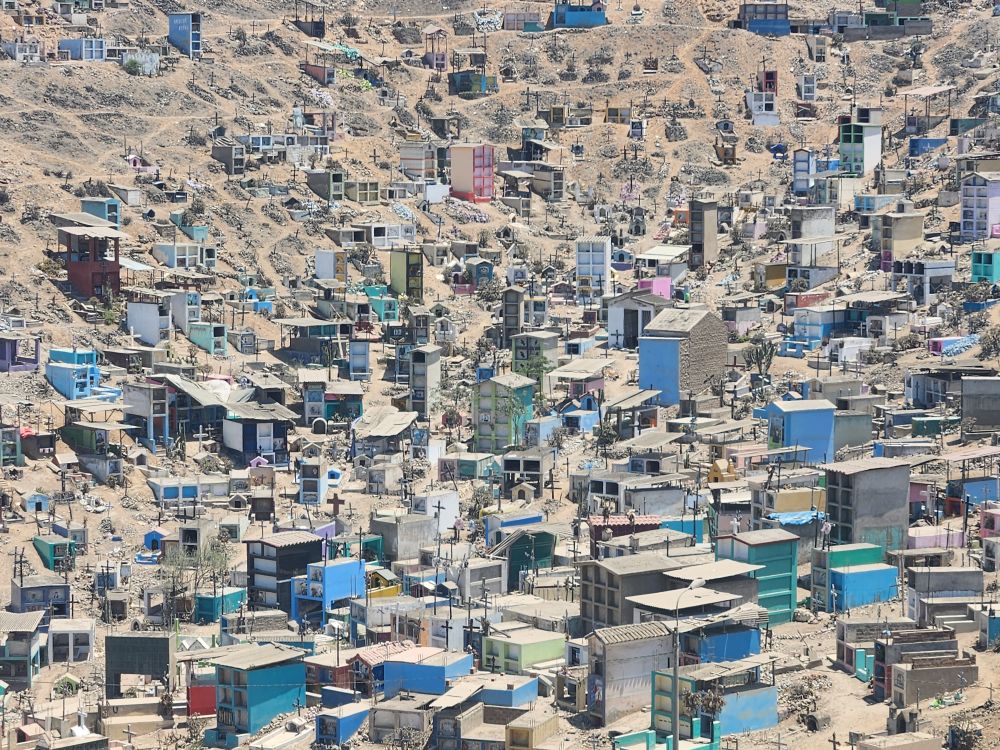
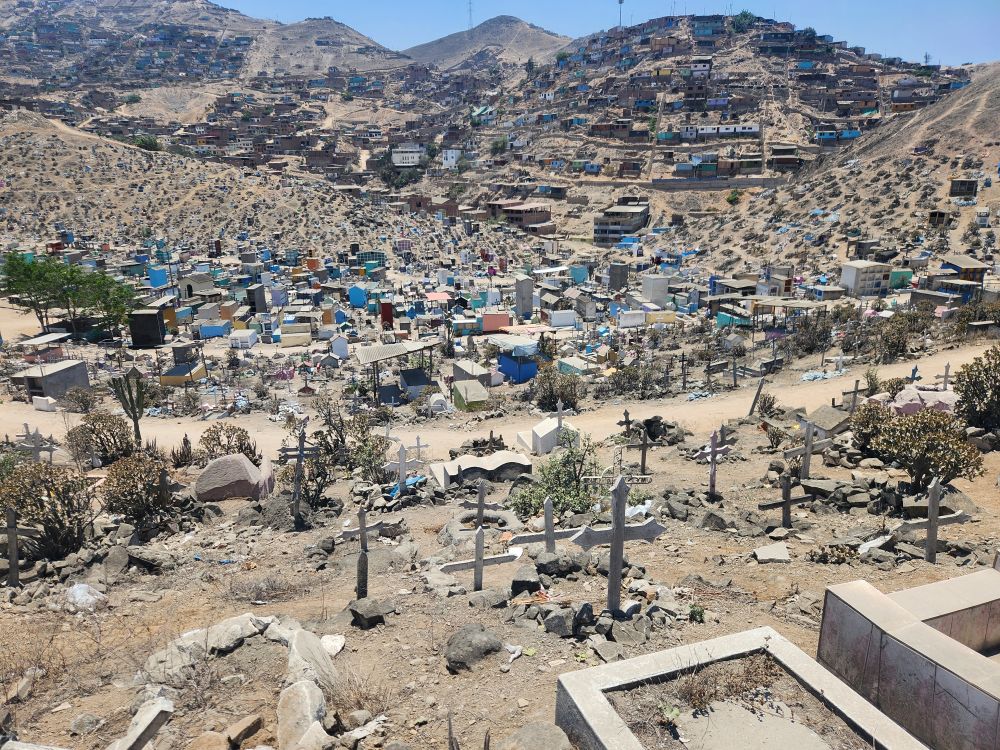
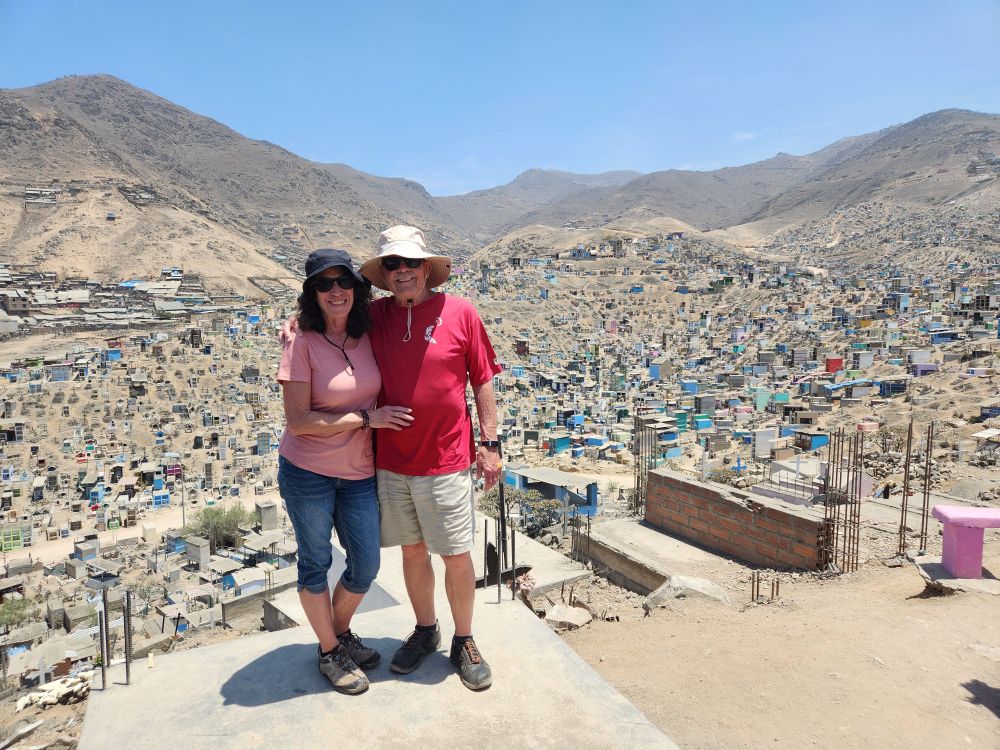
Arriving at Virgen de Lourdes, in the Villa Maria del Triunfo zone, the 2nd largest cemetery in world and the largest in Latin America, we drive through what could be mistaken as a small city! There are thousands of graves here – actually over 1 million! It is a relatively new cemetery, only begun in 1961 and used only for the immigrants from around the local area and close by provinces. It is absolutely huge – and it keeps growing into every unoccupied space. Up the hills, into the mountains, you can see little tombs and mausoleums far into the distance.
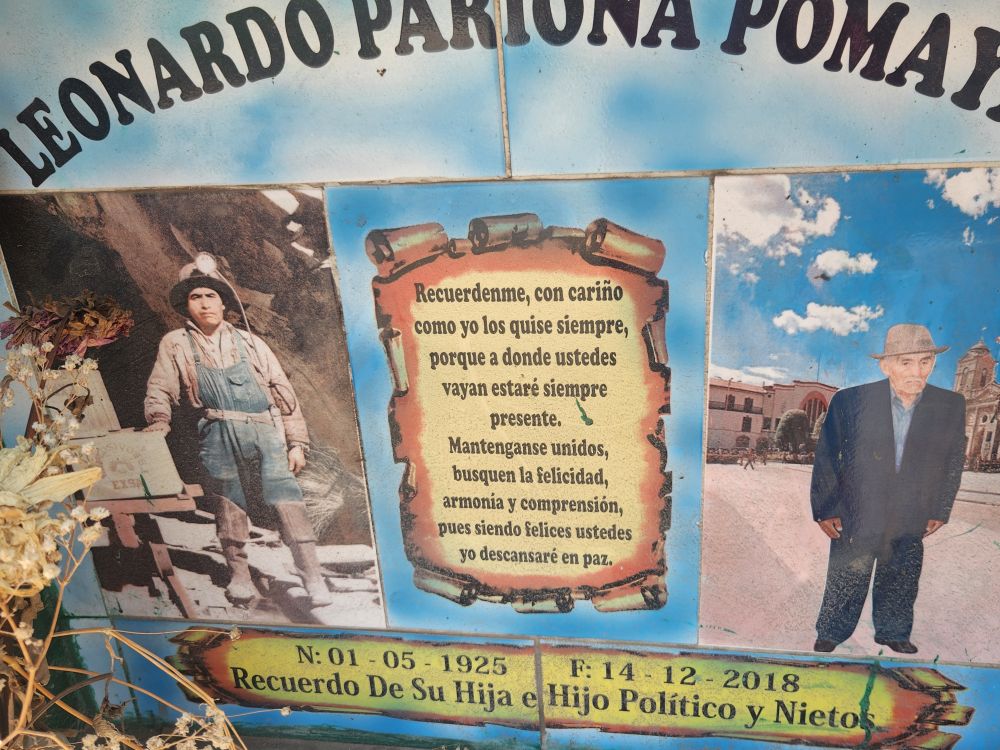
Many of the graves have plants around them – the Jade plant (for some reason I don’t recall), the aloe vera plant to chase away evil spirits and the San Pedro cactus, called the Huachuma here, to protect the land and connect with the ancestors and spirits. Some are simple graves with just crosses and plants, others are more mausoleum like, and built up like a little mini grave condo. A lot have photos of the person interred, along with names and some even have a short biography of the individual.
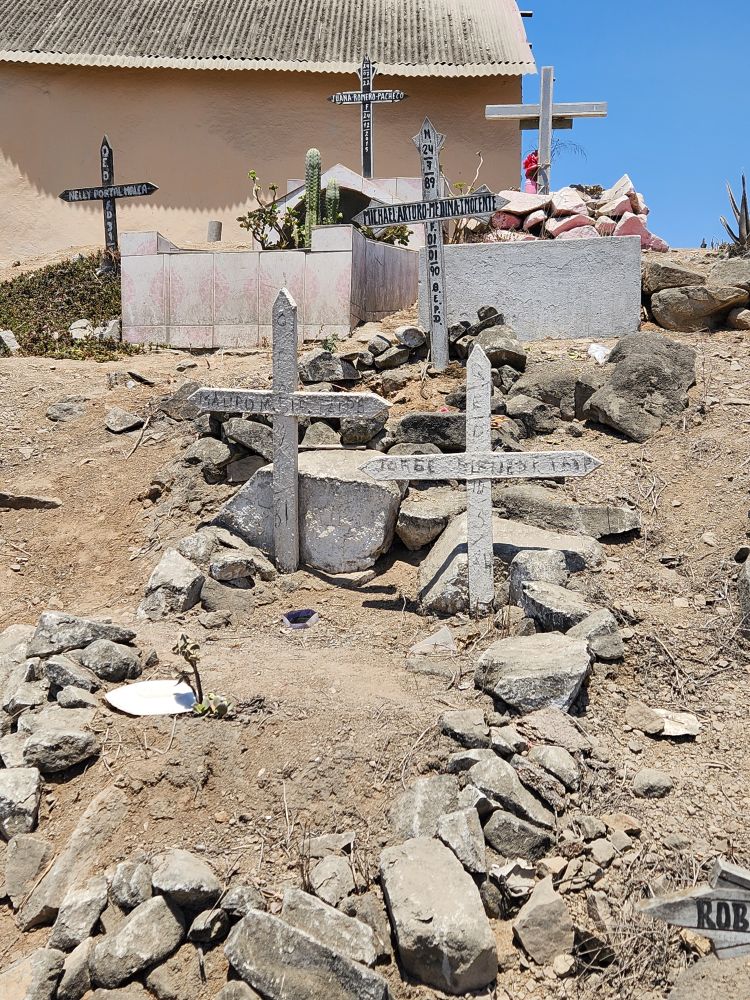
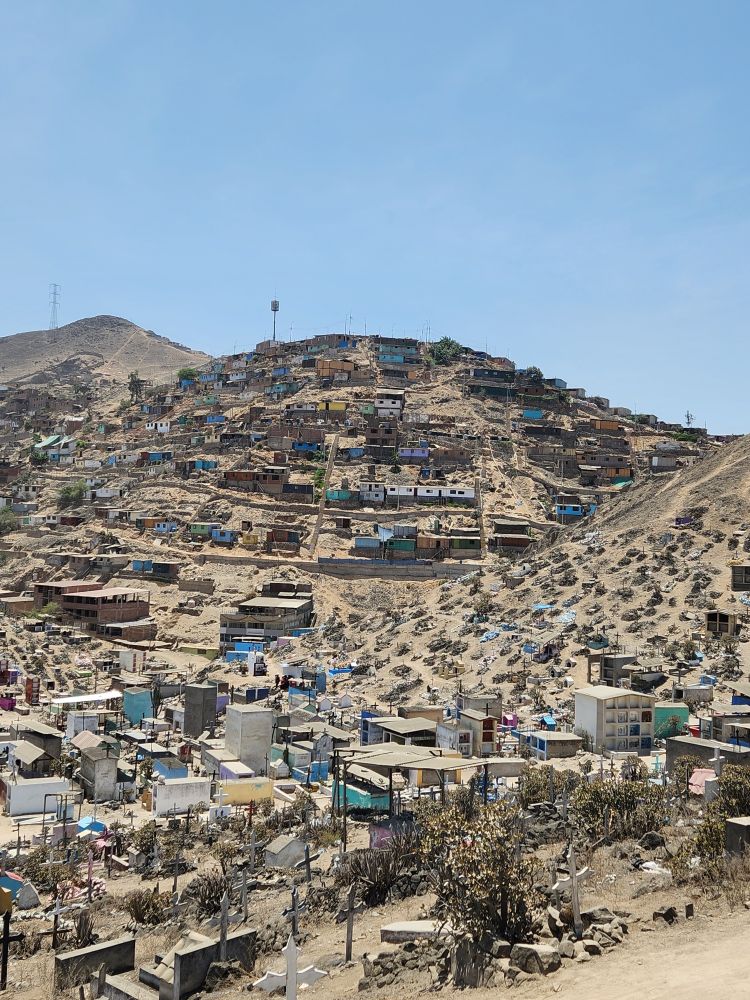
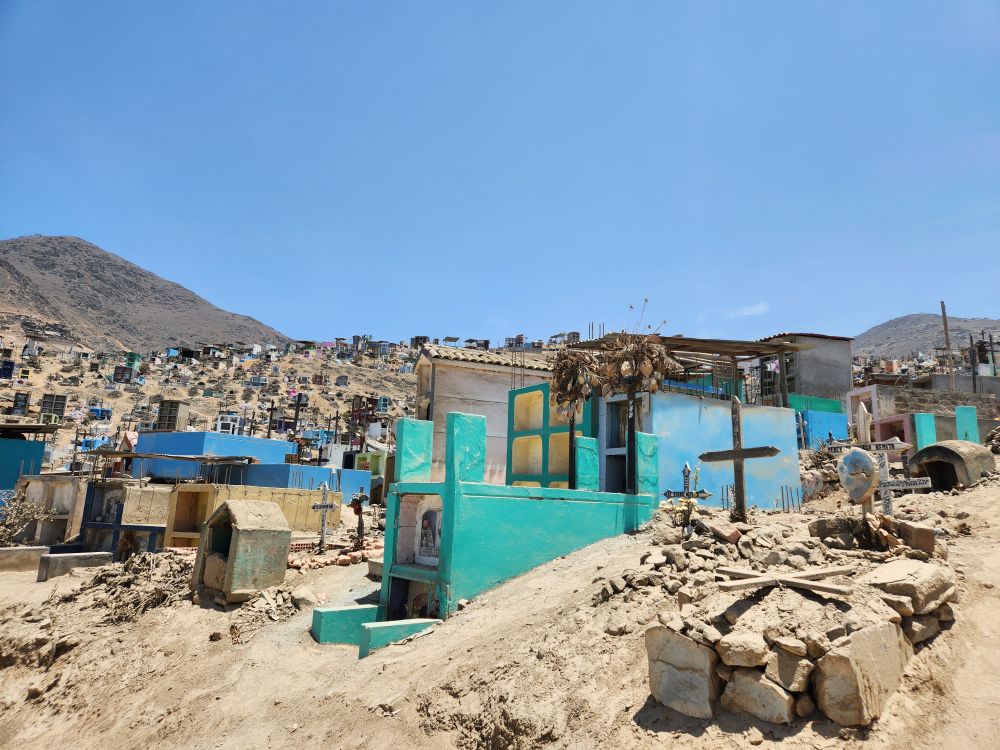
Up at the very top of the cemetery is a little chapel that is still frequently used today. Inside on the altar are dried flowers as well as black wax from candles lit by shamans, who are very important here to this day. The black candles signify something – chasing away spirits, or maybe calling bad spirits here to curse someone. Who can tell? It is really odd though to see the black wax spilling over the altar where you’d normally see the white wax from “pure” candles.
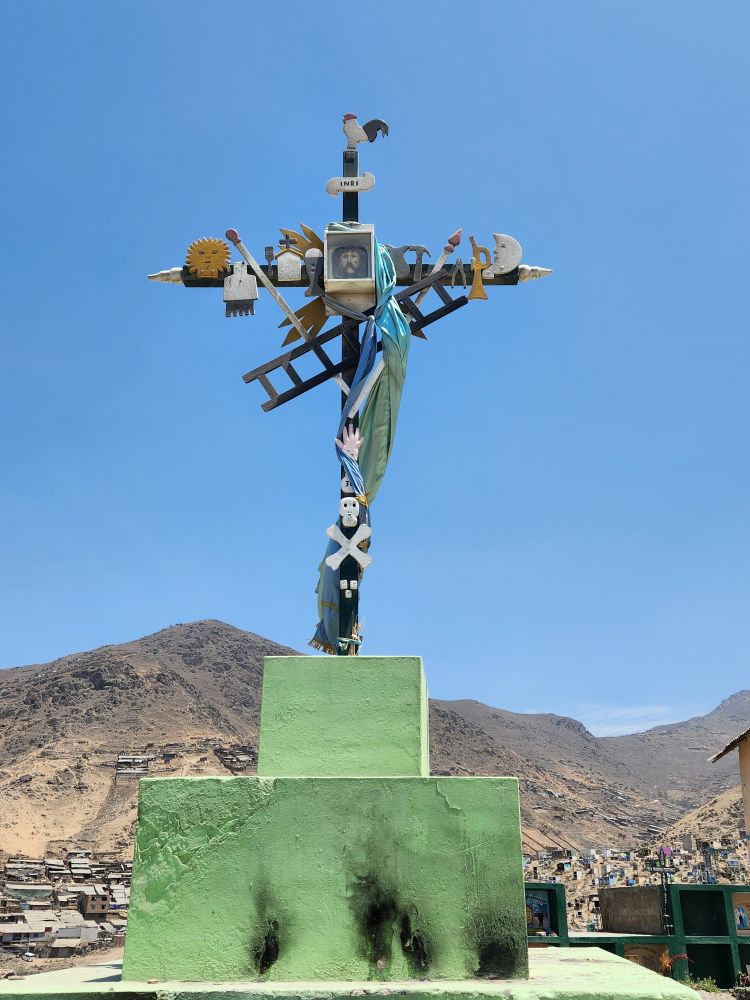
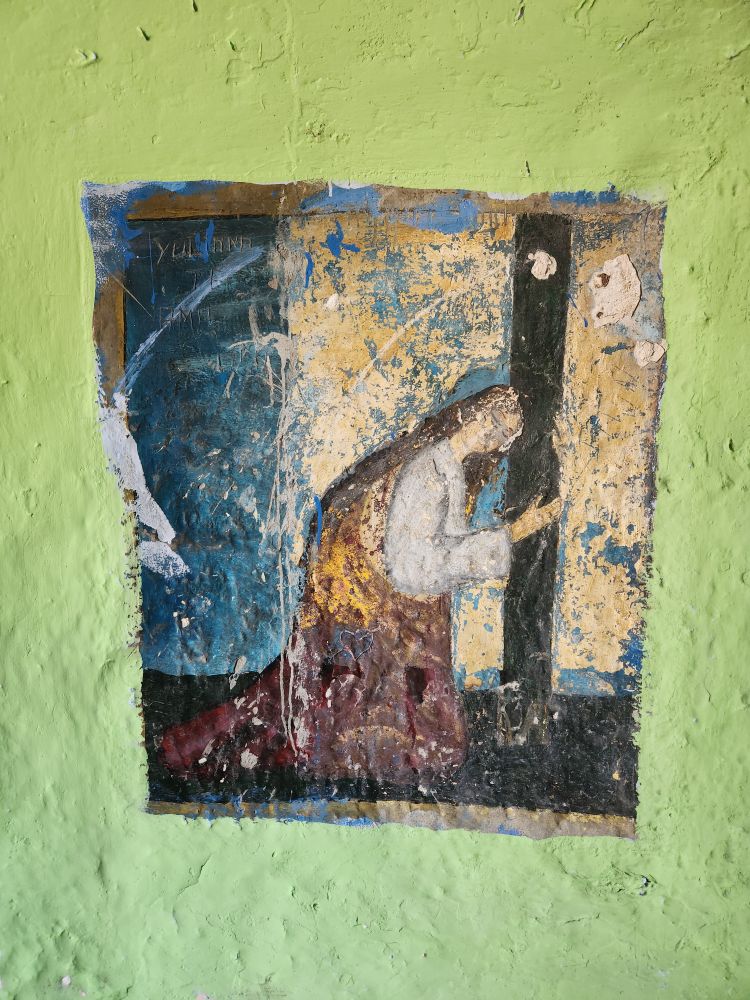
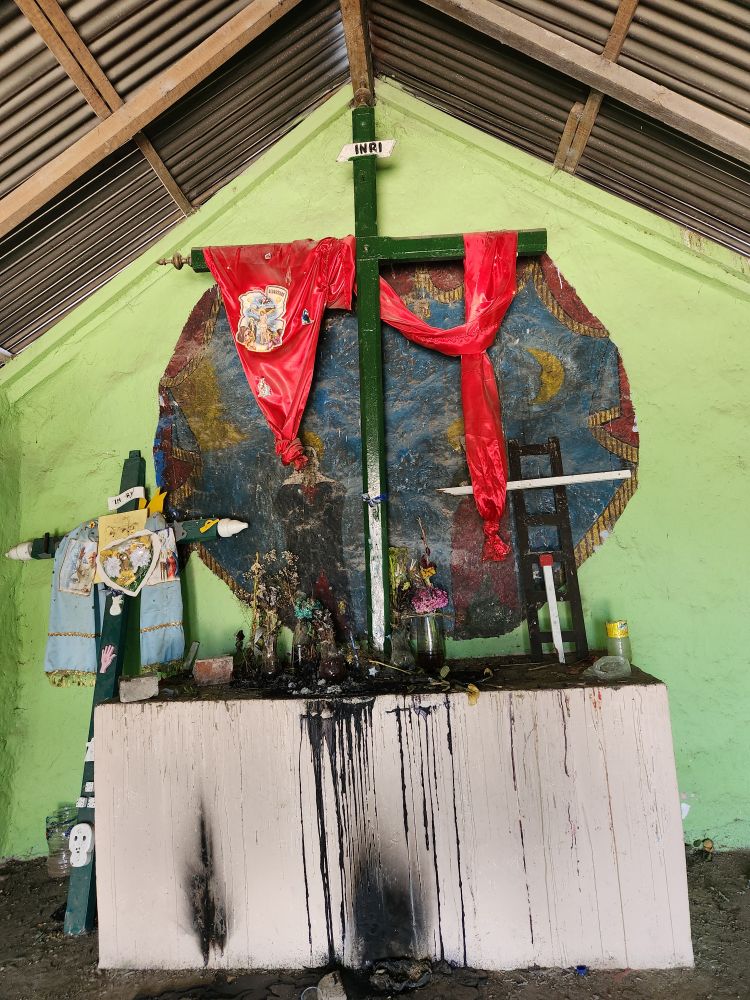
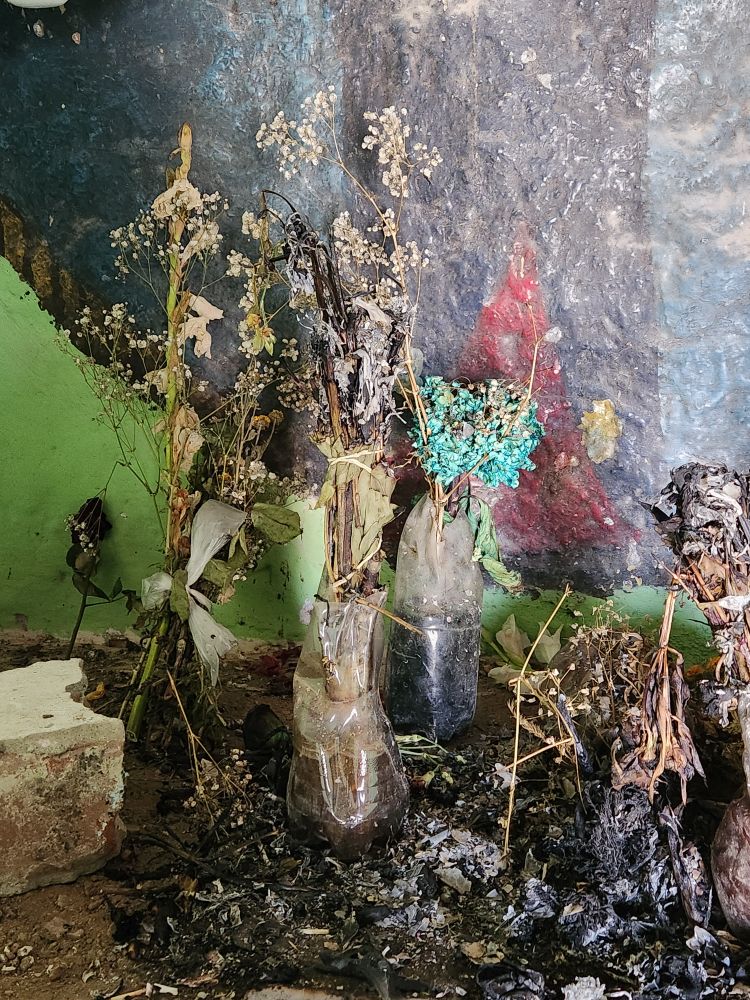
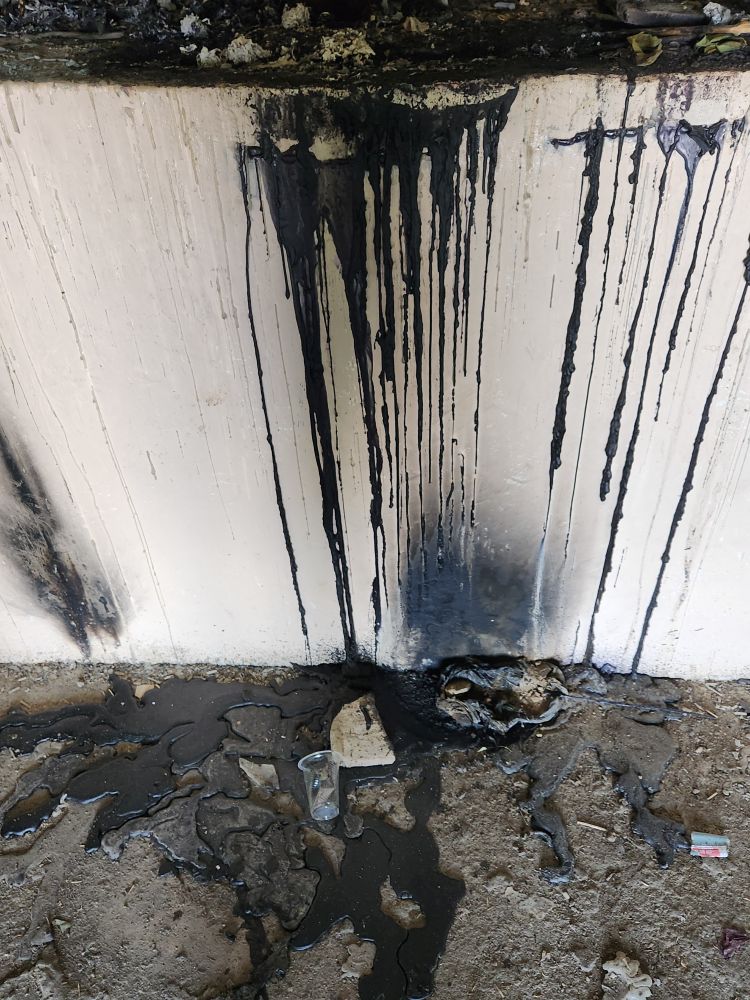
Here – as we will also learn in Chile – coming to the cemetery is like visiting your deceased relative or friend. It isn’t necessarily a sad thing to do, it is more jovial and almost like a celebration of living. November 1st, All Saints Day, as well as Father’s Day and Mother’s Day are extremely busy here – with family coming to visit their relatives. They come and party, have a picnic, sing, dance – there is even a Youtube video from 10 years or so ago showing November 1st and over 1 million people who came here that day to visit.
Pretty wild. Alfredo tells us that this area, which is dry and dusty and sandy now, becomes green in the winter time. Because it is located in a bowl between mountains, when the clouds and fog settle in, it turns the entire cemetery green! Would love to see that!
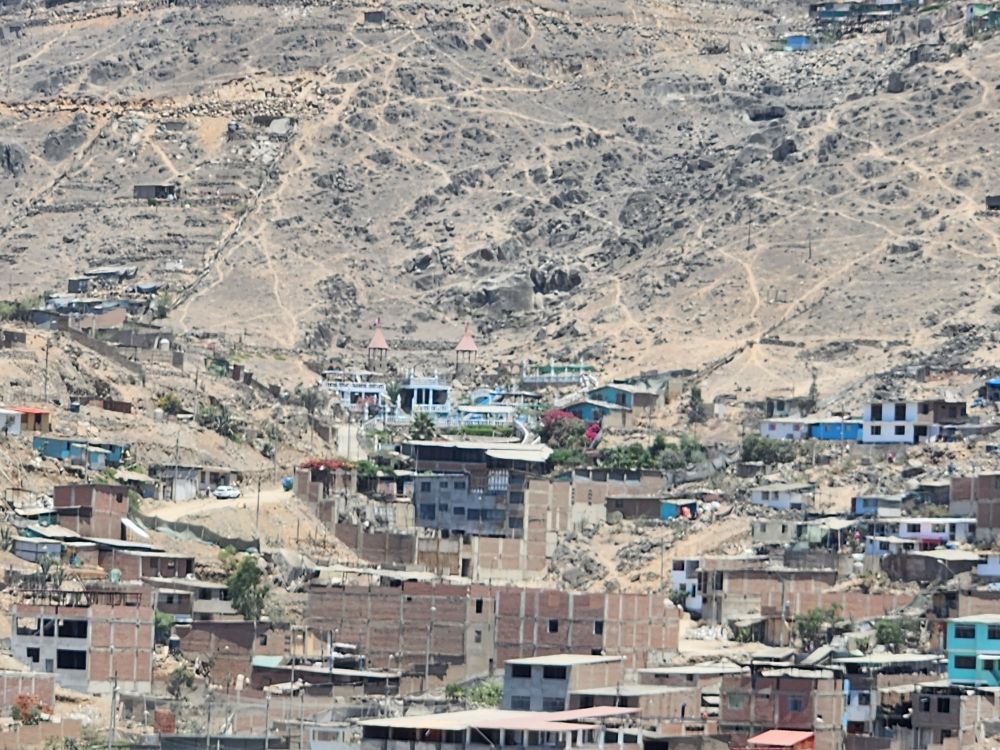
Alfredo also points out a huge mansion on the hills in the distance among the shacks. This mansion was built by an Eastern European who married a local Peruvian woman with land rights. They decided not to move anywhere and to build their home (albeit a mansion home) here because of the rights. It is very hard to get land rights in Peru. You have to homestead on a piece of property for over 25 years to even be considered for a land grant. Then you have to petition the government and there is no guarantee that you will be awarded the land. Which is why people don’t leave the land they have developed, especially if they are granted rights.
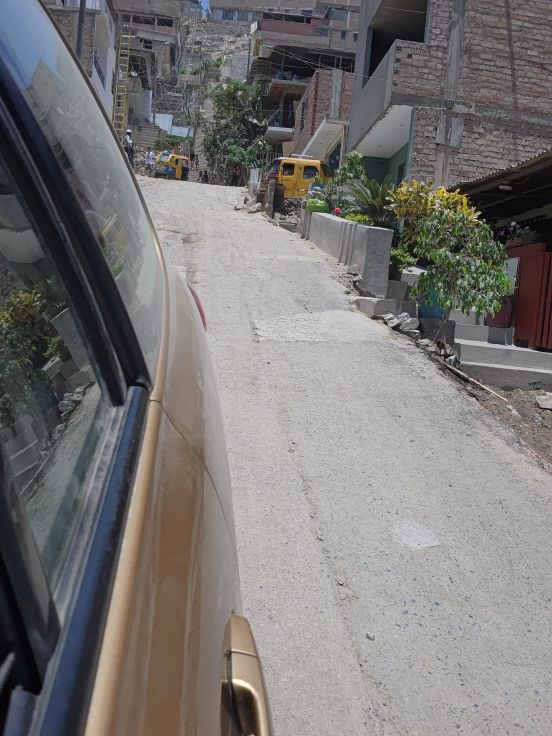
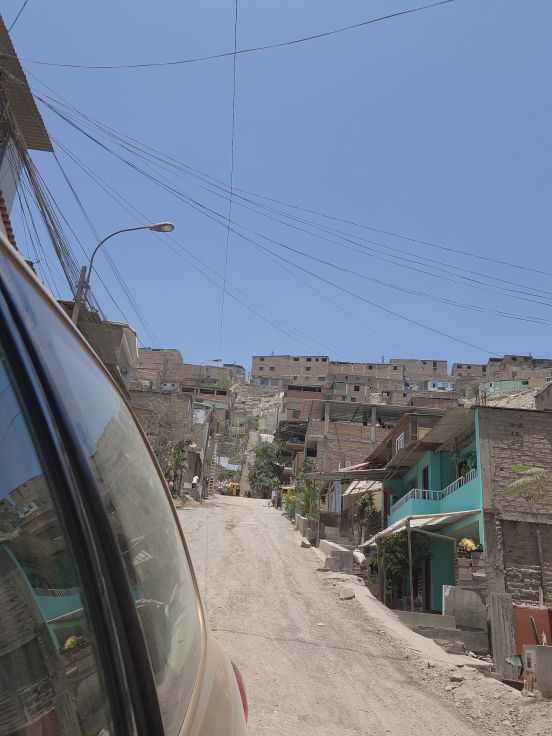
After the cemetery we head out to San Miguel de Miraflores where artisan community is located. The community is up on the side of a mountain, and the driver has to navigate these little narrow dirt roads that go straight up the hillside. Ay yi yi! Once up on a plateau of sorts, we get out of the car to gaze over the sprawl that is Lima. And this is only a portion of it! You can see forever in the clear sky – the houses and shanties stretch forever. On one hillside there is a huge wall that Alfredo tells us separates the richest parts of Lima from these neighborhoods.
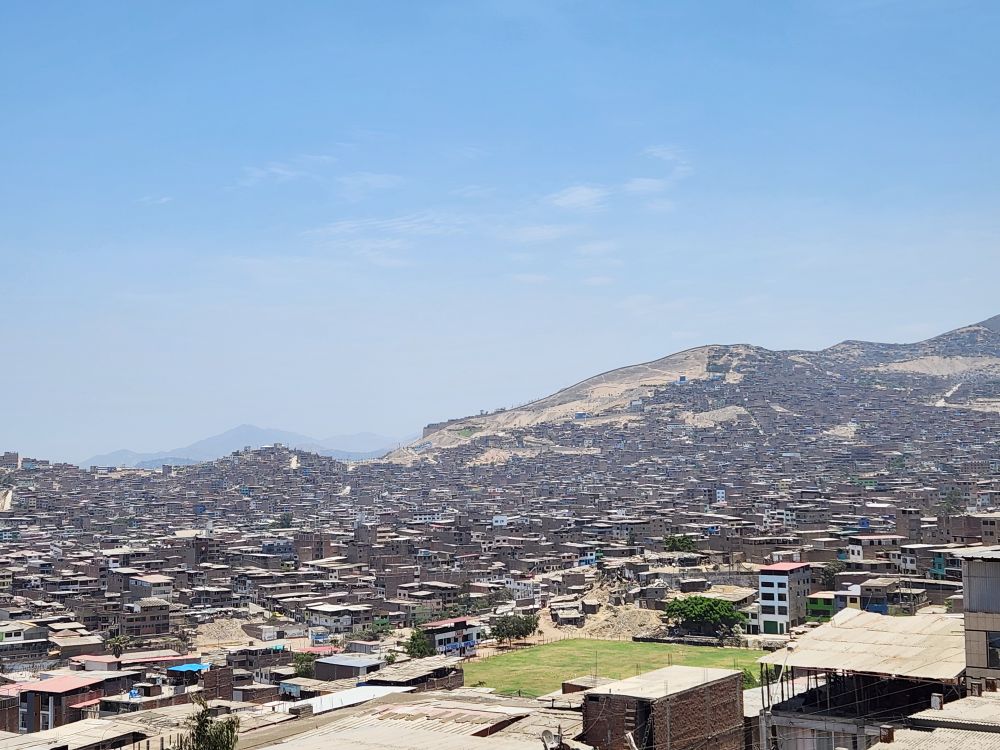
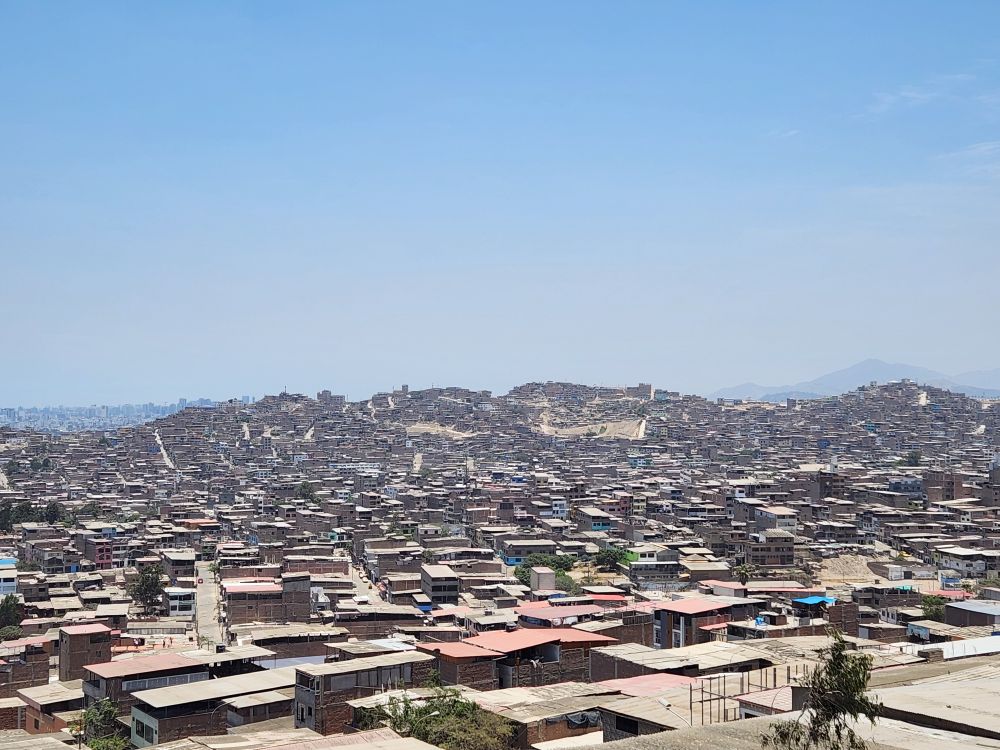
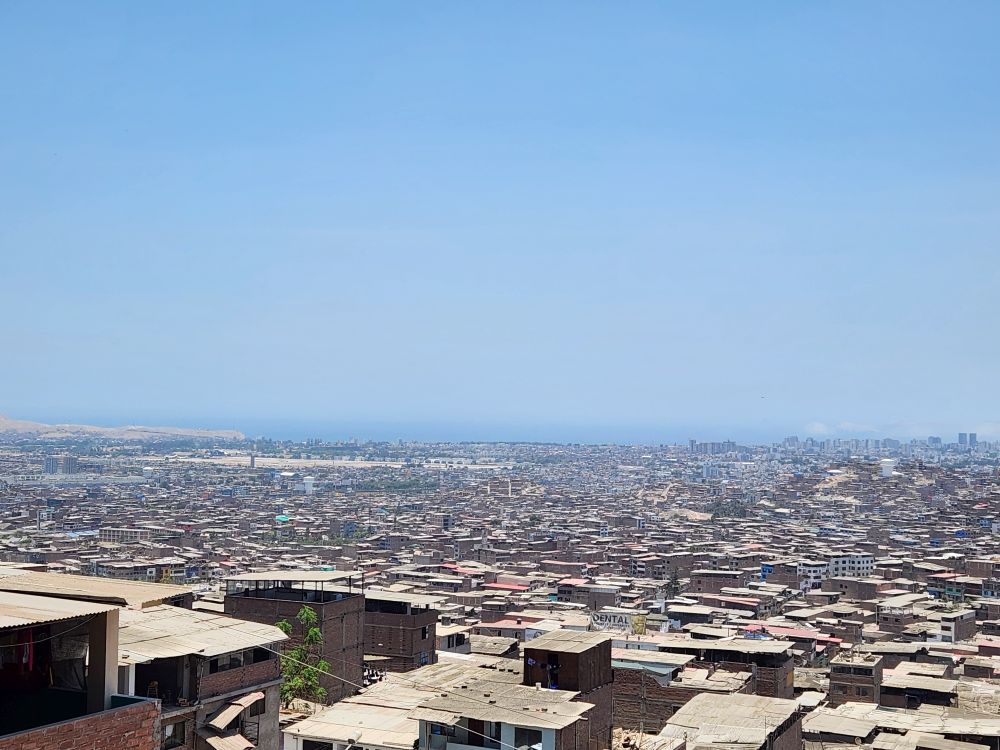
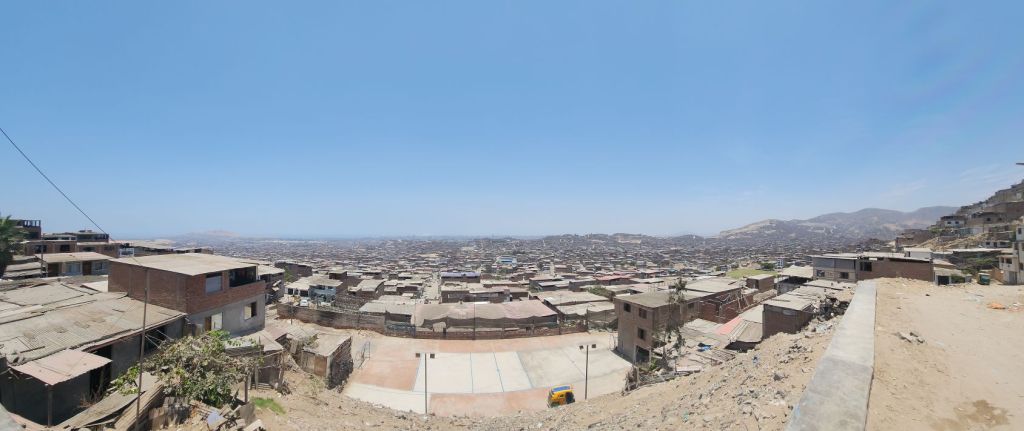
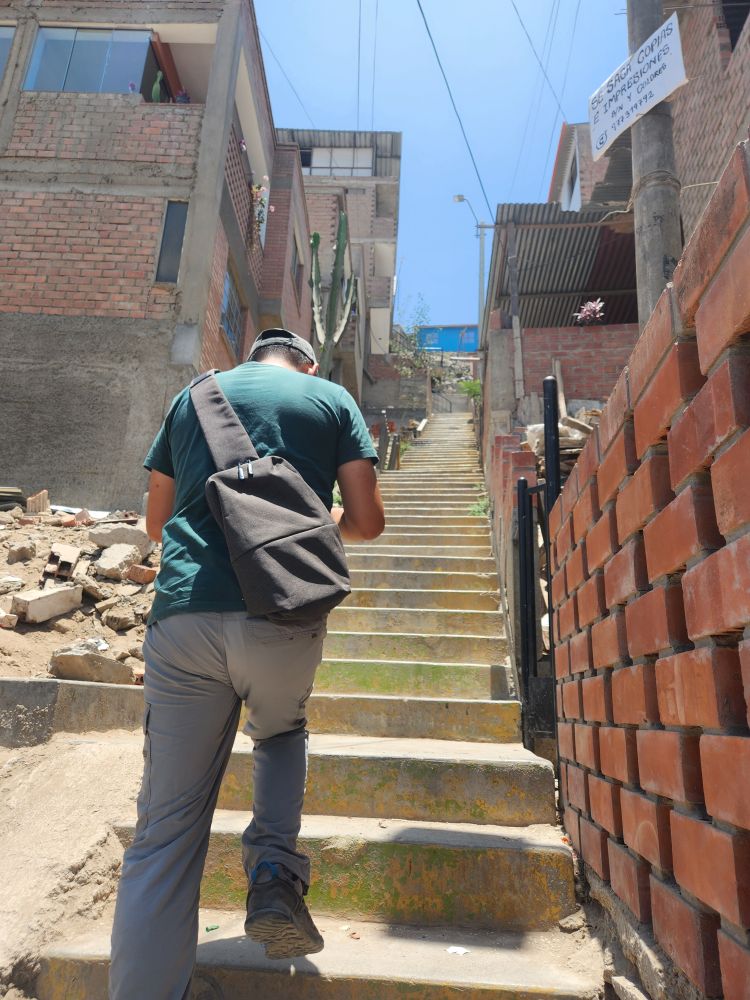
A little further up the road, we climb a steep set of stairs to visit the home of Senora Balvina who moved here with parents when she was 3 years old. Originally from Ayacucho, they left the mountains because of the Shining Path terrorists, who were headquartered there and mistreated so many indigenous there. The Shining Path took her brother, ostensibly to be conscripted into their communist terrorism squads, and he disappeared. The family didn’t feel it was safe any longer and left to settle in Lima. Growing up here, there was no formal schooling for anyone in these communities. The girls were taught traditional sewing and craft making to sell int the markets. The traditional sewing is very unique, full of appliques and scenes depicting Ayacucho and the old way of life. As Sra. Balvina got older, she took on a leadership role and organized community to get services (electricity, water, etc.) to the homes.
She has a little area displaying her crafts at the front of her house which we take time to peruse and buy a few gifts. She used to work with a Fair-Trade organization in Peru called Bridge of Hope, but unfortunately they stopped their activities due to the pandemic. She is hoping to find another organization to which to sell her and the community’s crafts, but as of yet has not found anything.
Visit completed, we head back down the narrow dirt streets to the next community, in the sector Nueva Rinconada. Located in the zone of Pamplona Alta, which is one of the biggest and newest zones, created in the 1990s and early 2000s, in the district of San Juan de Miraflores, this area is referred to, derogatorily, as the pig sties. The reason goes back to when the indigenous first migrated here and brought all their animals with them. Unfortunately, it is a very unforgiving part of the country and nothing could survive – not the chickens or the cattle or anything except pigs. Thus, the name. To this day, though, the pigs still survive and as we drive up into the community there are many butcheries offering pork products along the side of the dirt roads.
We climb higher and higher into the community, on the one paved road – paved because it is so steep and hard to drive up – and then finally to the entrance of Senora Ninfa, one of the local community leaders here. She, together with other local women, started a soup kitchen and she is now working as a volunteer for “Vaso de Leche”, a government supported initiative that provides breakfast for poor children and elderly people.
Sra. Ninfa walked us through the community, past the stadium which is rented out for different events to generate money, the new recreation center which was just recently completed, and into the community kitchen where we met all the other ladies. There are 5 total, all so sweet, conversing with us in Spanish and Alfredo translating. They showed us what they cooked for lunch today – which they create on 2 gas burners in big pots – and showed us around the otherwise big empty room. They have a huge refrigerator/freezer, but it is empty with no funds to buy food. They also have an oven to bake bread, but no ingredients to make the dough. It is amazing what they accomplish with donations and so little. I really wanted to take some pictures but felt that it would be rude and intrusive to do so.
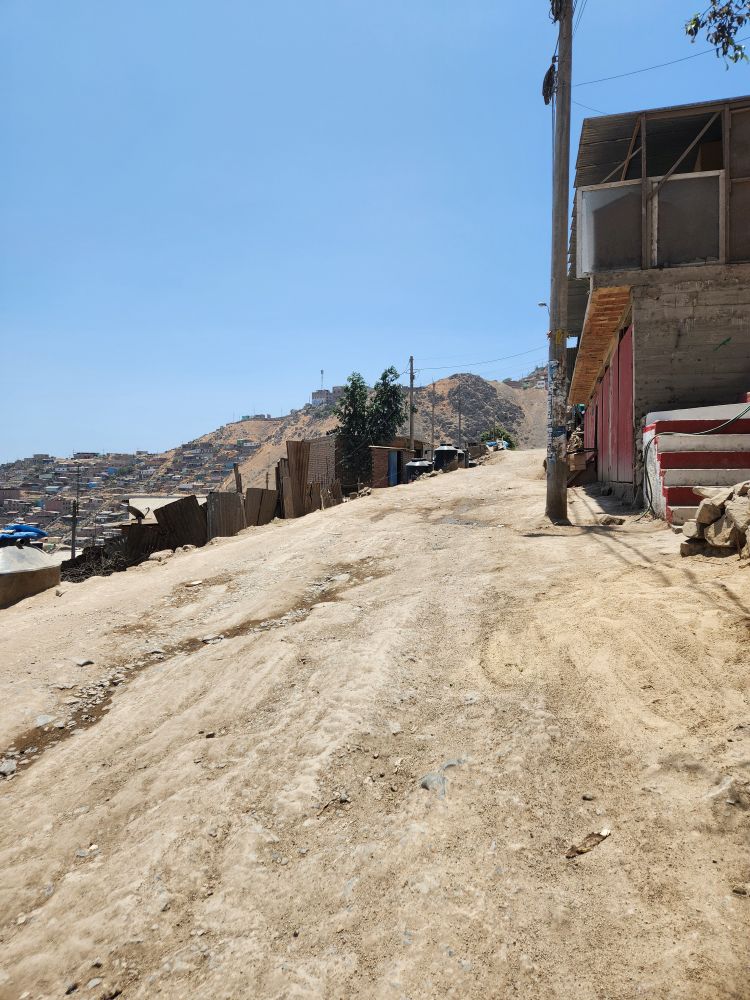
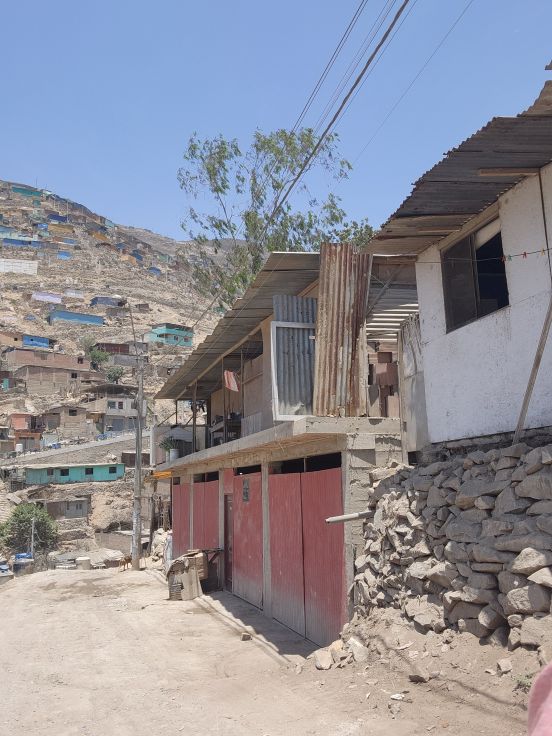
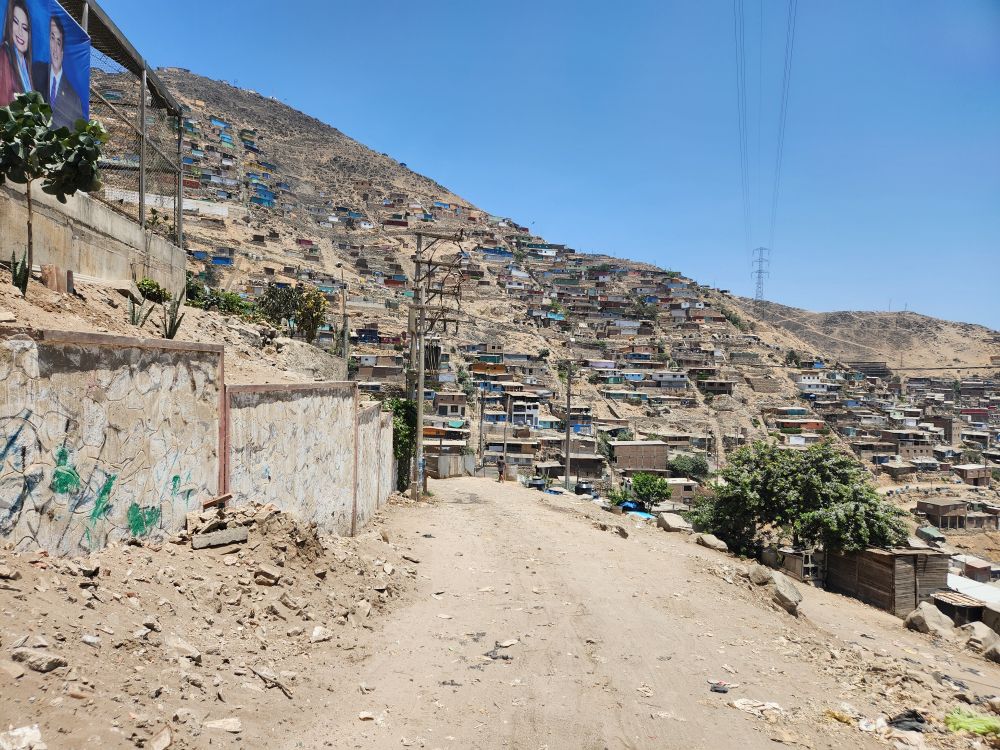
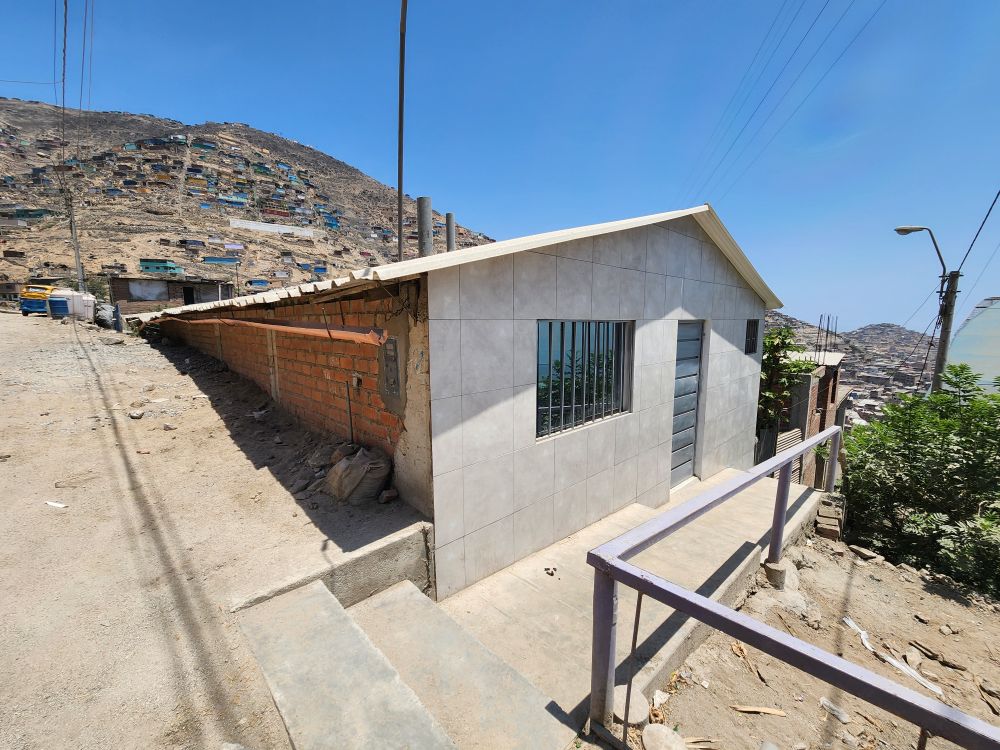
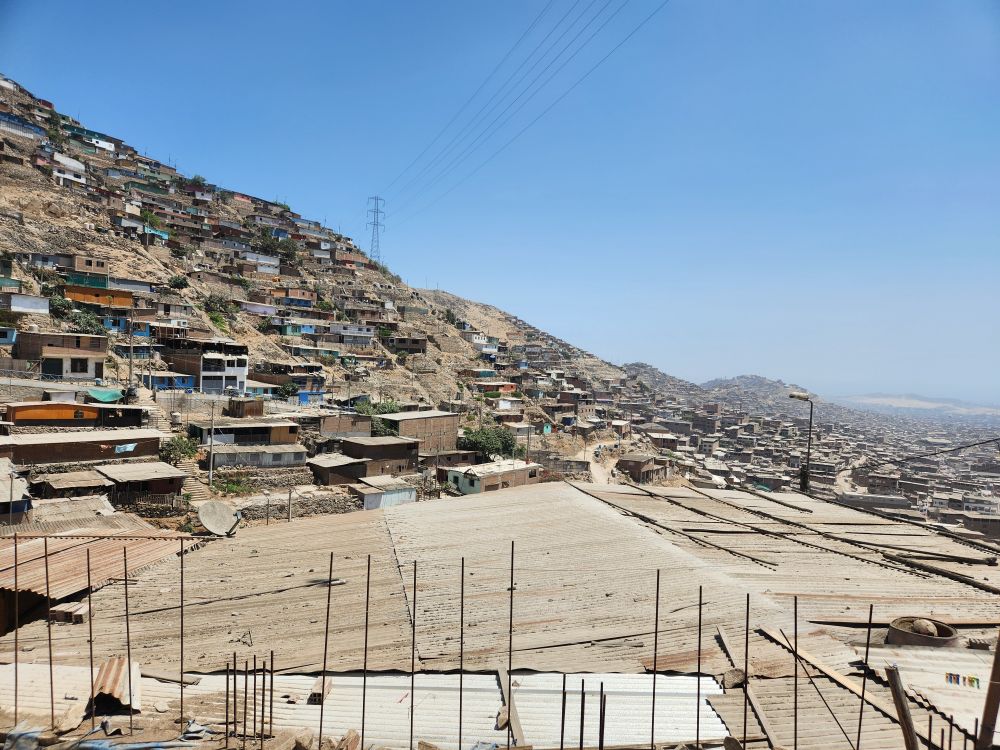
It was interesting that they had electricity, because most of the community does not have electricity or running water. Cooking is done on propane tanks. Water is trucked in and purchased and stored in huge tanks. During the Pandemic, the government gave the community free water twice a week. Since the end of last year, the free water has stopped and the trucks no longer come out regularly. They did just visit last week, so they community has some water. At least those who had the money to pay for it.
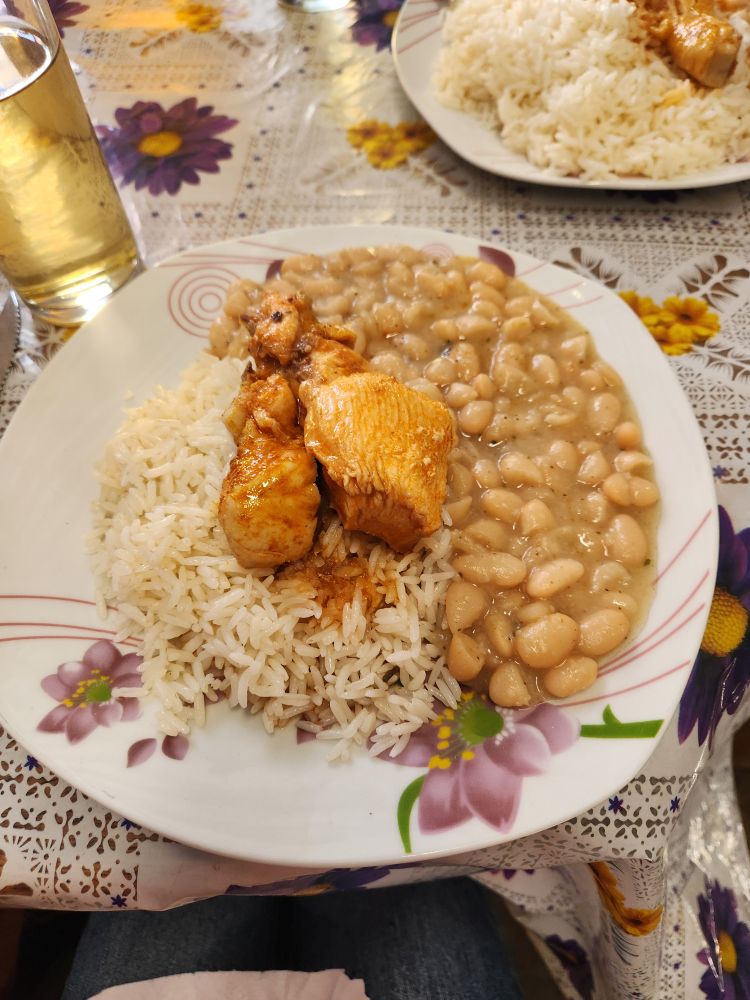
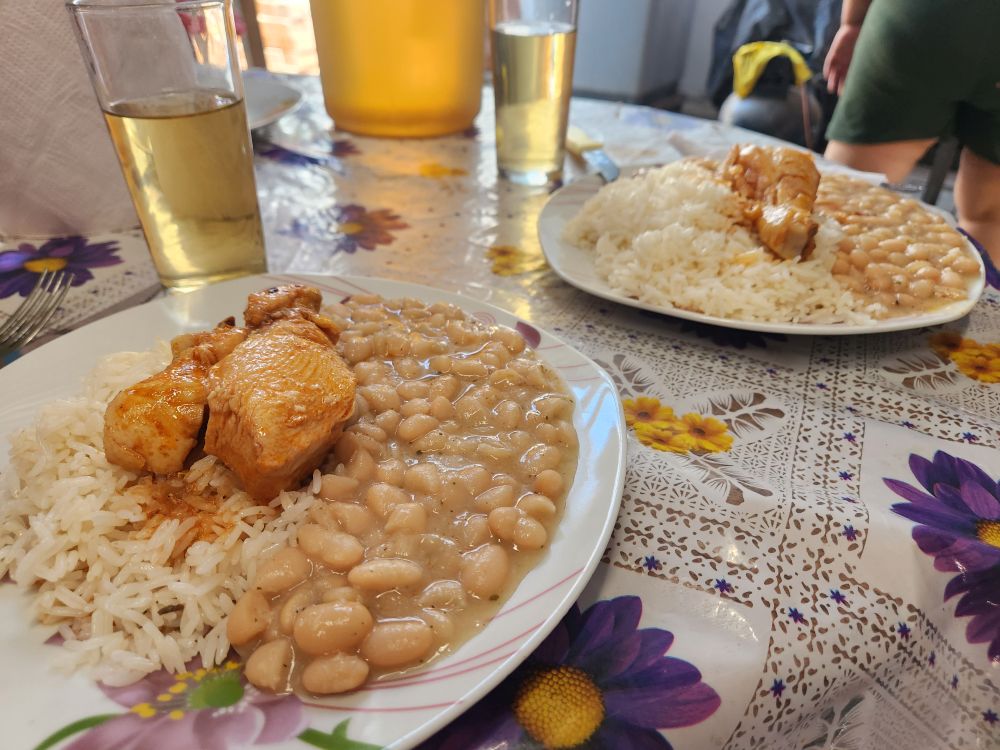
Leaving the ladies, we returned to Sra. Ninfa’s house for our lunch. She cooked everything in a one room structure – no doors, corrugated roof panels and a combination of poured concrete and wood walls – over a gas burner that was situated right in the middle of the room. It was an excellent meal of beans and rice and chicken. Perfectly cooked and wonderfully seasoned. We all ate around a lovely set little table and got to know each other a little bit more. We also had a local guide with us, Maria Elena, who is a kindergarten teacher and will also be taking us to our next visit which is a training center for school age girls in which she is a “promoter” or in other words a sort of a principal participant and manager.
Again, I felt rude taking pictures, although I did take a couple of the meal – explaining to Sra. that it was wonderful and I always take pictures of the food! She is so sweet and welcoming – asking questions about us, learning about where we are from, what we do (used to do) for a living, etc. Just a wonderful experience.
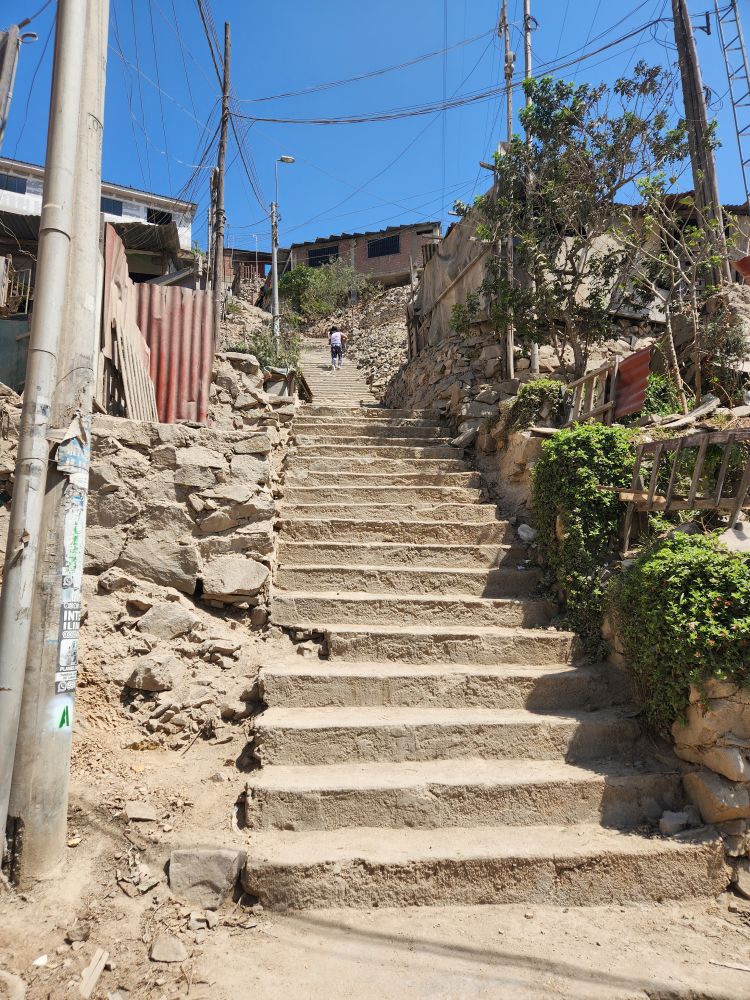
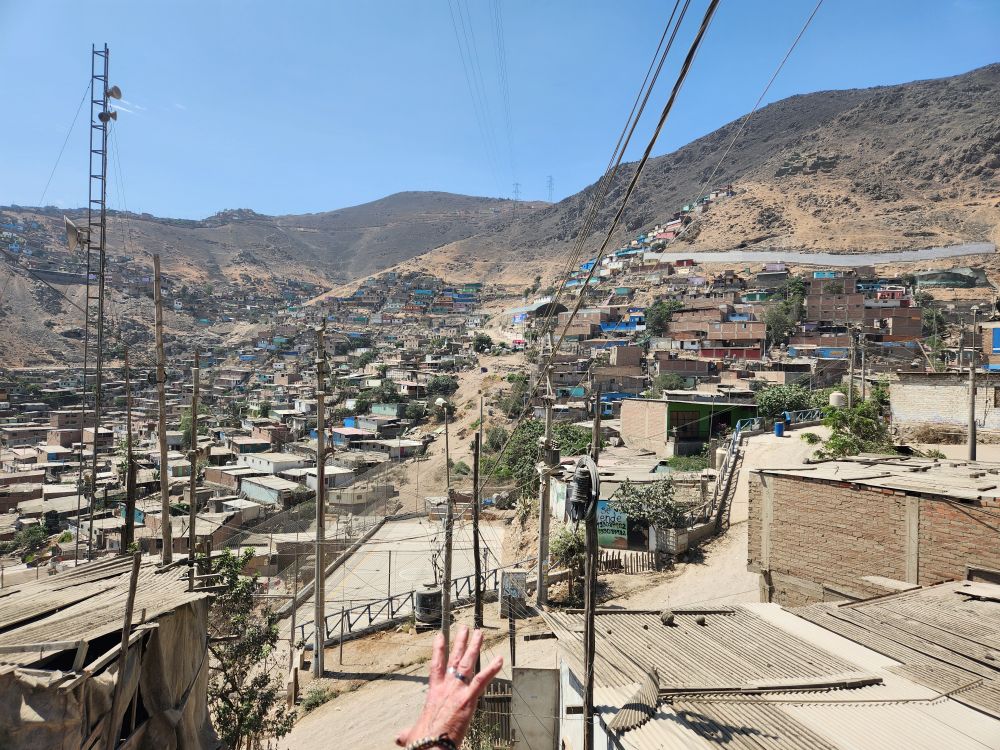
Back in the taxi, we head toward Grupo Jugando Aprendo School and end up on a road that is far too steep for the taxi to climb. I’m actually getting nervous our driver is going to either blow up his engine or slide off the side of the steep roadway. Finally Alfredo says we’ll walk from here. Thank you, yes, lets! We still have a steep climb, no way I’d want to drive up this dirt road, and then a long climb up a steep set of stairs. That was exhausting! Especially after the long trip yesterday, the heat, and a lack of water (remember – no running water up here means no working toilets, only long-drops, which ain’t gonna happen for this girl! Ed, ok, he’s a boy – no biggie – but well – nope, I’m a camel for a reason!).
We persevere and make it up to the school – while getting some great views for an overall perspective of the community – and a close up shot of the stairs and entrance to Sra. Ninfa’s home.
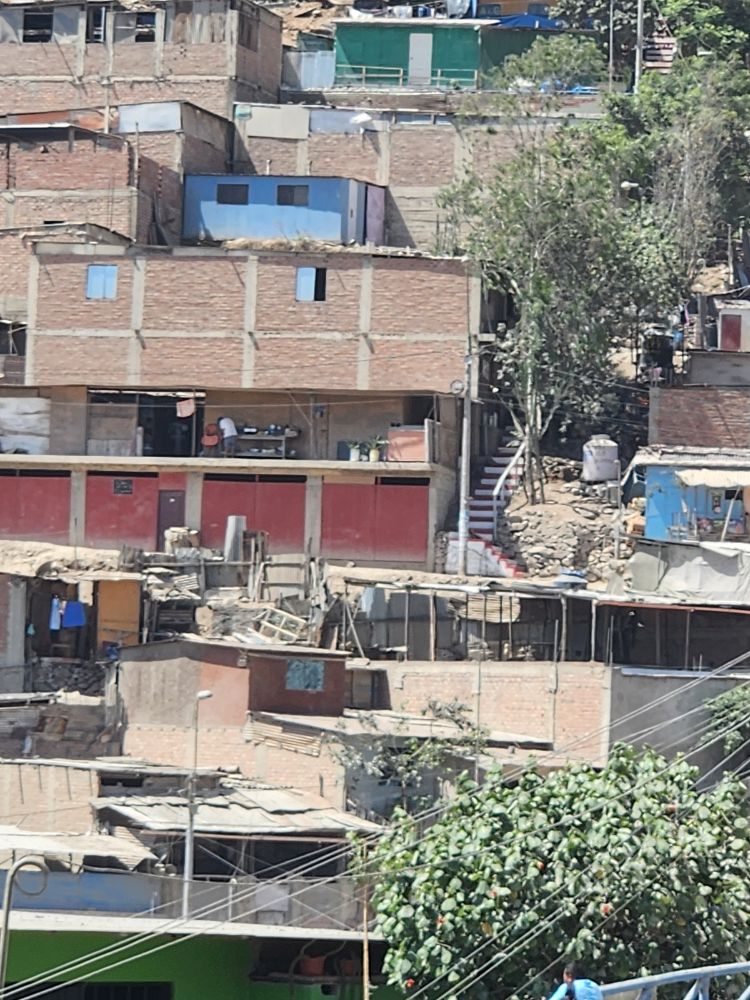
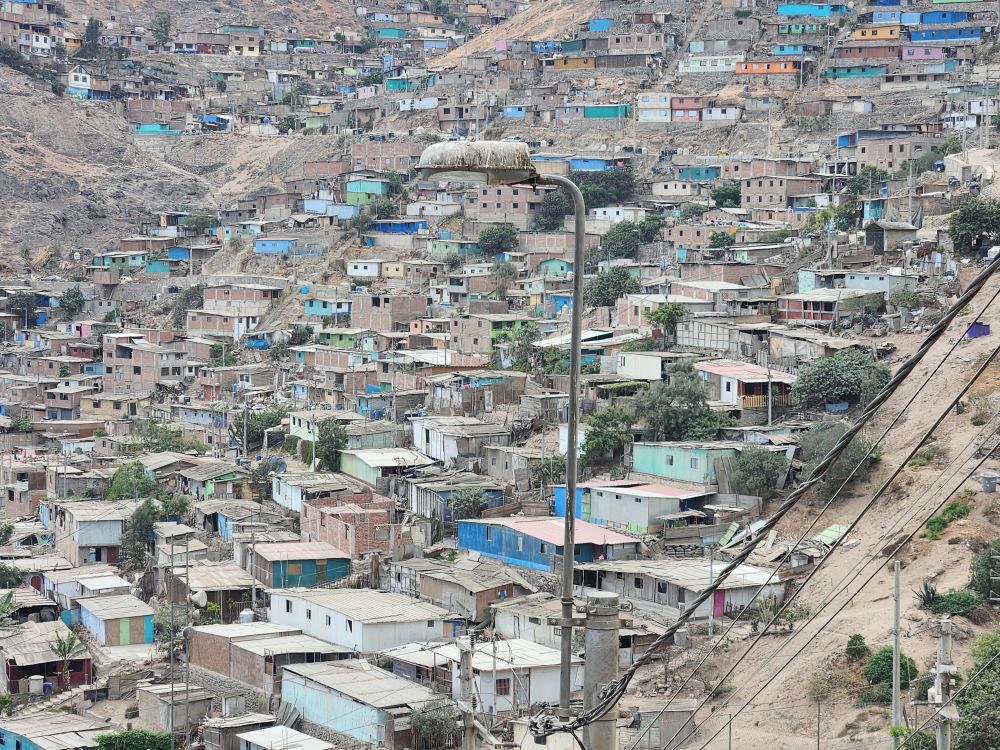
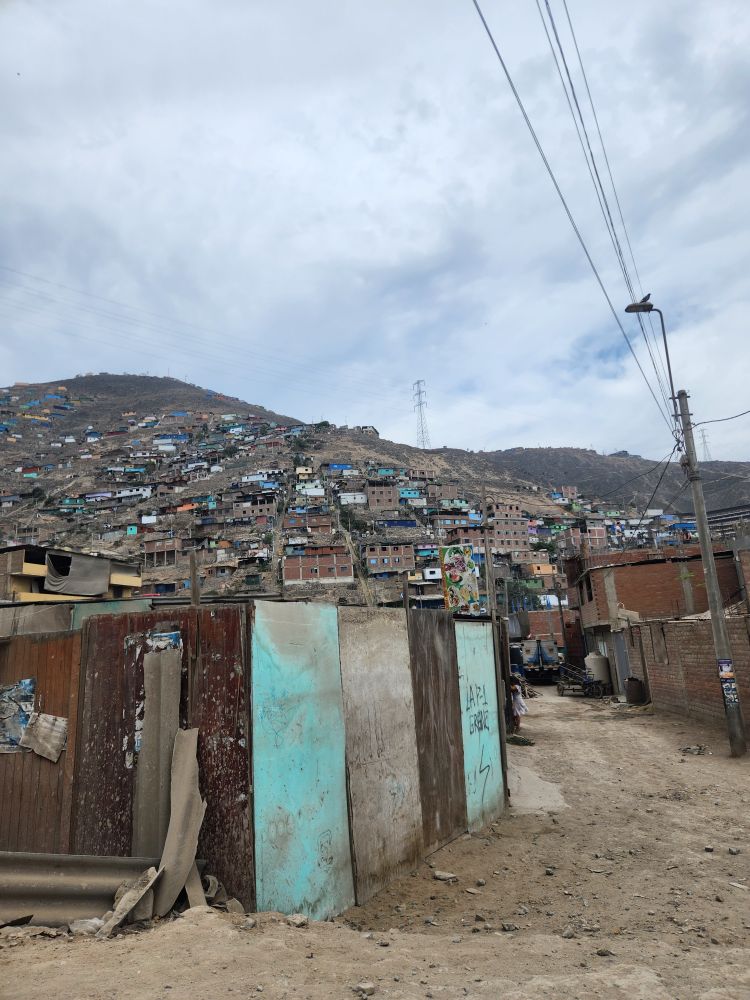
Once inside the school, we sit for bit while Maria Elena explains what happens here. They teach two classes of 30 each, mostly all girls, from the ages of about 7 or 8 until maybe 15 or so. The center focuses on empowering and supporting child domestic workers in the area. Many children here end up as domestic workers and can be mistreated horribly. Made to do things that are beyond their basic jobs, not paid on time or at all, forced into situations they don’t know how to handle. This organization teaches the children self-respect, how to avoid abuse, what to expect in the work environment, how to get paid. They also have an open door policy for any school age child who wants to come here after school to study, do homework or use the computer for their classwork.
As we sit, listening to Maria Elena, the children start to file in. Even though this is their summer vacation, they are here because an American University group is coming to visit and they will give them presentations about what they do at the center. Maria Elena has 2 young girls come over and tell us who they are and what they want to do with their lives. Both are so adorable, and self-possessed! And both want to be doctors. And we are betting they both will accomplish that goal. An amazing organization – all volunteer and all donation based. After the tour Alfredo sent us links to 2 documentaries filmed in the communities we visited if anyone is interested: Yo Soy Agua and Manzana Lote.
We said farewell to the kids, walked back down to the taxi and headed back into the hustle and bustle of the main zones of Lima. Along the way Alfredo kept a running dialogue going giving us more details about Lima and little nuggets like when you see grass in the medians of the streets, you know it is a more prosperous neighborhood. Dirt medians means less well-off because they don’t’ want to waste money on water for the grass. They have more important things for which to use their funds.
Back in Miraflores, we bid Alfredo and our driver farewell at the ChocoMuseo (so we can pick up our chocolates) and then head back to the apartment to relax a bit before dinner. We’re still pretty full, so we decide to just hit the grocery store for a roasted chicken, reheat the leftover Chaufa and call it a night from our balcony overlooking the city. Probably an excellent decision as it is Valentine’s Day and the streets are literally teeming with people. It is hard to walk down the sidewalk! We are betting every restaurant is totally full, so an evening at home is the perfect way to end an excellent day of learning so much – about this city, the people and the country.
 Andiamo