Today, yet another ship’s tour – but it is the easiest way to get to Kolmanskop ghost town that we can find. That is really the biggest thing to see here – there is another tour to see the wild horses, but hey, we’ve seen those in Corolla over the years – and we want to see the abandoned mining town. The only annoying thing is that the tour was originally scheduled for 3:30 and it has been changed to 12 noon – which messes up our original plan to do our own walking tour of the town, eat at the Portuguese Fisherman restaurant, then come back for the tour. So we pivot – normal morning routine, then we grab cold cuts and rolls from the breakfast buffet to have a quick picnic lunch on the balcony before we leave on our tour. Works!
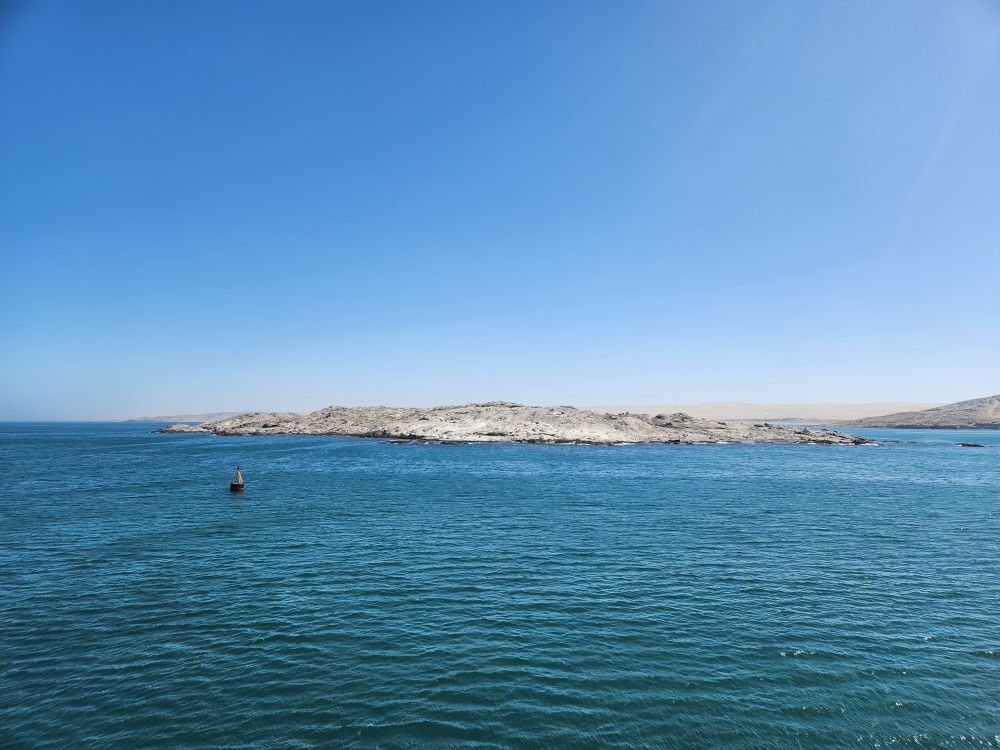
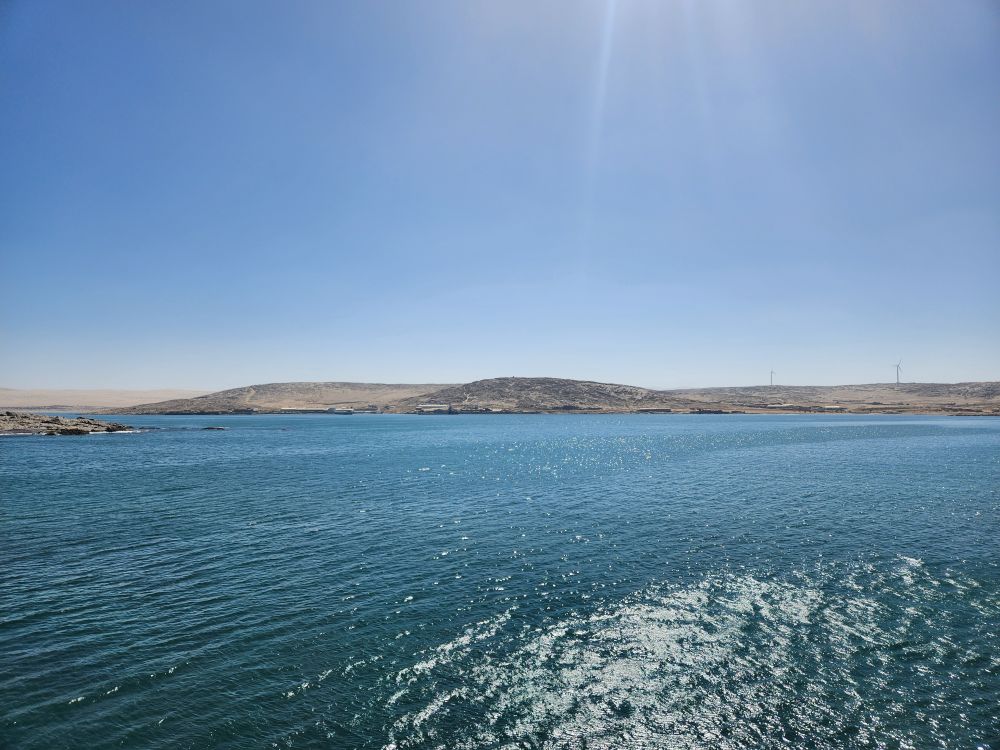
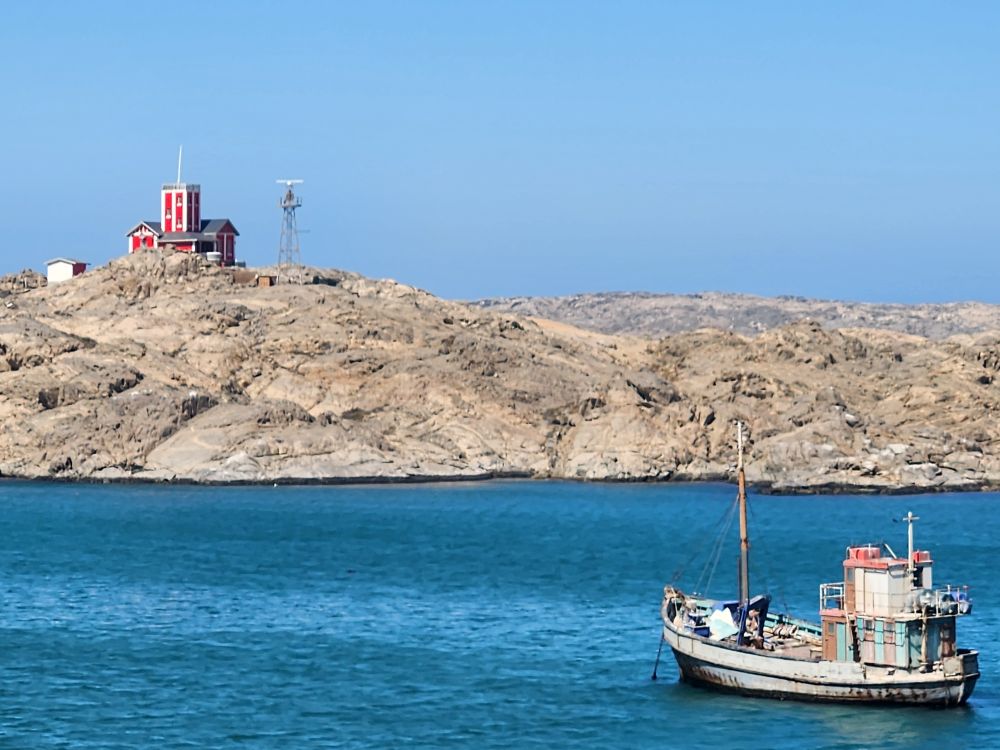
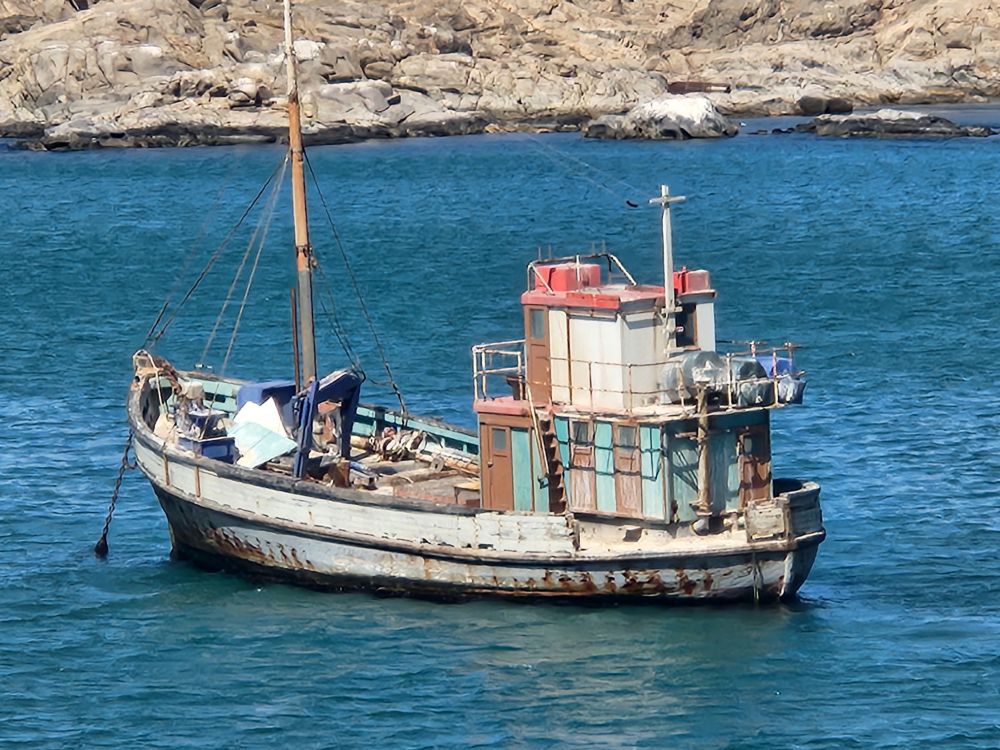
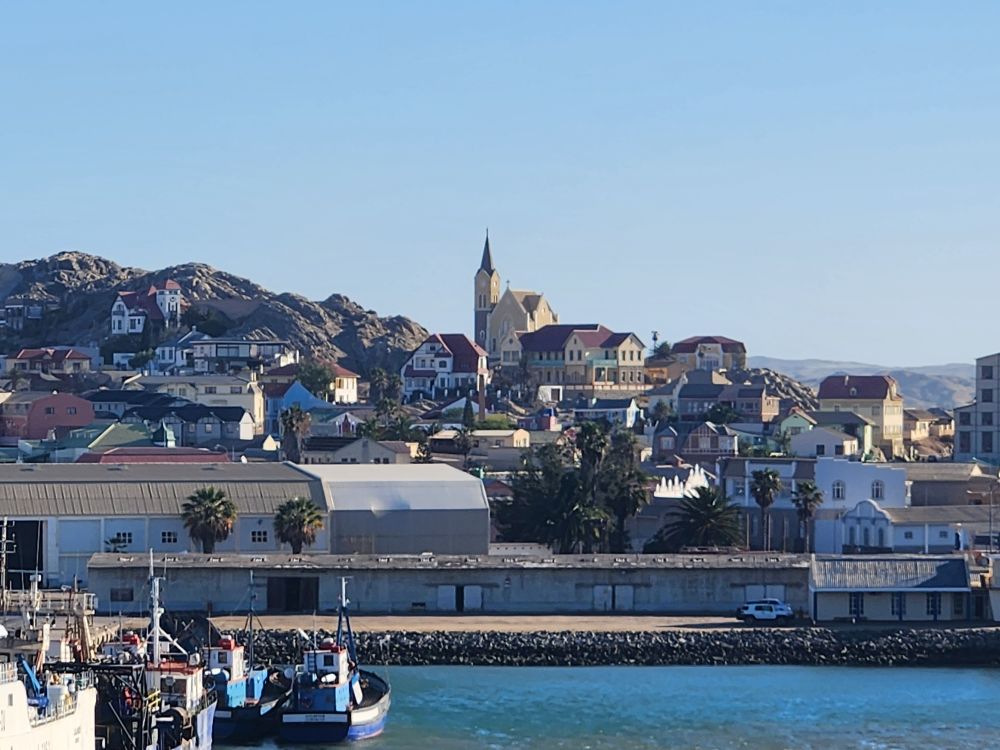
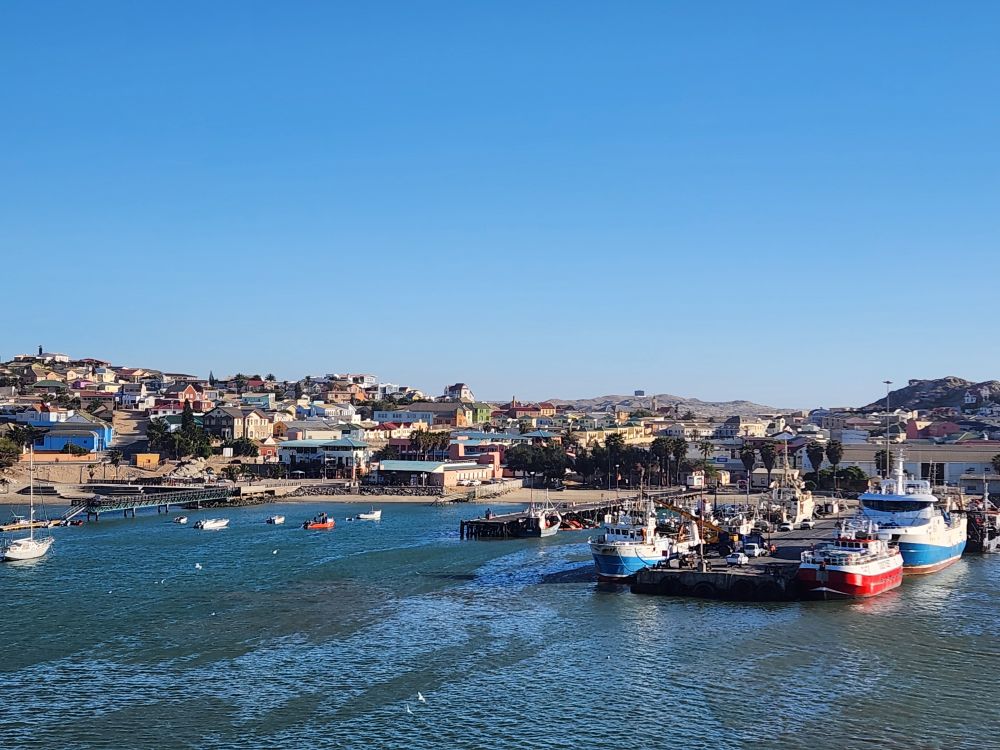
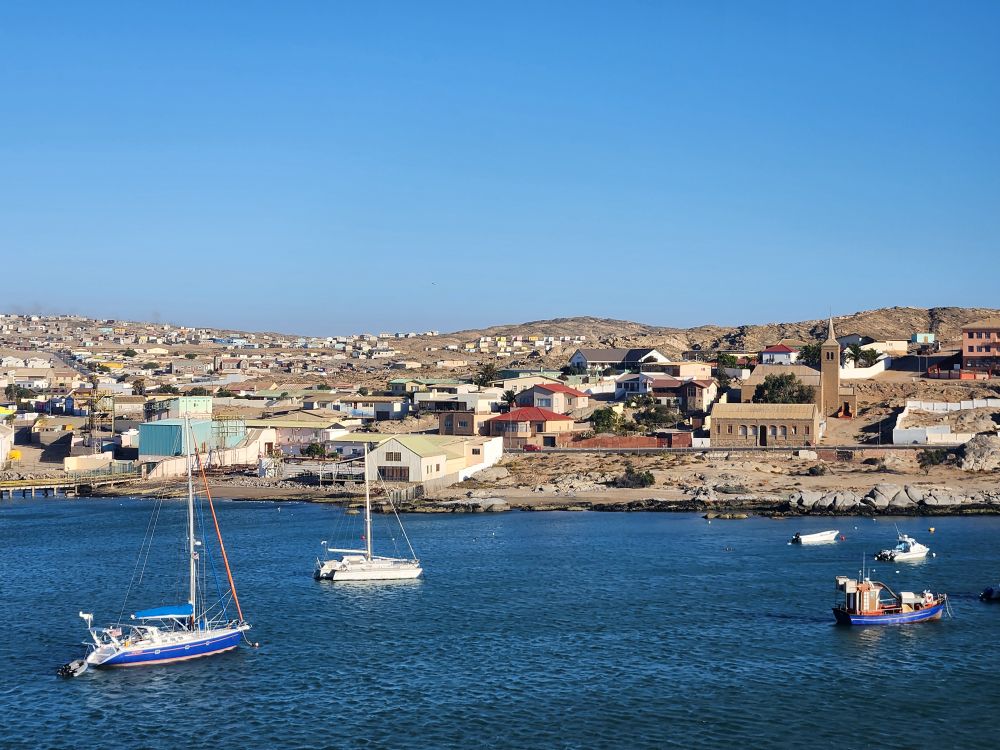
Plus, that means we get to see the sail in from the balcony – which is nice and sunny and out of the wind. This place totally looks like the moon – there is nothing here! Stark rocky coastline and this little teeny town by the water. There are less than 20,000 people here – talk about unforgiving environment though. Barren with only sand and rocks.
Finished with our picnic, we head down to the Cabaret for our tour stickers – we’re the first ones there, of course! We’re like 45 early or something, but we just didn’t want to sit in the cabin any longer. After chatting with Myra and Roma, we head out to the pier and just hang around chatting with the Tour Operator and Martyna (our ShoreEx manager) and Rafael, the Business Ops manager. It is a gorgeously sunny day, although really, really windy, and it is nice just to stand outside and relax in the nice weather.
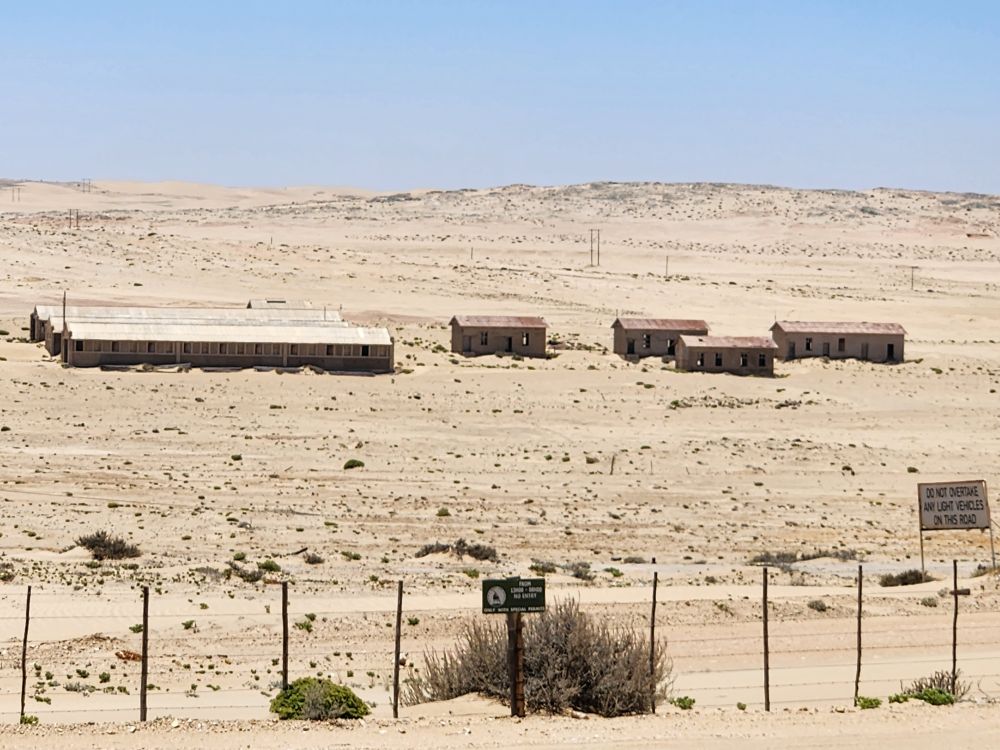
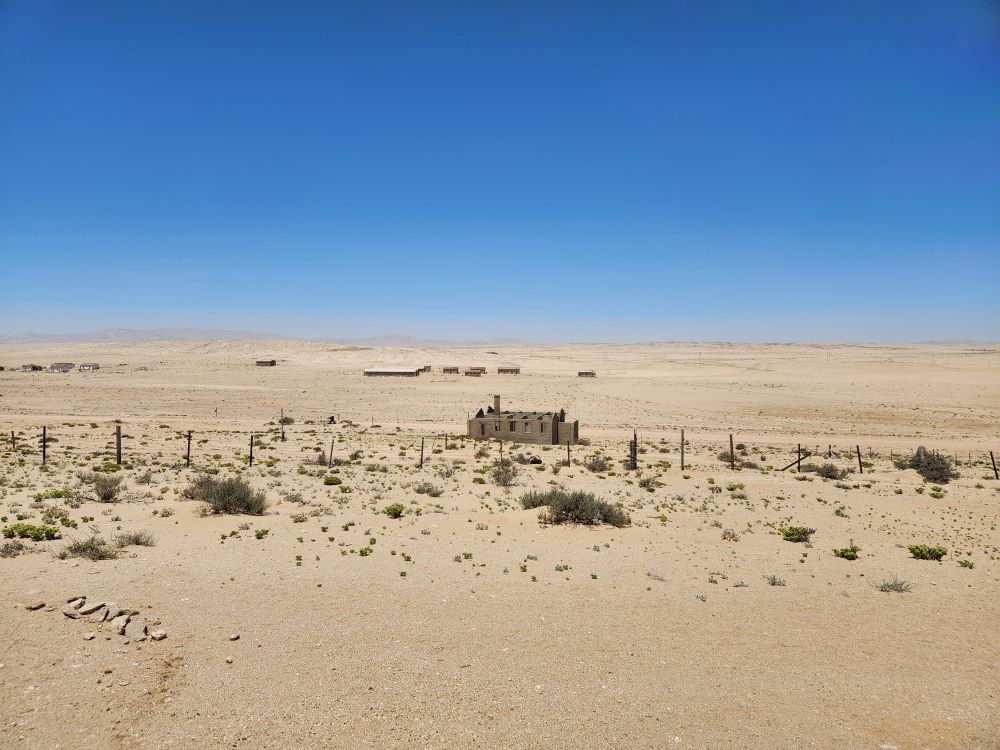
Eventually we can board our little 12 person mini-van that will take us to Kolmanskop – and at precisely noon we are off, driving through the town with the driver pointing out different buildings of interest. Kolmanskop is only 12K from town, about a 10 minute drive, but once we leave the end of town, it is like no man’s land out here – nothing for miles upon miles. Although there is an airport! A big one of all things. Well, not so much a backwater town then. Reaching Kolmanskop we do our best to get a broad overview shot, trying to show just how isolated this place is. (It is sort of hard from the van though!)
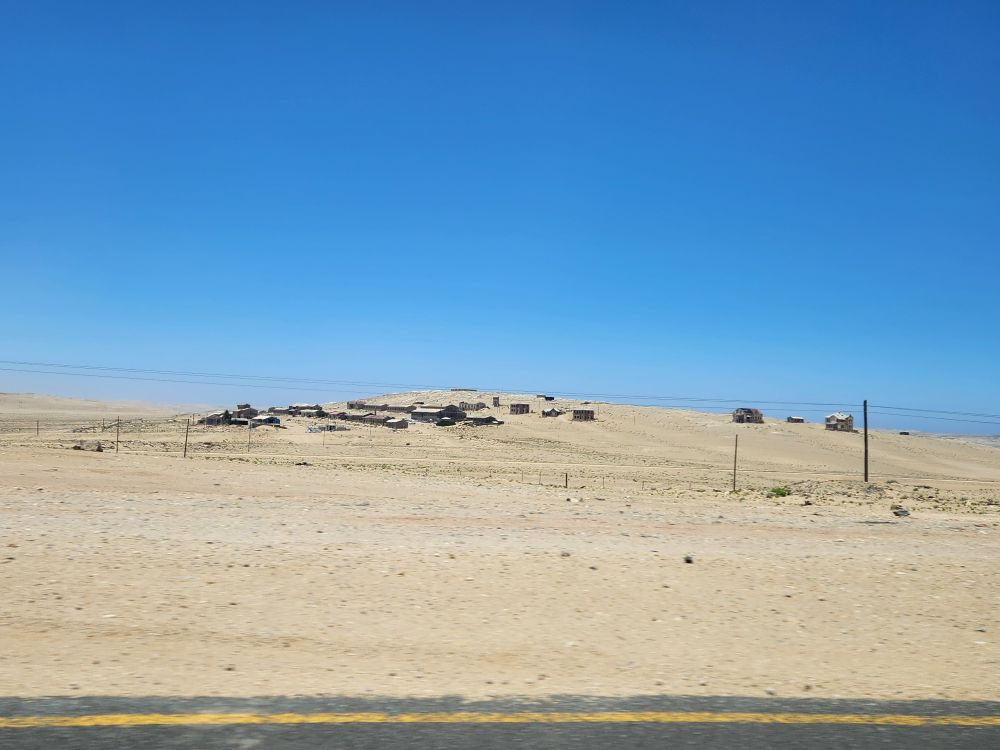
When we arrive, we meet our tour guide, Nicole, who is a doll – fun and funny – walks us through the town, giving us the broad history, and explaining that her great-great-great-great-grandfather worked as a miner there. Obviously the family never left – that’s some lineage! The area was founded when a transport driver named Johnny Coleman, got marooned up here in a terrible sandstorm. Driving an ox cart at the time, when the storm hit, his oxen ran off, his cart got stuck in the sand, and then completely covered and he managed to walk down into Luderitz safely after 2 days. Kolmanskop means Coleman’s peak or hill – skop is hill in Afrikaans.
From that point little happened until the early 1900’s when a railway worker in the area found a diamond and showed it to his supervisor who realized the possibilities of the area. He set about claiming mining rights to a lot of the area, but the word got out and a diamond rush was on. The town was developed into a self-sufficient place complete with retail shops, a ballroom, a skittle-ball (bowling) alley, a hospital – everything anyone would need. They even had the very first x-ray machine! It was used to scan the workers as they left to alleviate theft! If someone was found to have swallowed the diamonds, they were given castor oil and there was a special latrine where they had to “deposit” the diamonds, which were then fished out (yeah, that’s a great job!) and returned to the company. At some point Germany declared the area Sperrgebiet – if we recall correctly this was essentially a protected governmental area where they could exploit the diamond mining. Eventually, the mining dried up as more diamonds were found on the coastline and the town was abandoned, left to the sands of time, so to speak (ok, yeah, groan, I hear you all out there!).
Nicole moves us through the town, taking us first to the building where they made ice to keep the food and produce in cold storage. There is an original ice-box there as well as stoves and different kitchen equipment. We get the whole run down on how the ice was produced, how the cold air was pumped into the next building for the cold storage, etc. It was a very sophisticated system for such early years actually.
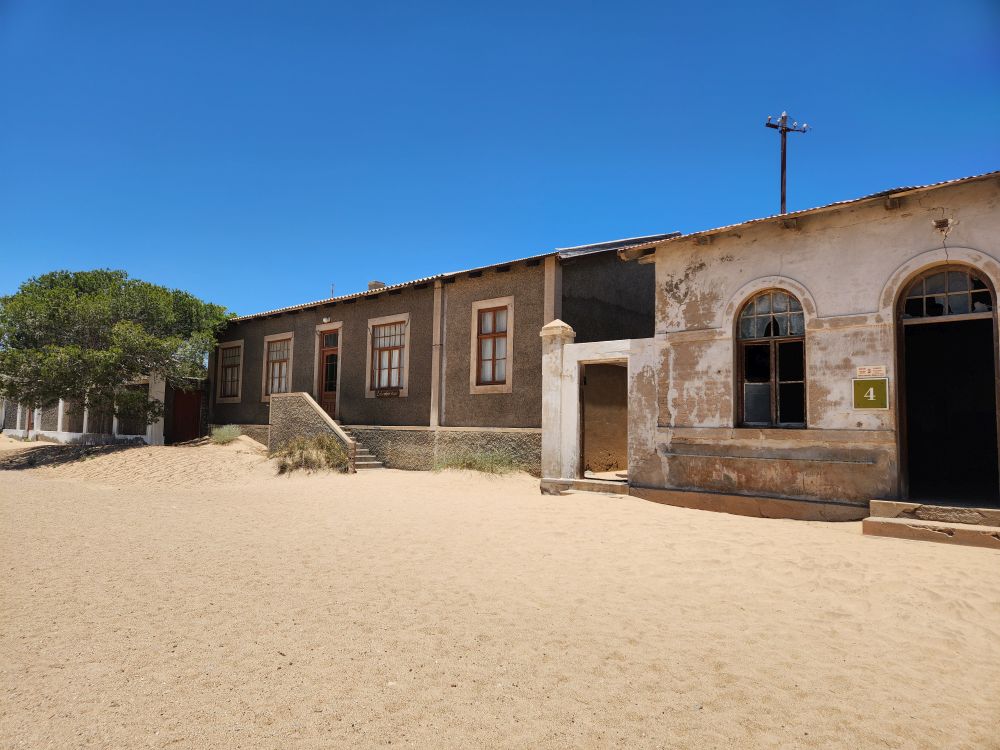
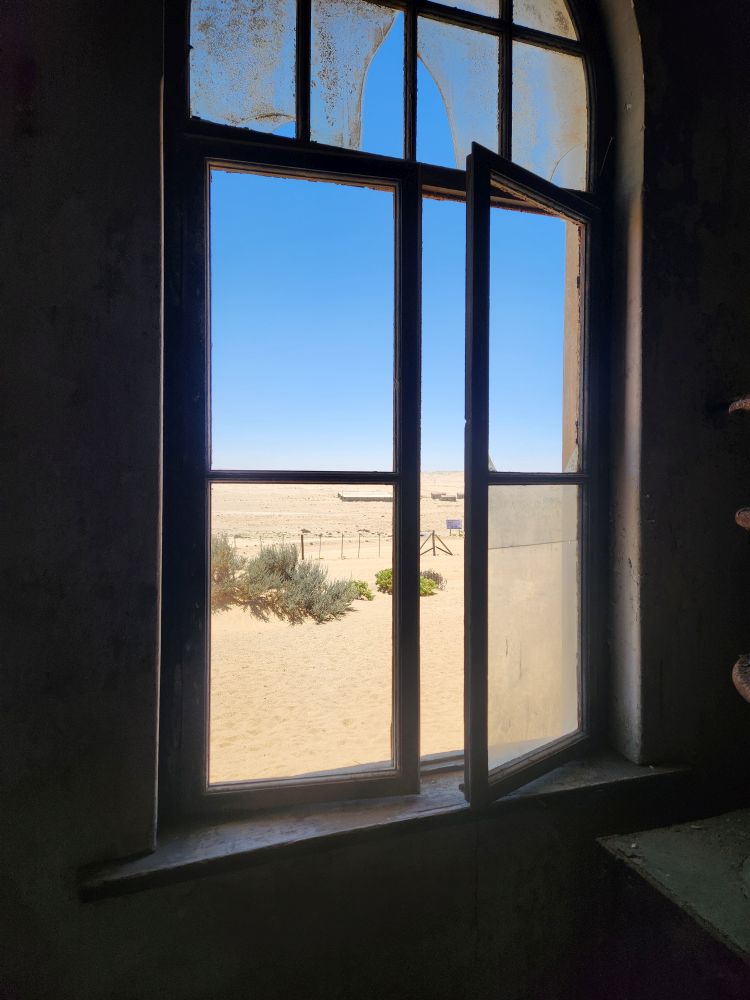
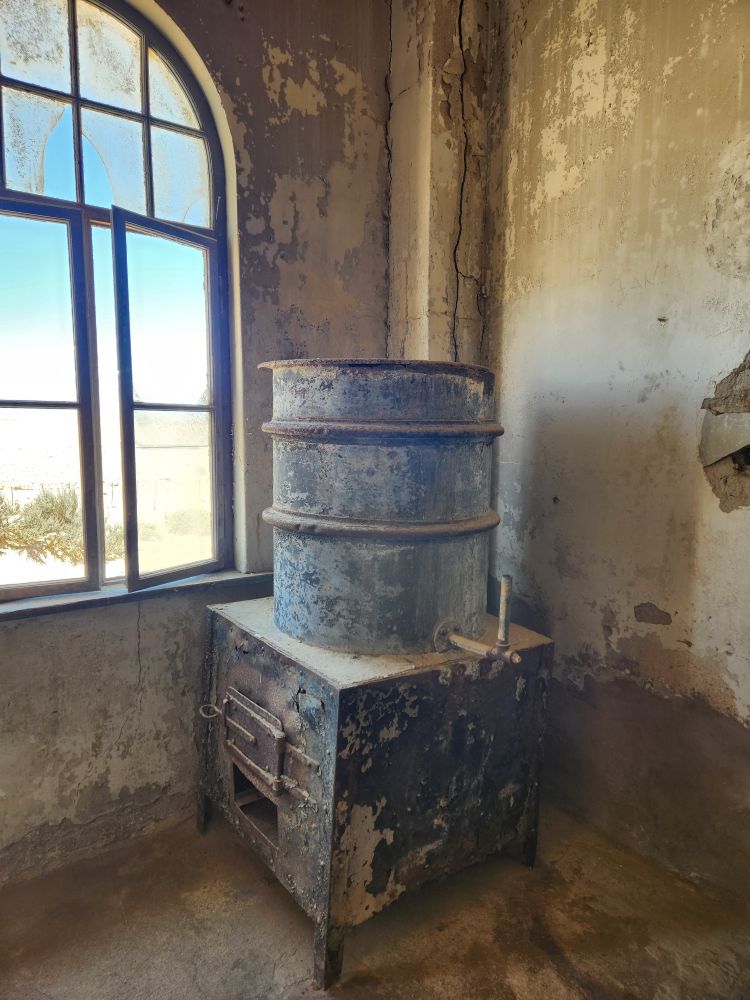
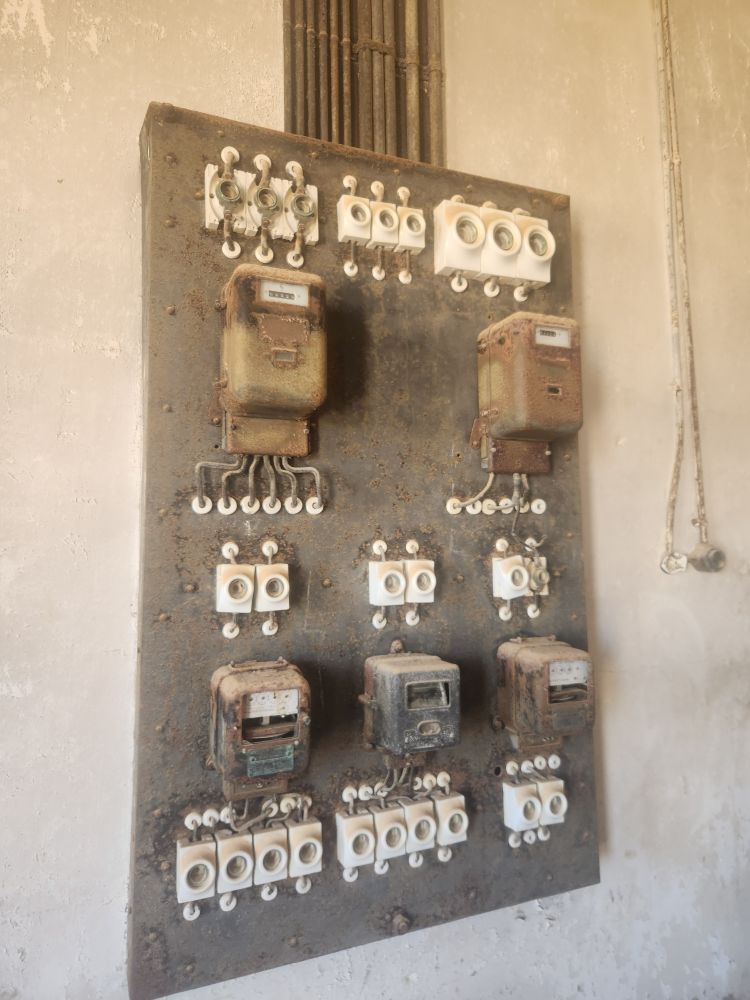
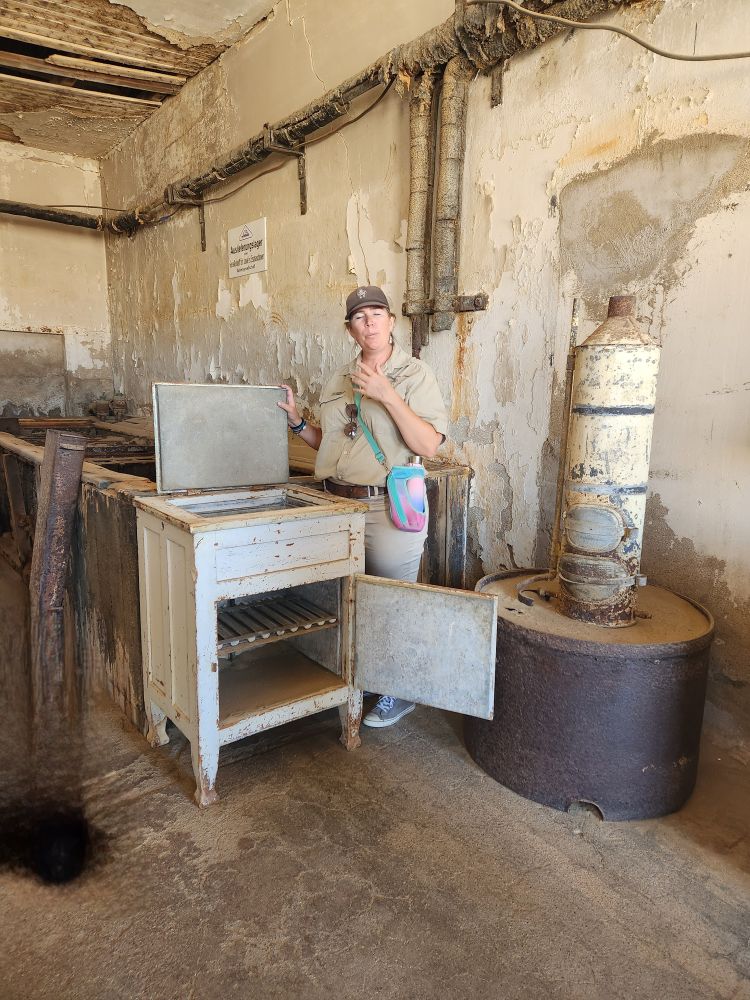
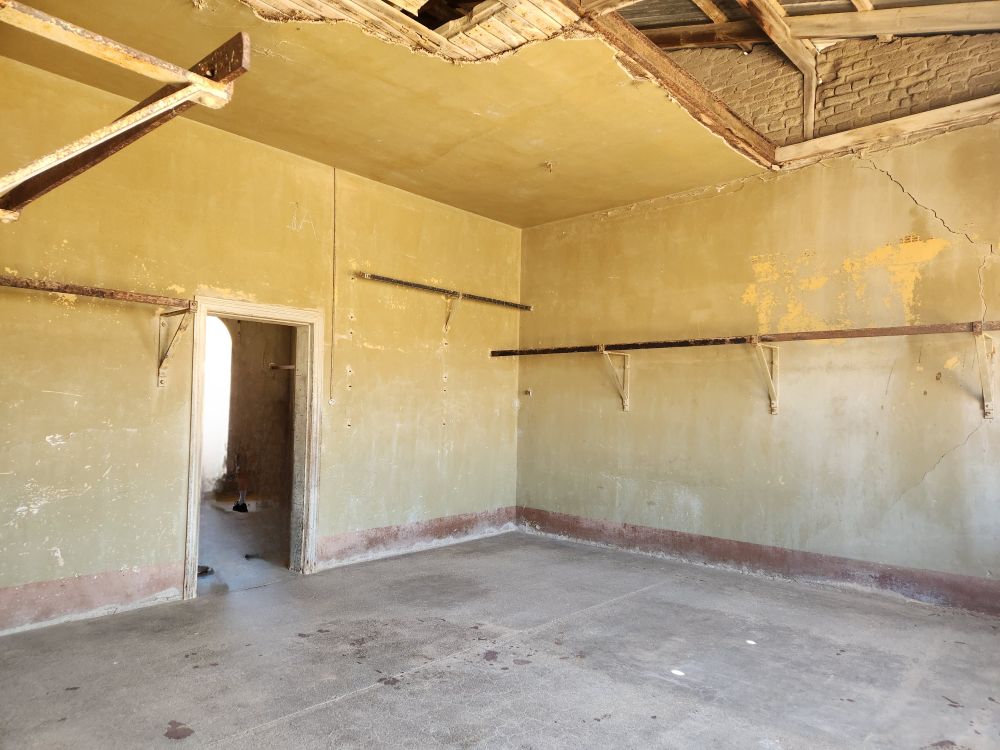
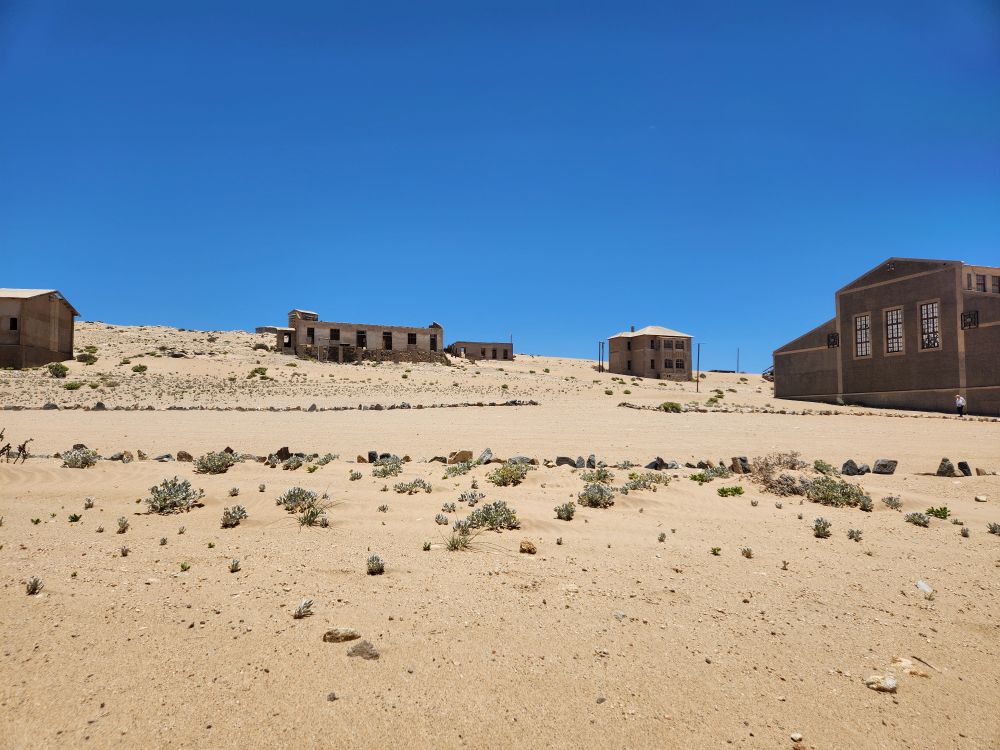
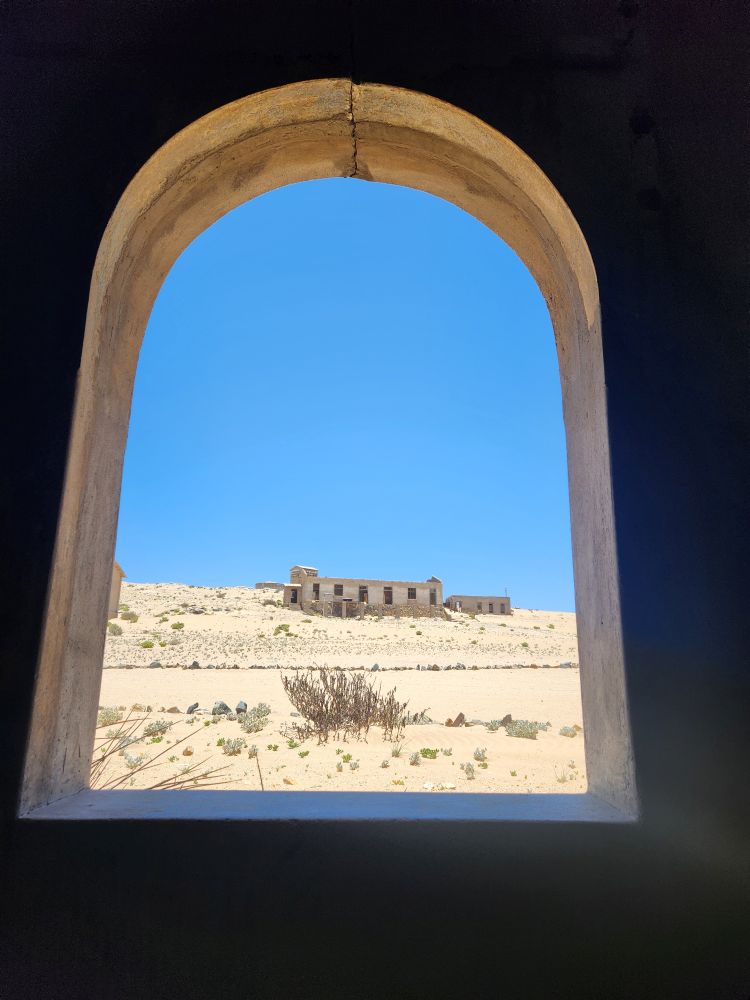
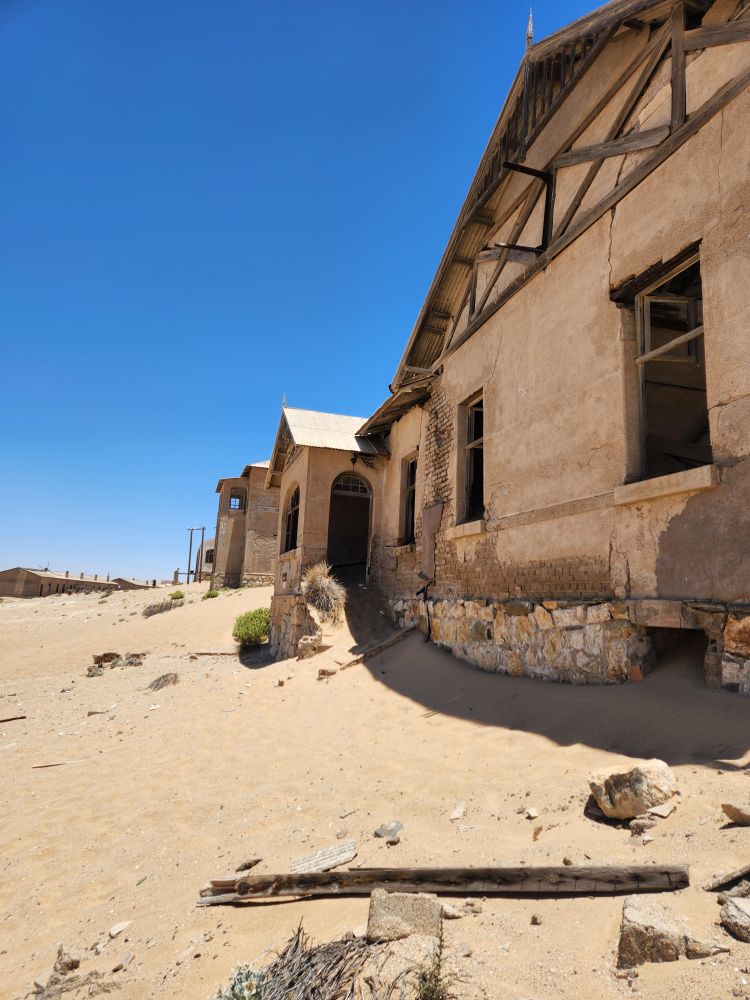
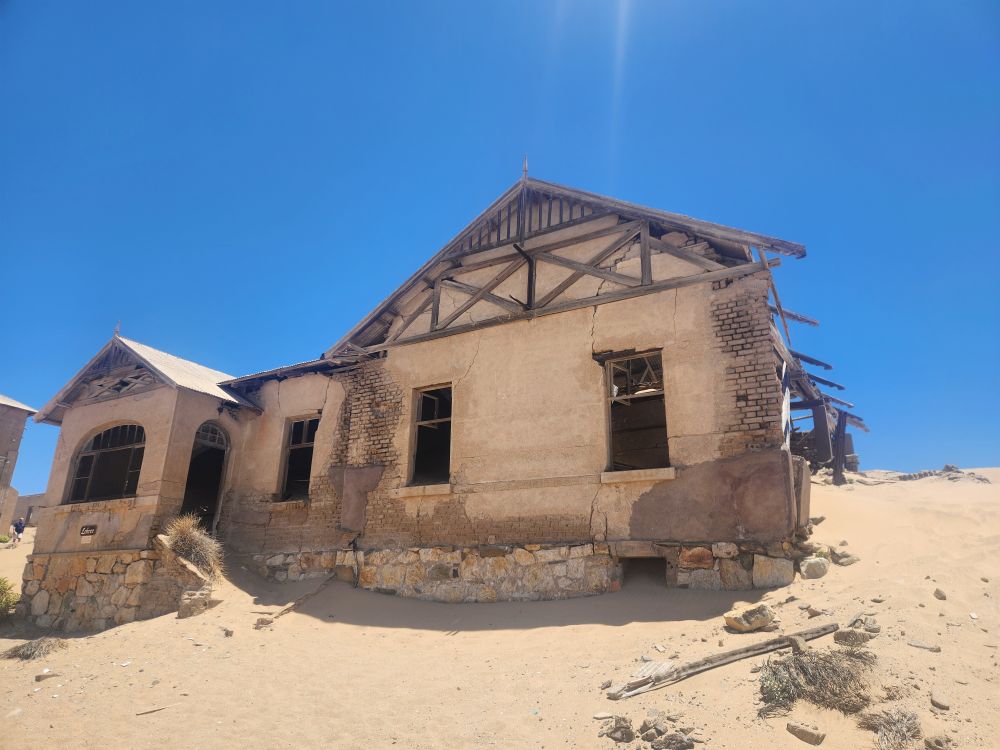
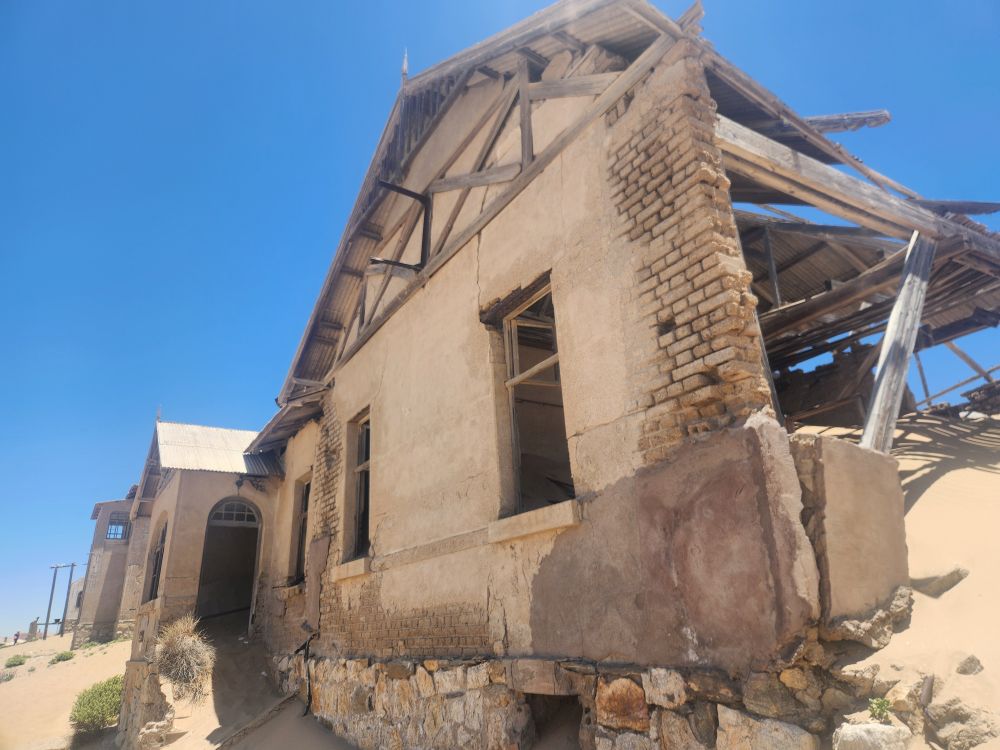
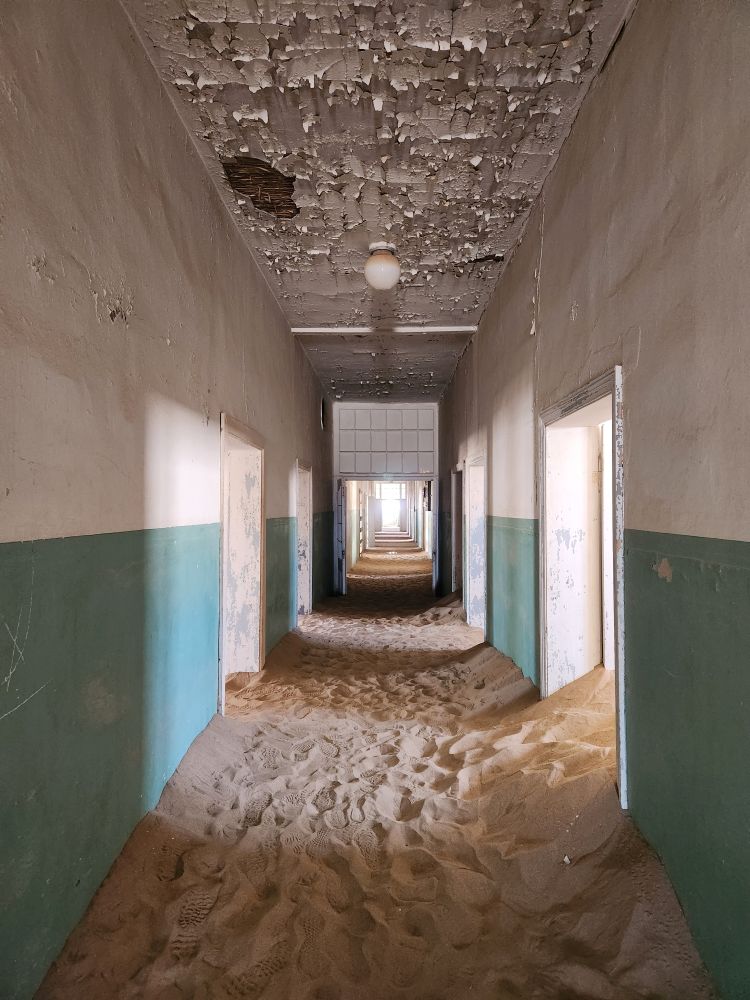
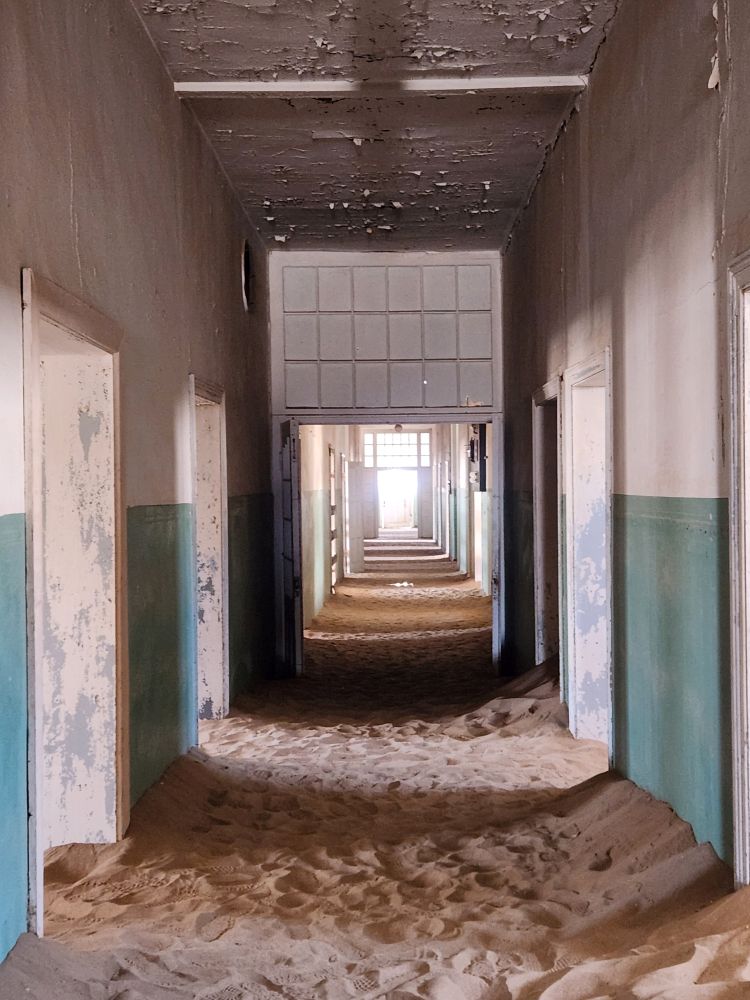
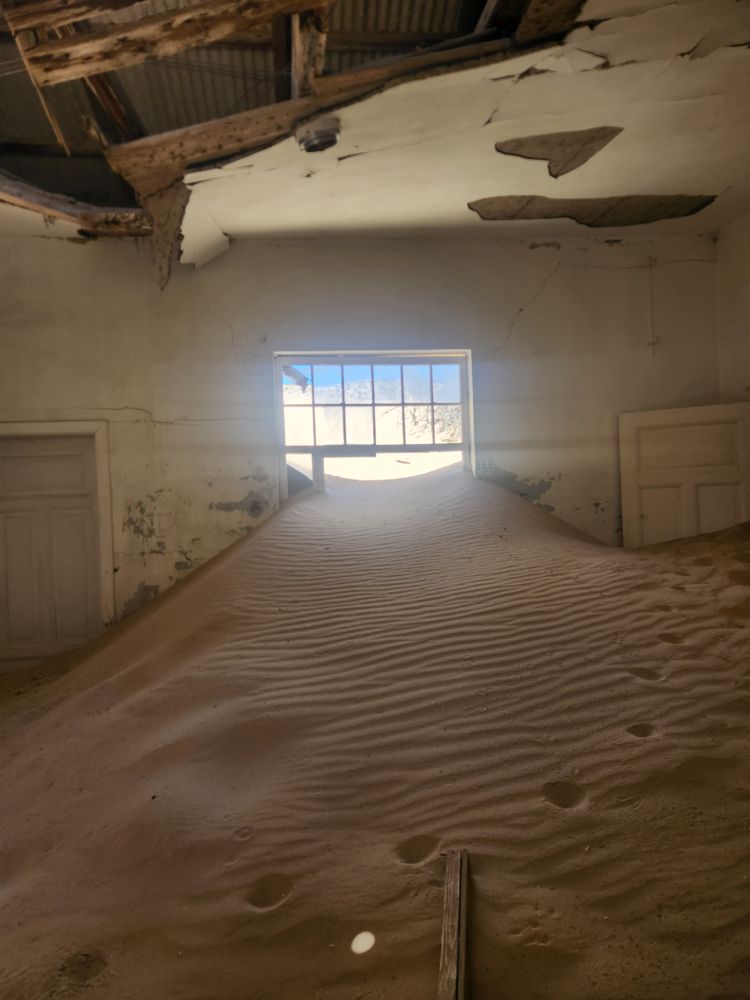
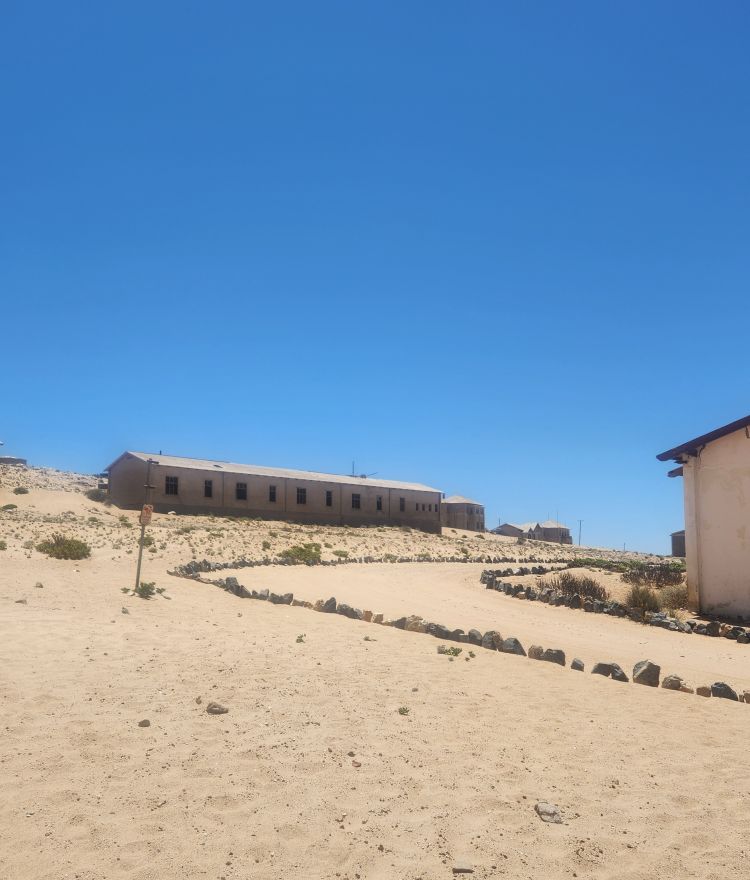
More stories abound as we move through the town, but we just can’t stop taking pictures of all the buildings in different states of disrepair. It is amazing how the sand is just retaking everything everywhere here!
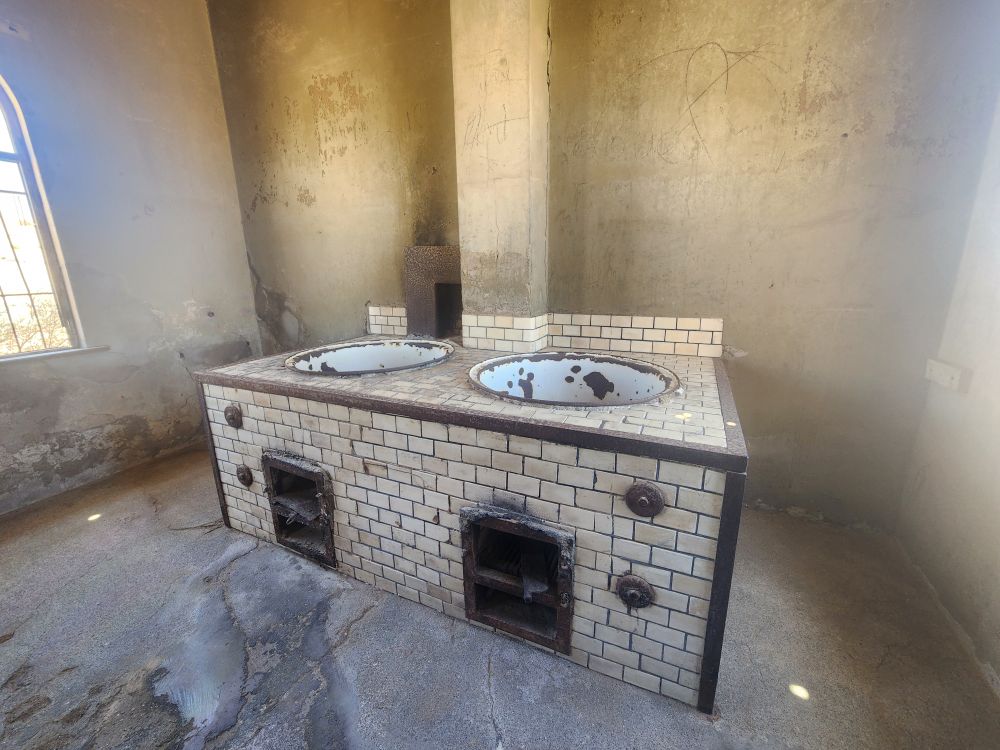
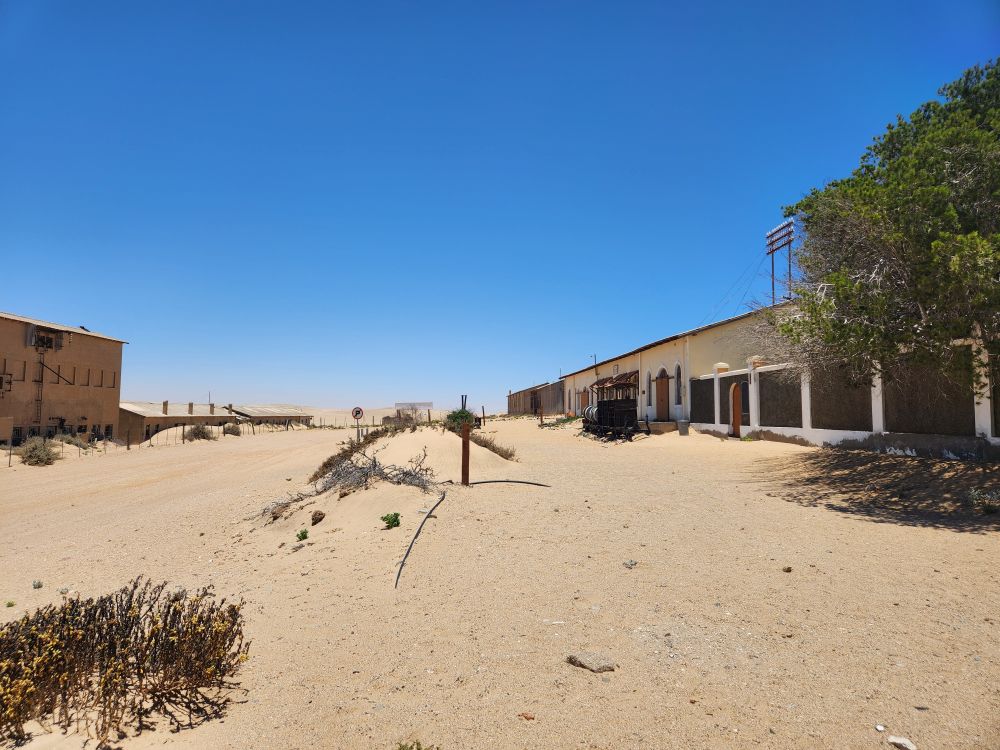
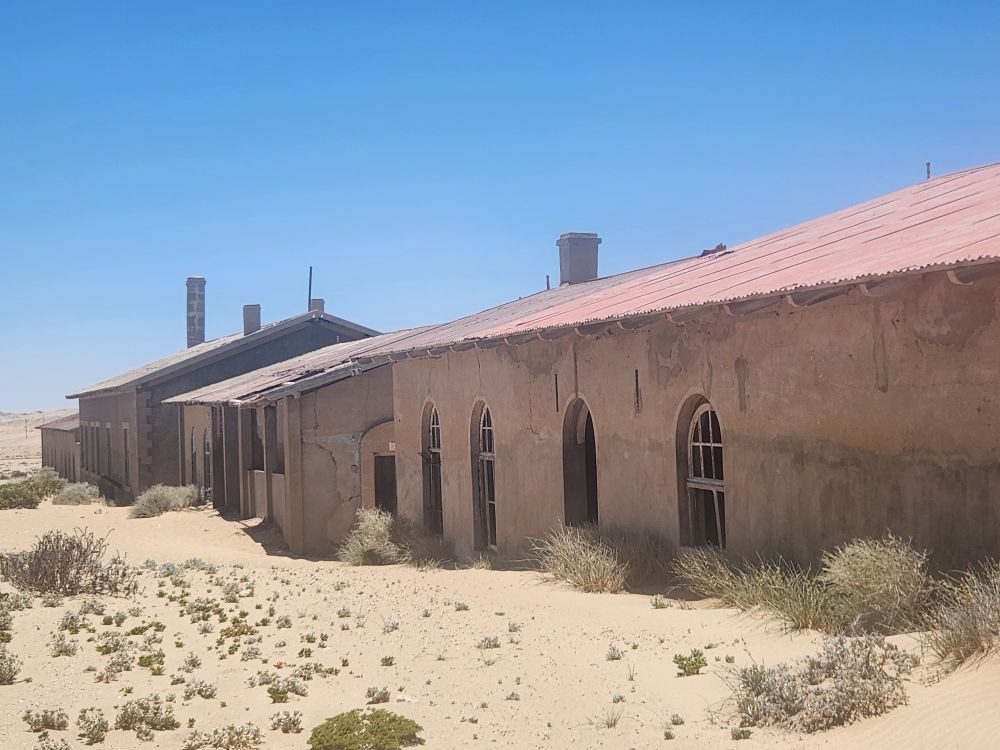
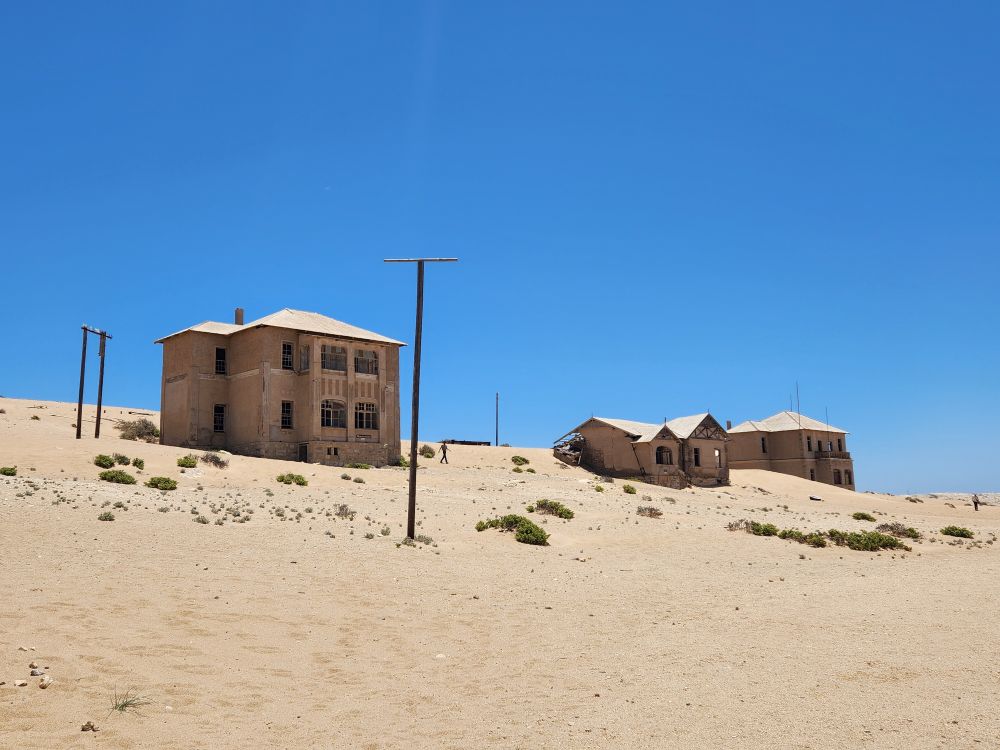
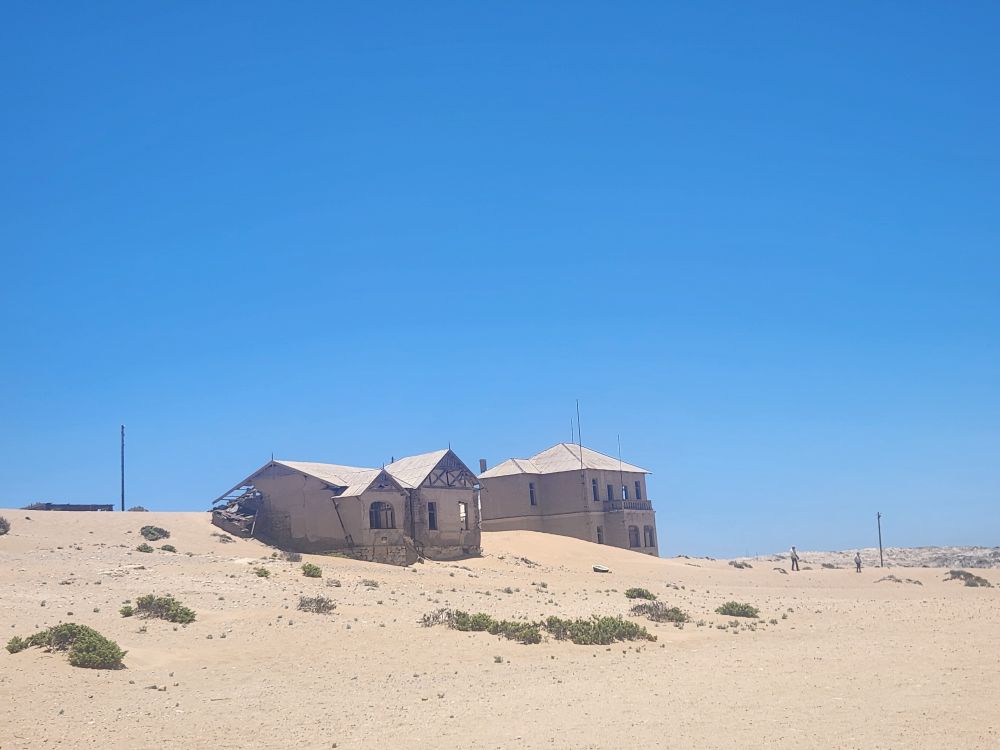
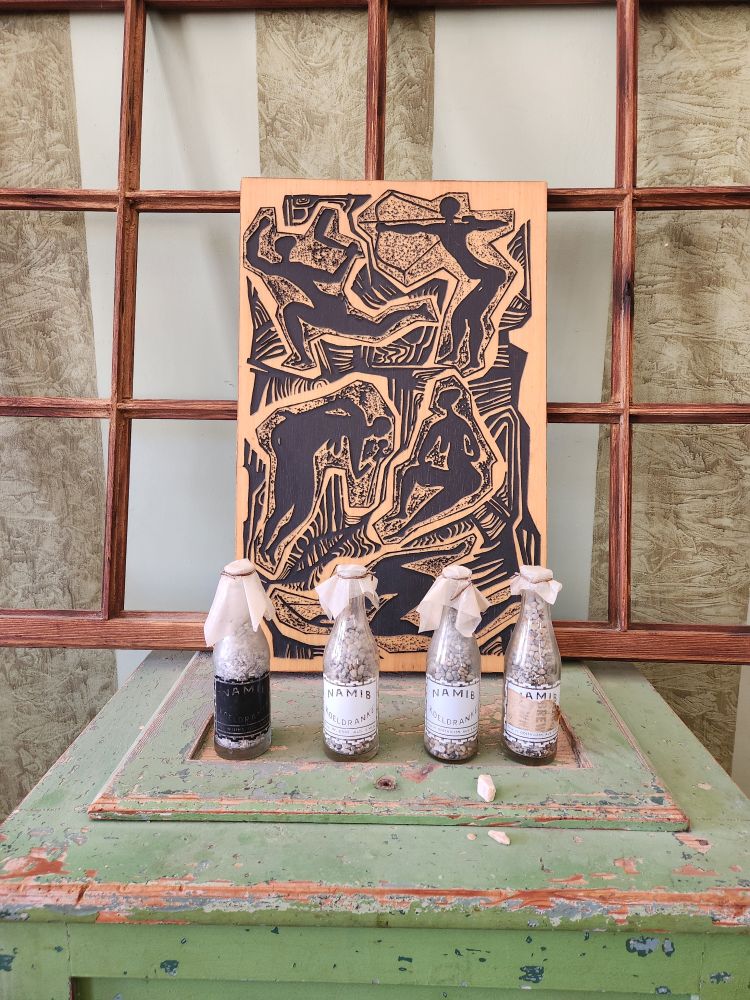
Next we move on to the “casino” which is really the ballroom area. Here the walls have been faithfully restored to how they looked in their heyday and there are lots of historical displays and informational boards. We meander through more large kitchen equipment, displays of old tools and utensils used at the time. Interesting, but the main attraction is outside!
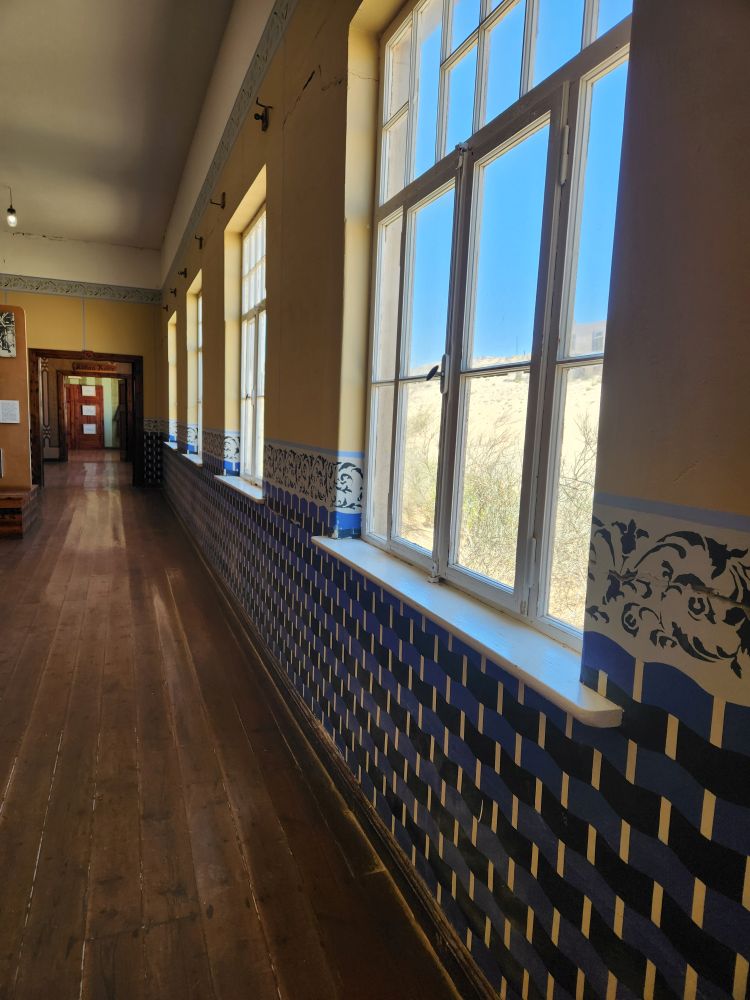
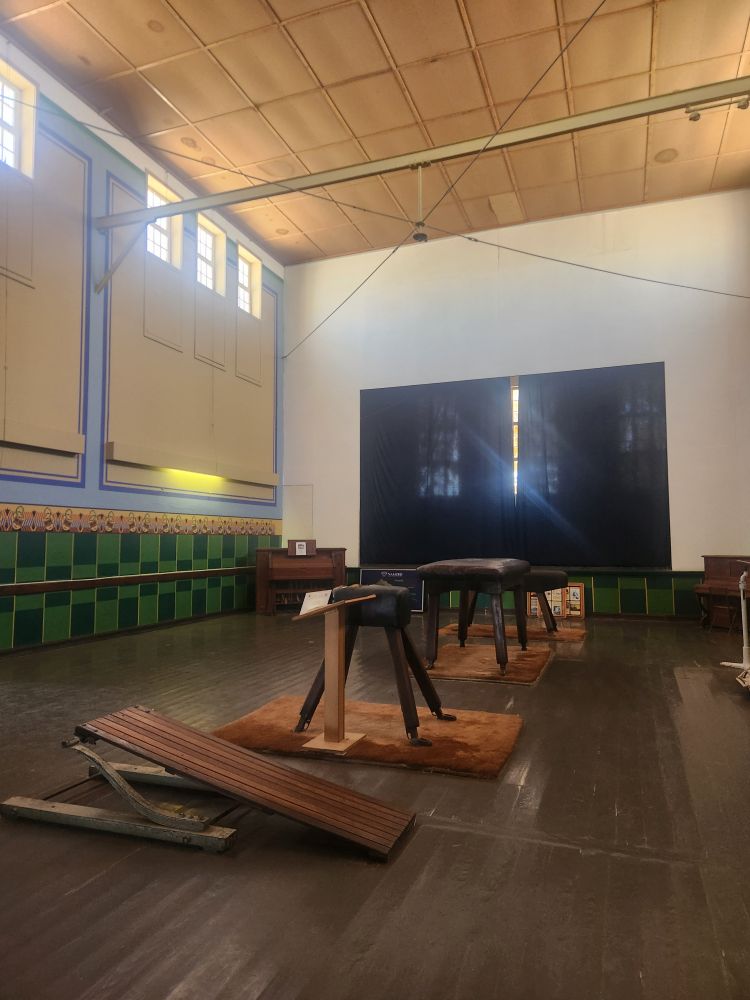
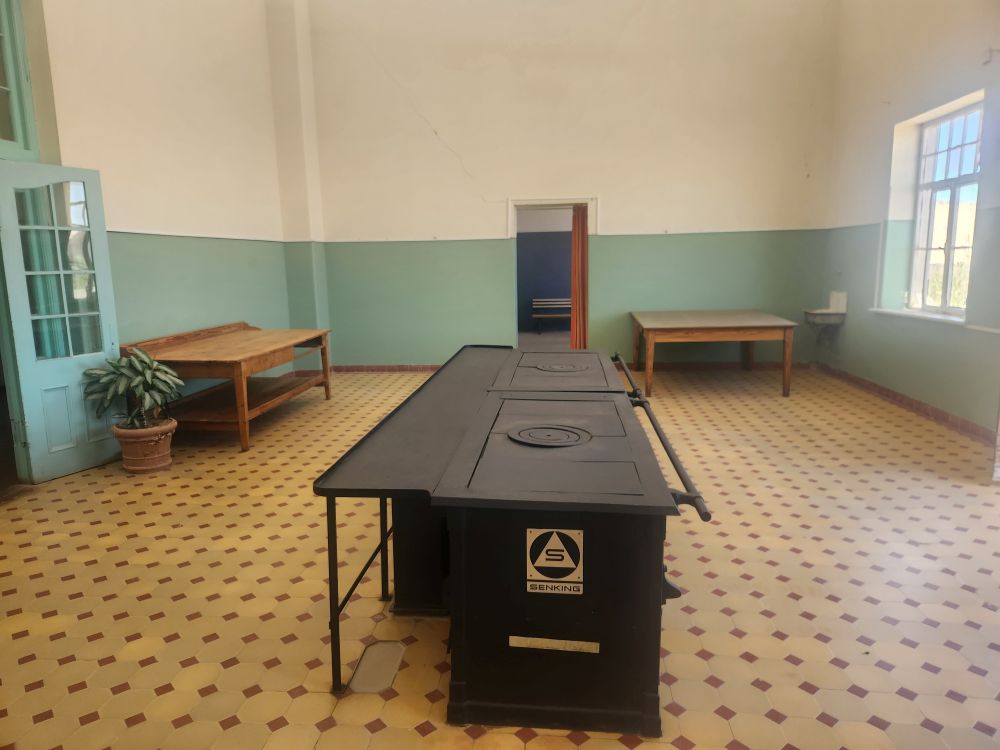
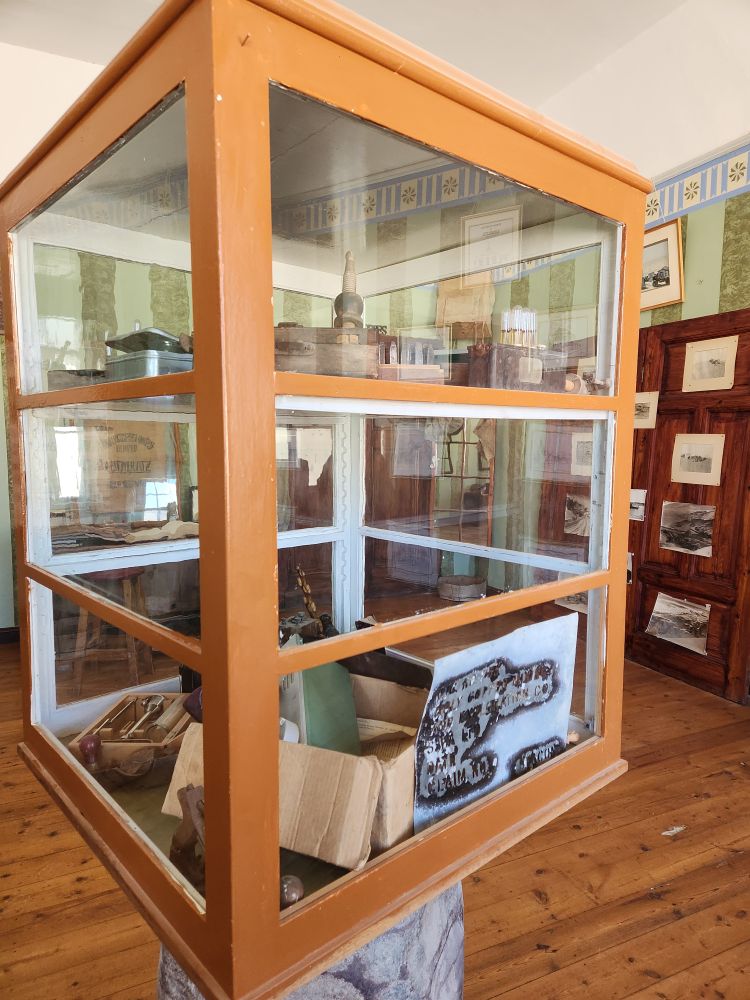
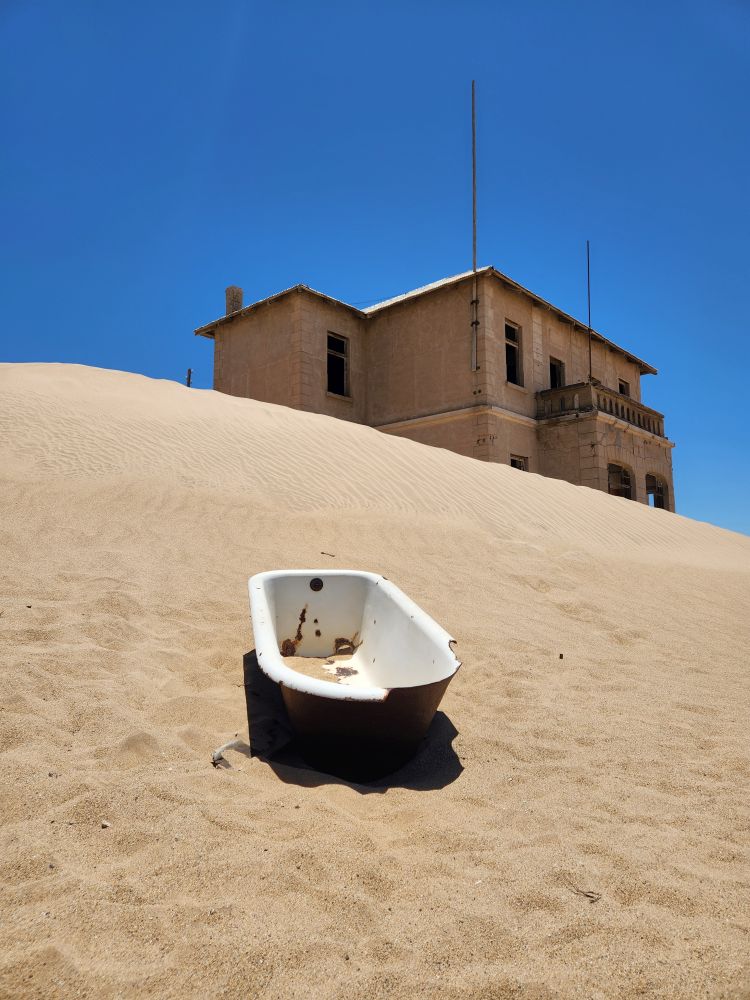
It is the end of the official tour and now we can wander. And wander we do – all through the town, past the bathtub that has obviously made its way out from some destroyed building, now sitting emblematically in the between two houses, past the manager’s house and into the Quatiermeister’s house – which is one of the most preserved (and thus safe) houses on the property.
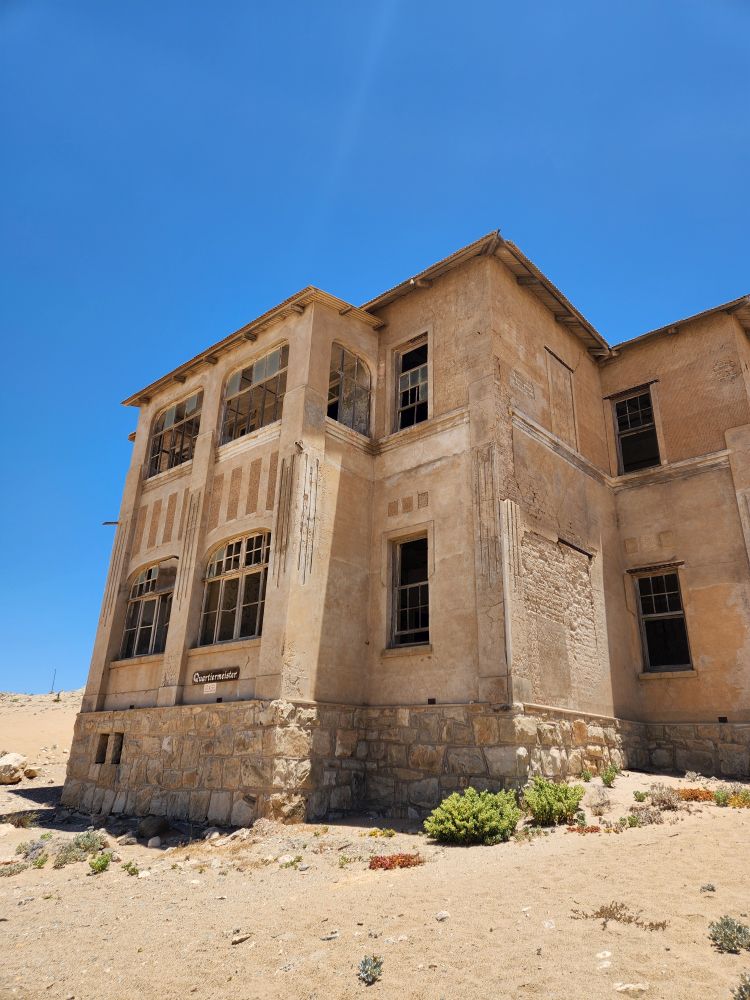
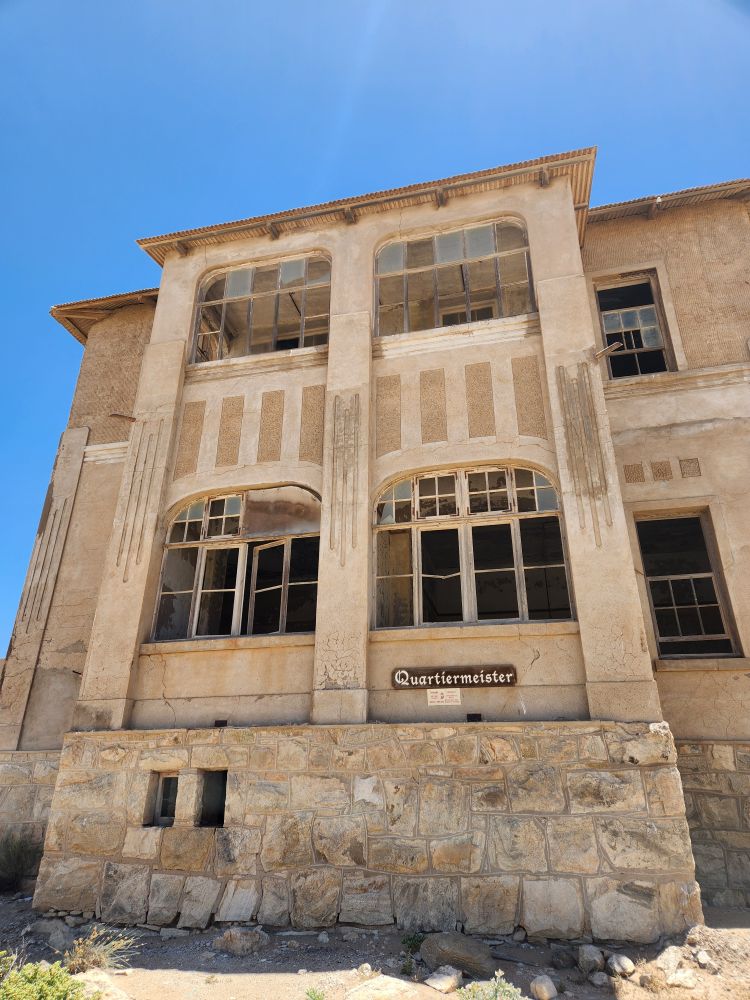
Inside is a glimpse of what was once a grand house and a grand life. High ceilings, big floor length windows, a lovely porch area on the 2nd floor – even wallpaper still on the wall. Really amazing.
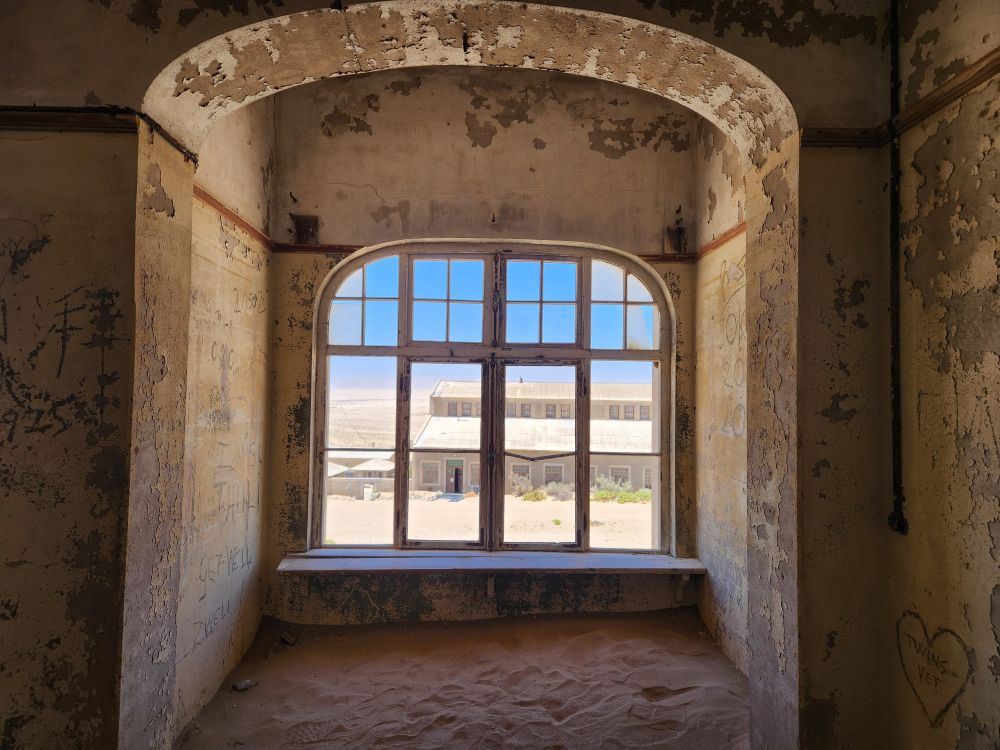
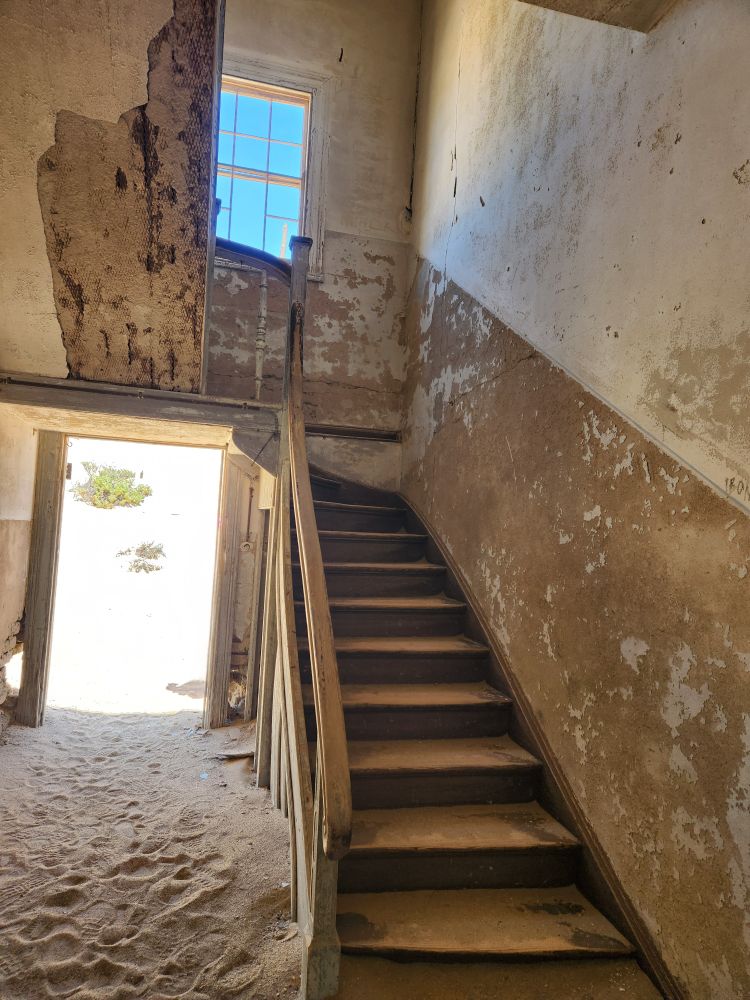
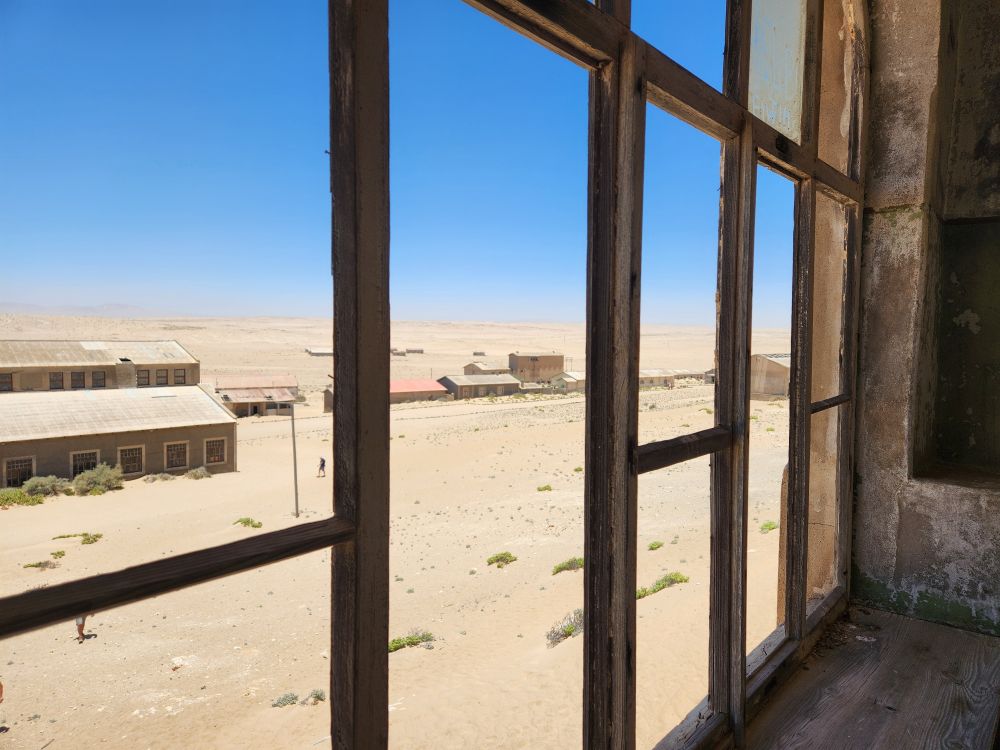
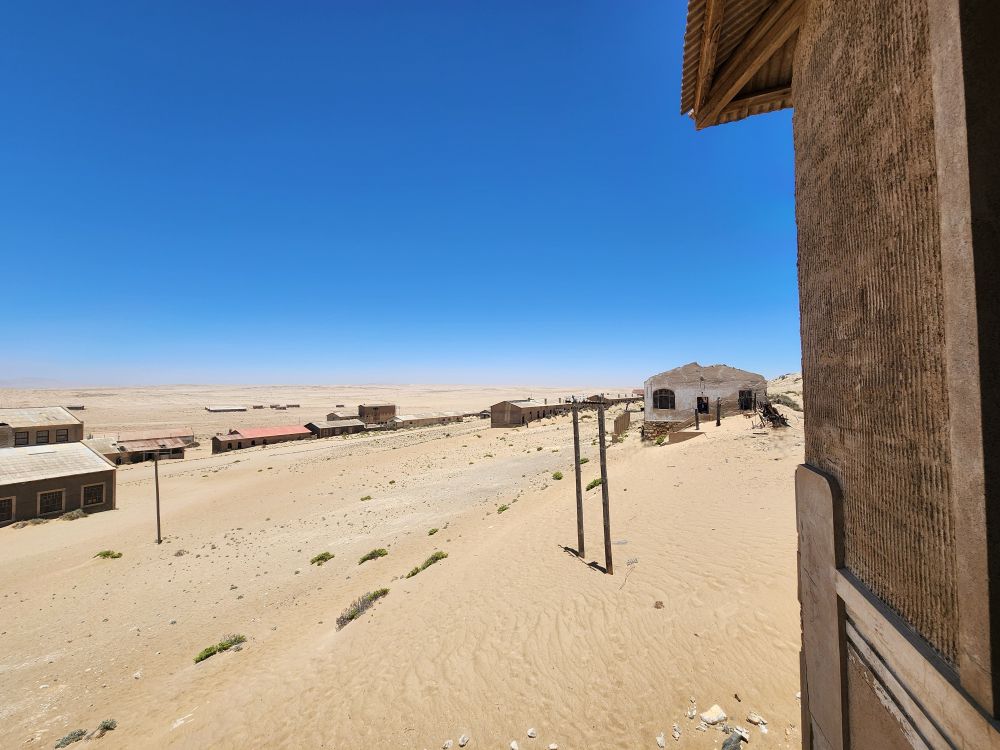
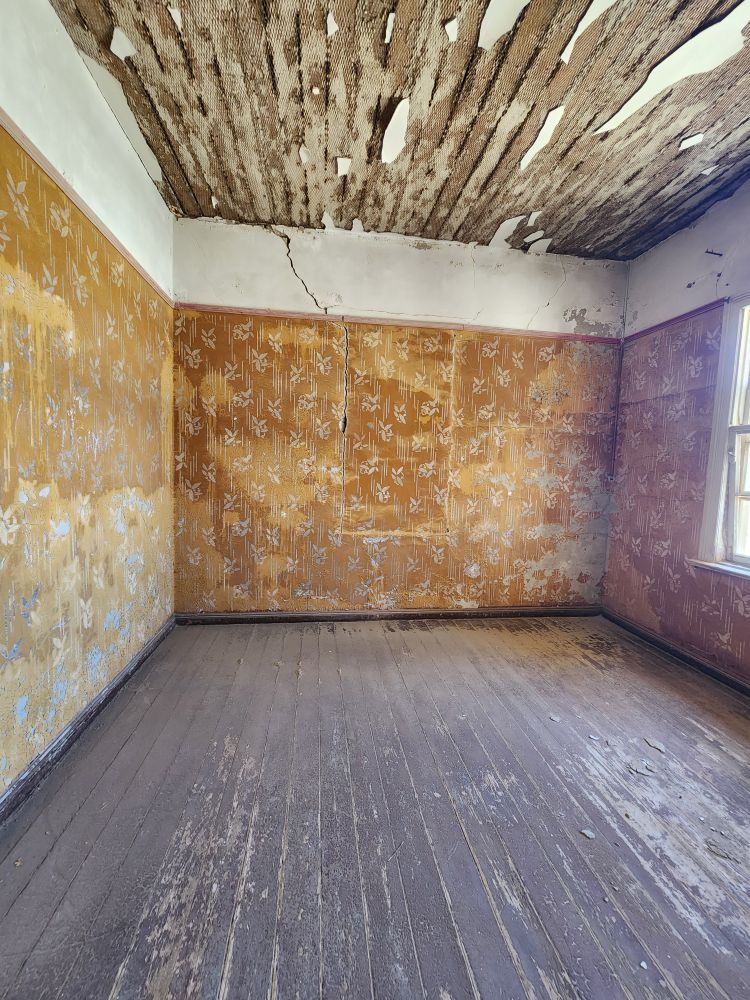
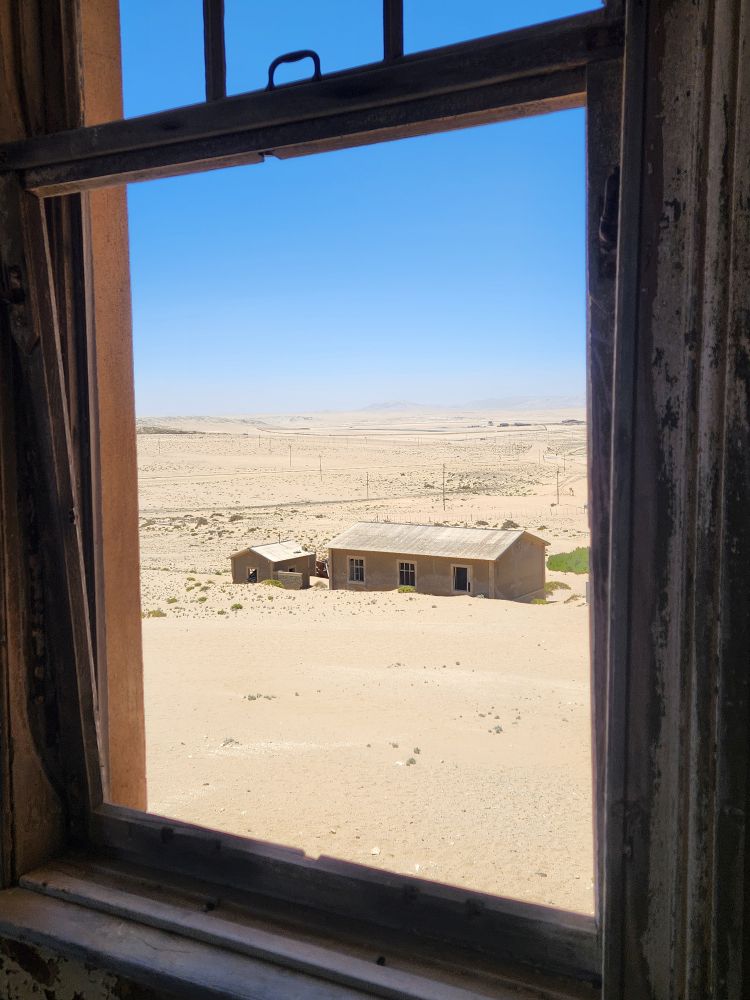
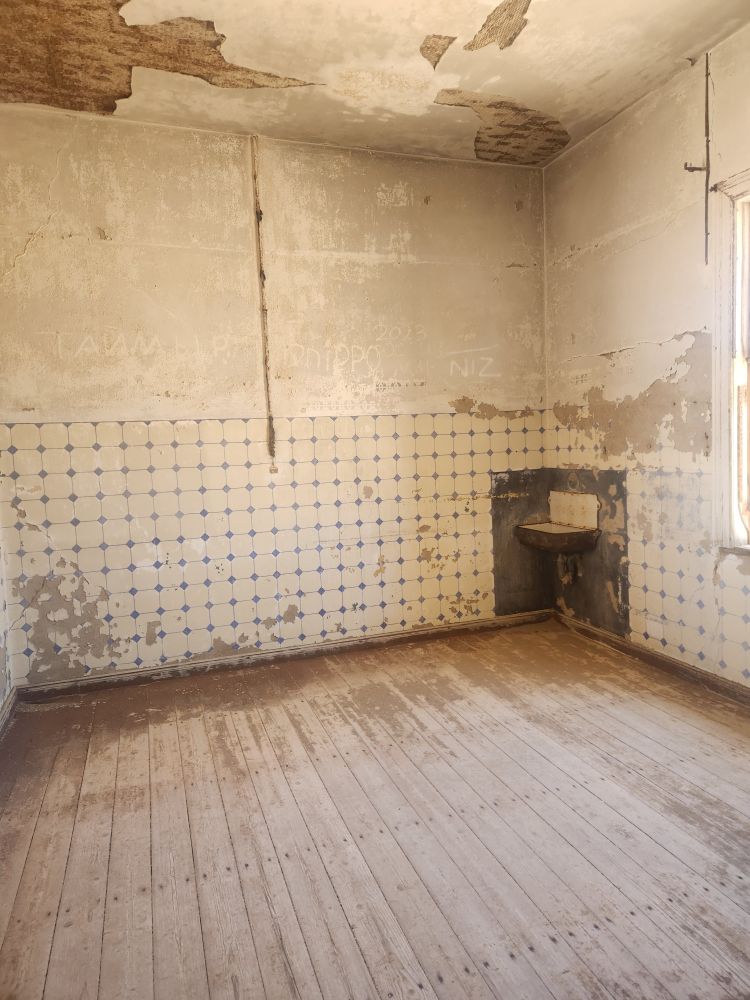
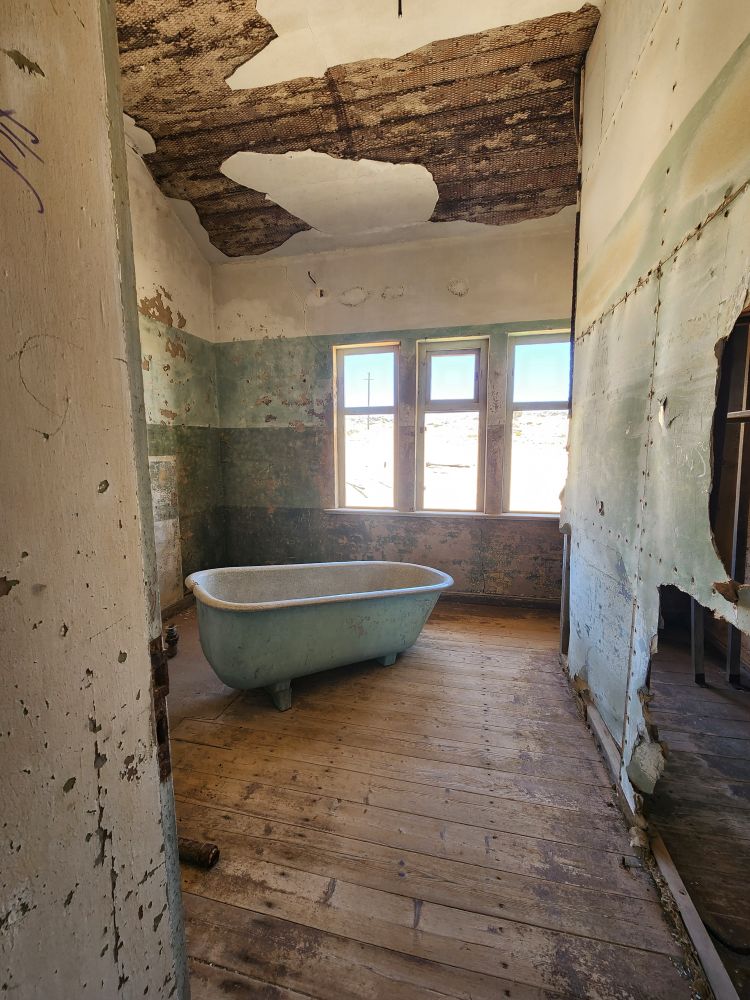
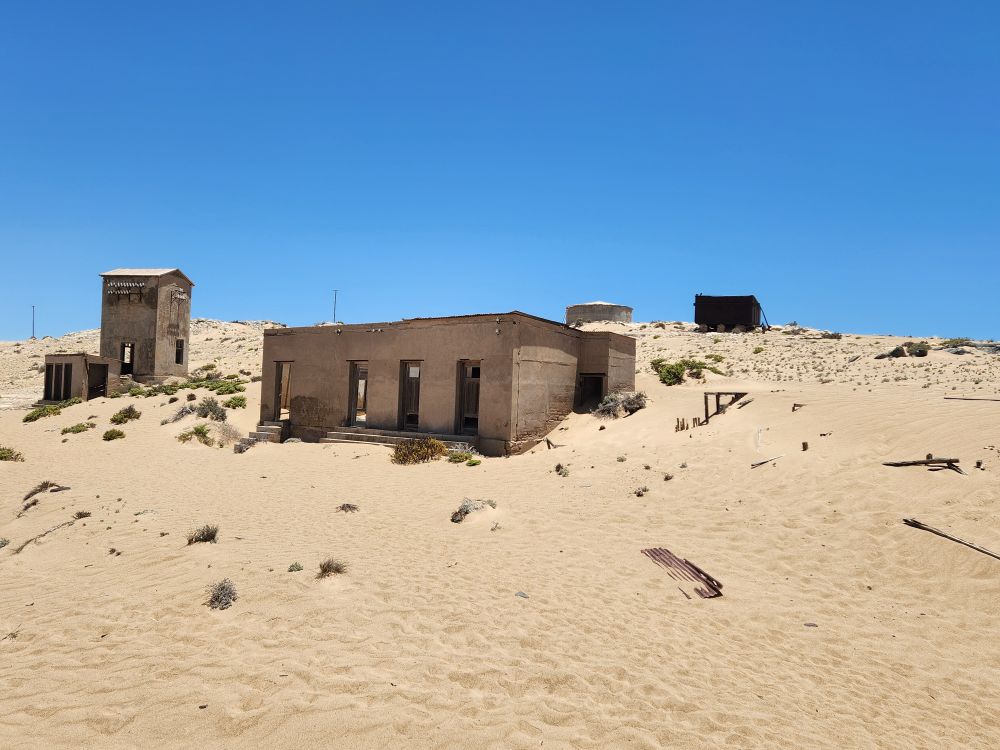
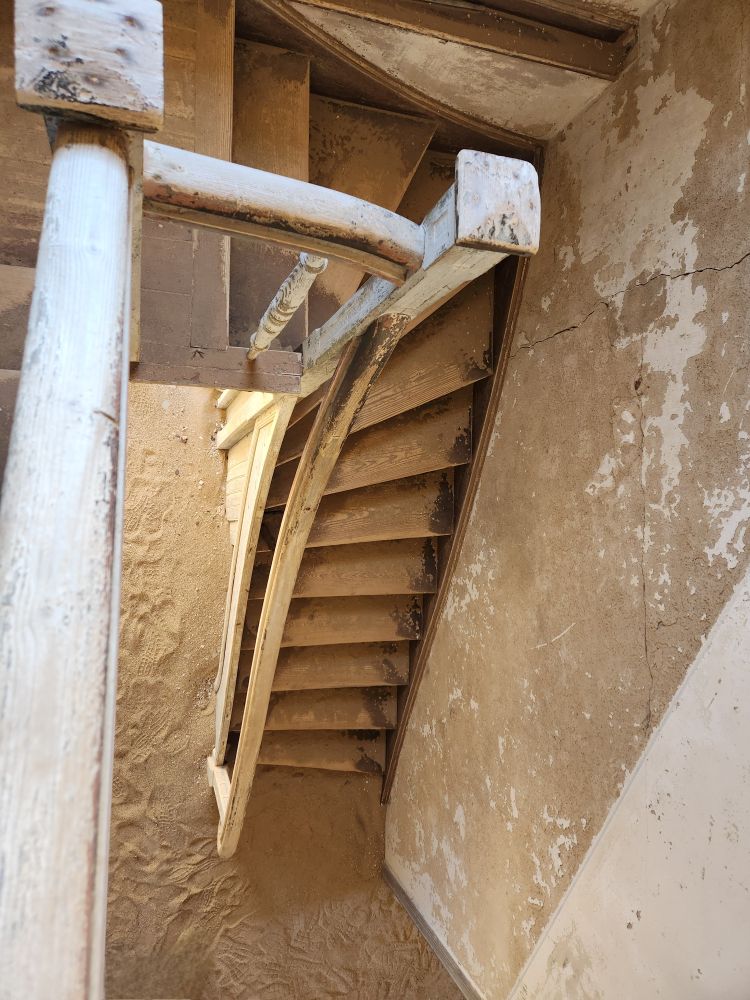
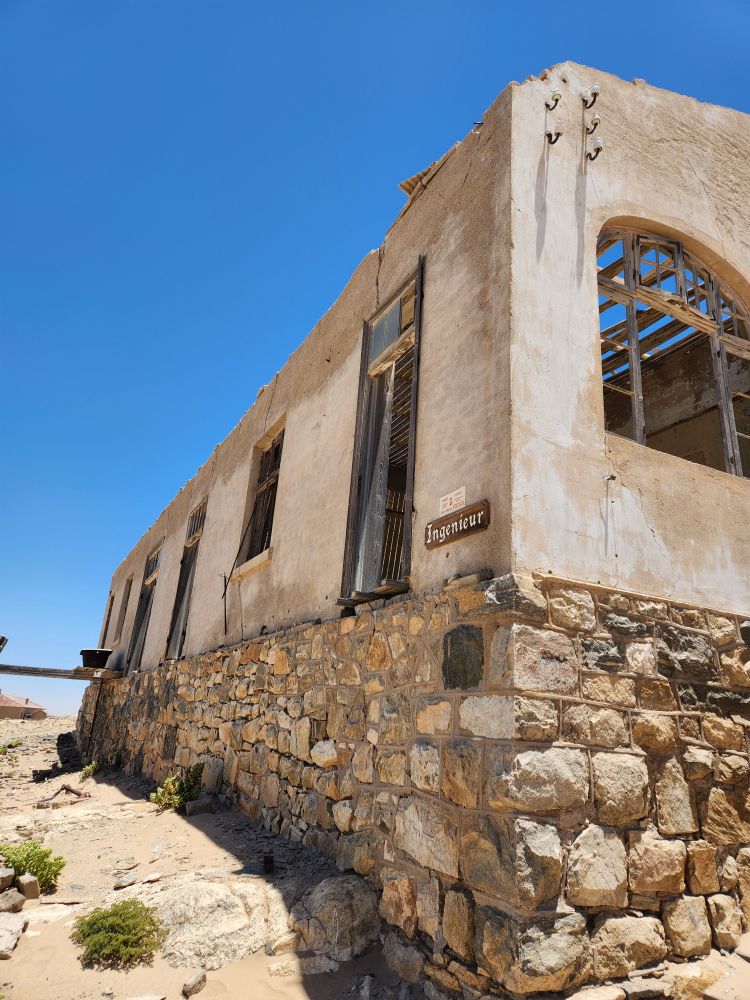
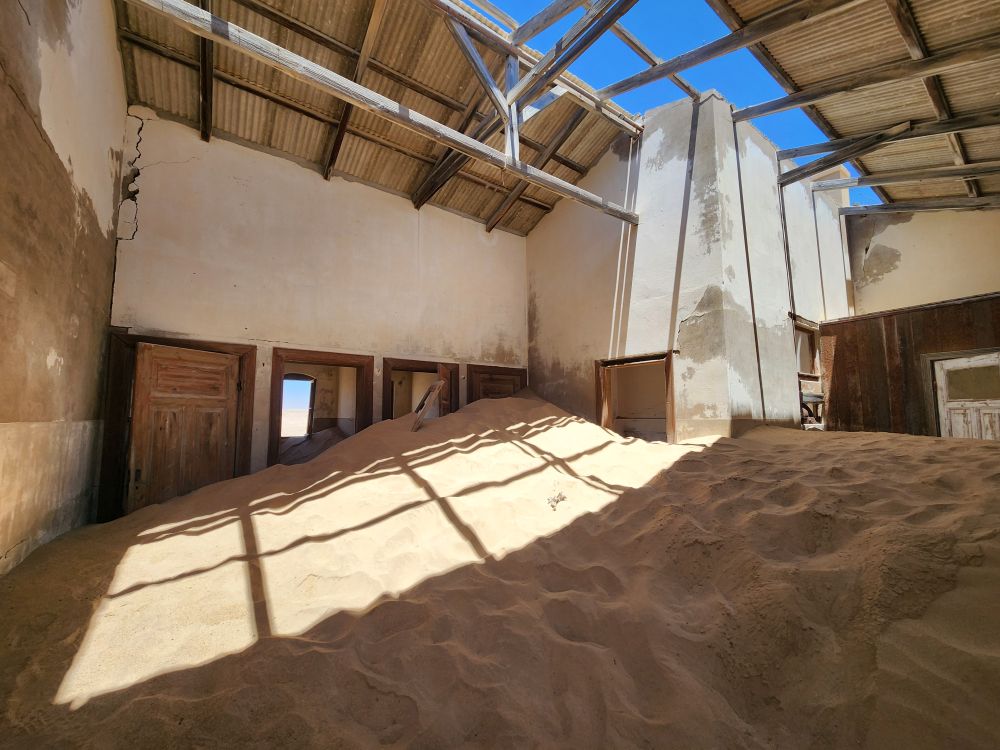
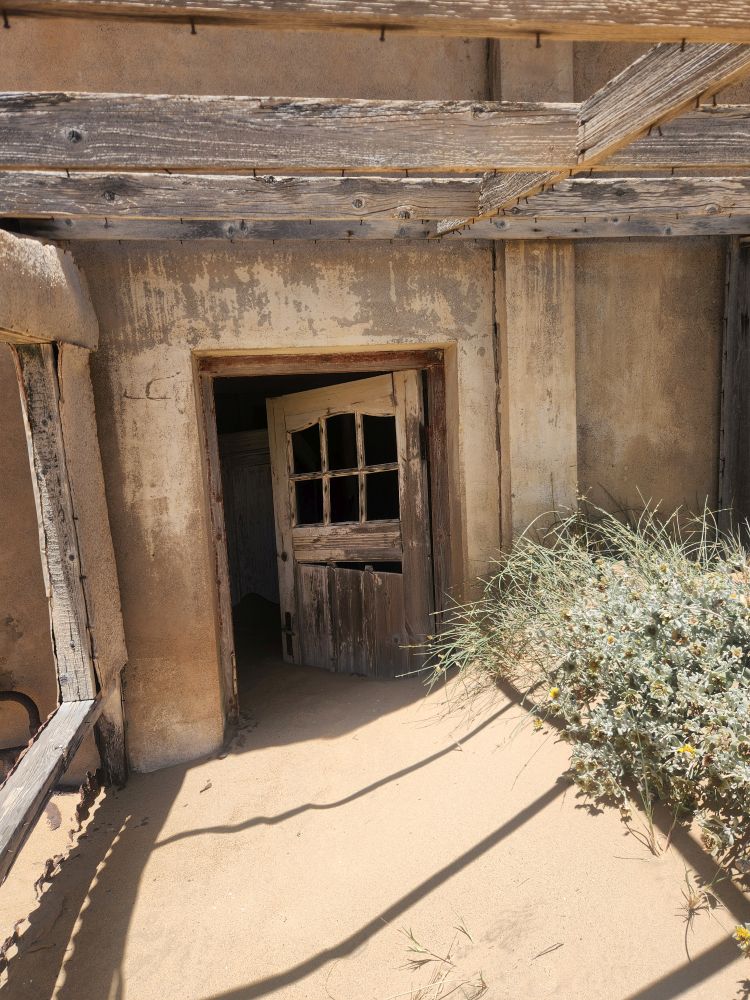
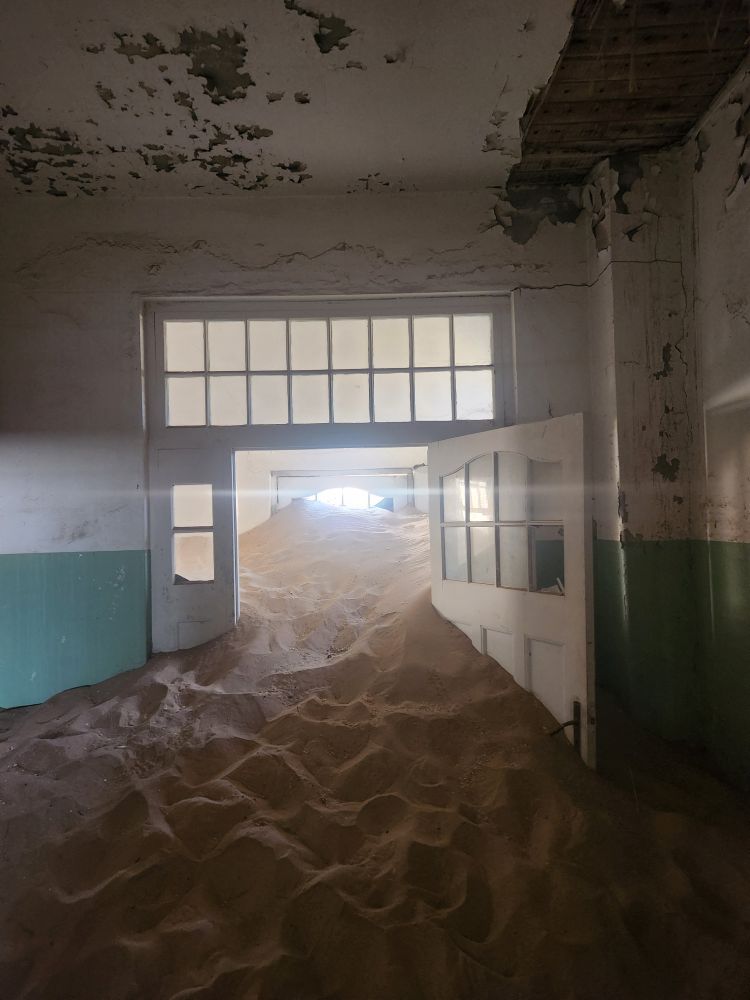
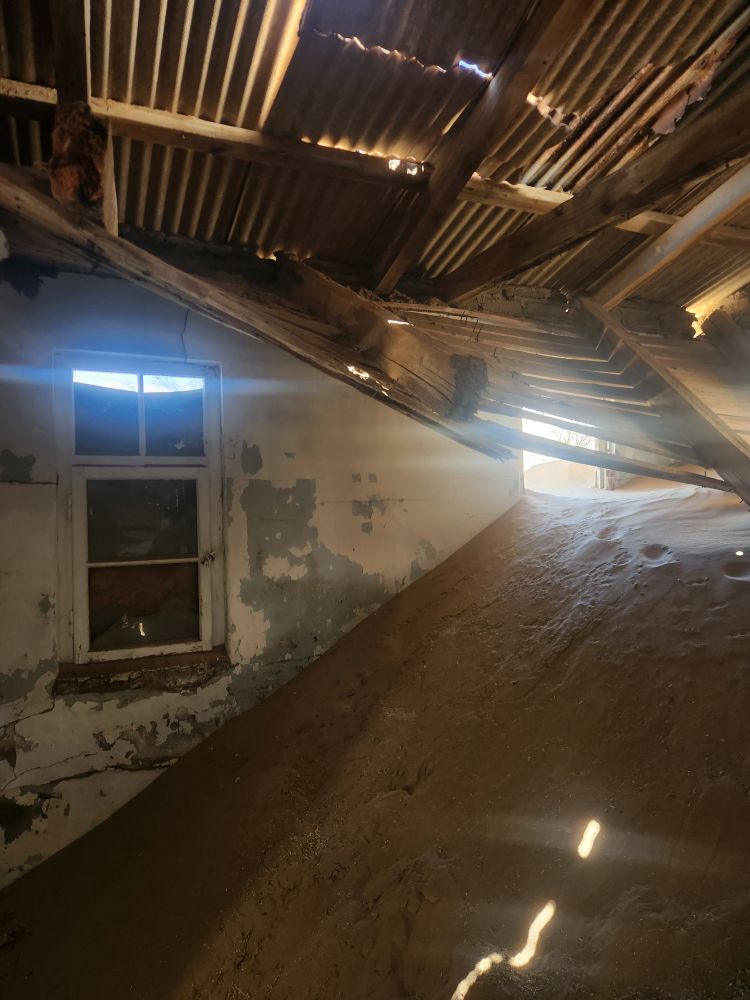
Next comes the Ingenieur’s home. Not in such good repair! But oh, the photo opportunities. This place is a treasure trove of perfect photos. The sand has all but taken over in here, filling rooms, all the while with the sun reflected through the dilapidated ceiling struts. In many places you have to crawl through window frames to access the interior. It is magical – but also a powerful reminder of just how easily the earth reclaims its’ own.
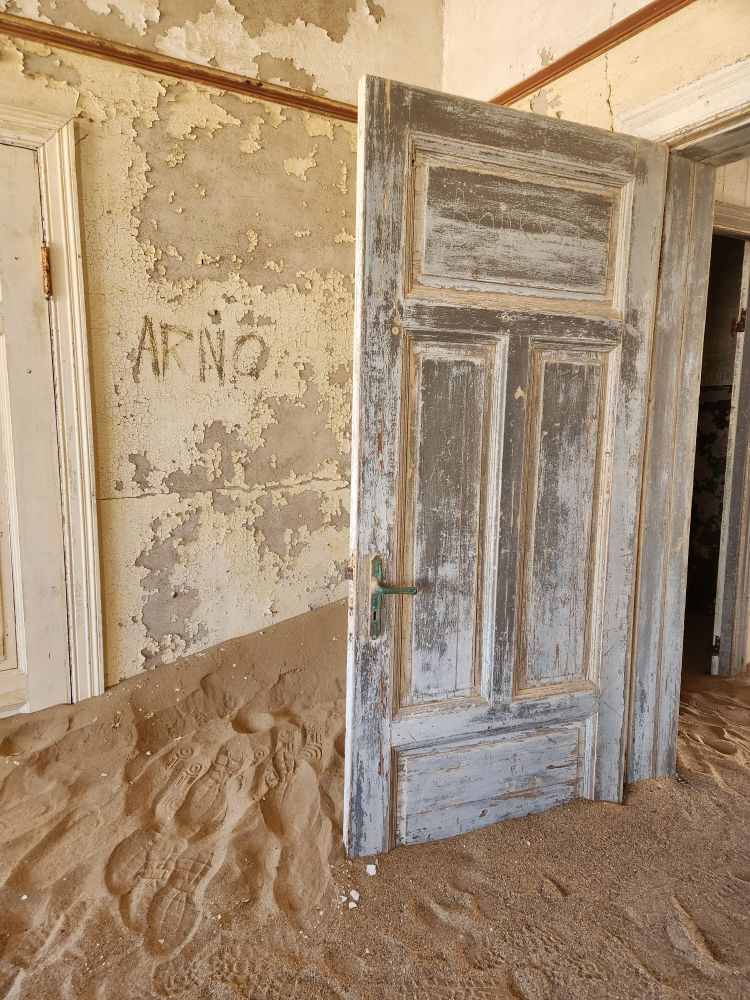
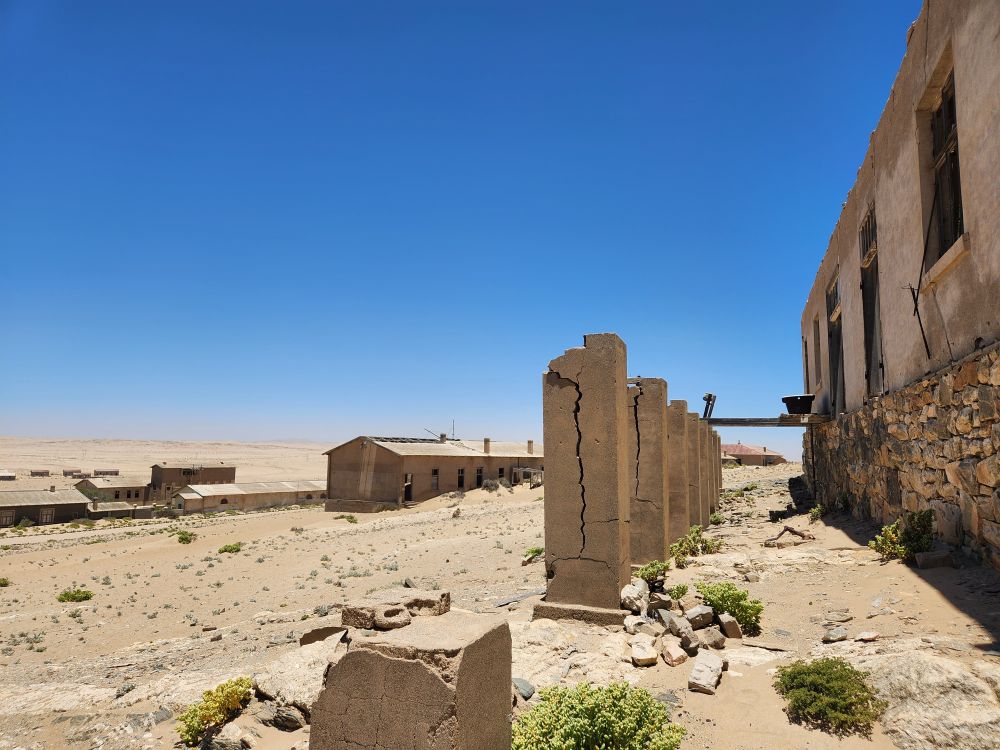
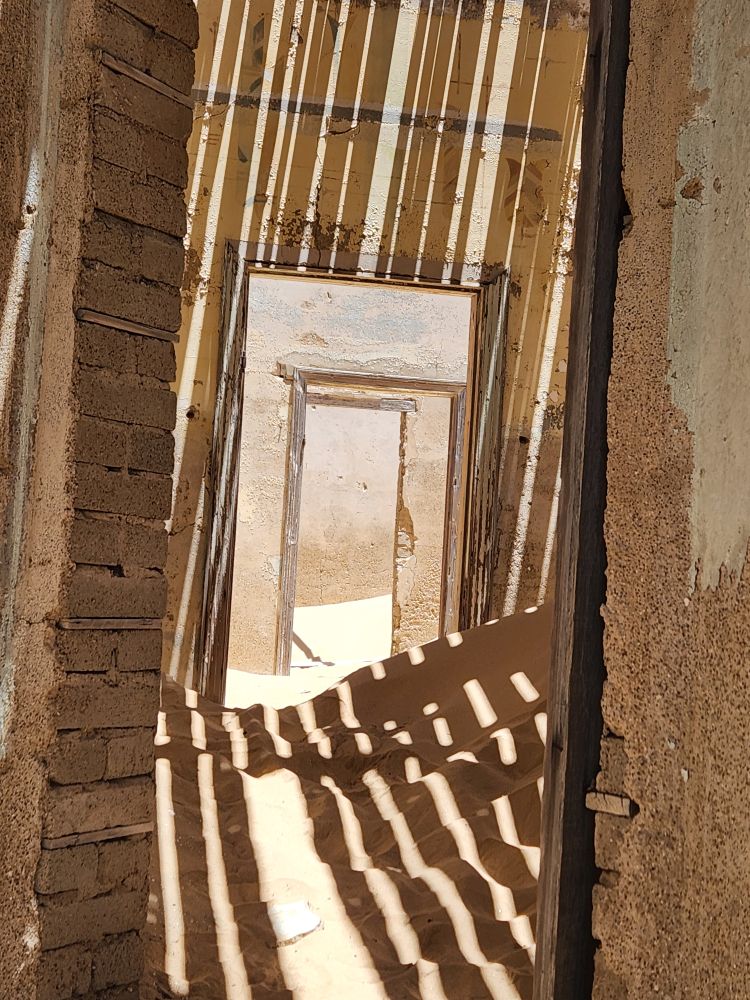
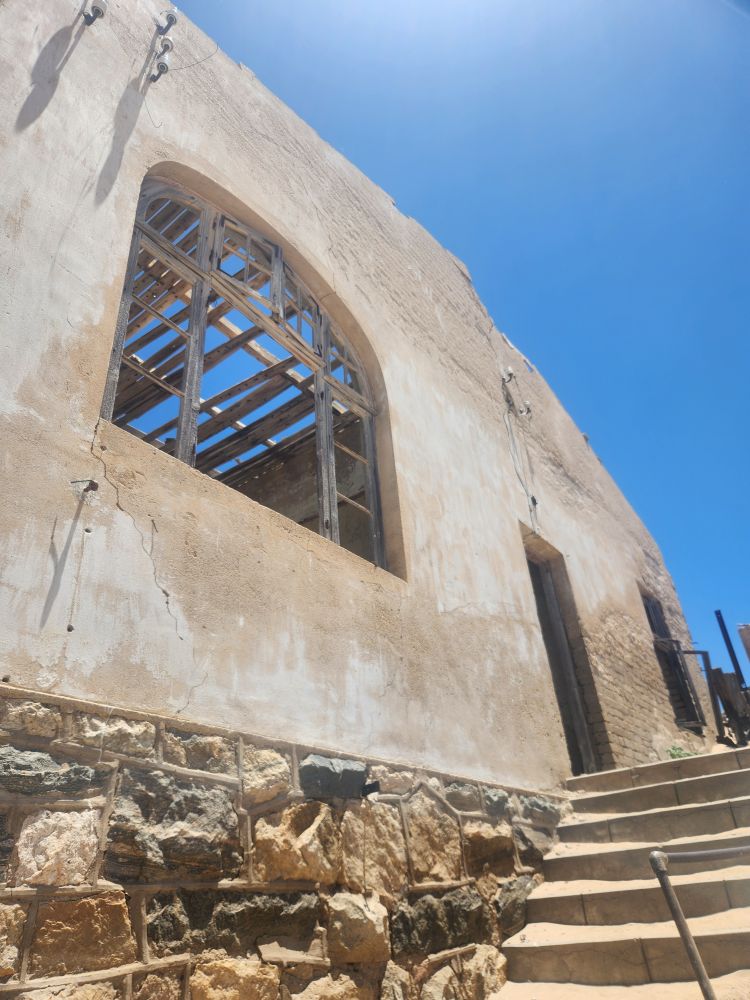
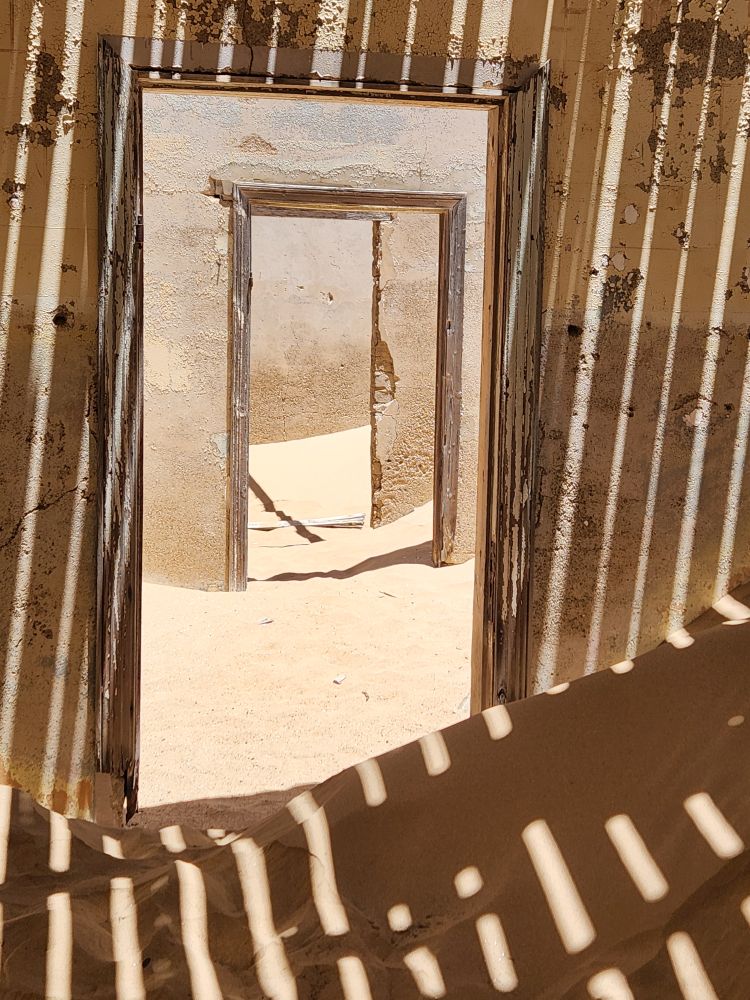
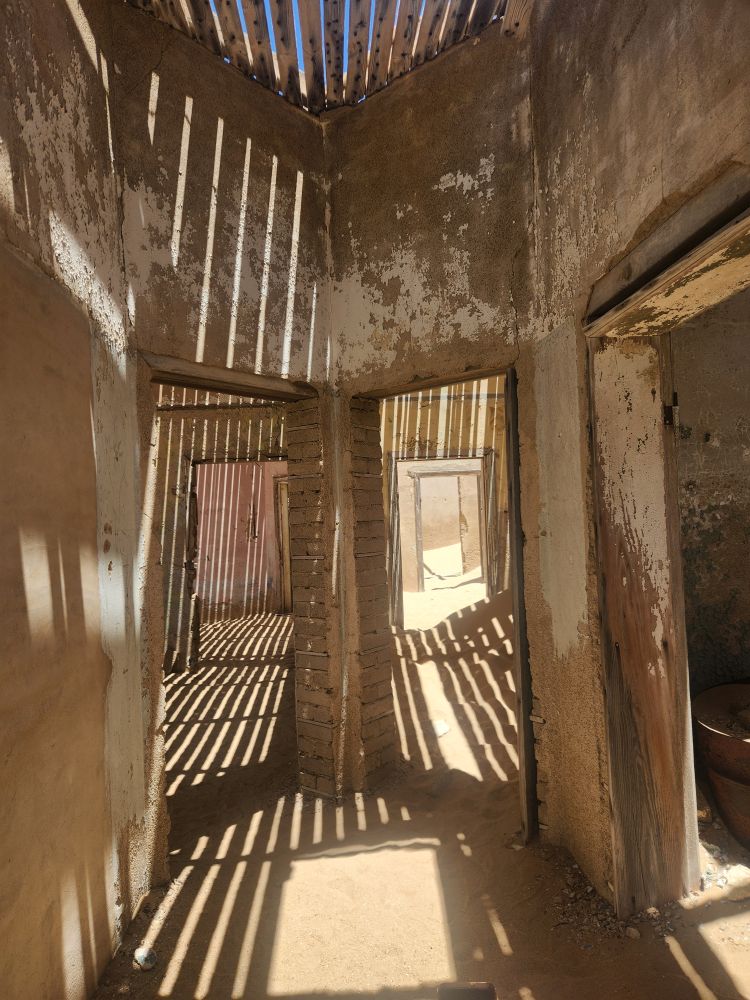
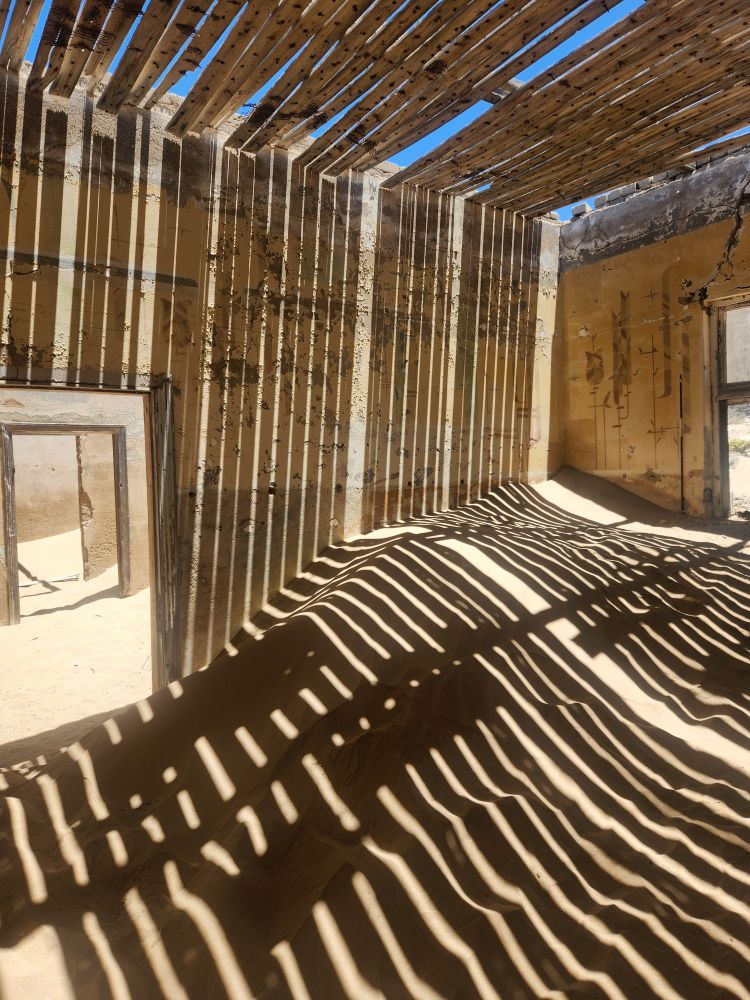
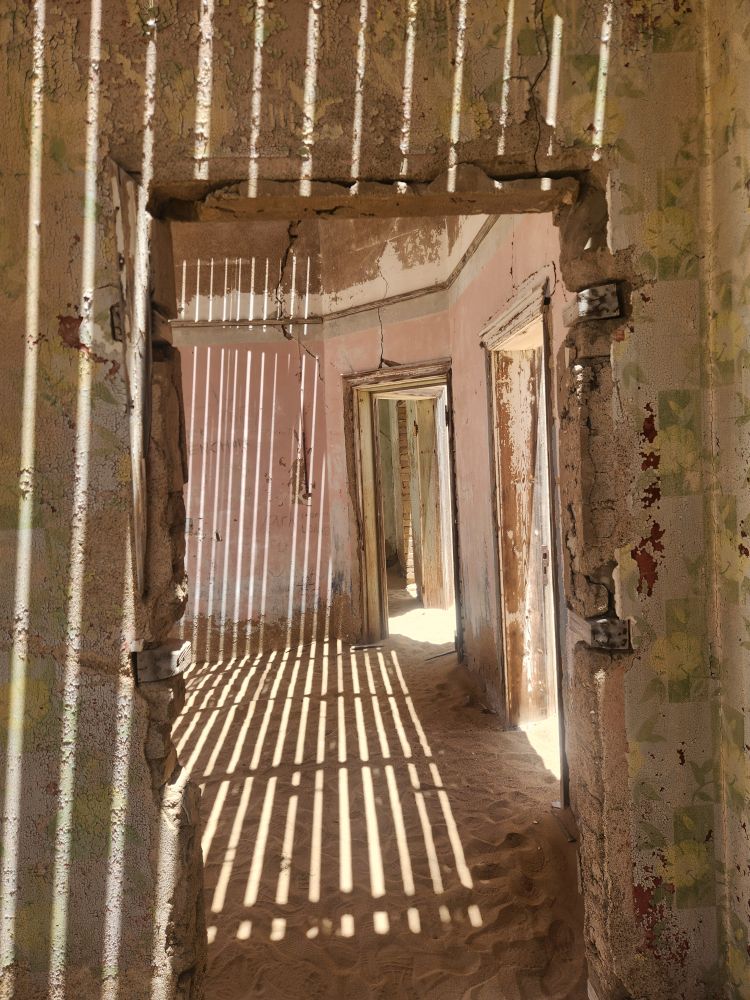
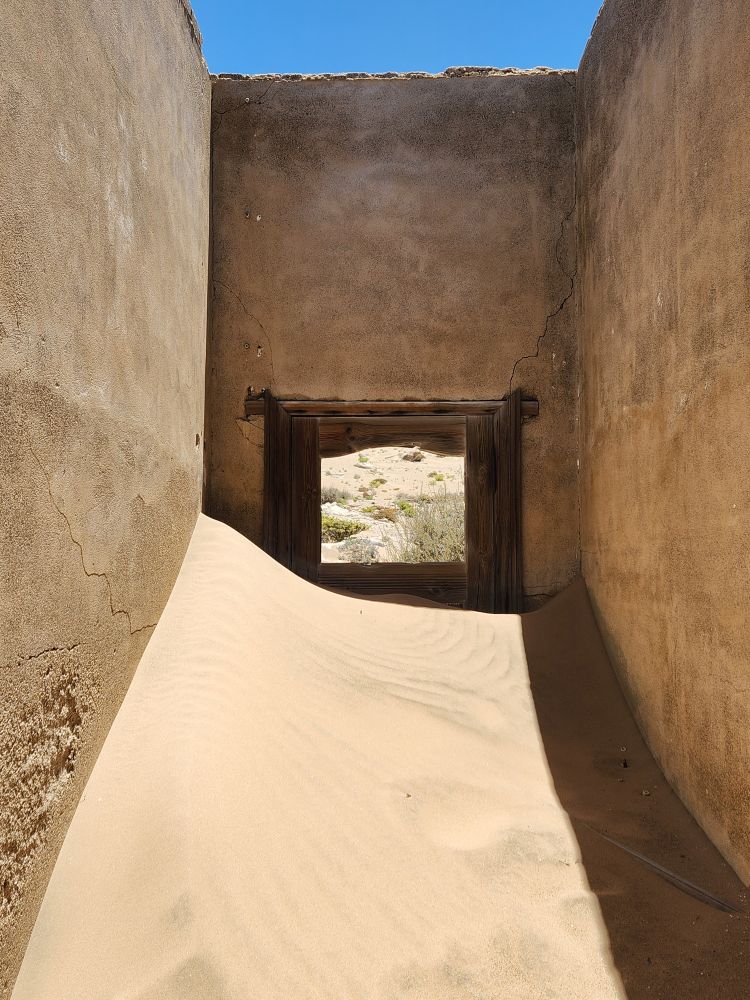
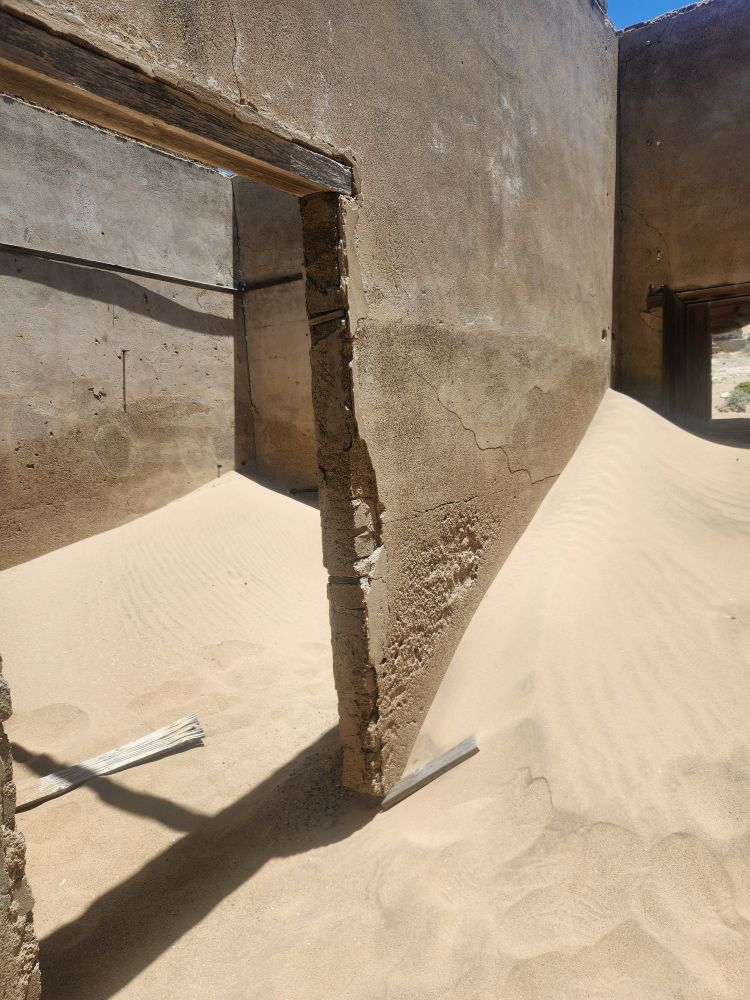
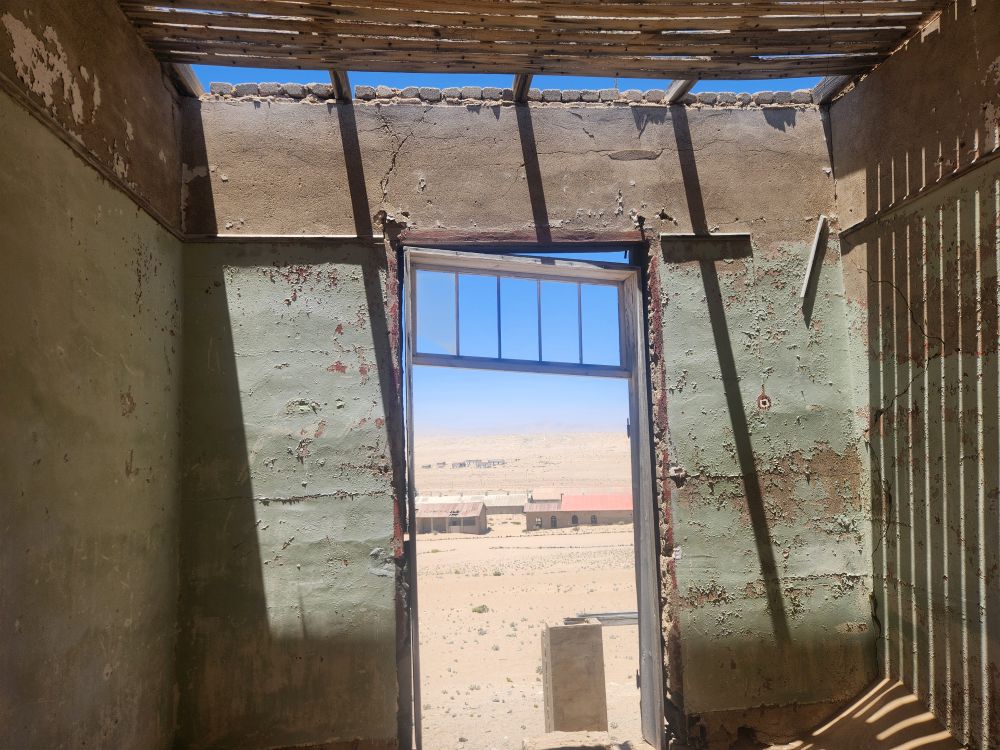
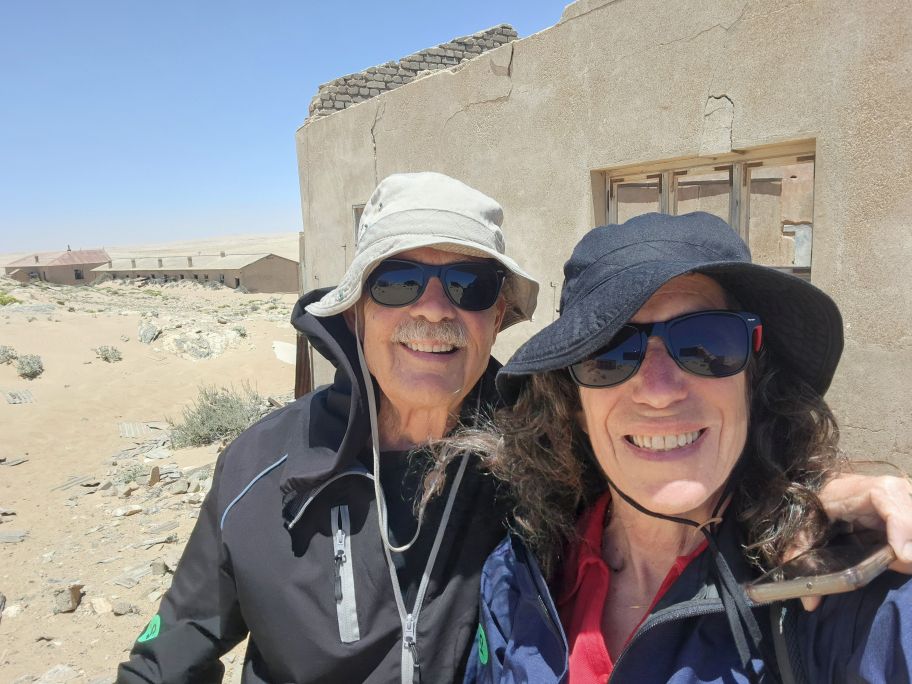
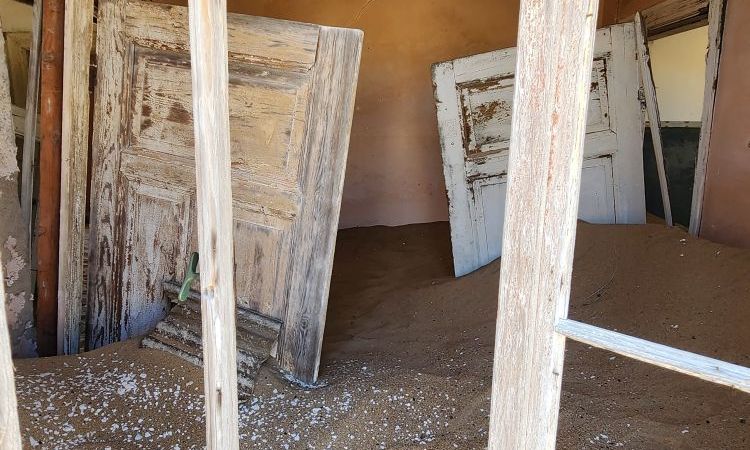
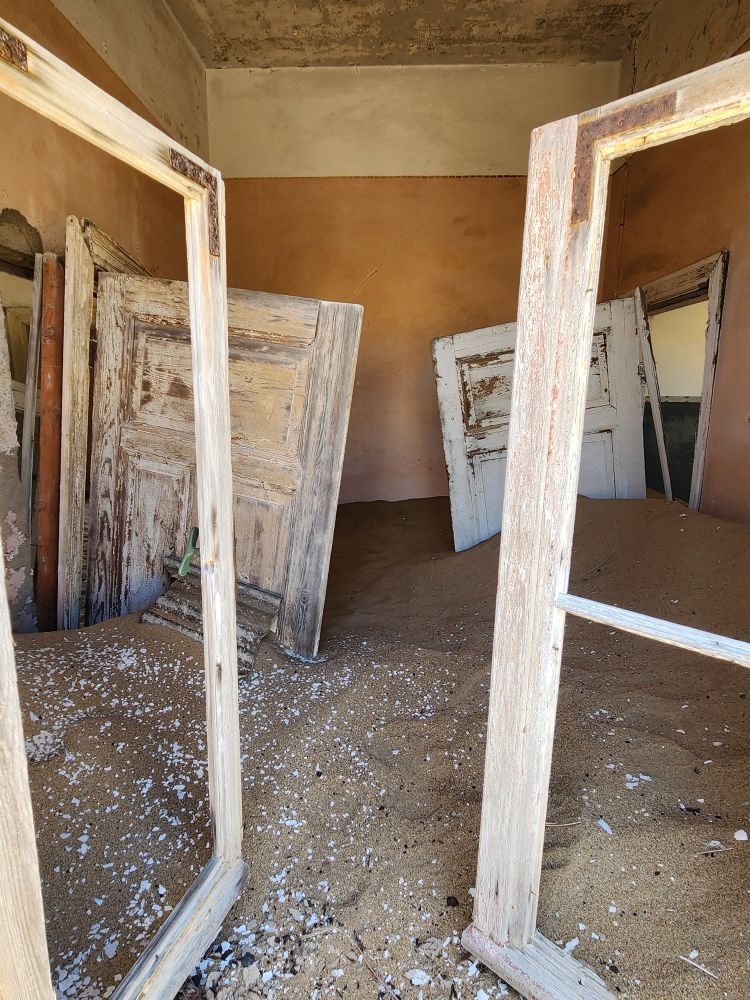
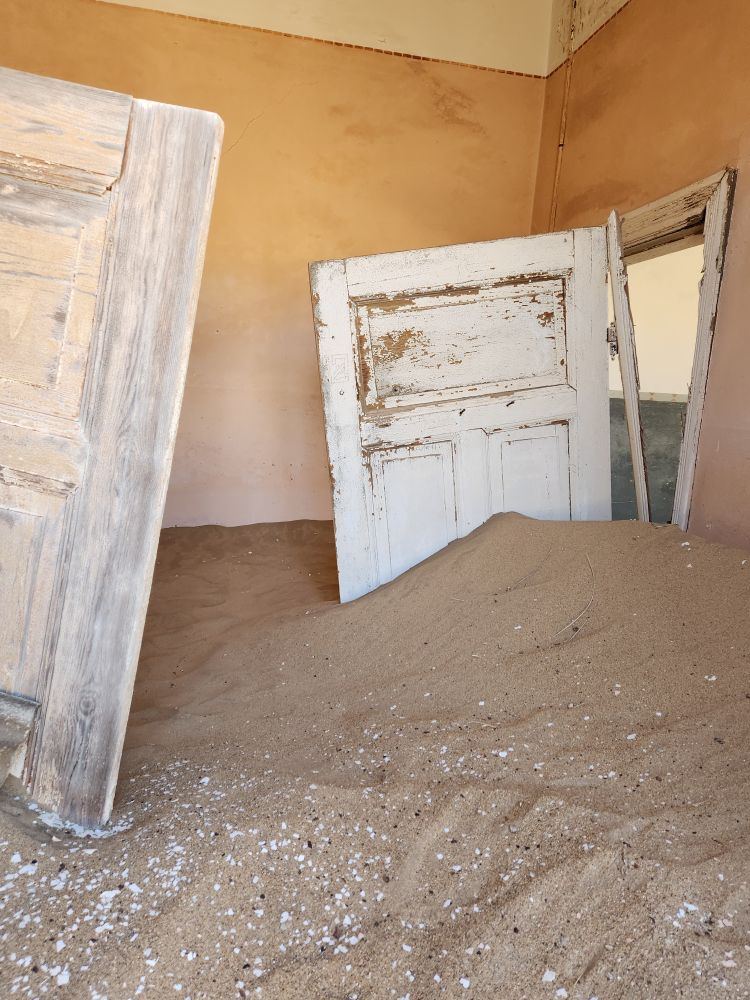
The next house which is where the male workers were housed, is what I’m calling the door house – this is where the sand has drifted so deep it has submerged doors – keeping them standing open for eternity. Again here, access is through window frames and you can’t really go through to other rooms, you have to exit and reenter wherever the sand and the window frame will allow. Equally magical and frightening at the same time!
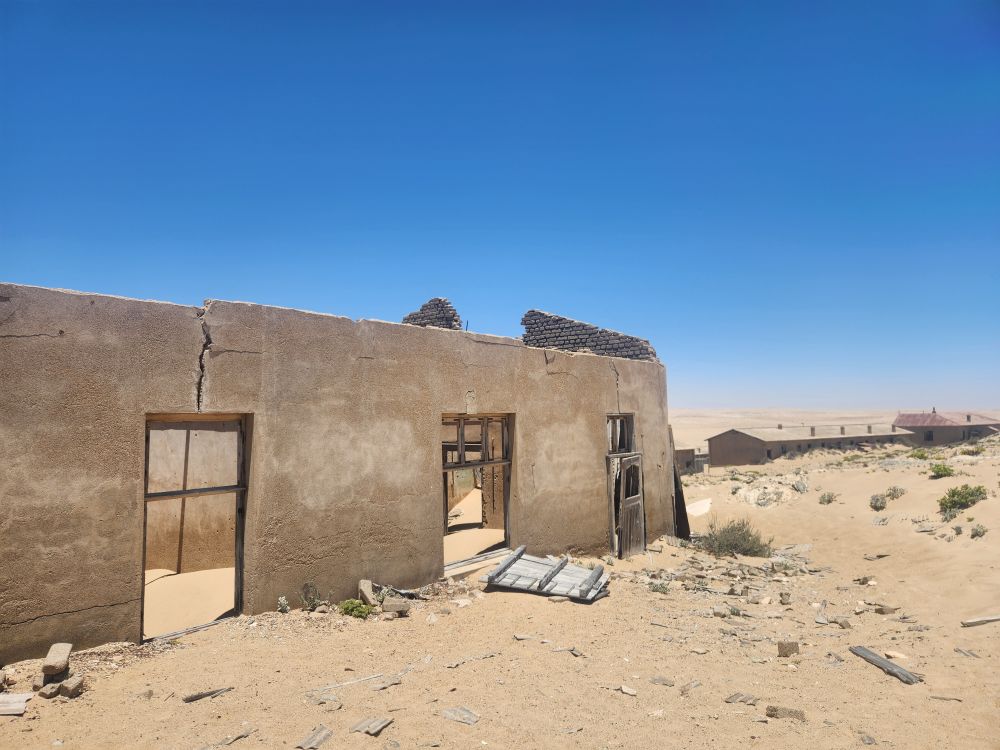
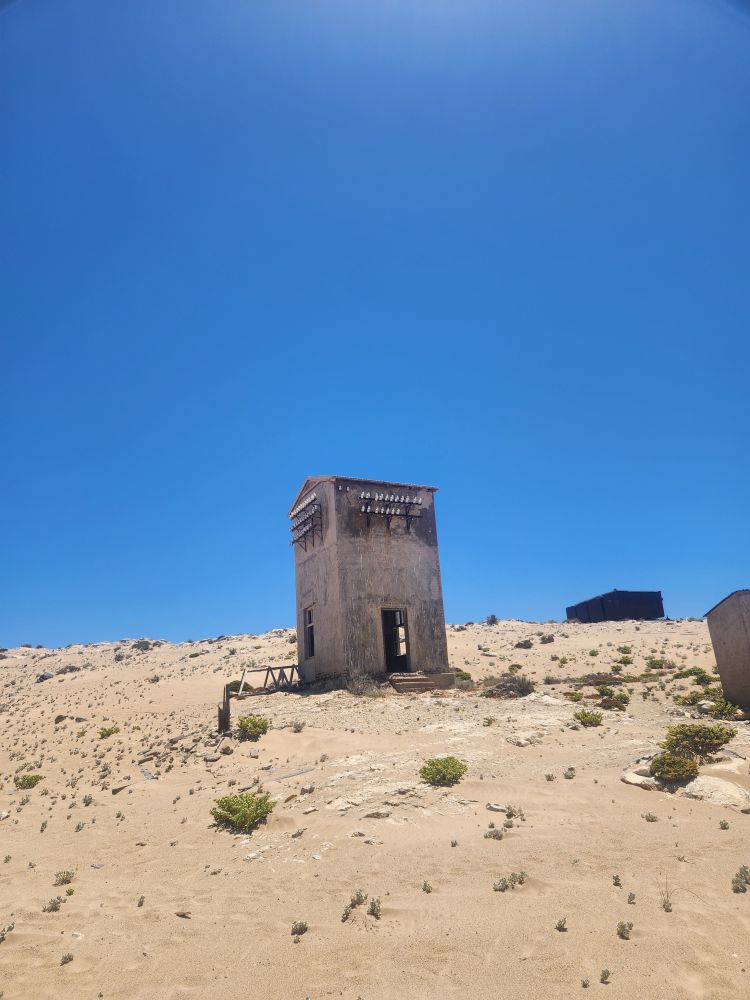
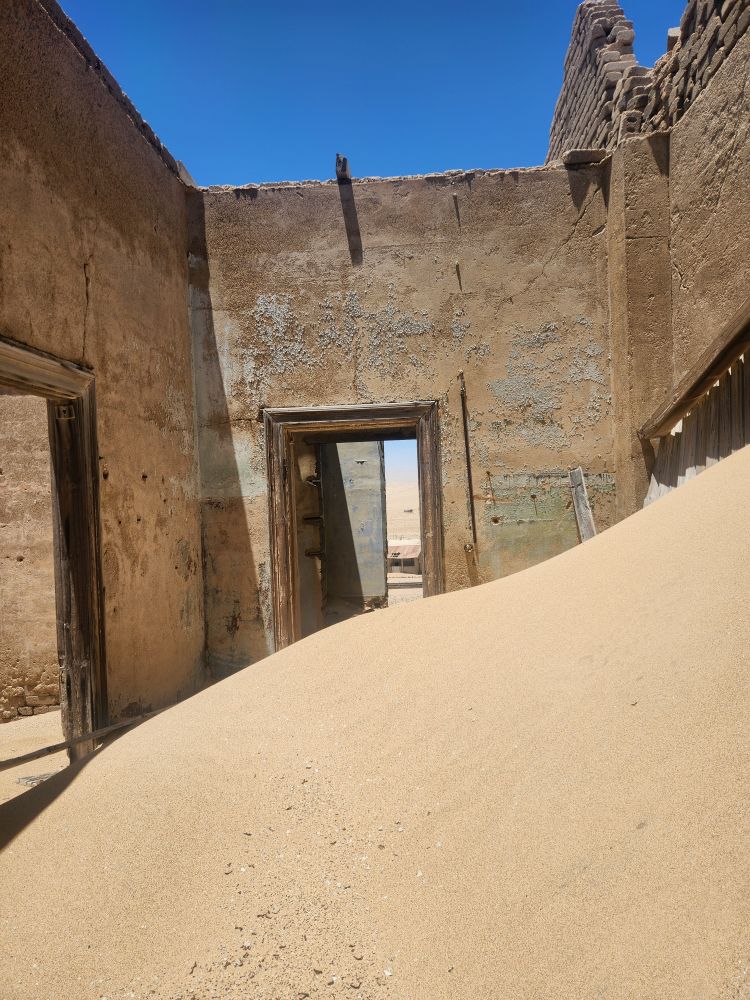
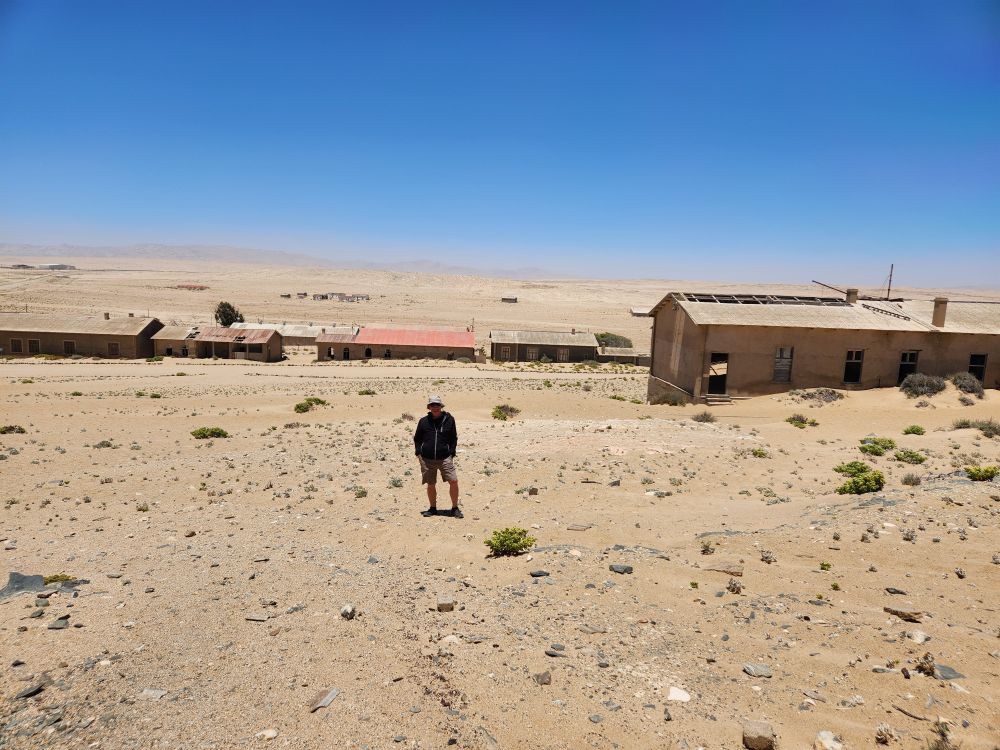
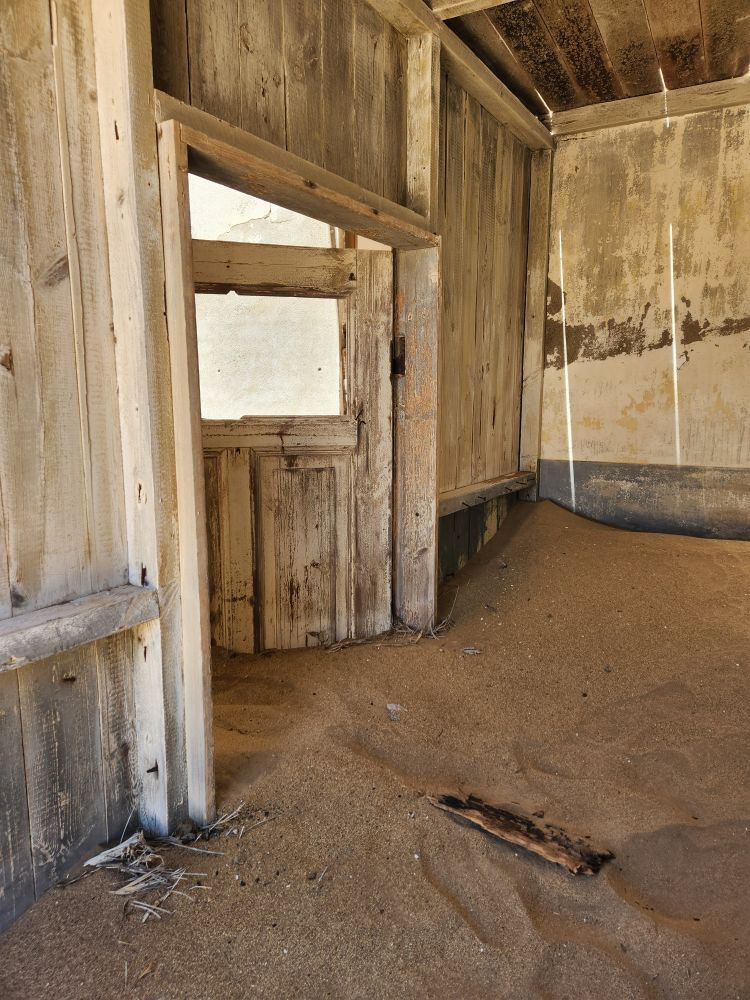
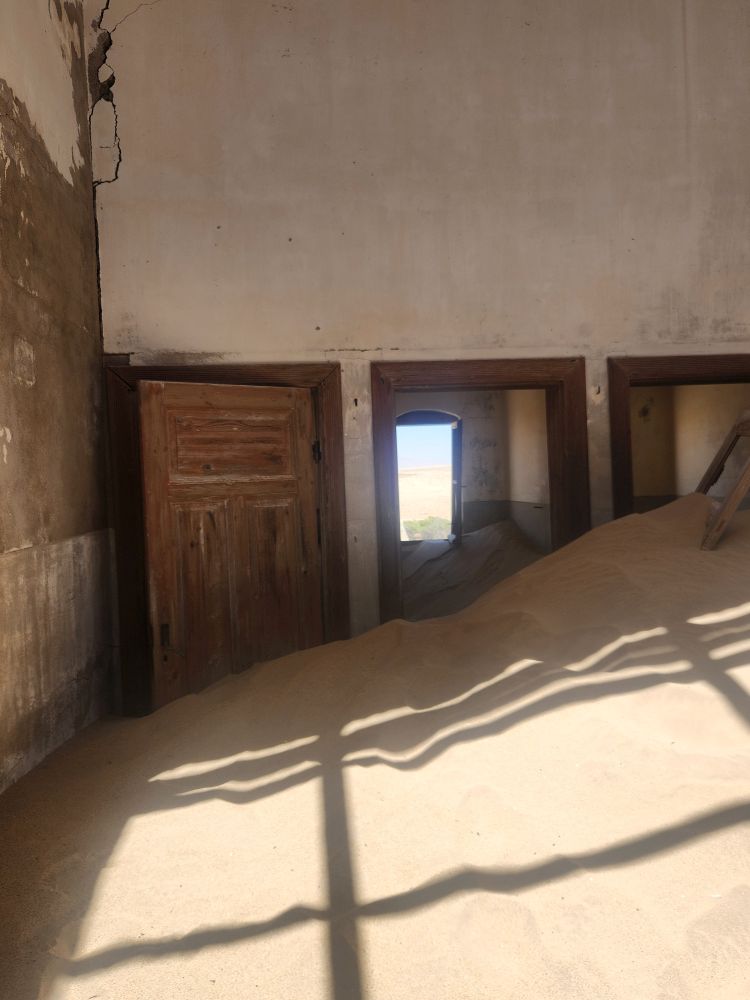
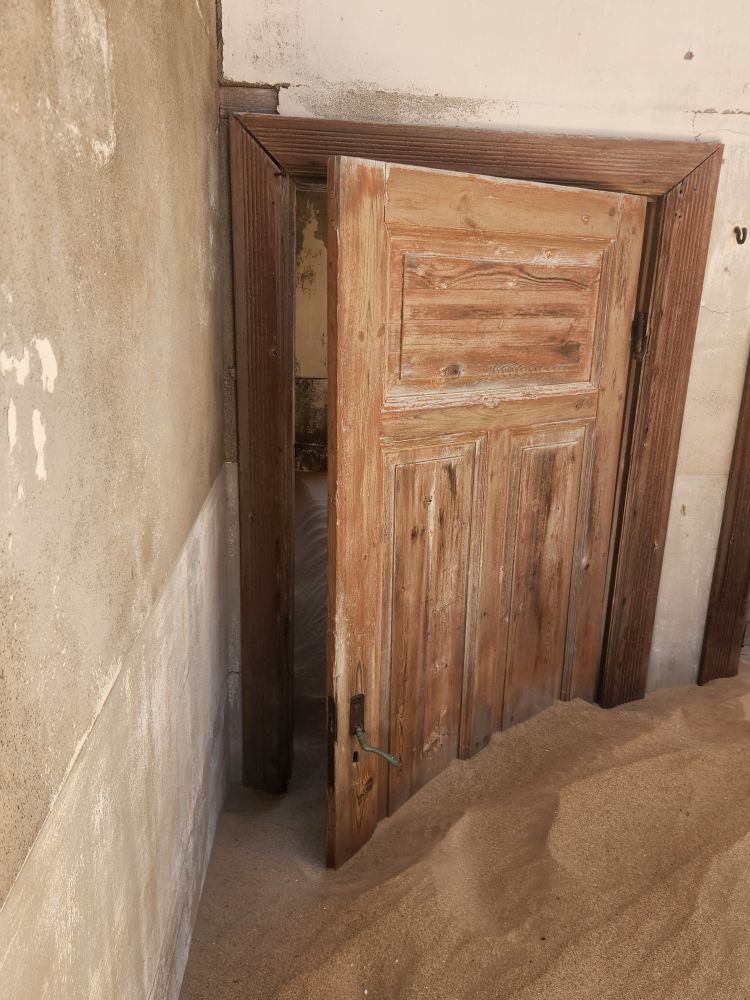
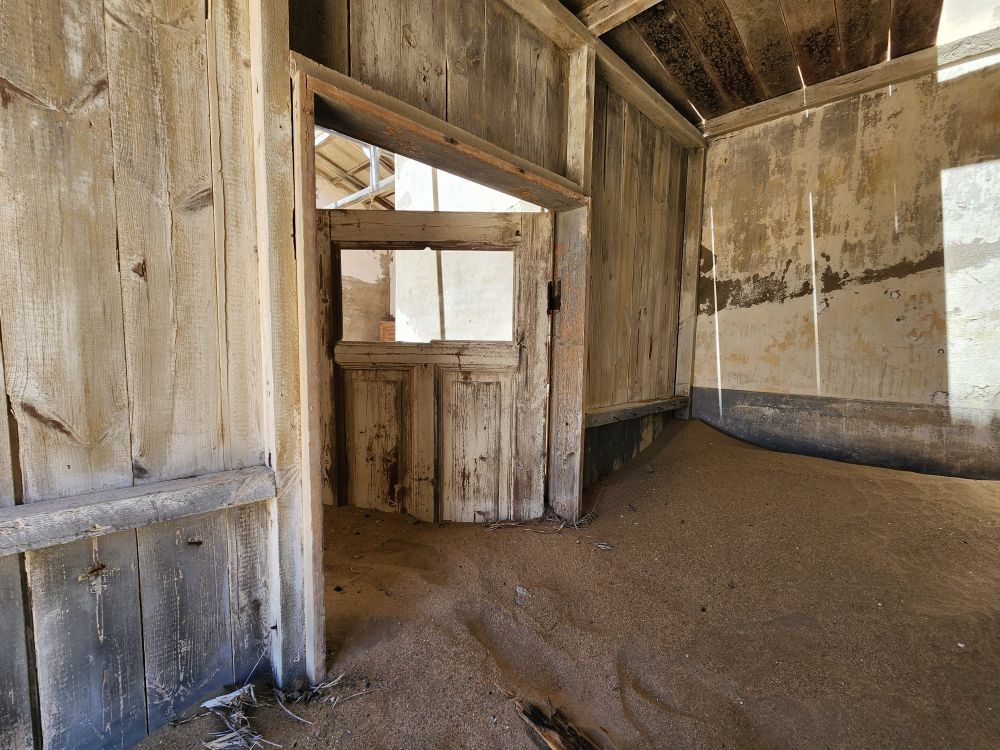
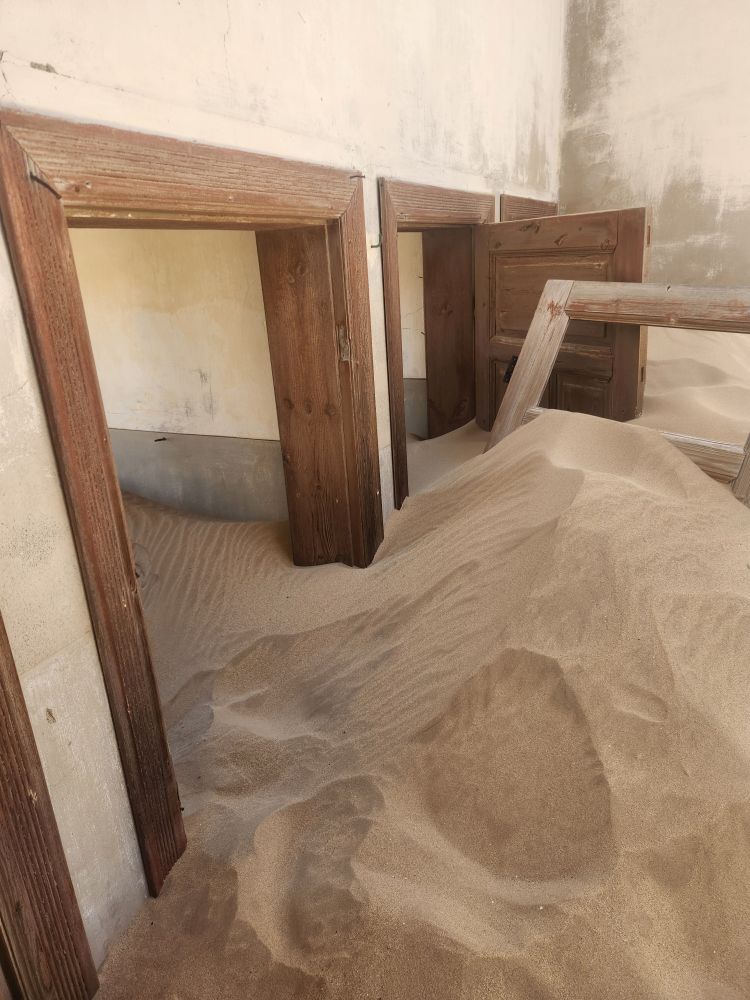
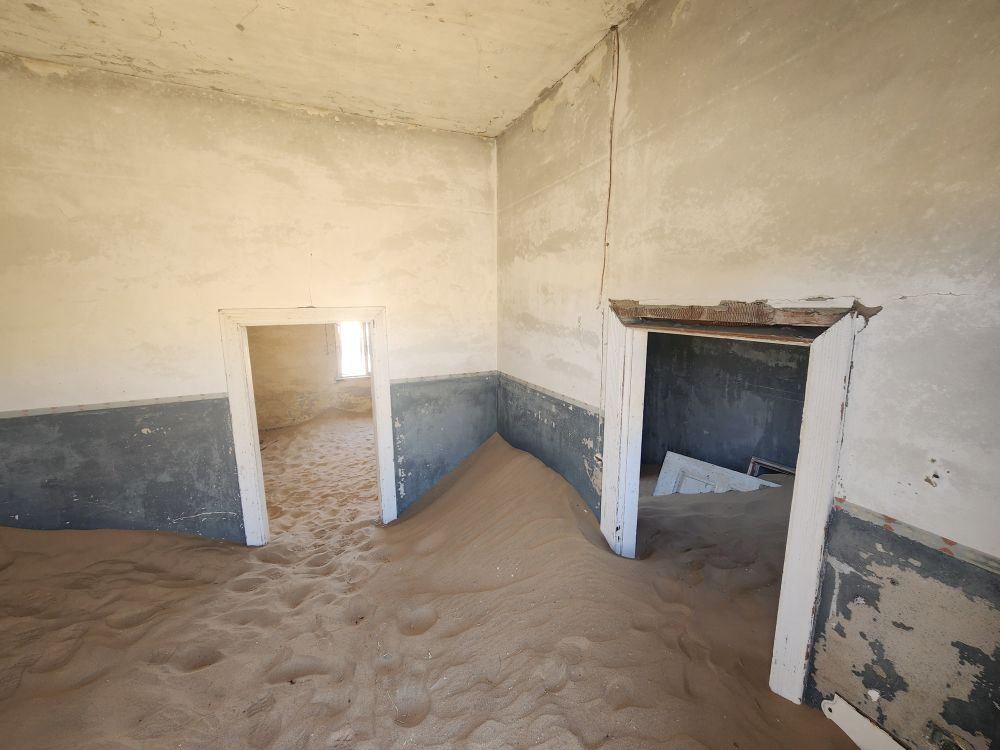
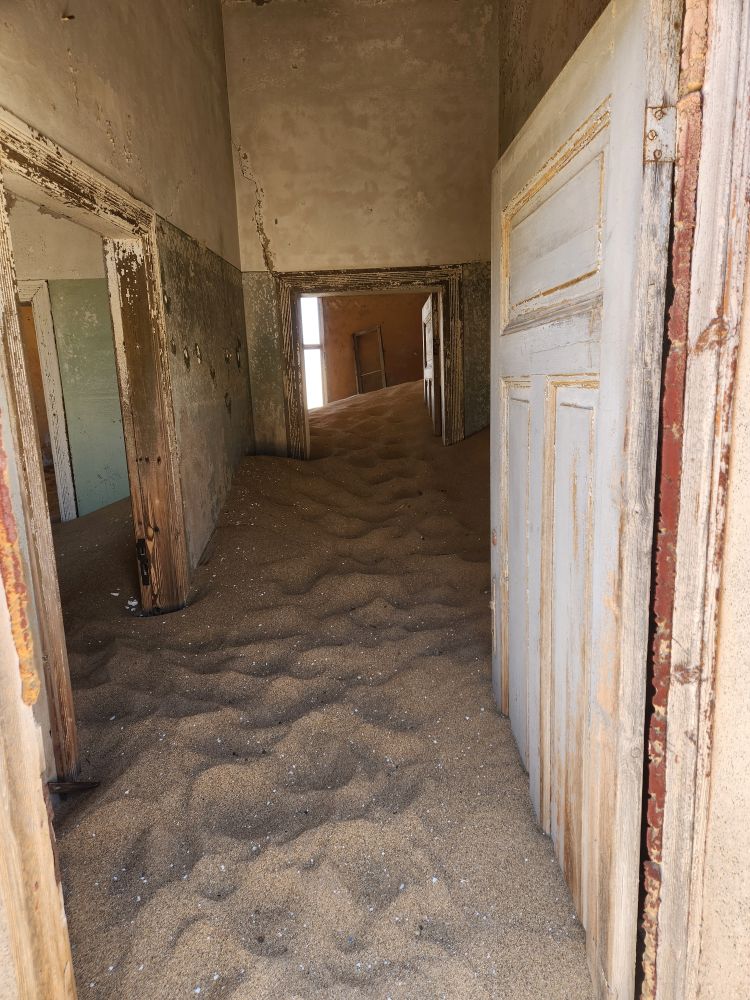
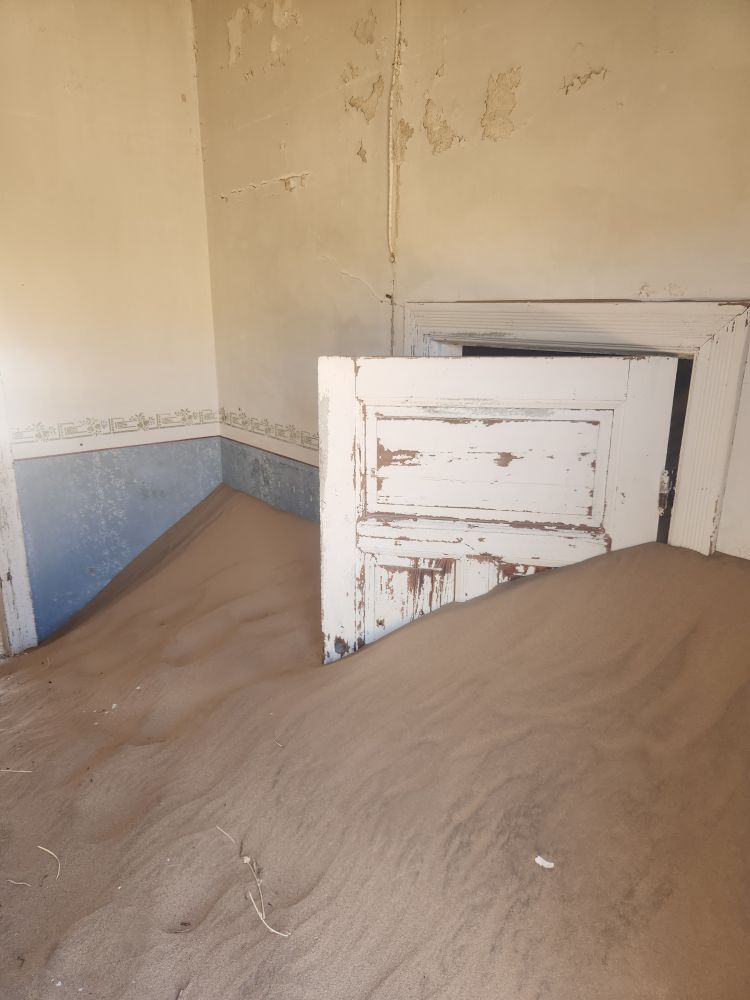
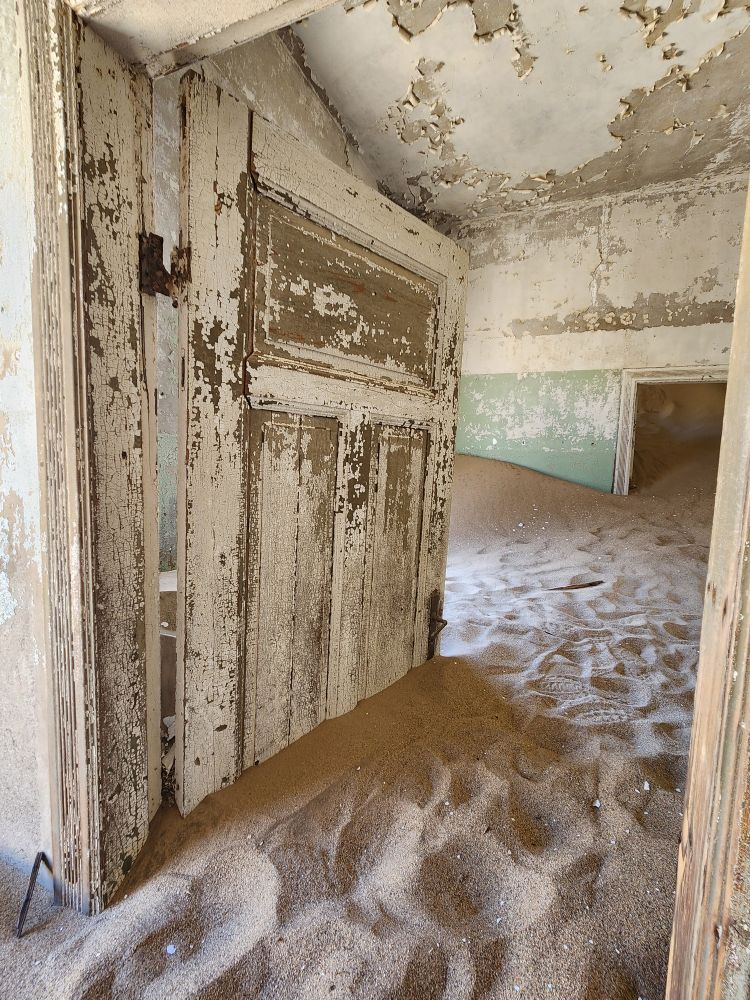
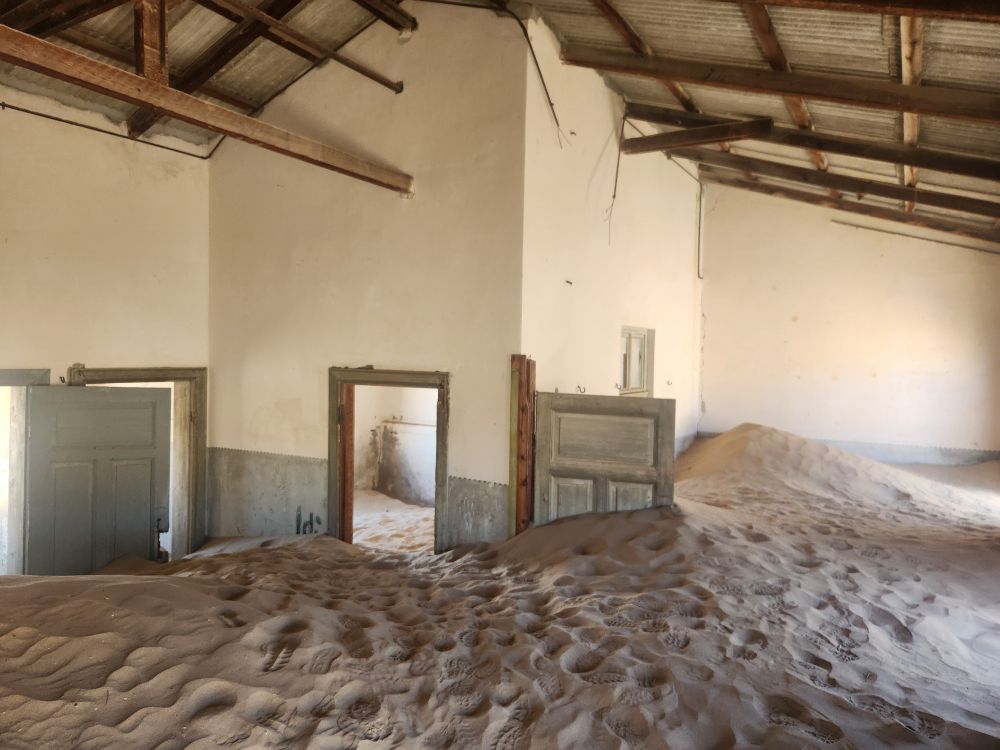
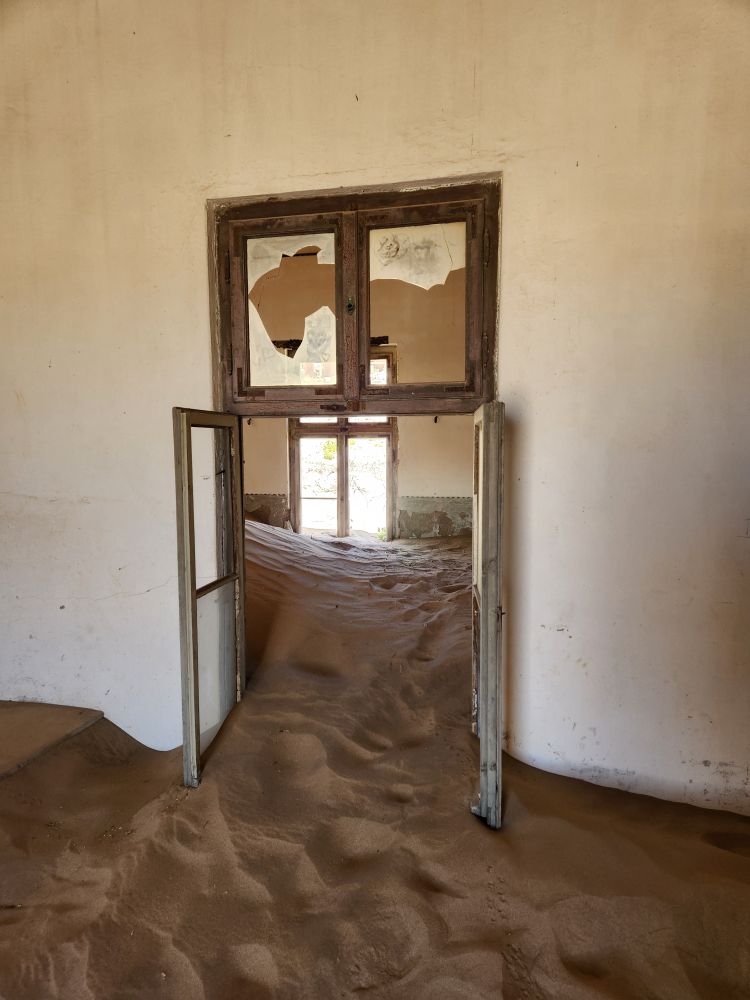
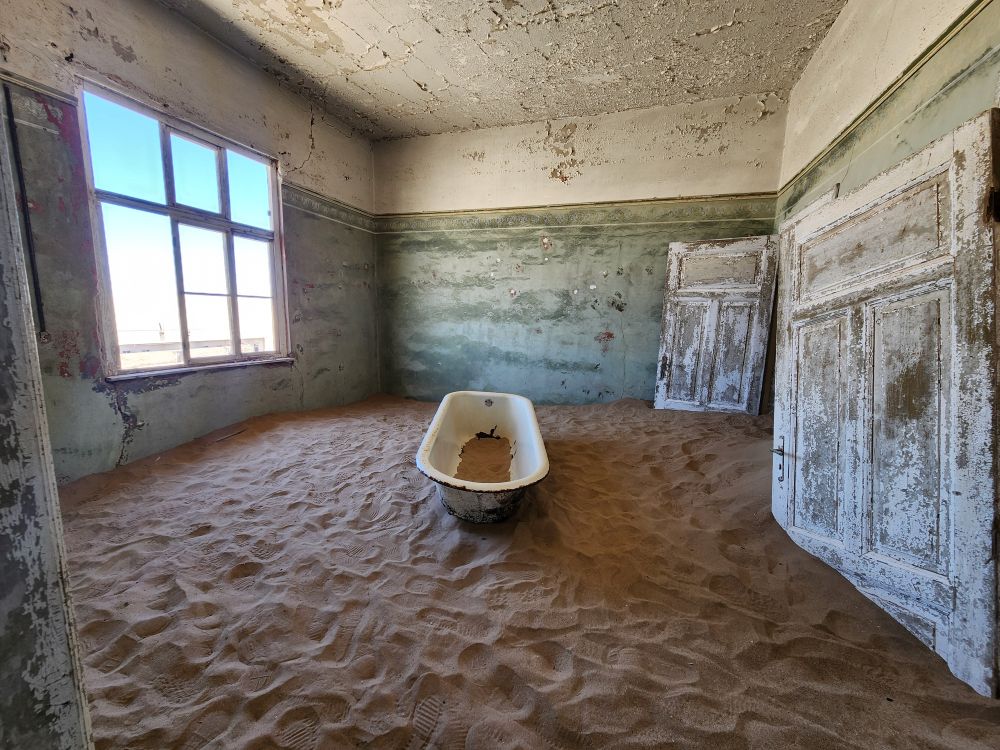
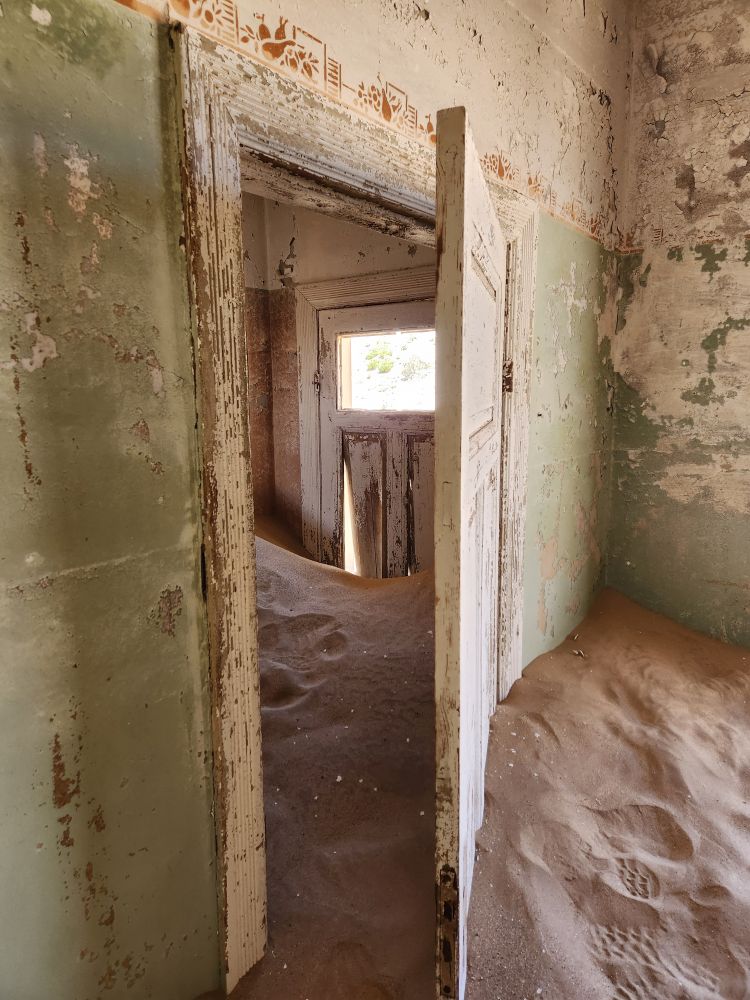
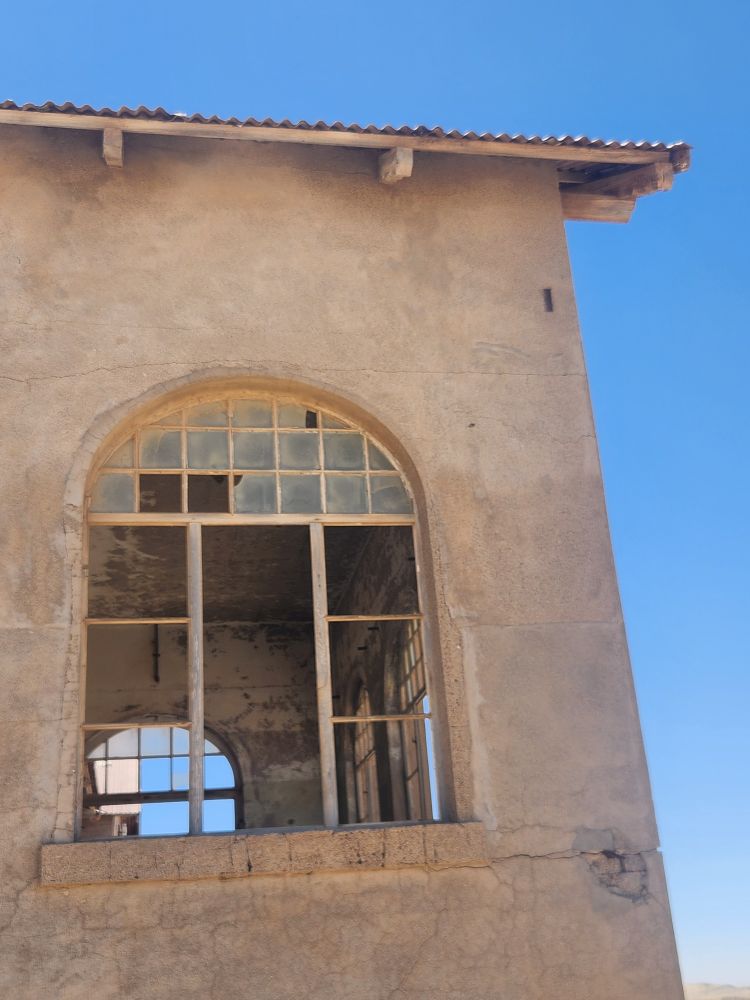
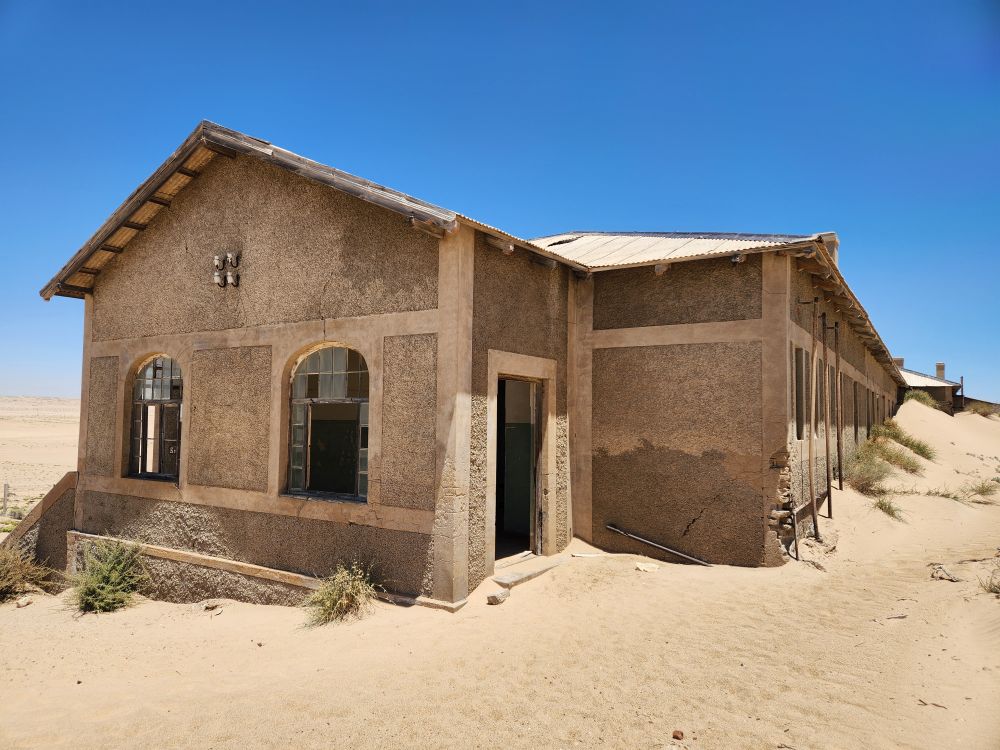
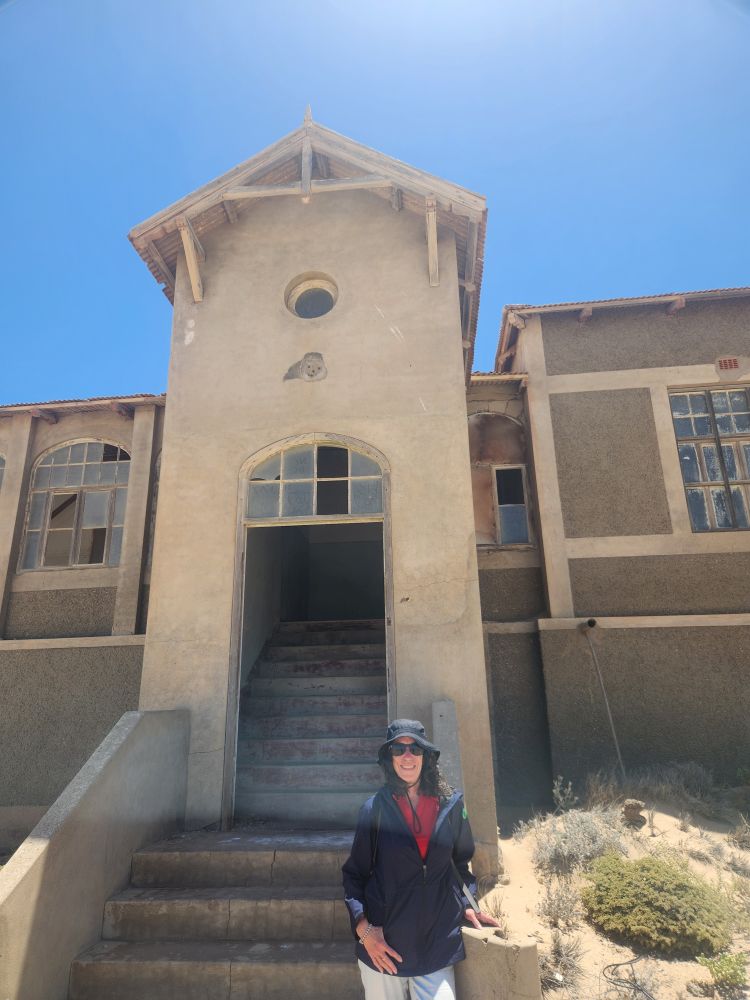
Next we are off to the hospital – which is huge – I don’t know how many rooms are here off this really long central hall. Just from this facility alone you can imagine how huge an operation was run in this town when the diamond rush was on. It’s immense. And also sand filled, badly in some places and not in others. The follies of mother nature.
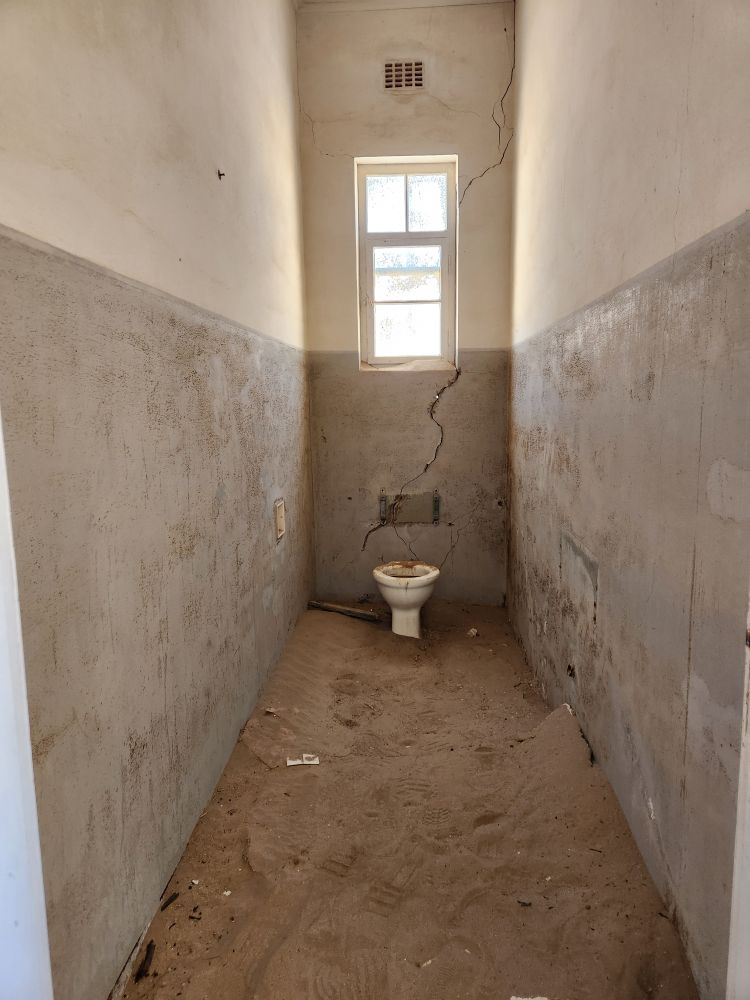
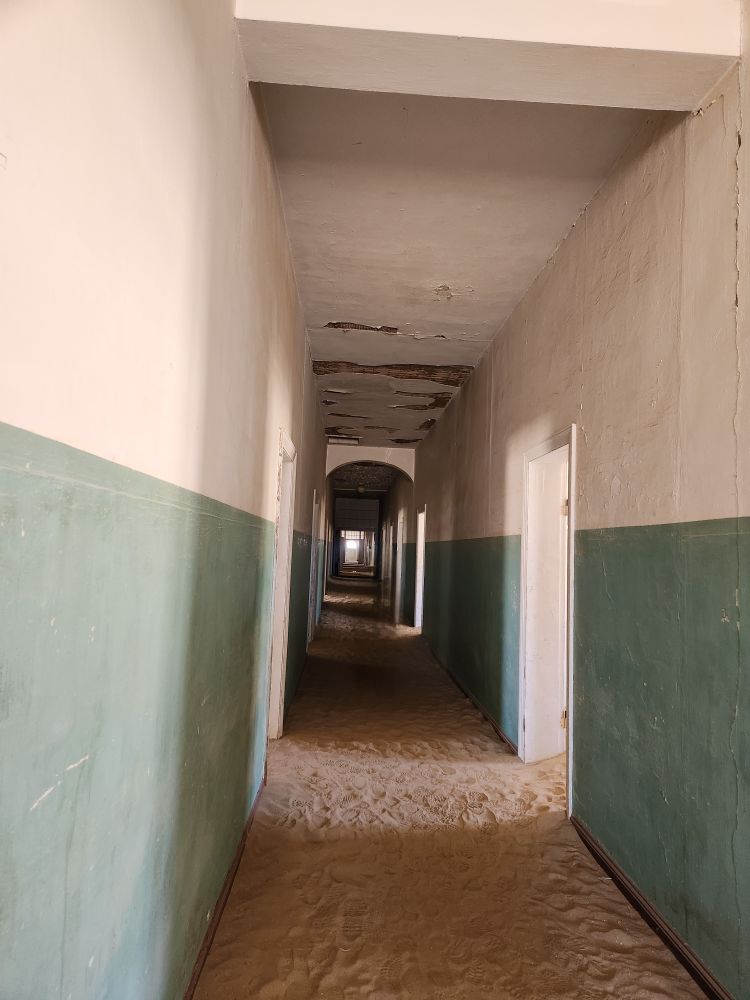
Finished with our sand filled building tour, we circle back to the retail street and walk through a nice little museum that displays uniforms and tools and other relics from the day. Including a trolley or tram car that was used to ferry people – mostly the women in their huge heavy skirts – up and down the street. It is the precursor to what Mom calls the Toonerville Trolleys that most tourist cities have to tour you around in!
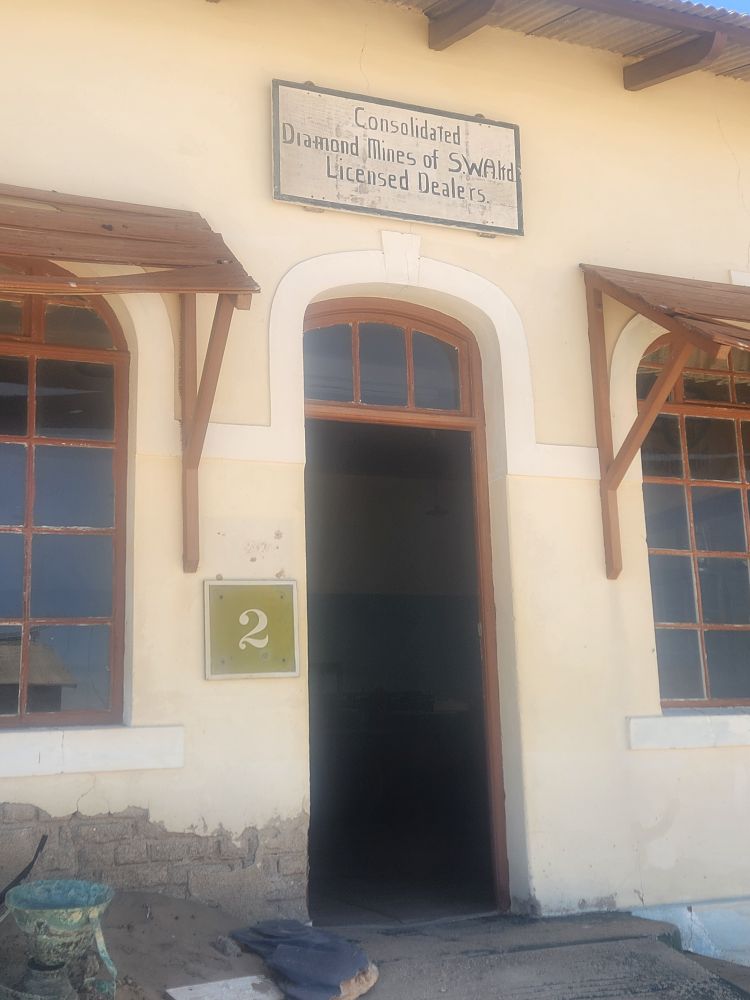
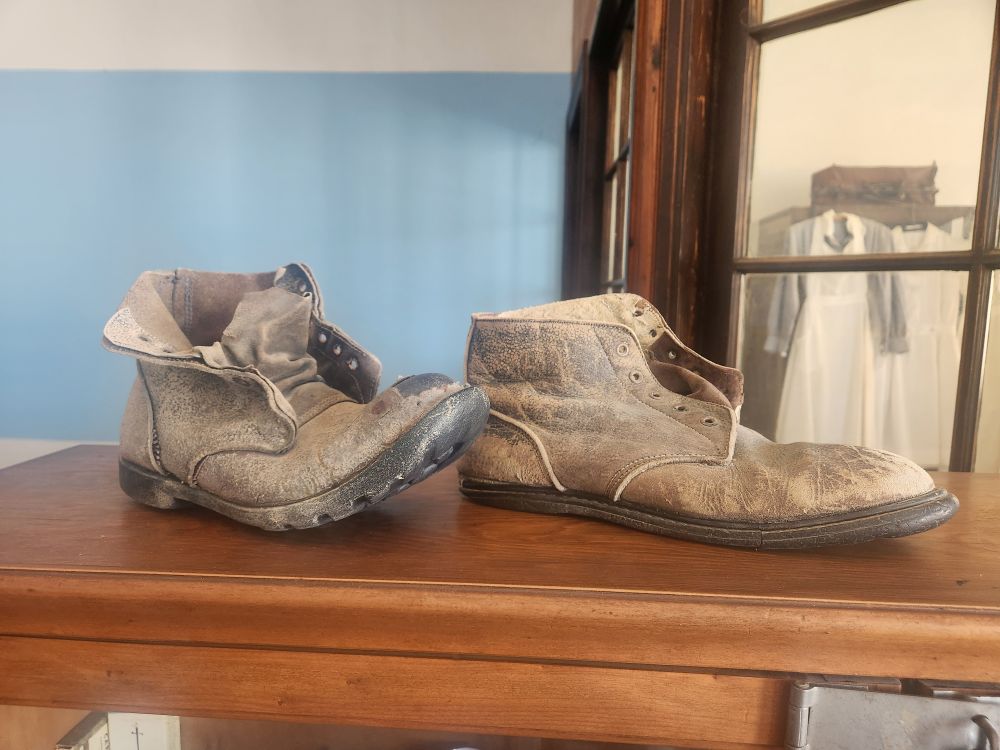
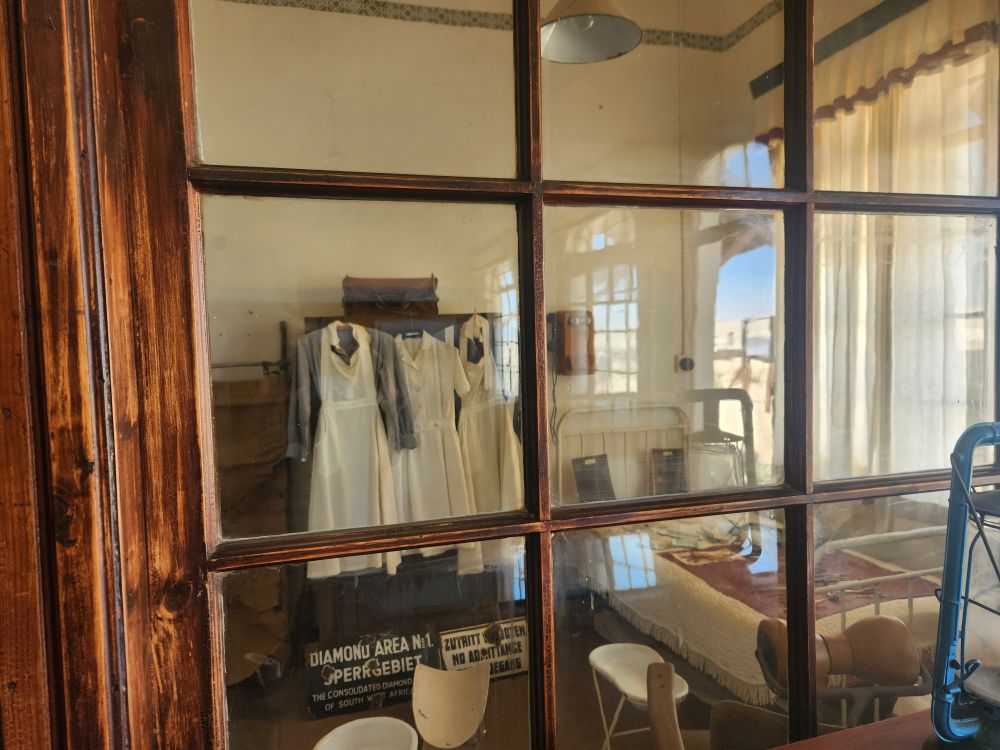
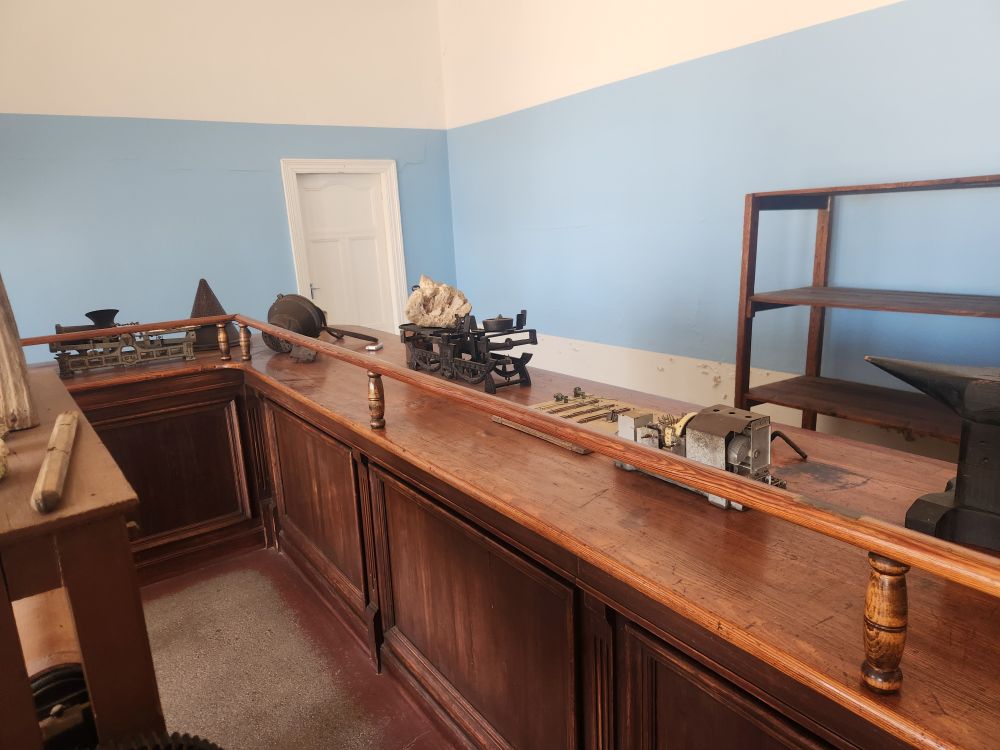
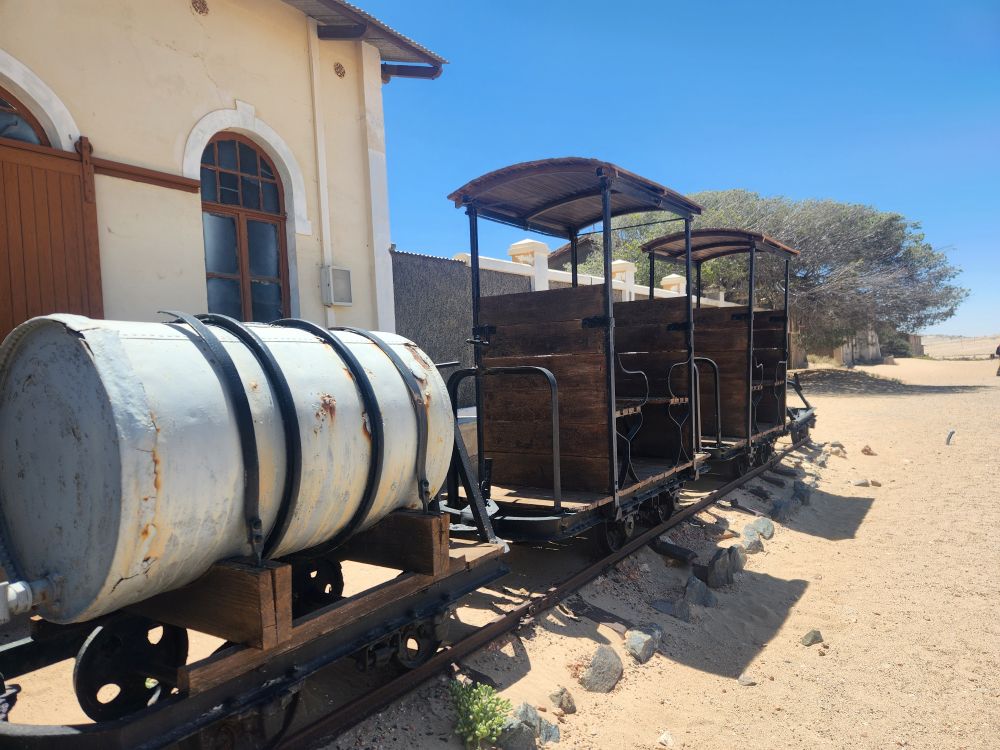
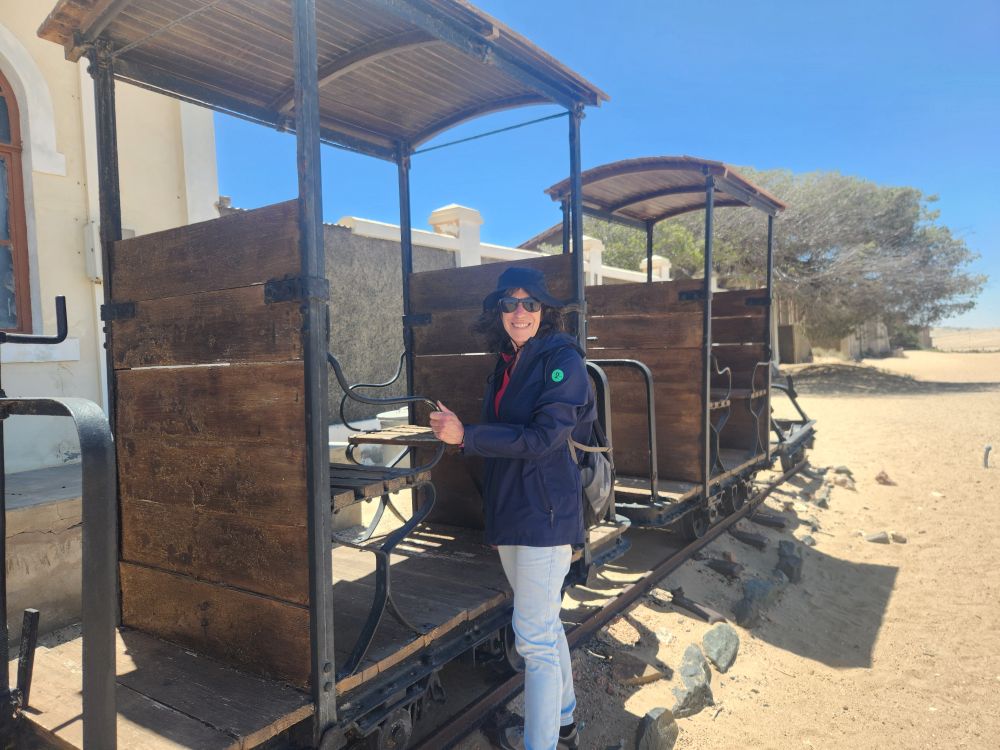
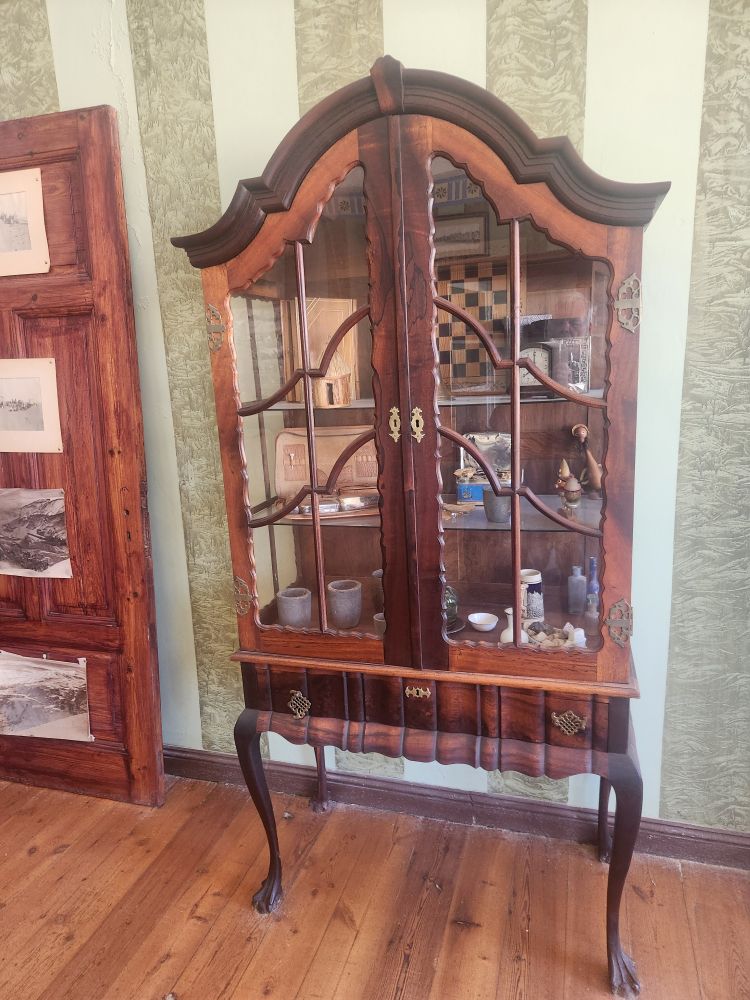
Our last visit is to the retail shop owner’s home, which is a completely furnished place with period pieces. Lovely dark wood furniture, a sweet kitchen and the shop owner’s office, where Mr. Manager gets into the act reviewing the books.
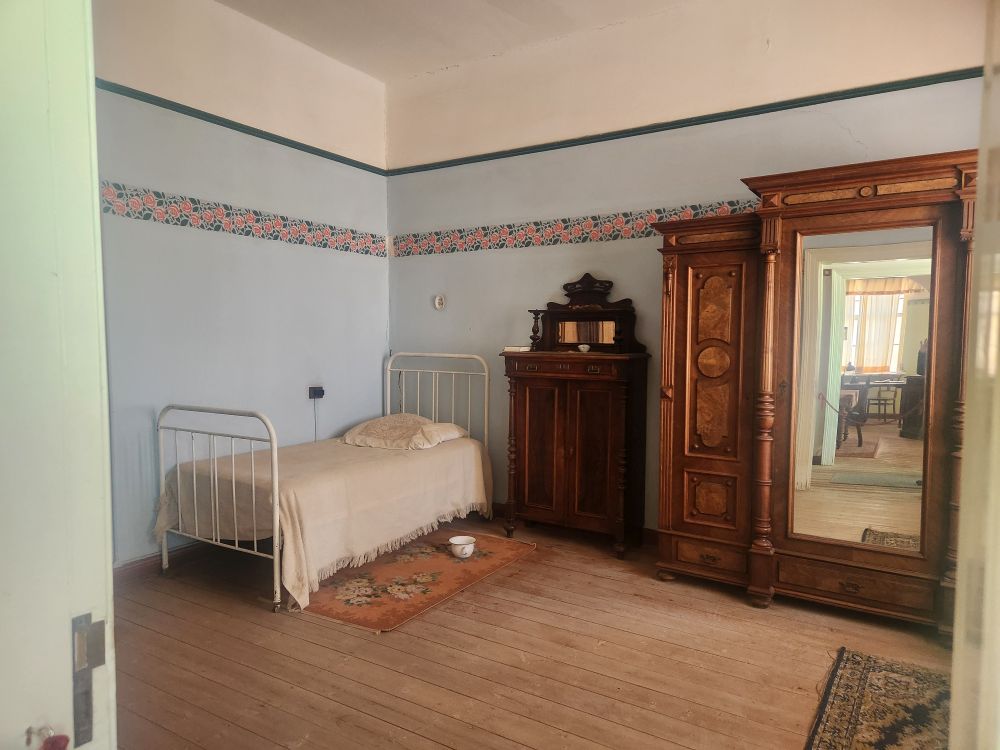
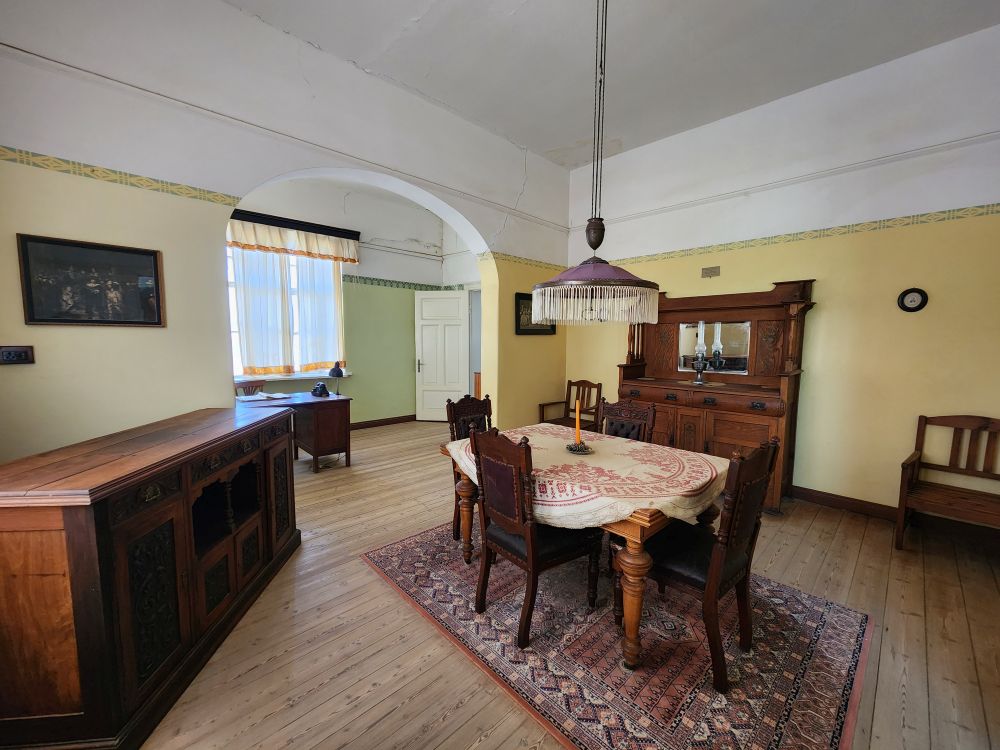
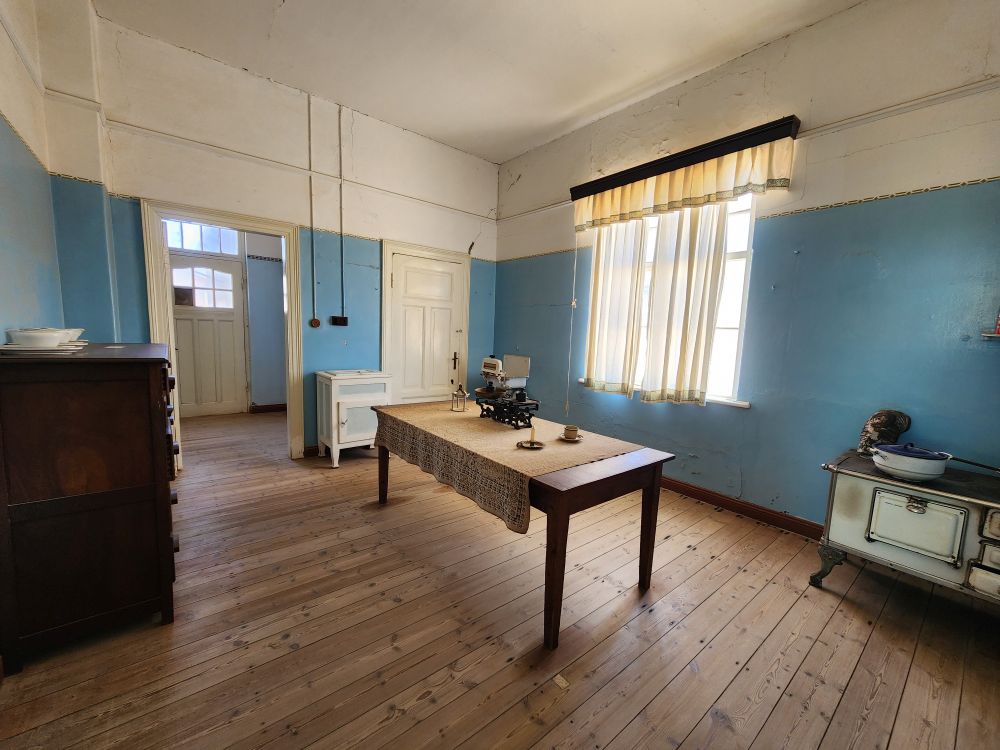
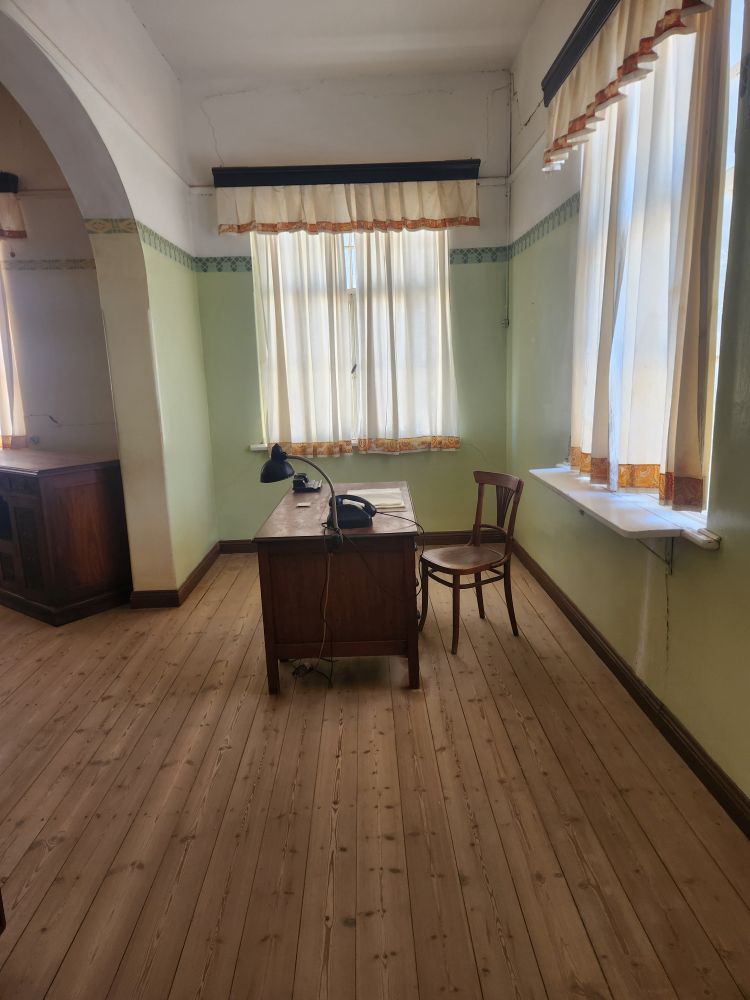
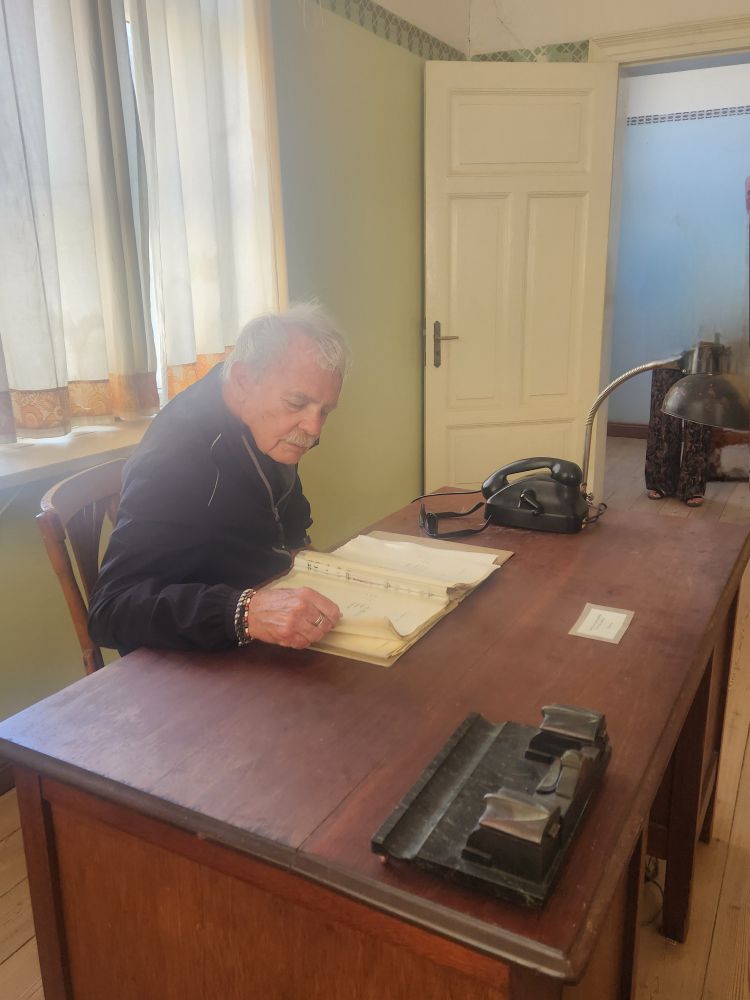
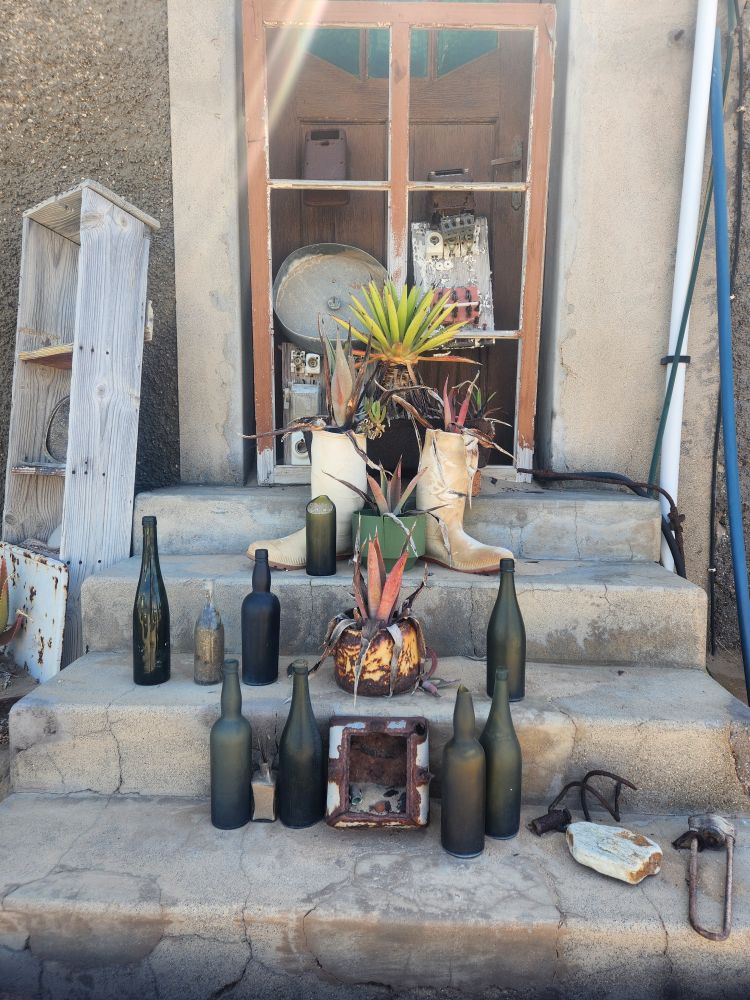
We were worried this place would be too touristy, but it is a fantastic visit. Capped off with a lovely glass of wine and bottle of beer while we wait for the shuttle bus to pick us up at 2:30.
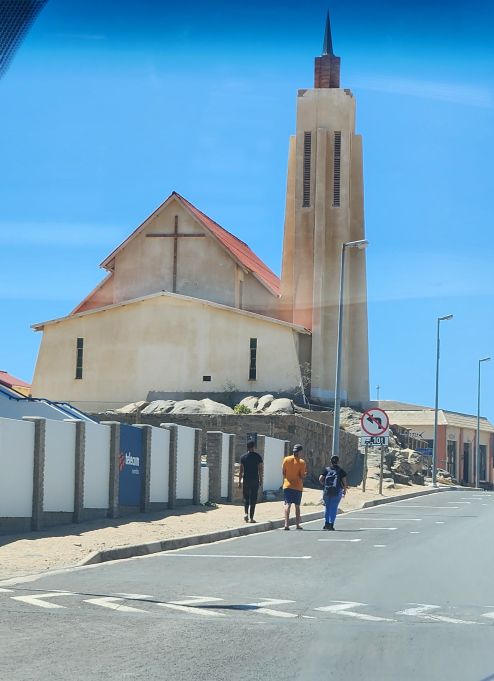
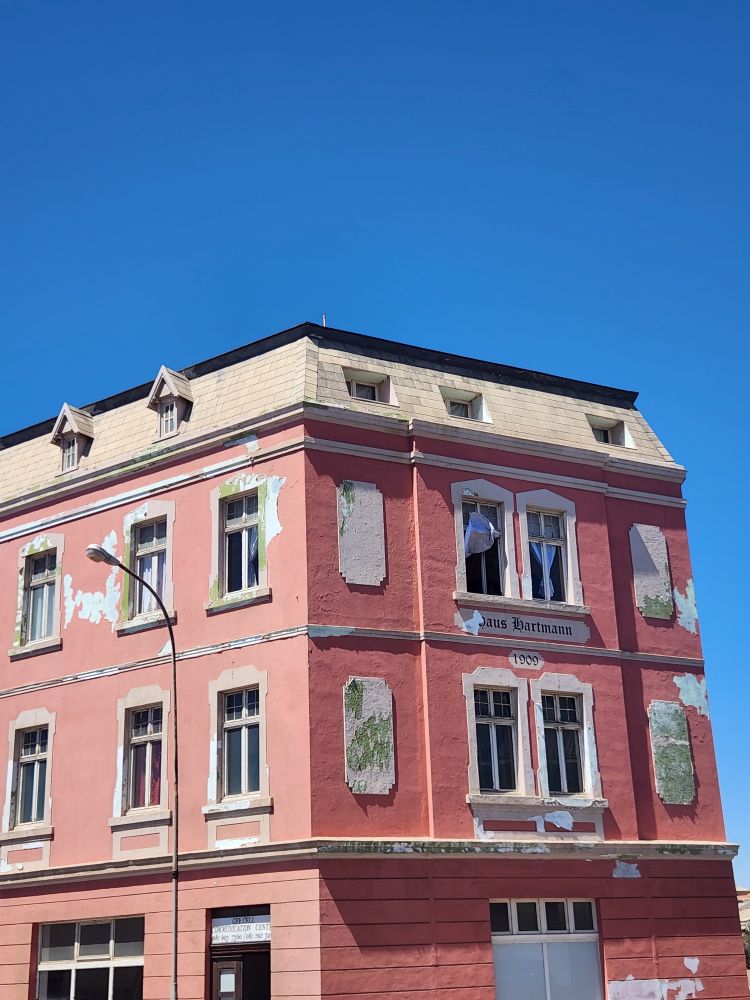
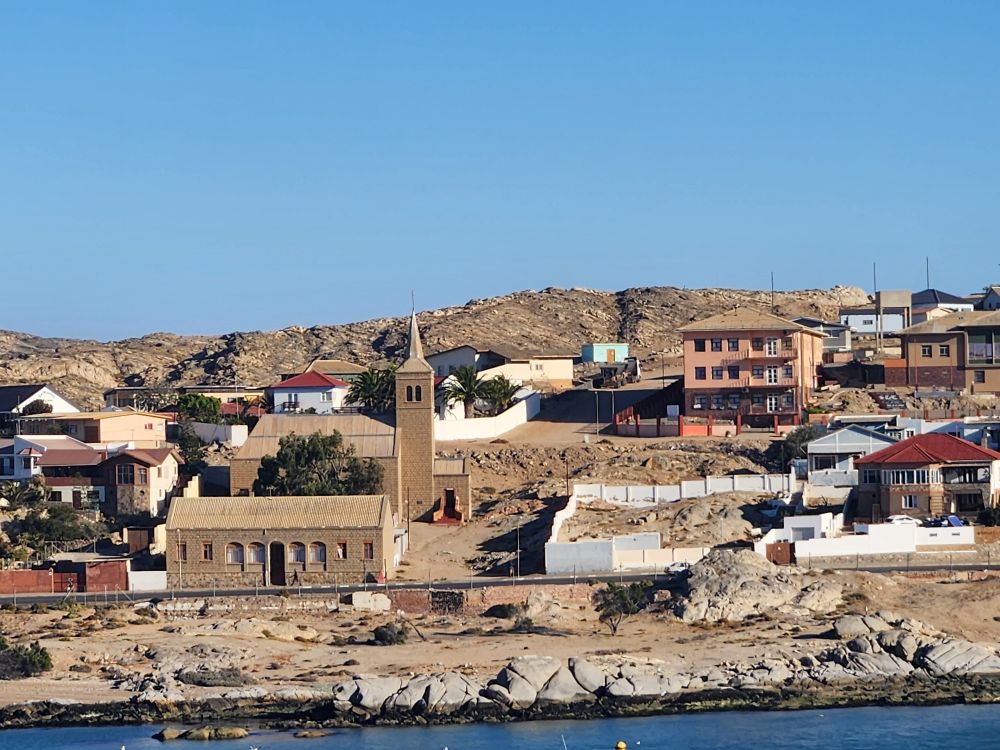
Everyone is on time and we head back into town, where the driver sweetly asks us if we want to stop to take pictures along the way. We keep asking everyone in the back, but they aren’t paying any attention, so we end up not stopping anywhere – but get some decent shots out the windshield – of the a little settlement out in the middle of nowhere, the cemetery, “Hollywood-type” Luderitz sign and St. Peter and Paul church, built on the huge rocks that line the main road.
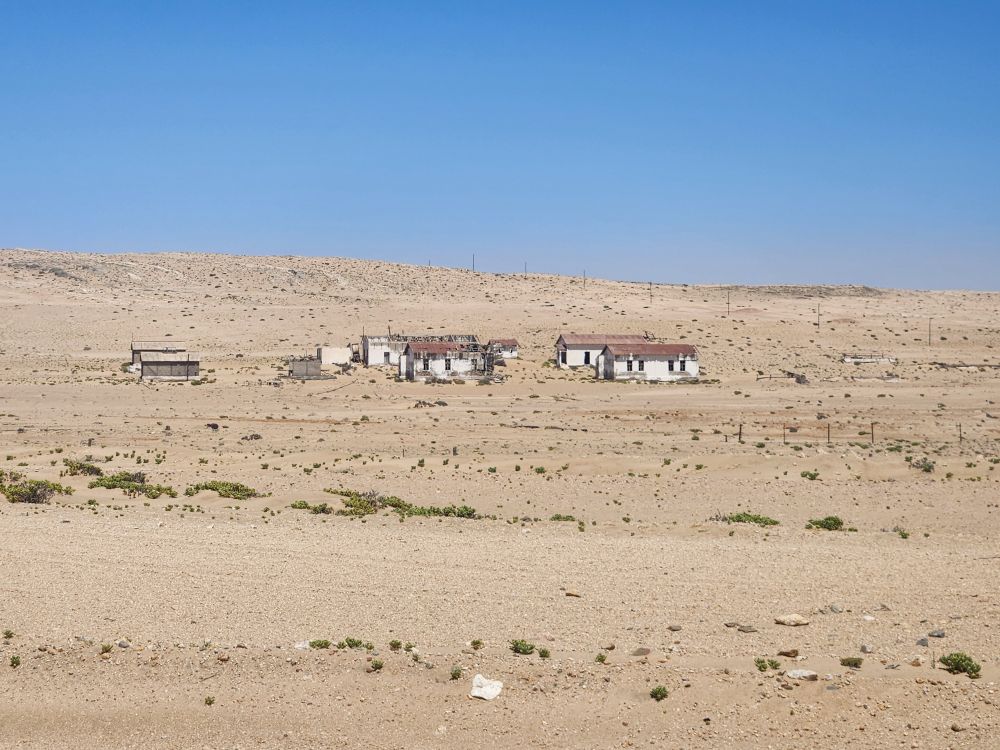
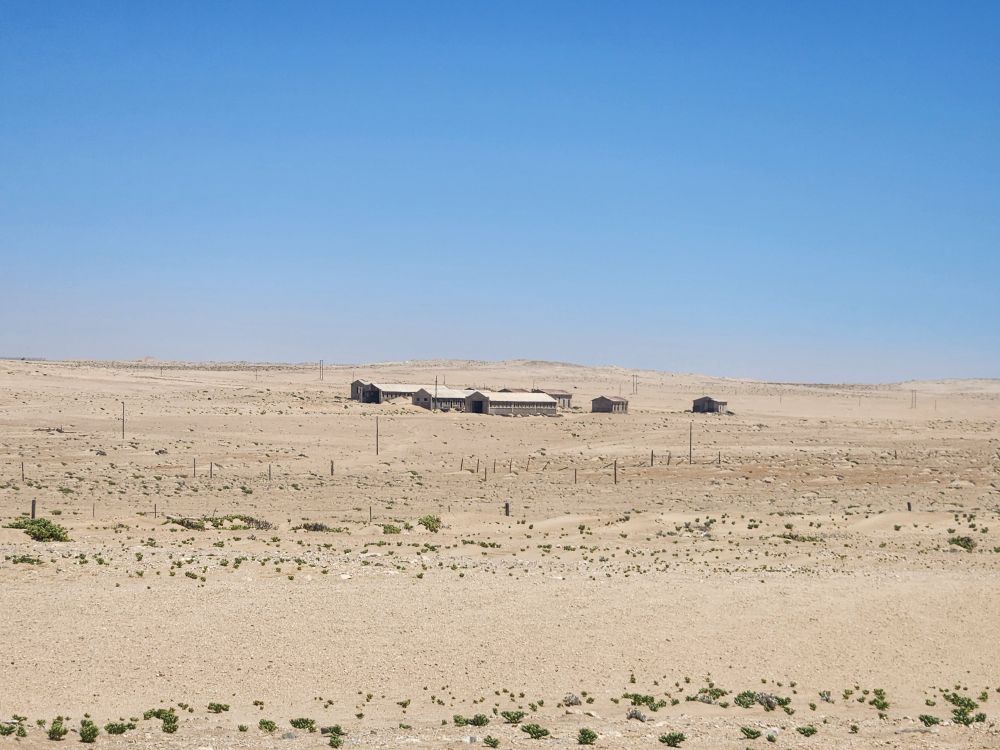
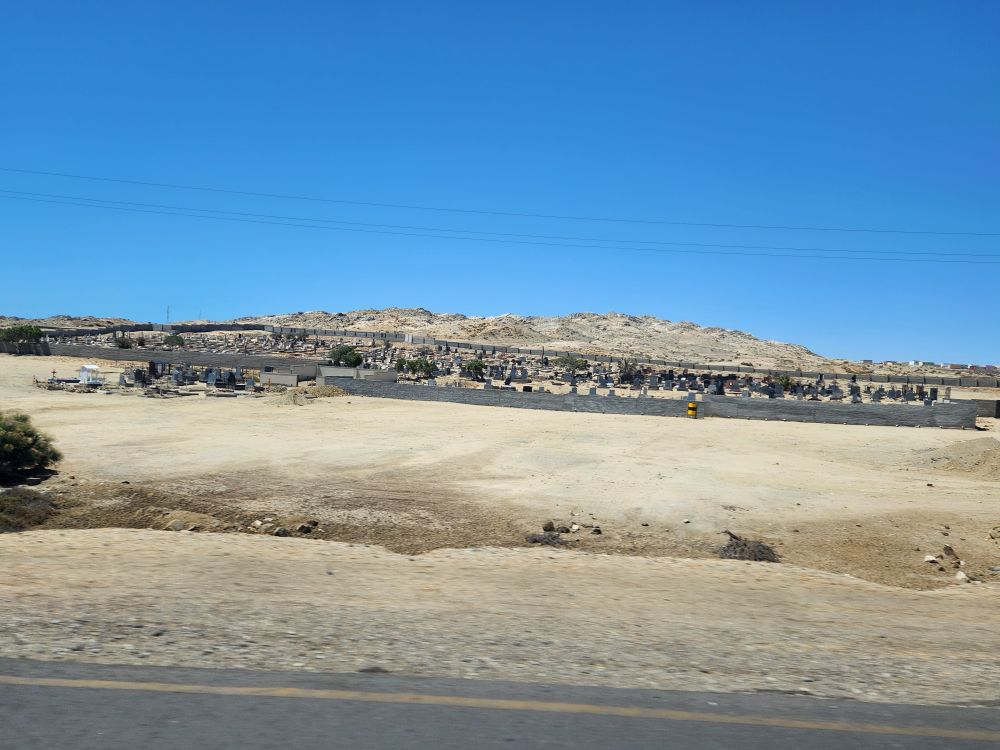
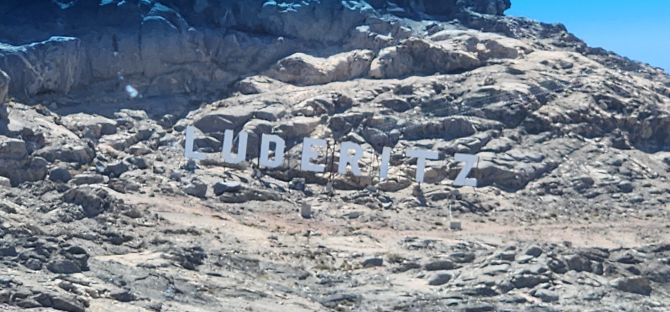
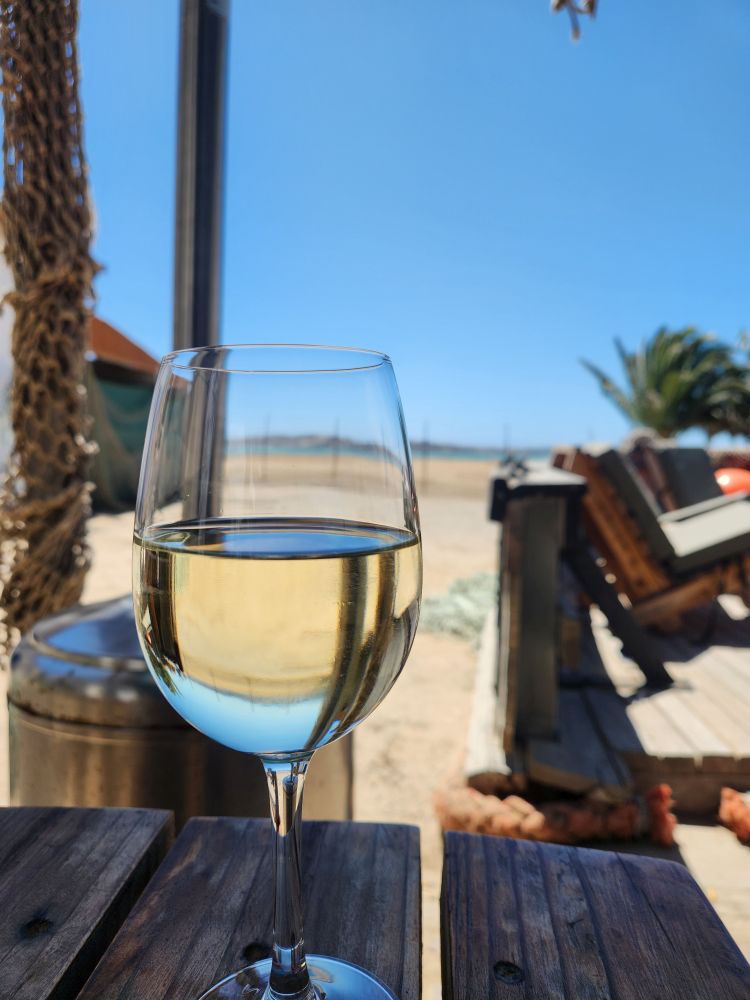
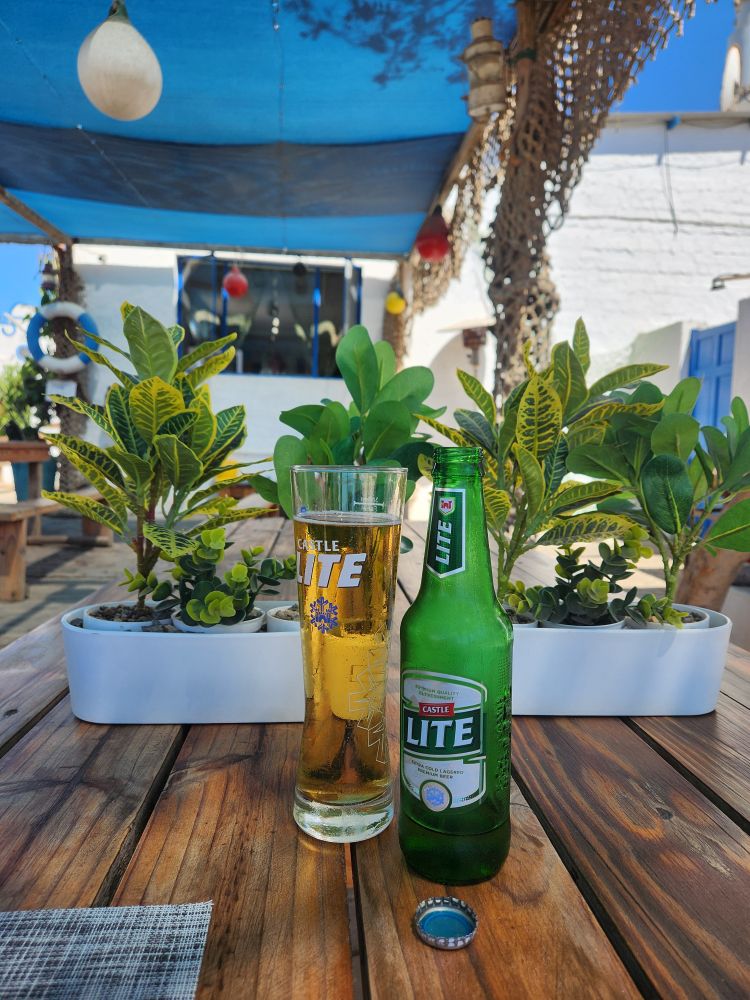
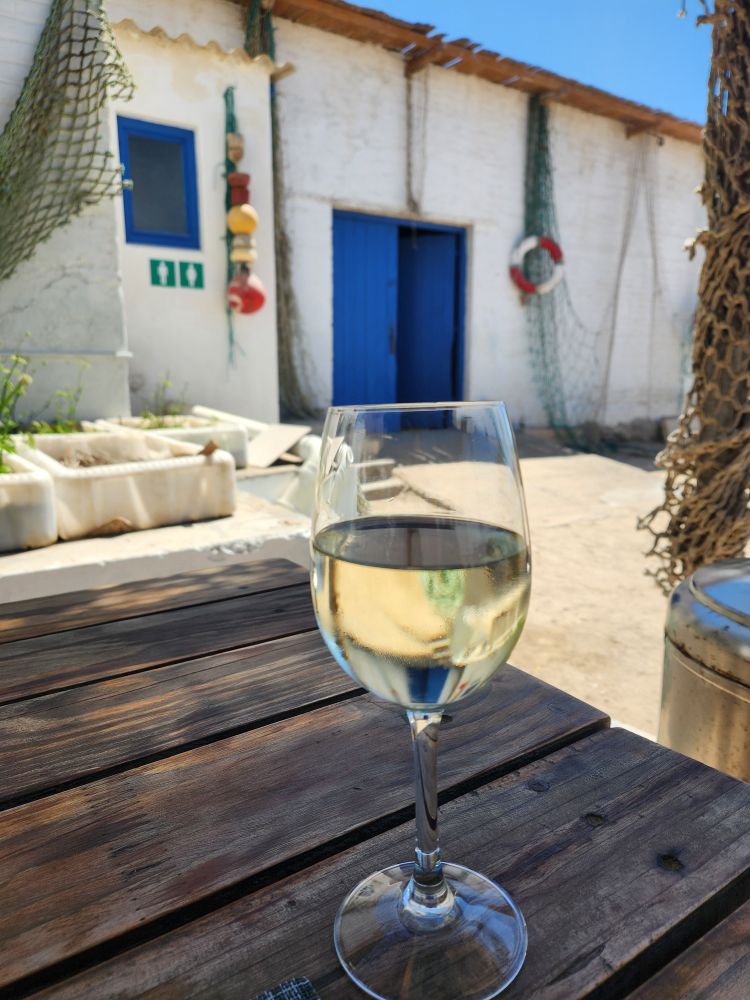
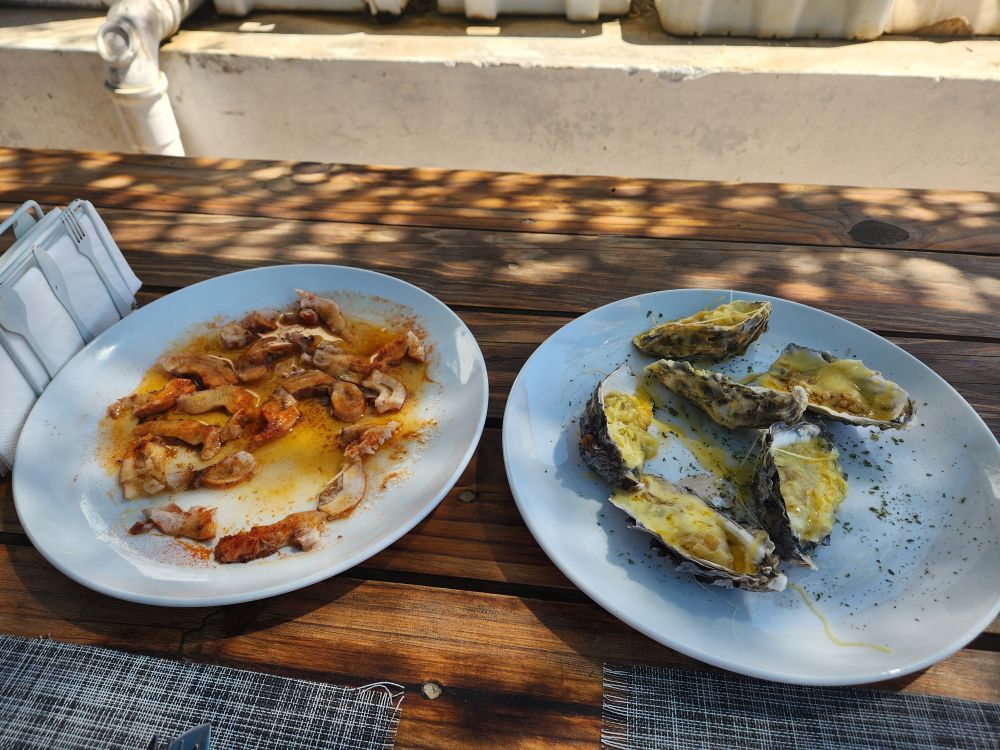
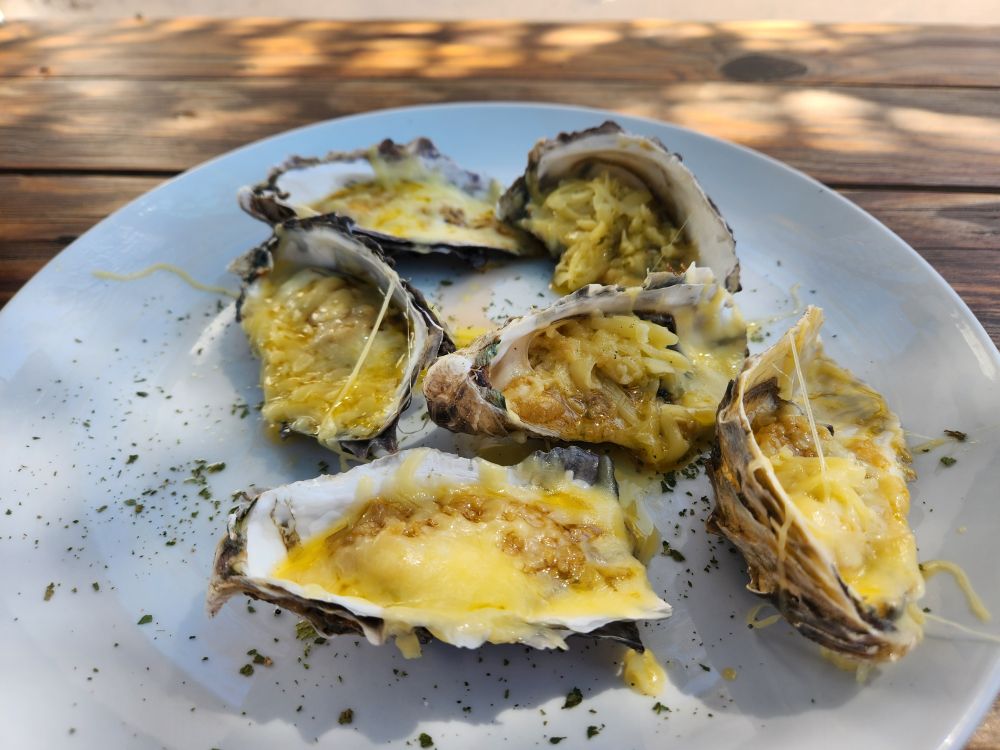
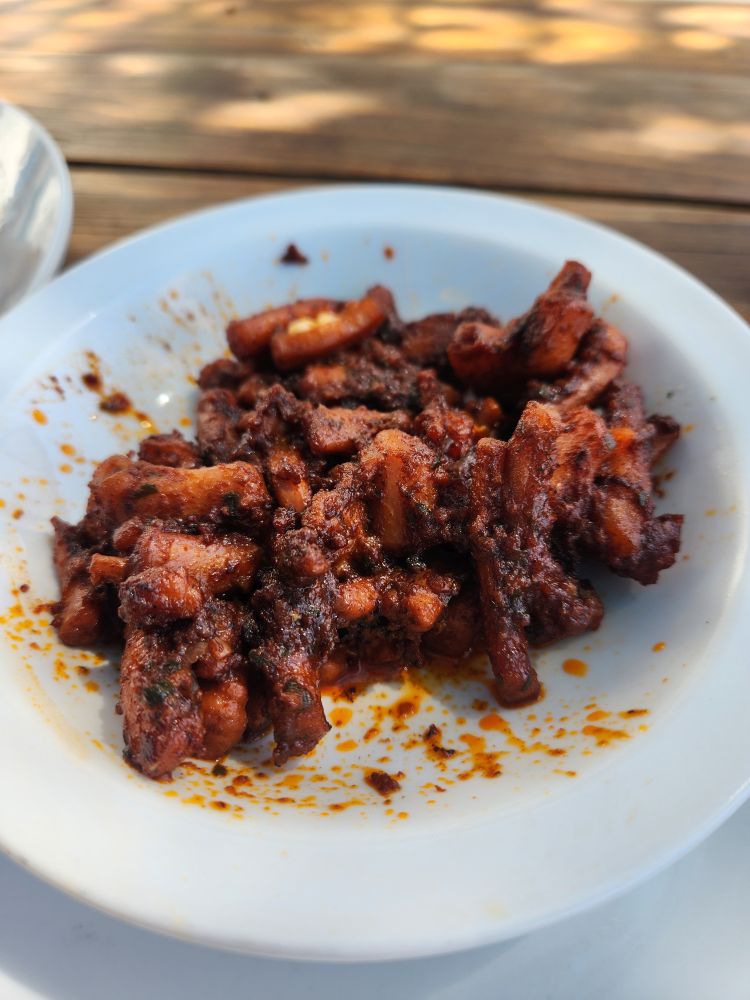
The driver drops us off in town as we had requested, the rest of the bus stays on to go back to the ship, and we head off to the Portuguese Fisherman, figuring we’ll just have snacks before going back. A late tapas kind of meal! The setting here is wonderful – right by the water with that great breeze. We’re seated outside under an awning to protect us from the sun, with excellent wine and beer, and lovely little plates of octopus “salad”, calamari tentacles and yummy baked oysters. Excellent tapas and not too filling so that we won’t be able to eat dinner – because of course, how can you skip dinner? LOL.
We hit the Spar on the way back – slim pickins! I have no idea how people shop here, because this is by far the smallest, least stocked place we’ve seen. Then we head back to the ship, eschewing a walk through town to see the old German church. It is way up on a hill and we’re really not all that interested at this point – so the ship it is!
It is a beautiful sail away, the sun just right for taking pictures.
And with that – we are done with our ports – one more sea day left then it is Cape Town and the next, and final, leg of the cruise portion of our journey.
 Andiamo