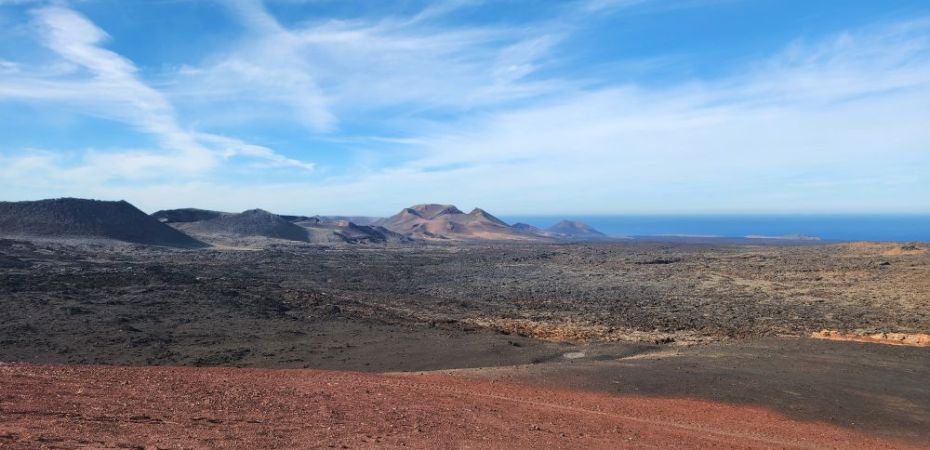
Another gorgeous day on tap. Not too hot, sunny, just beautiful. We had originally booked a car for our own explorations here in Lazarote, but with all the cabin credits we have, we decided to go ahead and book a ship tour instead. We still can’t get rid of all those credits! But we’re fortunate they roll over to the next cruise (a new feature of Azamara about which we are quite pleased).
Down to the Cabaret at the appointed time, unfortunately we are a little late in docking so we end up just hanging out. Finally called to get to the buses, we head out and grab the seats behind the 7055 people who have to have the front seat. Our guide Anna, settles us in and gives us tons of interesting information on our drive to the Volcano National Park, our first stop on the tour.
On the way we learn the island is only 68 km long and 25 km at its widest point, the 4th largest of the Canary Islands. There are only 165,000 residents, and over 3 million tourists last year. Oh, and of course there are 110 volcanoes! The last eruption was in 1824, but the big eruption happened in 1713 and lasted until 1736 – 23 years! It was the 2nd largest eruption in history. That is just crazy.
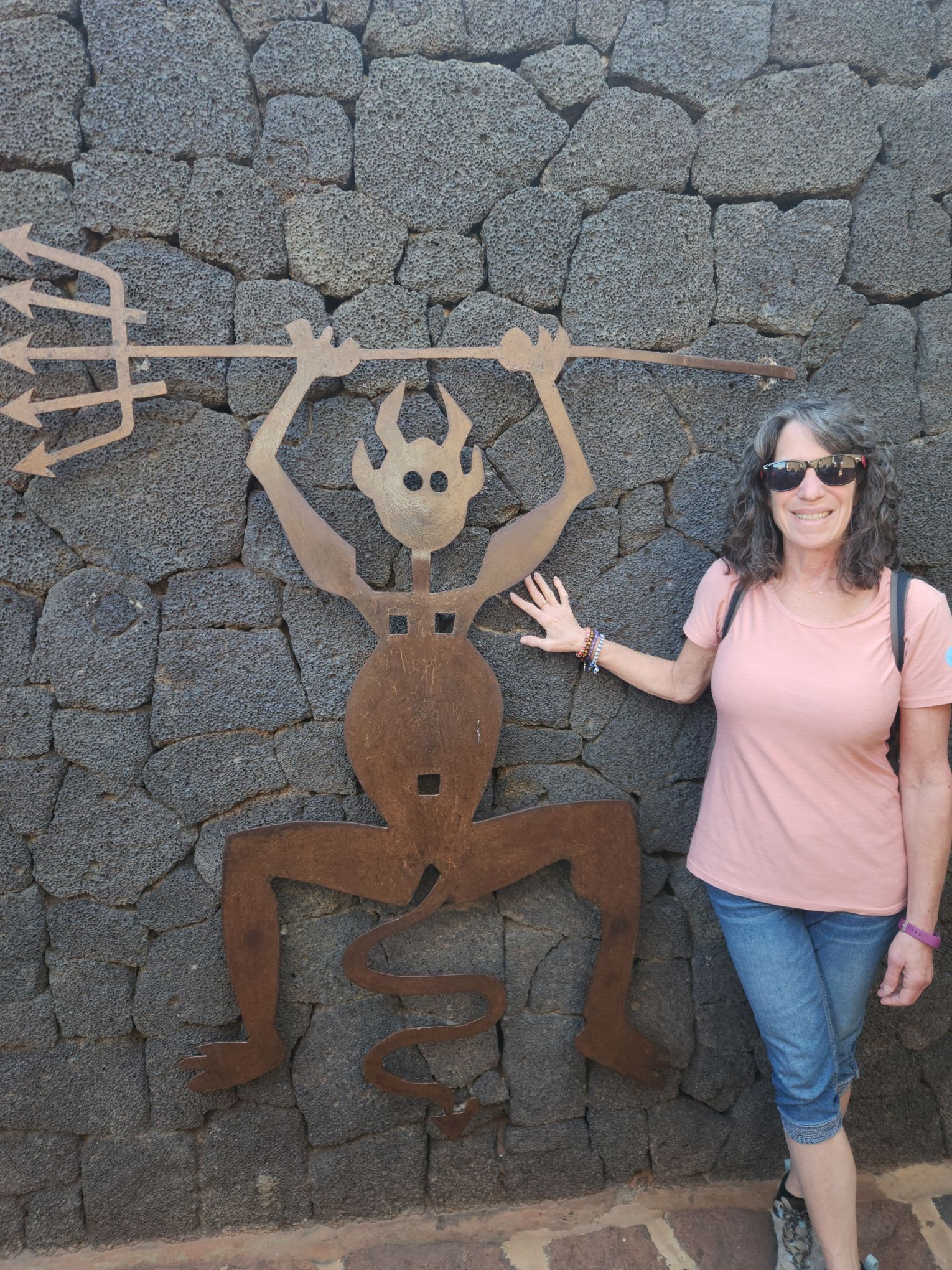
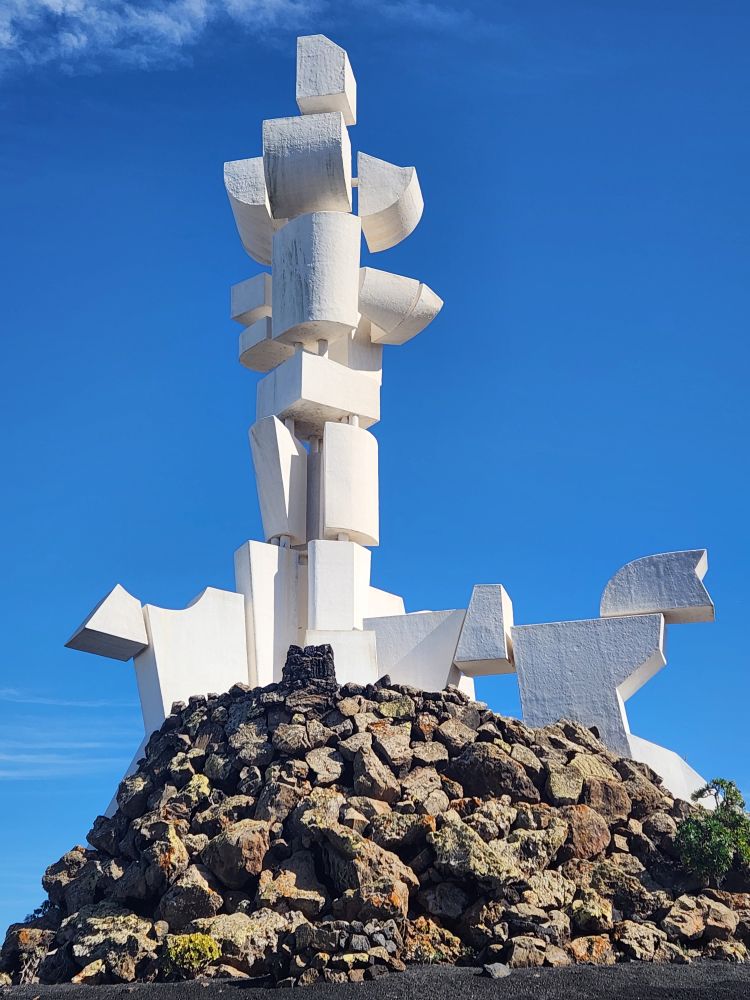
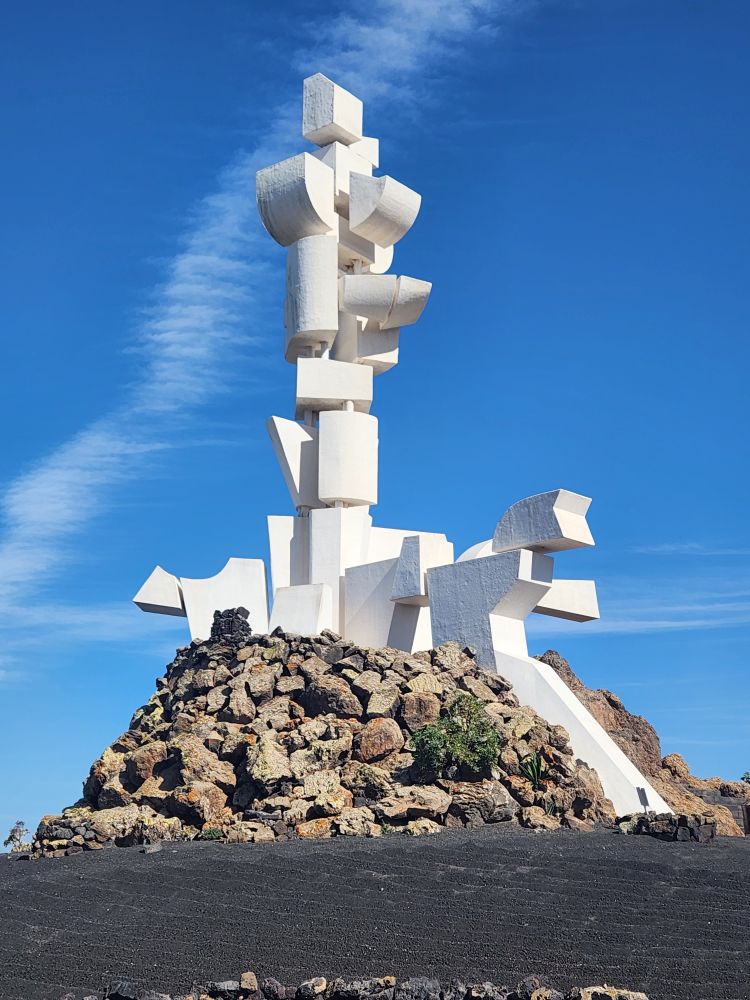
Making our way to the center of the island, we pass the Monumento al Campesino, a monument to the farmers, created by Cesar Manrique, a famous artist who persuaded the government to protect Lanzarote landscapes, culture and traditions, and to promote the island to tourists looking for something other than beaches and resorts. We will be having lunch here so we’ll get better pictures out of the bus, but for now we hear the story about Cesar (as we will throughout the entire tour) and how traditions have been protected throughout the years. He designed all of the buildings at the Volcano park, and all are disguised, covered in lava rocks, so as to be unnoticeable in the vast landscape.
Tourism only began in earnest after 1964, when a desalination plant was built allowing for water production on the island. Previously, all water had to be shipped in. Cesar was instrumental in getting the desalination plant approved, and obviously didn’t stop there in converting the island into a tourist destination with a purpose dedicated to nature and landscape and conservation.
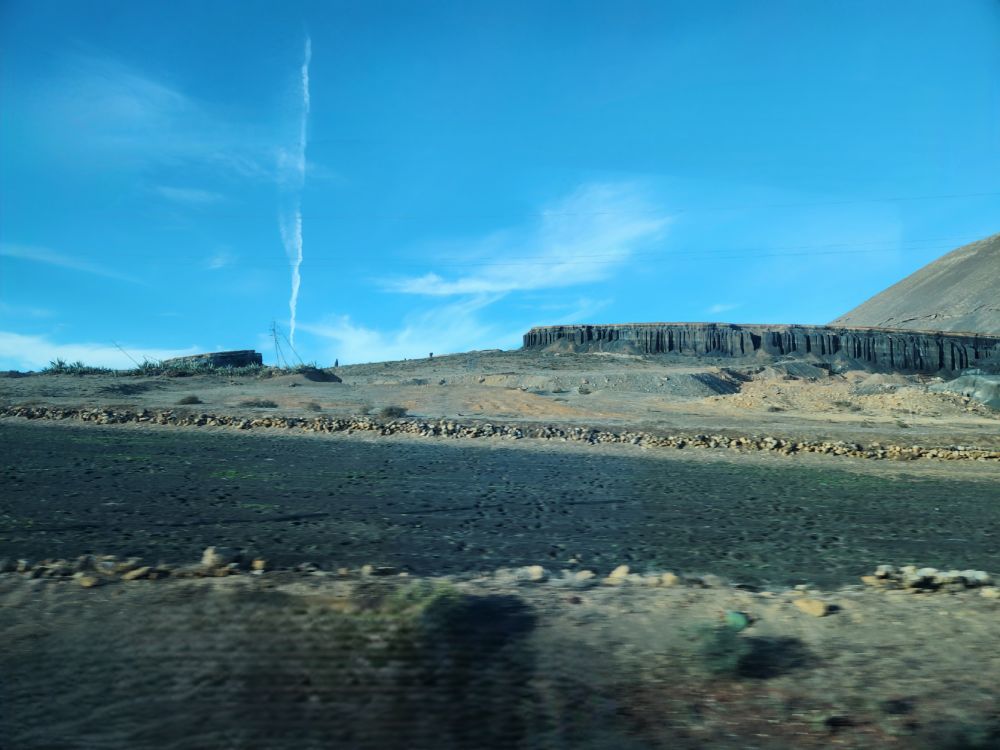
As we continue on our way to the Volcano National Park visitors center, we pass huge cliffs carved into the landscape. This turns out to be a quarry of ashes! It is what all island residents use to cover their gardens, their landscaping, everything. Because it is so dry on the island – only 5 or 6 days of rain per year – the ash is used to keep any moisture in the soil. Because of its properties, the ashes keep humidity and water in soil as well as filtering the sun during day. Pretty ingenious for a place where the only animal that can survive is a camel!
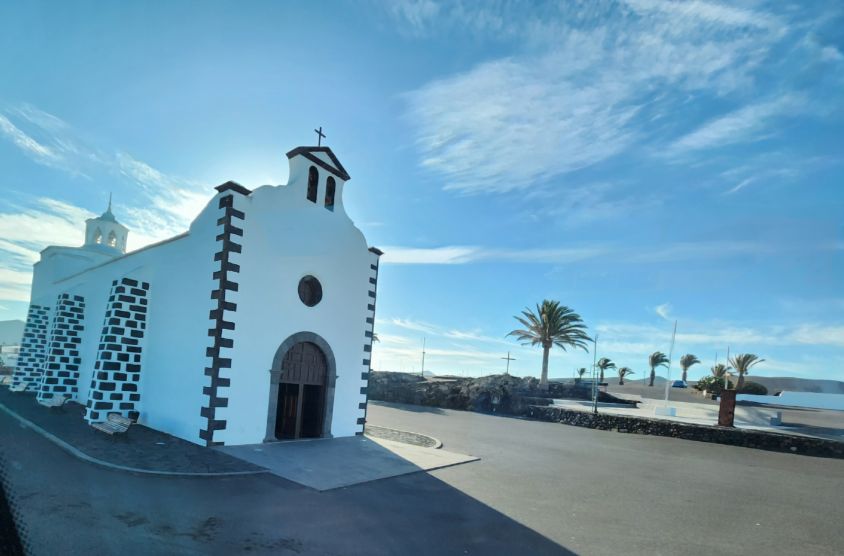
Arriving at the visitor center, we visit the museum that shows the evolution of the island and the volcanic eruptions, plus are allowed to go outside on a board walk to view the lava flows and moonlike landscape. This and one other place in the National Park are the only 2 places we are allowed off the bus and out in the air. It is pretty moon-scape-ish here, that’s for sure. But a fascinating up-close view of exactly what lava flows can do and how they can form into all sorts of interesting shapes and sizes.
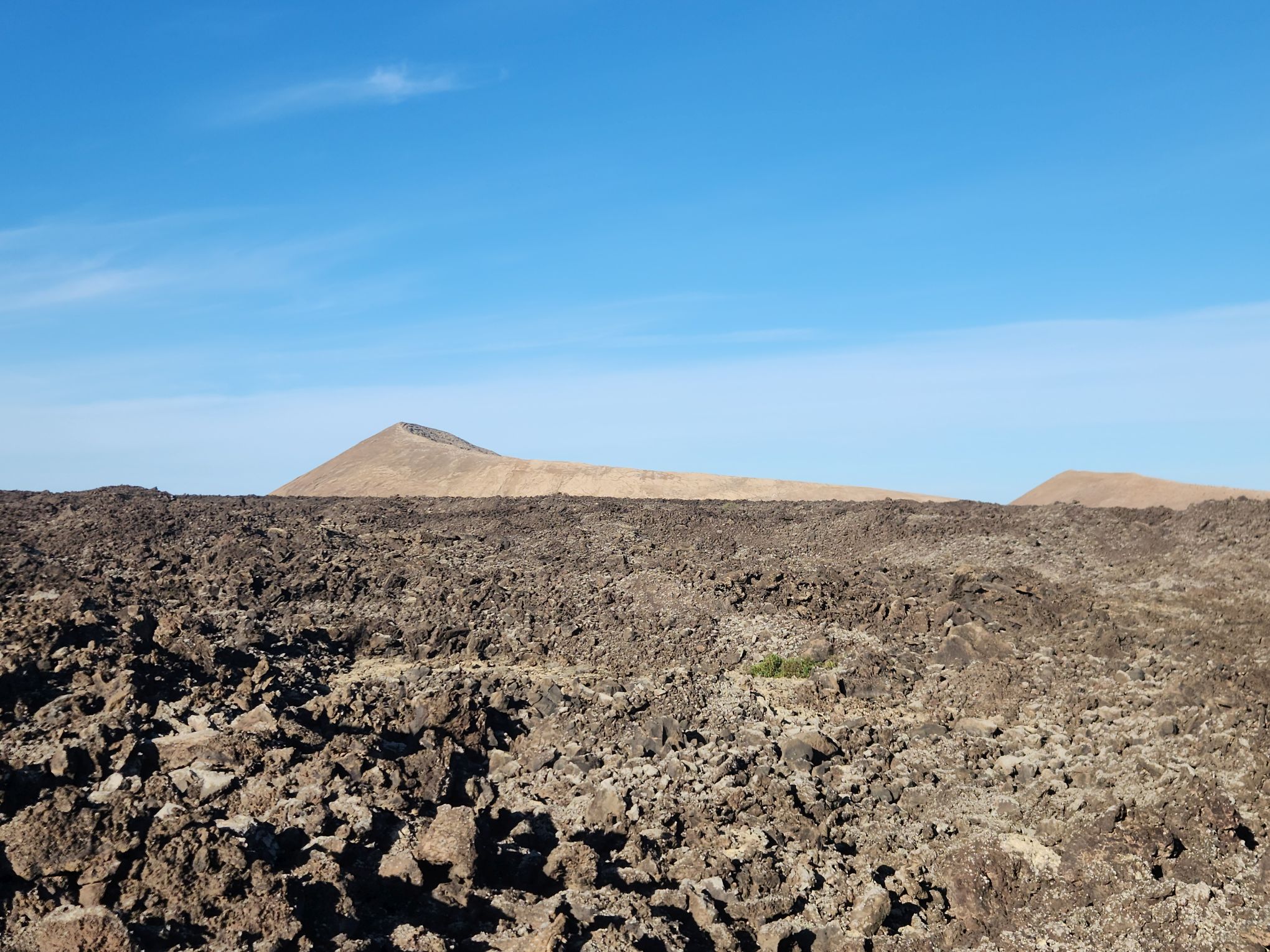
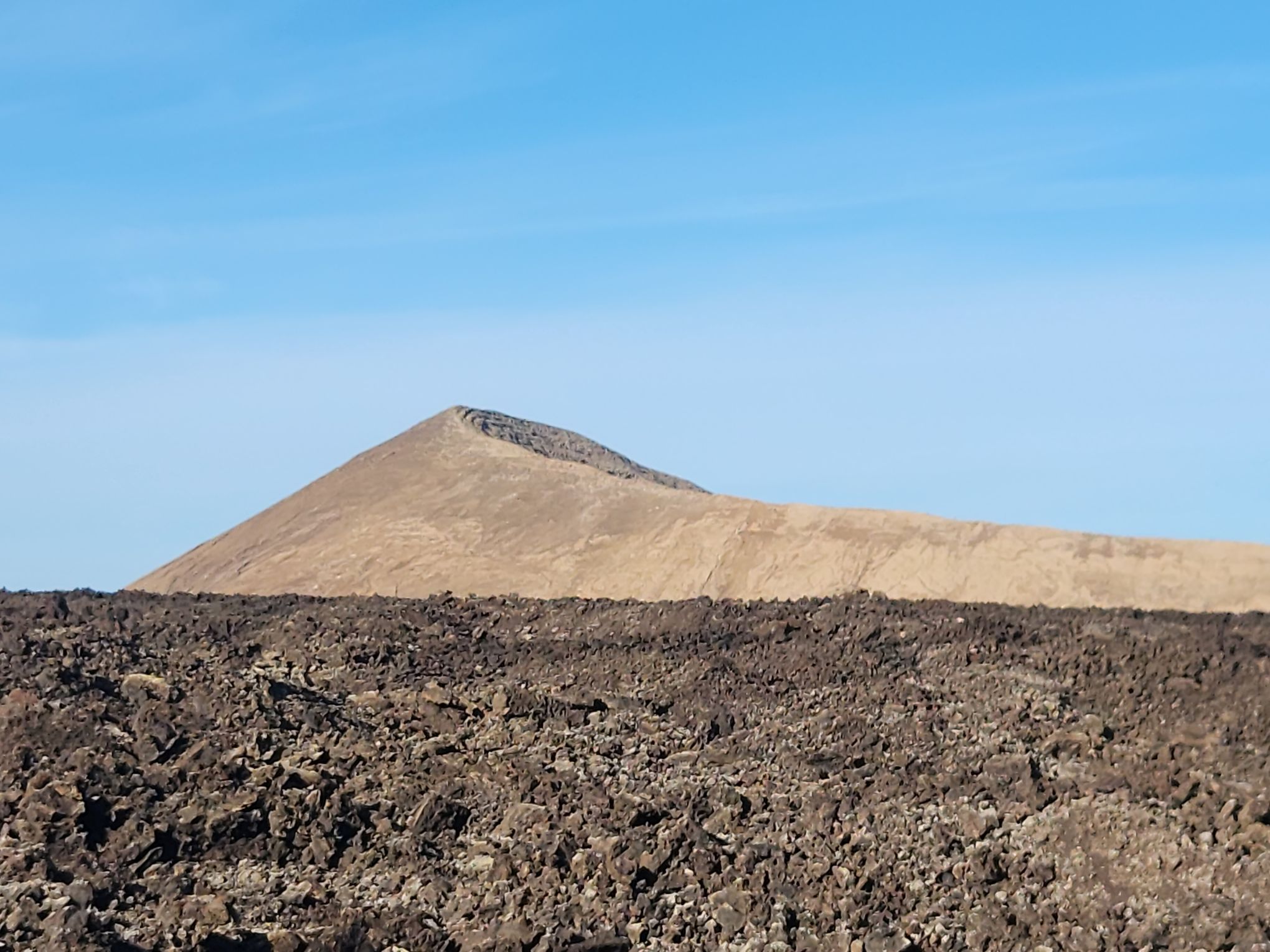
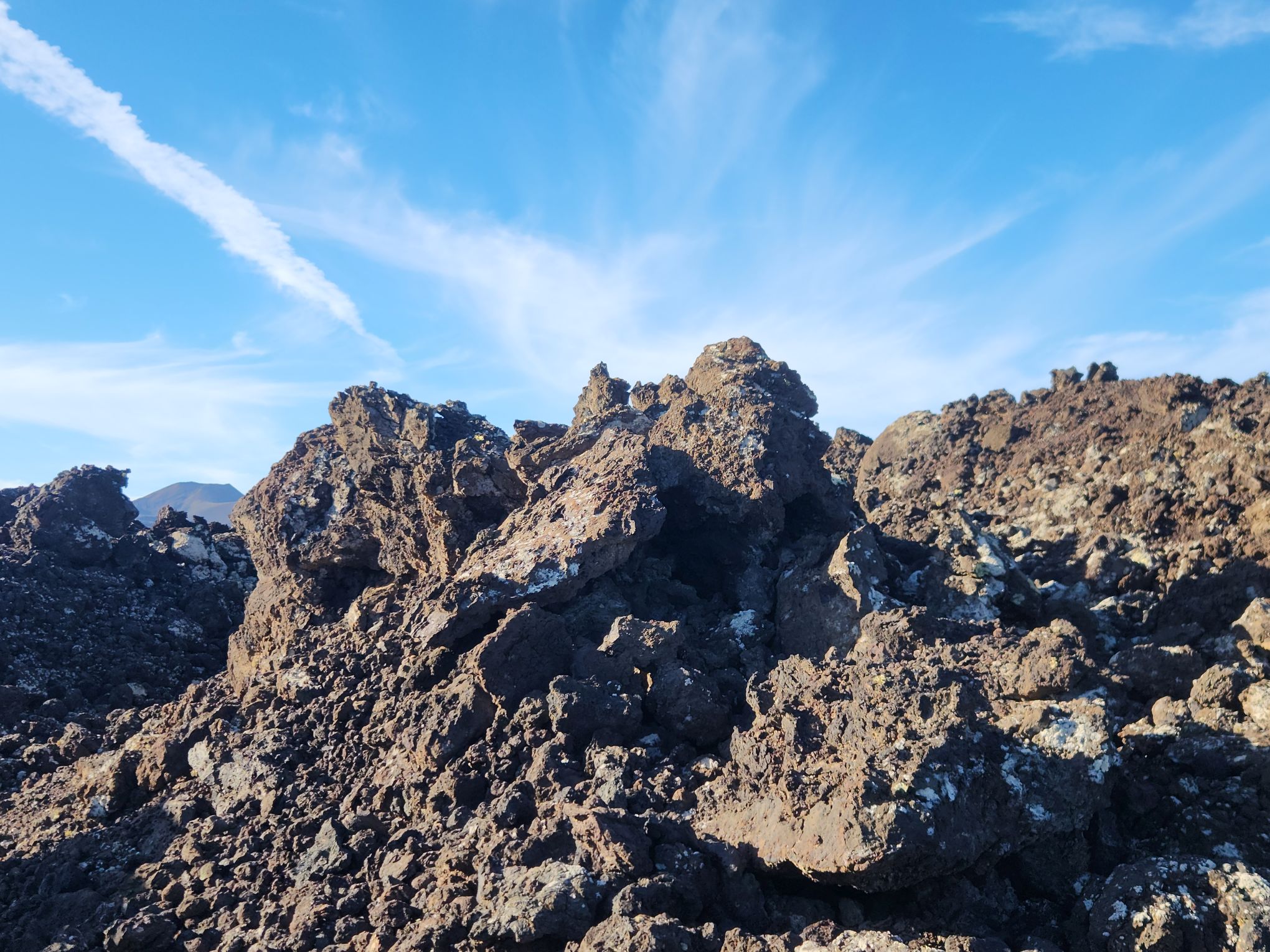
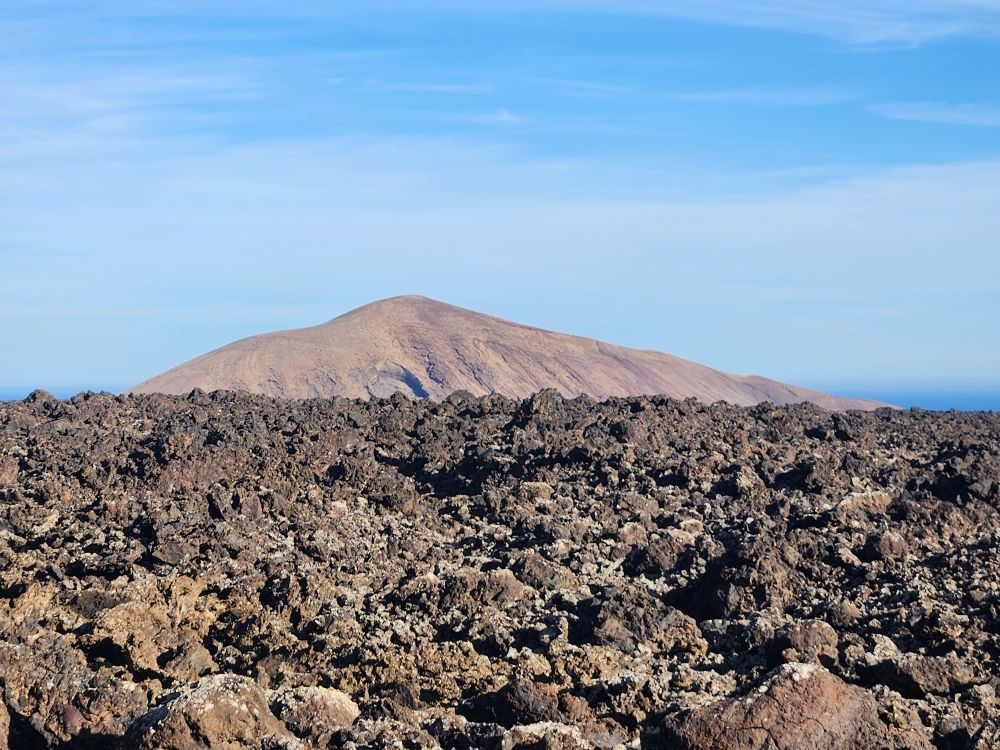
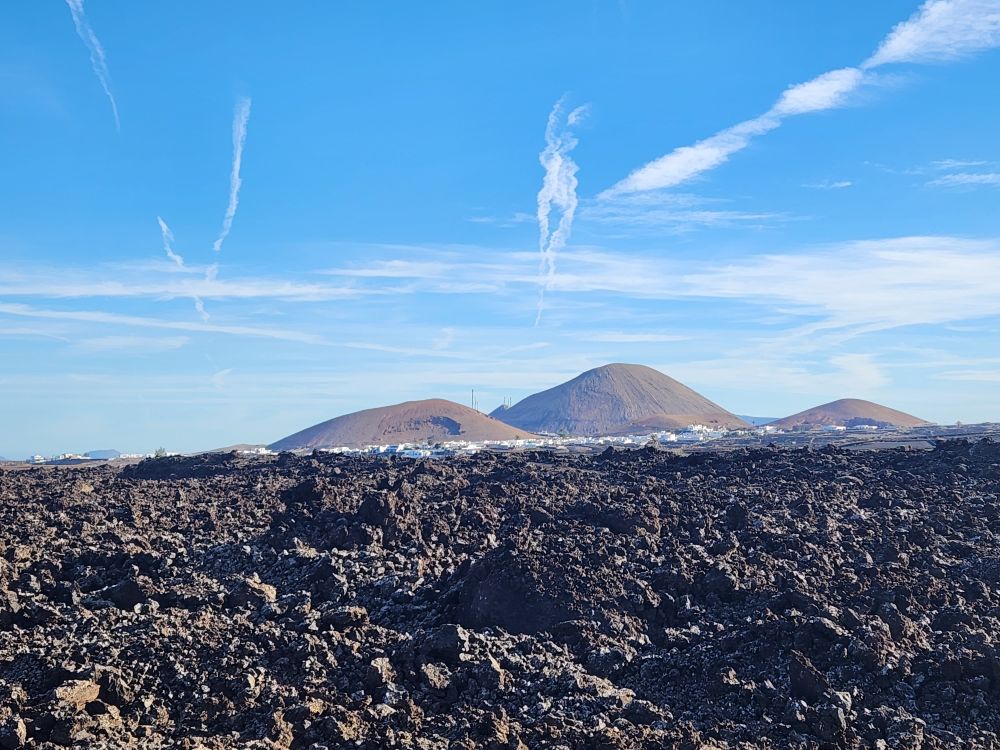
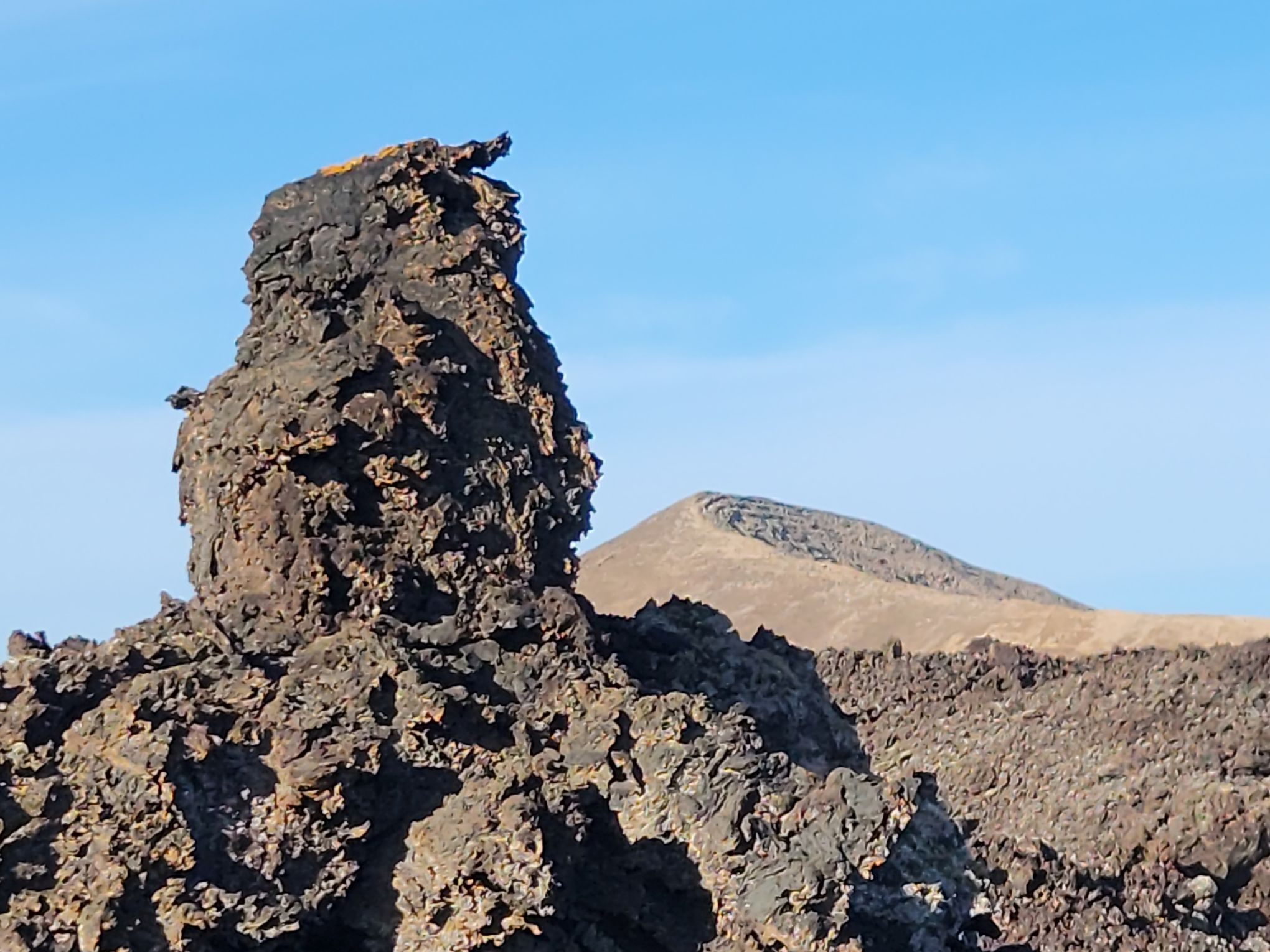
Back inside we get to experience what a volcanic eruption would sound and feel like. I won’t bore you with the video or the photos, it was fun, but fairly unexciting. After the audio-visual explosion, we hit the restrooms then hop back on the bus for our tour through the Park.
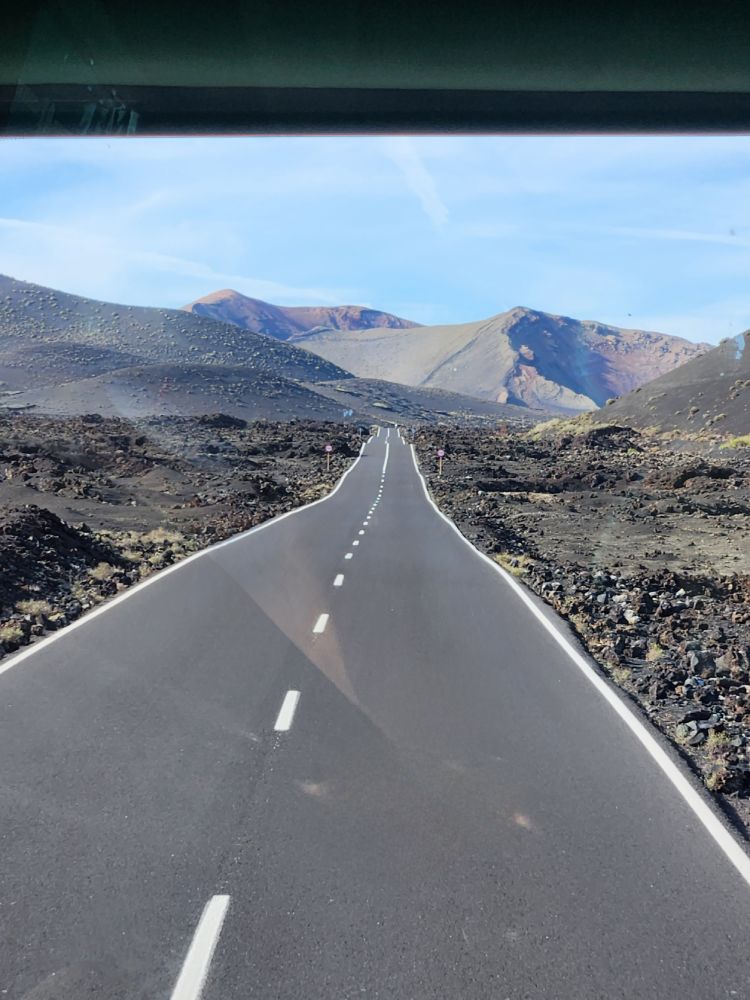
It takes another 30 minutes, down straight, empty narrow roads that run through the lava fields, to arrive at the National Park complex where we can get out of the bus. Before getting to the complex – which is a combination restaurant-rest stop-lava rock exhibit-bus depot – we pass through the main entrance to the park where there is a line of cars waiting to get in. Then further down we pass at least 25 cars waiting in line to get to the parking lot! Anna explains that the public car park is quite small and the traffic patrol holds the cars at the bottom of the hill until space is available. Only busses are allowed to drive through the Park. If you come in a private car, you must park the car and get on a public bus to tour through the area. We are SOOOOO very glad we are on this tour and not in our own car! Although to be honest, I had taken the Park off the itinerary for today if we had the car, thinking everyone else would be here and there were other places to go and see. And oh boy, would I have been right about everybody else being here! It is jam packed with personal vehicles as we pass them by on our big bus tour.
At the complex, Anna leads us down the lot a bit to look out over the incredible landscape, to the ocean. It is amazing up here, and just a bummer that we’ll have to be stuck on a bus for the entire tour with no access to the outside and clear pictures. But, you can see why they don’t want you in a private car or out on roads – this place would be ruined by hapless and unthinking tourons.
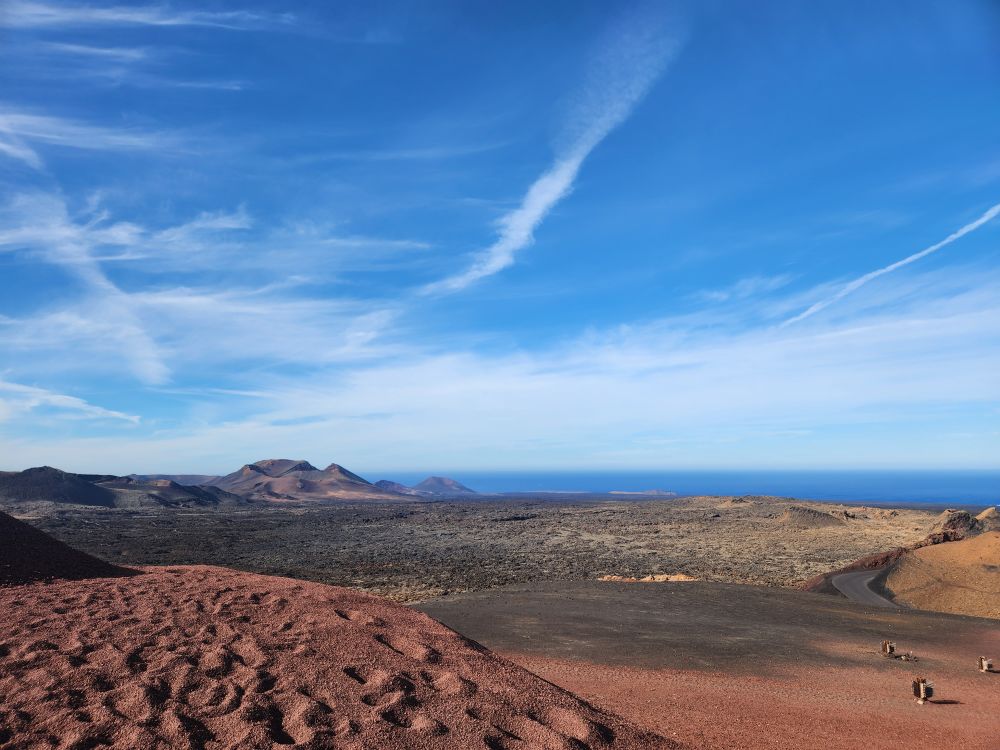
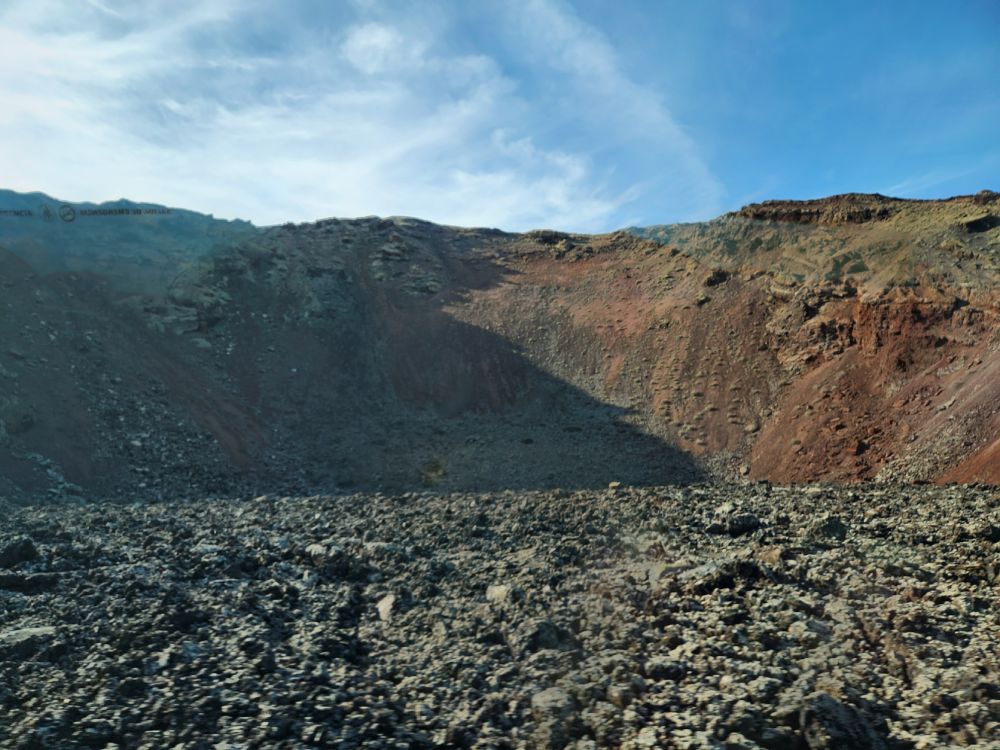
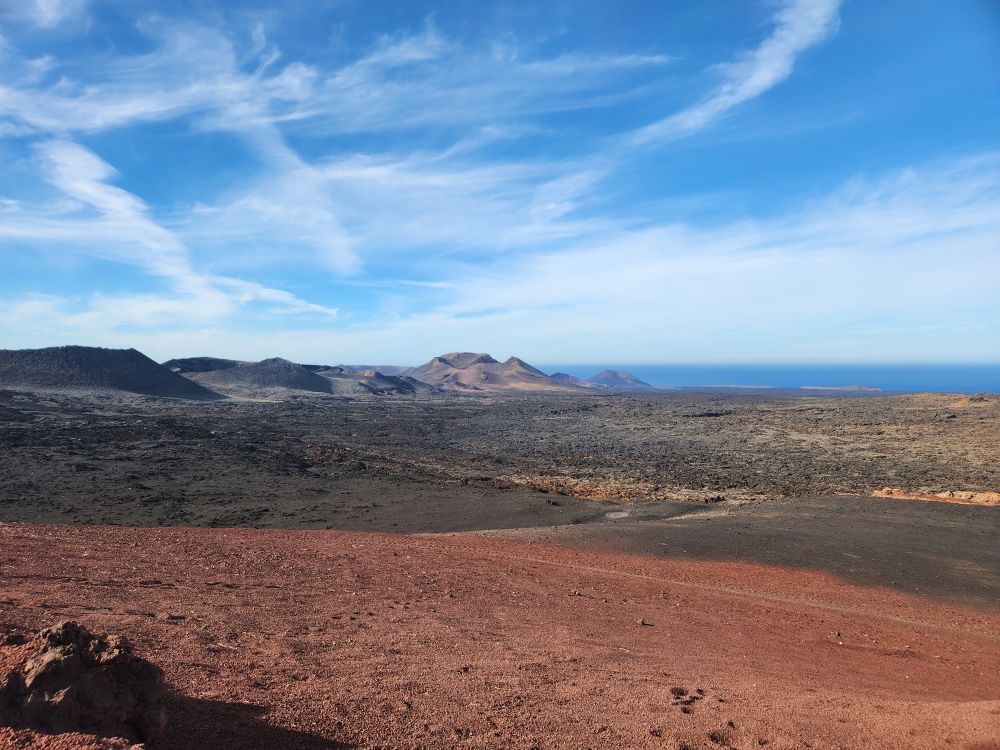
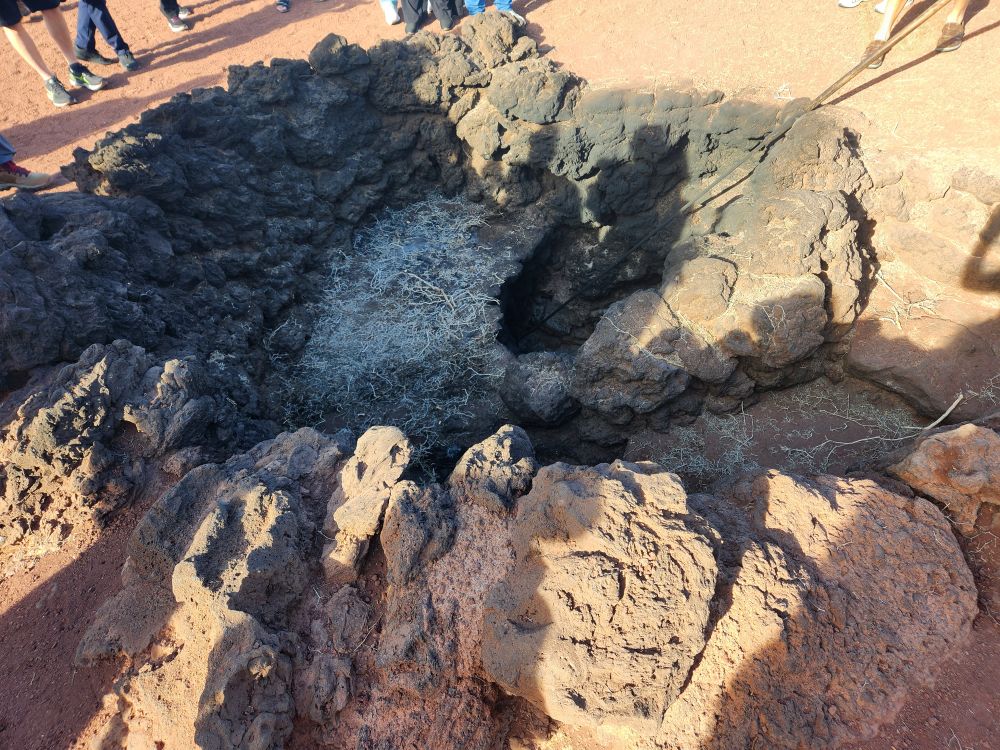
Up near the buildings, we have a couple of demonstrations about the heat of the lava. We get to feel the lava rock where we stand, which isn’t very hot. Then a Park employee digs down maybe 2 feet and comes around with a shovel full of rocks for us to put in our hands. Wow! Those babies are hot! Too hot to handle actually, as we all shift the rocks from one hand to another so as not to be burned. Then we go over to a pit where the employee throws a pitchfork full of kindling into the hole and we watch it burst into flames after a few moments. That’s hot!
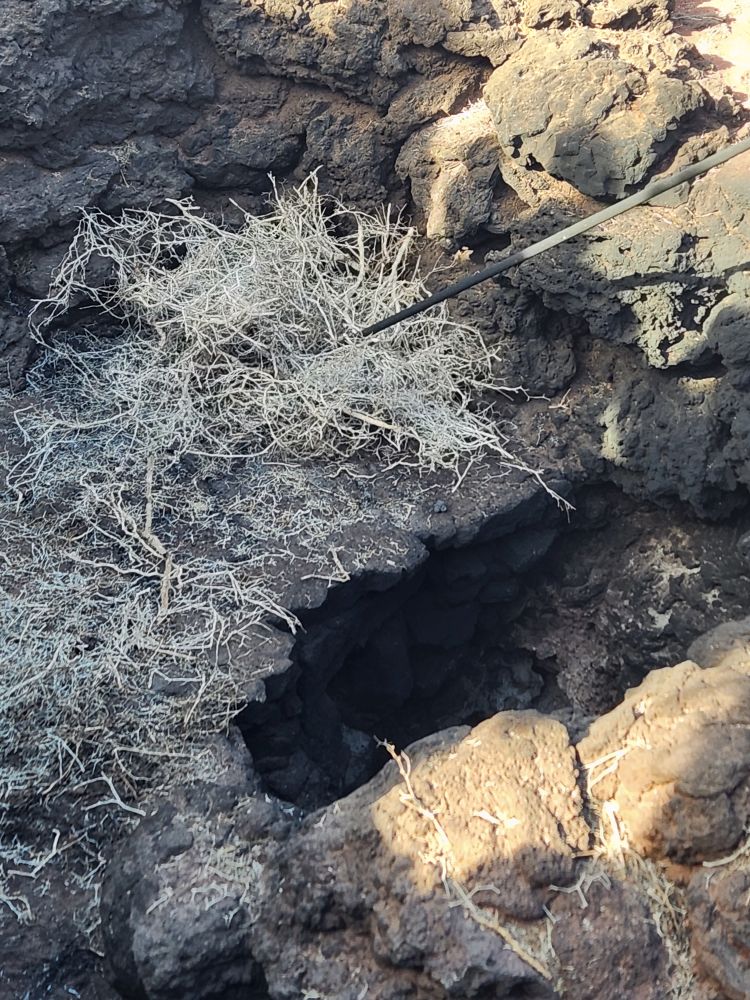
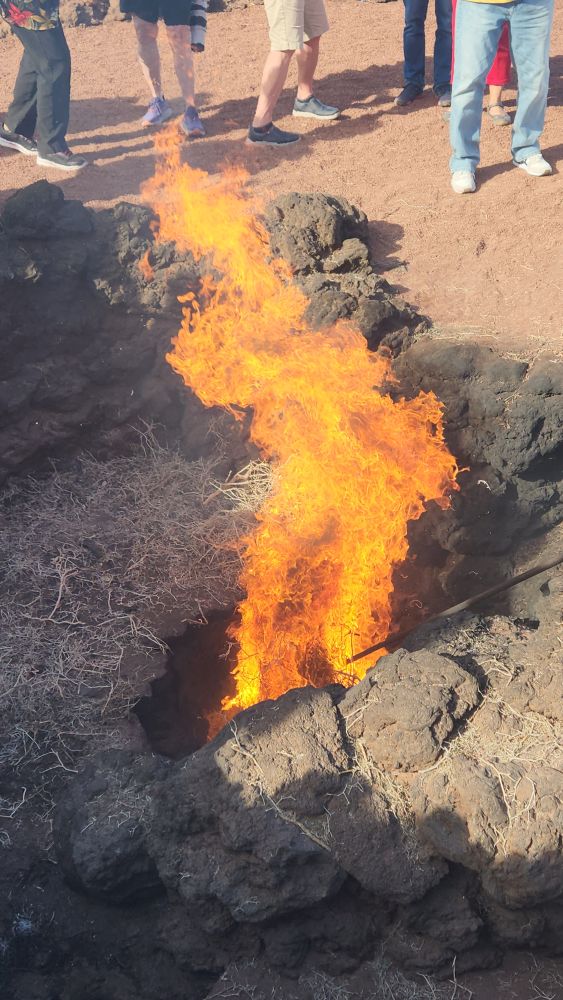
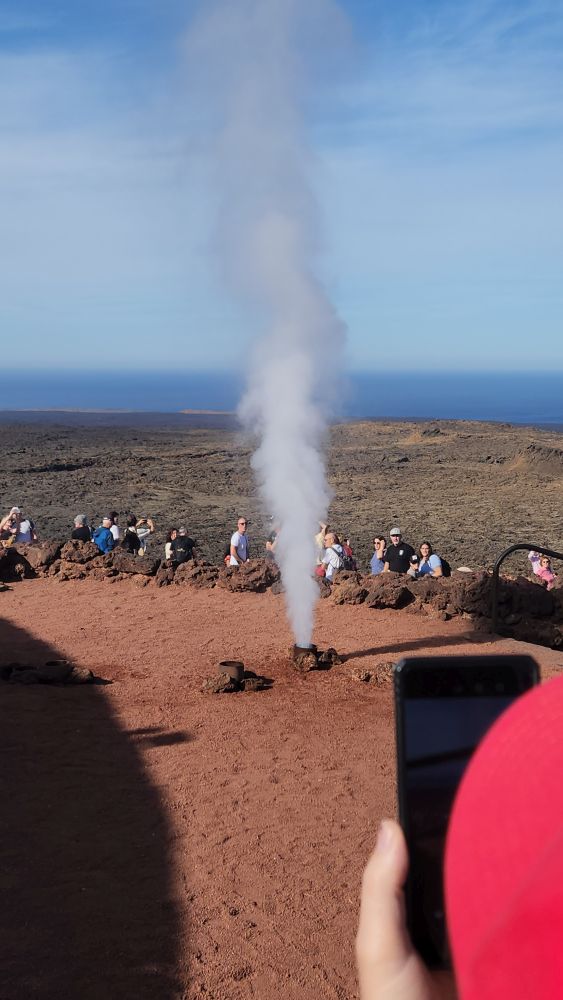
The last demonstration is a water geyser. They’ve placed tubes in the ground where they pour water, and after a count of 3 you get a geyser of huge – and probably hot – proportions! Really amazing and quite fun! Demonstrations done, we get a few minutes for a rest stop and to wander through the restaurant and gift shop where they cook everything over volcanic rock and flames.
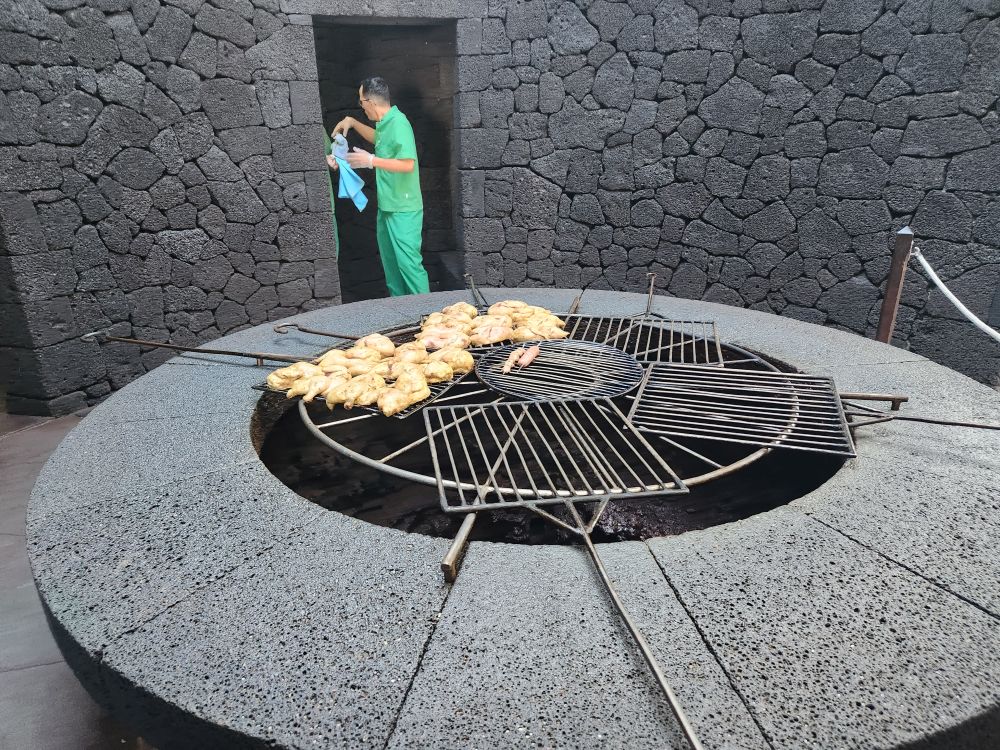
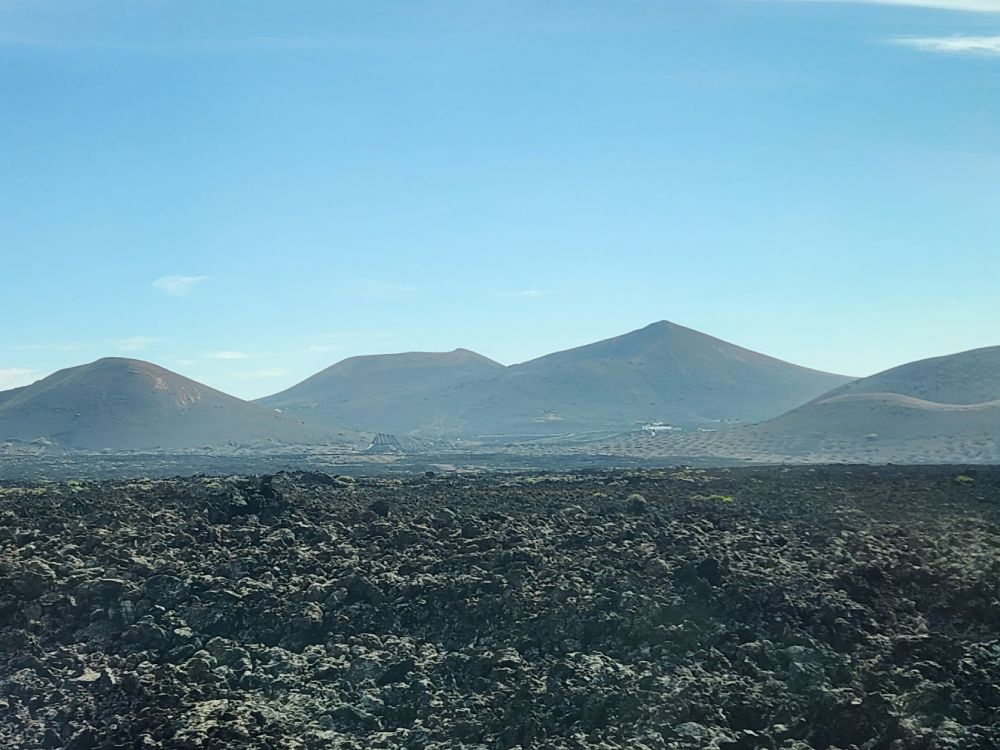
Next is our 40-minute ride through the Park with stunning views everywhere you looked. Even though it is through the bus window, we still managed to get some great shots of the lava, the moonscape, even the invasive plants (the only thing that grows on this island) that we are calling the Kudzu of Lanzarote!
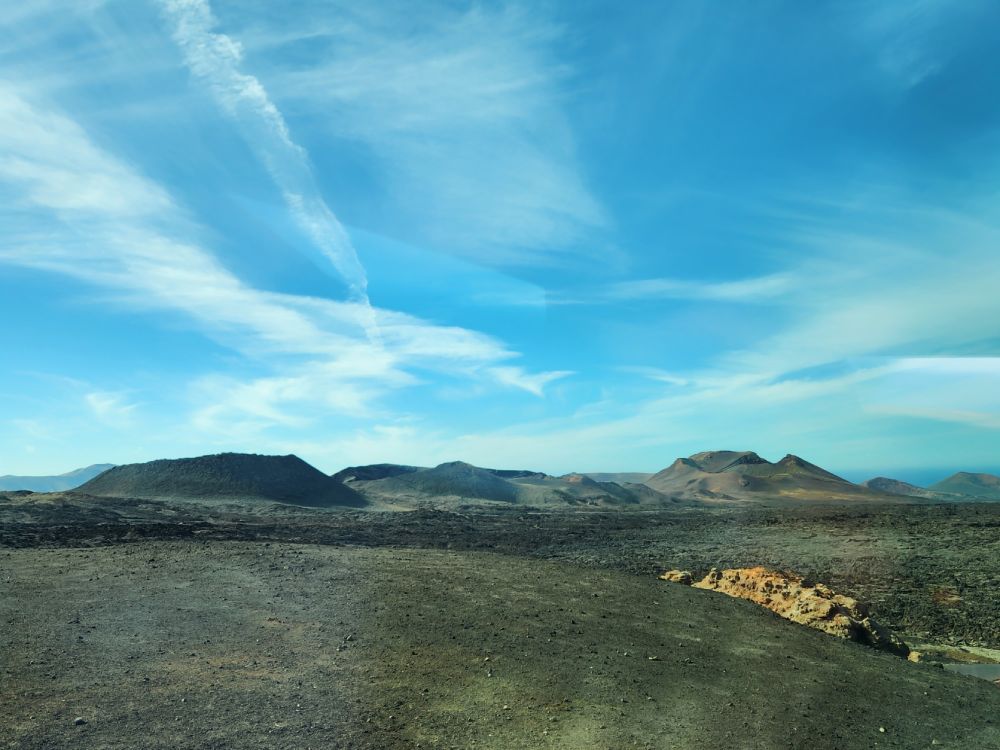
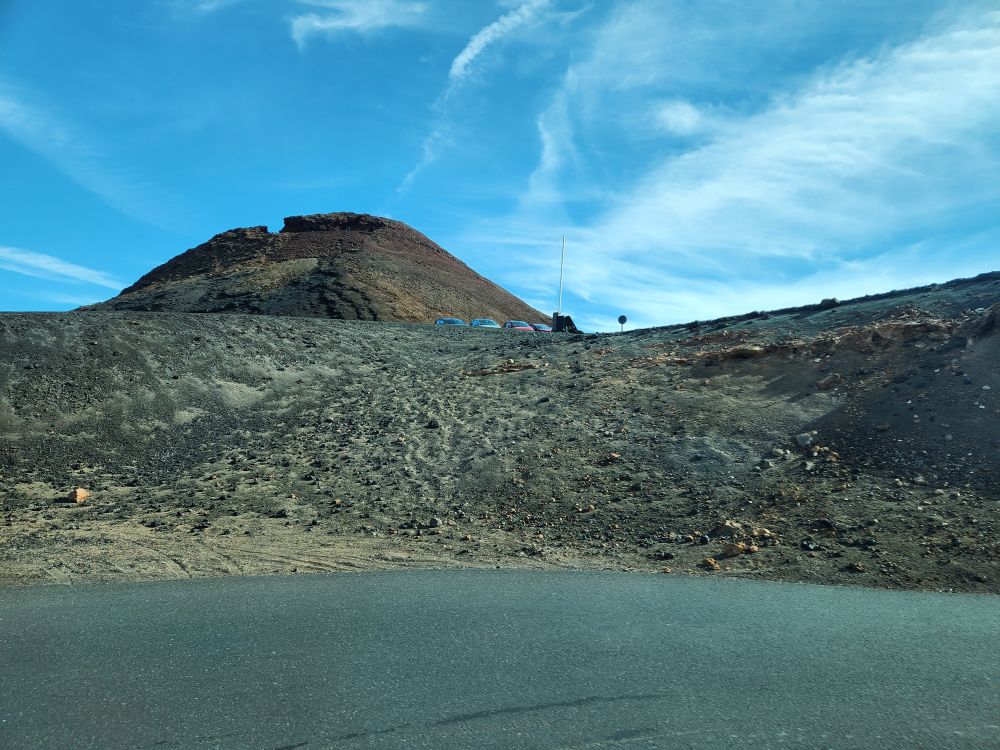
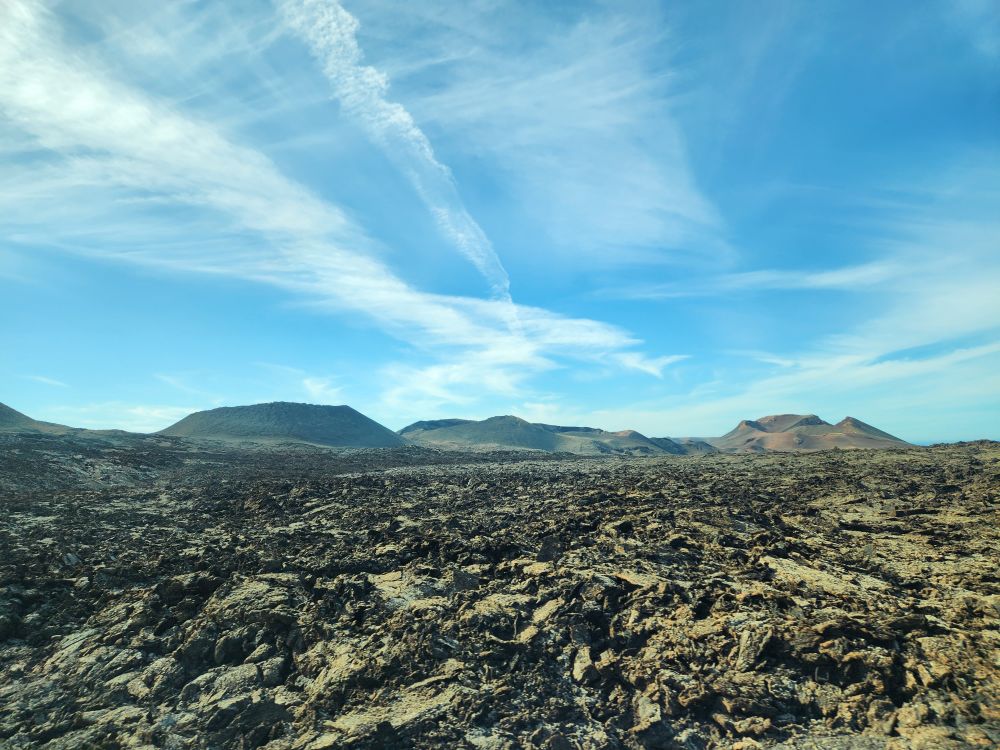
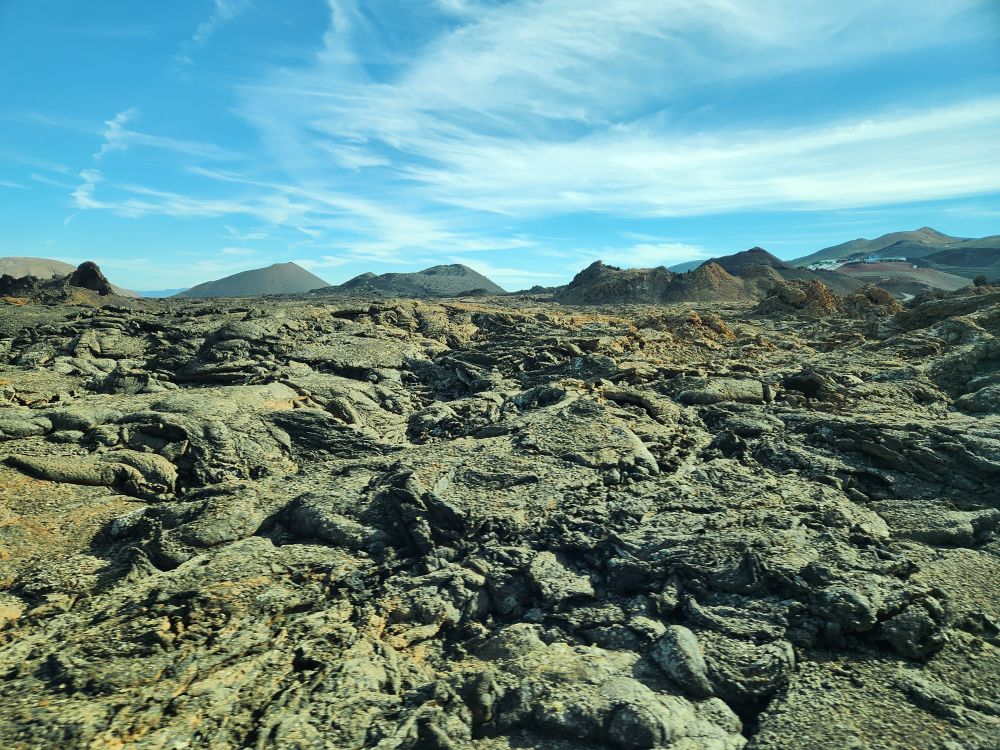
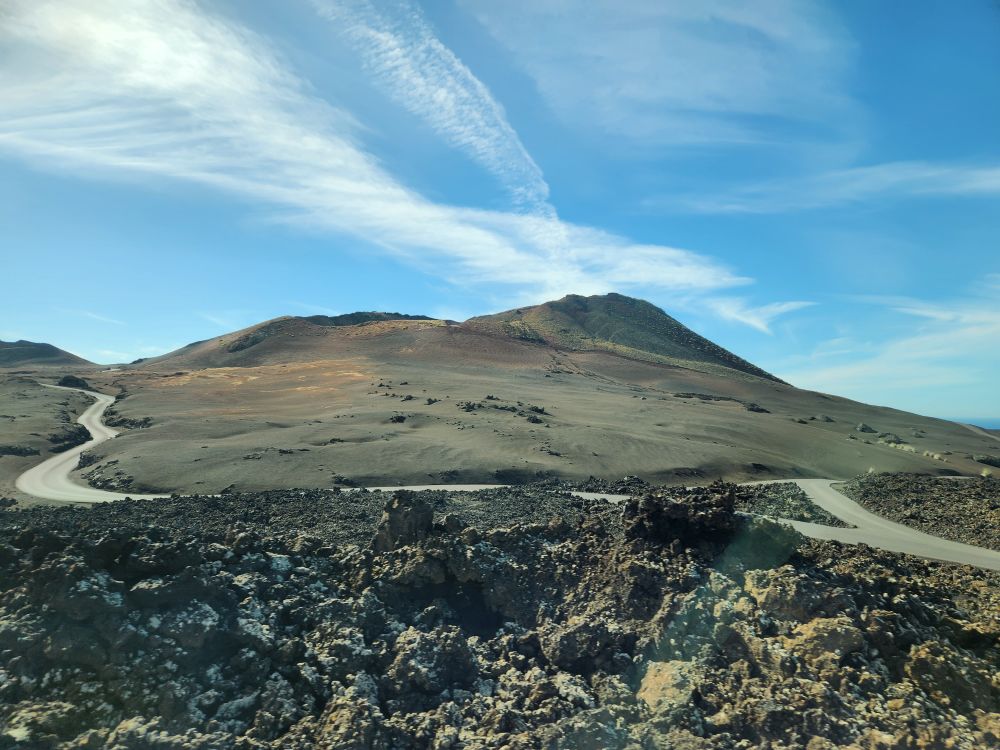
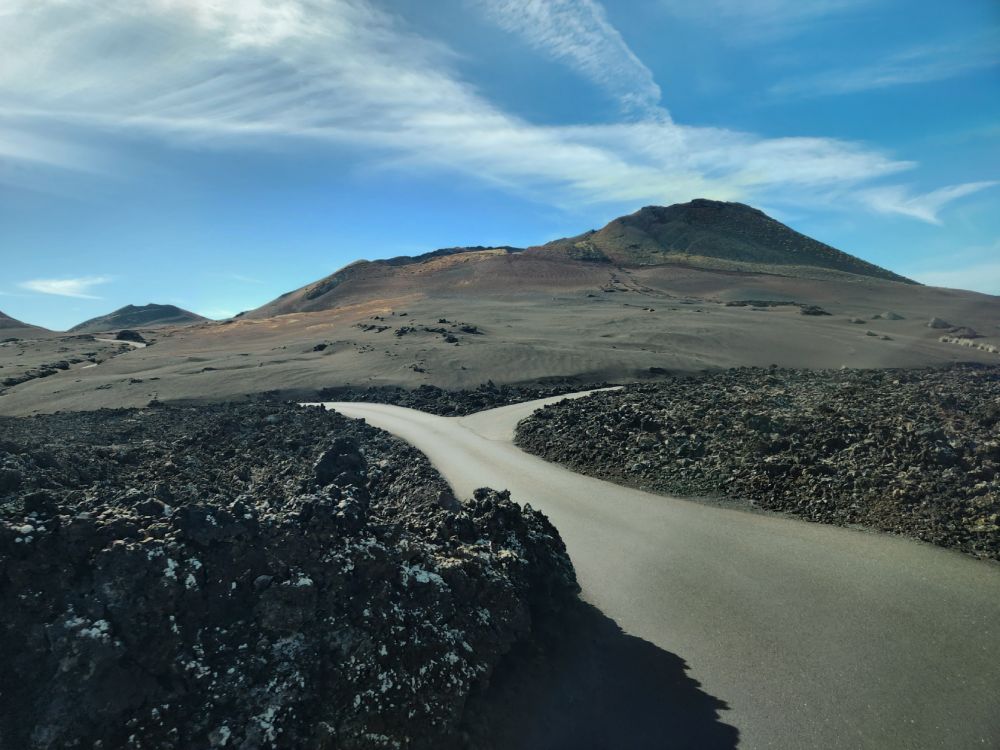
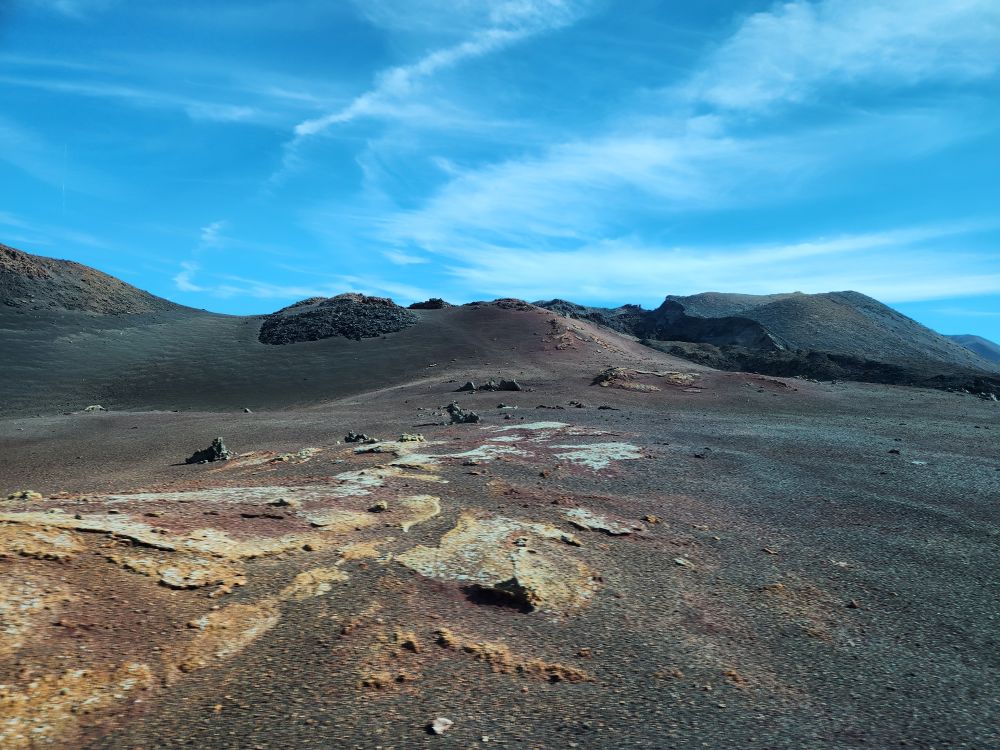
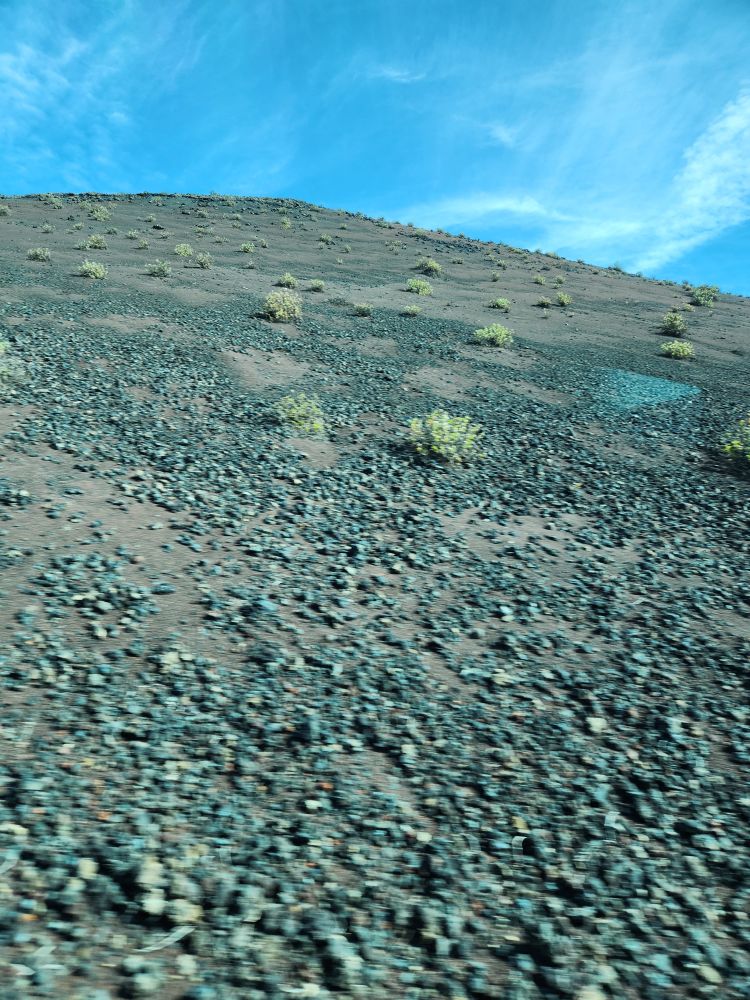
Really, it is spectacular. Just miles and miles of volcanic ash and lava flows. Volcanoes all in a row. Even huge lava tubes that have collapsed which we drive through on the bus – with the lava walls towering overtop our huge vehicle. Very impressive to say the least!
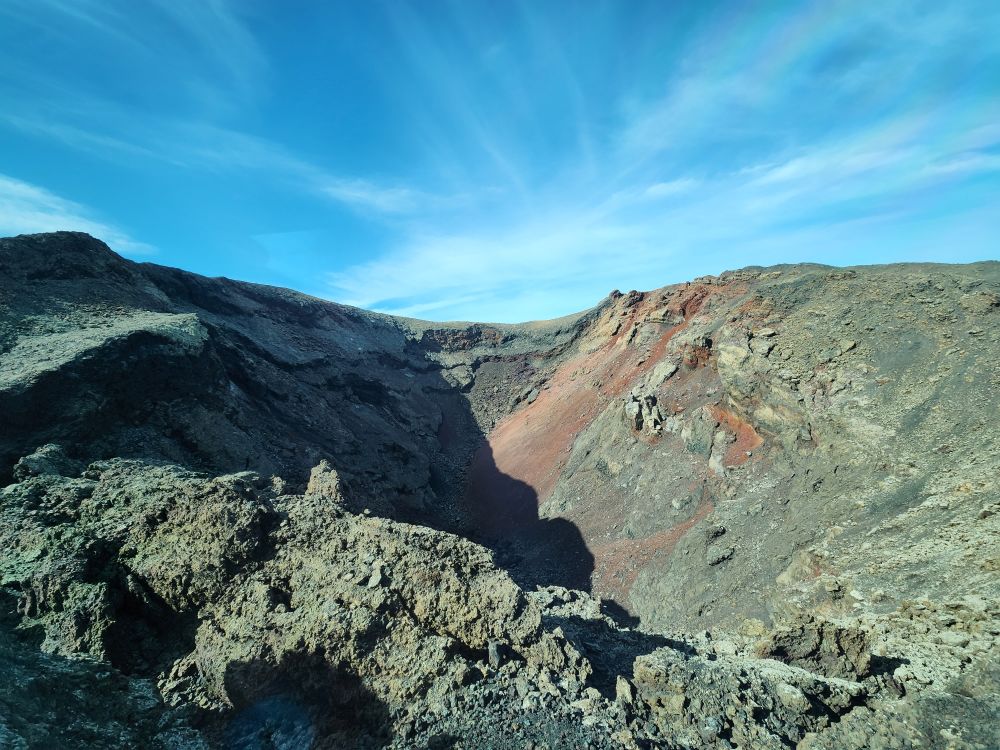
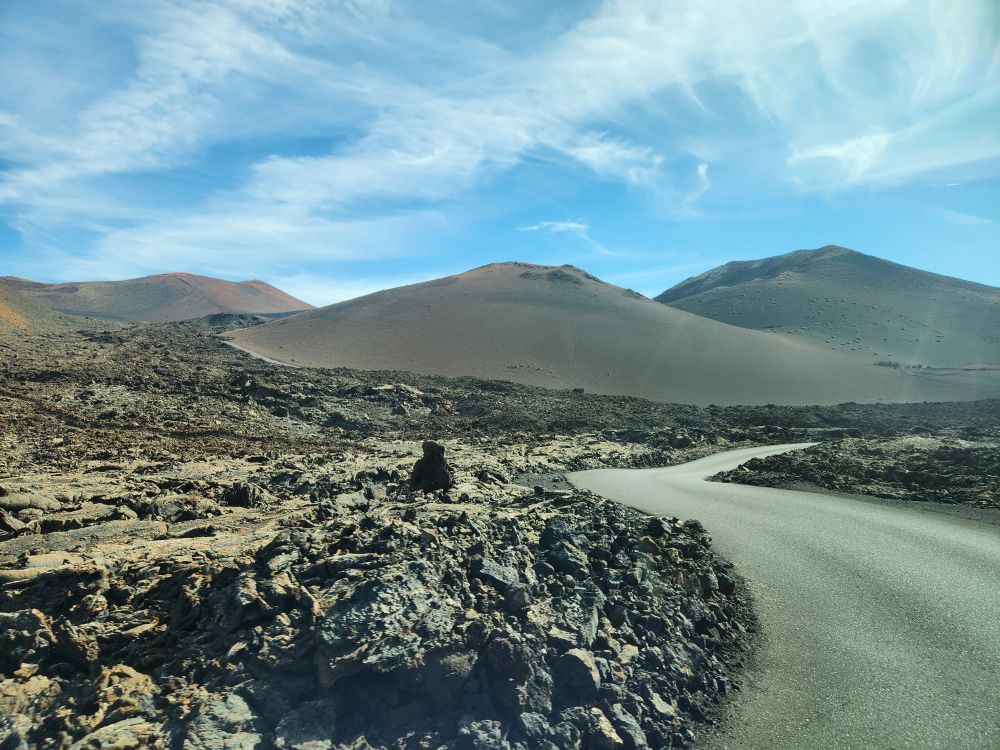
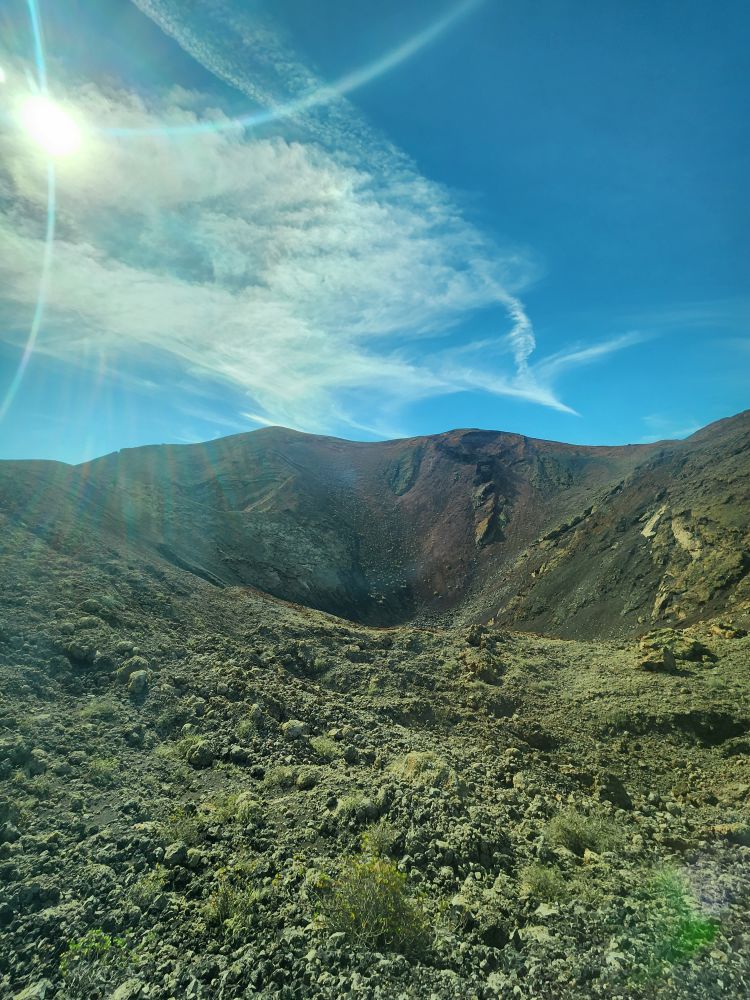
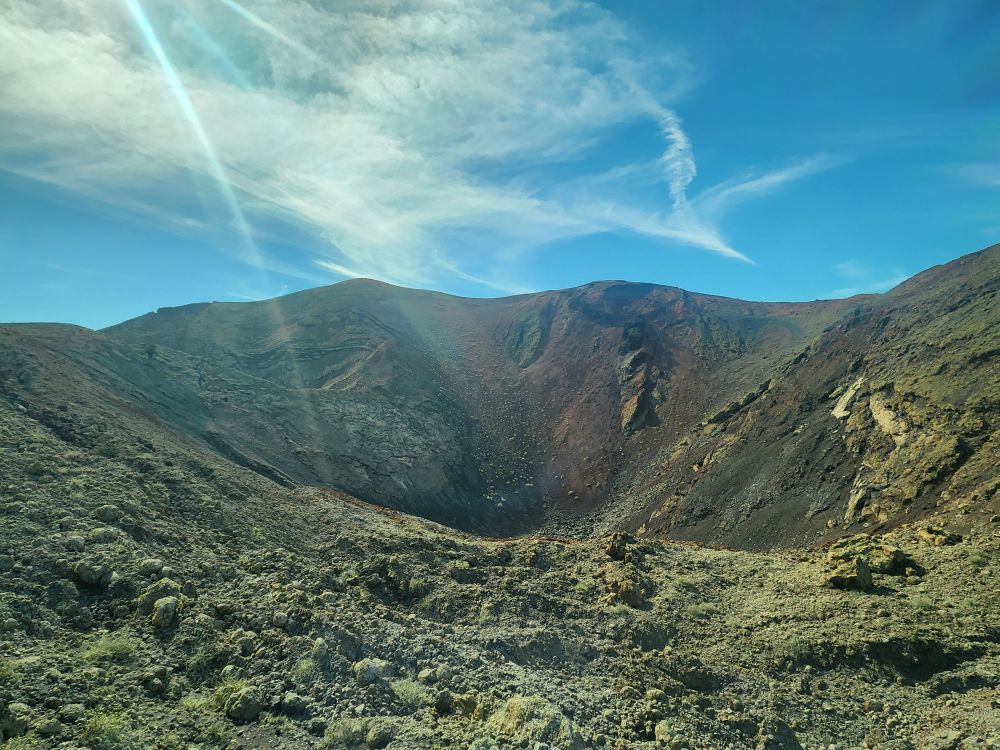
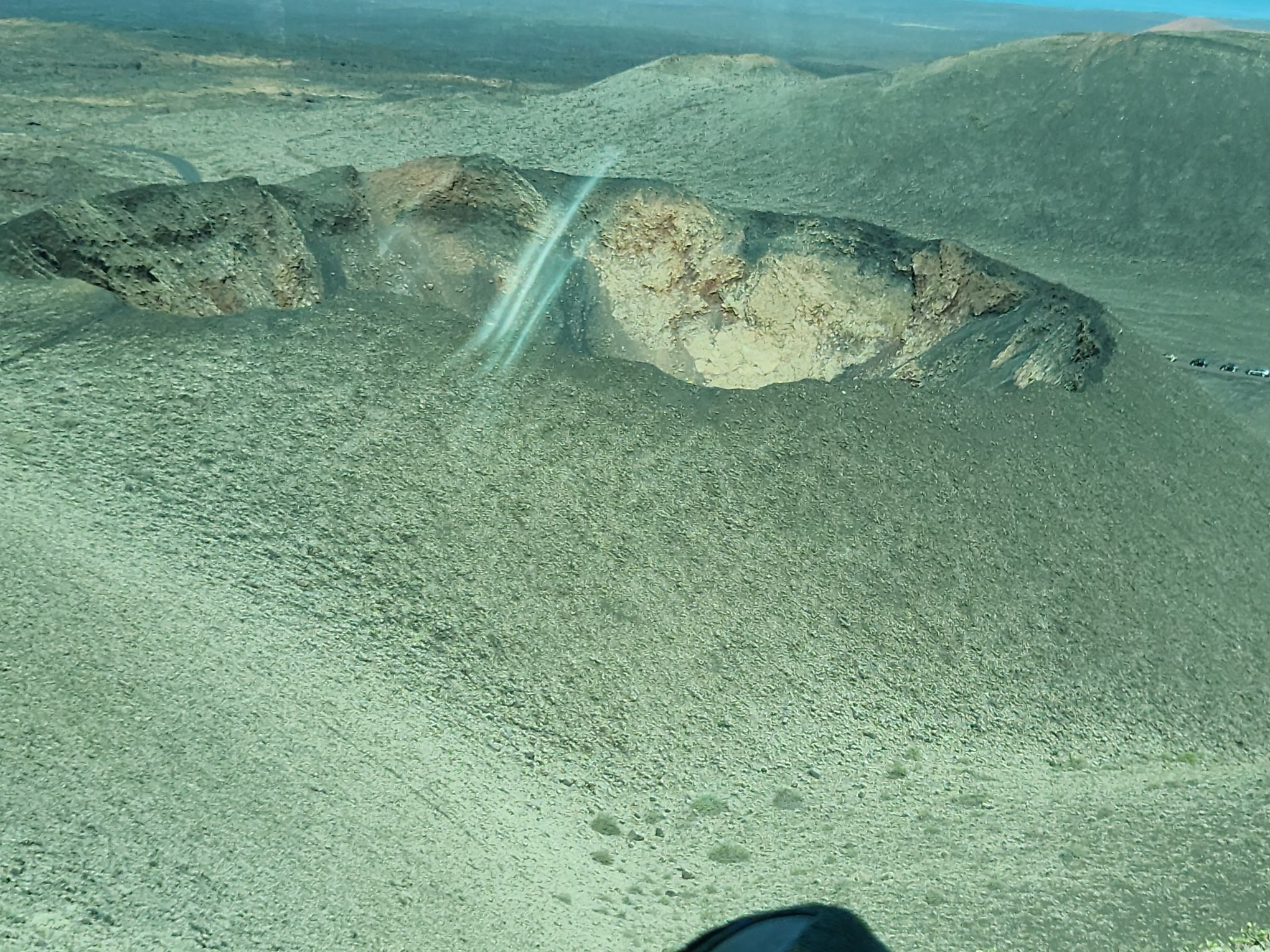
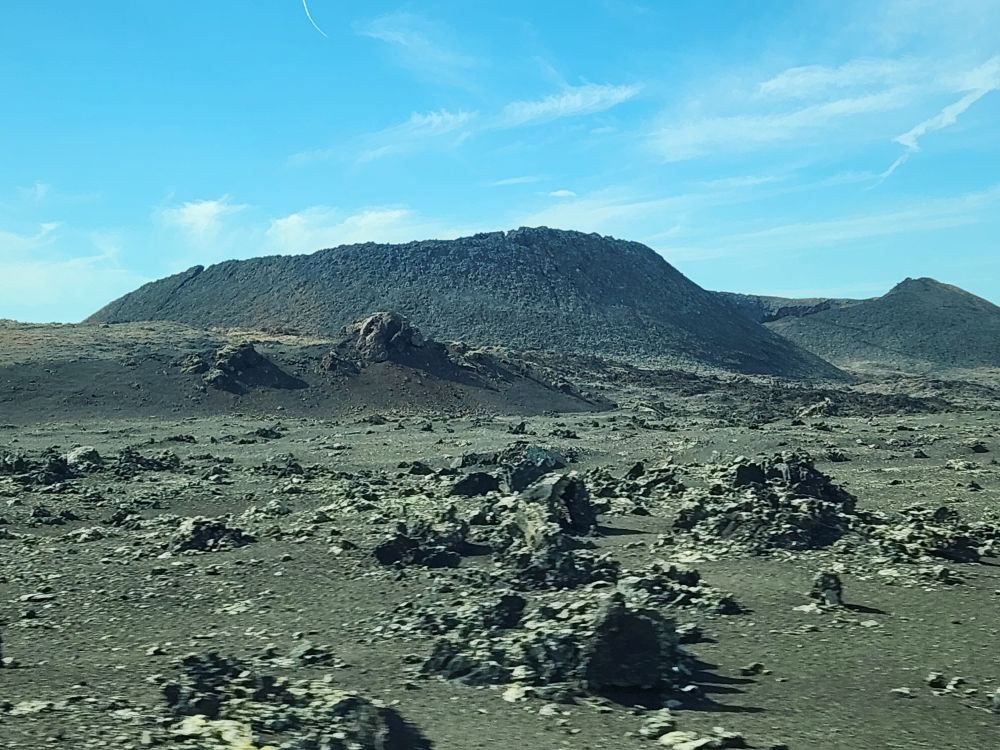
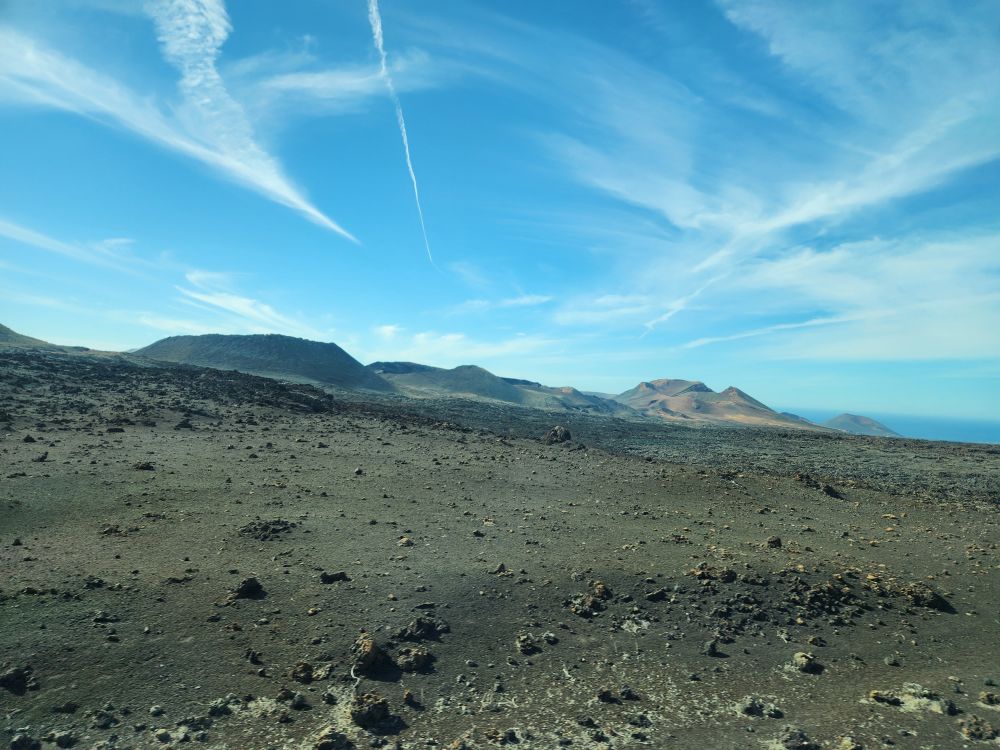
And then we are leaving, and holy guacamole! The line of cars to get into the car park is well over 100 vehicles long! Anna says you can have upwards of a 2 hour wait to get into the car park some days. Oh my! Yeah, being on this bus has its downsides (the passive-aggressive asshole sitting in the row across from us being the biggest – don’t even start me on him – there’s always gotta be one!) but it also has HUGE upsides. Because we’d never have come out here otherwise.
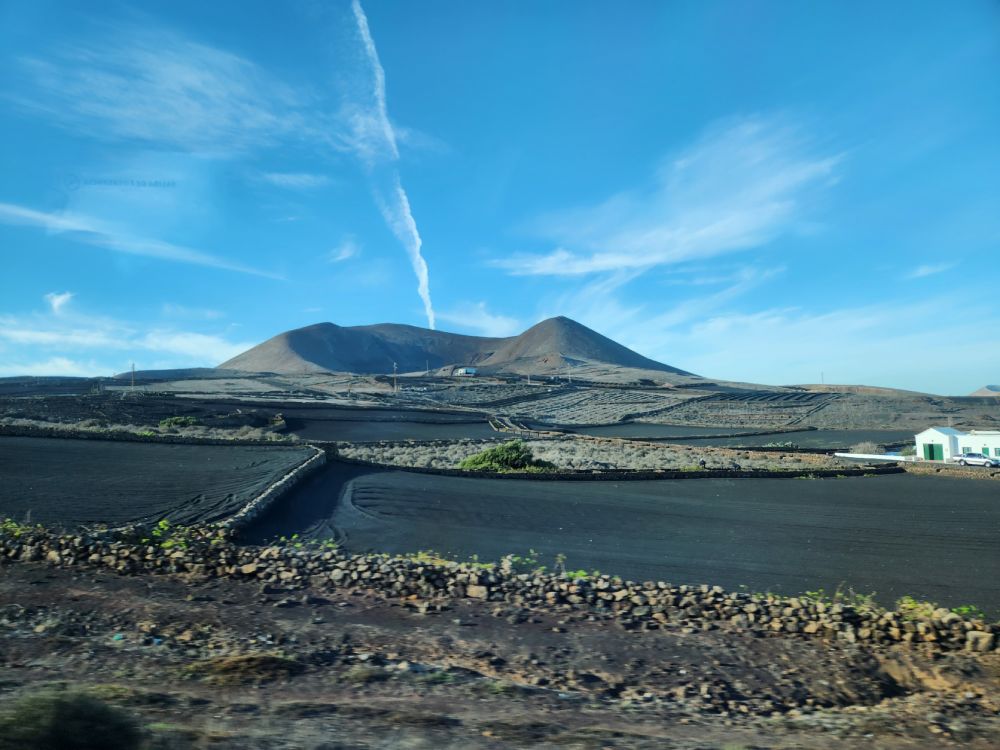
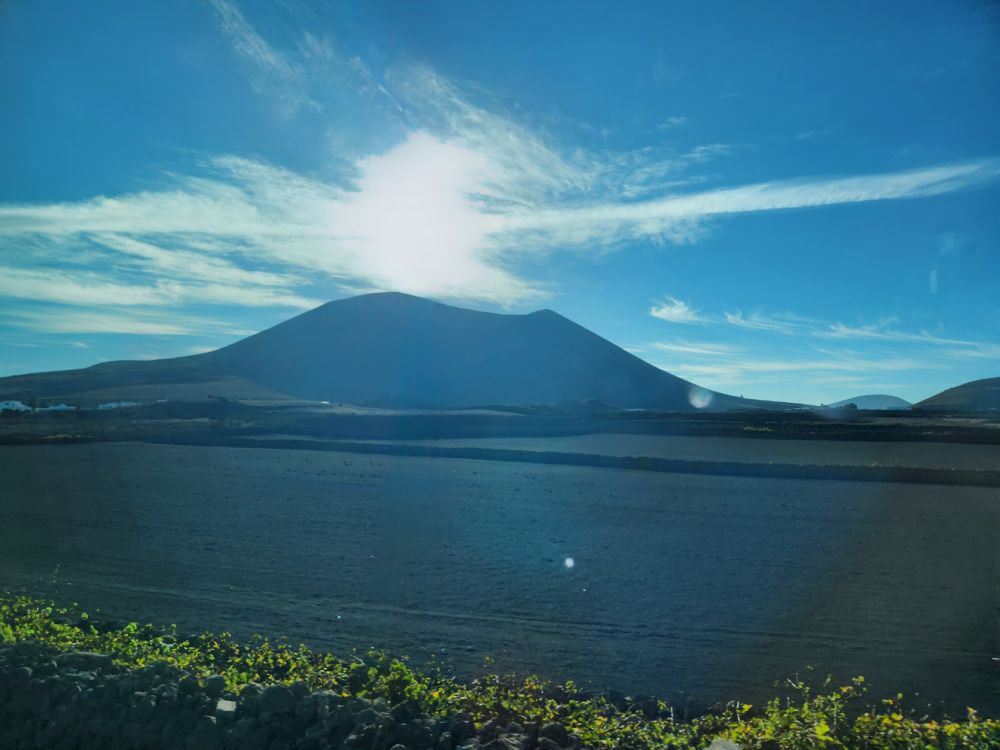
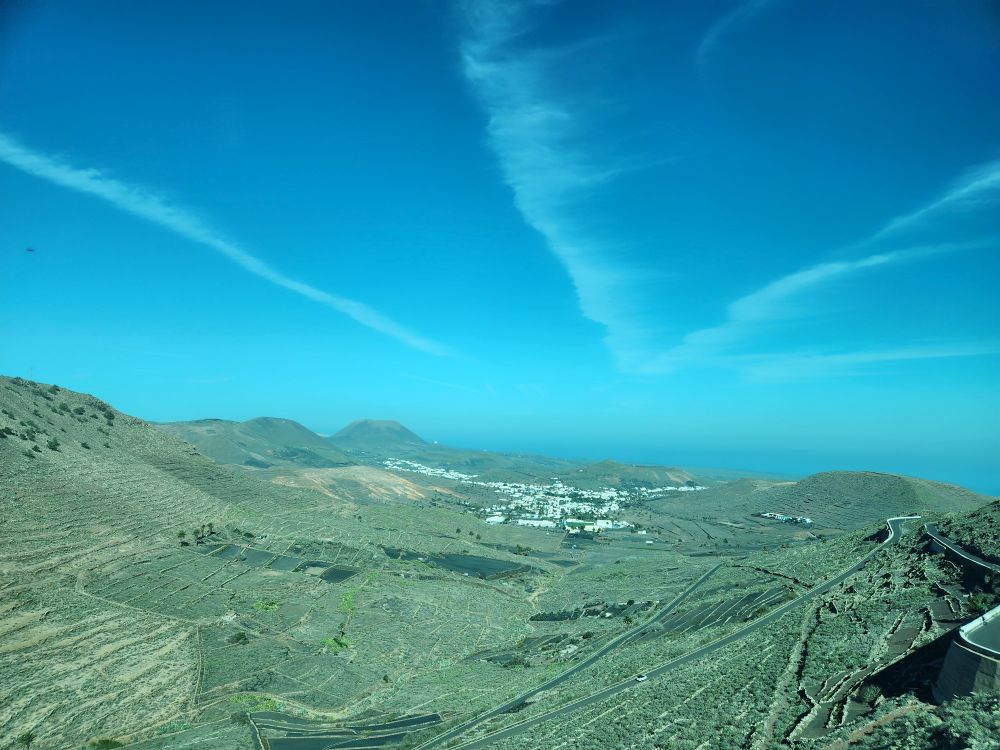
Our next stop is a bodega to taste the local wine grown in volcanic soil. On the way, we pass through the wine region of the island. Grapes are the largest crop on the island, producing 3.2 million kilos of grapes last year. Other crops include (in order of importance) onions, potato, cereal and aloe vero. Each well adapted to this type of volcanic soil and climate. In the wine region through which we are driving, every vine is planted in a circular ditch-like pit with volcanic rocks placed in a semi-circle around it to protect from the wind and keep the water from washing the vine away when it rains (all those 6 days!). The vine “pits” stretch out across the terrain for as far as the eye can see. They reach way high up on the hills and out across the flatter valleys. Virtually everything is picked by hand, they don’t use “motors,” as Anna calls mechanized harvesting. There are a couple of vineyards set up for “motors,” where the rock walls are in a straight line allowing the mechanical picker to go up and down the rows, but by and large, everything else is semi-circular and hand picked. A monumental task – particularly in this environment!
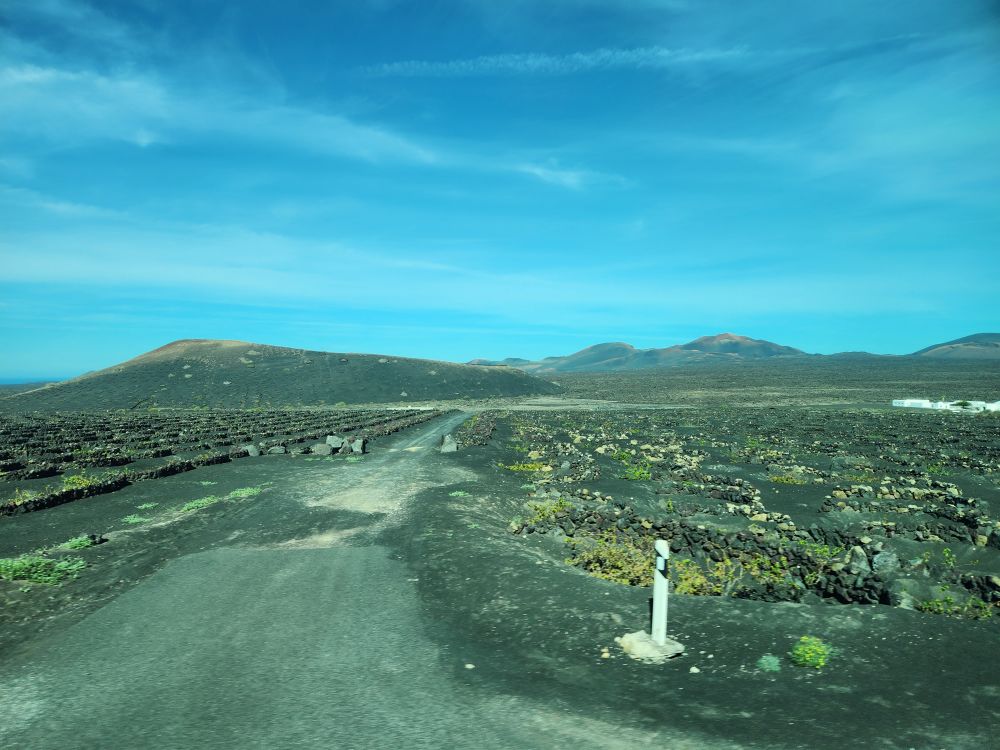
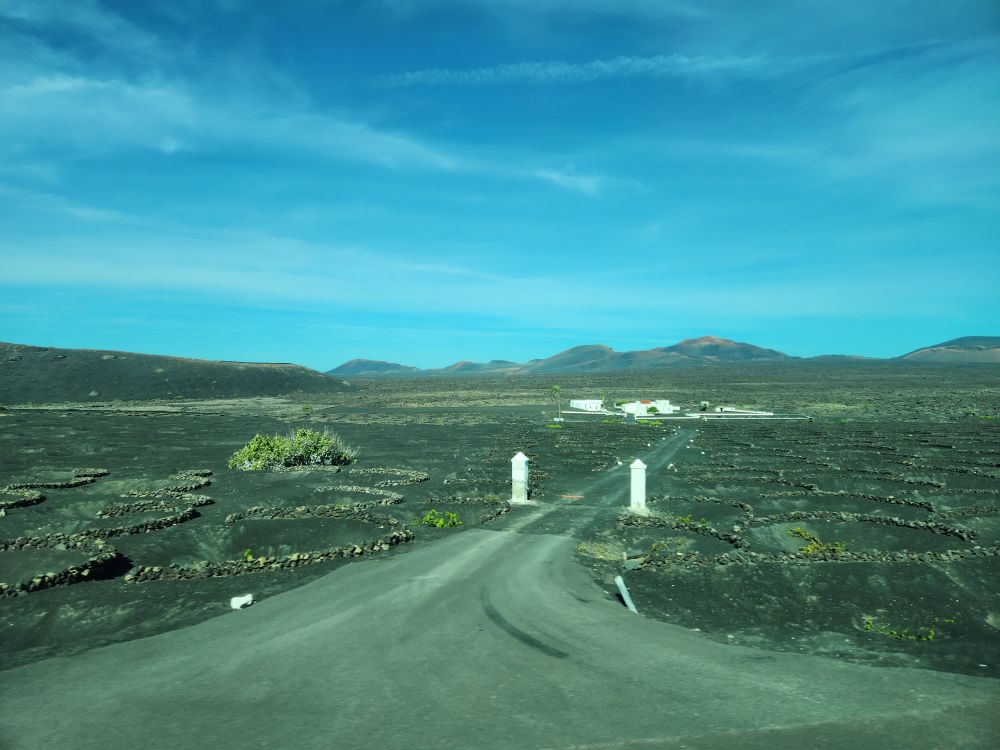
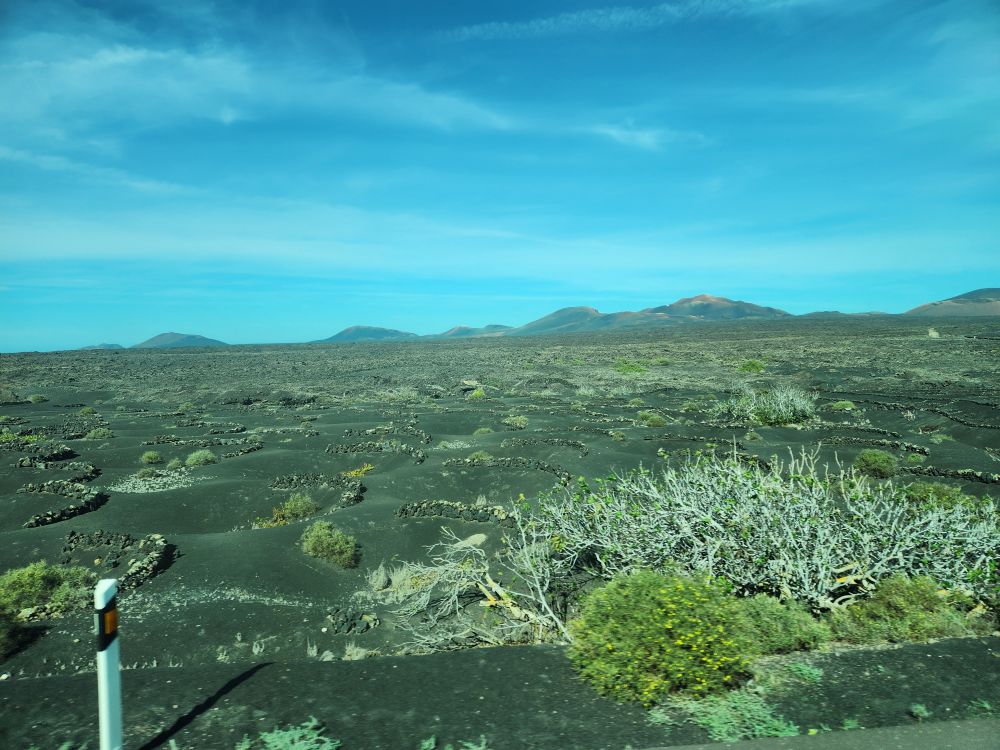
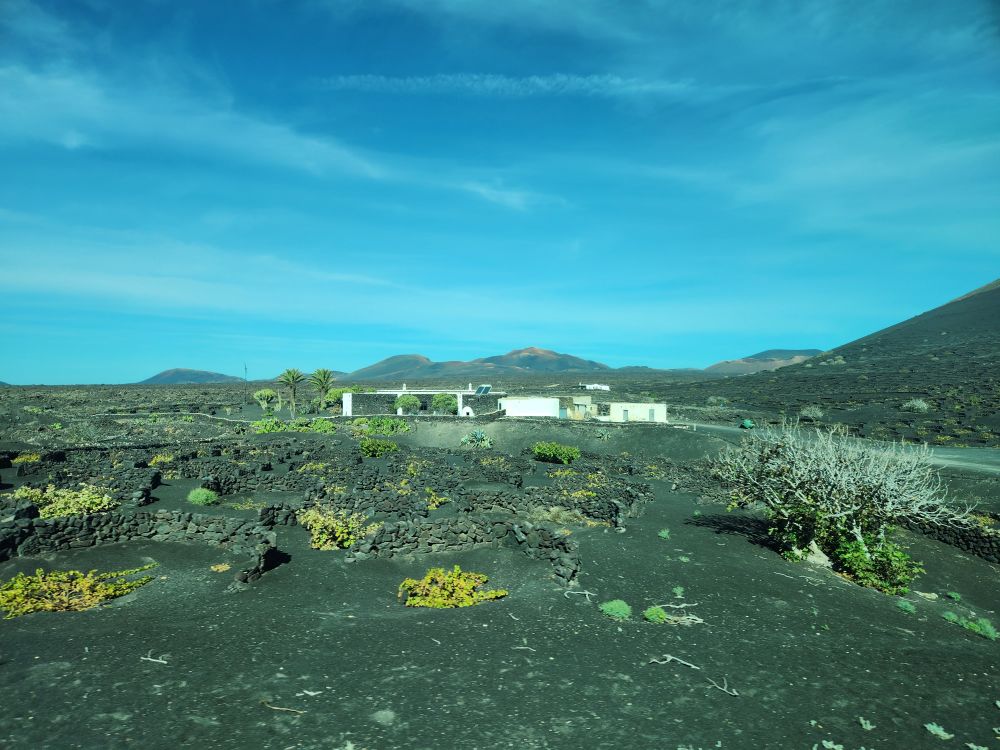
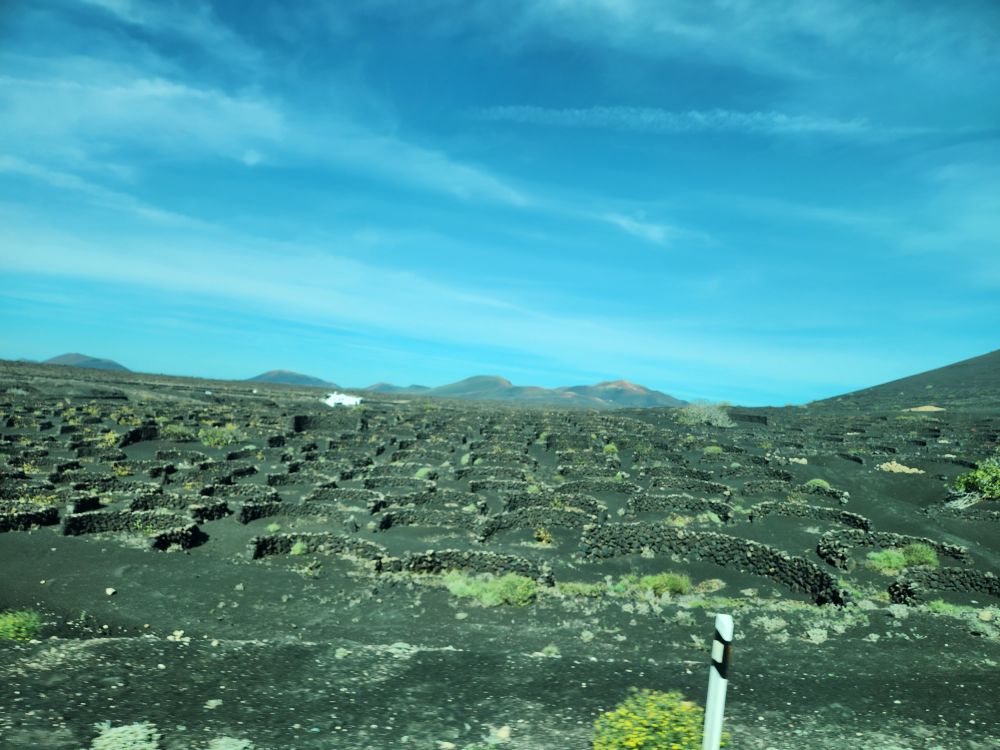
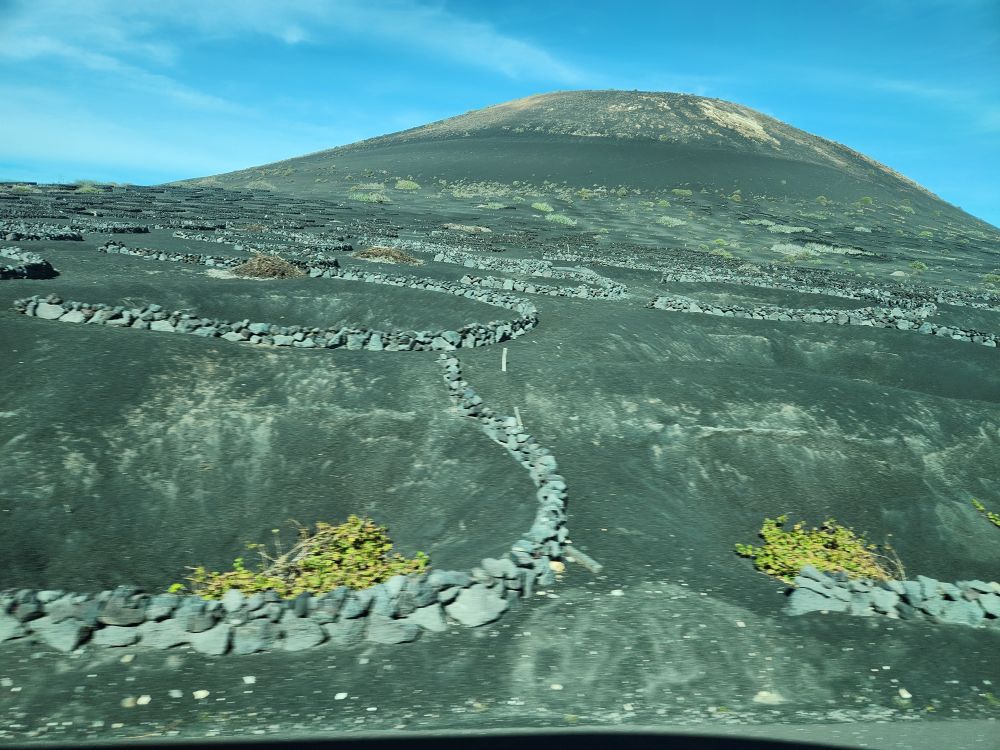
Arriving at La Geria, one of the original bodegas on the island, we each get a taste of the traditional Malvesia Seco, a nice dry white wine, as well as a Moscato, which actually is not all that bad. But the prices are a bit steep – well – ok – not on normal terms, but considering I’ve been buying wine for under 3 or 4 Euros everywhere, 17 euros is a bit much, particularly since I didn’t really like it all that much, and I have very good free wine onboard. So, we sipped and left, taking the rest of our time at the bodega to walk around the exterior patio and take photos of the magnificent vineyards surrounding us.
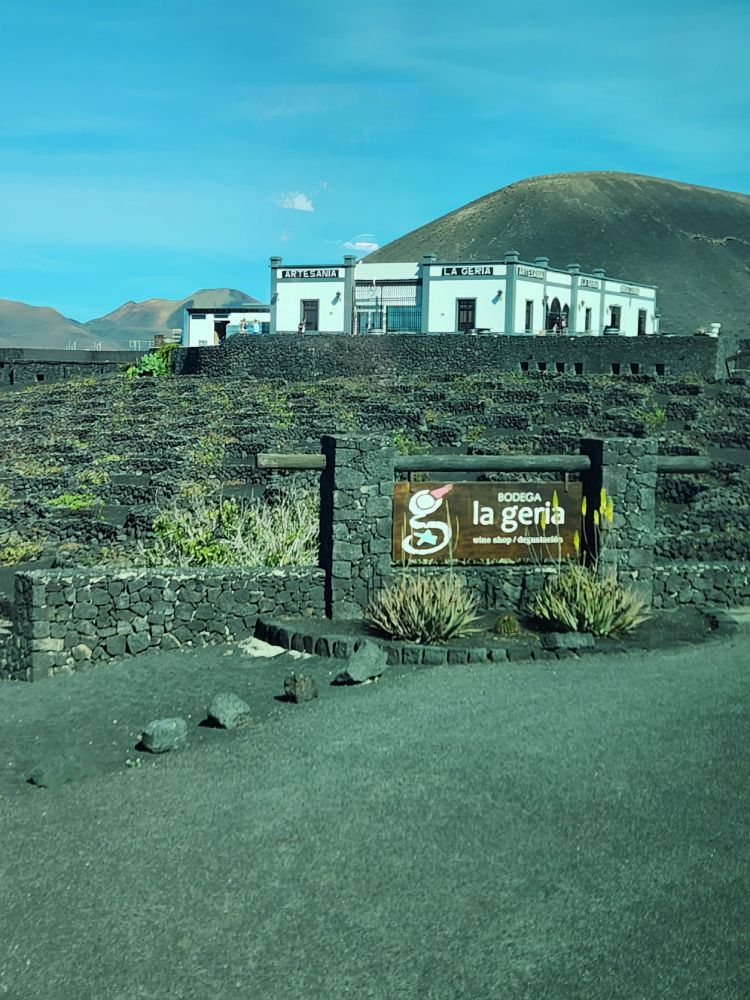
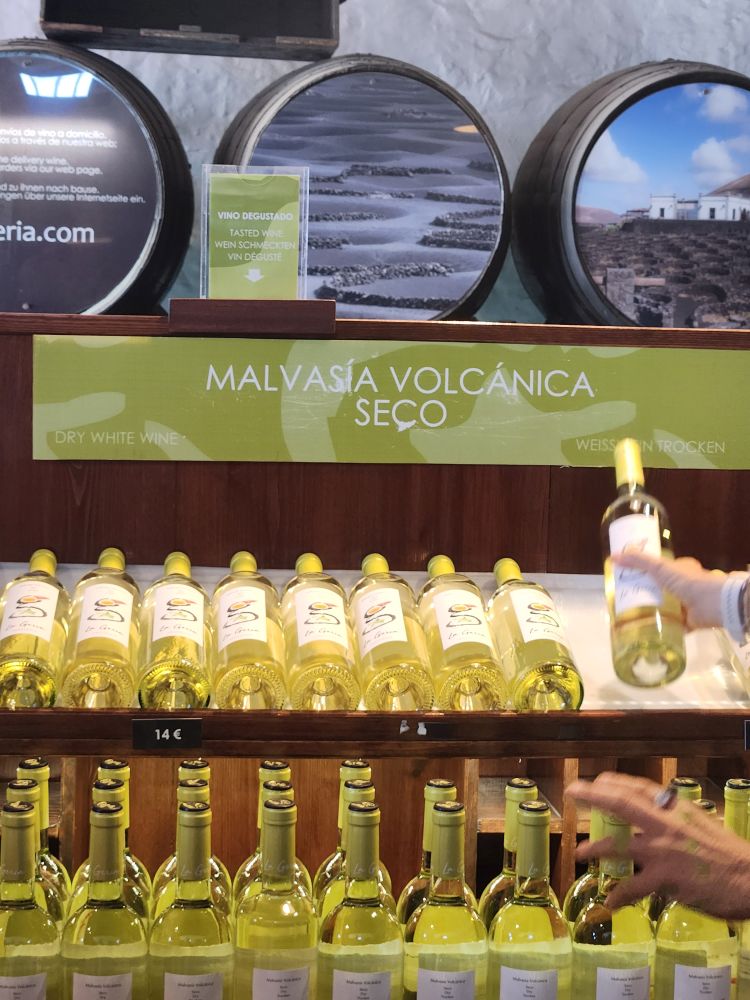
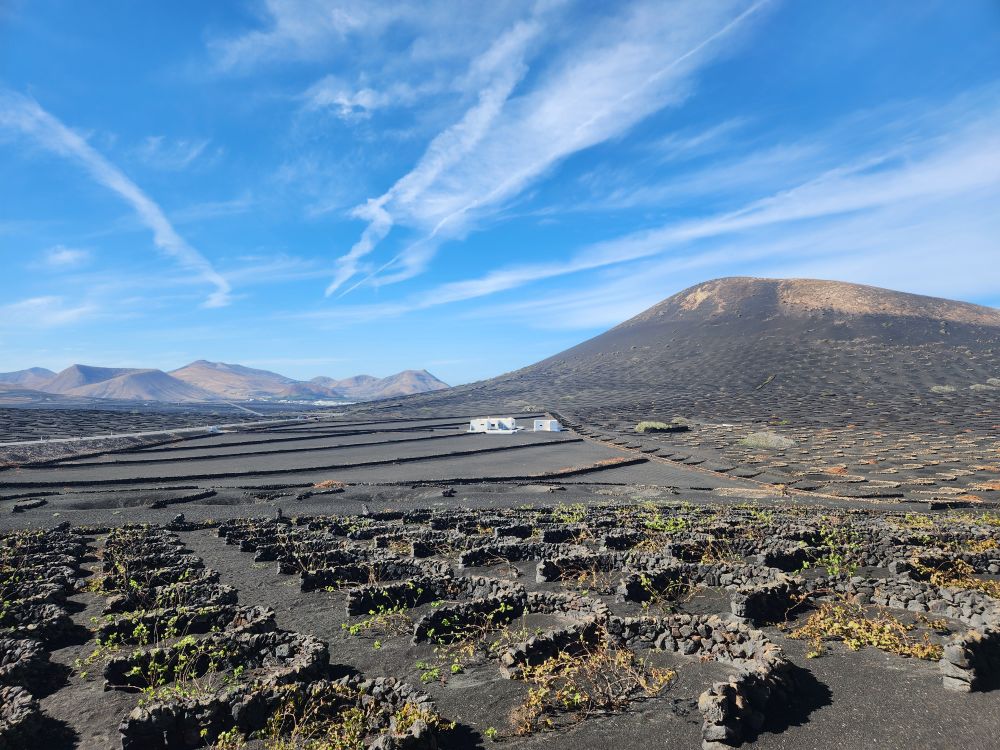
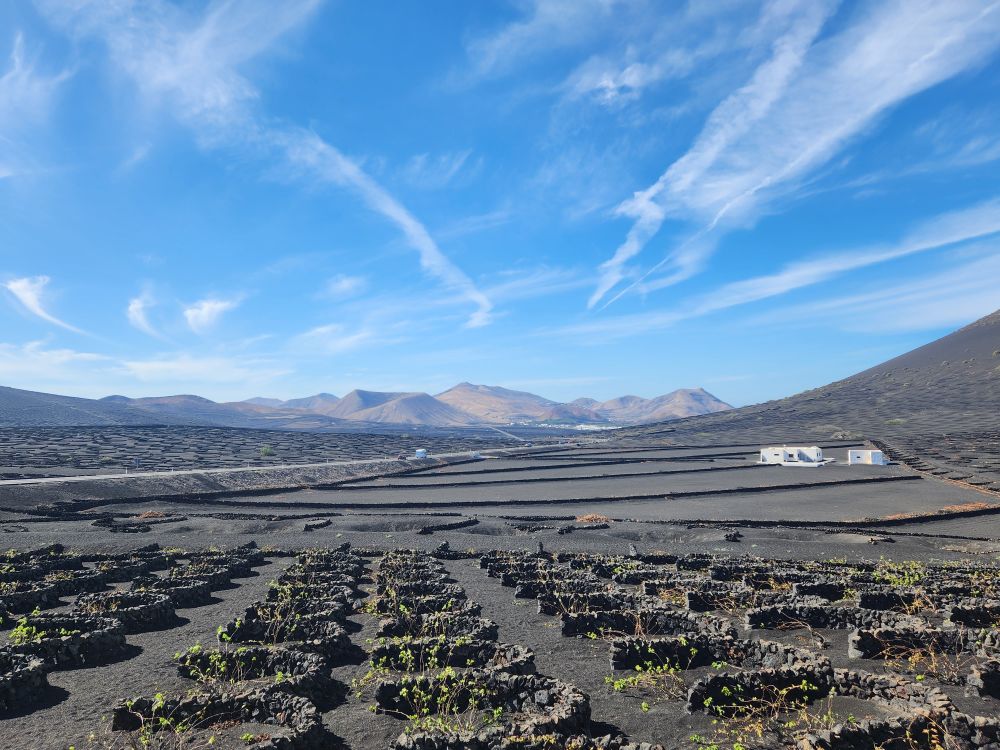
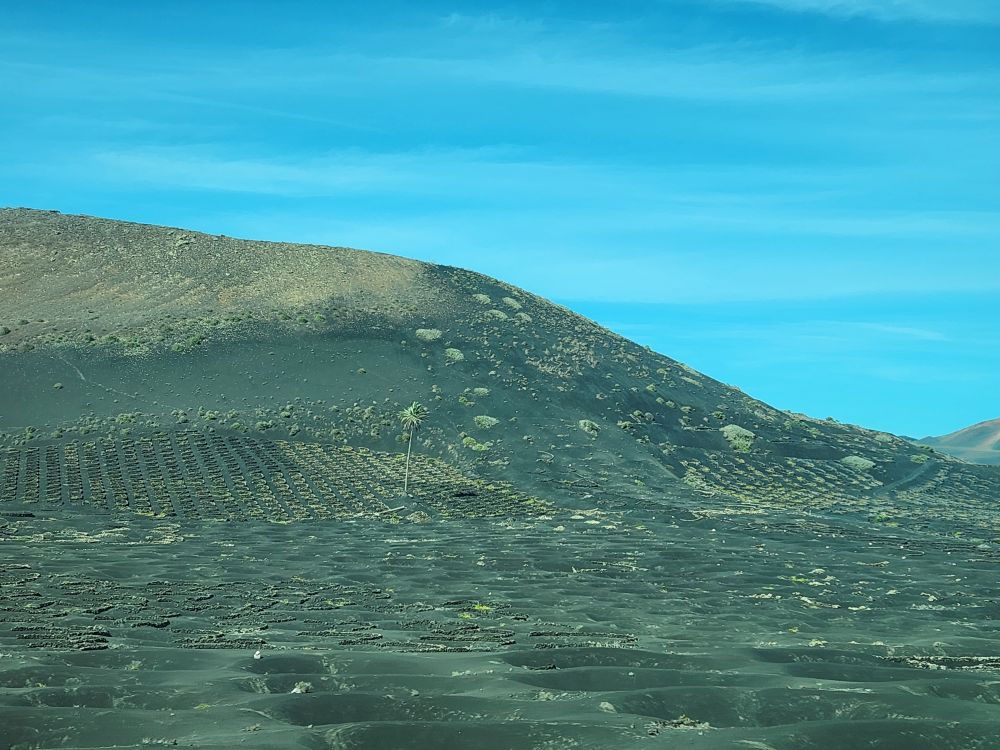
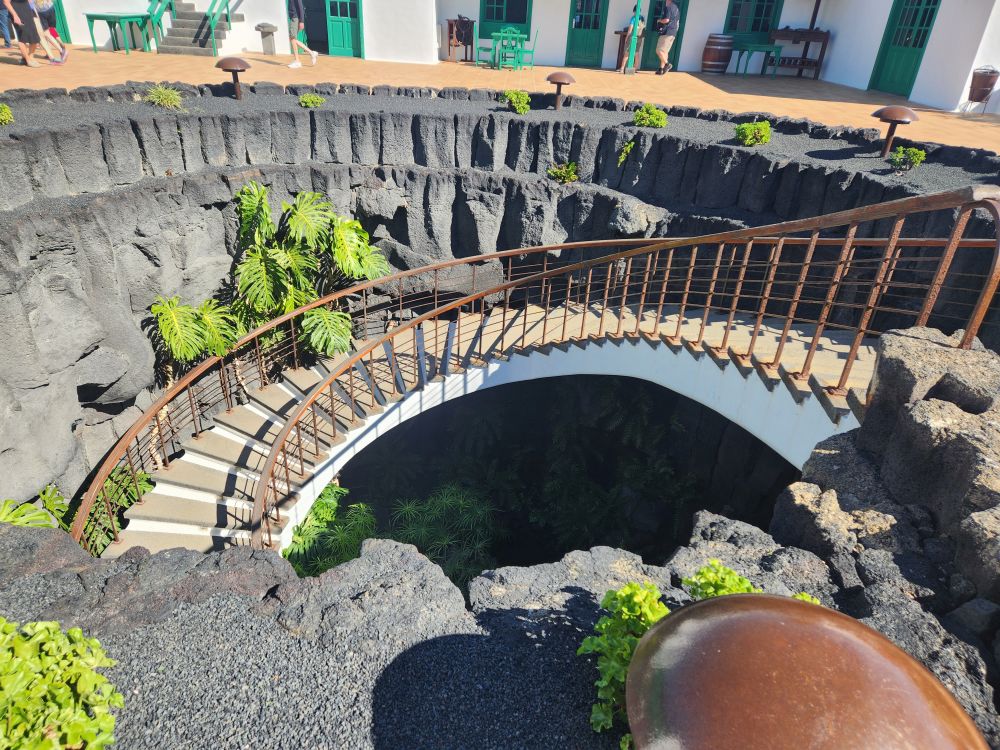
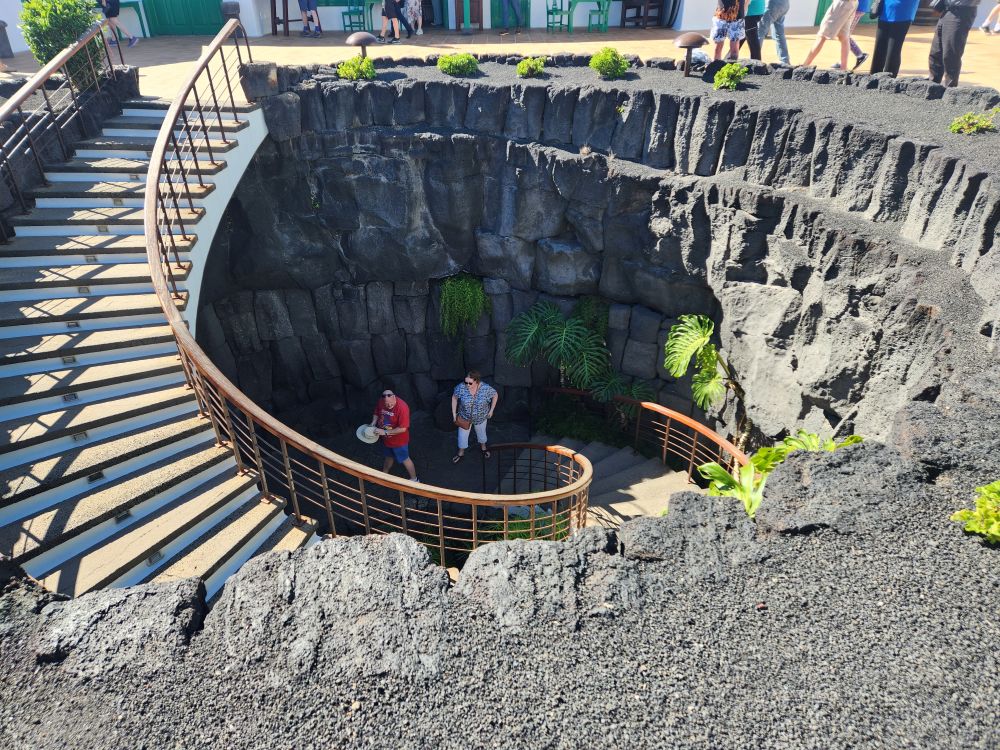
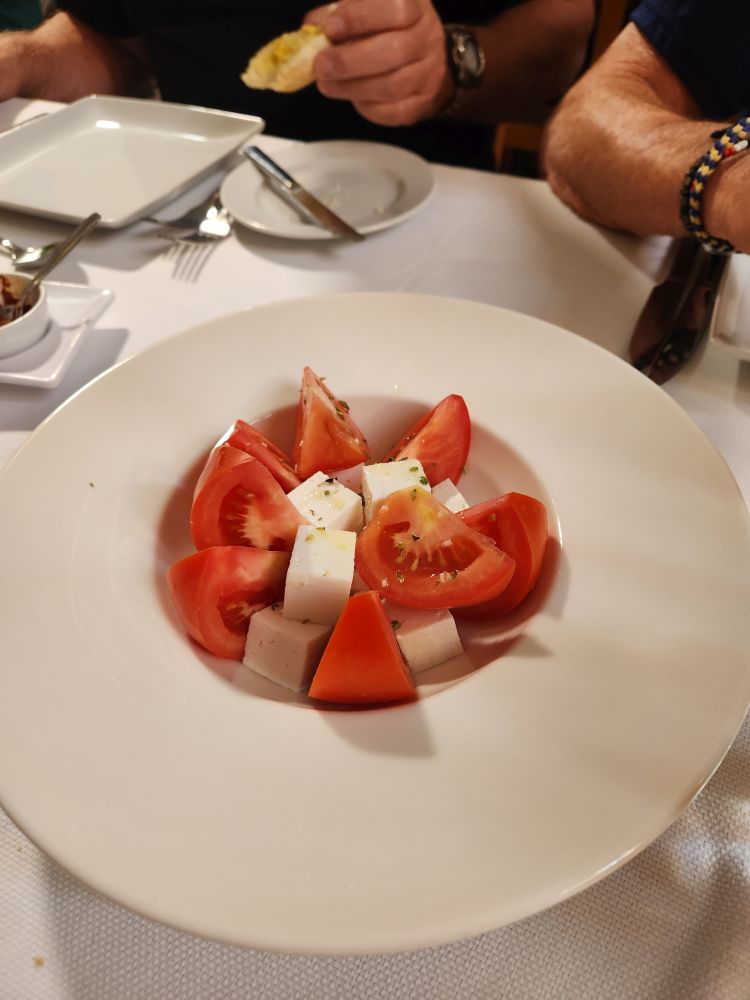
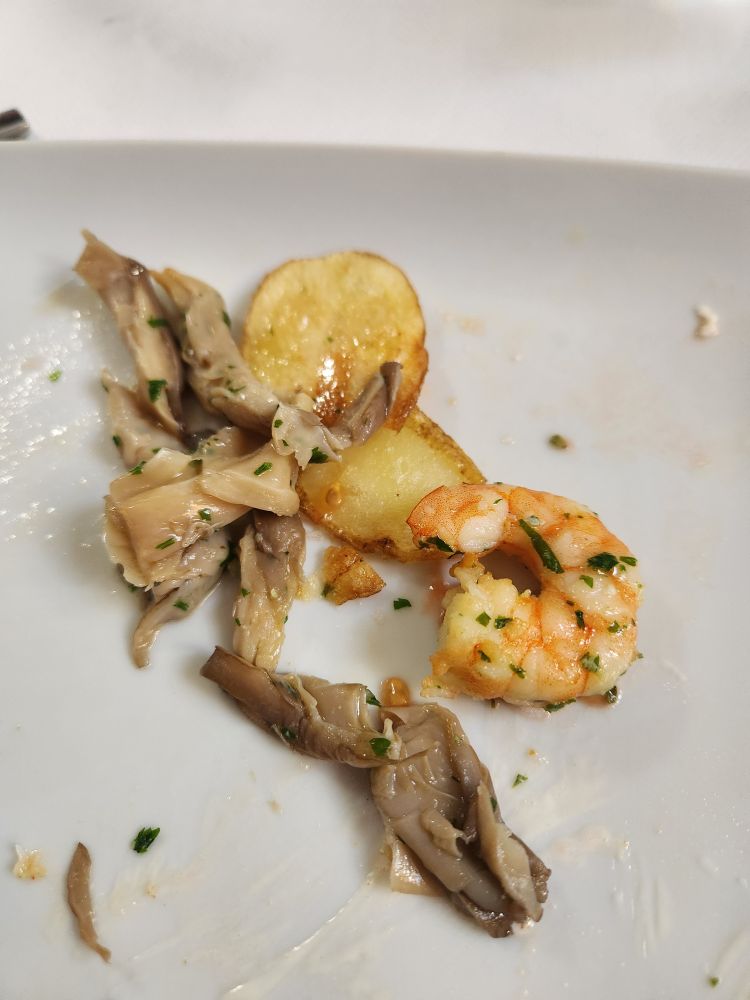
Now it is time for lunch! Perfect follow up to our little wine tasting. We head back to the Monumento al Campesino where we get an up-close look at the beautiful white monument before heading inside the complex to walk around some artisan stores (dyed crafts using the little bugs that produce a red color), soaps, ceramics, etc. – then down into the “lava tube,” complete with circular stairs to a lovely little dining area where we are served a feast. Seriously. A feast I tell you! Anna had told us we’d get some tapas and then fish – but none of us really understood just how much tapas! We started out with a warm roll with mojo sauce, butter and olive oil, moved onto Jamon croquettas (excellent!), then to a tomato and cheese salad that was so fresh and so very good, next up was the sauteed mushrooms and shrimp (again, stellar). We’re all so full it isn’t funny – and all along we have also had unlimited wine pours – of really good Malvesia wine (way better than at the bodega in my opinion!). We’re so used to Gate1 and their 1 glass policy that we are a little surprised, happily, about the non-stop wine pouring – we’ll be napping on the way to our next stop, that’s for sure!
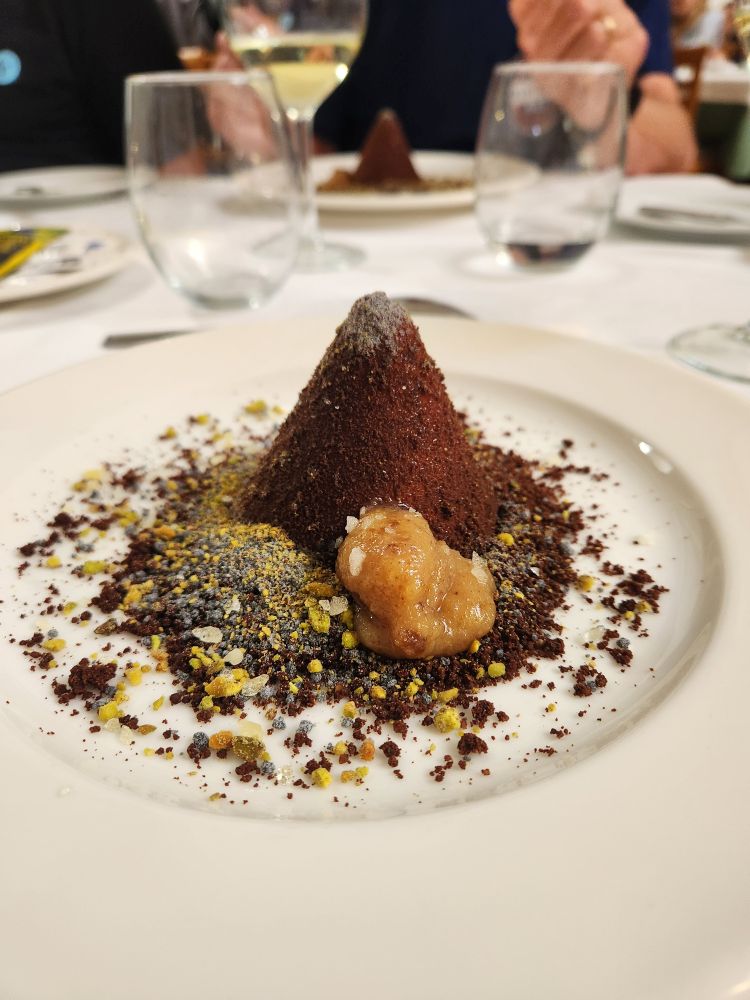
So, we’re totally full, but wait, there’s more. What? Out comes this big plate of fish and potatoes and I don’t even know what else – I had stopped taking pictures by that point in time. I mean honestly – way, way too much food and we’ve got Prime C reservations for tonight. Poor planning! But who knew we’d be inundated with food on a tour? I pick at the fish, which is really good, but I just can’t eat it. Ed manages most of it. One of the others at our table didn’t even take the plate (smart man!). And then it is time for desert. OMG – and how can you turn down a chocolate mousse volcano? I ask you? How? You cannot. Absolutely can not. And we don’t – it is a gorgeous concoction of whipped white chocolate mousse (maybe marshmallow? Maybe not? Never could figure out the filling) coated with chocolate on a vanilla cake base and surrounded with chocolate ash – in all varieties to simulate the different types of ash that are expelled by the volcano. Not only delicious, but totally creative and geographically accurate. Hats off to the pastry chef.
We all literally roll out of the restaurant, past the brilliantly sunlit monument and into the bus in a stupor.
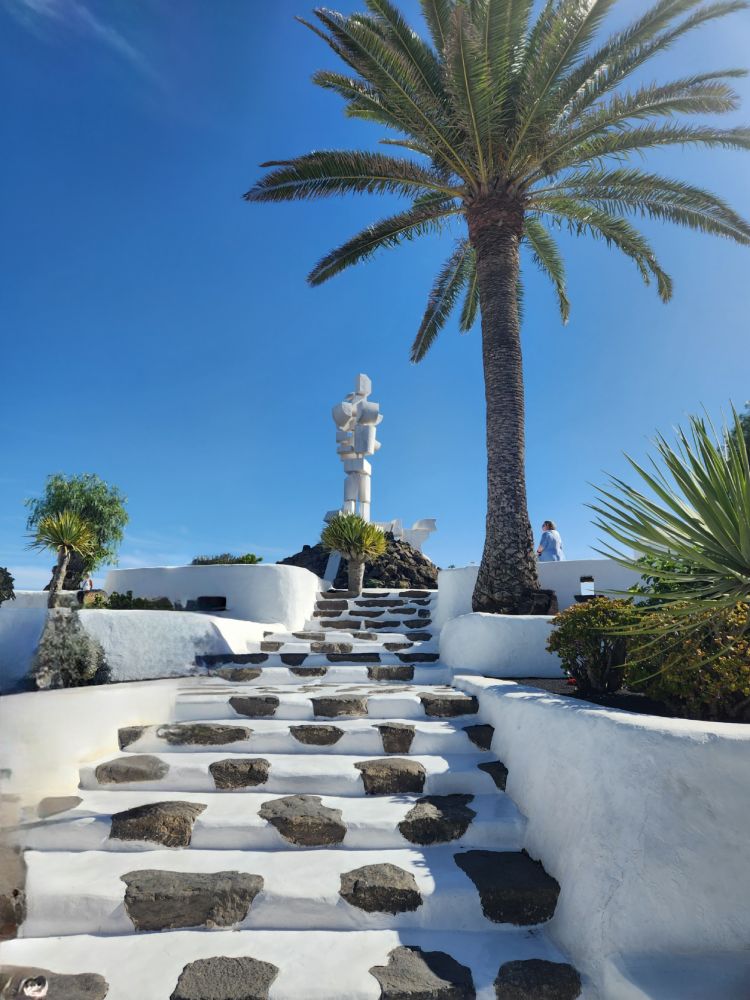
And the indignity of it all is that we don’t have that far to drive to our next stop – the Mirador del Rio for stunning views out over the bird sanctuary islands off the coast. So no nap time. Not fair at all. LOL.
The views on the way to the lookout are pretty stunning as well. We are way, way up in on a mountain, driving along this narrow little road which at times looks like it isn’t big enough for our bus. Do not envy the bus drivers here – no guard rails, narrow roads, sheer cliffs off the side of the road. I’m trying not to watch. Just taking pictures out my side of the window. The landscape is amazing – the rolling hills, the beautiful water, and the 5-star shaped town (I think Haria) off in the distance.
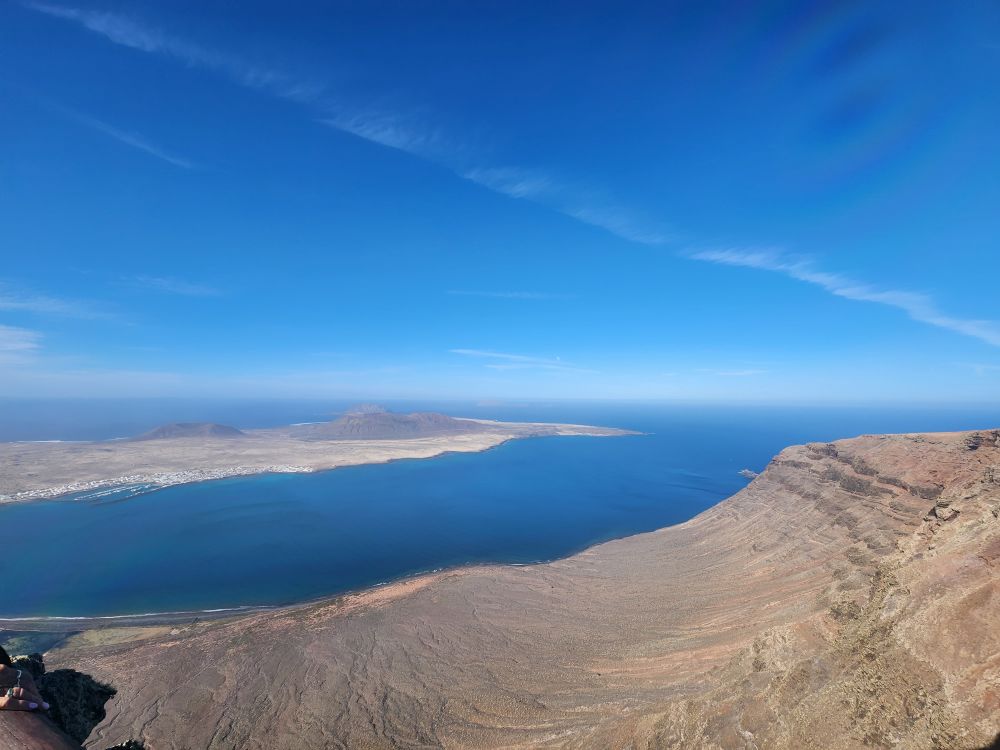
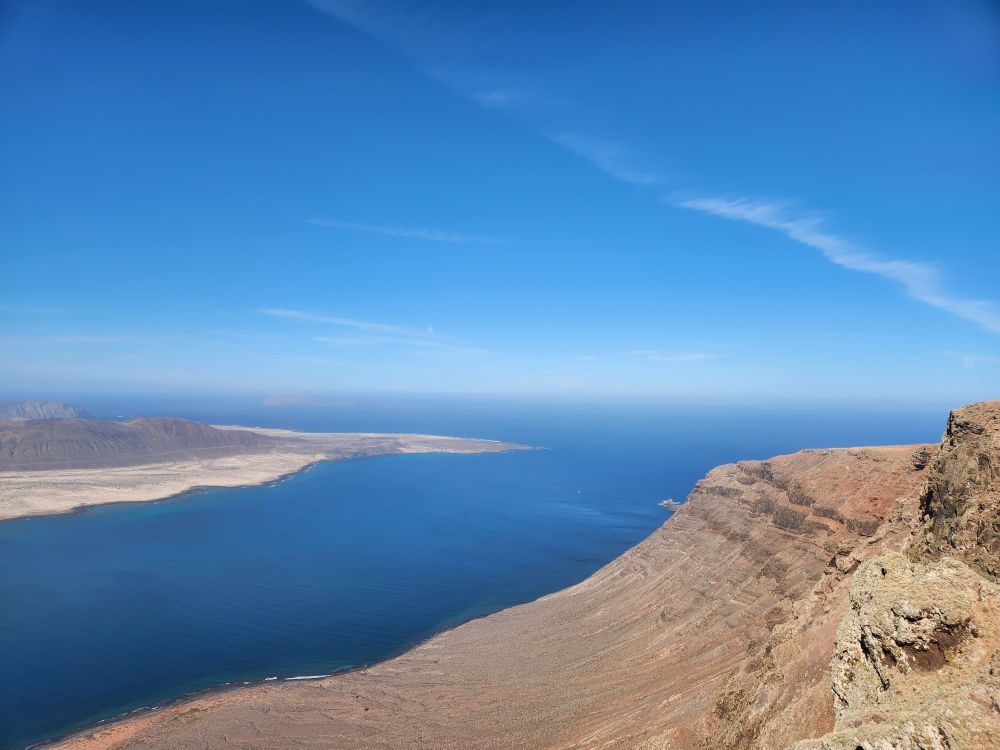
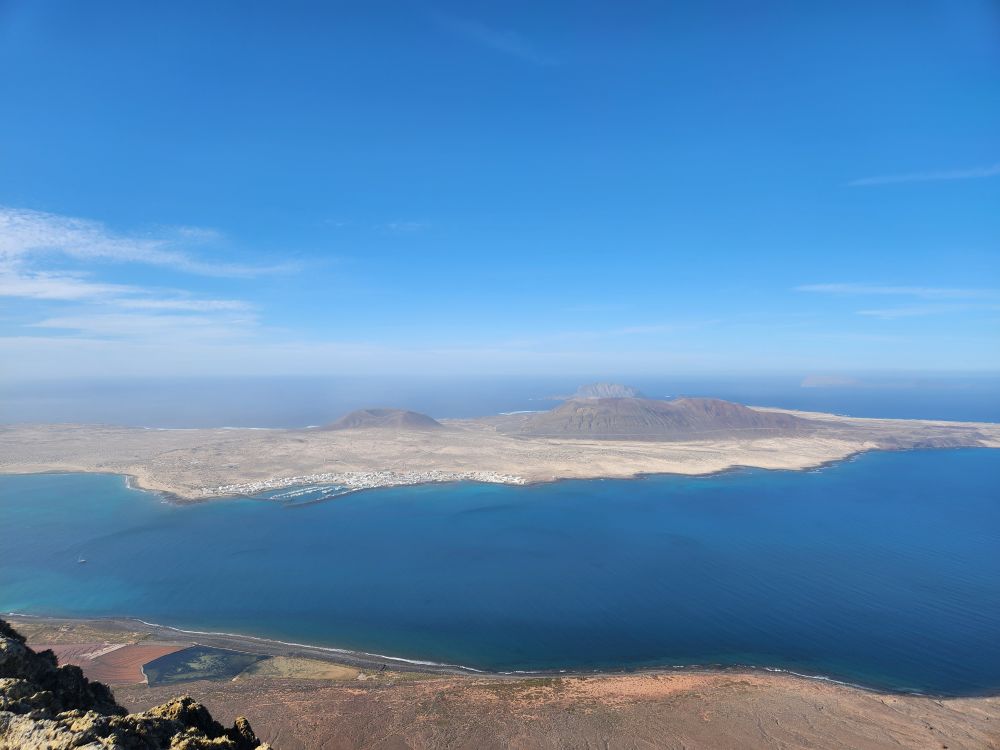
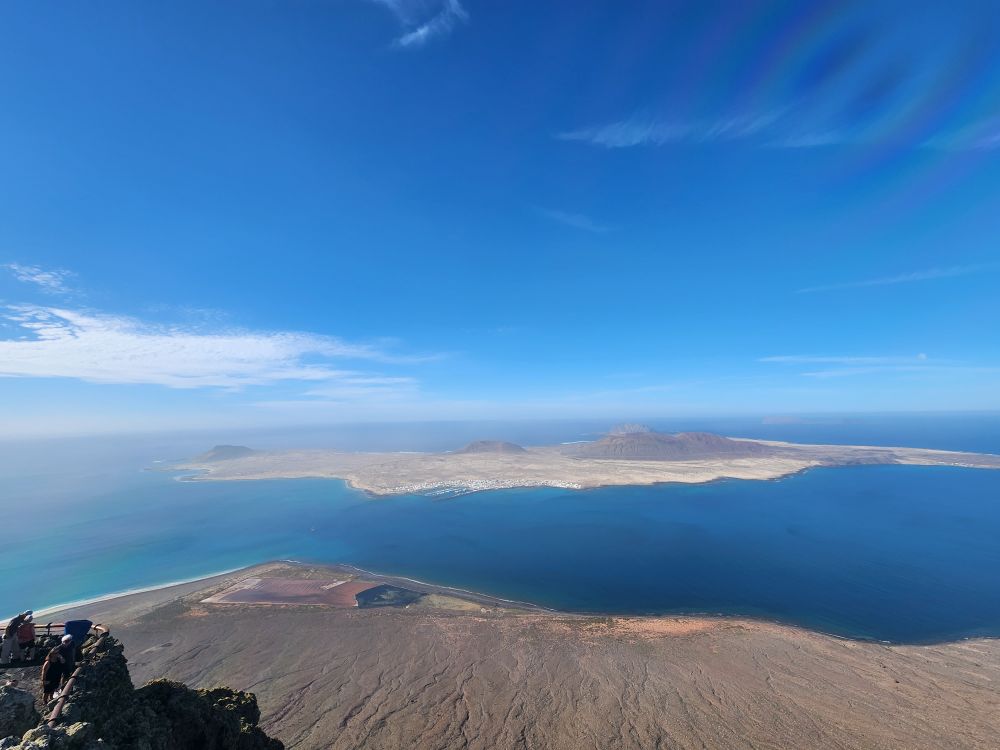
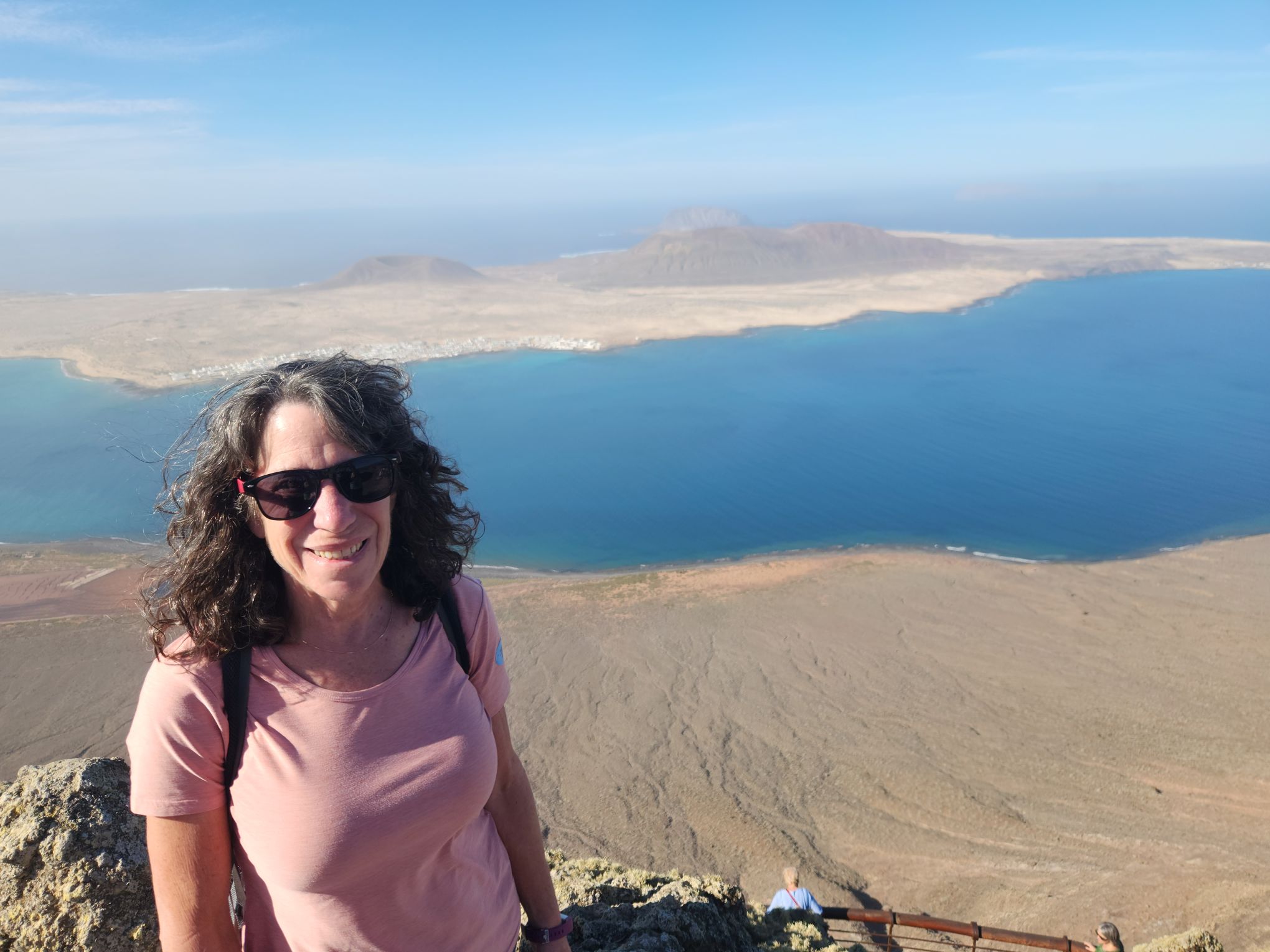
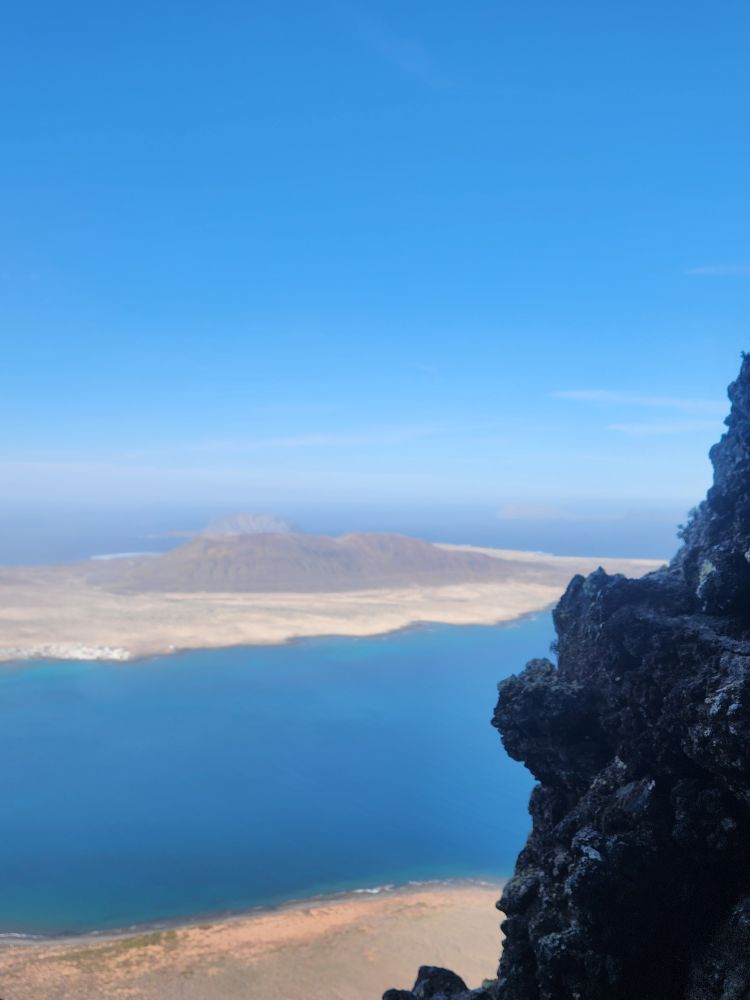
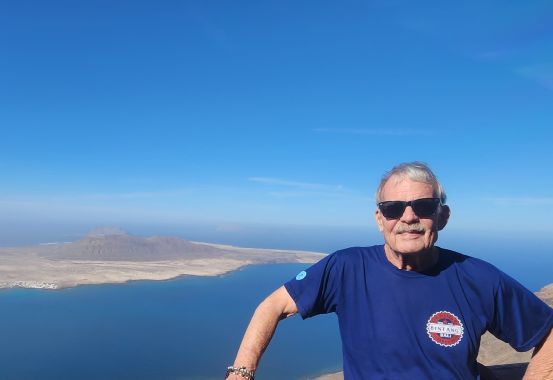
Arriving at Mirador del Rio, we pile out of the bus and wander about the viewing balconies, each one with stunning views over La Graciosa, the protected bird sanctuary right off the coast. A perfect place to stretch our legs and take some amazing photos of the aquamarine water and the contrasting brown and tan volcanic island soil.

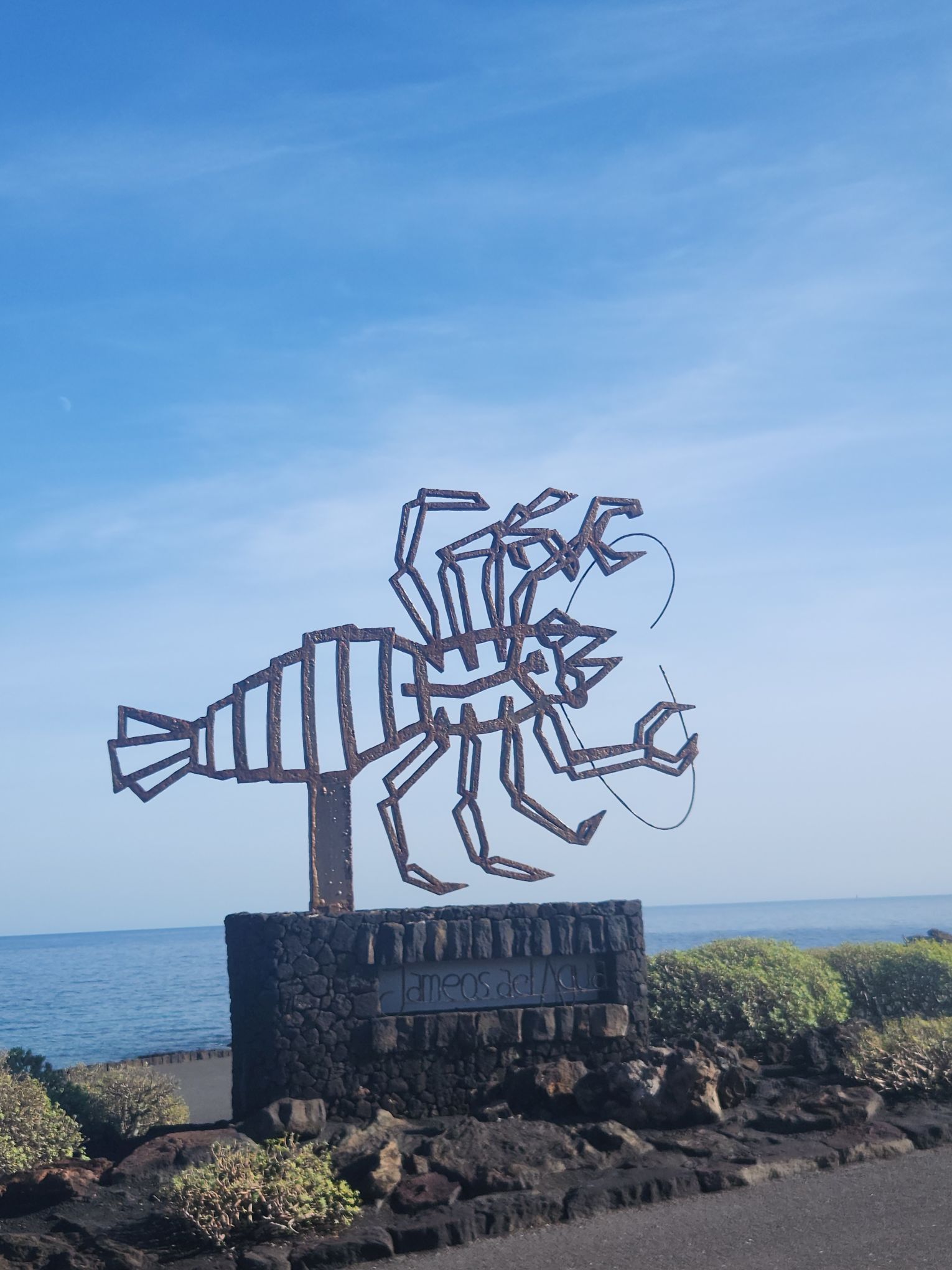
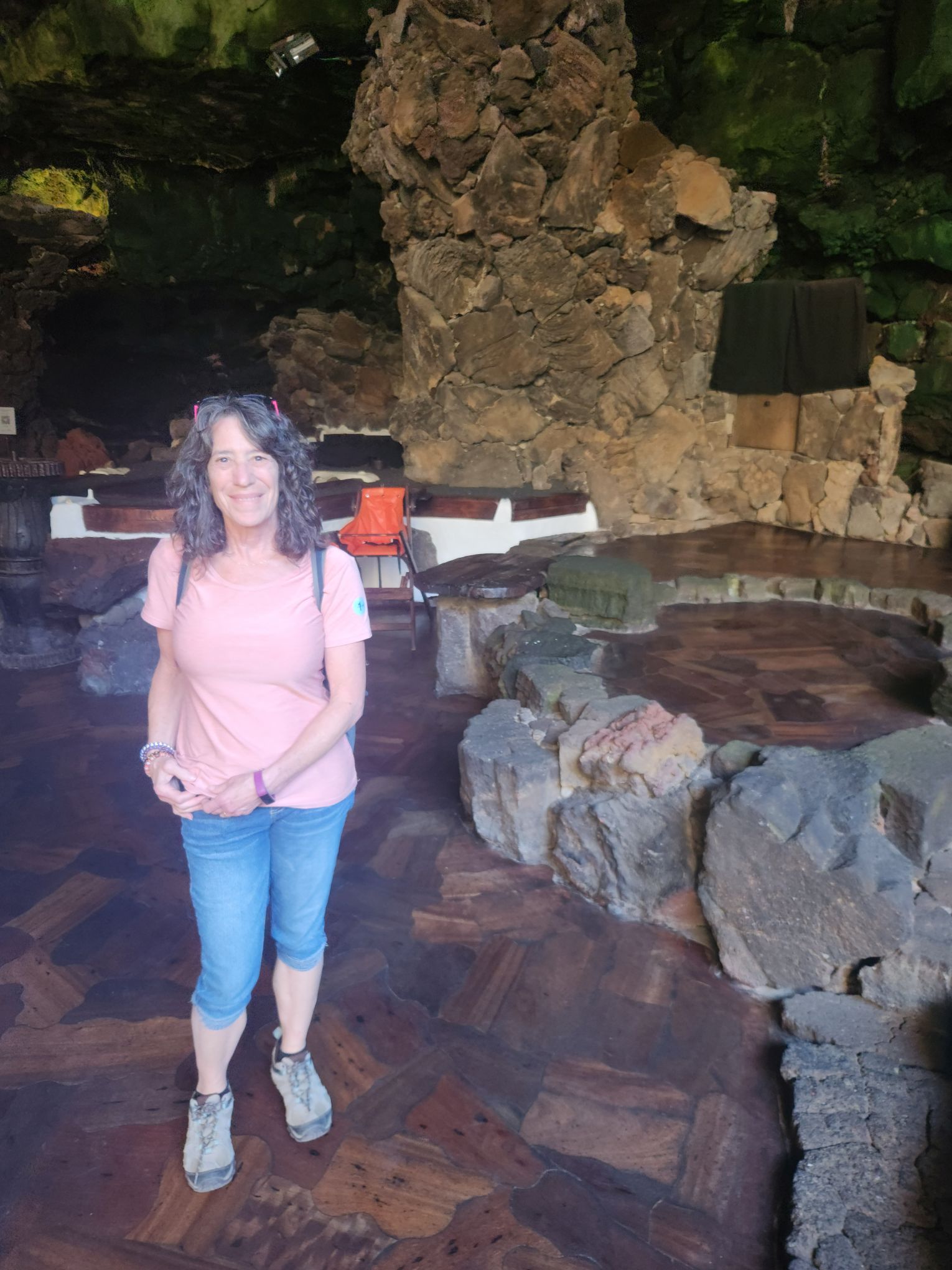
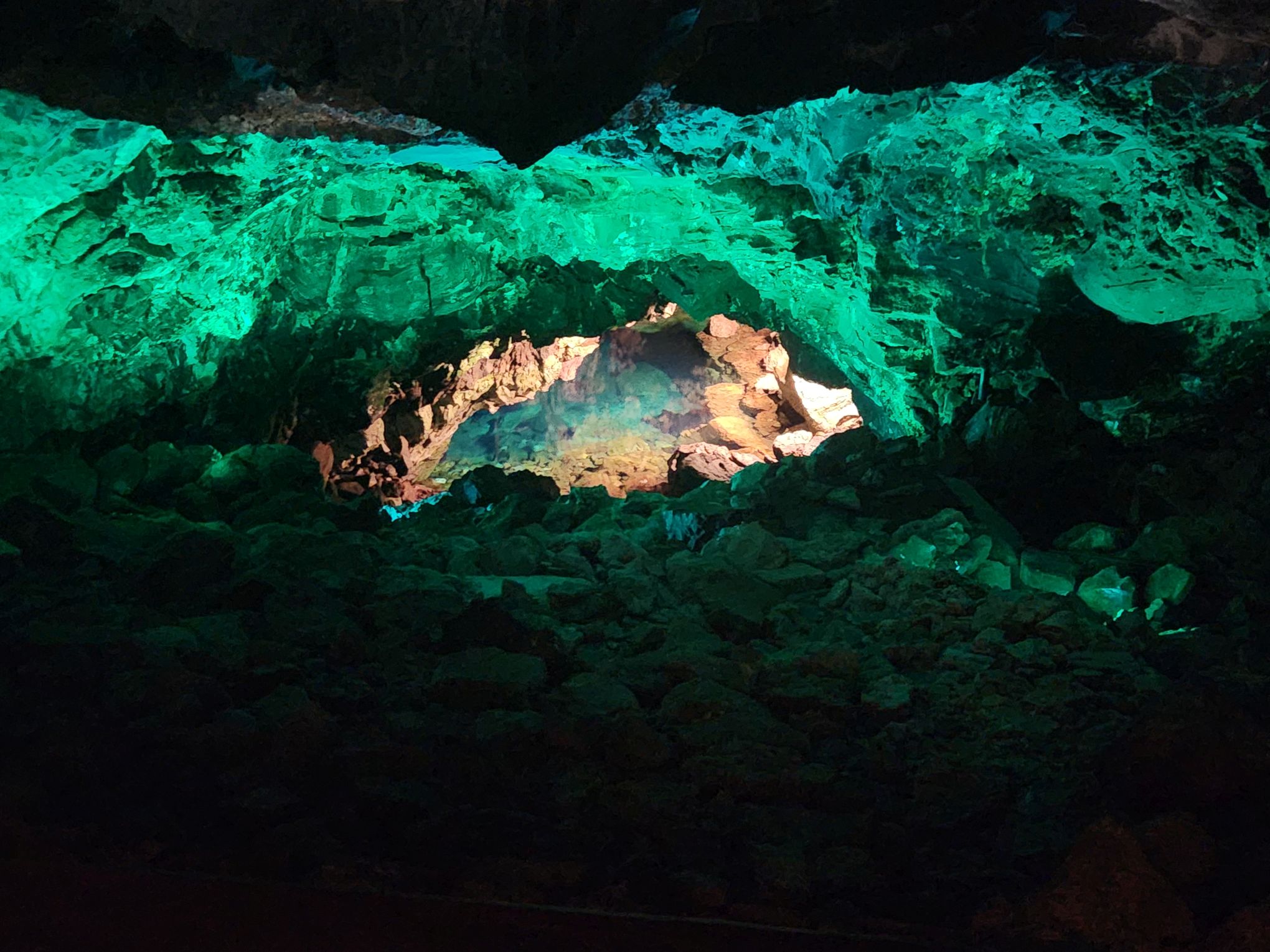
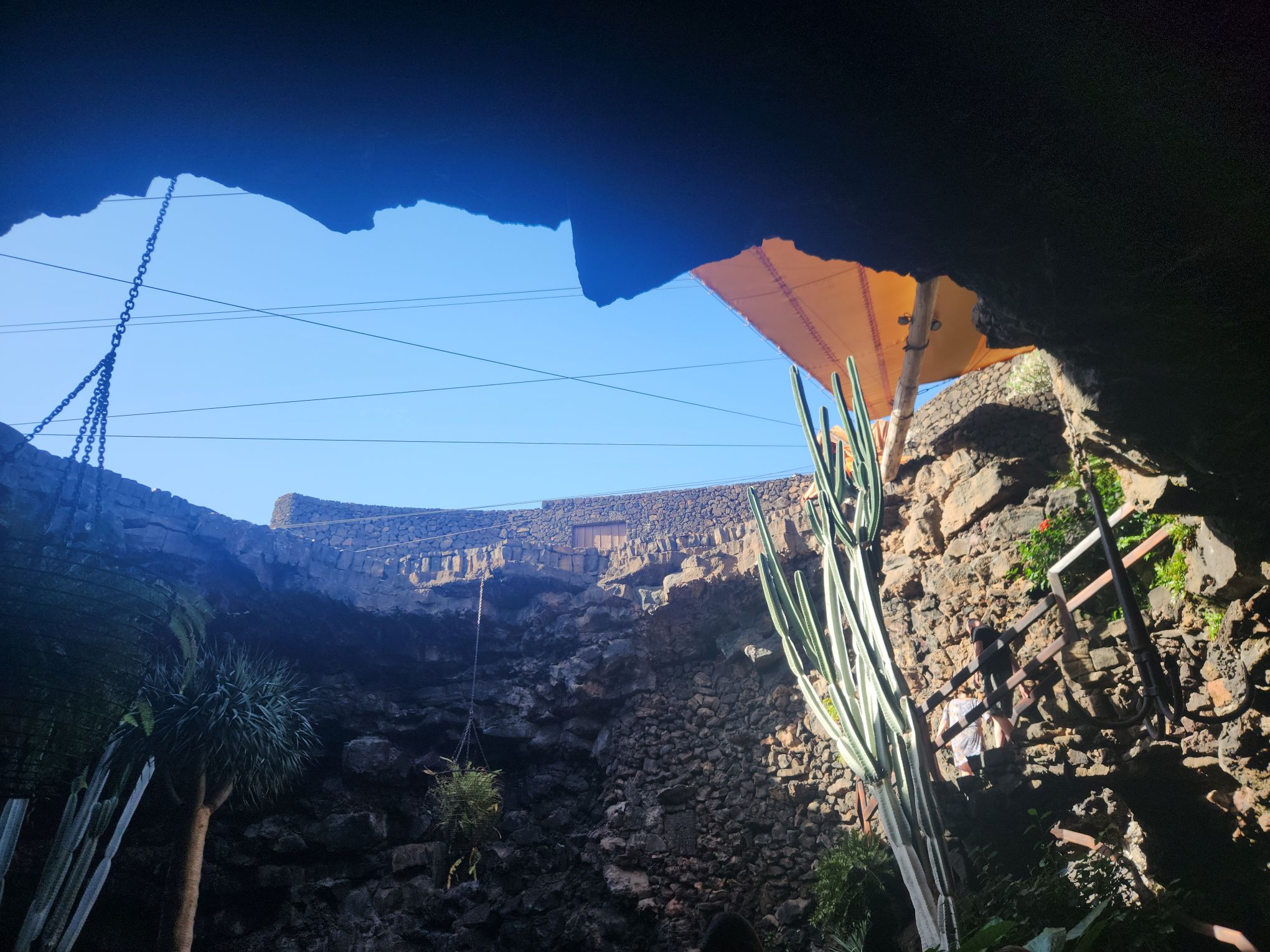
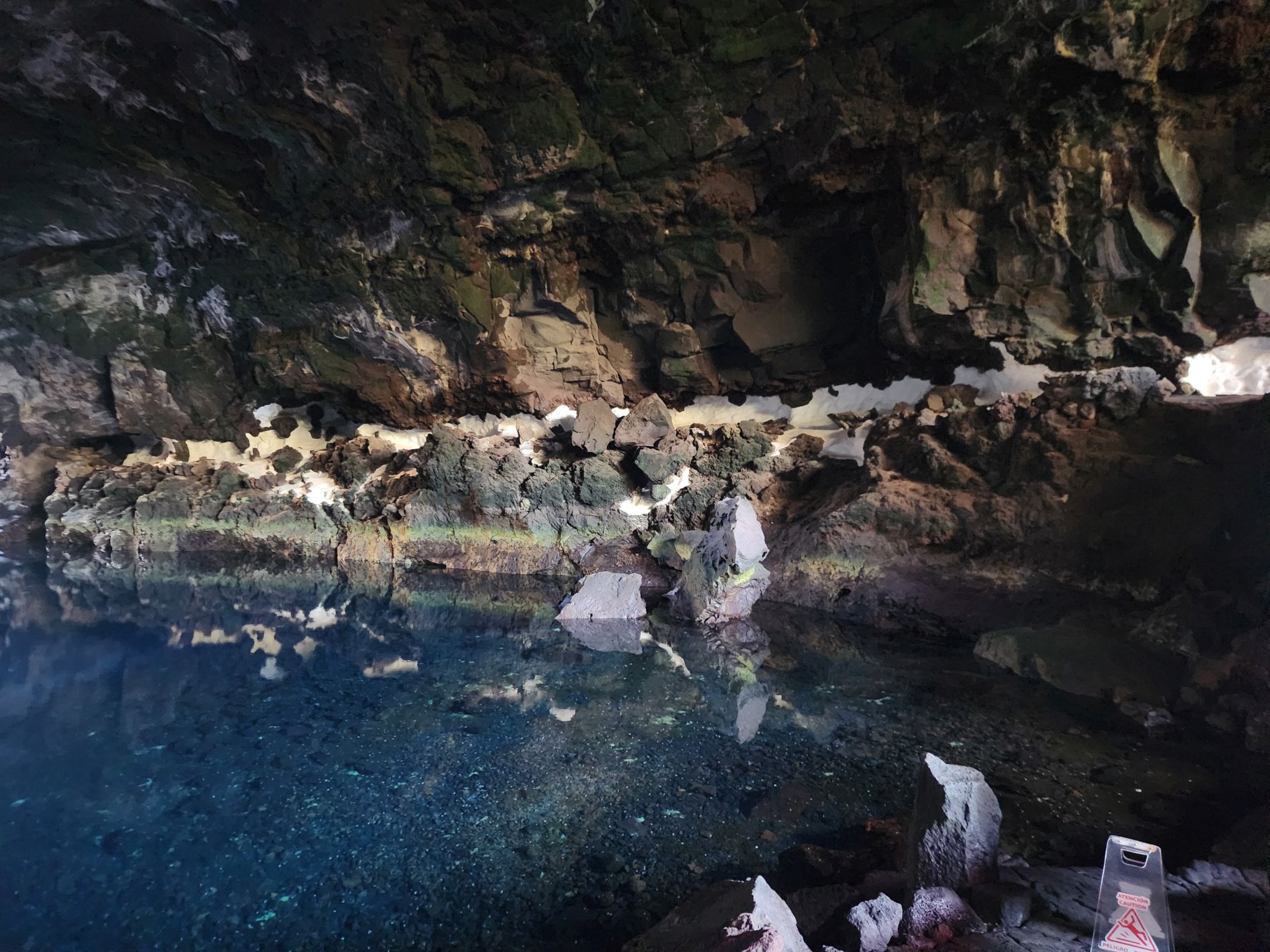
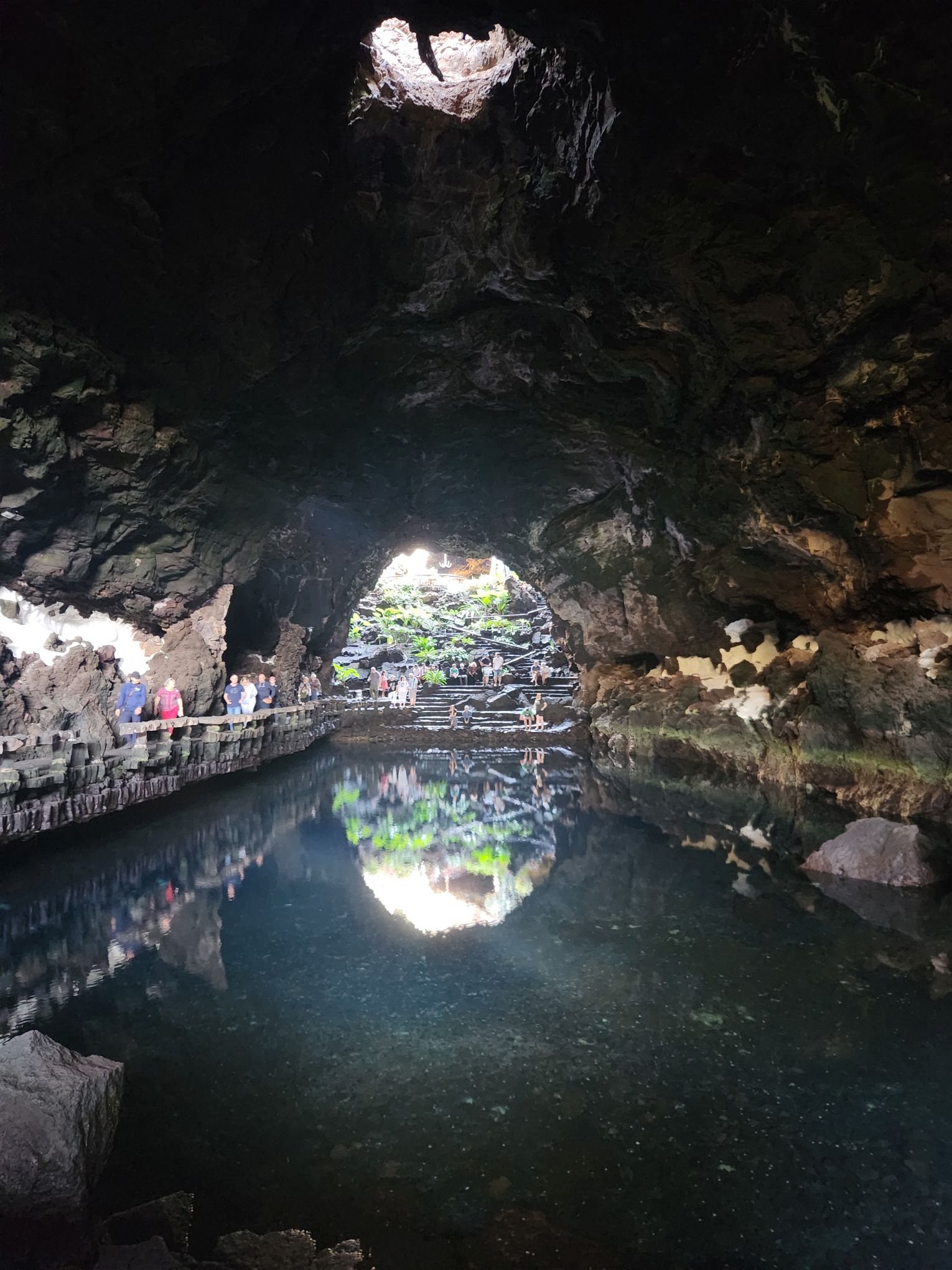
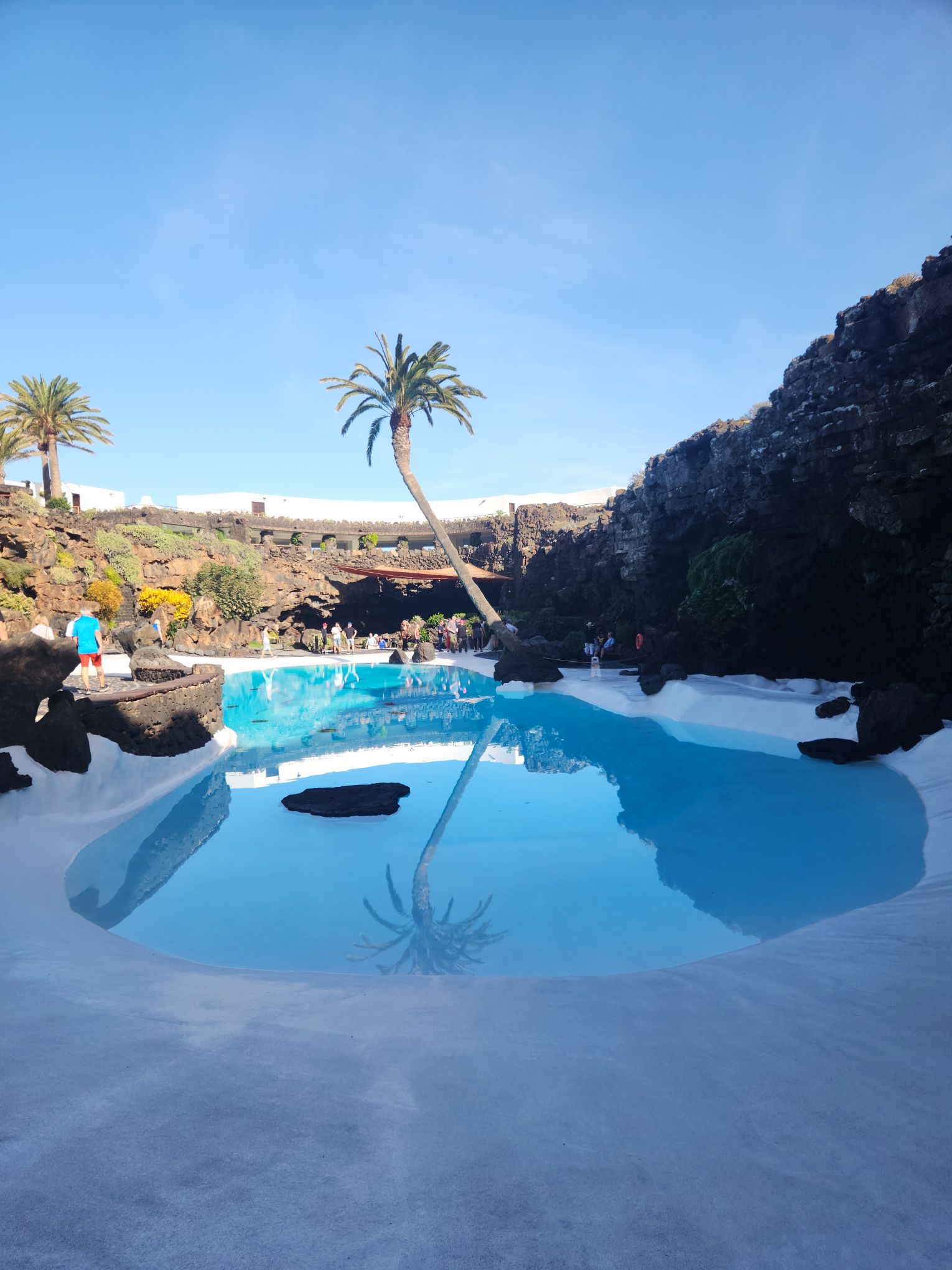
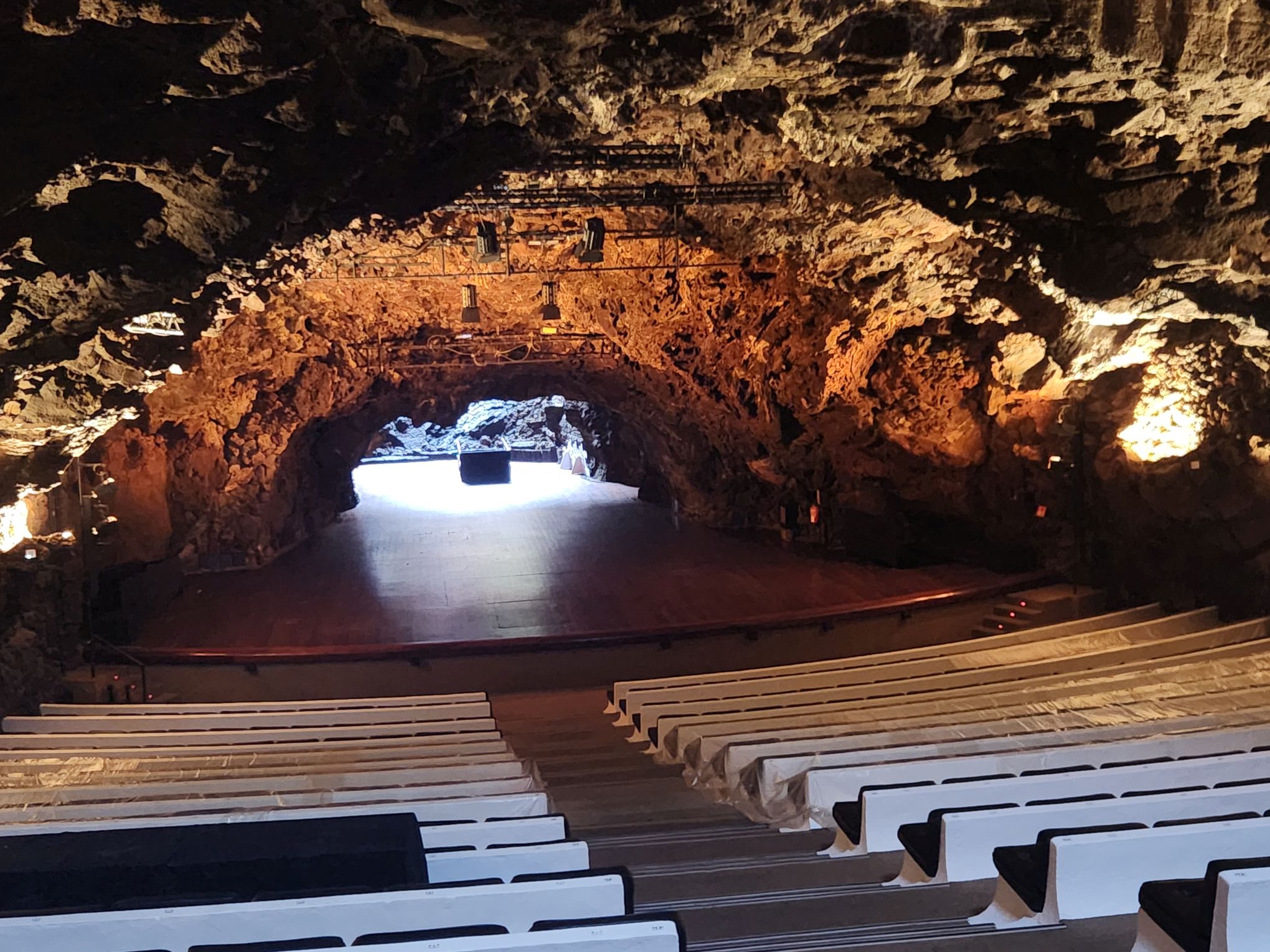
Our next and final stop is at Jameos del Agua, a restaurant and nightclub created by Cesar Manrique. This underground enterprise contains a lagoon where little white crabs live and multiply, a full restaurant, two separate night club dance floors – one made of all recycled wood – a swimming pool (that is no longer in use, but still pristine clean), 3 coffee bars and an auditorium for concerts. Amazing and incredible and quite fun to explore! Cesar was a talented – and versatile – guy, that’s for sure!
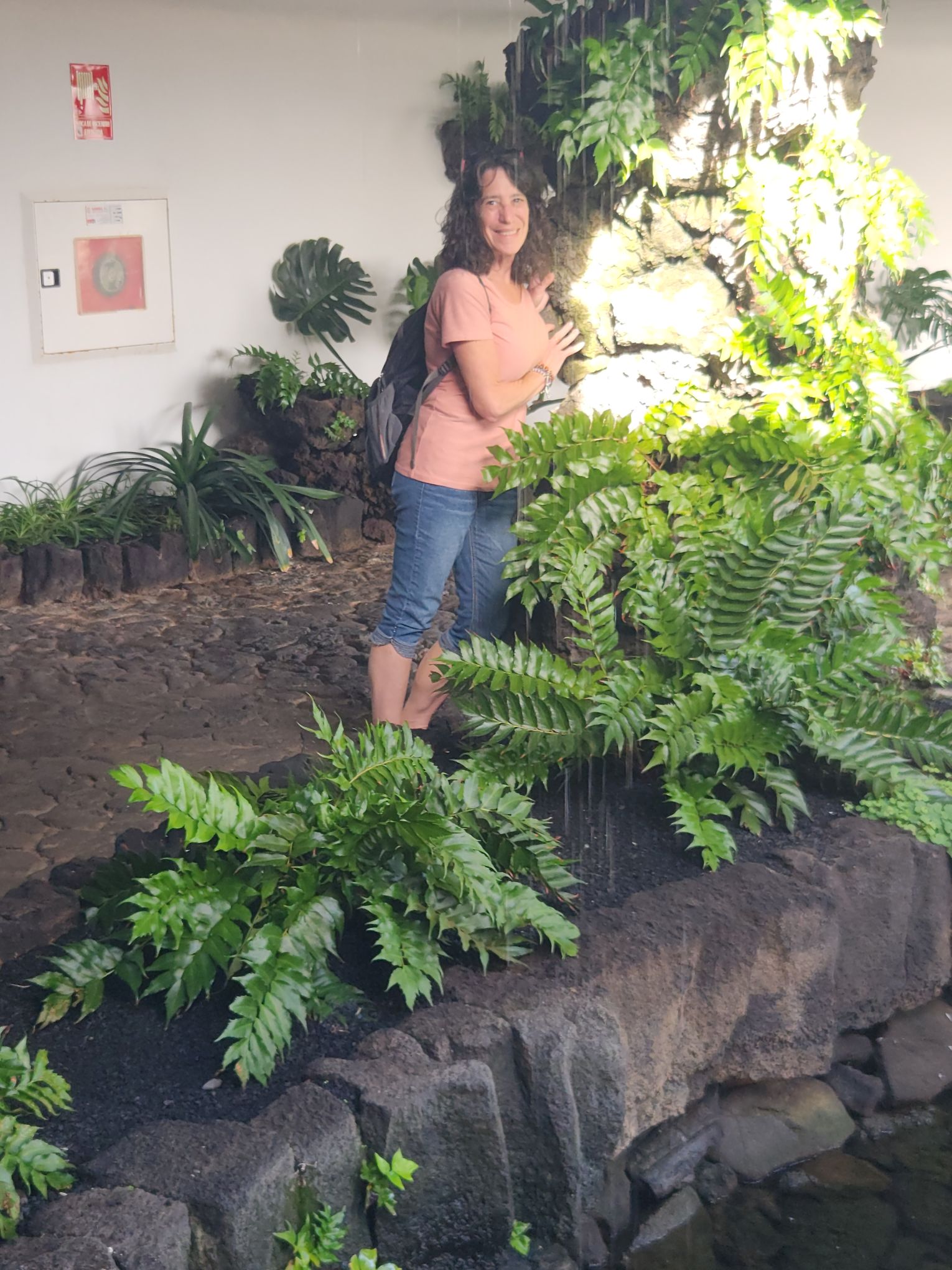
With that, our little (long) tour is over and we head back to the ship for our last night on the first leg of our 6 week odyssey. We’re really happy we don’t have to pack and leave tomorrow!
Our night proceeds smoothly – a lovely (but all too much!) dinner at Prime C, then just balcony relaxation as we are saving the production shows for the next leg of our trip when we’ll have plenty of sea days to relax on the balcony – and far less people to deal with trying to get into the Cabaret for shows!
 Andiamo