We have arrived! Land at last – and we are going to be actually staying on land for 2 days with our overnight in Luxor tour. So exciting! We dock right at 6am and passport distribution starts a little bit before that even. All we can say is wow – Azamara has this down. It was absolutely seamless, lining up to go to the Cabaret and get our passports. Passports handed out by decks. Staff everywhere showing us where to go, what to do. It was excellent. We were in and out of the lounge with our passports before 6am! And even though our guide wasn’t supposed to be outside until 7, we decided to get outside now before the mobs exit the ship for their tours (there are over 400 passengers on tours to Luxor today).
And good thing we did because our guide, Amr, is already here and waiting! Perfect. After clearing the mandatory customs walk through security, we reunited with Amr and were off. Meeting our driver Achmed, we settle into his sedan and start our 3 hour journey to Luxor. Being out first helps so much. We are ahead of everyone – ship tours and private tours. First ones out!
Our first 2 hours are through the desert – miles and miles of nothing. Just windswept desert and limestone mountains and one road heading toward civilization. Incredible. Achmed drives too, boy! He is fast – 140 kph almost the whole way unless there is a speed hump or bad road, and he knows every single possible road hazard, slowing down when he needs to, then ratcheting it up again – and totally skilled. He either was a race car driver in a previous life, or thinks he is one now. Whichever, we are very comfortable with him, and as Ed pointed out, he drives much like Ed does, so we’re happy in the back seat watching the miles fly by and chatting with Amr, who tells us that we haven’t seen anything yet with regard to speed humps. He tells us to wait for Qena. Throughout our journey, Amr gives us history and background on the area. He explains Sfaga comes from 2 words, ‘sfa’ meaning dust storm and ‘ga’ meaning coming. Well that makes sense, because Sfaga port is out in the middle of nowhere at the end of the desert and we can imagine the dust storms that whip through there. Amr lives in Luxor and tells us all about his city, where everyone knows everyone, kids play out on the streets without worry and the traffic isn’t anything like Cairo (which he obviously does not like because he makes negative comparisons throughout our drive!). Big city vs. little city – we’re happier in a little city thank you. He also tells us Luxor has not had any rain for 5 years. Really? Wow! They derive all the water from either underground springs or I guess the Nile. Kind of crazy!
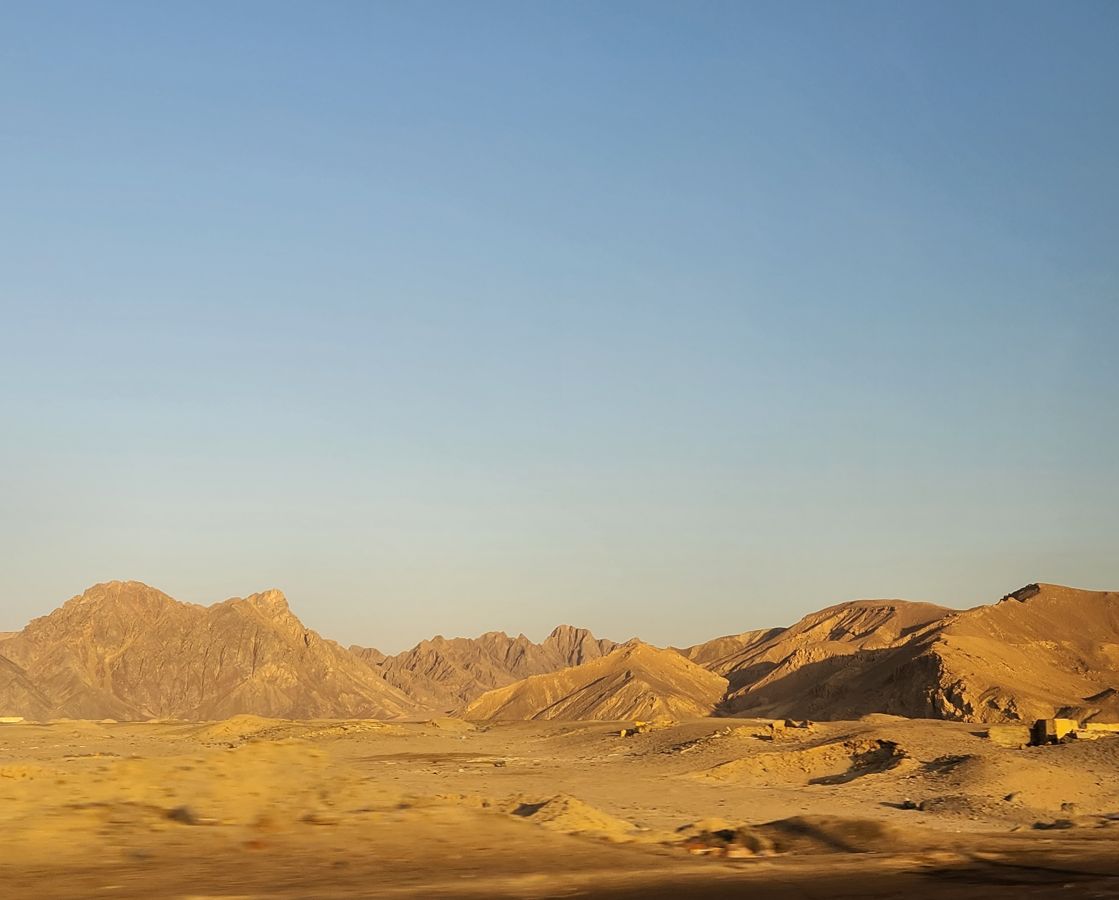
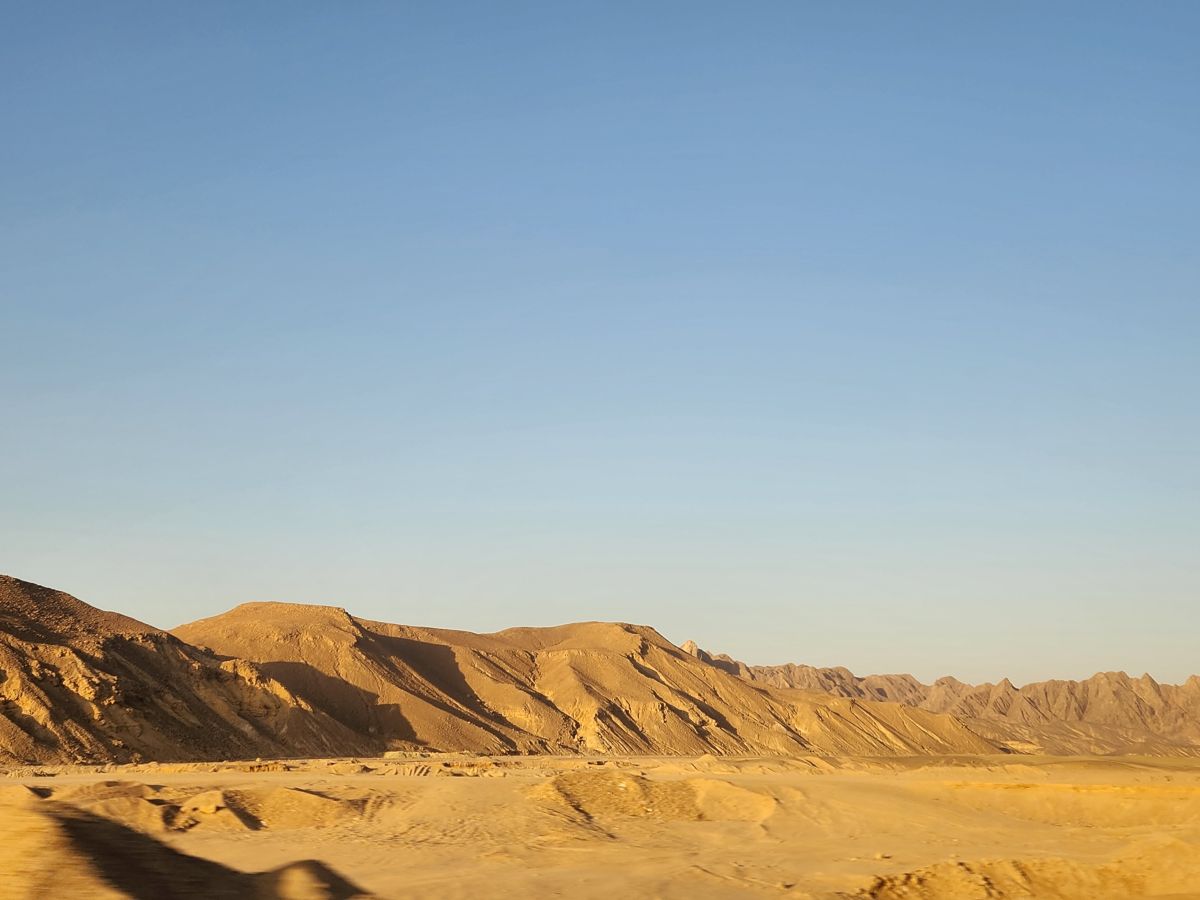
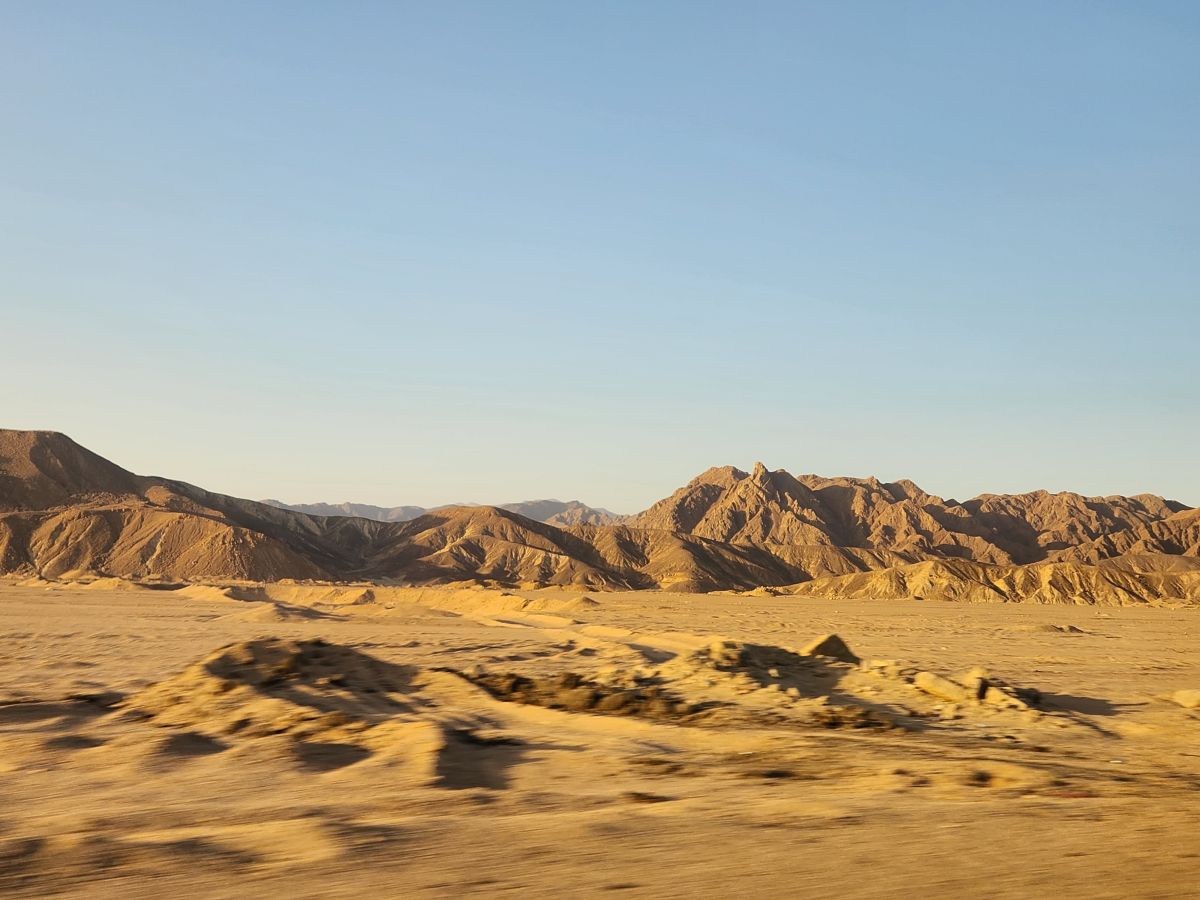
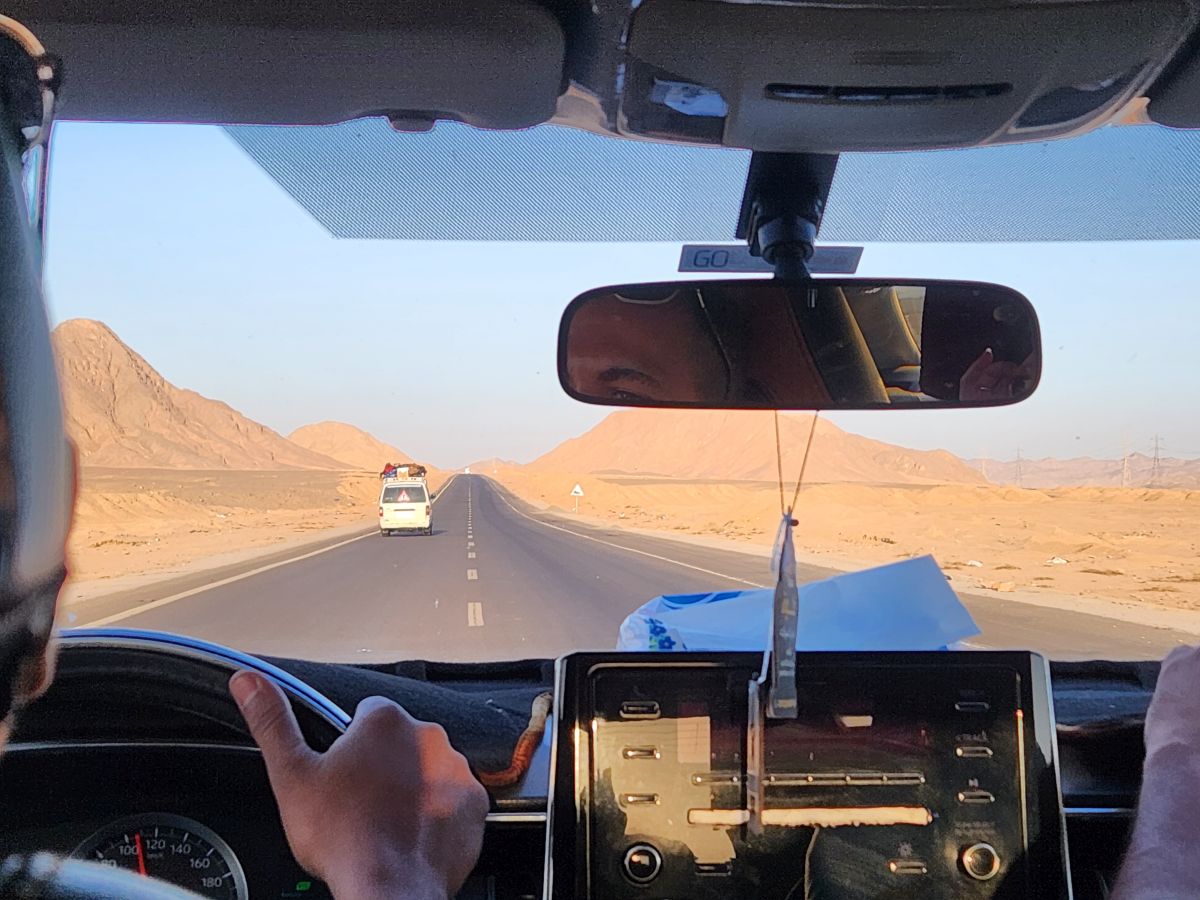
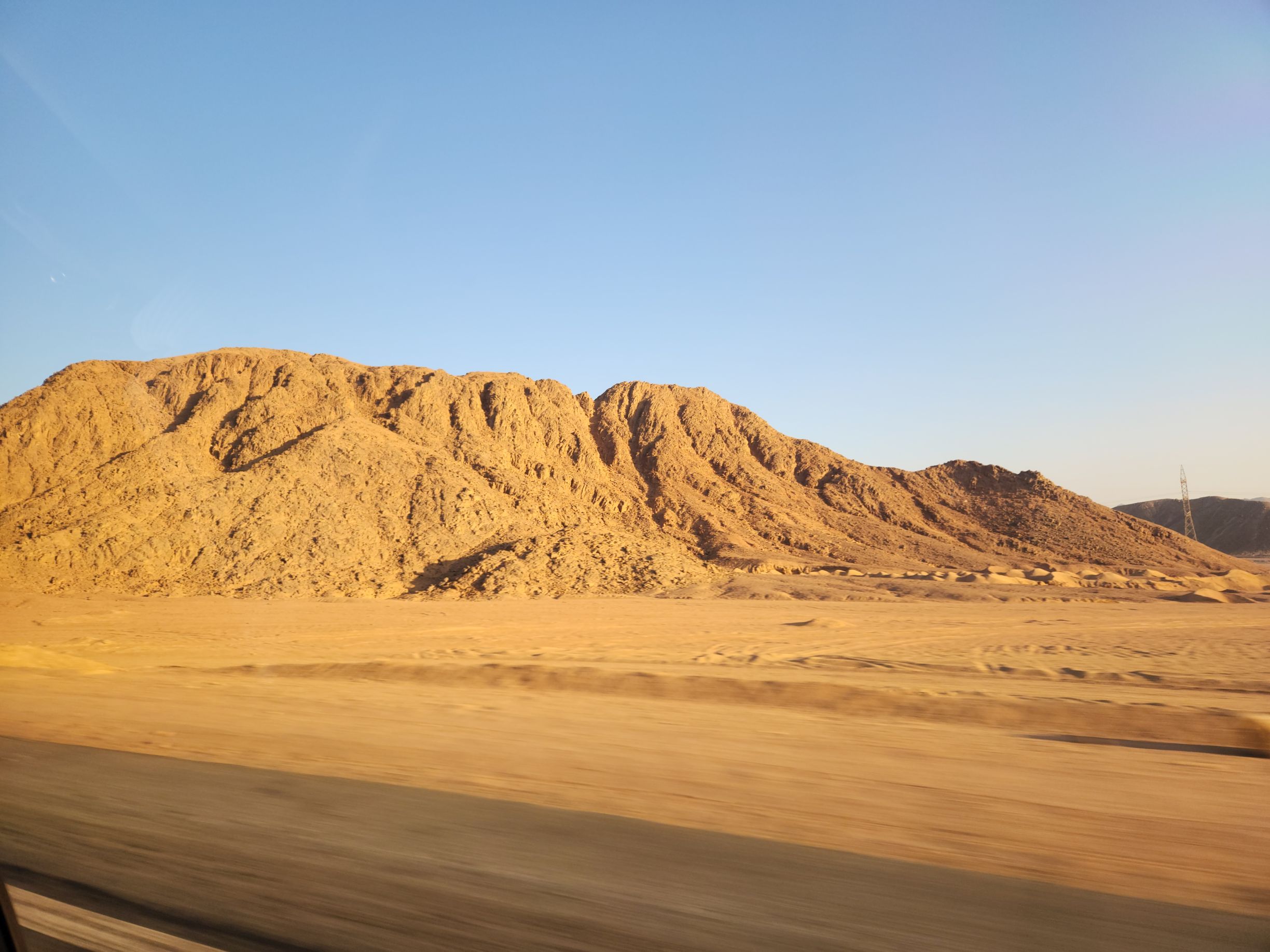
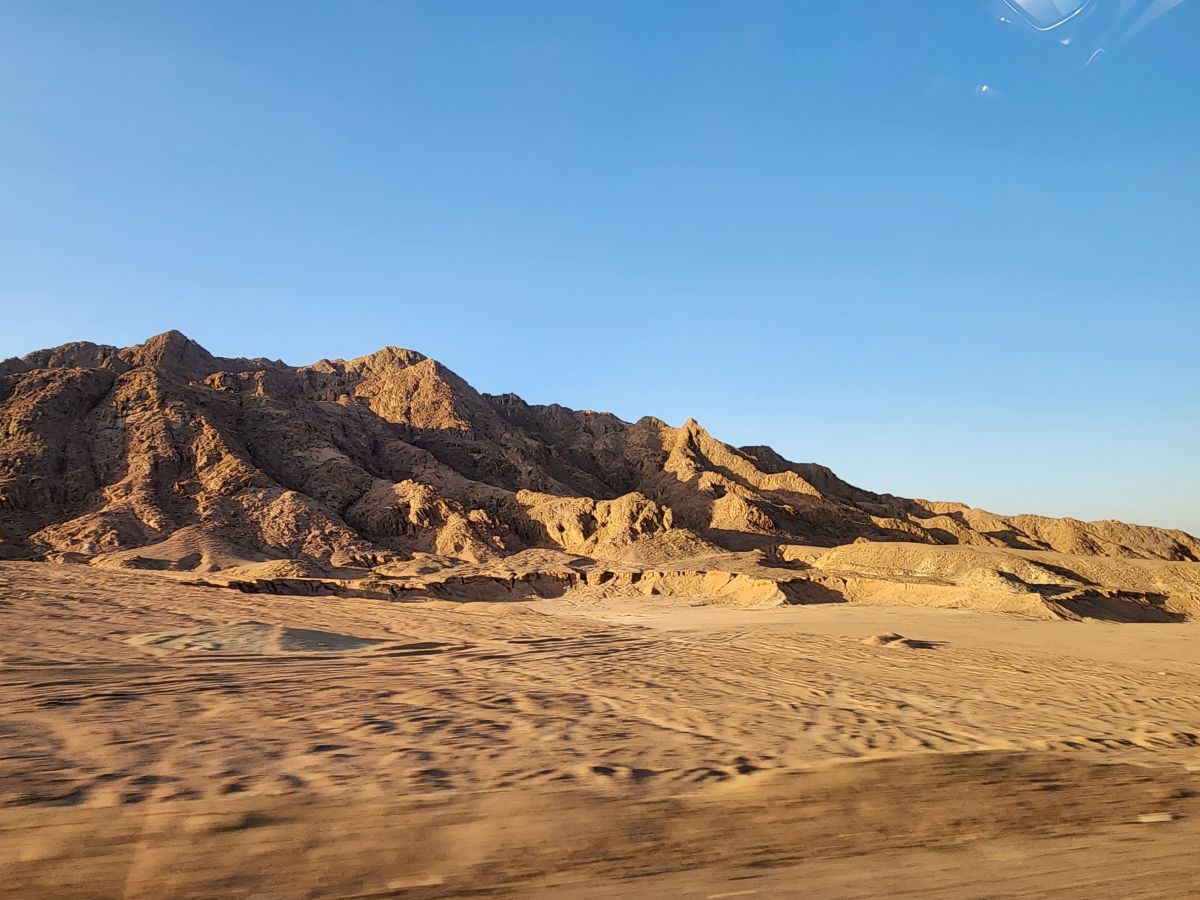
As we drive, we pass through 4 check points, each time Amr giving the guards a slip of paper with our information on it- passport numbers, where we are coming from and to where we are going. At least we don’t need a convoy any longer, which stopped a few years ago. The last time we were in Egypt, we definitely needed an armed escort. Things are changing for the positive, obviously!
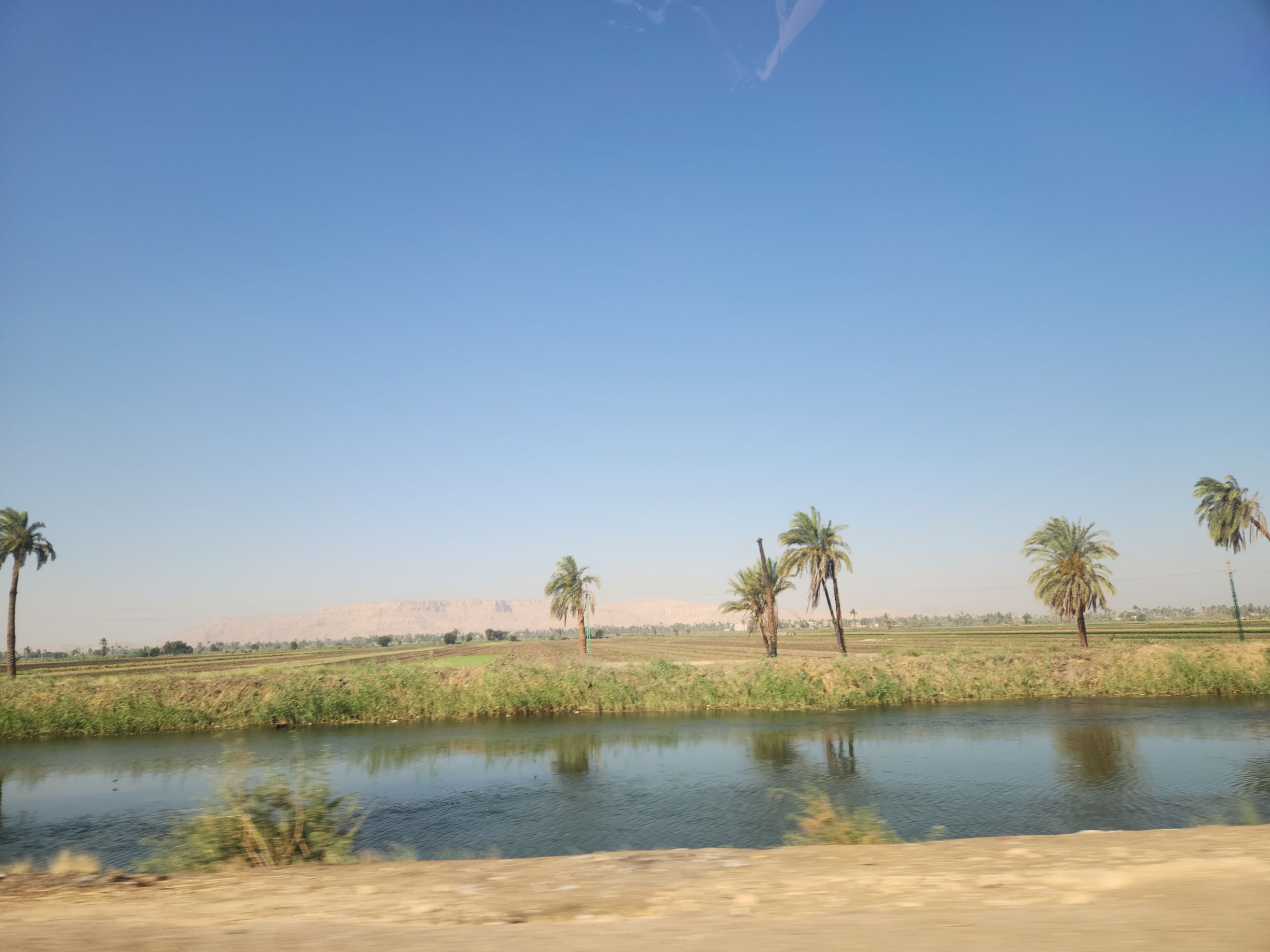
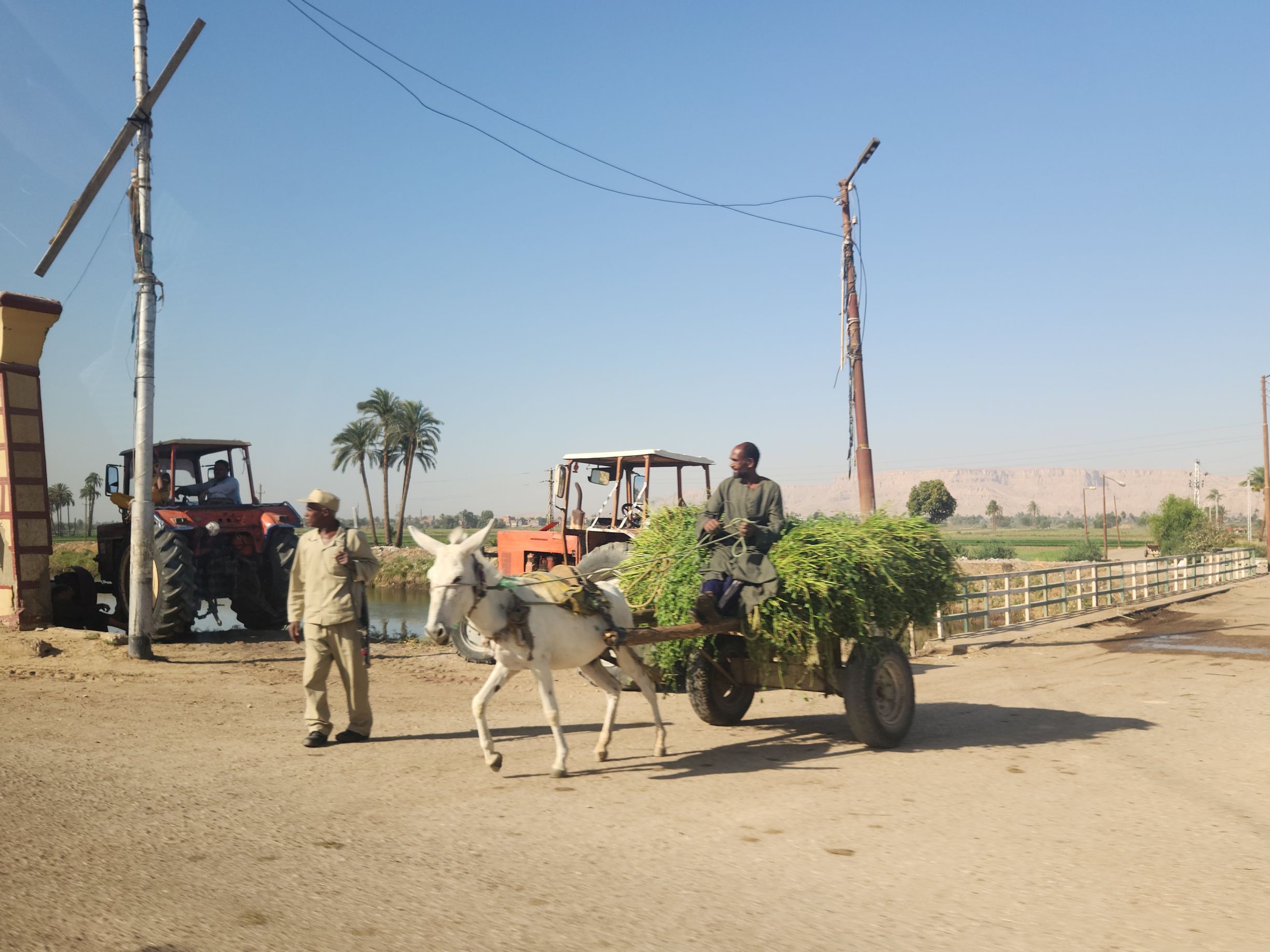
After 2 hours, as promised, we hit the outskirts of civilization with farmland and donkeys hauling crops and materials and people and then these big apartment type buildings that mark the start of Qena, a sort of satellite city to Luxor. Oh, and the promised speed humps. Every ½ km. Totally nuts. You can’t drive very fast at all here, and all the cars are jockeying for the best position to minimize the speed humps. It’s a riot watching everyone weave all over the road trying to find the best place.
It is mostly farmers that live here, but we didn’t really get a clear answer on who lives in the multitudes of apartment buildings. Amr does tell us that lots of Luxor city people have bought property out here for “later.” We’re assuming to retire. And most of the buildings are unfinished, which he explains is because the family buys the building, but completes maybe only one floor to live in, then the upper unfinished floors are for the children. When they marry, they come out here and finish their portion of the building. Plus most all of the buildings don’t have roofs, but are using thatching to cover the roofs for air circulation. Some are just big poles with bundled hay atop them. Lots of donkey carts.
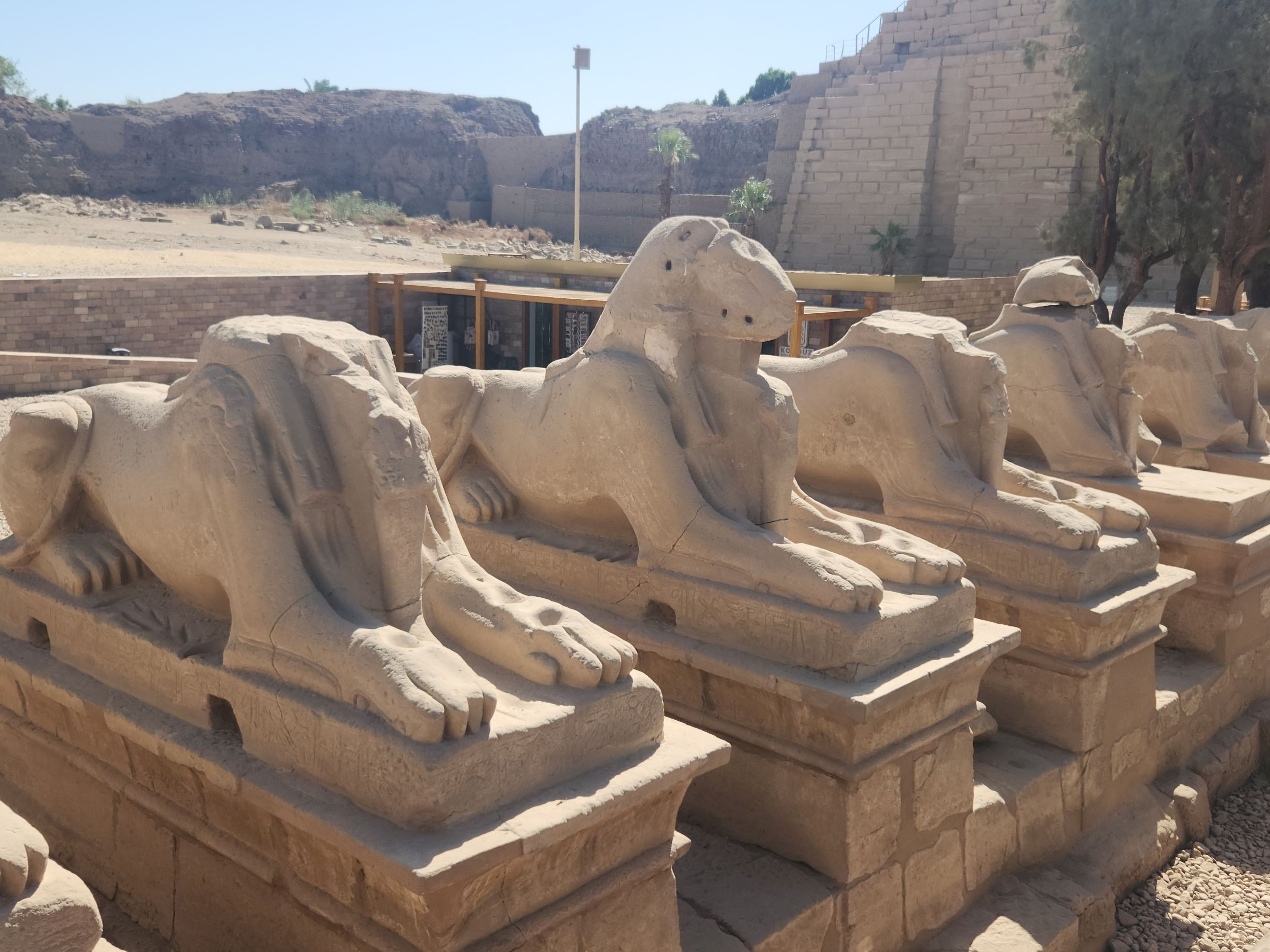
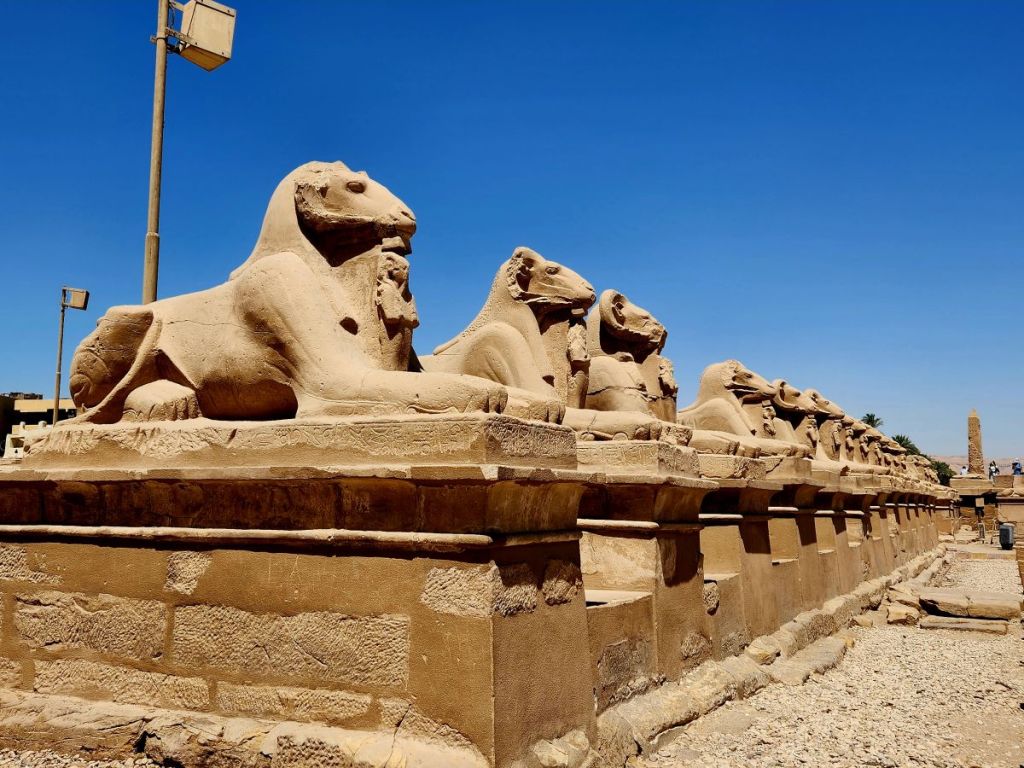
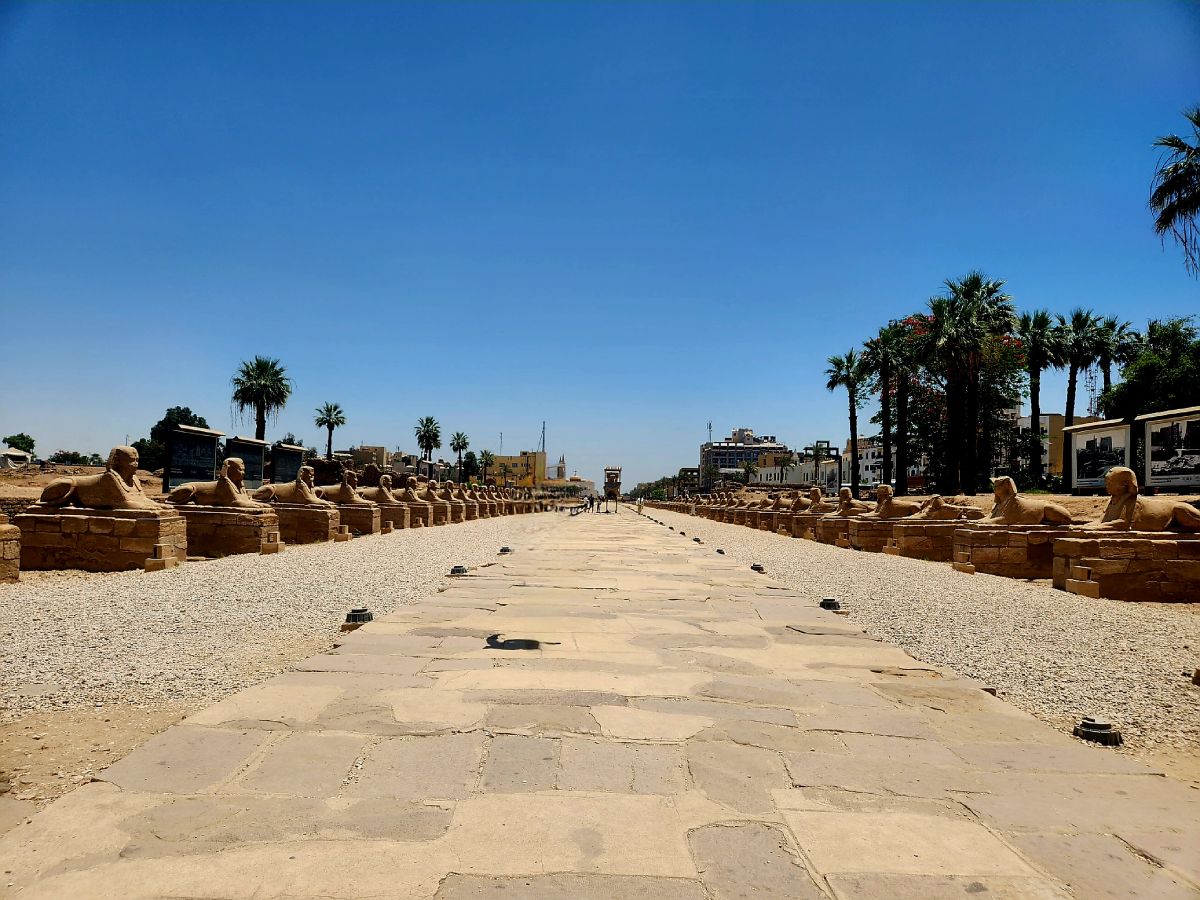
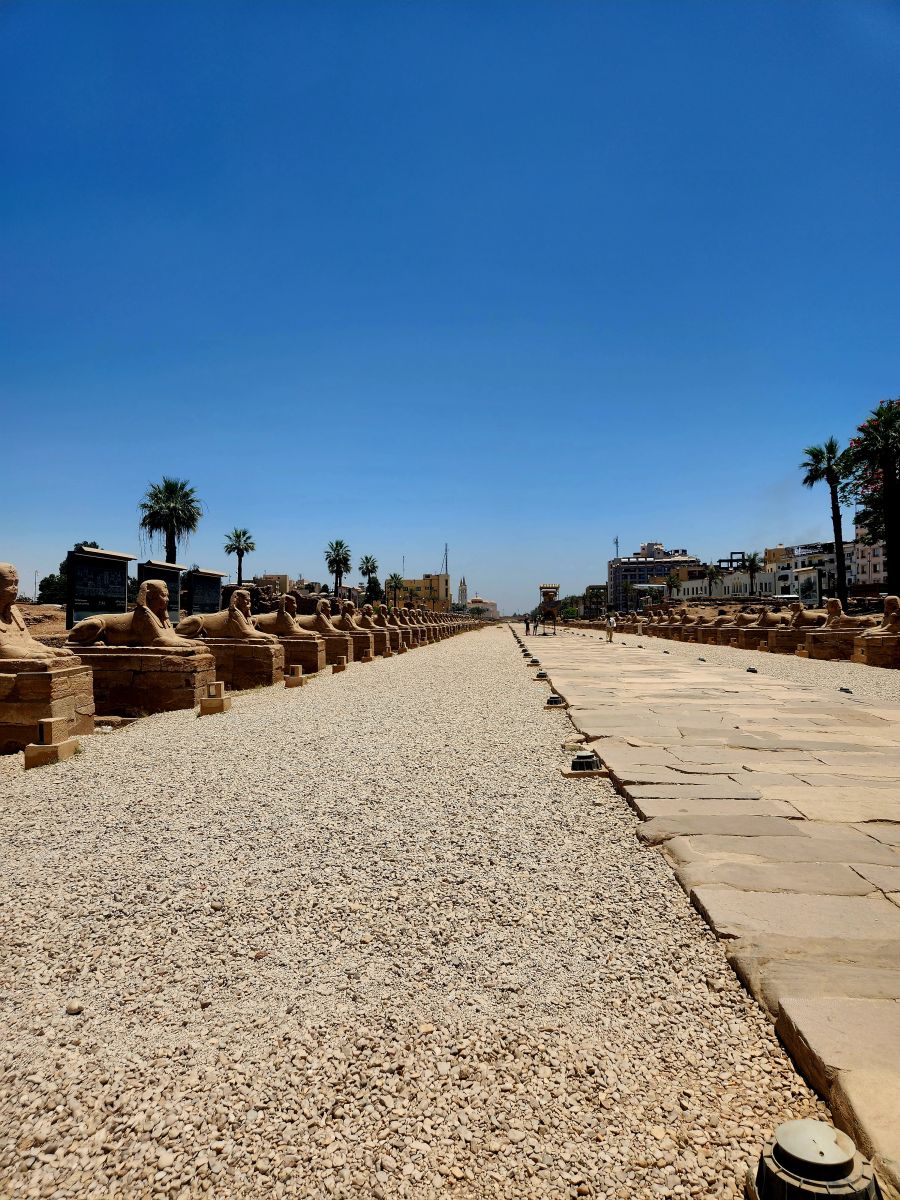
An hour later we are in Luxor proper, and head to the Temple of Karnak, crossing the avenue of Sphinx first. This is an avenue that runs from Karnak to the Luxor Temple, lined with over 2,000 Sphinx. This portion only has a few left, but you can sort of imagine the scope and the feel of the avenue from up here above it. We had learned all about the avenue and Karnak in one of Connie’s lectures, but when we get to Karnak itself, standing here in front of the actual place can’t compare to the photos. Construction on this temple began in the Middle Kingdom, somewhere in the neighborhood of 1970 BC! Amazing. I get all the kingdoms and the kings and queens and gods confused, so I’m not going to even try to do any justice to history here, I’m just recording perceptions and thoughts – and what little has stuck with me from Amr’s incredibly detailed information – how the hell he can remember all this, I’ll never know!
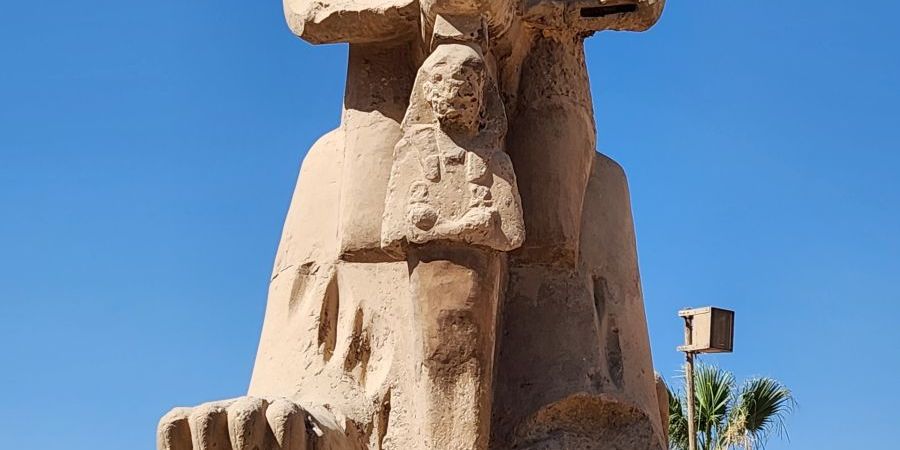
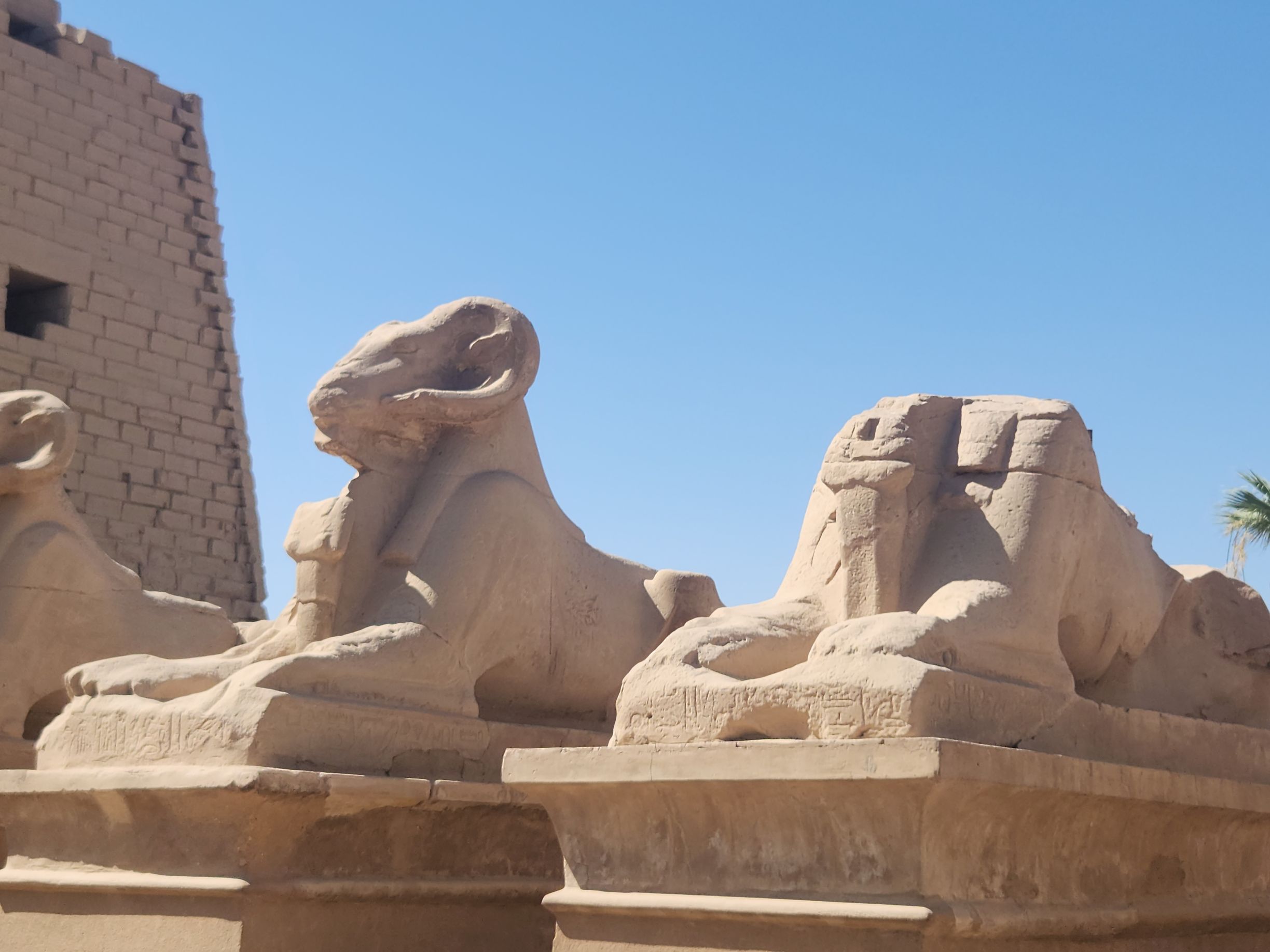
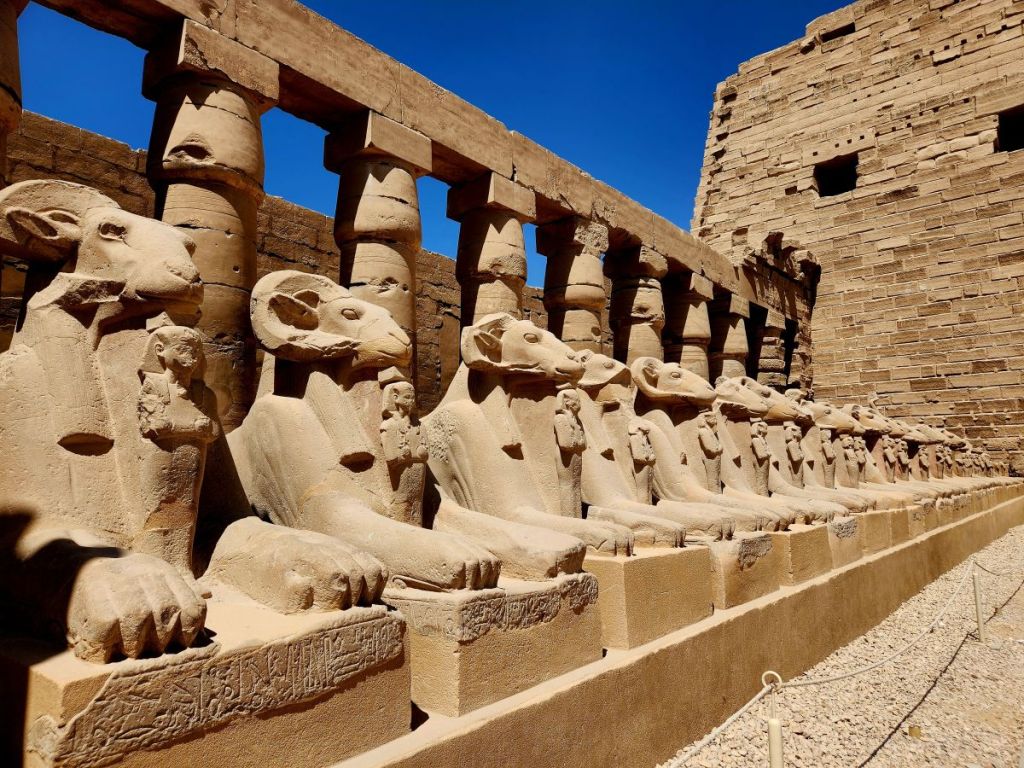
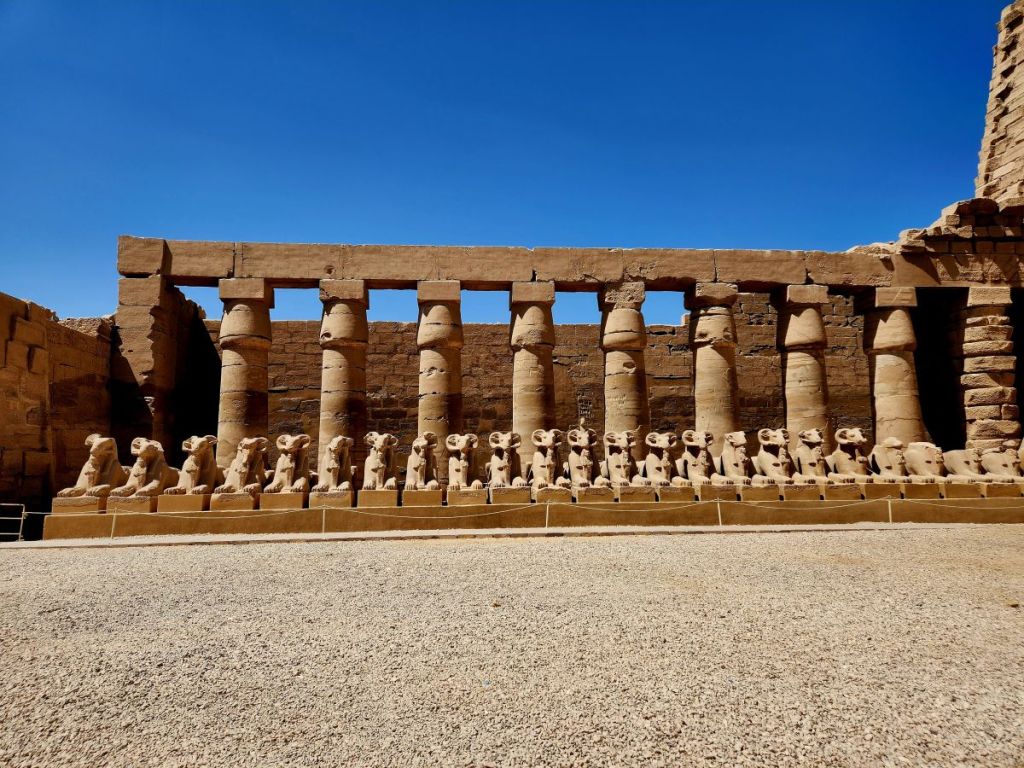
We enter into the temple at the end (or beginning) of the avenue of the sphinx – these sphinx though have the head of a ram for the God Amun or Amun ra, who is the chief deity of the temple. In between the sphinx’s legs is a statue of King Ramesses II. From 1200’s BC remember!!!
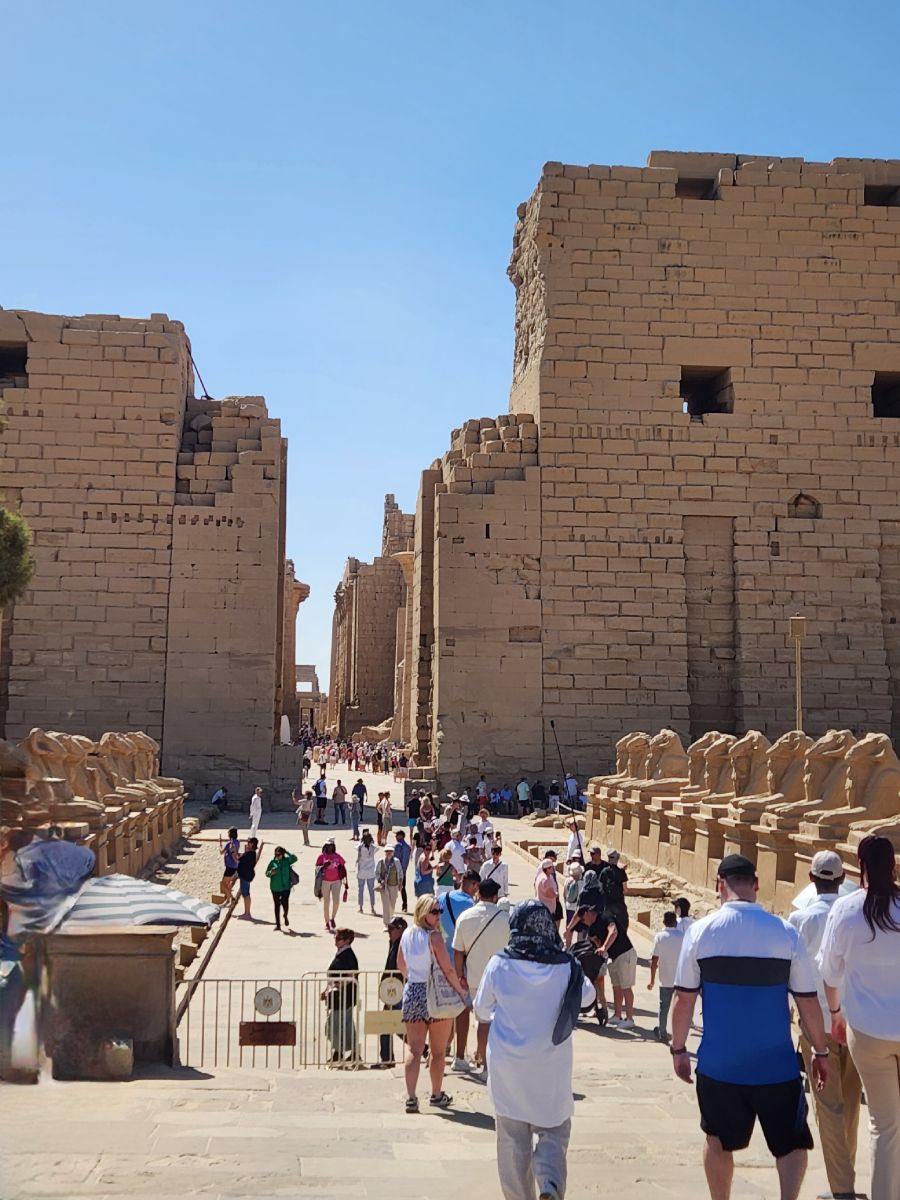
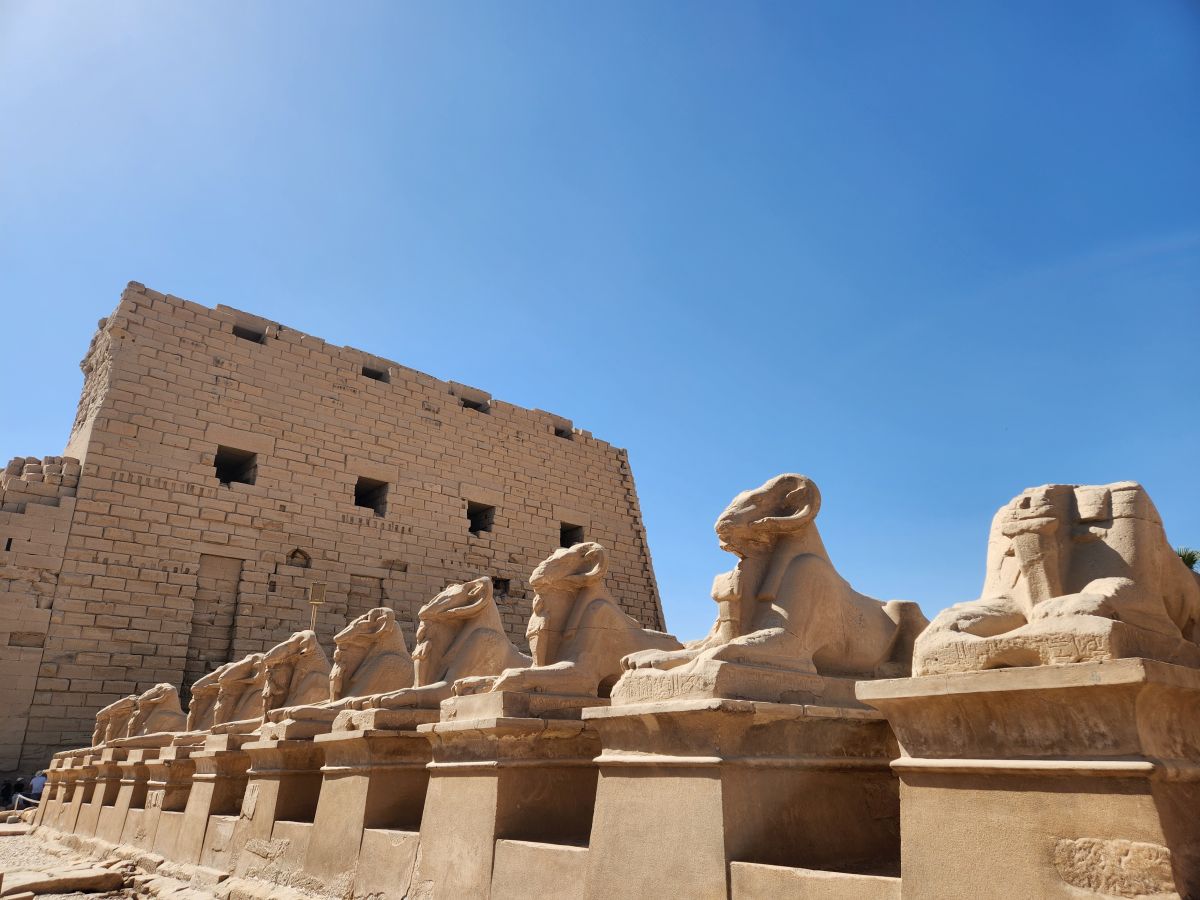
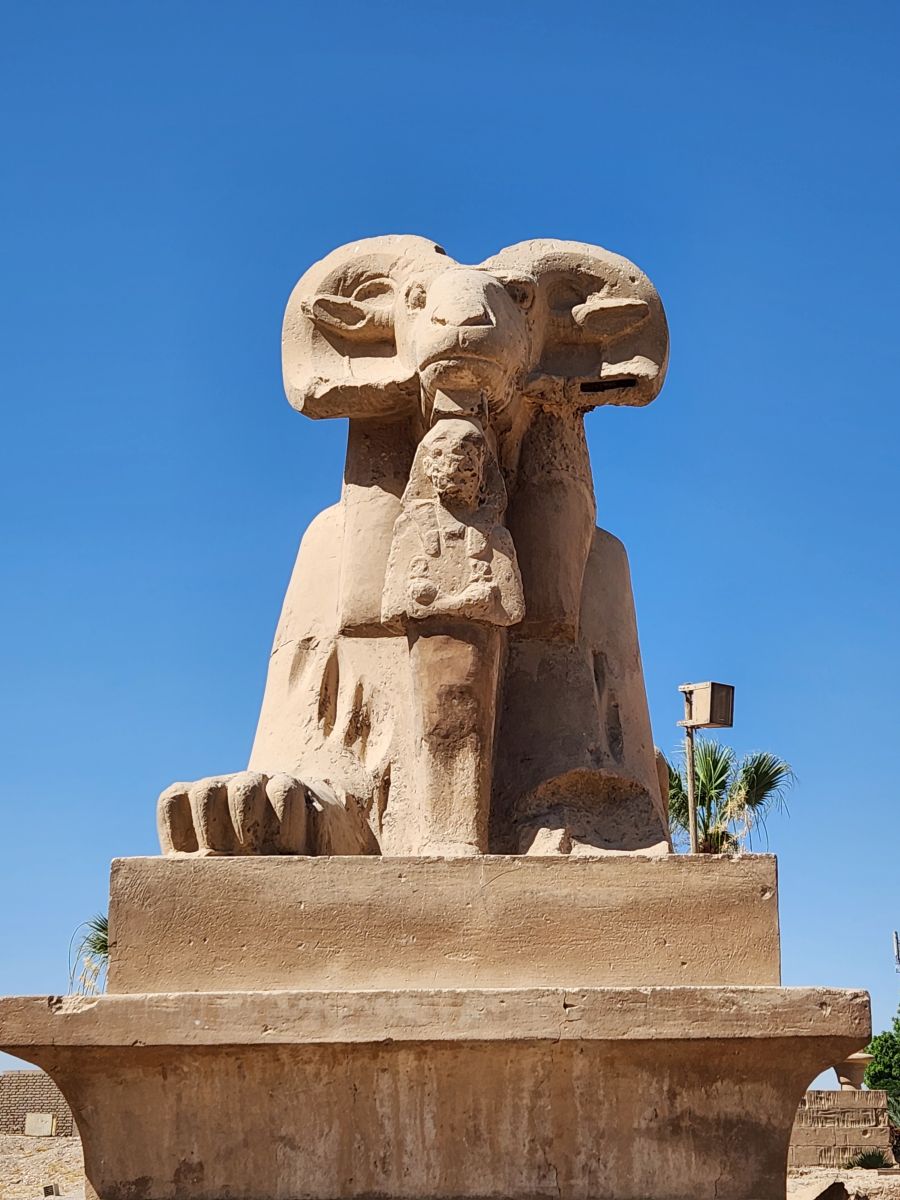
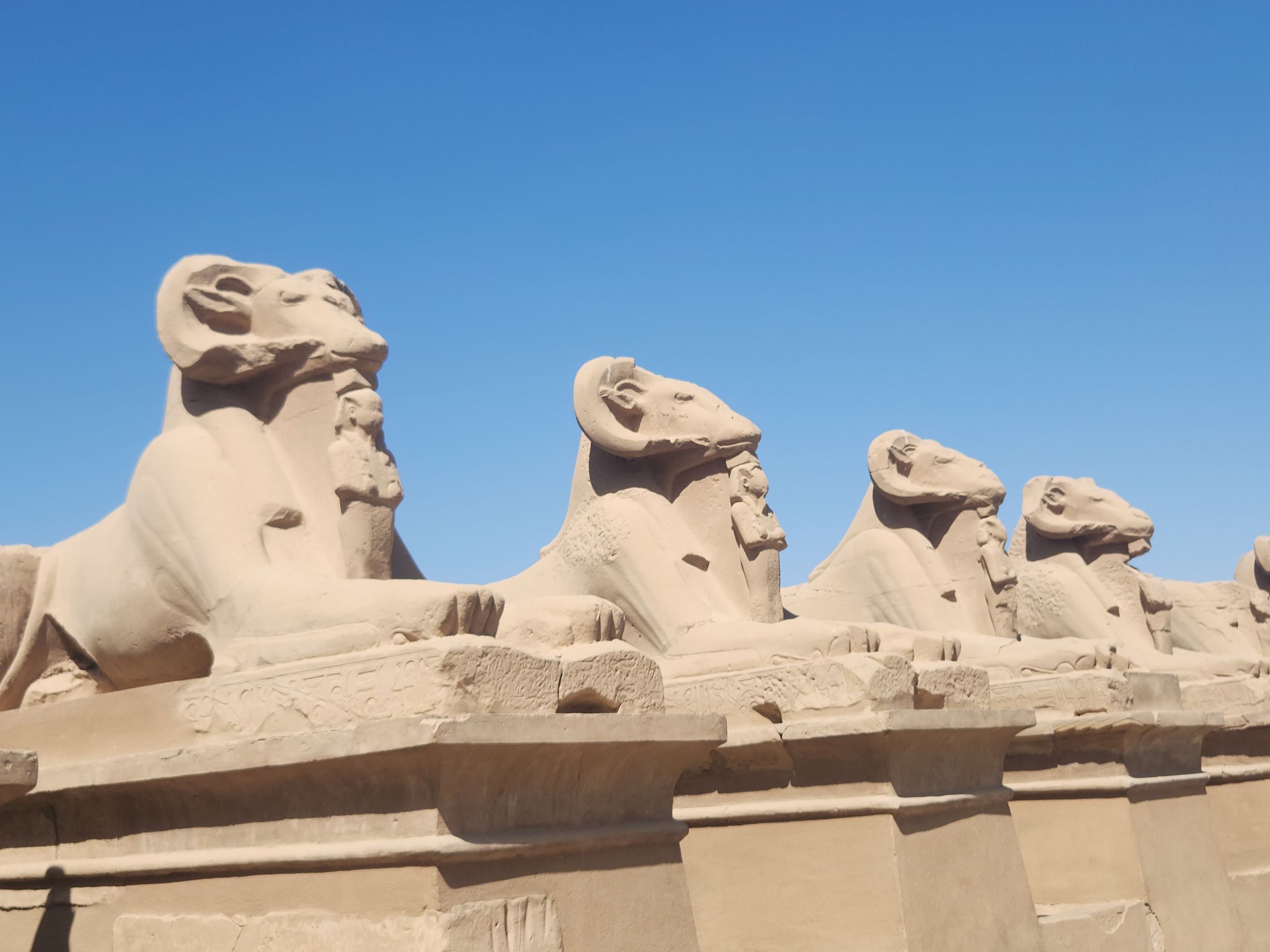
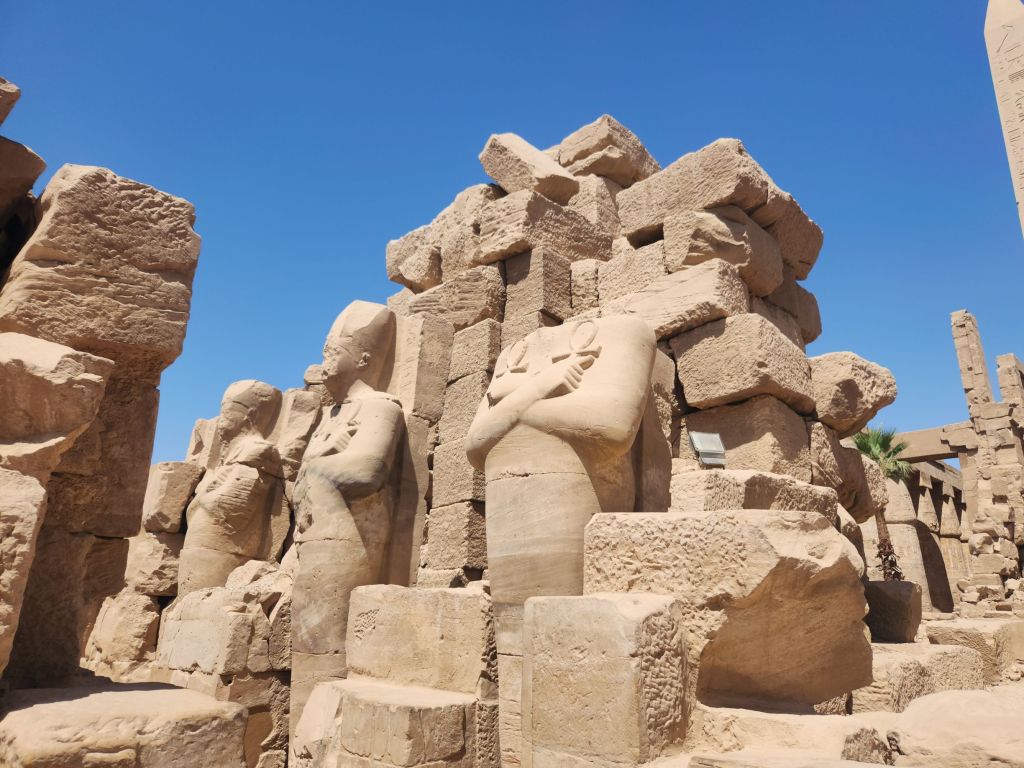
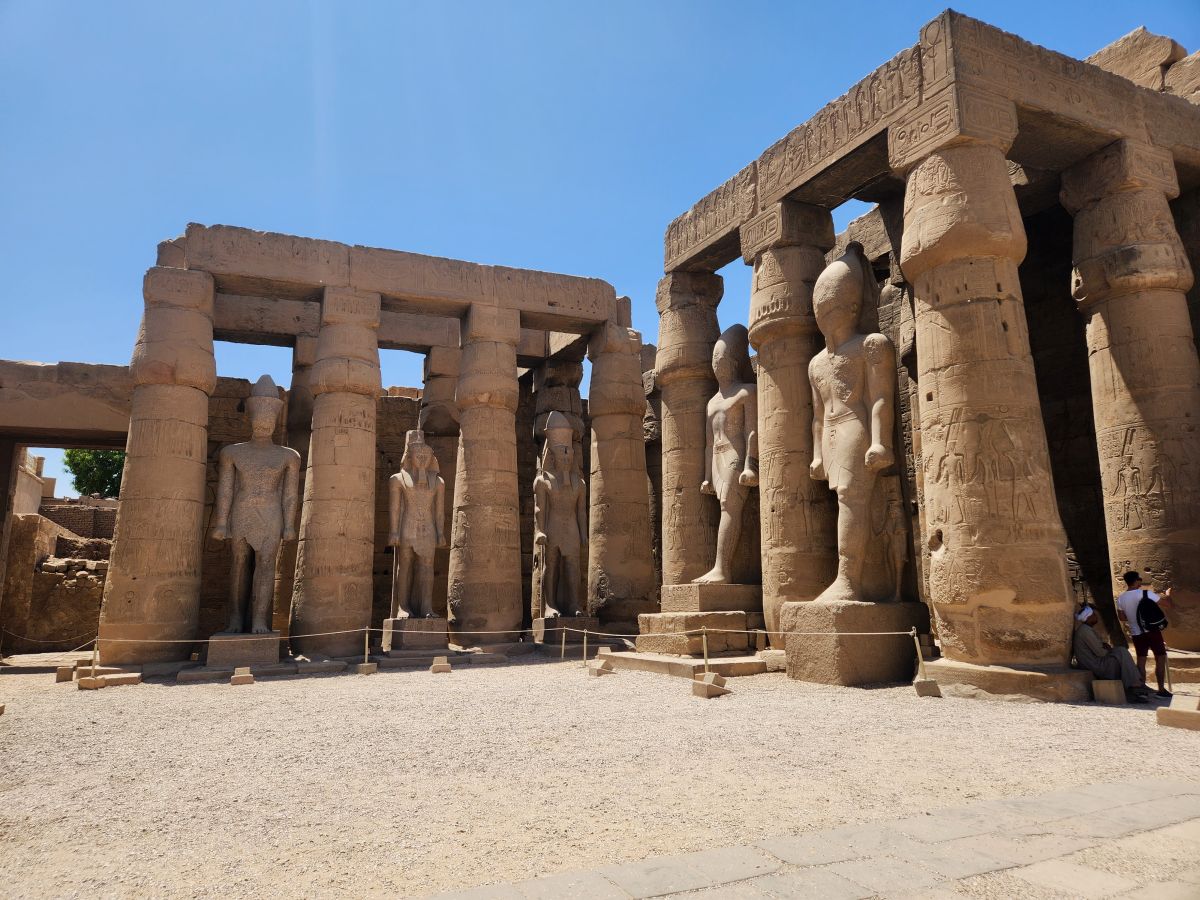
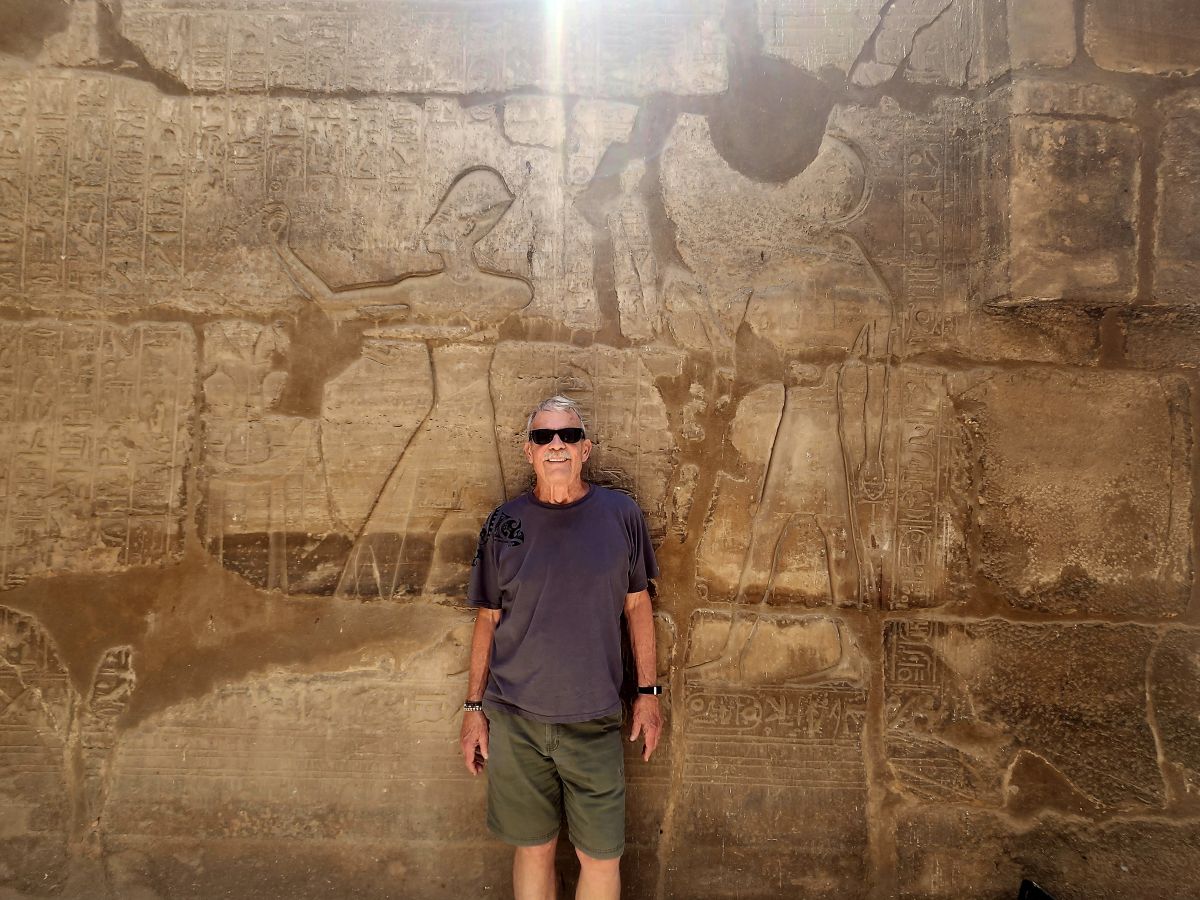
Amr takes us on a tour through the temple beginning in the courtyard area with the First Pylon and the multiple statues of Ramesses – of course – it’s his temple. There are also some amazing carvings on the walls of the buildings surrounding the courtyard – the detail that still remains is simply unbelievable.
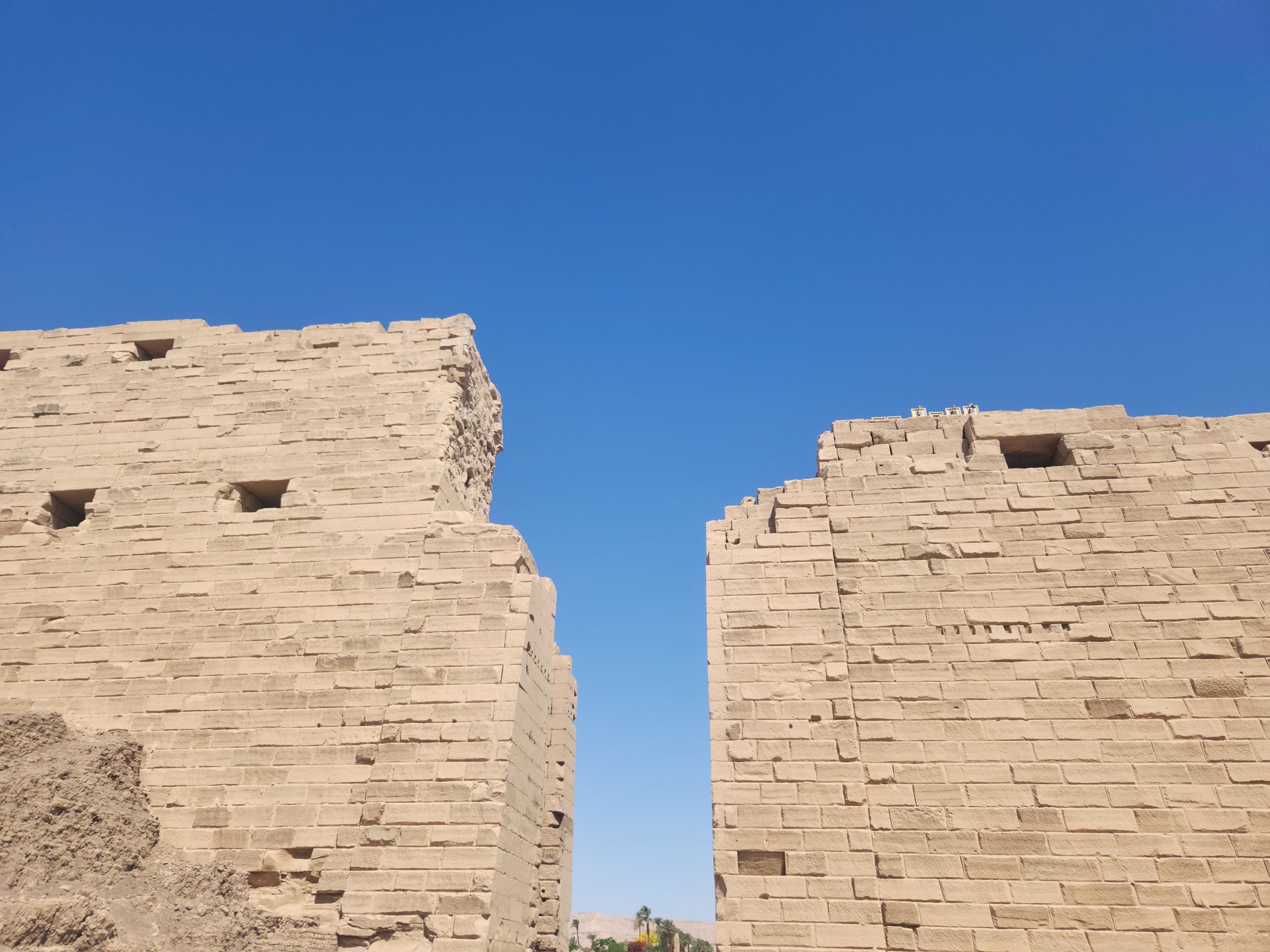
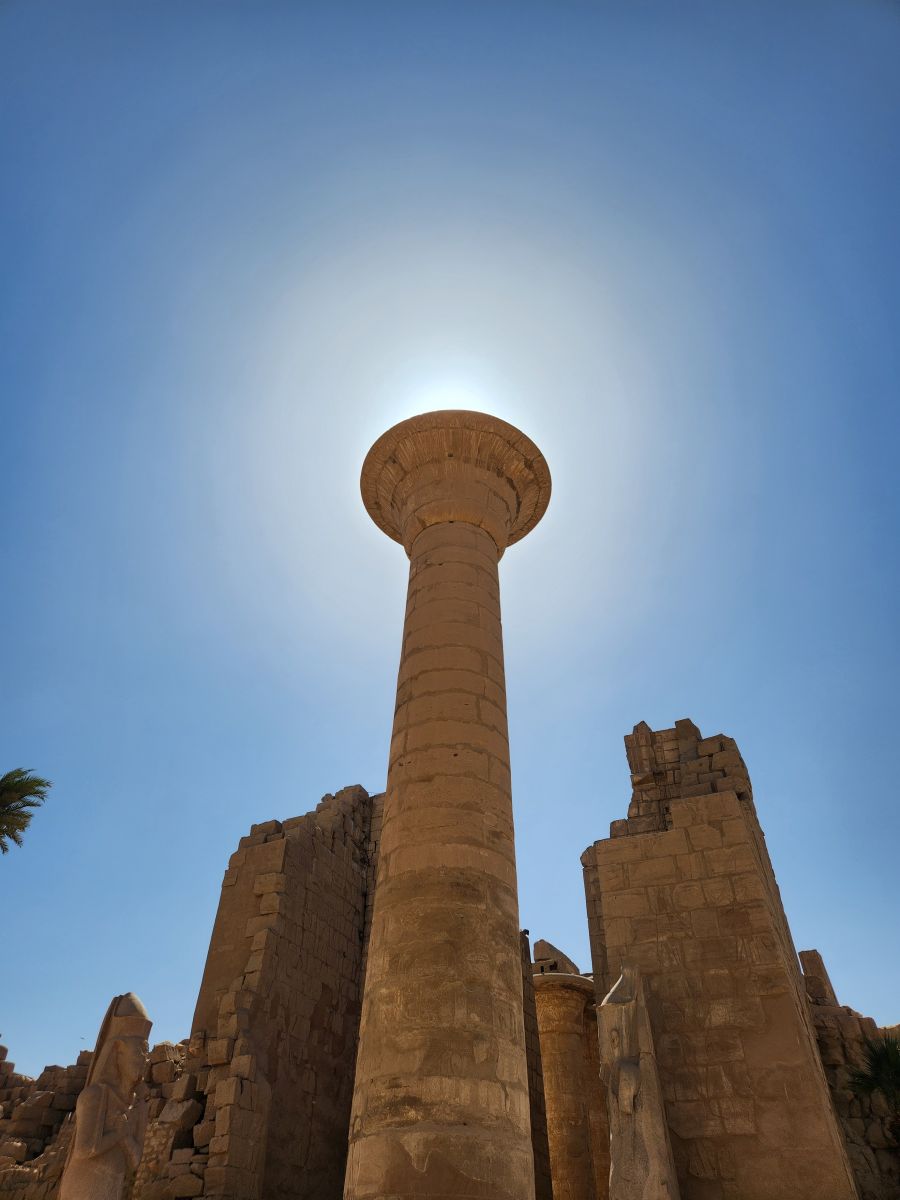
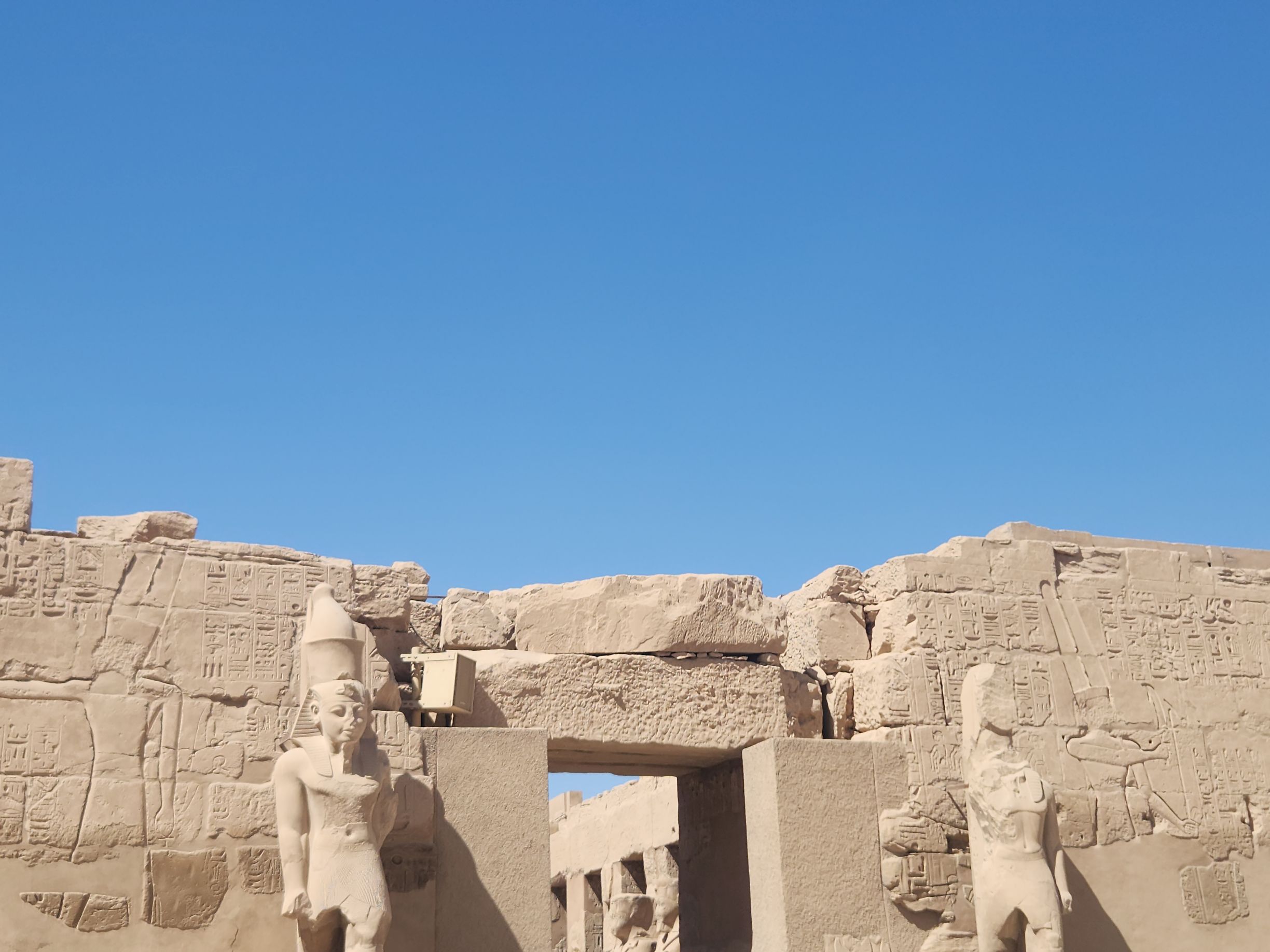
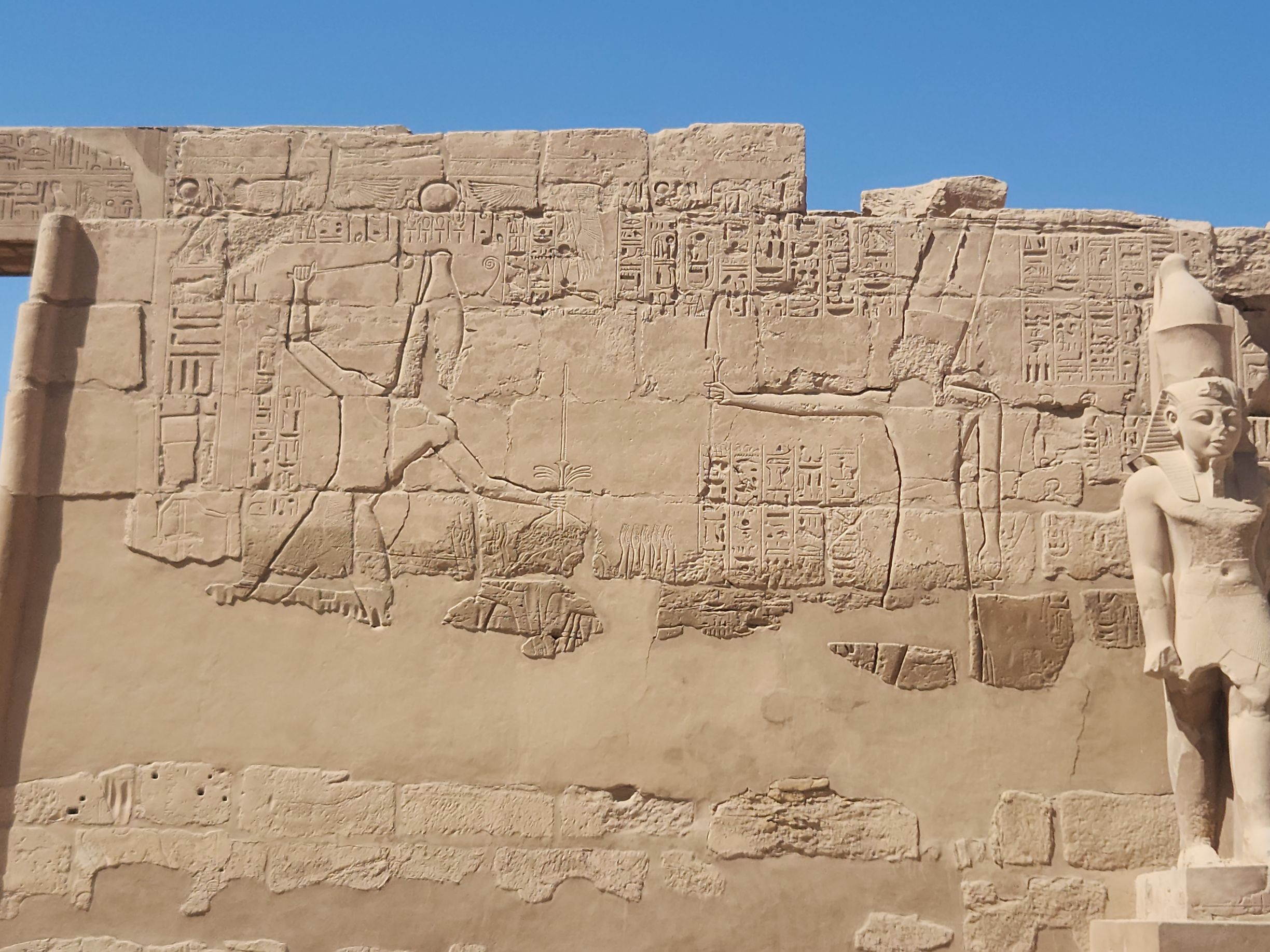
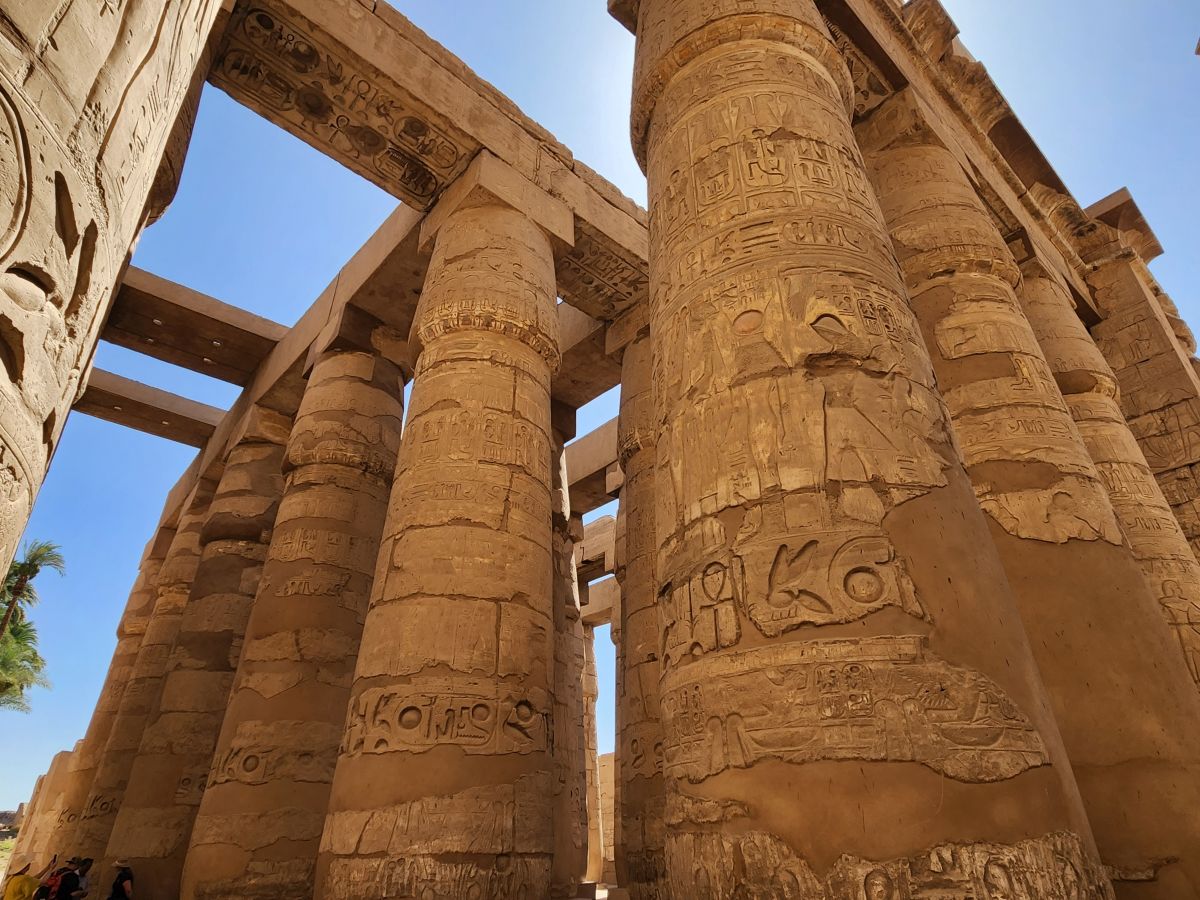
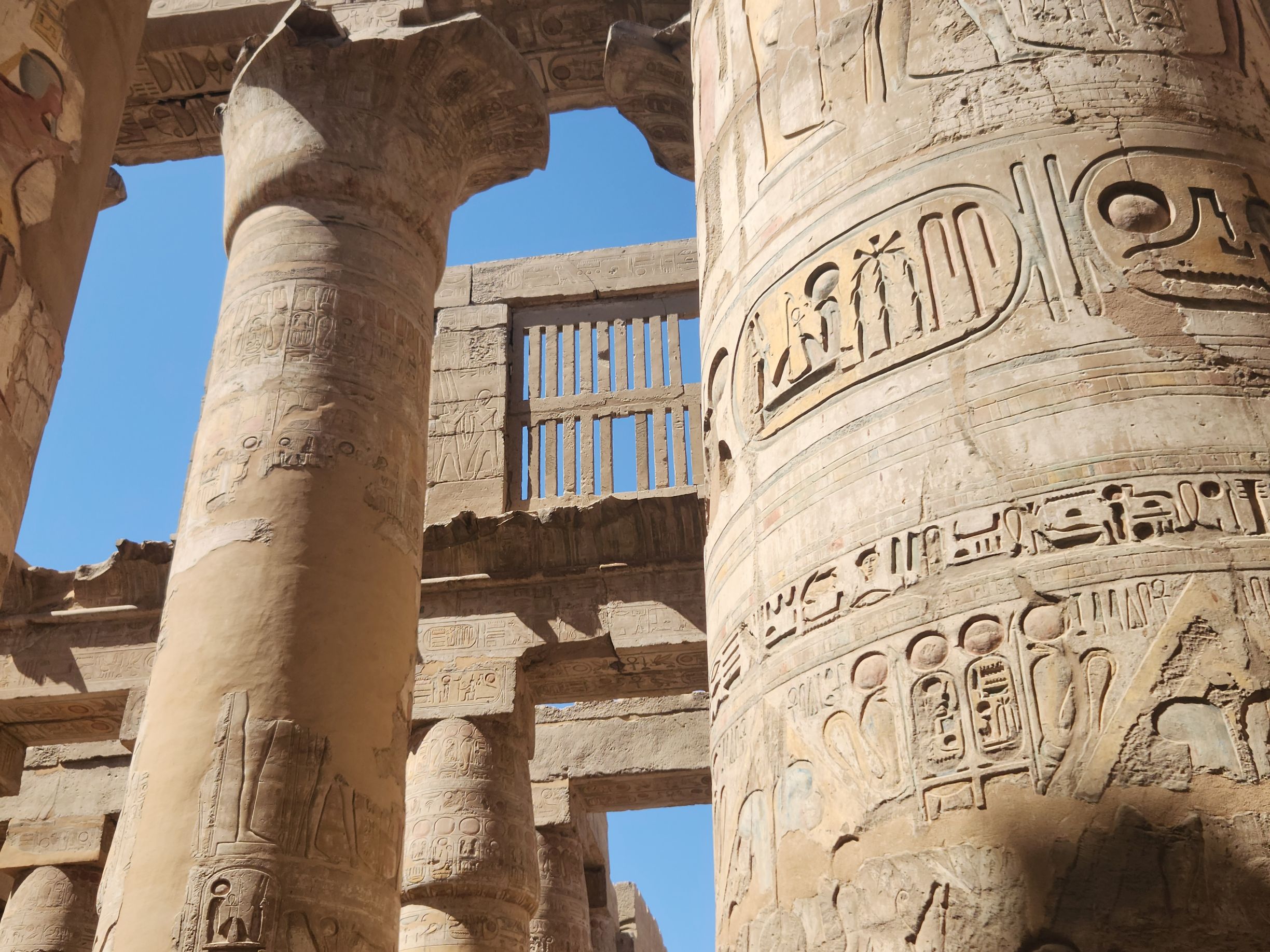
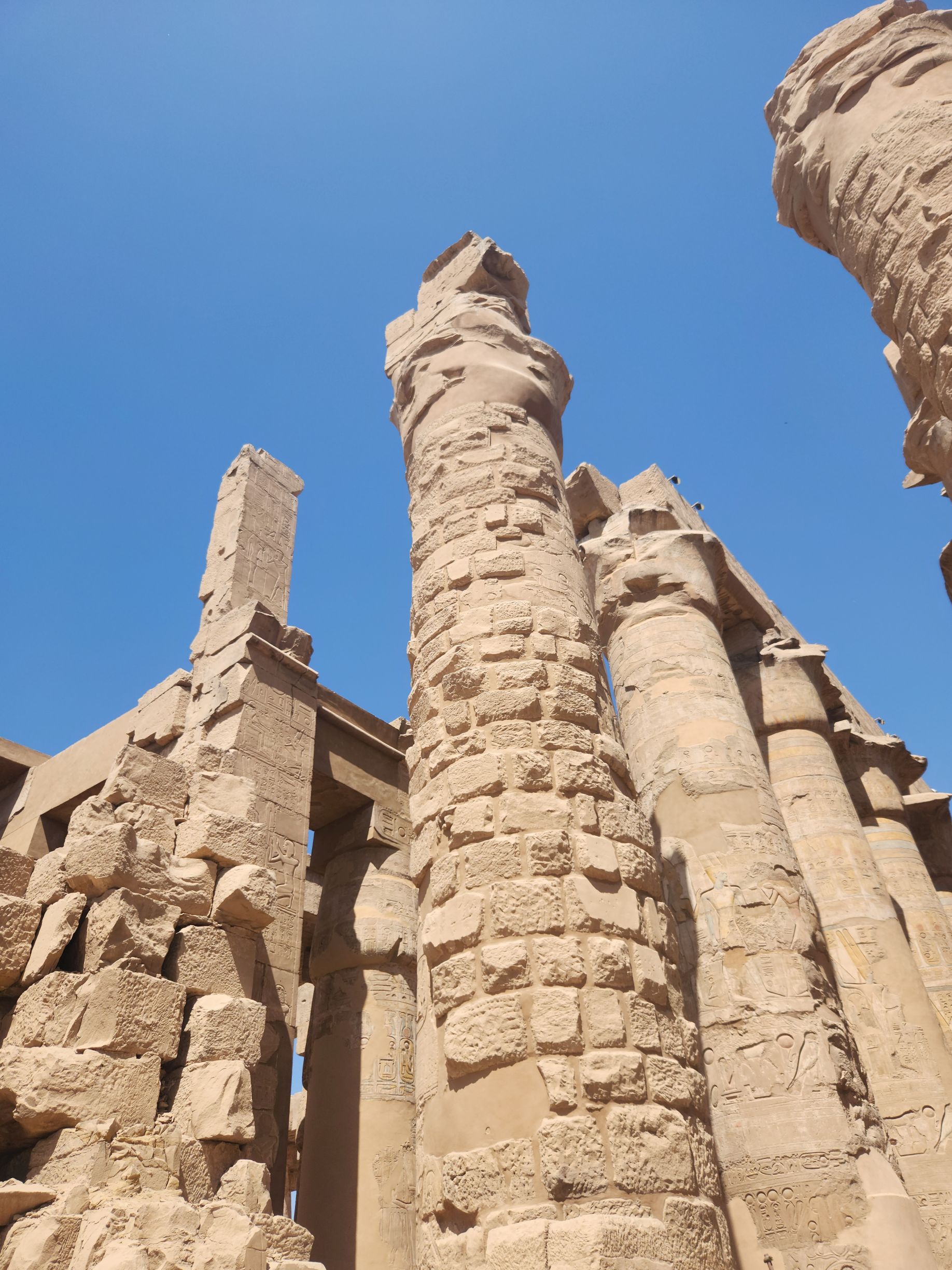
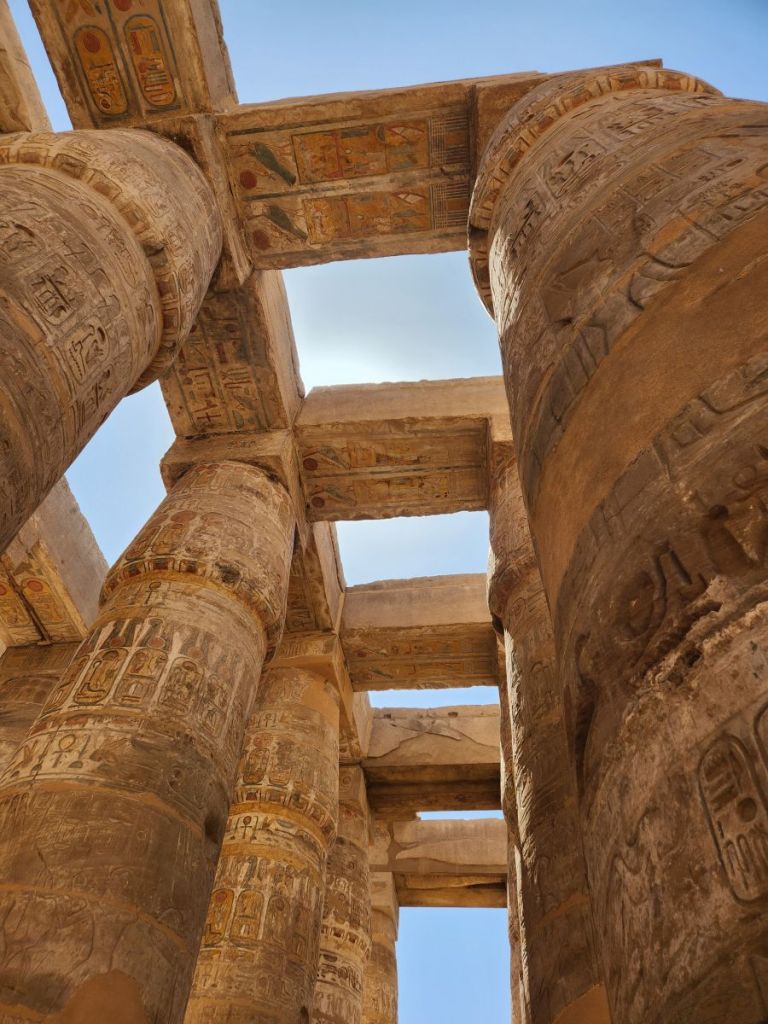
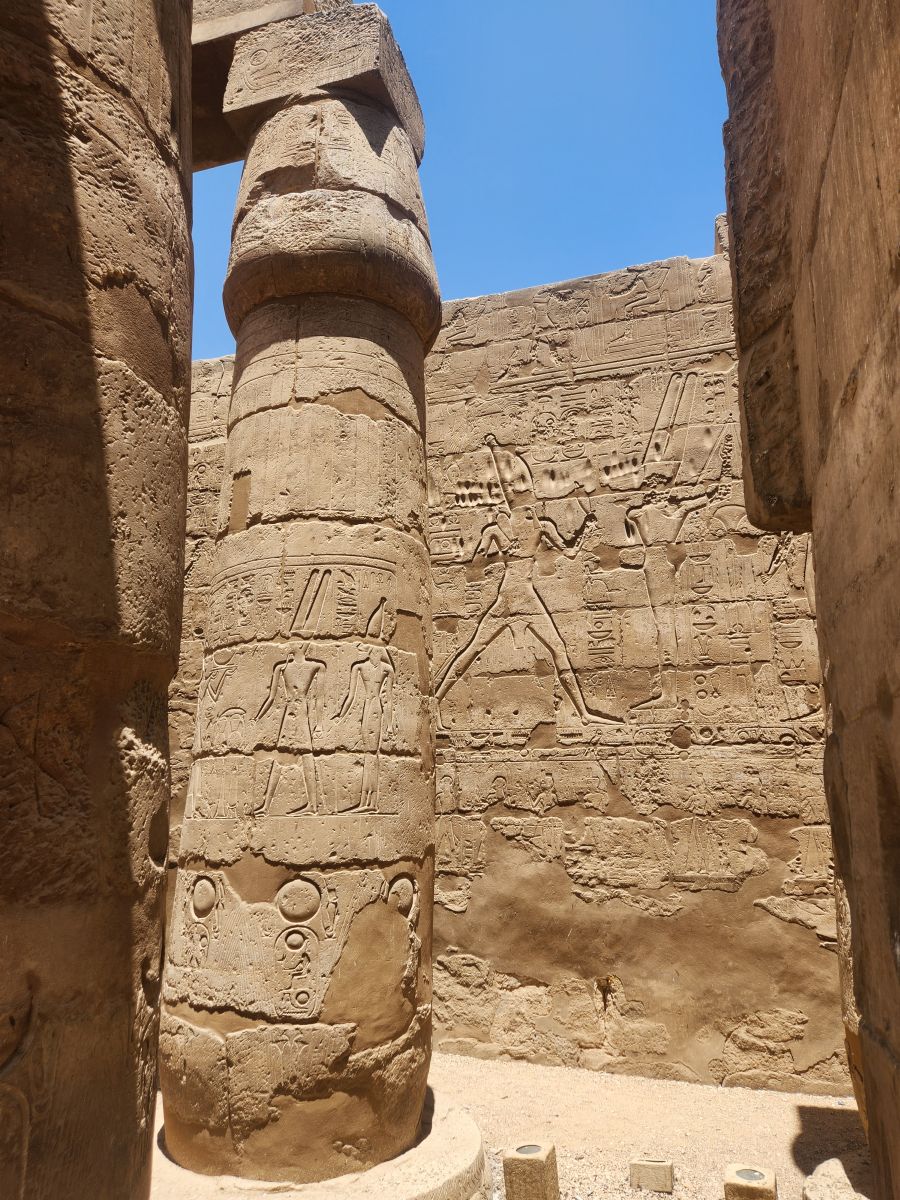
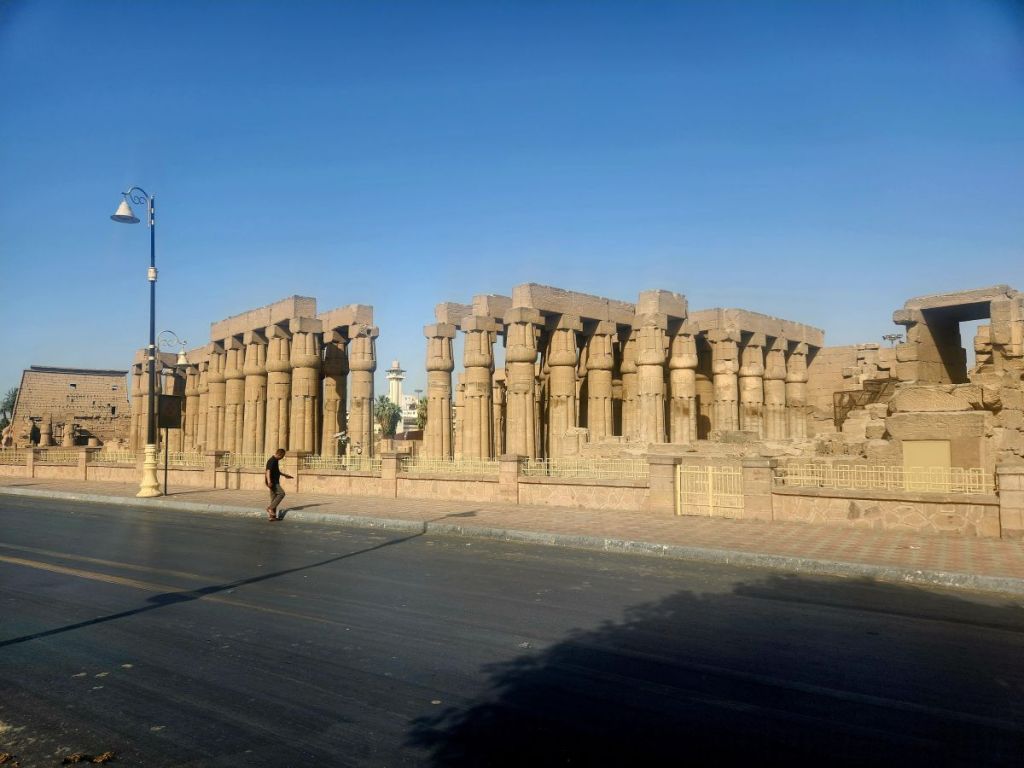
This courtyard leads us into the great Hypostyle Hall with over 120 sandstone columns standing on either side of the avenue. They are massive, standing at 43’ tall and 27.5’ in circumference – again with carvings and also painting! There is a work project going on right now that is cleaning the soot and grime off the columns revealing the most vibrant colors – that are original and not refurbished! There are 12 taller, bigger columns in the middle of the avenue, which made the roof (when there was one) sort of cantilevered in the middle to allow light to enter the hall.
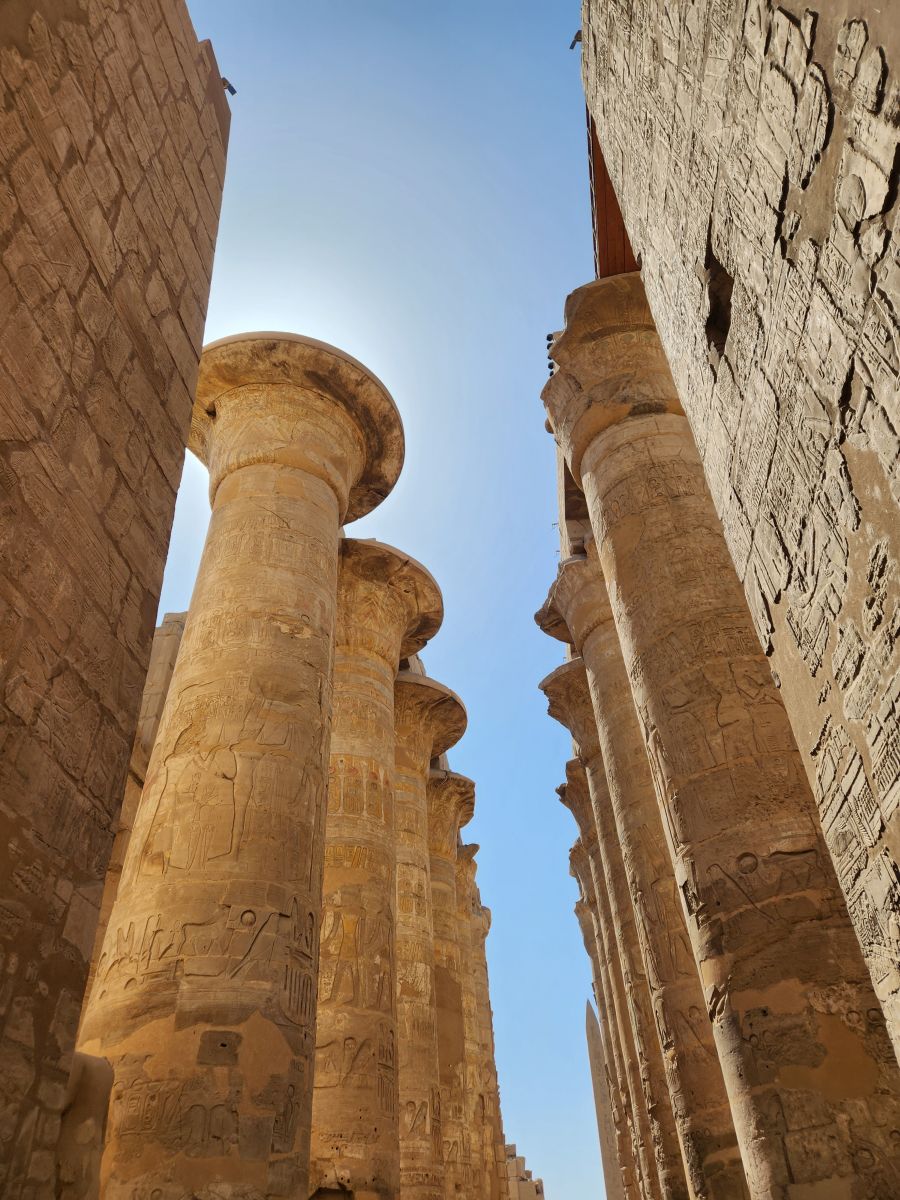
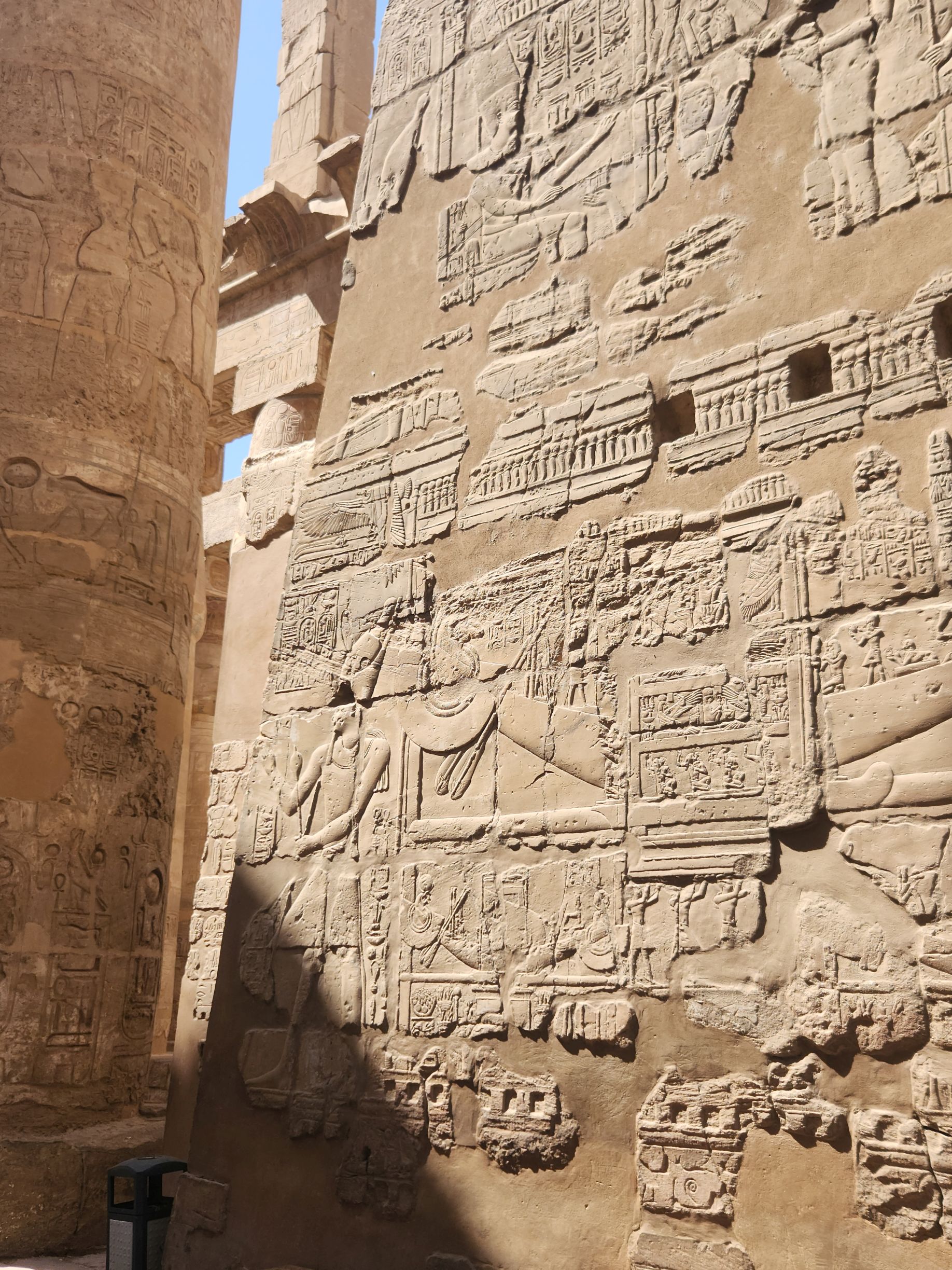
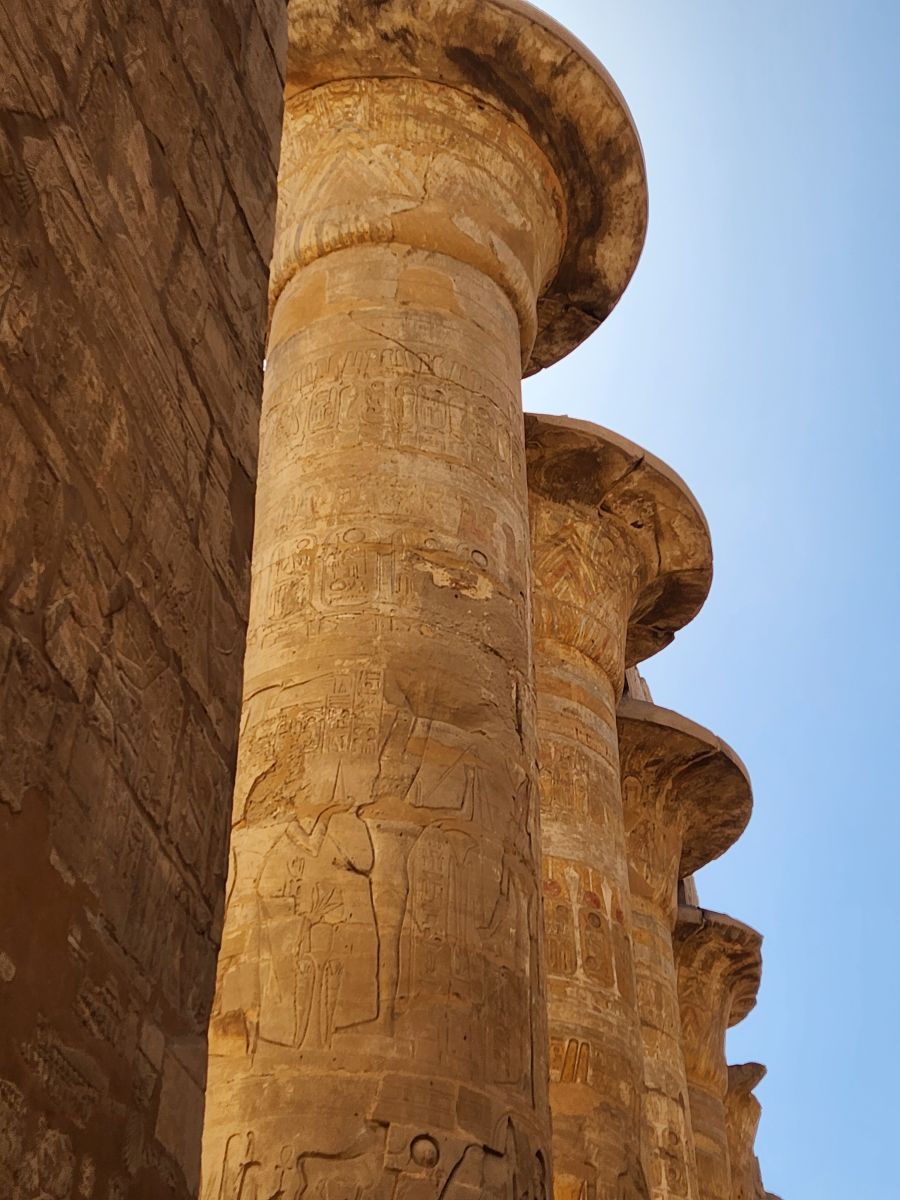
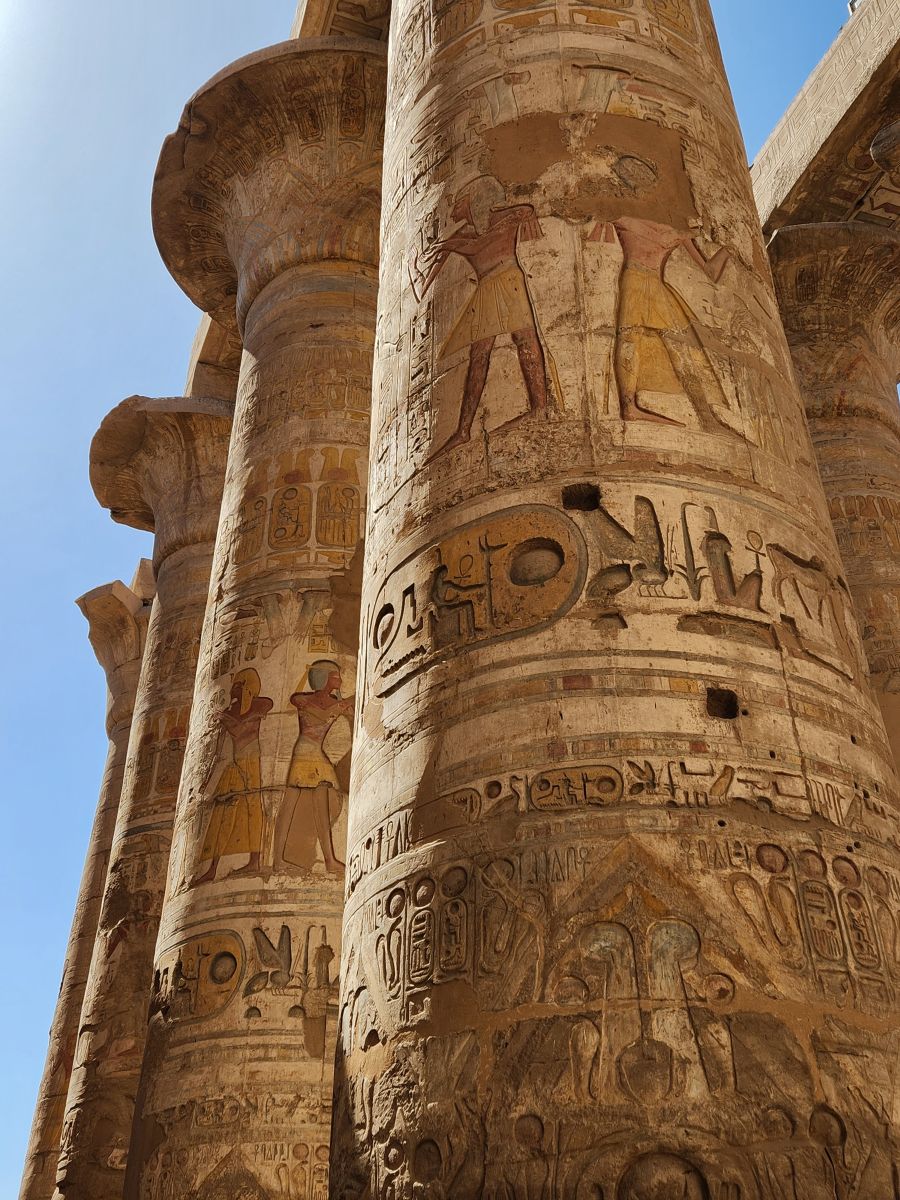
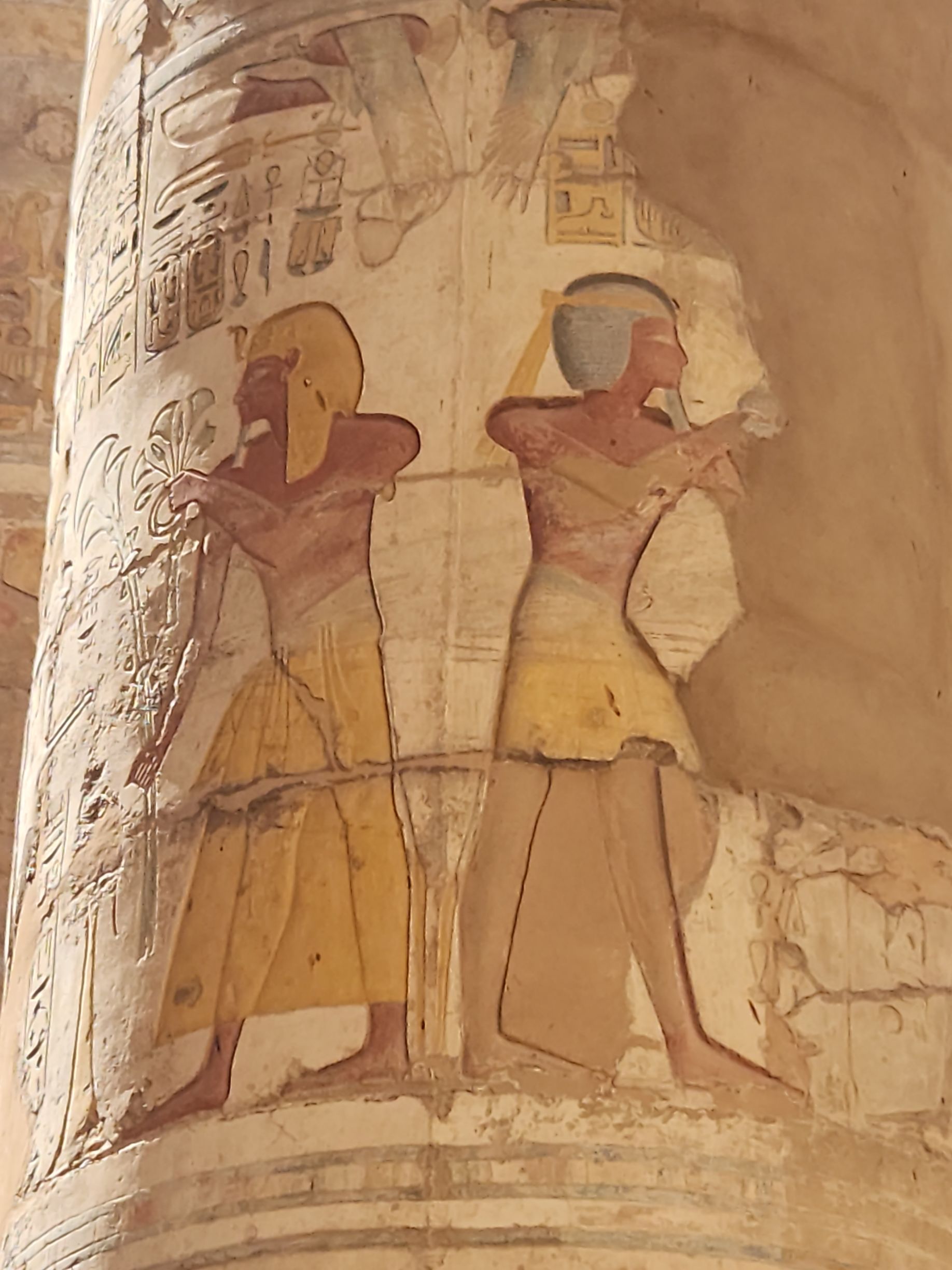
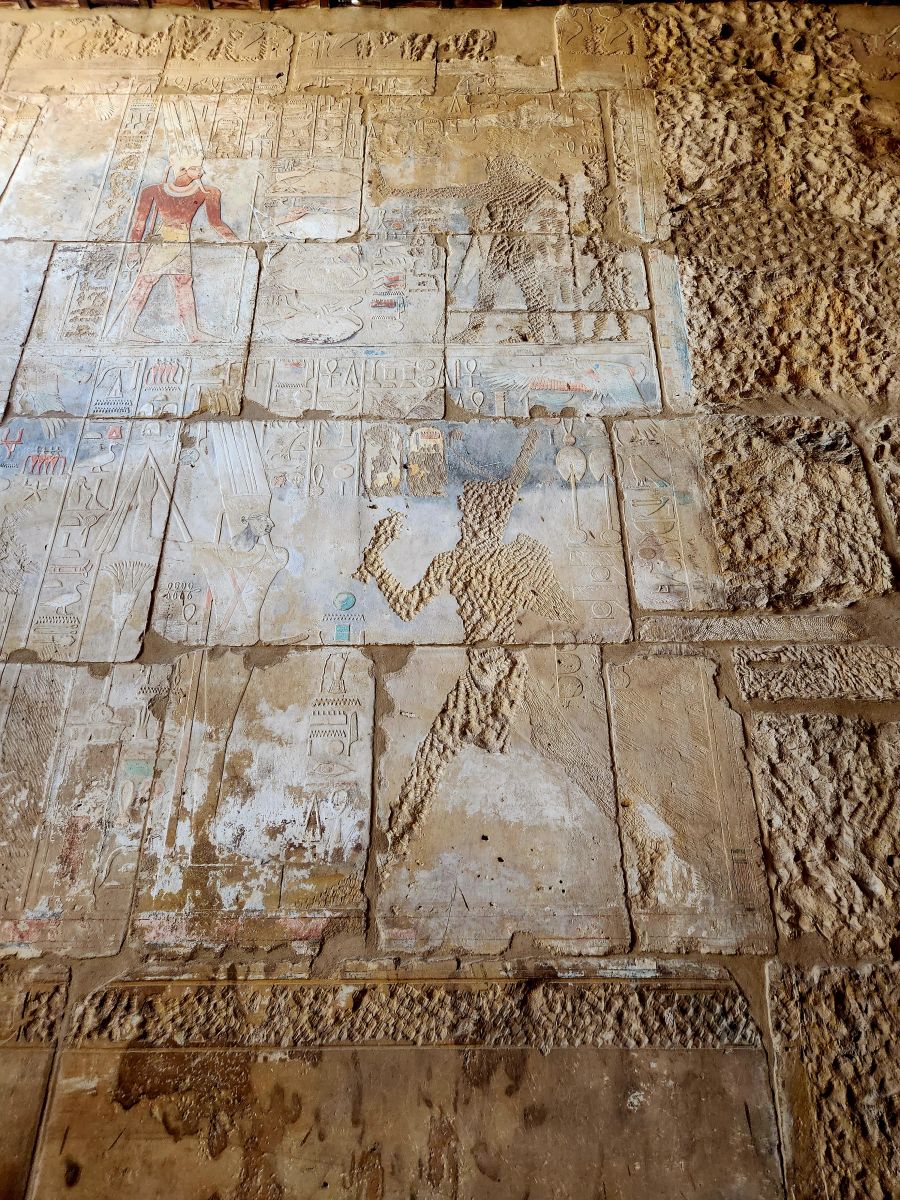
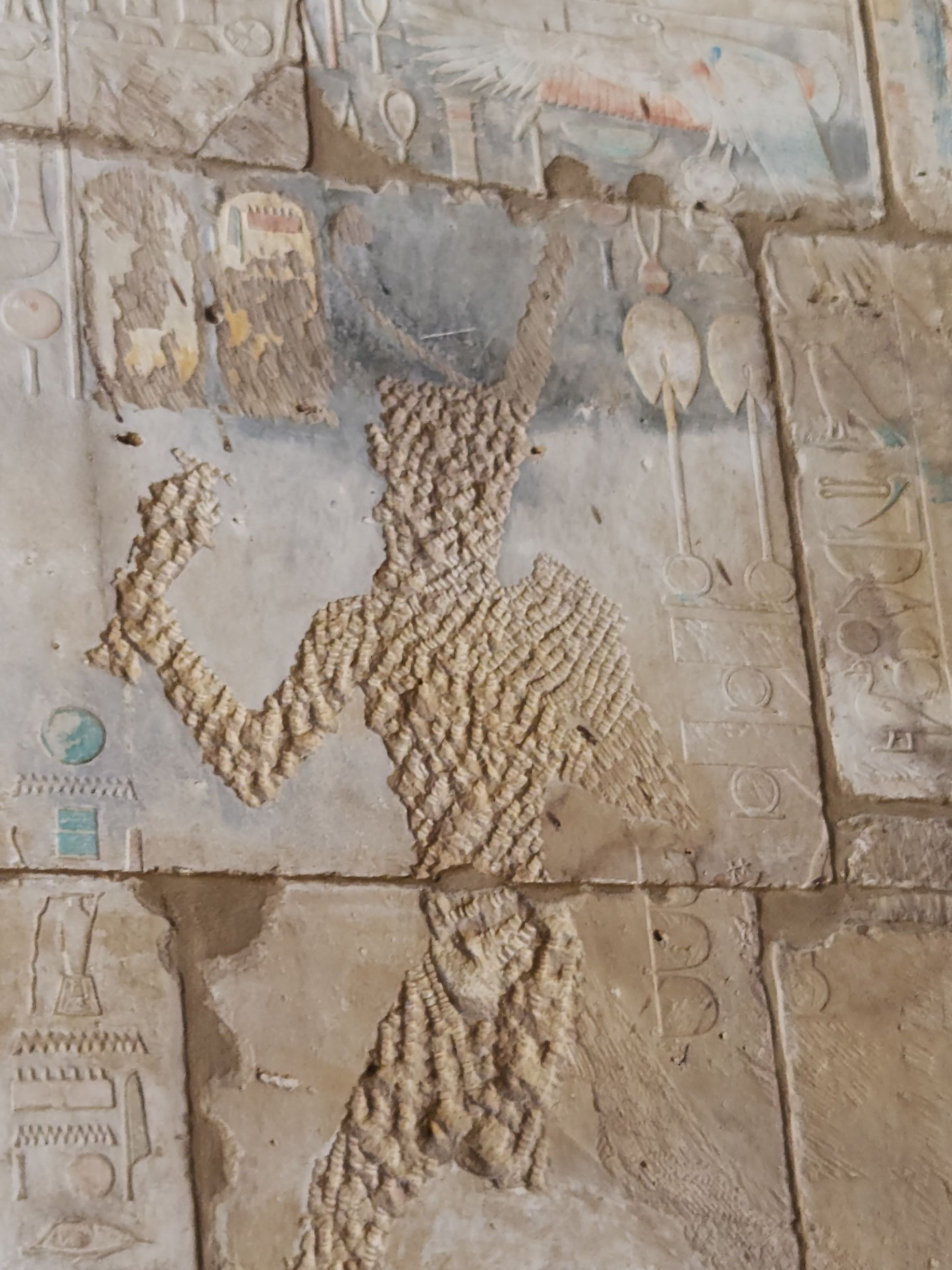
Amr takes us all the way back to the sanctuary used by the priests and the King which still has a deep blue painted ceiling, but little else. Then he walks us around the corner to another sanctuary of the Queen. Here, every carving and painting showing the queen is chiseled out and obliterated. This is the one thing I definitely remember, that king Ramesses’ son hated his stepmother the queen and when he became king, he erased all her images! Brutal! Unfortunately there are too many people in here now and we can’t get any good pictures, but can at least get the feeling.
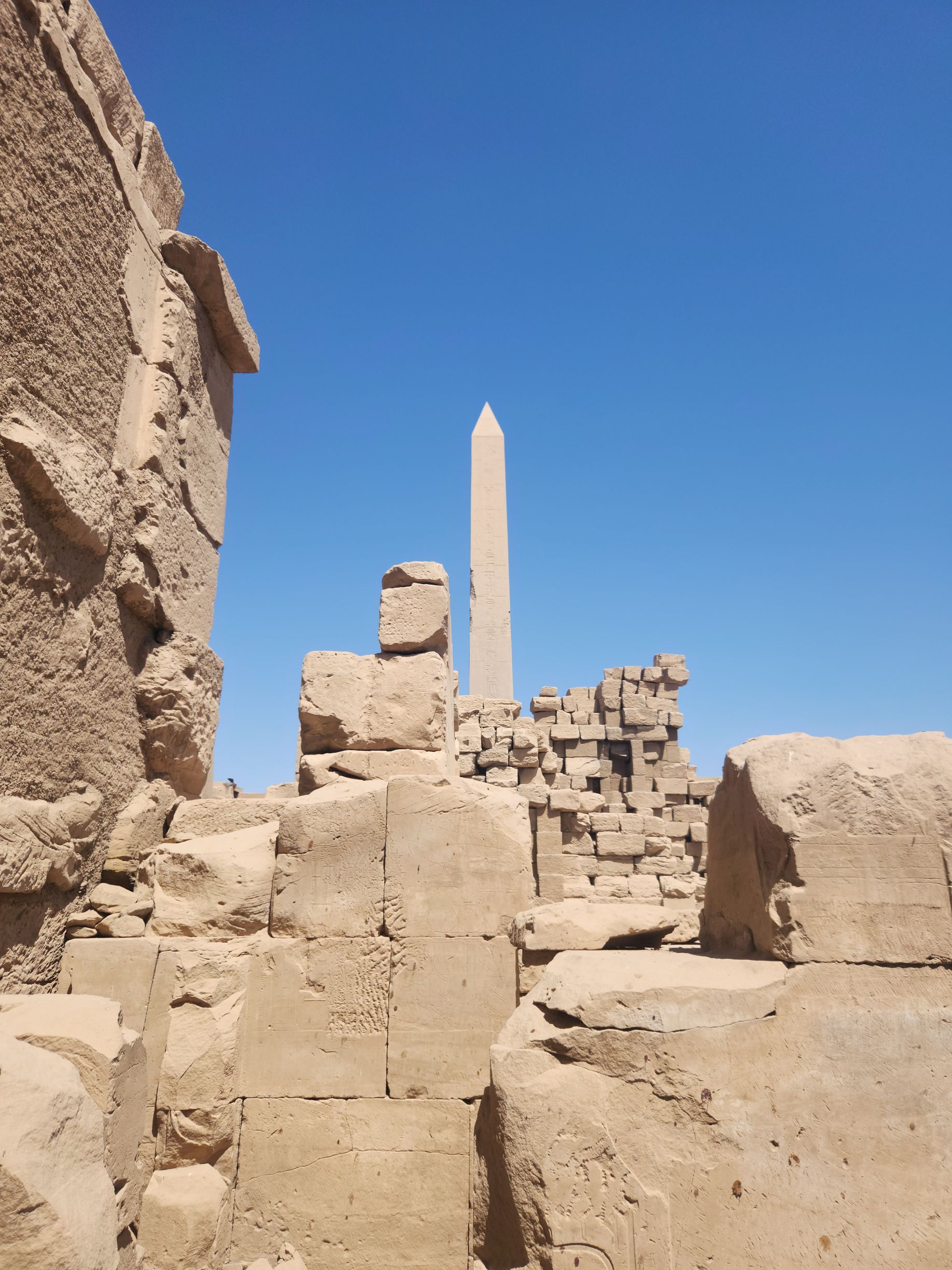
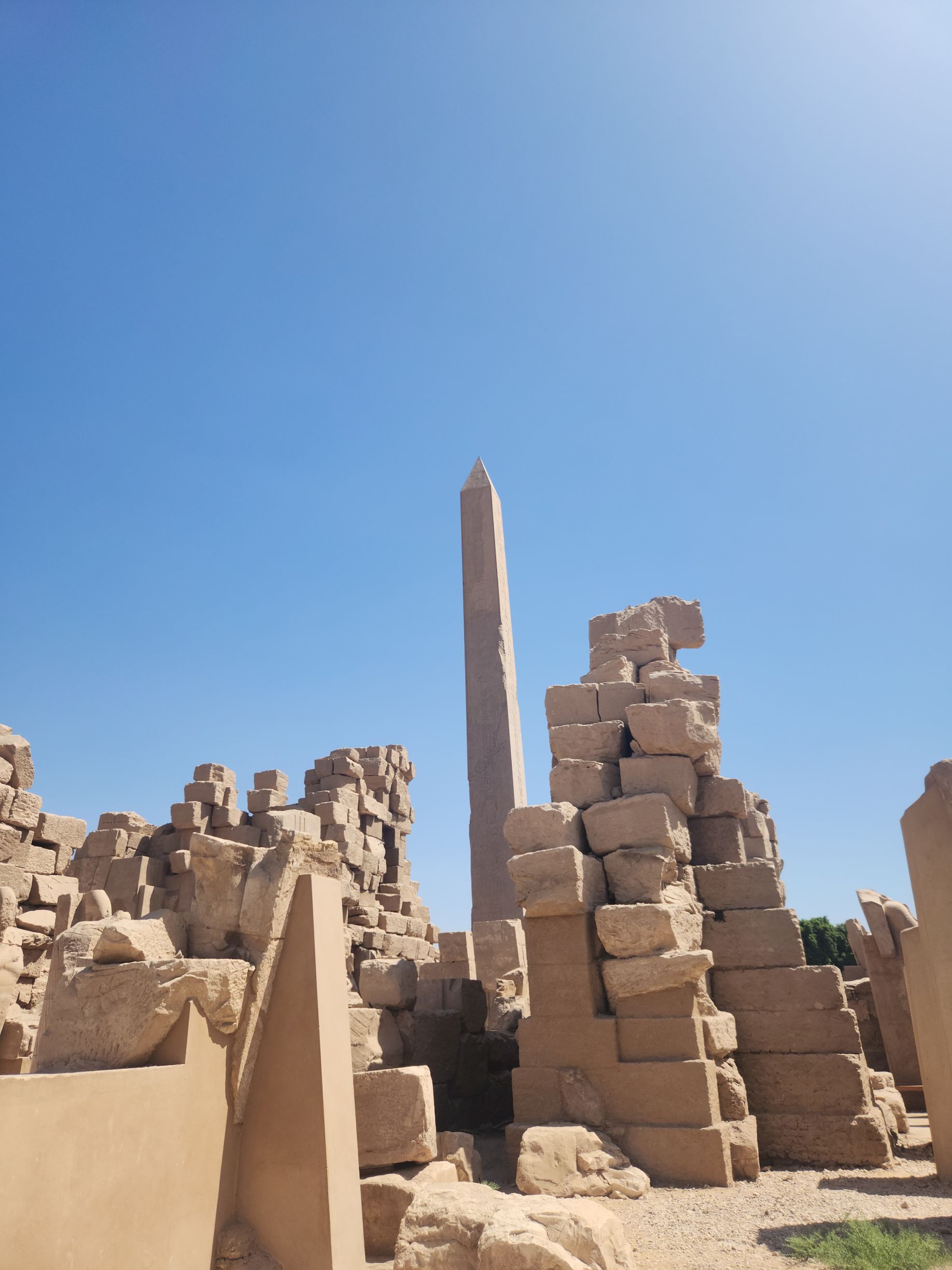
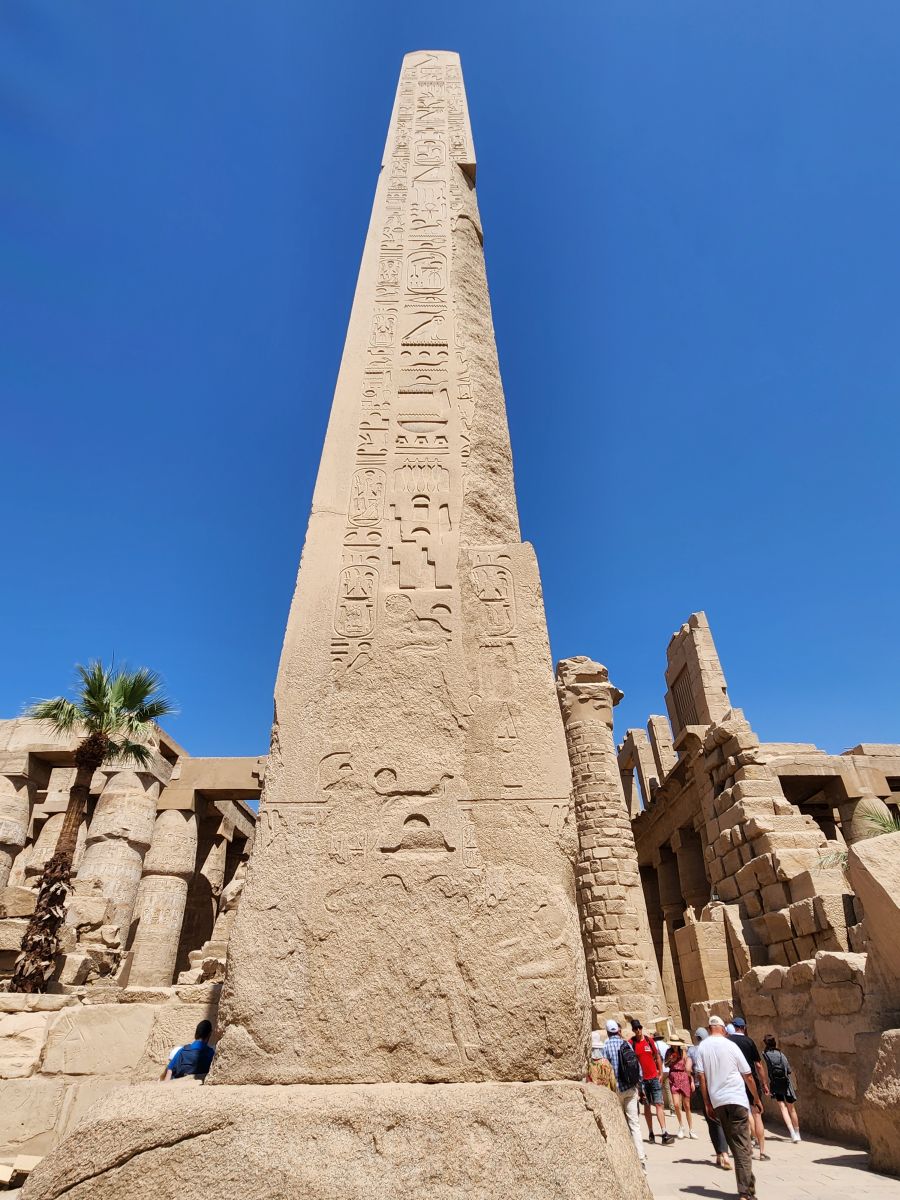
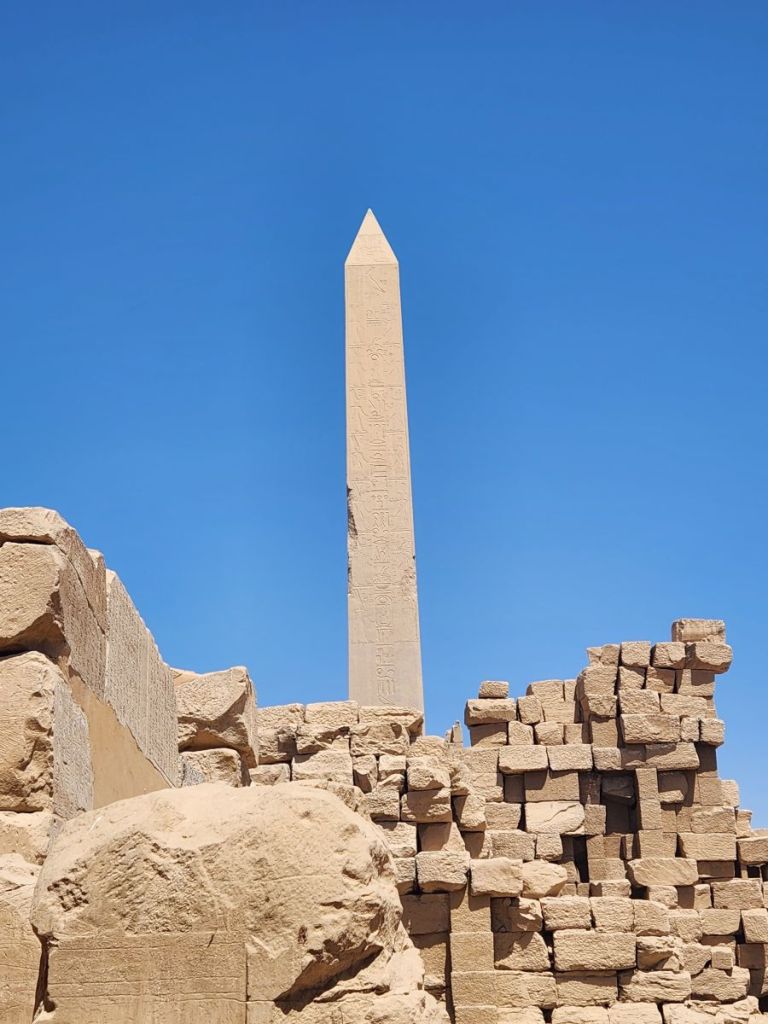
Here Amr leaves us and tells us he will wait at the entrance, in the shade – and we’re off on our own, wandering through various courtyards with obelisks – which connect the earth to heaven – and the sacred lake where the priests go to cleanse themselves and multiple columns and ruins and more obelisks! It is fantastically over the top mind blowing!
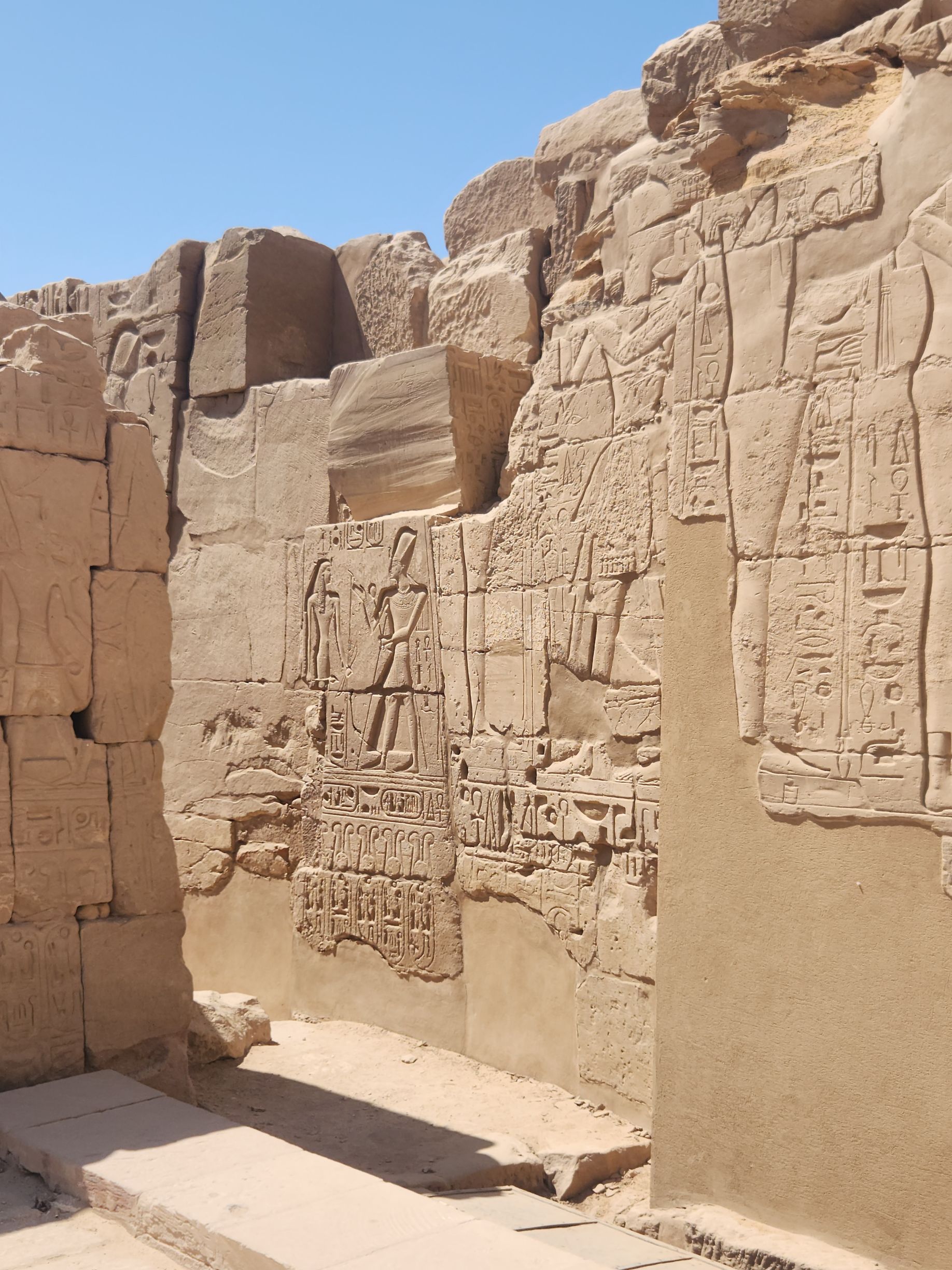
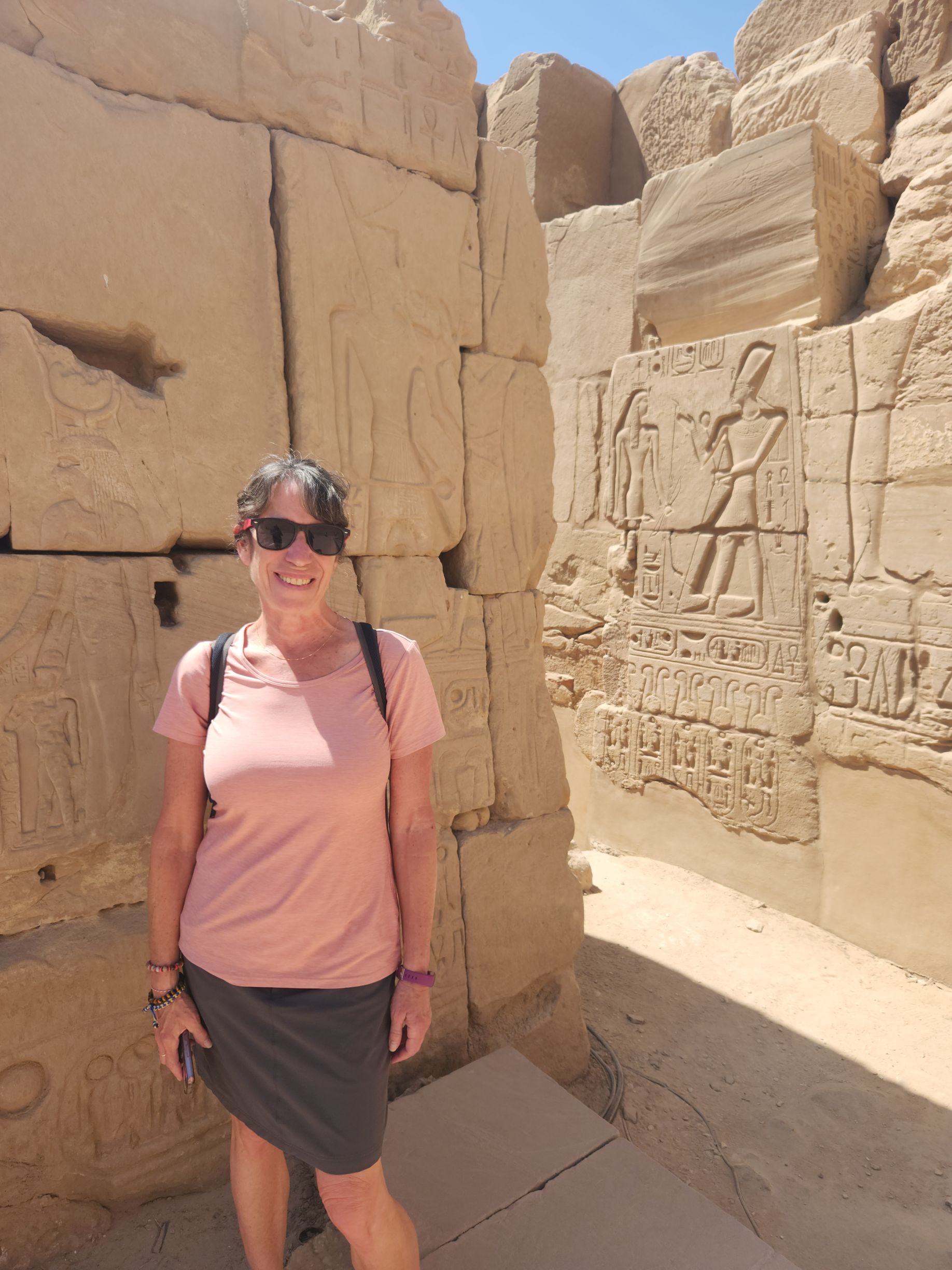
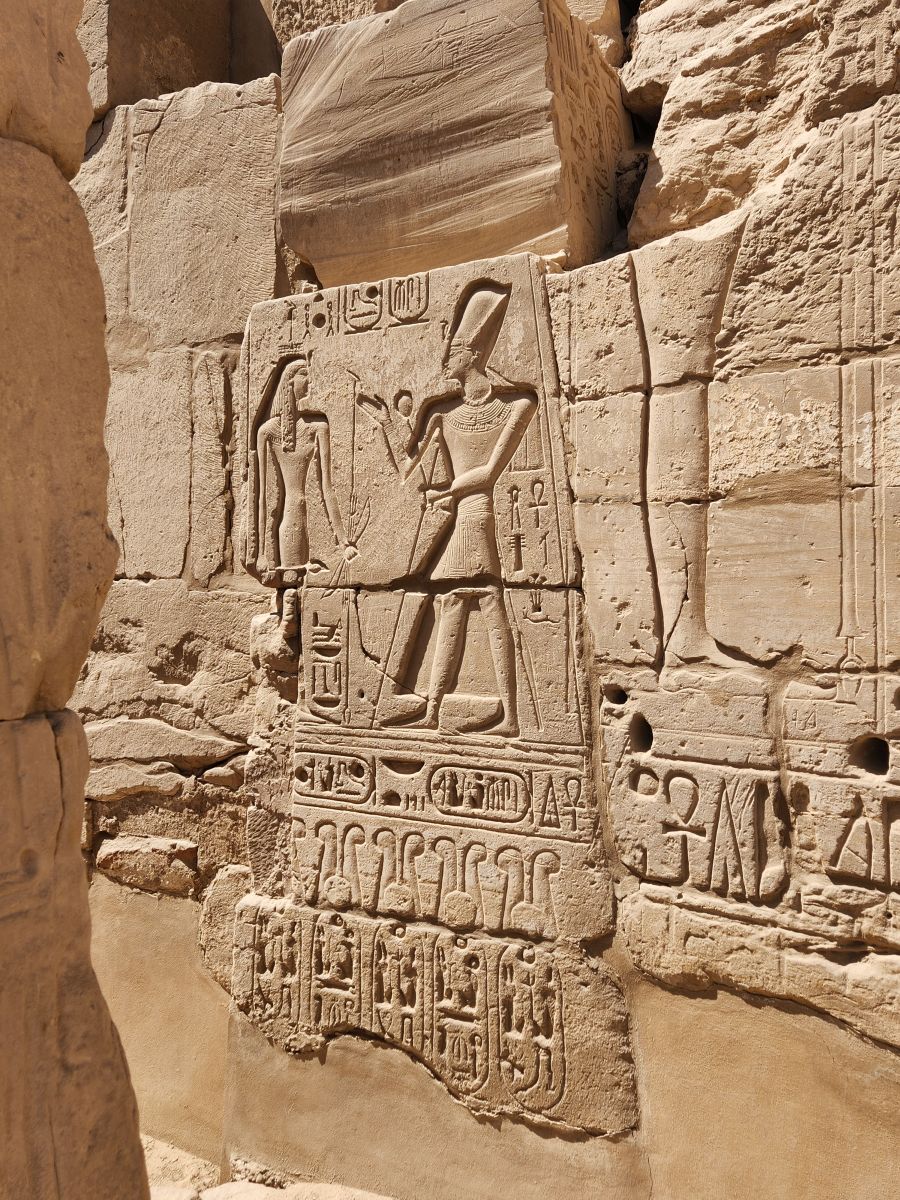
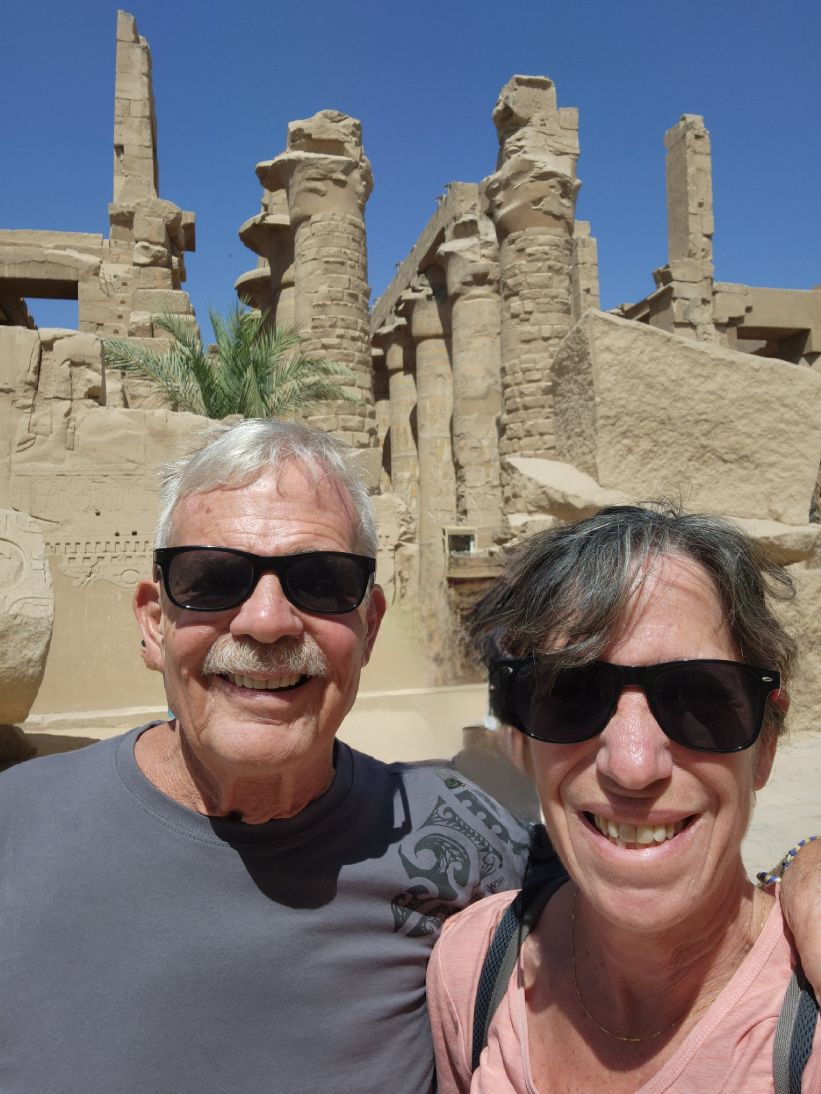
We decide to retrace our steps back to the Queen’s sanctuary, hoping to get a better view of the desecrated carvings. We’re in luck – there is no one in there now and we have the room to ourselves to see just how much destruction the stepson King has wrought. Wow. Of course he’s left King Ramesses intact – he’s the one with the 2 huge feathers in his crown – but every single solitary image of the Queen is ruined. I’ll say it again. Brutal!
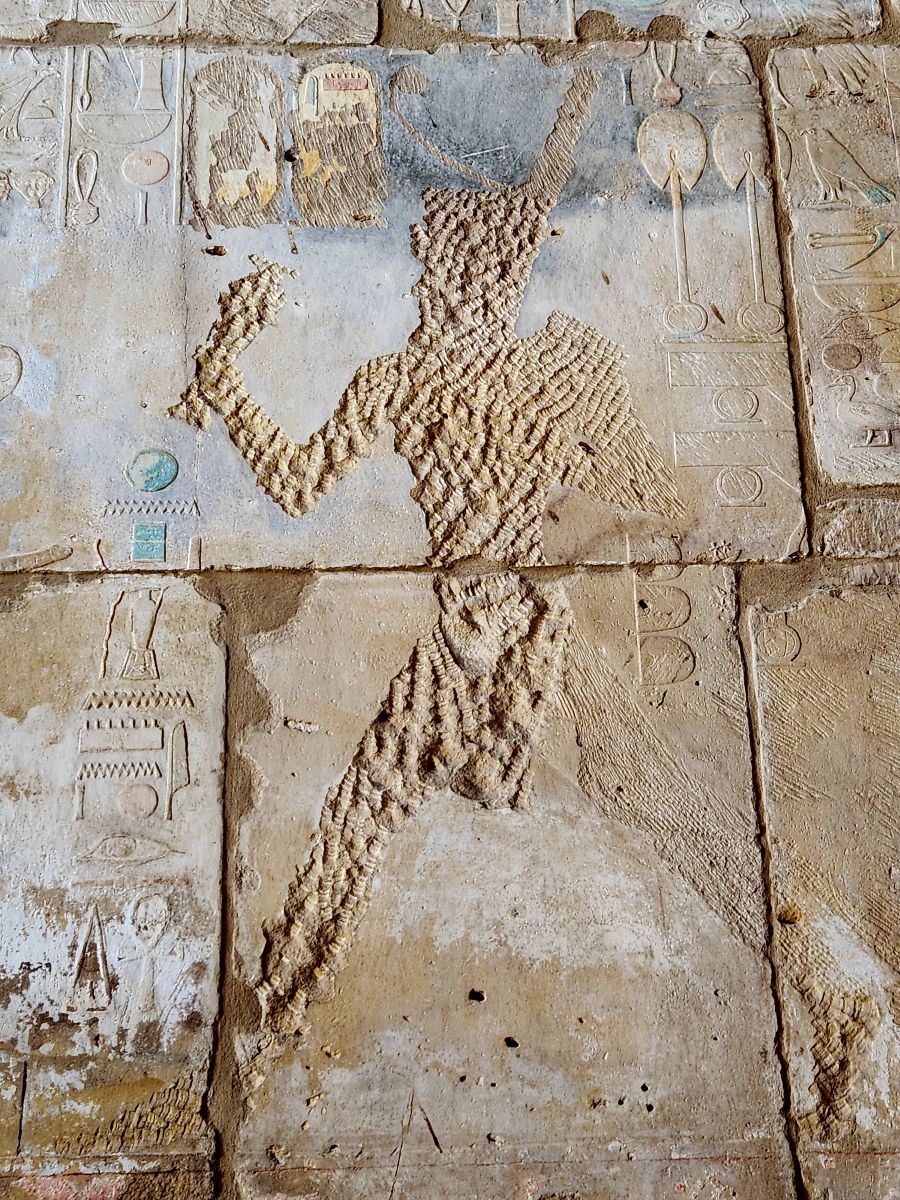
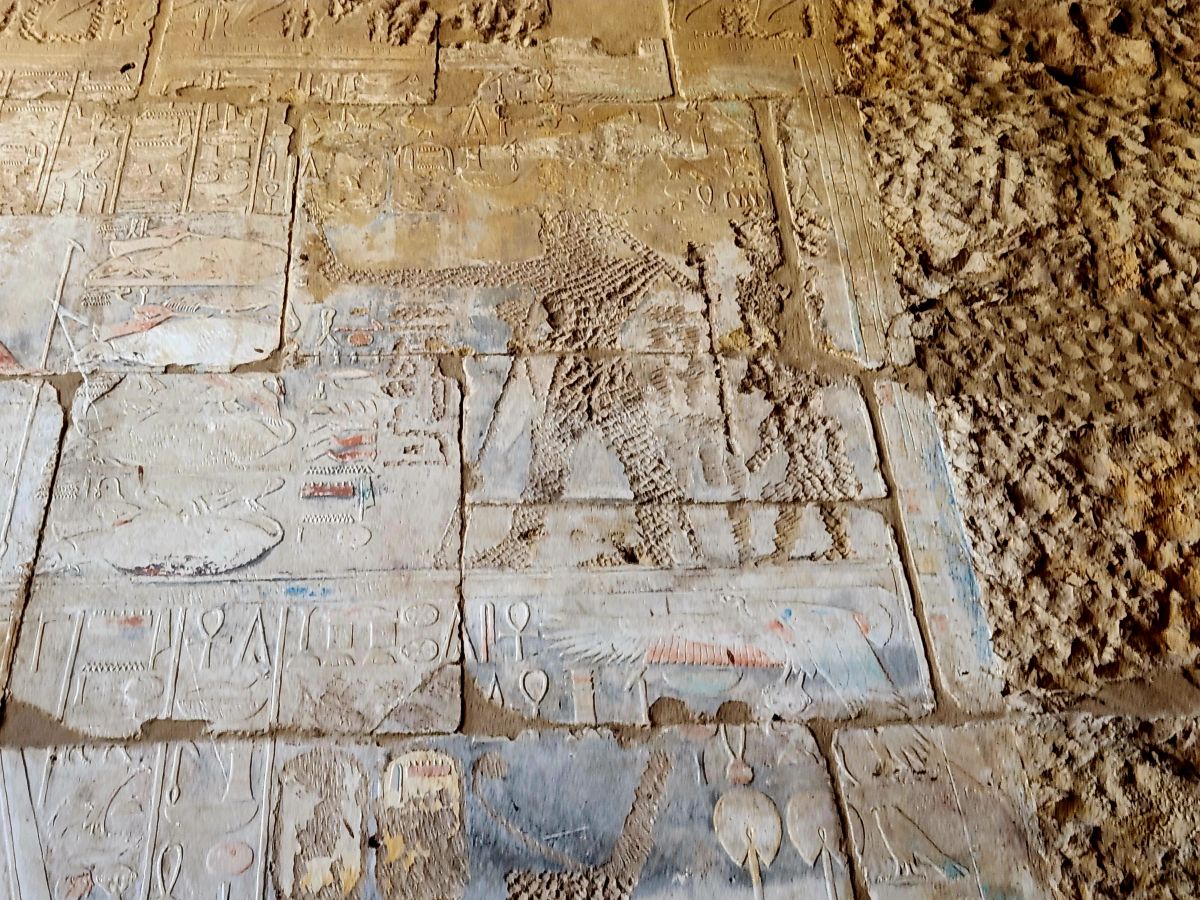
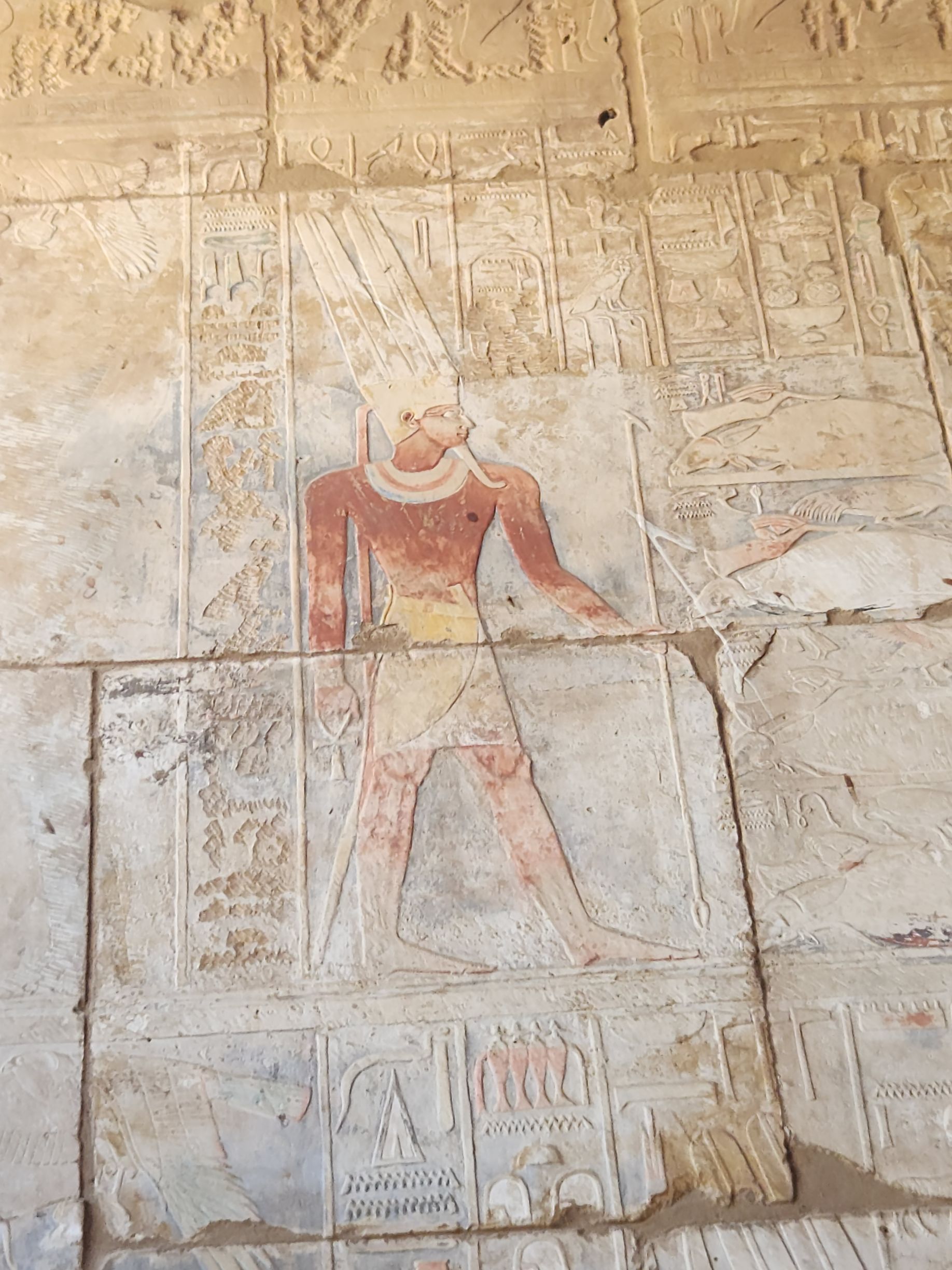
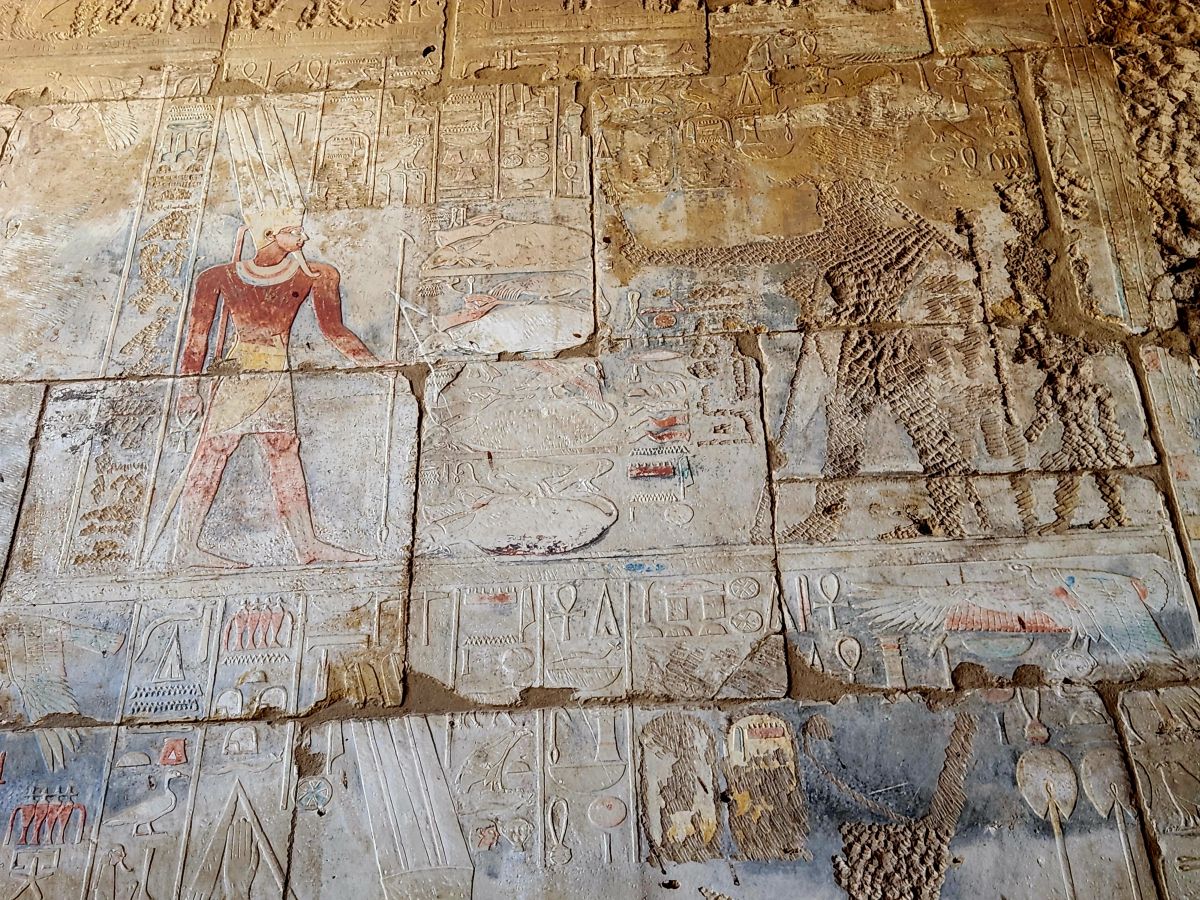
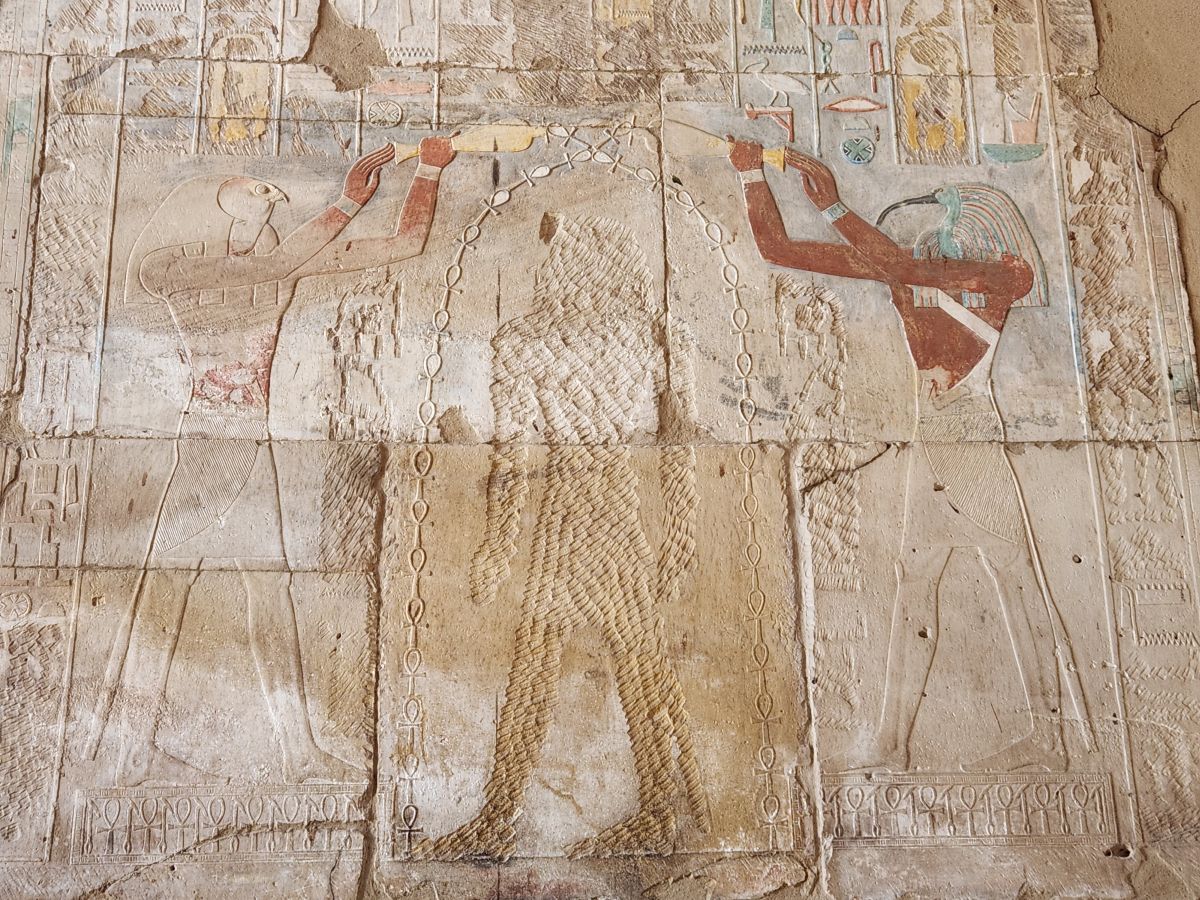
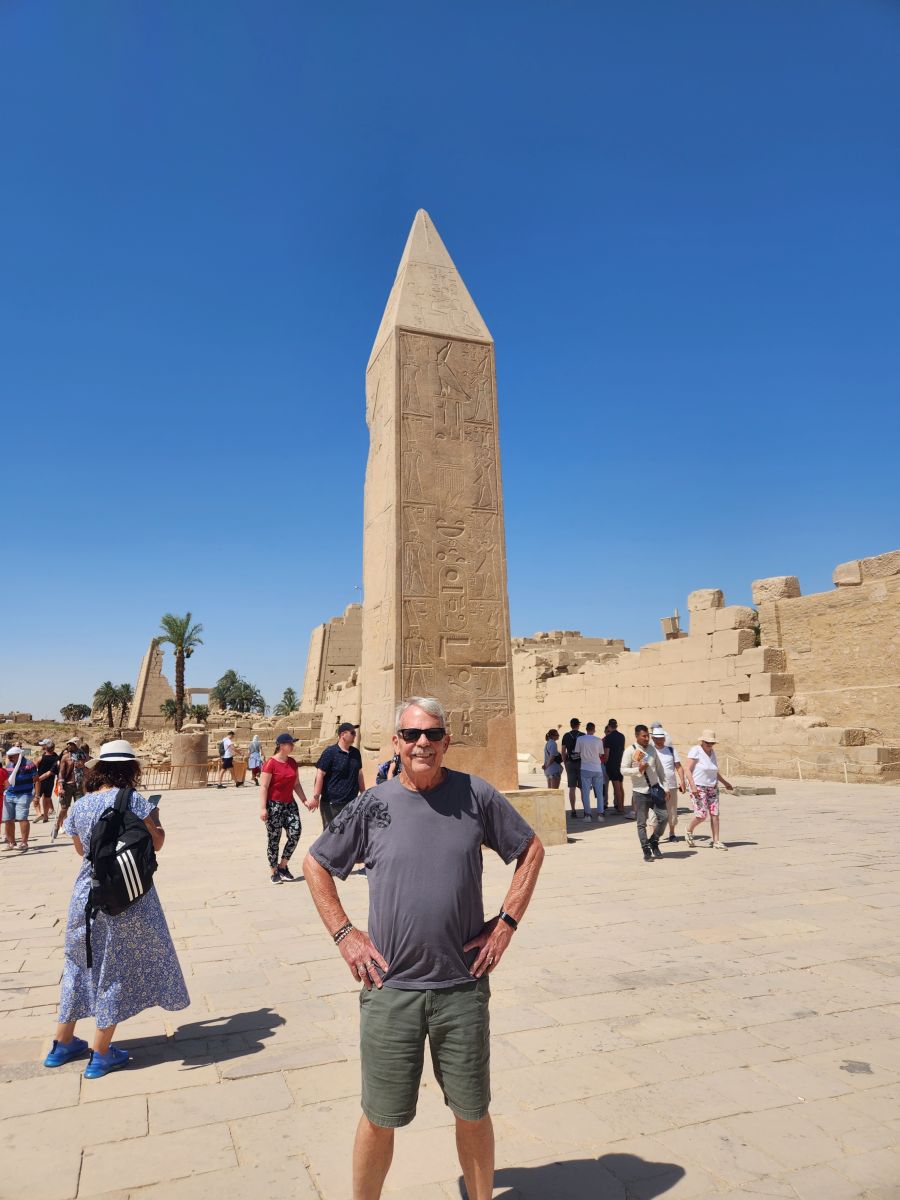
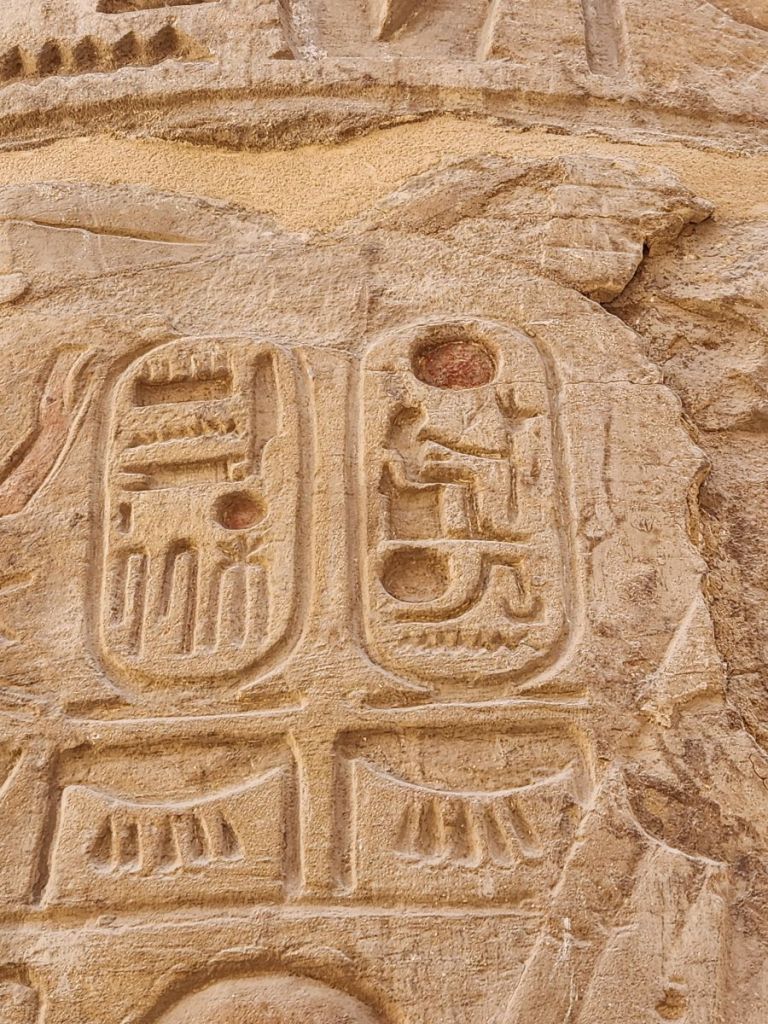
We meander our way back to the front of the temple, taking a bazillion photos of the obelisk, the columns, the carvings, the colors and the sphinx lined up inside the First Courtyard and then the avenue.
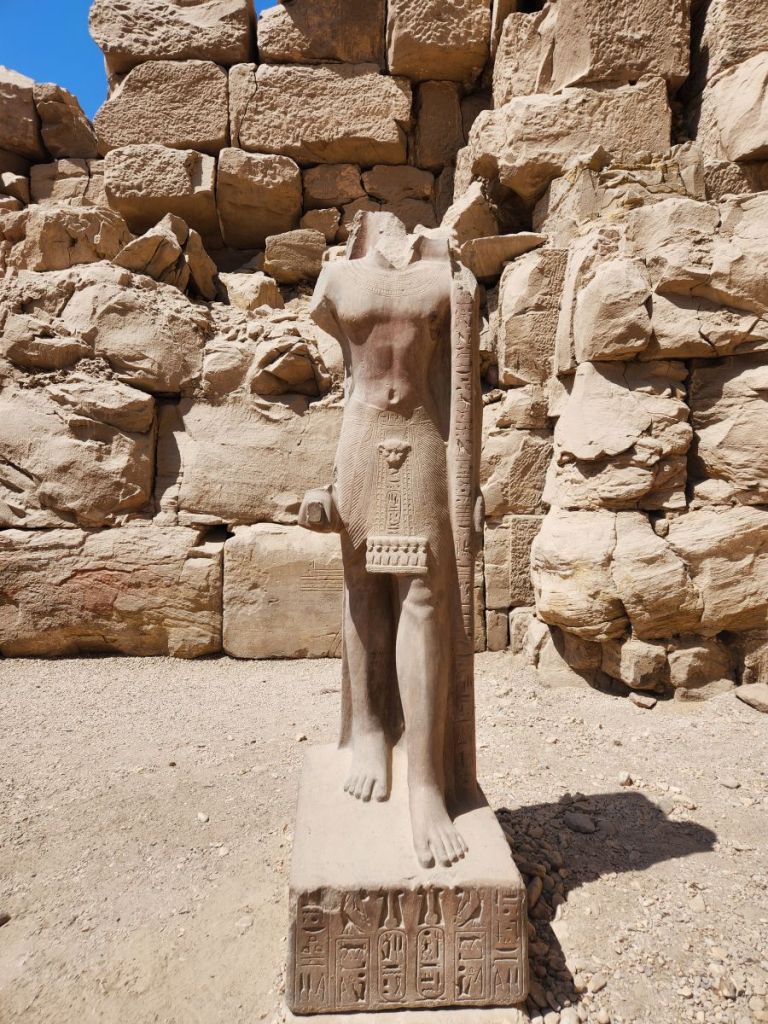
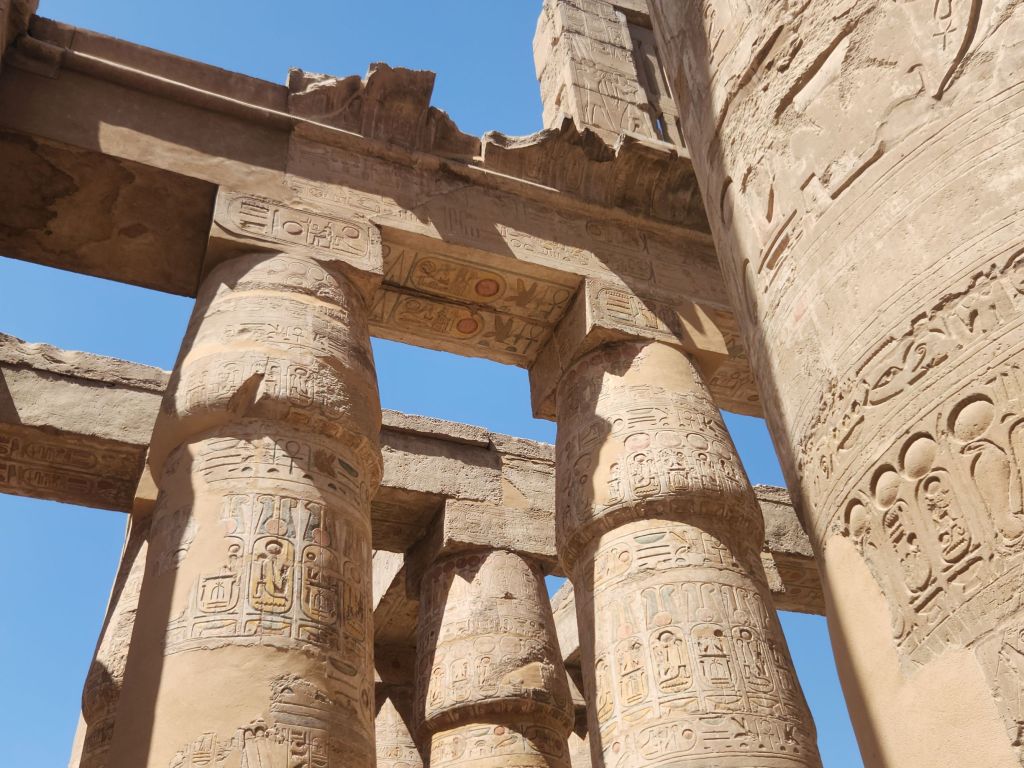
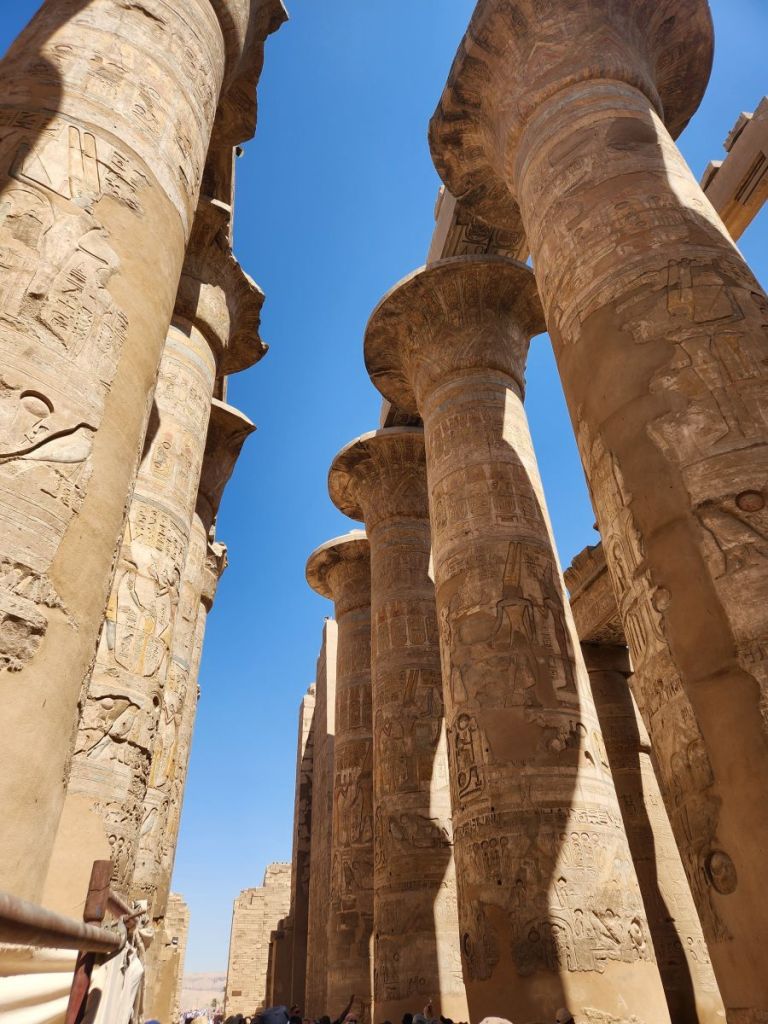
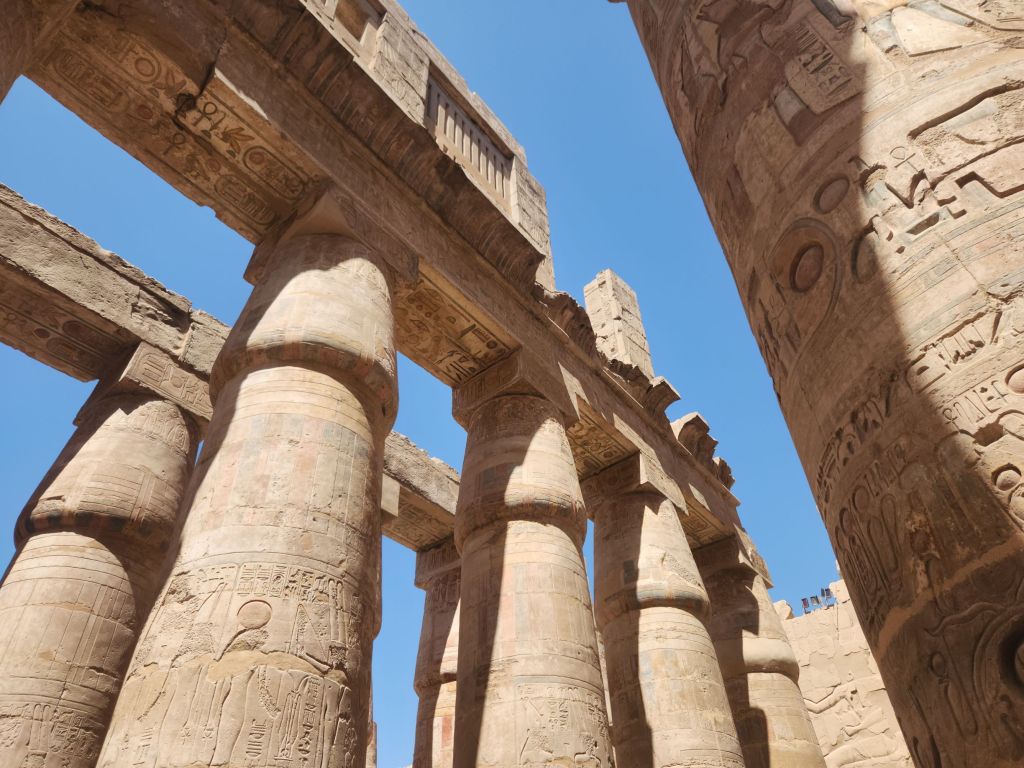
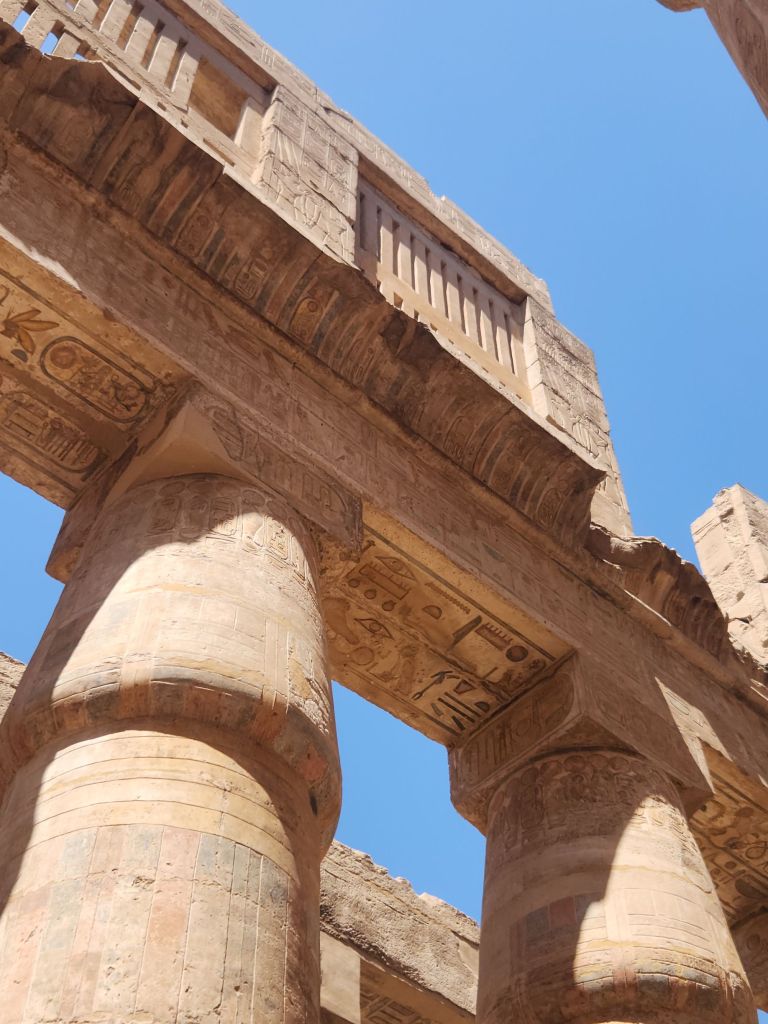
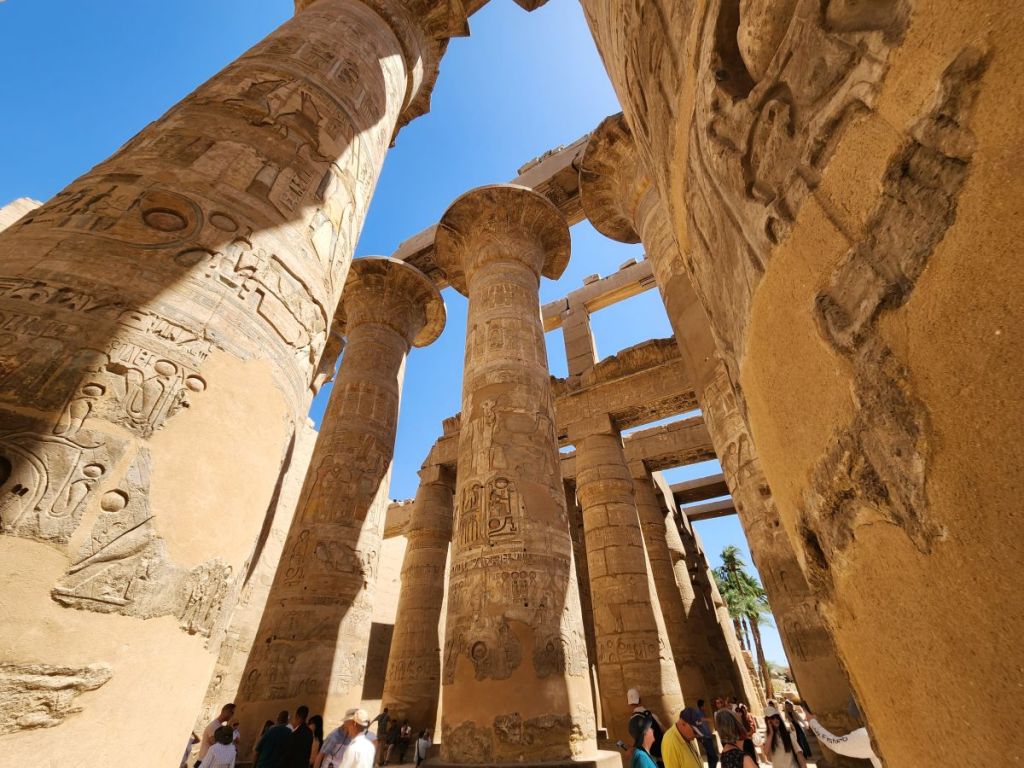
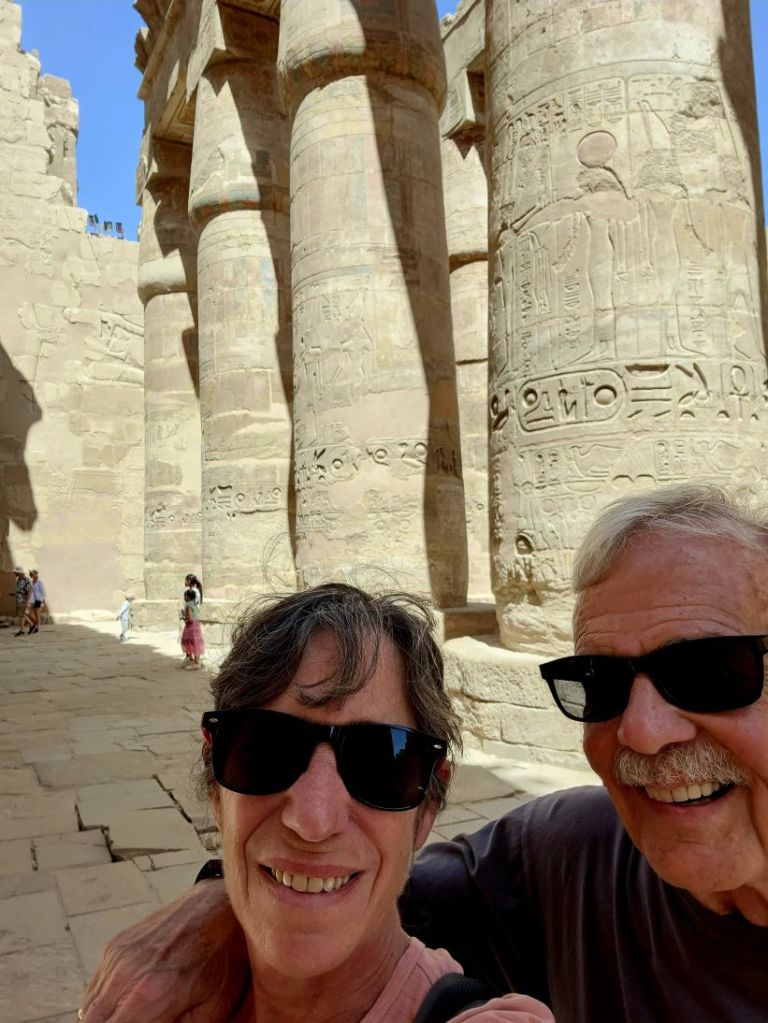
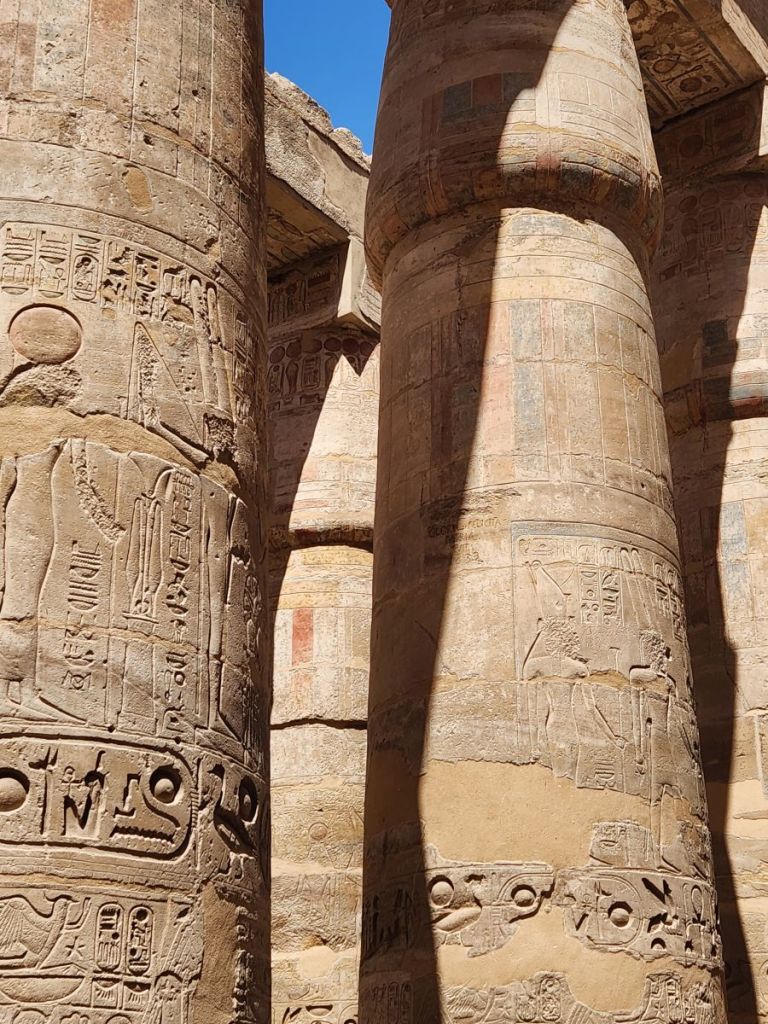
We meet Amr, patiently waiting for us in the shade, and head back to the car. He is quite impressed with the fact that we went back to the Queen’s sanctuary! He says most guides don’t take people there and most people never see it. We’re so glad that we did!
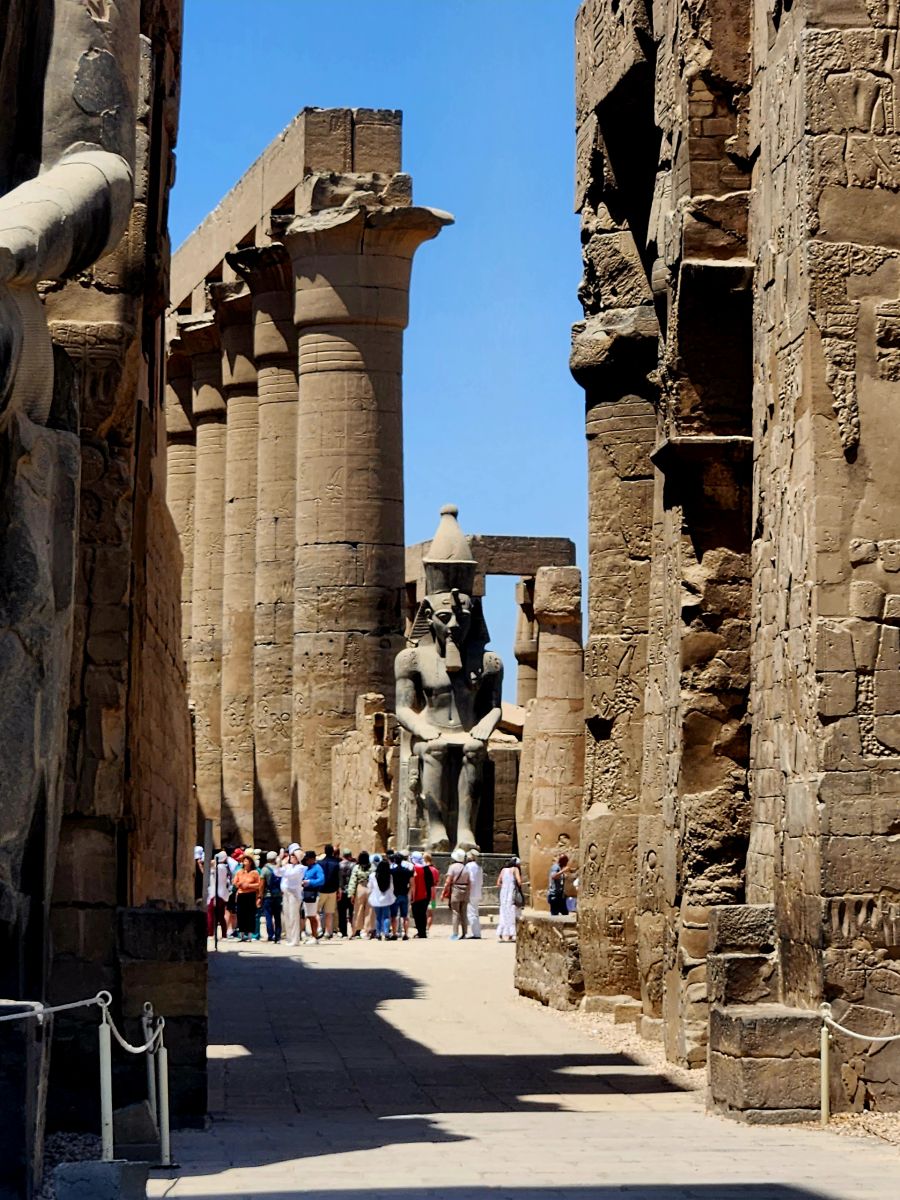
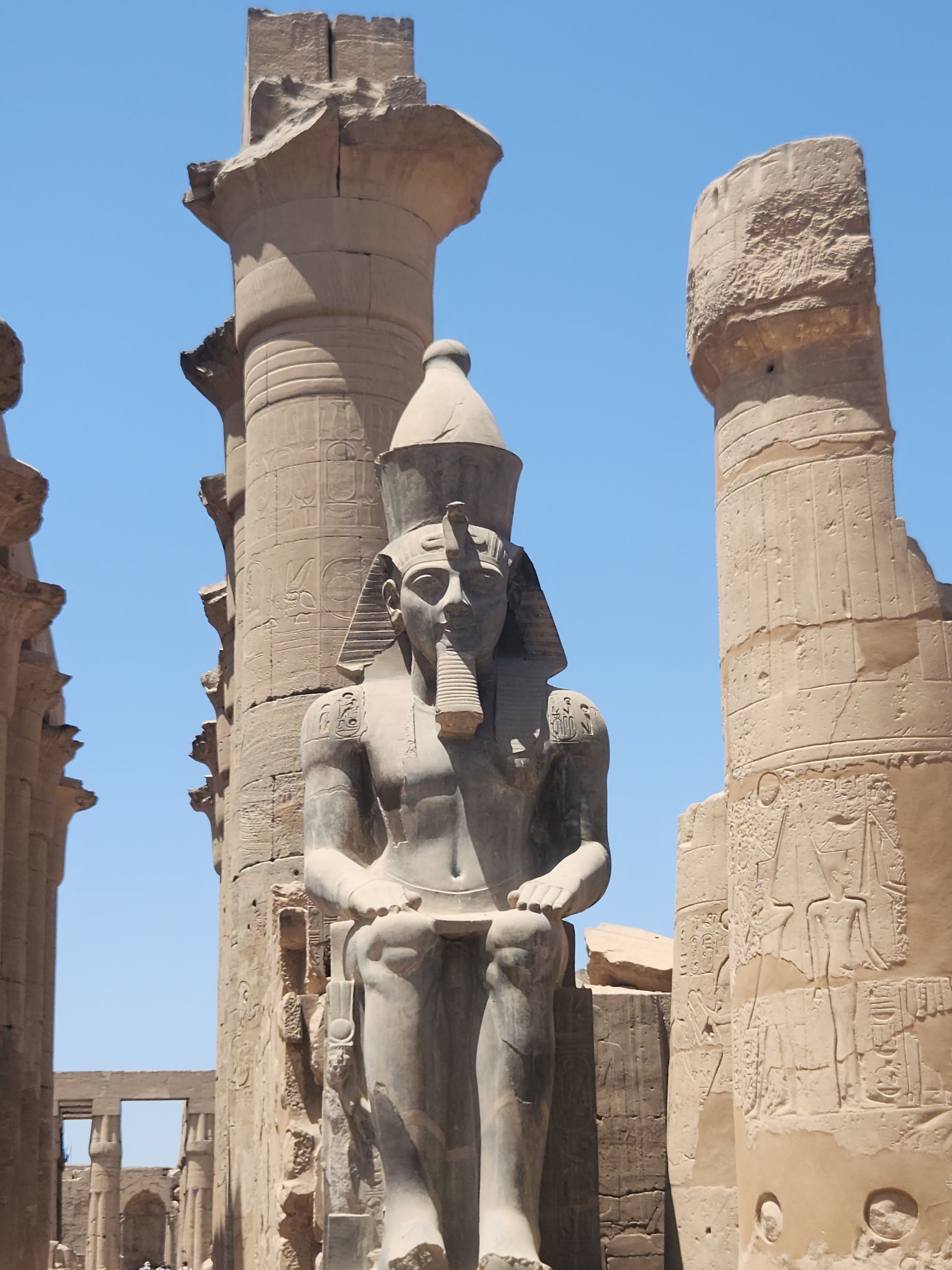
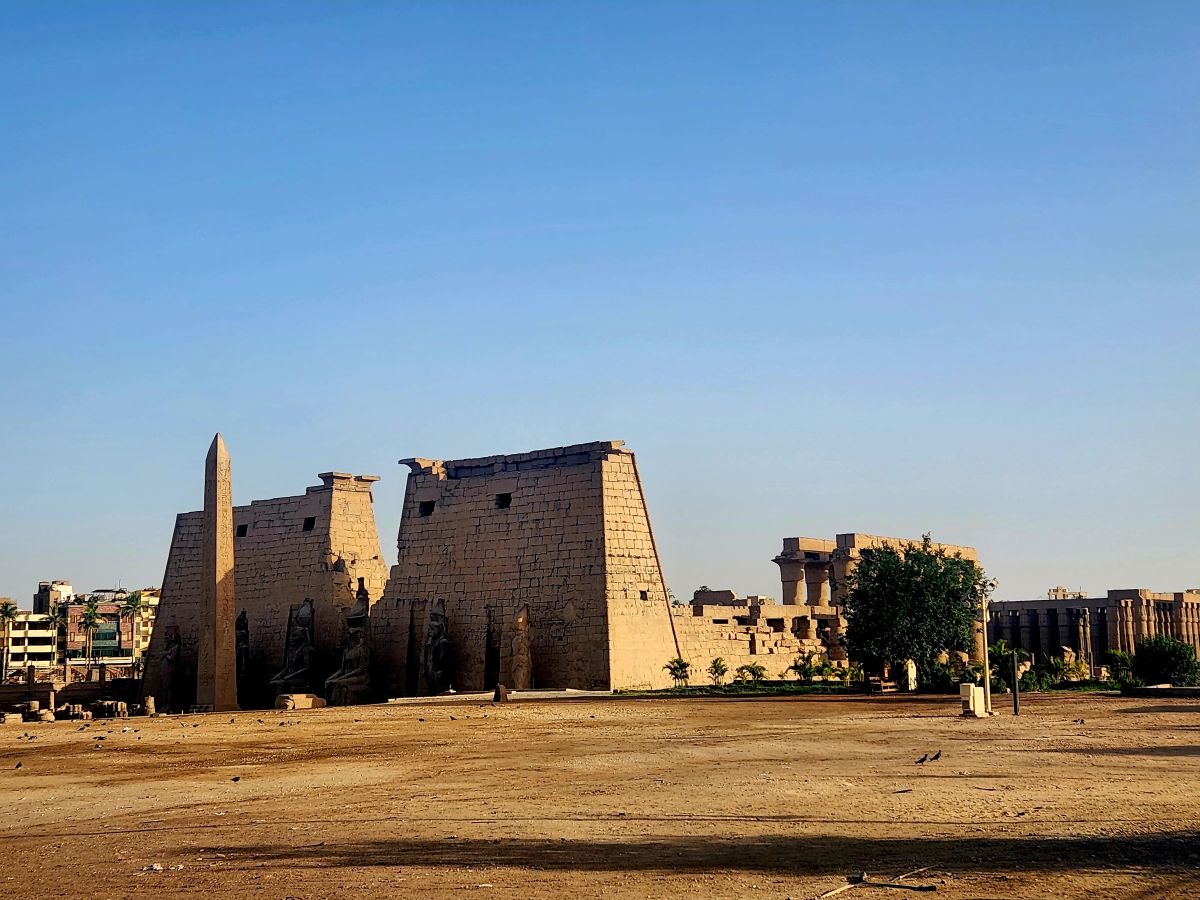
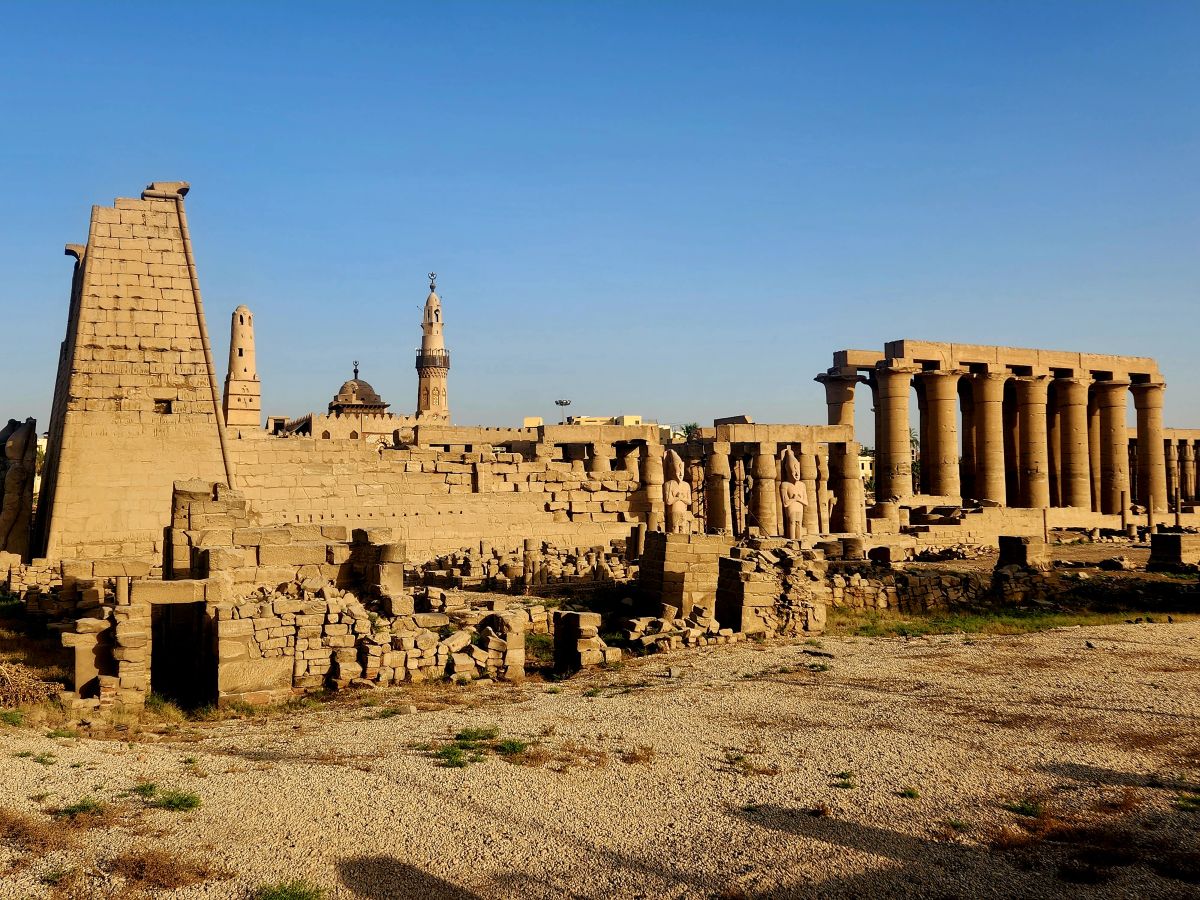
Next up, the Luxor temple which was smaller but equally amazing. This temple isn’t dedicated to any particular god, but was used more ceremonially as a place to crown the pharaohs and kings. The obelisk and statues of Ramesses at the entrance to the temple are awe inspiring. Huge and so well preserved!
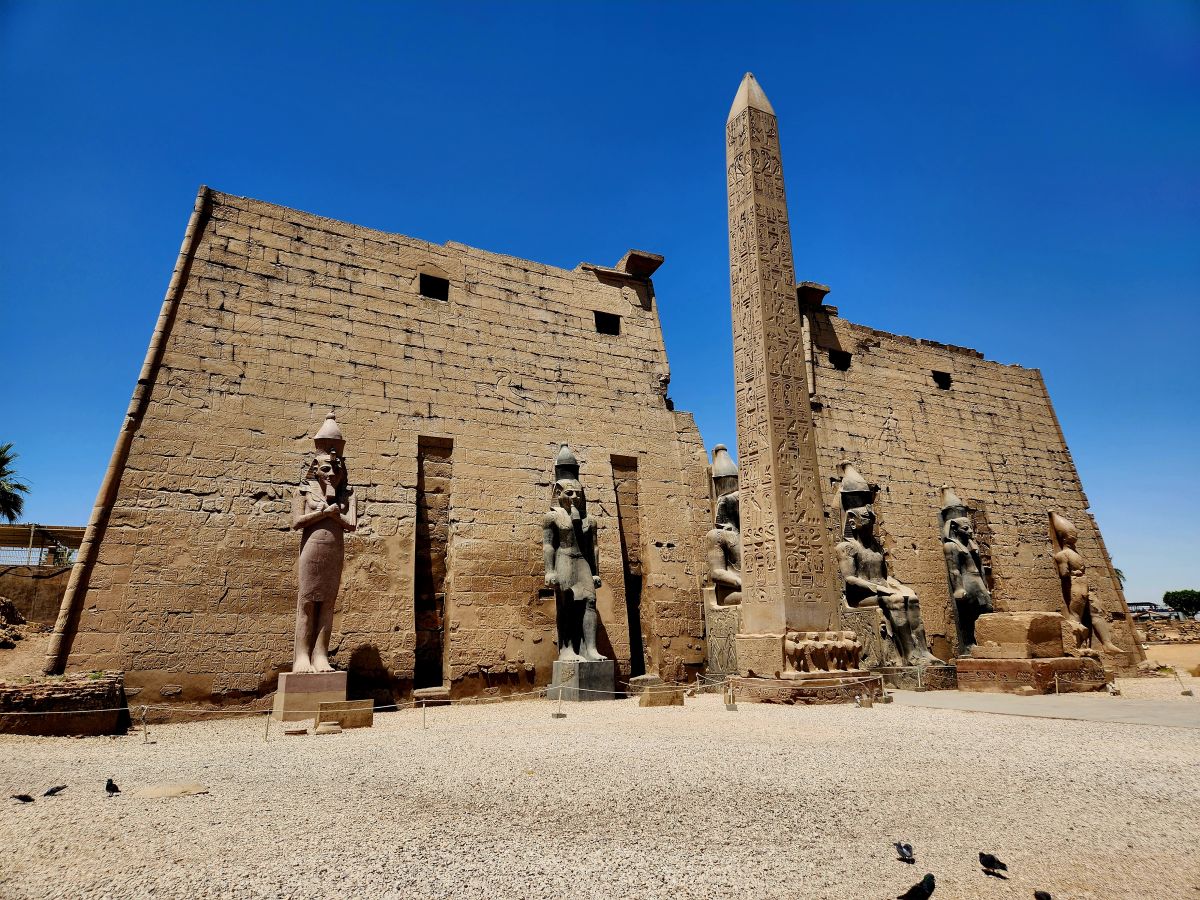
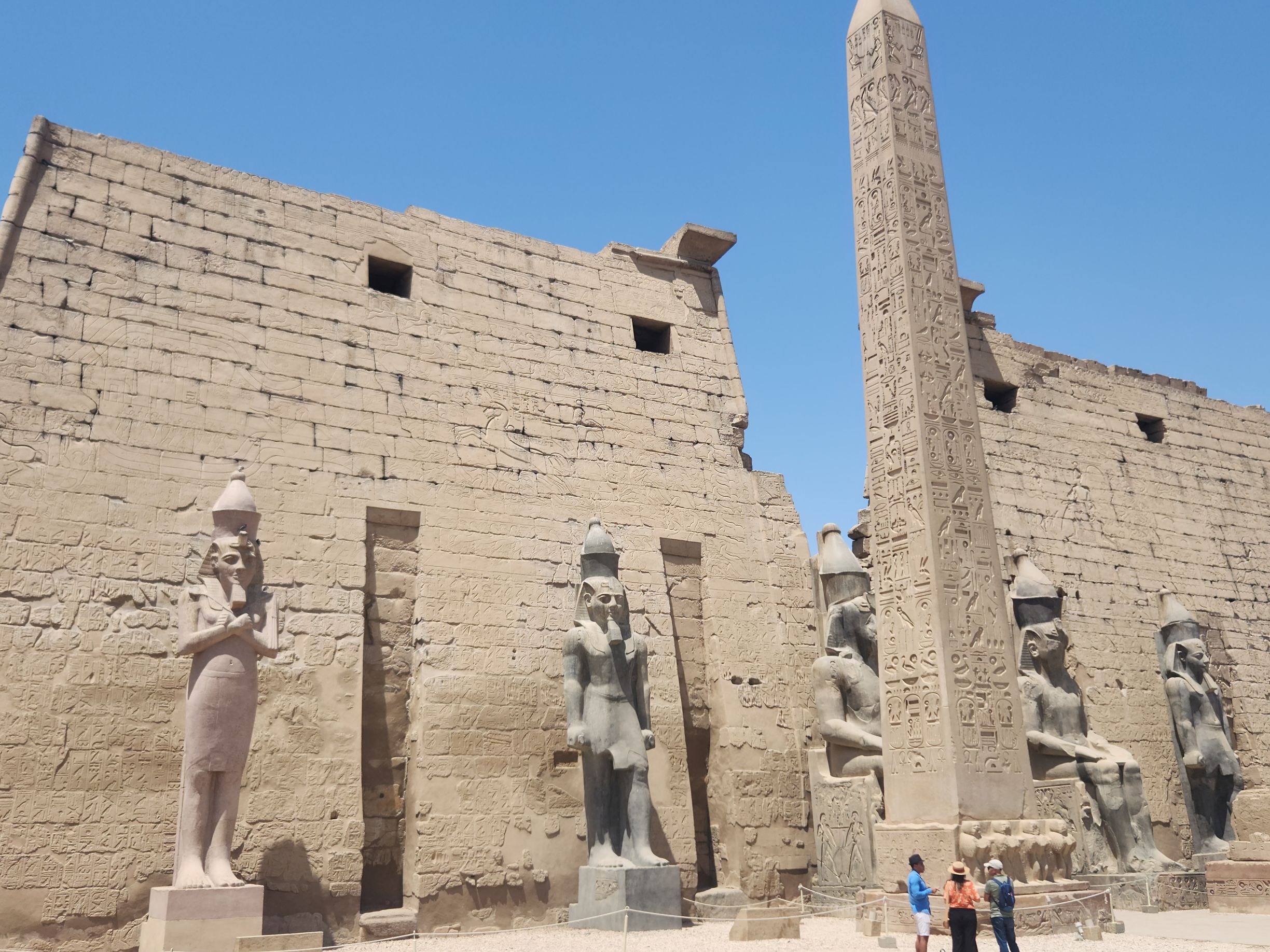
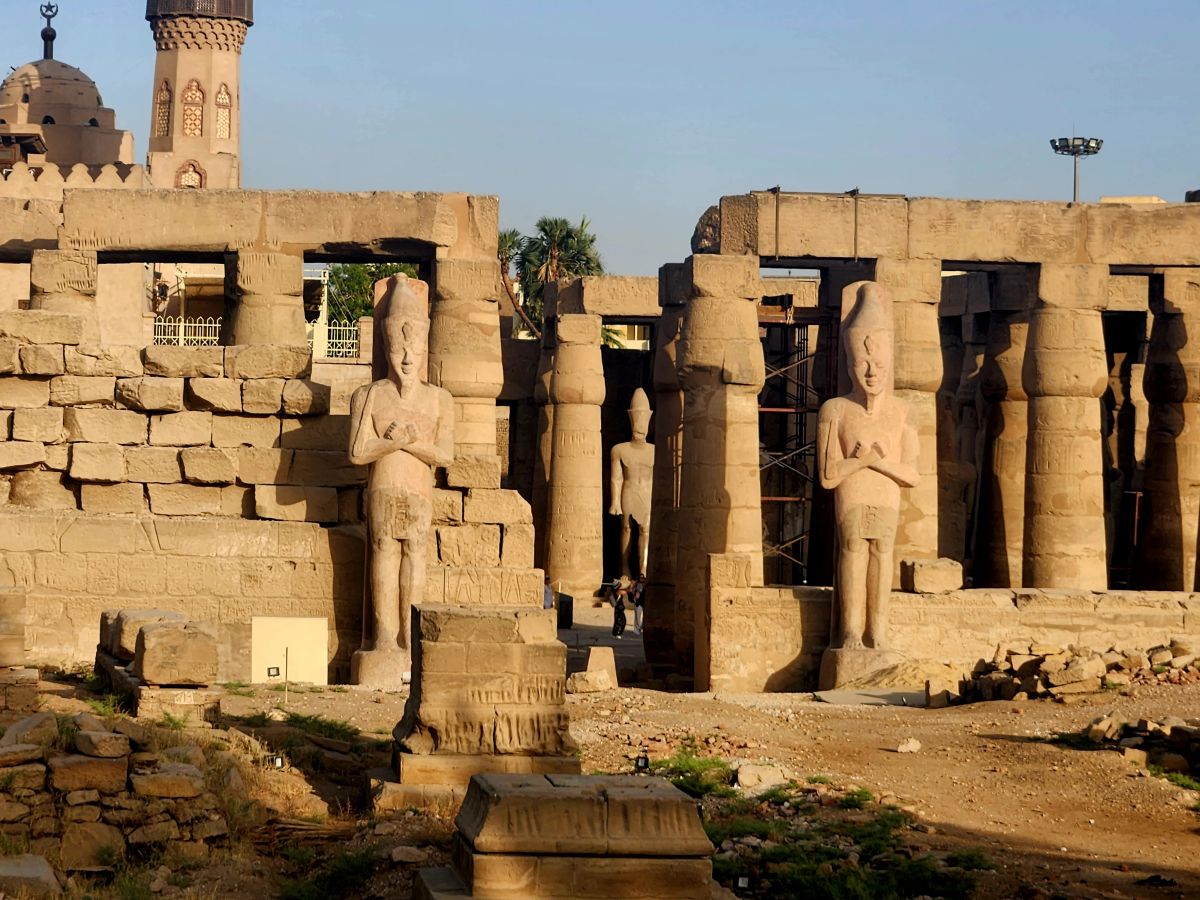
Inside the main walkway, just before the huge pillars, are more statues of Ramesses, and also a little statue of his wife sitting next to his leg. There is also a statue of the two of them sitting together and she has her hand on his back. The detail! Amr says this symbolizes that all great men have a woman standing behind them! Makes sense to me. LOL.
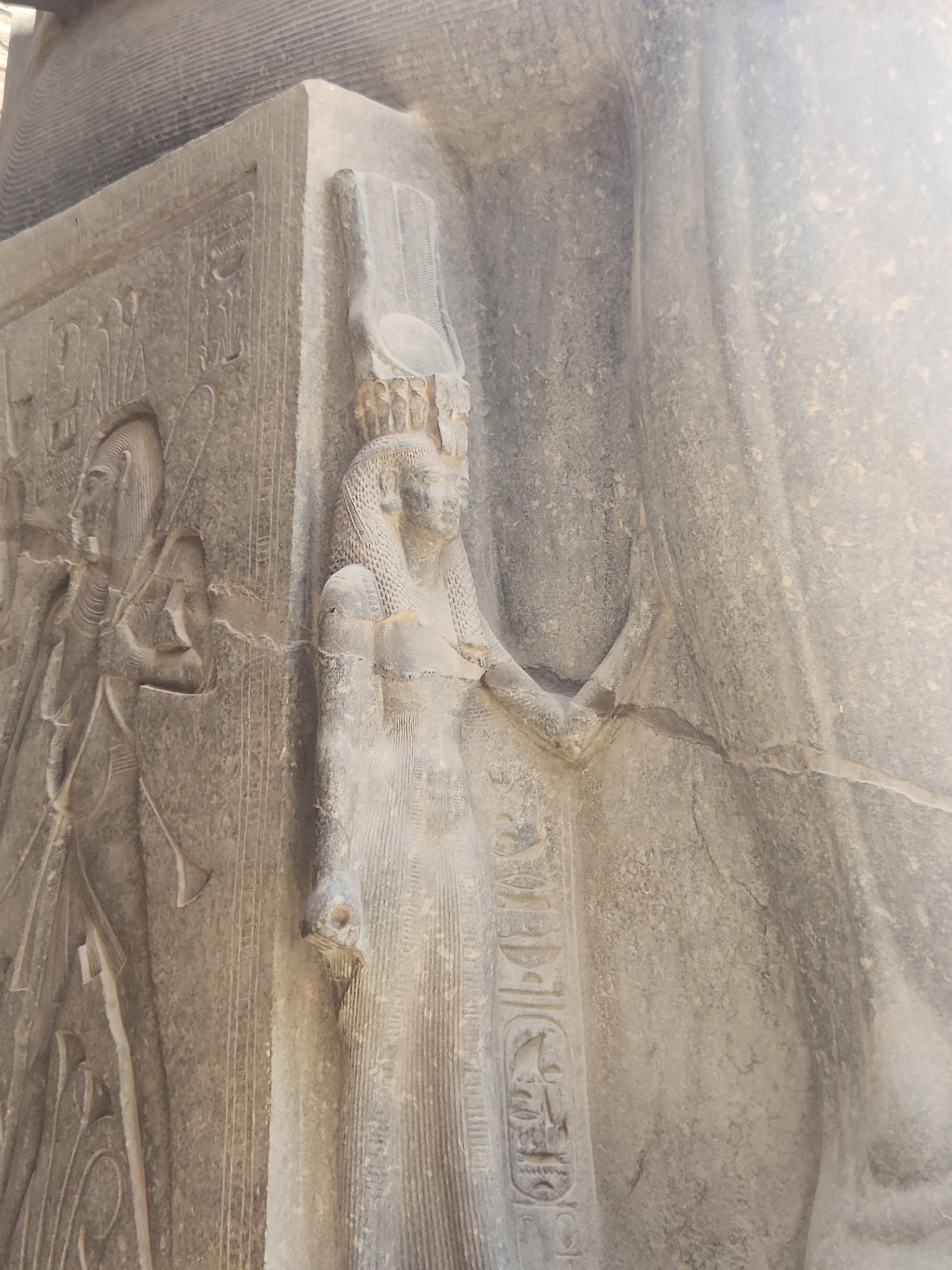
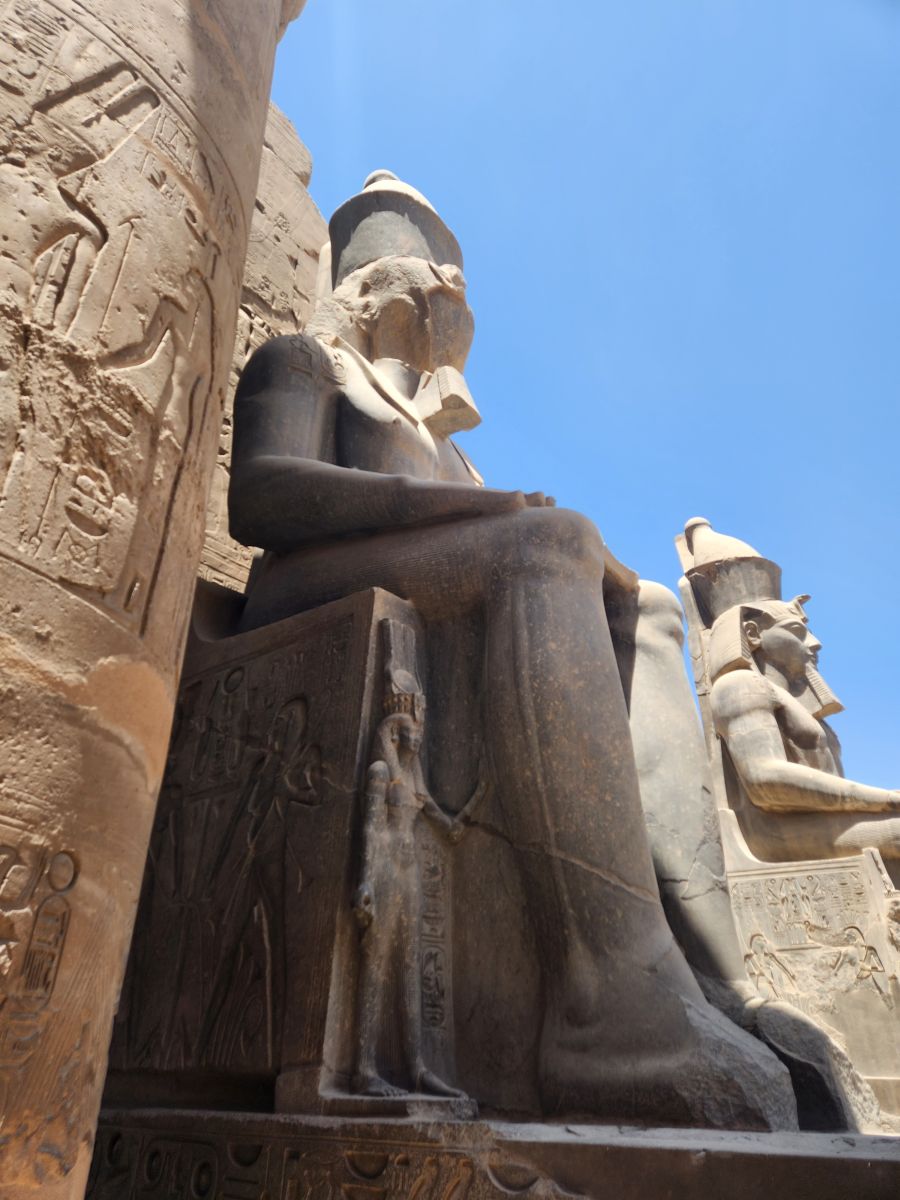
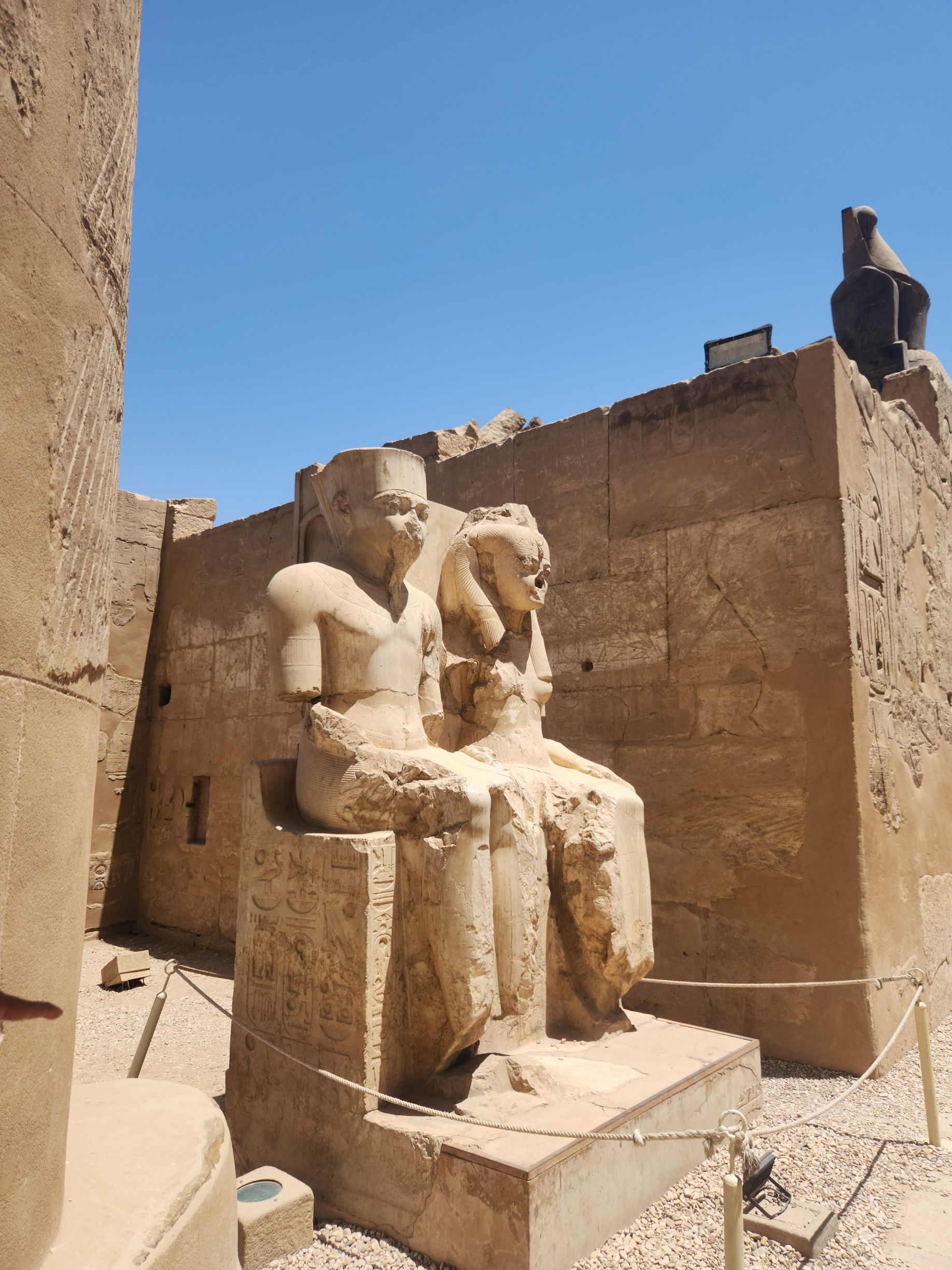
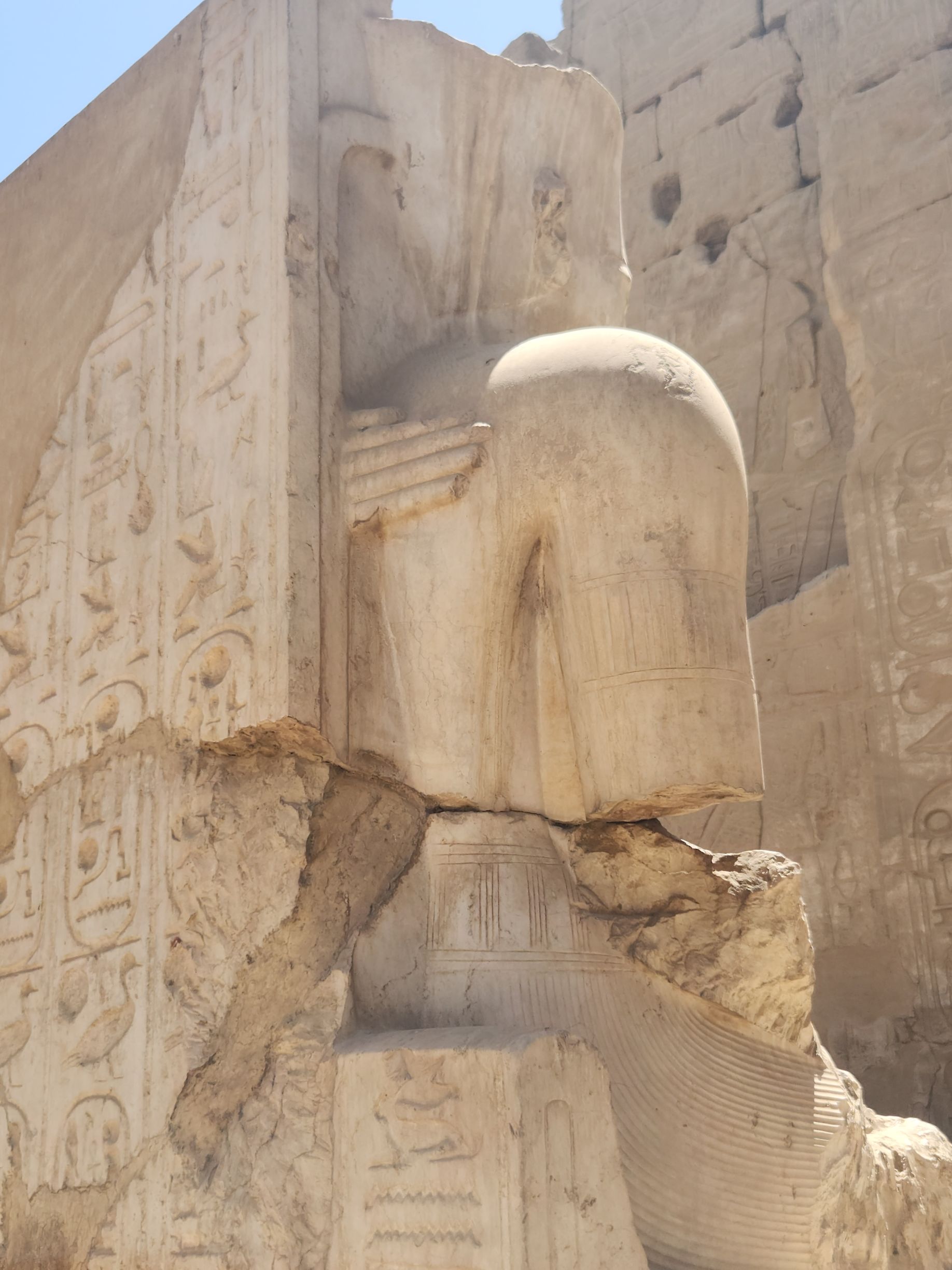
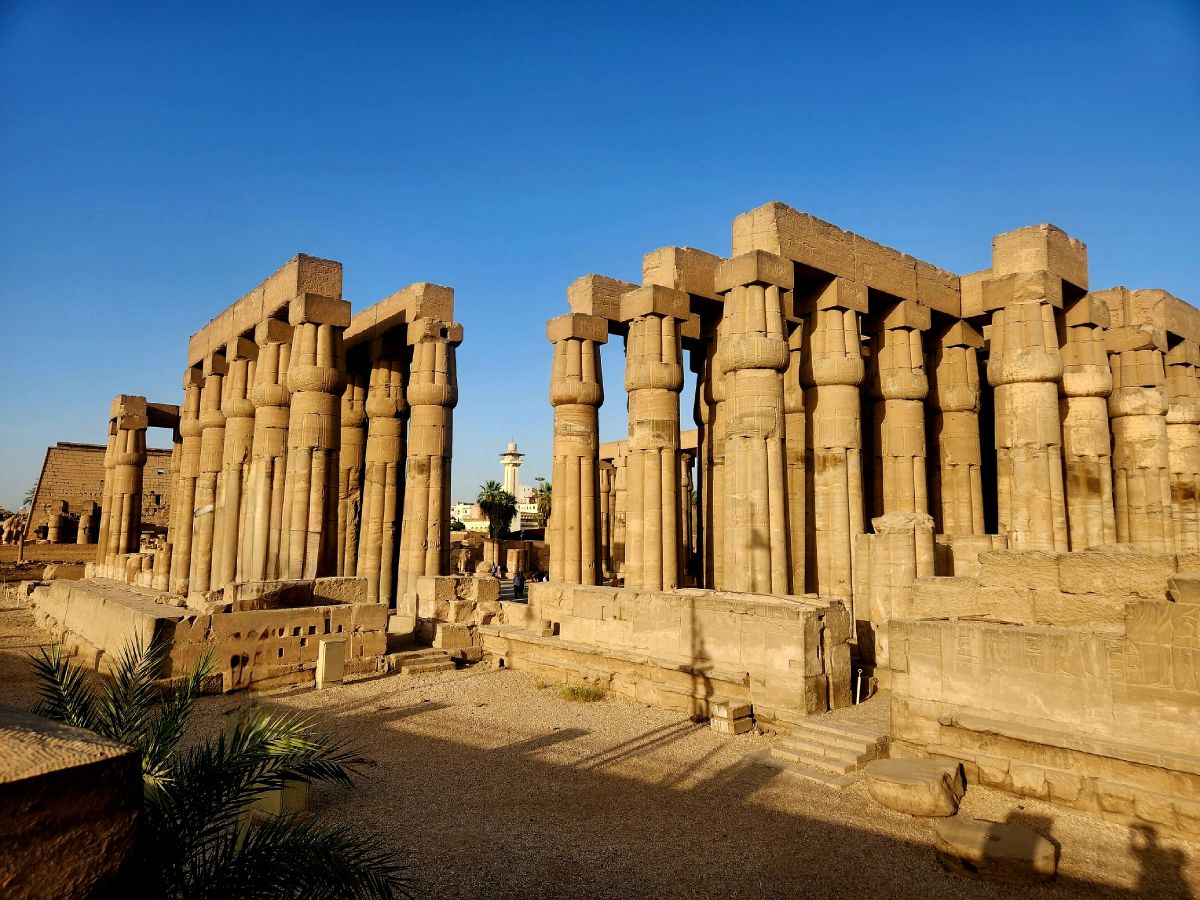
Here again, the carvings are incredible. There are only one or two rooms in one of the sanctuaries, which are incredible, but regardless, the carvings without the pain don’t minimize the effect. The artwork is so detailed – down to the king’s belly button!
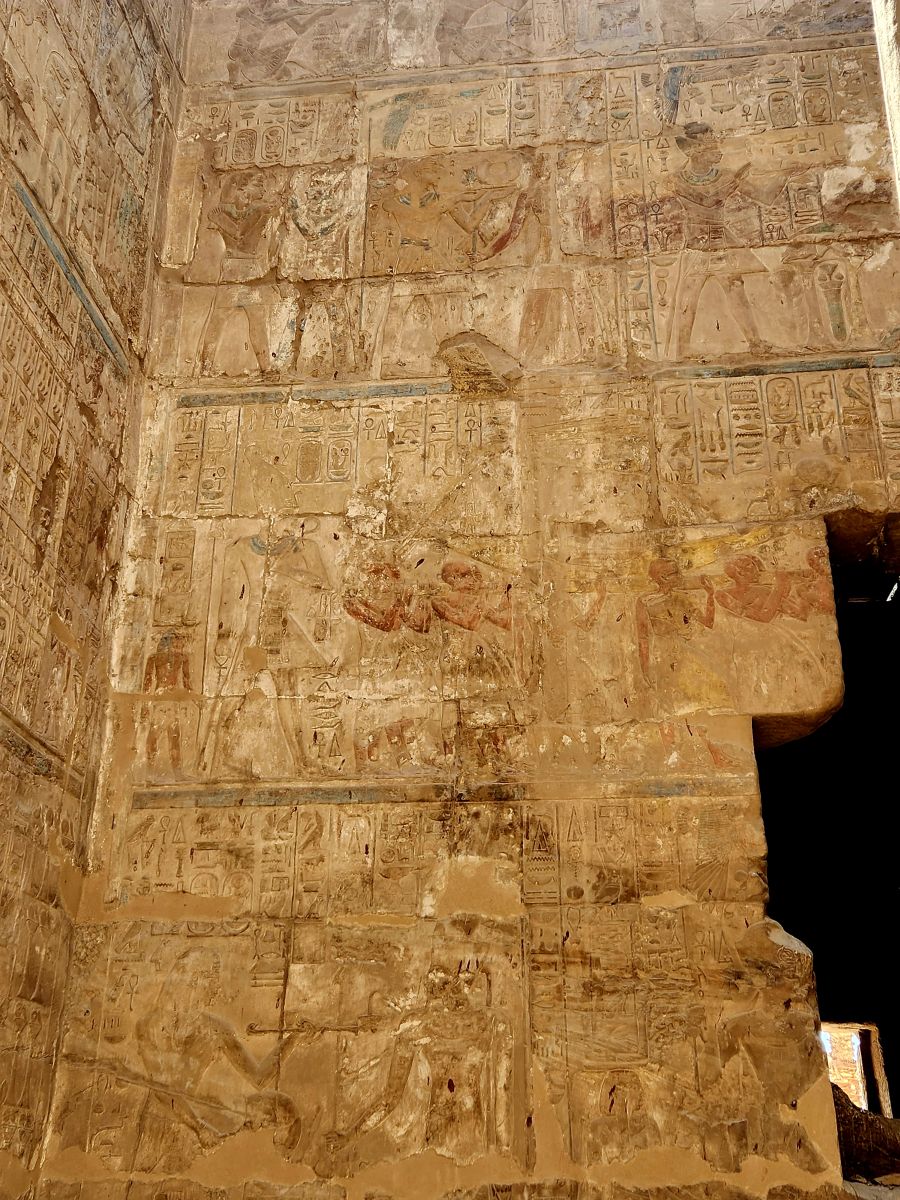
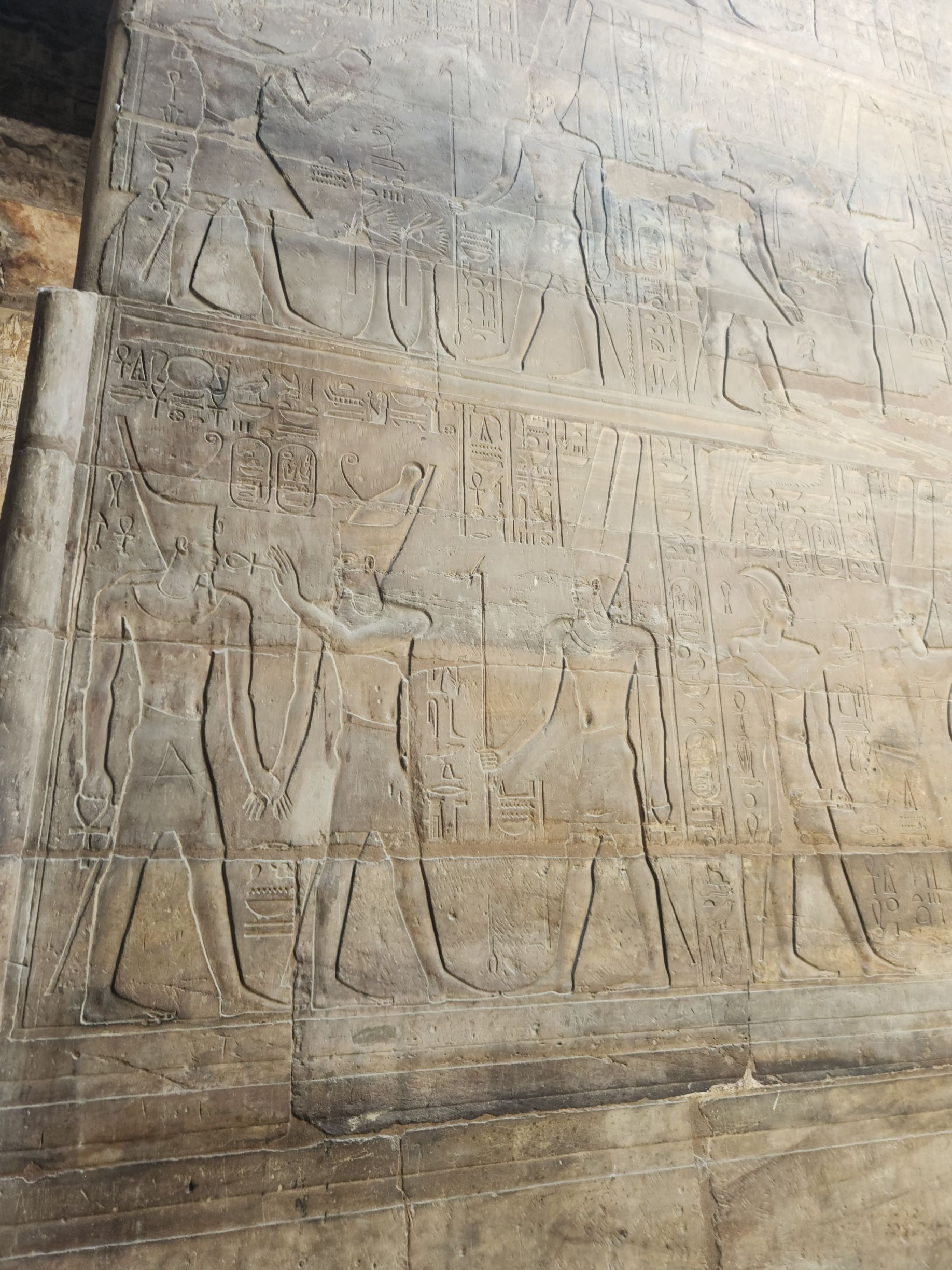
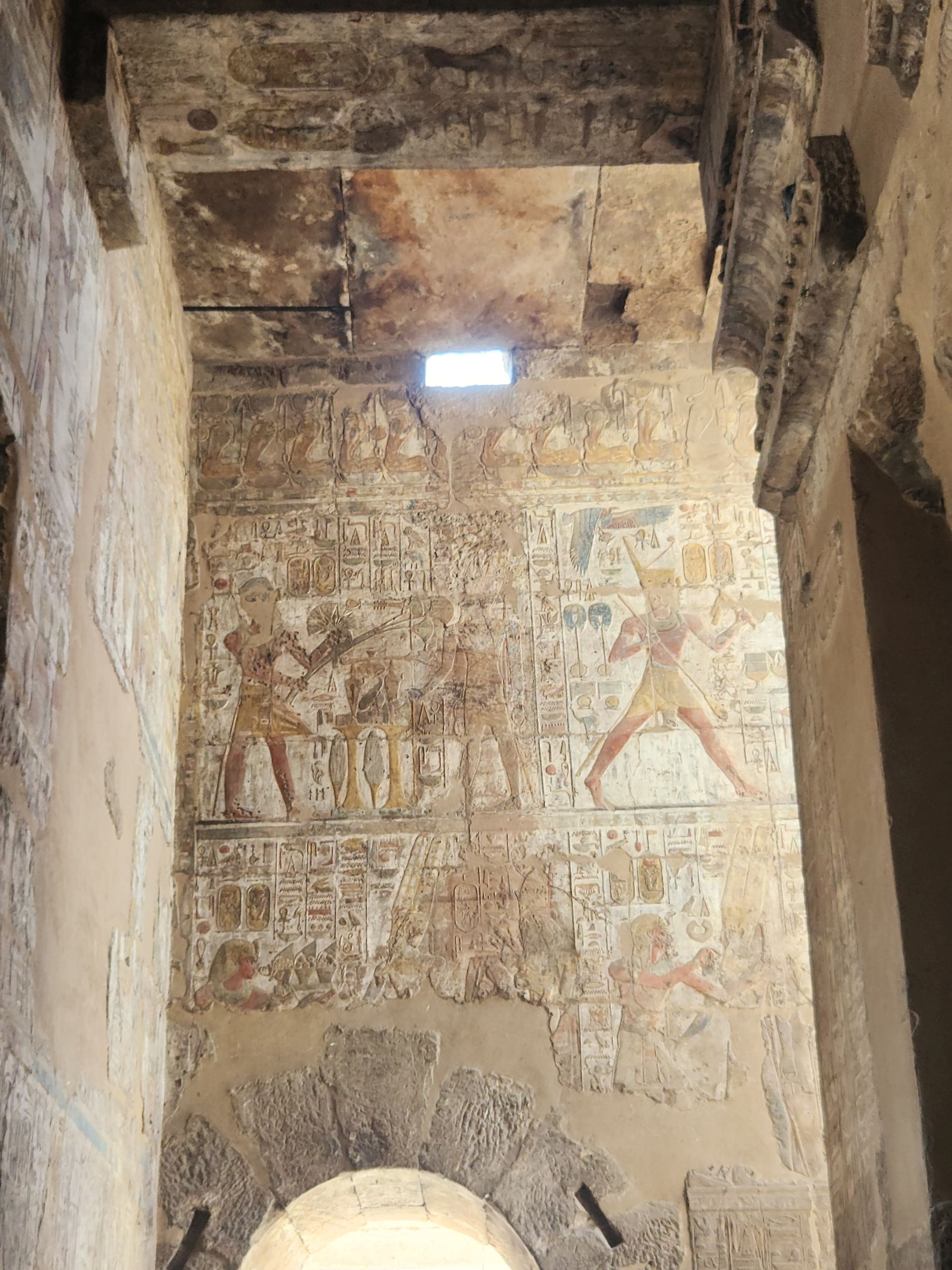
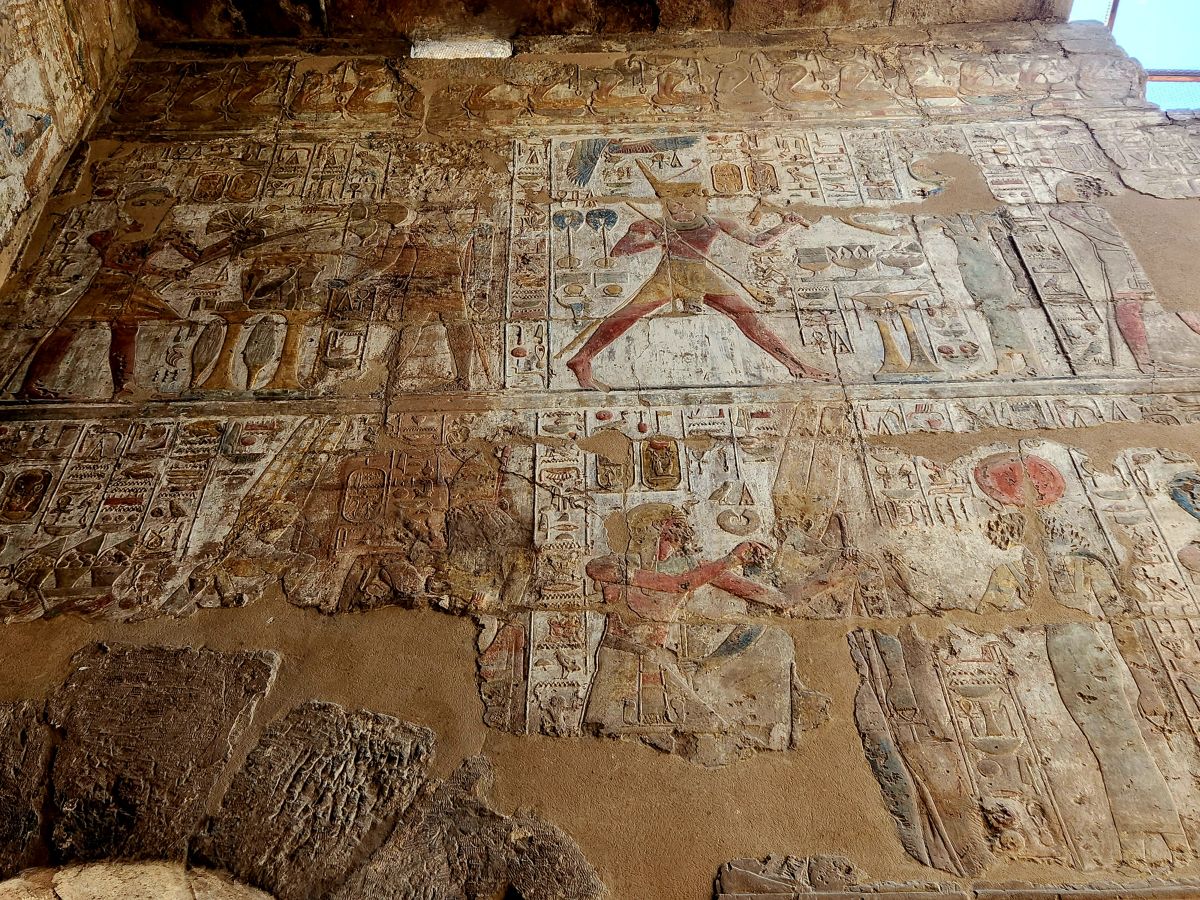
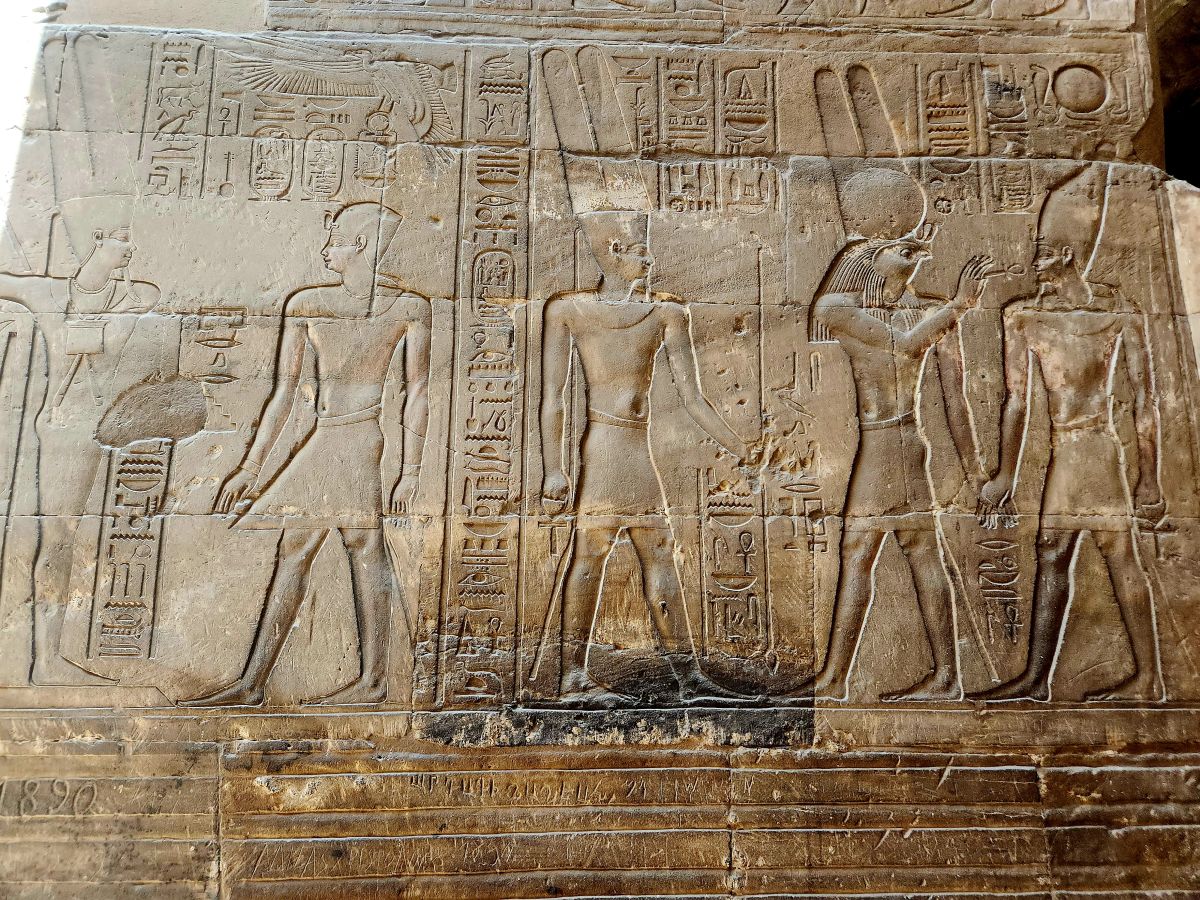
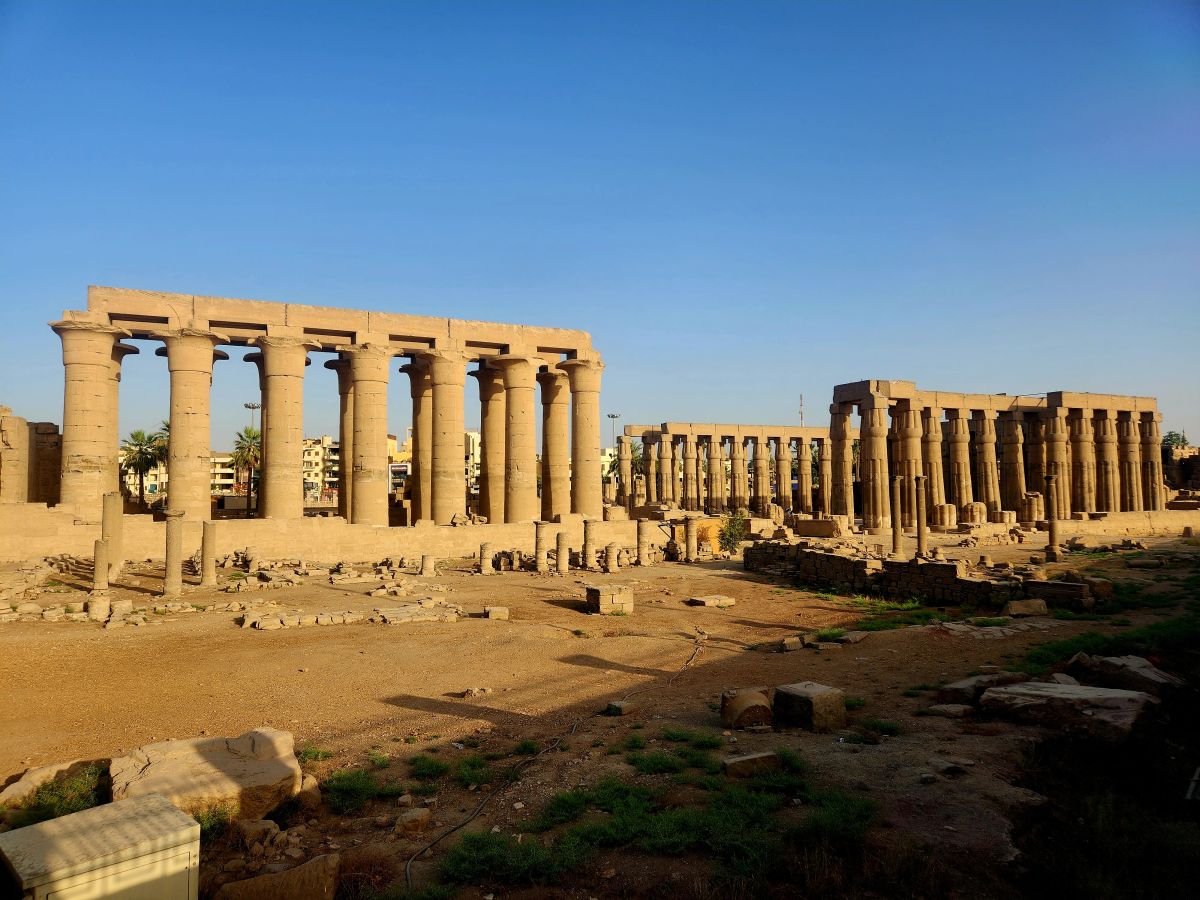
The columns are spectacular too – it is just incredible to us that these were all here intact just buried under the sand! And right in the middle of the city. Just sitting there on the side of the Nile. Crazy.
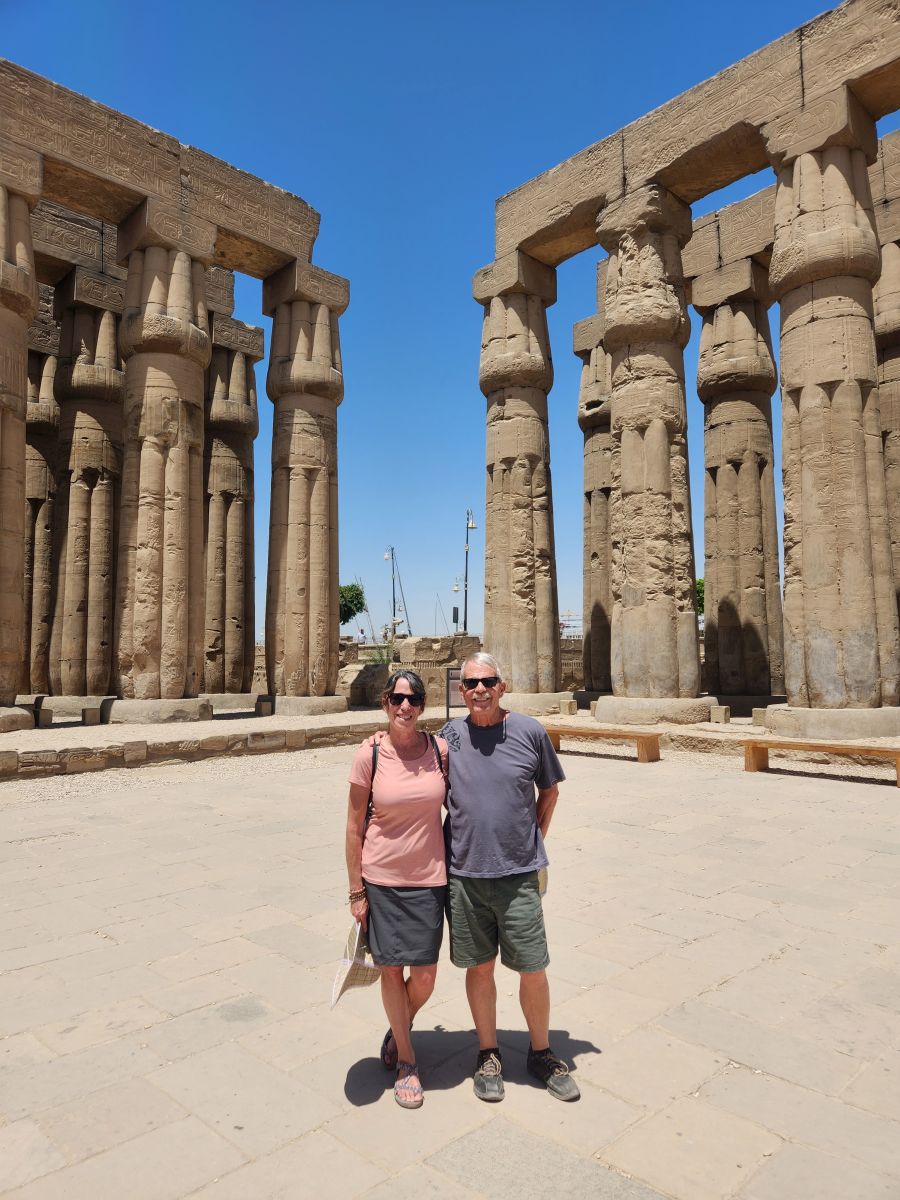
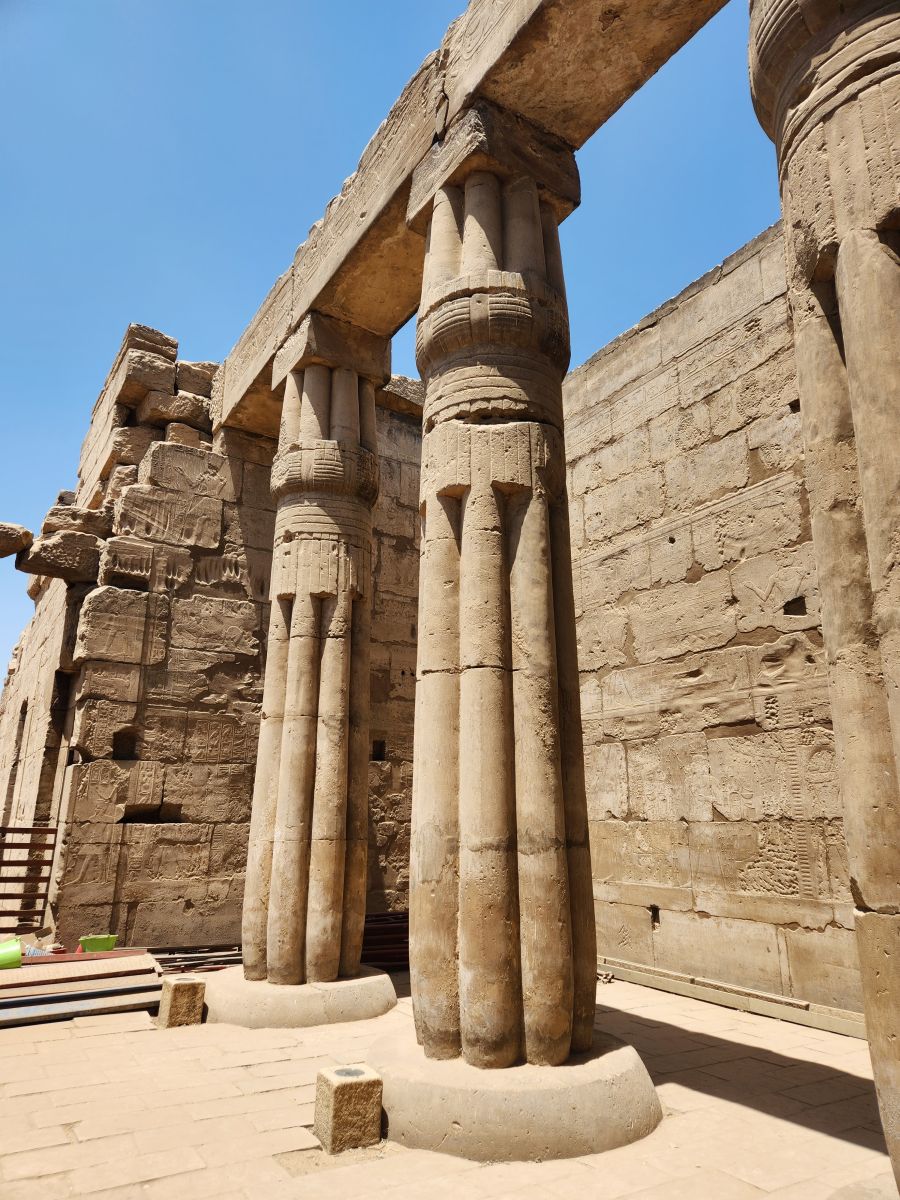
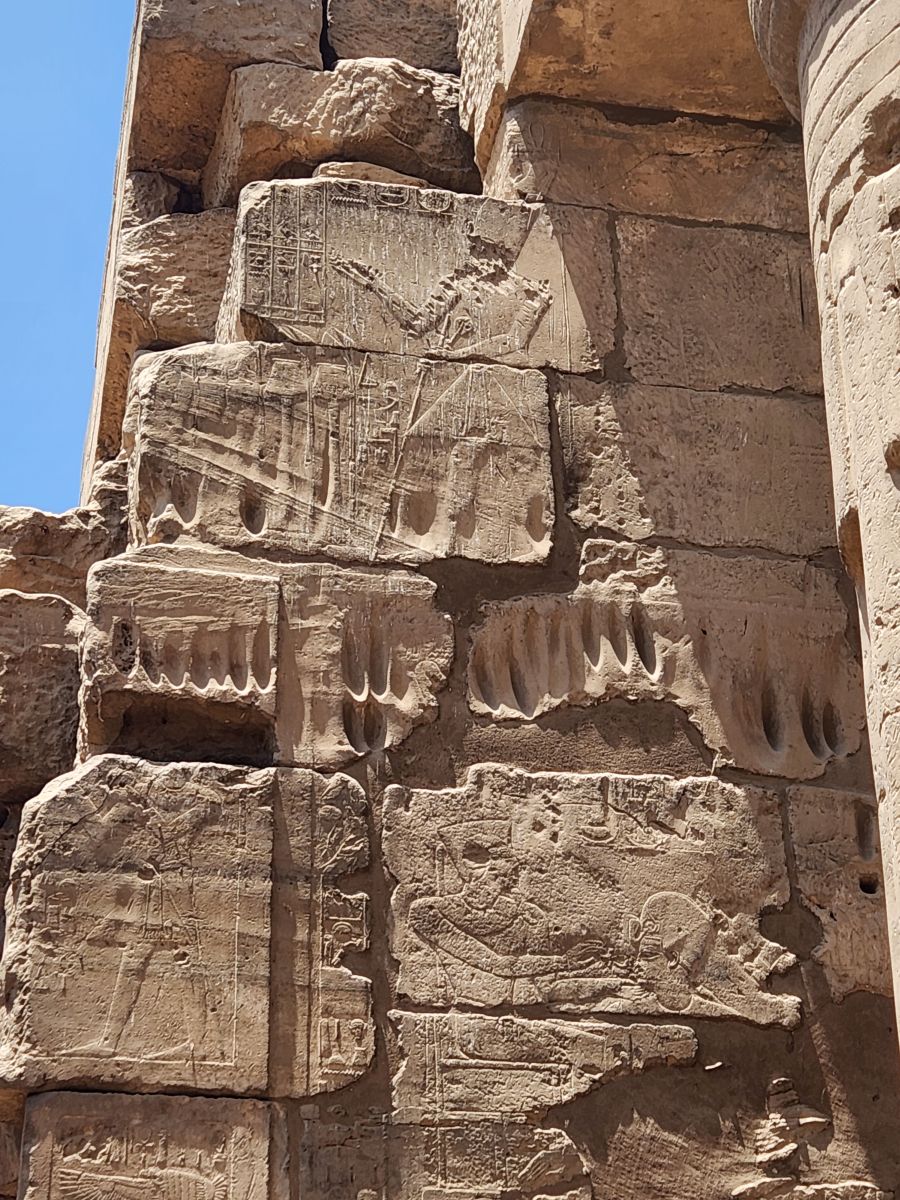
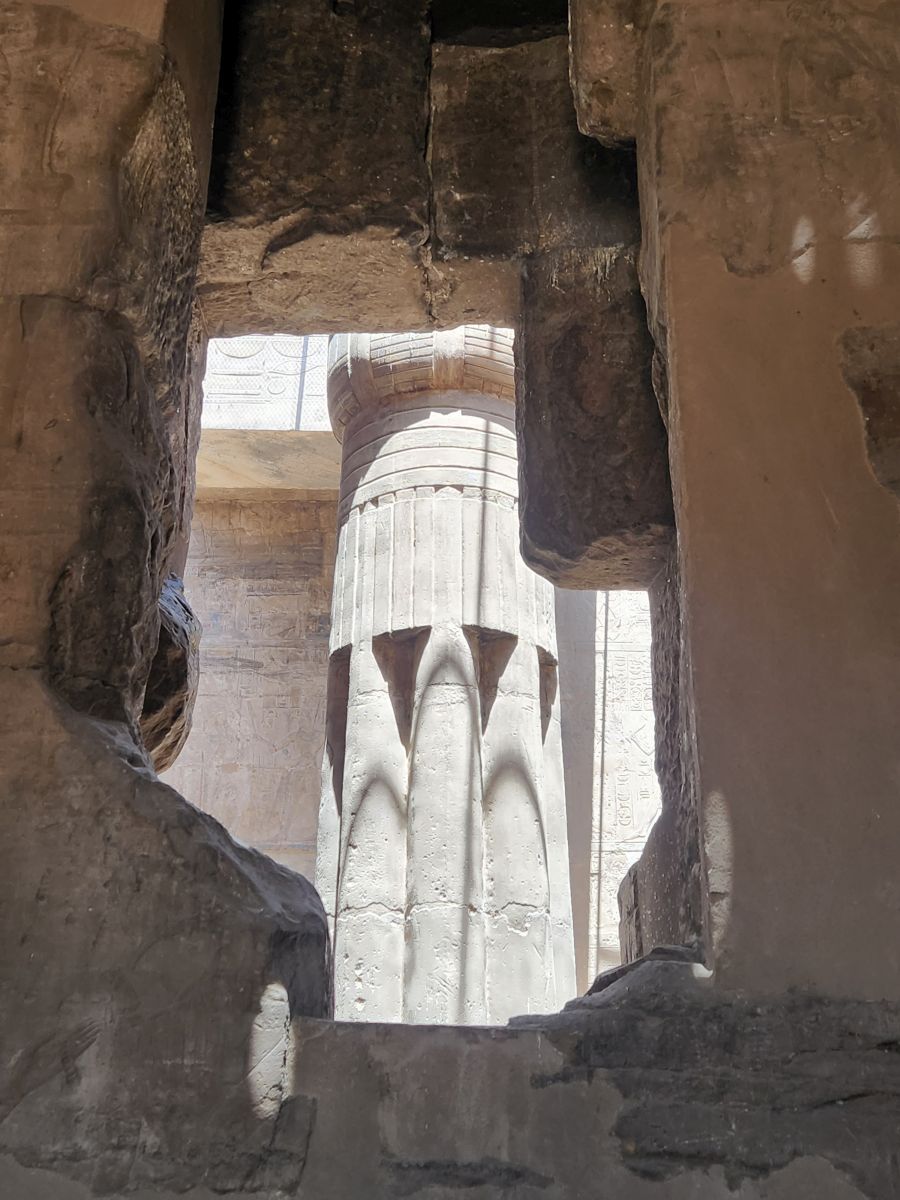
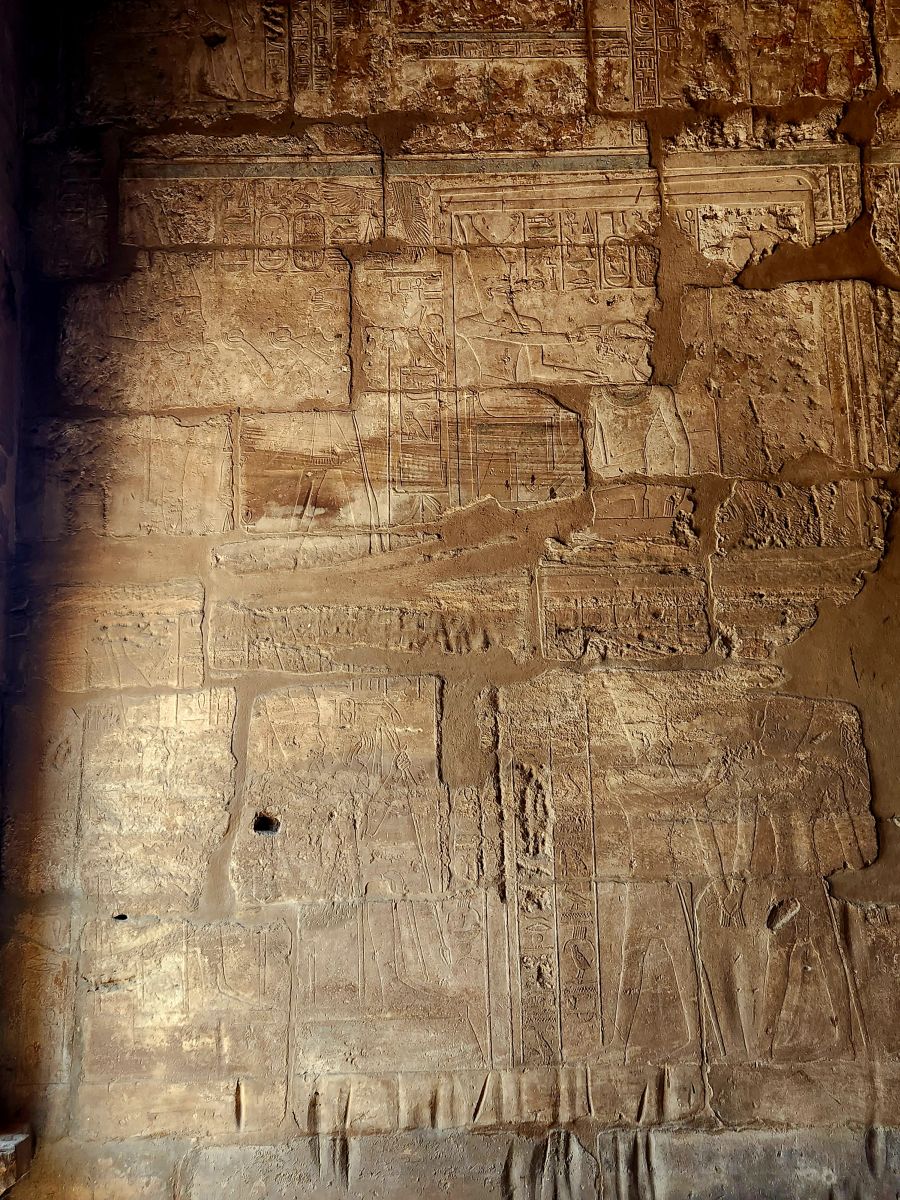
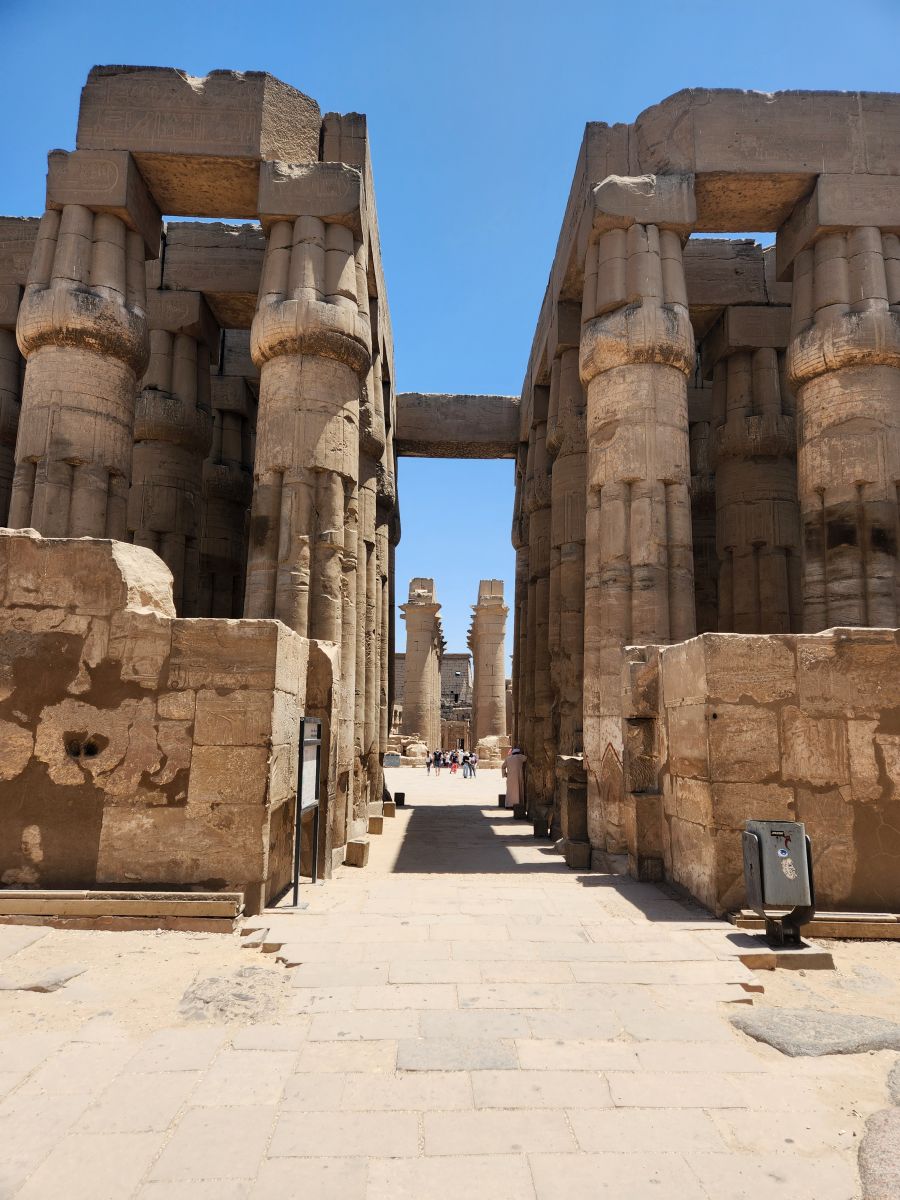
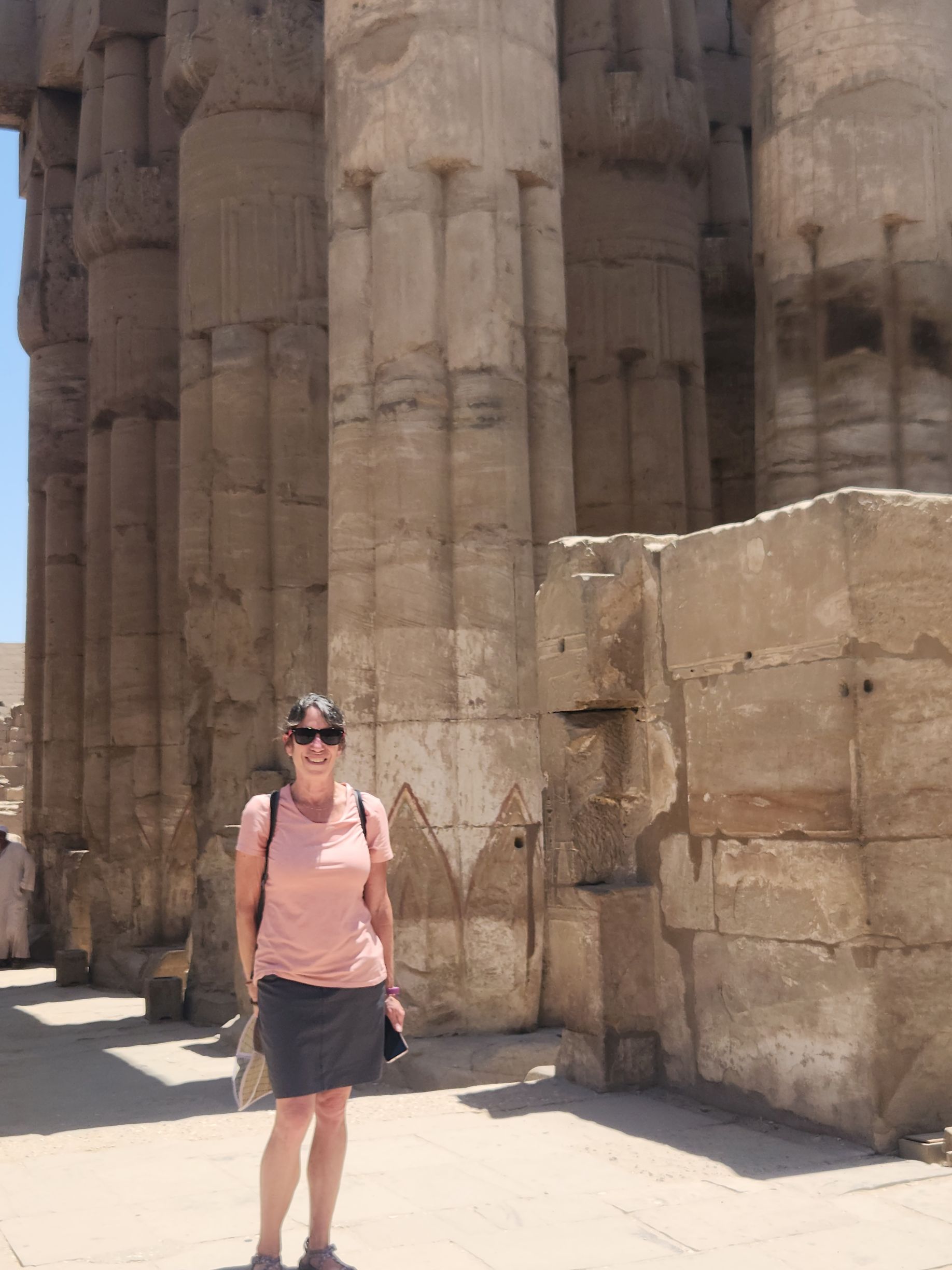
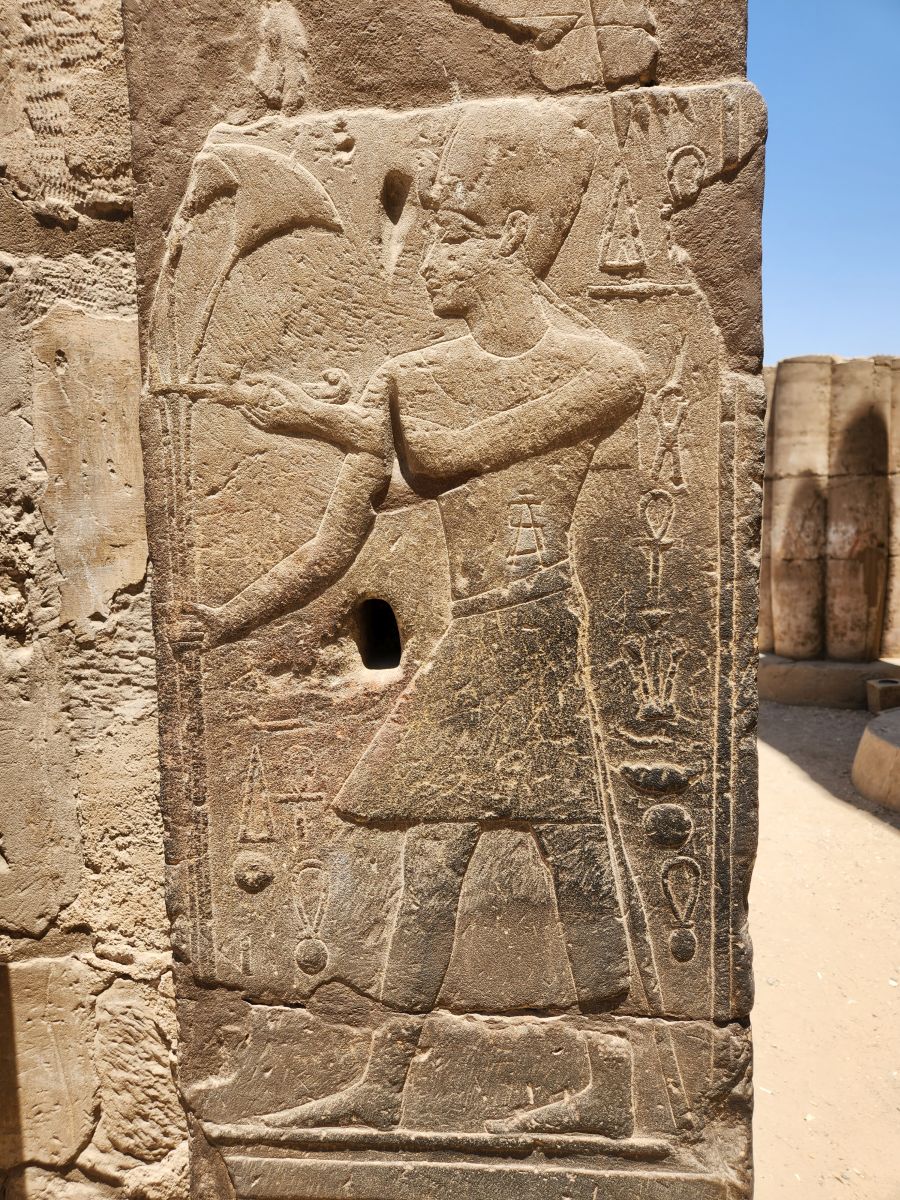
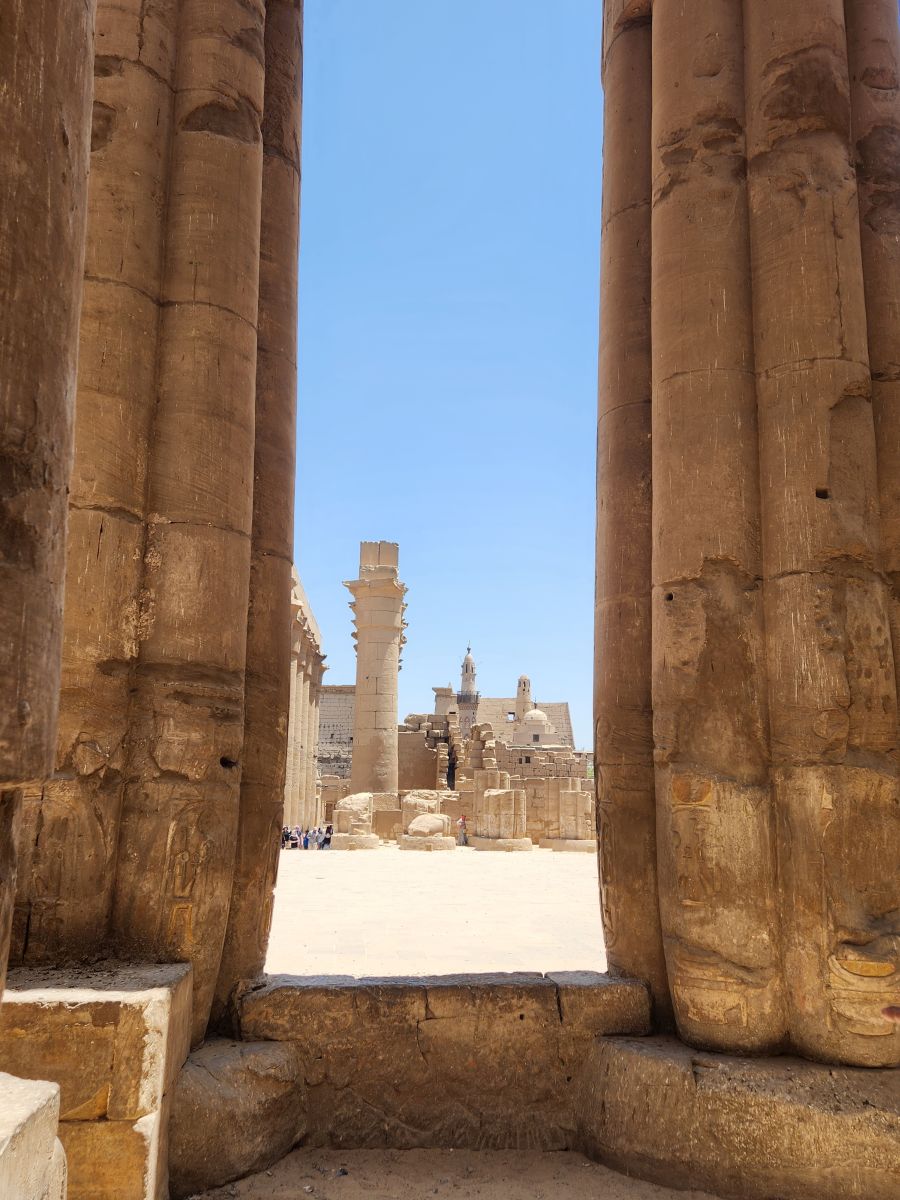
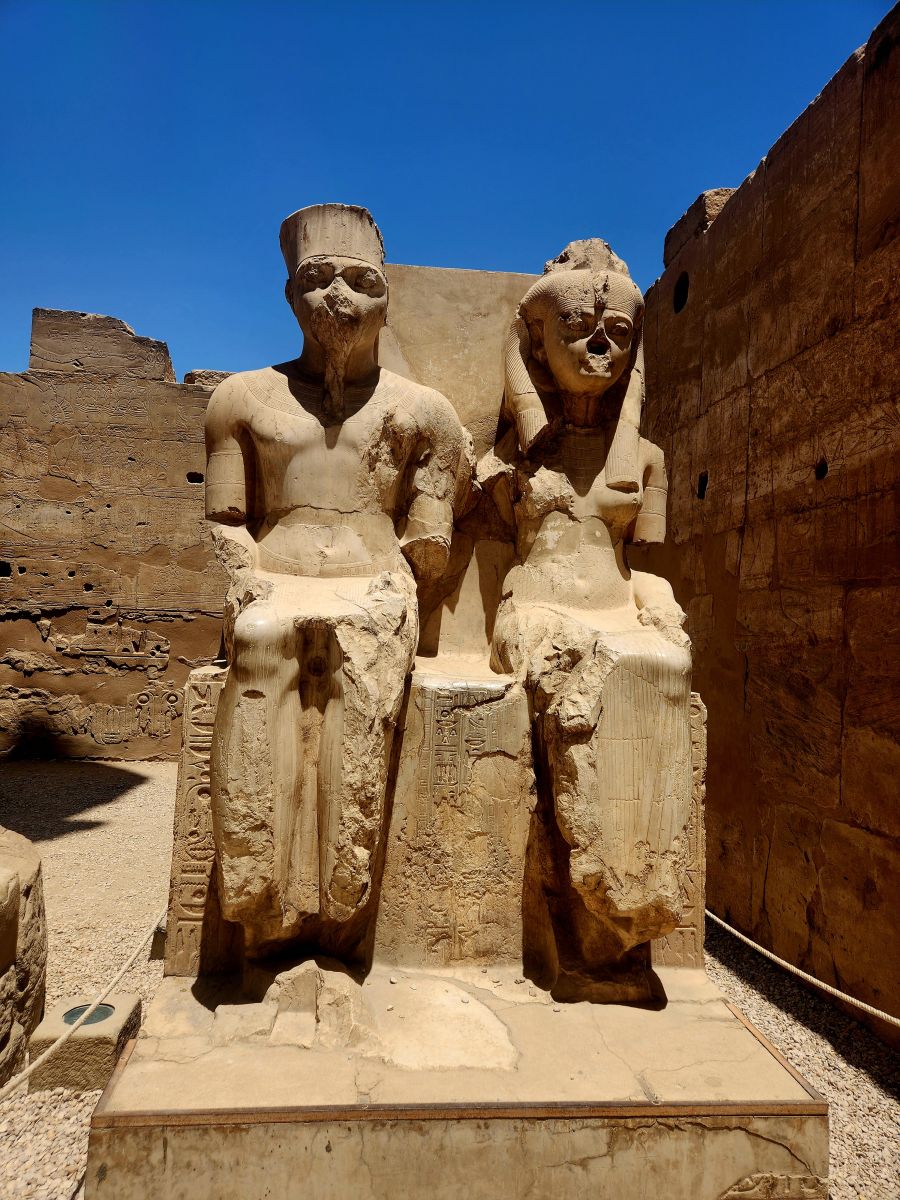
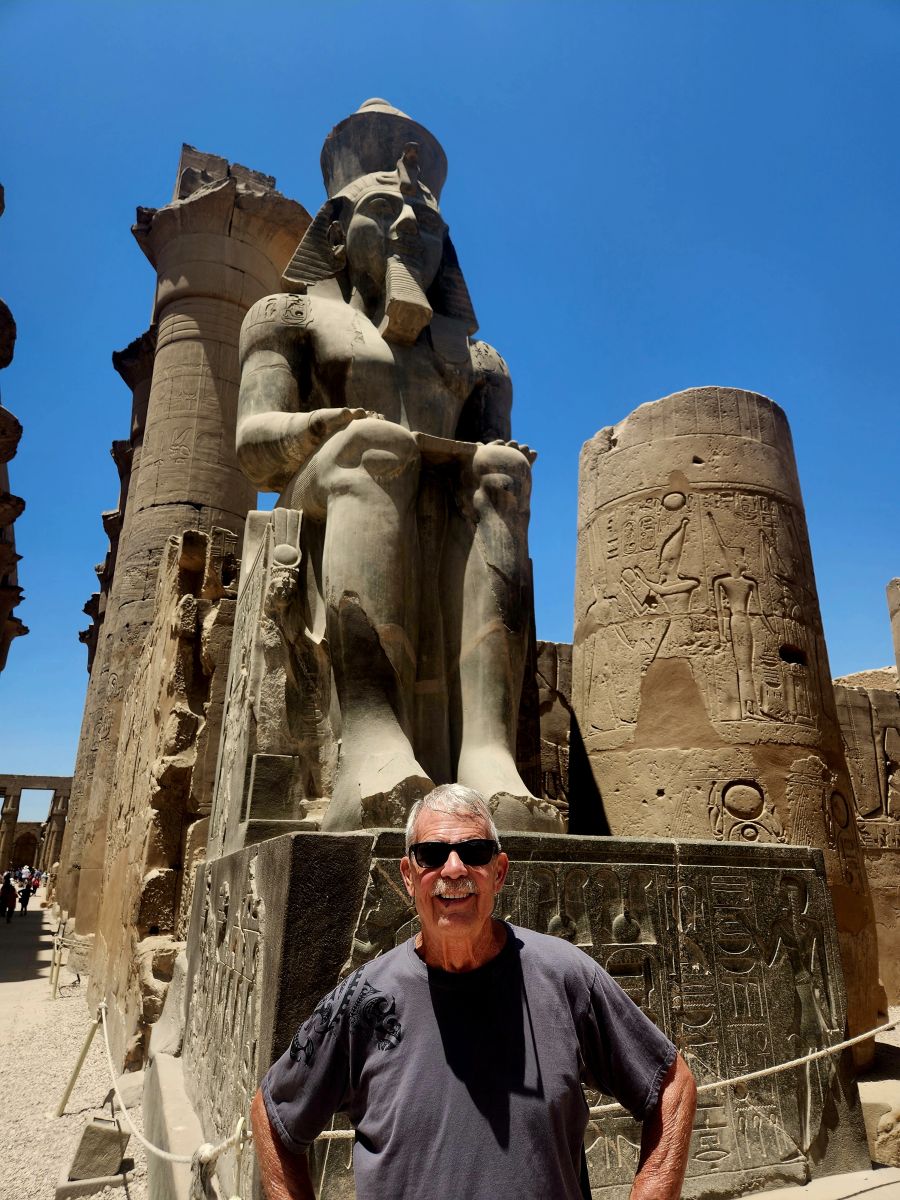
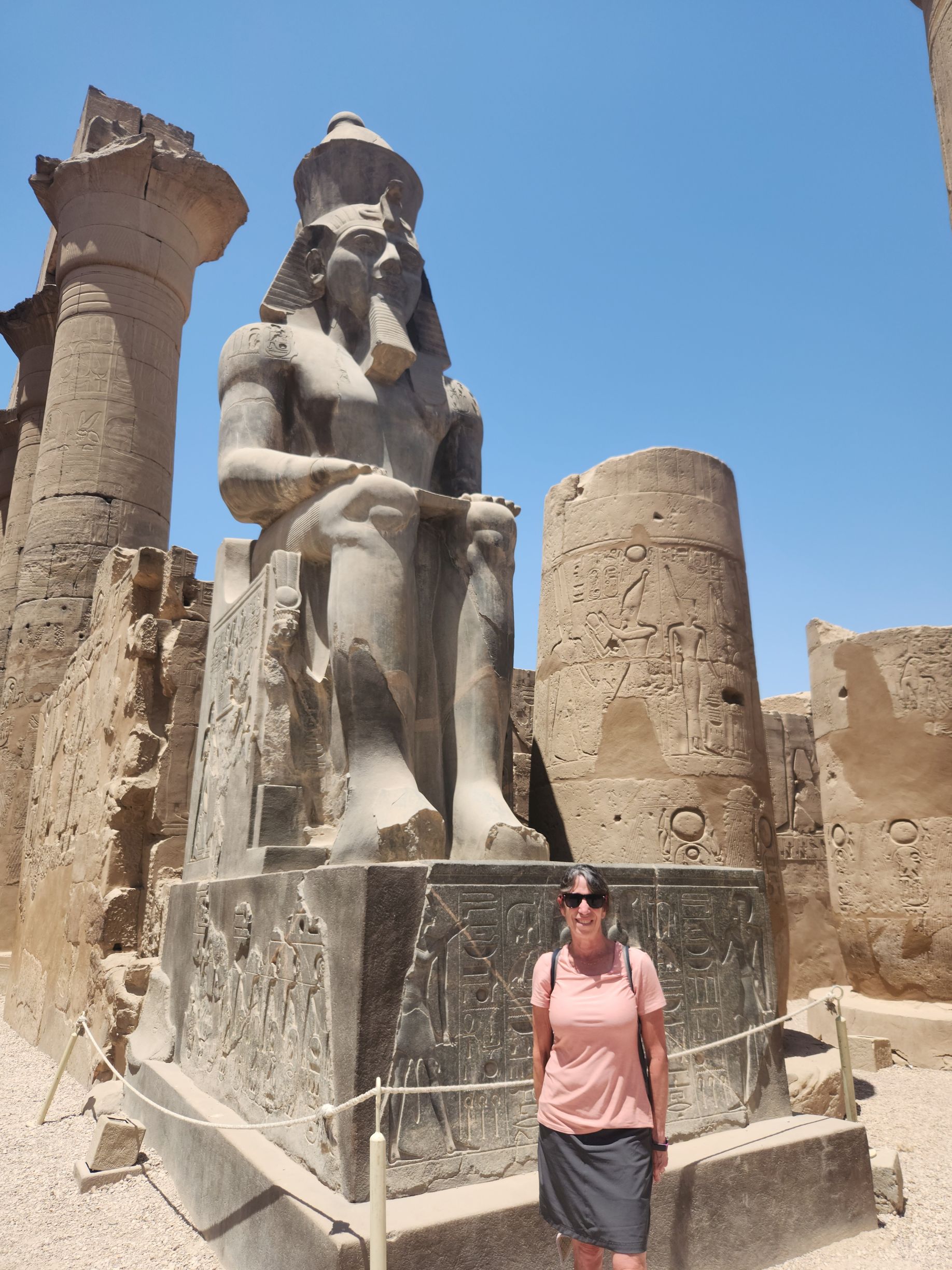
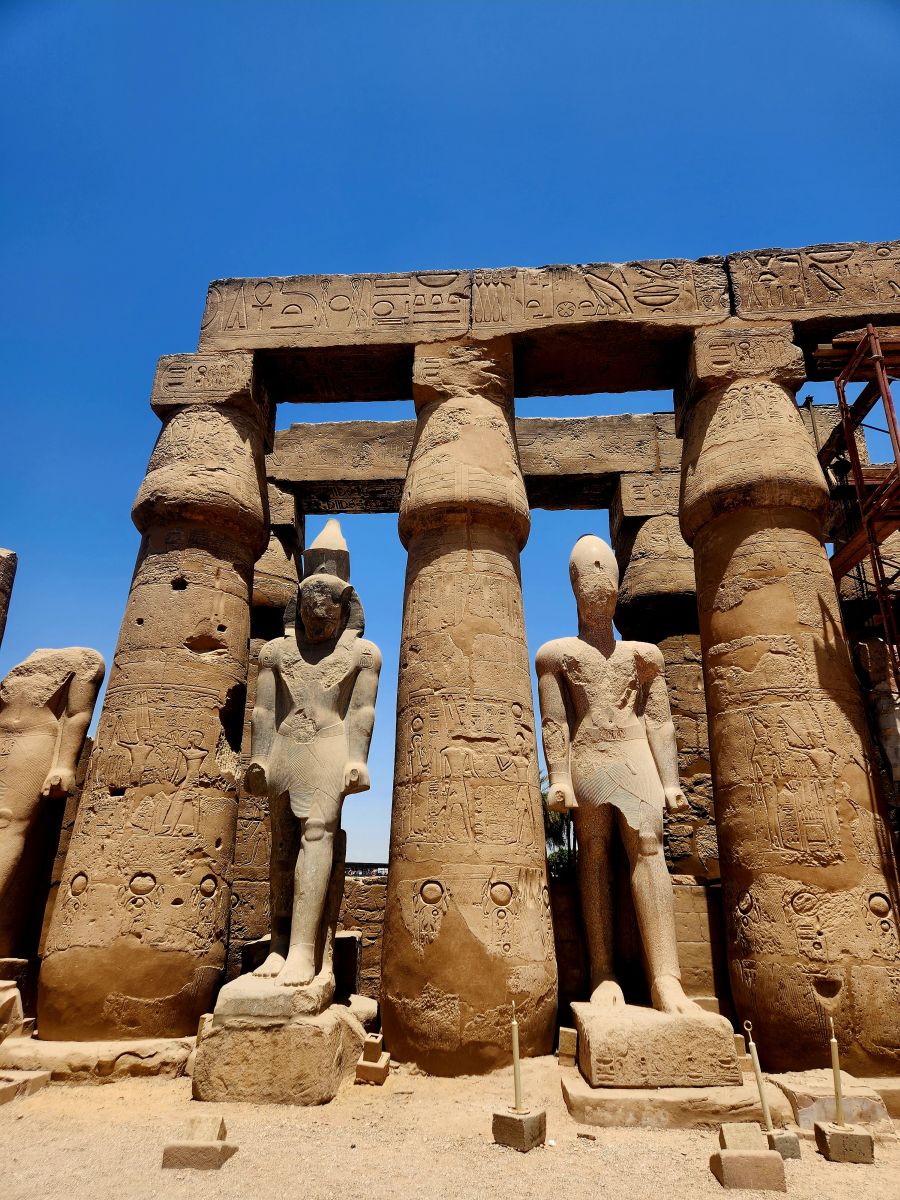
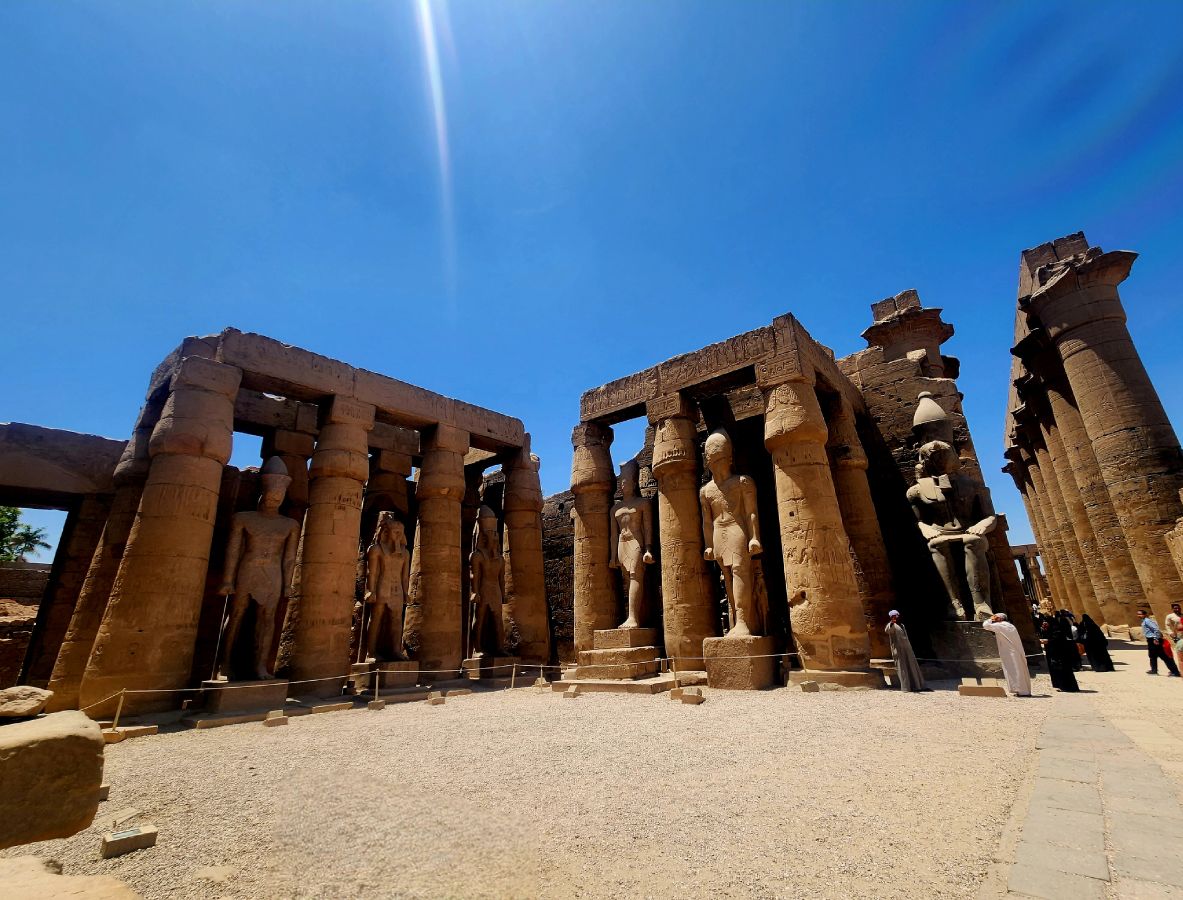
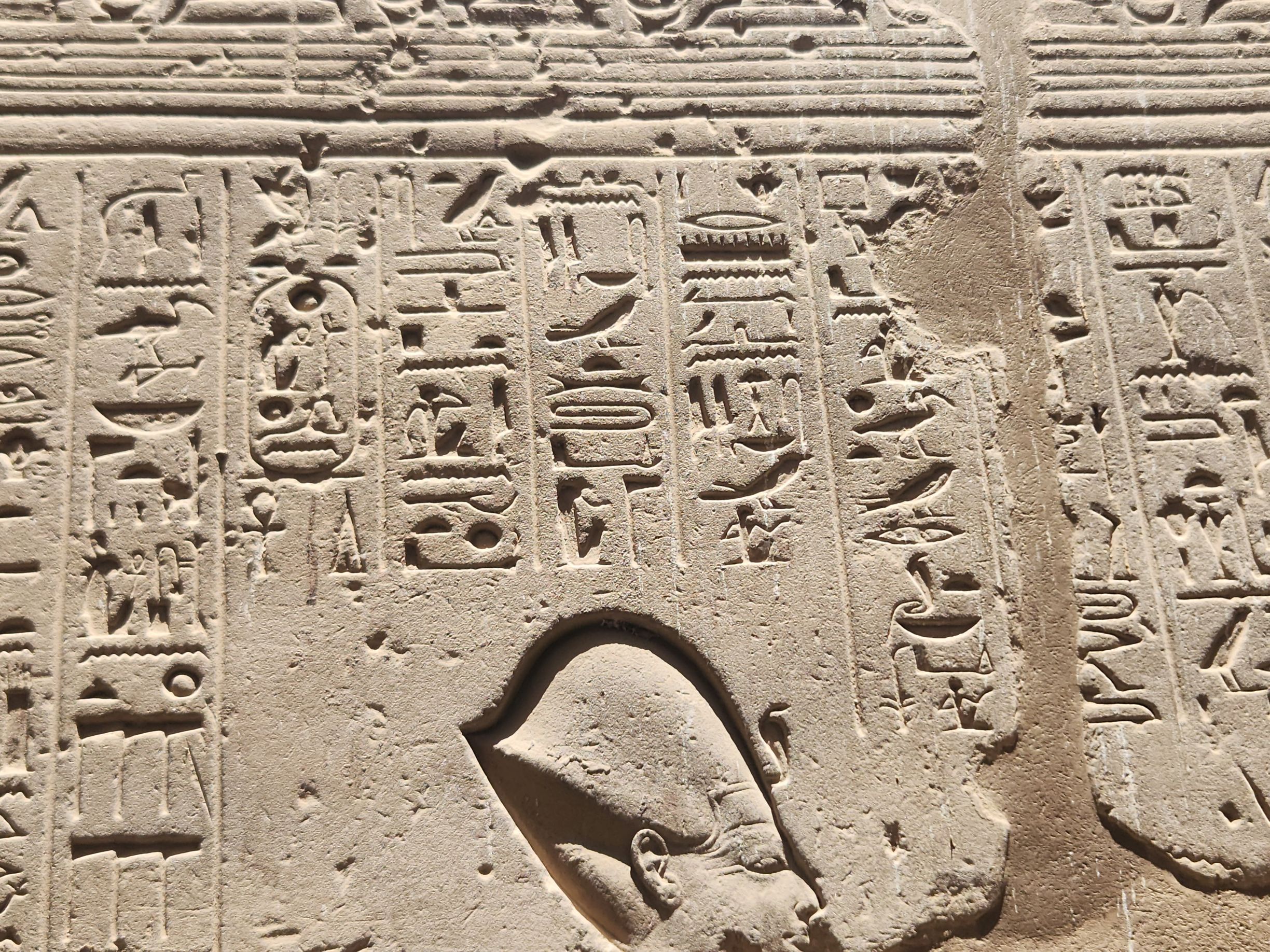
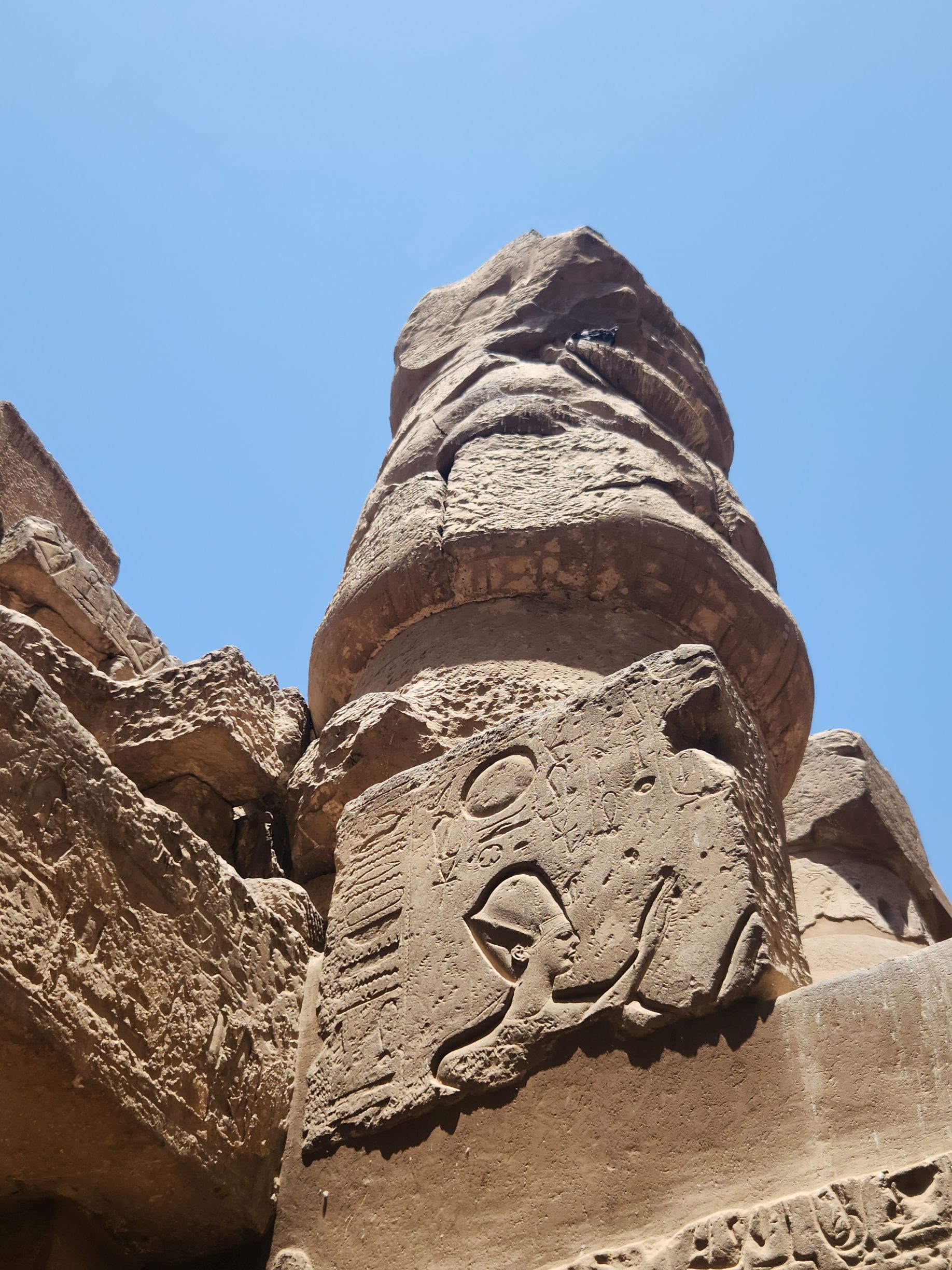
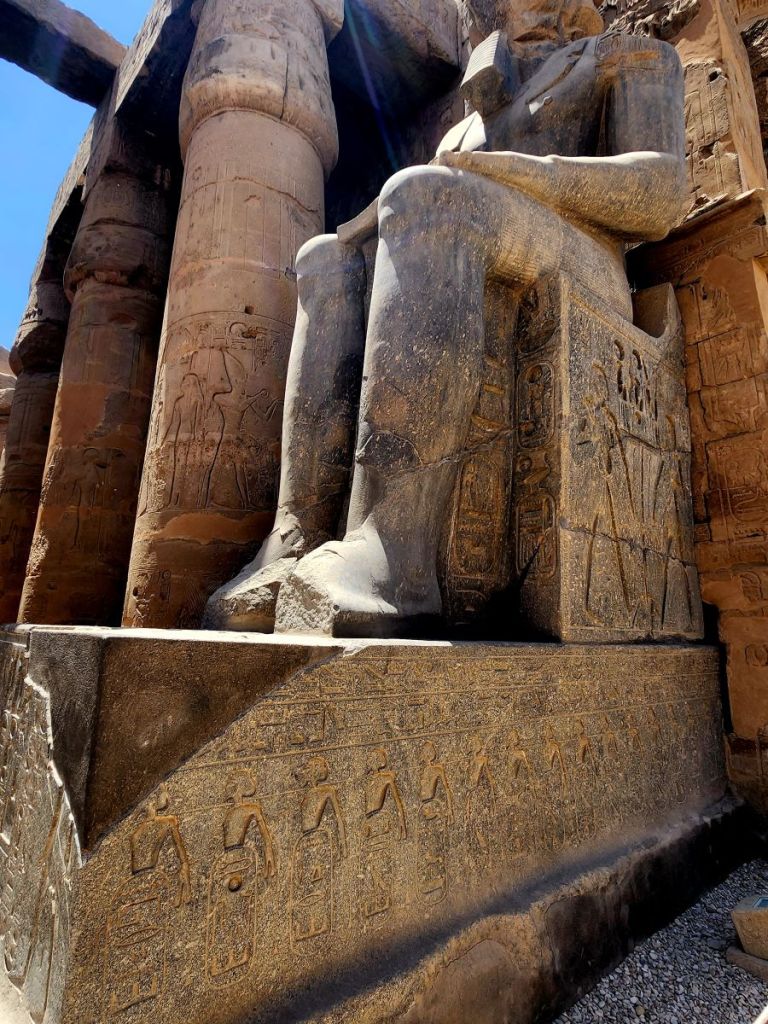
We walk back out to meet Amr, taking more photos of the carvings and the statues and remembering to take a picture of the plinth that Ramesses sits upon – which has carvings of his enemies. He is literally sitting on (crushing) his enemies.
There is just so much to see. More carvings, more statues, cartouches (which are the gods and kings names) and the entrance to the mosque way up on top of the main structure. Weird, but I think Amr said that it is because all of this was buried under the sand and the only part accessible was the building and the mosque entry. I could be misremembering – but…it sort of makes sense in a really odd way.
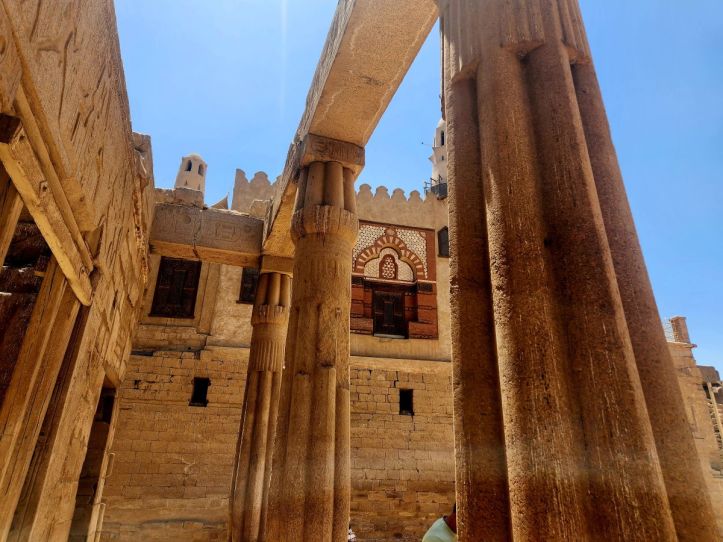
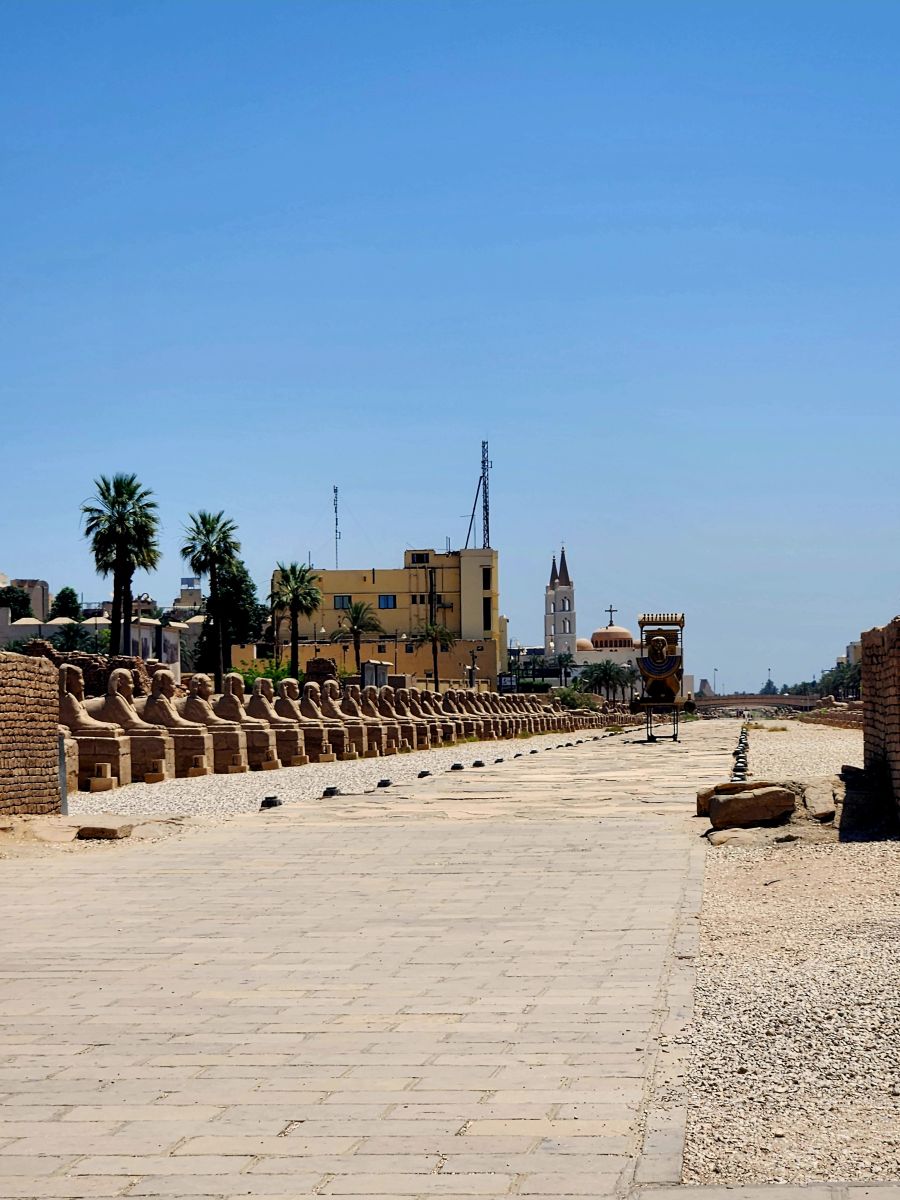
The last thing we do is walk out to the Avenue of the sphinx for a long shot down the avenue. I would love to walk the whole thing – but it is heating up (it has been fine up until now with a lovely breeze) and full sun – and it’s getting on lunch time, so photo stop it is!
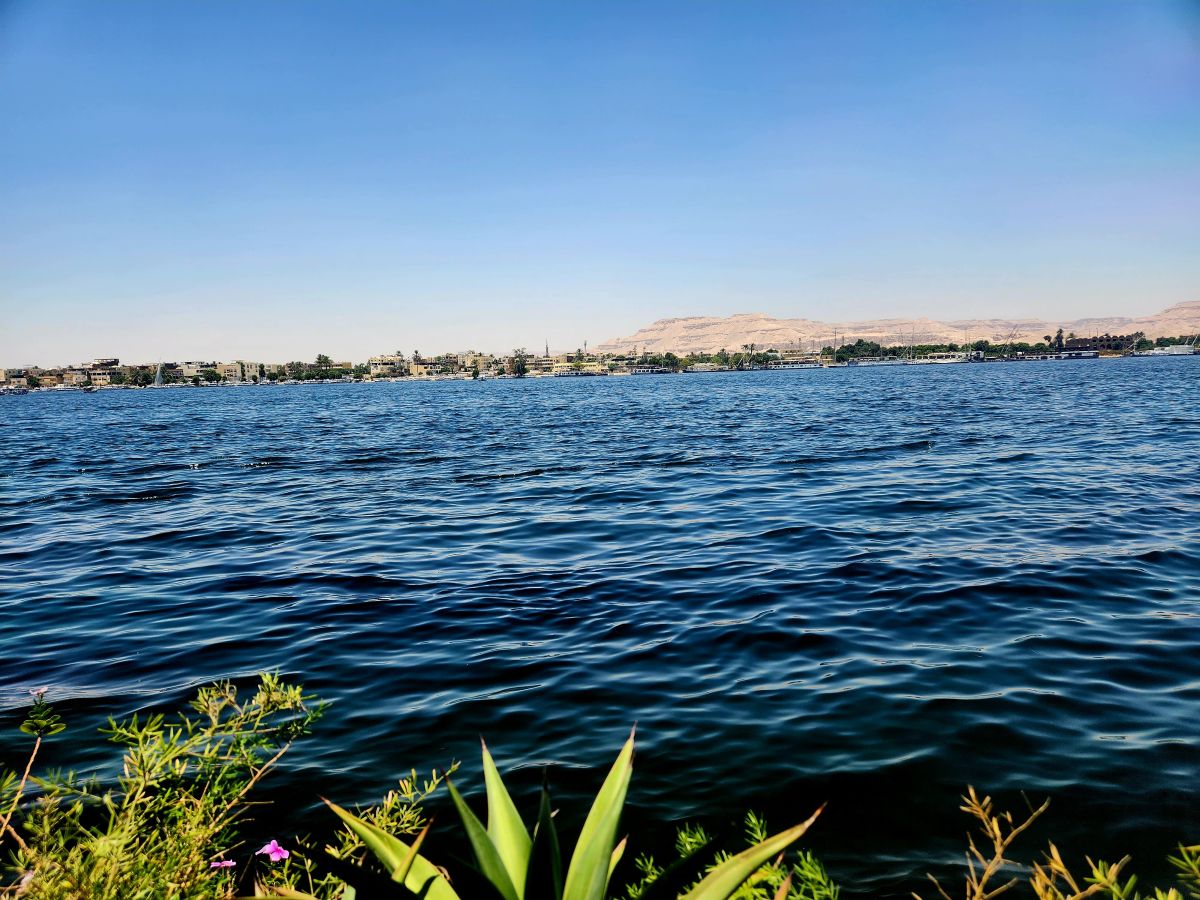
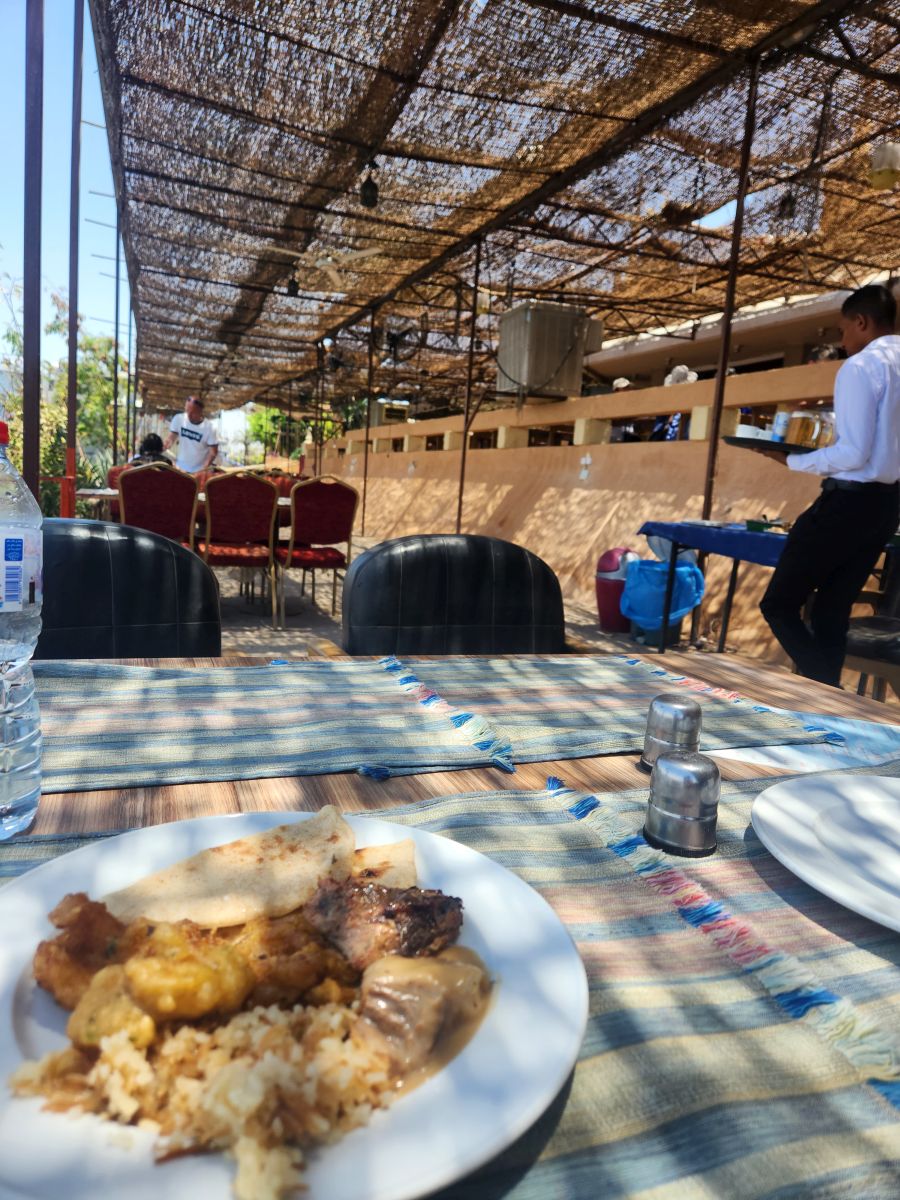
Amr takes us to lunch at a lovely spot on the Nile. It is a buffet with so so food, but the atmosphere is the best. Sitting on the Nile, enjoying the breeze and watching the boats come and go….as well as staring at all the River boats – there are so many! Over 50 at least!
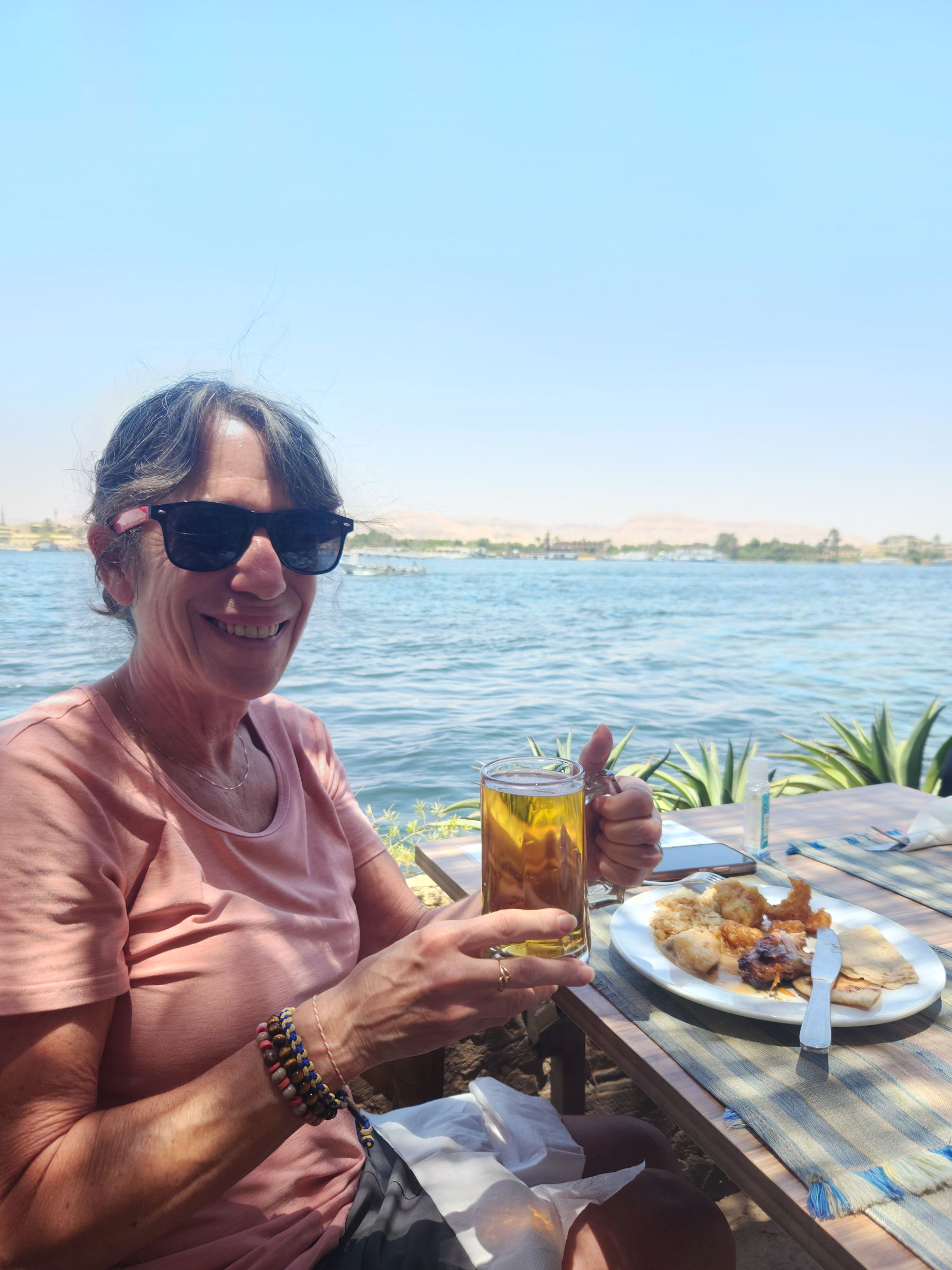
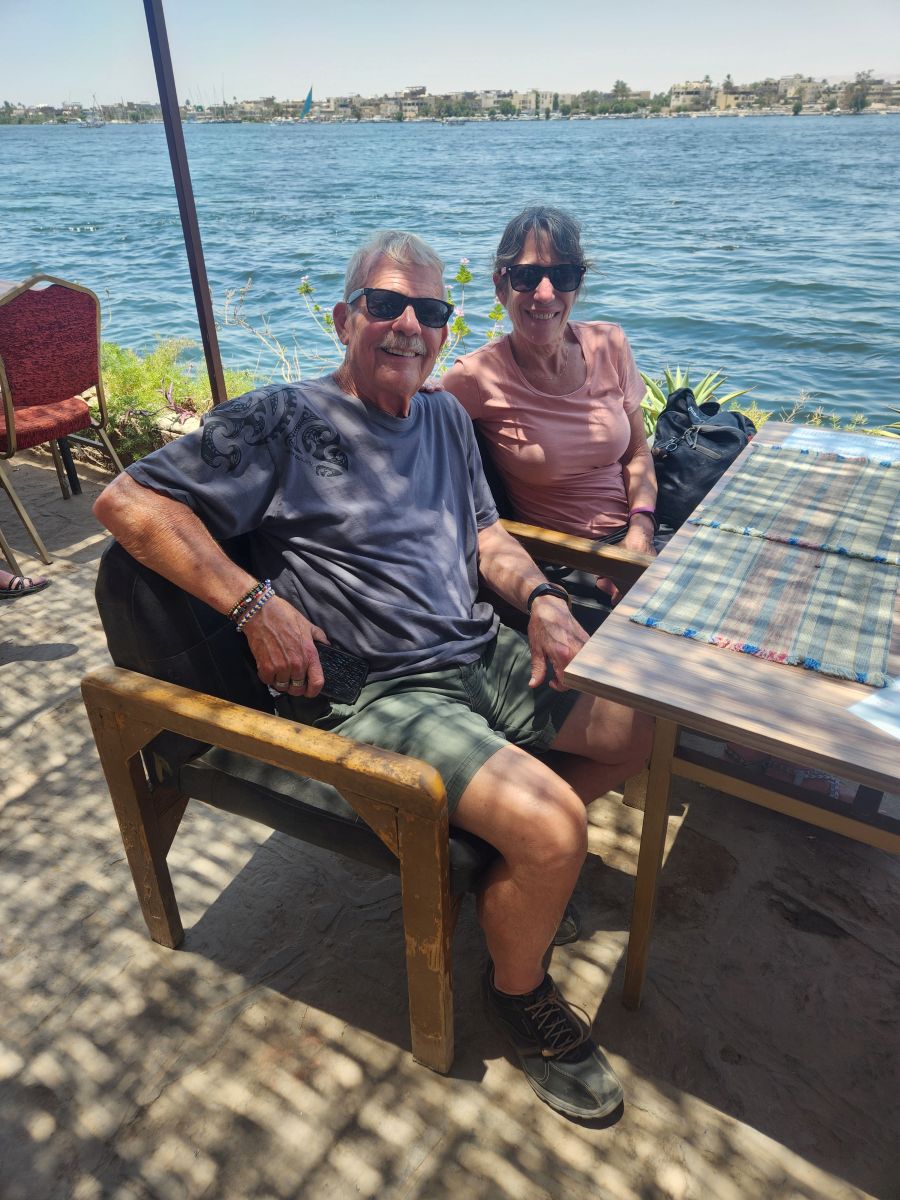
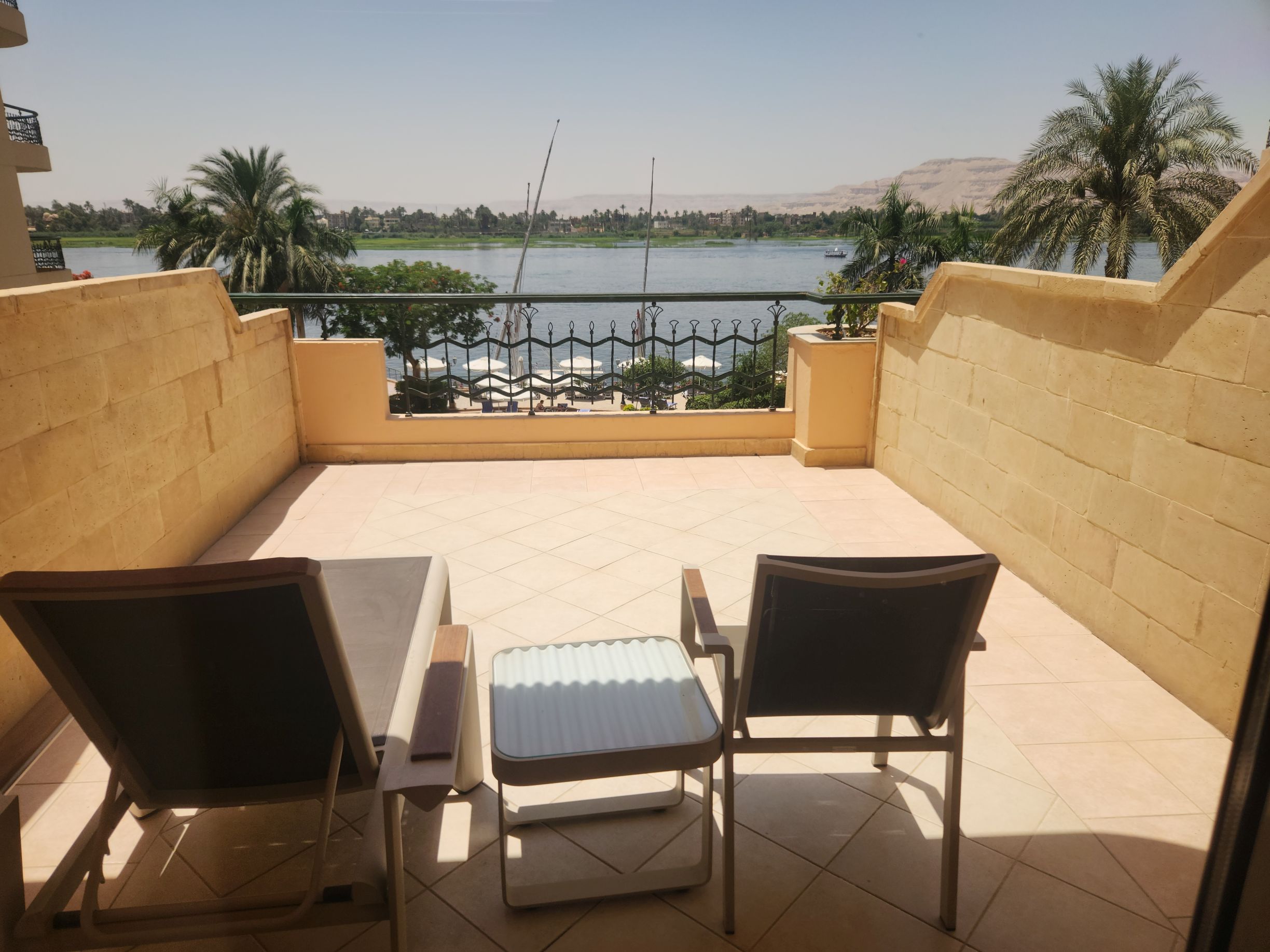
Then it is on to the hotel where we have been given an upgraded room. Oh, nice! We are escorted to a huge room with a marble and stone bathroom – both shower and tub – with a massive balcony overlooking the Nile. This will be a great place to spend the evening, winding down for our day’s activities!
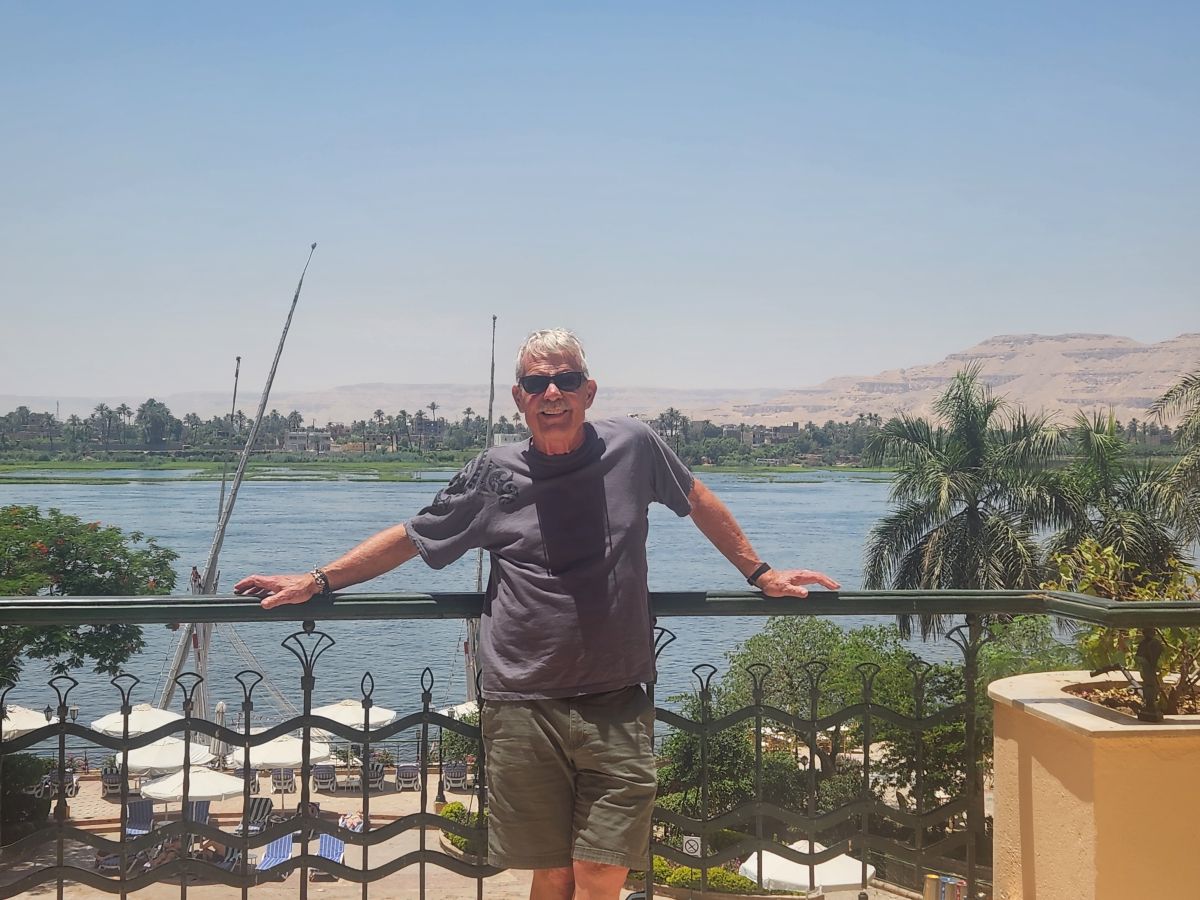
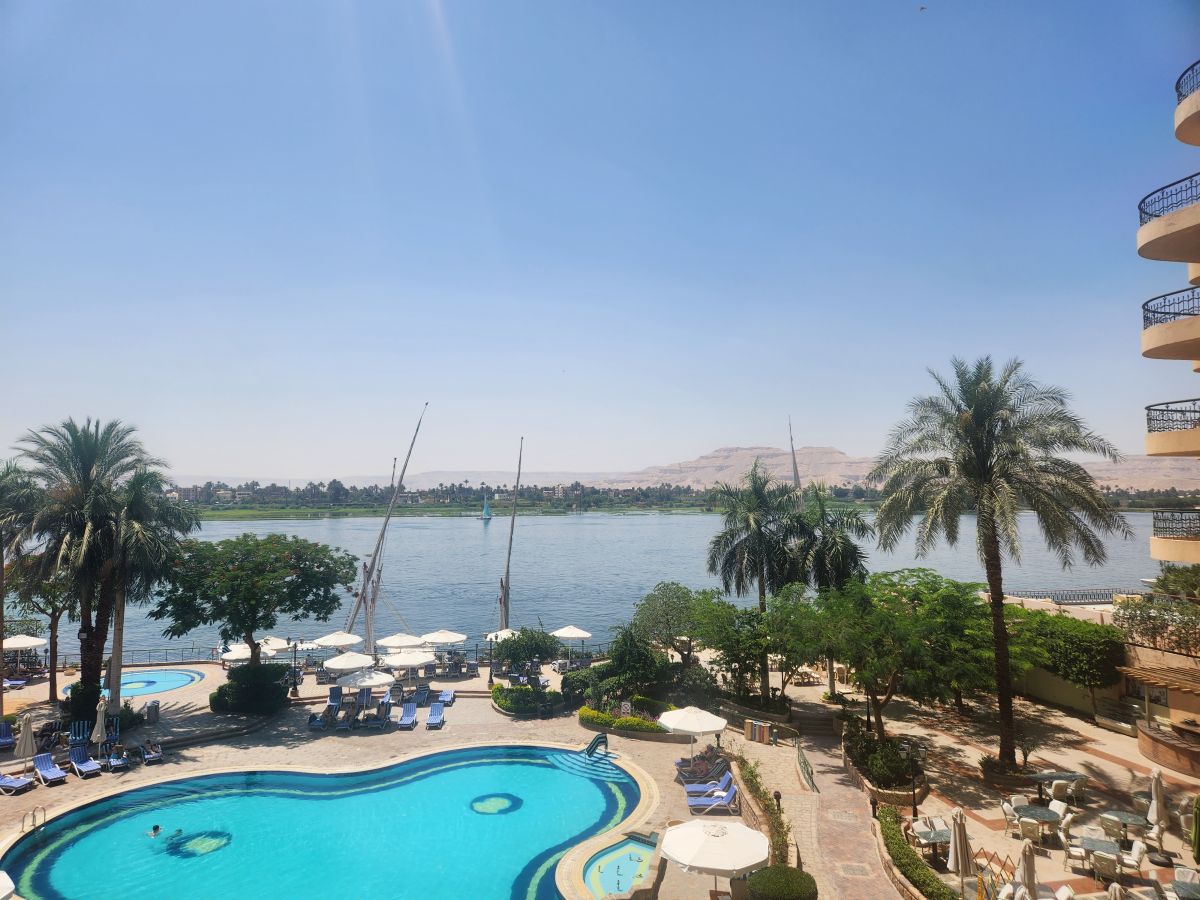
But the day isn’t over yet. We have the afternoon all to ourselves. After getting settled – doesn’t take very long since we really have nothing to organize – we go downstairs to the pool bar for drinks and a little snack of chicken satay which is quite tasty and surprisingly inexpensive!
Refreshed and cooled, we head off to the Luxor Museum, which Amr recommended, and is open again at 5pm, which is perfect for us to explore then come back for dinner and sunset. About a 30 minute walk down the Nile, this also gives us time to walk off our food and get a little more exercise in for our day. On the way we walk right past the Luxor palace – like I said, it is just sitting there right in the middle of the city! Then move on past the restaurant where had lunch on down toward the museum. Of course we get picked up by a tout who says he recognizes us from the hotel. He says he is the chef there and does all the desserts. Hmmm….why does this sound familiar? Can anyone say Delhi, India? Same, same, no different! He walks with us toward the museum telling us it doesn’t open until 6. Uh, no, sorry. It is 5, we tell him. Then he talks more about the hotel asking us if we enjoyed our welcome drink. We didn’t get a welcome drink, what would that be? Hibiscus tea, he says. Uh huh. We should have then asked him what hotel, but figured, eh, who cares, we’re going to the museum. He continues on with us trying to take us to the local market – which is only held on one day, today! -to buy some saffron. We keep saying no and finally he gives up and asks us for a little tip. Um, no. How about for my little daughter? Um, no. We don’t have any money. He’s quick, because then he wants to know how we are going to pay for the museum. We just smile and cross the road to the museum, where we are first in line and the guy there says we have to wait 3 minutes! We can do that!
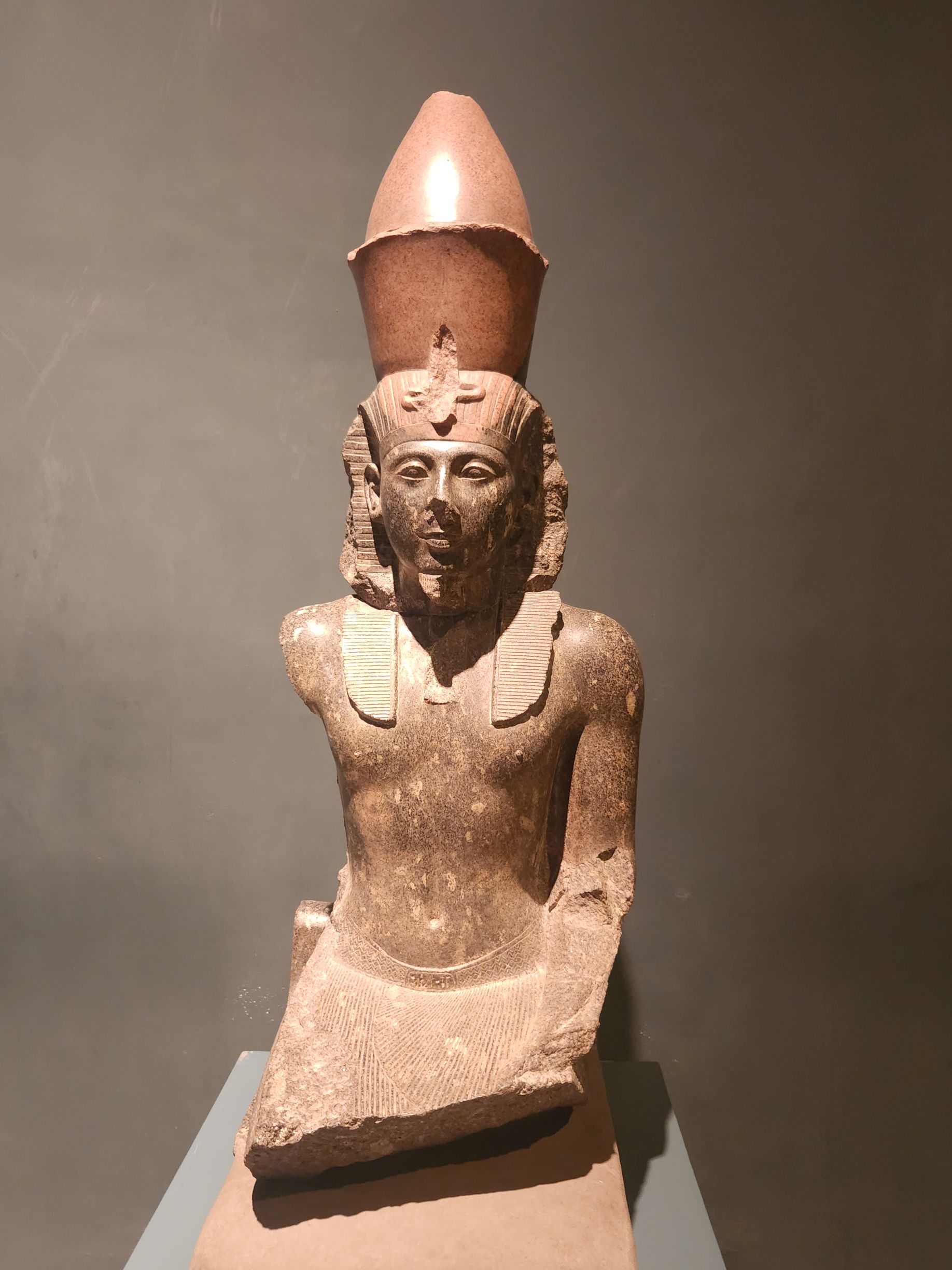
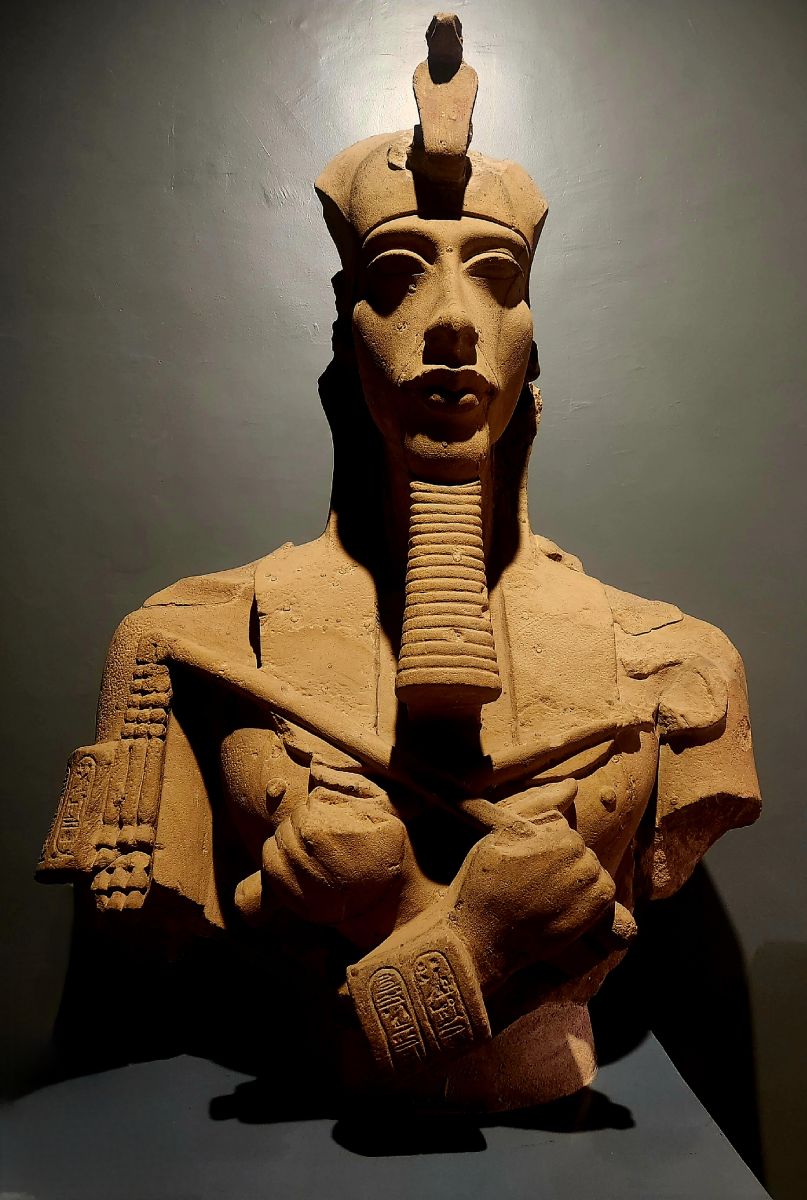
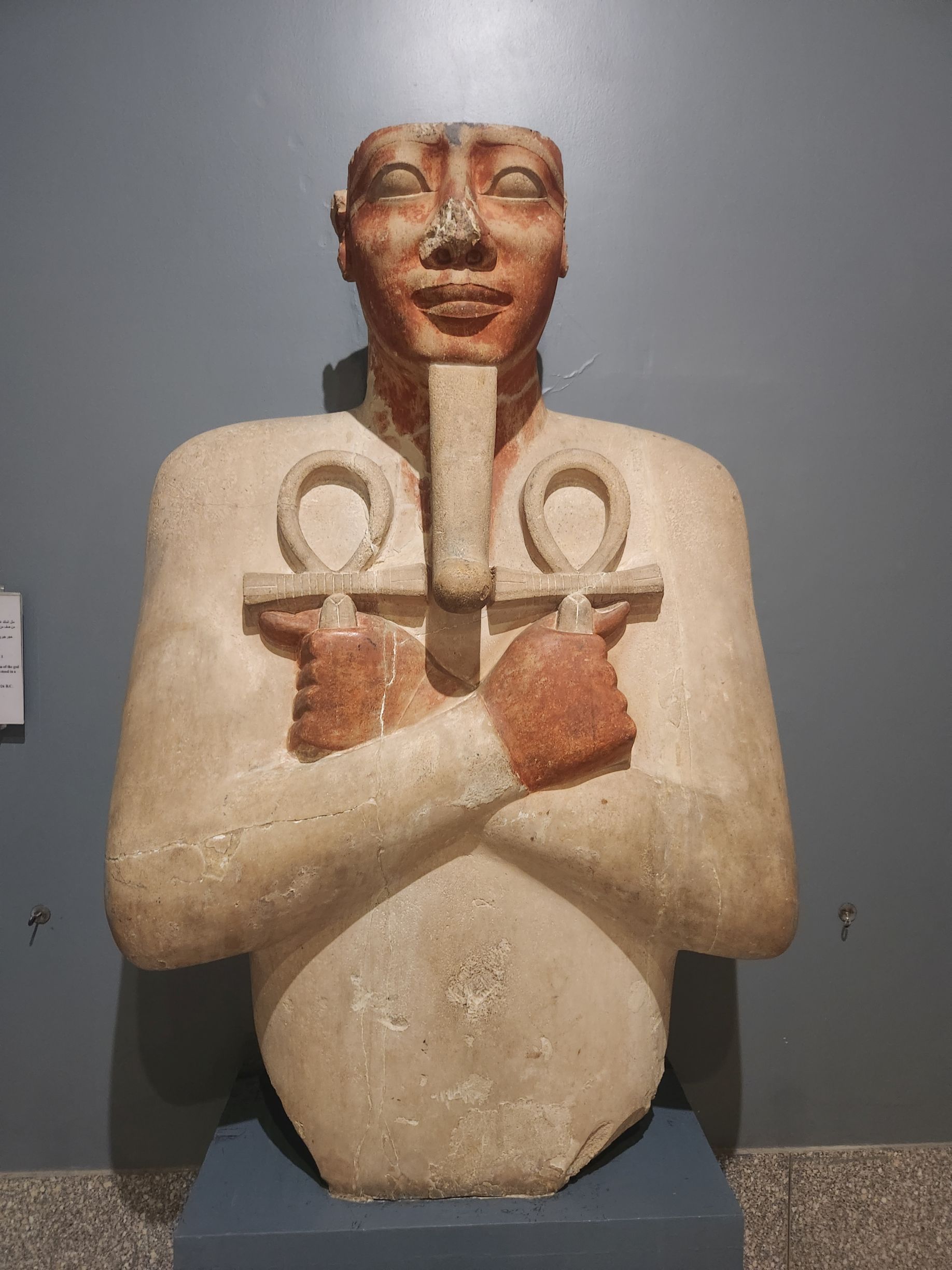
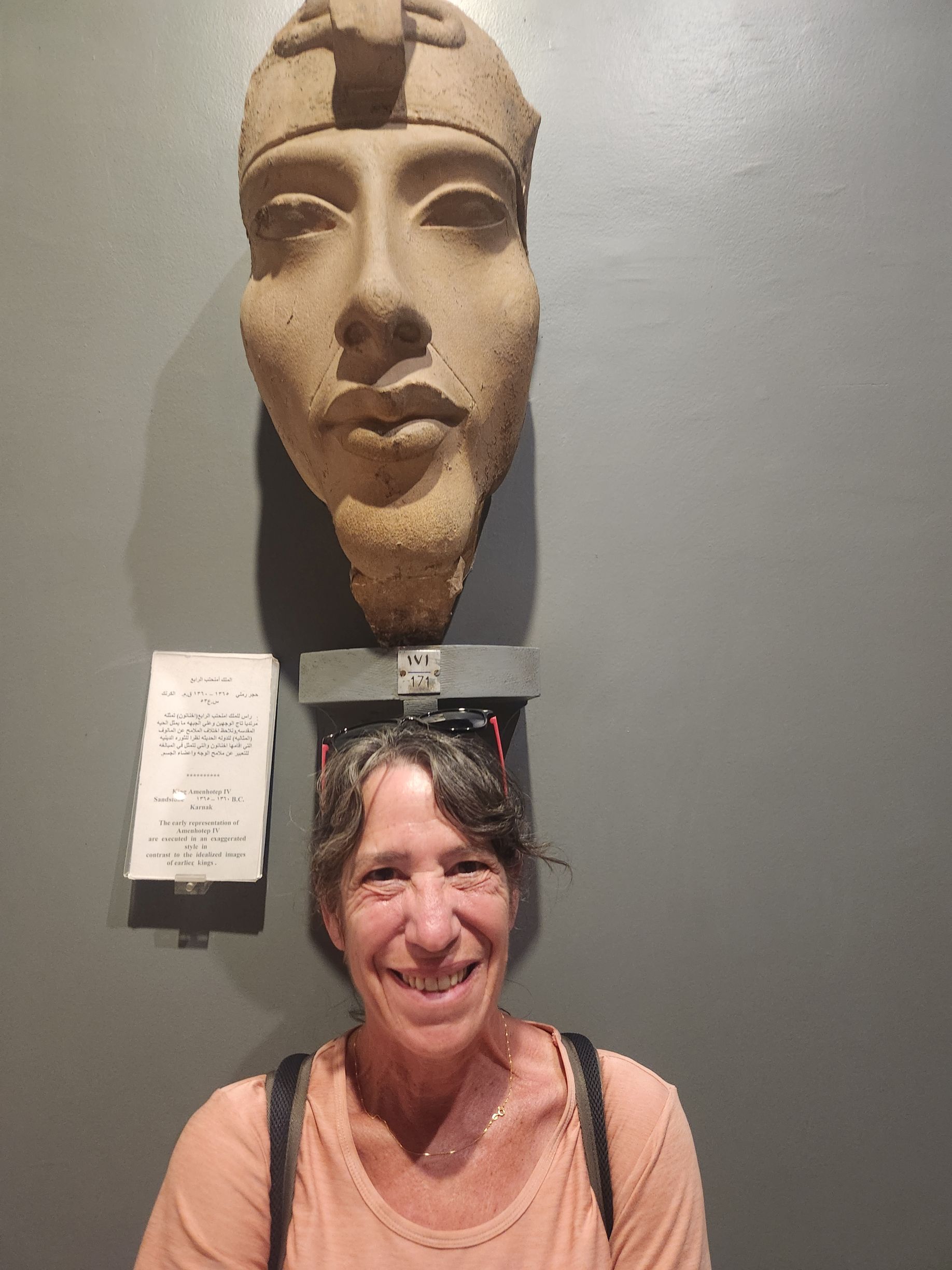
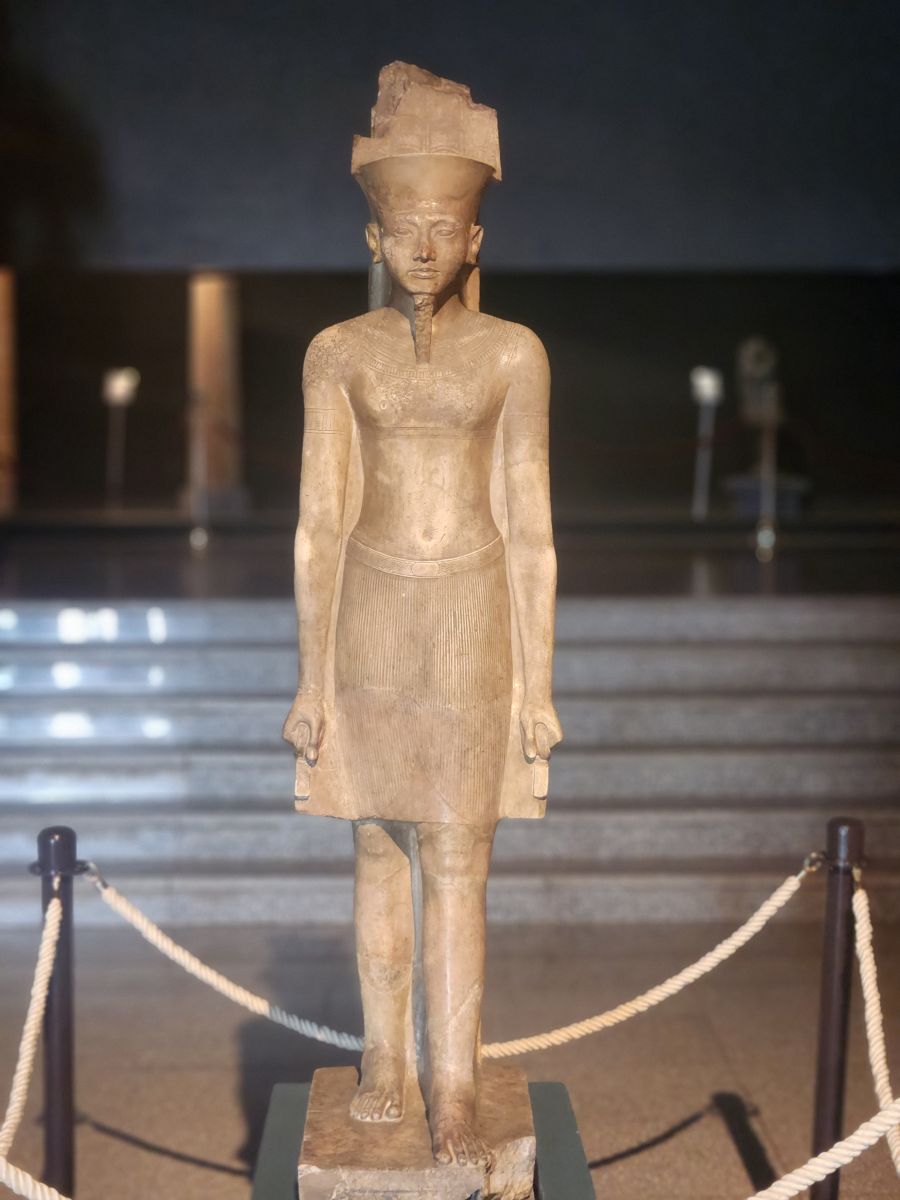
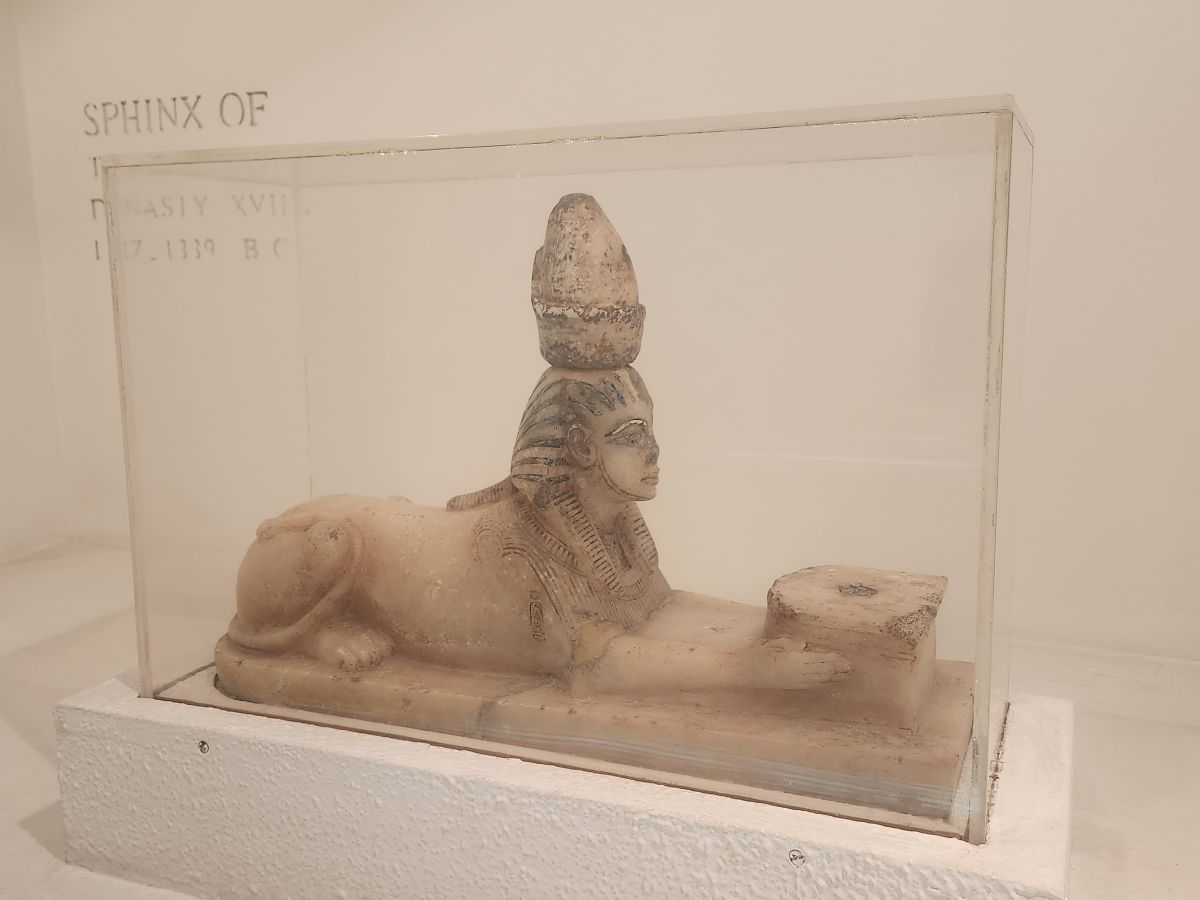
The Luxor museum is a little history museum that packs a big punch. Wow. They have so many artifacts from the temples -from all different periods of times. It is just as cool as the temples themselves! Because you can just imagine where these statues and busts and tombs were located at the actual sites we had just visited. Statues of different kings from the New Kingdom and Middle Kingdom (Thutmose and Amenamhat), the writer Mentuhotep and a relief of the God Amun. Cartouche carvings, an alabaster statue of the God Sobek and King Amenhohtep (whose name was later changed to Rameses). A sphinx, more statues. All found in the Karnak temple.
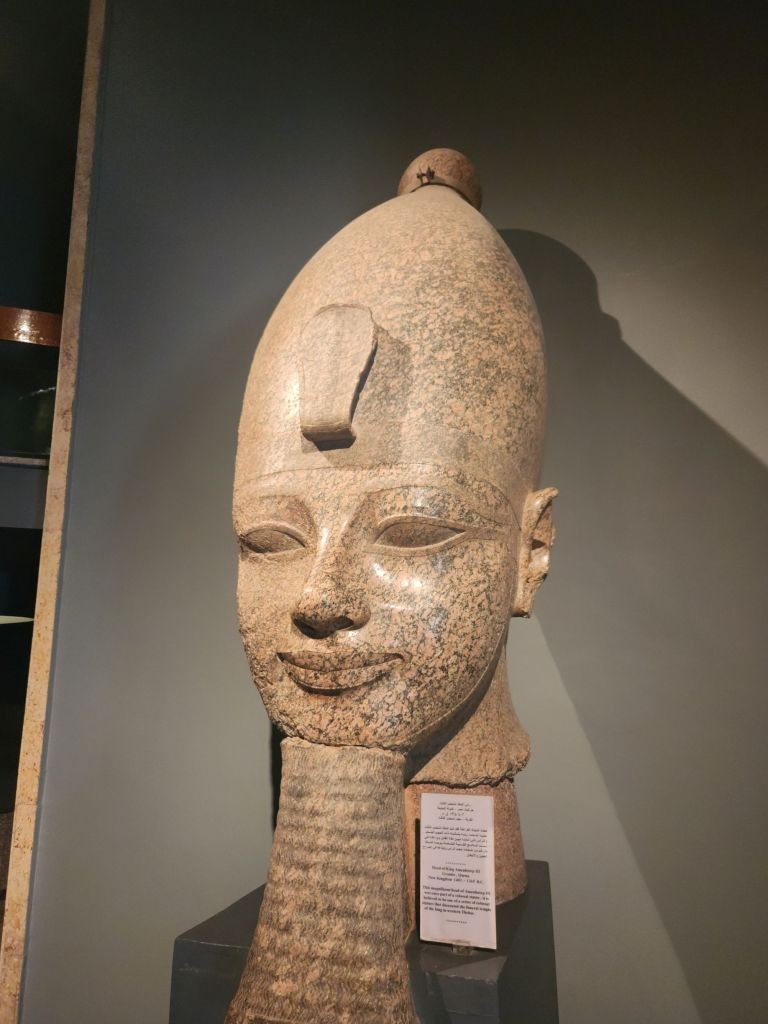
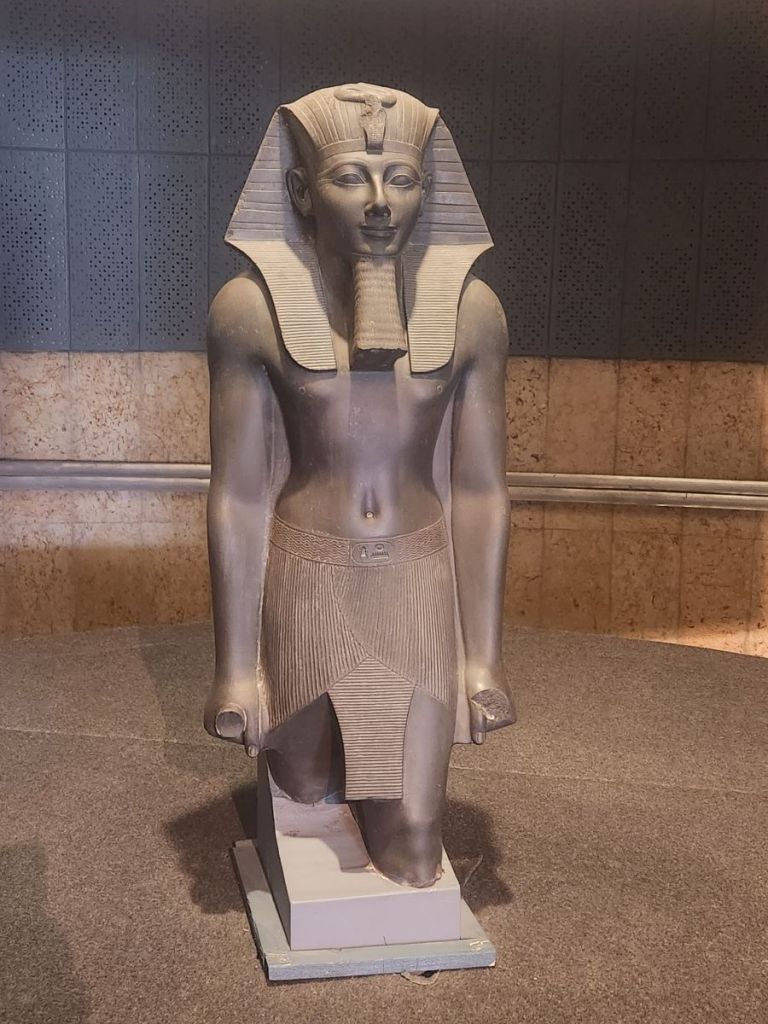
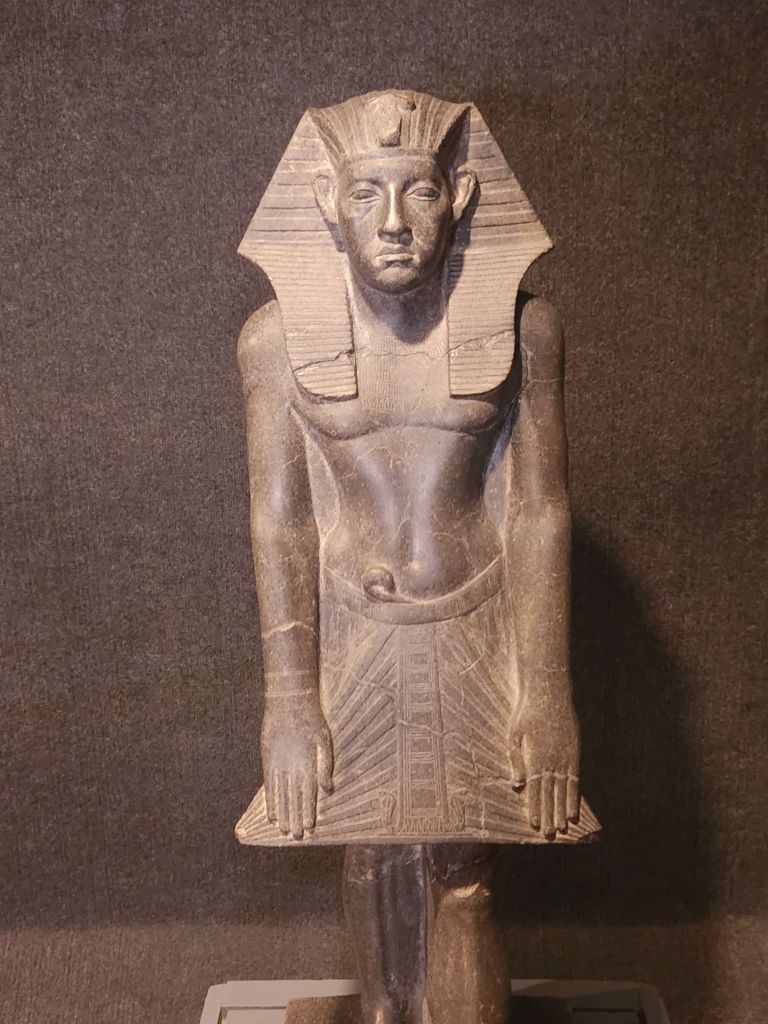
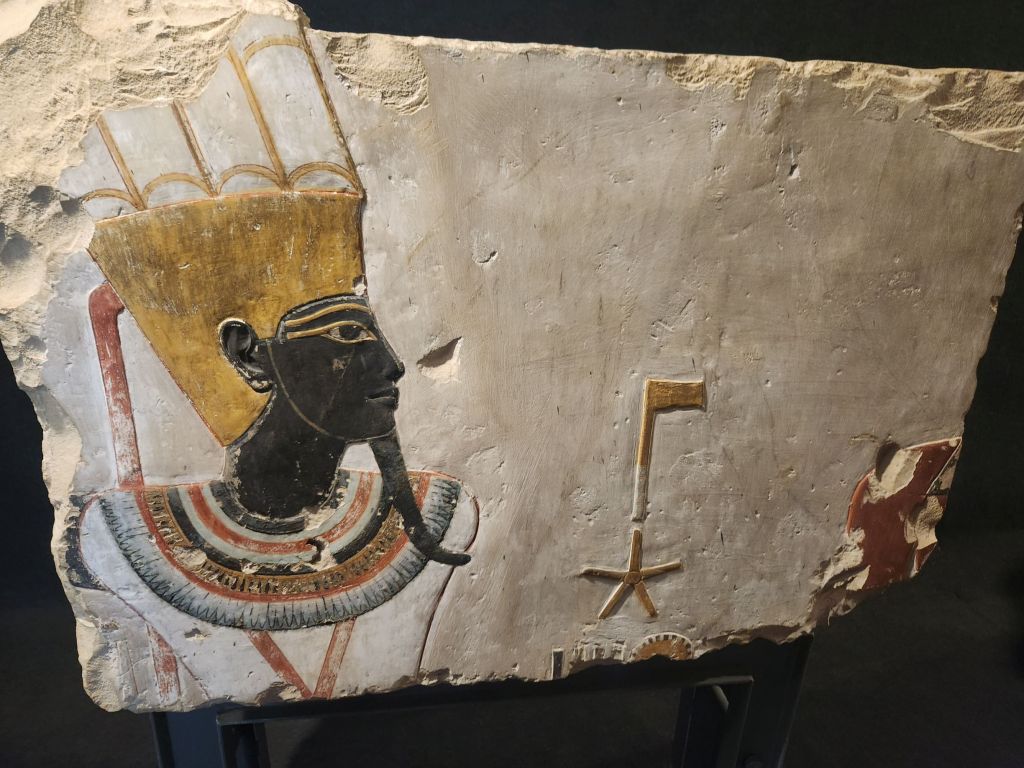
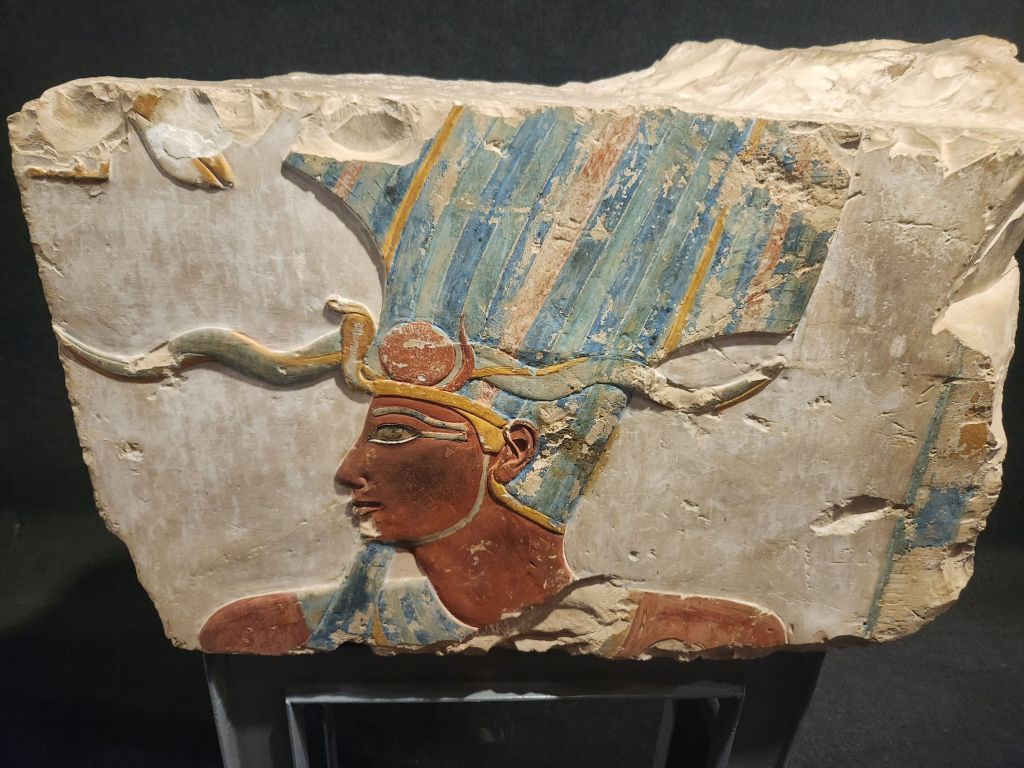
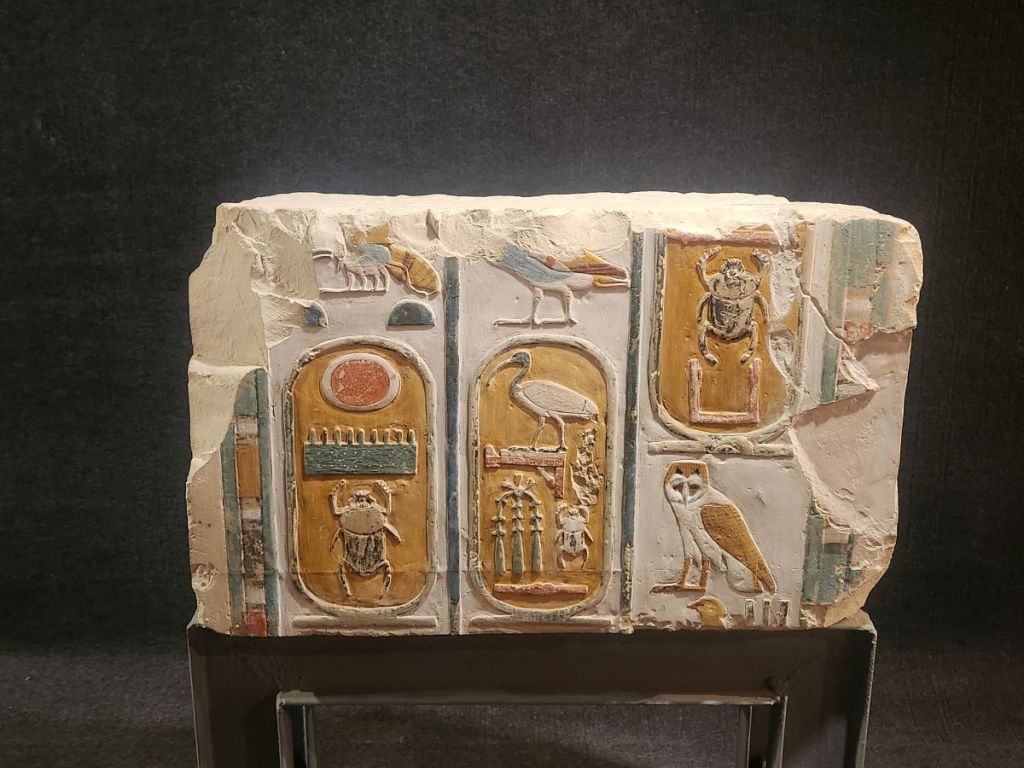
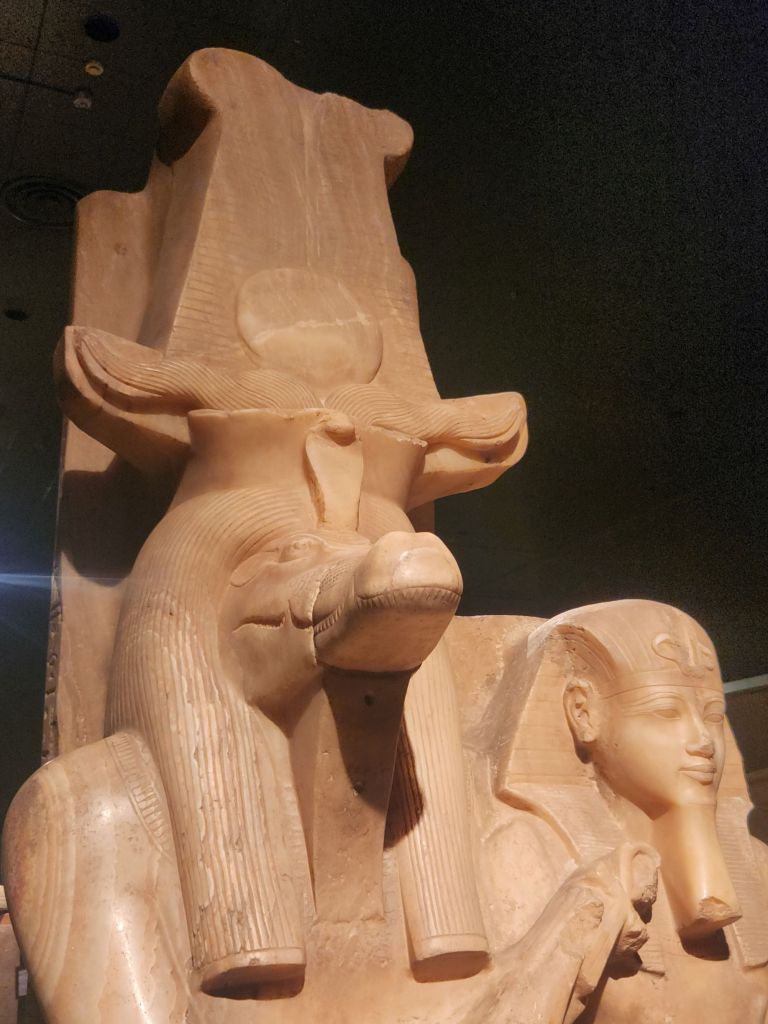
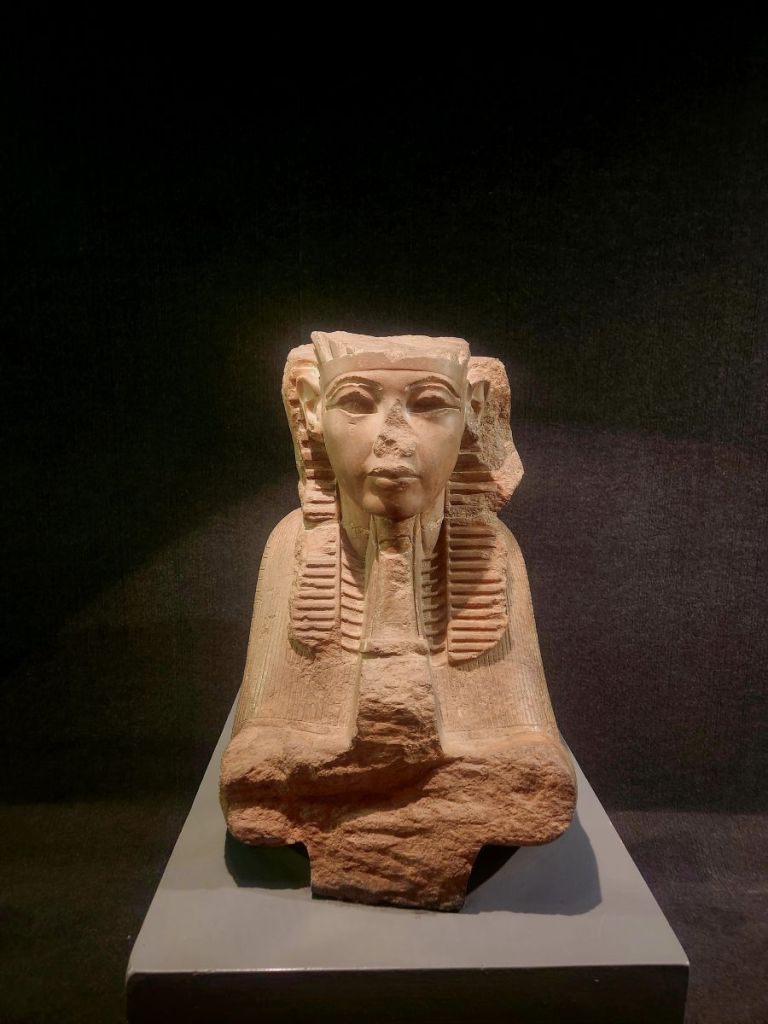
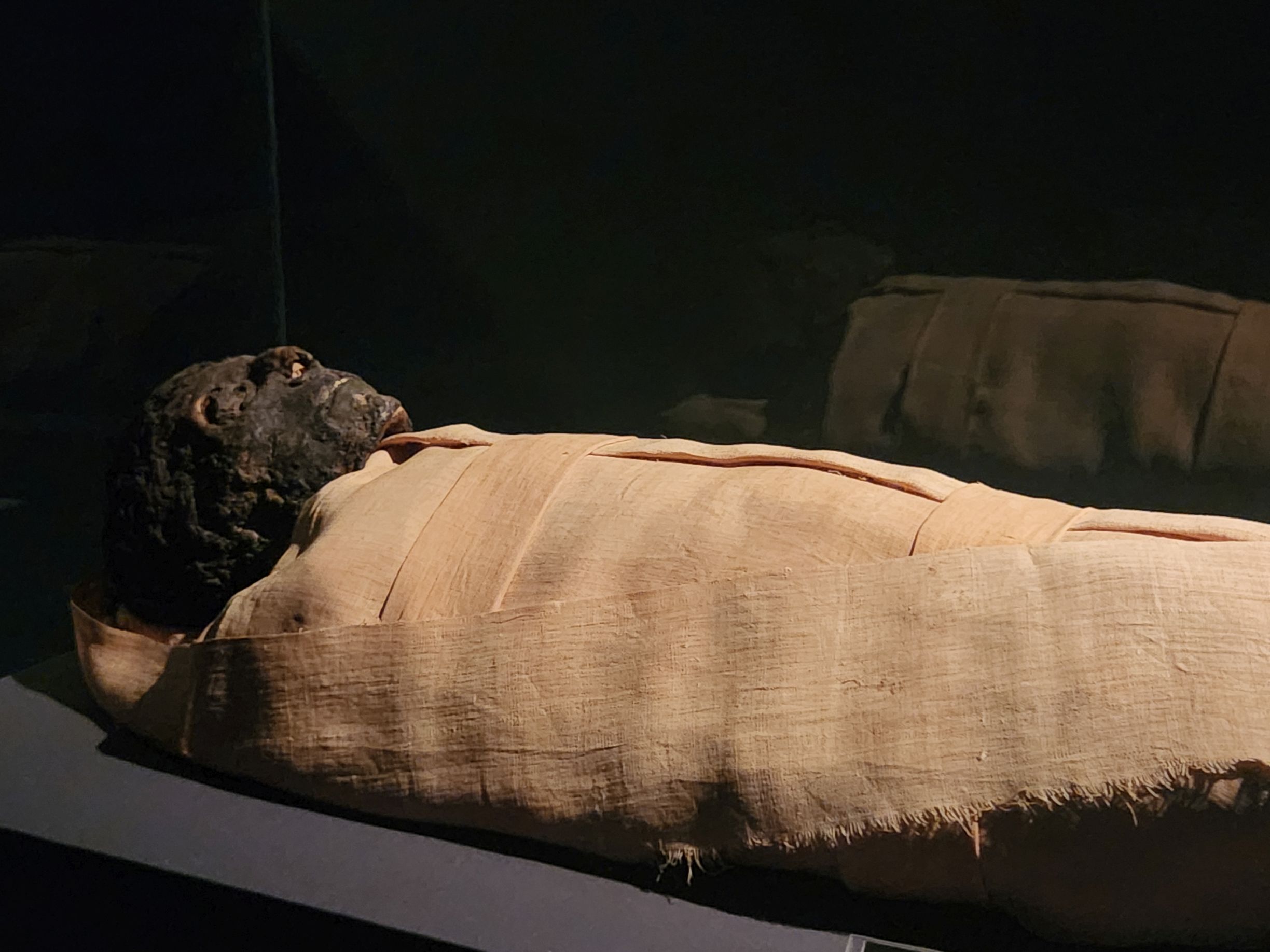
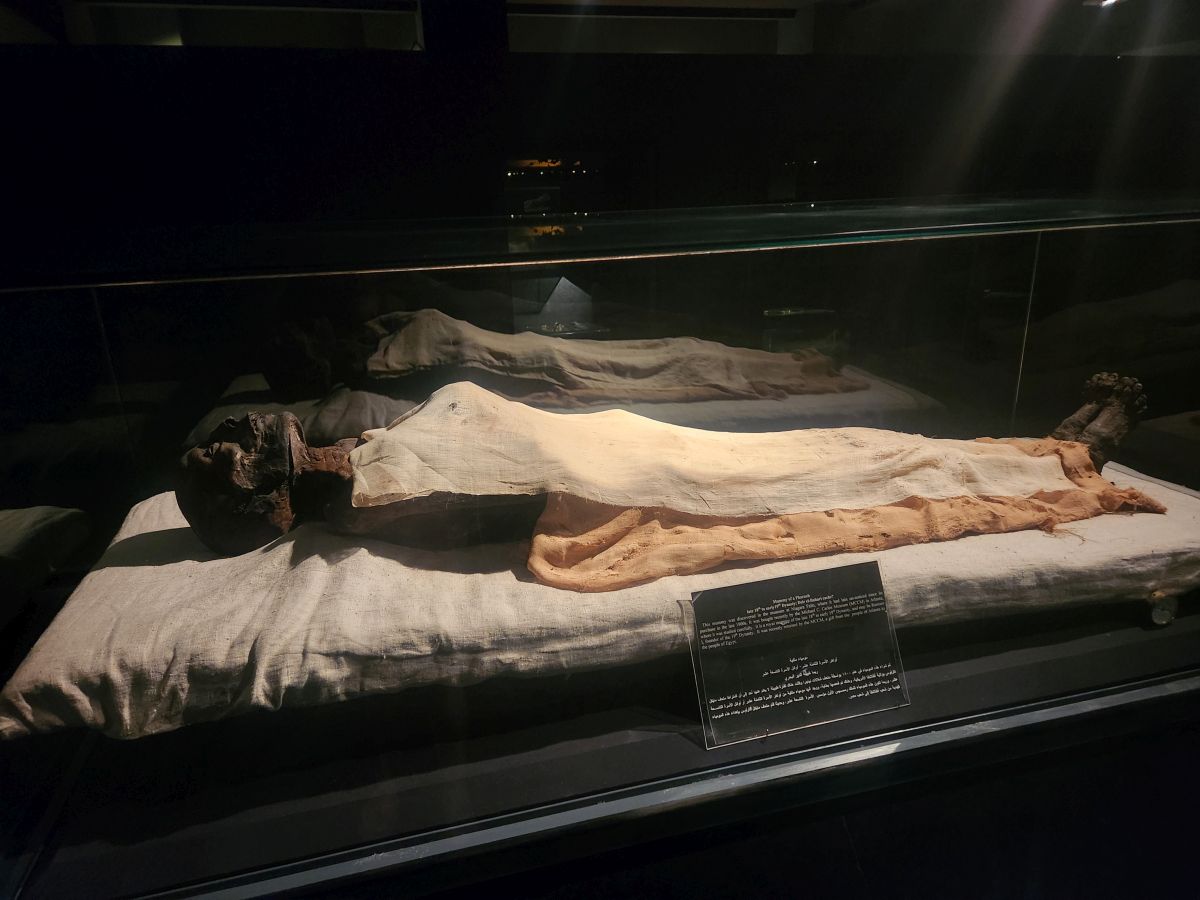
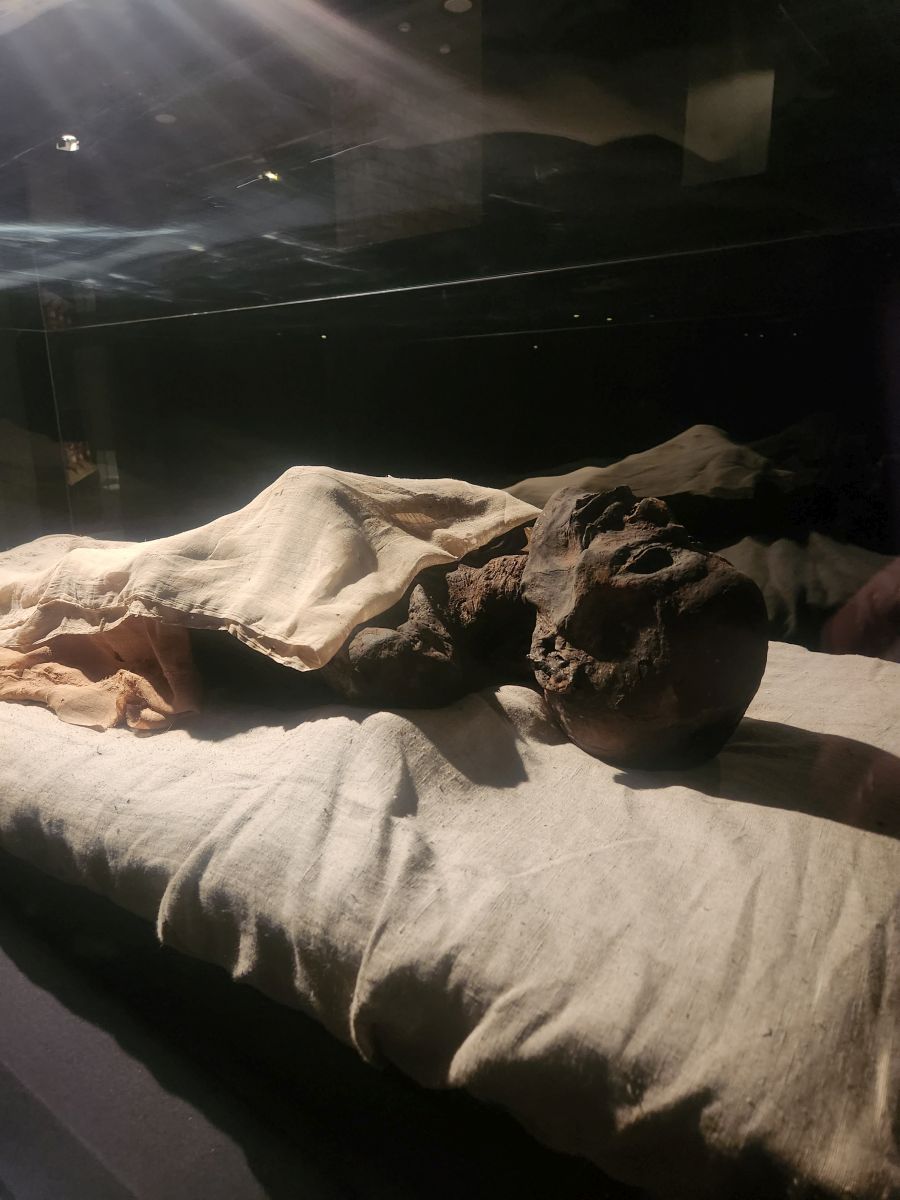
Then there were the mummies. Oh, the mummies. The preservation!!! One mummy is that of a Pharaoh, and it was found in a museum in Niagara Falls of all places! It had been purchased in the 1800s and just languished there unnoticed until it was bought by a museum in Atlanta that then returned it to the people of Egypt.
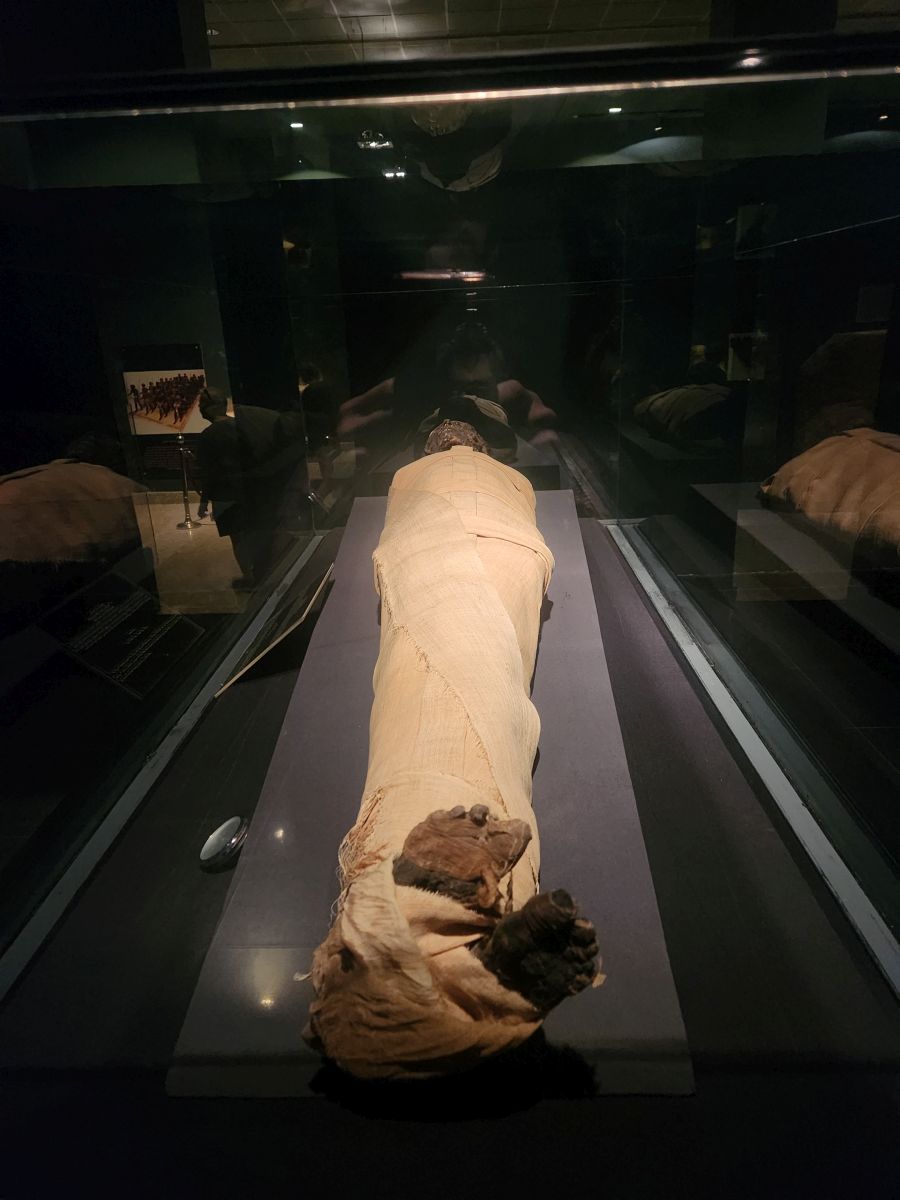
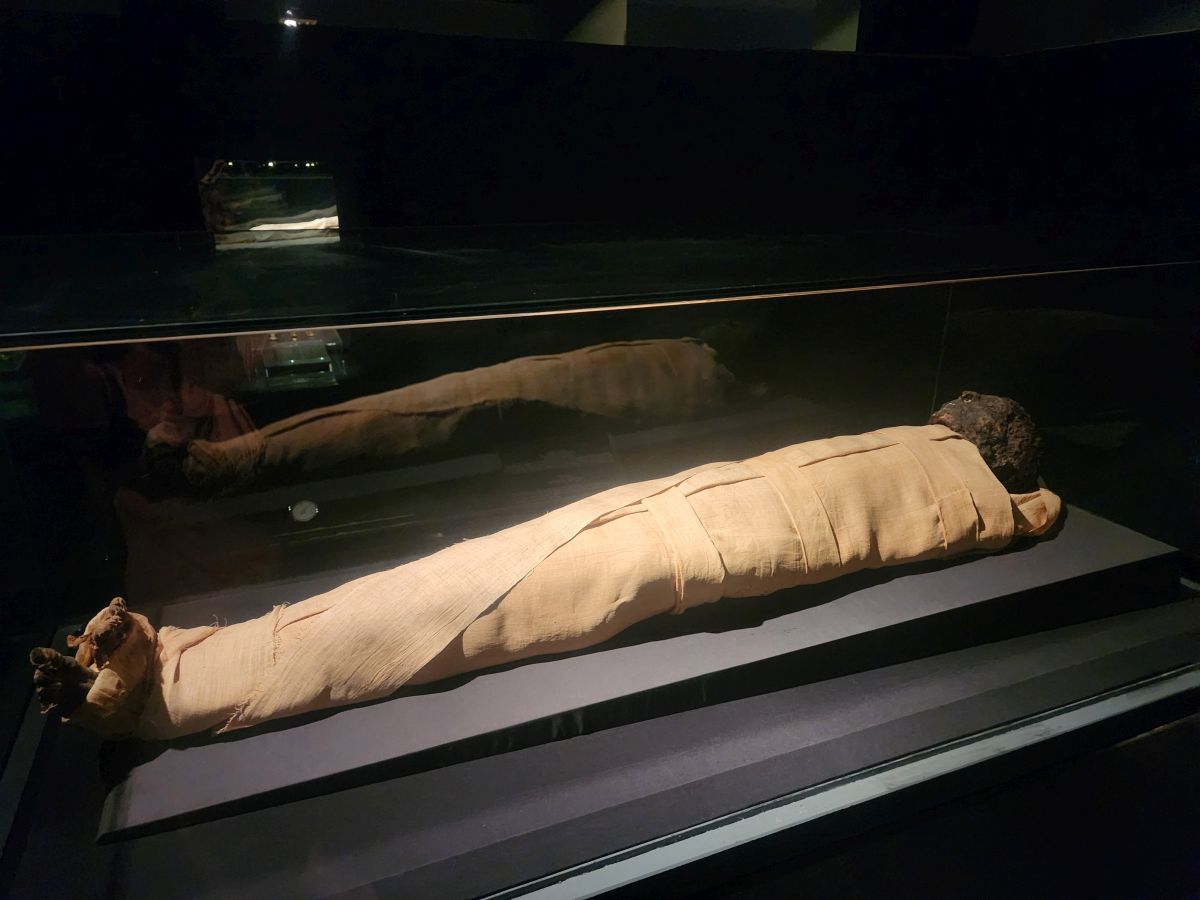
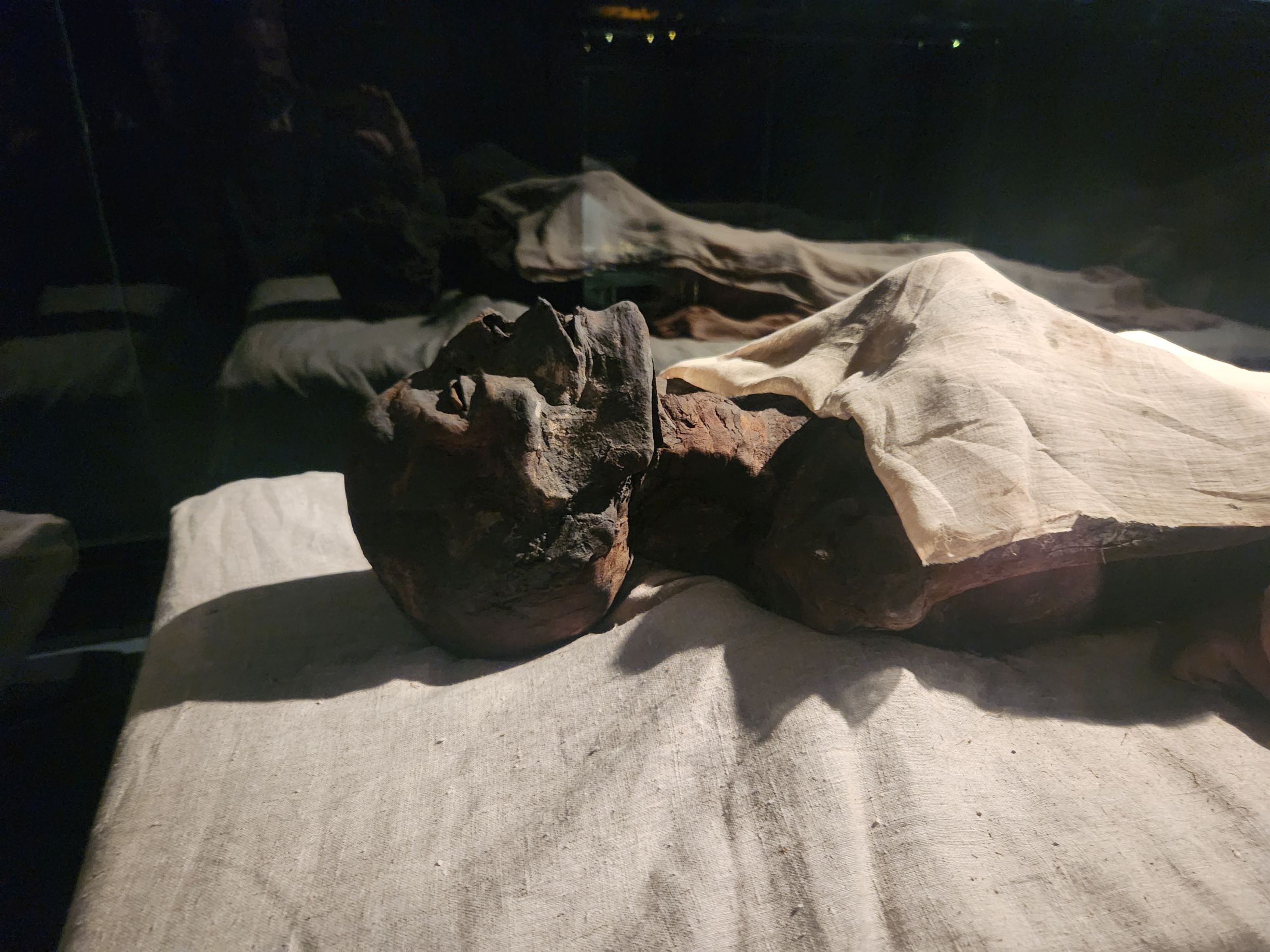
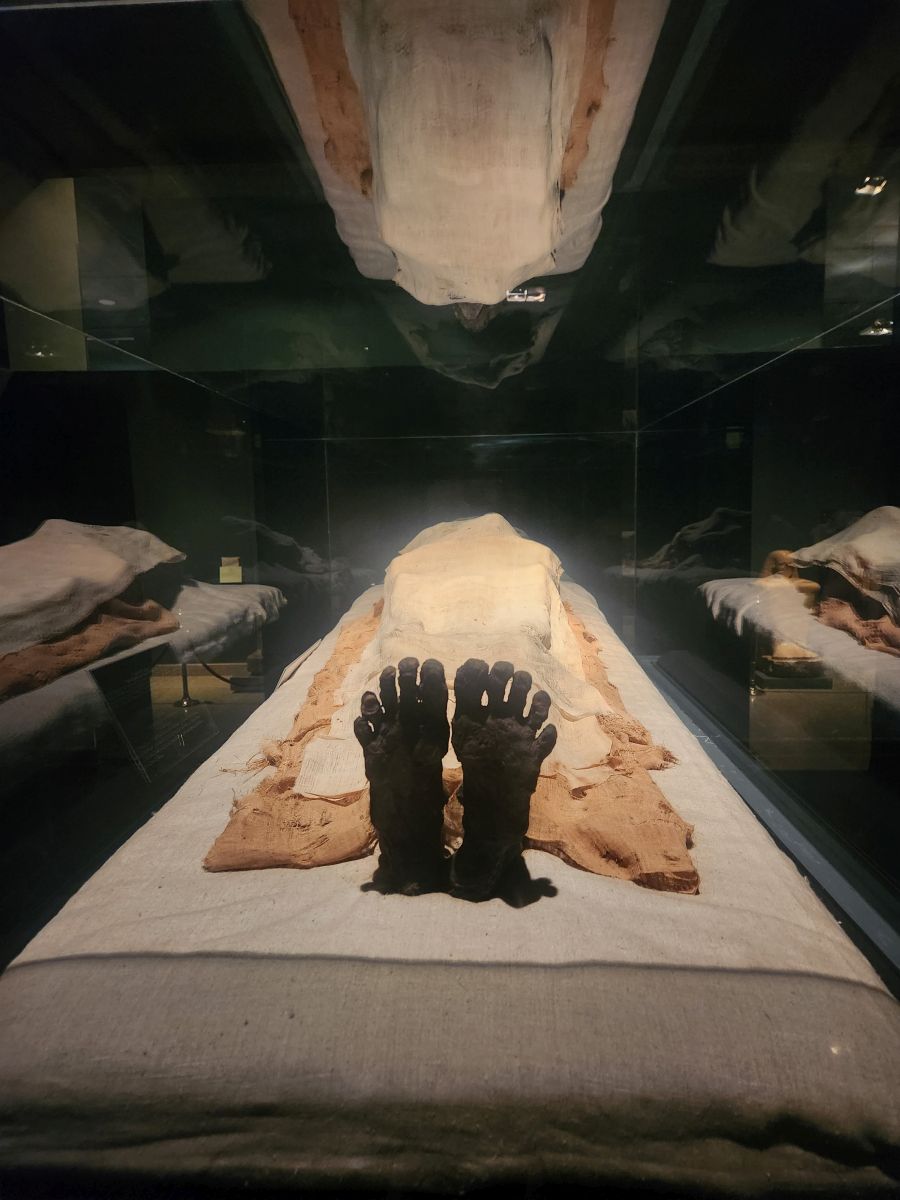
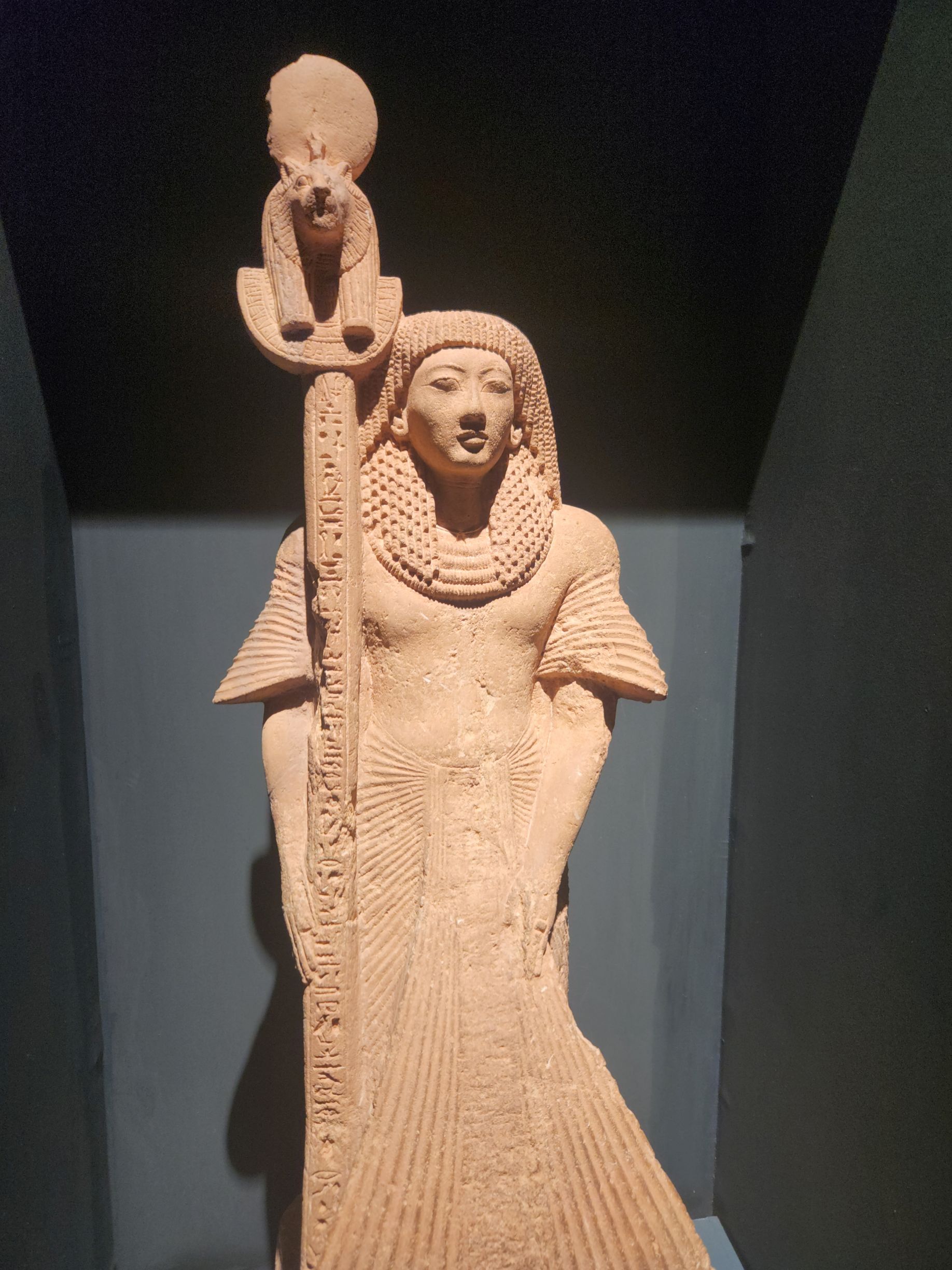
More and more statues are strategically placed around the 2 floors of the museum, including an intricate sandstone statue of Nebre, the commander of a fortress in western Egypt, with the lioness-headed goddess of war on his staff. That one was one of our favorites.
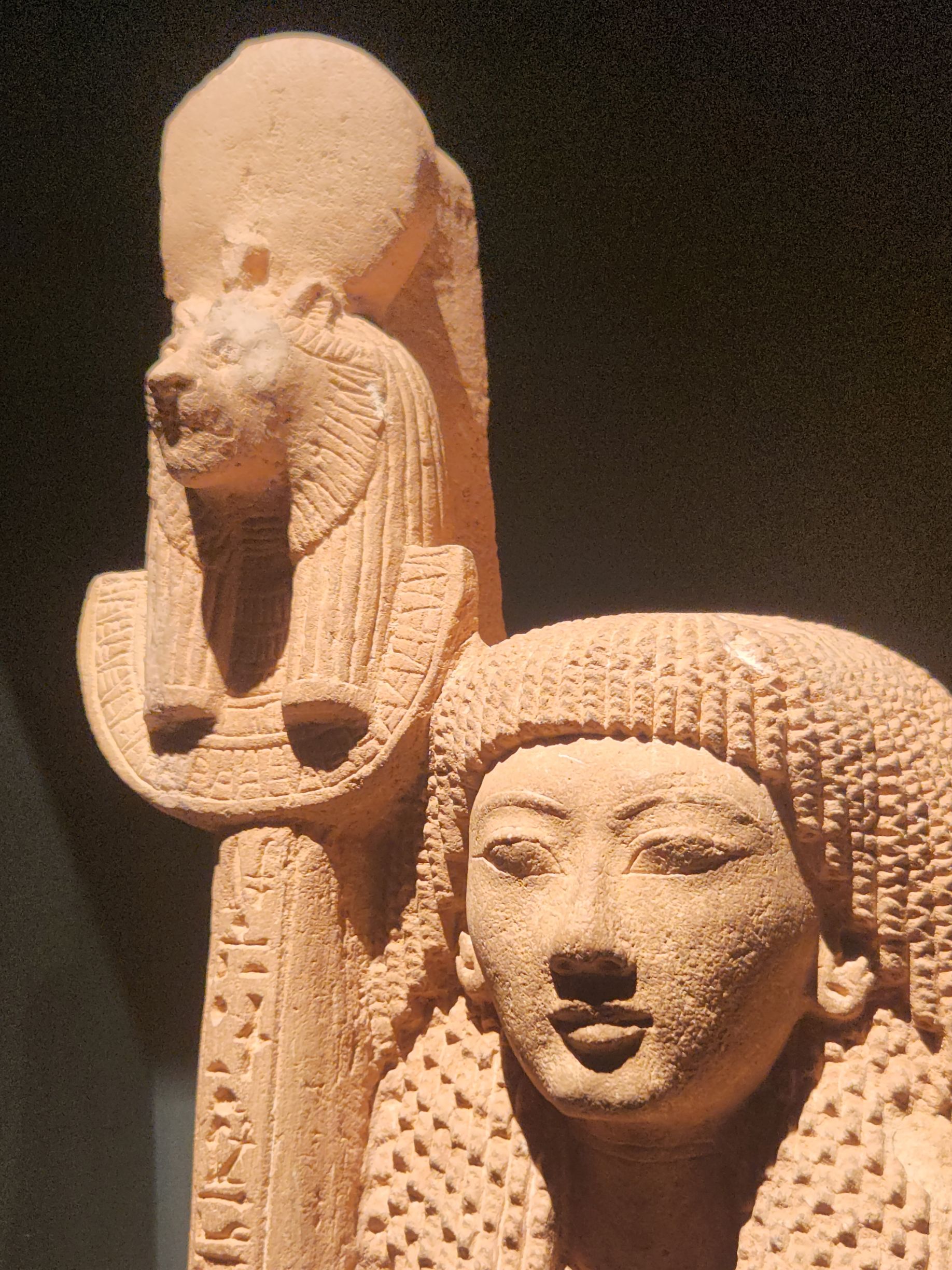
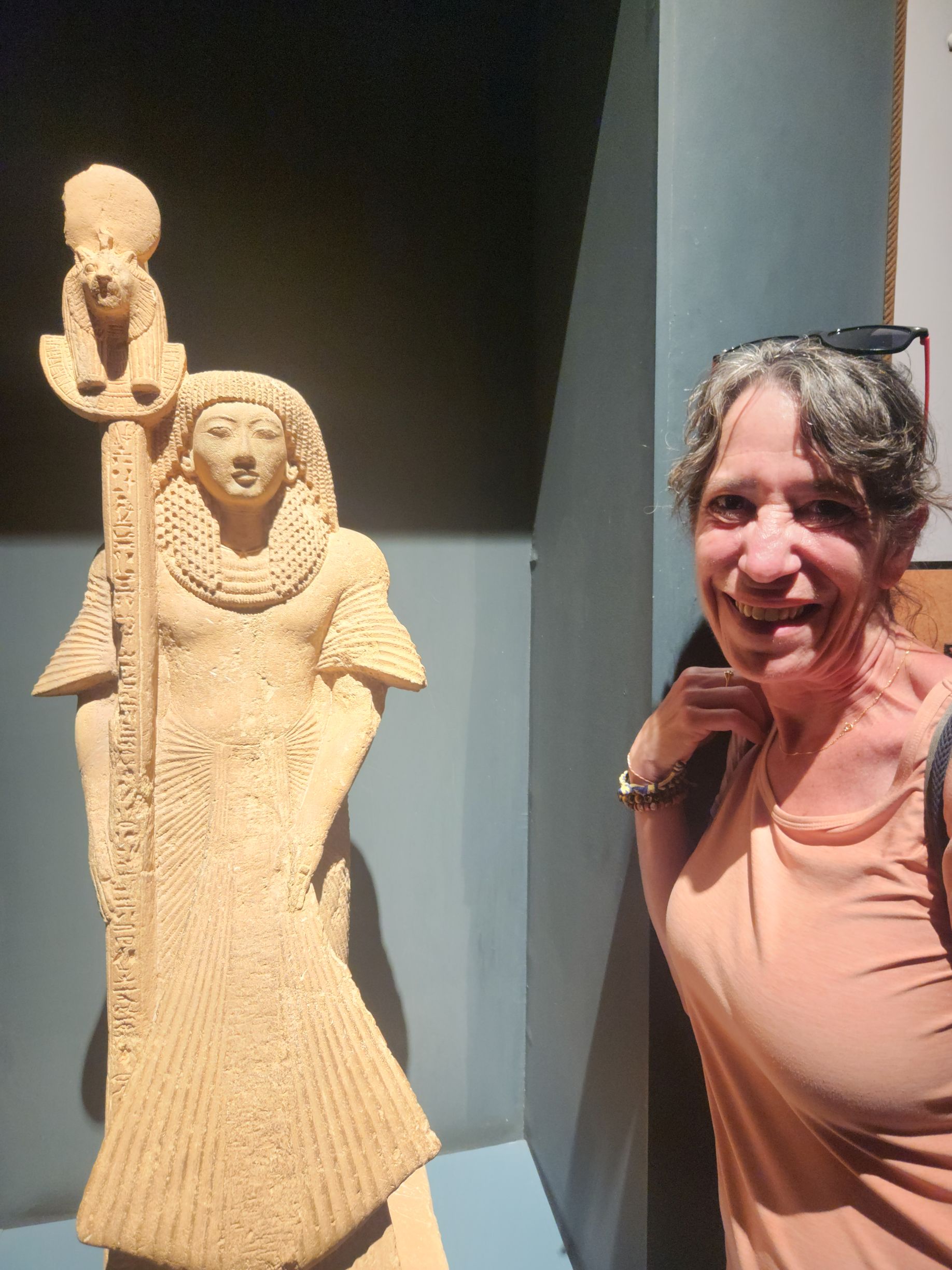
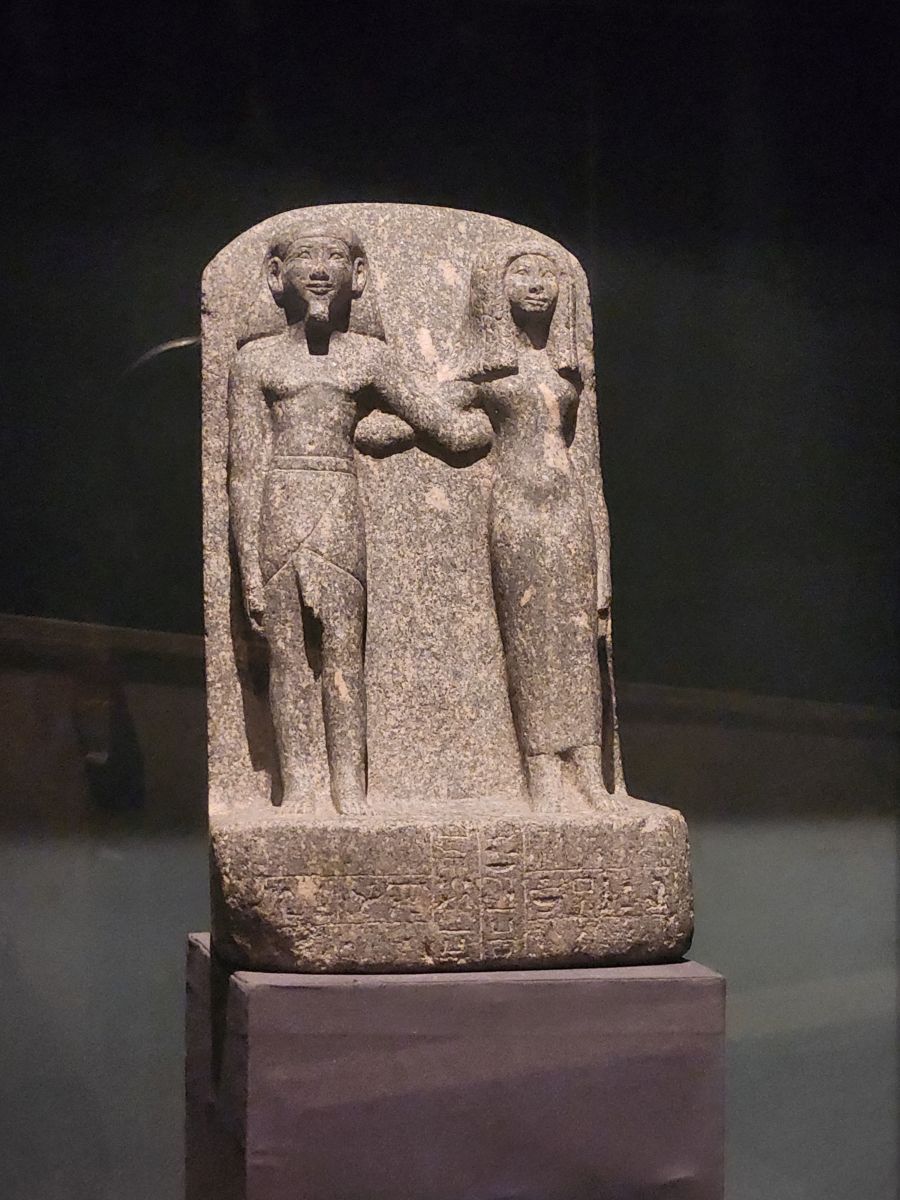
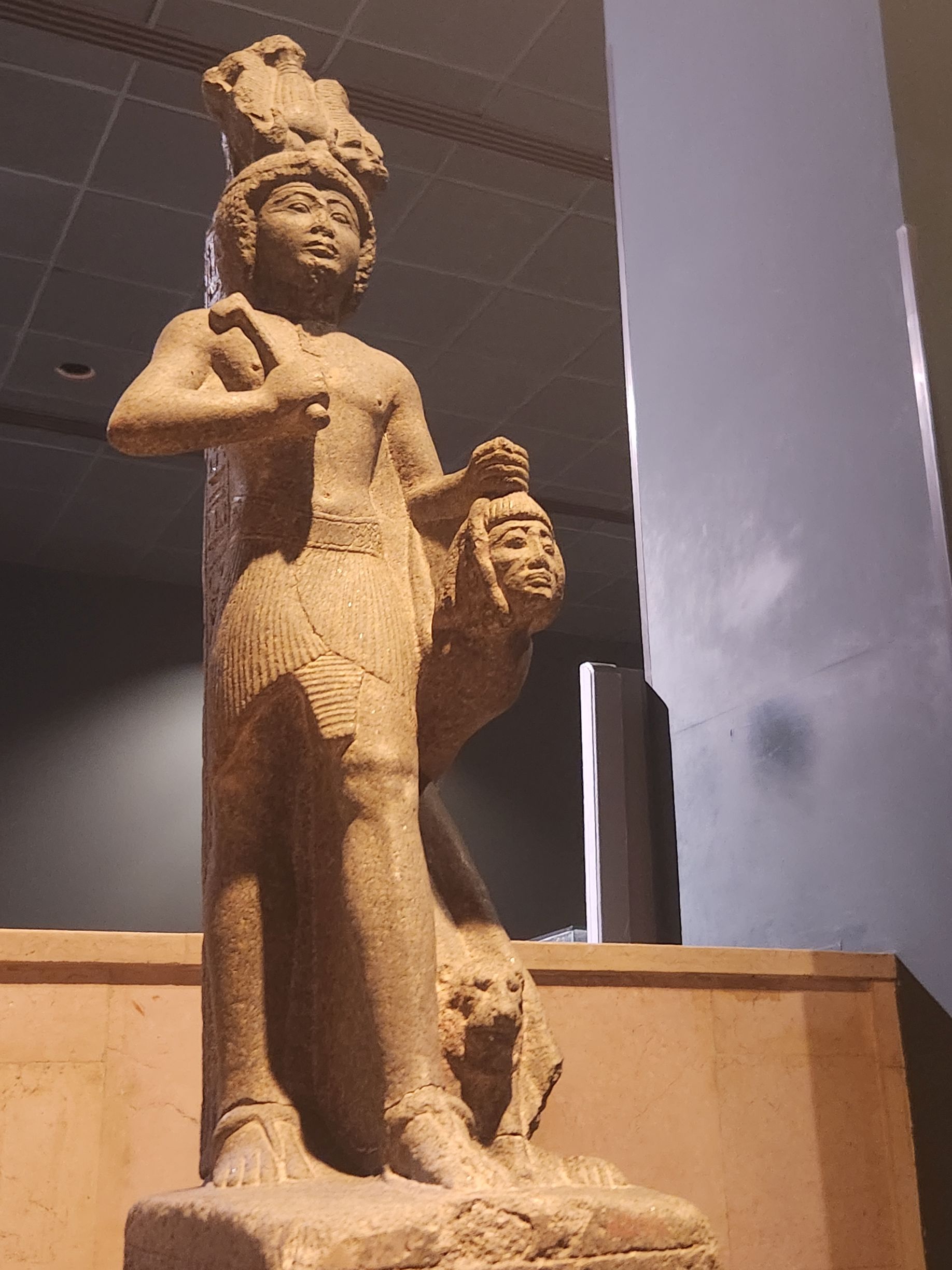
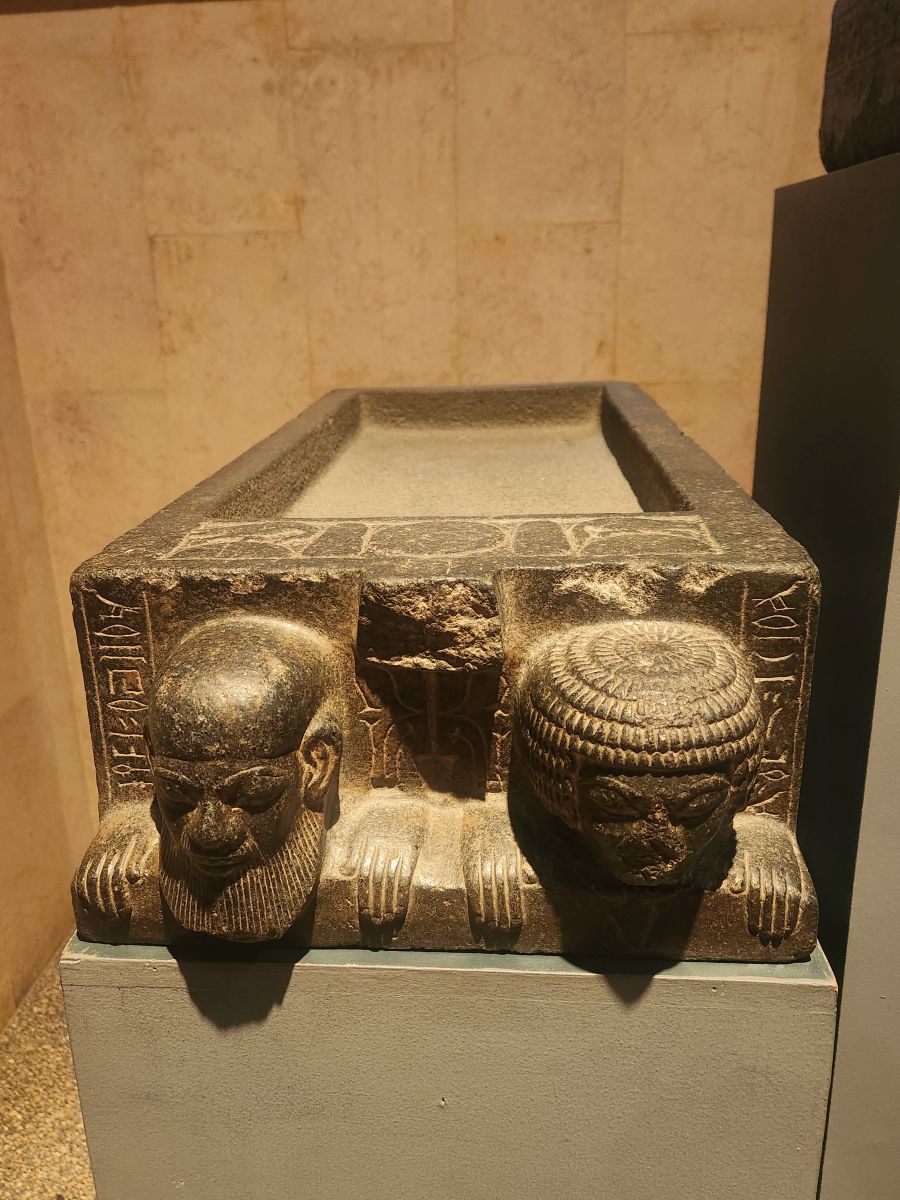
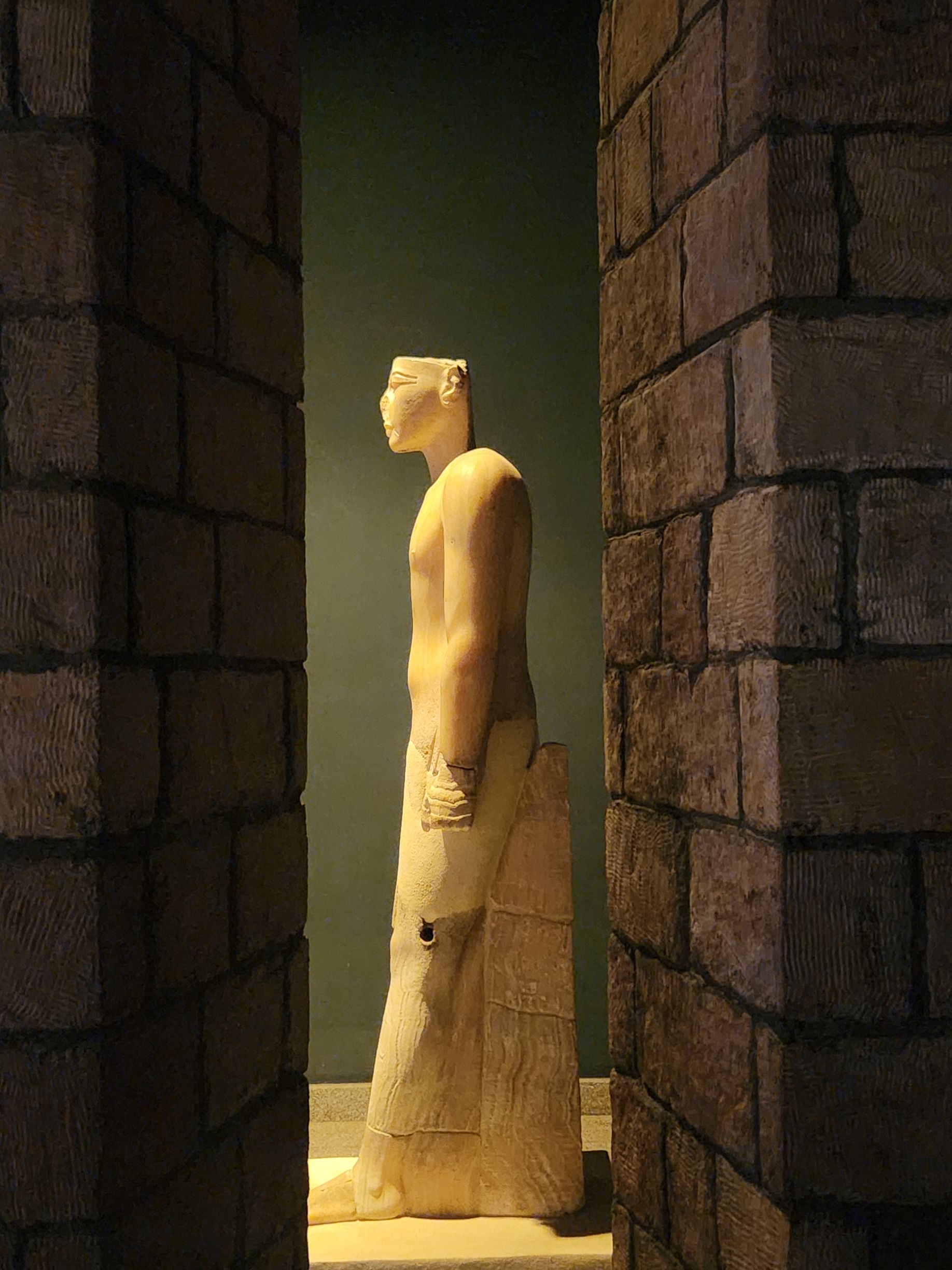
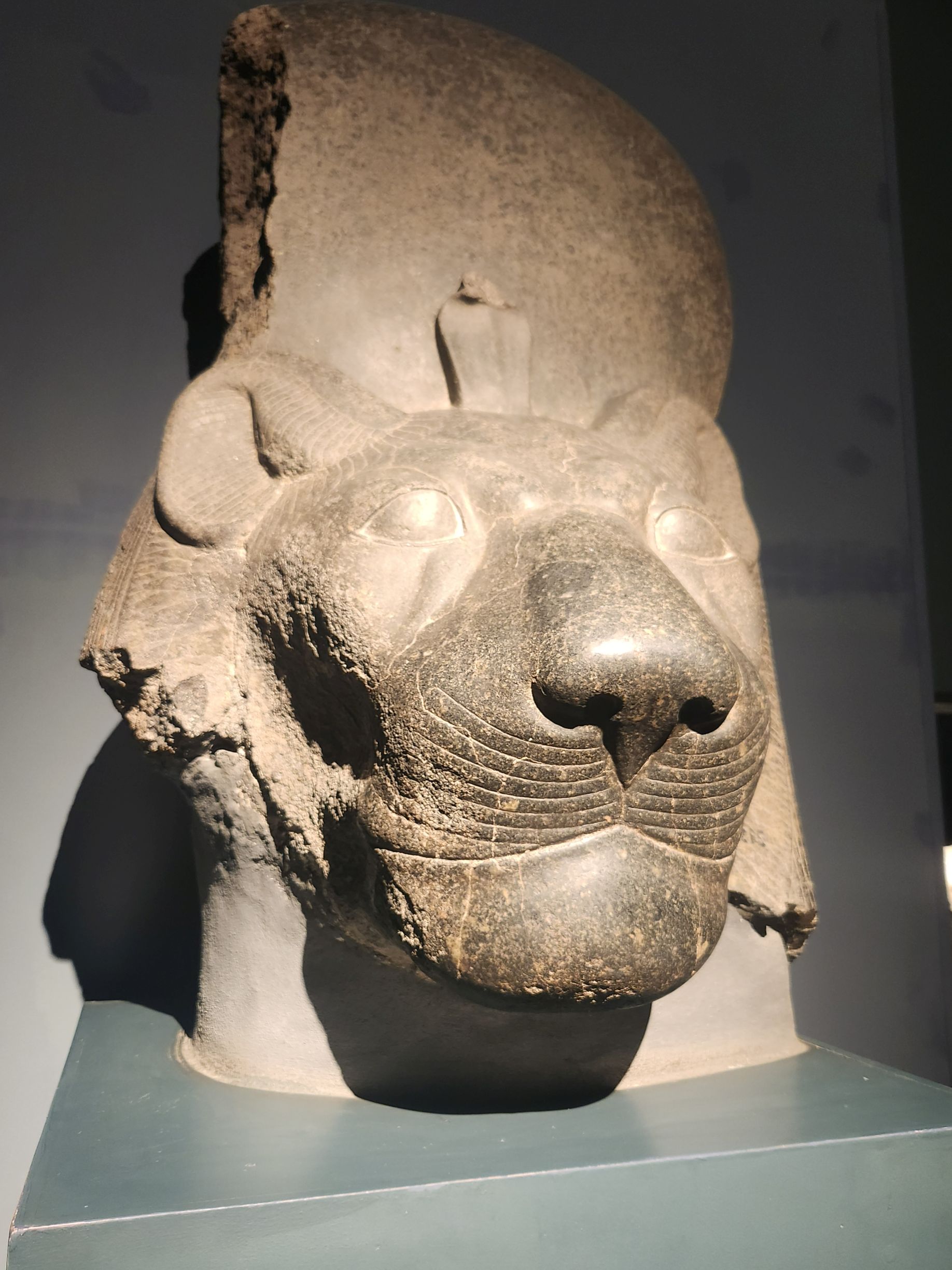
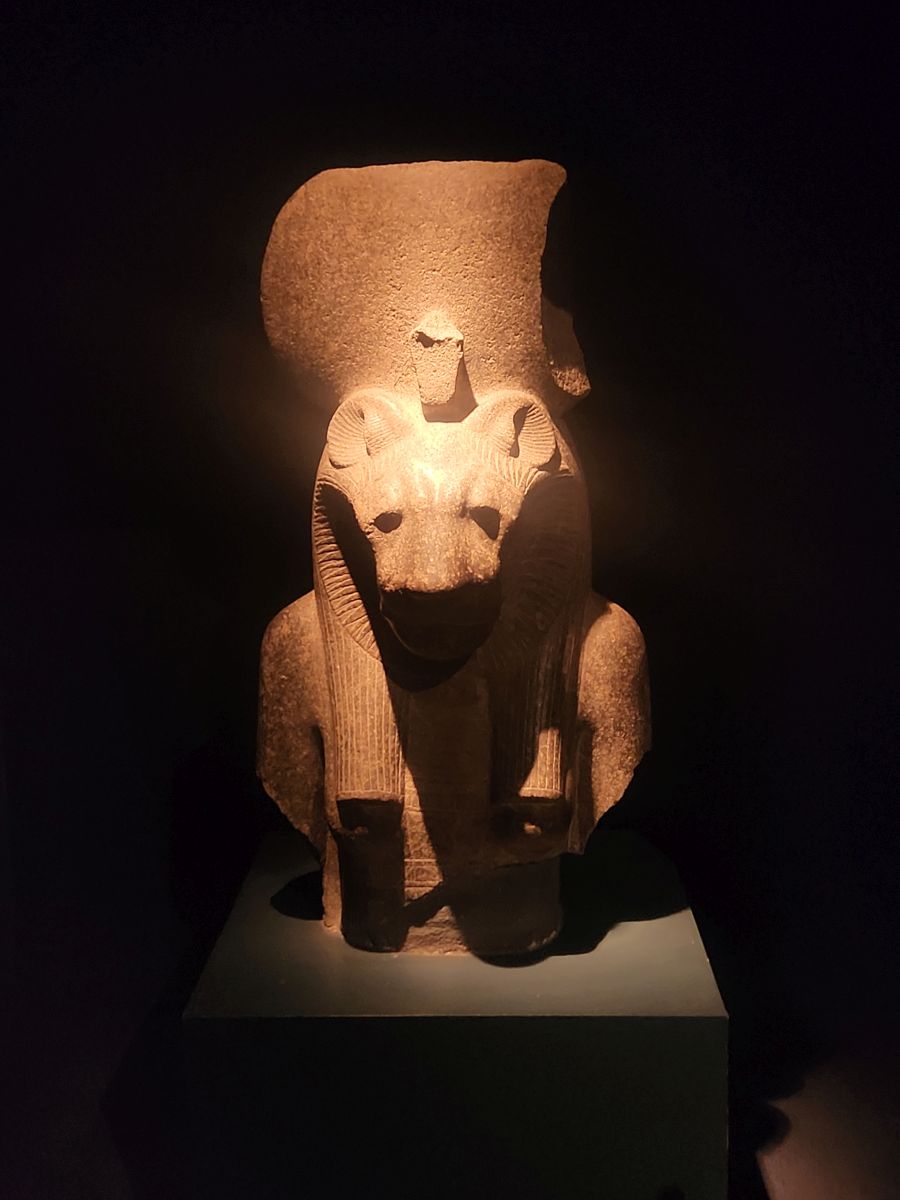
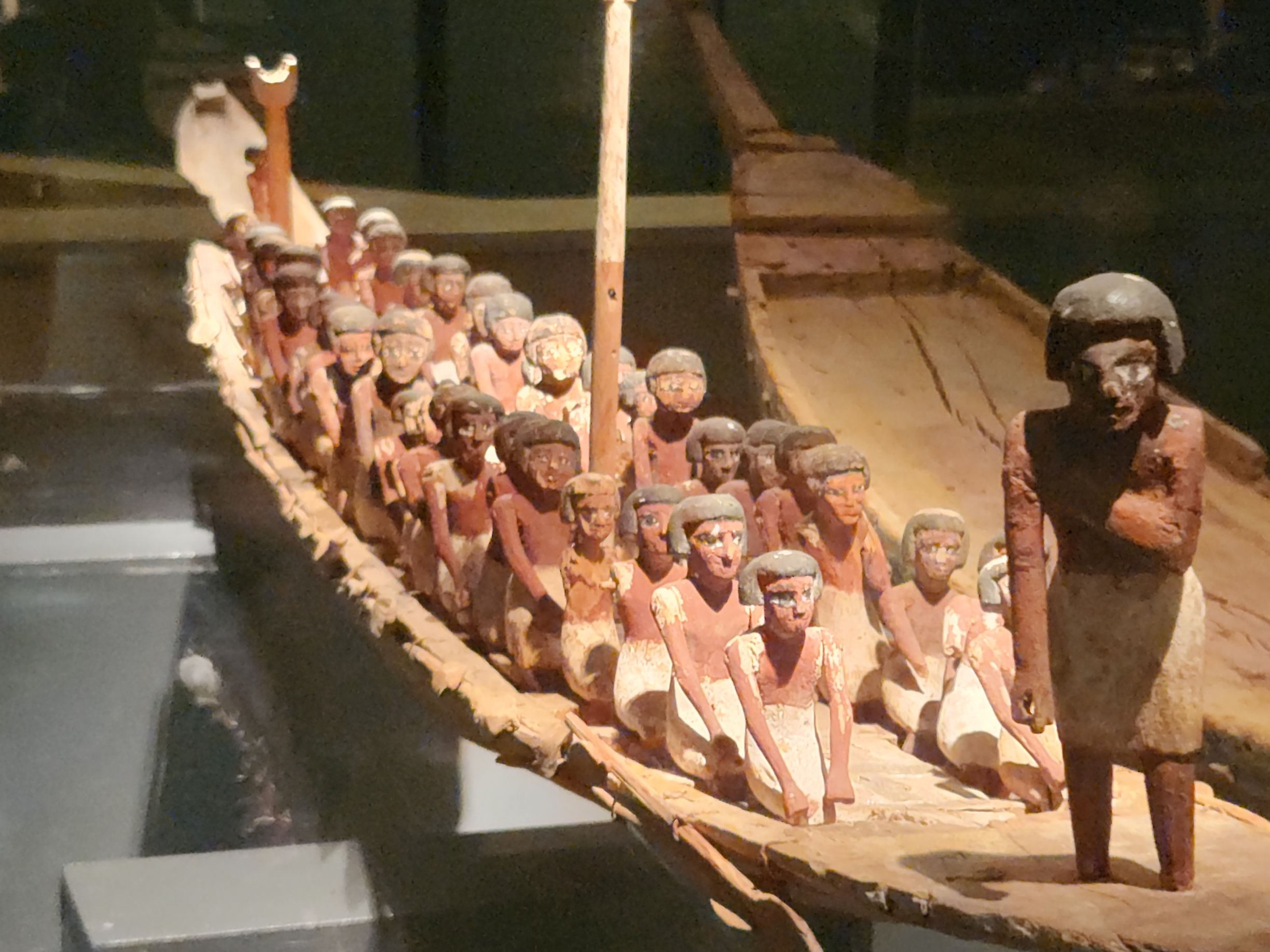
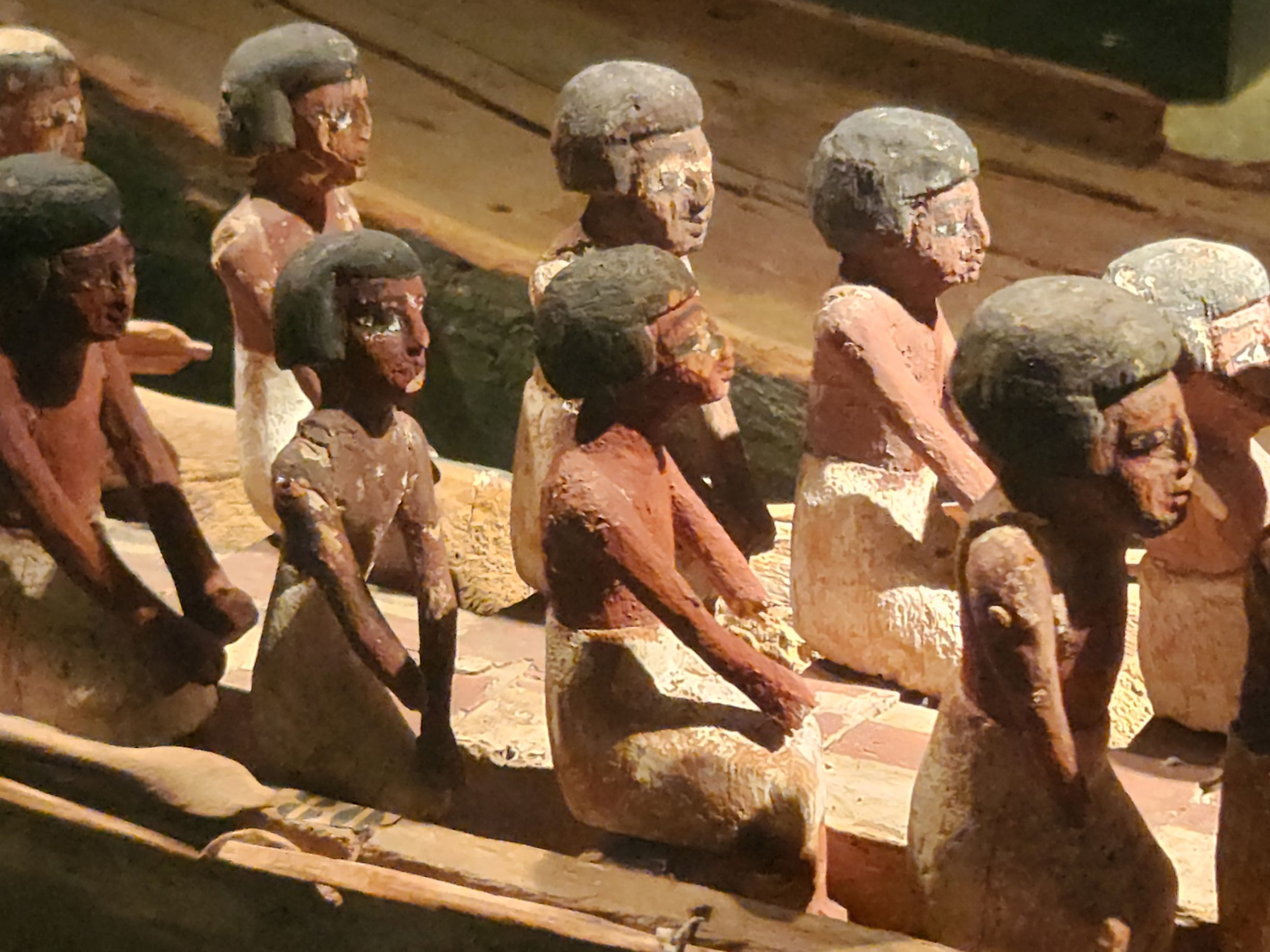
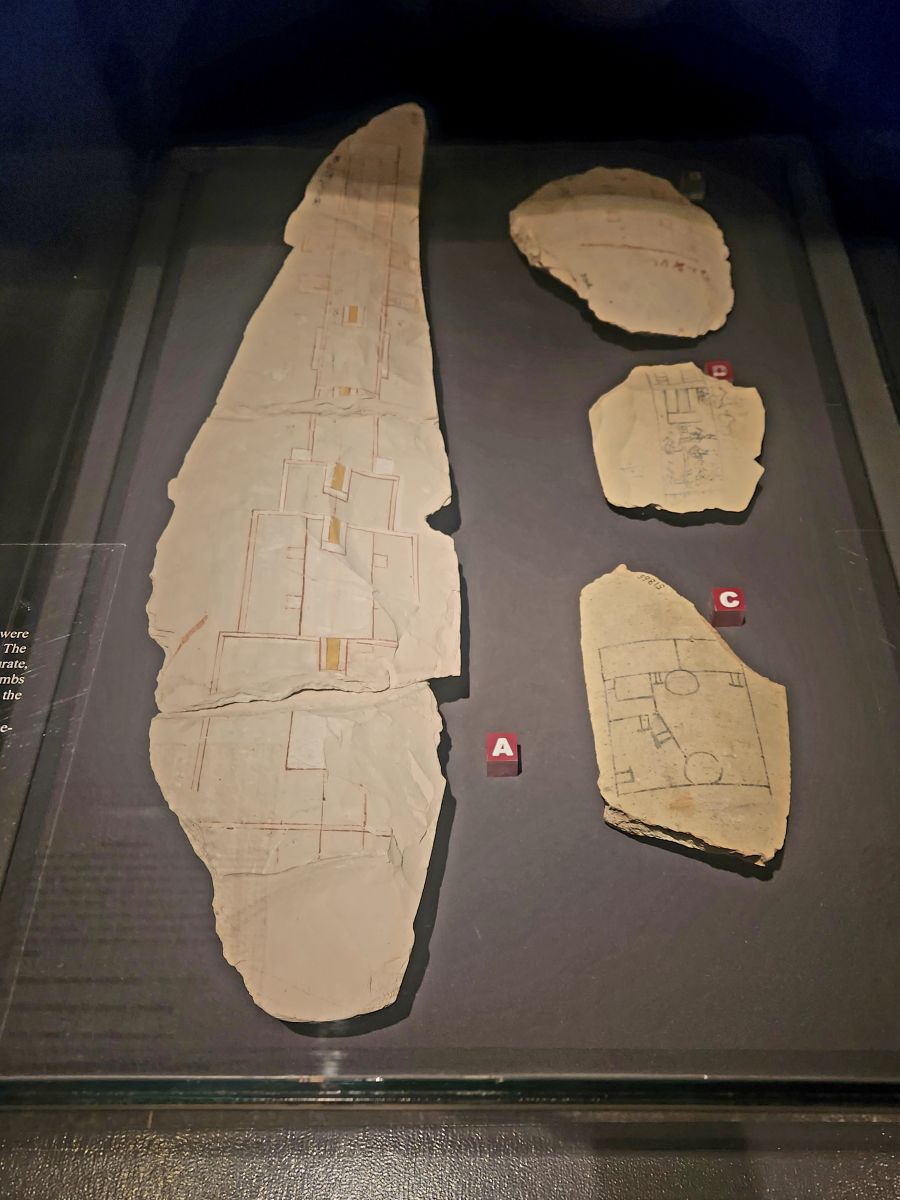
There are also models of a ceremonial barge which held the tomb of the king and a sailing boat with little model sailors rowing away. Plus limestone slabs that have architectural drawings on them – indicating the layout of the tomb of Rameses IX and other building plans. Talk about advanced!
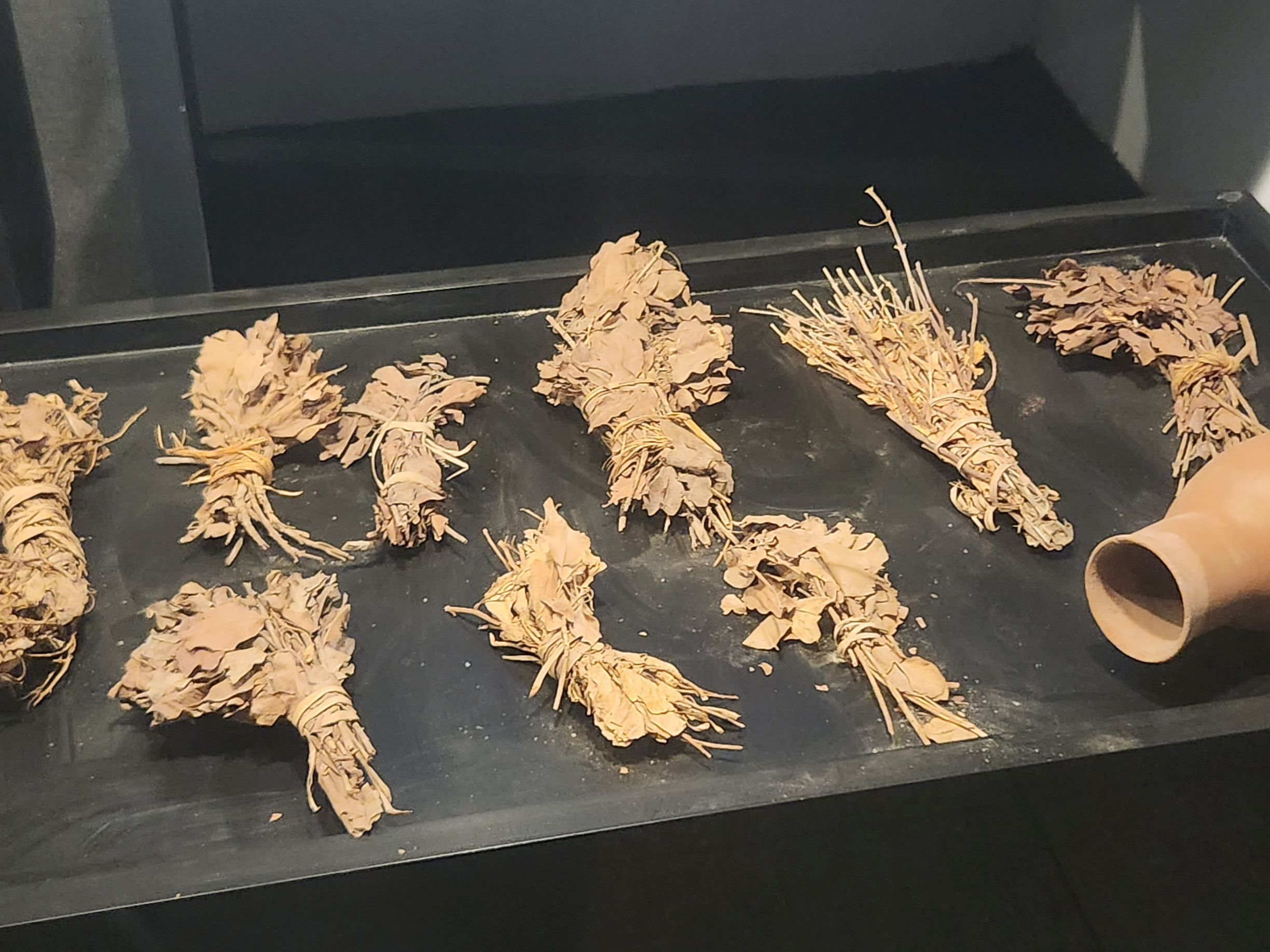
The tombs really intrigued us though. They had a display of actual barley husk that came out of a tomb. The barley husk was placed there for the deceased to make sweet beer in the afterlife. And then there are the little Ushabti funerary figurines that were placed in tombs and were intended to act as servants of minions for the deceased should they need to farm for the dead person. Sometimes several hundred Ushabti were placed in a tomb. And the tombs themselves were amazing! Beautifully carved and painted with figures meant to represent the dead person held inside, as well as an engraving of the King. And the little dogs and mythical figurines that are kept in a box to protect the deceased in the afterlife.
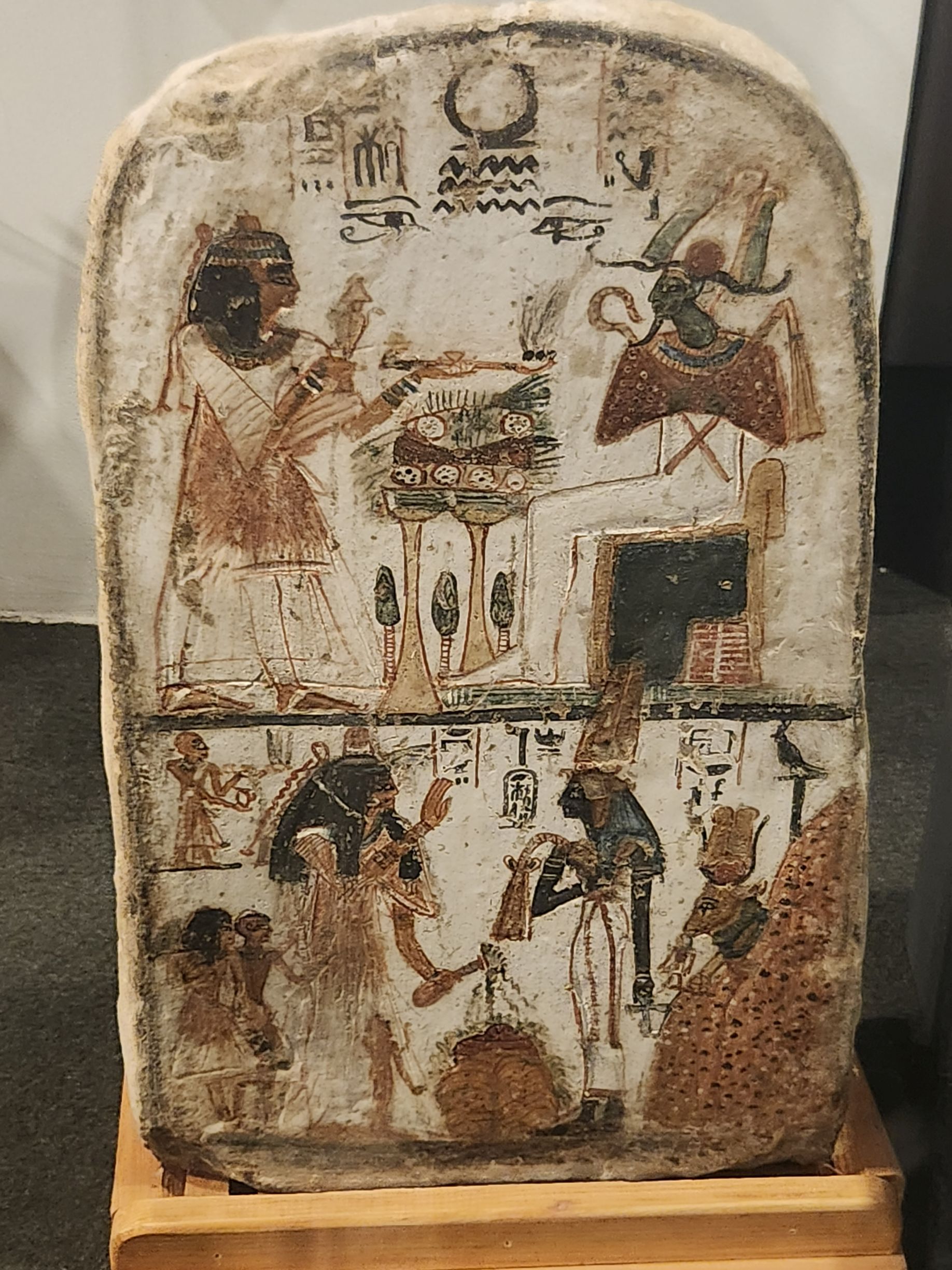
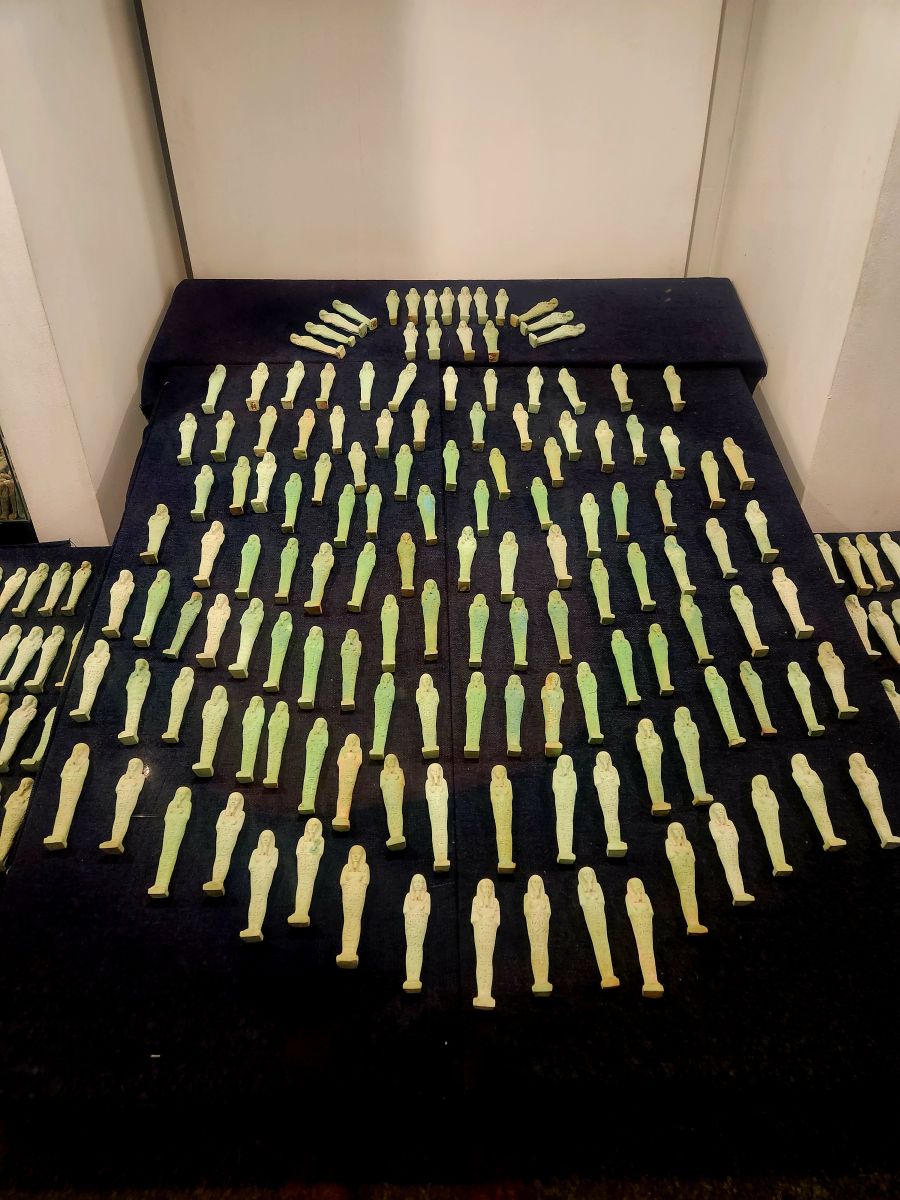
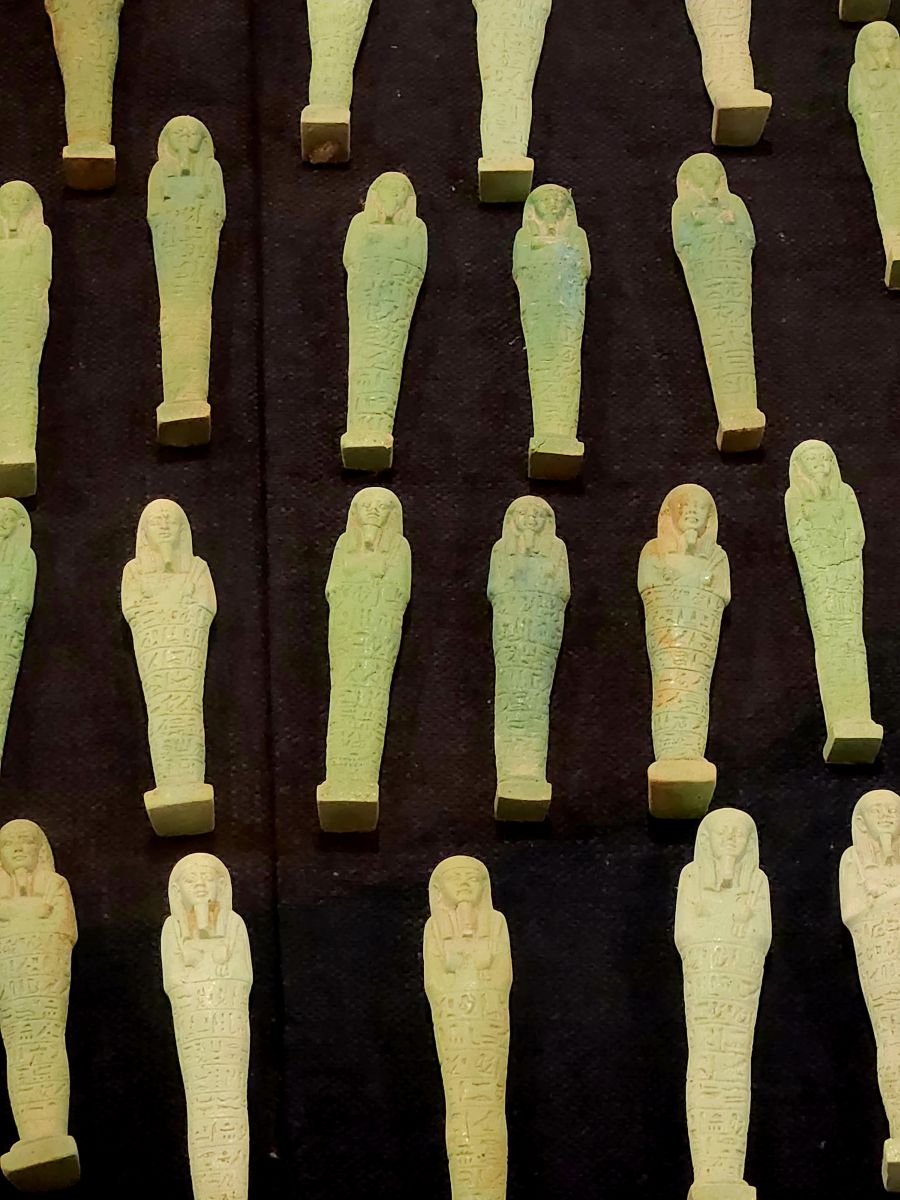
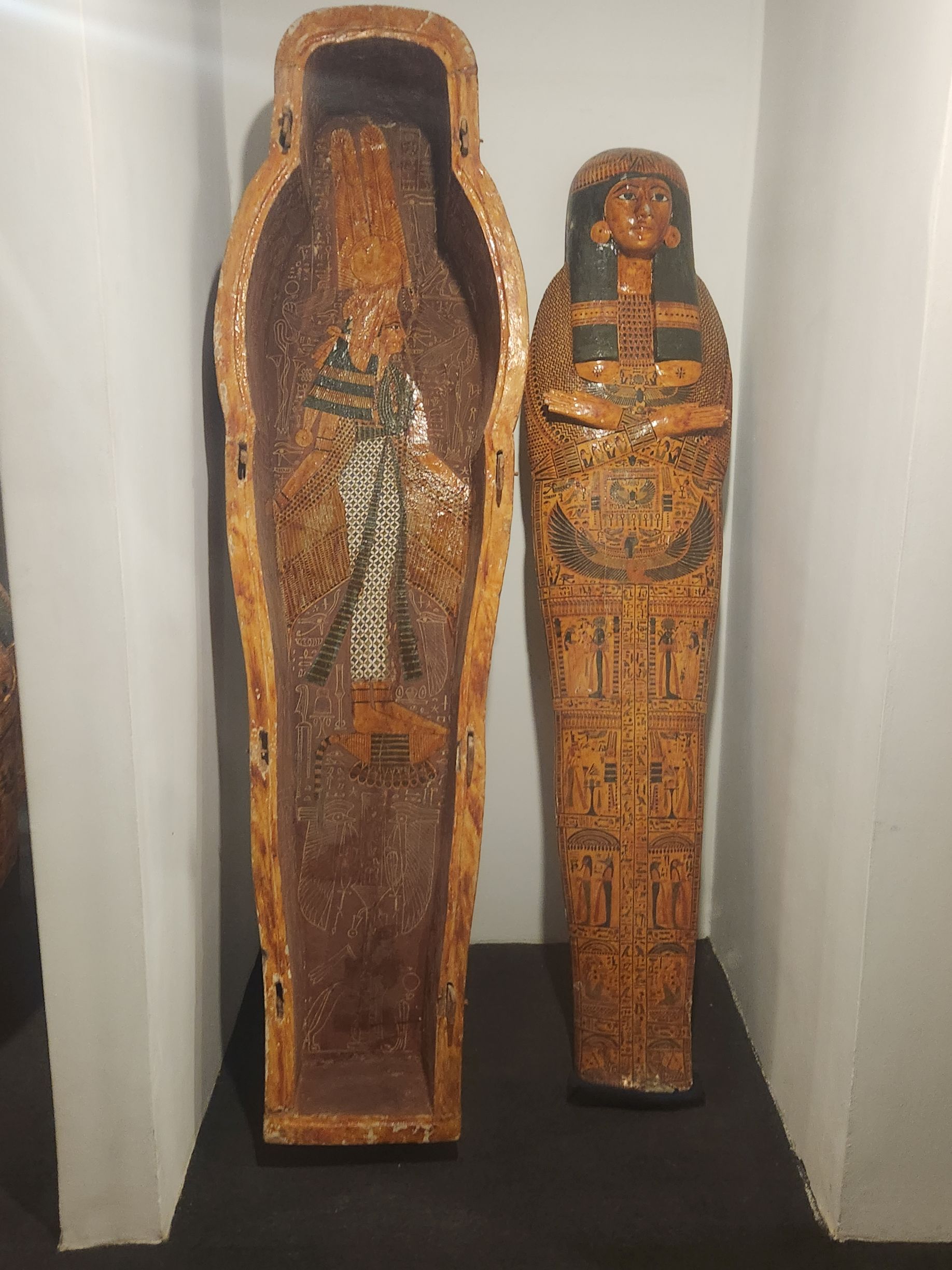
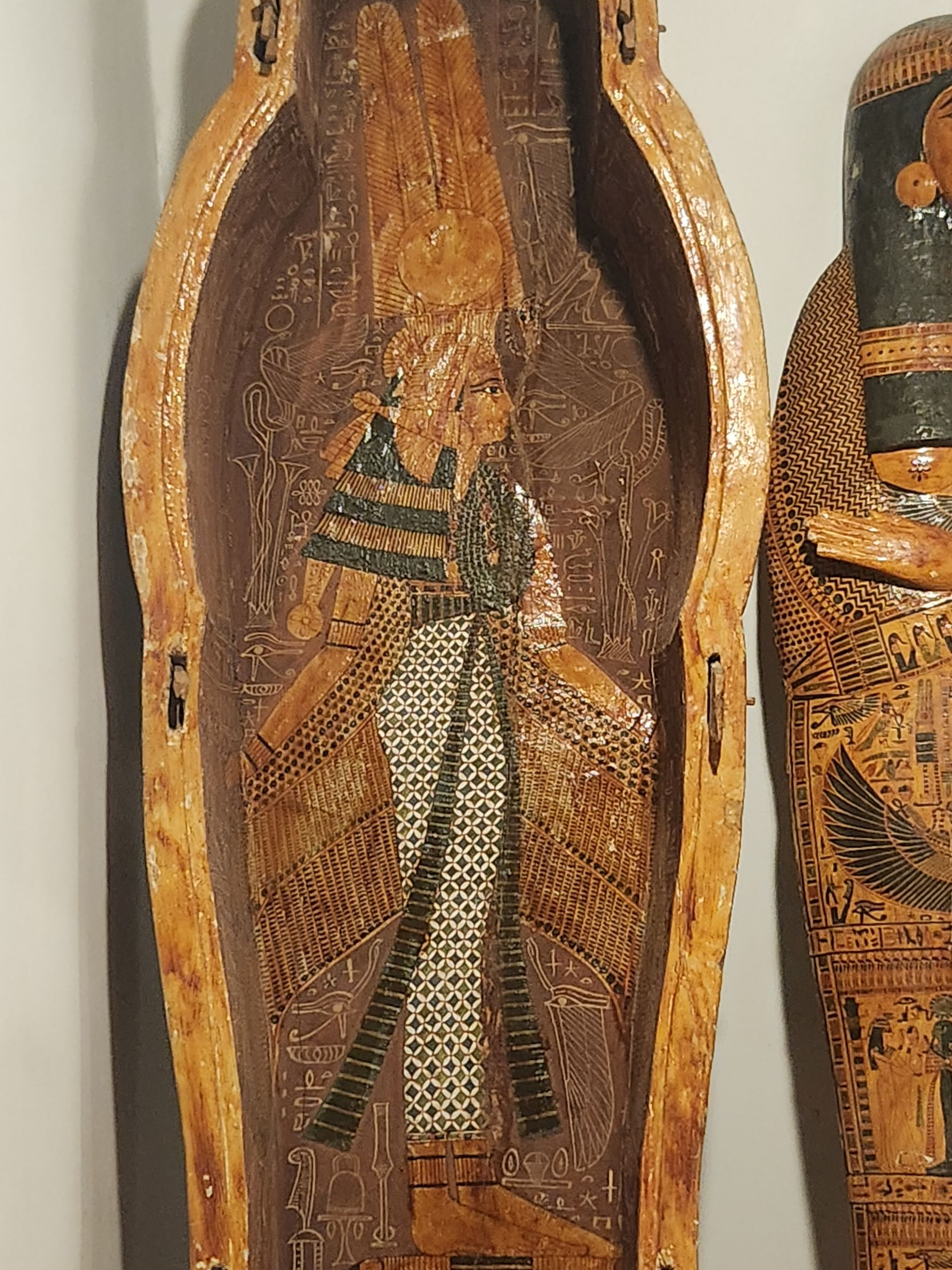
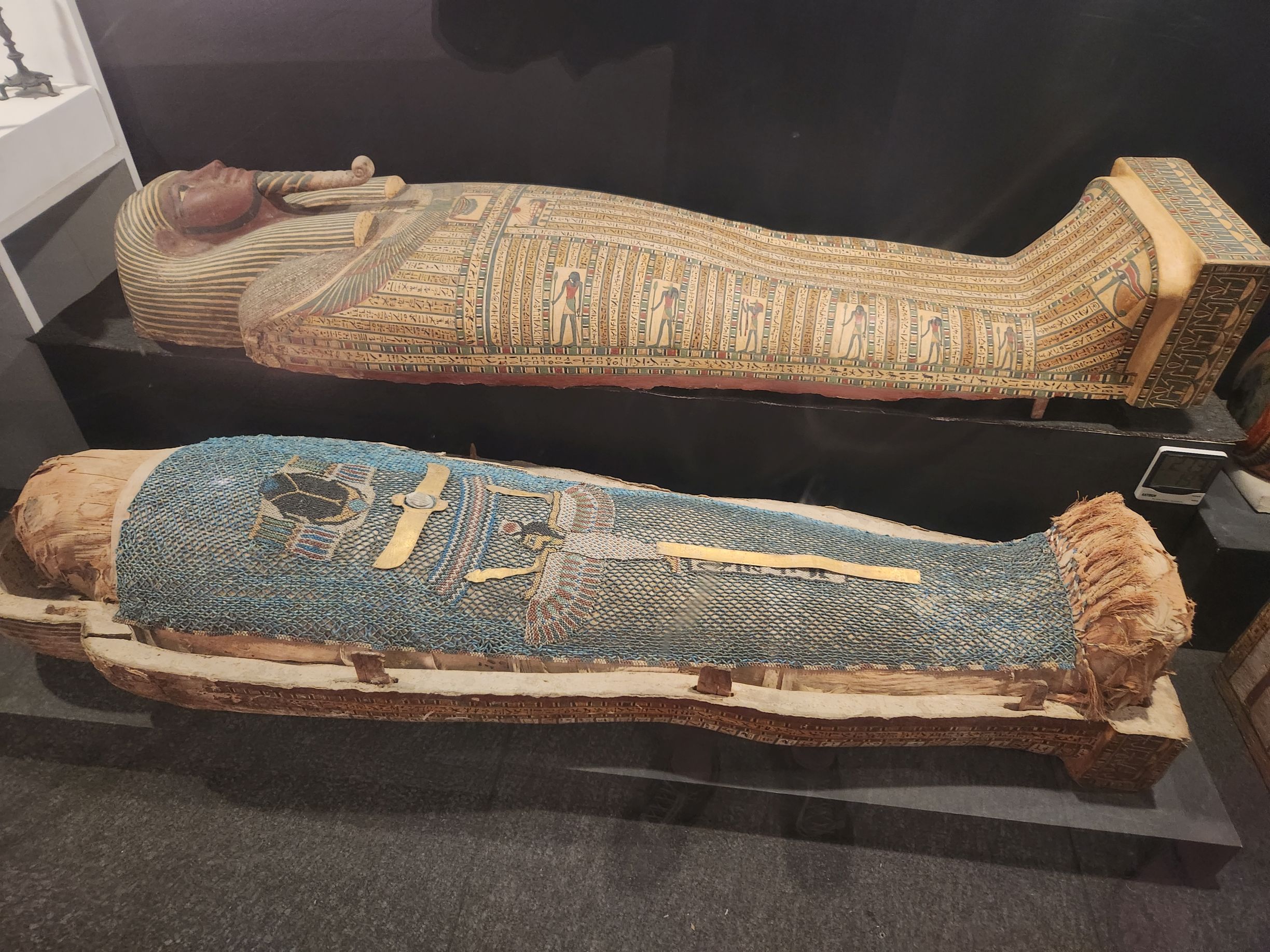
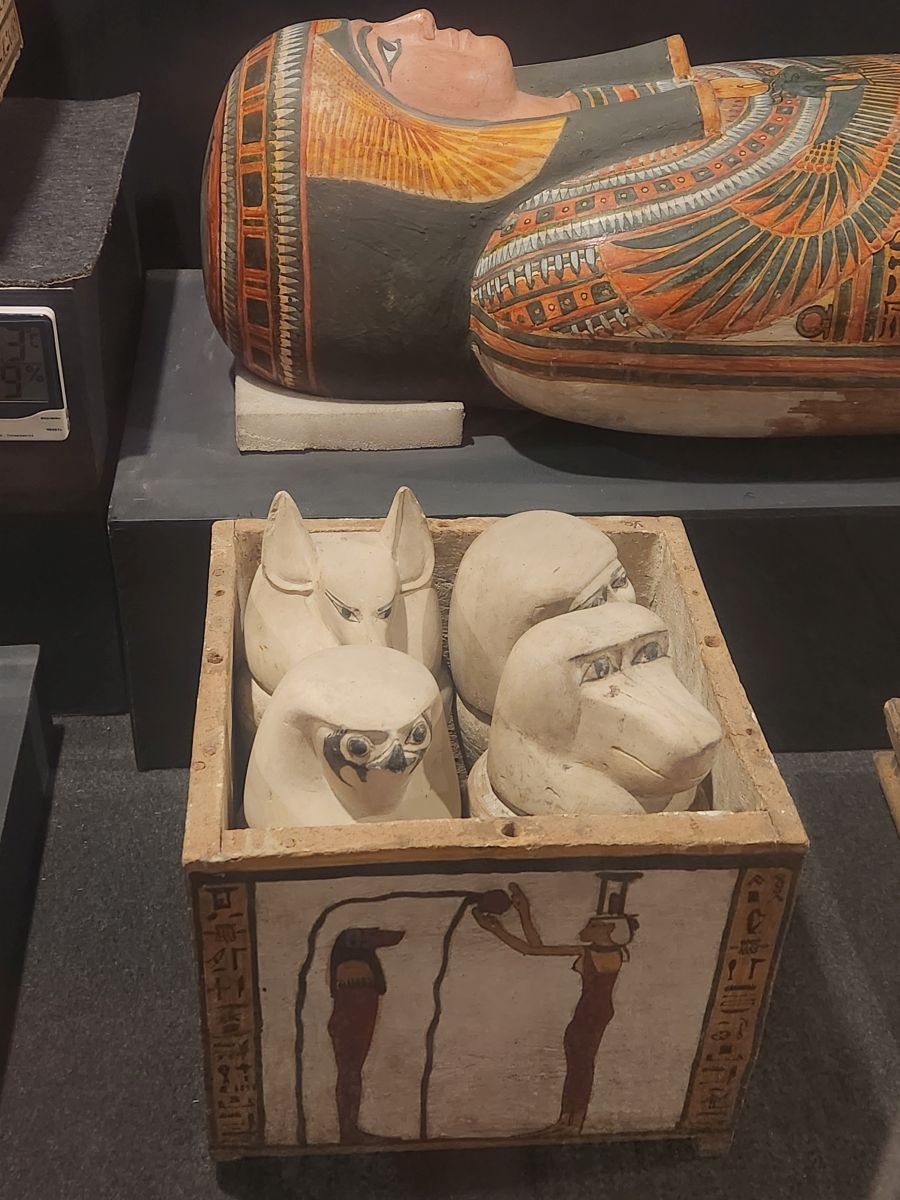
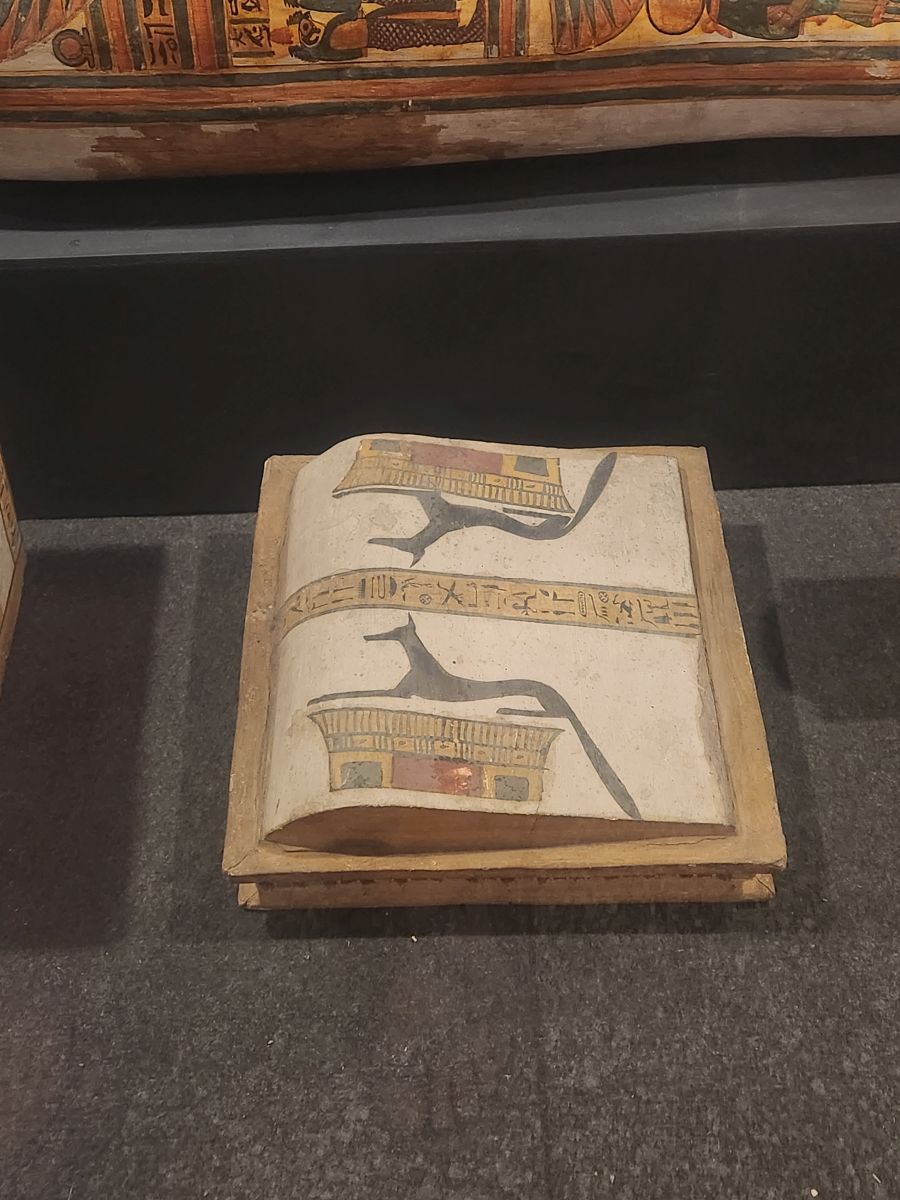
The last displays are pieces of walls that have been preserved and then put back together in their approximate order to create a story telling scene. I am just fascinated with the idea of how all these artifacts are found in the first place, then pieced back together in the correct way to make a cohesive story. What a job!
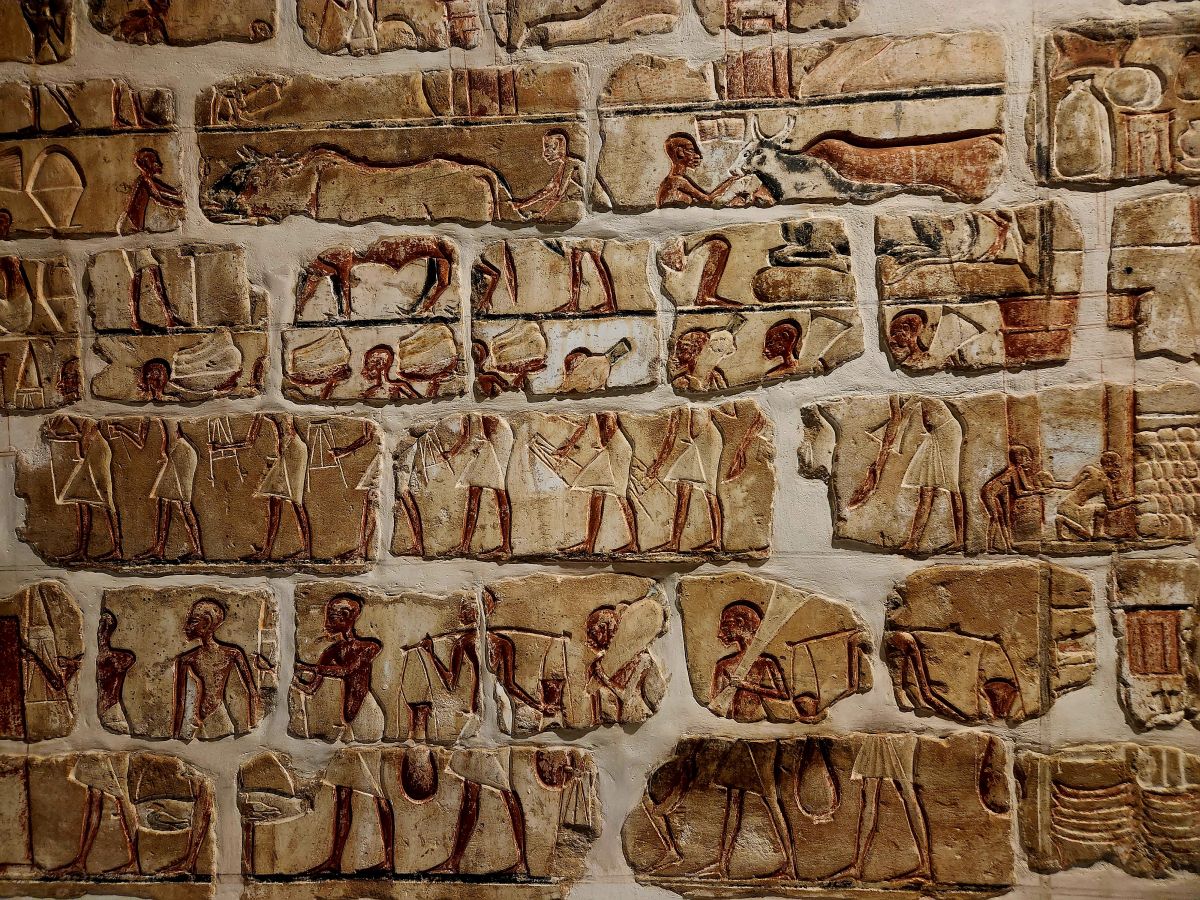
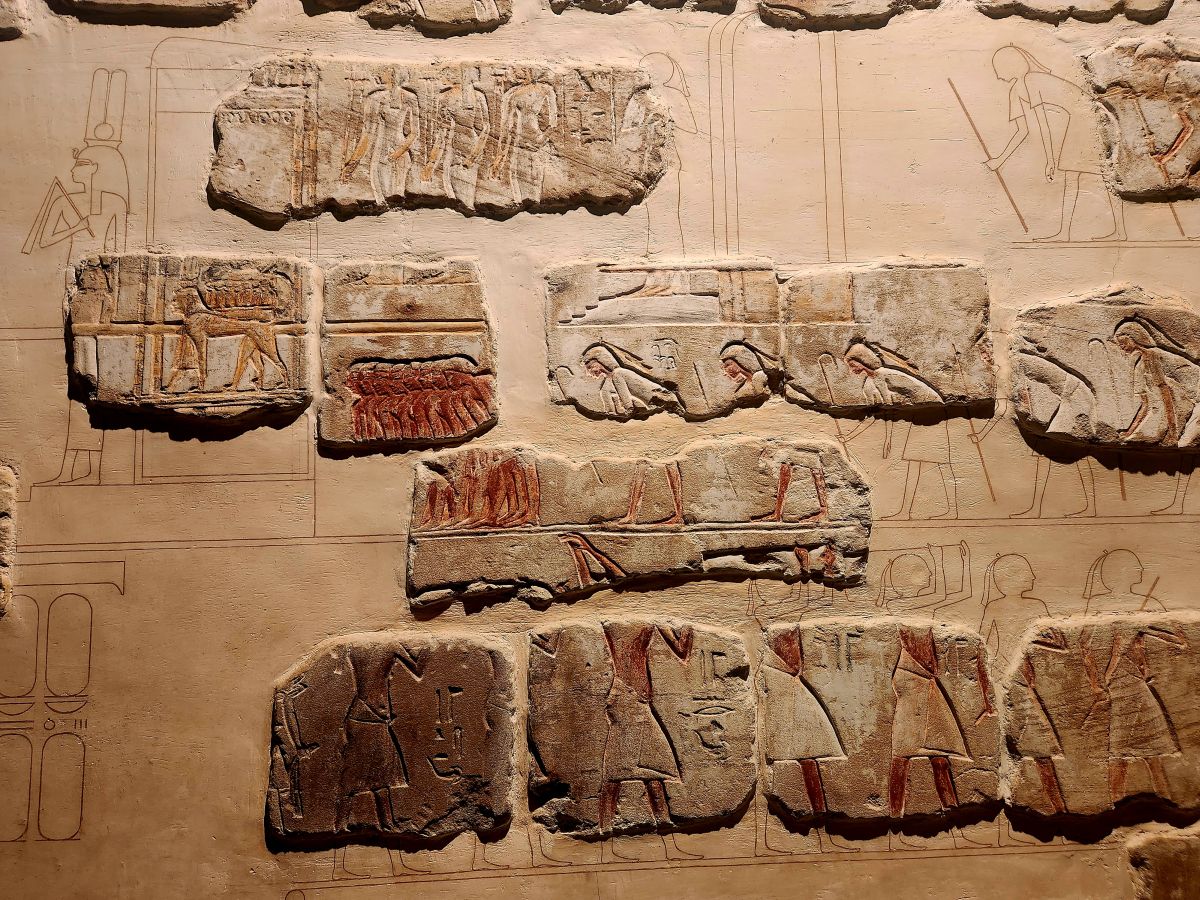
Finally, we pass the remaining statues – and a sphinx from 1300 BC! – and head out of the museum, talking to the ticket guy who wants to know how we liked the displays. He is so happy that we are enthusiastic about the museum. And we are! It was a wonderful way to cap off a day of exploring the temples.
Walking back to the hotel, we make a pit stop at a little convenience store where we are, in the politest Egyptian way possible, ripped off for a bag of balsamic potato chips, a cappuccino wafer and some cough drops. Sigh. It is just the Egyptian way. Then we have to go to another little stall in what turns out to be a market lane to look at magnets – we want to buy one for Mark our fav bartender since he won’t get outside these 2 days. The vendor is adorable and tries to sell us tons of stuff, and we do end up buying a set of those little animals that protect the deceased in the afterlife! Not the box though – that was too heavy for us to take back with us! He makes us a deal – no he really doesn’t, but he does throw in the magnet and a little scarab for free (the magnet was only 5 Egyptian pounds which is like 16 USD cents, so not much of a freebie but a freebie nonetheless). But our shopping is complete.
Continuing on our journey, we walk on the side of the Luxor temple and take some great exterior shots all the while being hounded by a horse and buggy driver. We know how to ignore them – or at least play with them a bit – and as Amr has told us, we can do everything by ourselves, just ignore the taxis and the horse and buggy guys! Sweet.
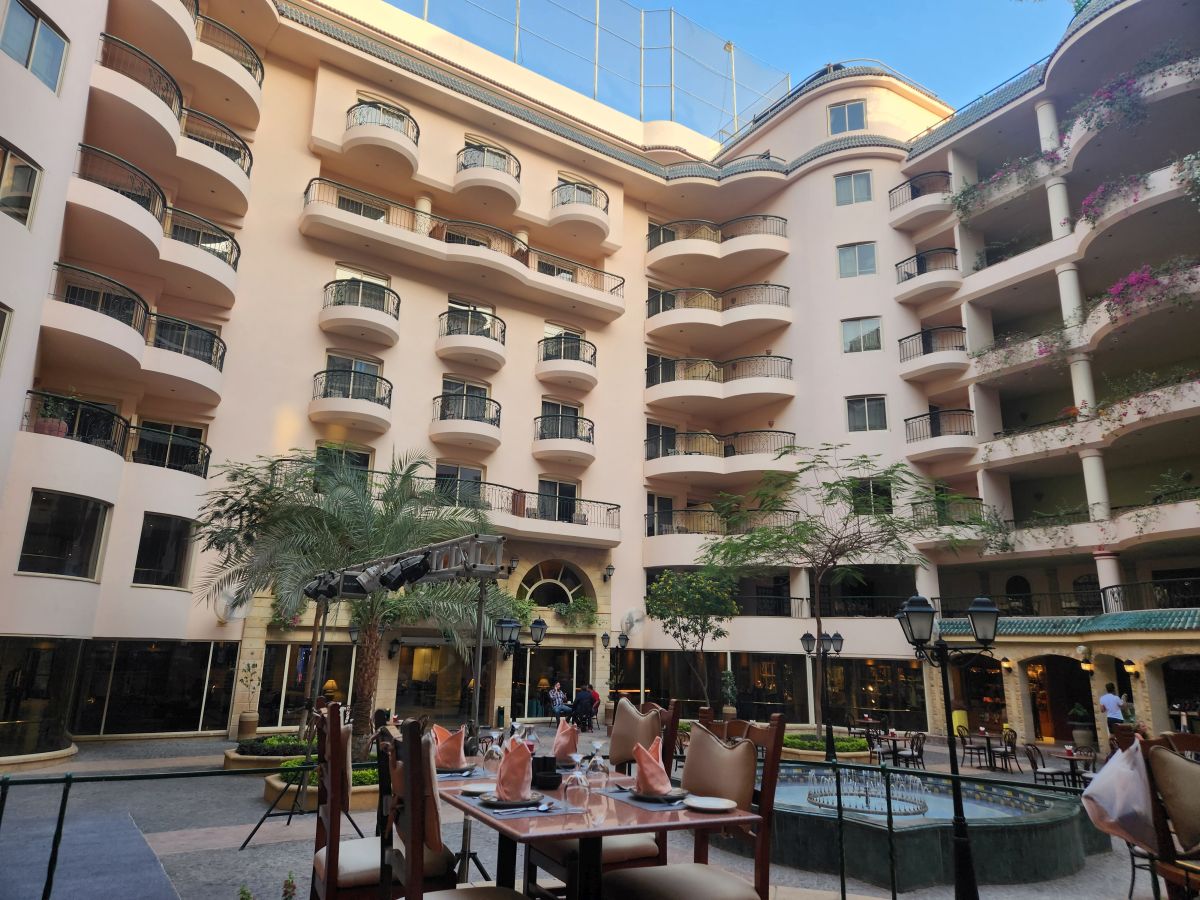
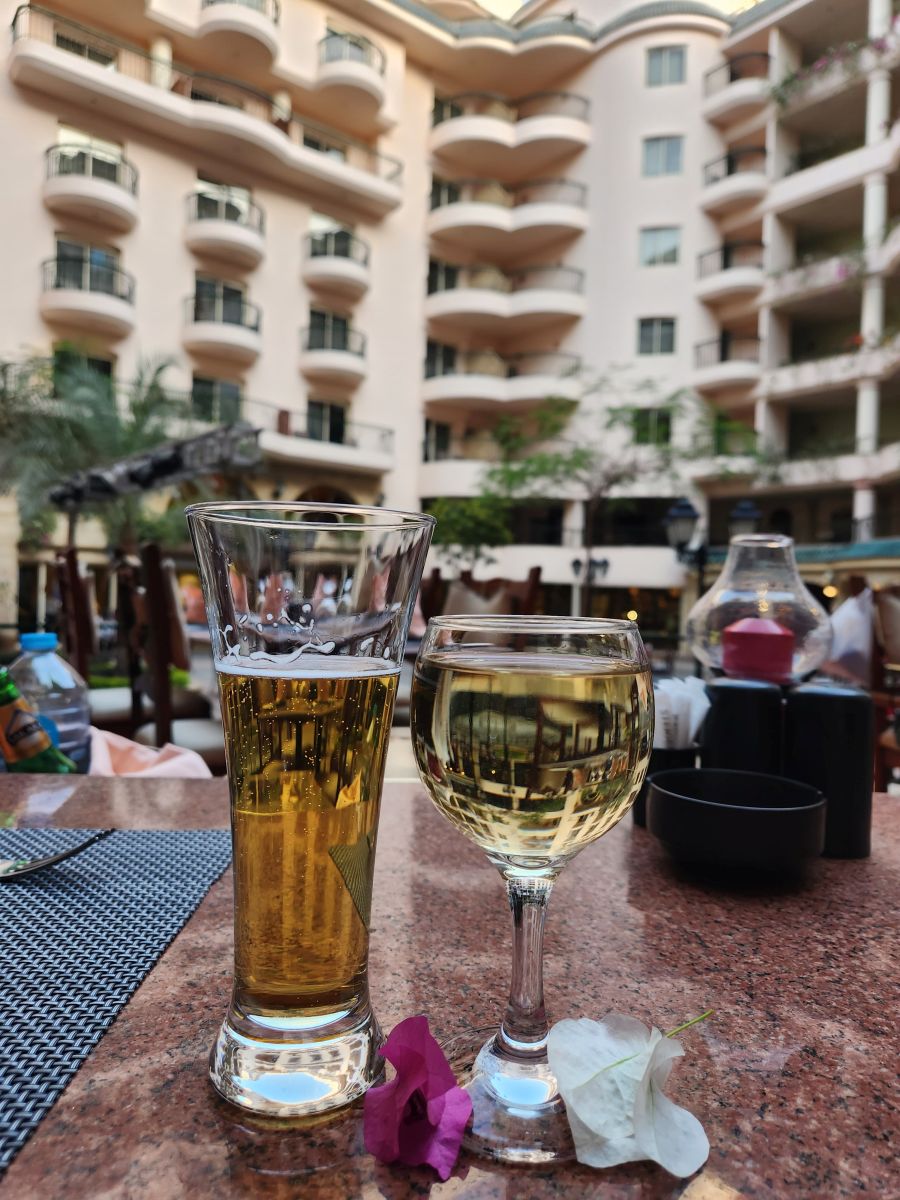
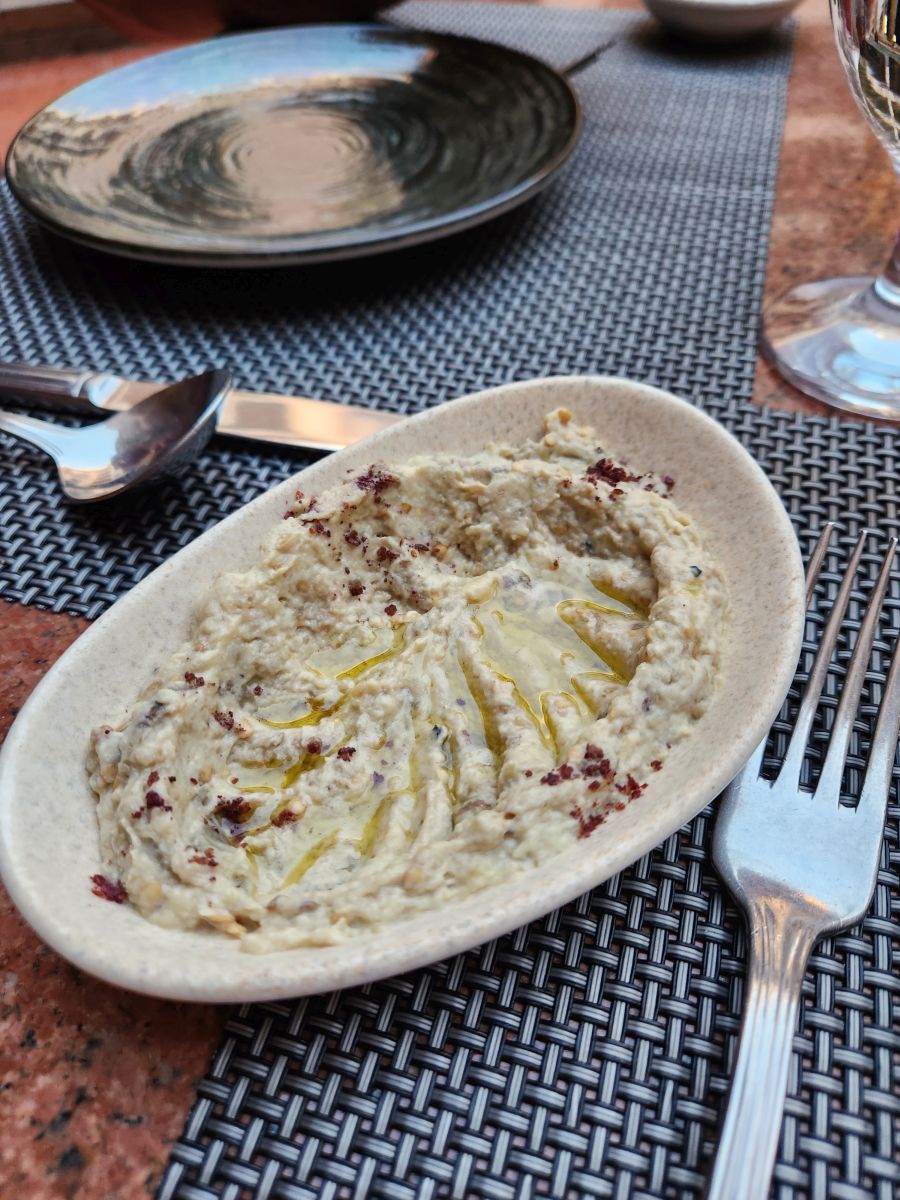
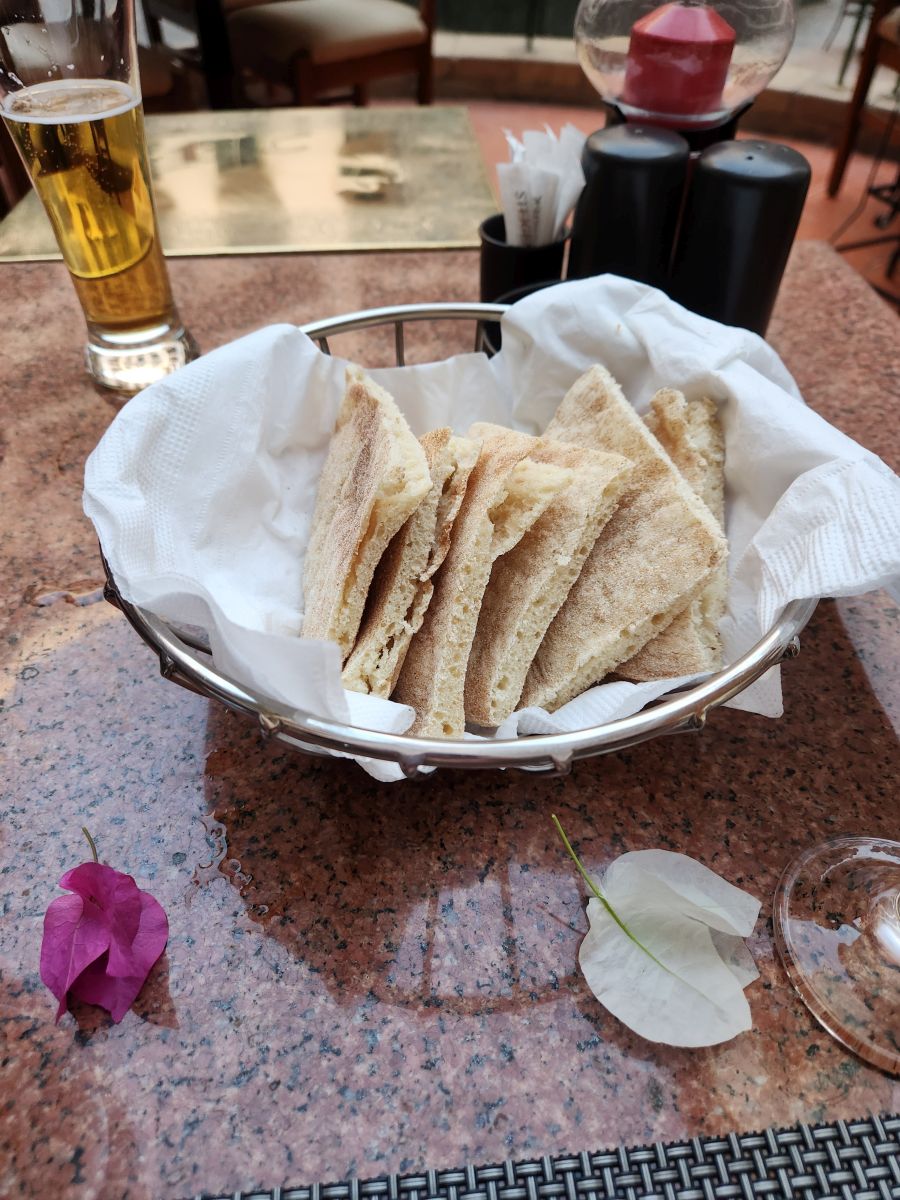
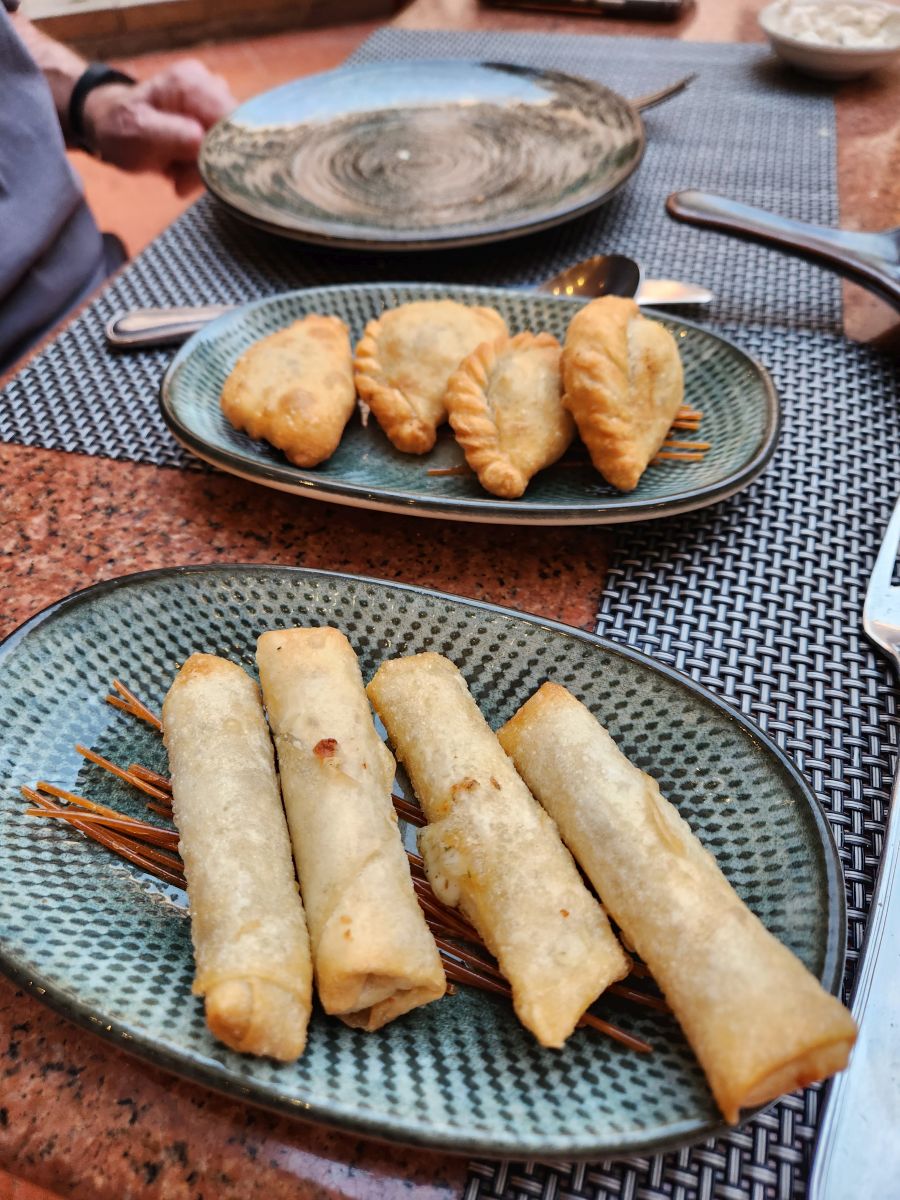
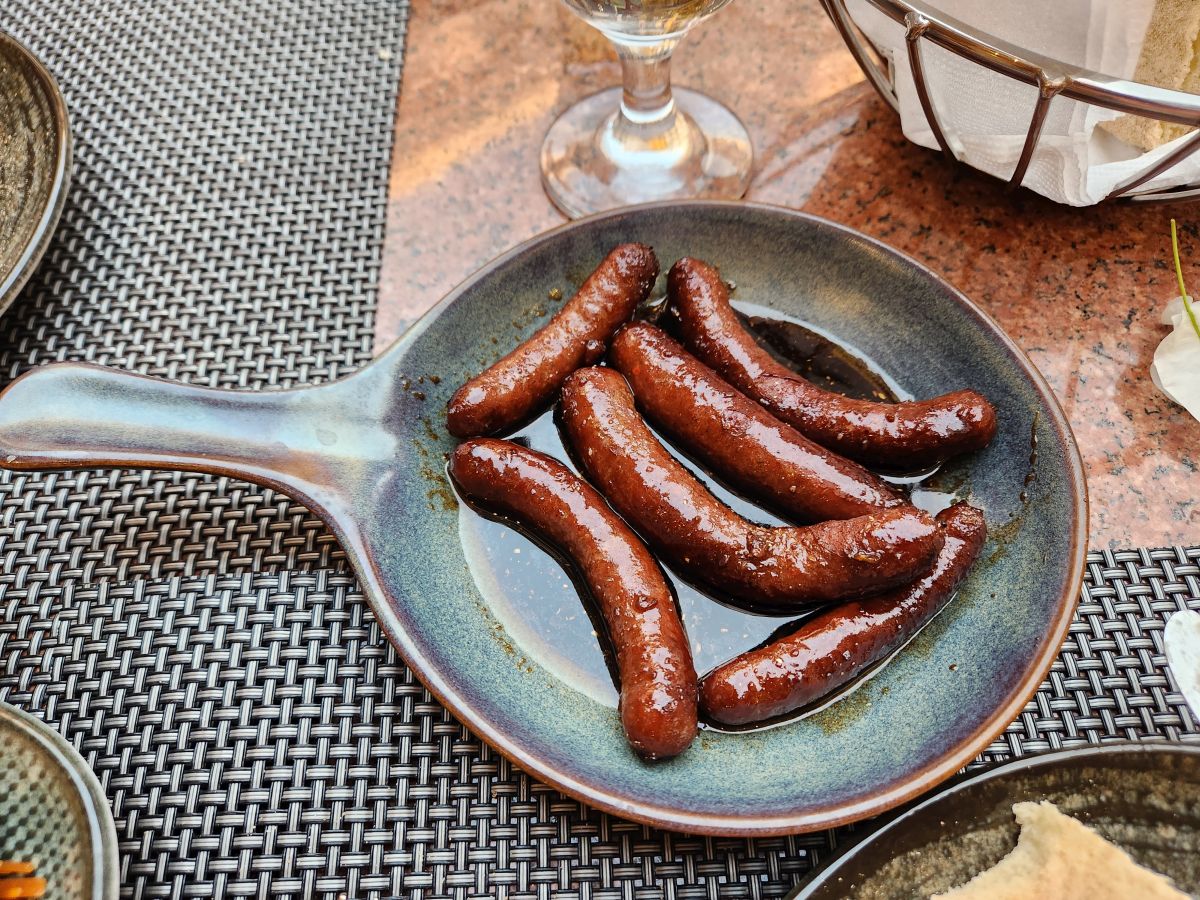
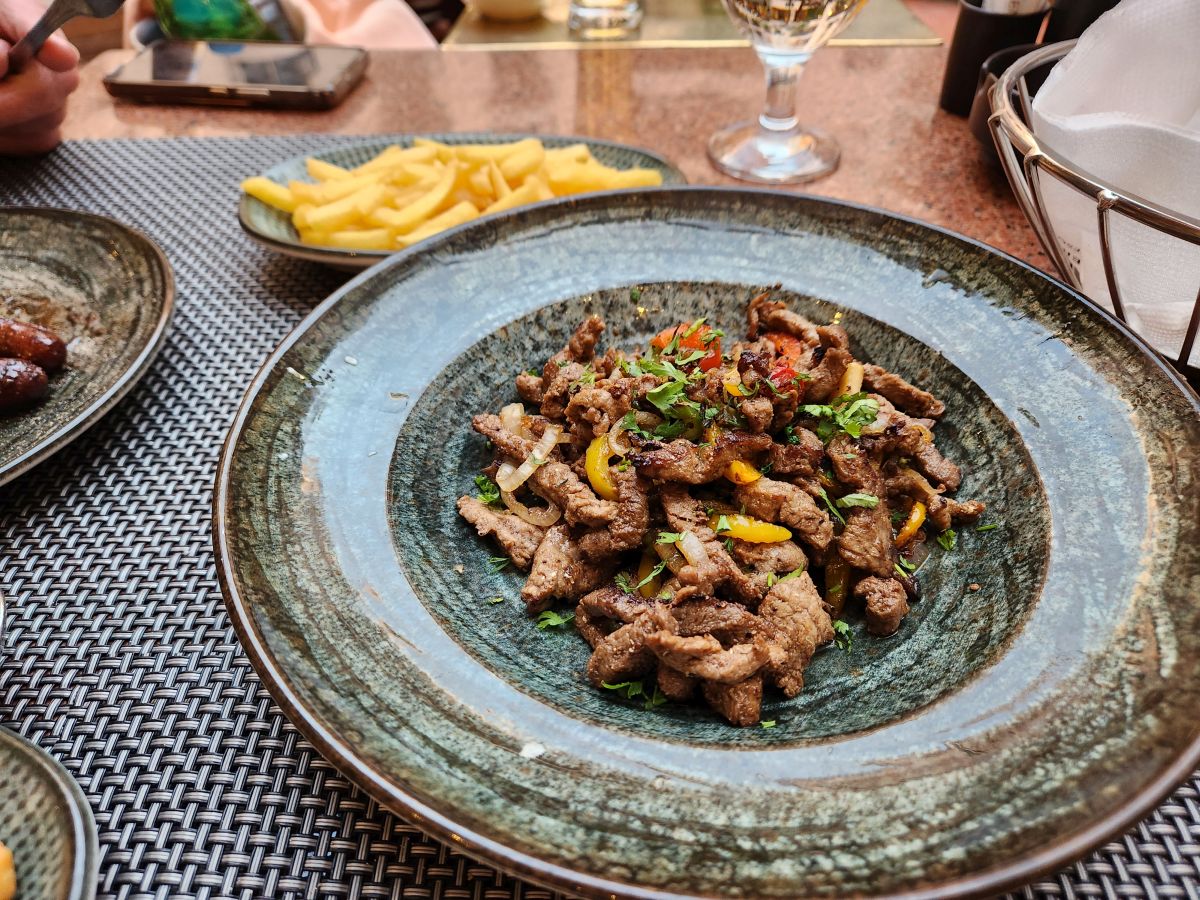
Back at the hotel we decide, against everything we ever usually do, to have dinner there! They have an excellent and very reasonably priced Lebanese restaurant where we can sit outside in the courtyard area and gorge ourselves on baba ganoush (by a different name), meat pies (spices oh so good!), cheese rolls (think mini spring rolls filled with cheese), sausages in pomegranate molasses (yum – used the sauce to dip the cheese rolls in) and beef Shwarma. Can’t beat it!
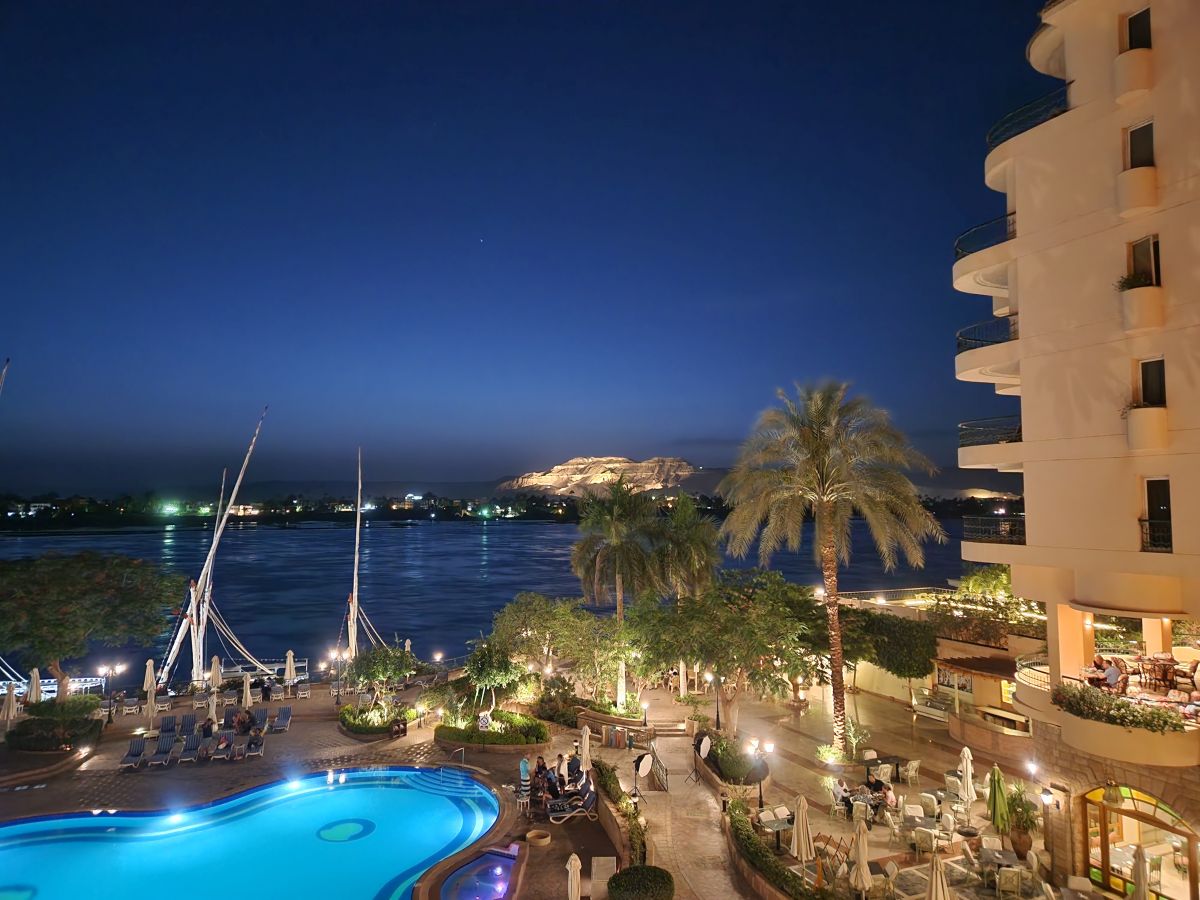
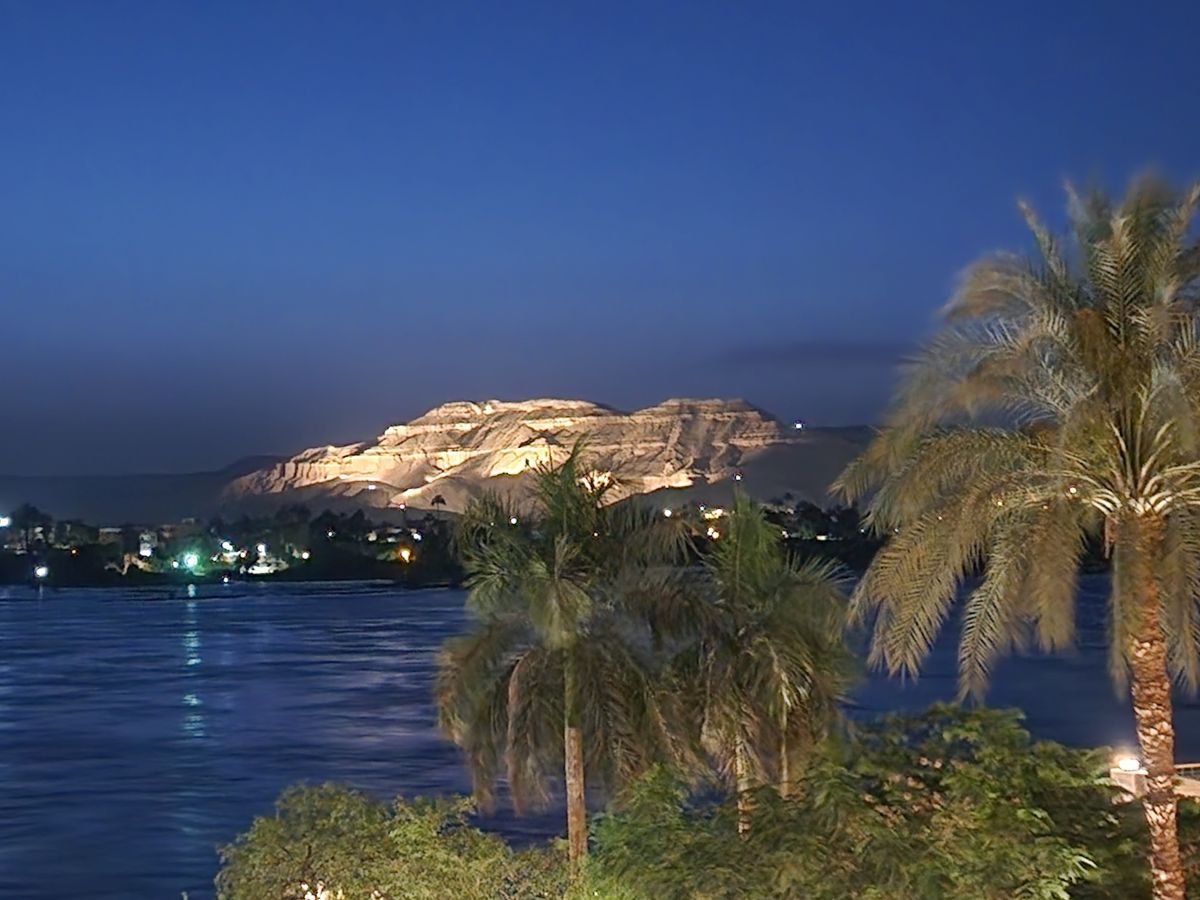
After dinner we watched the sunset over the Nile, then just hung out on our massive balcony overlooking the Nile and the Valley of the Kings mountain all lit up.
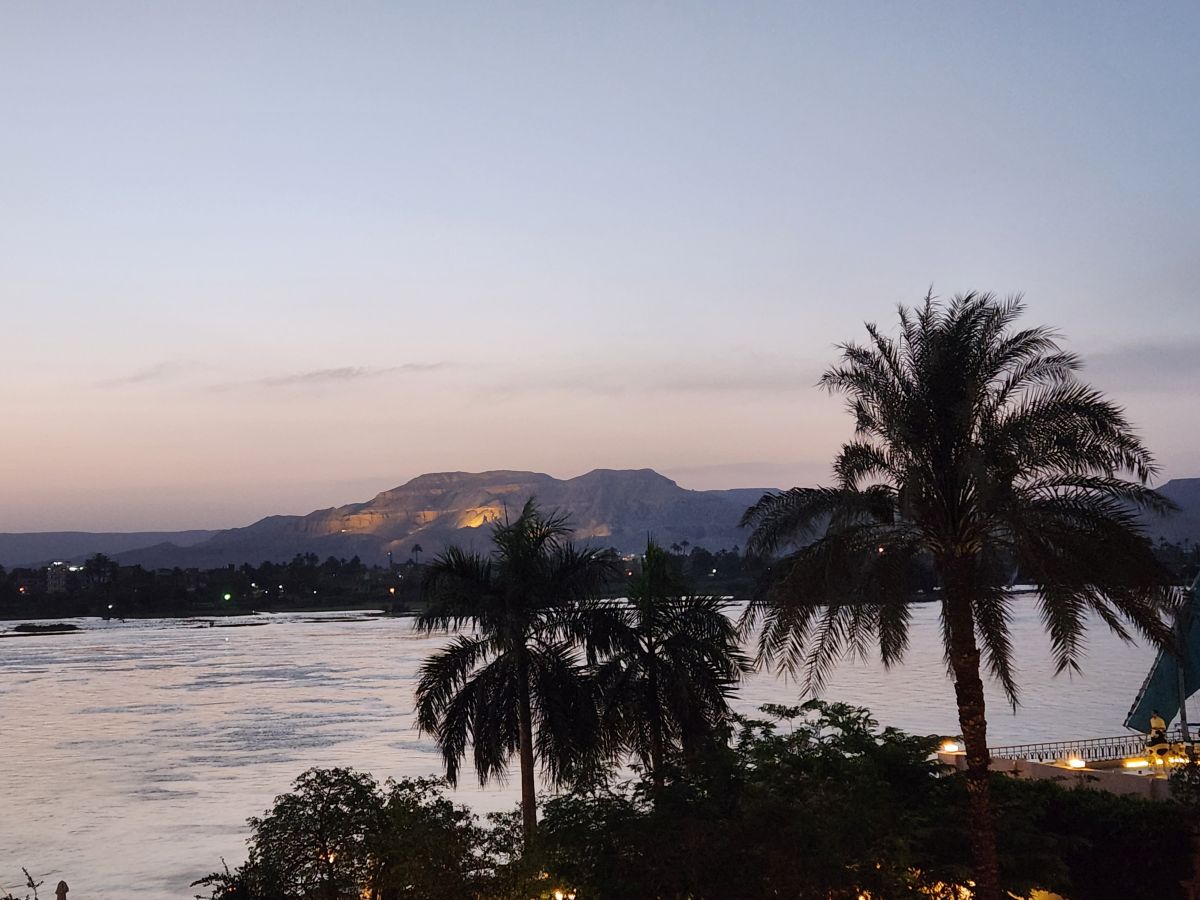
To bed early because tomorrow is another early start to our day! Meeting Amr at 6:45a for the Valley of the Kings.
 Andiamo