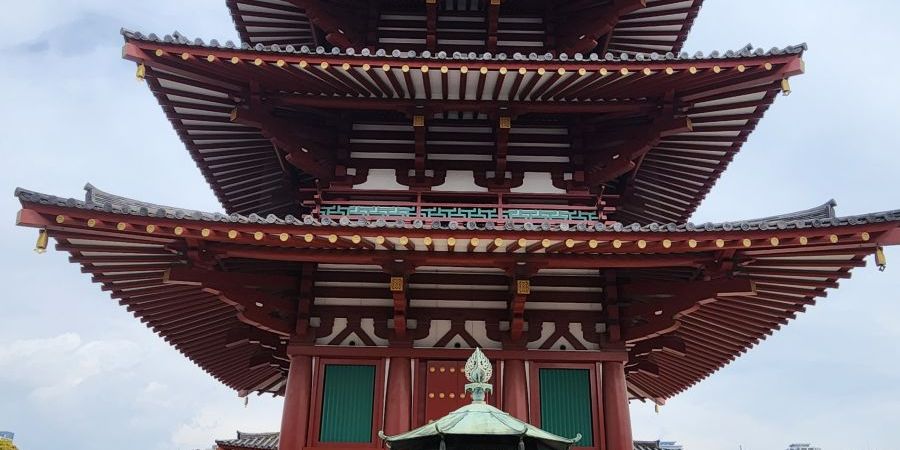
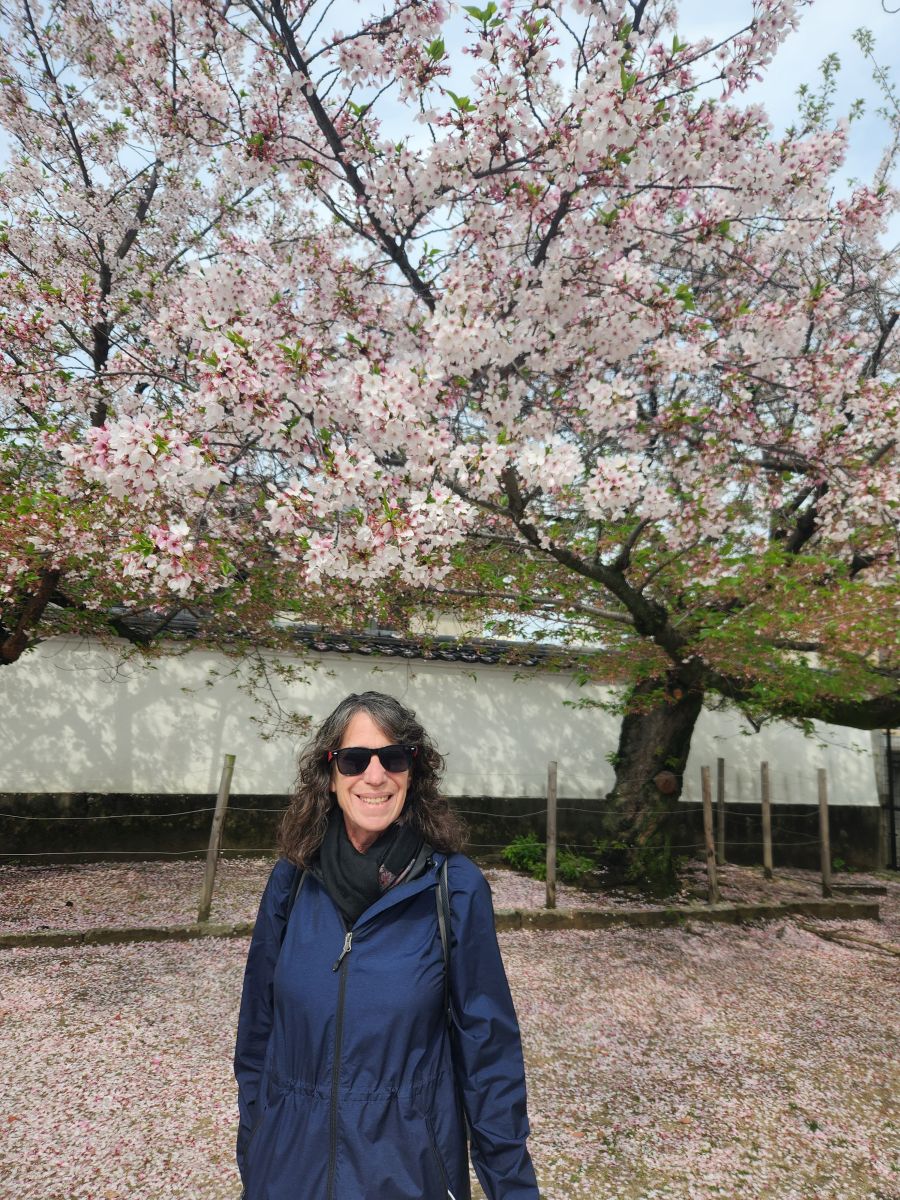
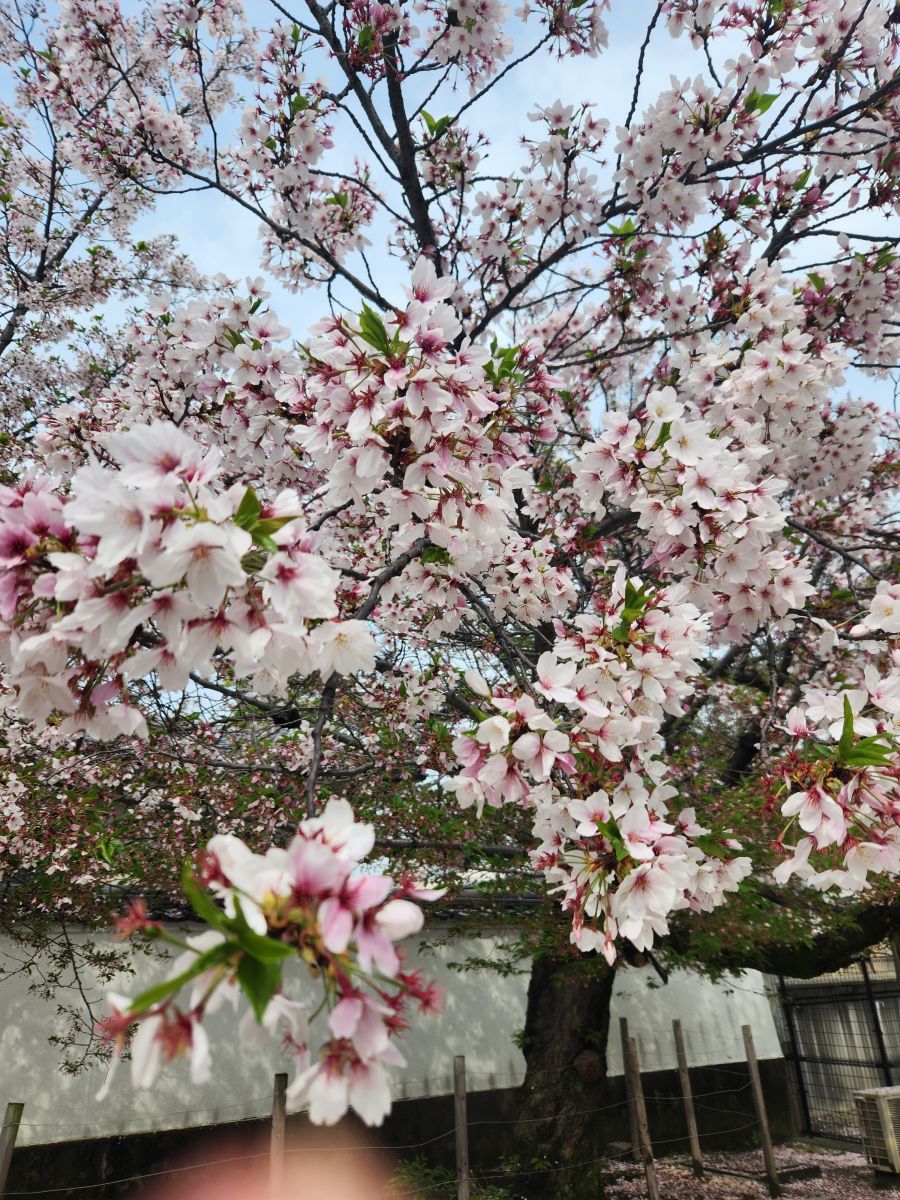
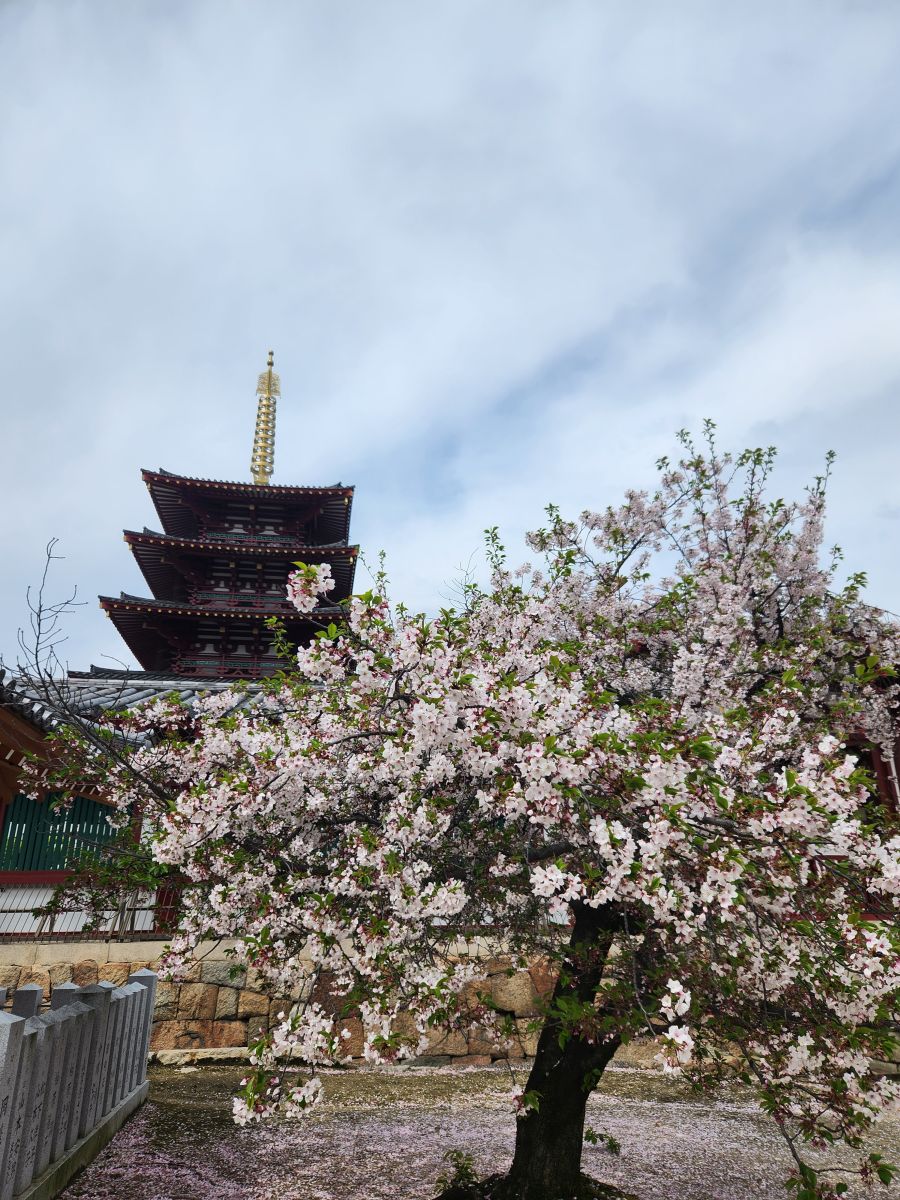
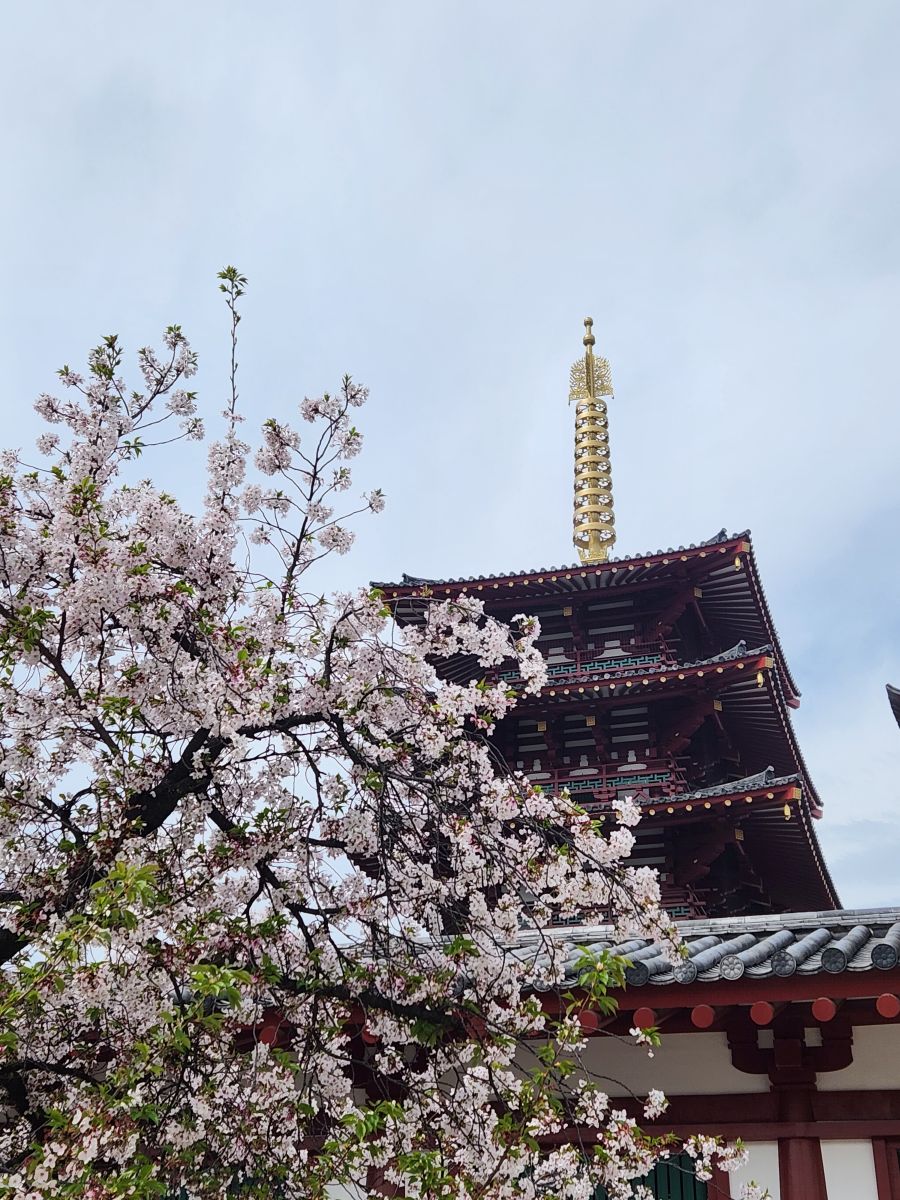
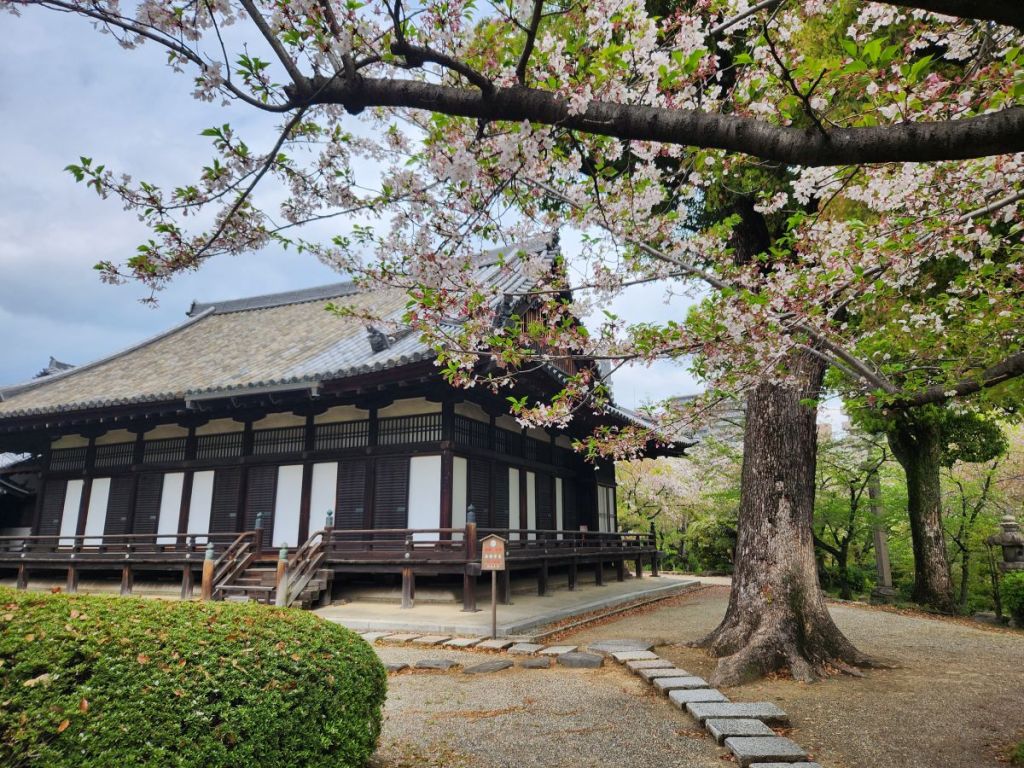
We have a full day on our own, and thank the lord, it isn’t raining! Still chilly – but dry. Heaven to us. We are heading to the Shitennoji-Temple, the first and oldest (built in 593) Buddhist temple in Japan, an easy train ride away. Well, easy because as I keep waxing poetic, this train system is the best! It only takes us 2 trains and about 30 minutes before we are walking the streets of Tanimachi looking for the entrance to the temple. Our explorations take us down this long alley an into the back of the temple ground, past some gorgeous cherry blossoms (probably the last we’ll see this trip) and older outer buildings that house a few shrines and cafes.
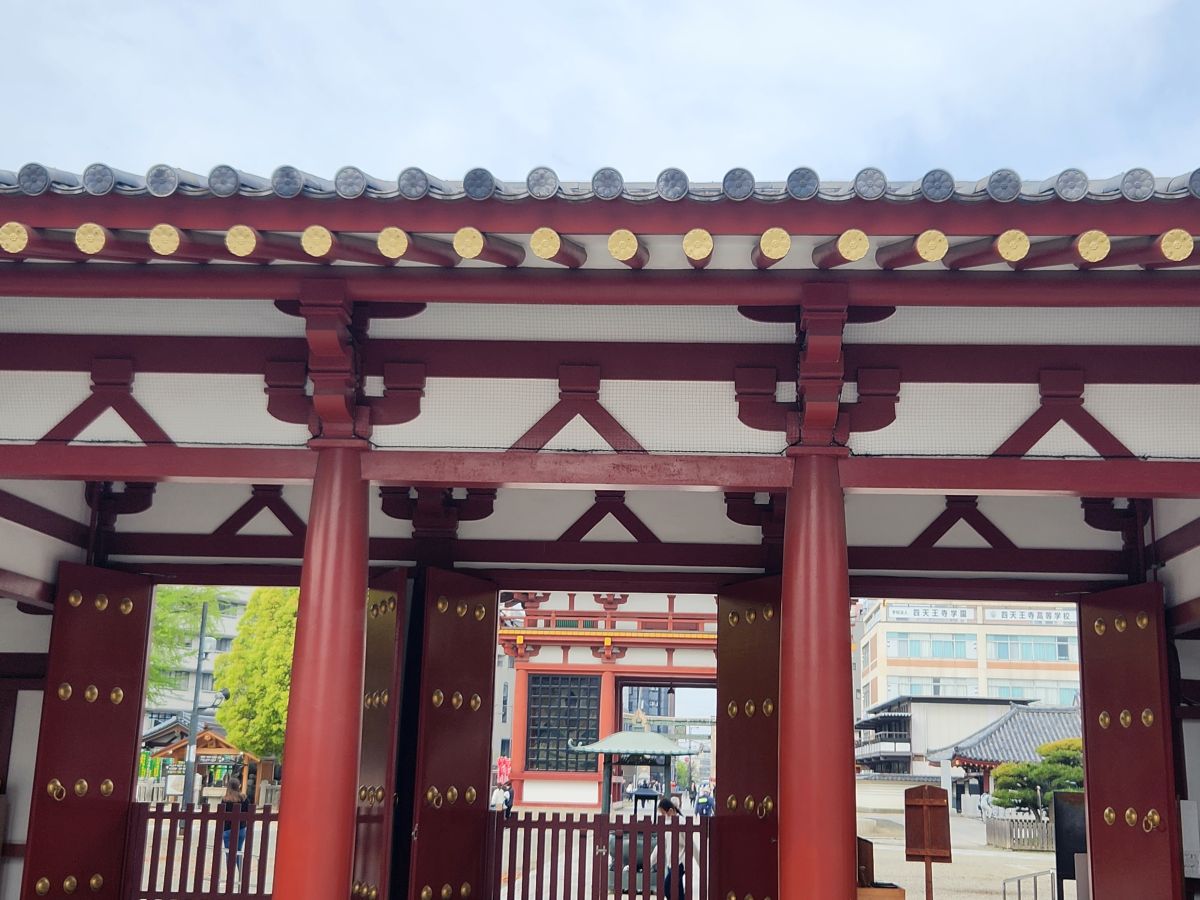
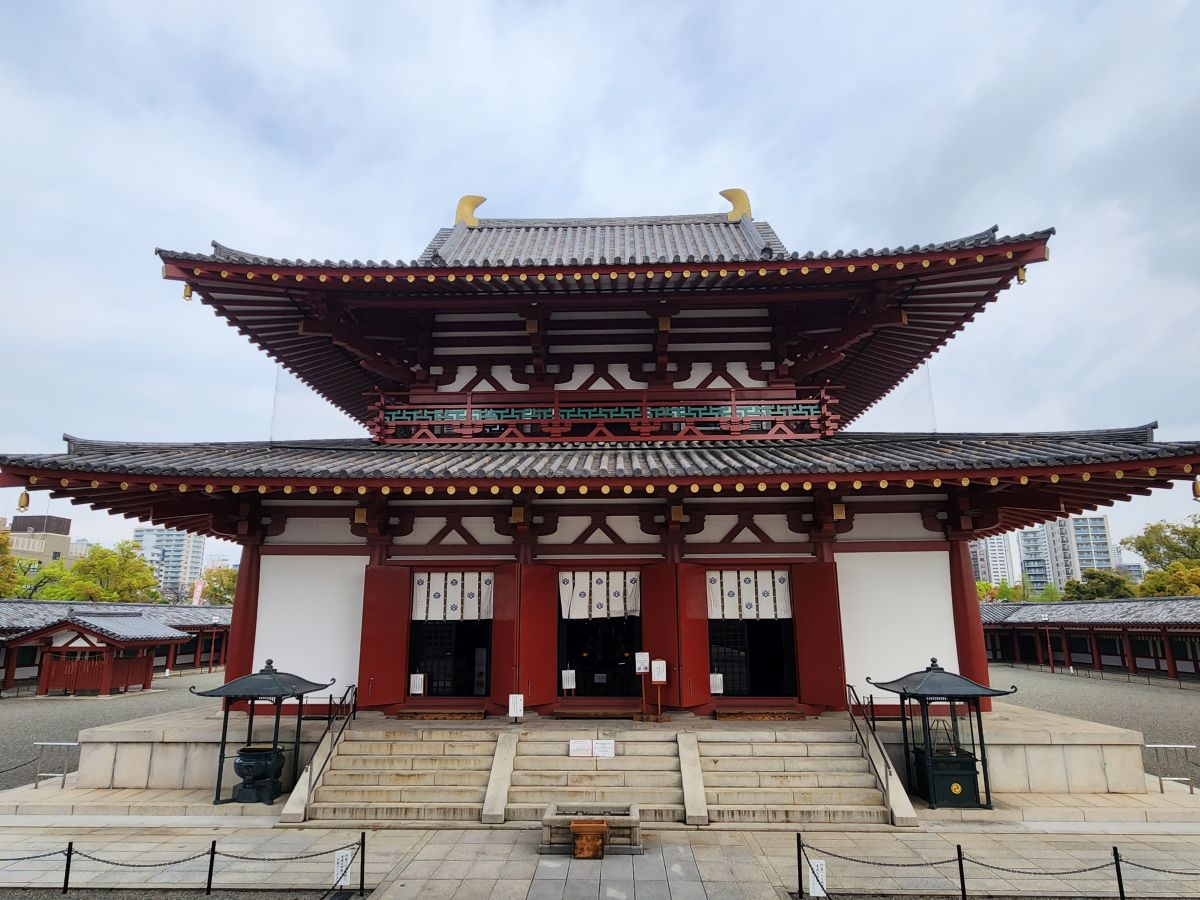
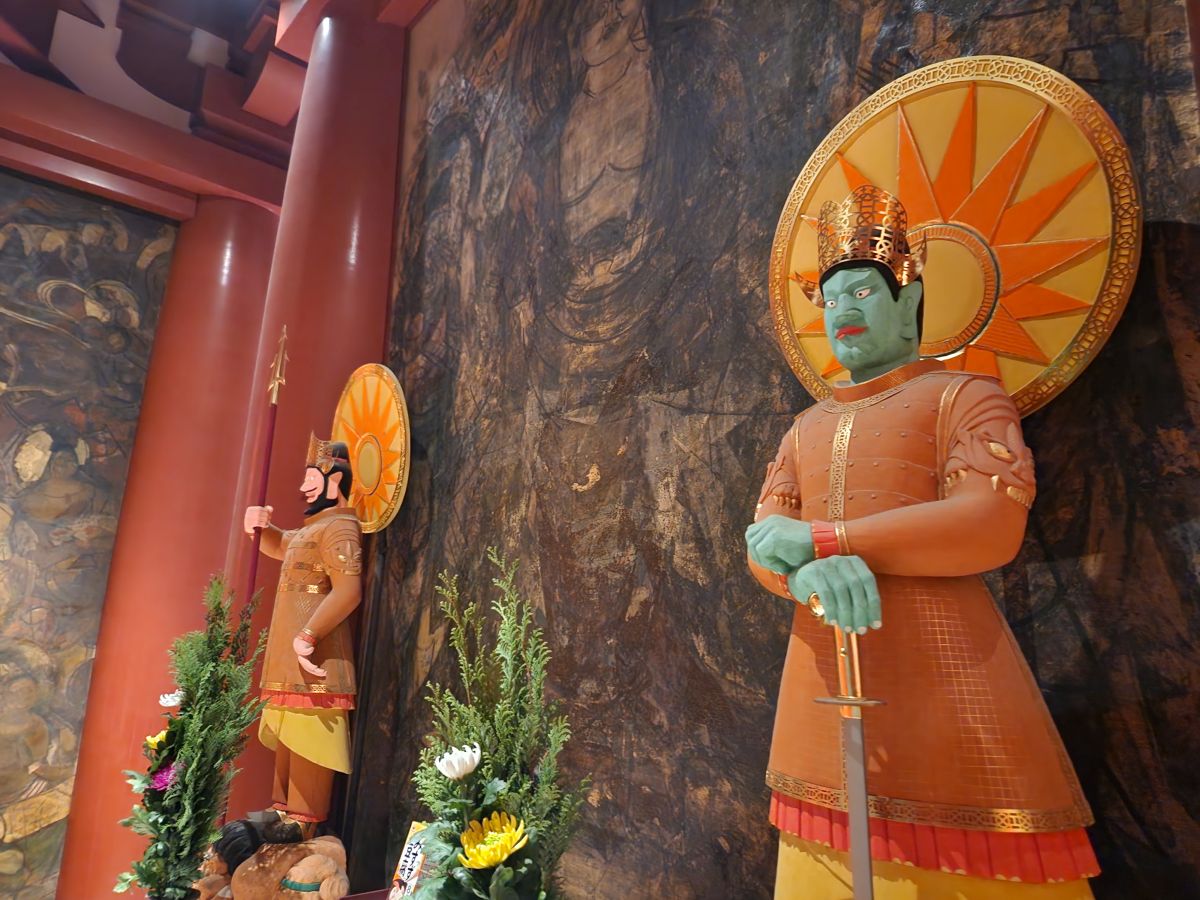
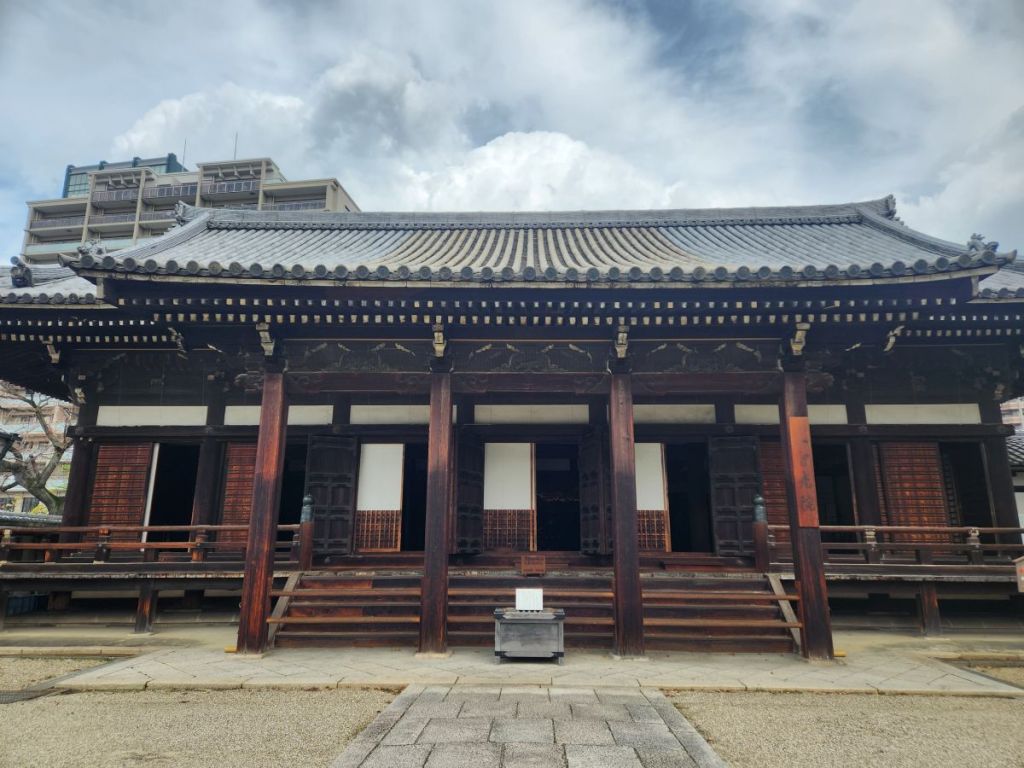
Following the walls, we eventually end up in the front of the complex facing the main gate where we can purchase our entry tickets. Entering into the complex, we head straight for the Kondo, the main hall, which houses a statue of Prince Shotoku, the founder of the temple, in his incarnation as the Buddha of Infinite Mercy surrounded by the Four Guardian Kings. (Shitenno refers to the Four Heavenly Kings in Buddhism.) Photos aren’t allowed, so we just soak up the Buddhist imagery and Zen vibes you feel inside most Buddhist temples.
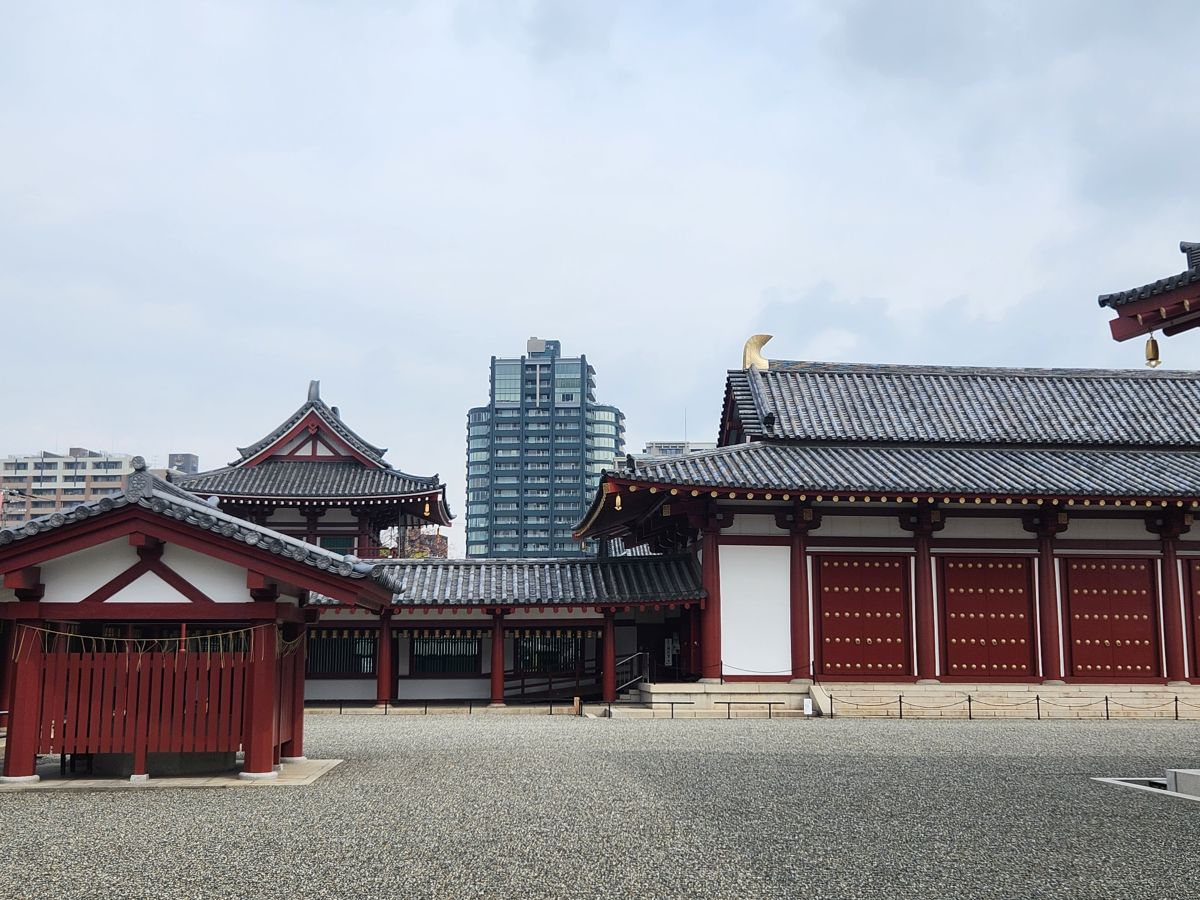
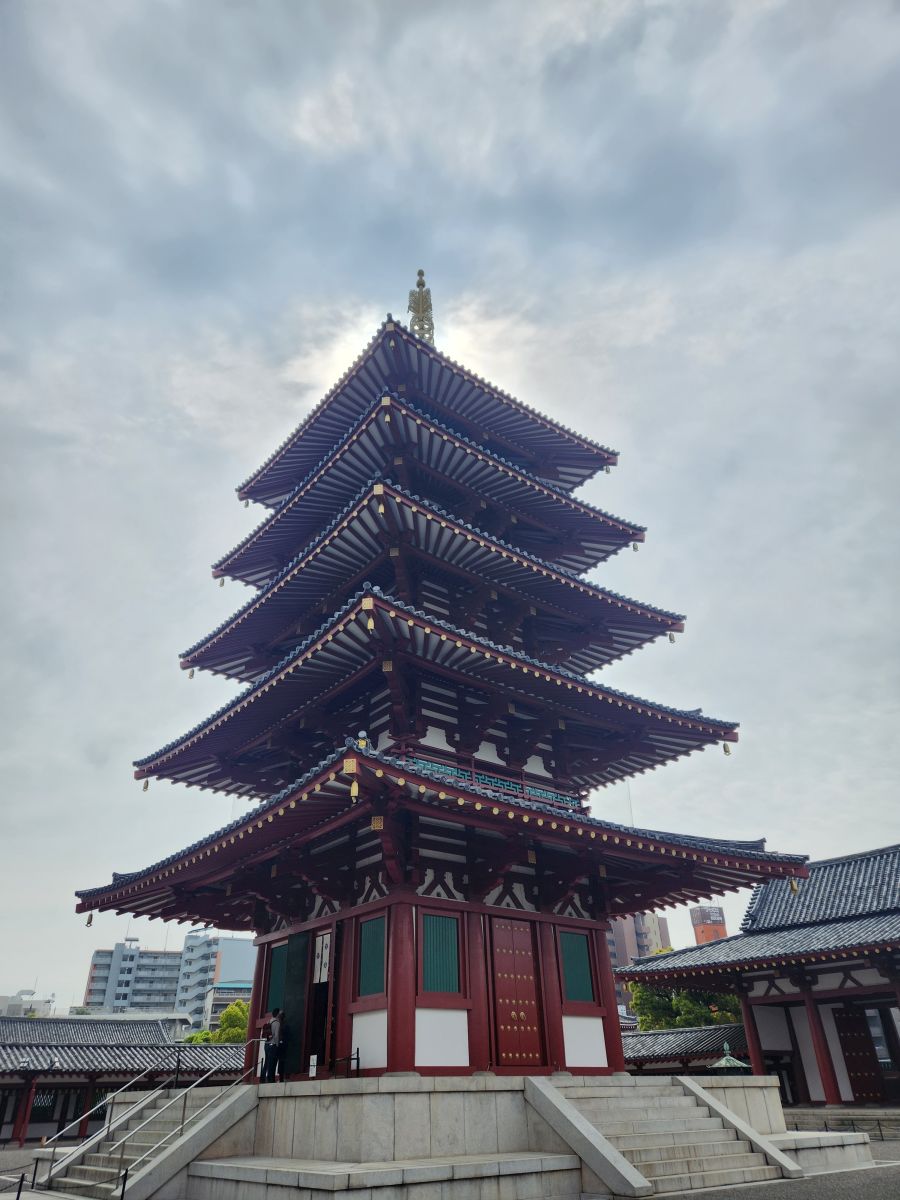
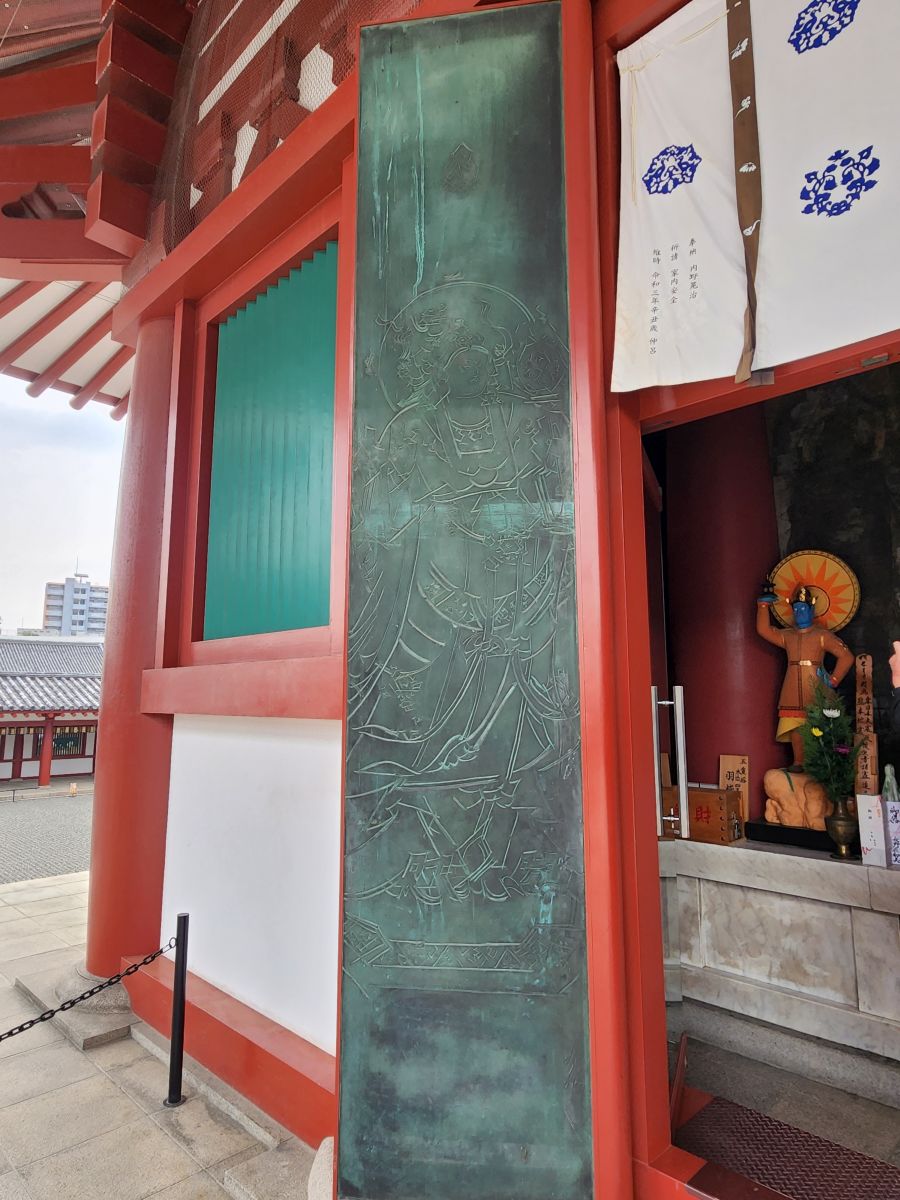
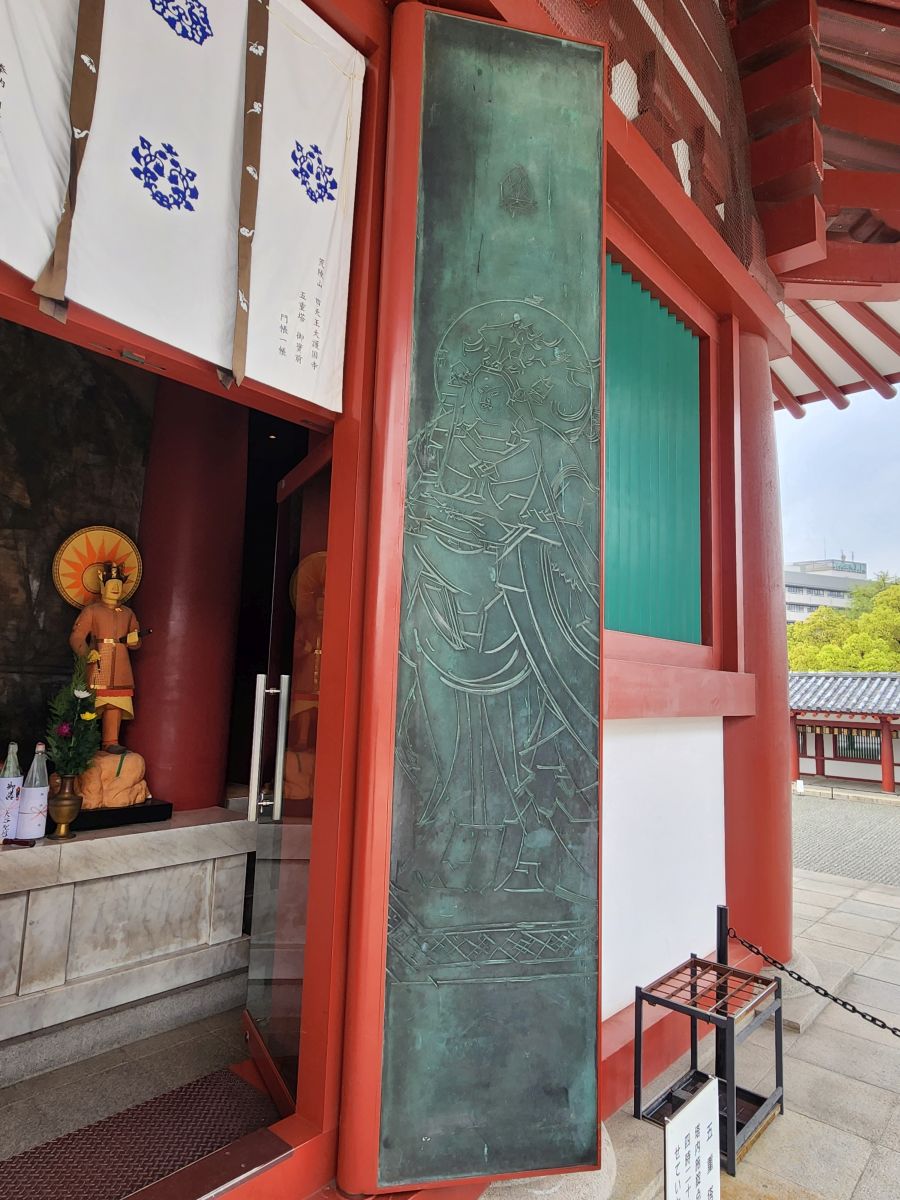
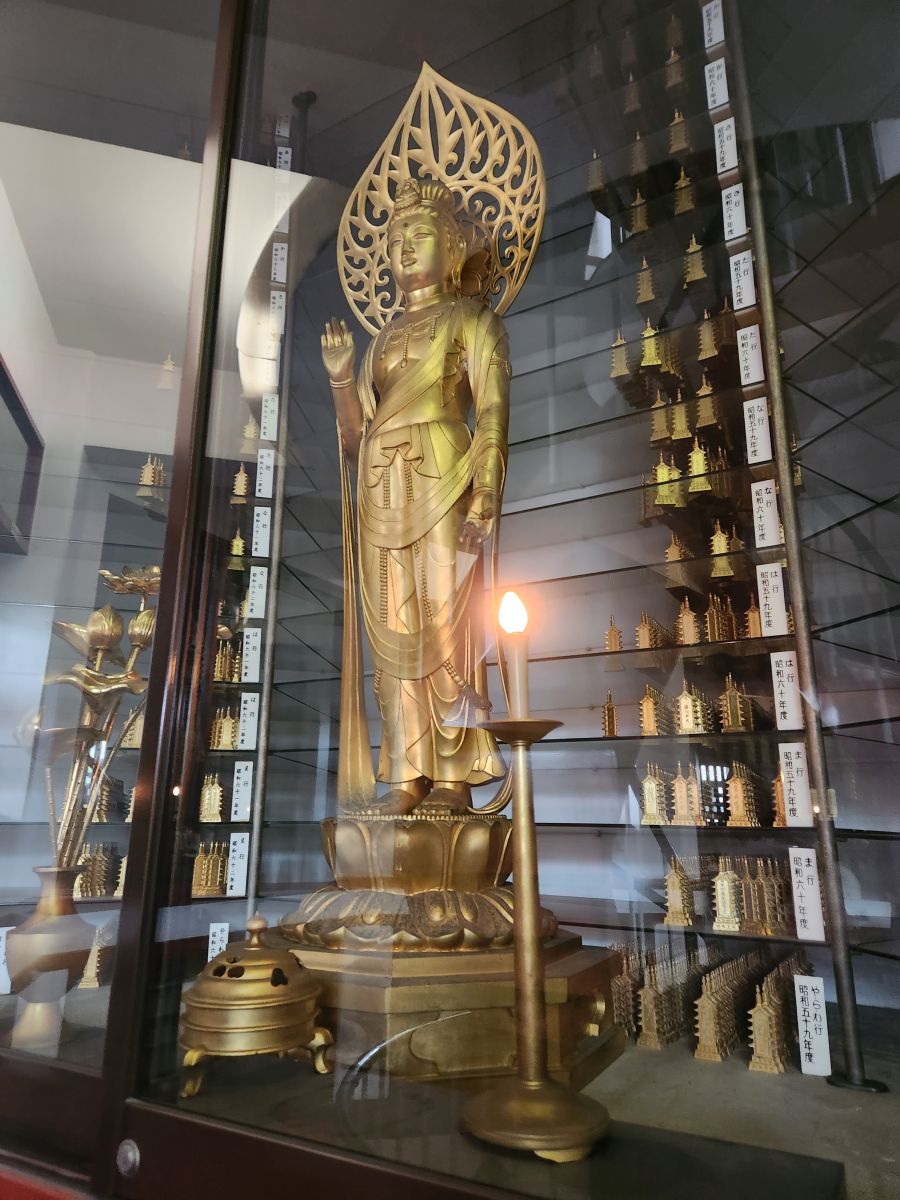
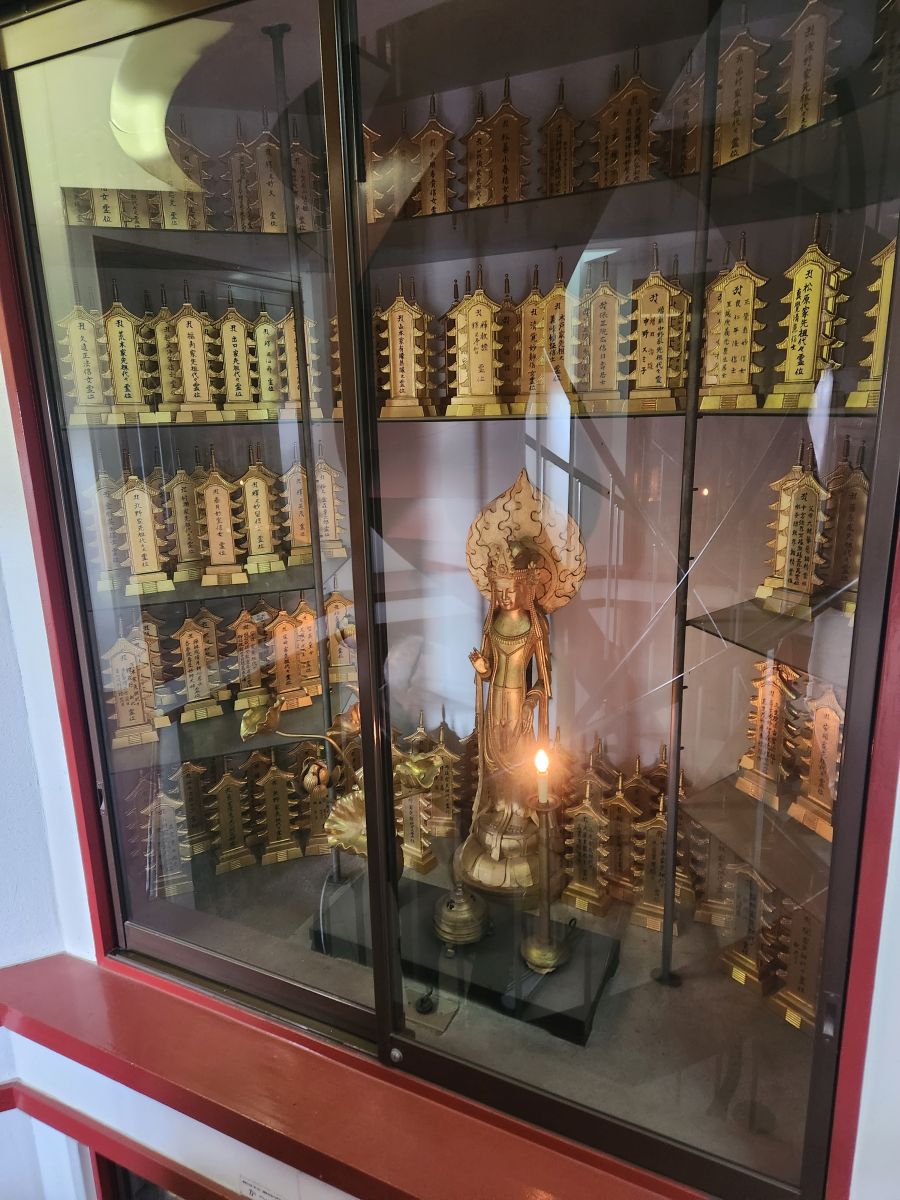
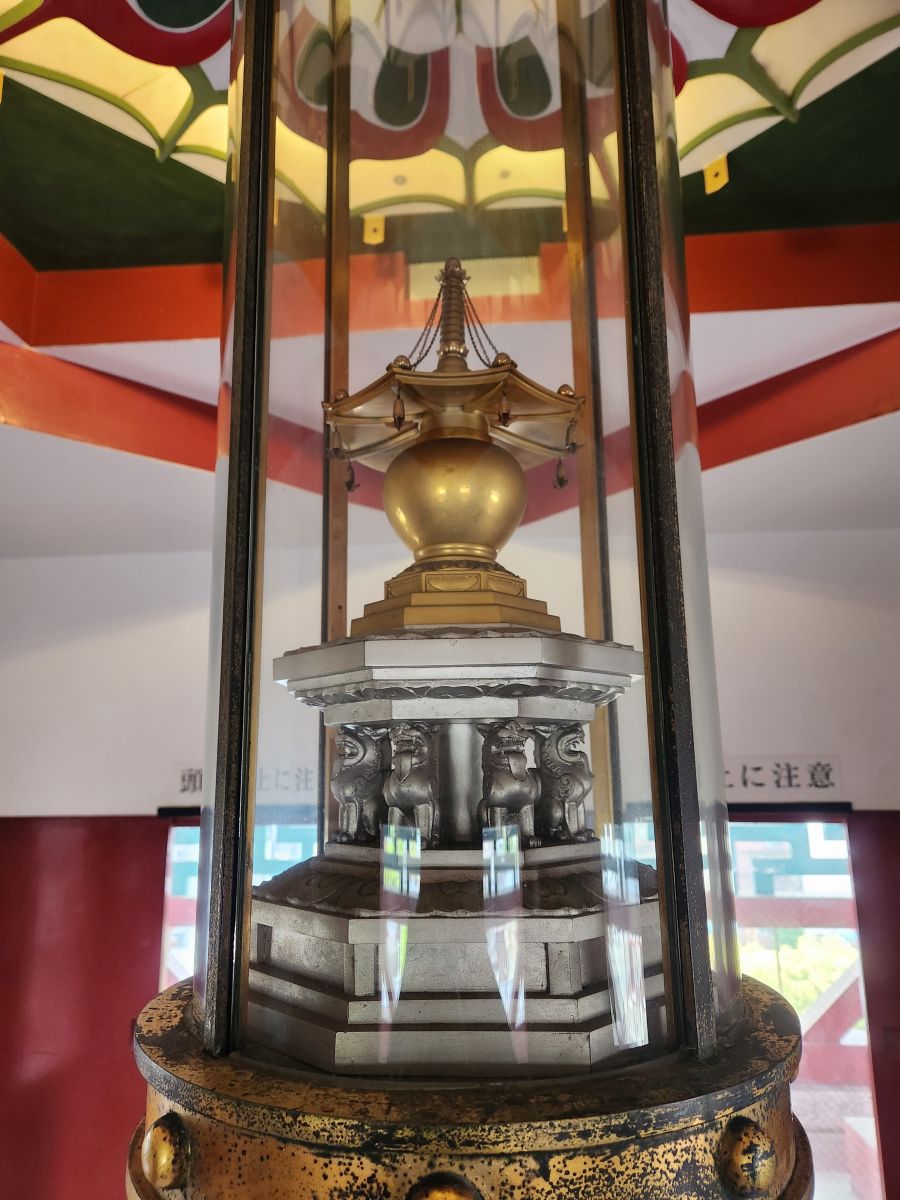
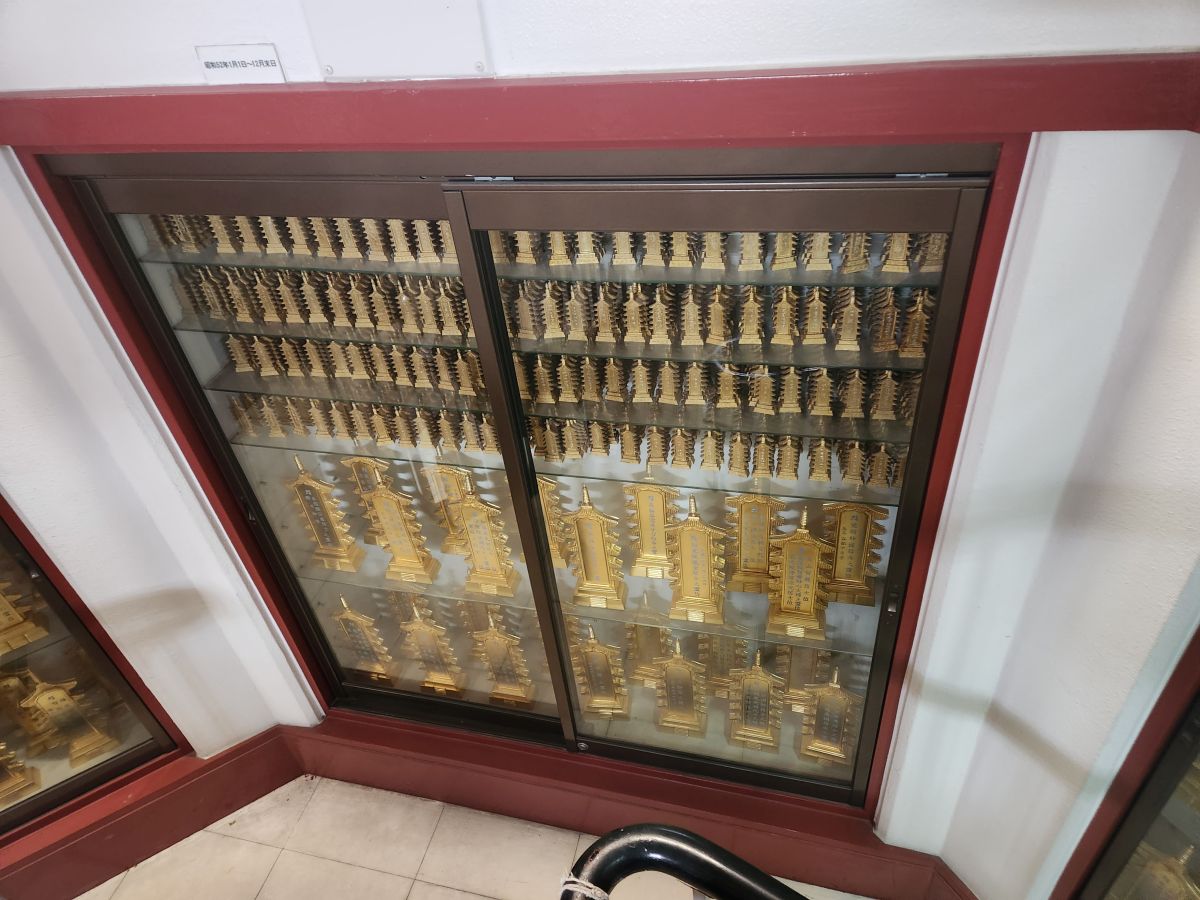
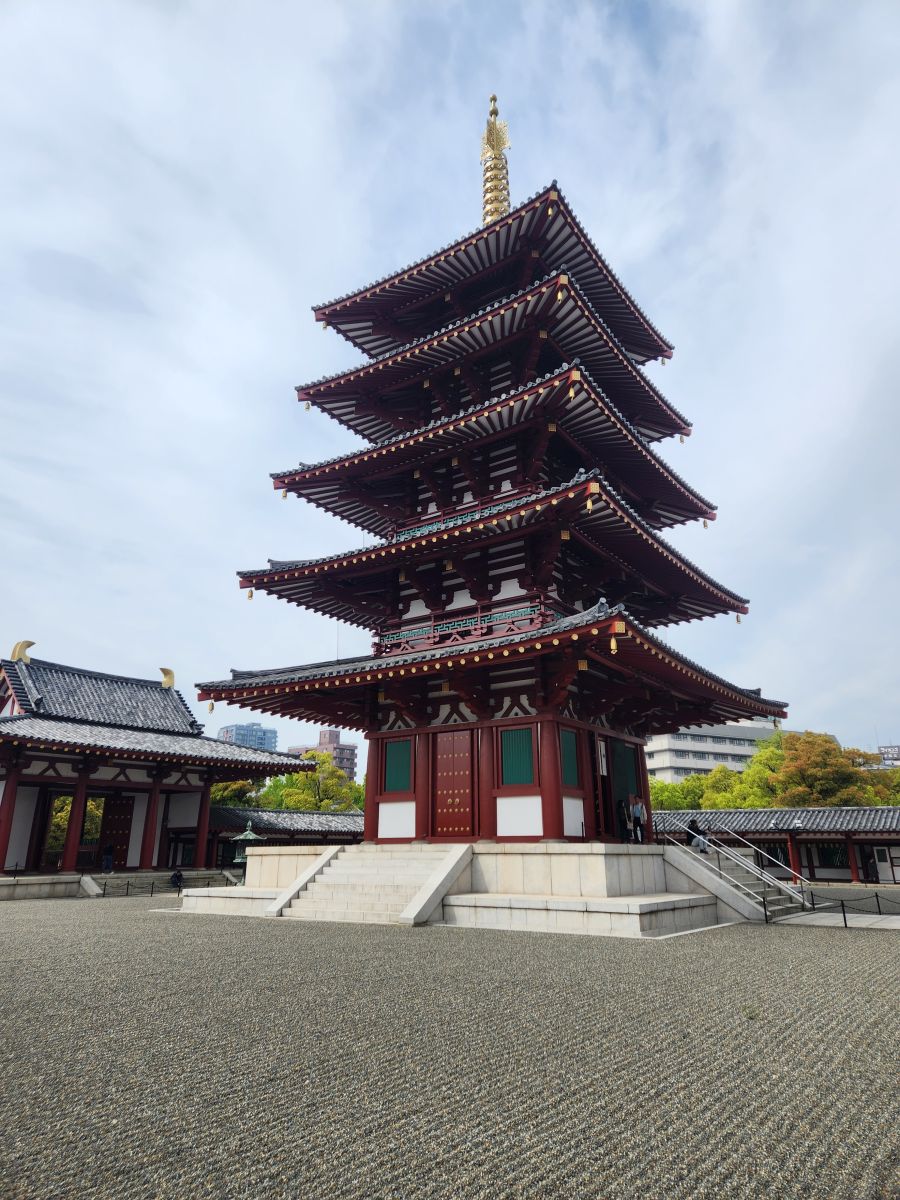
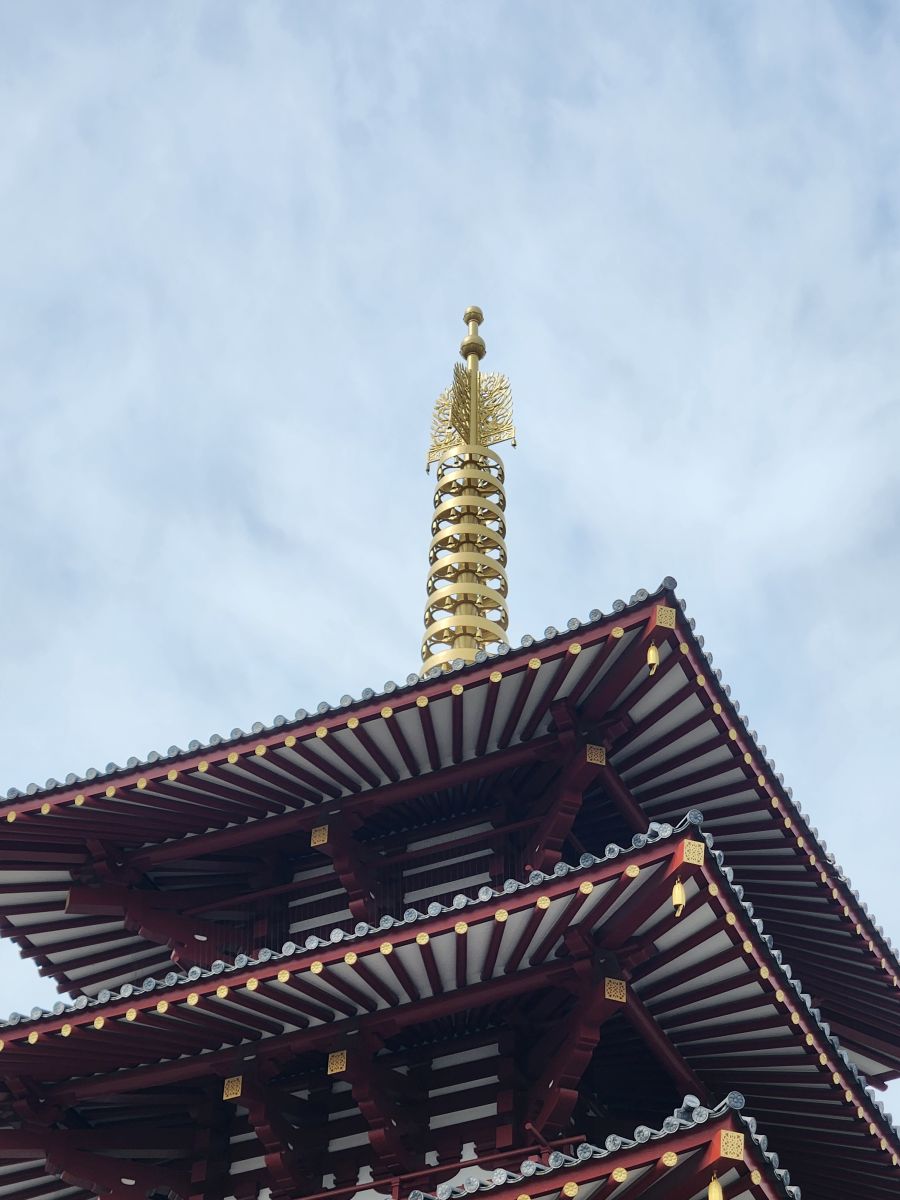
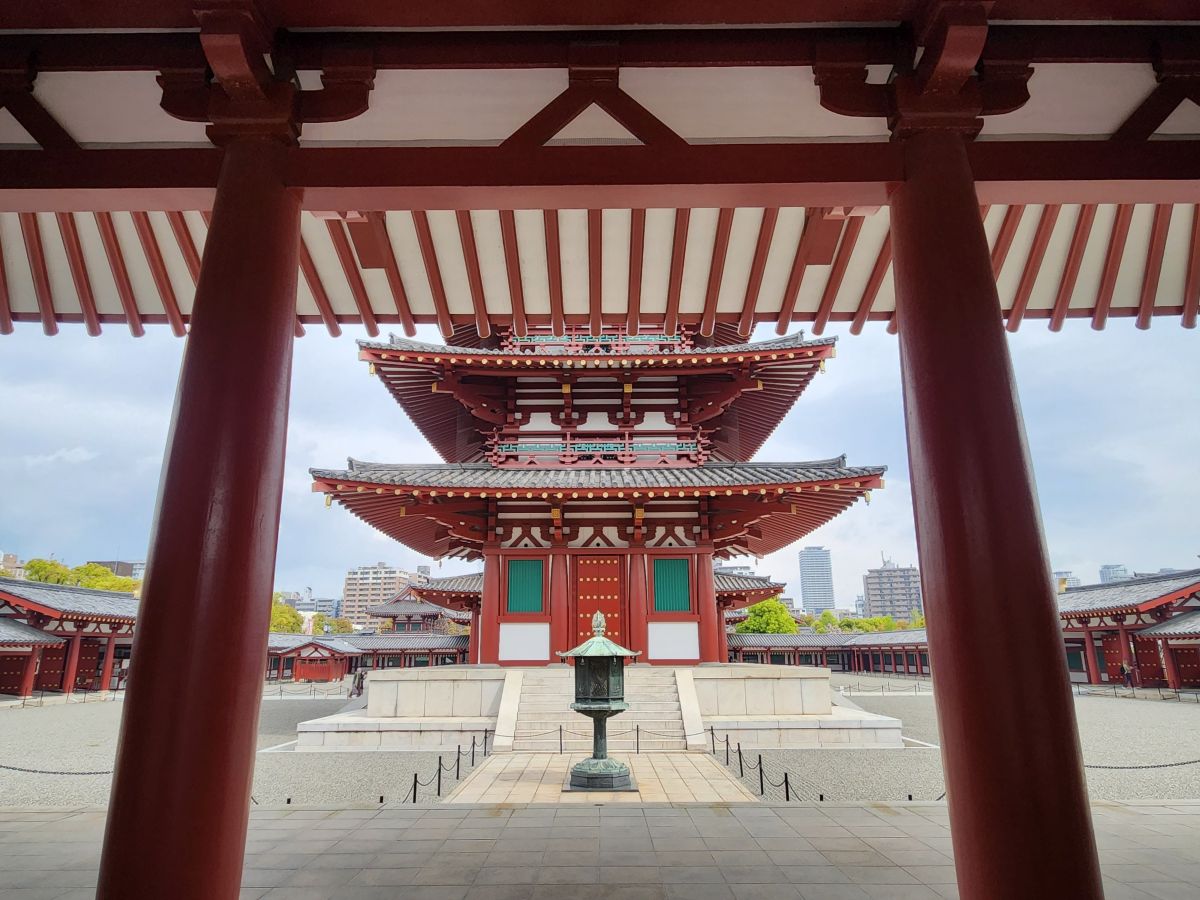
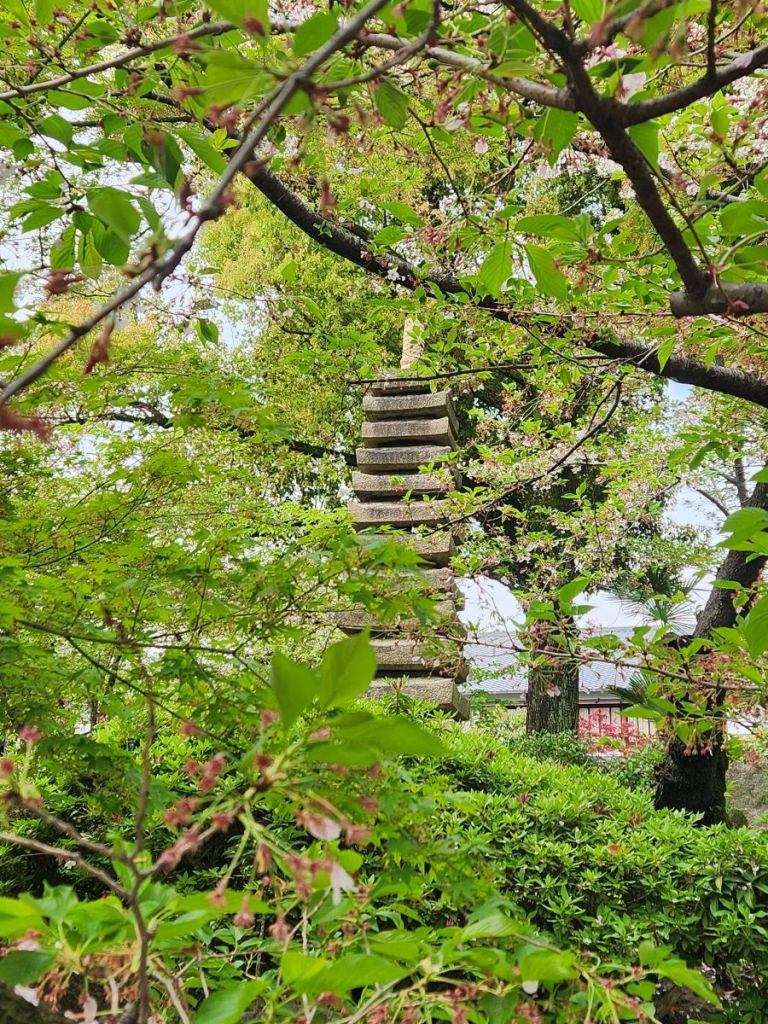
Then we move across the beautifully raked pebbles (on a concrete path of course) to the Goju-no-To, a five story Pagoda with incredible carved bronze doors. Here we climb the circular staircase all the way to the top of the Pagoda (in our stocking feet), passing hundreds upon hundreds of enshrined relics of the Buddha. We can’t even begin to guess how many! Reaching the top, you can peek out the little windows, through the protective fencing/mesh to get a little view of the surrounding area, but not a very good one. Ah well, it was exercise! We carefully reverse course, exploring the ground floor of the Pagoda with more King statues, then head out into the courtyard.
Walking around the courtyard, toward the entrance/exit, we get some stunning views of the temple and the Pagoda, along with those manicured pebbles. They just amaze me – and that no one has stepped off the path and ruined them – I think that amazes me more!
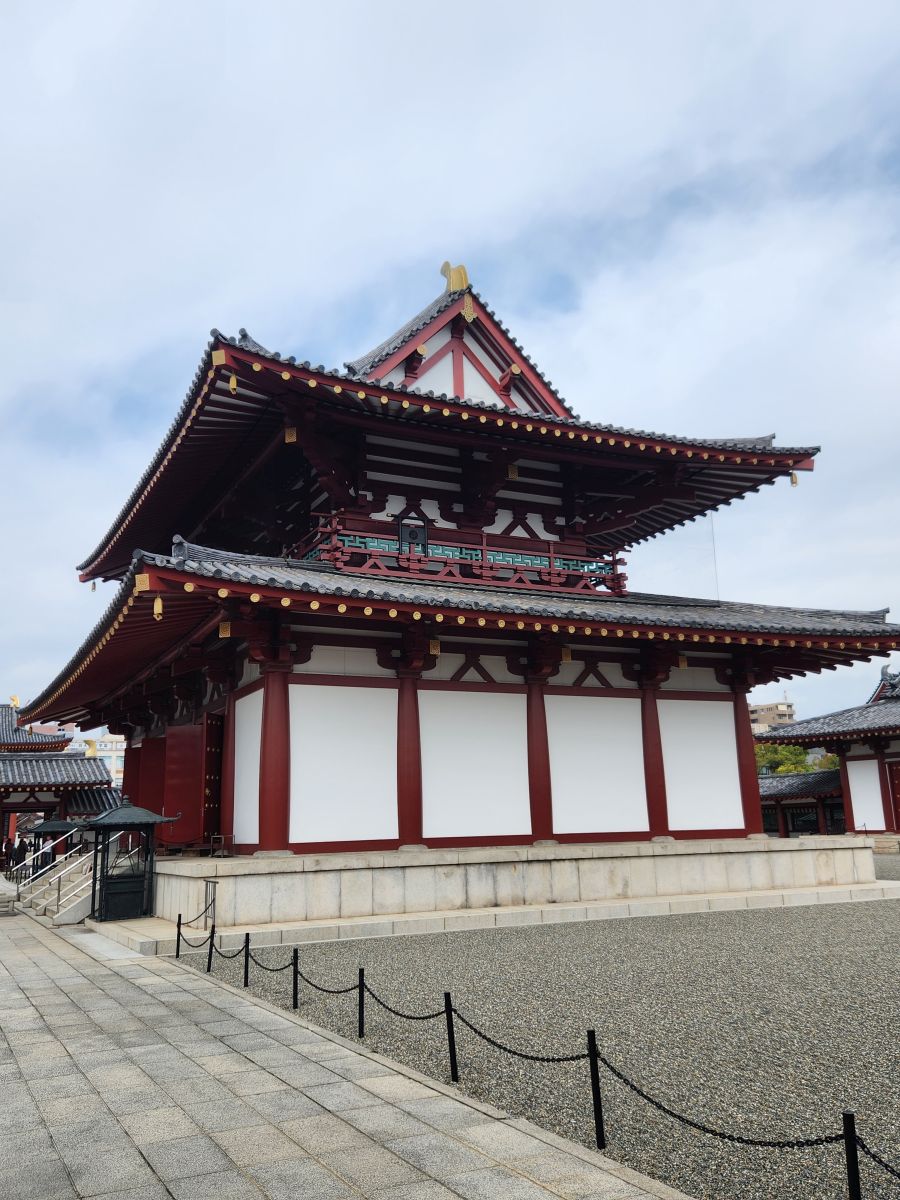
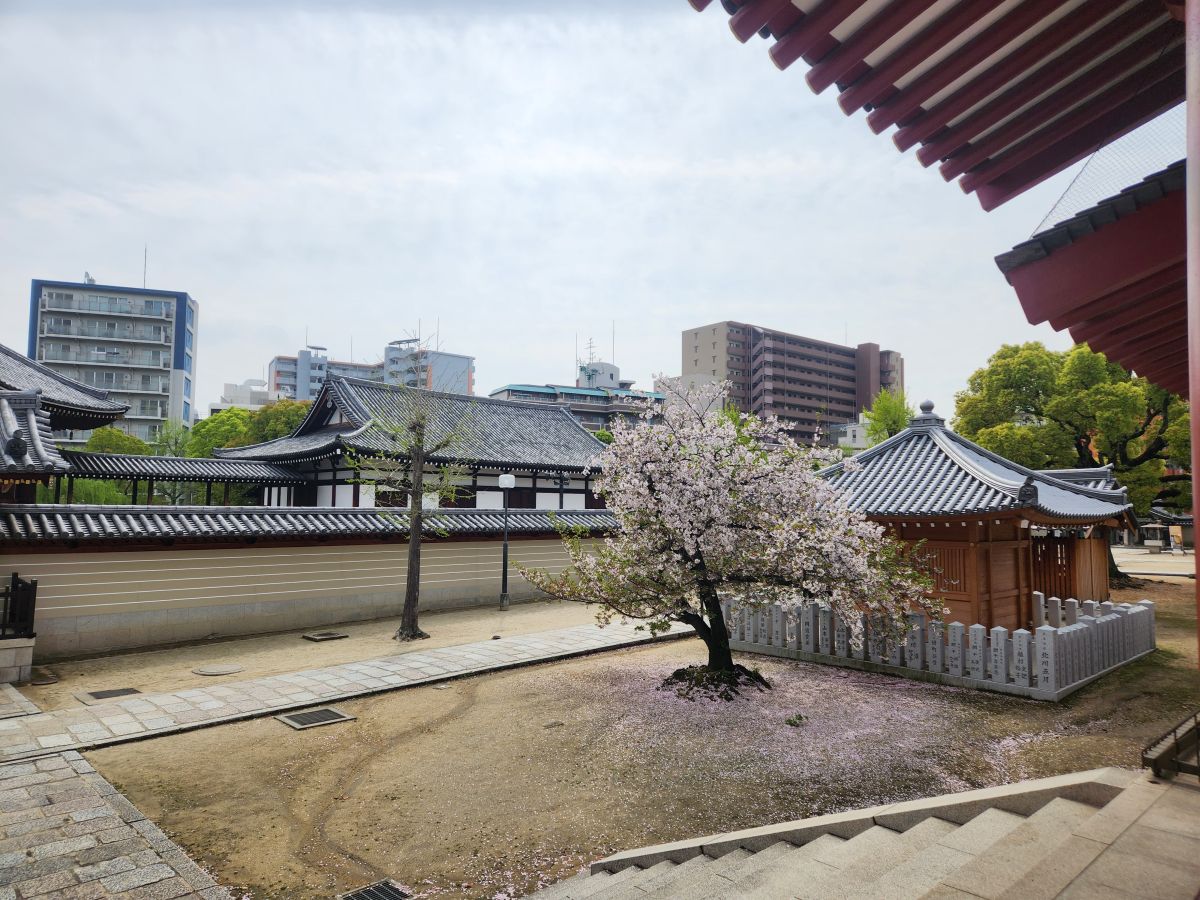
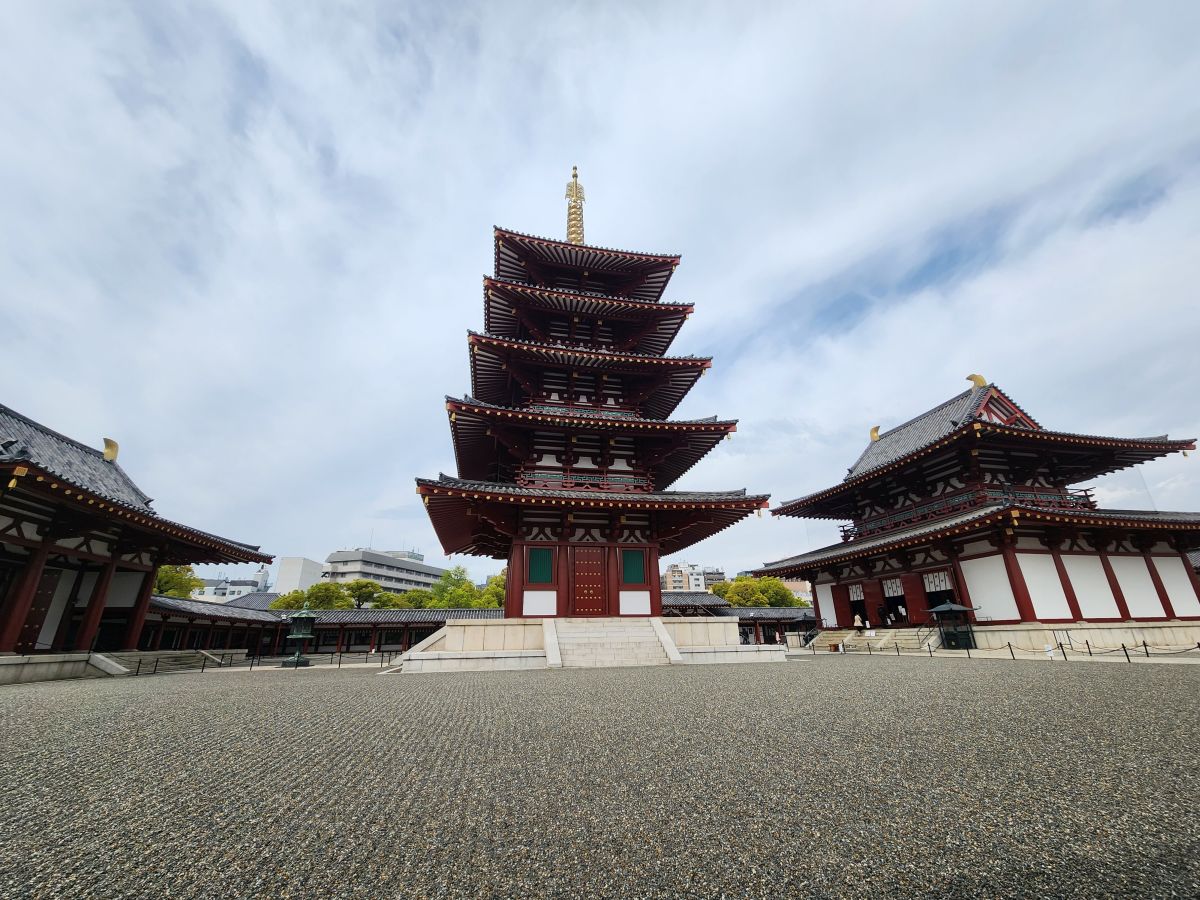
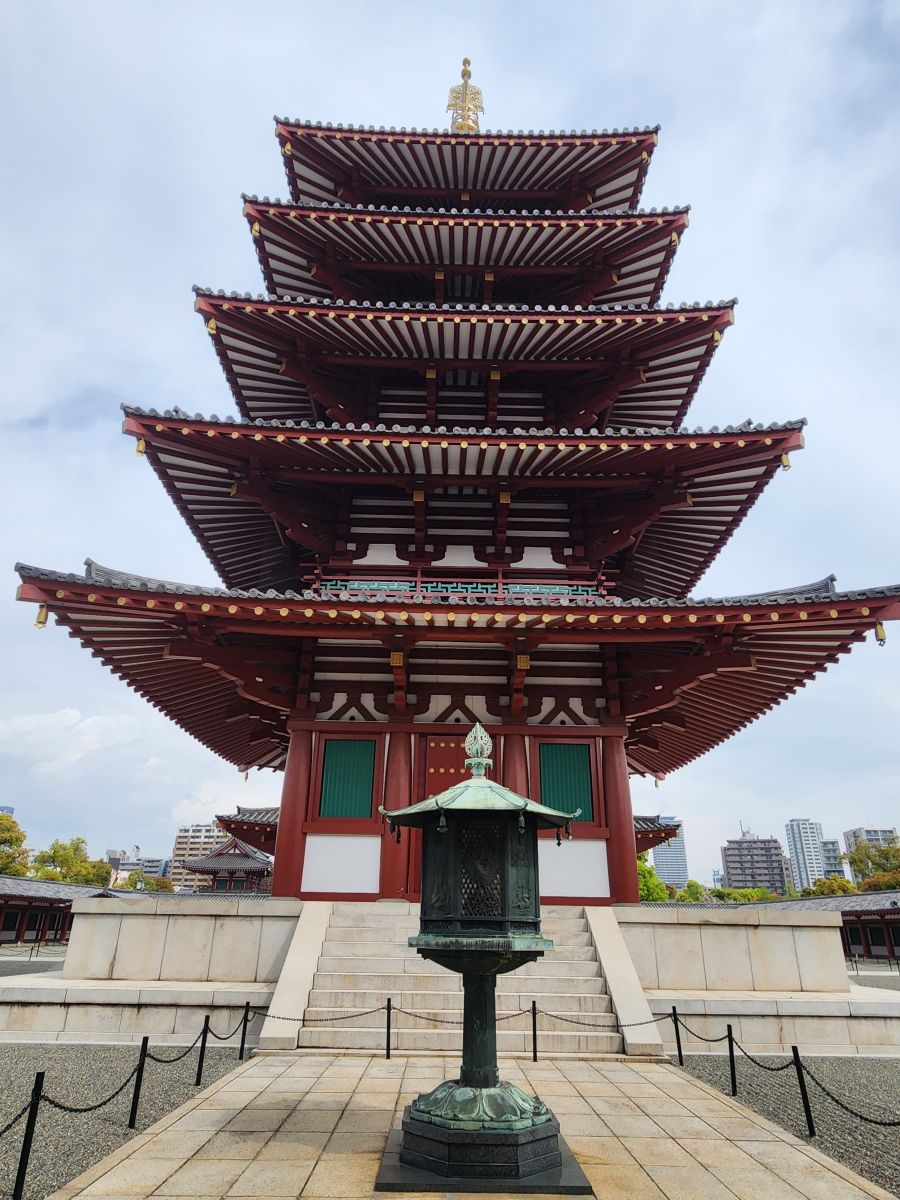
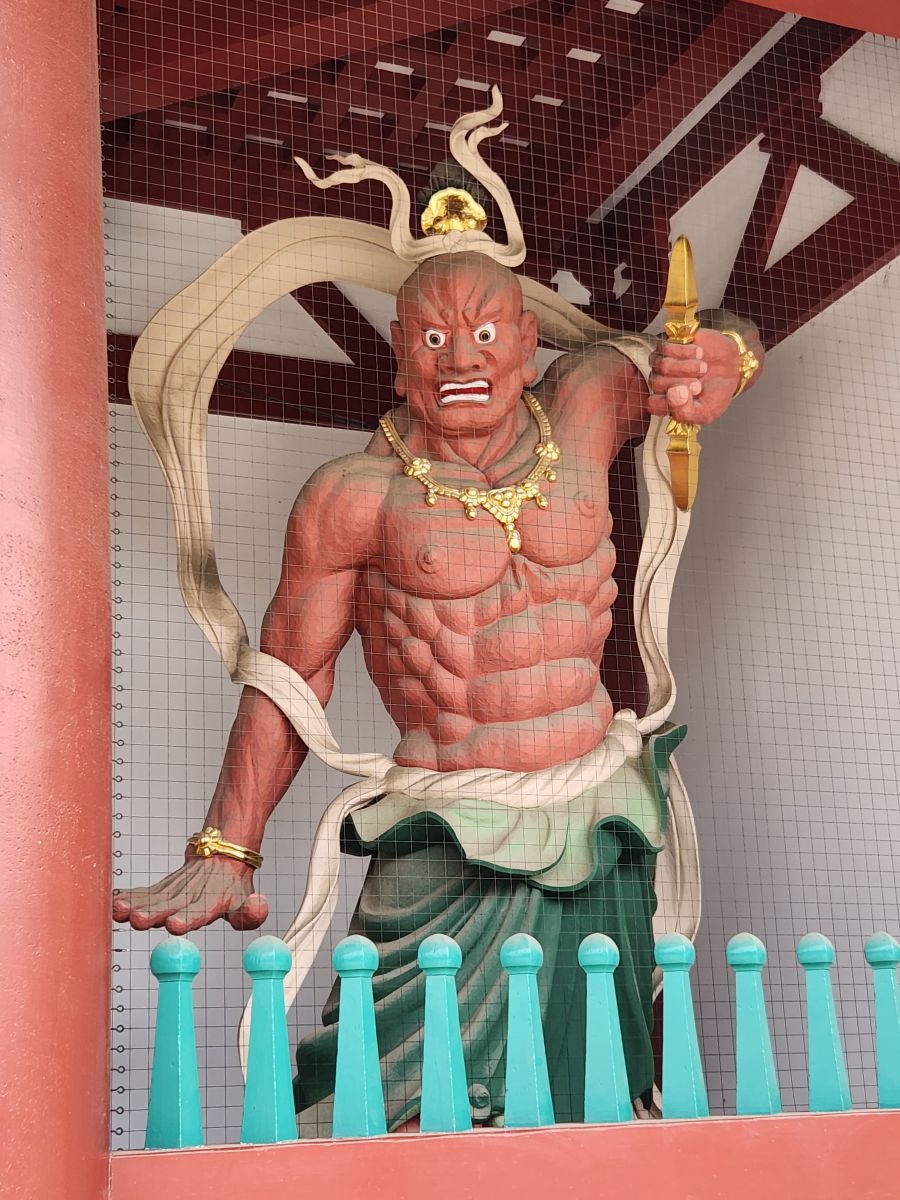
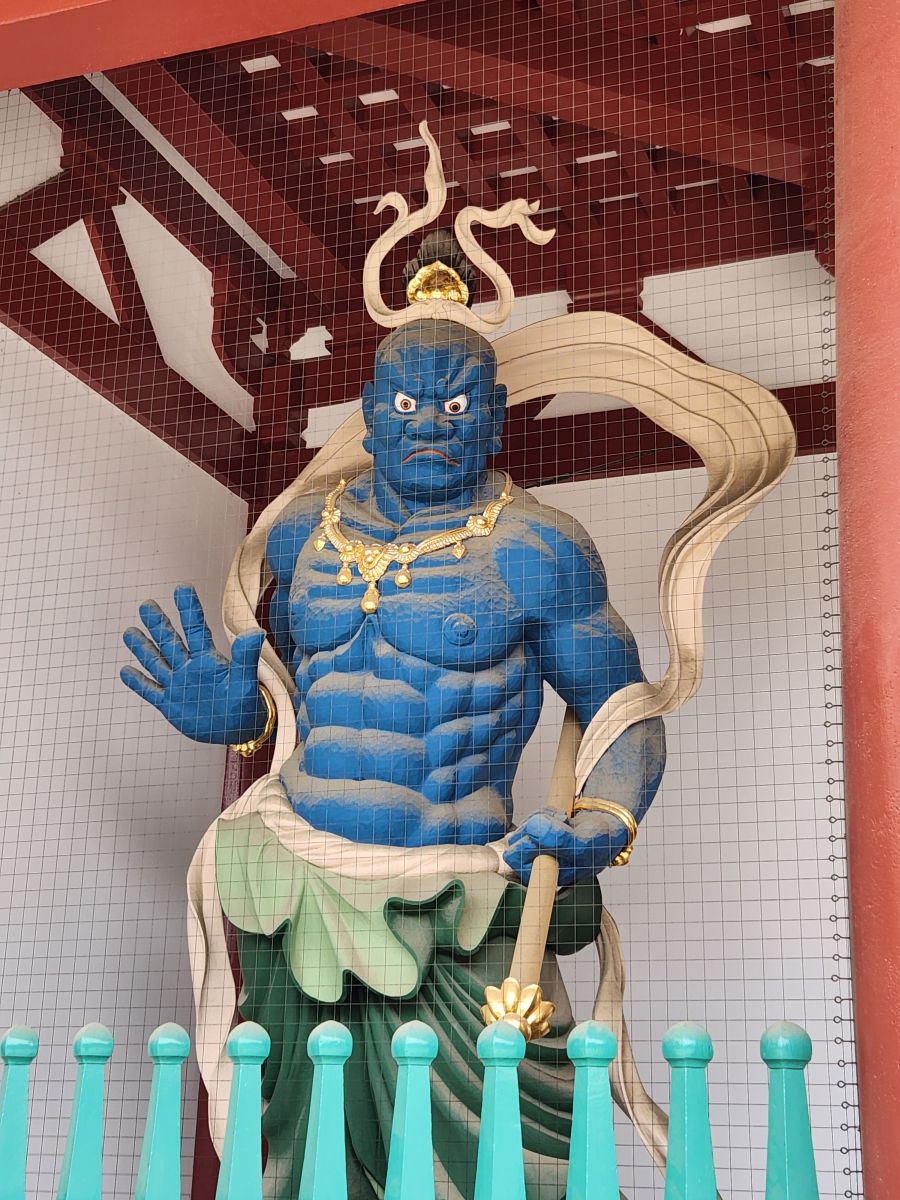
Back outside the walls, we once again circle, finding more cherry blossoms, at the end of the their cycle with green leaves popping through and a bed of spent blossoms on the ground under the tree, looking like a carpet of pink snow. Coming around the south side of the complex, there is a large gate flanked by more King/guardian statues as well as more cherry blossom trees and nice views back up to the Pagoda.
We are looking for the Garden of Gokuraku-Jodo, the temple’s main gardens, but can’t seem to find the entrance. We actually circle out onto the street and cut back through the same alleyway we walked in on, stumbling upon a really cool graveyard that captivates us for a while! I mean it is this little plot of land, hemmed in by the Temple on one side and high rise buildings on the other, with the most beautiful shrines and grave stones. A real find!
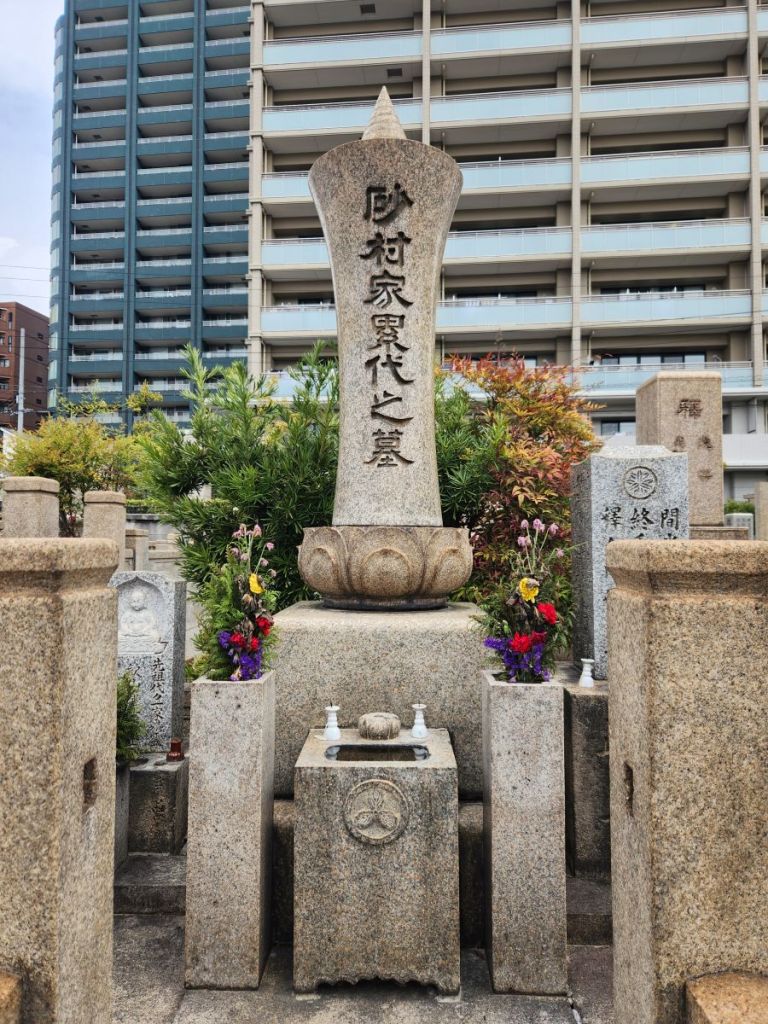
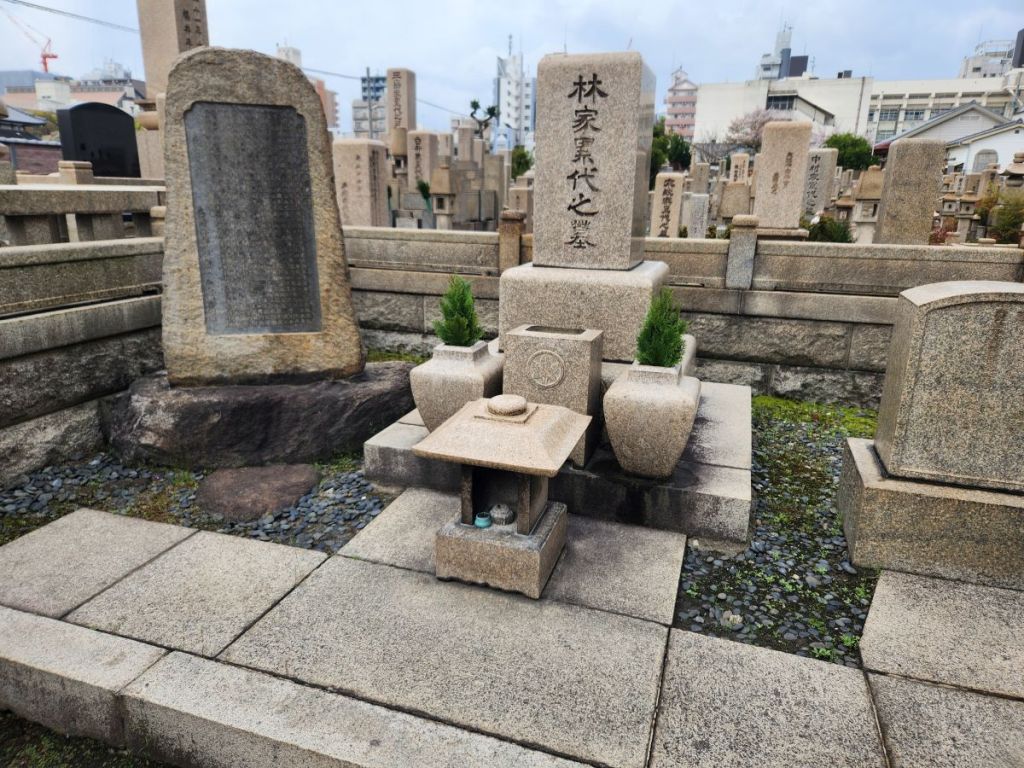
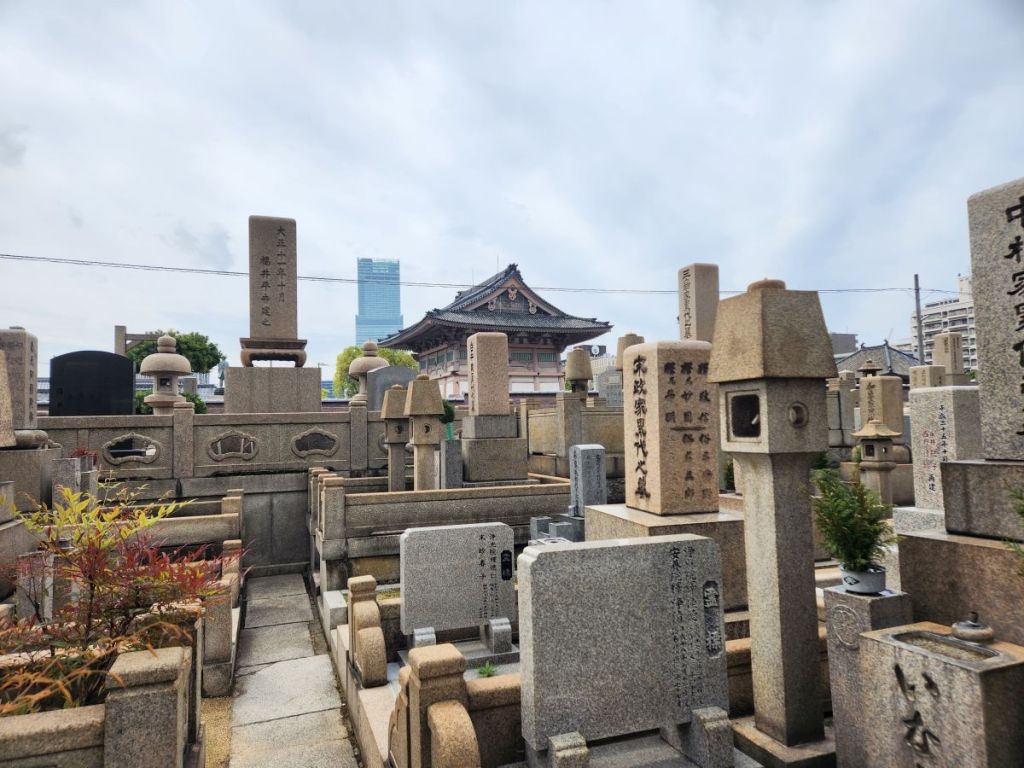
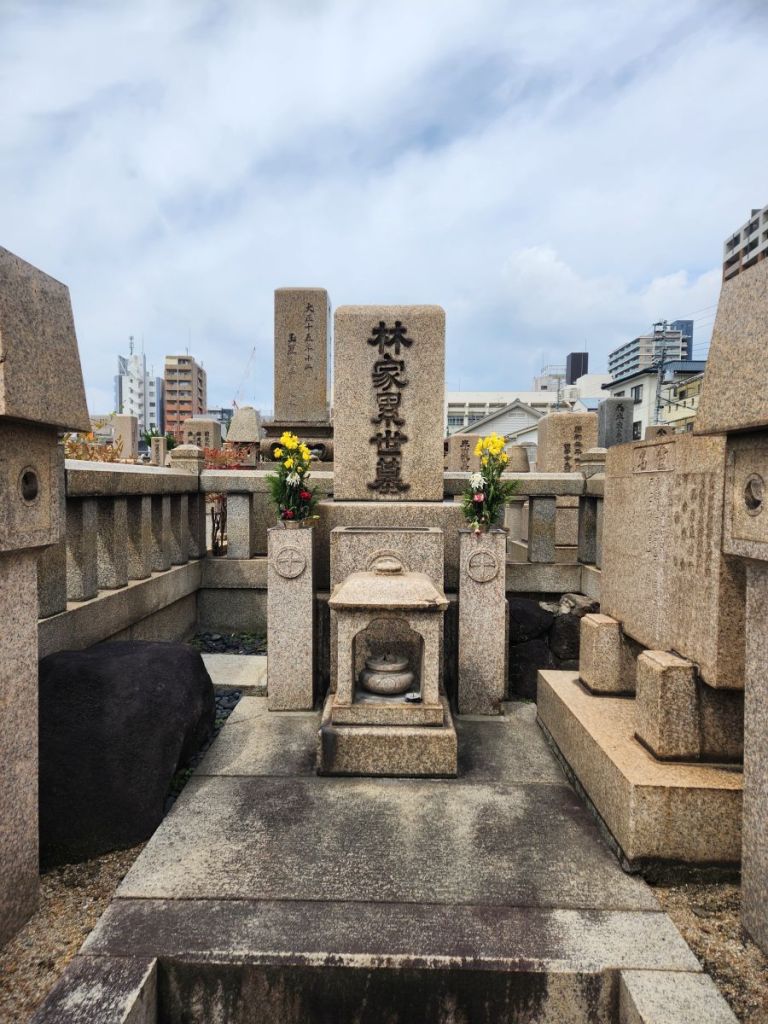
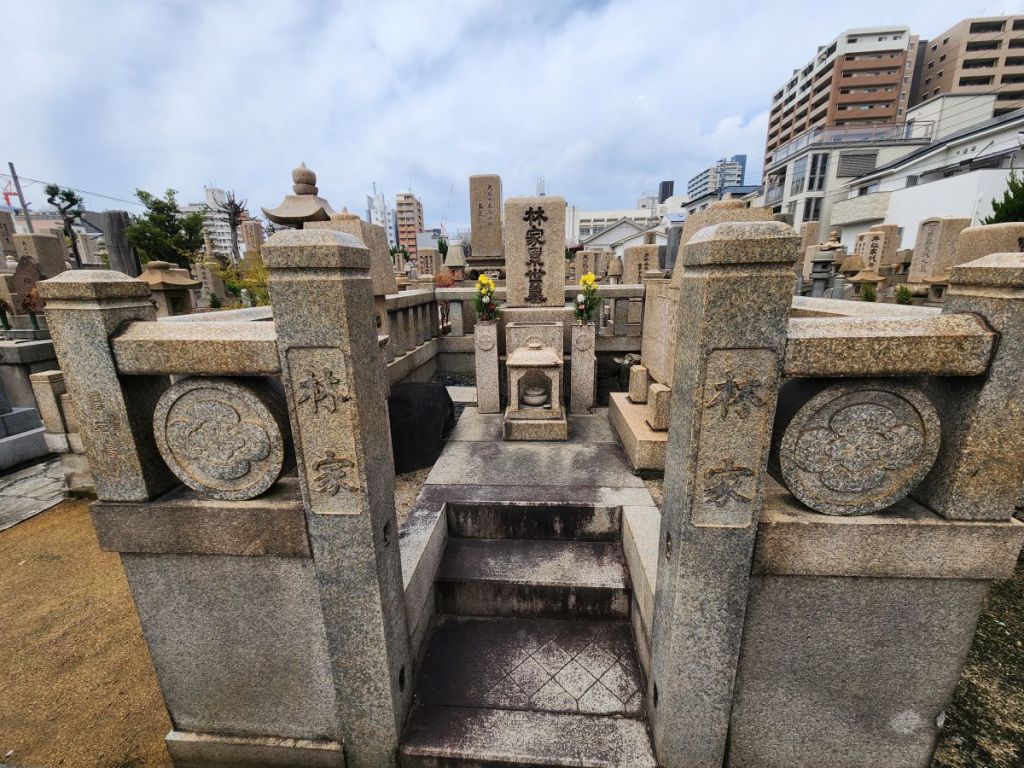
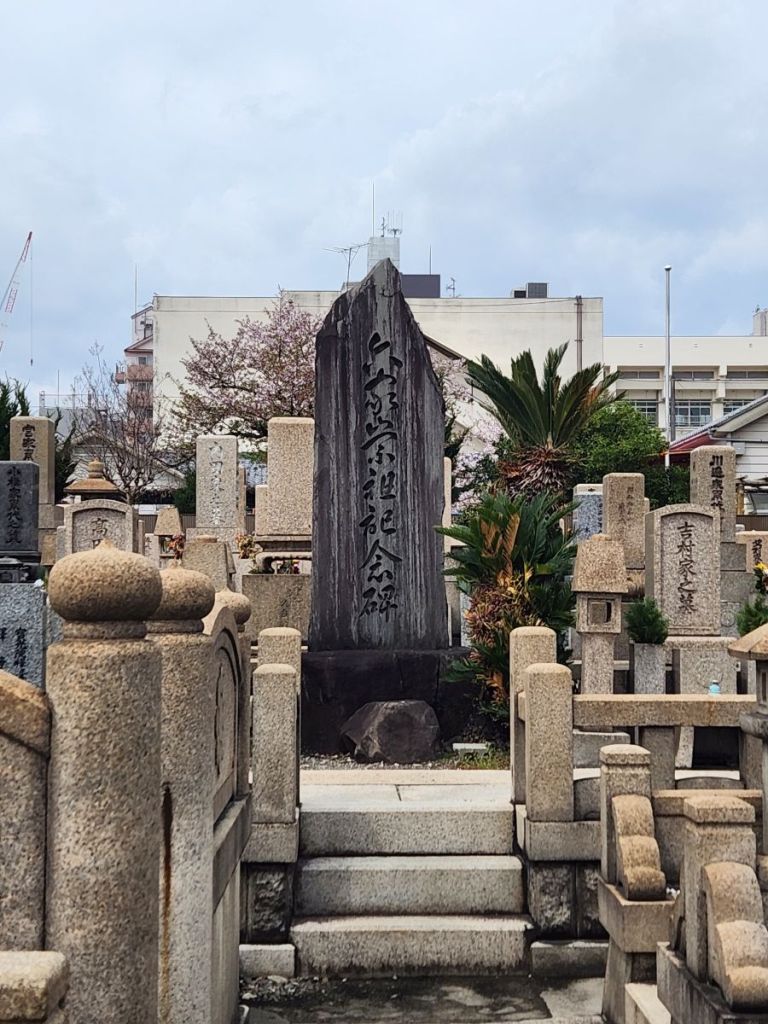
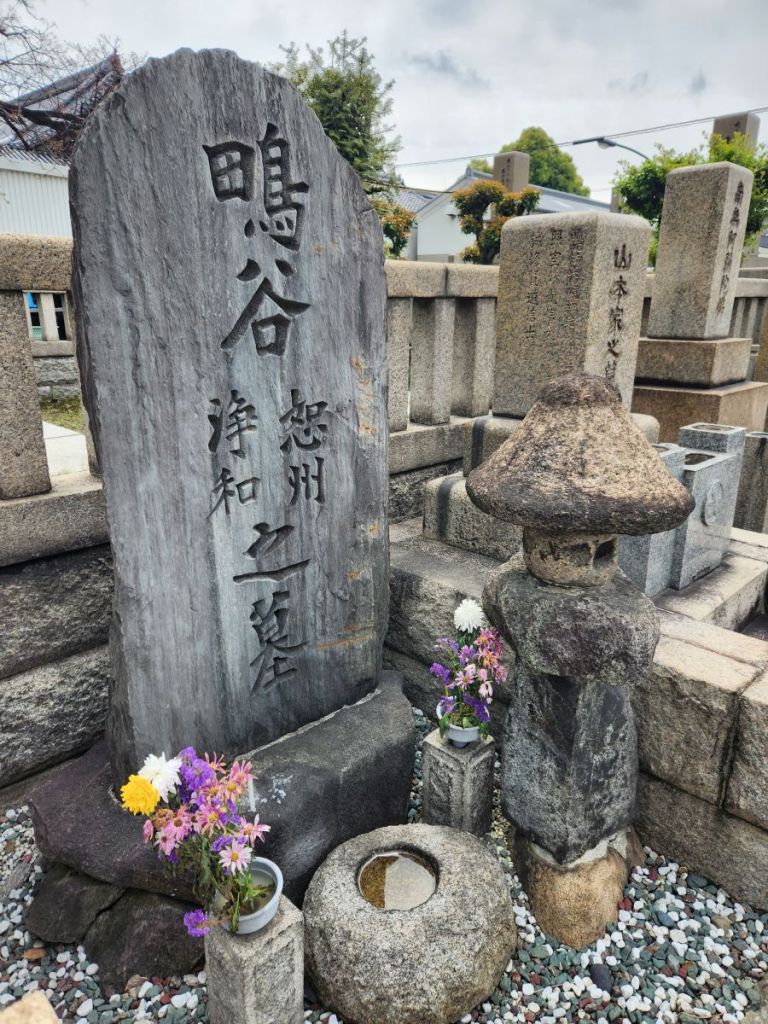
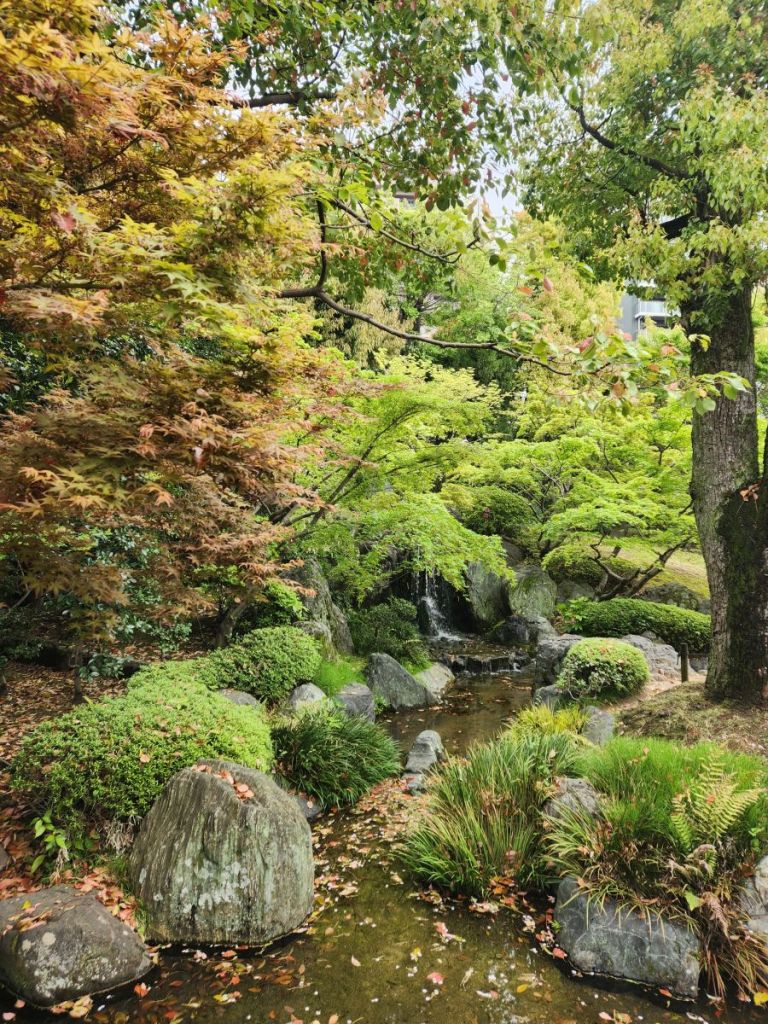
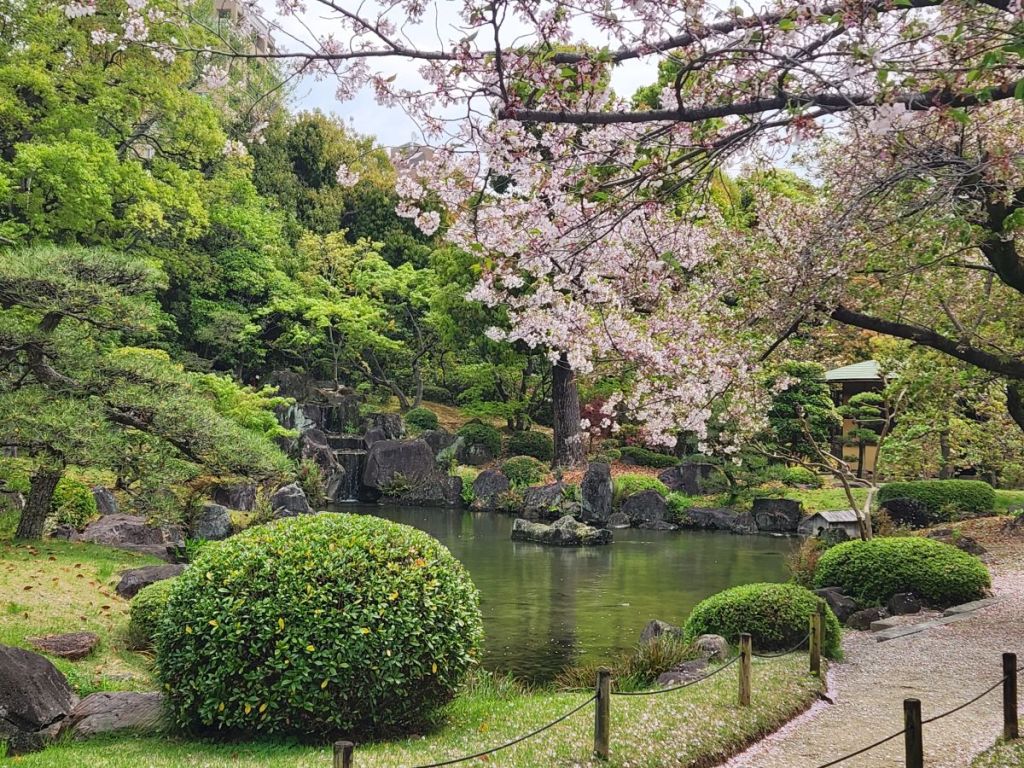
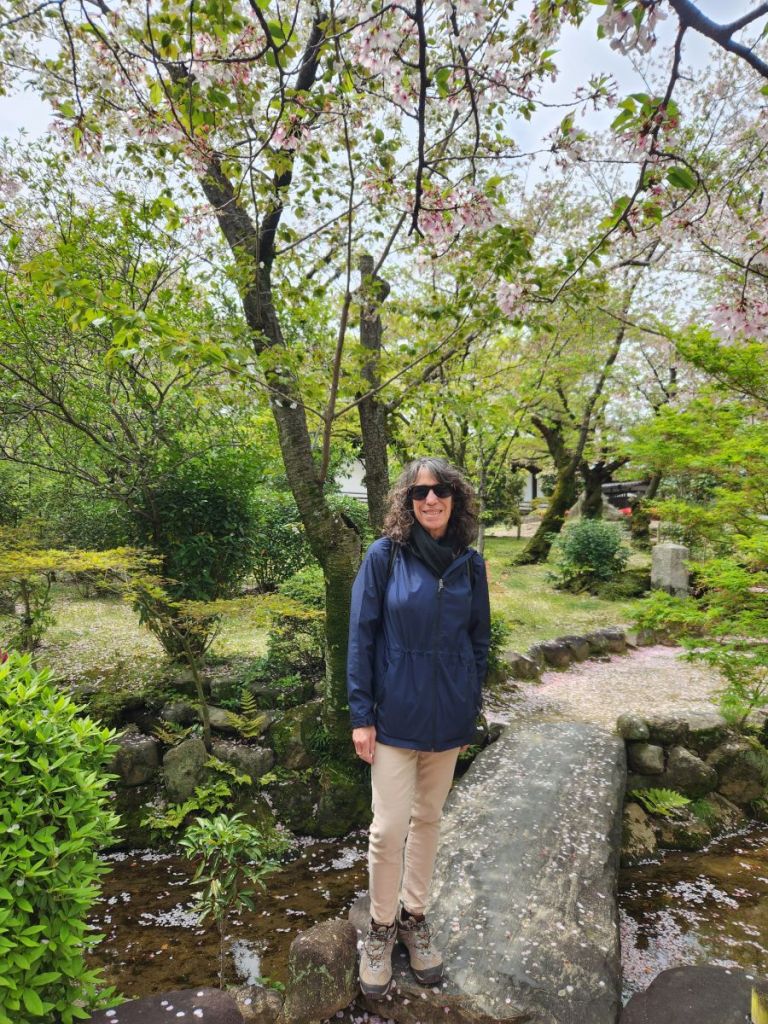
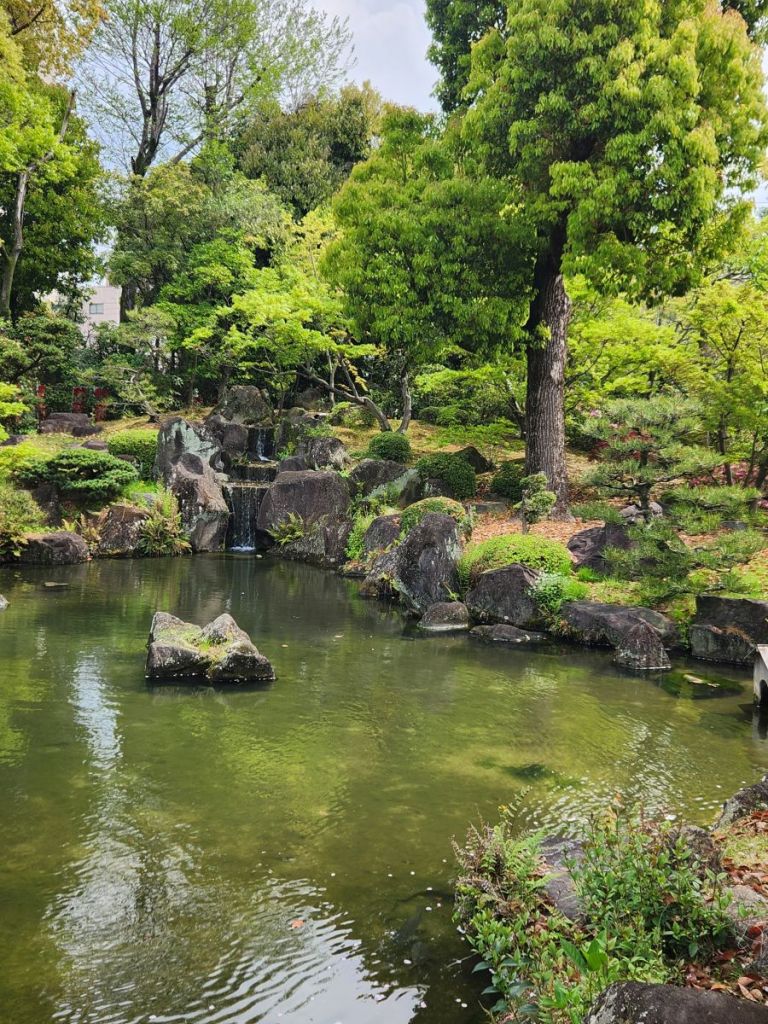
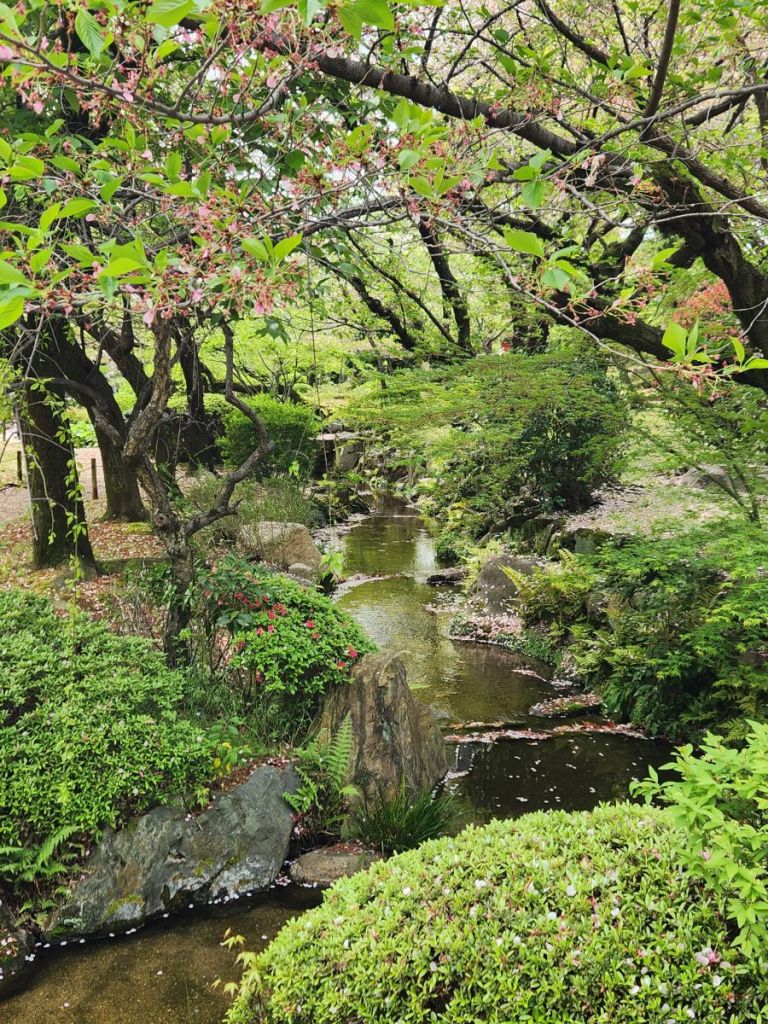
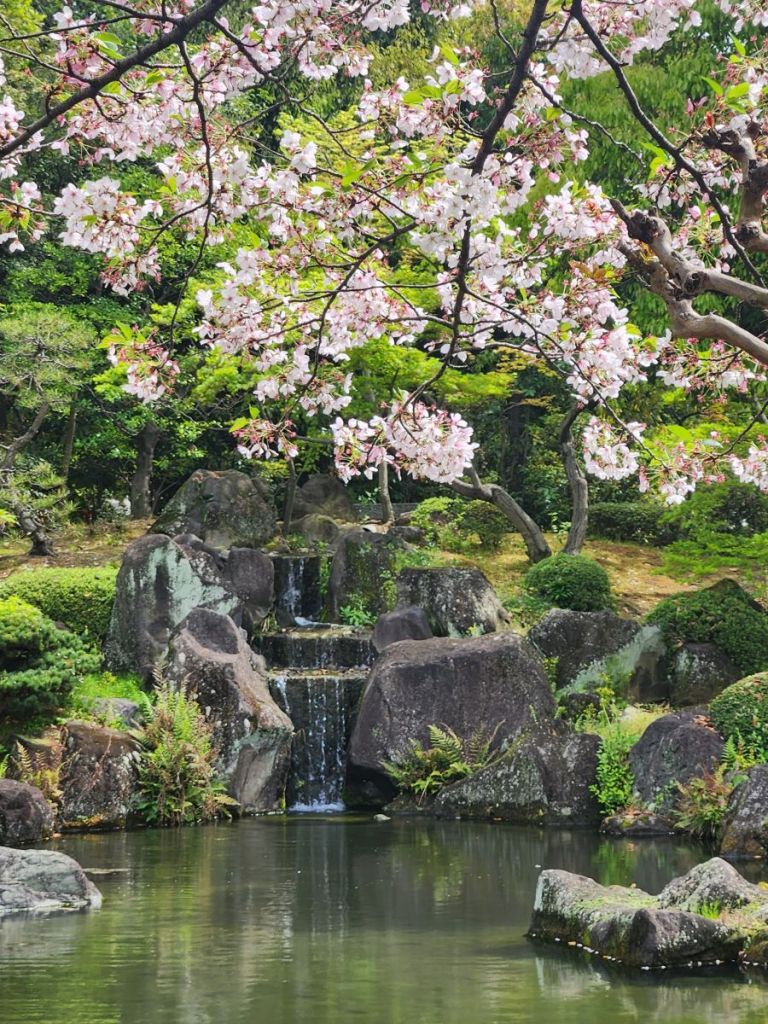
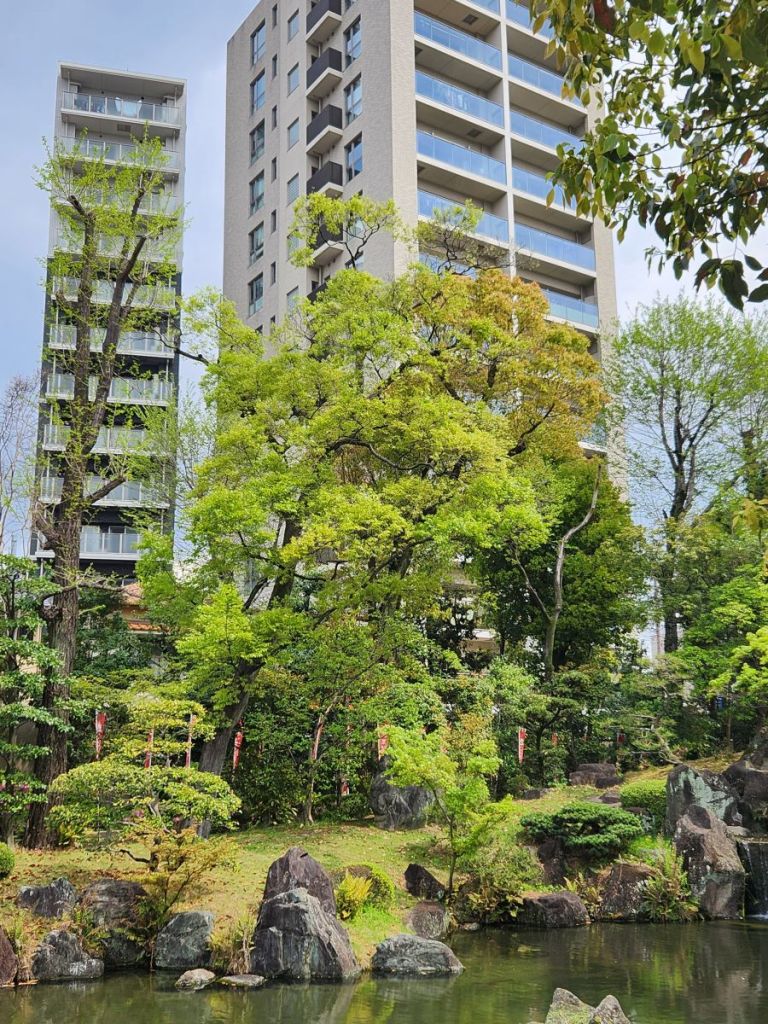
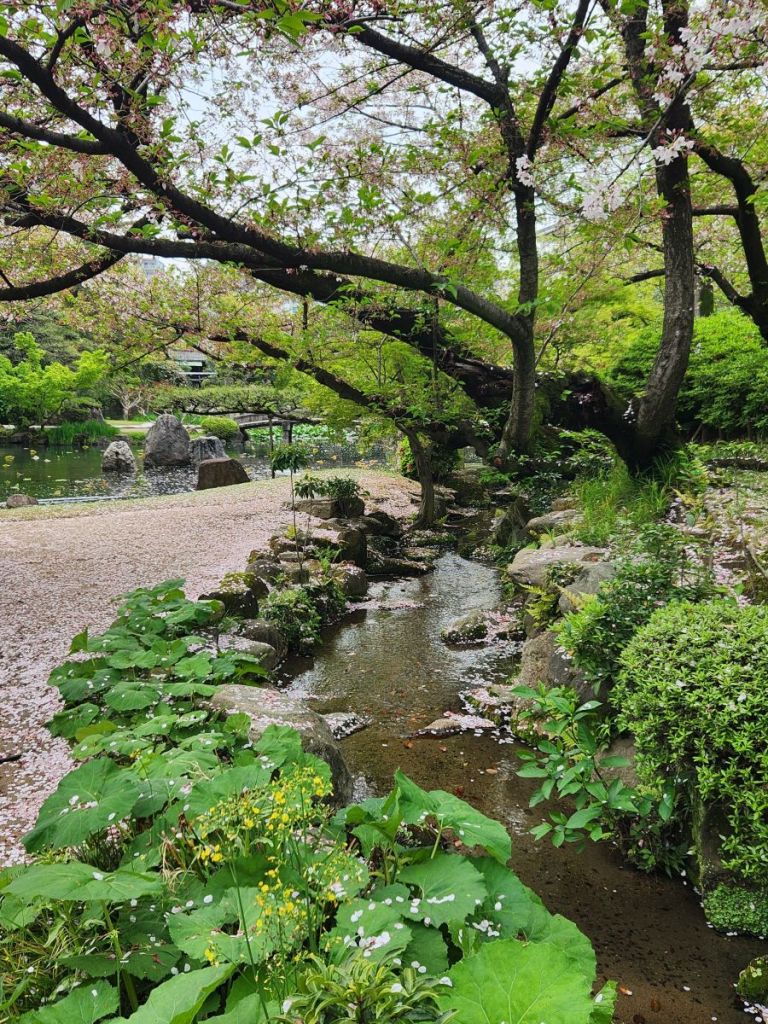
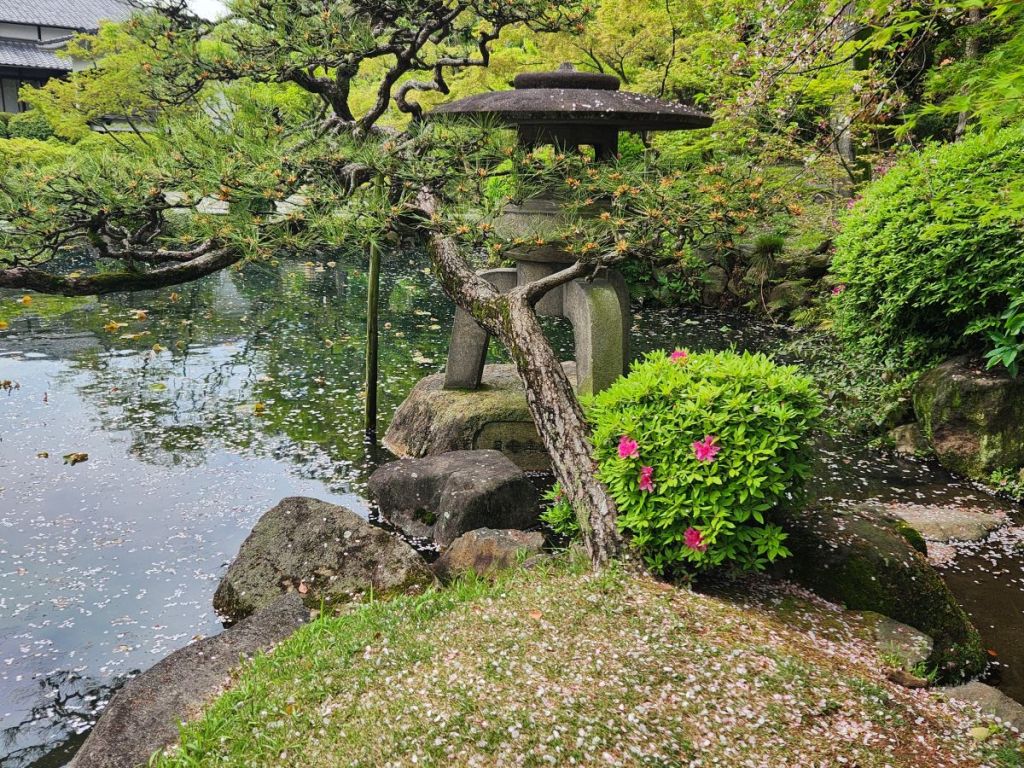
Leaving the graveyard, we finally find the entrance to the Gardens. We had walked right past them on the way in, but they weren’t open yet and it just looked like some iron gated warehouses or something. But no, this is the entrance. Passing by a large Assembly hall type area, we arrive at the path that runs between two “rivers.” The gardens are designed around a fable about the rivers: one a Water River which stands for being greedy when you are well off, and the other, a Fire River which stands for anger or grudge. The two rivers together symbolize a living hell in life. The white path that runs through gardens symbolizes the way to Paradise. Nice little fable – for equally nice gardens.
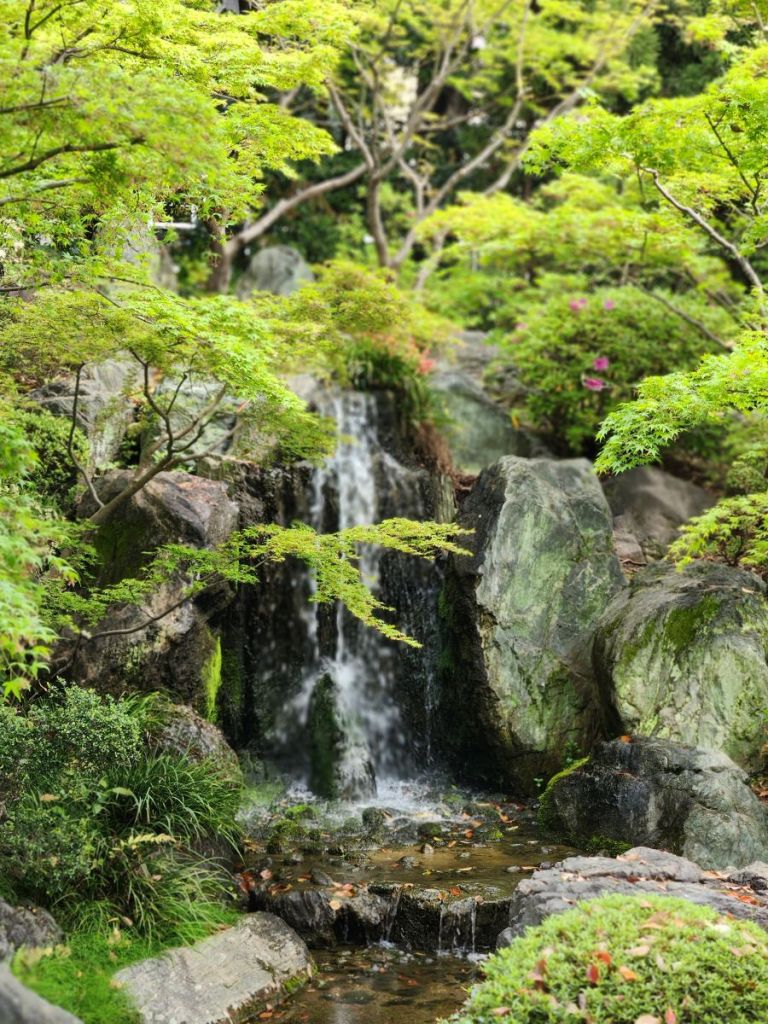
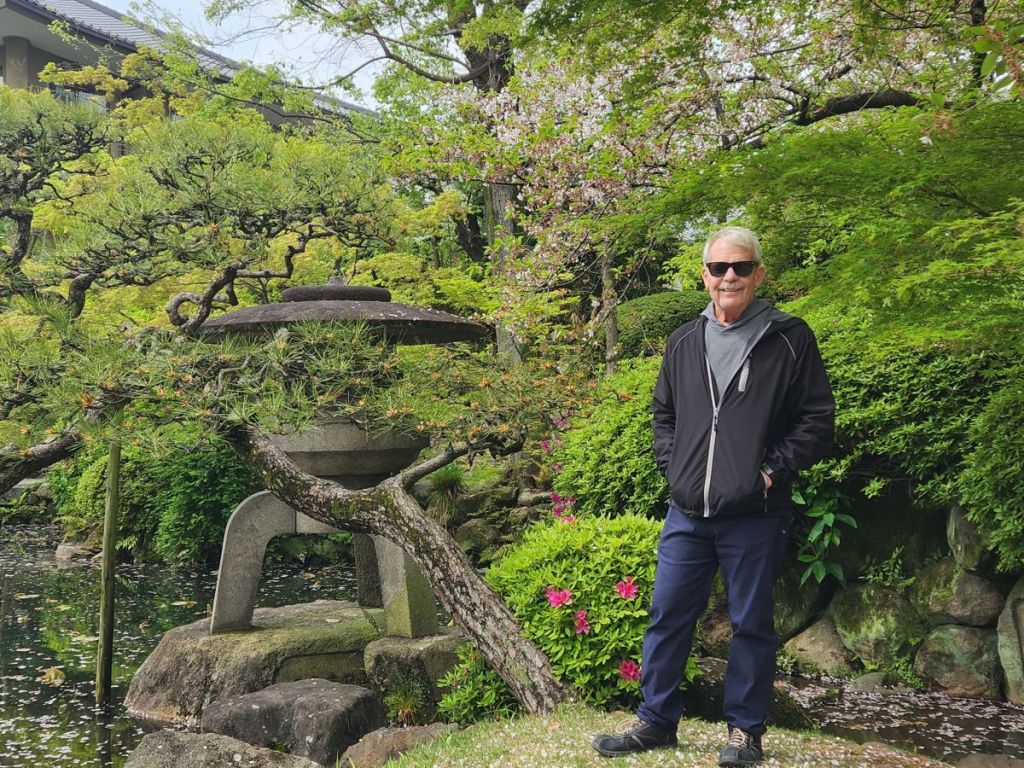
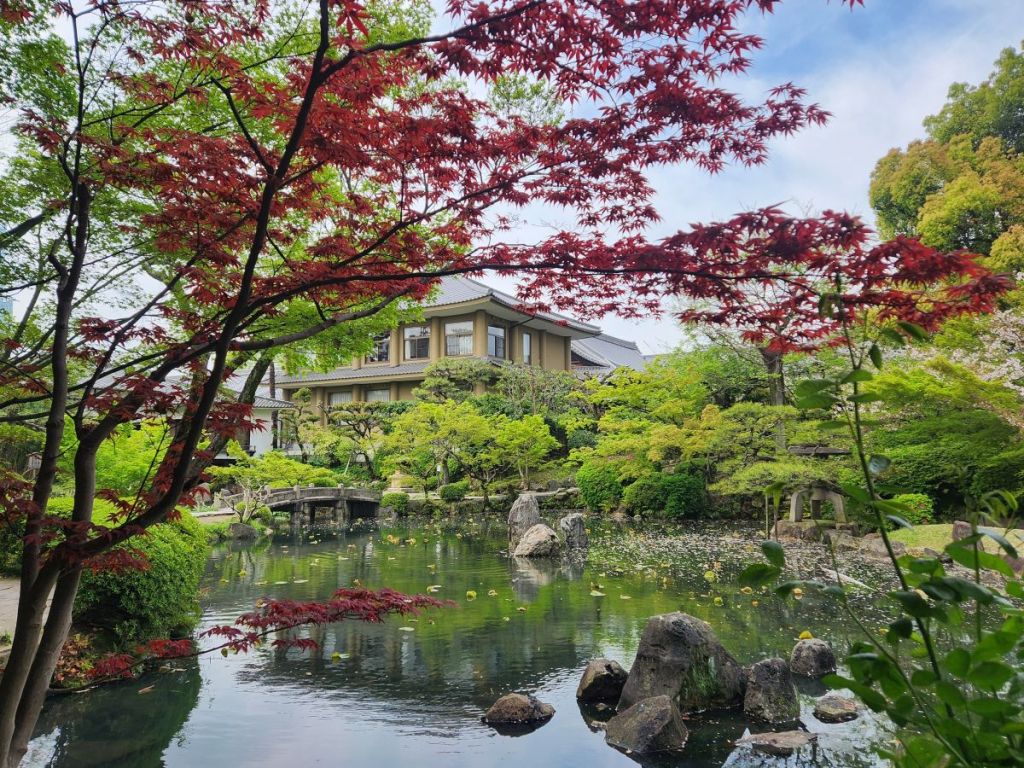
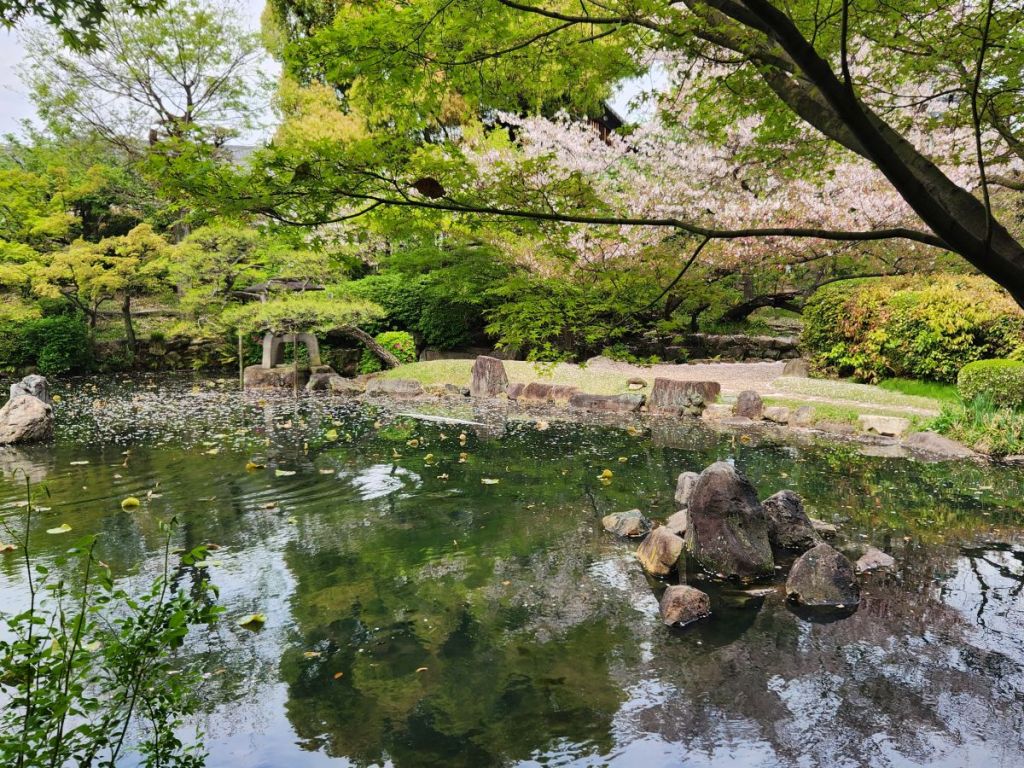
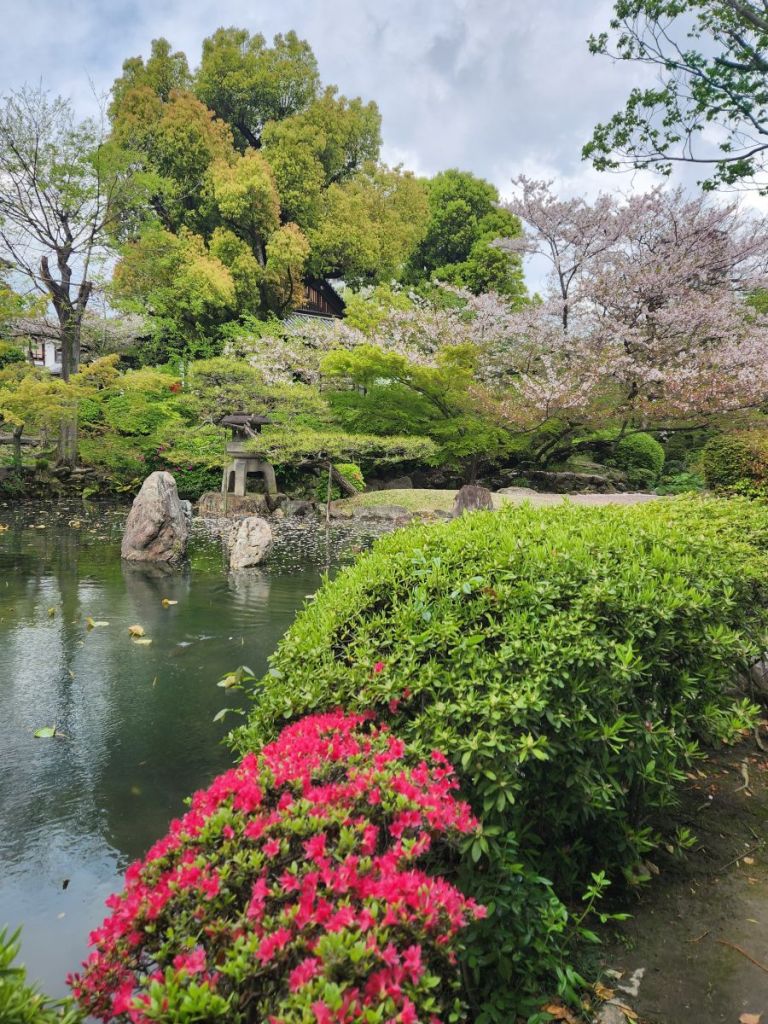
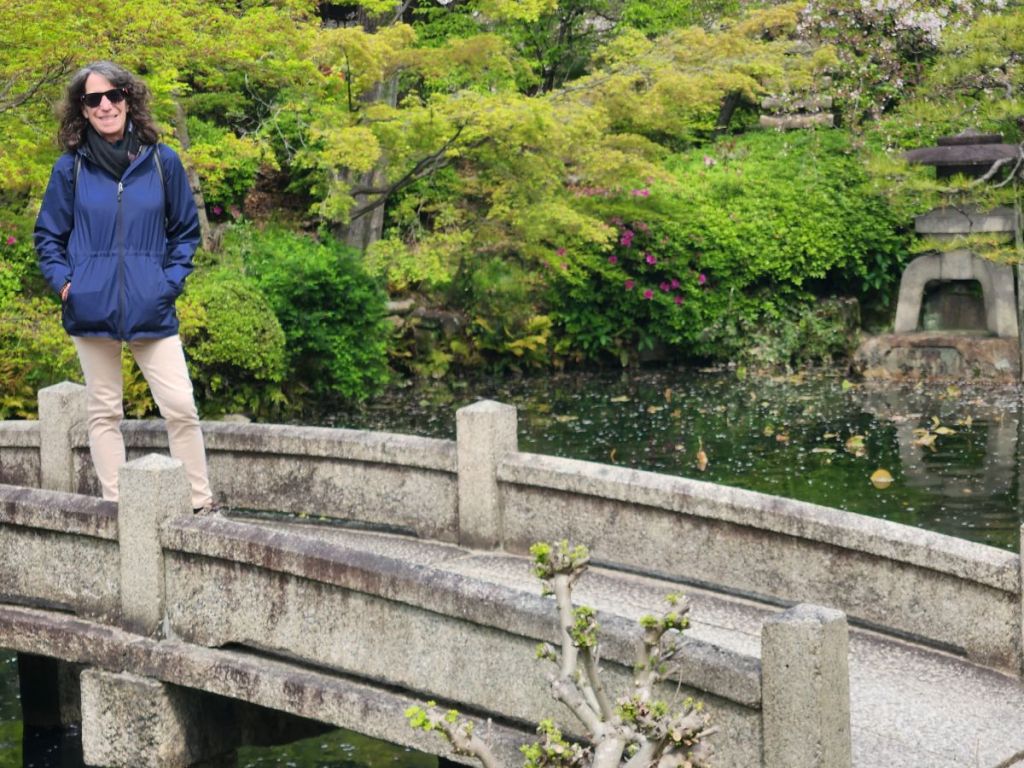
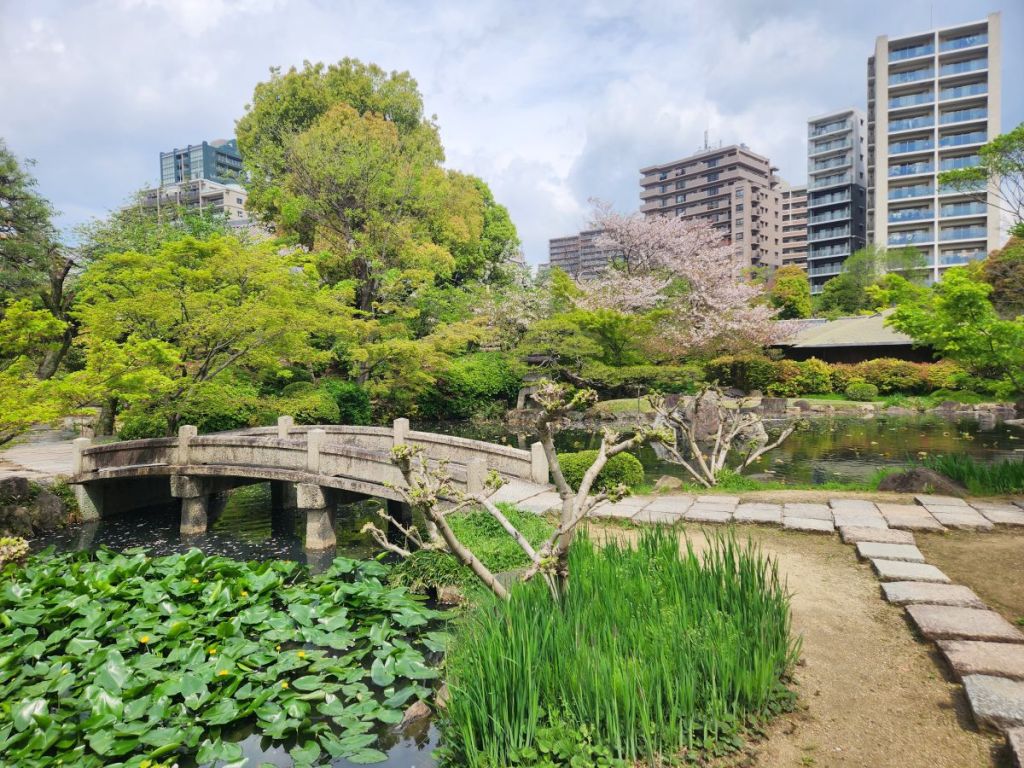
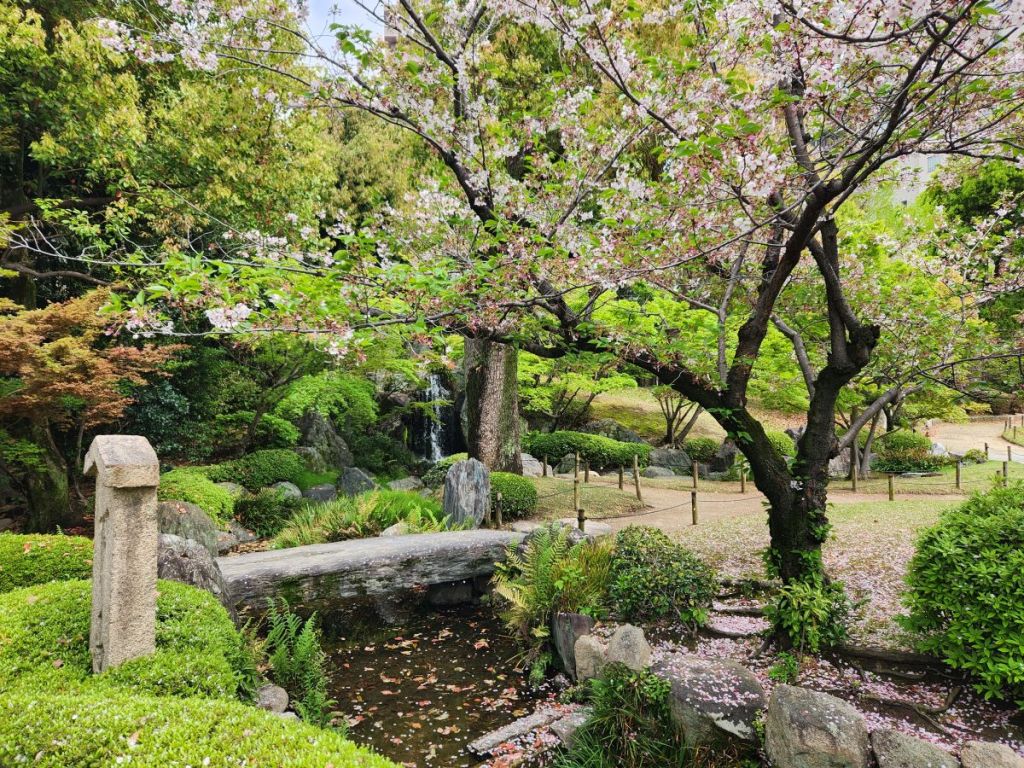
Following the white path – of course! – we walk through the beautiful trees and shrubs, past the waterfall and over a rock bridge across one of the “rivers.” It is incredibly beautiful here, and peaceful, with hardly anyone around. In the middle of the city – with the high-rises all around us – there is peace and green and solitude. Lovely. It was easy to spend time there, just meandering around the paths, crossing over a couple concrete bridges, taking pictures of all the beautiful river/streams and the other waterfall.

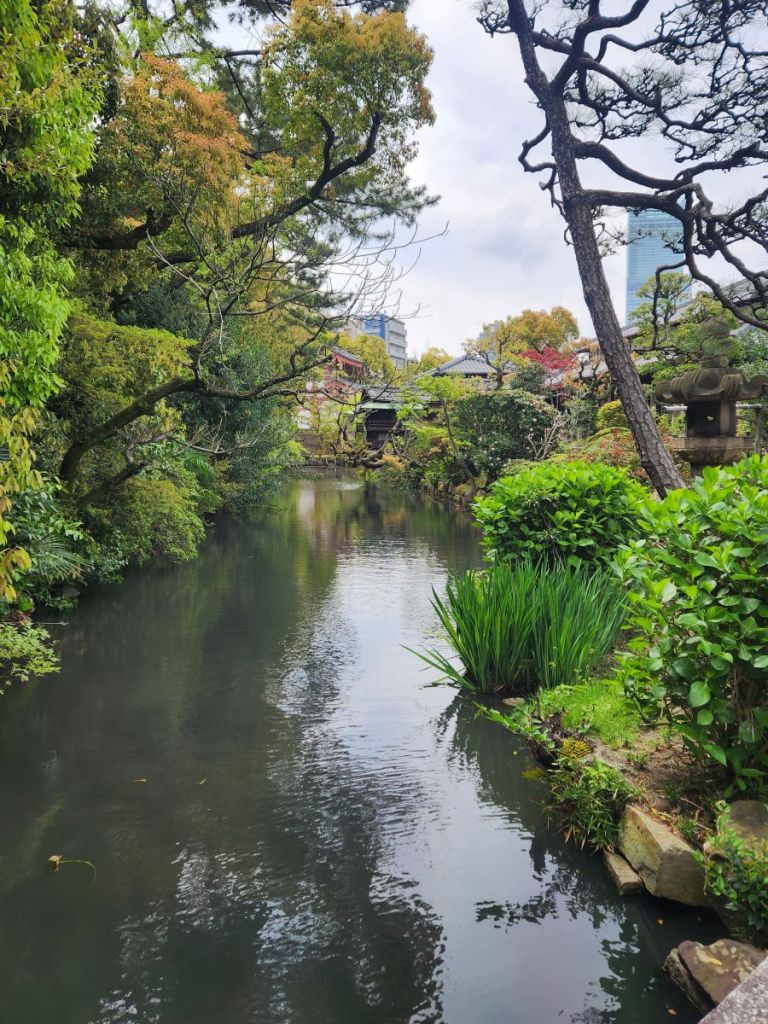
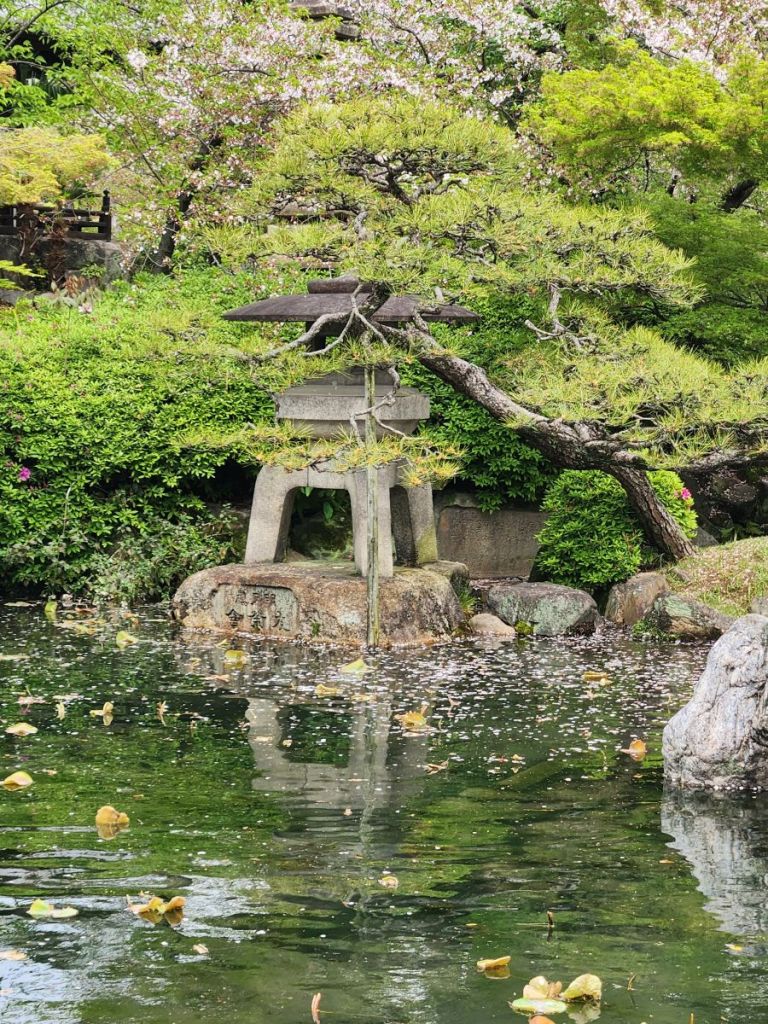
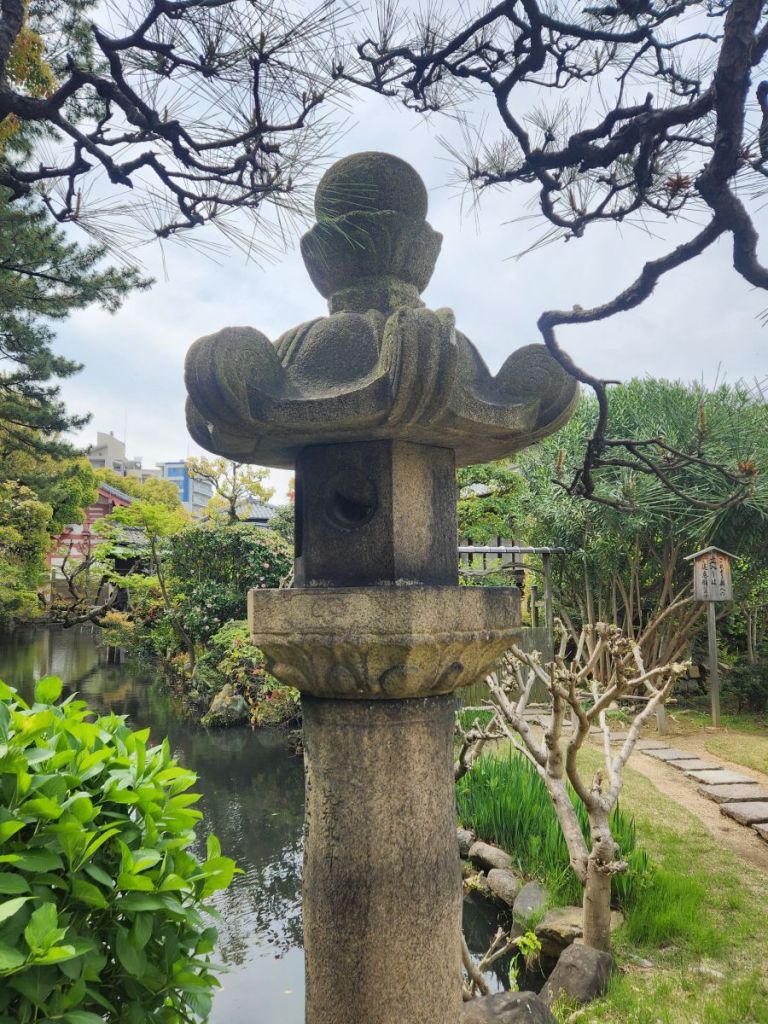
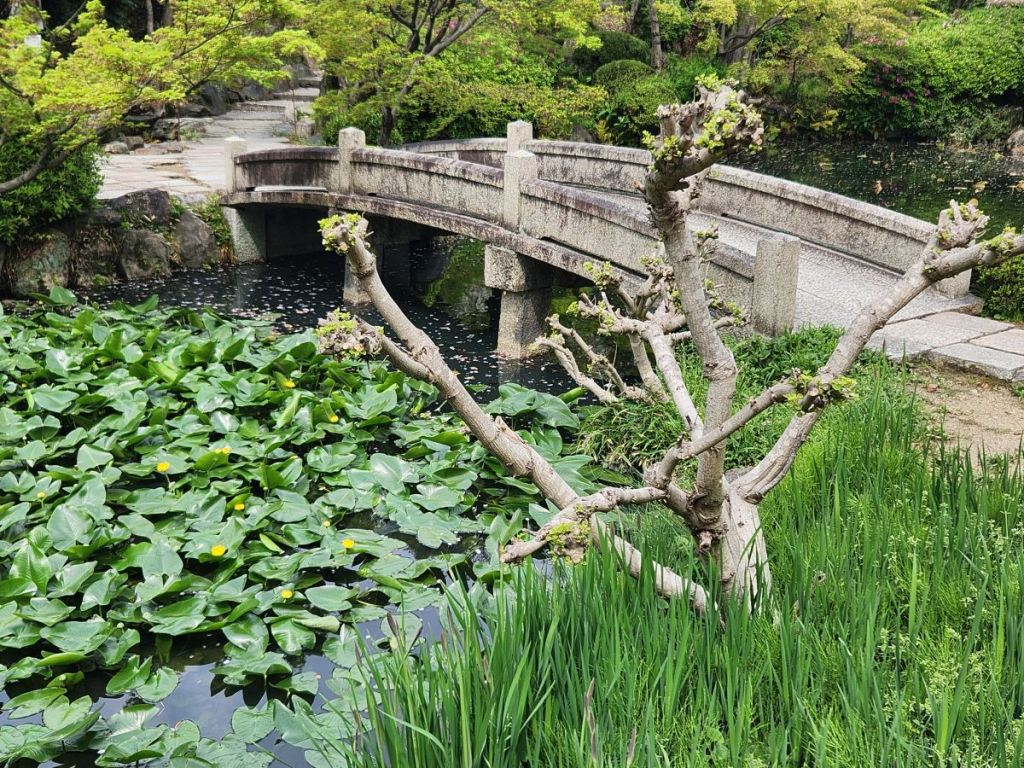
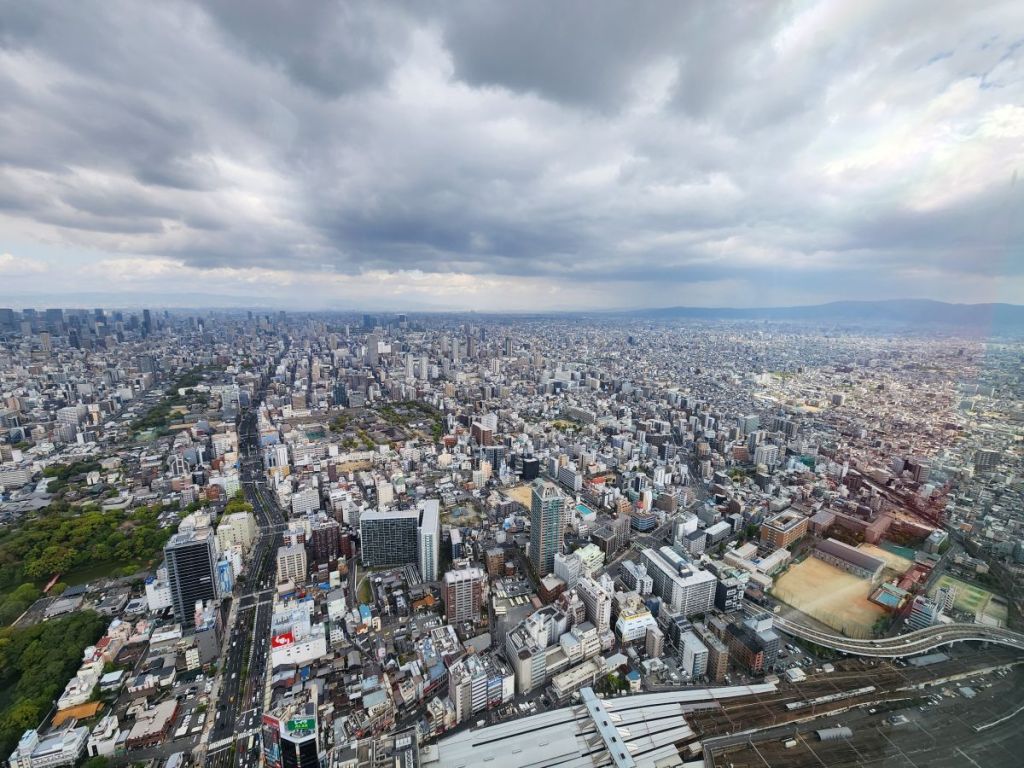
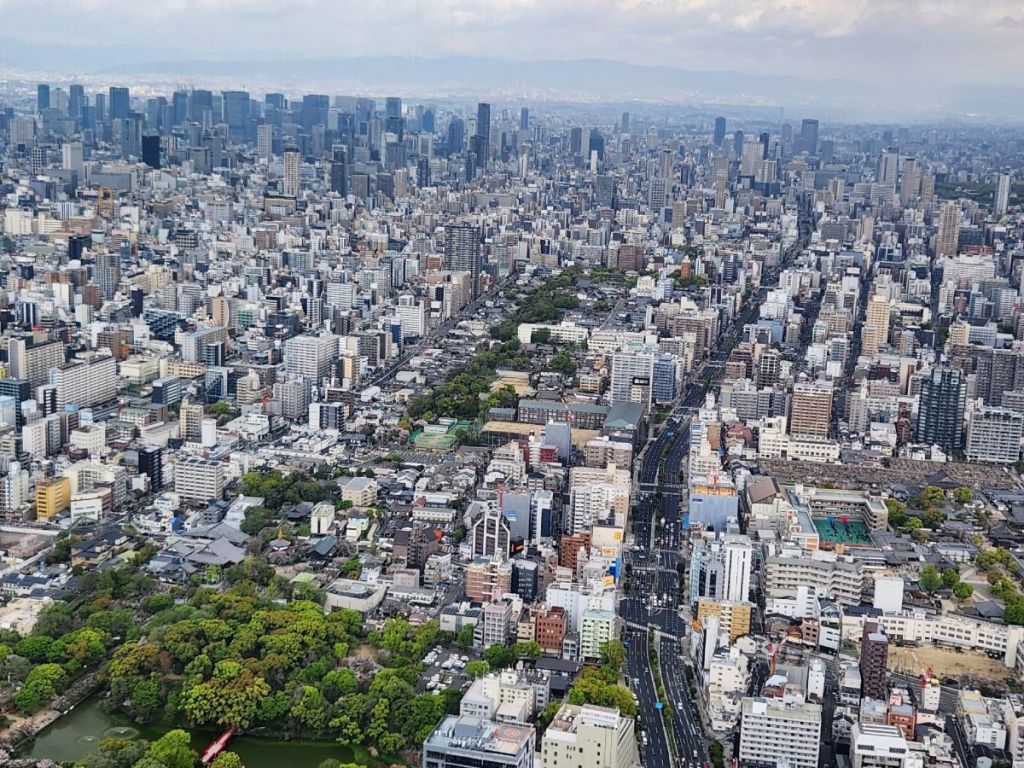
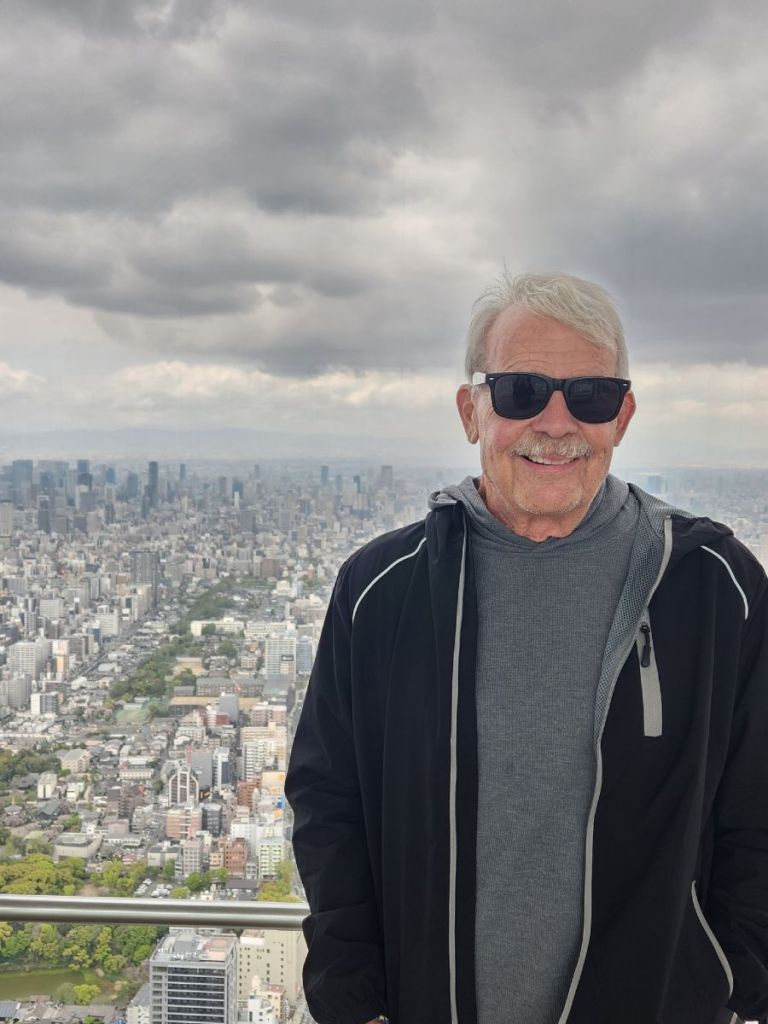
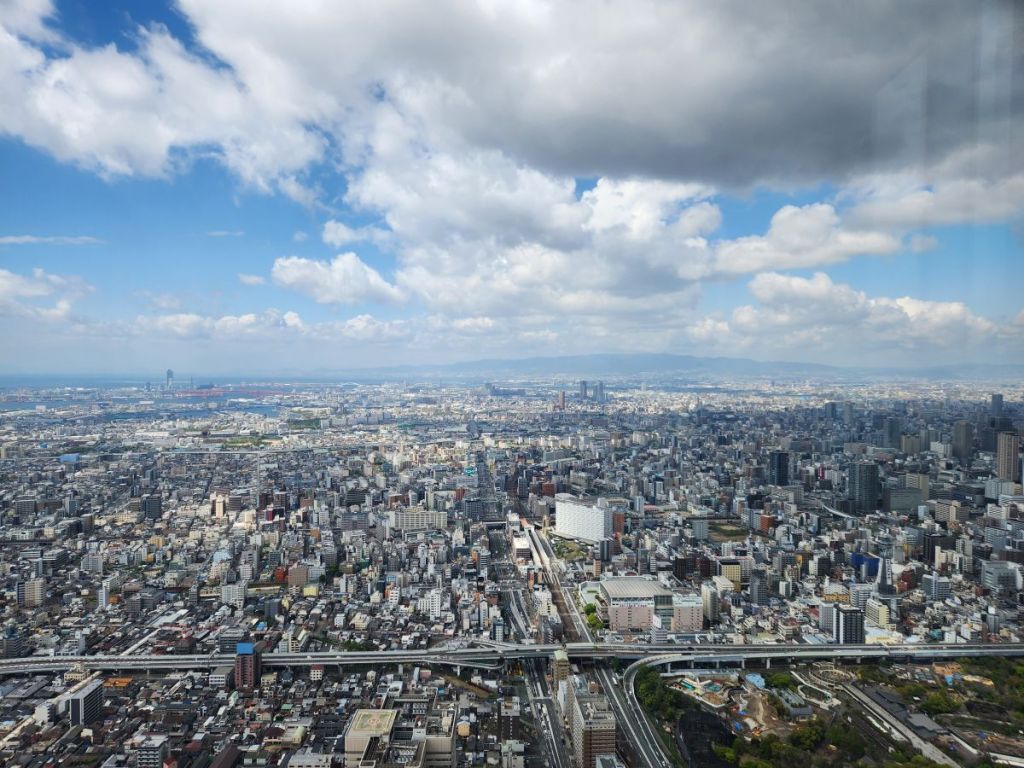
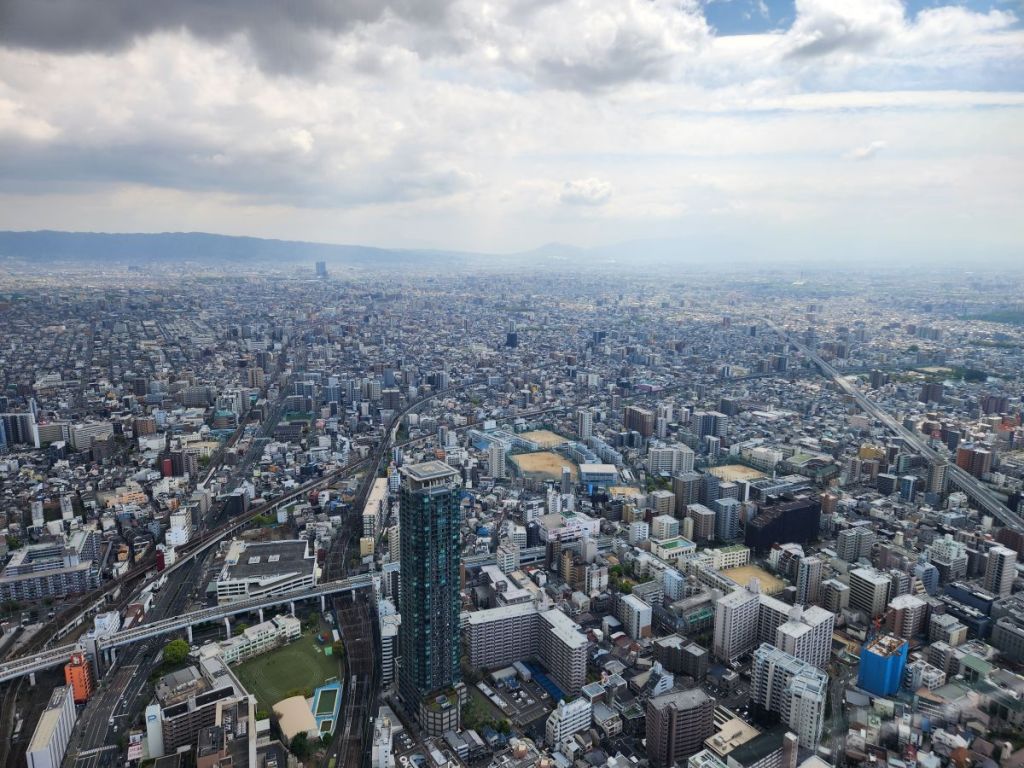
Finishing with the gardens, we move on in a completely different direction – from Zen to Japanese Urban craziness – the Abeno Harukas 300 – the observatory on the 60th floor of the Harukas tower, 300 meters above the ground. An easy 15-minute walk from the temple gardens, we easily find the tower, gaining access through – yes, you guessed it, the mall and MRT attached to the building by a sky walk – buy our tickets and are whisked up to the 60th floor for the views. Yeah, no way Zo would have done this! The views up here on this floor to ceiling windowed observatory are spectacular. You can see all the way out the mountains in the distance on one side, the ocean on the other. You can even see Shitennoji Temple where we started our day. Beautiful.
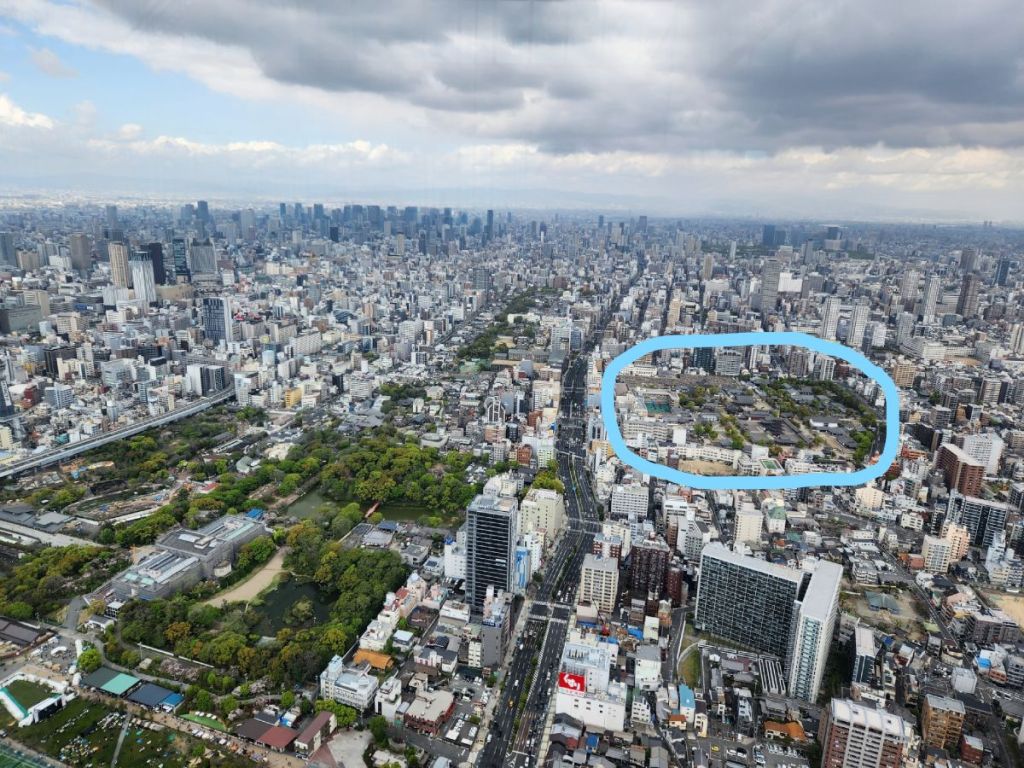
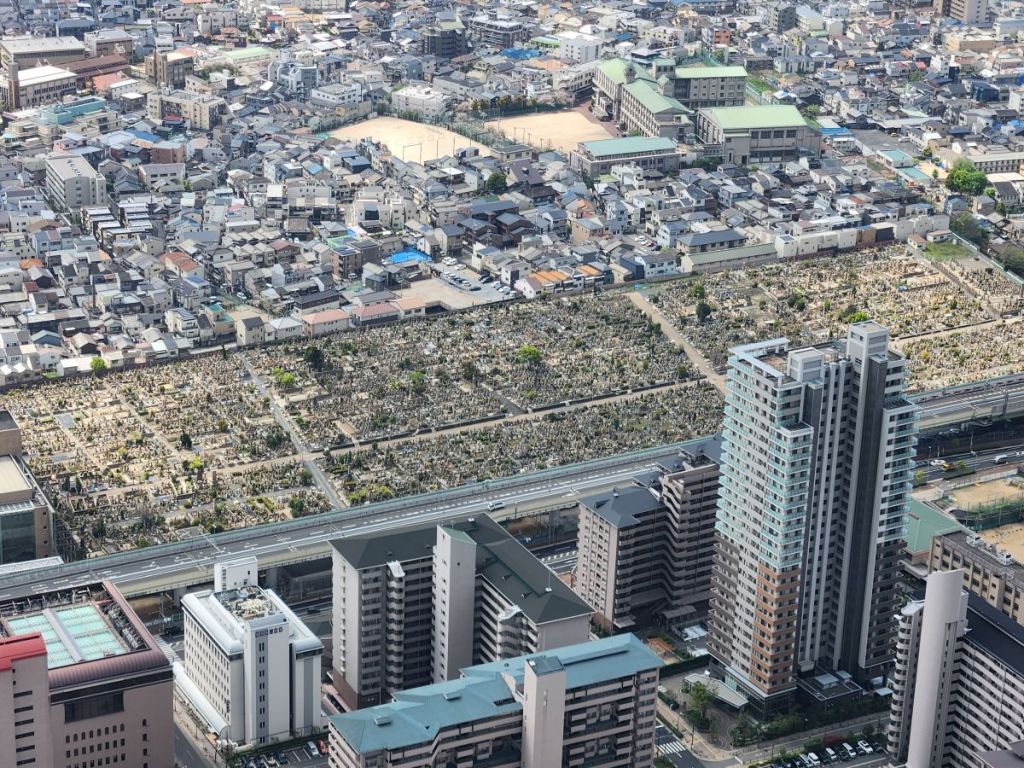
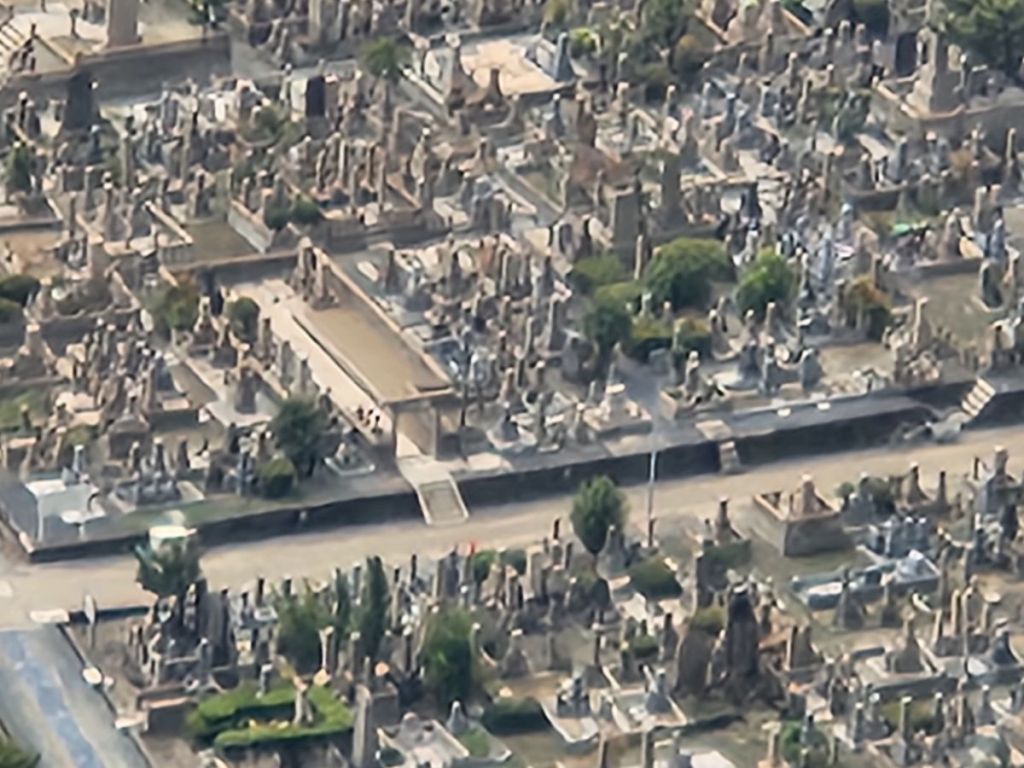
You can really get a feel for the way Osaka has been built up – there are still little pockets of smaller homes, but mostly there are large tall high-rise buildings – what you’d call skyscrapers if we weren’t so high up they all look like miniatures! It is like flying up here. You can pick out a huge graveyard next to some of the smaller homes and the occasional parkland. It is just captivating.
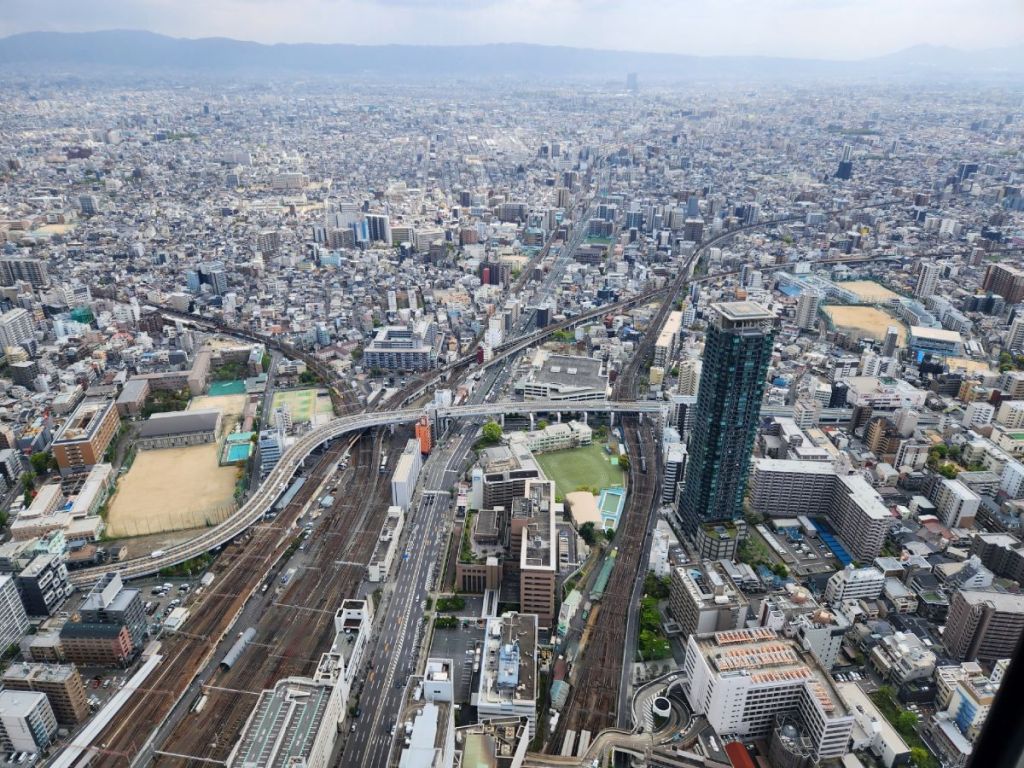
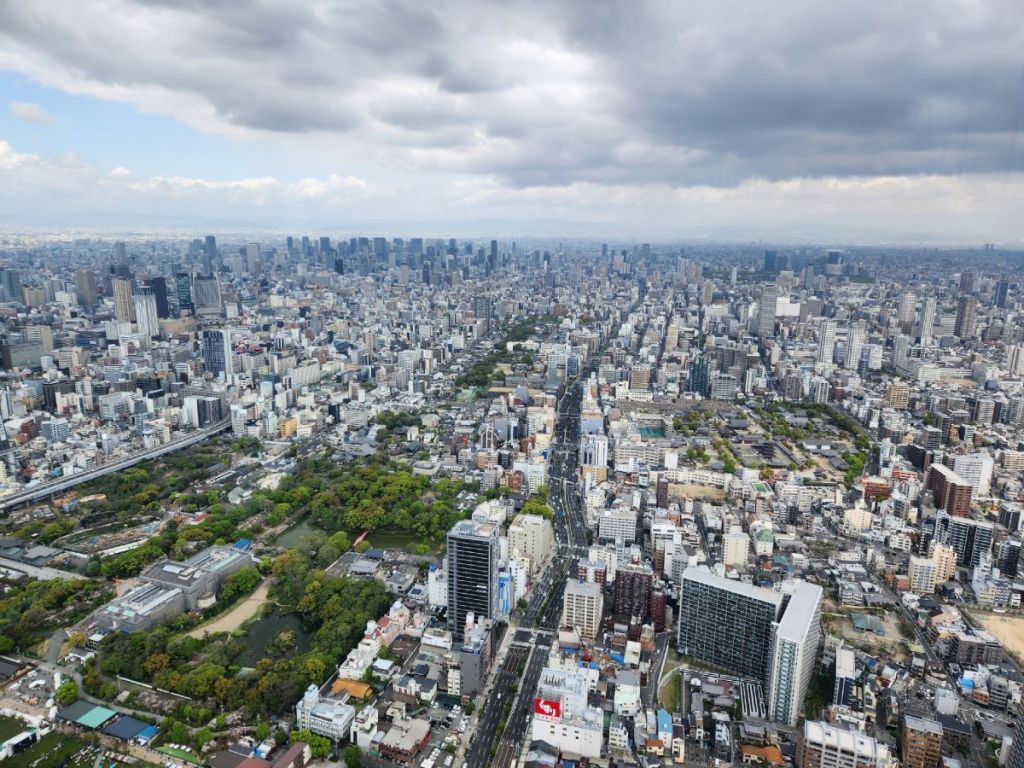
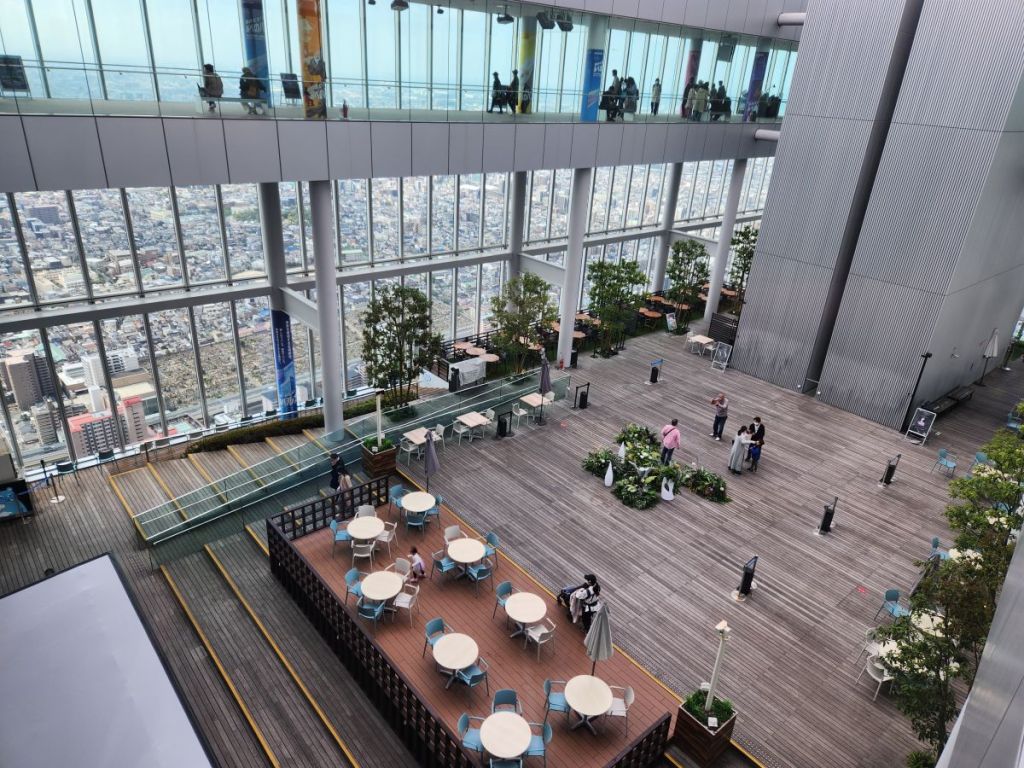

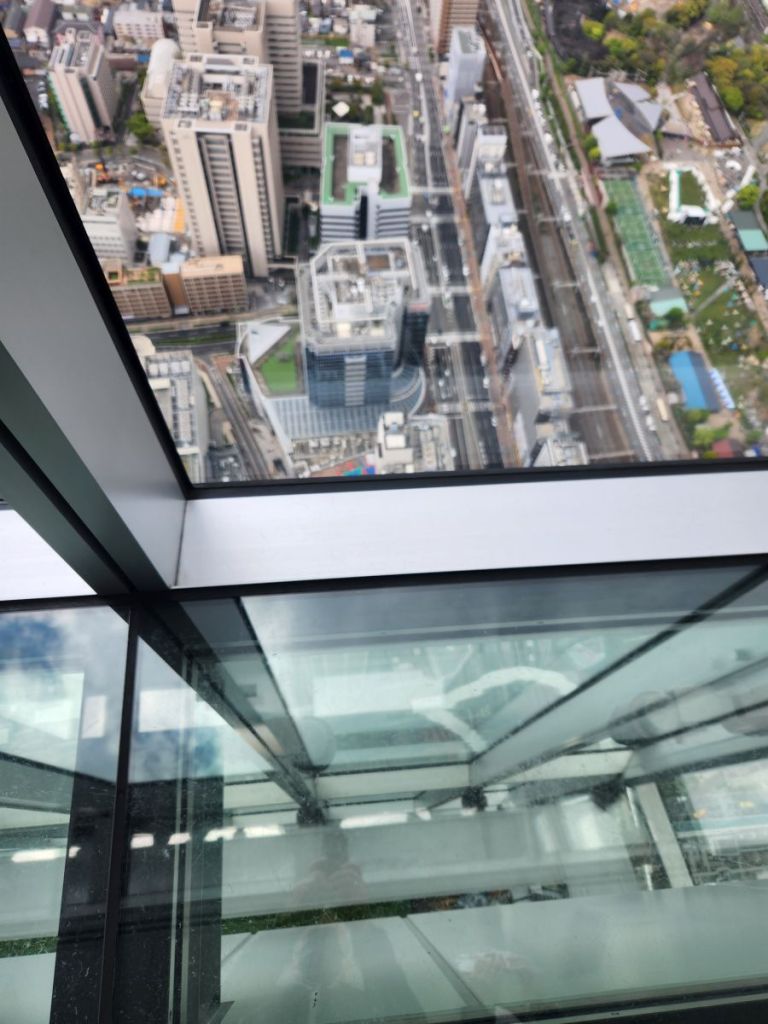
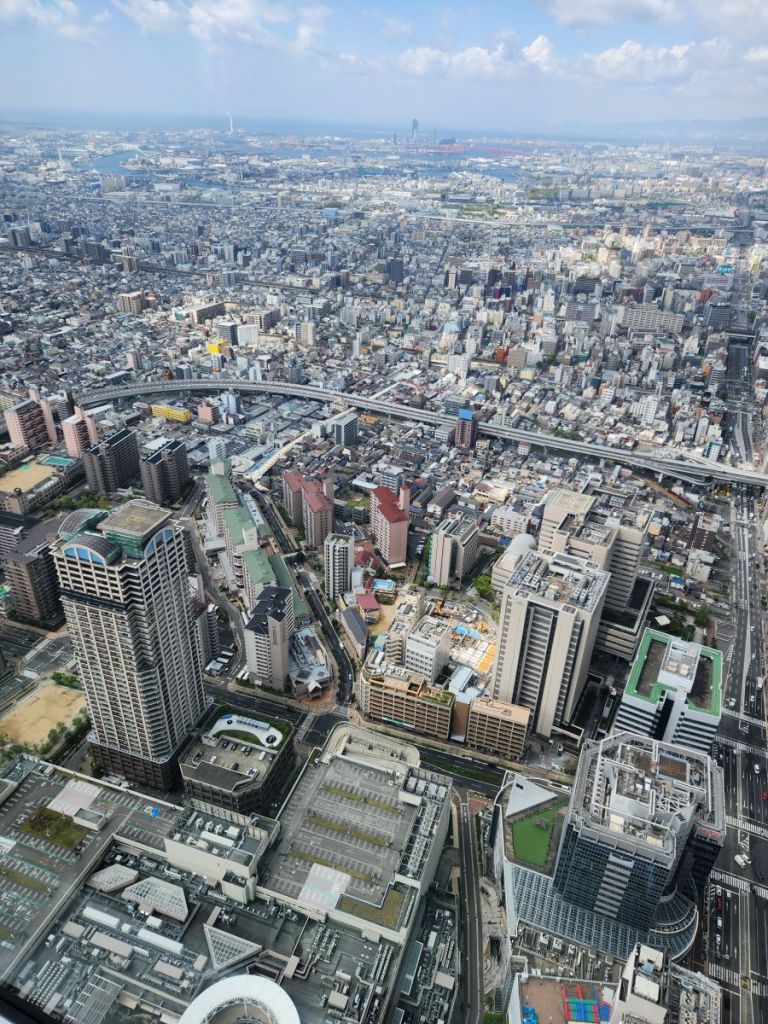
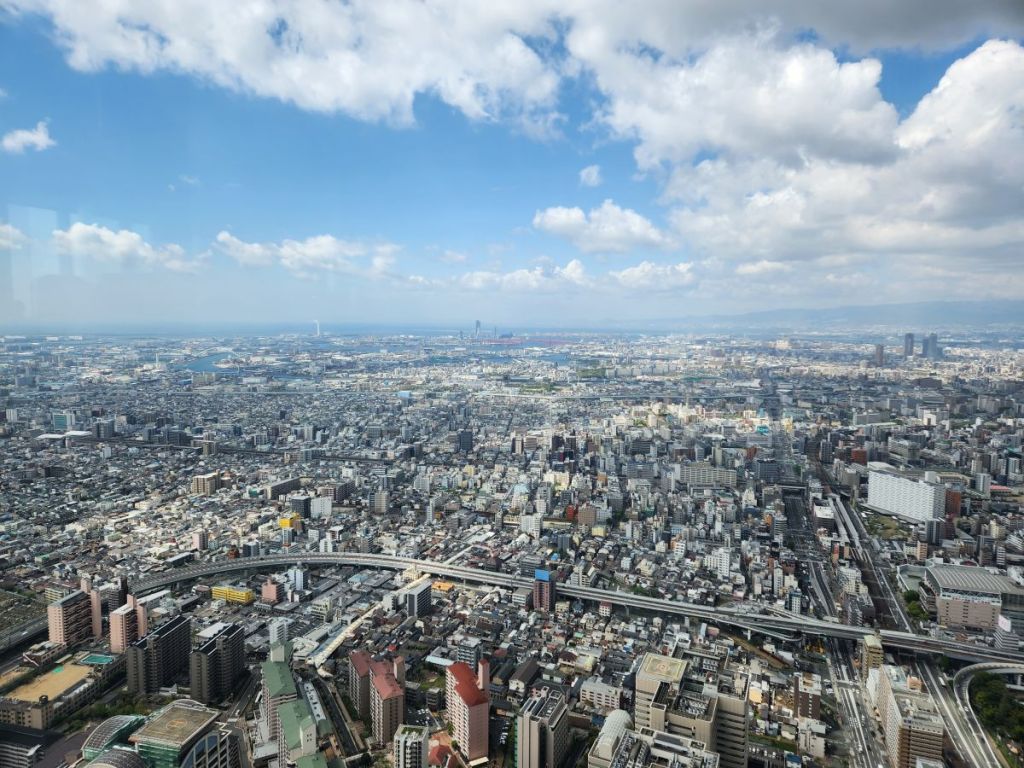
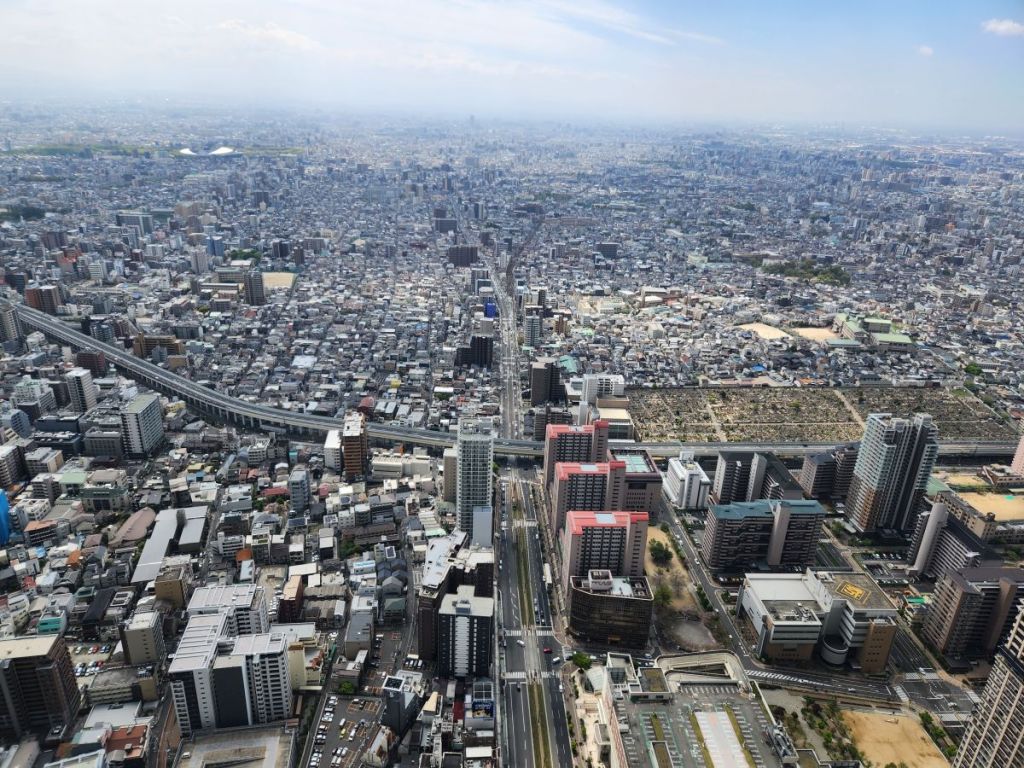
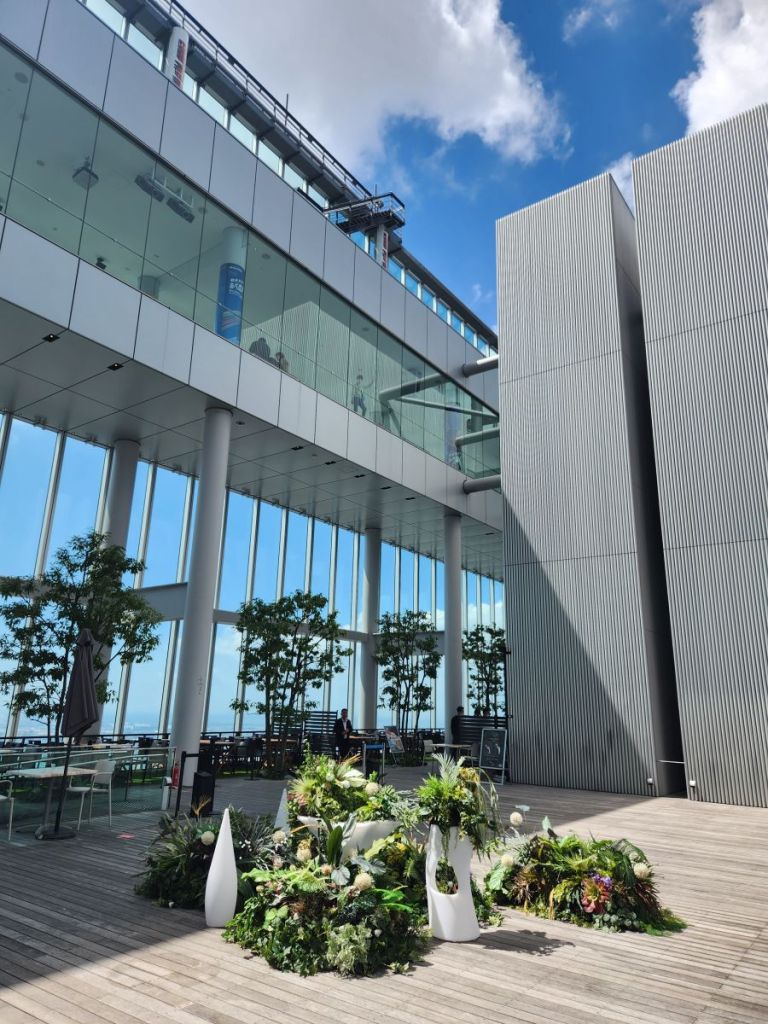
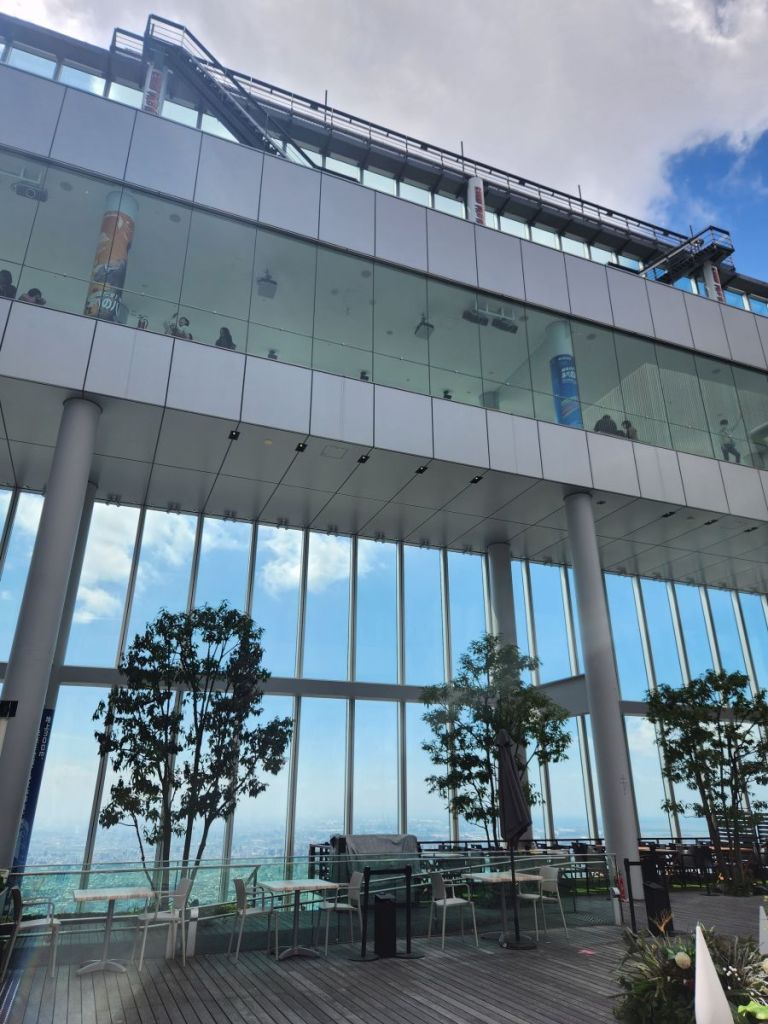
The upper deck also looks down upon the open air sky garden, and once we are finished with our picture taking upstairs, we go down there to explore. There is a café and restaurant here, and we debate having lunch here, but in the end decide why? There is a food court in the mall at the train station, which is probably going to be better and cheaper (not that it is all that expensive here).
I do splurge on a pair of fan earrings – hand made here in Japan! – and then we take the elevator back down to the 16th floor, bypassing the Marriott on the floors in between. Instead of taking the elevator from there down to the skybridge level, we decide to explore the department store which takes up the next 16 floors. Yes, 16 floors! Huge! But after a couple of floors, we rethink that strategy. I mean, what do we need? Nothing. So why are we wasting our time? Back to the elevator we go, and across the skybridge to the food court area in the train station mall.
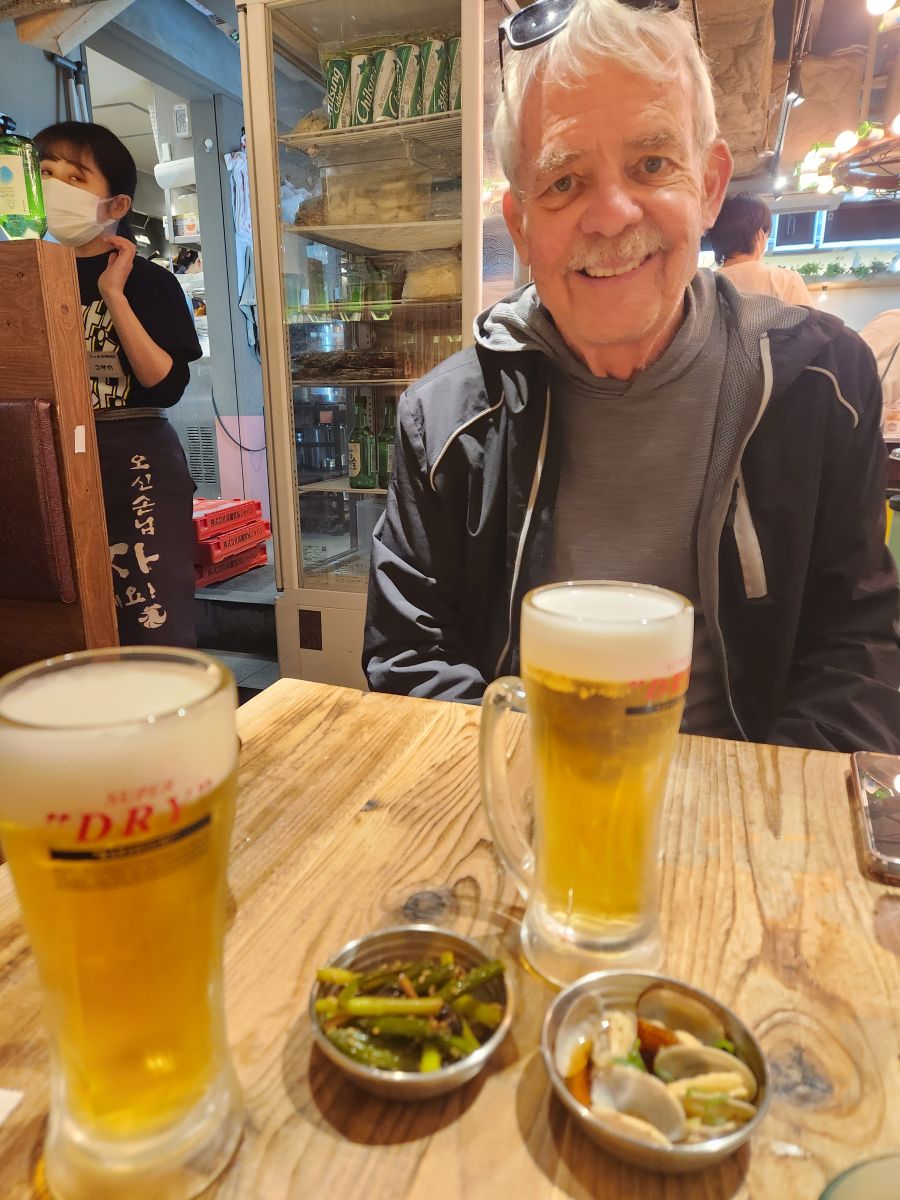
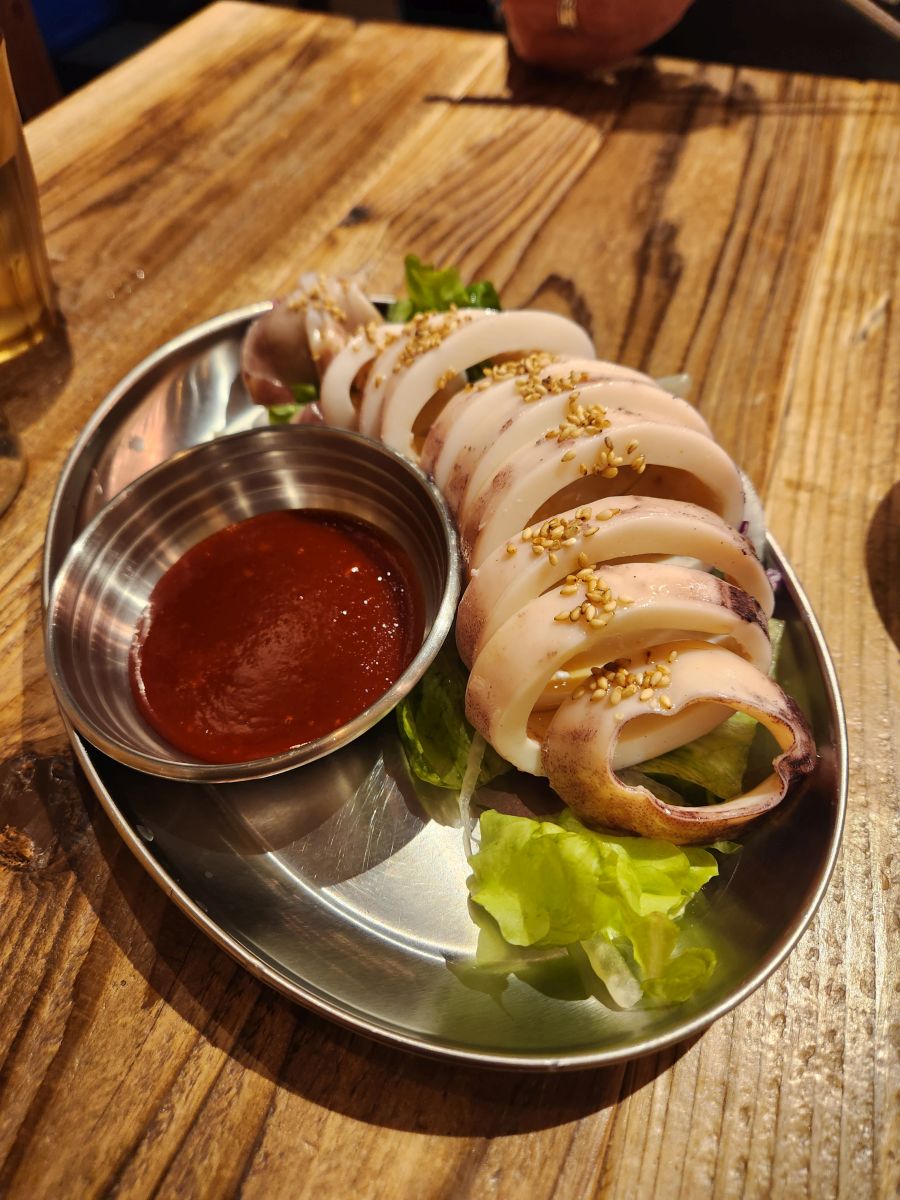
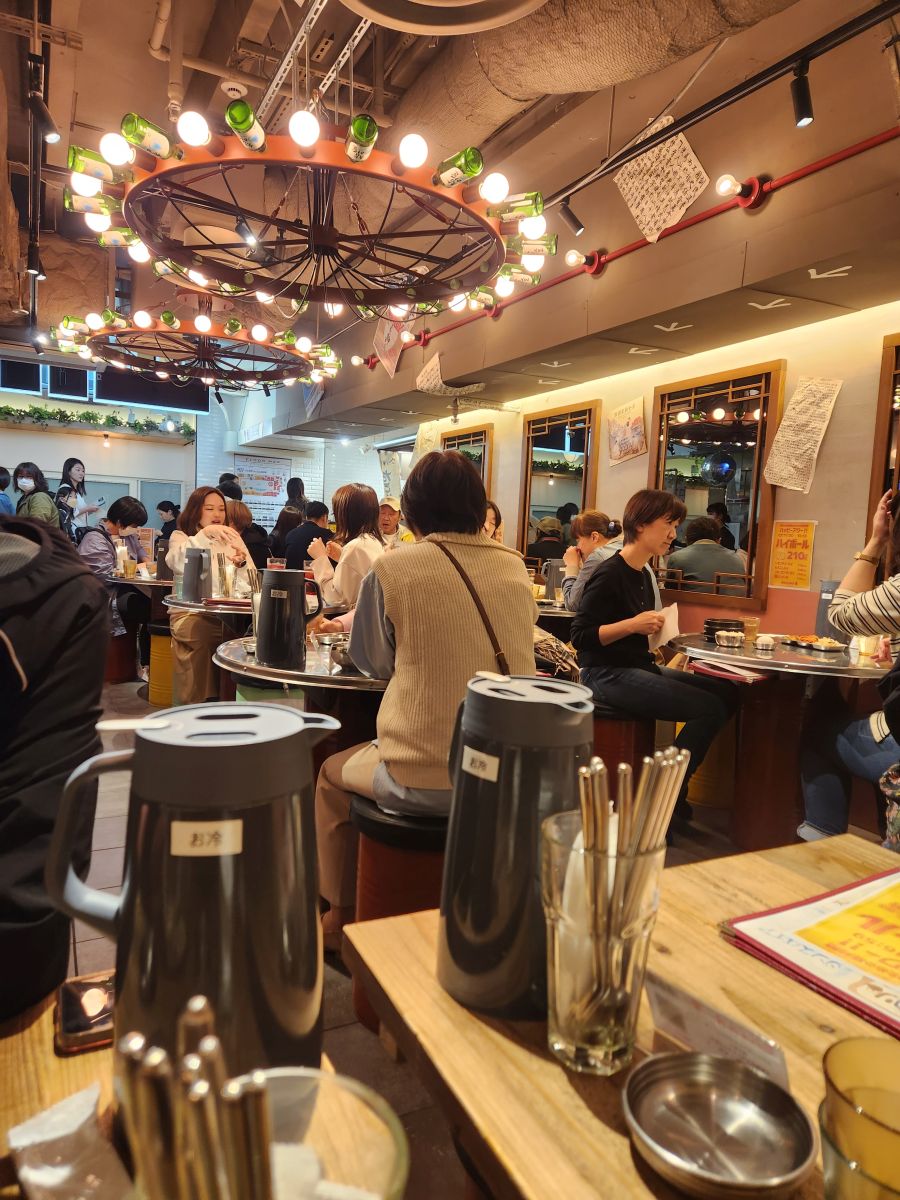
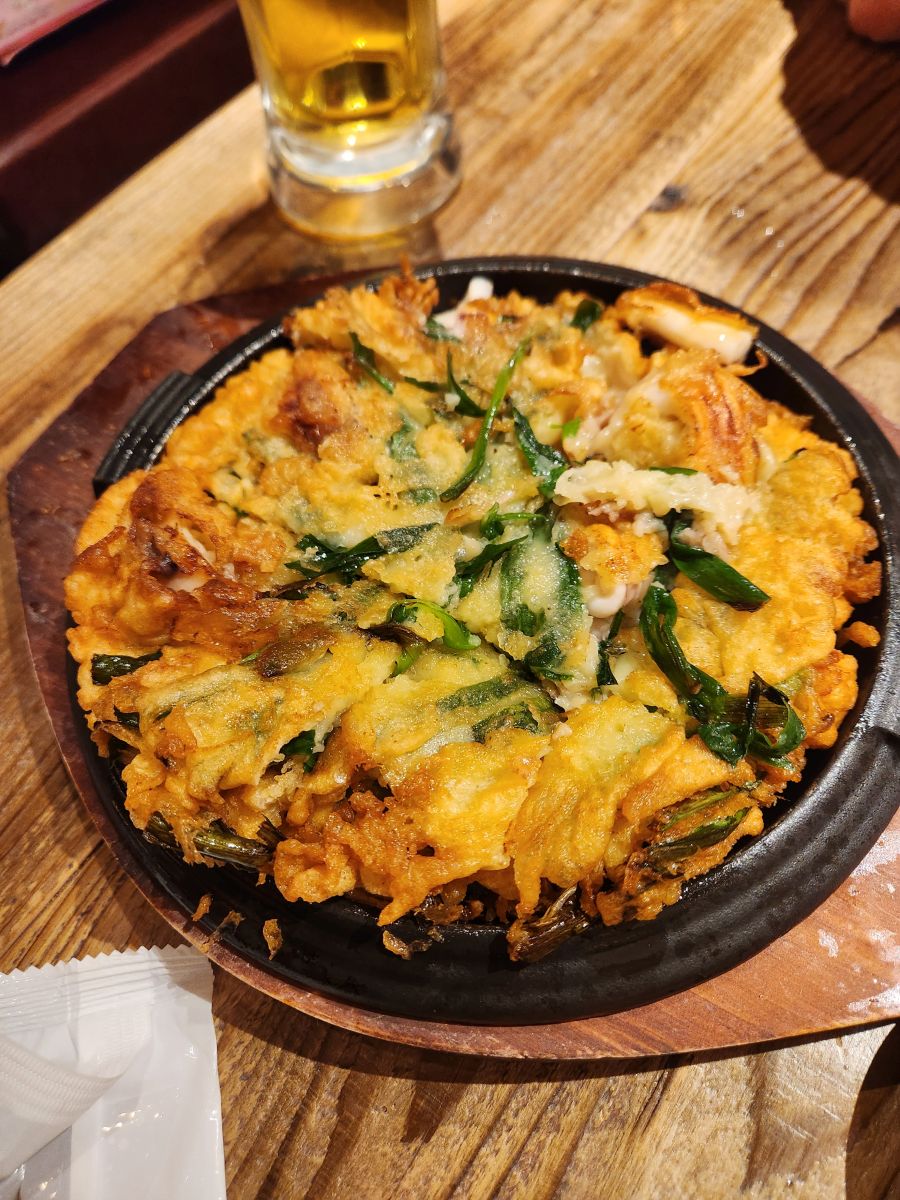
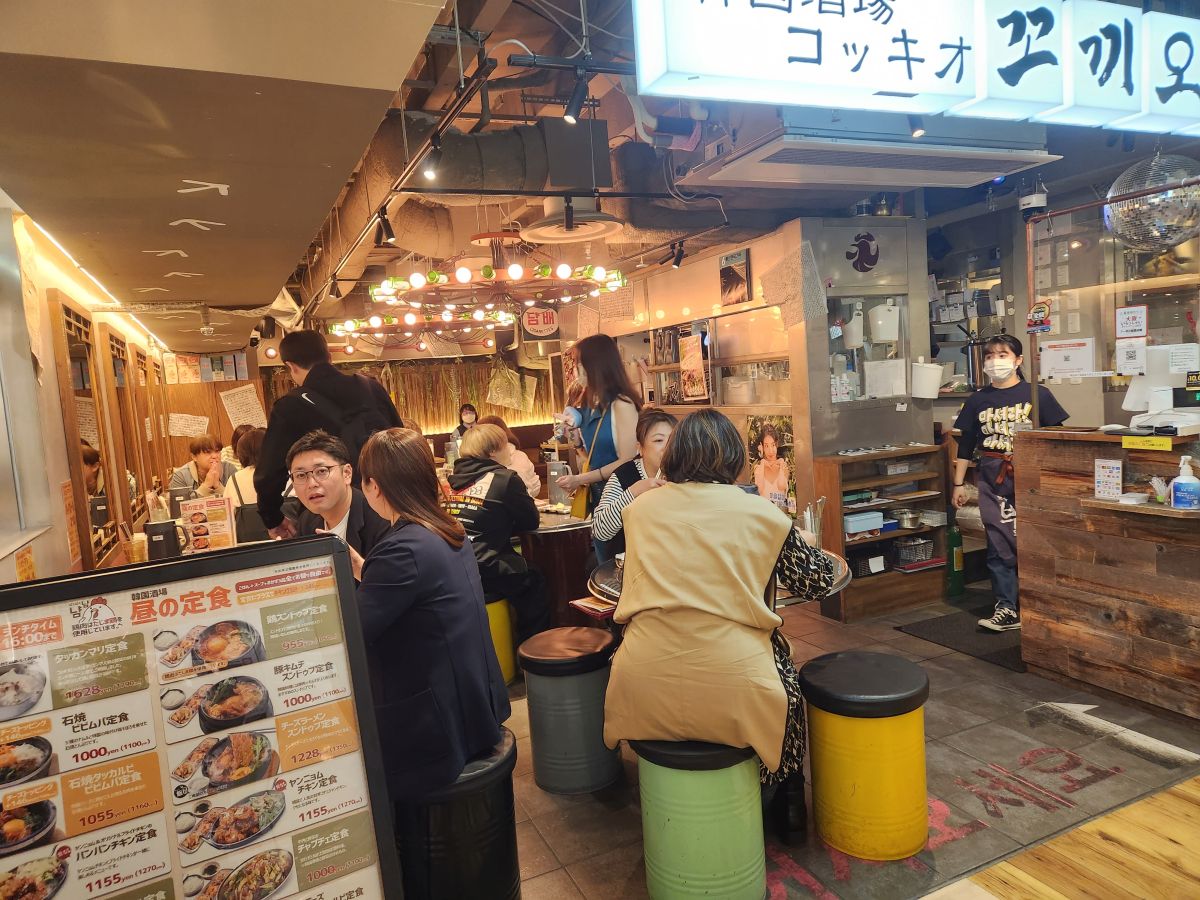
There are so many choices! We sort of wander around for a bit, looking at all the menus, trying to translate them, but end up going back to the first restaurant we passed – which happens to be Korean – because we know they have Okonomiyaki (told you I was addicted!). We saw it on the take out sign. We are taken back to a little table in the back and peruse the menu, finally settling on grilled squid and Okonomiyaki. Our beers come with little snacks – excellent marinated beans and of all things, little clams which makes Ed very happy. The squid comes out cut into rings – perfectly grilled, tender as butter (how do they do that????) – and the Okonomiyaki, oh, perfection. And it is very different from the version we had yesterday. This one if much more cabbage forward, a lot crunchier and no sauce to speak of. Completely different take on Okonomiyaki. I’m going to have such fun experimenting with these things when we get home!
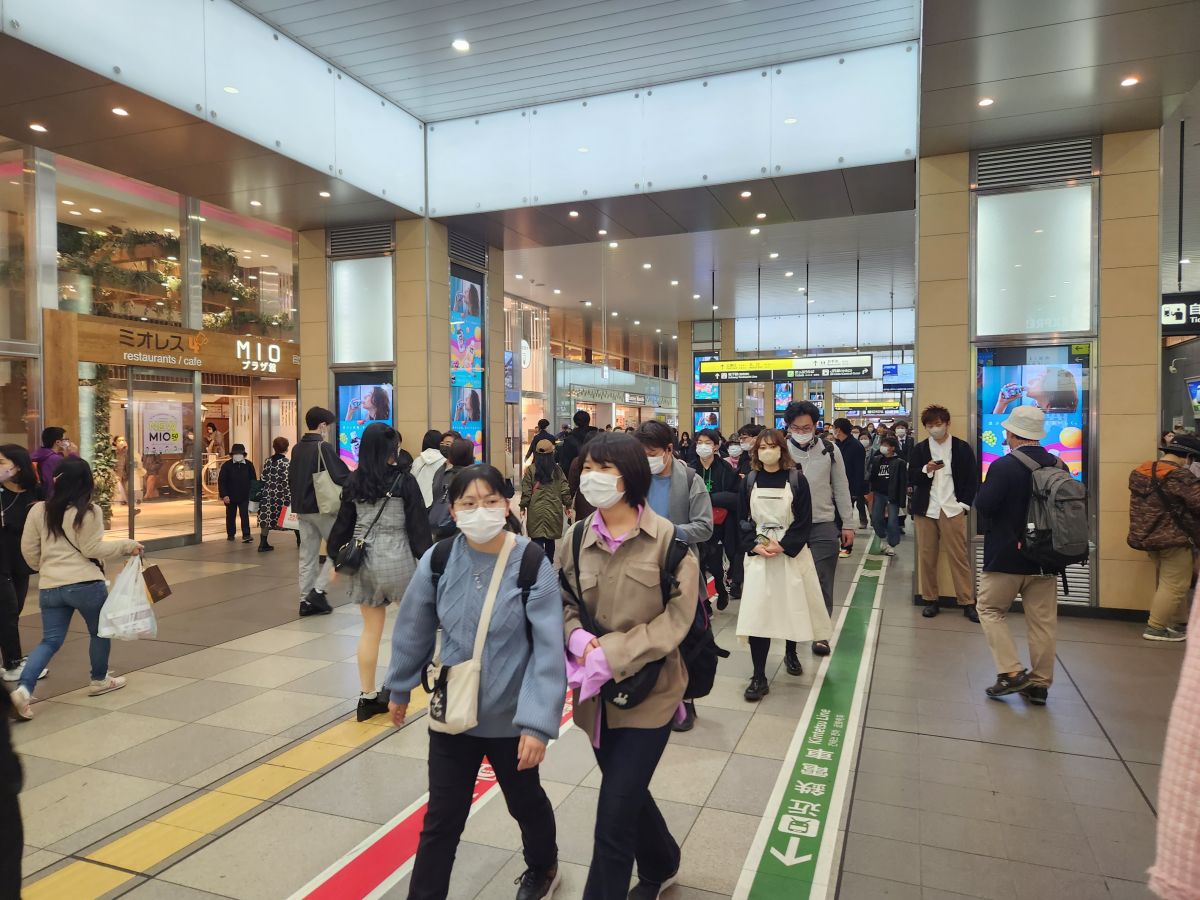
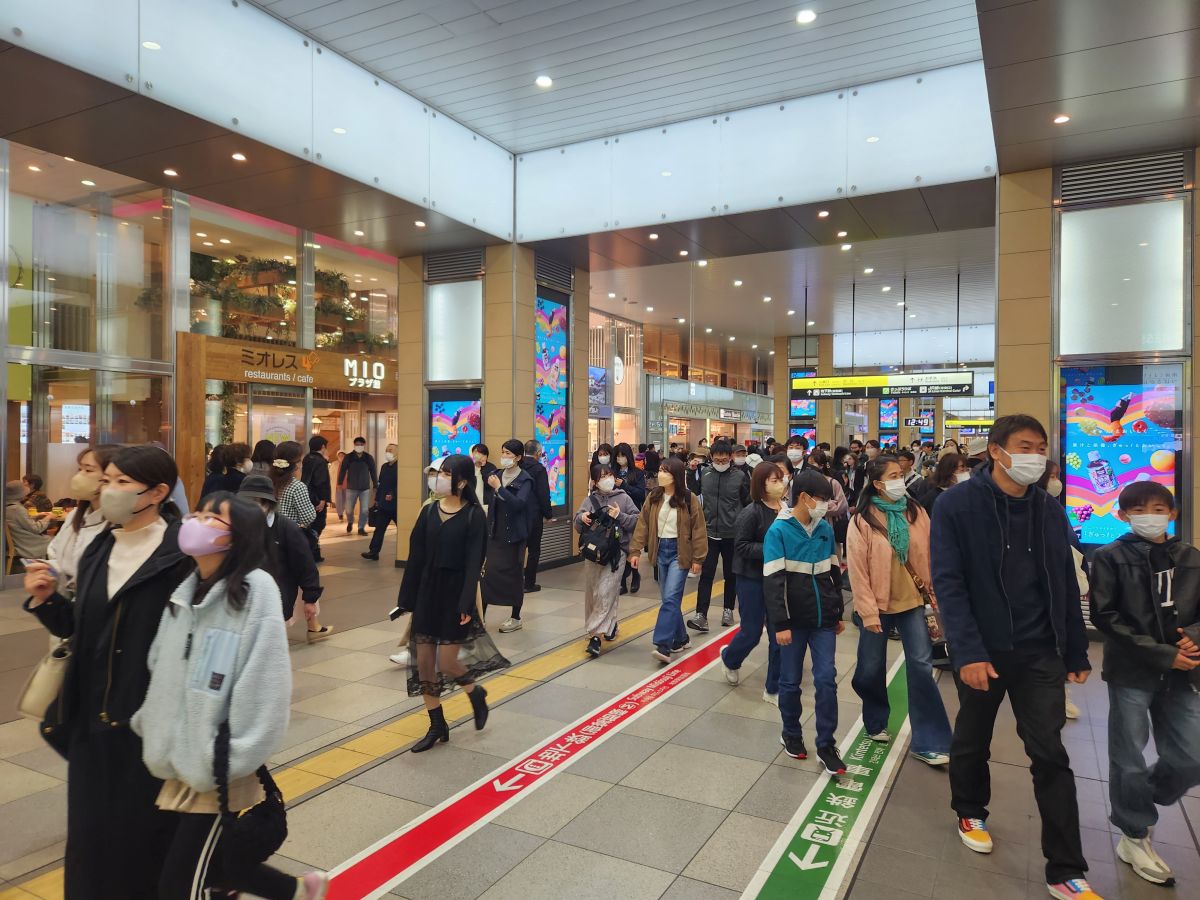
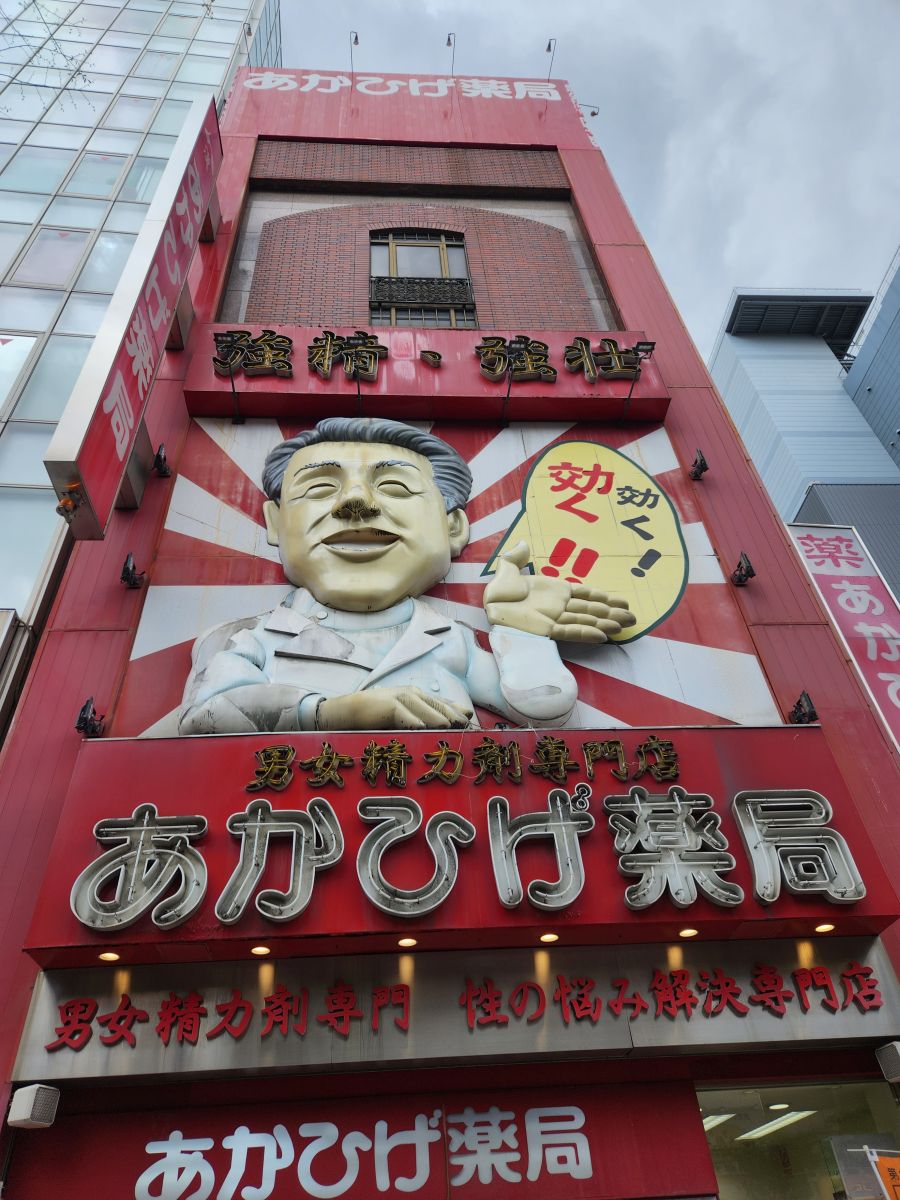
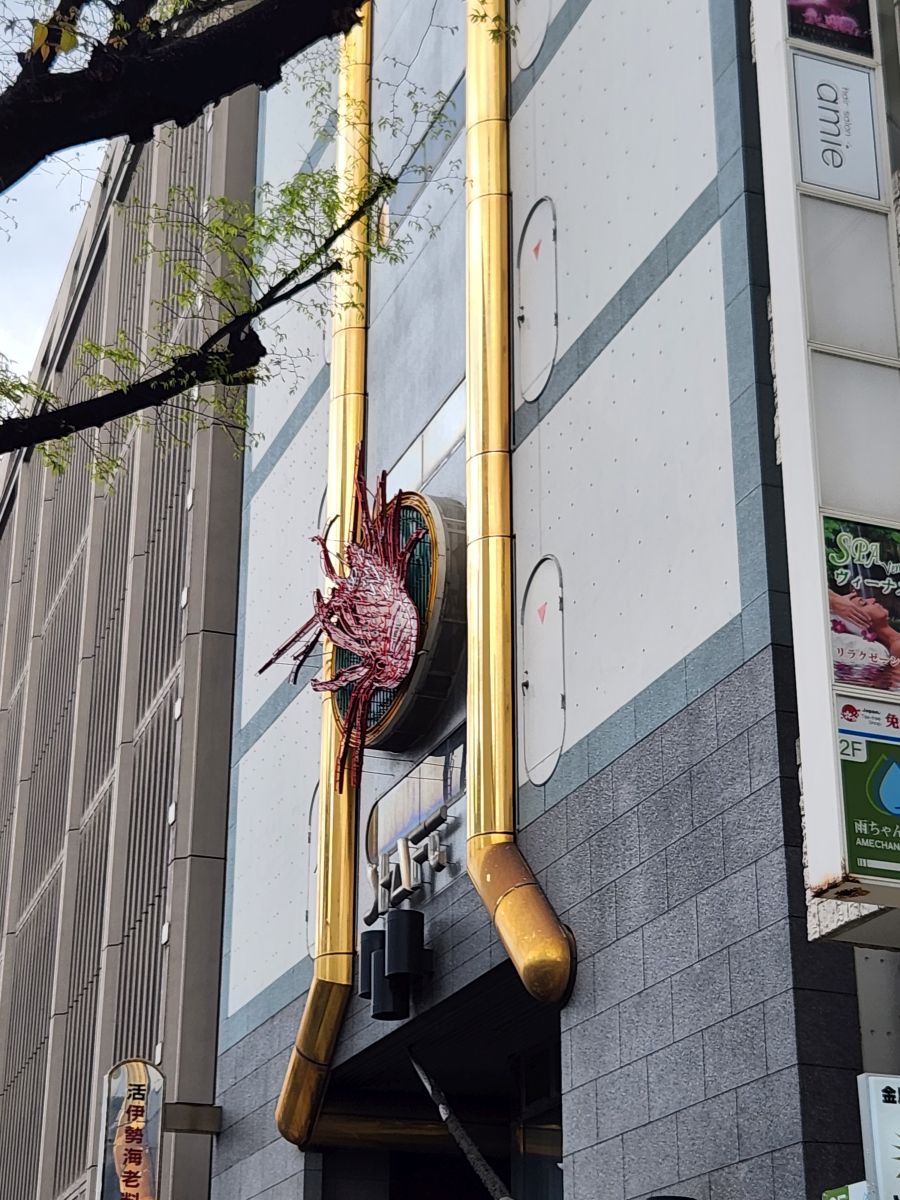
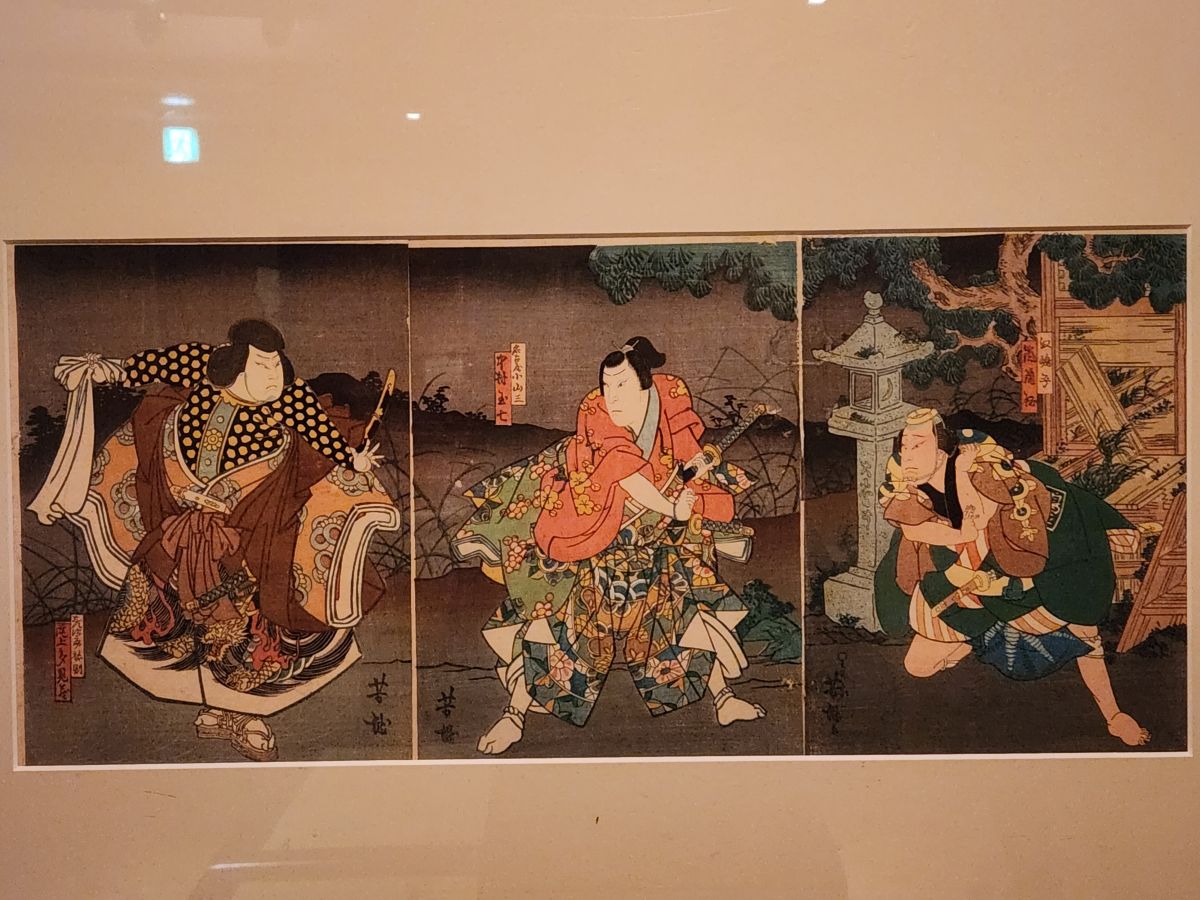
We head back to the train, weaving our way through the crowds that throng just about every station and mall here. Our next destination is the Kamigata Ukiyou Museum which features exhibits all about traditional art in Osaka, particularly ukiyou which is block printing. 3 stops later, we exit into the Namba area, marveling again at all the wild building decorations/advertising, finding the museum entrance fairly easily even though it is sort of unassuming. Inside, the museum is set up like a traditional Japanese house, and as we move from room to room we learn all about this old style art. Started in the Edo period, the prints mostly featured Kabuki actors and were sold outside the theaters that lined the Dotombori district’s streets in the past. Only produced for about 100 years beginning from the late 1700’s, these prints are so traditional and vibrant and bright colored. They are everything you think of when you think about traditional Japanese art.
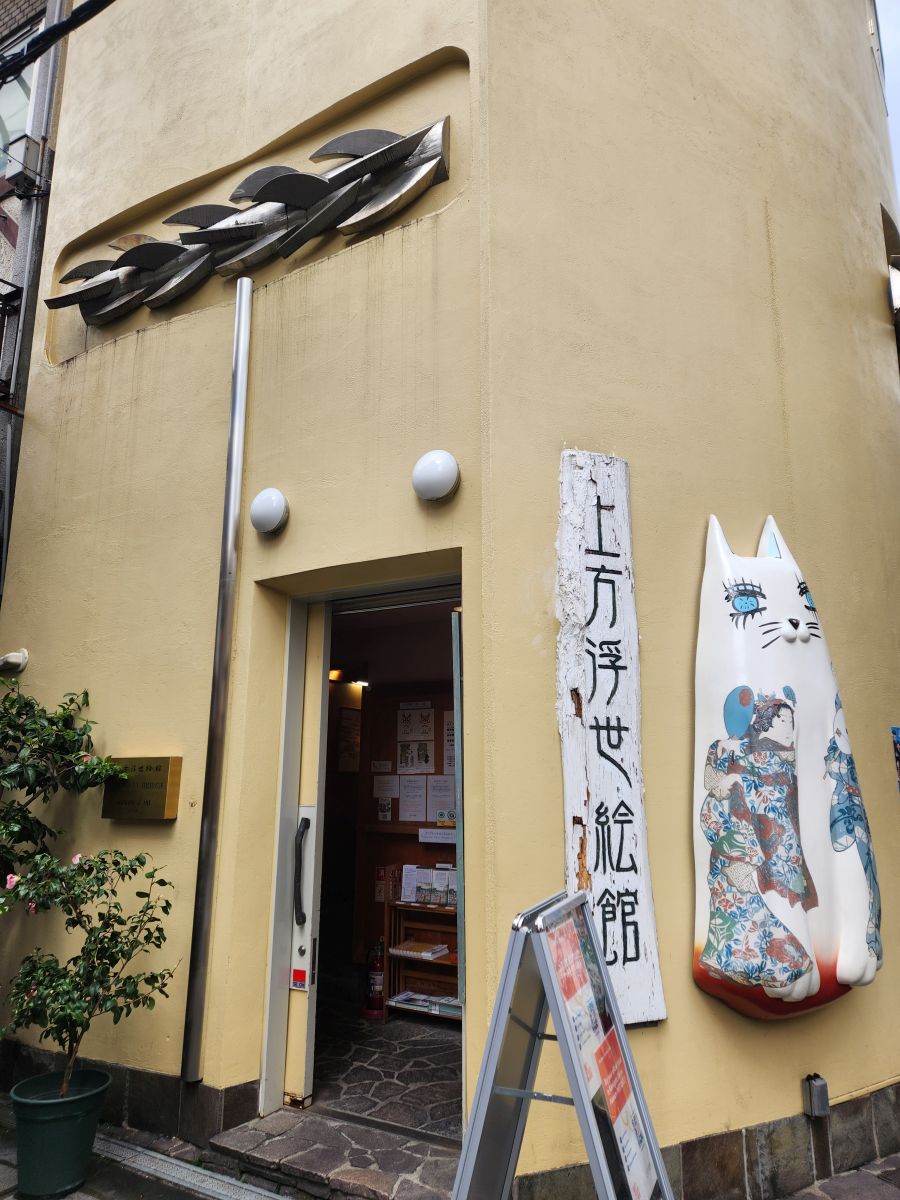
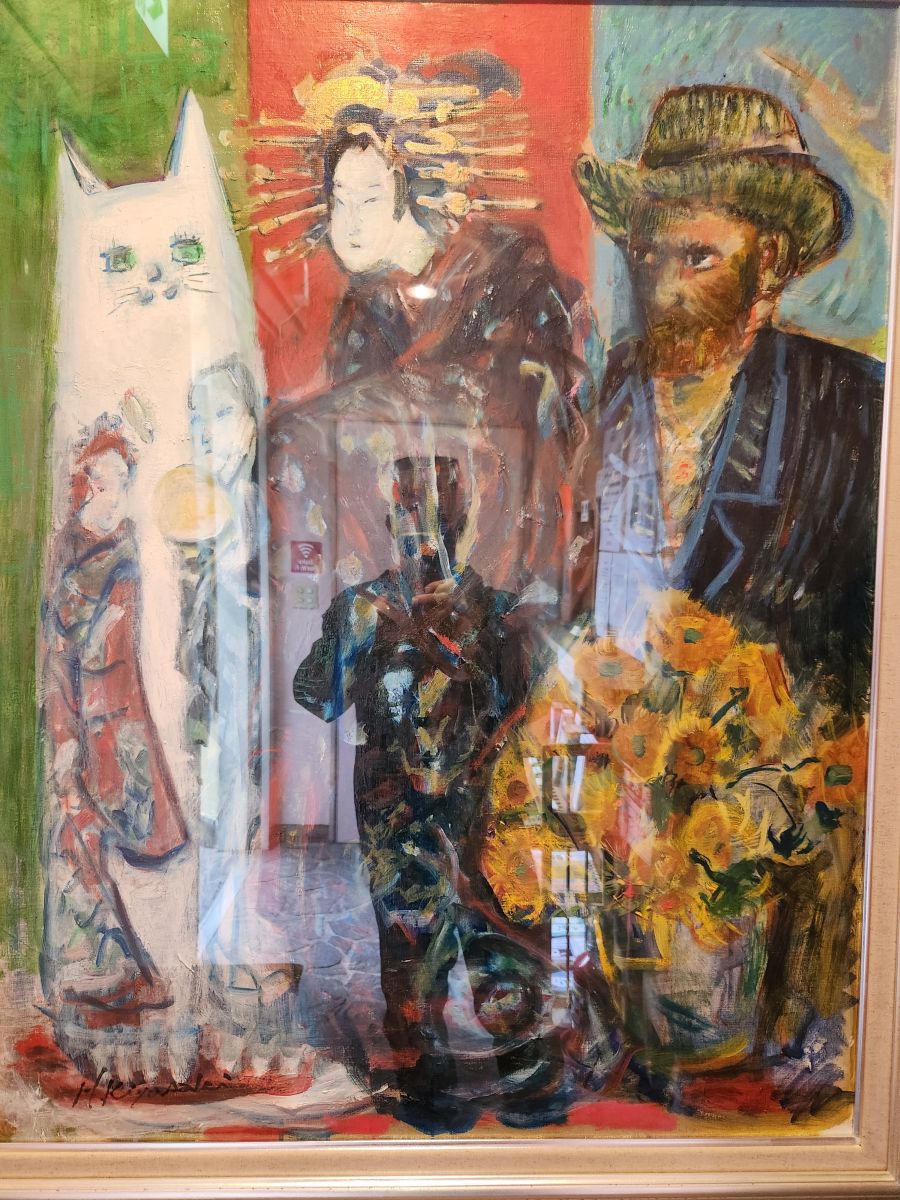
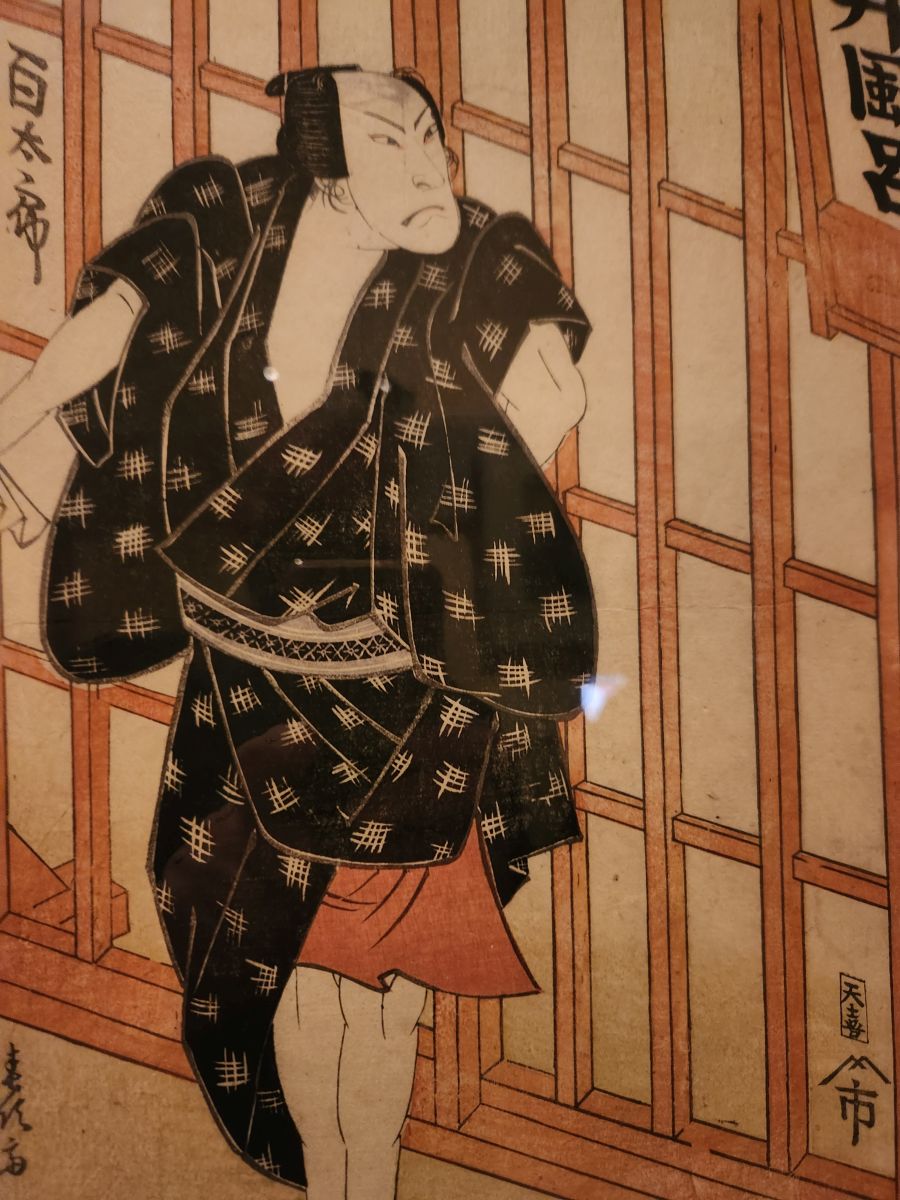
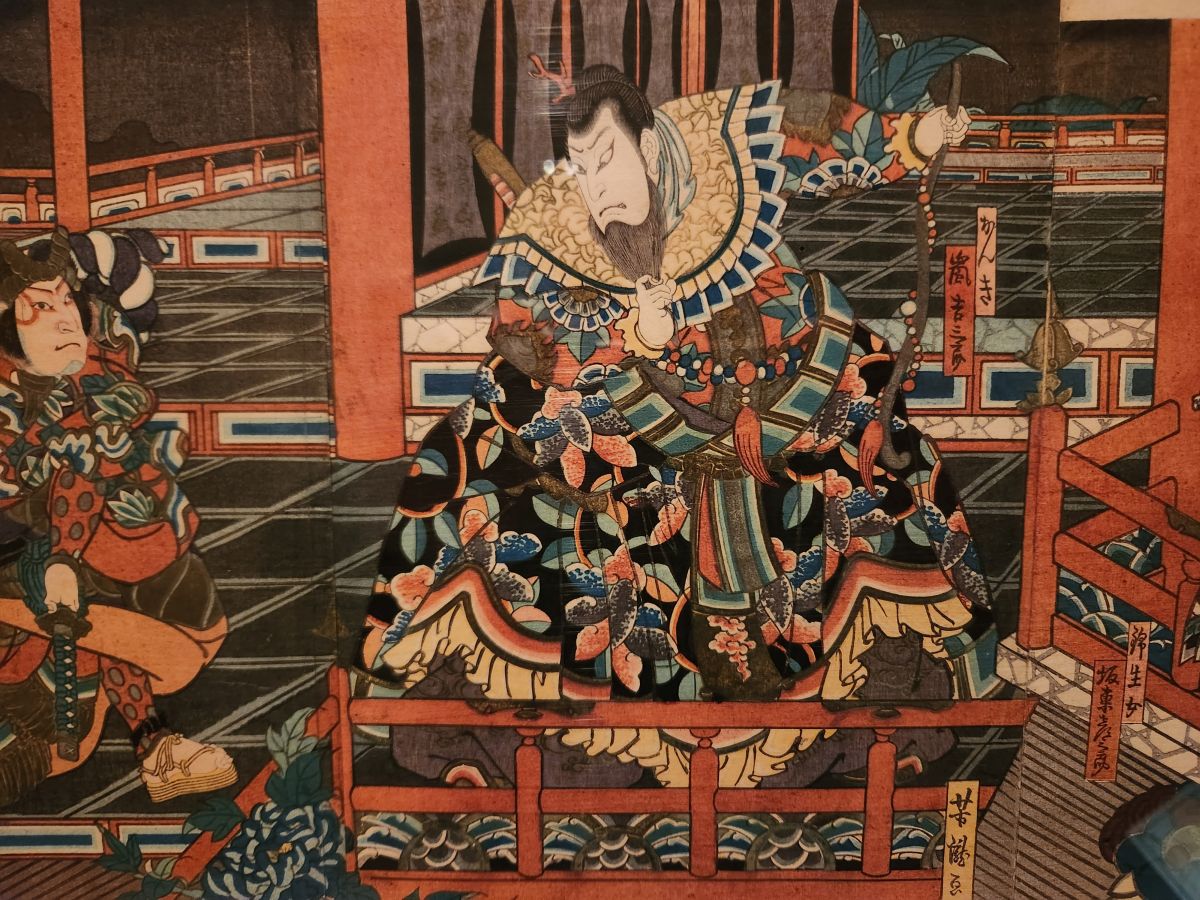
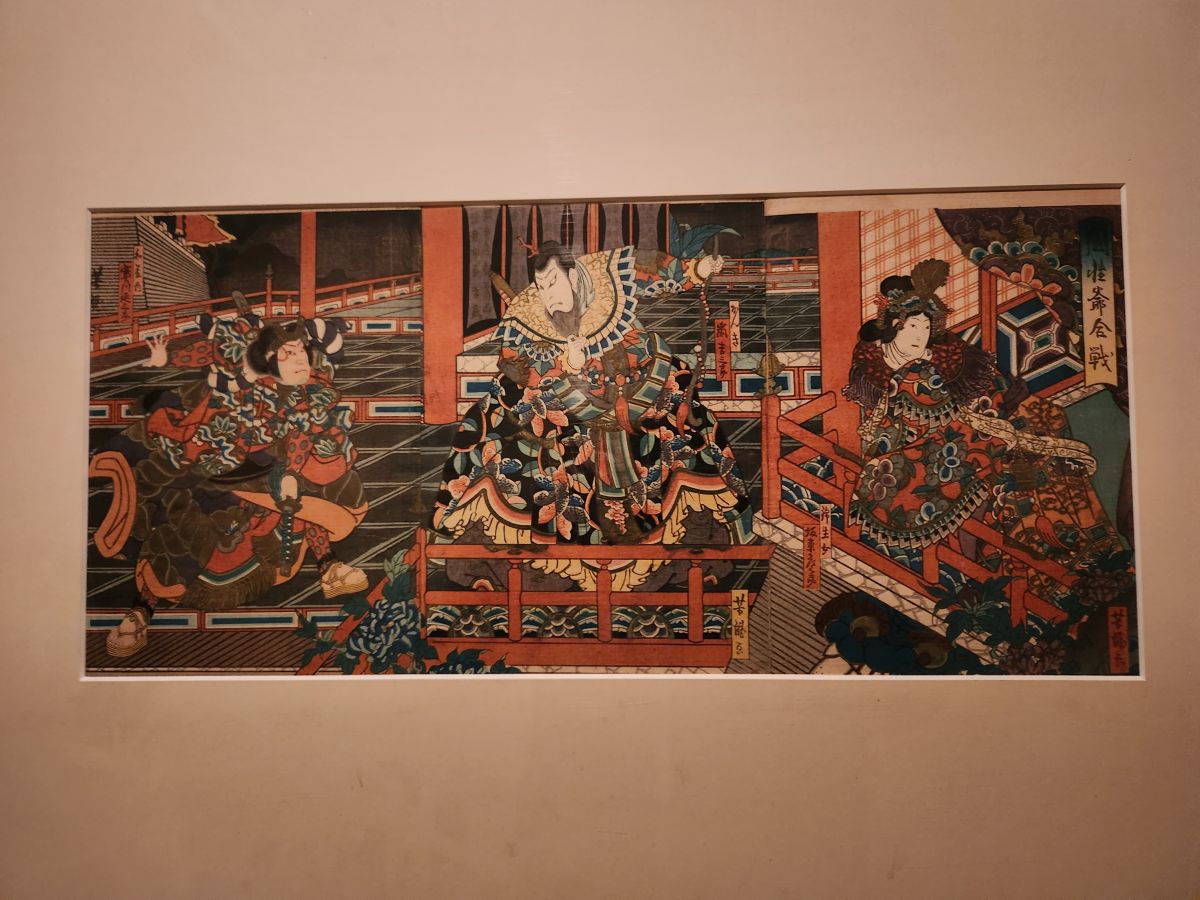
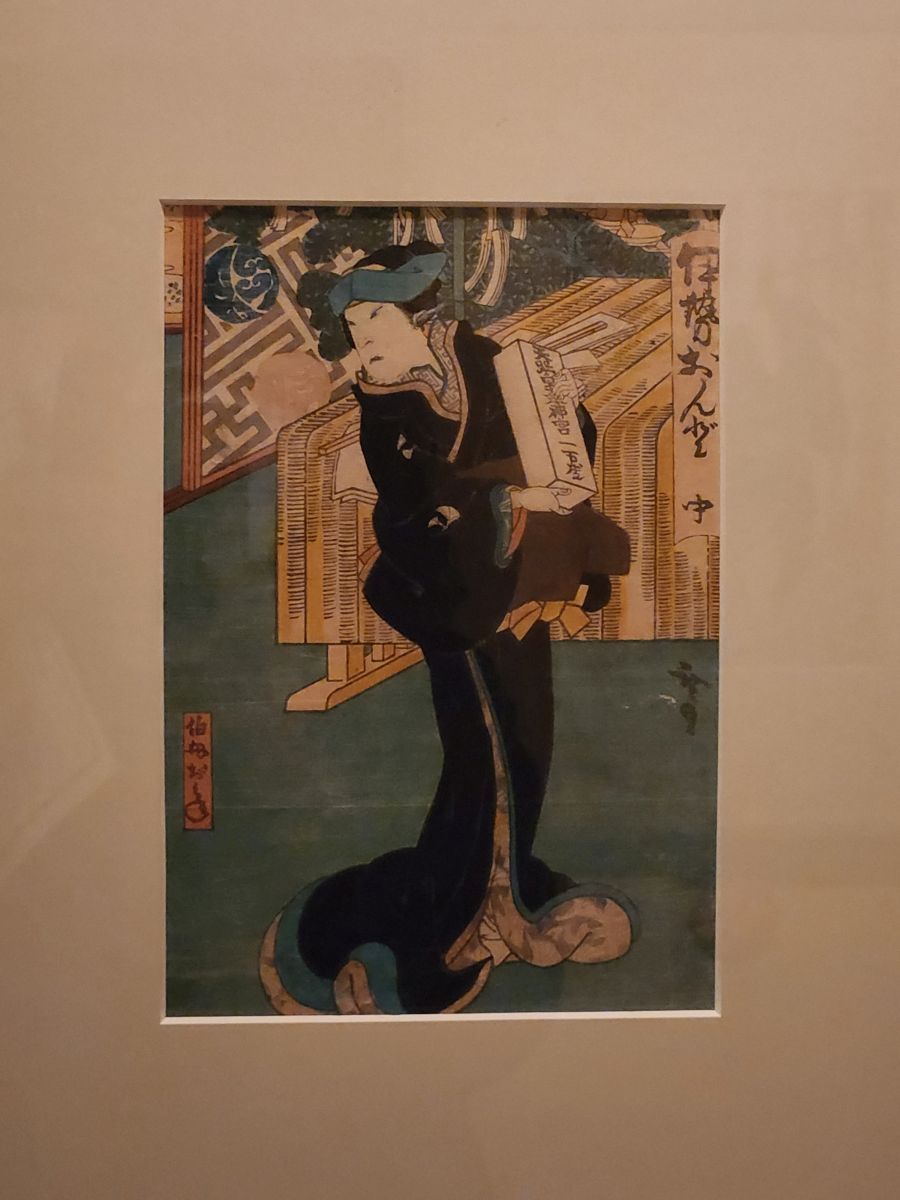
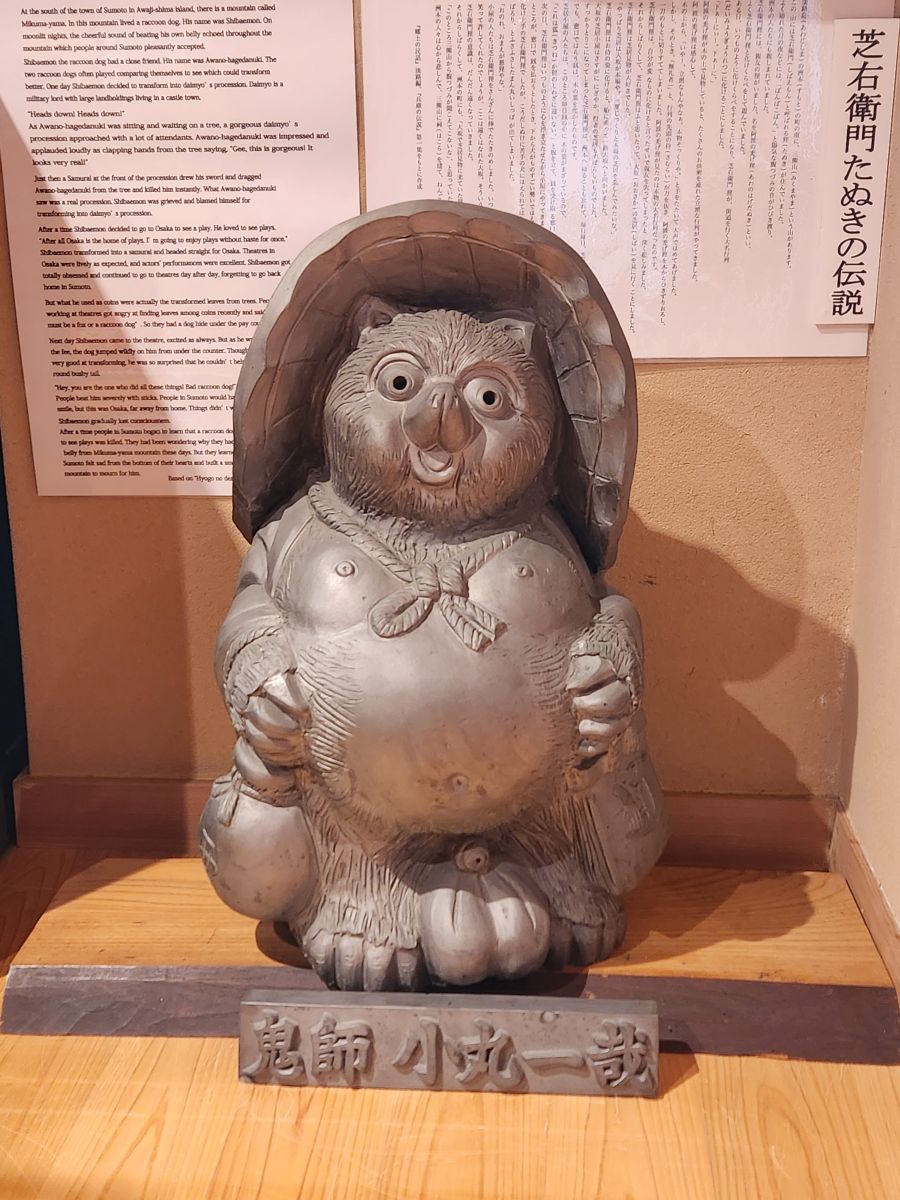
On the top floor of the museum, there is a room set up for block printing lessons. Had we only known! We would have signed up for one. Oh well, maybe next time. There is also this great little statue of Shibaemon, the raccoon dog. There is a long story about him – to summarize, he lived on a mountain in a small village and used to beat his belly at night, the sound echoing through the valley and the village people enjoyed it. The raccoon dog loved theater and decided to go to Osaka to see plays, where he was beaten to death (too long an explanation of why – just go with he’s dead). The people in his village were saddened, and built a small shrine on the mountain to mourn for him. And the legend lives on in these statues and art and little figurines – which are actually sort of cute in their own way!
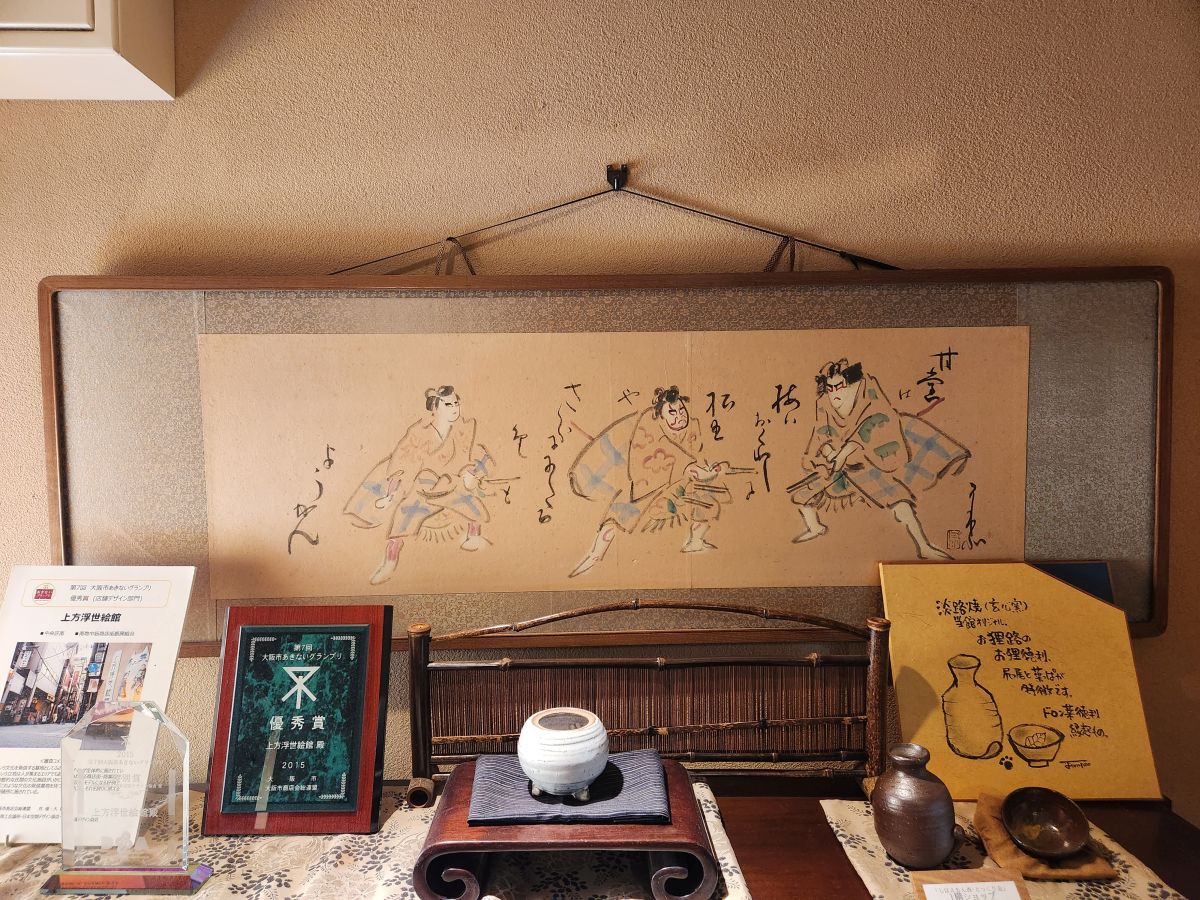
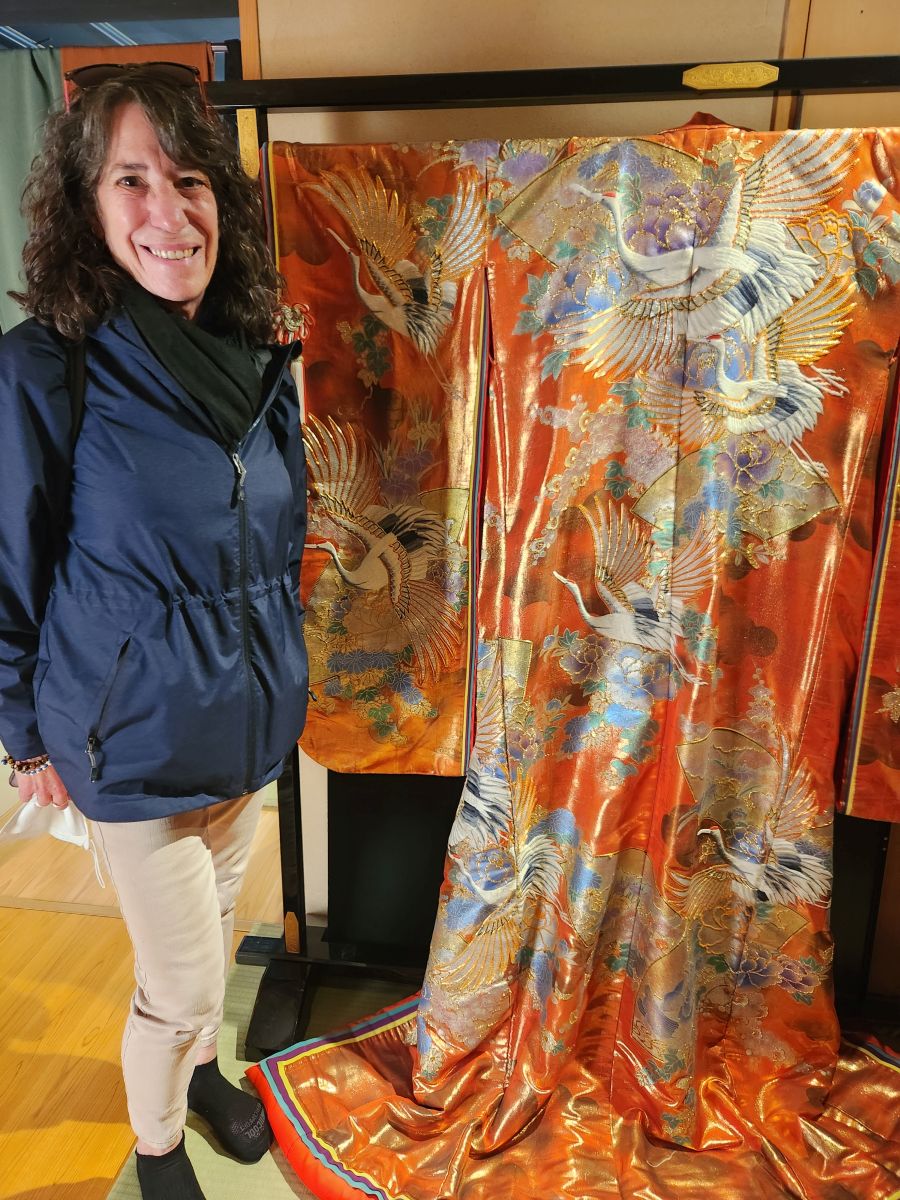
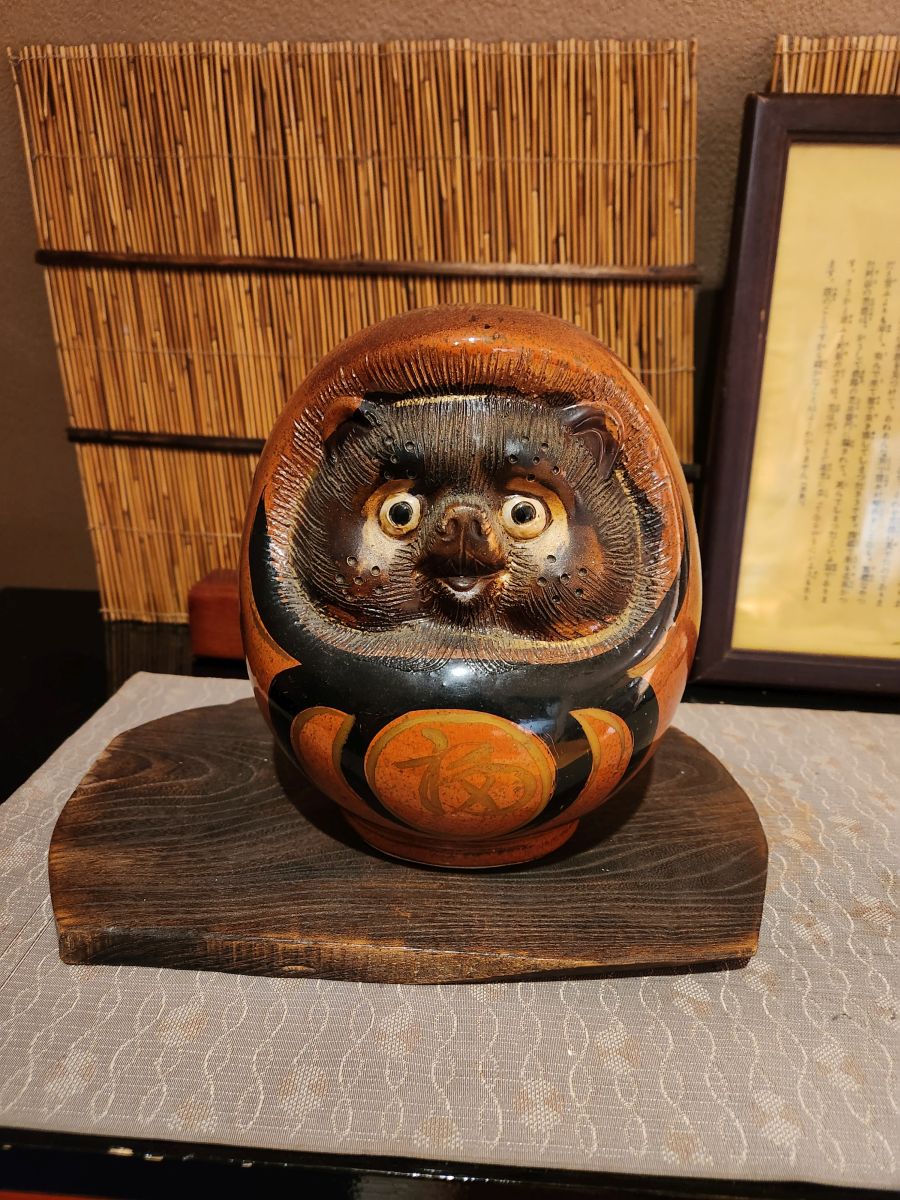
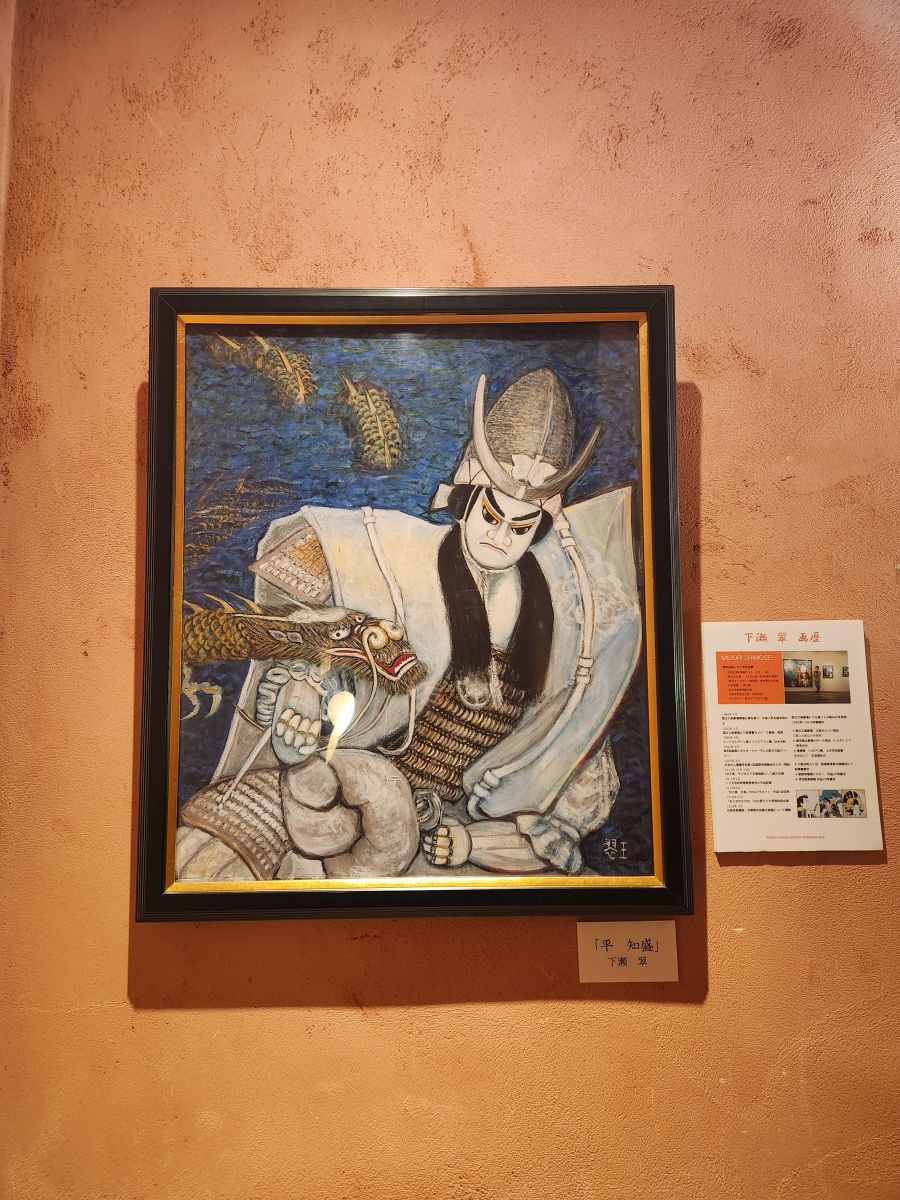
A great little diversion here in the middle of Dotombori. We’d love to have a block wood print for the house, but the gift shop is a bit pricey, and we really don’t have room for anything anyway. We do get really lovely little postcards as a gift for coming to the museum though, so hey, that’s something! We can hang them on our fridge.
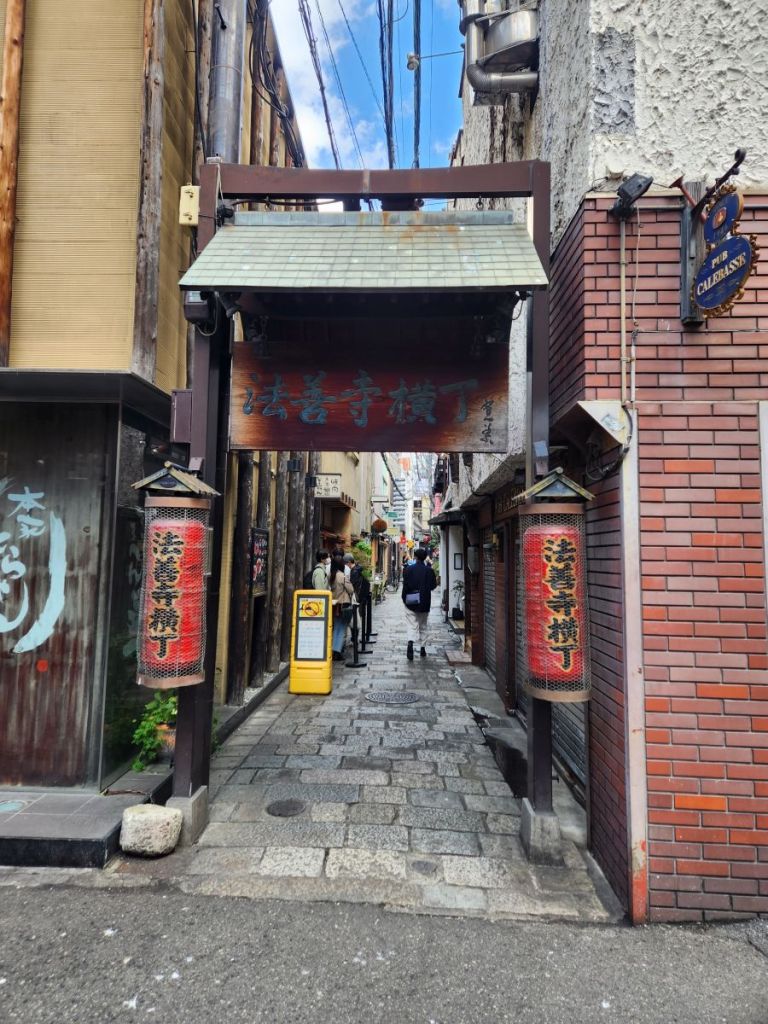
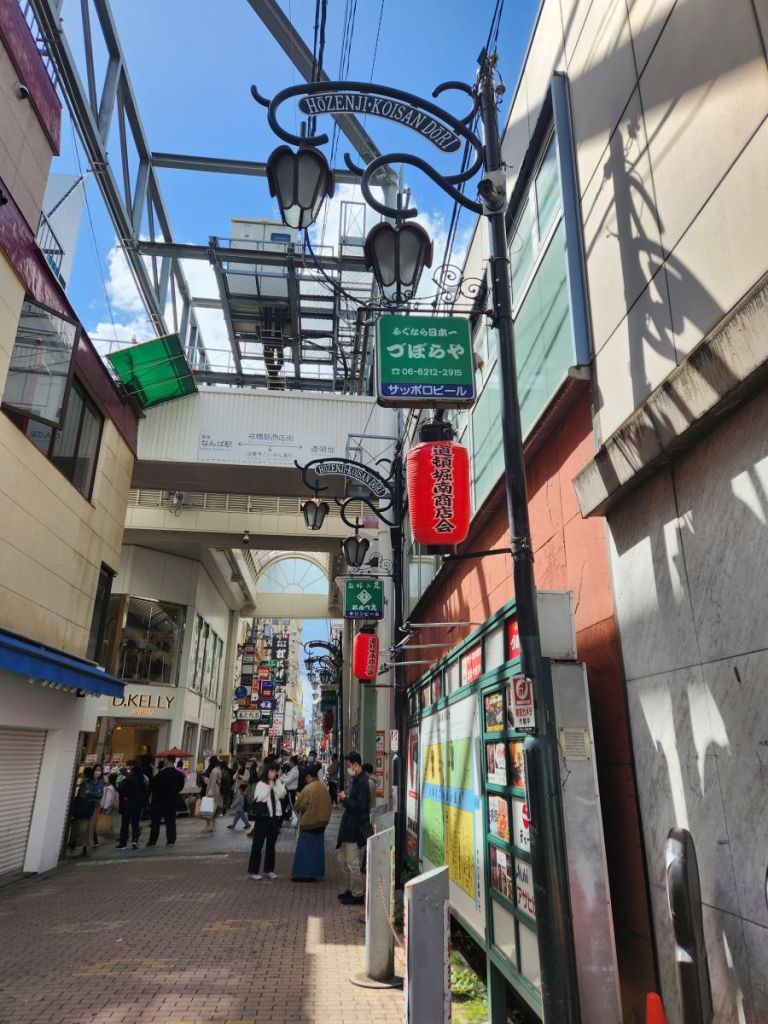
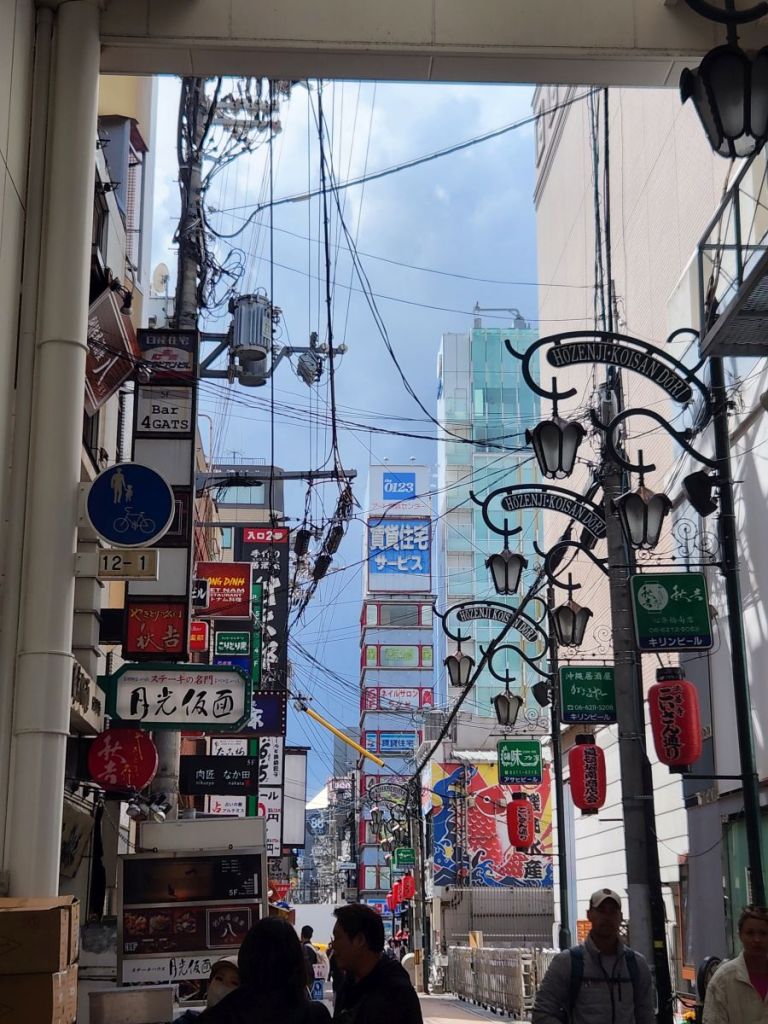
Leaving the museum, we wander around the Hozenji area, which is filled with little restaurants and bars and clubs. We’re sure it is a hopping area at night! We love the signs, the atmosphere, and especially the little plastic food displays in the windows. They are just fabulous!
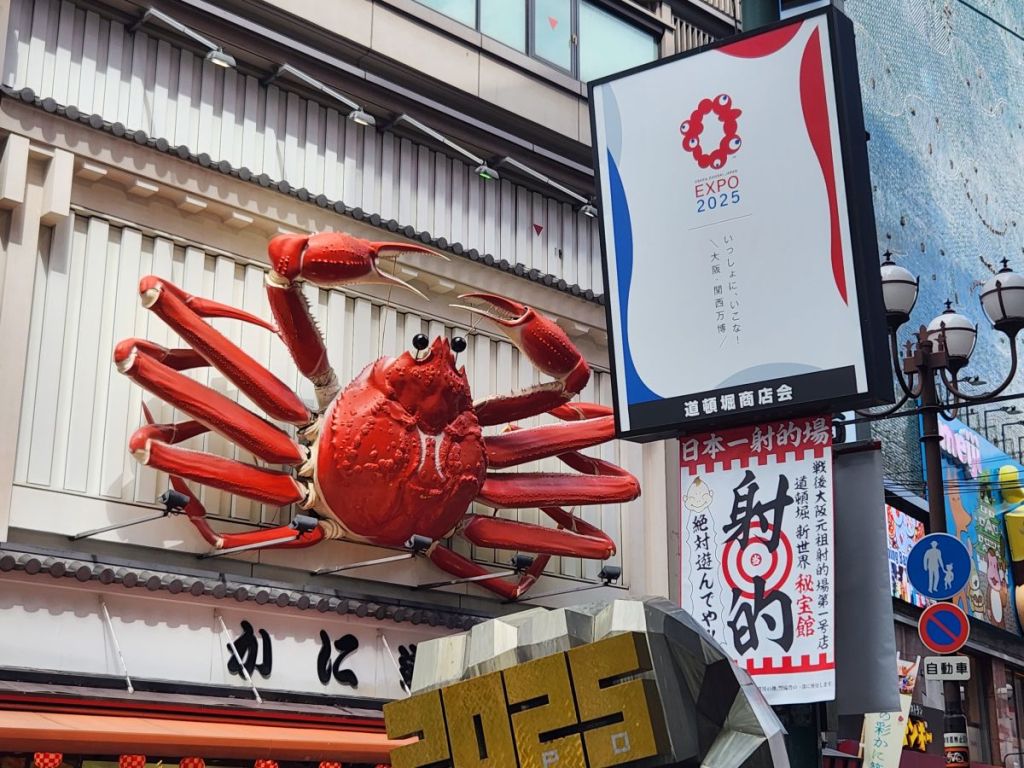
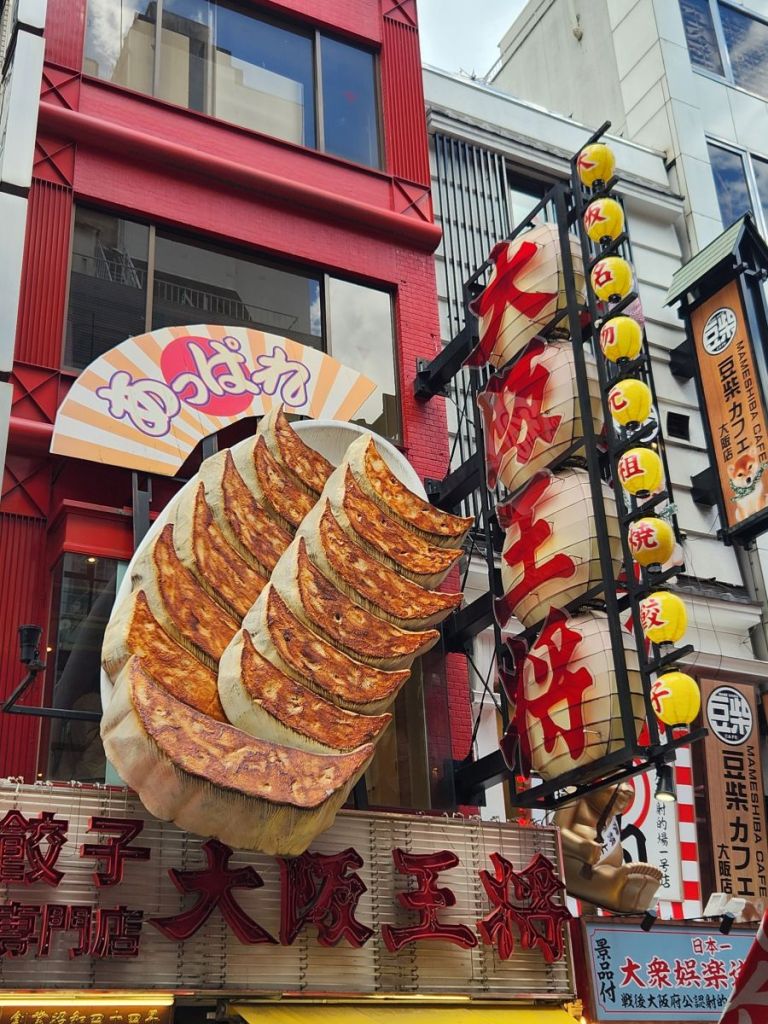
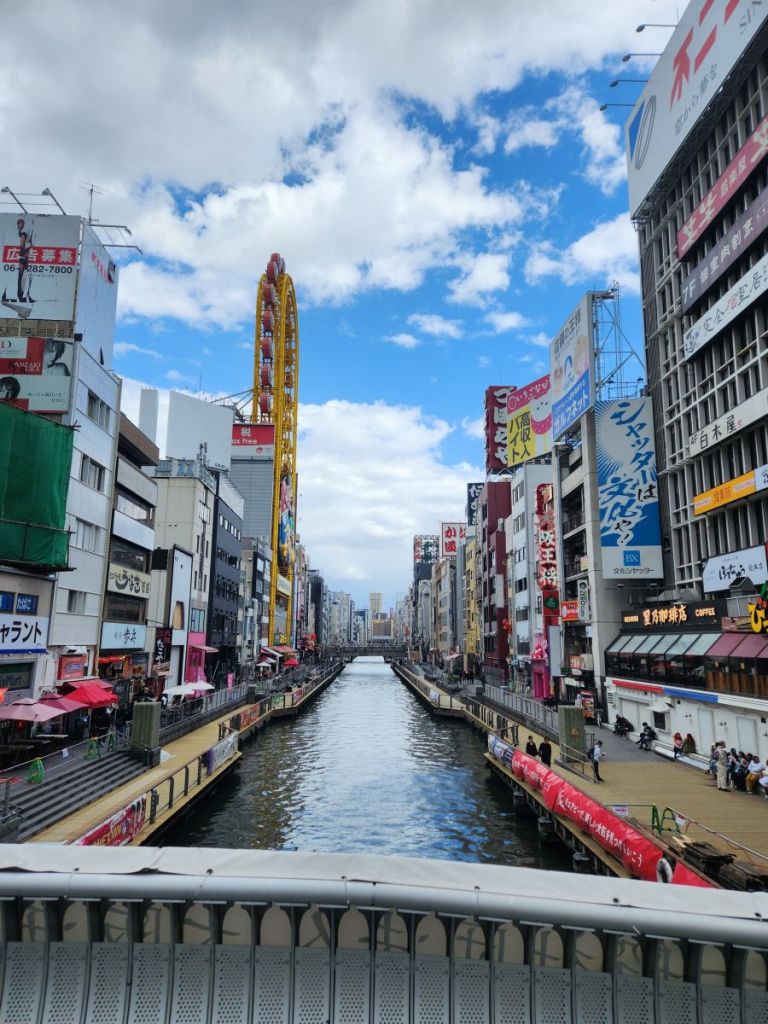
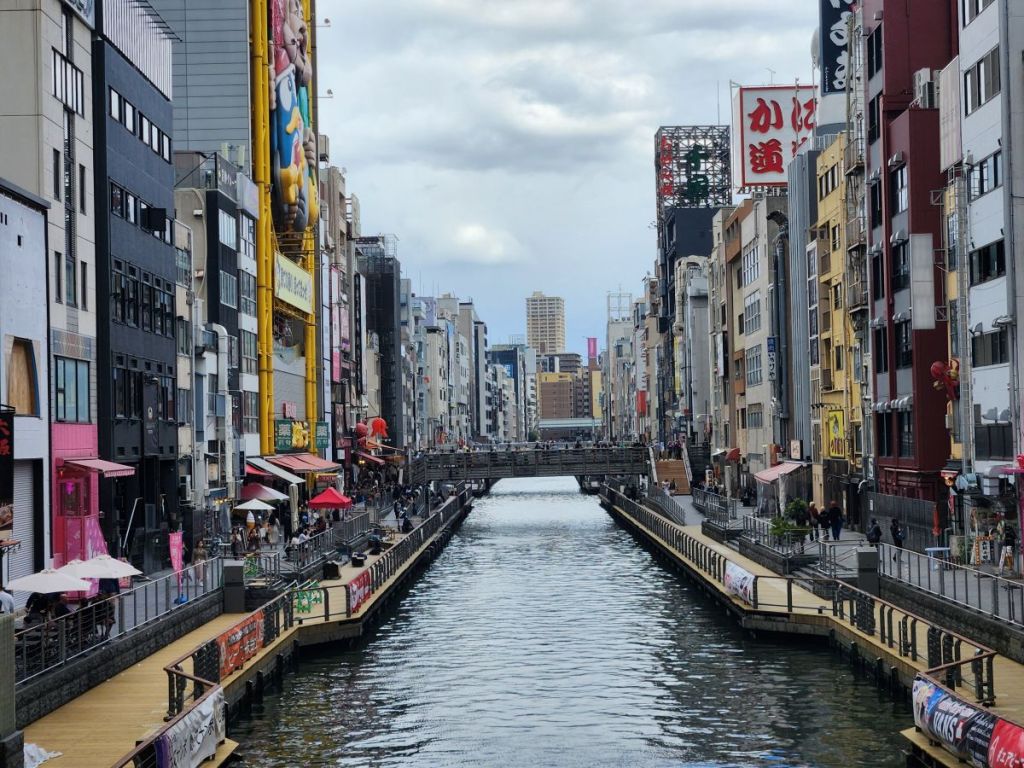
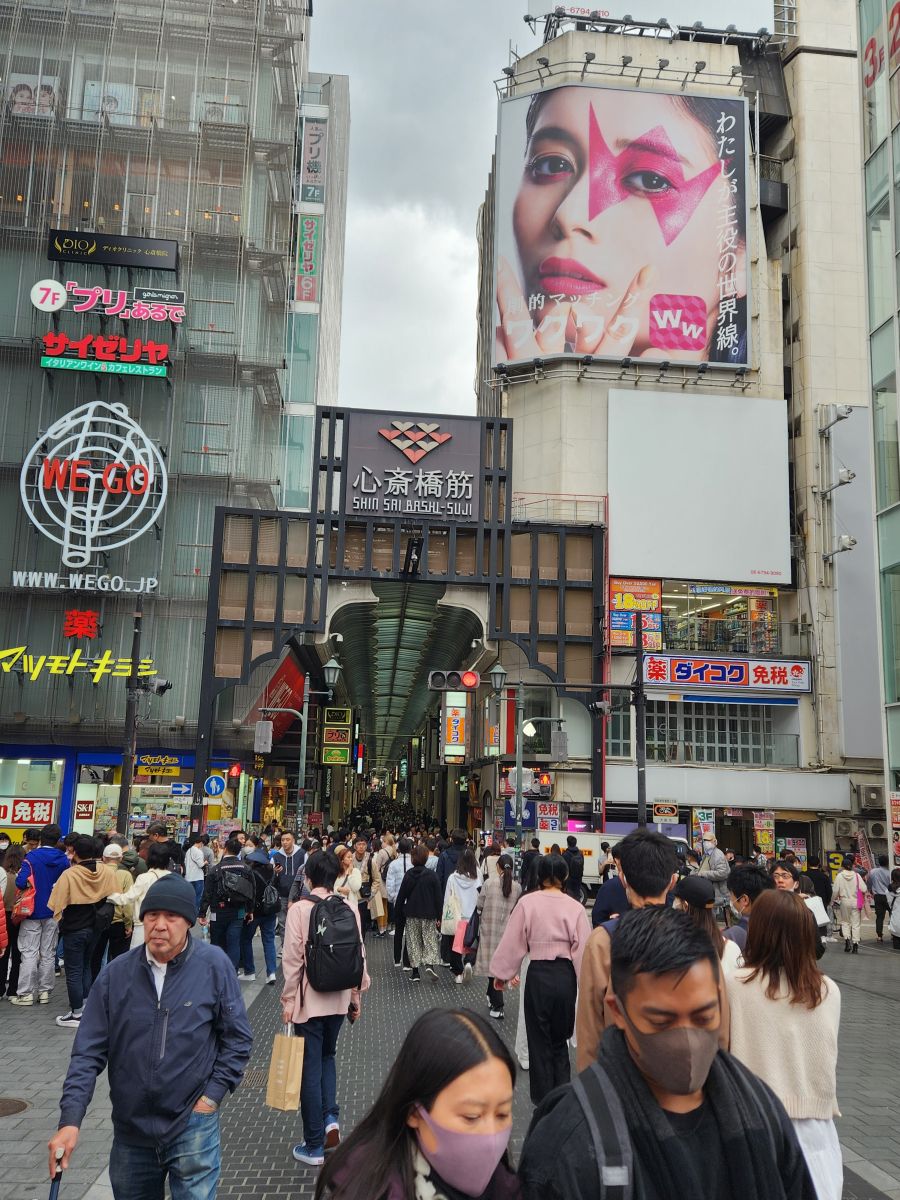
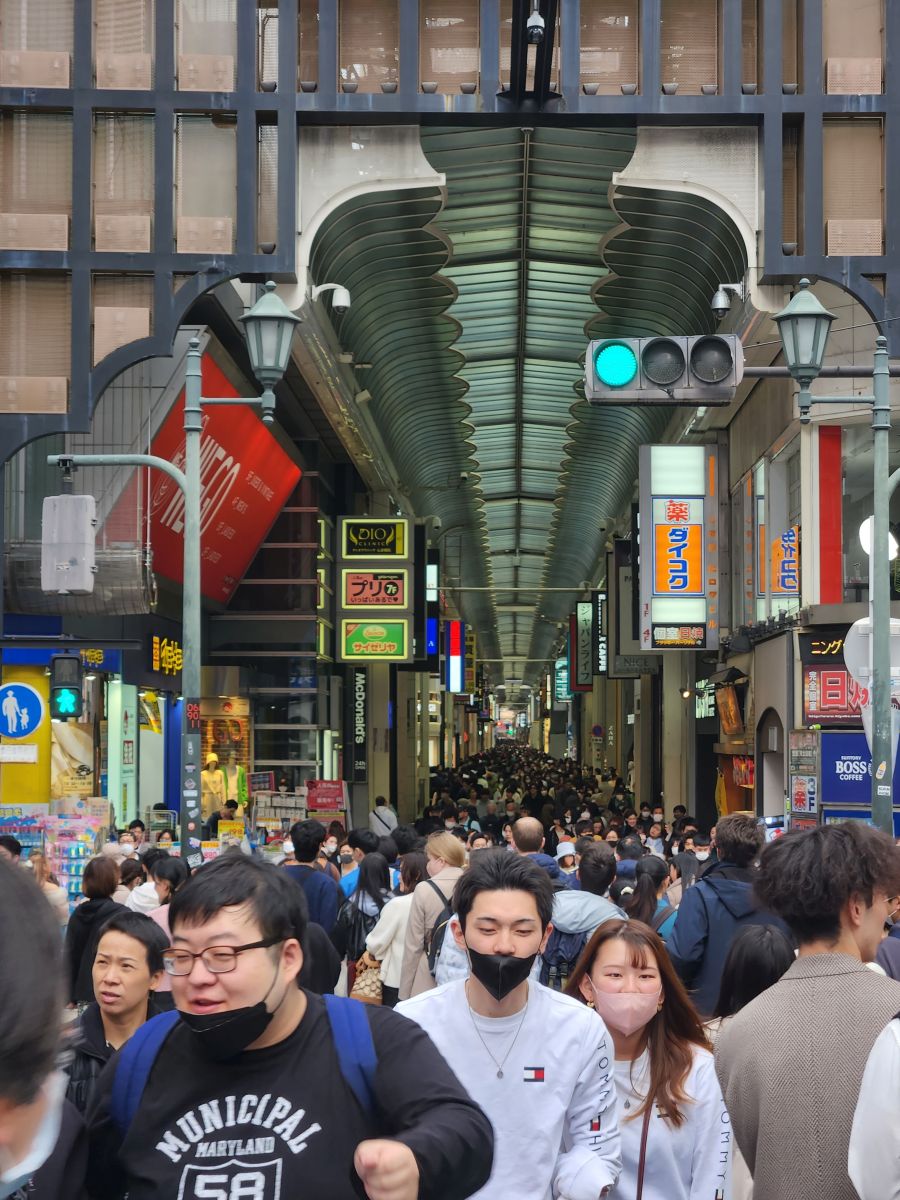
Continuing on, we hit the main arcade through Dotombori, where again, the overload of signs and weird figures on buildings is crazy. We couldn’t really appreciate it yesterday in the rain, but today? It is a perfect day to just soak up the sights, the atmosphere and the crowds. Oh, the people!
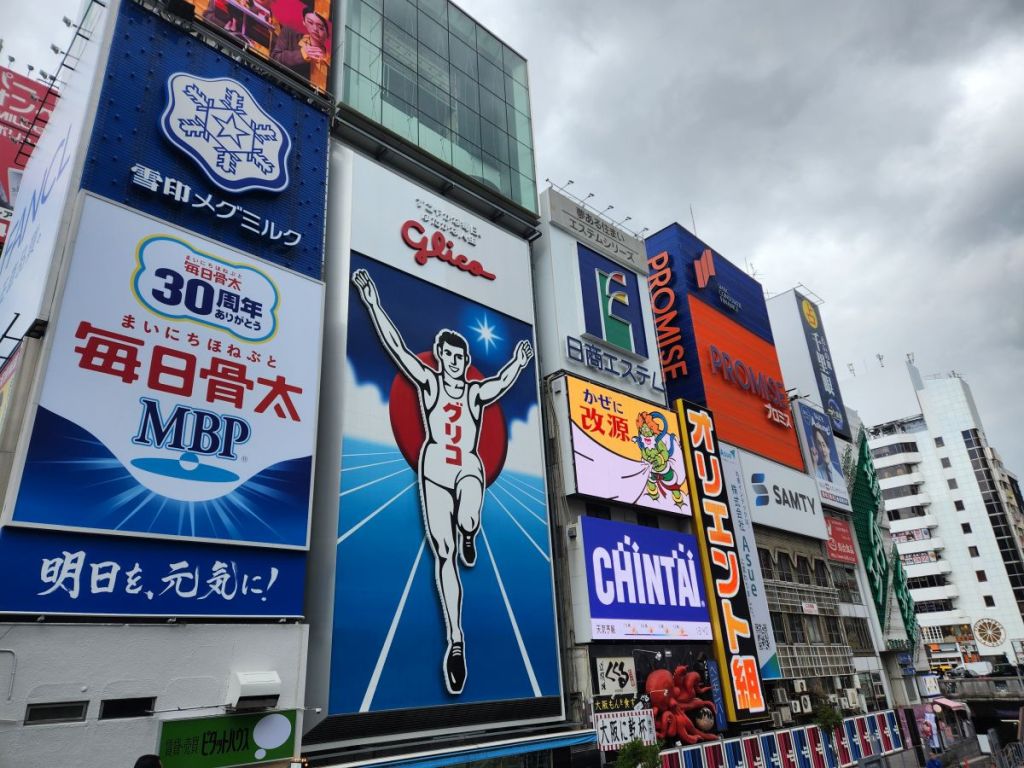
We make it to the bridge with the famous Glico running man sign. Everyone knows this sign – as a matter of fact this is the landmark Kristine, our concierge, has shown us as the place she and her friends were going last night. It has been there since 1935, with many alterations, mostly to celebrate various sporting triumphs. Glico is the confectionary company that produces Pocky’s, among other things. The sign is lit up at night with different LED patterns behind the runner. Sadly, we won’t be seeing that as we are sailing tonight, but maybe when we are here with Gate 1 next week. We’ll see.

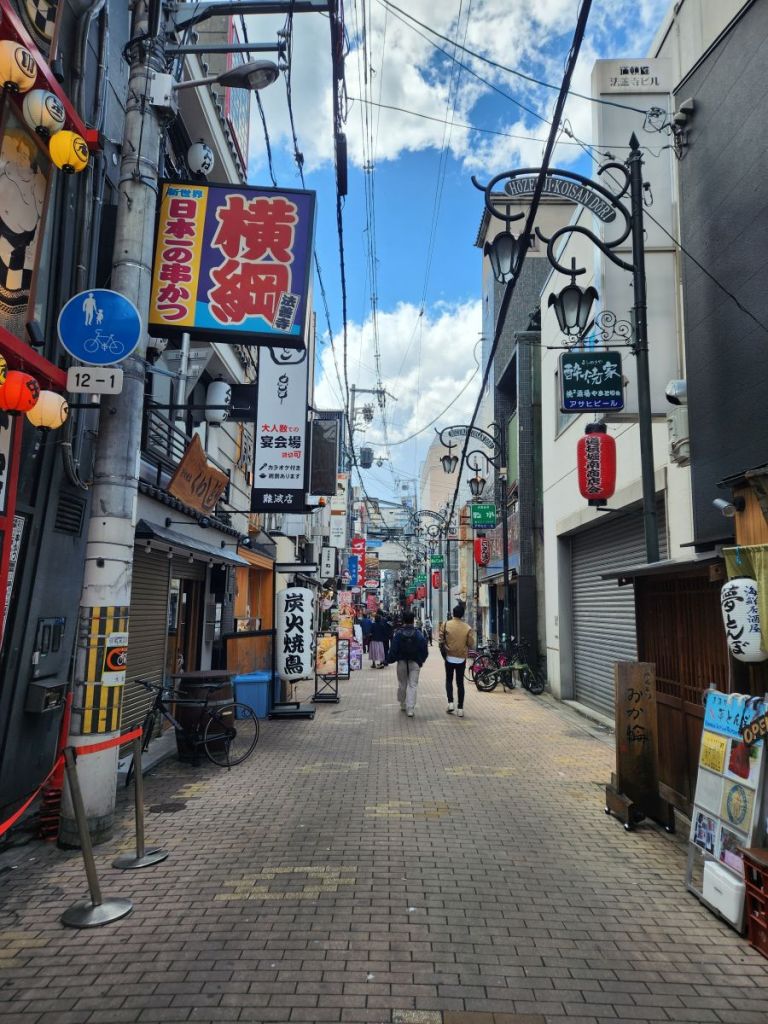
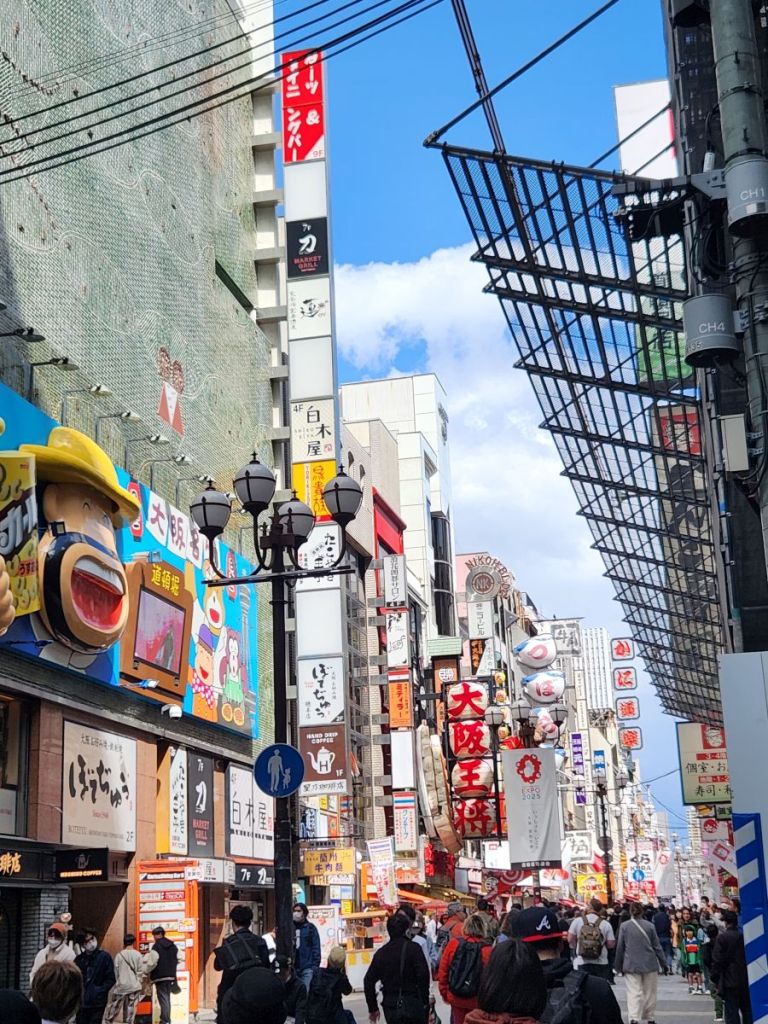
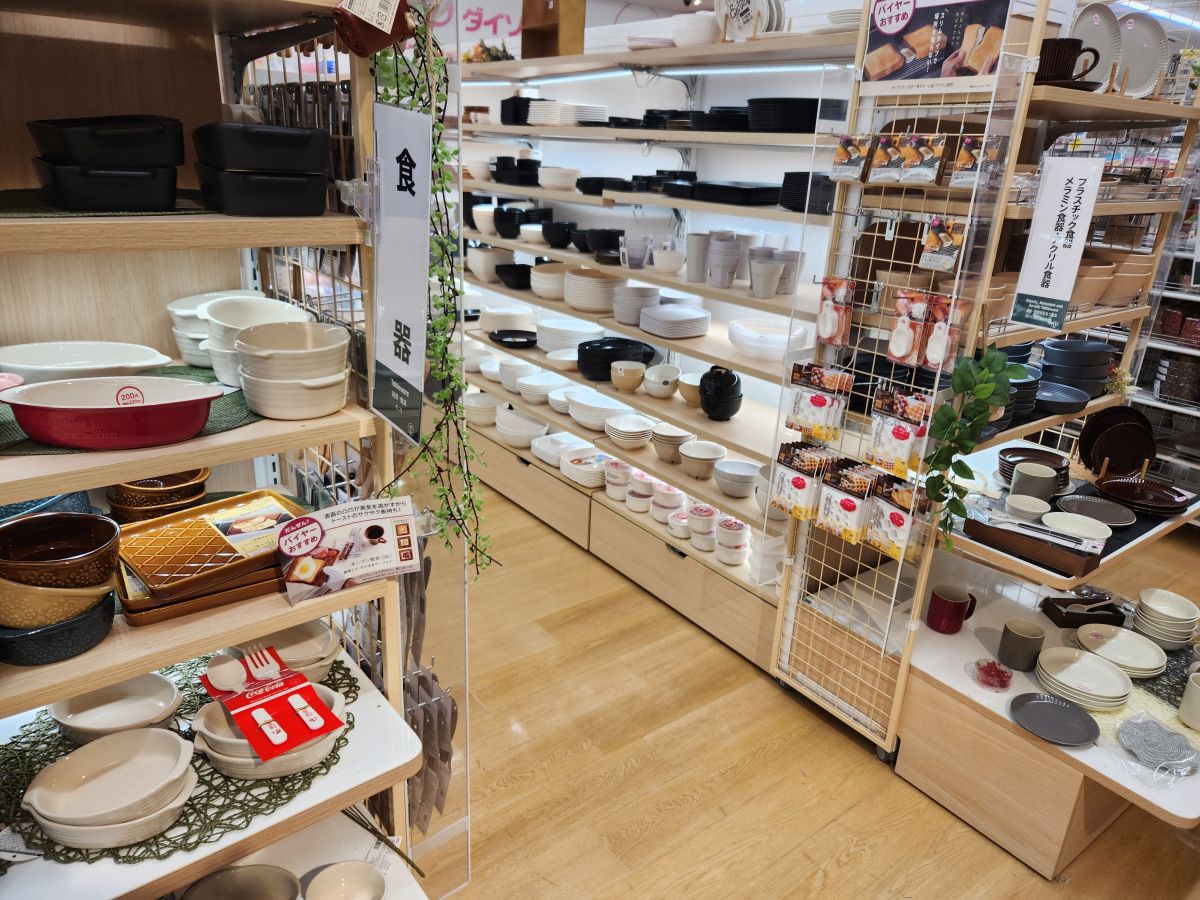
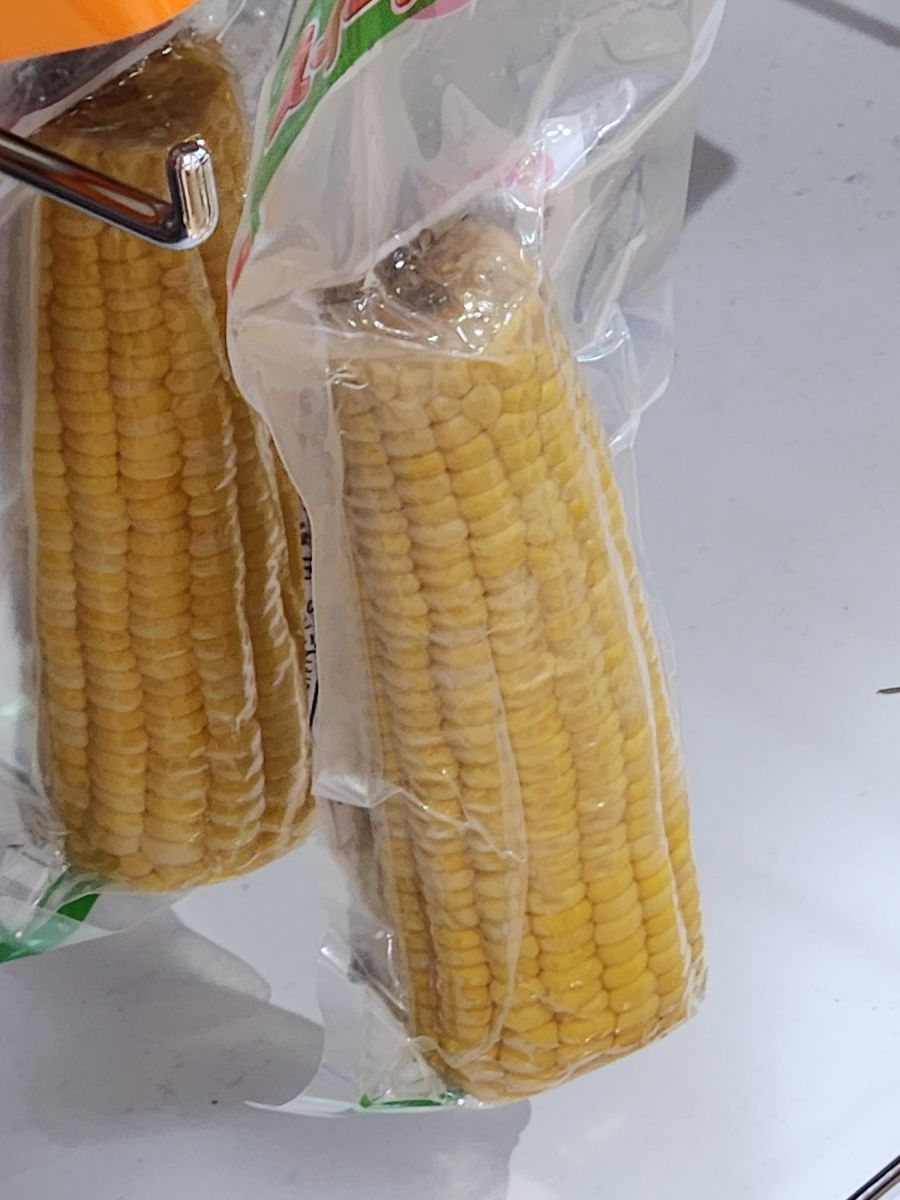
Wading into the arcade again – remember the people comment! – we hit the Daiso store for more supplies, marveling at the vacuum sealed corn on the cob hanging with the snacks section. So bizarre! Then head back to the train for Osakako and the ship.
Back aboard, we stow our supplies then hang out on the balcony watching a great farewell show with Anime characters and a fabulous drumming band – the two main drummers are girls who go to town on those drums! The synchronization and basically choreography are just fantastic! They hop up and down, all while seamlessly beating on their drums. And there are these little kids in the band who are just the best. How adorable! Their stamina is also amazing. They play for almost 20 minutes as our lines are released and we begin our sailaway.
Our evening then progresses pretty much as normal. Although tonight is Gala night and we don’t want to dress up, so have dinner in the Lido – which is always so good, salads and an excellent cut of tenderloin – and then hit the early show with magician who is really good. Then it is up to the room to begin our packing! We can’t believe we have to pack already! These days have just flown by, and while we still have Shimizu tomorrow, we don’t want to wait to pack at the last minute once we are back onboard. It’s fine, it’s easy. And we’ll have a couple of days in the Tokyo Prince hotel to reorganize if need be! Then it is nightcaps on the balcony and bedtime to prepare for our last port on this leg. Crazy!
 Andiamo