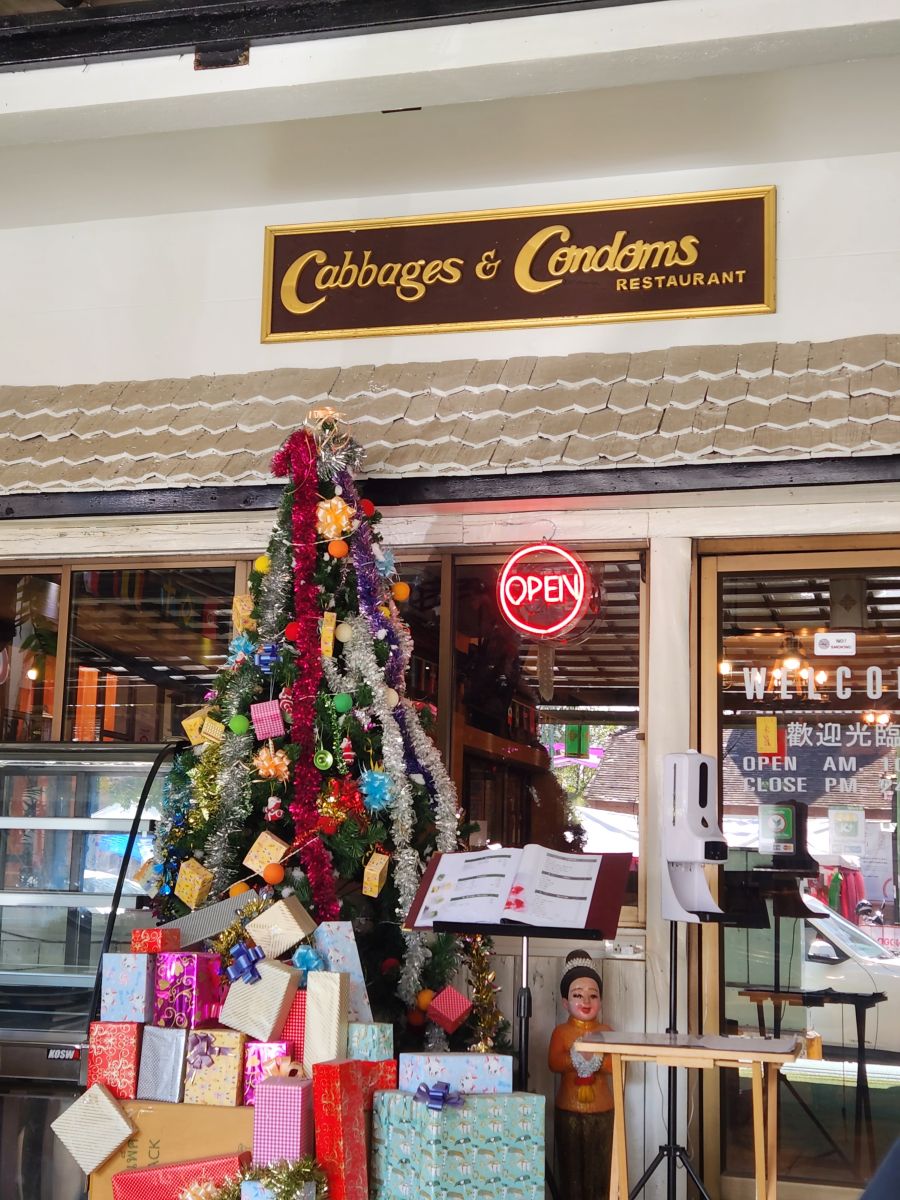
Checking out of the hotel, we are able to leave our bags at reception as planned, but instead of going exploring we decide to head straight to the bus terminal to see if we can get an earlier bus back to Chiang Mai. Unfortunately, the early bus is sold out, so we have 5 hours to fill. Ok. Lunch. We opt for Cabbages and Condoms, a relatively famous (or infamous) restaurant because of the name. This is actually what is called a “Public-benefit” restaurant, part of the Population and Community Development Association (PDA), used to promote family planning and HIV/Aids. The PDA works to promote community-based family planning and at one point had 16,000 village volunteers throughout the country. The name is a play on the success they have had in bringing family planning services to the community – they say their focus has made condoms as easy to get as cabbages. There you go!
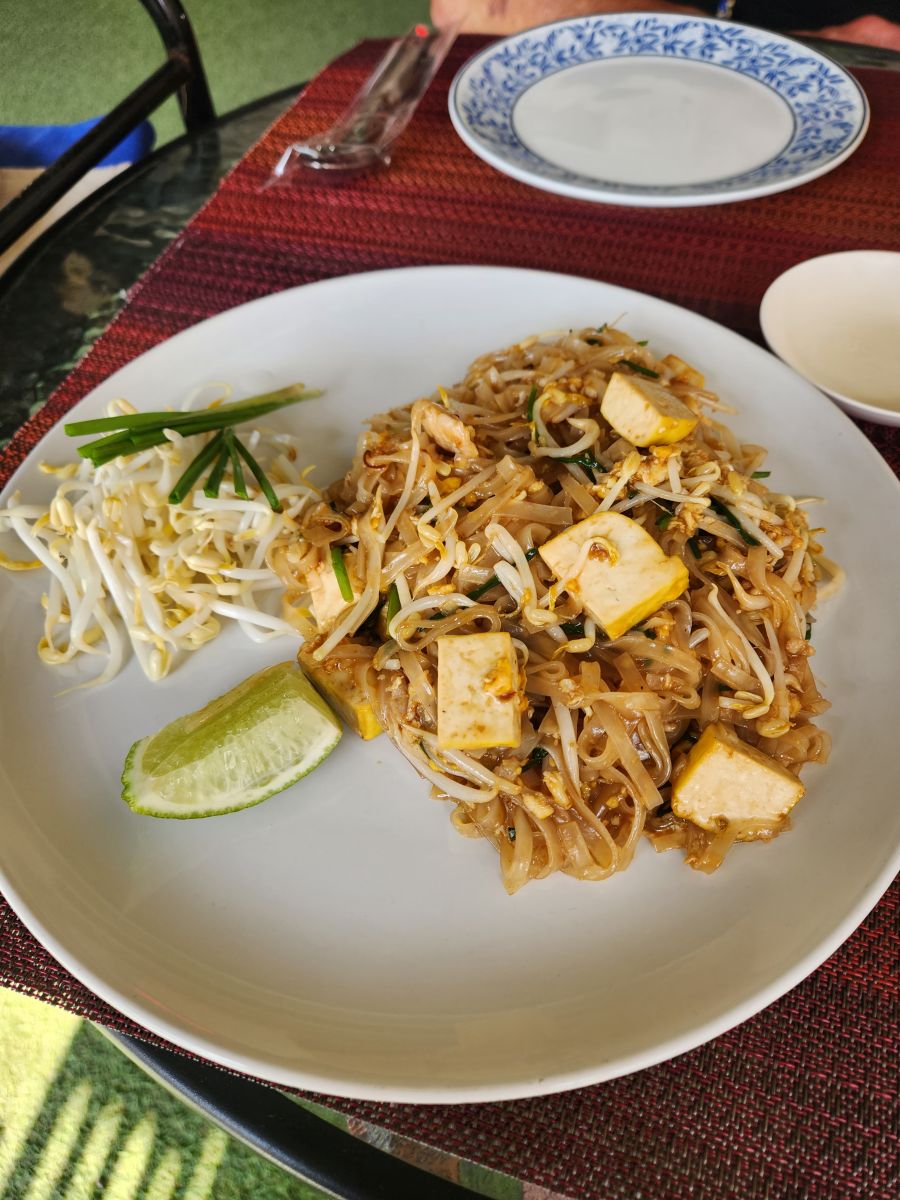
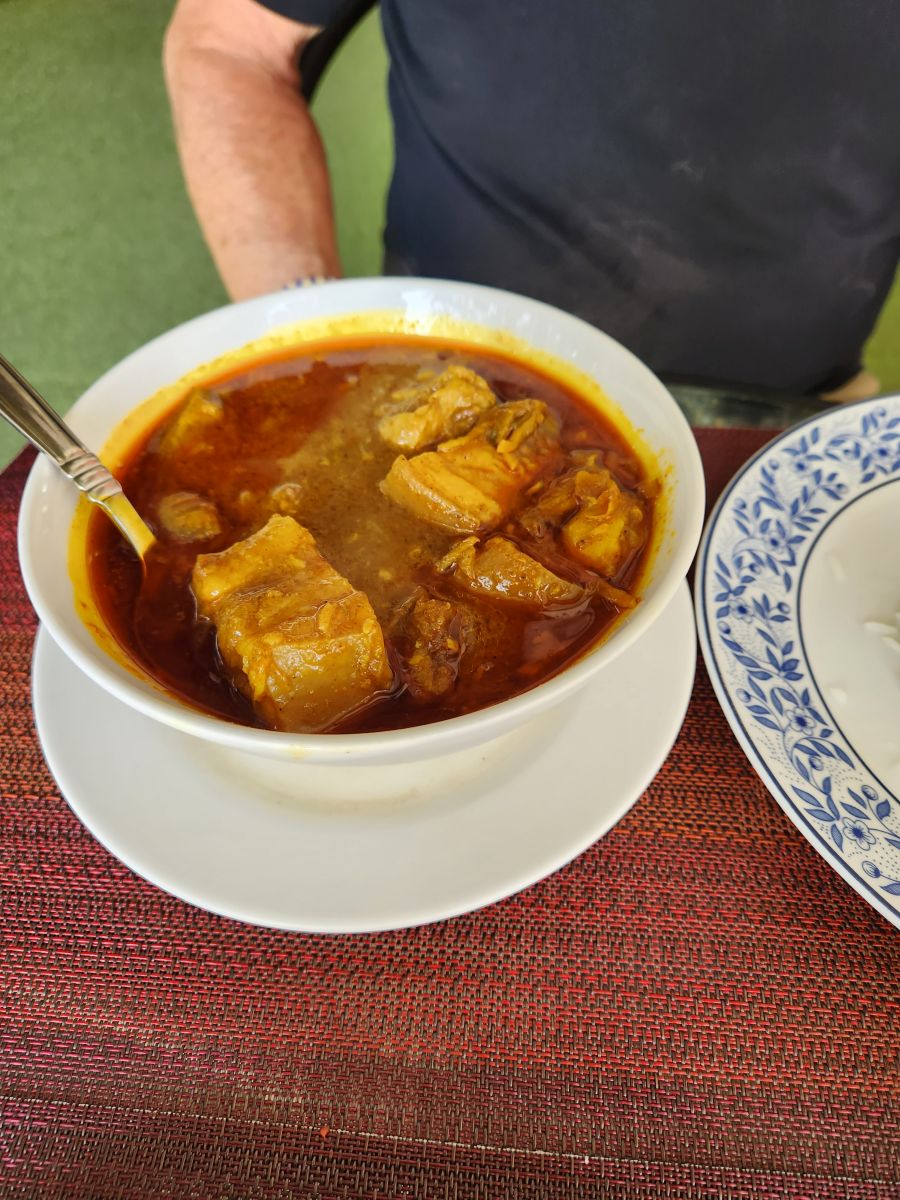
While a tad pricey compared to the standard, the food is excellent and traditional – Pad Thai for me, pork stew for Ed – and of course adult beverages. It goes to a good cause – and we need to burn time!
Having a chance to reconnoiter, we find there is a Hilltribe museum right around the corner from C&C. Ok then. What turns out to be something to waste time actually becomes a fascinating learning experience. The museum is small but has a ton of great information about the 8 main Hilltribes that make up almost 78% of the 1.4 million Hilltribe members. We are familiar with the Karen, of course, having visited their villages outside of Chiang Mai, and of course the Hmong, but some of the others, Lahu, Akha, Luwa, are completely unknown to us.
As it turns out the Hmong, Yao and Lisu tribes are the oldest. The Hmong is the 2nd largest tribe (about 17%) migrated from China through Laos, have different sects – the blue/black and white Hmong – and an average family size of 8. The Yao (about 5% of the population) migrated from China, have spoken and written language like Chinese and have specific Yao costumes that take 1 year to create. The Lisu (about 4%) originated in China and migrated through Burma. They also have White and Black subgroups.
Lahu and Akha are from Tibet, and the Karen are from Burma. Karen is the largest tribe making up almost 50% of the hilltribe population. They are the only tribe to use elephants, have a written and spoken language and migrated from Burma 100 years ago.
The history of the Hilltribes is just so tortured. Coming here for a better life, they were mostly agrarian and began farming opium. In the early days, of course, they could support themselves from the sales, but then the government banned opium (for obvious reasons) and the tribes were left without an income so many started farming other crops to exist. Of course, they’ve turned to tourism as well. But apparently – at least according to this point of view – the Padaung, or long-necked Karen – are being exploited by the tourist industry. And, as many of the tribes have been converted to Christianity, they are losing their traditional customs and culture. Of course some of those traditions are, well, interesting to say the least. Twins are considered bad luck and if the mother does not kill both twins at birth she must leave the village with the babies. This is because the tribes believe that only animals can bear more than 1 offspring at a time. Yikes!
The tribes people also are not considered Thai citizens, no matter how much they contribute to society. And unless they can somehow get a citizen’s card, even their children who are born here are not considered citizens. Sad, really. Also sad to realize nothing has really changed with immigration – here or elsewhere in the world.
At the end of the exhibit, there is a little giftshop with crafts from the different tribes. I succumb to a cute little pouch made by who knows which tribe (the tagging on the bags makes it hard to determine), but it is cute and handmade, and it supports the cause.
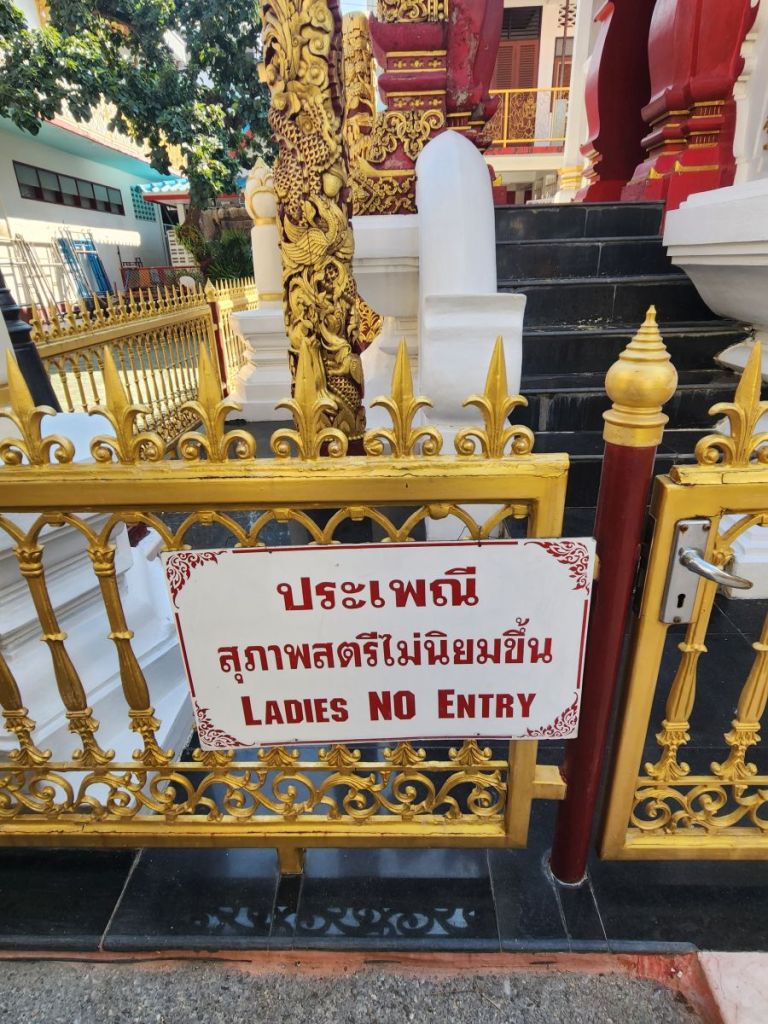
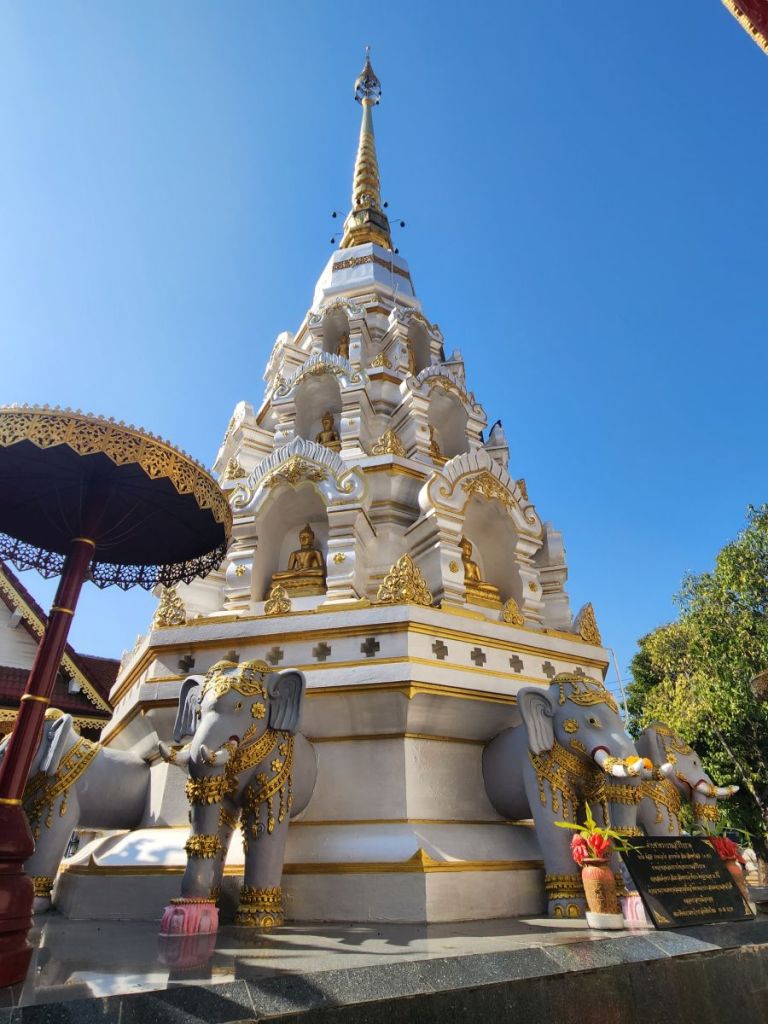
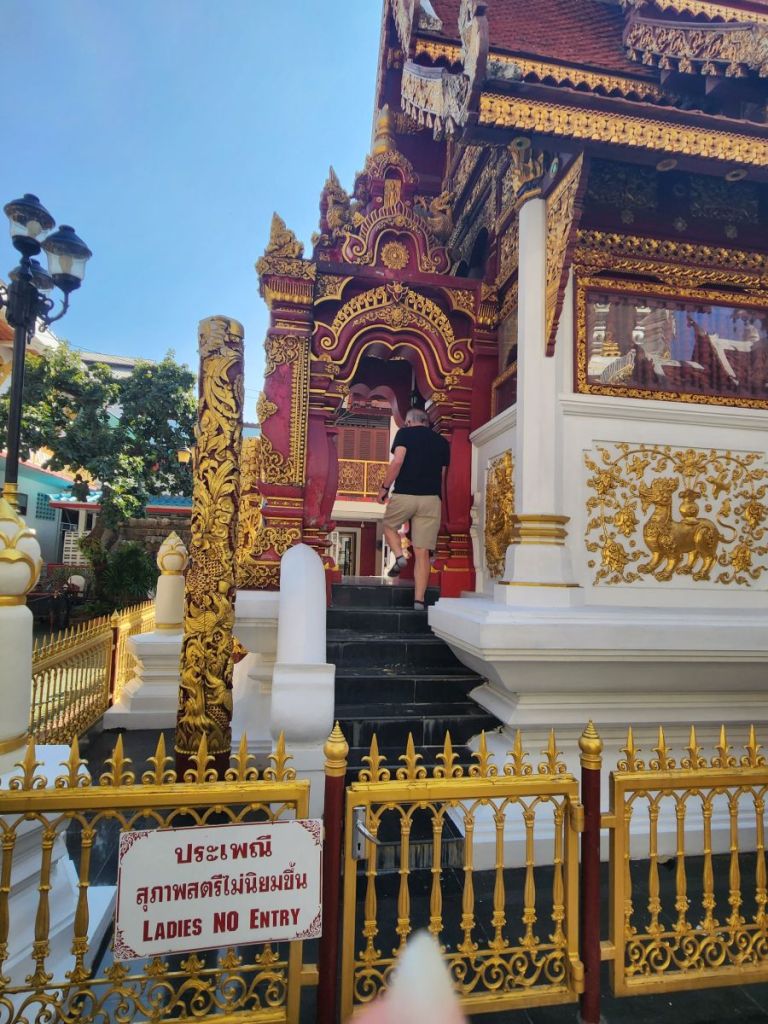
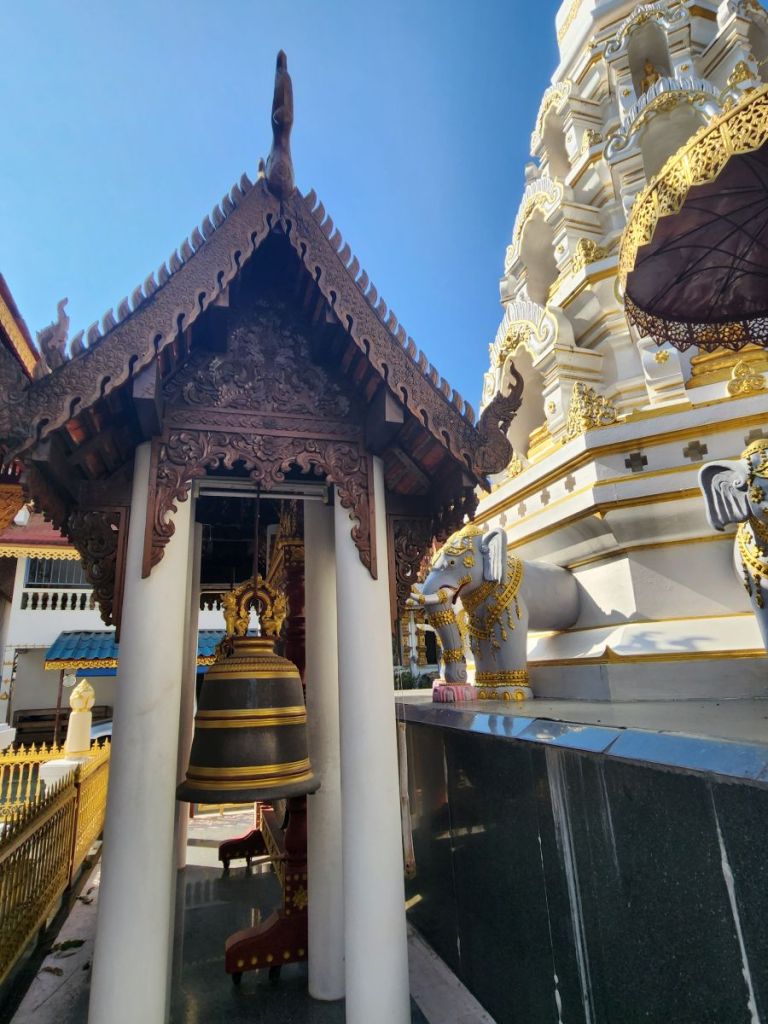
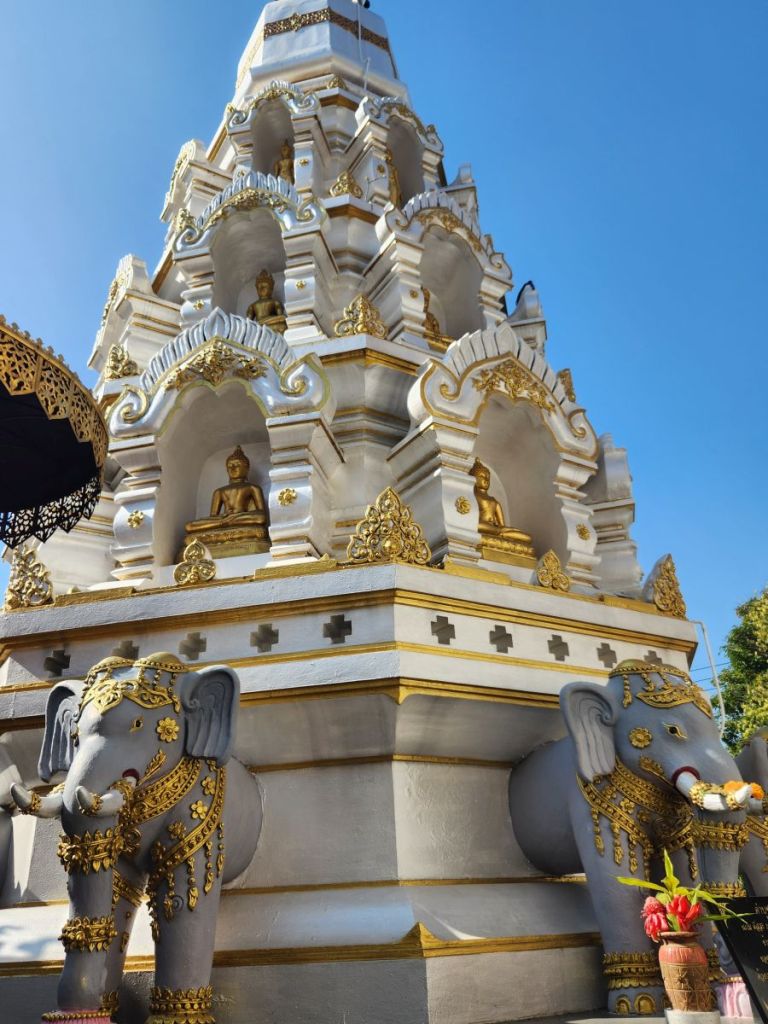
With 3 hours still to kill, we head off on a little Wat crawl. First to Wat Klang Wiang, the city center wat. Built in 1432, some 400+ years before the city of Chiang Rai was built, this Wat ended up being in the direct center of the new city. The Stupa has enormous elephants at each corner and the Ubosot, disturbingly enough, says “Ladies no entry”! Ed went in to explore, but didn’t come back with any pictures. Not photo worthy, apparently.
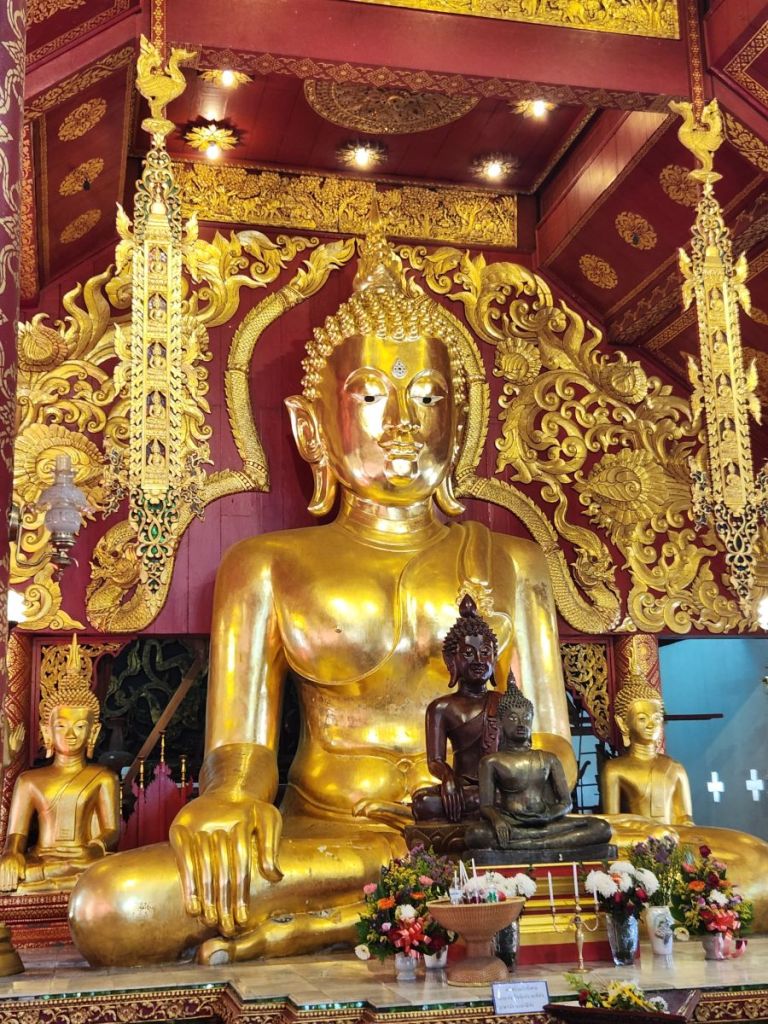
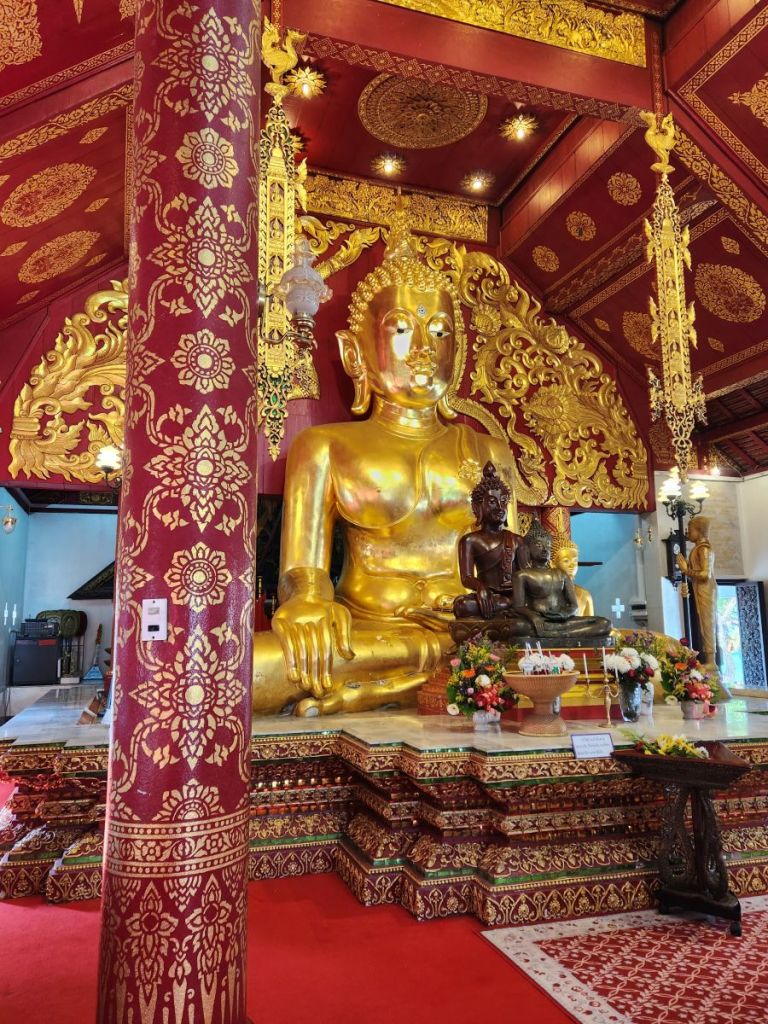
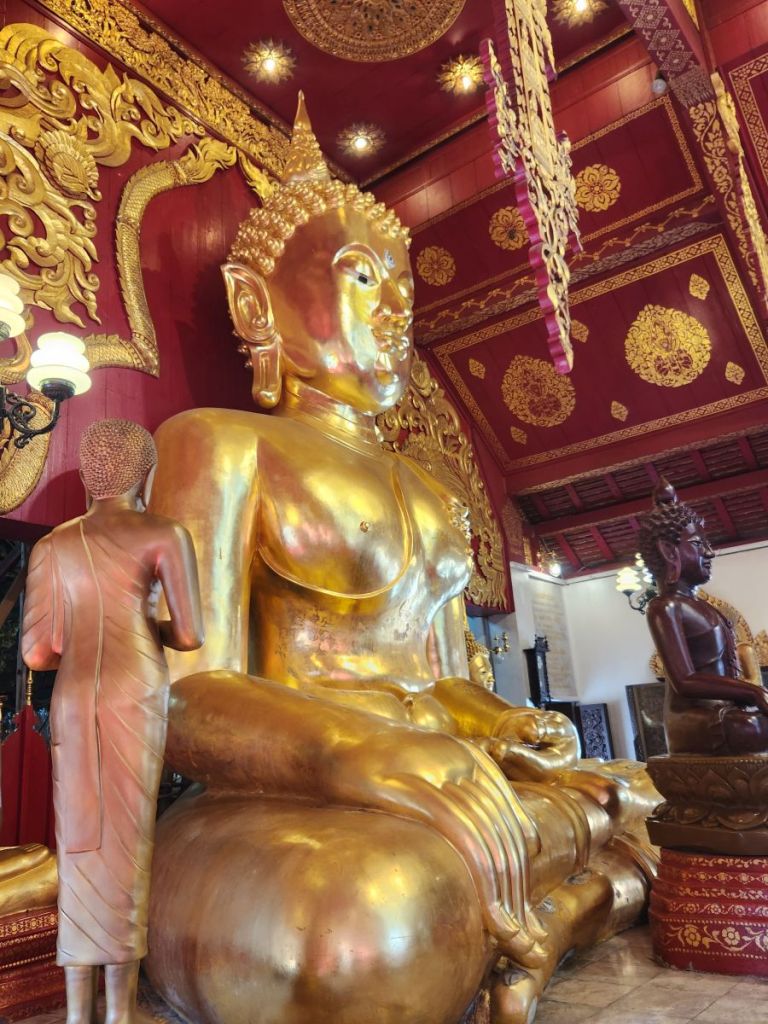
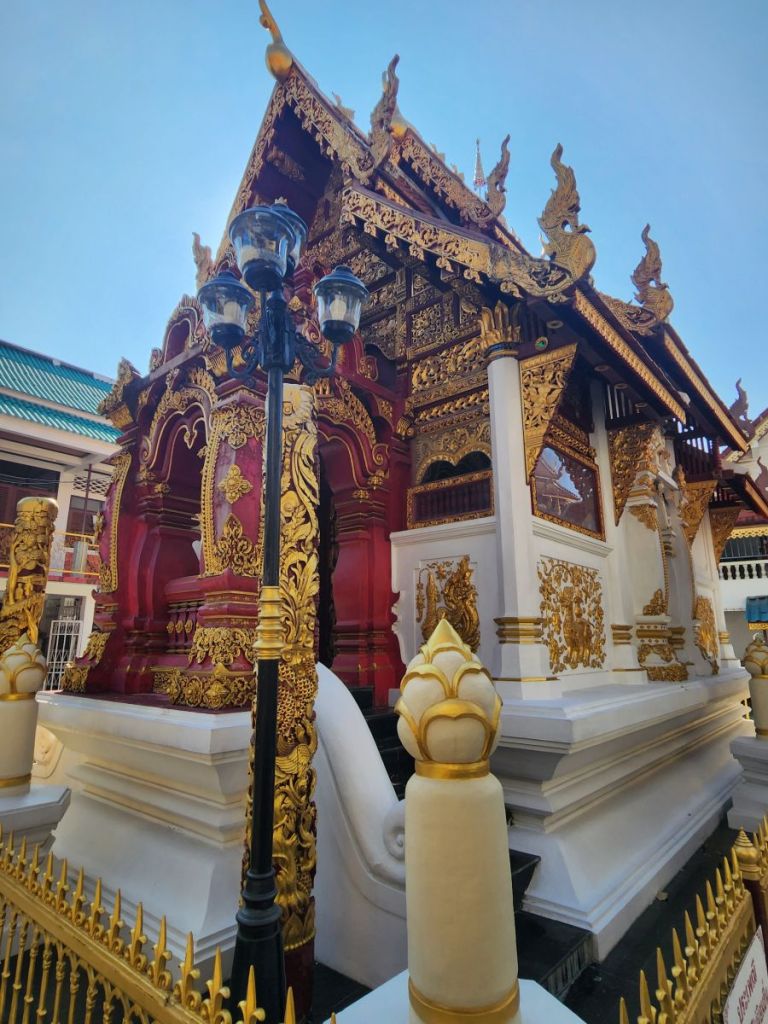
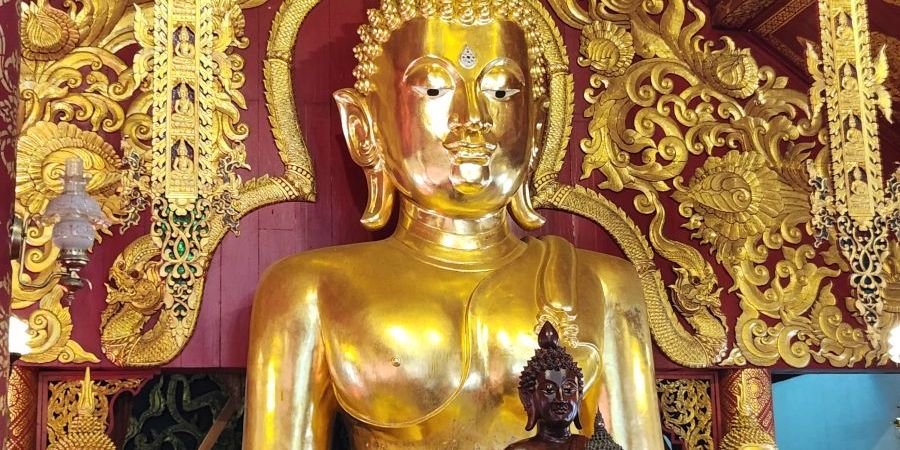
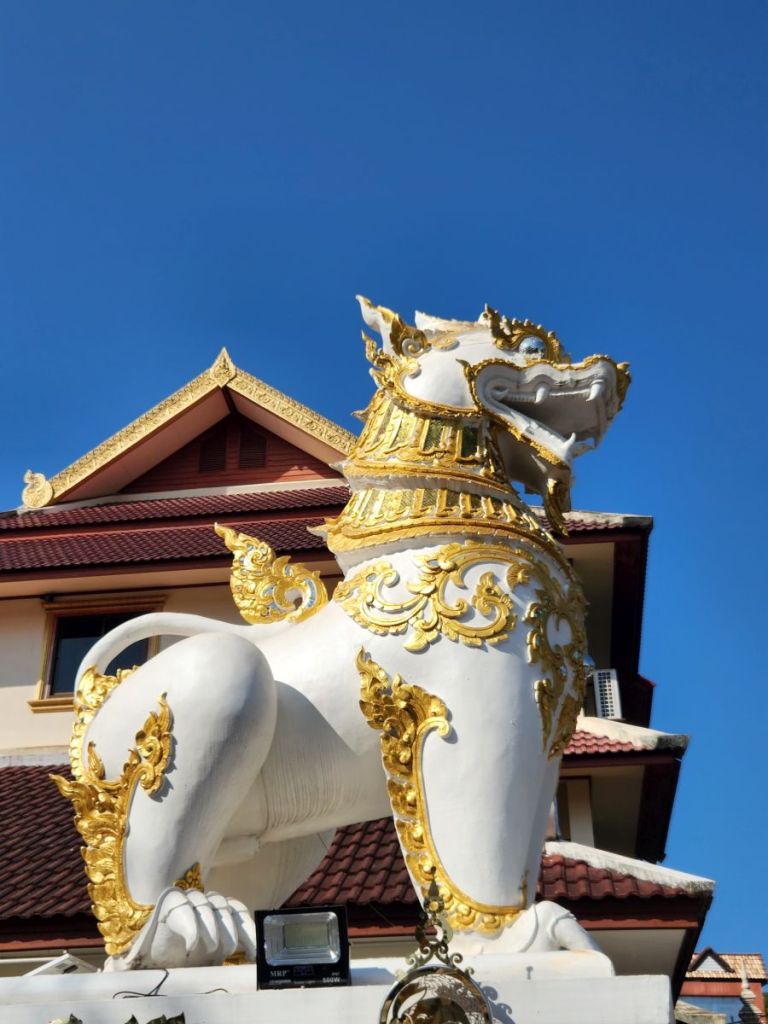
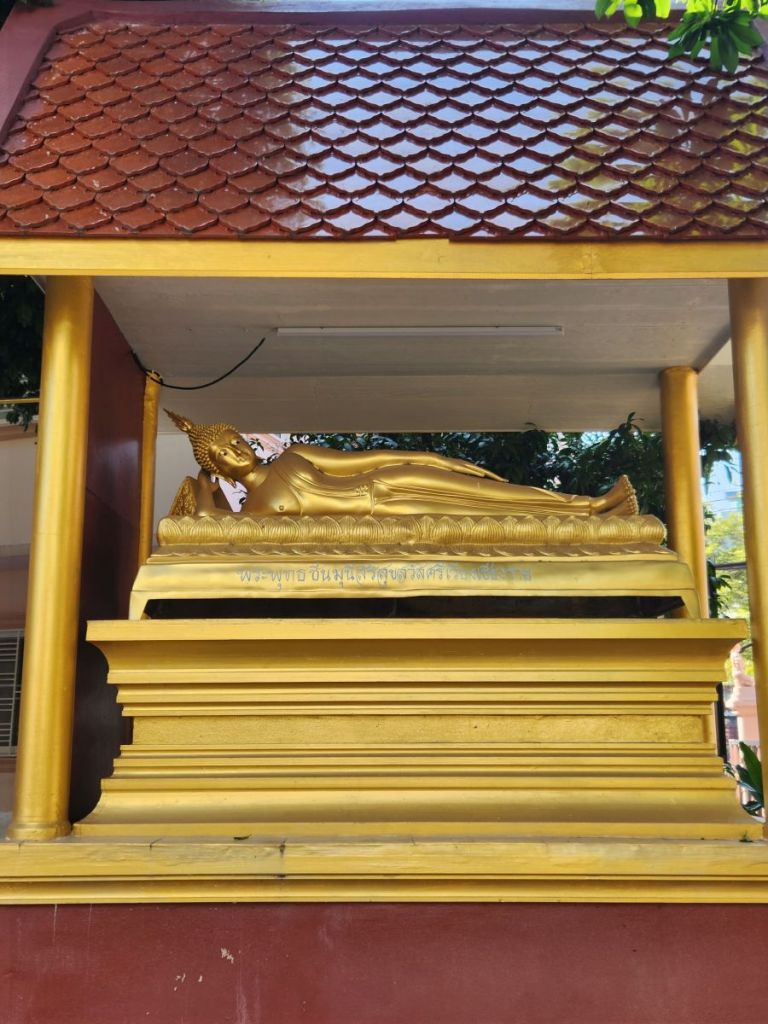
Next up on the crawl is Wat Pra Singha, sort of hidden down an industrial/retail road. You have to really look for it to find it. Situated as it is in a sort of commercial area, the courtyard area is rather bland, all white carved statues, and cement. But once inside the Wiharn, the gold and Buddha images and wall murals are stunning. Plus there is some sort of a display going on in the center of the Wiharn – lots of relics and Buddha images and different things we’ve no idea about. There were some people there, sitting on the side taking photos and videos and looking like this was a huge deal – but there wasn’t any explanation that we could see. So we just enjoyed walking around, clueless, but nonetheless admiring the beautiful craftmanship. And at the back of the complex there were series of sleeping Buddhas that were quite lovely.
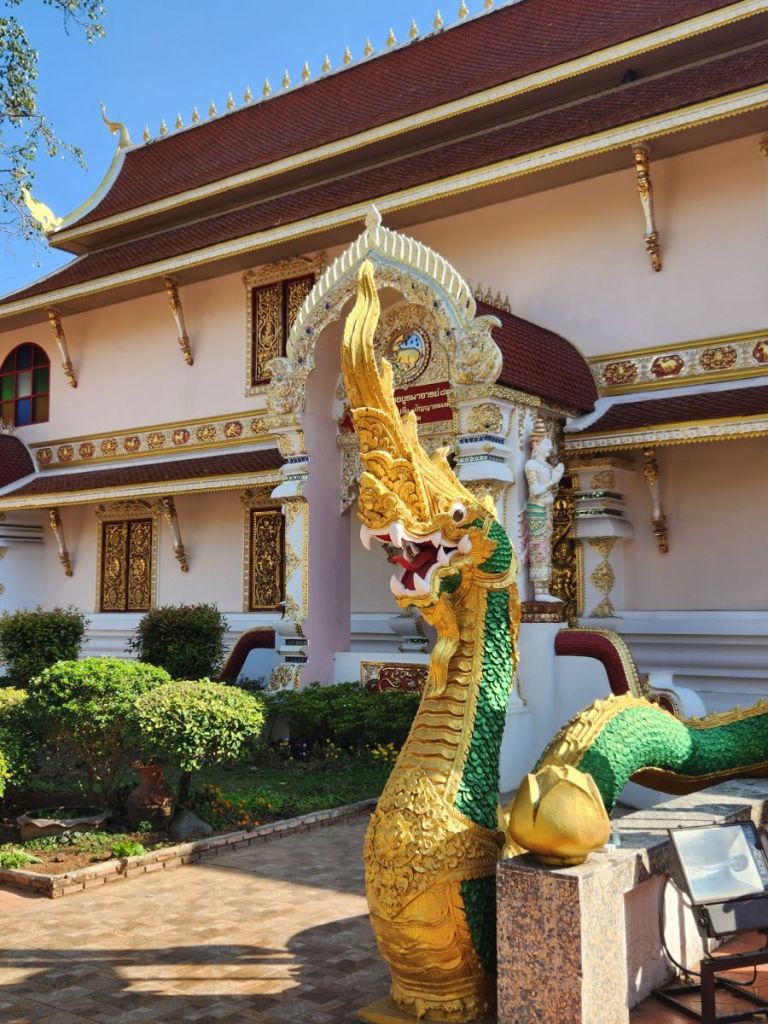
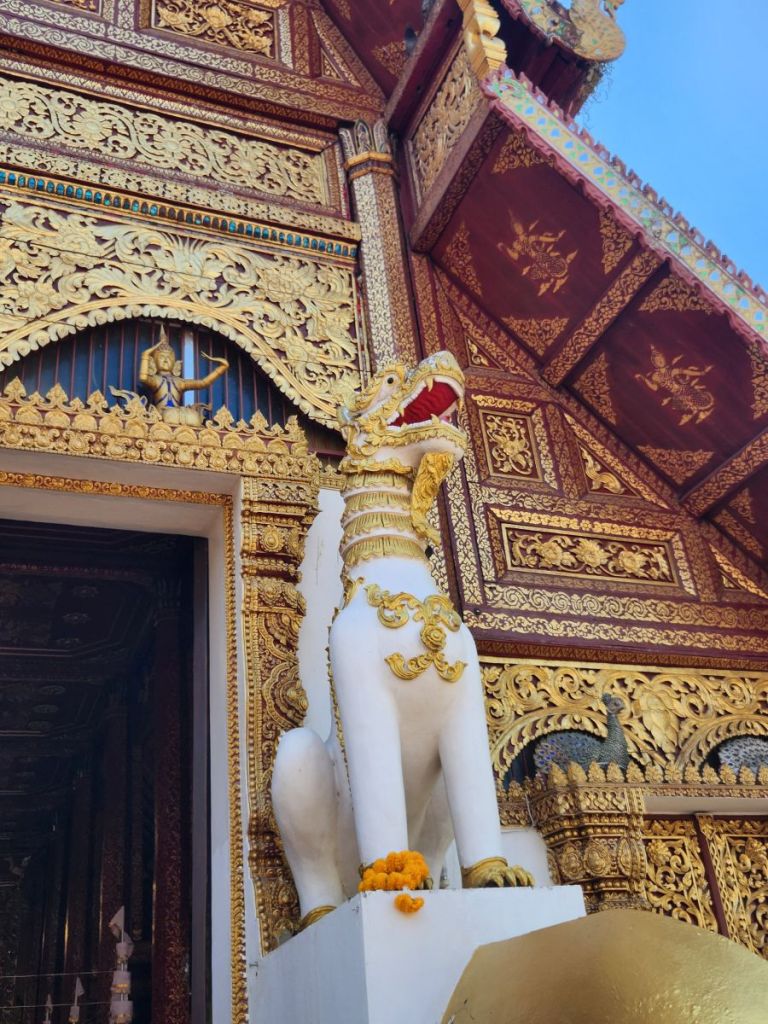
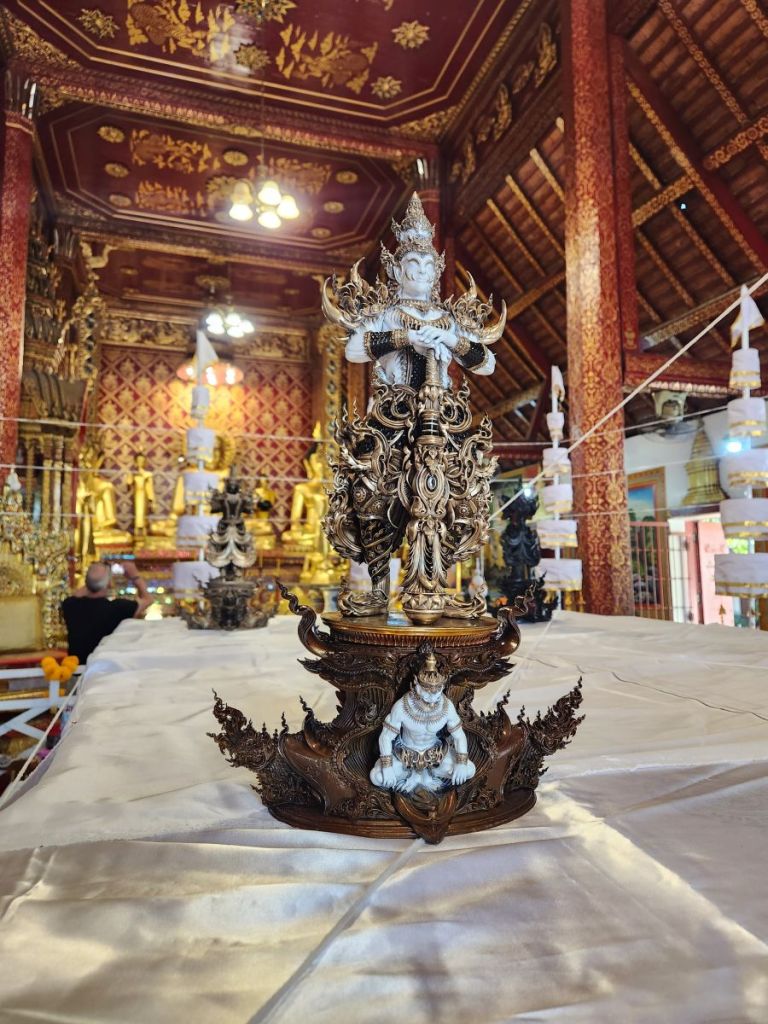
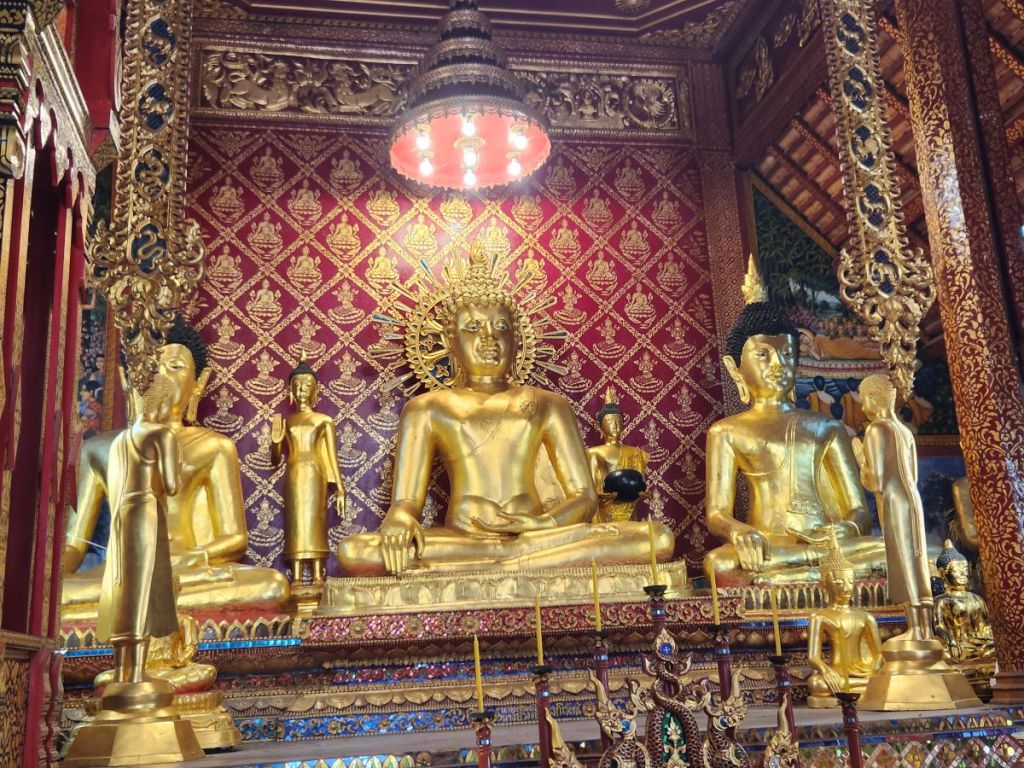
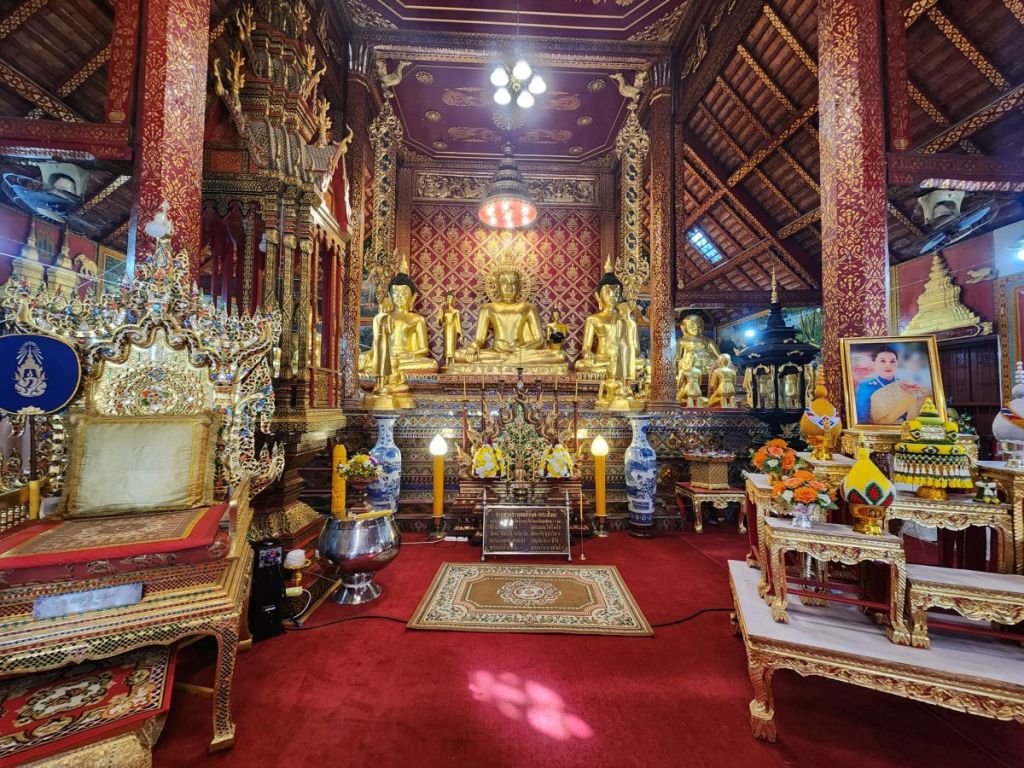
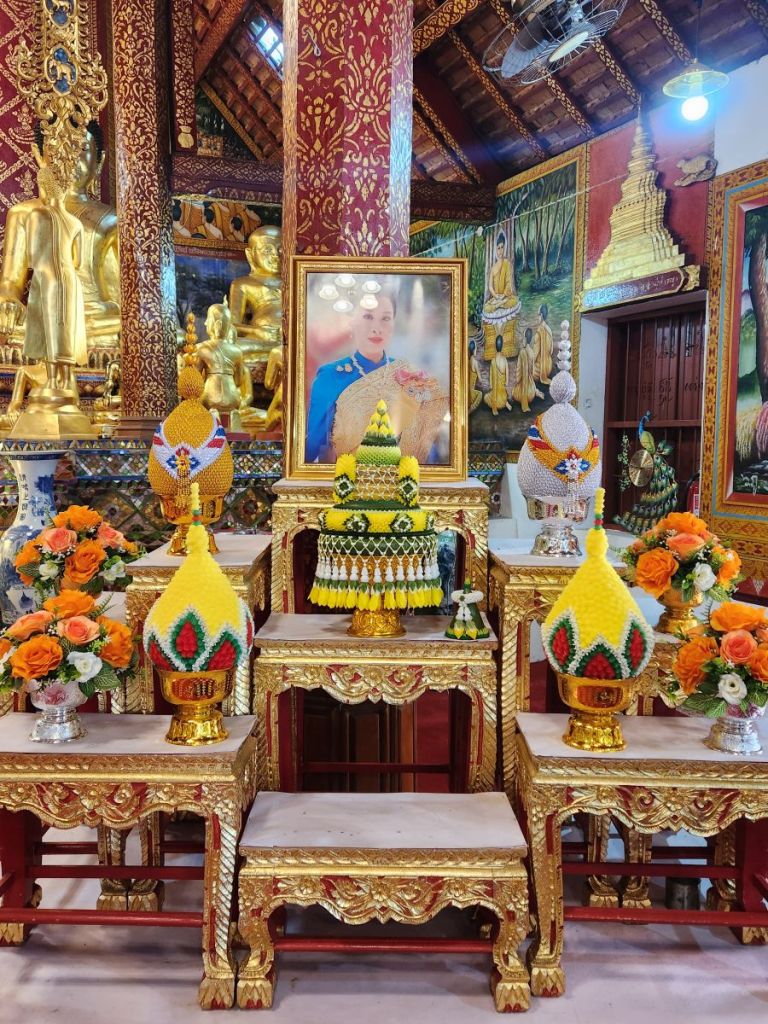
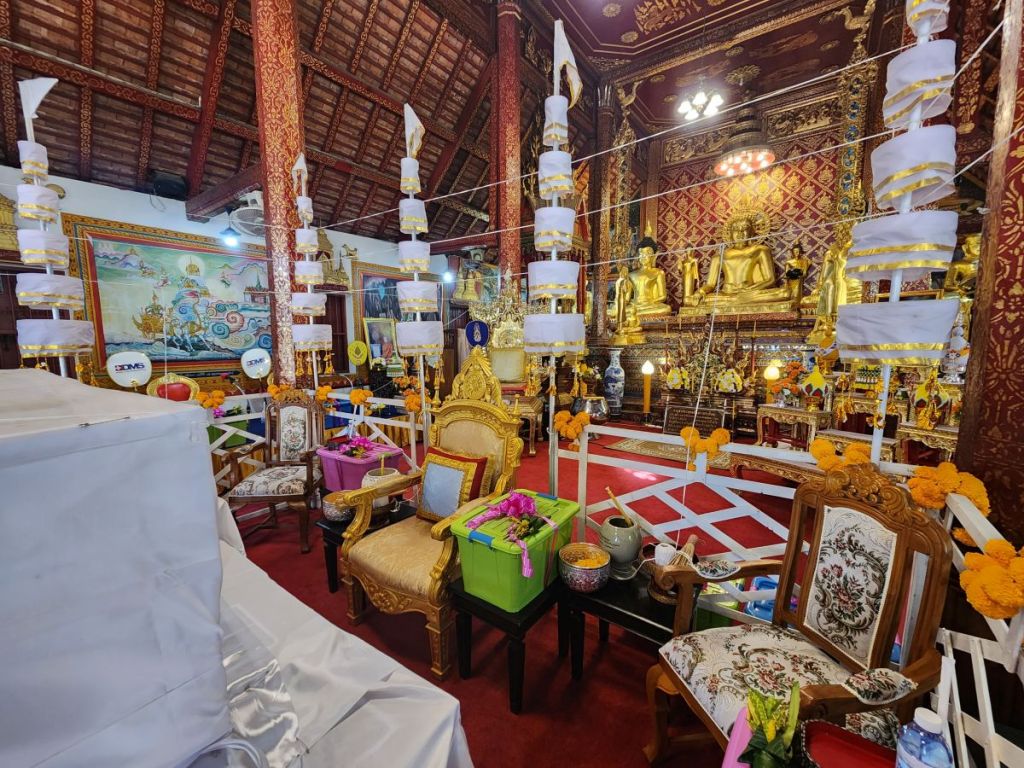
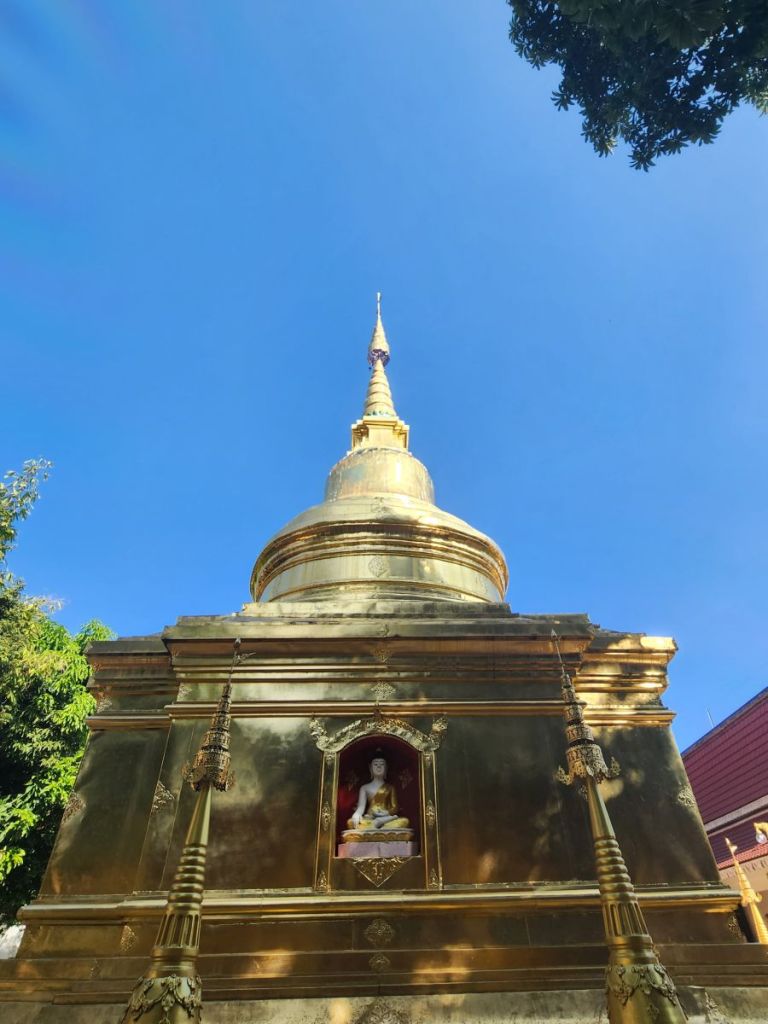
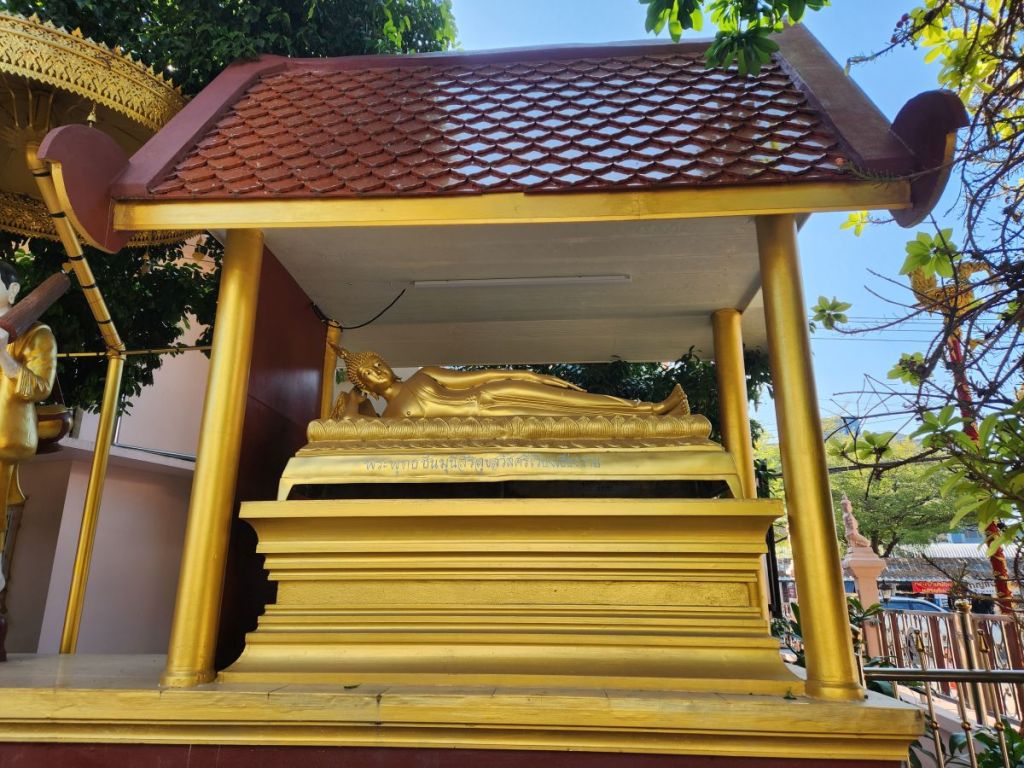
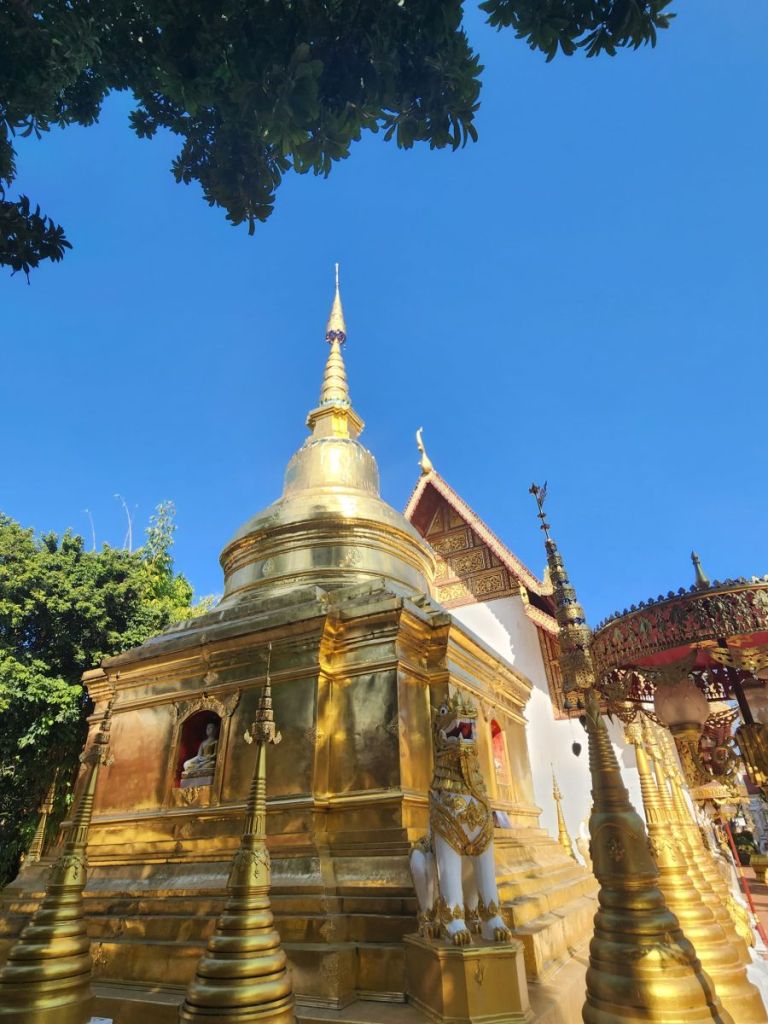
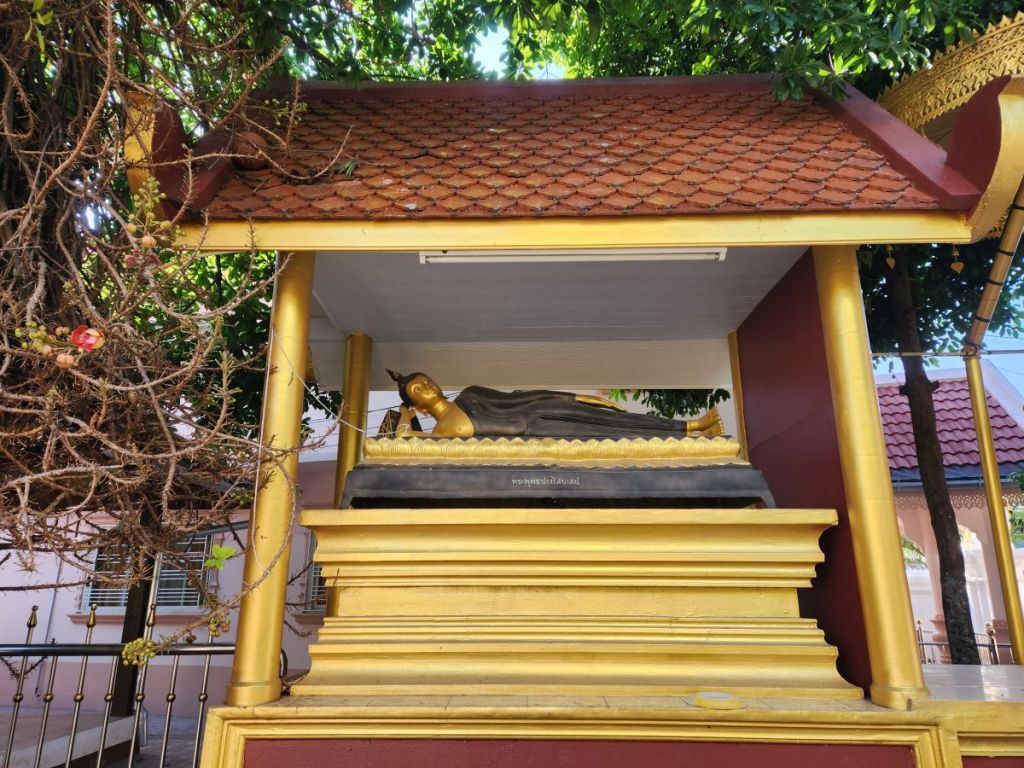
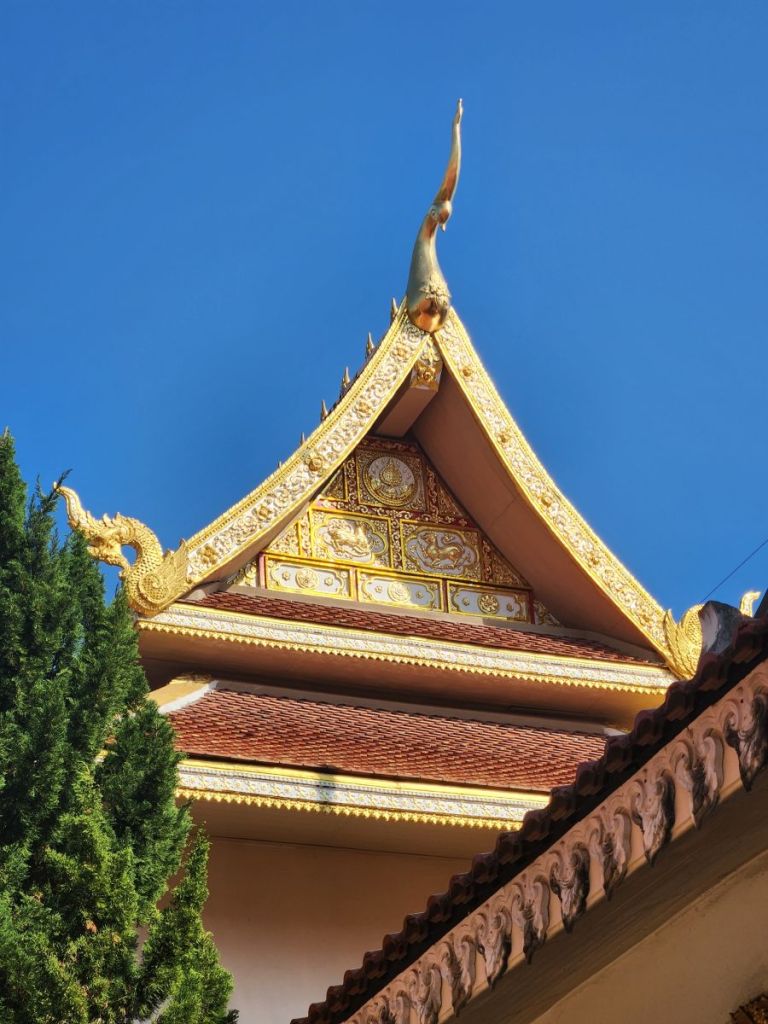
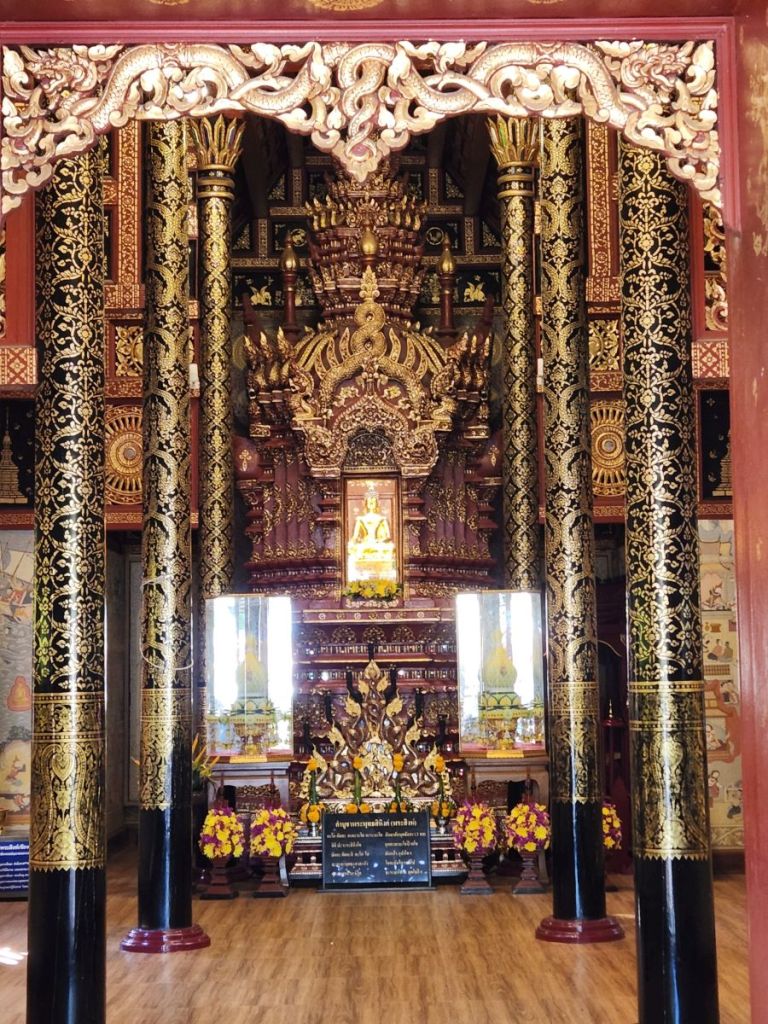
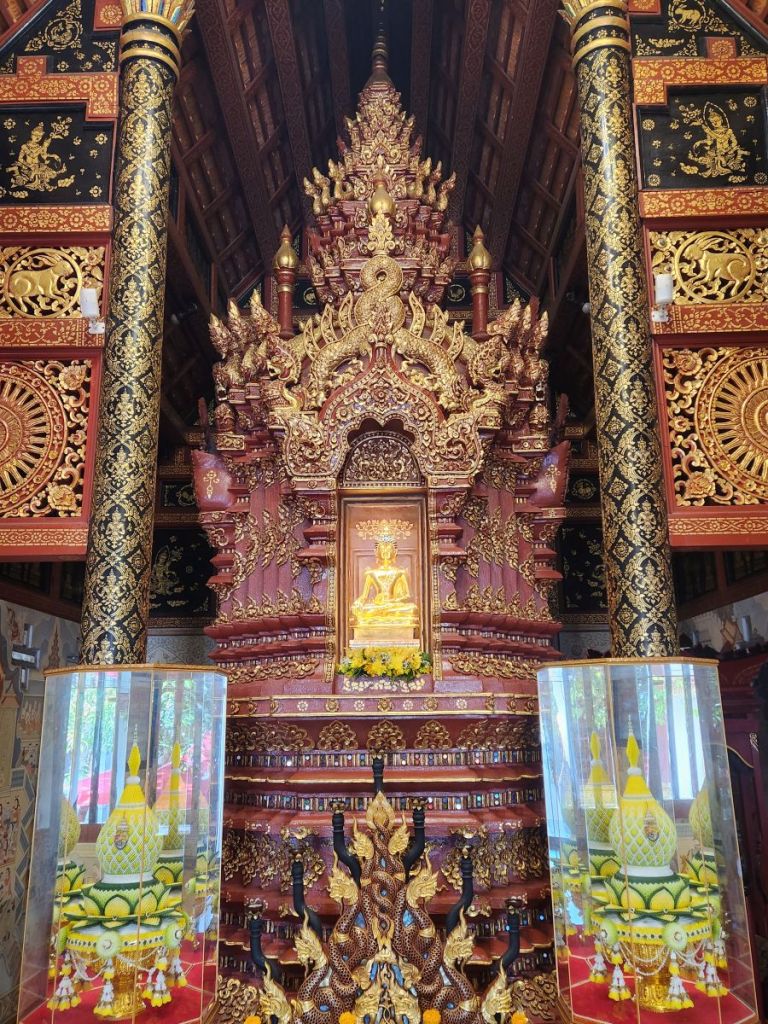
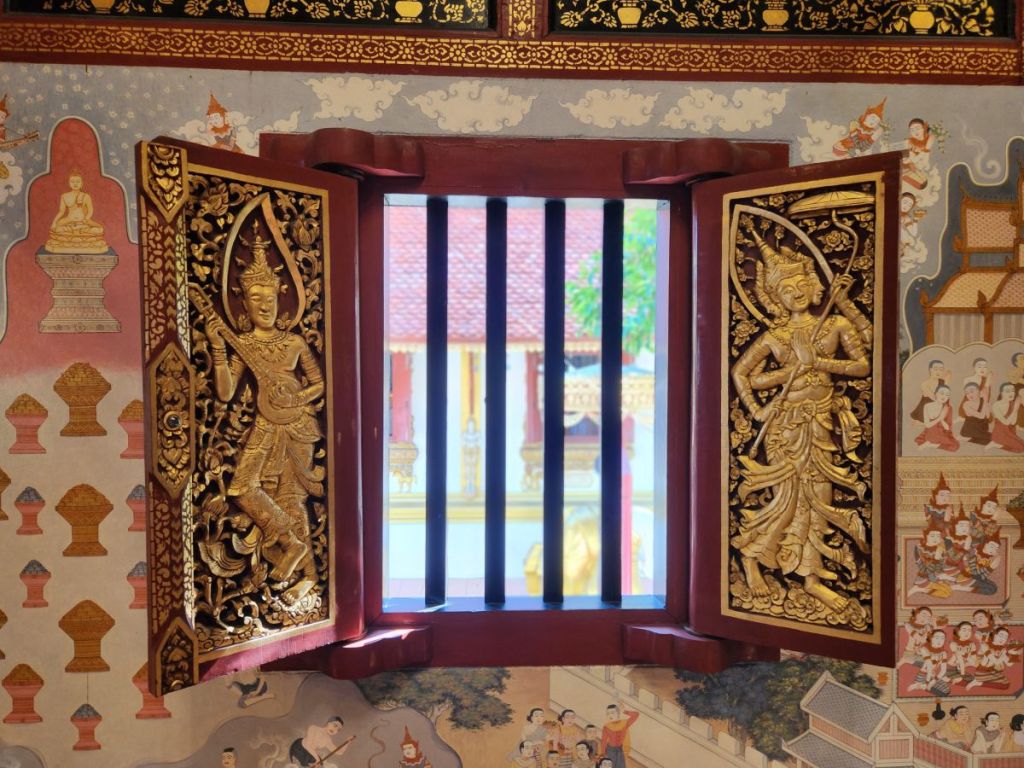
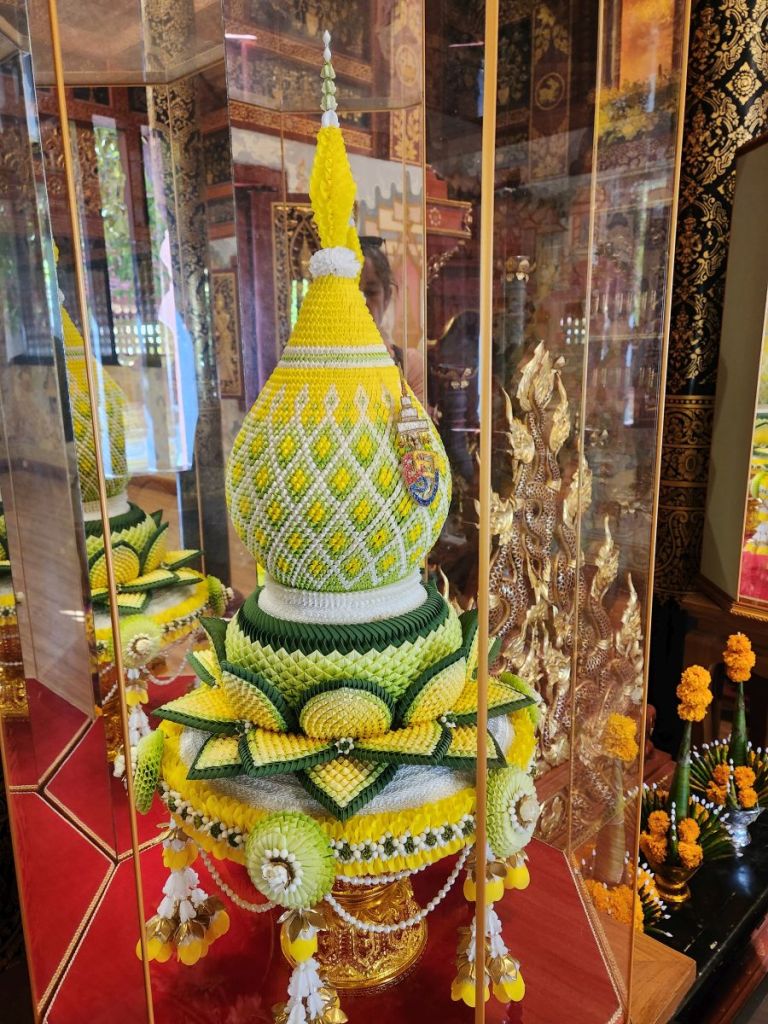
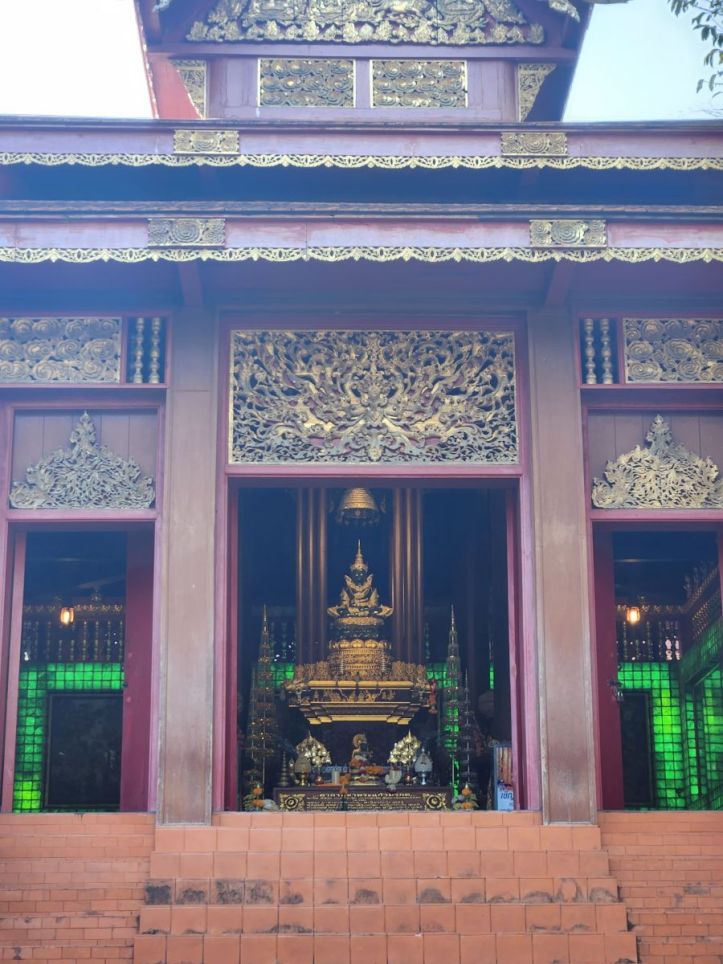
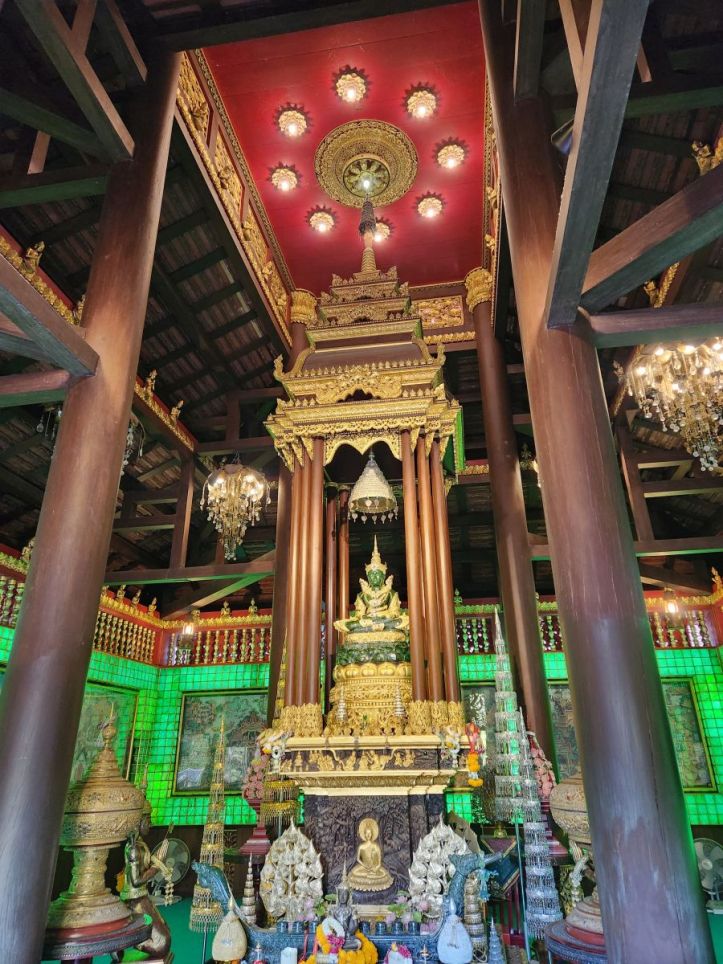
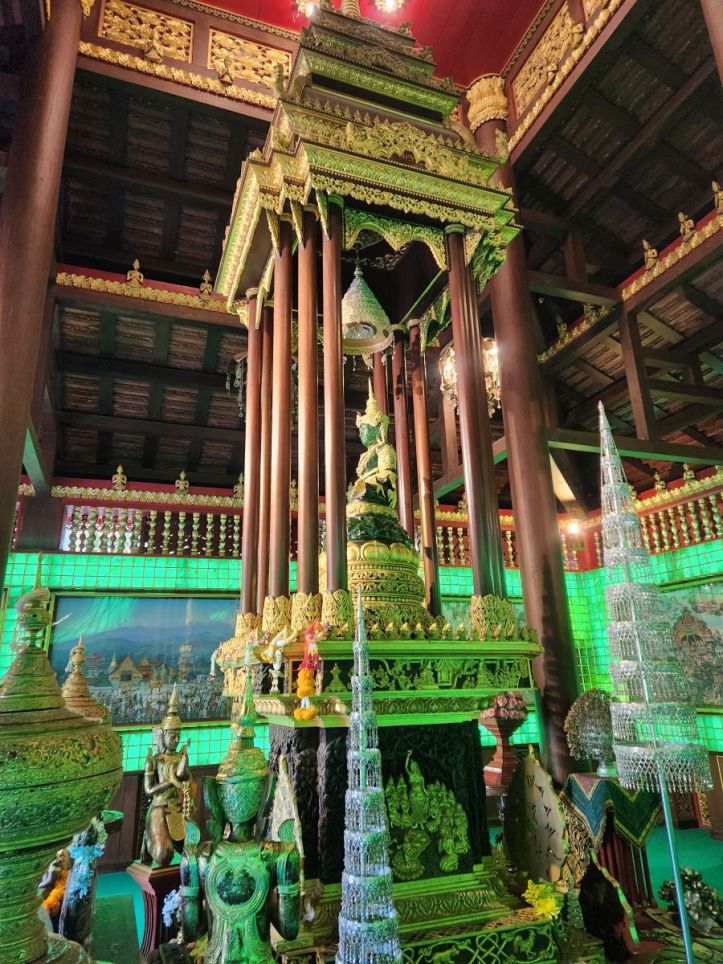
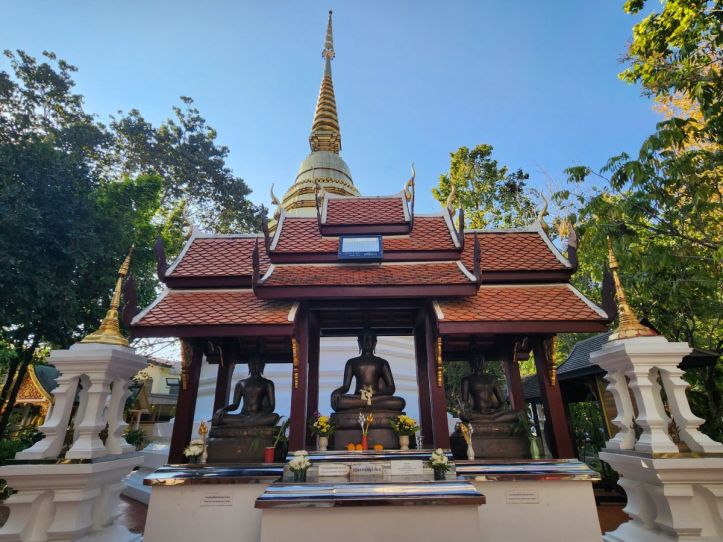
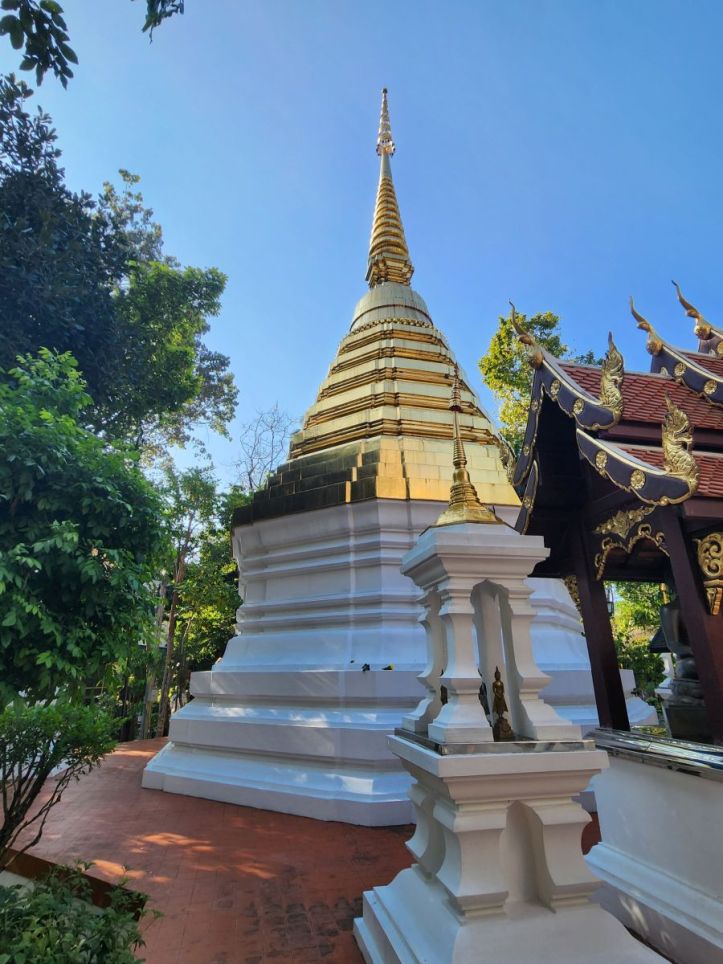
The last stop on the Wat crawl is the famous Wat Phra Kaew. This is one of the oldest temples here. Originally called Wat Pa Yeh, the Bamboo Forest Temple, the actual date of construction is unknown, but in 1434, lightening struck the Stupa revealing an Emerald Buddha hidden inside. Since then it has been called Wat Phra Kaew, the Temple of the Emerald Buddha. The Buddha statue itself now resides at a Wat of the same name in Bangkok, but this particular Wat still has a draw as the original location.
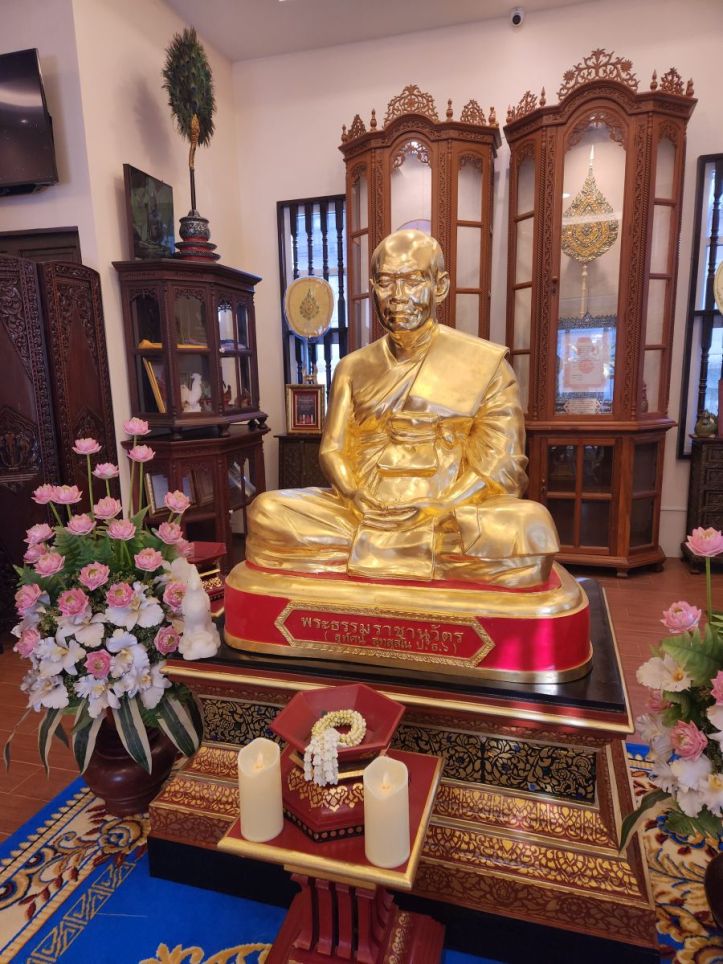
The Wat is ornate with red walls, gold inlays and a stunning bronze Buddha. Also in the complex is an excellent museum that contains lots of artifacts and objects that typify the Northern Thai culture.
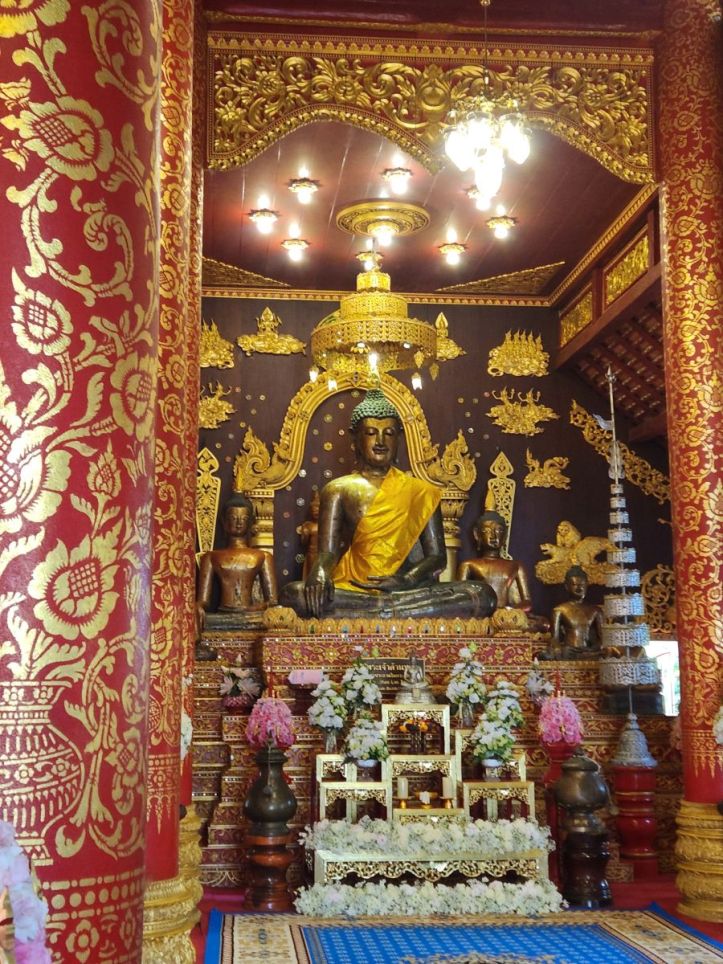
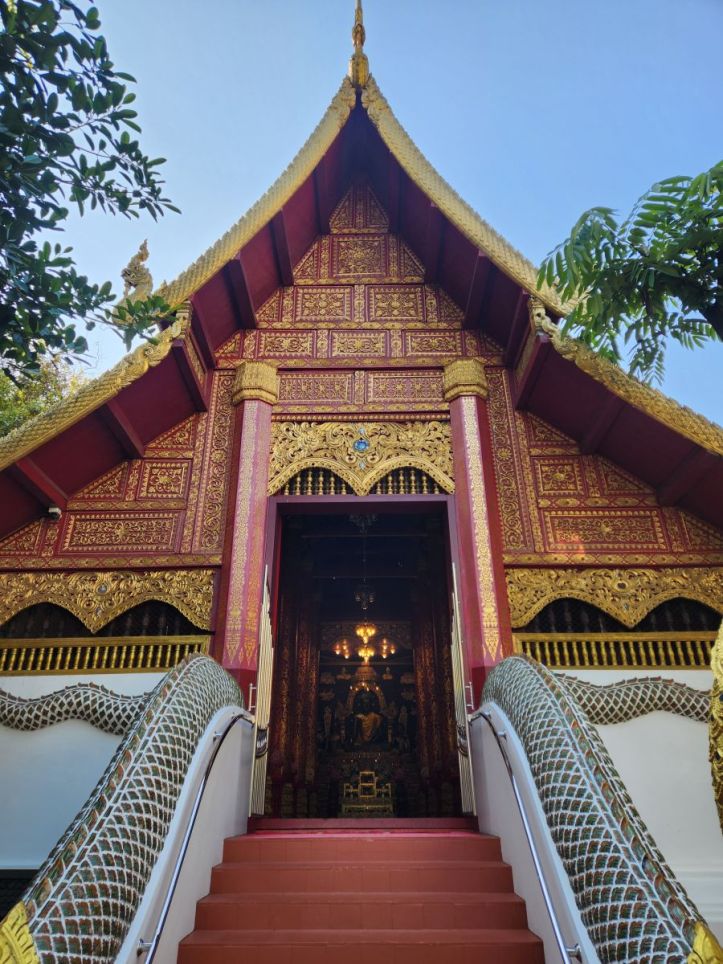
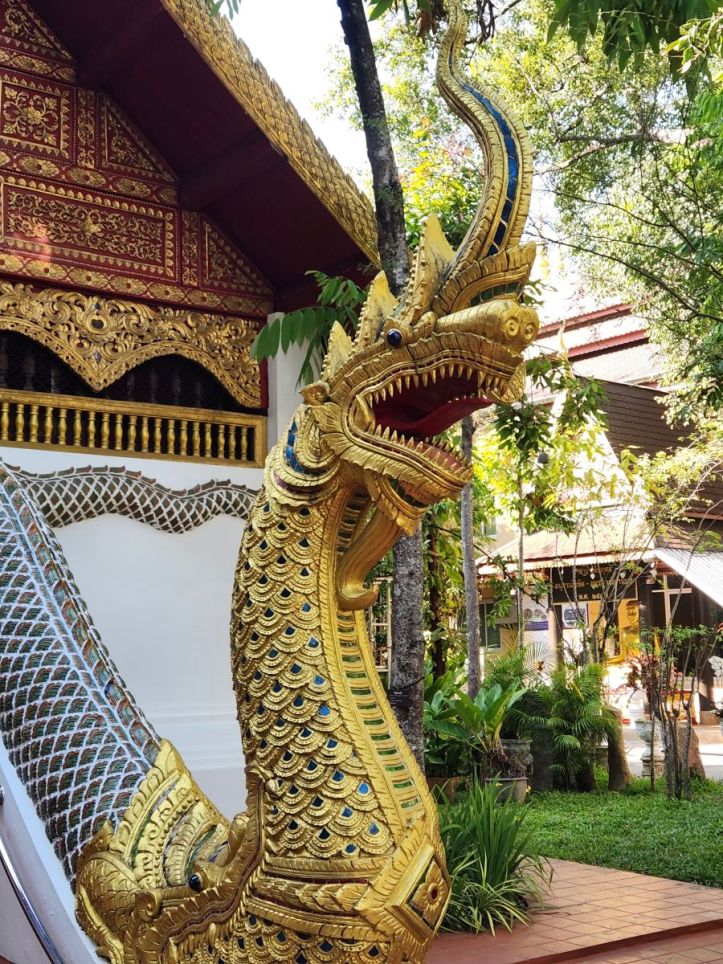
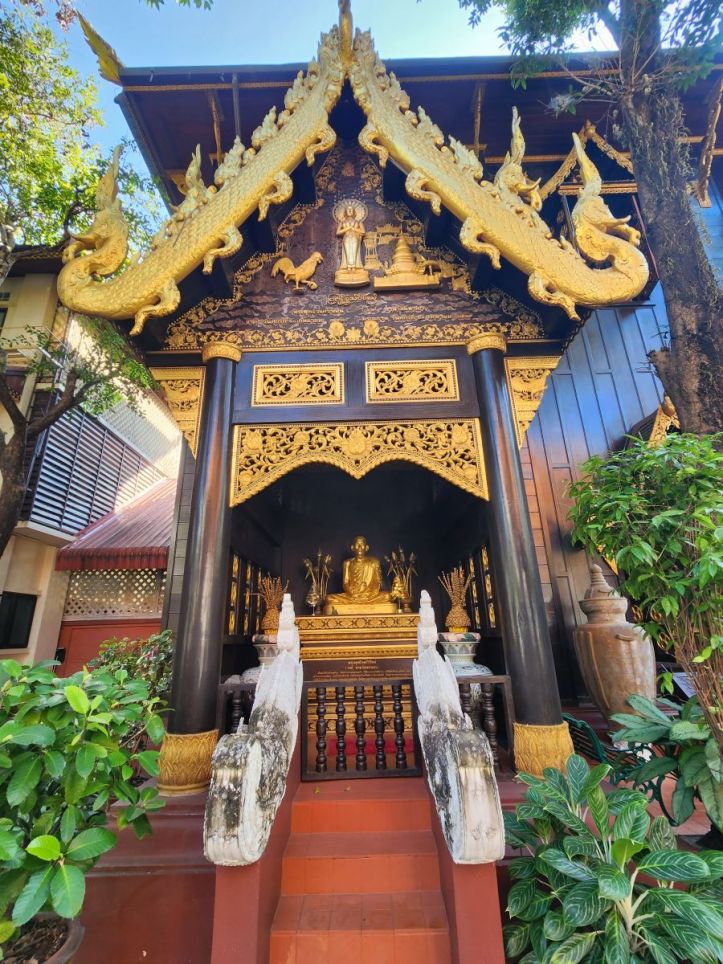
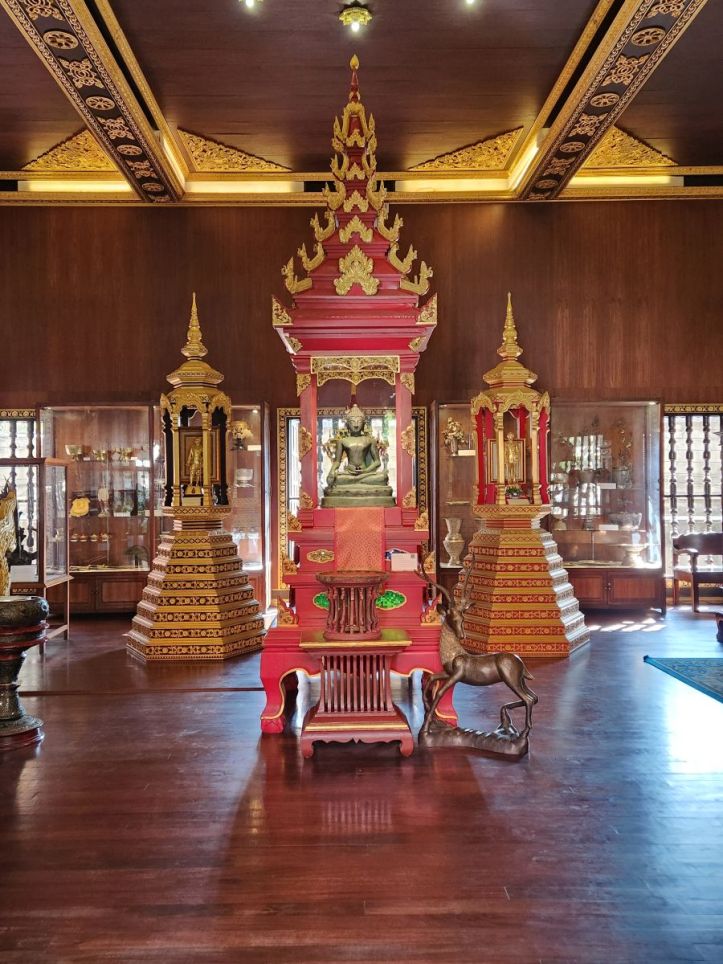
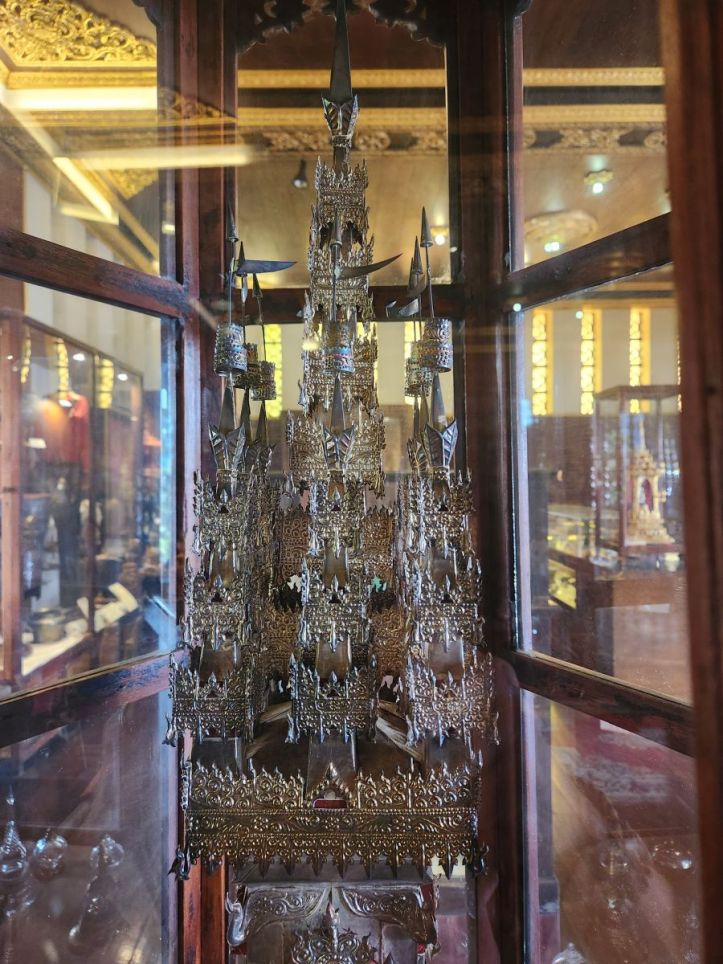
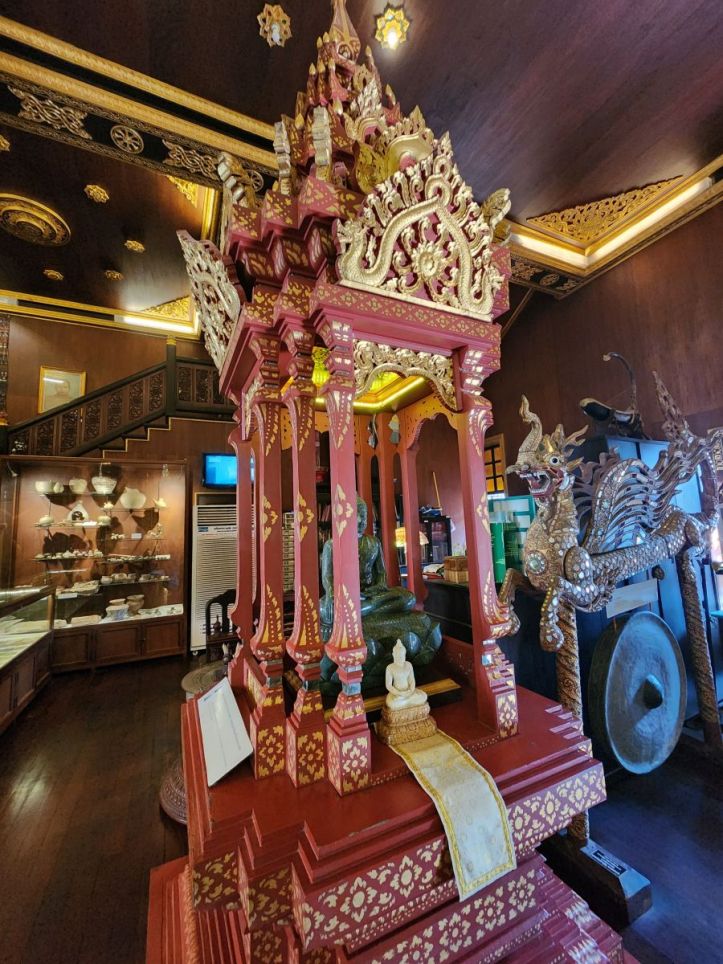
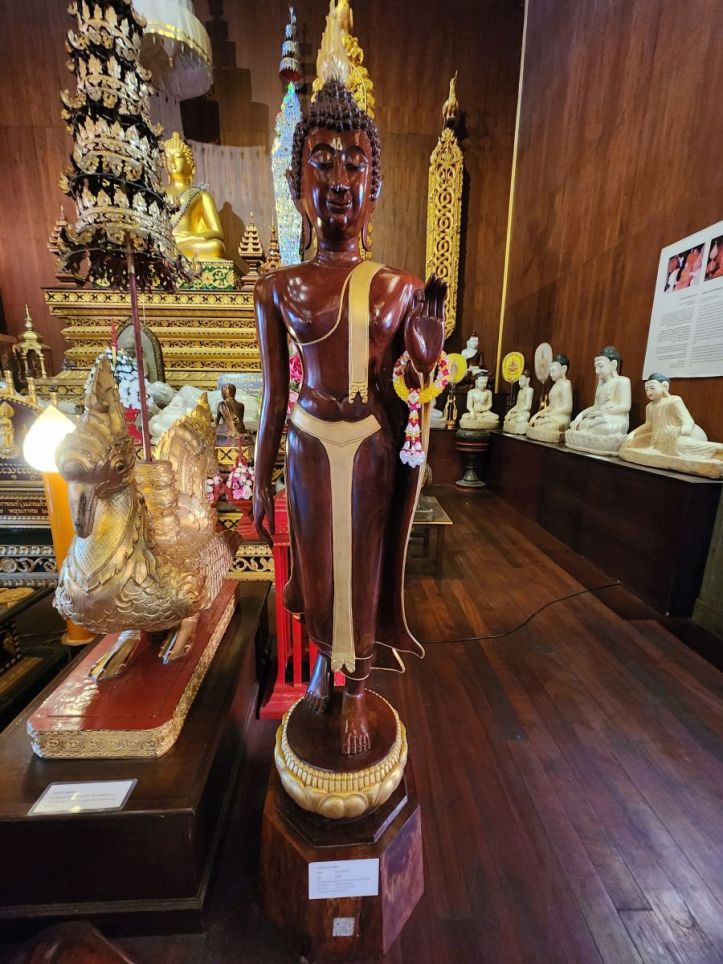
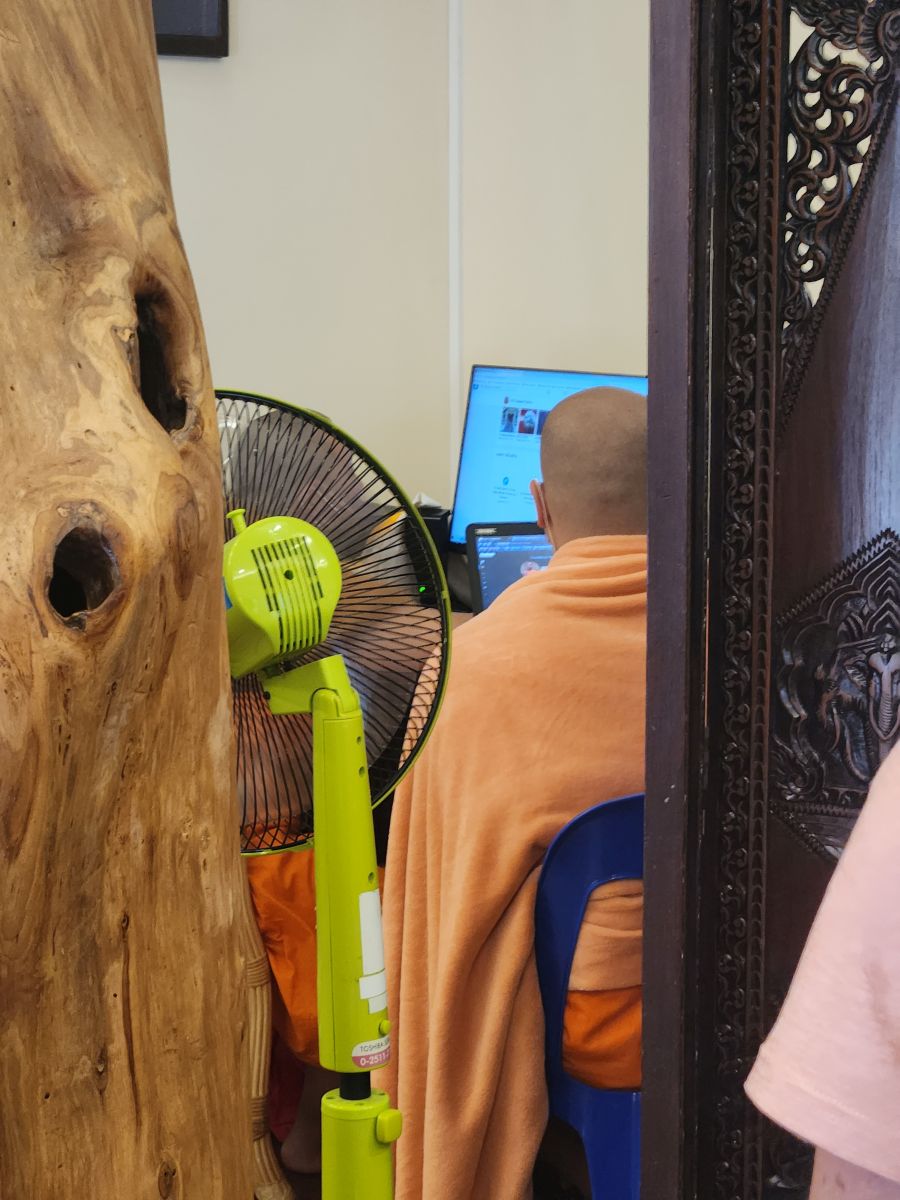
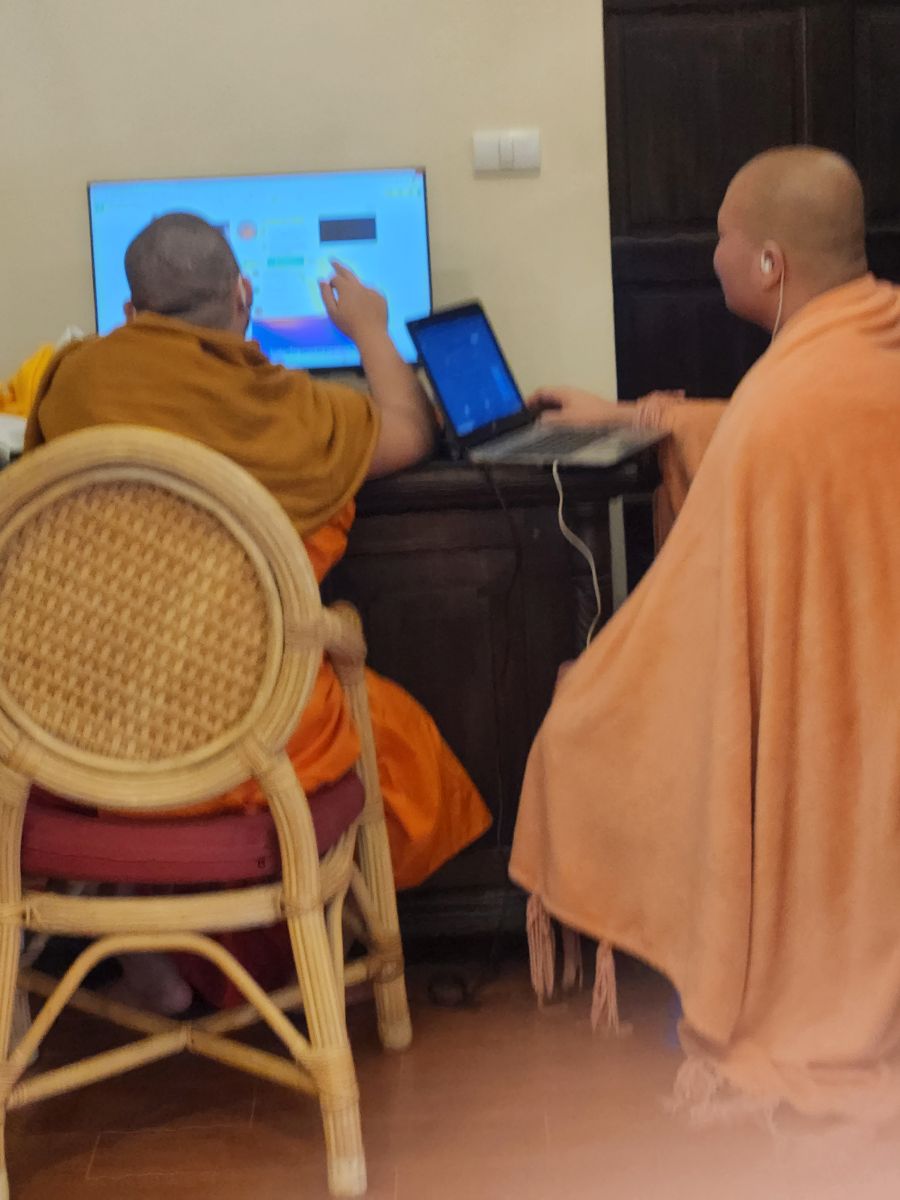
Downstairs in one of the buildings, we surreptitiously take pictures of the Monks on the computer. They are looking at some video, tiktok or Instagram or searching images or something. we’ve no idea. I know. we’re bad! But we just find the monks so fascinating, and their use of technology always just piques our interest! You’ve got to admit, it is a huge juxtaposition to see the monks sitting there in their saffron robes sufingthe web.
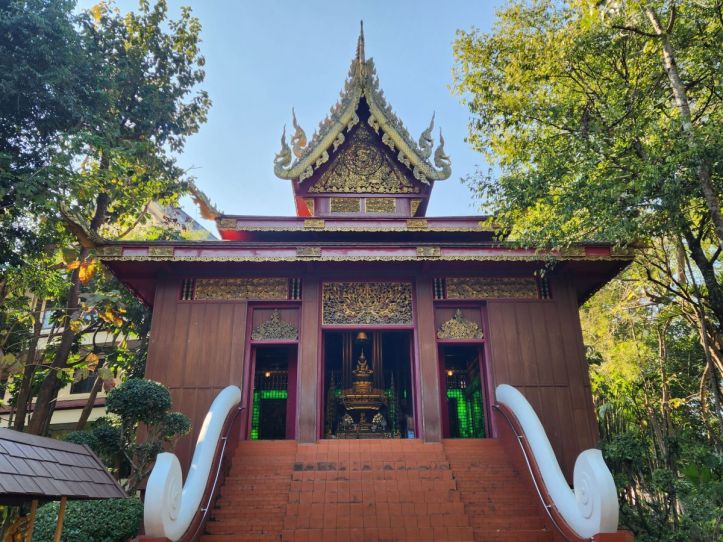
Outside, e explore the grounds, the Stupa and the Ho Phra Yoke, the Chapel of the Jade Buddha.
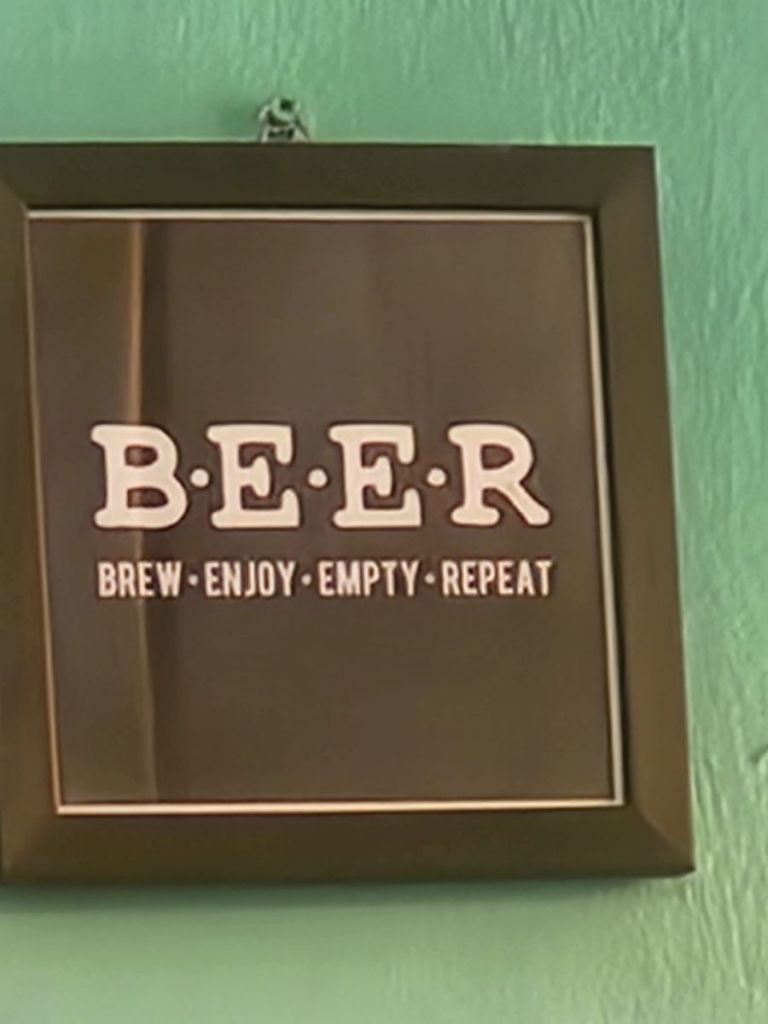
And with that, we are pretty much done. We have plenty of time to walk back to the hotel, pick up our bag and head to the bus station. In the meantime passing this great sign!
Visit complete. We hang out at the corner of the station, waiting for the bus with all the other passengers, finally hopping aboard at the appointed hour. Quite a nice little overnight diversion. While we’ve enjoyed this excursion – and have wanted to come up here forever – it has been rather, well, not exactly disappointing, but definitely different than what we expected. For some reason, I was expecting this small, little colonial type town – almost old West – but what we found was a much more active local Thai city, that just happens to attract tourists for its artistic temple sights. It was great, we are definitely glad we did it, and it just goes to show not to let your expectations take over your desires. View everything through an exploratory lens and you will never be disappointed! Good motto to live by, I think.
The bus ride goes smoothly, we are back in Chiang Mai by 8:30 and at the house before 9. A little snack of leftovers, an evening cocktail and we are ready to spend the last few days here in our home away from home.
 Andiamo