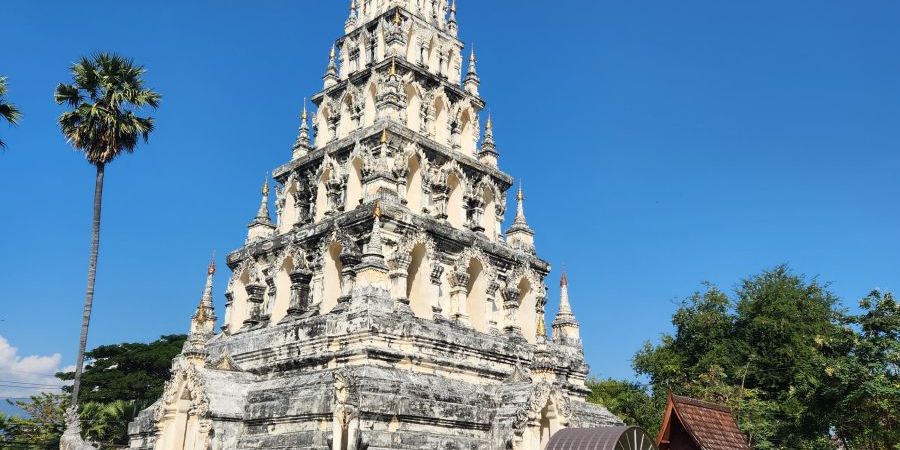
Today, our excursion takes us out of the city and into the suburbia outside of Chiang Mai, to explore the ancient city of Wiang Kum Kam. This was the original settlement of King Mangrai, the first ruler of the Mangrai dynasty and founder of the Lanna Kingdom, dating back to the 13th Century. We have found a bike tour that allows us to enjoy a little bit of exercise along with our history – which of course is the perfect combination for us! And we’ve always enjoyed our bike ride tours here in Chiang Mai, so we’re excited to begin.
We stroll over to Loh Kroh road at the appointed hour and meet our guide, who we’ll call Sam, pick out our bikes and hit the road. We have a nice and easy ride out through our old stomping grounds, down behind Twin Peaks condos and into a newly developed Little Japan area. Running along a small canal, the Khlong Mae Kha, this area was redeveloped after the pandemic and is now populated with tons of bars and restaurants and little souvenir shops. Wow, this is great. If we were staying over here, we would definitely be walking here every night for food and entertainment. A bright spot on the pox that was the pandemic!
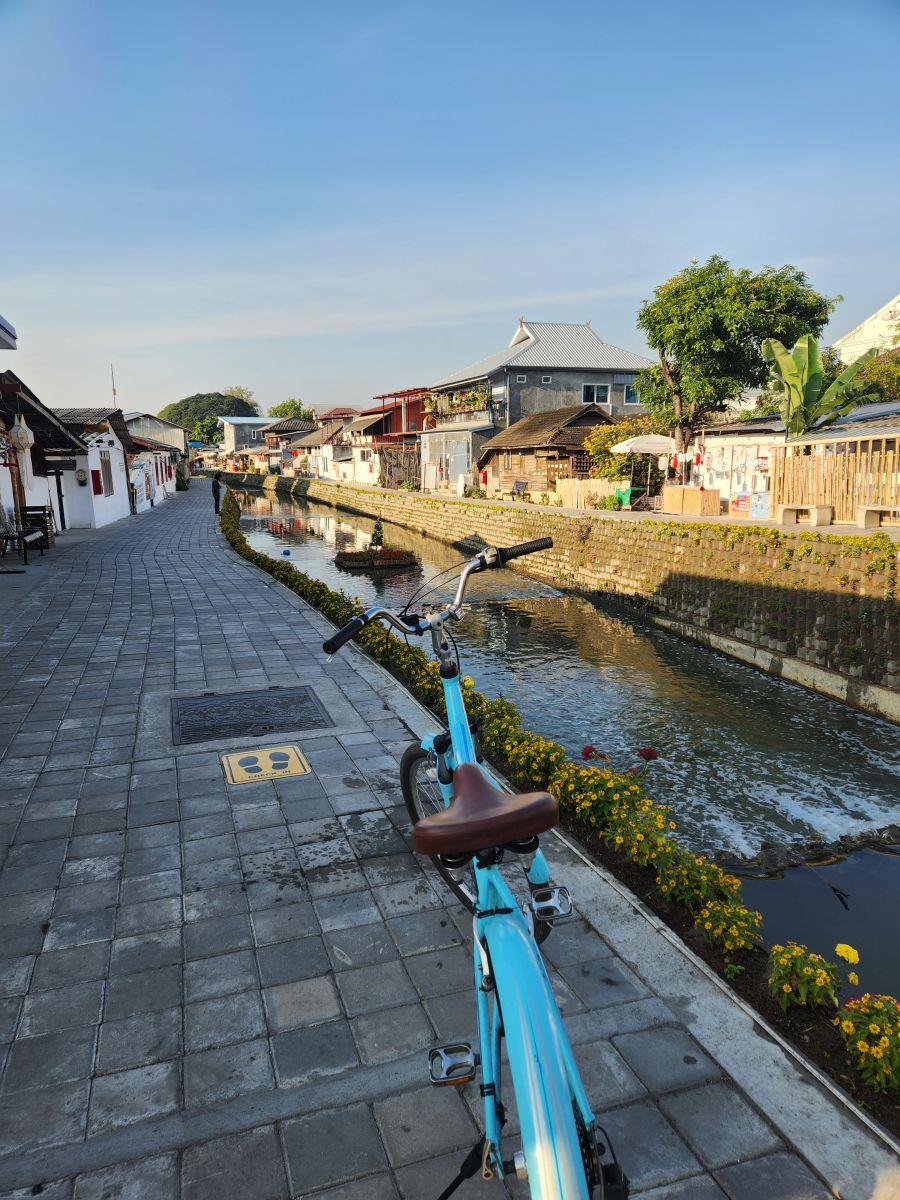
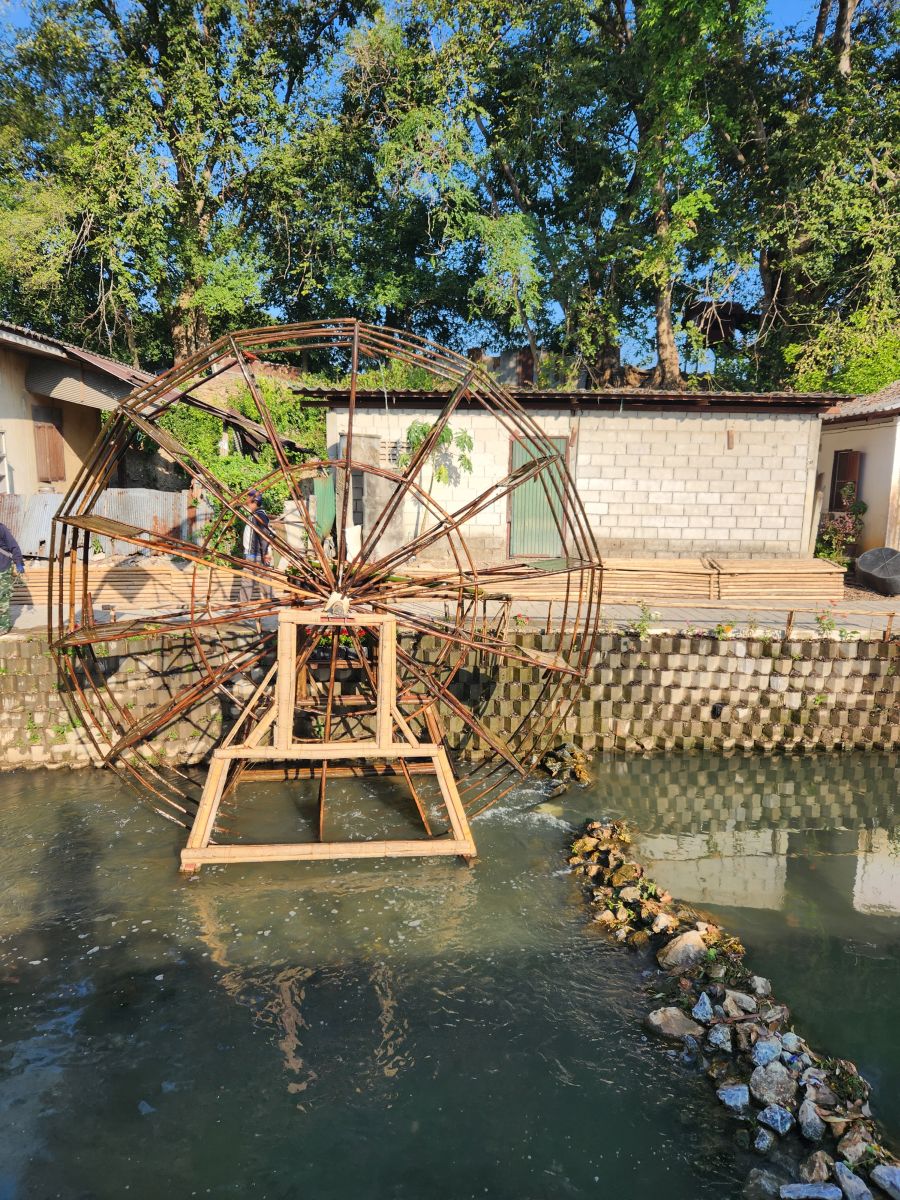
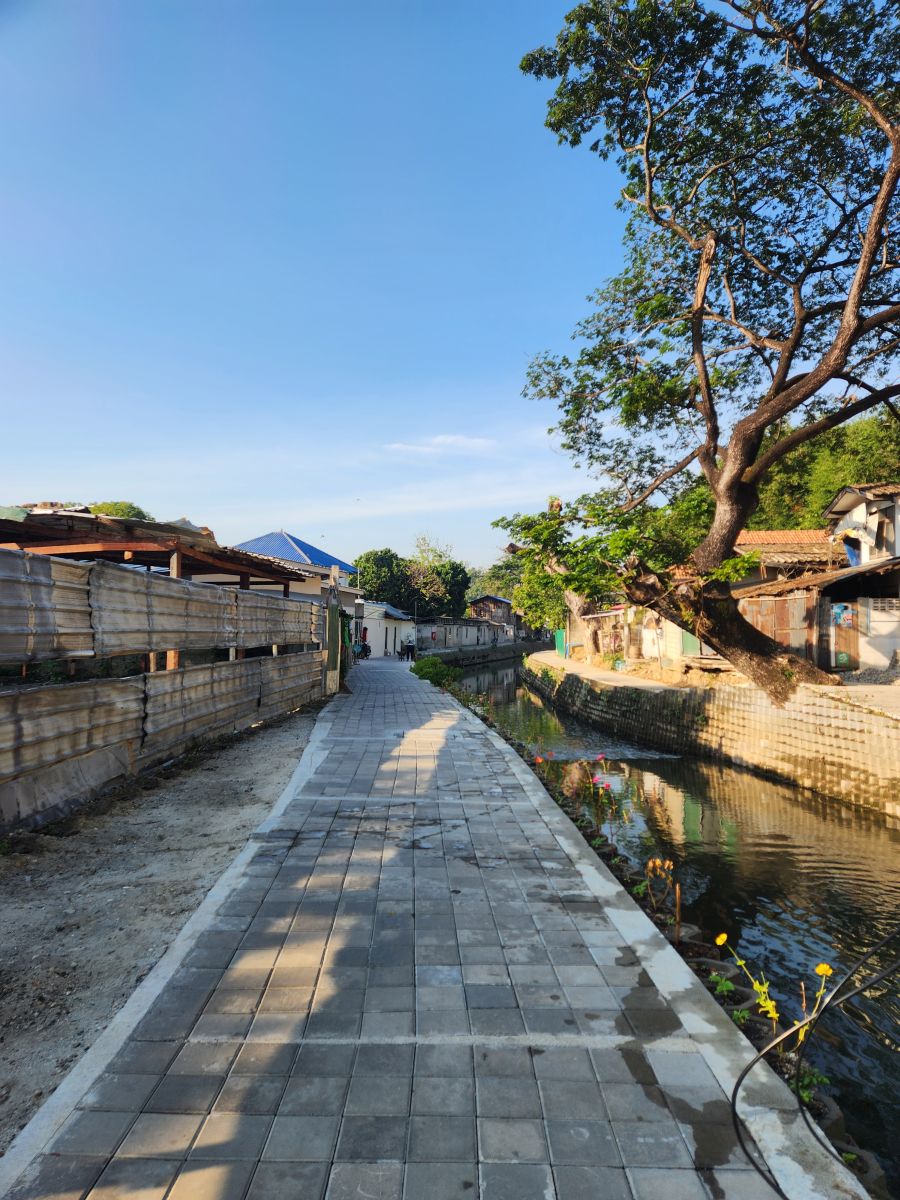
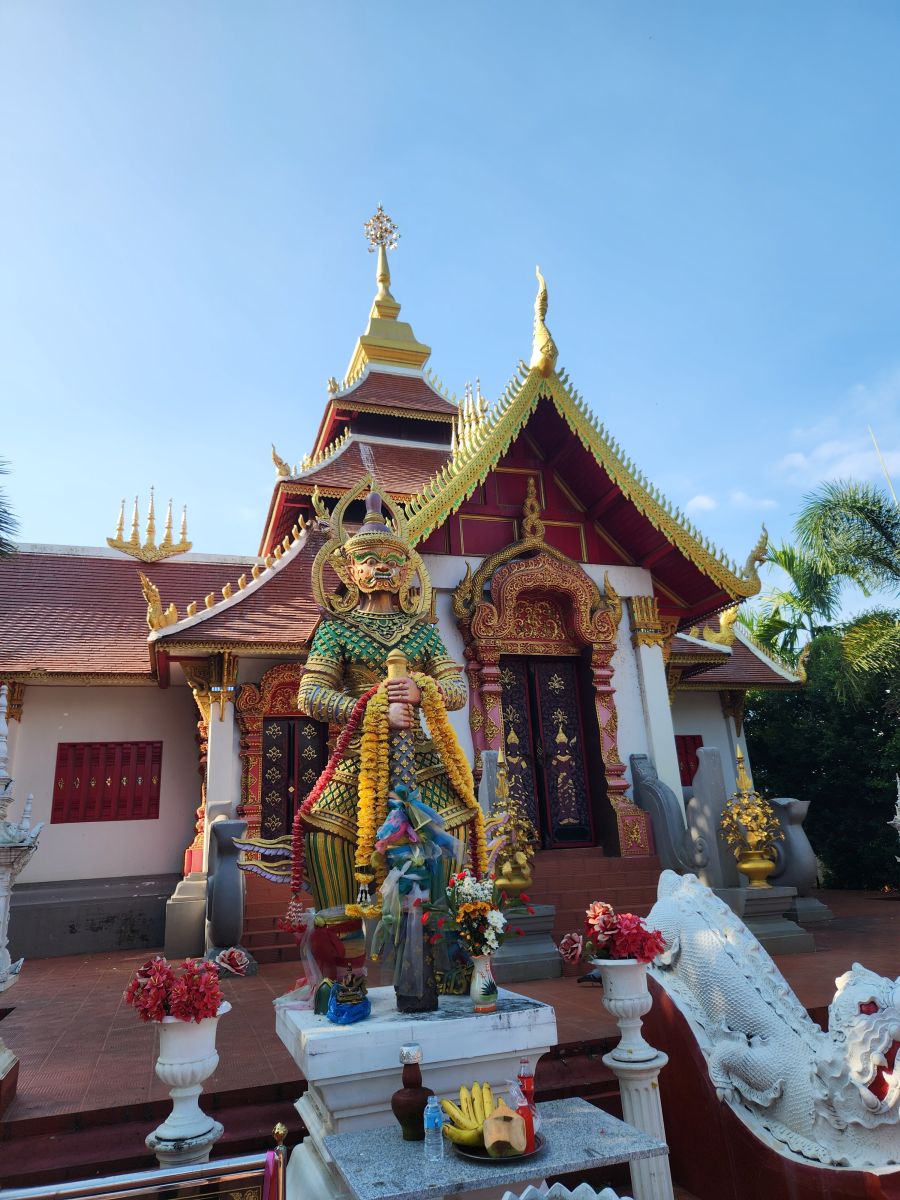
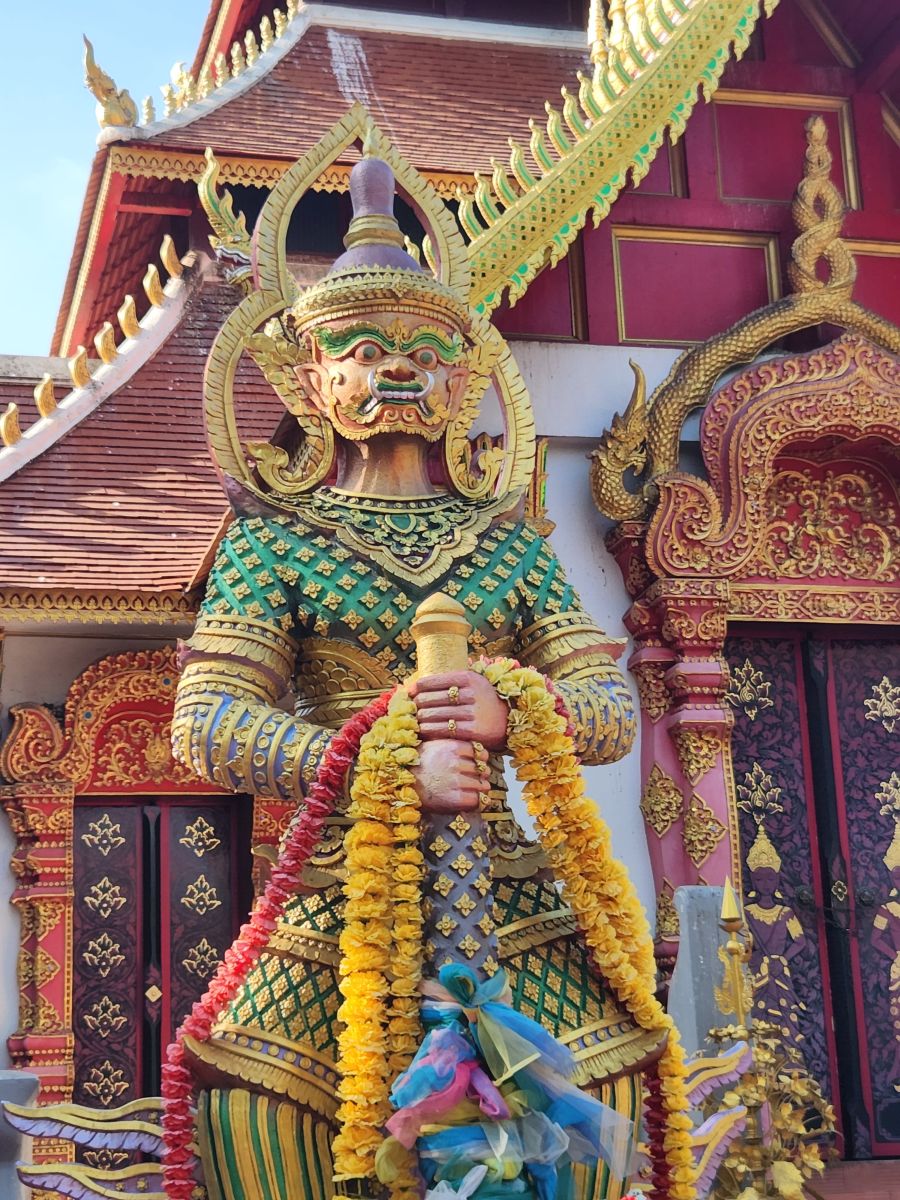
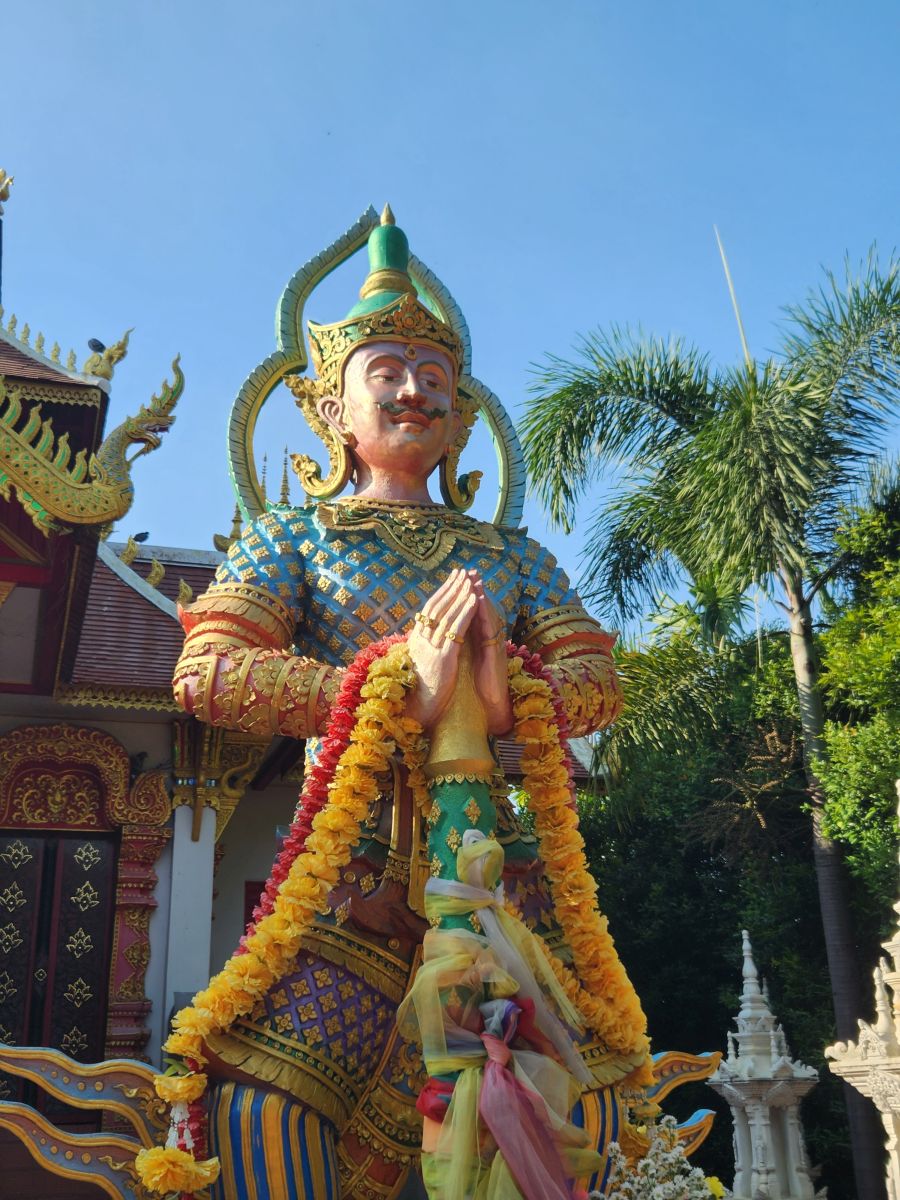
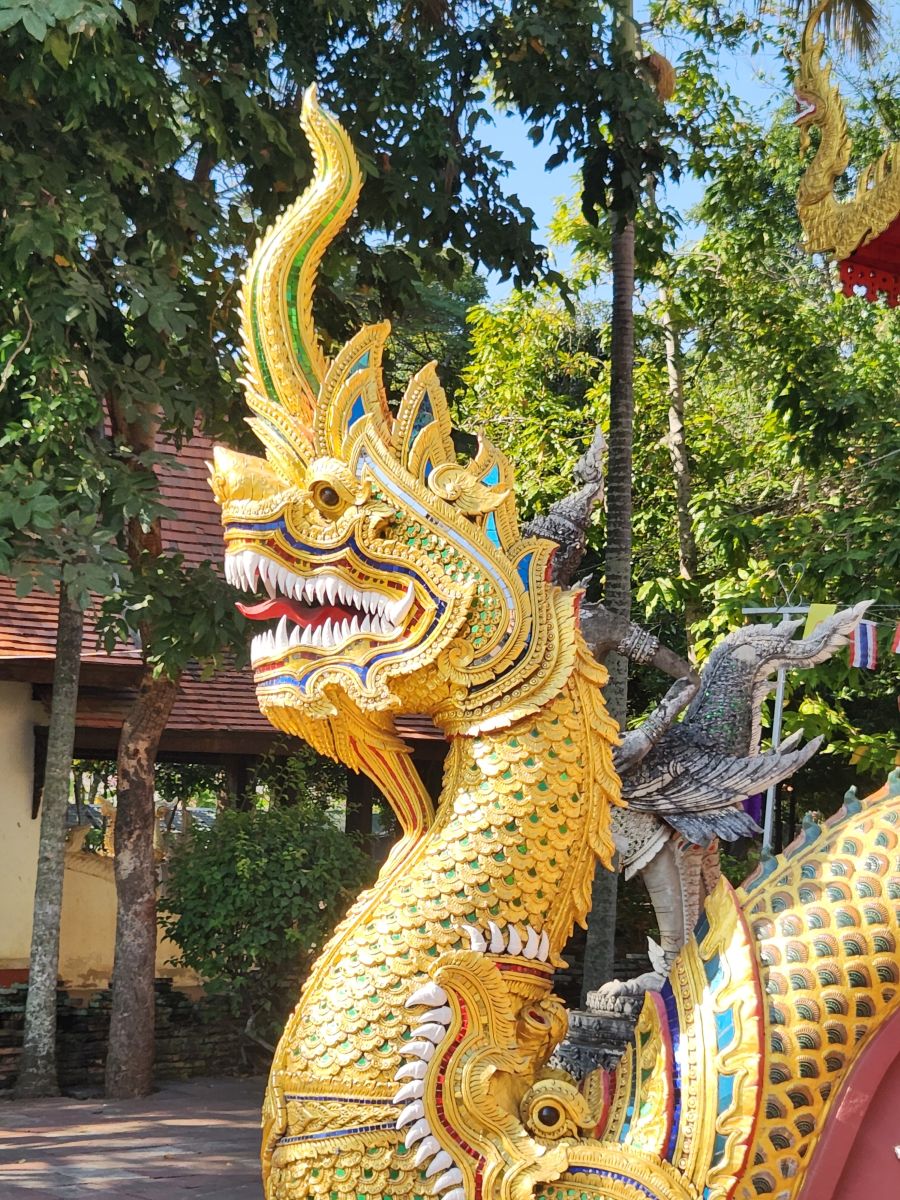
Sweet. Moving on, we cycle down the canal, returning to the street after Sam talks with a local who tells him there are vicious dogs up ahead. Yeah, let’s avoid vicious dogs at all costs while on bikes. Half an hour of cycling later, we stop at a very colorful wat near Tha Wang Tan for a breather and some water, Stretching our legs here, we wander past the wonderful statues and learn more about Lanna culture and King Mangrai from Sam who is an excellent teacher and tour guide.
Now it is on to the main event, Wiang Kum Kam. But first we must cross over the main highway and navigate underpasses and then little narrow lanes through houses and shops until we reach the museum and main entrance to the ancient city. Crossing those highways is a little bit tense, but with Sam in the lead, it goes incredibly smoothly. We’d never do it on our own, that’s for sure!
Here at the museum, we learn all about the history of the city. King Mangrai built the city in 1286 and chose the location along the Ping river to allow for easy access in order to develop Kum Kam as the commercial center of the kingdom. Unfortunately, due to the river’s proximity, the city was susceptible to floods. King Mangrai decided to move the capital to Chiang Mai in 1296, leaving Kum Kam to those who wished to remain. After more floods, the city became very sparsely populated and was all but abandoned after Burmese rule and a huge flood in the 17th Century. The area became repopulated in the early 19th Century, under King Rama V when Chiang Mai and the surrounding towns were renovated.
Then entire city is huge – with most of the historic relics buried under silt. An excavation began in 1984 when a school was being built and the construction workers uncovered the ancient foundations has started a preservation movement in the area and to date 30 temples and original structures have since been unearthed and protected. As per usual, the old structures were found when a property under construction unearthed them while trying to build a foundation. There are probably many more original structures and archeological finds in the area, just buried underneath existing houses, schools and businesses. At this point there is no way to just throw the new owners off their property, so the preservations is focused on the structures that have been found to date.
The museum has a wealth of information, including this amazingly cool 3D recreation of the different Wats and buildings that once populated Kum Kam. These pictures don’t really do justice to the way the 3D models work, but they can at least give you an idea. It looks like we were “holding” the temples as they were recreated. Amazing.
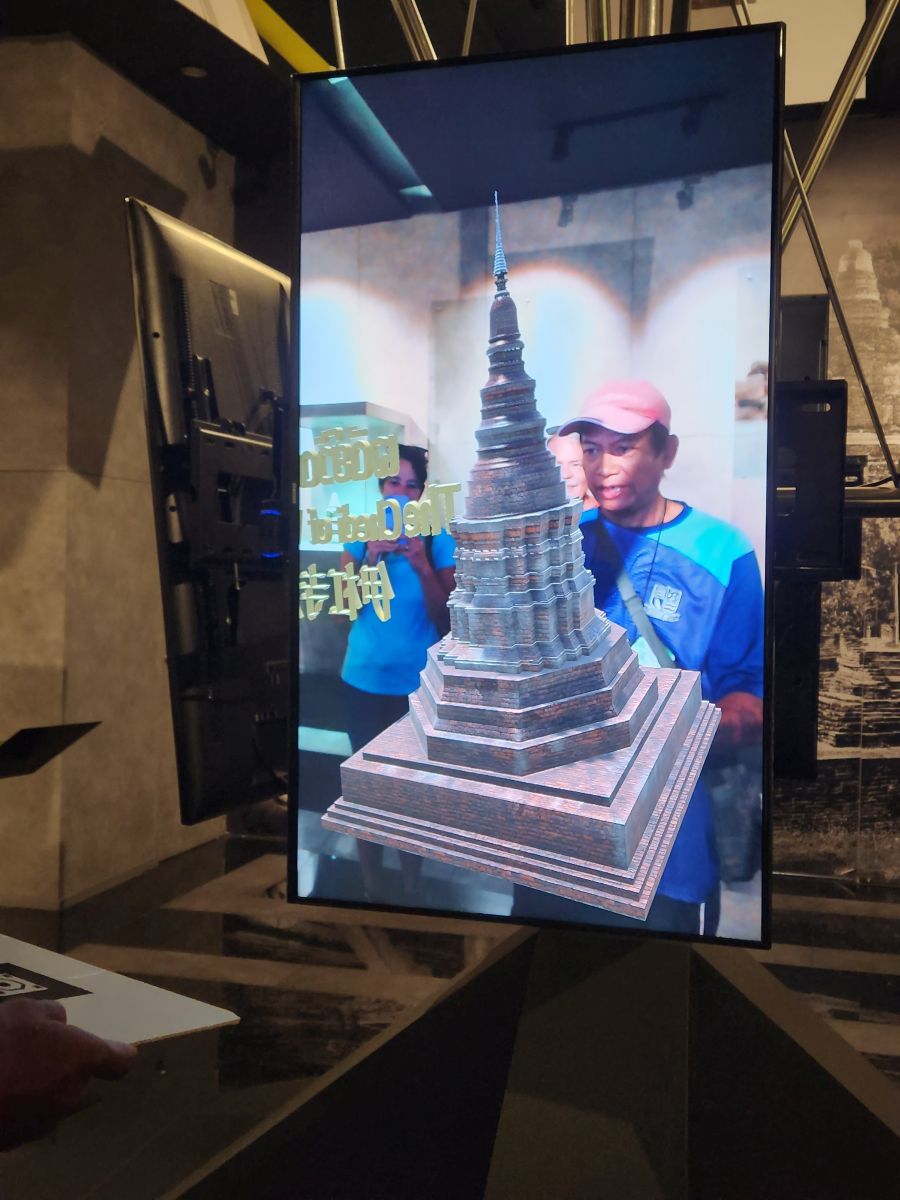
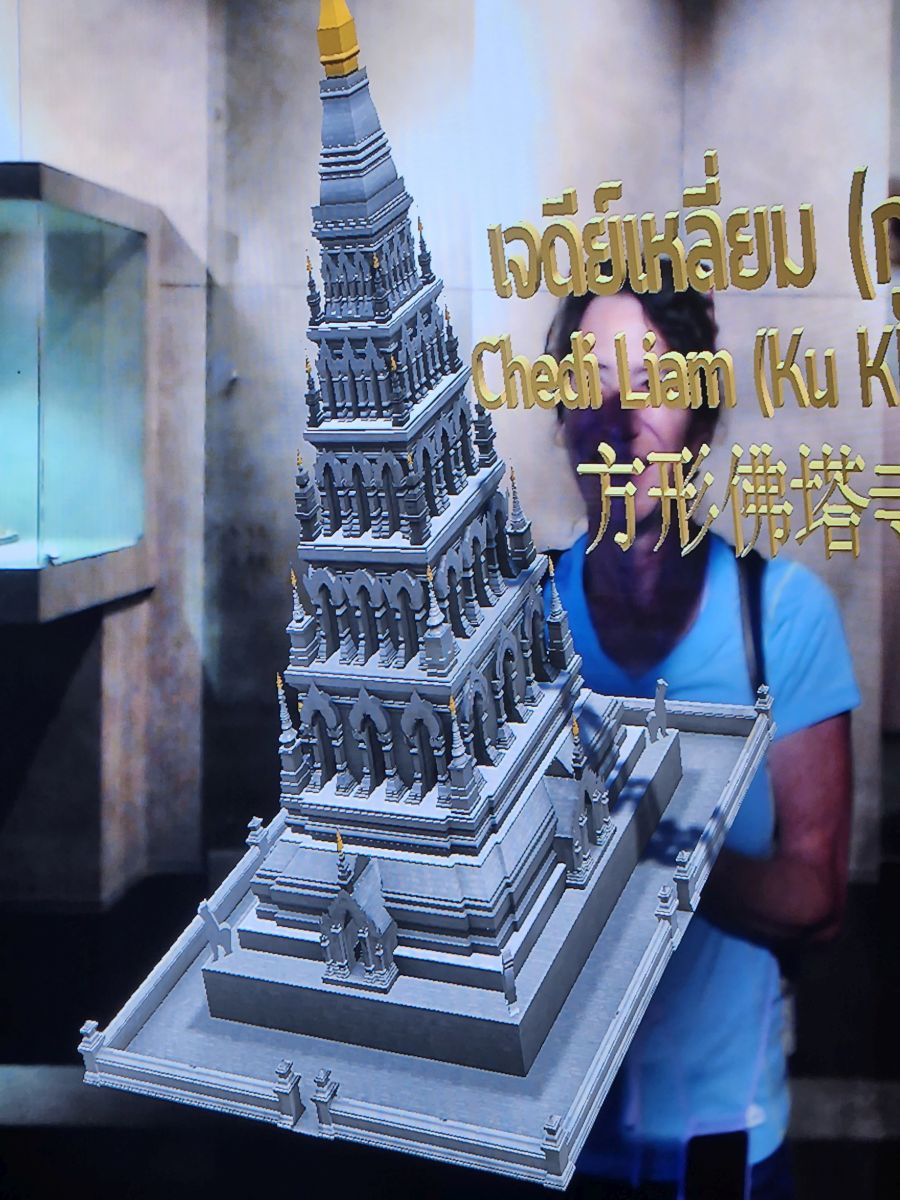
Now it is time for us to go exploring! We had read that there are little open air jitney buses and pedi-cabs you could rent to visit the city, and we couldn’t really understand why….until we took off out of the museum parking lot on our bikes and proceeded to tour. The wats and ruins and structures are all over the place! Down little lanes and streets, behind people’s houses – the development here definitely did not take all these historical ruins into account!
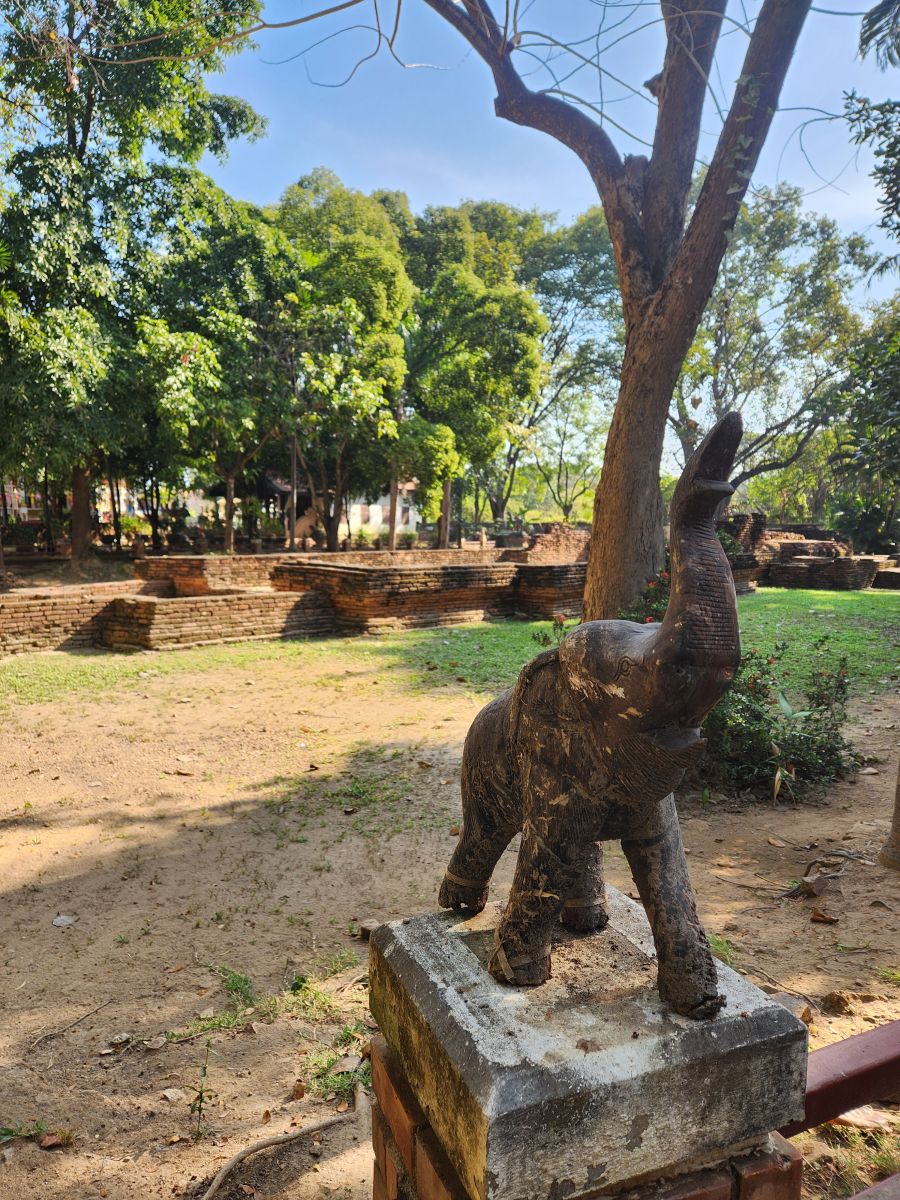
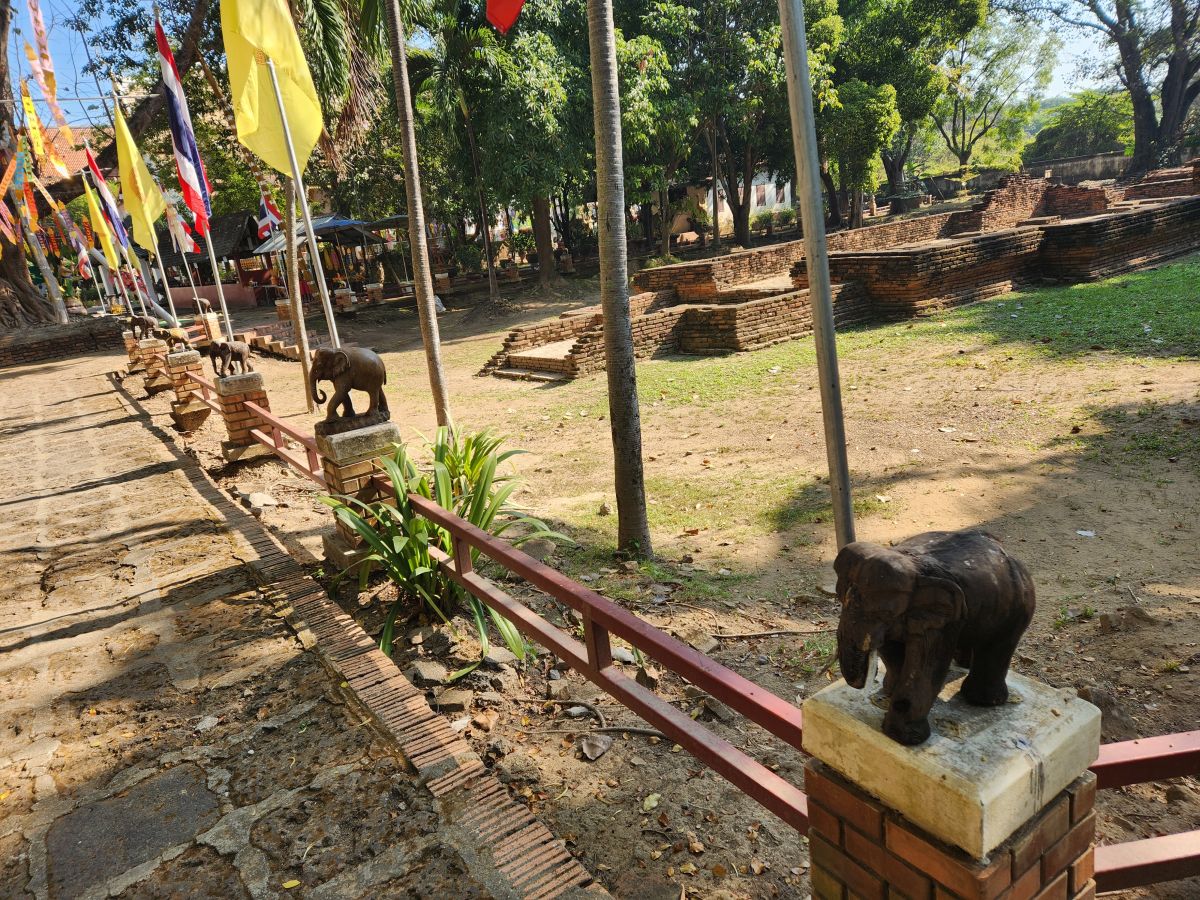
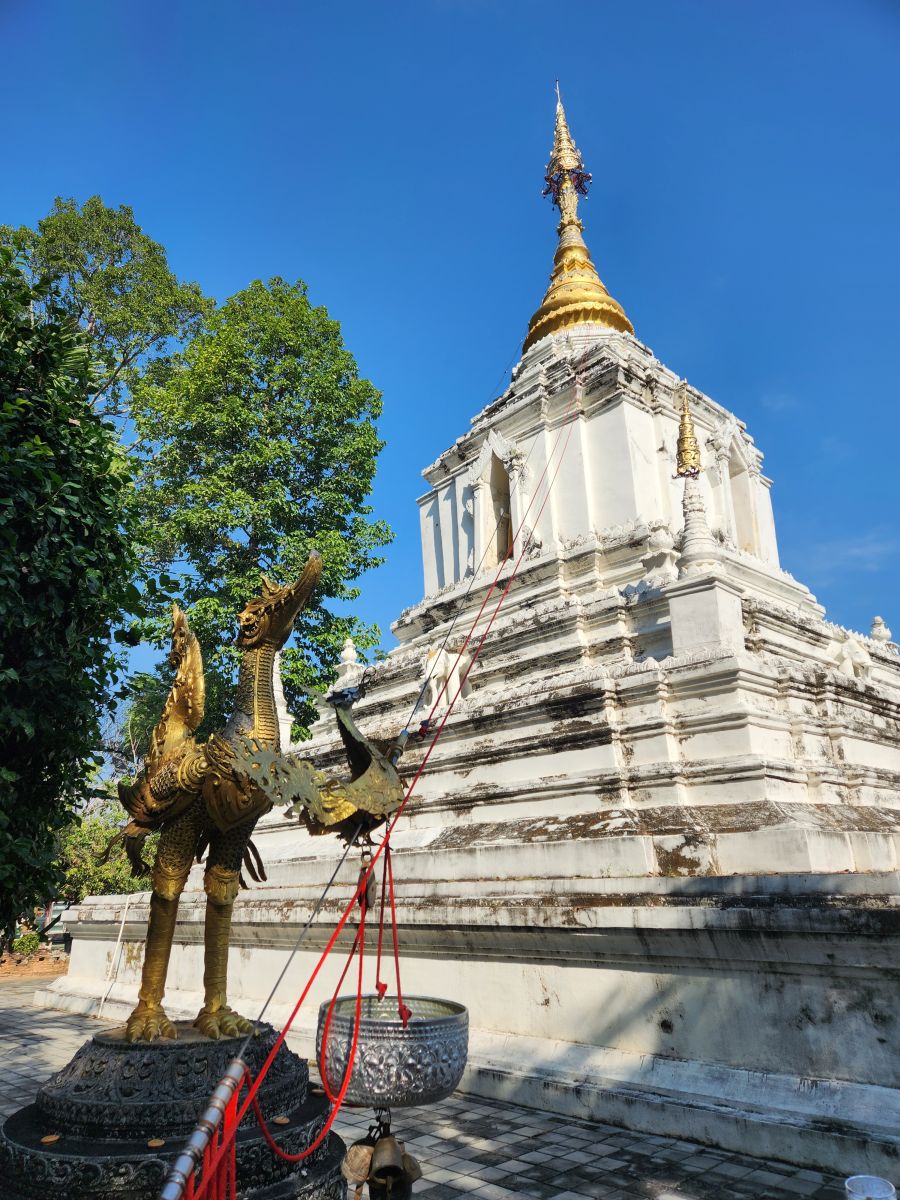
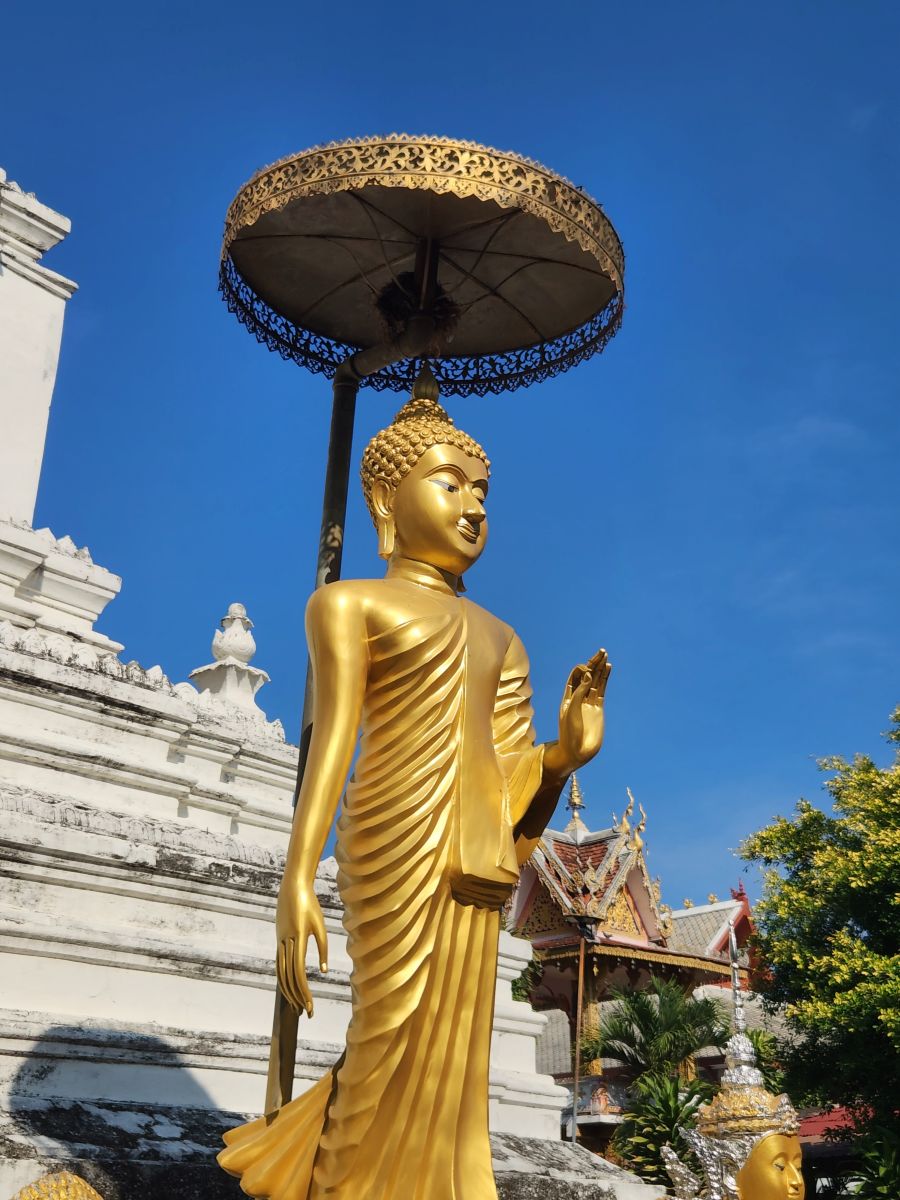
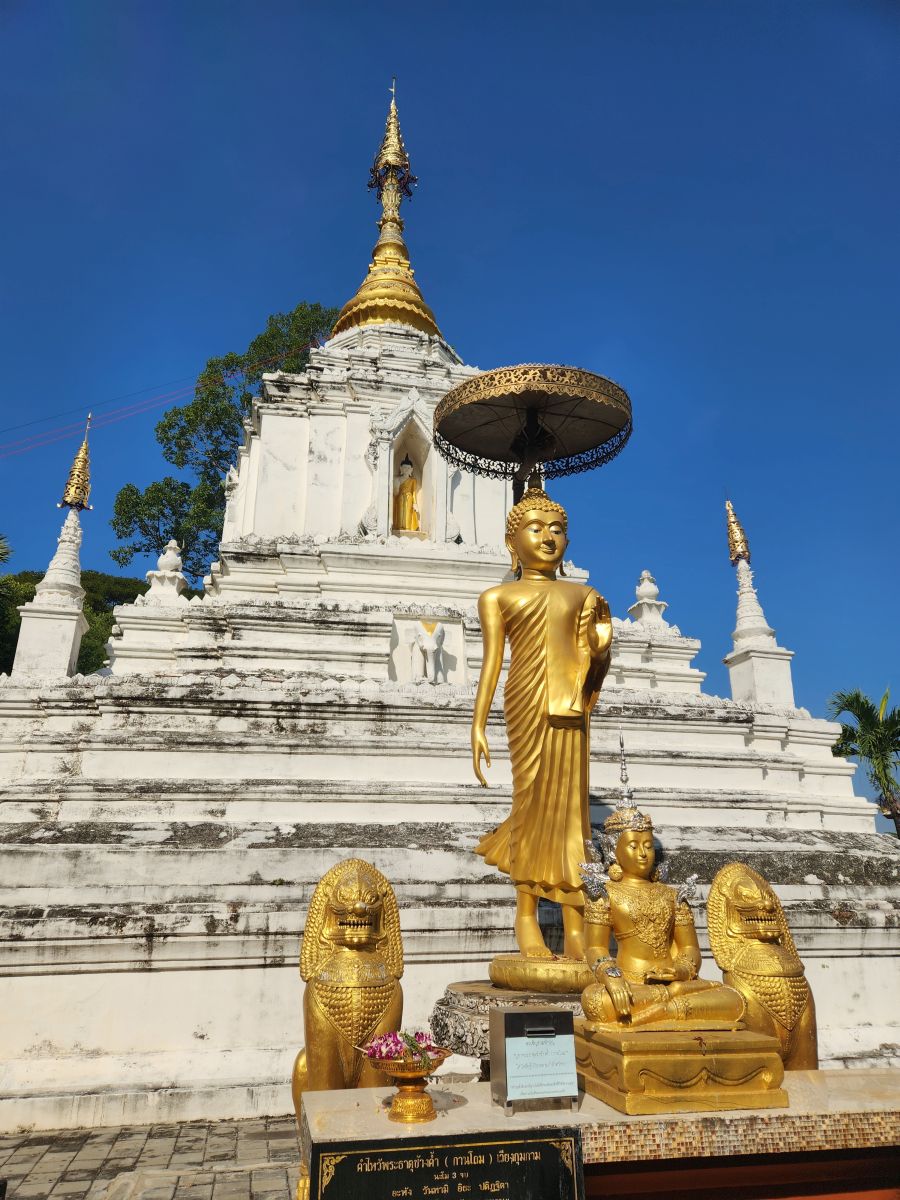
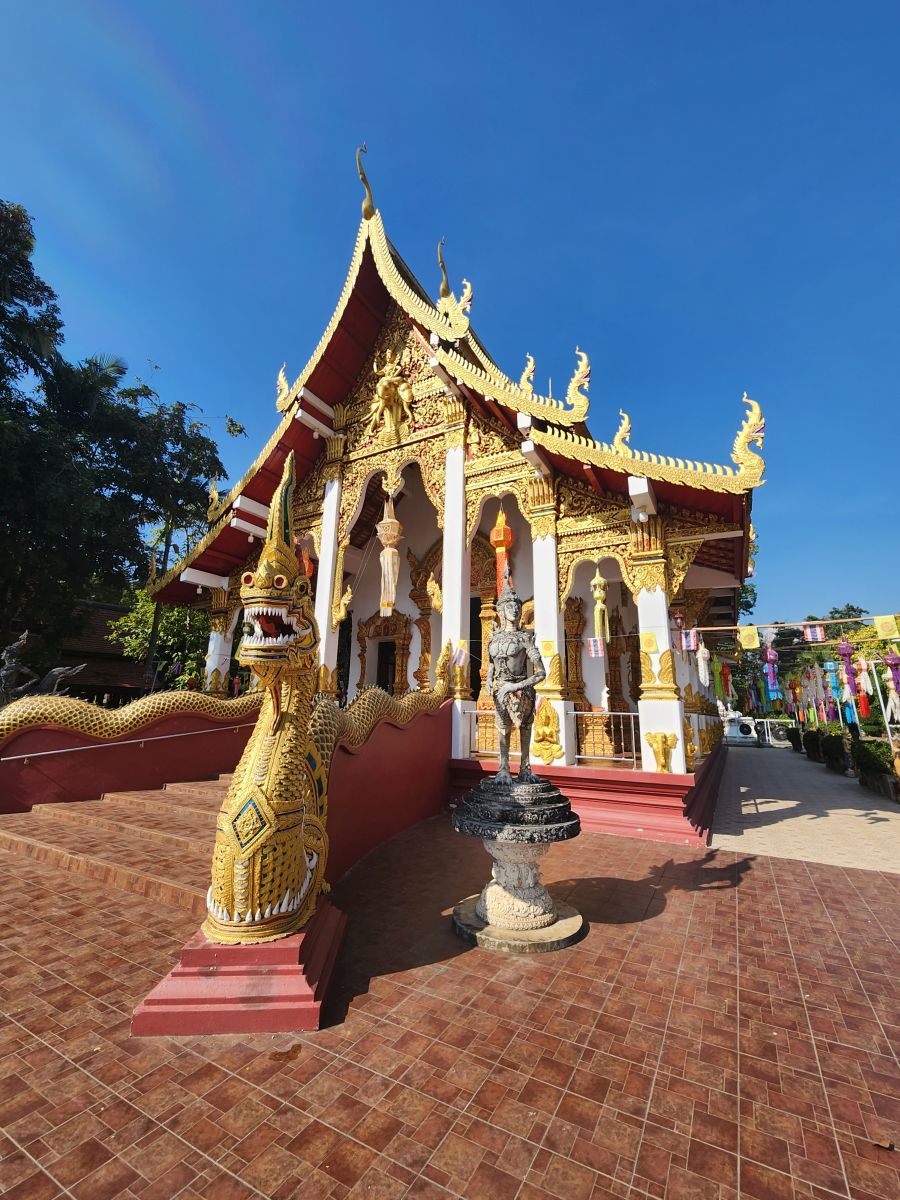
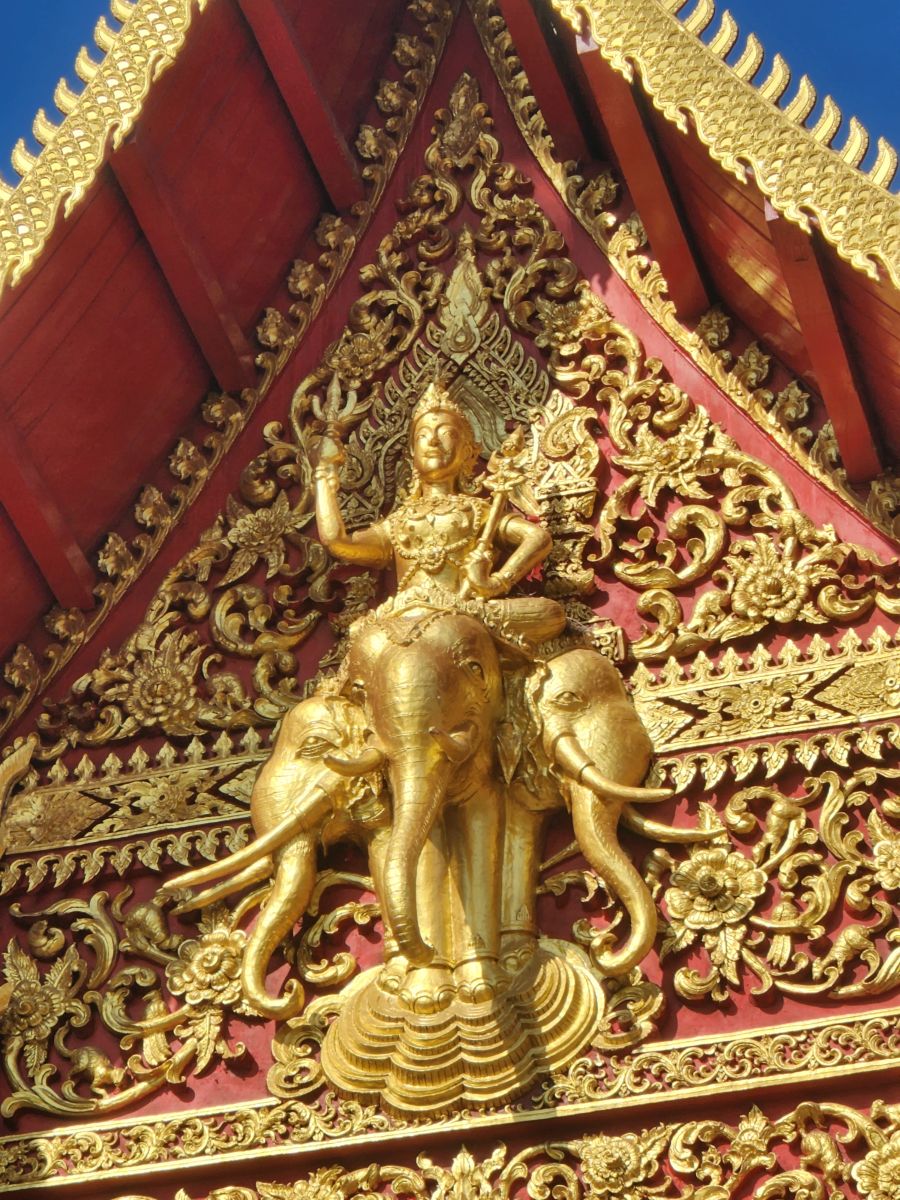
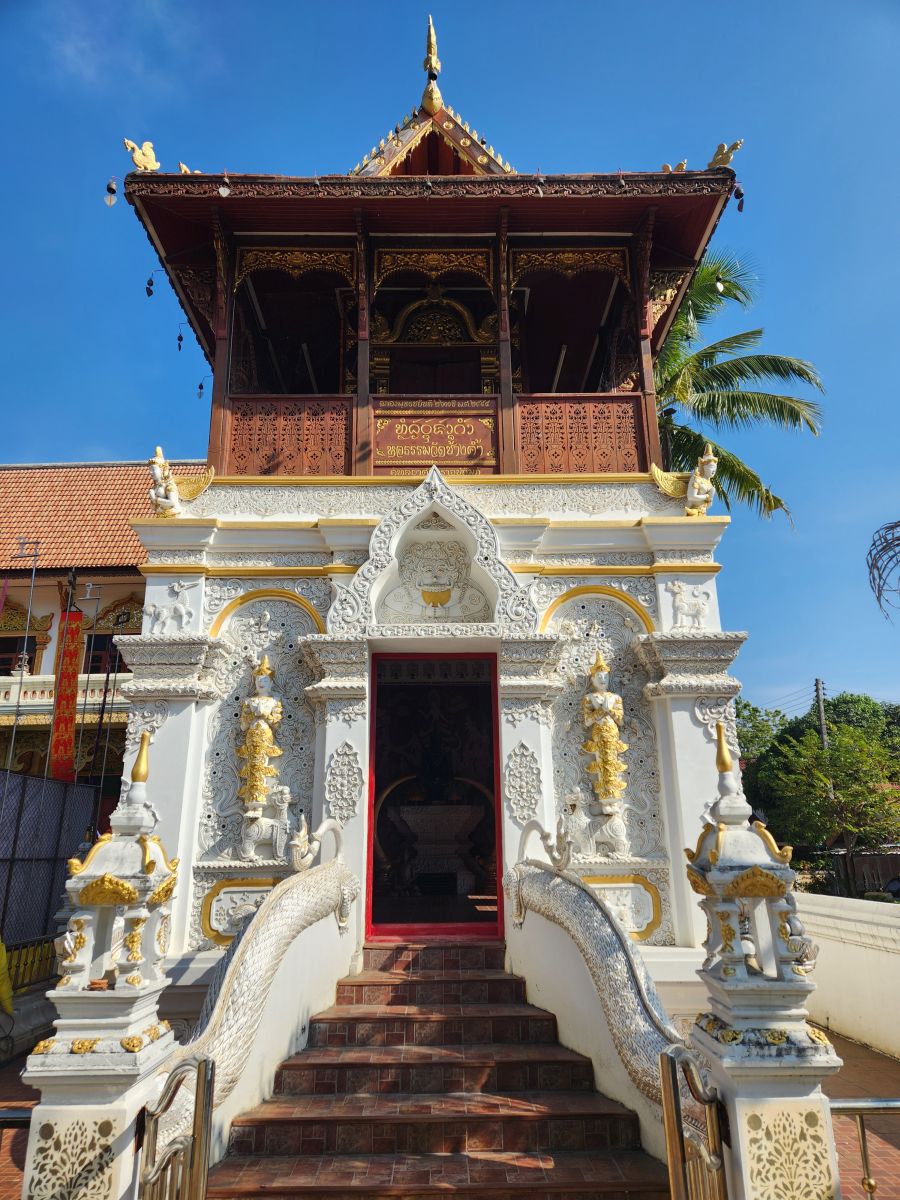
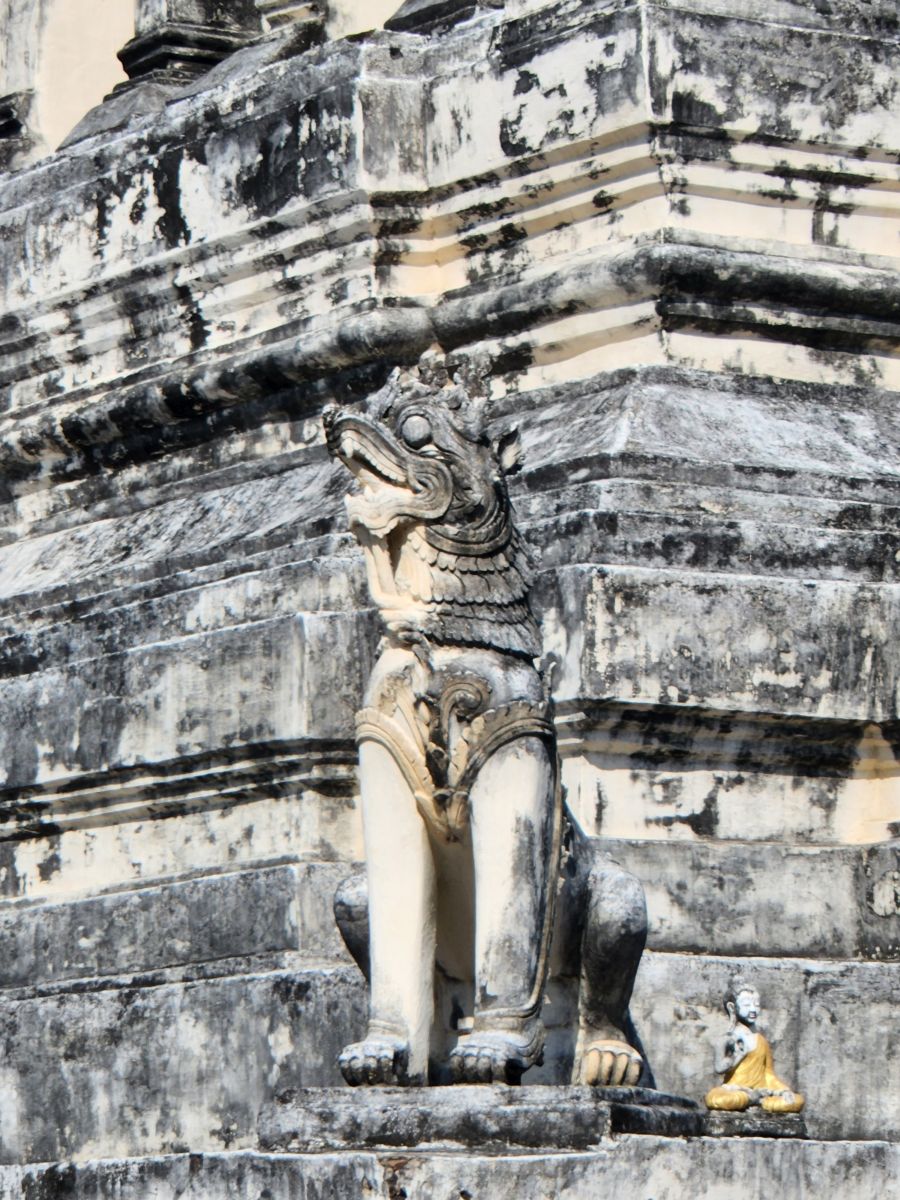
Makes for a very fun morning for us though, cycling through leafy little streets then turning a corner and voila! Another ruin or Wat. Our first stop is Wat Chang Kham, so named for all the elephant statues around the property and base of the stupa. You know I’m loving this! As we walk around the beautiful grounds, Sam gives us a lesson on the buildings of the Wat and what they mean – the Chedi or Stupa (the bell shaped tower), the Ubosot ( a pavilion type structure for ordinations, the most sacred area in the wat) and the Wihan, which is the shrine hall with all the Buddha statues (where the monks and lay people congregate).
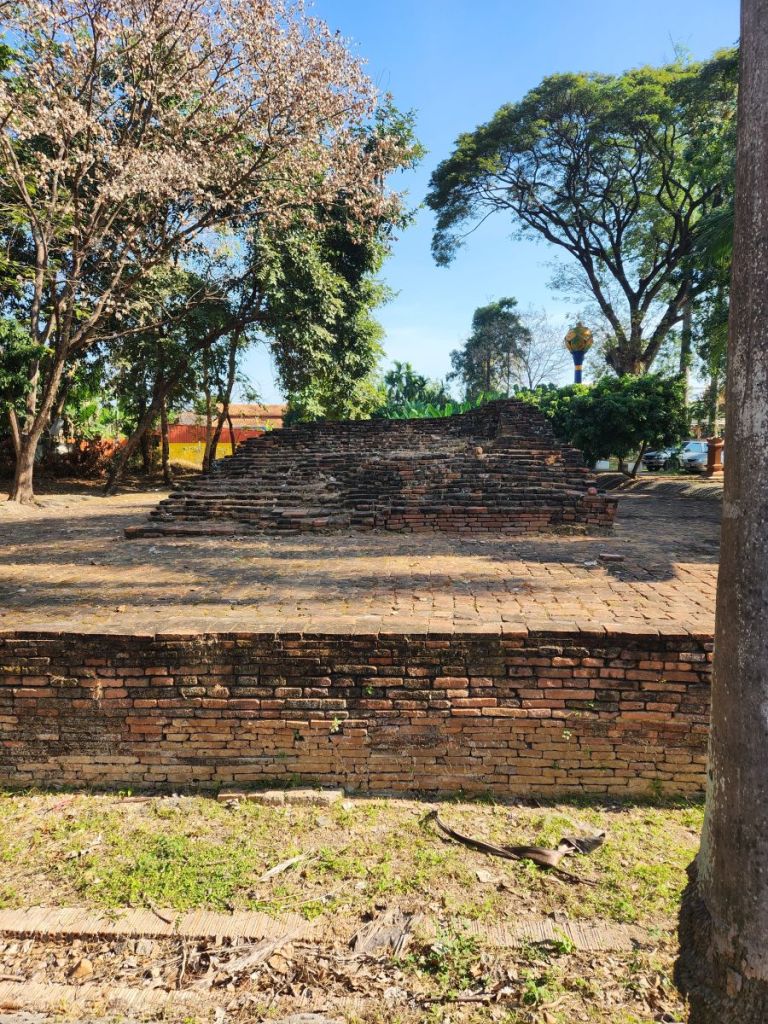
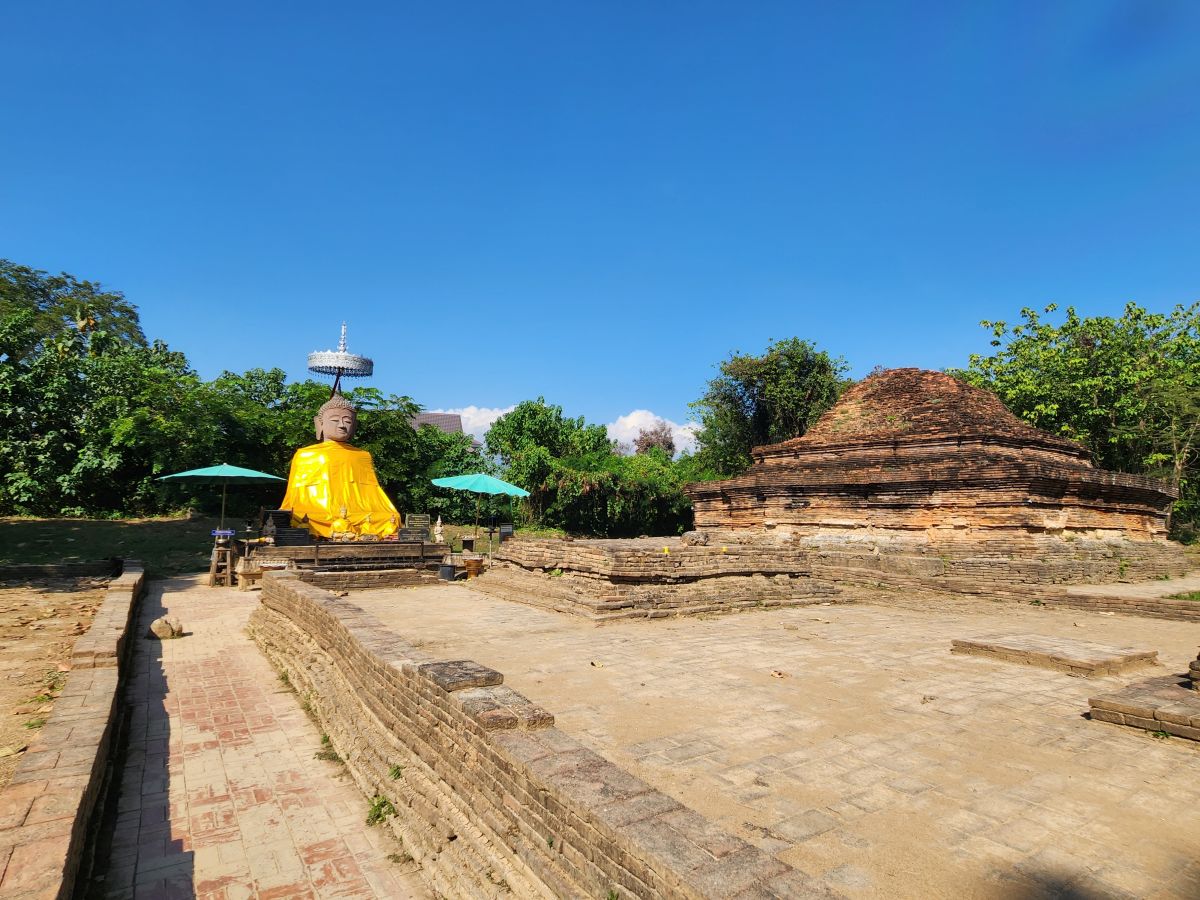
Next we cycle to the ruins of Wat Nanchang, which was excavated in 2002 from 1.8 meters of silt and soil. Definitely remnants of the flooding. The Wat covers a huge area, and there were actually 2 temples here – one facing North, one facing East. There are also buildings from 2 different time periods here, built one on top of the other. Beautiful and fascinating out here in the middle of Thai suburbia!
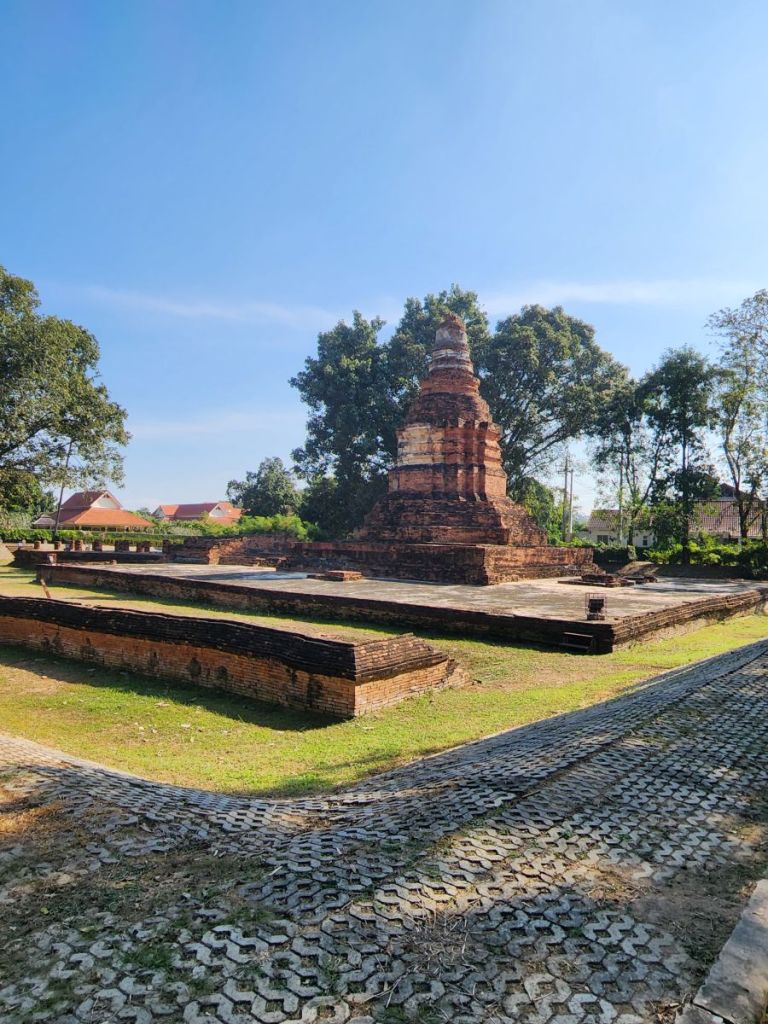
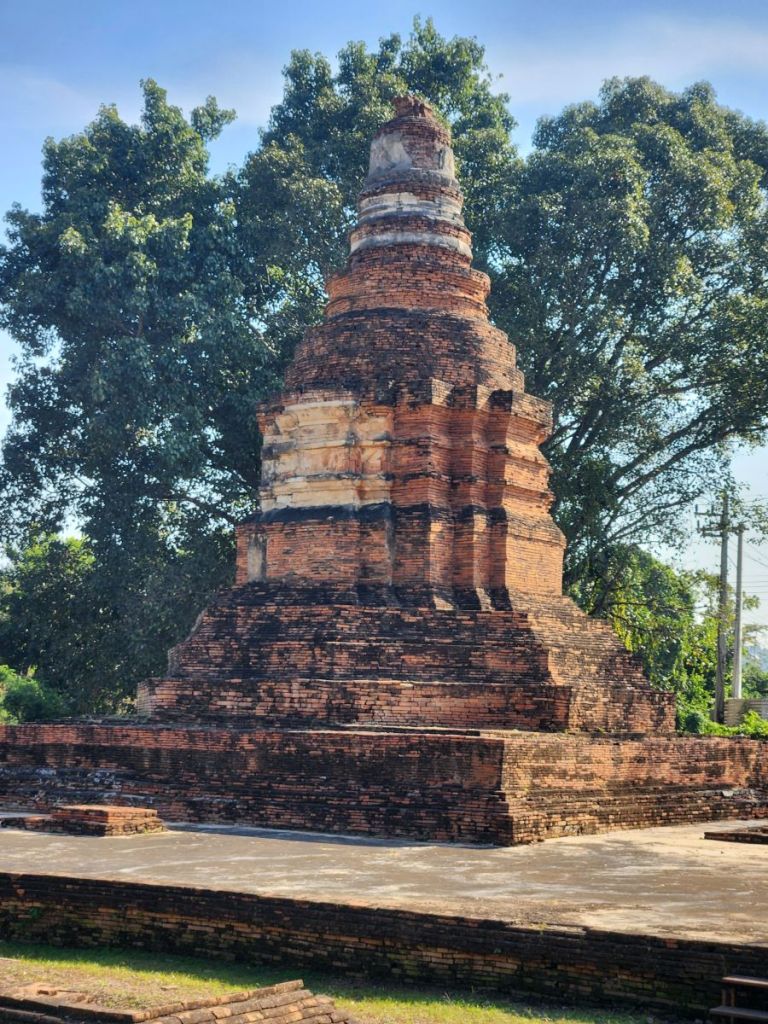
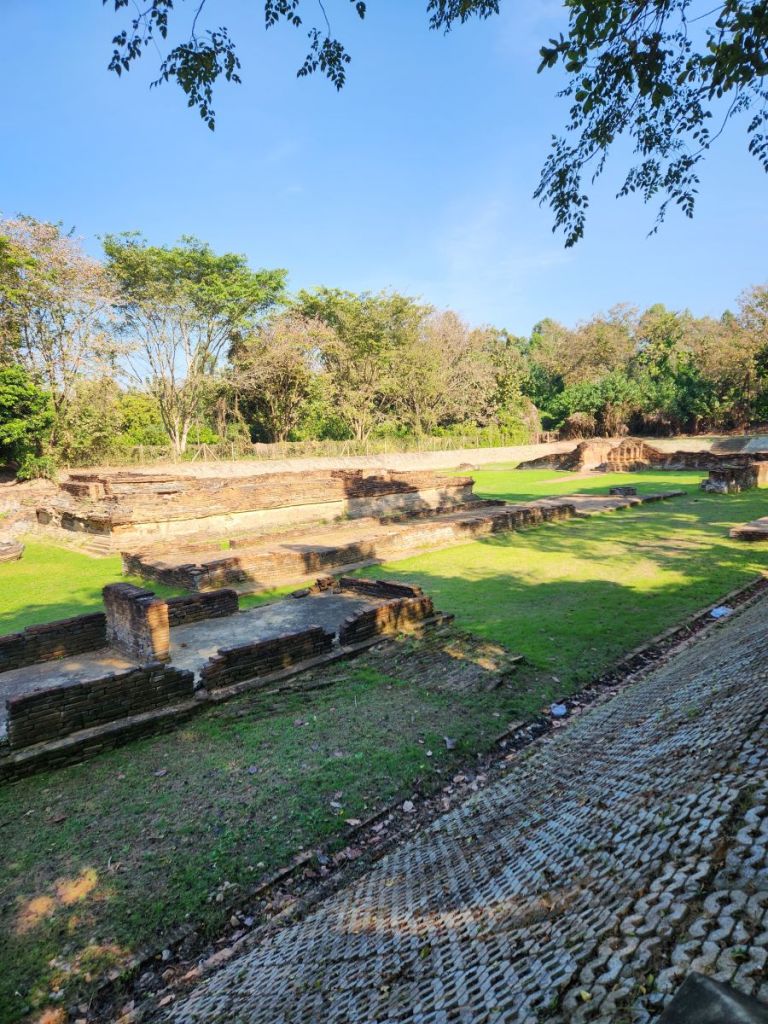
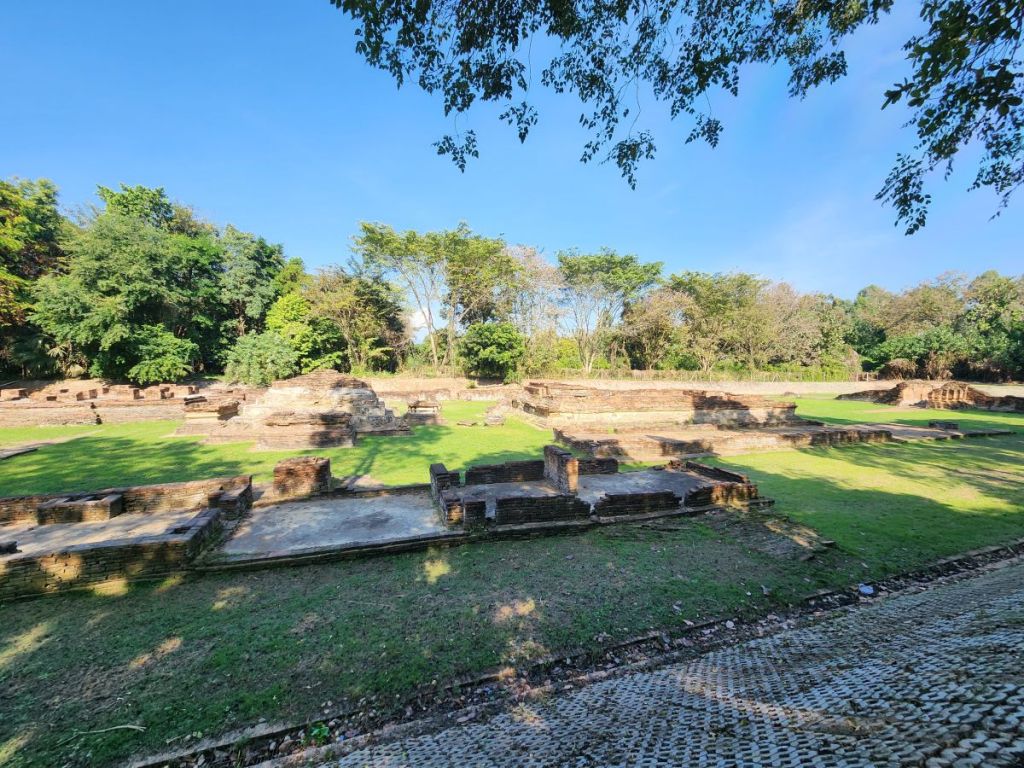
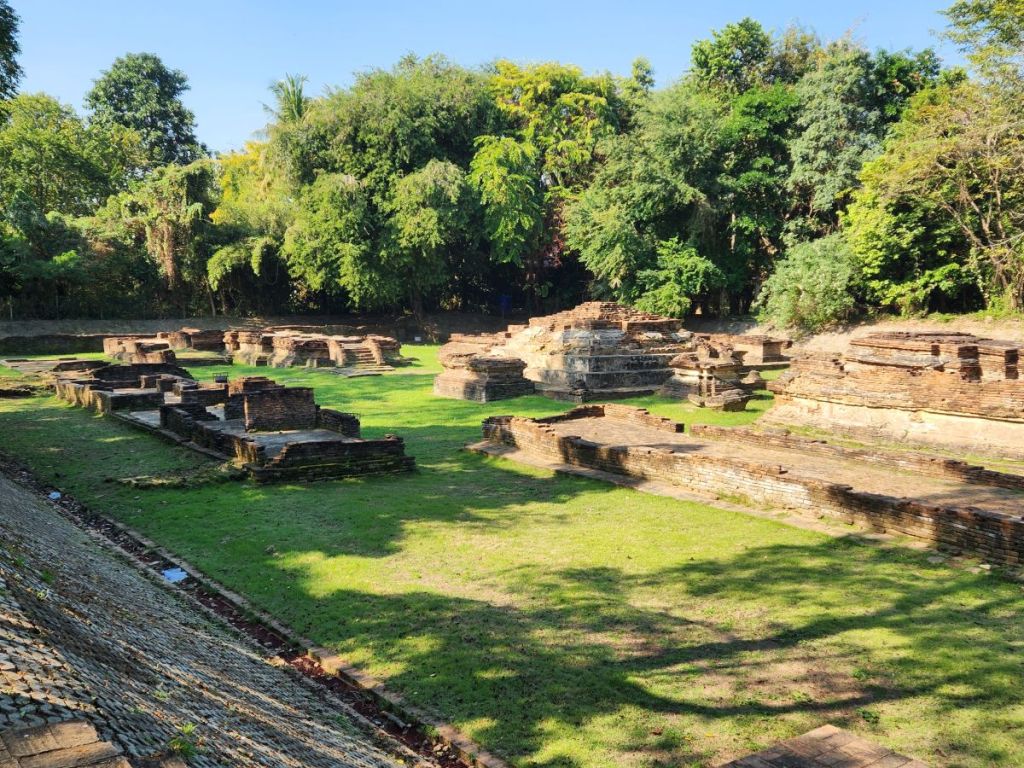
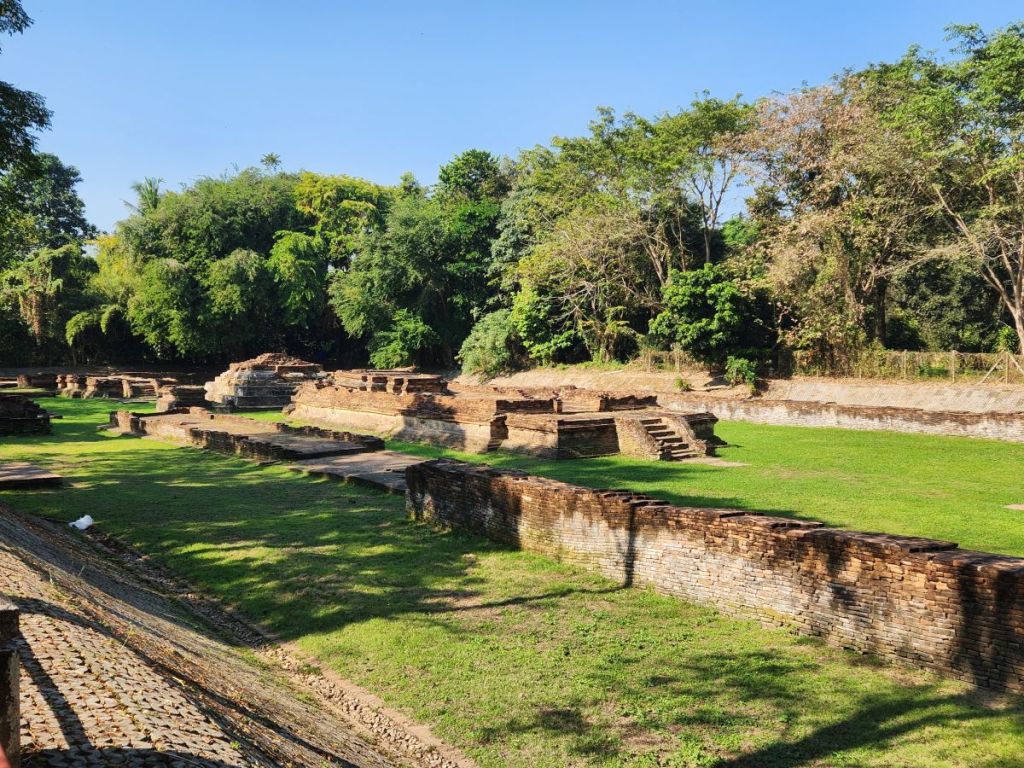
A few minutes down the lane are the remnants of another Wat, sitting regally behind an old barn of some sort. Here Sam gets into picture taking mode and we dutifully pose for him in front of the ancient Chedi.
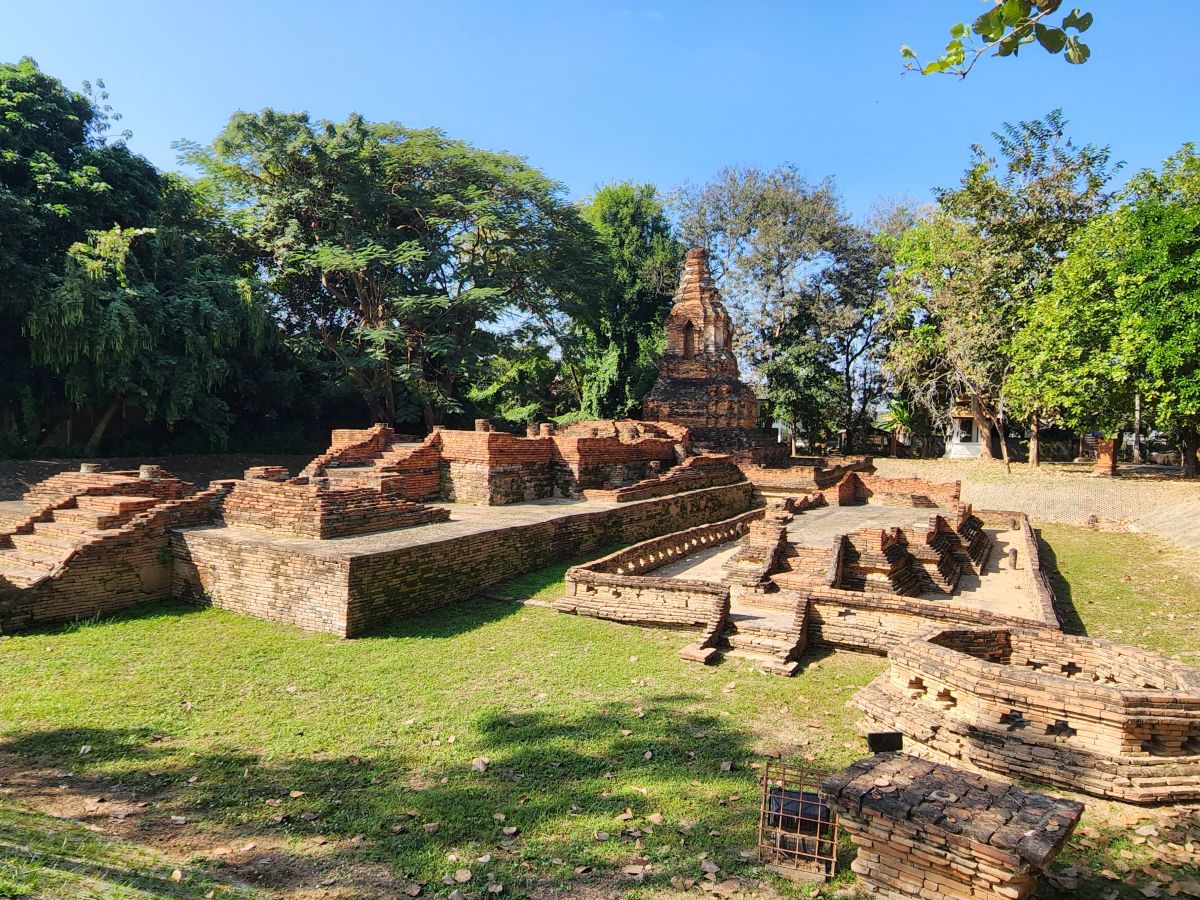
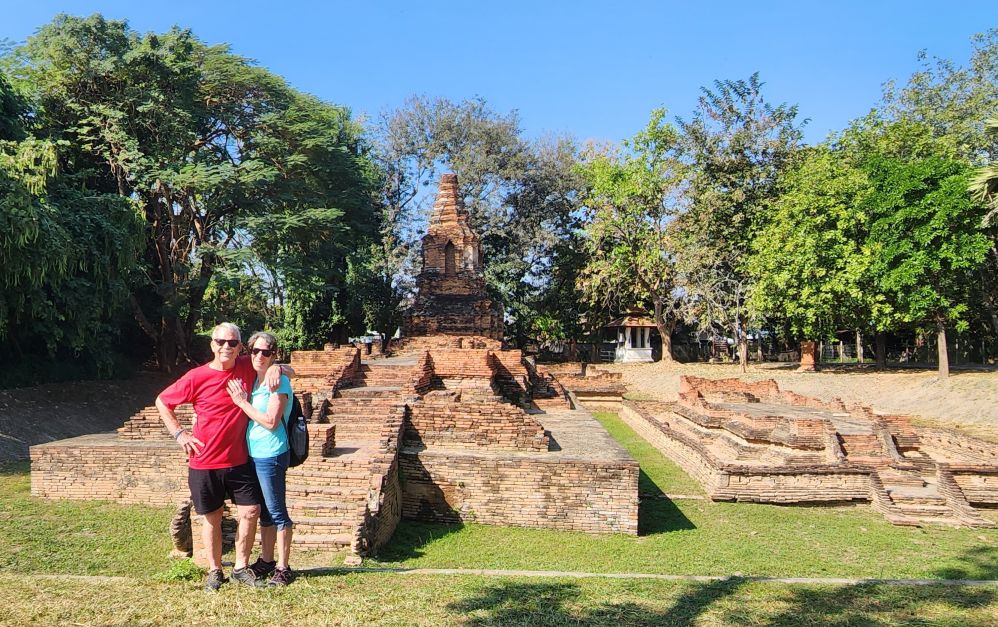
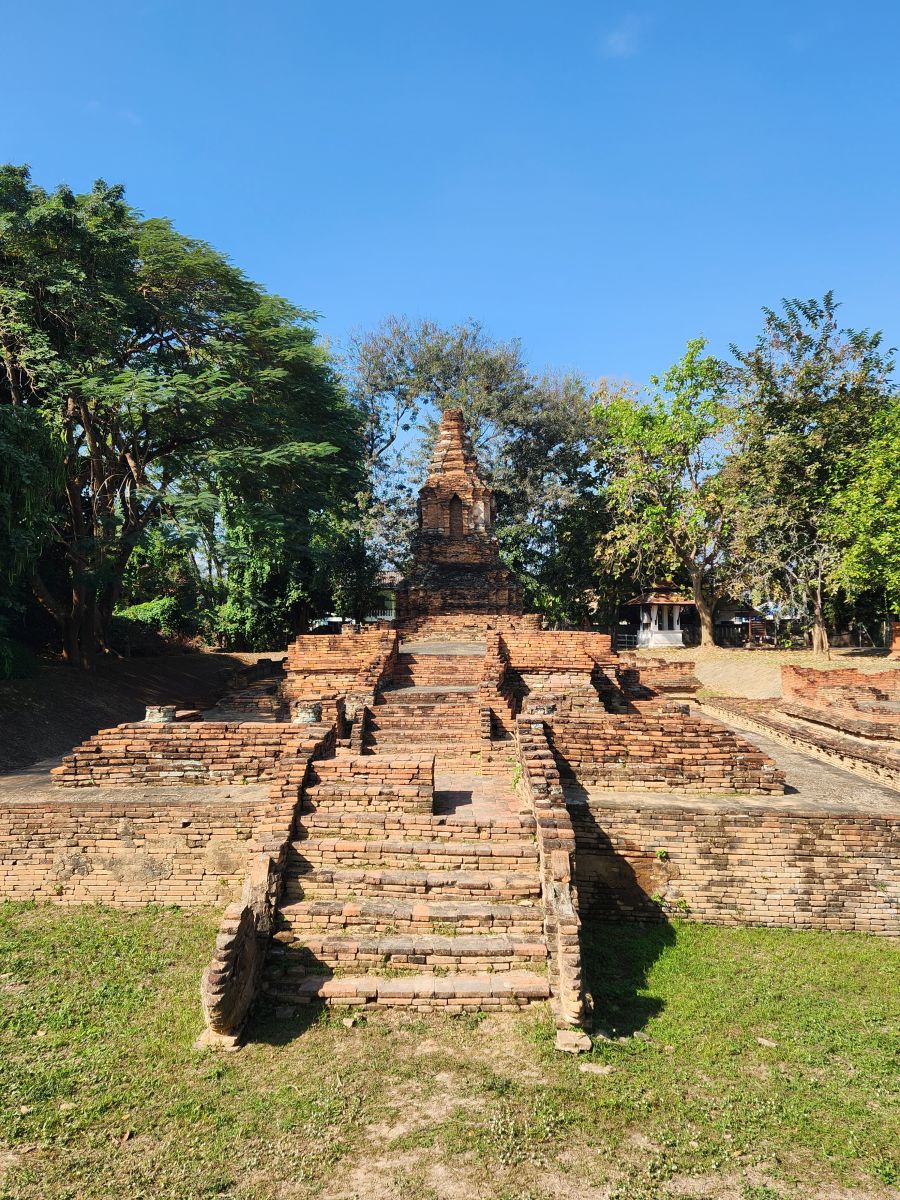
Then we are off again, this time to Wat That Khao, located a little bit outside the western side of Kum Kam. Here they have uncovered the base structures for the Wihan, Stupa and Ubosot, along with a Buddha statue which has been replaced with the current one in 1991.
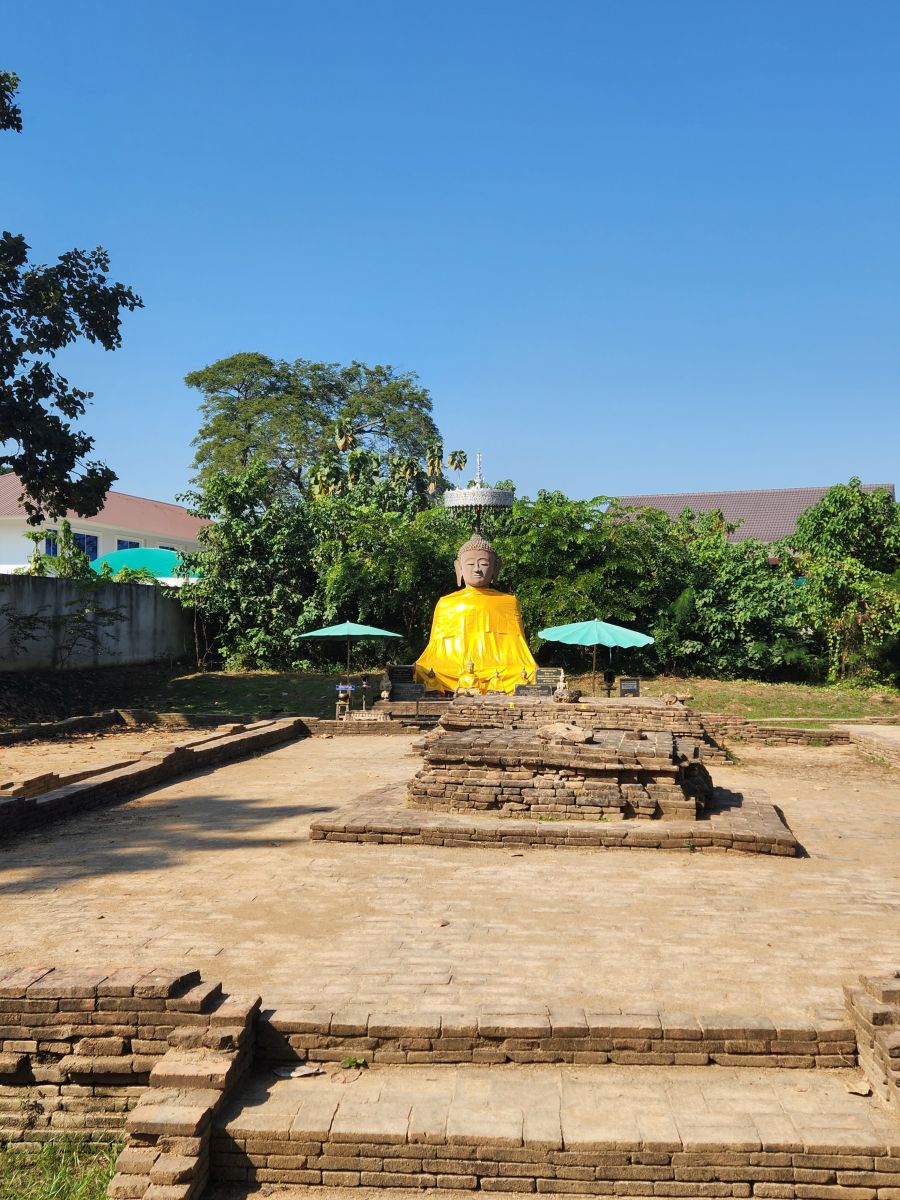
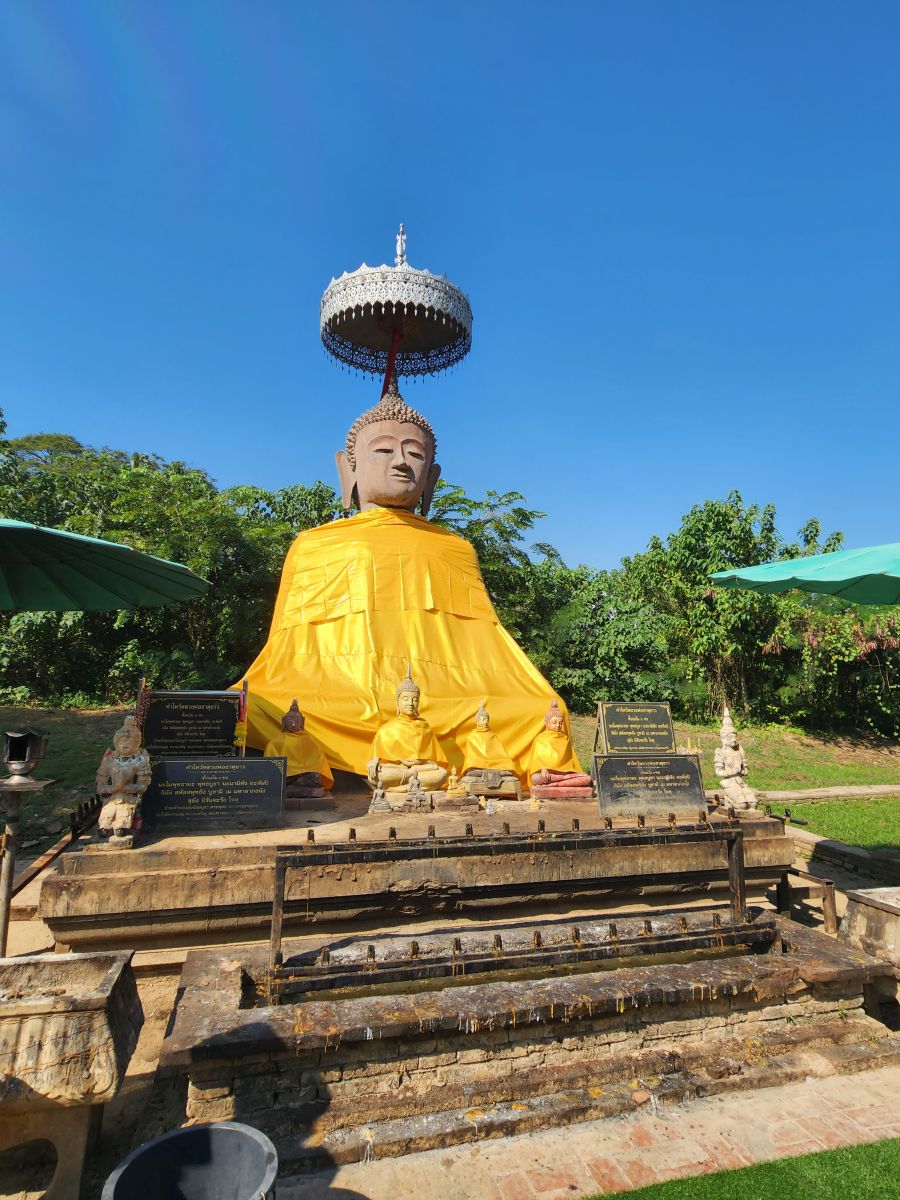
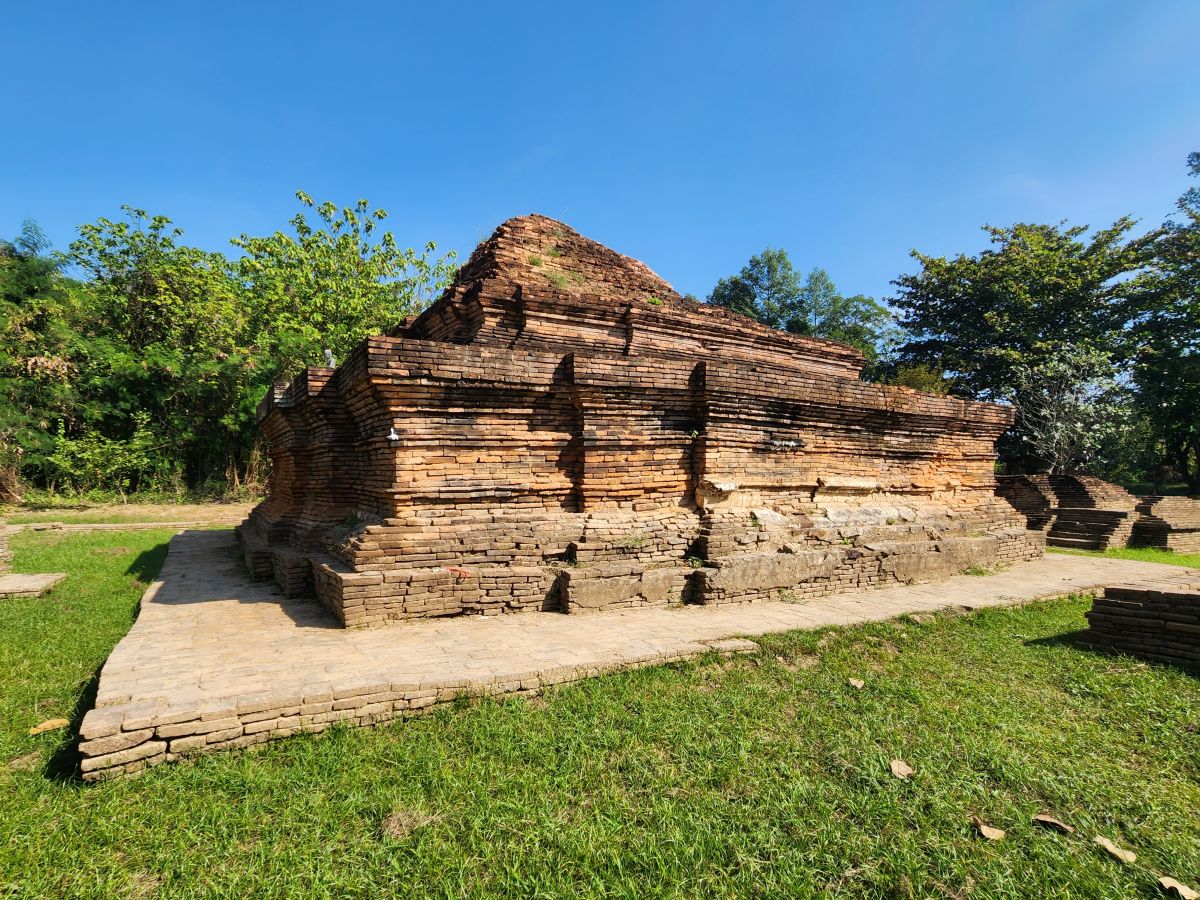
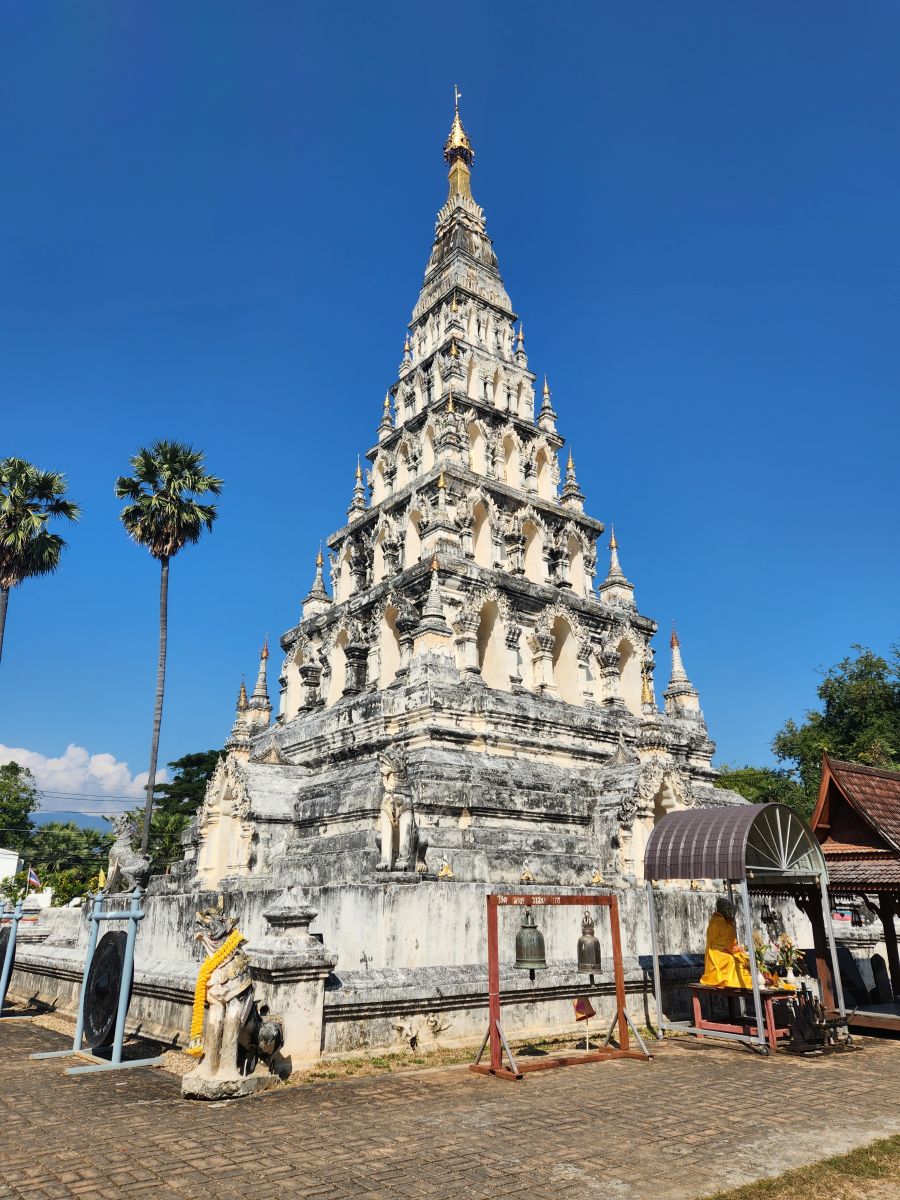
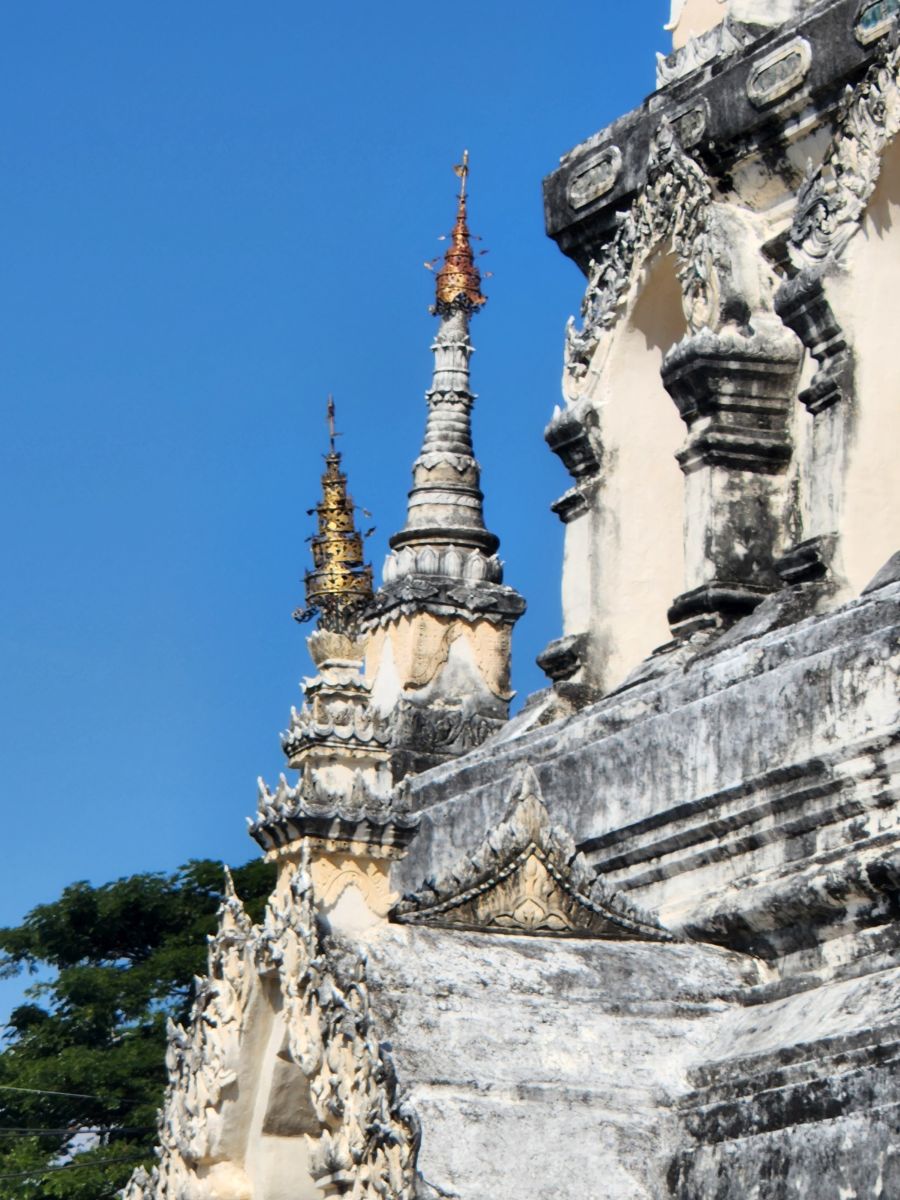
Our last stop in the vicinity of the old city is the famous Wat Chedi Liam. I believe this was the first temple built for Kum Kam and is a very sacred place. It is absolutely gorgeous, towering above us with the different Buddha images placed into carved niches on each side of the Chedi.
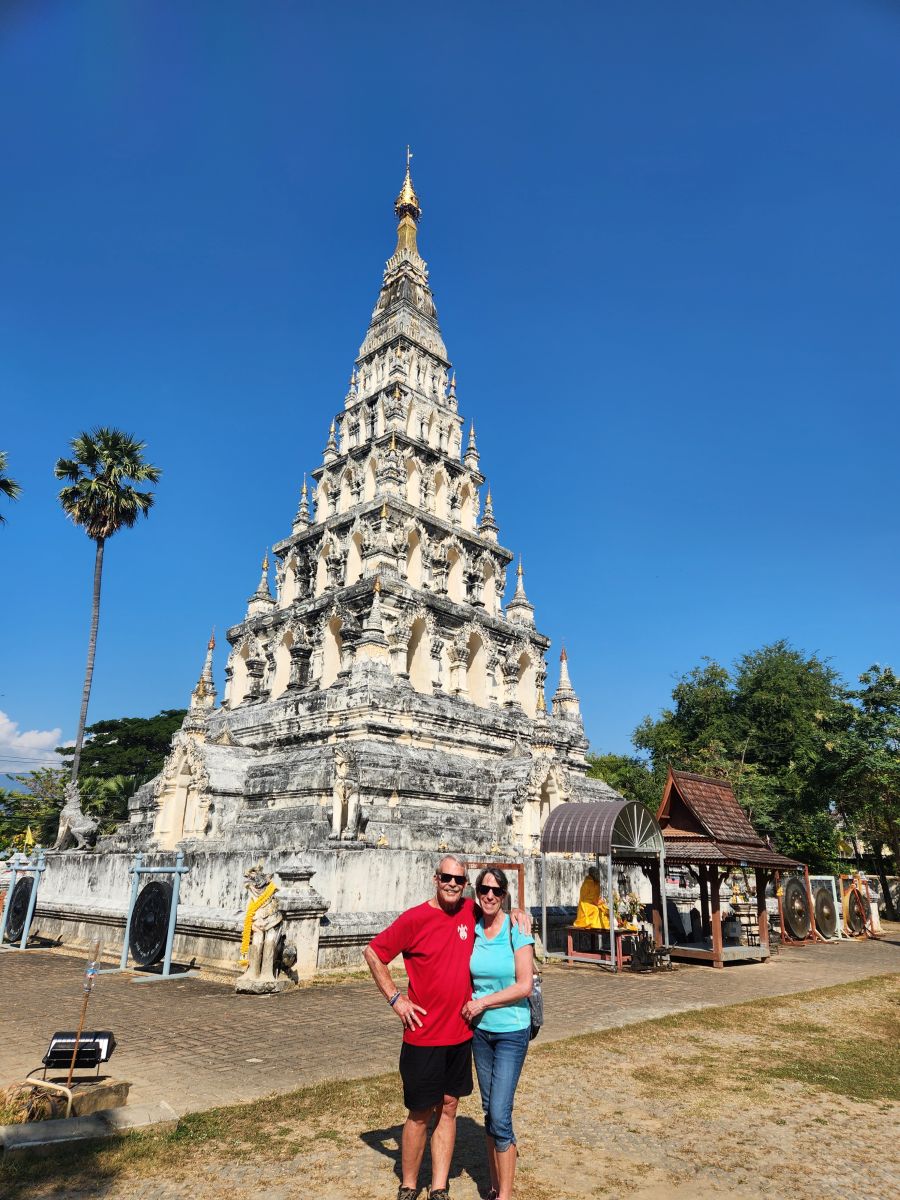
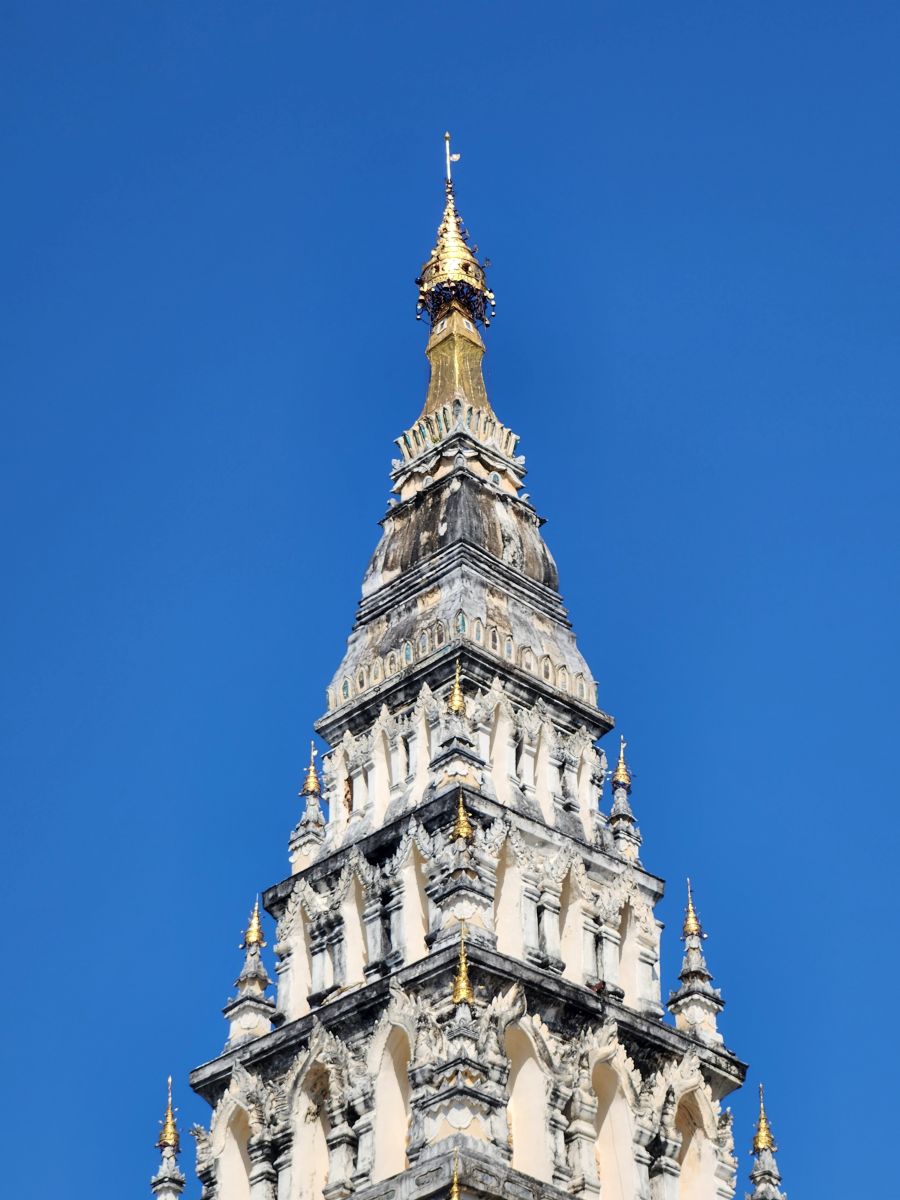
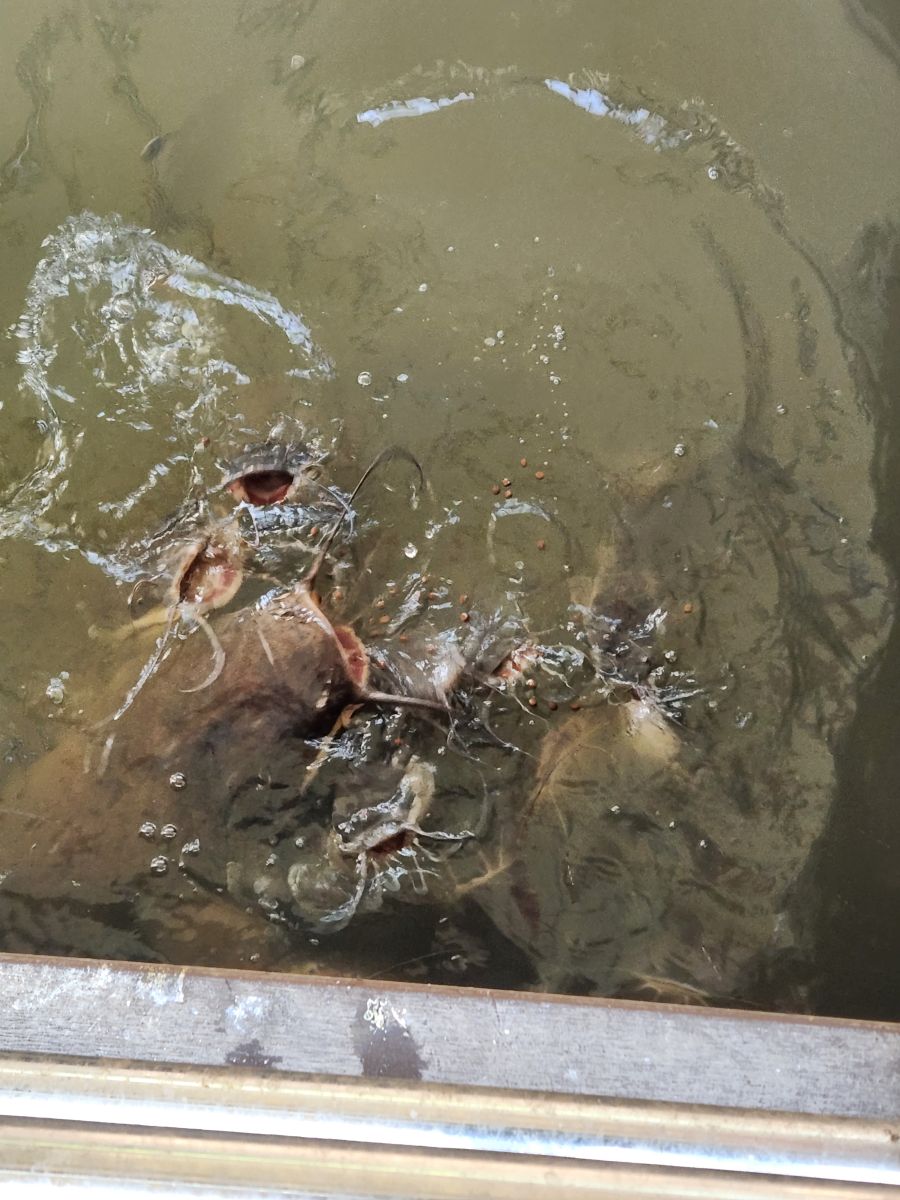
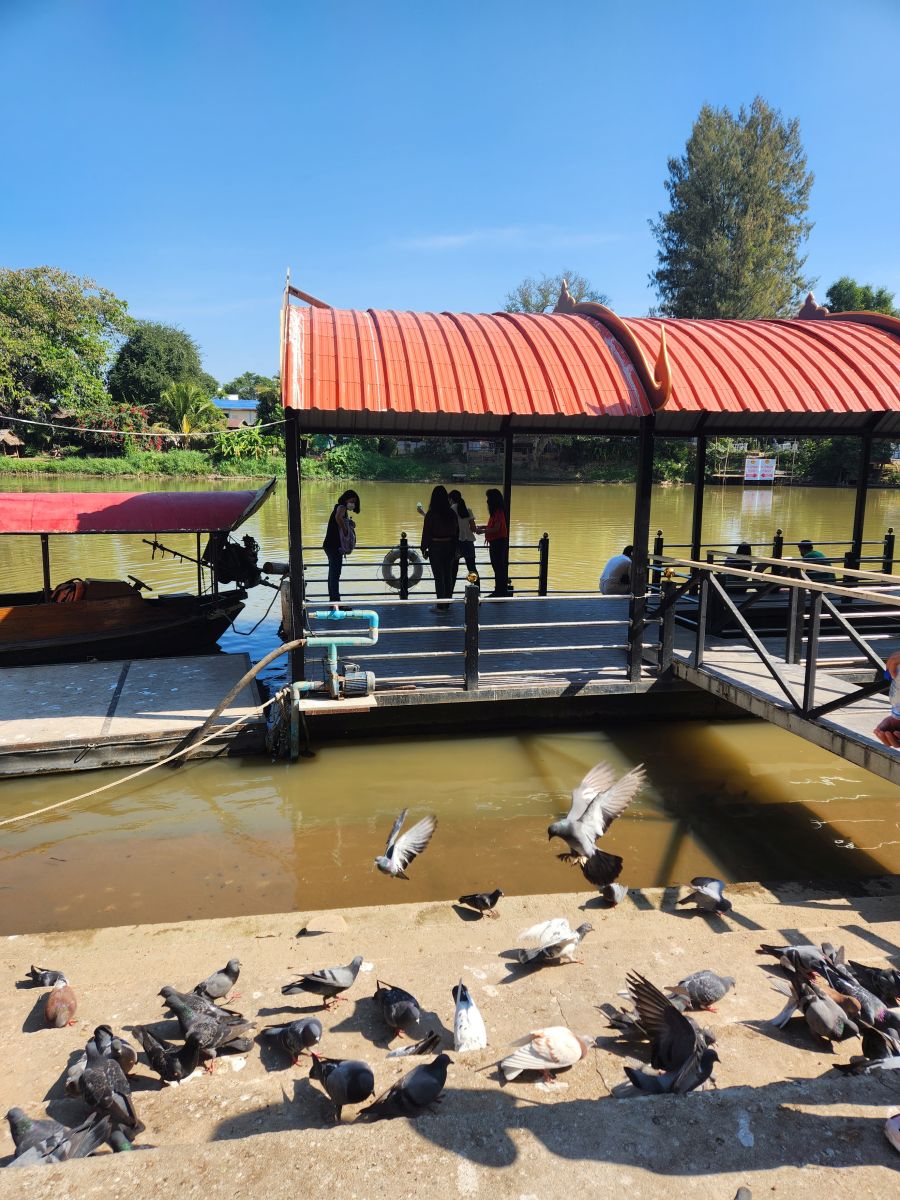
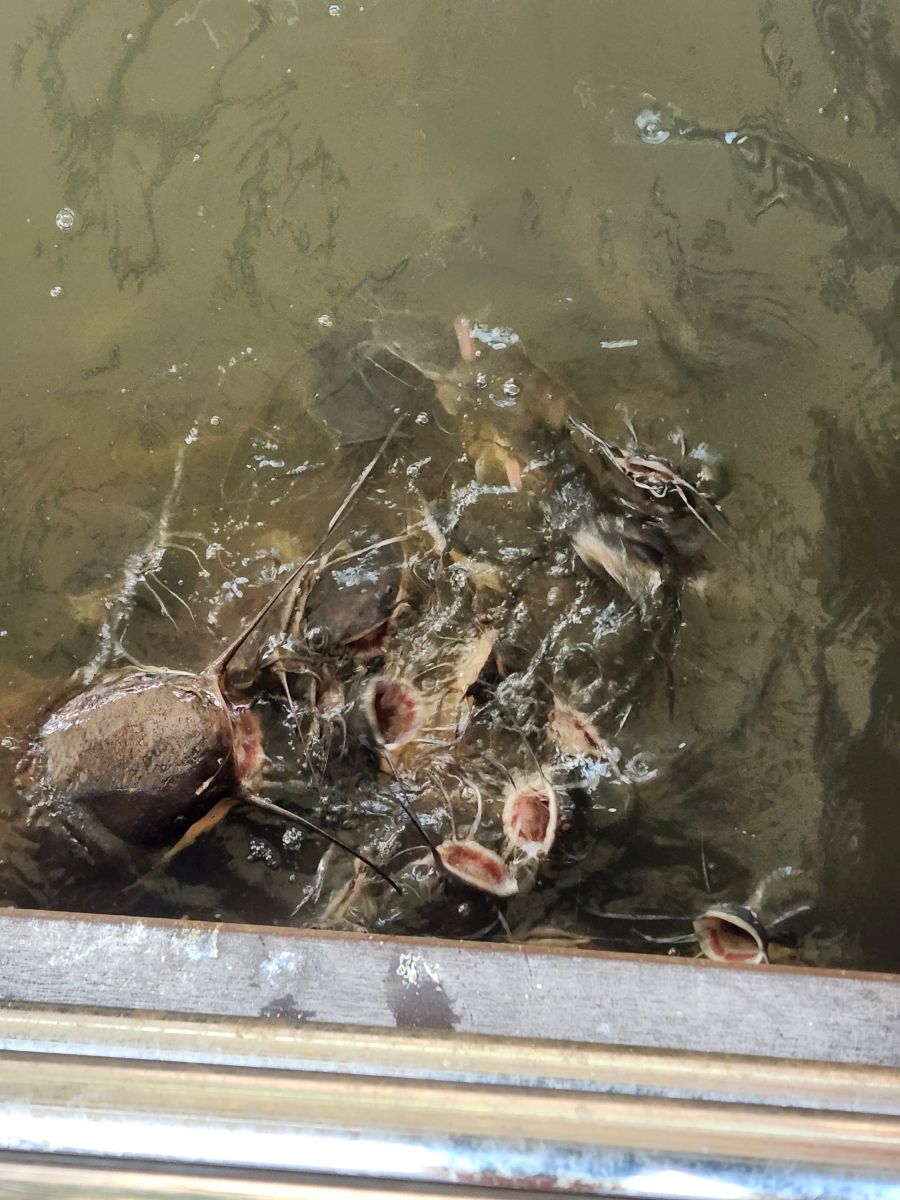
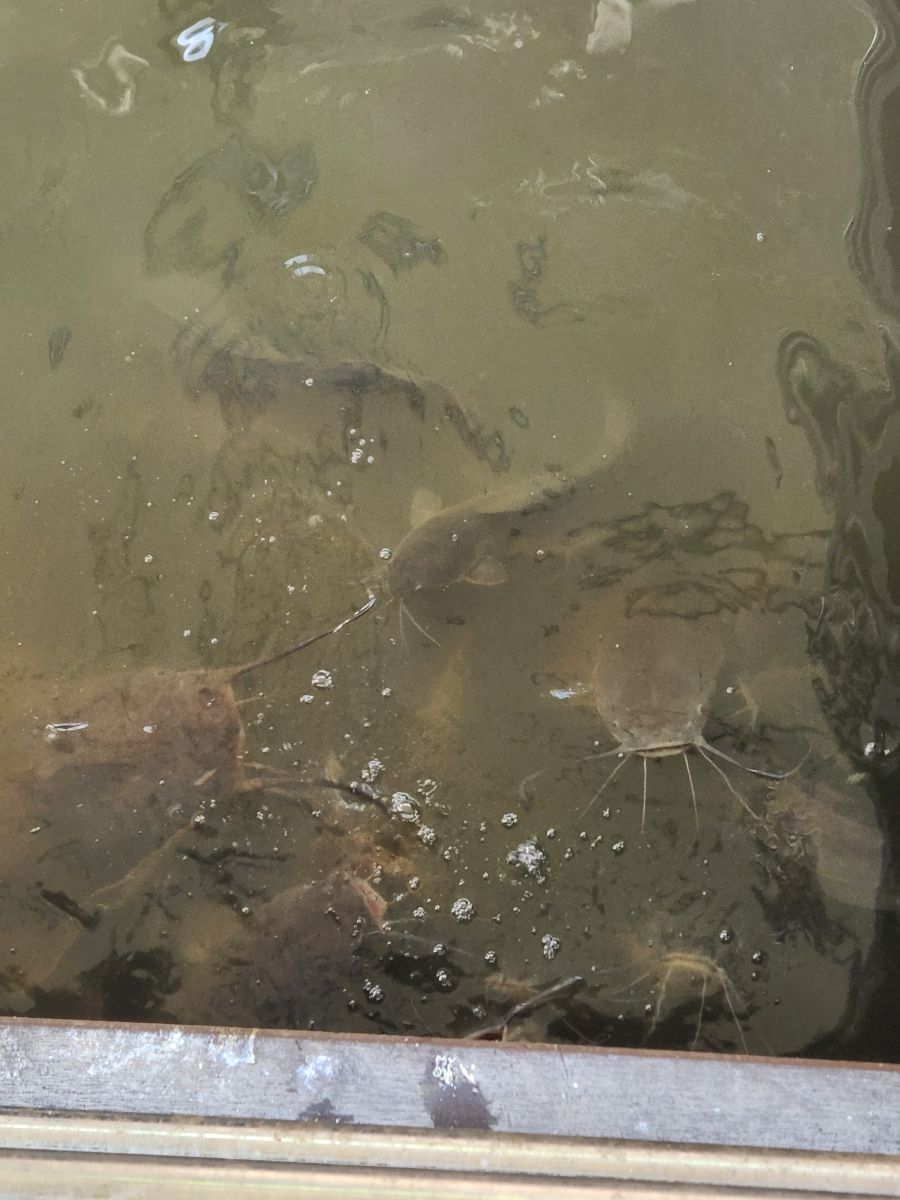
Wiang Kum Kam tour complete, we cycle back toward Chiang Mai, crossing over the highway again, but taking a different route through the twisty turny little streets that run roughly along the river and around the city. We make a final stop at Wat Chai Mongkhon where we ceremoniously feed the fish in the river. It is good luck to feed the fish here, and graduating school children come here at the end of their terms to get good luck from the fish. If size means anything, we should have excellent luck! These guys are monstrous catfish-looking beasts!
We are really close to the city now, as we cycle our way up Charoen Prathet, past the old Riverview Market, now under construction to turn it into heaven knows what, up to the corner at Warorot market and then back down Changklang road, cutting through some side streets to end up at the bike rental place once more. That was a great morning adventure. And we beat most of the heat – which was our strategy for taking the tour in the morning!
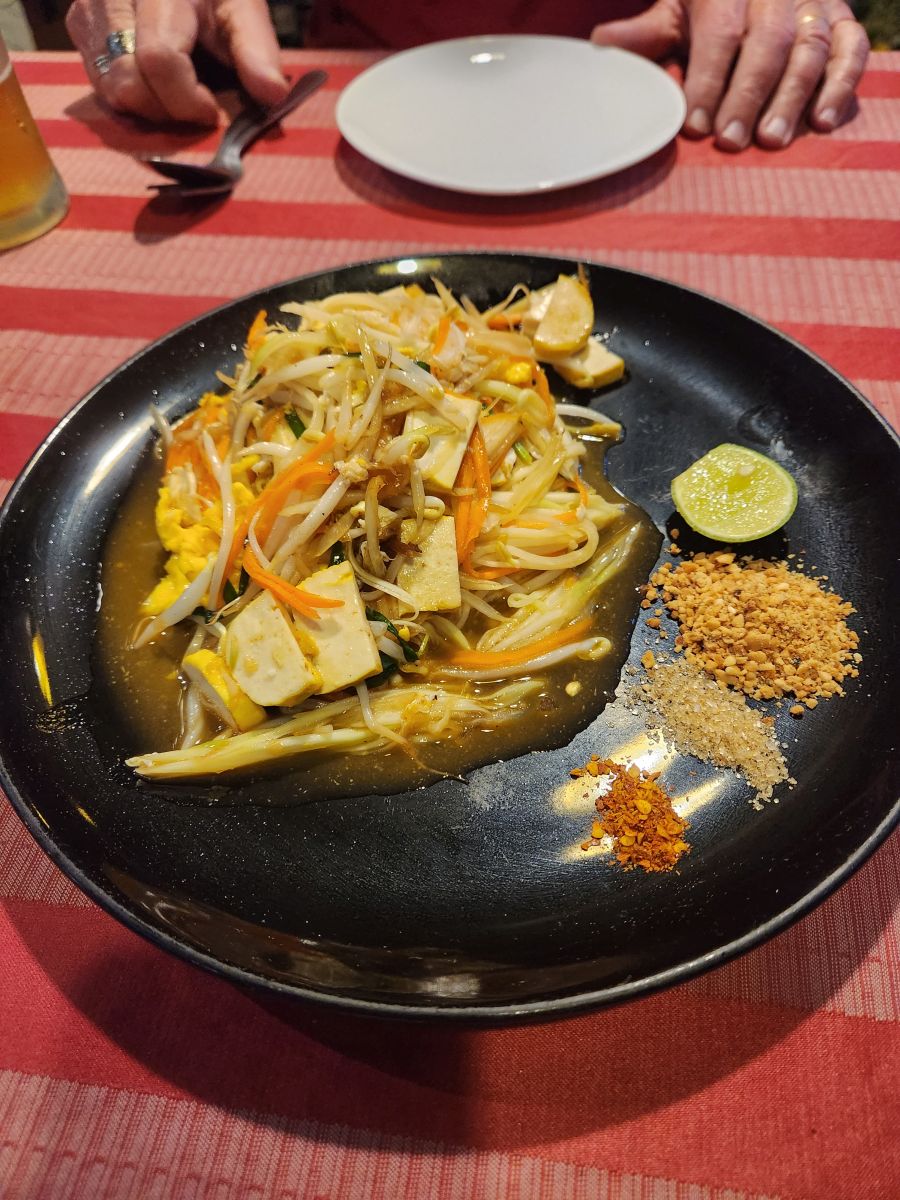
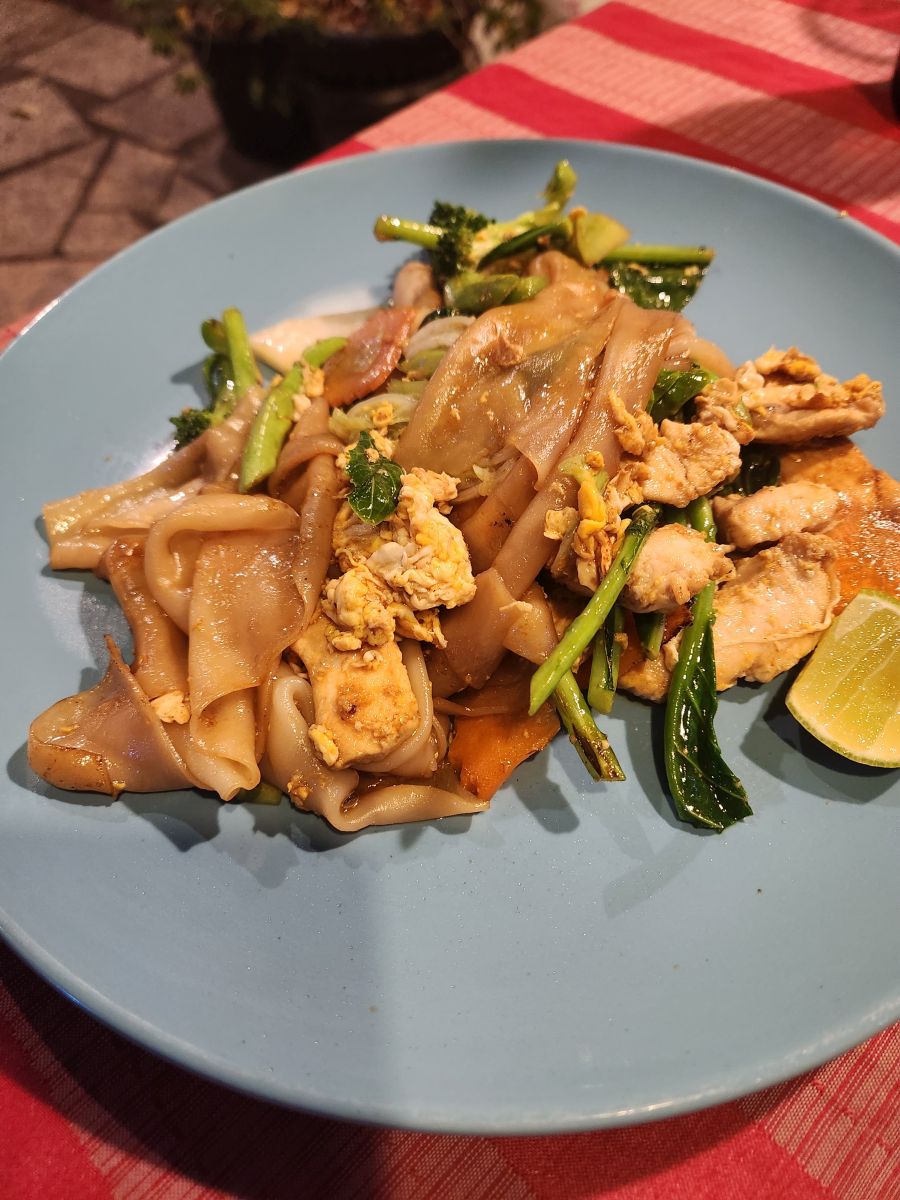
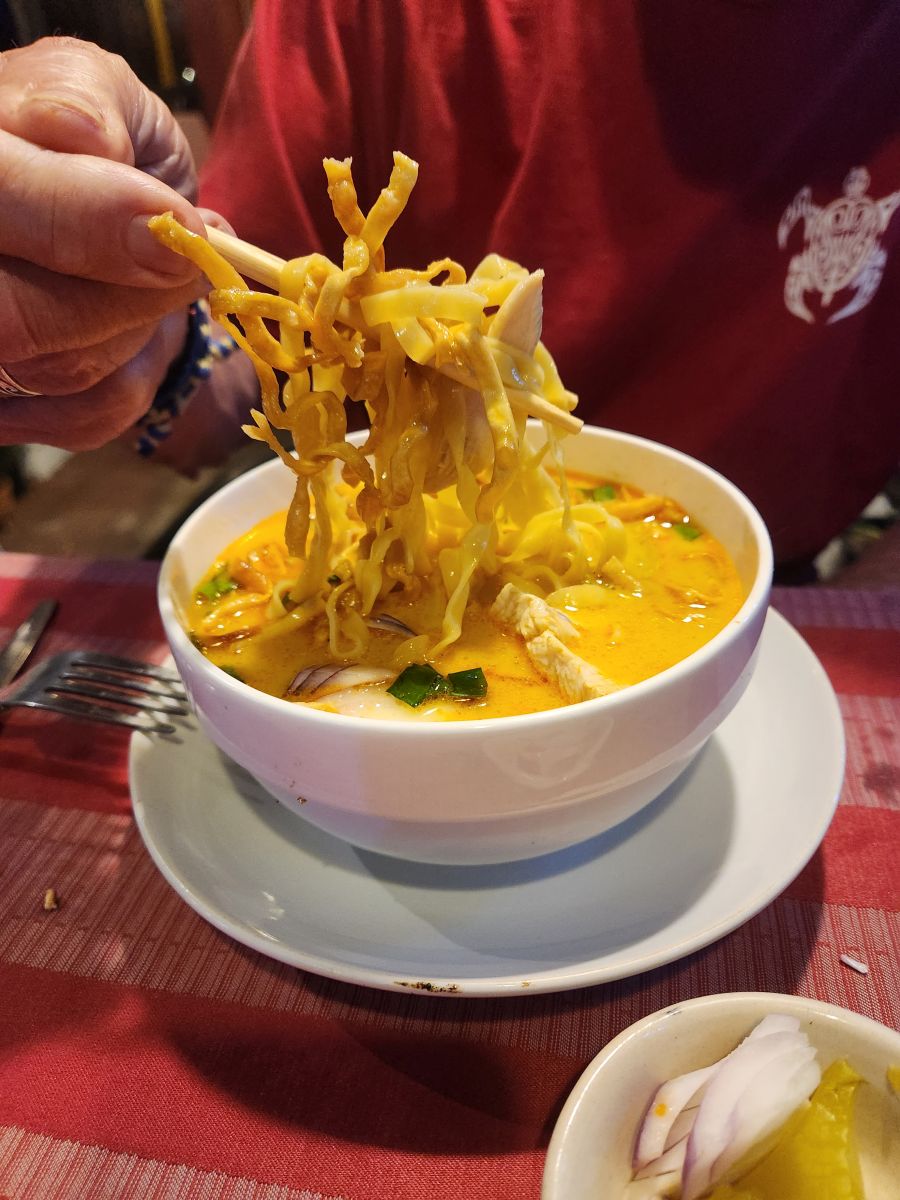
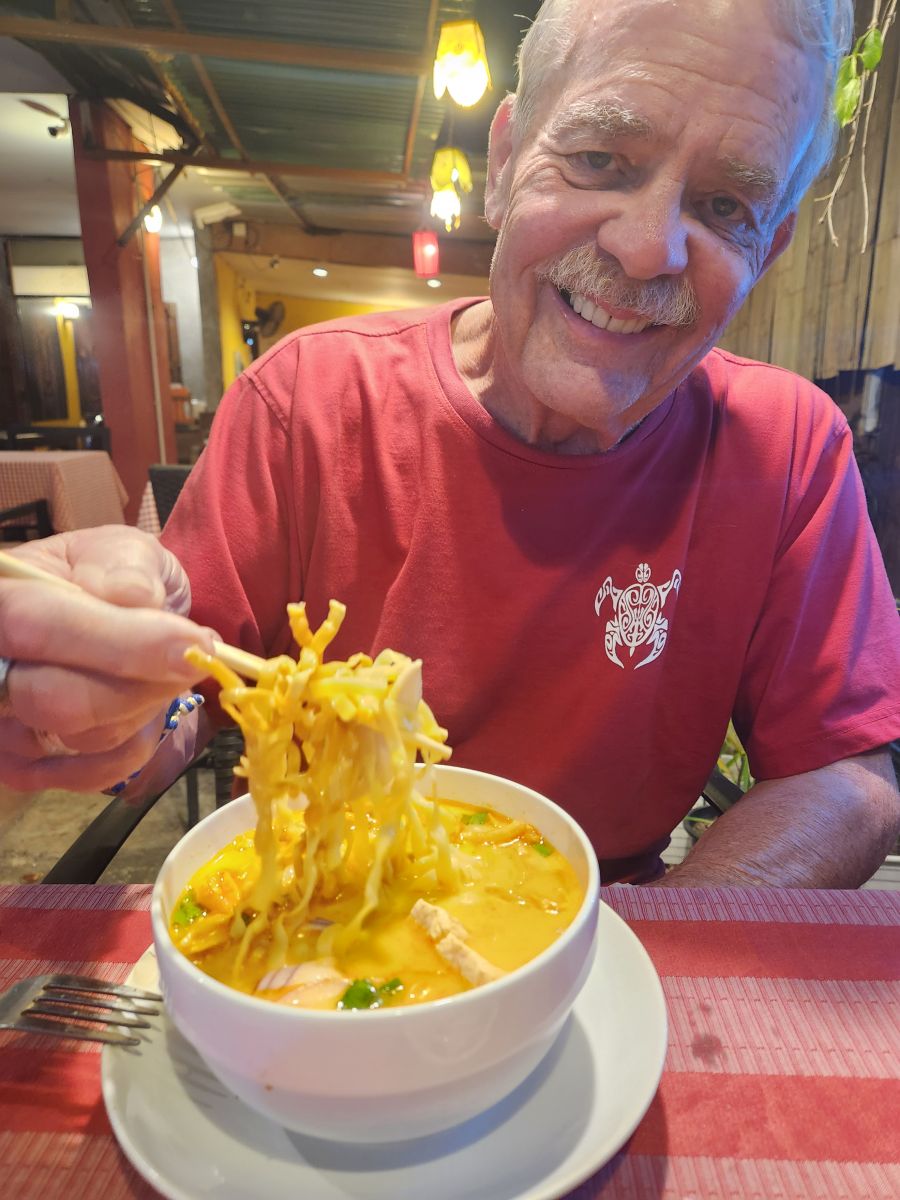
Bidding a fond farewell to Sam, we wander back to our lovely house to spend hide from the afternoon heat, venturing out later to go to Baan Na Na for dinner. I’m not giving that Papaya Pad Thai up! The husband/owner greets us like we’re long lost friends, remembering our drink orders. So sweet. Then it’s food on: Yes, Papaya Pad Thai to share, stir fried chicken with vegetables and Khao Soi for our mains. An excellent end to a wonderful day!
 Andiamo