Won’t say it….yes I will….Cadiz again! Today we dock at the absolute crappiest dock. There are 5 ships here – more than we have ever seen – and we are the furthest dock. Although it is really close to the train station – which for us is perfect because that is where we are picking up our car. Unfortunately, this is another “no walking” pier, and we are forced to take the shuttle ALL THE WAY around the port to the passenger terminal which is a 15-minute walk to the train station. Oh well. It’s just exercise.
As it is, we are still 30 minutes early for our car pick up at 9:00am when Europcar opens. We settle into wait at the station, first in line, of course. By the time the office opens another couple is there trying to cut in line, but they have somewhere they have to be in an hour and the woman is clearly frazzled, so we let them go first. We have all day and not very far to drive, no big deal to us. Once it is our turn, we get our paperwork and keys pretty quickly and head out into the parking lot to find the car. Which turns out to be a tad more difficult than you would think! We finally locate the thing all the way down at the end of the parking lot and are soon on our way to Bahia de Cadiz Natural Park.
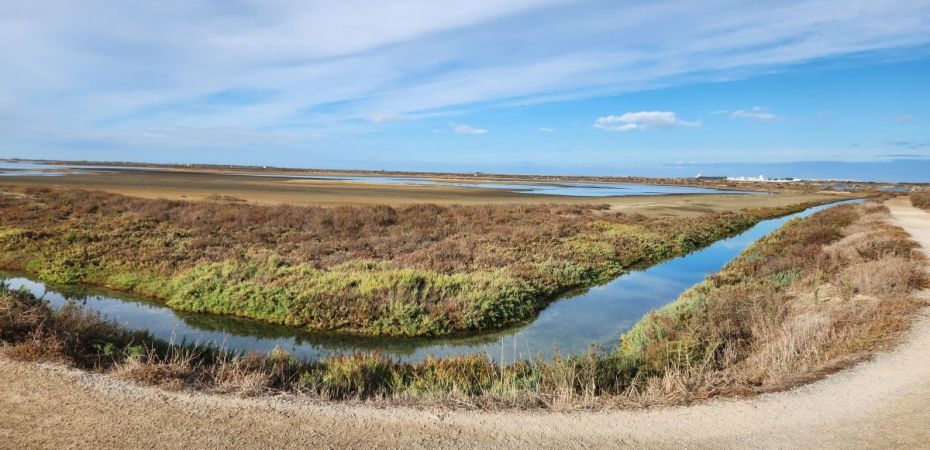
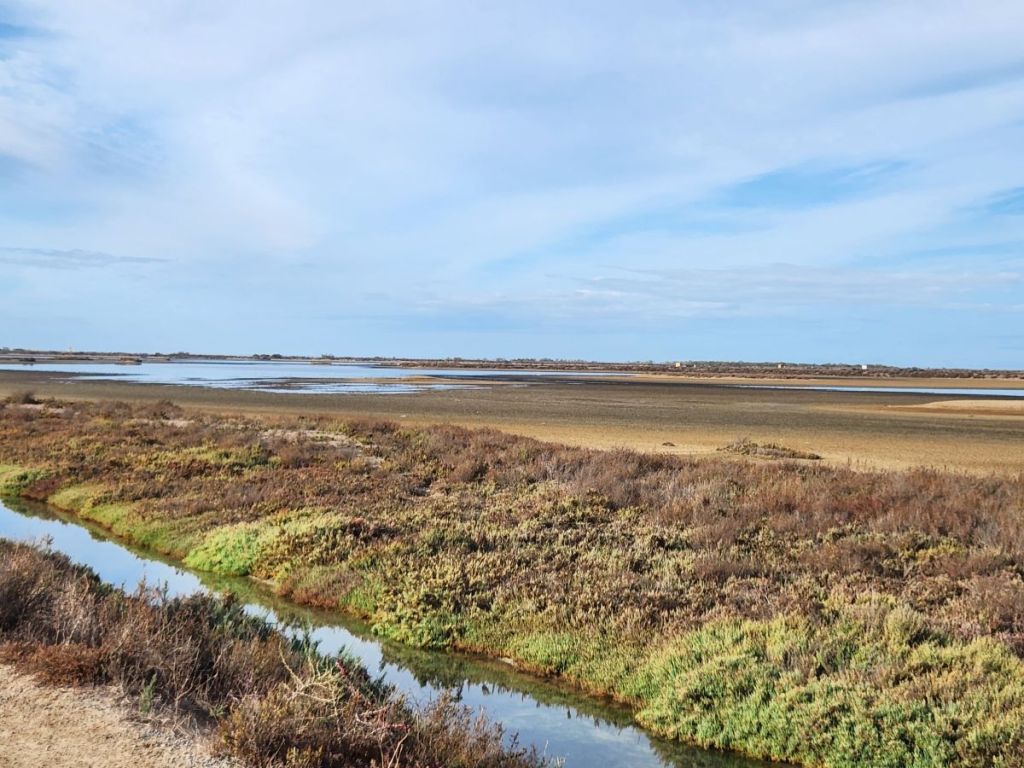
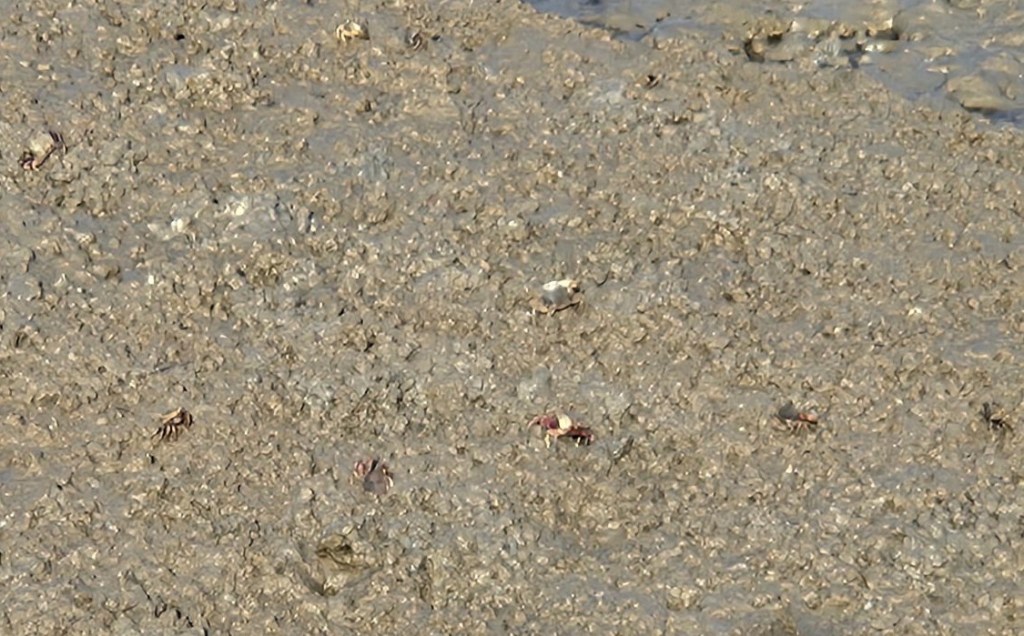
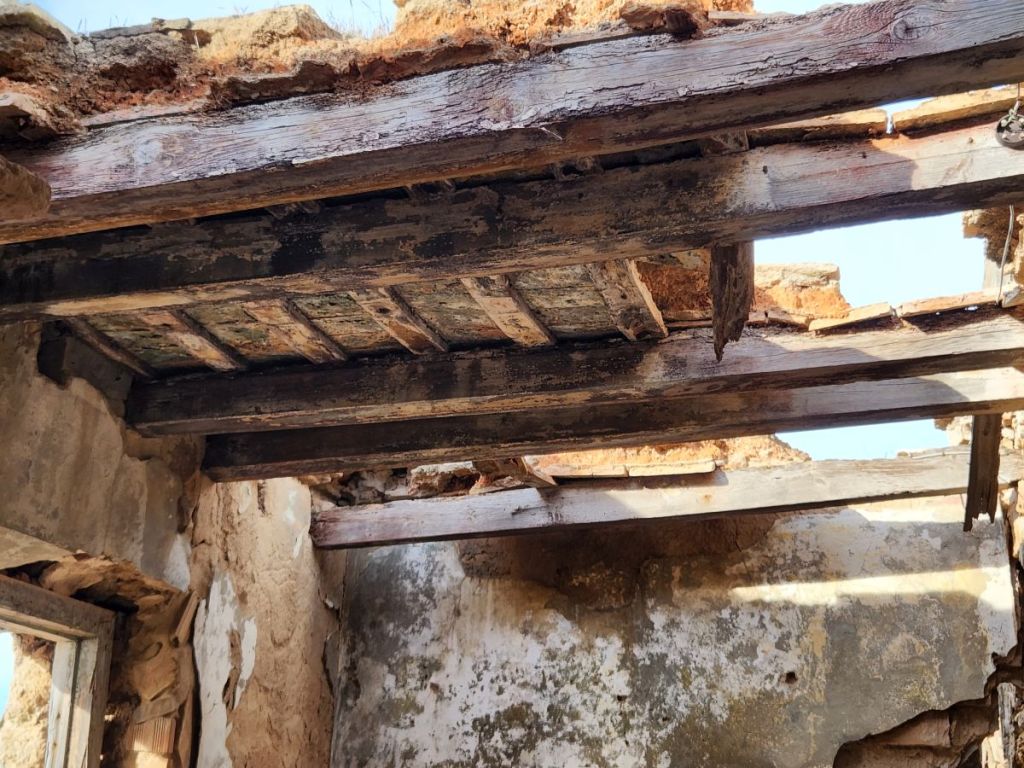
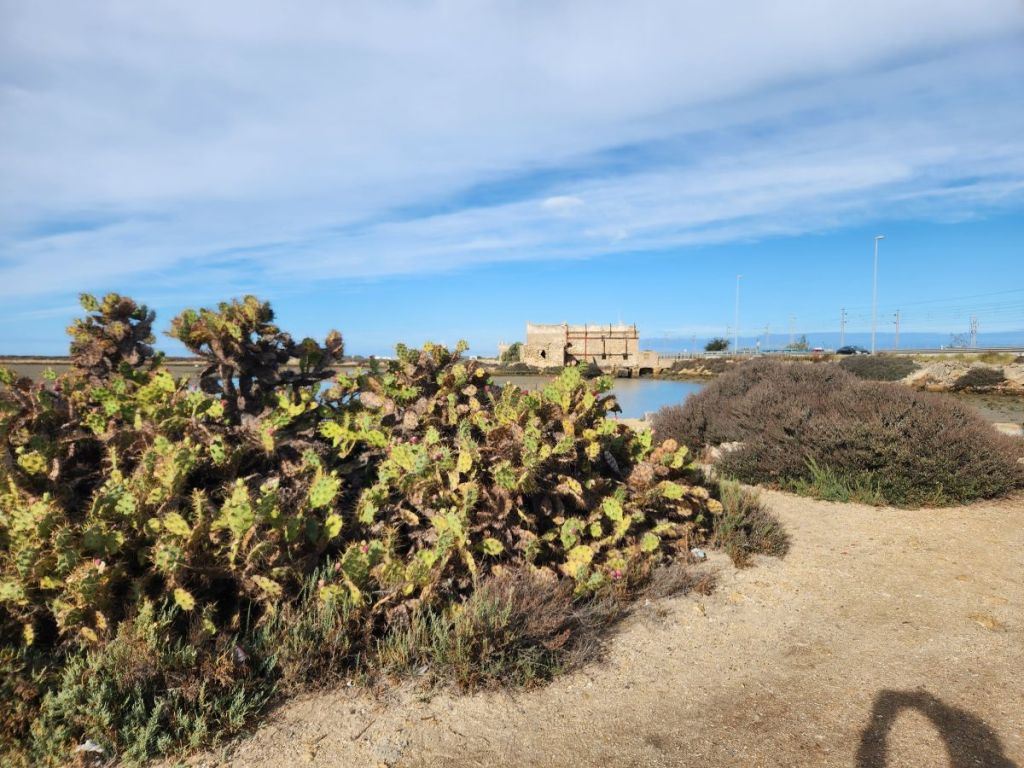
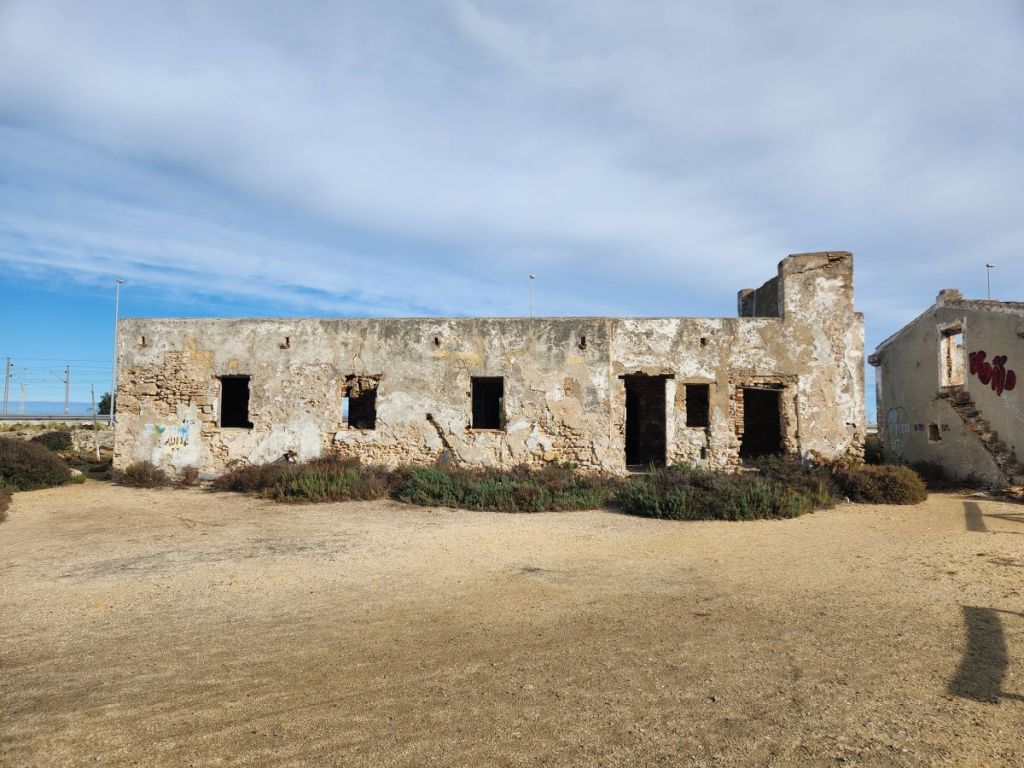
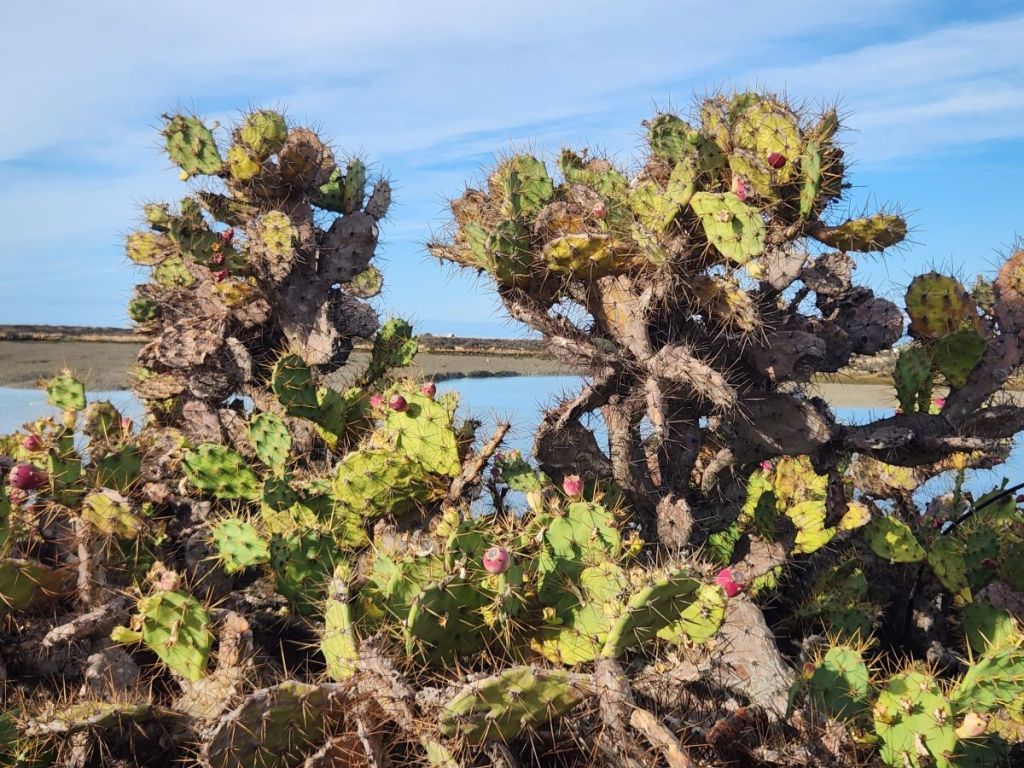
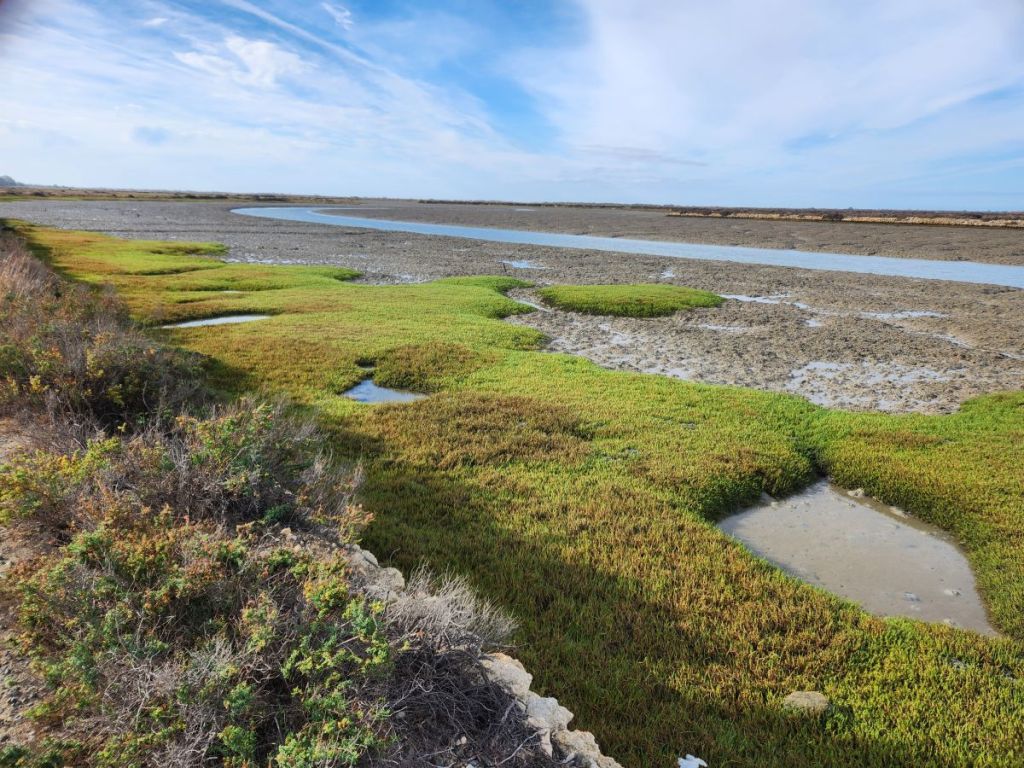
It is a really short and easy 20-minute drive to the entrance of the Sendara Tres Amigos-Rio Arillo walking trail which is a 4.8k circuit through a beautiful estuary and old salt fields ending in an abandoned salt mine near the coastal highway. On the way, the drive reminds us of the Outer Banks and the road to Hatteras along the barrier island. Once at the parking lot, we easily find the entrance to the trail and are off on our hike.
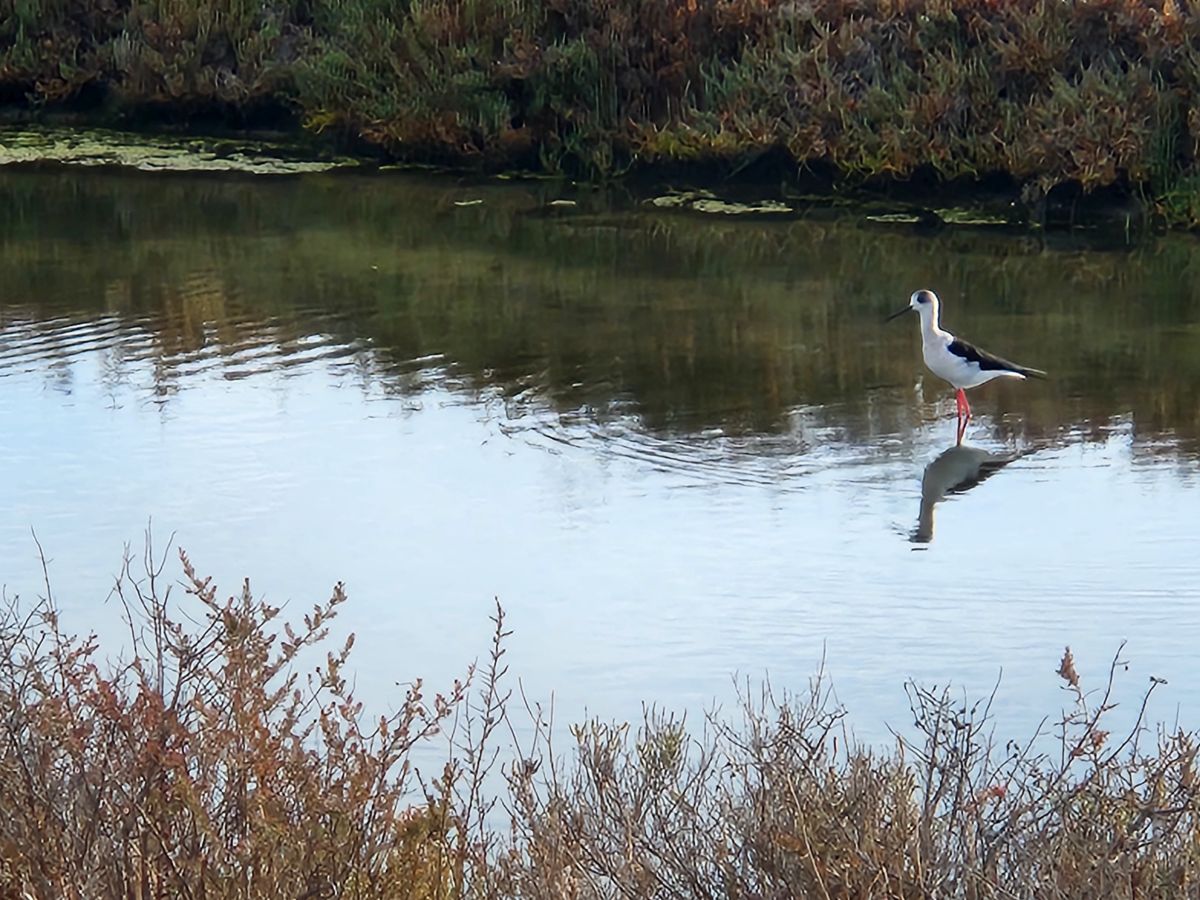
It is once again a beautiful day, sunny and warm but with a nice cool wind. Heading out into the estuary, we are looking for birds, as this is supposed to be a huge bird sanctuary – but sadly we must have missed most of the migratory birds, as there are only a few to be seen. Although they are wild looking – black and white with long red legs that flow out behind them, like a long red tail, when they fly.
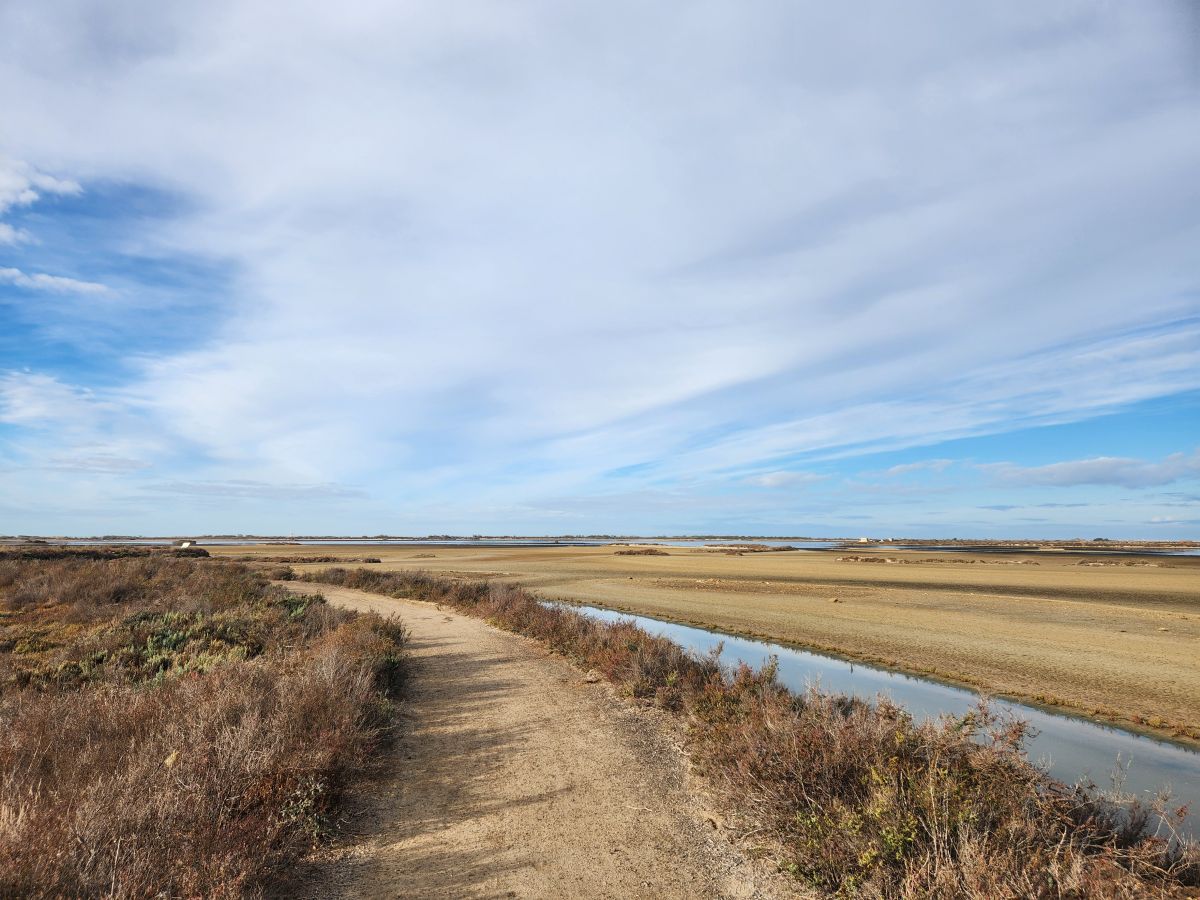
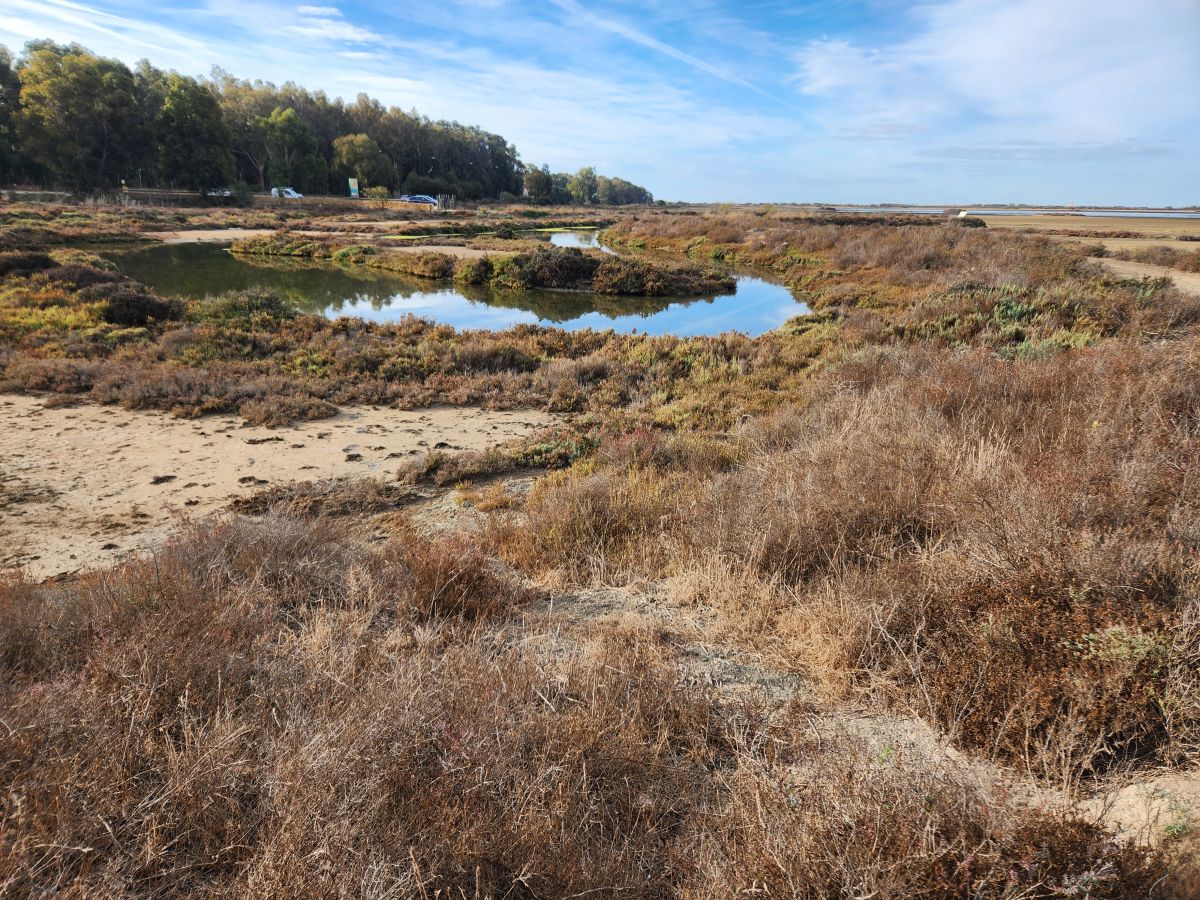
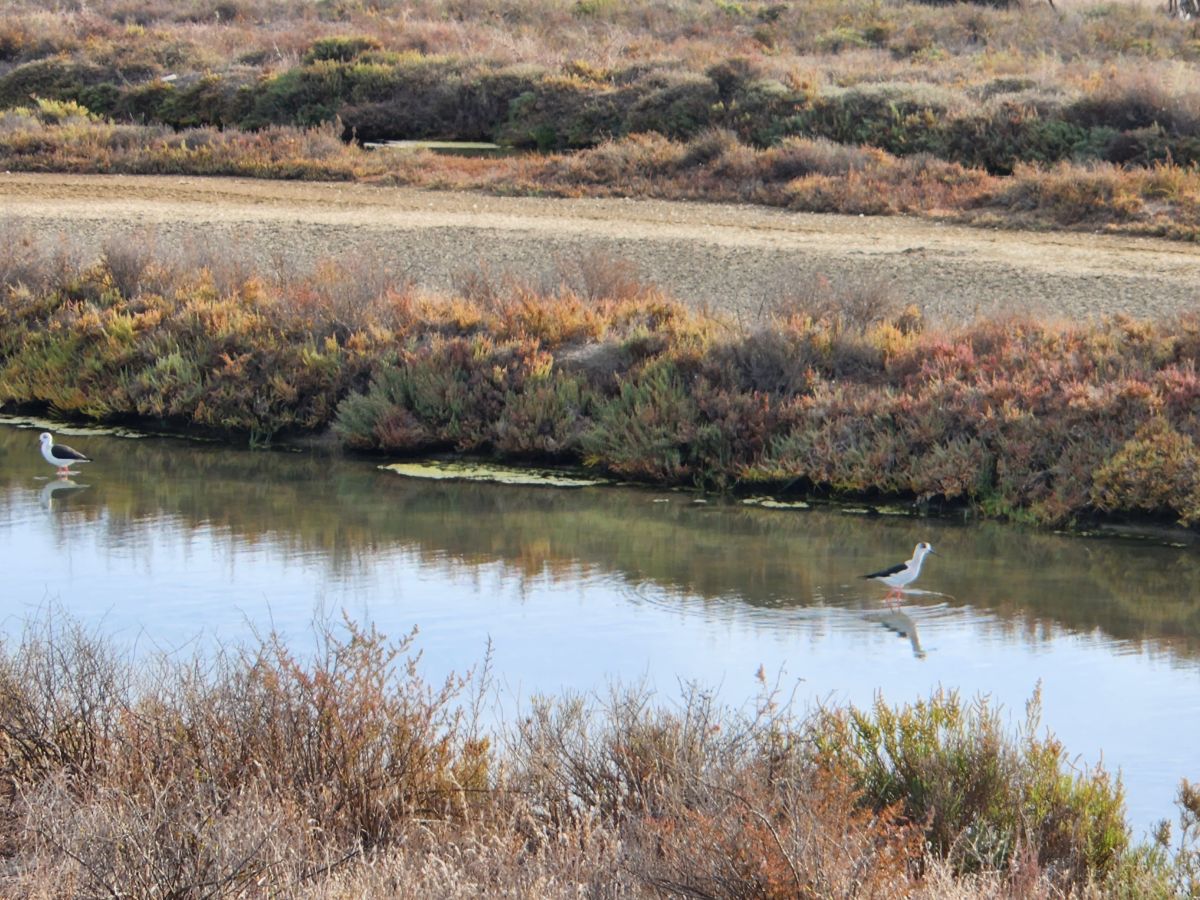
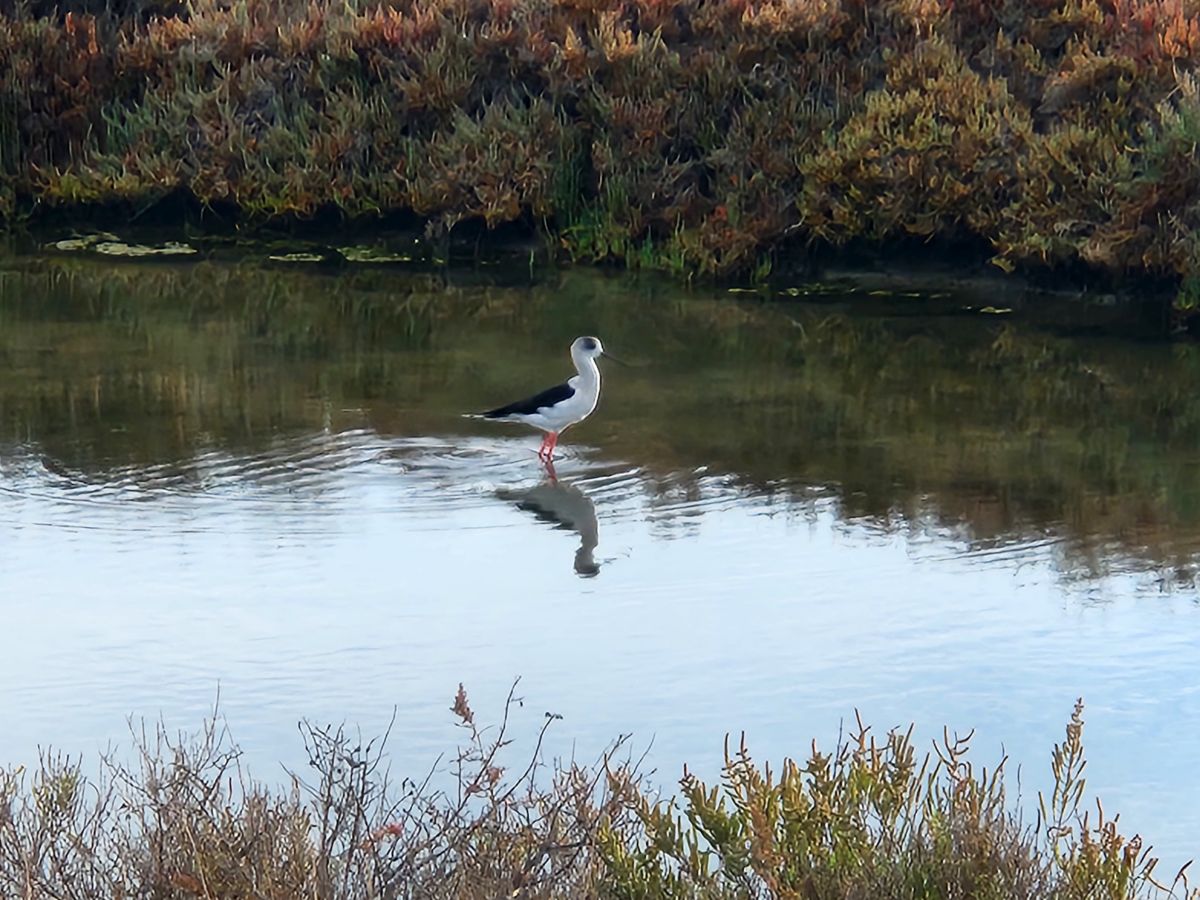
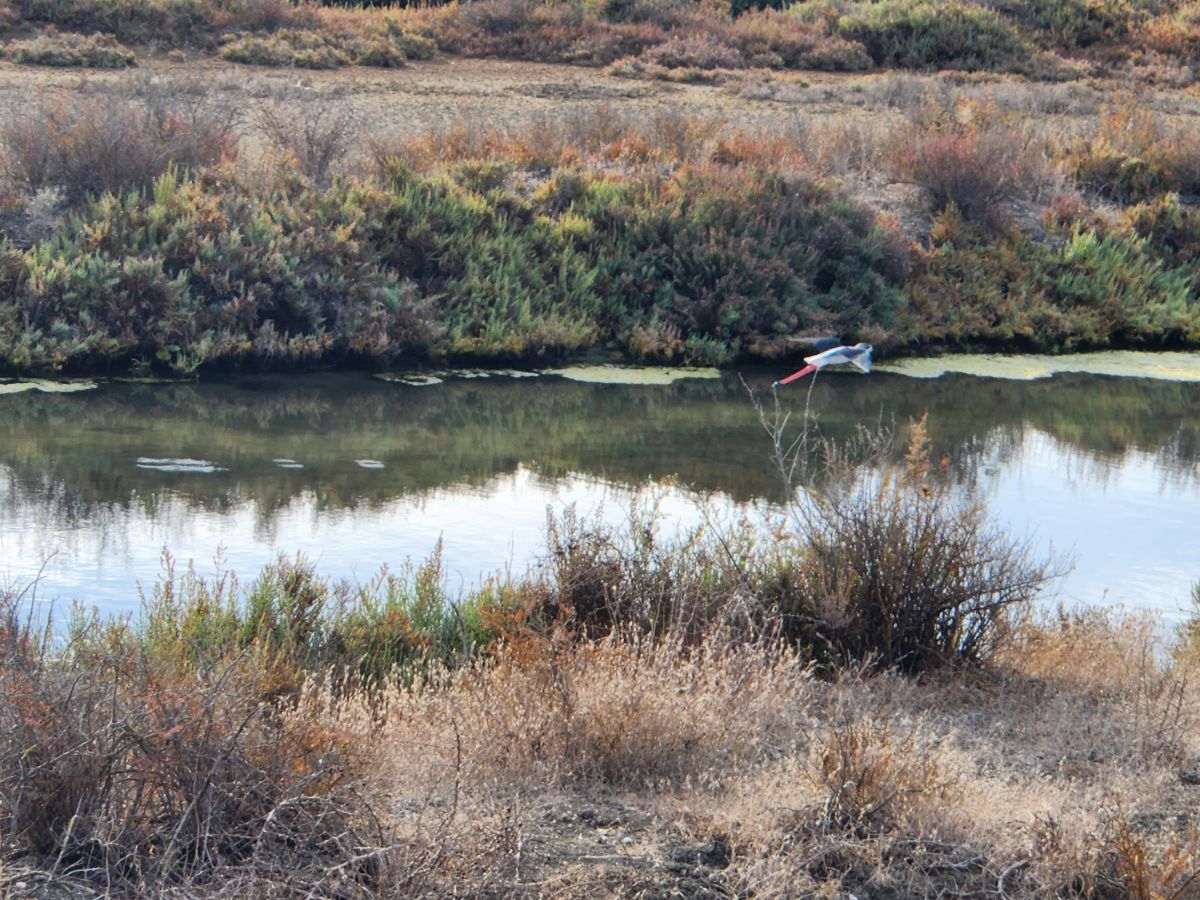
Otherwise though, it is gorgeous out here, and so interesting to have so much nature so close to the city. There are also the sonic booms – which come at 15 minute intervals and seem relatively familiar, but we can’t really remember if we heard them here or somewhere else. We never see a plane, even though there is military somewhere nearby, so we conclude it is to keep the birds off of something. Maybe that’s why there aren’t many birds here!
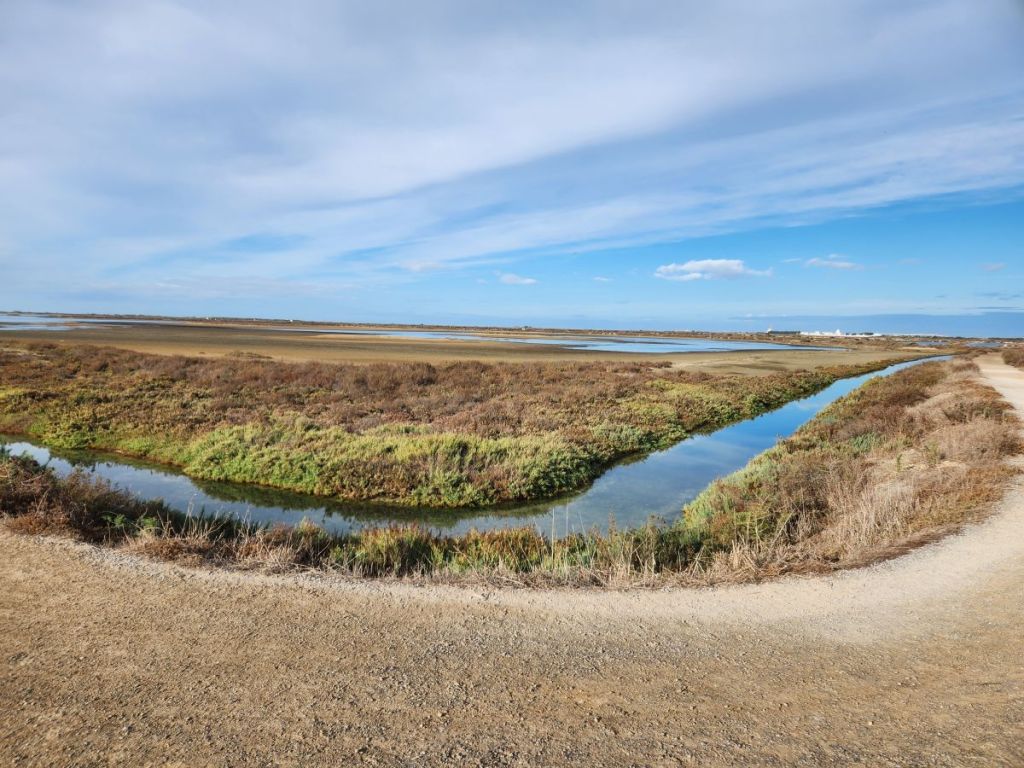

Completing our in and out hike, we now turn our sights to El Puerto de Santa Maria which dates back to the Roman period and is the port from which Christopher Columbus set sail with the ship named….of course….Santa Maria. We figure we’ll have lunch here, wander around the different plazas and visit the castle before returning back to Cadiz.
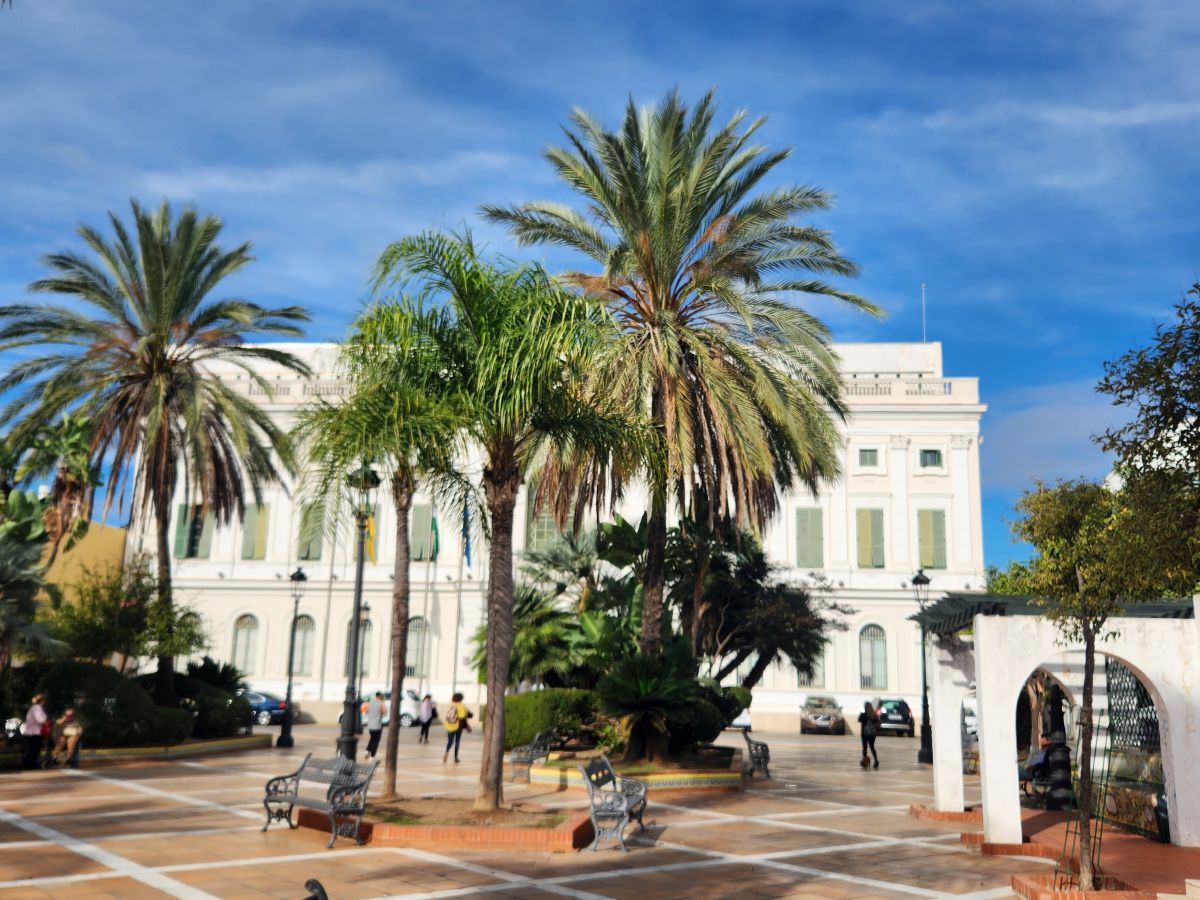
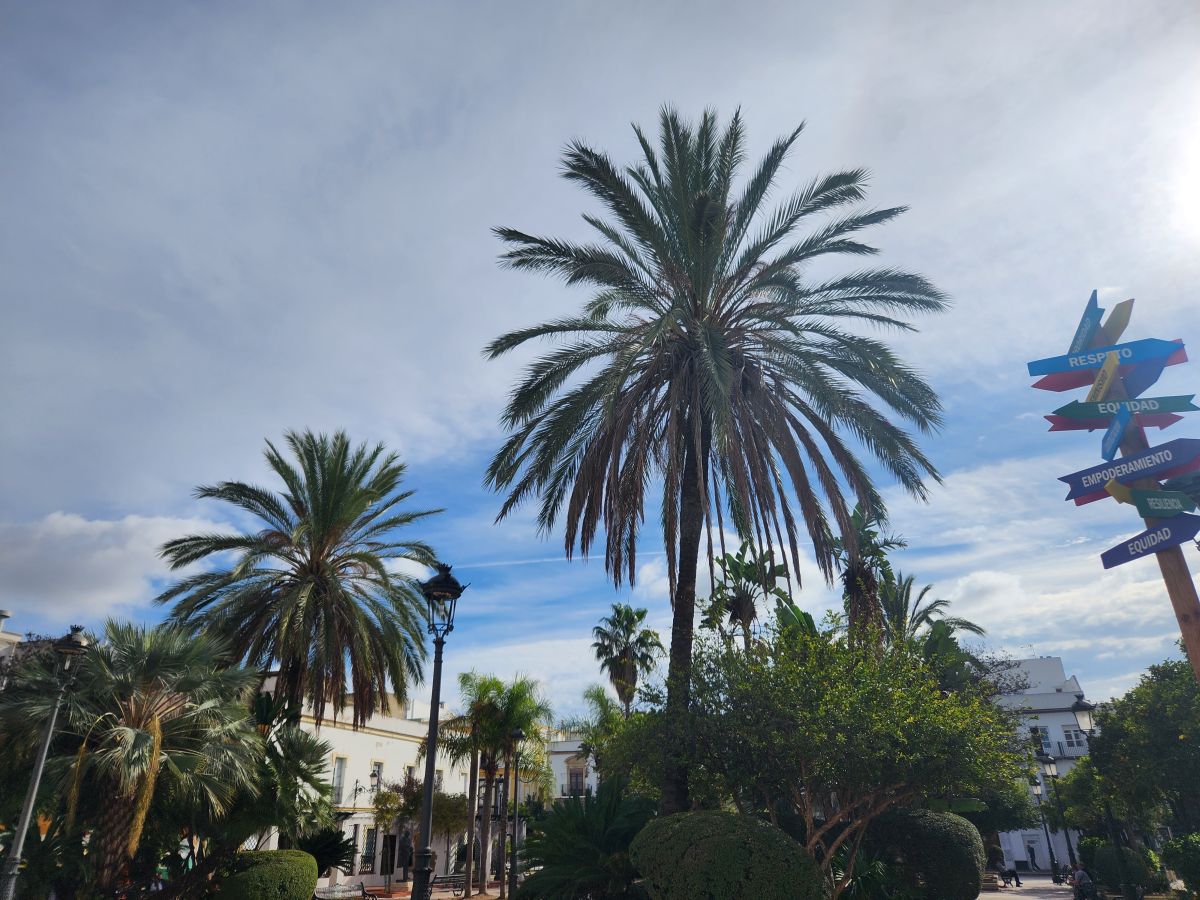
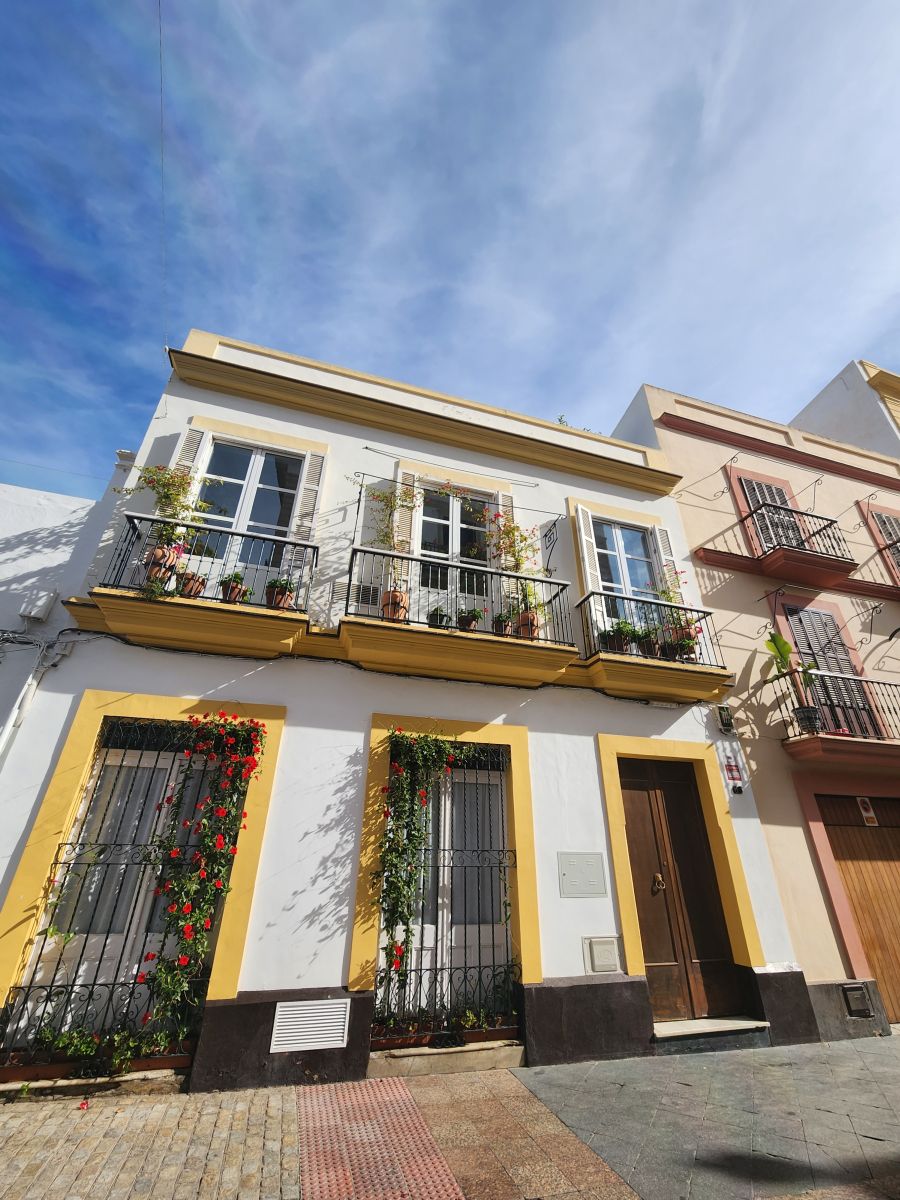
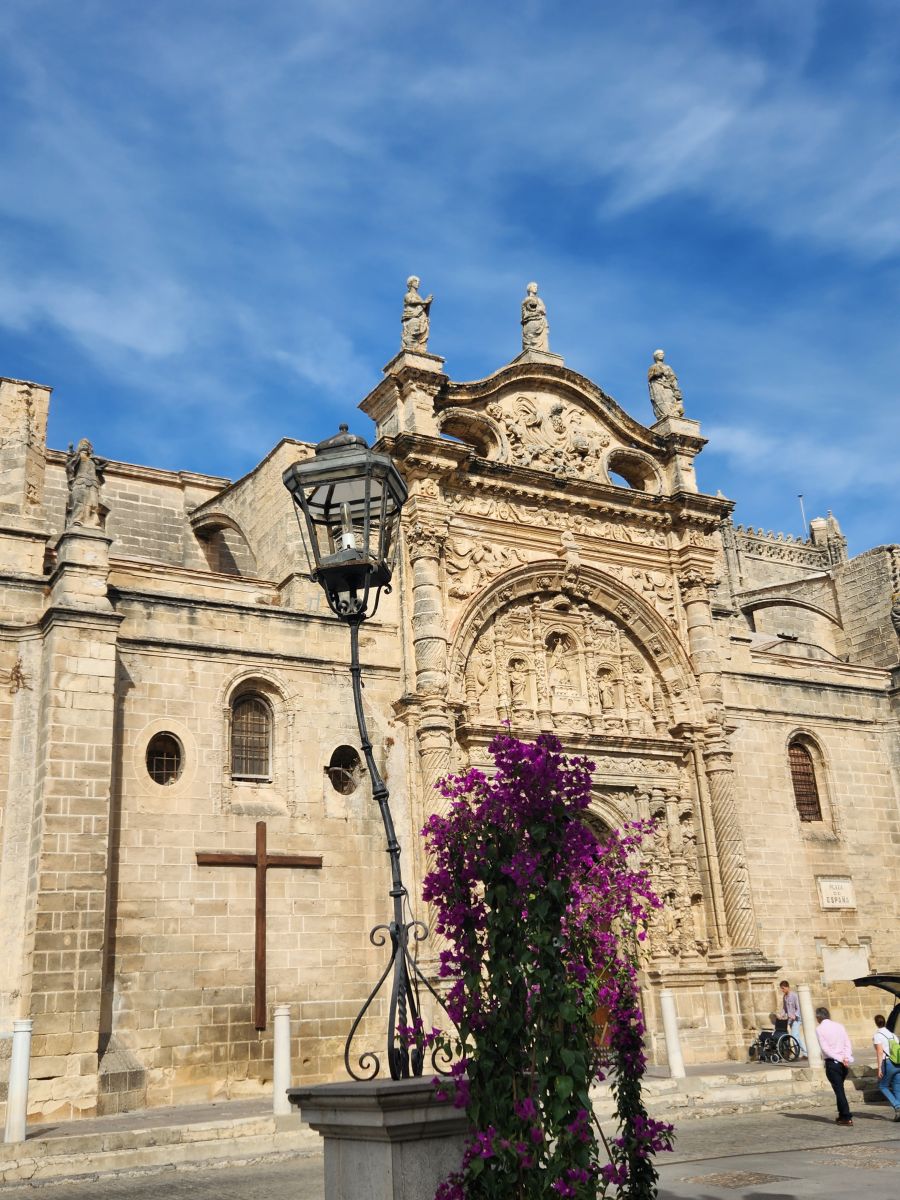
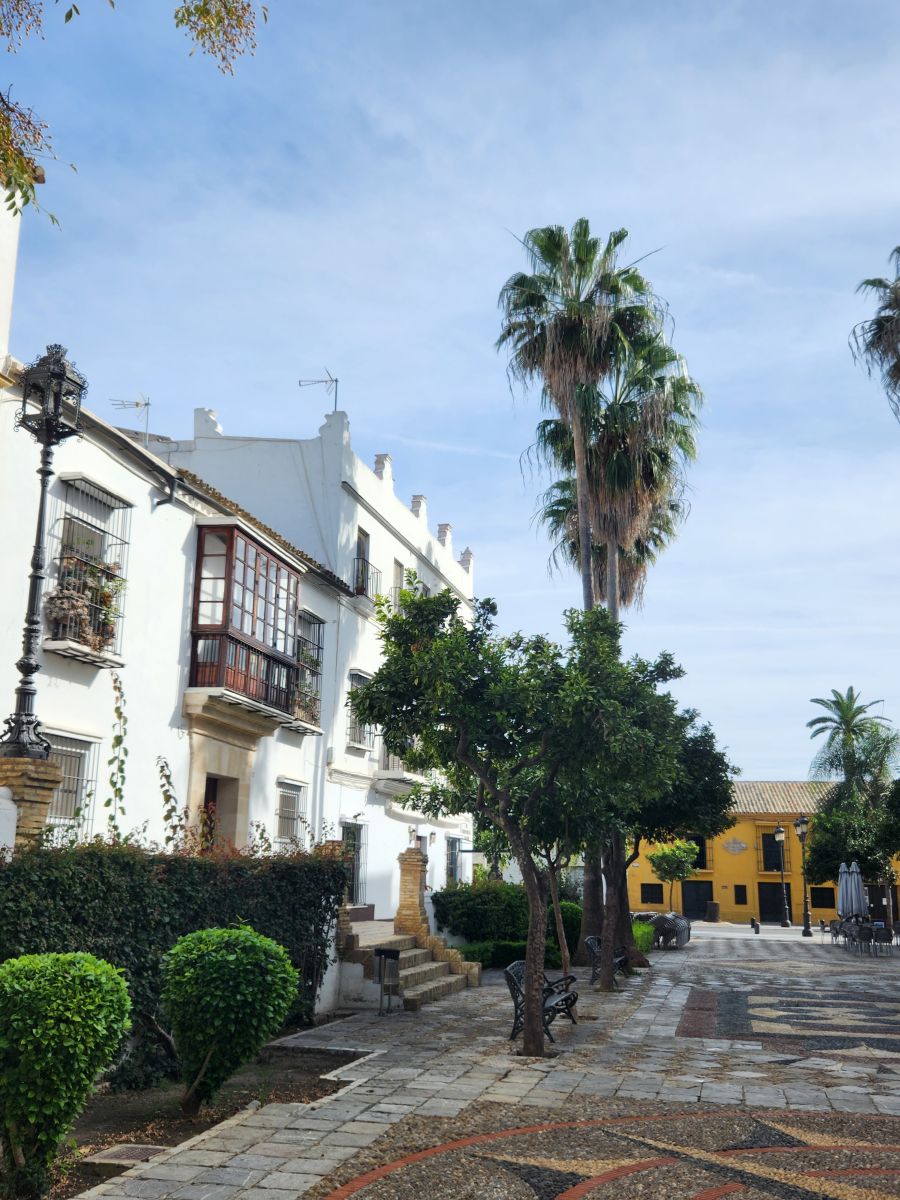
We make it to Santa Maria with only a couple of wrong turns, finally finding the parking garage in the middle of town and successfully stuffing our little Fiat 500 into a space in these miniscule underground garages. Out on the streets, we wander past the Ayuntamiento, a stately building at the edge of our parking garage, and beautiful houses on the narrow one-way cobblestone streets. Our goal is the restaurant we have chosen for lunch, but it is still too early to eat, they aren’t even open (this is Spain of course, it is only 11:30, so no respectable restaurant is even open as of yet) so we continue on to Plaza Espana and the Iglesia Mayor Prioral, a very picturesque plaza and church where there happens to be a funeral going on as we arrive.
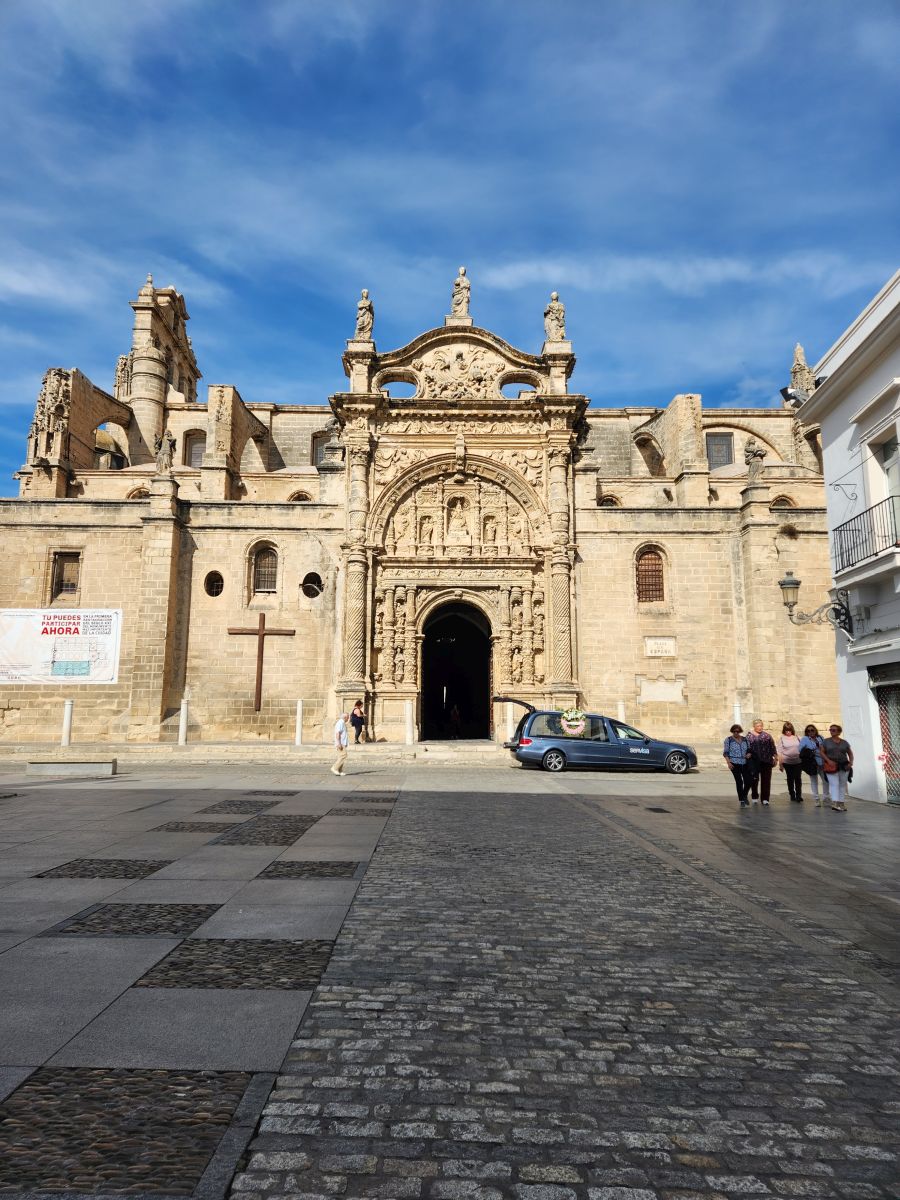
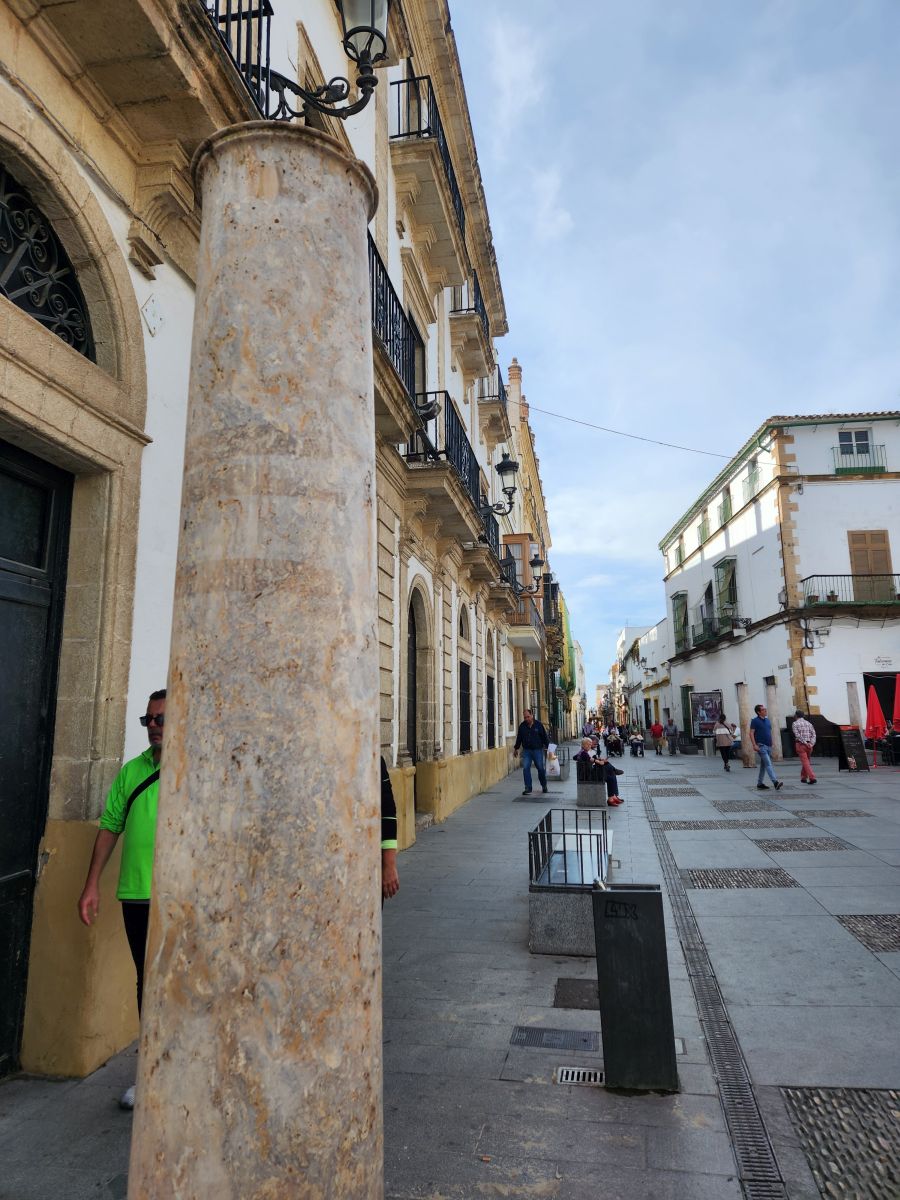
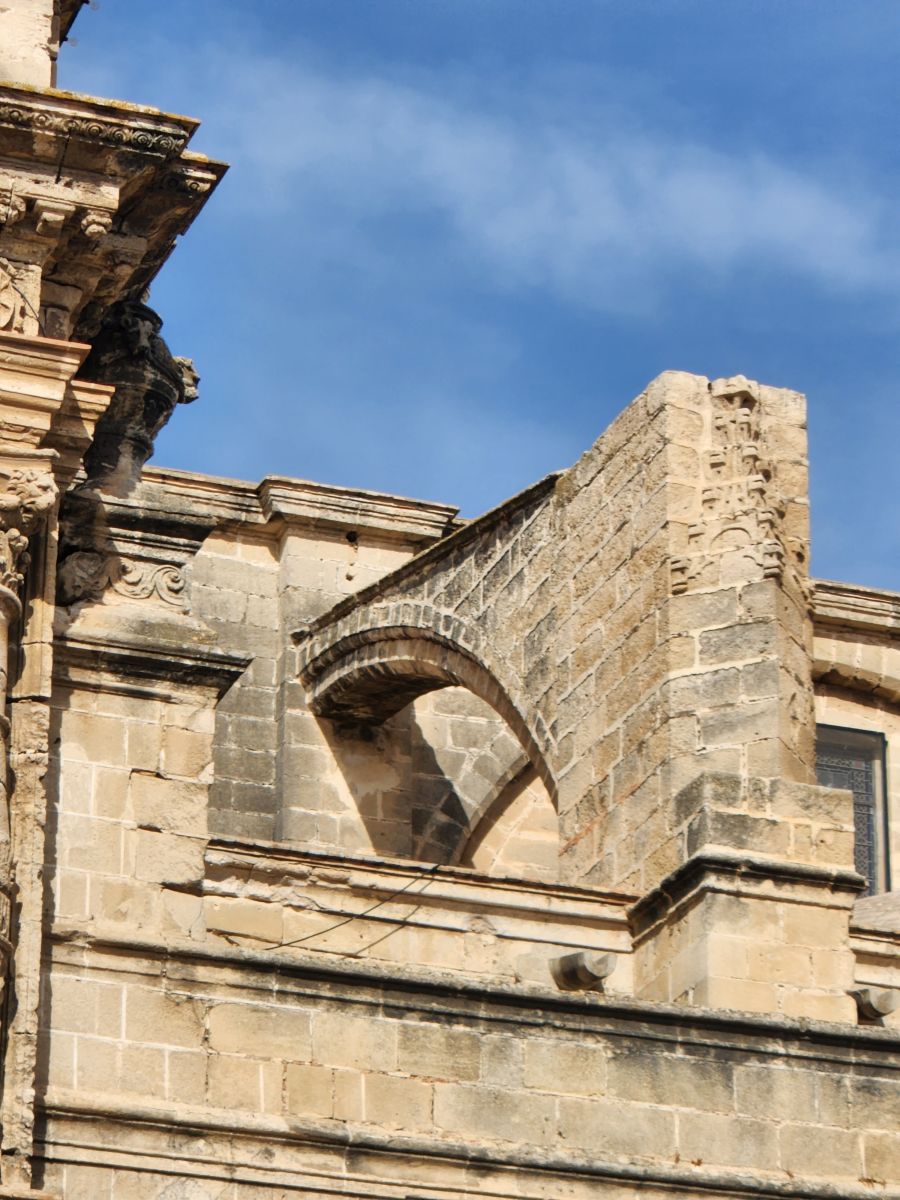
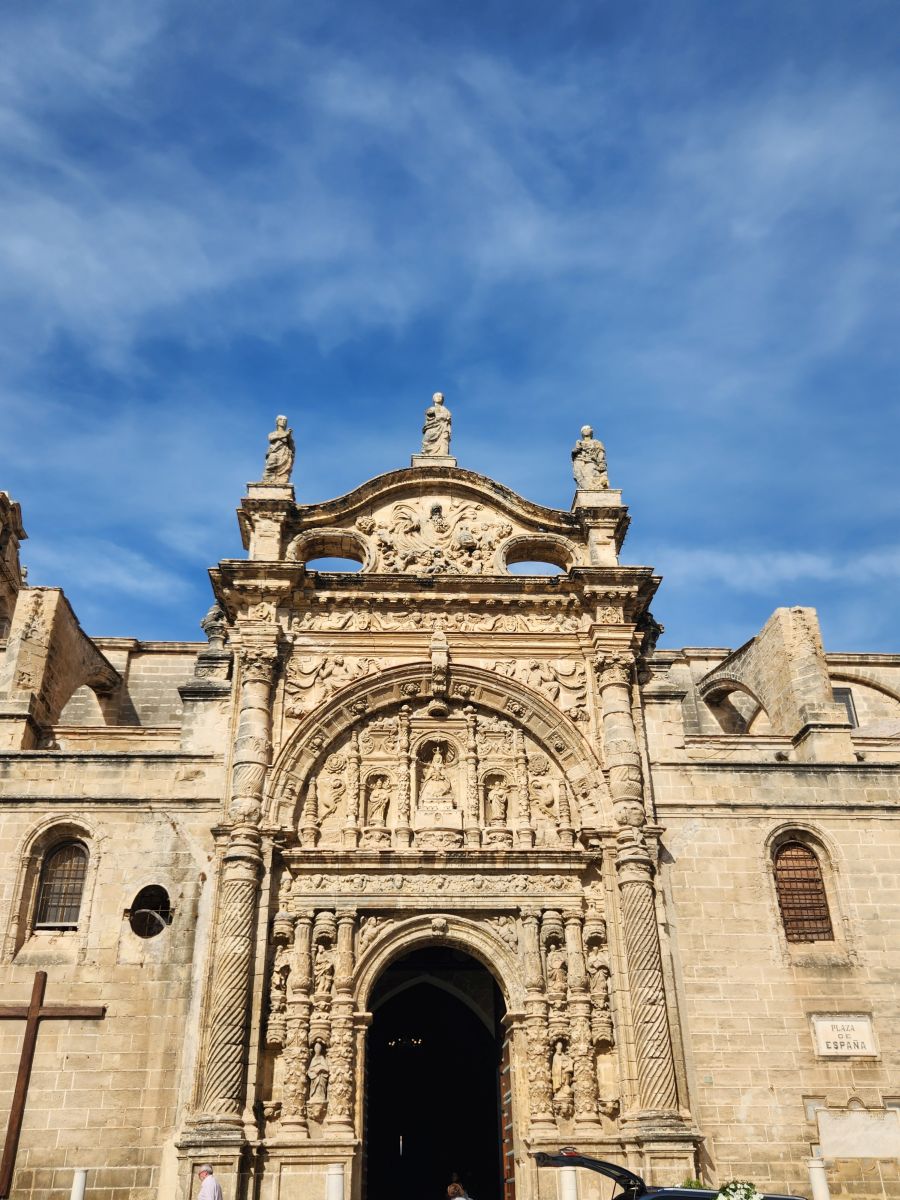
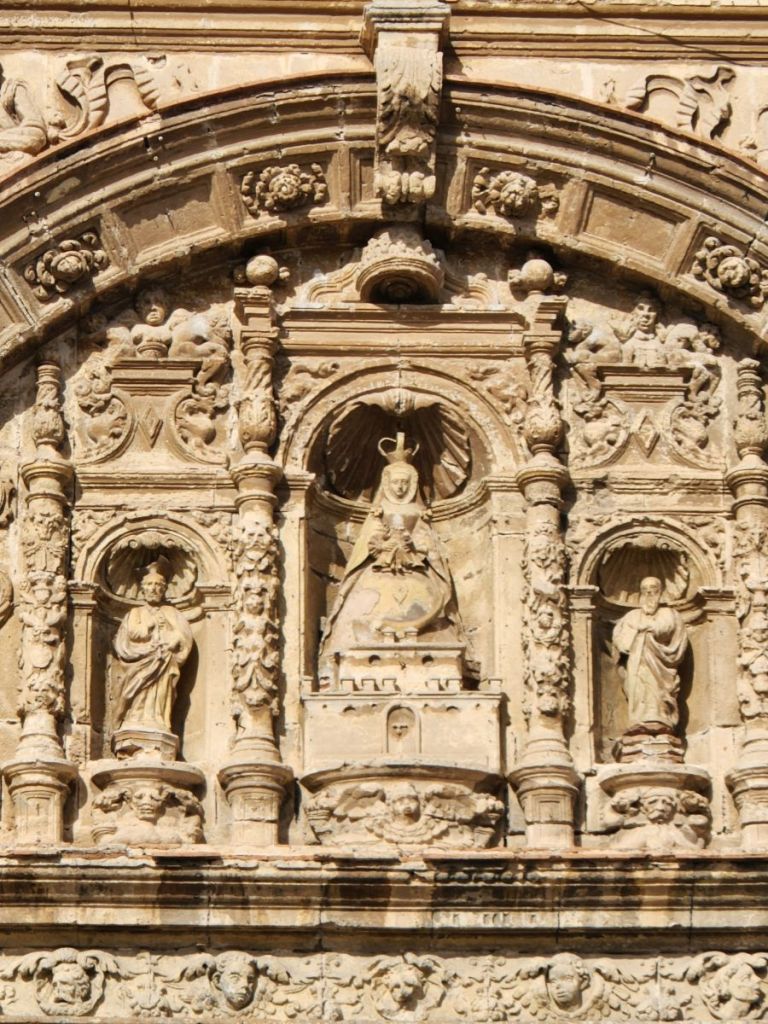
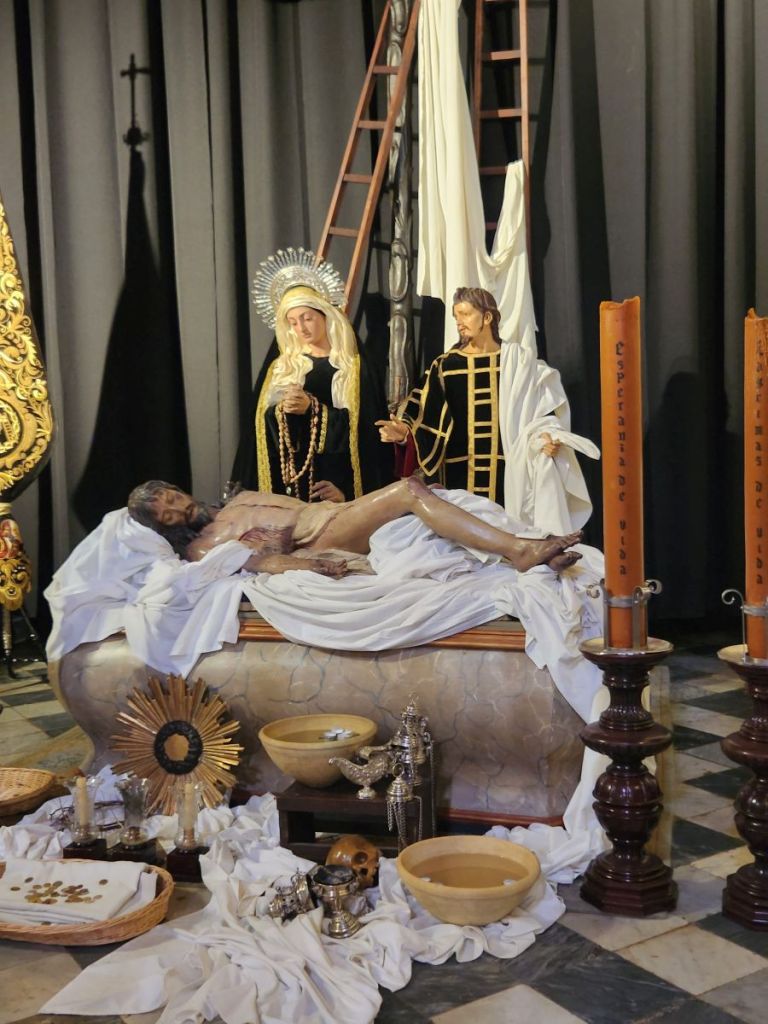
Quietly entering the church, we skirt the nave opposite the funeral and wander through the gorgeous gothic style church with some incredible side chapels and soaring domes of smoke stained limestone.
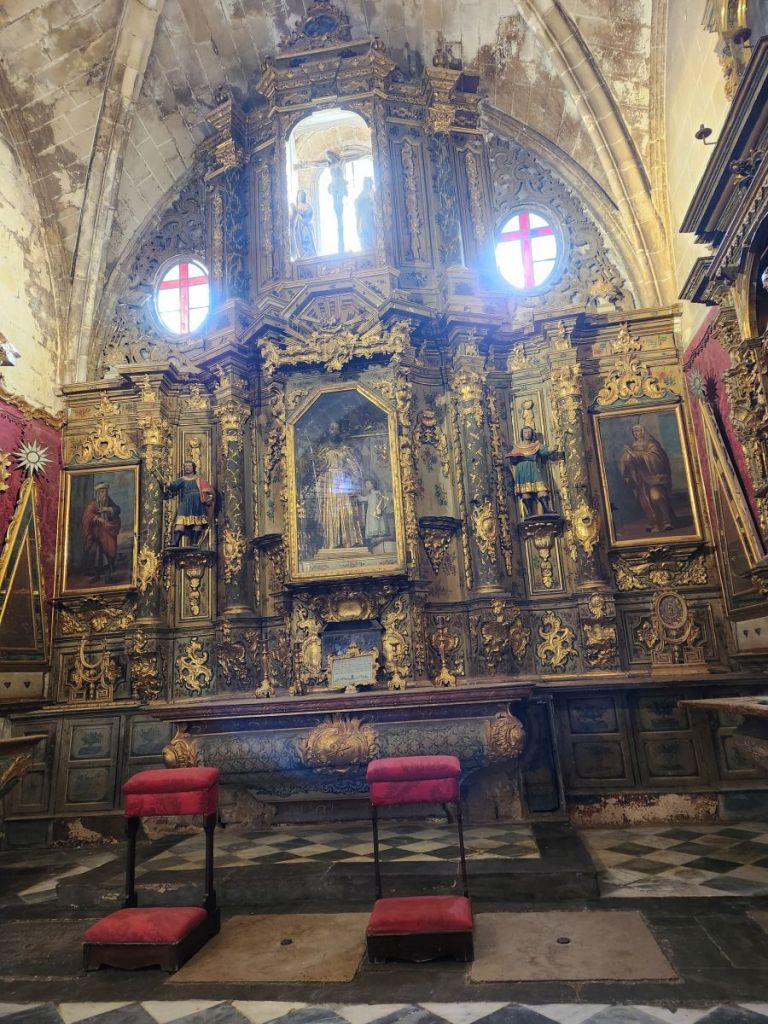
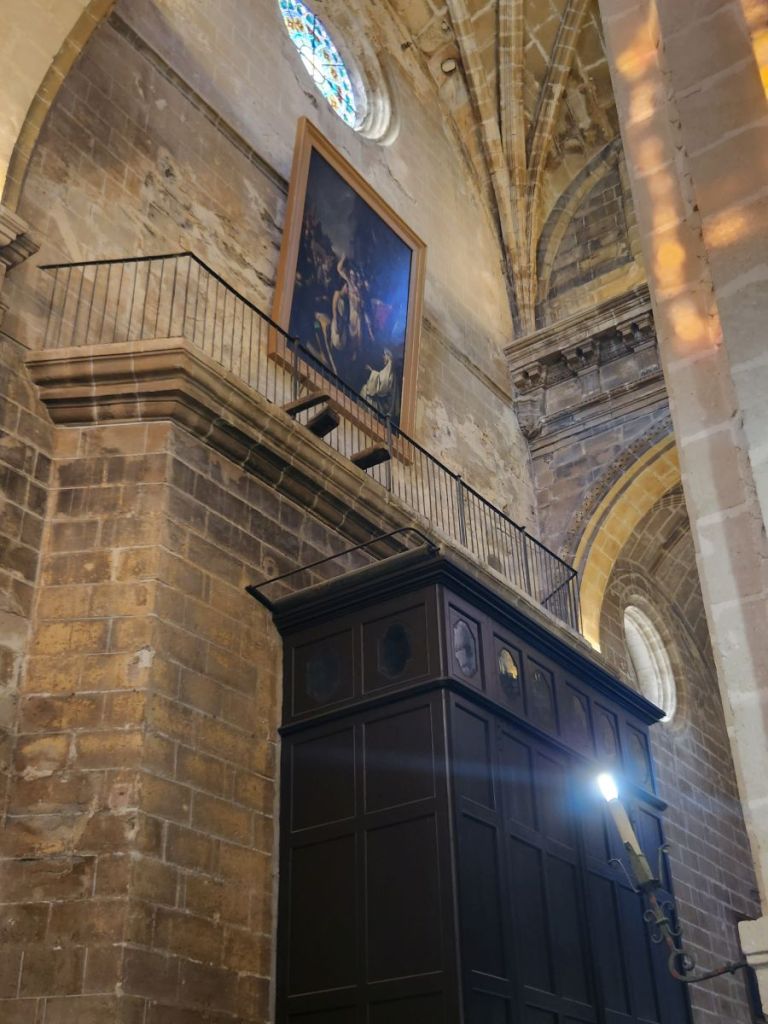
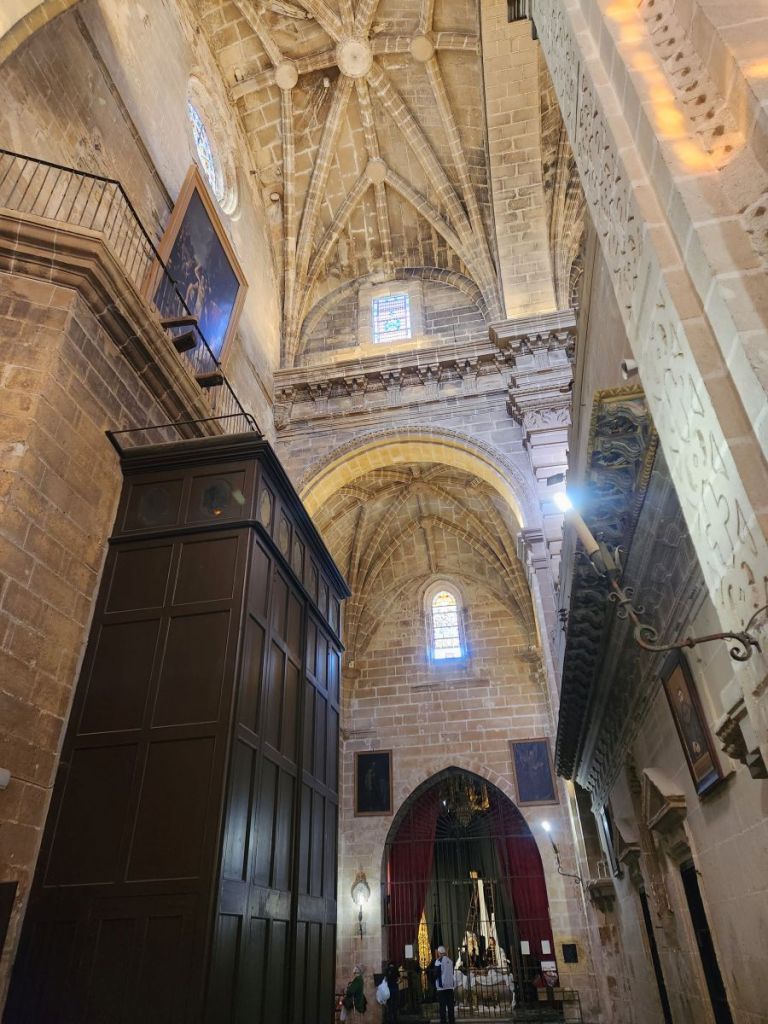
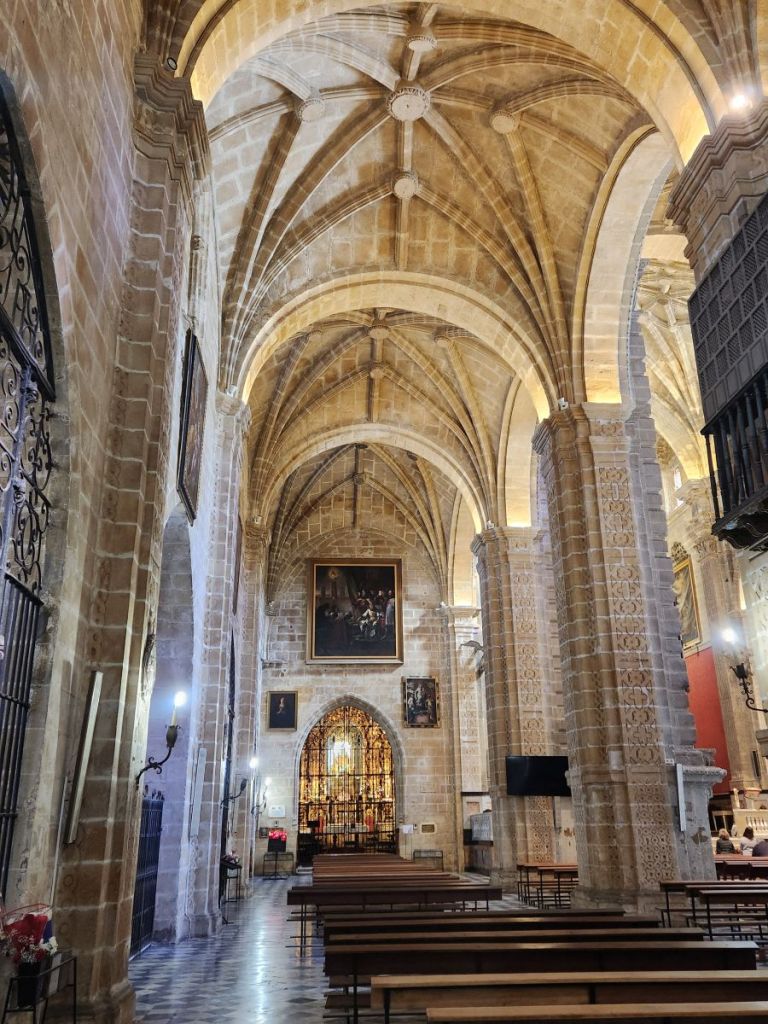
Back outside on the square, we find more signature purple flowers,
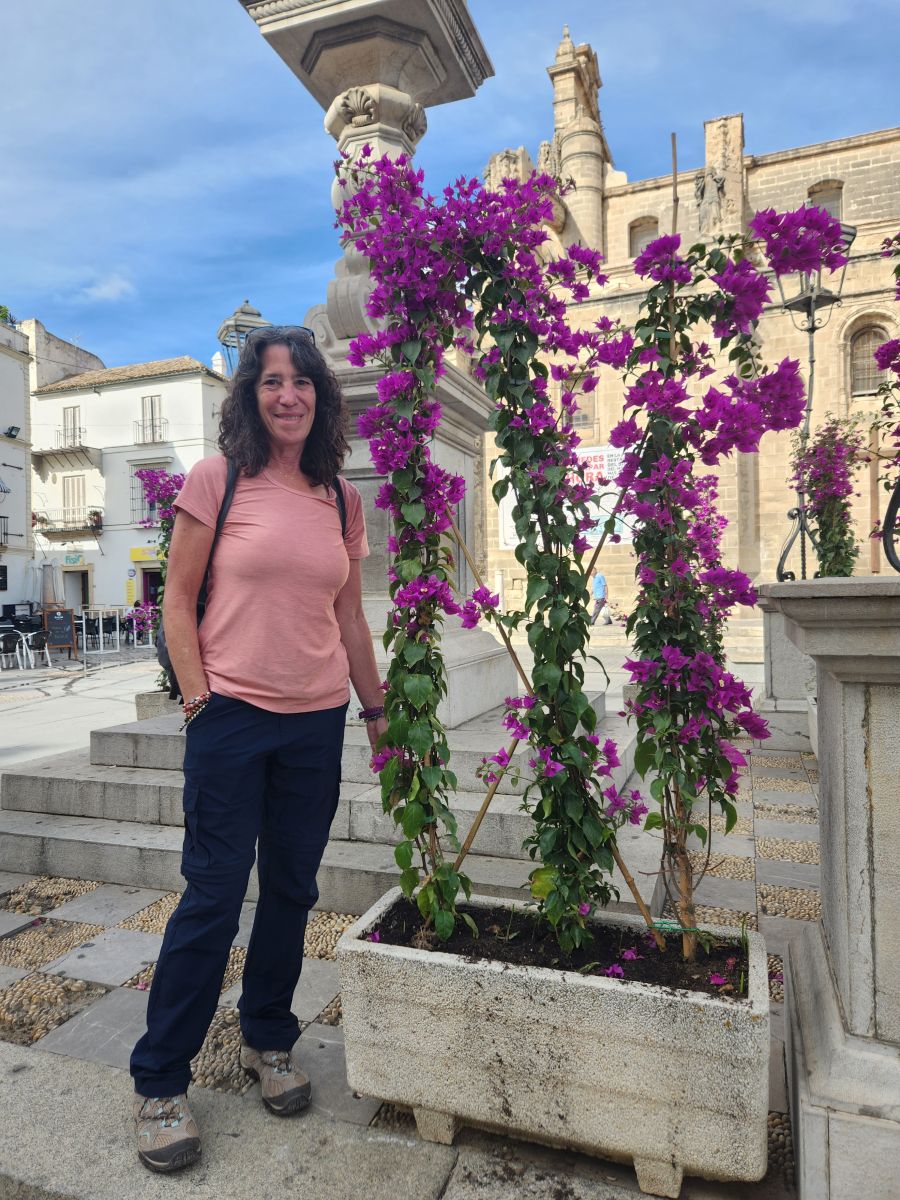
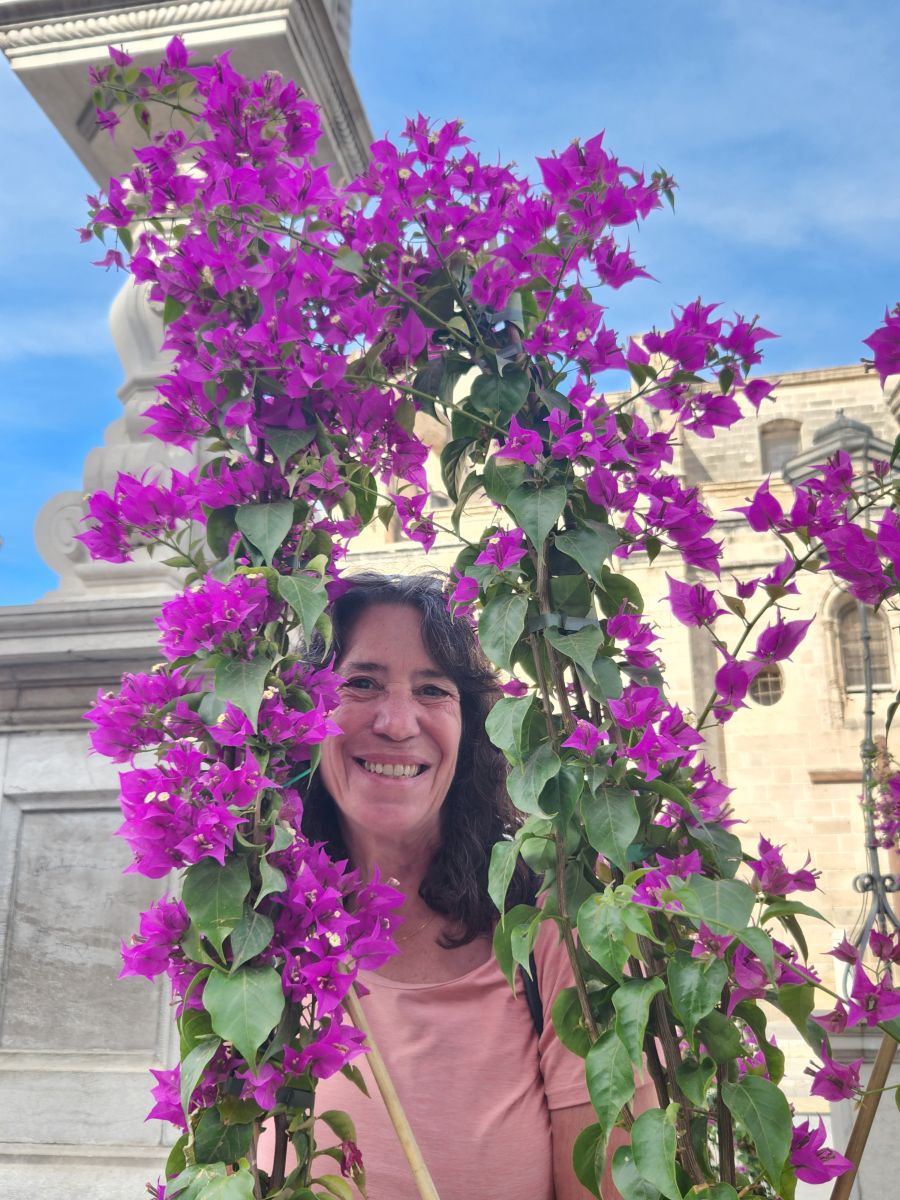
before walking to the other side of town to explore the Plaza de Toros, opened in 1880, but unfortunately closed today. Still great for photos.
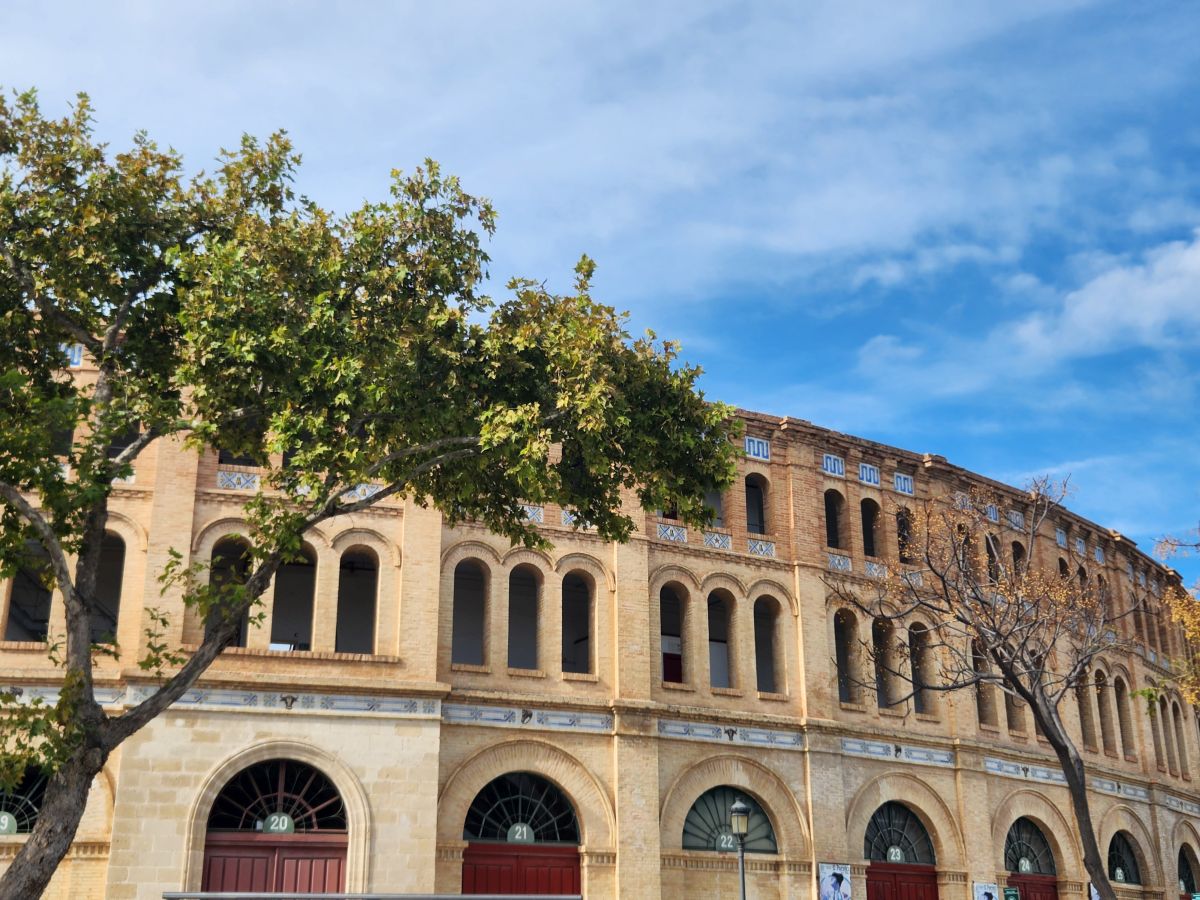
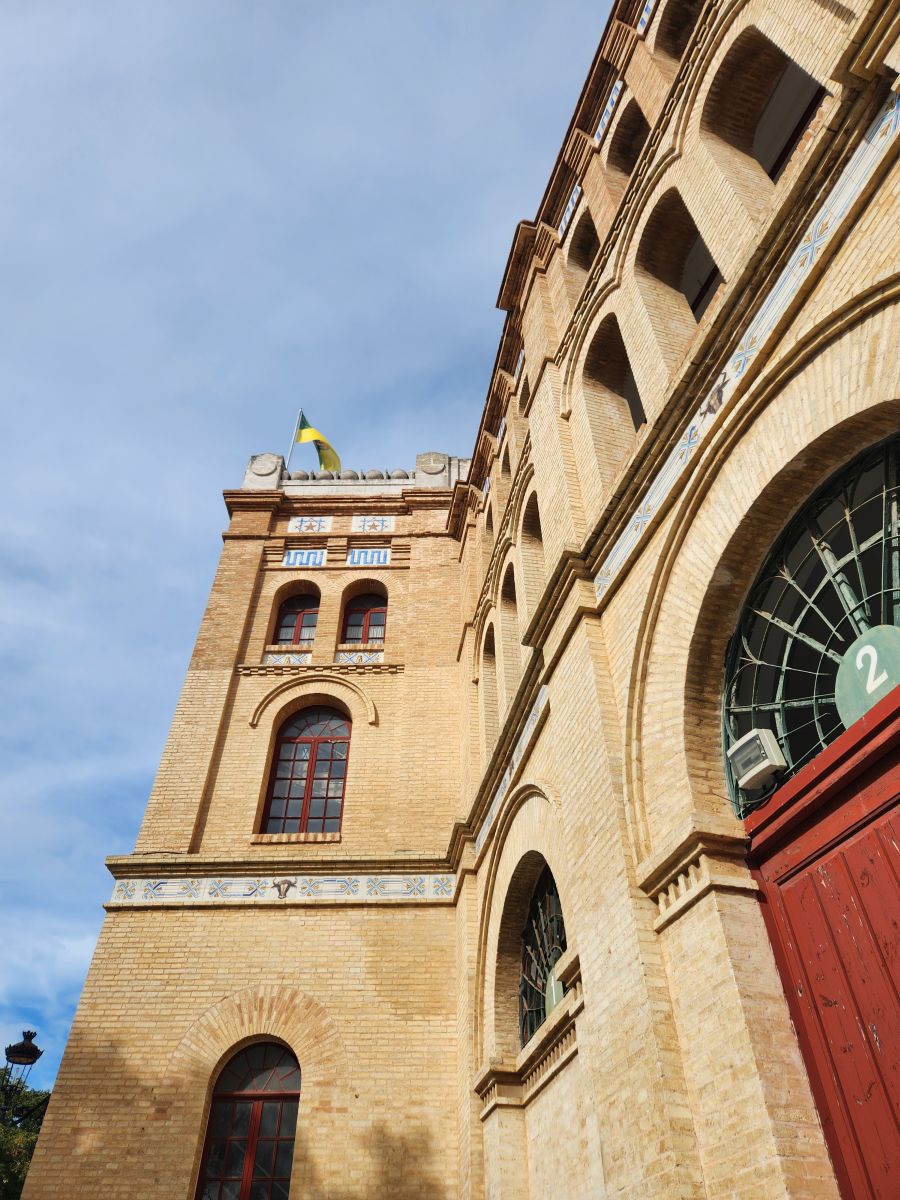
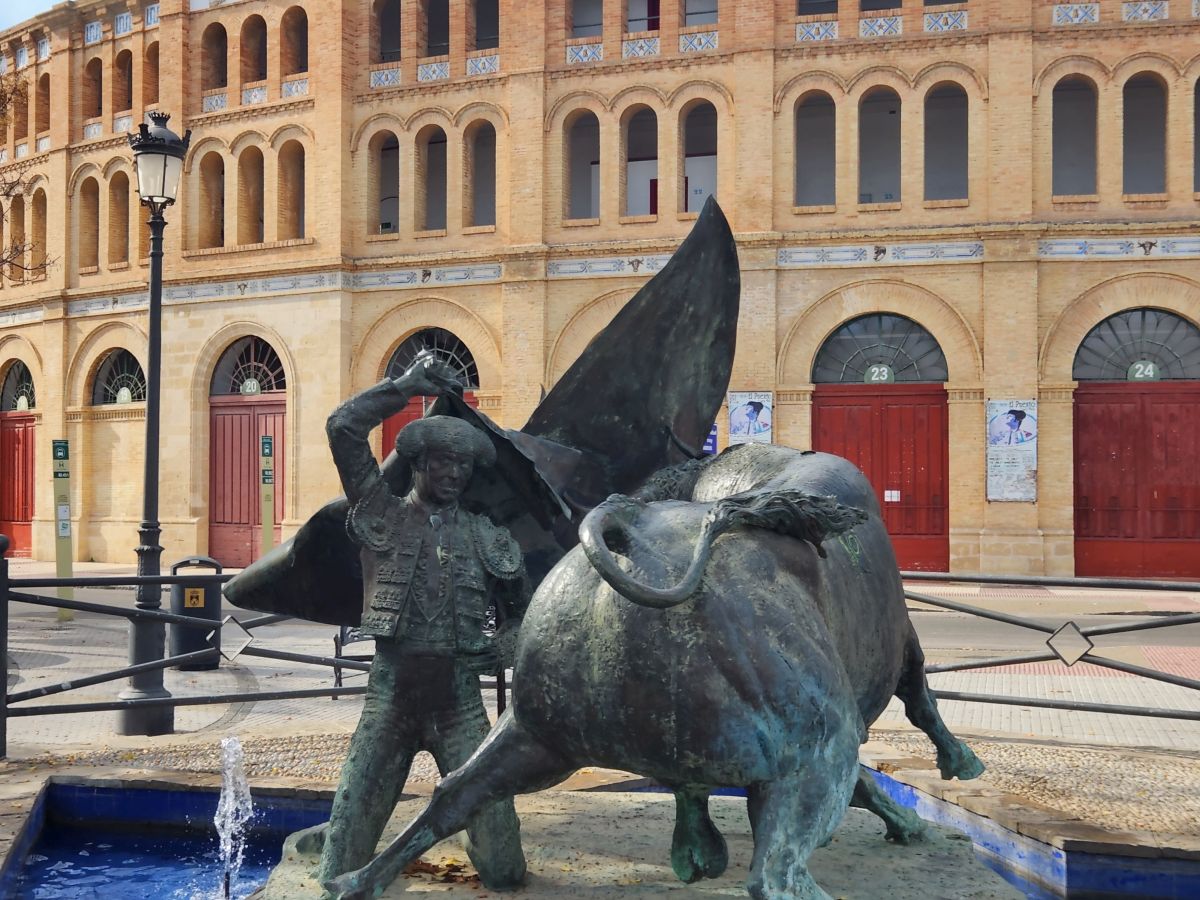
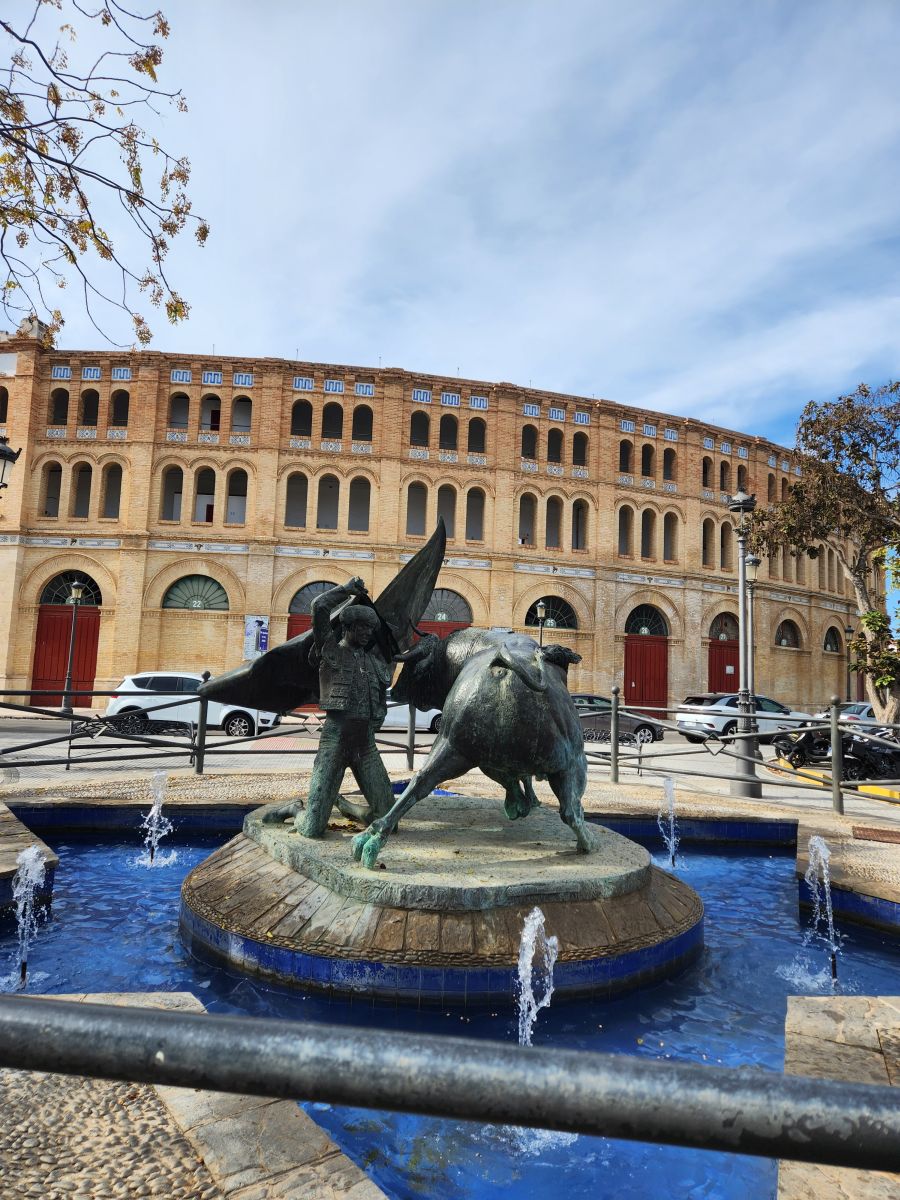
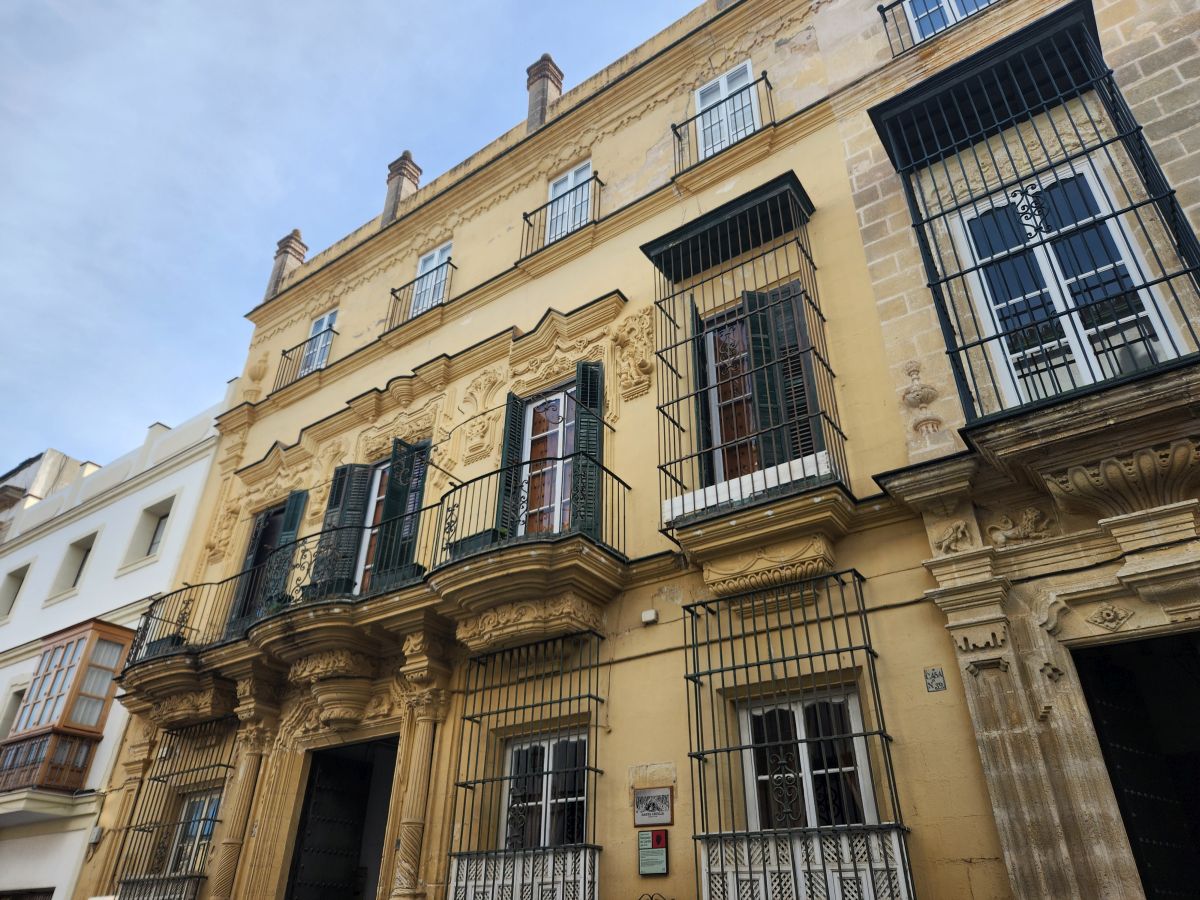
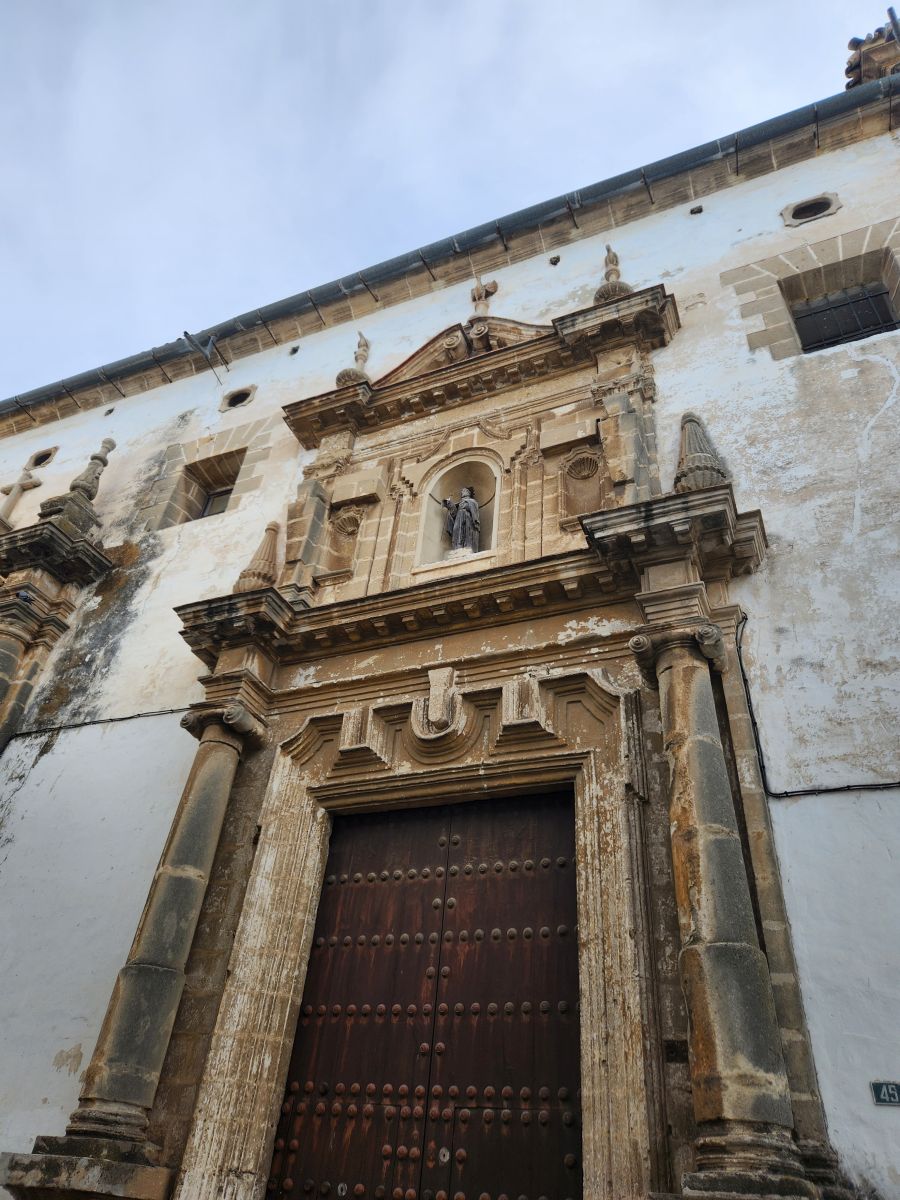
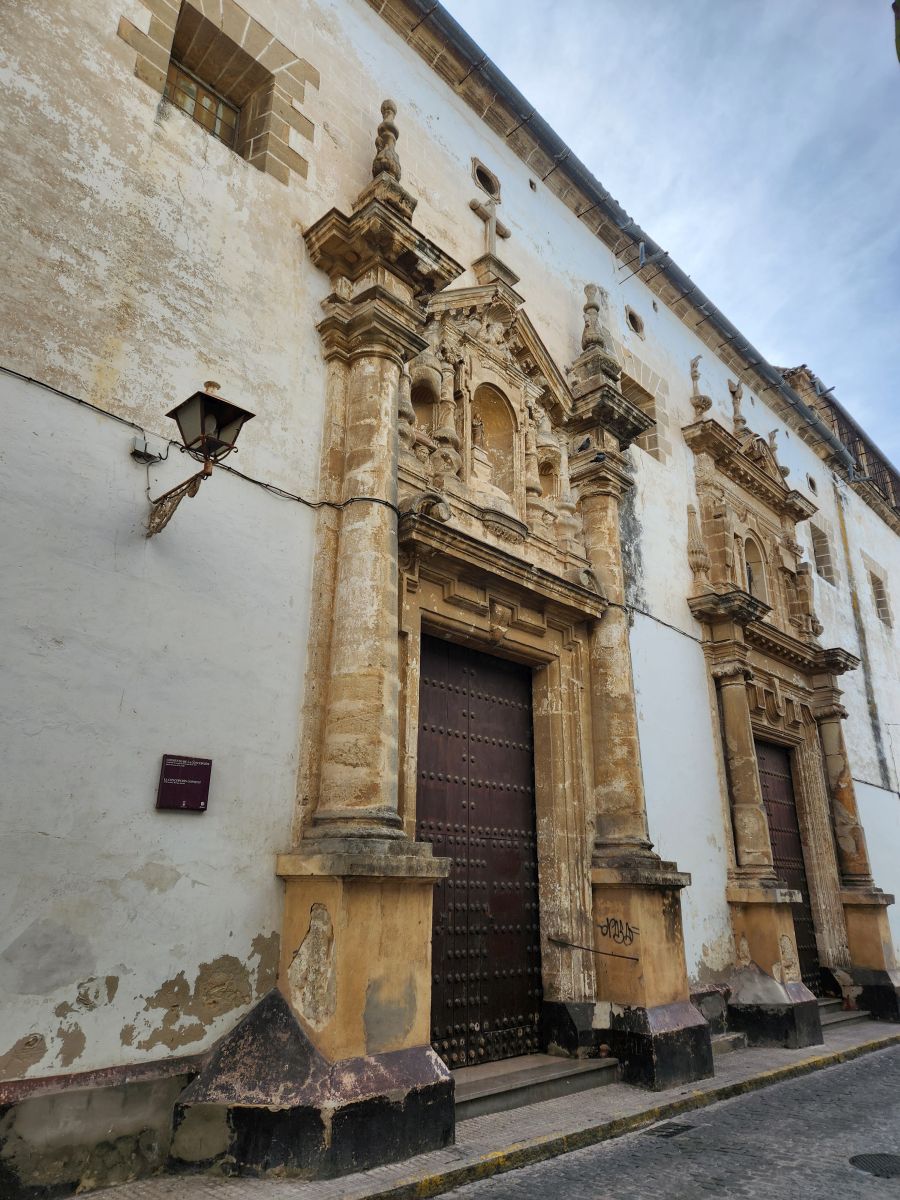
Snapping photos of the fabulous town architecture as we walk back to the Bar Apolo, our restaurant choice, we find they are unfortunately still not ready to serve – 30 to 45 minutes the waiter tells us – in all Spanish. We are definitely the only people here who speak English! Crash course for our language skills.
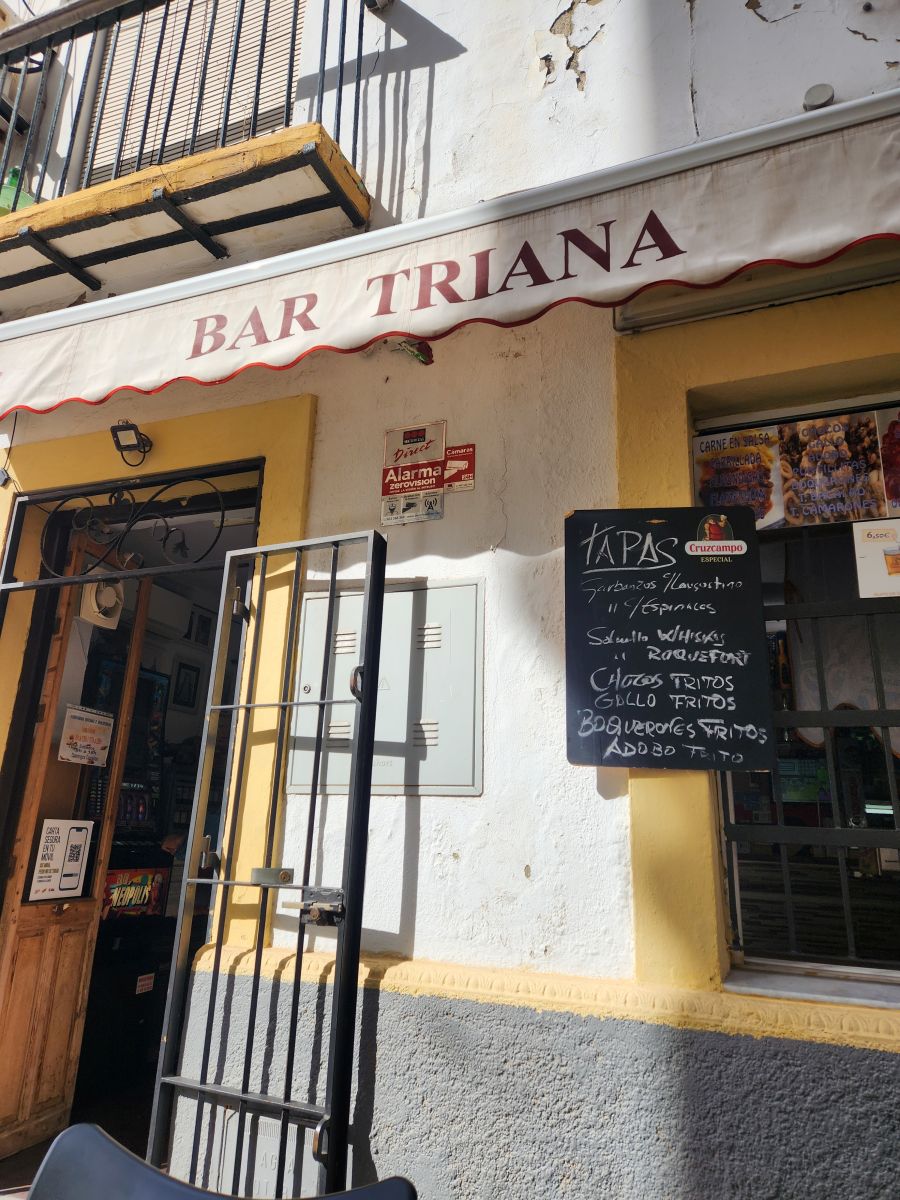
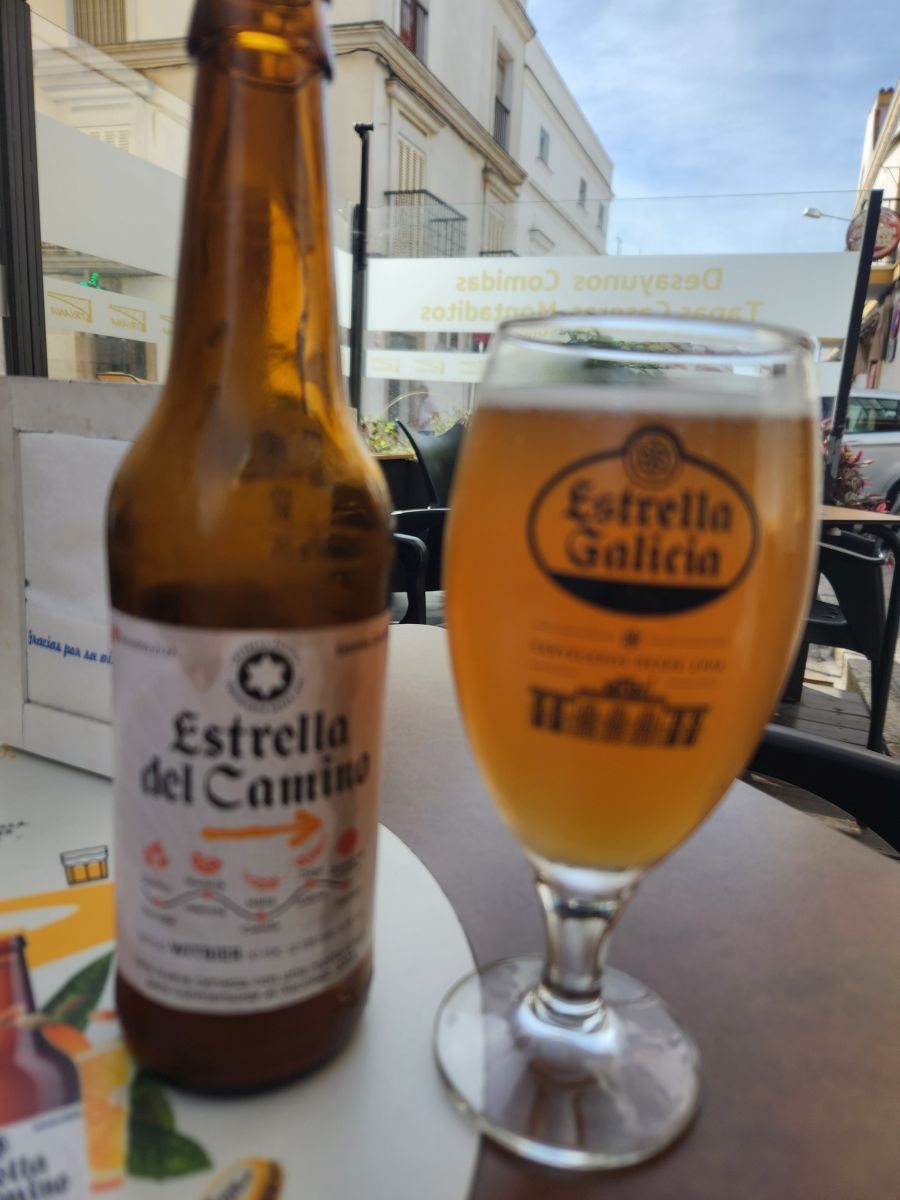
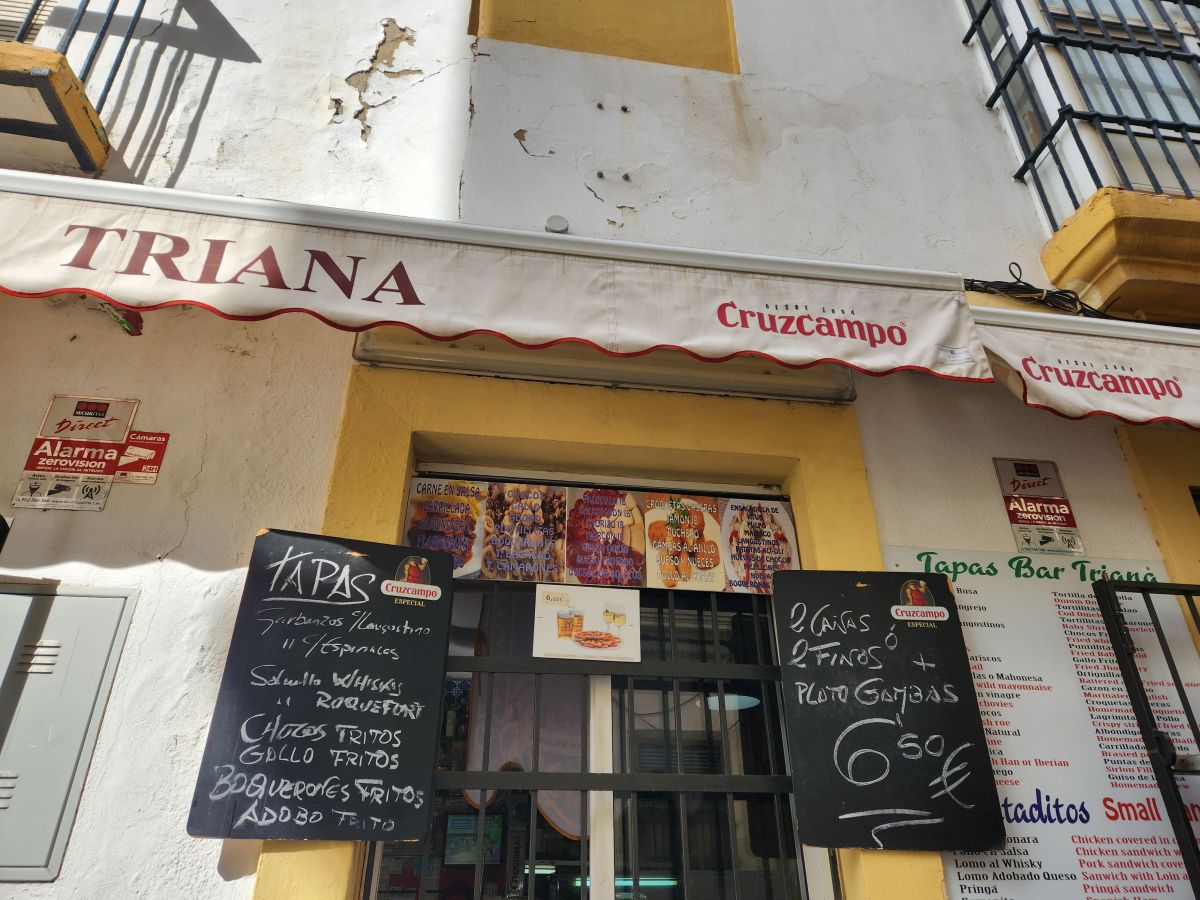
Ok, Plan B. Which we don’t really have, but we did spy a few cafes open on our wanderings to and from the Bull Ring. We settle on Bar Triana, a little café that has people sitting outside (always a good sign). This is truly a tapas place – and truly local – as everyone here knows everyone and they all are chatting amicably with the waitress and each other. Fun.
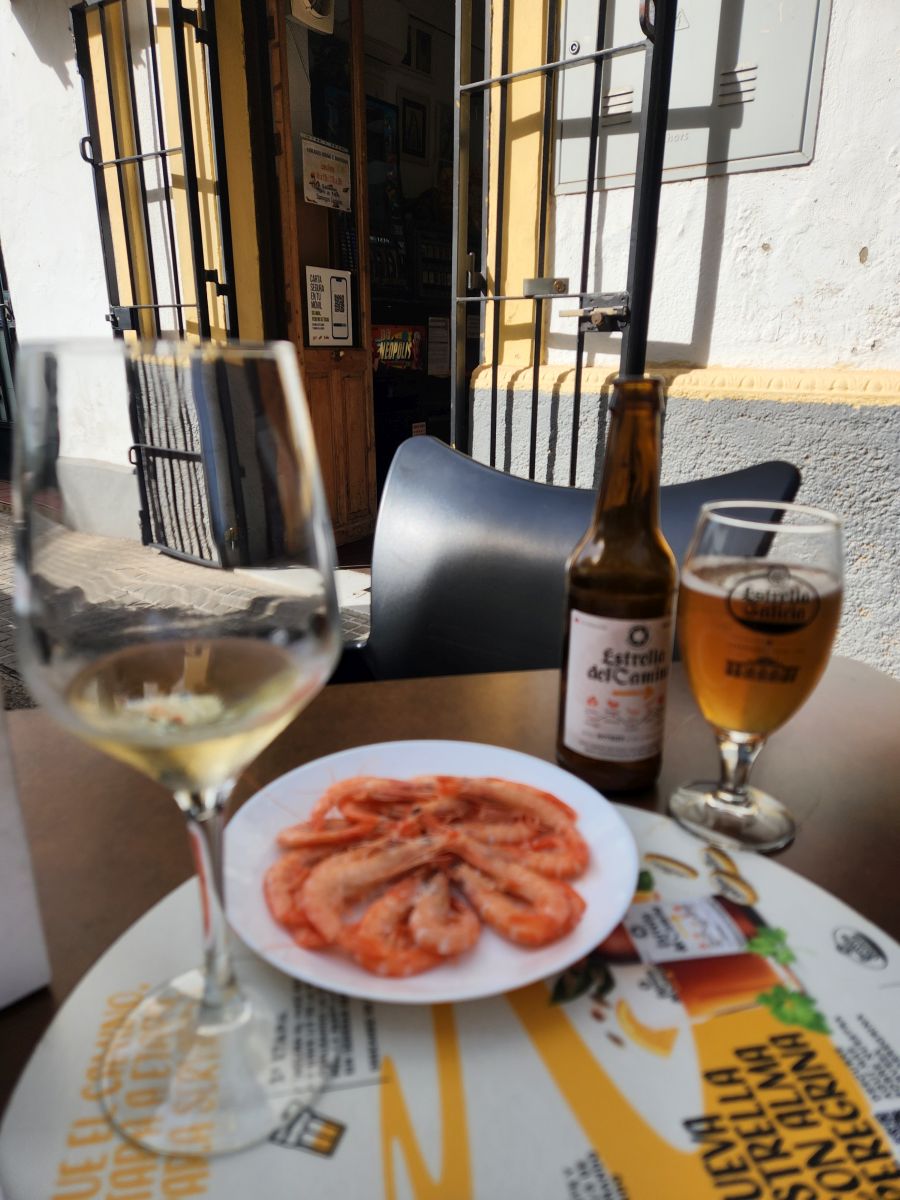
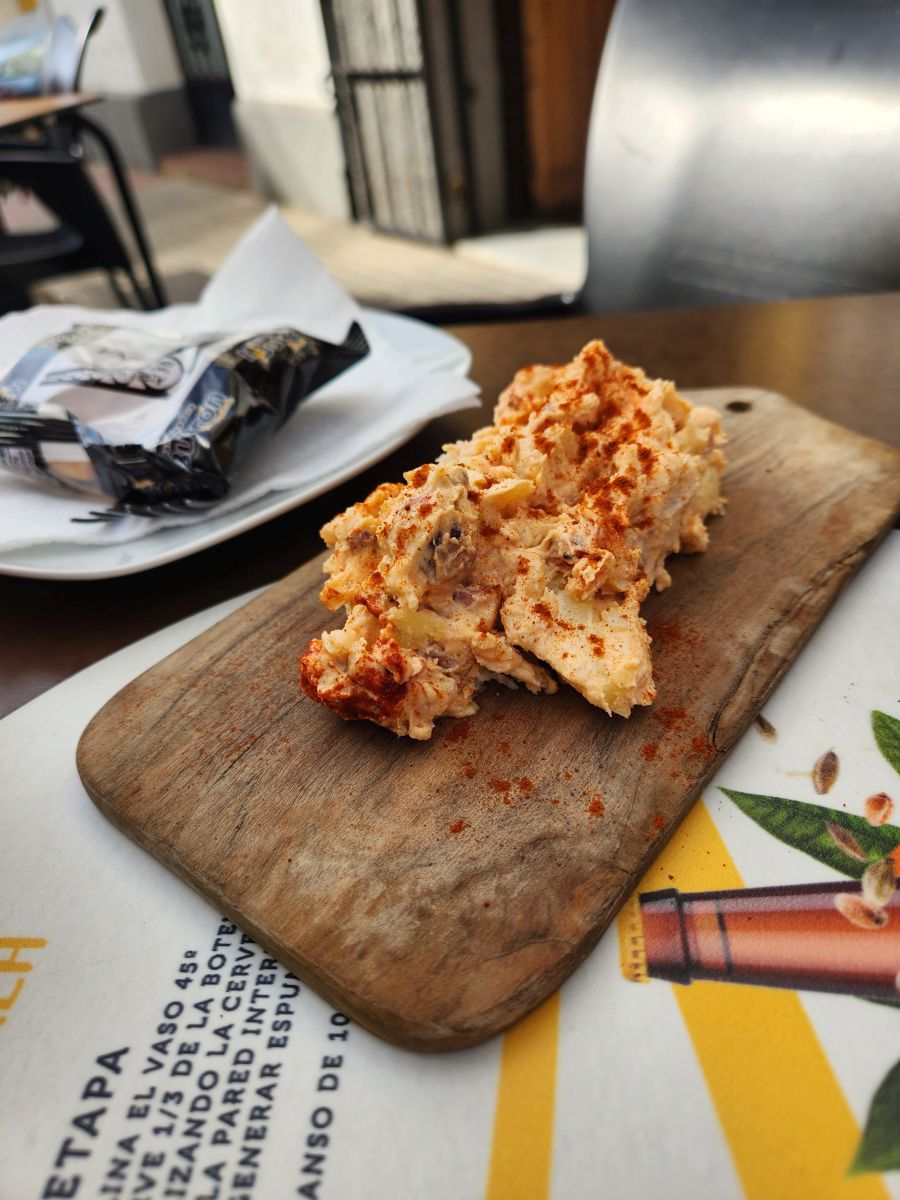
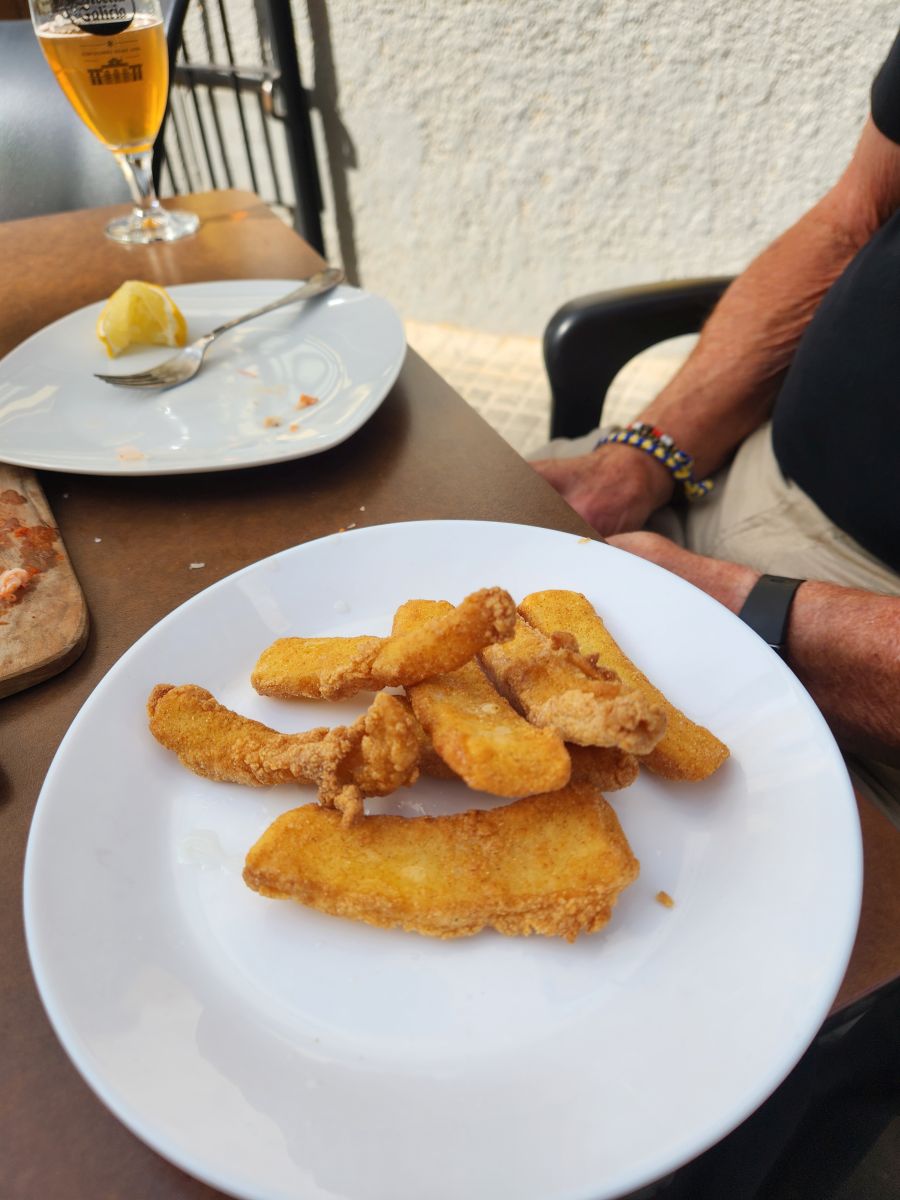
The menu is hanging on the wall, but we ask for a printed one as well so we can really study it without looking too out of place. I spy a sign that says 2 canas or 2 finos y platos gambas for 6.50 Euros. Really? I’m not sure what finos are, but there is a photo on the wall with wine, so, hey, what the heck. 2 glasses of wine and shrimp? Yeah, we’re all in. Ed orders an octopus salad, which turns out to be more a potato salad flavored with octopus bits that is absolutely delicious, as well as chocos fritos (fried cuttlefish). Perfect choice! Oh, and the cost? 15.80 Euro. Really. We’re moving here. Well, no we’re not, but still….come on….
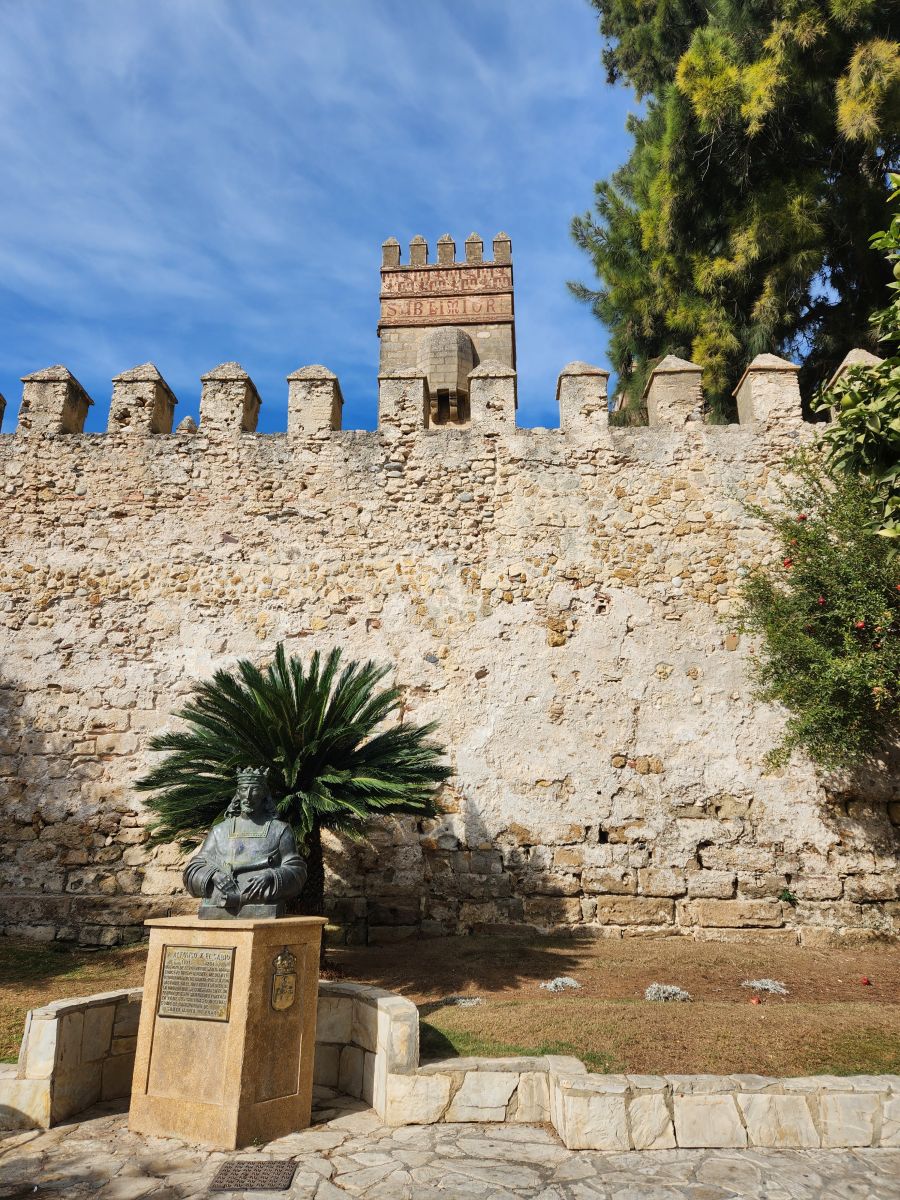
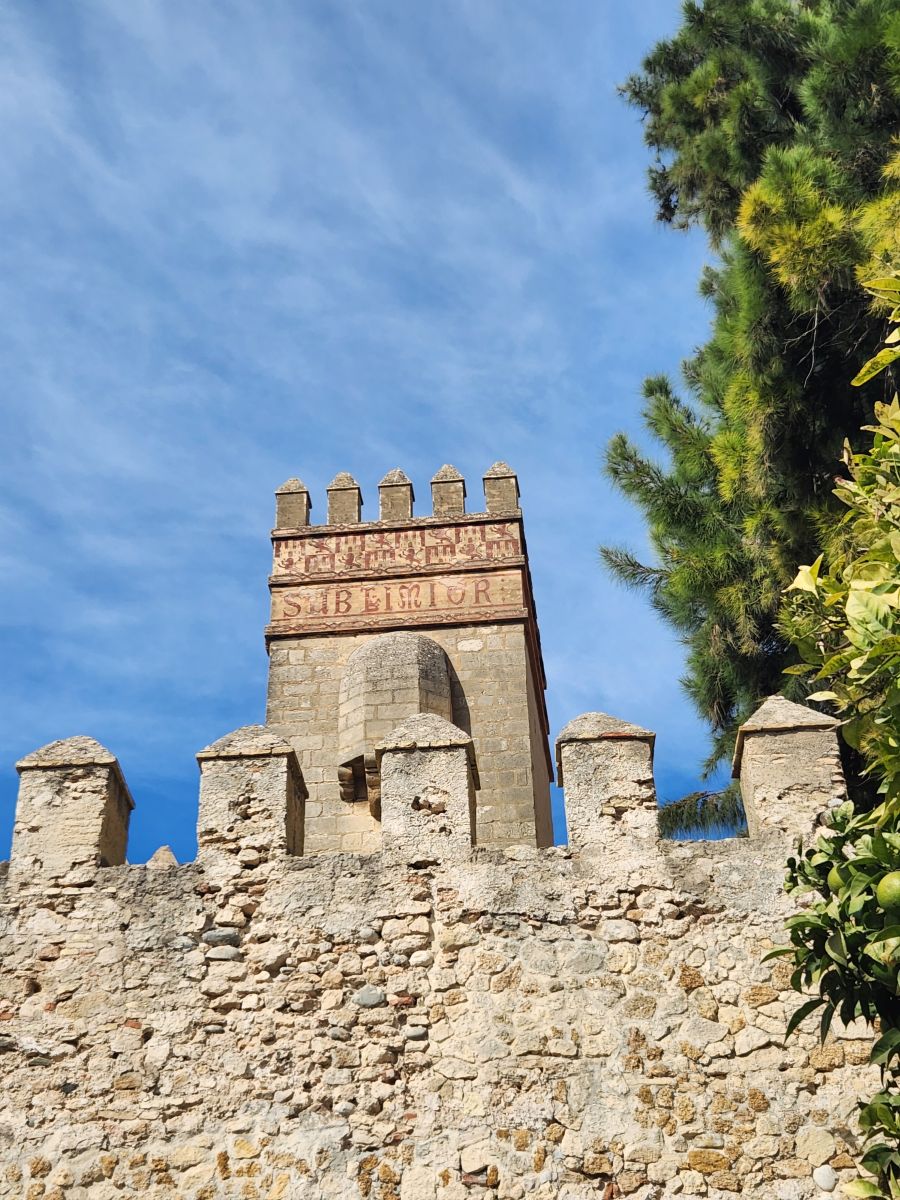
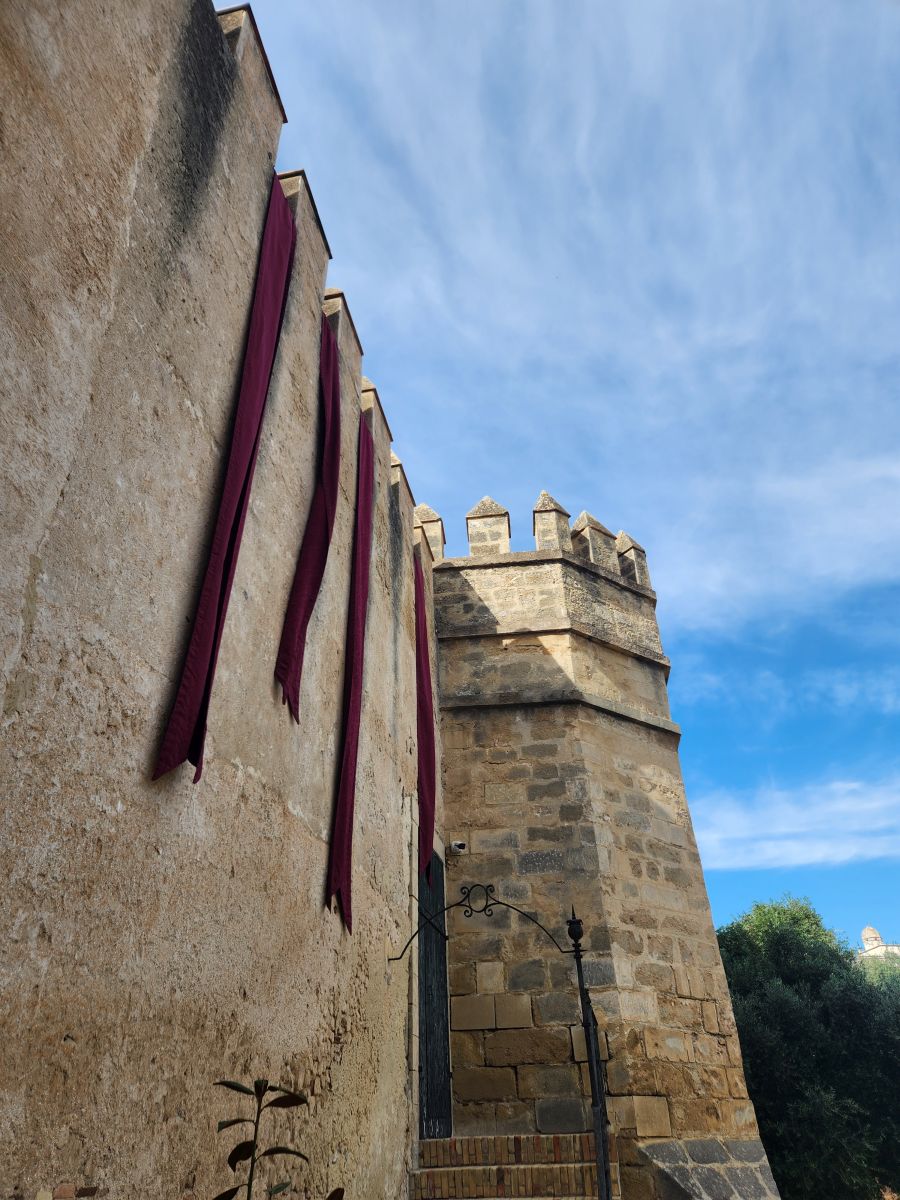
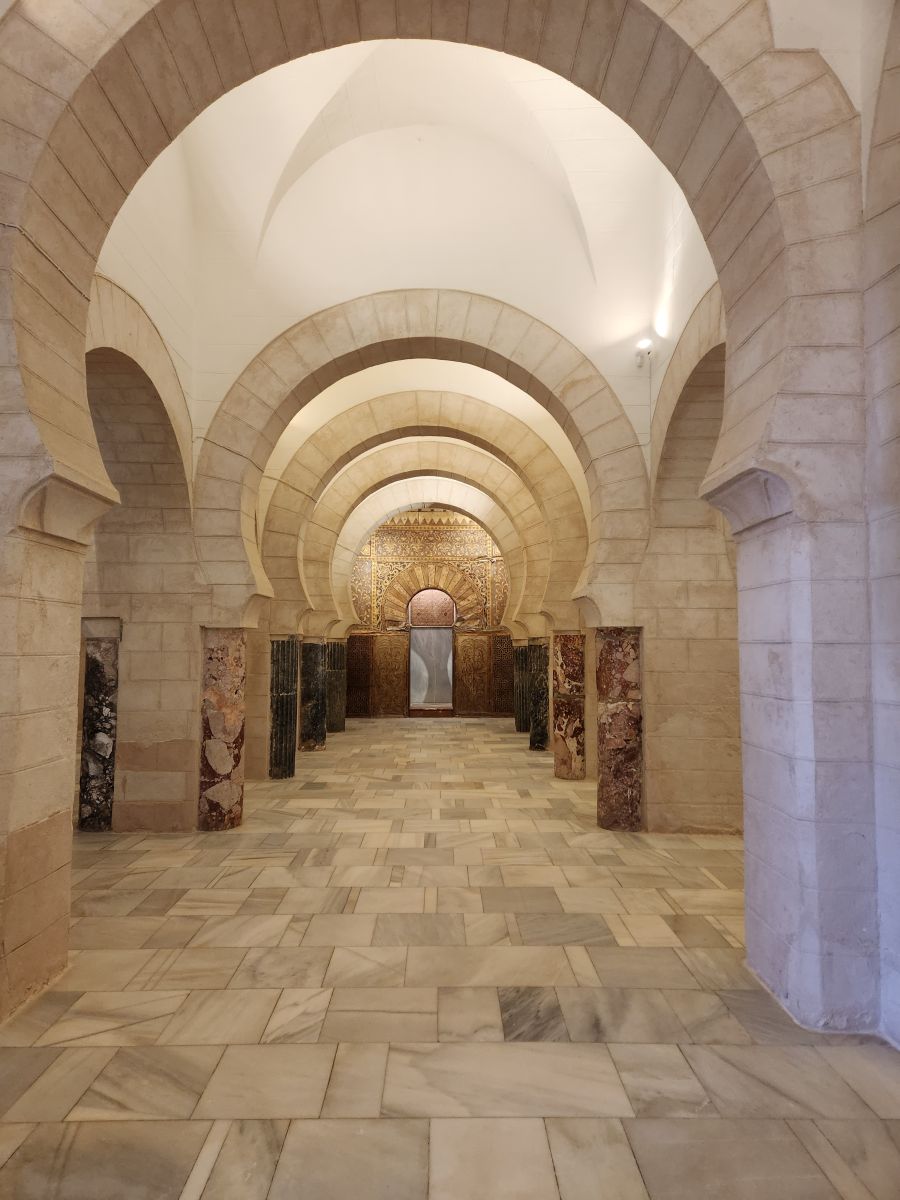
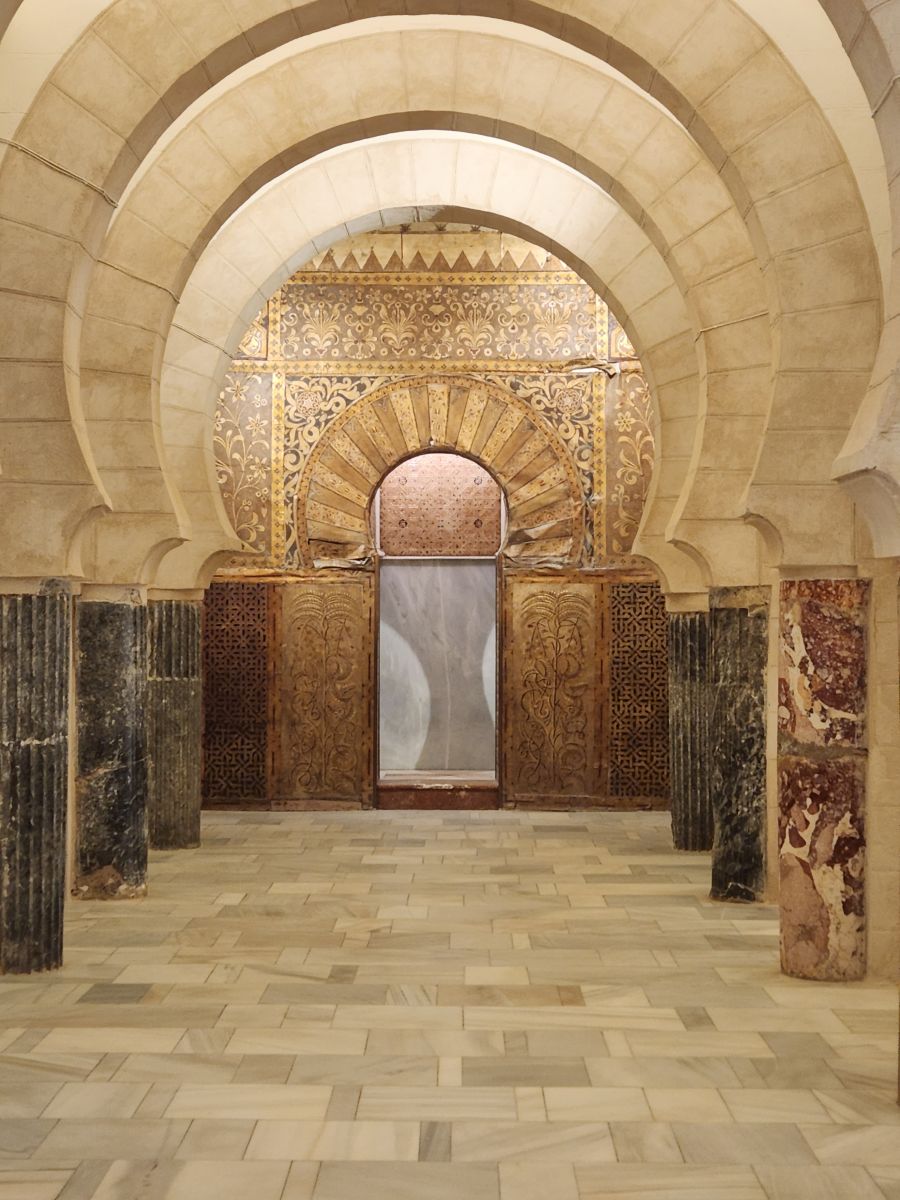
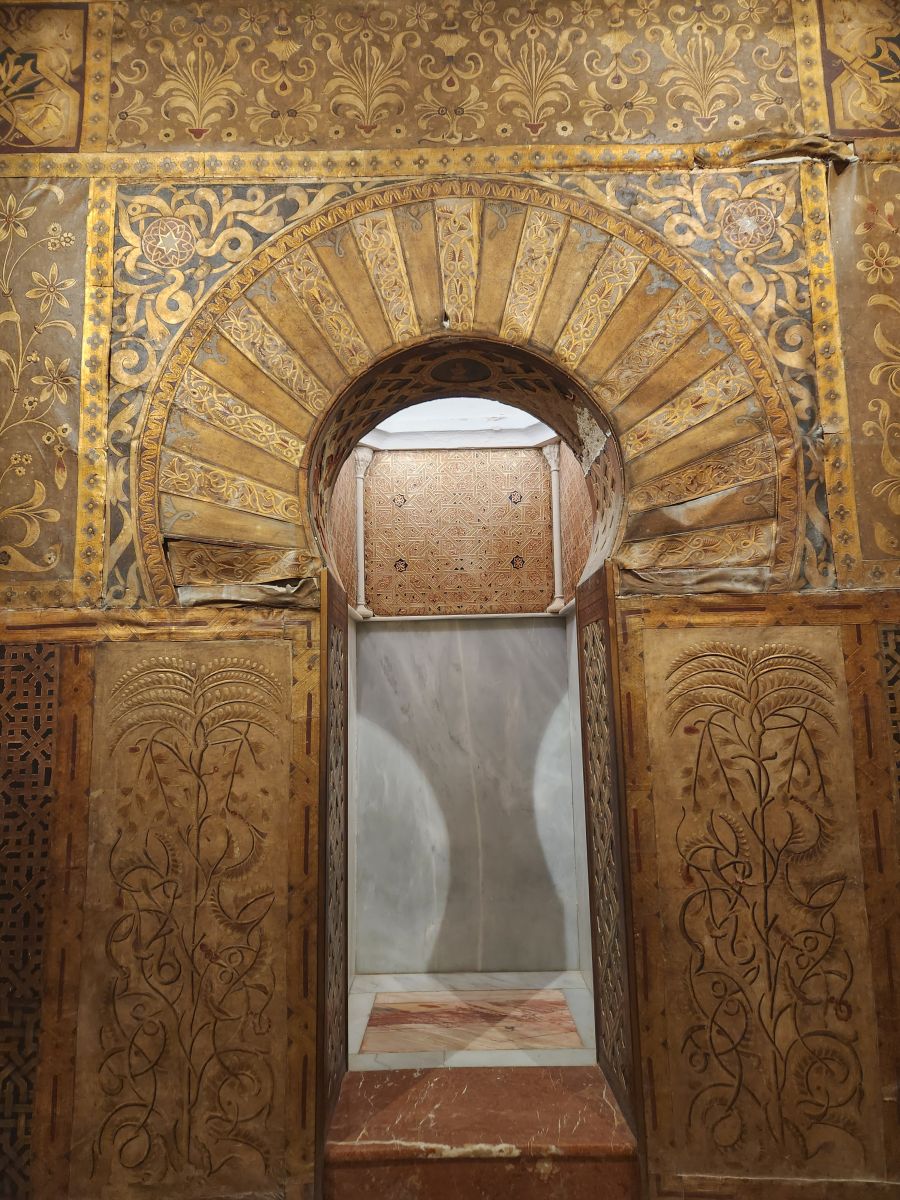
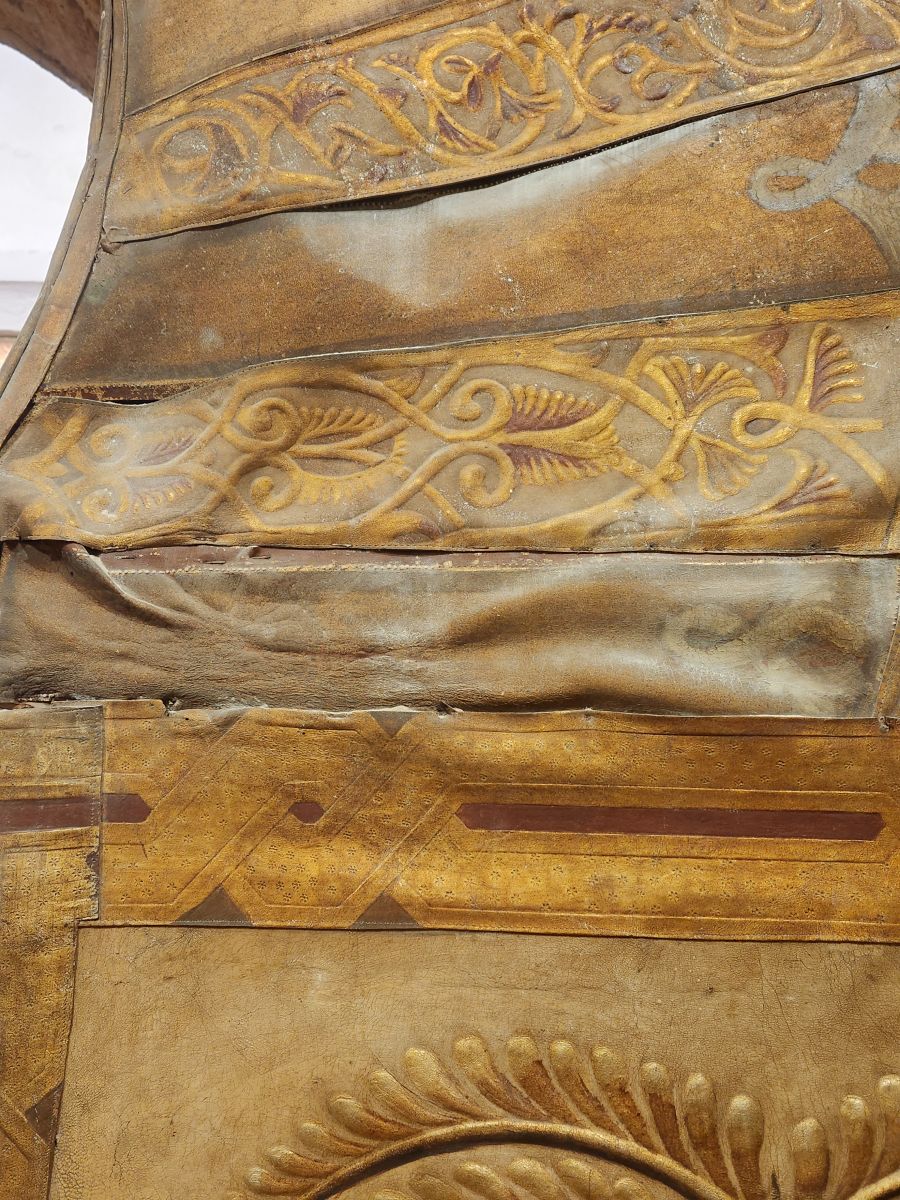
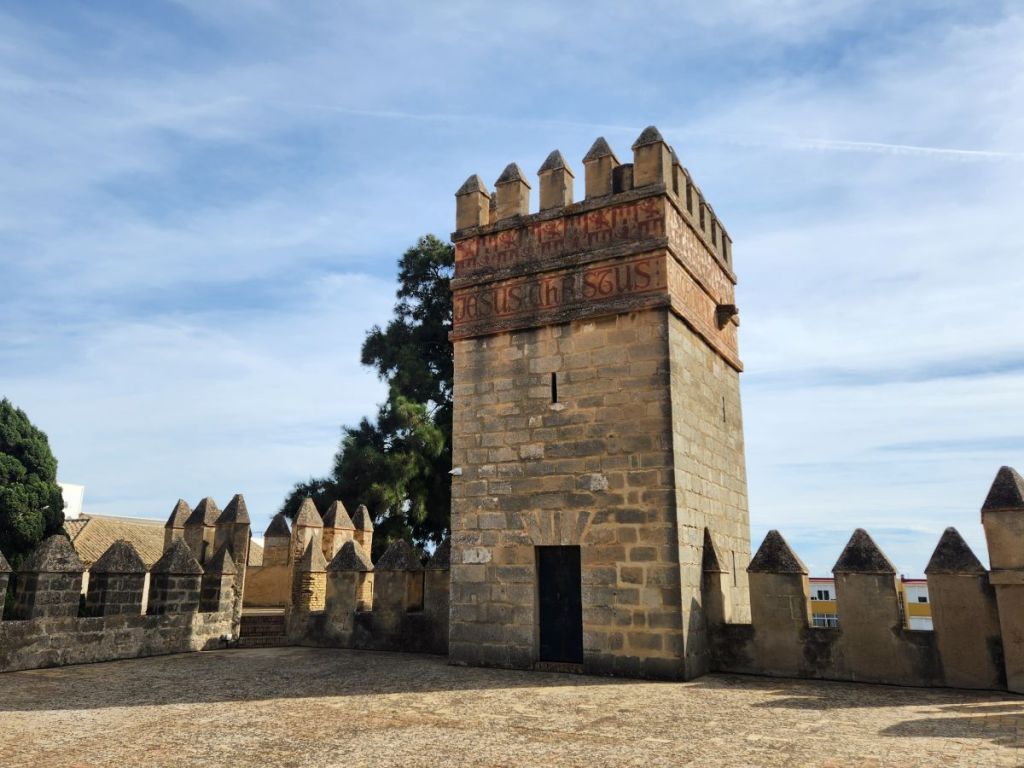
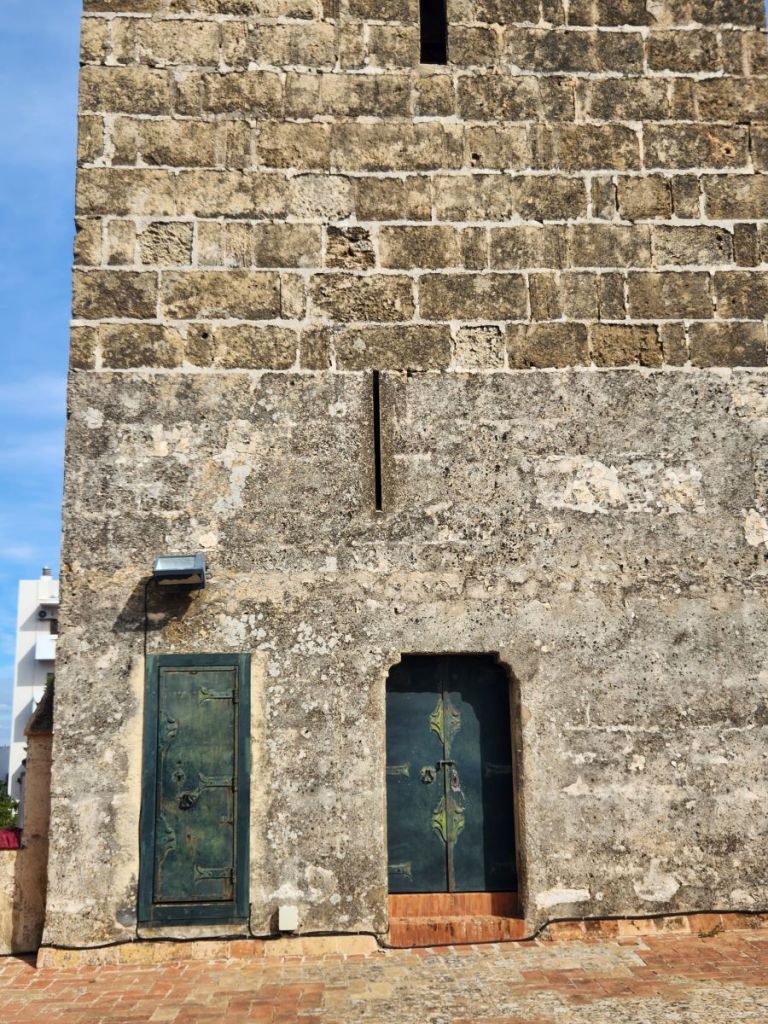
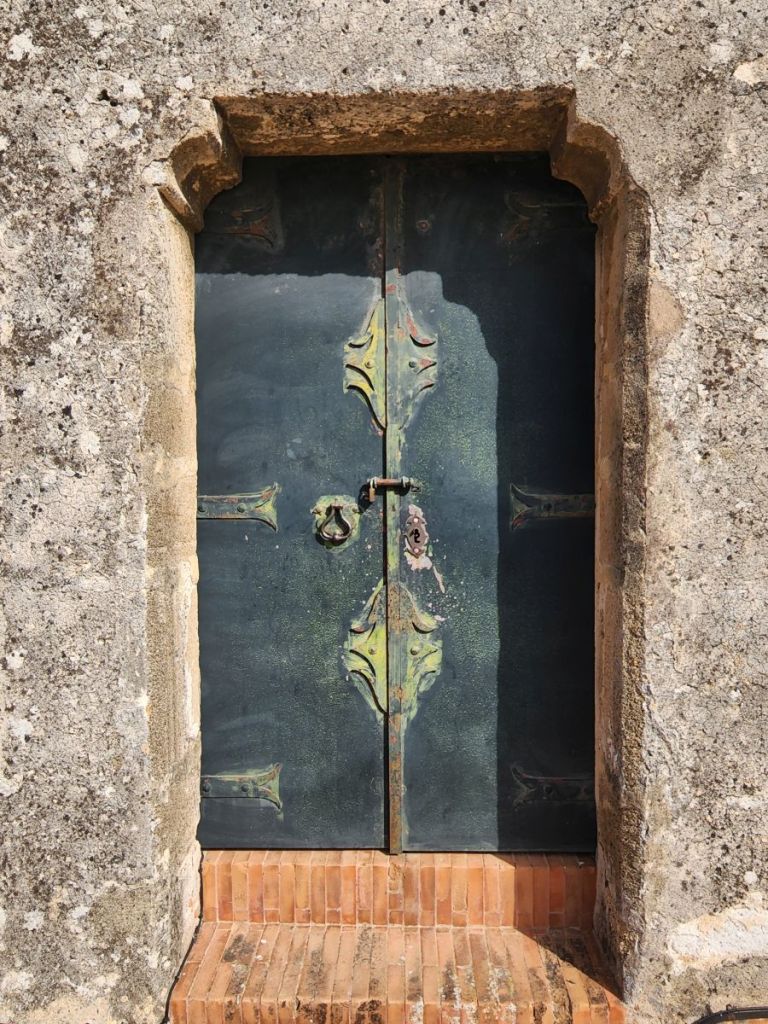
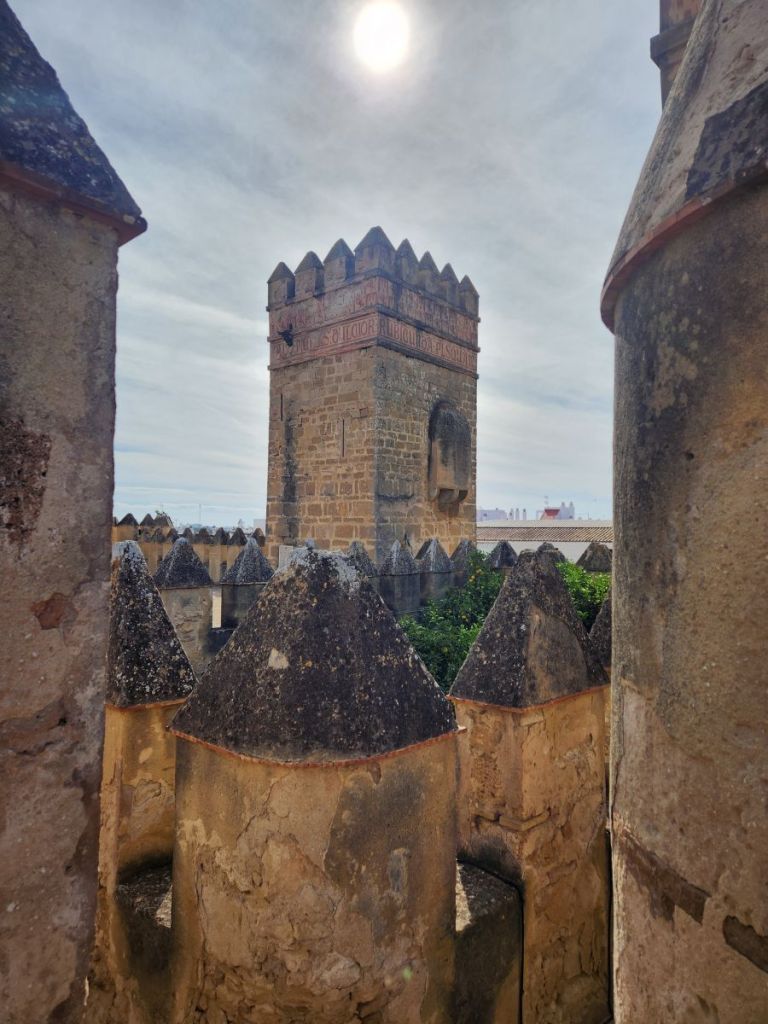
Now that we’ve eaten, we make our way to the Castillo de San Marcos, the beginnings of which were started in the 1st Century with the Romans, added on to by the Muslims after the defeat of the Visgoth army as well as the Arabs in the 10th C and finally taken into Spanish hands in the 13th C by King Alfonso X. A very storied and long history, which is explained by this cool audioguide as well as placards around the castle. Some of the most interesting sights is the Quibla, the sacred part of the Mosque that King Alfonso actually saved by building a partition to protect the Quibla, placing an altarpiece in front of the partition wall. No one found the Quibla until the 1940s when the altarpiece was removed to demolish the wall which was in bad disrepair. Absolutely amazing story and absolutely stunning architecture.
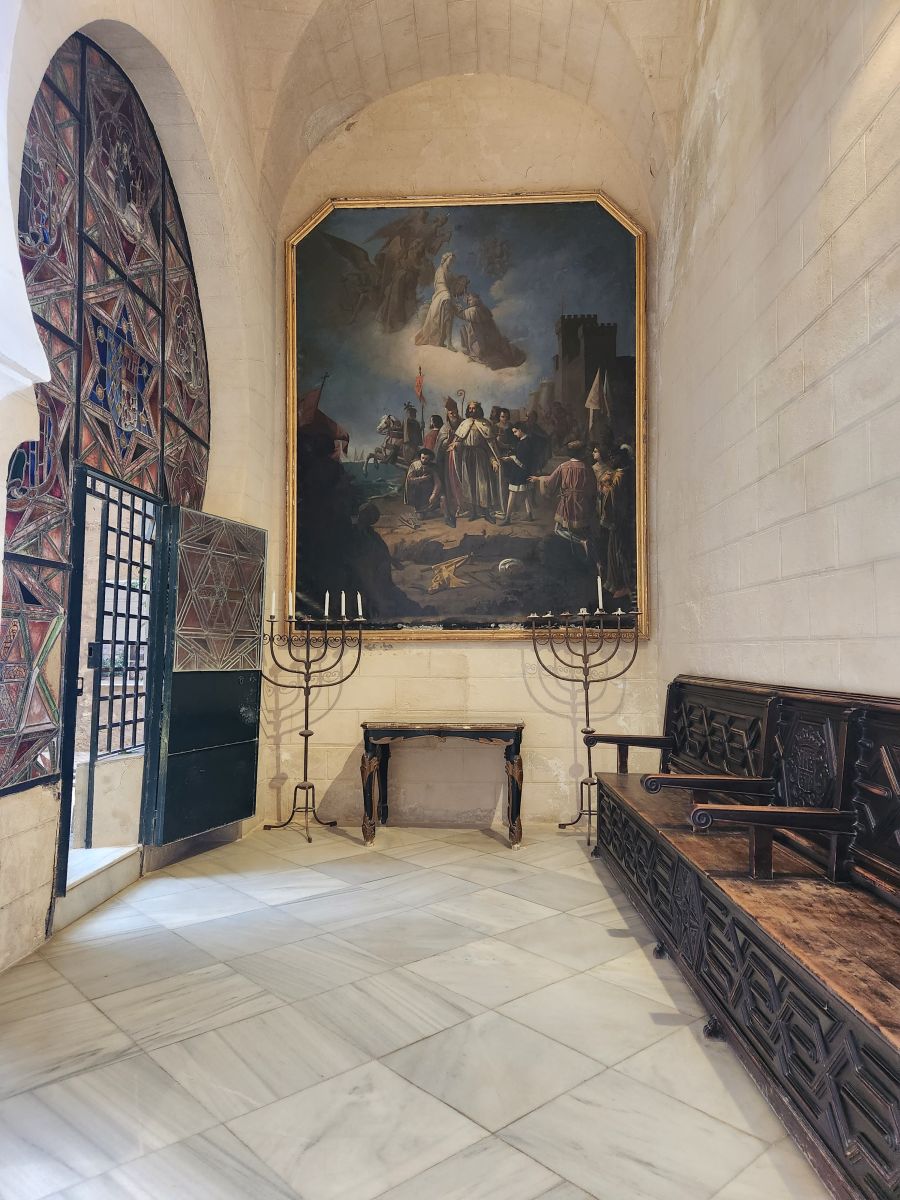
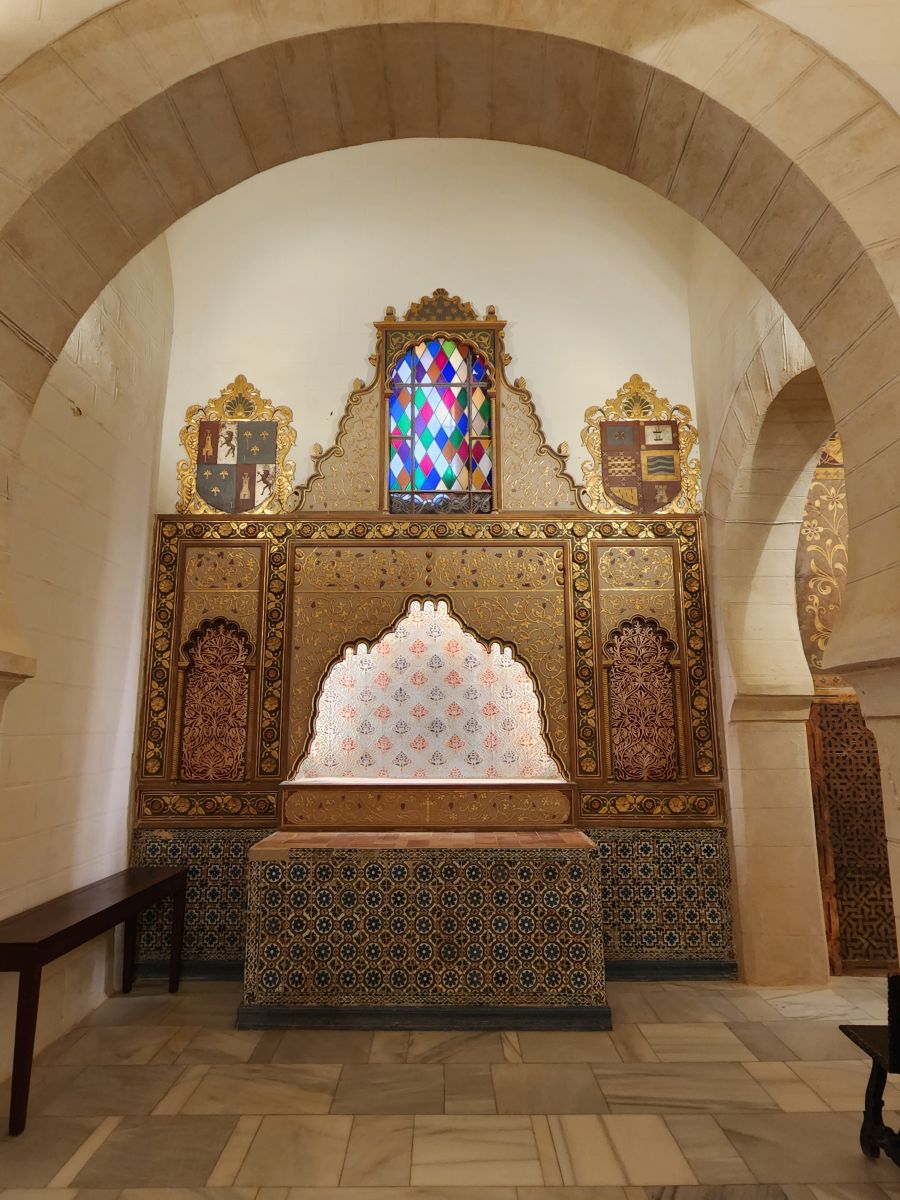
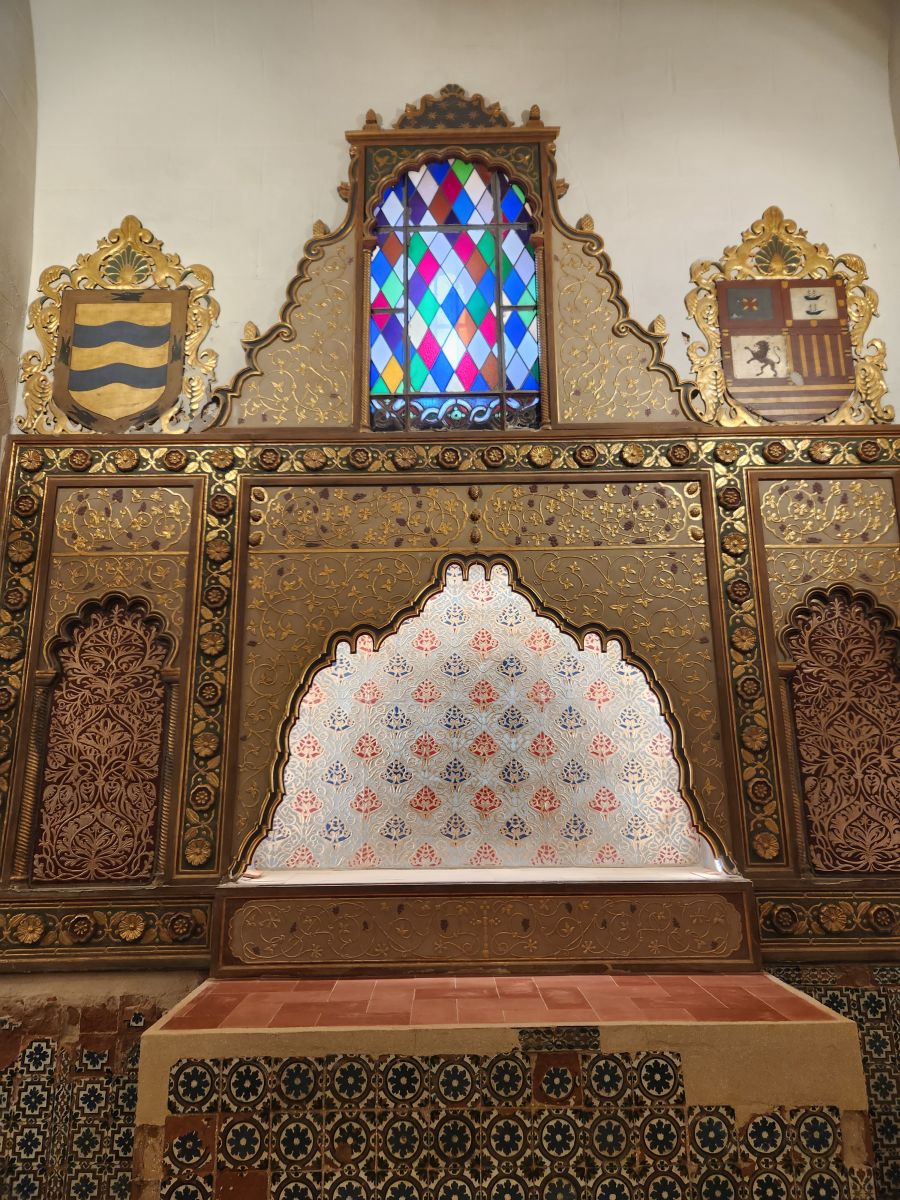
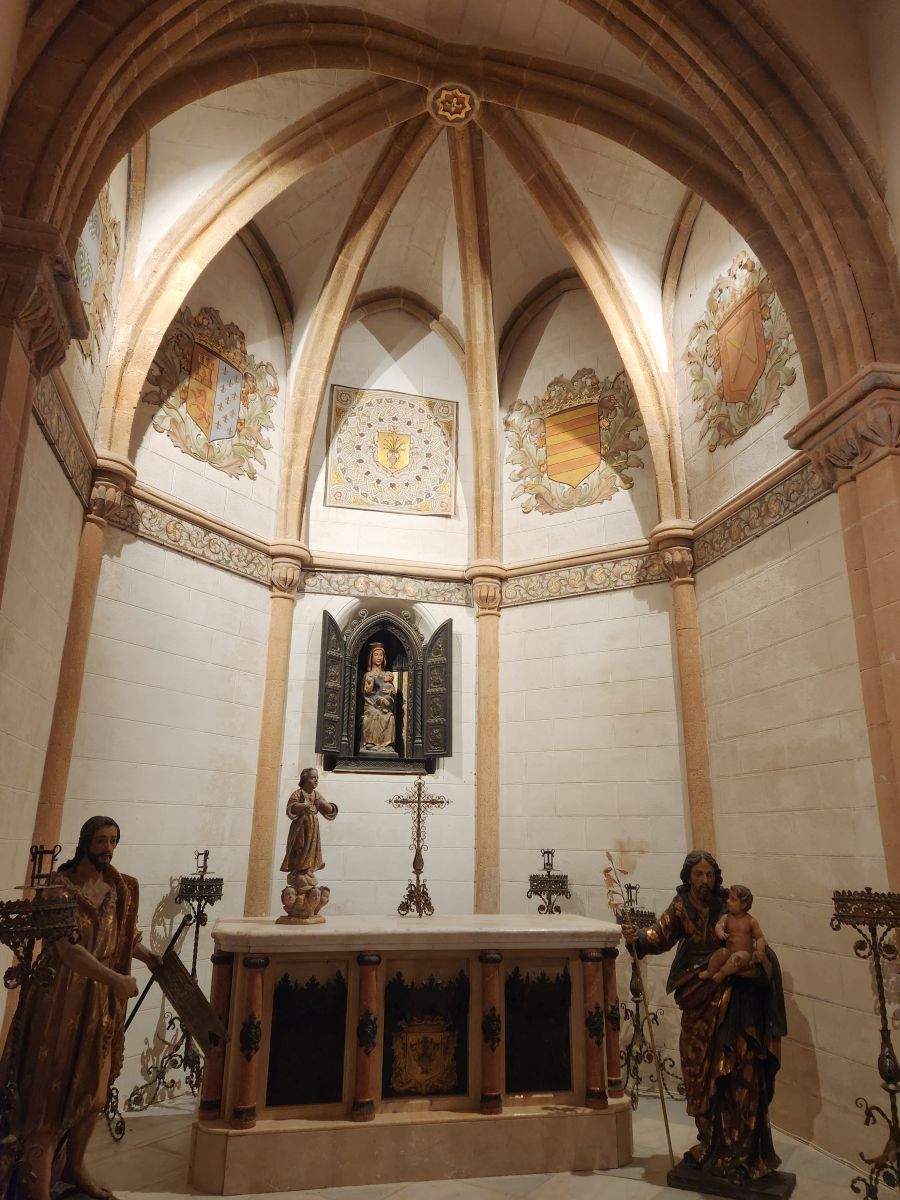
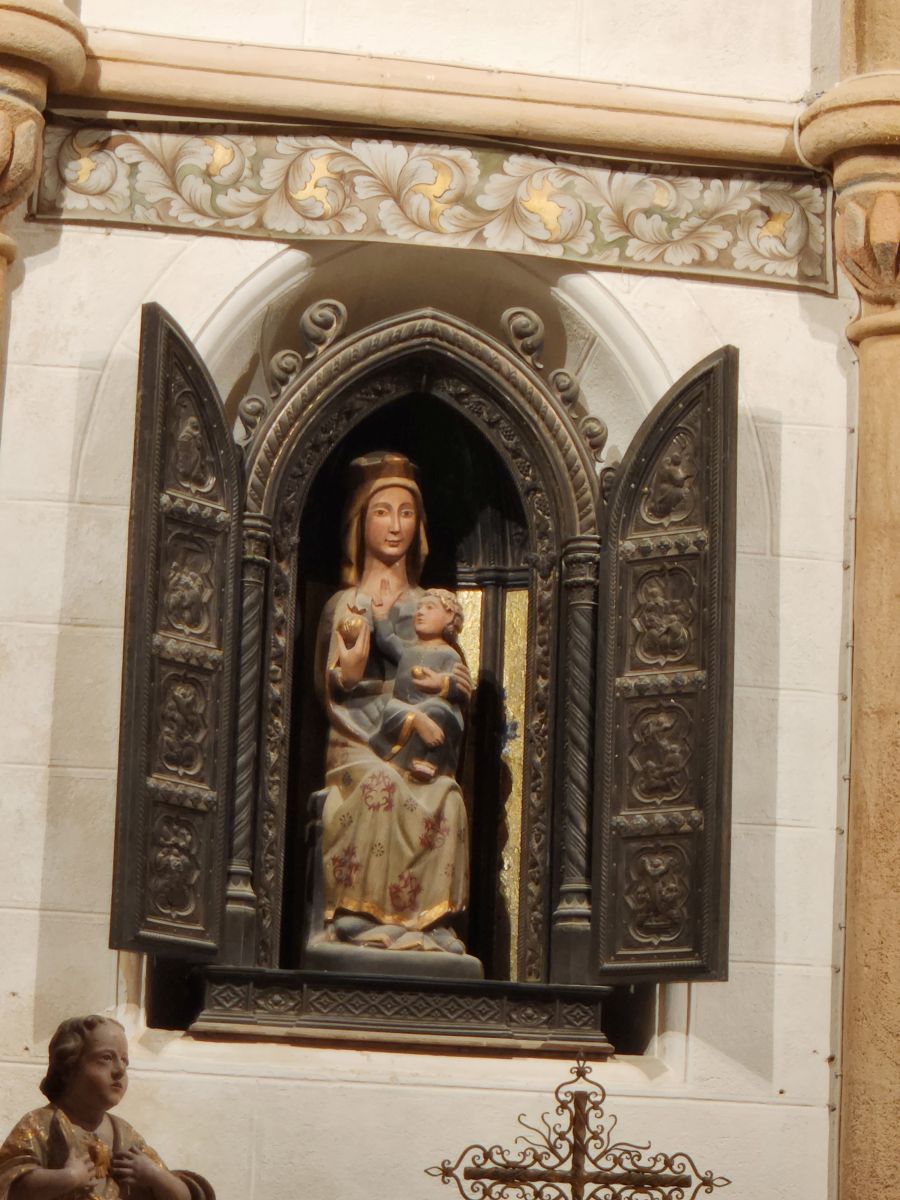
The chapel of Santa Maria is beautiful as well, and an equally wonderful story. When coming to conquer the city, King Alfonso didn’t think he had enough troops, so he prayed to the Virgin Mary to assist him with the reconquest. When he won the city back, he renamed the town in her name and constructed this chapel which still contains the original statue of Virgin Mary from the 13th C.
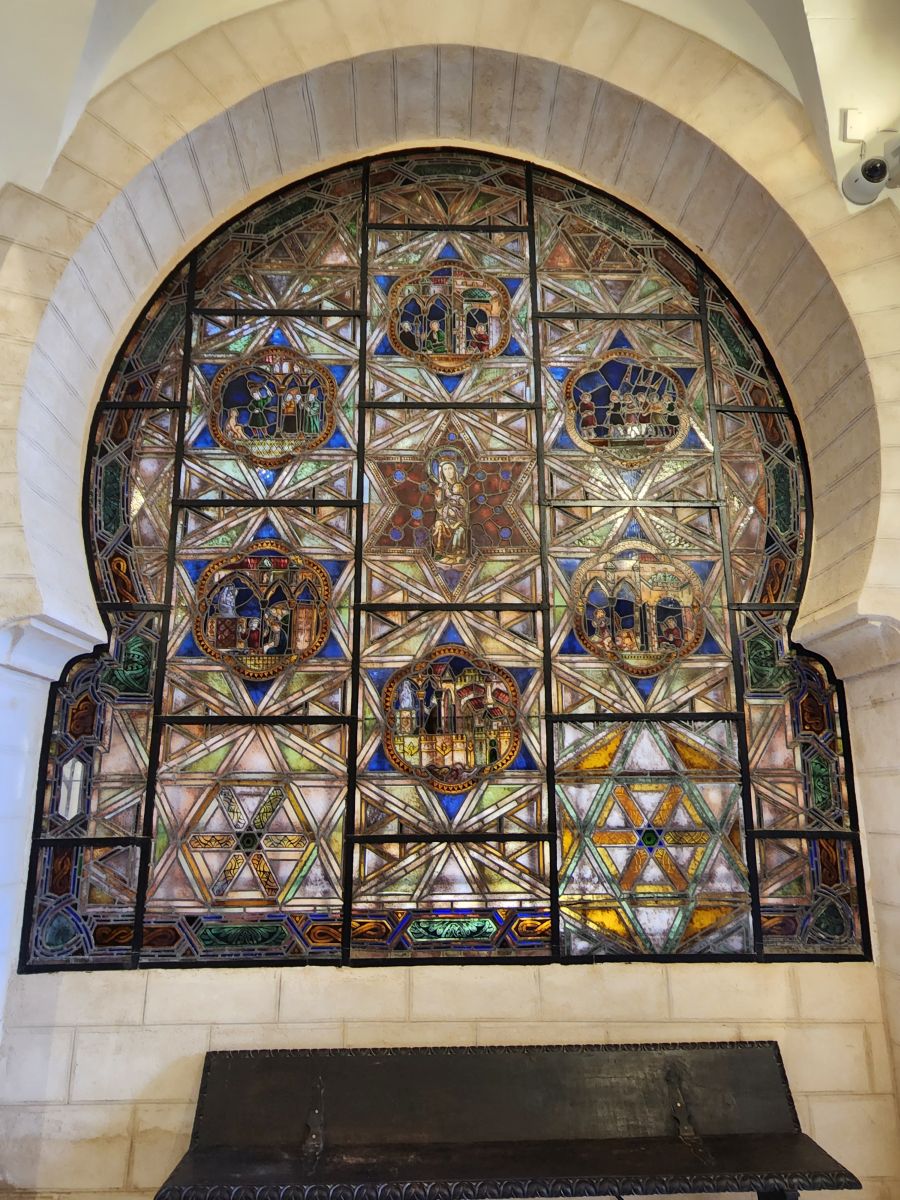
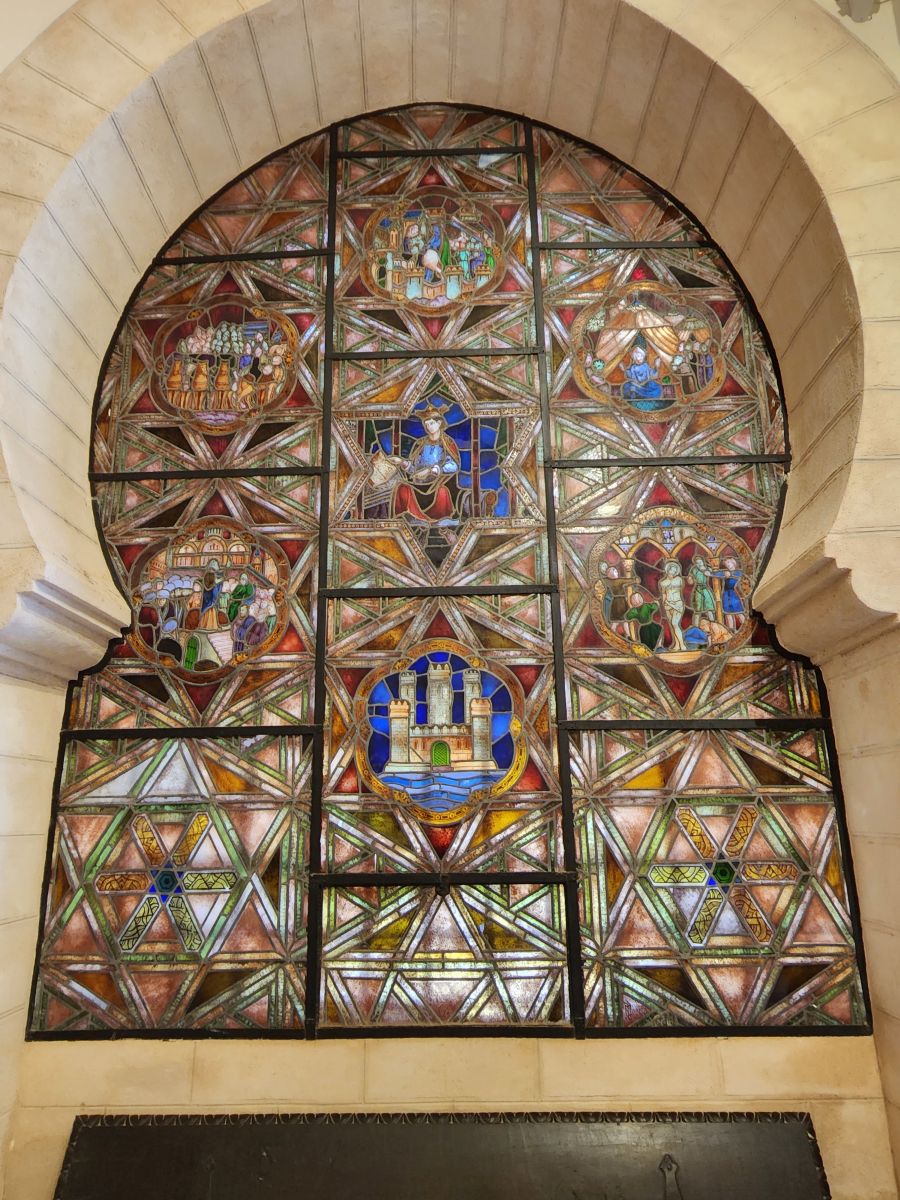
Two fantastic stained glass windows at the end of the chapel area depict the King and Virgin Mary surrounded by the 12 miracles that occurred in the regions. Spectacular.
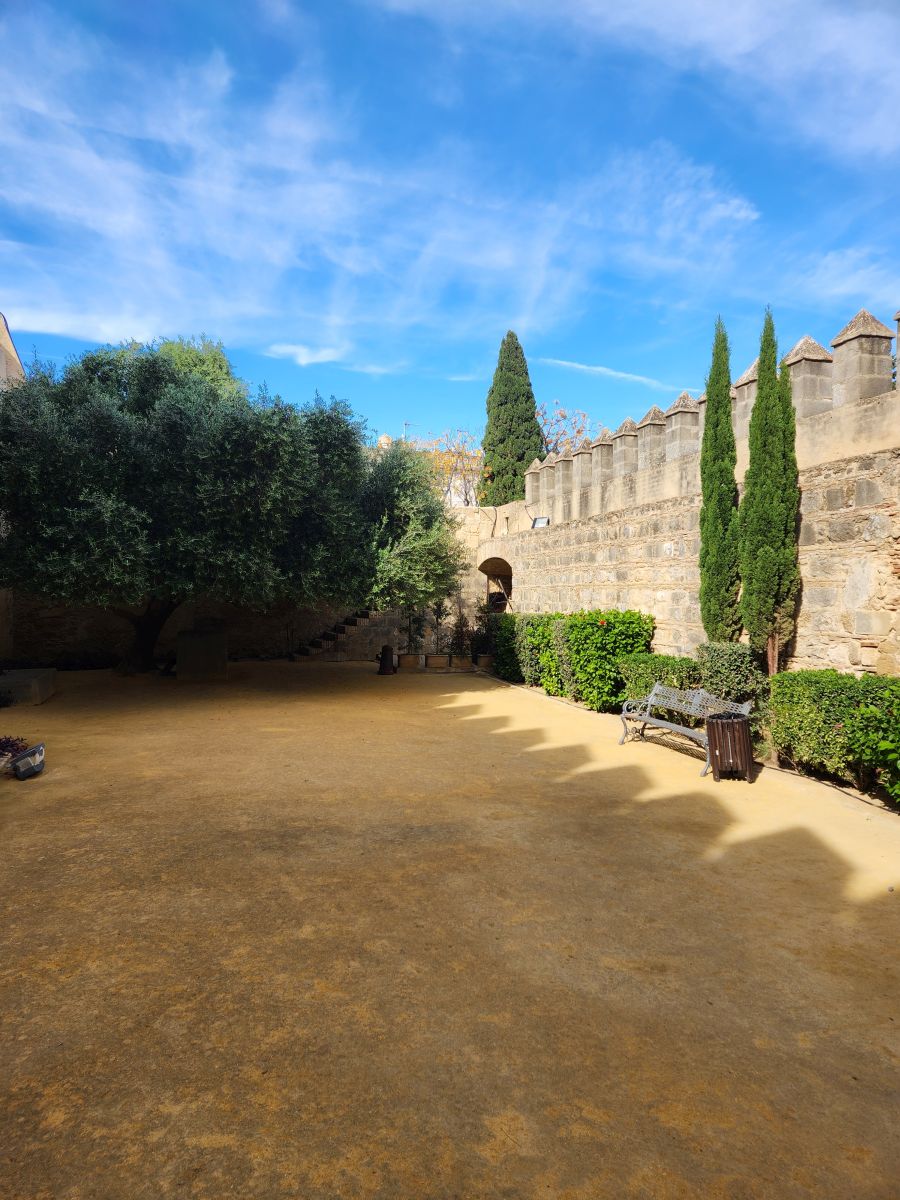
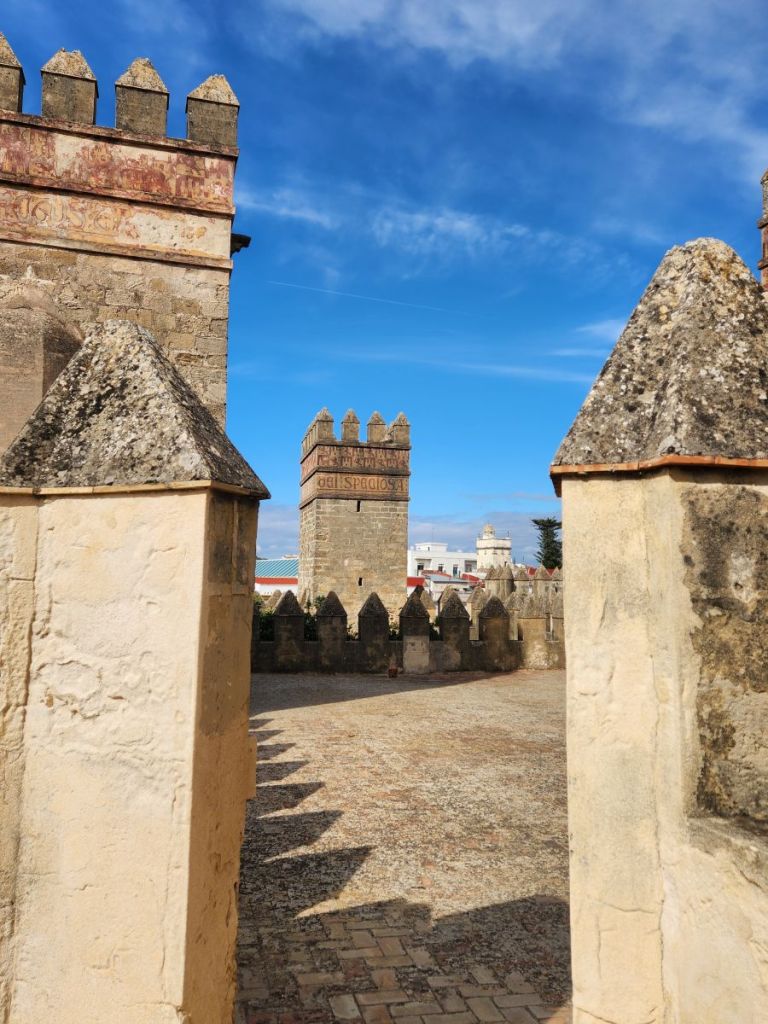
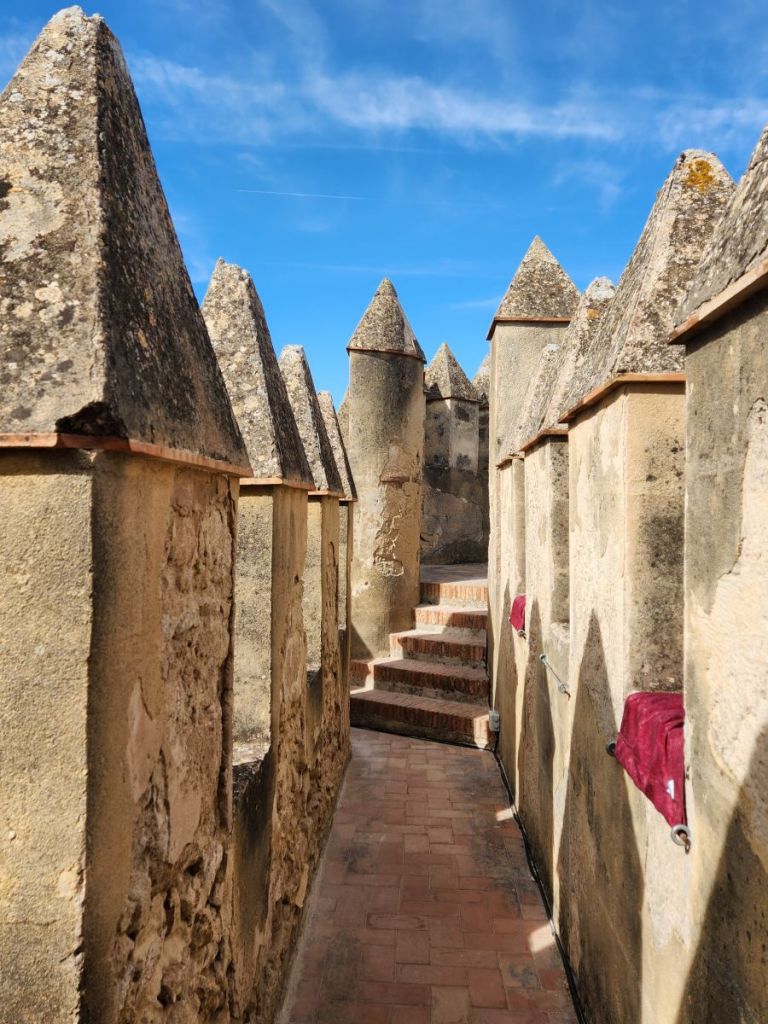
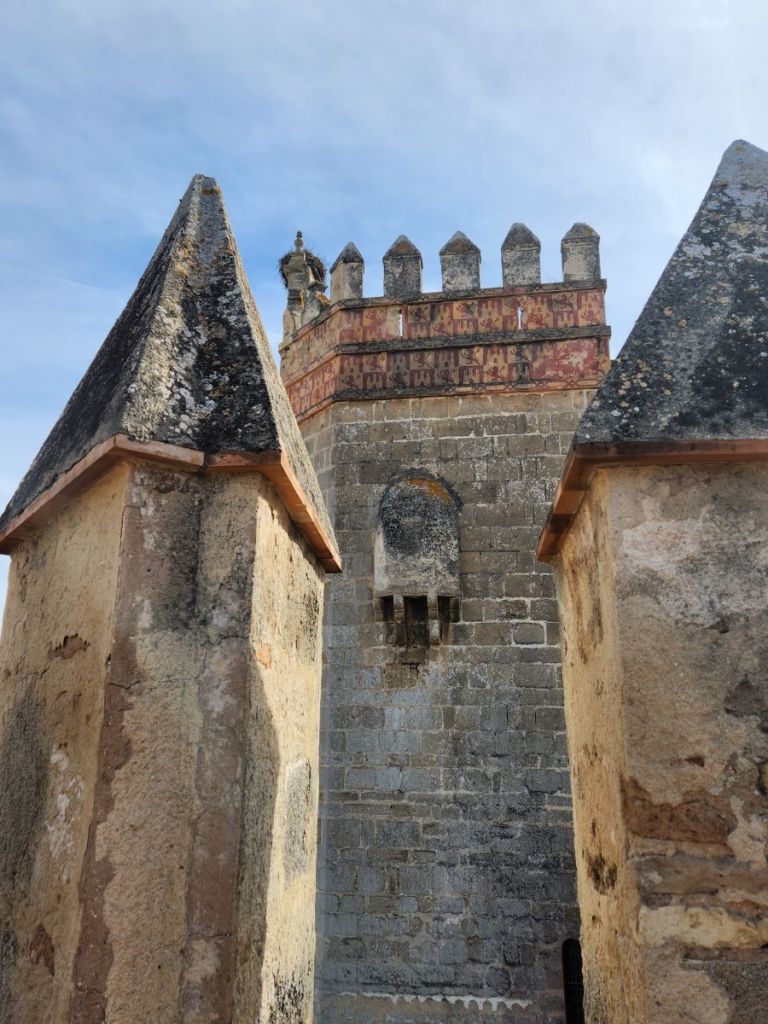
The chapel area opens up to the inner courtyard of the castle which makes for great photos of the impregnable walls and fortifications.
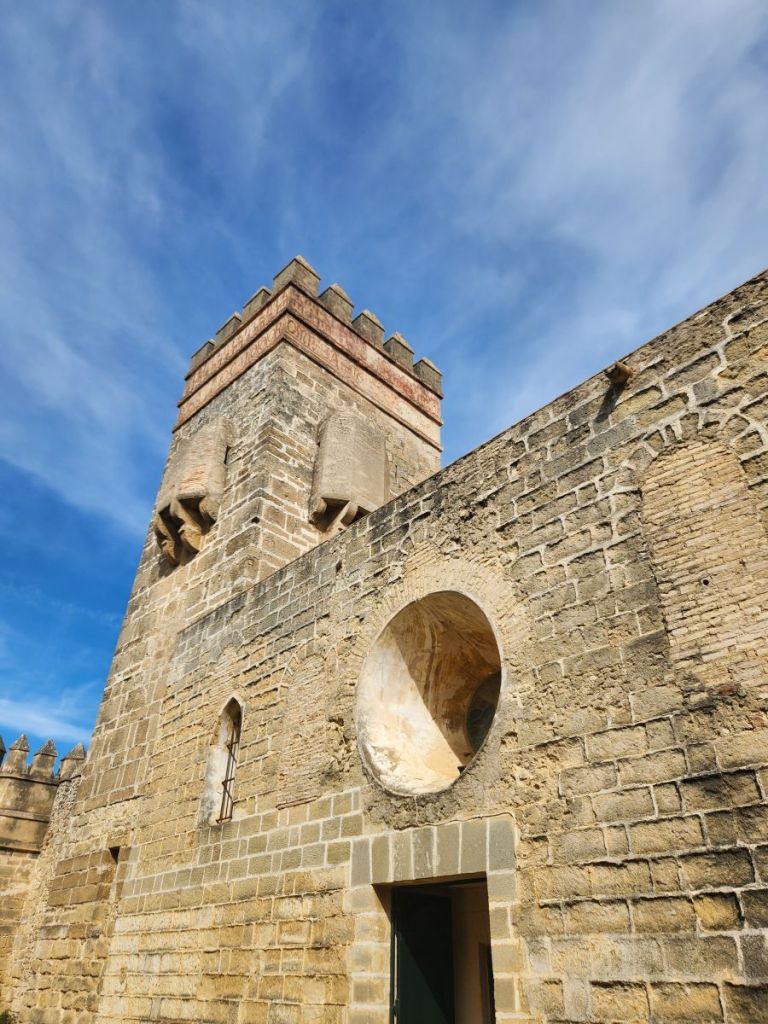
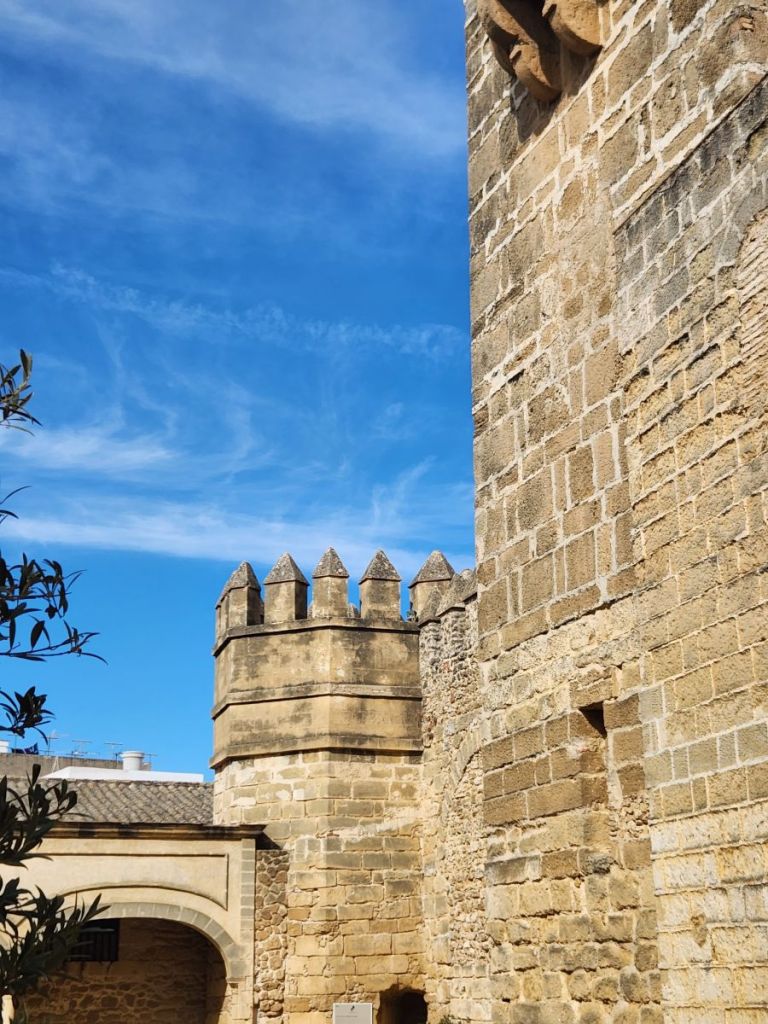
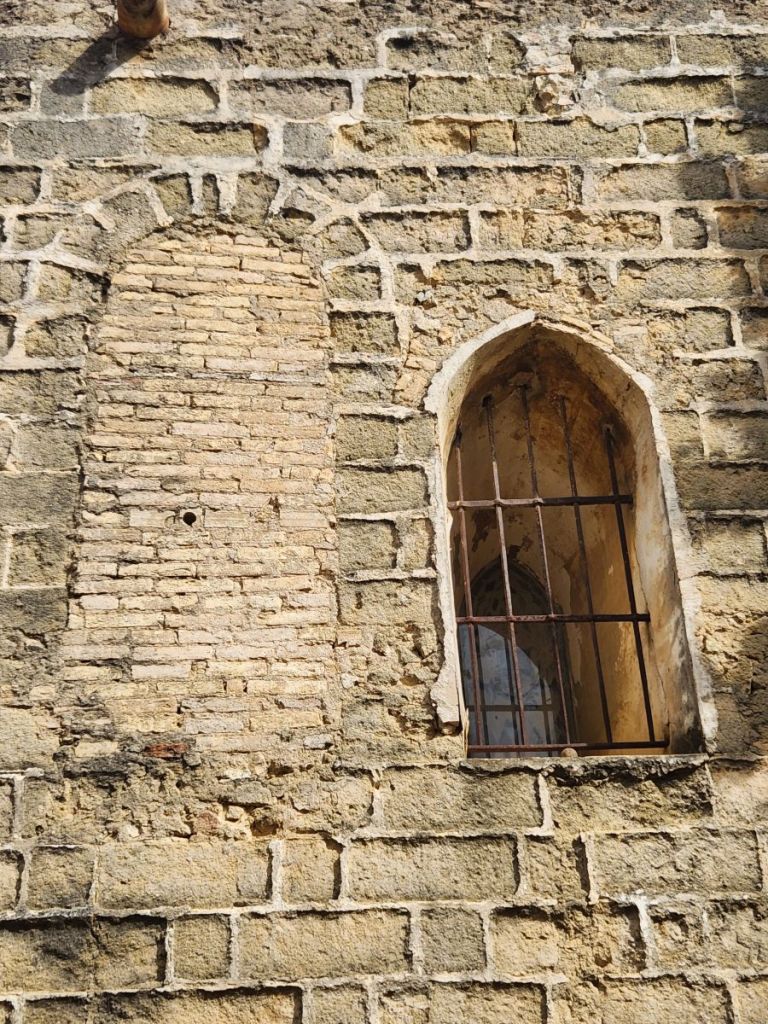
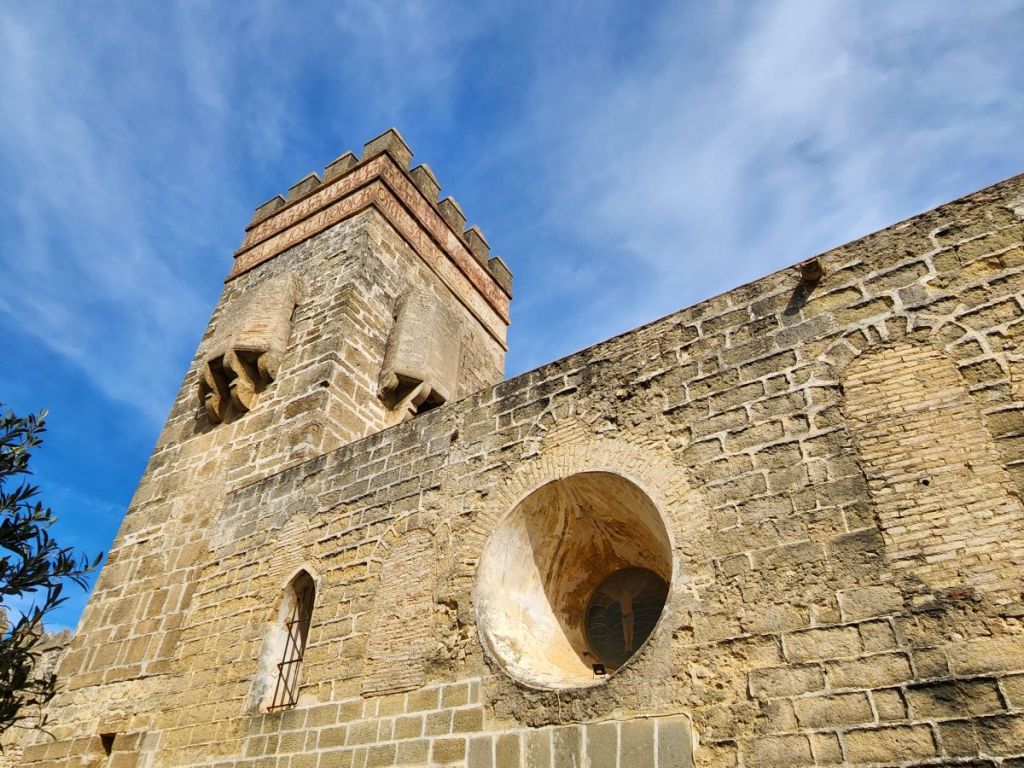
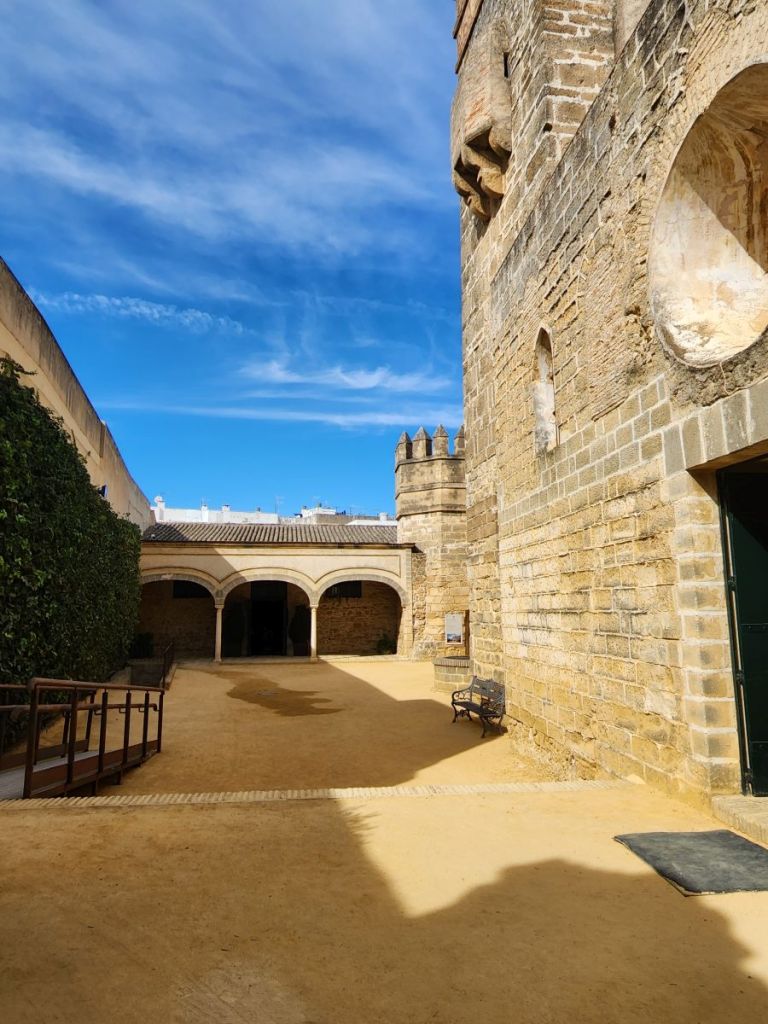
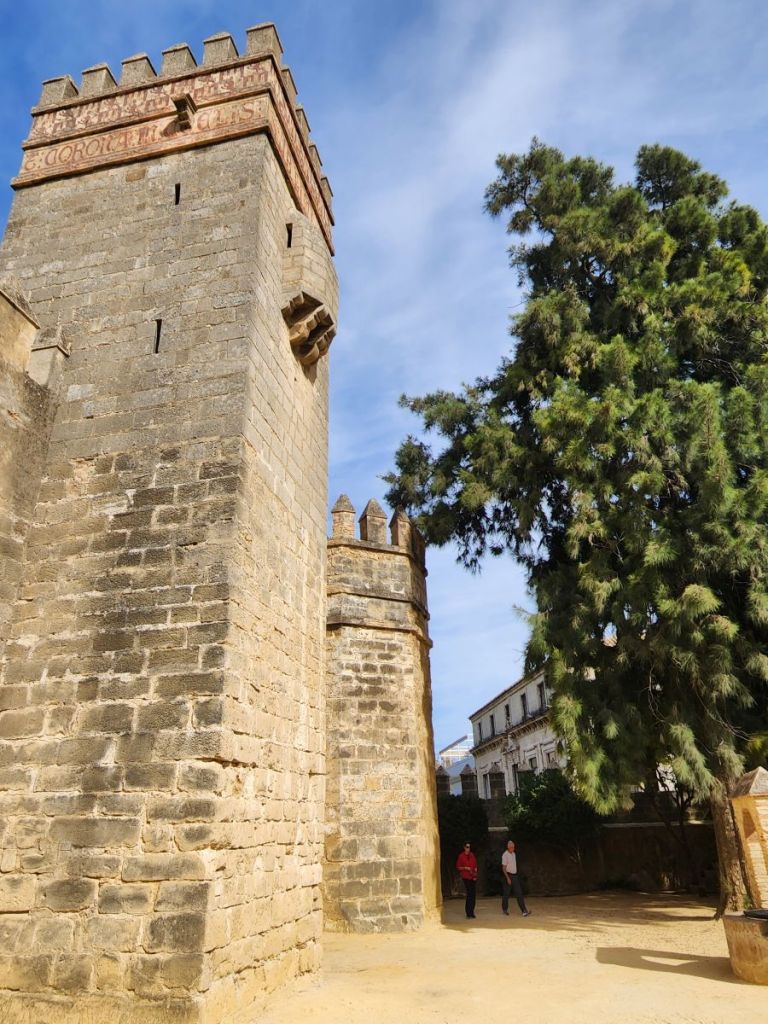
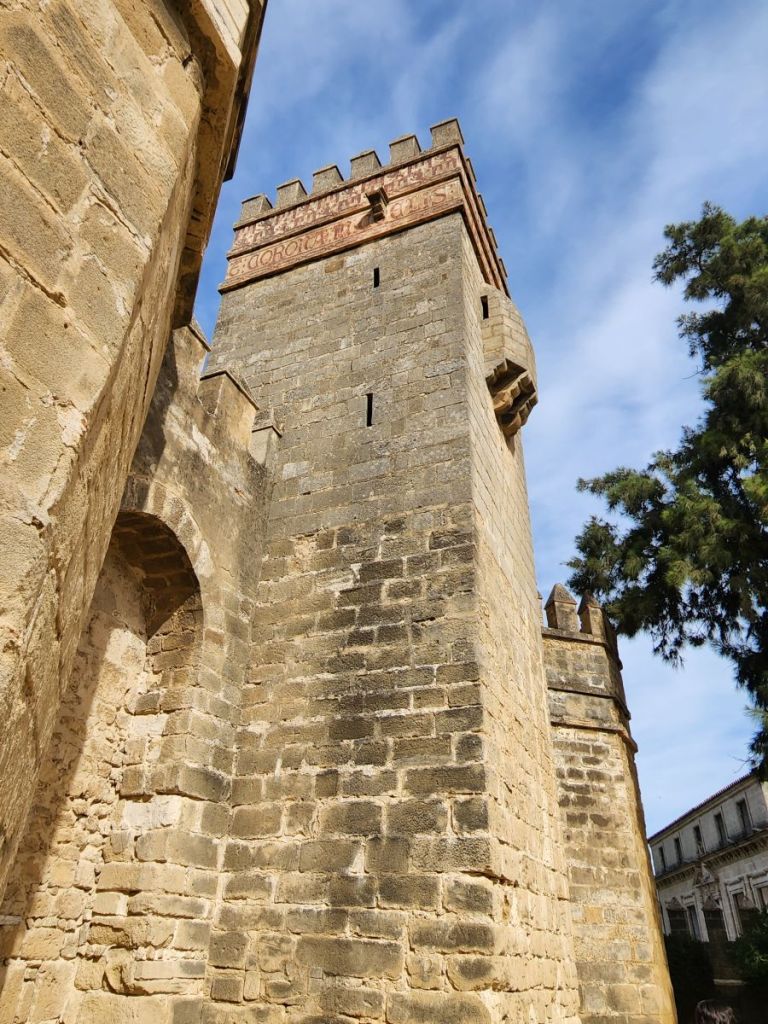
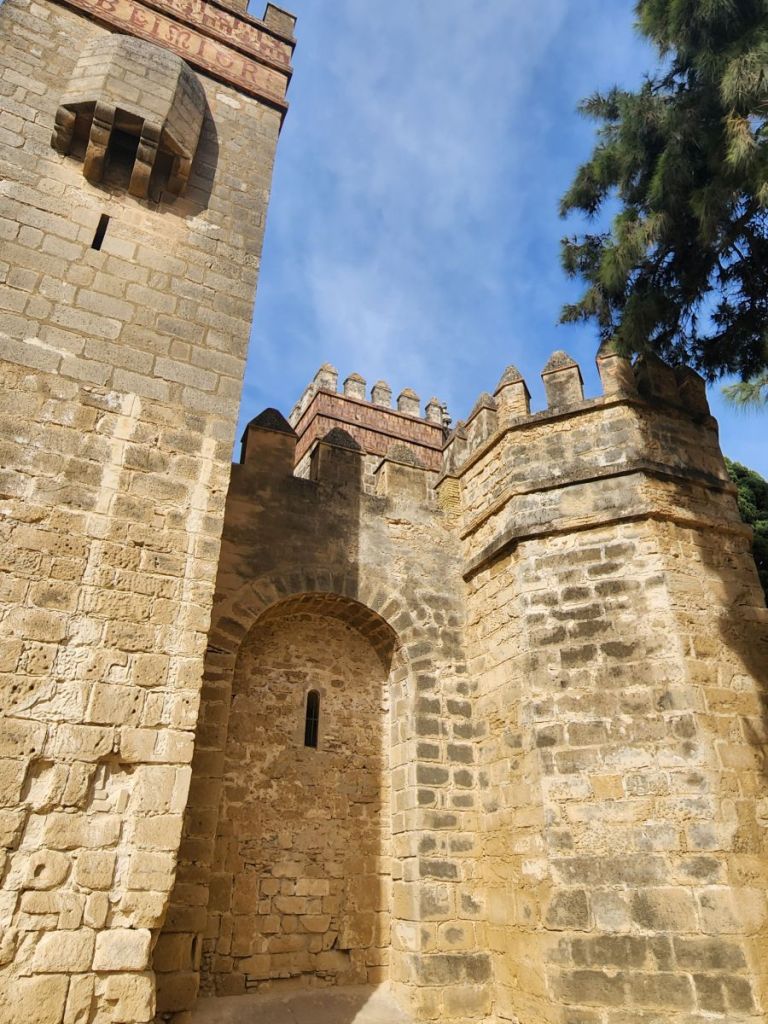
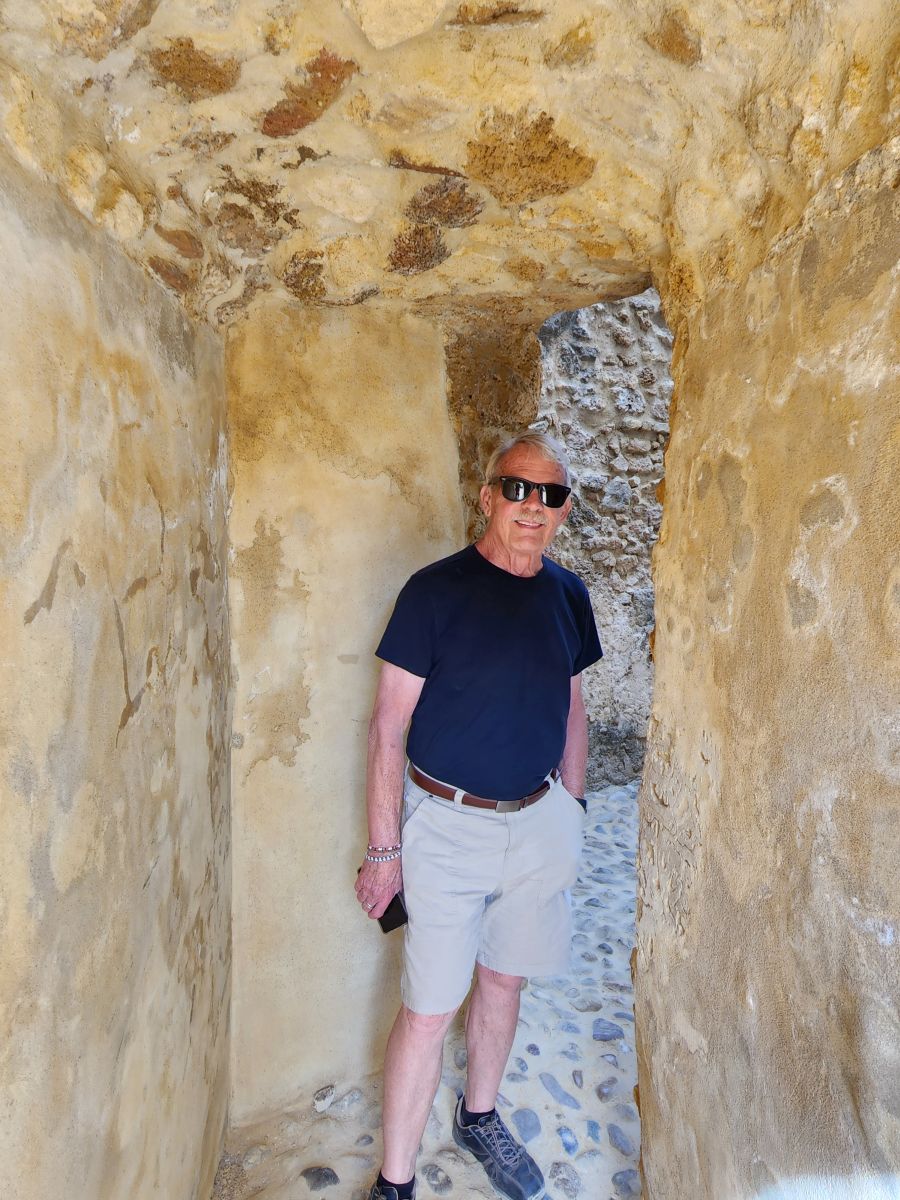
In the corner of the courtyard is the redoubt, a narrow little corridor that only allows one person at a time through. It is here that attackers were bottlenecked, having to go through single file and without horses, only to find what appeared to be a dead end where the protectors hurled hot oil, arrows or rocks down upon them.
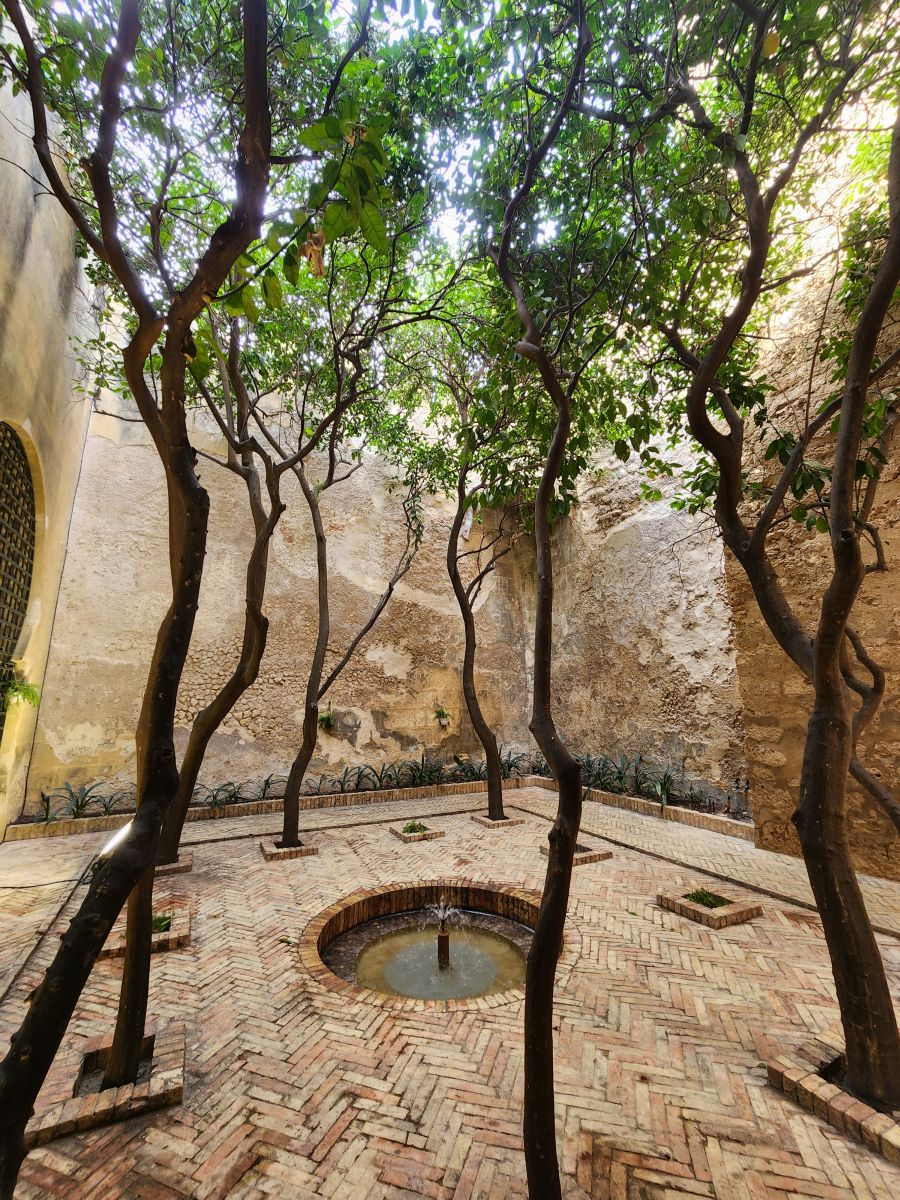
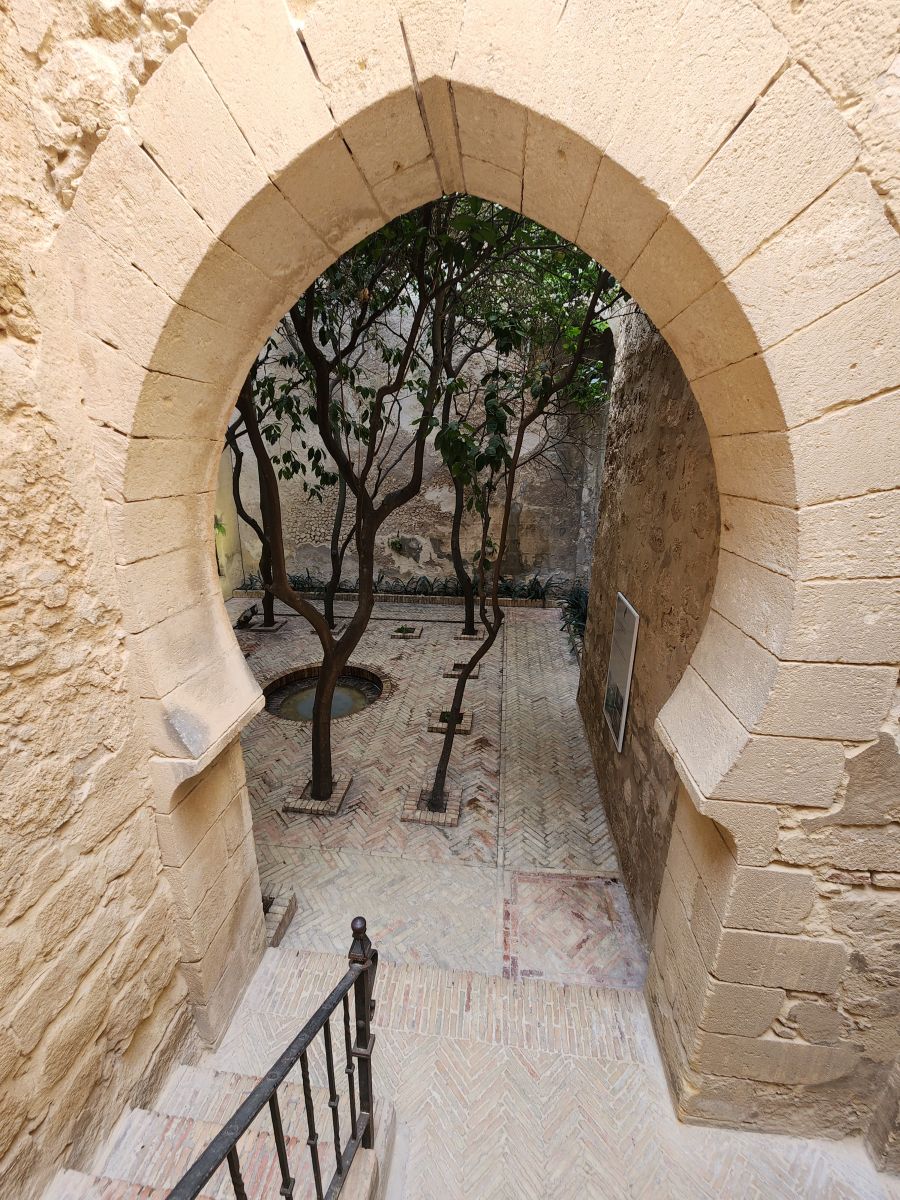
The redoubt leads to the orange tree courtyard which holds a bunch of scraggly looking orange trees reach up to the open air of the squared off courtyard. There is a little fountain in the middle and some shade, but nothing like you would think from a regular orange tree.
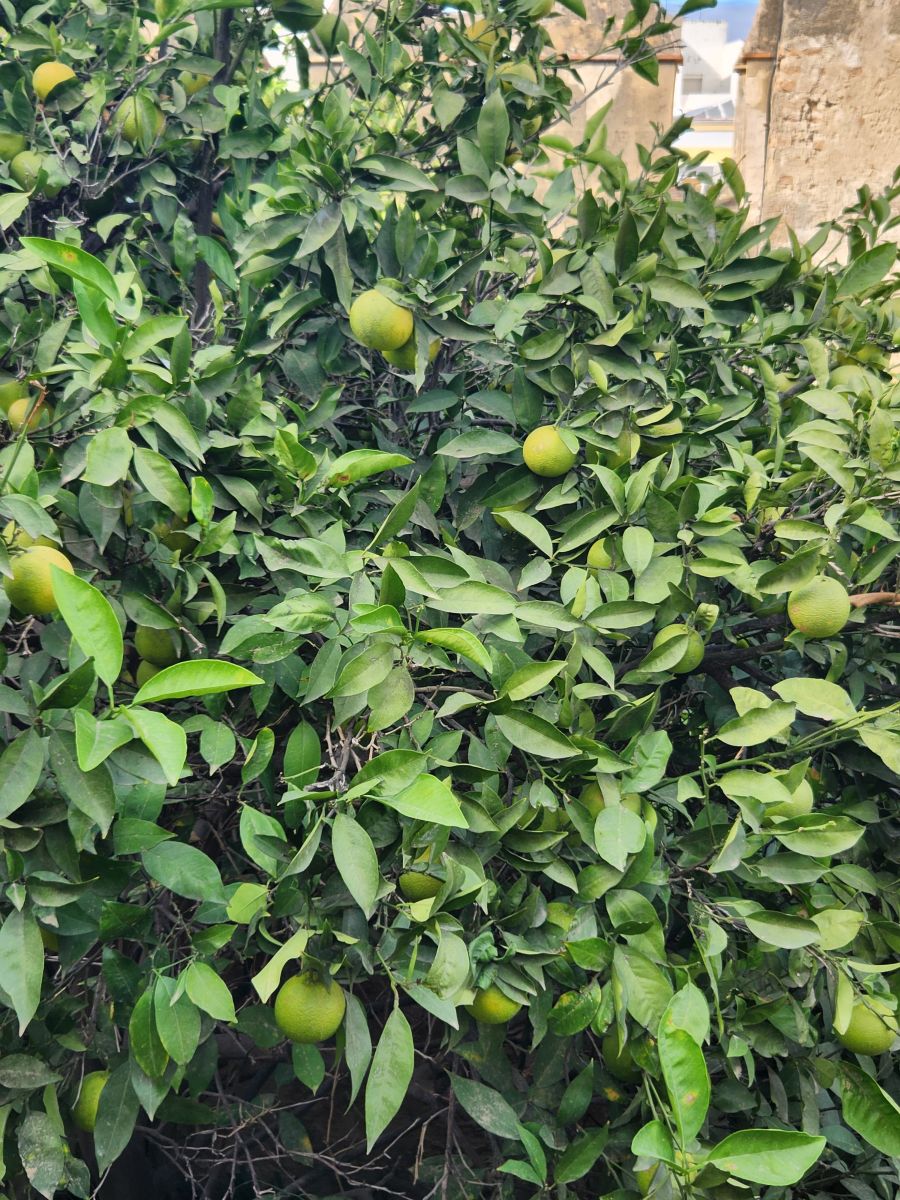
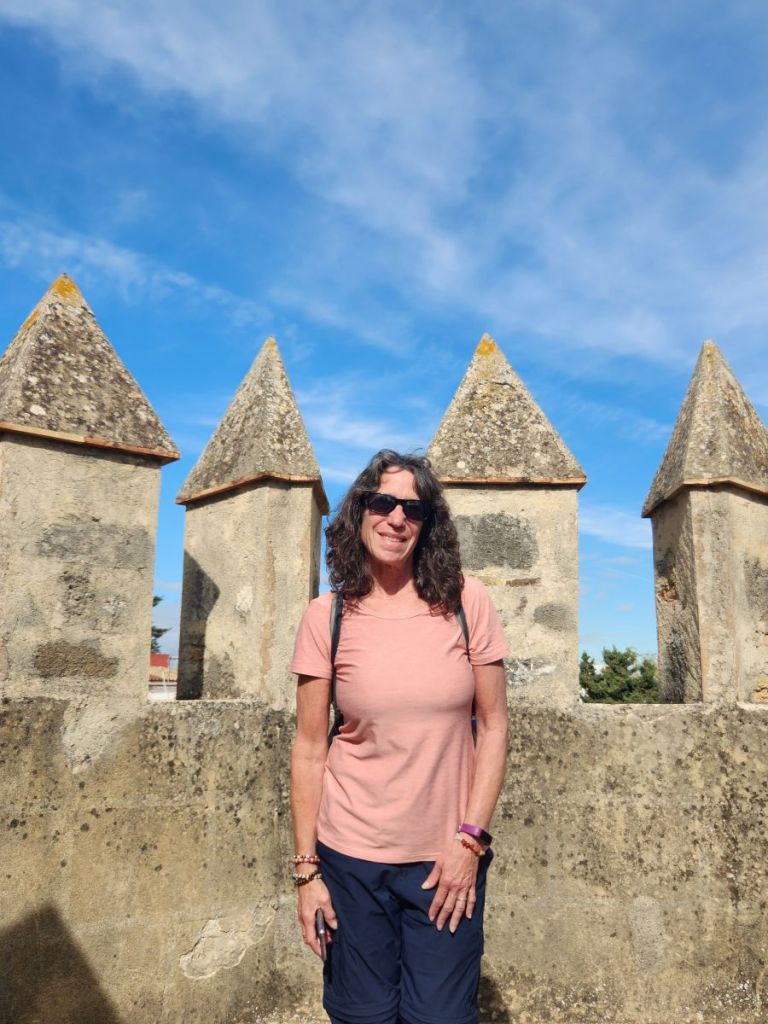
Climbing the steps to the upper walls, we come out in a narrow walled area that opens up to….the orange trees!!! Which are lush and full of oranges above the courtyard. Crazy. Never seen anything like that. I wanted to pick the oranges, but thought that might be frowned upon.
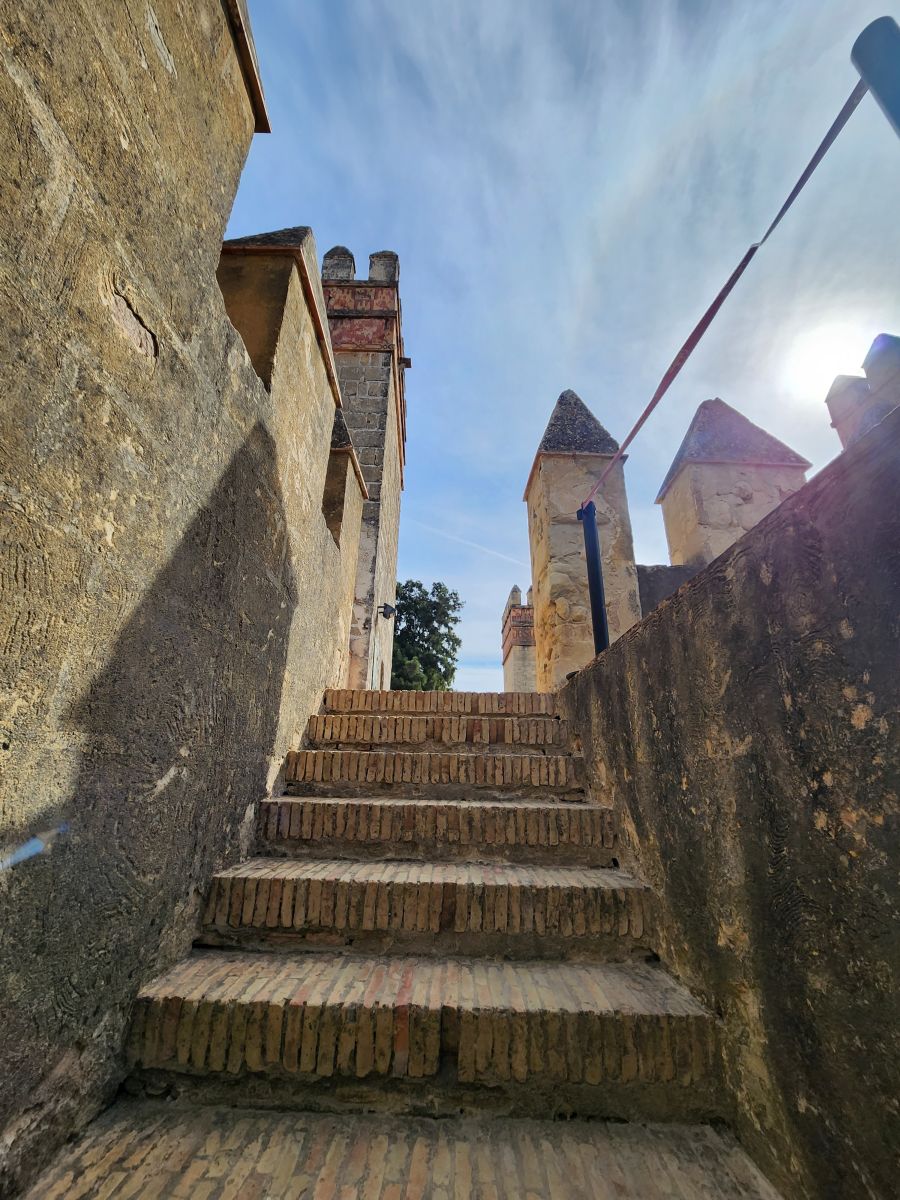
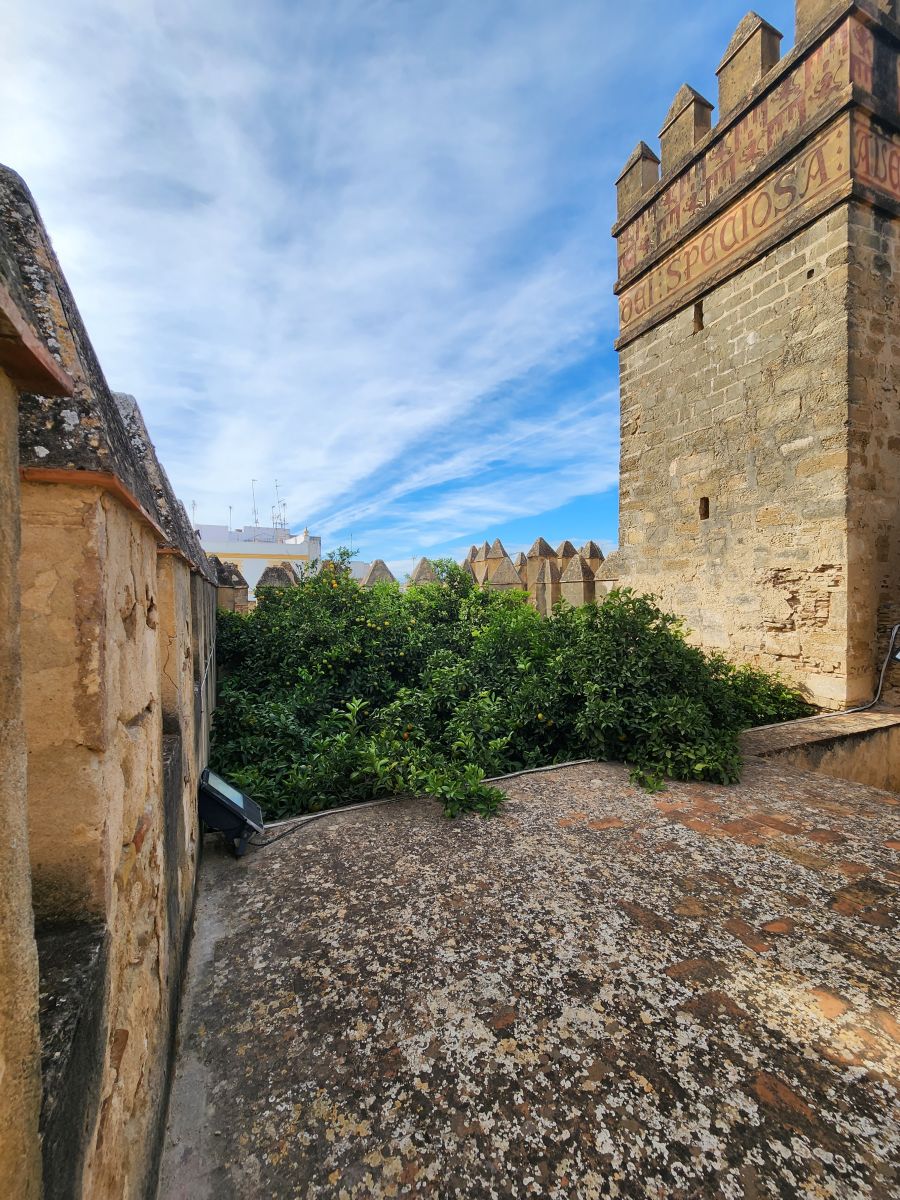
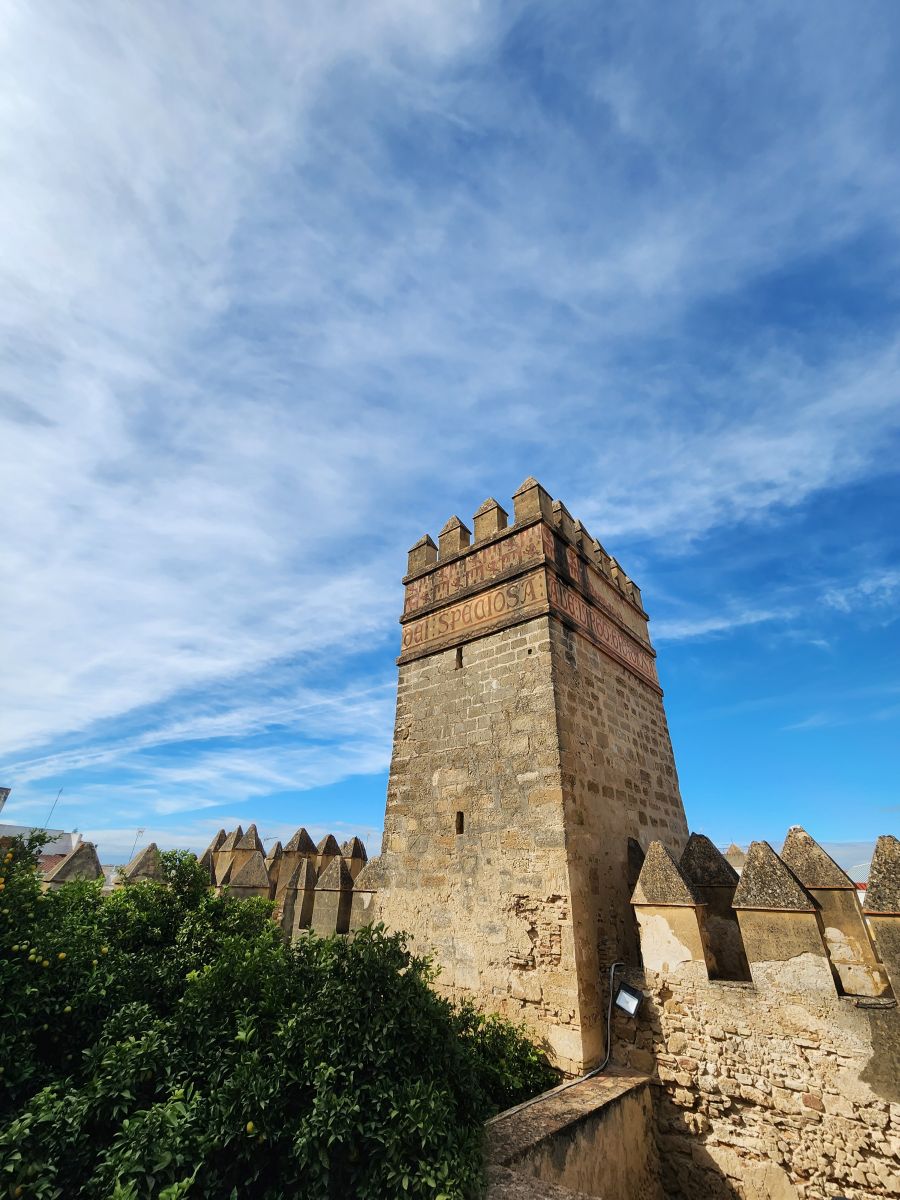
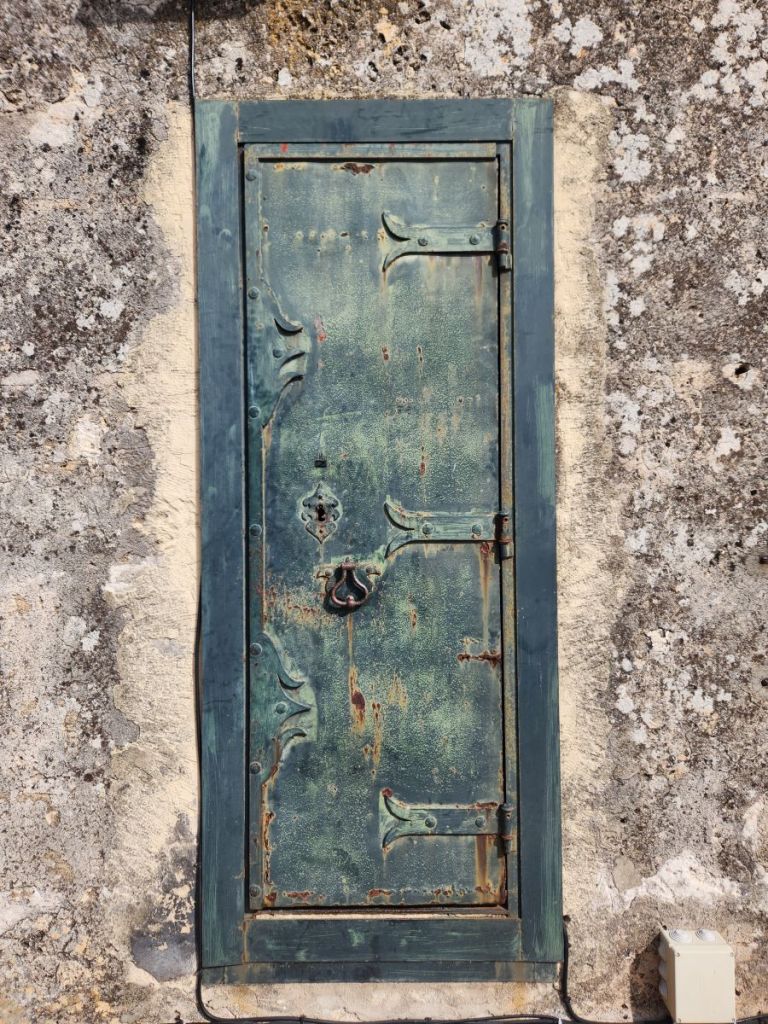
Originally, the port could be seen from these walls, but now, modern development has made that impossible. But, up here also is the little keep room where Christopher Columbus lived for 2 years before he sailed to America. As the story goes, the Duke who reigned over Santa Maria offered to support Columbus in his voyage, but because Santa Maria was a ducal, and not part of the crown, Spain’s King Fernando and Queen Isabel would not allow the journey to begin here. The Duke decided to reduce his support and only provided one ship to Columbus, the Santa Maria, and the expedition set sail from Palos de la Frontera in Huelva.
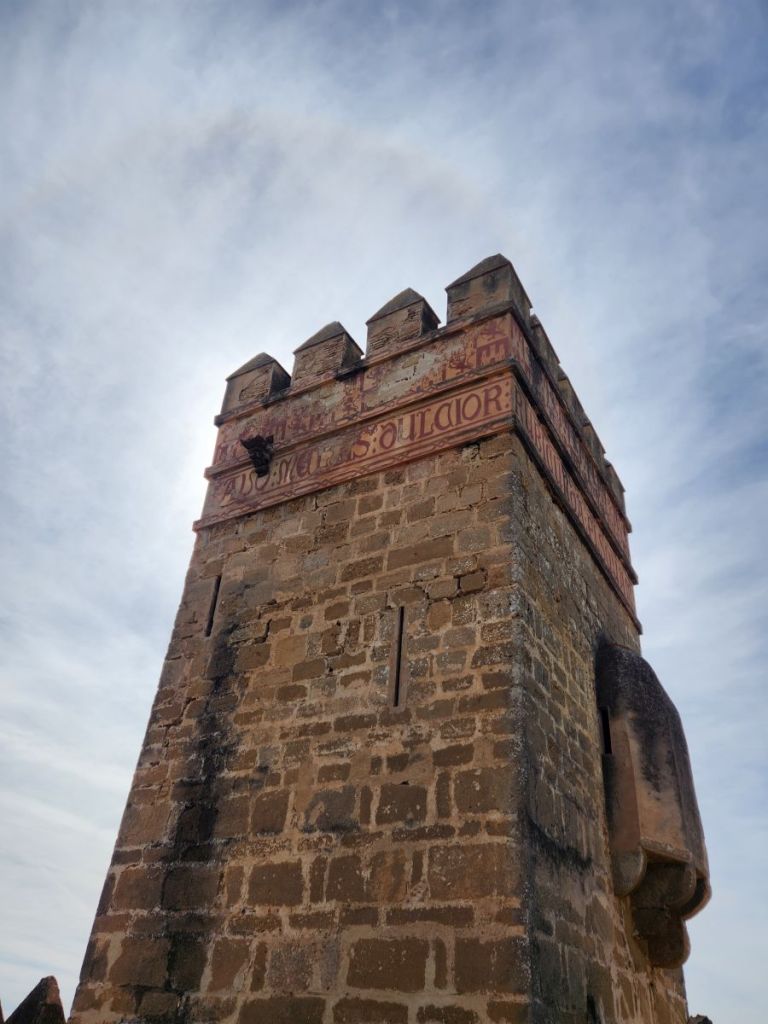
Great story – one I definitely did not remember from my history lessons!
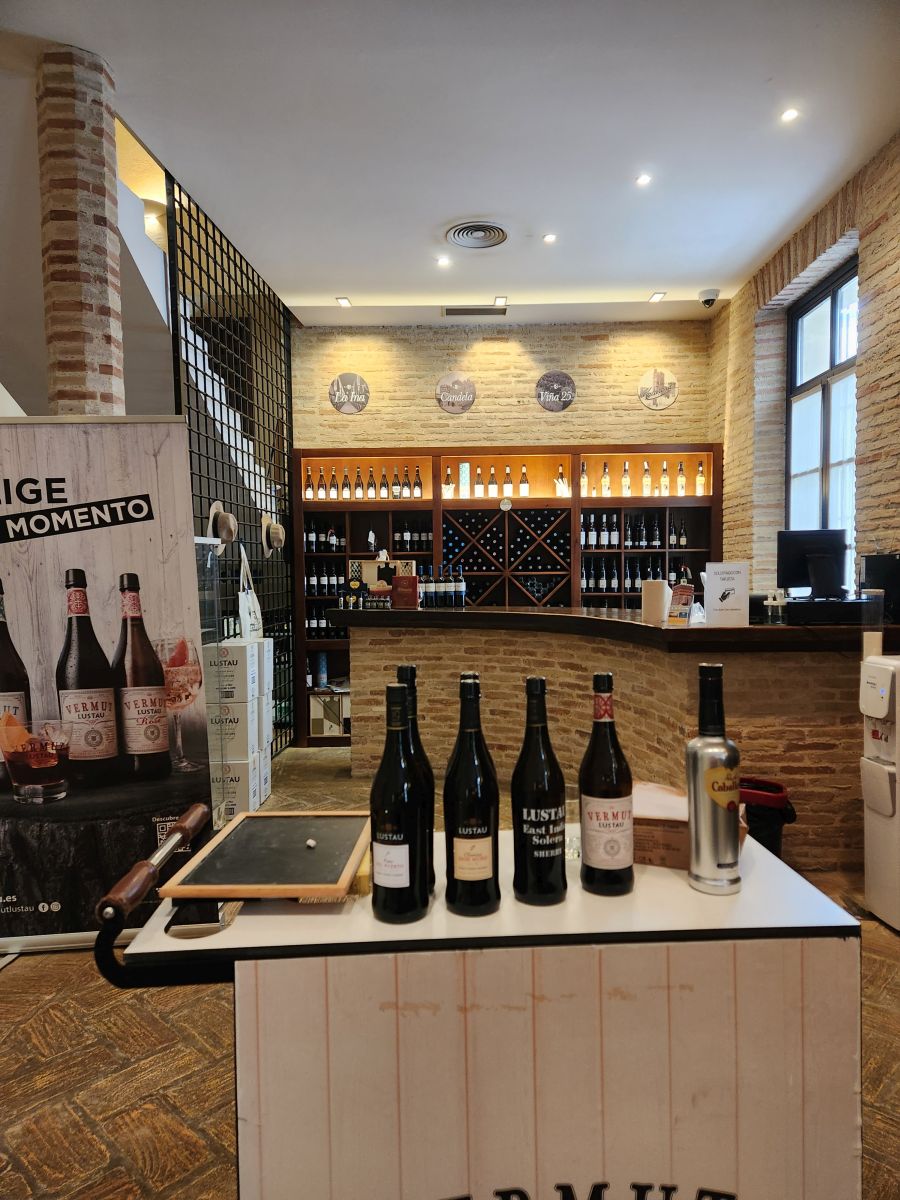
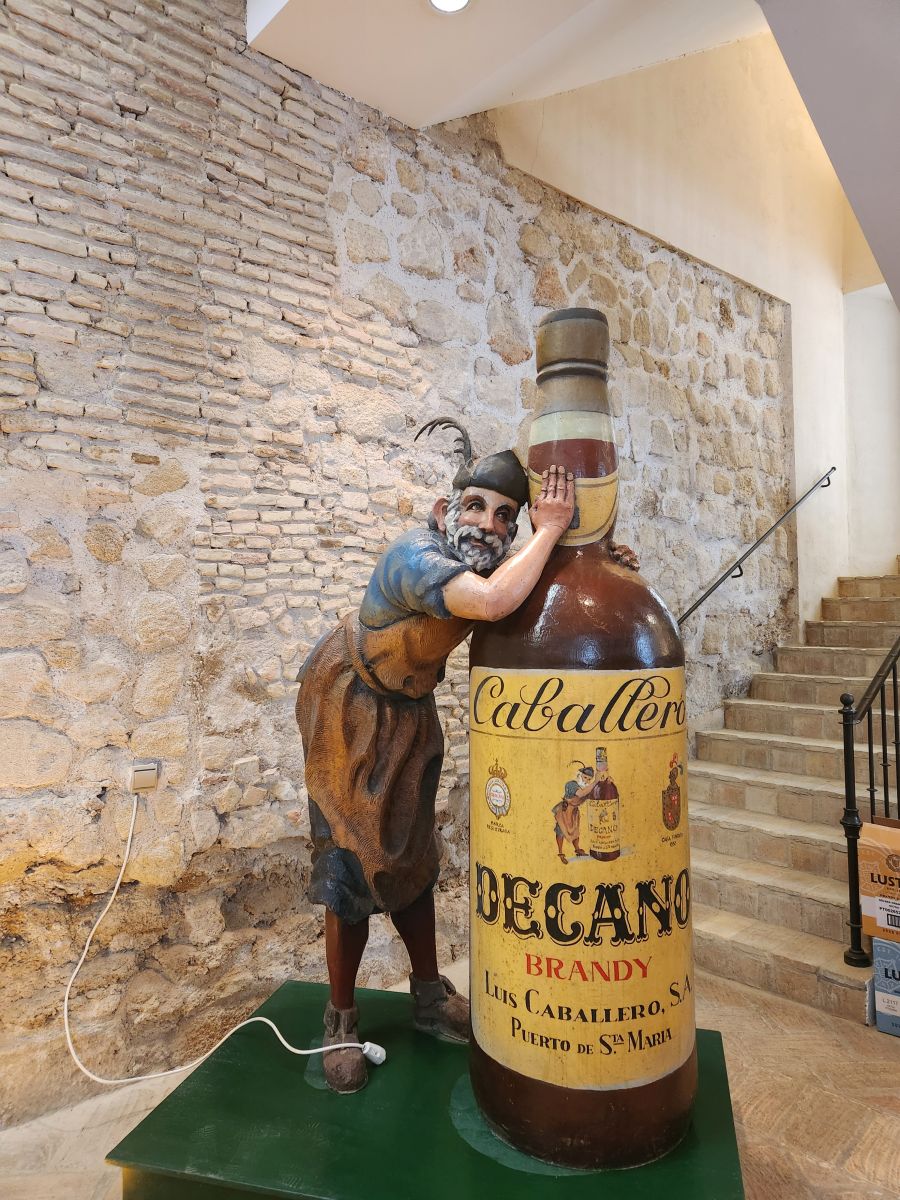
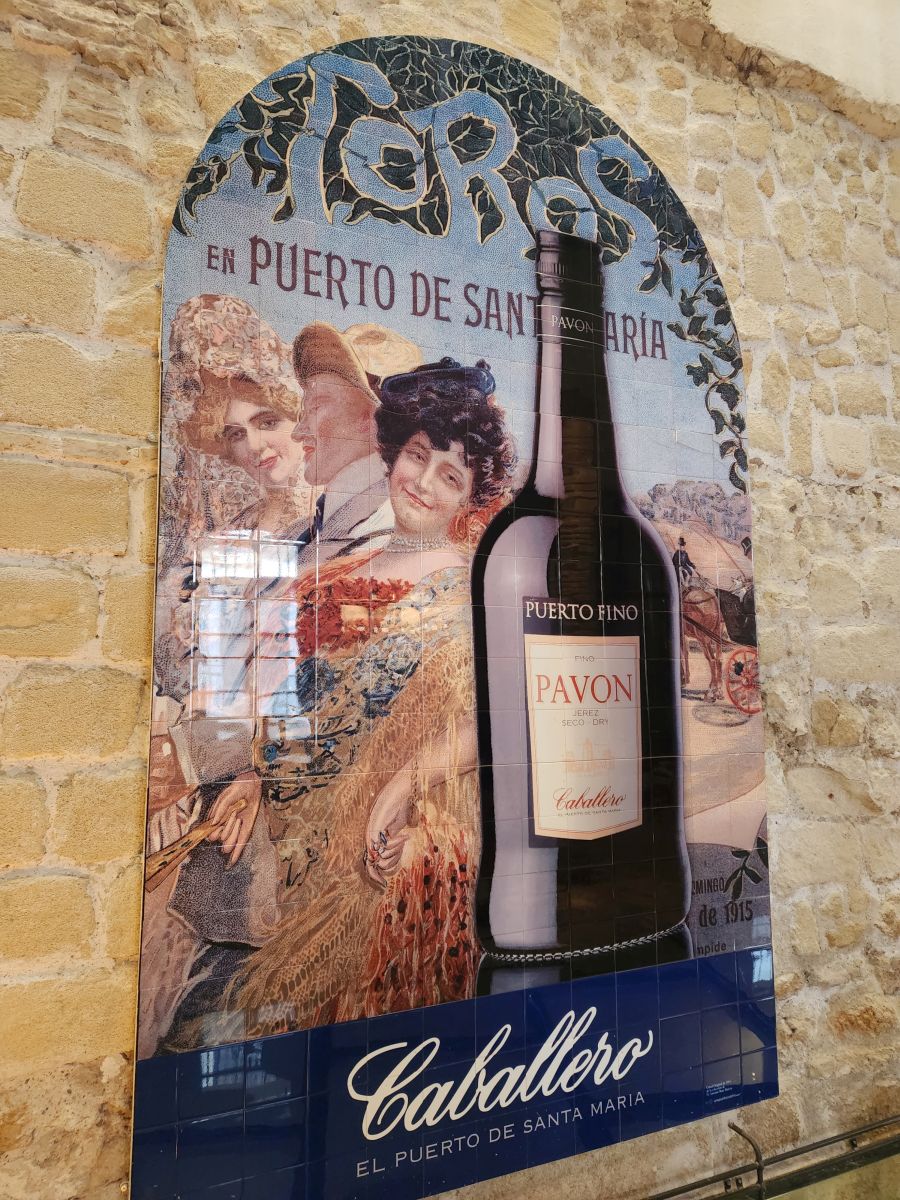
We wandered about a bit more, taking lots more scenic pictures, then followed the exit signs to the empty wine tasting room – with all the bottles and everything out in the wide open with no one around. Very trusting!
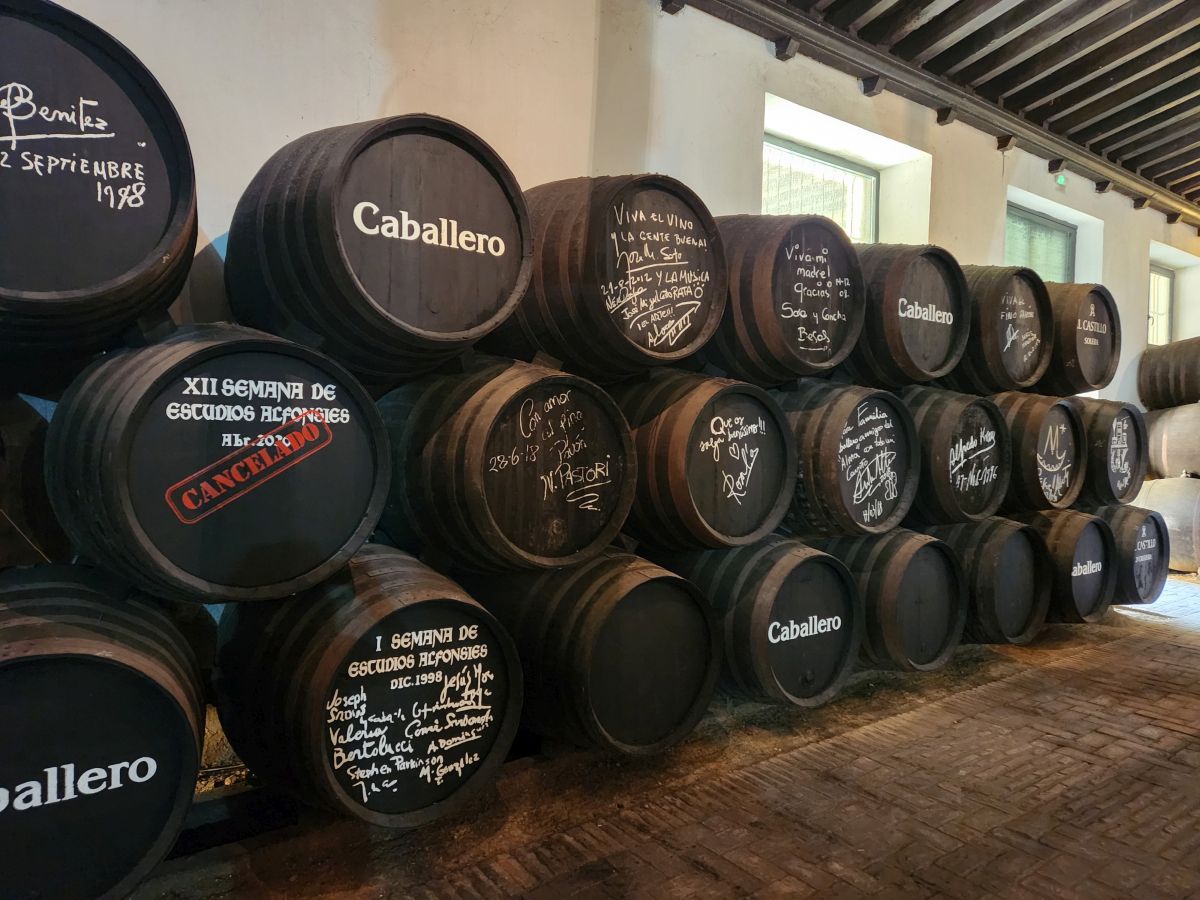
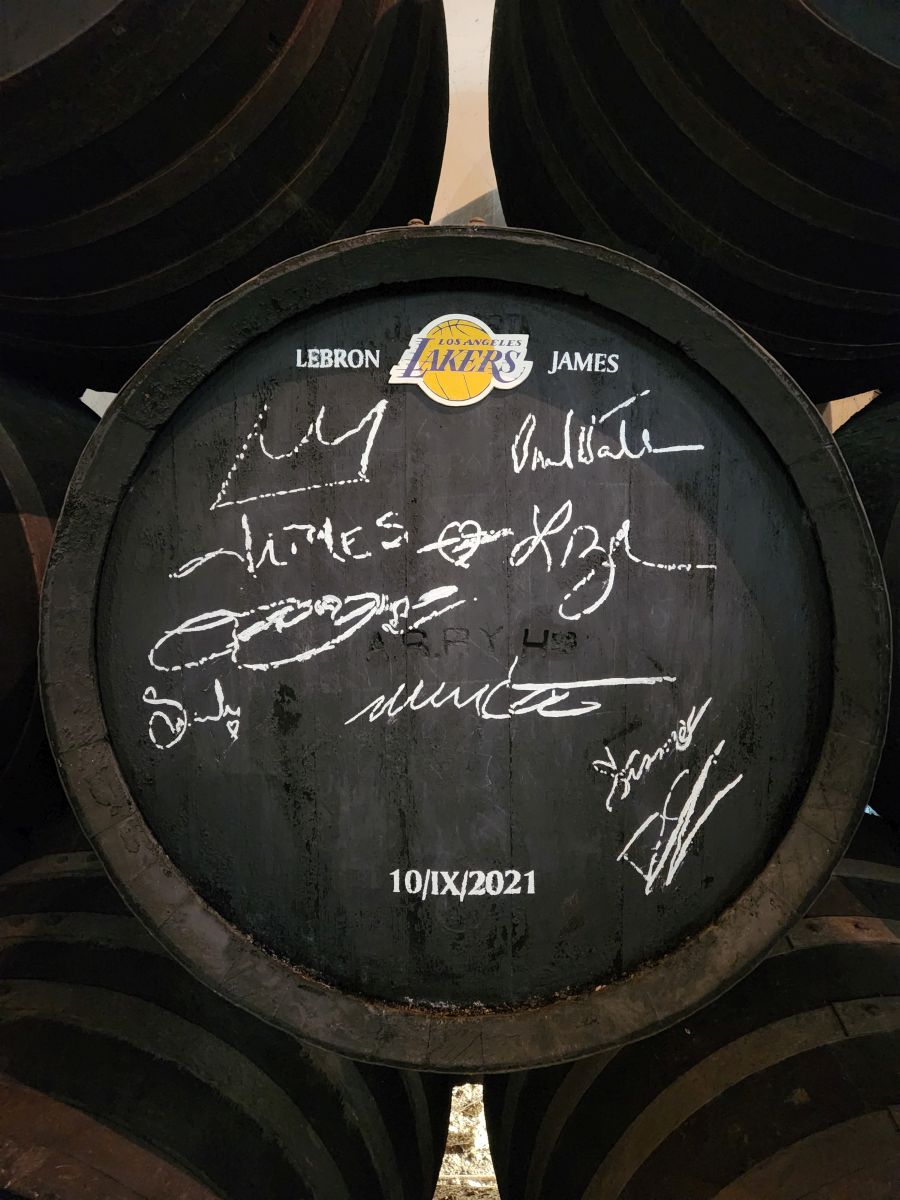
One final stop in the barrel storage room, where all the barrels were signed by people who had something to do with the annual festival held here, the Estudios Alfonsies, to celebrate the Kings Alfonso. As well as one commemorating Lebron James, for some unknown reason.
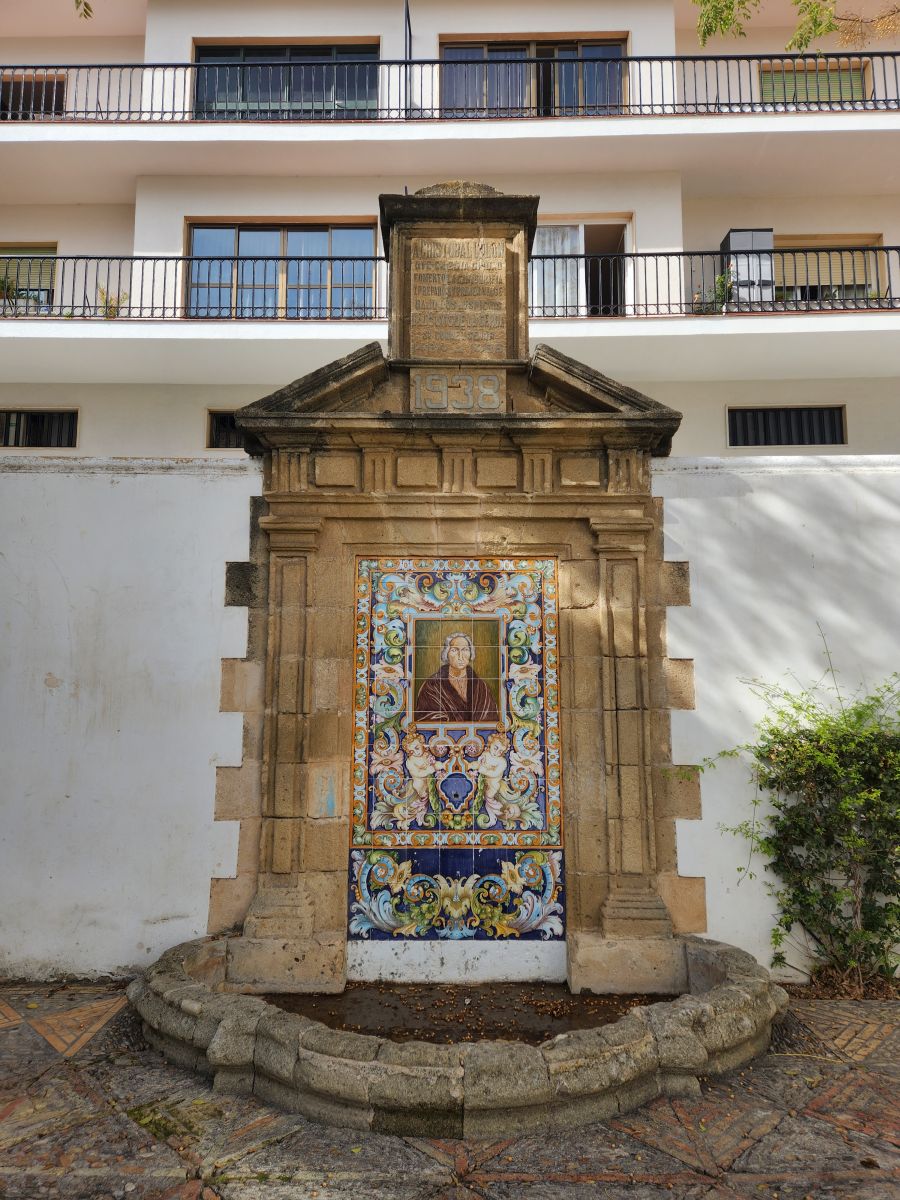
Heading back toward the garage, we stop in the Plaza de Cristobal Colon for a snapshot of the Columbus mosaic, then wind our way back to the garage, extricate our car and drive back to Cadiz over that cool huge suspension bridge.
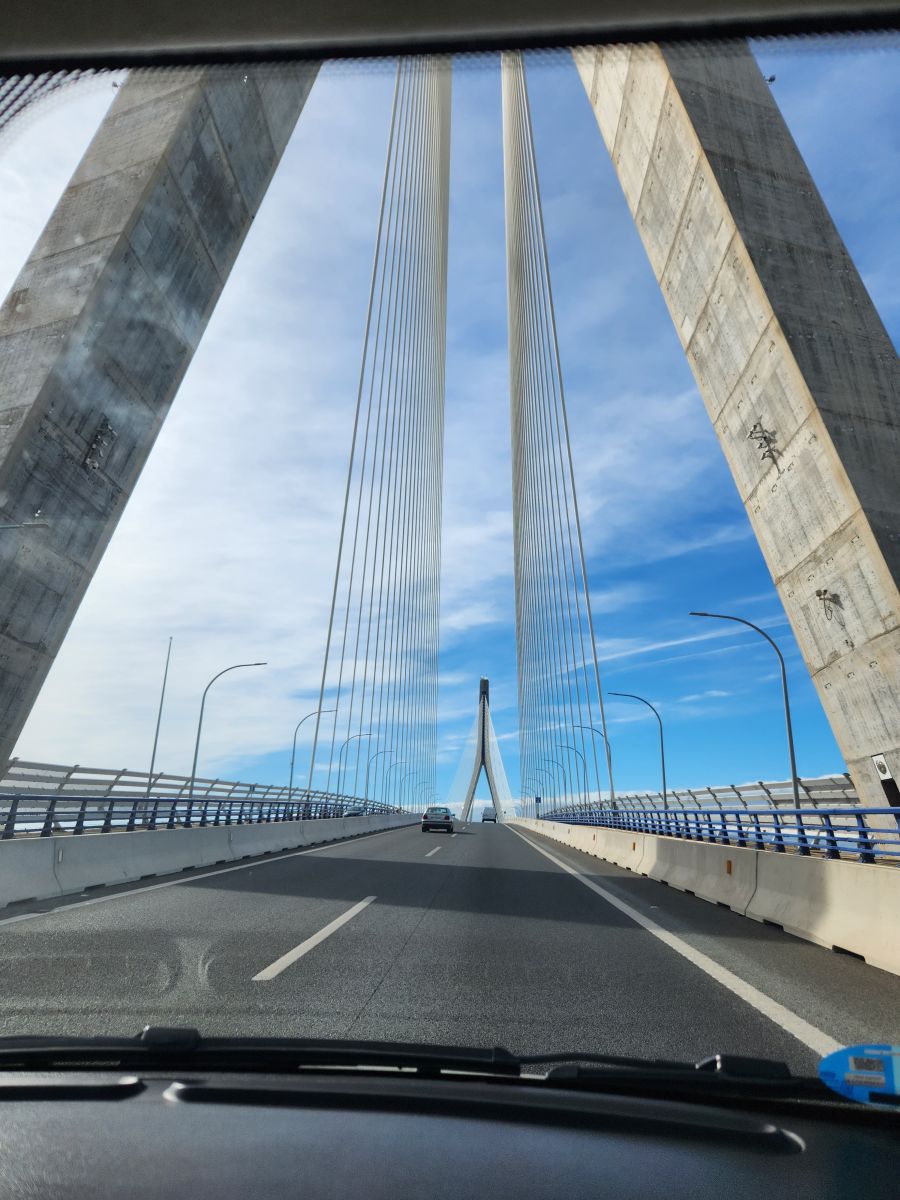
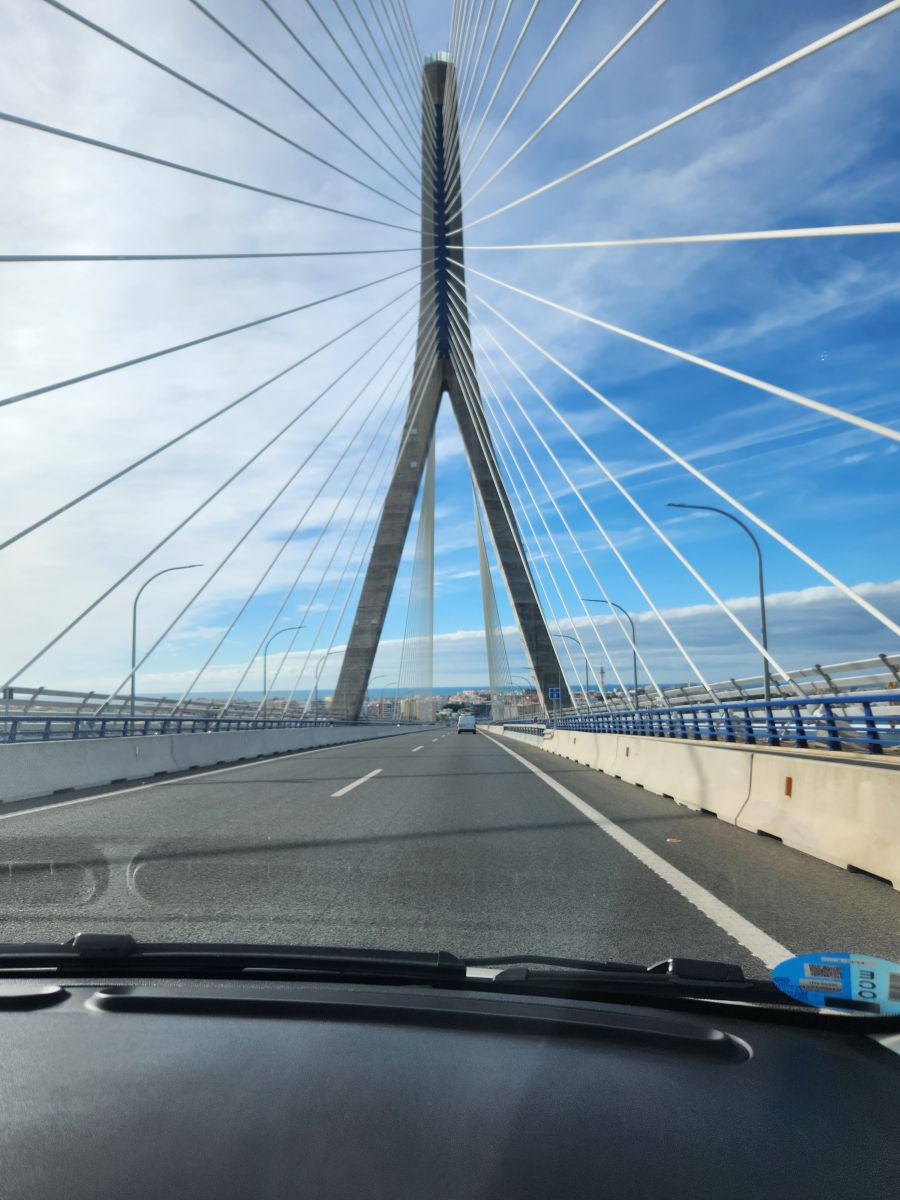
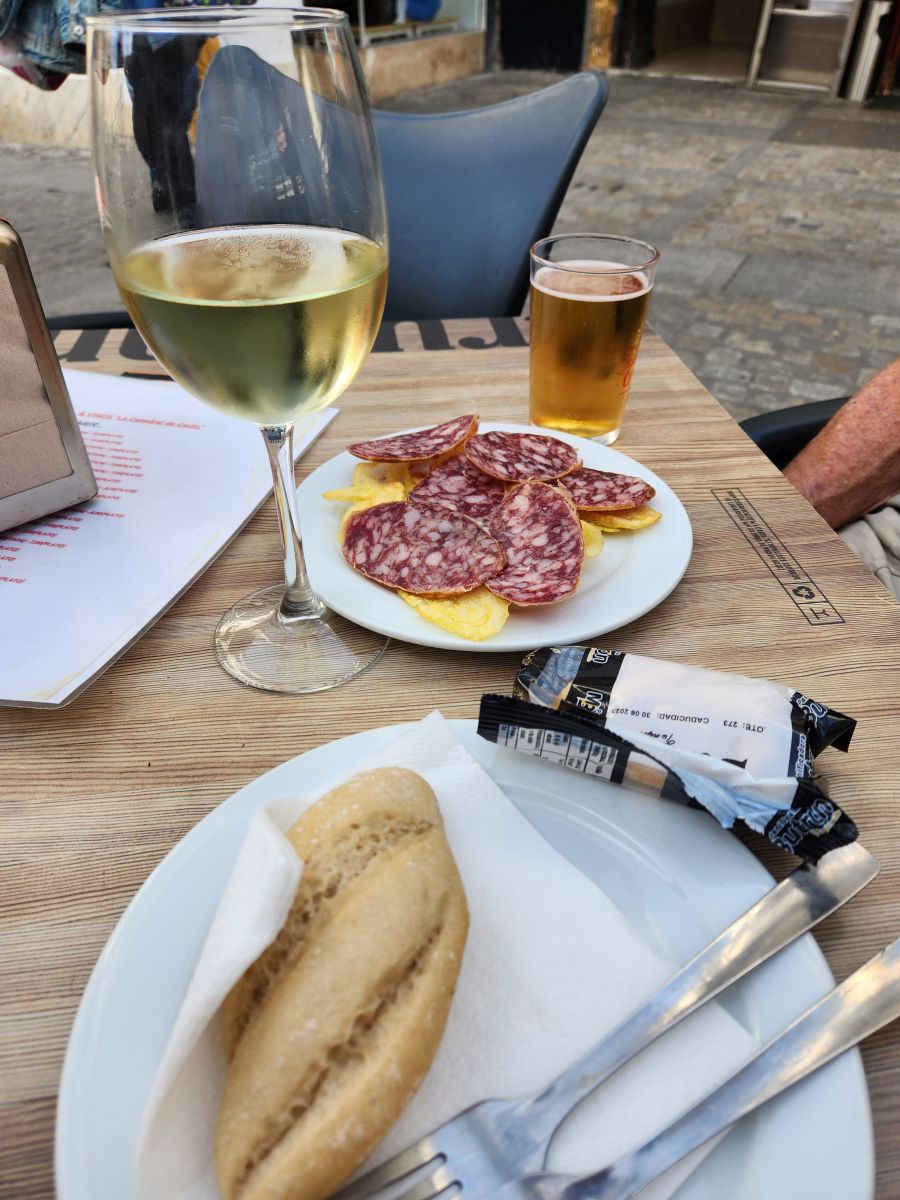
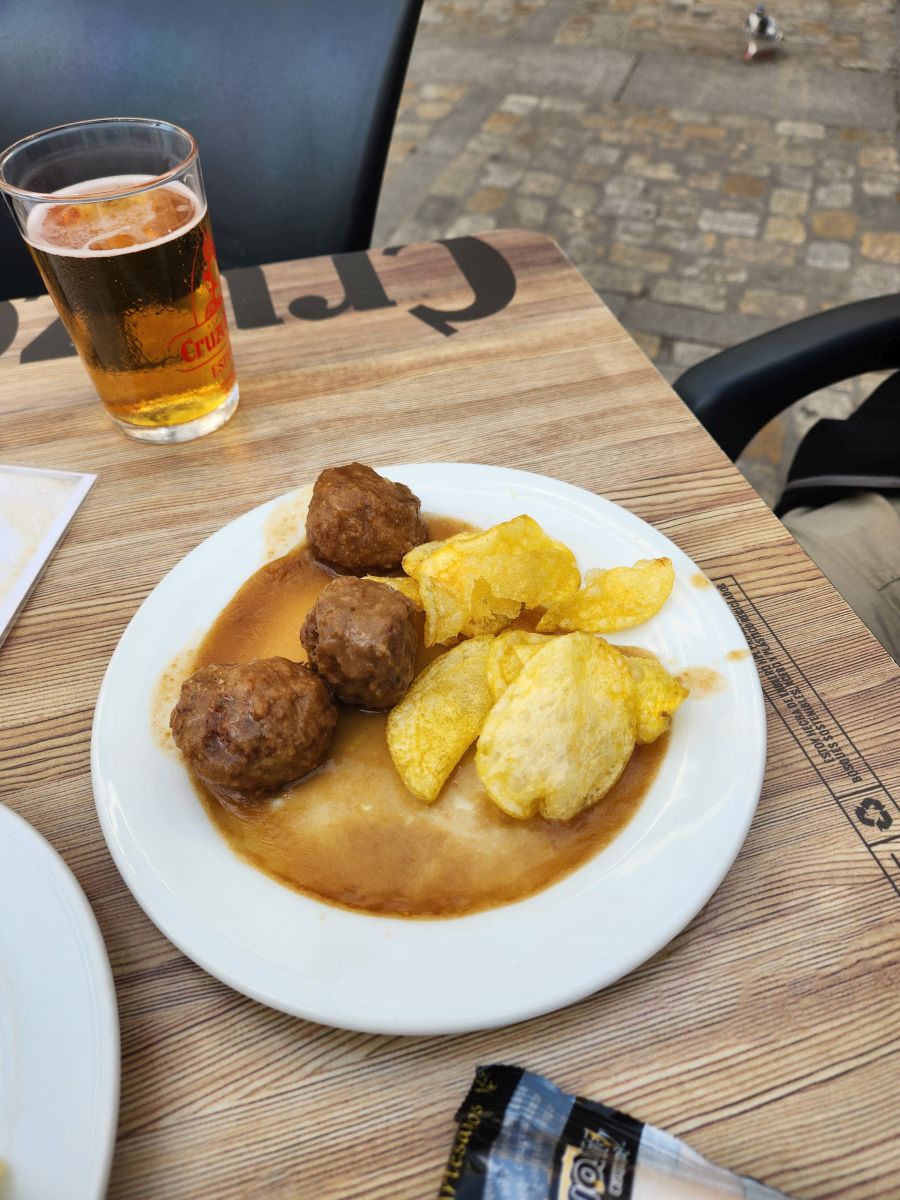
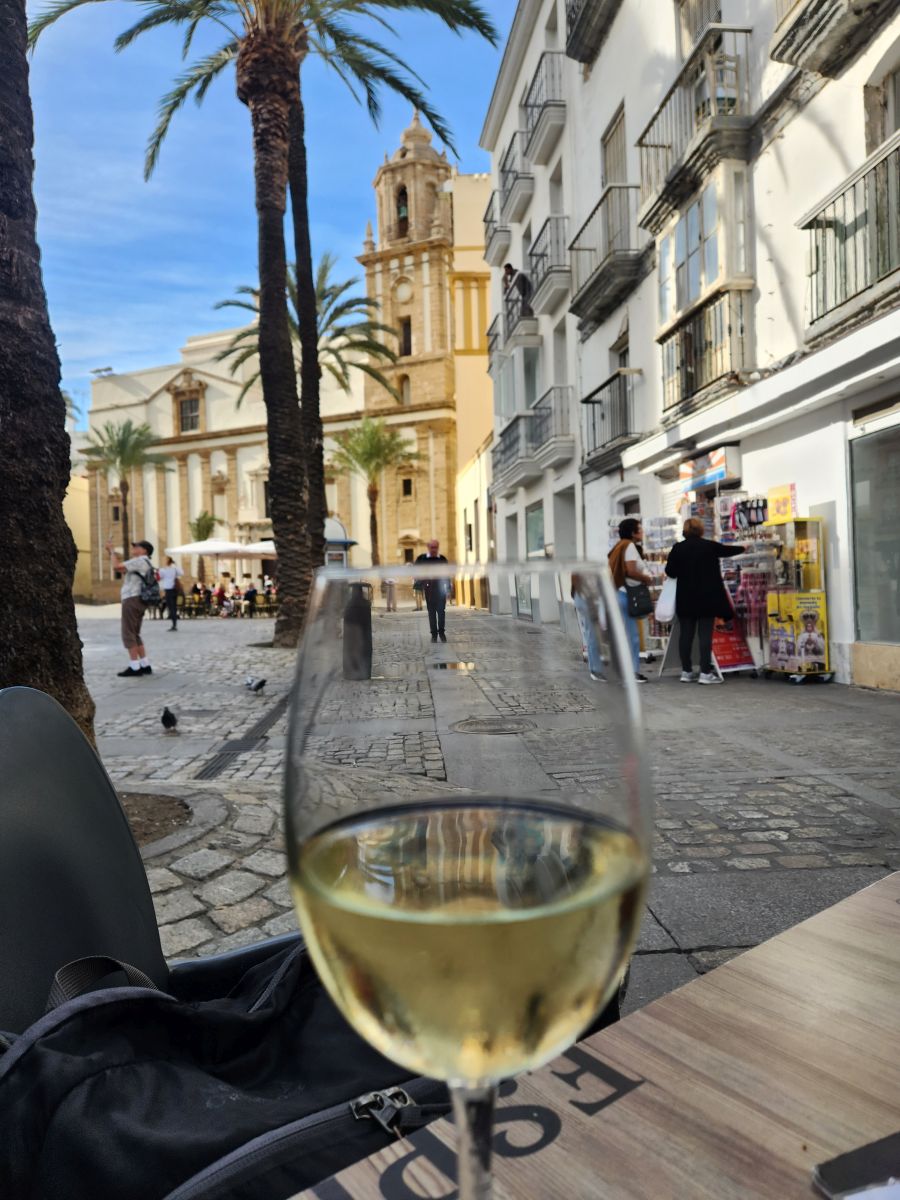
Car successfully returned, keys dropped, we meander through the busy streets (ships!!) of Cadiz, settling into a table at the Cathedral restaurant on the plaza across from the Cathedral de Cadiz. More snacks ensued – albondigos, salami, beer and wine. Our last tapas in Spain. Sigh. It’s been a great time in this country, really can’t wait to return soon!
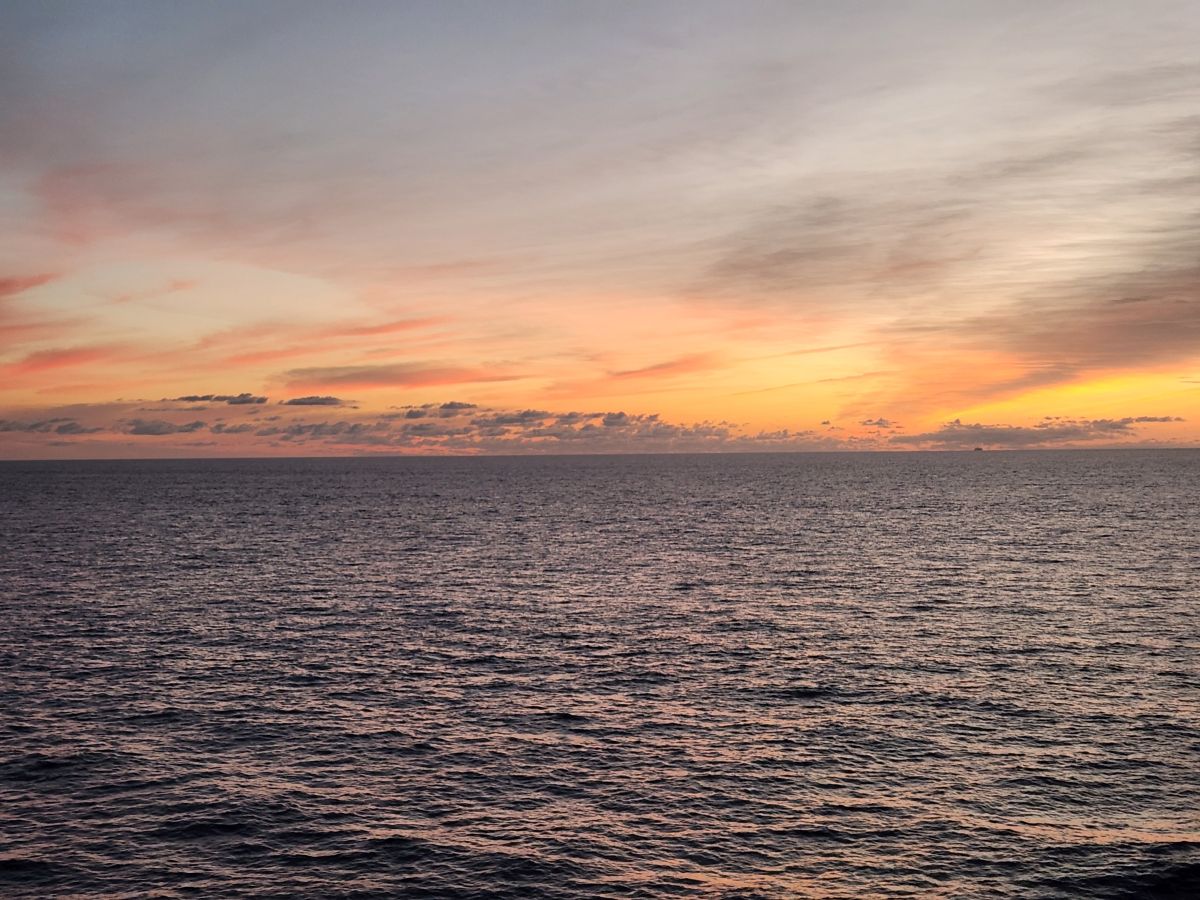
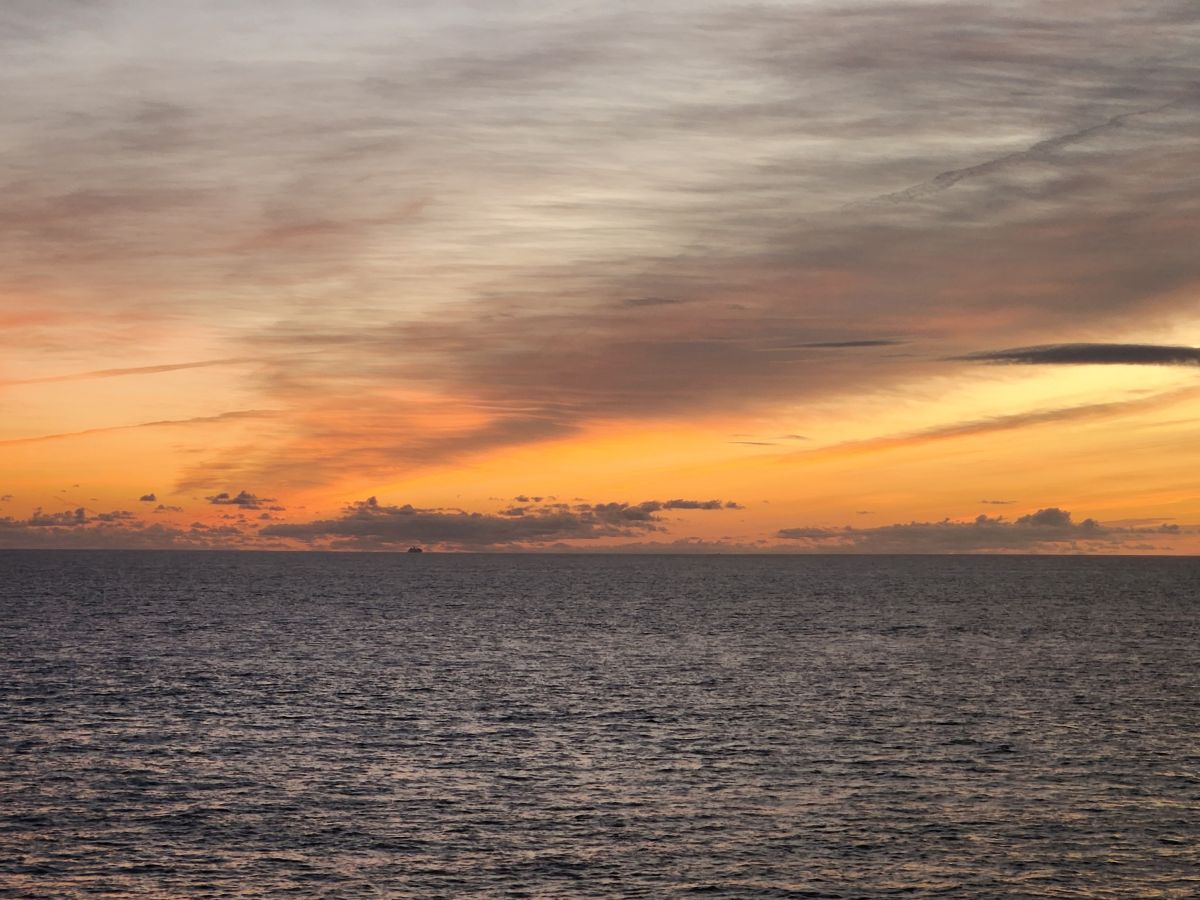
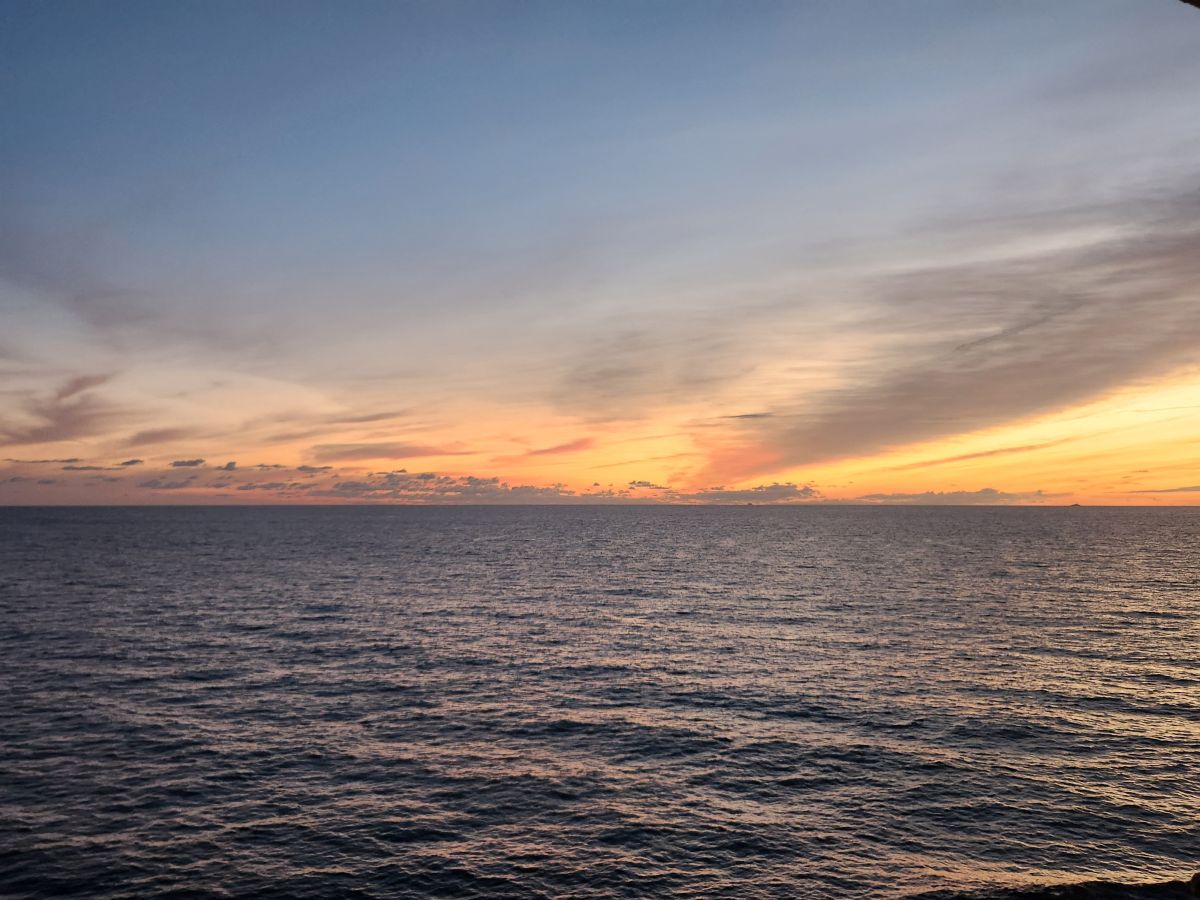
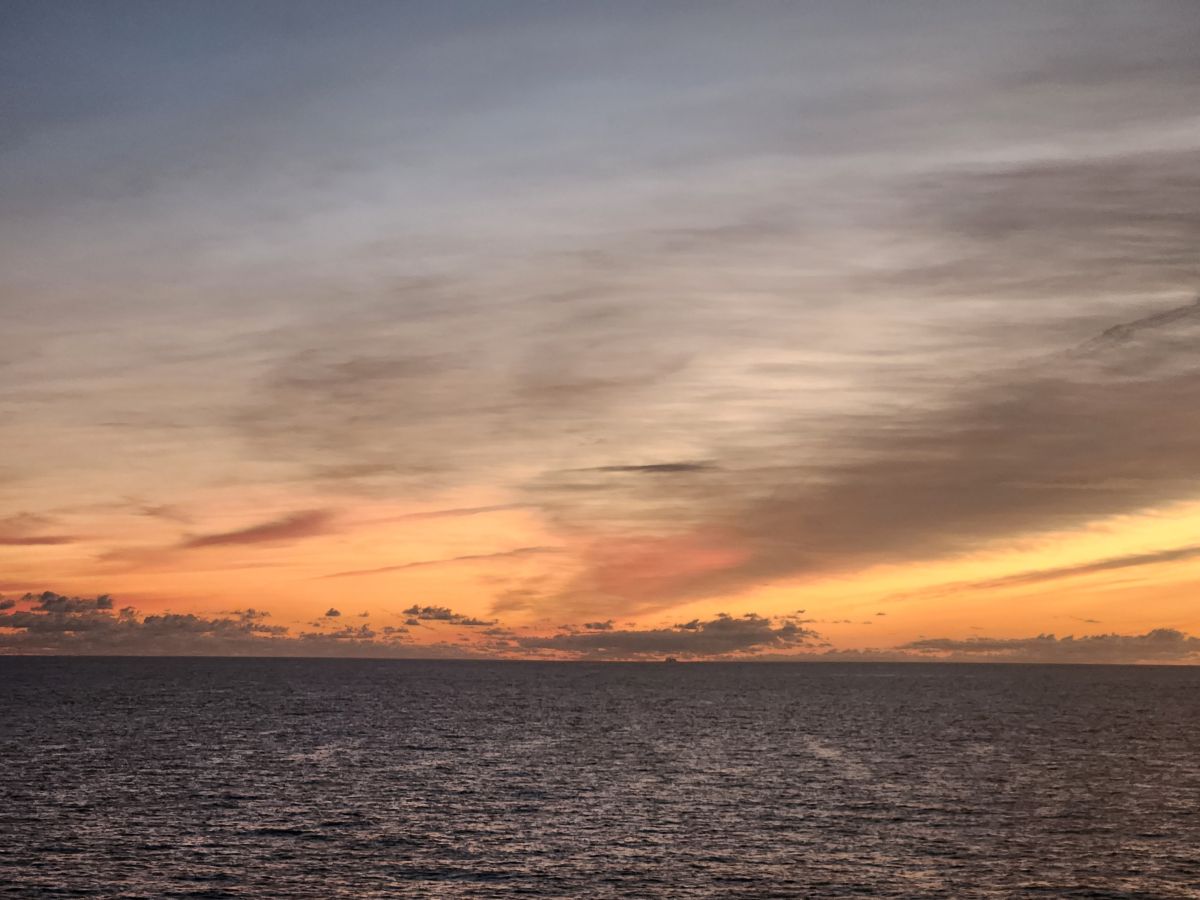
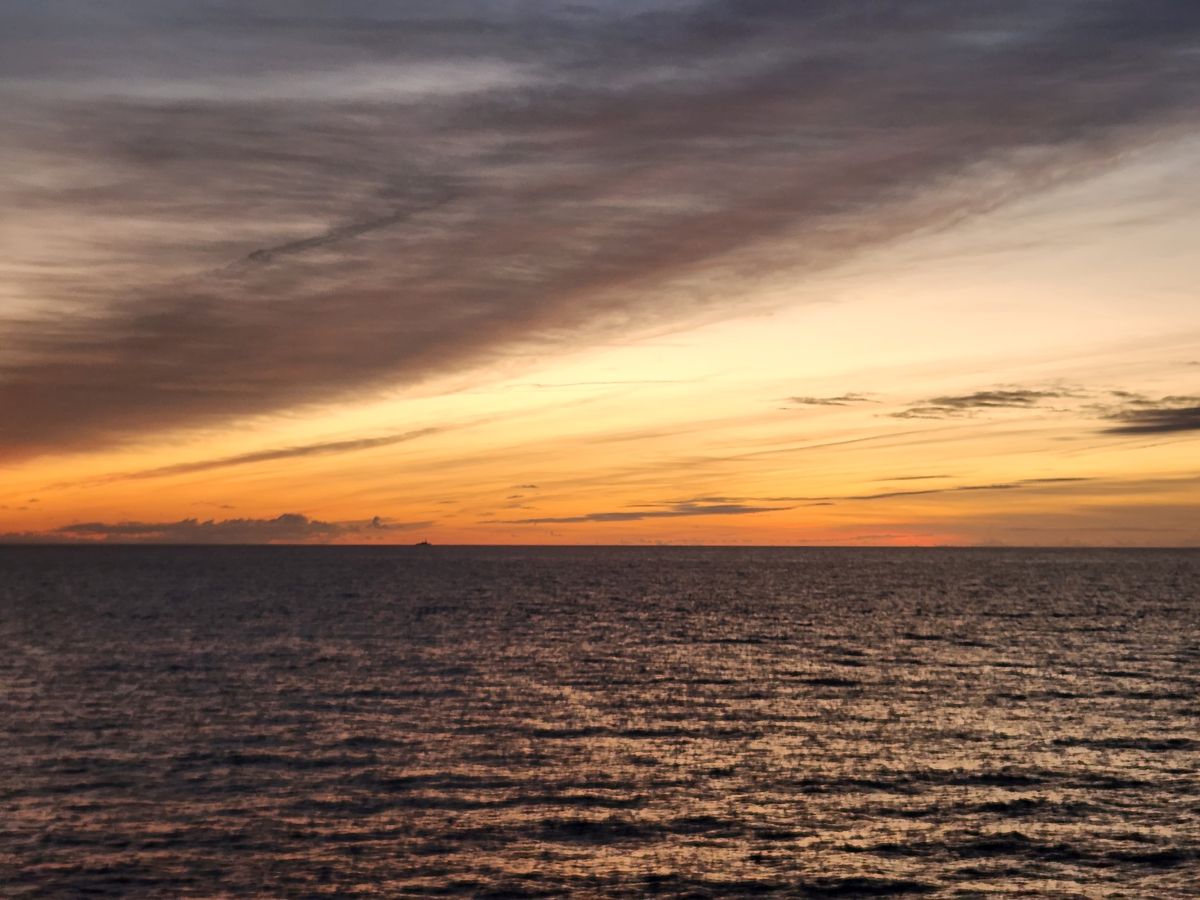
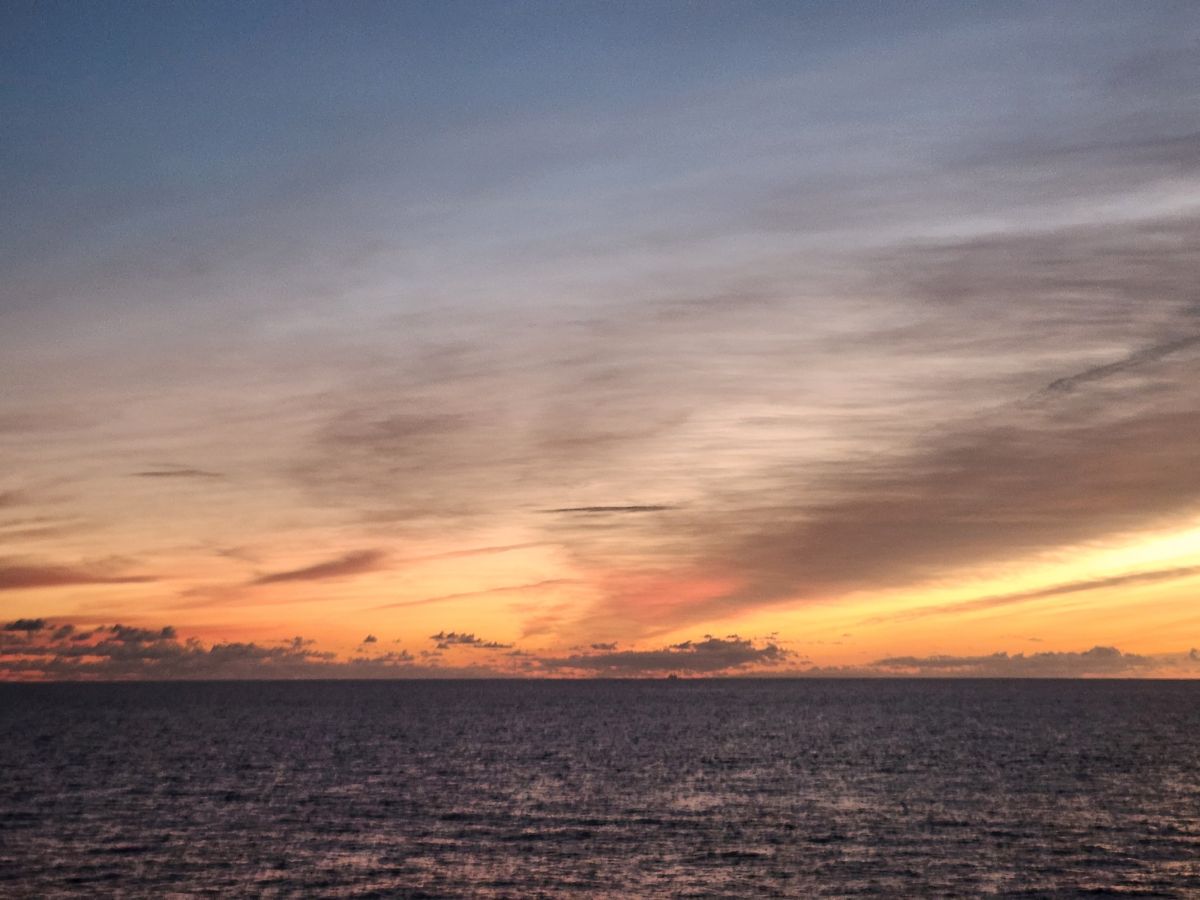
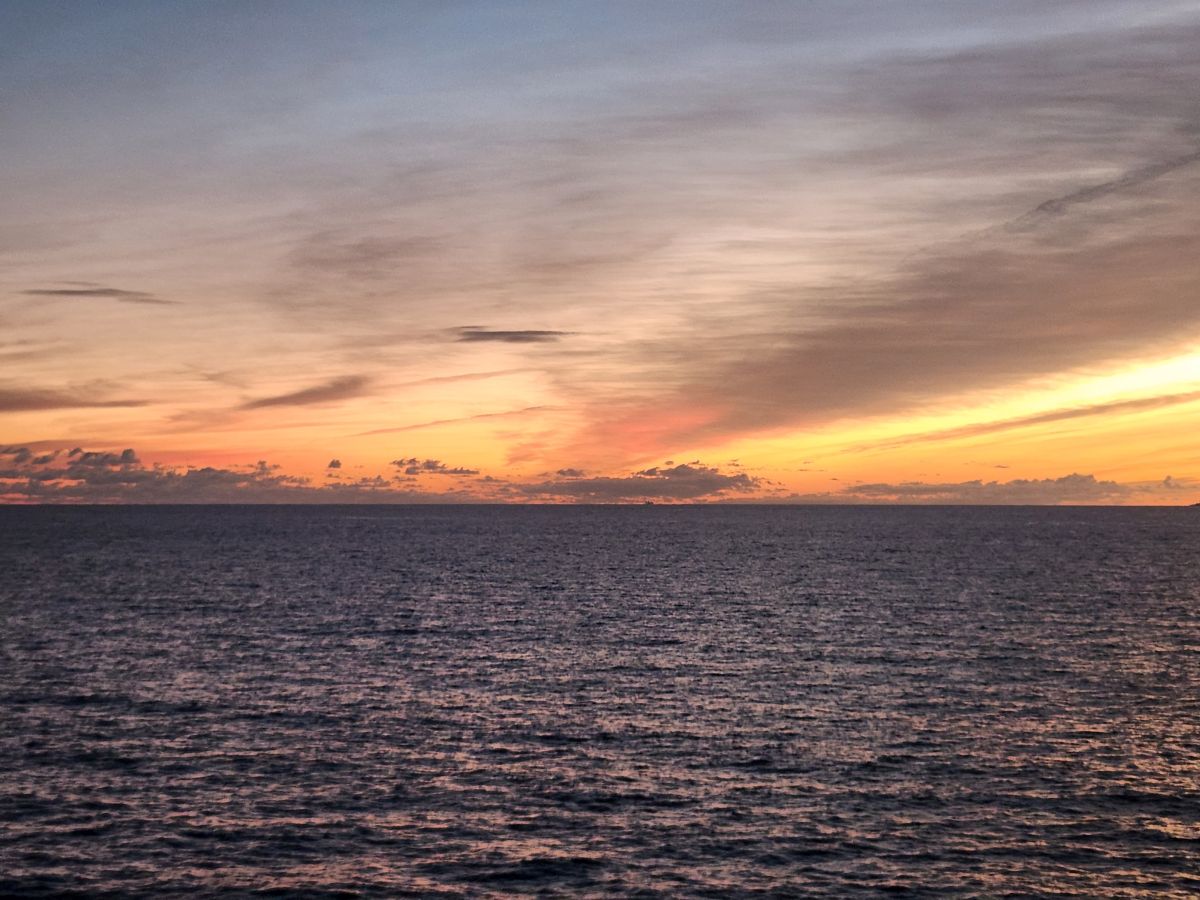
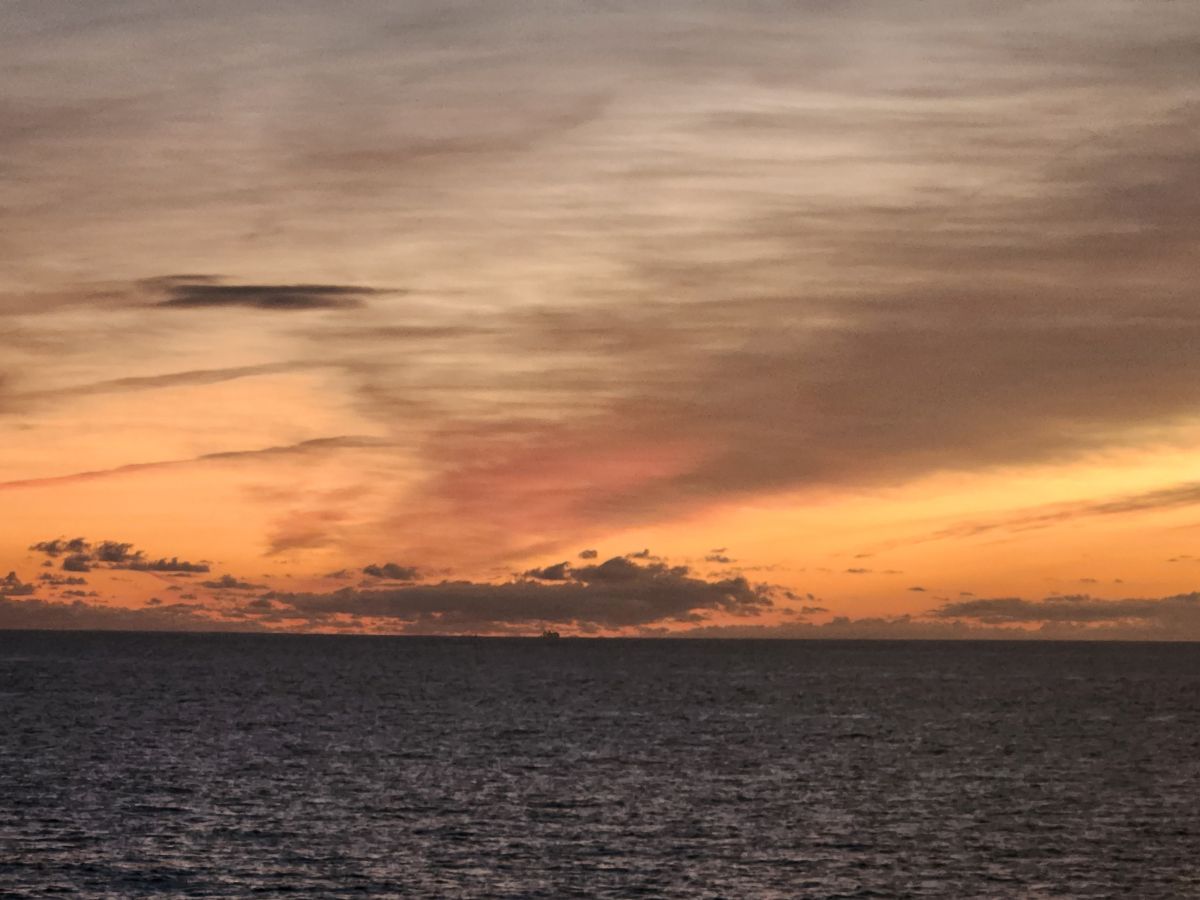
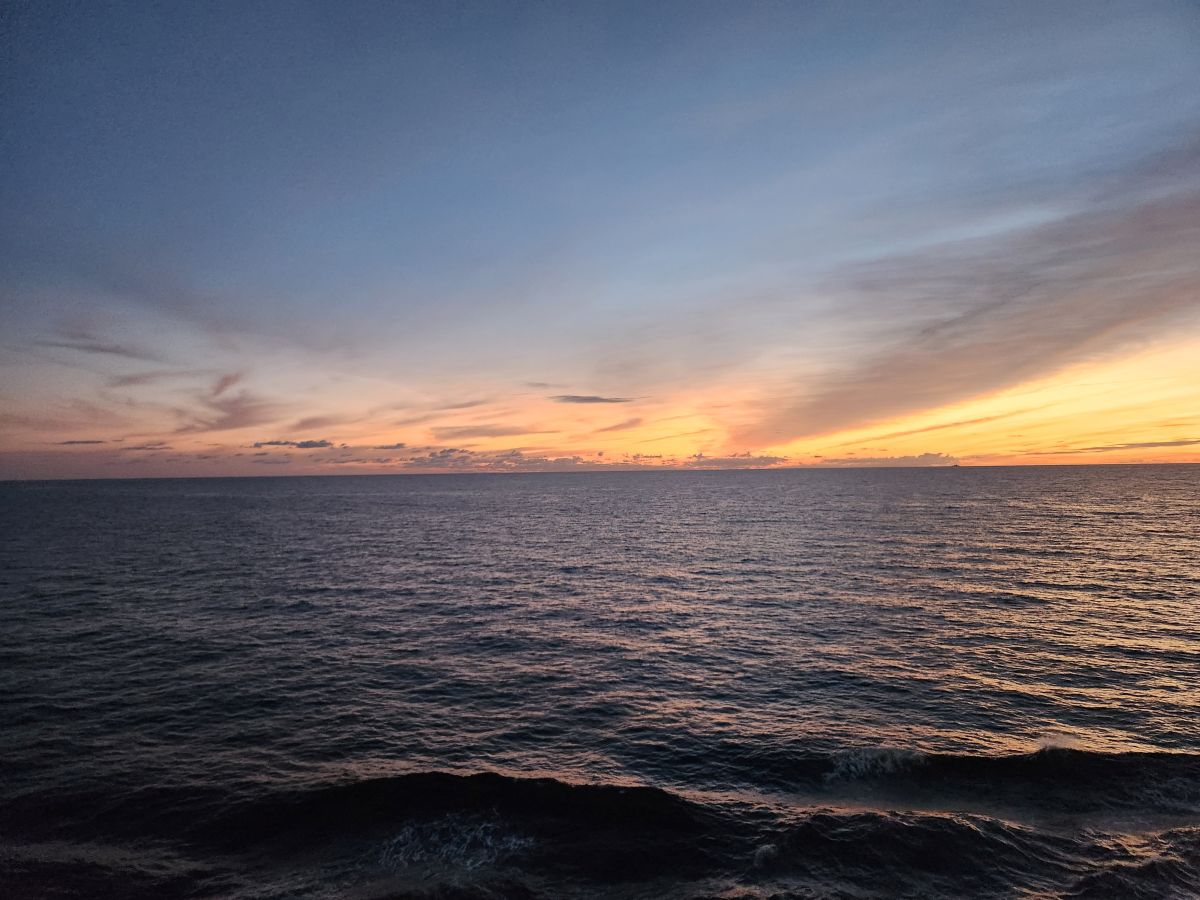
Back to the ship for our normal routine, stopping for drinks on the balcony staring out at an amazing sunset, sadly saying our final adios to Spain.
 Andiamo