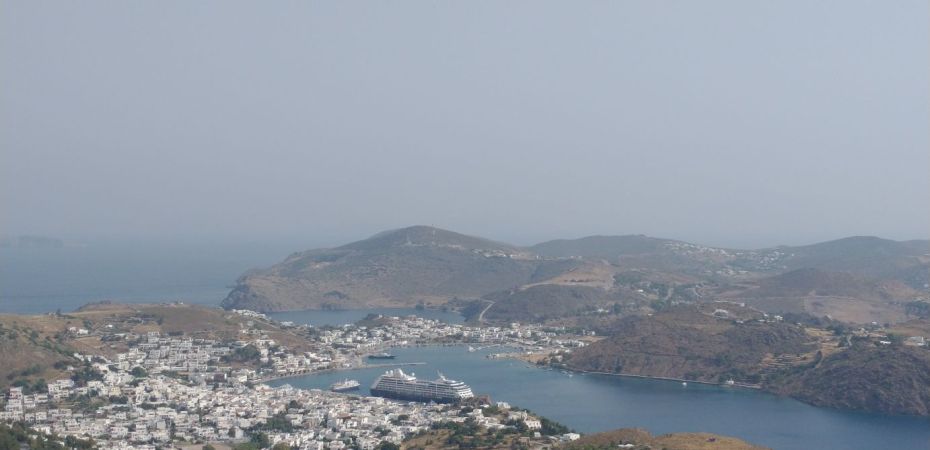
It is exploration day in Patmos. A tiny island, 7 1/2 miles long and 6 miles wide with only 3,000 permanent inhabitants, we figure we can cover the entire island easily. Once we find our rental car agent (no signage, he’s hidden in the Maritime Port offices) he agrees – there’s only one road, he tells us, so you can’t get lost. We like it! The island’s claim to fame is that this is where John the Evangelist received visions about the Revelation and wrote the Book of Revelation. The cave of the Apocalypse, where he stayed and wrote is here as is the huge monastery built and named in his honor, St. John’s. Our rental car guy (wish we could remember his name) was a doll and talked to us about where to go, and that we had to see the cave – which we had pretty much decided not to see – and that it was on the way to Chora, the main town where the monastery is located.
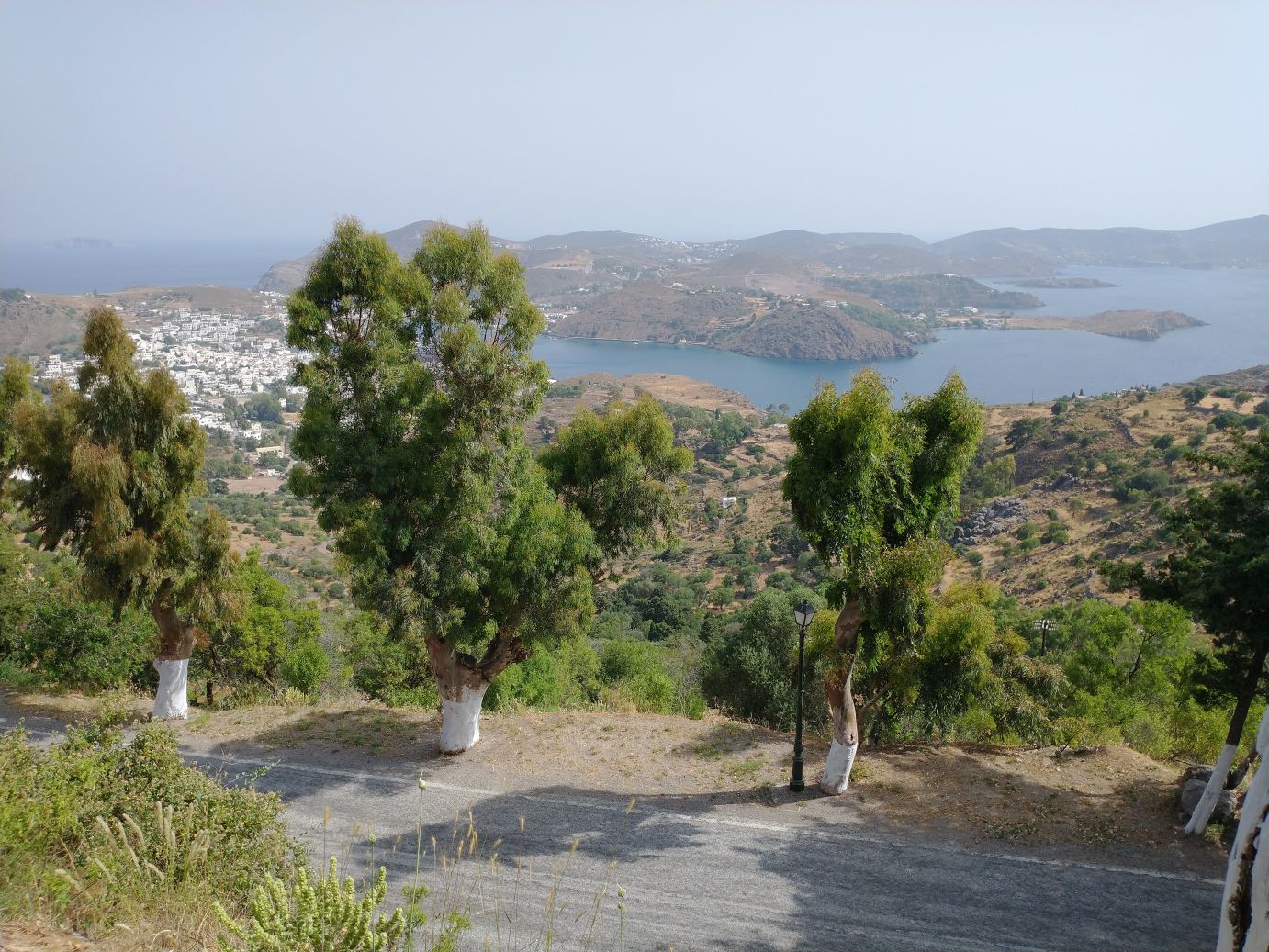
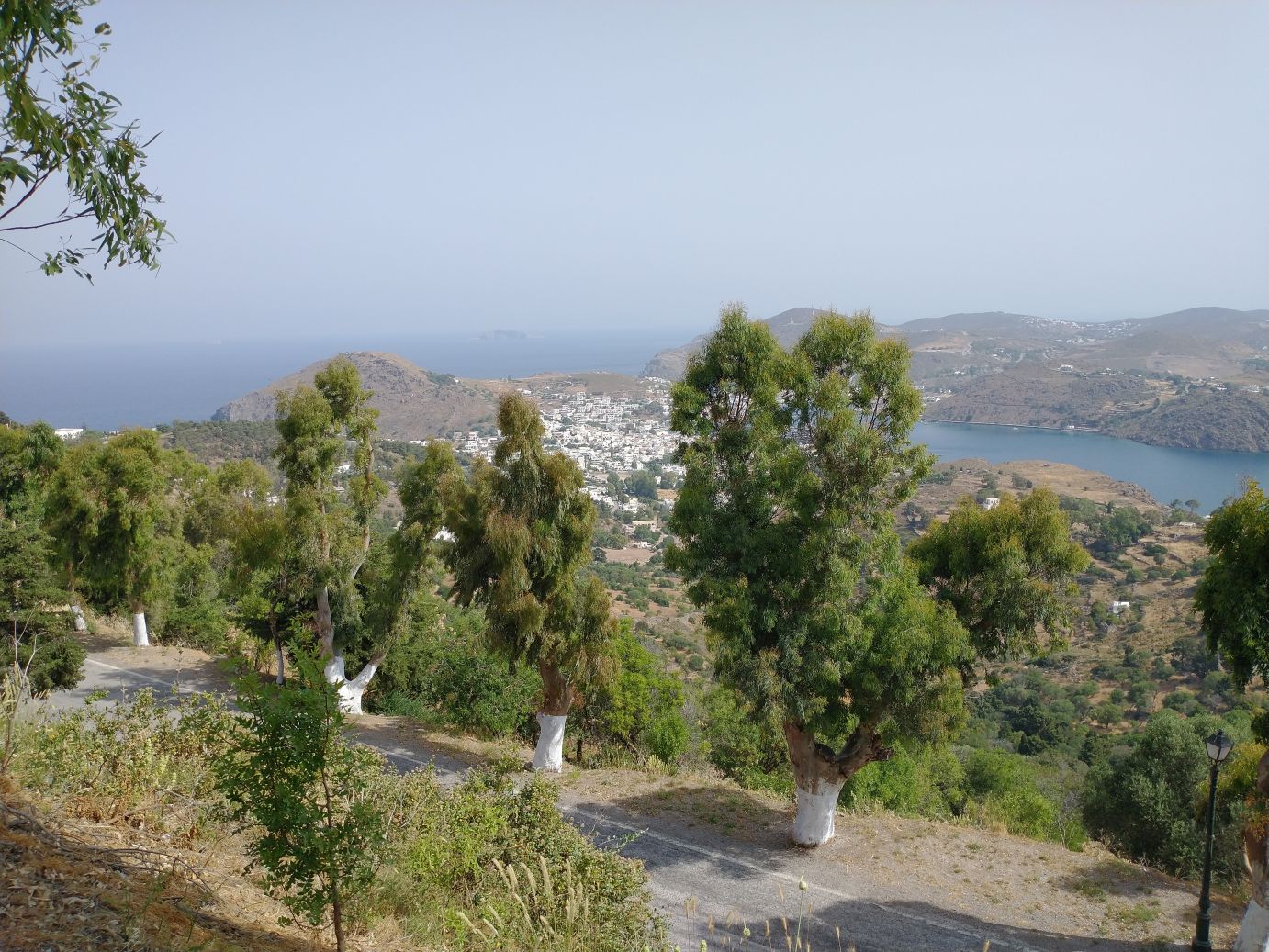
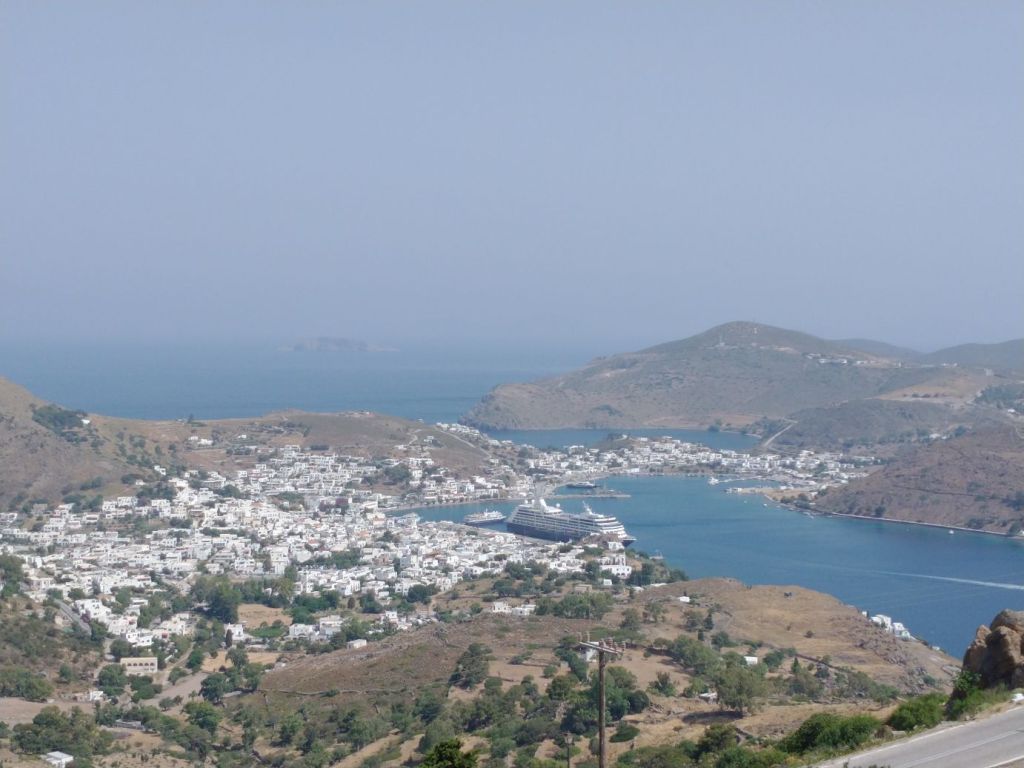
We’ll see – but since we were out so early and were ahead of the tours (the Monastery and a beach were the only tours offered) we’re heading to the Monastery first so we don’t have to fight the crowds. Works like a charm, as we wind our way up the steep hillside, past the cave to a tiny strip of parking below the monastery. The views are stupendous (so much so, you will get bored by the end of this post, promise) and it is hard to pry ourselves away from the gorgeous scenery.
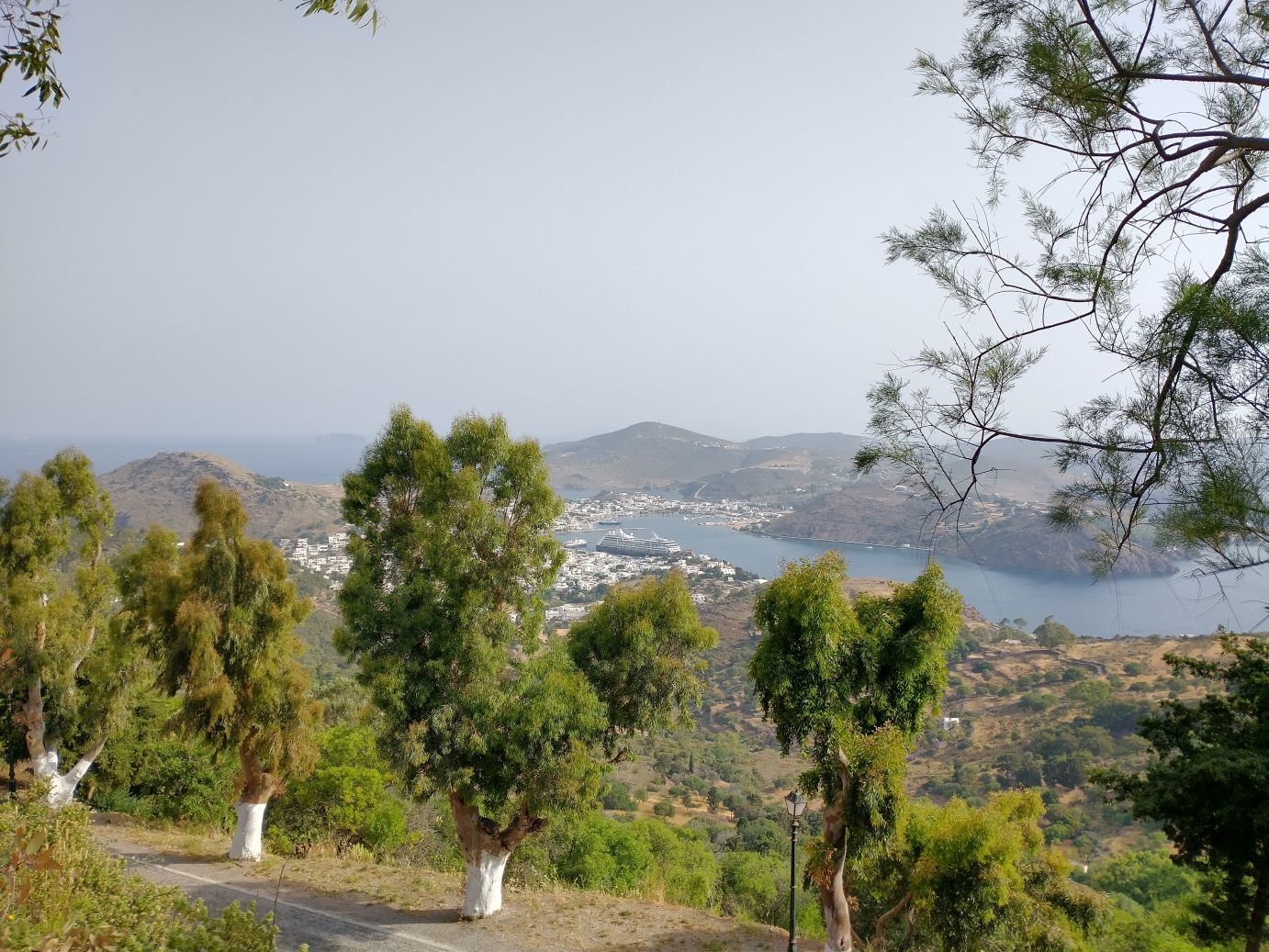
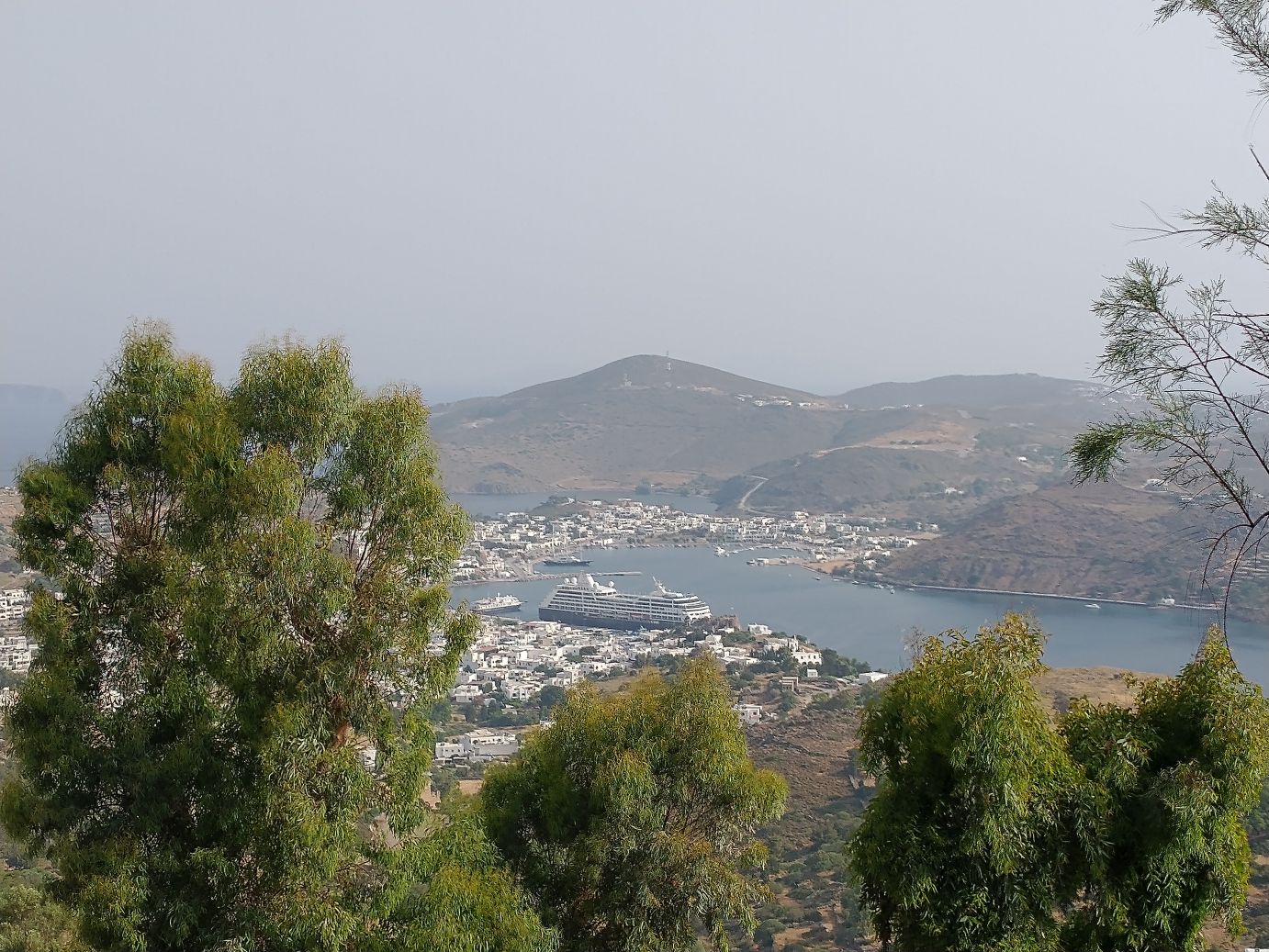
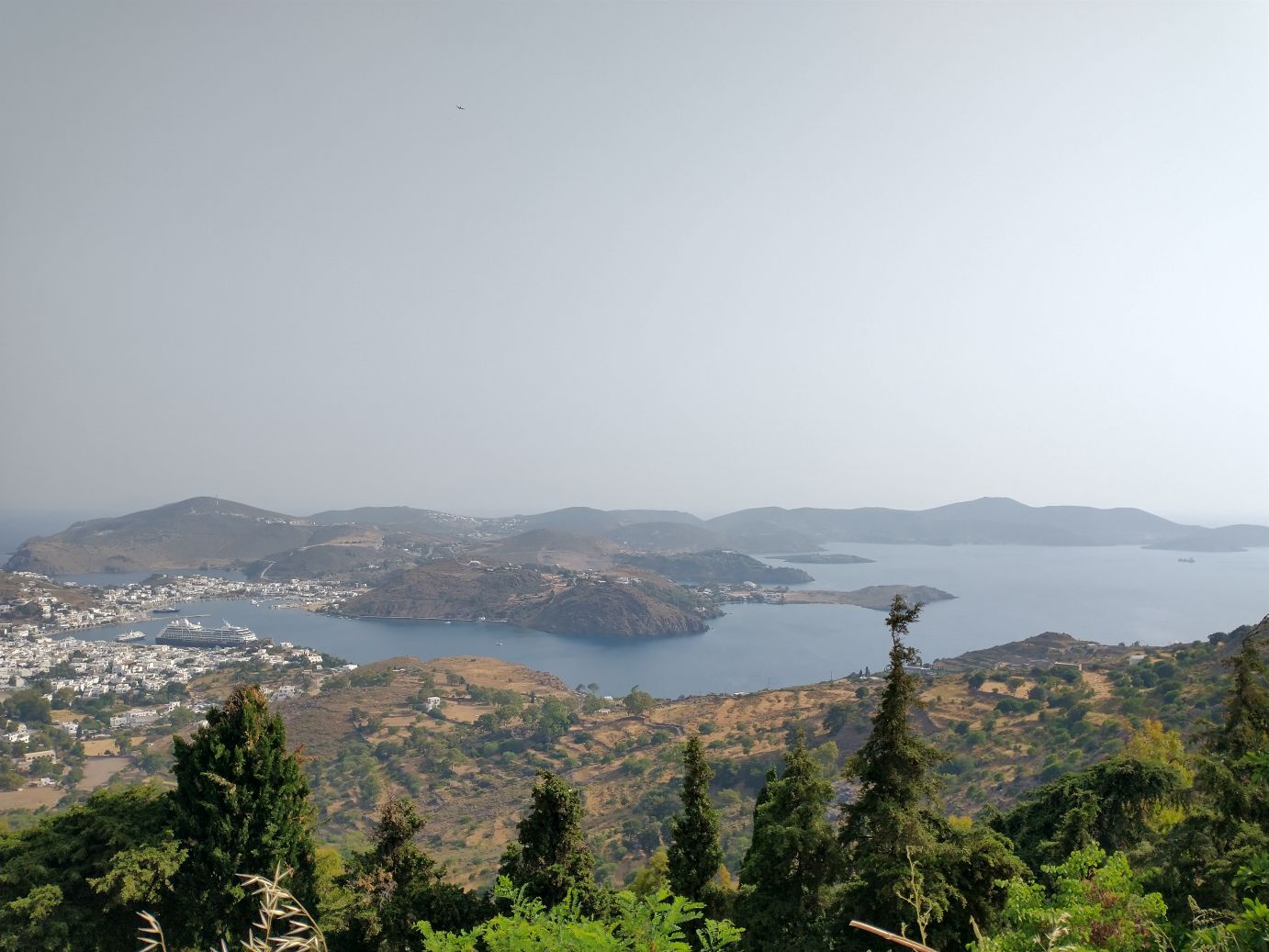
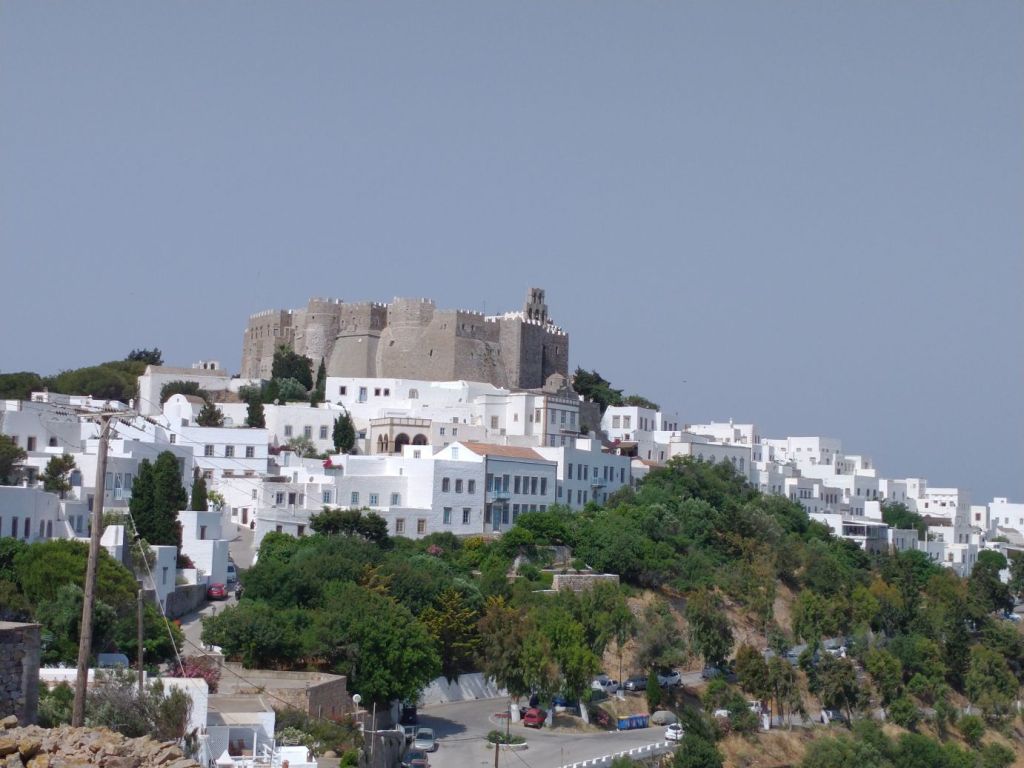
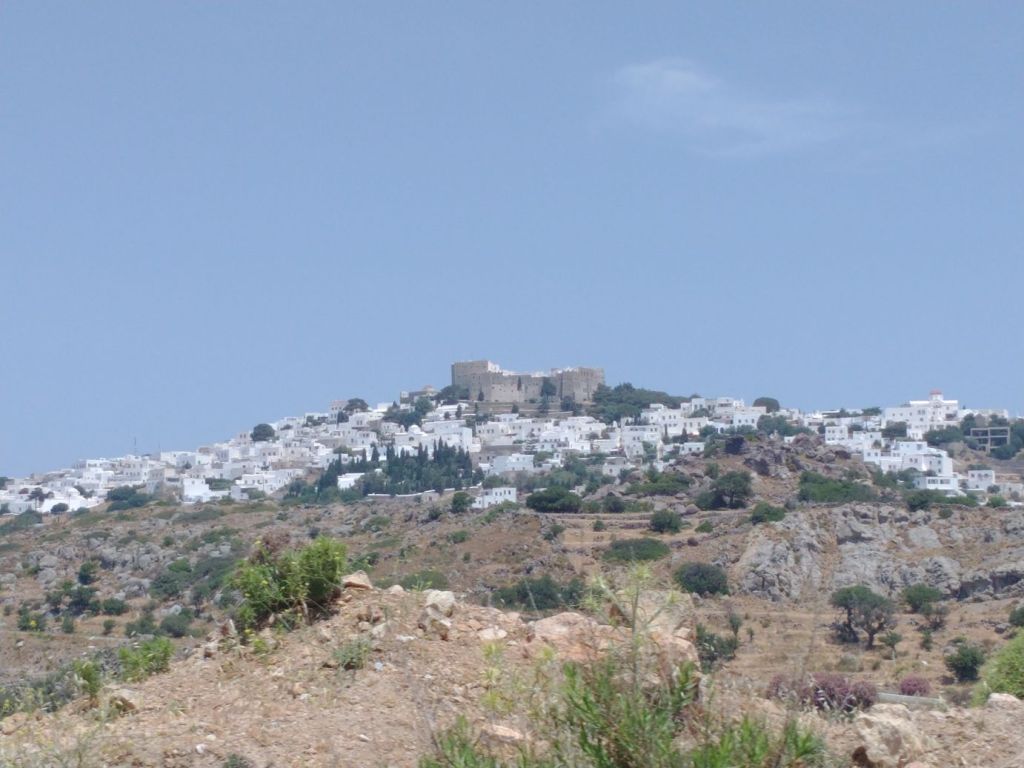
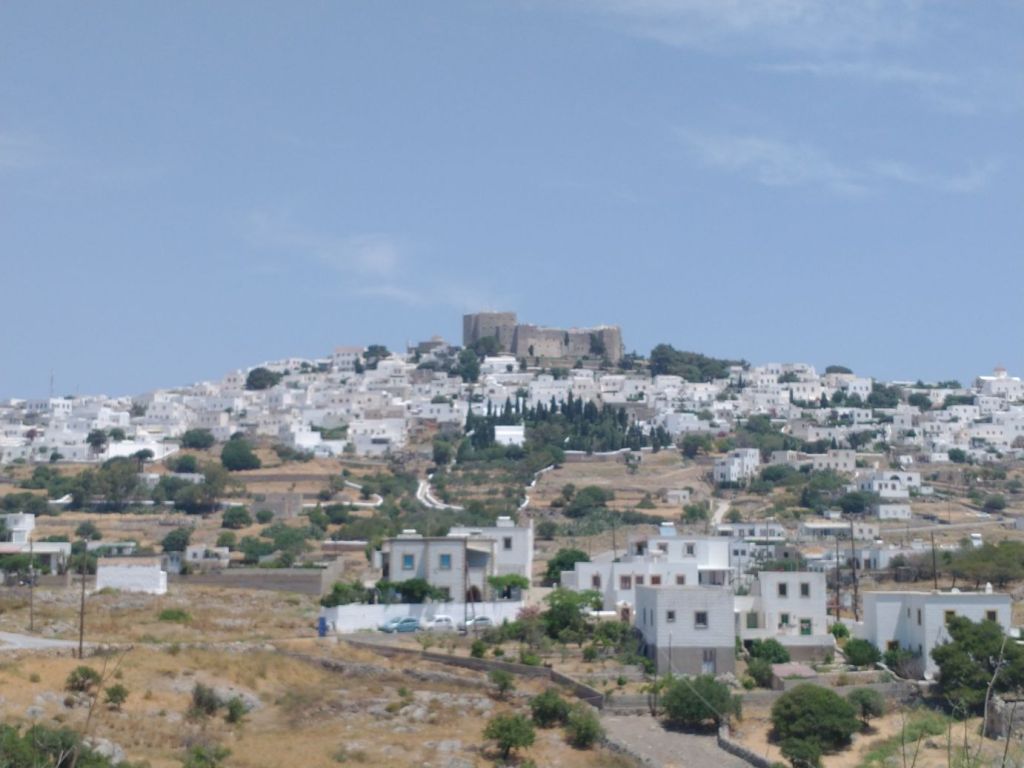
But pry away we do, to walk up the even steeper cobblestone streets to access St. John’s Monastery, loftily presiding over the entire island from its pinnacle placement.
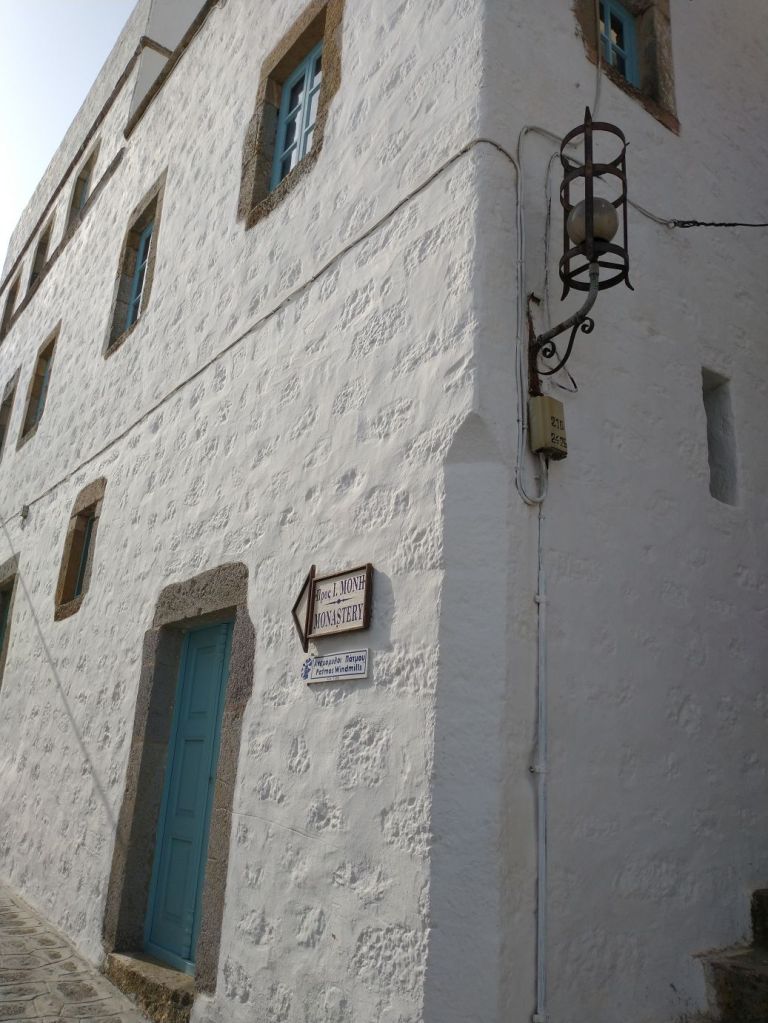
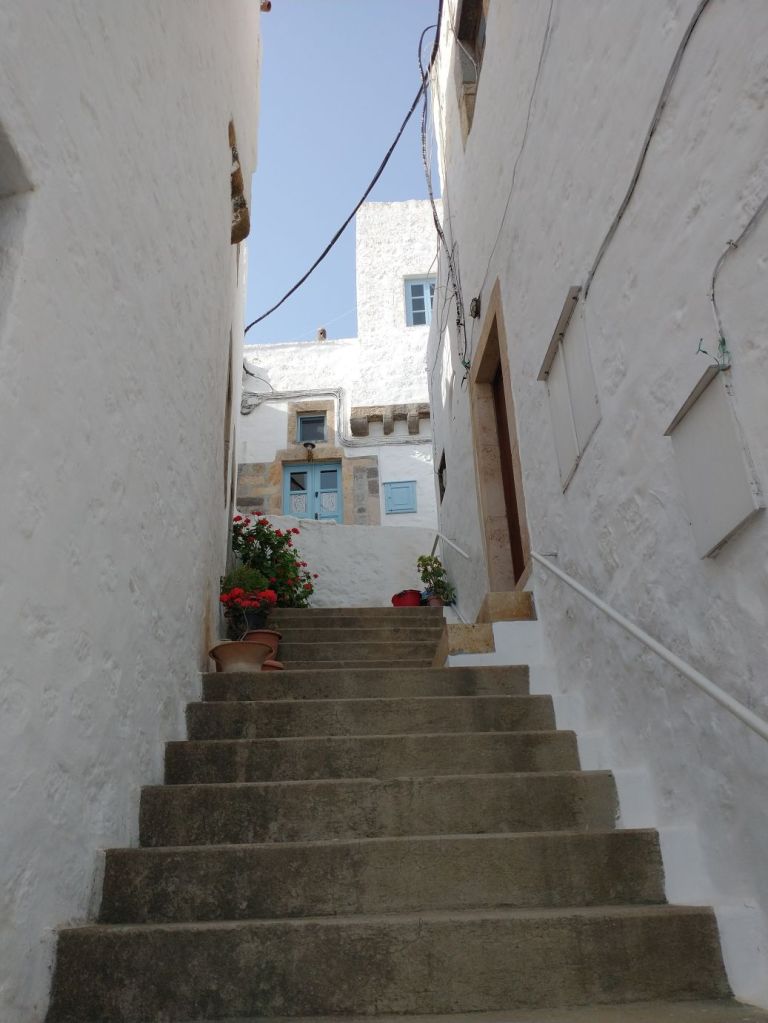
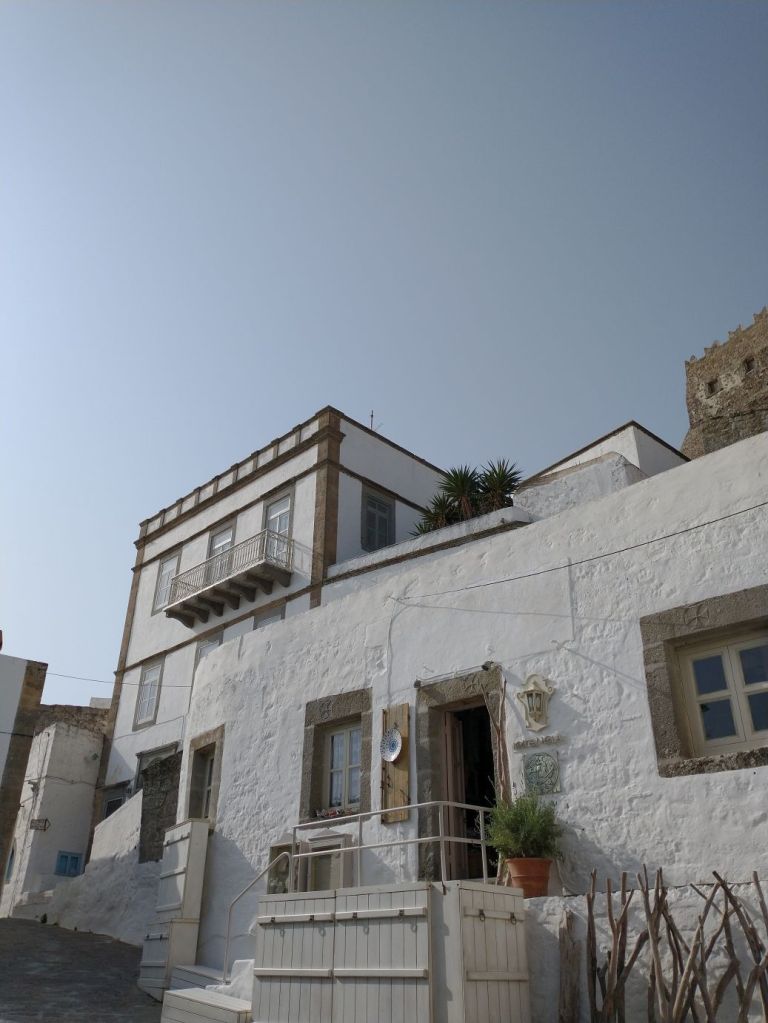
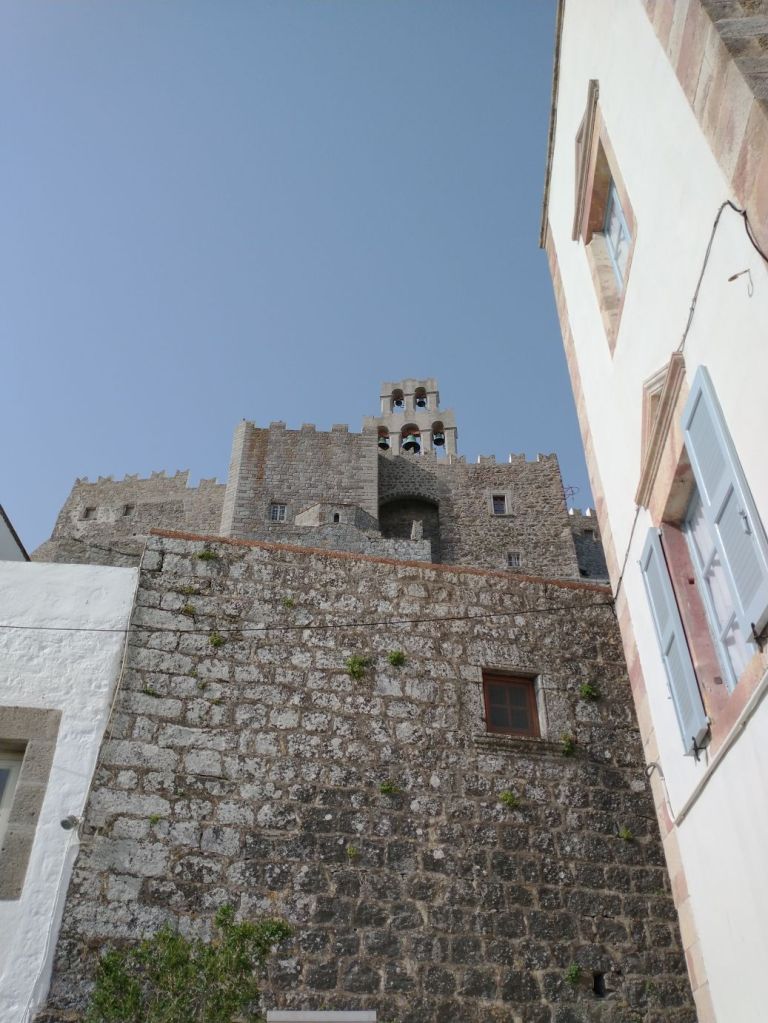
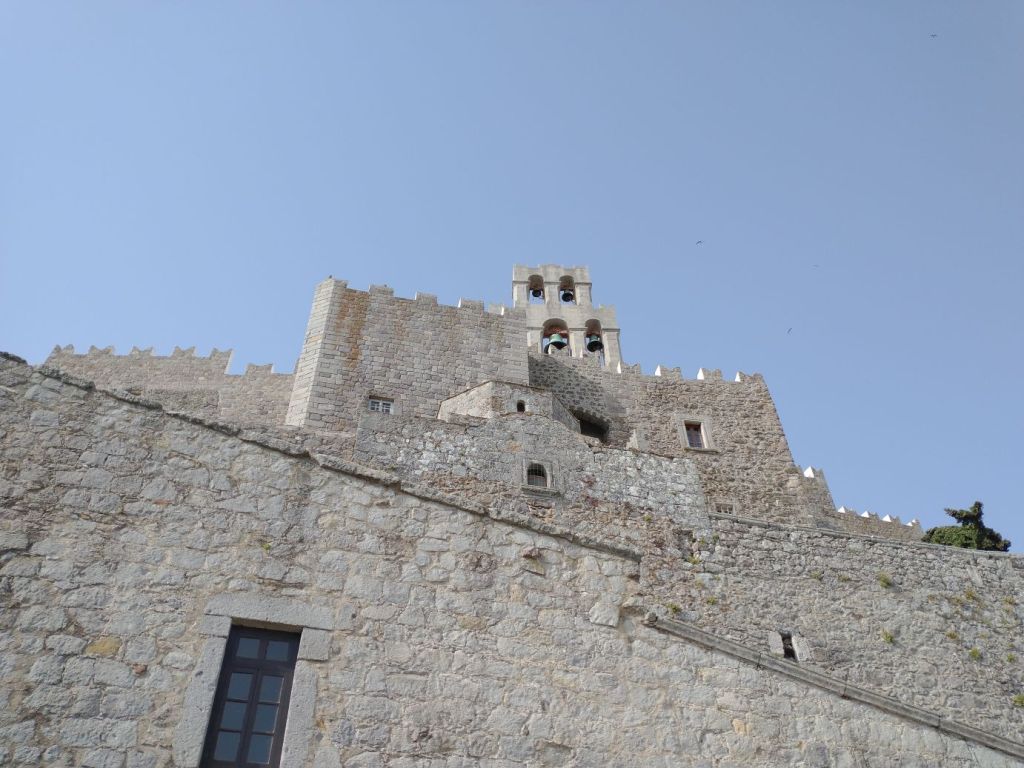
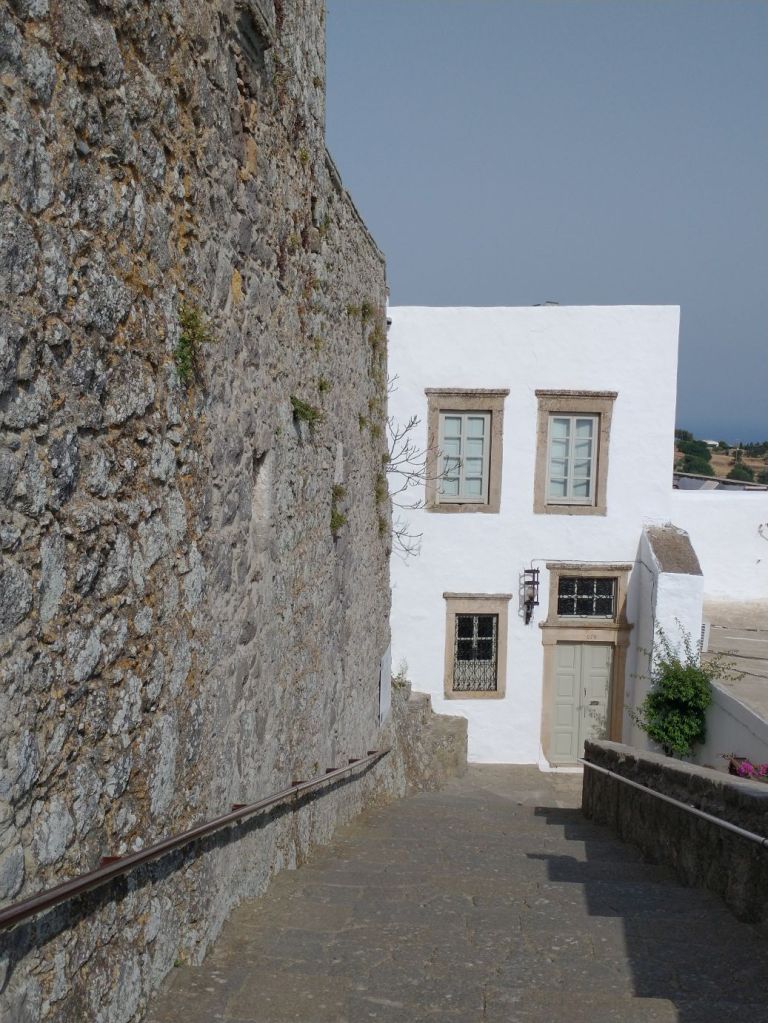
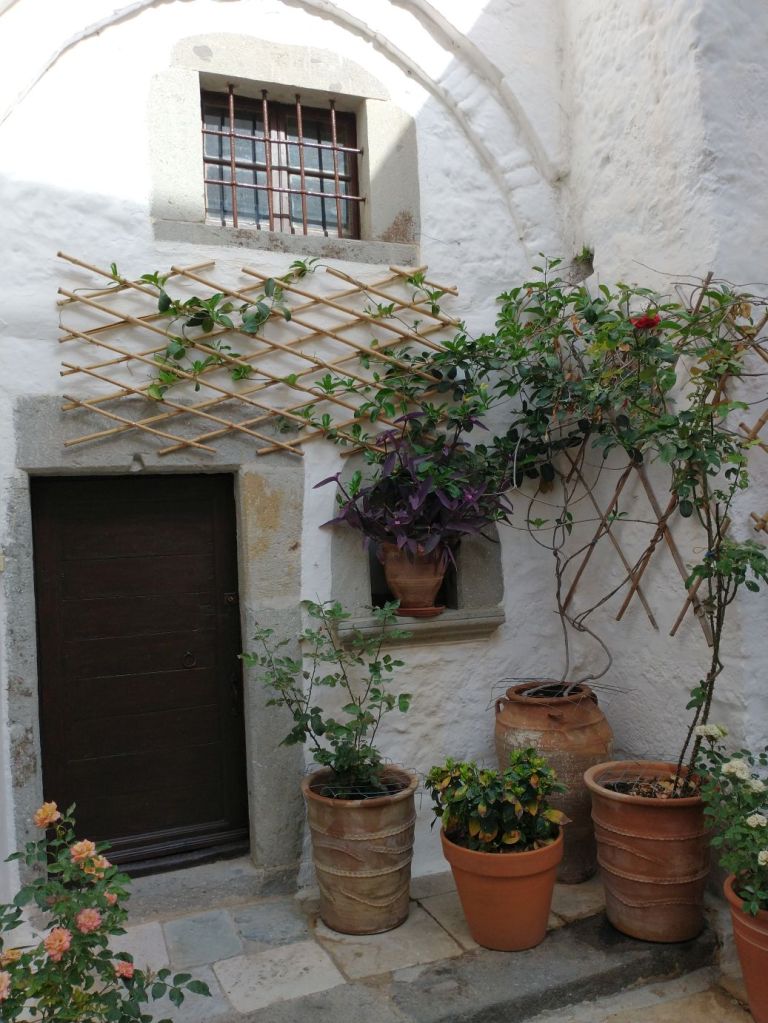
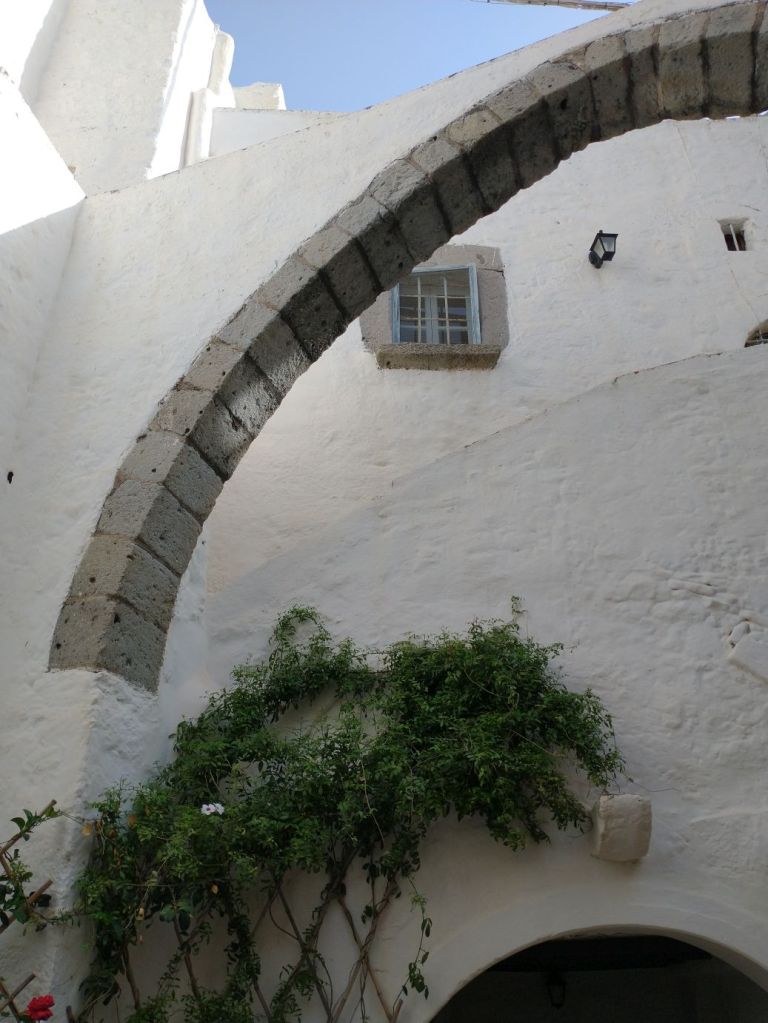
We are lucky and find only one small Roads Scholar tour here. They are in the chapel, so we make ourselves busy walking around the beautiful courtyard, into this ancillary room at the back of the courtyard – near the monks’ living quarters – with gorgeous mosaics under restoration and upstairs to a museum with displays of old cassocks and other items.
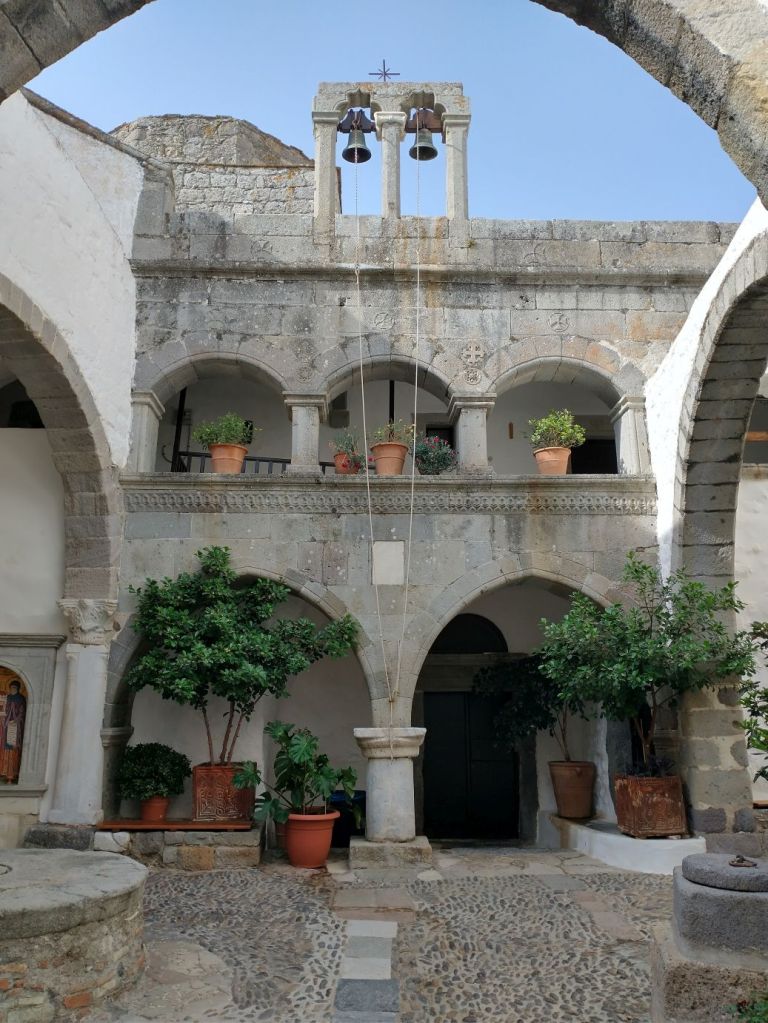
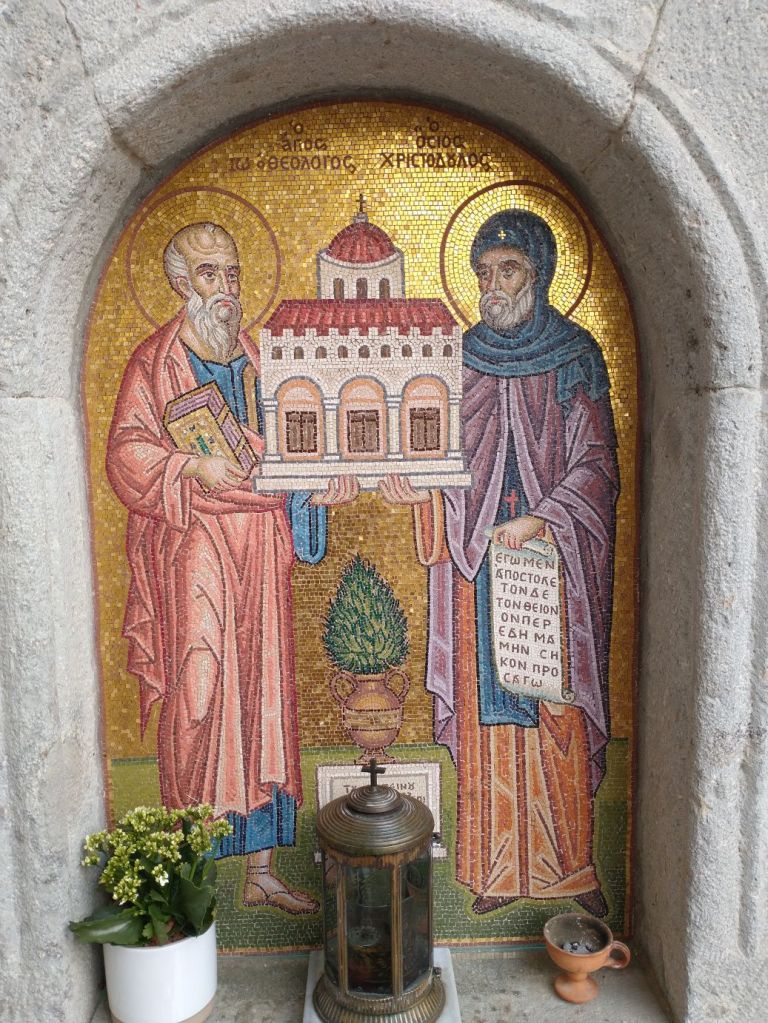
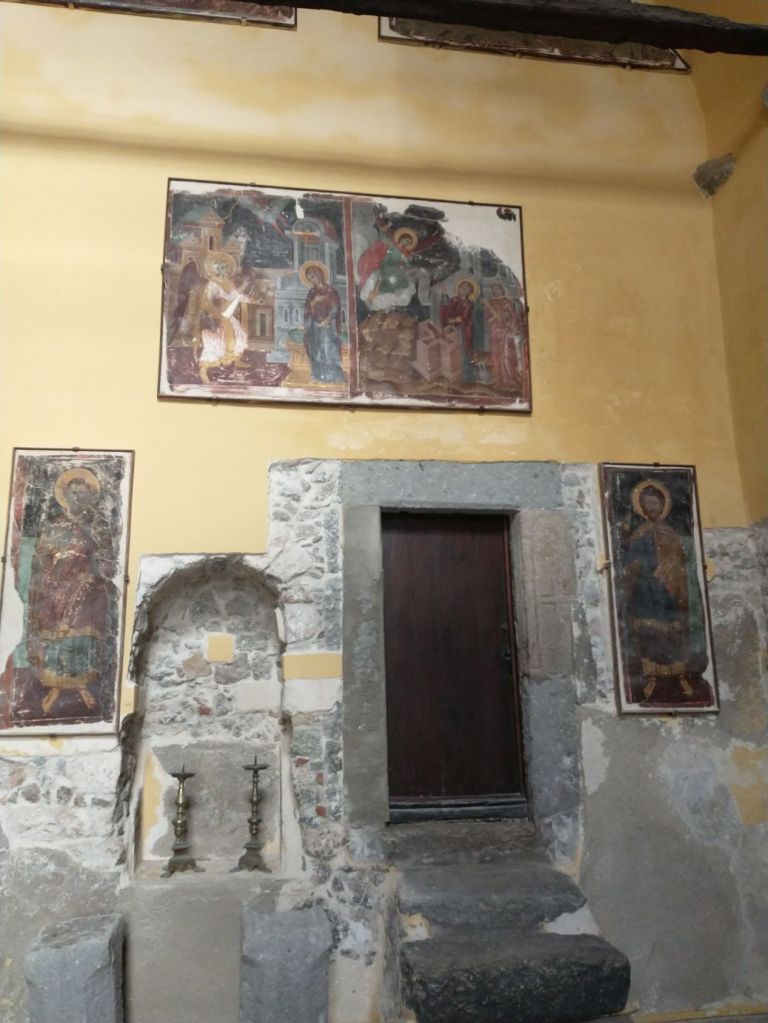
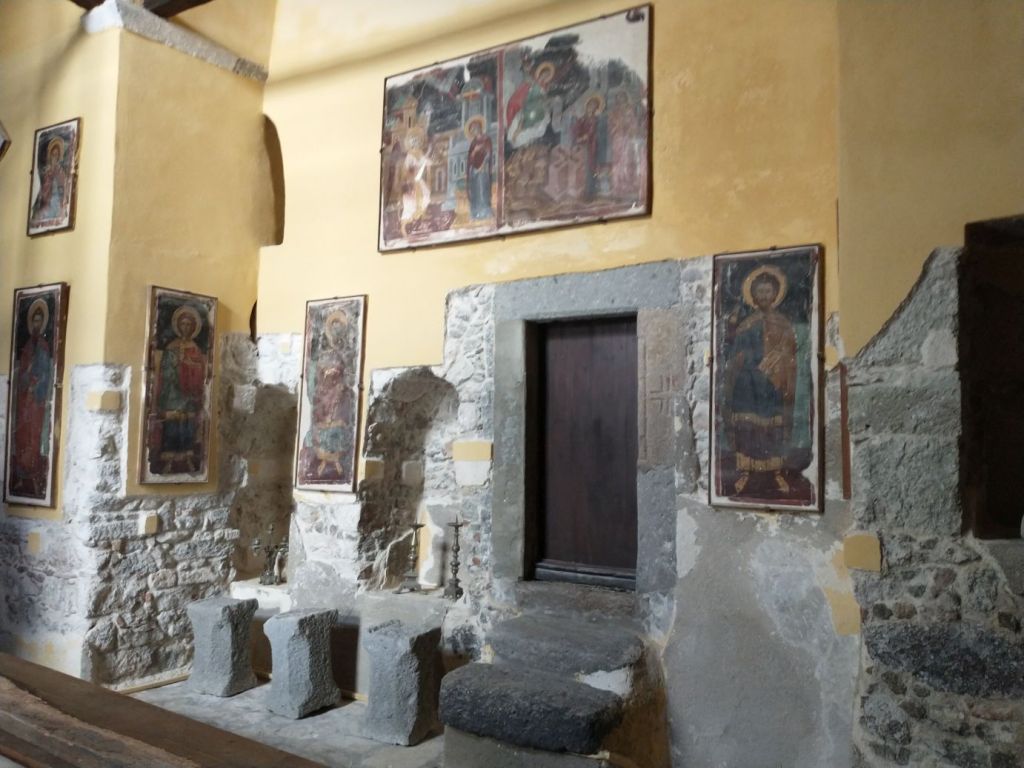
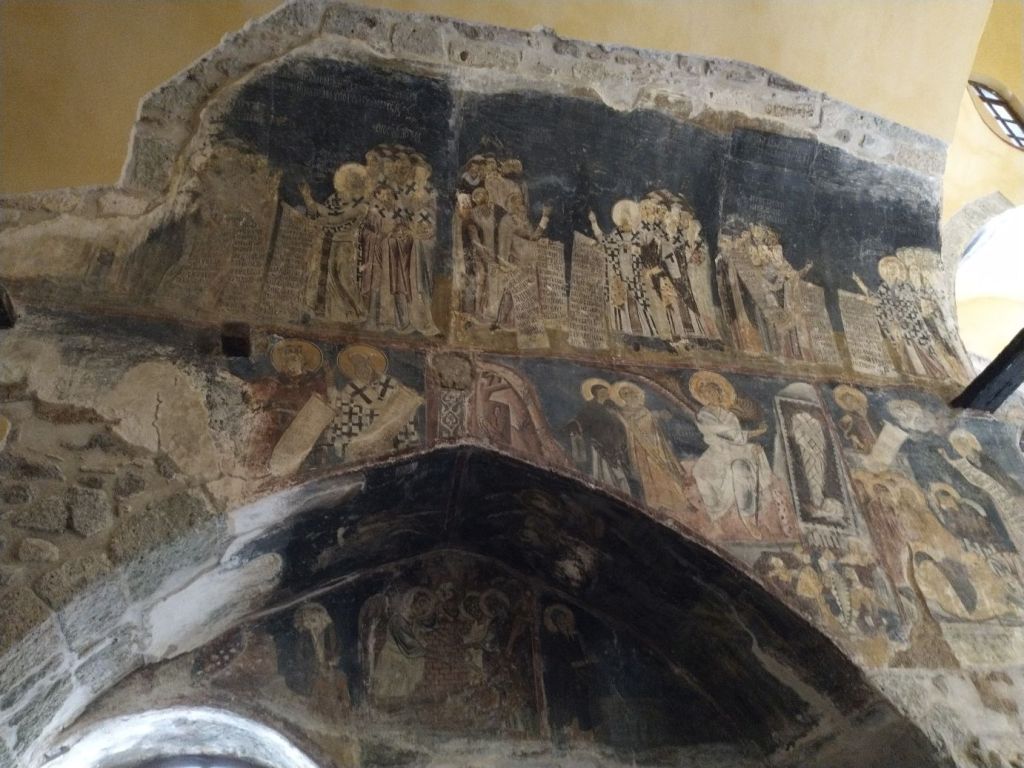
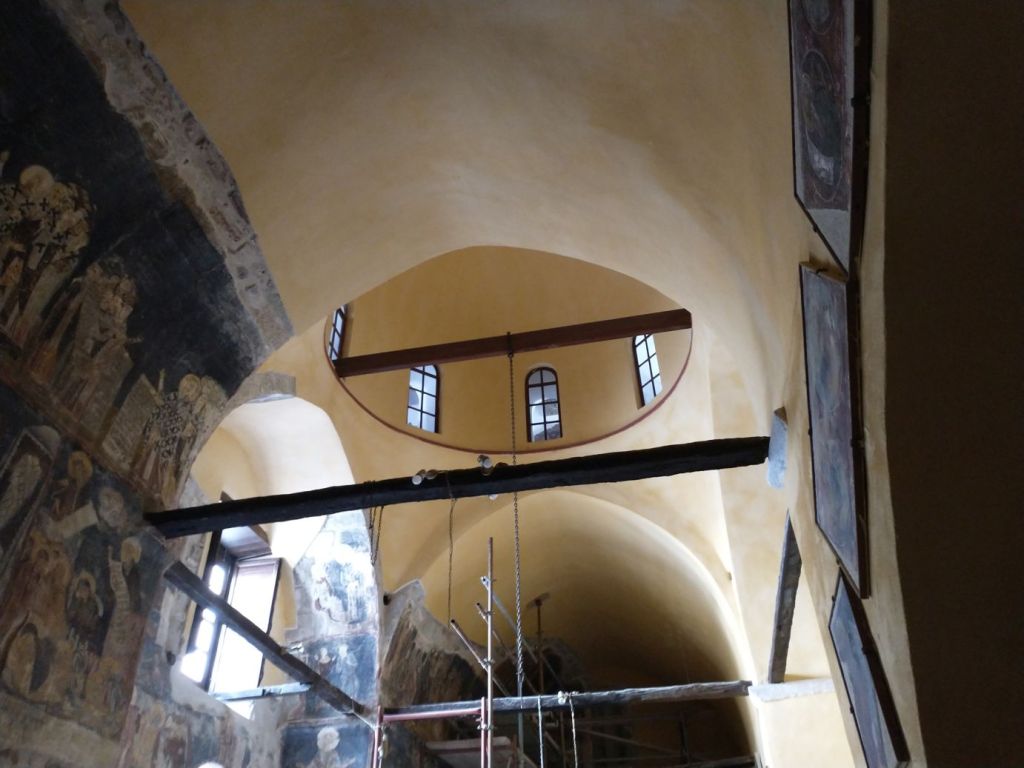
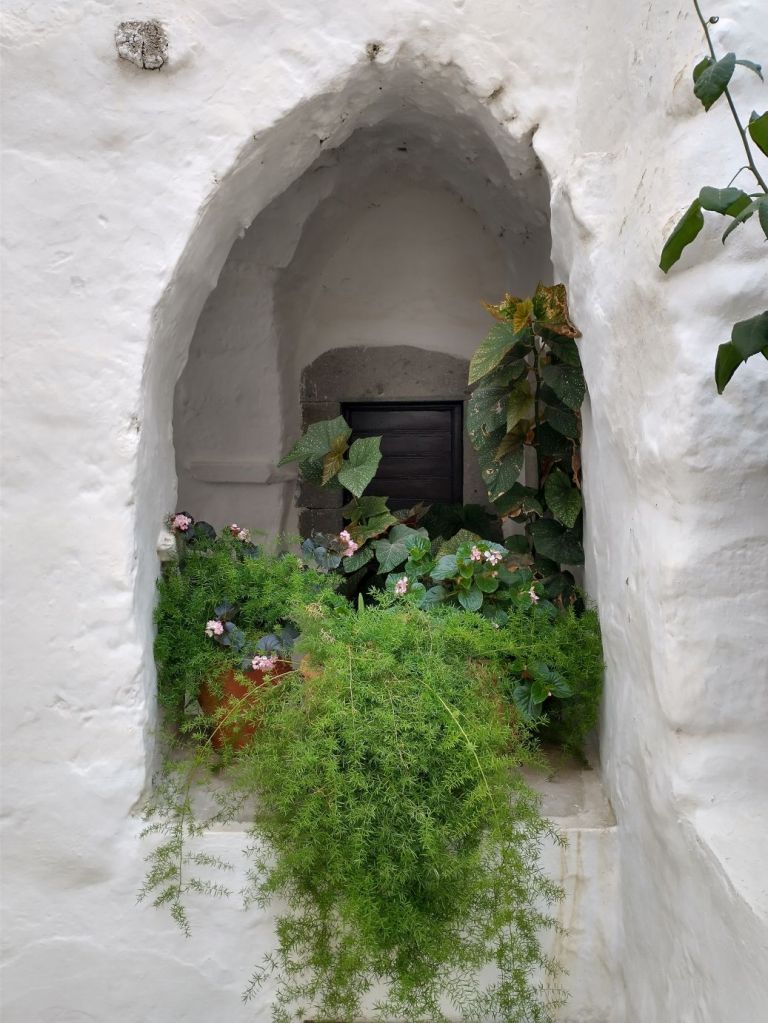
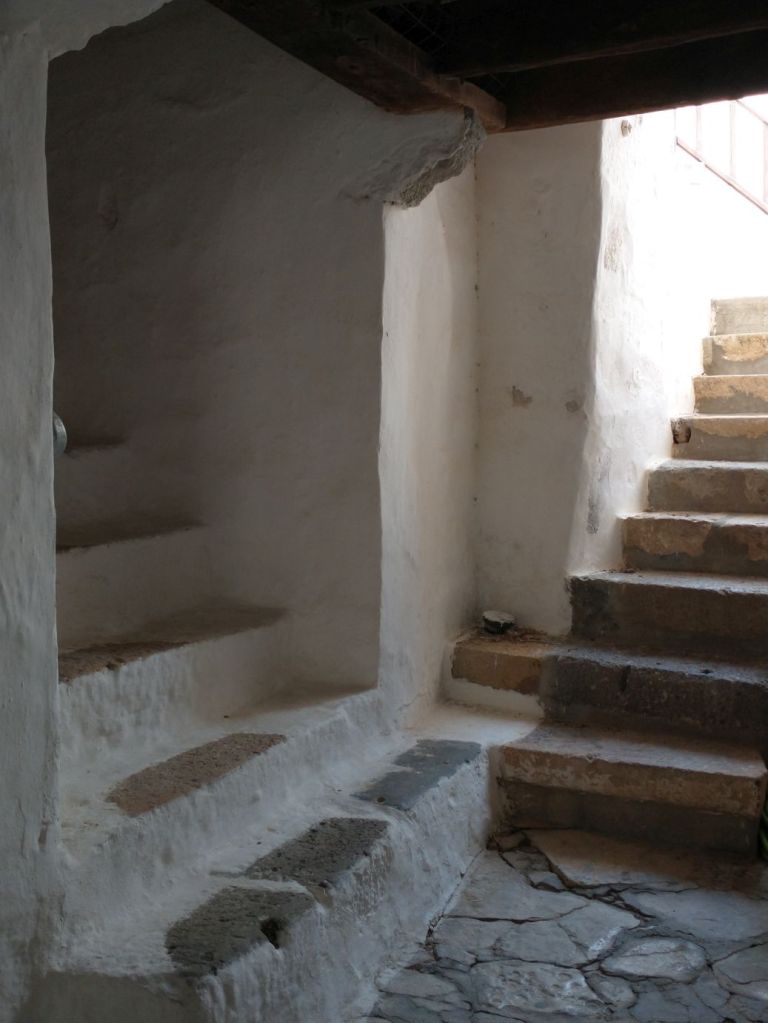
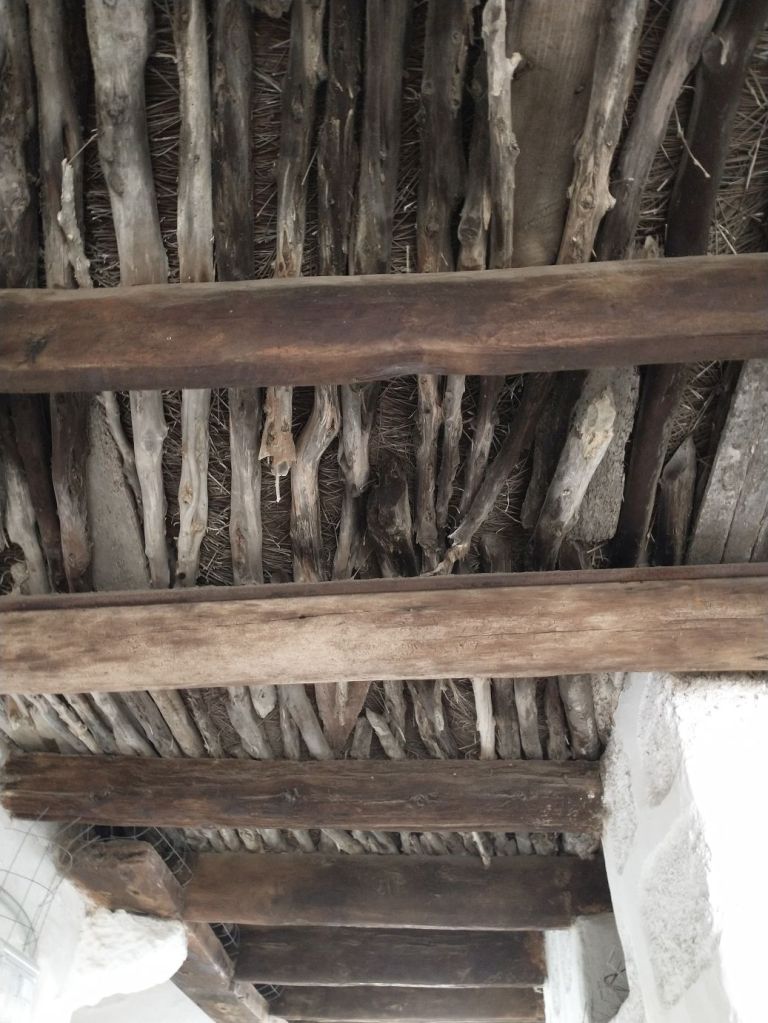
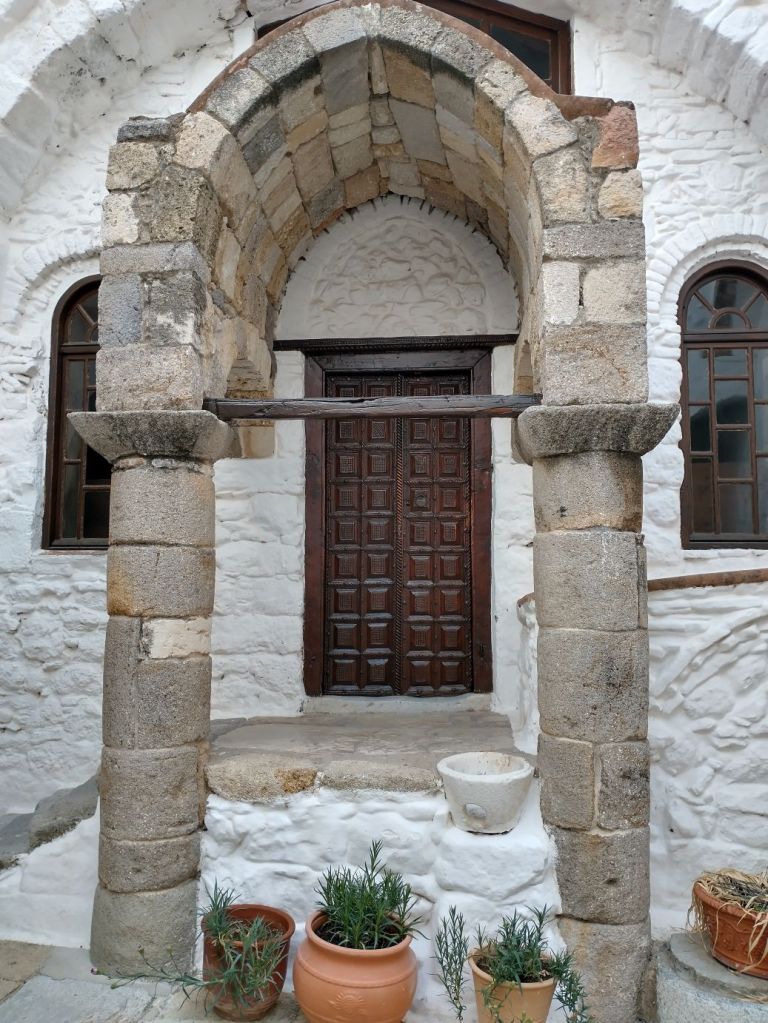
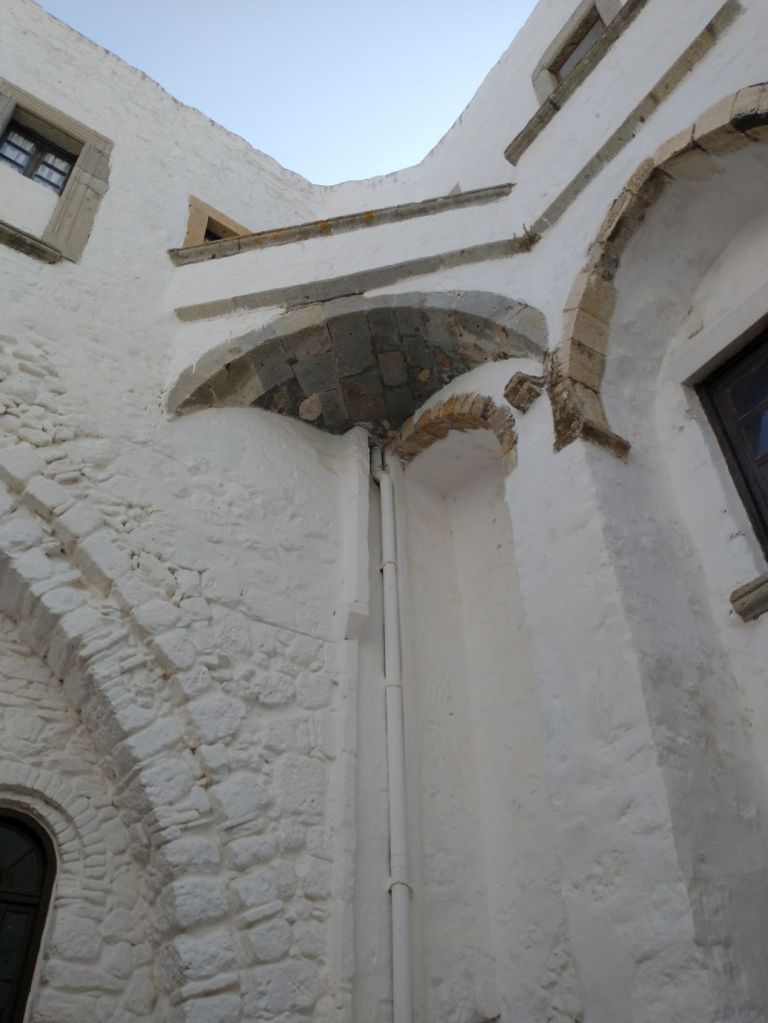
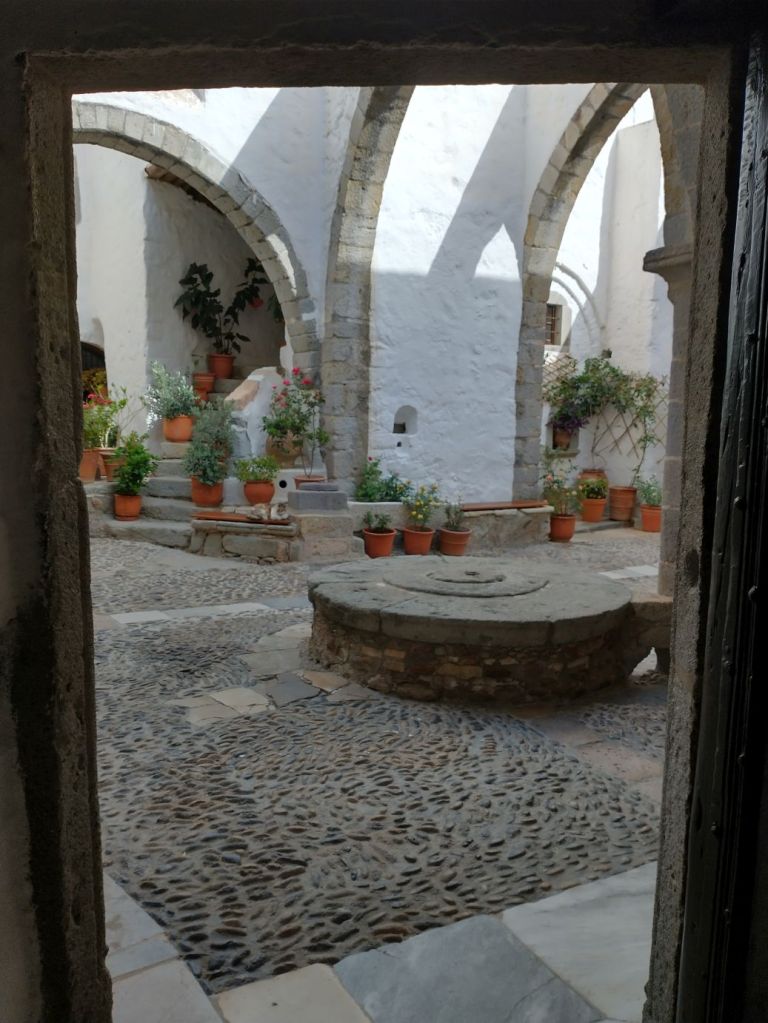
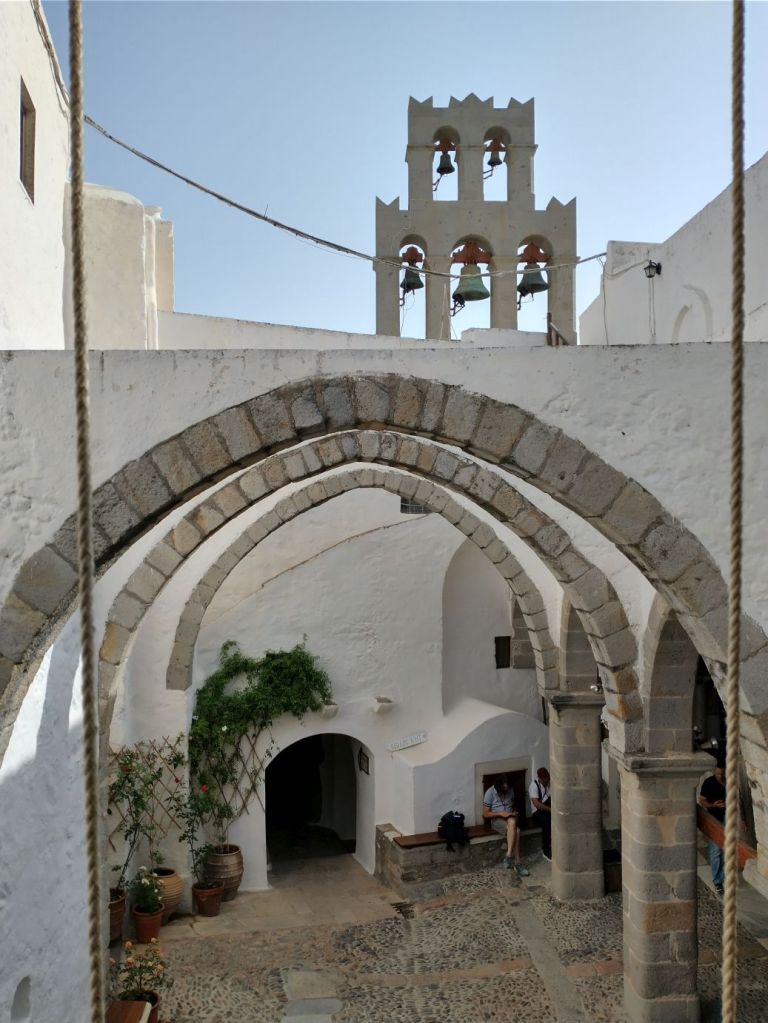
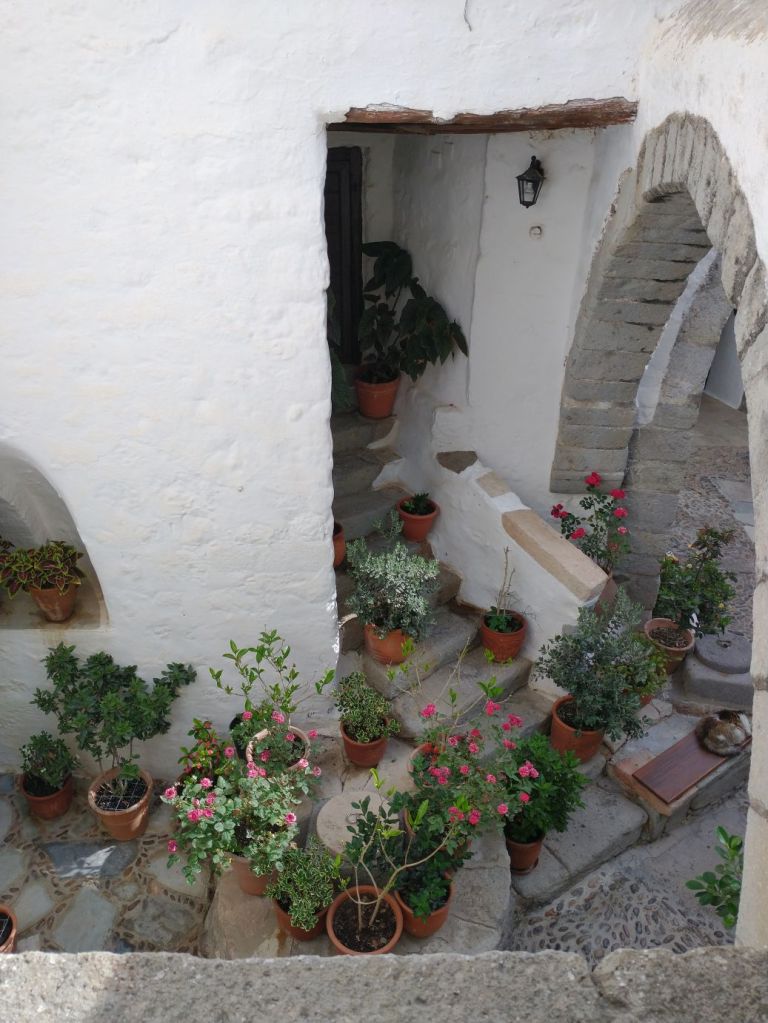
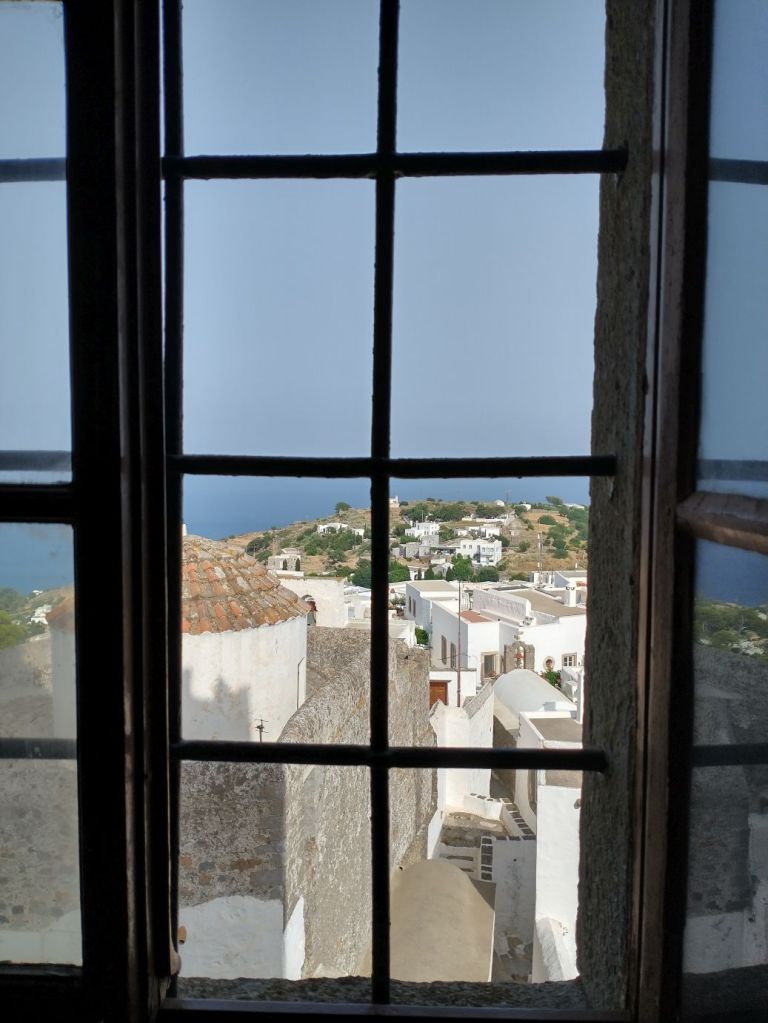
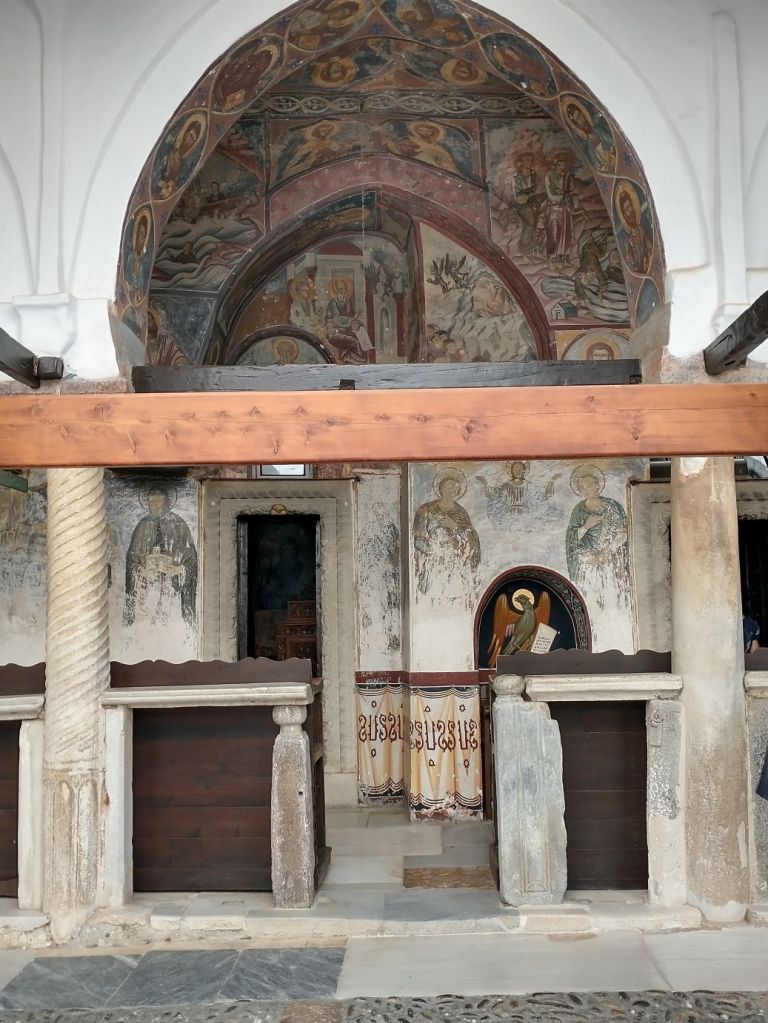
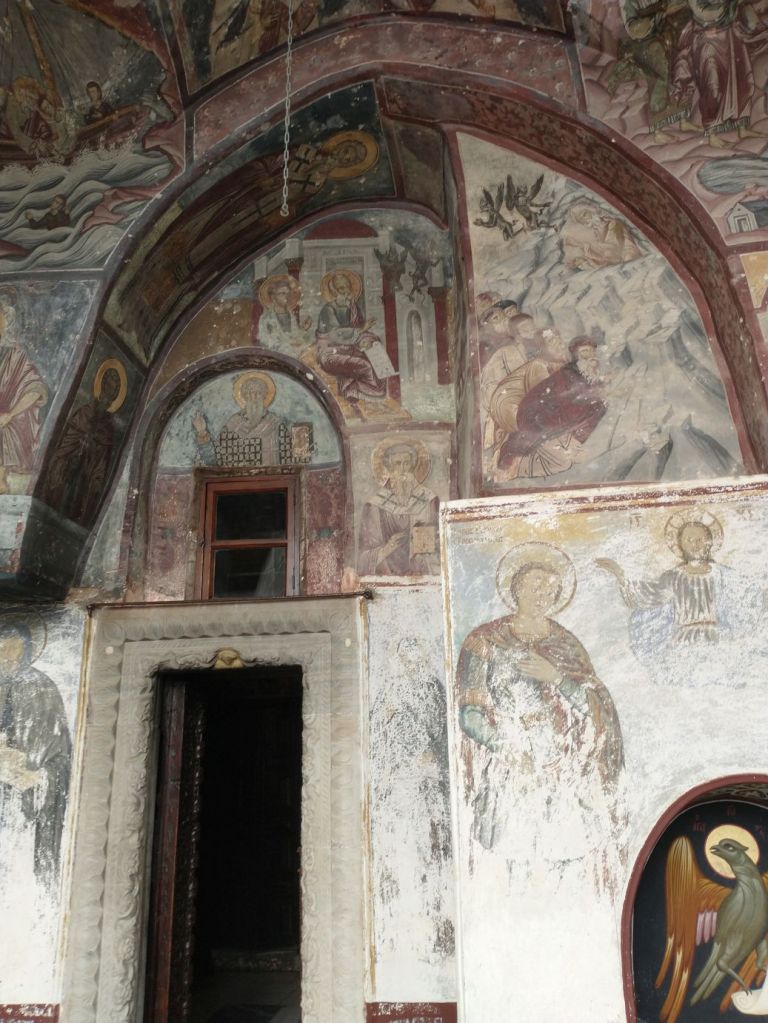
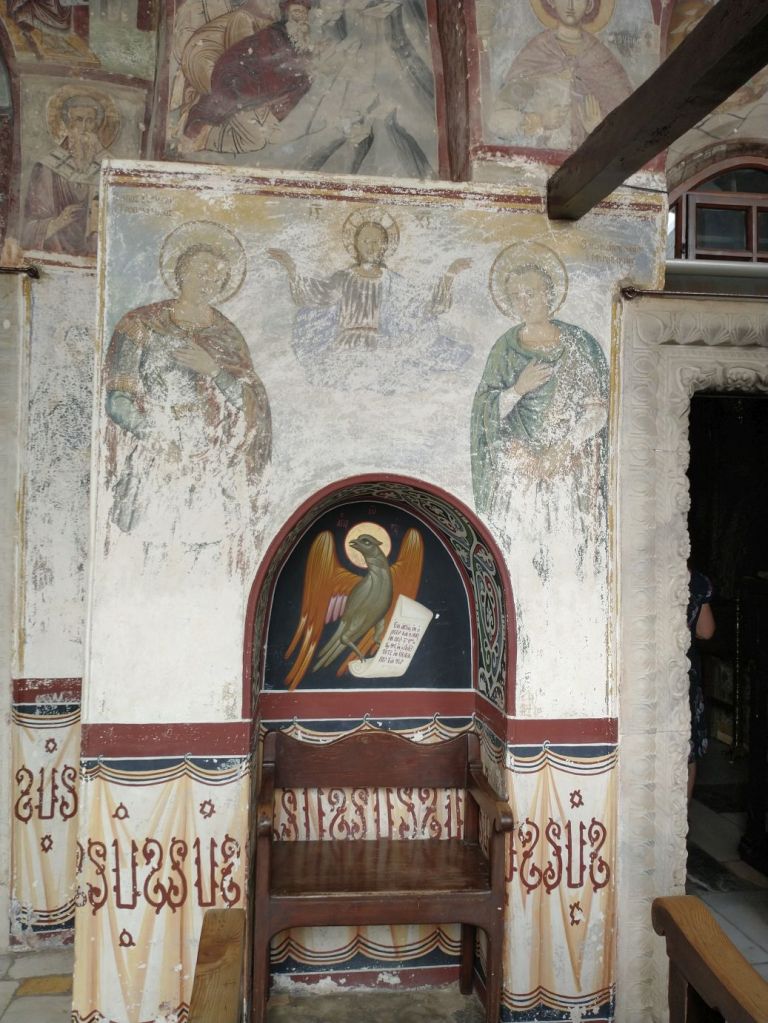
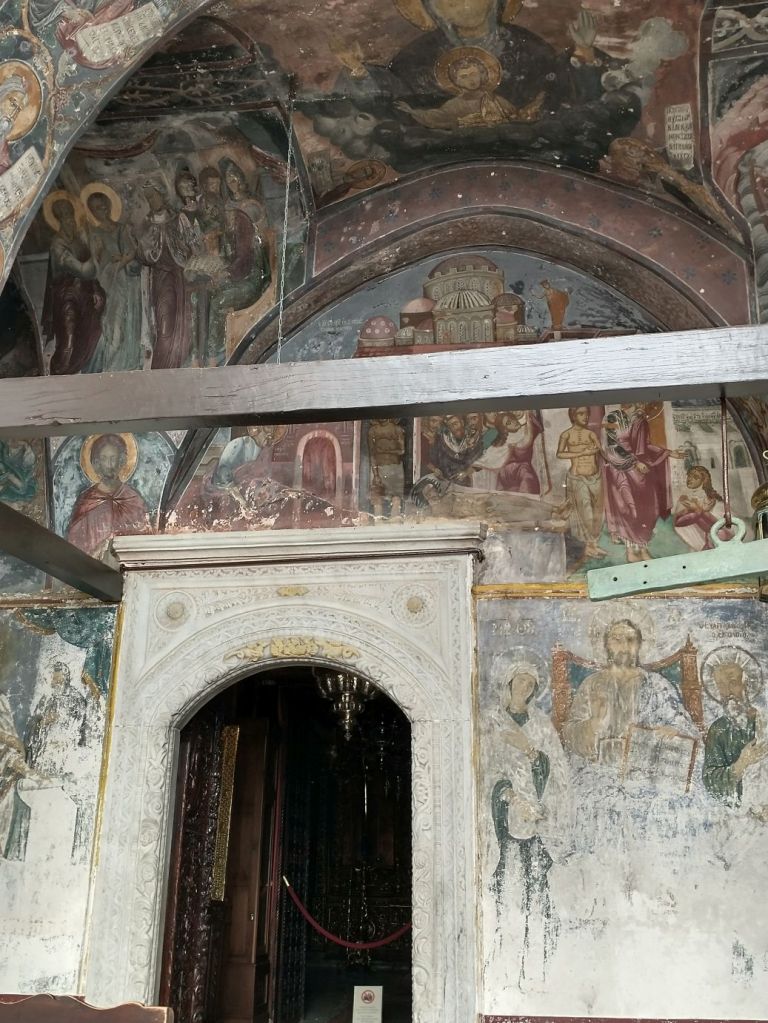
The tour group moves on, so we quickly run into the chapel to be alone. It is a beautiful chapel, dedicated to St. John (of course) with lots of frescoes and mosaics and quietness and peacefulness.
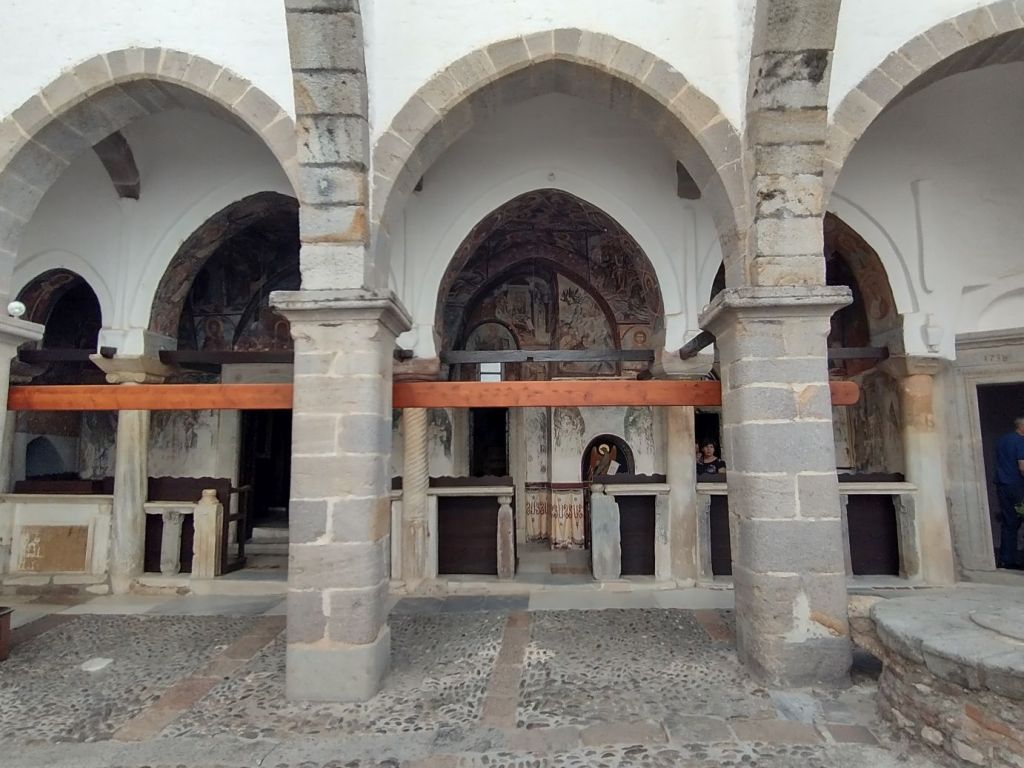
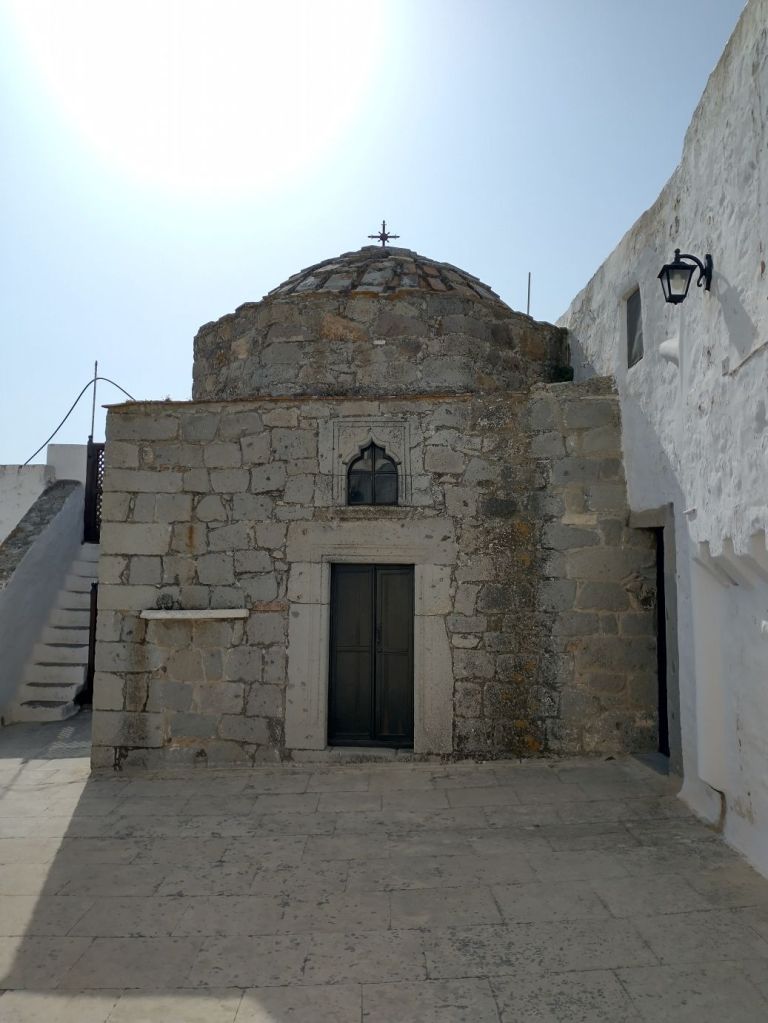
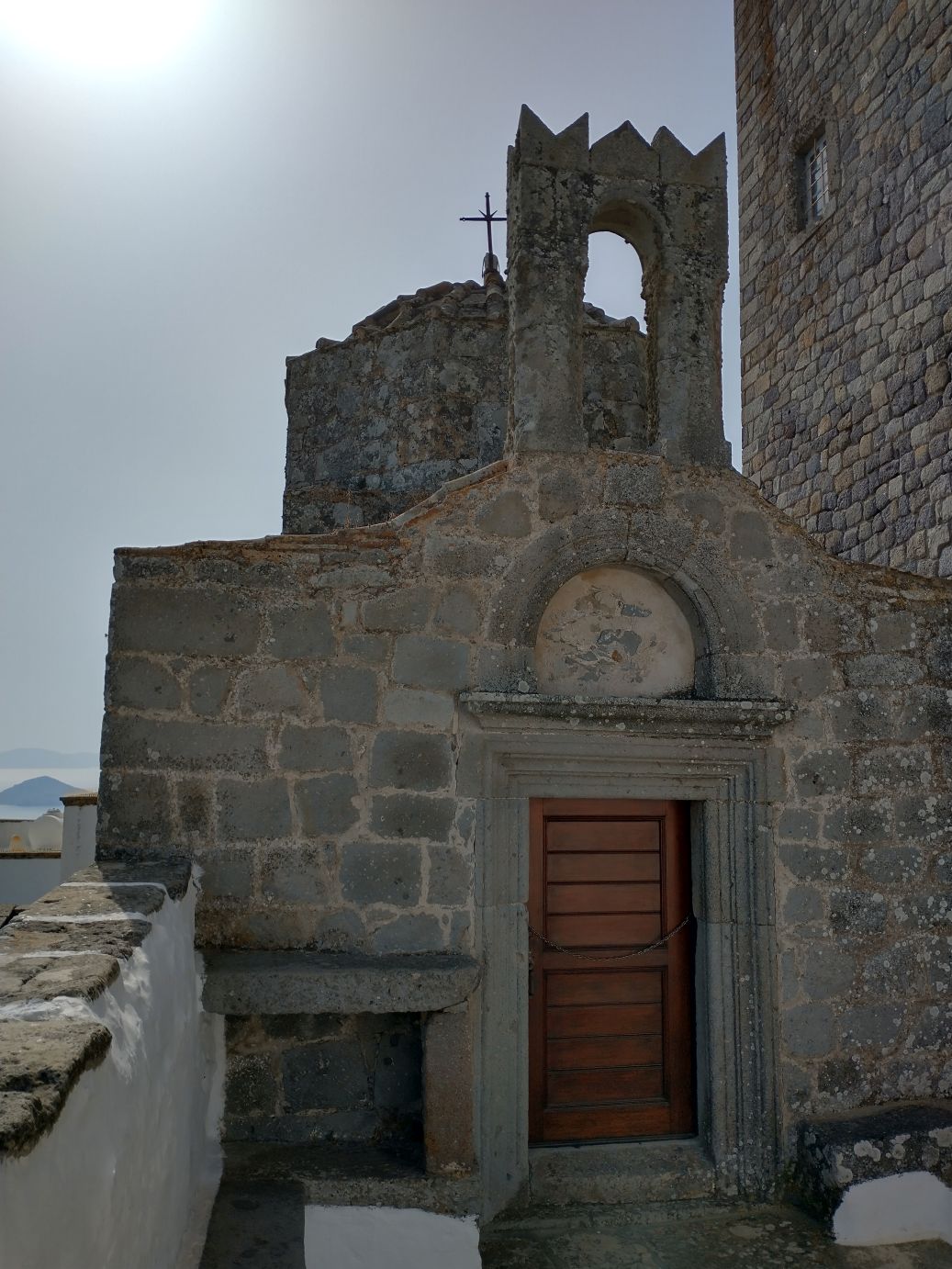
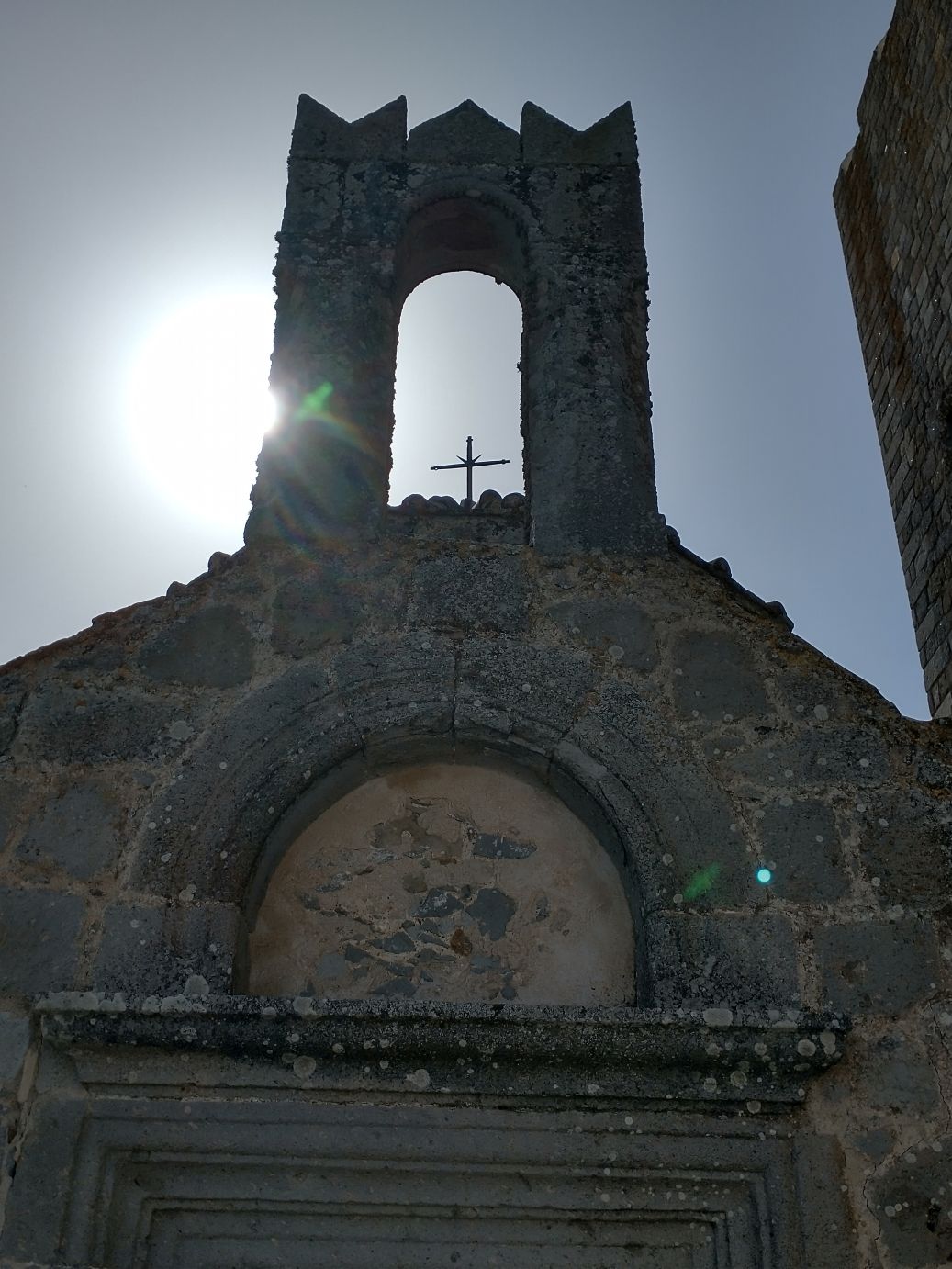
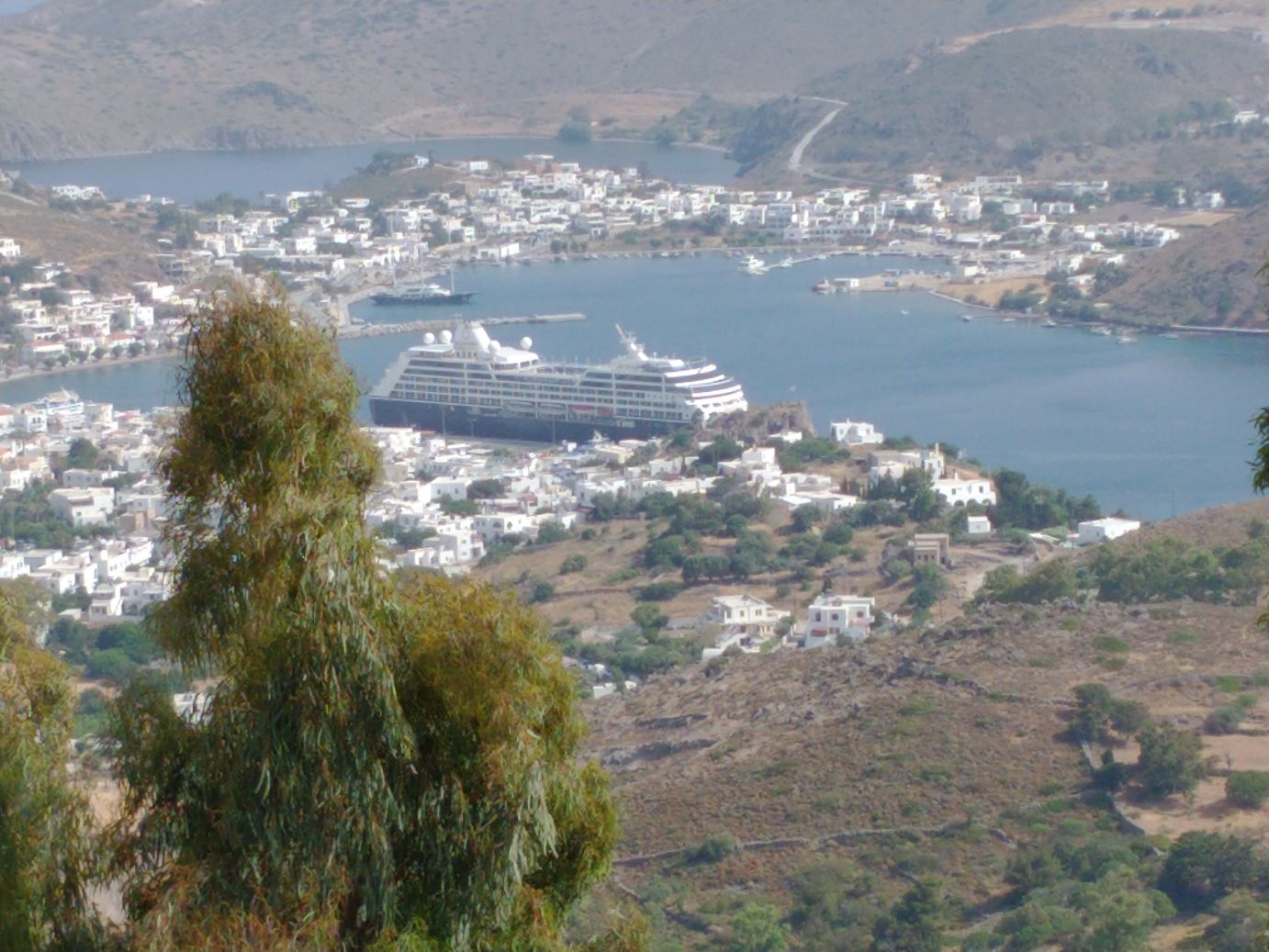
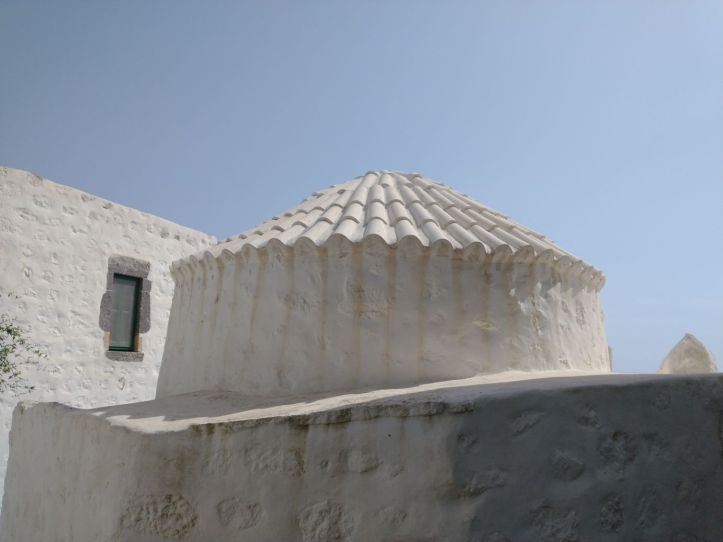
Back outside, we wander around an upper courtyard with another chapel (closed to visitors but super picturesque) and more great views down to the harbor of Skala. from here we can also see the tour buses arriving and the people slowly making their way up to the Monastery. A good time to skeedaddle.
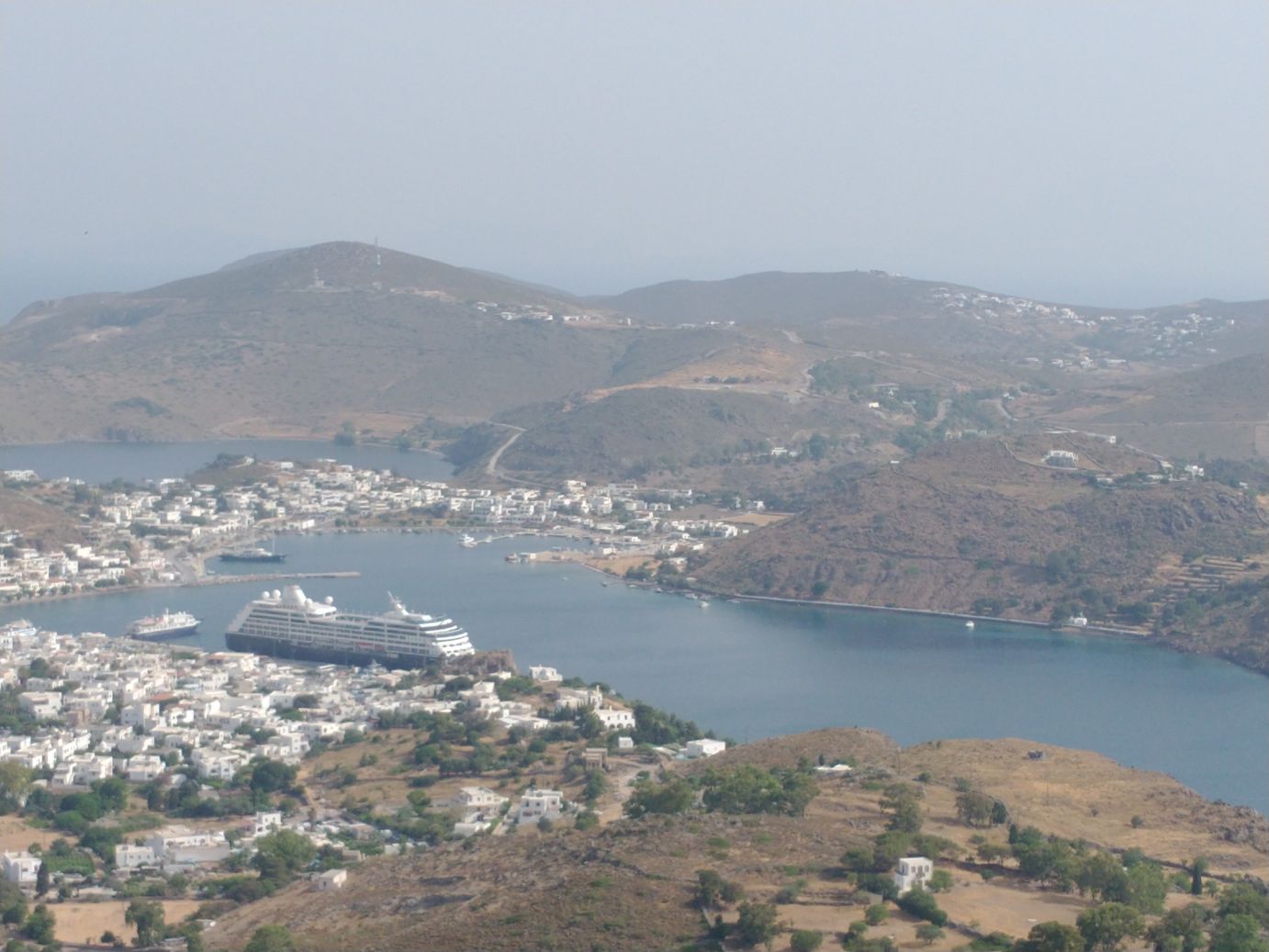
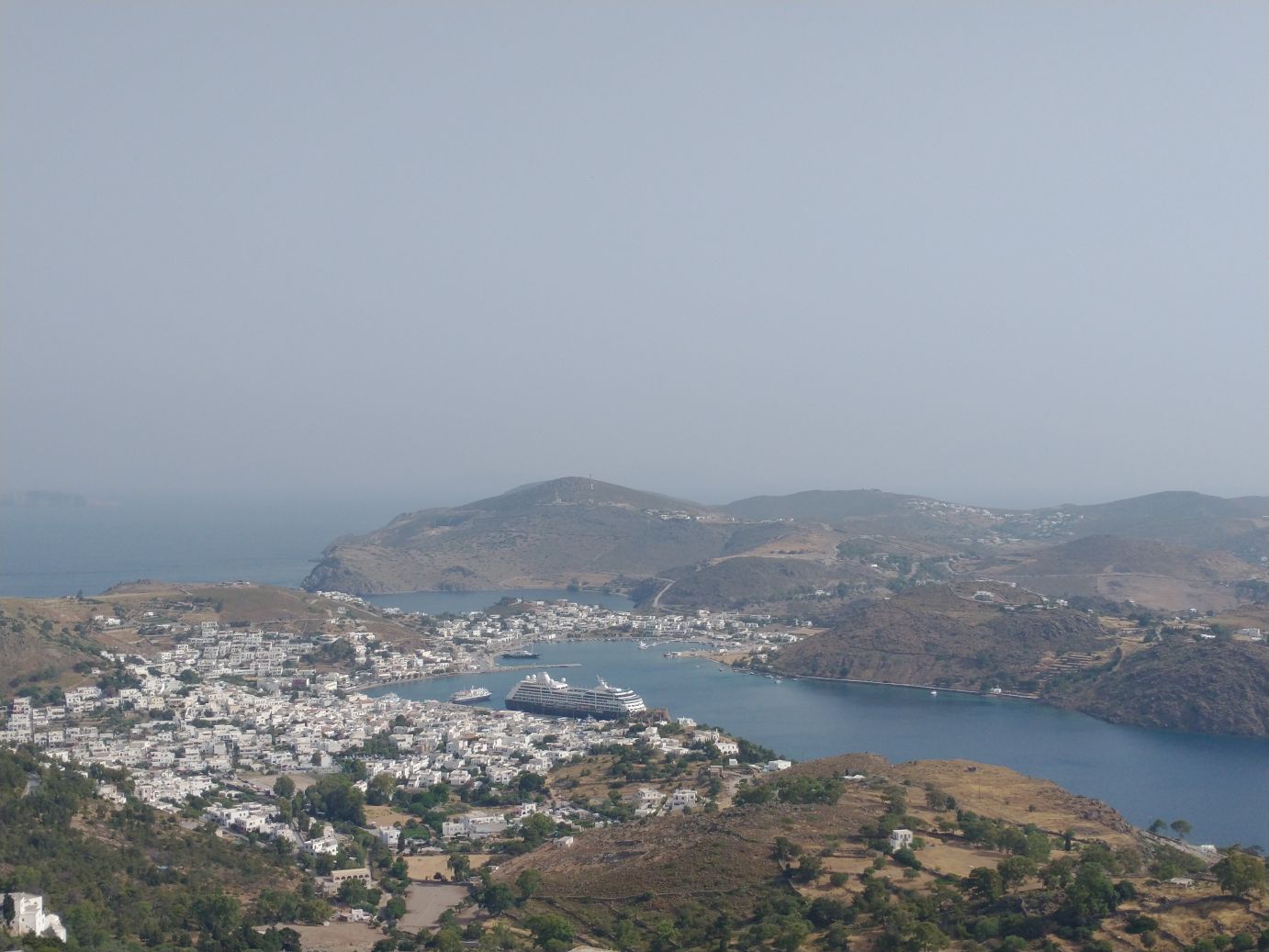
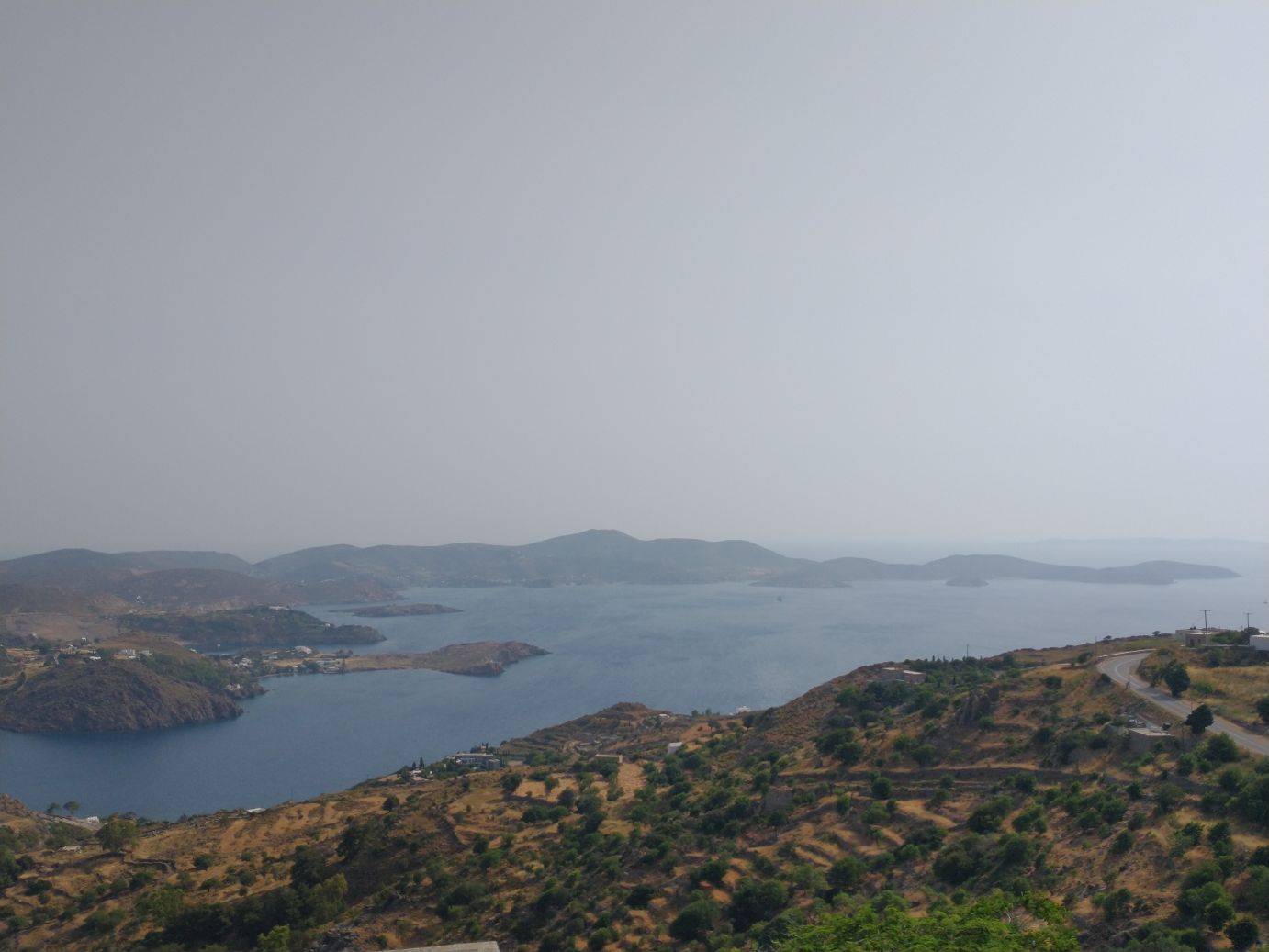
Passing all our fellow passengers, we duck into Katoi, a cute little cafe right on the corner of the street leading up to the Monastery. Here we sit and enjoy the breeze and the view while sipping cappuccino and watching people struggle up the hill. It is so lovely to be on our own today!
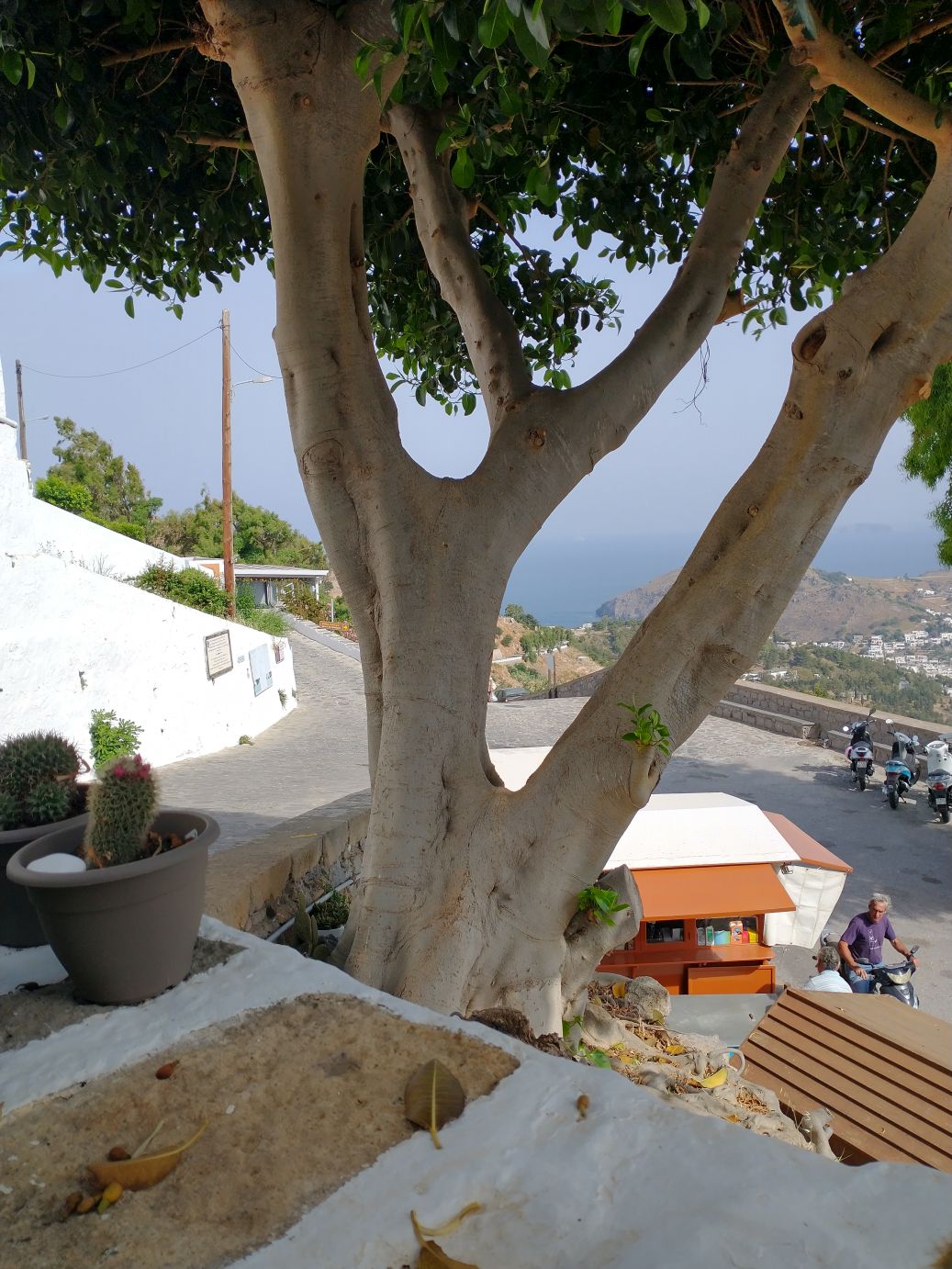
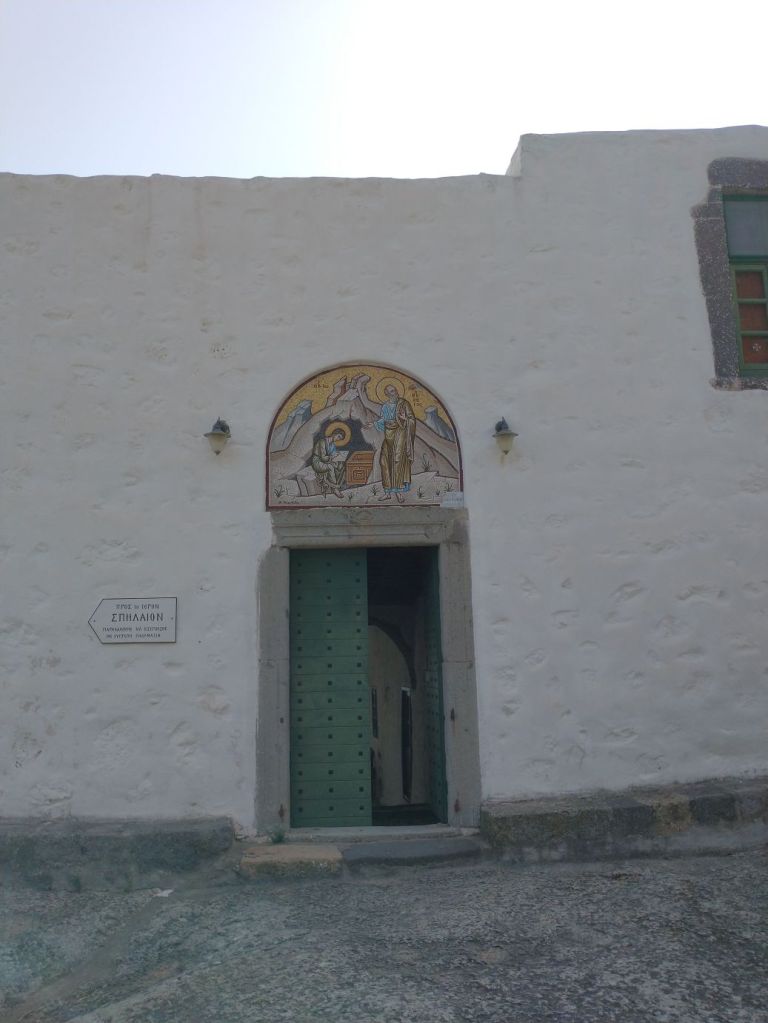
Since we know the buses are up here now, we reverse course and head downhill to the Cave of the Apocalypse, where once again, we are alone. So much so that we haven’t a clue where to go! There is no one around and the grounds are landscaped and beautiful and seemingly like a park. We climb up to the end of some steps, only to find a little path to the road and other houses – but no cave. Going back down toward the car, we enter a door that looks like it should be a chapel – white washed with a saint above it – but no, the people there tell us this is closed – we need to go down and around to the right. Ok, so there’s a sign outside the door pointing in that direction – but it is all in Greek – so what do we know!
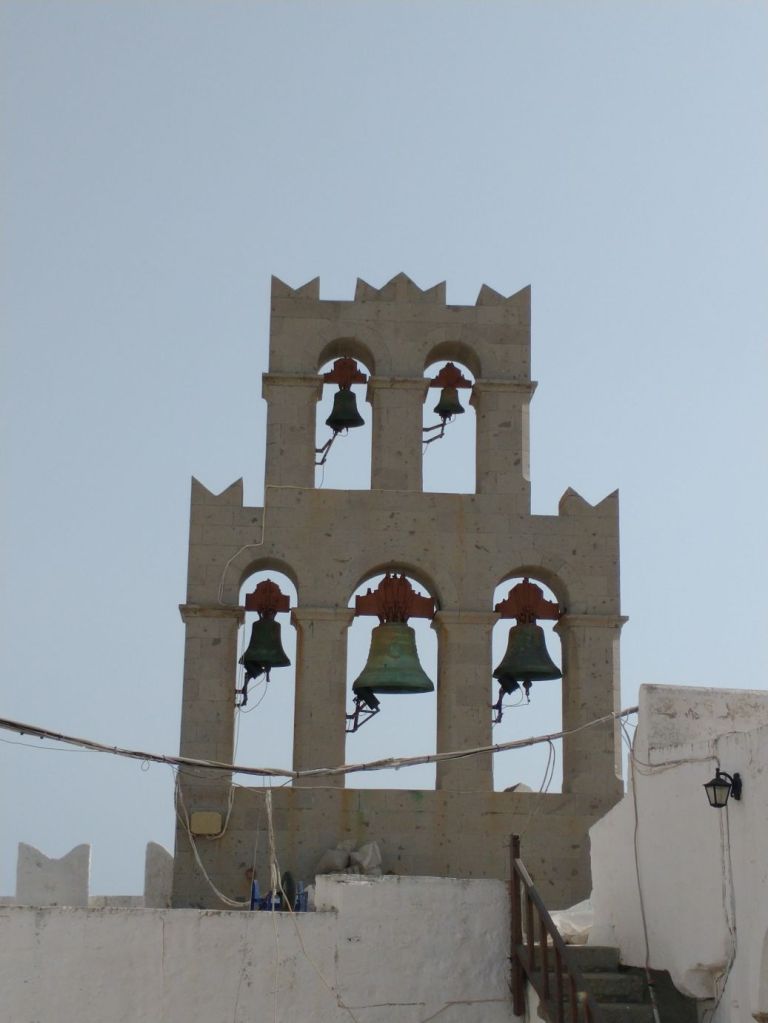
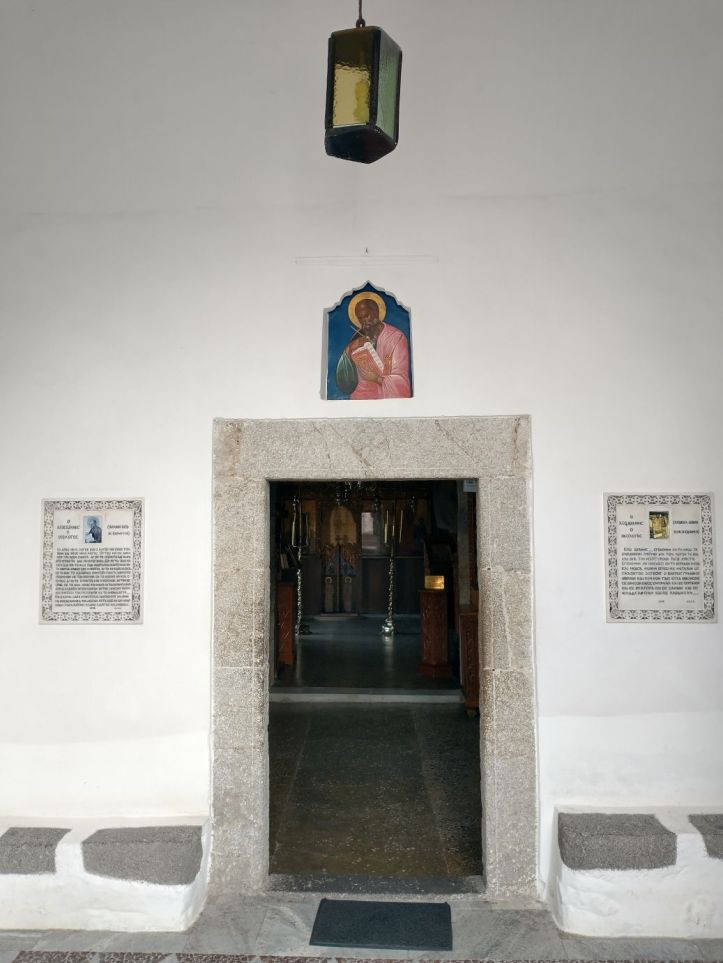
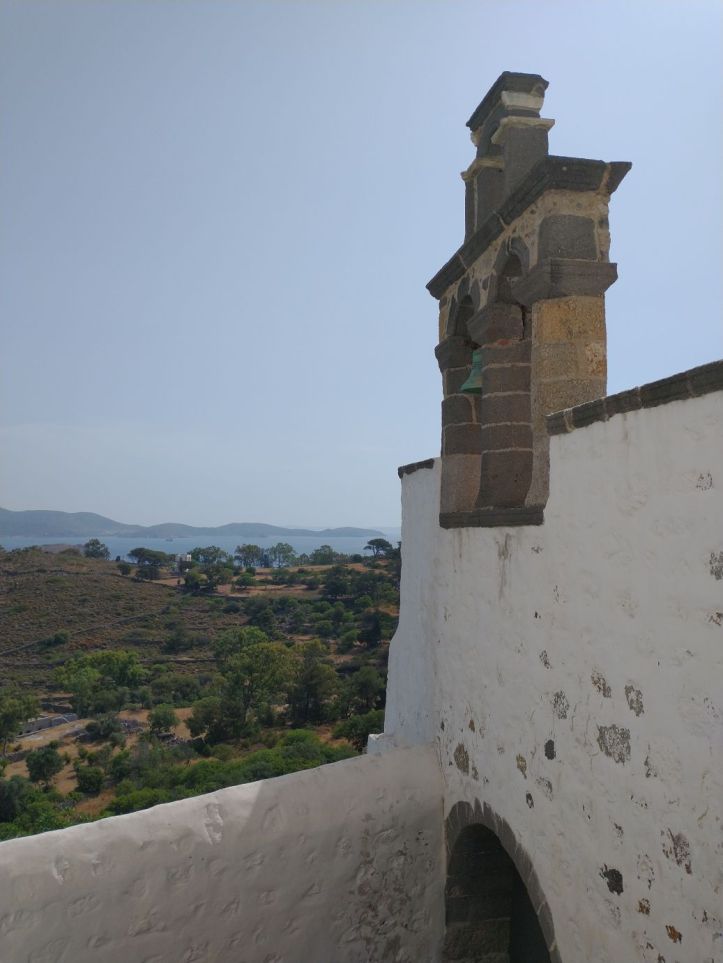
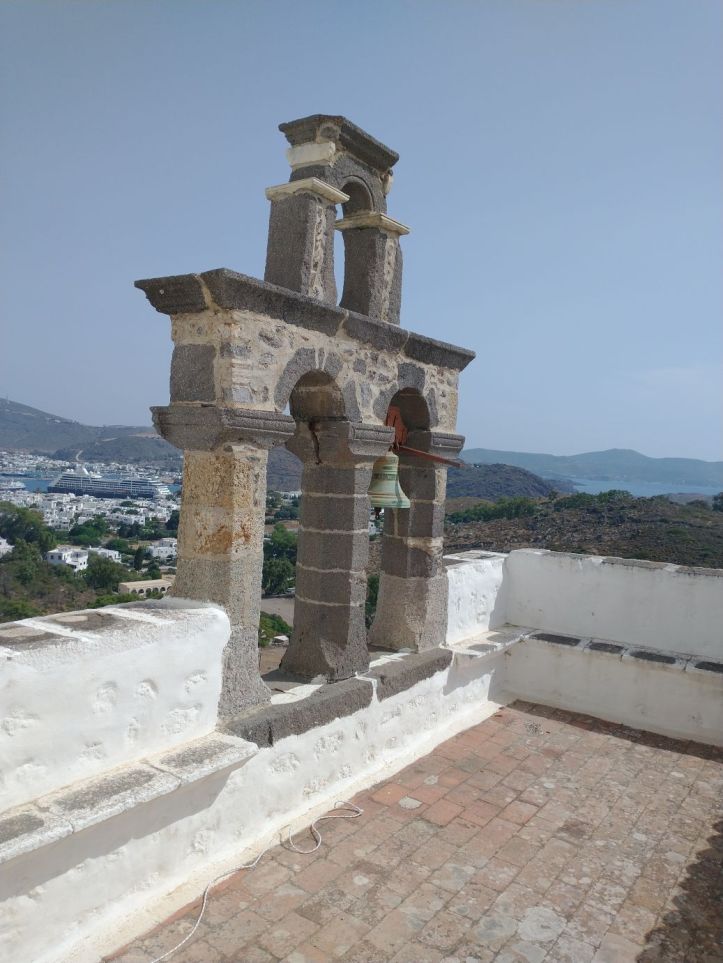
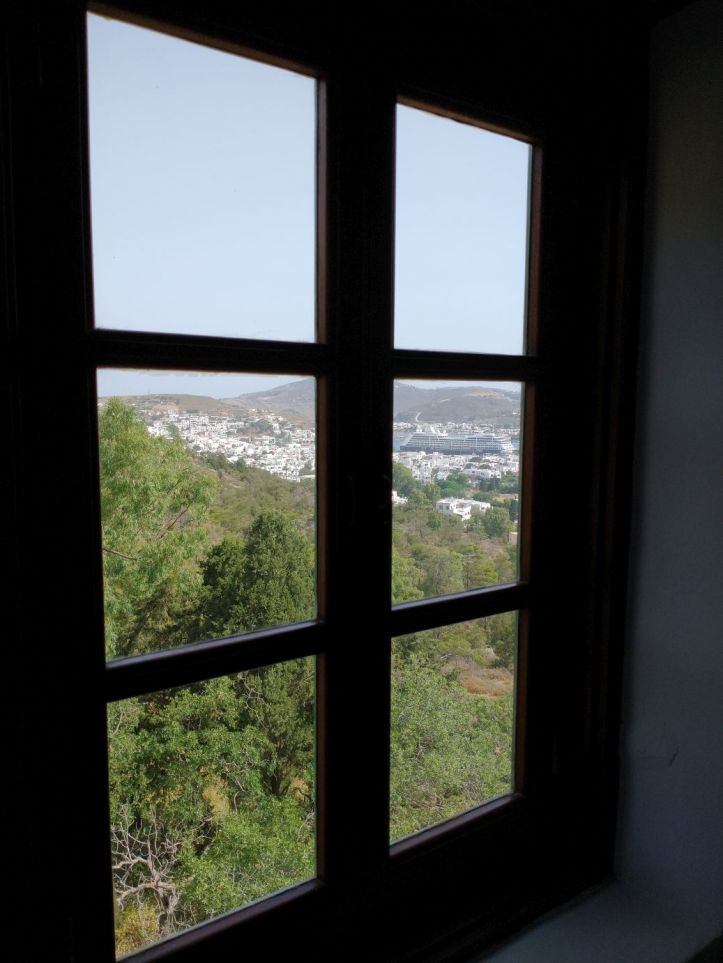
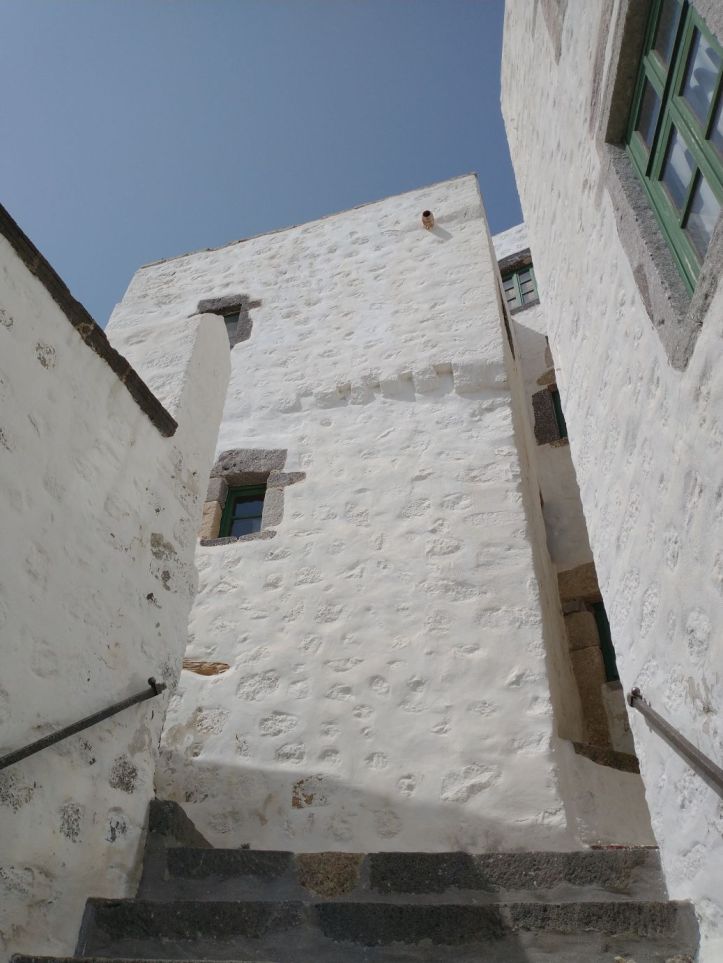
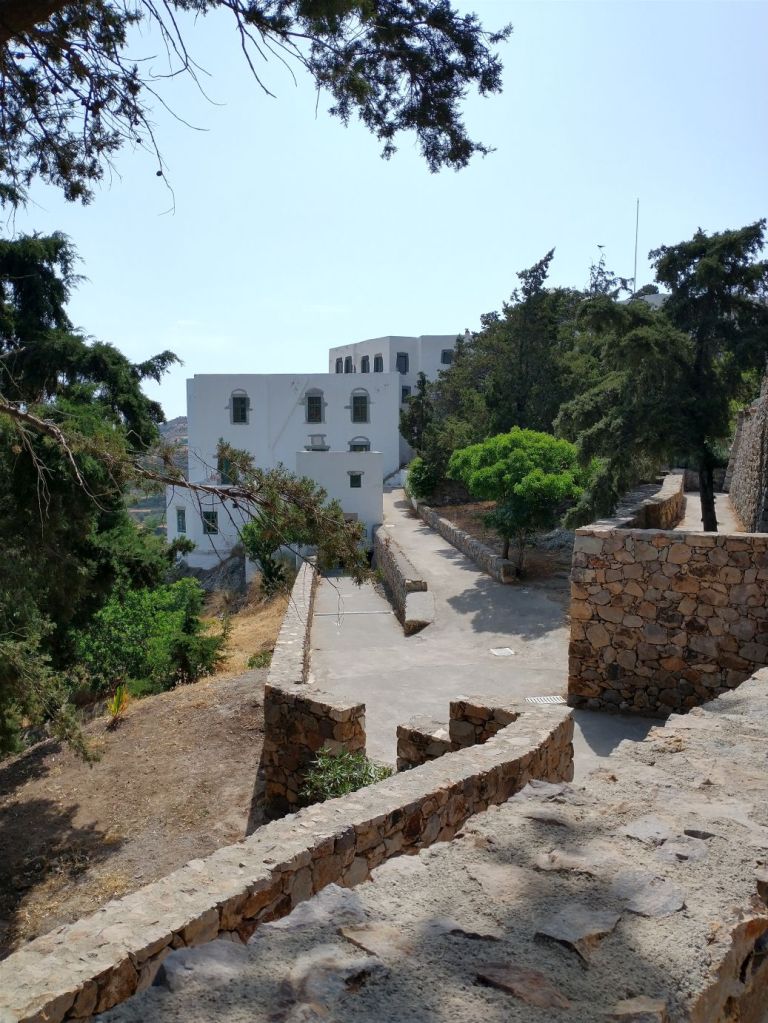
Finally on the right path (haha) we make it to the entrance to the cave and wander in to find a little museum area with a nice history of the Revelation visions, the island and the monastery development. Then we enter the chapel, where we can’t take photos, and where it is small and the cave part (on the right) is really low ceilinged and there are other people there and well – it wasn’t comfortable and we were really underwhelmed – and out we went. We do manage to sneak up the stairs back behind the chapel where a woman told us it was closed – in pantomime – to get some good photos of the bells and the view. But then we’re back to the car and off up the road pretty quickly after.
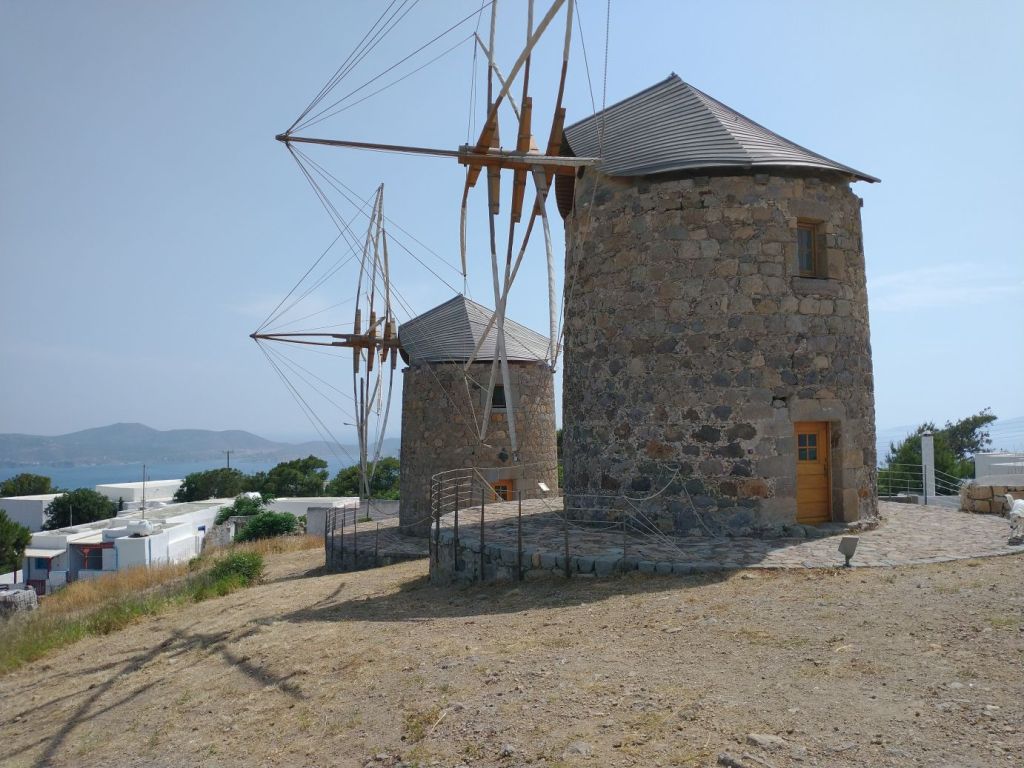
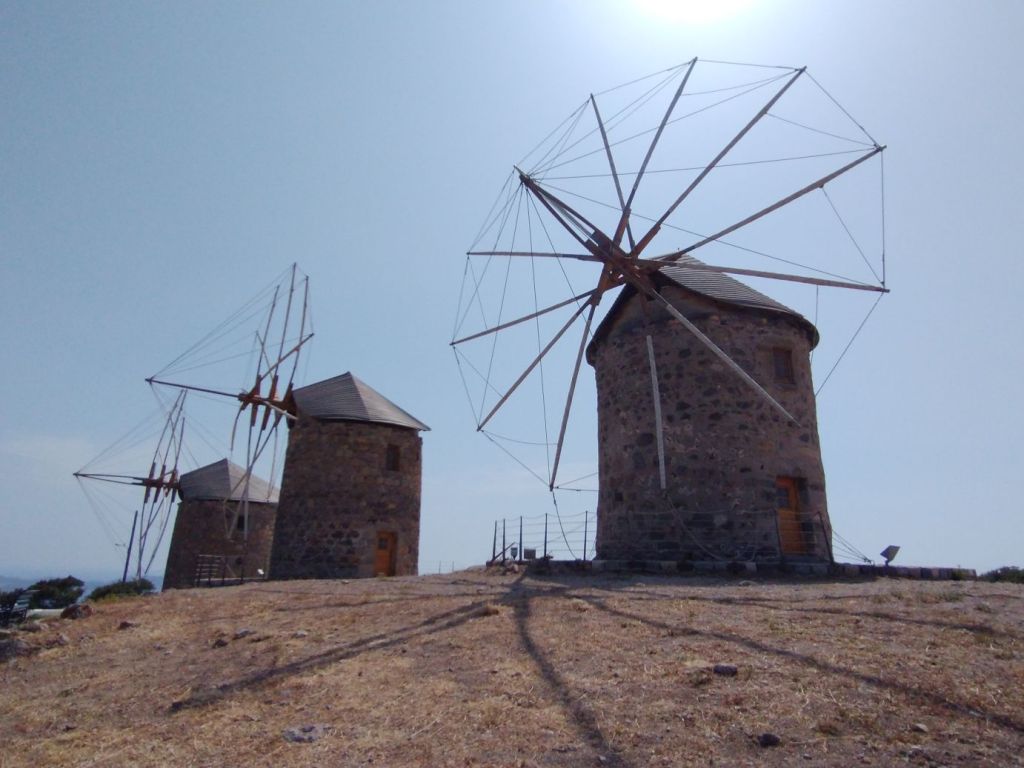
Back up to the top of the hill we go, past the Monastery and onto the Windmills at one of the highest points overlooking the island. This time there is a sign – in English – so we know to continue walking up and around the hill, instead of trying to go straight in what looks like the shortest distance to the Windmills, but turns out to be a fenced in dead end lane with houses. Follow the sign.
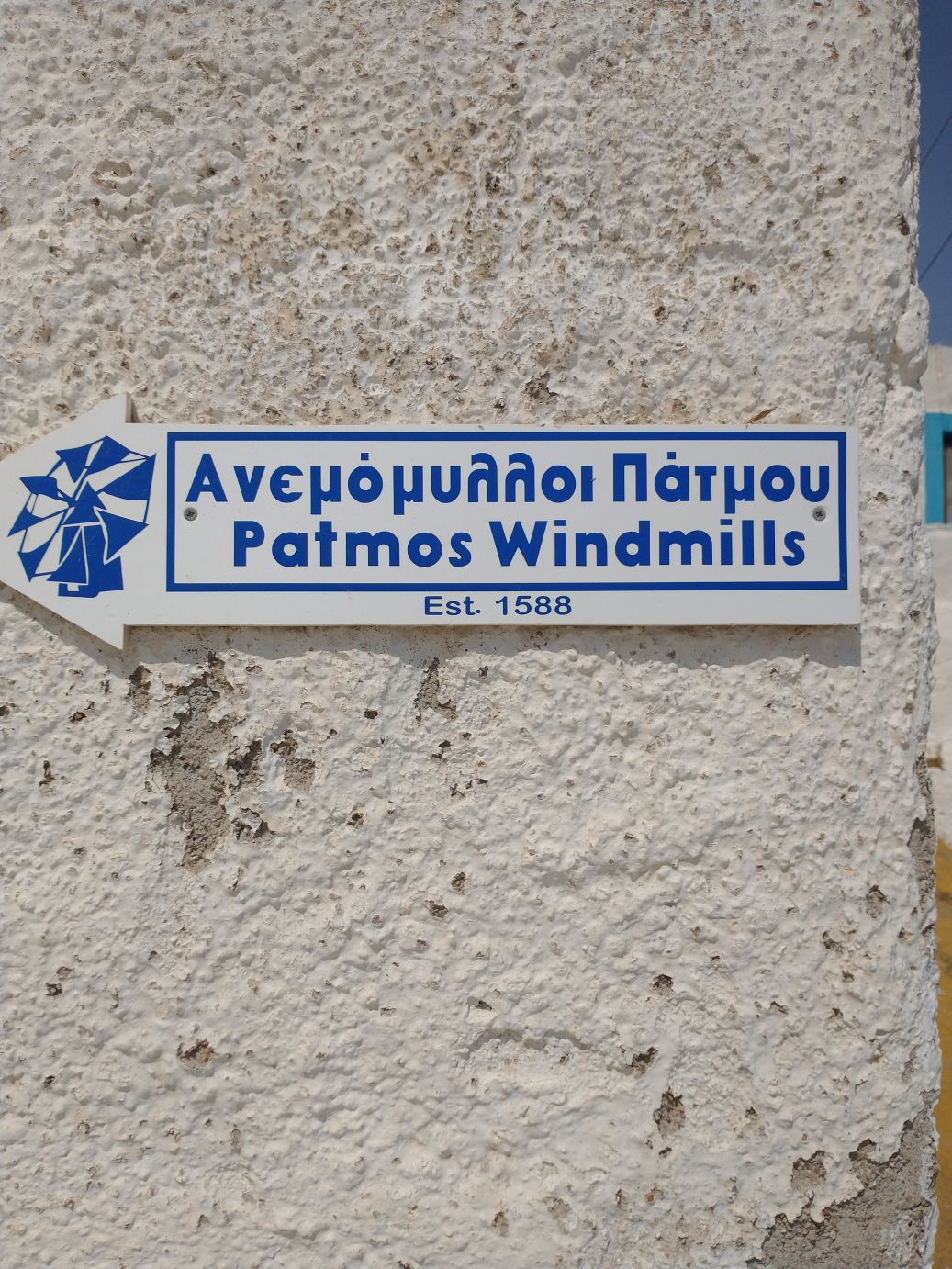
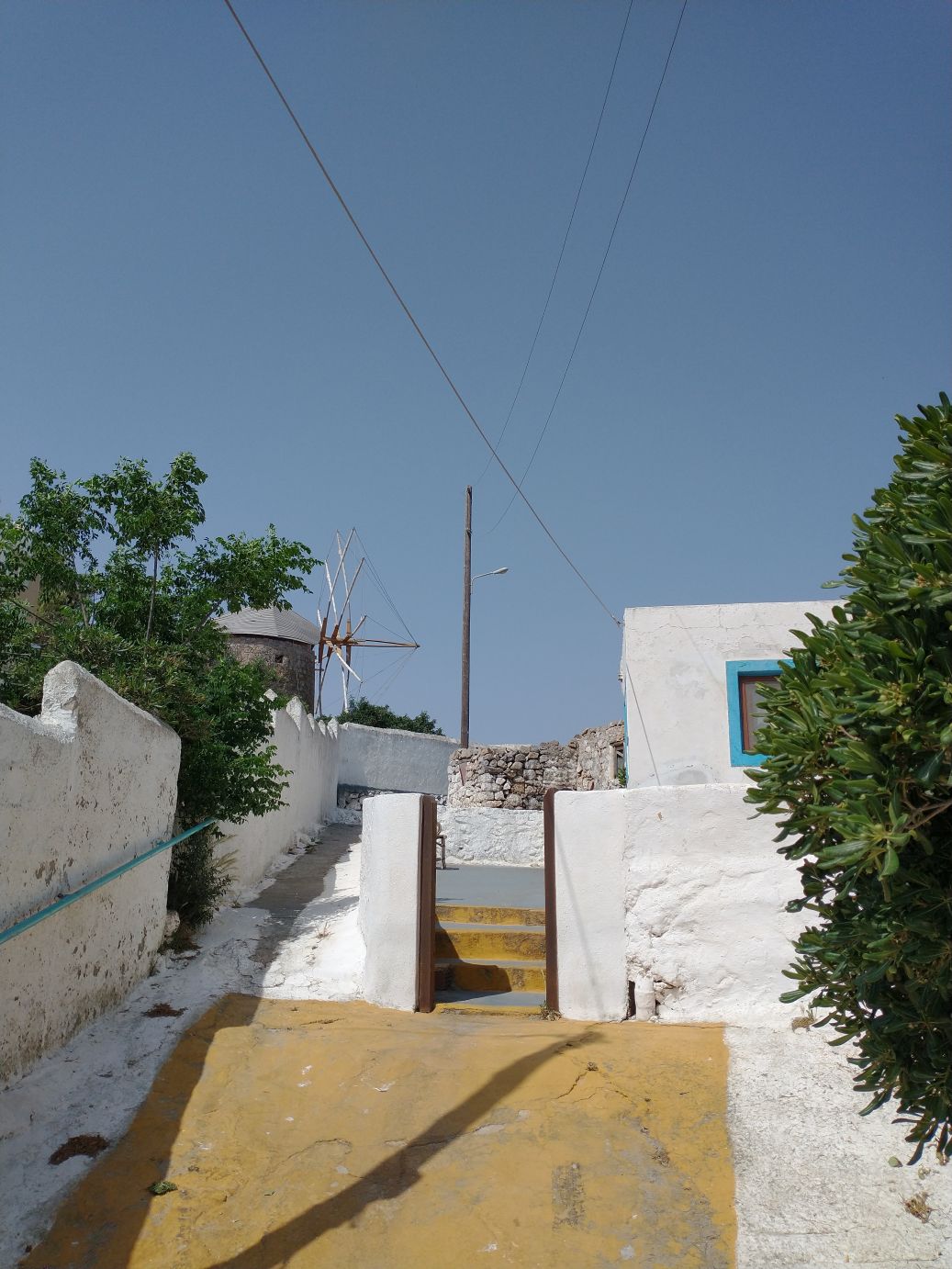
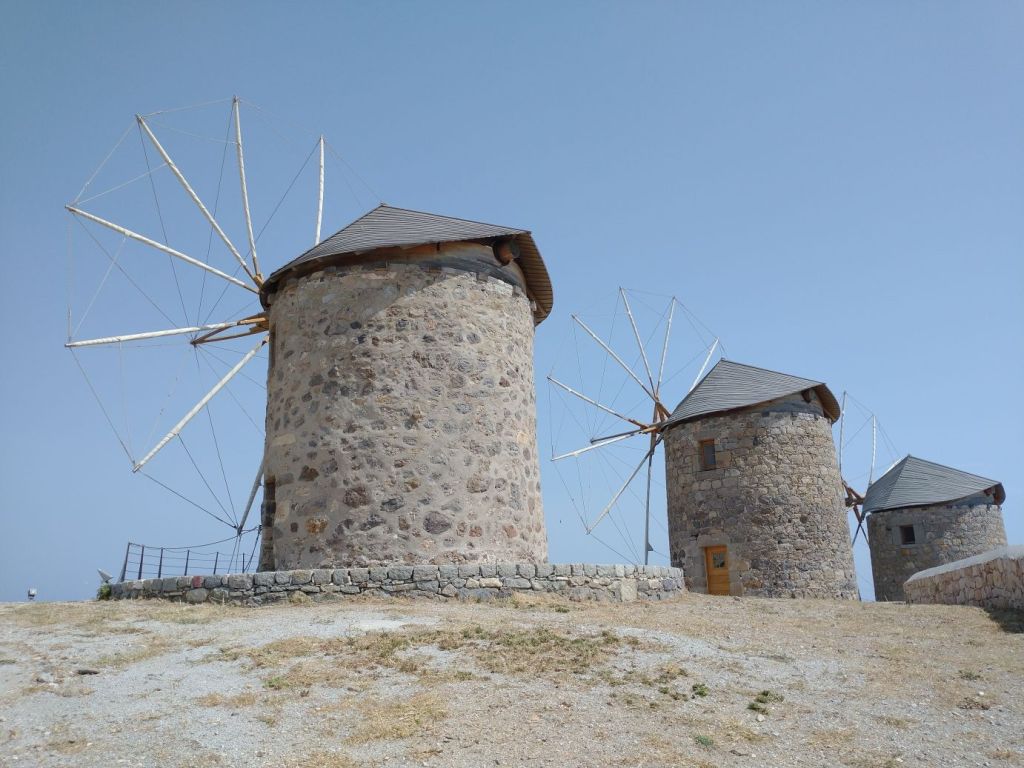
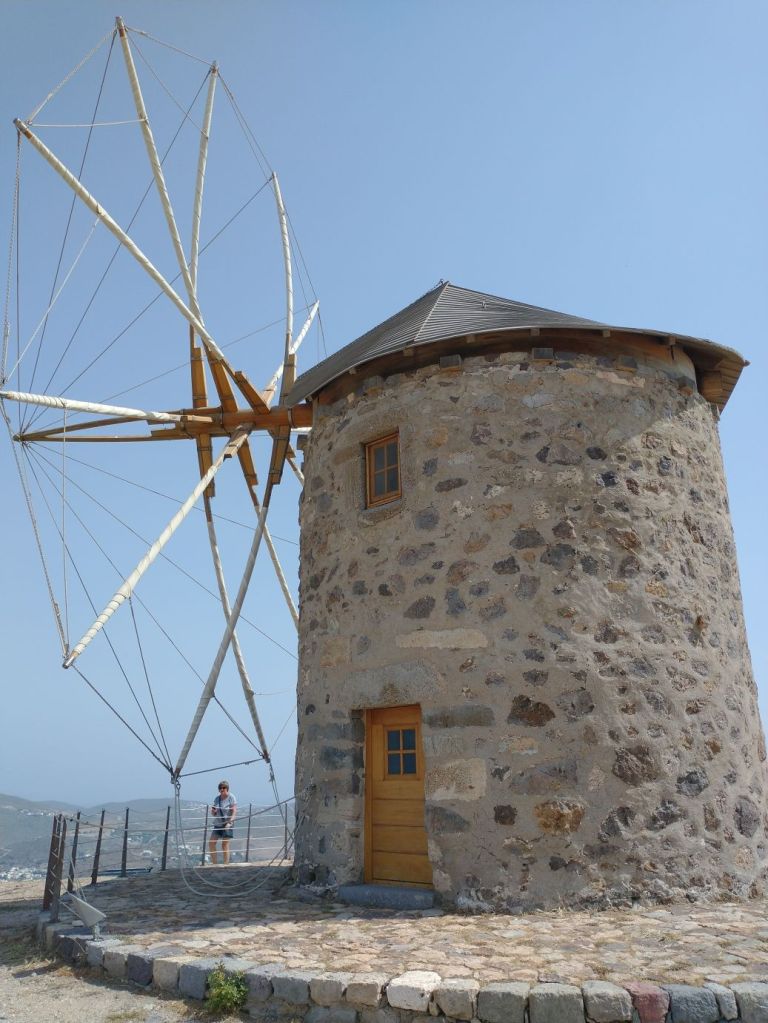
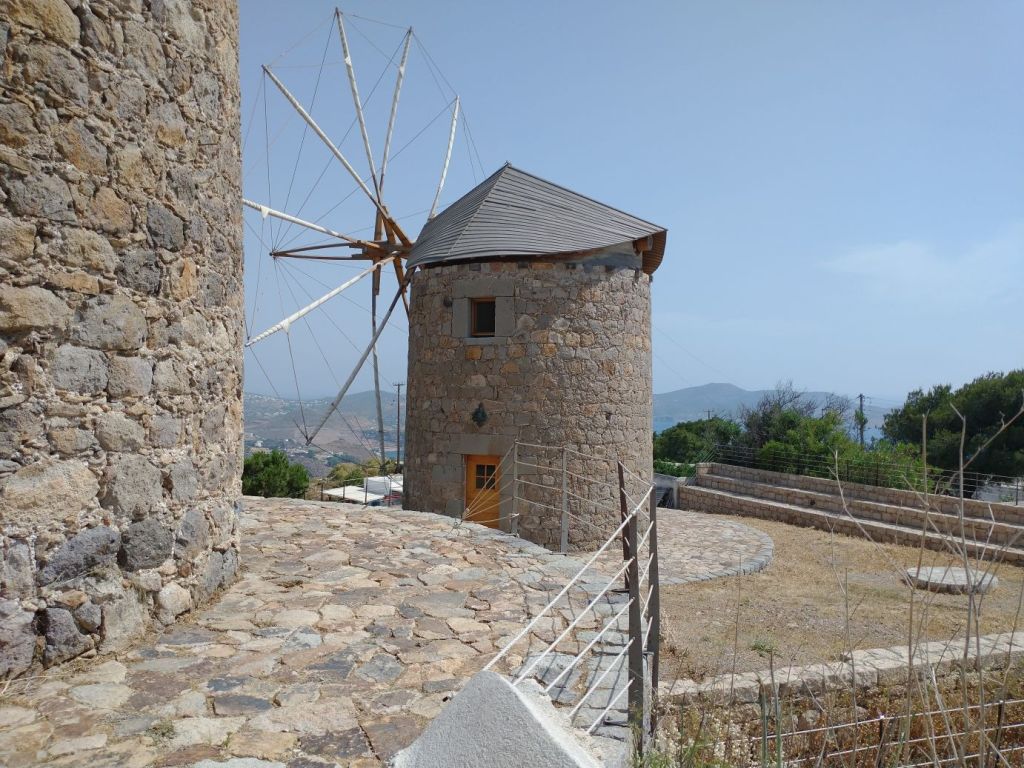
The iconic windmills have been in use for centuries. Two were build in the 1500s and the third in the 1800s. They used to mill grain and flour and power the island. When electricity came to he island in the 1950s, the windmills ceased to be important to the island. But they have since been resurrected and one was revived as a flour mill, open to the public, sort of like a museum (not open when we were there) to show visitors the traditional way of grinding flour, one as a power producer and one for water production. And well, the views back to monastery and over the harbor and north end of the island are wonderful – as you will see below.
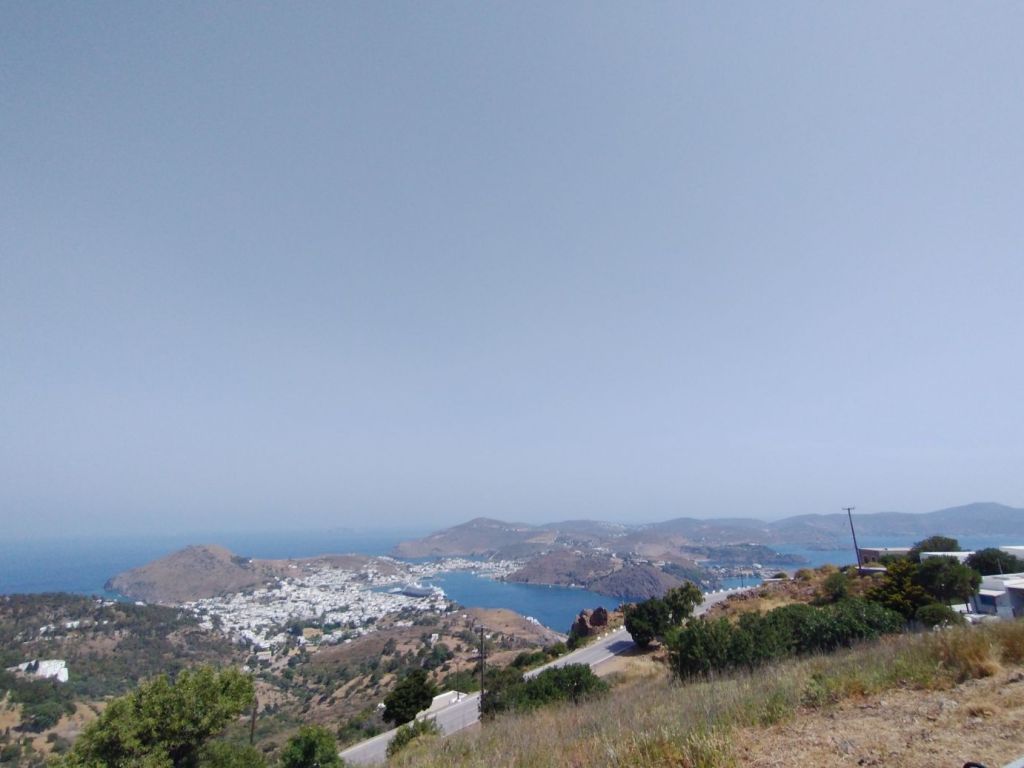
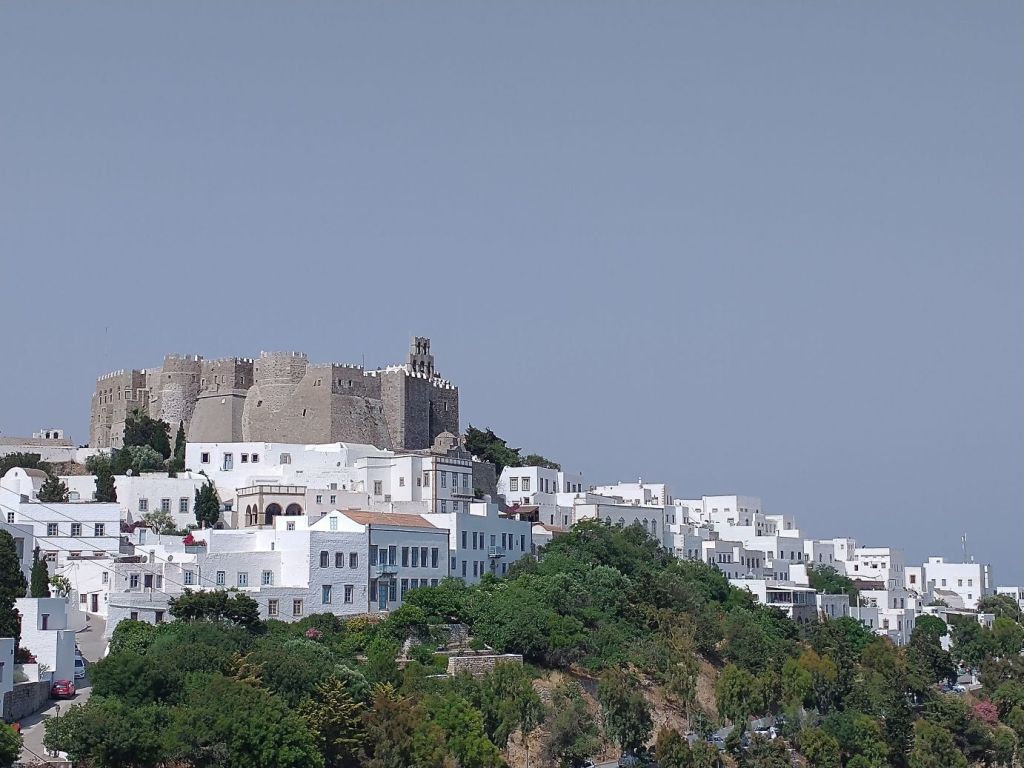
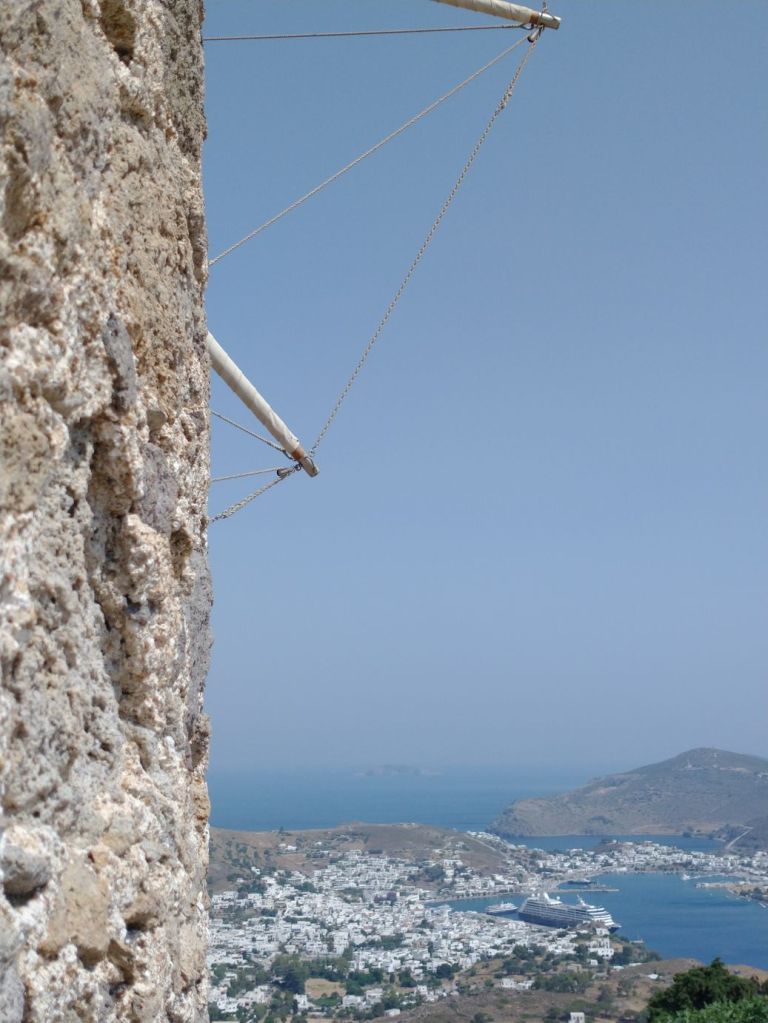
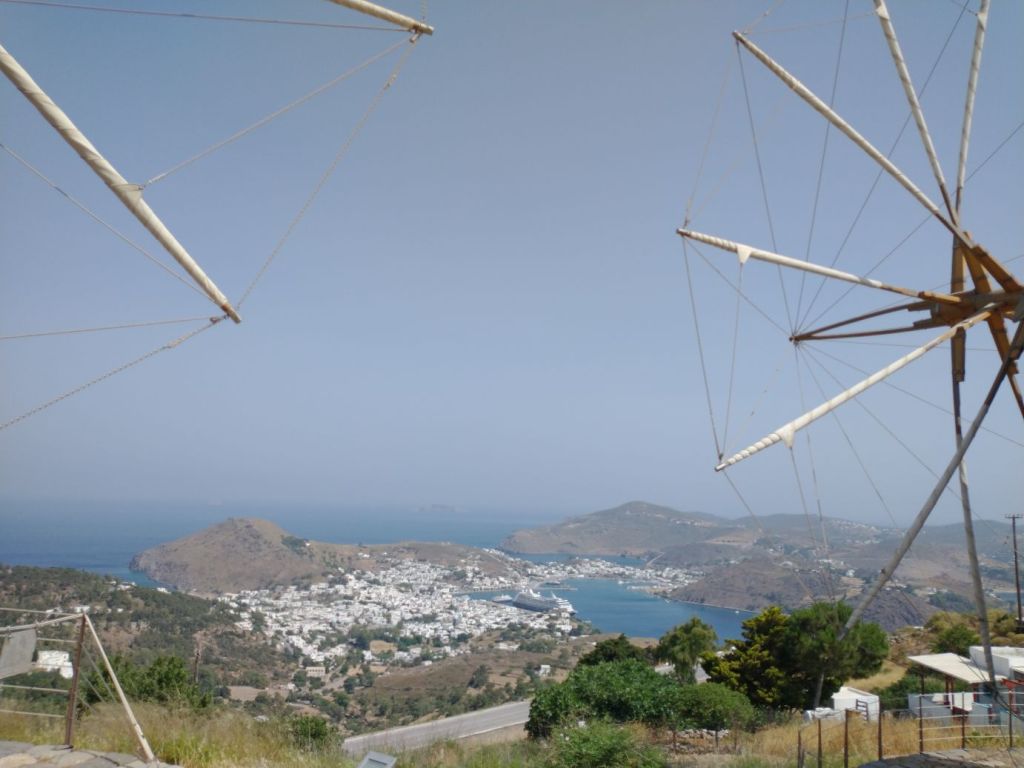
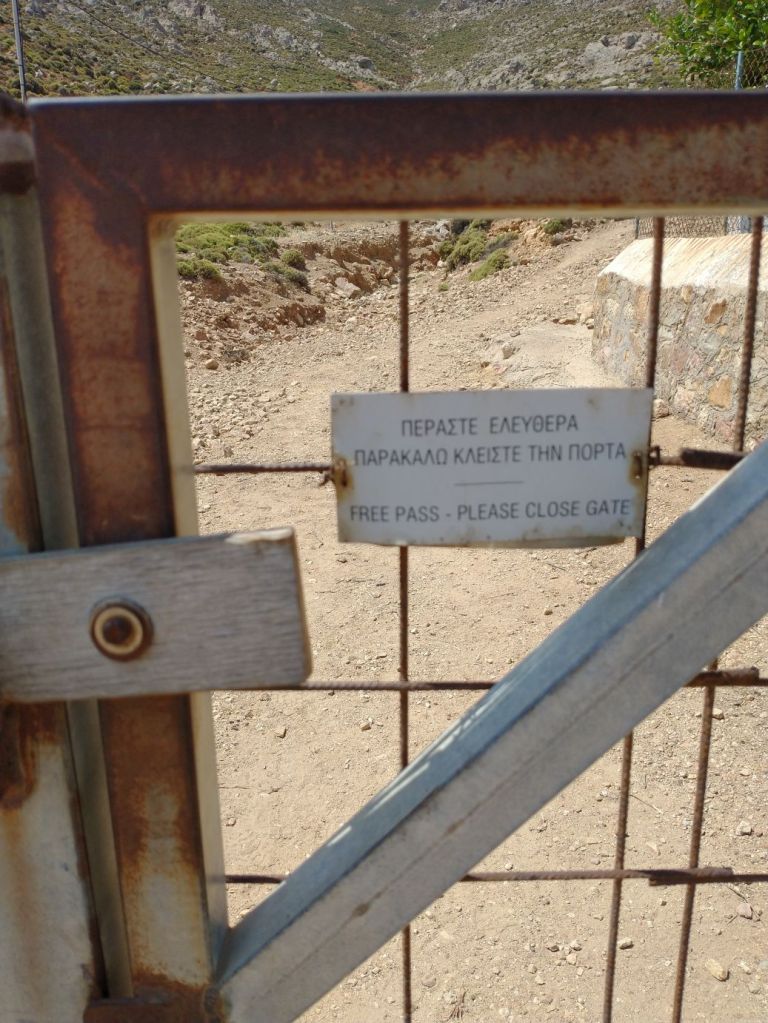
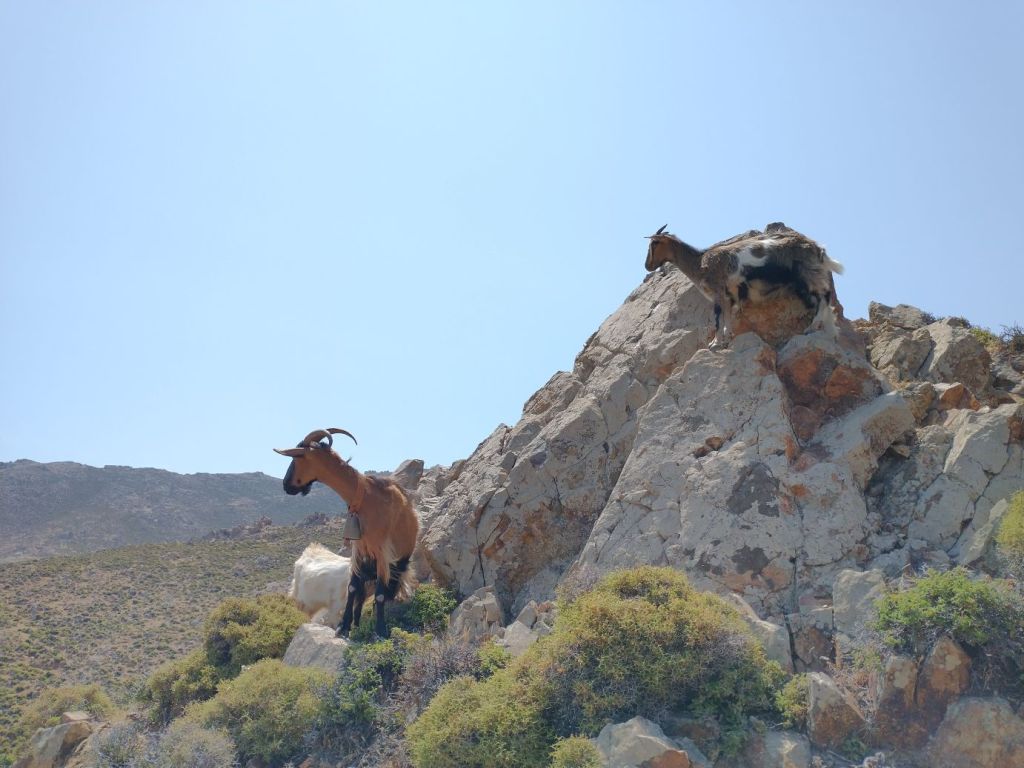
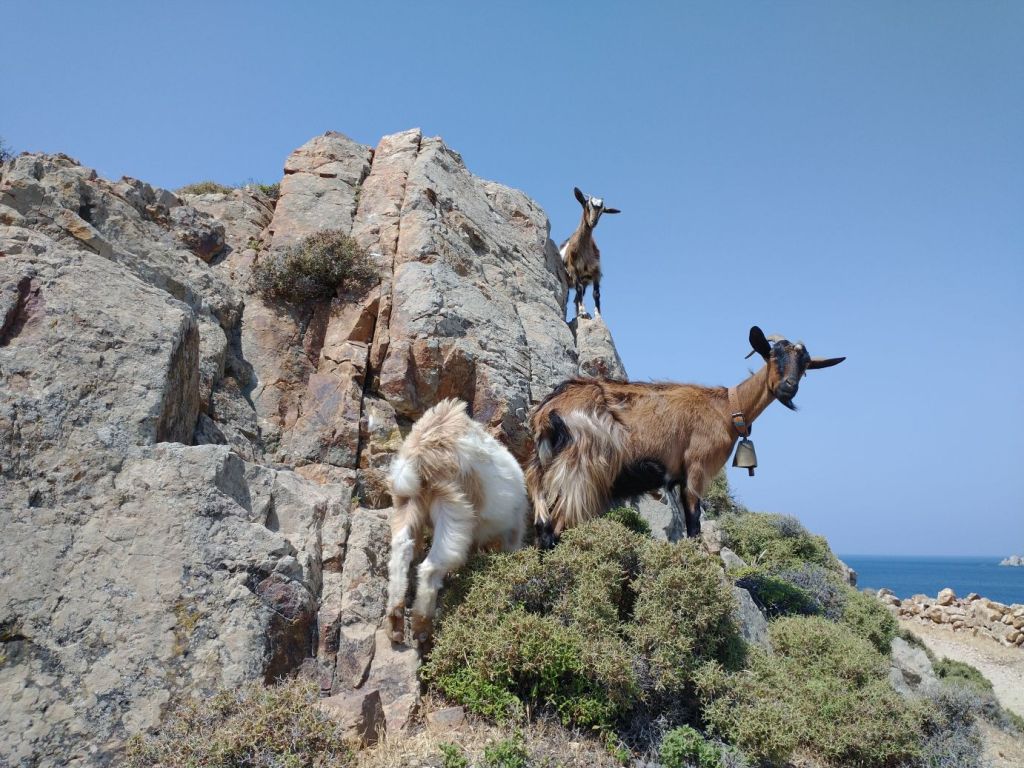
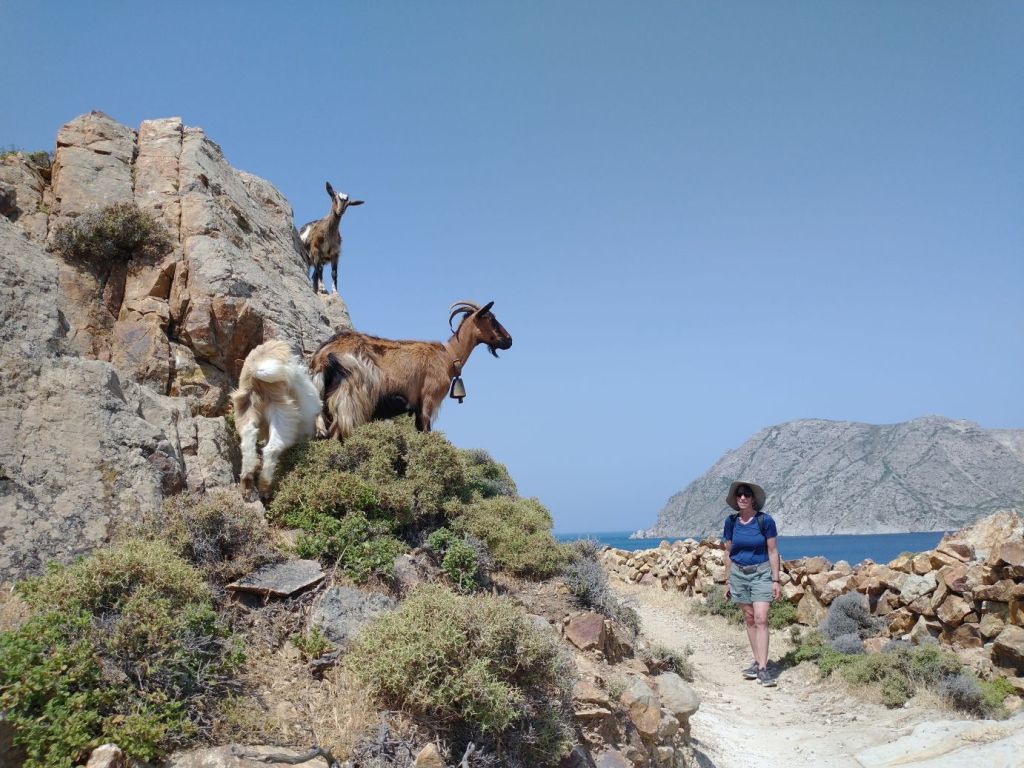
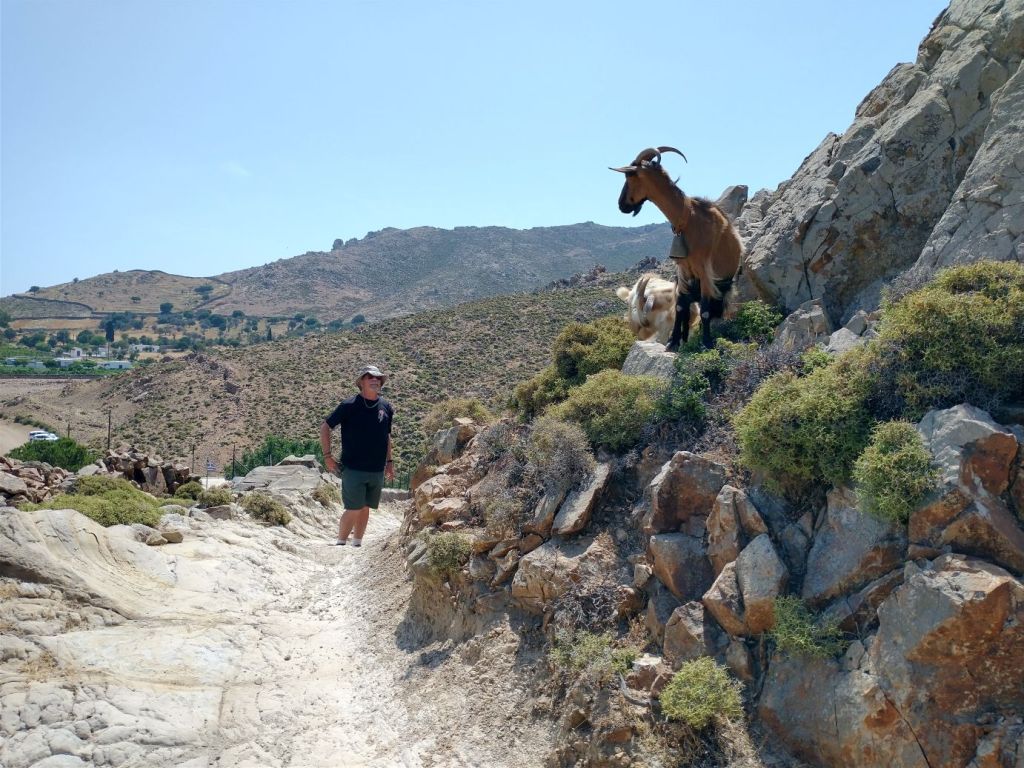
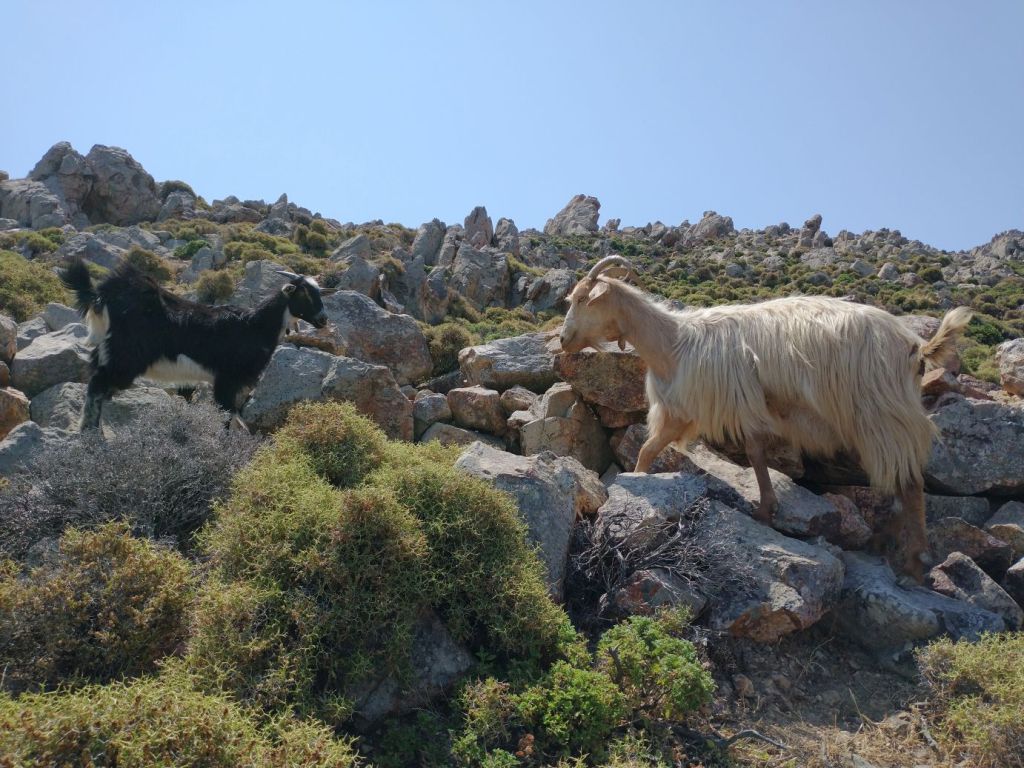
Now we are off to the south end of the island to go hike to a secluded beach – just for the hiking and the scenery of course. You all know we aren’t beach people. But it sounds like a great place for some walking, so off we go around the island on the narrow little road that will lead us to Psili Amos. Making only one wrong turn – it didn’t look like we could go along the coast – which is where we needed to go – we finally end up at the end of the road and a dirt parking lot leading to a dirt path. Oh – and you know how we are always getting directed to the goat paths with the GPS? Well, here, today, we finally are on a REAL goat path. We kid you not (pun intended), there are goats everywhere! We have to walk through a gate – which admonishes you to close it when you are enter or leave – and then onto….the goat path!
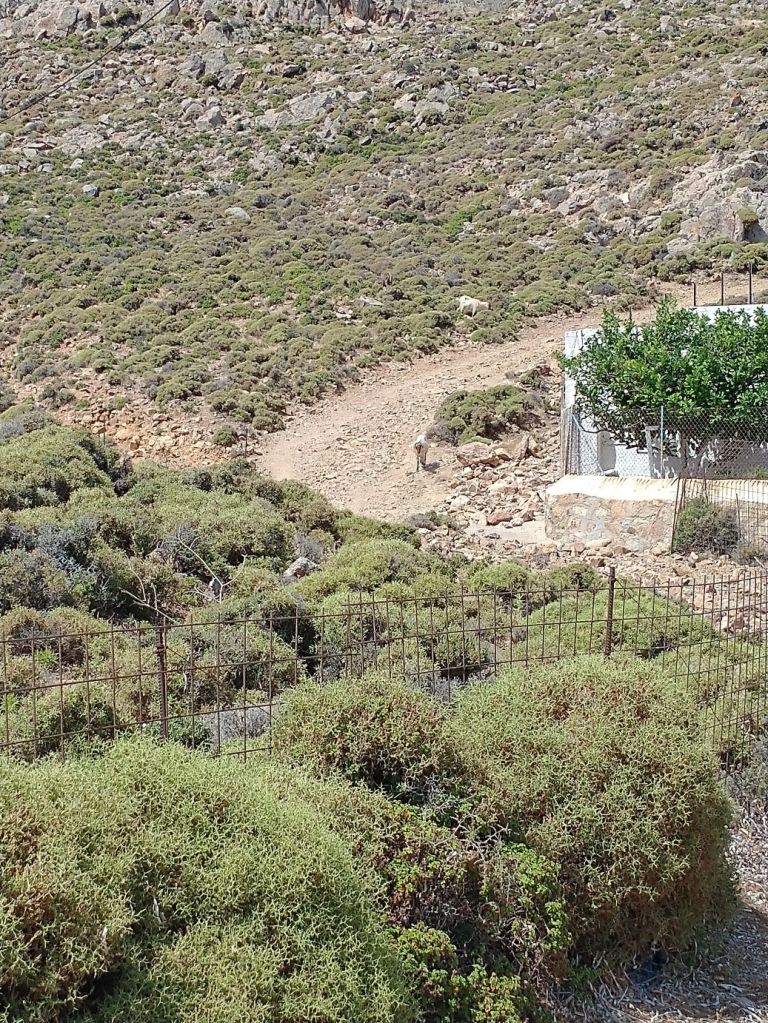
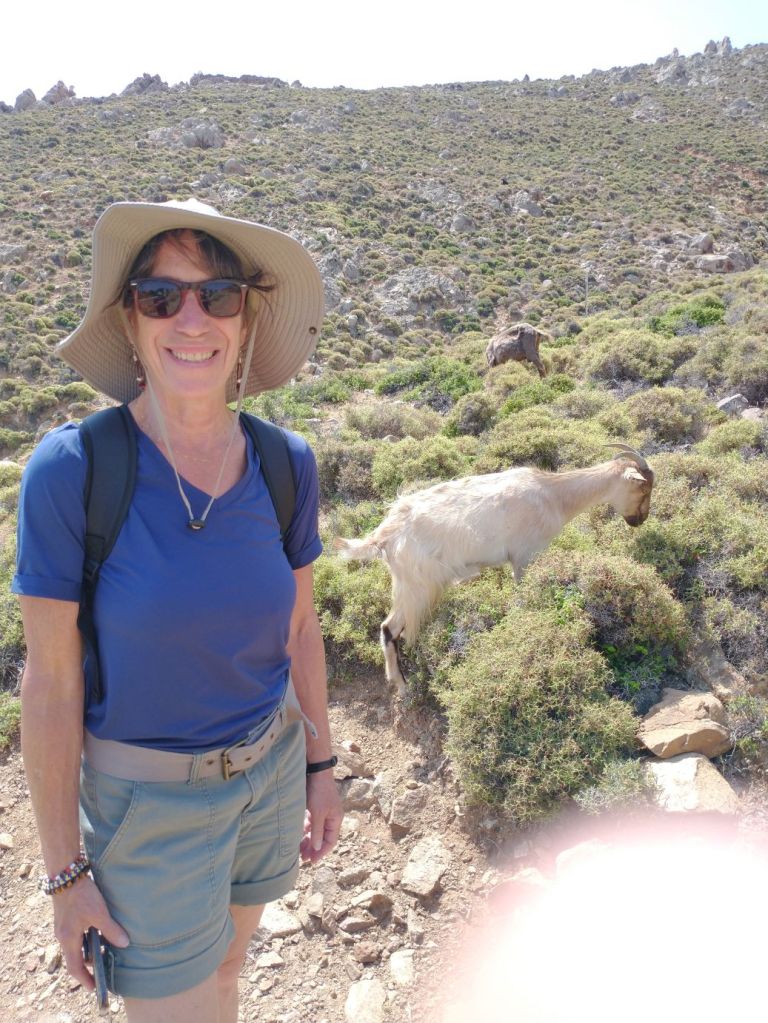
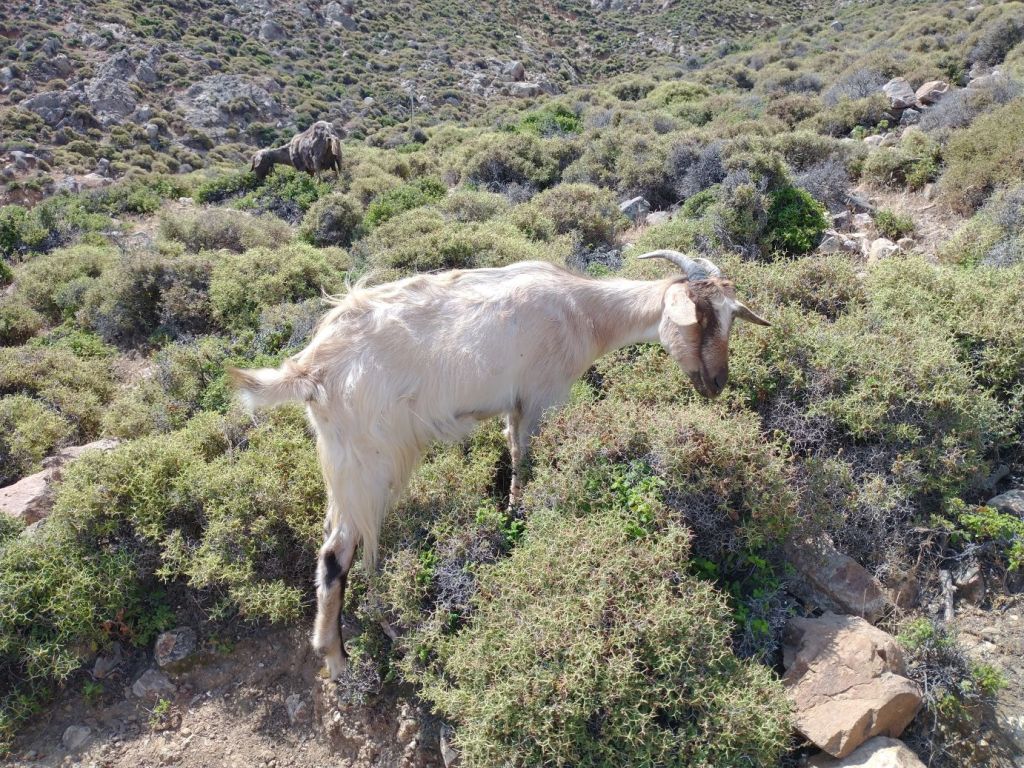
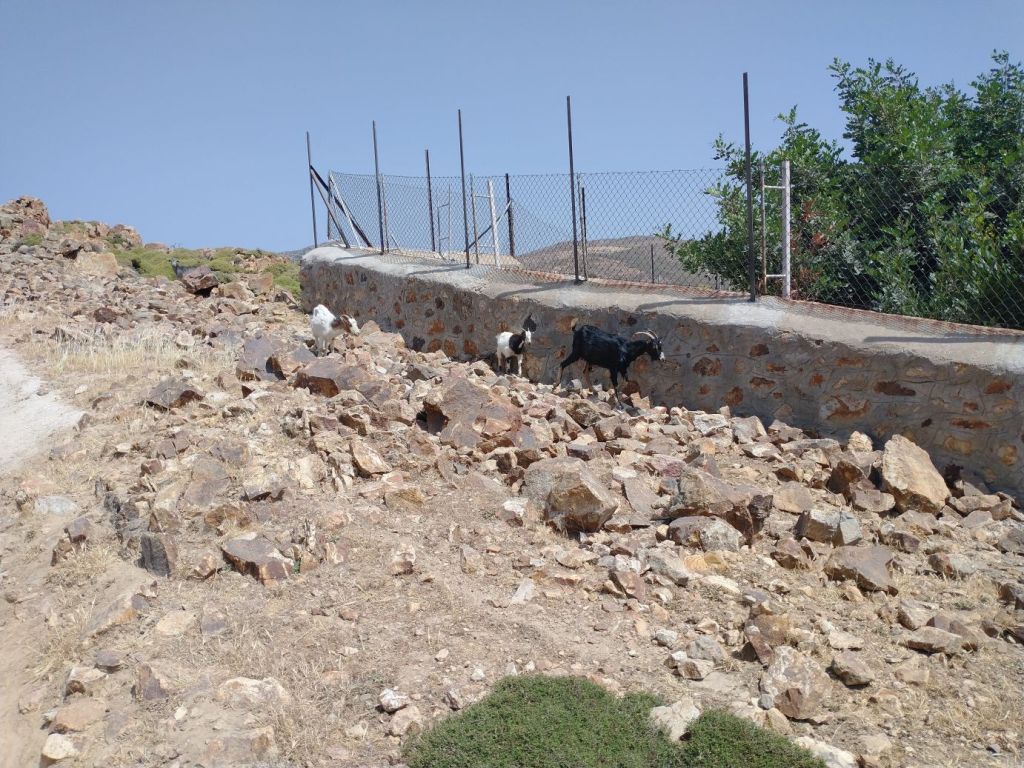
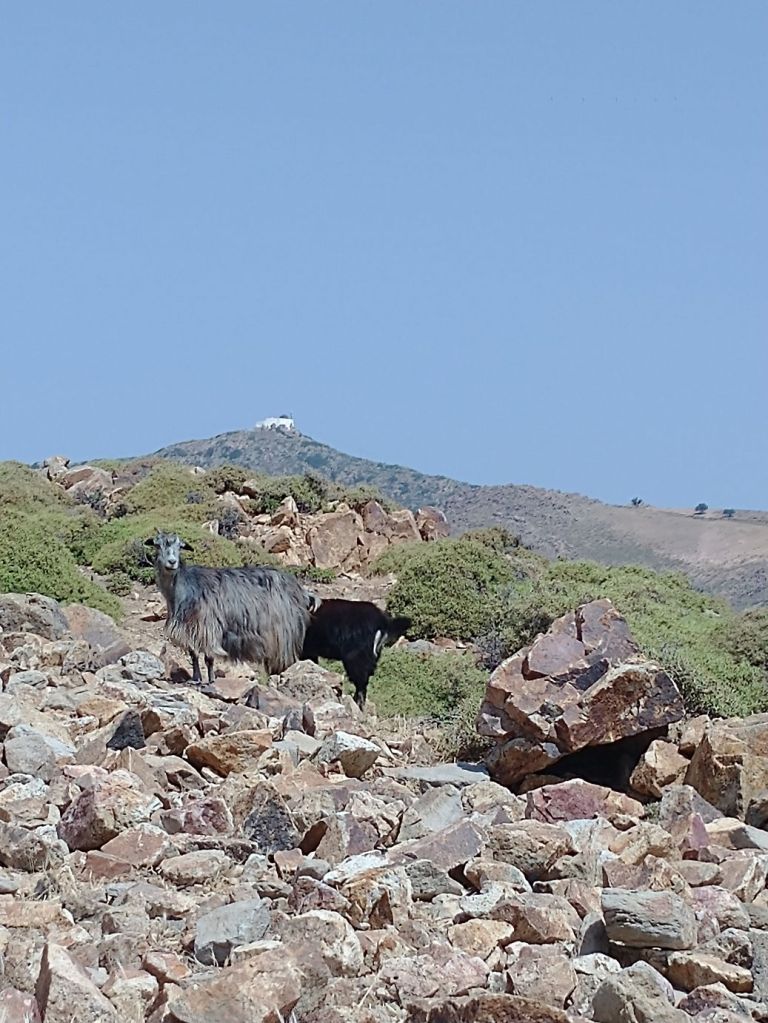
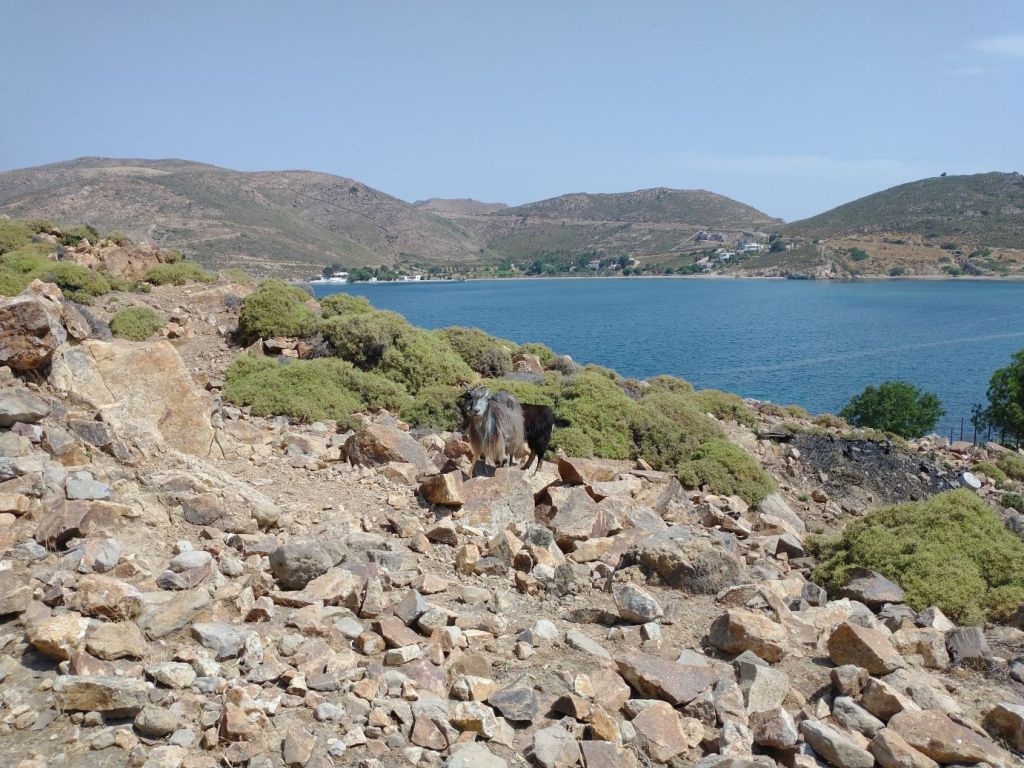
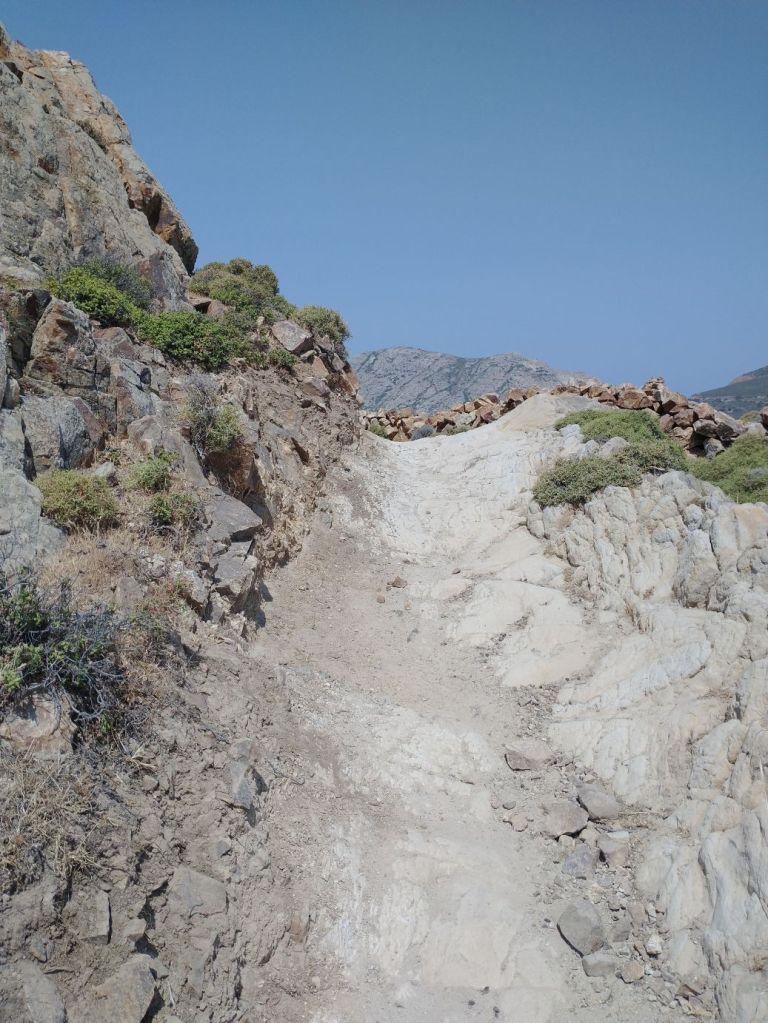
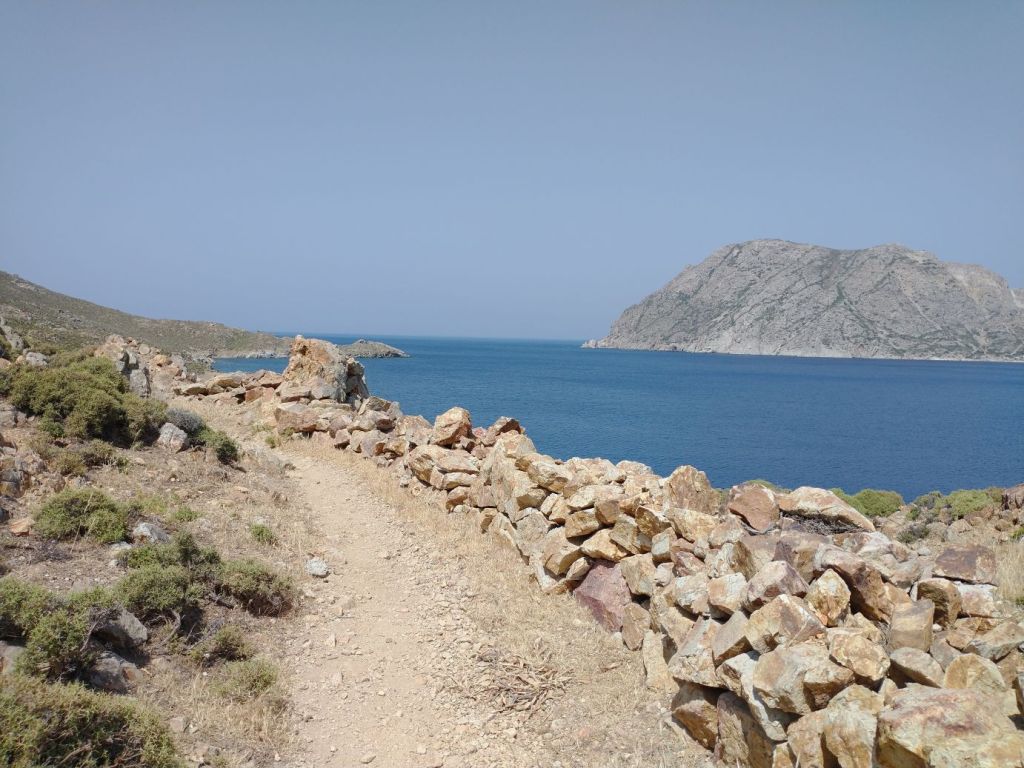
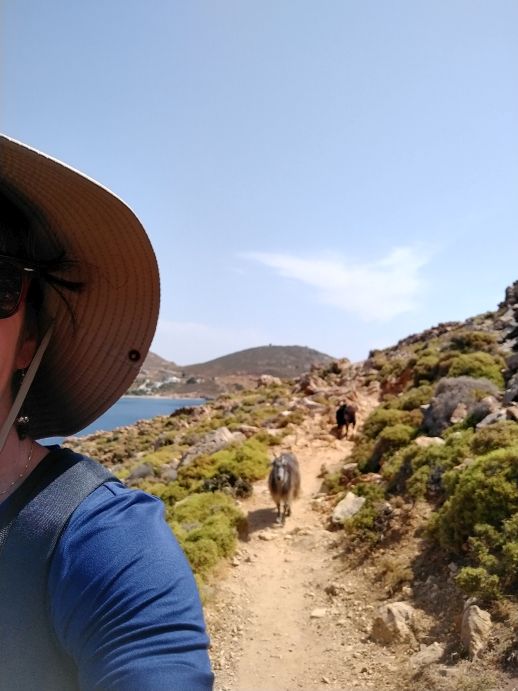
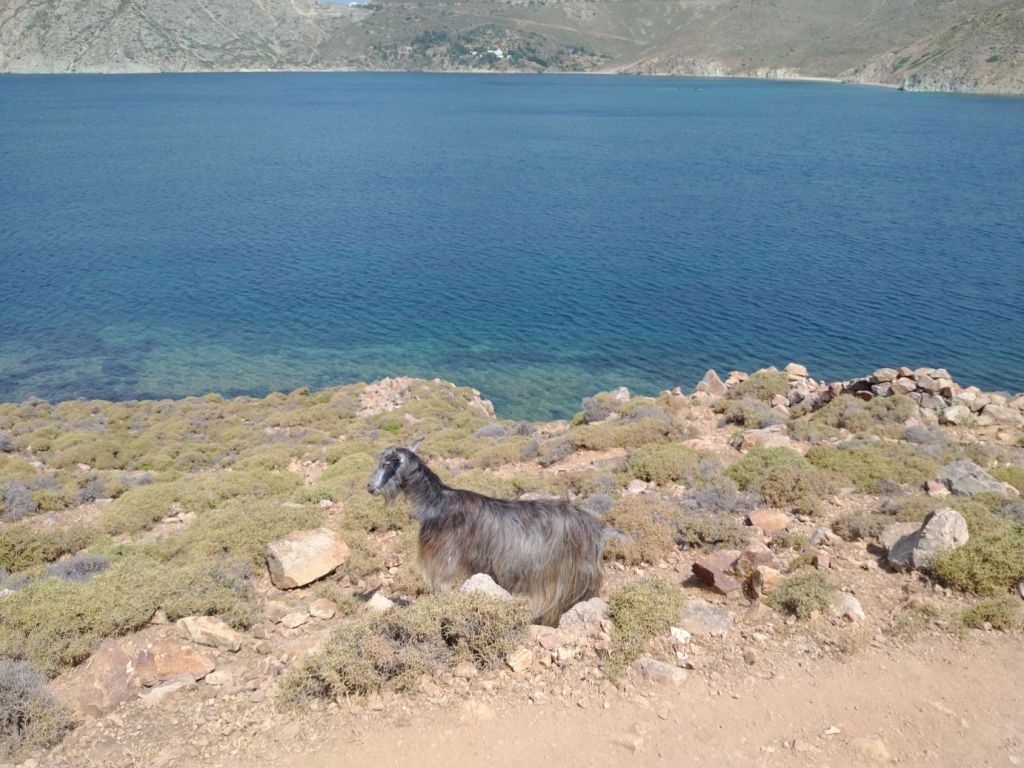
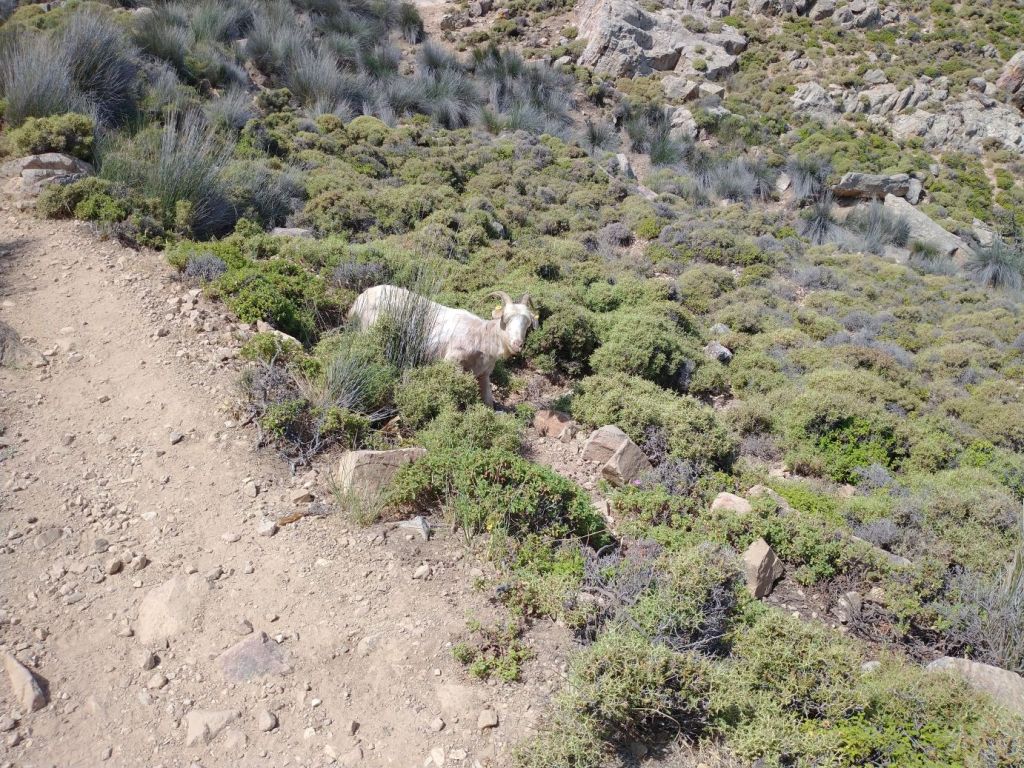
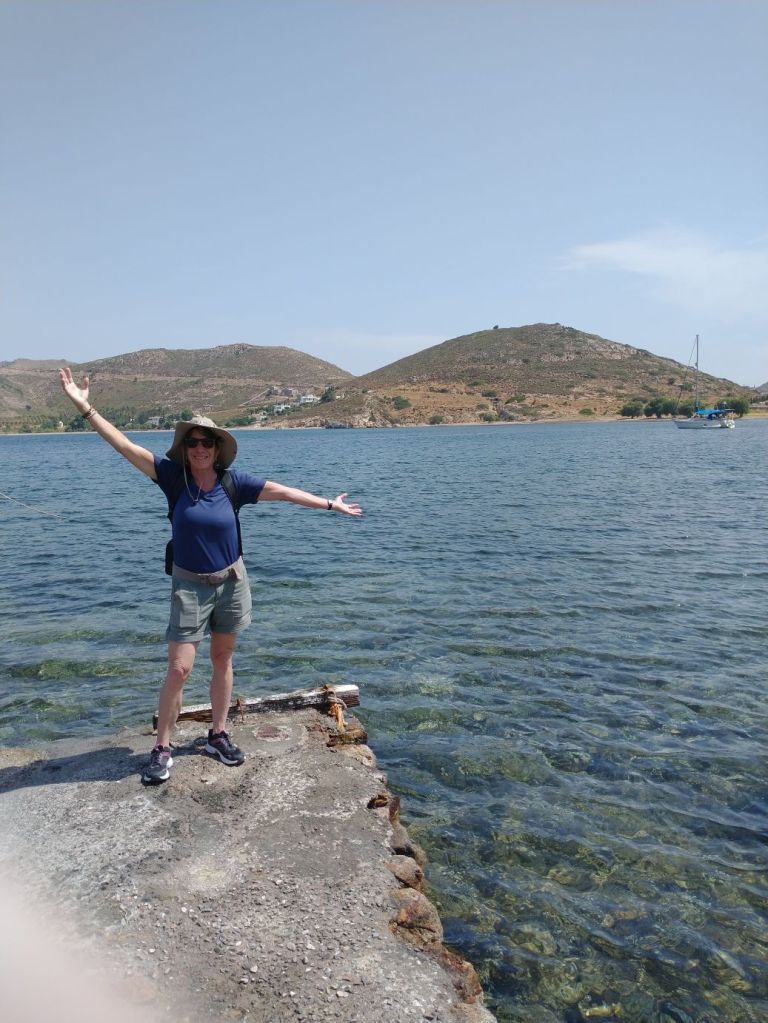
it is a great walk, and great scenery, but those goats…..
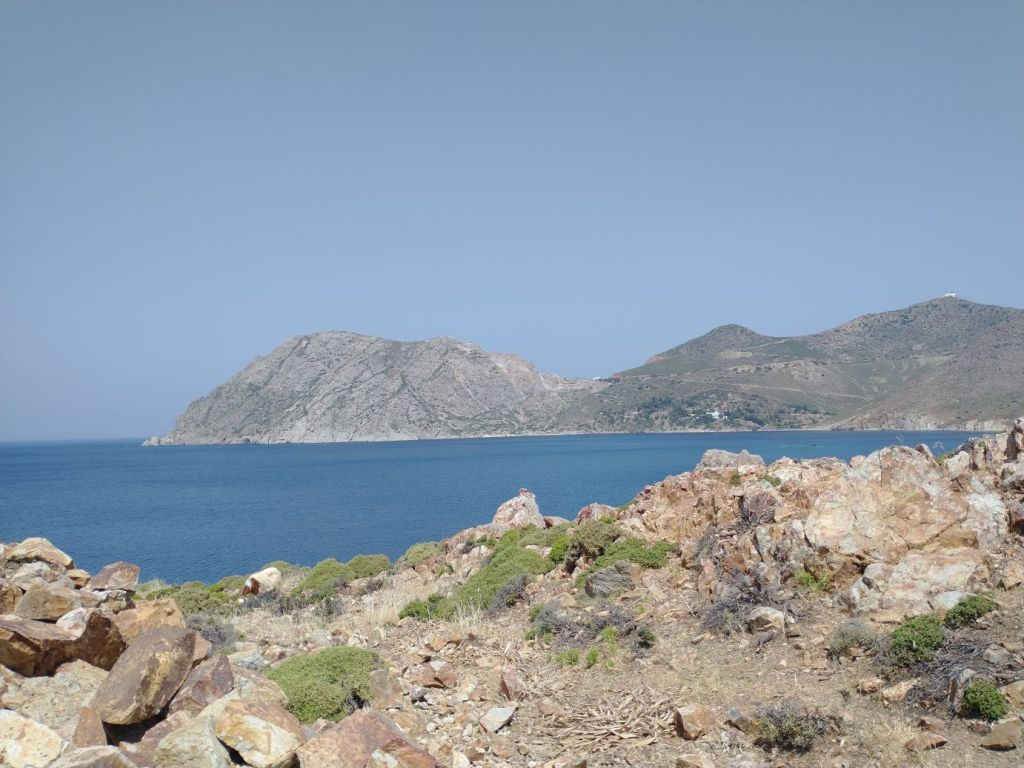
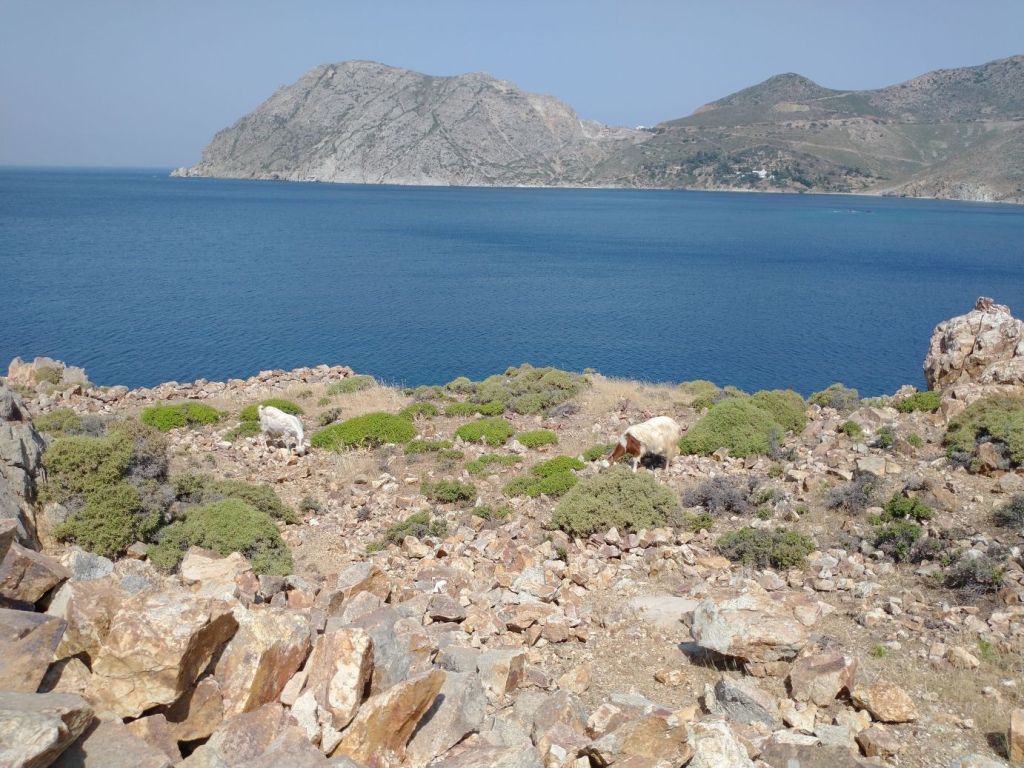
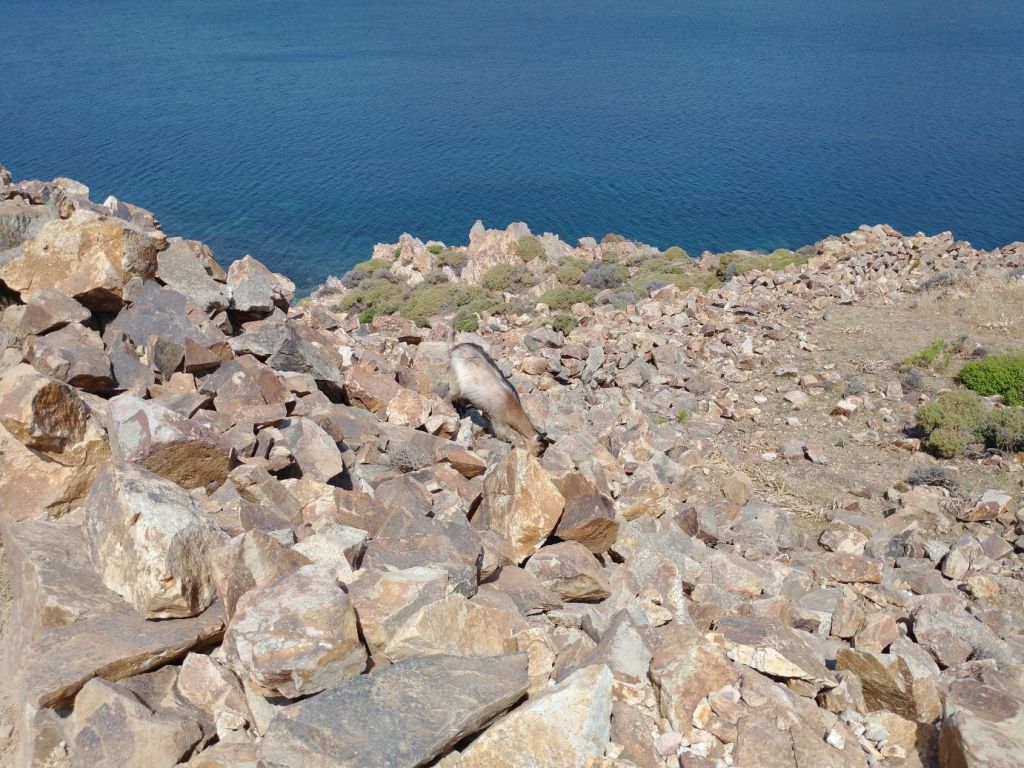
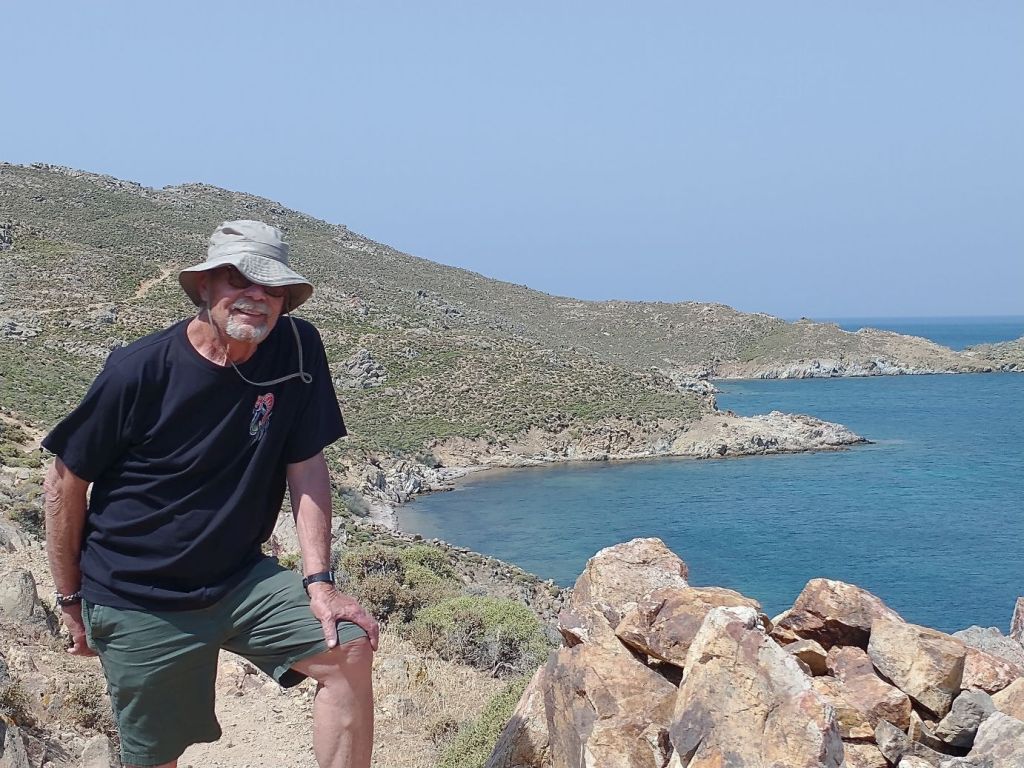
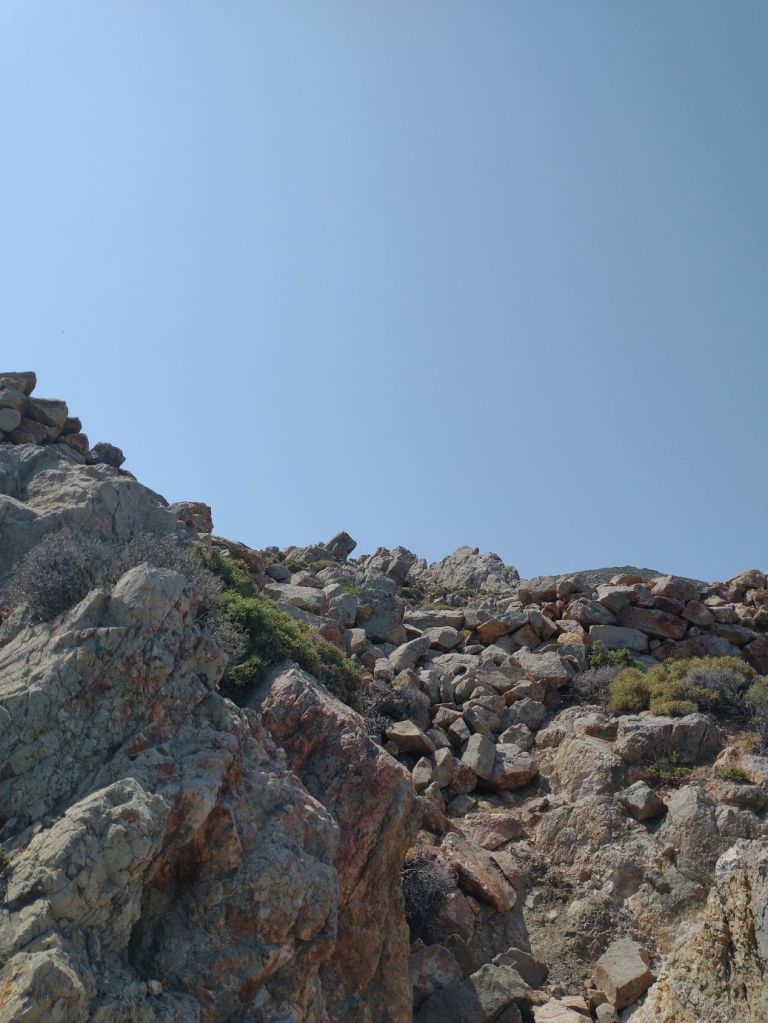
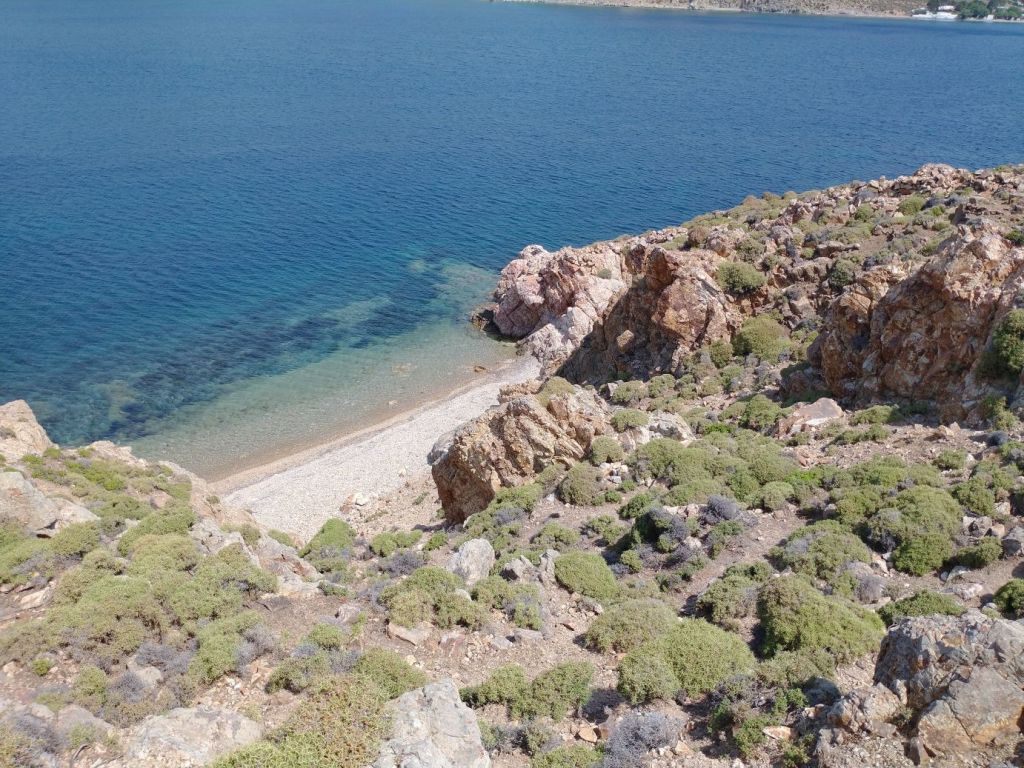
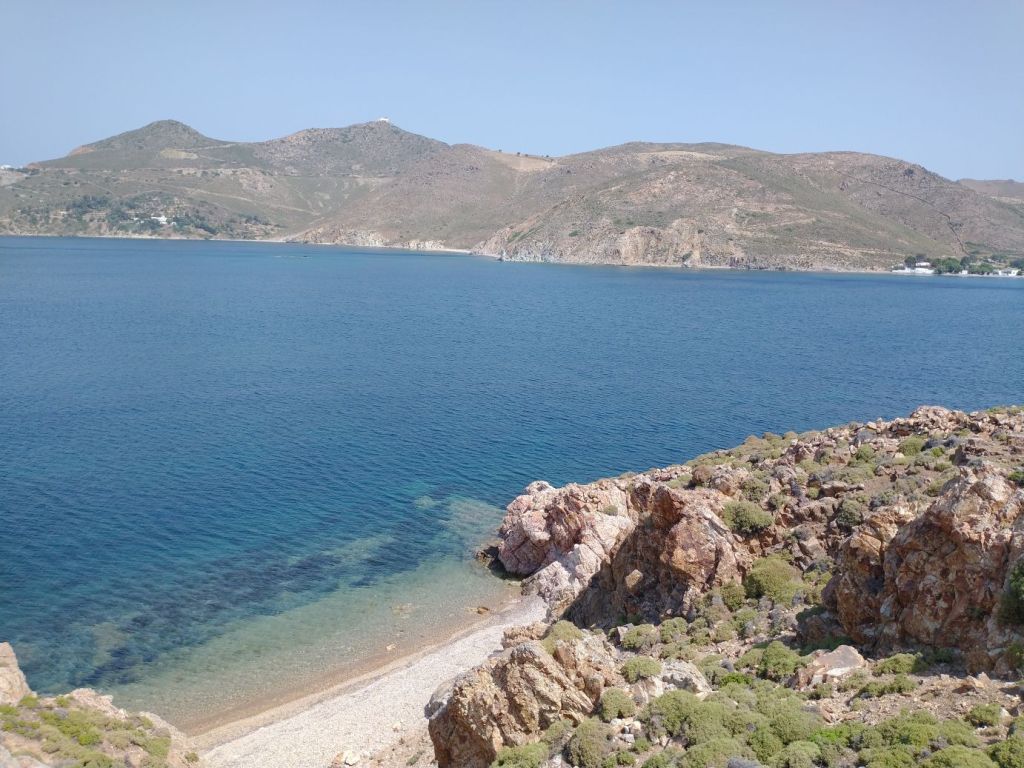
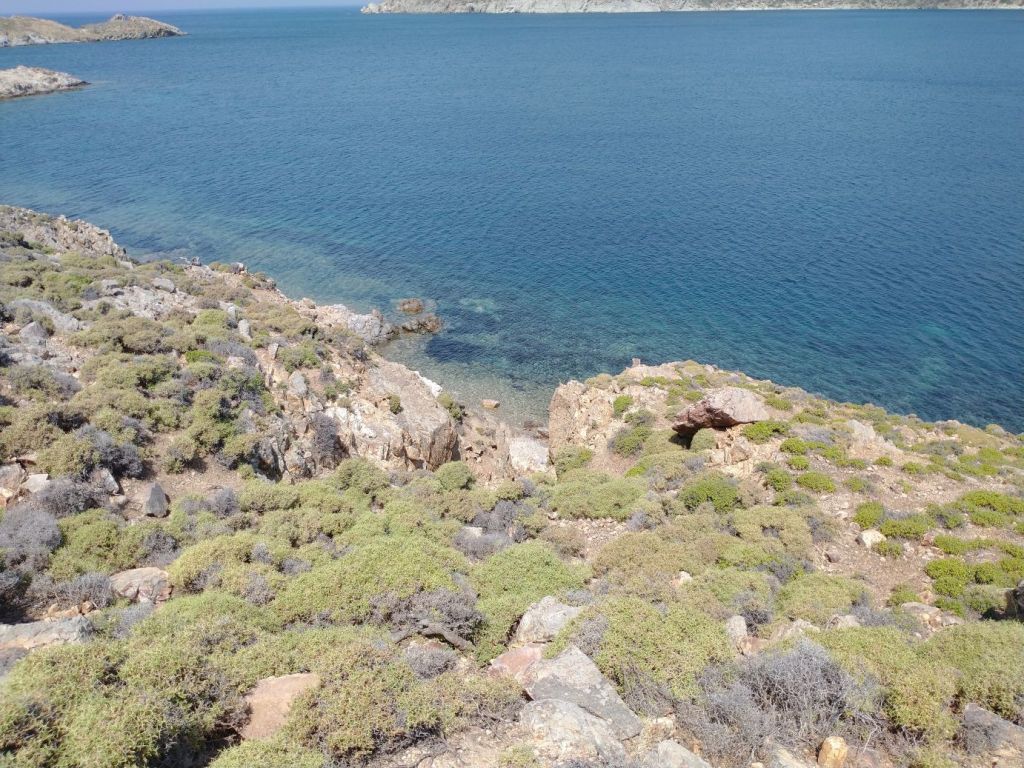
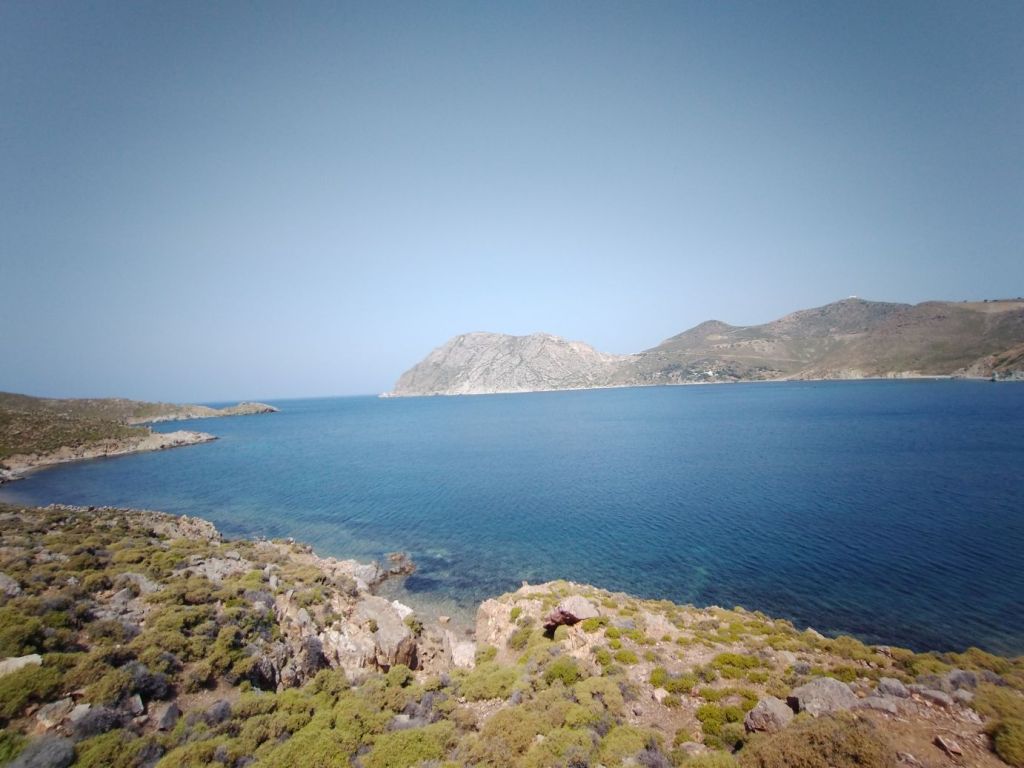
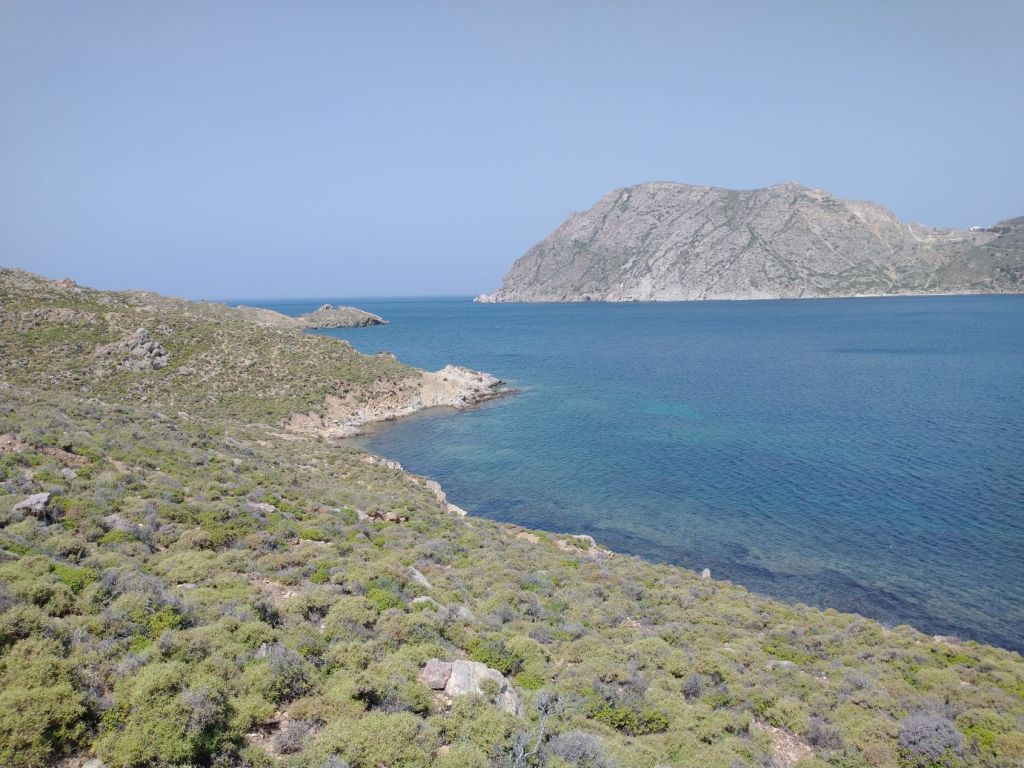
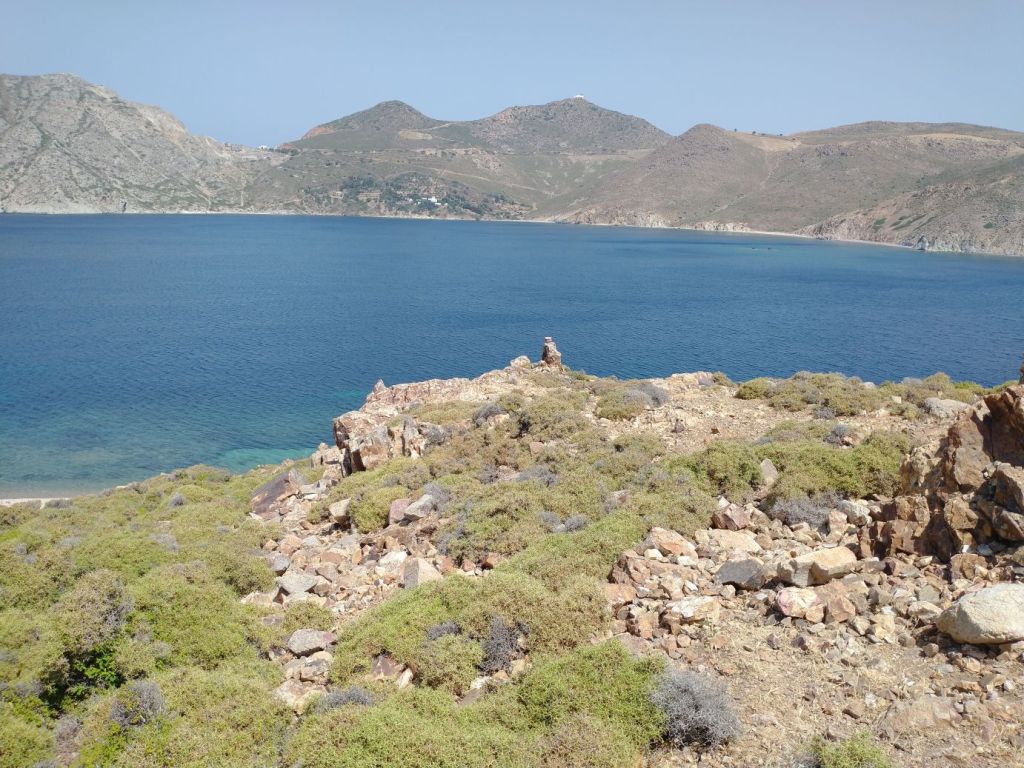
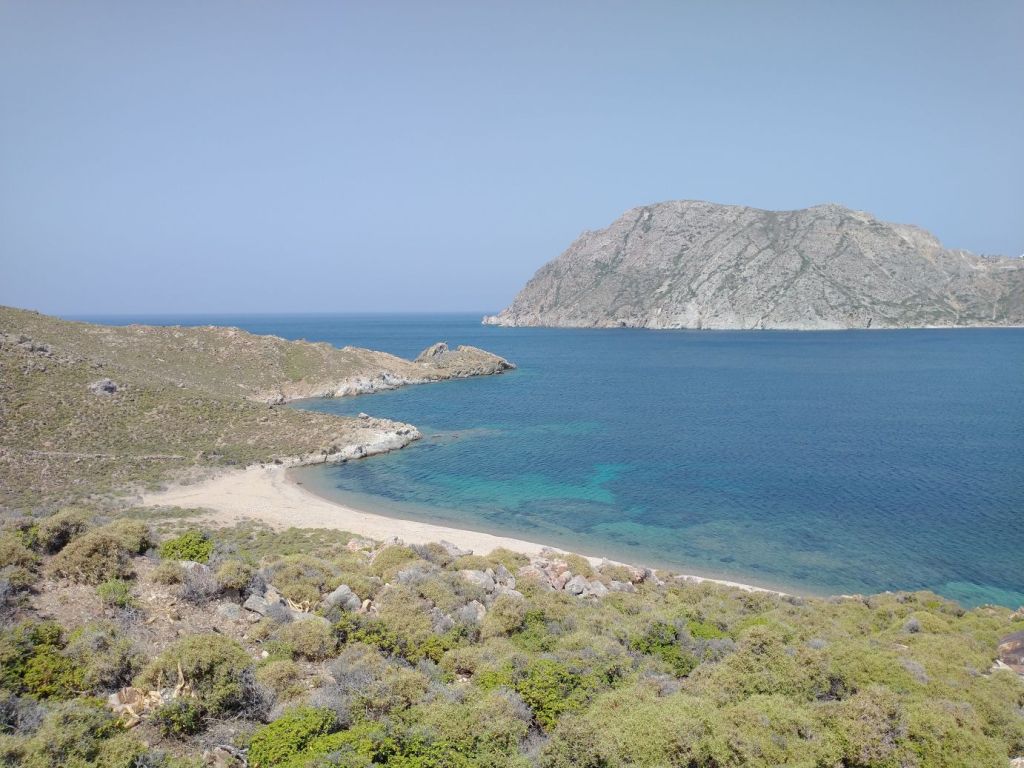
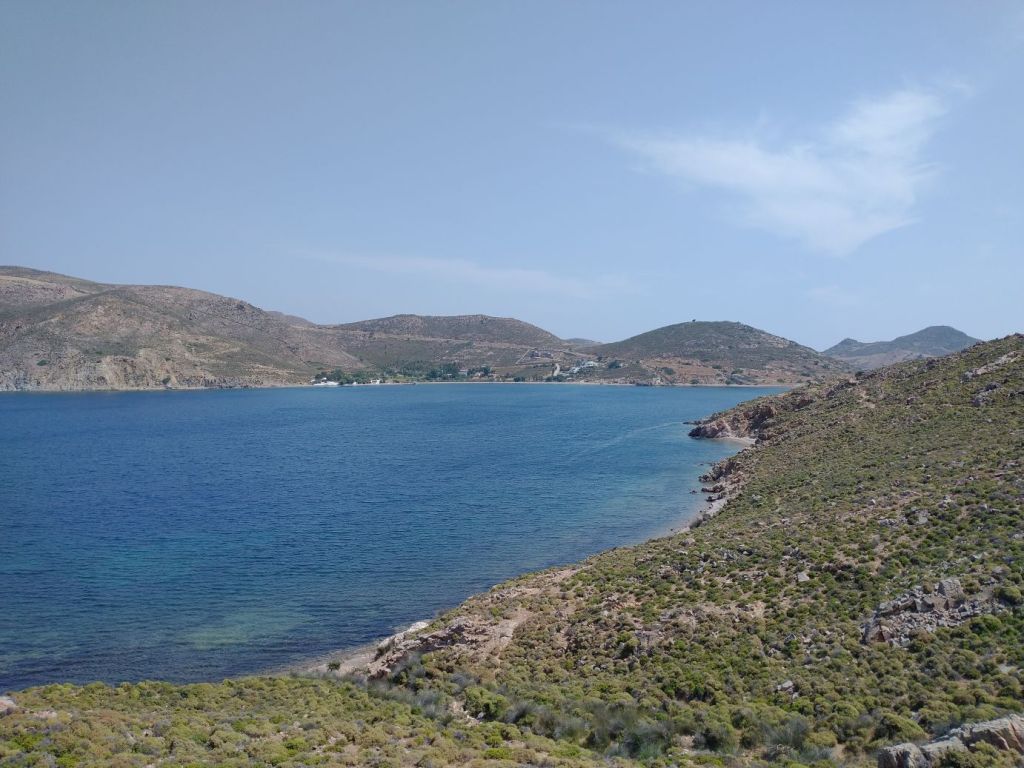
…..They followed us! We had to step off the path to let them pass. And then wait for them to cross when they were ahead of us. And the rams. Well, we just weren’t sure – are they friendly goats? Are they aggressive goats? Should we be worried? We decided we weren’t taking any chances – especially with them staring us down at times! Halfway to the beach, we decided we’d turn back – it was getting to be lunch time anyway, and we still had the north end of the island to explore.
Trying to find someplace to eat turns out to be a little bit of a challenge. The cafe here at the end of the lot isn’t open, and there hasn’t been anything we’ve seen on the way. Fortunately we find Tarsanas, a restaurant a couple of kilometers away in a working marina. Turns out the marina owners had a passion for cooking and opened the restaurant to serve their guests and boat owners – perfect for us. Sitting outside on the covered patio, we enjoy watching the restoration work on one boat and the launching of another while we dig into a lovely octopus salad, stuffed eggplant (that Ed even likes) and a great big bowl of seafood chowder.

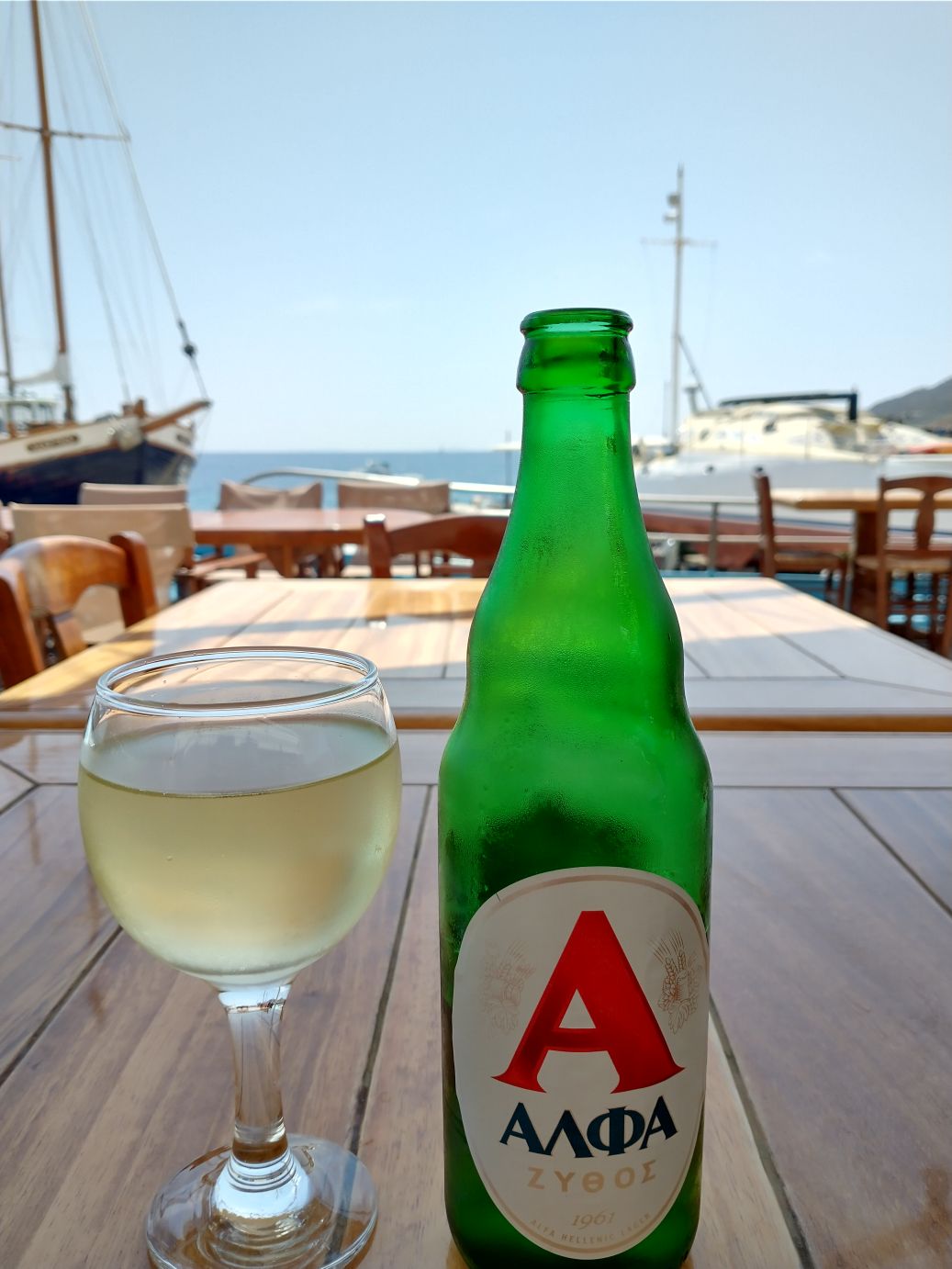
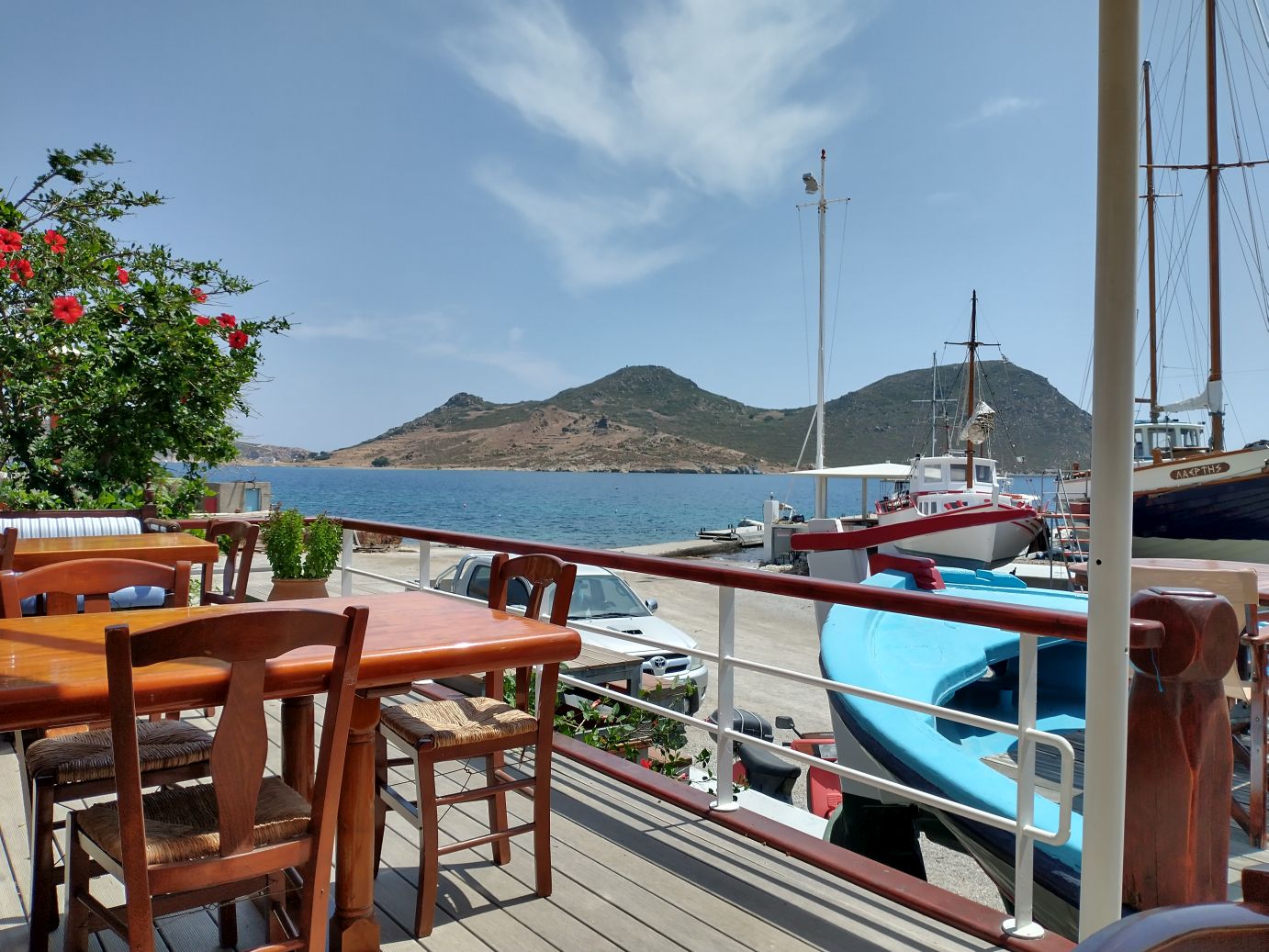
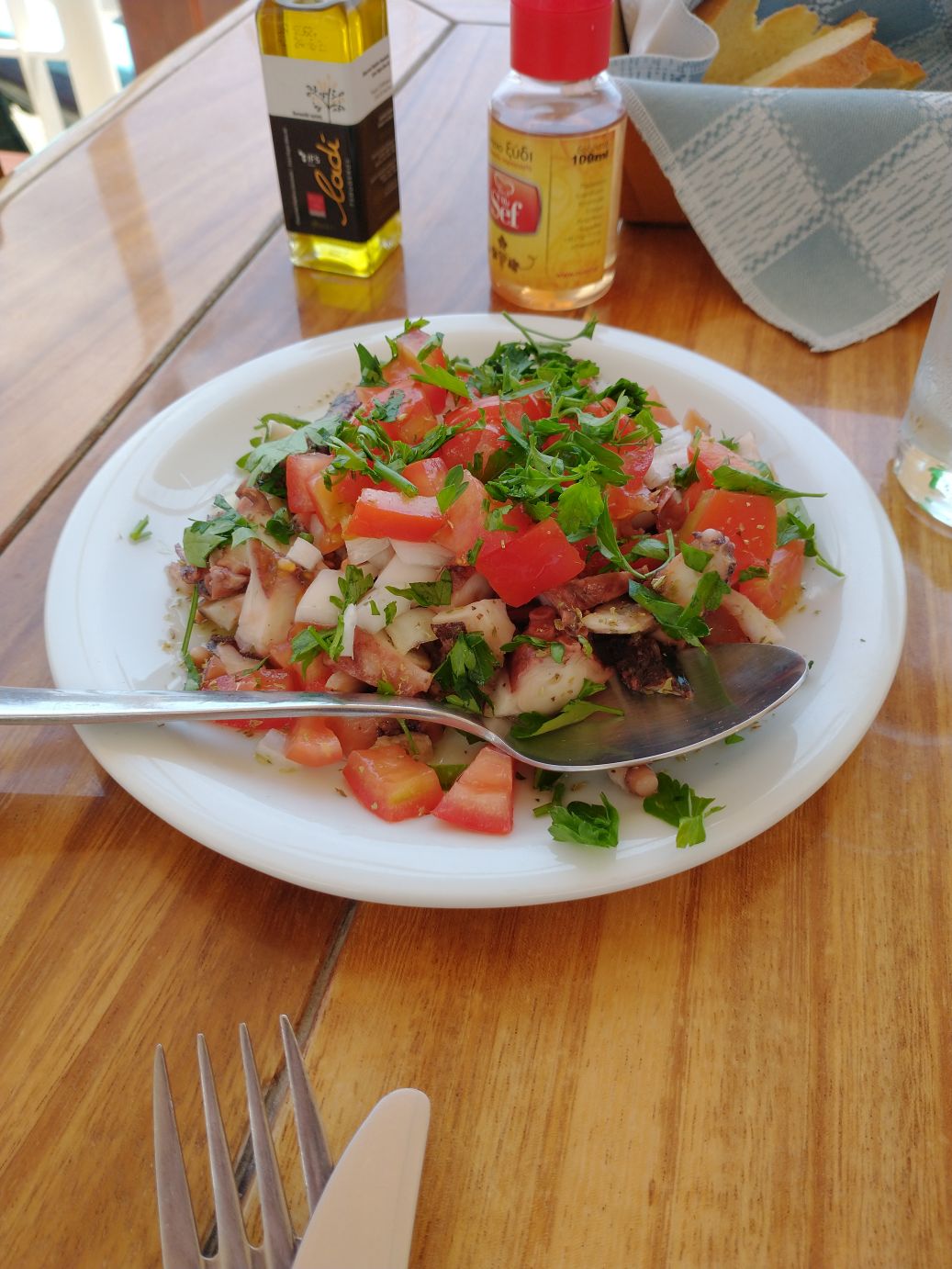
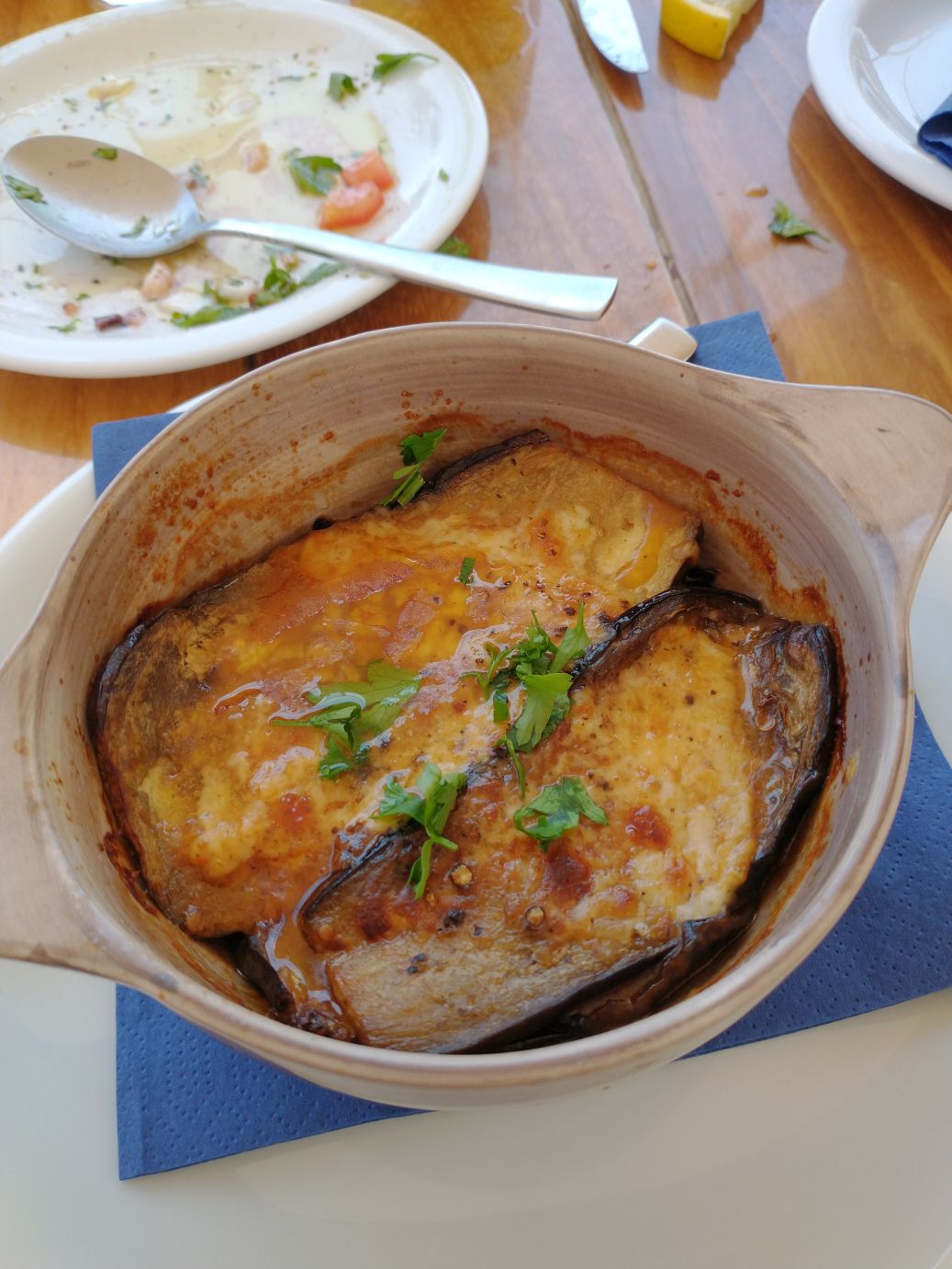
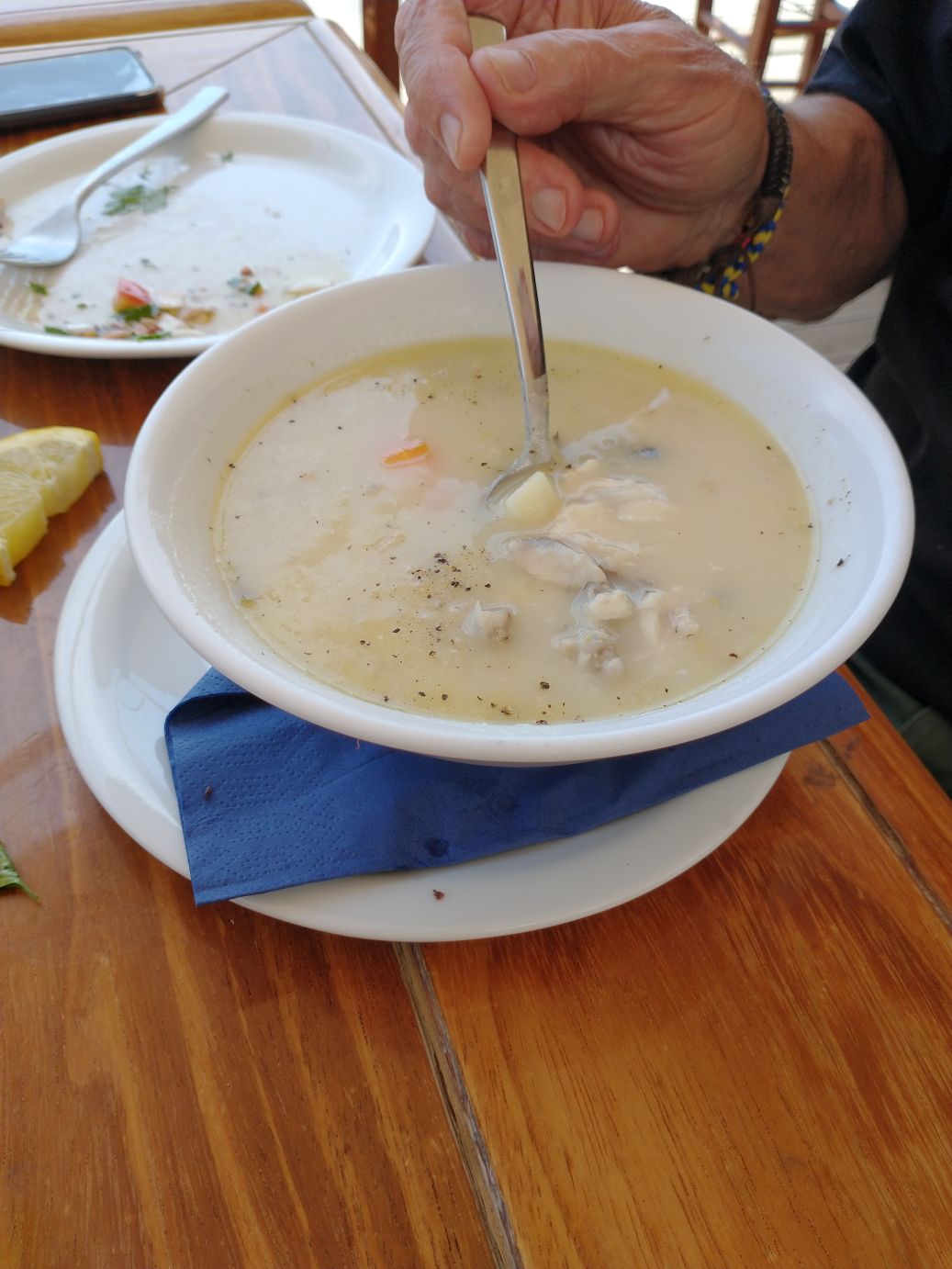
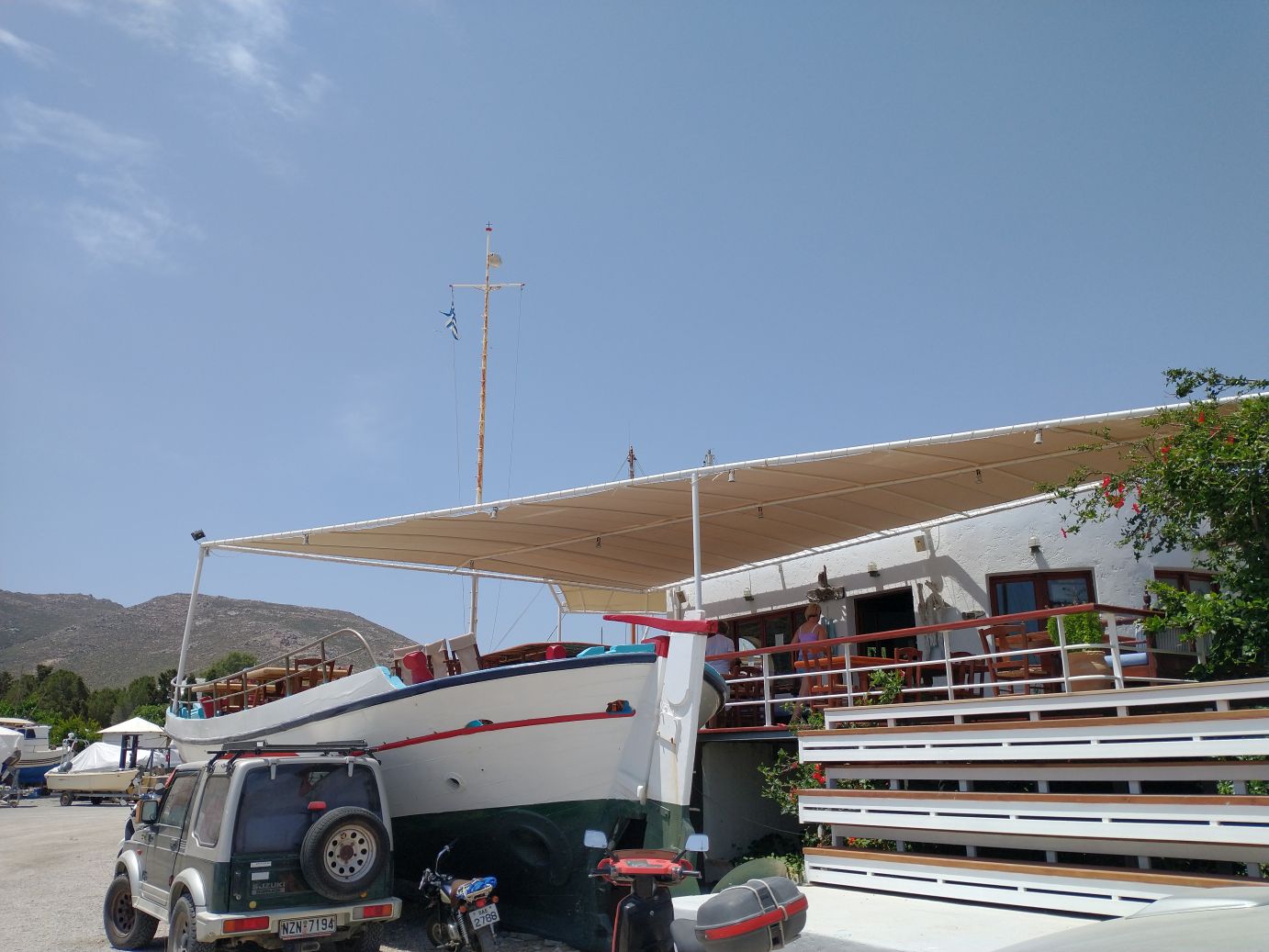
Perfect! Back on the road – the little narrow only one road on the island (not really true, but true enough that we really don’t get lost)….
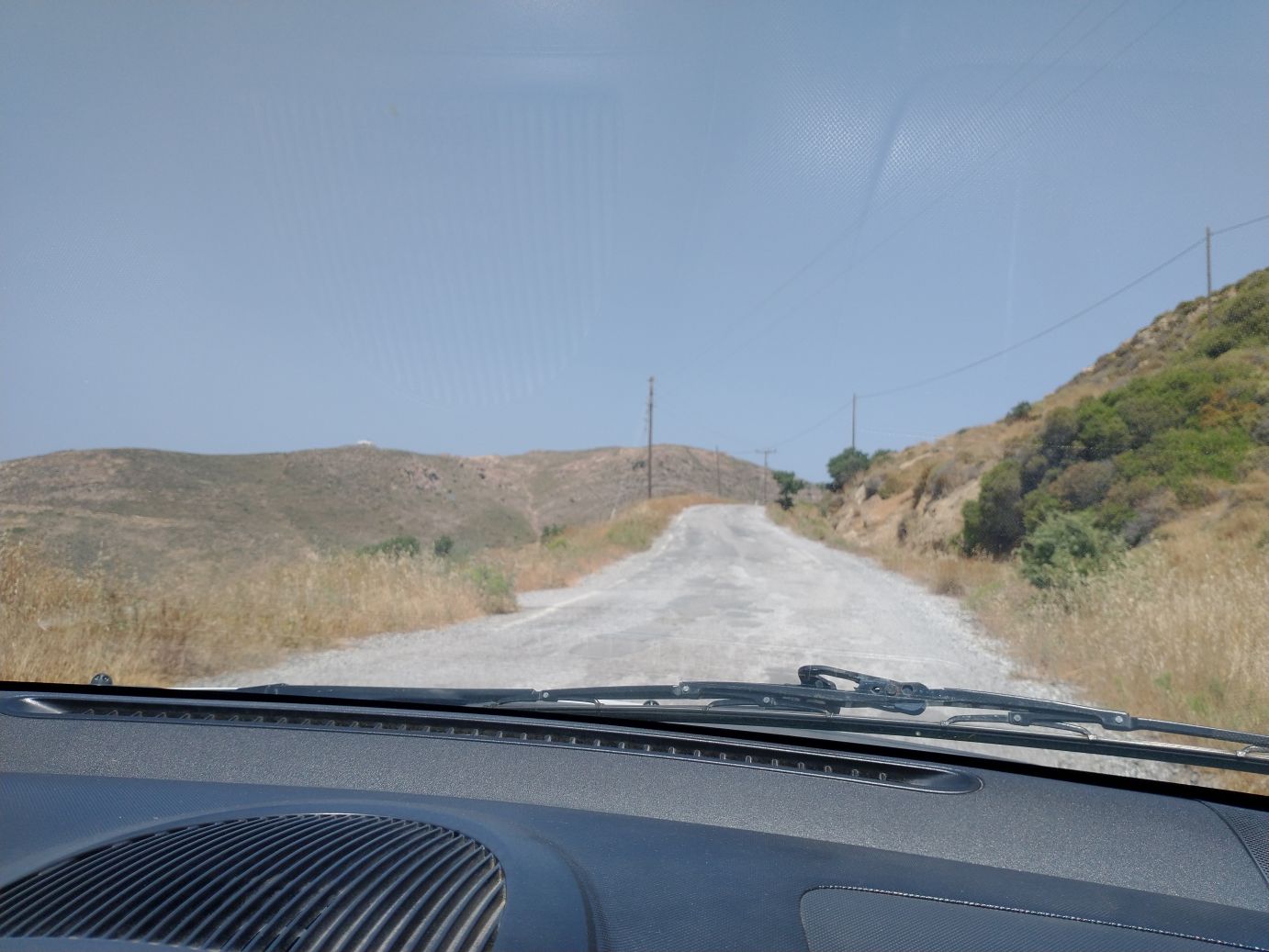
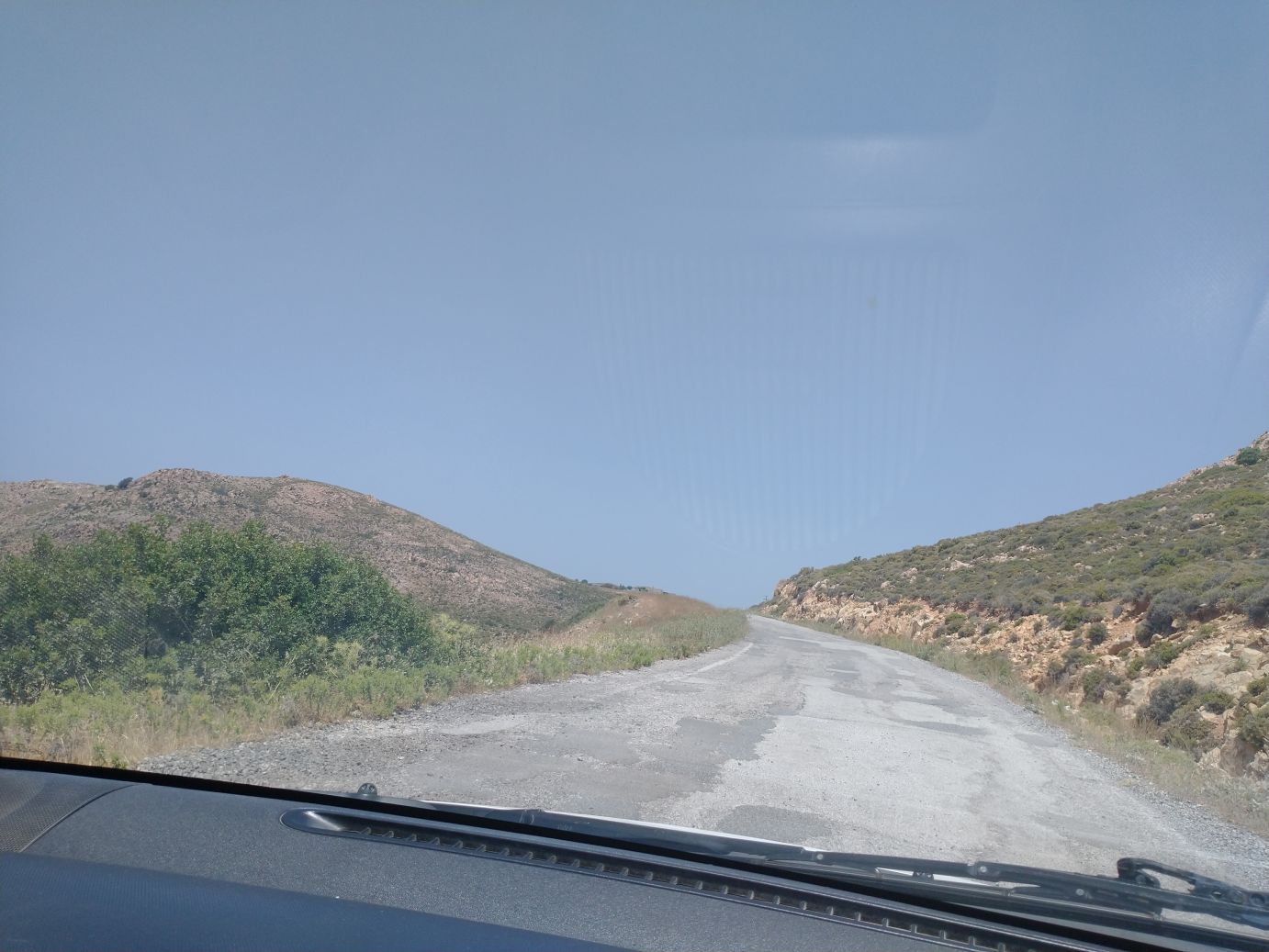
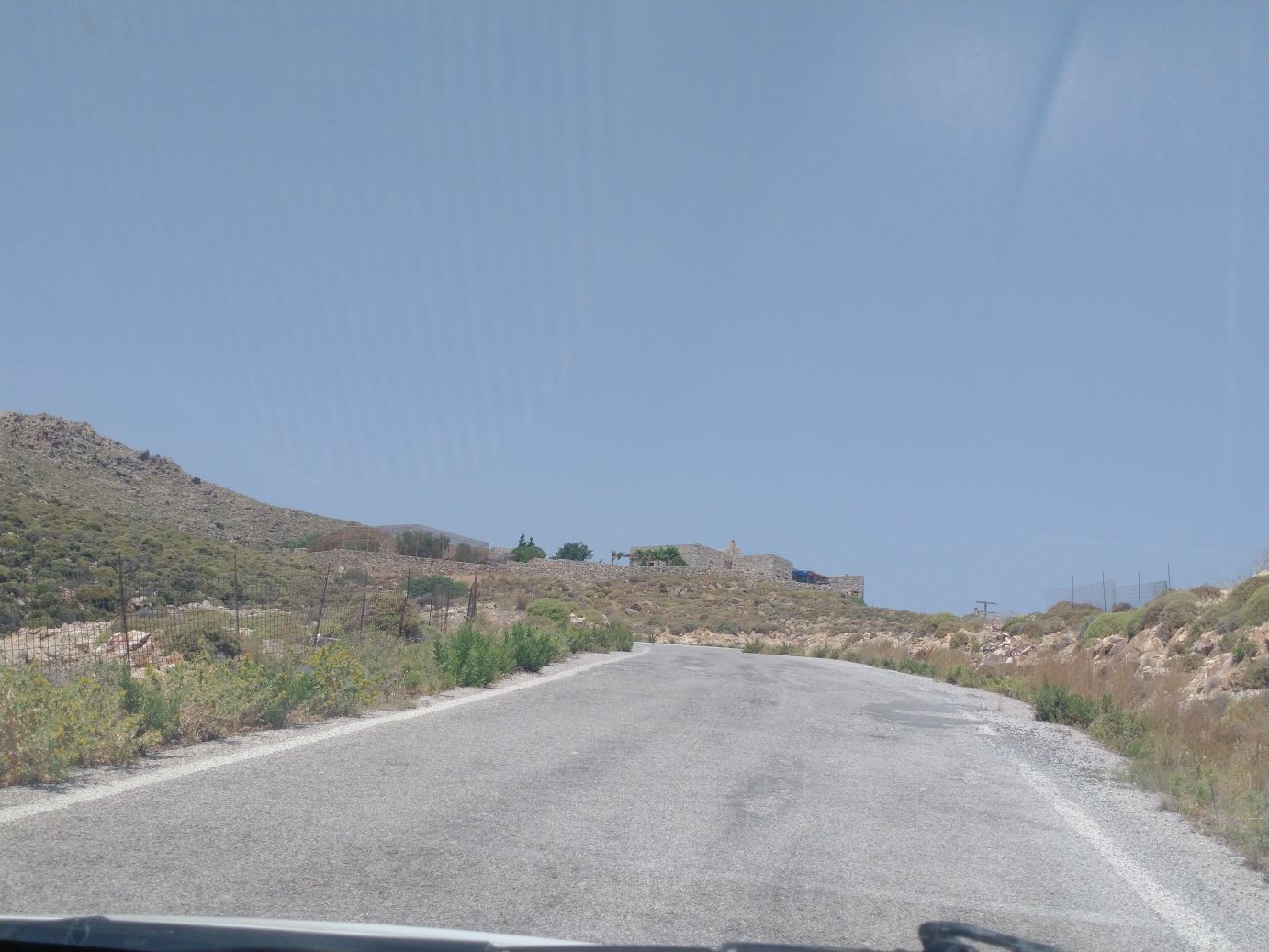
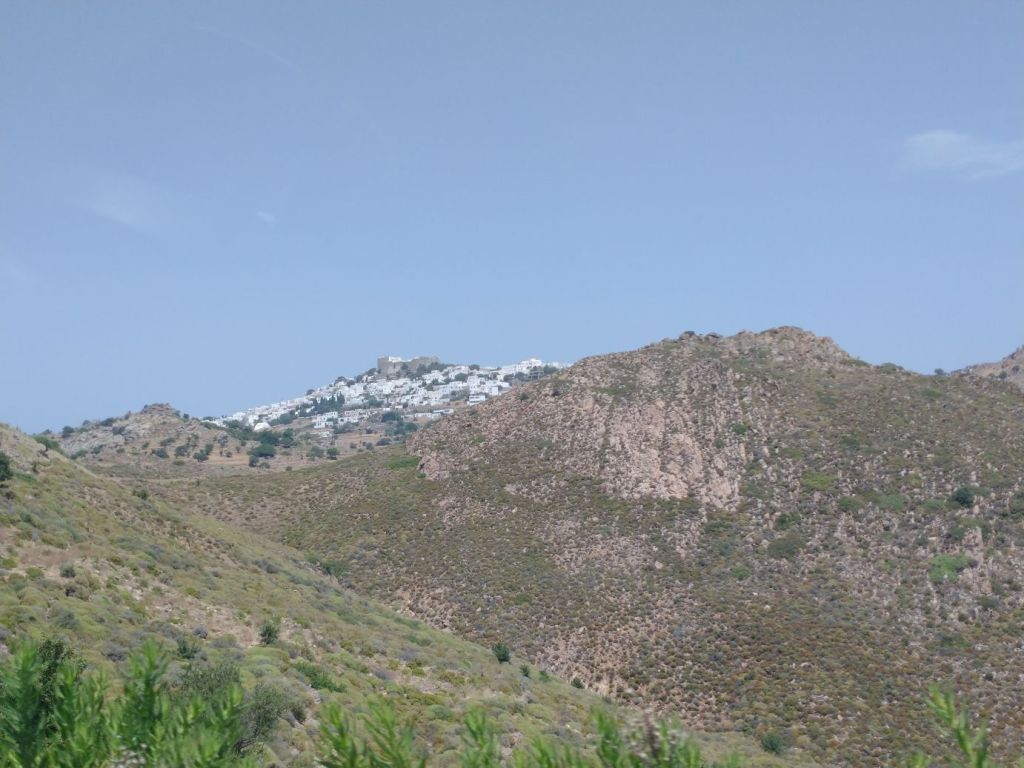
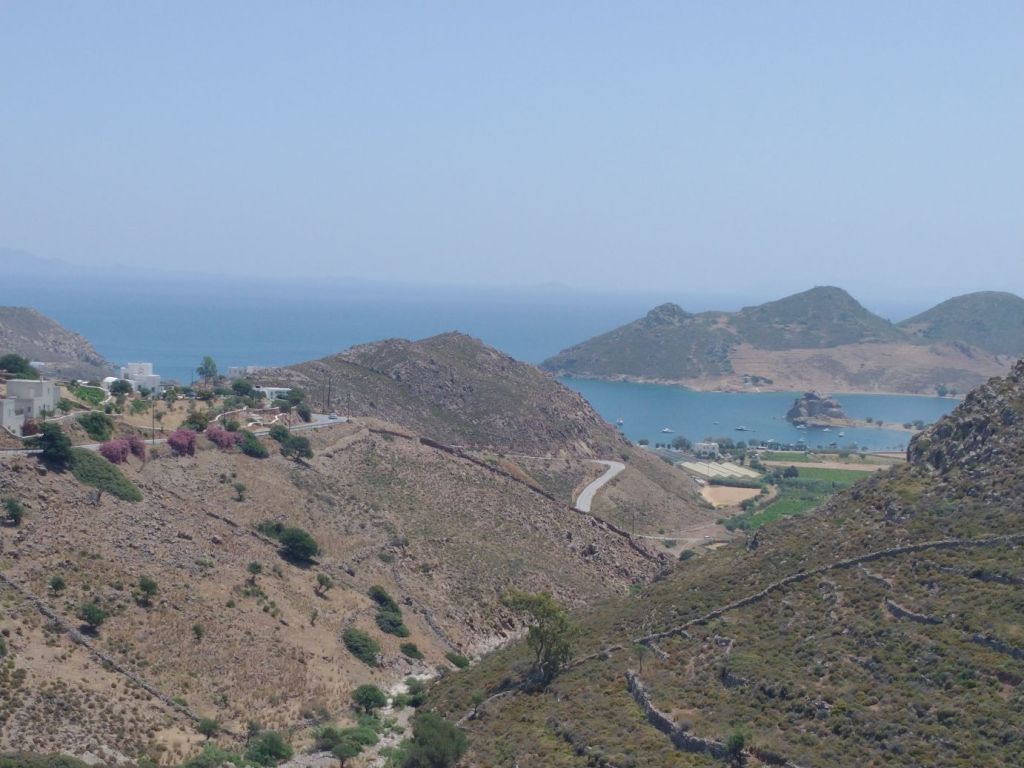
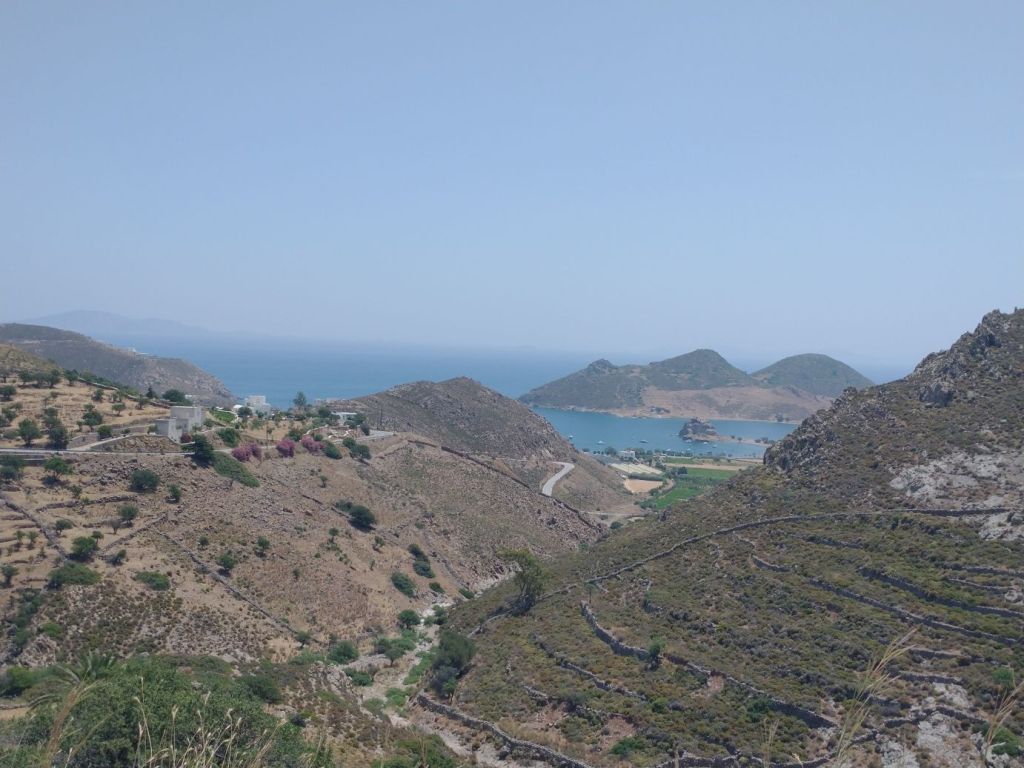
….we make our way past Petra beach – where the Rock of Kalikatsou is located. It was once used as a temple to honor Aphrodite and I had wanted to walk out there, but we decided it was better to just head to the north side instead of hiking a beach to a rock. Circling back on the east side of the island, we are treated to more great views of different areas, but always the Monastery looming over everything.
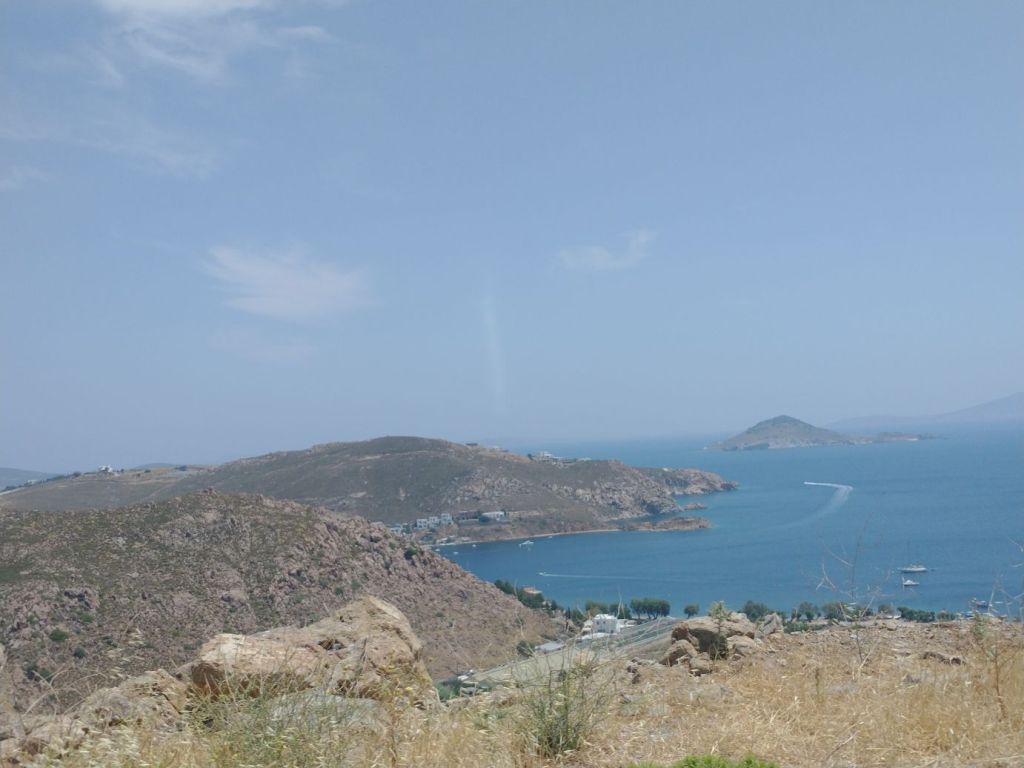
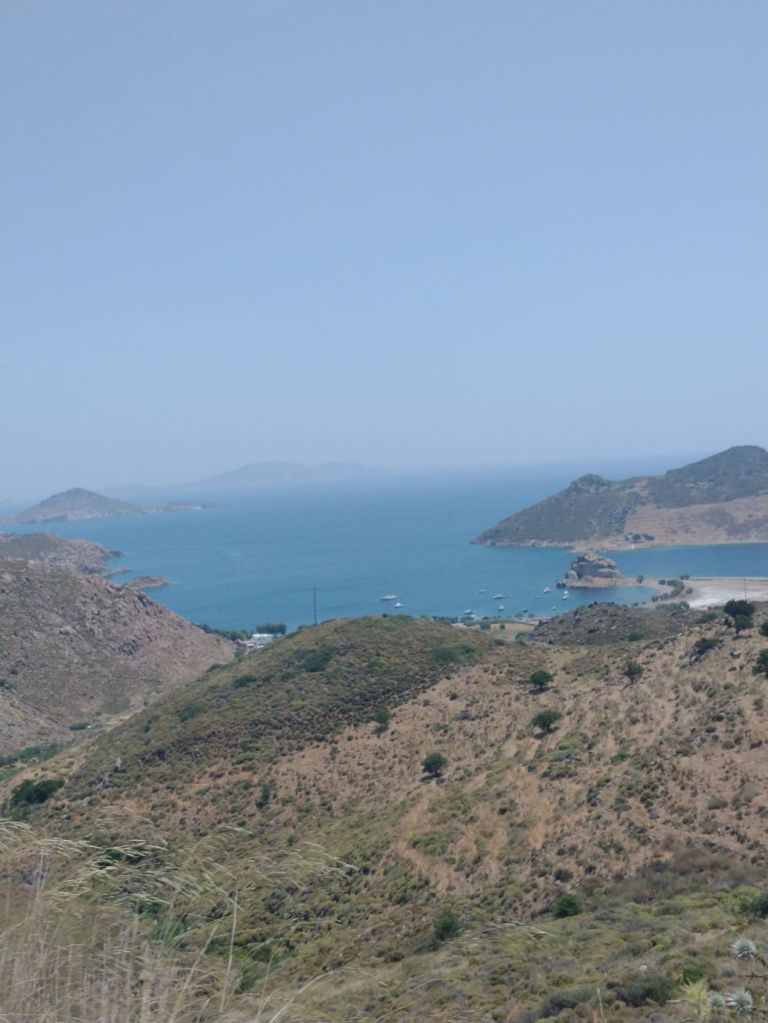
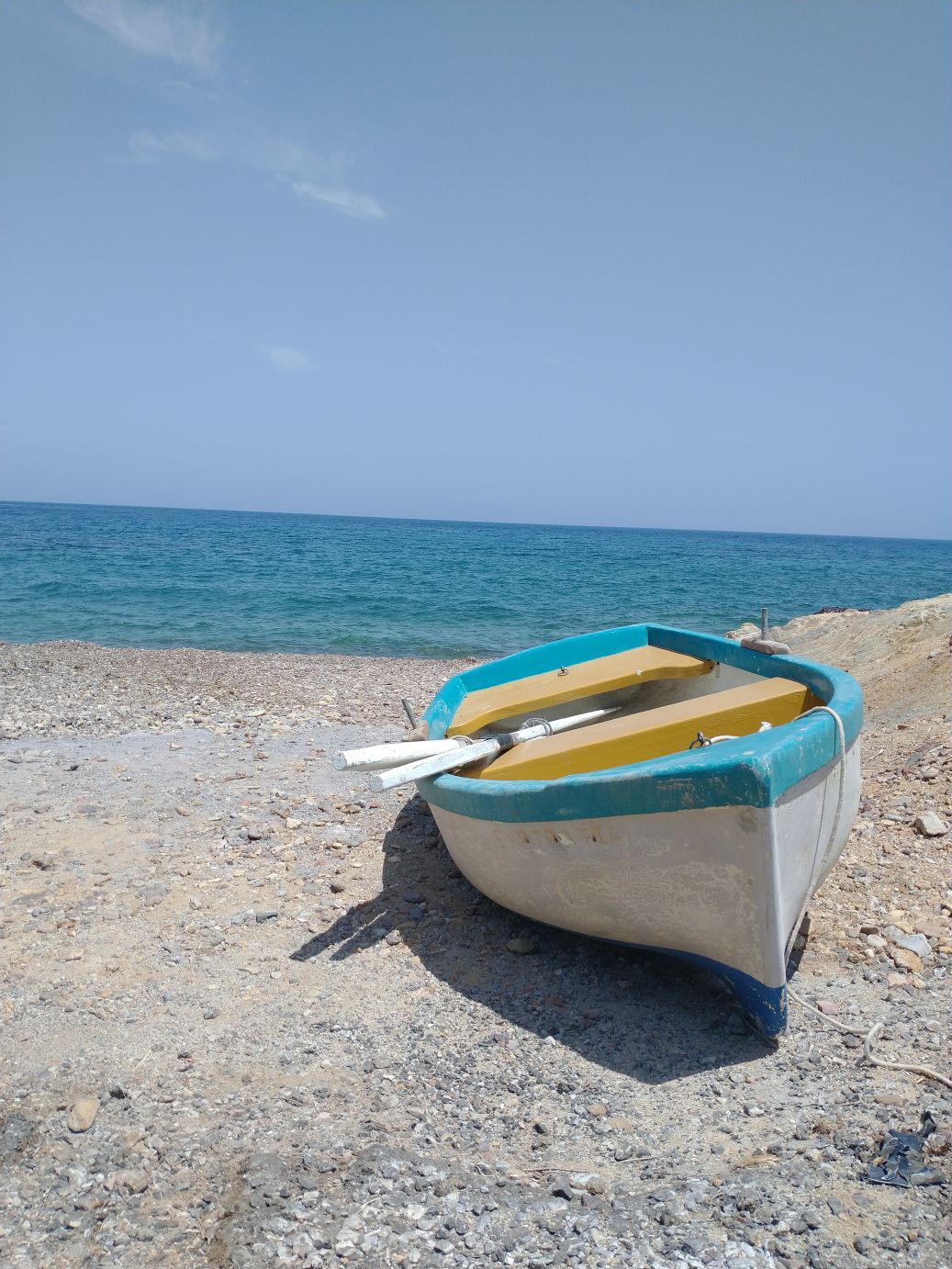
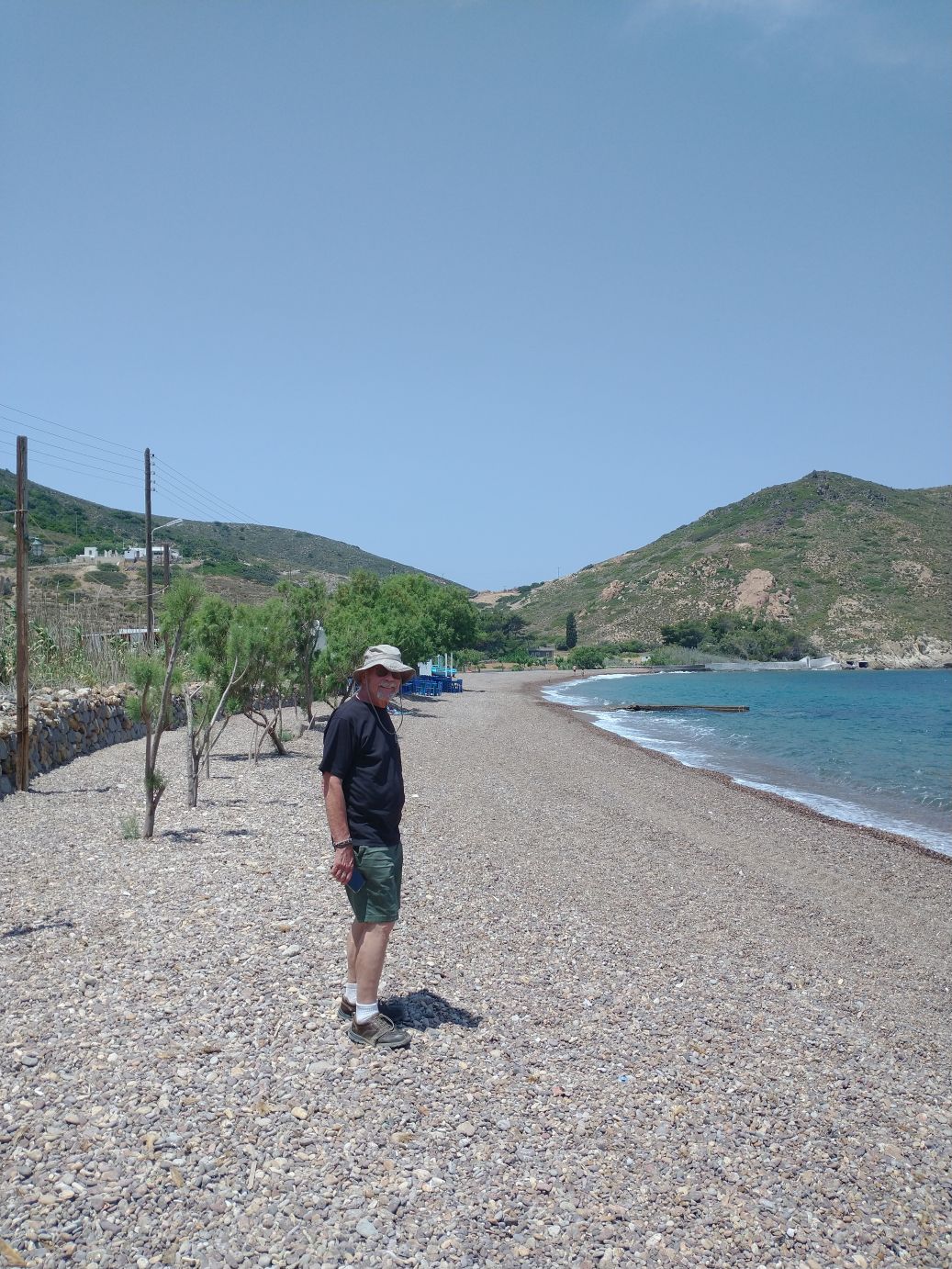
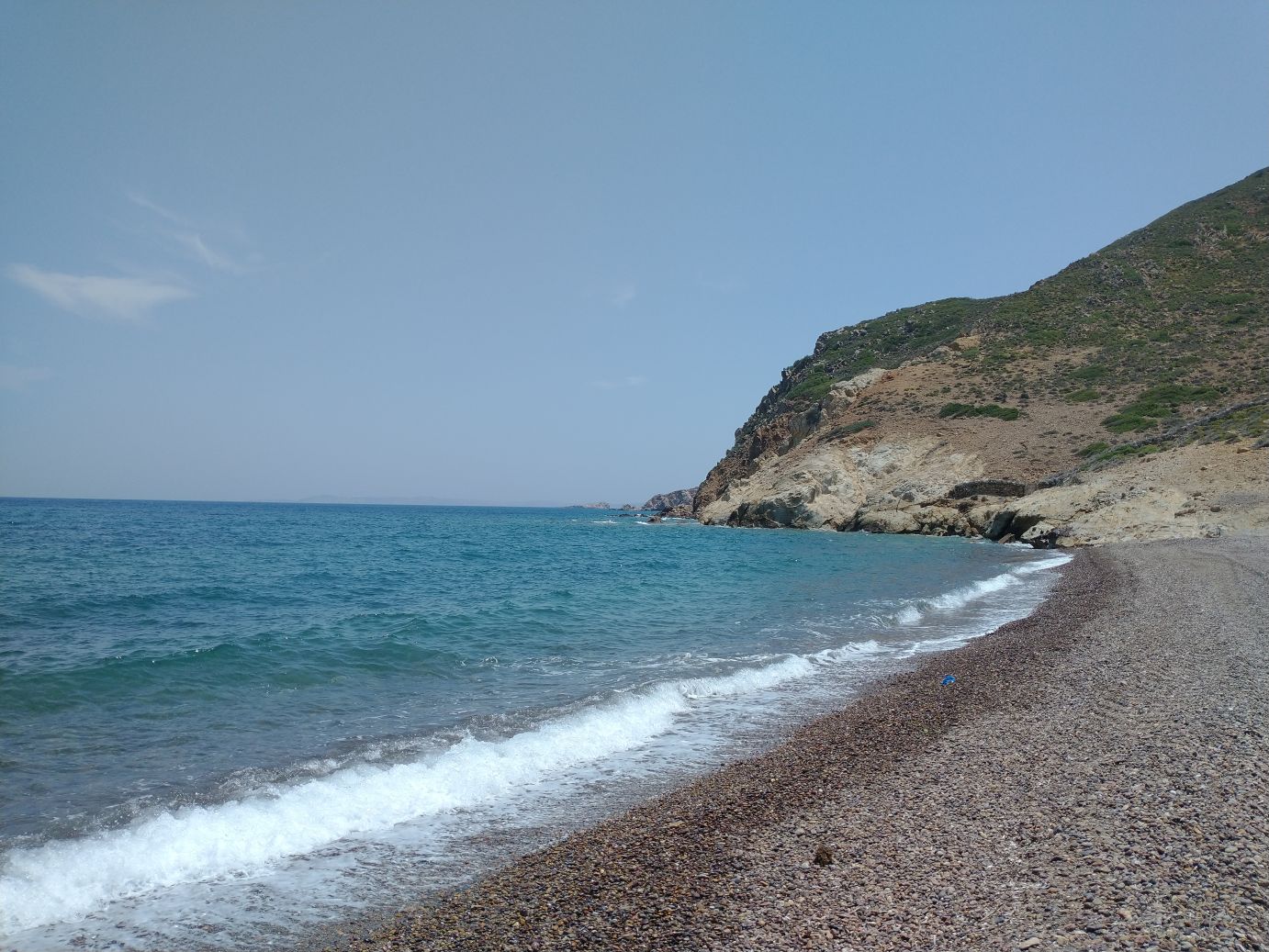
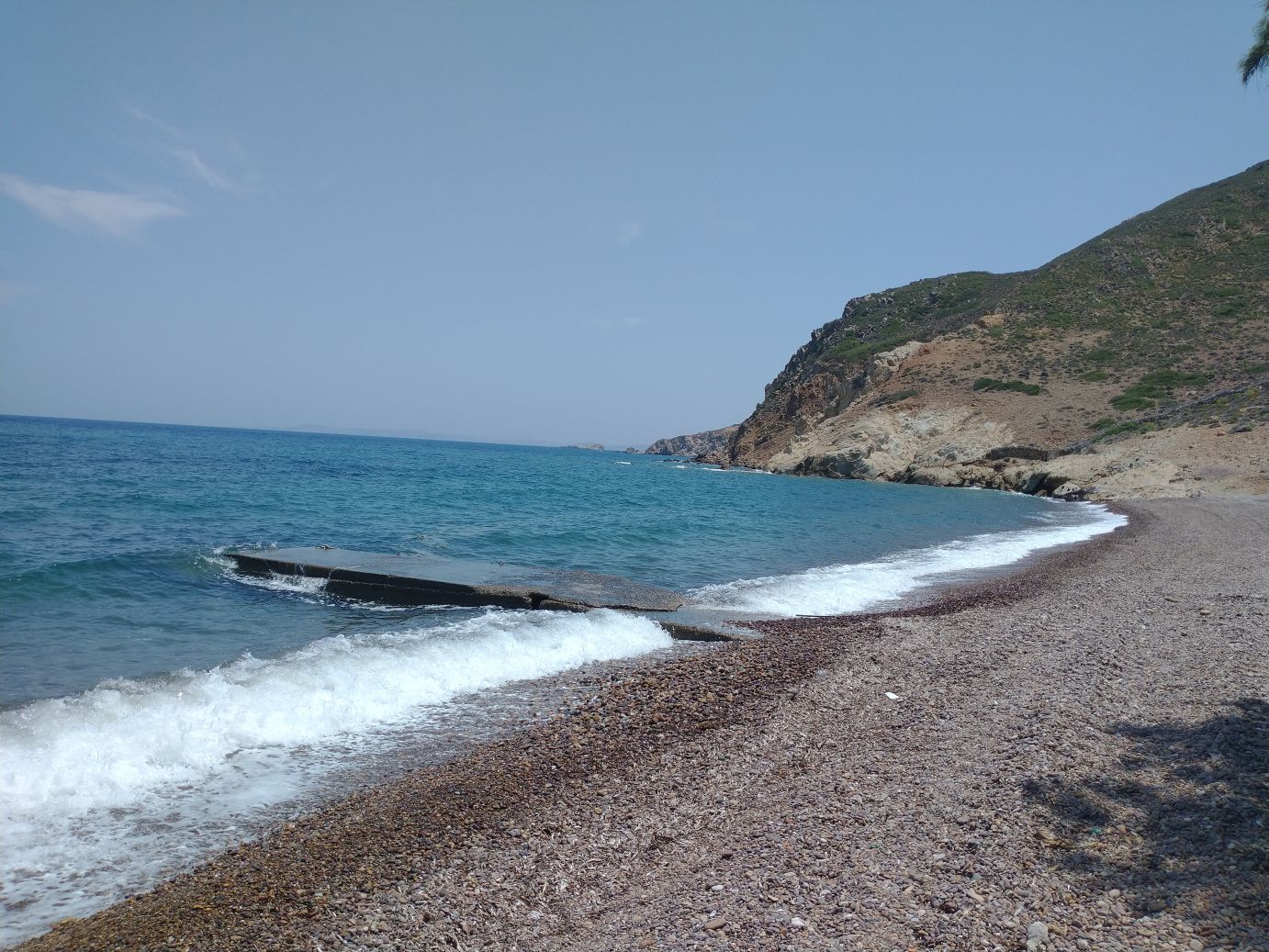
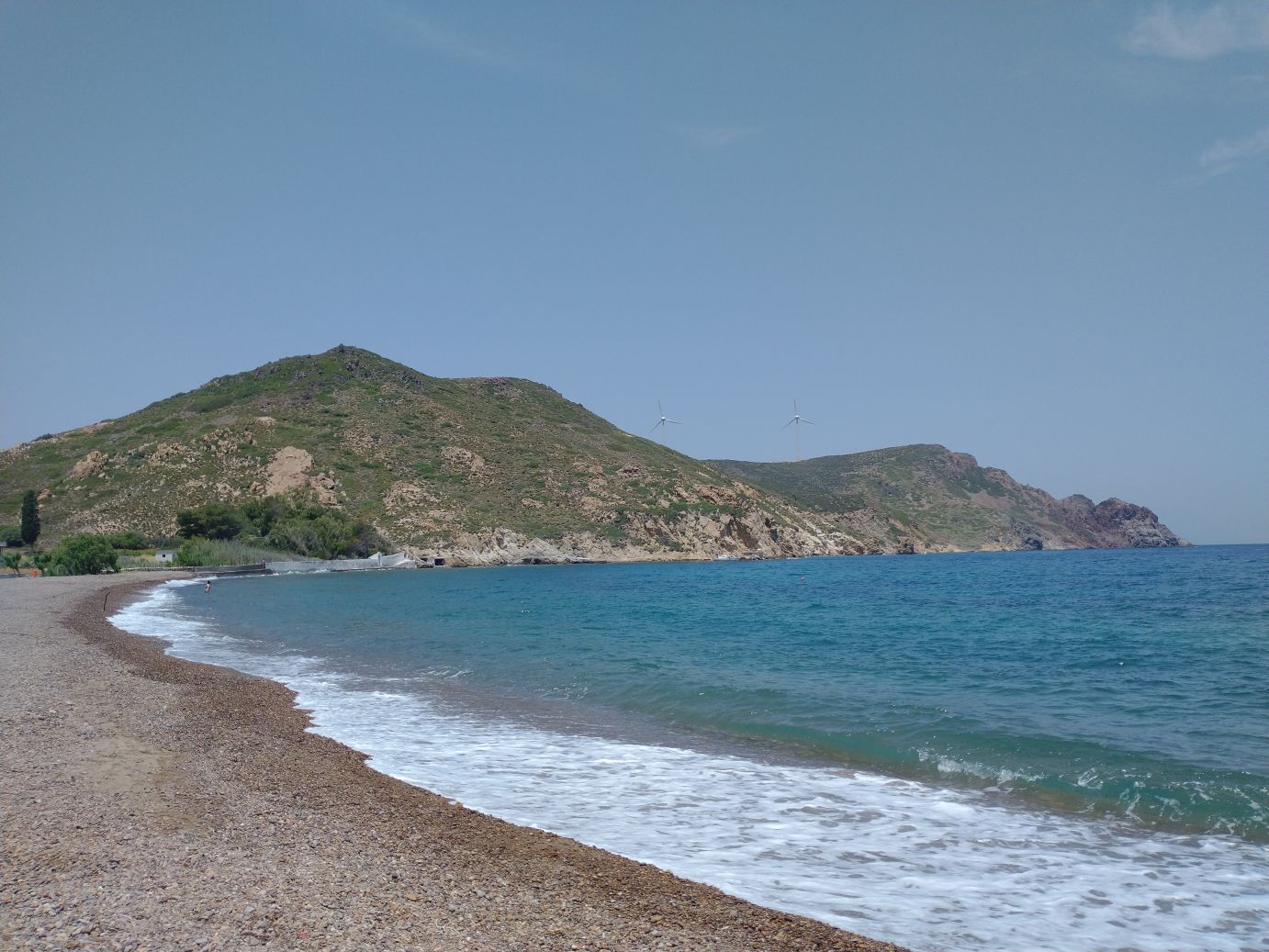
Then it is through Skala and out into scrubby farm land and deserted roads to the equally deserted beach of Lampi. this black pebble beach is beautiful, but doesn’t look all that inviting to relax upon. We’ve read it will get busy – and there is a tavern here that is supposed to be great – but again, it is closed as well. We were so lucky we found Tarsanas! Otherwise, we’d be starved by now.

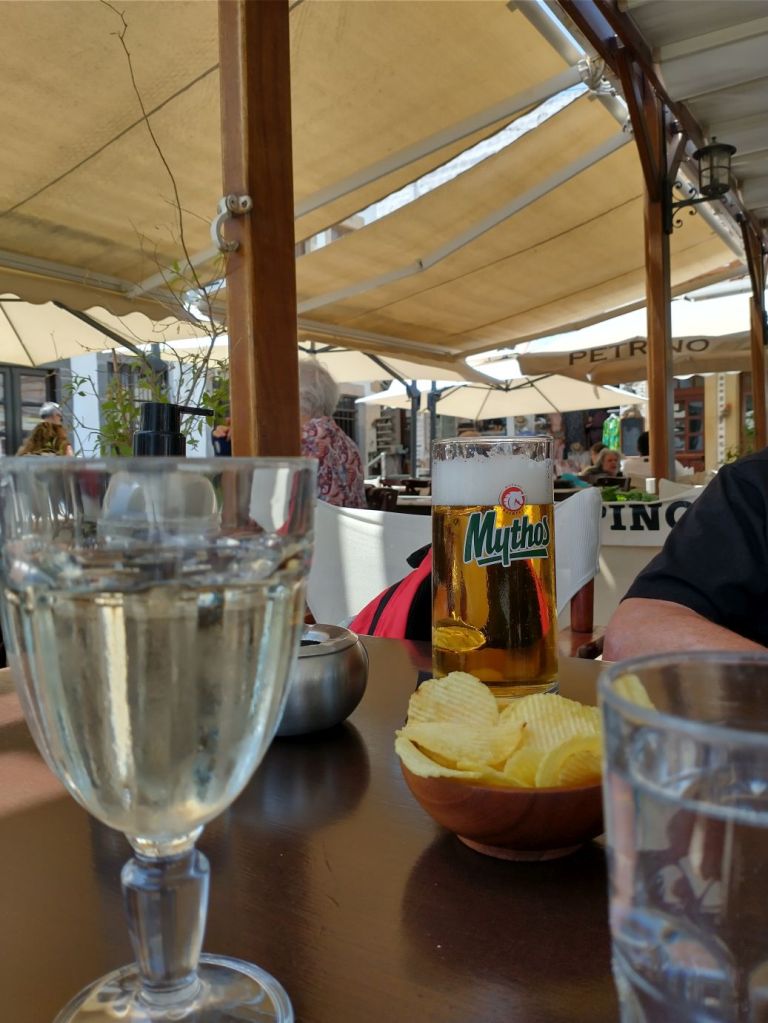
Time to head back to Skala and the ship. Dropped off the car without a problem, even found a space right out front. Yay for us. Our sweet guy wasn’t there, but the 2 folks there were adorable, gave us restaurant suggestions for our next visit – in 4 days! Then we wandered about the little town, stopping in what seemed to be the main square for a drink at Petrino – with all the locals and semi-locals (i.e., the Brits who obviously summer here).
Ok. We officially love this place (summering Brits notwithstanding!) and we are very glad we’ll be back in a couple of days. And now, we are thinking we could figure out a way to come back and stay a few days next year after our Japan/Suez Canal/Israel/Mediterranean Quest sojourn. Hmmmm….
 Andiamo