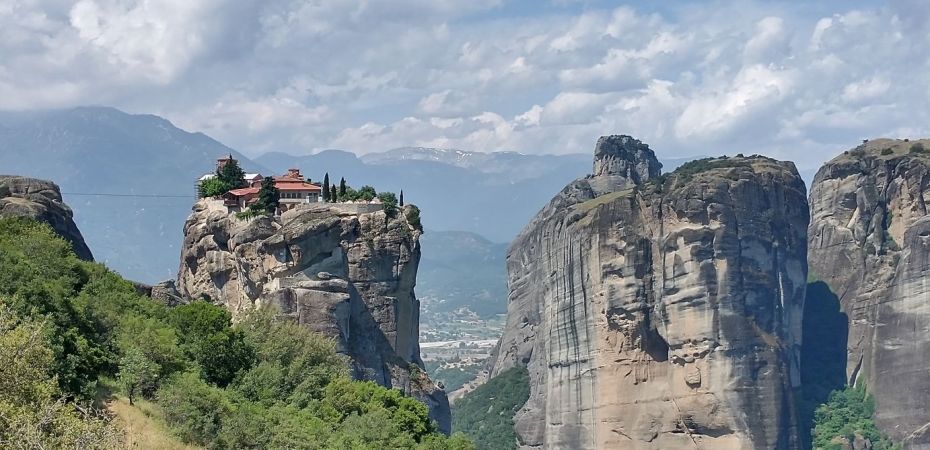
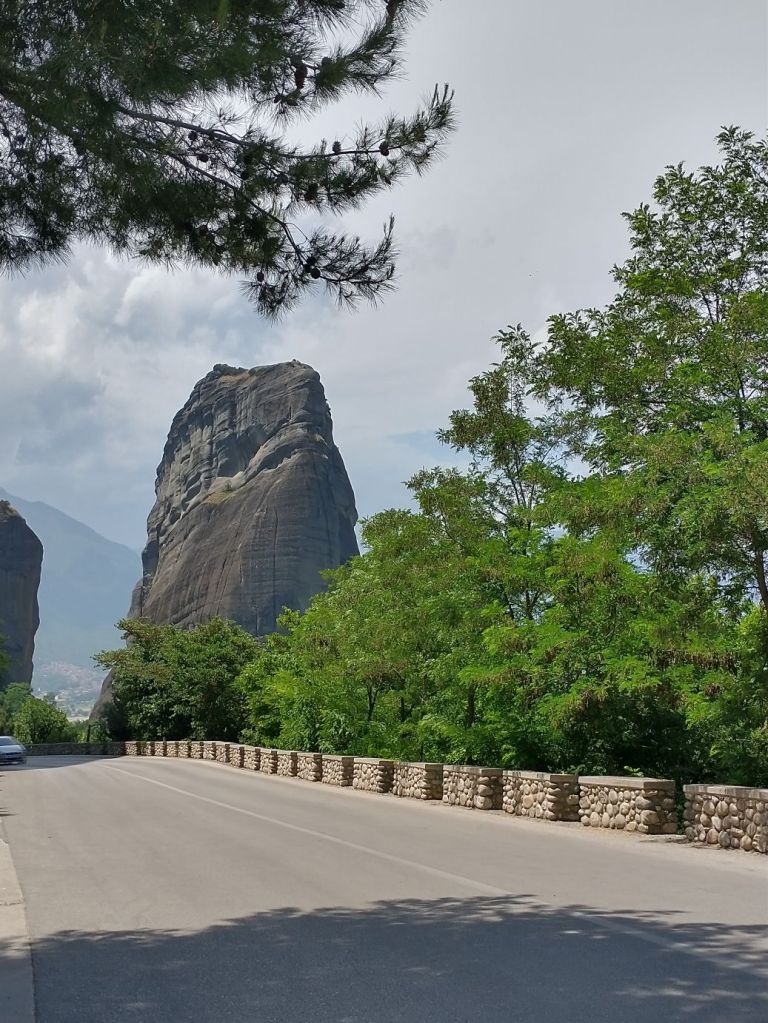
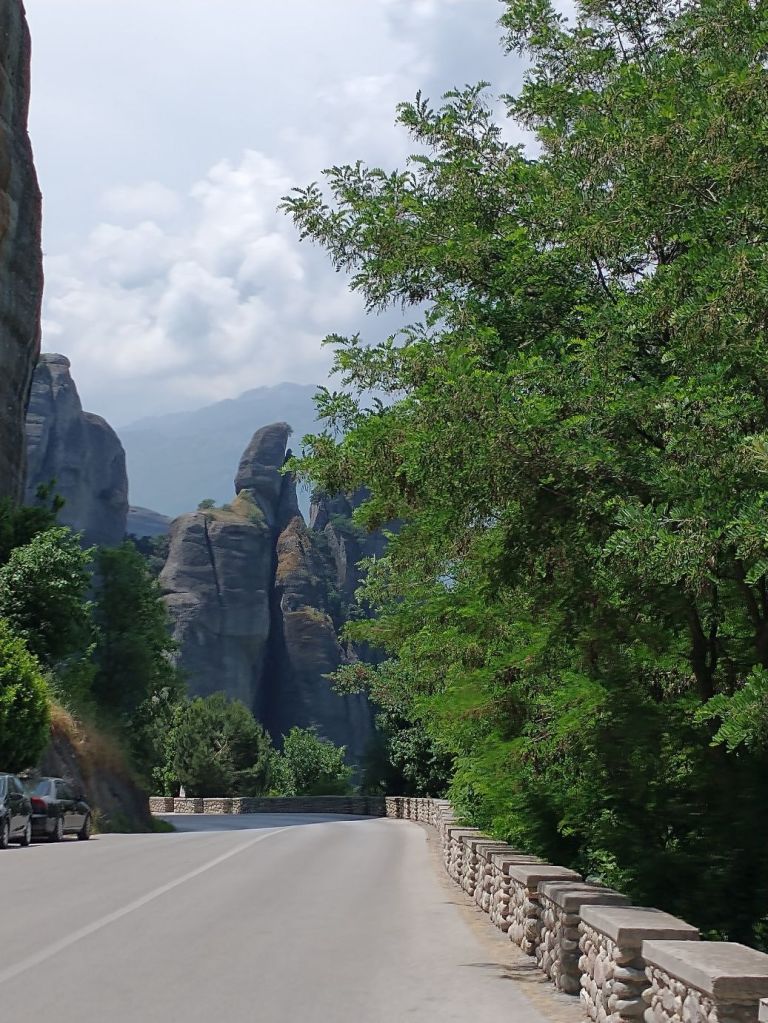
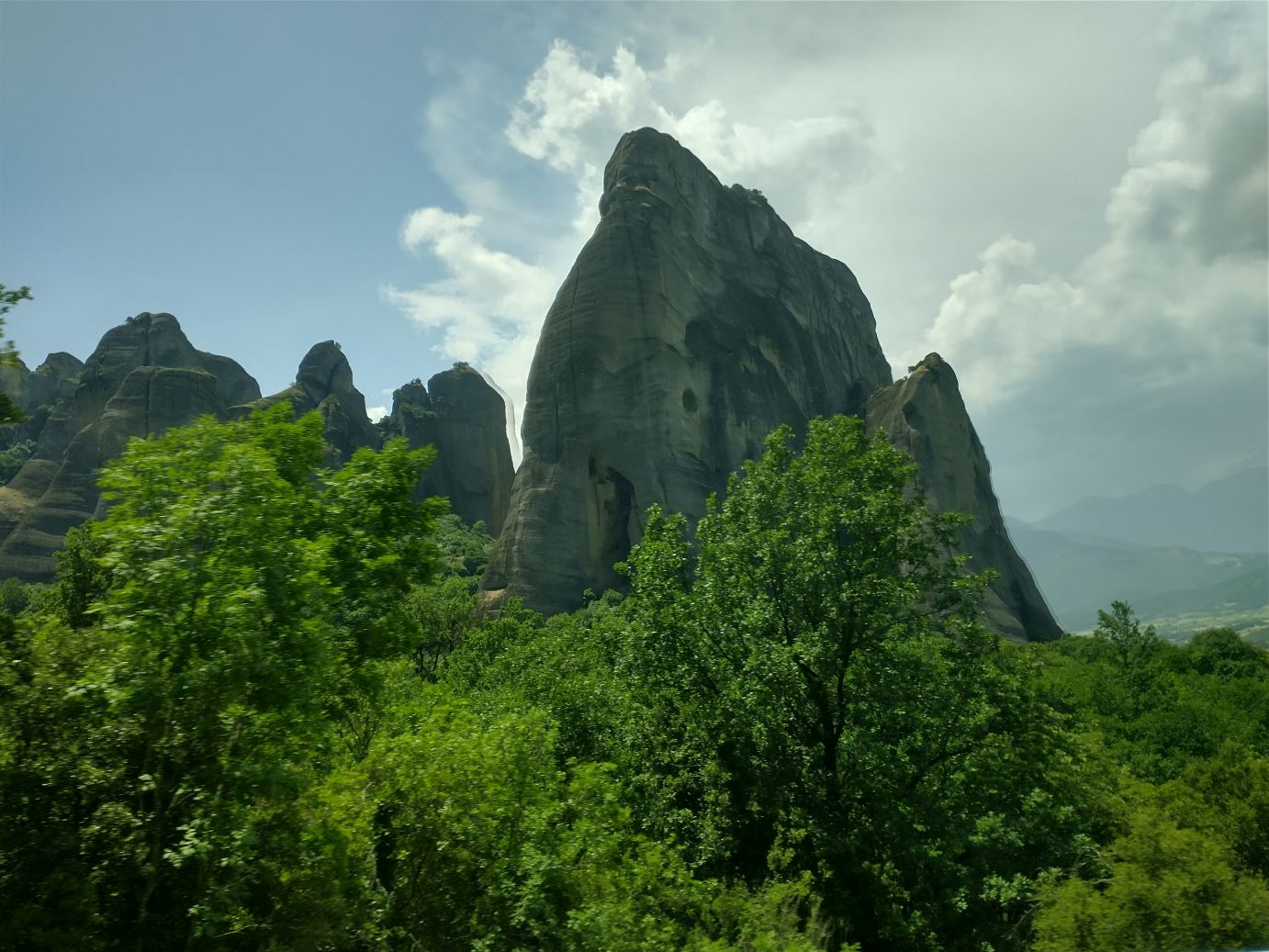
Shudder. We are on a ship’s tour today. We are going to Meteora, an area of Greece where giant rock stalagmite pinnacles rise up out of the valleys with ancient (and still active) monasteries perched atop the apexes. Settlement – if you want to call it that – started in the 11th Century when hermit monks came to these peaks, building small chapels, but no church. They lived alone in caves, then another monk came (just one!) and decided to build churches on the peaks. Overtime, more monks came and by the 14th Century there were 24 monasteries built above the plains on these pillars.
All the remaining monasteries are mostly nunneries now, with as few as 7 and as many as 13 nuns living in each. There’s one monastery still here – with only 1 monk living in it. One! Wow!
Totally precarious, and totally incredible, we’ve wanted to visit Meteora from the first time we read about it, and while taking a ship’s tour isn’t our first choice, we figured it would at least give us a good overview, and it is a 2 hour drive from Volos, and of course, we do have onboard credit to get rid of – so ship’s tour it is!
We meet and make our way to the bus at the appropriate time, snagging decent seats little ways back from the front. Our tour guide, Giorgos, is great. He’s totally into Greek mythology so as we drive along, he regales us with tons of stories and legends – trying his best to come back to the actual facts of the monasteries. As we gaze out at the gorgeous scenery along the route, as the peaks start to appear, we learn interesting new facts about Greece – almost 75% of the country is covered by mountains, it is the 2nd most mountainous country in Europe (had no idea!) and there are 18 ski areas around the country. News to us!
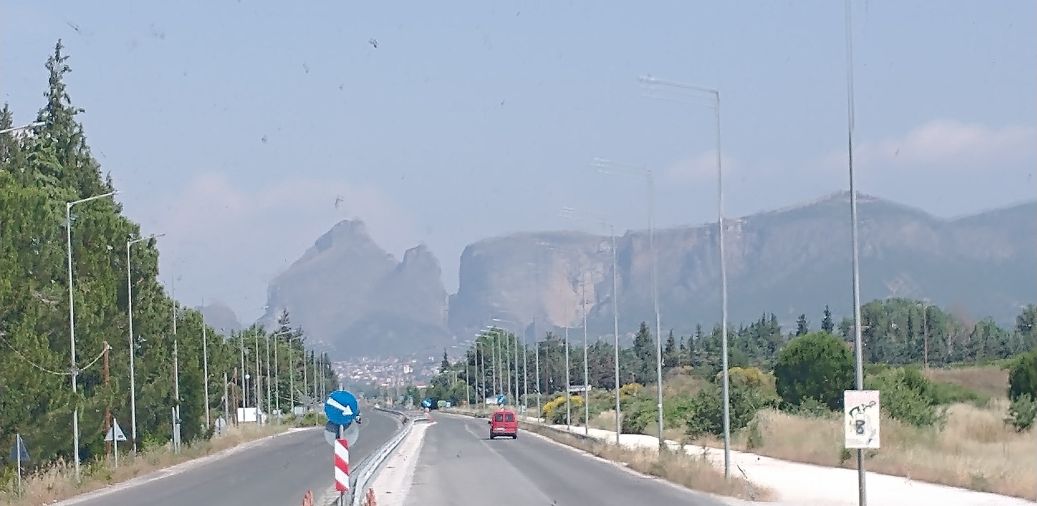
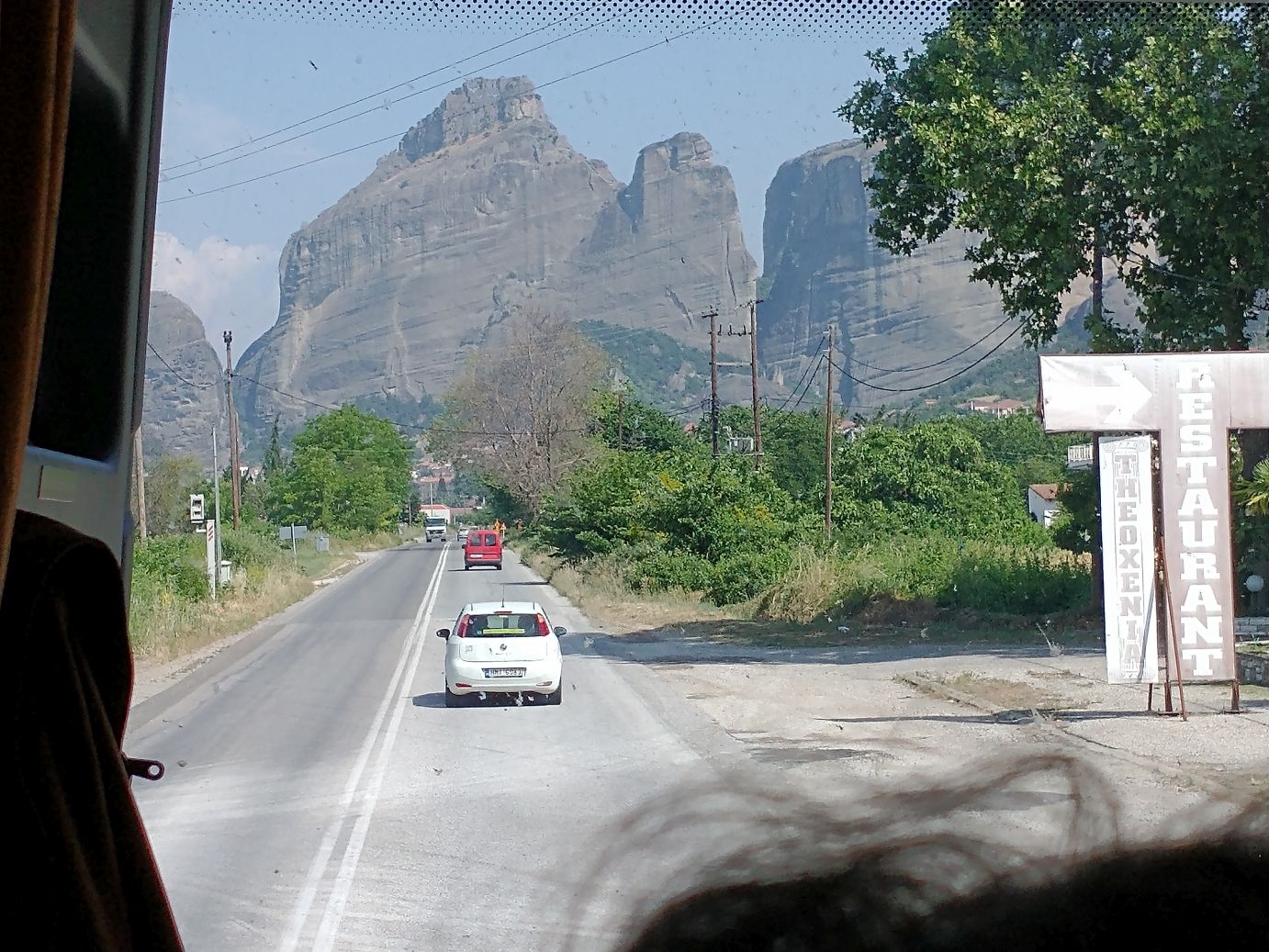
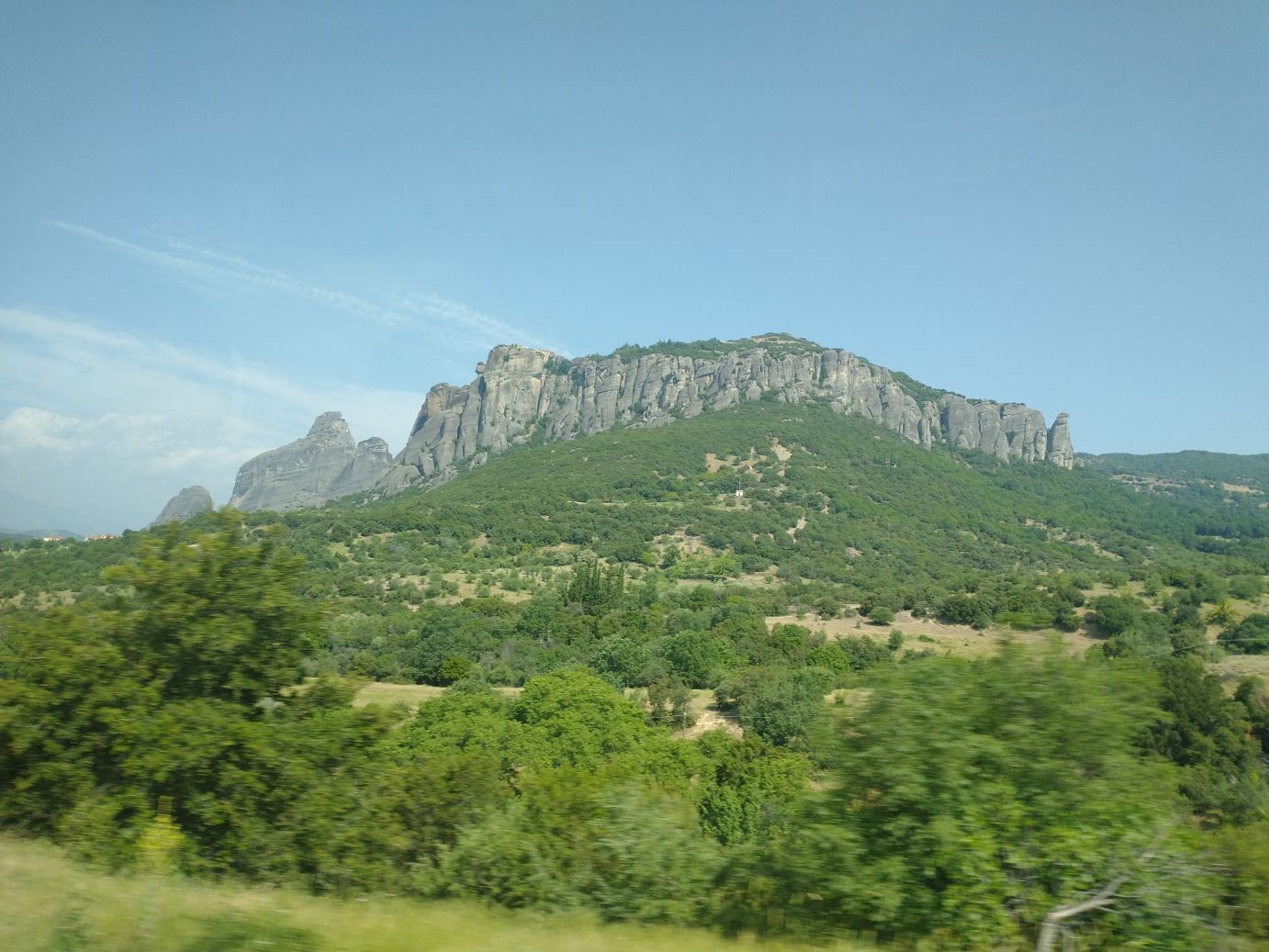
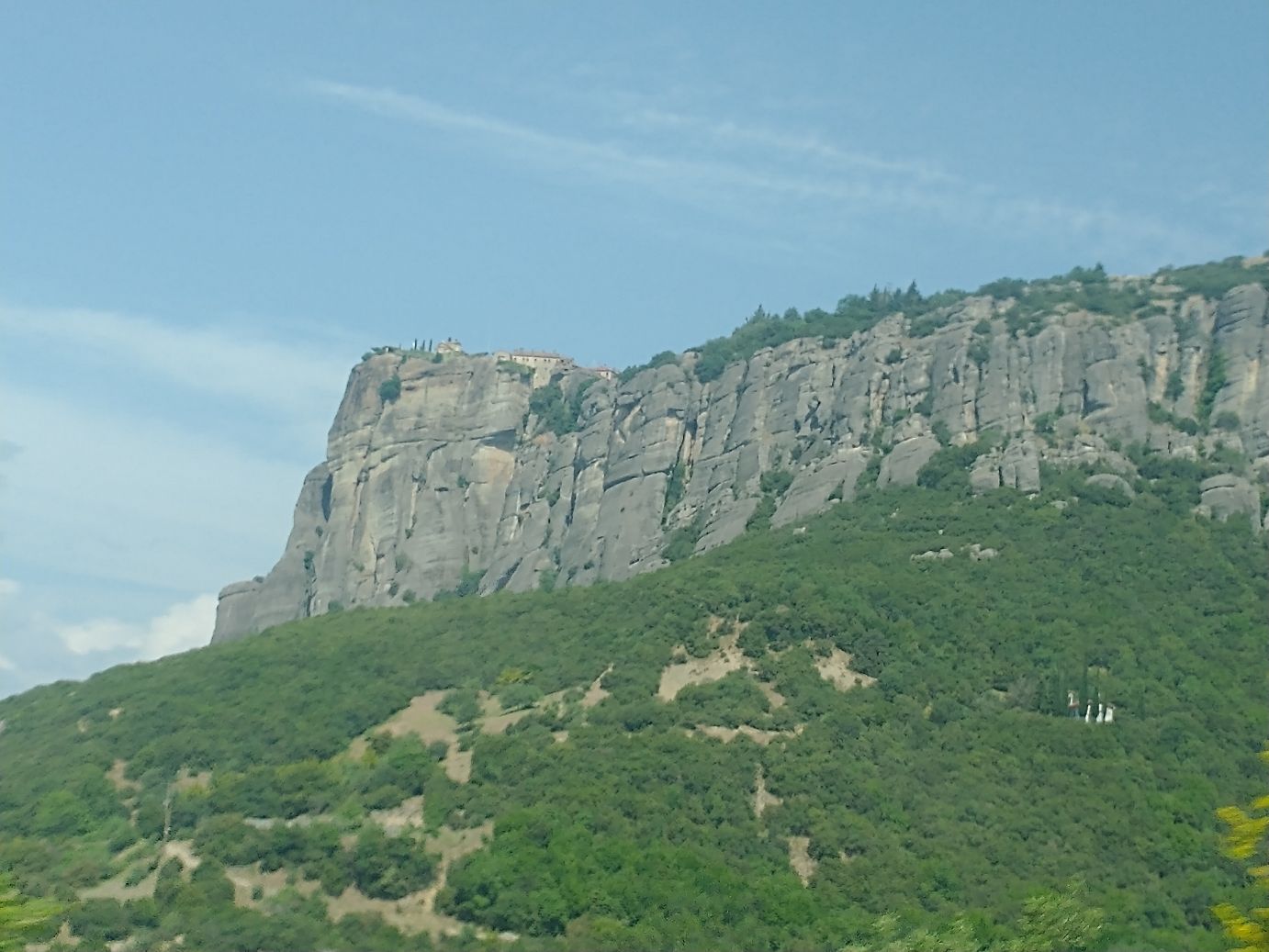
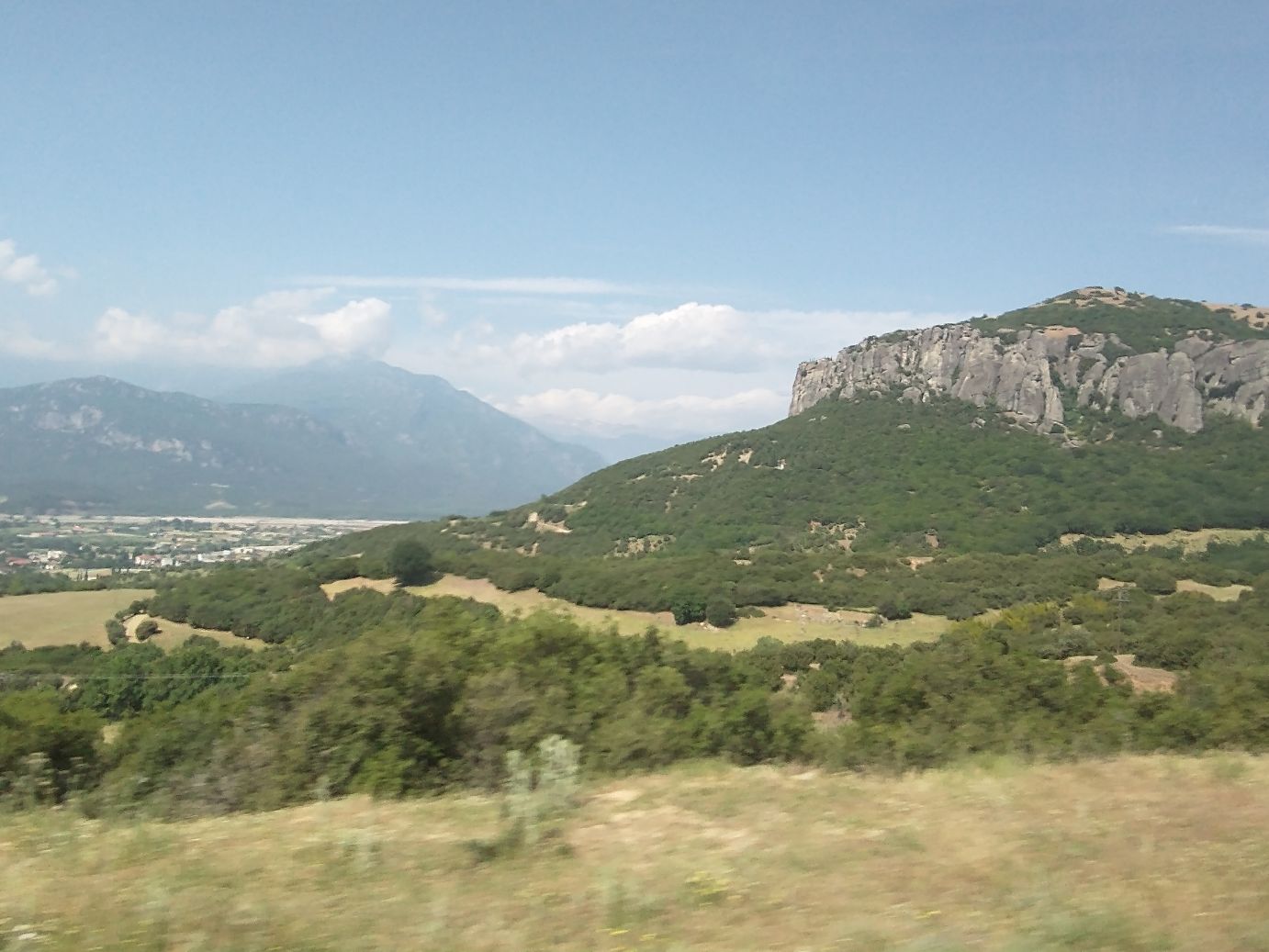


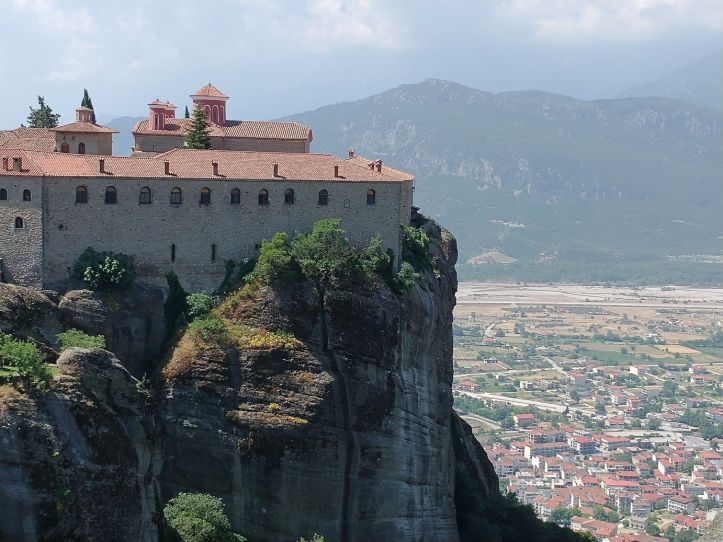
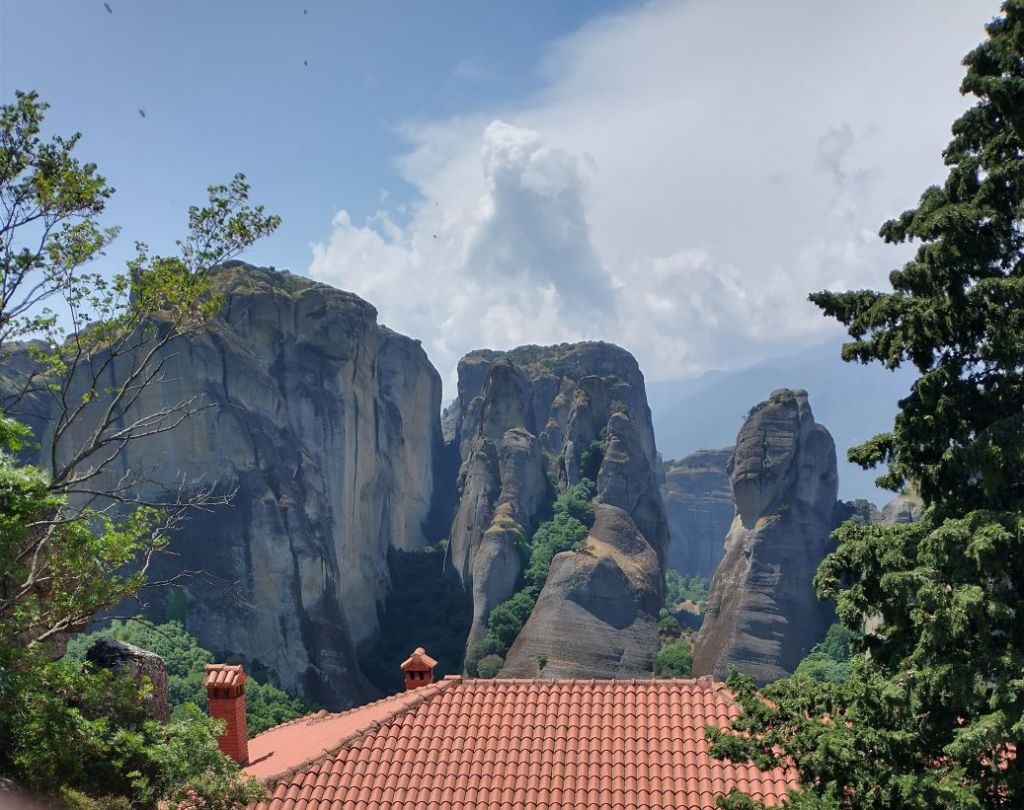
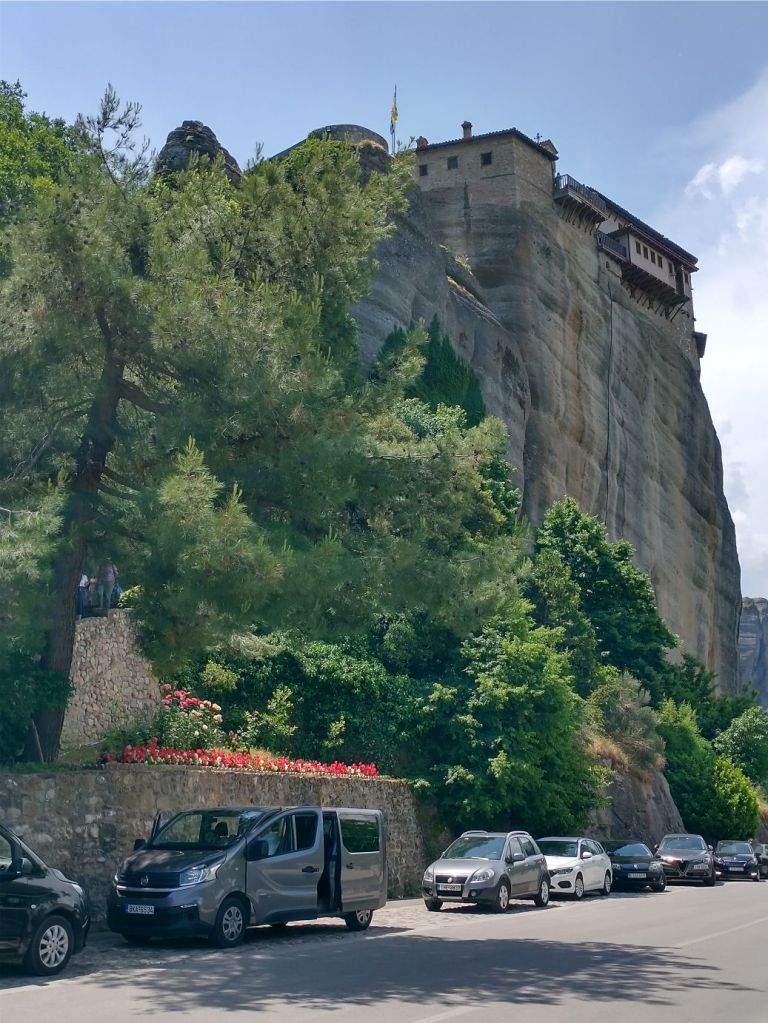
Upon reaching the “heavenly columns” as they are called, we arrive at our first destination, the monastery of St. Stephan, one of 6 monasteries open to the public today. Inhabited before 1200, it was originally the hermitage of Jeremiah but after a Byzantine emperor stayed there, he made gifts to the monks which allowed them to build the church in 1350. Today, the monastery has been converted into a convent. And the setting, well, just incredible how the walls of the building rise right up out of the rock, almost like it is a part of the peak.
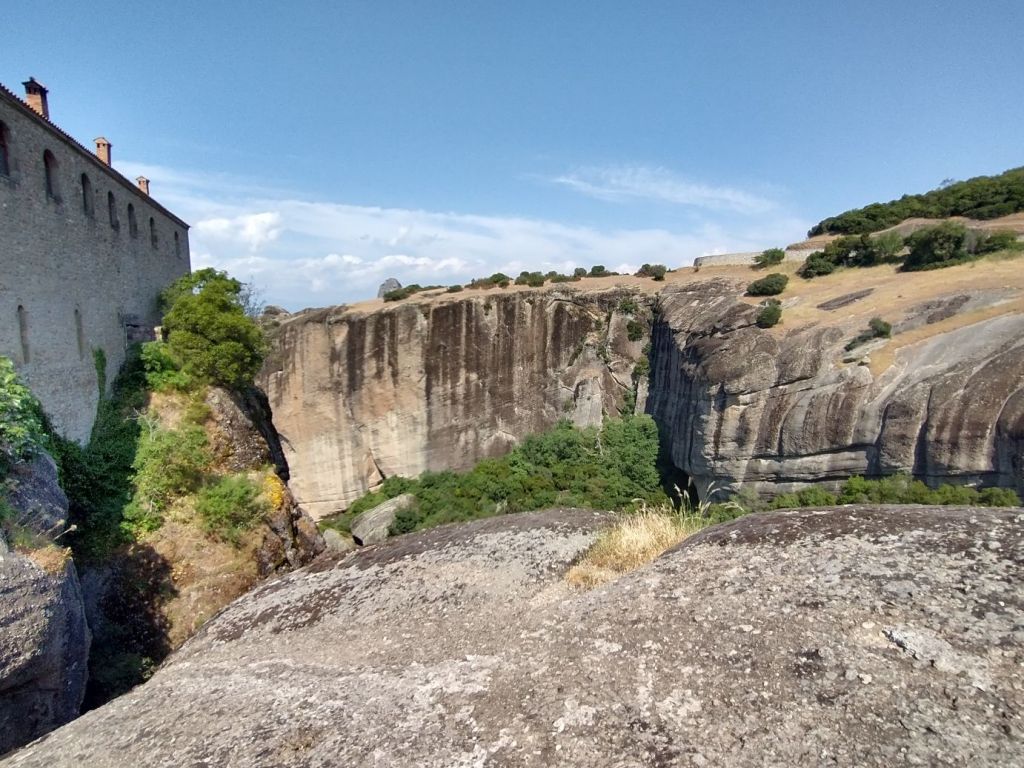
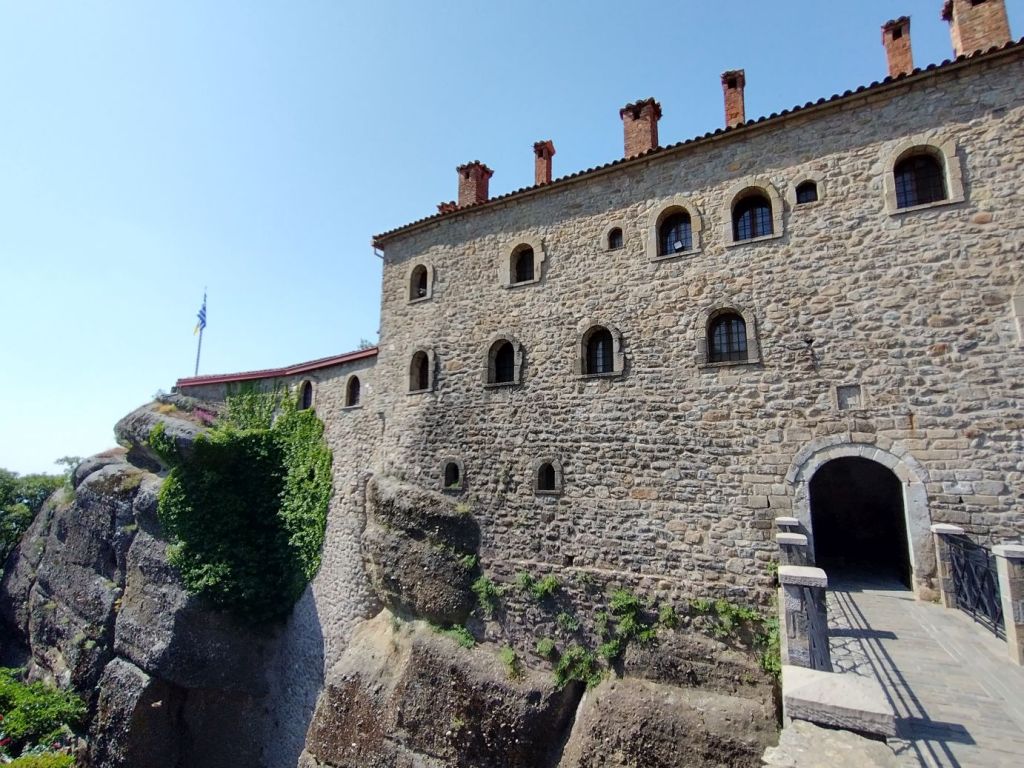
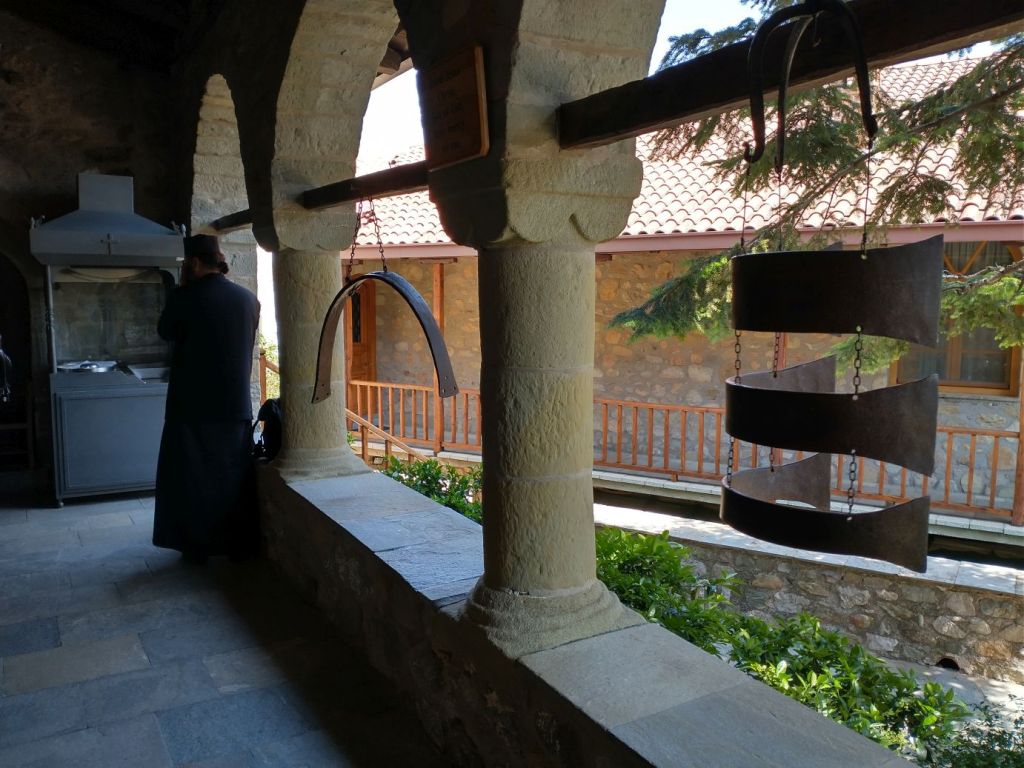
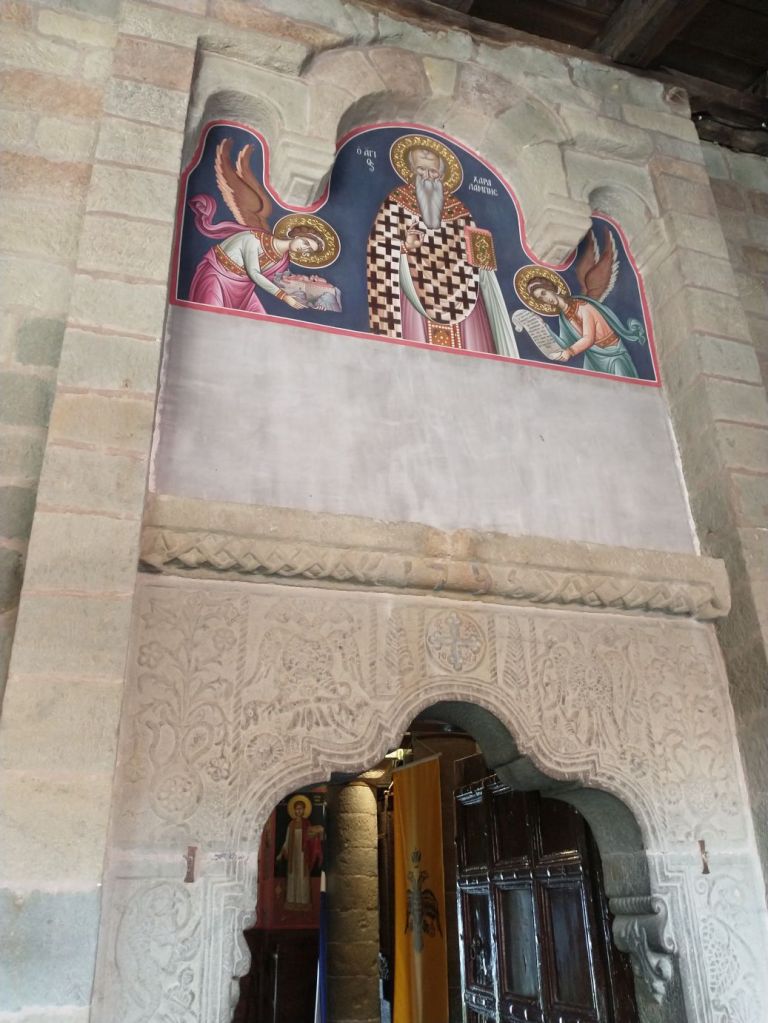
No pictures are allowed inside the actual monastery, so after walking through the chapel and viewing the iconostasis of the Last Supper, we head outside to the gorgeous garden, past the 15th Century church for more incredible views across the valley spread out below.
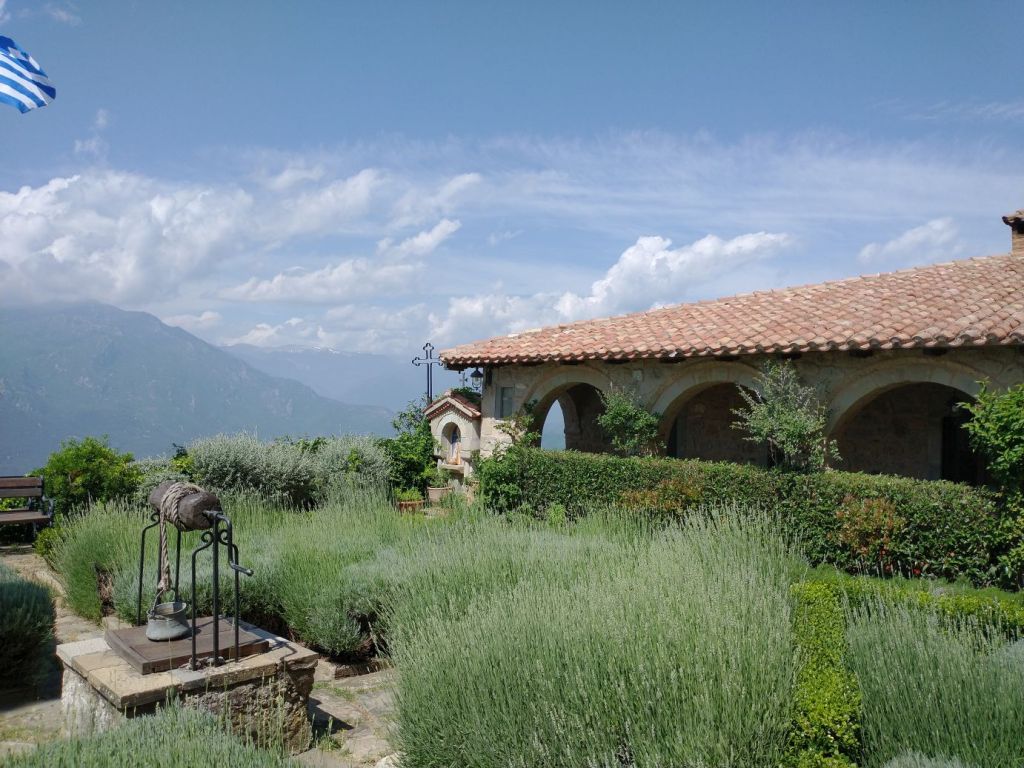
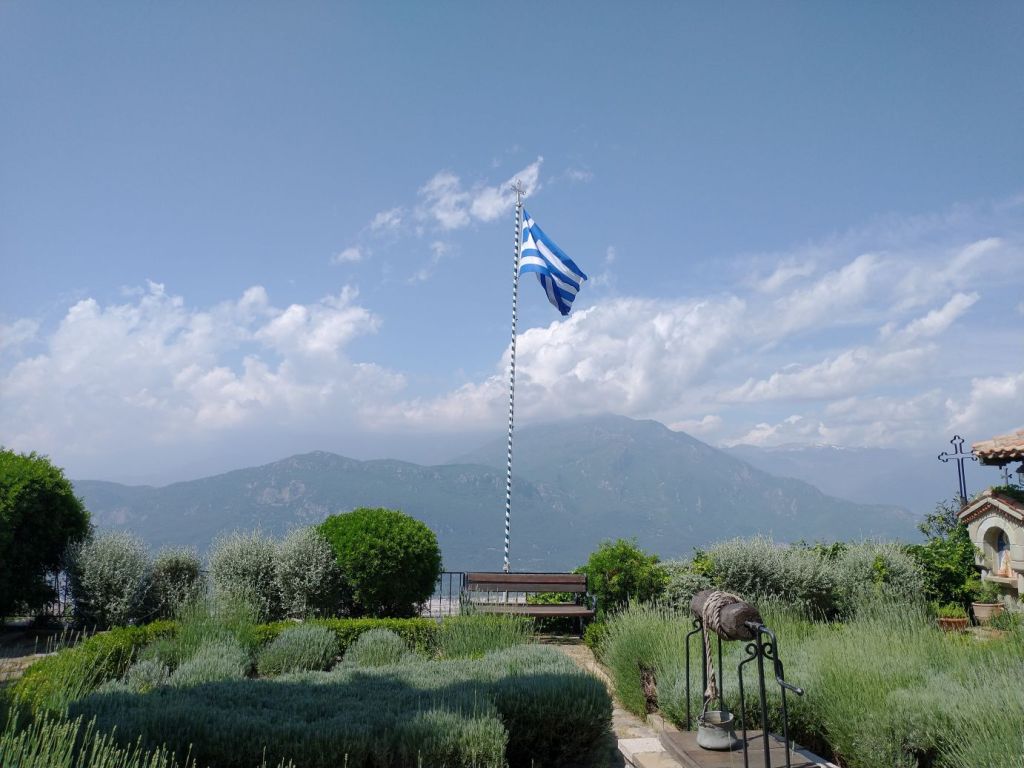
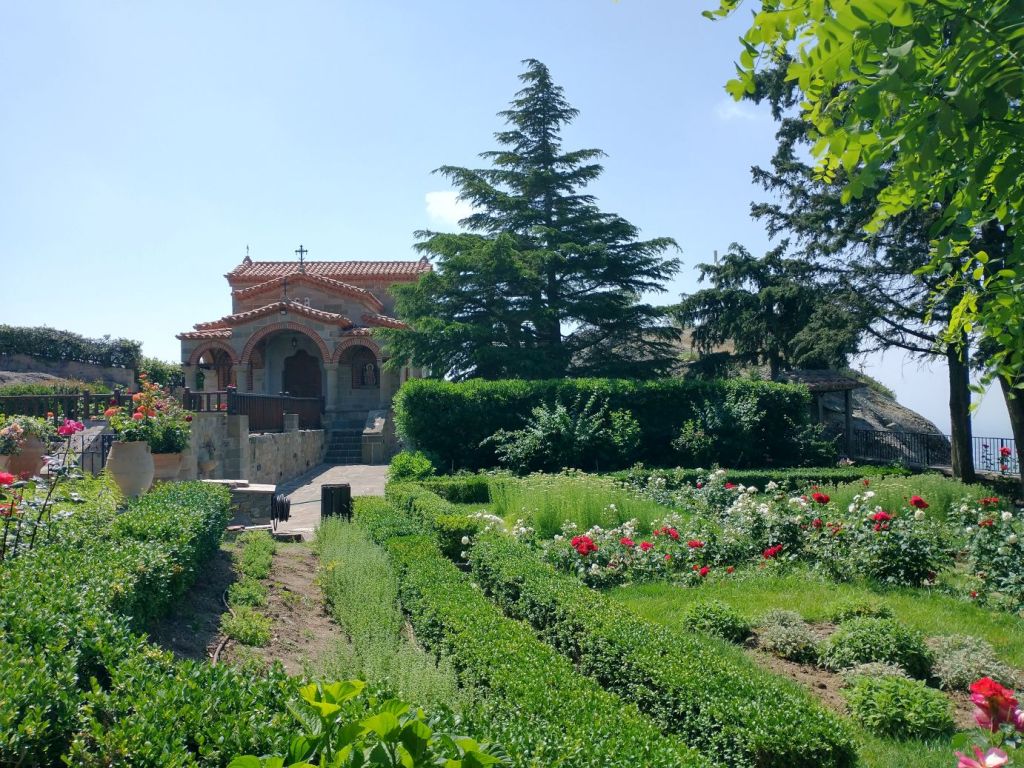
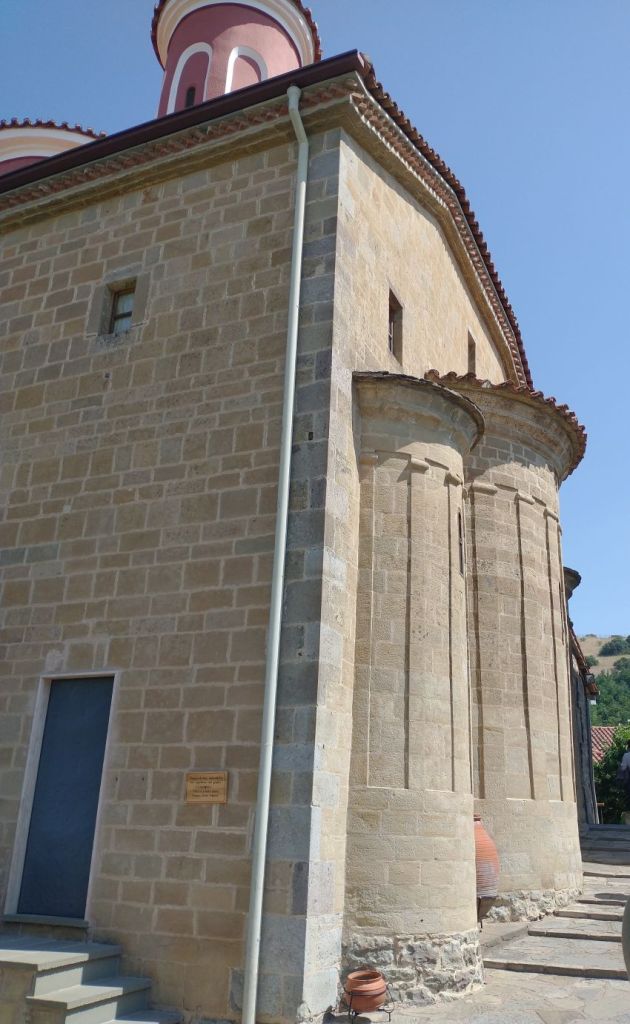
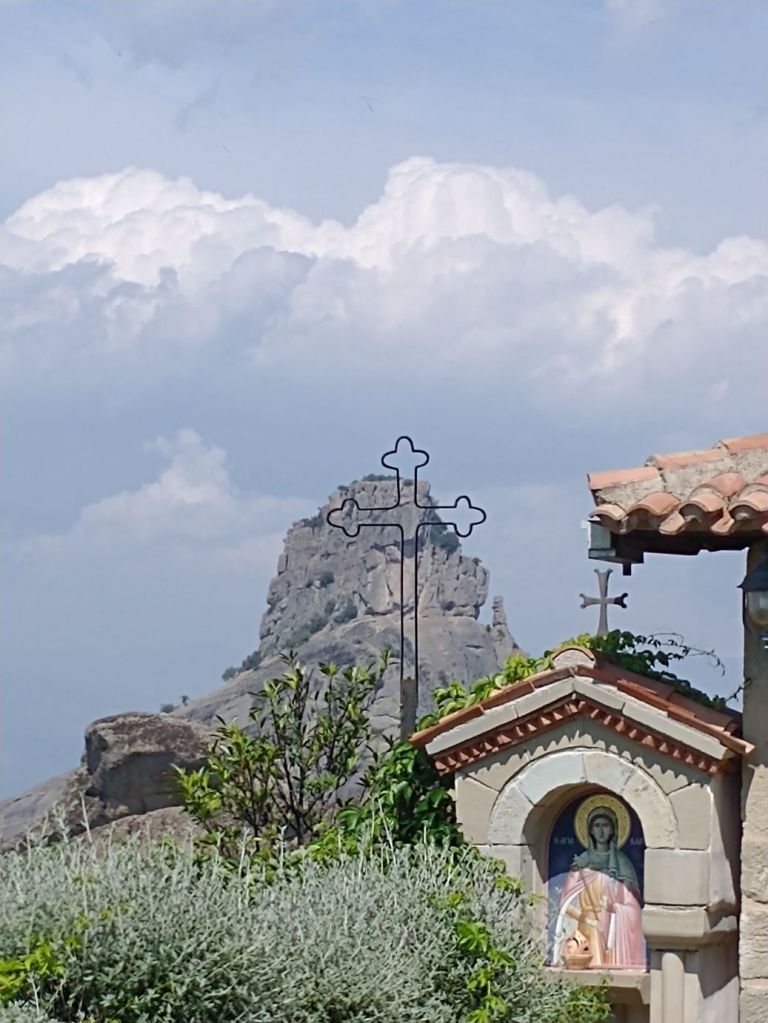
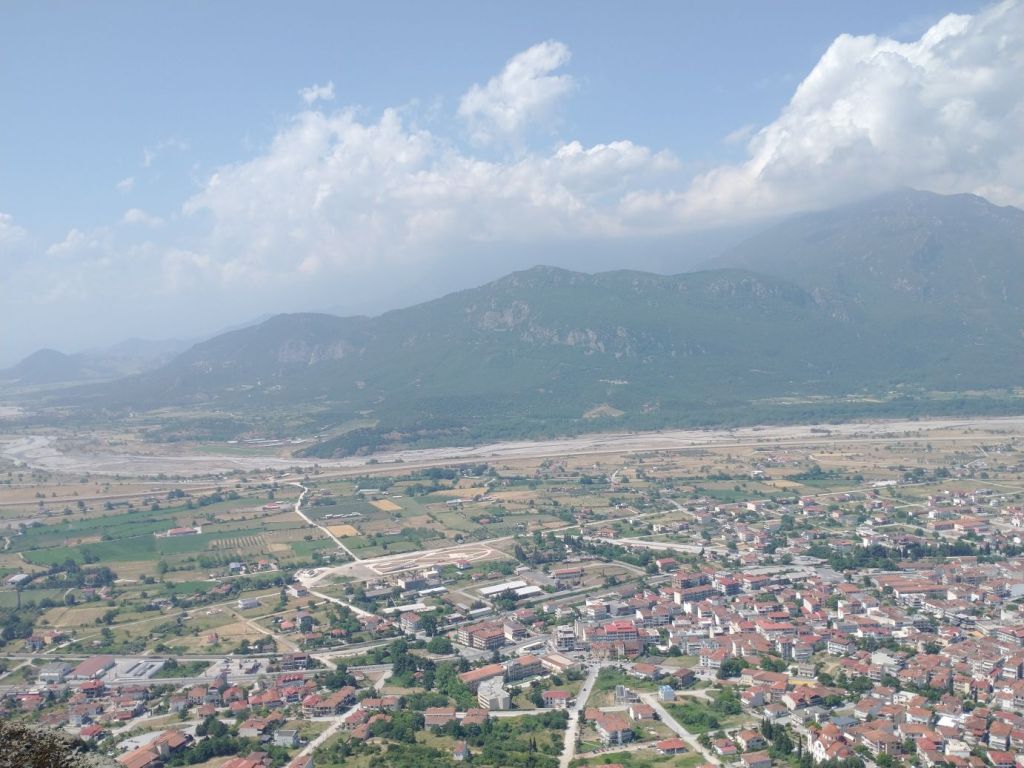
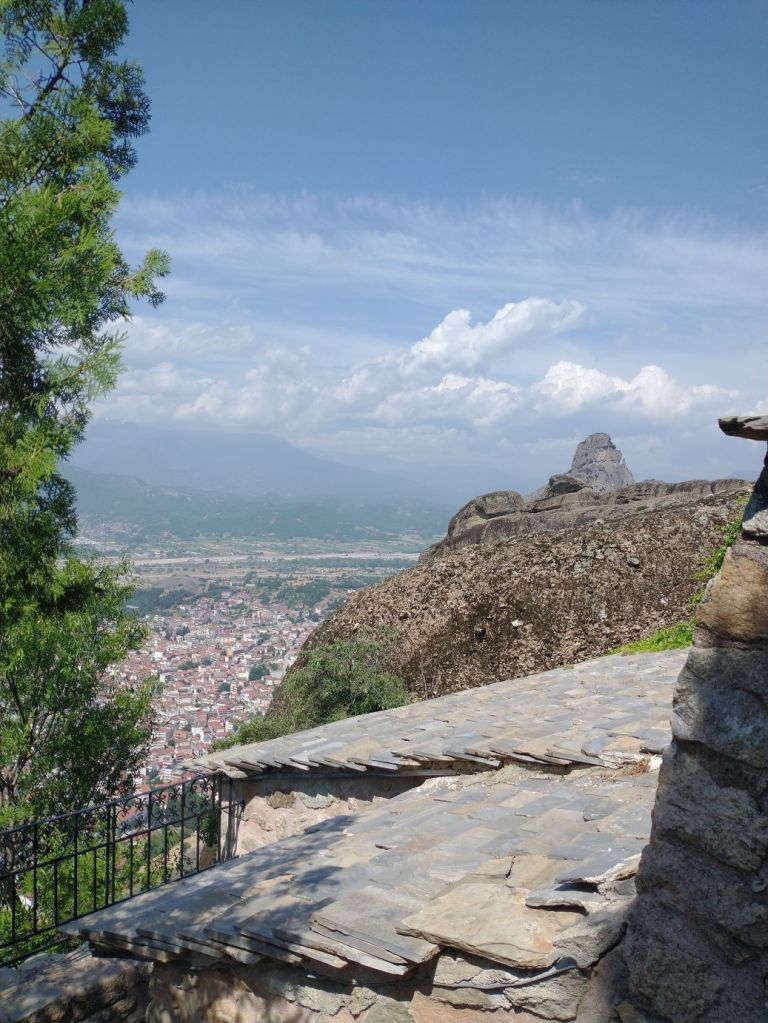
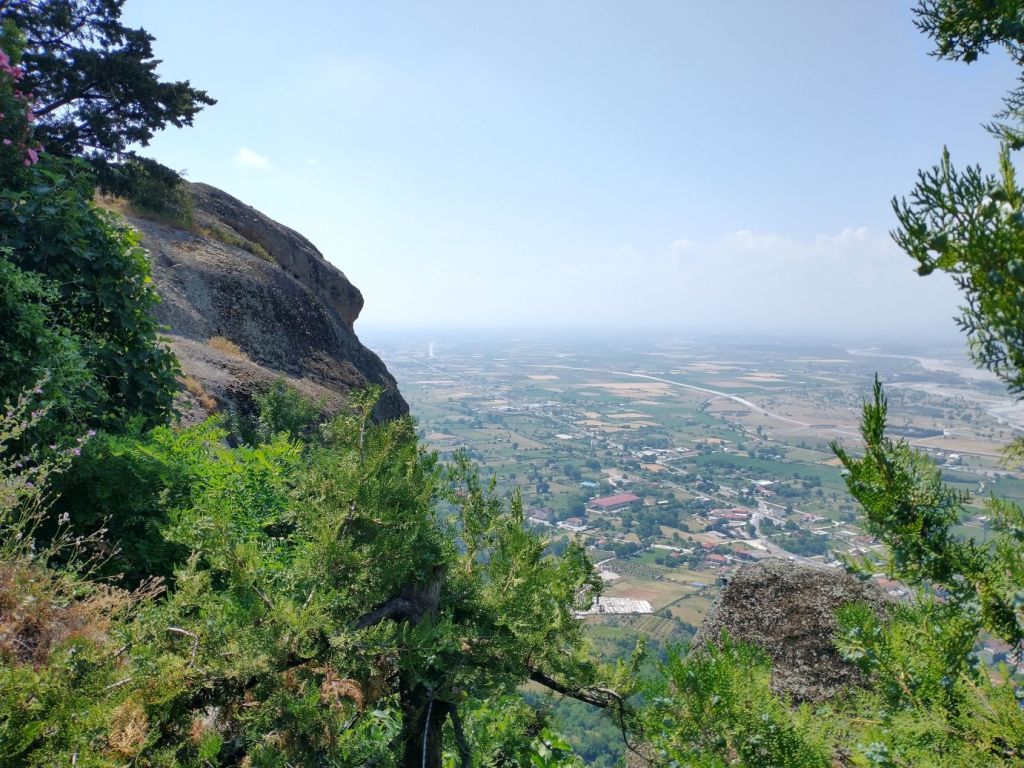
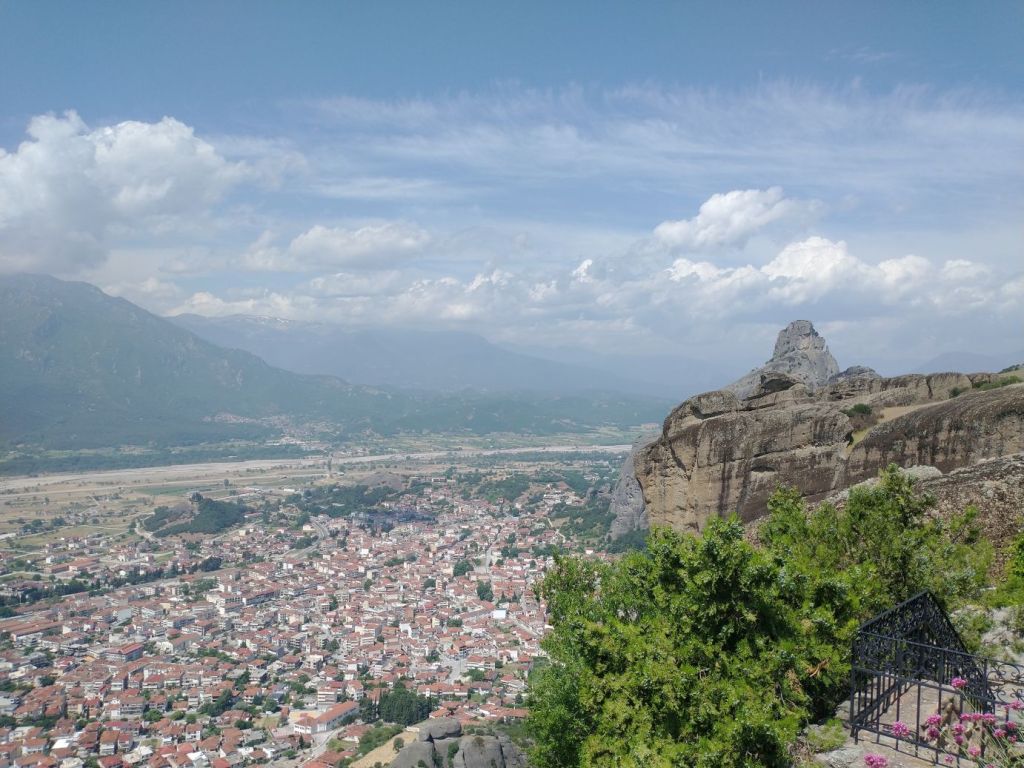
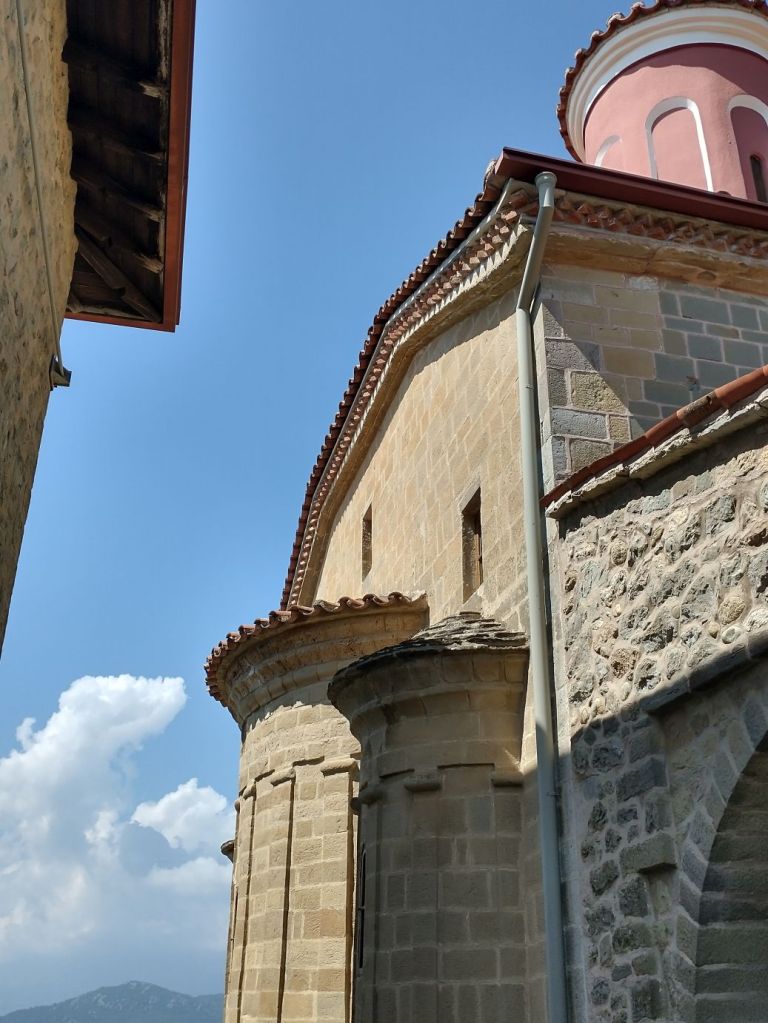
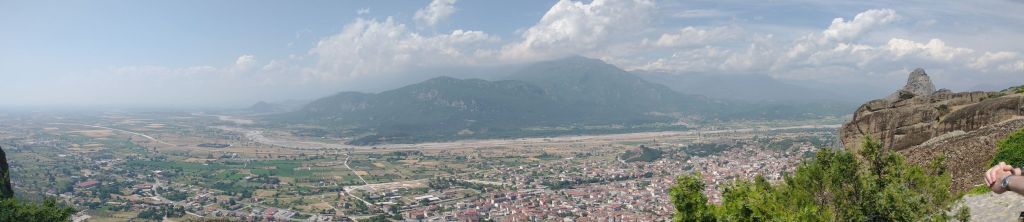
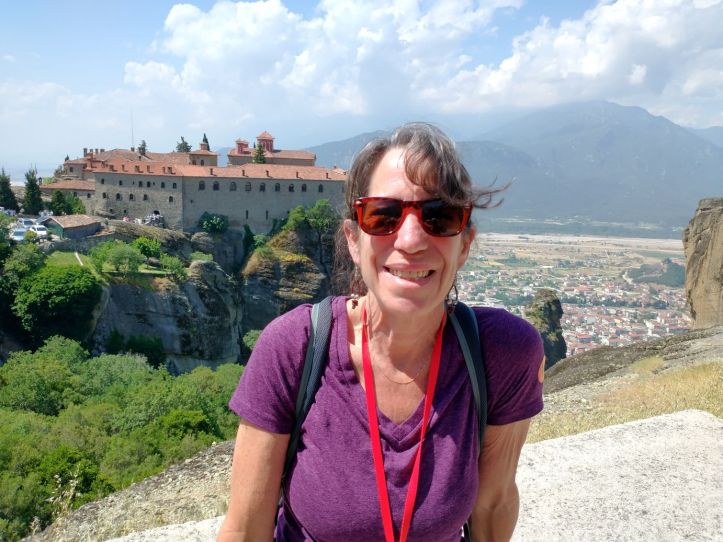
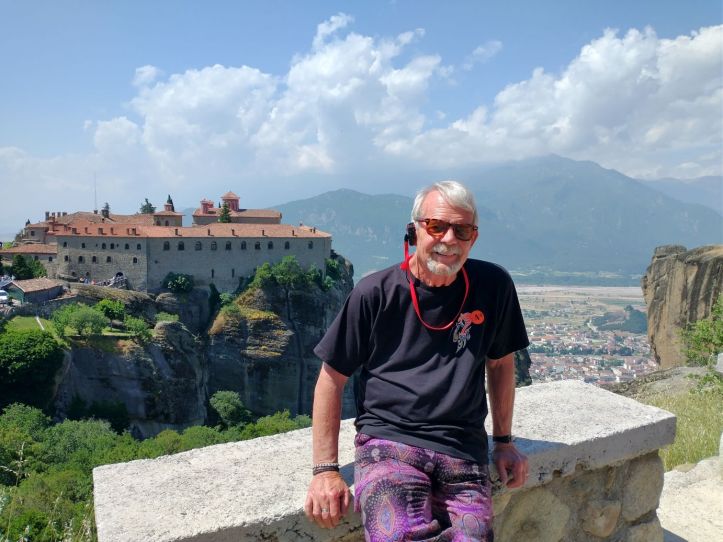
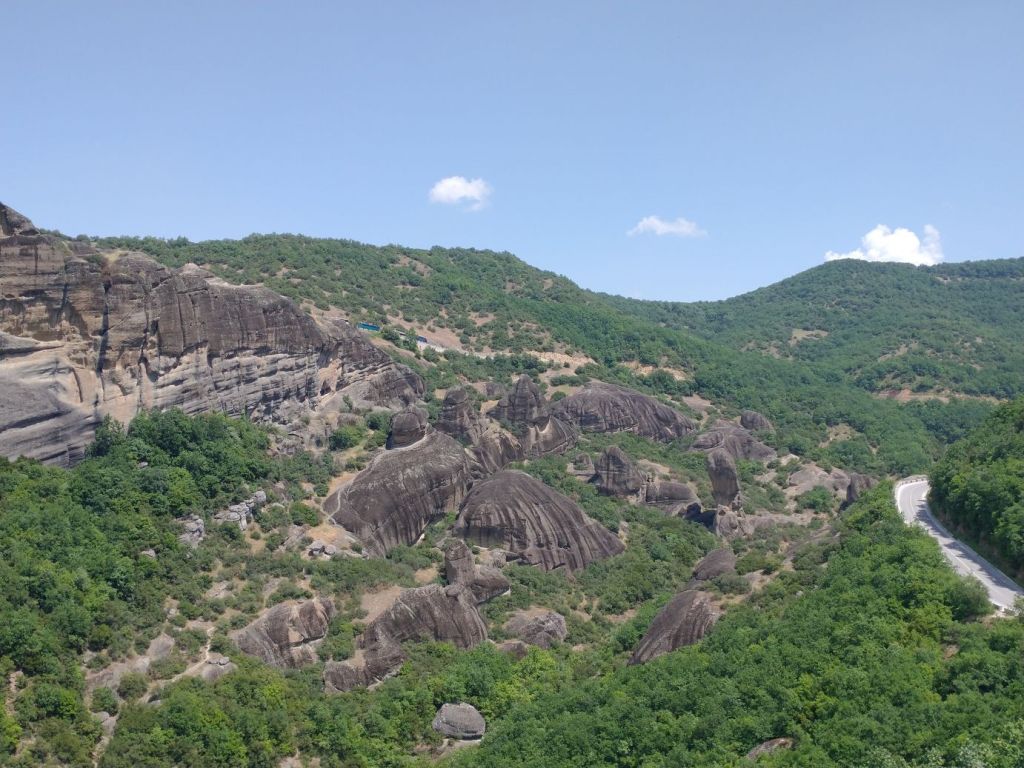
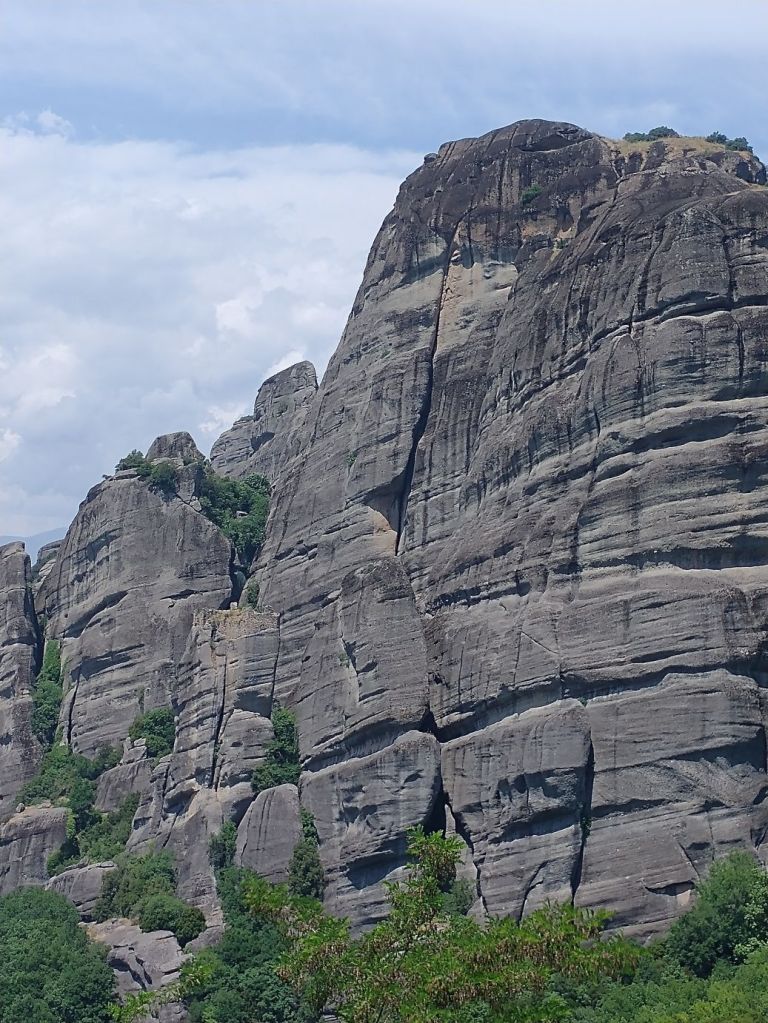
This place is hopping – and filling up fast – which means we want outta there. Finding Giorgos, we tell him we’ll meet him outside so that he doesn’t have to worry he lost us while he waits for the rest of the group. Here, in the now peace and quiet between tour groups, we stop for more incredible views not only of St. Stephan, but also of the surrounding craggy cliffs and mountains all around us.
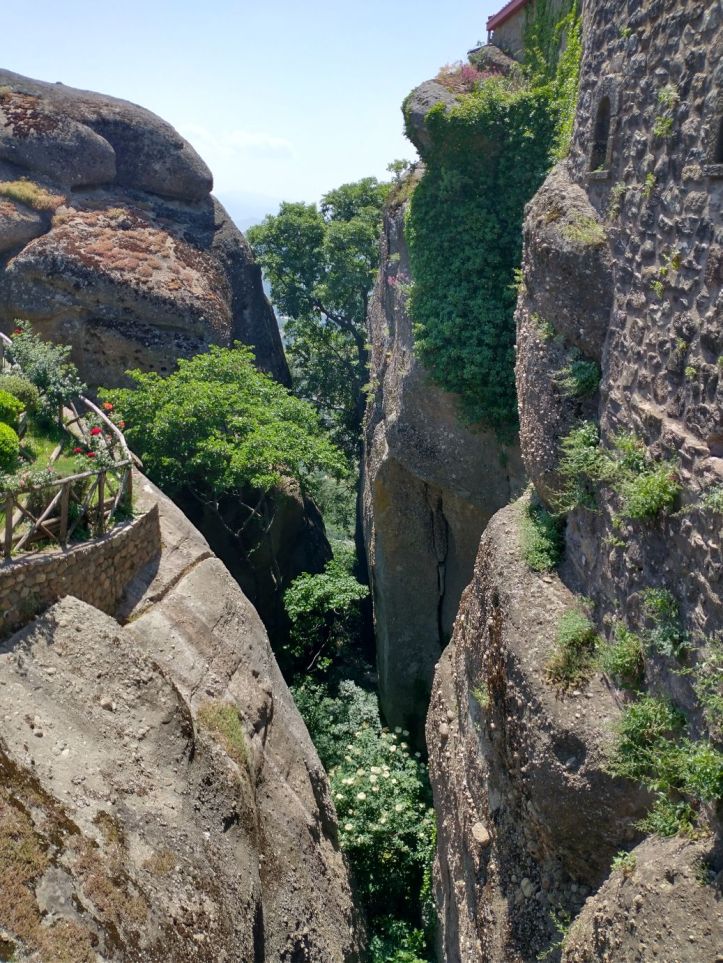
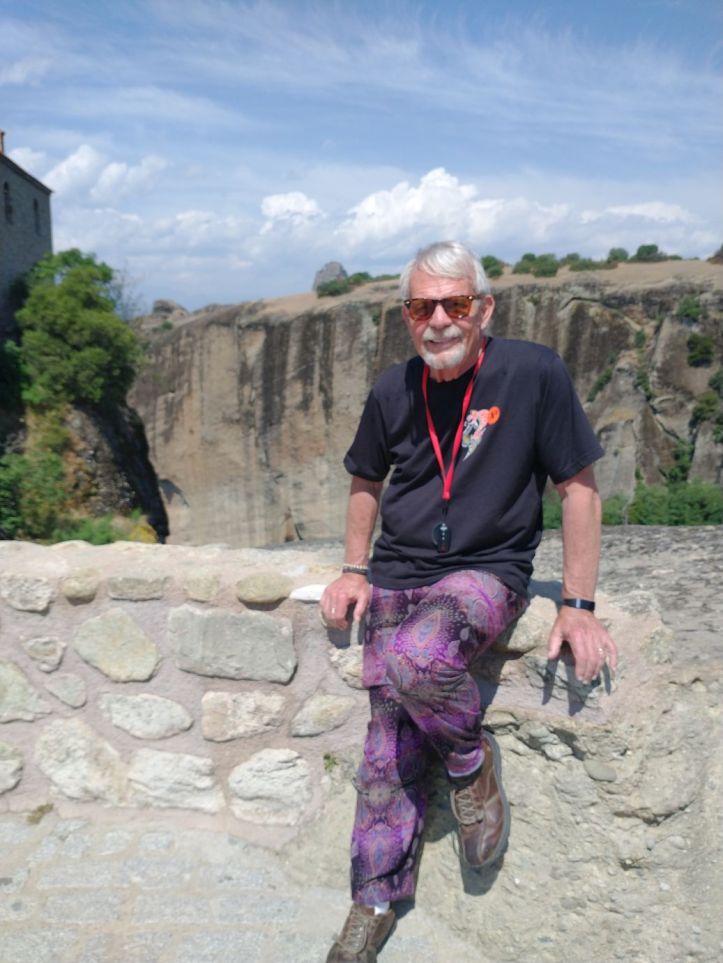
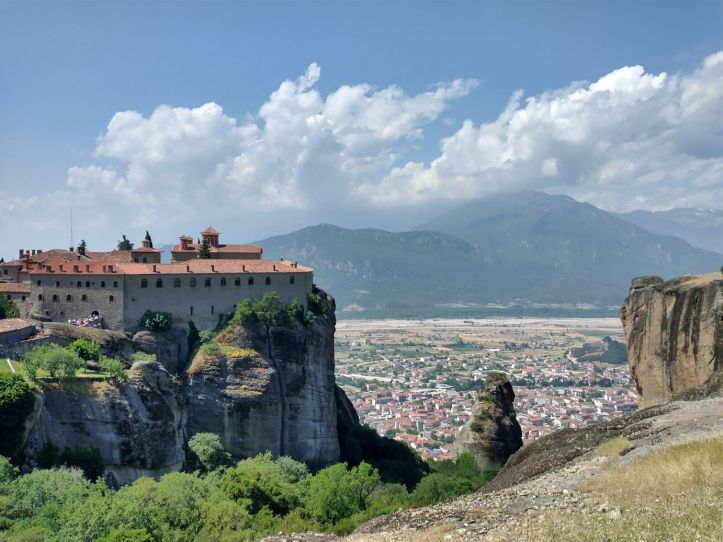
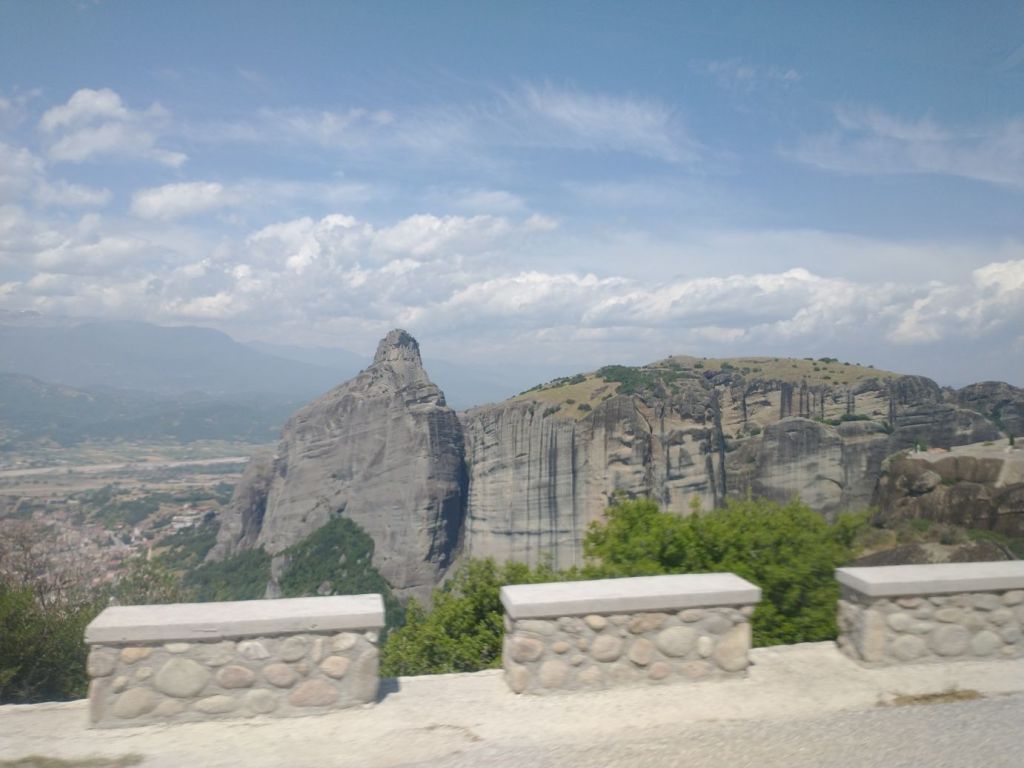
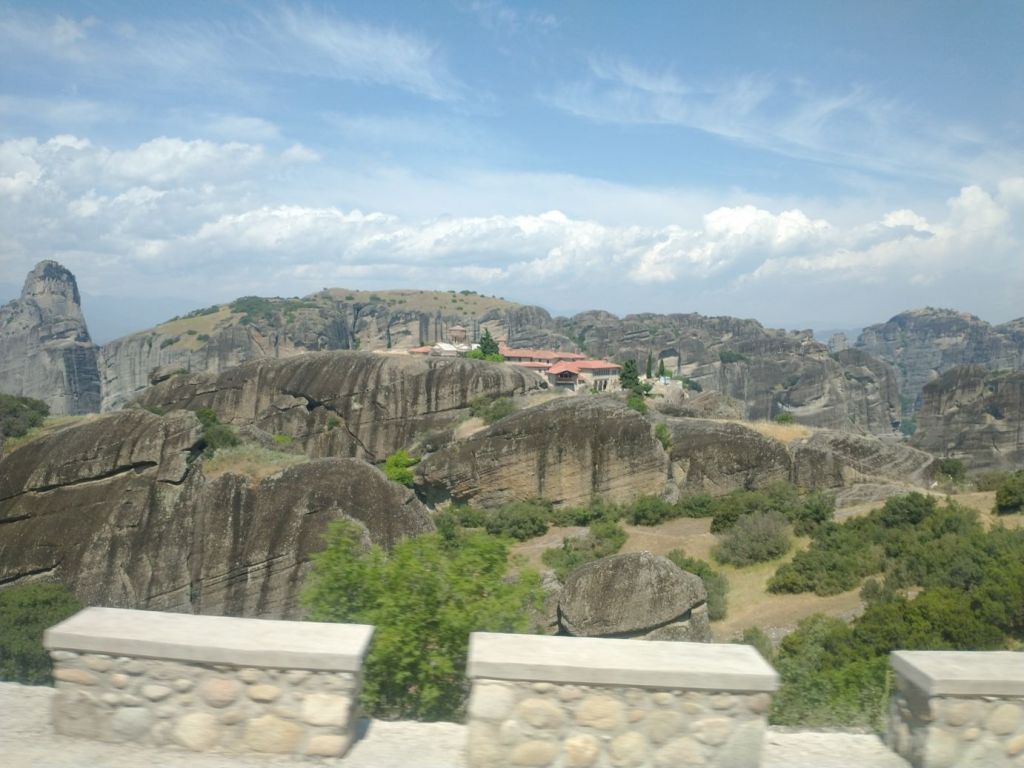
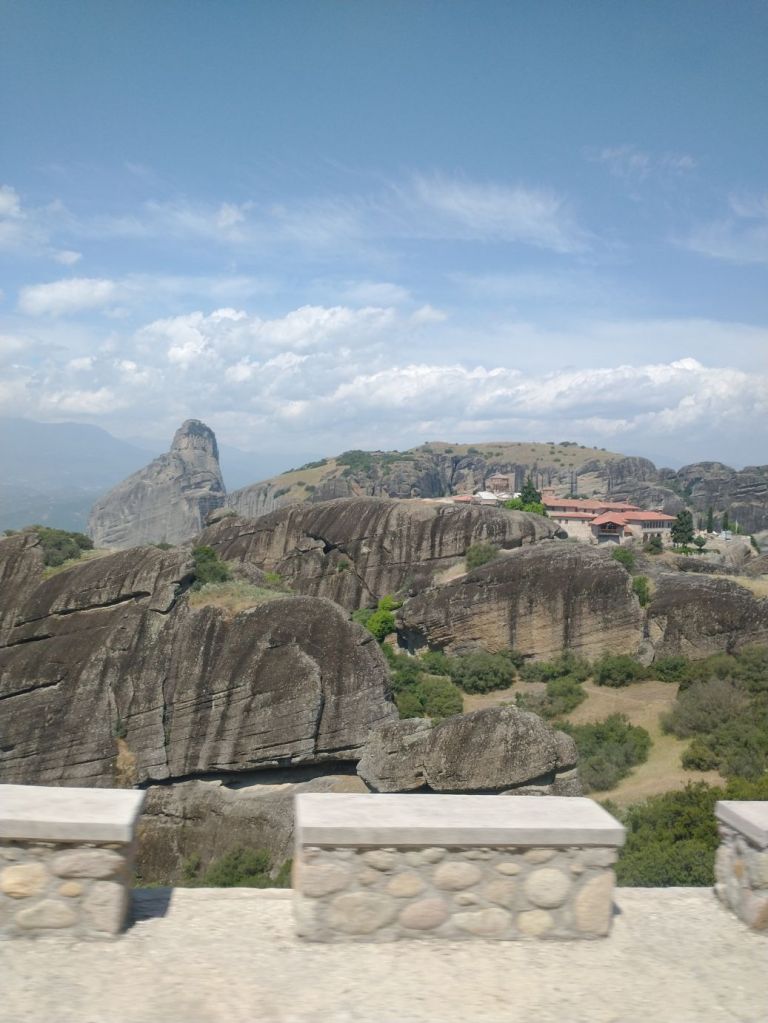
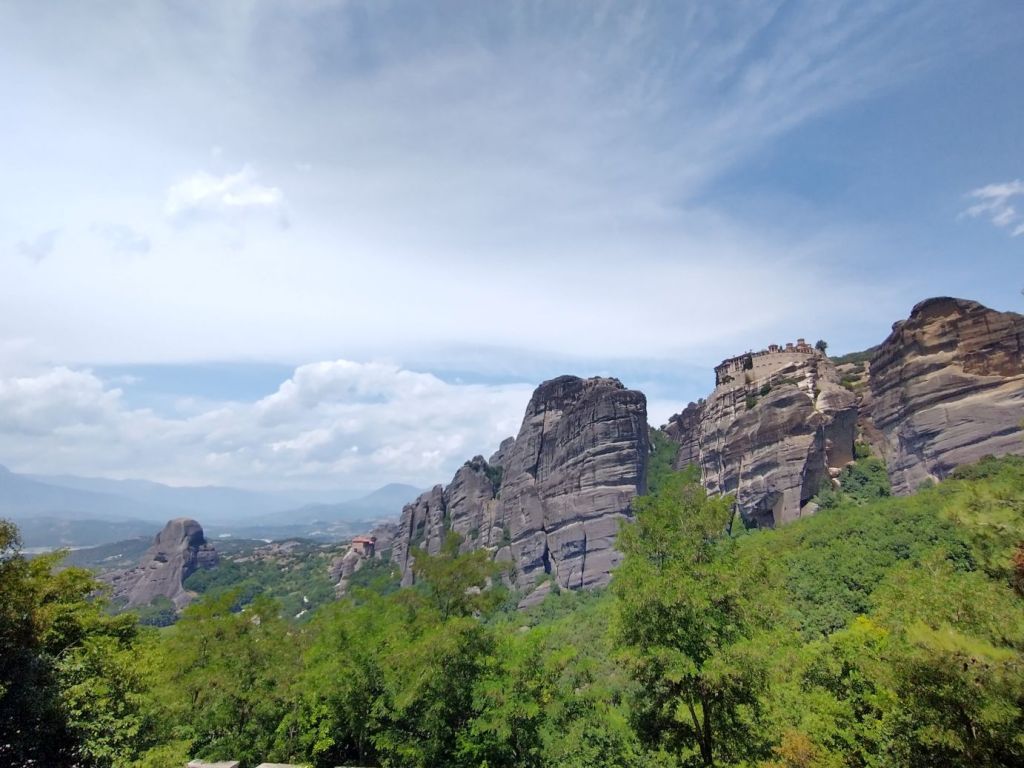
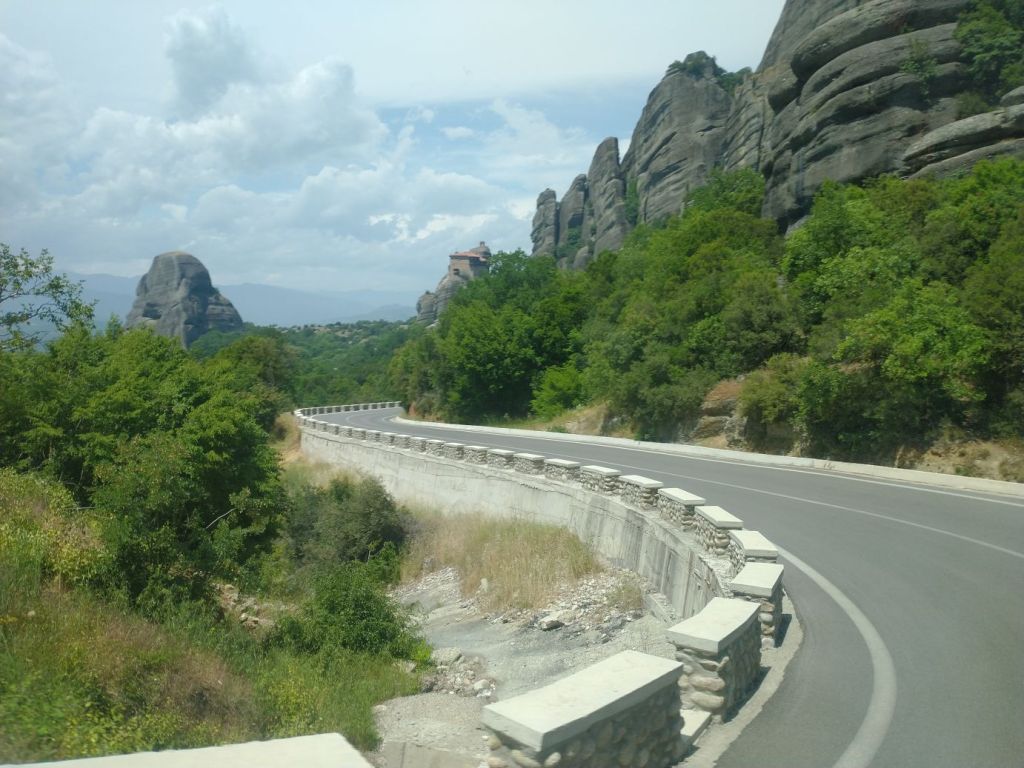
Hitting the road once more, we are just immersed in craggy cliffs and crazy Monasteries perched atop them. We can see the Great Meteoron Holy Monastery of the Transfiguration of the Saviour – the biggest of them all, set on highest peak, the Holy Monastery of Saint Nicholas Anapafsas at Meteora – a little narrow building sticking straight up on an equally narrow stalagmite, and finally the Monastery of Varlaam which is below and across from the Monastery of Rousanos – St. Barbara, our final monastery stop of the day.
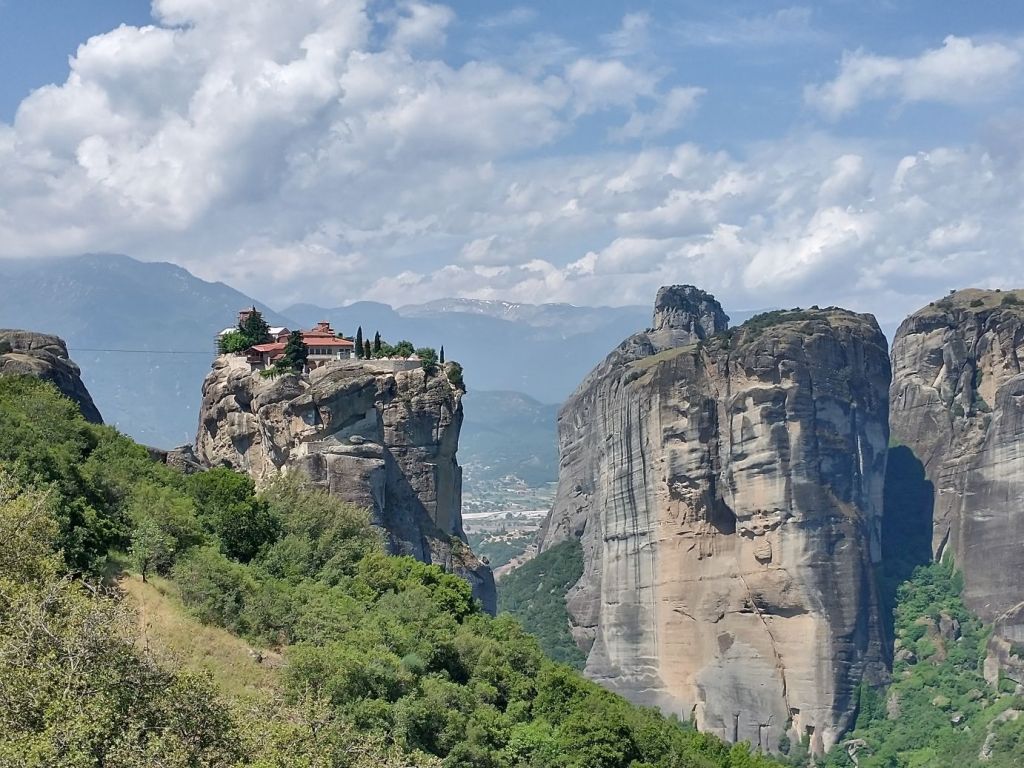
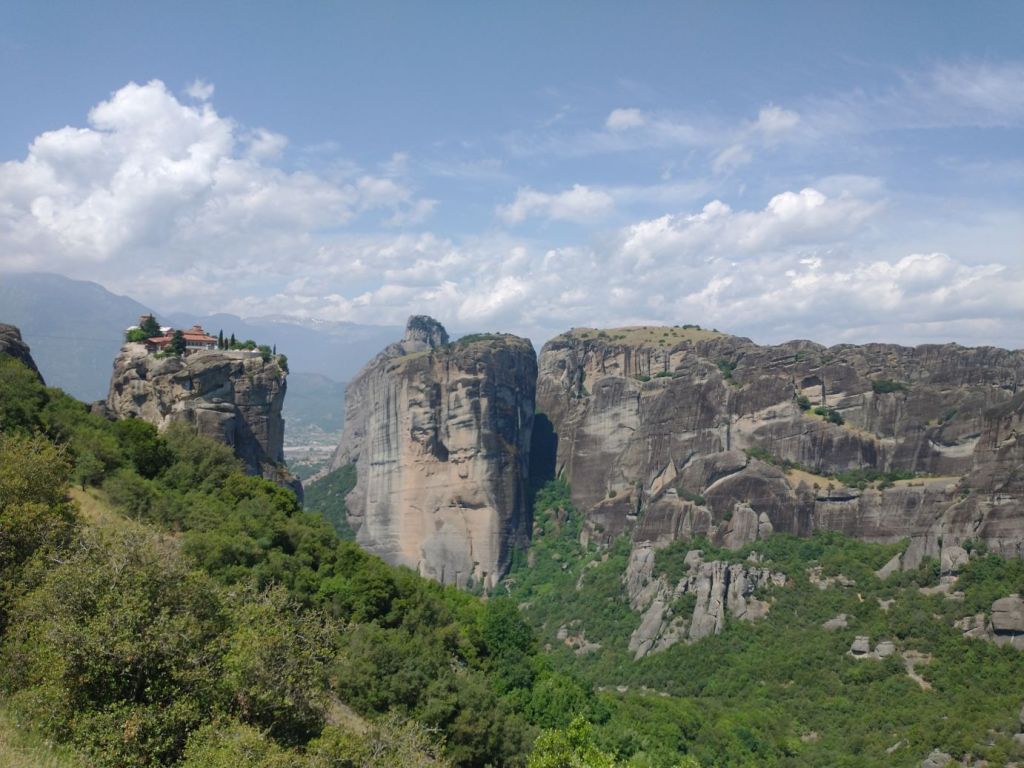
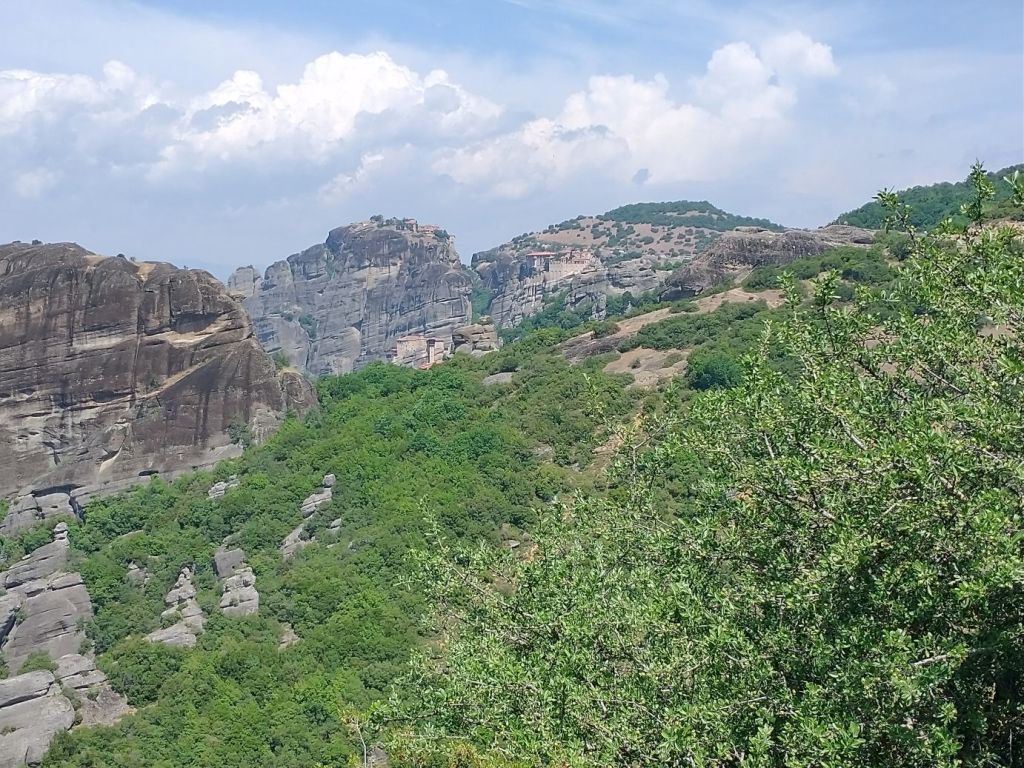
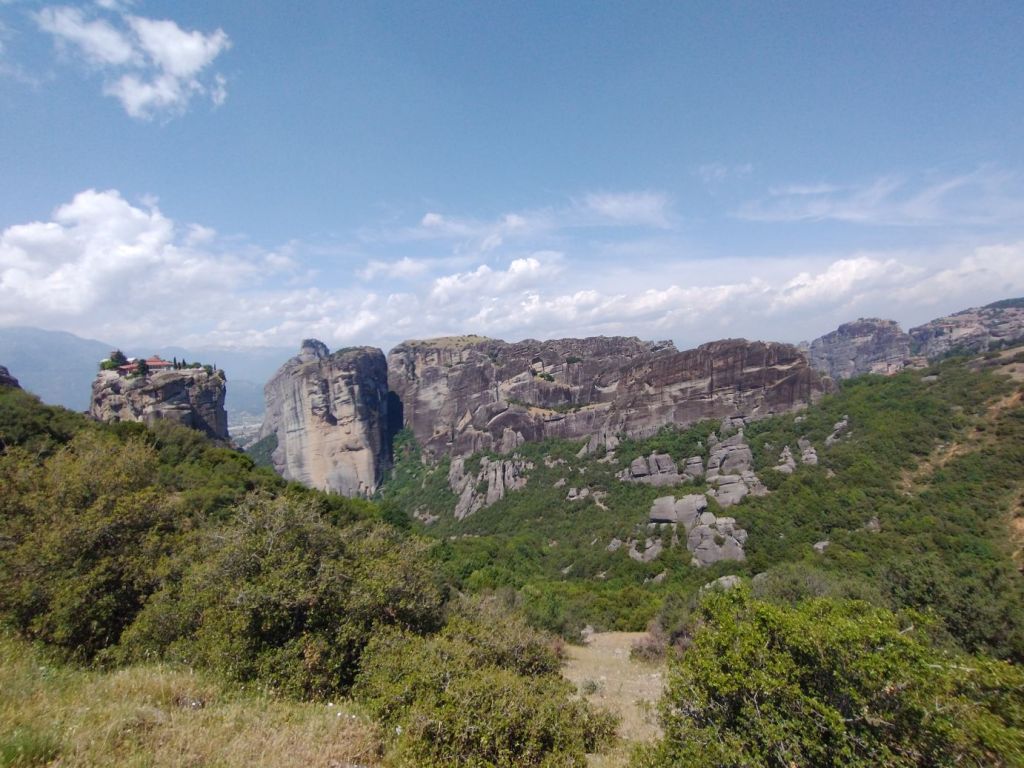
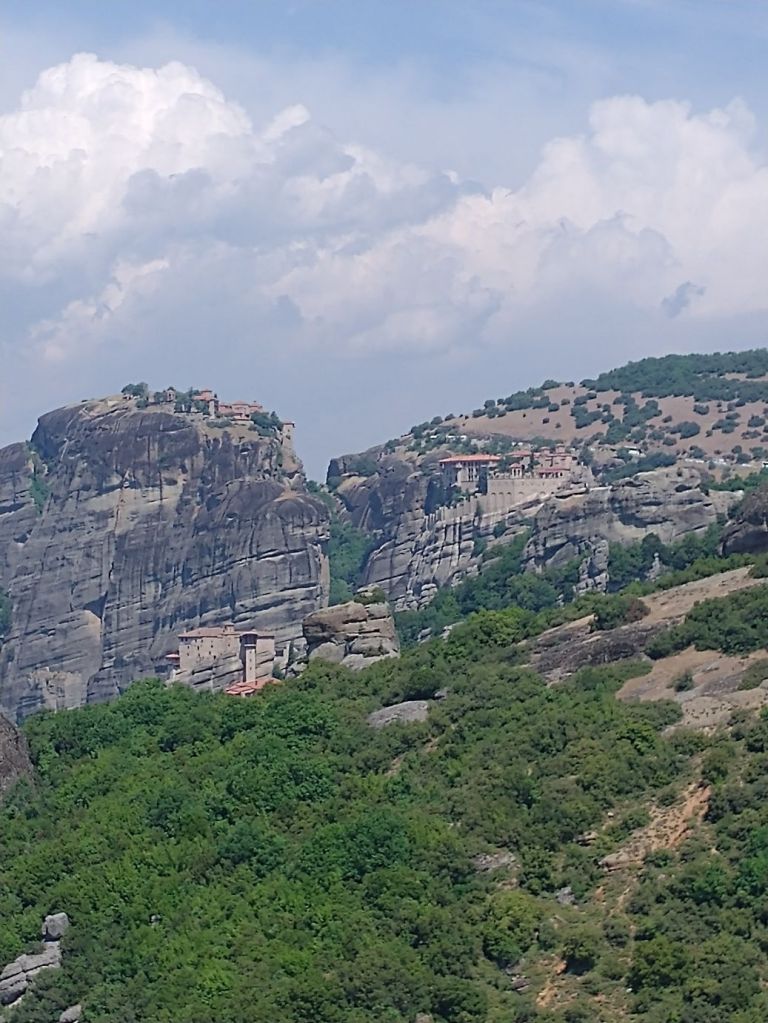
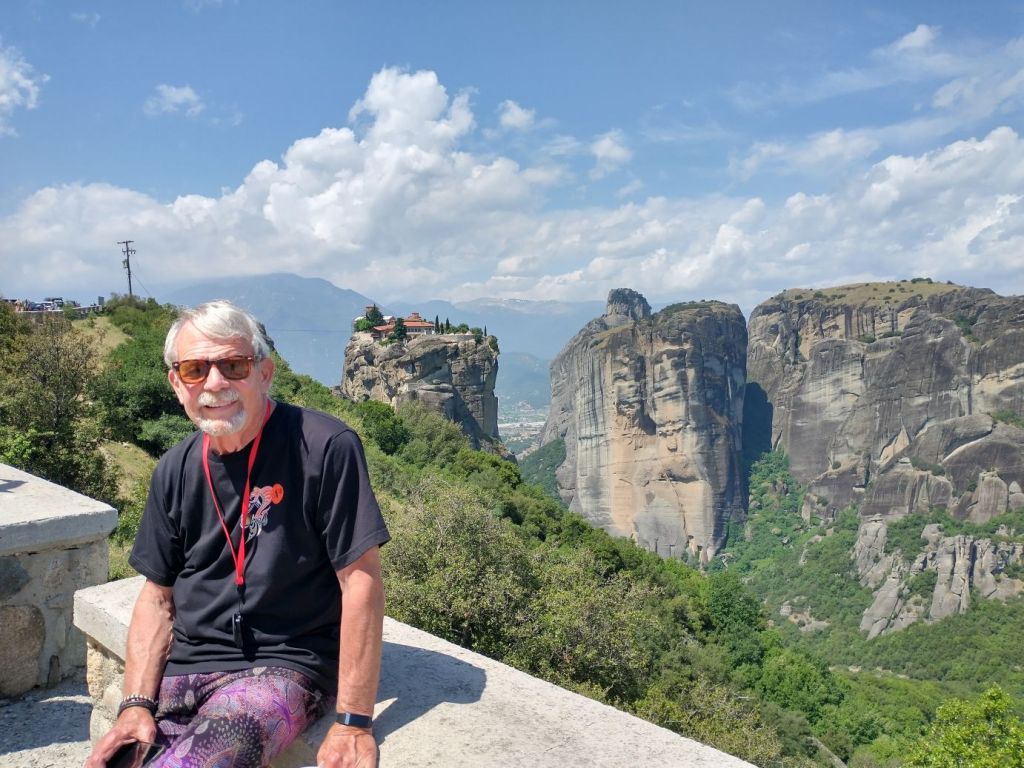
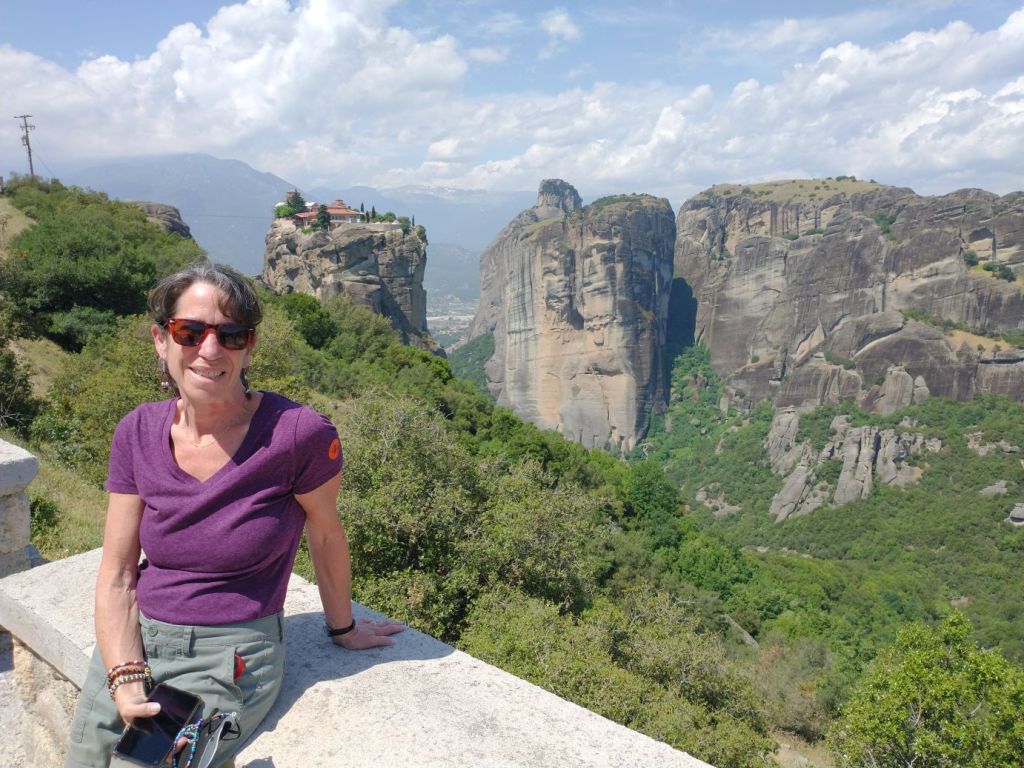
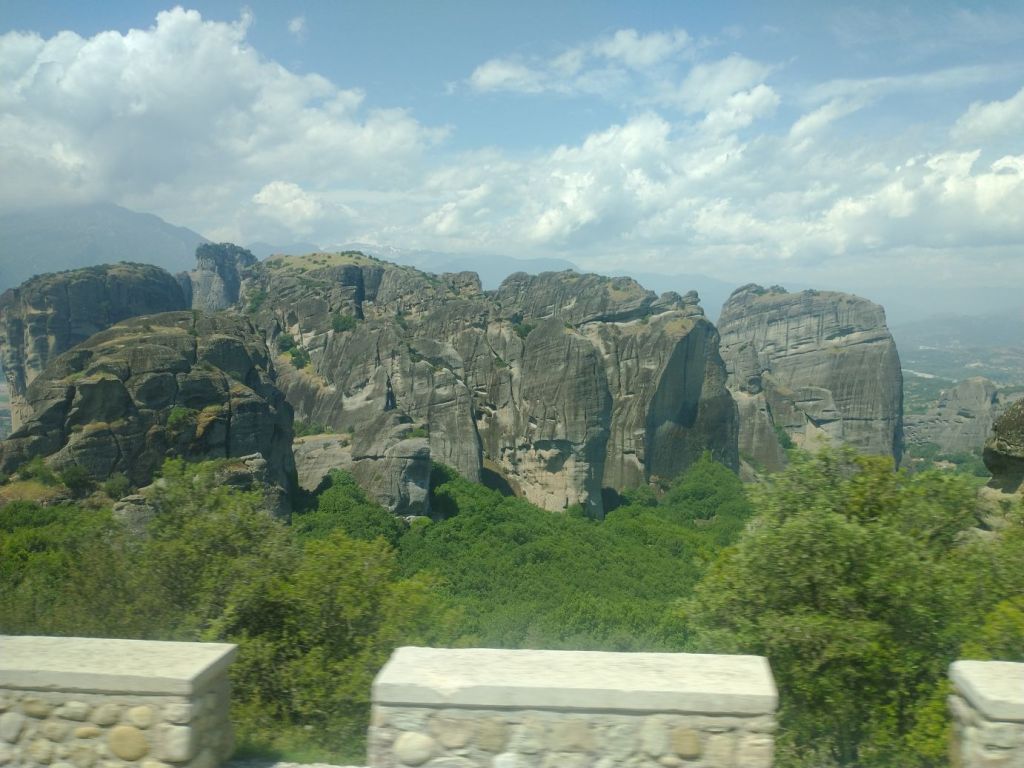
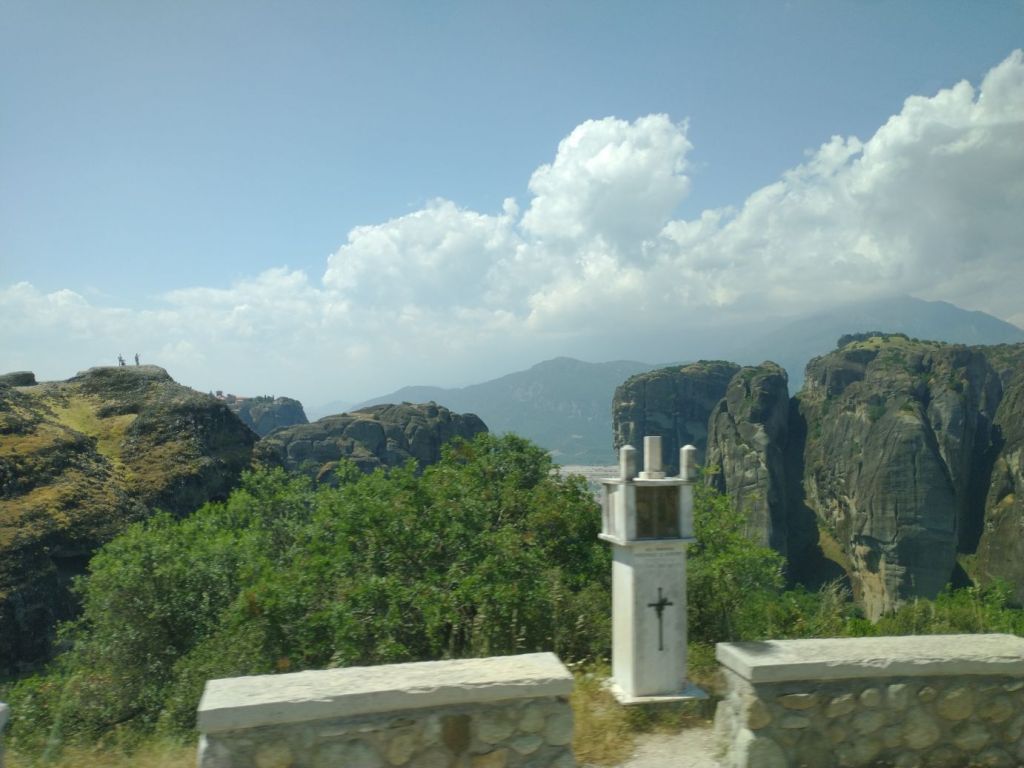
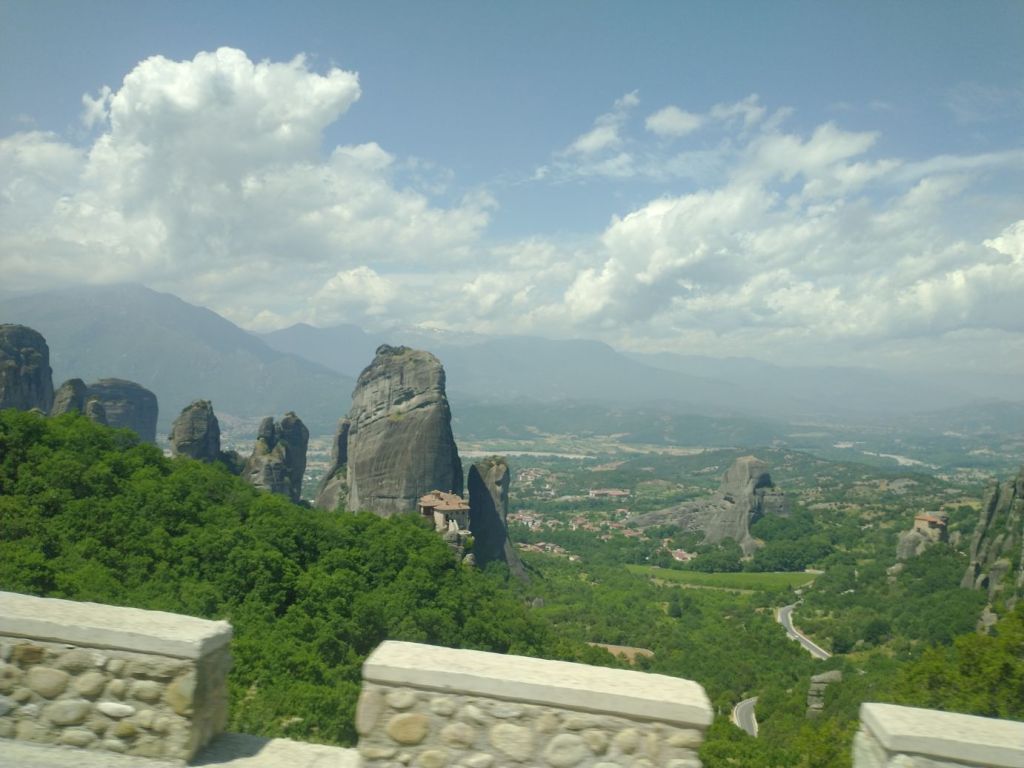
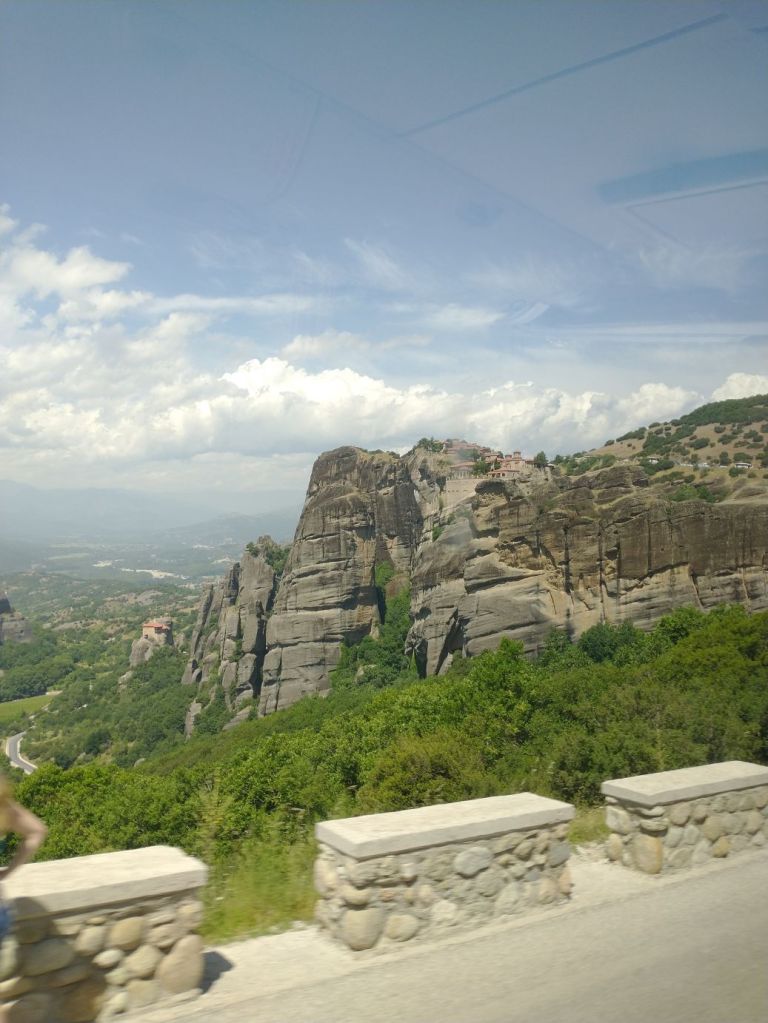
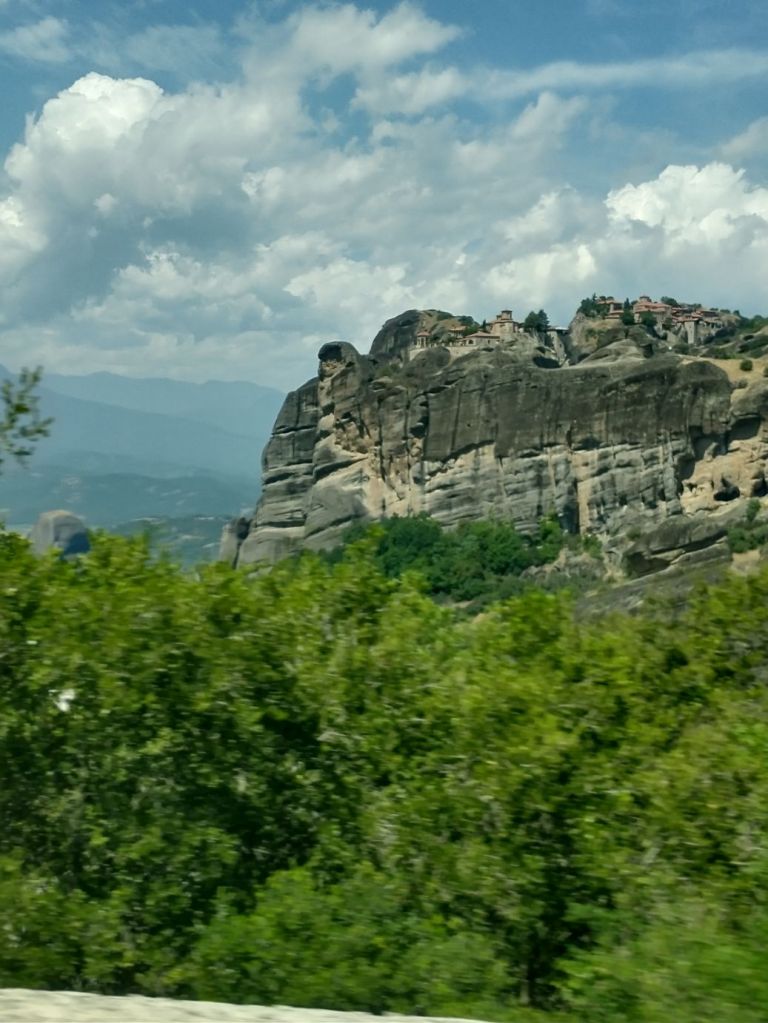
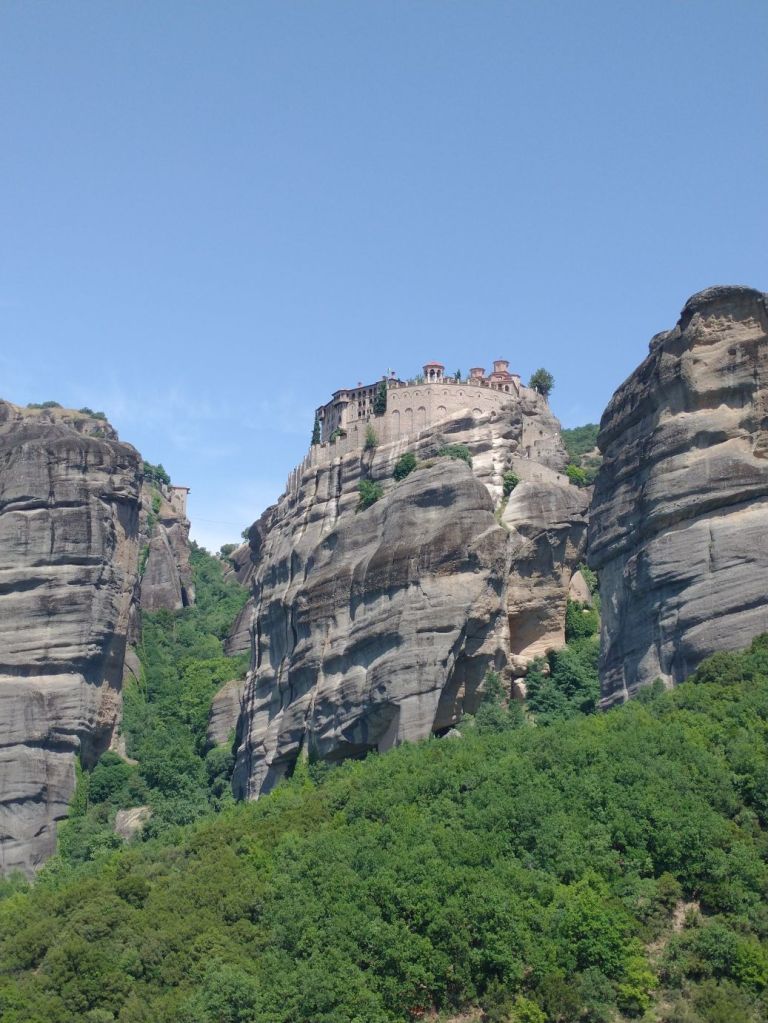
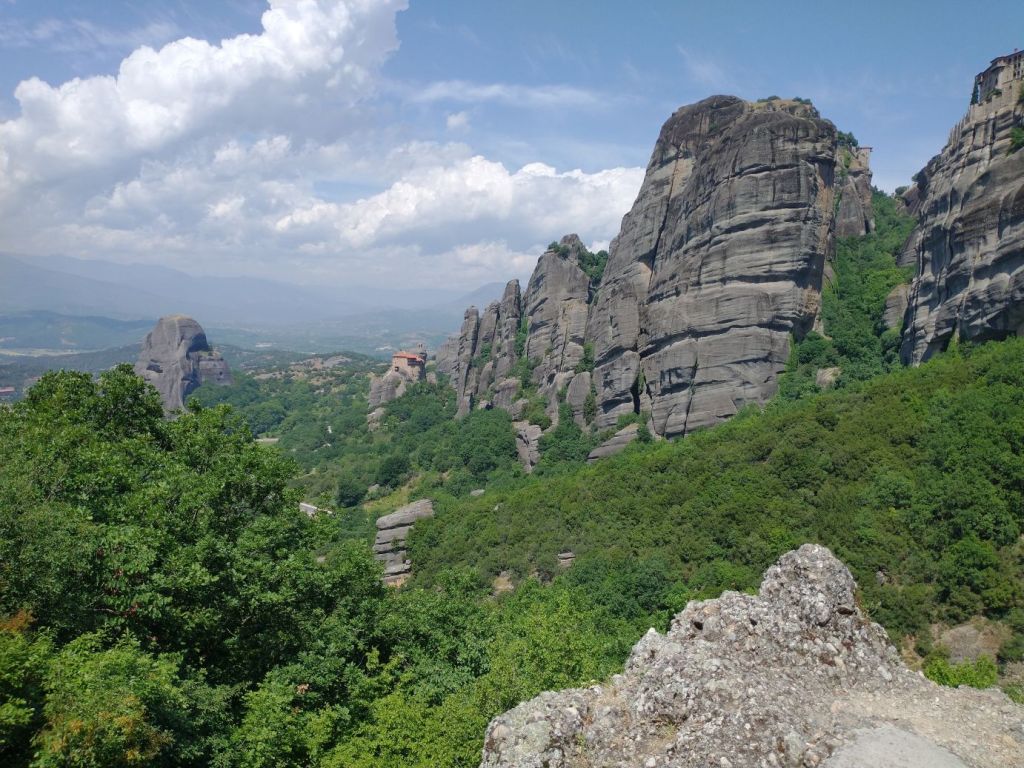
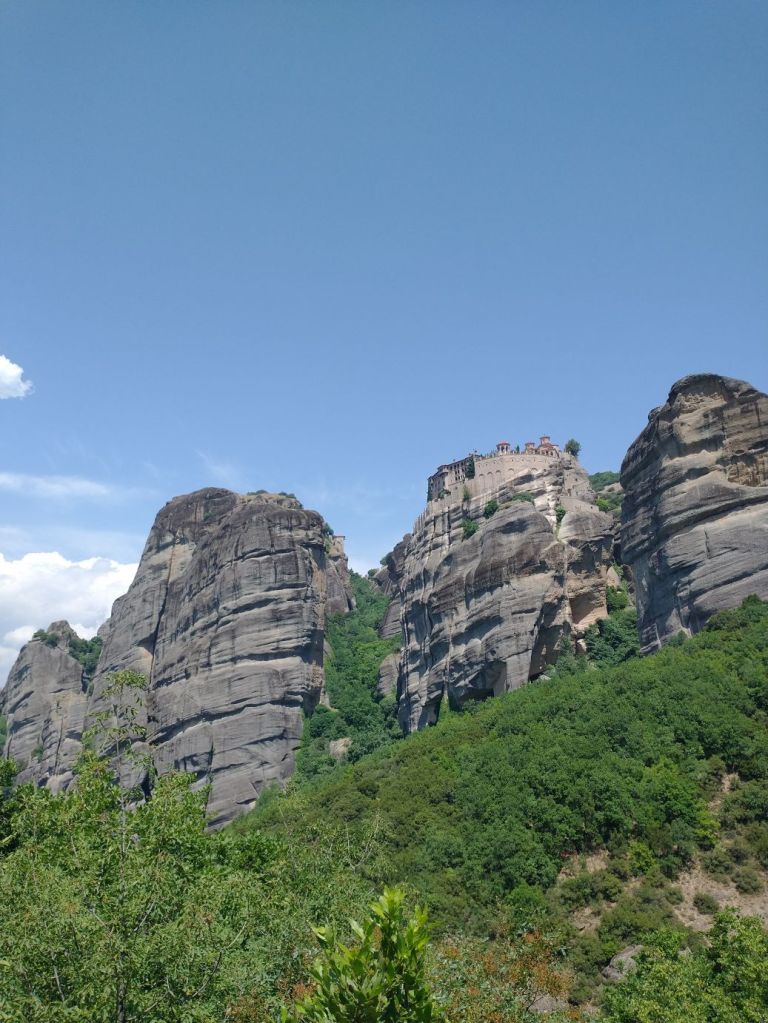
This stop is a little more challenging as there are 100 steps to climb before accessing the monastery, which is going to be a little dicey with some of these folks. Gives us more time to snap photos of the gorgeous scenery and the beautiful gardens below the bridge that brings us to the monastery. The long views are just stunning!
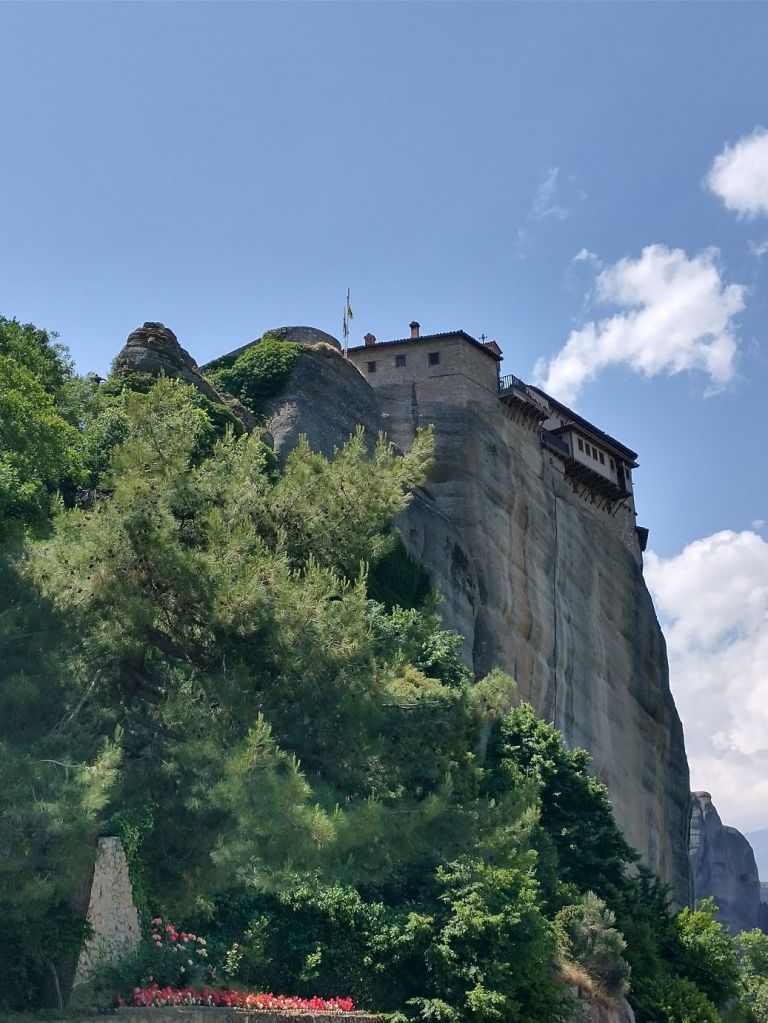
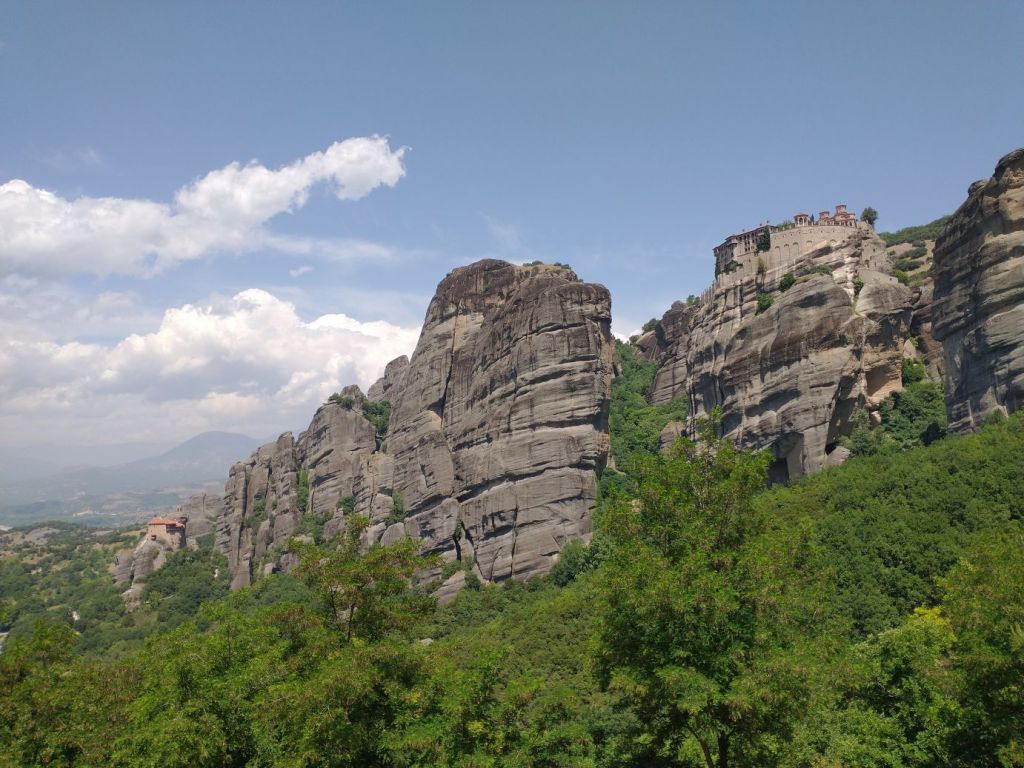
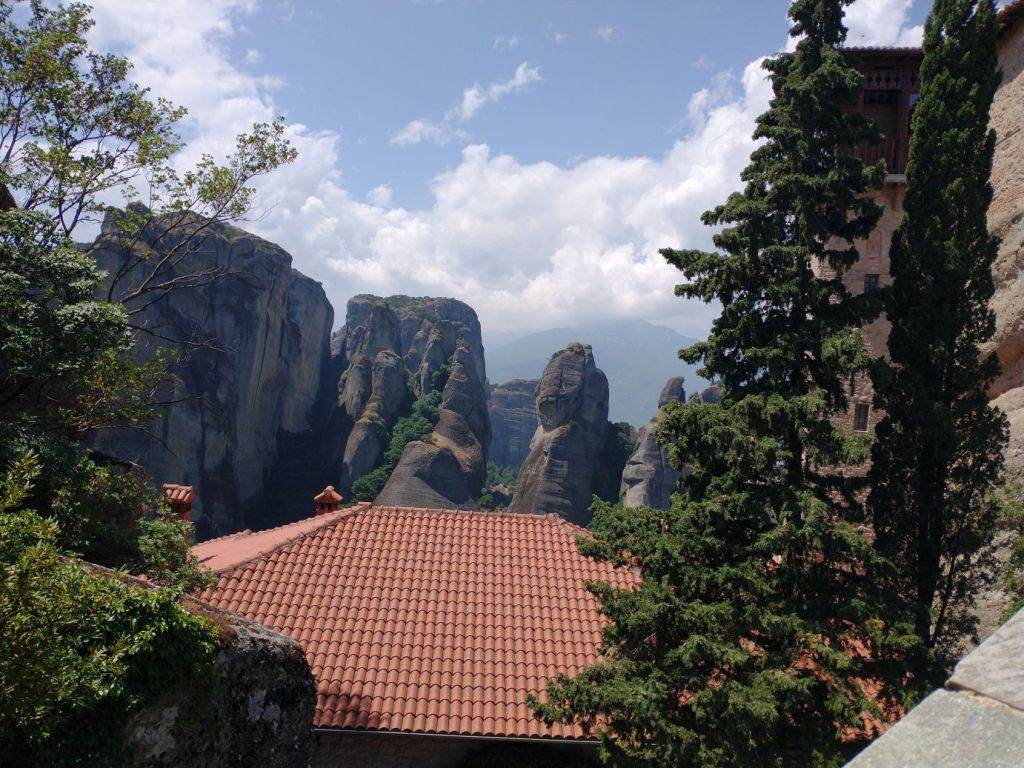
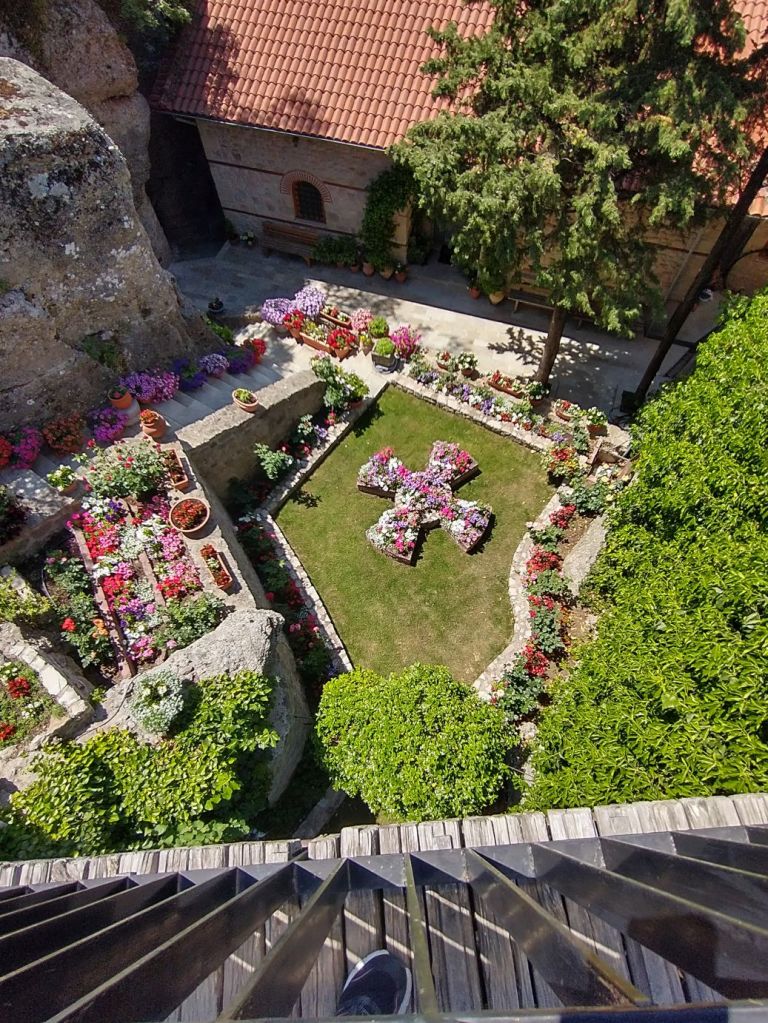
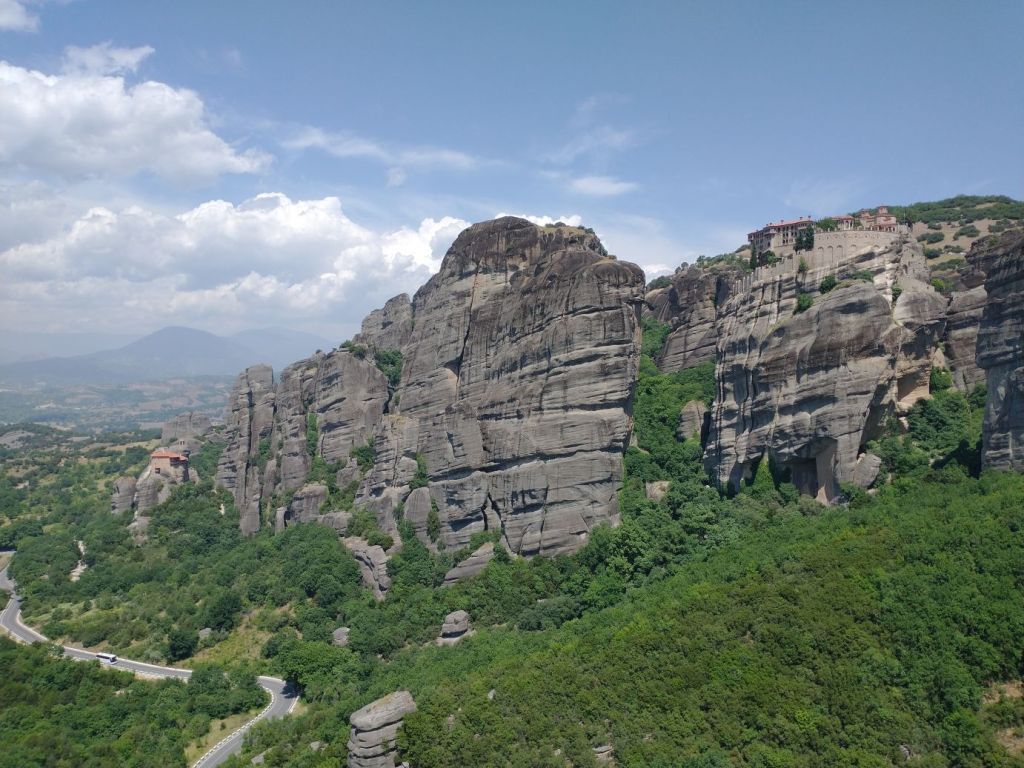
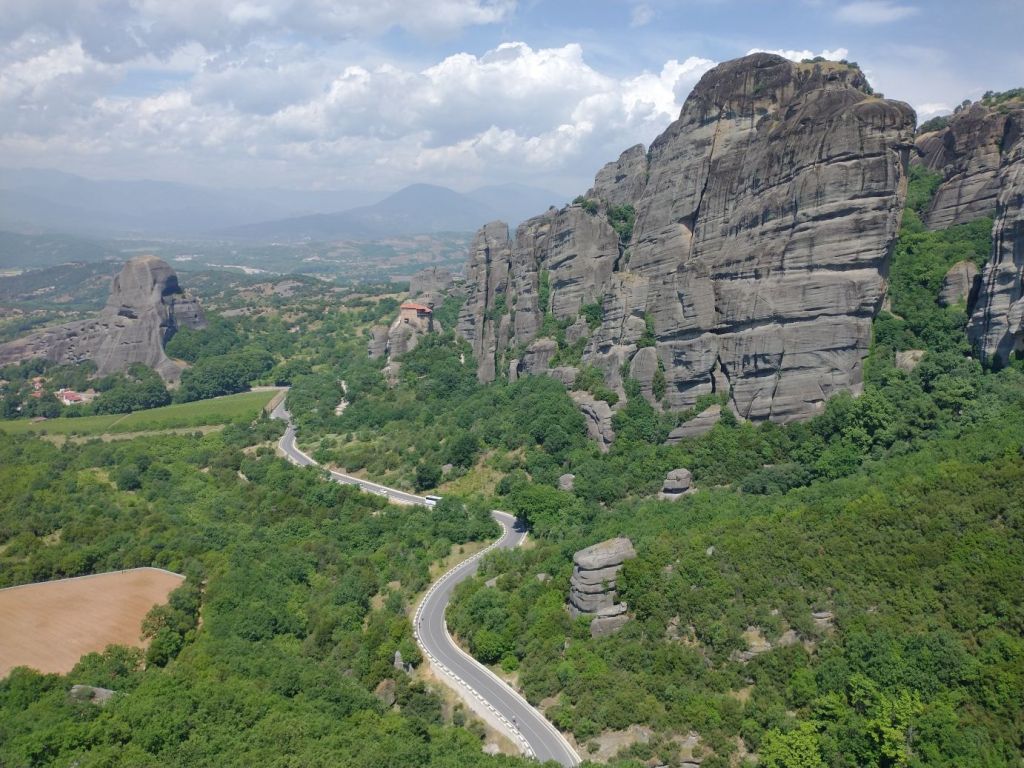
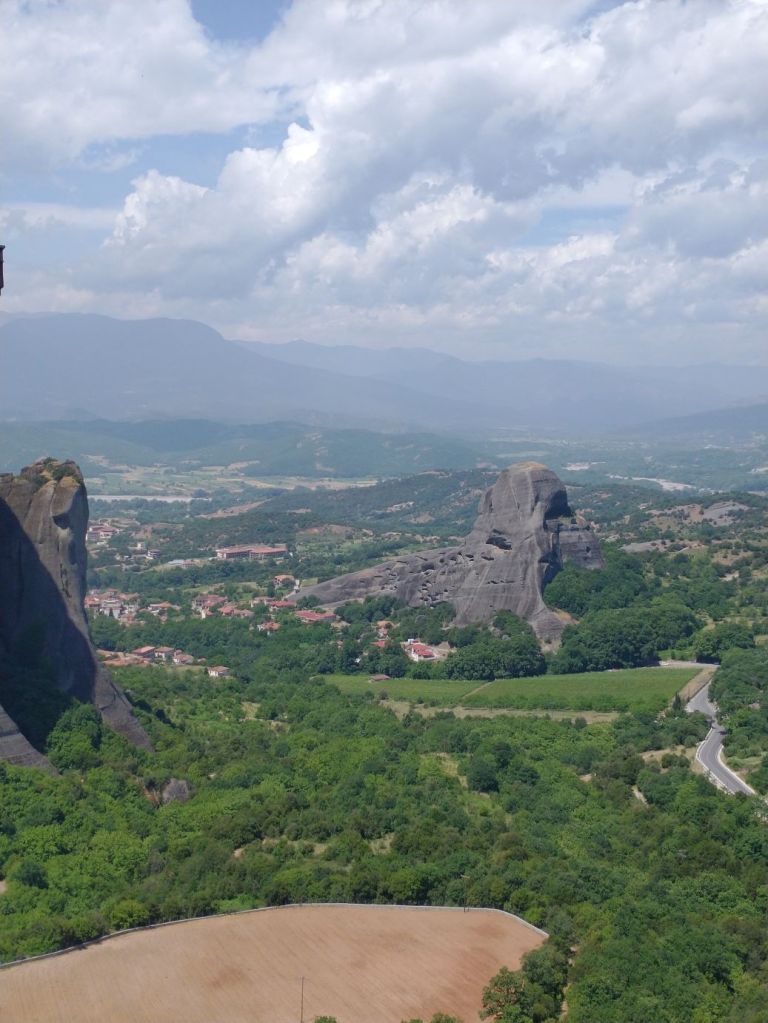

As mentioned previously, the access to the monastery is across a narrow little bridge, but here we get stunning views across the valley – where you can really tell how high up we are in the mountains. Also, we get a great view of the little rope ladder hanging from the side of the monastery, which was originally the only way to access it. Seriously! Between these little ropes and a mesh basket sort of contraption where monks sat and were hoisted up – there was no other way to get into these monasteries. Now that’s faith for you!
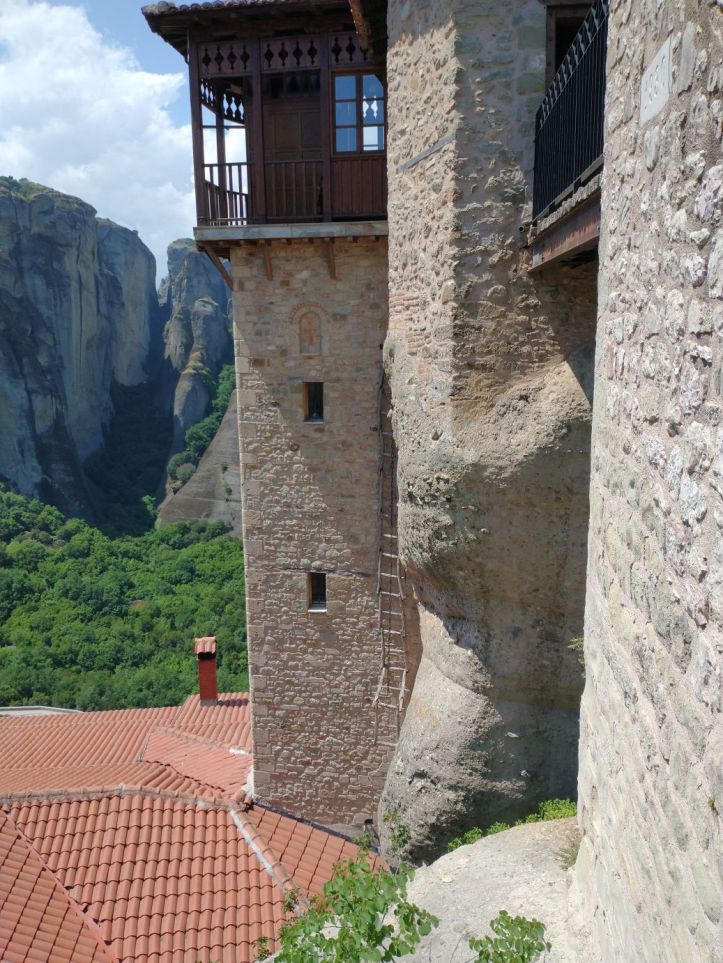
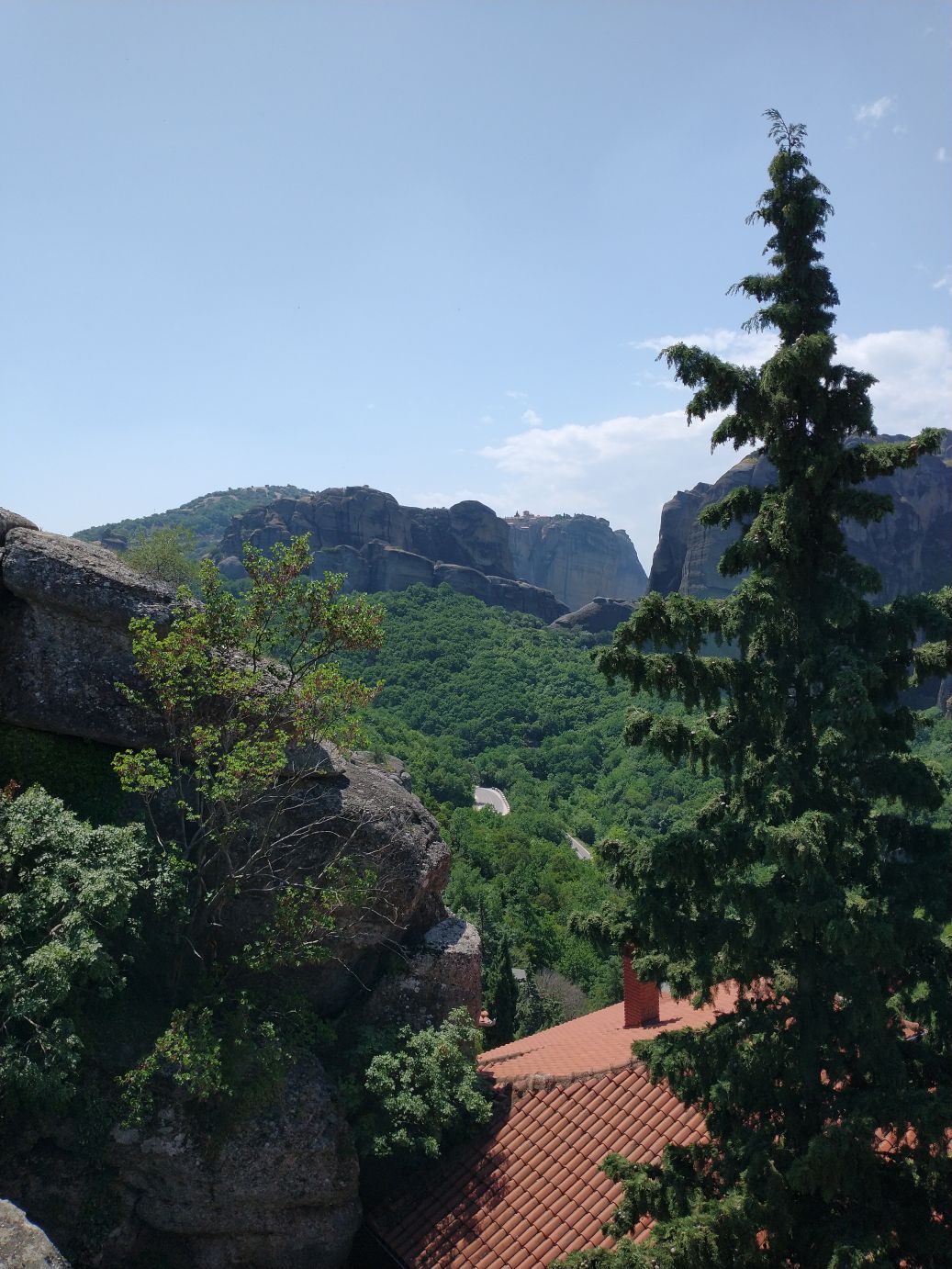
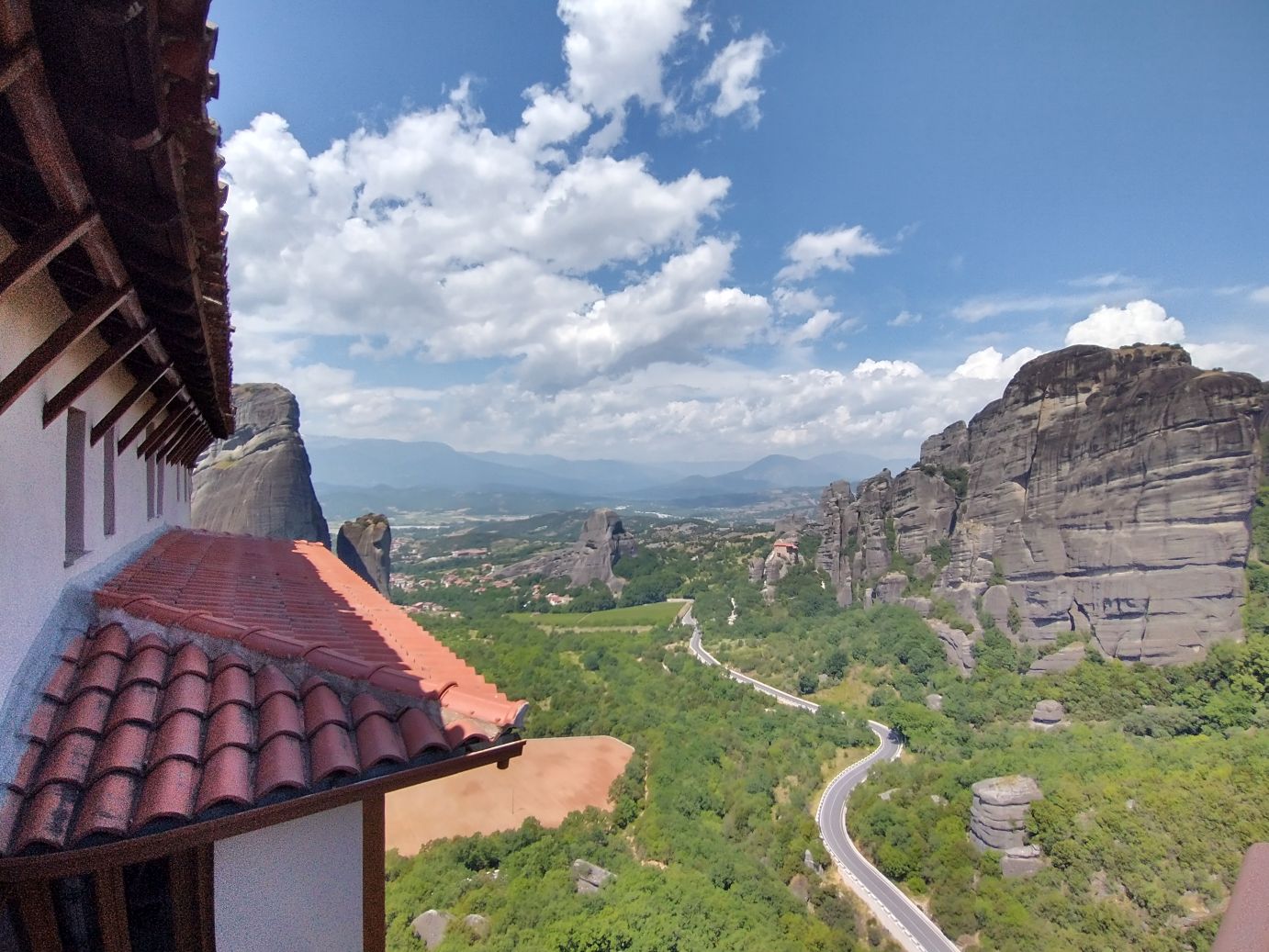
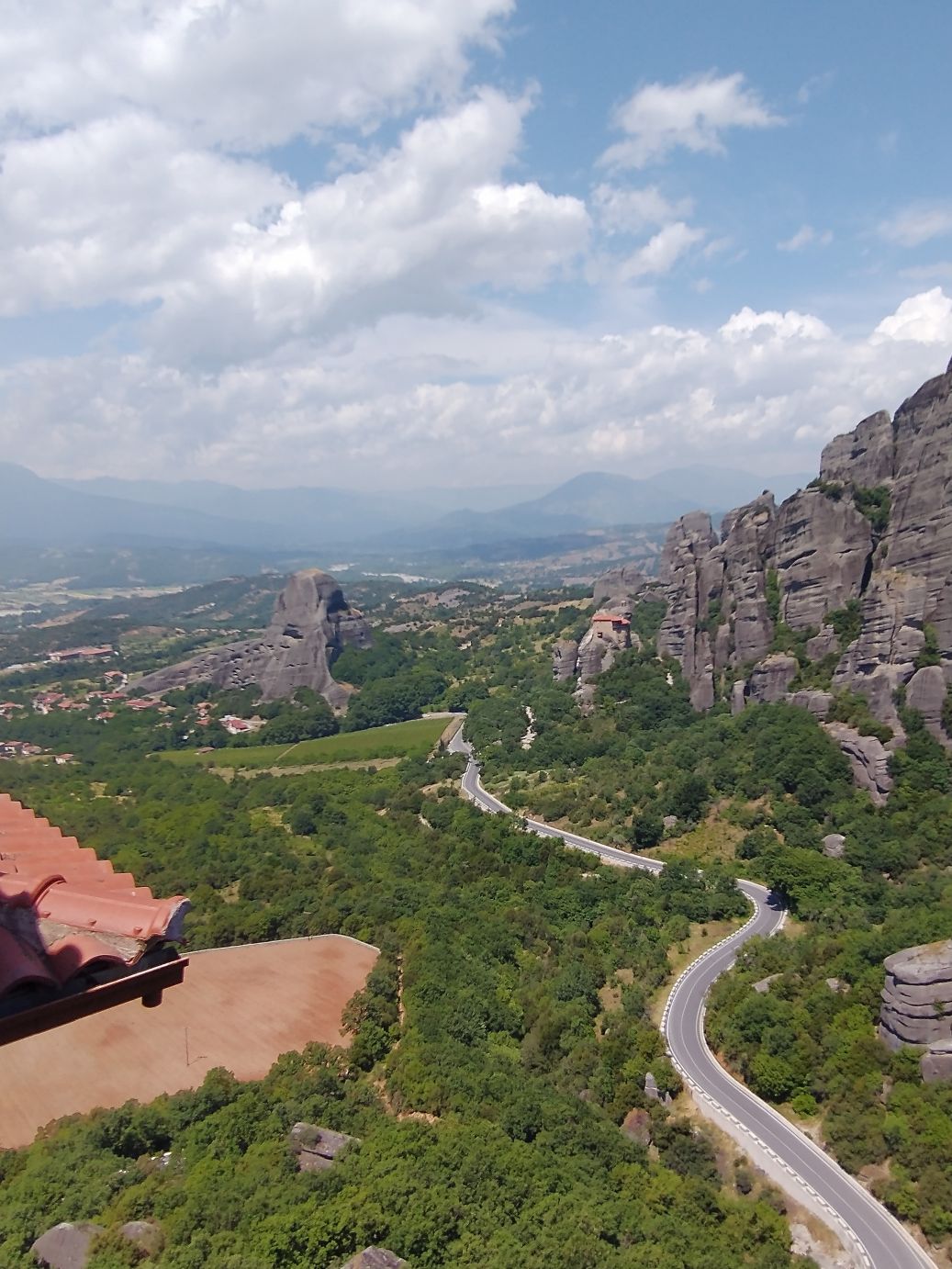
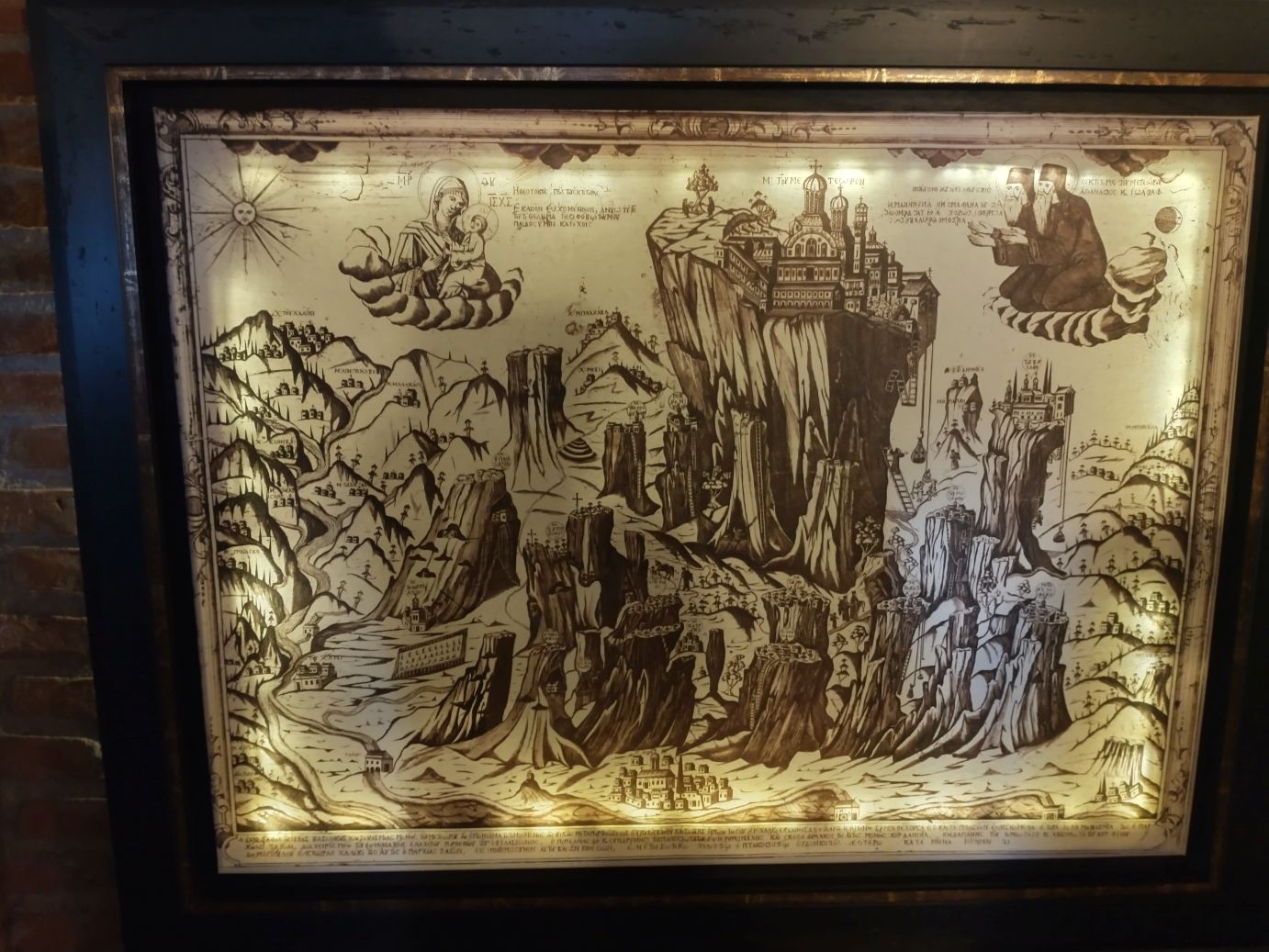
Inside the monastery, which is now a nunnery, there is a fabulous hand drawn visual map of the area, showing all the different monasteries atop their respective cliffs, giving us all a good perspective on the sheer size of this area. Also, inside the chapel are incredible 16th Century frescoes, which I will cop to taking sneaky pictures of while nobody was looking. Got away with it – they aren’t the best photos, but still….nobody came after me!
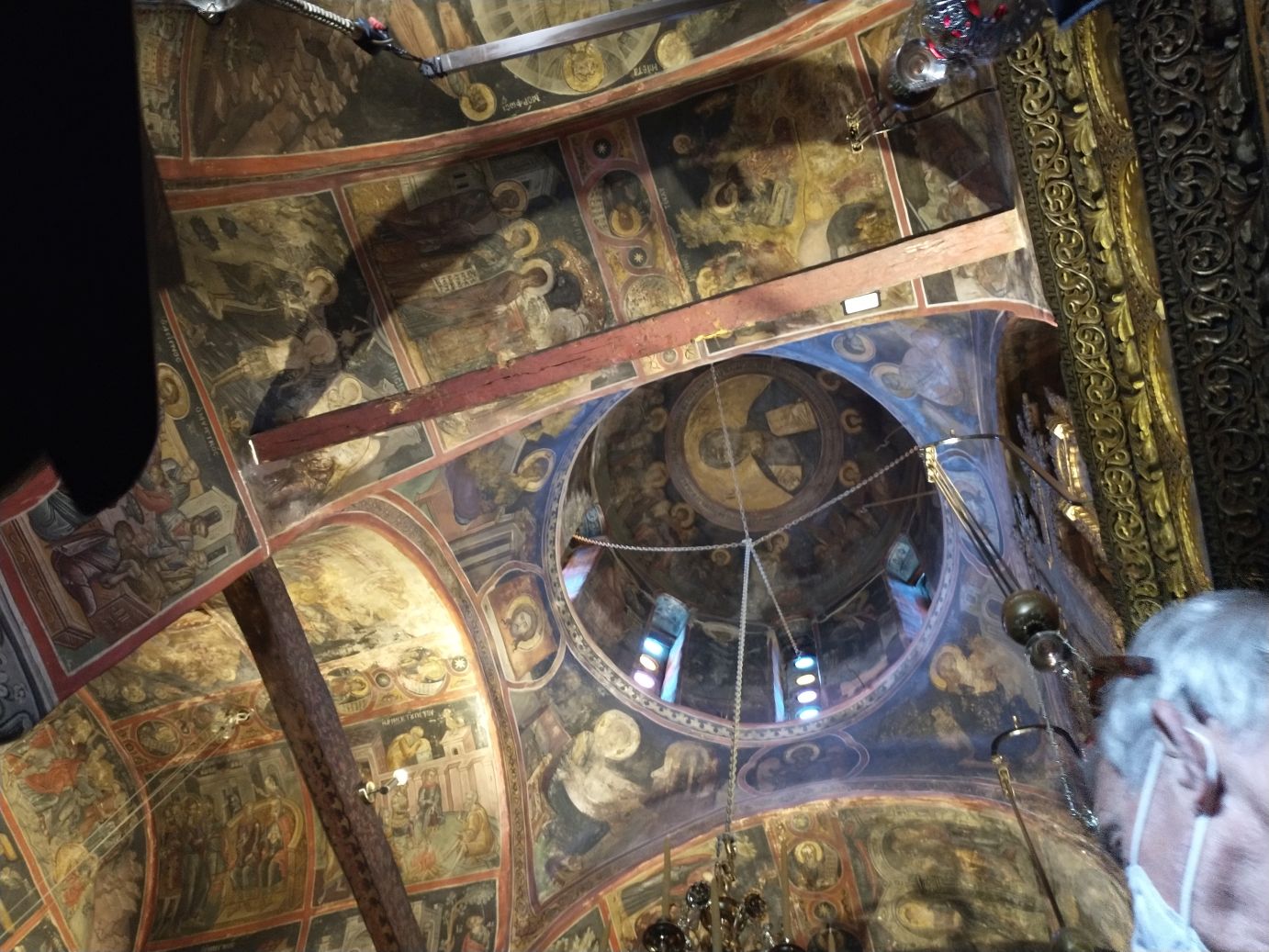
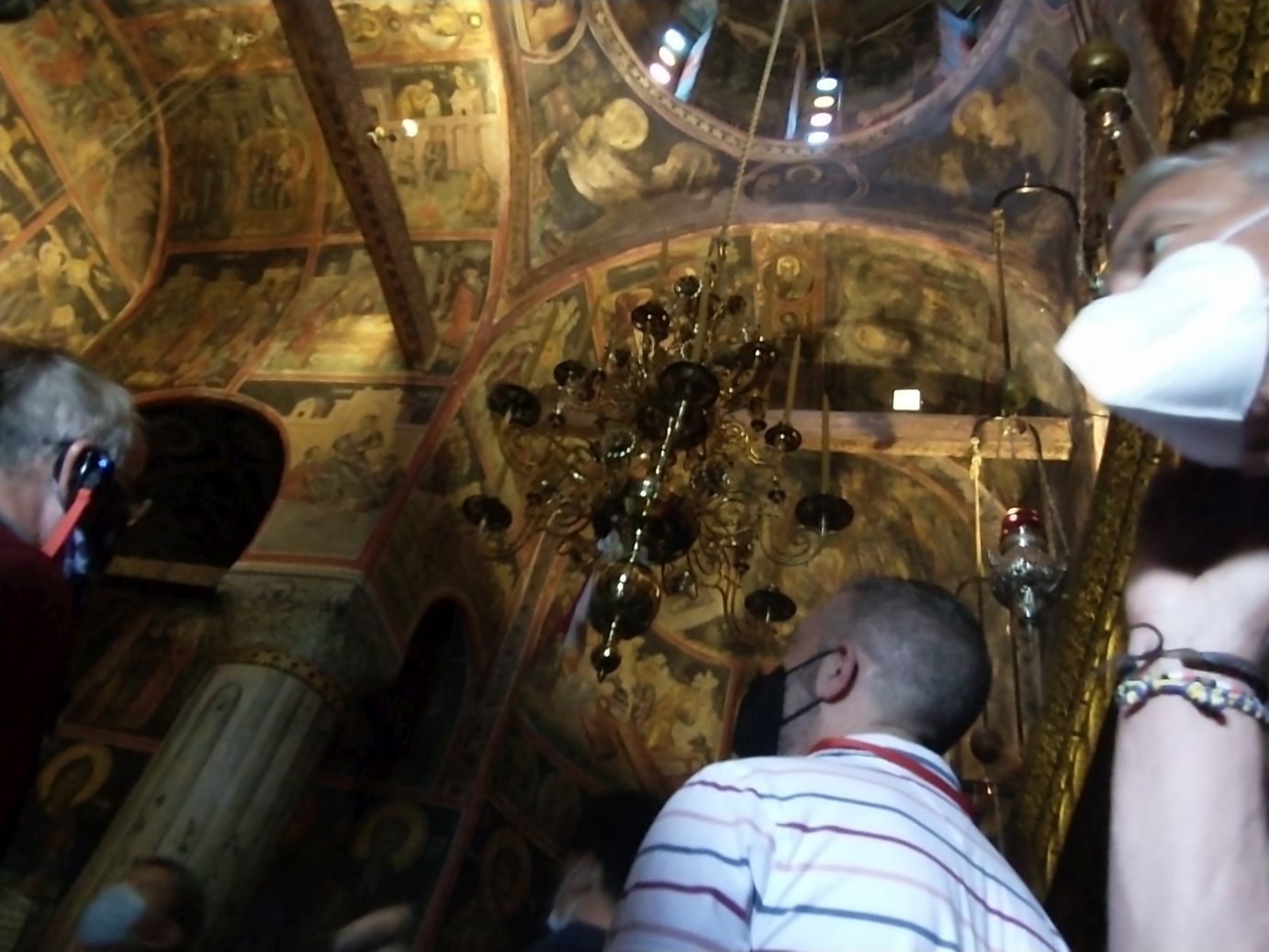
Back outside, we can’t resist taking more and more photos of the scenery – it is just too magnificent. Plus, from the street level, we get an excellent angle on the ruins of a monastery perched on a ridge across the way. It is either the Monastery of St. John of Bunilas or the Holy Monastery, can’t remember which. At this point, it doesn’t really matter, it was just amazing.
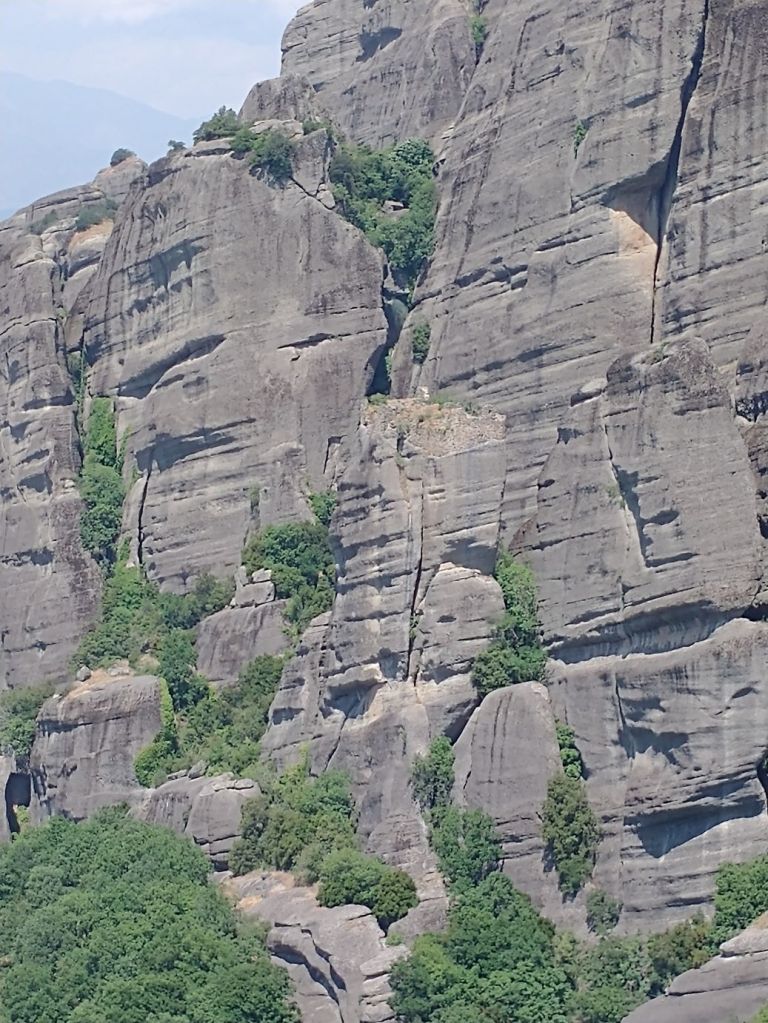
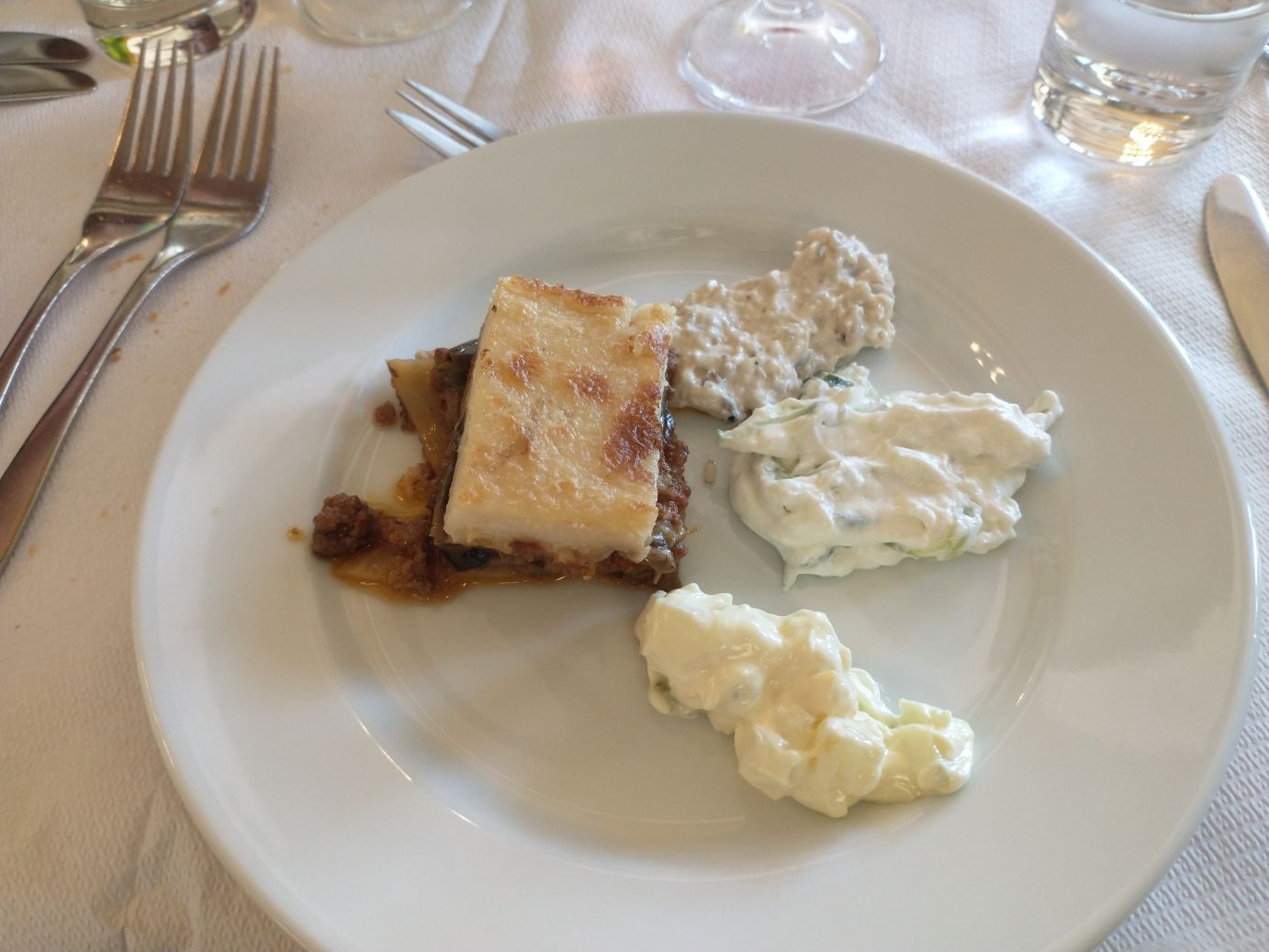
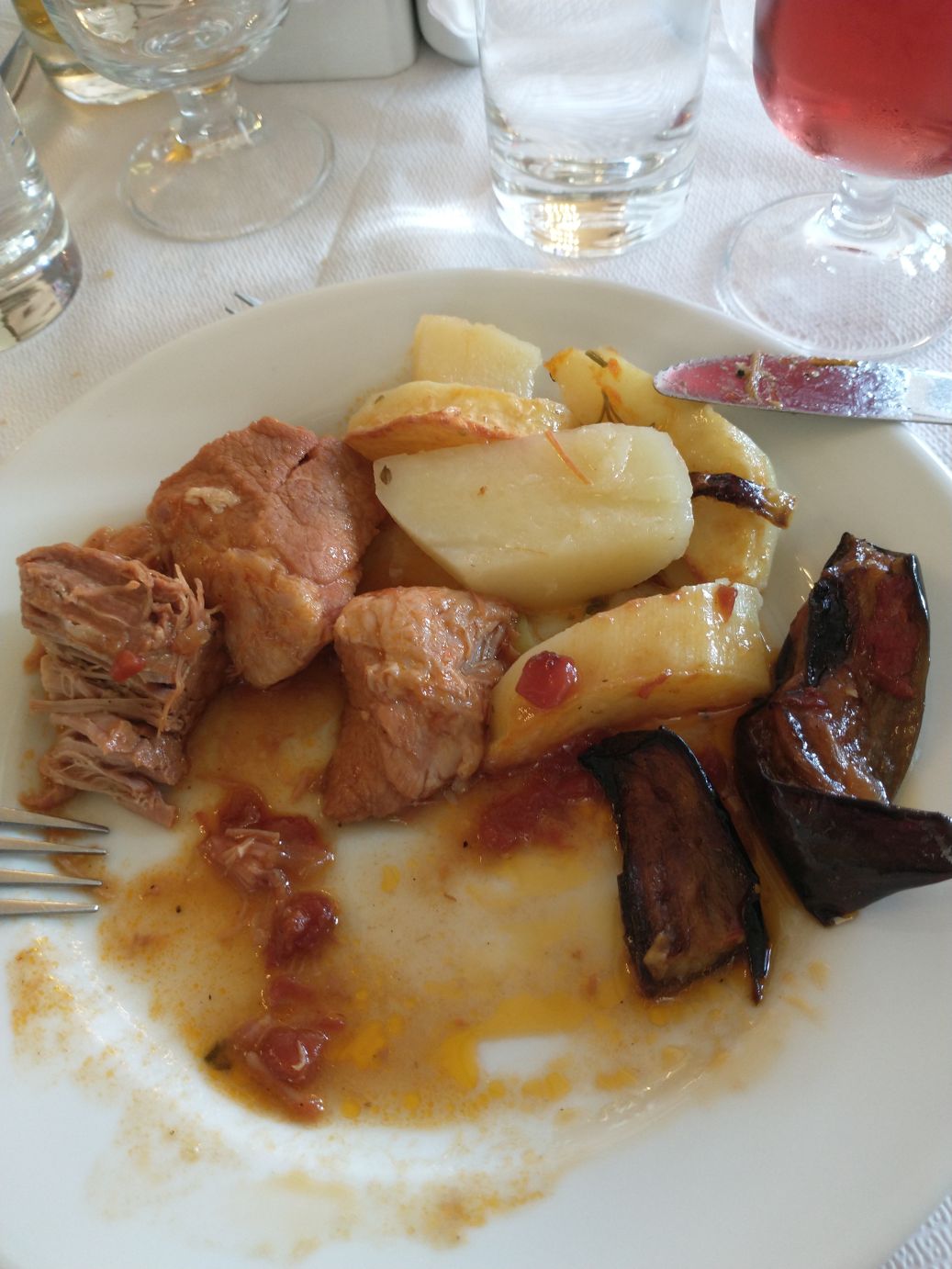
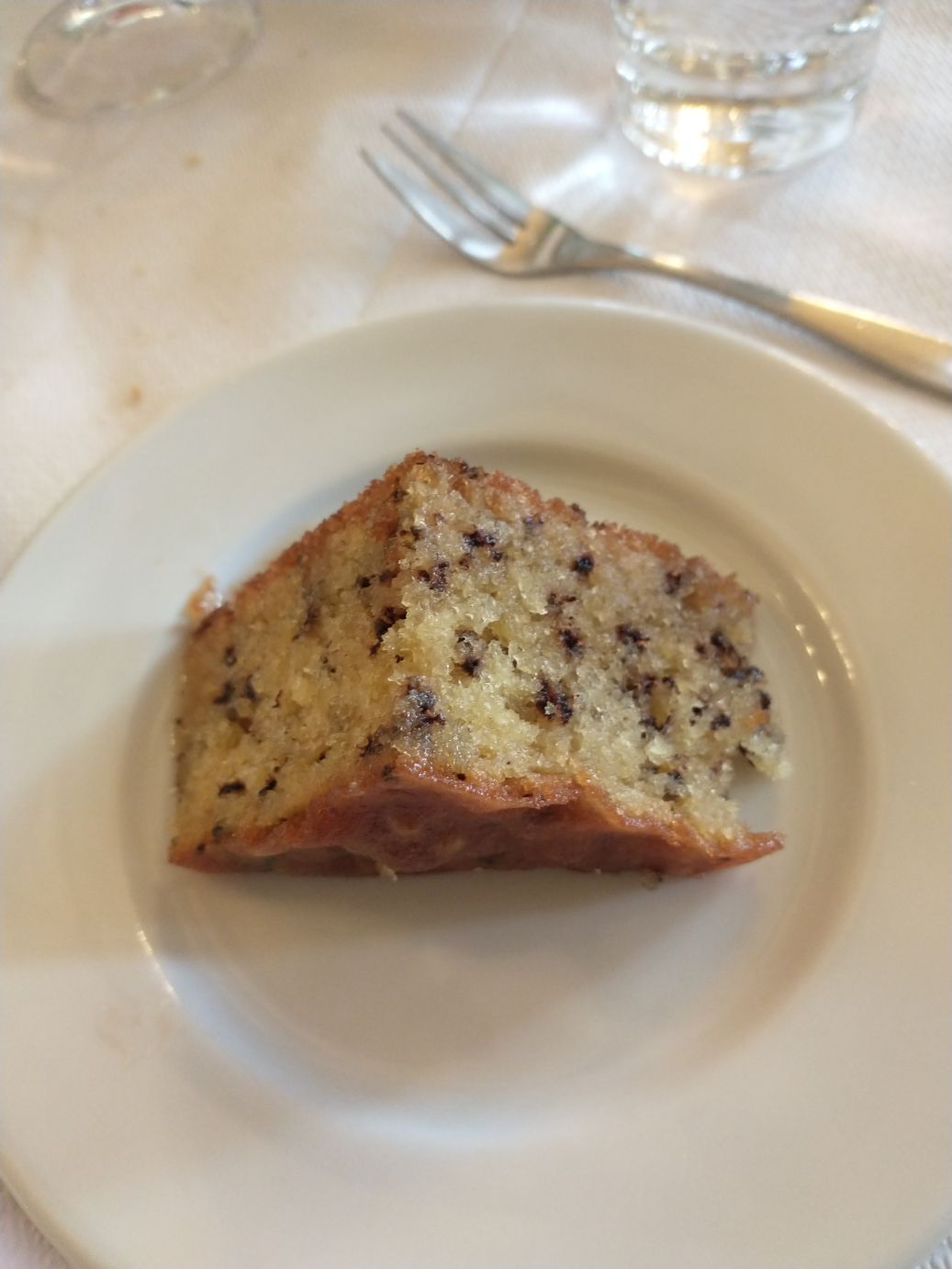
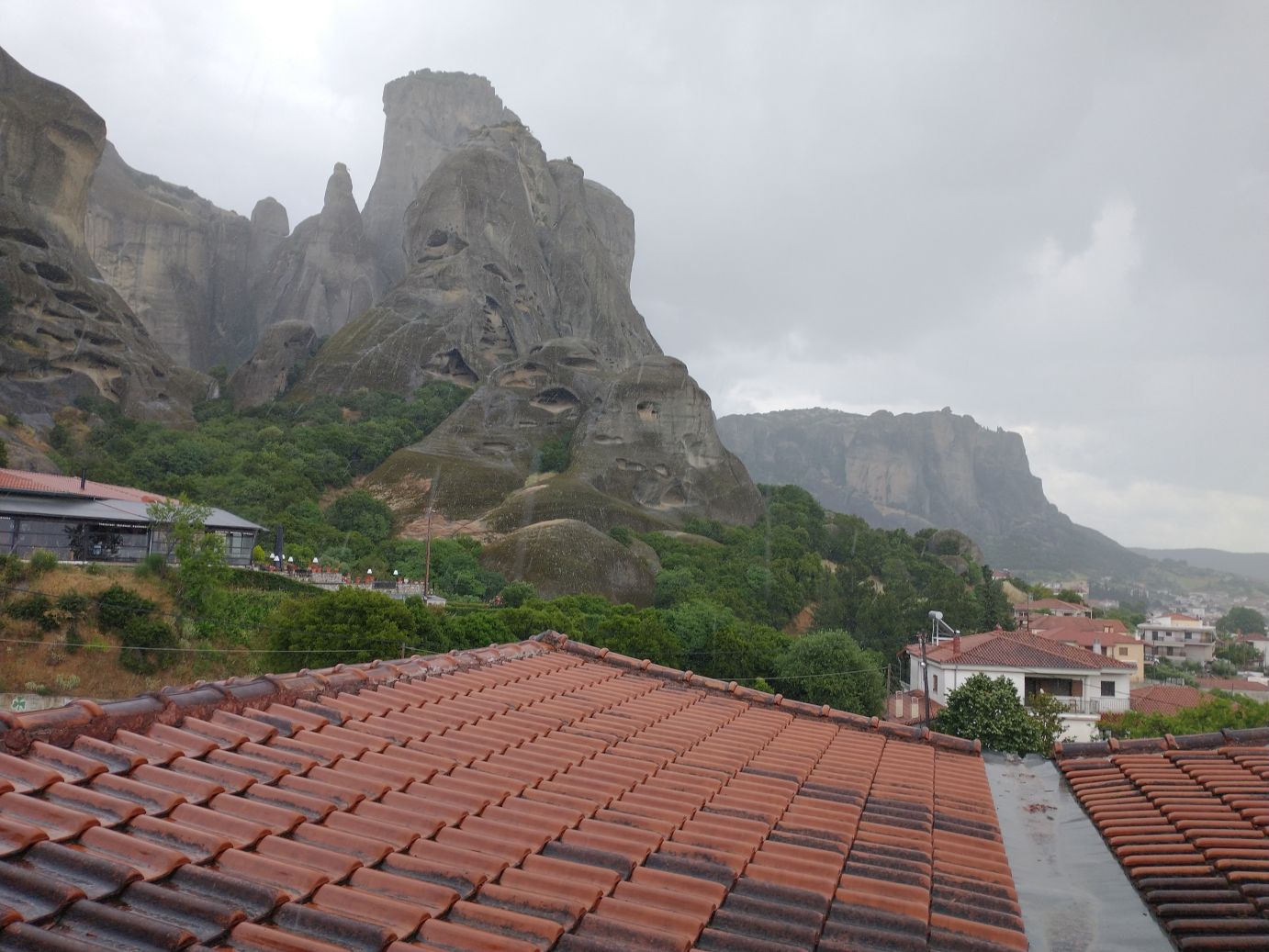
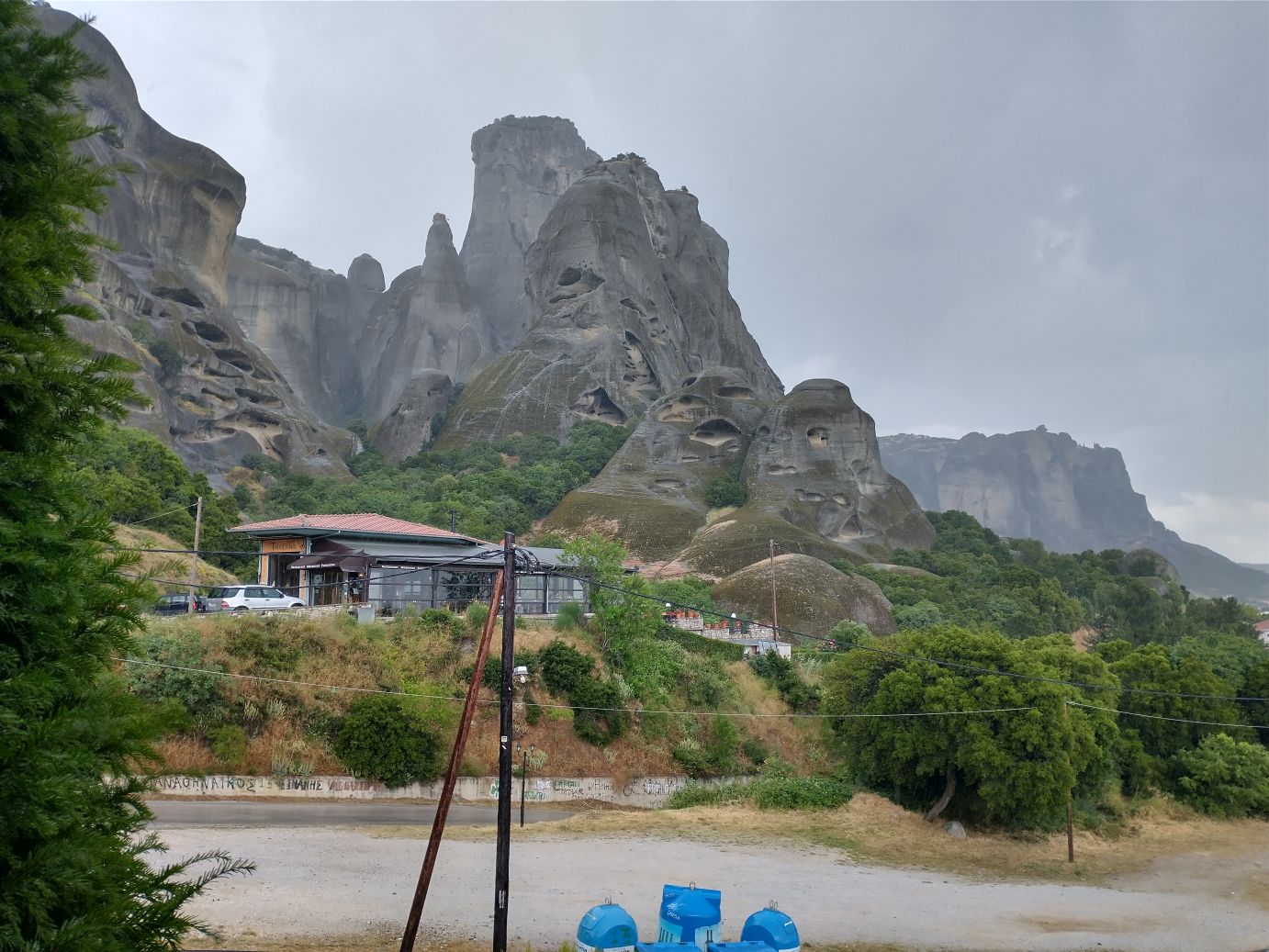
Done with sightseeing, our next stop is for lunch at the Restaurant Vakhos, which has windows facing the cliffs for a very scenic atmosphere – and a nice warm and dry one as it starts to rain and storm as we eat a lunch full of Greek specialities – meze with Moussaka, tzatziki sauce and Melitzanosalata (roasted eggplant dip); an assortment of salad for our second course and an excellent slow cooked pork with vegetables for the main. I was happy with the mezes! For dessert (of course there is dessert), they serve some sort of alcohol and syrup soaked cake that was actually quite good – but oh so very heavy.

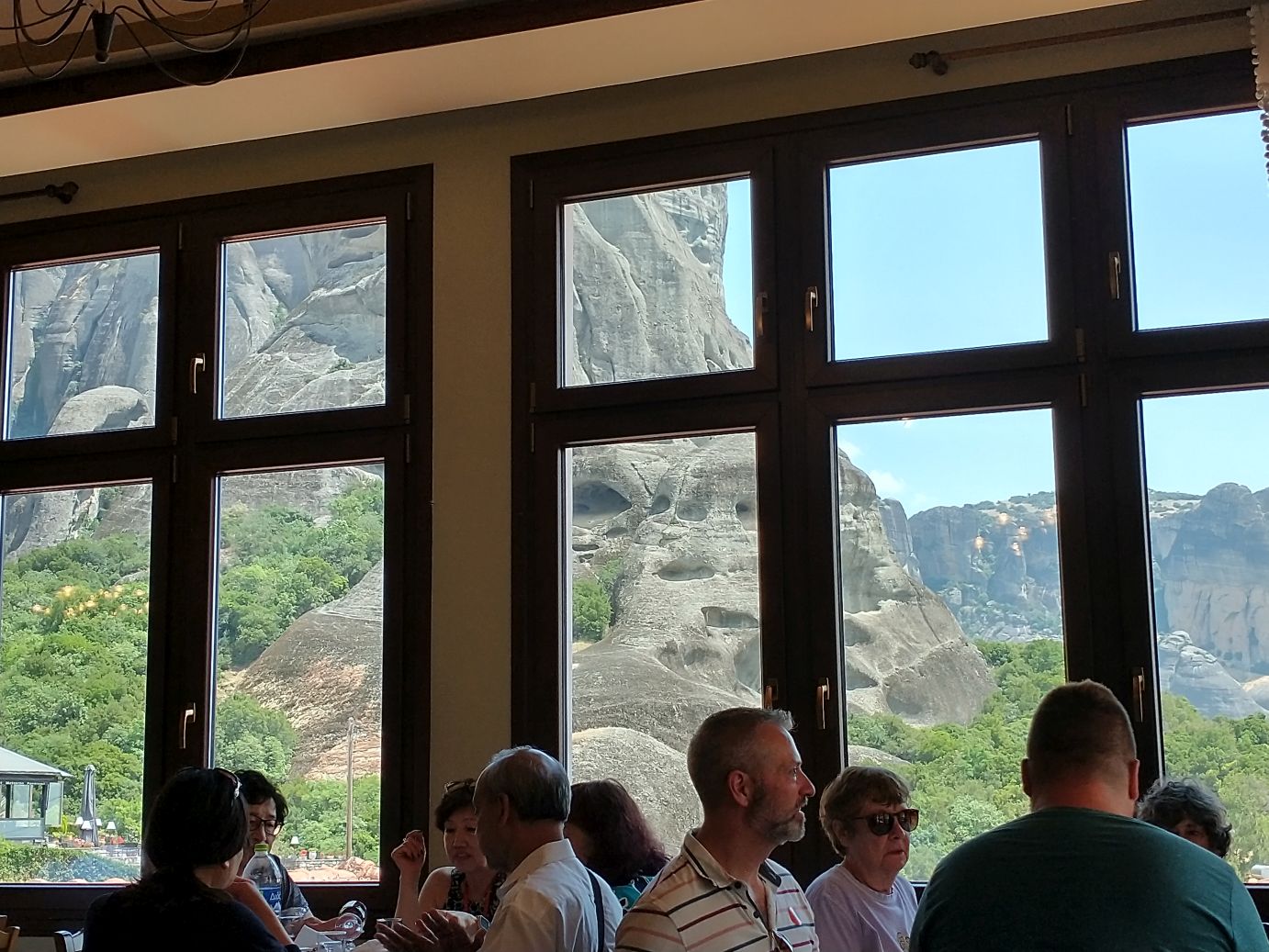

We somehow have managed to get our own table, alone, so we end up finishing before a lot of the other folks, meaning we have time for more photos of the craggy cliffs before loading up into the bus for a rainy ride back to the ship.

 Andiamo