Oh, what a difference a day makes! The weather is completely different – the day dawns sunny without a cloud in the sky, and it is warm. Warm enough to wear just a t-shirt with our light weight rain jackets. We’re in and docked on time, and right off the ship at 8. We are at the very end of the commercial port, so we need to take a shuttle to the port entrance – but that works totally seamlessly as they bus leaves quickly – there are only about 10 of us aboard. Nice!
From the port entrance, we walk 10 minutes to the bus station and find the Knossos bus right there. Leaving in 10 minutes. The ticket machine is there as well – but as we find out it is broken only takes coins and I’m trying to use a 5 Euro bill (it also won’t take credit cards even though the tap symbol is right there). Another bus driver (not the Knossos one who is a little grumpy) comes to the rescue, takes the 5 and proceeds to use all his little change to buy our 4 tickets! It’s too funny – but it gets accomplished after a time, patiently trying to get the machine to take 10 Euro cent coins (which it decidedly doesn’t like).
Tickets successfully purchased, we hop on the bus, along with 30 scouts, boys and girls, (sigh- kids – but they are all masked and very well behaved and sit at the back of the bus with their troop leaders) and away we go. It’s a quick and pleasant ride through a sleepy Sunday morning city and we are at Knossos in 20 minutes. The bus stop is right at the entrance to the Minoan Palace, totally convenient. We troop up to the gate, stop to show our Vax card and IDs – then buy our tickets and we are in the ruins, virtually alone. The only other people are the guides milling around and another couple we see occasionally.
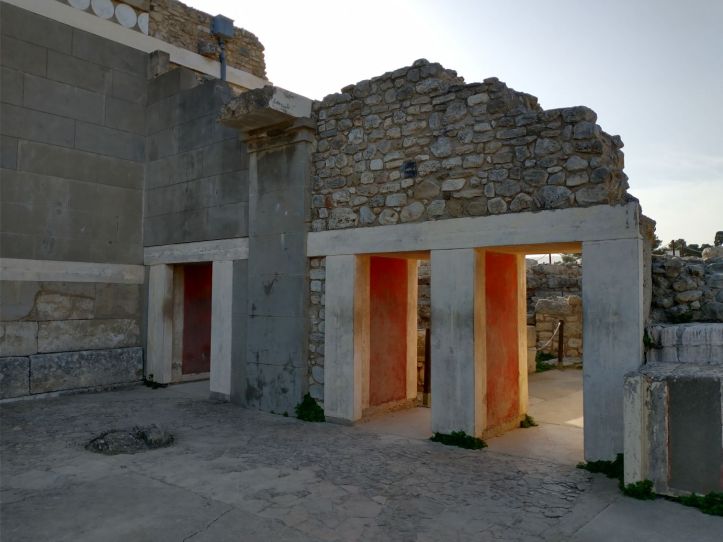
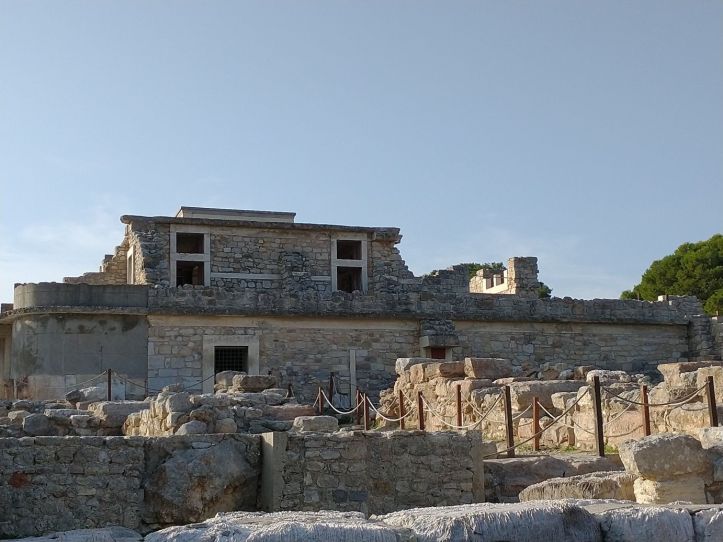
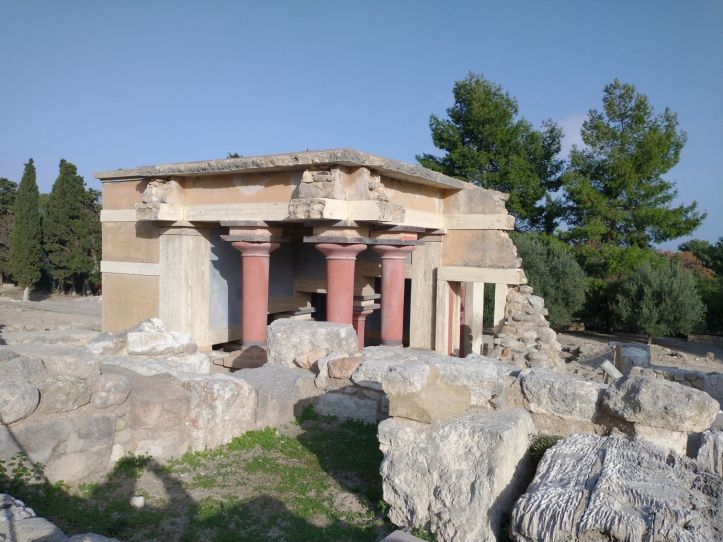
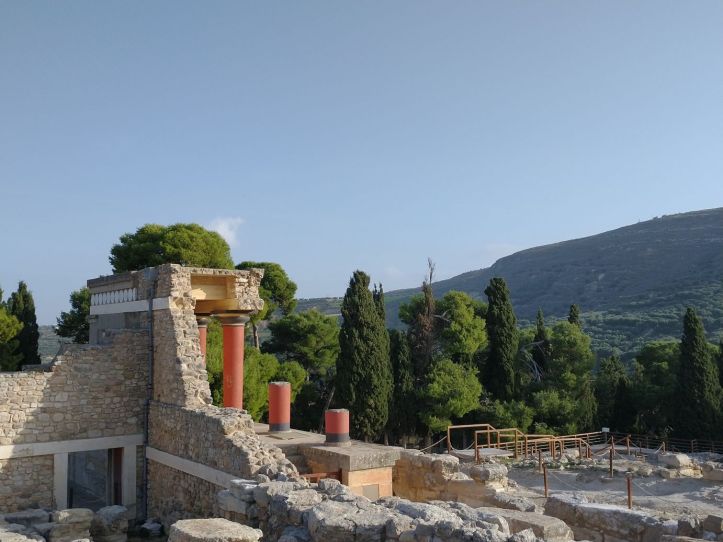
Knossos is the mythological home to King Minos and the minotaur, the largest of the Minoan palaces found to date. An extensive settlement has been here on this hill since 6700 BC, and the first Palace was thought to be built around 1900 BC. It was destroyed 200 years later and the “New” Palace was built in its place. This is what we are touring today. There is some controversy over how authentic this restoration and recreation actually is, as many feel Arthur Evans, the archeologist who eventually excavated the ruins (there is some controversy over that too – how he came to be the main excavator), recreated the site more to his idea of what it looked like and less based on historical fact. But regardless, it is a pretty cool set of ruins and recreations!
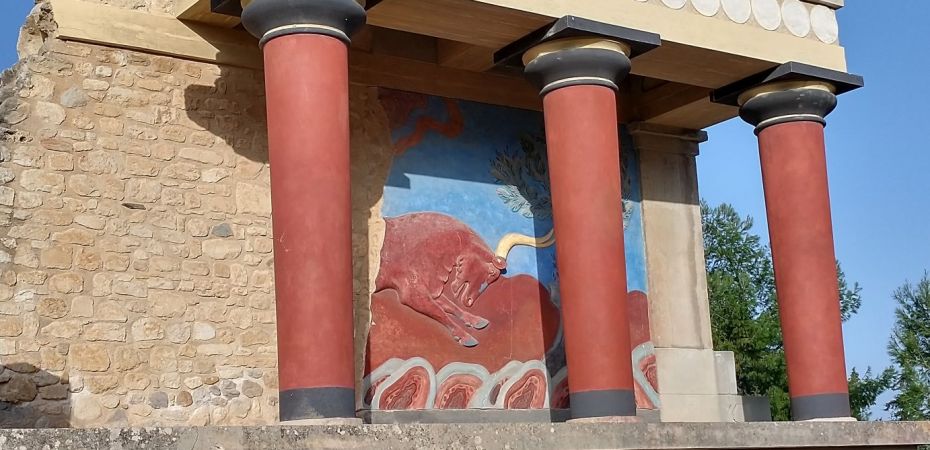
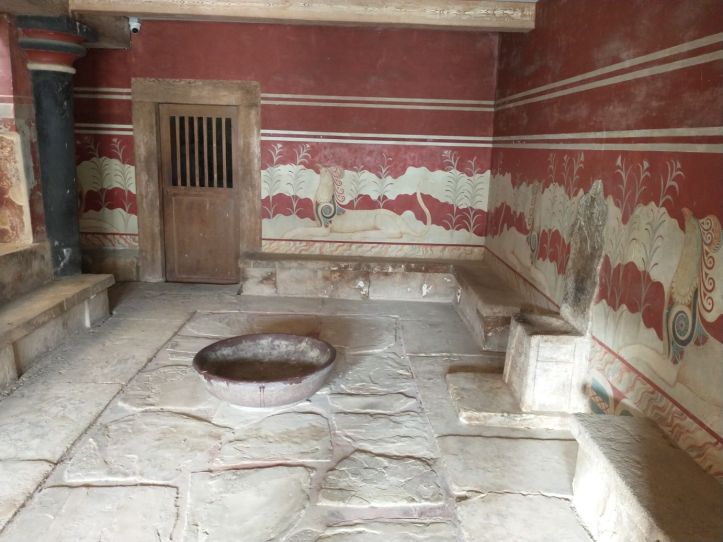
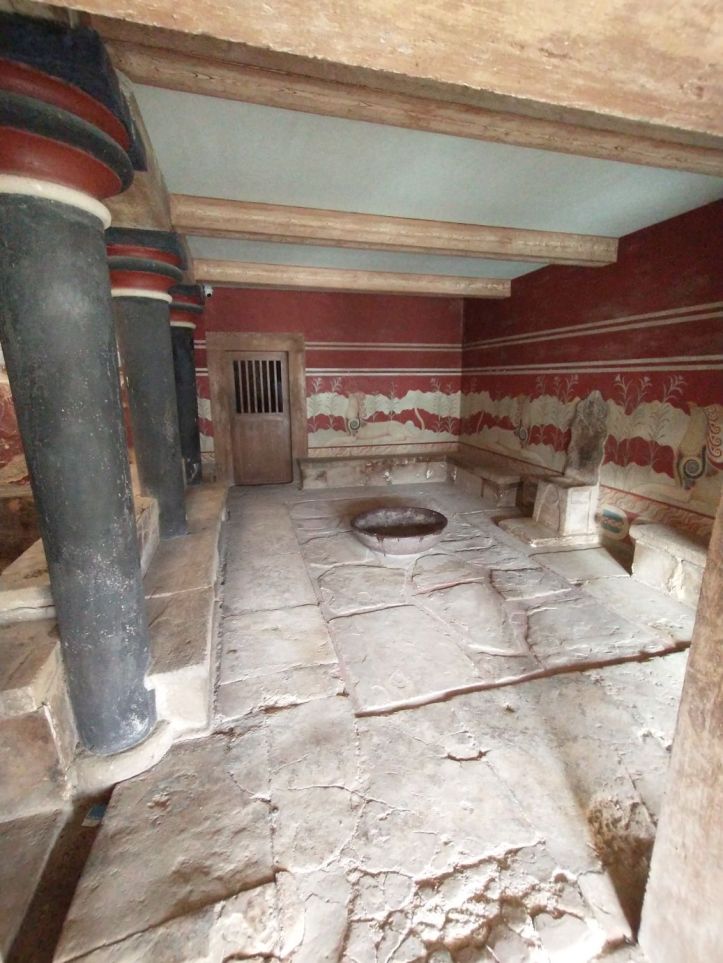
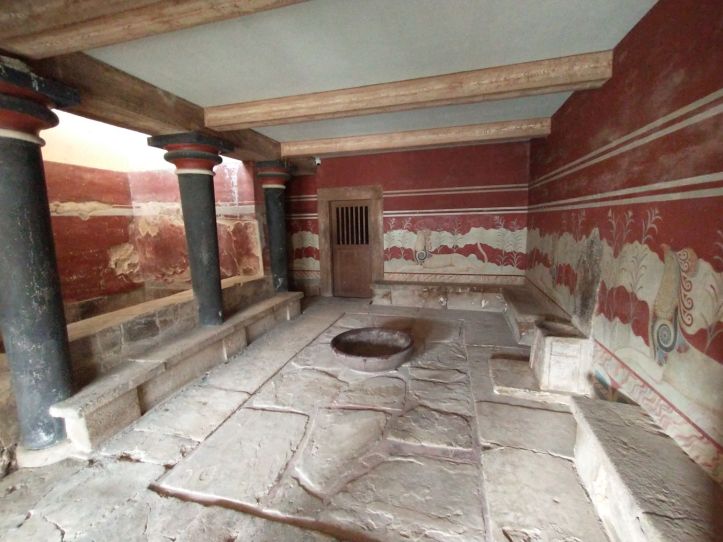
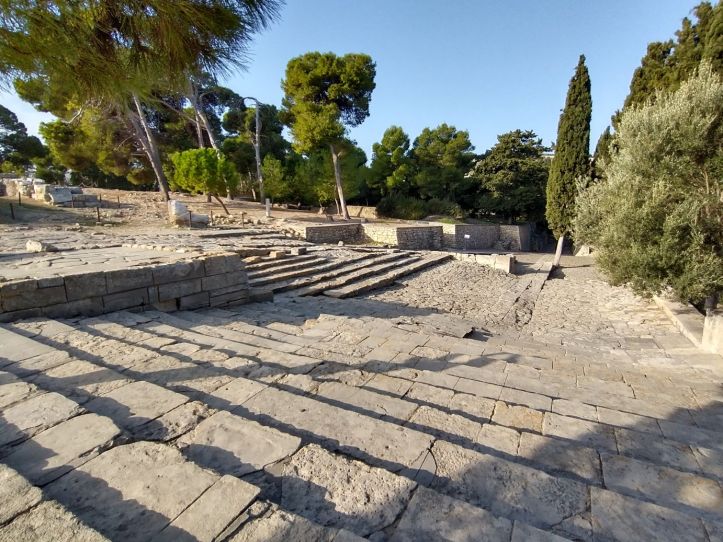
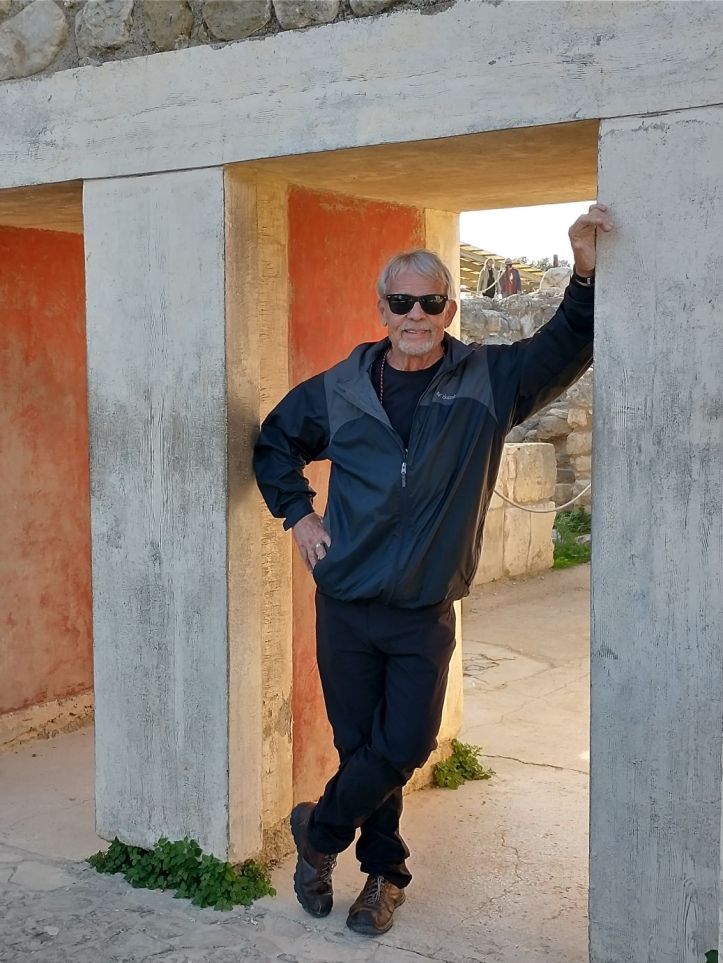
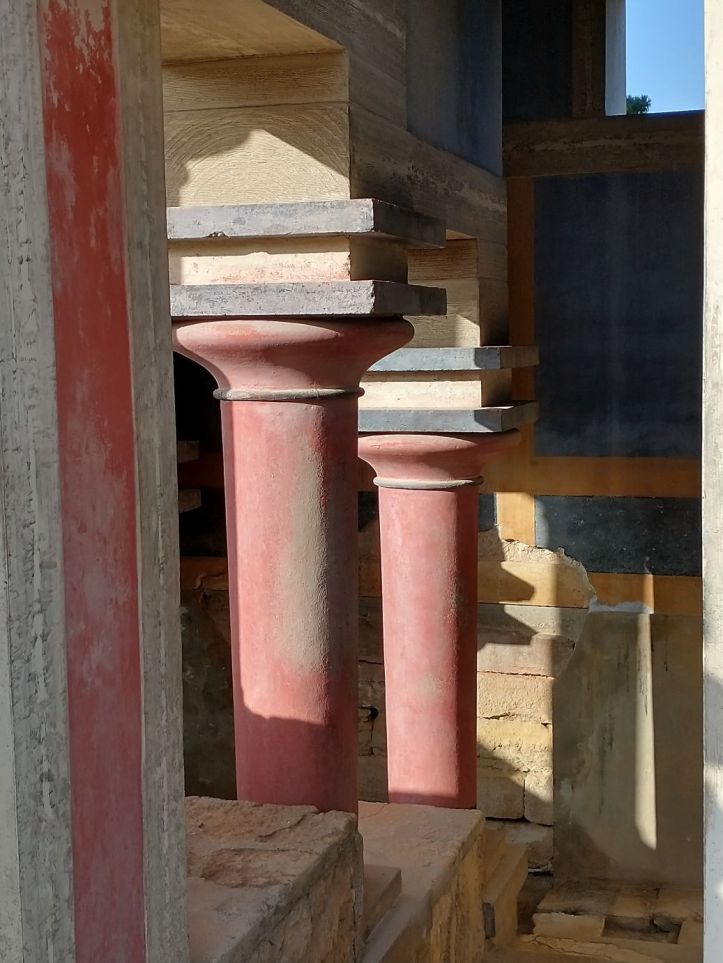
We wander through main entrance, the grand stairs, into the Throne room with dark red frescoes (recreated for certain, as are the throne and everything else in the room – the originals are in the Heraklion Museum), then back out onto the terrace to view the minotaur depiction behind recreated red columns. Ok, so none of it is probably original, but it is really cool looking – and stands out against the perfectly blue sky above.
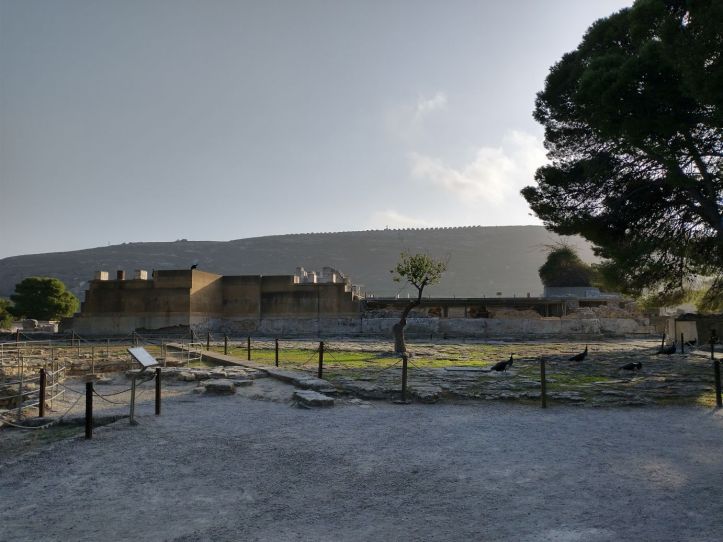
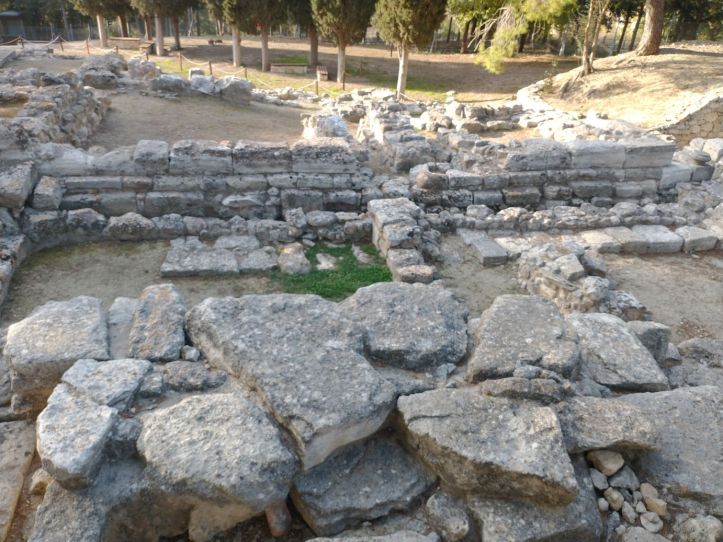
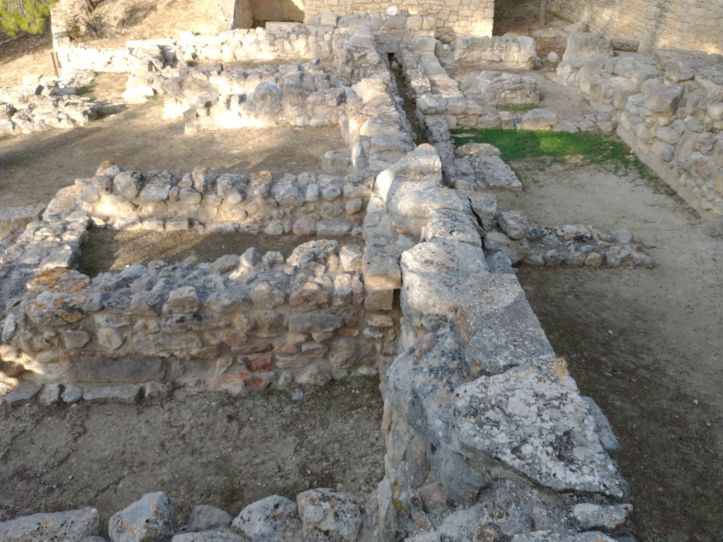
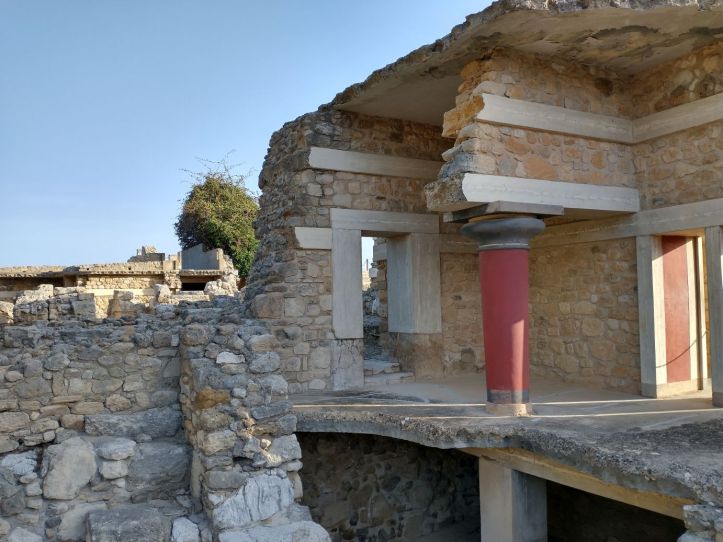
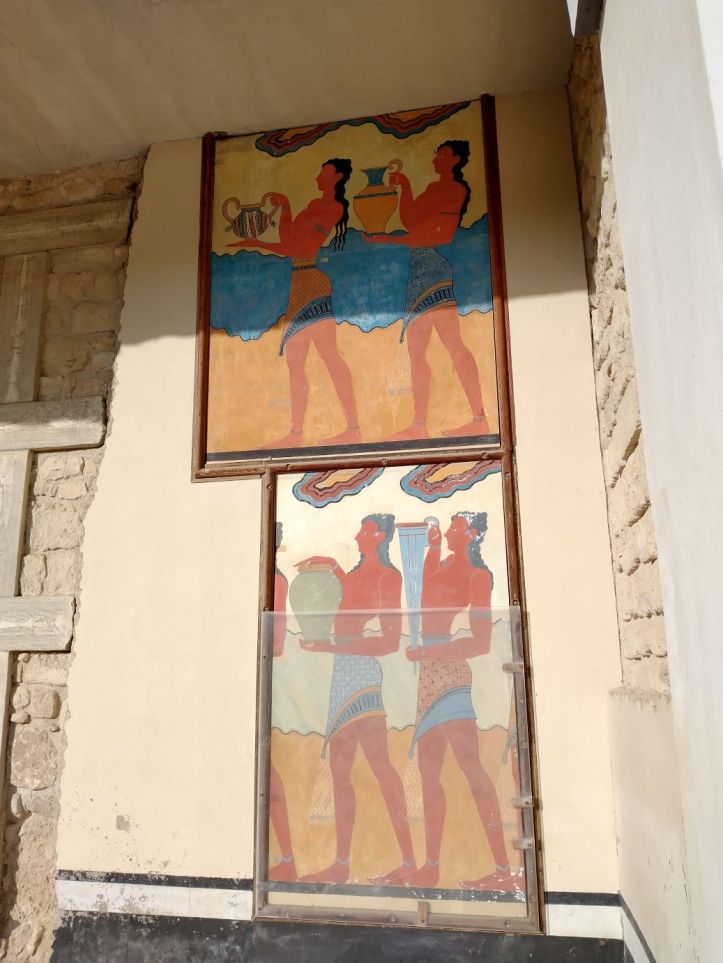
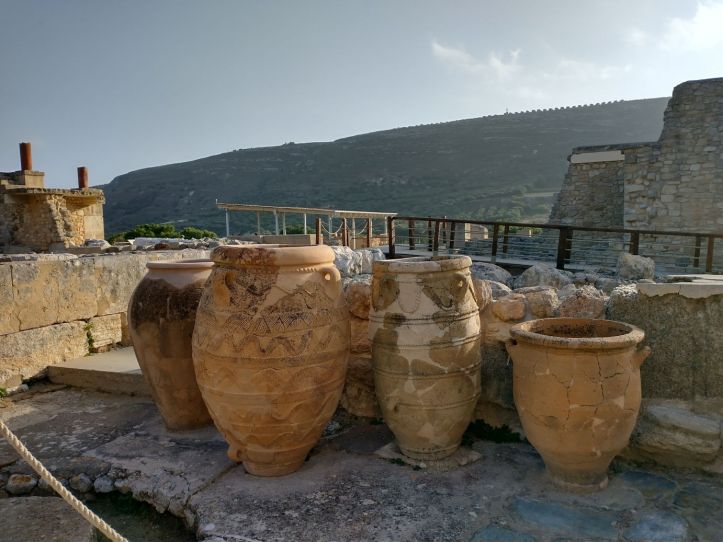
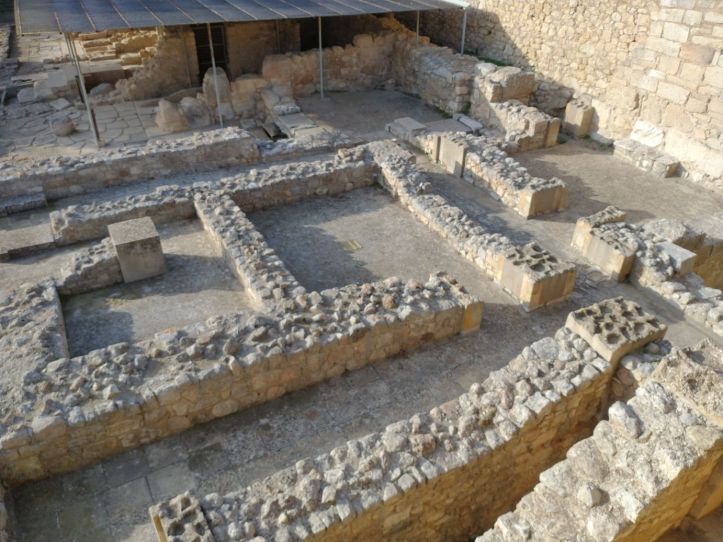
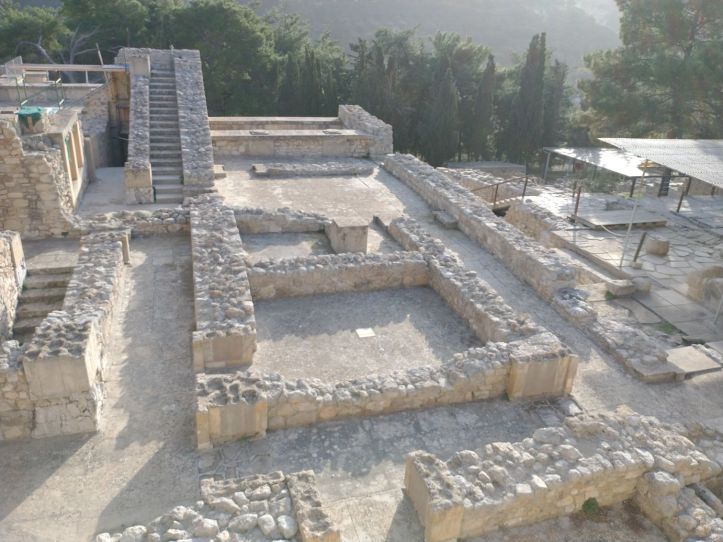
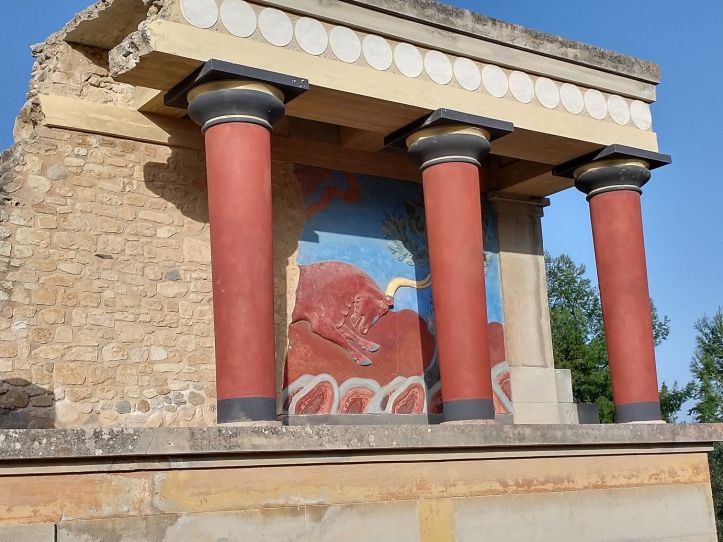
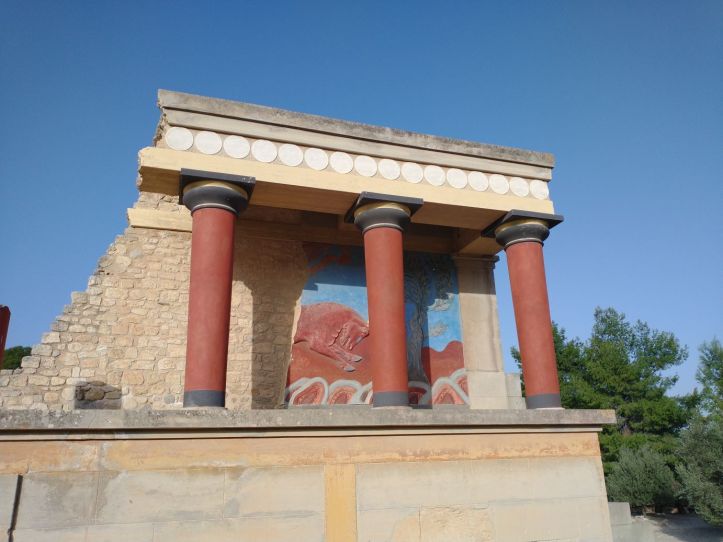
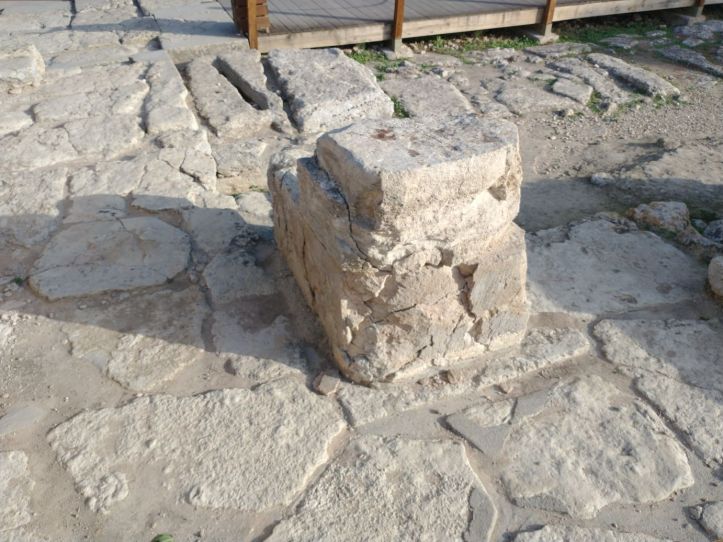
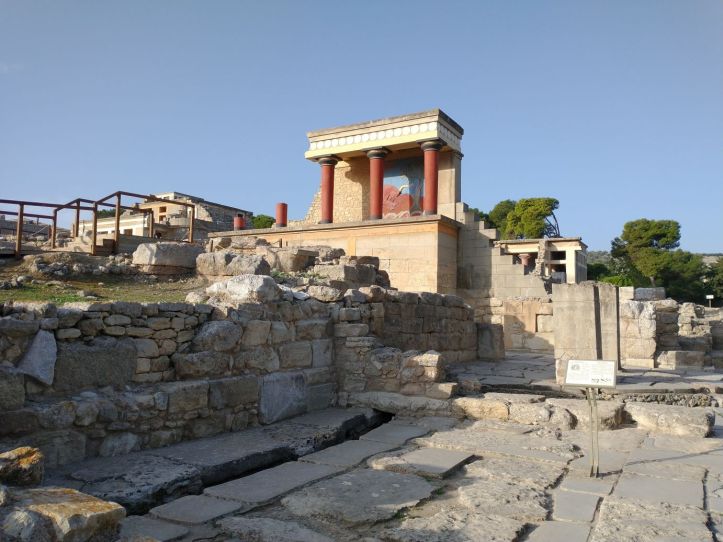
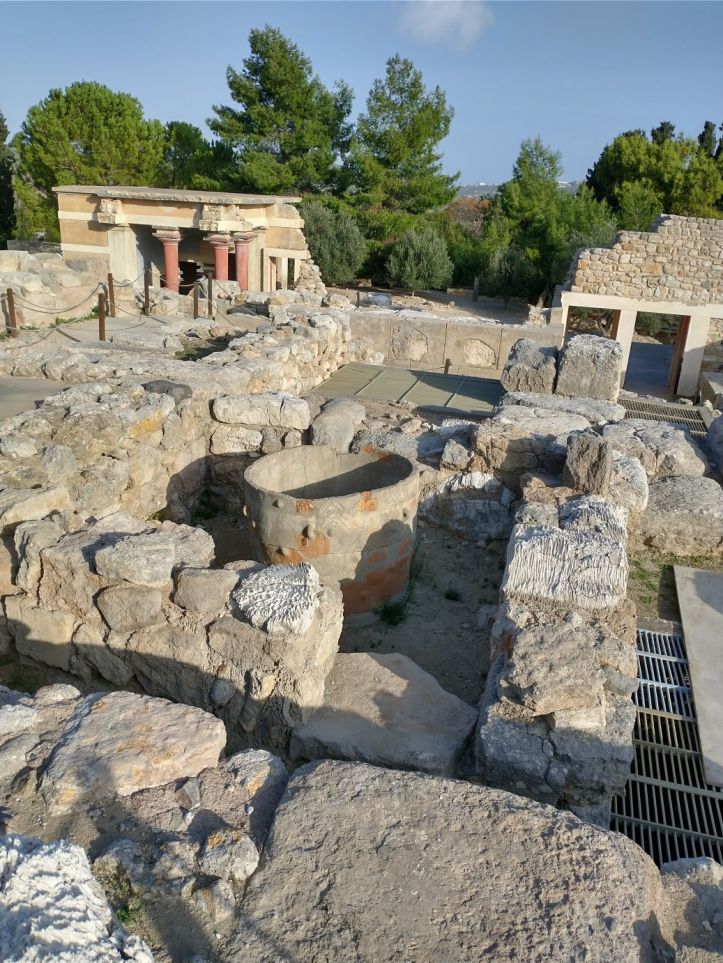
Taking our time to wander through the game room area, examining the water and drainage conduits that were amazingly sophisticated for that age, passing the store rooms with vessels still intact inside, and finally heading around toward the theater where we sit for a while, absorbing the scenery around us, and planning the rest of our day.
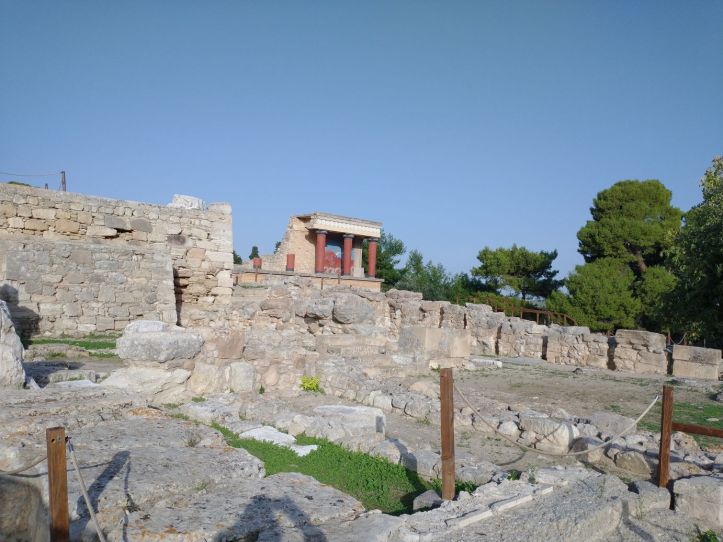
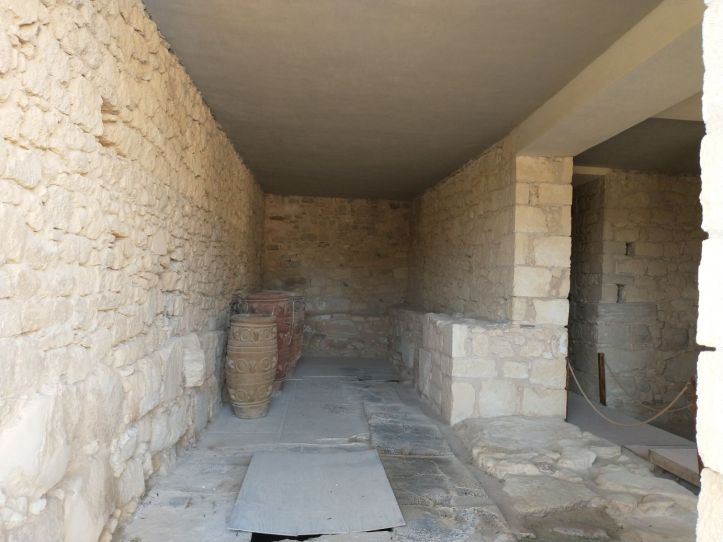
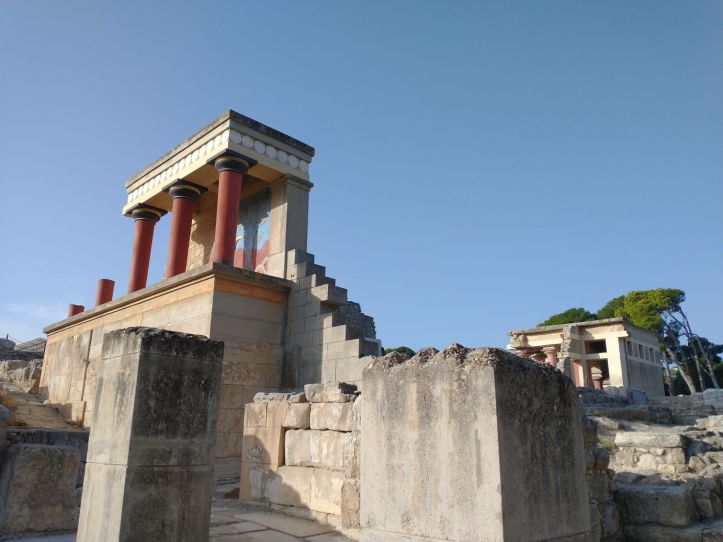
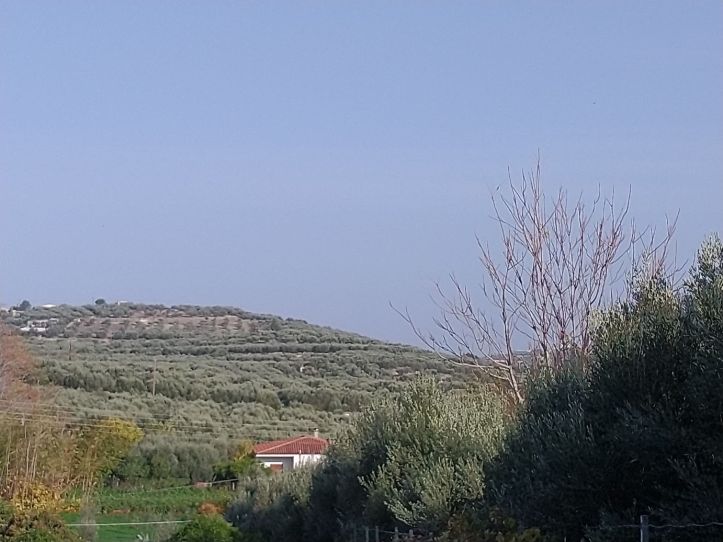
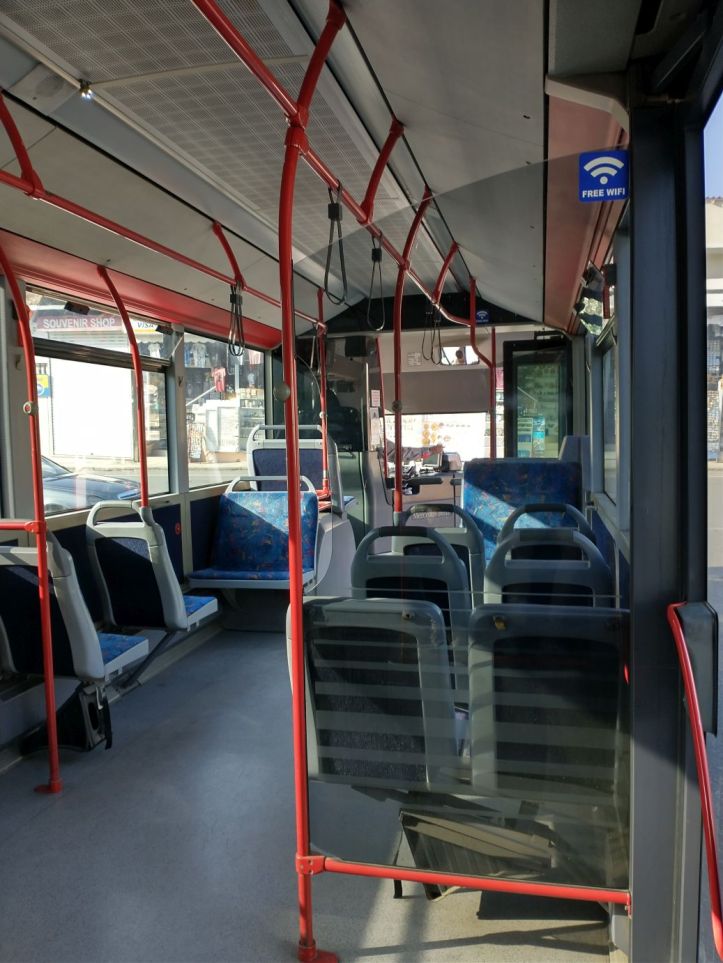
As we make our way out of the ruins, the first tour bus arrives. Perfect timing! We had the place virtually to ourselves, and now, well, now is an excellent time to make our departure. We still have about 20 minutes until the next bus, so we wander around the street outside, looking at all the different tourist shops, but nothing really strikes our fancy except one T-shirt with dolphins on it, but we figure we can find it in town somewhere. The bus arrives right on time and we hop on – it’s our private bus! We are the only people on it. Crazy, but very nice.
The privacy doesn’t last very long, as the locals start piling on the bus, but that’s ok, it isn’t so crazy crowded and jam packed as it could be since it is fairly early on a Sunday morning. We are planning to go back to the bus terminal, then walk through town to the Archaeological Museum, but as we look at the map, we realize we can get off at the Venetian Gate of St. George, one of the old gates built into the ancient Venetian walls that once lined the city, and walk from there. So hop off we do.
The Venetian gate isn’t much to look at, and we quickly decide not to go into the crypts or whatever is underneath it, but instead to go in search of the museum and some cappuccino. Google being Google, we get a little turned around in the circle, but eventually find our way to the museum, and right across the street is a cute little café called Hari’s Creperie which has a perfect table outside on the covered patio and excellent cappuccino. If we were hungry, the food looks excellent as well – and monstrous – but we’ve already had our breakfast and really don’t need anything until lunch.
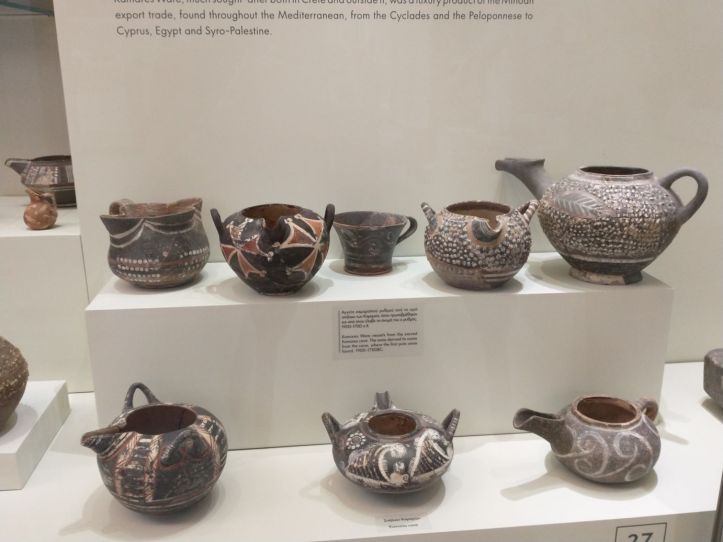
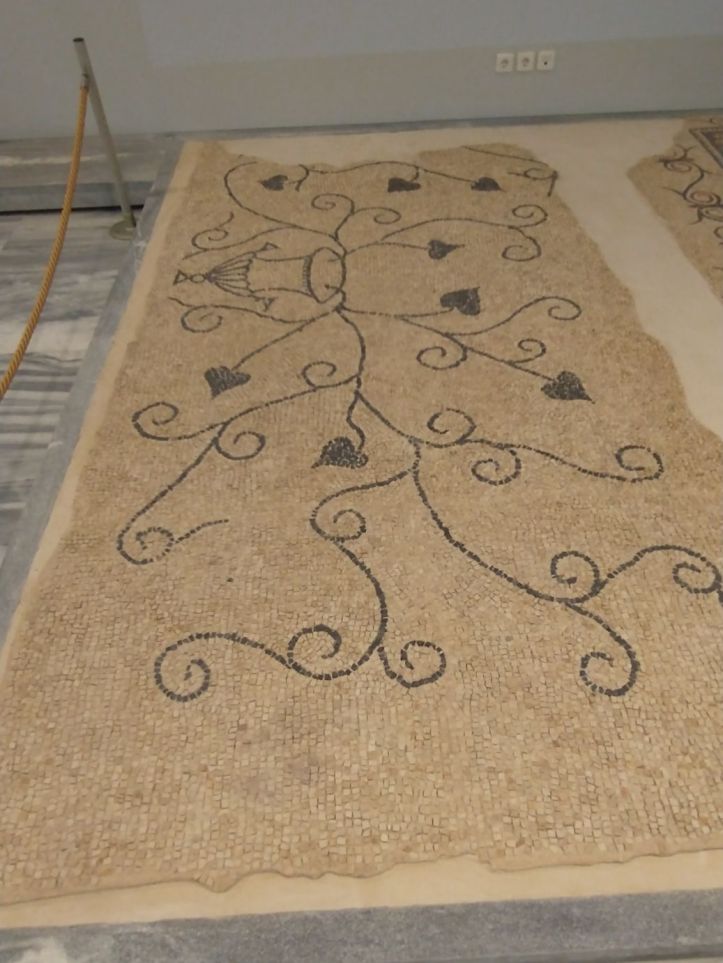
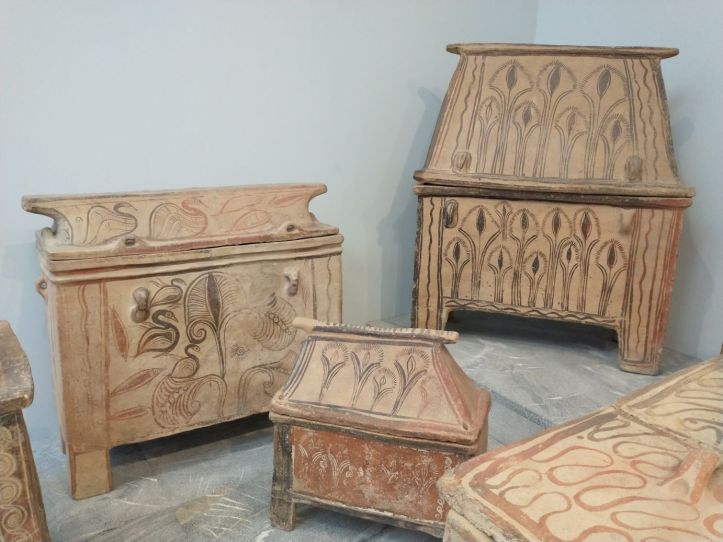
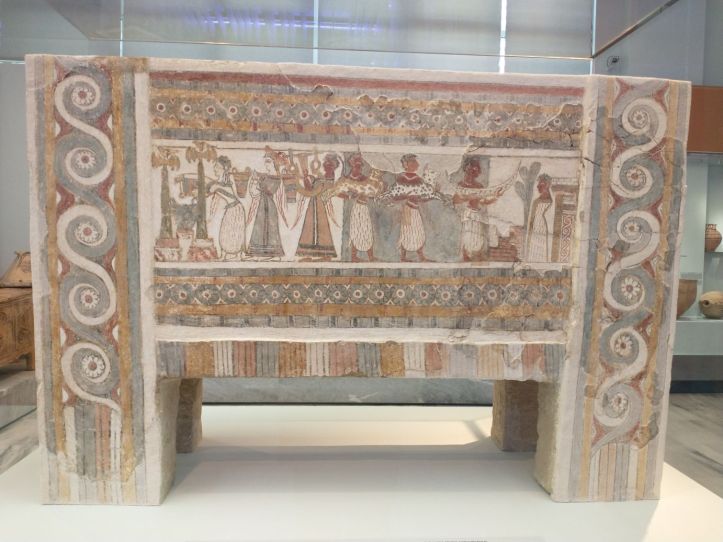
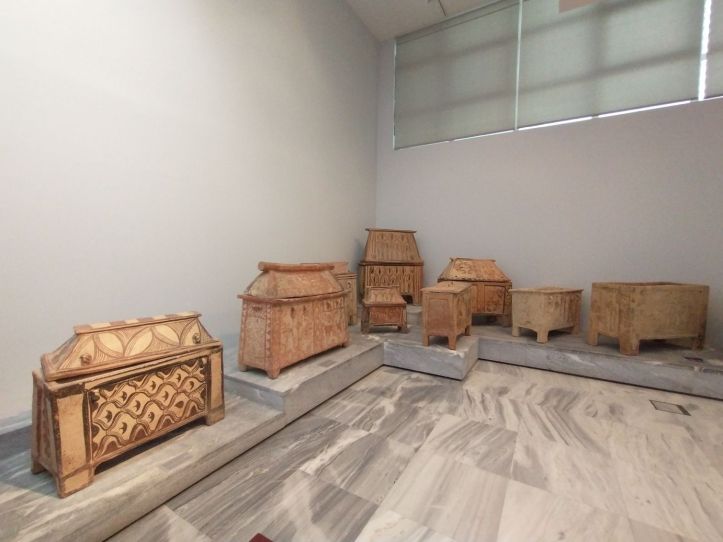
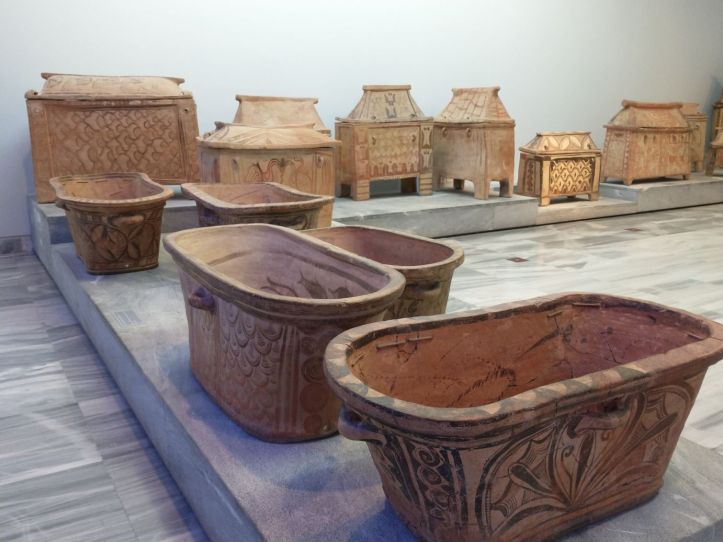
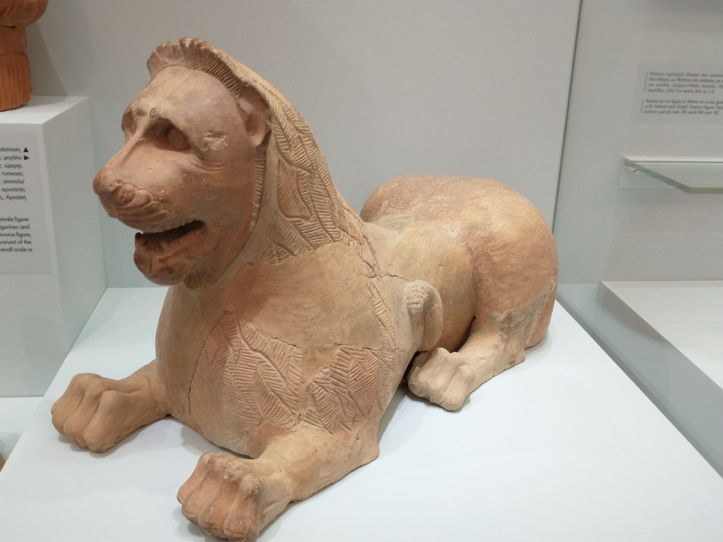
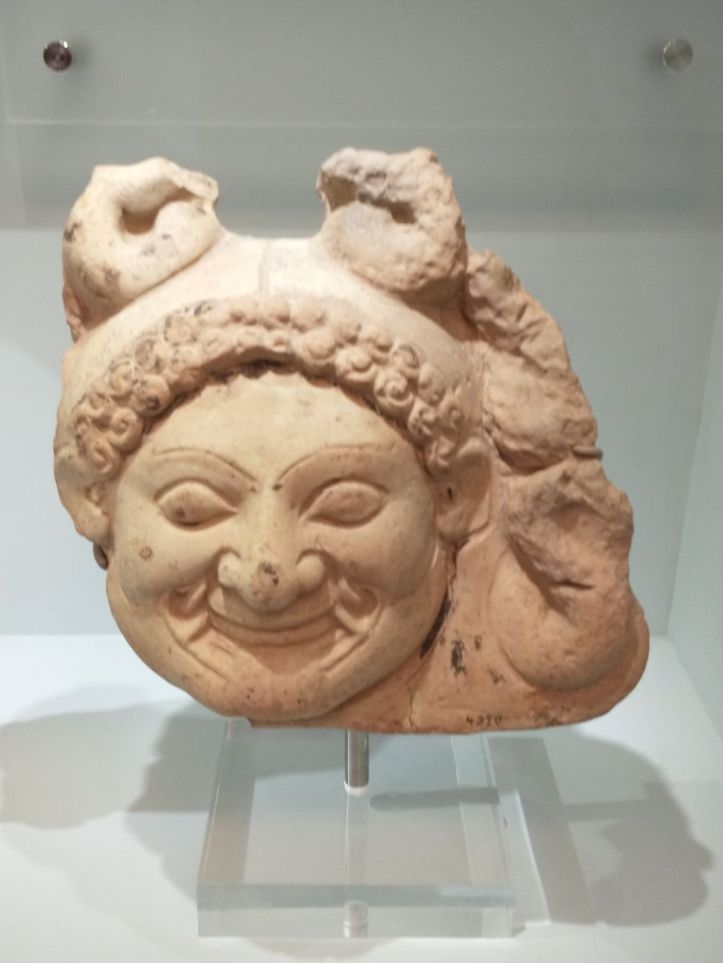
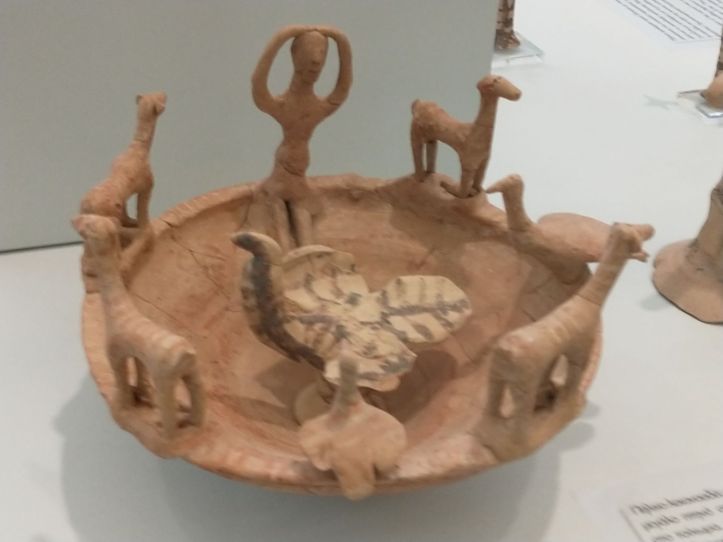
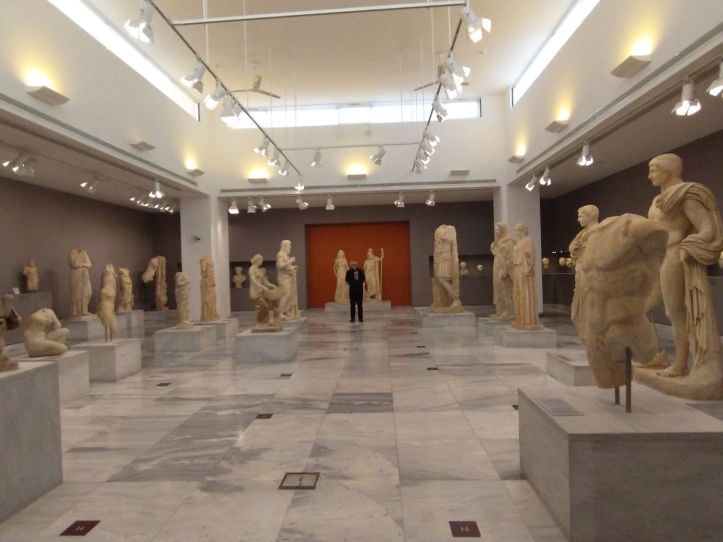
Finishing our cappuccino, we make our way across the street to become completely and totally immersed in the amazing museum. We’d read that it was an incredible collection of pottery and artifacts from the area, but we had no idea just how huge and detailed and amazing. It is laid out in 27 rooms on 2 floors with archeological finds from the Neolithic to the Roman times – including Prehistoric Minoan art. I mean, we (particularly me) could lose ourselves in here for hours upon hours. The pottery is amazing – so detailed for being so old and created in such an ancient fashion. We take so many pictures, well, you’ll never be able to get through them all! So we’ve tried to pick out the best here.
Some things that stand out: The Kamares Ware pottery (so named because they were found in the Kamares Cave) and are made of polychrome decorations and considered “luxury” vessels. The pieces were much sought after both in and outside of Crete, and considered a “luxury” product of the Minoan trade. Fascinating.
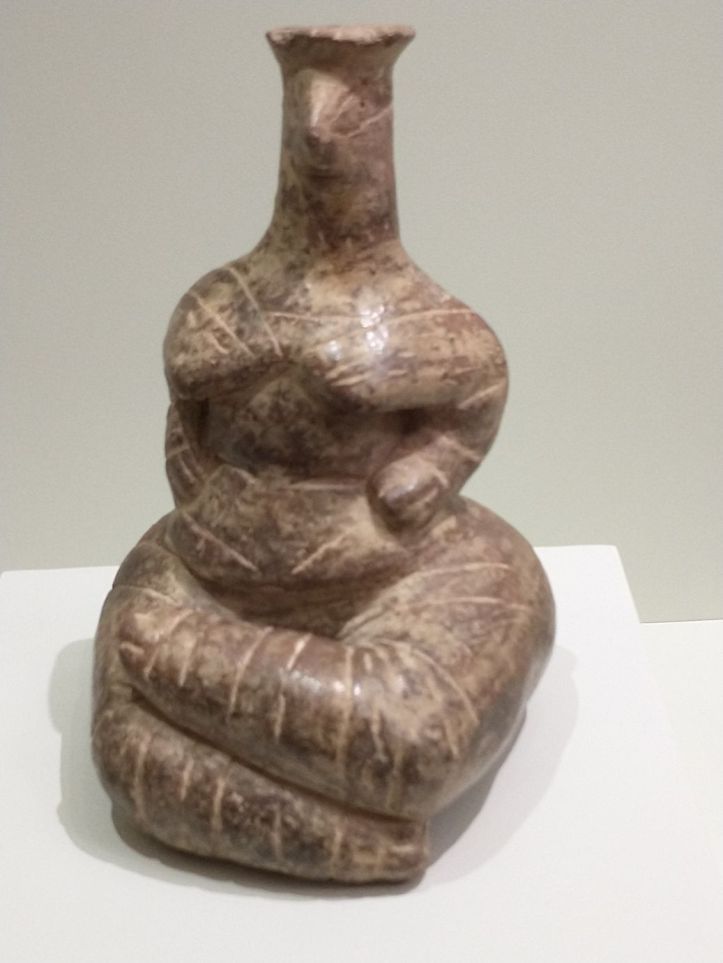
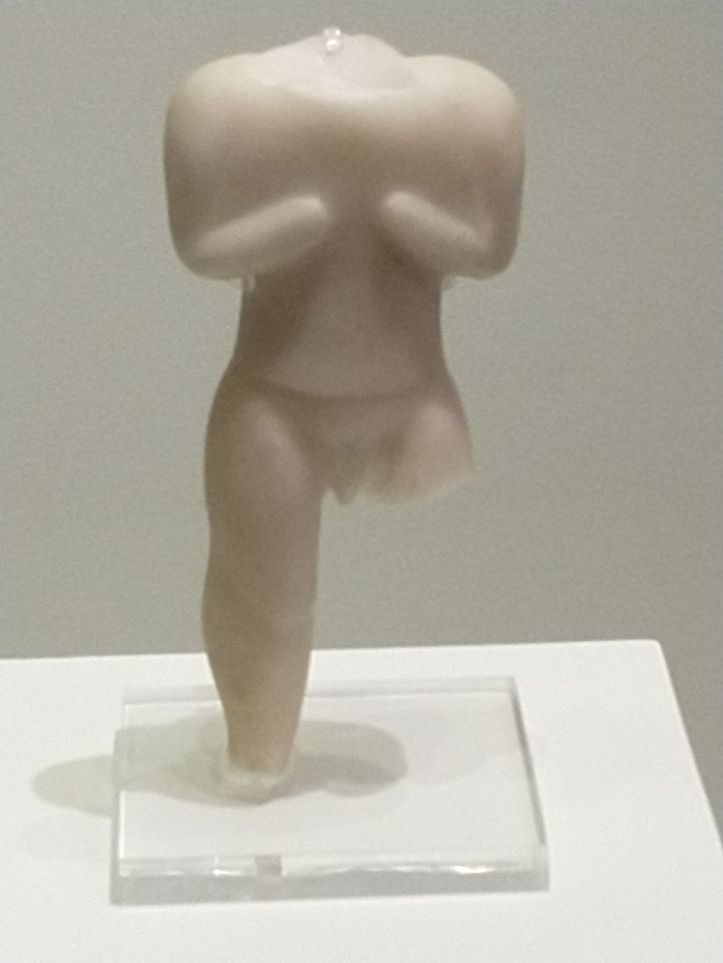
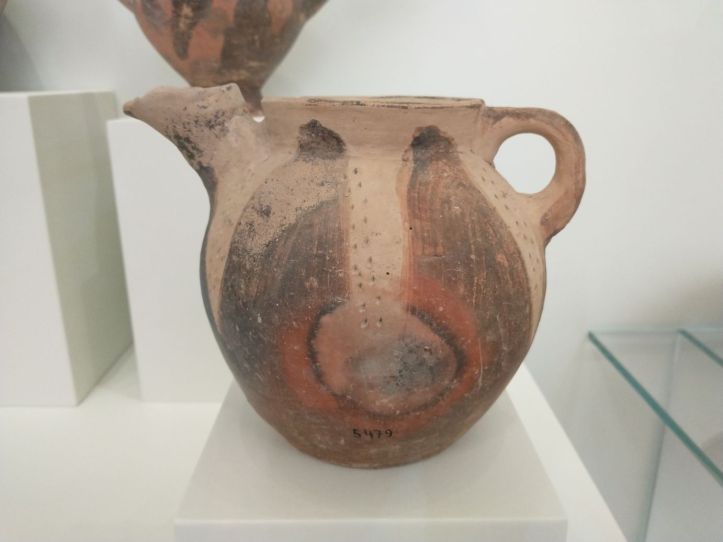
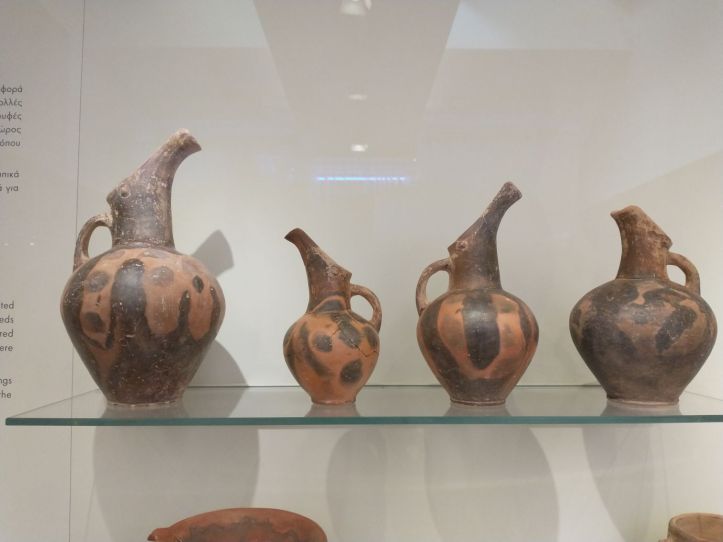
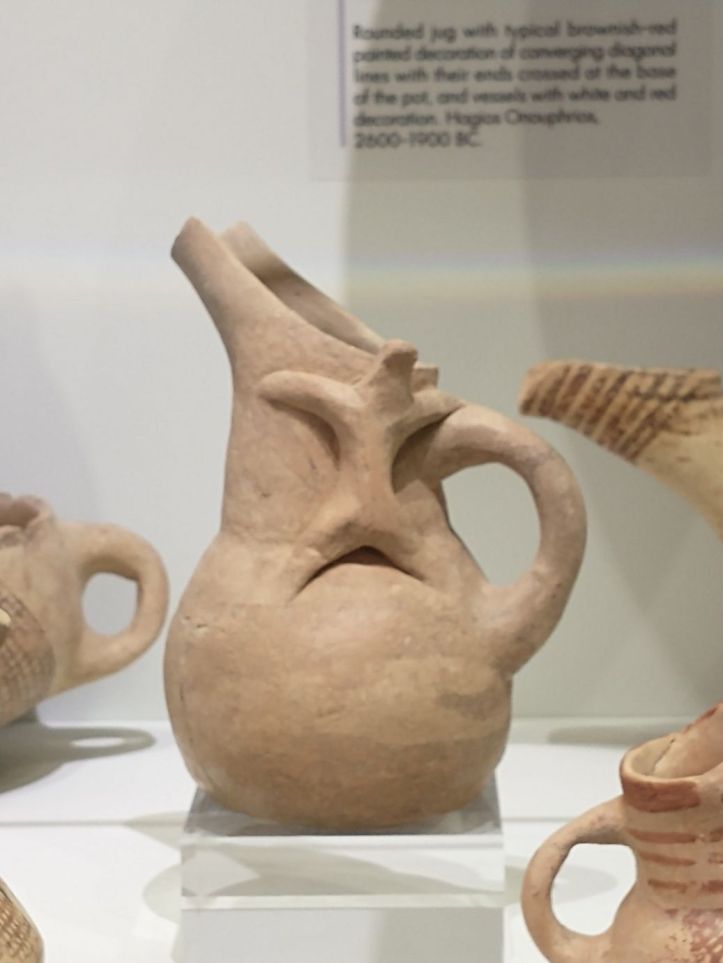
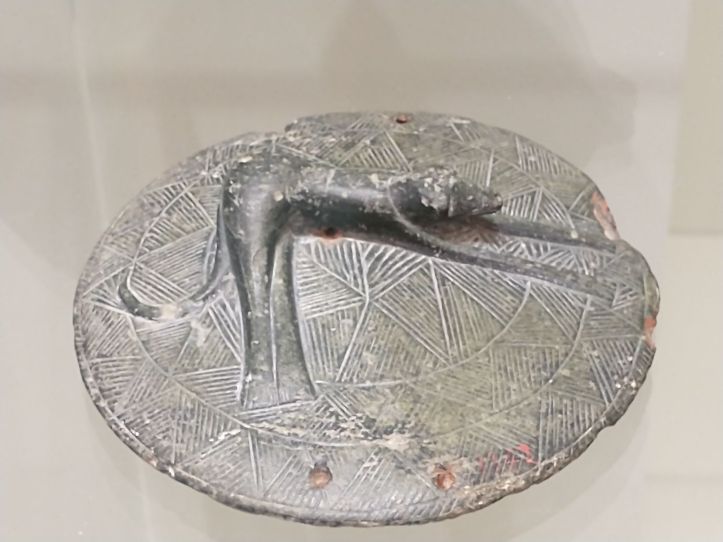
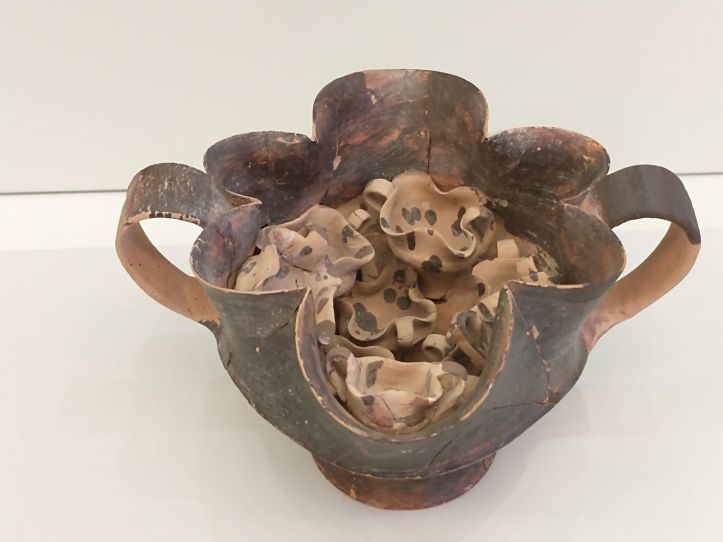
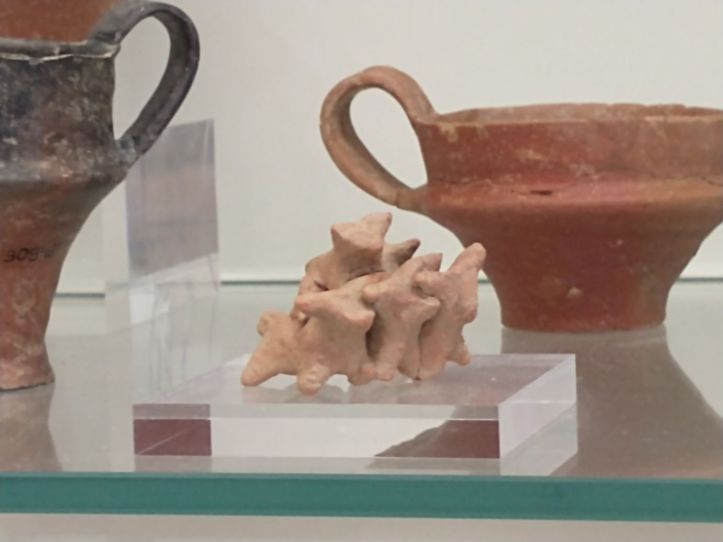
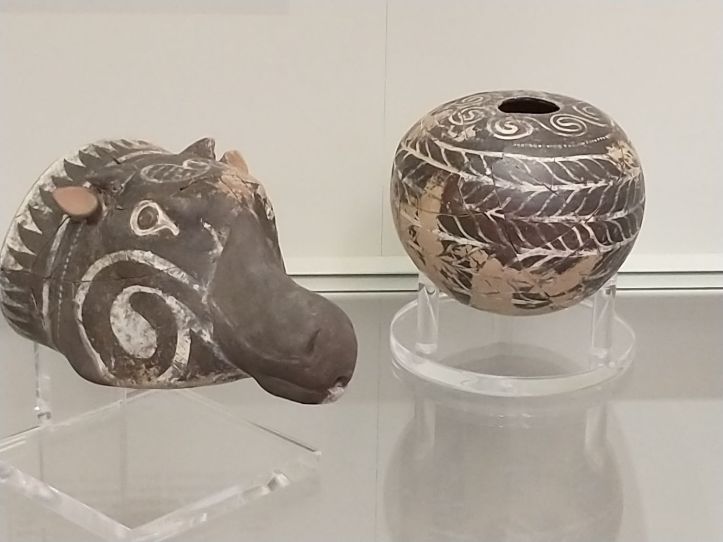
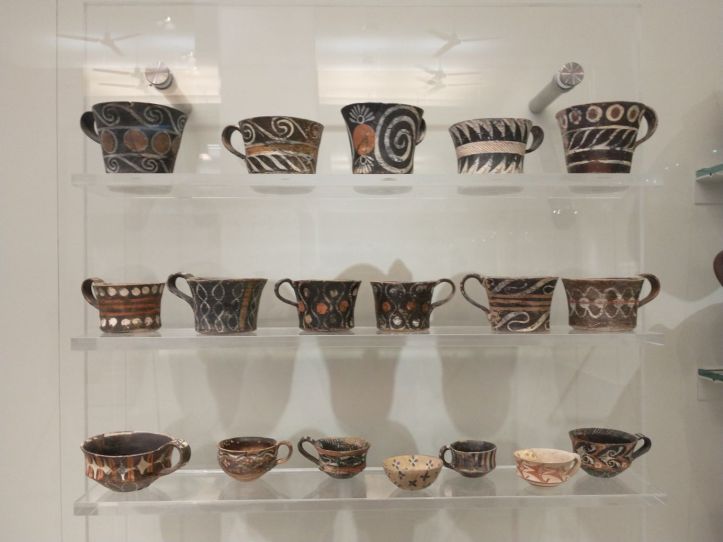
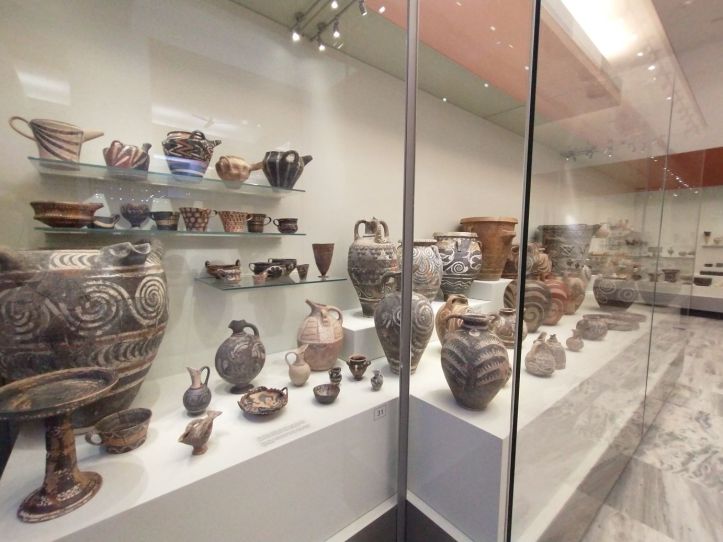
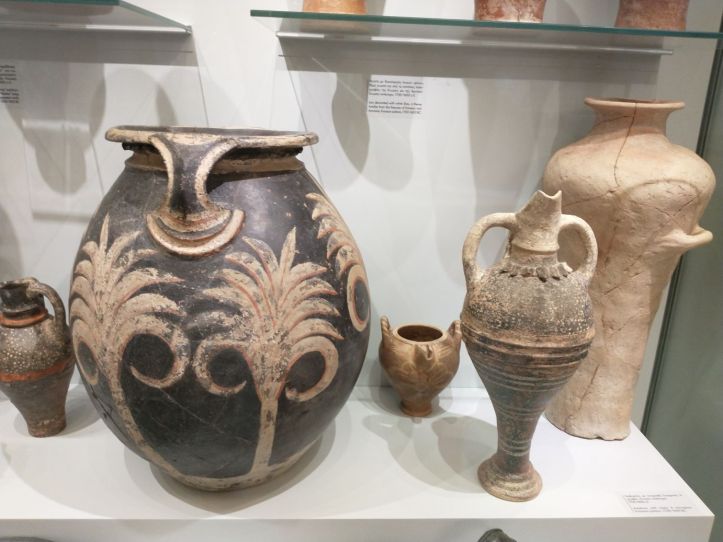
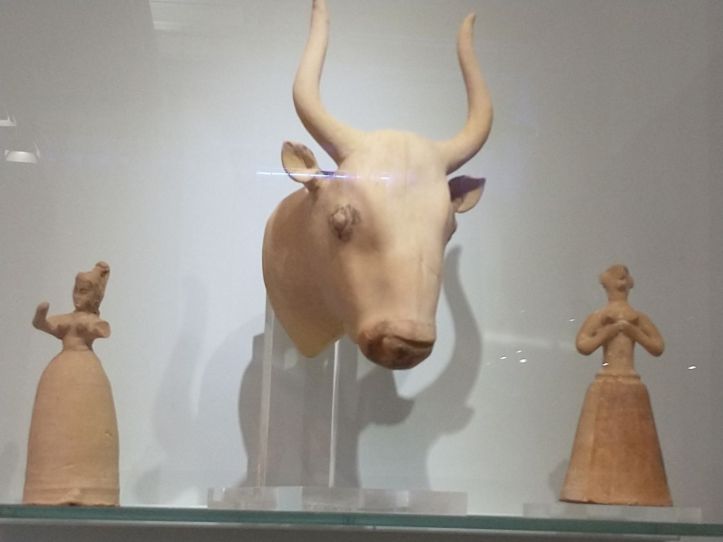
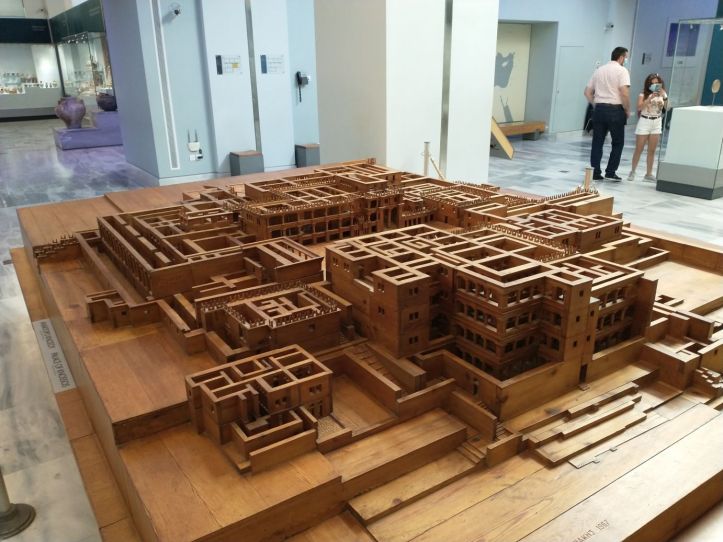
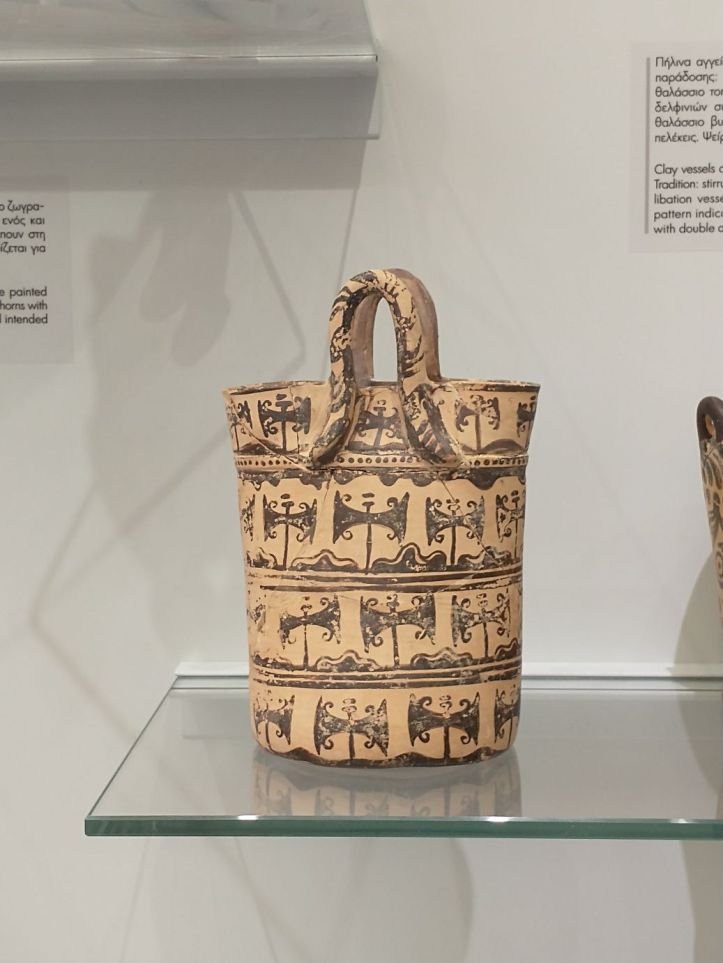
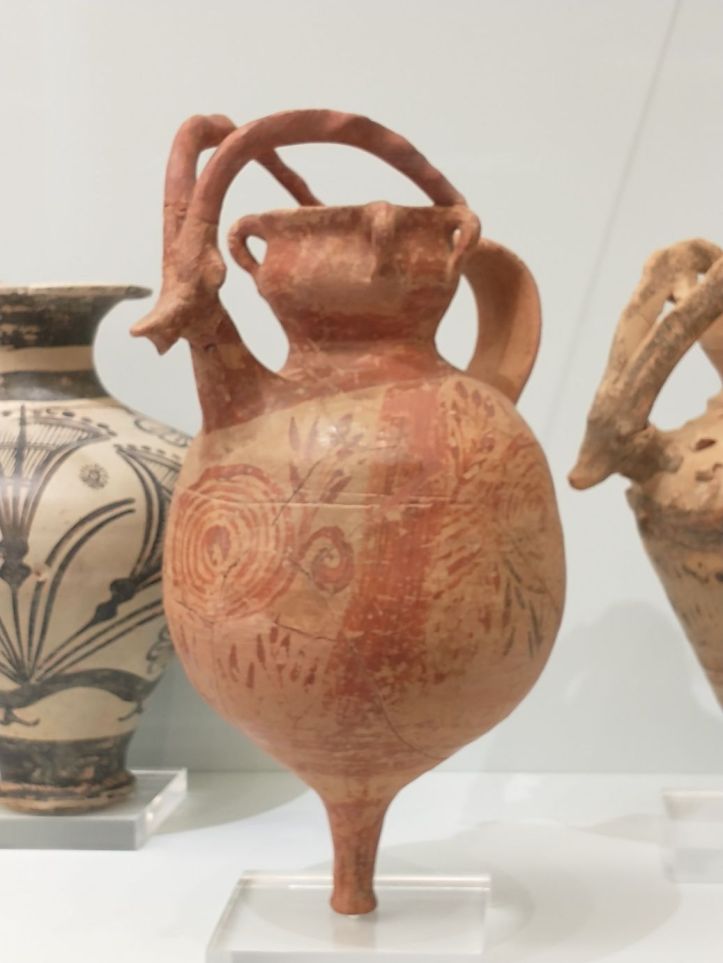
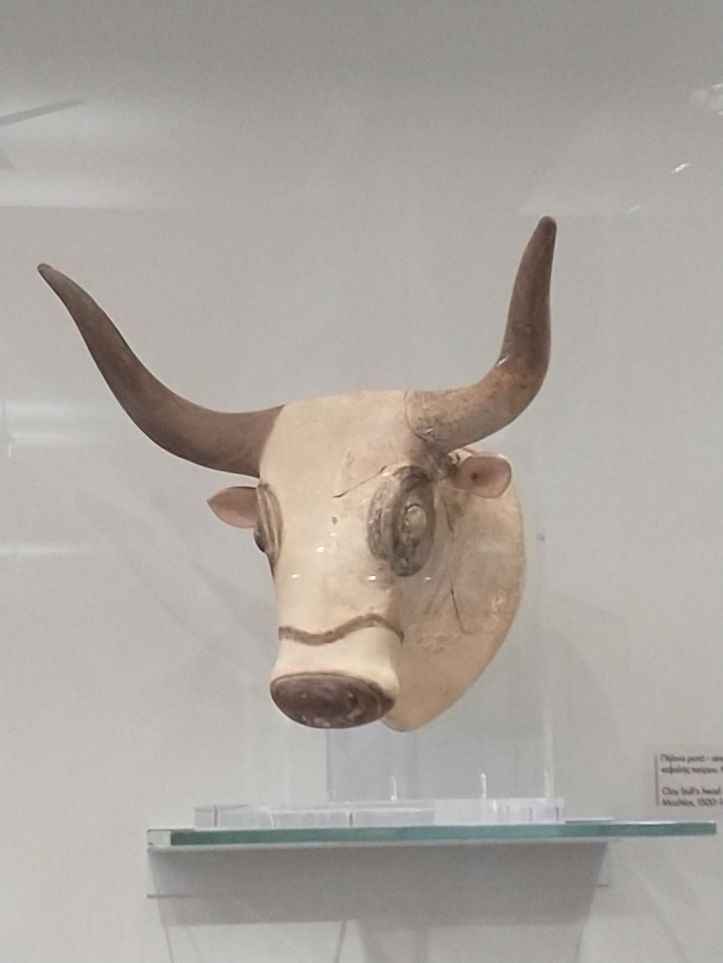
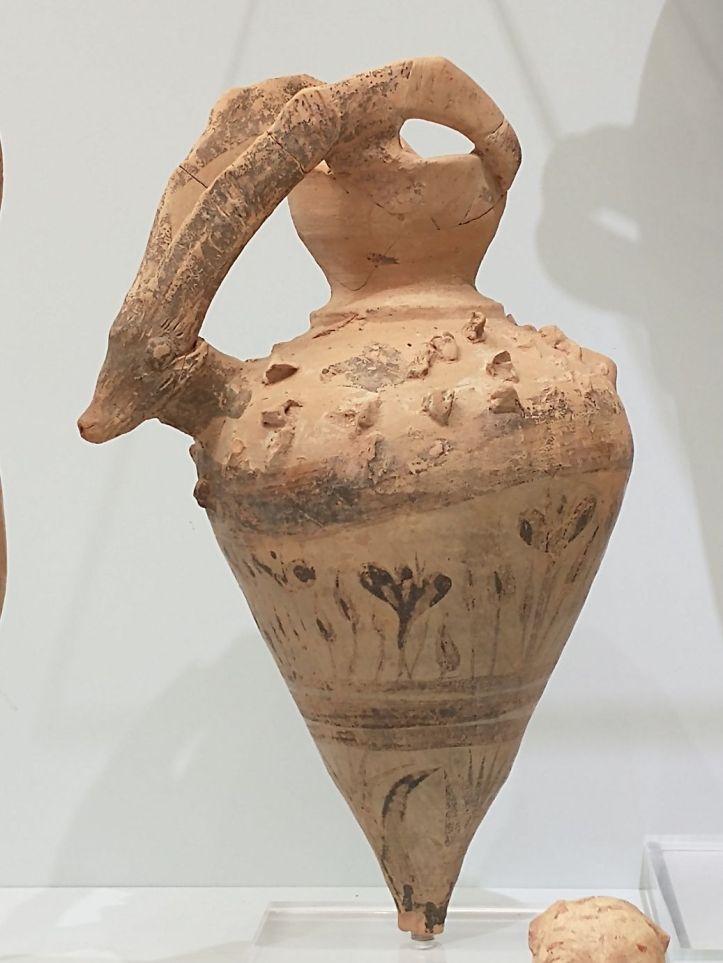
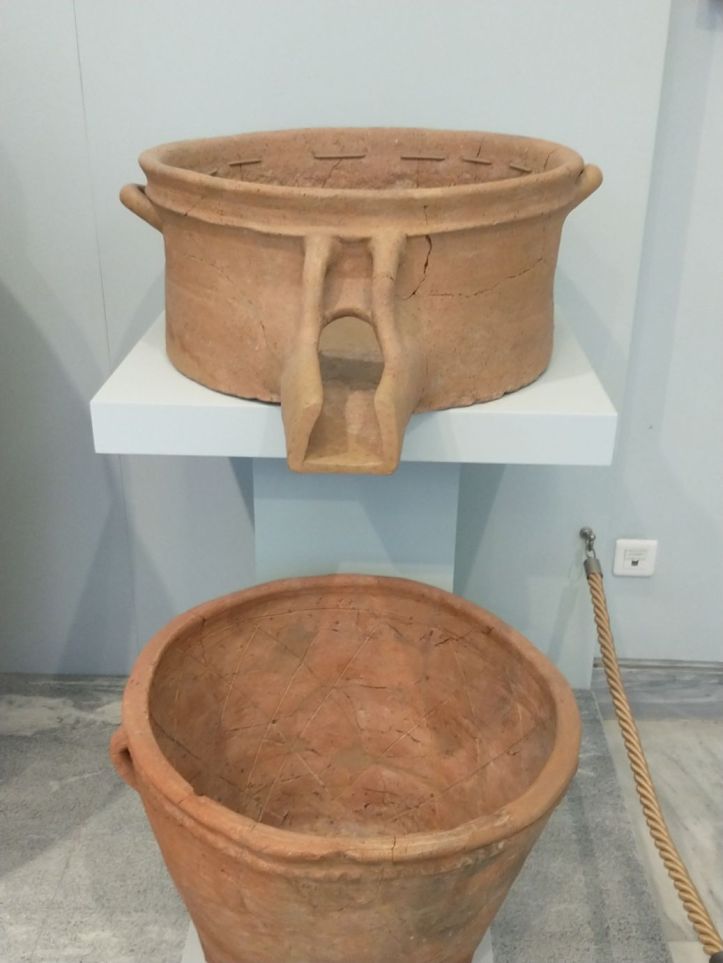
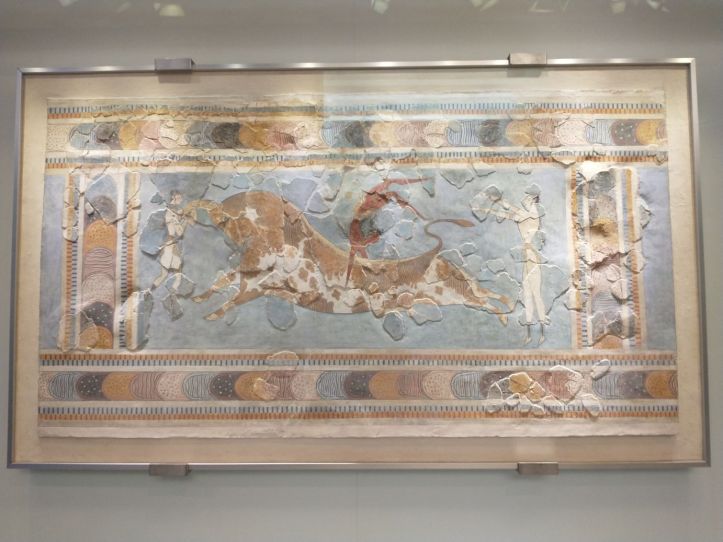
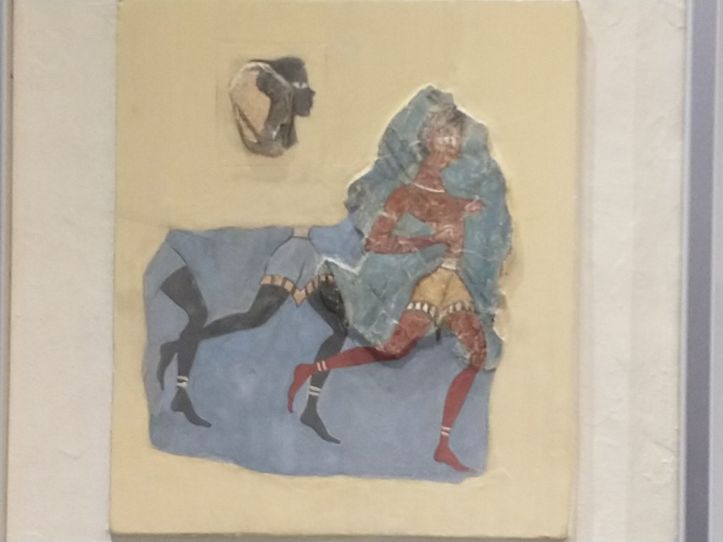
And it just goes on and on! The Knossos Snake Goddesses (surprisingly benign Goddesses, I expected them to be evil or something), the Lioness Head that was used for pouring out liquid offerings, the original champagne glass fountain created in clay (the liquid was poured into the top cup and then ran through all the rings and was poured out through the base!).
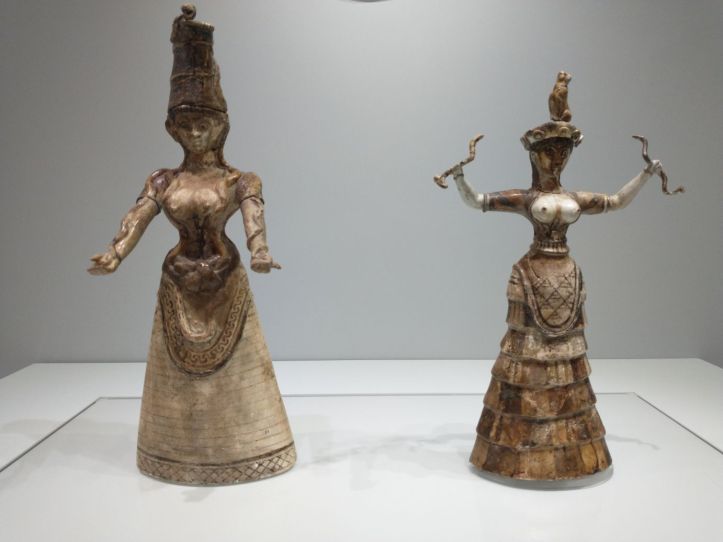
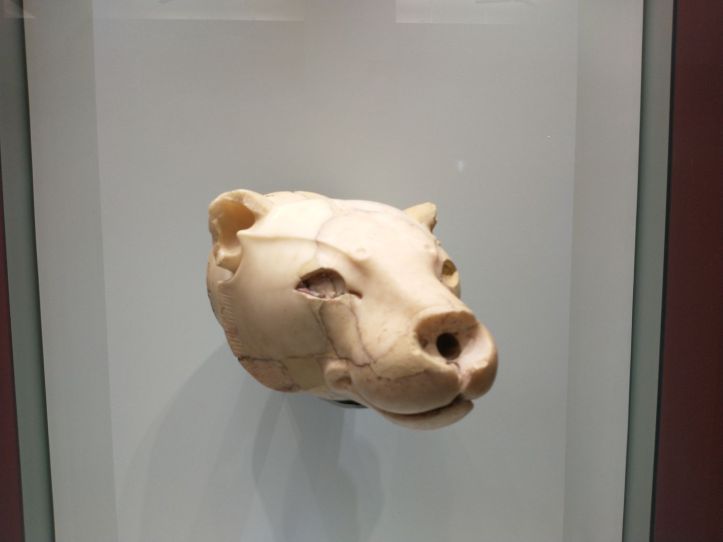
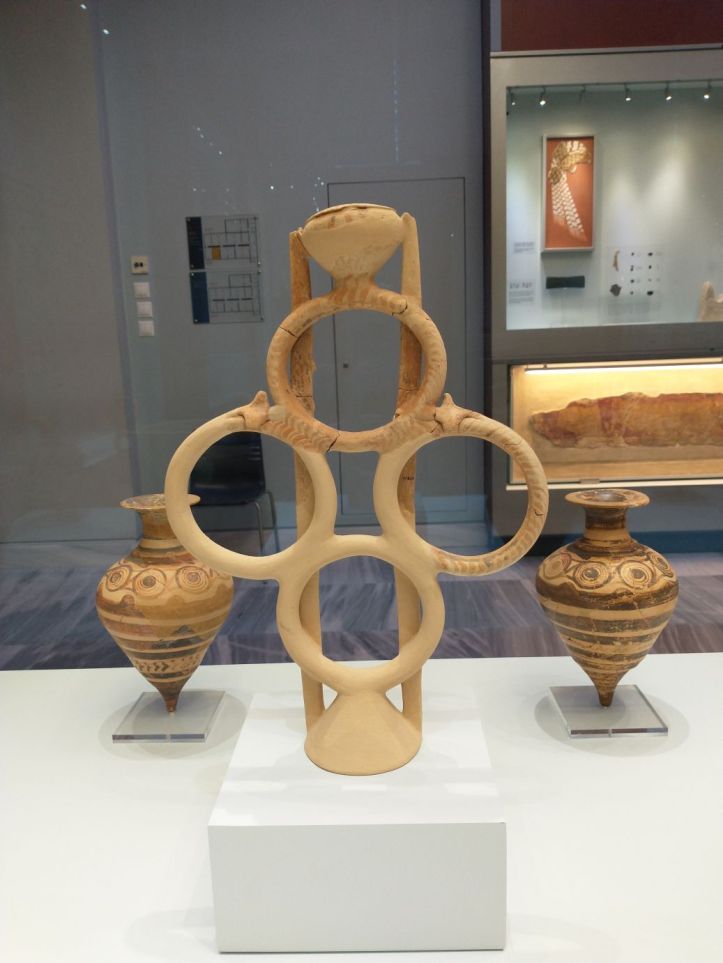
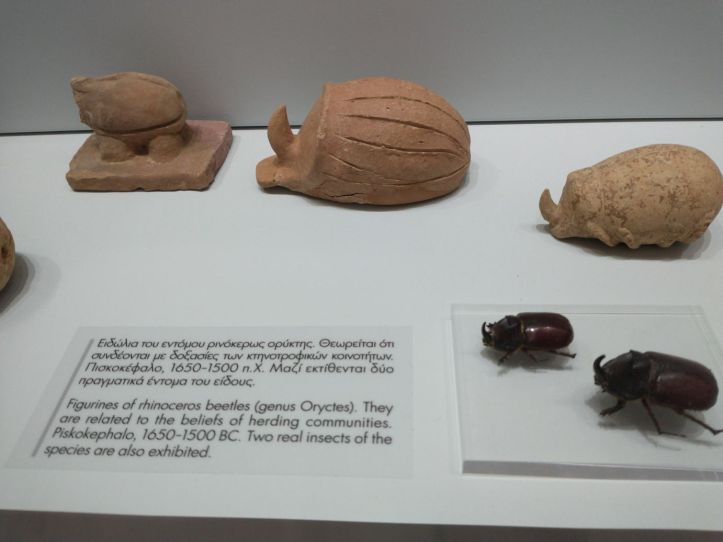
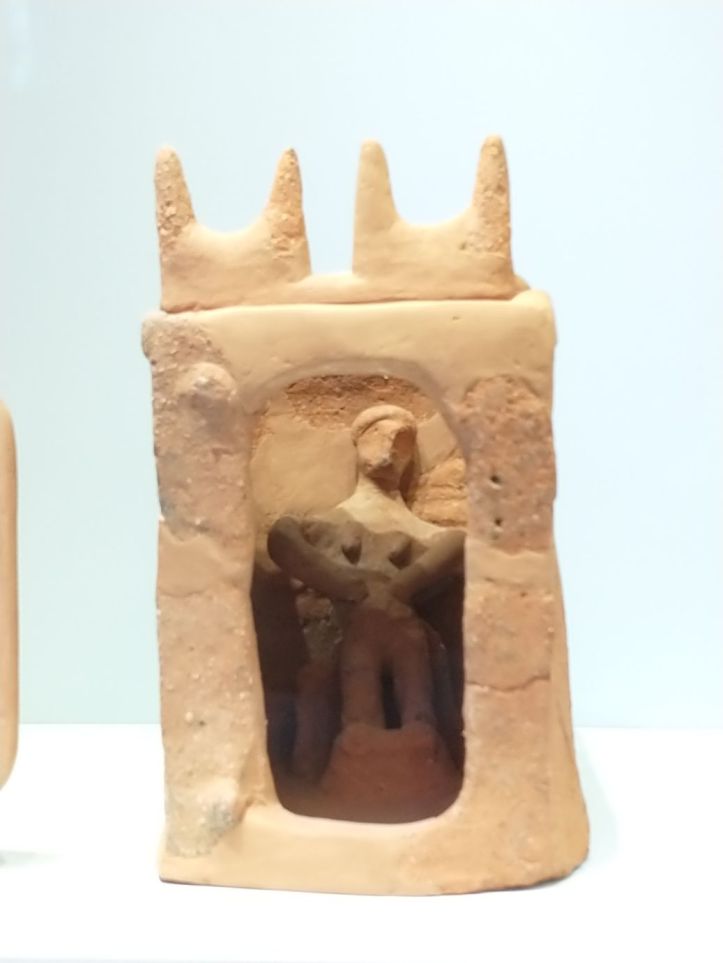
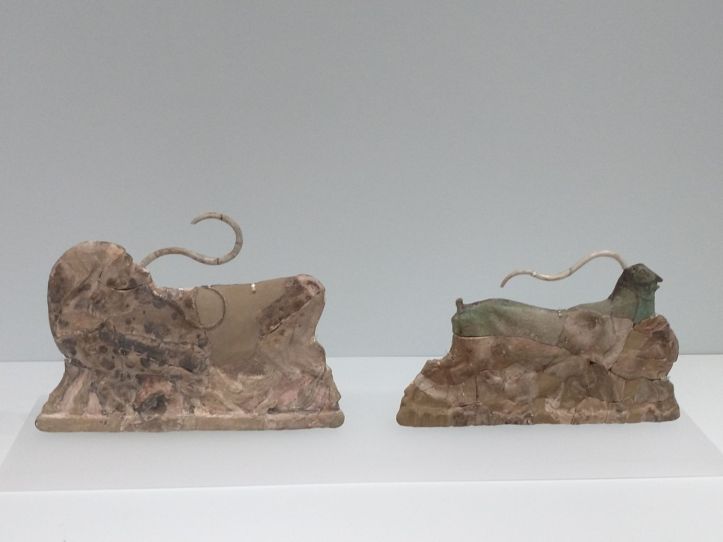
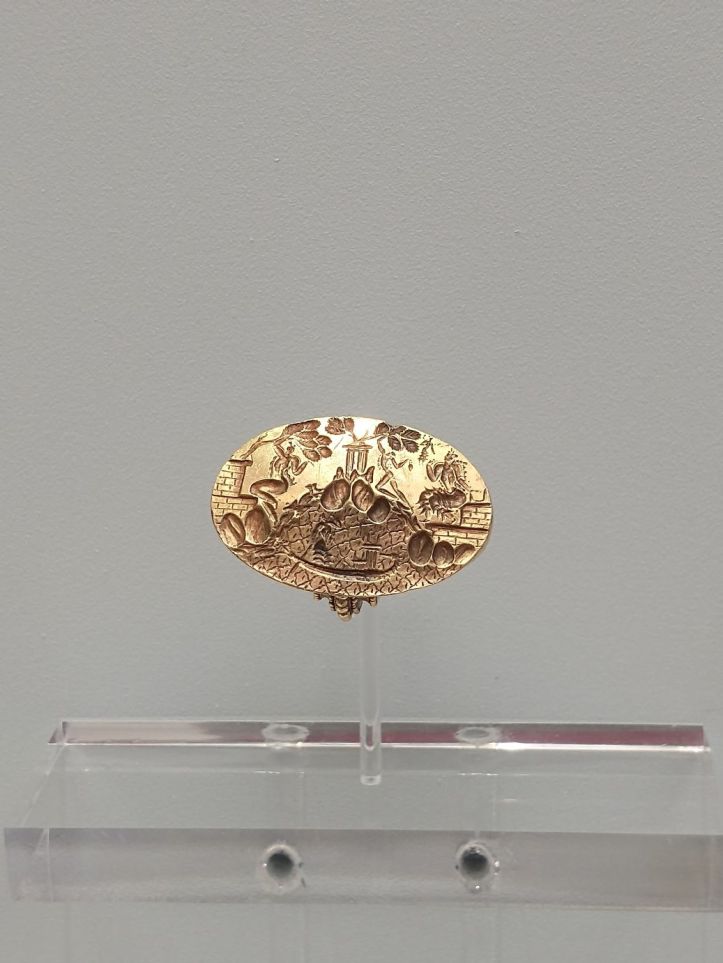
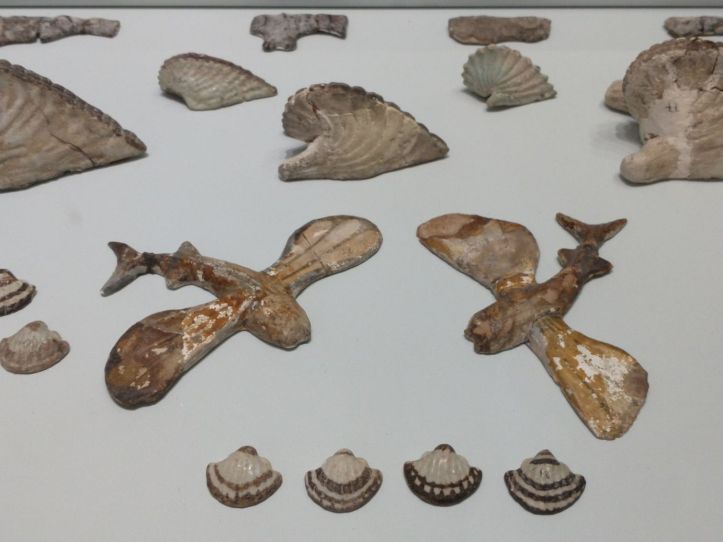
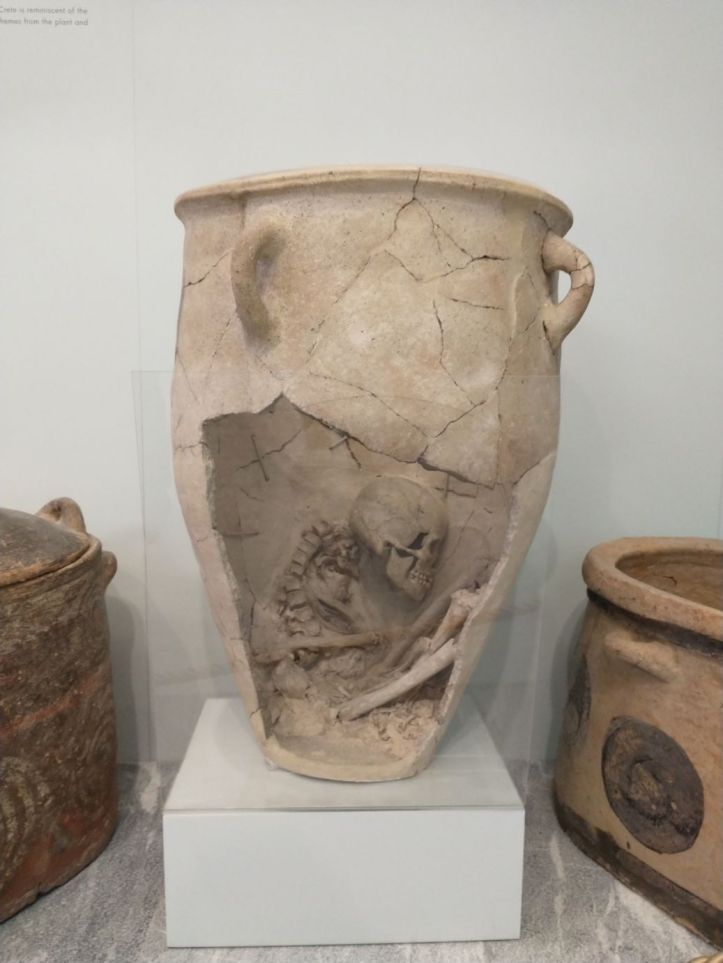
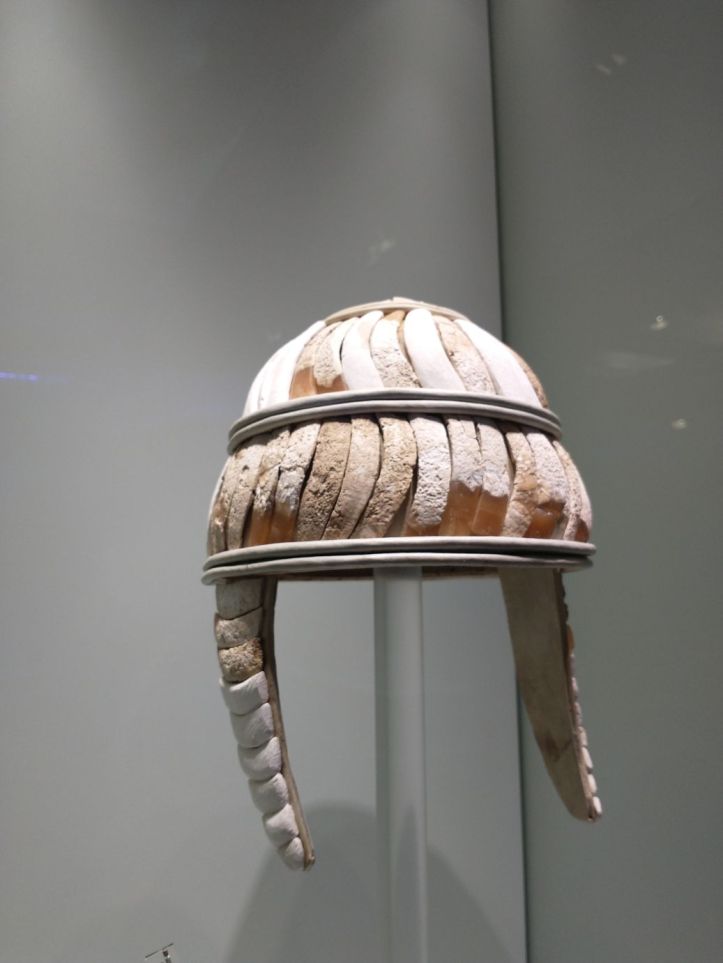
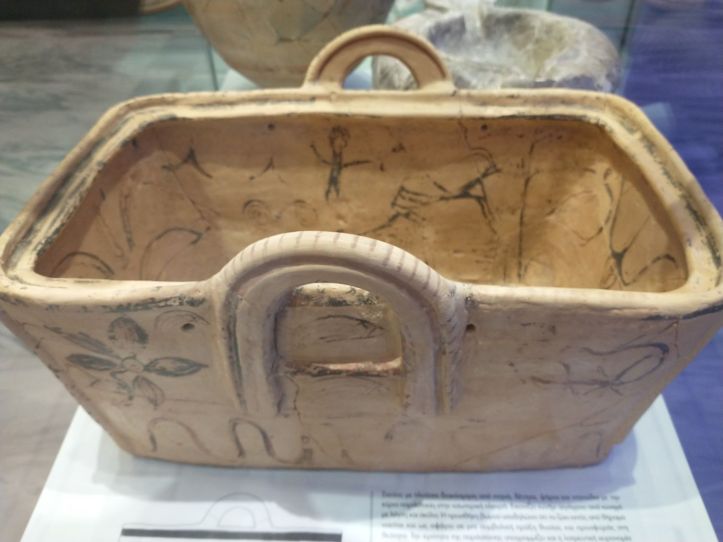
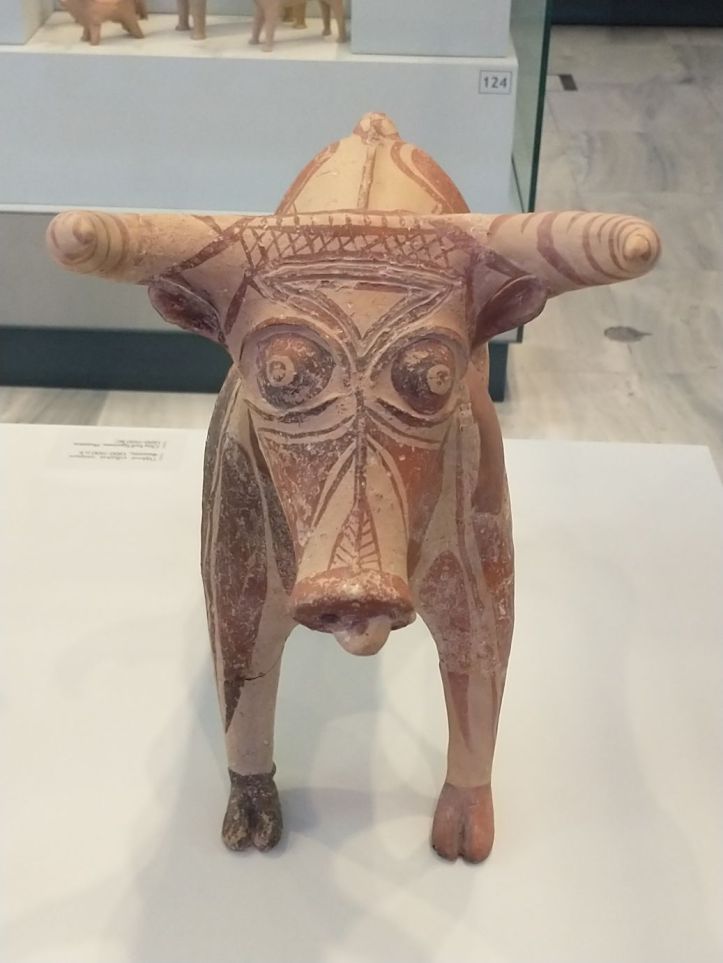
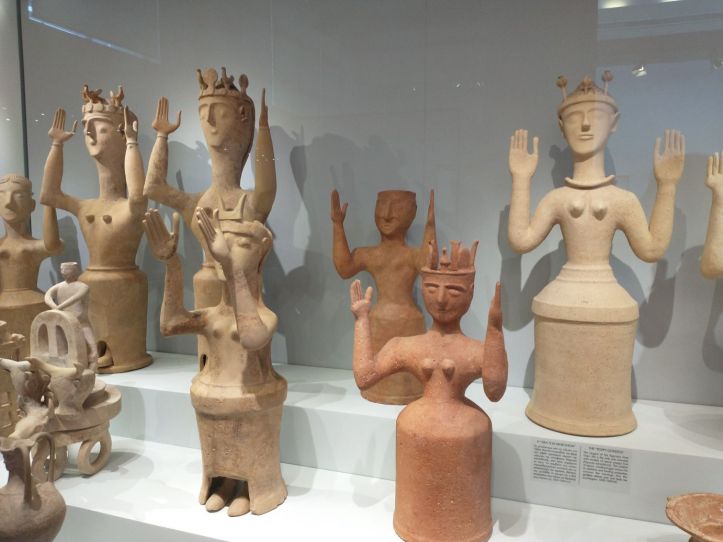
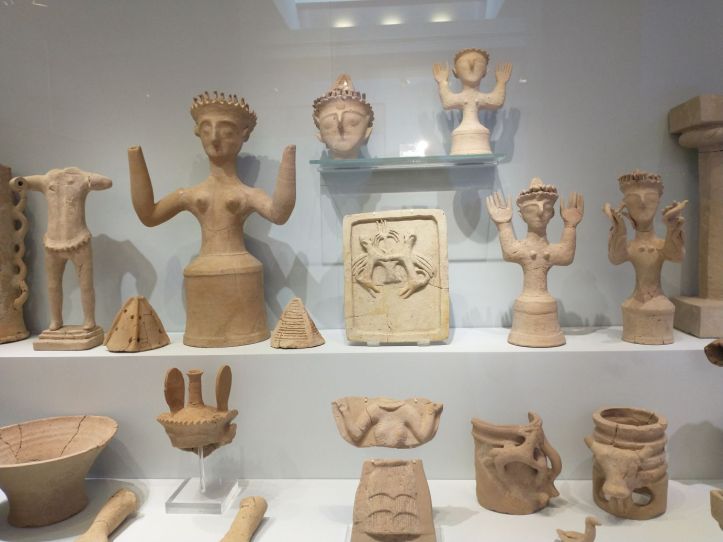
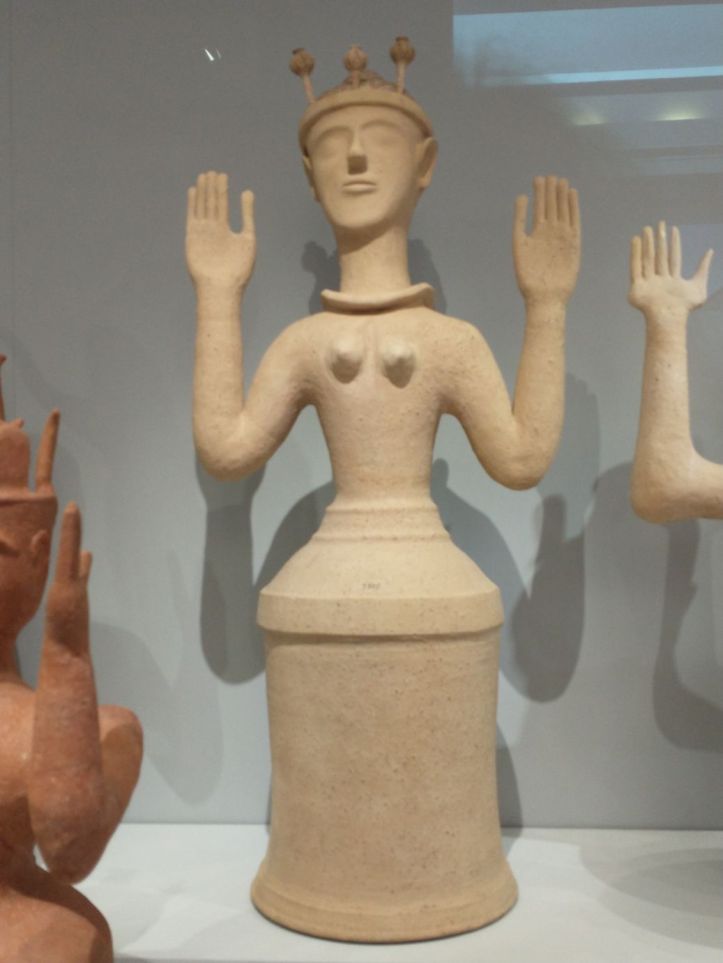
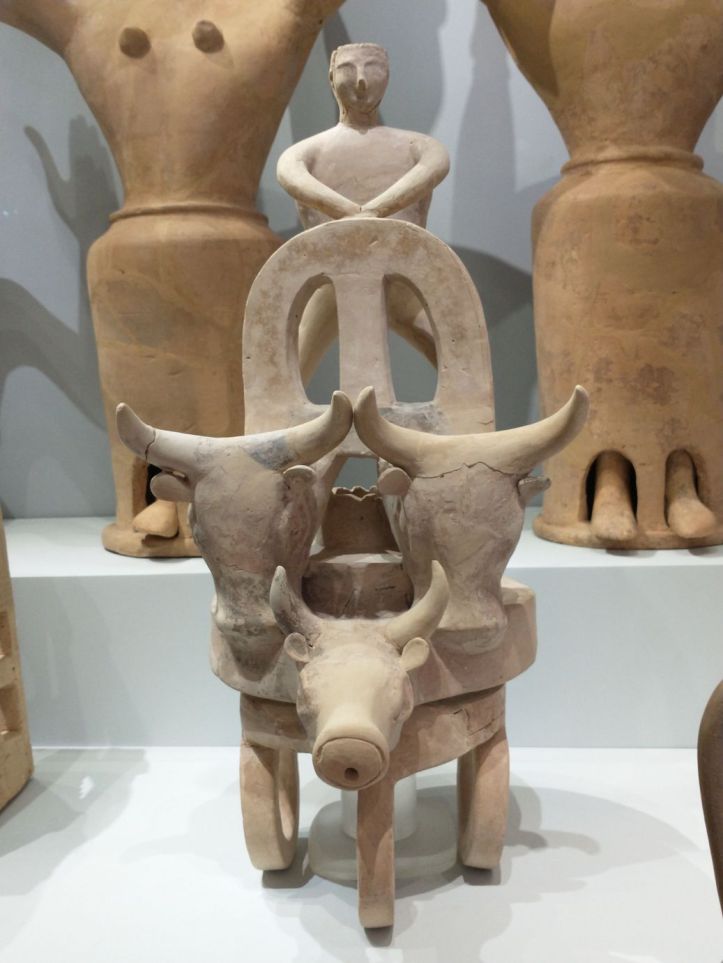
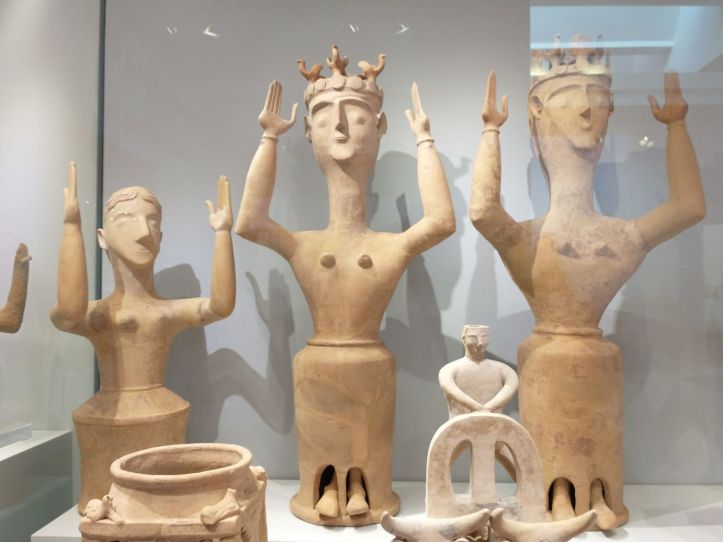
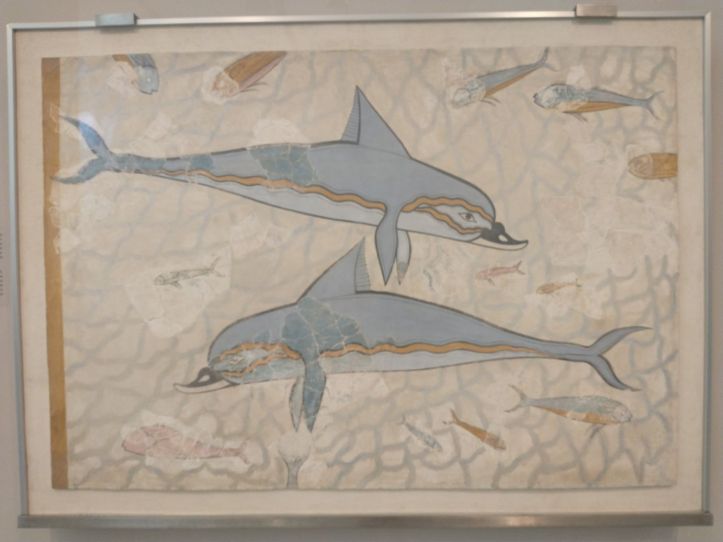
Ok, so I know I’m boring everyone to death, so you can just look at the pictures here (or not!)- including a photo of the Dolphin Fresco that was on the wall or floor of a hall in Knossos – and is the same design we saw on the T-shirt we didn’t buy at Knossos (and we never found again…sigh).
 Andiamo