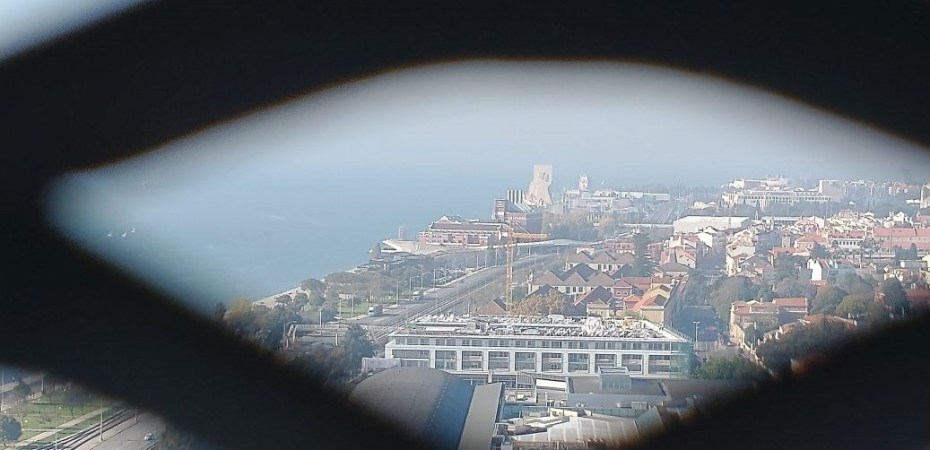
The Lisboa card is only active for 48 hours, so we have rearranged our plans to go to Obidos today to stay in town and finish up visiting the museums we have targeted. Plus, we want to ride the #28 tram, which is circles the city, and it is free with the Lisboa Card. So Obidos is tomorrow then.
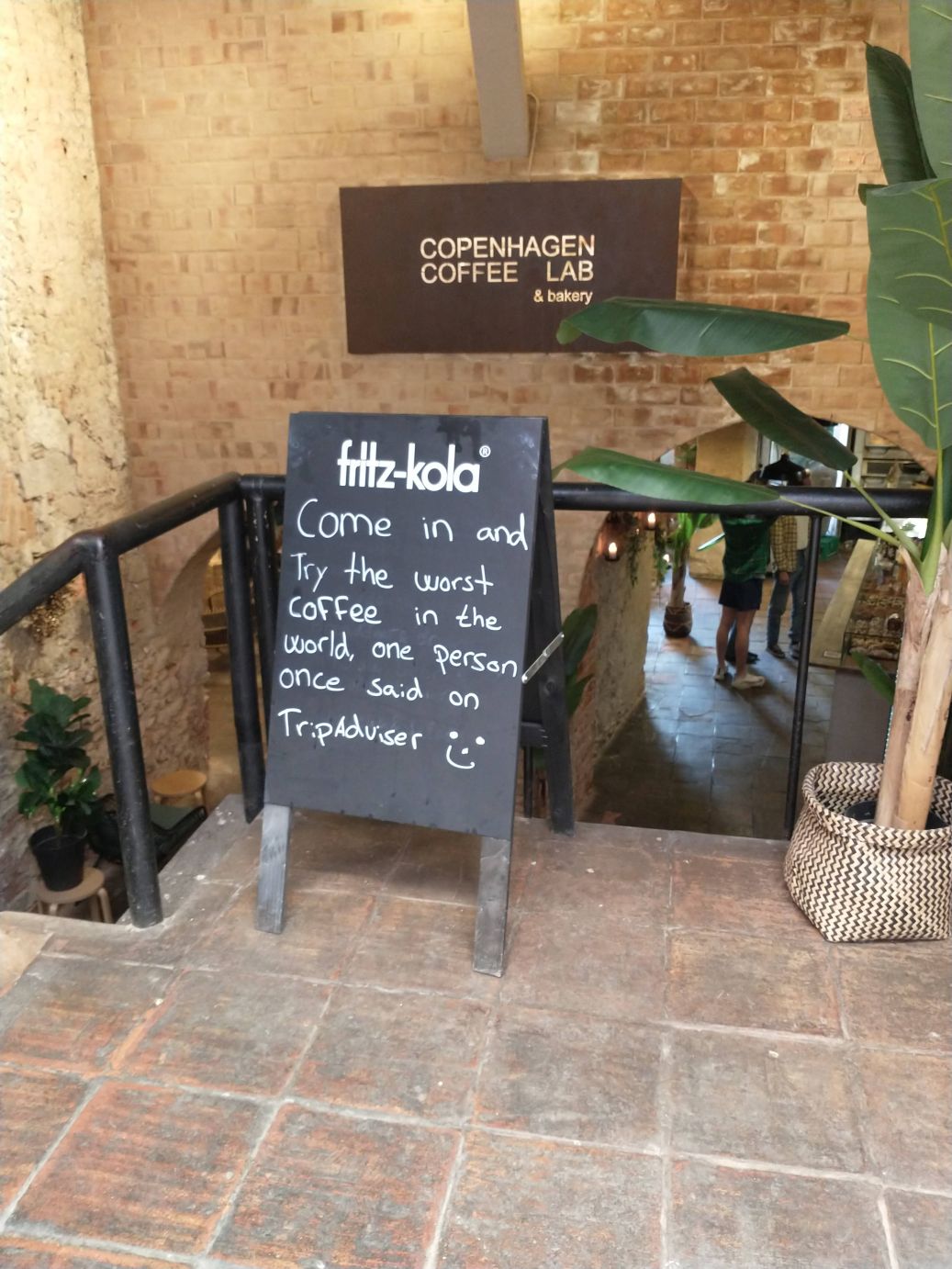
We’re hoofing it up the hills early this morning to catch one of the first trams (and avoid the crazy crowds we saw yesterday). I’ve mapped out our route through the Moovit app, which is the MOST awesome app for transportation. It has every bus, tram and train route plus timetables and a live tracker showing you if the vehicle is late. It’s good for a bunch of cities too – not just Lisbon – so it becomes our must have phone app. It shows the stop for the tram at a corner on Ecolas Gerais, about a 10-minute walk from the apartment. When we arrive at said corner, there is no stop marked on our side of the street. There is one on the other side, going in the opposite direction of where we want. Hmm….guess we’ll just have to wait and see if the tram will stop for us on the “non-stop” side in front of the Copenhagen Coffee Lab which has the greatest sign out front…..gotta love TripAdvisor!
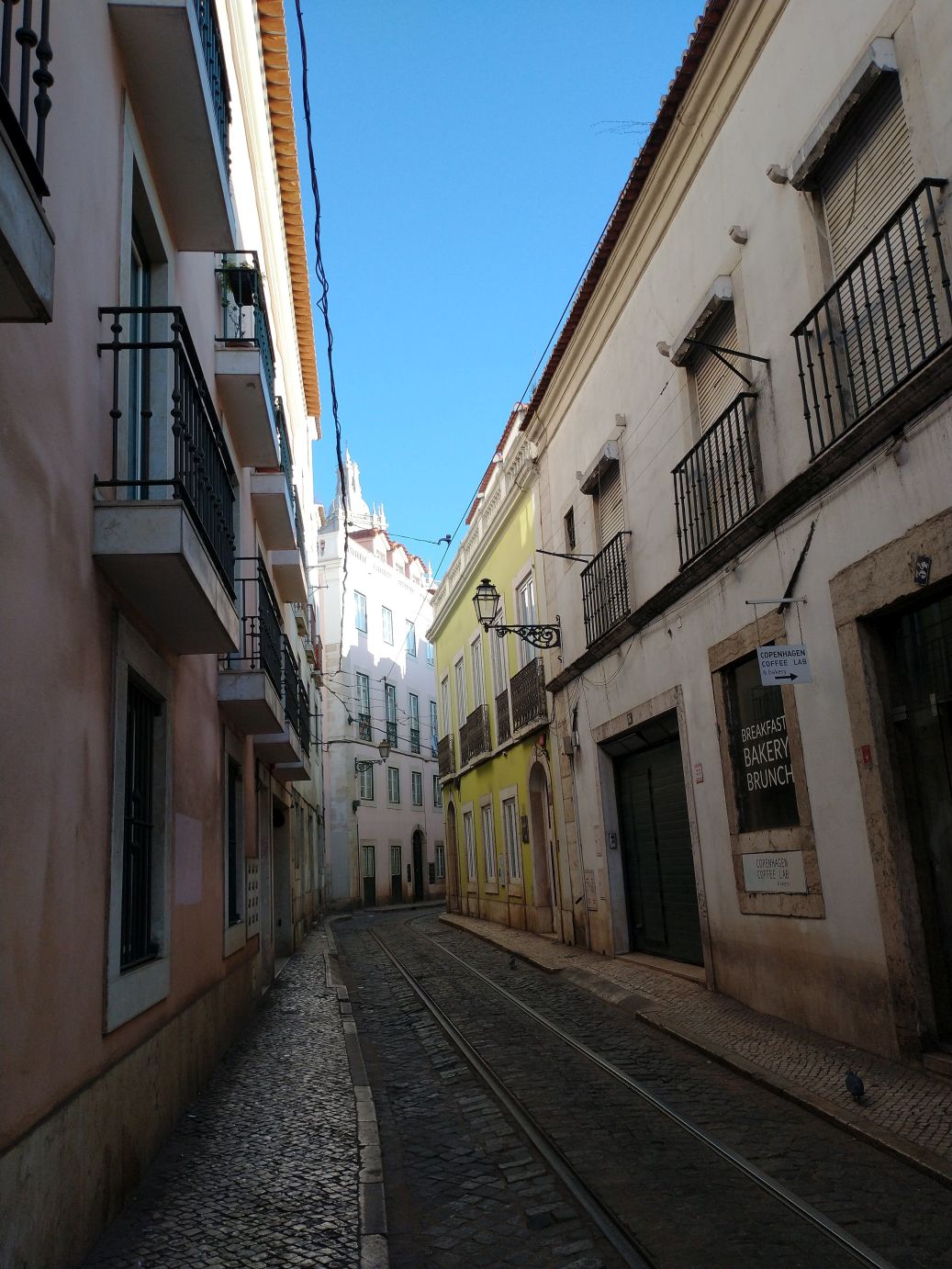
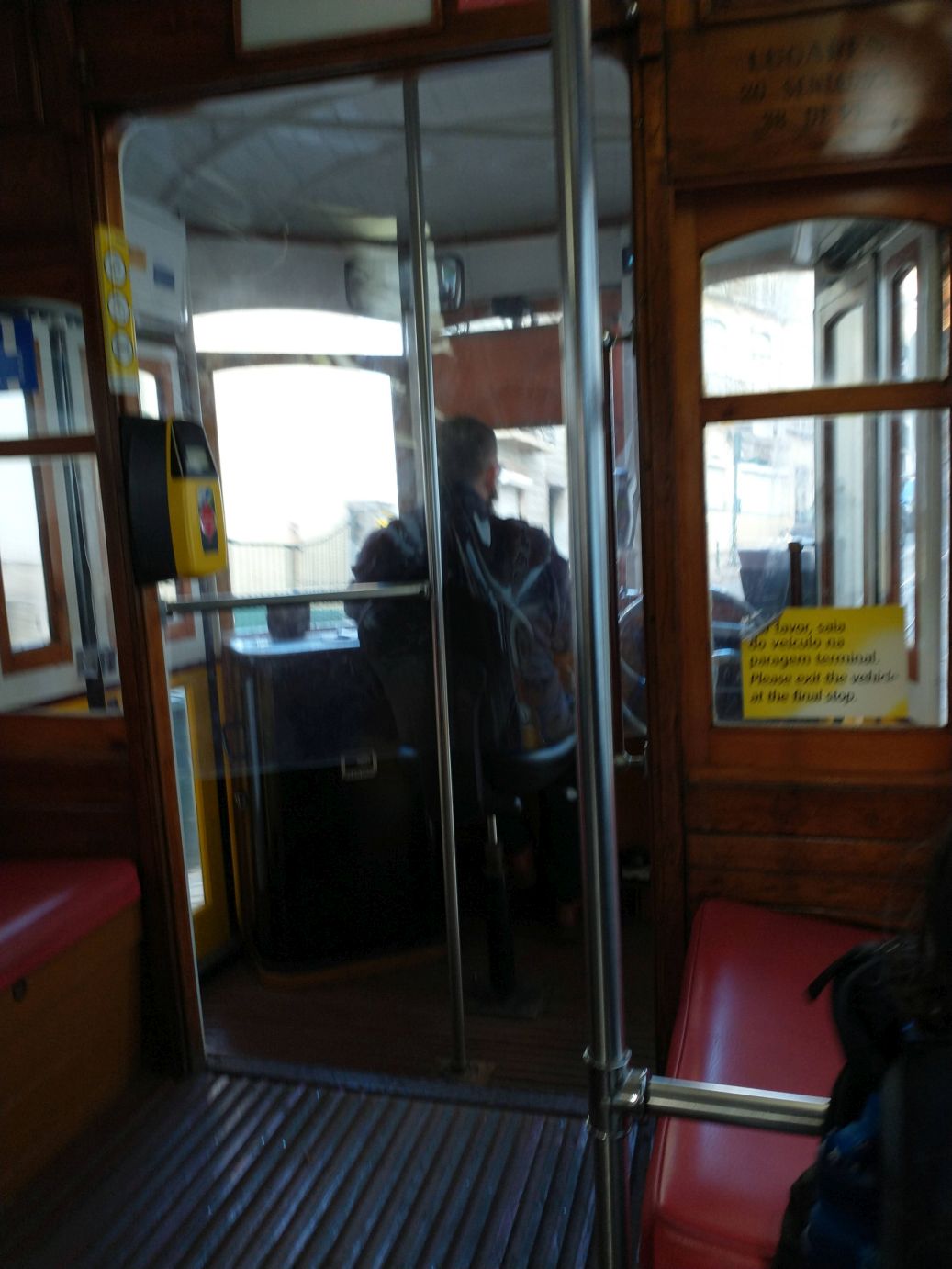
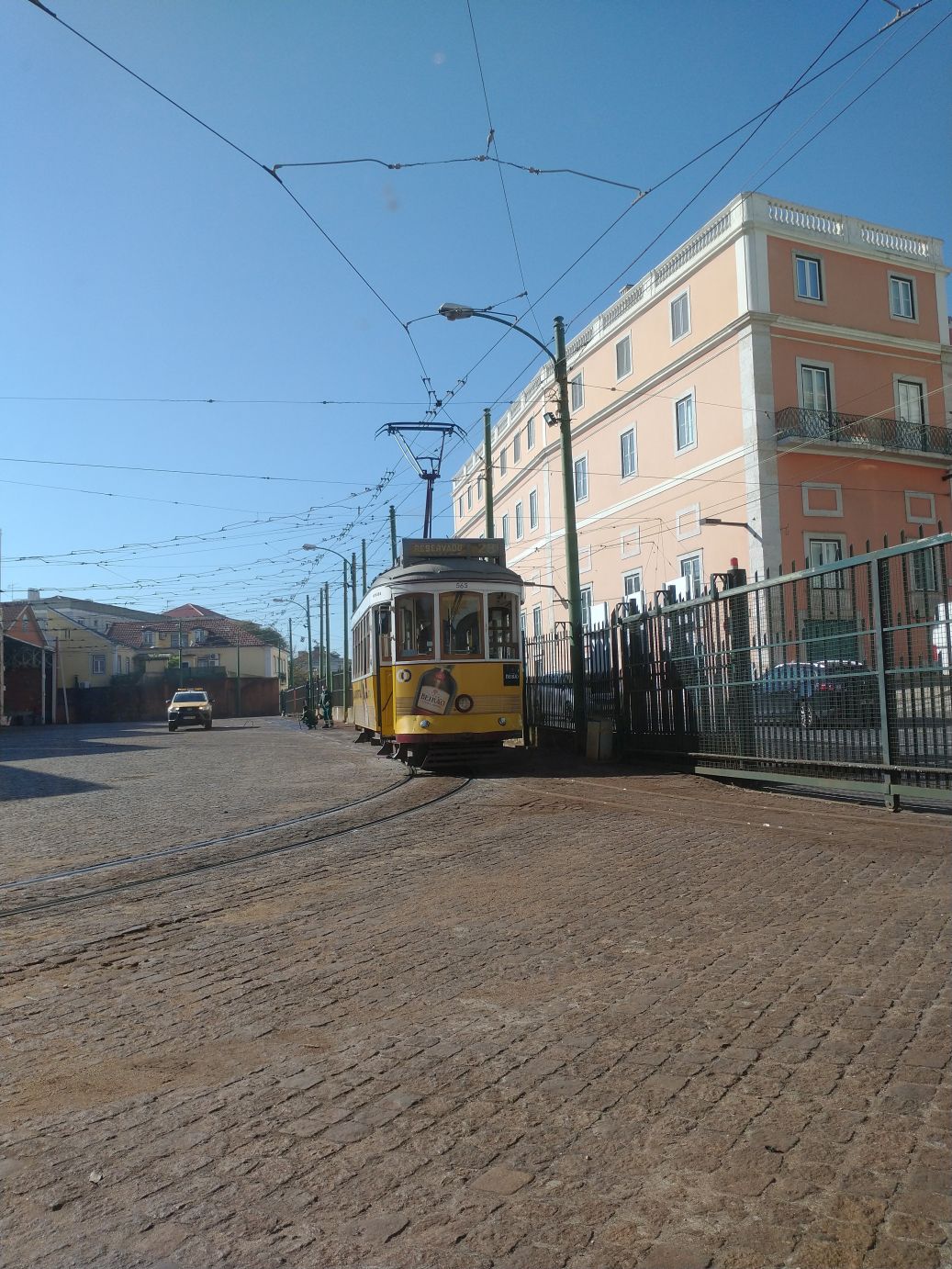
We wait. And wait. And start to get a little concerned, especially because this street is actually a one-way street, going the opposite way from where we want AND there is only one set of trolley tracks. Of course, the app shows the darn tram is running late, so we have to wait some more to see if it is even coming, not to mention stopping! We are in luck though – the tram does stop for us. Big sigh of relief. We hop on for a virtually empty tram ride up to the top of the hill, past the Castelo de S. Jorge and the lookout point that has incredible views of the city and the riverfront, then on down the other side through the more commercial areas of town to the end of the route at Praca Martim Moniz, where we have to get off this tram and walk a little ways around the block to pick up the next tram to go back down to the other end of the route. Unfortunately, we are too slow to catch the tram that is at the stop and have to wait another 10 minutes for our tram guy to come around and pick us back up. But it was probably worthwhile, because we are the first ones on the tram with our pick of the good seats – and prime window watching spot for Sunny!
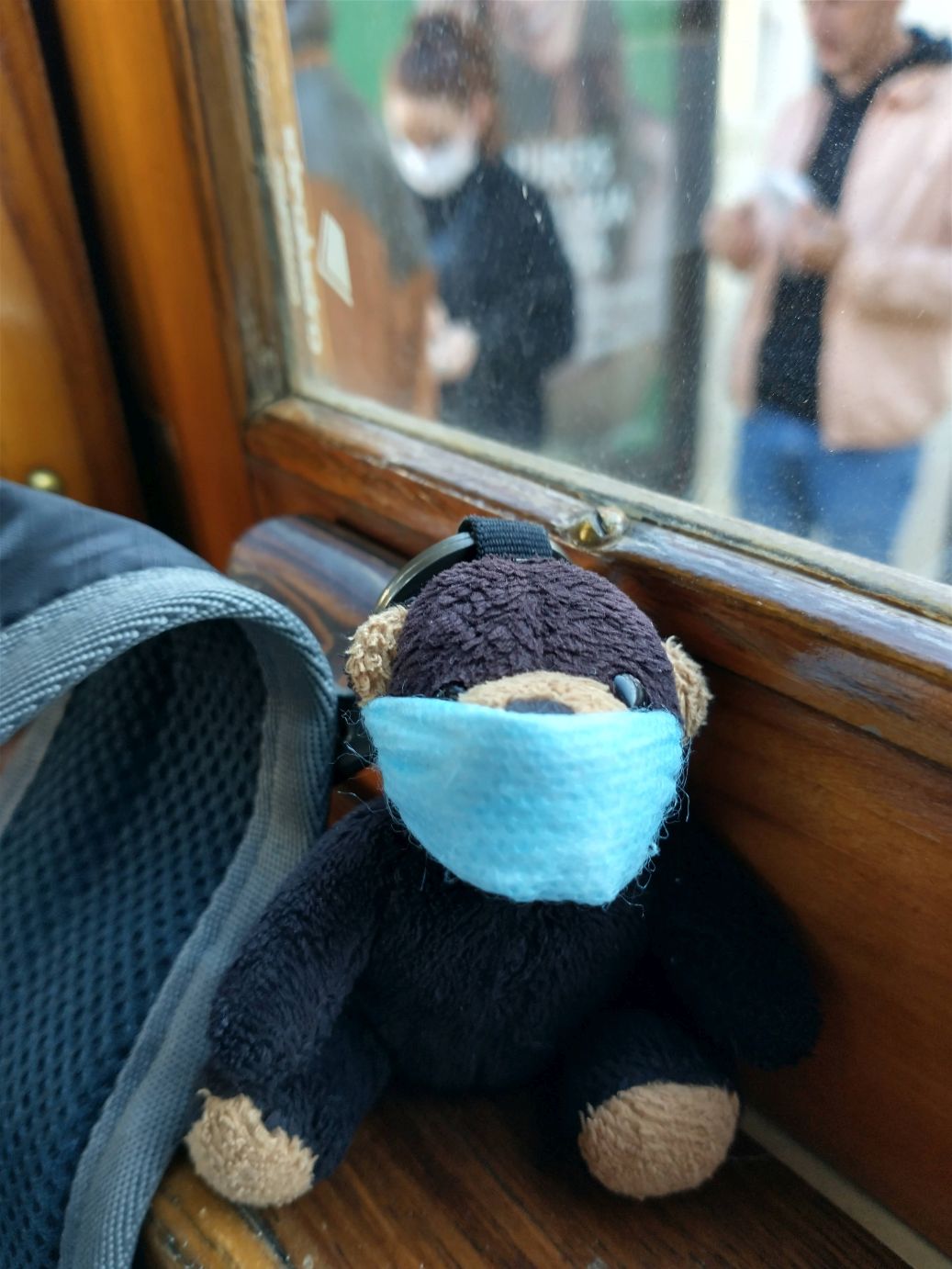
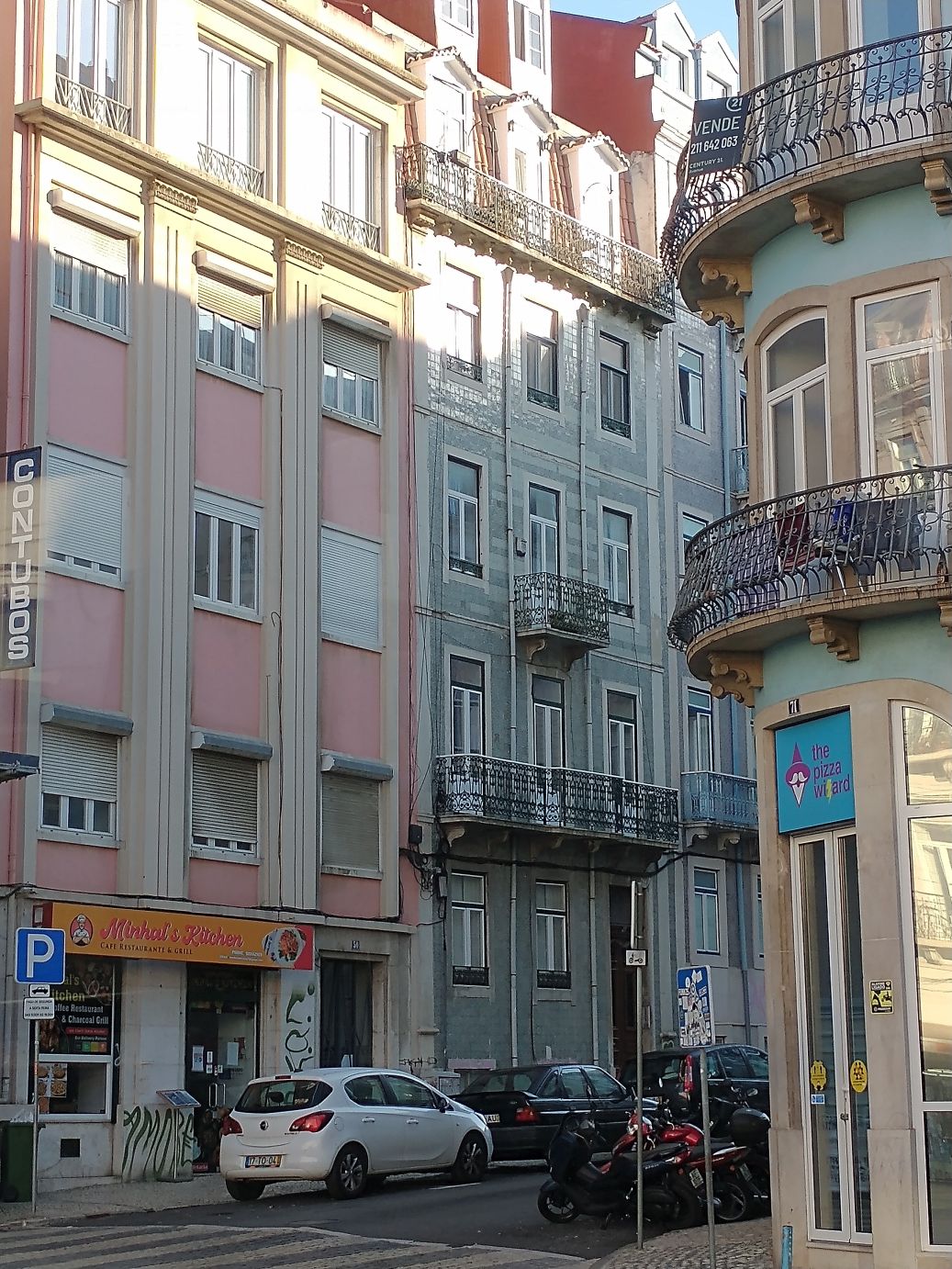
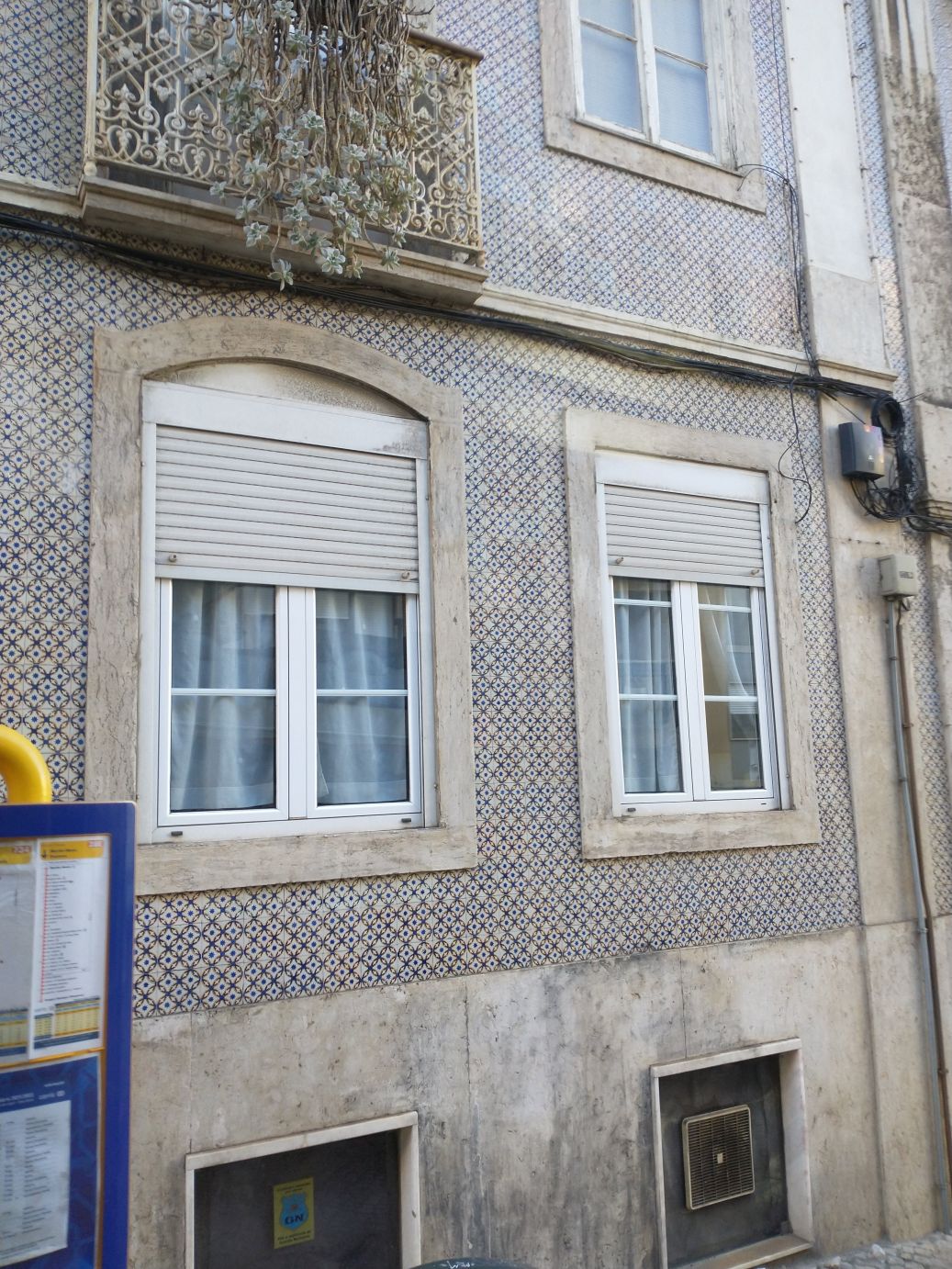
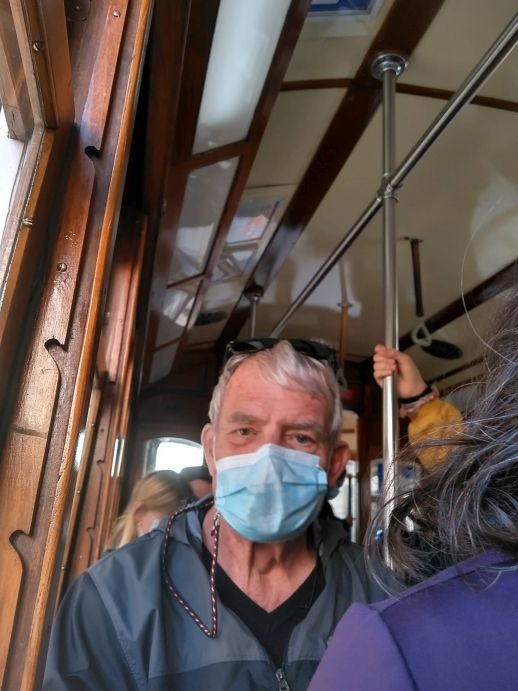
Back through town we go, enjoying the beautiful building architecture and tiled houses. Past Praca do Commercial, then up into more residential areas ending at the Jardim Guerra Junqueiro, a pretty park we would explore if we weren’t on a strict schedule of buses and trams to get back down to the waterfront and the Pilar 7 exhibit. We skirt the park, past the Basilica da Estrela to find the bus stop we need that will take us within walking distance of the Ponte 25 de Abril – where Pilar 7 is located.
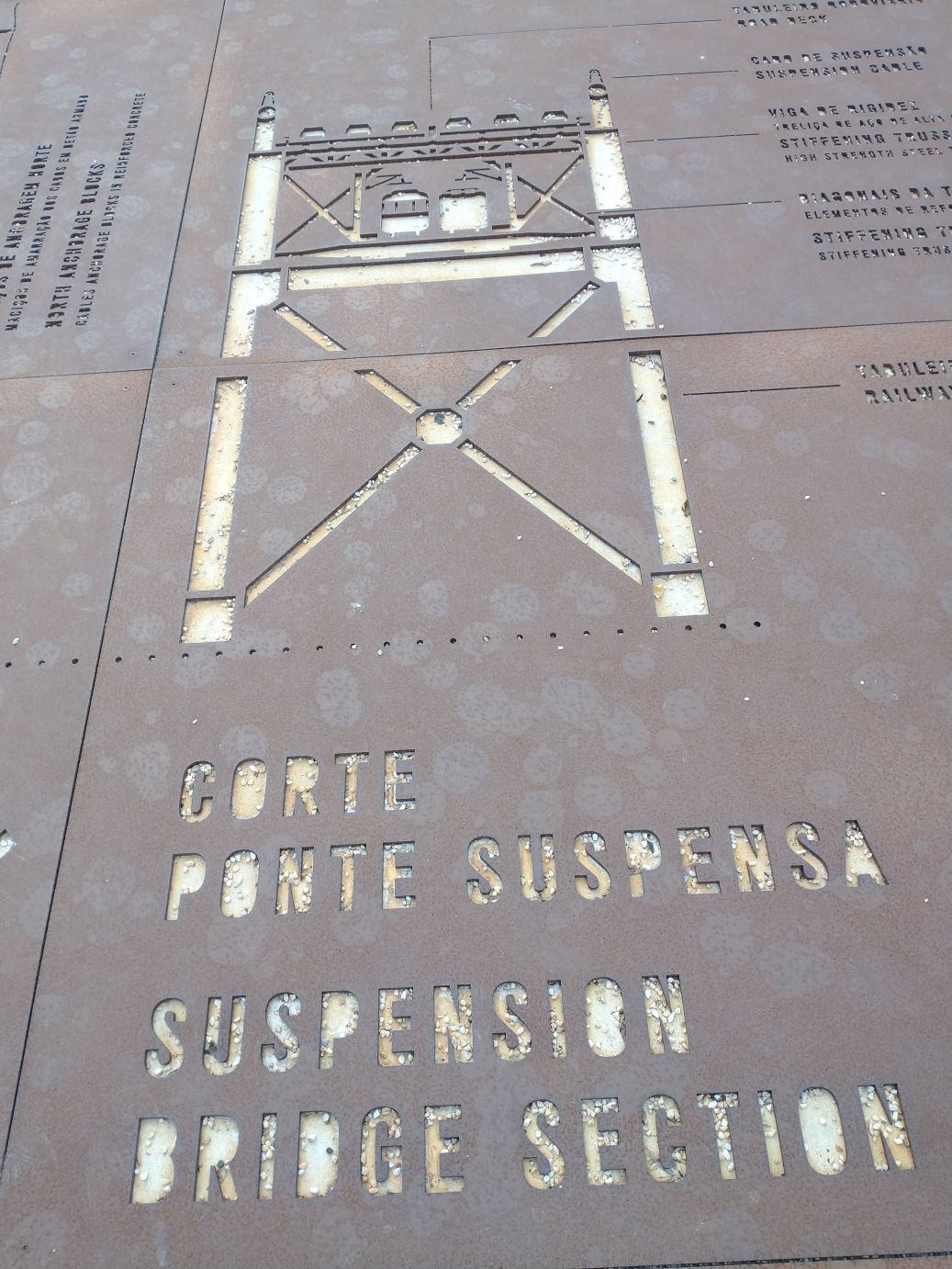
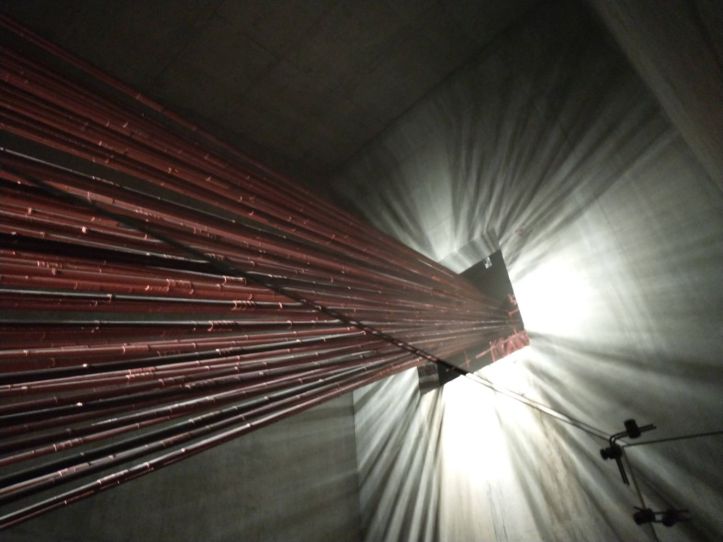
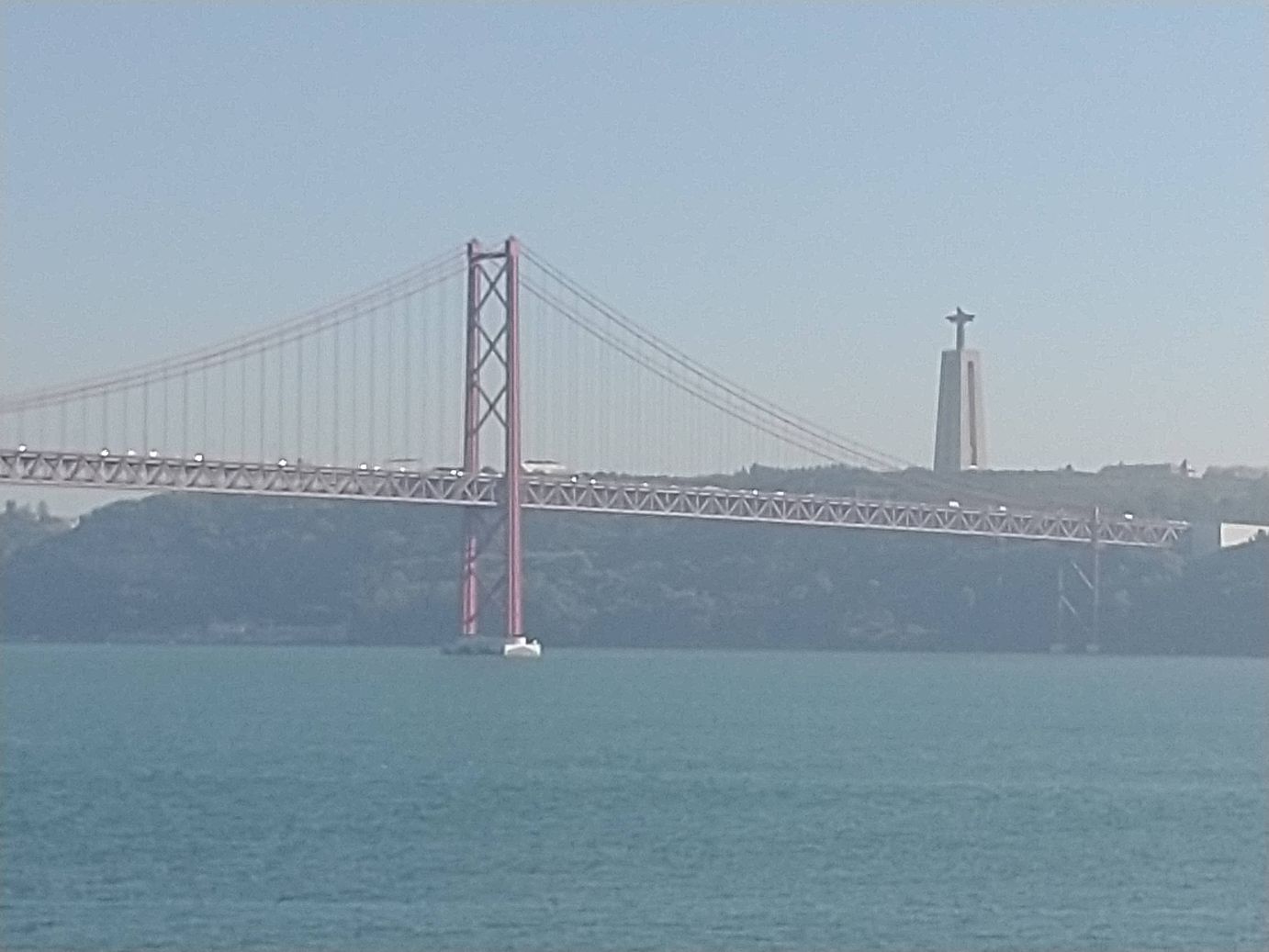
The Pilar 7 Bridge experience is, as the name implies, a visit to one of the key pillars of the 25 de Abril bridge. The exhibits take you through the history, the construction, and finally up an elevator to a lookout platform that extends out into space (essentially!). First though, the visit takes you on a walk through the courtyard with these great steel disks that are carved with information. The first is just a review of the route to take, the next shows how the bridge was built and how long it took (4 months to build each carbon steel tower). There is also a really cool cable segment where you can see how many interlocking cables are within the steel casing.
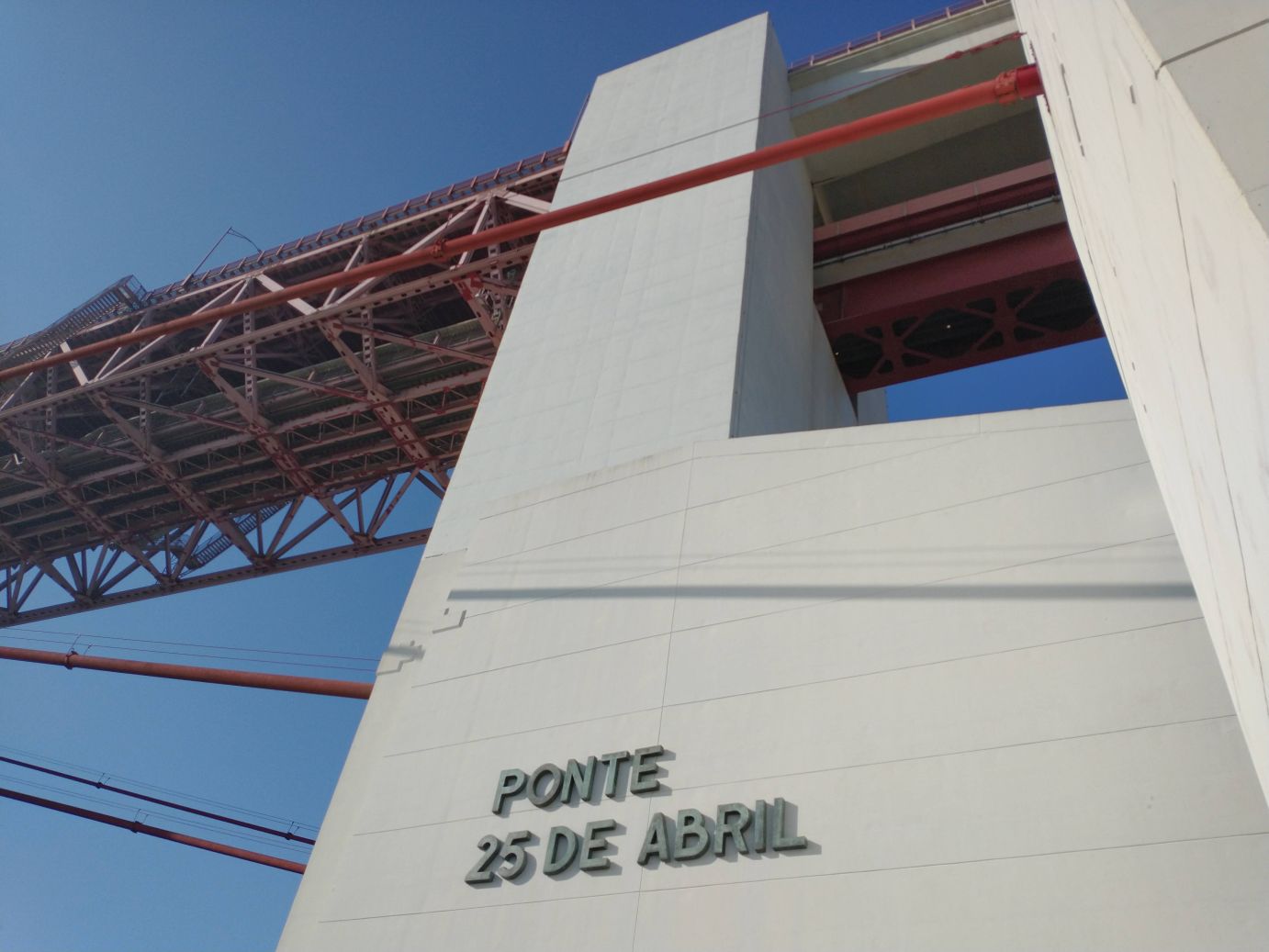
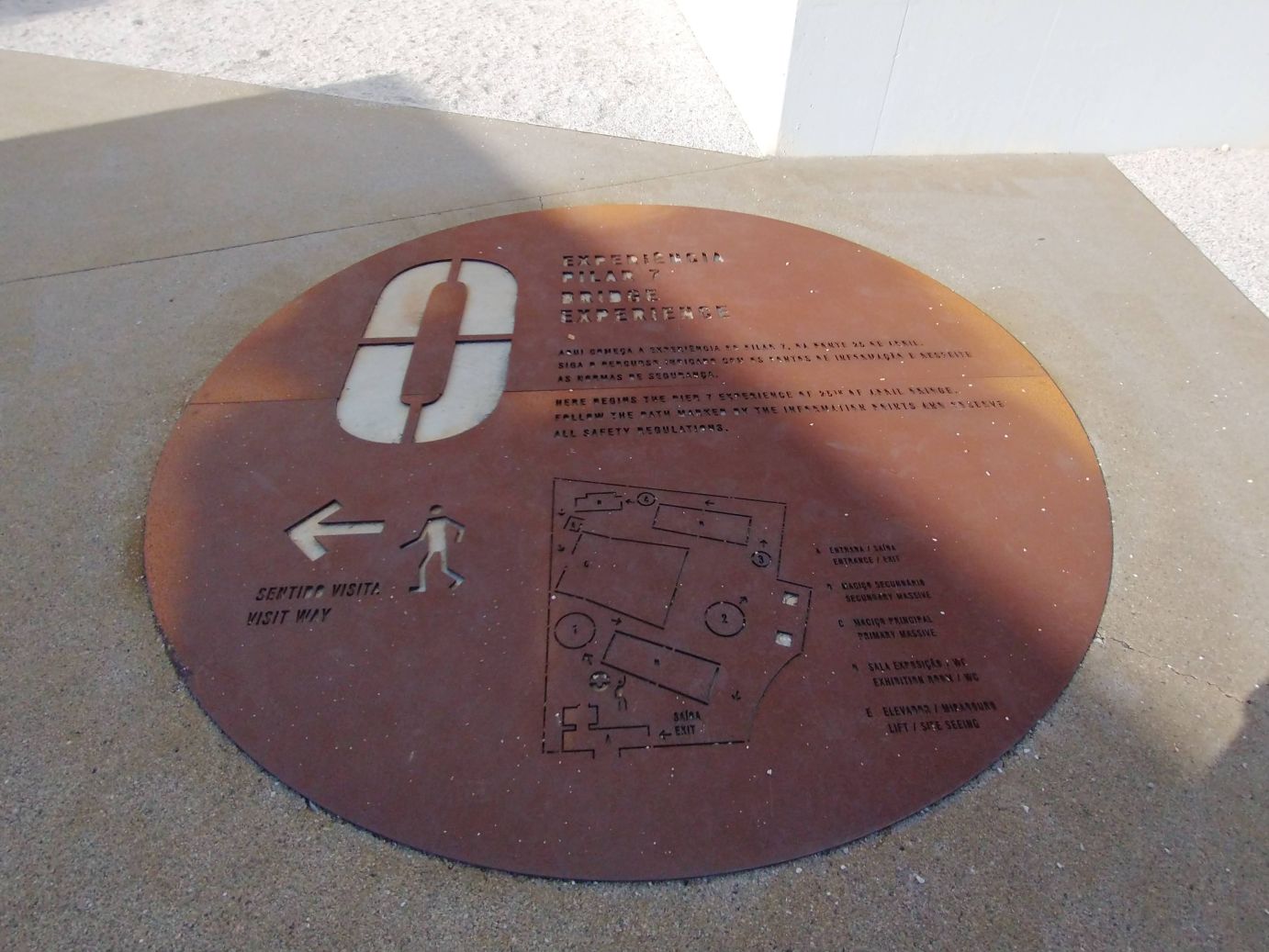
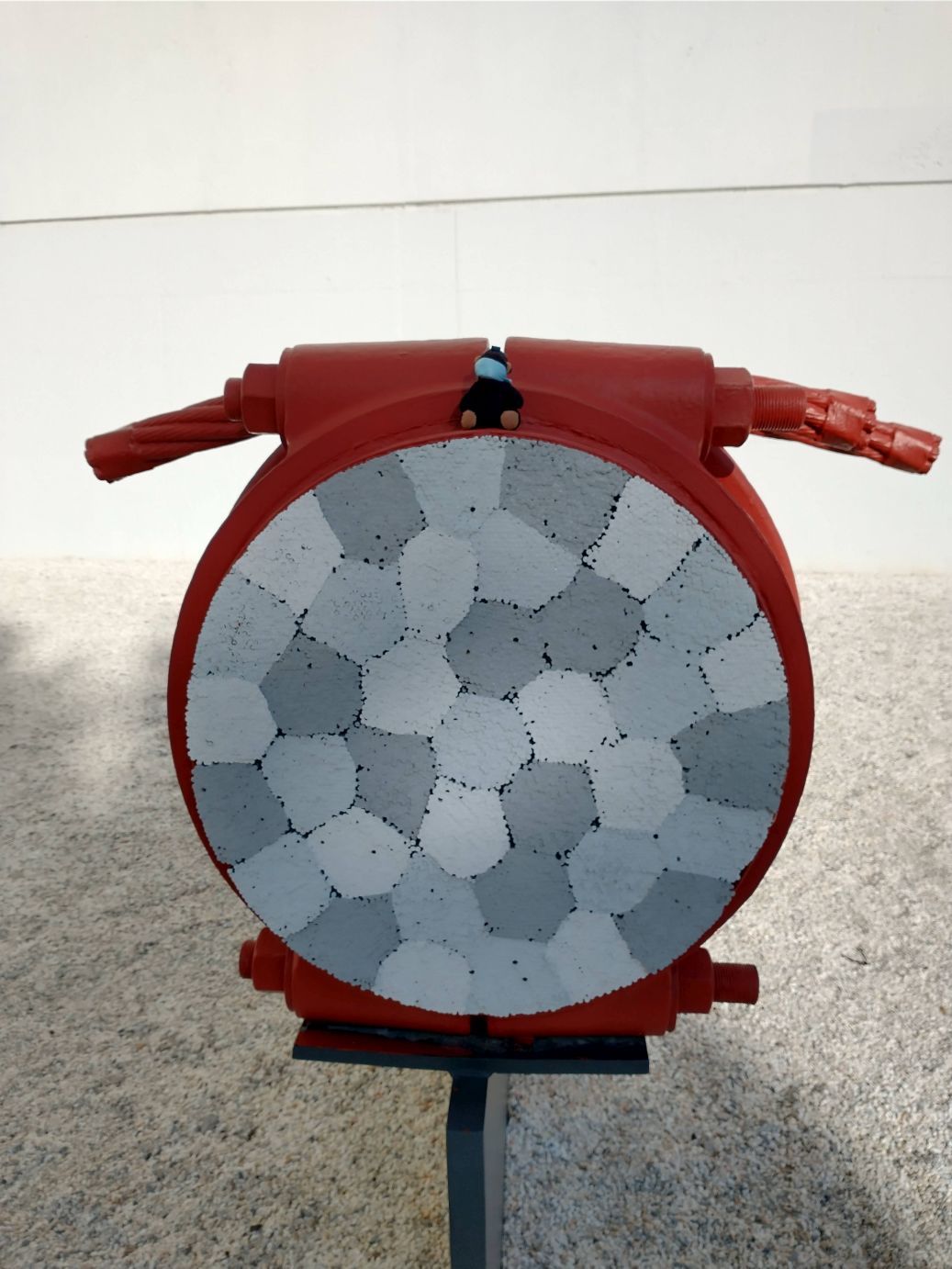
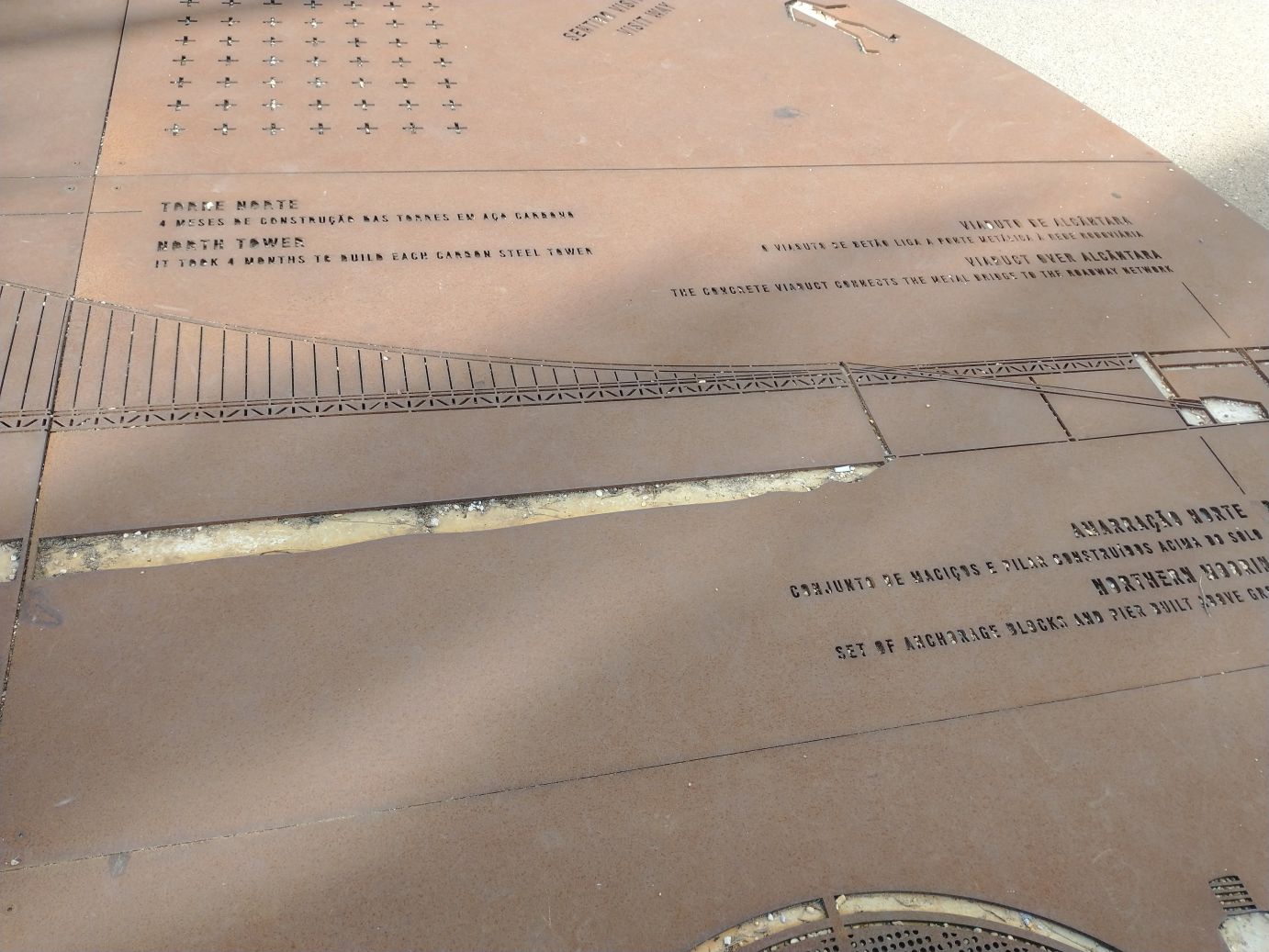
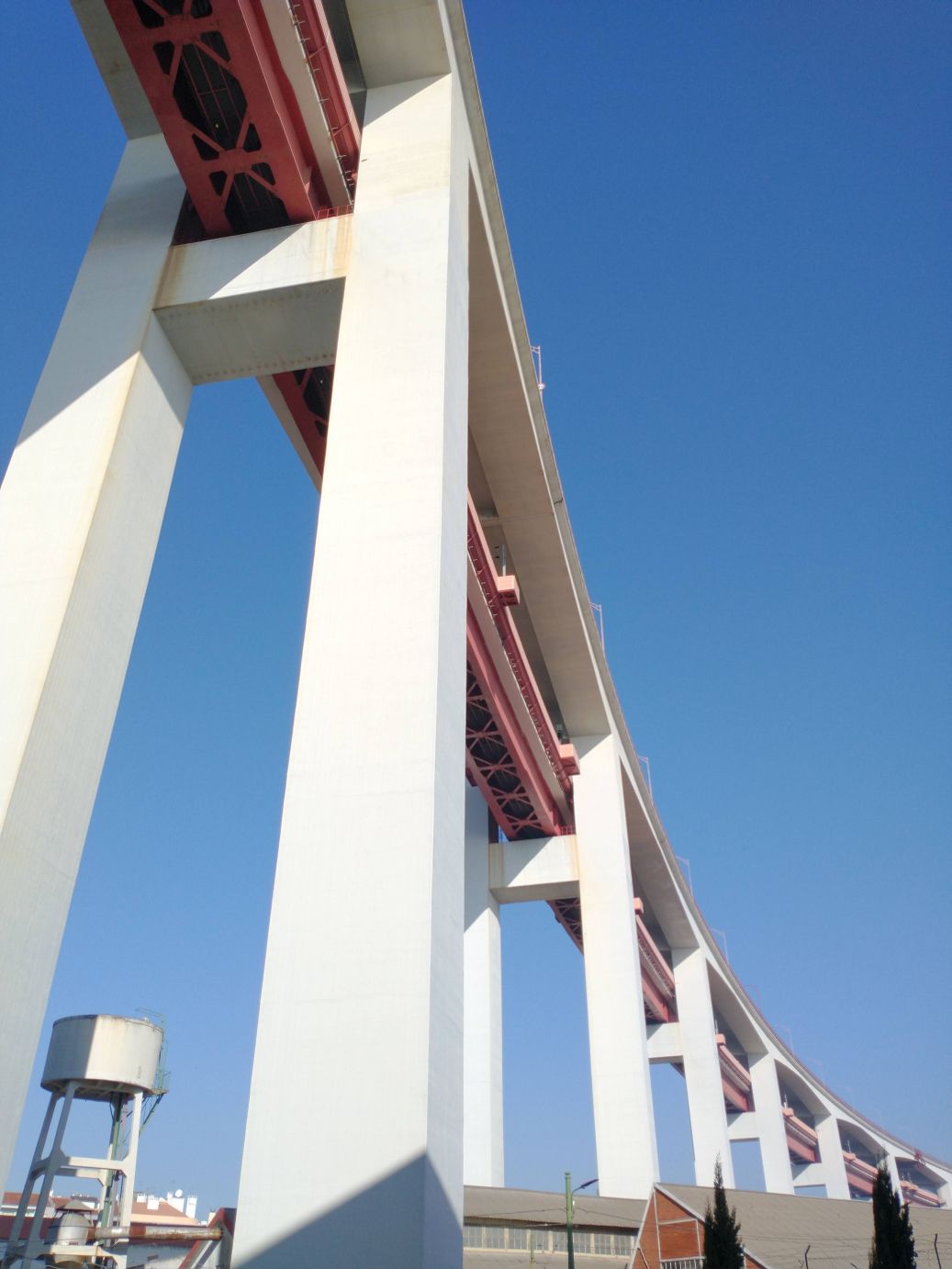
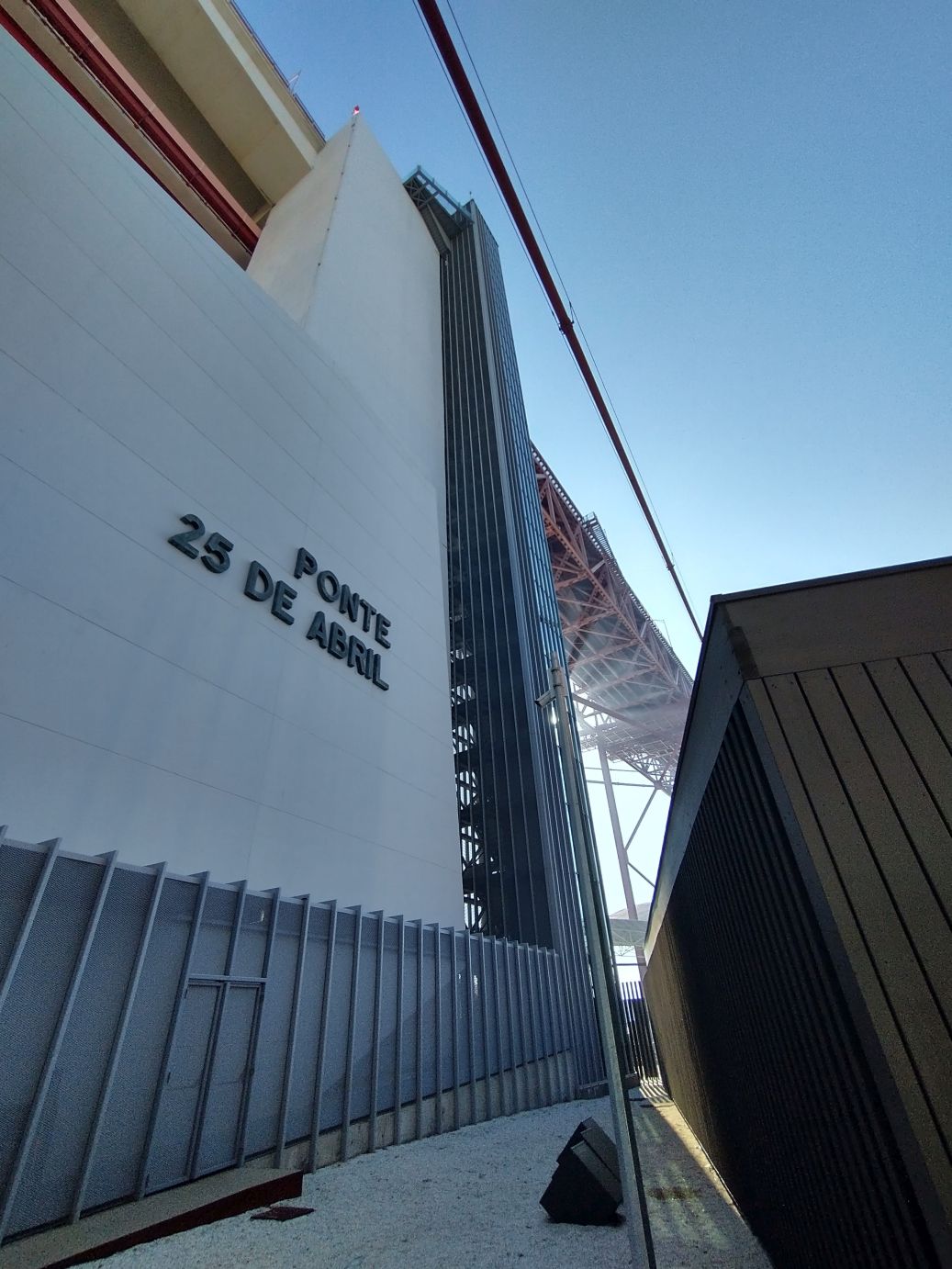
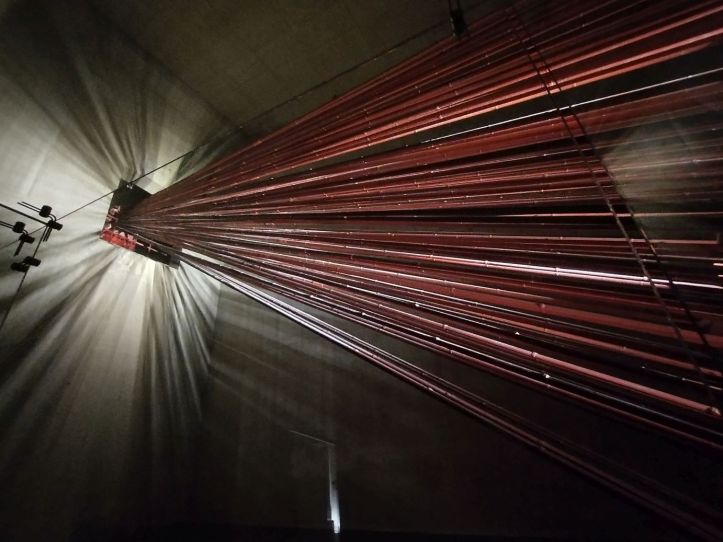
Inside the first level, we can actually walk around the cable anchorage room – examining the shaft and the cables that are anchoring the bridge to this side of the river – and I guess holding it all together. There is so much information – and yes, we are sort of geeking out about the construction – but what can we say? We have broad and diverse and, yes, weird interests.
Then it is outside and up the elevator, in which we are the only passengers along with the elevator man – who is Mr. Chatty, giving us more information and telling us about the surrounding buildings and the noise from the bridge as we rise up the 235 feet to the viewing platform. Bidding us goodbye, elevator man tells us he’ll be back in 10 minutes for us – and whoosh – he’s gone, and we are all alone up here in the sky.
The views are magnificent across the river and up and down the coast. Although more than a little scary, especially the viewing platform with its glass (well thick plexiglass) floor that allows you to look straight down onto the road oh so far below us. I can’t believe I actually went out there! But I did, amazingly.
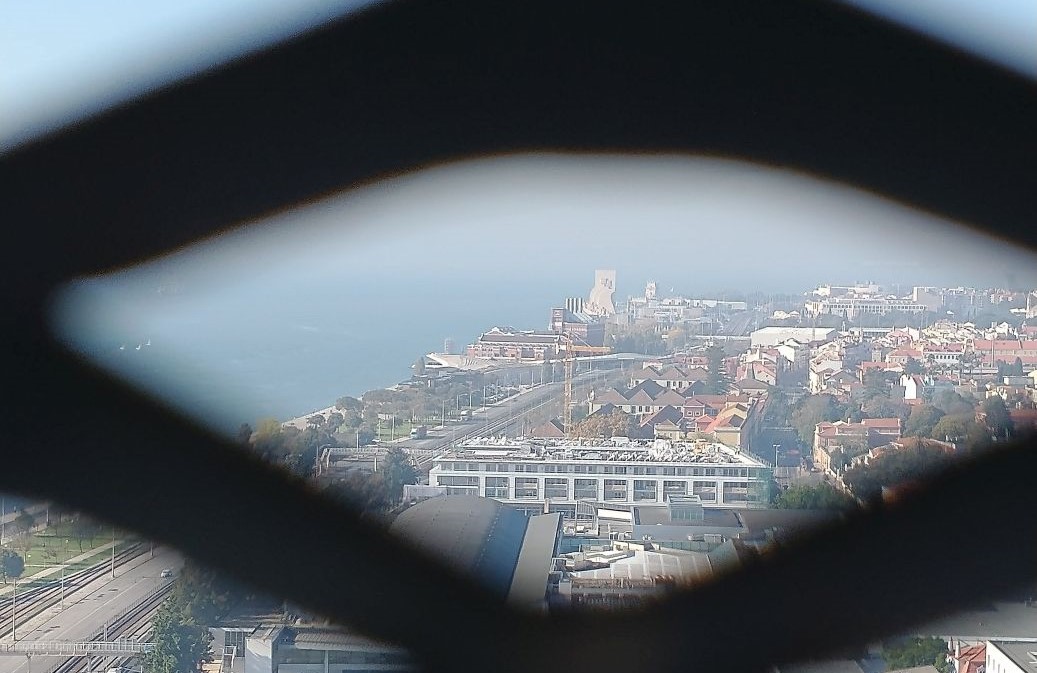
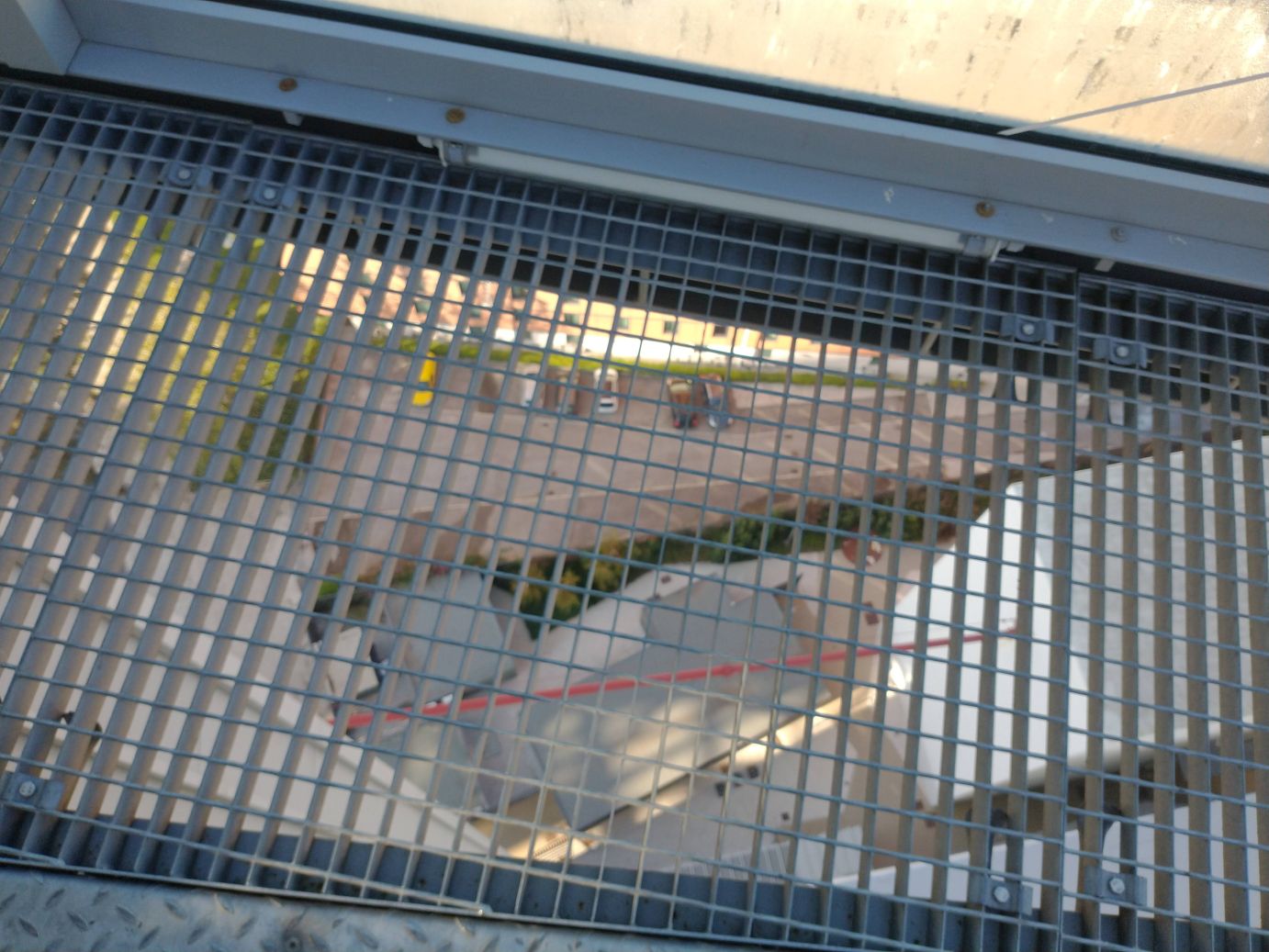
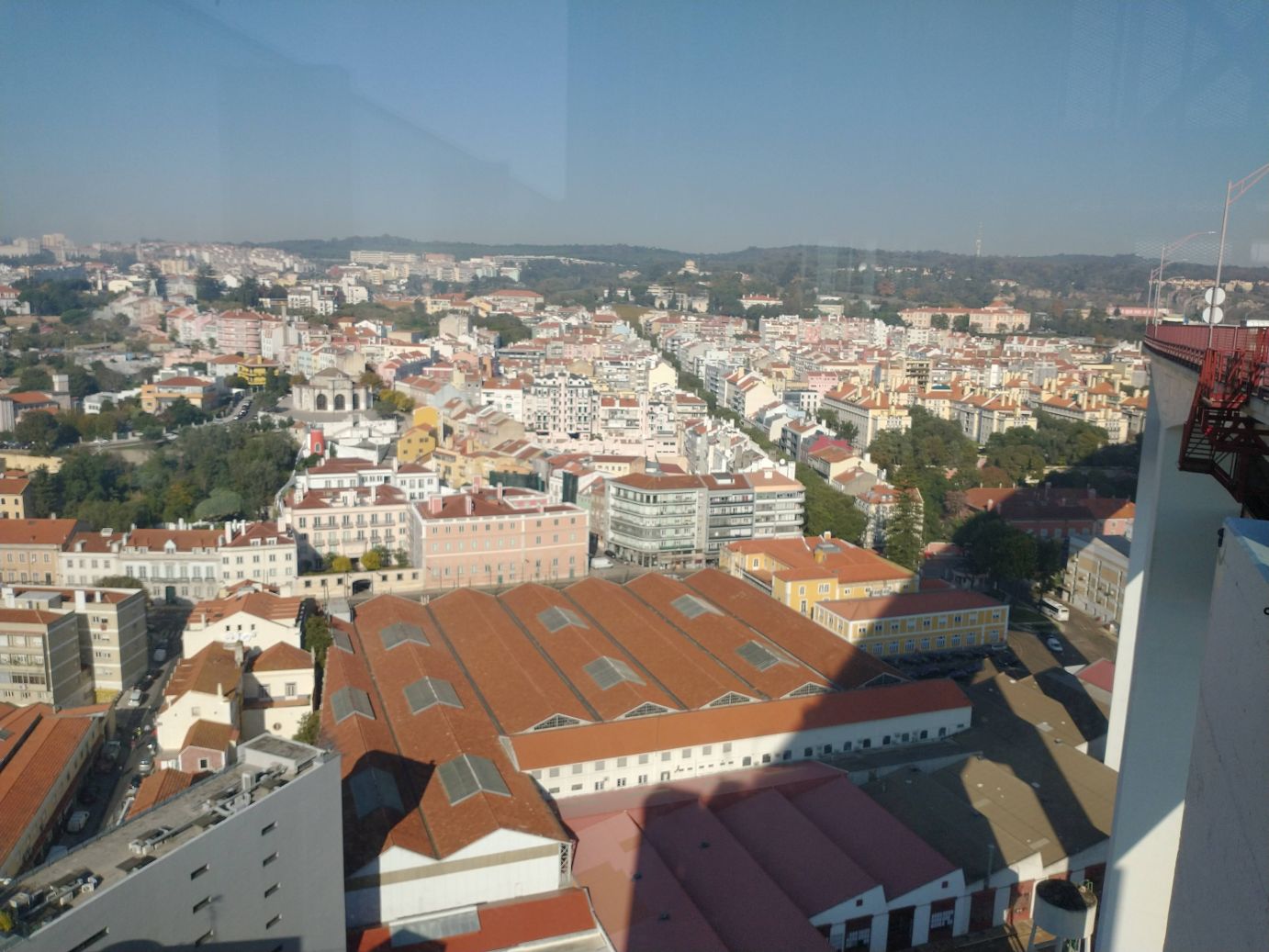
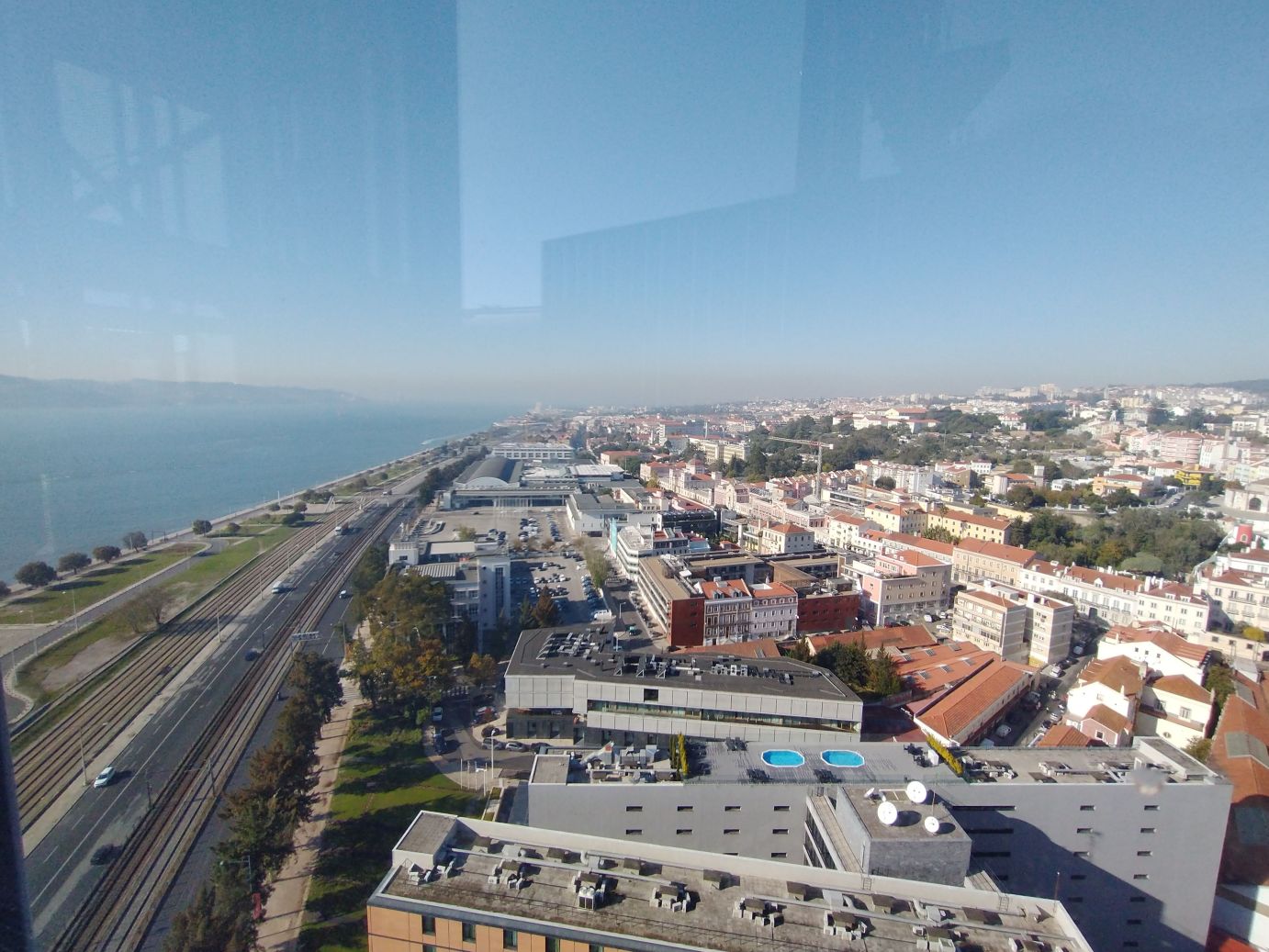
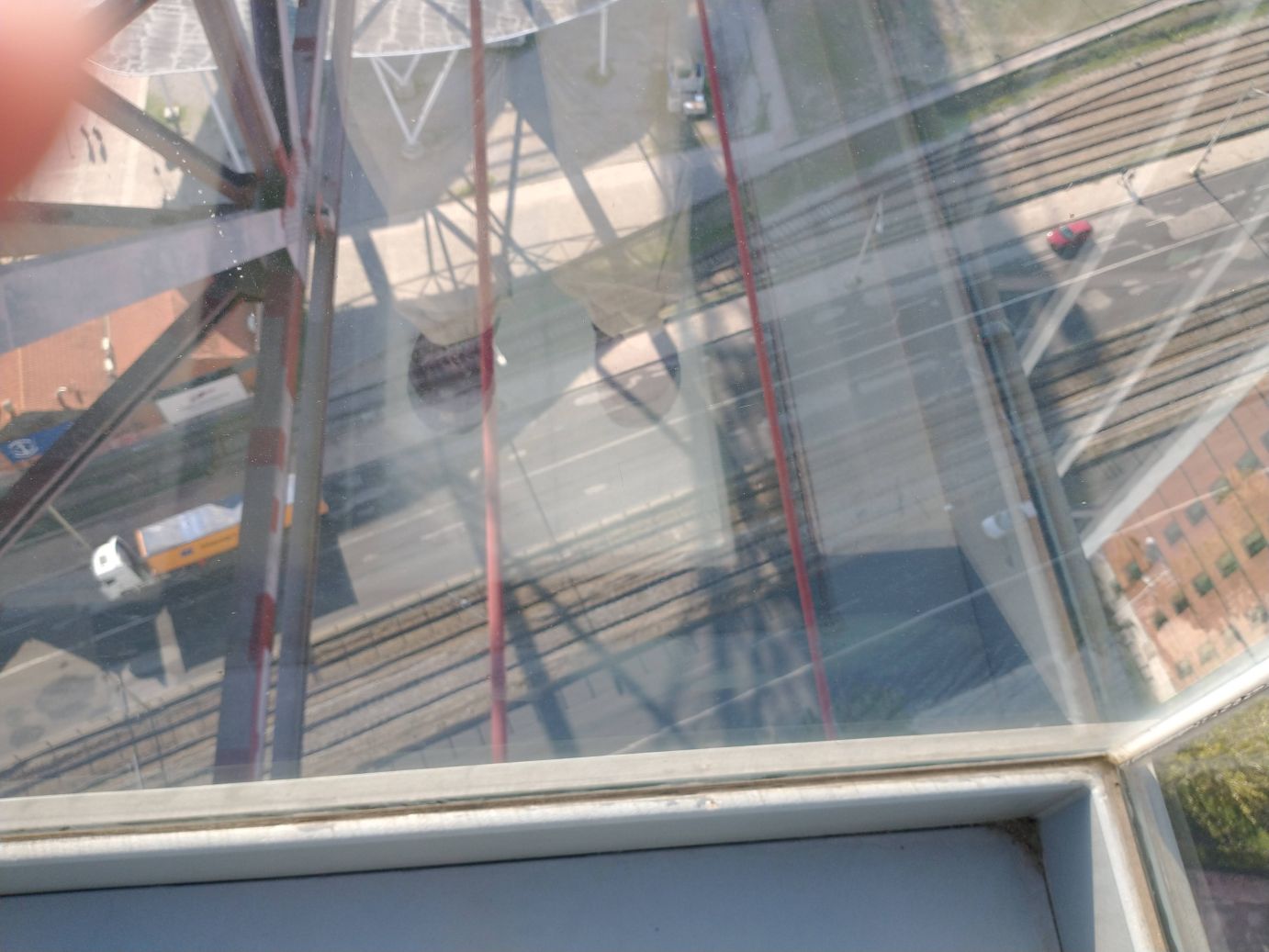
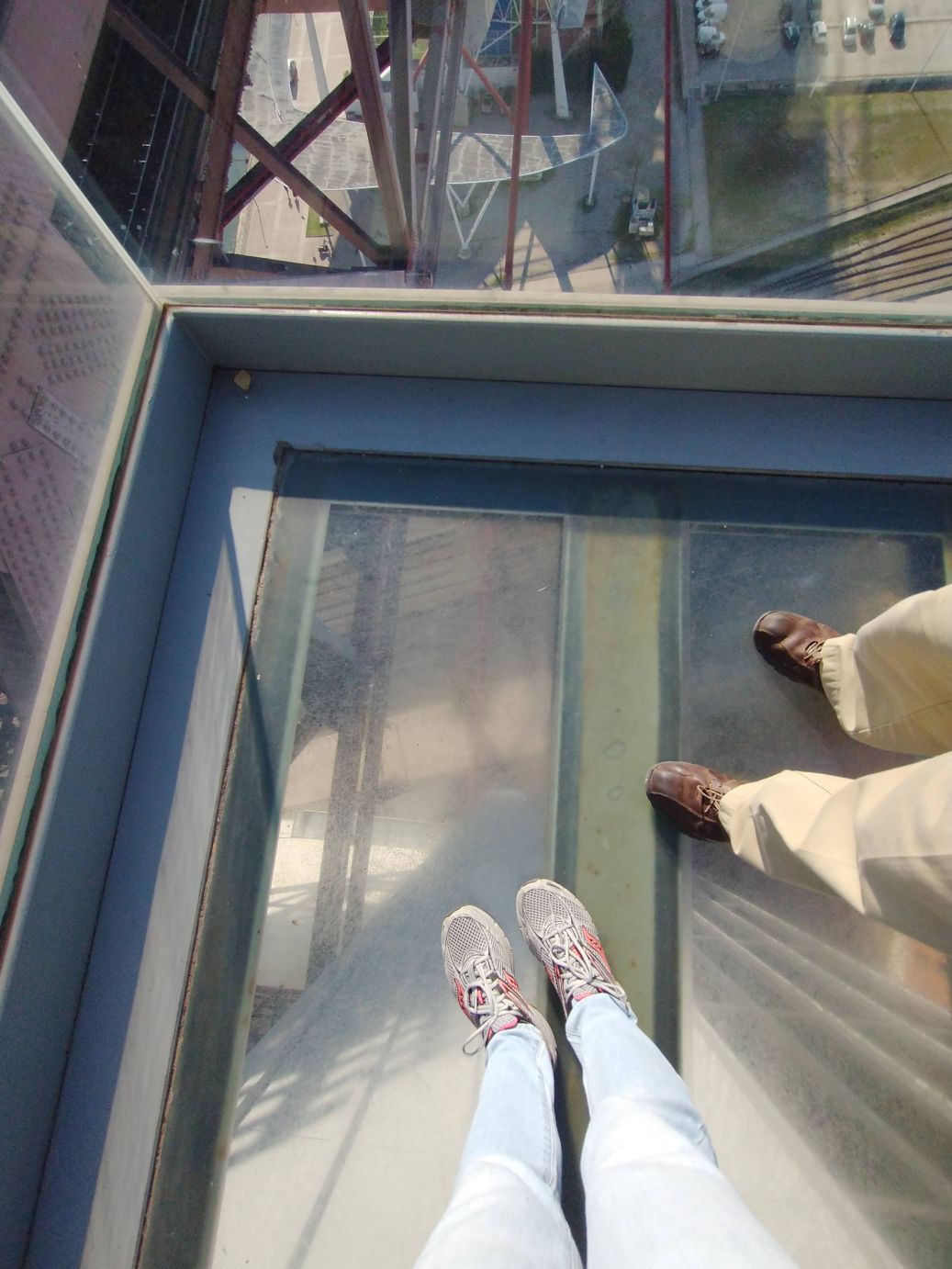
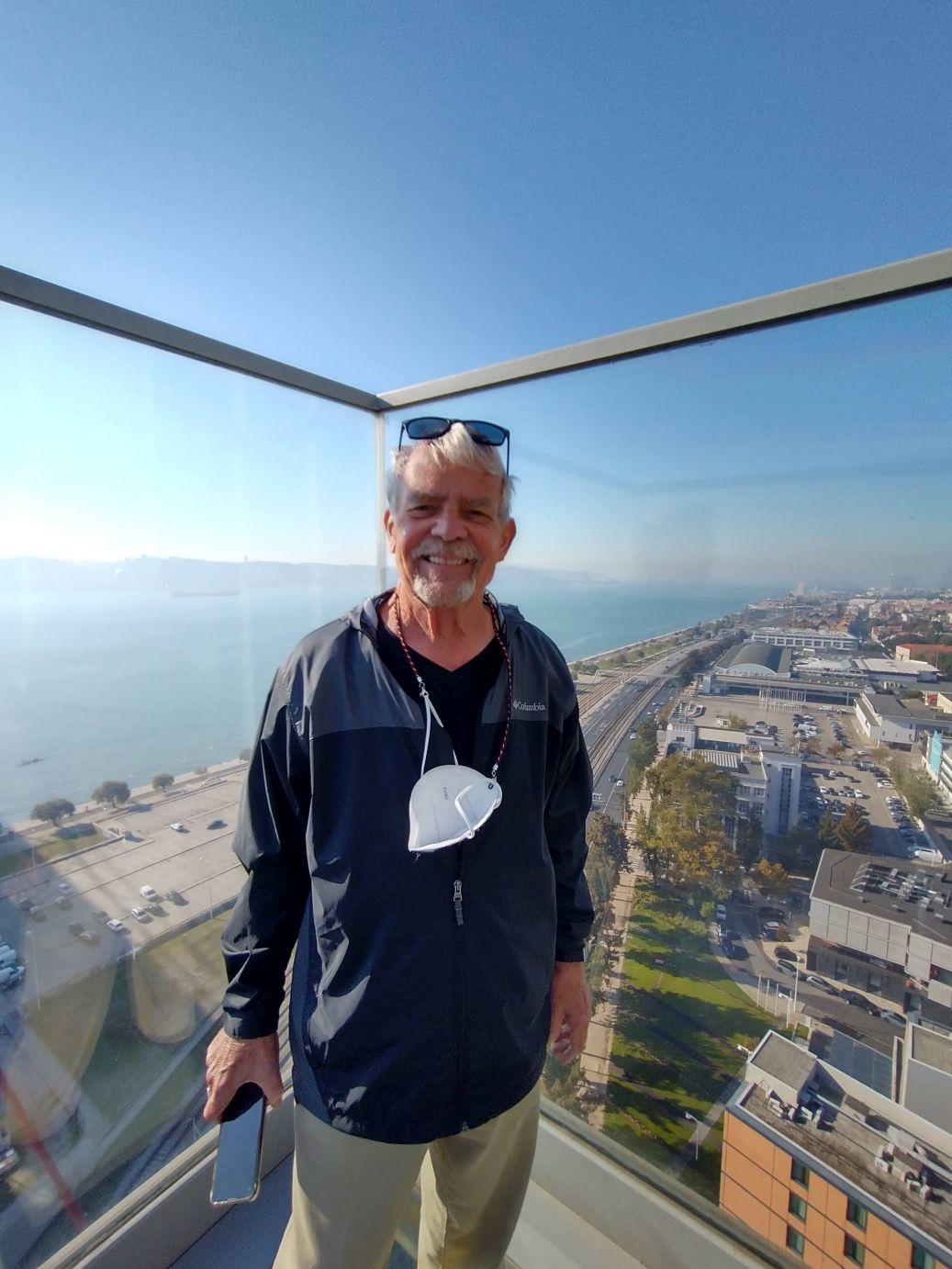
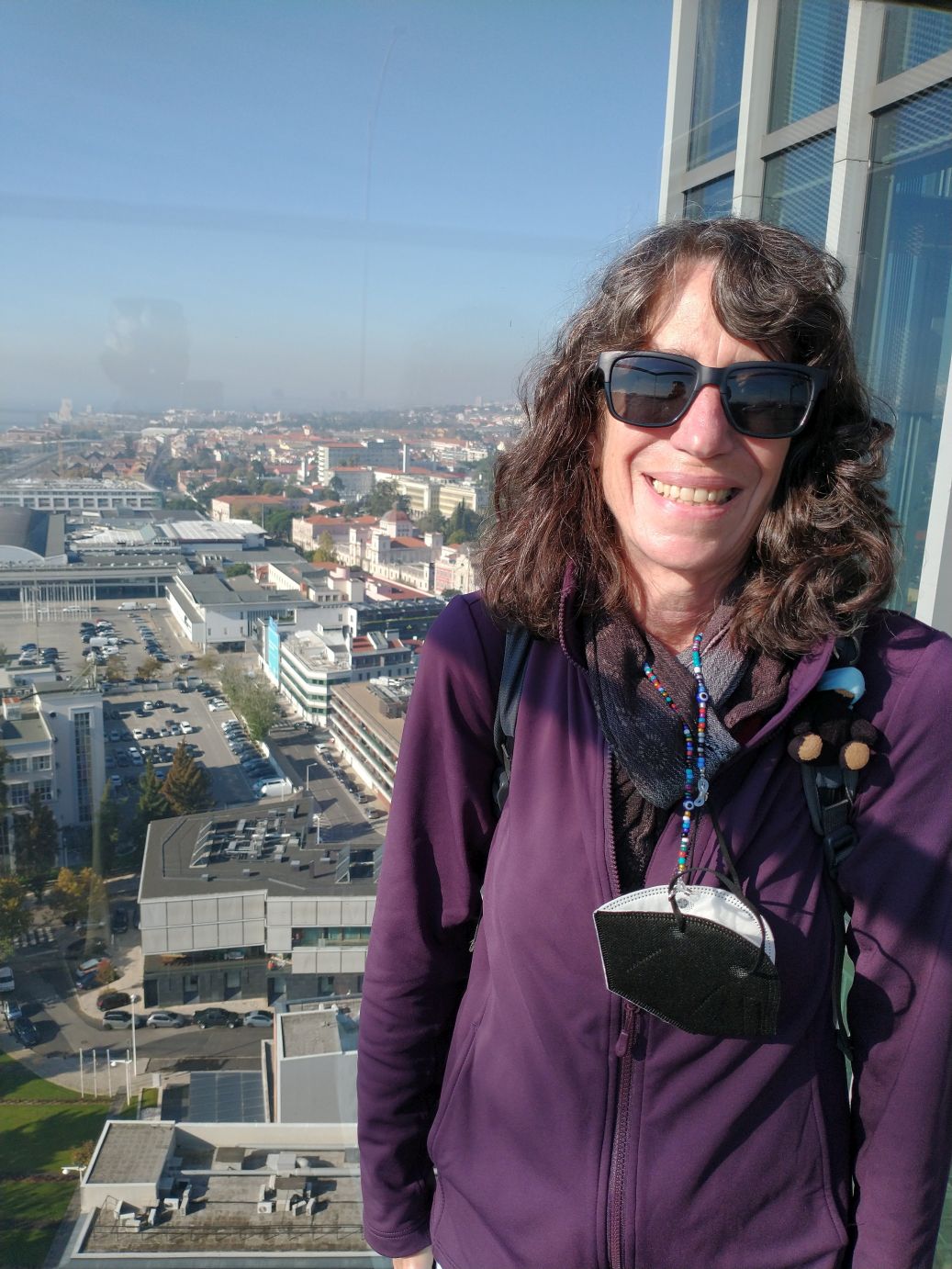
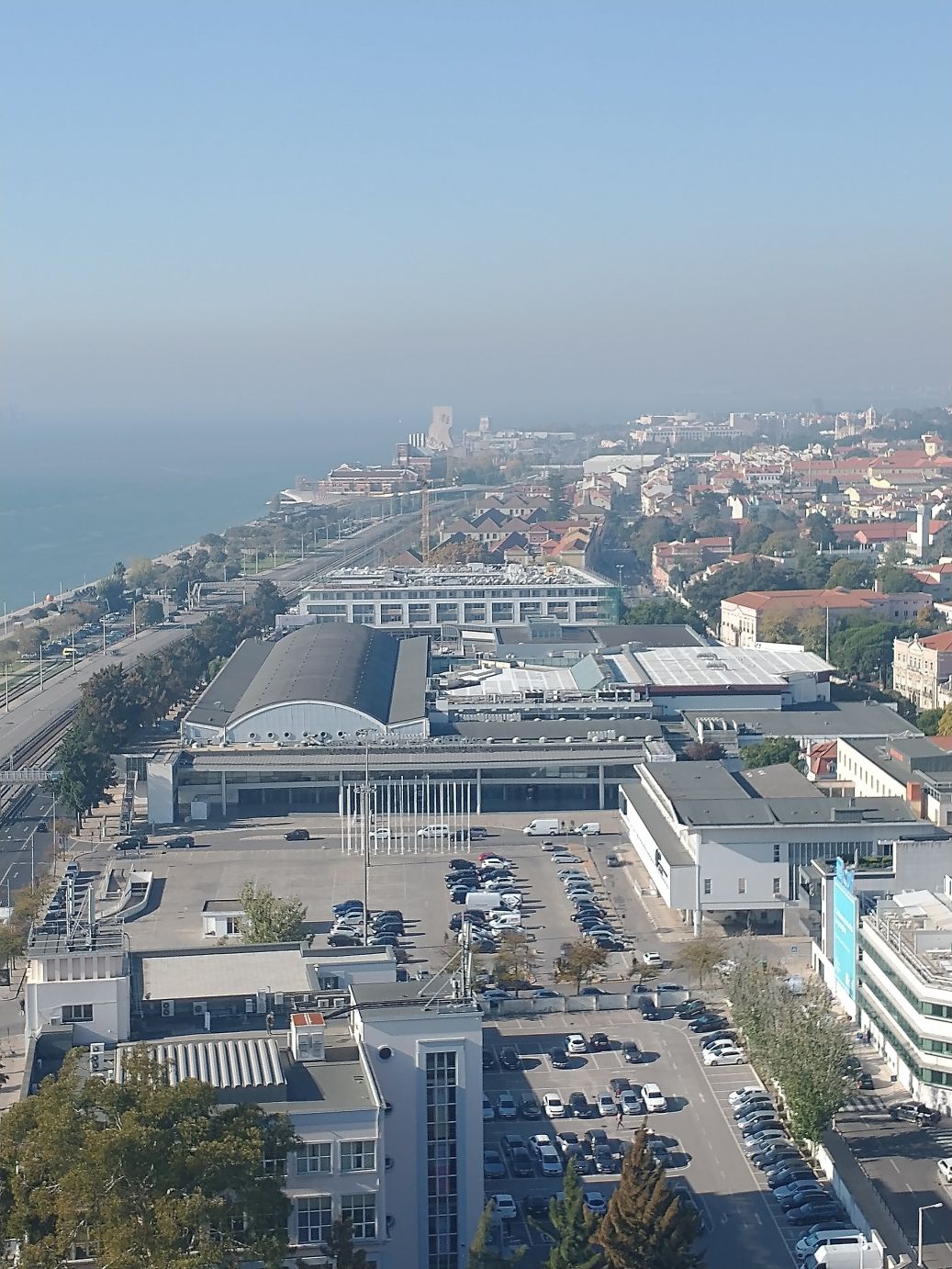
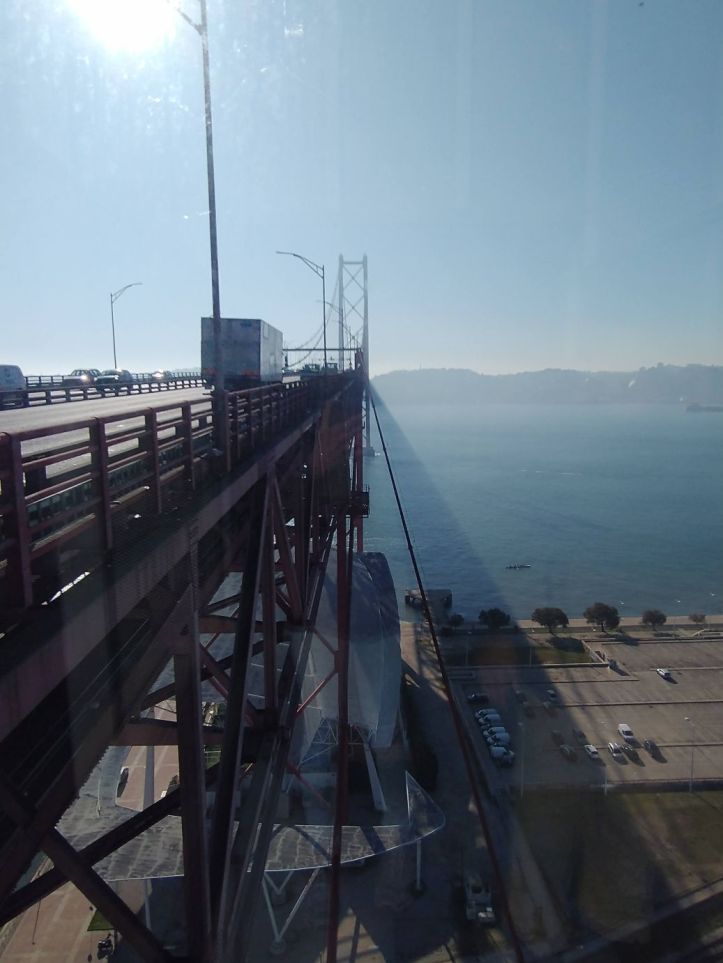
The noise is deafening though. We thought the noise was loud from ground level – ha! Little did we know. The traffic sounds just echo all around us, making it hard to hear. I mean criminy, we’re on the same level as the bridge road surface – it is quite unnerving!
Ten minutes finally arrives and we take our leave as a group of others replaces us. Nice to be up there alone and not jostling for photo opportunities or trying to get around people. That is the culmination of the visit. We’re routed through the gift shop, then out the door and onto our next stop which is the Museu da Carris – the Tram Museum.
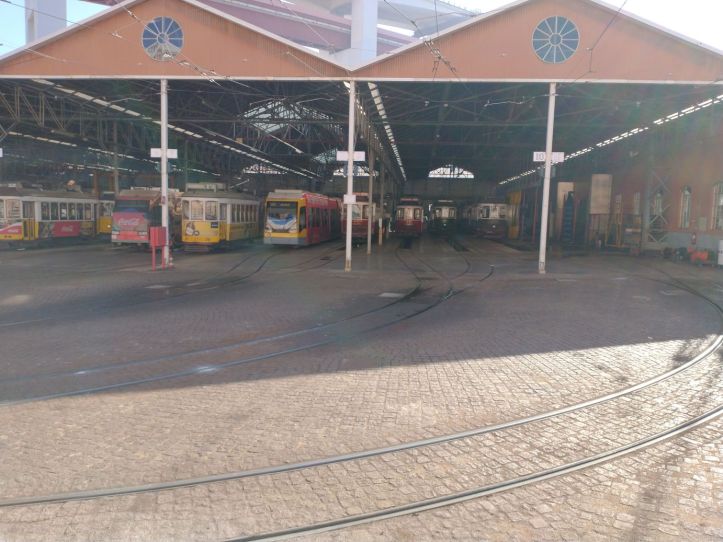
A quick walk takes us right to the front gate of the Carris company facilities. The museum is just part of the complex, the rest is a working facility with production and maintenance sheds for the many forms of transportation Carris now provides all over Lisbon. Since 1873, Carris has provided transportation for the city of Lisbon. They began with the “Americanos” system of horse-drawn carriages on rails, then over the years, of course, progressed to more mechanized and sophisticated forms of public transport.
After checking our temperatures and our vaccination cards at the front gate guard house, we are allowed to enter the museum, where we are admitted free and left to wander about. The first section of the museum holds a vast collection of displays detailing the history of the company, transportation in Lisbon and tons of documentation, photographs, uniforms, tickets, and other memorabilia going back 2 centuries.
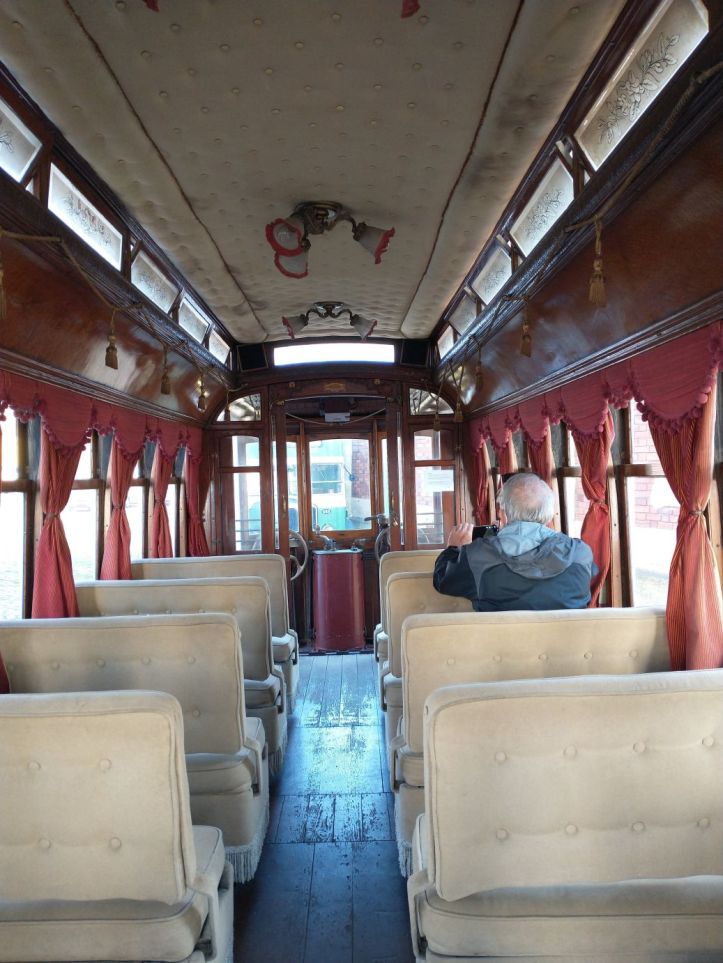
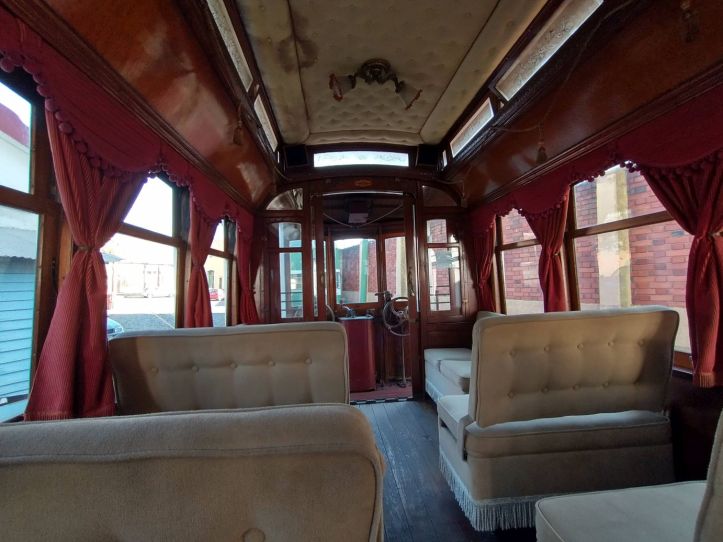
The next part of the visit includes a tram ride to a huge warehouse containing many of the old trams that were once in service. Here, though, we hit a little snag in that no one ever comes to pick us up in the tram. There is a father and a little boy waiting for the tram there as well – but no one shows up. We must have waited 10 or 15 minutes and almost decided to give it up, when the dad went inside and asked the ticket lady to call the tram guy. He finally arrives, all apologetic, and ushers us onto the old historic tram. It is so neat – totally opulent. Sofas for seats, long draping curtains with tassels, upholstered ceilings with tulip lights and etched glass windows. Wow. This was riding in style – and it was a public tram! Not someone’s special personal tram.
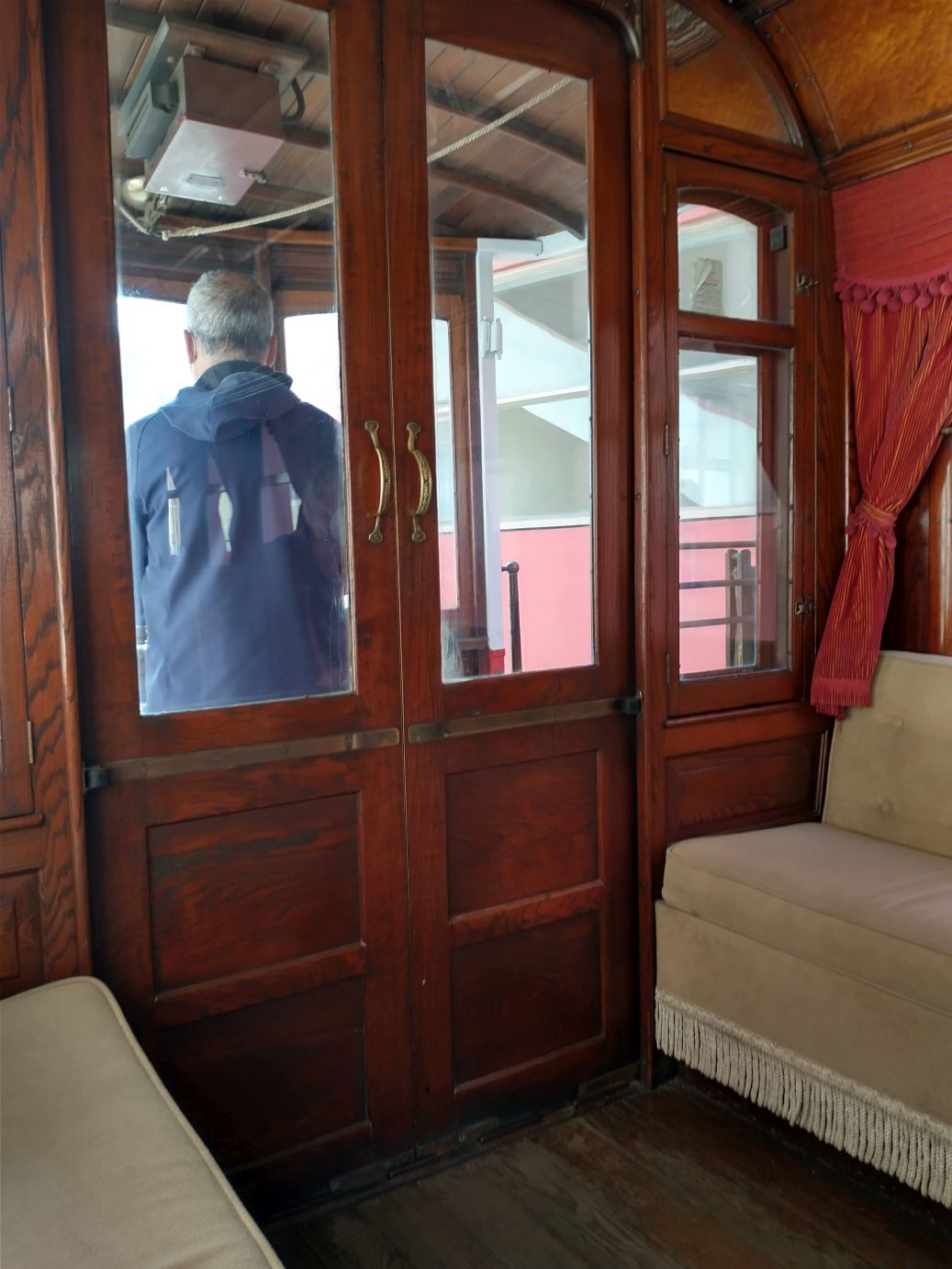
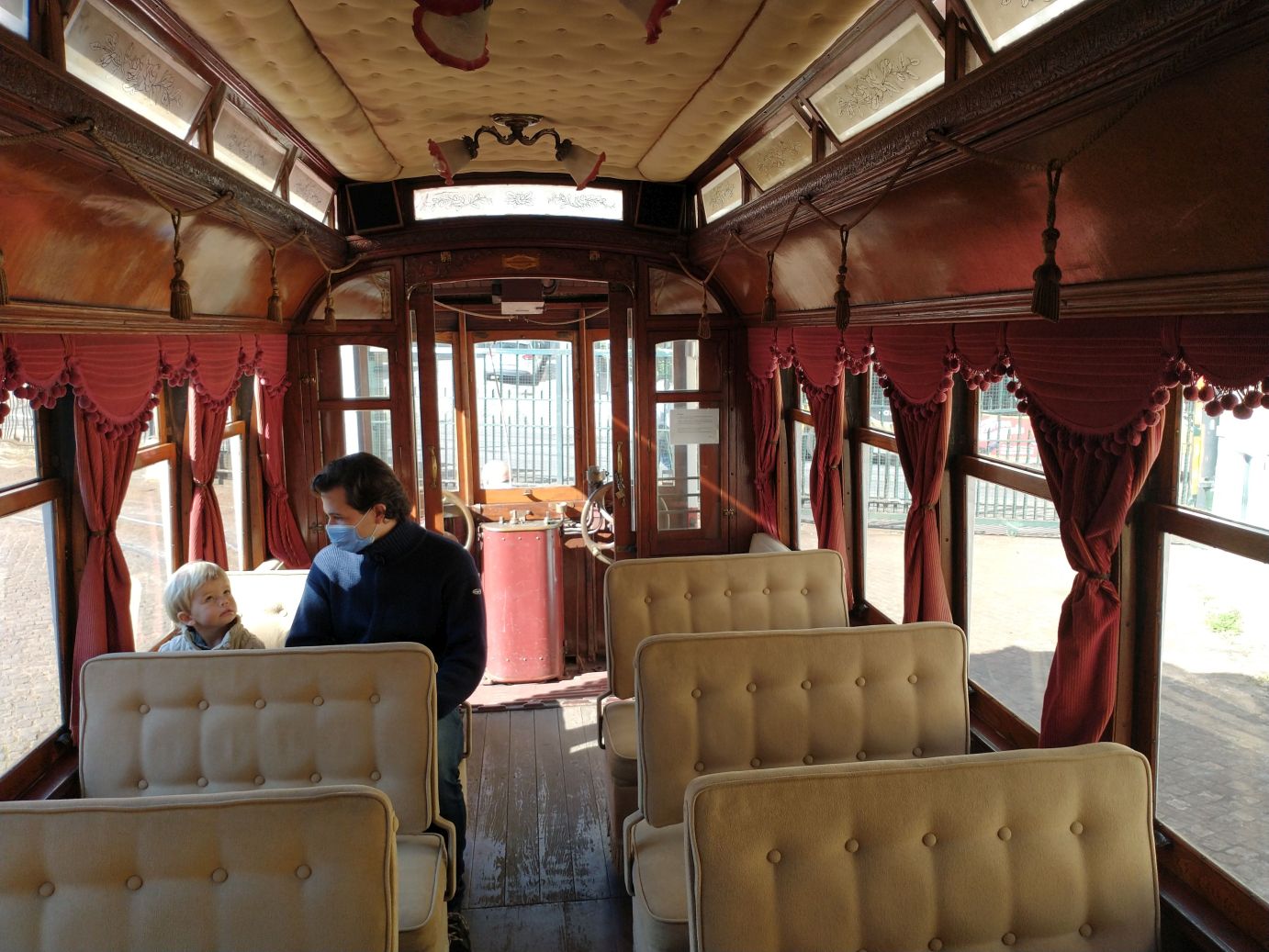
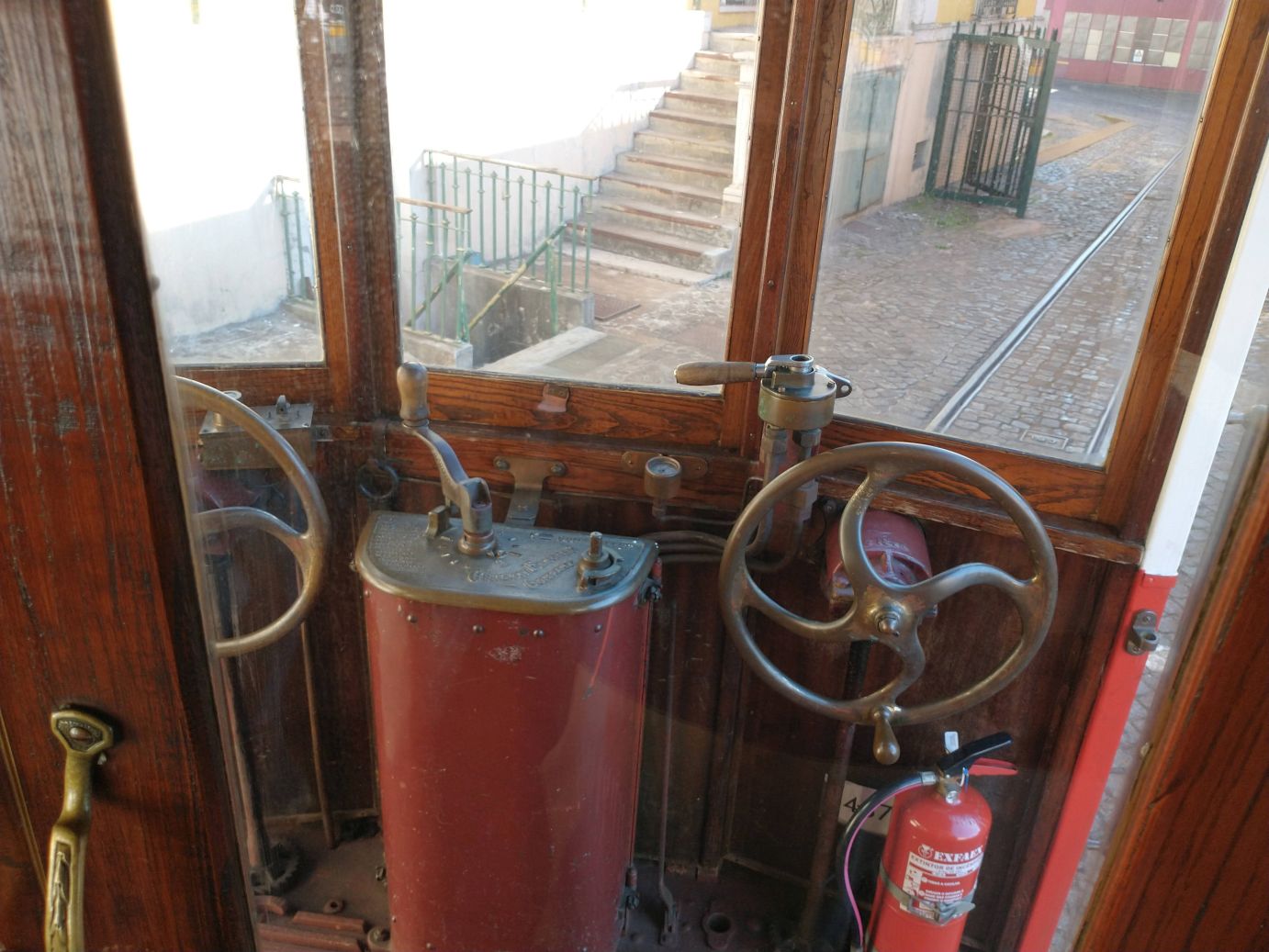
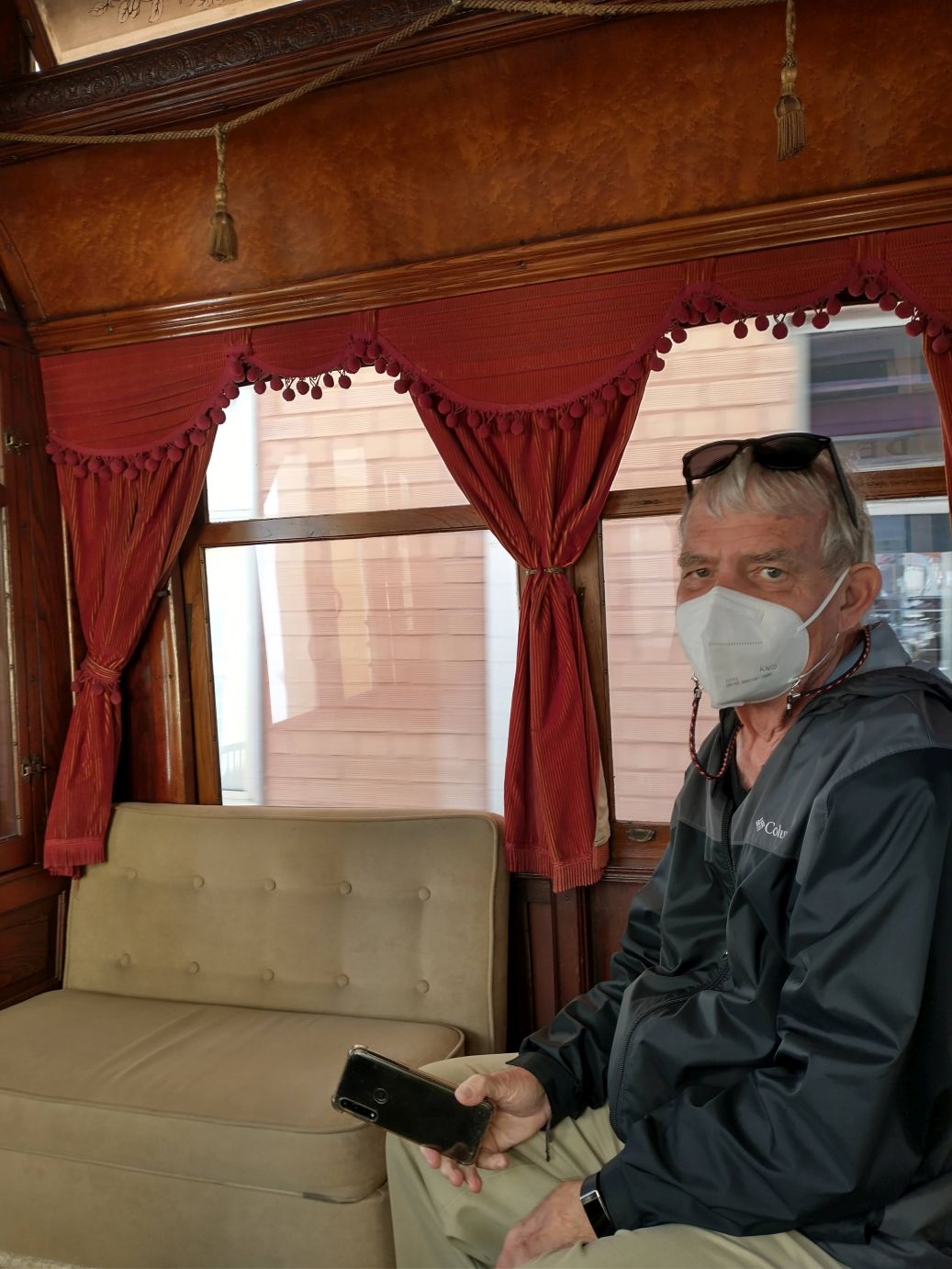
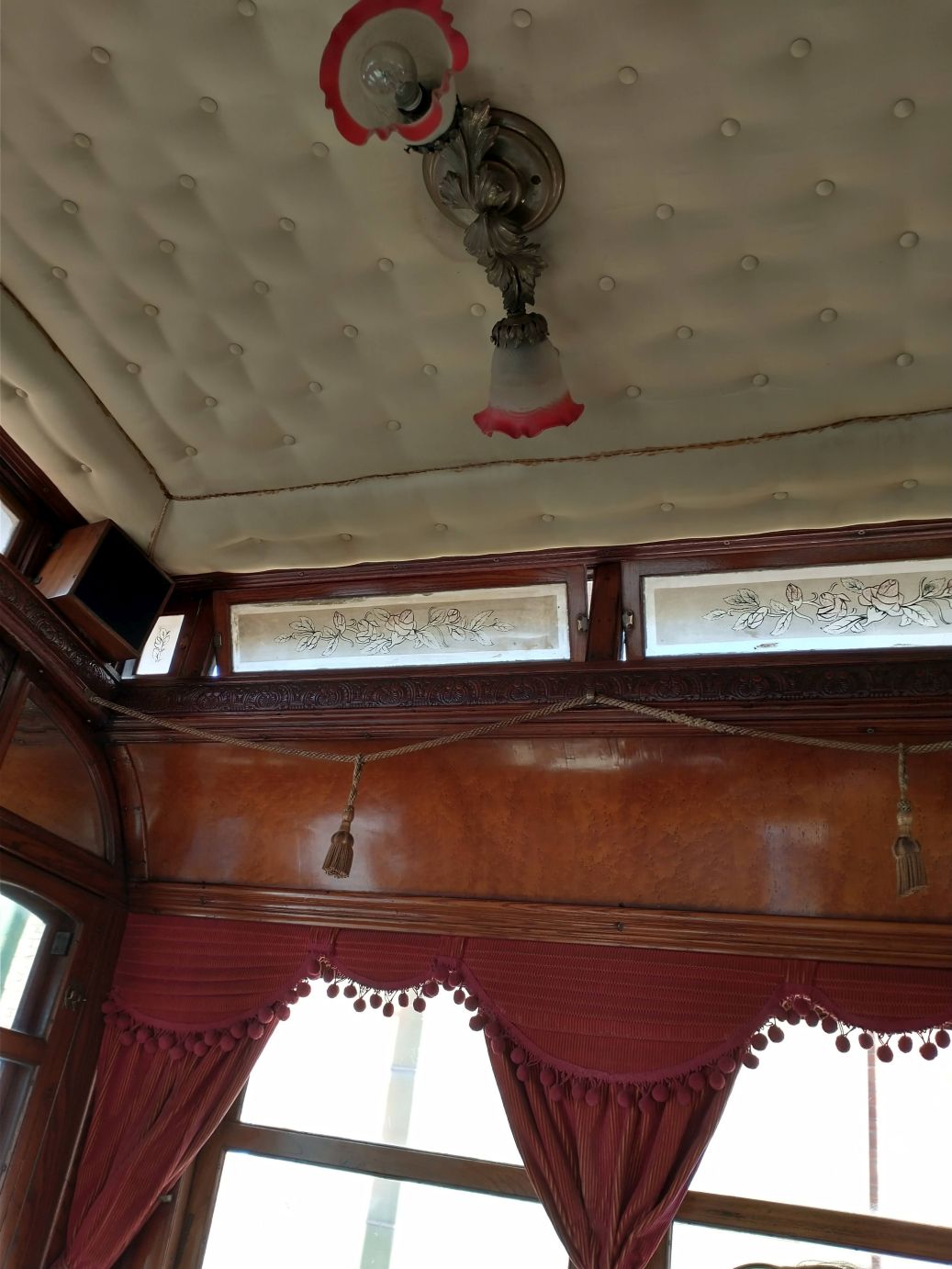
The ride takes only a couple of minutes to the warehouse where we can walk around and get into some of the older trams. Ed, of course, is in his glory around all this hardware. He knows just about every tram, every make, the years it was used. Encyclopedic memory. That’s all I’ll say!
We wander through the older trams, past an example of the “Americanos” style tram and others, making our way toward newer models, meaning early 1900s! Then it is on to the buses – and the first Volvo bus to arrive in 1975 (I’m not exactly sure why this is important, but apparently it is!) and then through the machine shop and out into the courtyard with a really old tram and bus, parked in front of a fantastic mural about the people in transportation. While waiting for the next return tram (it leaves with a classroom full of children that we’d rather not join), we are rewarded by watching another old tram come down the rails and positioned to go inside the warehouse. Now that was cool!
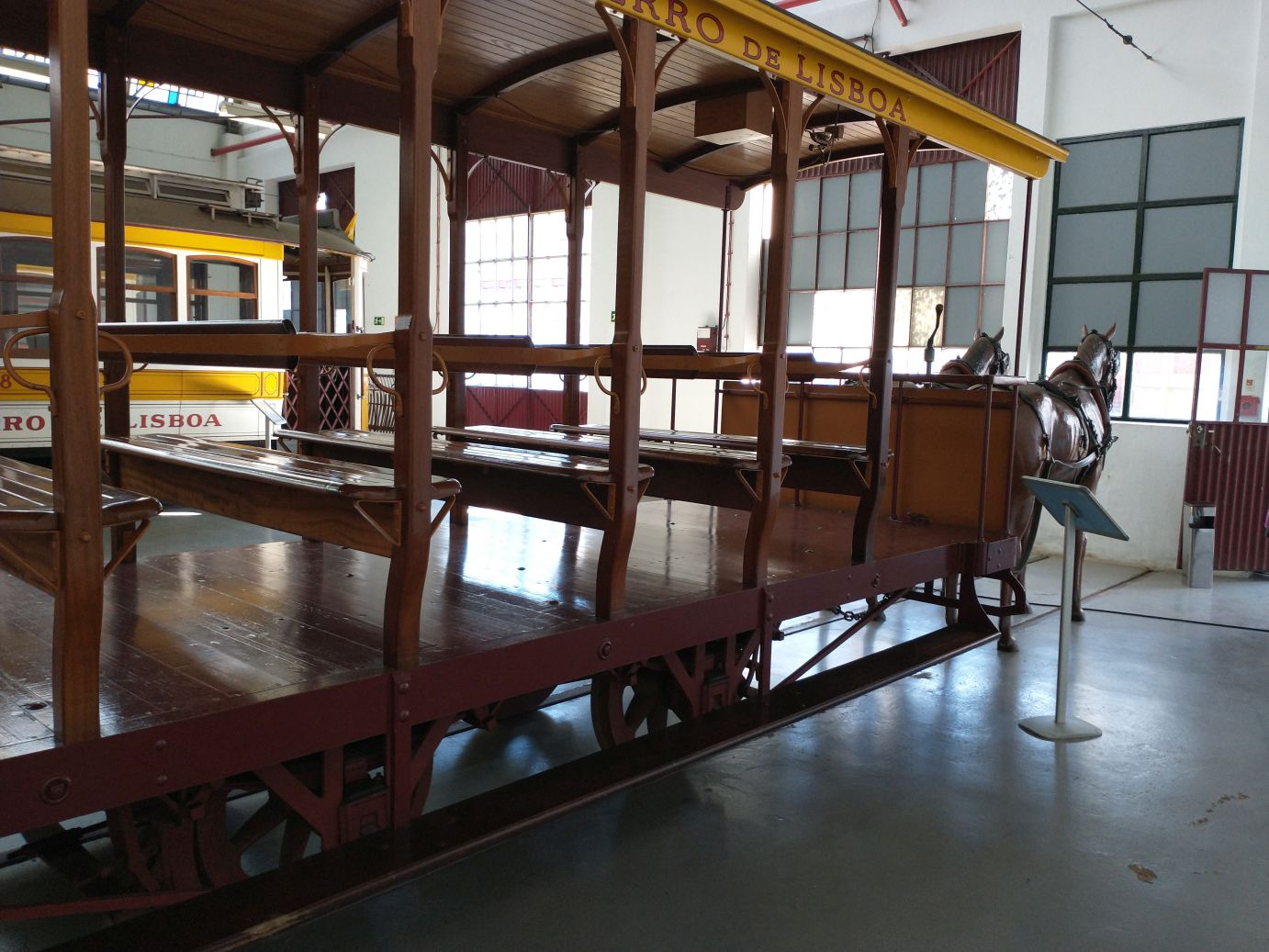
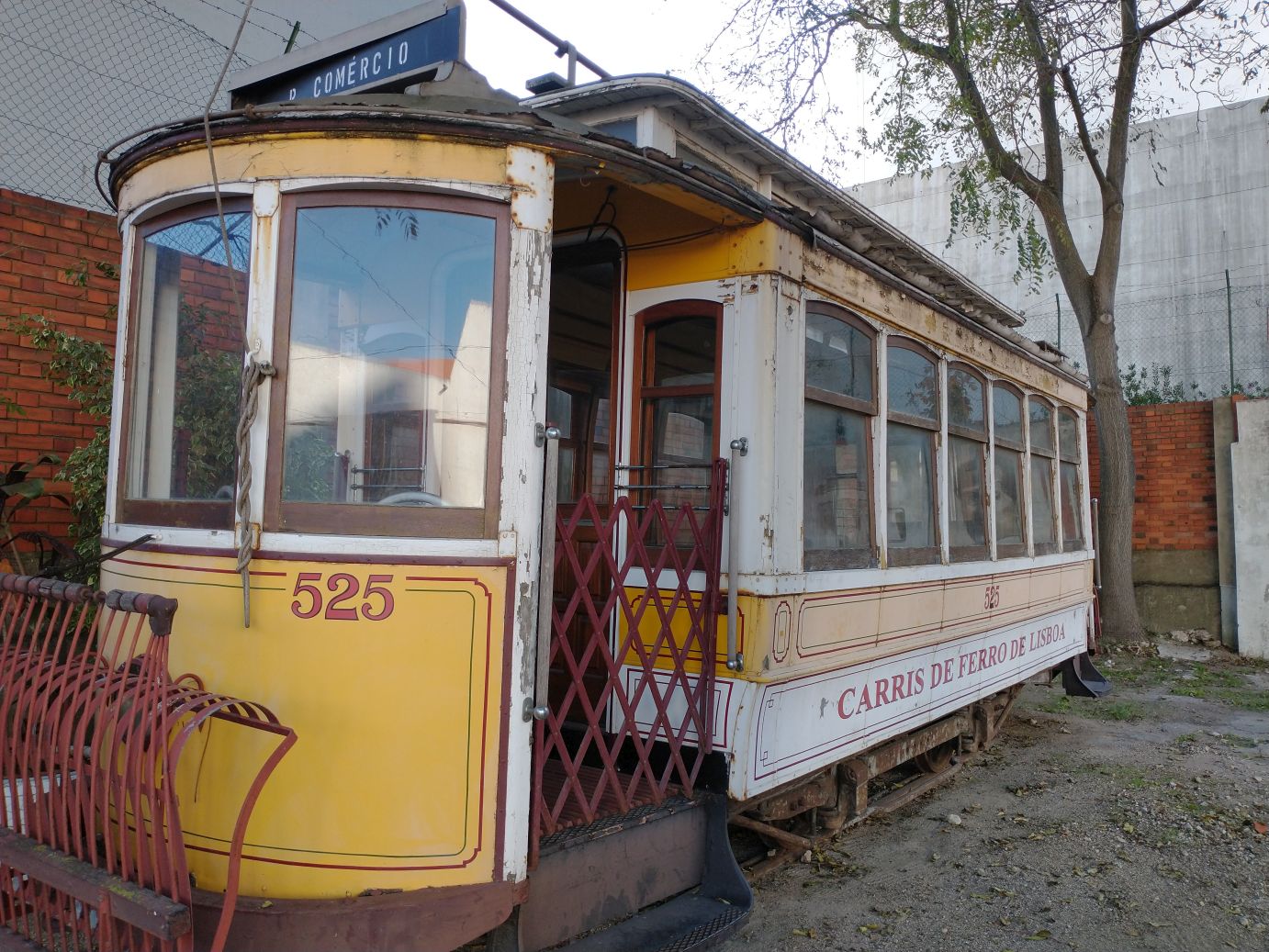
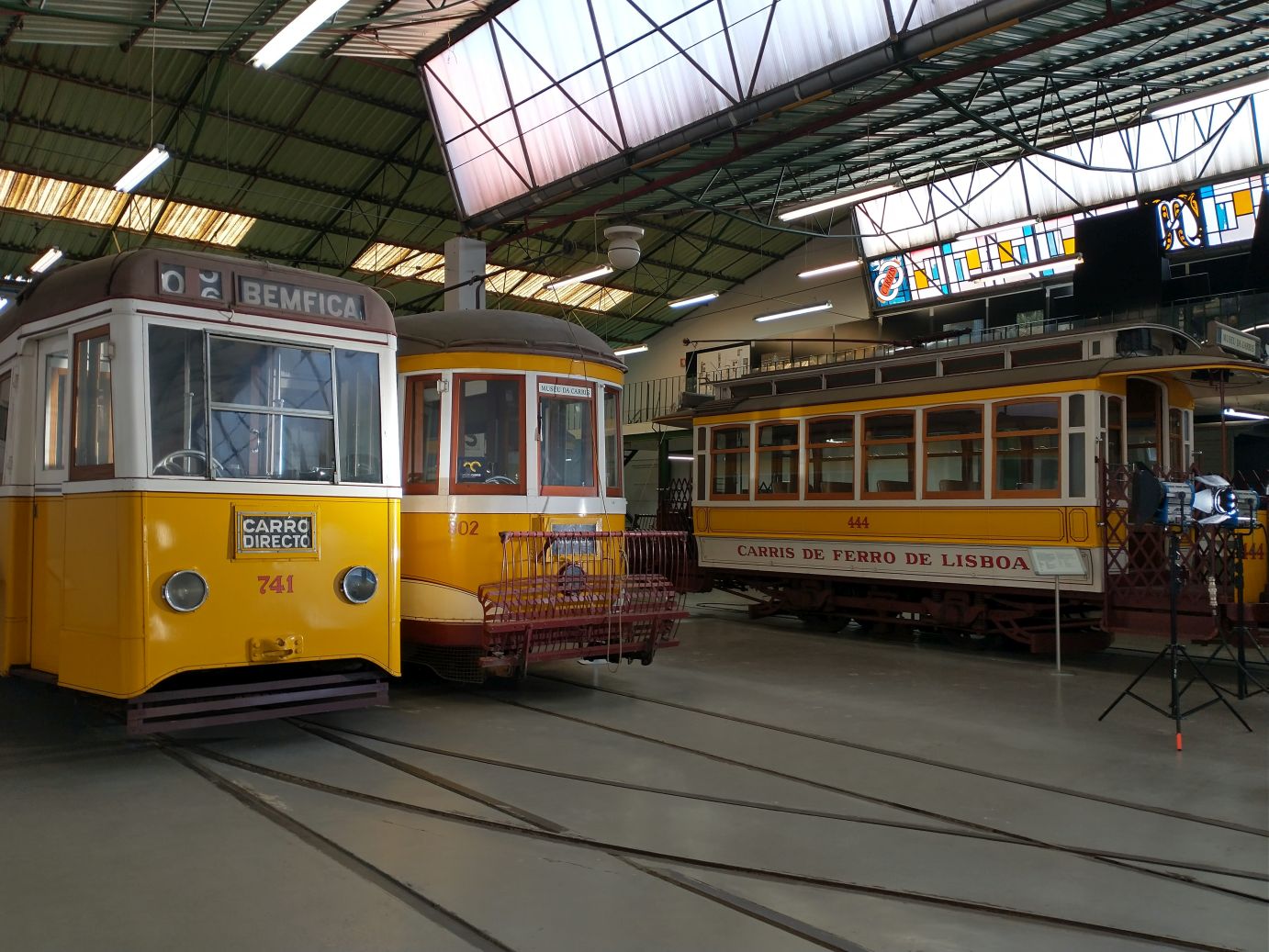
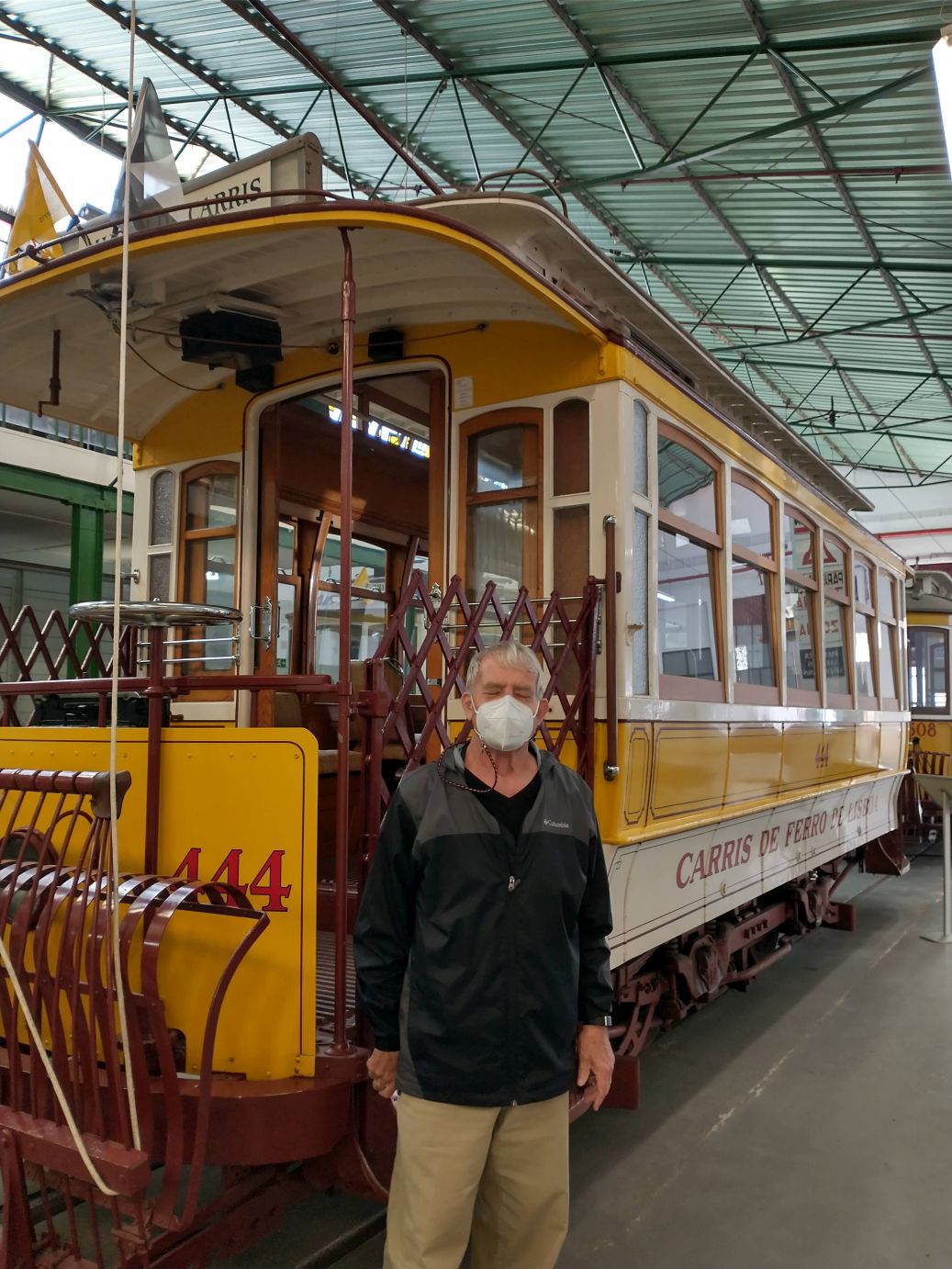
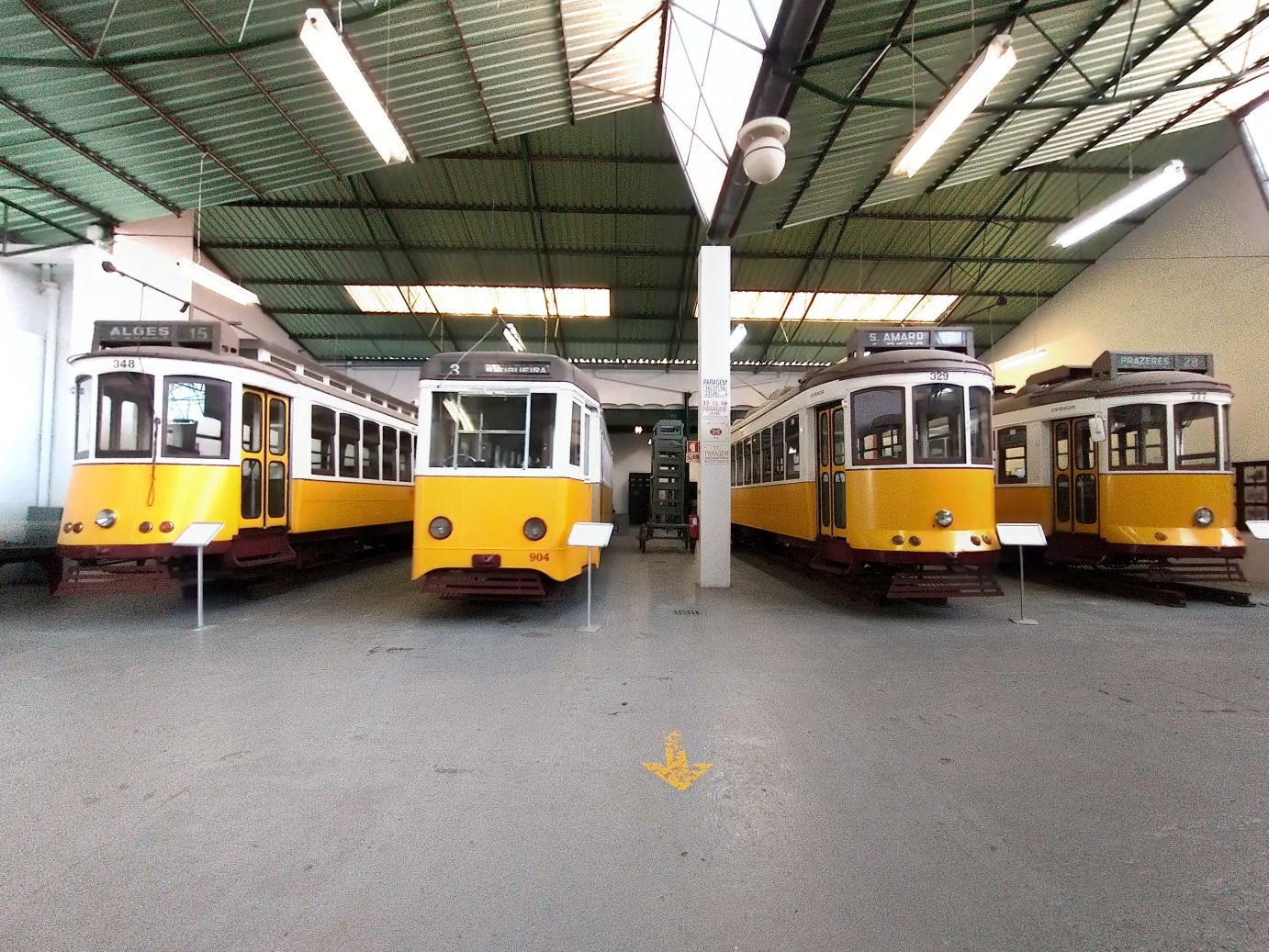
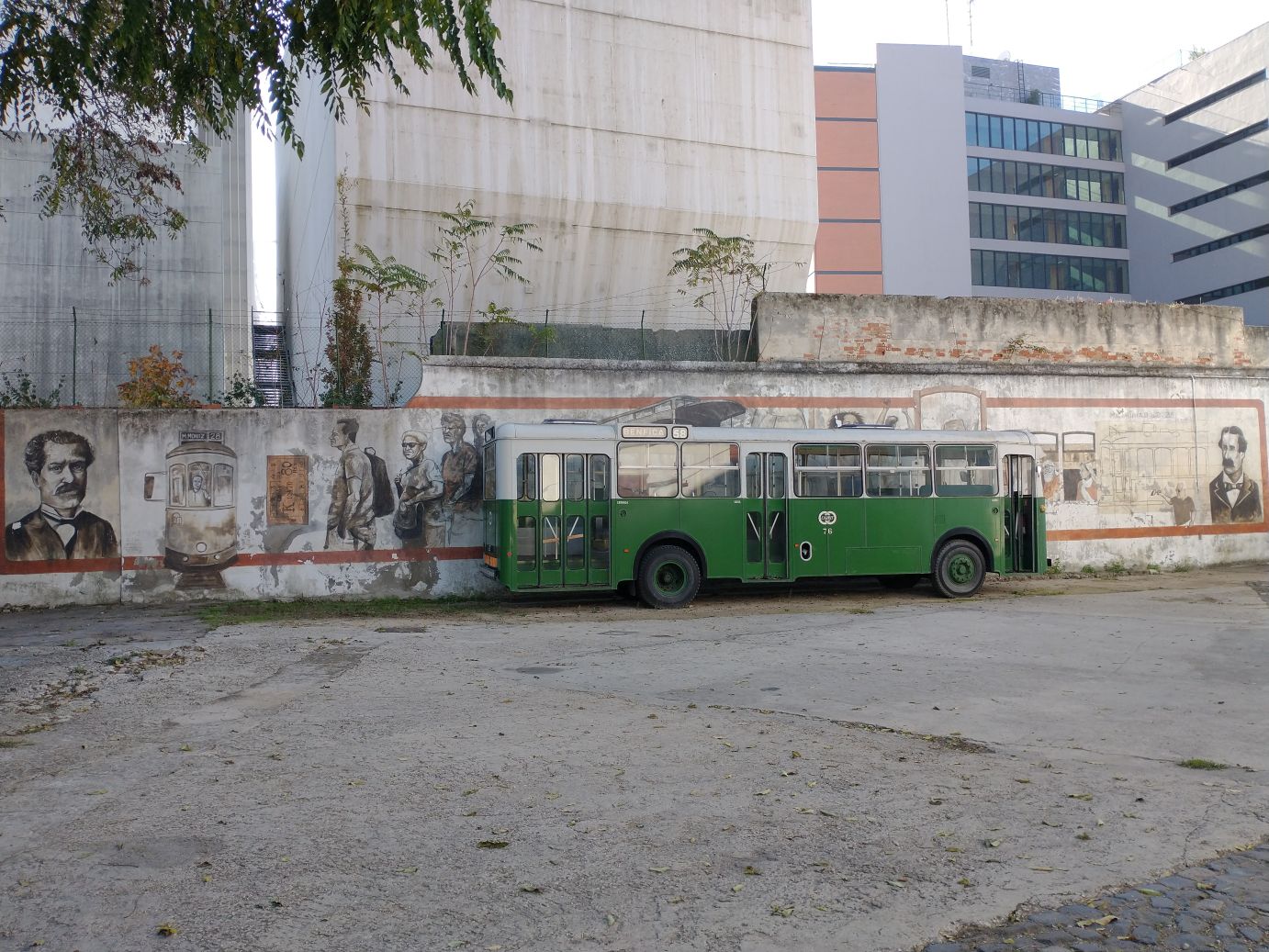
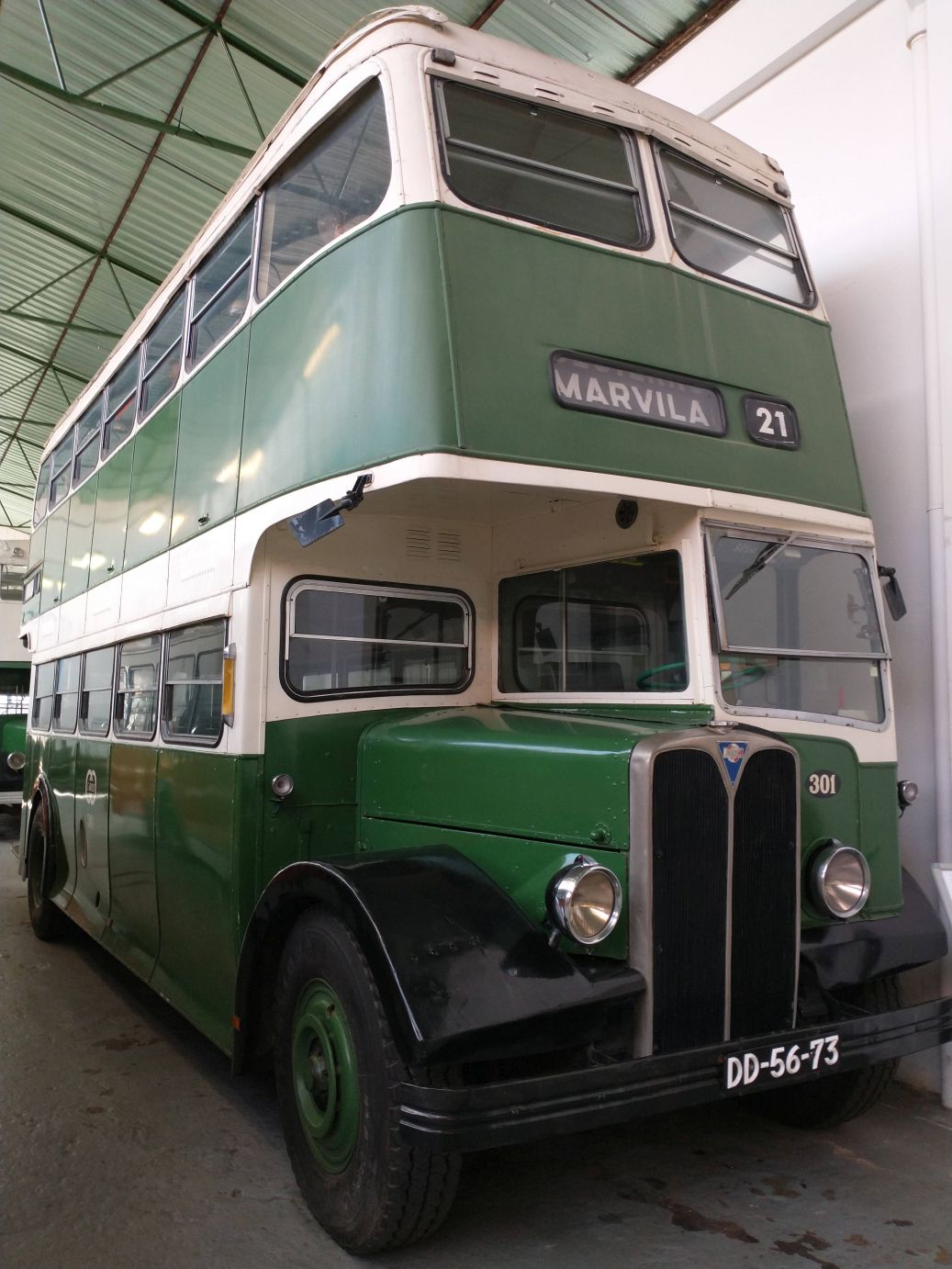
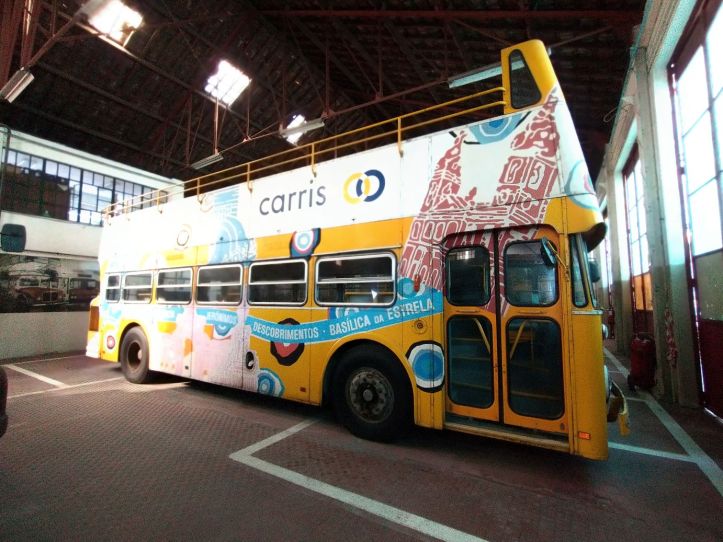
Back on the tram – it is our own private trip to the last destination, the bus garage which has a cool double decker sightseeing bus from heaven only knows when and this cute teeny tiny little tram car. Very cool.
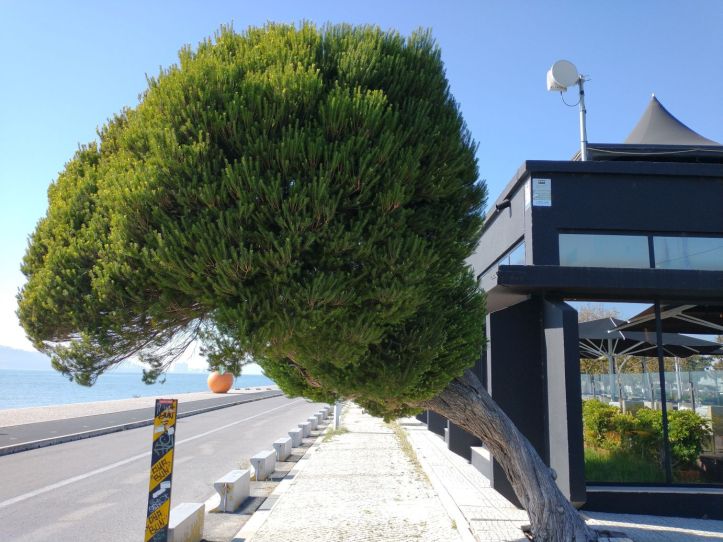
Finishing with the museum, it is only a little before noon and while we’d like to grab a bite to eat, we know we are too early for any restaurant to be serving anything but breakfast if at all. We have one more stop left on our tour, the MAAT, Museum of Art, Architecture and Technology, so we head in that direction. Our 20-minute walk takes us out onto the pretty waterfront promenade, walking past bars and cafes (which are either not open or so exorbitantly expensive we’re just not interested) and cool trees leaning toward the water, shaped by the sun and the wind.
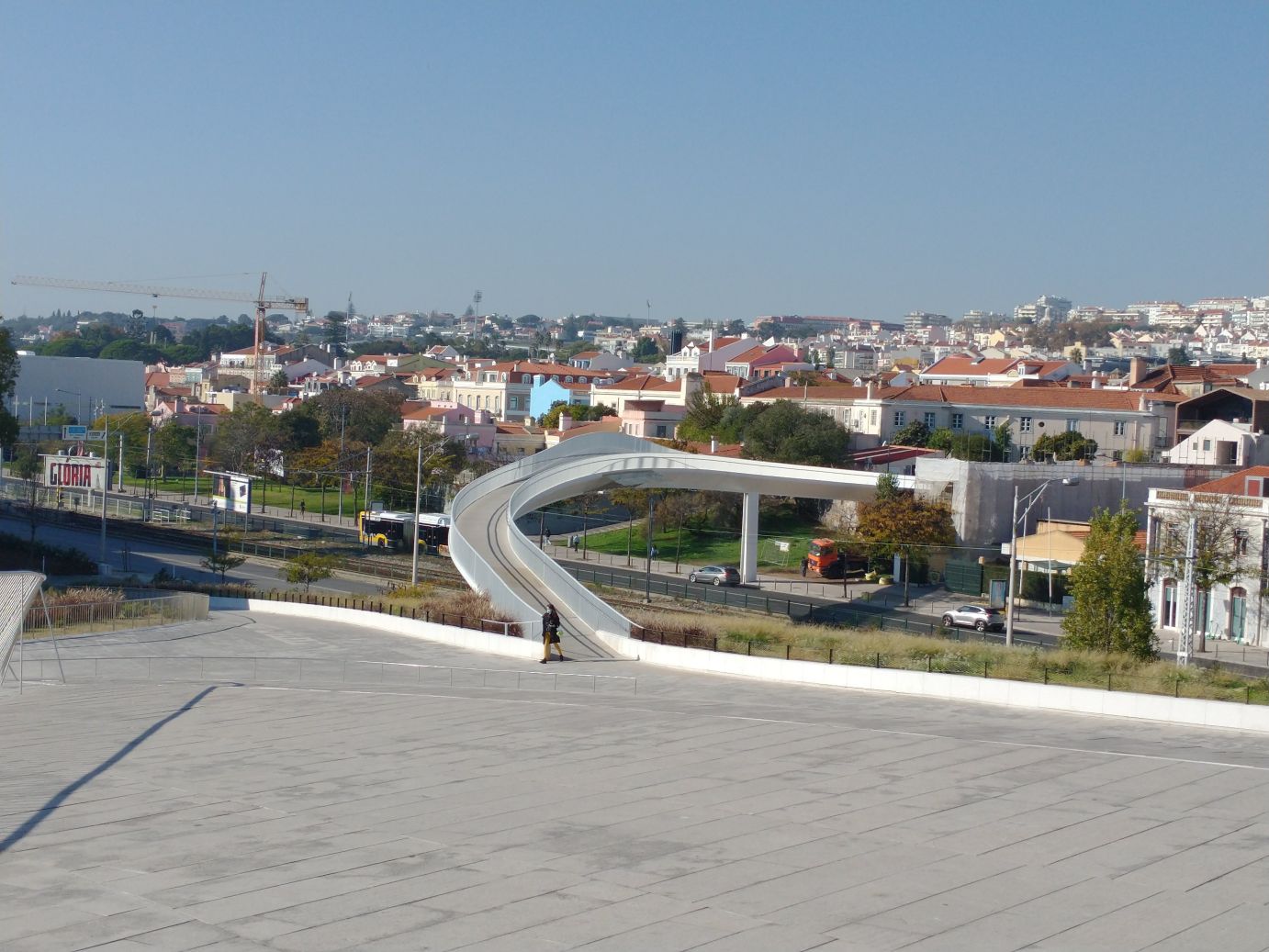
Arriving at the museum, we realize there is nowhere to eat around here except the museum cafeteria and the aforementioned expensive waterfront places. Not happening. So, off we go again to figure out how to get across the main road on the flyover bridge – which I can see from the street but can’t figure out how to get up on it (and don’t even start with Google maps!) – and after a couple of wrong turns, u-turns and backtracking (and not just a little angst) we make it up and across the bridge to Rua da Junqueira which has a bunch of restaurants for us to choose among.
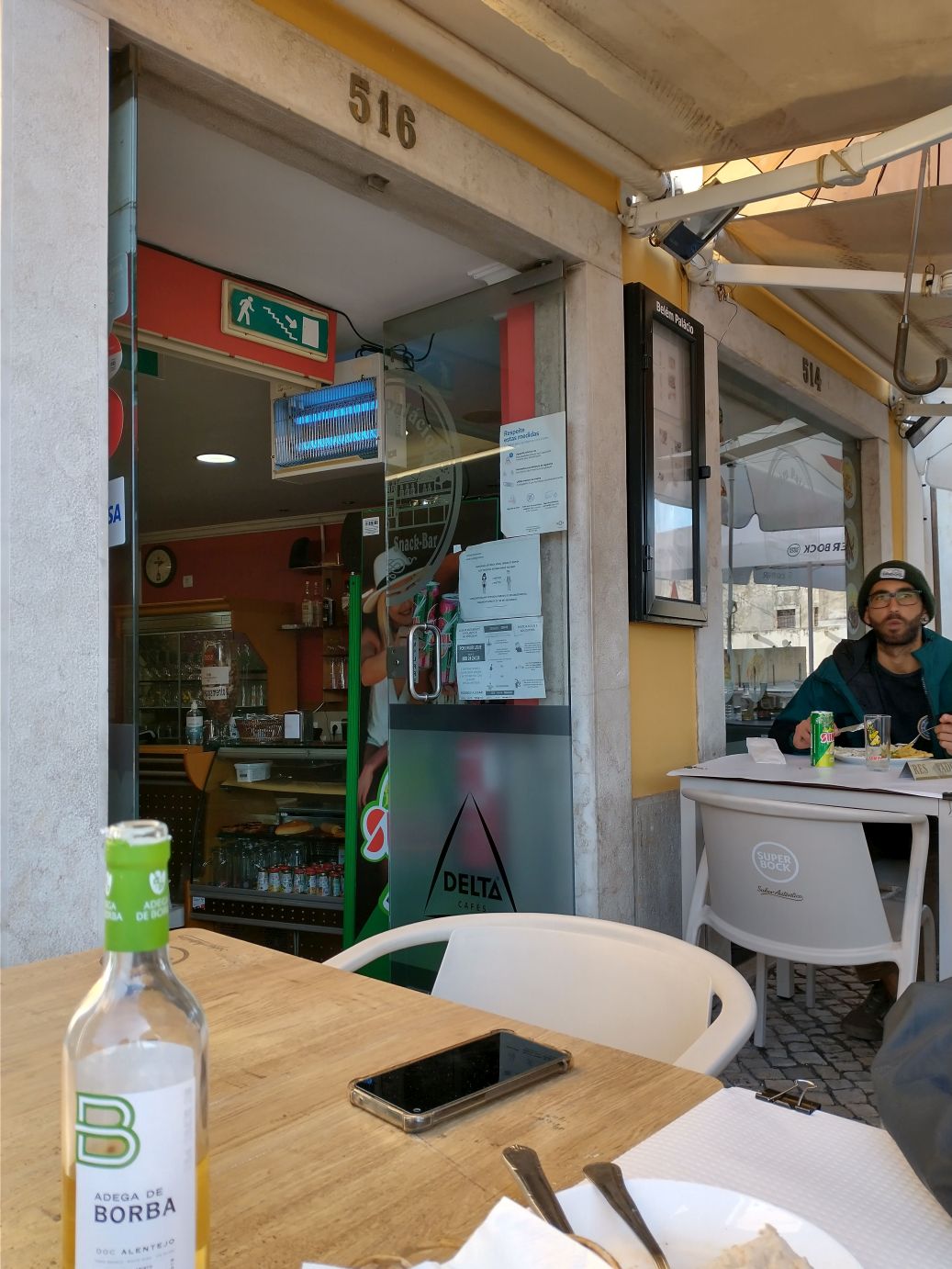
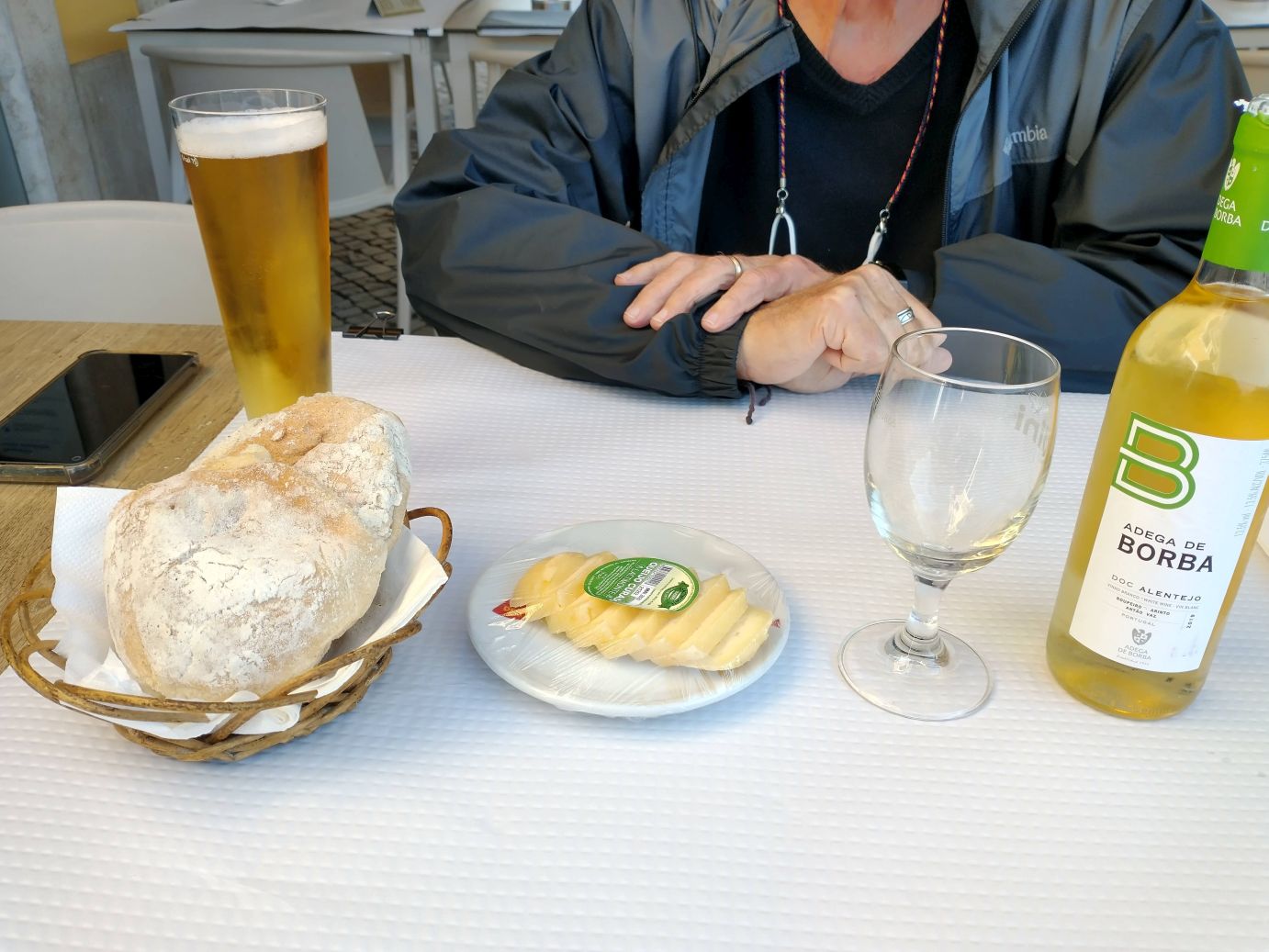
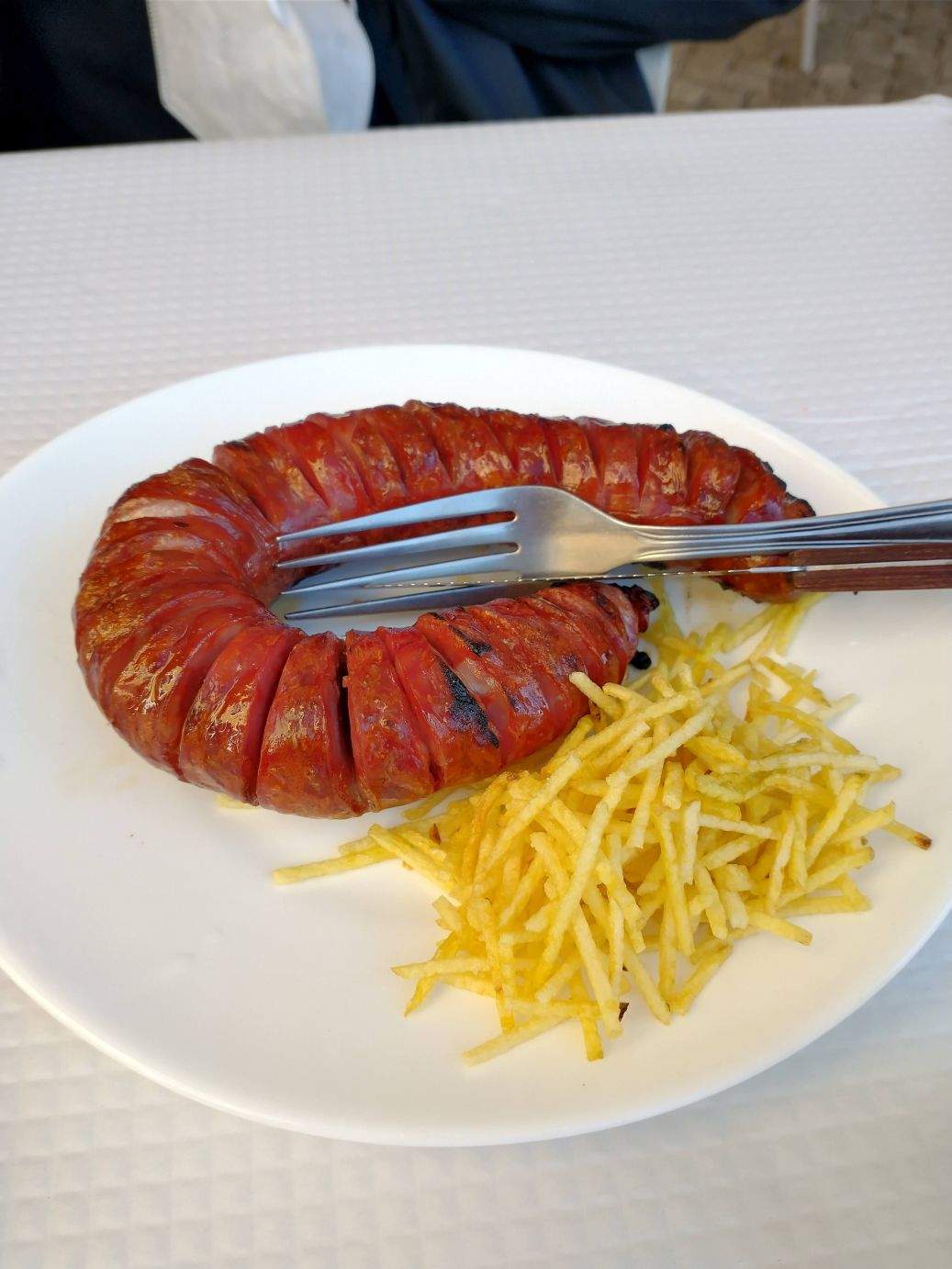
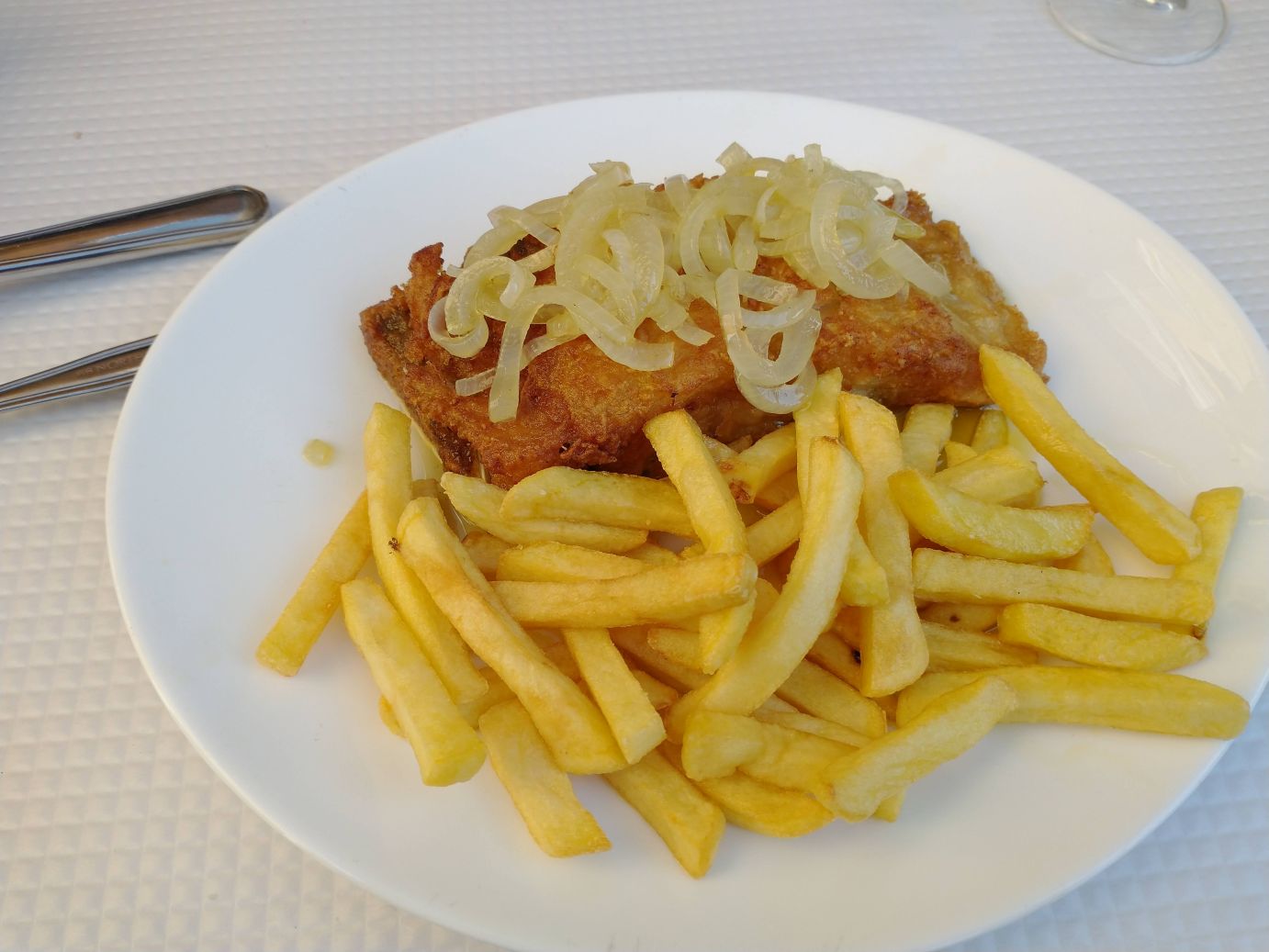
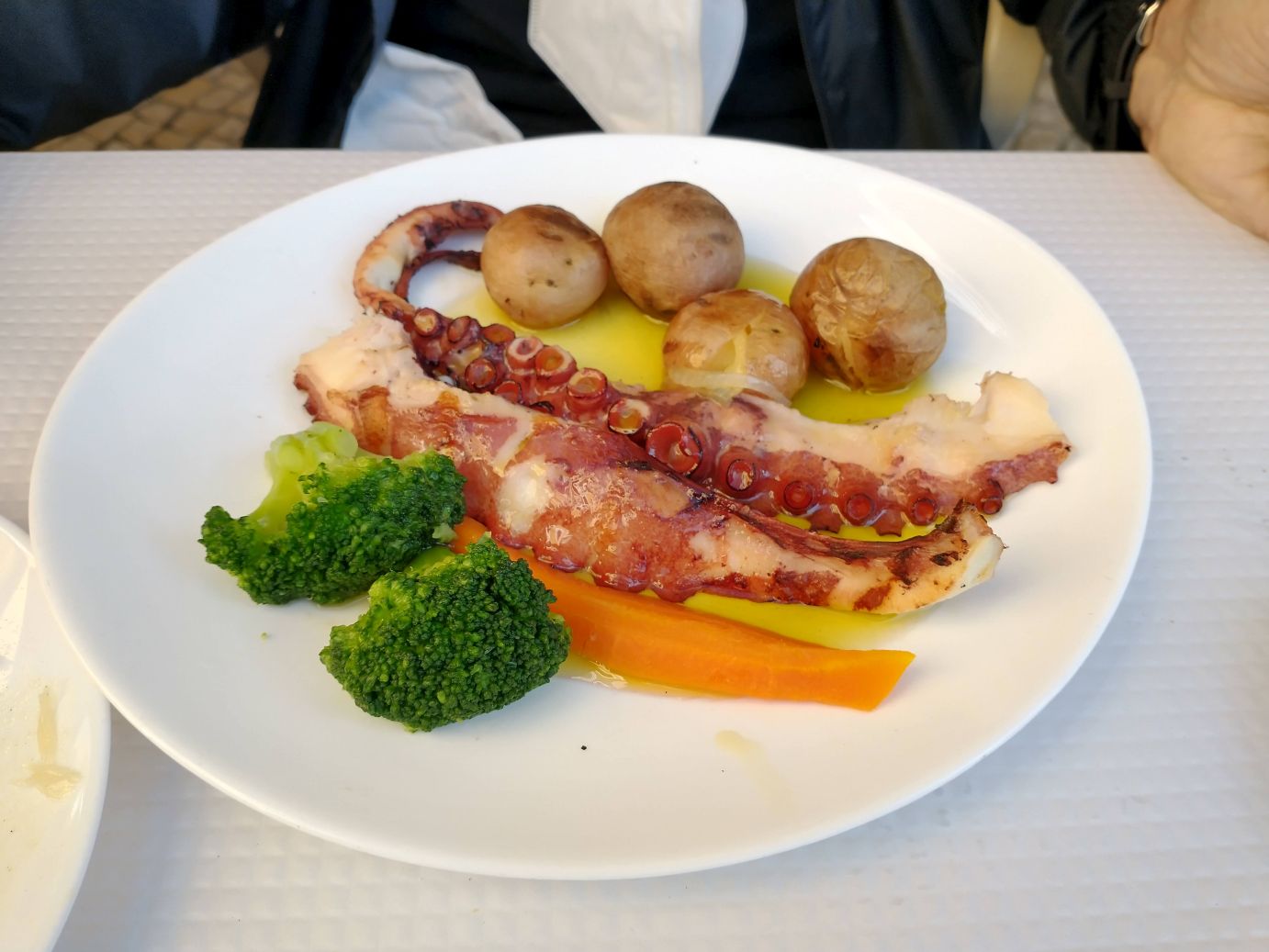
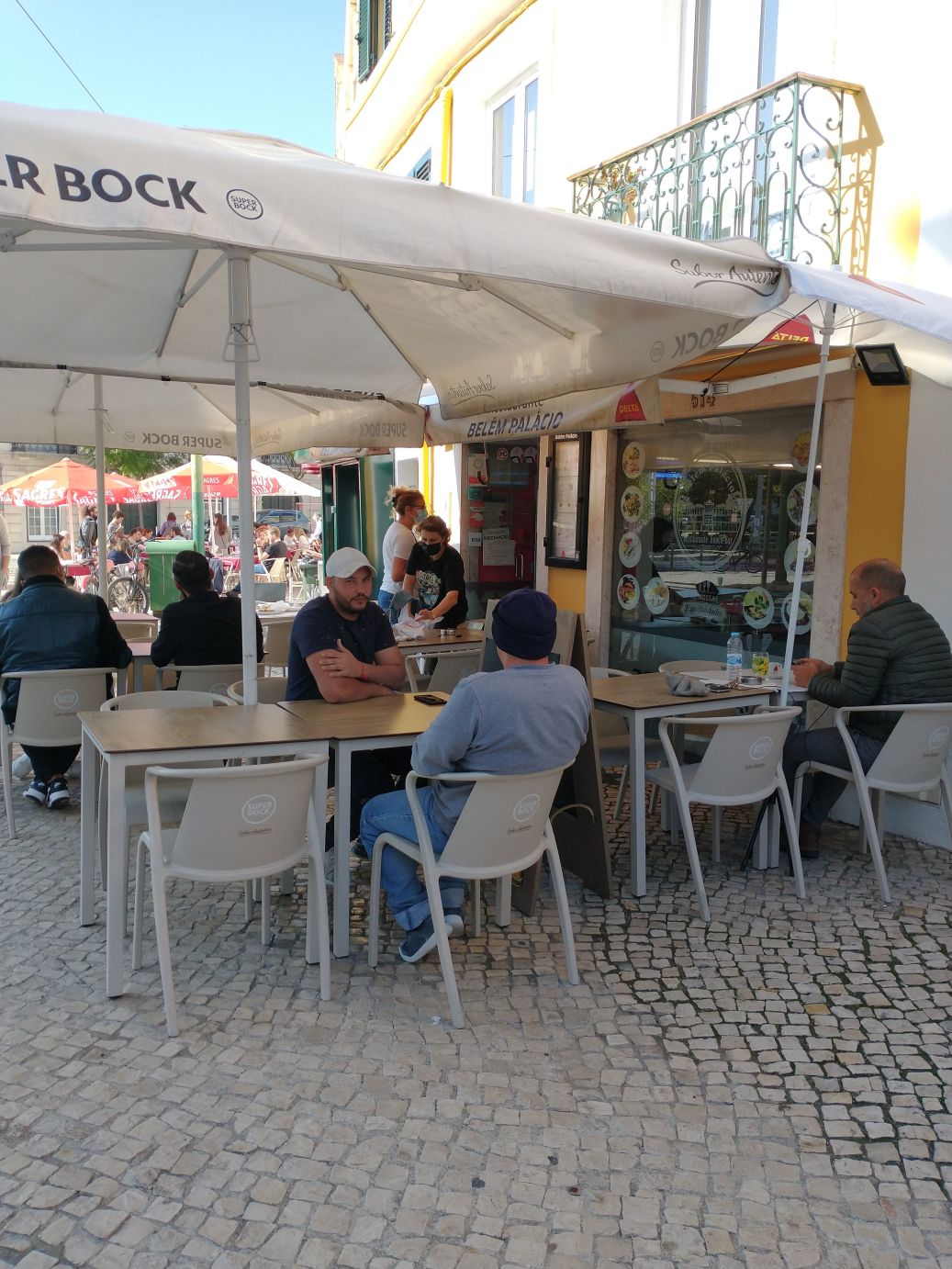
The first 2 we looked at seemed decent, but of course we soldiered on and lucked into the greatest place Belem Palacio, which has perfect outdoor tables with lots of locals populating them. Good sign. And for good reasons the locals are here – the food is great, the prices are reasonable, and the service is great, even if we don’t speak the language! Starting off with bread and cheese, we try not to stuff ourselves on the delicious whole loaf of crusty bread that is delivered to our table. Next, we share grilled chorizo, which is so very good. It is different than any other chorizo we have had – with a crispy crust and really rich, deep flavor. For our main course Ed gets Pulpo, of course! I get fried fish topped with sauteed onions that (except for the skin) is excellent. We totally can’t finish the chorizo, so I discreetly pop it into one of my handy Ziplock bags to save for our dinner this evening, and off we go to finish our day of museum-ing.
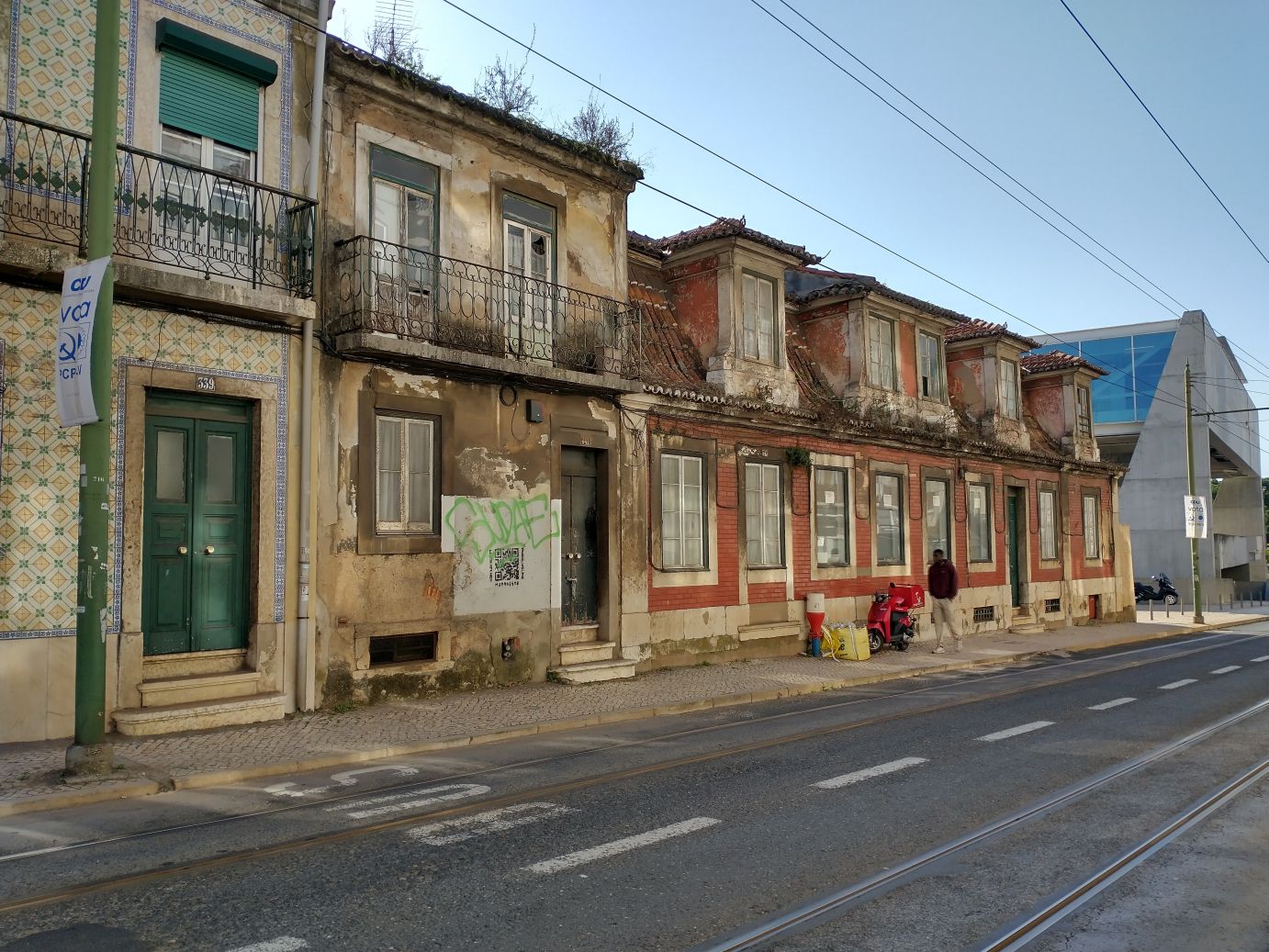
Walking back to the museum, we delight in all the different buildings along the street. The ornate tile fronted ones next to the old, weather-beaten brick townhomes. You could spend all your time just wandering around looking at the architecture here.
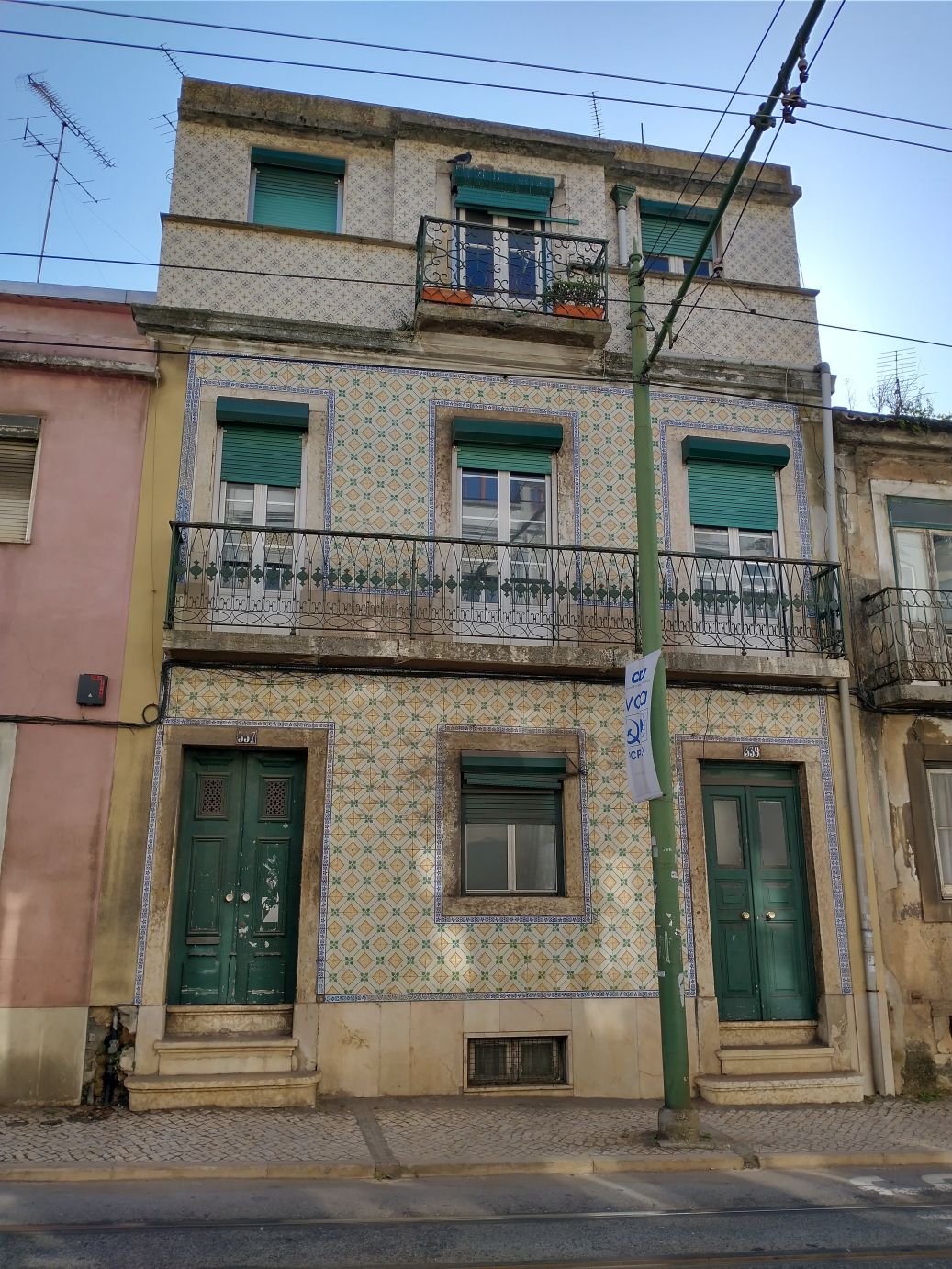
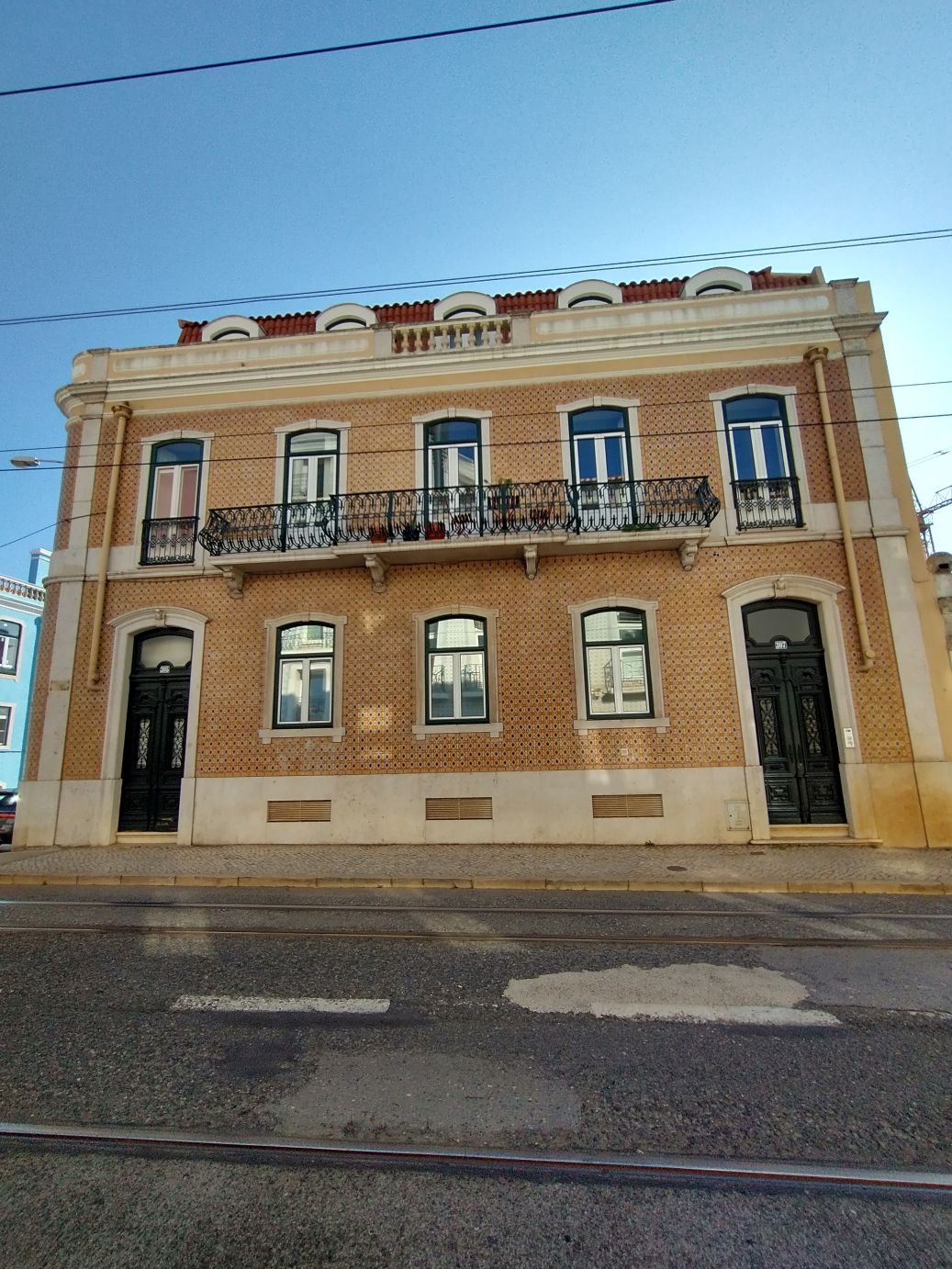
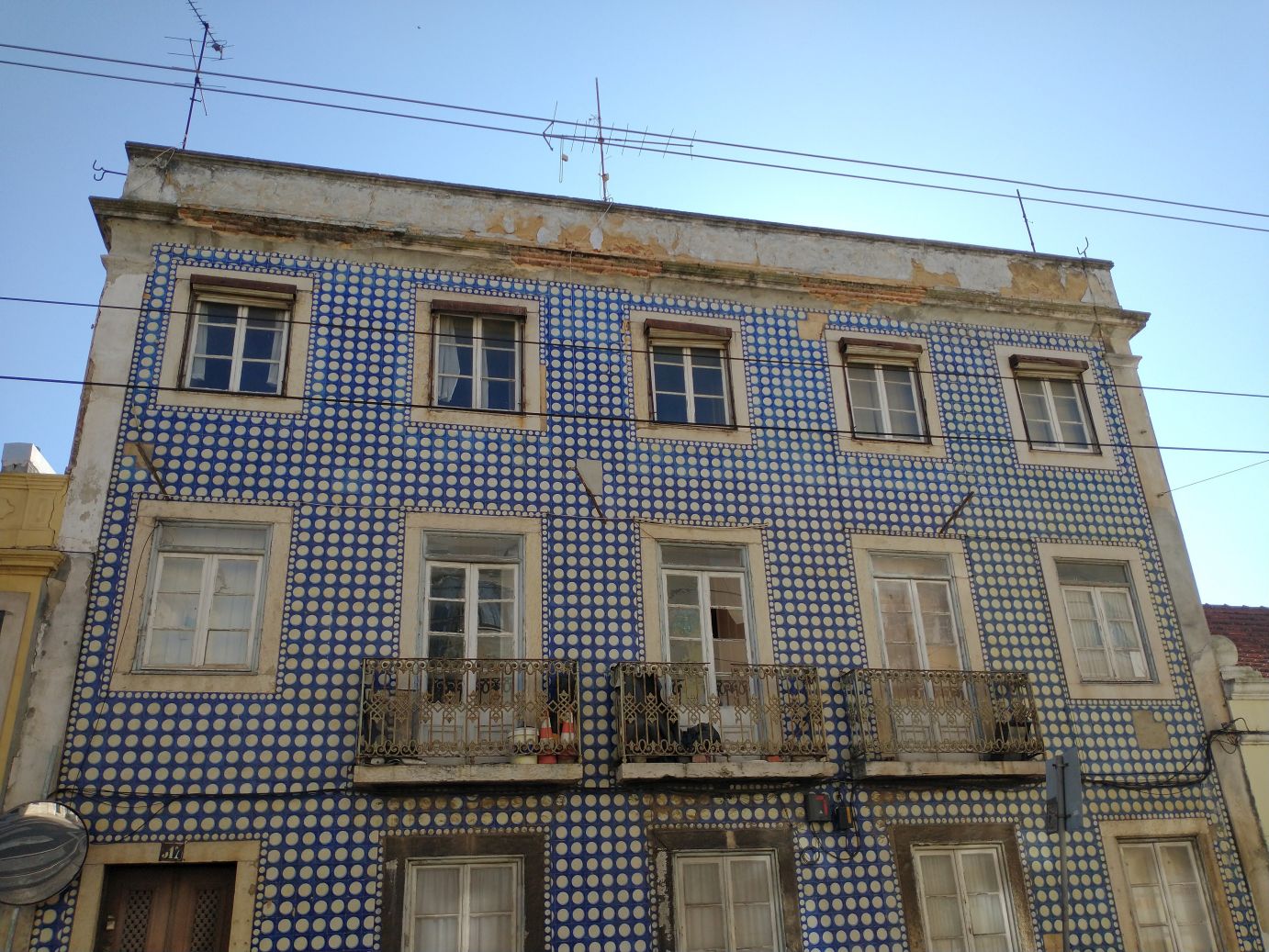
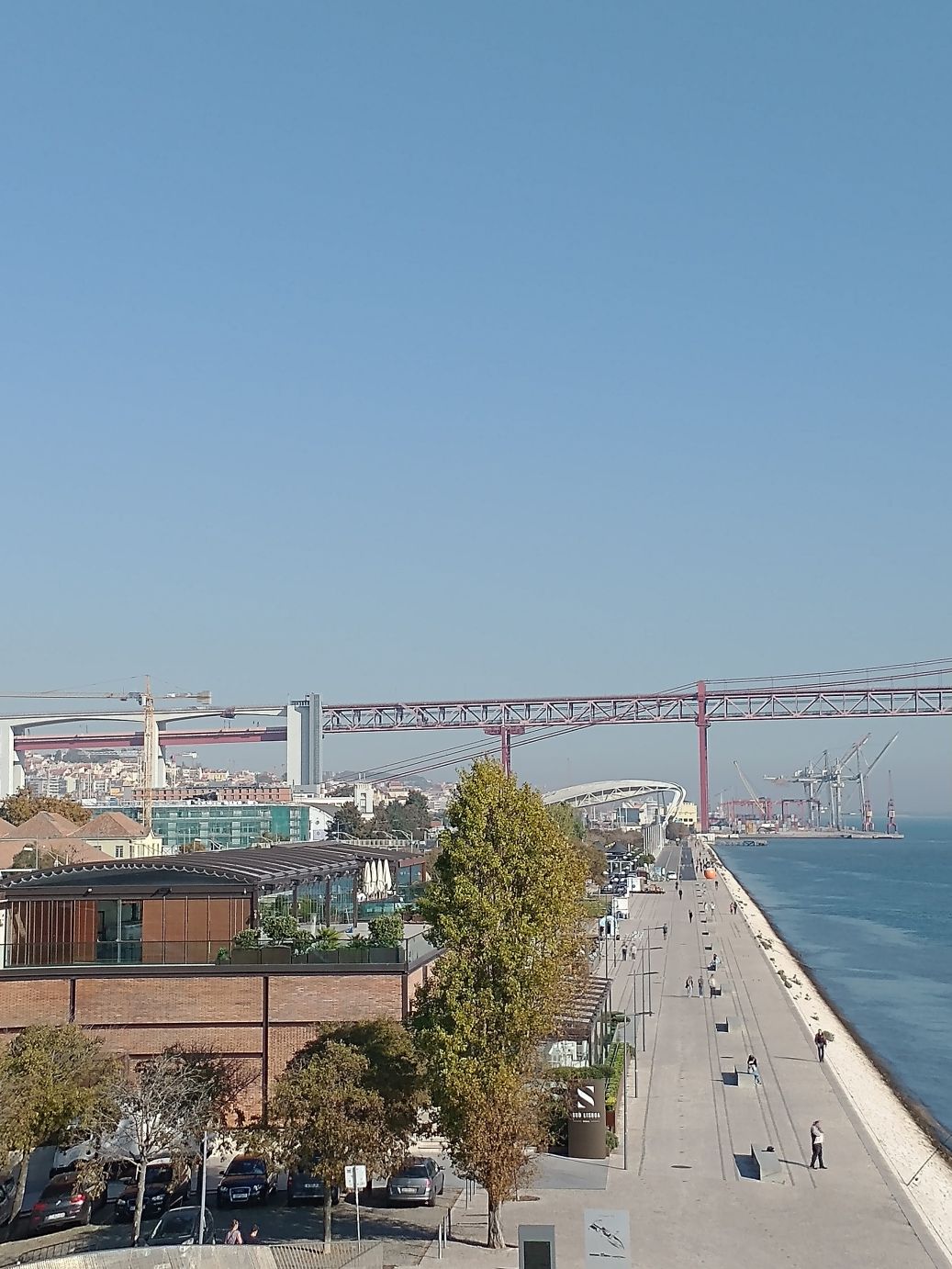
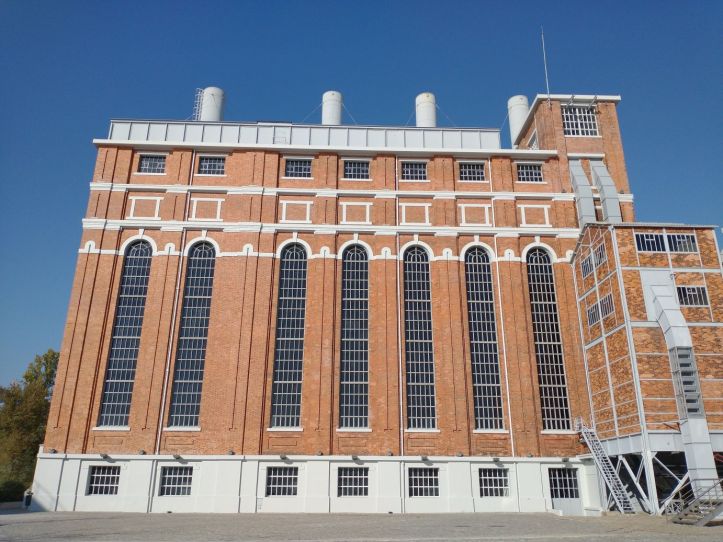
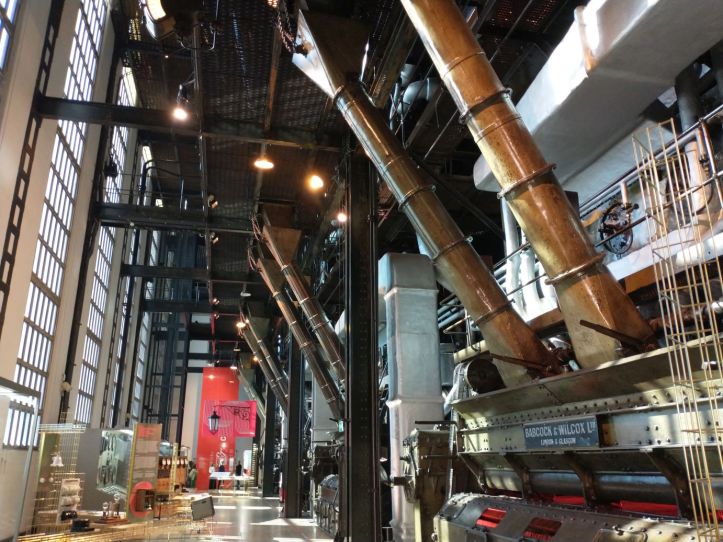
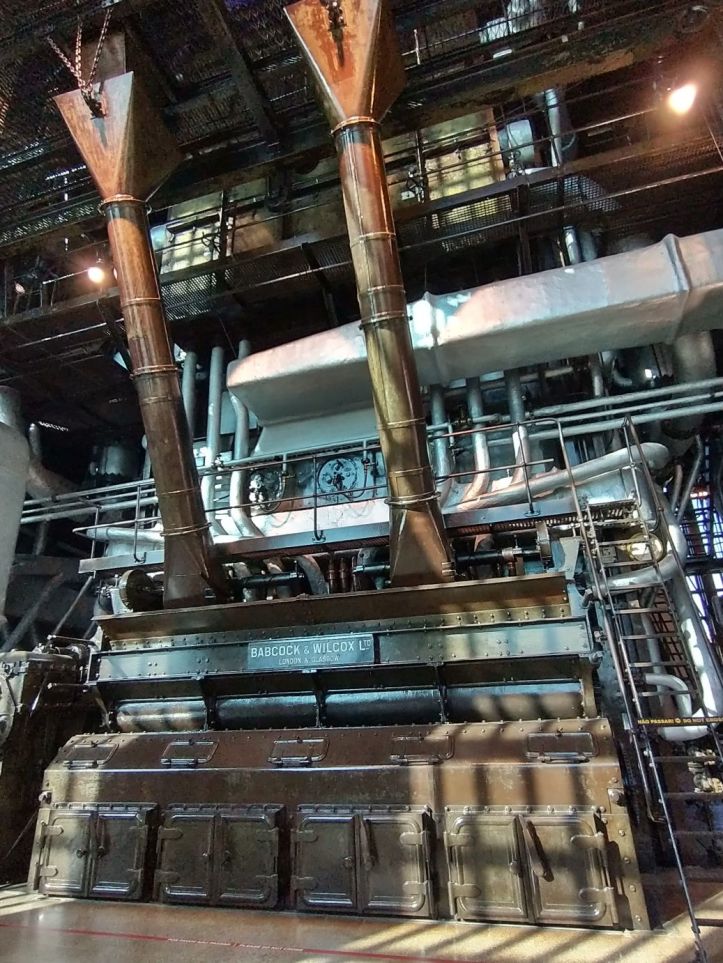
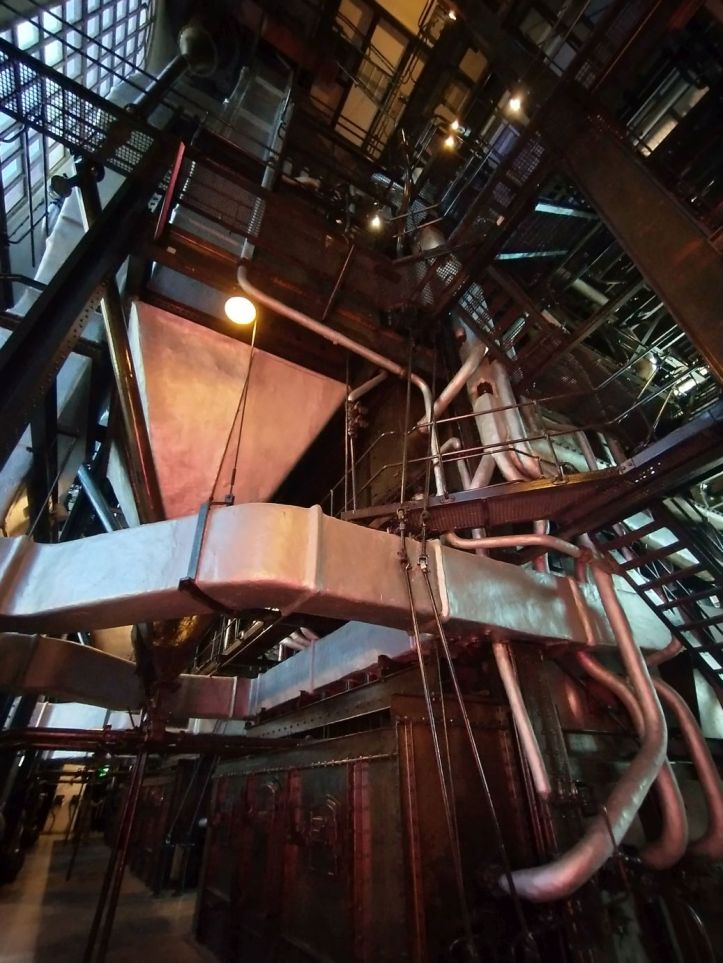
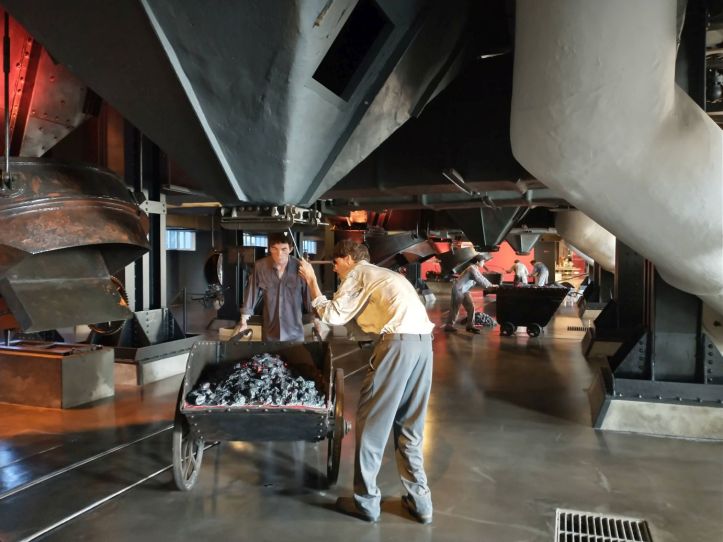
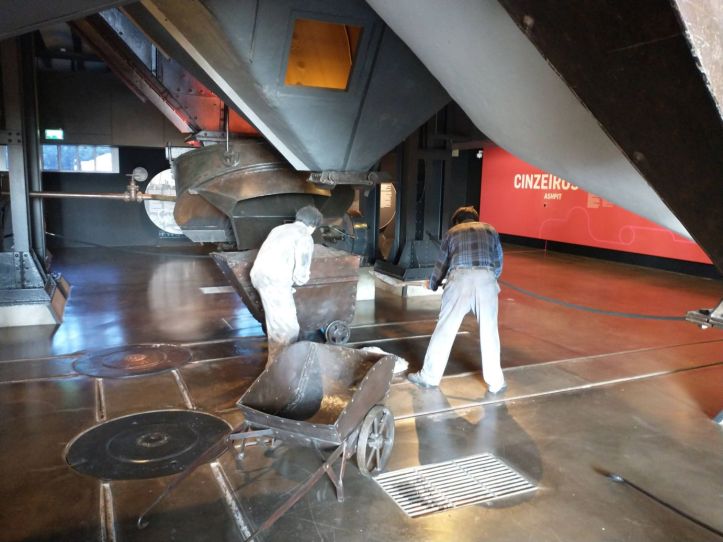
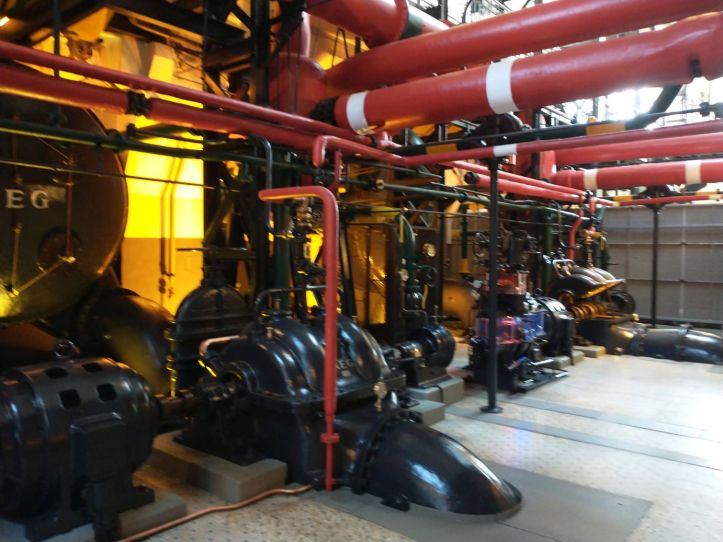
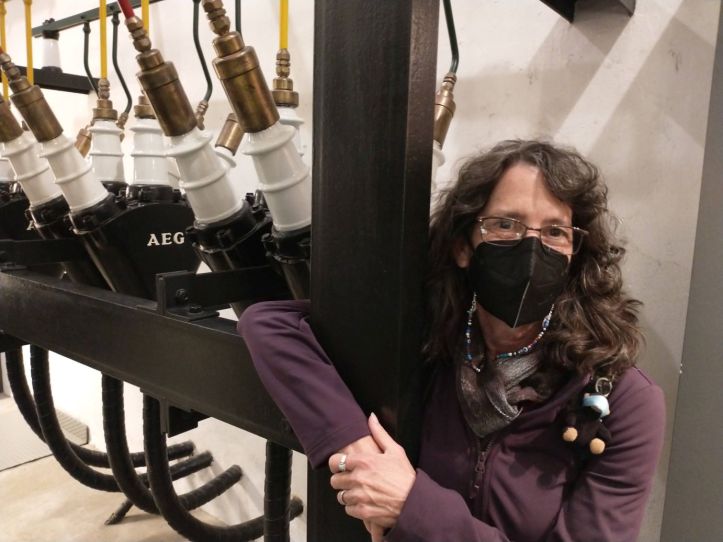
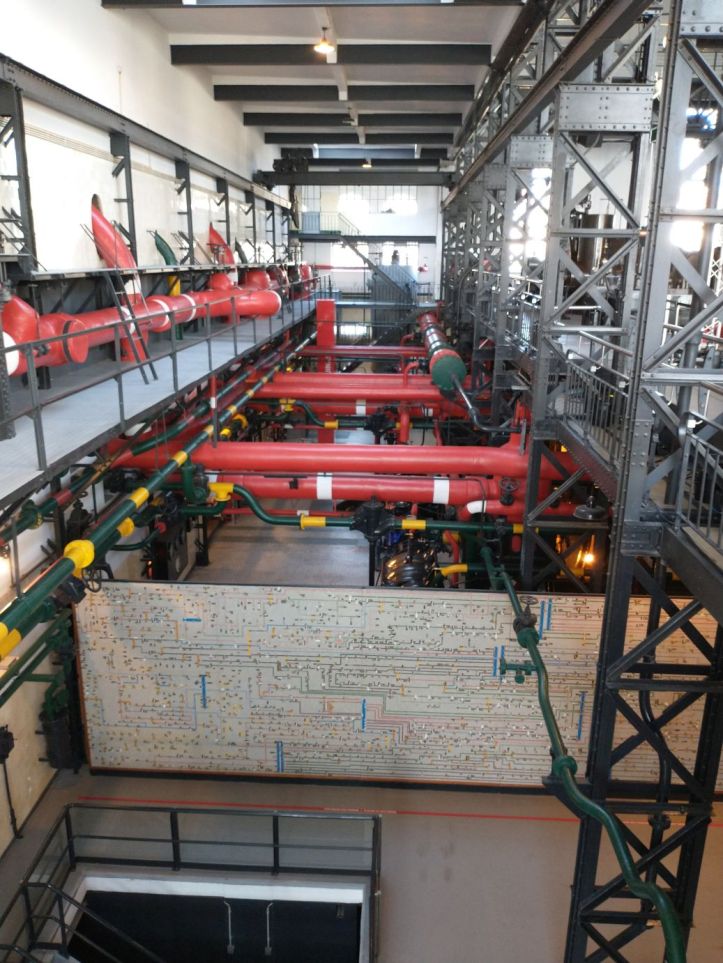
Crossing back over the pedestrian bridge, we go up onto the lookout point for fabulous views across the river, down the promenade to the bridge and behind us into the city. Back down on sea level, we circle the museum to find the entrance then enter with our Lisboa card and begin to explore the displays. Housed in the old Central Tejo power station, most of the visit is exploring the old plant with all its machinery still intact, including the old coal burning furnaces.
As you can imagine, it is an enormous facility, and you can climb through a huge portion of it on catwalks of different levels and through different eras of electricity production. The equipment is mammoth, we can’t even imagine the noise level in here when it was in operation. We thought the bridge was bad!
Although this museum is billed as Art, Architecture and Technology – we’re hard pressed to find the art or the architecture. There is a temporary art exhibit in one room off the gift shop with posters and things, sort of arty, but not what we expected. Not that it wasn’t interesting, just odd. The bonus was it was free – and not very far out of way from the other 2 museums we visited today.
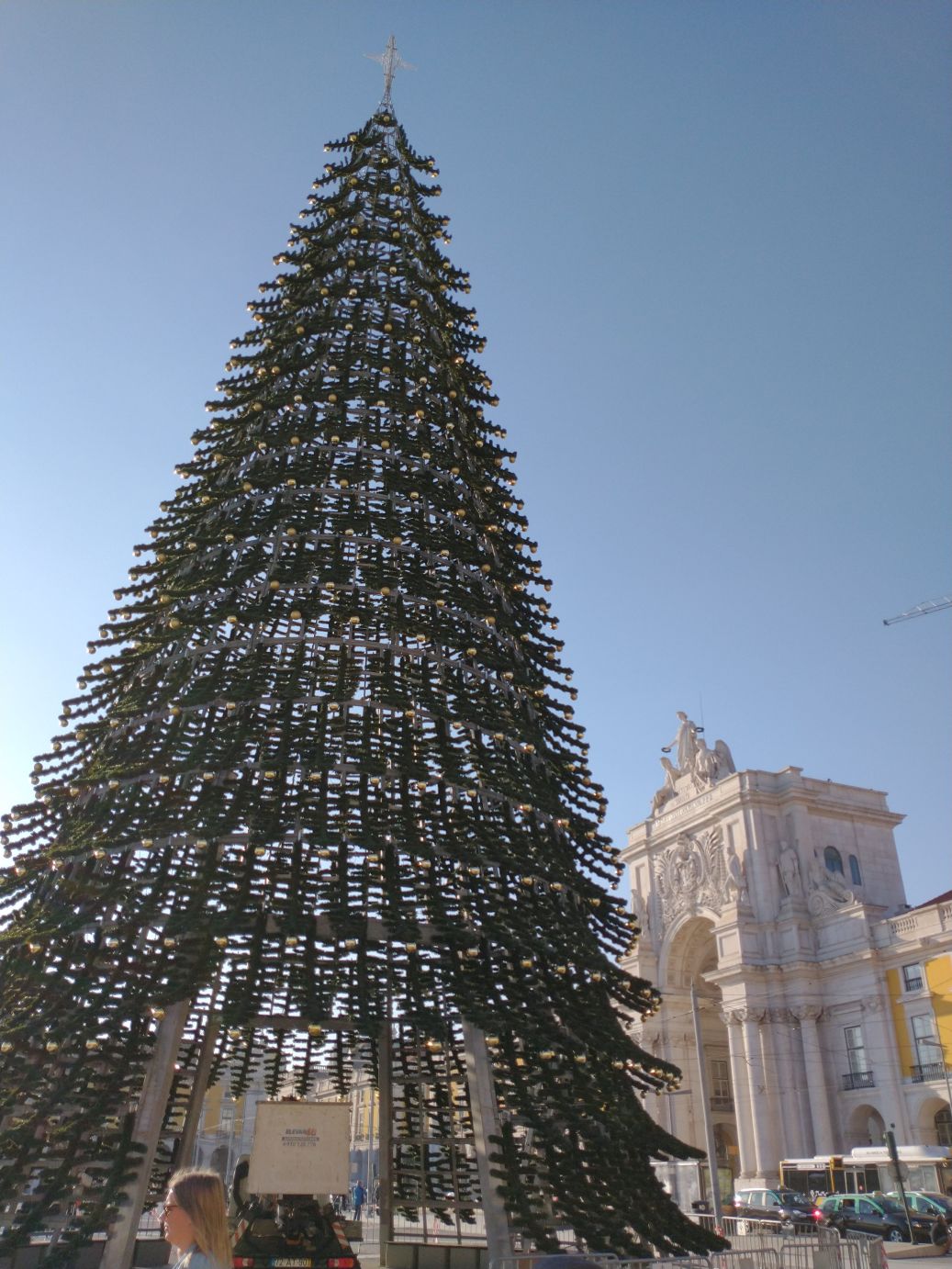
Visit complete, we catch the train back to Cais do Sodre, then walk back to the apartment, through Praco do Comercio which is now adorned with a gigantic Christmas tree that was not there this morning. That’s quick work! On the way home, we snap more pictures of some of our favorite buildings, including one that is under renovation – can we move in? We’d live here!
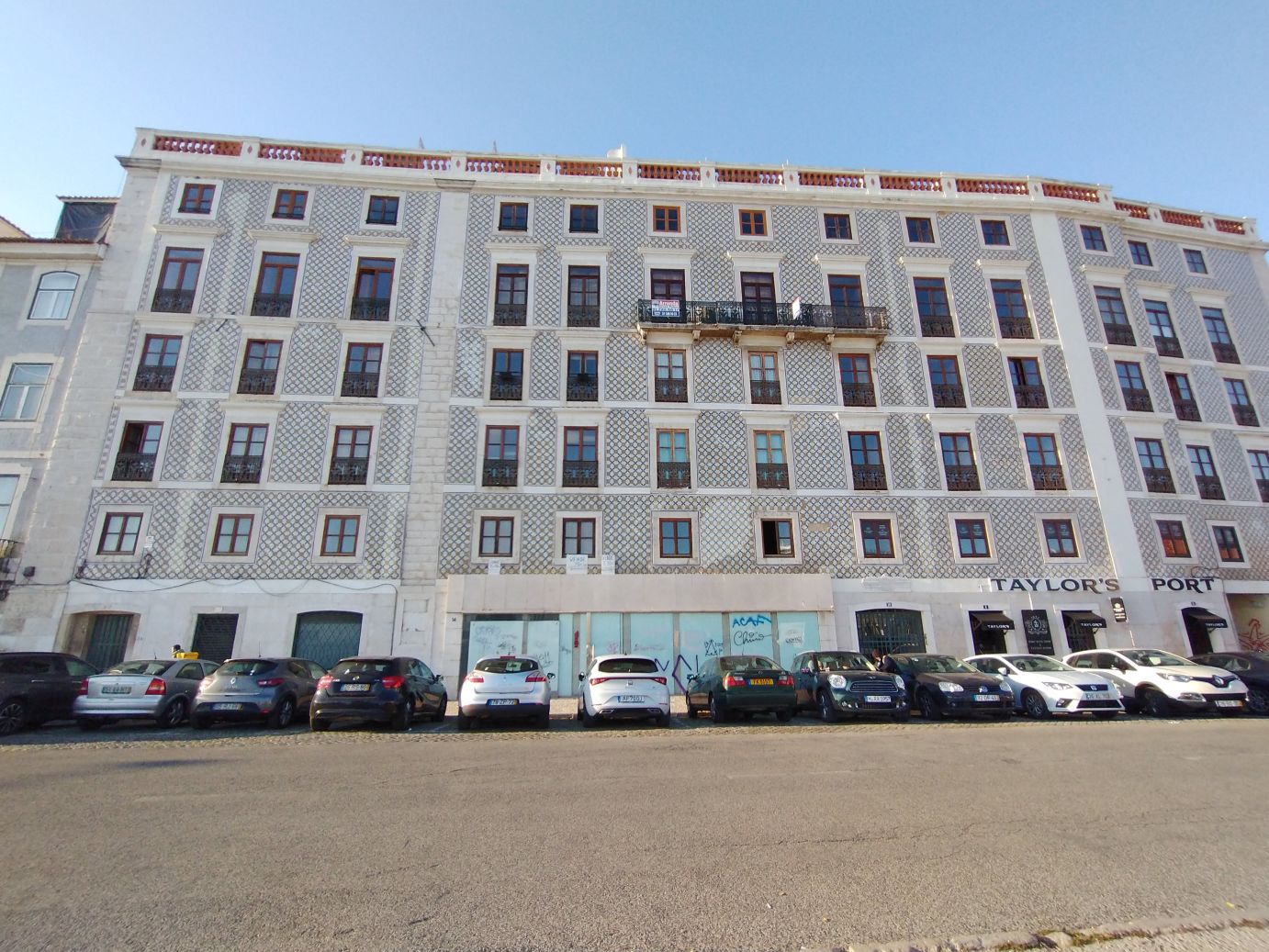
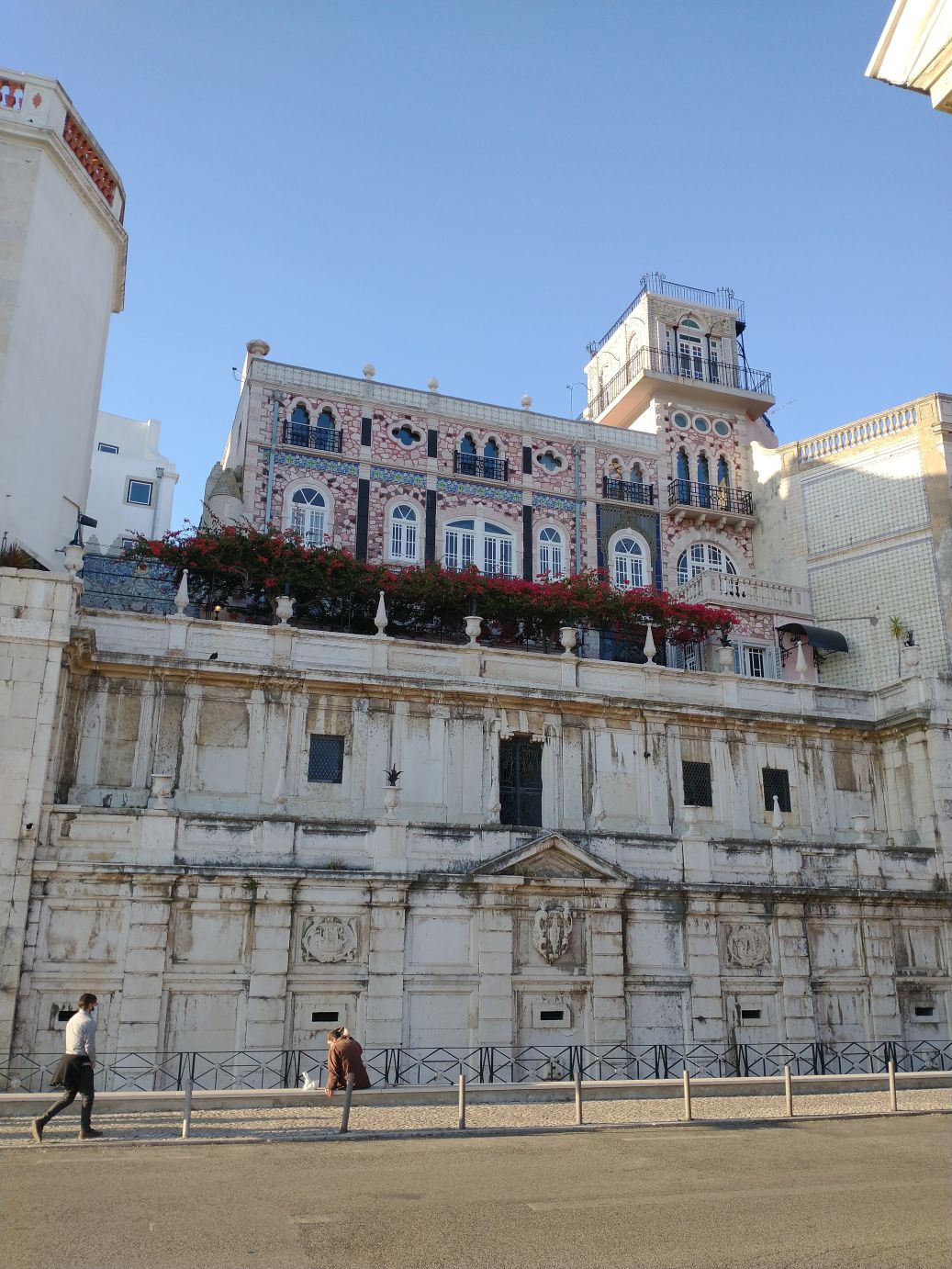

Tonight it is hanging out at the apartment, eating our left over chorizo and other miscellaneous meats, cheeses and breads we’ve collected along the way and bundling up for drinks on the balcony. Good end to a good day.
 Andiamo