Since we will be in Malaga again on the next portion of our trip, we have decided to rent a car and explore the Pueblos Blancos (white villages) high up in the mountains north of Malaga. The morning doesn’t start off very promising, as we cannot find the rental car agent who has brought the car over to the port for us. We had the option of walking into town to pick up the car, but for a nominal extra fee, they will bring it here. But where exactly is here?
We’re not sure. We come out of the terminal early, and head to where all the buses pick up at what appears to be the port entrance. We wait a bit, but there is no one here with a car. We then look at a port map and decide that maybe we are in the wrong place. Thus begins a frustrating 30 minutes of walking to the exact opposite end of the port pier area, waiting on the street for a car that never comes, calling the rental agent, who sweetly deals with us after 3 or 4 phone calls, before finally walking quickly back to where we began, to find the rental agent waiting where we originally disembarked the darn ship. Ay yi yi, Ok well. That’s done!
Once we have the car, the paperwork signed, we are finally ready to get out of dodge. That part is easy – as is getting back to the main port area – but as we progress along our route, we realize that our plans to visit both of the towns we have chosen – Grazalema and Ronda – is doable form a time standpoint. Thus, Grazalema gets the heave ho and we head straight to Ronda, a mountain town split in two by a huge gorge. It is said to be totally picturesque as well as having quite a history with bull fighting and Hemingway of all things. We’re game.
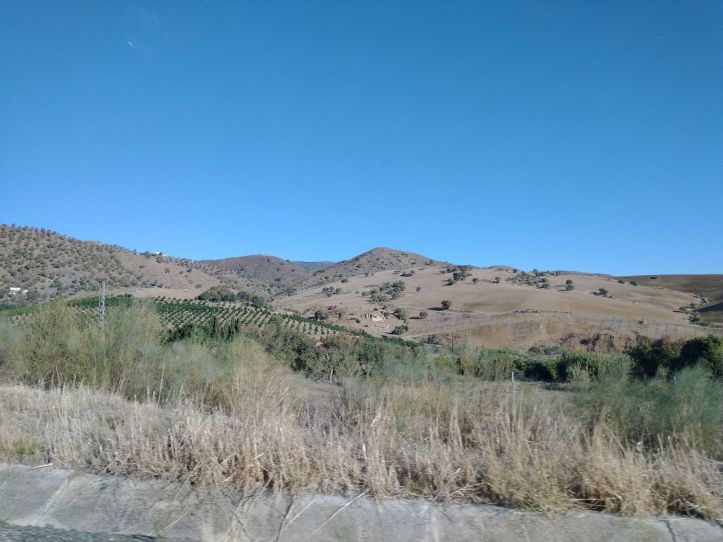
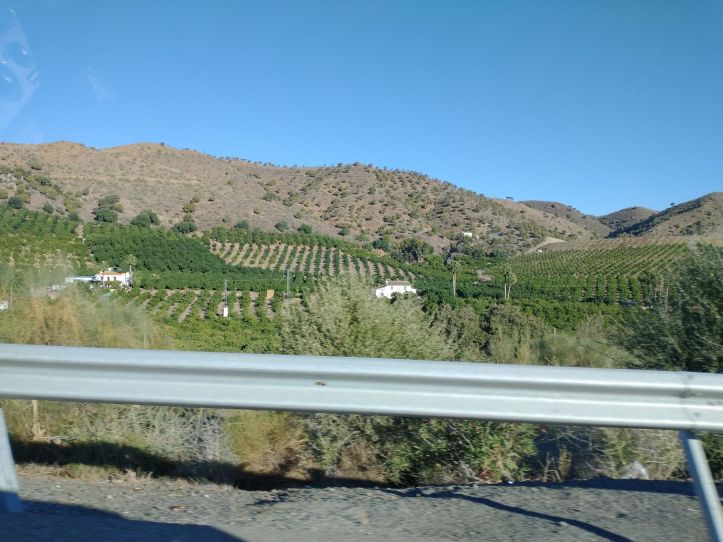
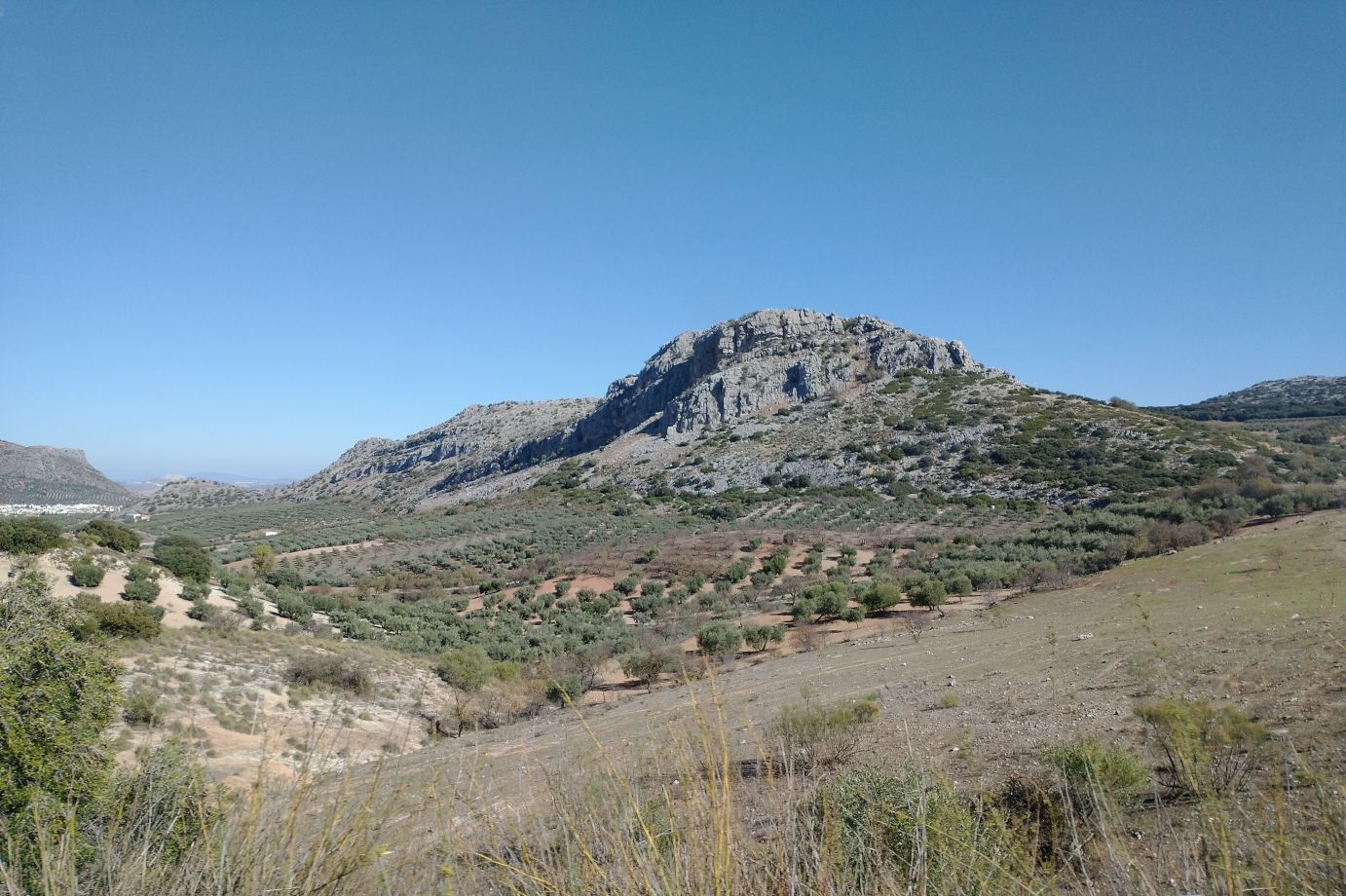
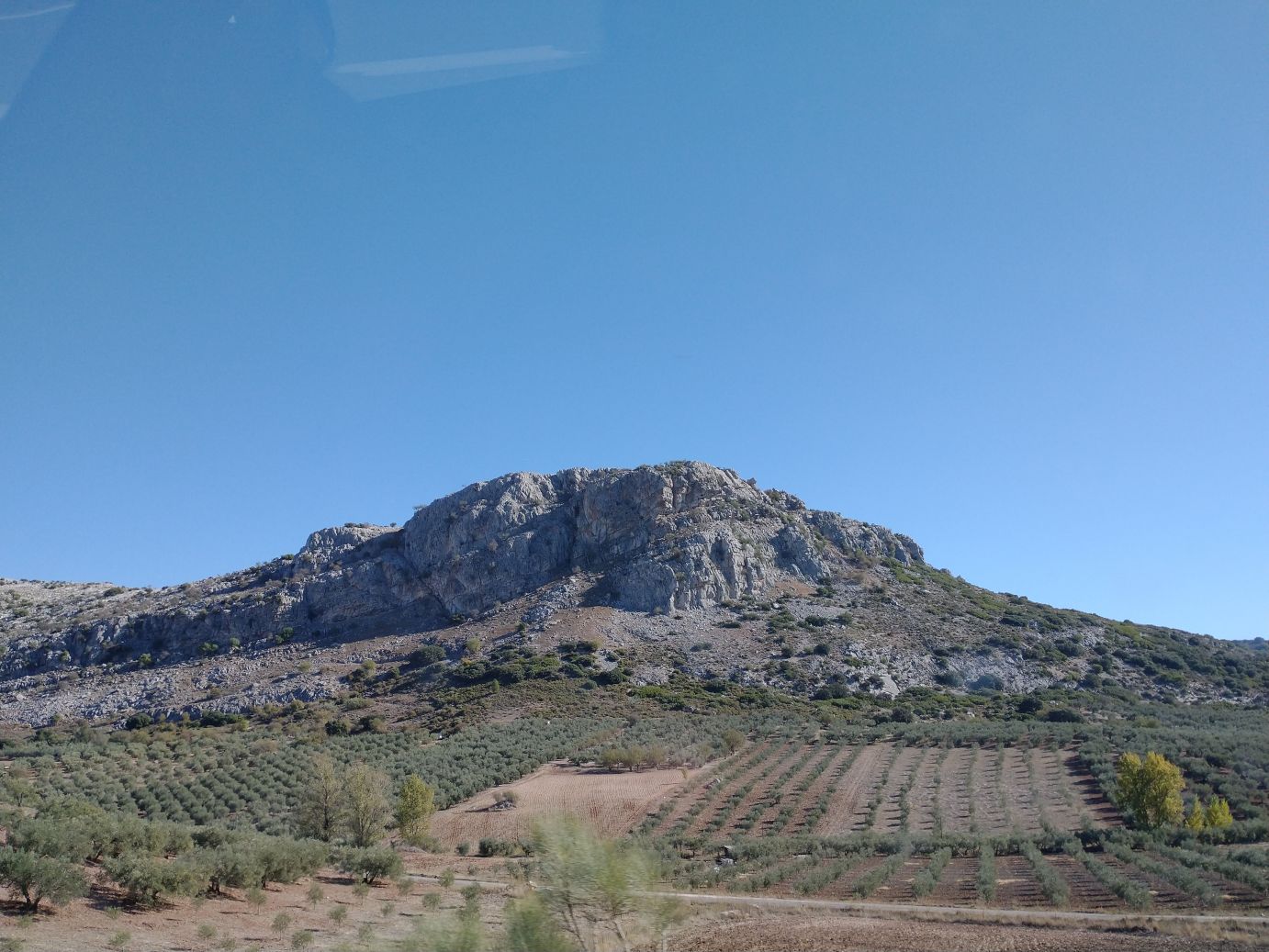
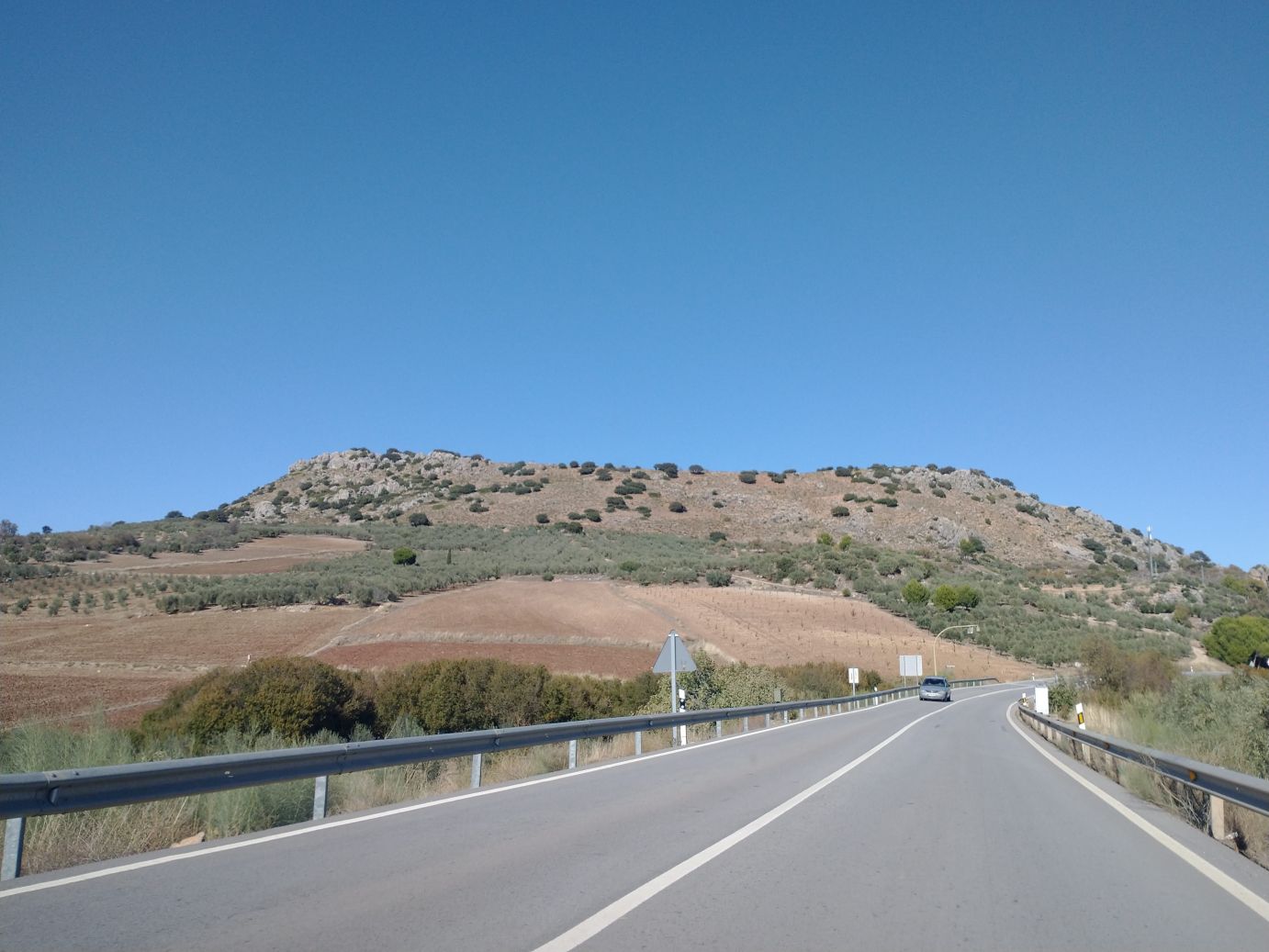
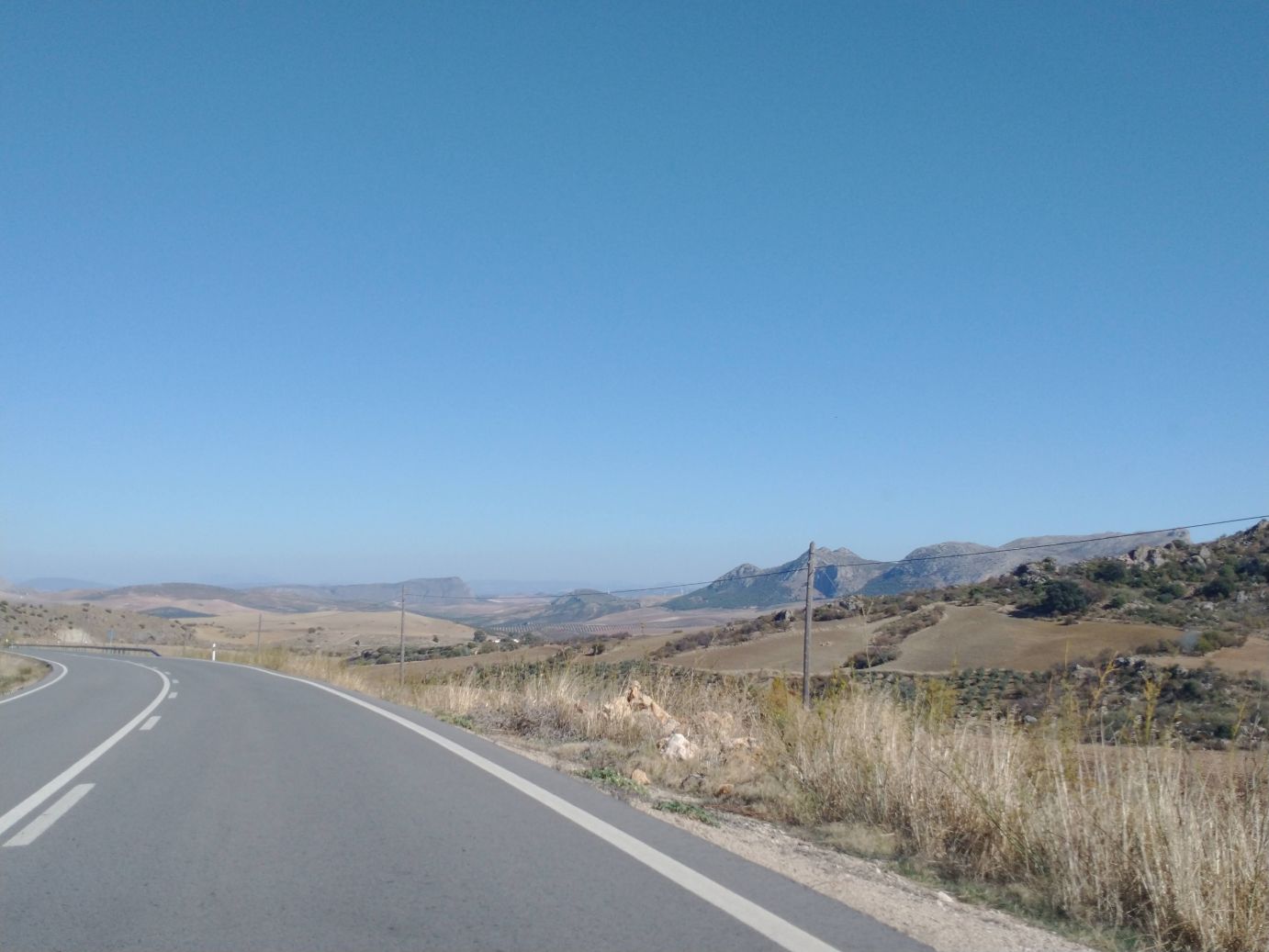
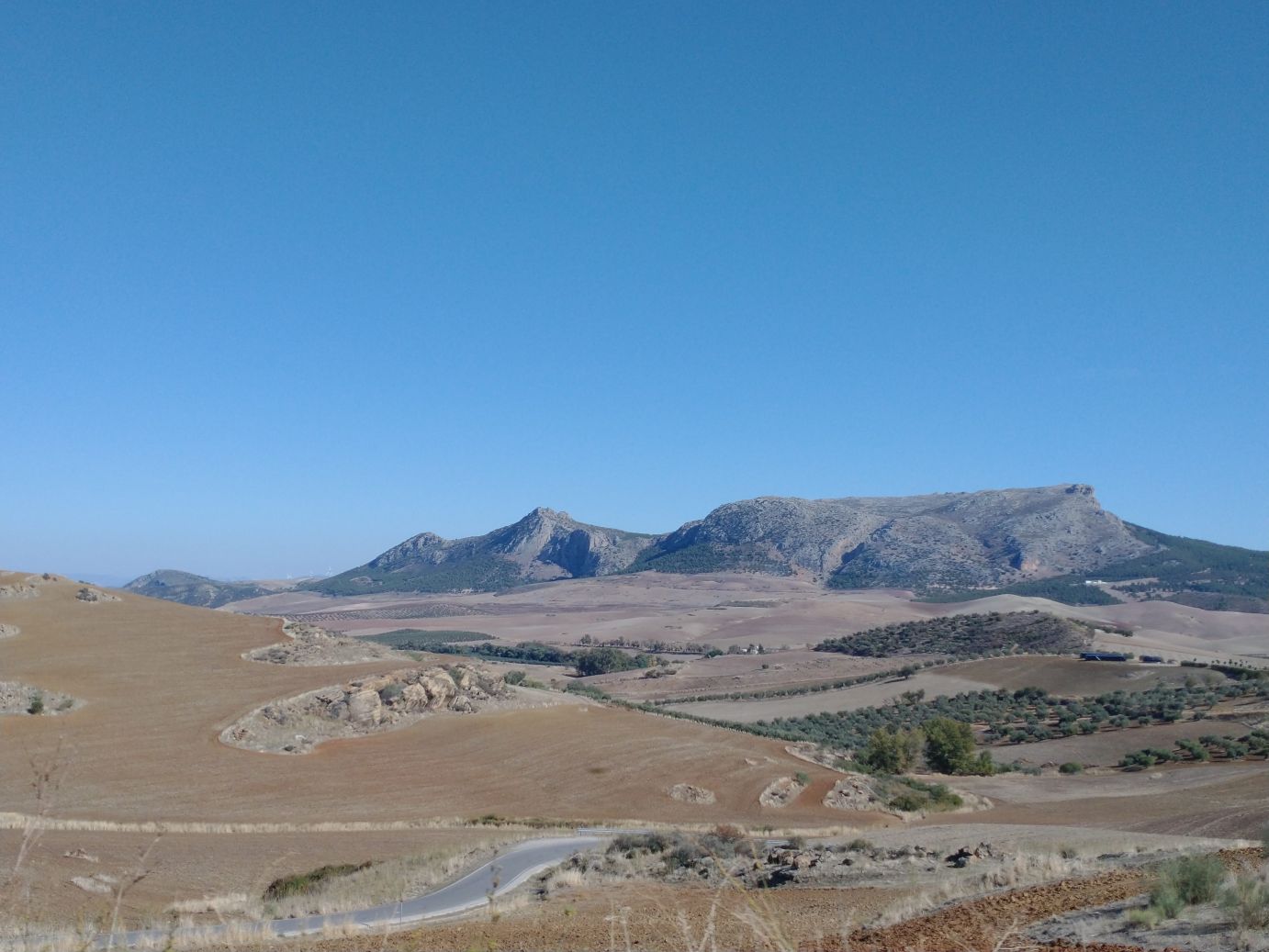
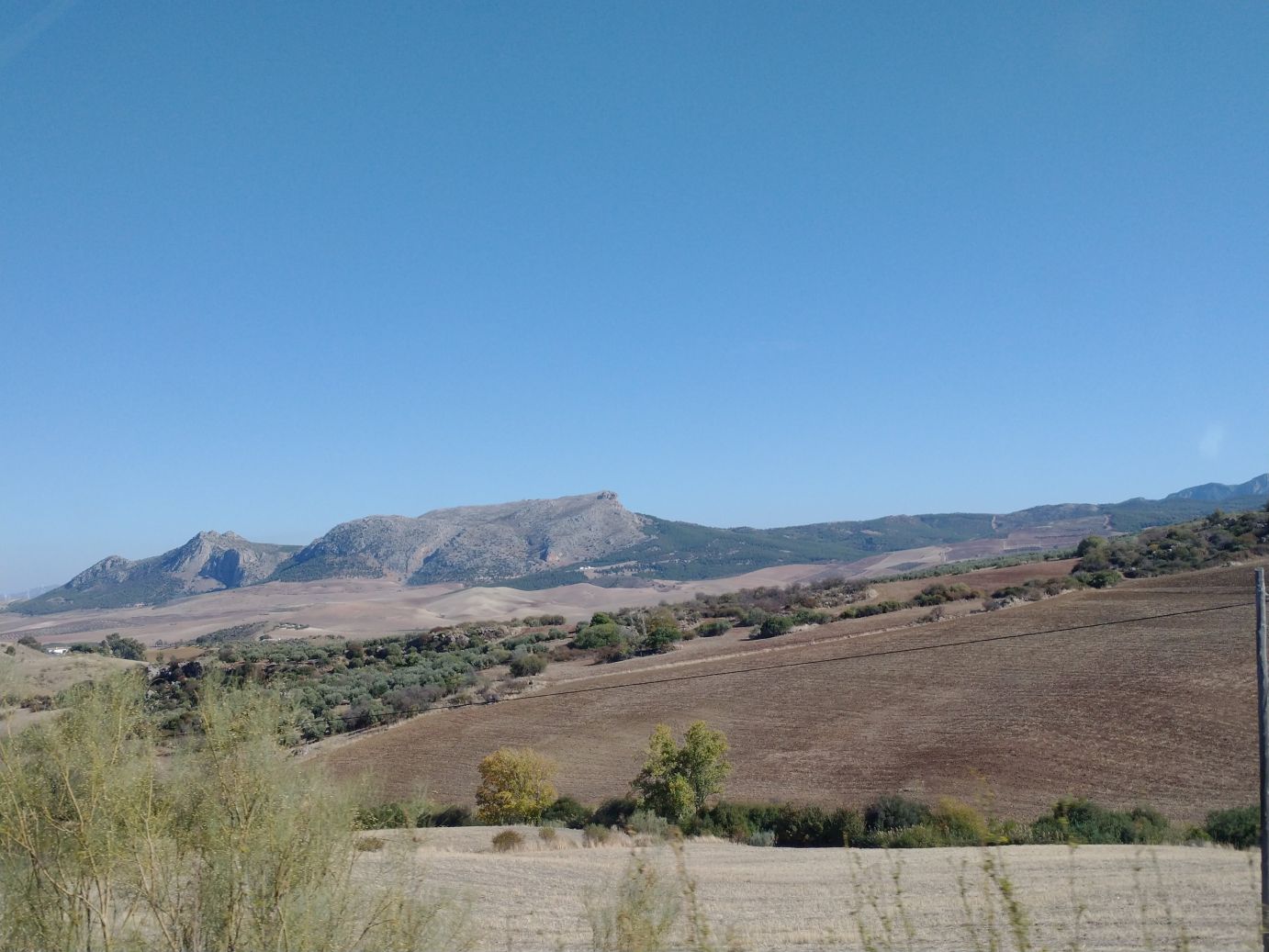
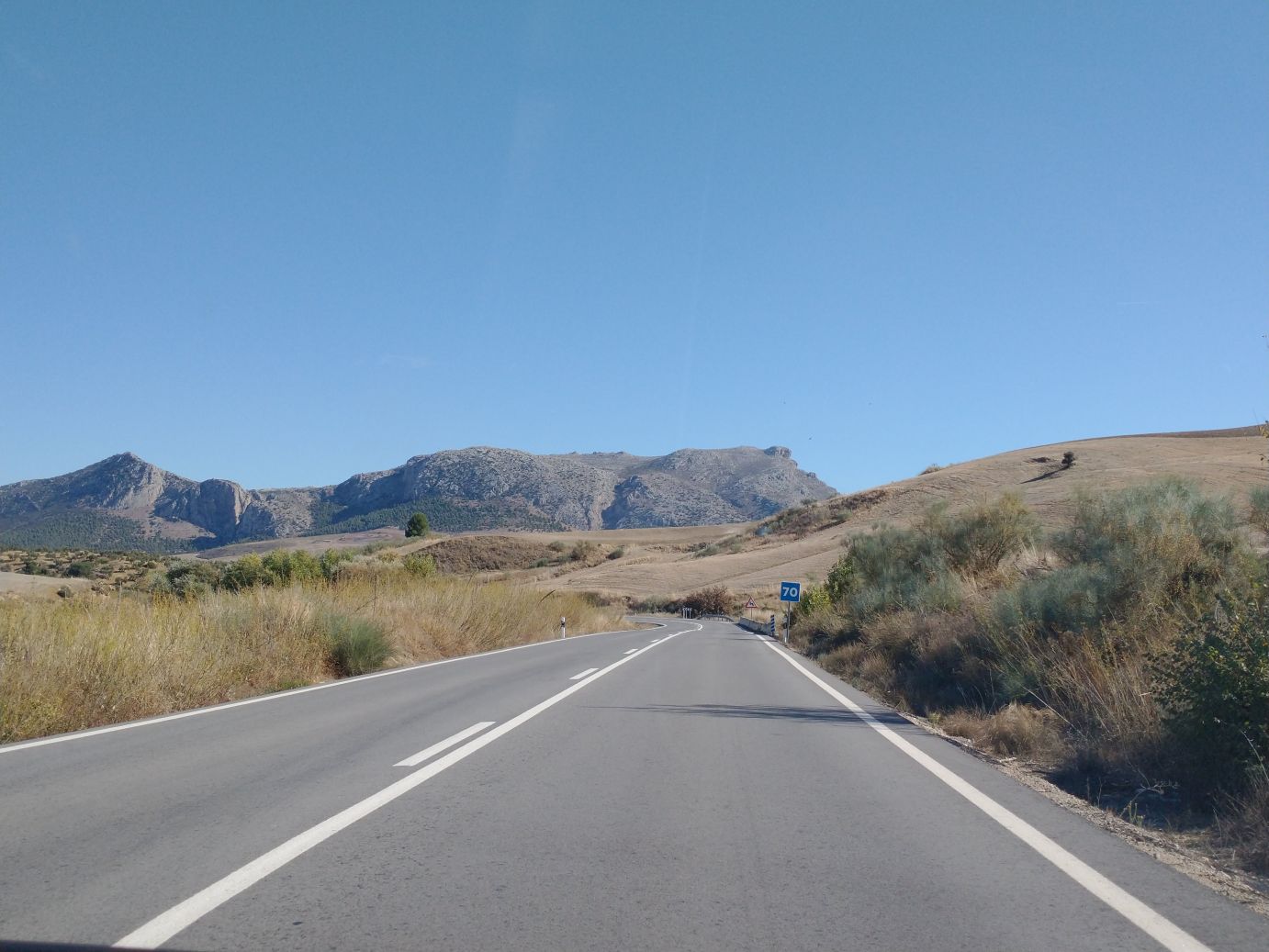
The drive takes almost 2 hours, out of the city on really confusing roads that finally dump us onto the autoroute and out into the countryside. Rising up and away from the coast, the terrain turns much more rugged with farmland dotting the hillsides, on a two-lane road that is surprisingly empty of other traffic. We knew there were tours coming here, and even with our little delay this morning, we are hopeful that we are well ahead of them.
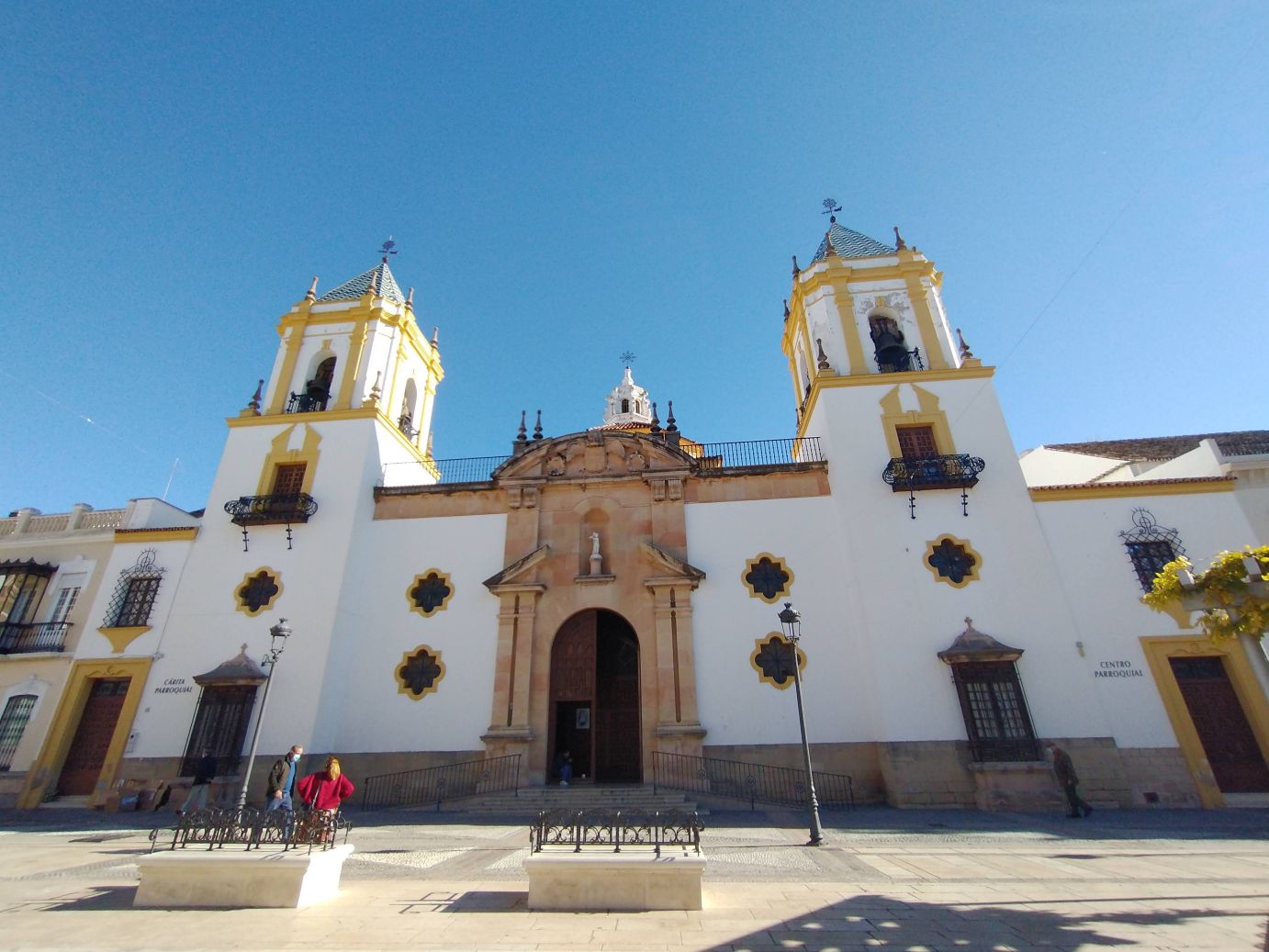
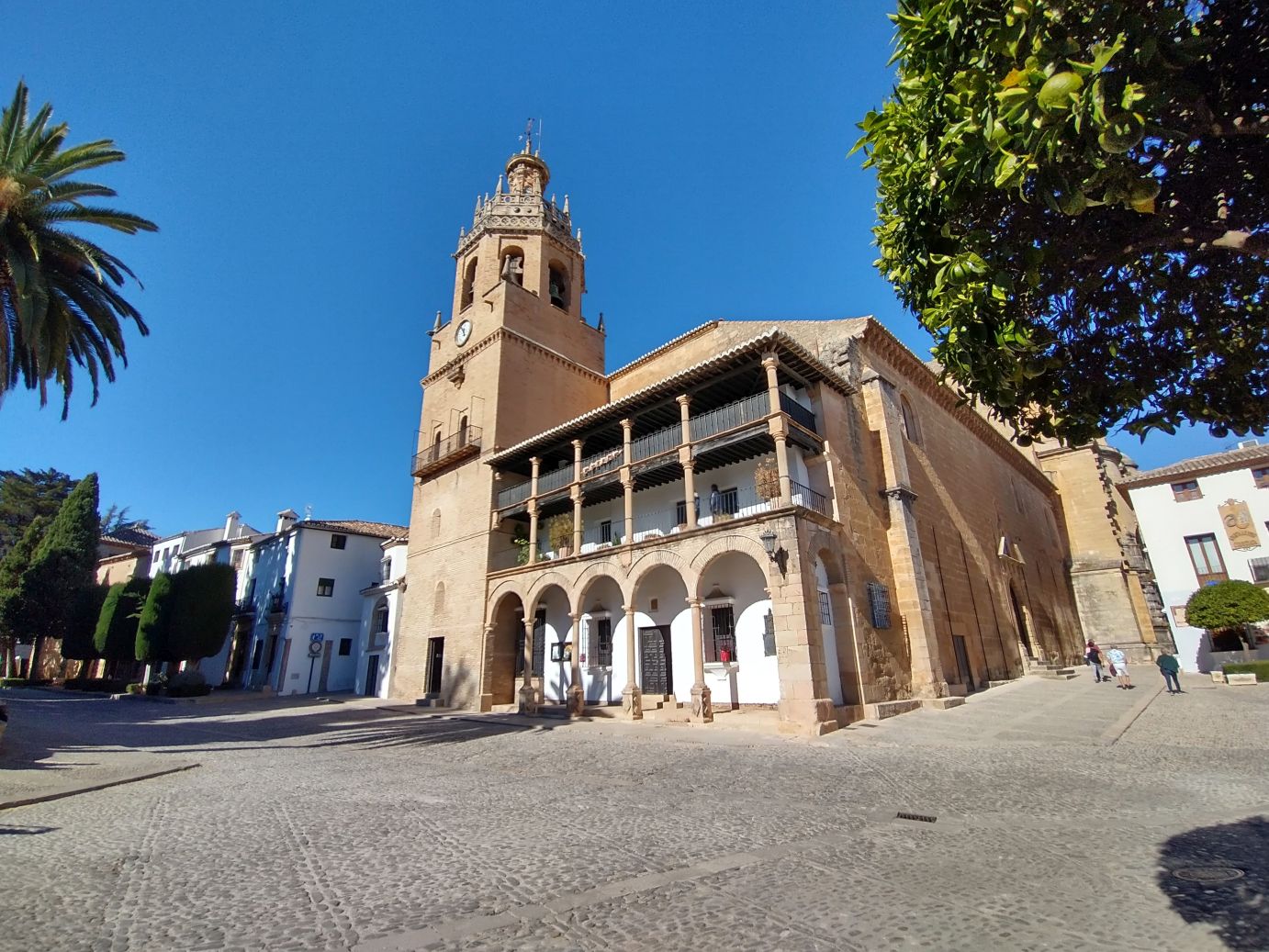
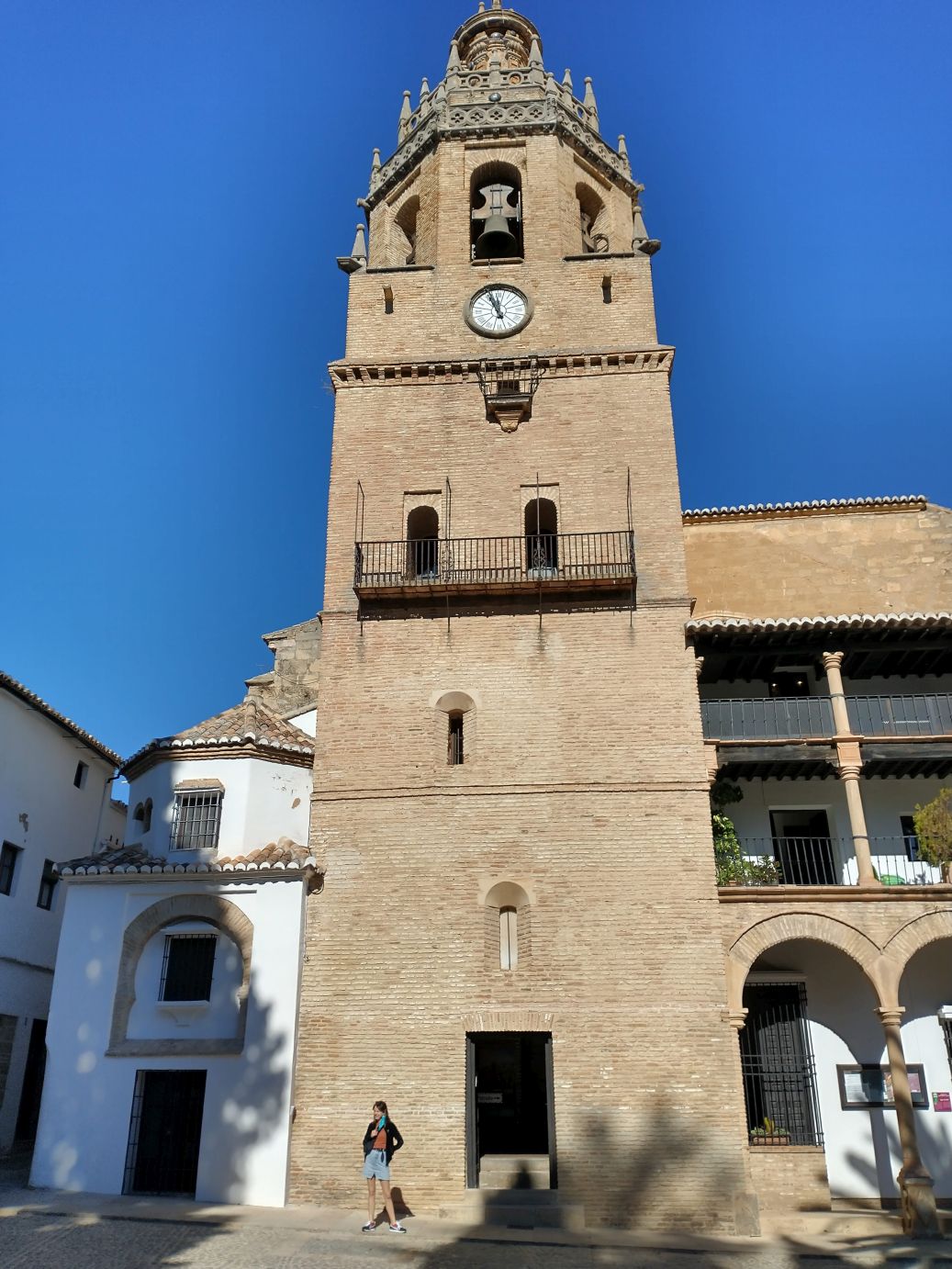
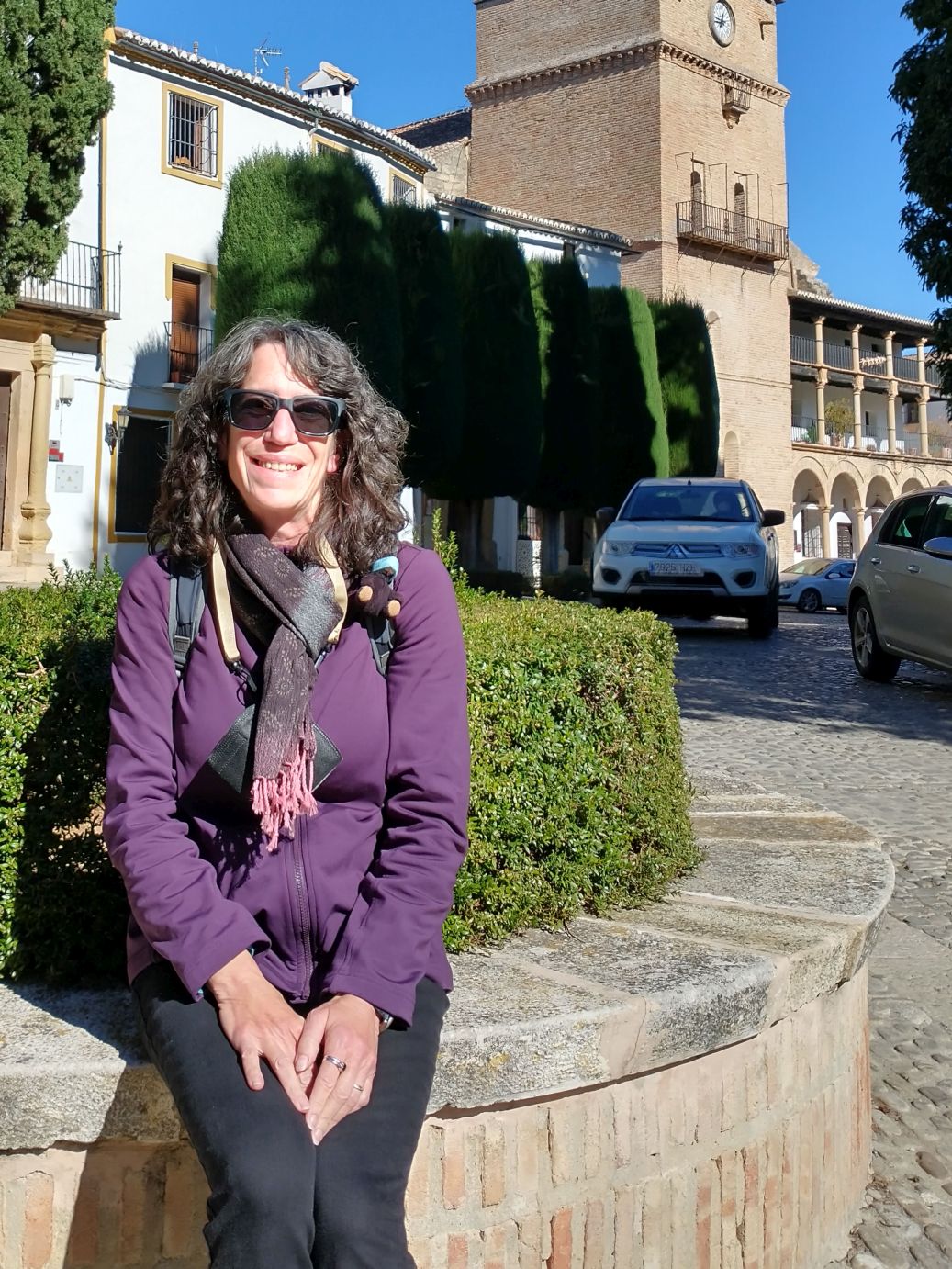
Upon arrival to Ronda, we successfully navigate the narrow little cobblestone lanes to find the parking lot in Plaza del Socorro we have scoped out – right in the middle of town. Perfect location! Perfectly teeny tiny too – but do we expect anything different in Europe? No we do not. Now we wander….through the square, with its striking white stone church, and into the pedestrian area which is quite busy and out toward the gorge….for our first stop at the Royal Cavalry bullring.
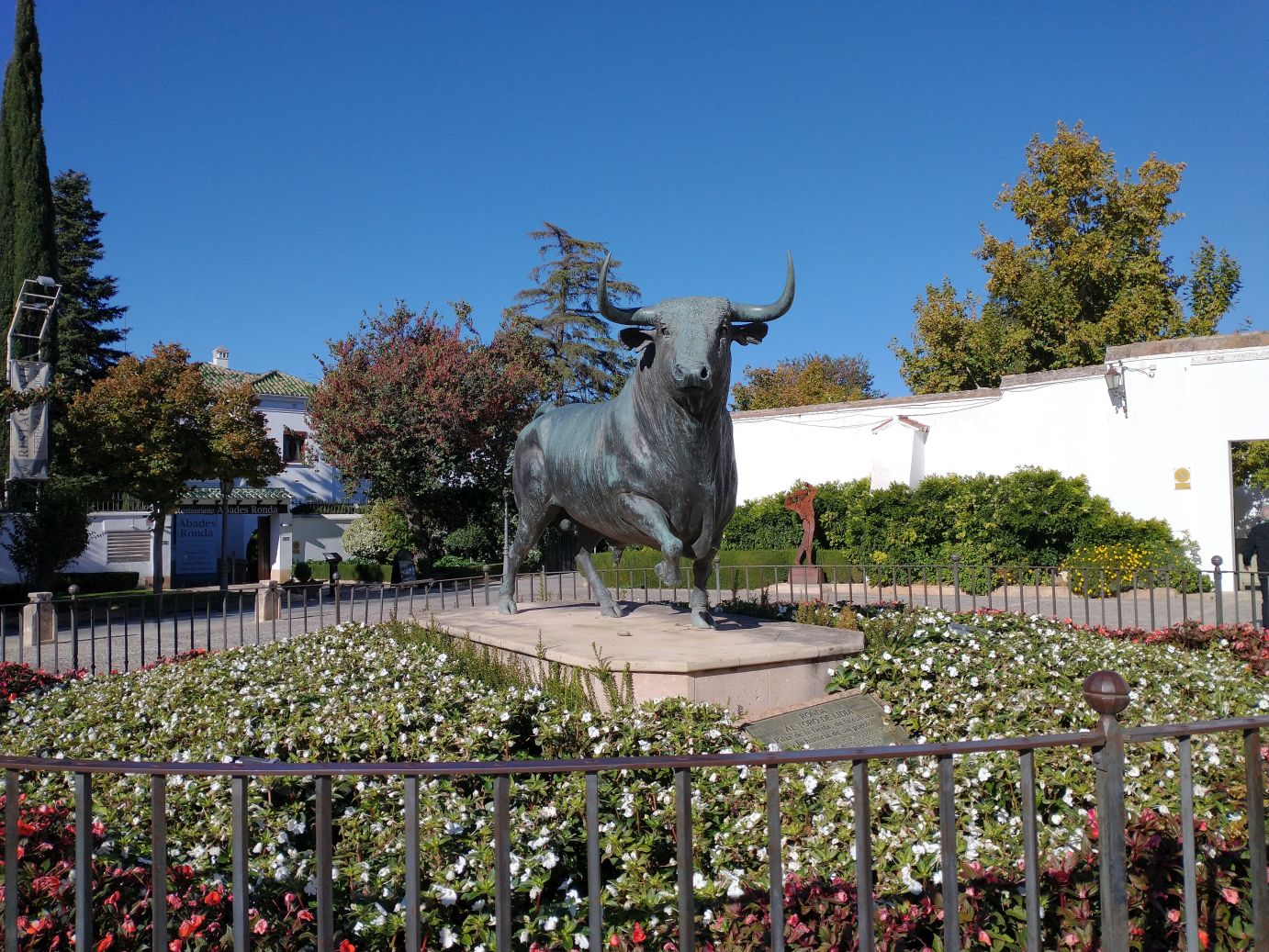
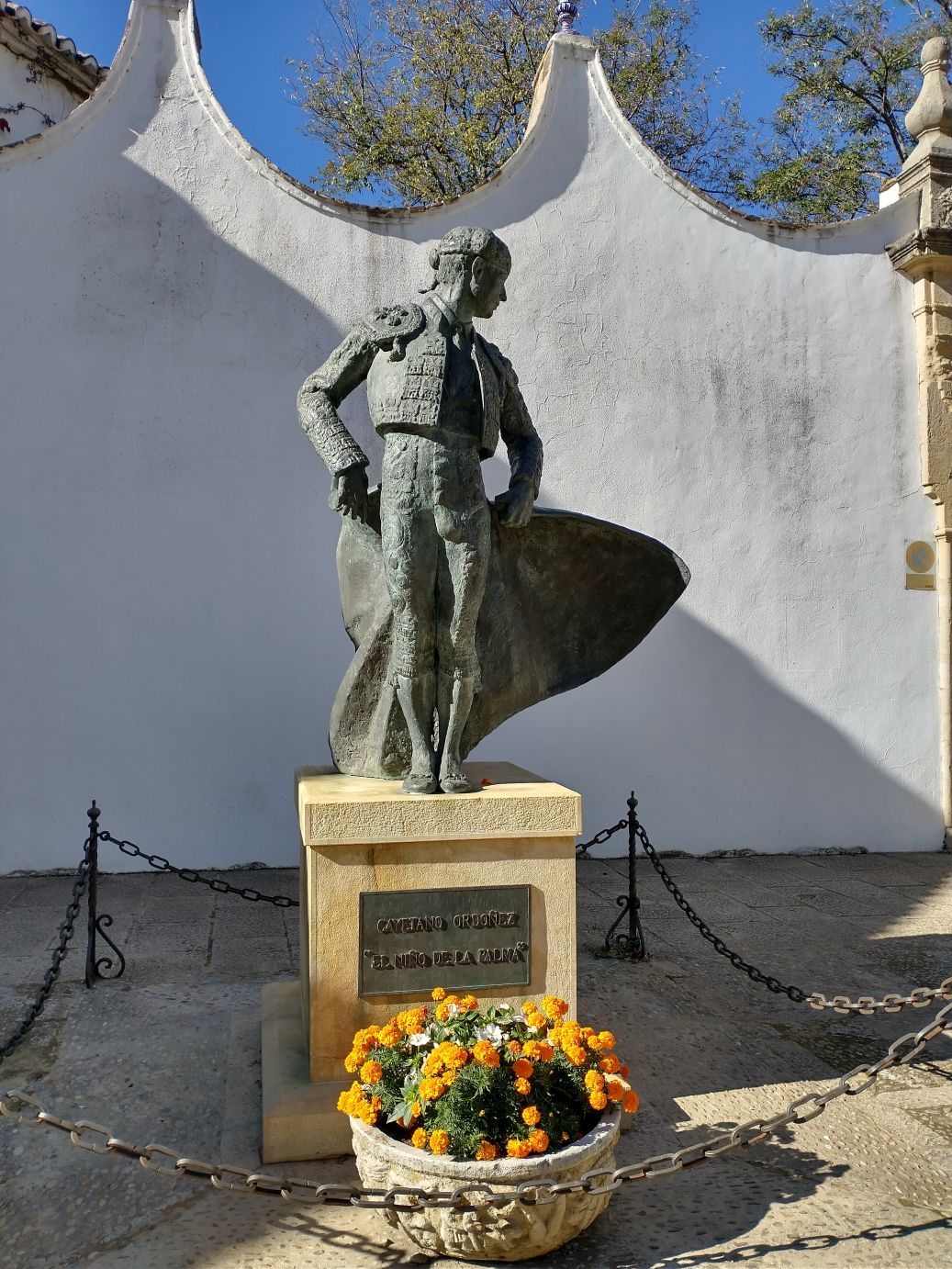
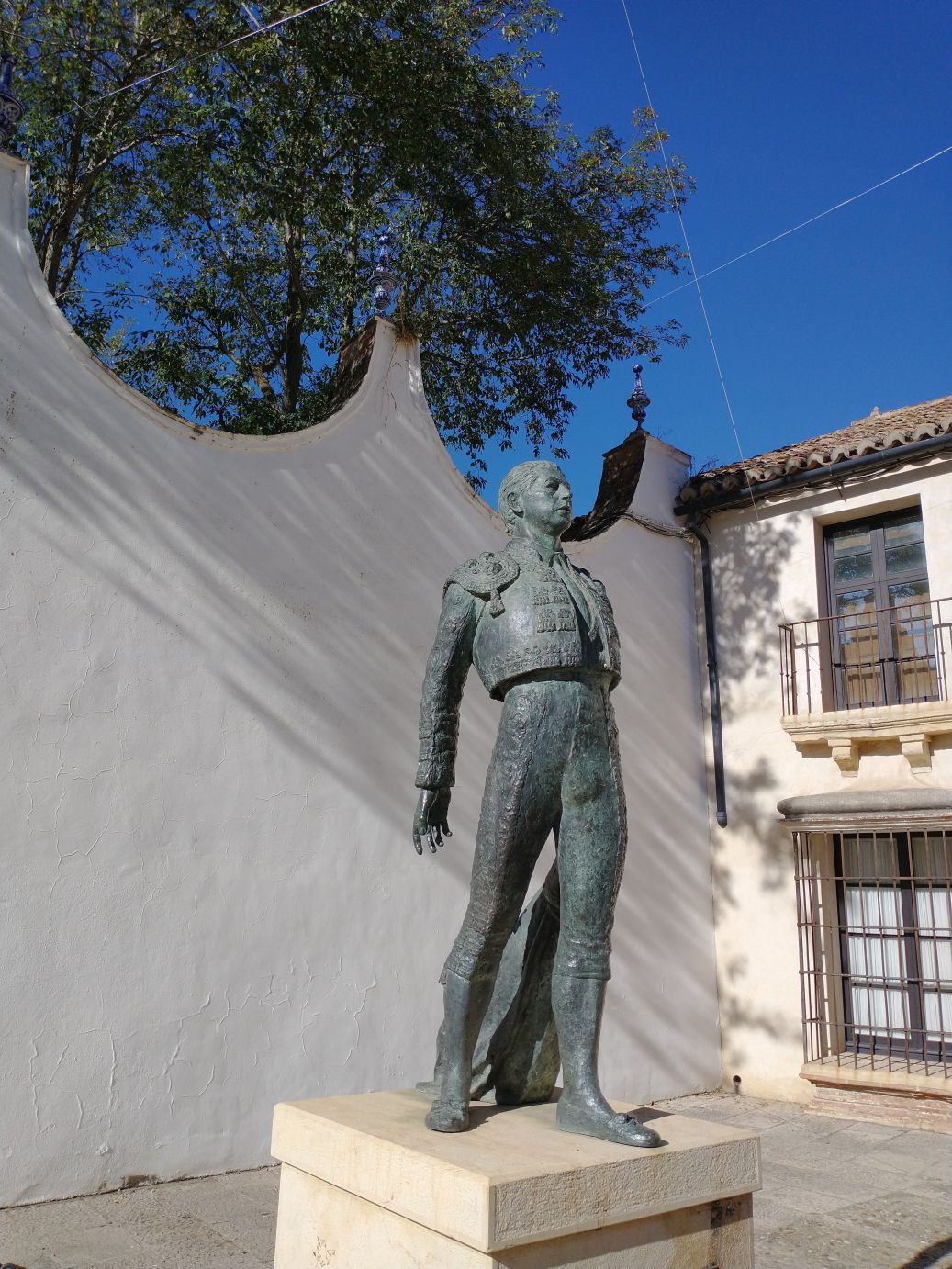
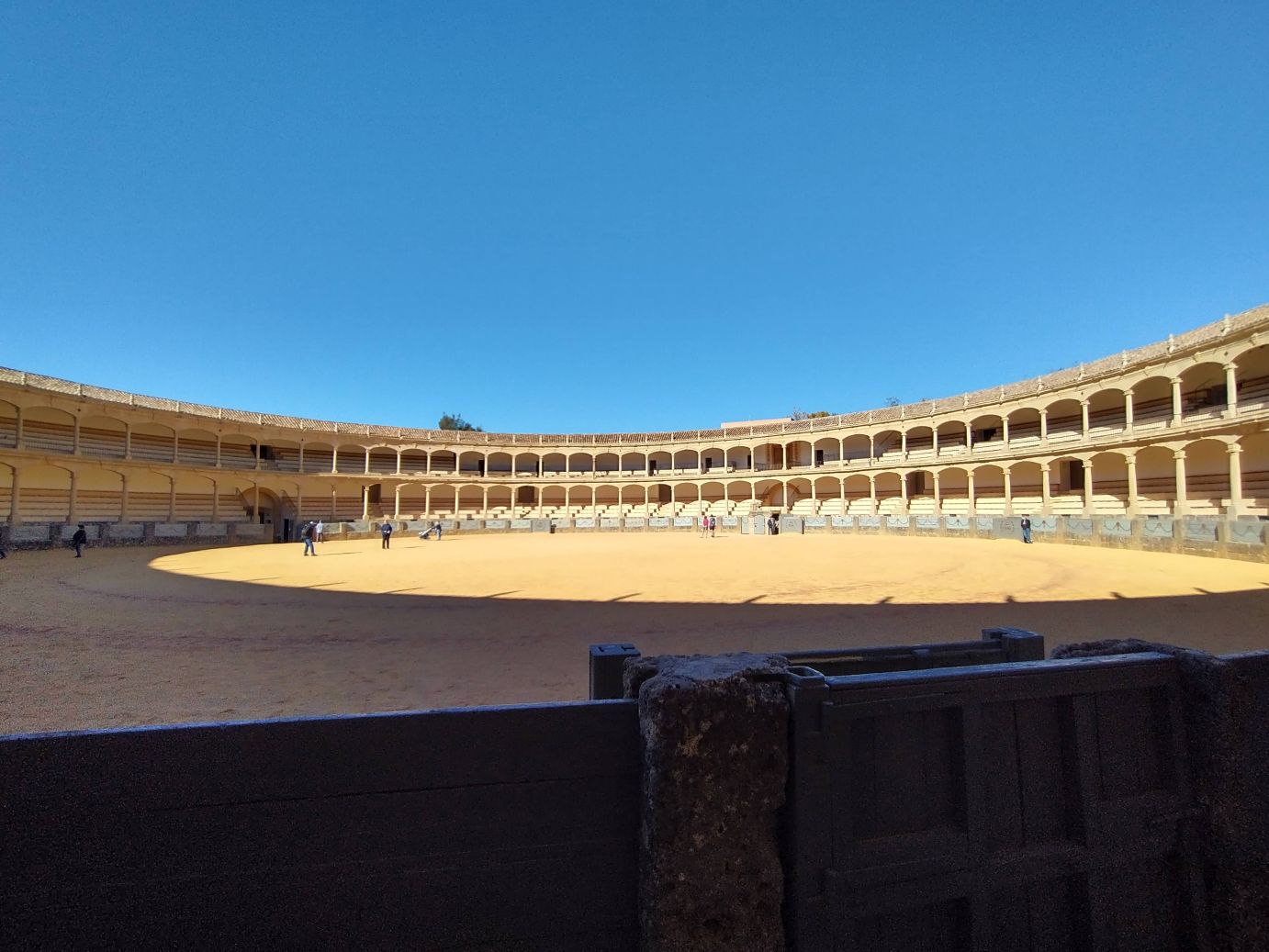
Built in 1785 entirely of stone, it is one of the oldest bullrings in Spain, with seating for 5,000, all under cover – which is totally unusual. The first purpose-built space for bullfighting in the world, it was here that the local Ronda Pedro Romero, the most celebrated name in Andalusian bullfighting, introduced the muleta – the stick with the cape draped over it. He found wearing the cape over his arm, as was tradition, too cumbersome, and created the “Ronda” way of bullfighting with the muleta.
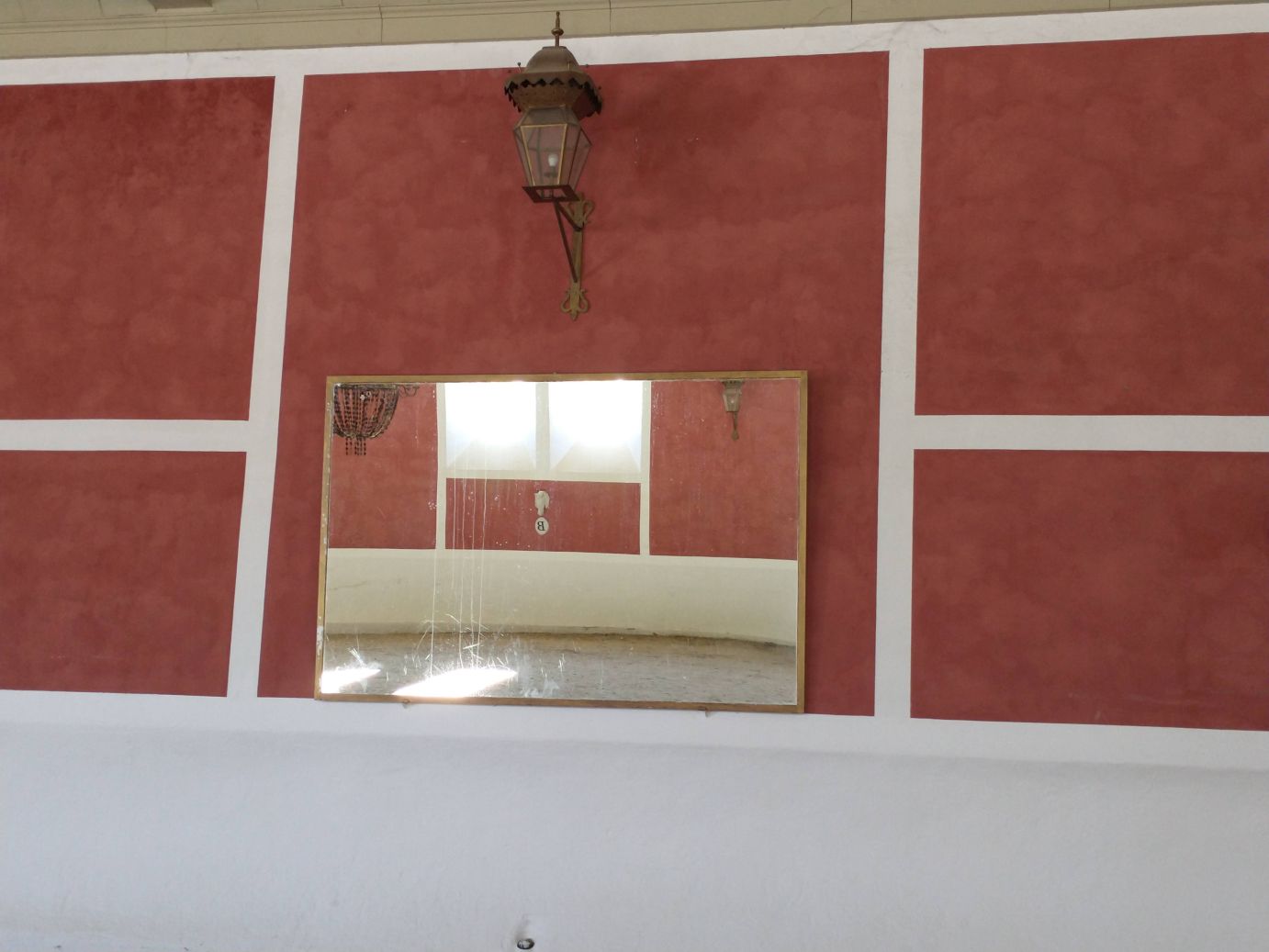
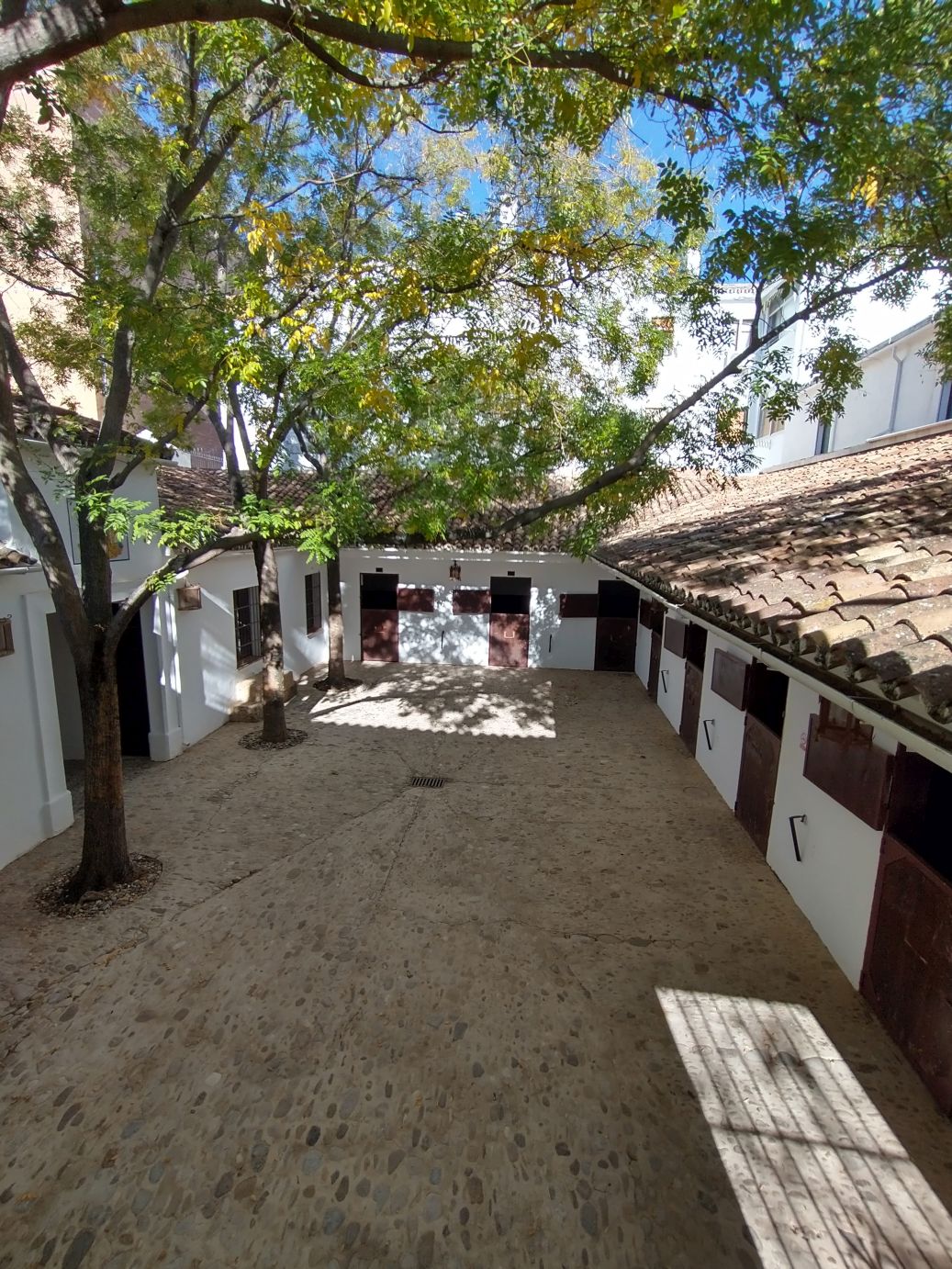
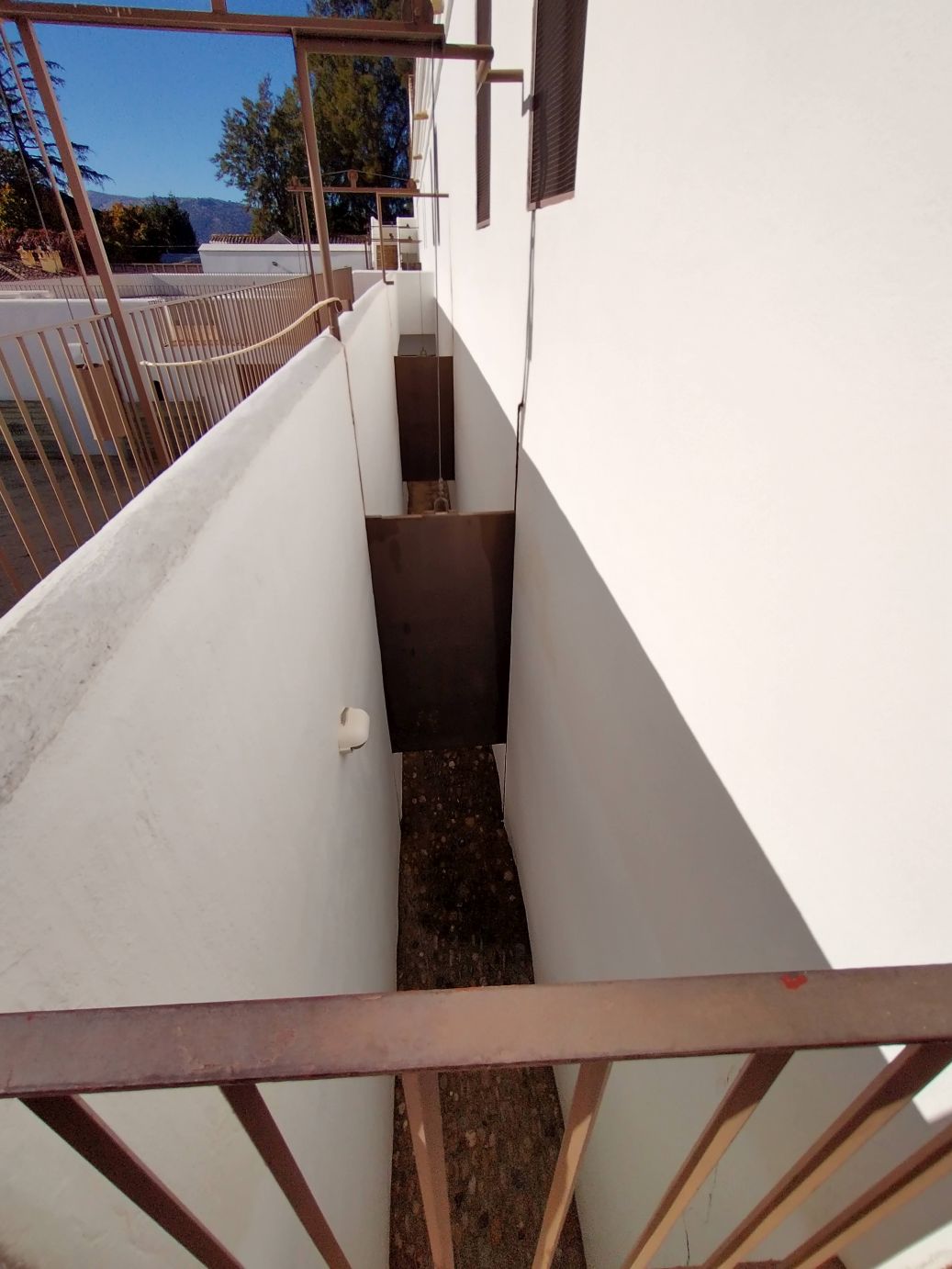
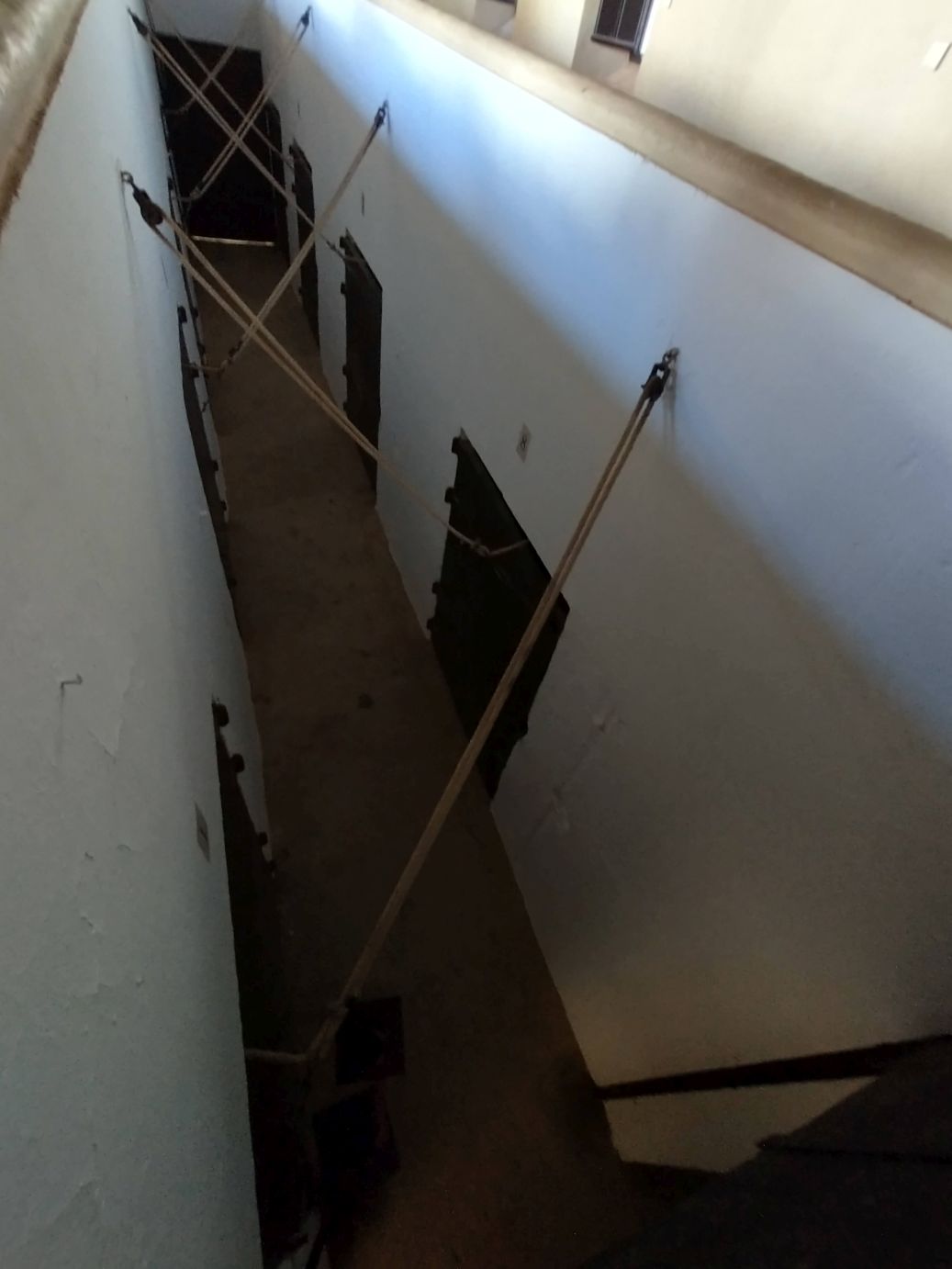
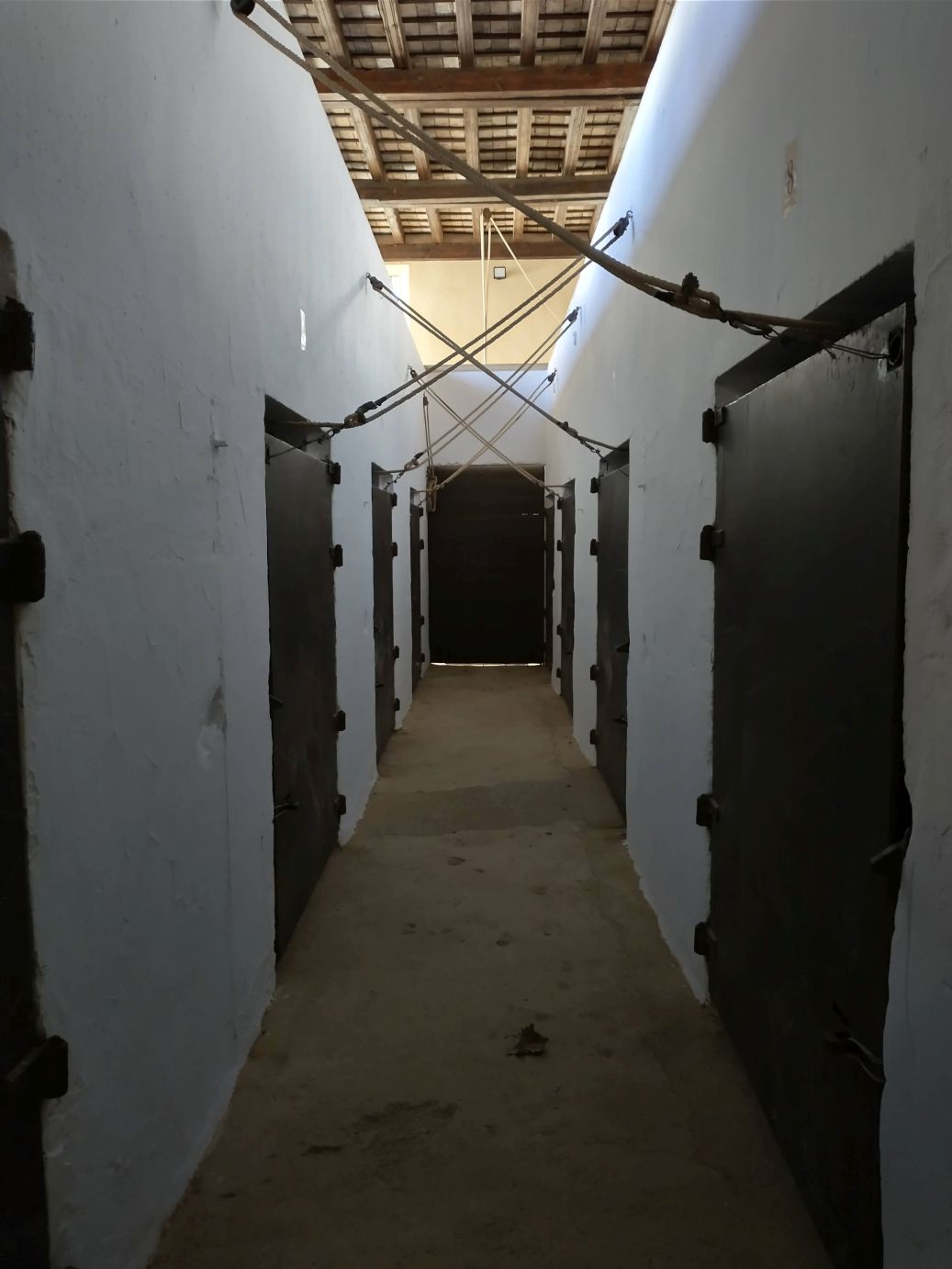
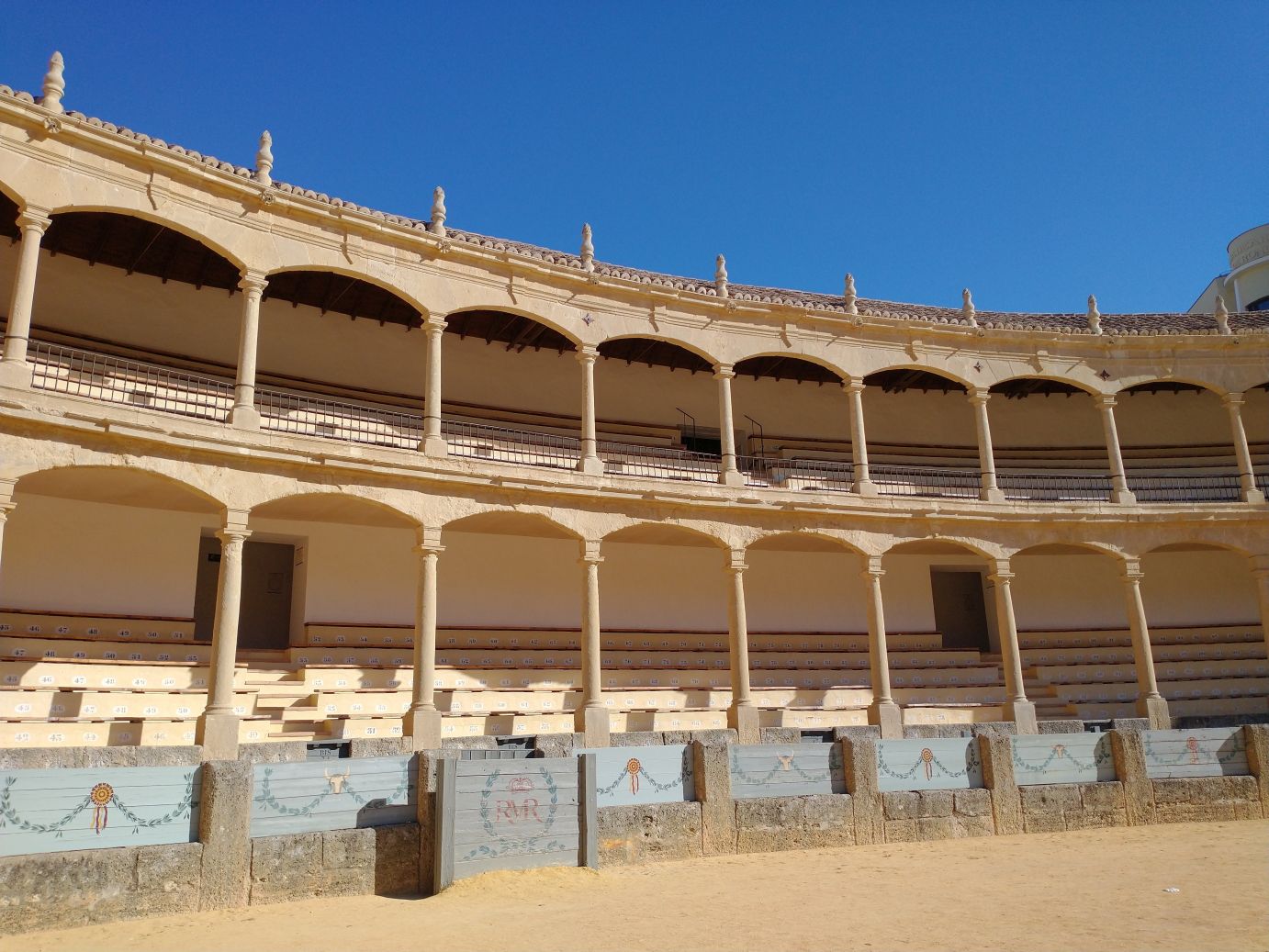
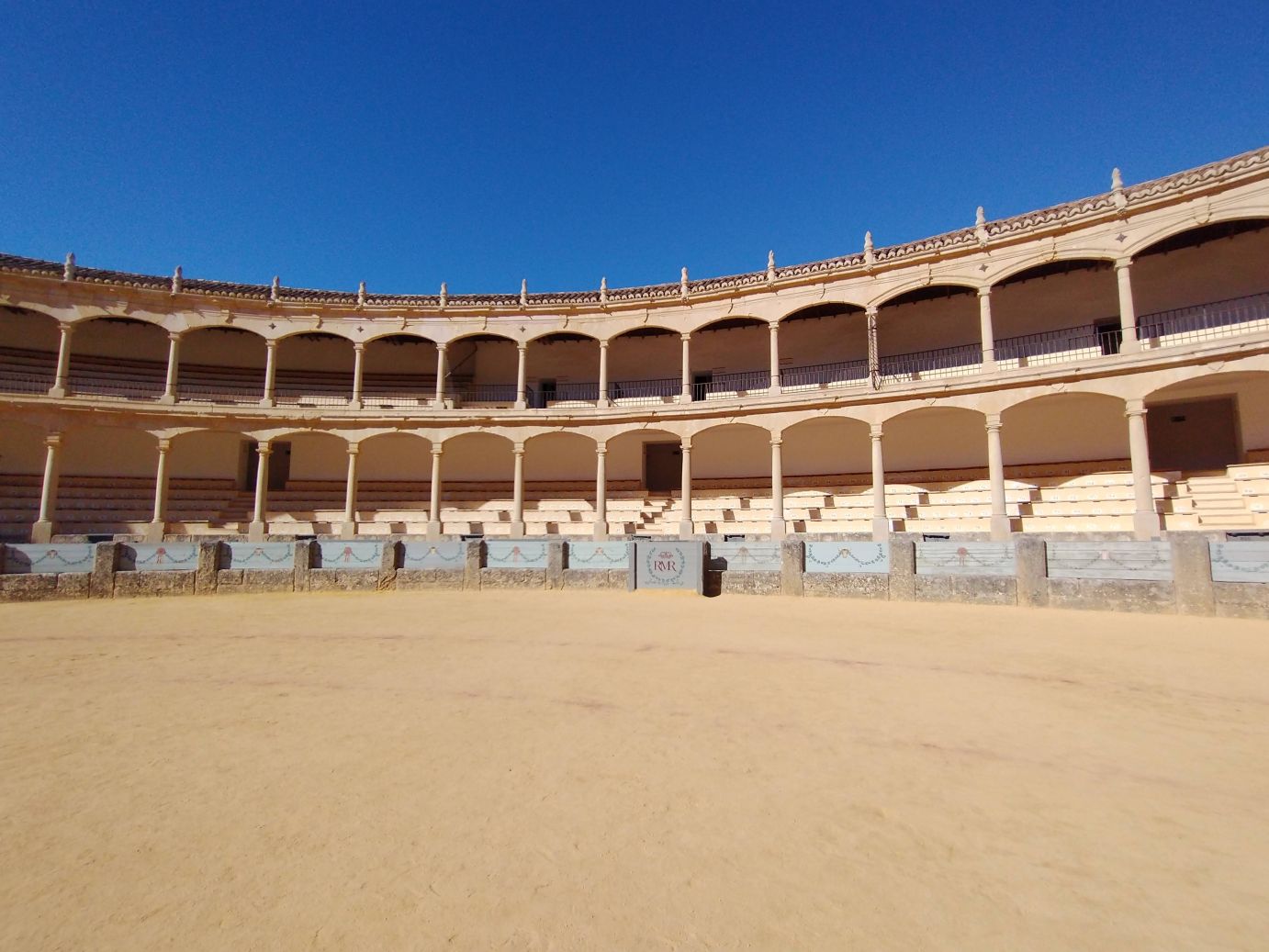
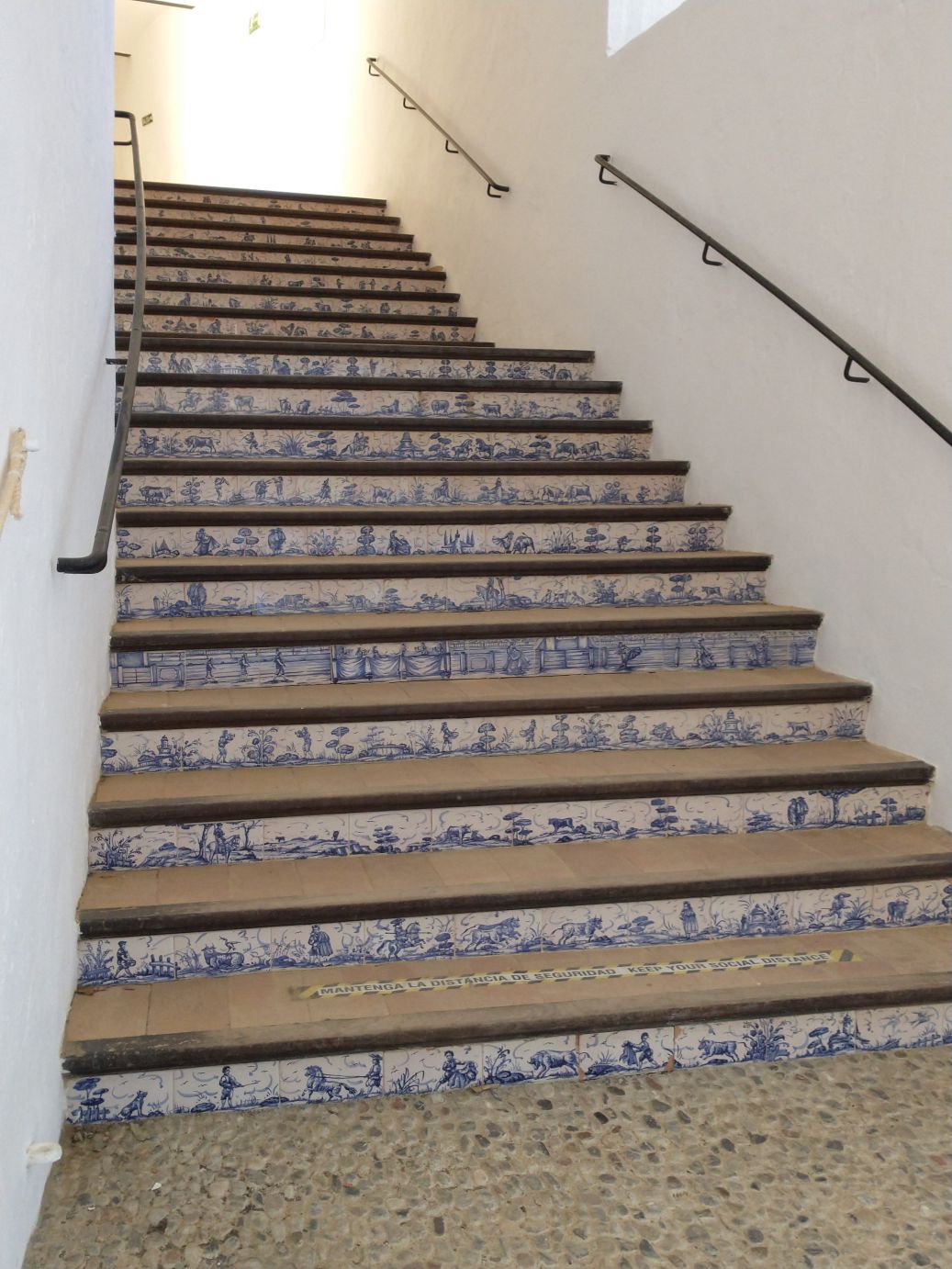
There is hardly anyone here as we pay our admission fee, eschewing the audio guide, and heading into the dressage ring where there are mirrors on the walls (to watch your posture?) and huge chandeliers hanging overtop the dirt floor. A helpful display explains the riding school here as well as what dressage entails, and depicts the ring, the horses’ gaits and the movements involved. Next, we walk through the stables, and then the pens where the bulls are kept, giving us a really good close-up view of how the bulls are funneled through to the ring. The ring itself is pretty amazing. The stands are so much more majestic than typical bullrings, all due to the arched loggia covering the stands. It is massive – it may not be the largest bullring, but it is still pretty darn big! Little details, like the blue and white tile on the stair risers and the painted wooden slats that separate the ring from the spectators just add to the impressive feel of the stadium.
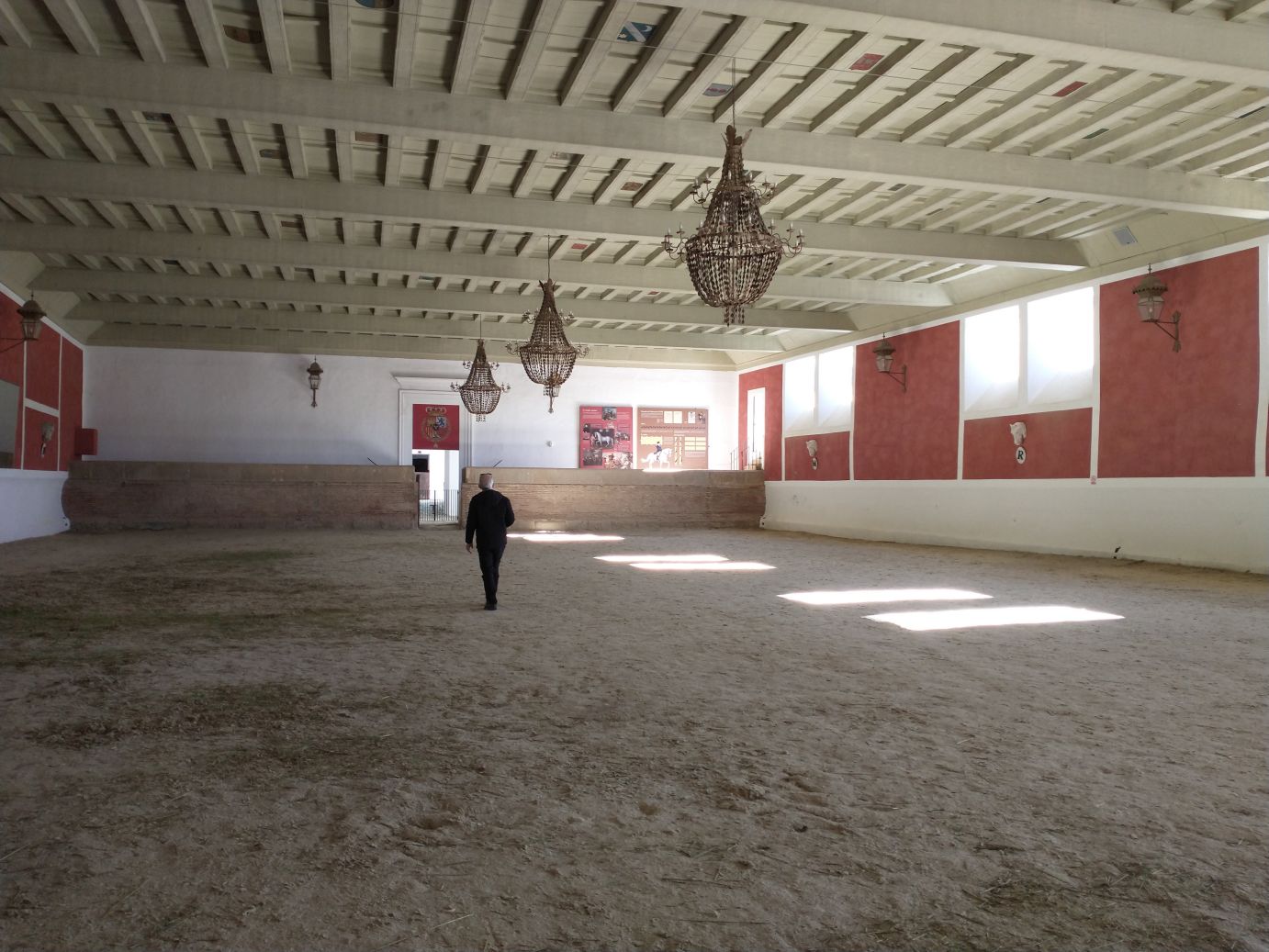
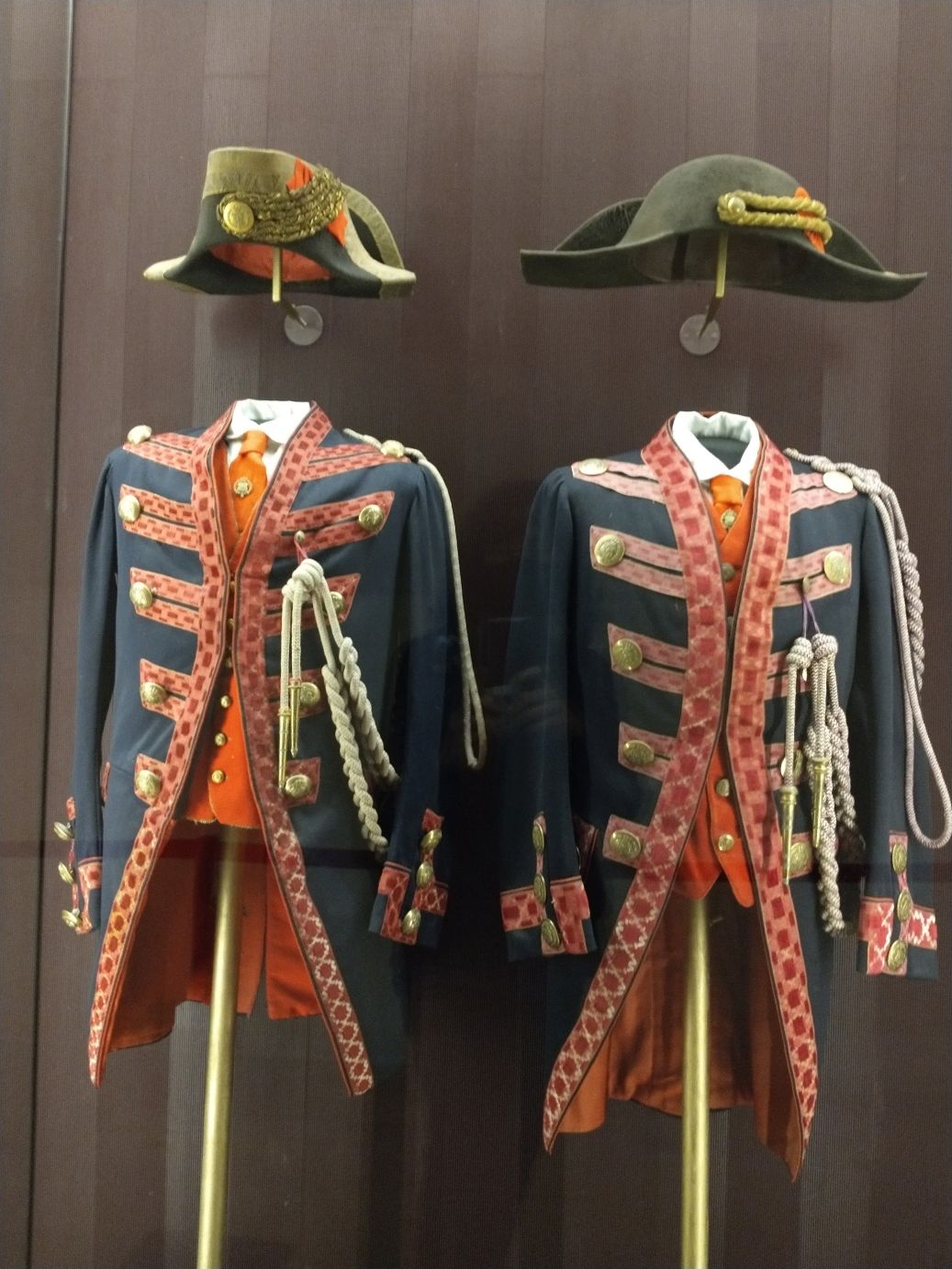
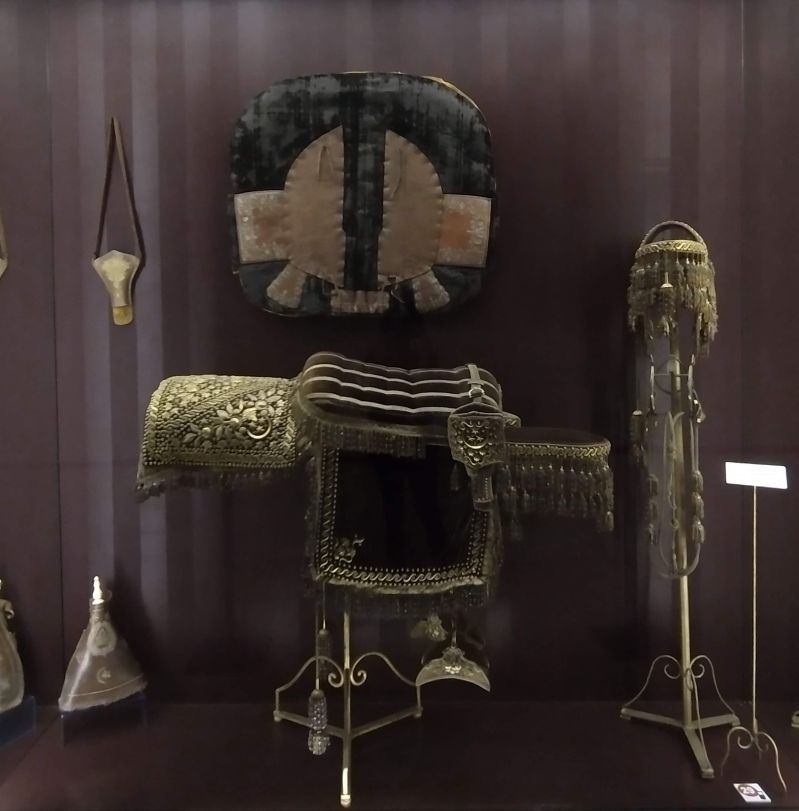
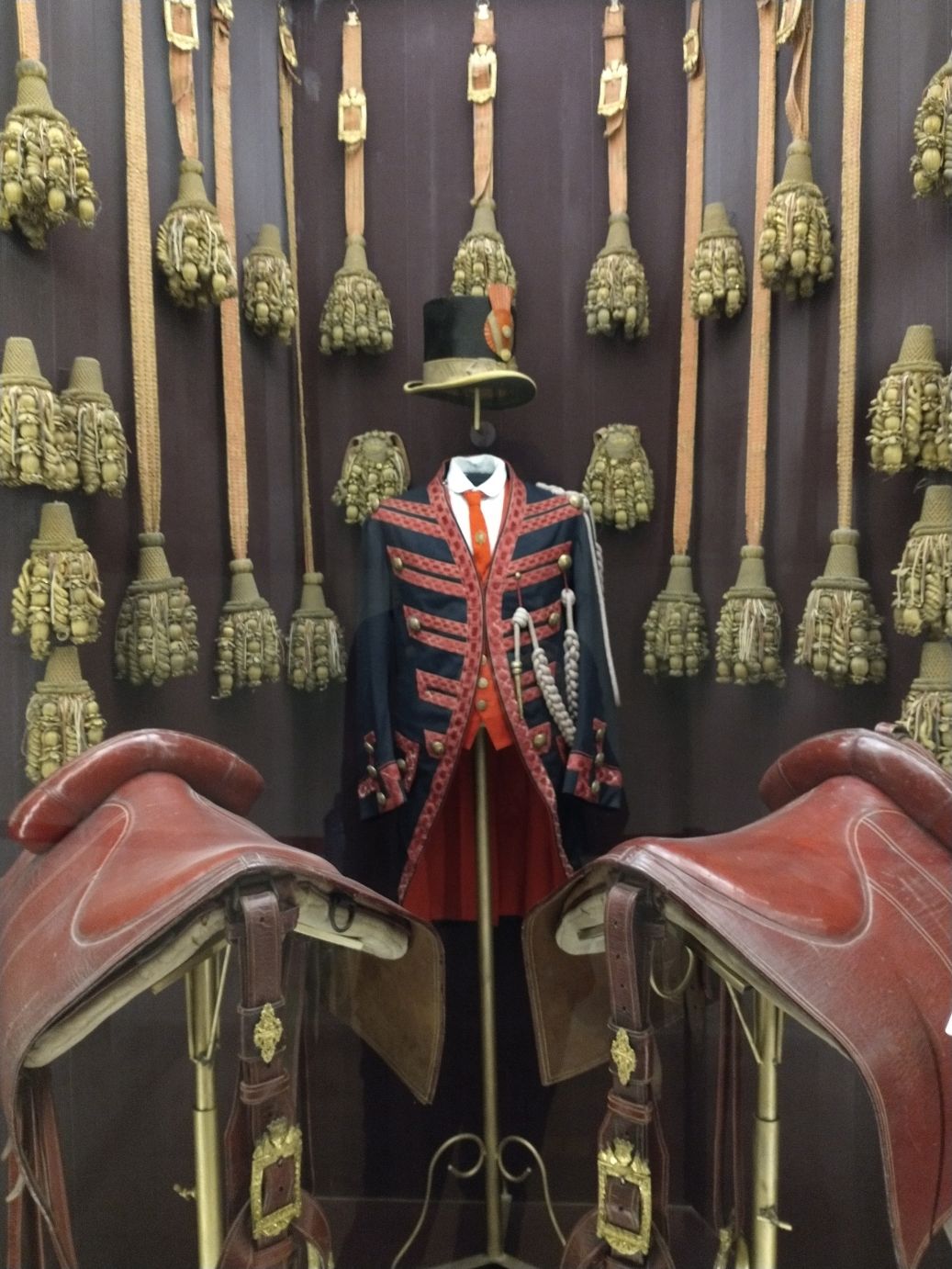
Inside the halls that surround the ring are a couple of exhibits – one all about the Real Maestranza de Caballeria, the Royal Cavalry, founded in 1573 by royal decree. This may actually be the oldest calvary in existence – begun as way to keep control over the calvary for military purposes, they now are a not-for-profit organization focused on conservation of the historical and artistic heritage of chivalry, horse riding and bullfighting as well as the maintenance of the riding school. No photos are allowed here, but the displays are all excellent with complete descriptions (in English too, yay) and provide a fascinating look into the history of these storied horsemen and bullfighters.
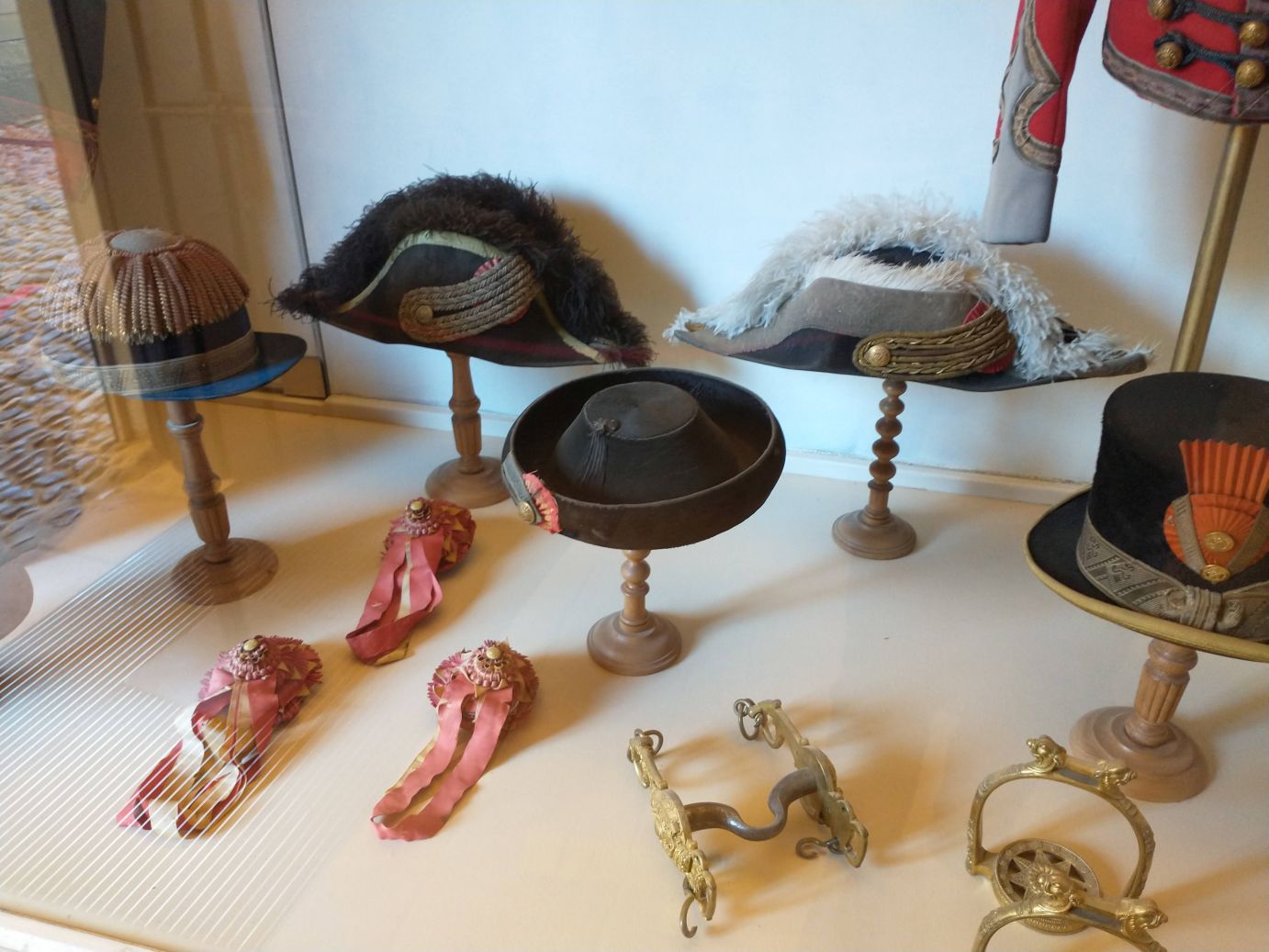
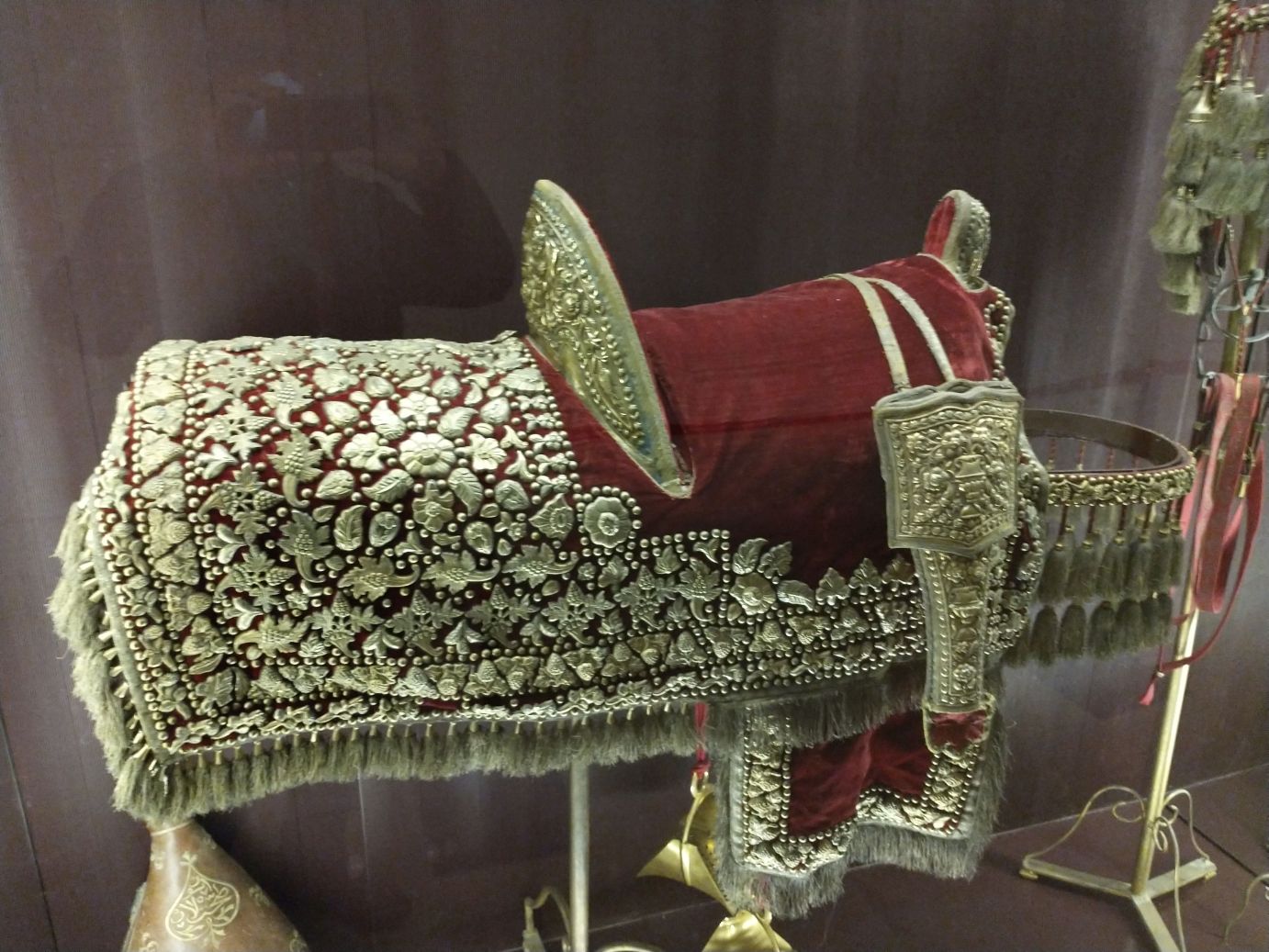
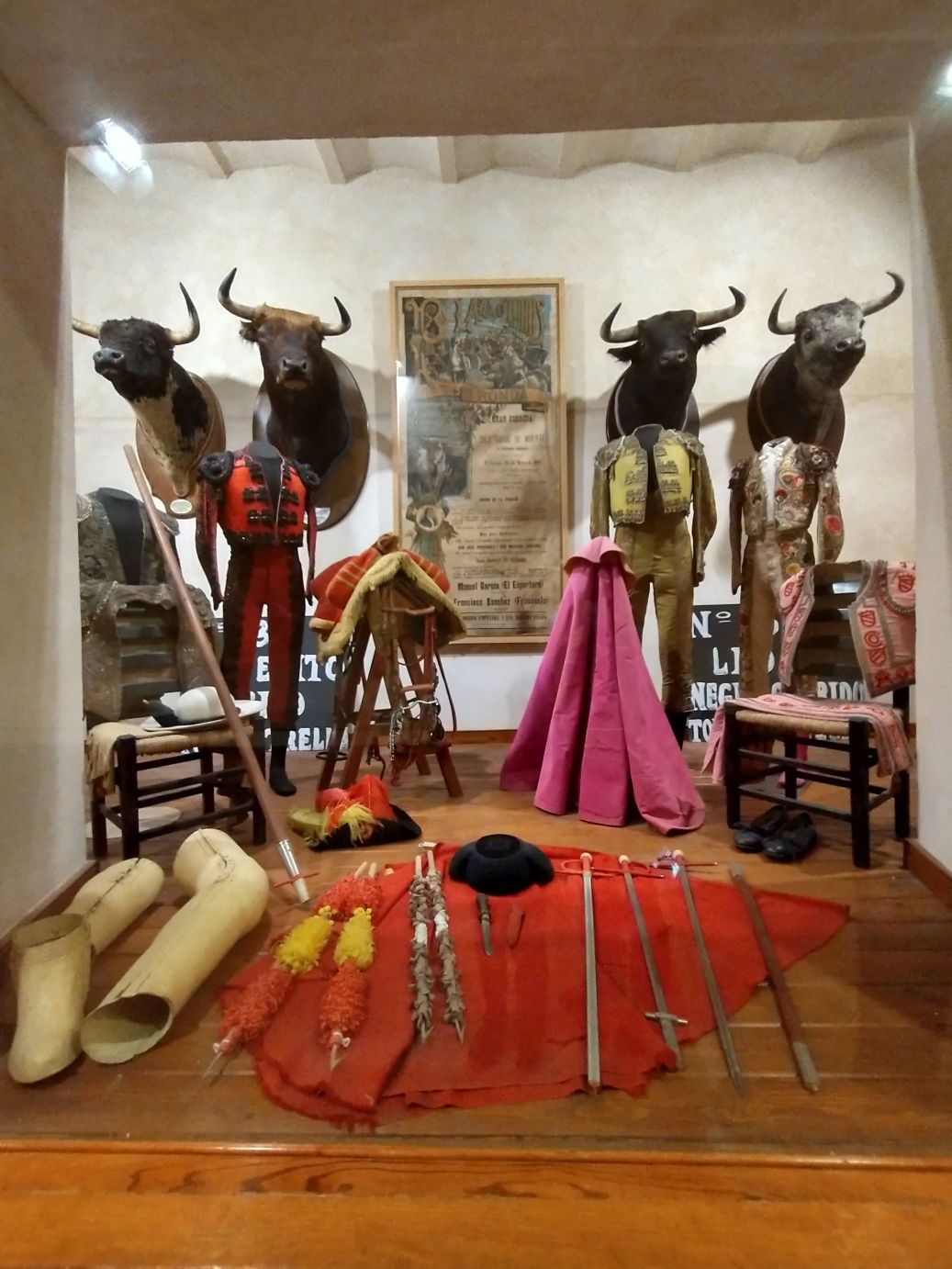
Next is an exhibit with all the harnesses and livery of the Royal House of Orleans, which doesn’t sound all that thrilling, but walking past the glass display cases, each with a more ornate bridal and/or matador costume is surprisingly interesting. Hats, saddle decorations, uniforms, capes, headdresses, even a tableau of famous bull heads along with costumes each matador wore when they defeated the bull. Hey, it made for a nice little walk back through time – and we didn’t need to see all the blood and gore. Works for me!
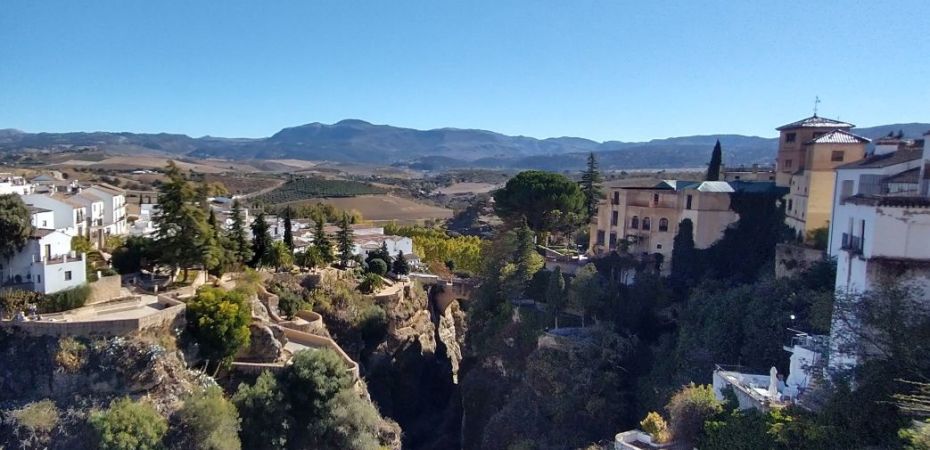
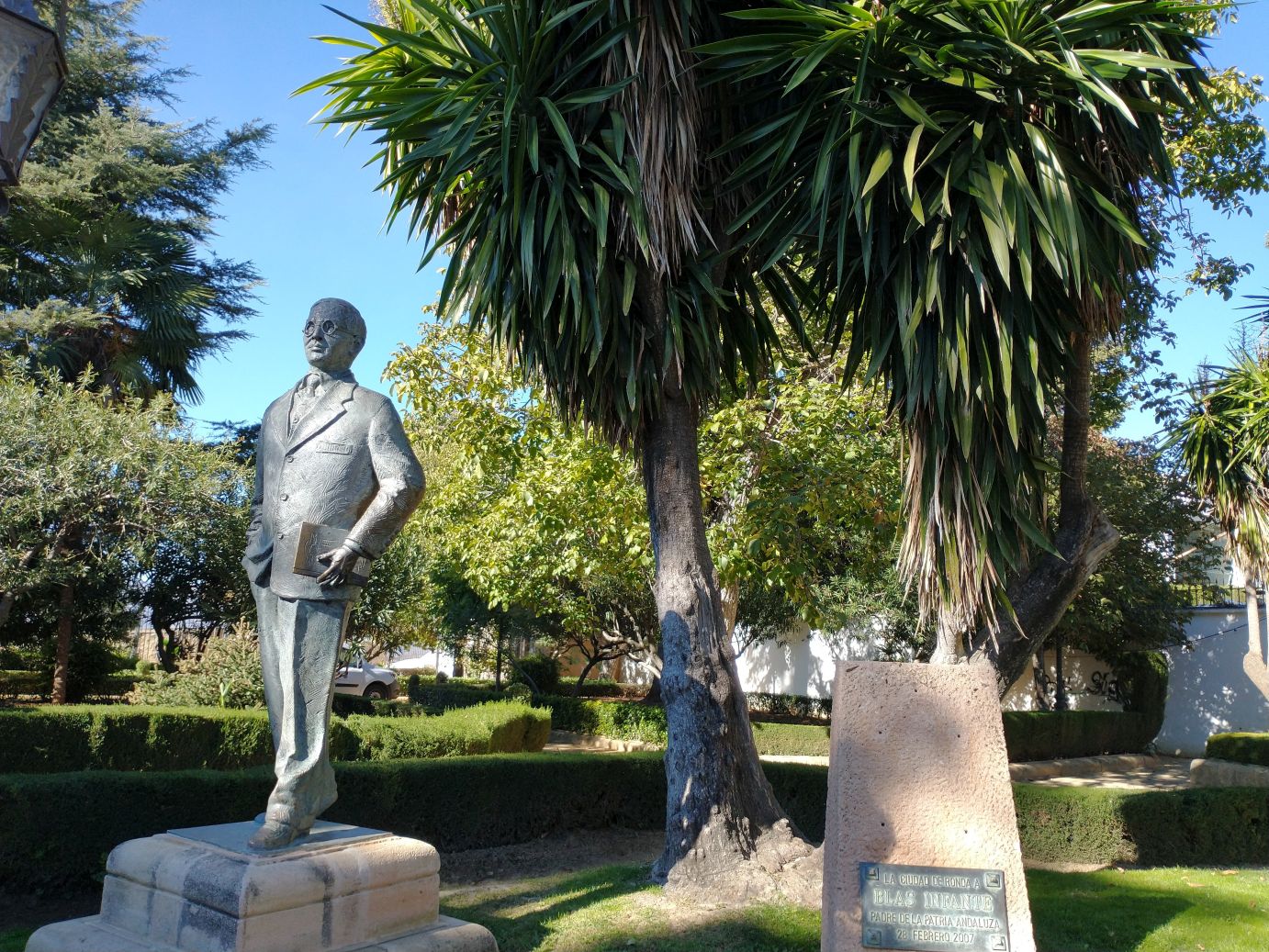
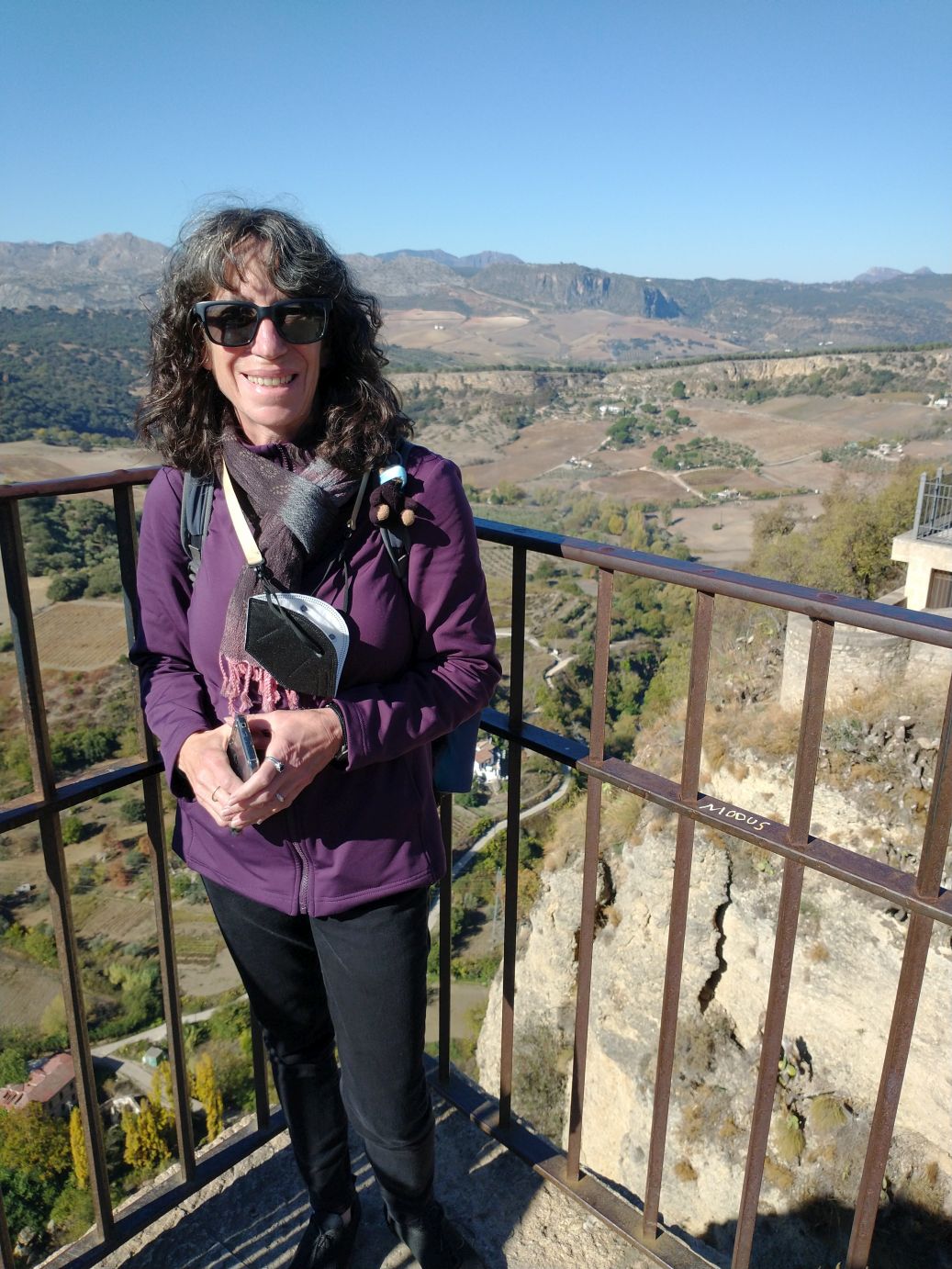
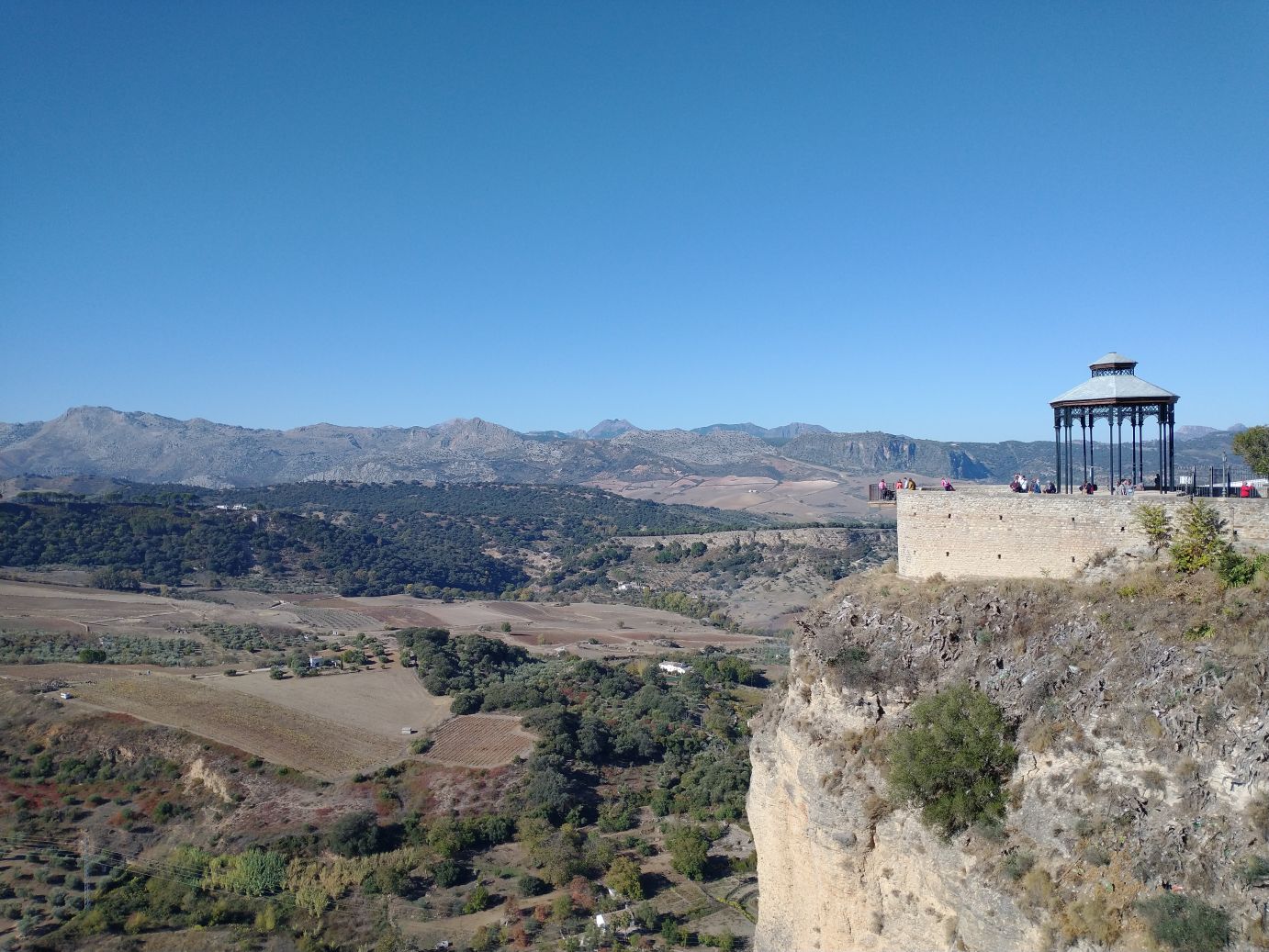
Returning to the outside, we head toward Puente Nuevo, the New Bridge, which is the most famous landmark in Ronda. On the way, though, we stumble upon the Paseo de Blas Infante, a beautiful little park that contains, not only a wonderful statue of Hemingway (who adored Ronda for the bullfights and visited often), but also the most amazing scenic overlook. The views from up here looking down on the valley are phenomenal. Every angle is a better photo opp. We could spend all day up here taking pictures and gazing out over the farmland and little villages dotting the landscape up to the mountain slopes. As you drive into the city, you don’t realize just how high up you are – until you get here and look down. Stunning. And totally peaceful.
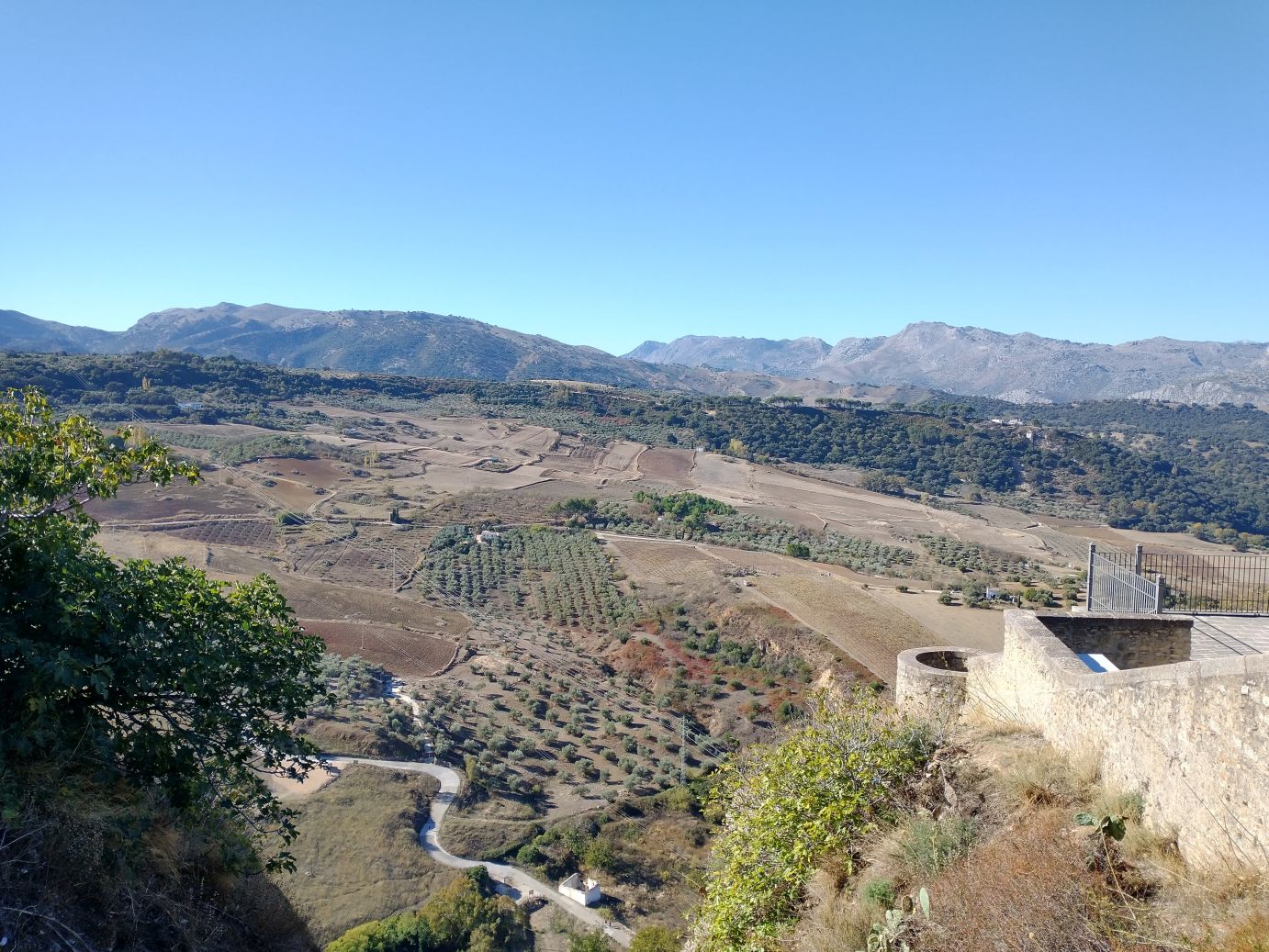
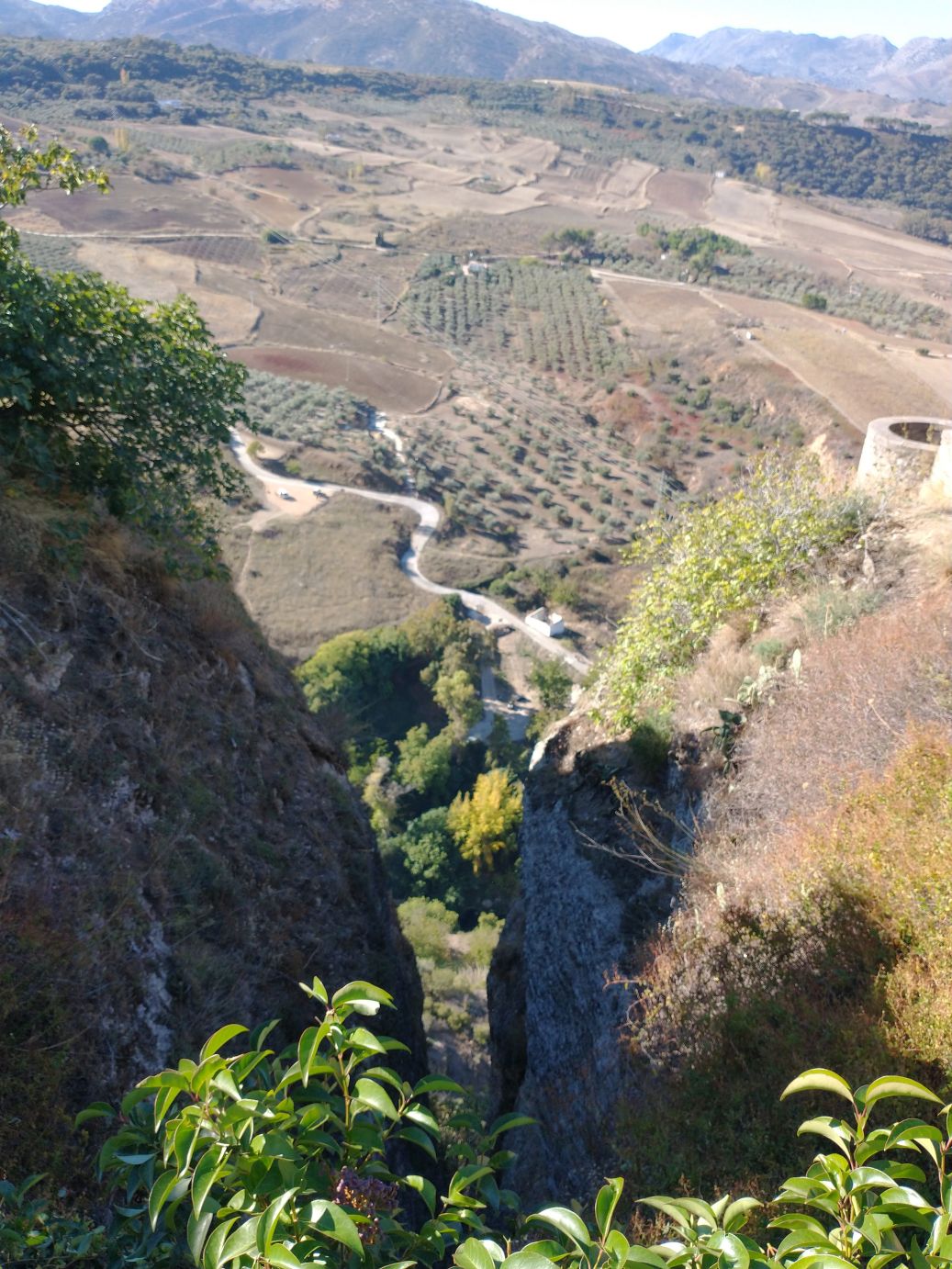
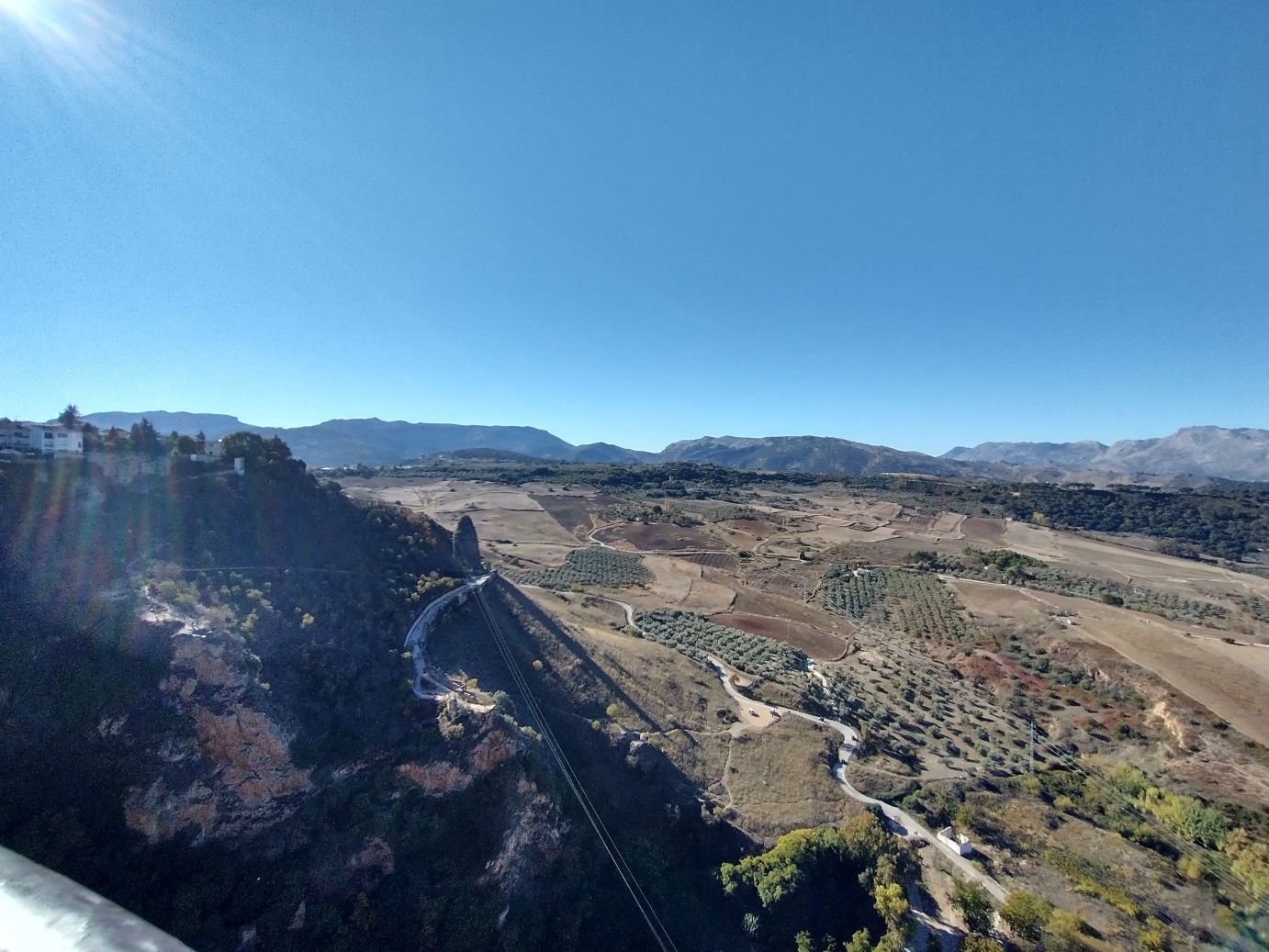
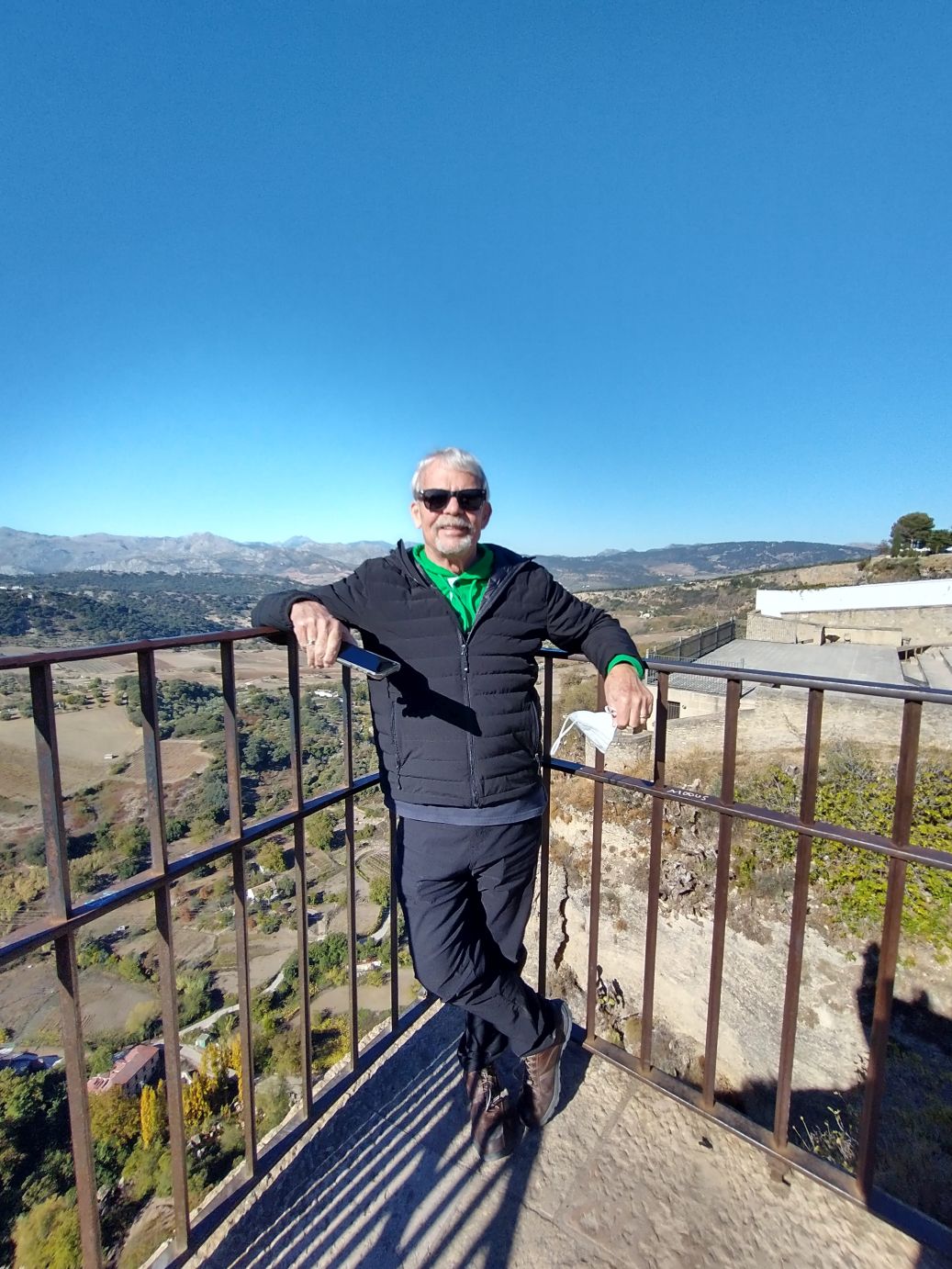
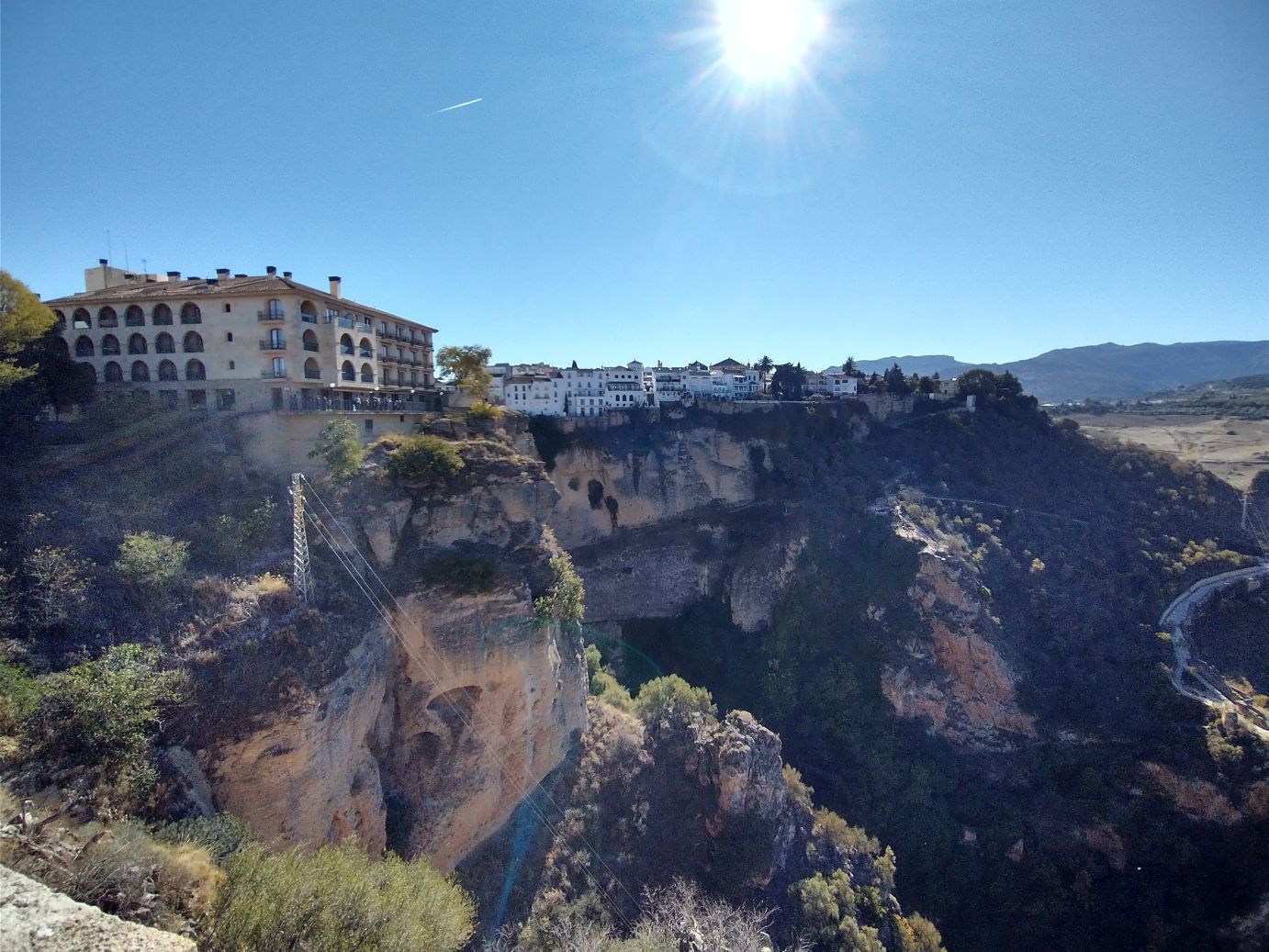
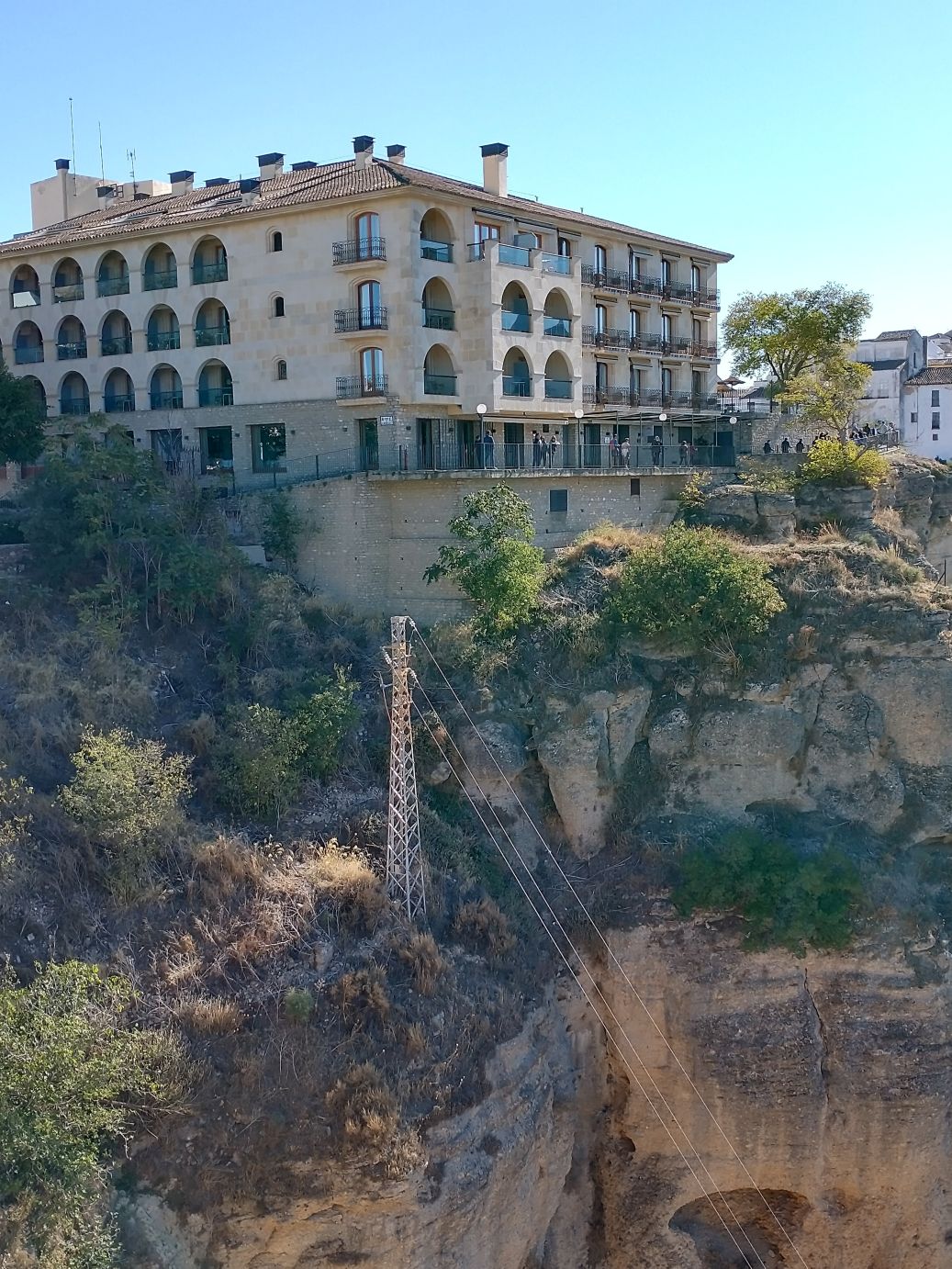
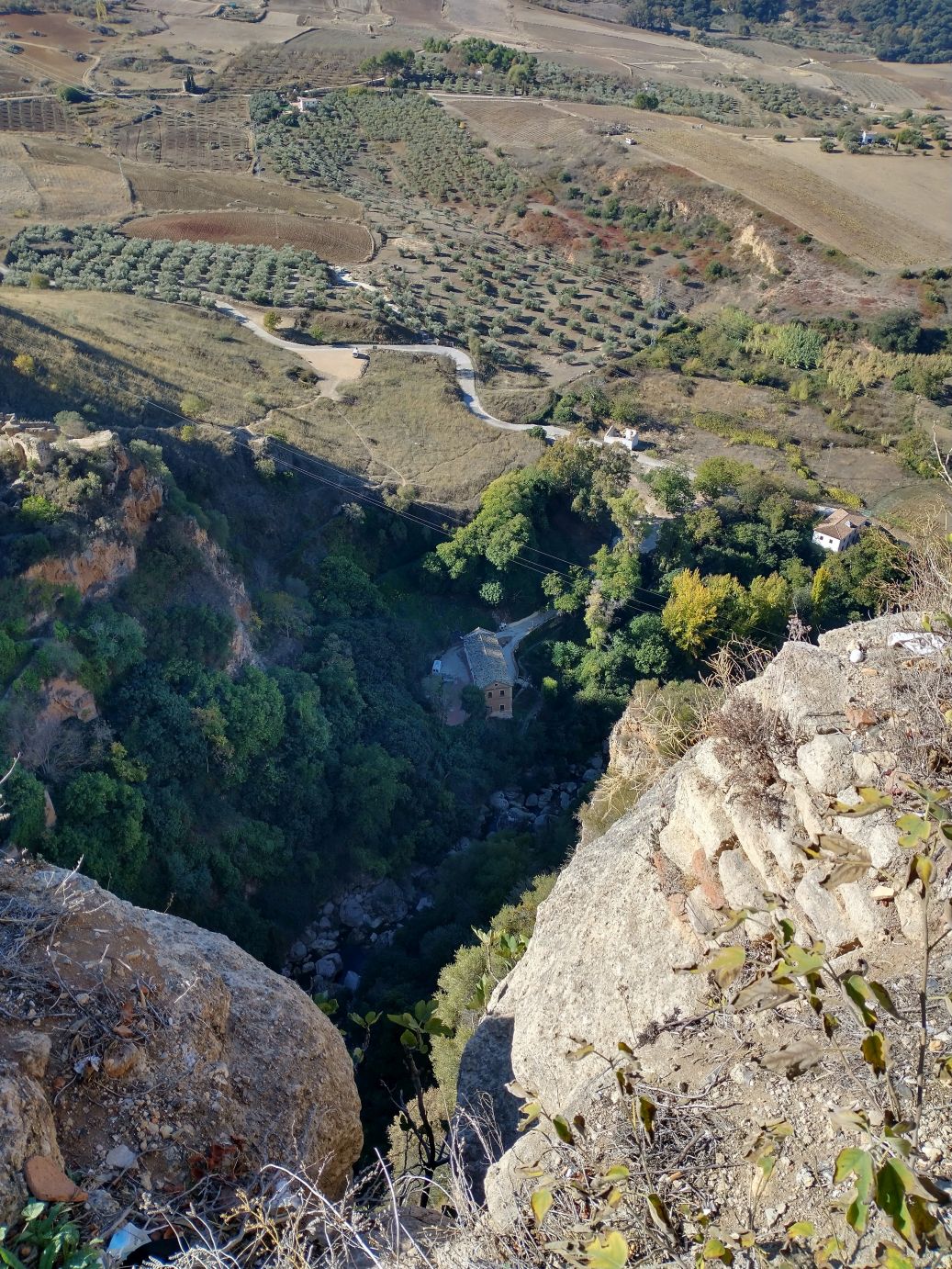
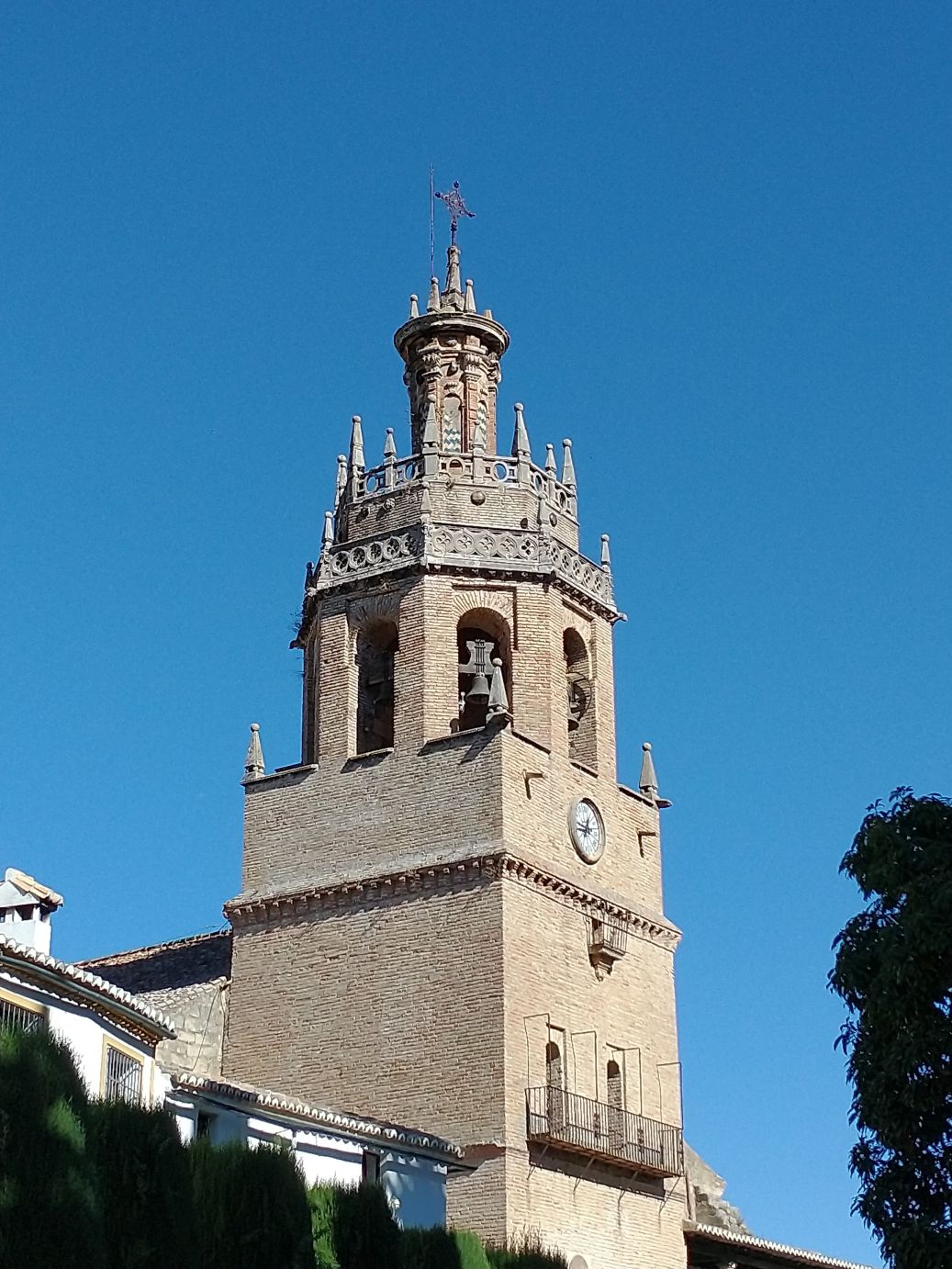
Continuing on around the walk, we skirt a hotel and restaurant, while gazing out at the white stone houses all perched at the edge of the cliffs. As we round a corner, we can finally see the Puente Nuovo, which is just an amazing feat of architecture. The triple arches are all built out of stone and stretch 400 feet down into the ravine. Even though it is called the “new” bridge, it was built almost 250 years ago, after 40 years of construction! Simply incredible.
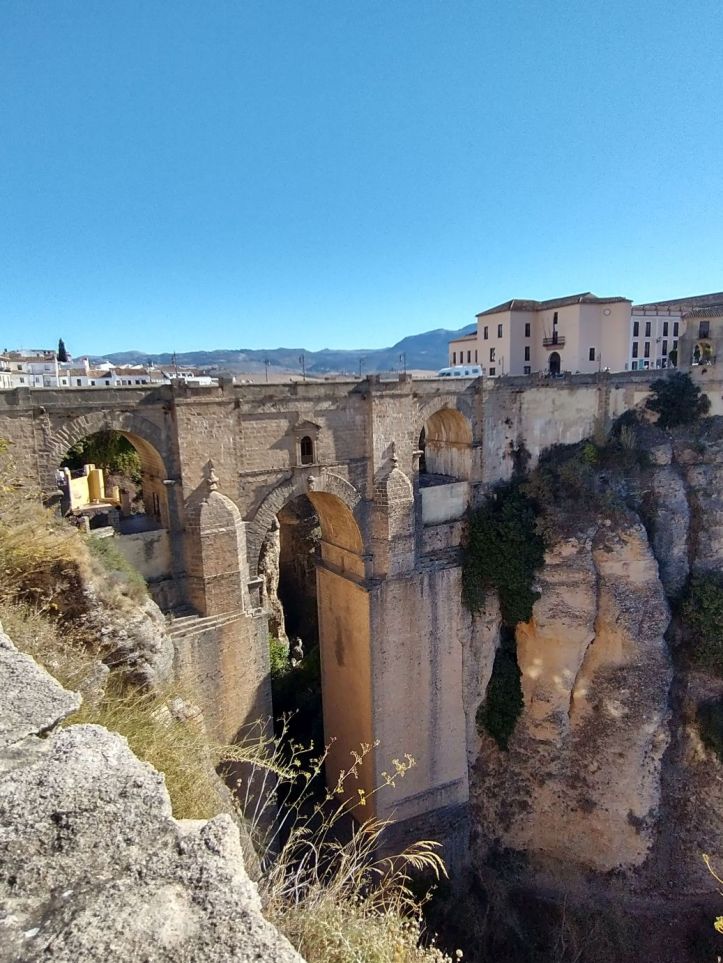
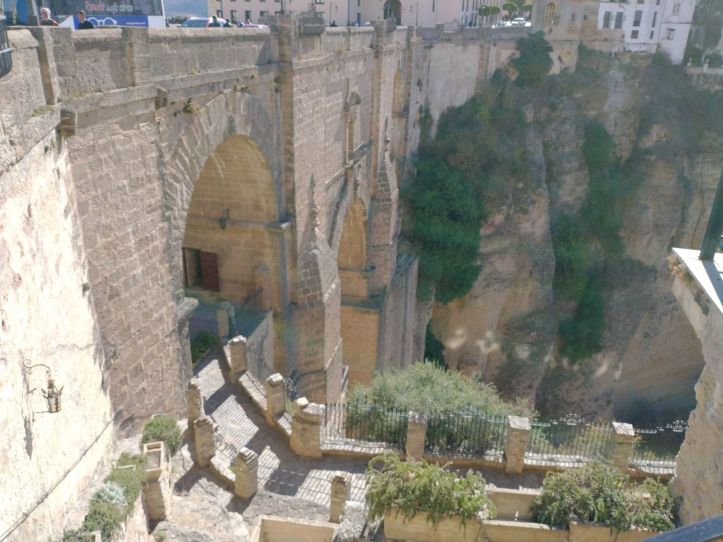
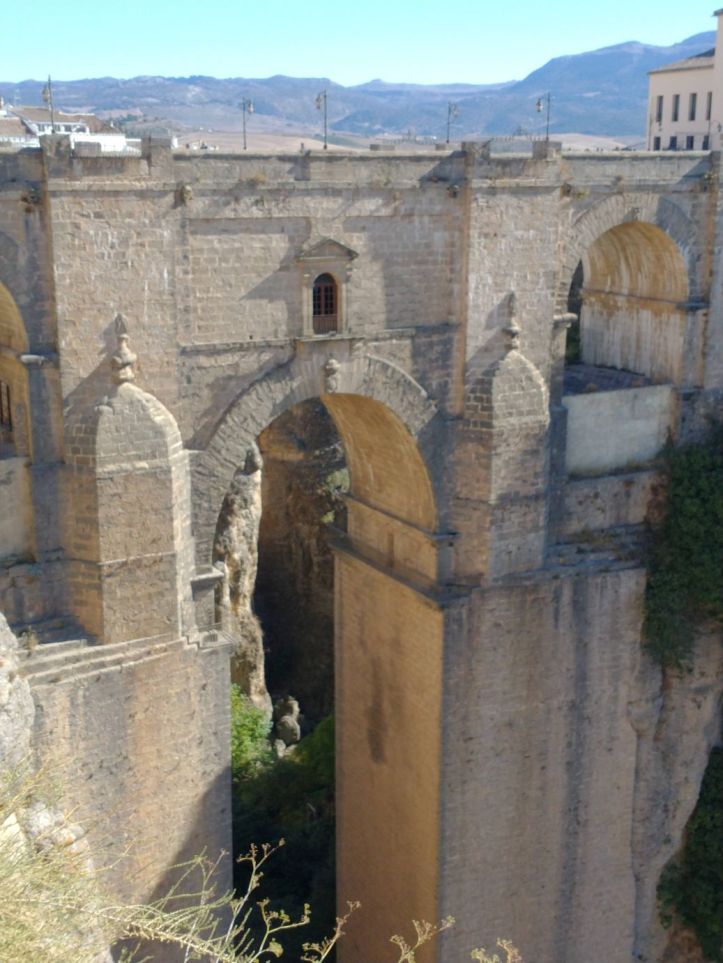
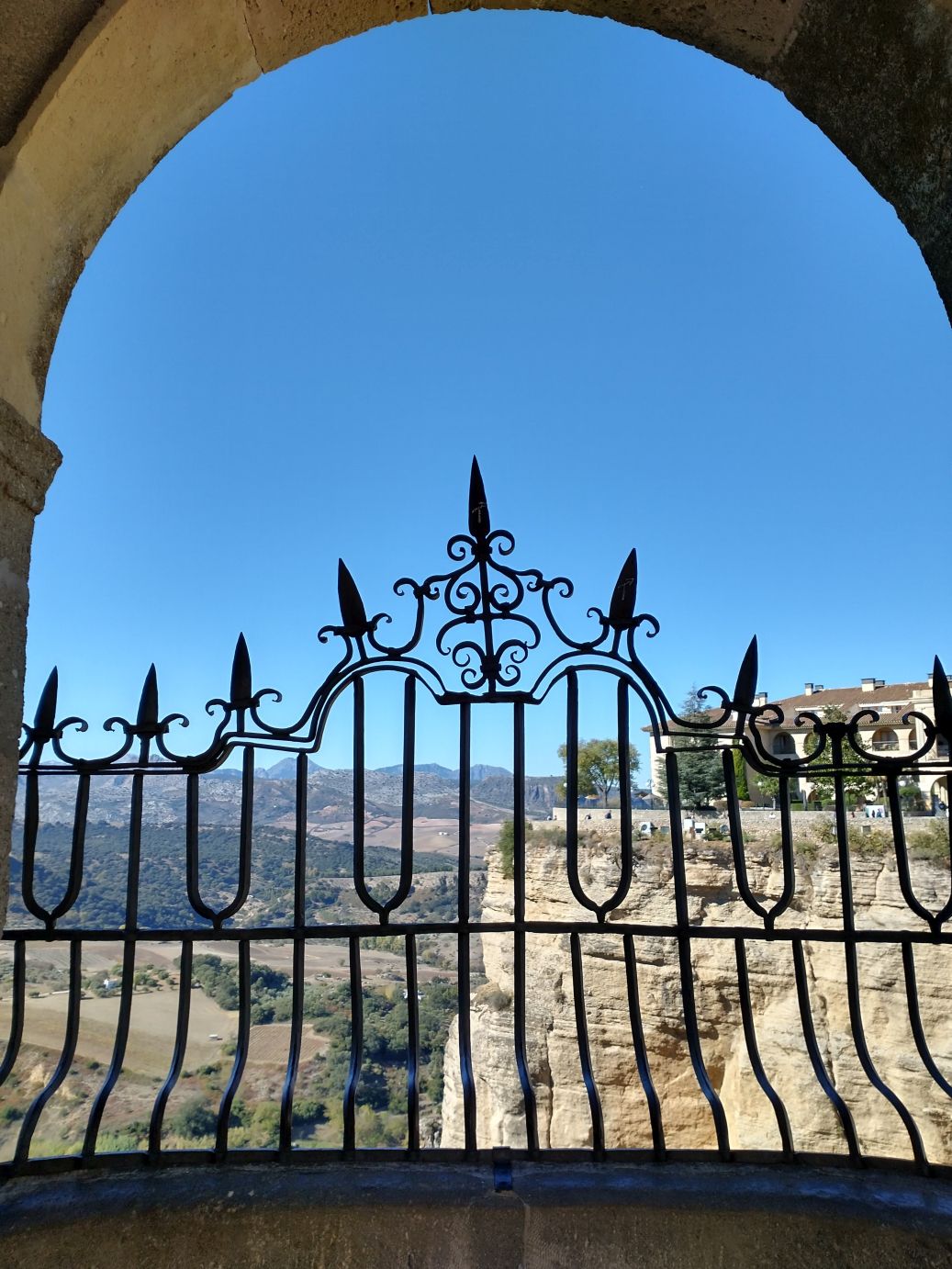
Arriving back at the main street – it isn’t peaceful anymore! Holy cow! The people! The streets are teeming with people – everywhere – it is super crazy crowded and just trying to get a spot at the railing to take pictures is an ordeal. There’s a lookout patio across the street that is jam packed, but fortunately a big group is leaving and we are able to sidle up to the stone railing to get some amazing views over El Tajo de Ronda, the steep gorge that divides the city. Here again, more houses perch precariously on the edges of the cliffs, stair stepping their way up and down from main city to the farmland below.
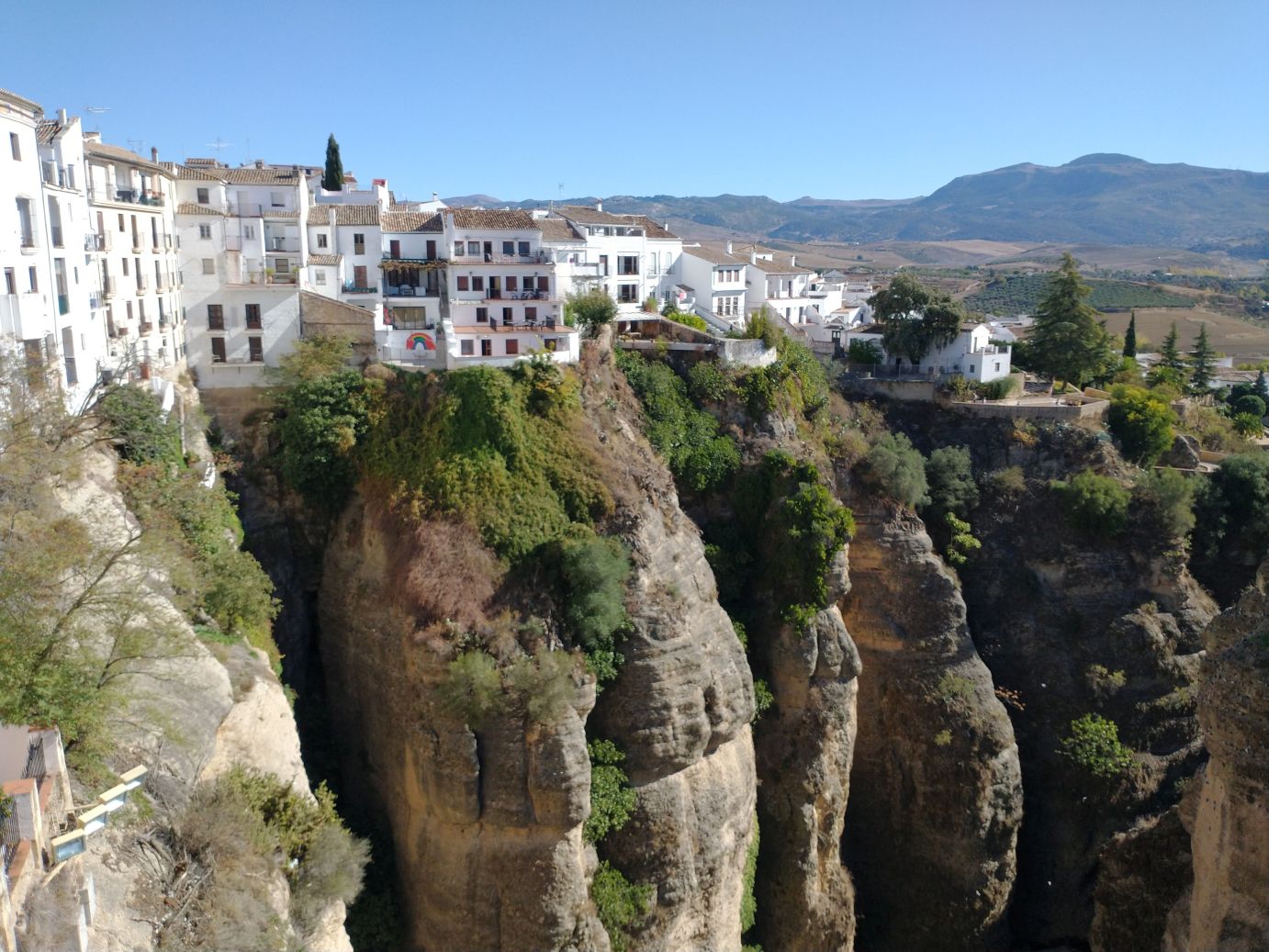
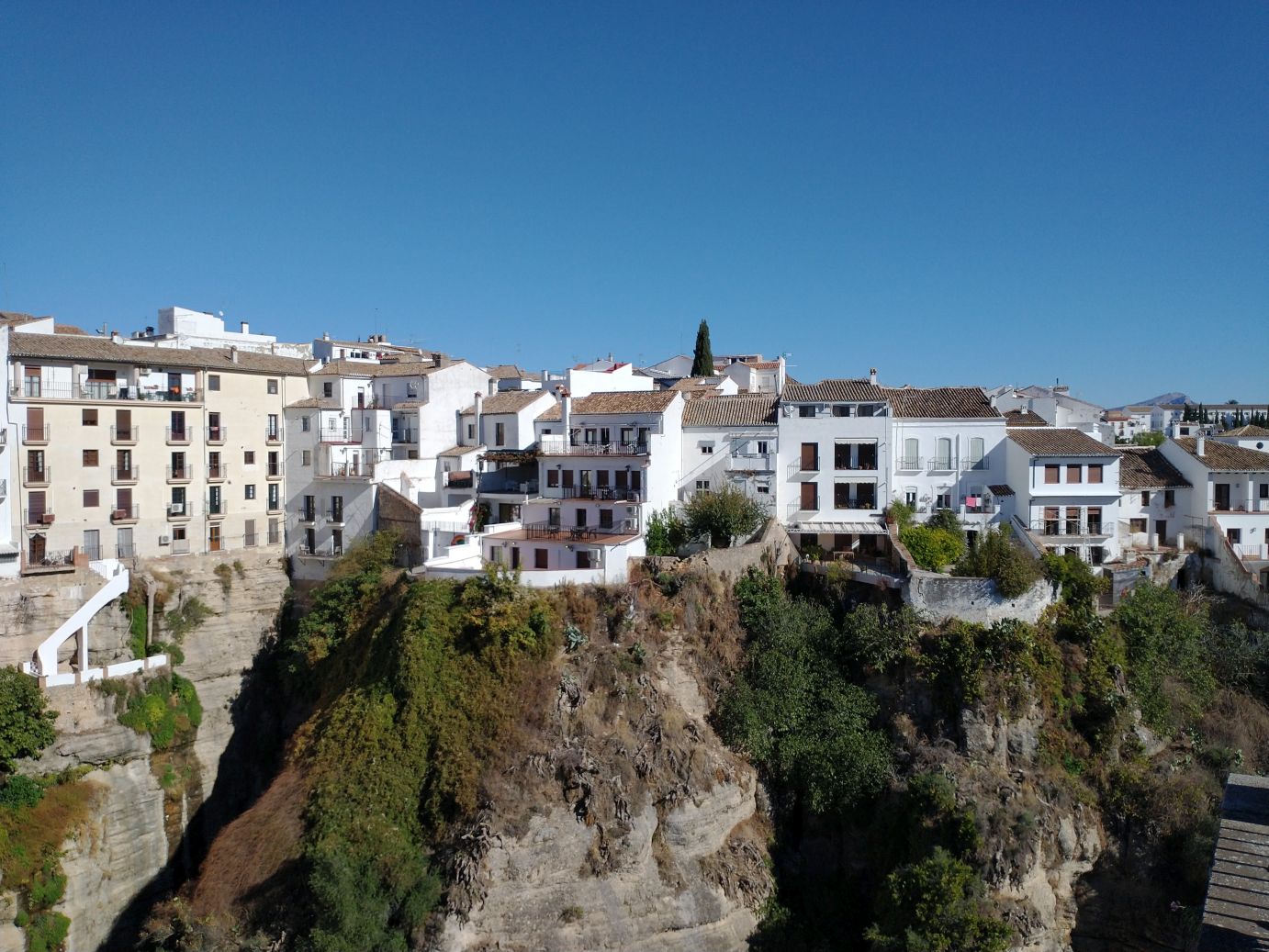
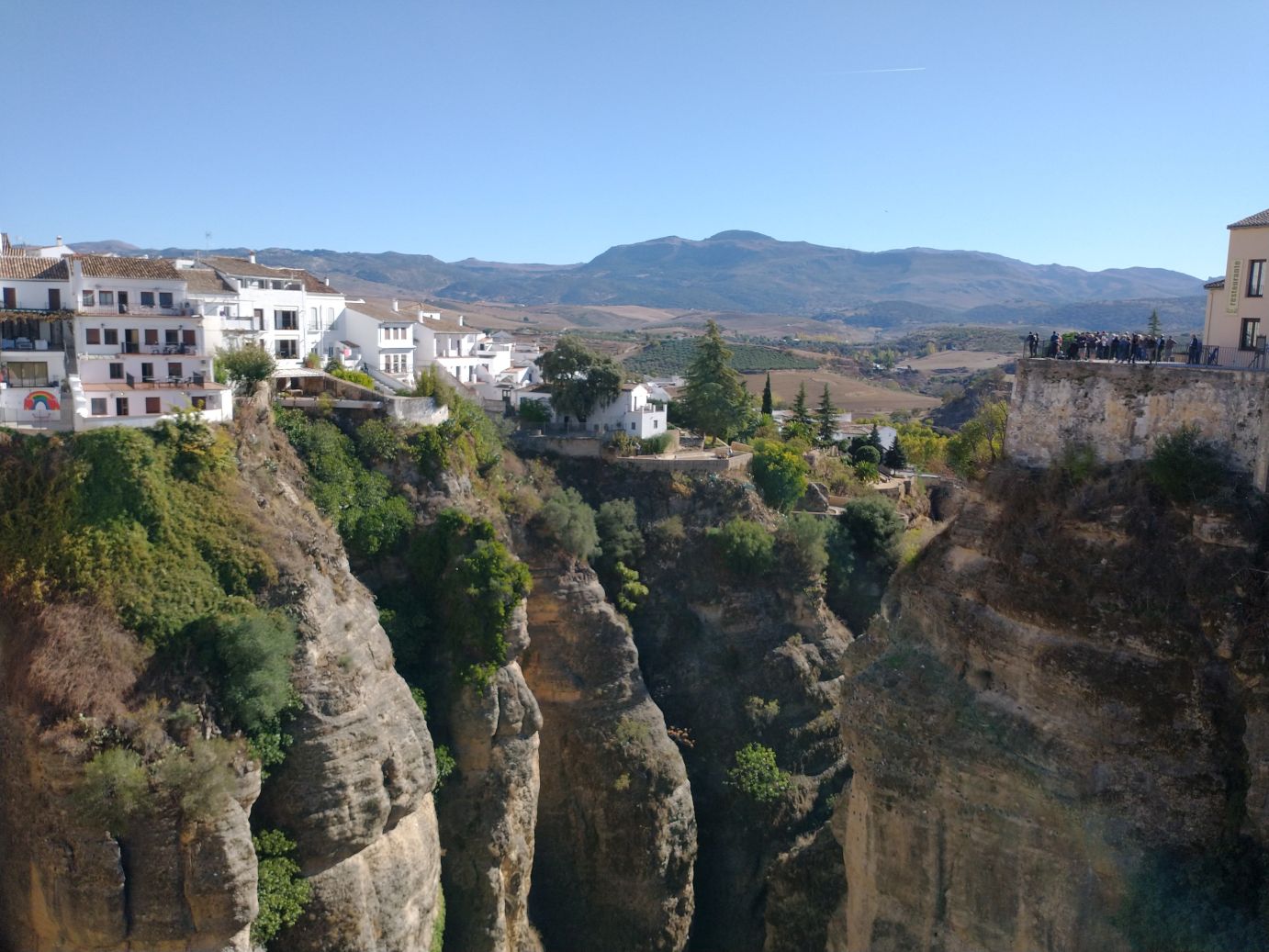
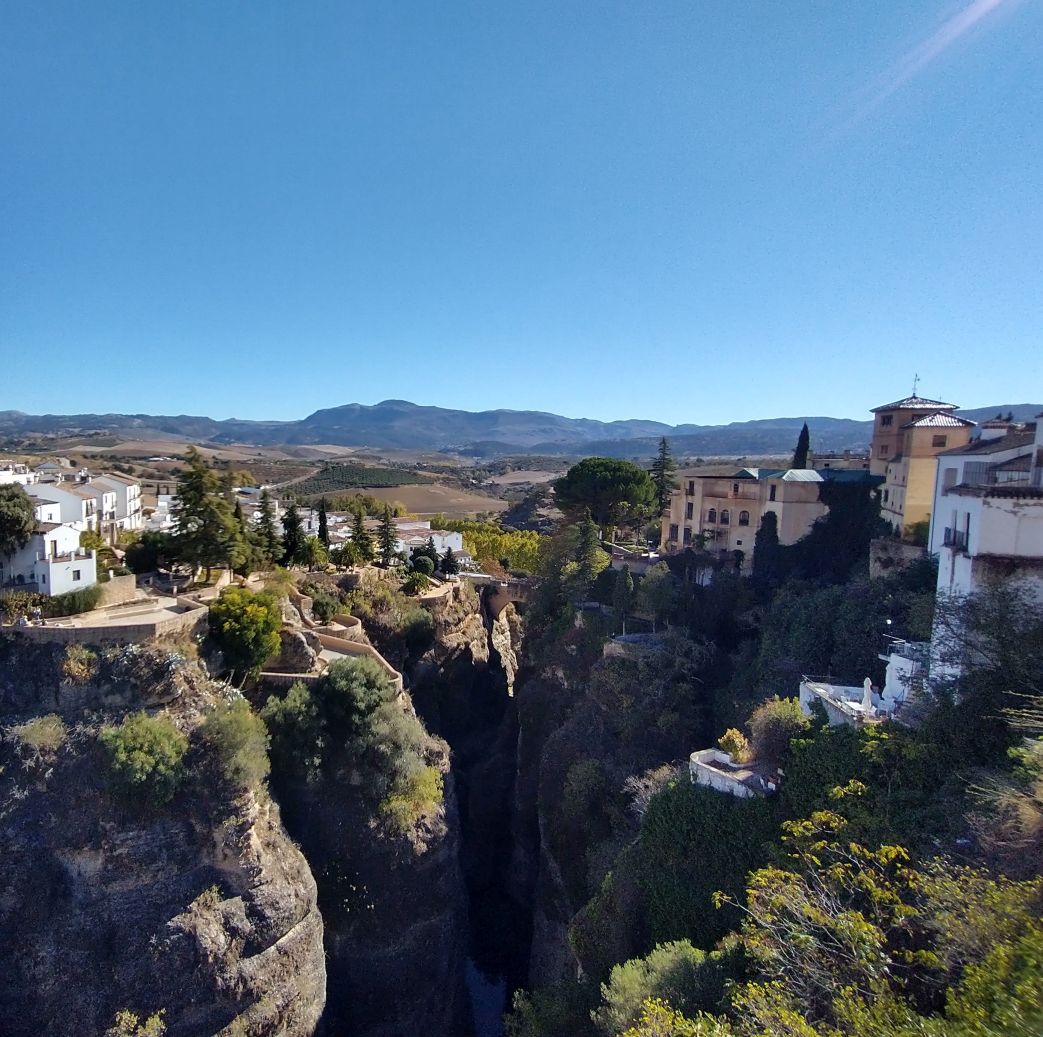
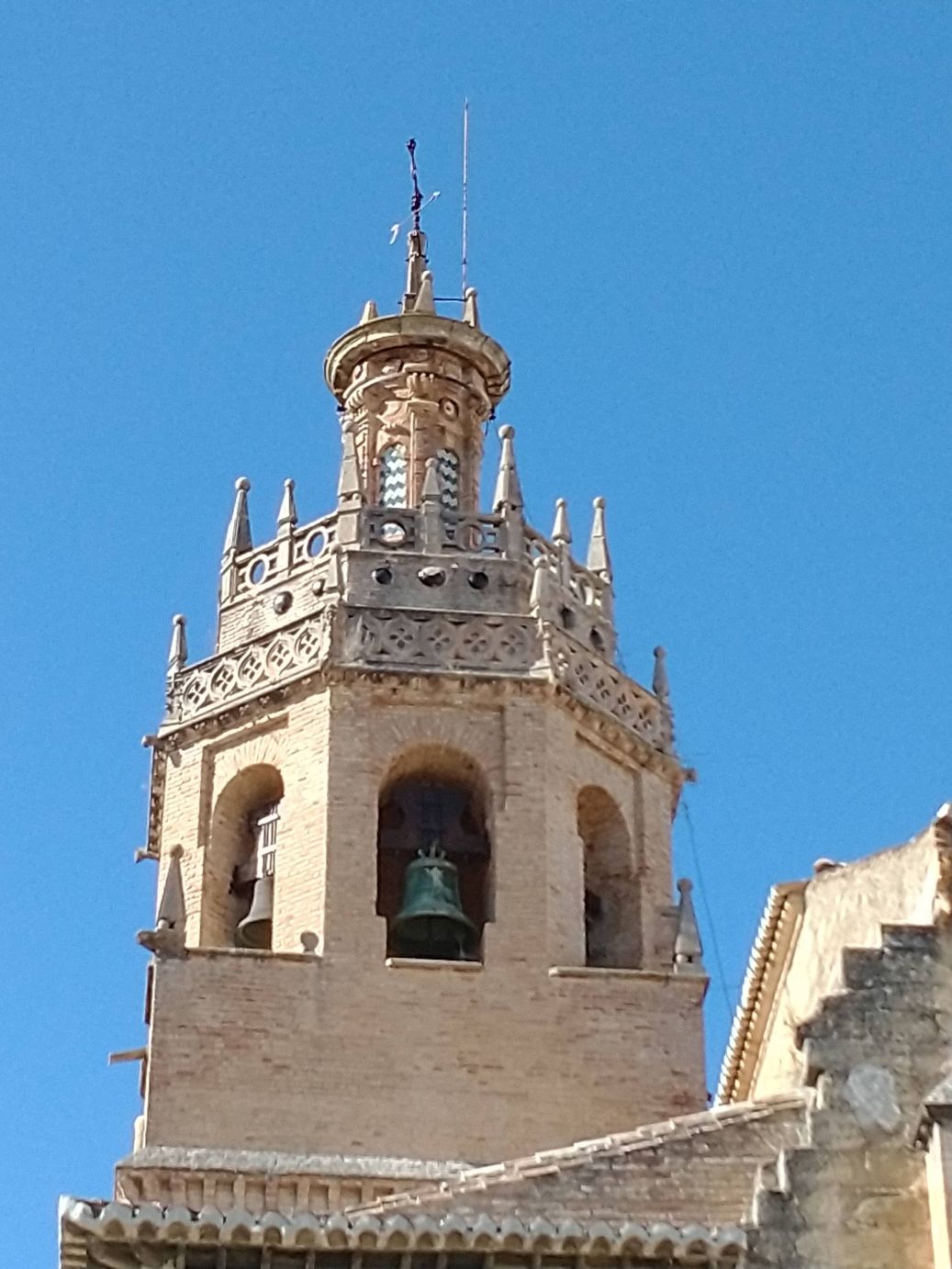
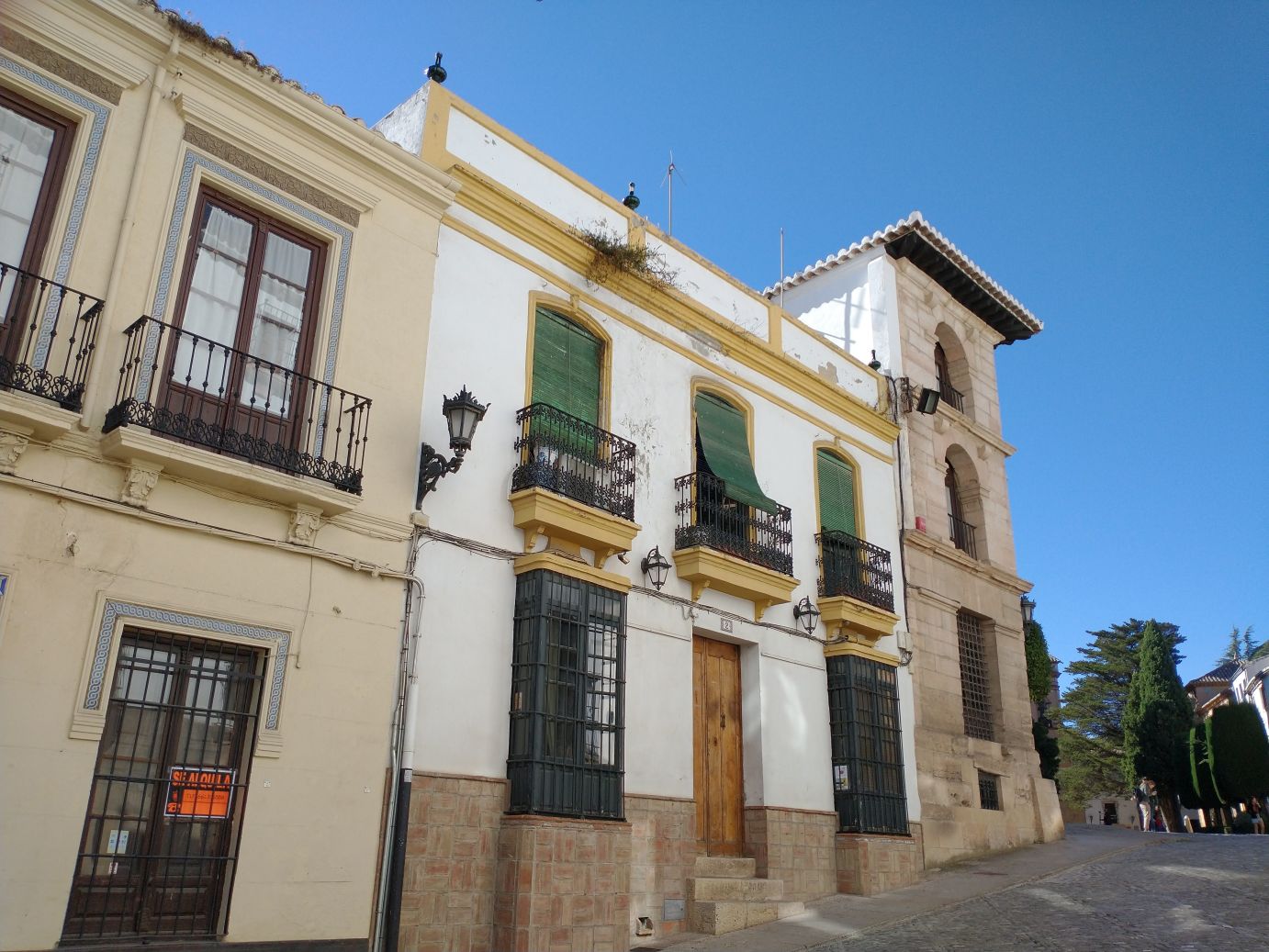
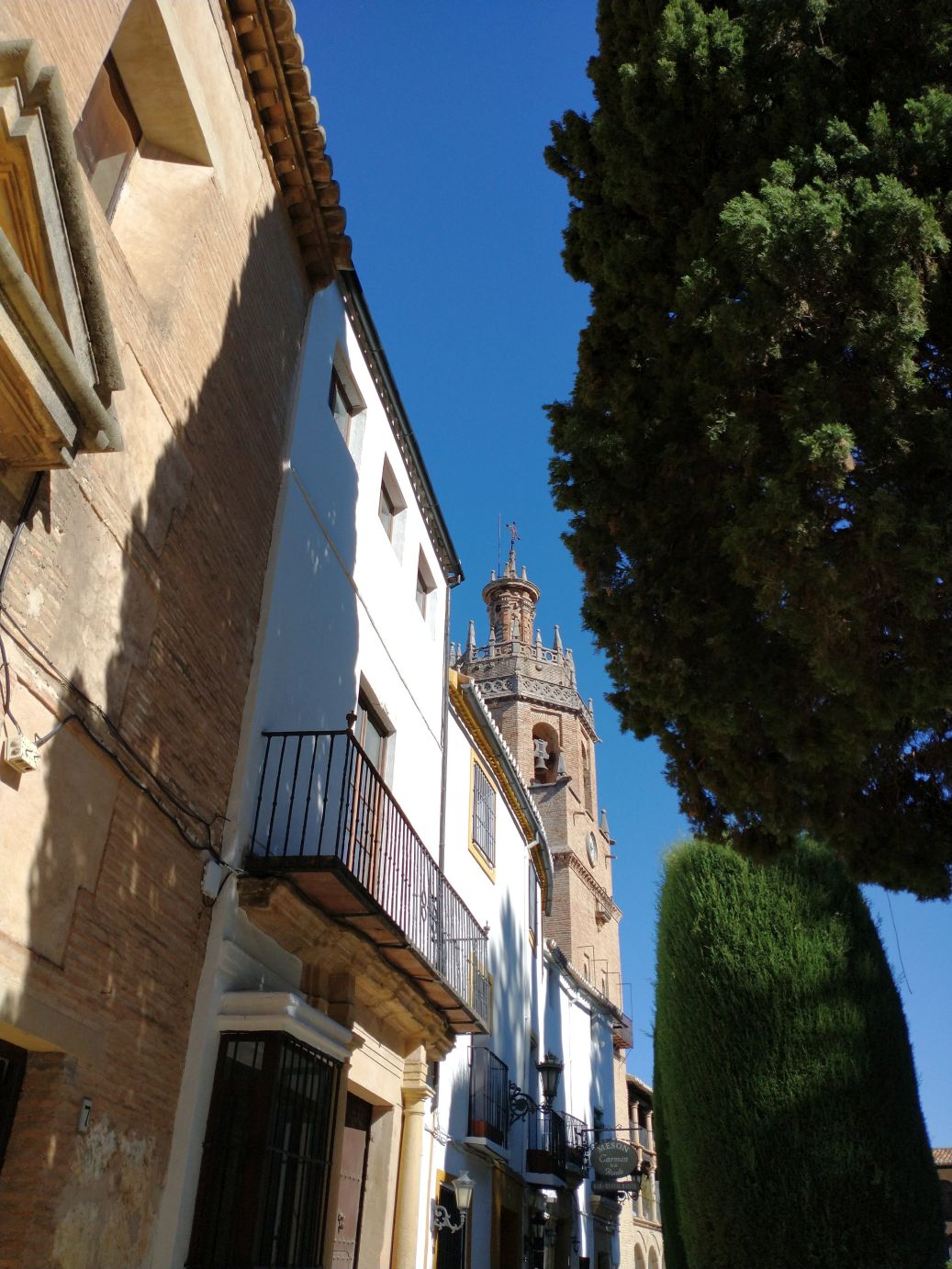
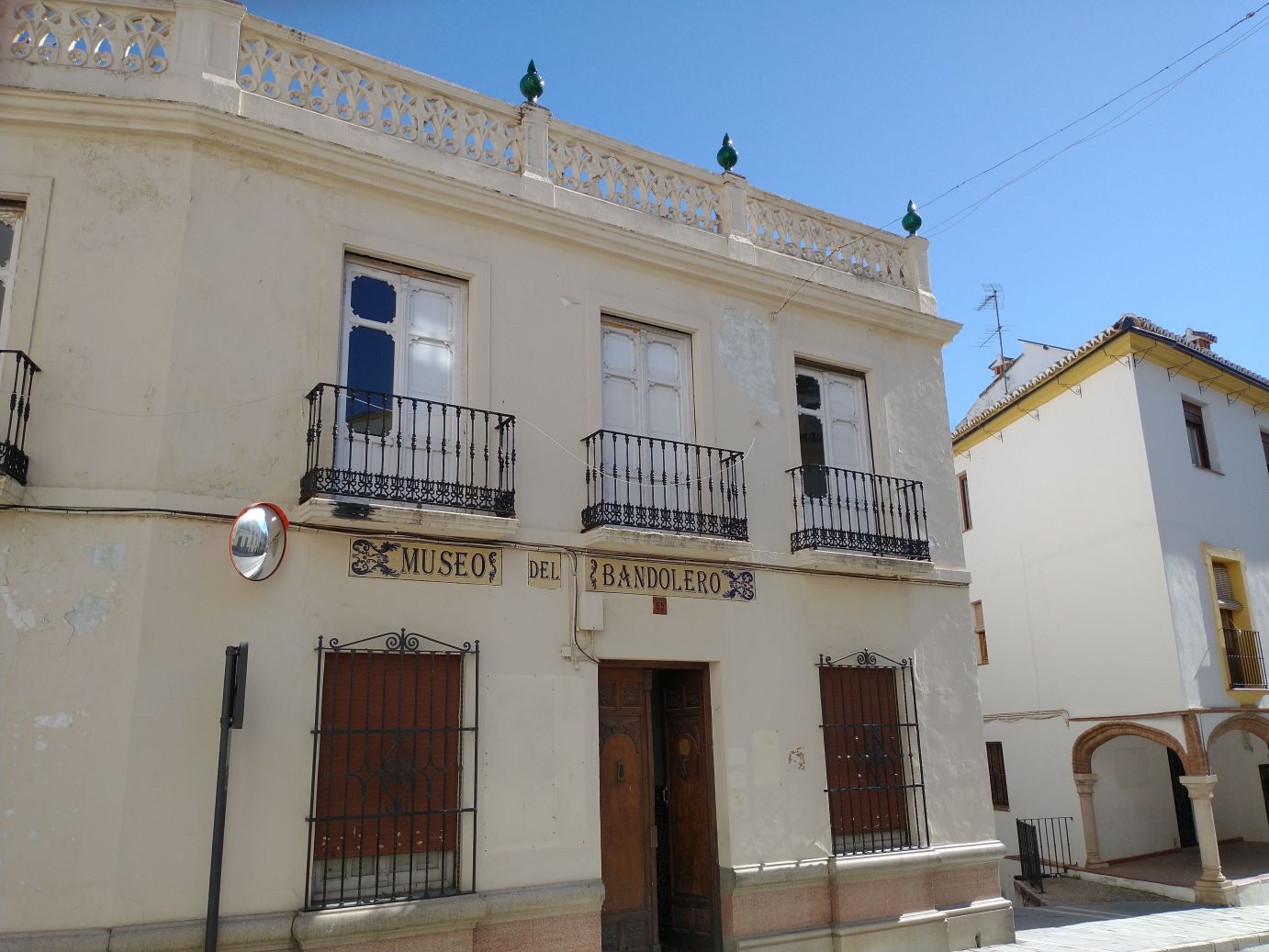
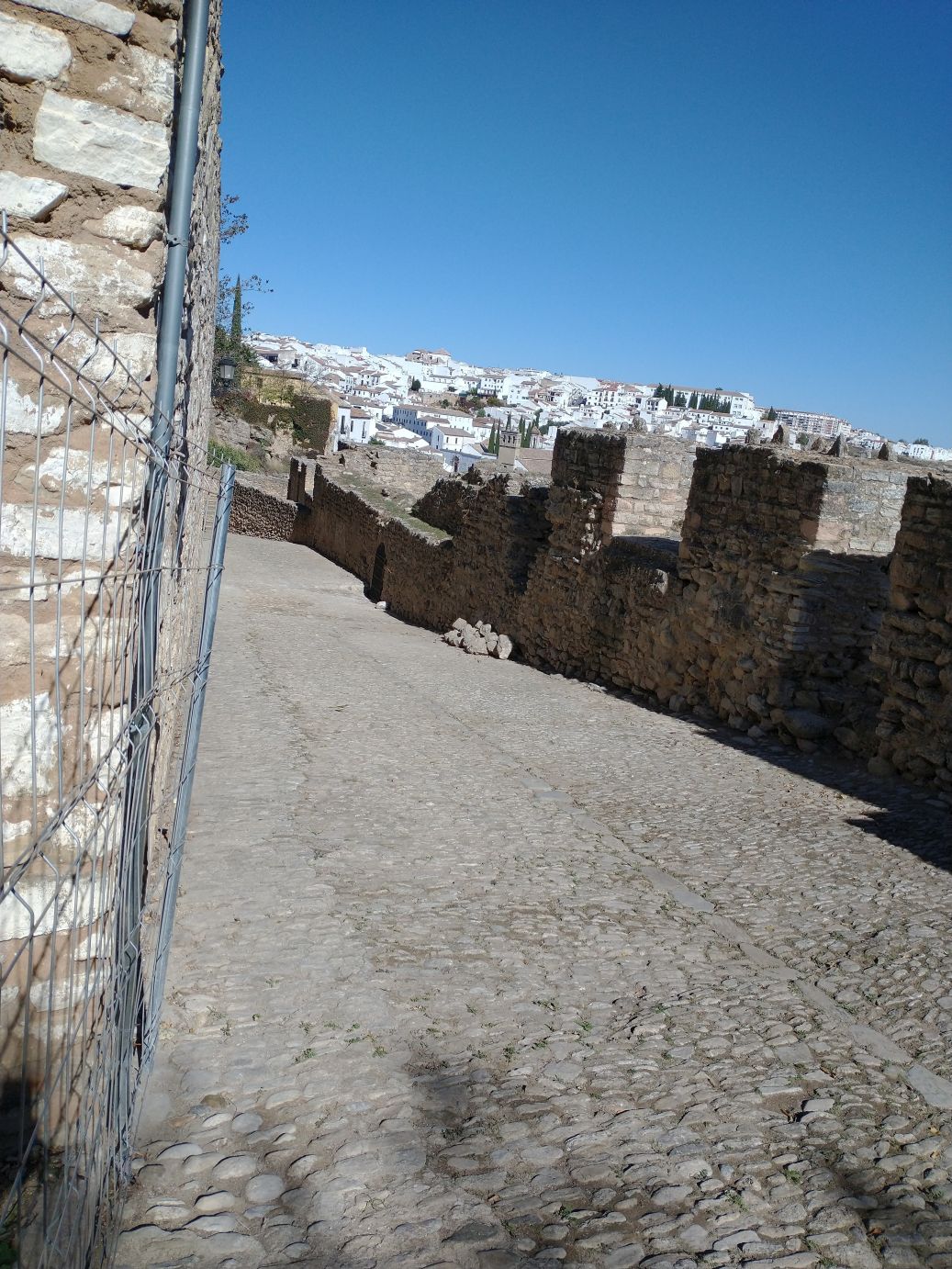
Continuing our journey, we wander the gorgeous streets, staring up at the architecture and beautiful white stone contrasting with the wooden Juliet balcony doors and black wrought iron railings. Our goal is the Museo de Bandolero, the Bandits or Thief’s museum. Google says it is temporarily closed, but nothing else I find says that. Unfortunately, for once, Google is correct and while we find the door, it is locked up tight. I even go up and try the door to make absolutely certain it is locked (we’re not going through Son Marroig again!) – but to no avail. It is definitely closed. So we just continue to wander, finding all sorts of different towers and stone buildings and architecture to keep us occupied.
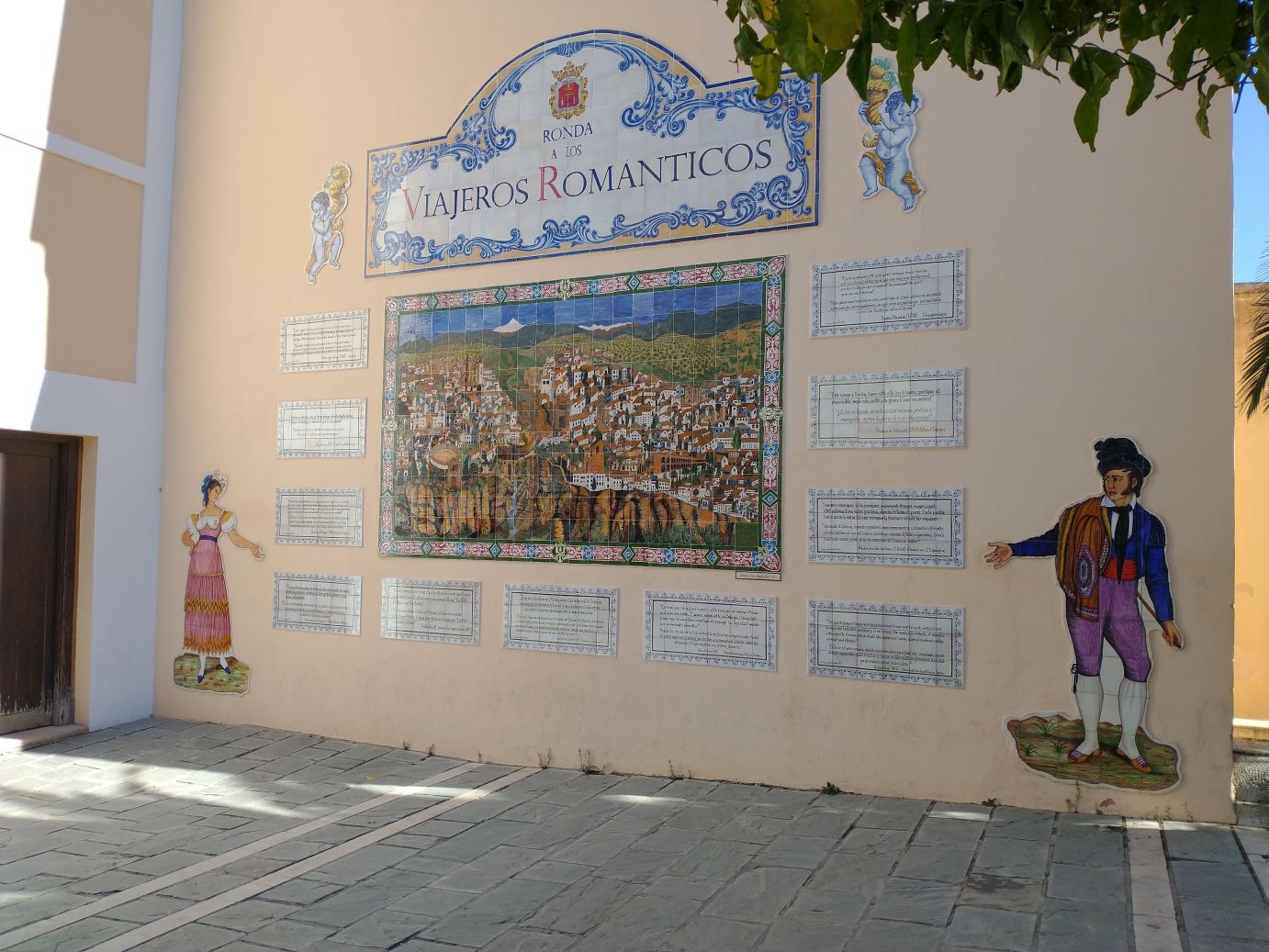
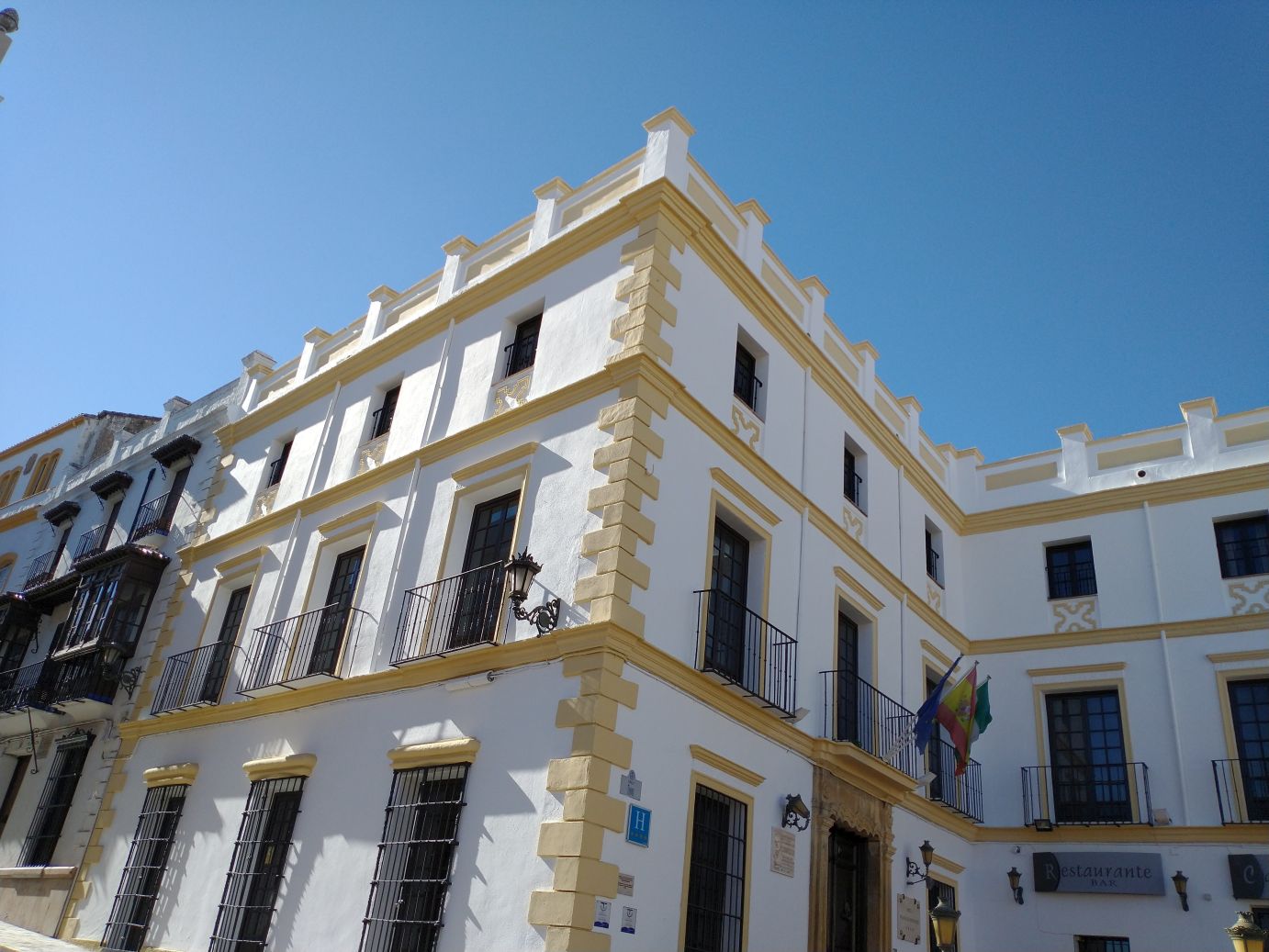
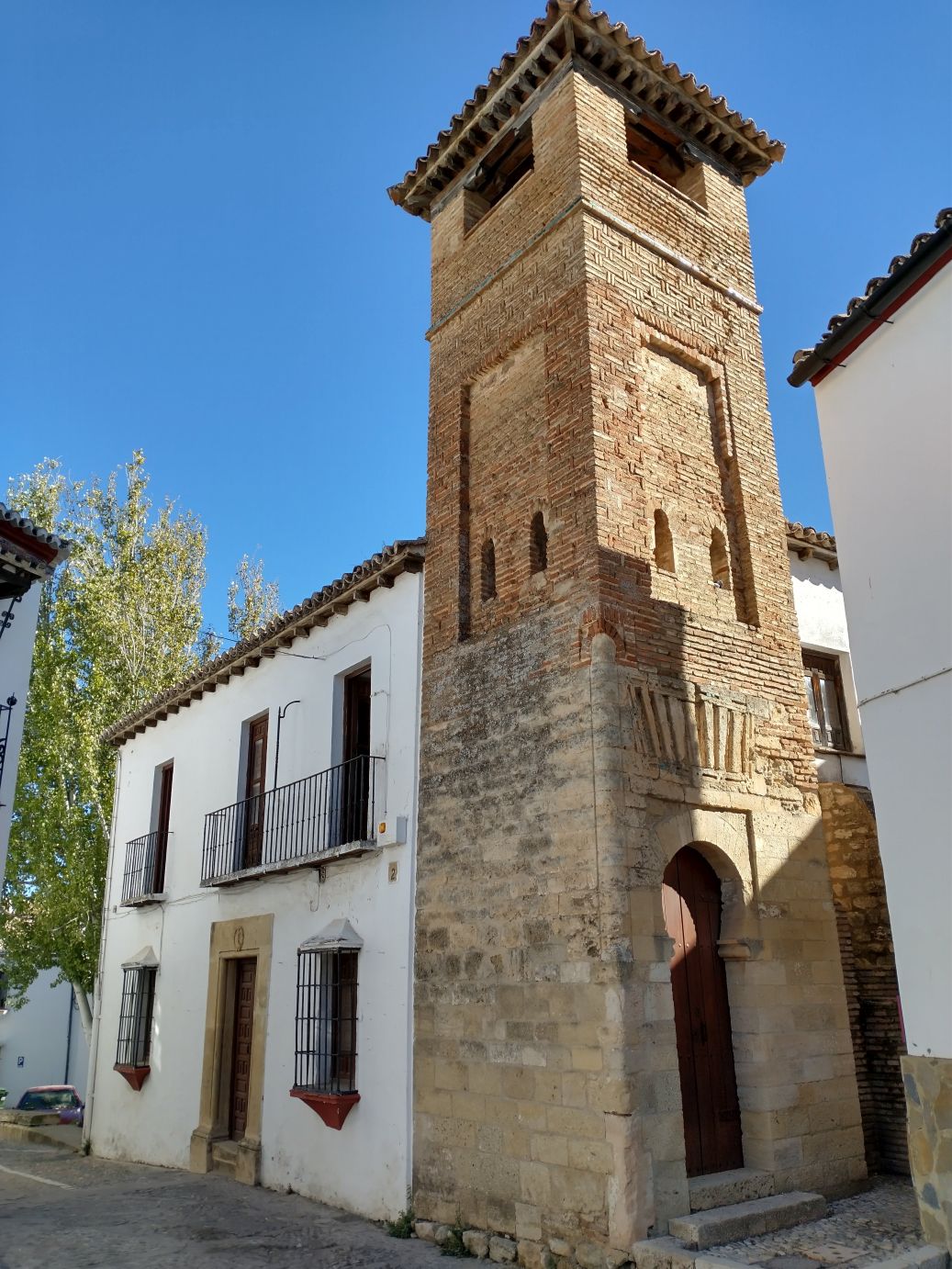
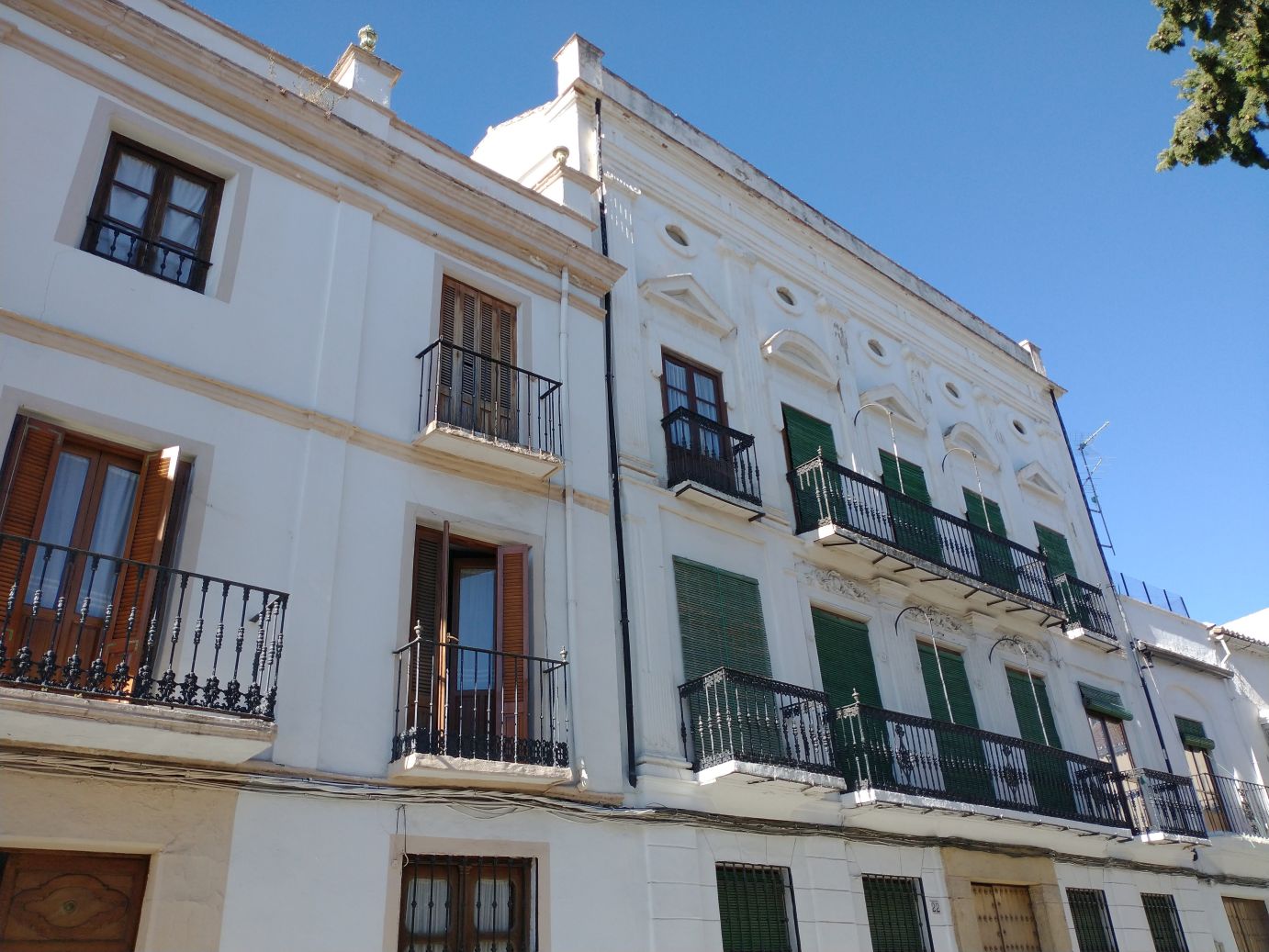
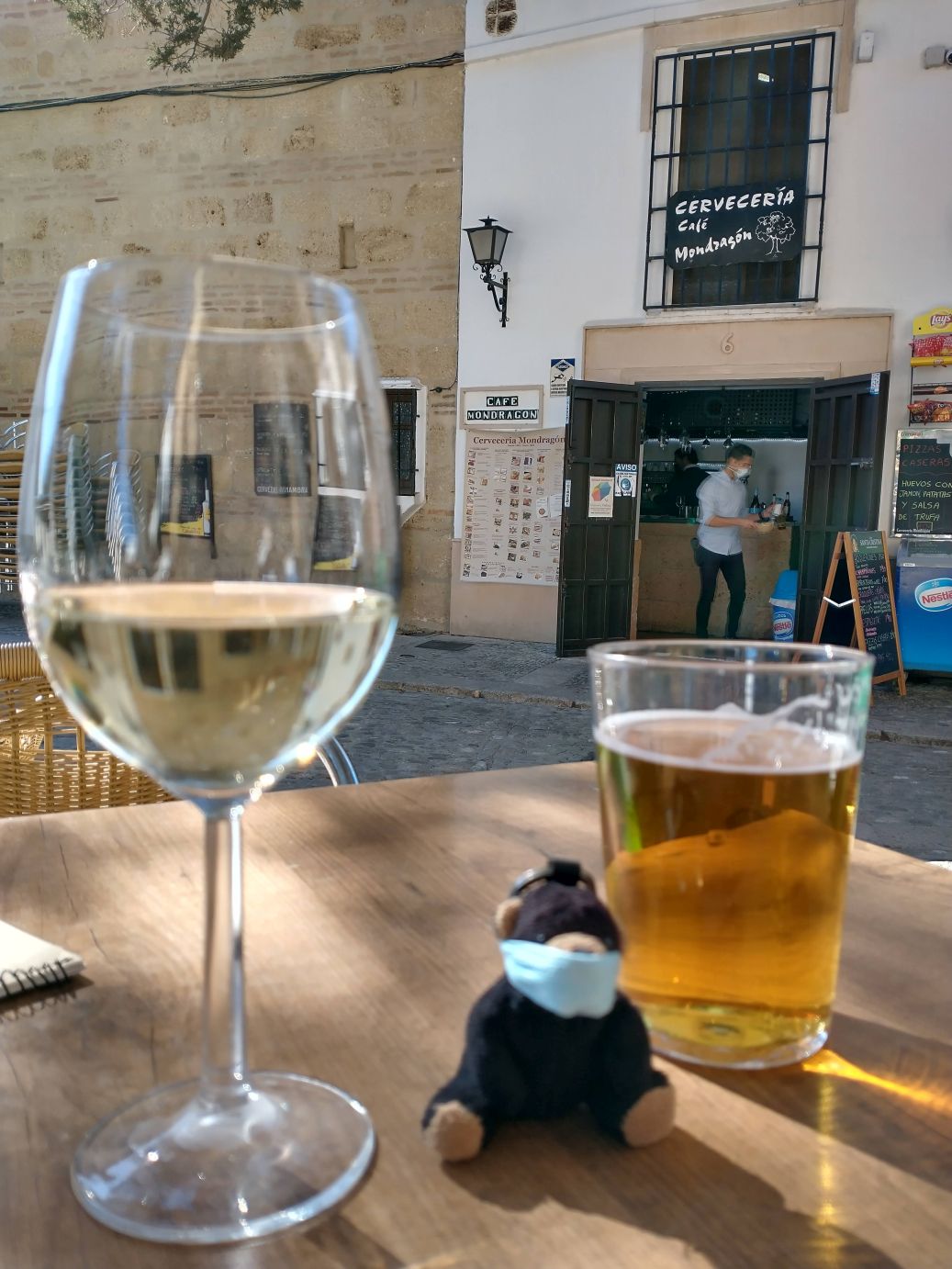
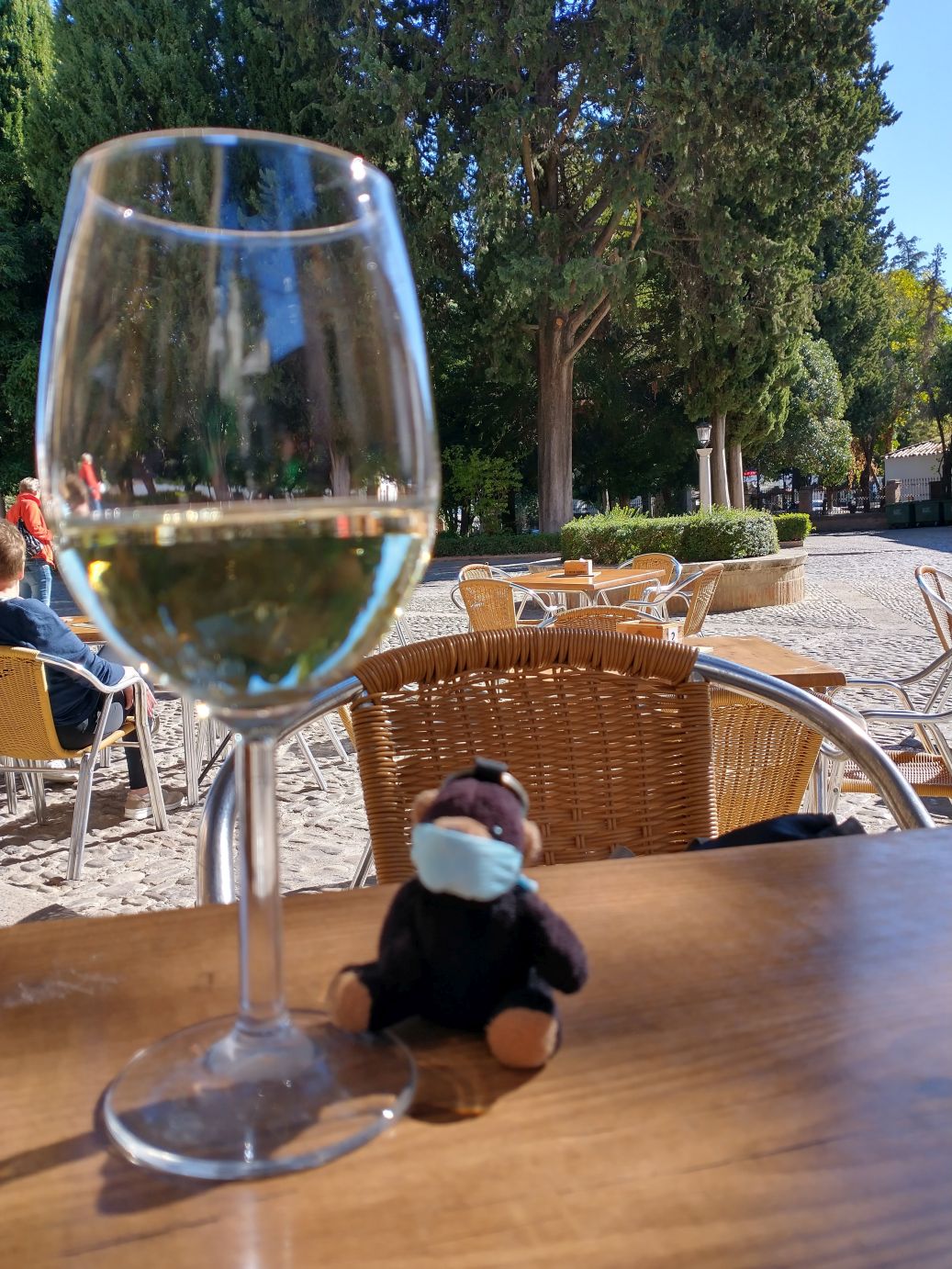
I have a whole route mapped out that will take us across the gorge to the other side of town to visit the Arab baths, but it is getting toward lunch time, and judging by the way the city is overrun – we’ll probably never find anything back in the main part of town, so we decide to start looking around here and find a great Cerveceria (that’s all we need to know!) called Café Mondragon on the corner of the Plaza Duquesa de Parcent. Bracketed by a cathedral and a convent, facing the tree filled park with a beautiful fountain, this is the perfect place to hang out for lunch. When we arrive, there aren’t many tables occupied, but by the time we leave, it is packed with people waiting on the square.
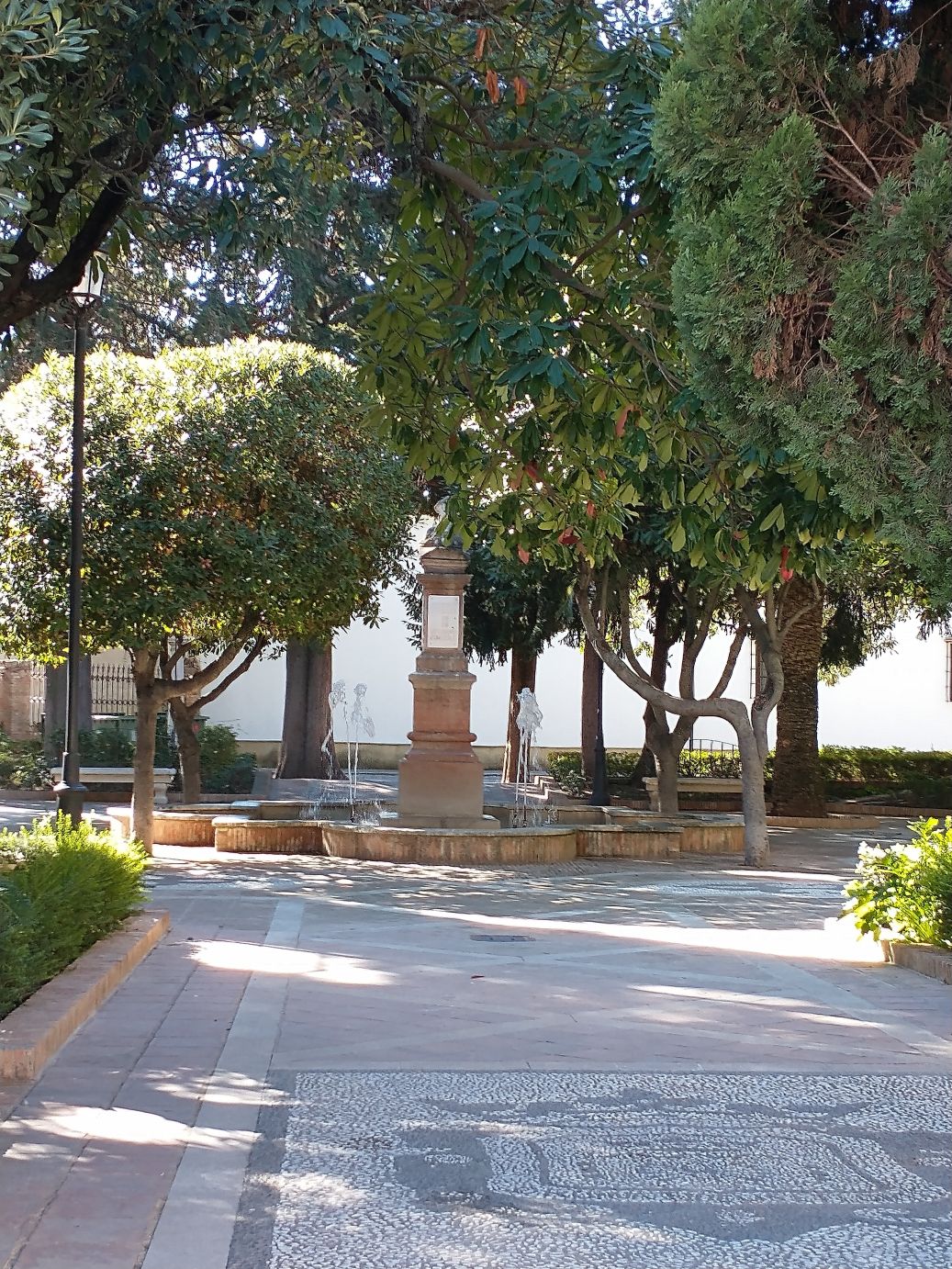
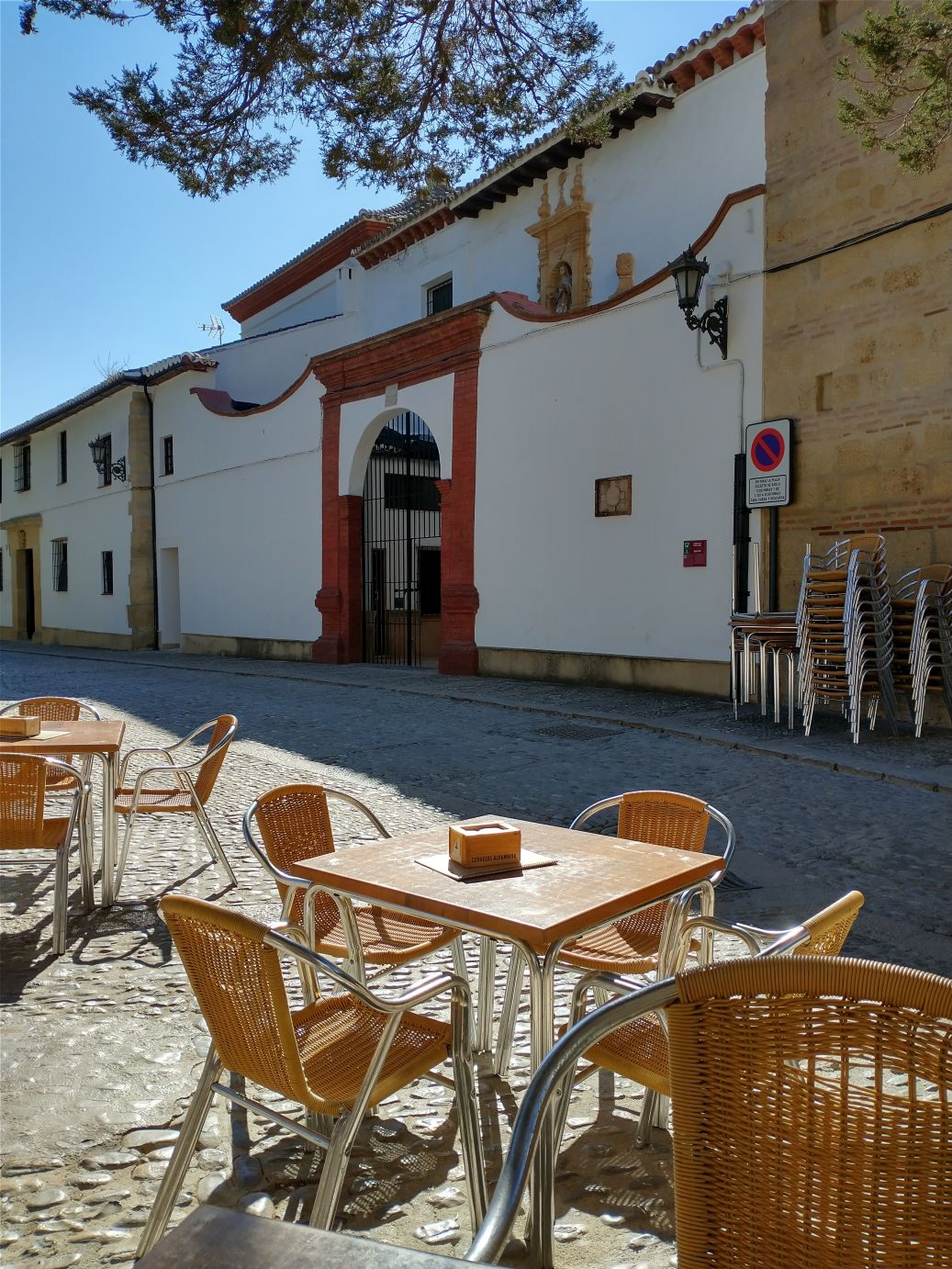
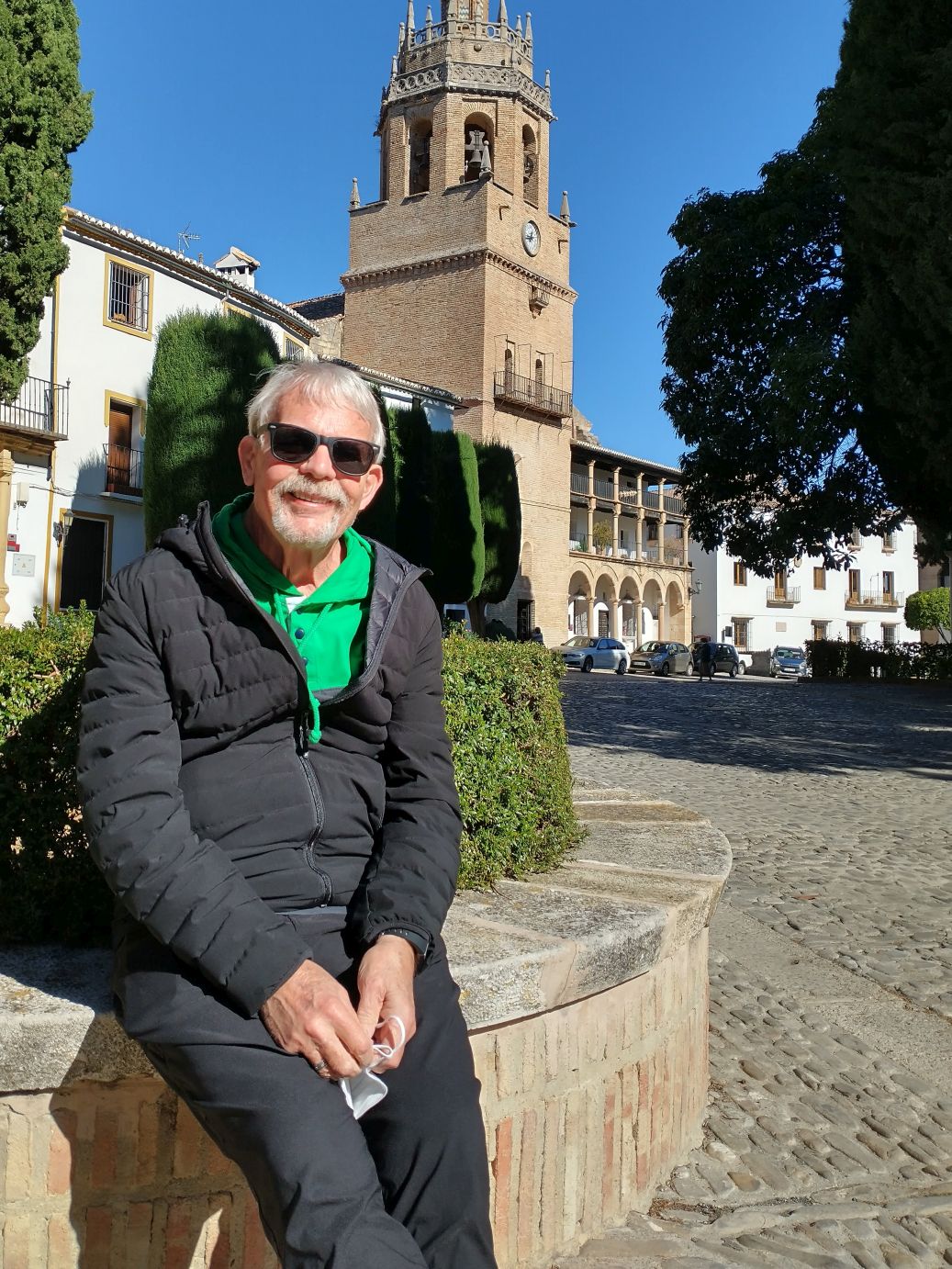
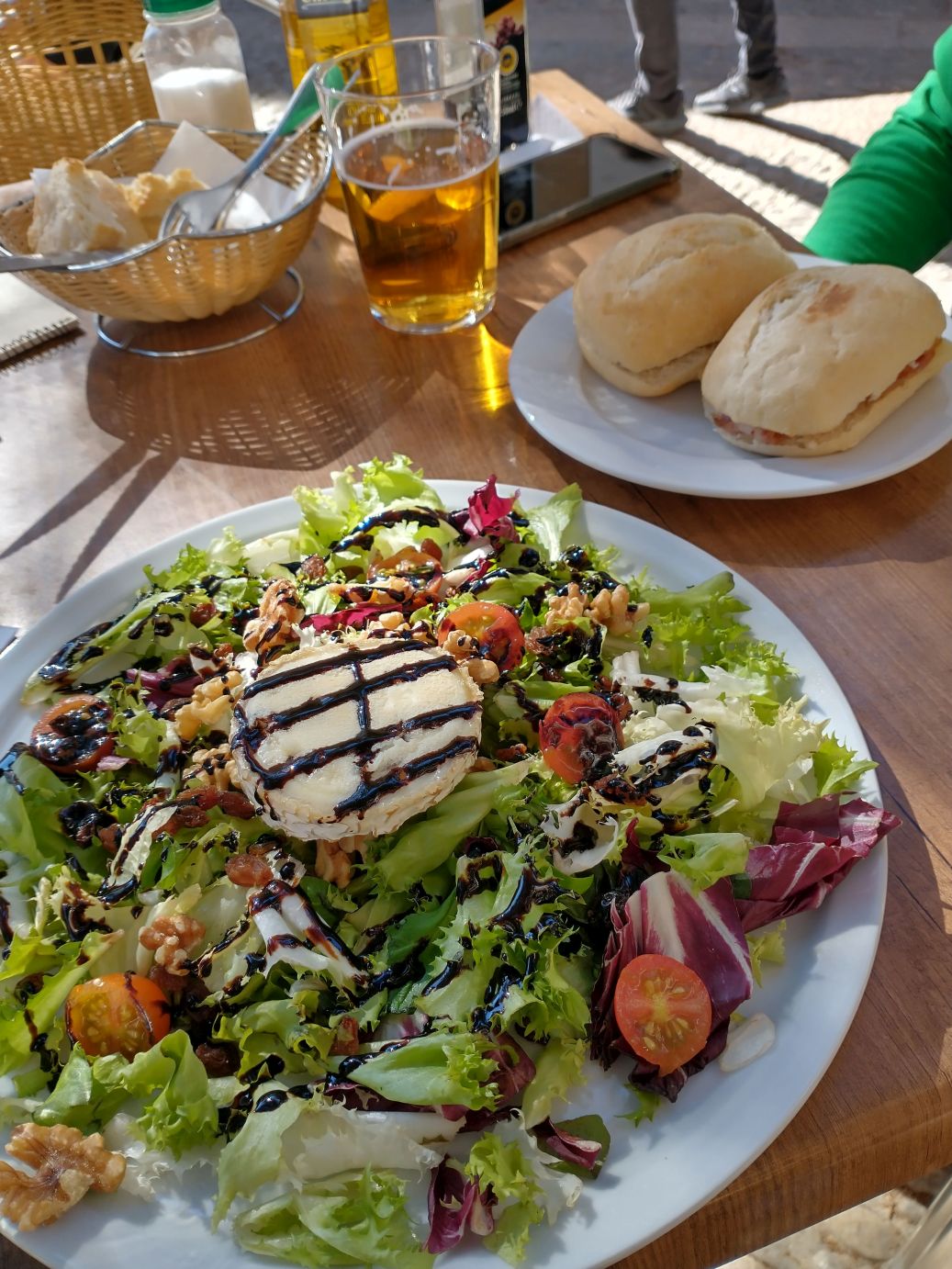
In the meantime, we order our beer and wine and dig into an excellent meal of goat cheese and balsamic salad and Jamon bocadillas. Sitting in the sun, enjoying our meal in this quiet little park is a wonderful way to spend an hour or so in Ronda.
Returning to the main town, we try in vain to find the walkway that will lead us across the gorge to the Arab baths, but it appears to be closed for repairs, so we just retrace our steps to the Puente Nuova. And the peace and quiet we had is over. The crowds have increased exponentially, until it is quite clear this is Asheville in Spain! There are so many people, everywhere. All the restaurants are packed, all the shops are packed. We absolutely made the right decision eating where we did. We don’t even want to stop for another drink, it’s so busy here. We do stop in a clothing store to buy Ed a new sweater, since his beige sweater has gone mysteriously missing, but otherwise, it is a direct shot back to the car and back on the road to Malaga.
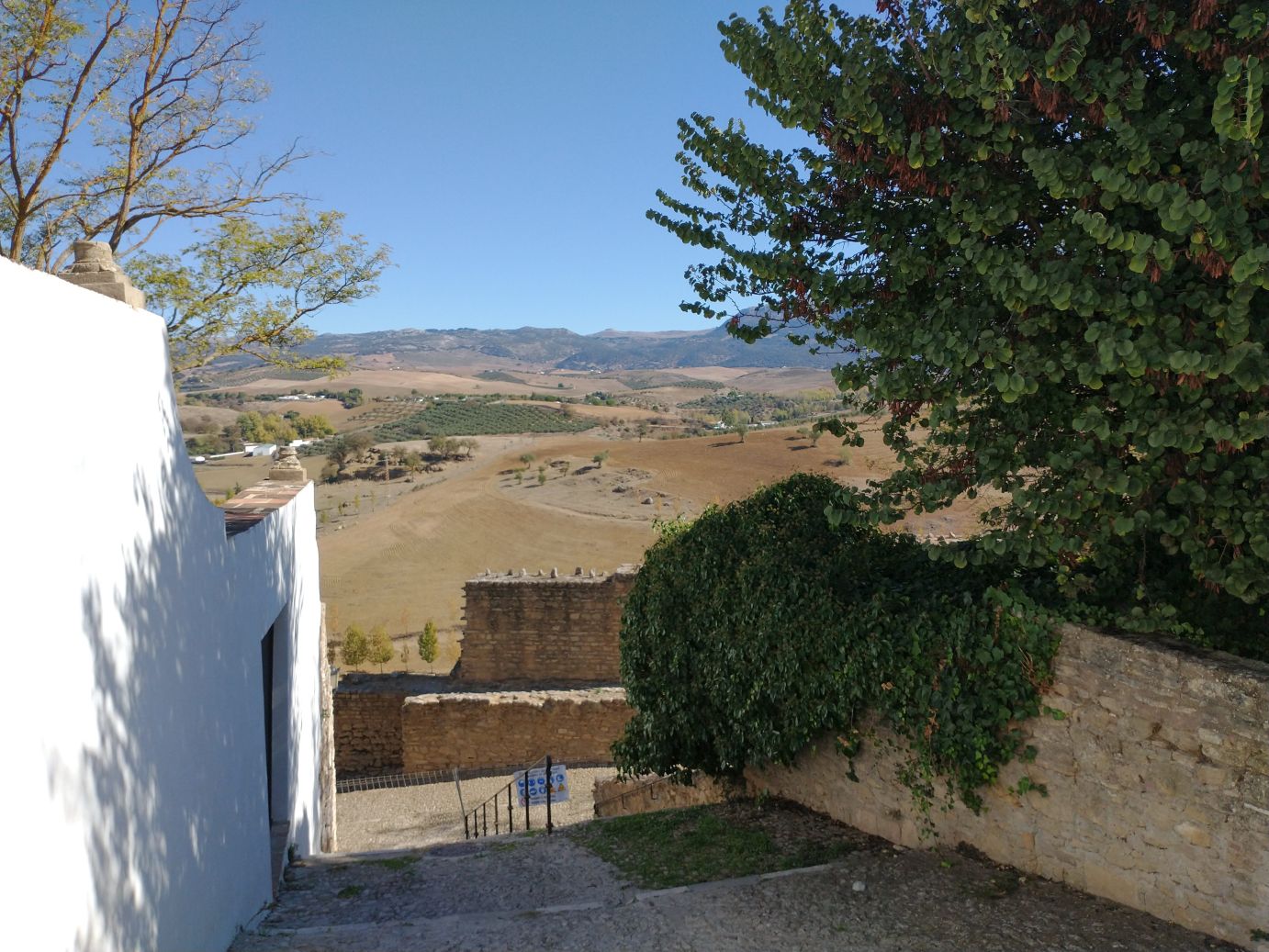
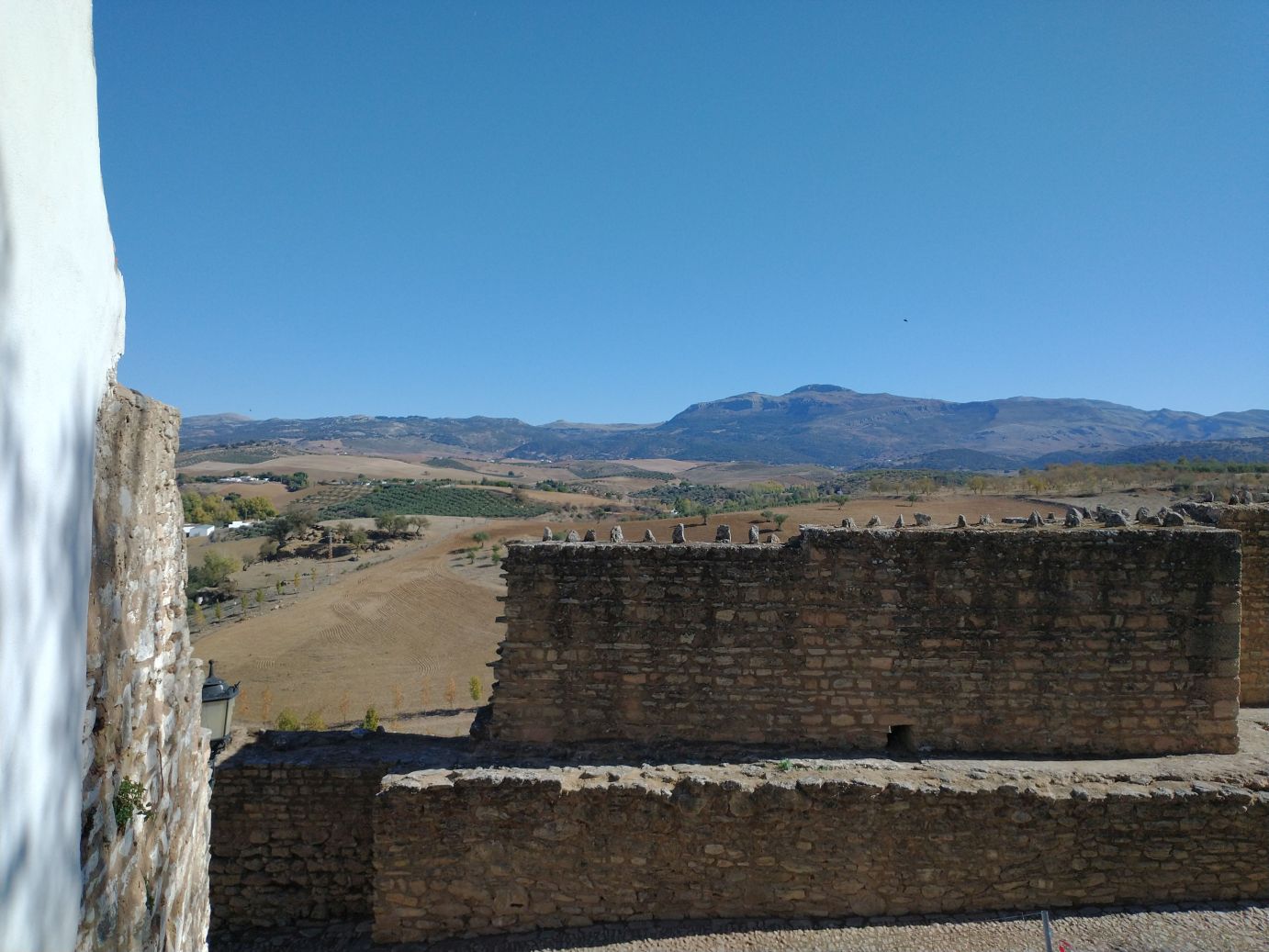
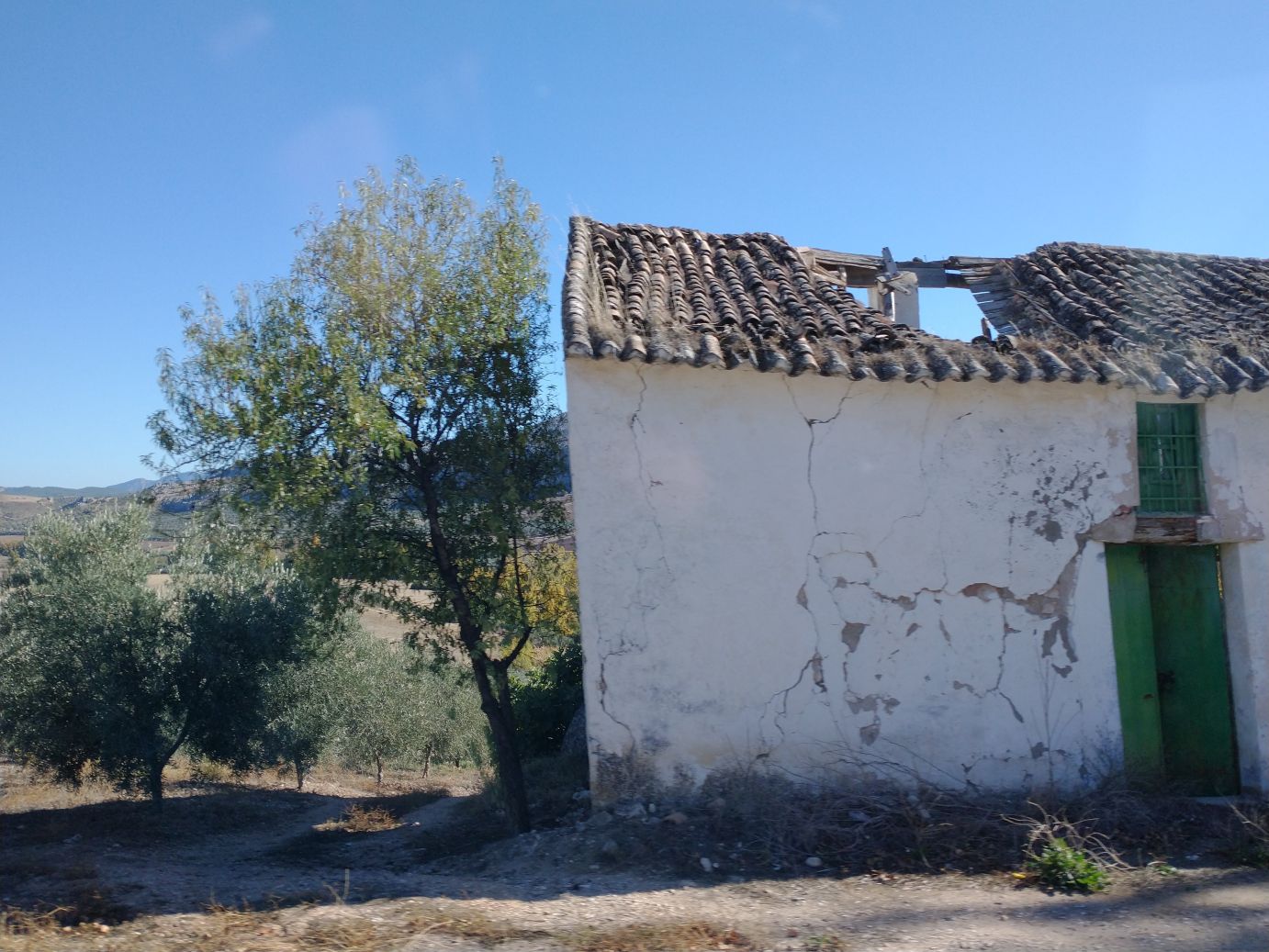
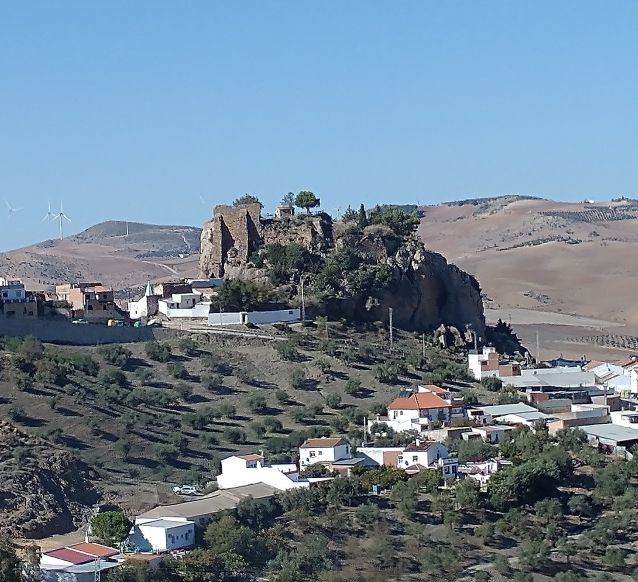
Peacefulness is regained on the drive back – again, there is hardly anyone on the road – of course! They are all in Ronda! The emptiness makes photos easy, and we just relax and enjoy the ride back into town.
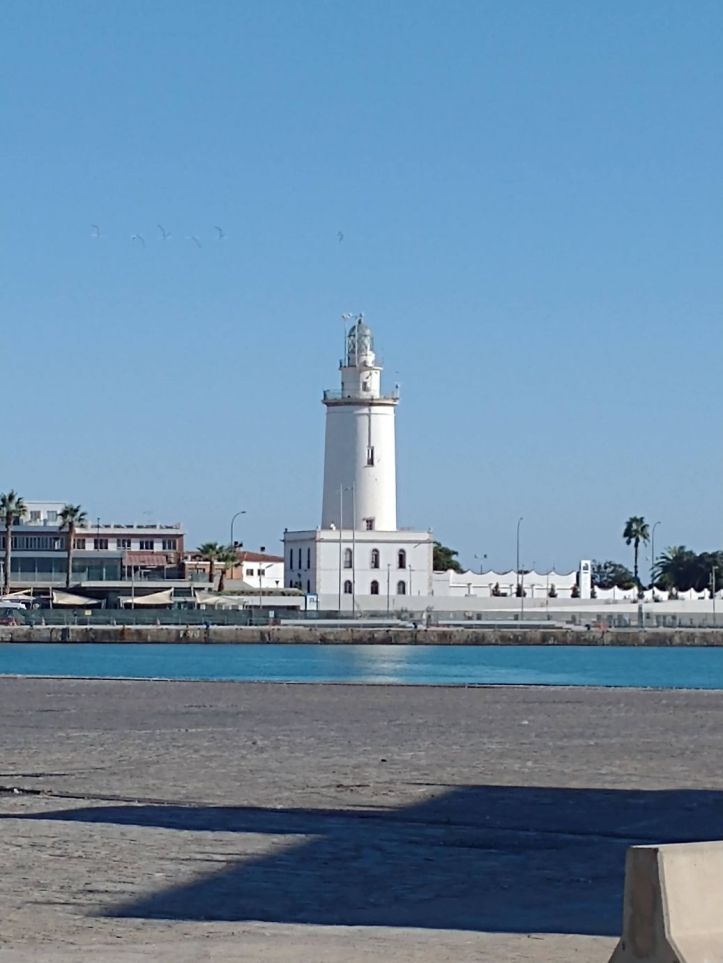
Thankfully it is easy to get back to the port – a lot less confusing than the way out of town, and it is a breeze to get to the parking area, park the car and wait for the rental agent. It is still a gorgeous relatively warm day, so sitting on the hood of the car basking in the sunshine isn’t a hardship by any means. As we wait, we watch a group of people come up to the ferry terminal and ask questions of the guards, then wander away looking confused. Another group does the same thing. Then a single woman comes up and asks us how to get back to the ship. We’re like, Azamara is right over there, pointing to our right. She says she’s on Aida, has lost the ship and doesn’t know how to get back. Huh? We knew Aida came in after us, but how do you lose a ship? As it turns out, the Aida ships (2 in port actually) are berthed way out at the very end of the port facilities, probably a mile or more from where we are. We are guessing these folks went on a tour and they were dropped off in town, now need to figure out how to get back. We weren’t of any help as we didn’t figure this out much later, so we hope they all made it!
After turning in the car, we decide to just return to the ship. We have a little bit of time left before we sail, but we know we’ll be back in a month, so there’s no reason to stay out here now. Plus, we have the special Explorer’s Dinner tonight, and we need to be ready for that!
 Andiamo