With all our onboard credits, we have decided to take a ship’s tour to Granada – but it is one of the “On your Own” tours, so essentially it is just transportation to the old medieval city, which we have not visited, except for Alhambra. Today we’ll just stay in the old city and explore, then have our fill of tapas – since this is a Granada specialty and all you have to do is order a drink, and restaurants will bring you free tapas. Works for us.
Everything goes according to plan, until we are on the bus that is. Sigh. This is supposed to be a “tour” to the old city, but of course, people on the bus want to go to Alhambra and are having a fit because that isn’t what the tour includes. I mean, come on people! Read! It clearly states this in the description. After much ado, and lots of delays, the tour folks finally agree to drop off passengers at Alhambra and then proceed into town to drop us off. Which is annoying because that means extra driving time and possibly shortened time for us in the city. But, as it turns out, us city-touring-folk get more time than the Alhambra folk (serves them right!) – so in the end it didn’t matter much.
The drive went well enough, and quickly enough, the Alhambra drop off smooth (as much as could be with people who don’t listen and can’t figure out where the bus will pick them up), then we were in the city, being dropped off in a little plaza, Plaza de Mariana Pineda, about a 5-minute walk from the cathedral and other sights we want to visit.
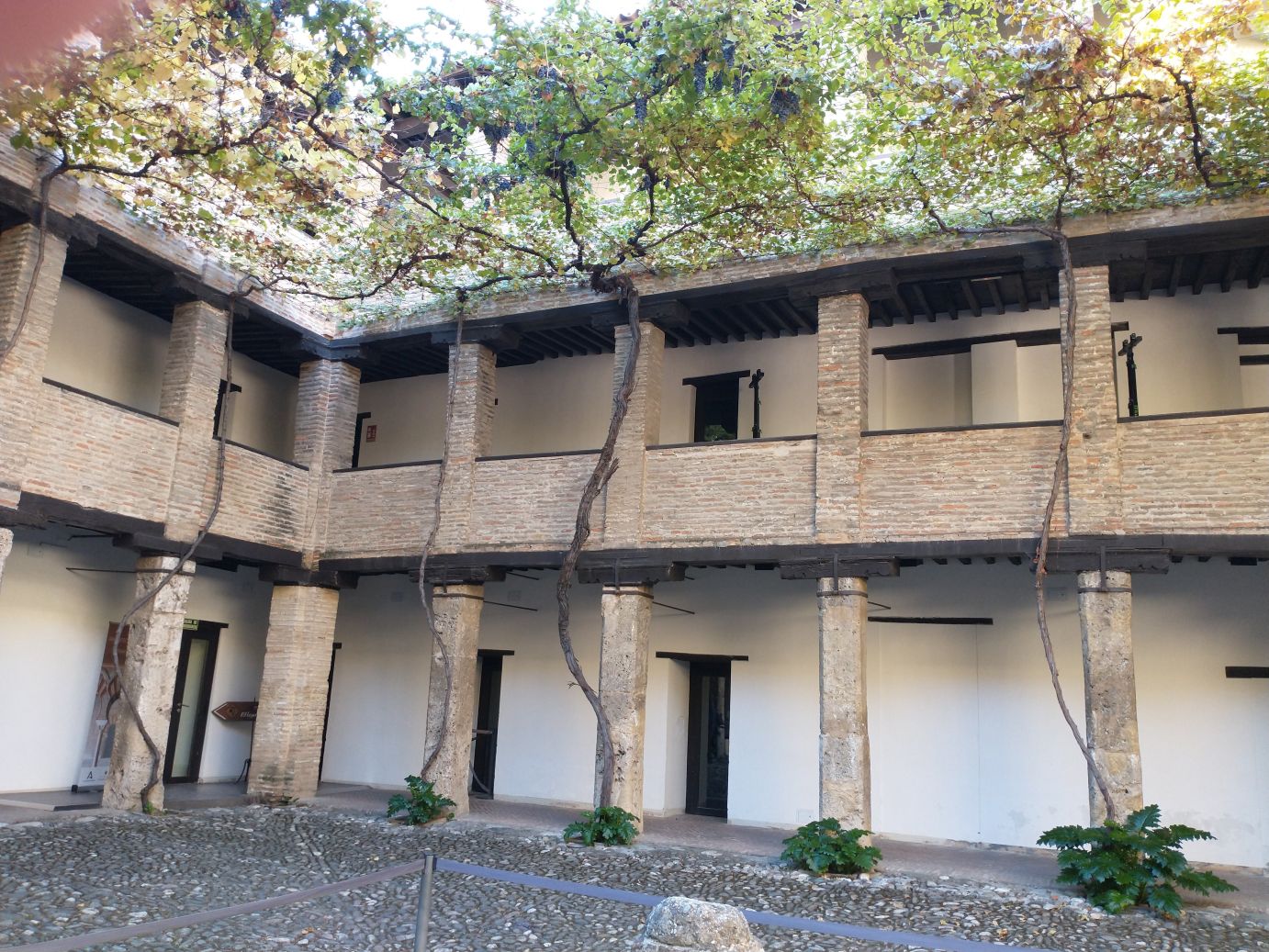
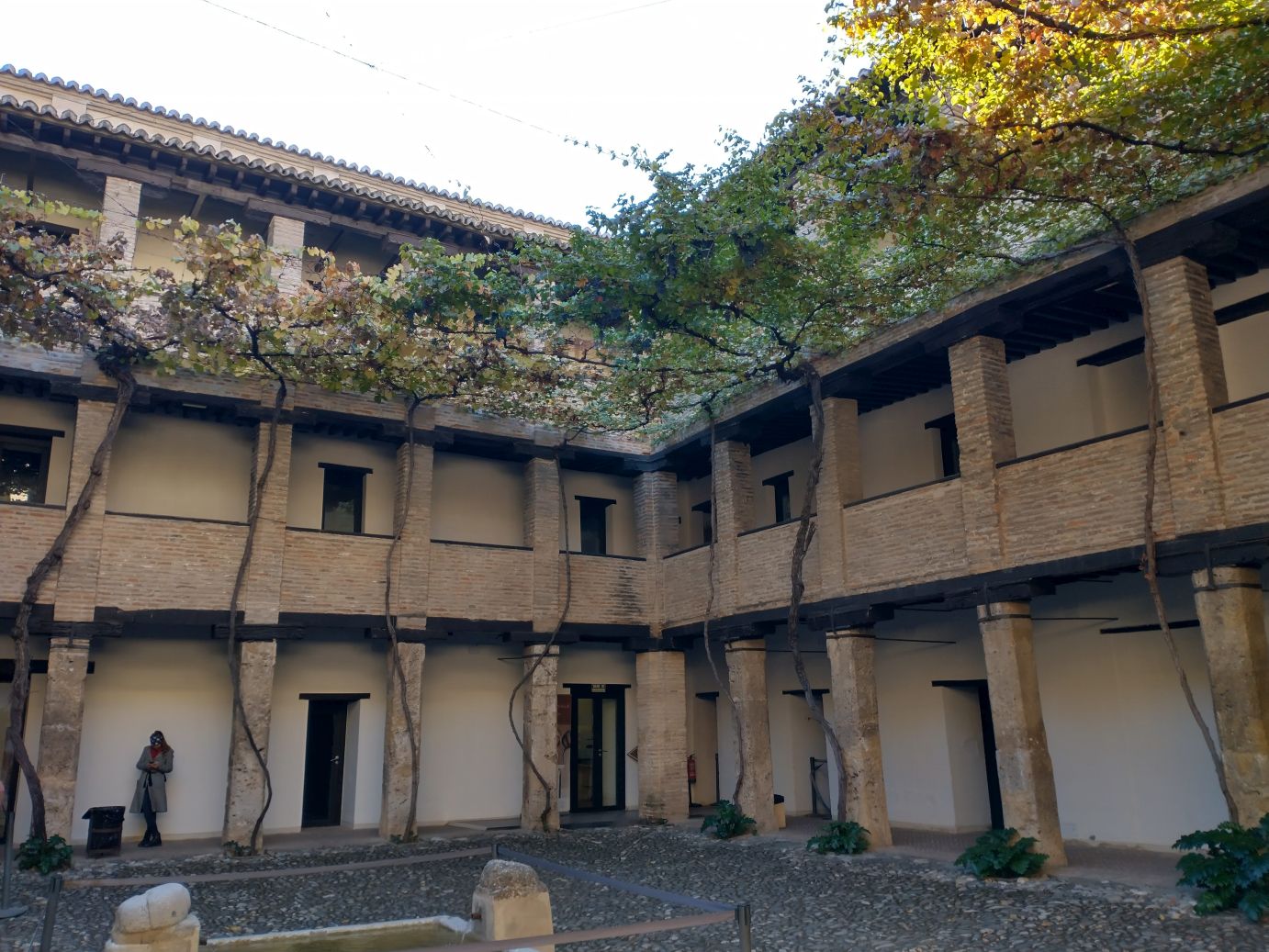
Our first stop is the Corral del Carbon, the oldest remaining monument constructed during the Nasrid dynasty, built in the 1200s as a shelter and warehouse for traders and merchants. We find it easily enough, entering through the gorgeous double-arched gate (after playing photographer for a sweet group of school age kids) and enjoy looking at the cobblestone courtyard and intricate loggia but are confounded as to whether there are any interior displays. There is a huge extremely slow-moving line waiting to go inside, but it appears to be students trying to access study halls and libraries. Here we go again! Oh well, we’ve got plenty of other things to do today.
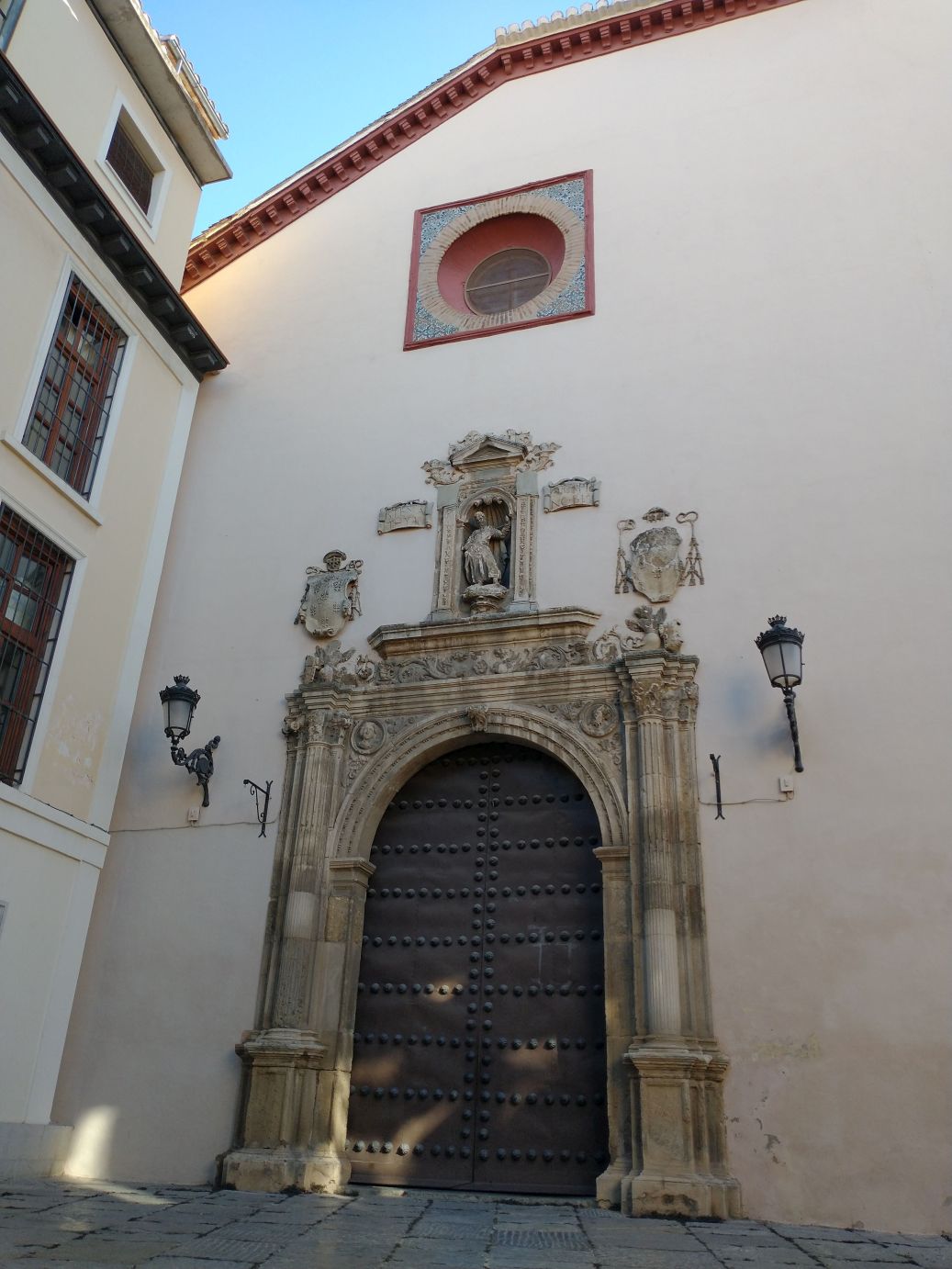
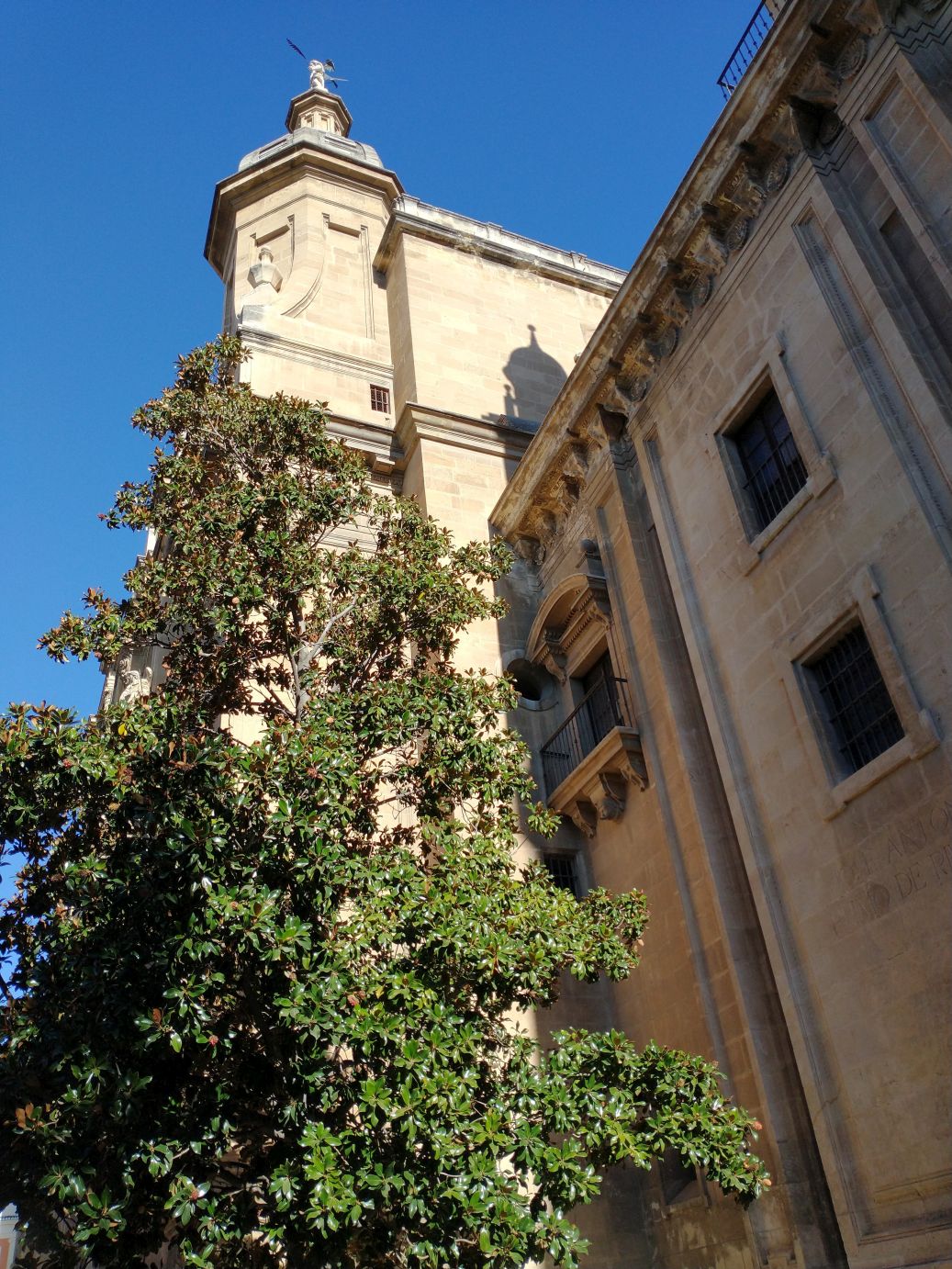
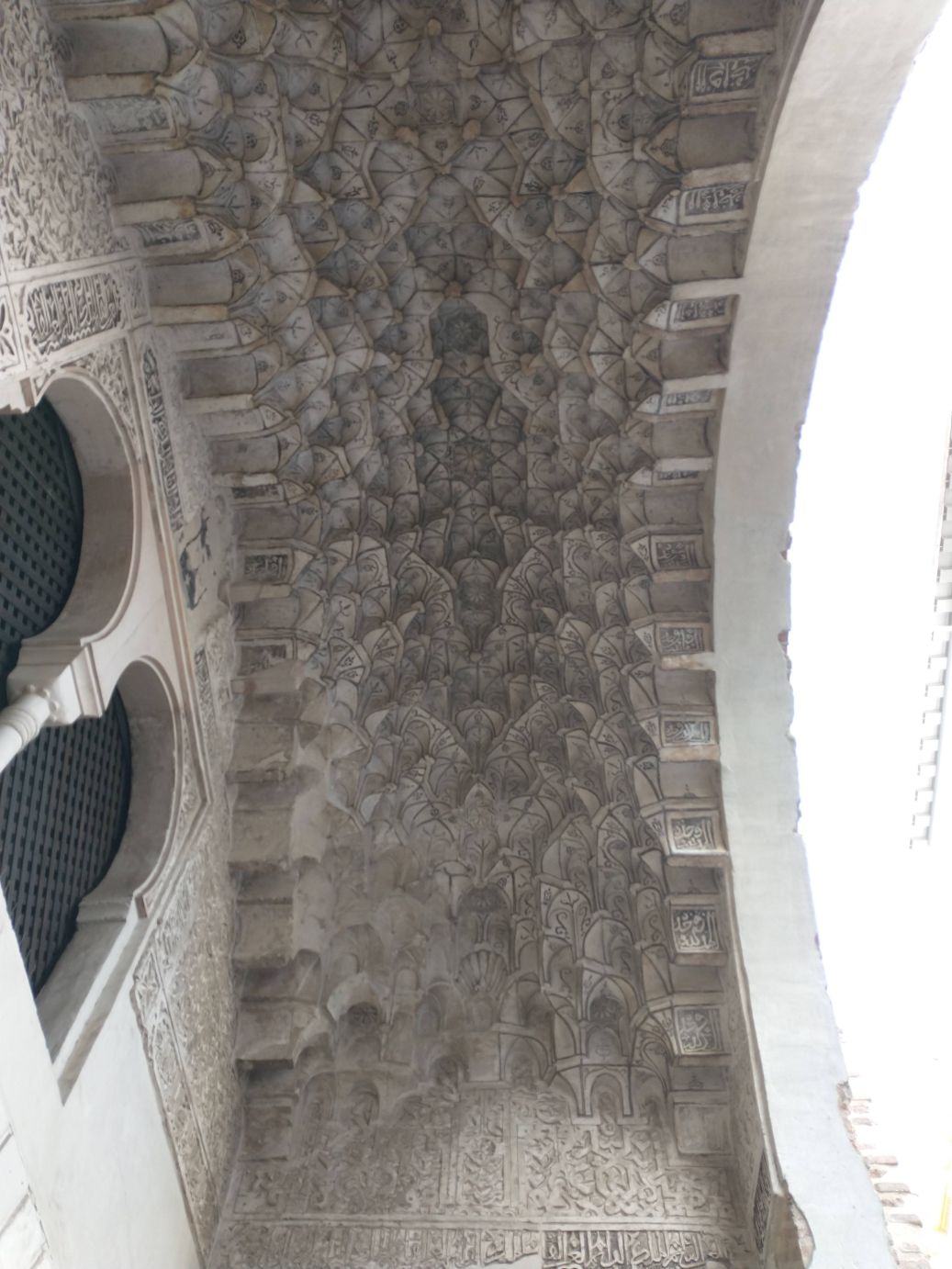
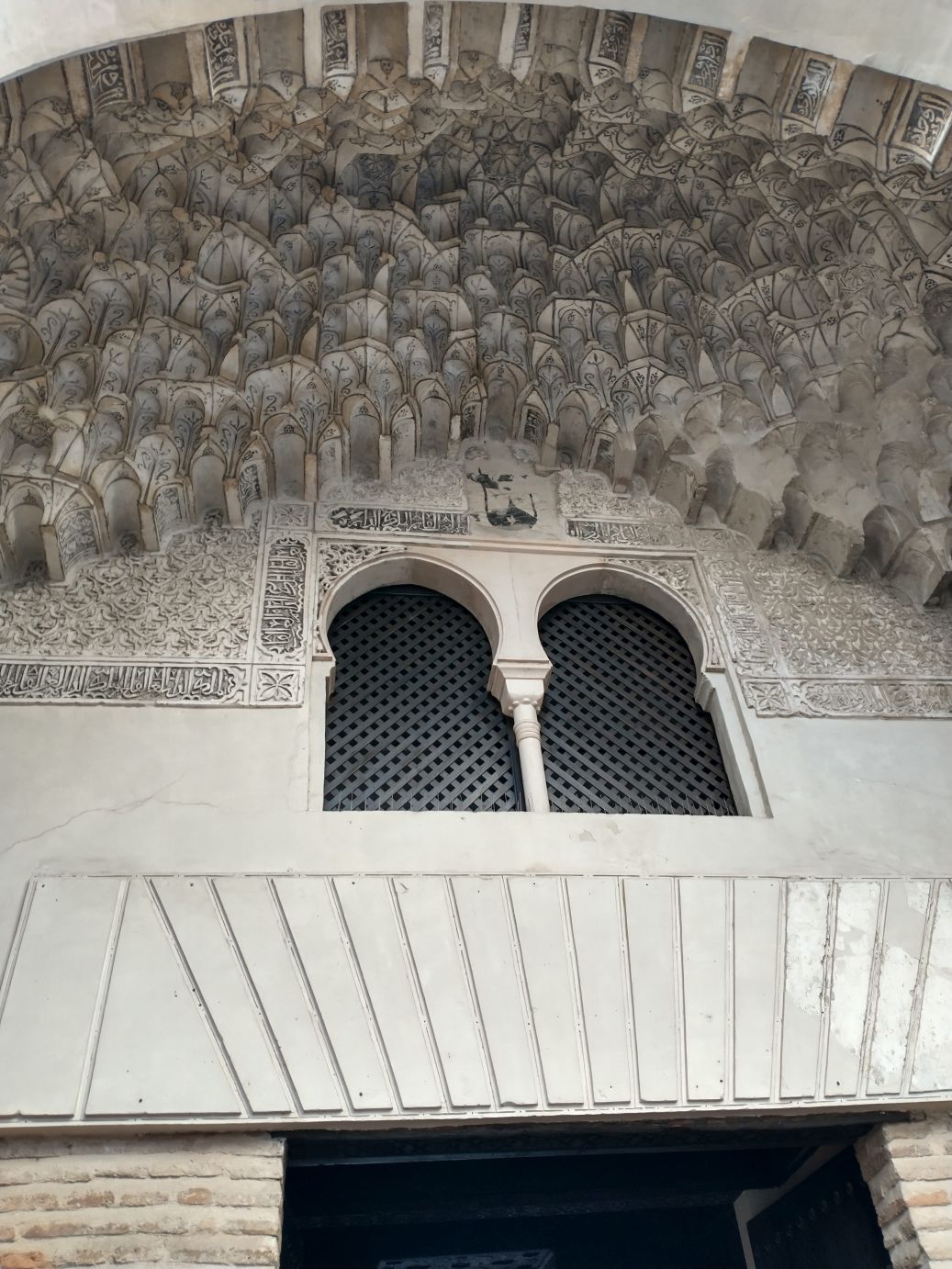
Crossing the little street out front of the Corral, we walk through a portion of the Alcaiceria, now filled with souvenir shops, but in Islamic days, was Granada’s Great Bazaar. Quickly dispensing with these little alleyways and shops, we make our way to the cathedral, built on top of Granada’s mosque (as so many of these cathedrals are) in the 16th century. We have a fabulous lecturer on the ship, so have learned all about the Islamic culture here in Granada, the building of the Alhambra and so many other structures here by the Nasrid dynasty and how the Reconquista didn’t get here until late in the 1400s. (I won’t bore you with the details, but he taught us how the difference between Shite and Sunni began, which I had not a clue, how Granada was one of the last to fall to the Spanish and the special nature of the city and Alhambra, being one of the few tolerant places in the world that accepted all religions and people in the name of learning, science and philosophy.)
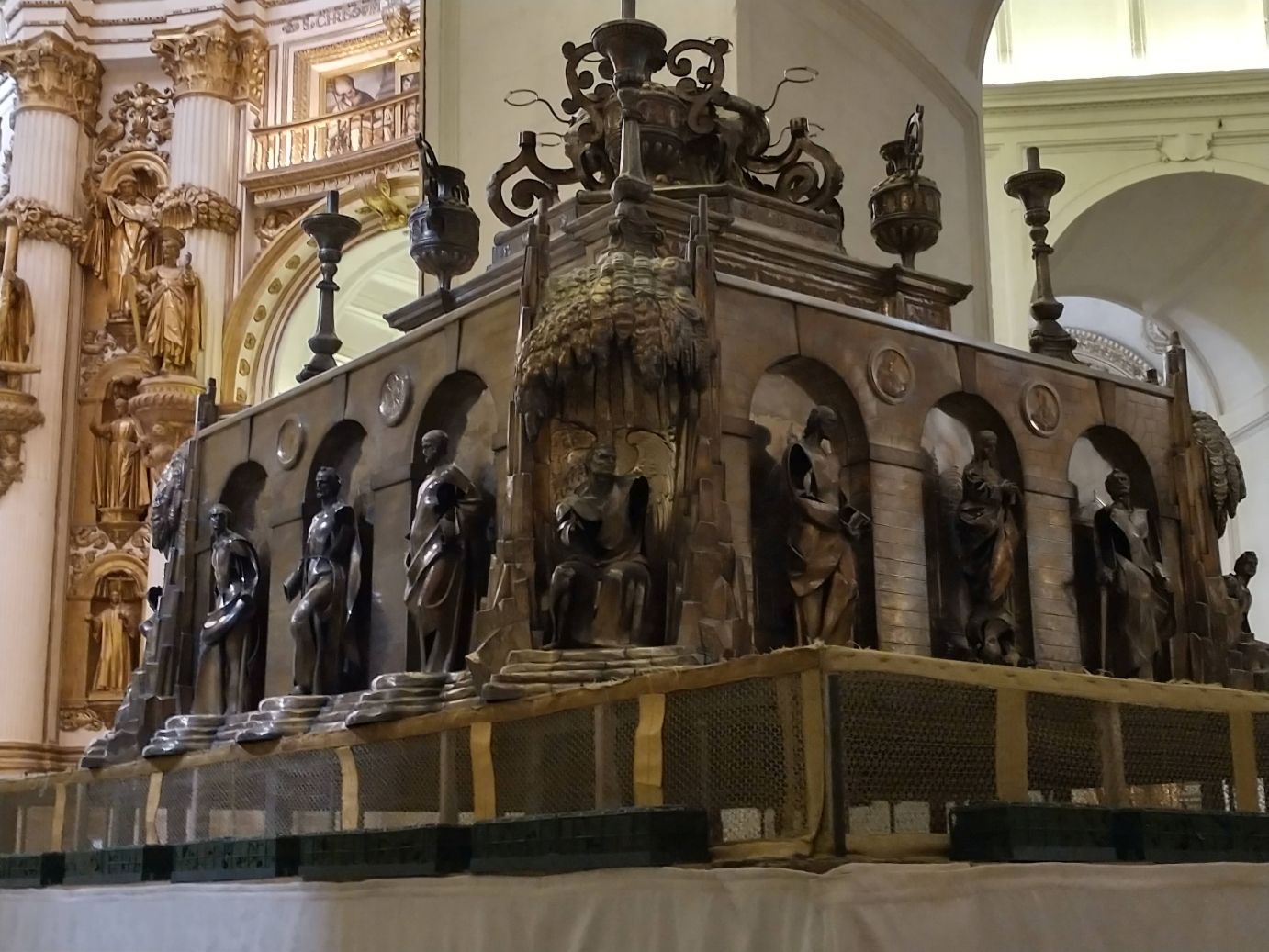
The cathedral is magnificent! And again, the excess! Gold everywhere, ornate carvings, marble, the contrast between the bright white walls and the ornamentation is stunning. We explore all the nooks and crannies we can, walking past all 14 chapels and the amazing bronze (I think) statue at the back of the nave of, well, I don’t know what, but I guess it is the disciples, maybe? At any rate, it is fascinating, as are so many of the other features of the church and chapels.
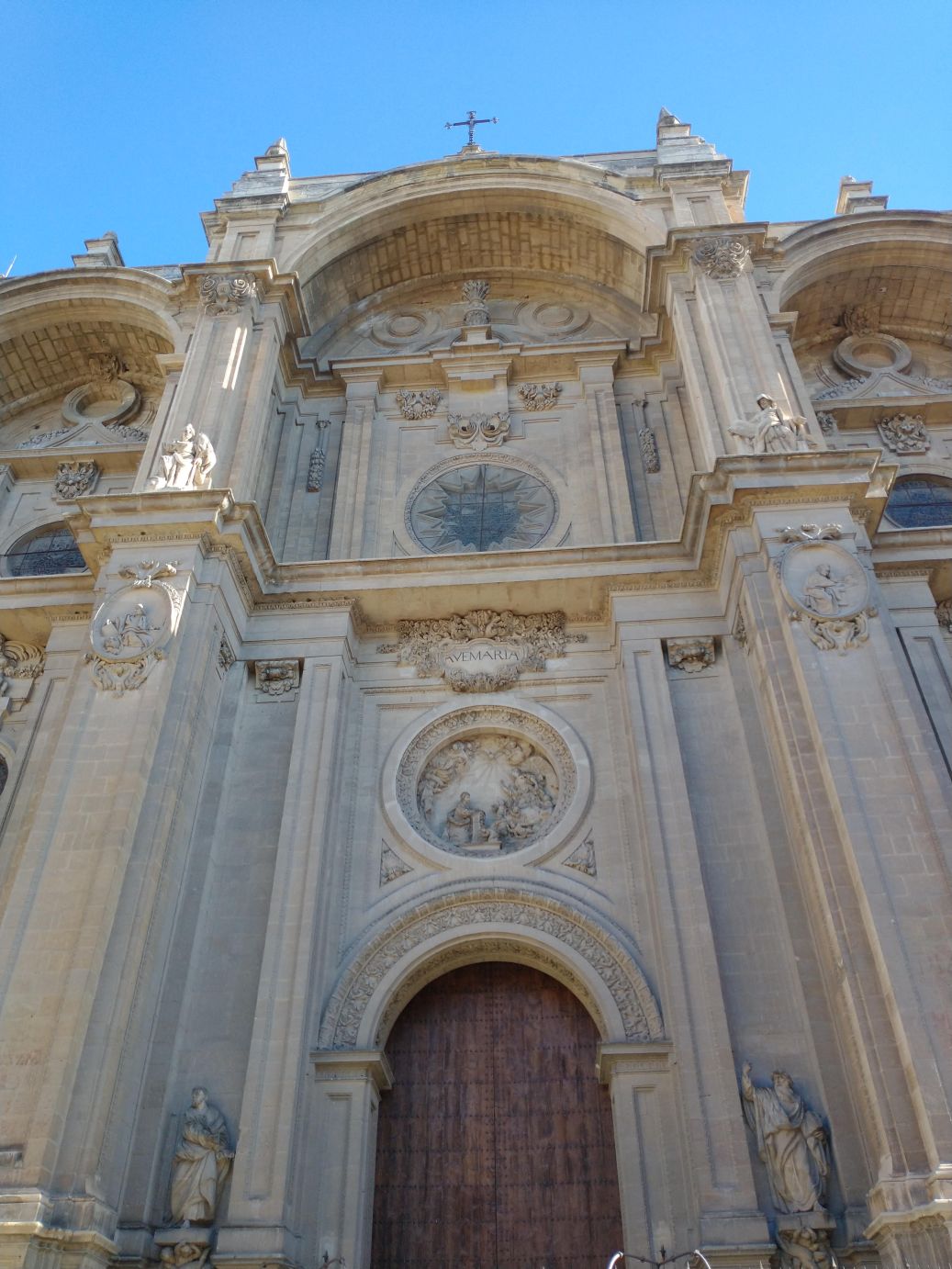
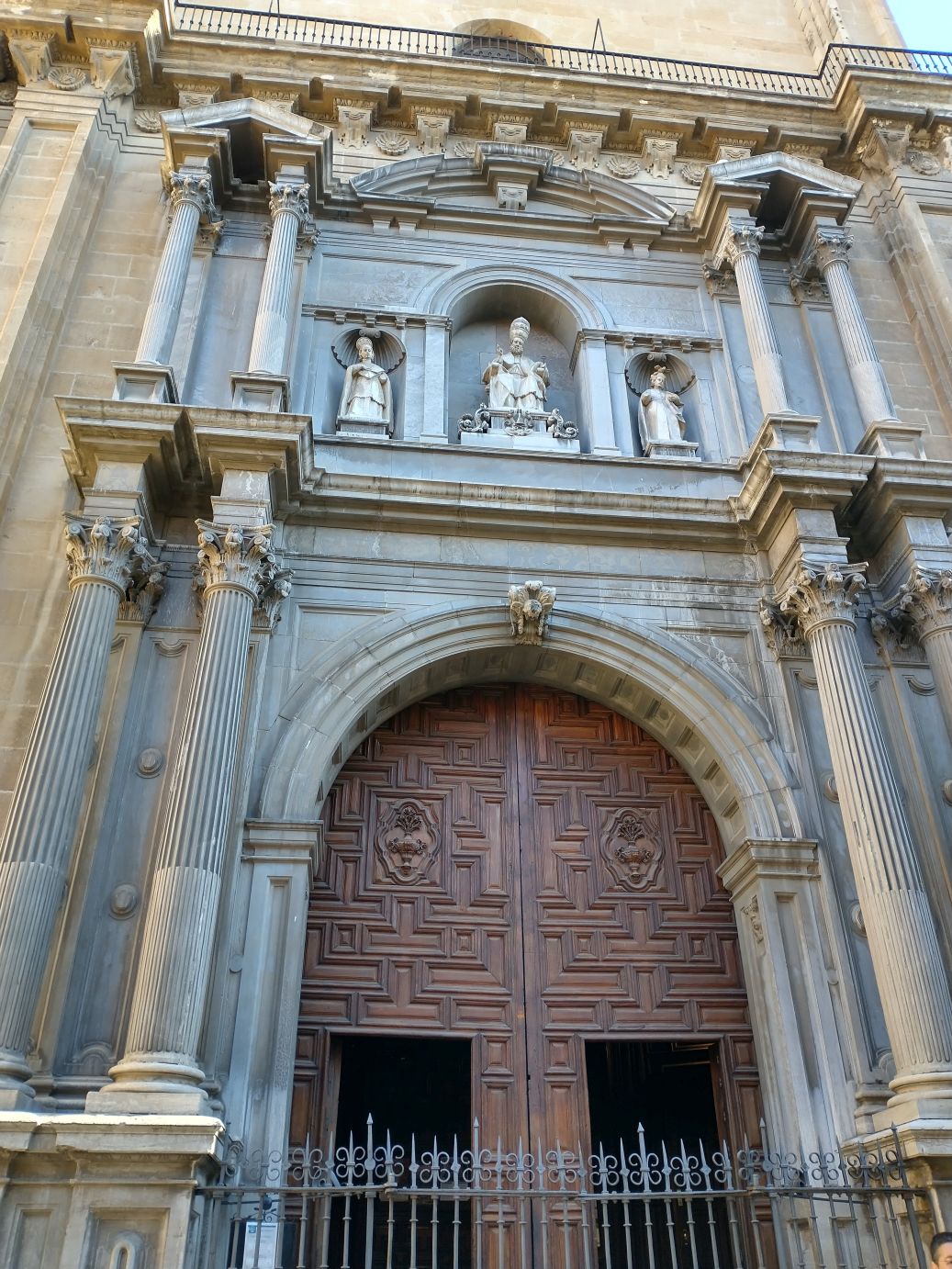
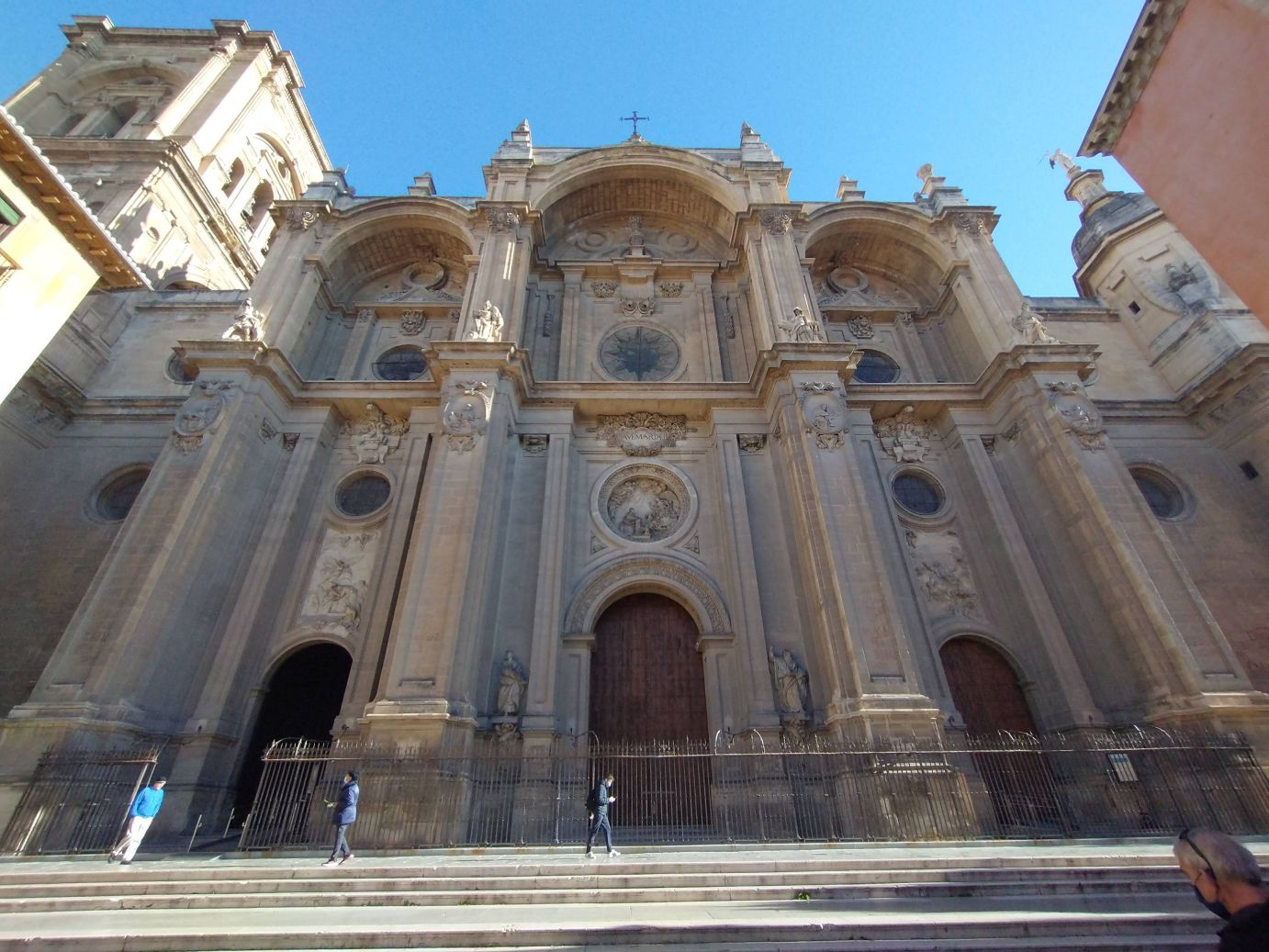
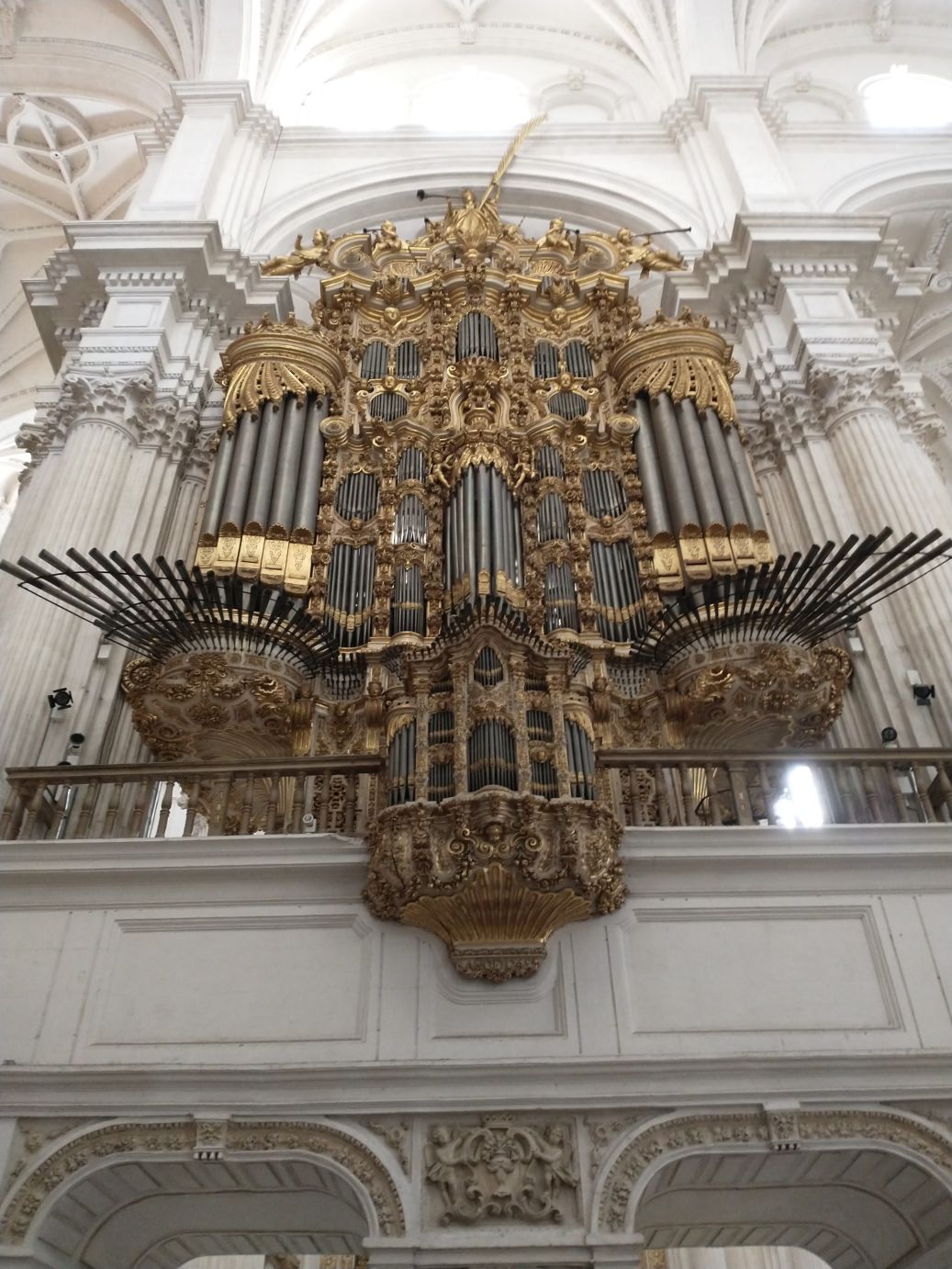
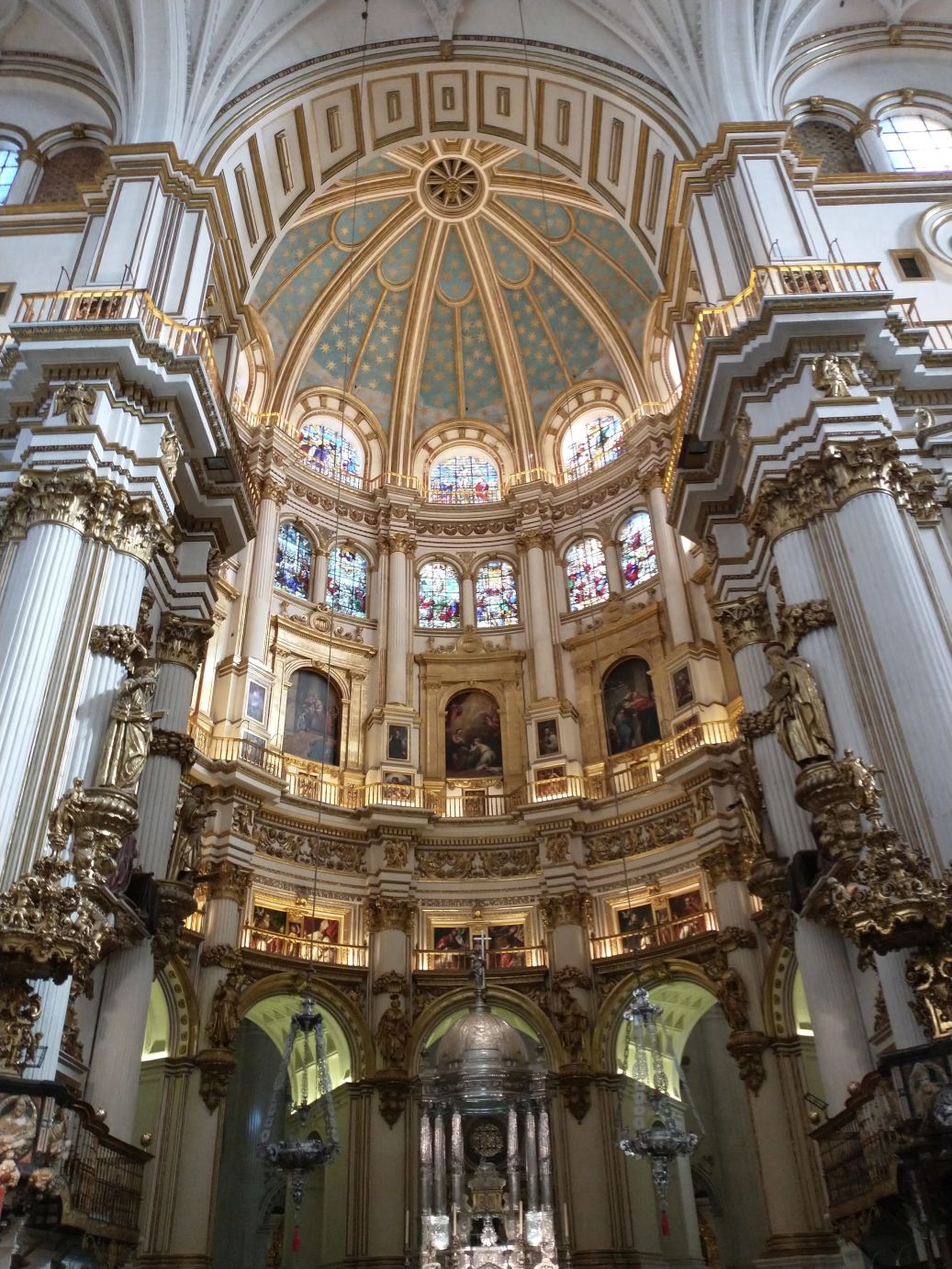
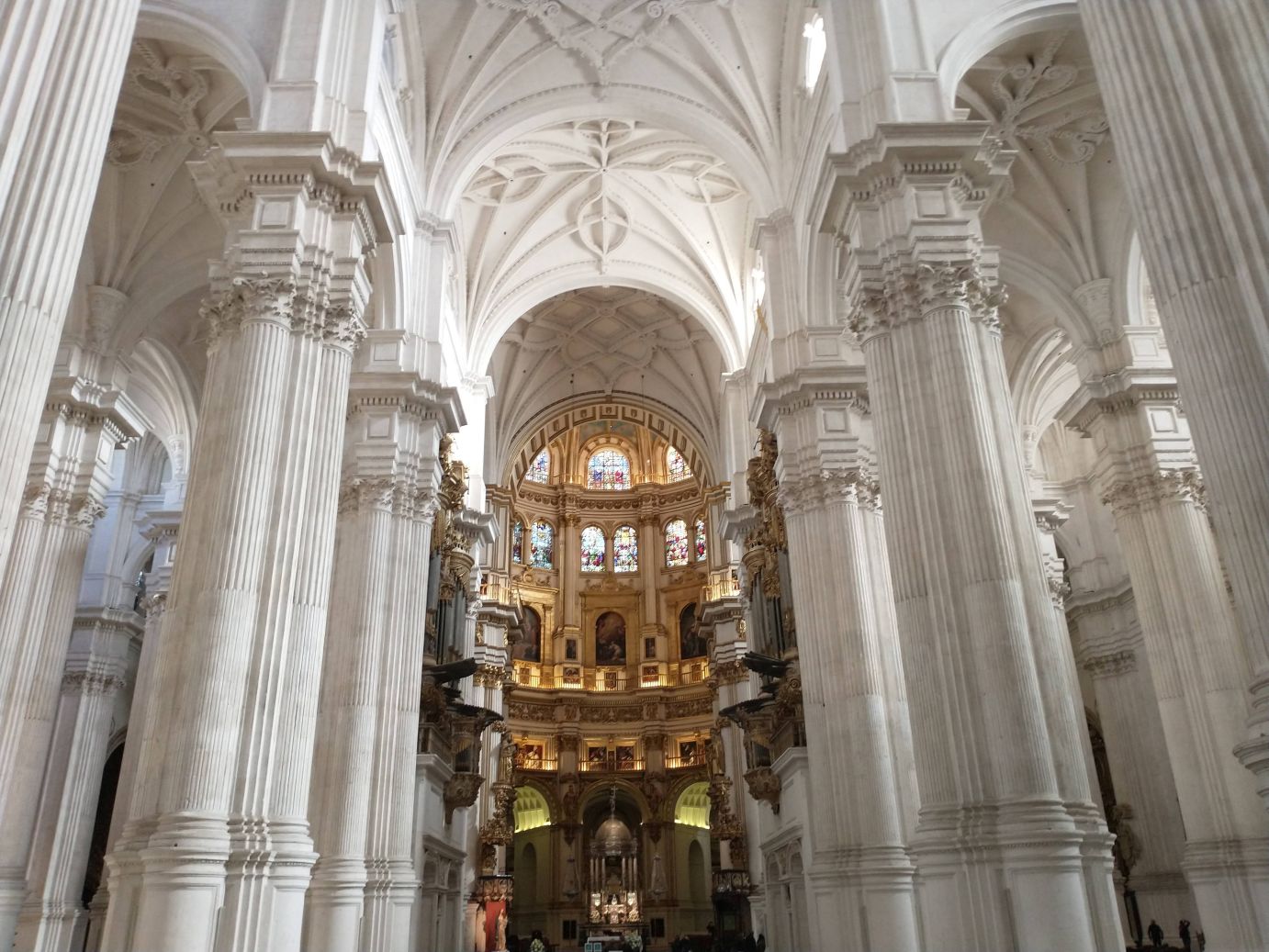
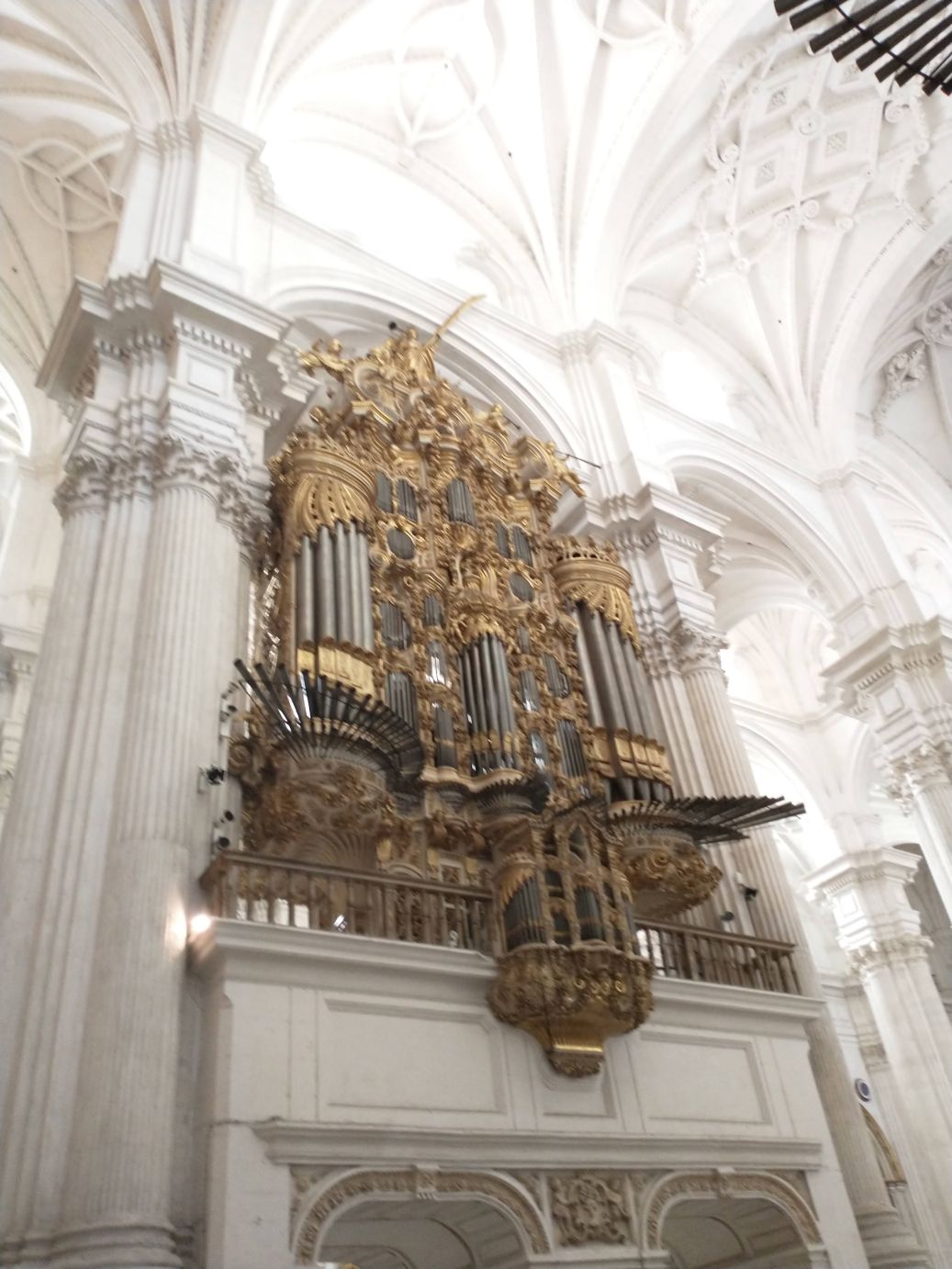
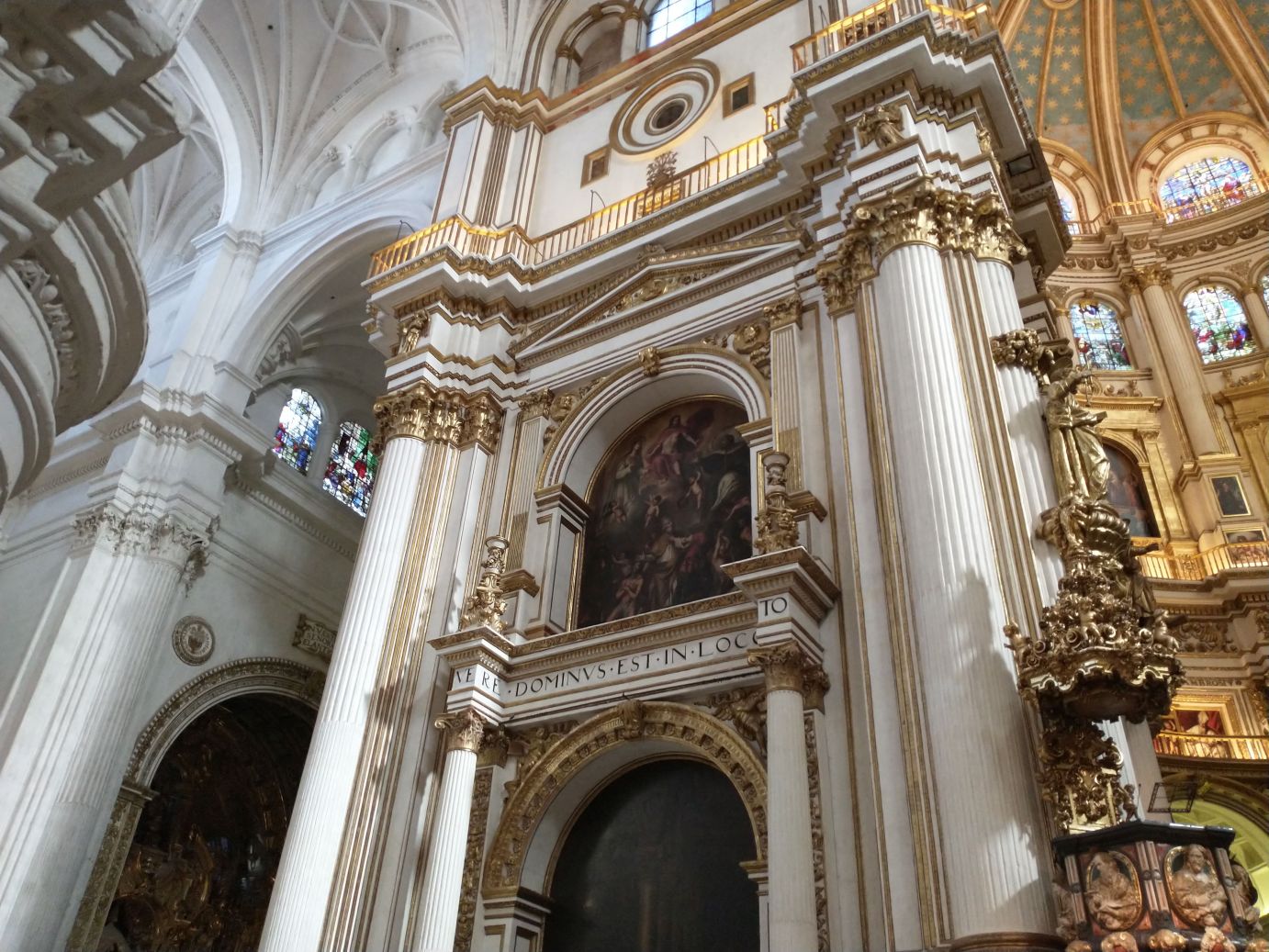
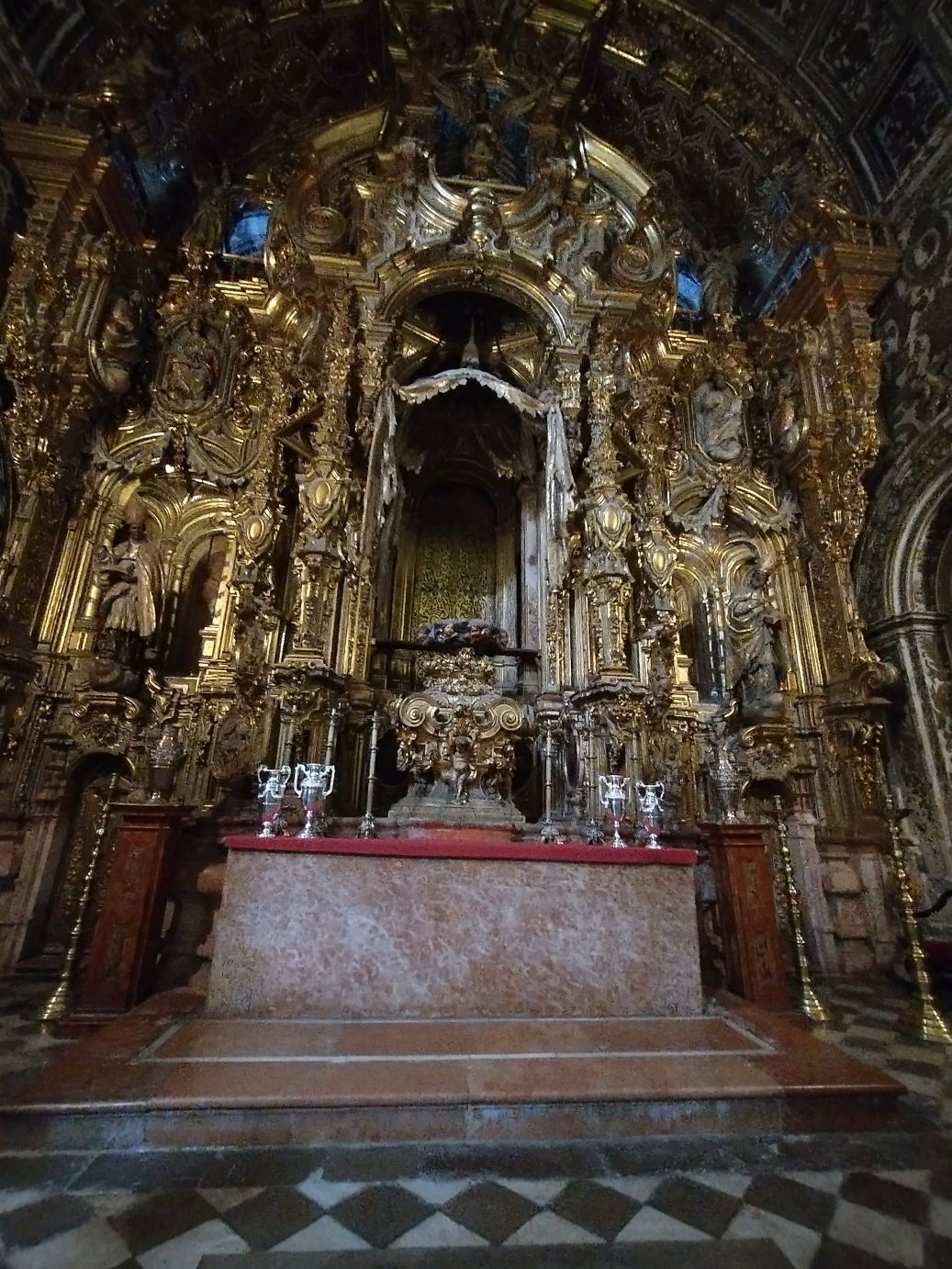

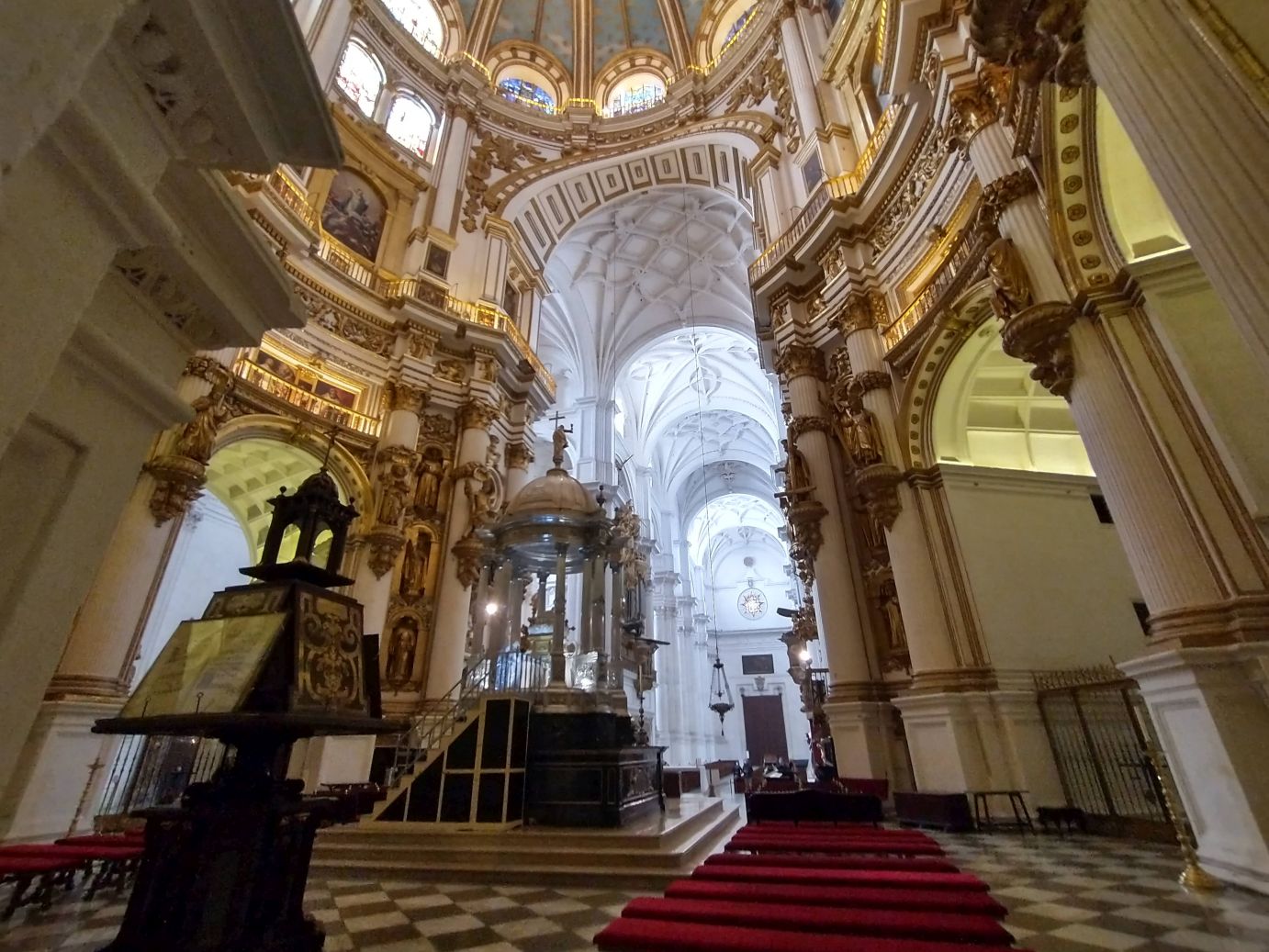
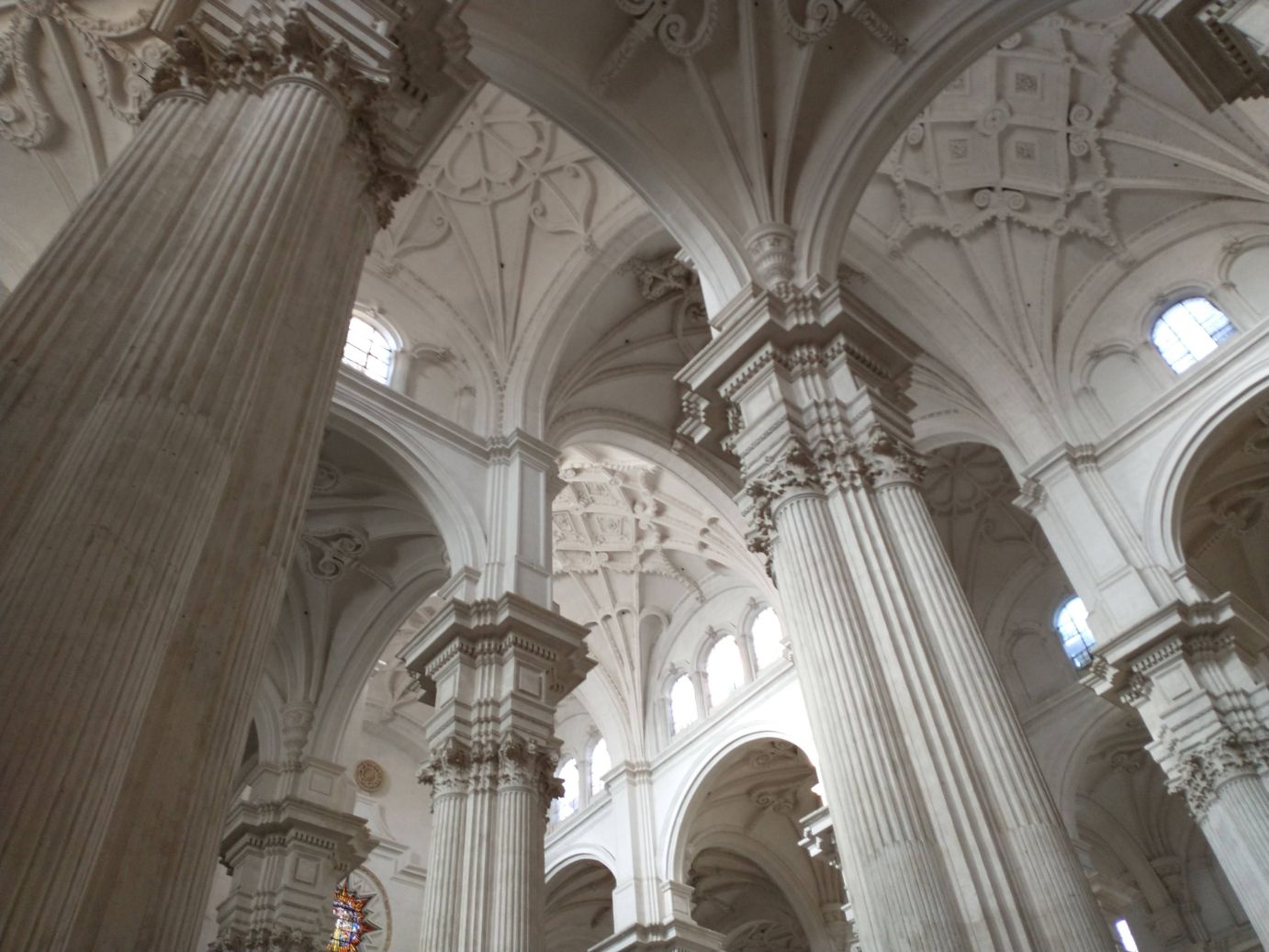
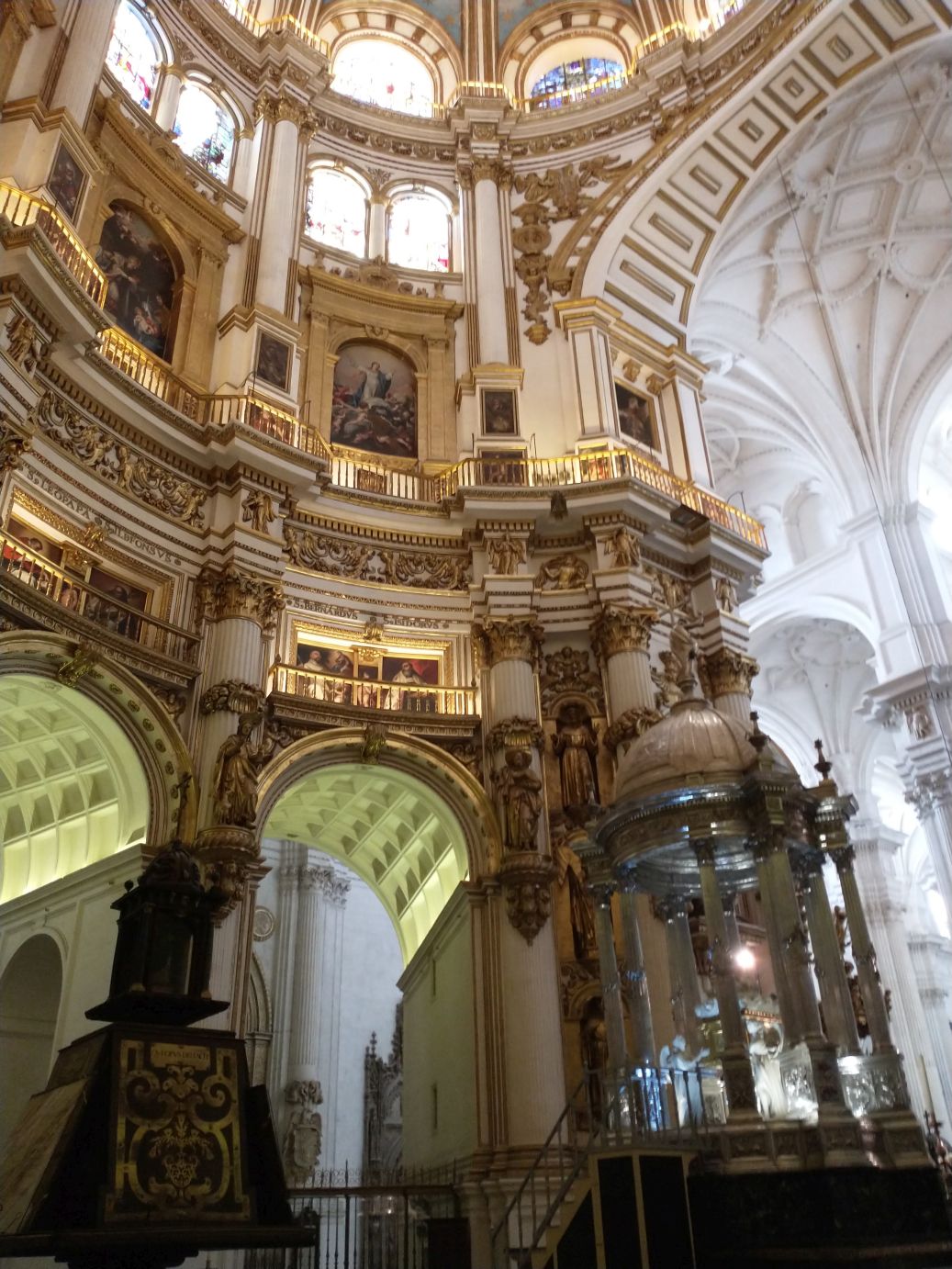
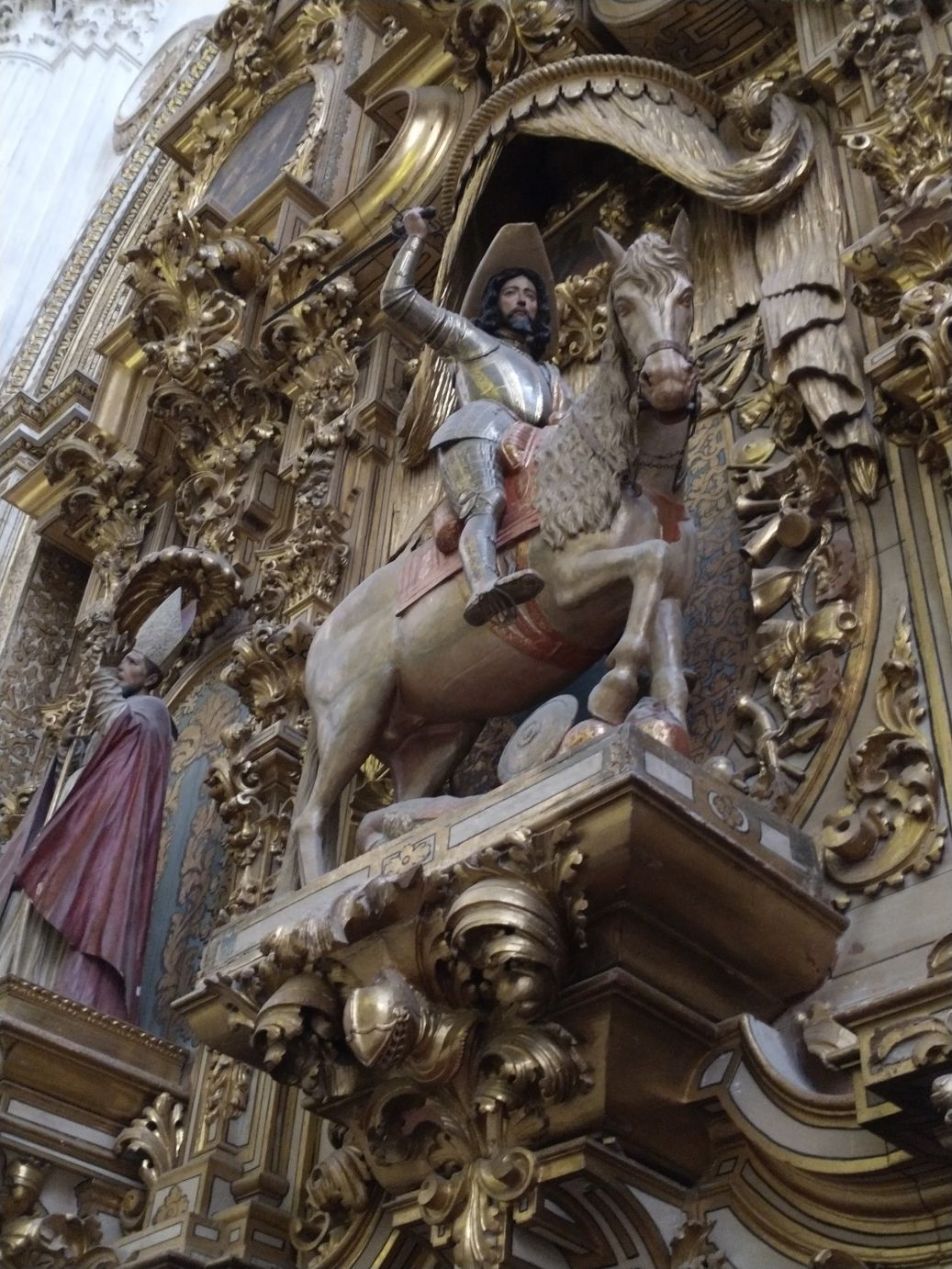
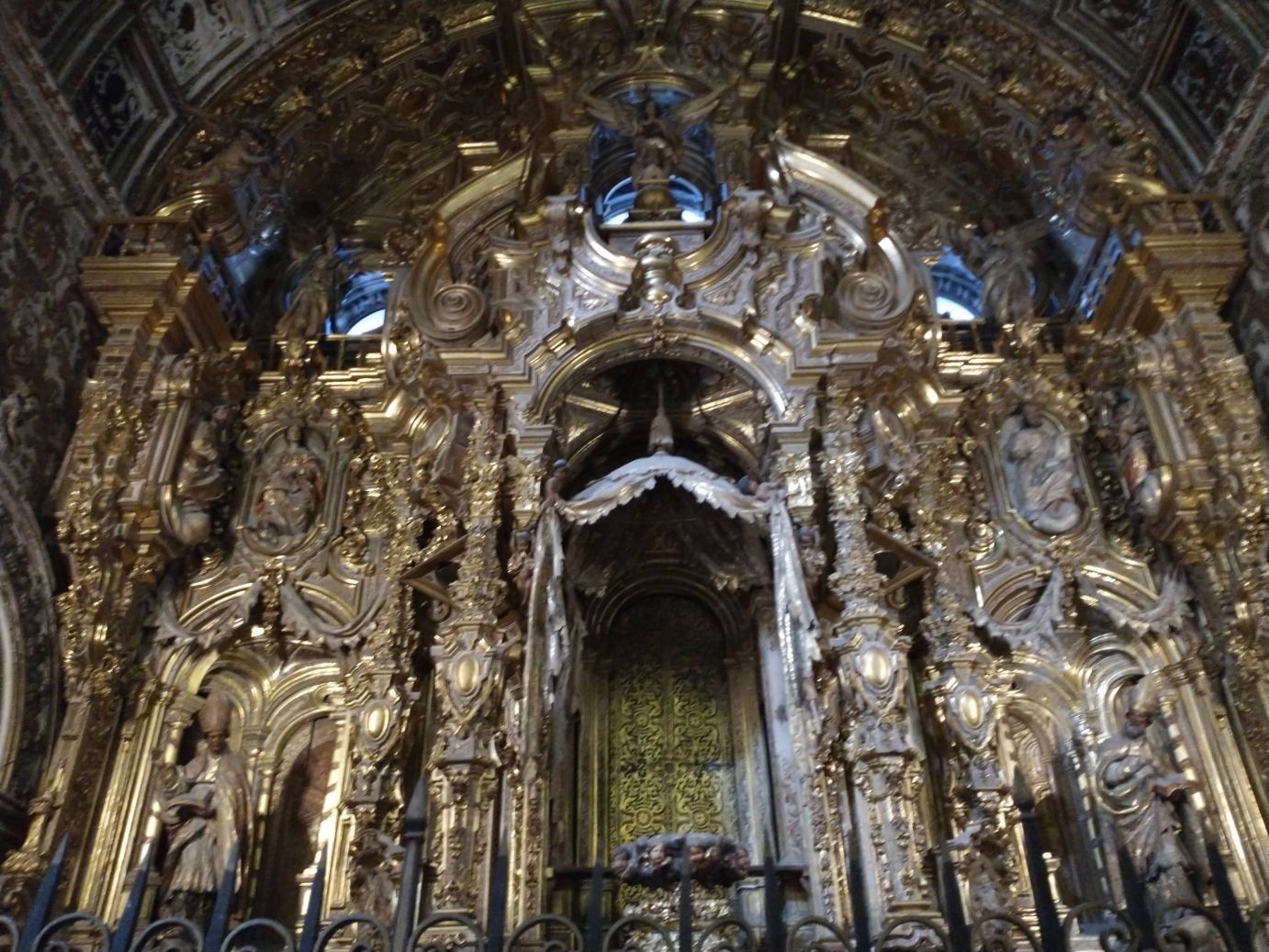
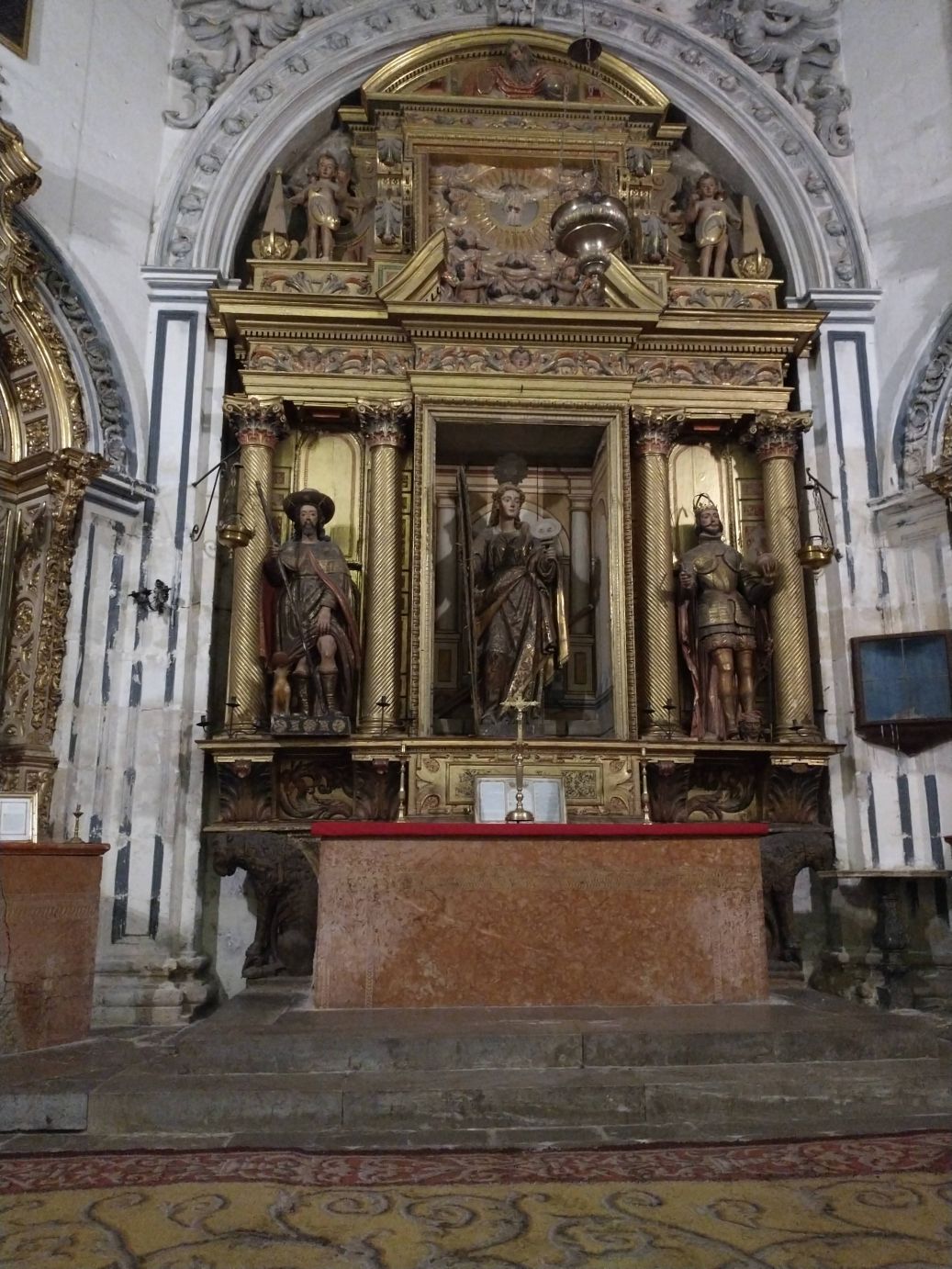
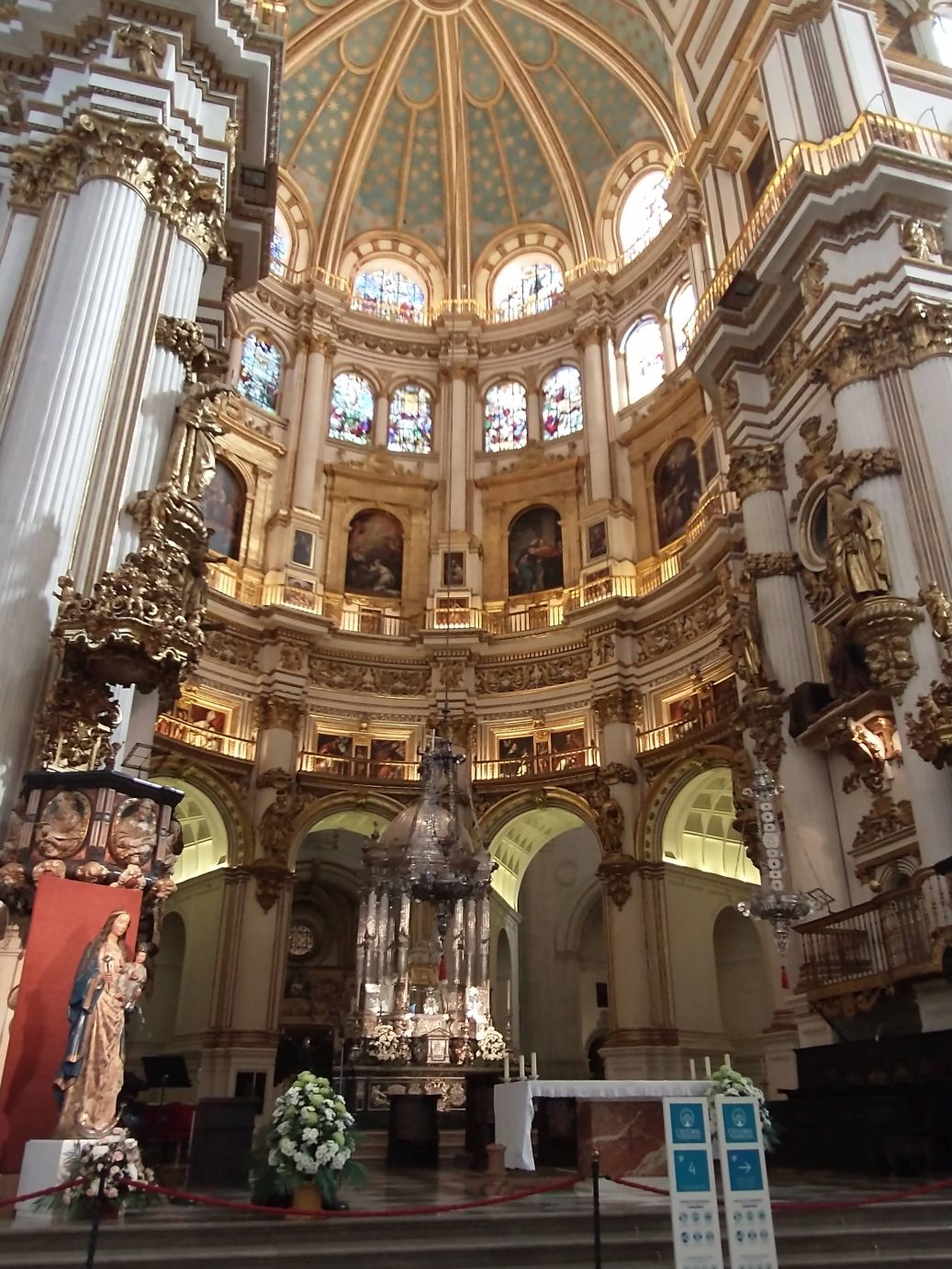
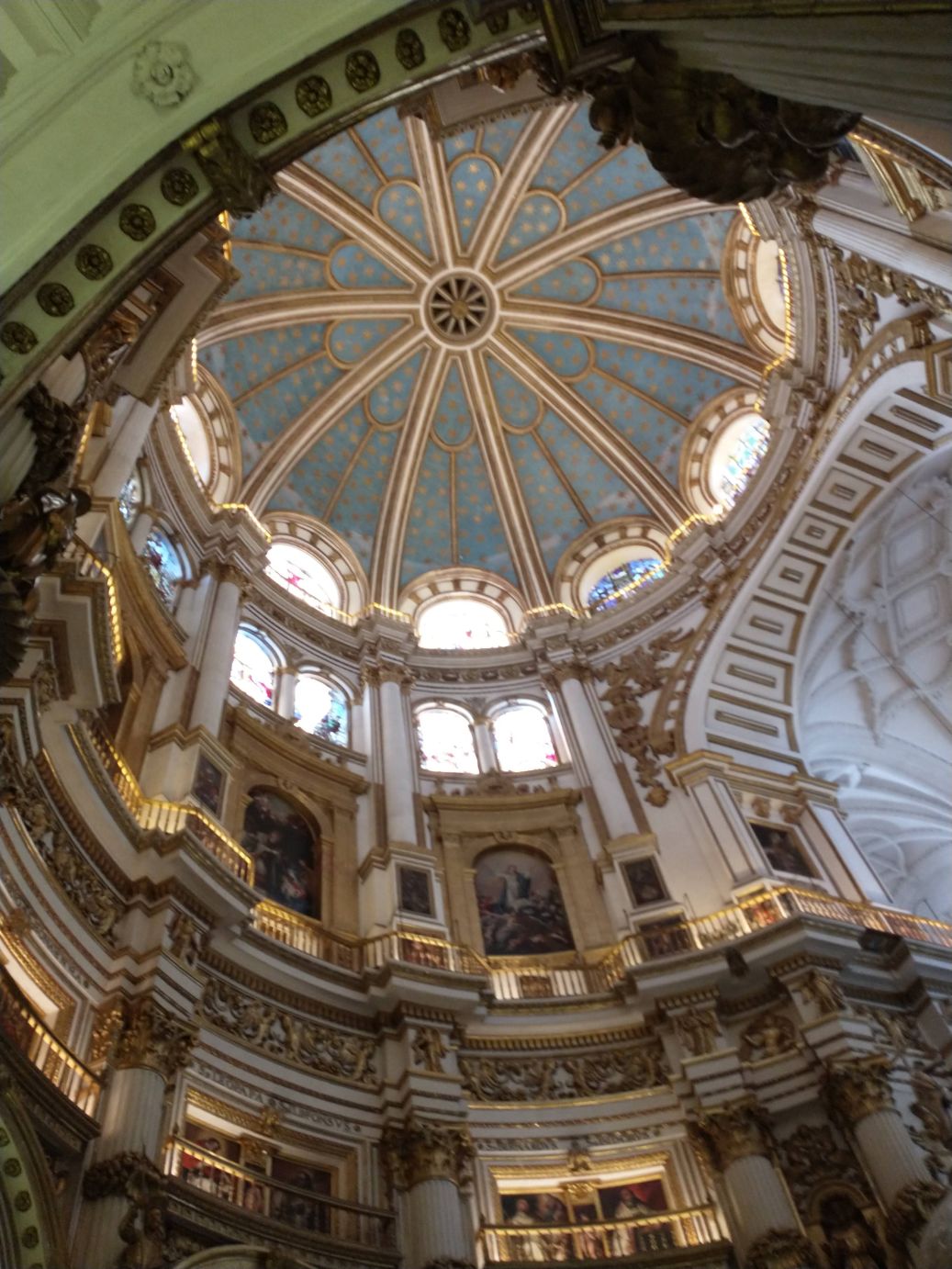
Just when you think you are cathedral-ed out…..along comes Granada!
After getting our fill of the grandeur, we re-emerge onto the square and circle around to find the Royal Chapel, where the tombs of Isabella I and Ferdinand II are located. Unfortunately, you aren’t allowed to take photos, but the tombs are made of beautiful alabaster carvings, as are the tombs of their successors, Joanna of Castile and Philip I. We find out later that the small tomb alongside these 4 (which sort of confused us) is Miguel da Paz, the Prince of Portugal who died in infancy and the grandson of the Catholic Monarch. That makes sense now.
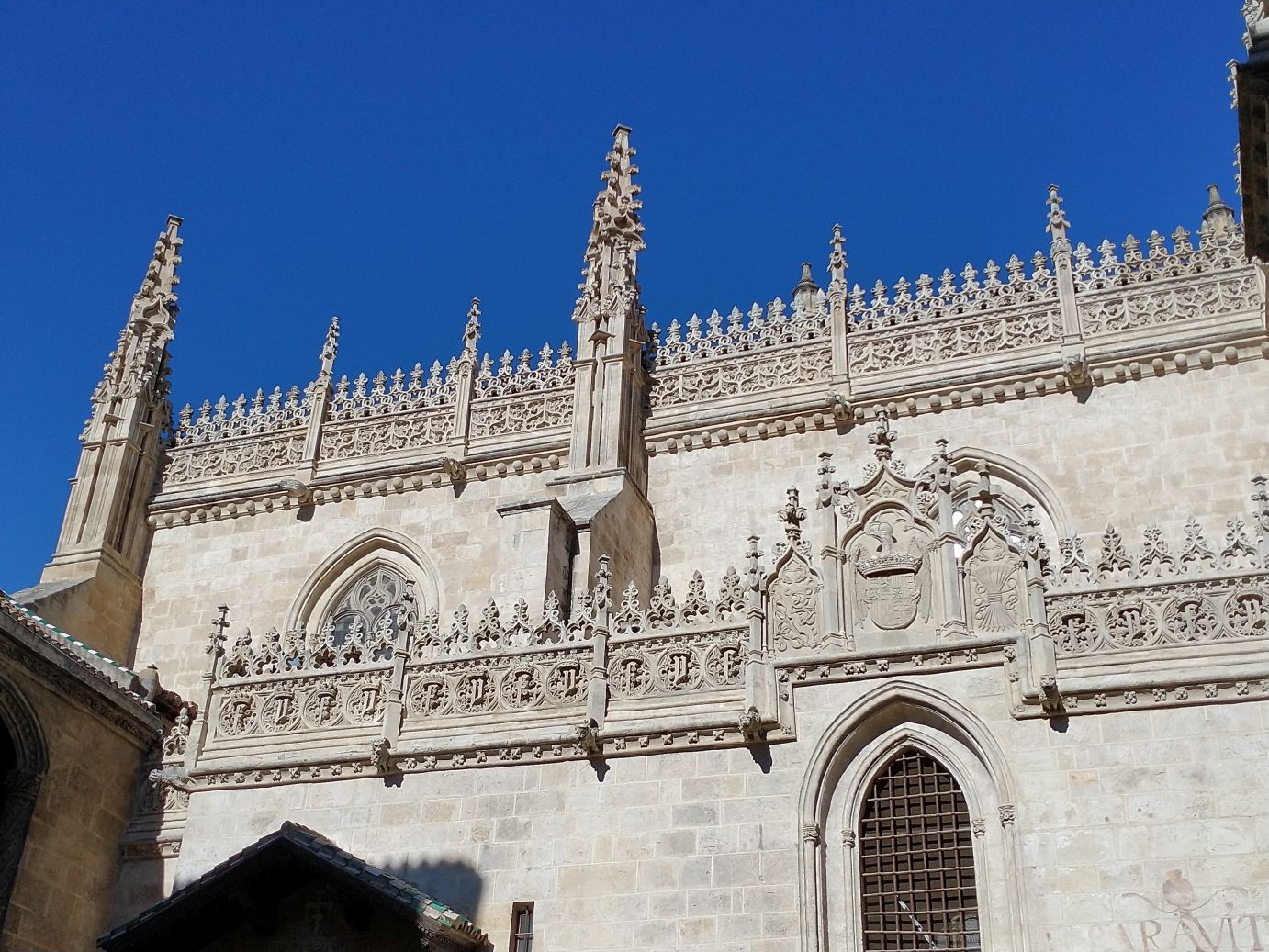
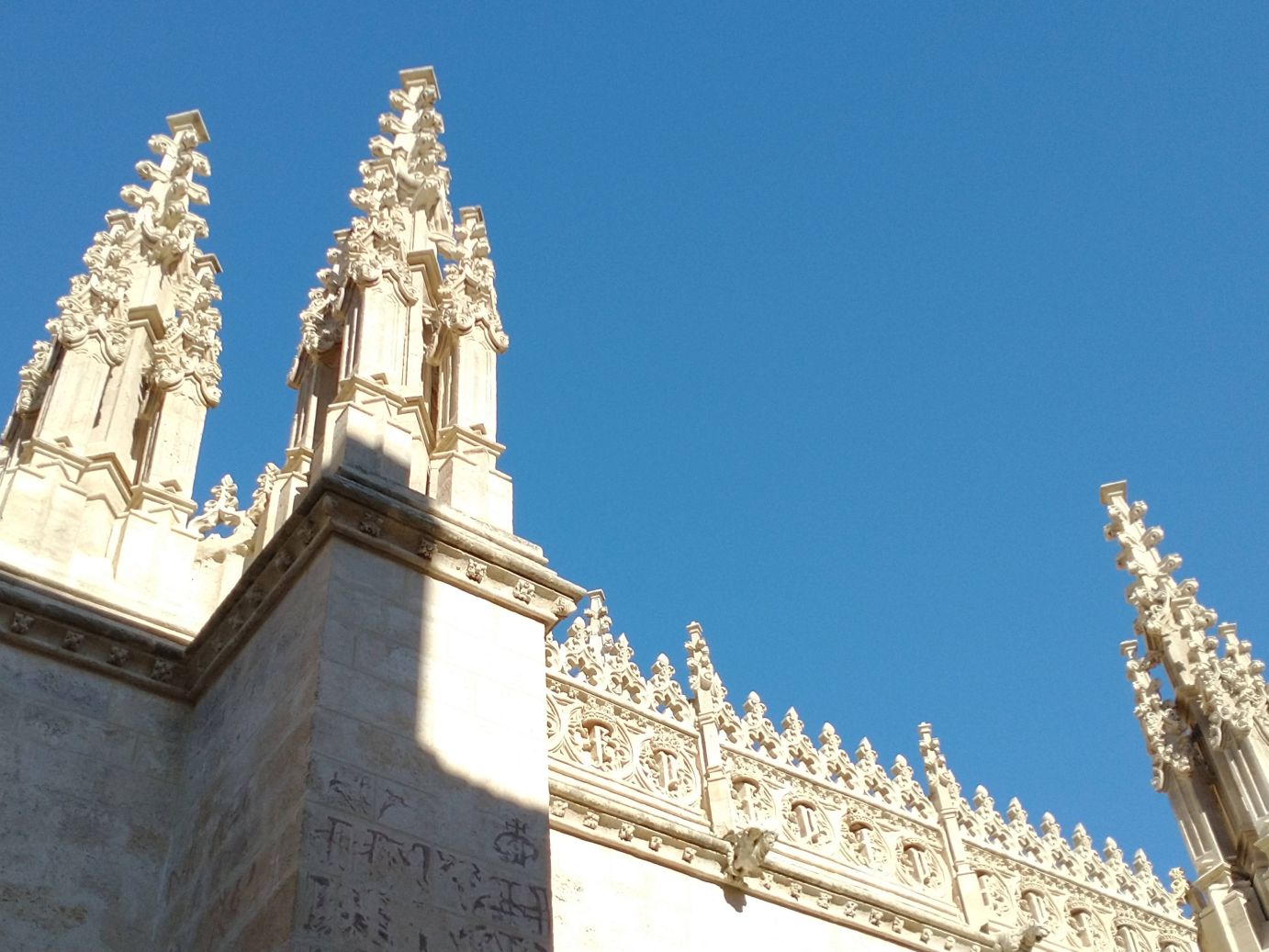
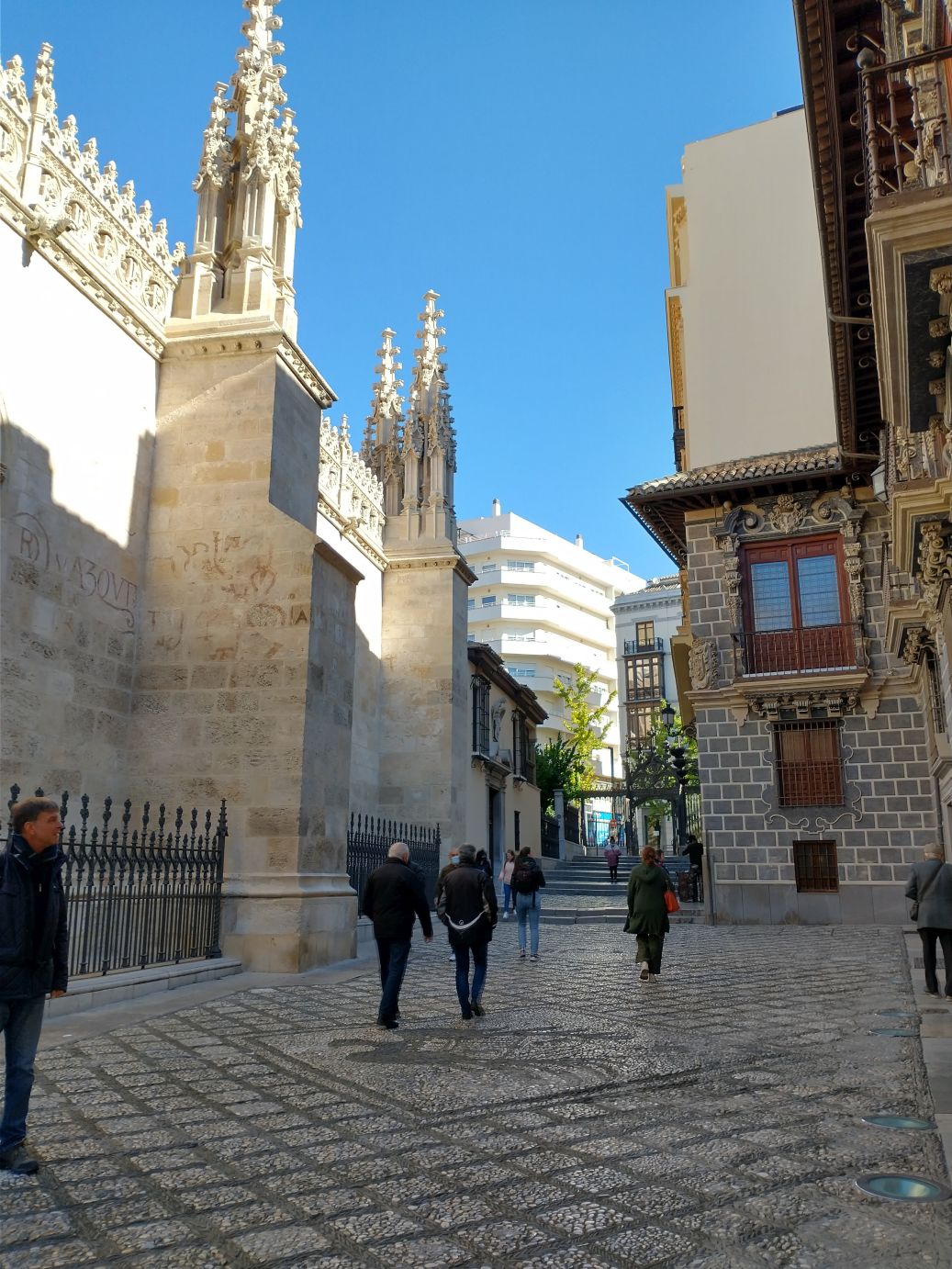
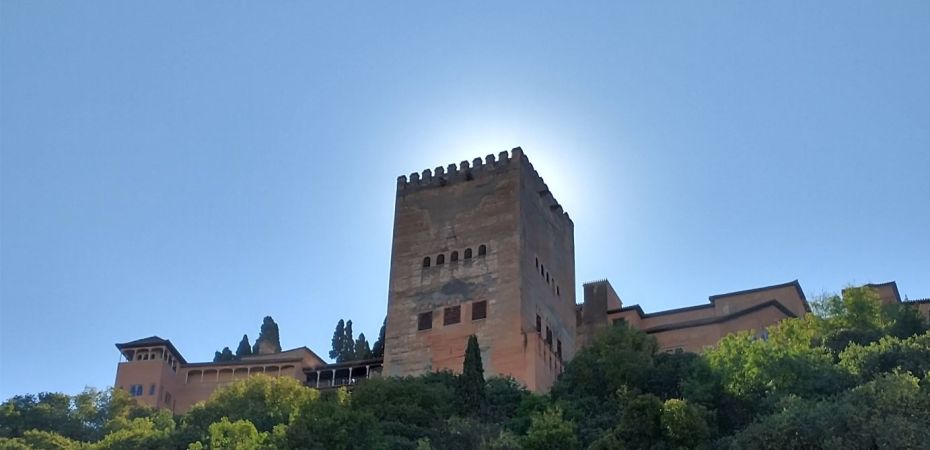
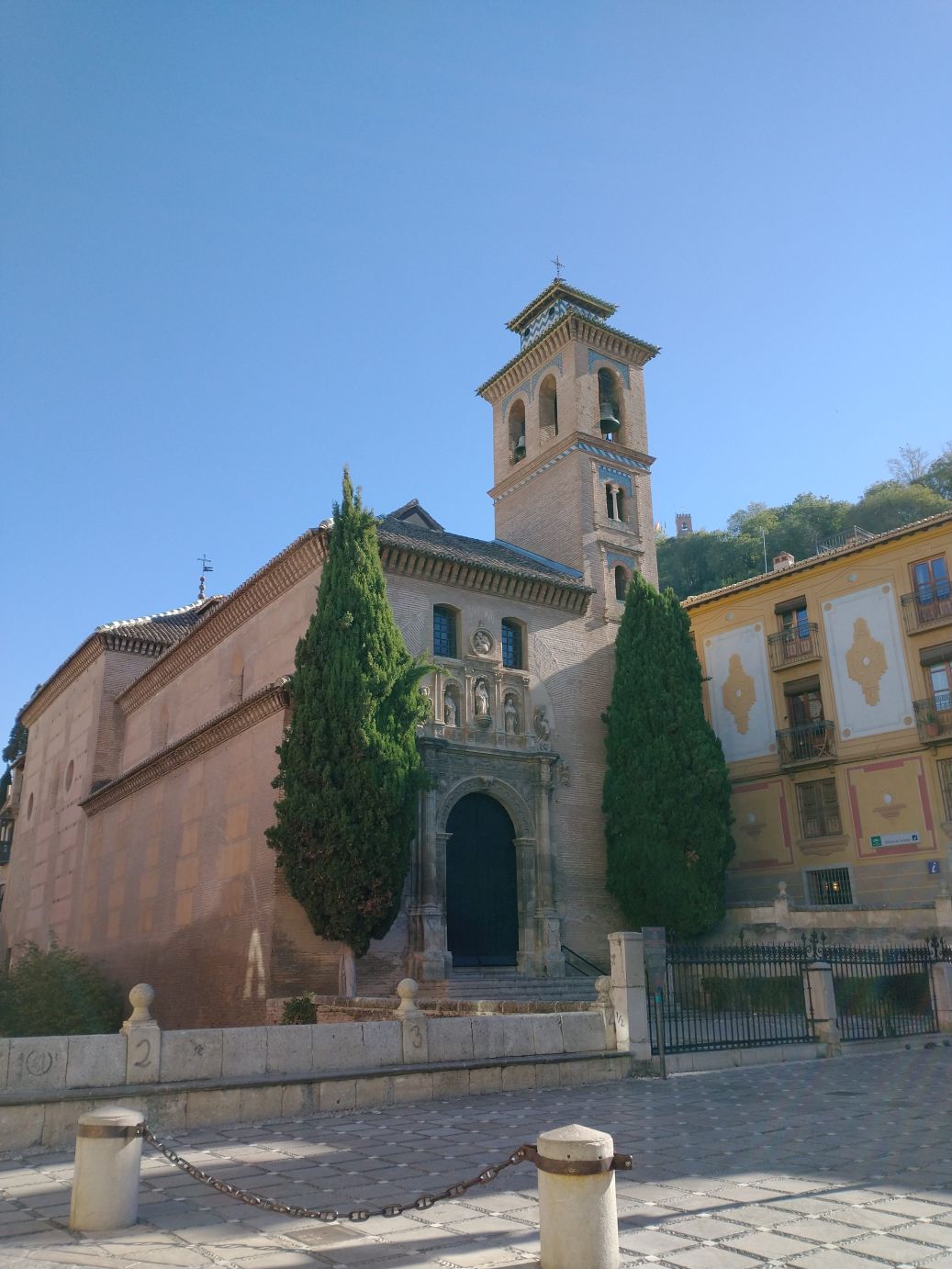
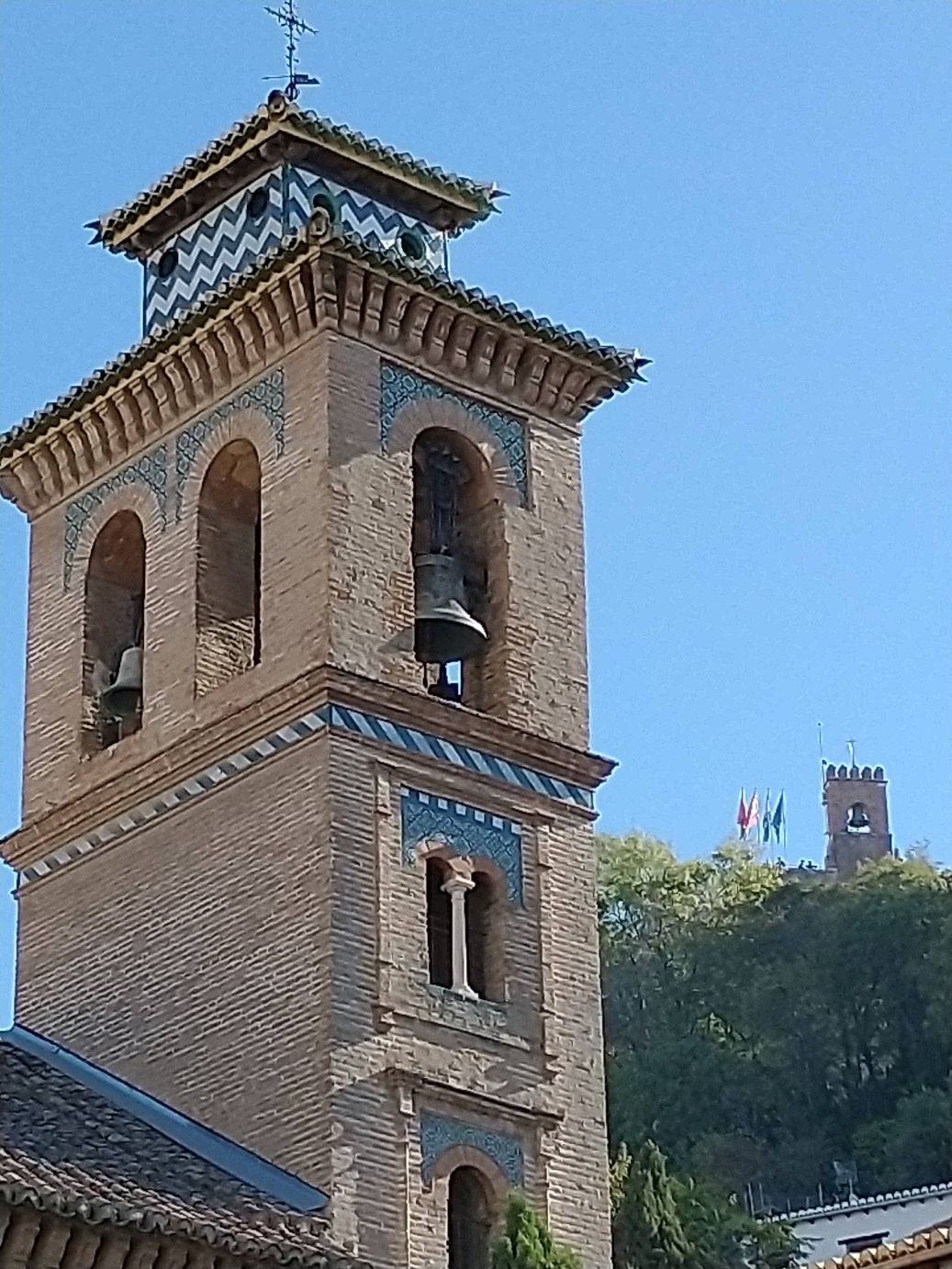
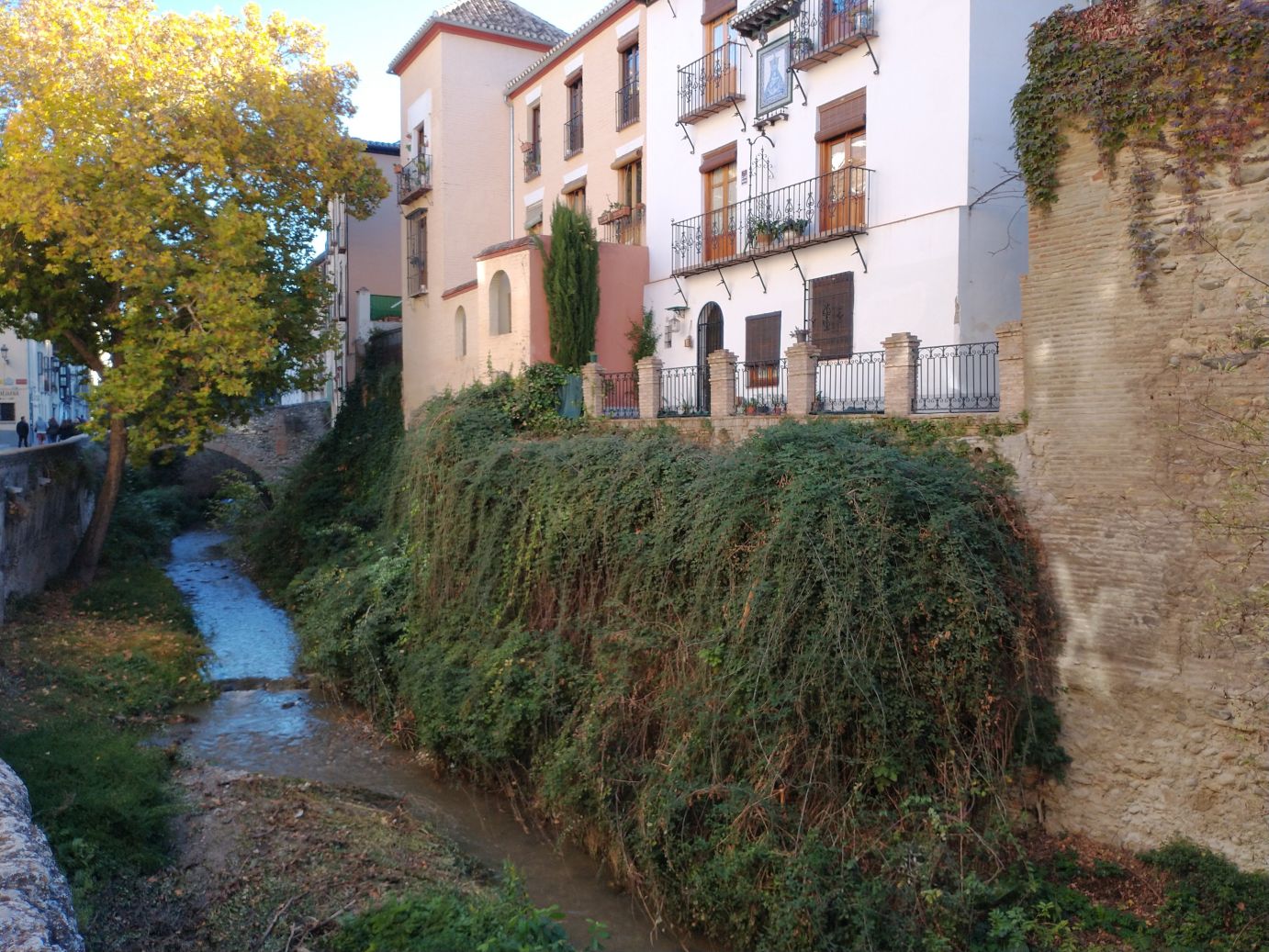
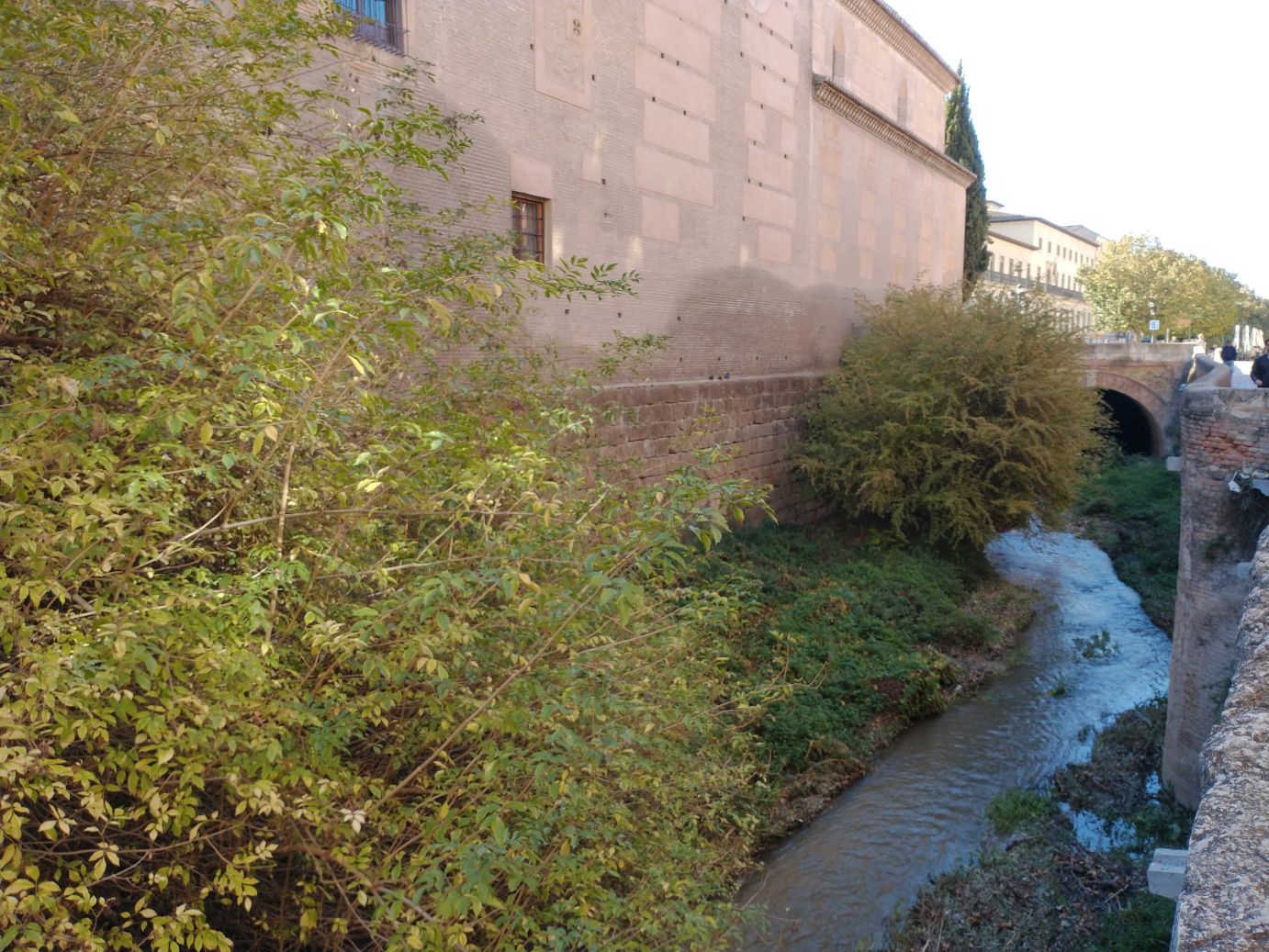
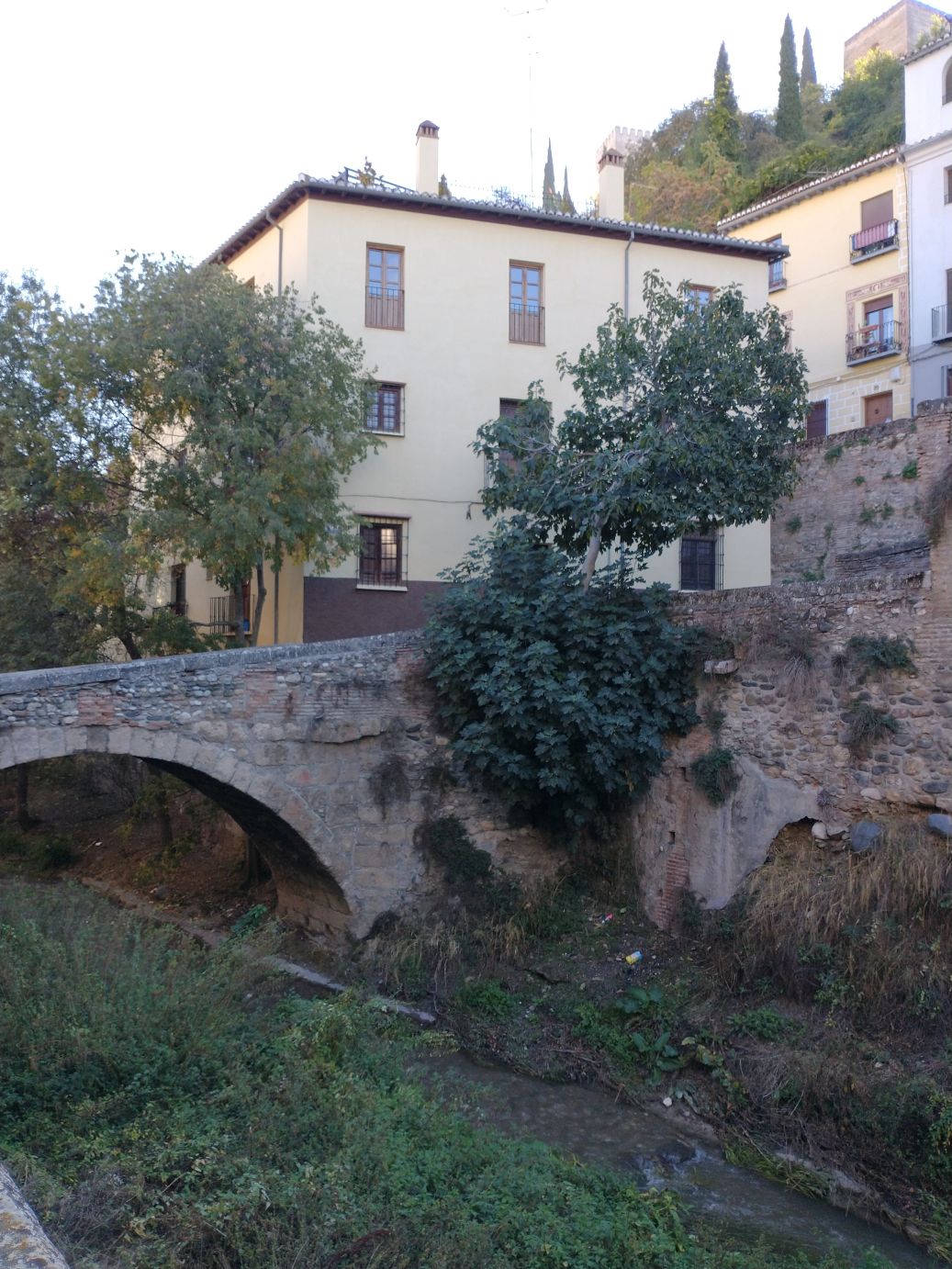
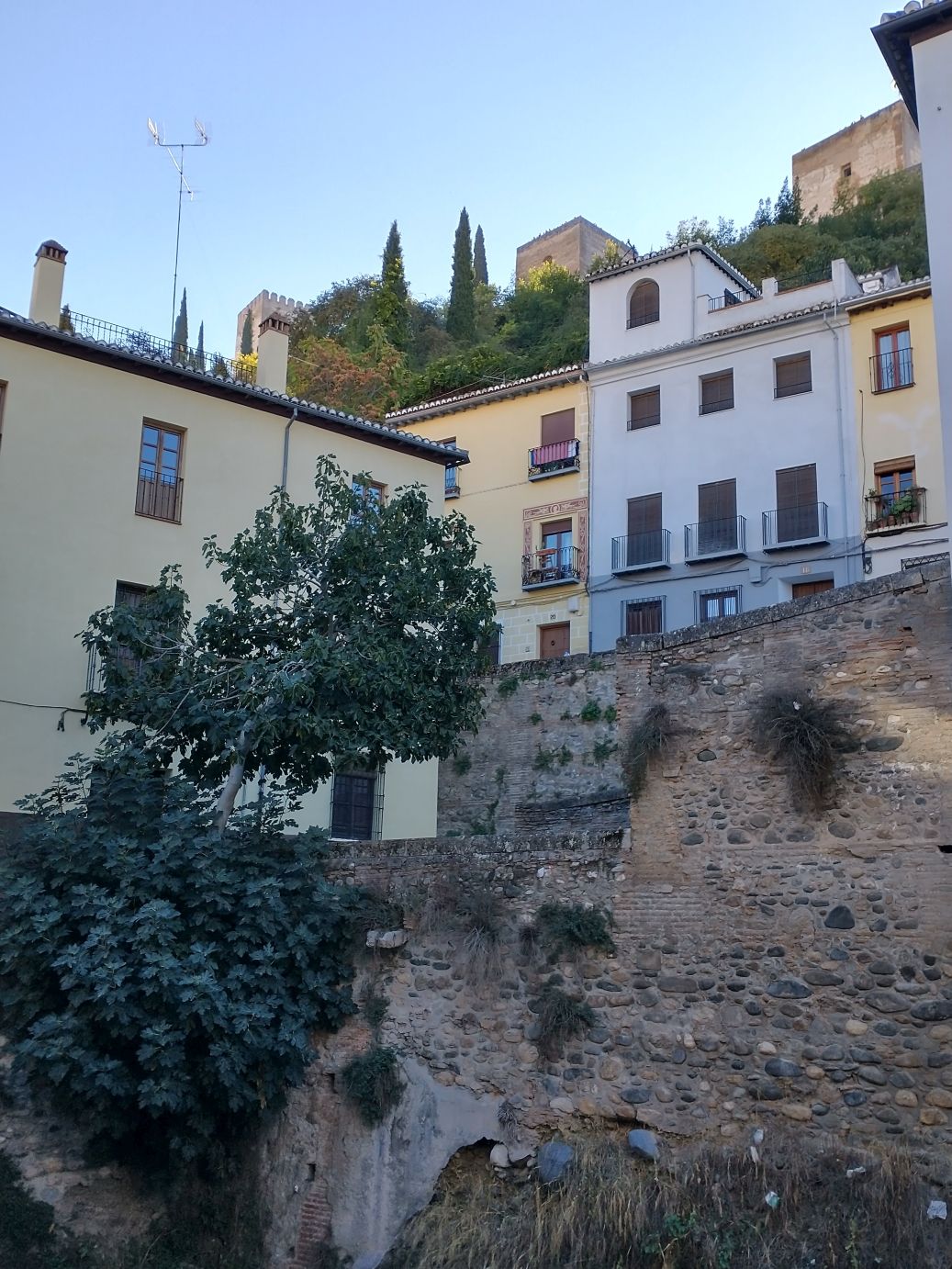
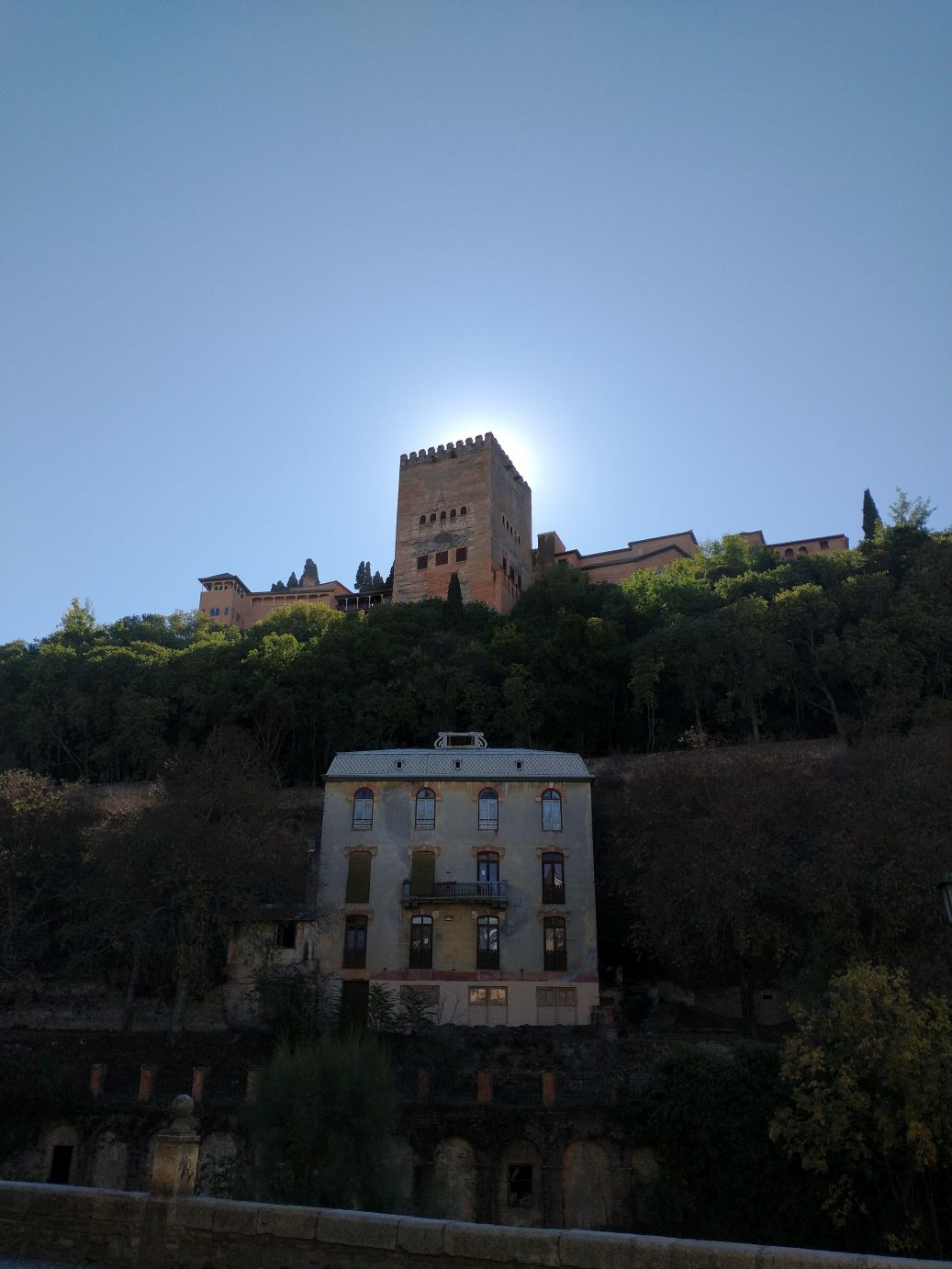
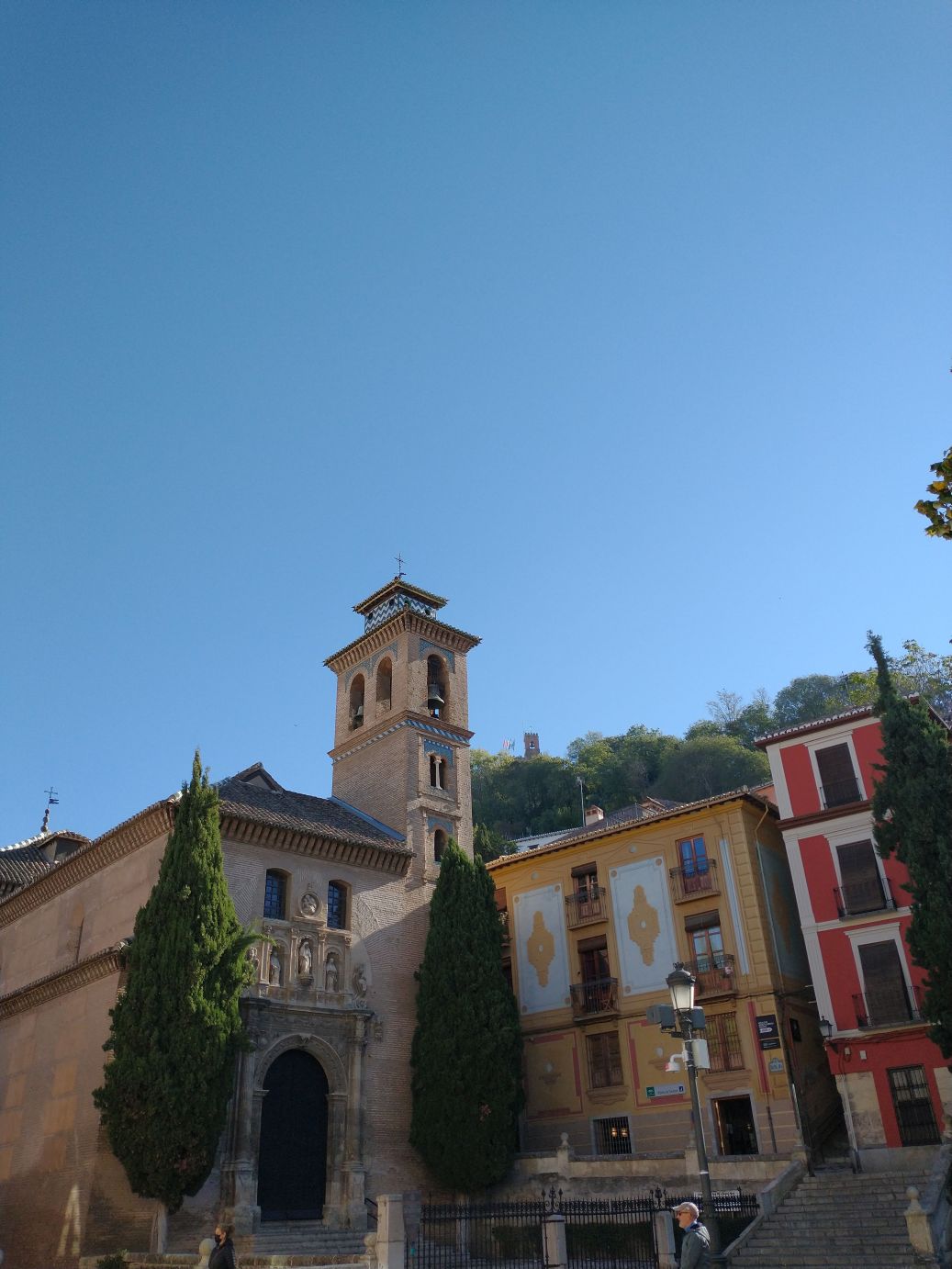
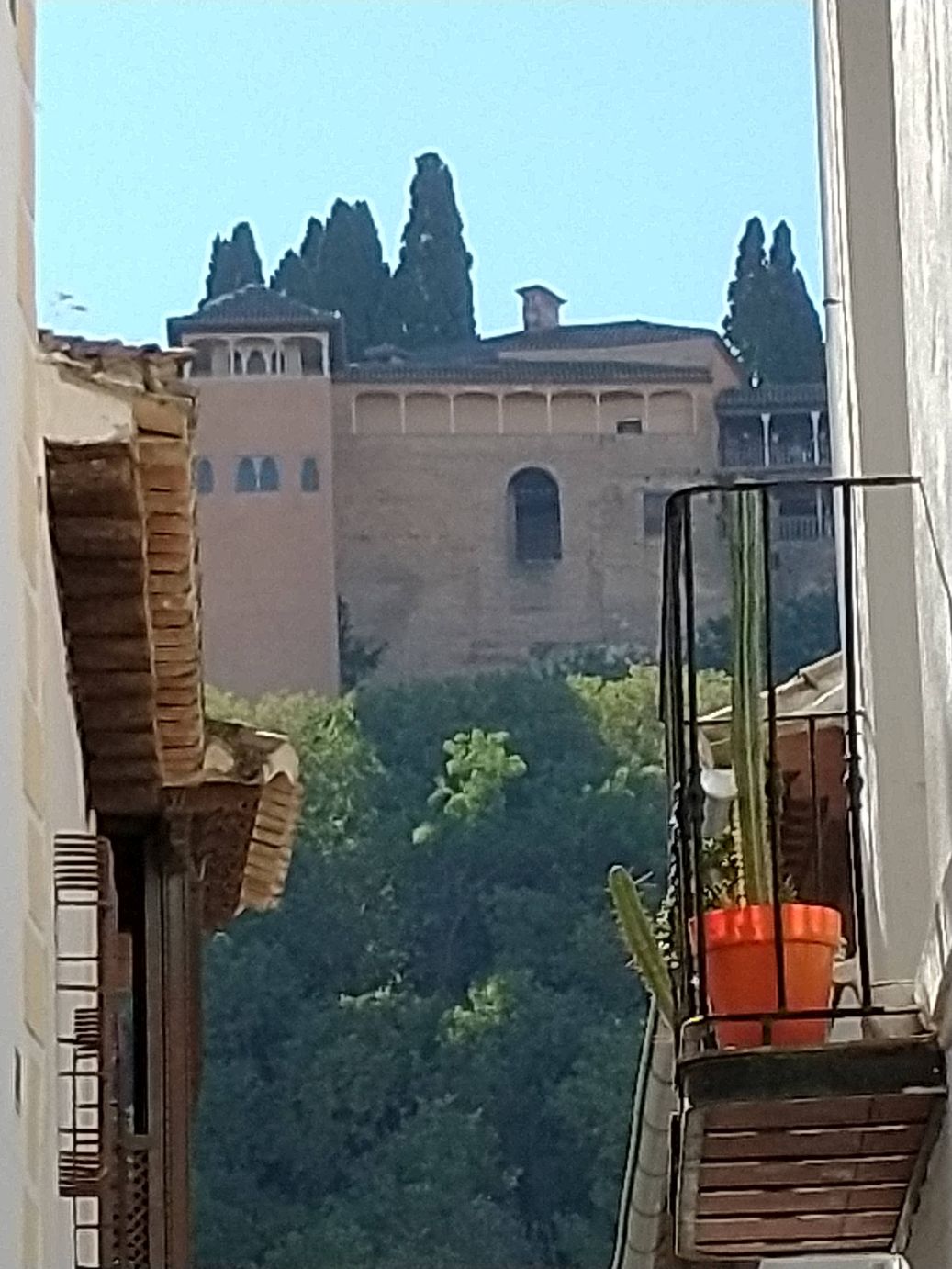
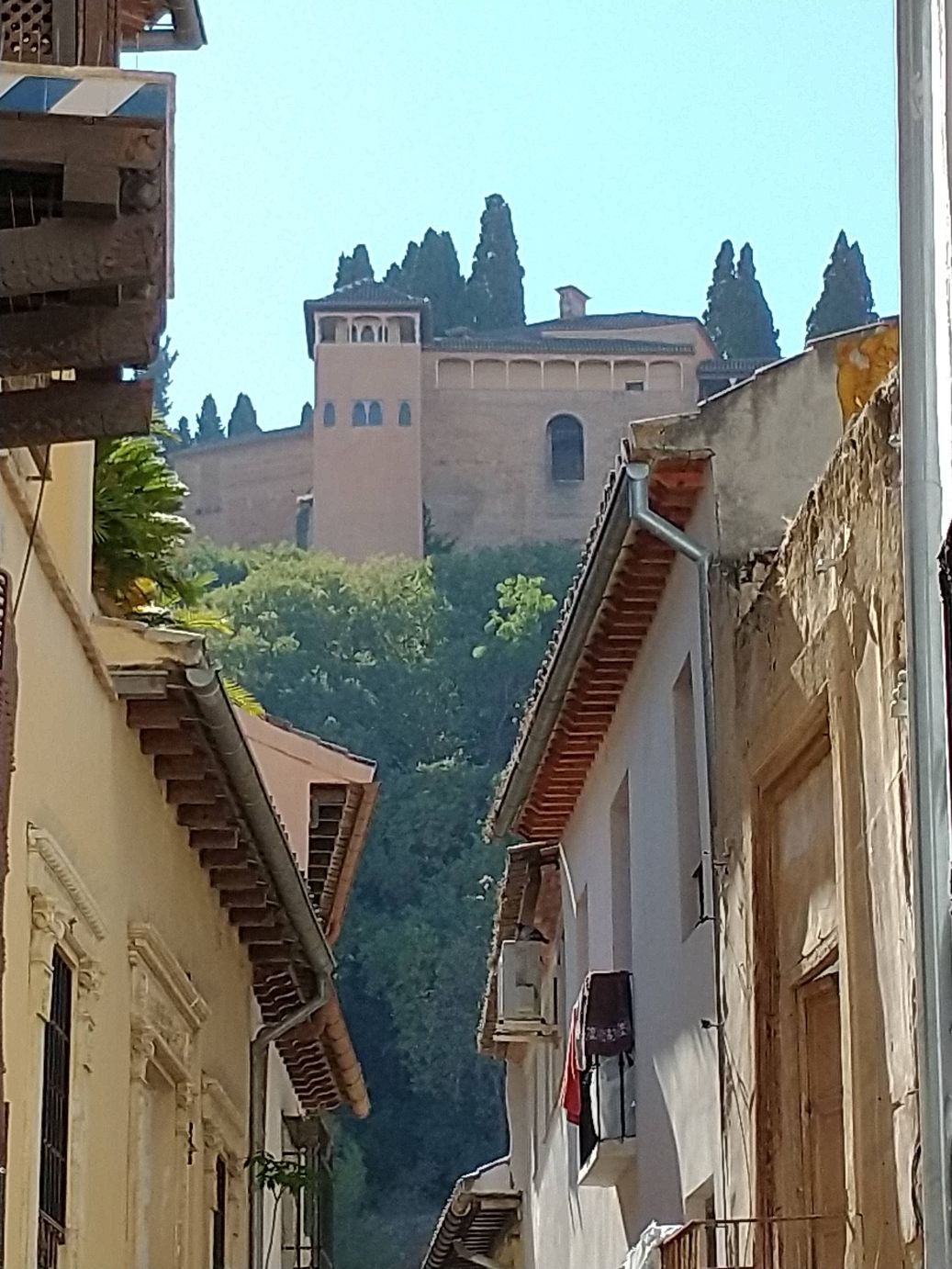
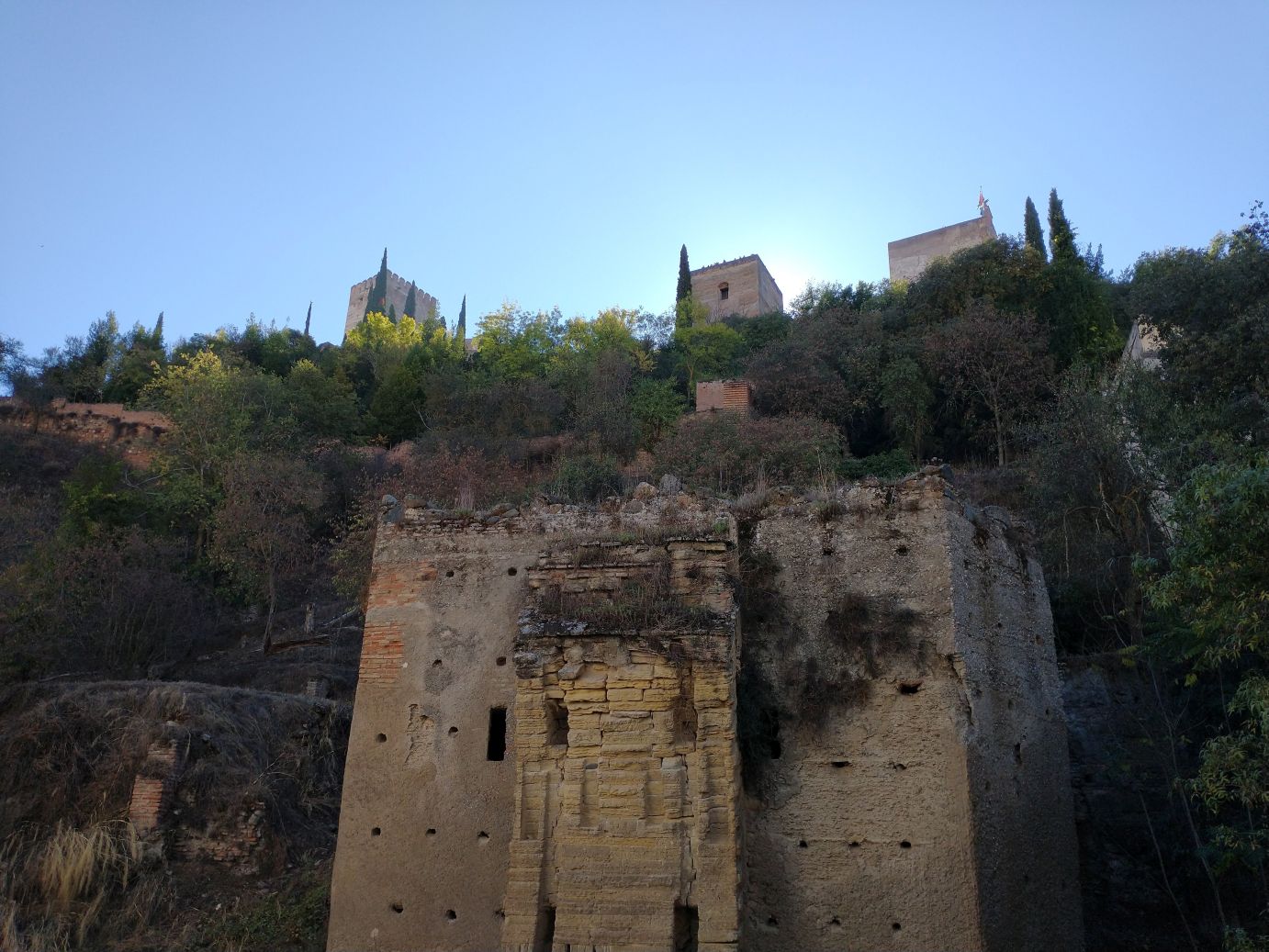
It is a nice little visit, that doesn’t take all that long. There are other, non-interesting displays, and we are quickly out on the streets again after viewing the tombs. The streets themselves are just as interesting as all the monuments. The architecture is so incredible – the mix of Islamic and Gothic, the picturesque little river of Darro, that looks more like a moat than a river, with the old bridges crossing the water and leading up into the stone built city. And all with the background of the walled city of Alhambra, which looks down on the city from its perch high above. It’s a gorgeous day, and a wonderful walk down Carrer del Darro, the riverside walkway.

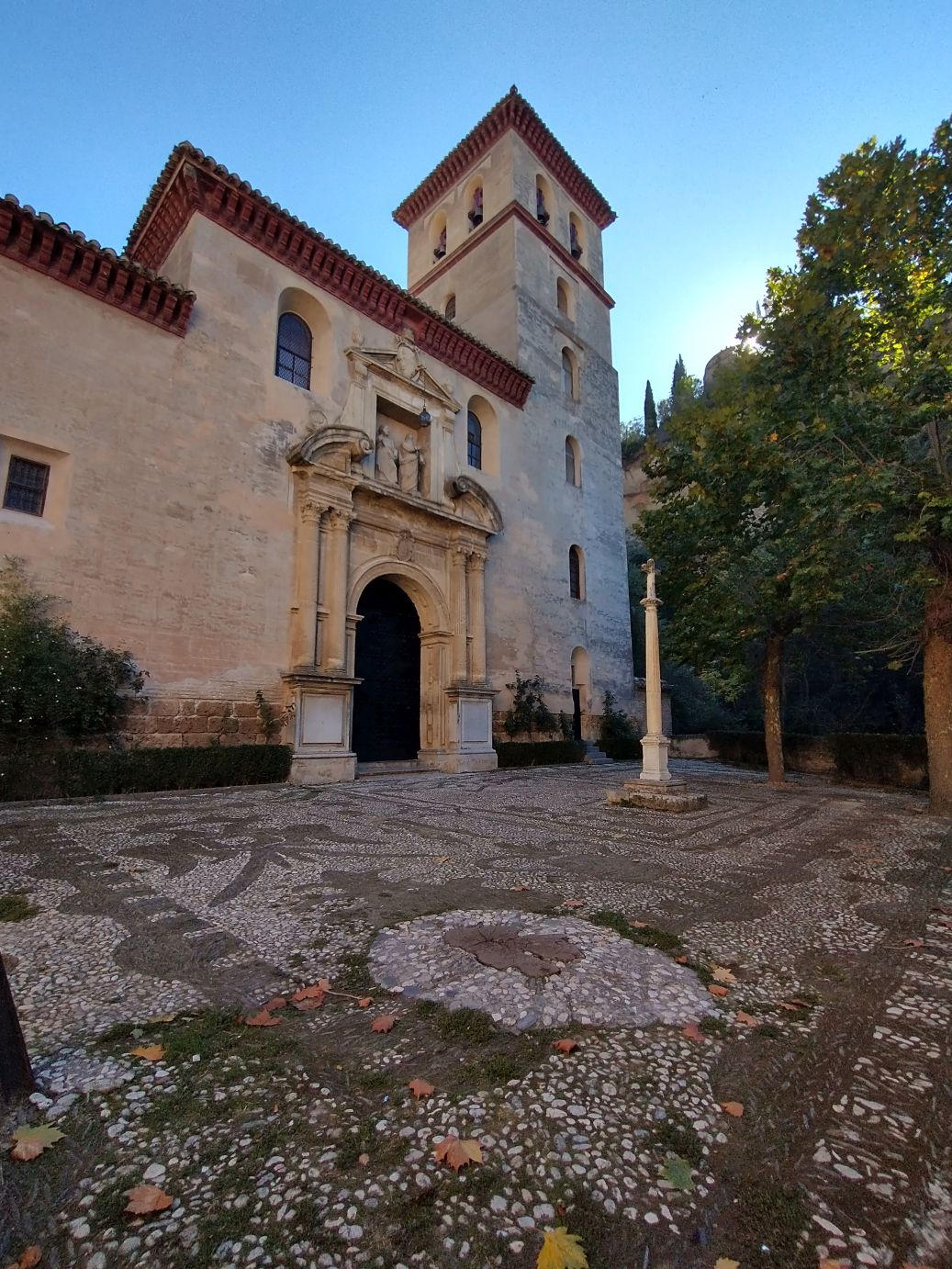
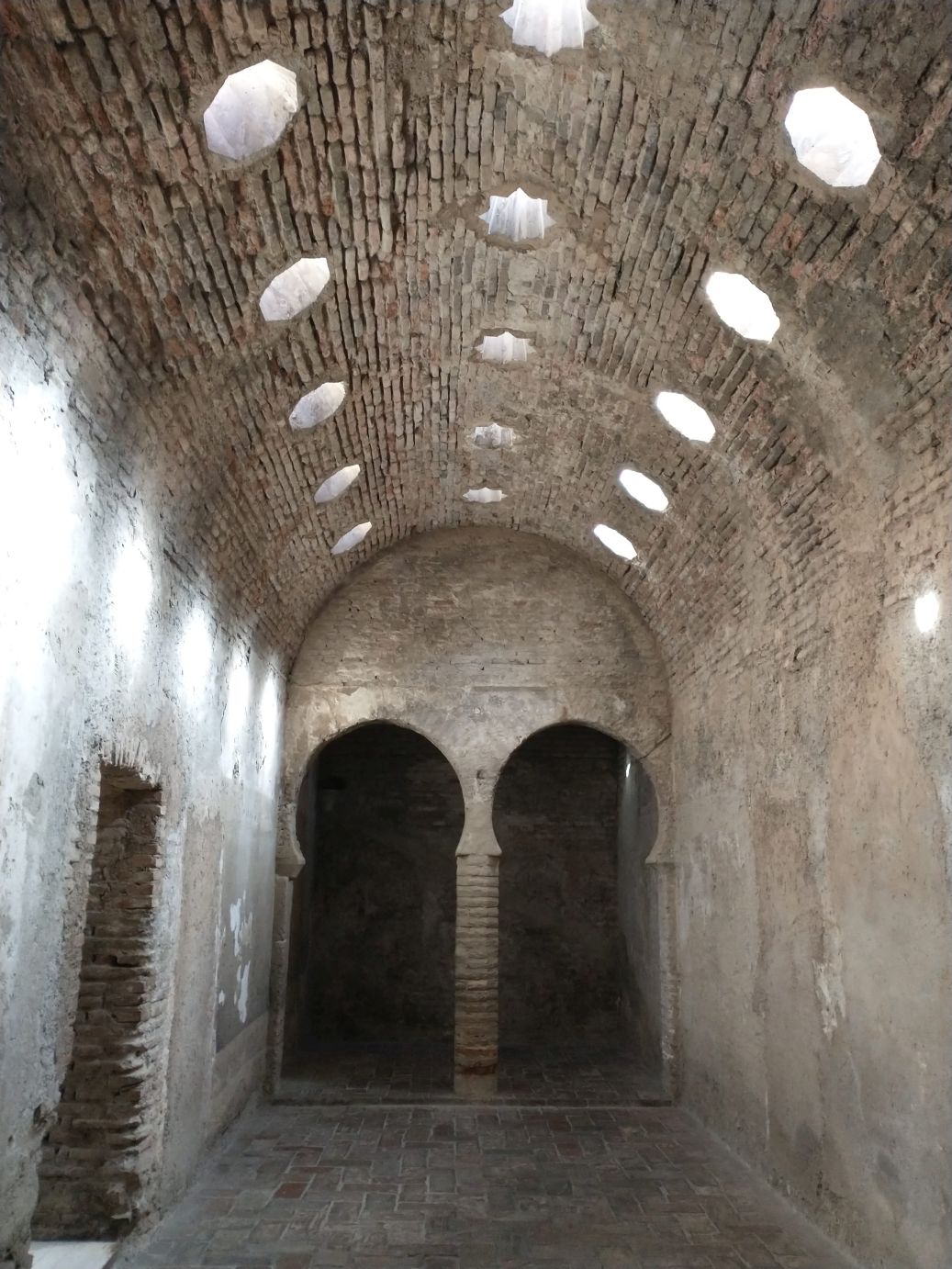
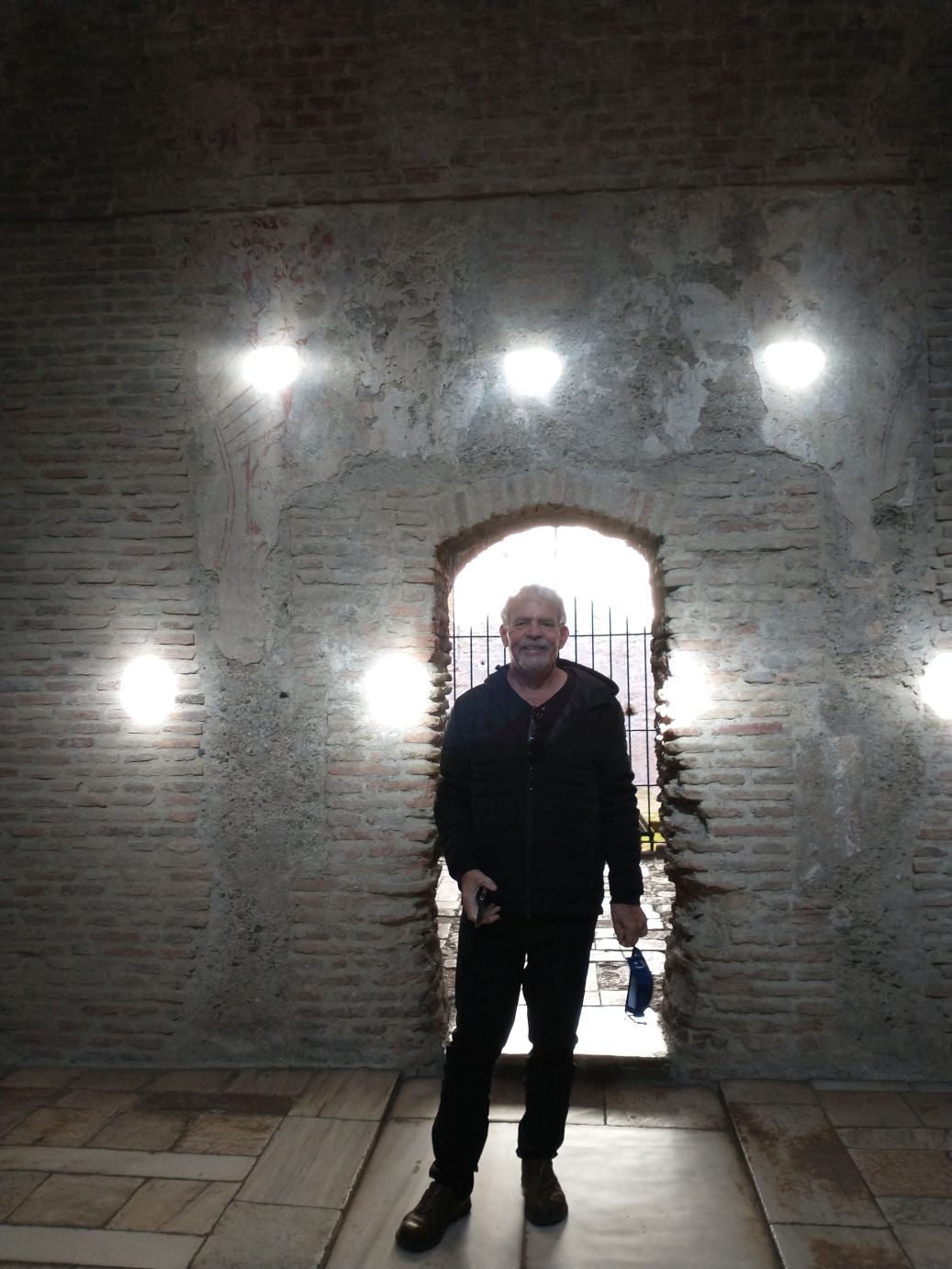
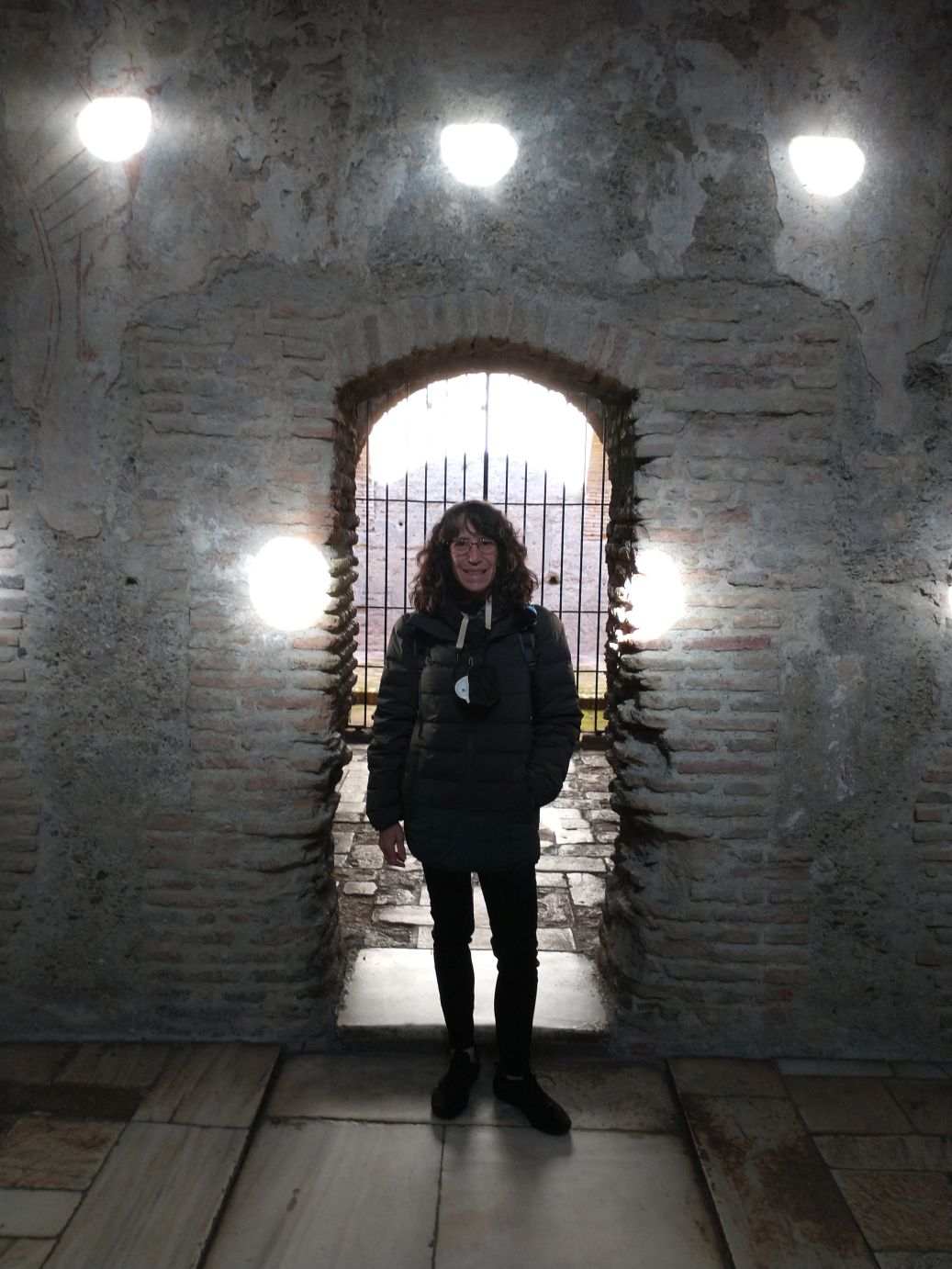
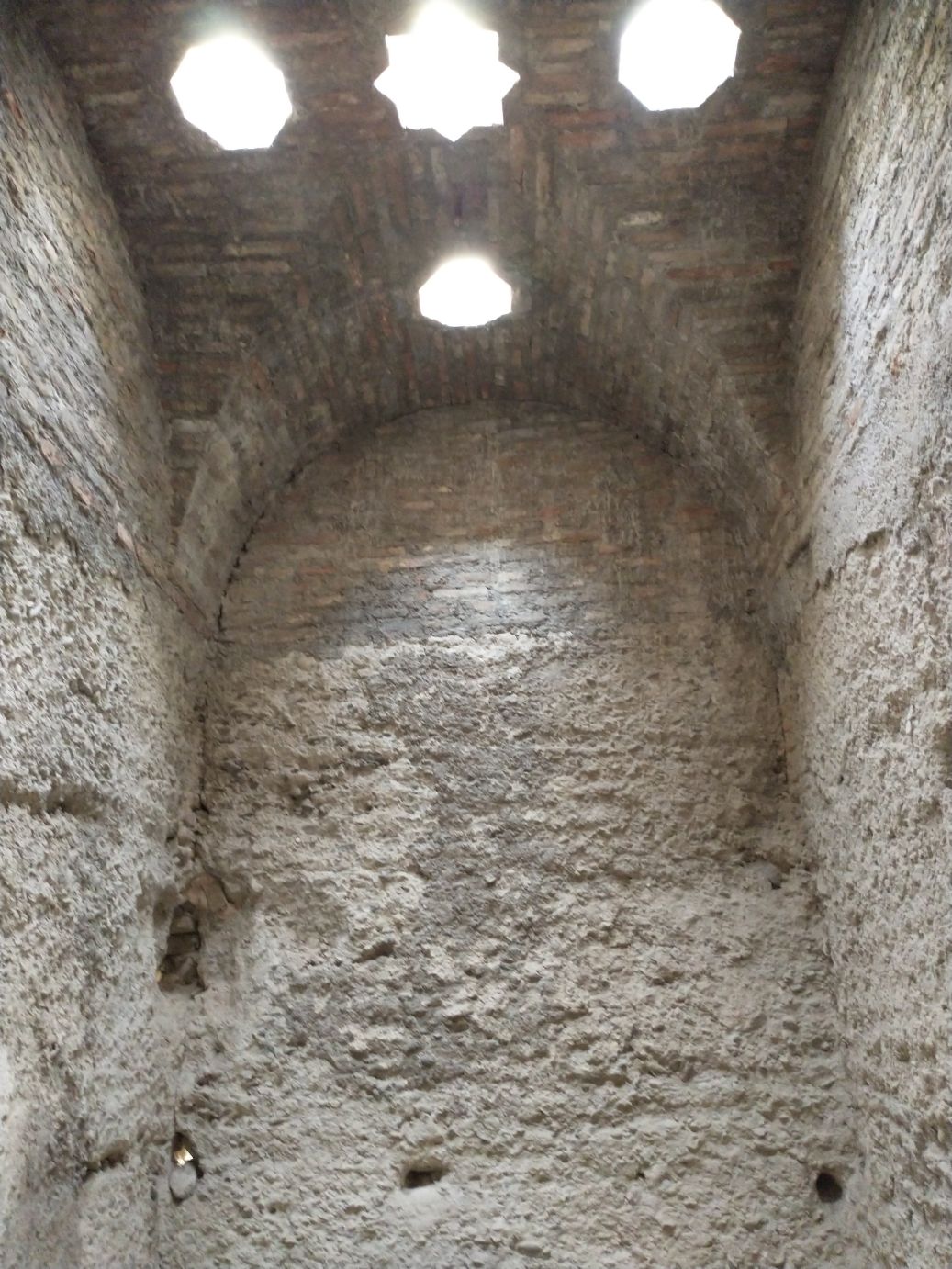
Soon we find our next target – El Banuelo, the Arab Baths. A rarity to find, because most baths were destroyed in the reconquest, these rooms survived because they were underneath a private home that was built at the time the city was taken. The architecture down here is amazing – the columns that remain, the stone/bricked walls and the cool star-shaped openings that let the air in…or out. Don’t really know which, but they give a great mystical lighting to the whole complex.
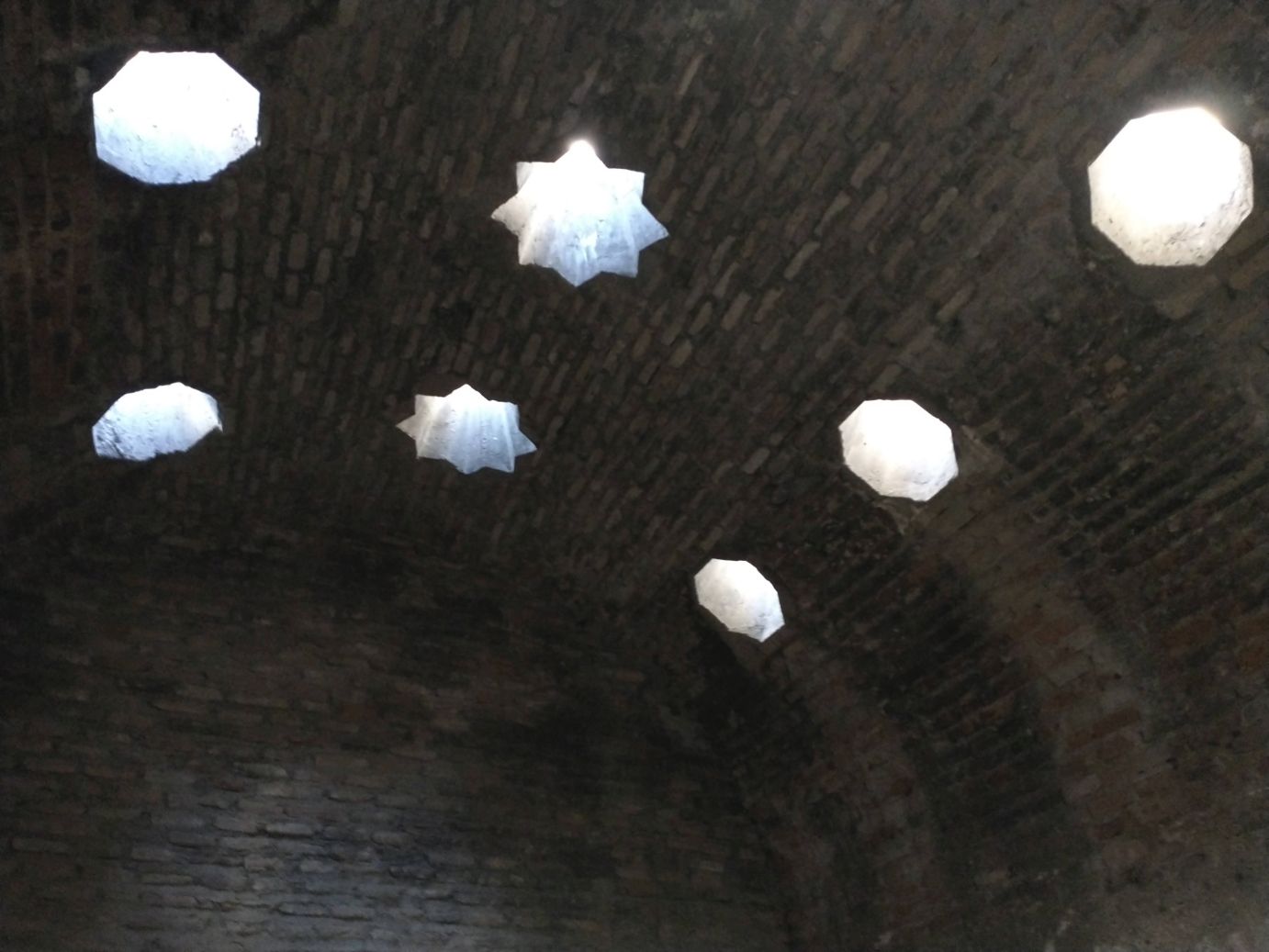
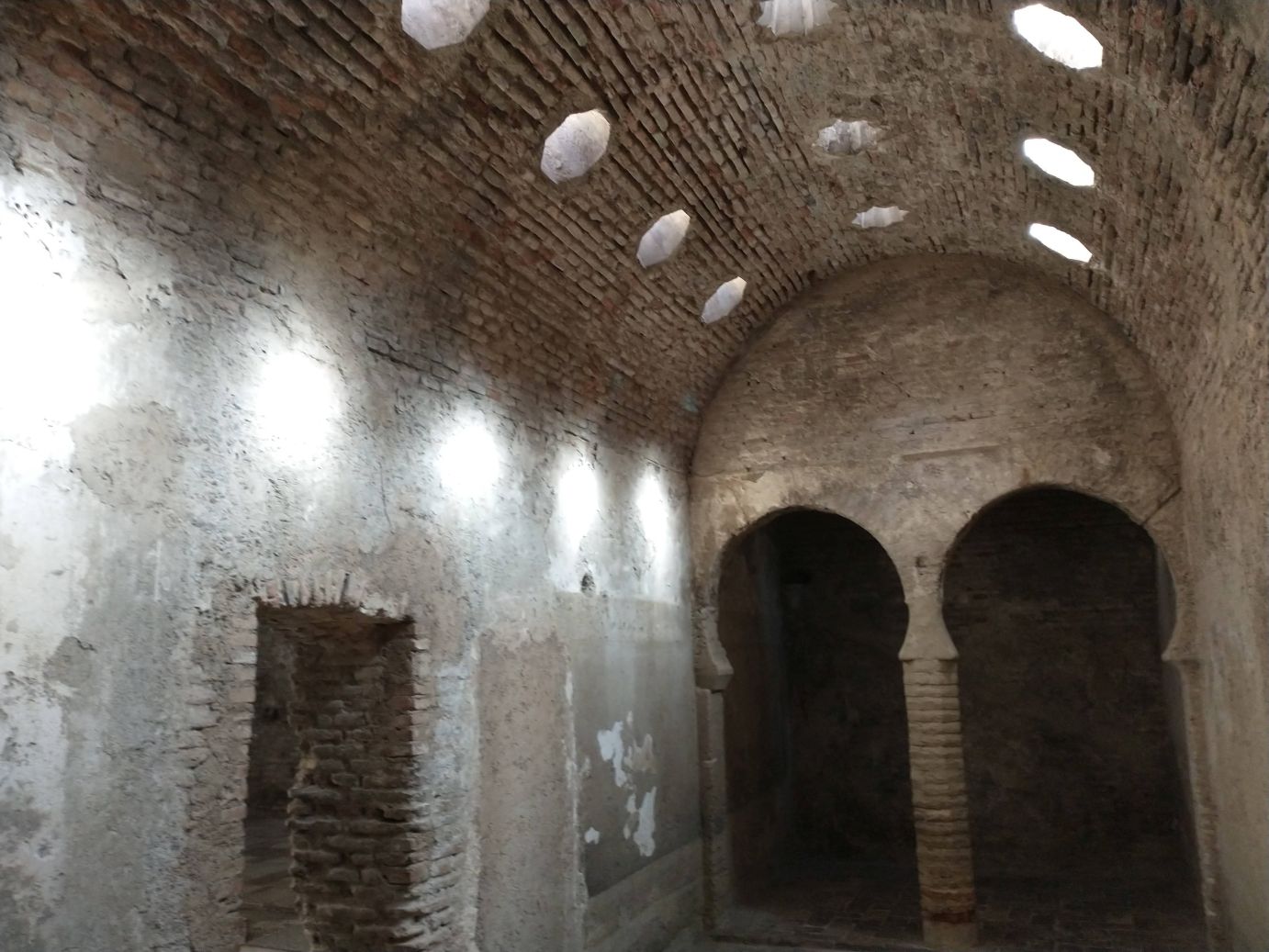
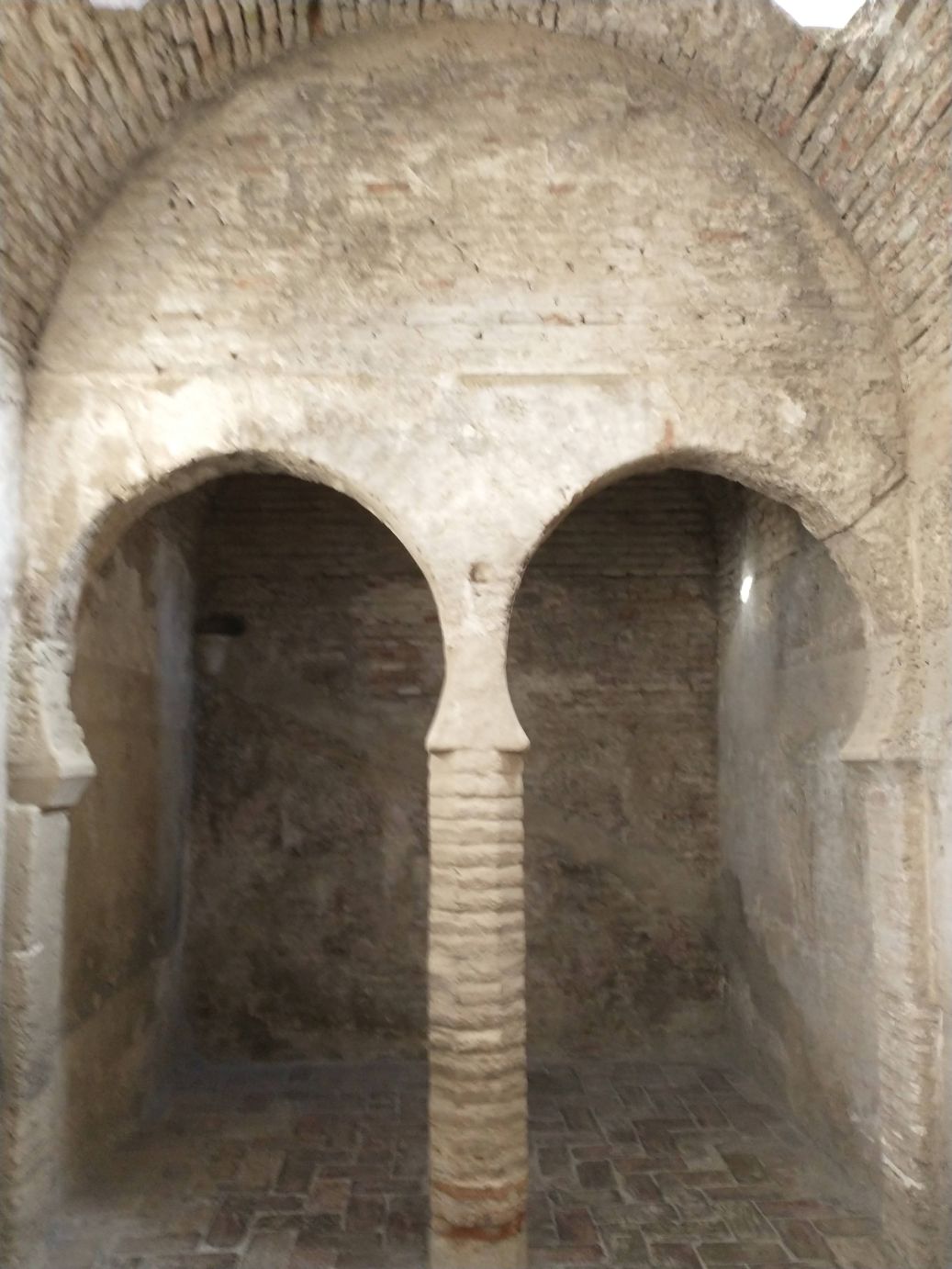
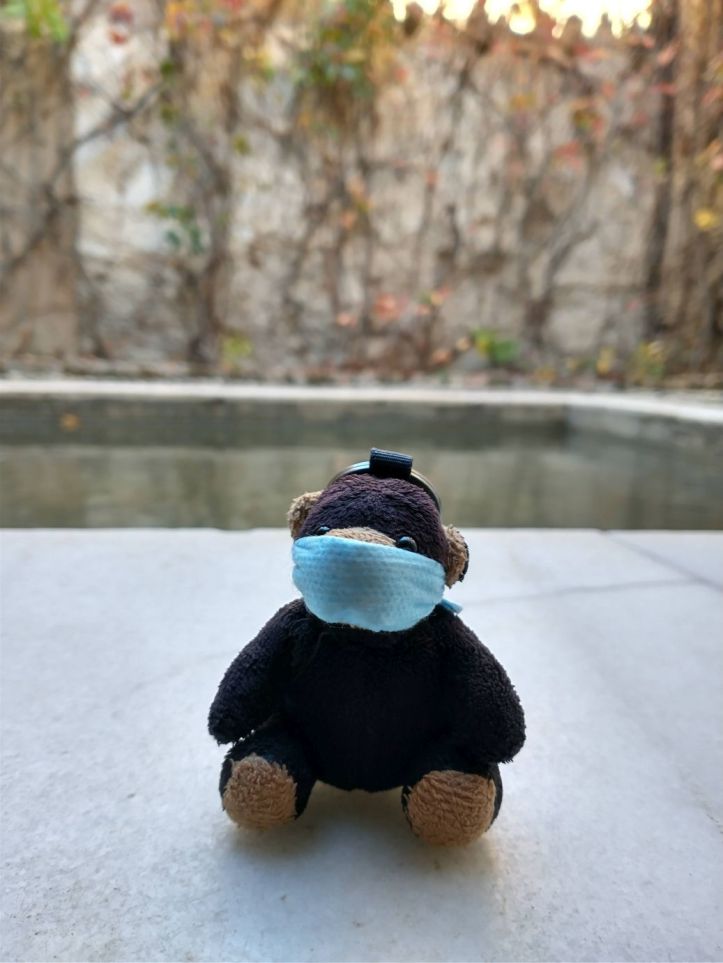
The little entrance courtyard with the pond is also beautiful with the color-changing ivy running up the back wall. This part might even be from the house and not the baths, but it still picturesque and peaceful.
Back outside, passing more Alhambra fortifications and fabulous views, we search out the Casa Horno de Oro (part of the combination entrances you get when you buy a ticket for the baths) which shows as right around the corner from the baths, but isn’t as easy to find.
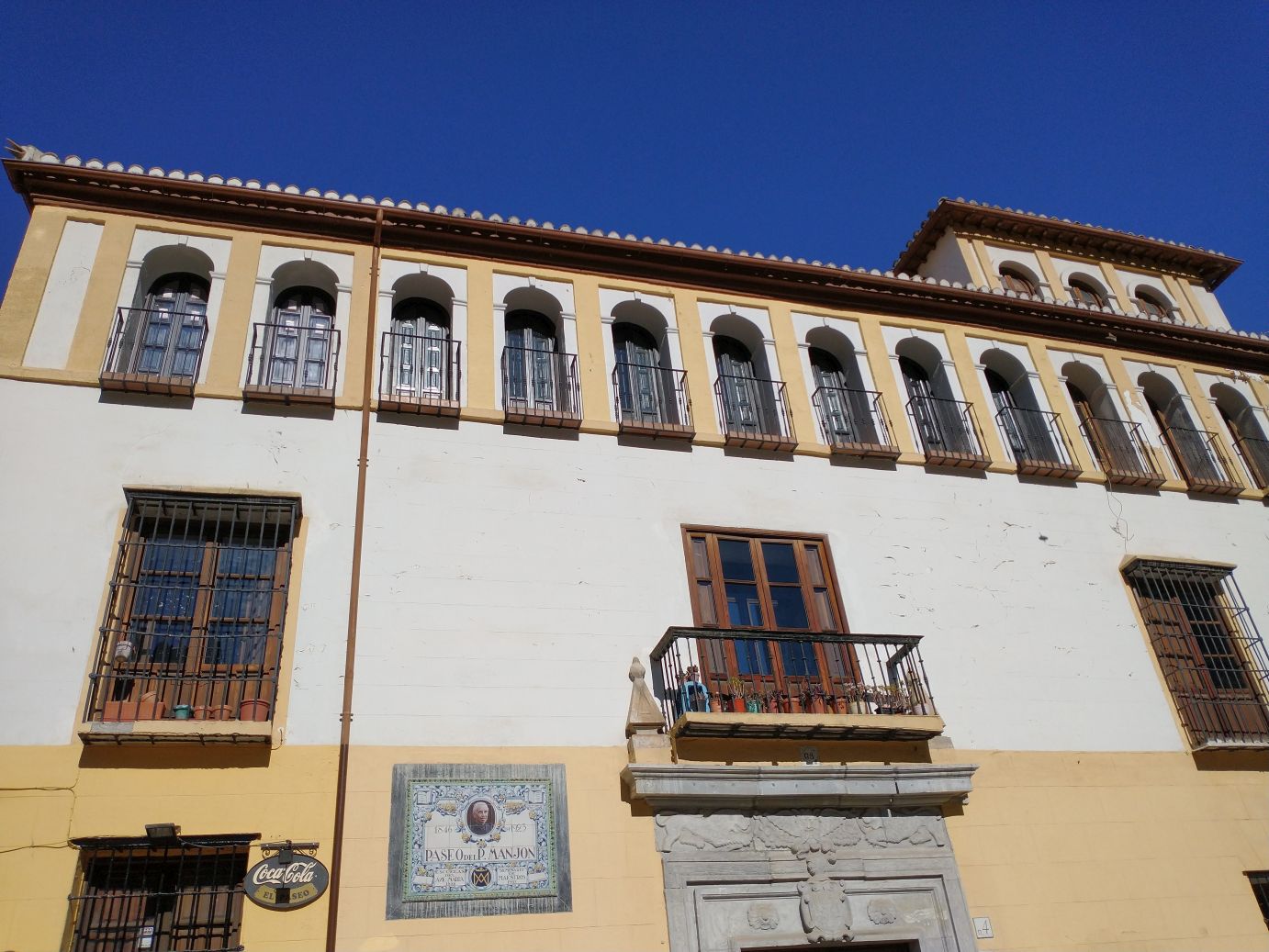
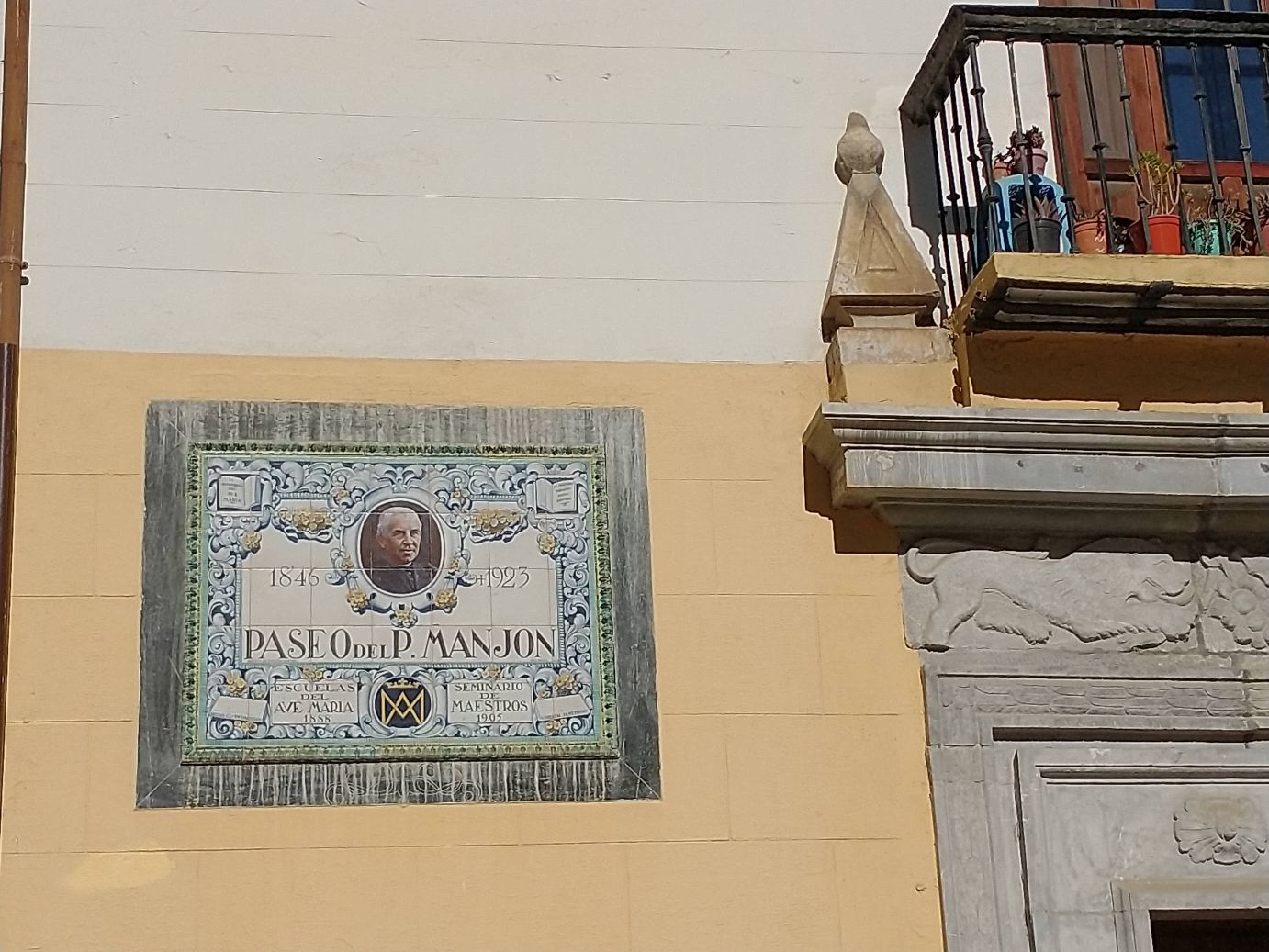
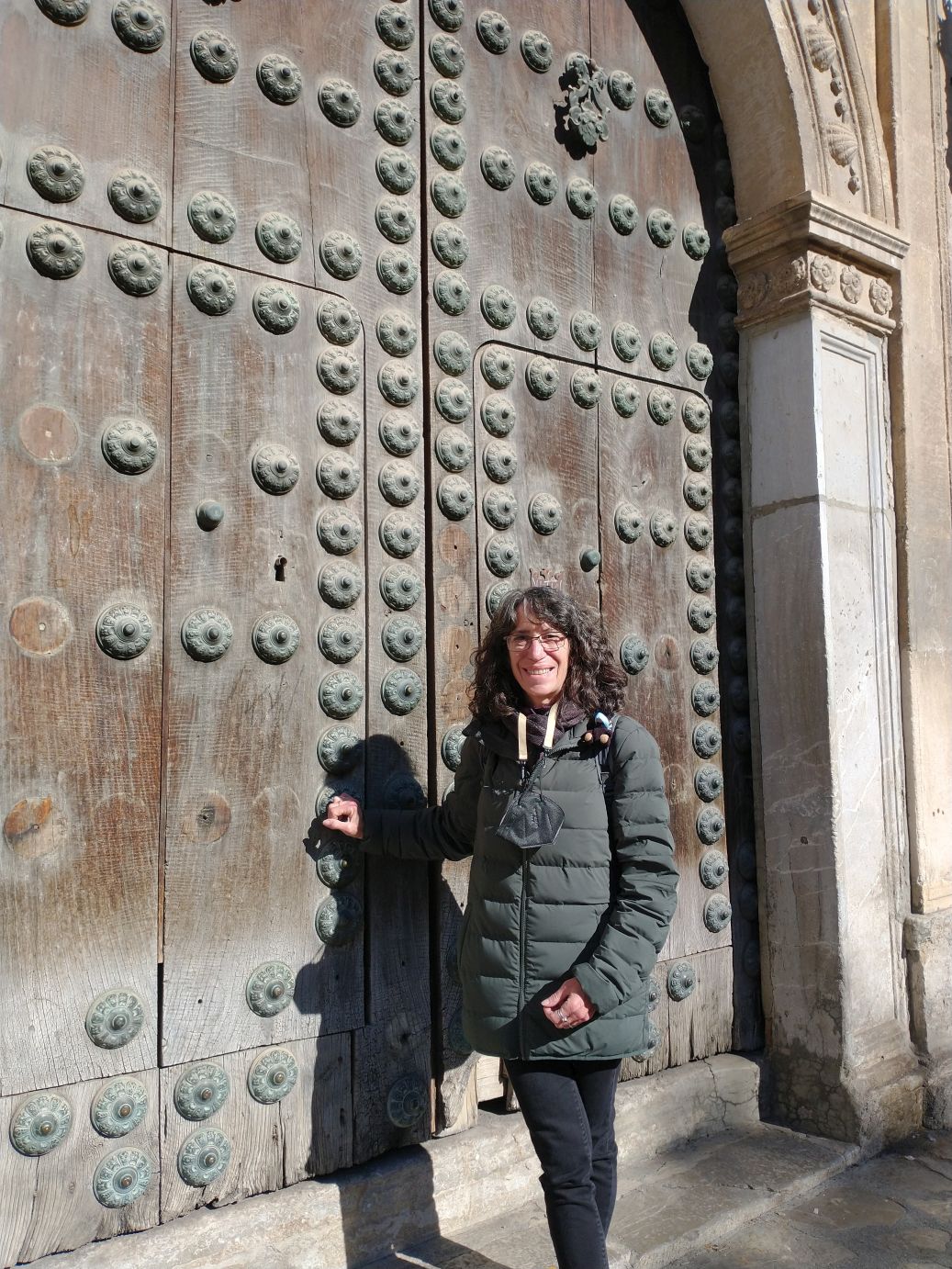
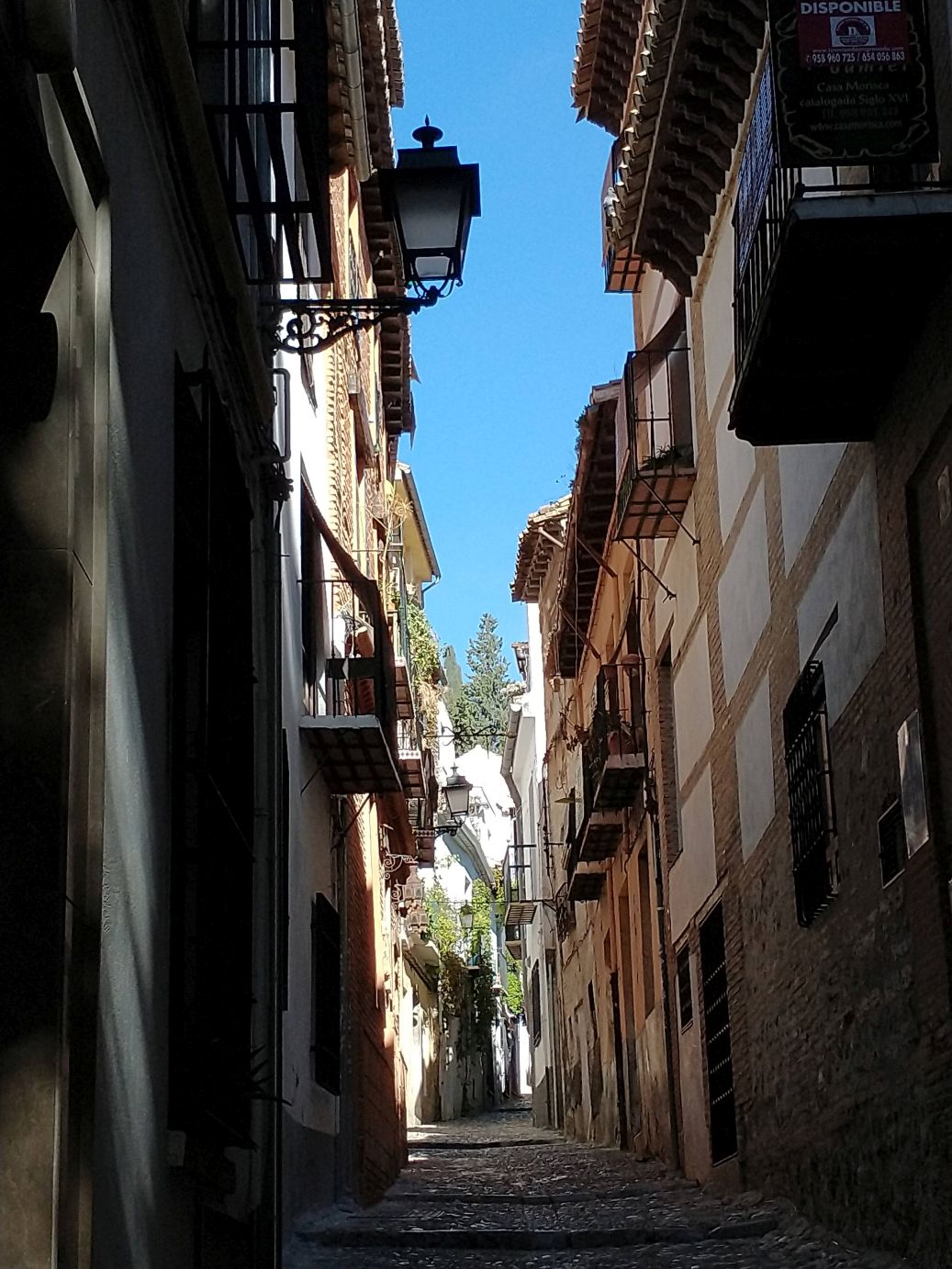
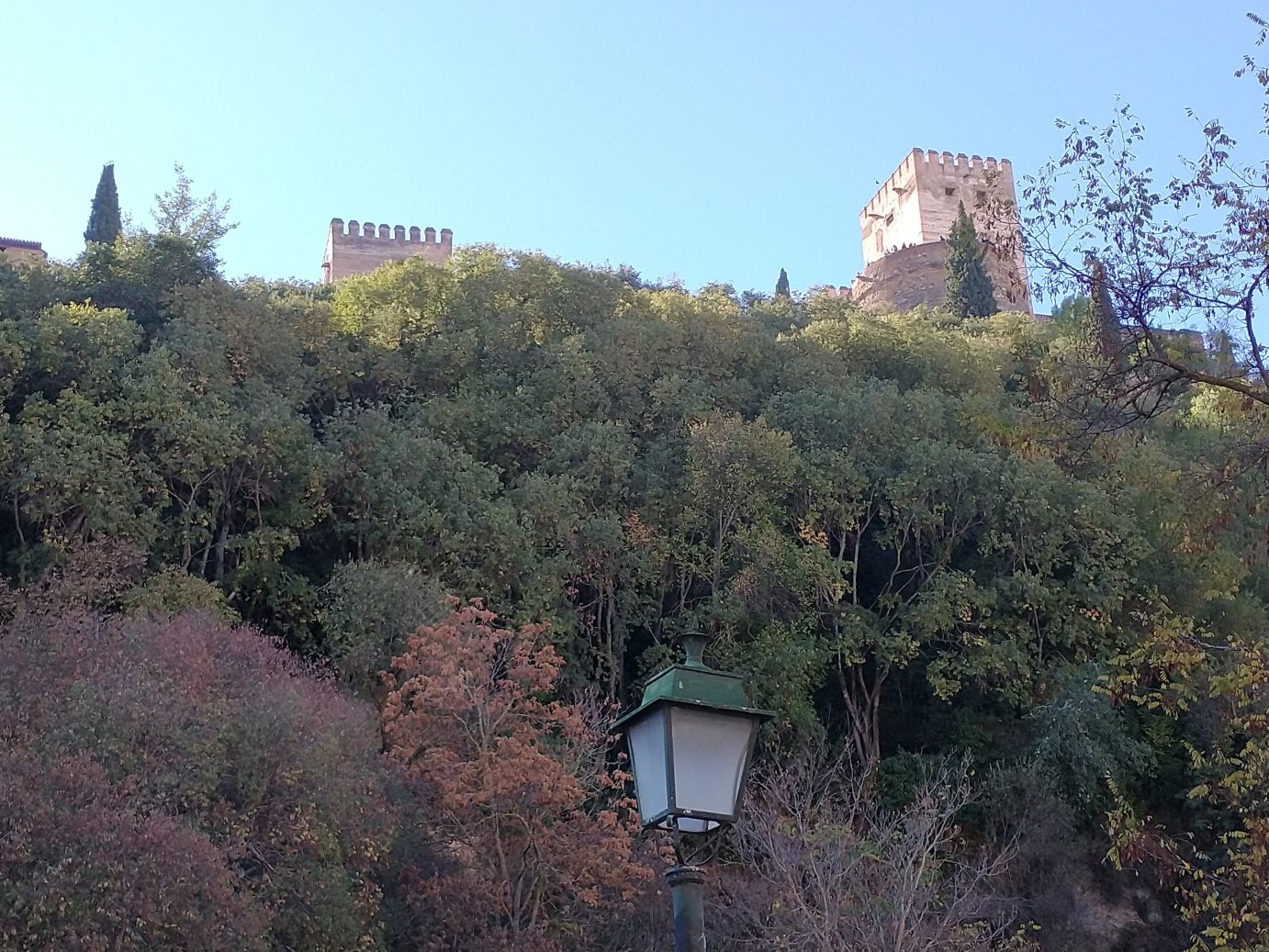
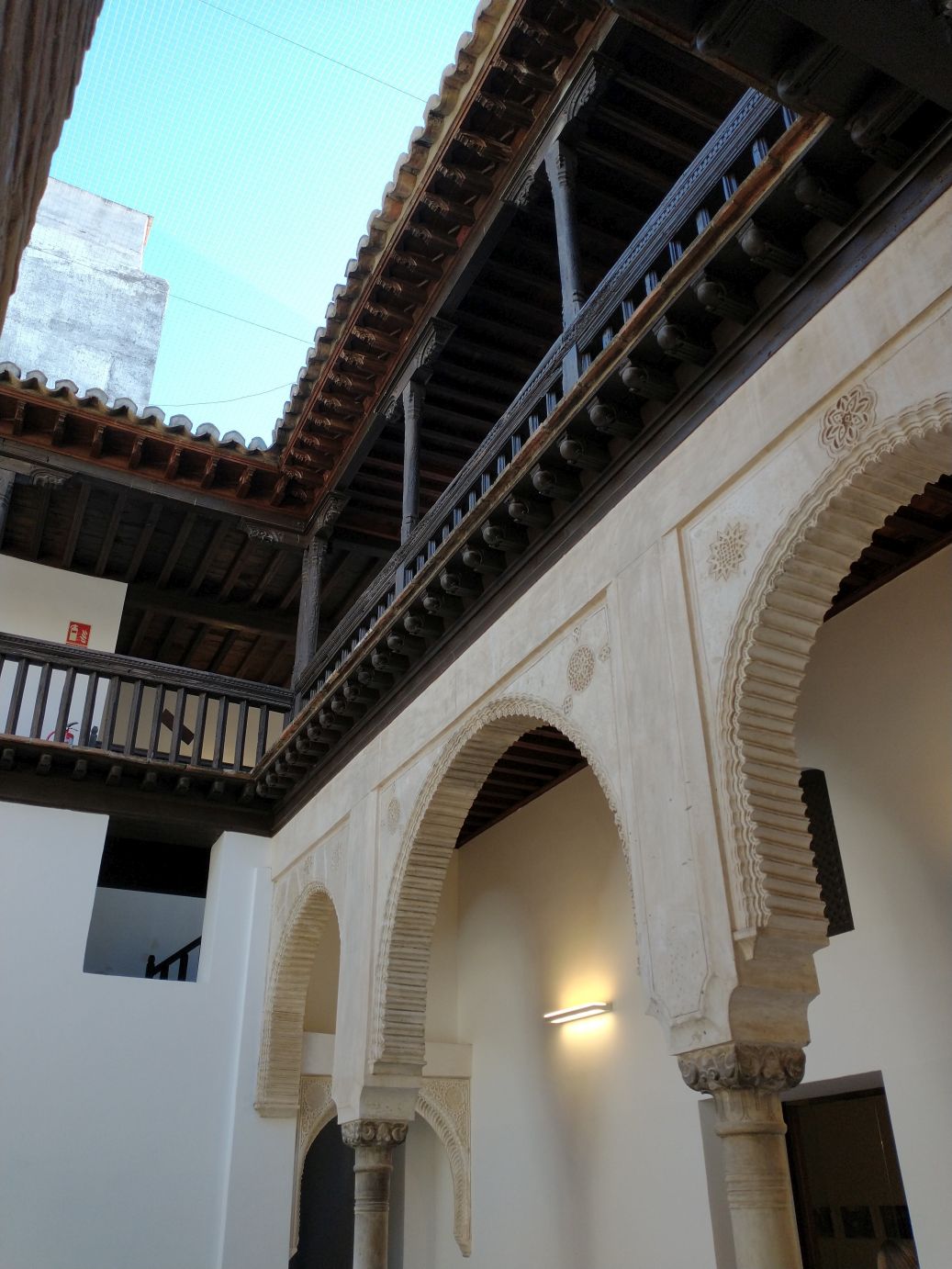
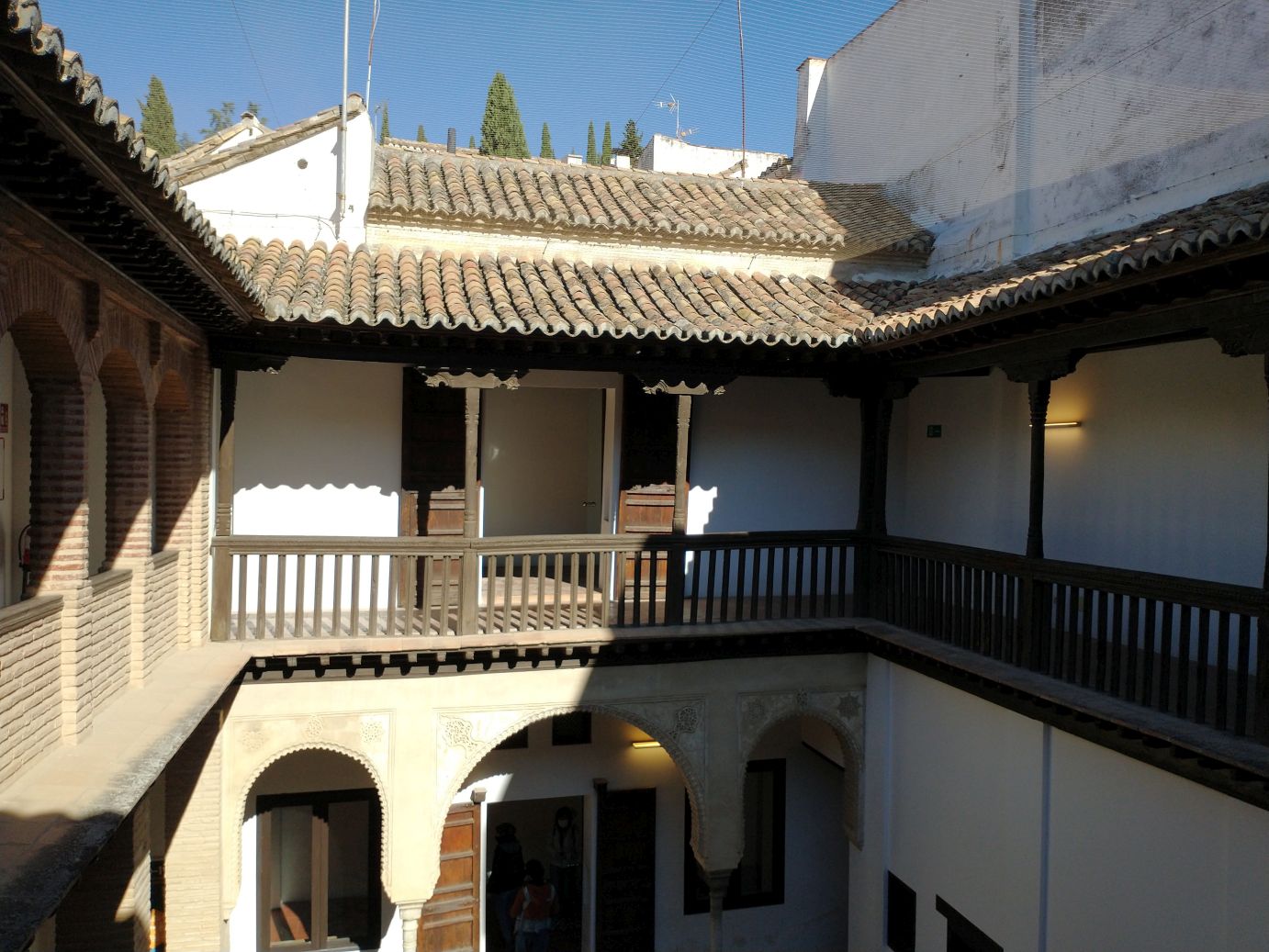
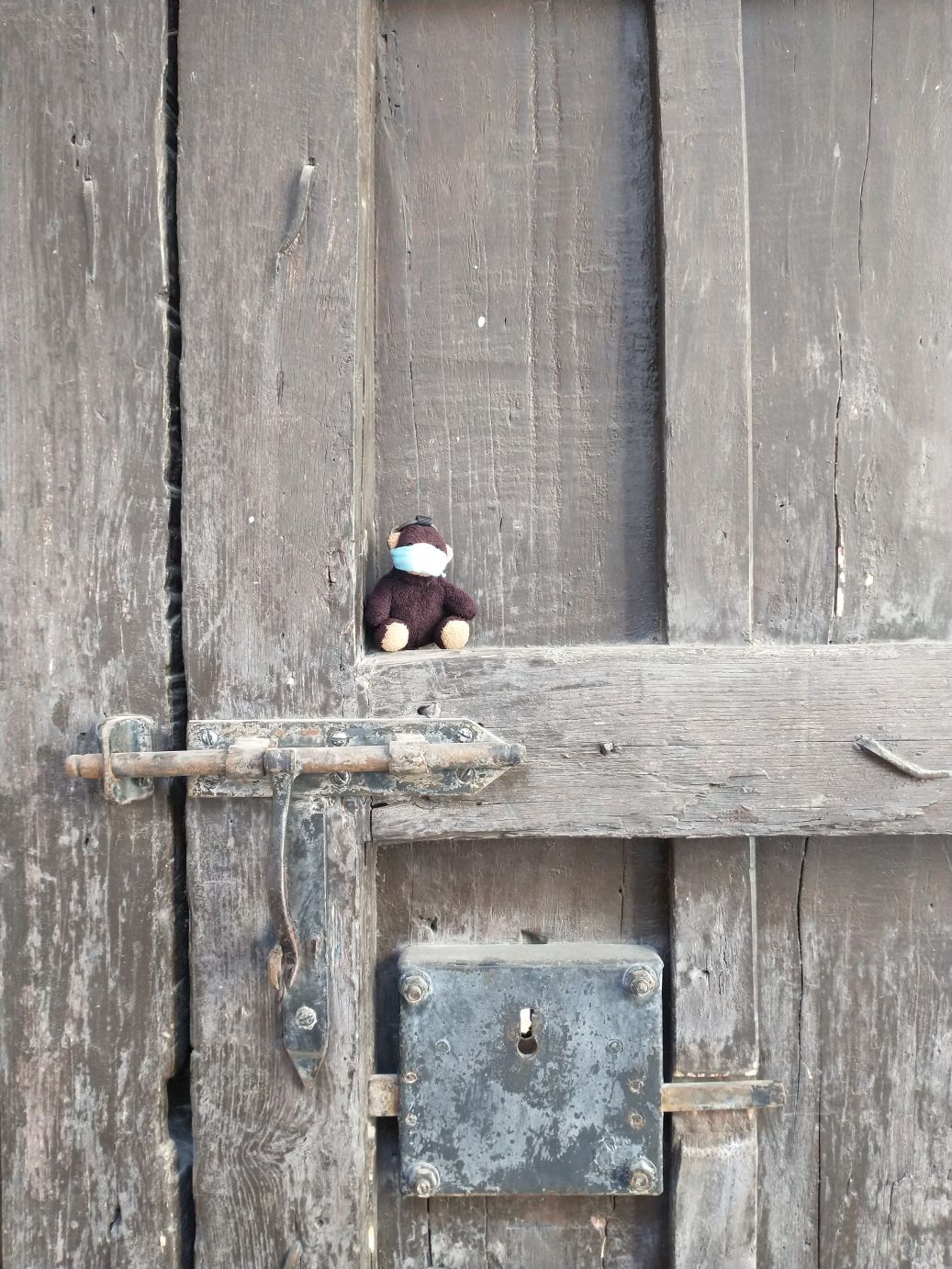
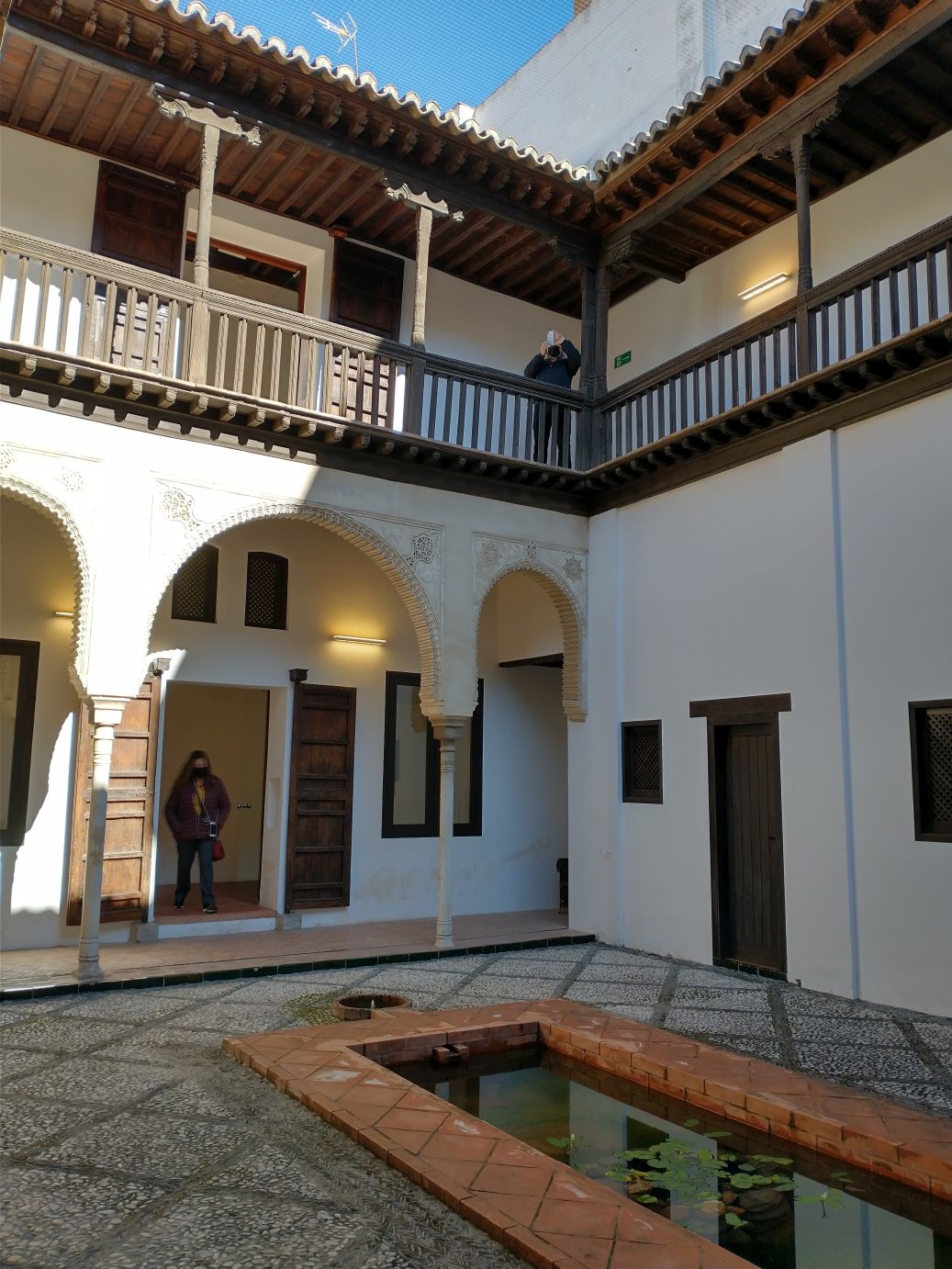
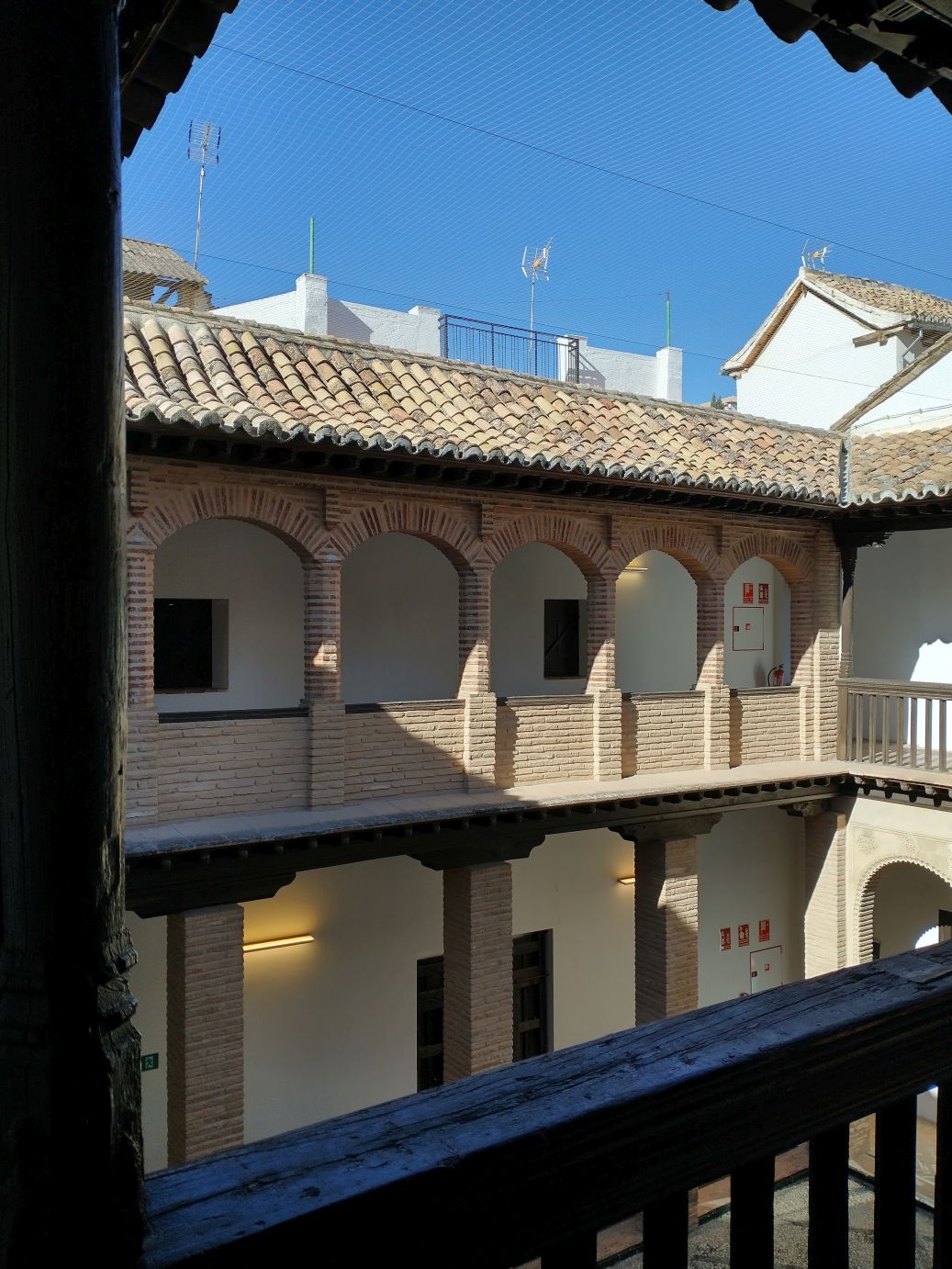
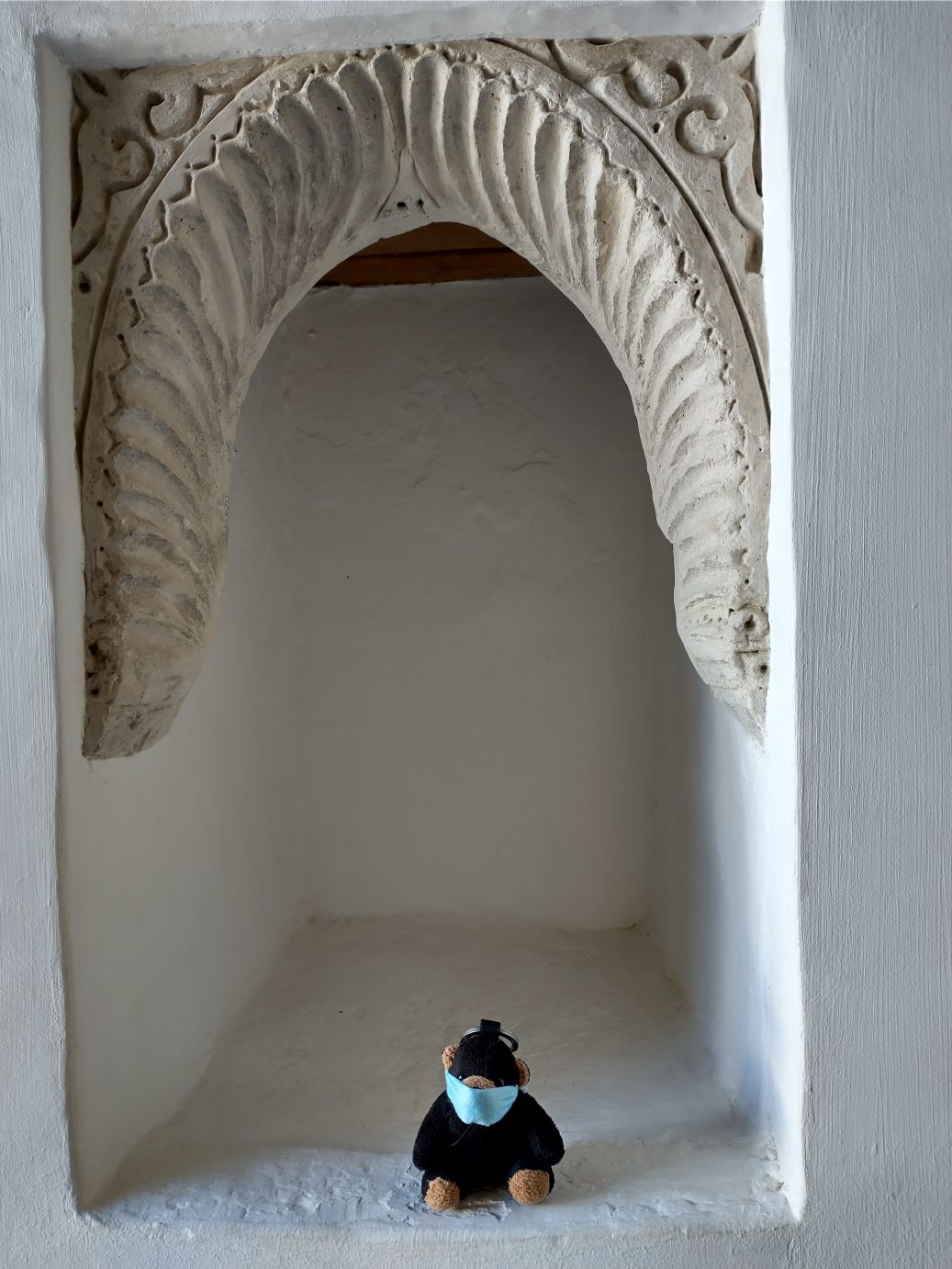
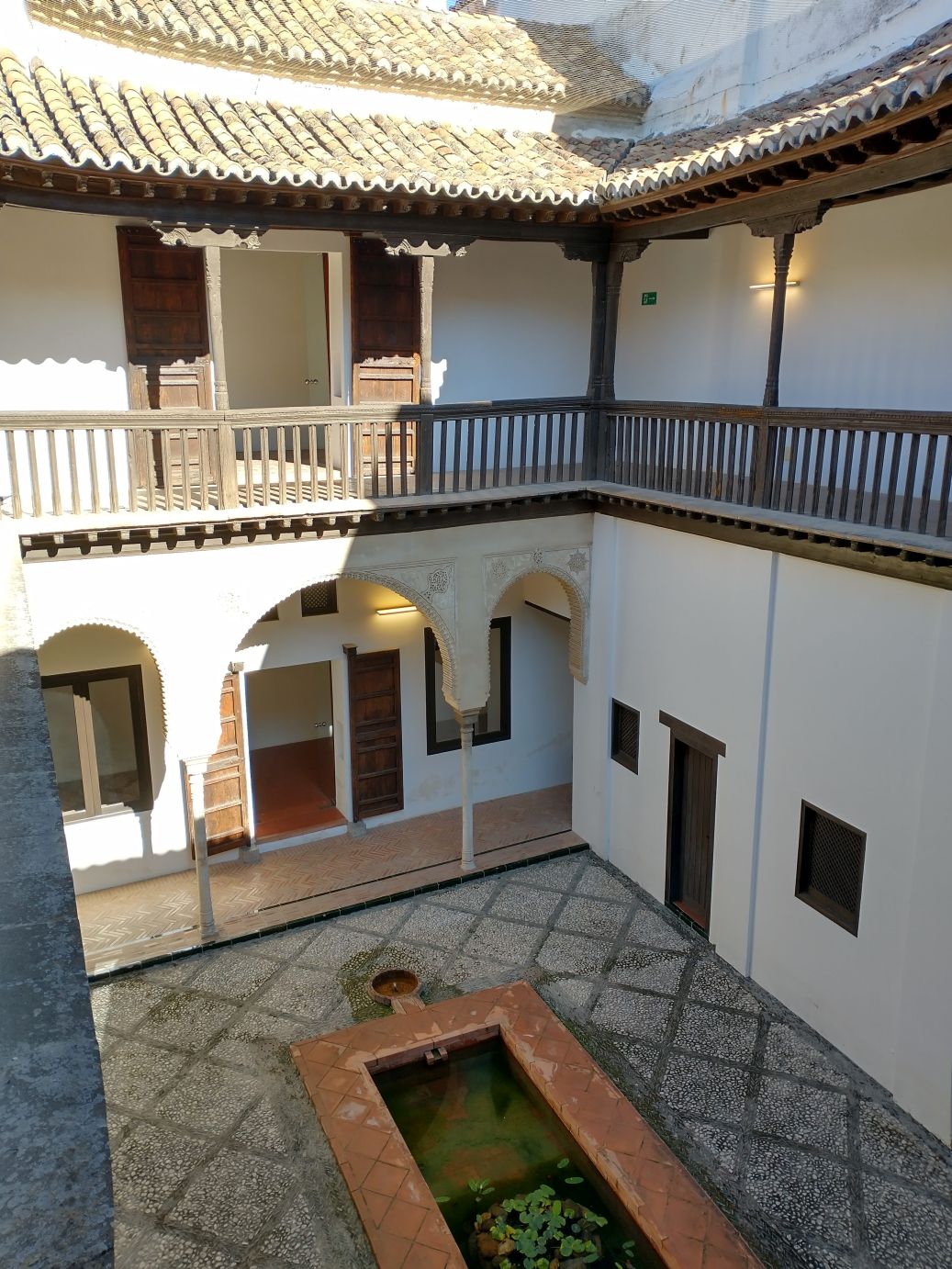
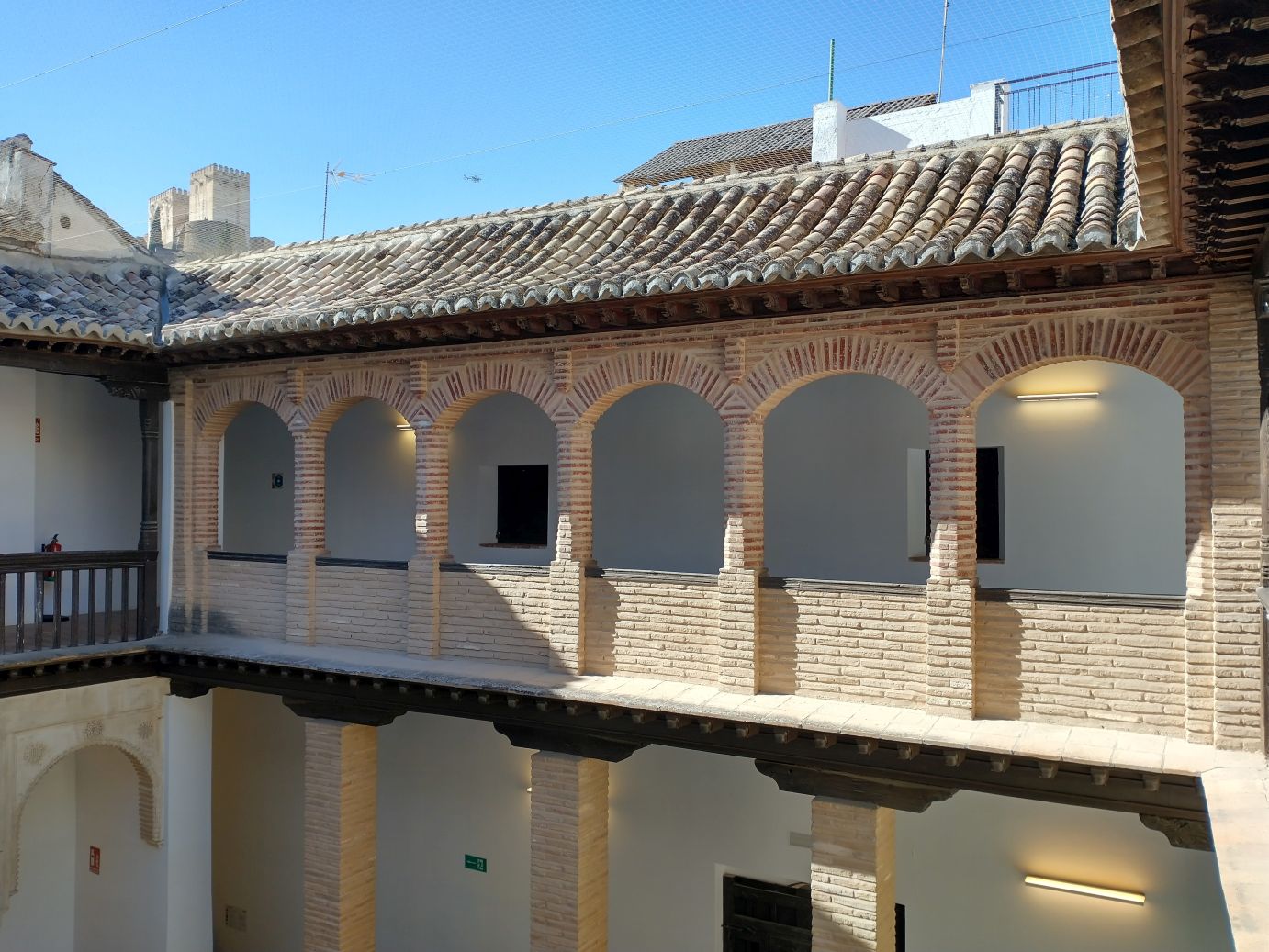
We finally traipsed up the correct street and find the unassuming entrance to the Moorish style residence. Originally constructed as one floor in the Nasrid dynasty time period, the 2nd floor was added in the 16th C, still exhibiting the Nasrid style with the red and white tile designs.
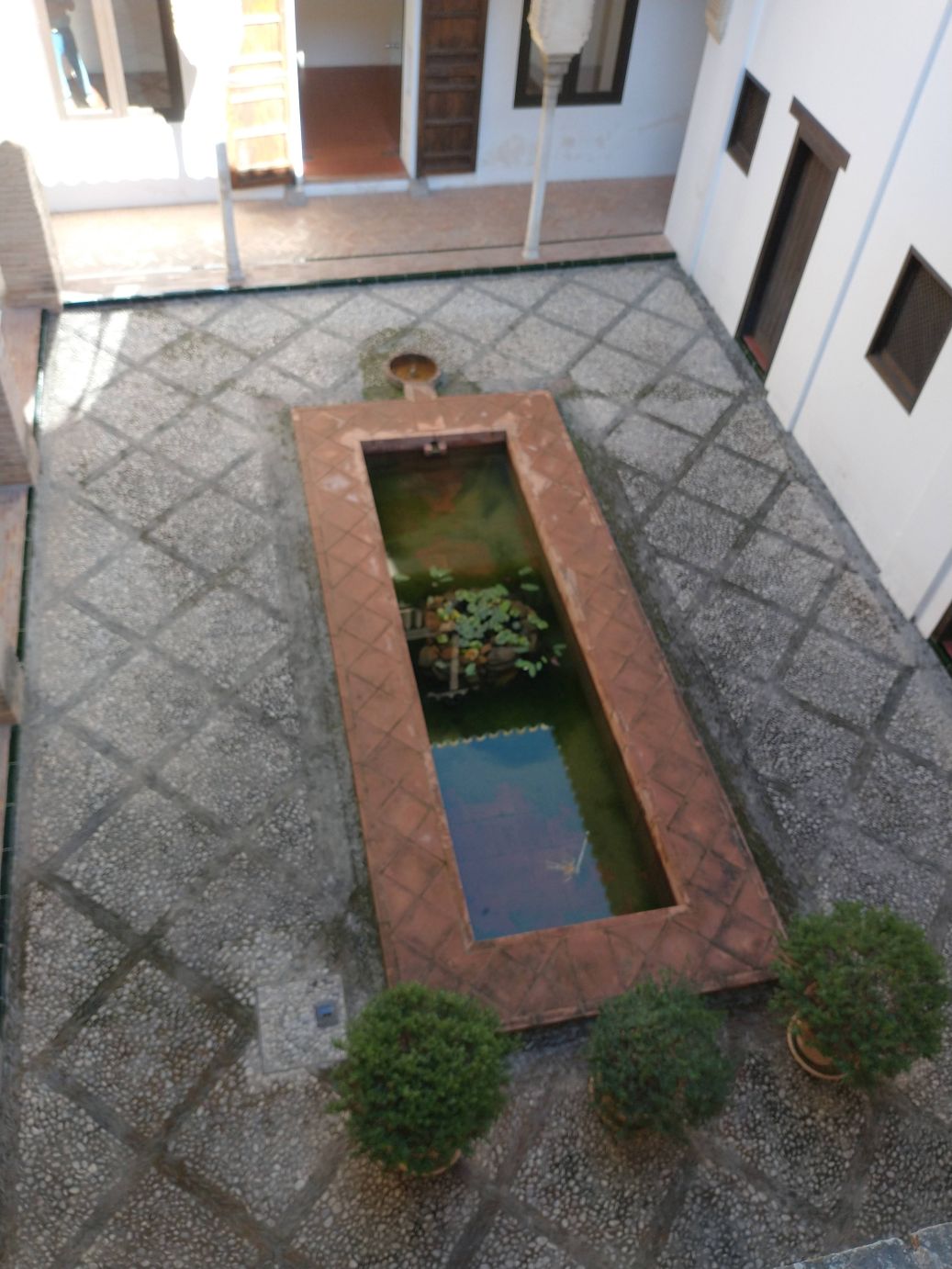
There are photographic displays in all the little rooms that surround the courtyard pool. The rooms themselves are completely unremarkable, and we never did find the “golden oven” after which the house was named, but that still didn’t stop us from enjoying our visit and taking massive amounts of pictures of the appealing architectural design.
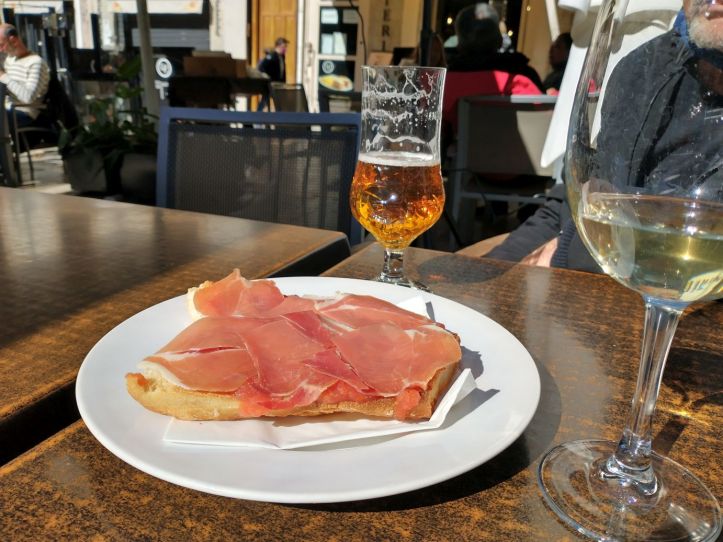
There is one other museum included in our Arab baths ticket, but judging from the map, it is about a 15 minute walk in the opposite direction of the bus pickup location, so we decide to ditch it and head back into the main city area in search of tapas. But after wandering around and looking at a bunch of the different restaurants, we don’t find anything that looks all that appealing. There is only one place in the sun, and the menu doesn’t really do anything for us. Heading back to the main boulevard, where there was something happening at the police station with a bunch of people (like 50 or so) waiting outside, we plop down in a little restaurant, La Plaza, that is actually only serving breakfast but does have some Iberico ham sandwiches, which we order along with our beer and wine. It is a perfect little rest stop, and the sandwich (open face) is really good. Plus we can watch whatever is happening at the police station – which appears to be the release of some prisoners who have a big fan club. Who knows?
Finished with our rest stop, we start to make our way back to the bus stop, still looking for lunch. But on the way we pass by Corral del Carbon again, and this time ask one of the guards standing around how to enter the museum area. She points to this little unmarked door in the corner. Success! It is just a little museum, mostly exhibiting photographs and explanations of the ancient history .. in Spanish! Well, we have Google Translate. But there are some great photos of two different ruin sites – more baths and a castle in Jaen – that might be cool to visit on our next trip here. Plus we are feeling quite proud of ourselves for figuring out how to get inside!
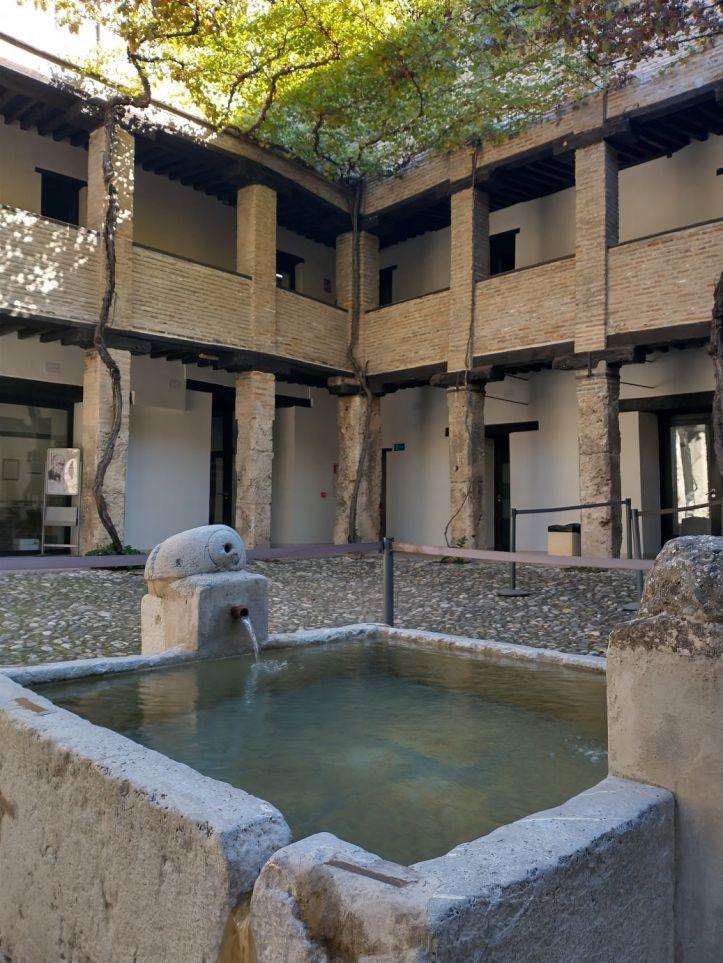
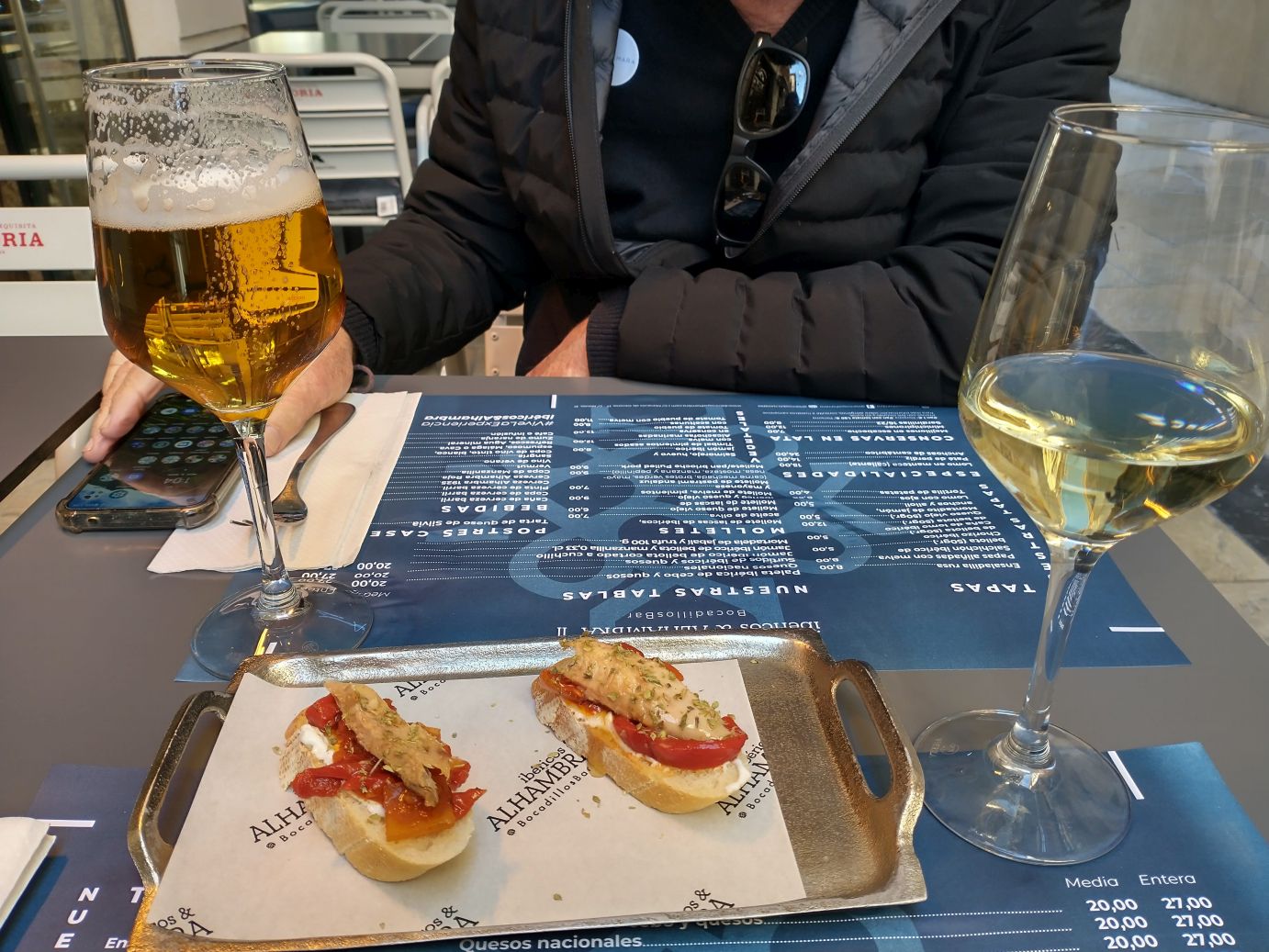
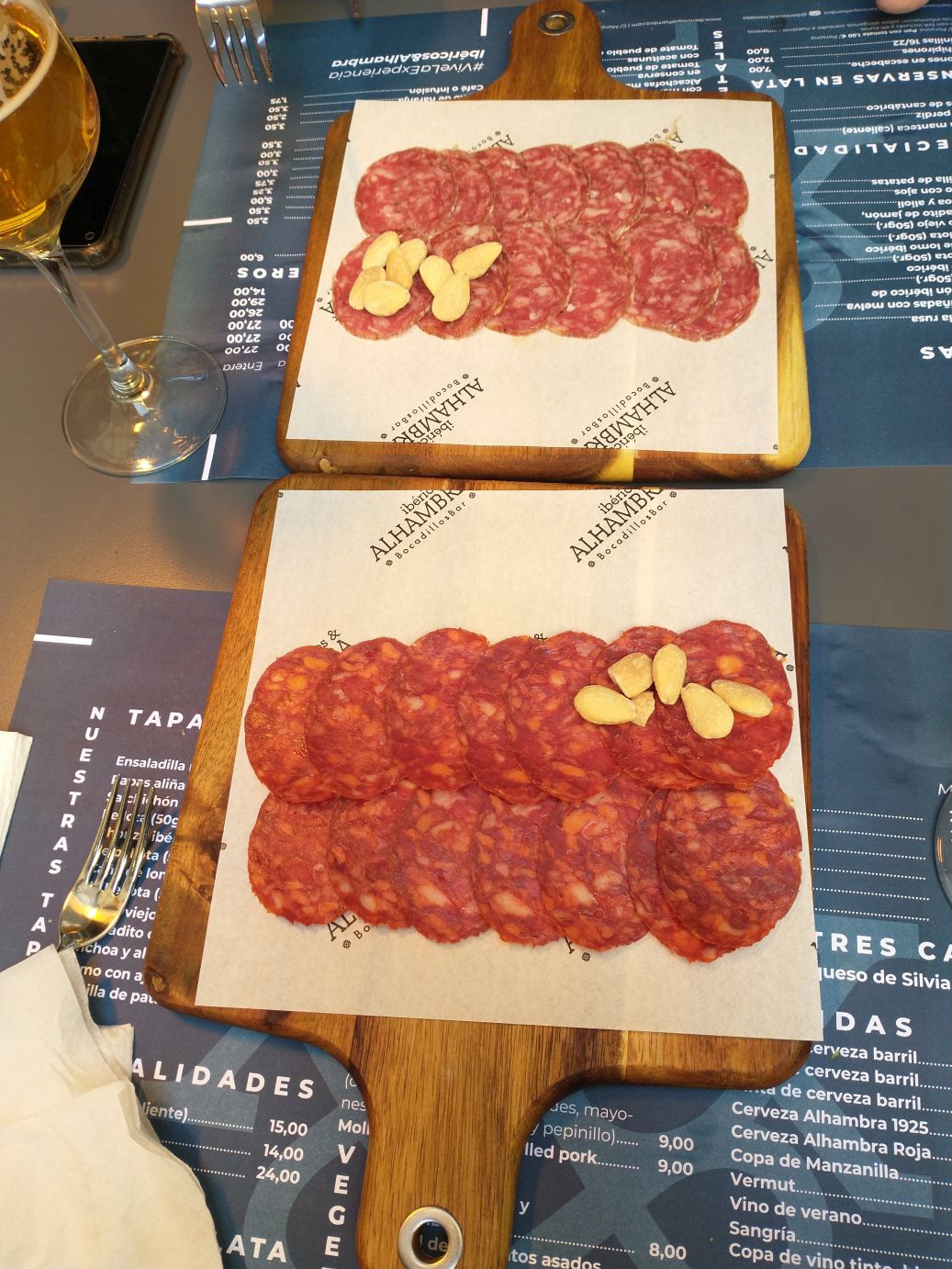
After a bathroom break and more photos of the picturesque little courtyard, we continue our restaurant search, settling on a Bocadillos Bar called ibericos & Alhambra. There is a perfect table right outside, with a heater the waiter turns on for us – and an excellent menu full of little sandwich and charcuterie board choices. We finally get our tapas with our wine and beer – some sort of fish on a crostini which is actually very good – then order two different meat tapas and dig into a lovely little feast.

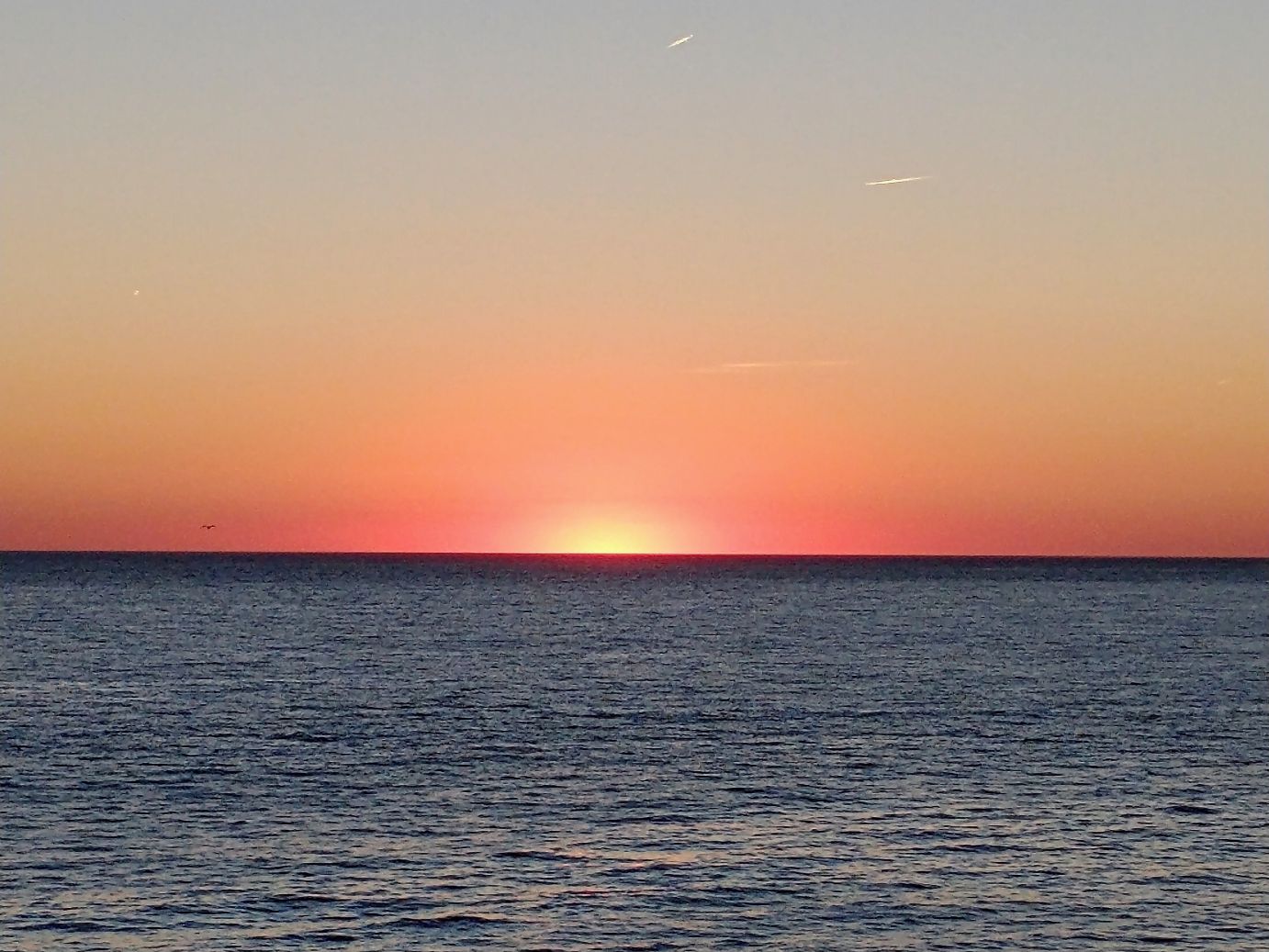
With plenty of time to spare, we head down the street to the bus stop and hang out in the sun, waiting with everyone for the bus to return. It’s been a great day, and Granada is ever so fun – without Alhambra. Two hours later, back on the ship and ready for the evening, we hang out on the balcony with an awesome sunset, then have dinner and head to Bright Night – the COVID iteration of White Night. We’re divided into 2 groups (by muster station). Our group goes up to the Living Room first for a dance party with Kayla and the DJ, then down to the Cabaret Lounge for more dancing and music with Zoe and Galen.
A fun and different way to do a nighttime party – but we are definitely missing the great buffet. Oh well, maybe they’ll bring that back one day…in the “after times” if there ever are any!
 Andiamo