Today we are taking a ship tour, sigh. As we all know, we don’t typically do ship tours, but because we booked this cruise while on the Pursuit, we got a ton of cabin credit plus lots of discounts on our tours. So, going against our better judgement, we booked 5 tours, beginning with this one to the Tala Collection Game Reserve outside of Tala. Since it is a small ship, and a different type of passenger we were hoping for the best, and in this case, with a couple of exceptions, it did work out.
We started out on an aggravating note with one young couple who were trying to do everything in their power to get ahead of us in the line to the bus. They almost shoved Ed out of the way, but we managed to make it on the bus to get the front seats, with them behind us not very happily. Sigh. Oh well – if its only 2 people, we can deal!
And it was really only 2 people, the rest of the crowd was great. We got to the reserve after about an hour’s drive through the city and out into the country. The reserve is small, only 3,000 hectares and too small for elephants, but they have tons of other wildlife which we are hoping to see today. Our bus guide, Ernie, drops us off at the bathrooms, then tells us we can get on one of two open jeep safari vehicles. After the rest break we duly head out to the jeep, and of course, who is there? The rushing couple, in the front row. Works for us, those aren’t the best seats anyway, so we head to the middle where we can actually use the loading steps as a photo sight for the left side of the jeep and settle in.
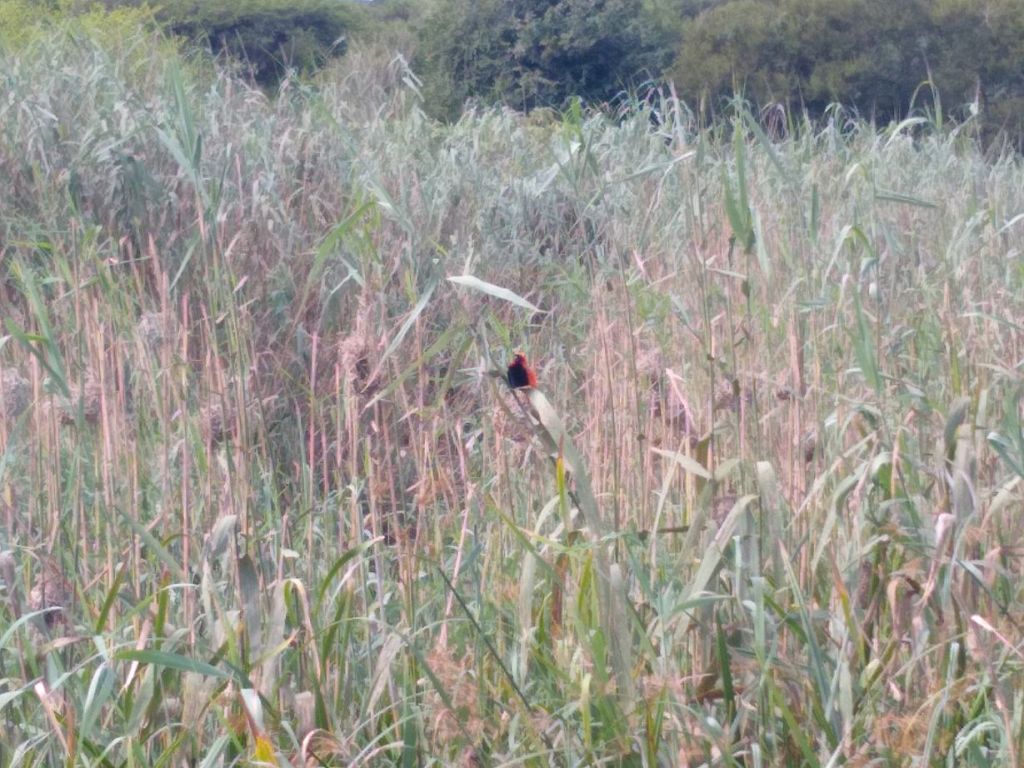
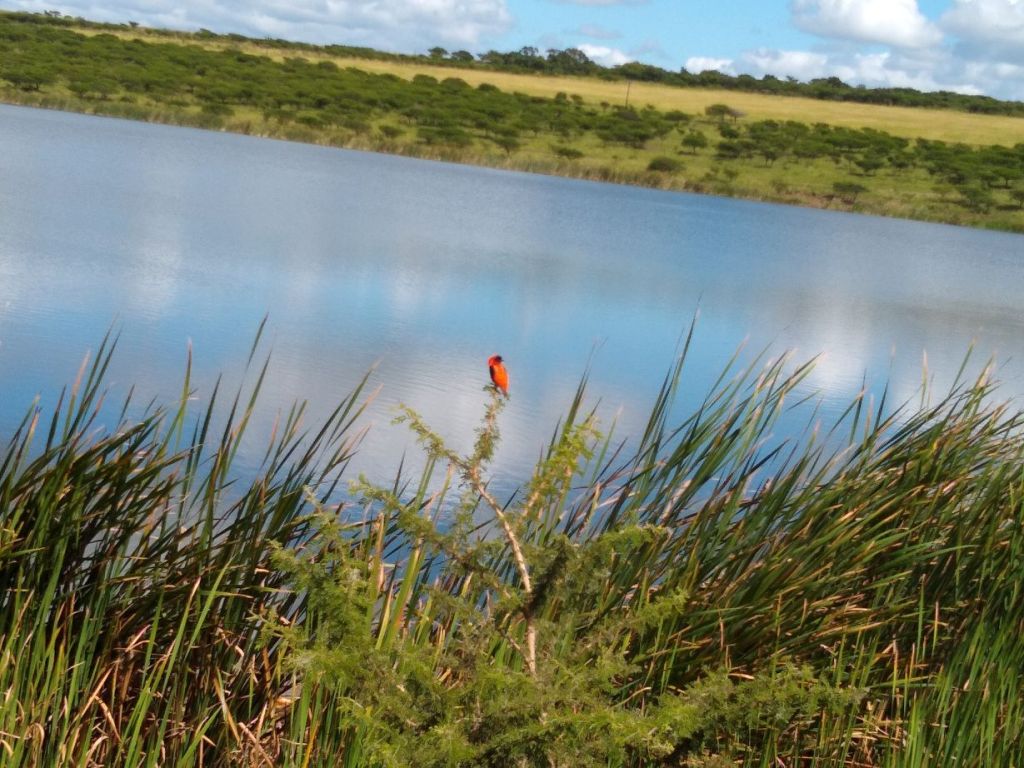
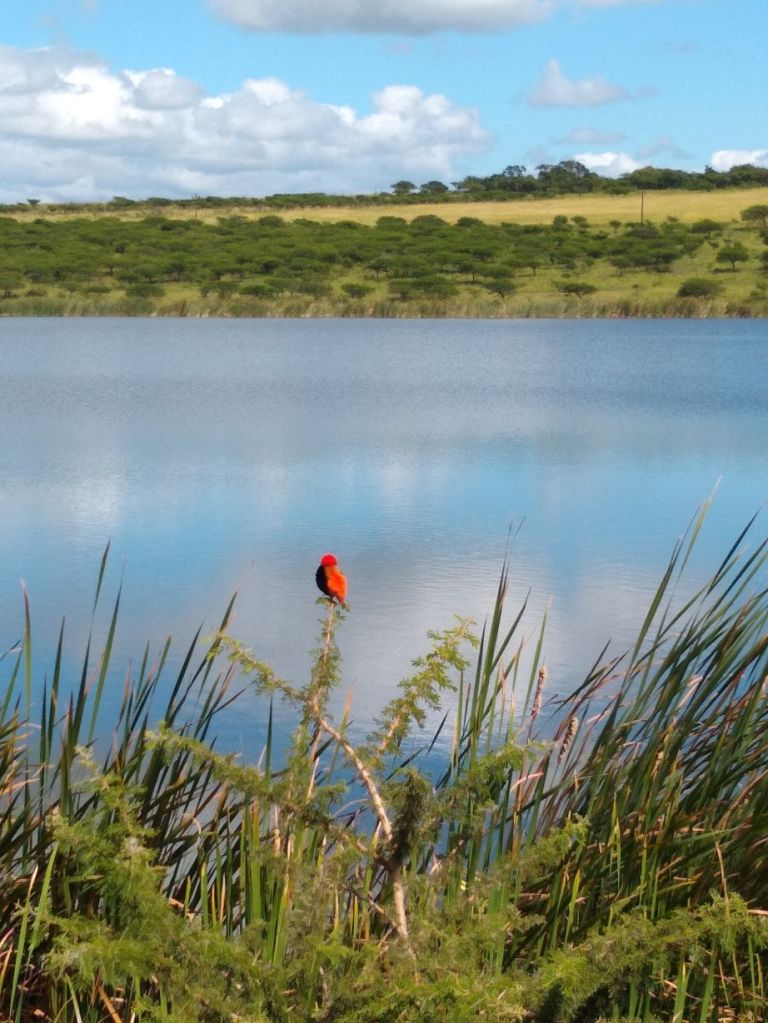
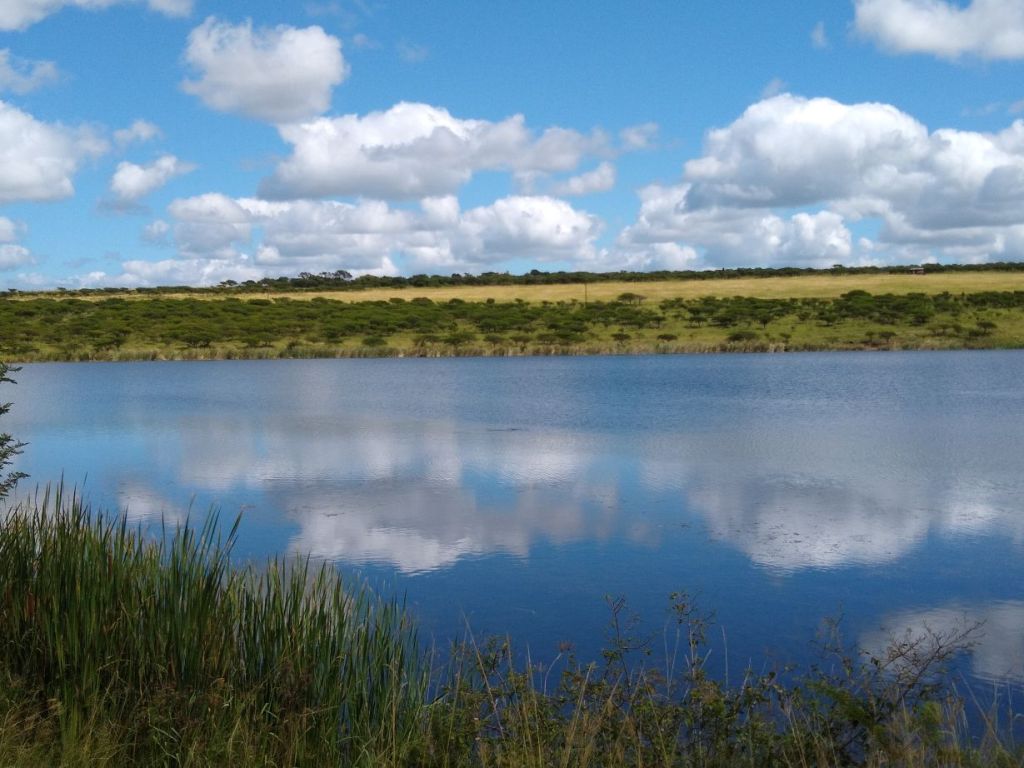
Our safari guide reinforces our rules (don’t get out, keep everything in the jeep, don’t make loud noises) and we are off into the preserve. Right out of the gate we see Impala grazing next to the dirt trails we are riding. Then we passed by a pond with long grasses circling the banks. Here we actually saw a Southern Masked Weaver bird, beautiful red and black feathers, sitting in the reeds. Then we saw a whole bunch of its nests nestled in the reeds. In this bird species, the male builds the nests and then the female must come and approve it. If the female doesn’t like it, she tears it apart and makes the male start all over again.
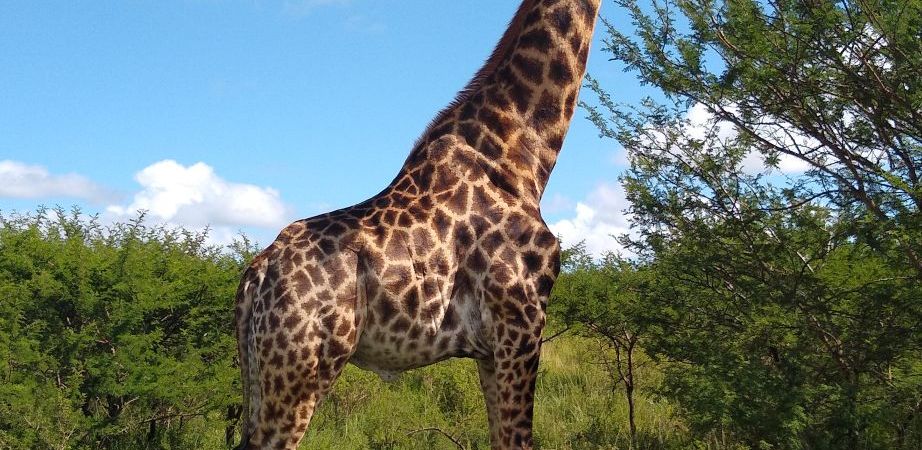
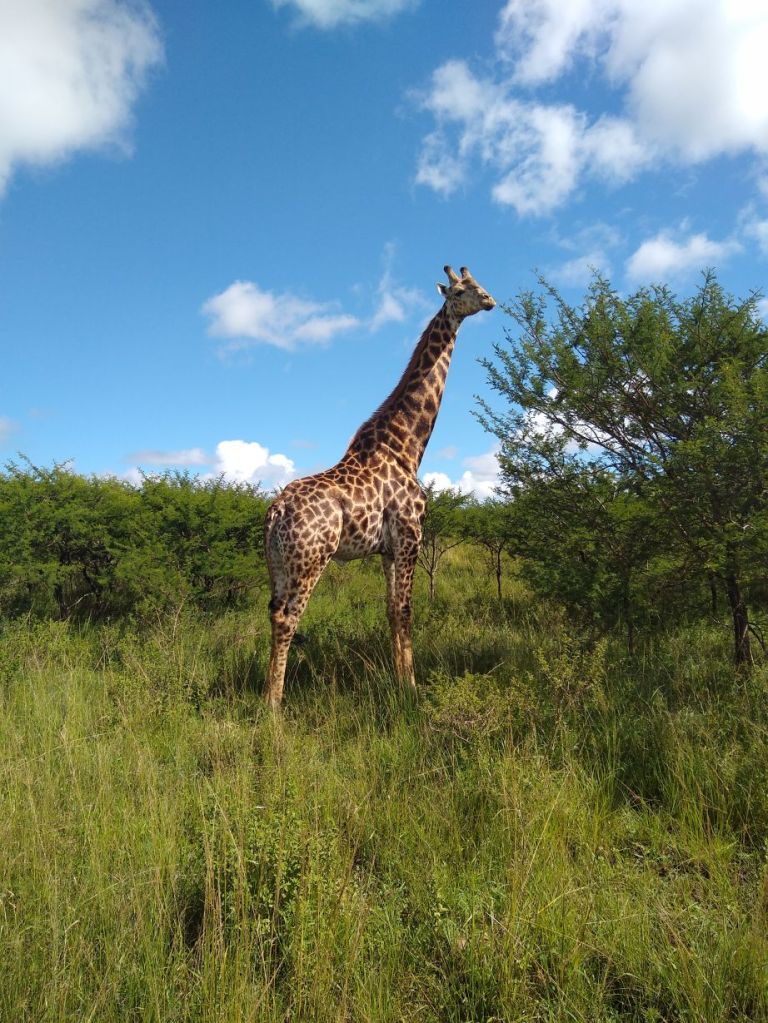
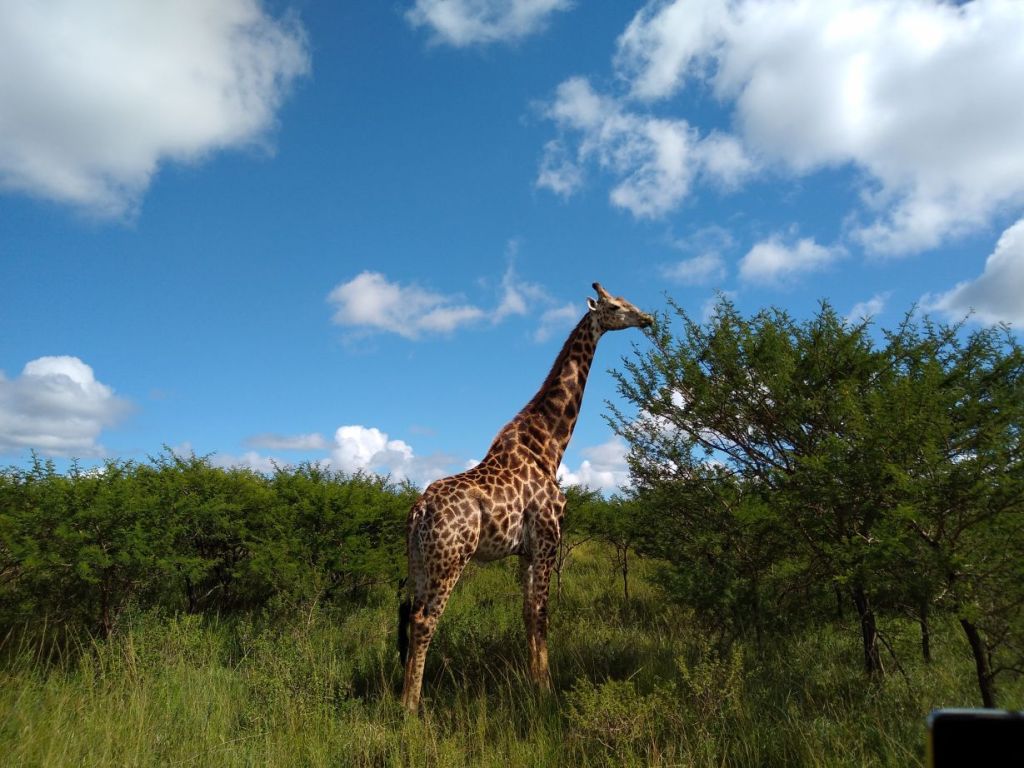
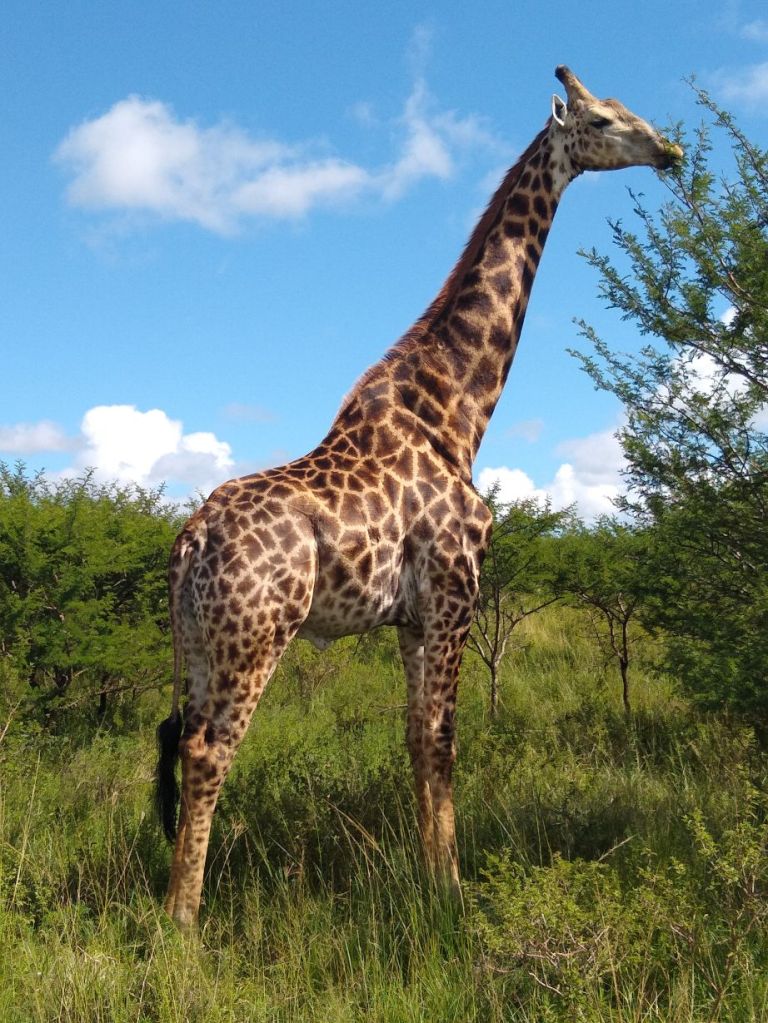
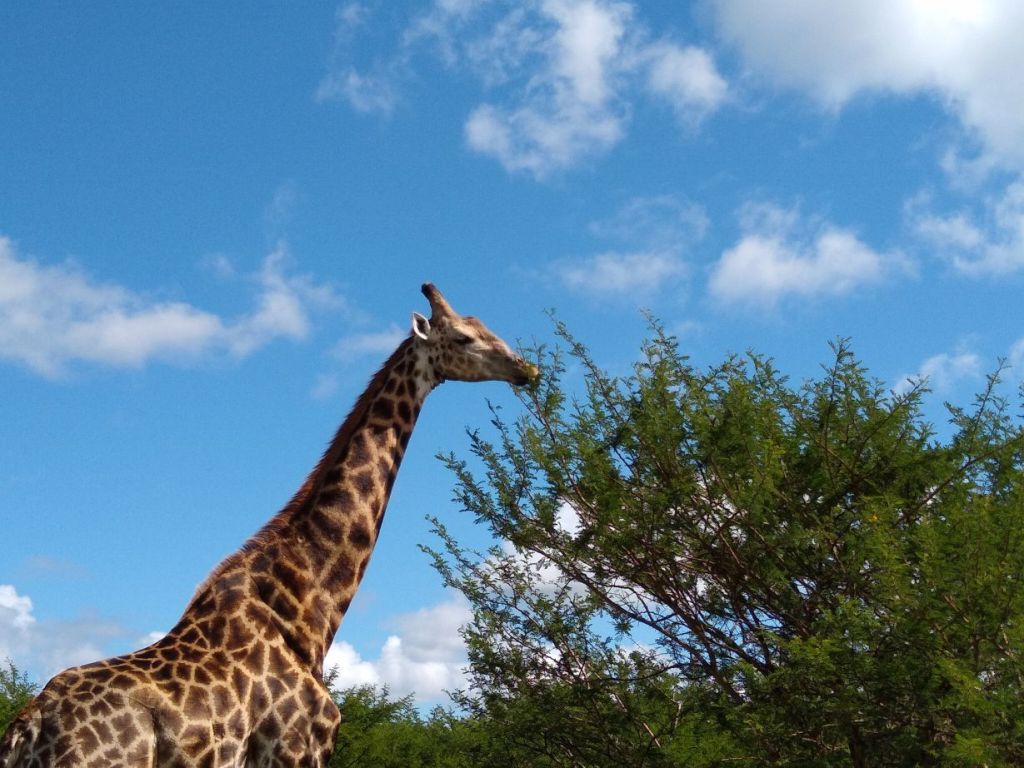
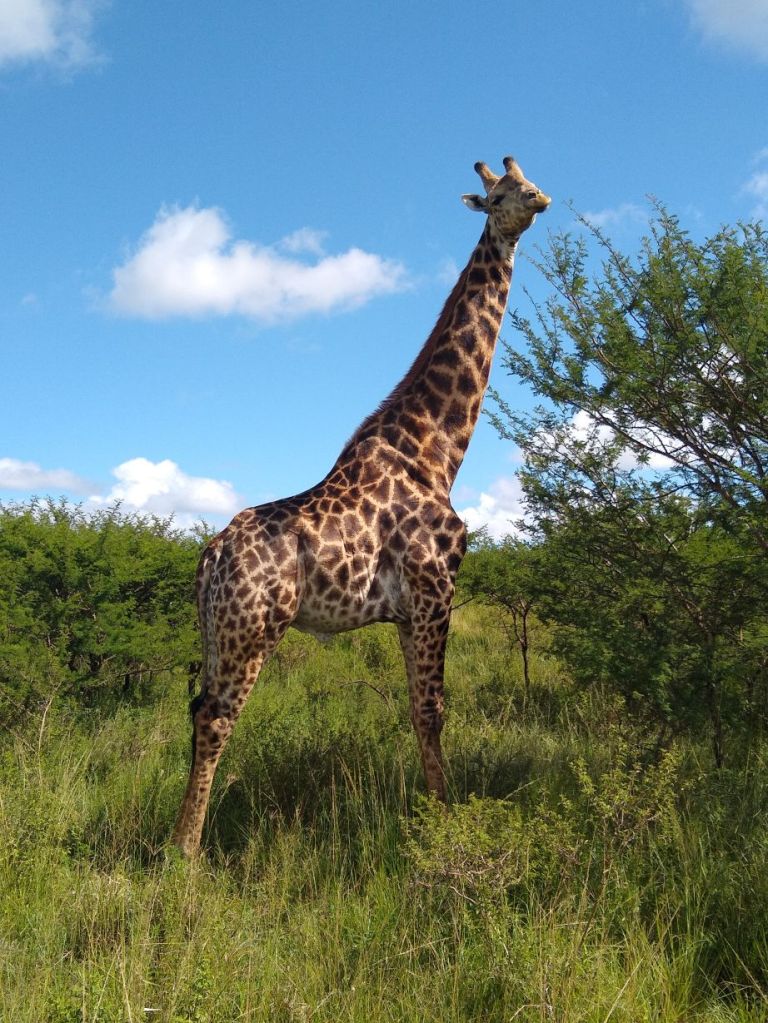
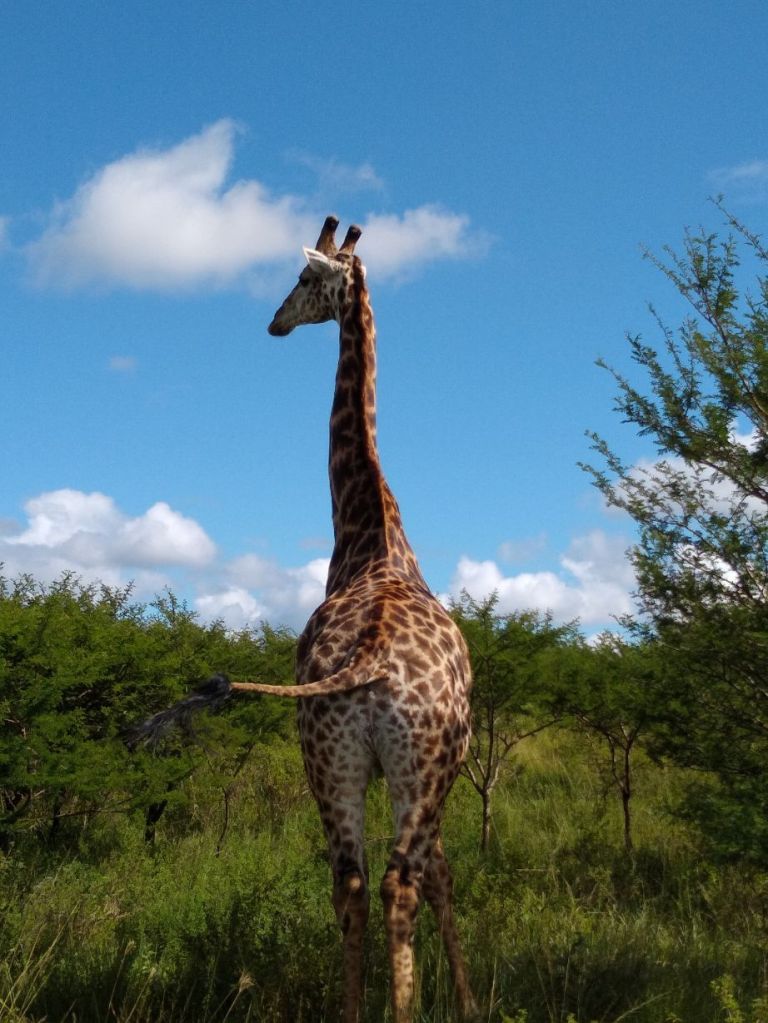
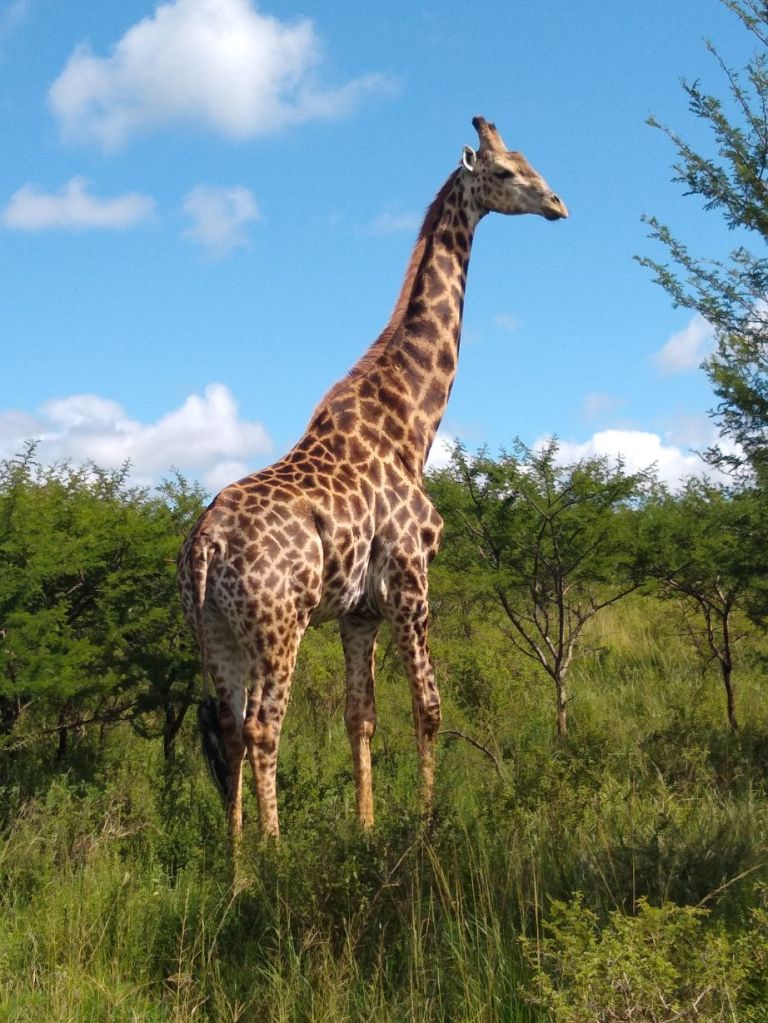
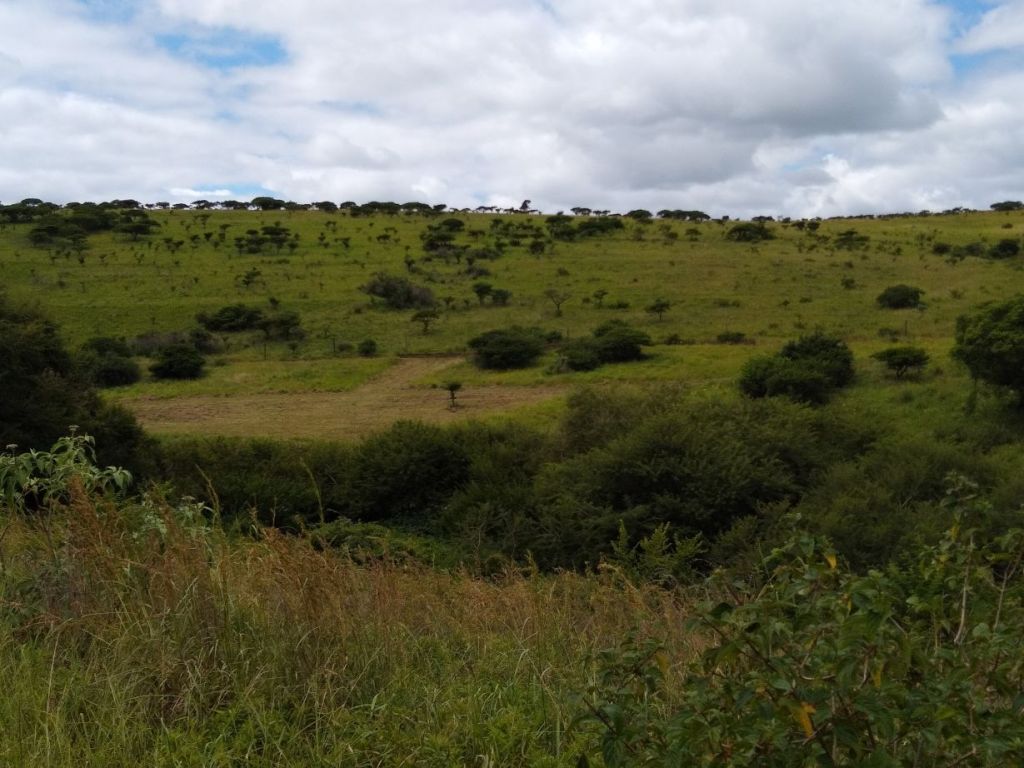
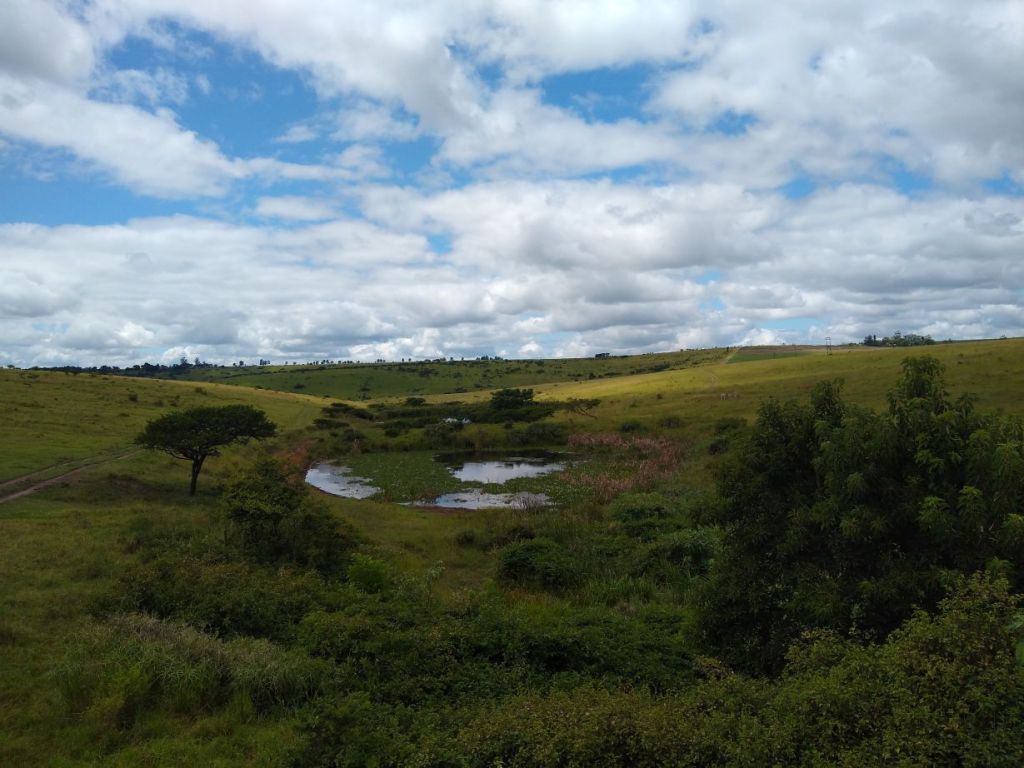
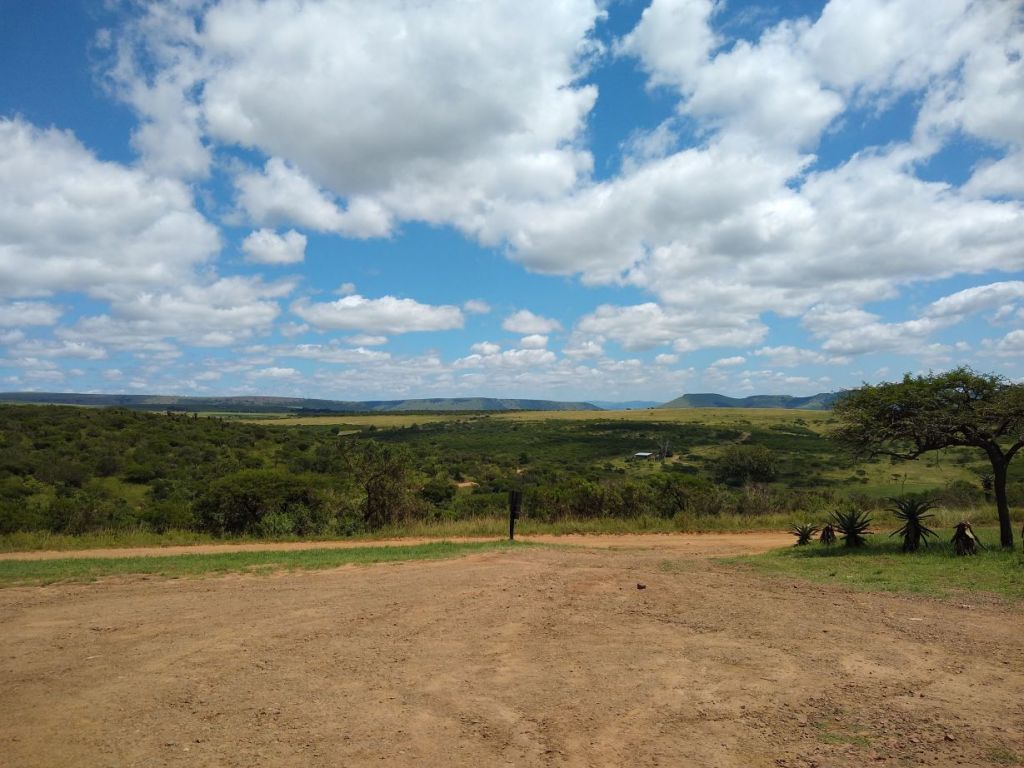
We head deeper into the park, crisscrossing dirt tracks looking out over the beautiful rolling green fields and small hills bracketed by blue skies with puffy white clouds in the distance. Enjoying our time, and the temperature (it is actually cool with a lovely breeze), when boom! A Giraffe! Right next to the road. He’s so close, you can almost touch him while he grazes on a tree. Our guide stops and explains that the ecosystem works together, the giraffes feed on the top parts of the trees, but not much further down, because the trees produce a bitter tannin in lower leaves in order to protect themselves from giraffes eating everything and destroying the tree. As we sit watching this elegant creature right beside us, we learn that giraffes can’t make vocal sounds, so they communicate with their ears, moving them in a certain way to communicate with their herd. They can live for up to 28 years and sleep with their head up to supply oxygen to the brain. Awesome!
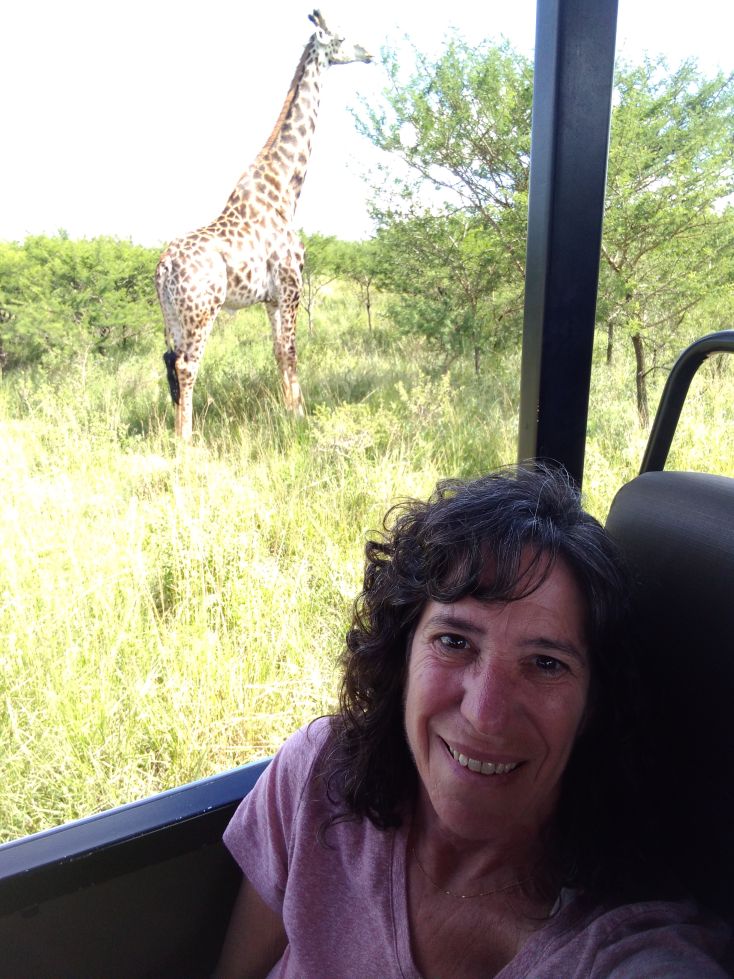
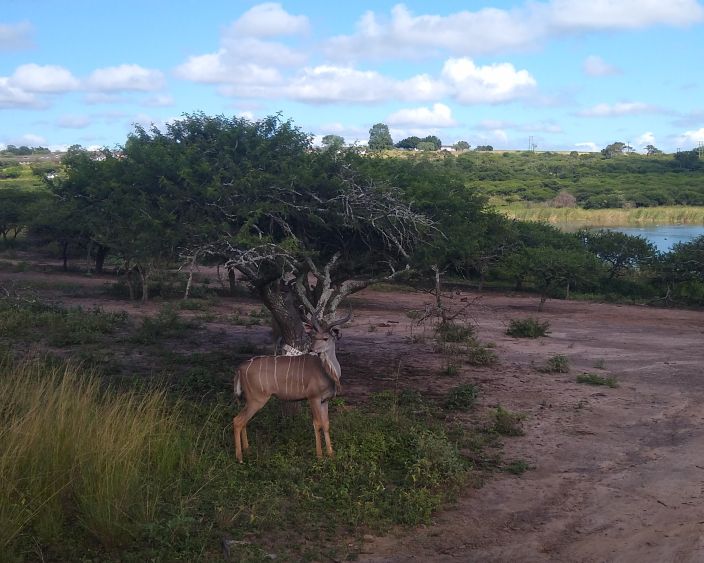
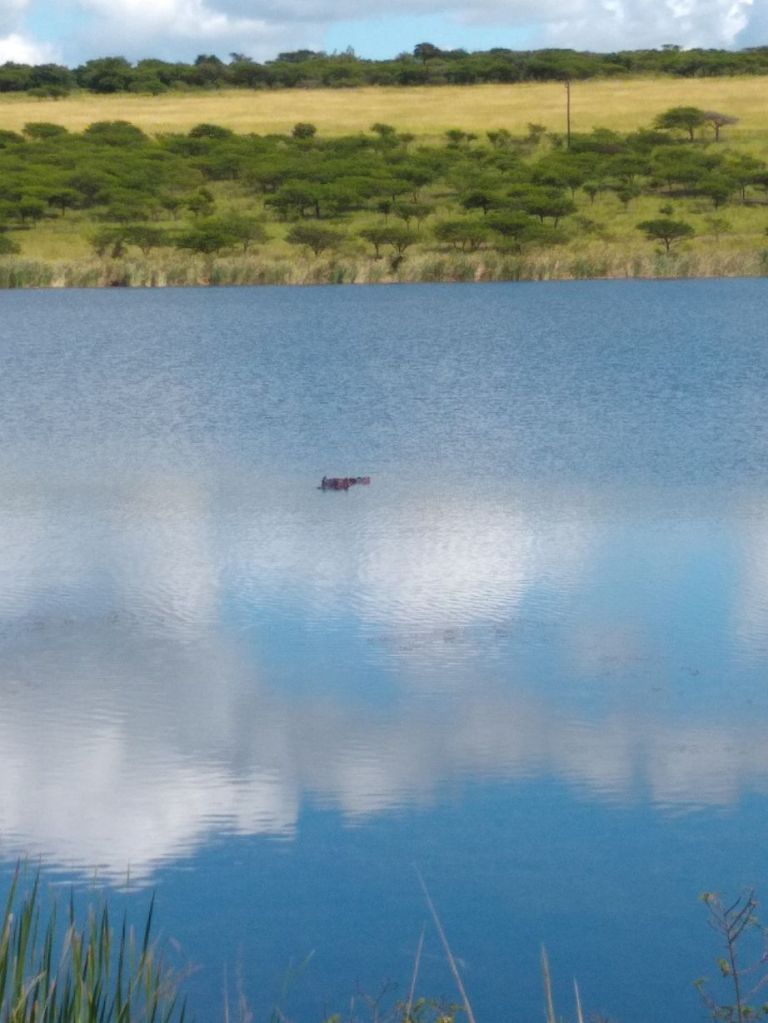
And we’re off, spotting Kudu in the distance, more masked weavers in the reeds, a little splash of red among green reeds in front of a sparkling blue pond. Around the side of the pond we see ripples, then slowly those big bug eyes of a submerged hippo arise above the surface. We watch for a while and even try circling the pond, but we don’t get more than a glimpse of the hippo’s face. There are 7 hippos here, and they are the most dangerous animals because they can stay submerged for up to 8 minutes, and you don’t necessarily know they are there. They also kill the most people, but they won’t actually eat the kill. They leave the meat for others. Joy.
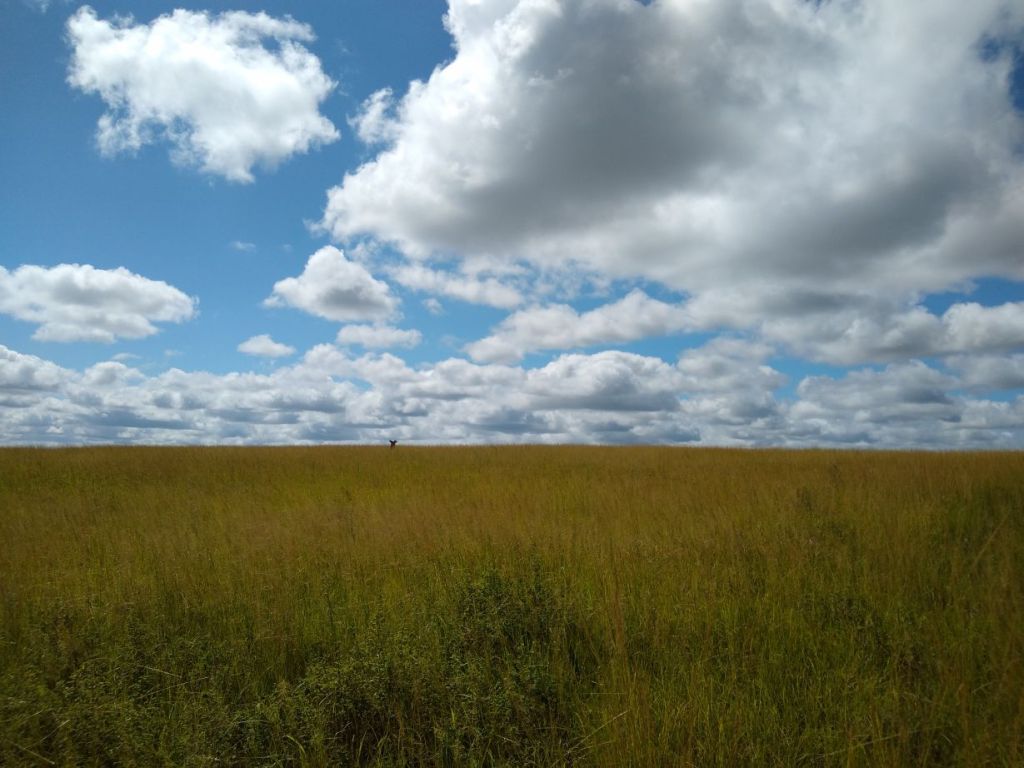
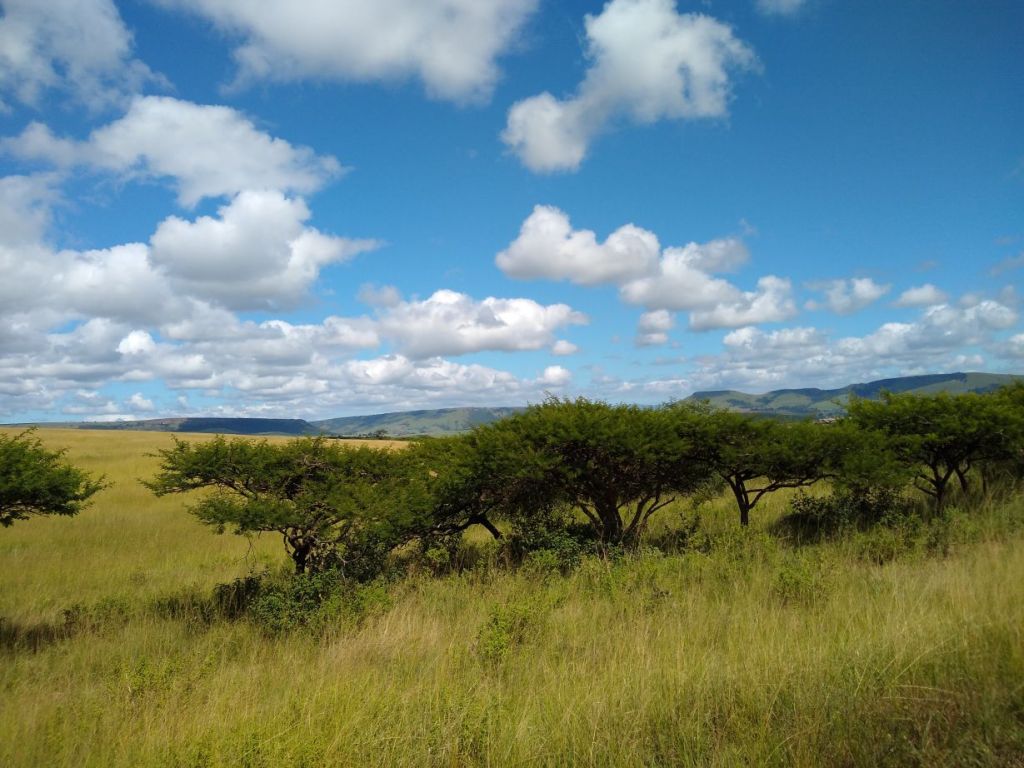
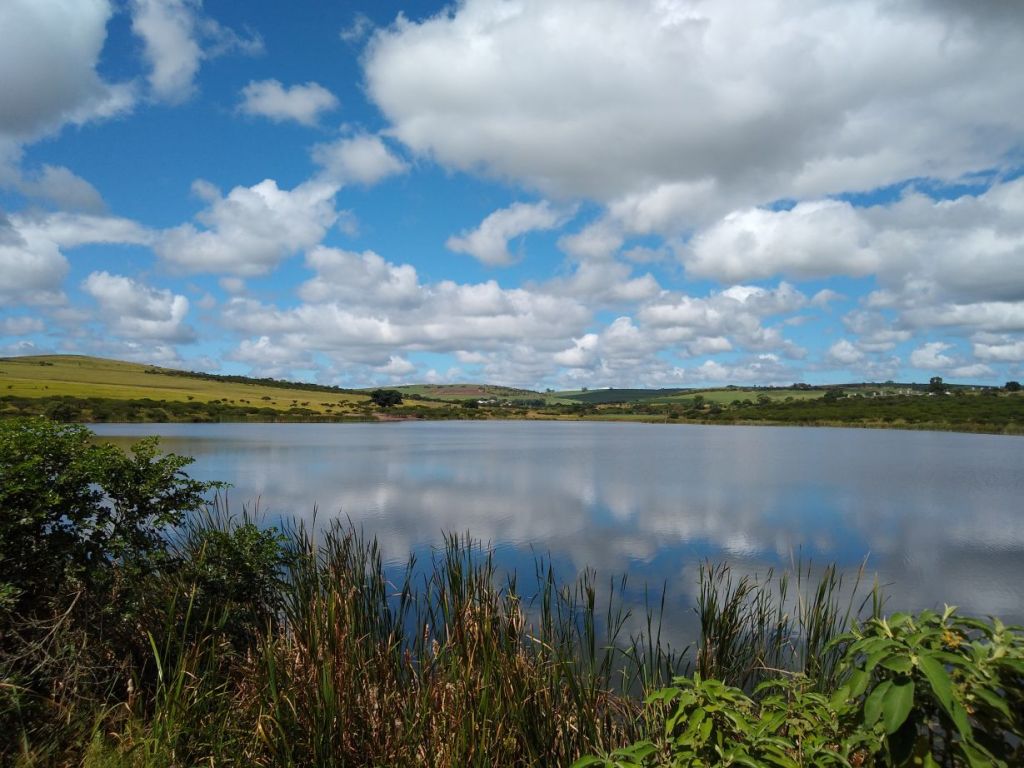
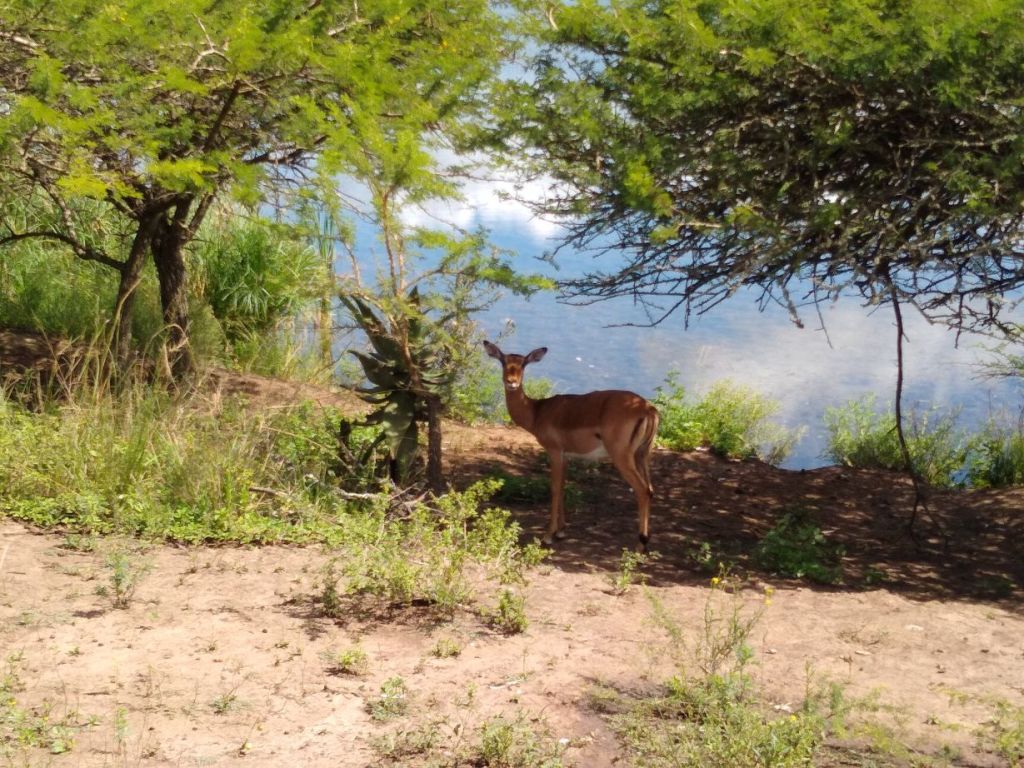
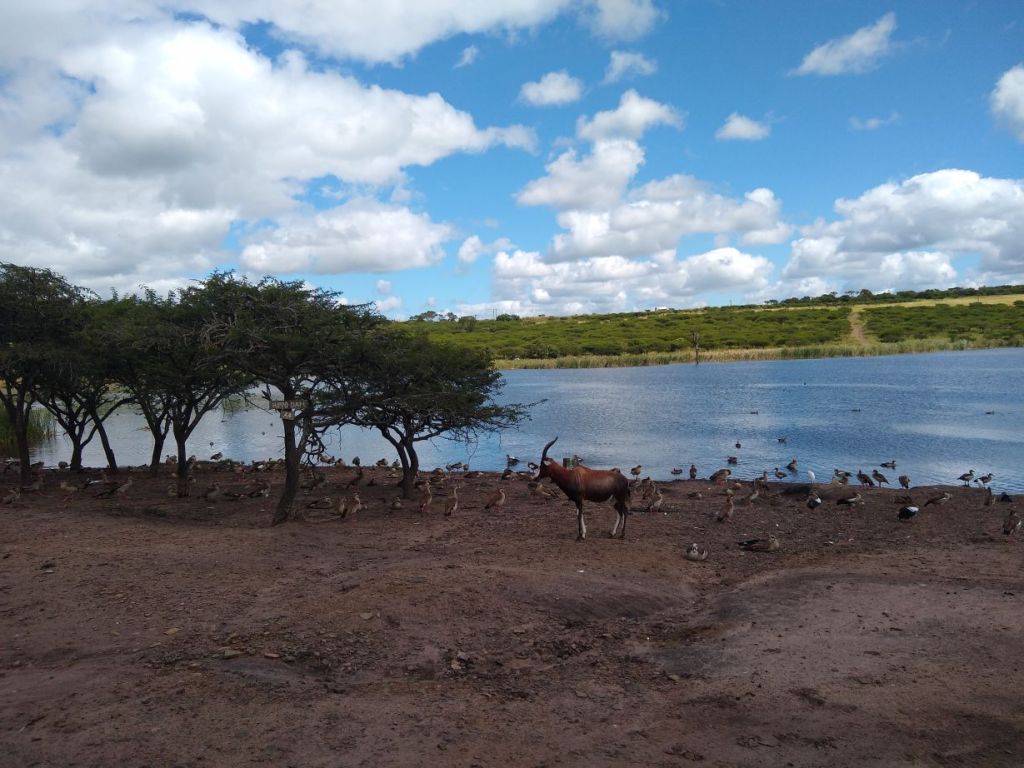
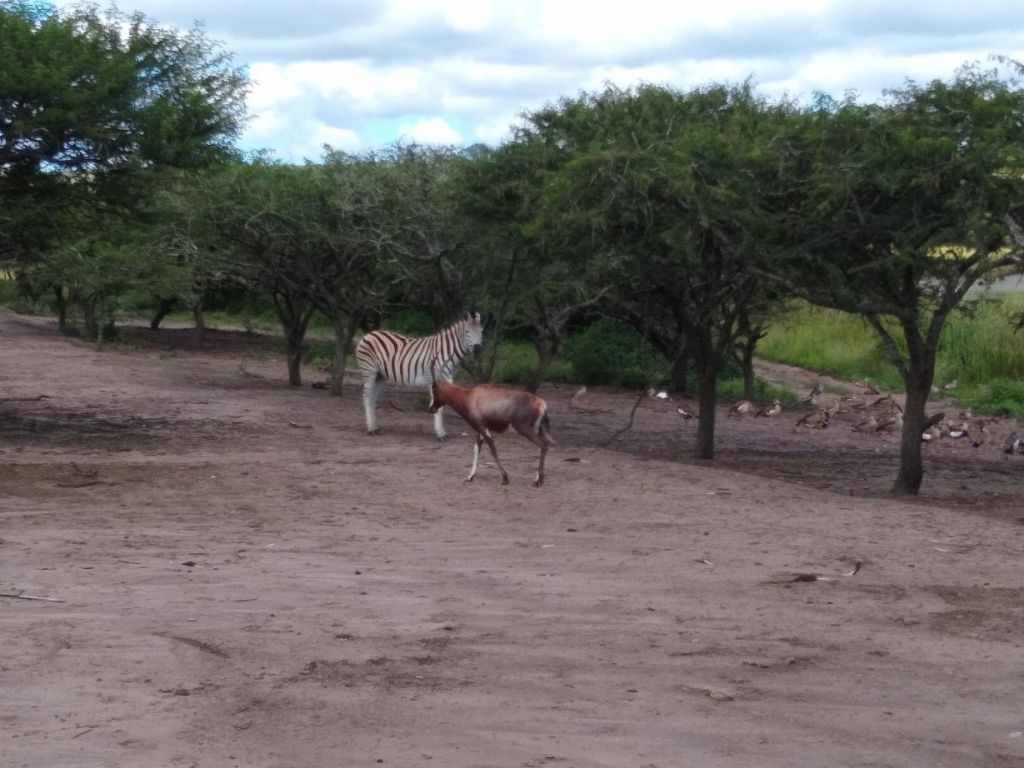
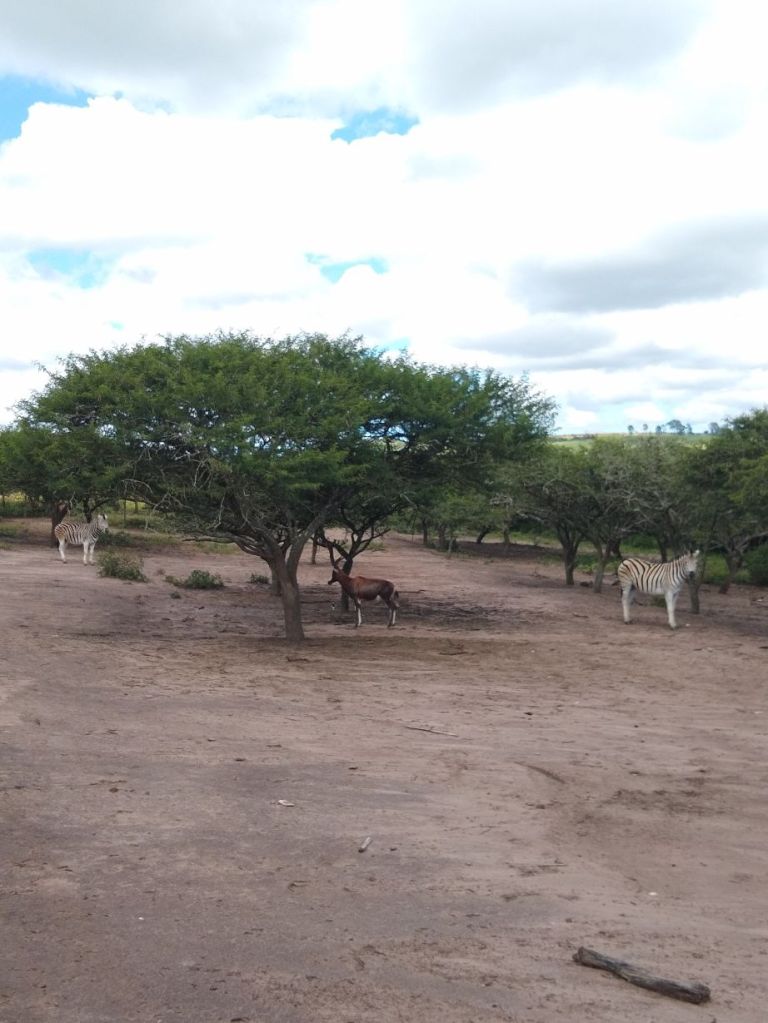
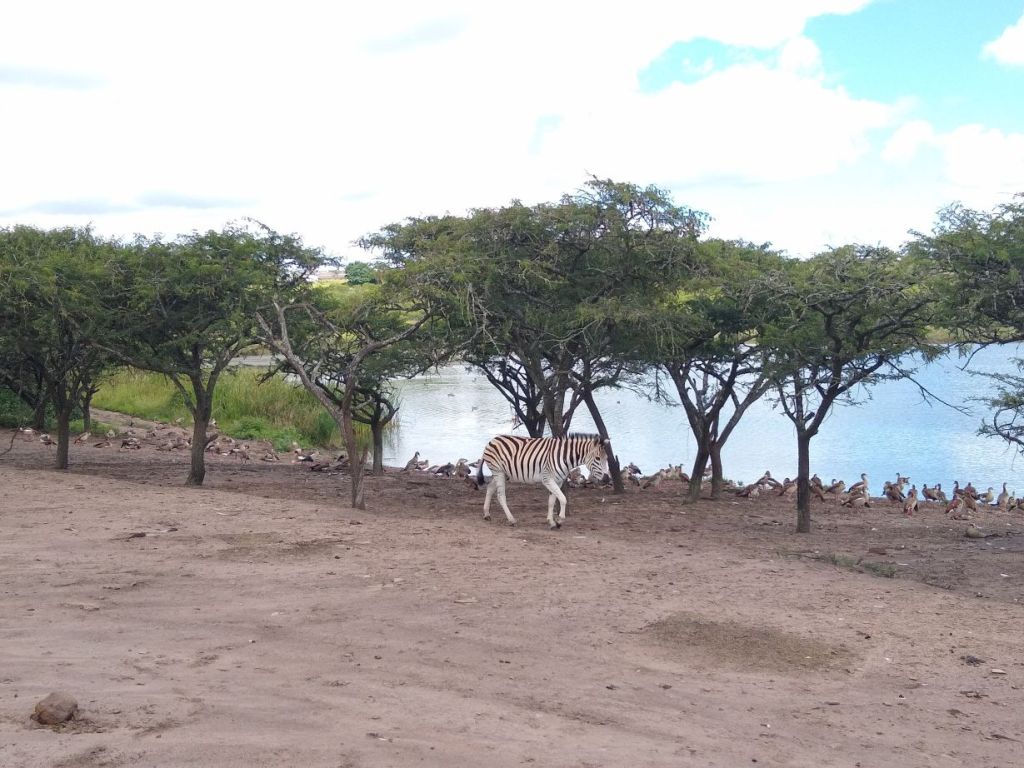
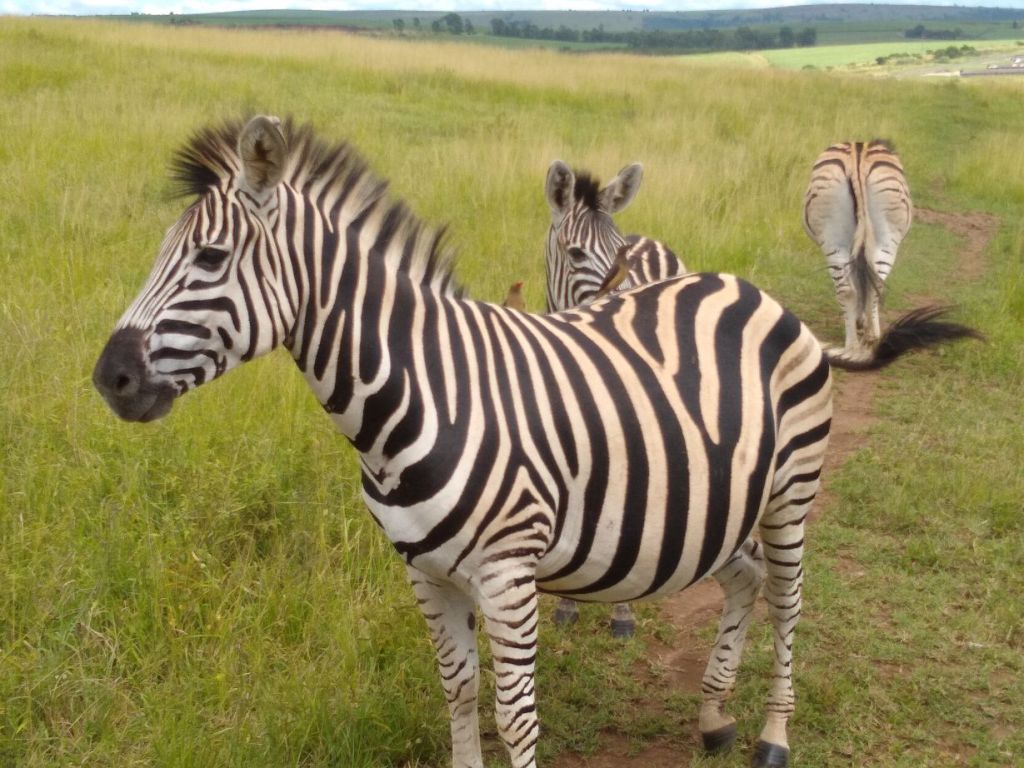
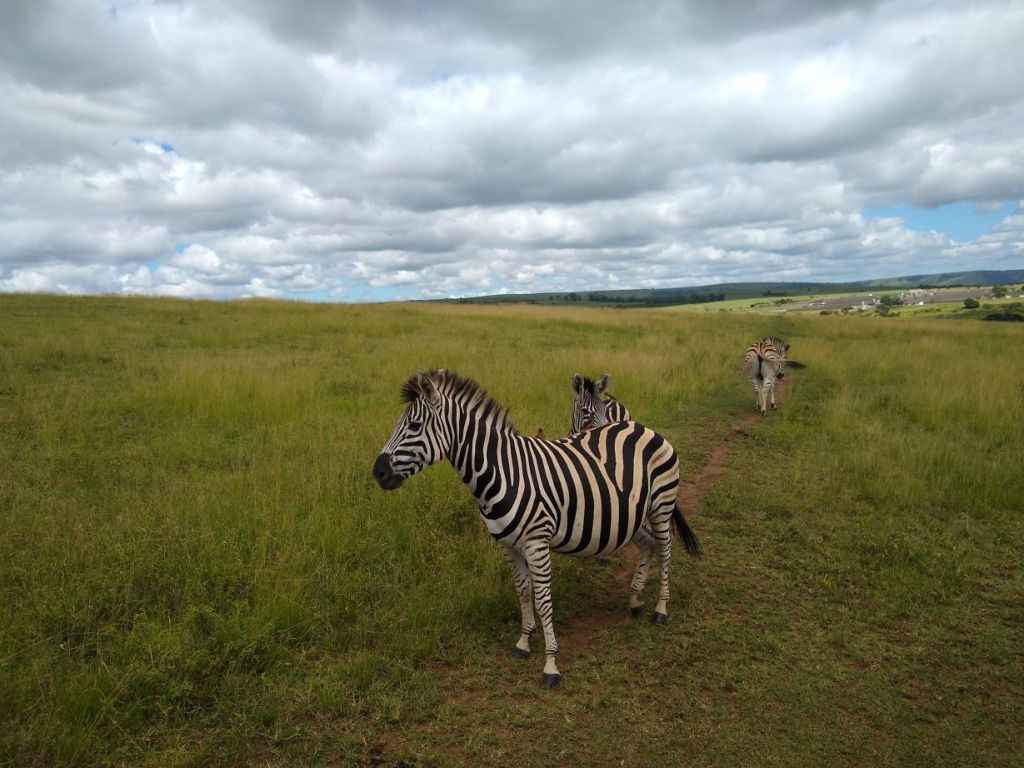
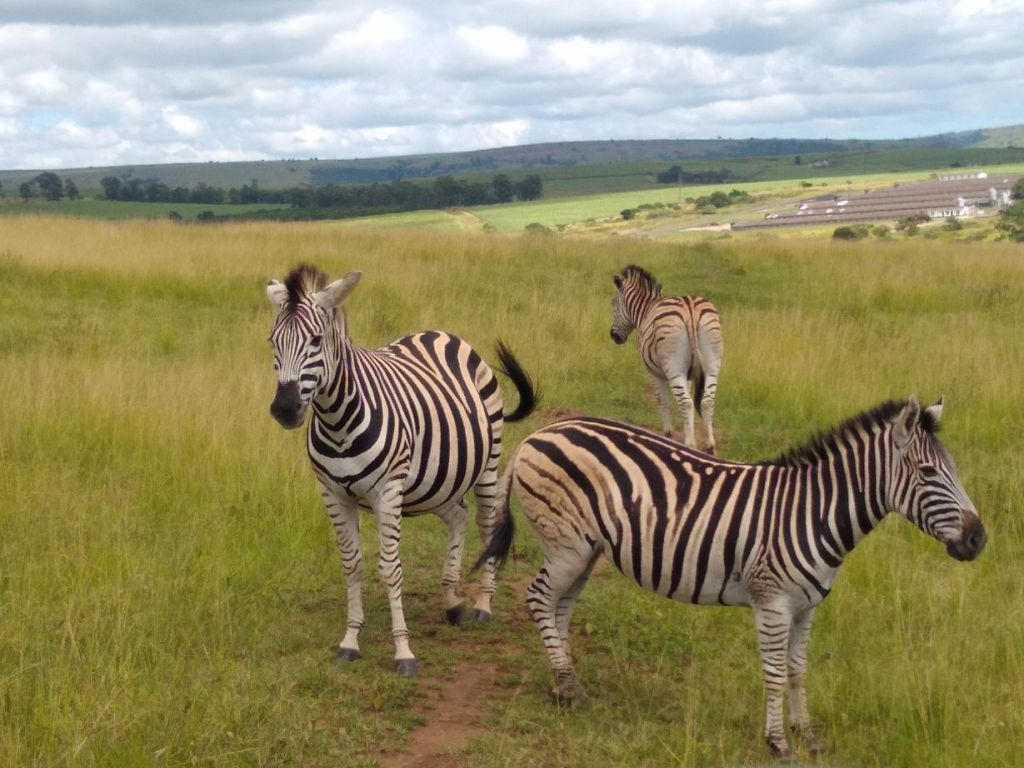
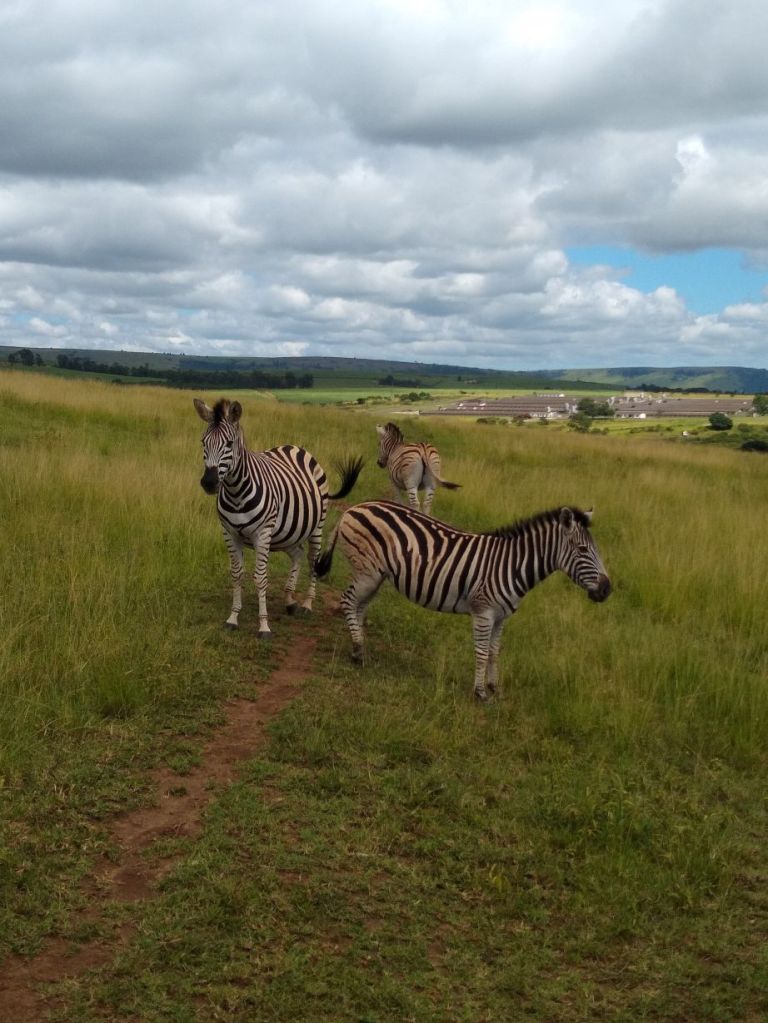
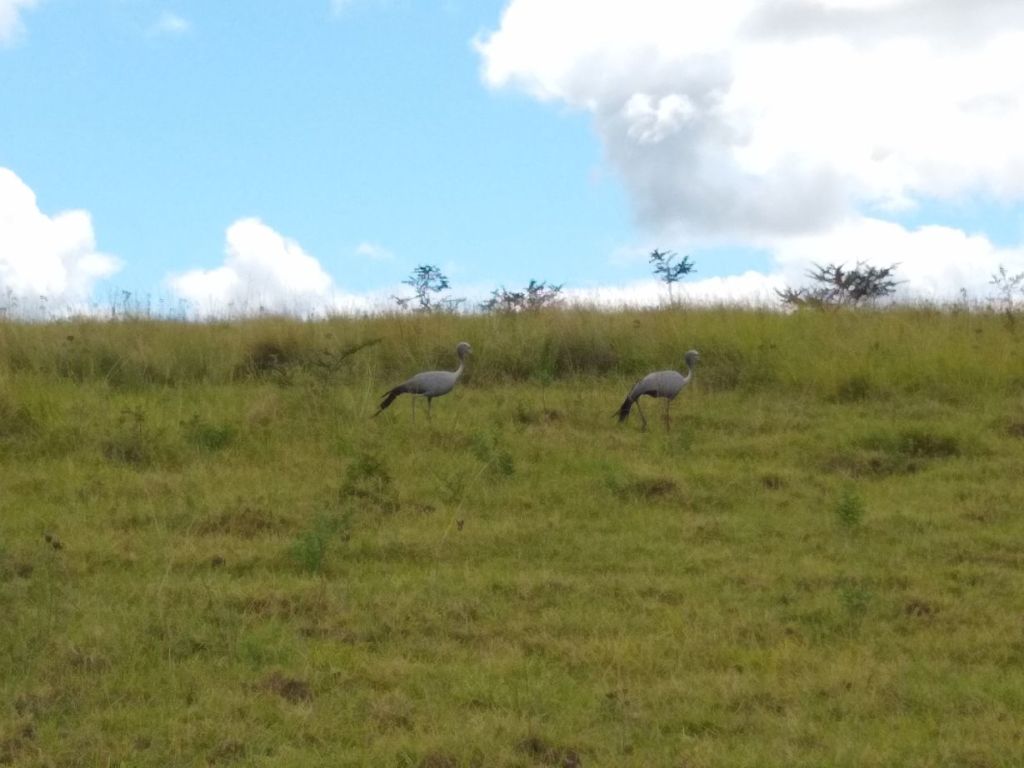
Around the pond, oblivious to the hippos are more kudu and tons of birds, mostly ducks, herons and an occasional blue crane, which are only seen in the summer. More impala are meandering about, interspersed with Zebras making their way through the acacia trees to the water. Turning away from the watering hole, we move back into the scrub looking for the Rhinos. We spot lots more impala and zebras, which by the way, can not smell very well, so they hang out with impala or kudu, which can smell and sense danger faster. The guide also tells us that zebras spend hours looking at their babies when they are born, memorizing their patterns so they will know them in the bush. Each and every pattern is unique, like fingerprints, to each individual zebra. Smart and fascinating.
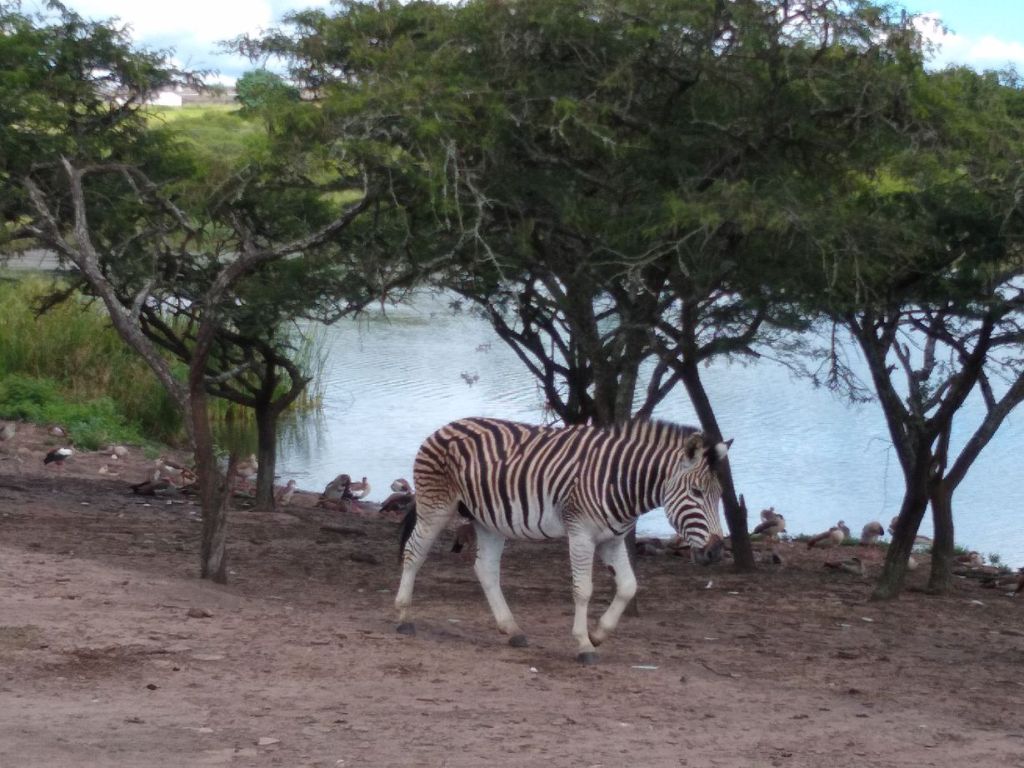
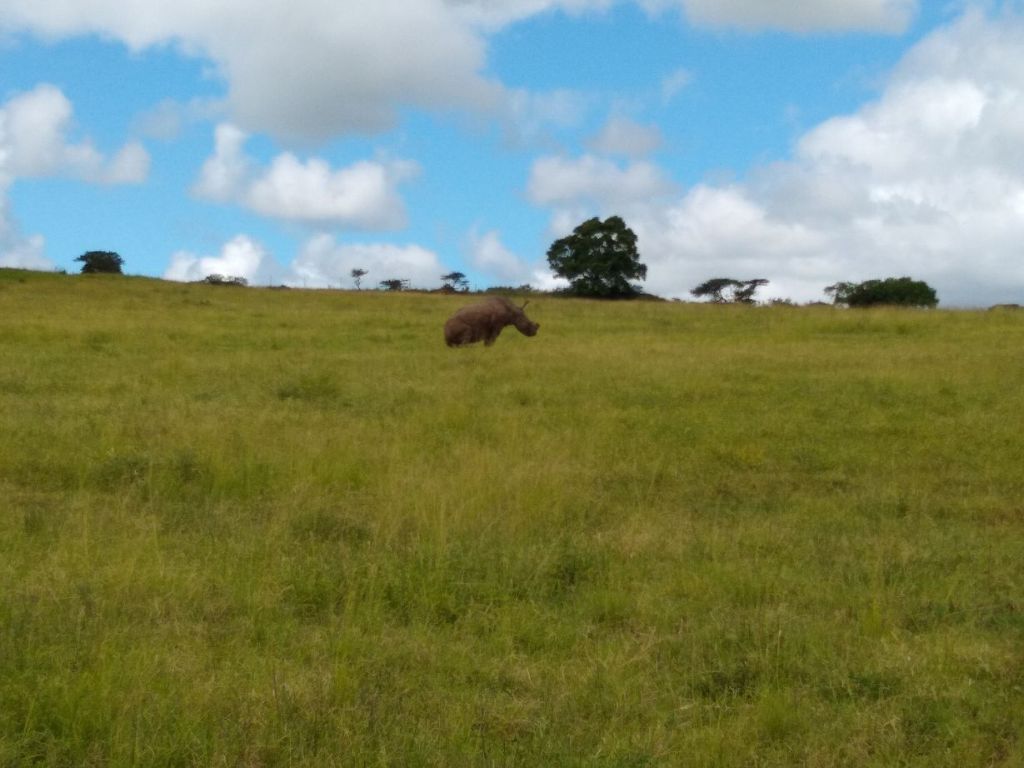
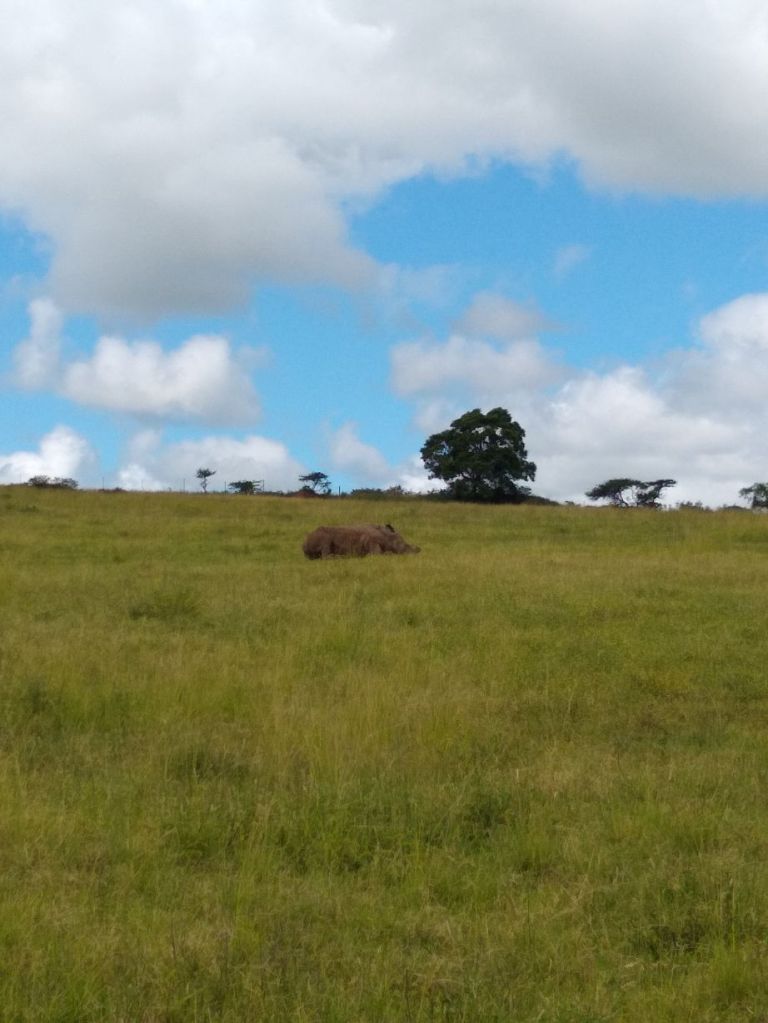
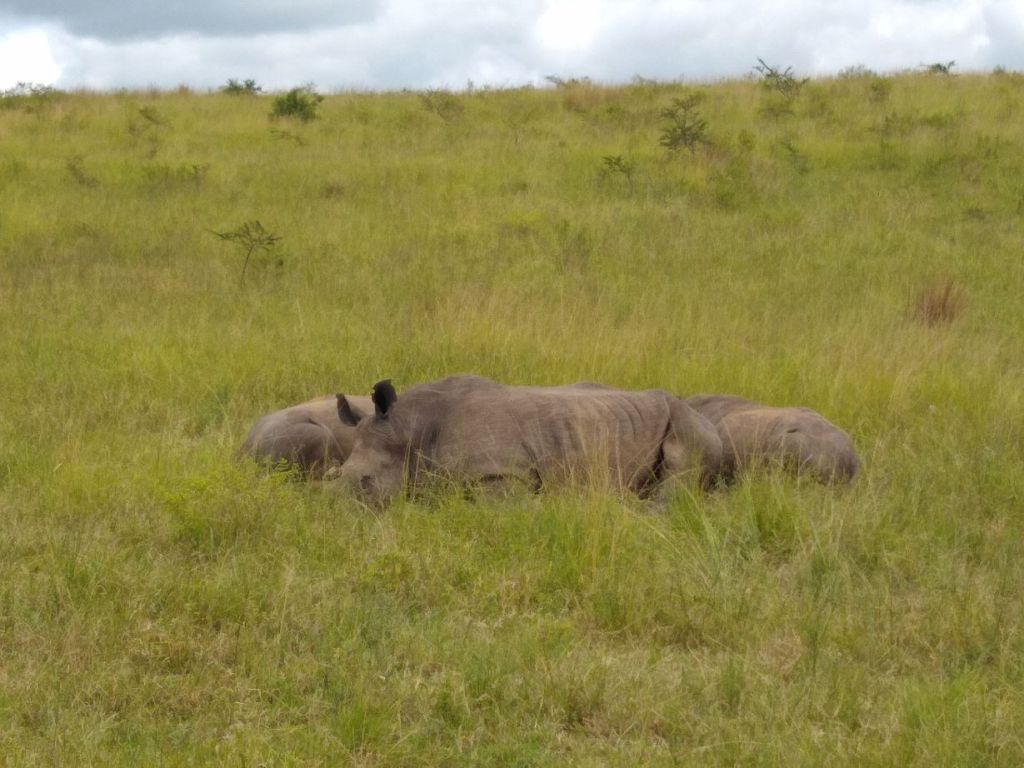
Two minutes after the zebras, we hit pay dirt: a white rhino is laying out in the field about 50 yards from our jeep. Cool. Not a good photo opportunity, but still interesting to look at and know it’s a rhino out there. There are 9 white rhinos in the park and they are the less aggressive than black rhinos. The guide explains that they have a 45 year life span, eat only grass and are also smaller than black rhinos. I believe they are also rarer than the black rhinos, and I do know that Imfolozi reserve (in Richard’s Bay) has a breeding program to keep them from extinction.
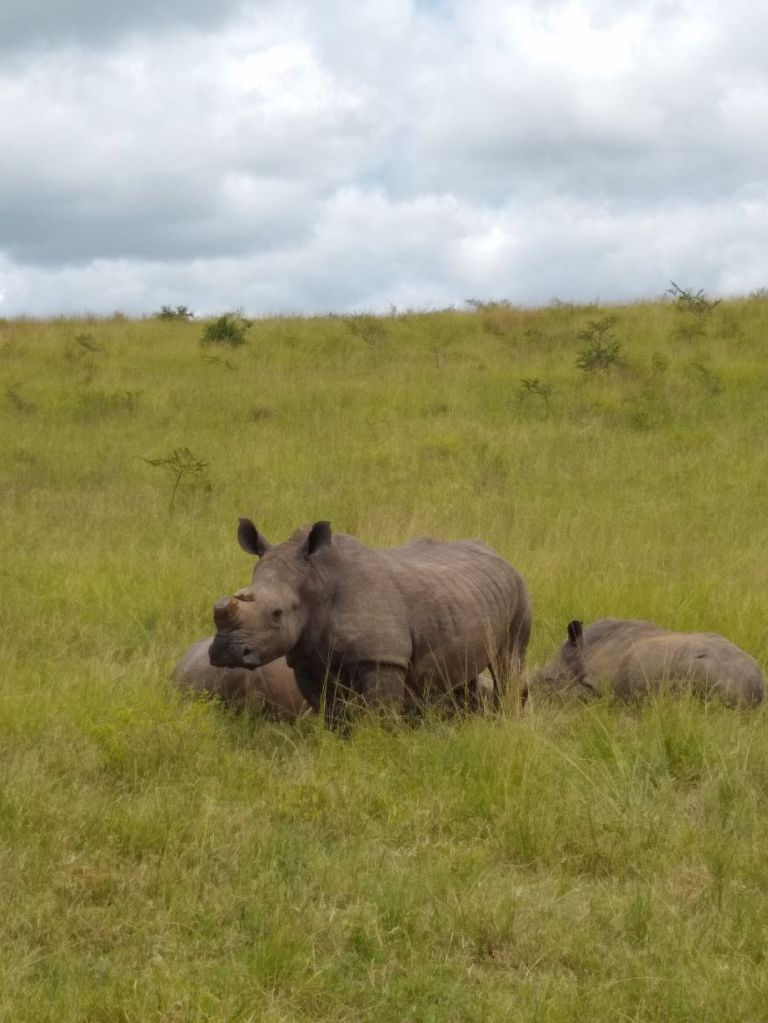
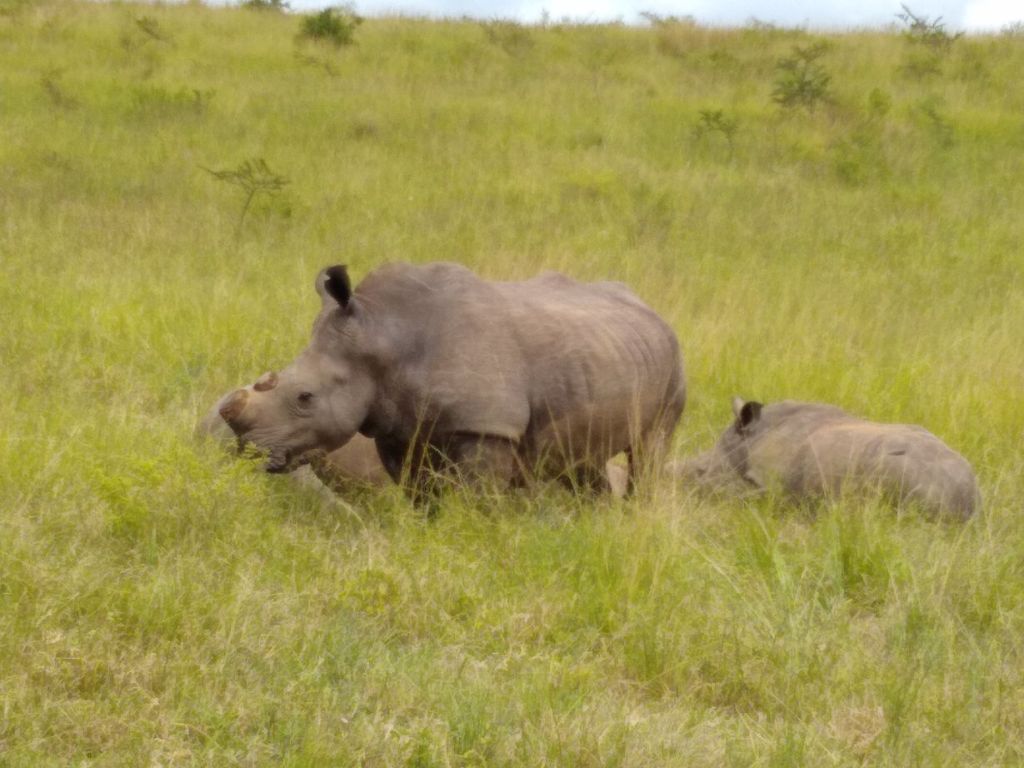
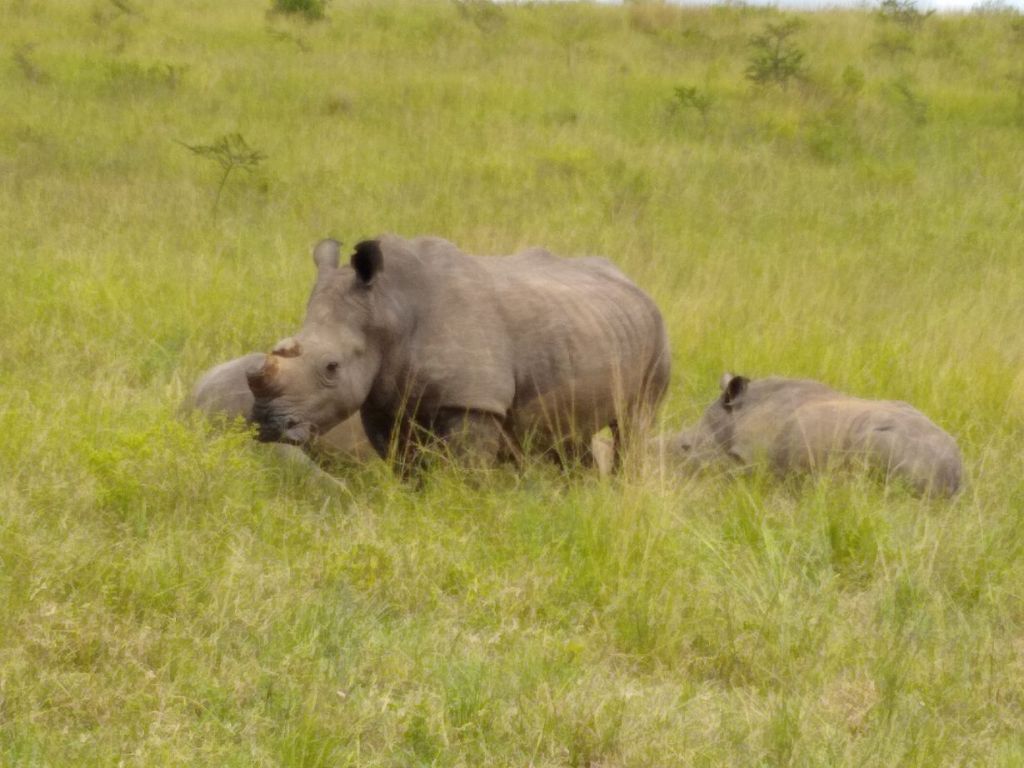
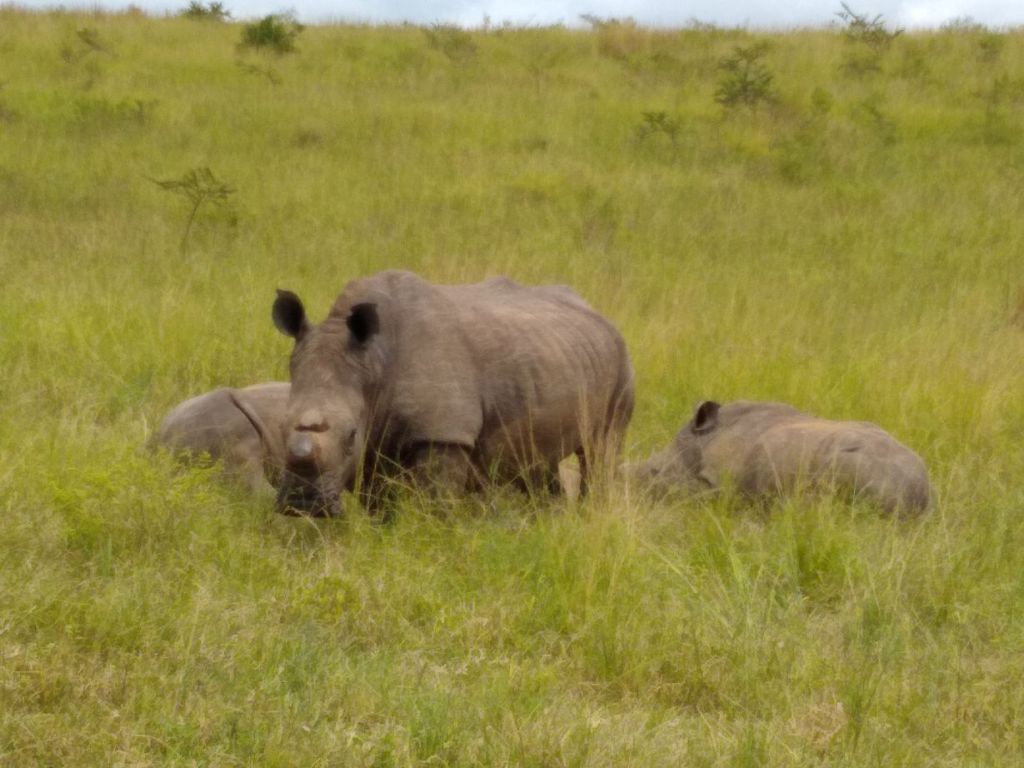
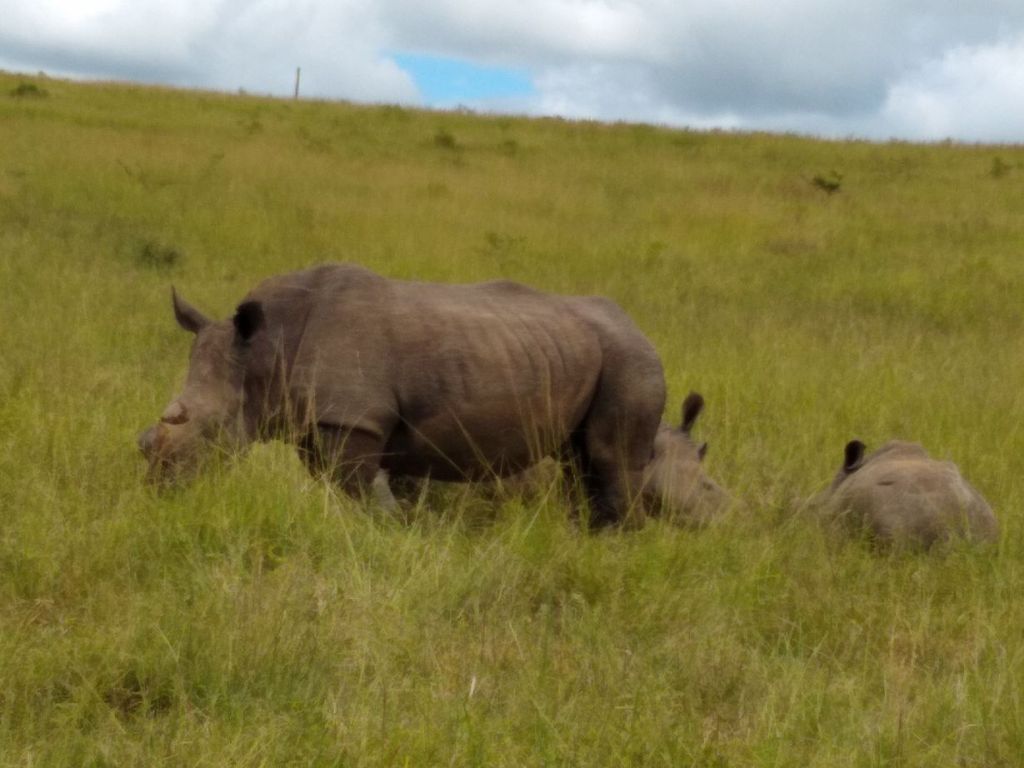
We sit for a while, hoping this big guy will move, but he doesn’t, so we do! And about 10 minutes later we luck onto a female rhino and two youths lying in the grass. They are much closer and once we sit there for a while, the mama notices us and stands up. Now that’s what we are here for! Even though a little frightening, it is incredible to see this huge beast just yards away from us in the waving field of grass.
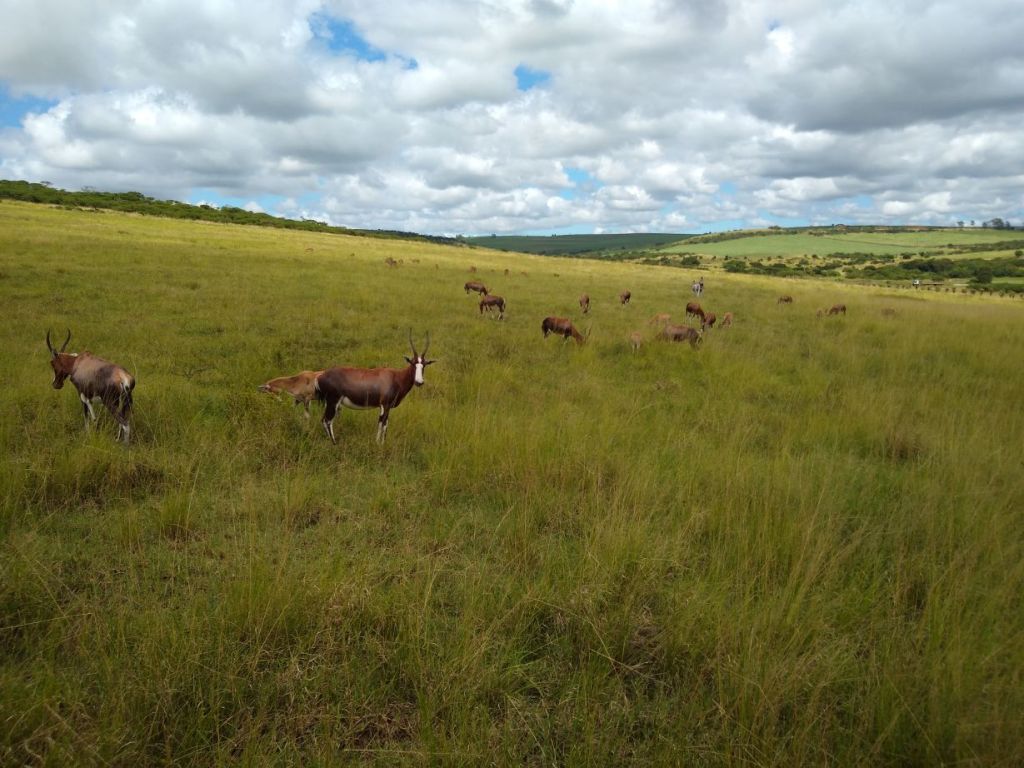
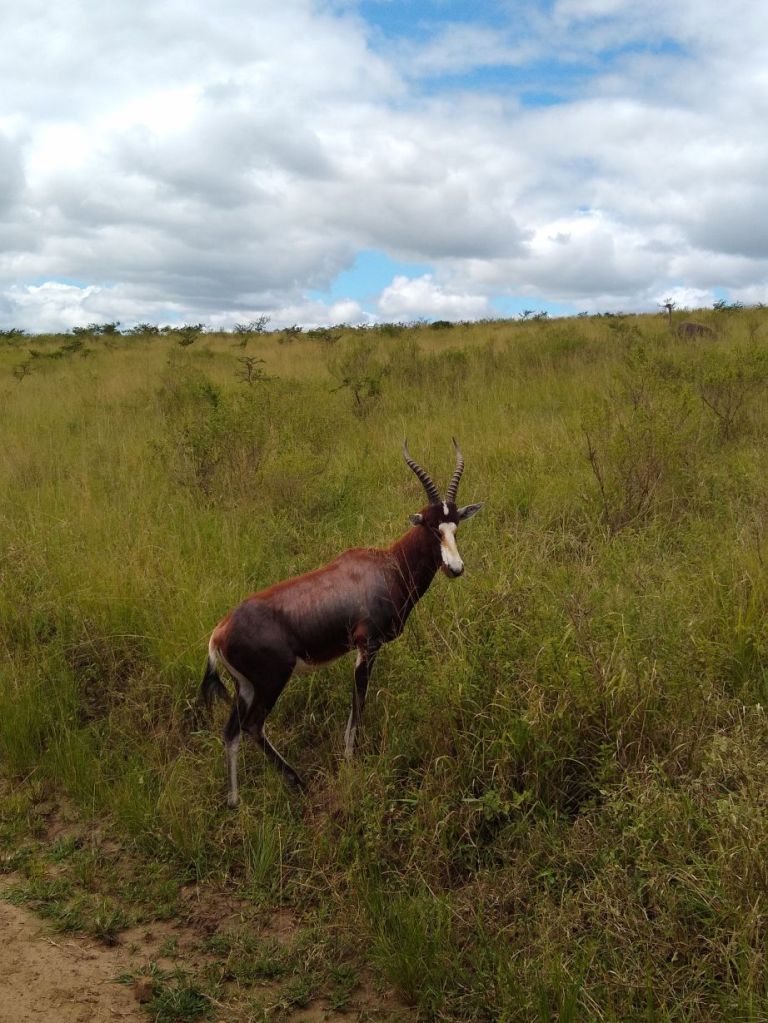
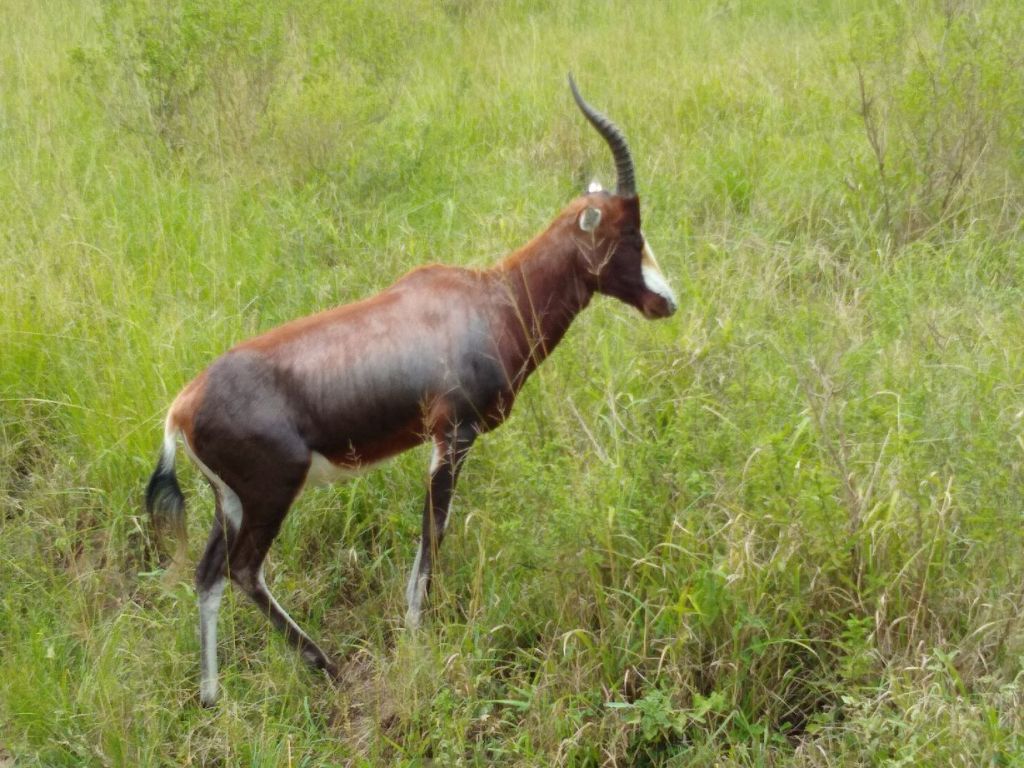
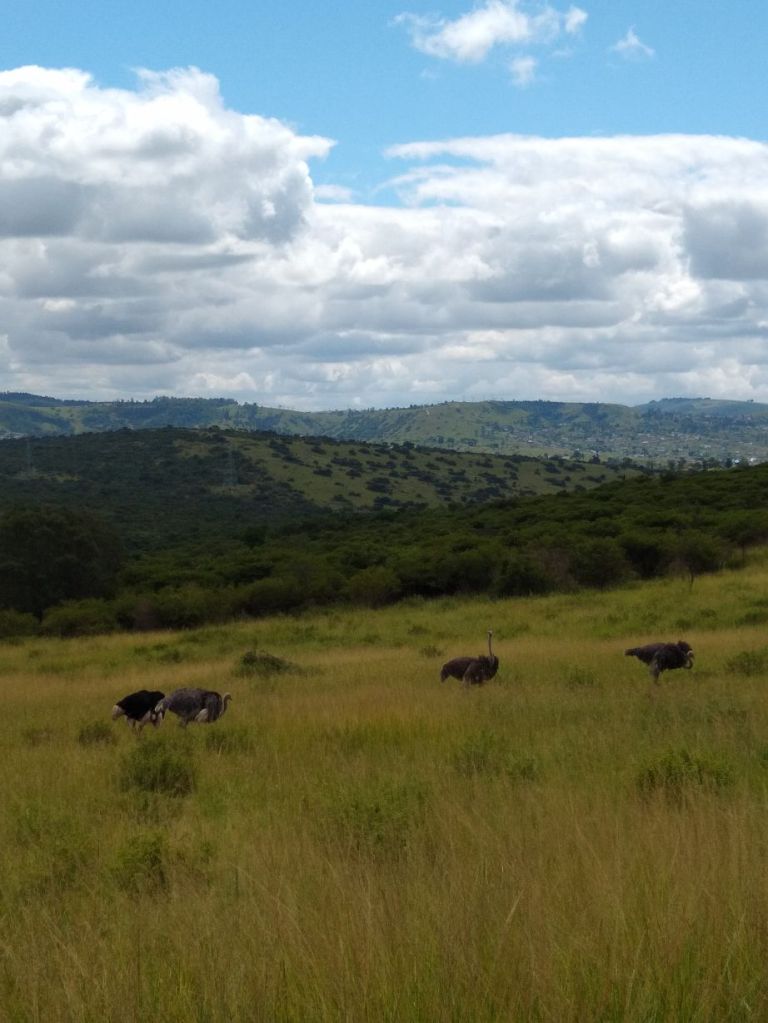
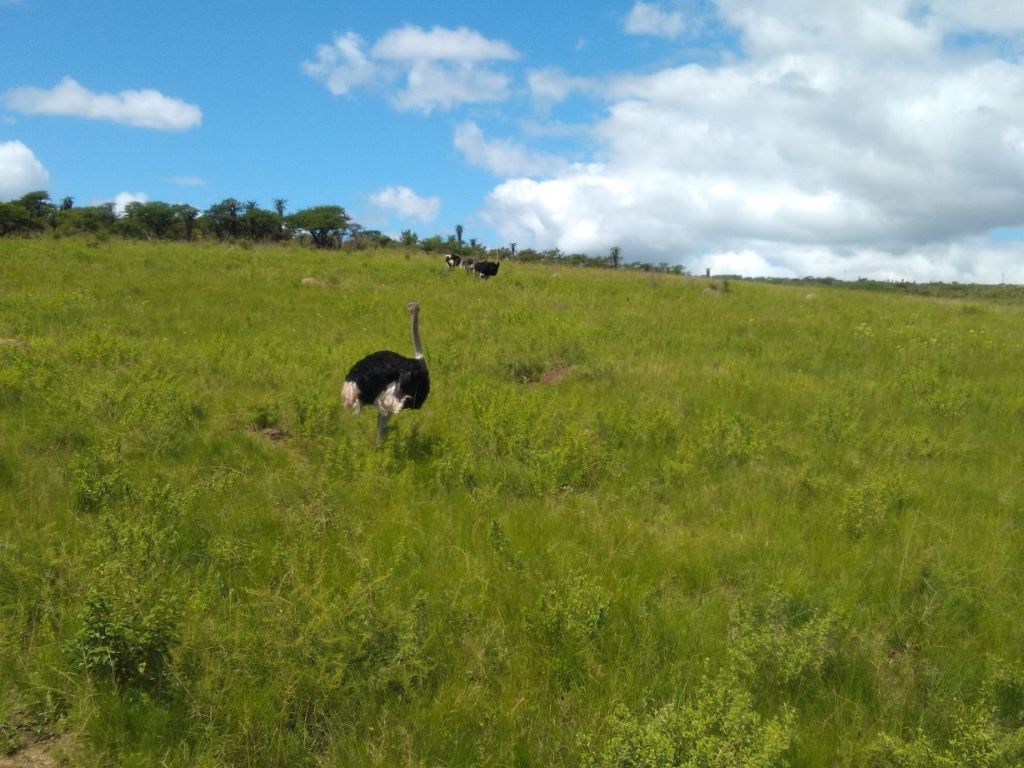
Ok, enough, time to go bouncing along the dirt track in search of more. Our next sighting is of a bushbock, a selective grazer that only eats sweet grass, so you always know where to look for them. They’ve got really interesting horns – sort of ridged and curved in a V-shaped, very striking. As we are crossing a ridge atop a small hill we run into (not literally) a whole bunch of ostrich striding across the fields. Boy, they really are fast when they decide to run! They are like lightening!
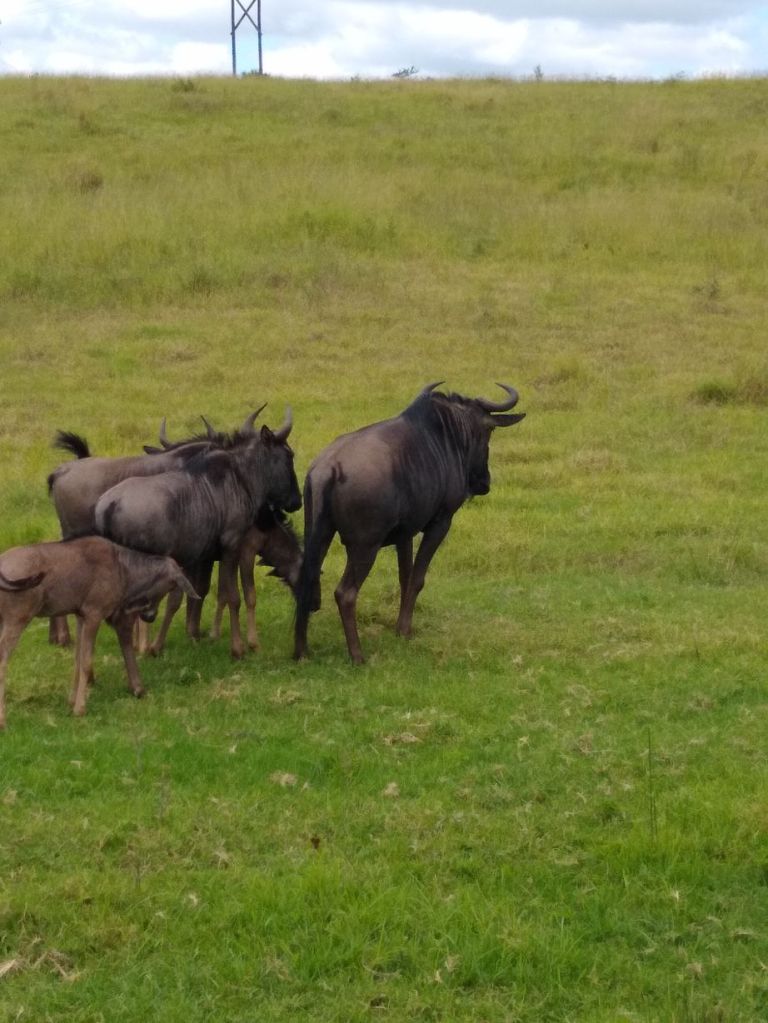
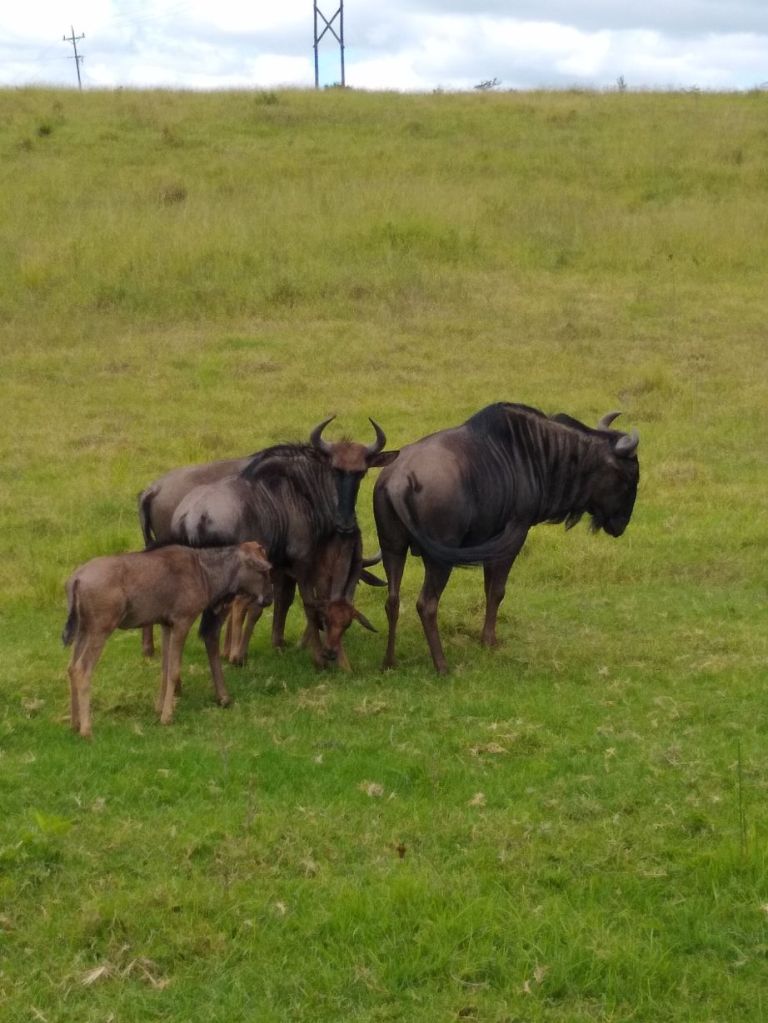
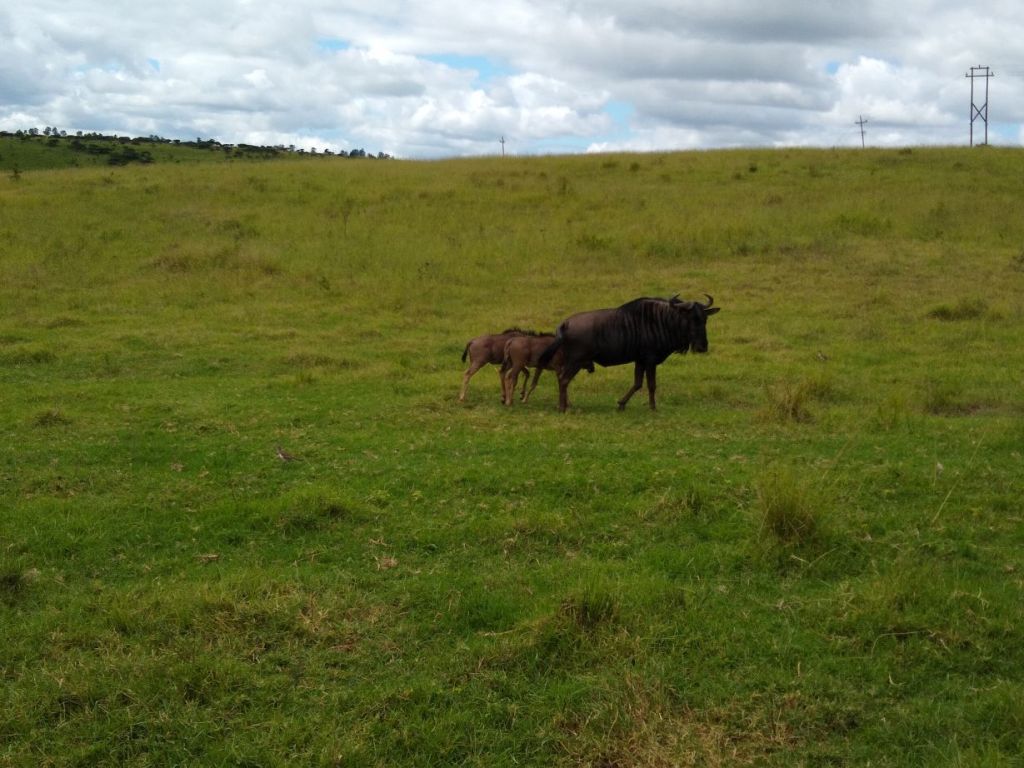
Our last major sighting of the day are ostriches, a whole bunch of them in the field, and wildebeests. There is a large herd of wildebeests, the dark, almost black/brown full grown members shuffling around the young, lighter brown babies. Because they breed well, and quickly, the herds in the preserves become inbred and very weak. They are the easiest prey for predators. Thus, Tala (and other preserves) have been selling off portions of the herds to each other to cross breed the animals to improve and strengthen their populations.
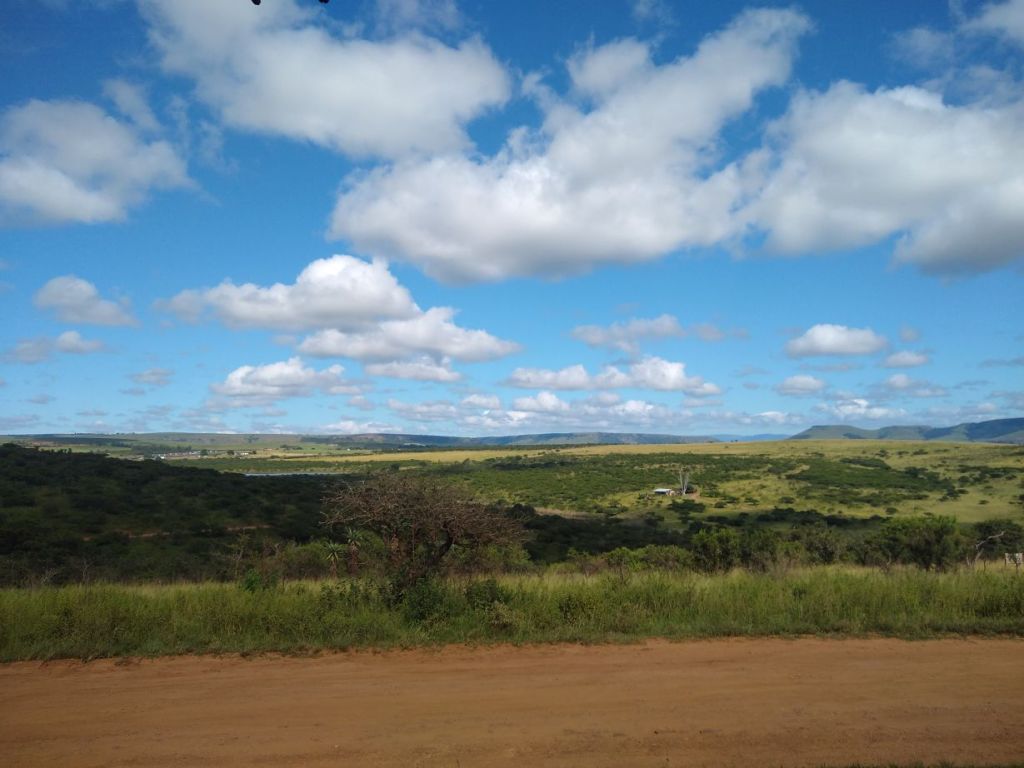
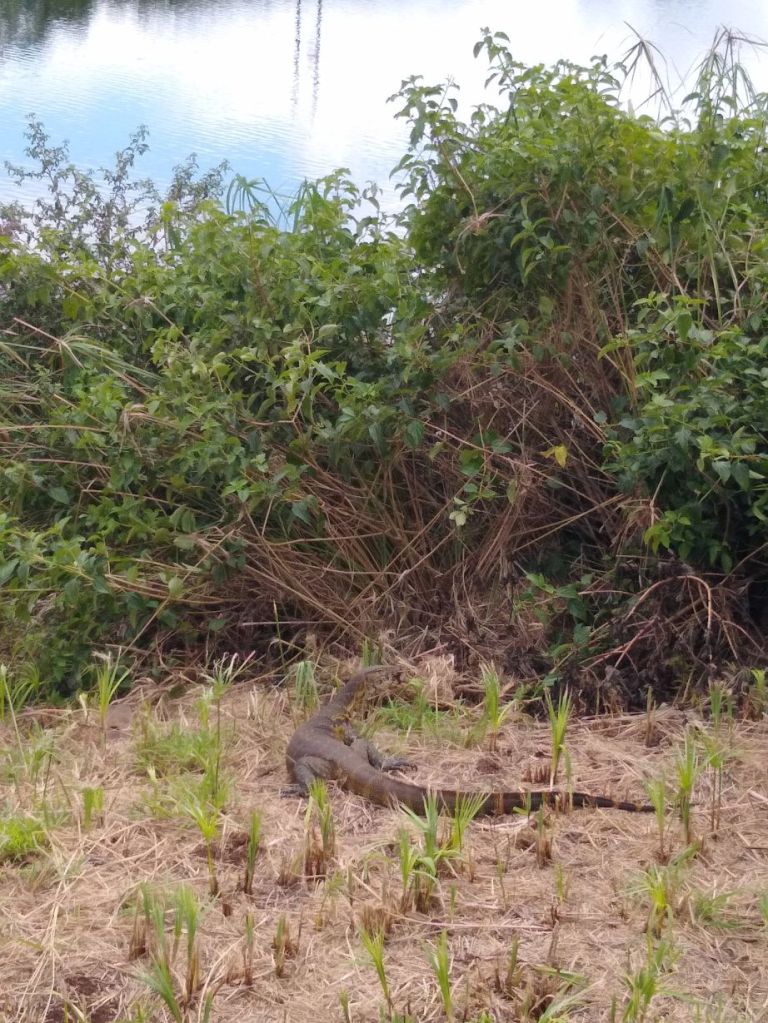
Our two hours out here have flown by – it is amazing how much we have seen – and we still have to get back to the lodge! As we turn back, we spot lots of kudu and then a water monitor (or xumu in Isixhosa language), plus more gorgeous long views across watering holes nestled in the valley of scrub brush. Beautiful!
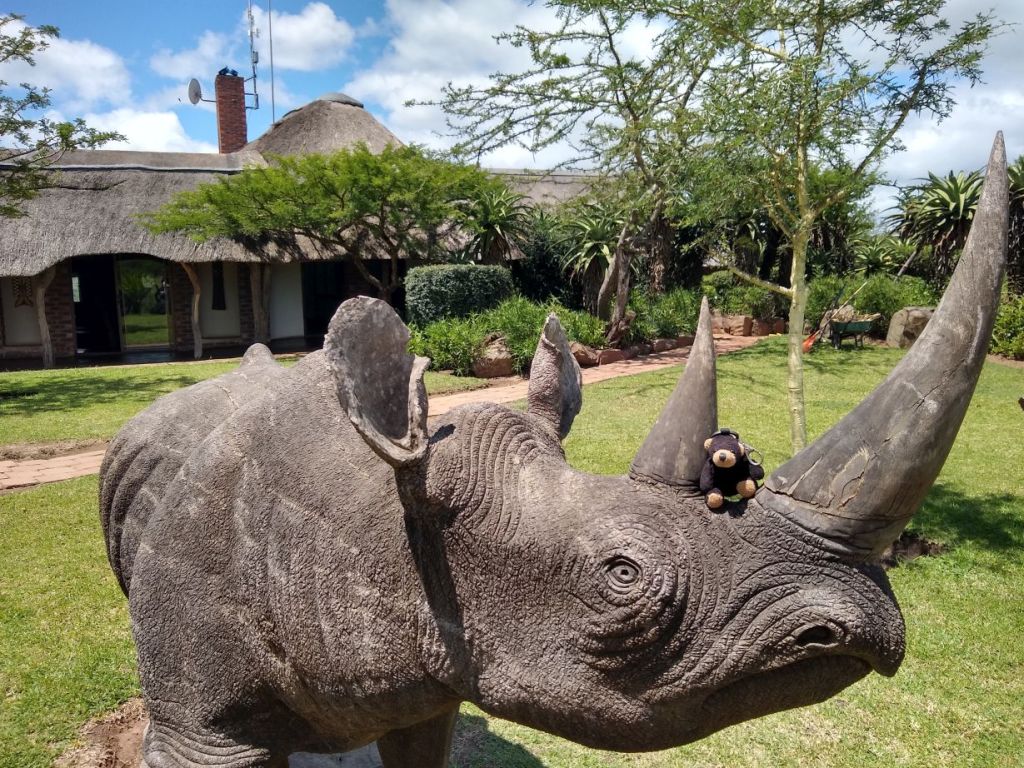
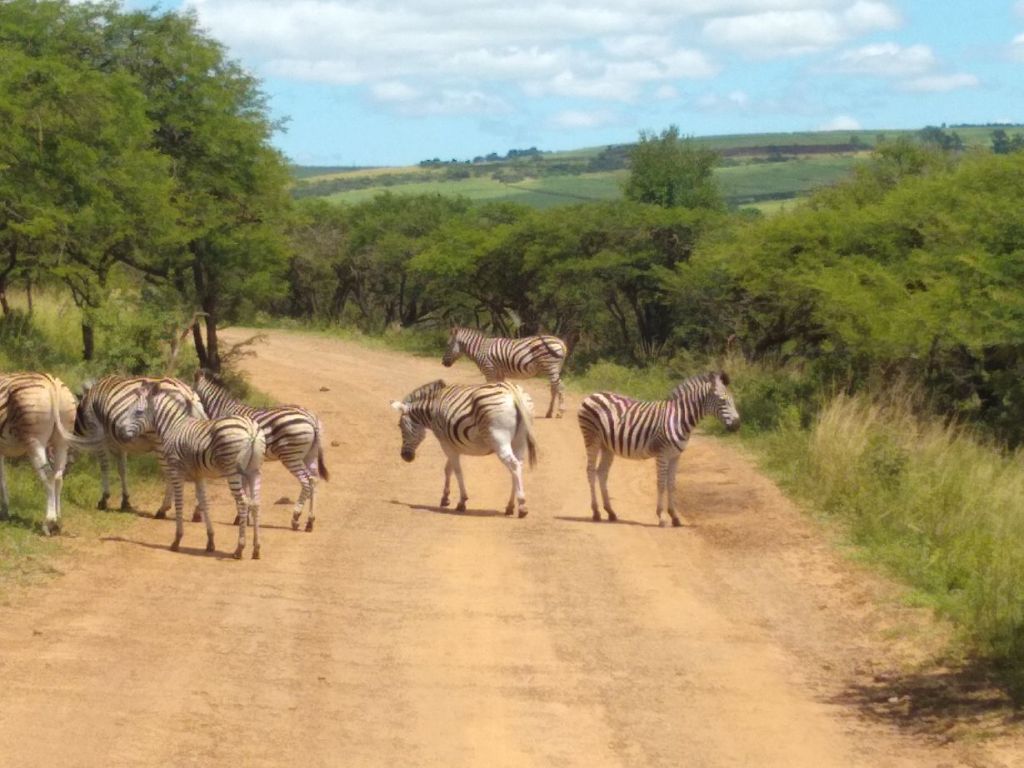
Back at the lodge, we are treated to fruit juice and a donut (I think this is the sweet treat Mariska from Pursuit told us about, but I never do get the Afrikaans name for it) before hitting the restroom, letting Sunny have some fun with a very menacing but safe rhino statue, then heading back to our bus for the ride home. You’d think that’s be it, but oh no! As we are driving out of the preserve, we encounter a whole slew of zebras in the middle of the road. They are sort of blocking it, so I guess they really didn’t want us to leave. Ok! I’ll stay and play. LOL.
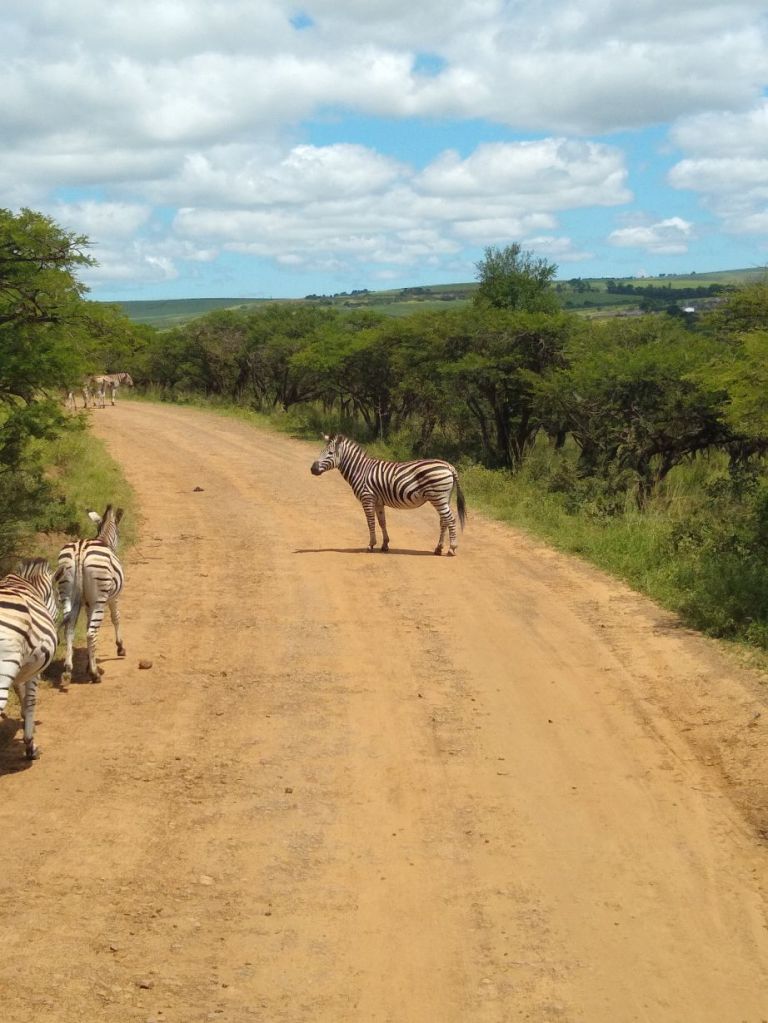
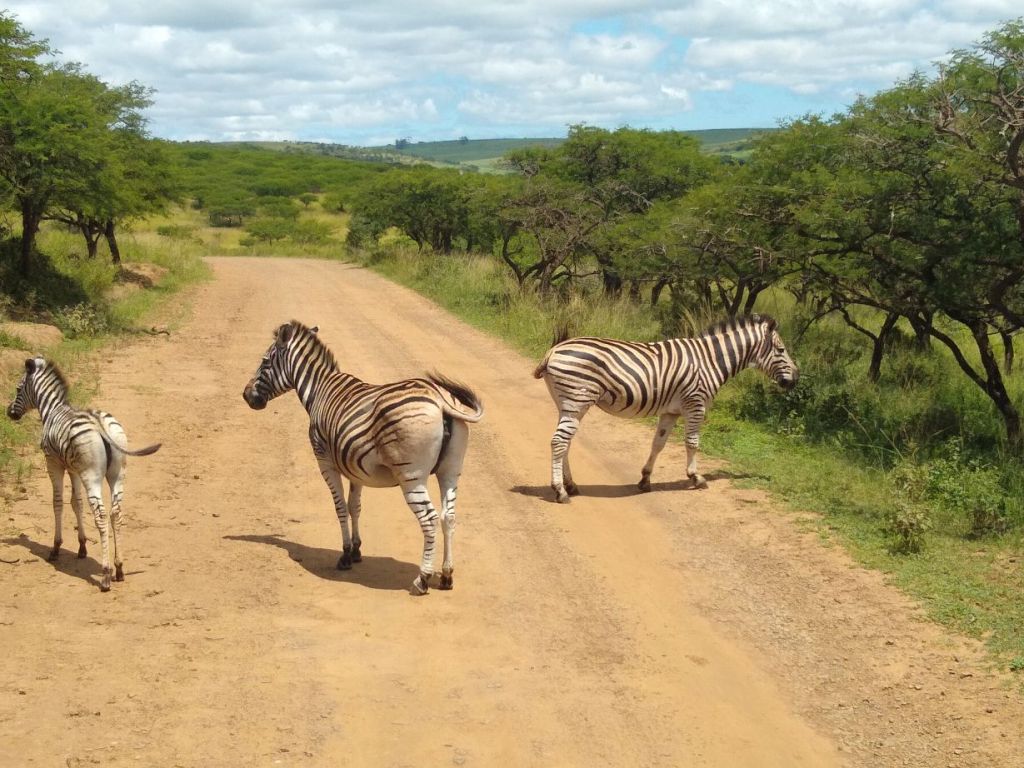
A final ostrich shows up to say goodbye and with that we are back on the road to Durban. What a great half day tour!
 Andiamo