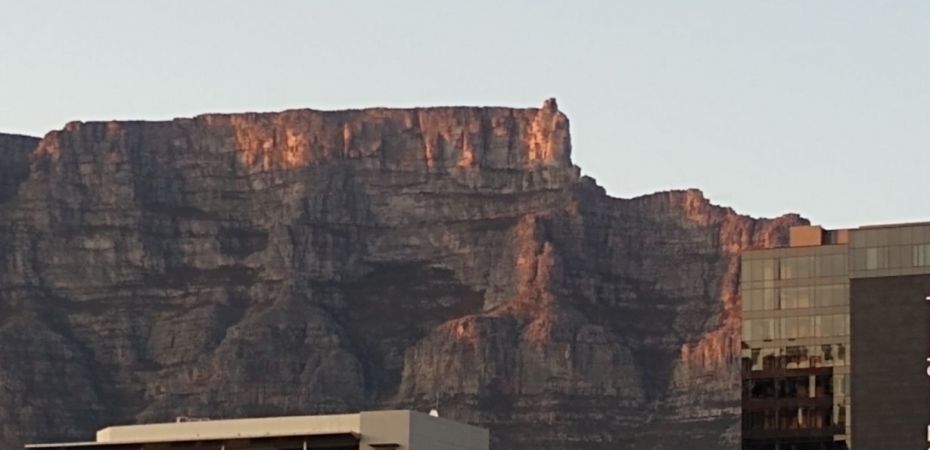
Today dawns bright and beautiful, and for the first time since we have arrived, we can actually see Table Mountain from the balcony of our apartment. Gorgeous way to start our day. At the appropriate time, we are outside waiting for our tour pick up, which once again is right on time. Today it is a private tour, just the two of us and Songs, our driver, who lives in the township we will be visiting. He whisks us off on our tour, passing through the CBD and out into District 6 as he gives us an overview of where we are driving and what we are seeing. We pass the transportation center which has a bus and train terminal and is seething with people coming into the city to go to work. Then on to the outskirts (sort of) of the city and into District 6.
I may get the history wrong on this, but District 6 apparently was one of the main residential areas of Cape Town prior to Apartheid. Here, everyone lived together with no segregation. Whites, blacks, colored – it didn’t matter the color of your skin. There were inter-racial marriages, inter-racial children, all living in same area. Then came the new rules and this area was razed to the ground, the people disbursed to areas set up by the government and called “townships.” It was at this time that the government began its systematic racial segregation, giving people tests to see if they are colored or black, then sending them to the appropriate township (the colored’s having a better area than the blacks).
First it was the pencil test – if a pencil stuck in your hair you were black. People figured that out pretty quickly with the men starting to shave their heads and the women straightening their hair. Then it was a “needle” or “prick” test because supposedly blacks and coloreds made different sounds when they were stuck with the needle. But of course, everyone figured that out too. Don’t know what the final test was – but regardless – you get the gist. Just an awful nasty time in this country’s history.
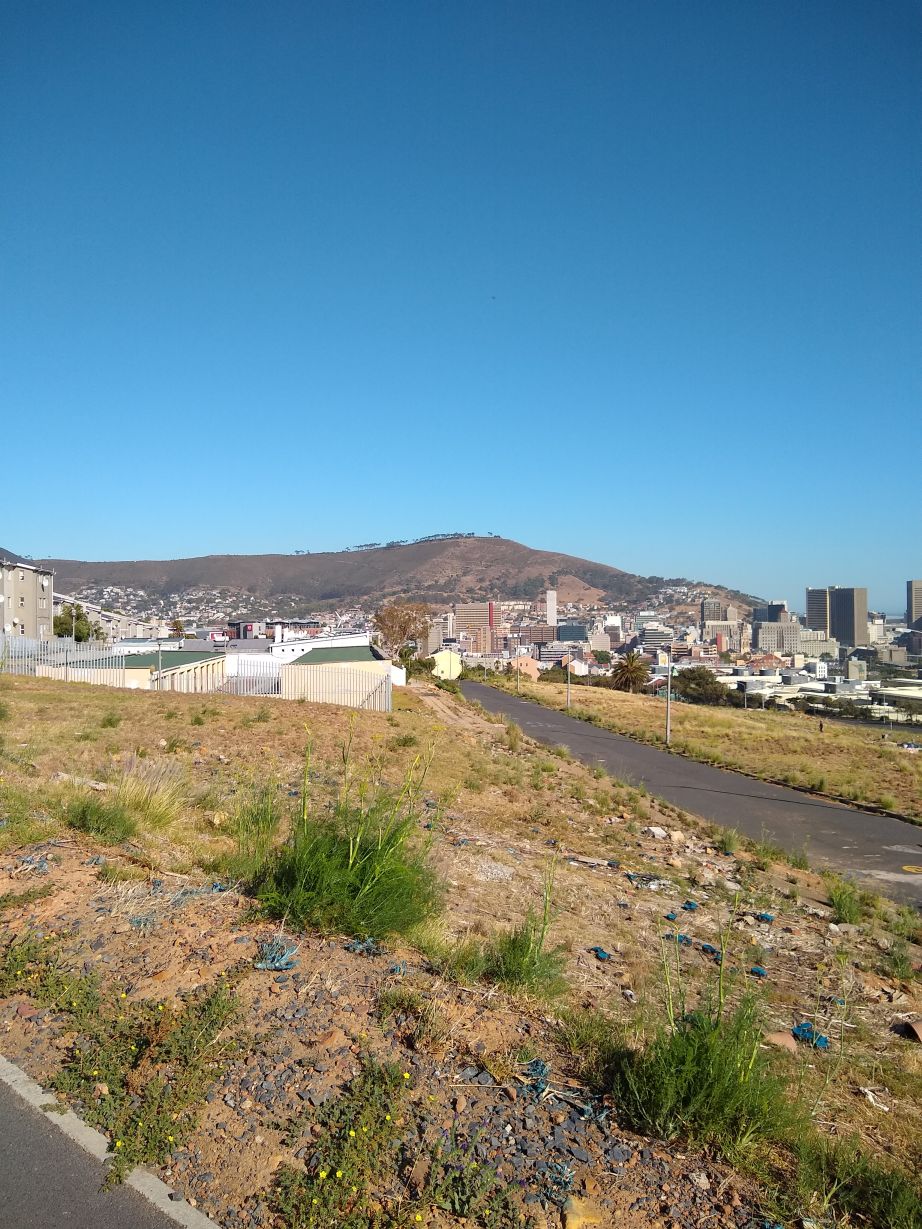
Back to District 6, which now stands virtually empty – a vast area of undeveloped land in a crowded city. No one can figure out what to do with it. They government owns it, and they keep coming up with different plans, but nothing seems to take hold. Its really a sad and colossal waste of premium acreage just sitting around that could bring the government a ton of revenue from private investors or create more space for “affordable” housing so to speak.
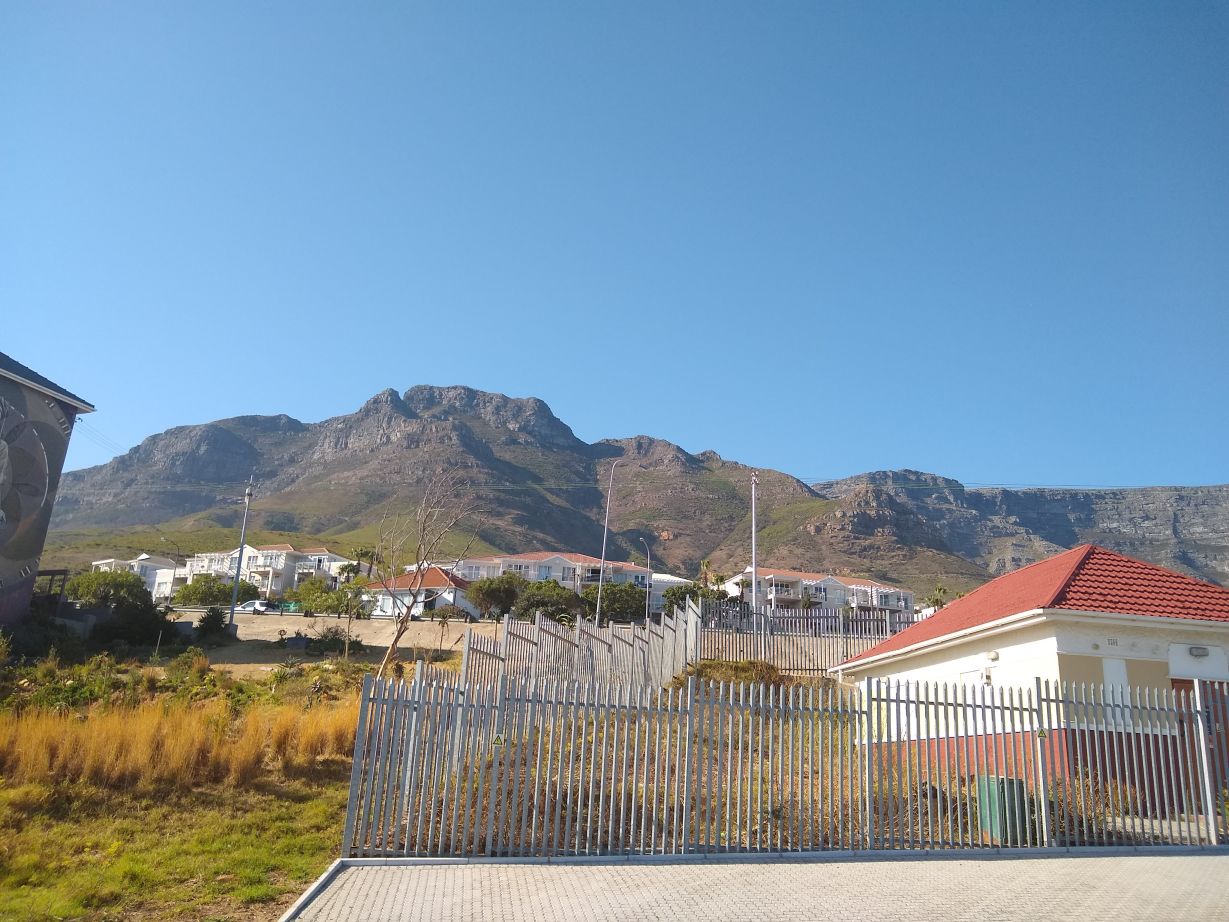
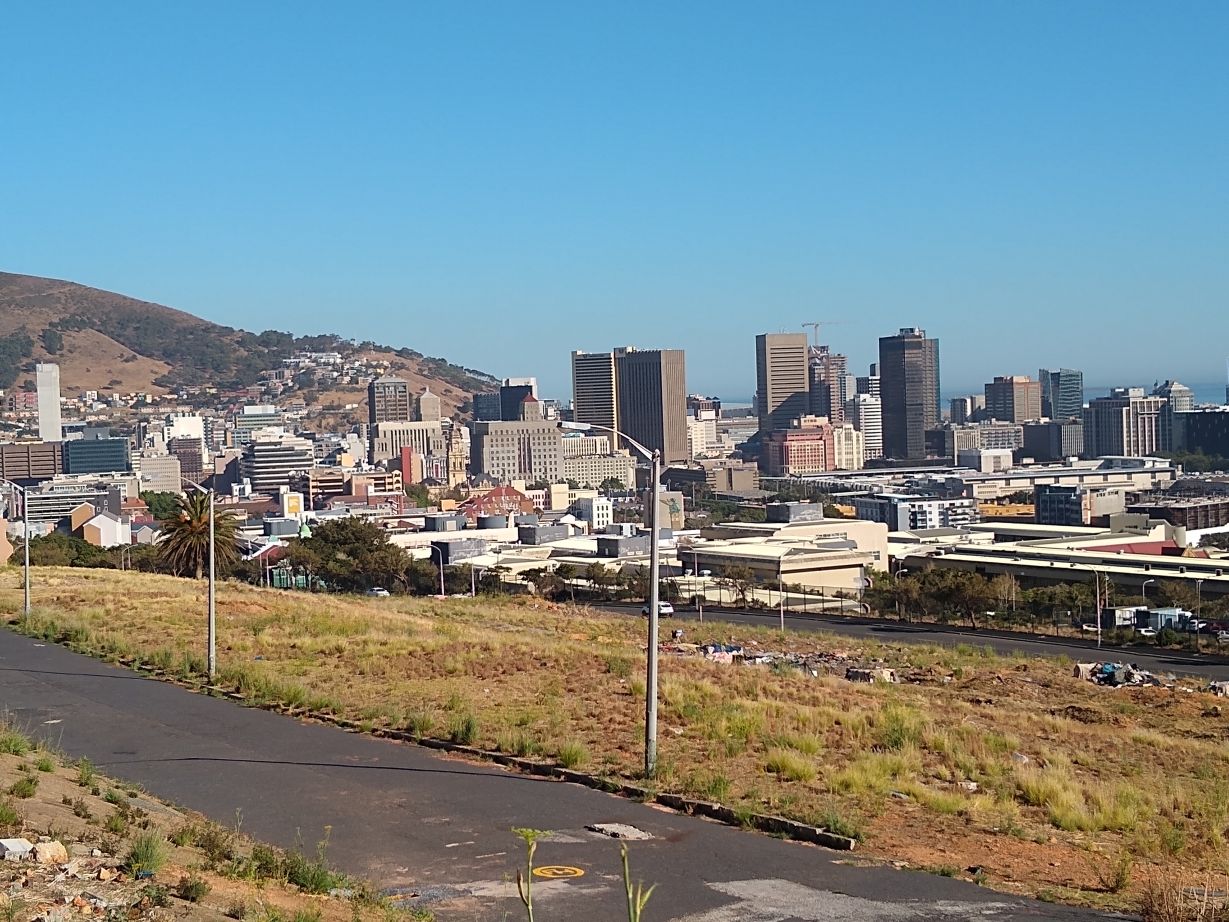
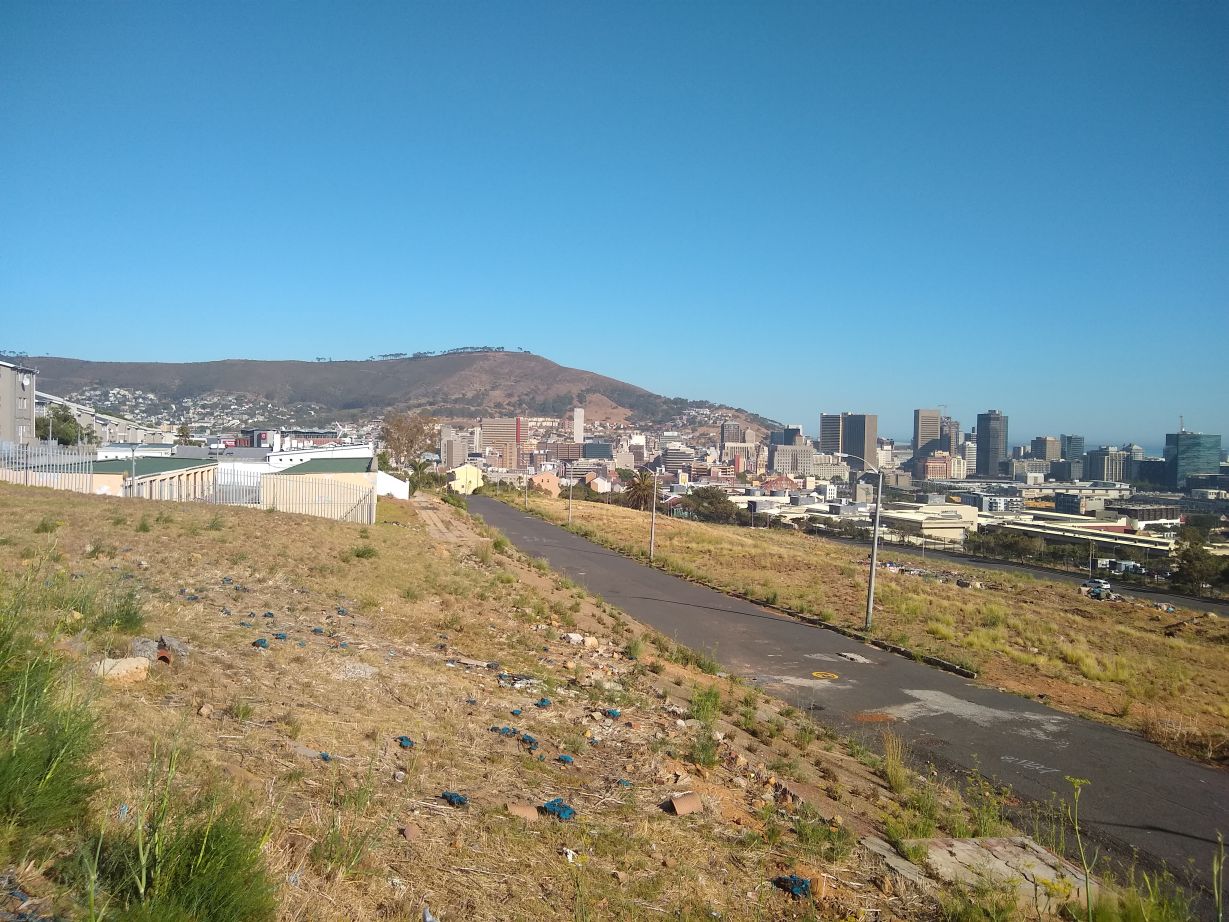
Pushing on, we head toward the Langa township, with Songs teaching us Isixhosa words. Isixhosa is his language, and it is similar to the Zulu language but with 3 distinct click sounds for the letters C, X and Q. We had noticed he makes this odd clicking sound when he speaks, but we just thought it was a speech impediment or quirky thing. Not so – it is actually his native language bleeding over into English. Needless to say, we don’t really learn any words, heck, I can’t even make the sounds, which provides plenty of levity with Songs who just laughs as I try to click my tongue! Ed, of course, gets it pretty well (he’s an ace with pronunciation in different languages, just like he is with discerning accents). Songs does manage to teach us hello and thank you so at least we can say something to the people we meet in the township.
Songs also gives us the history of Langa, which is the oldest township in Cape Town. This was the first township established in Apartheid – and from what Songs says, is the only safe township to walk around. The name of the township is taken from Chief Langalibalele, who was the main chief in the region and fought for rights for his tribe. His name was too long to pronounce, though, so they shortened it to the first 5 letters of his name in order to make it easier to say. The shortened name means “sun” in the Isixhosa language. It is the smallest of the townships at only 488 hectares and 80 to 90,000 people. There is 40% unemployment here, which is pretty much the standard number across the city, if not the country. But, many enterprising people have set up their own little shops in shipping containers to try to earn enough money to live.
Langa is the safest of the townships because it is so small, and it is easy to recognize everyone and know who they are. This reduces the crime, because people will get caught readily. Most of the residents understand that tourism (us and all the other walking tours here) is a good thing for them and try to keep the community safe in order to bring in the people.
Driving into the township, we are really surprised at the houses and the wide avenues. It is very different from the little shanty shacks that can be seen in townships near the airport or the one we drove through yesterday on our Cape Peninsula tour. The area where we are has rows of nice stone houses with fences, a large medical center and a well kept police station and government building. We are here to visit a pre-school a local resident set up years ago to help with child education. And also to meet our township walking guide, Oyama.
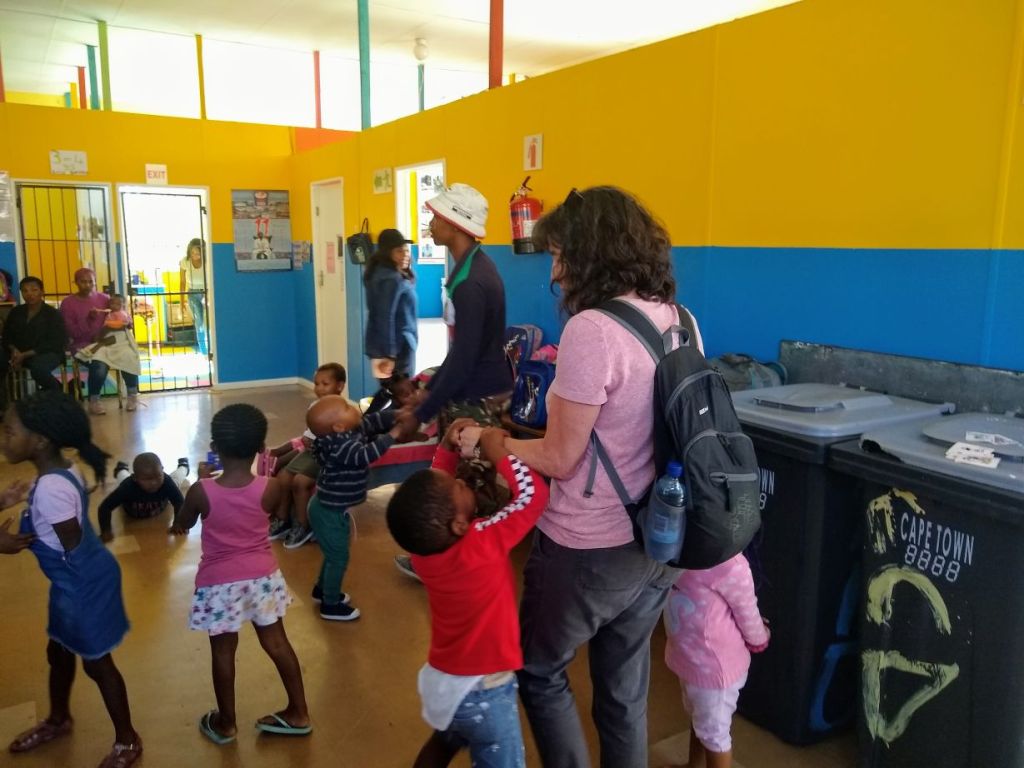
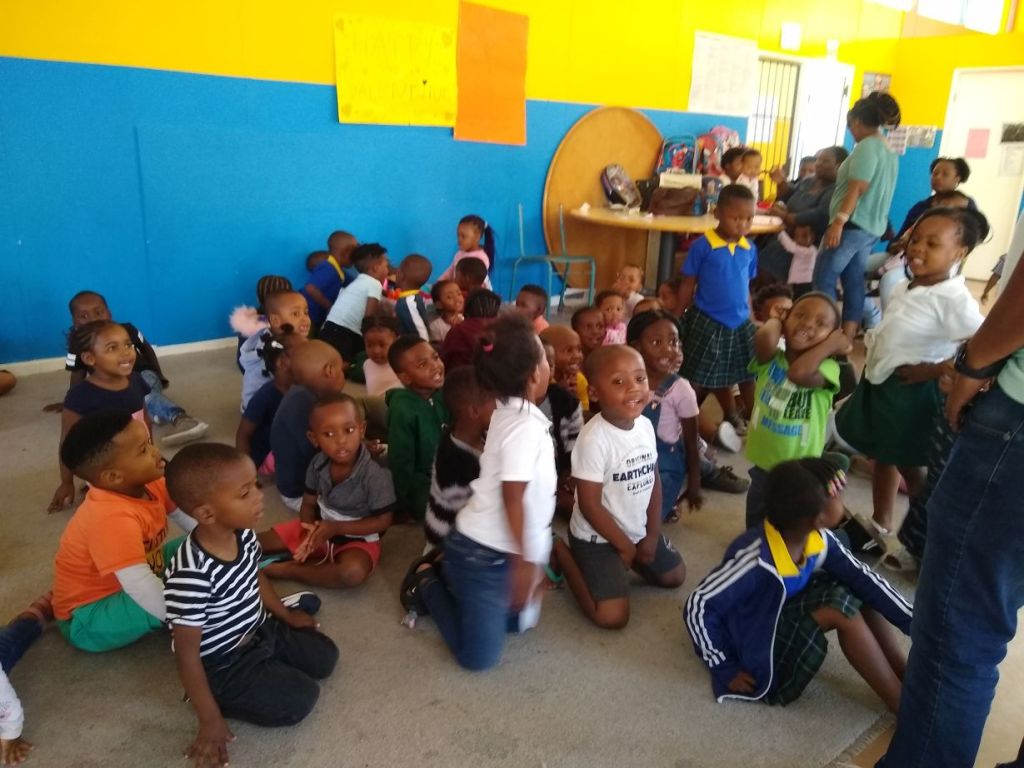
Songs brings us into the preschool with a warning not to pick any of the children up, because once you pick up one, you will have to pick them all up. And, while Leanne, the creator of the school started with only 10 children, she now has 80 or more – and well, we’d be there all day if we succumbed. But, oh, how hard it is not to succumb. We walk in, and these little ones aged in months to 5 years old are so excited. Many of them rush over to us and grab us and hug us, vying for our attention. One little girl latches onto me and can’t take her hands off my 4Ocean bracelets, turning them around and around on my wrist, looking at every bead. Another little boy tries to play with my watch and still more crowd around looking to hold our hands or get a hug.
Finally Leanne calls them over to their mat to sing us songs, which are so sweet. They sing a bunch of nursery school things, the National anthem (which is sung in 6 different languages, 2 lines for each language), “If you’re happy and you know it” (which they love that we sing with them) and then a very cool song about saying no and how your body is your own and you get to say what can be done with it. Very nice. Then Oyama warns us that they will all come over for a hug and to be prepared. Well, let me tell you the strength of 40 hurtling toddlers! Holy cow! They literally almost knocked both Ed and me over! We stumbled for a few seconds before finding our center grounding then just enjoyed the scrum. Child after child coming in for a hug, a pat, a friendly smile. It was totally heart warming.


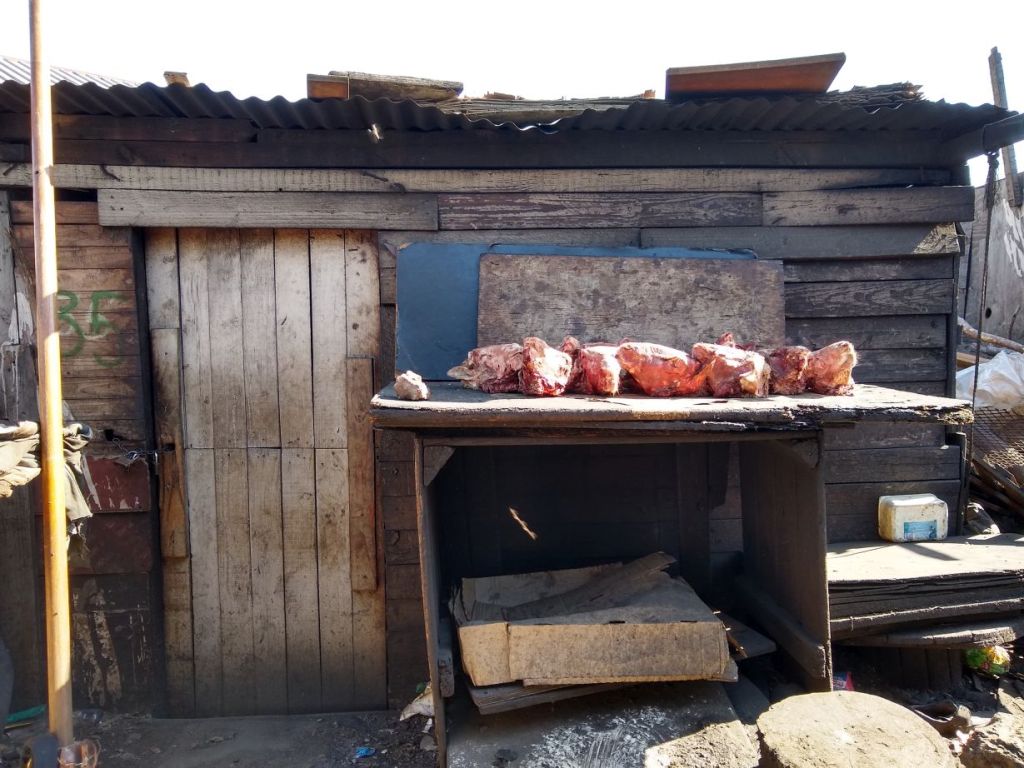
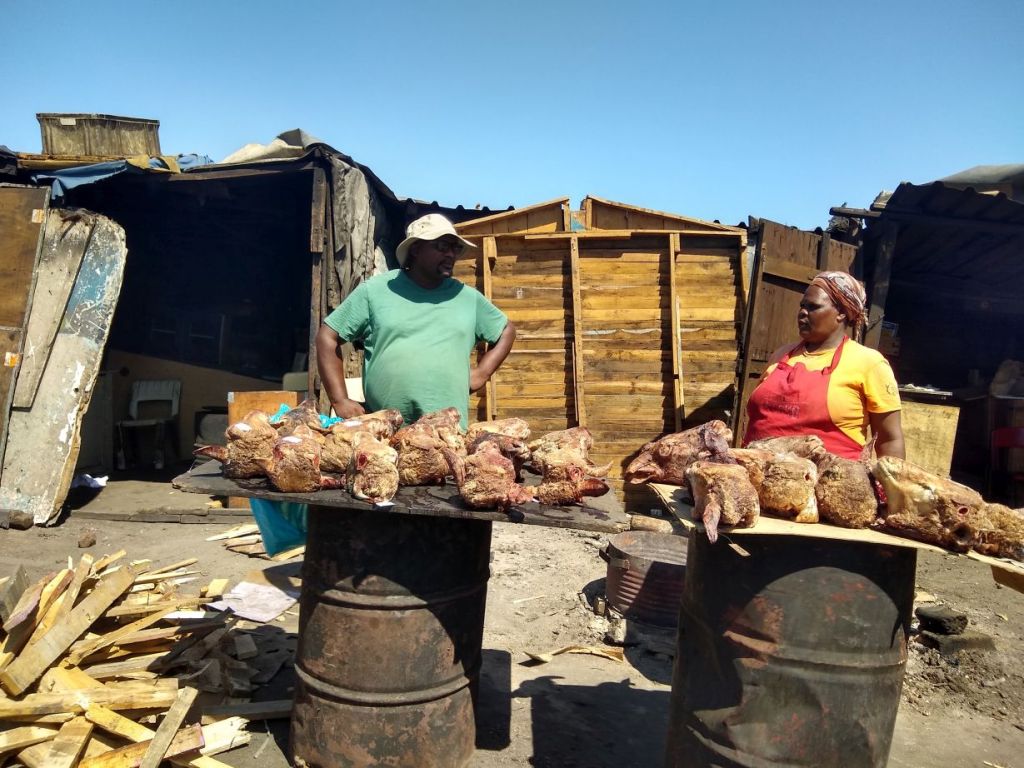
After the mauling, we proceed on into the township with Oyama who gives us a blow by blow description of the area, the neighborhoods and life in the township. It is set up like many cities with a poor class, a middle class and an upper class area (which they call Beverly Hills). We stroll down lanes of the middle class area where the homes are nicer, many in brick or some other adobe finish and have been added on to or upgraded. Then we turn the corner and head to the poorer class and government housing area, stopping first at a butcher ladies stall (or shed or shack) where she is preparing “Smileys.” Basically a goat or sheep head that she throws into a fire to remove the hair, then throws it into a pot of boiling water and boils it until the skin around the jaws pulls back, looking like a smile (thus the name) and the tongue sticks out. This is a delicacy here it seems. We don’t get to see the finished product, but we do get a good look at the piles and piles of bloody heads, surrounded by multitudes of flies, she has around the stall waiting to be fired. Lovely!
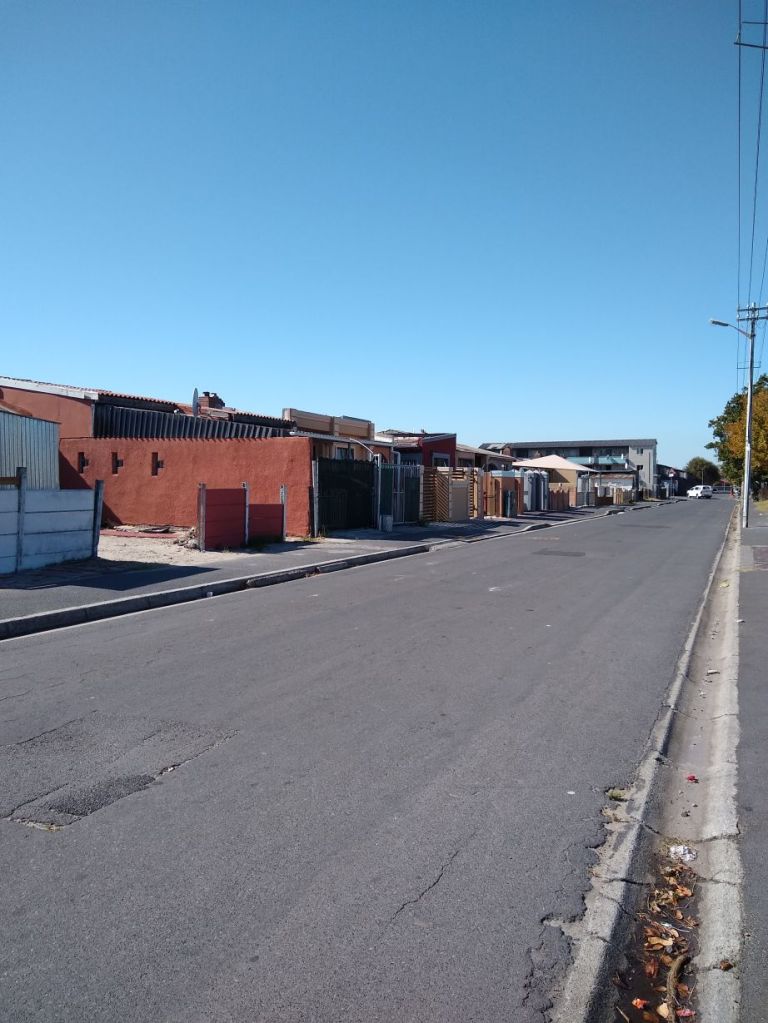
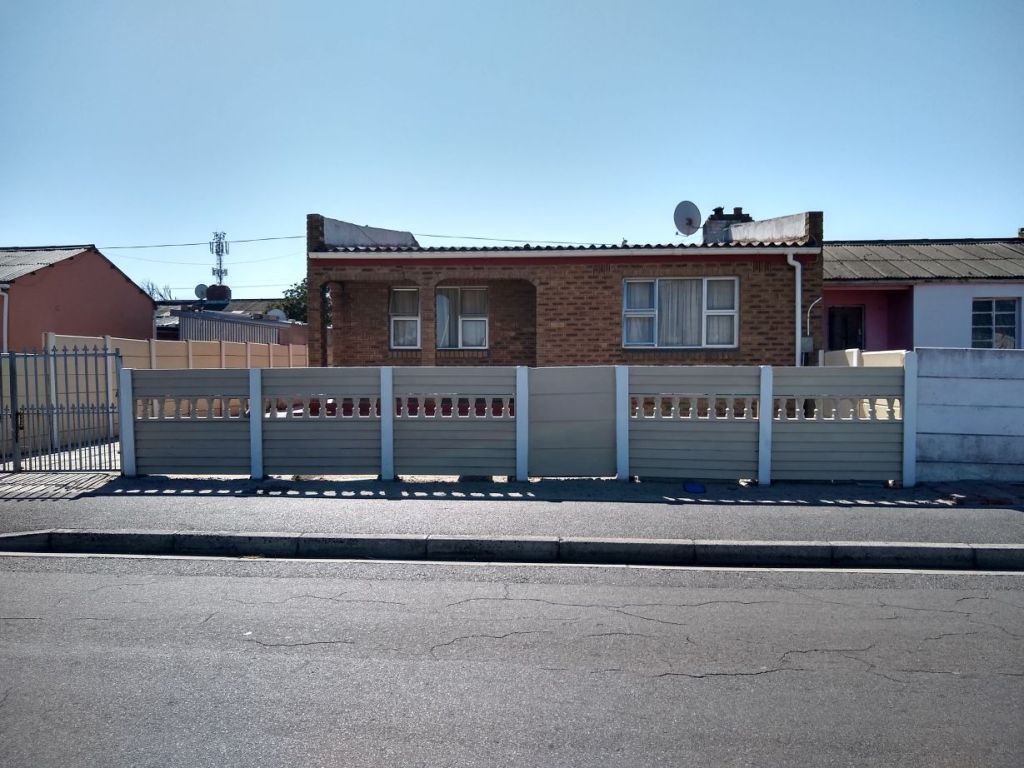
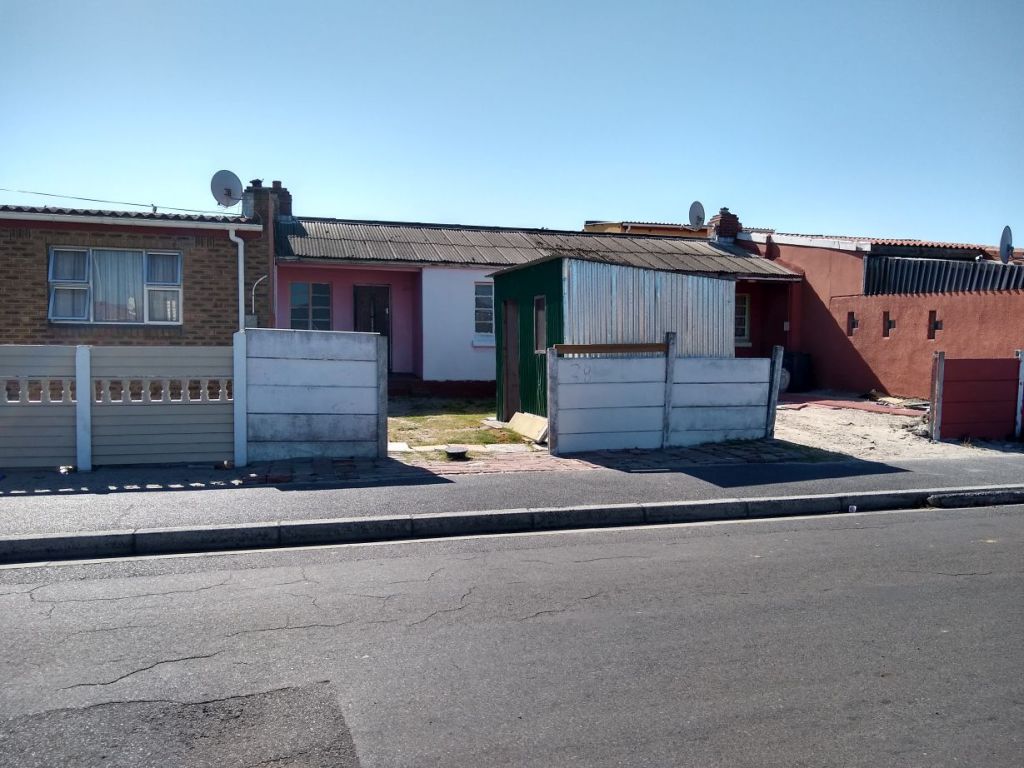
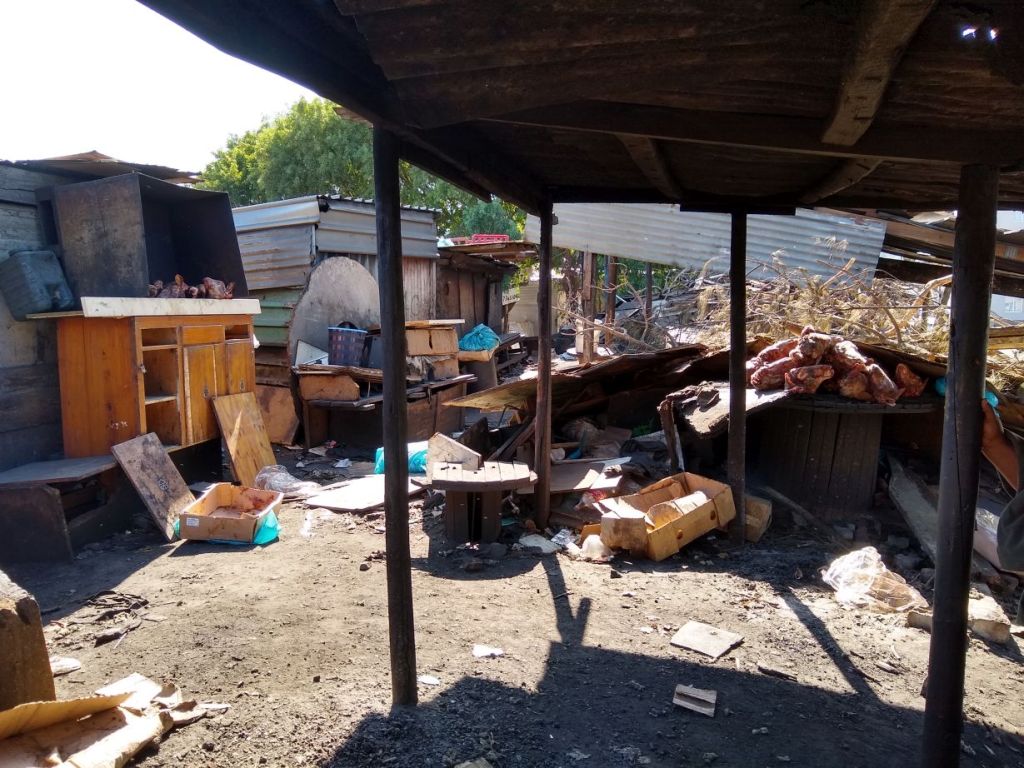
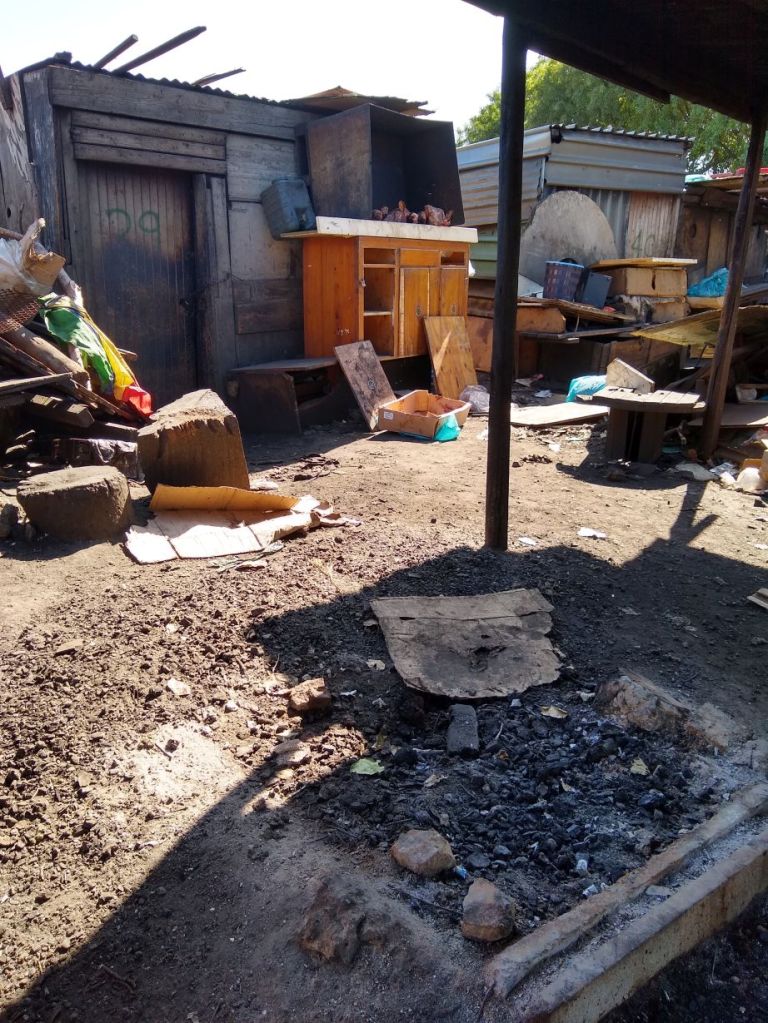
Moving past the decapitated sheep, we pass upgraded government subsidized housing with individual apartments, all nicely kept (as a matter of fact they are replacing toilets as we walk by – a whole stack of maybe 30 toilets are waiting on the sidewalk to be installed), crossing over into the “hostel” buildings which were the precursor to the apartment buildings.
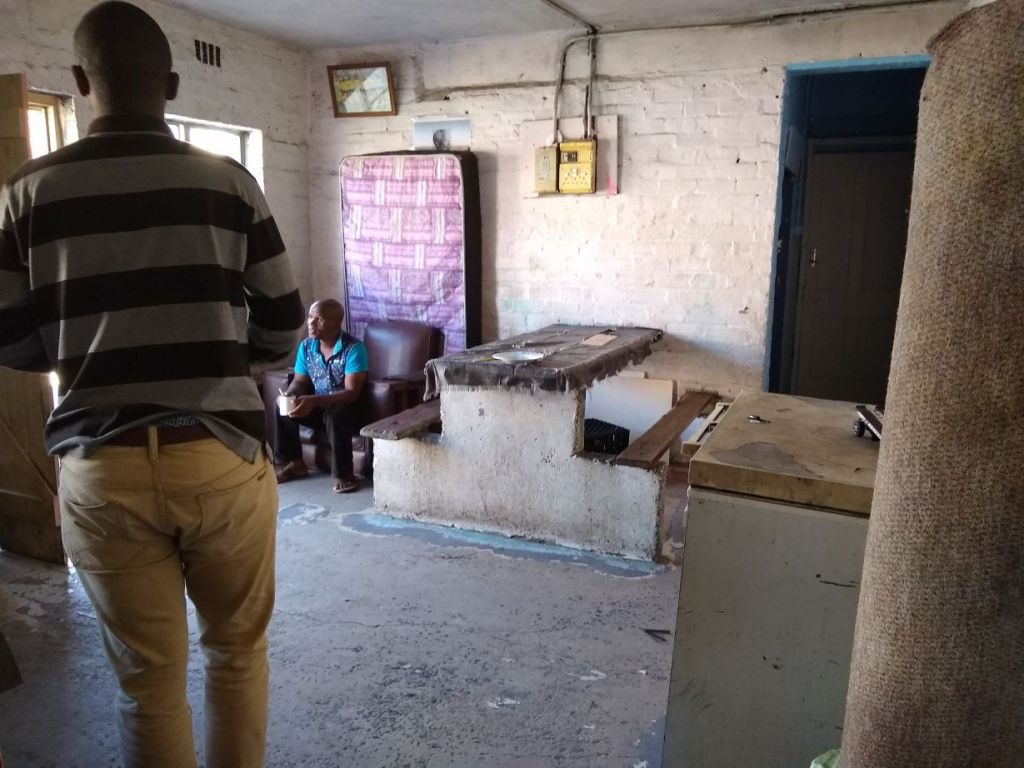
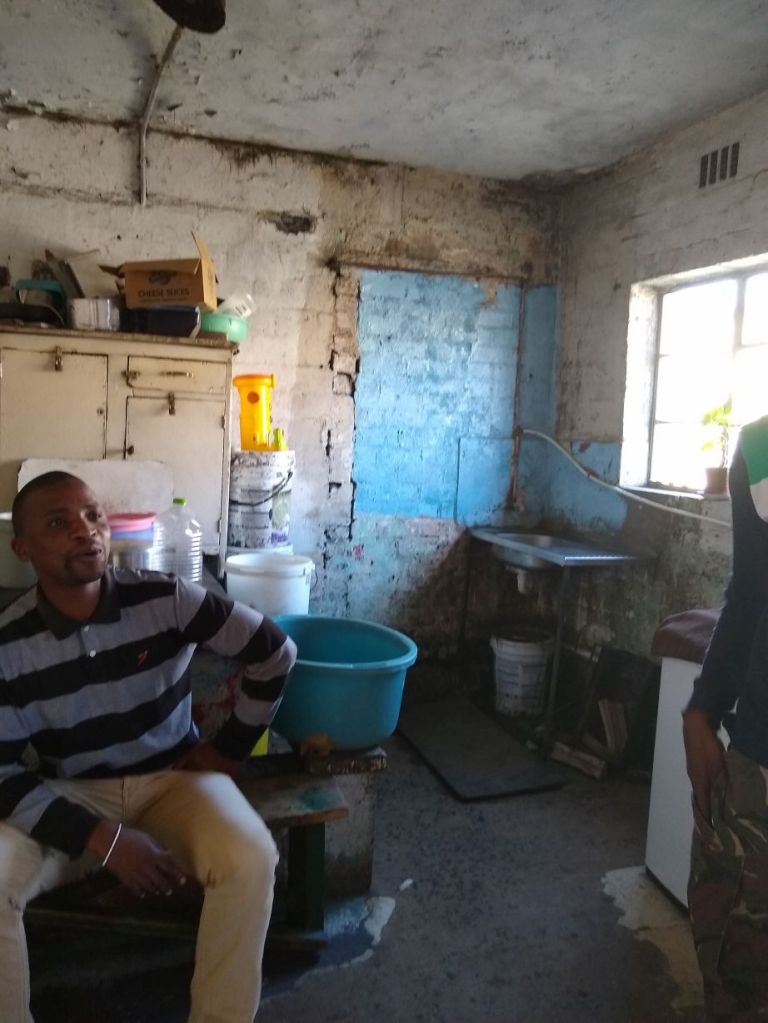
Hostels are the old government subsidized housing, consisting of blocks of four bedrooms , each with at least 3 beds in them, with a common area to cook, eat and relax and a shared toilet. People pay for a bed in the hostel, and most have multiple family members staying in the same room with other families. Essentially you can end up with 10+people living in each bedroom of the hostel. These folks are all on the waiting list for the individual apartments, but as you can imagine, it is a long wait to get one.
We tour through one hostel, joining another walking tour group to hear about life and living conditions here. While we are there, a father and a little boy come out to use the kitchen, and a woman comes out to get water for somewhere back in another bedroom. Maybe for laundry? Don’t know. All we know is it’s a crazy sad way to live, but often better than other types of housing….which we are to see next.
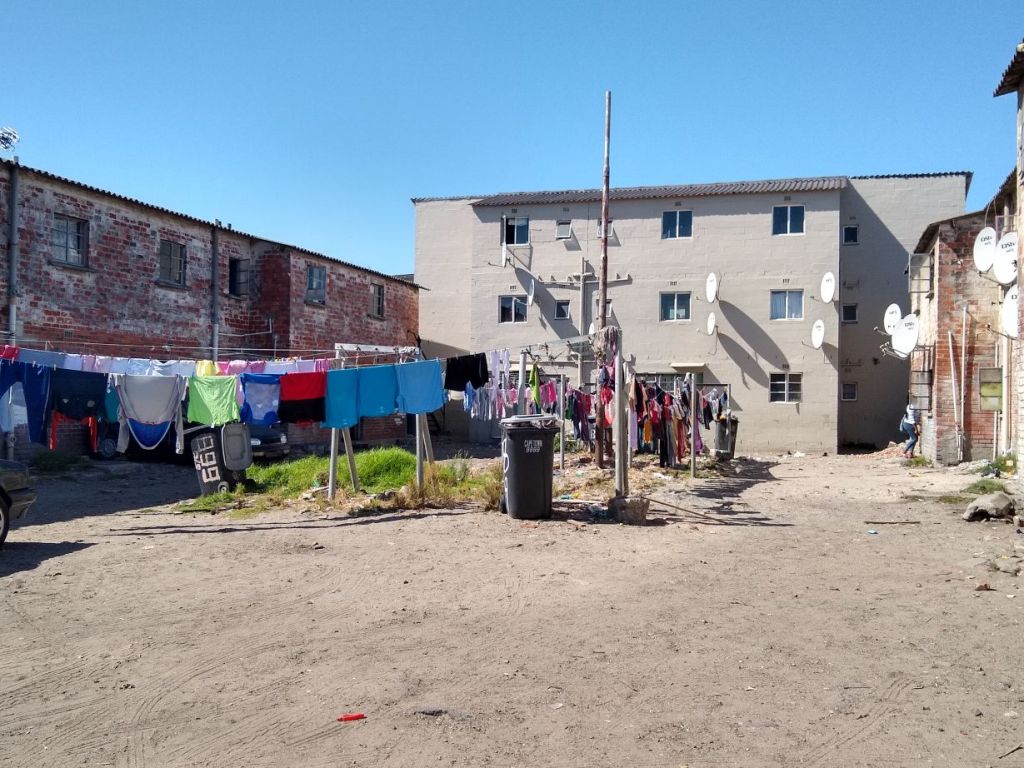
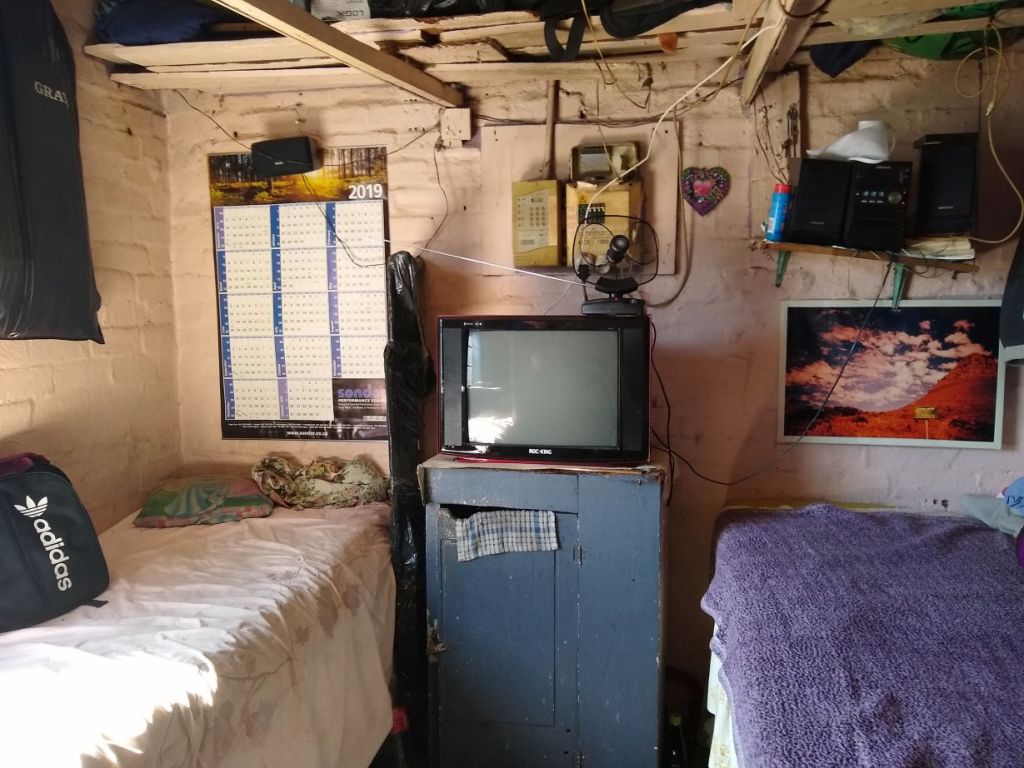
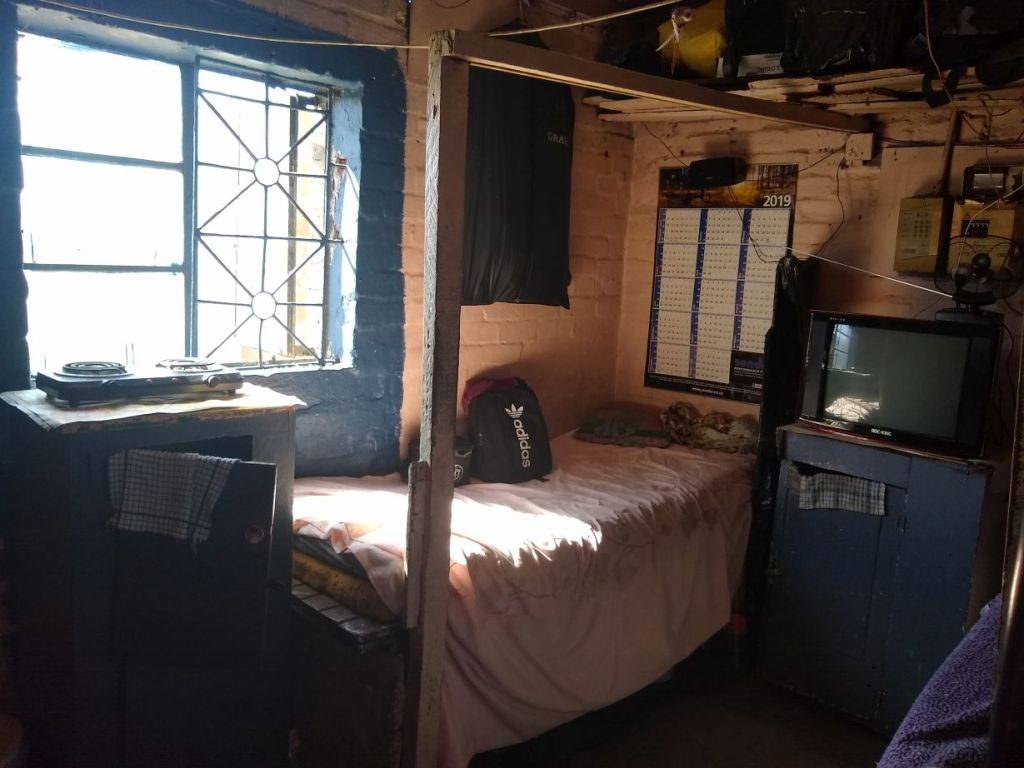
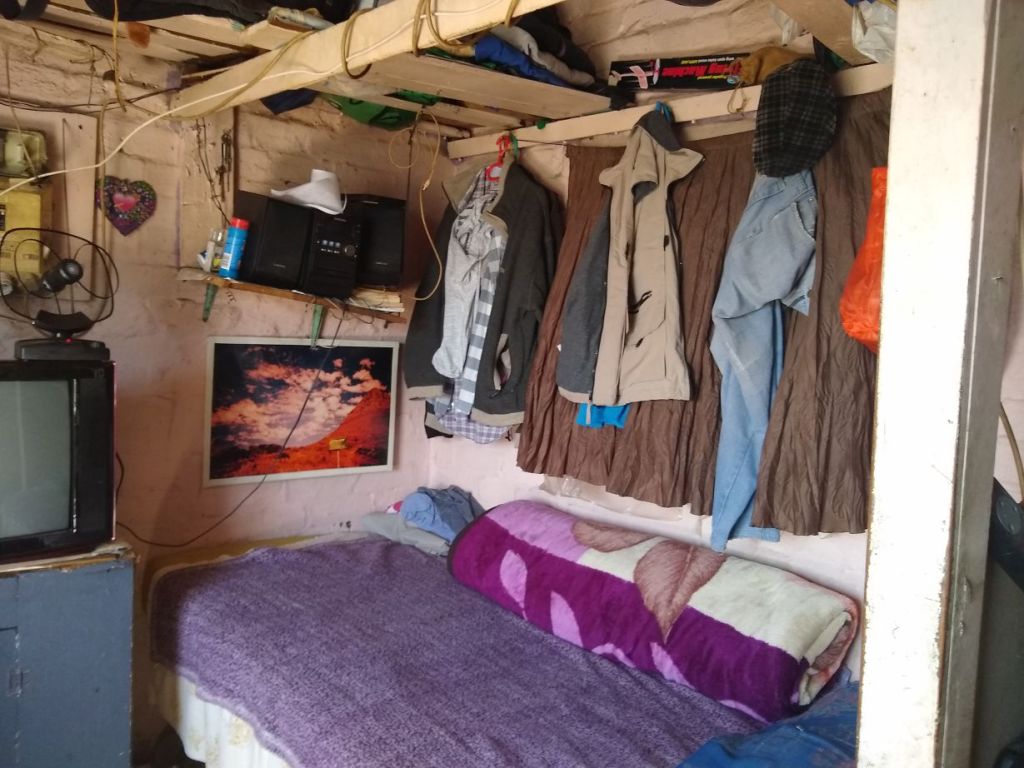

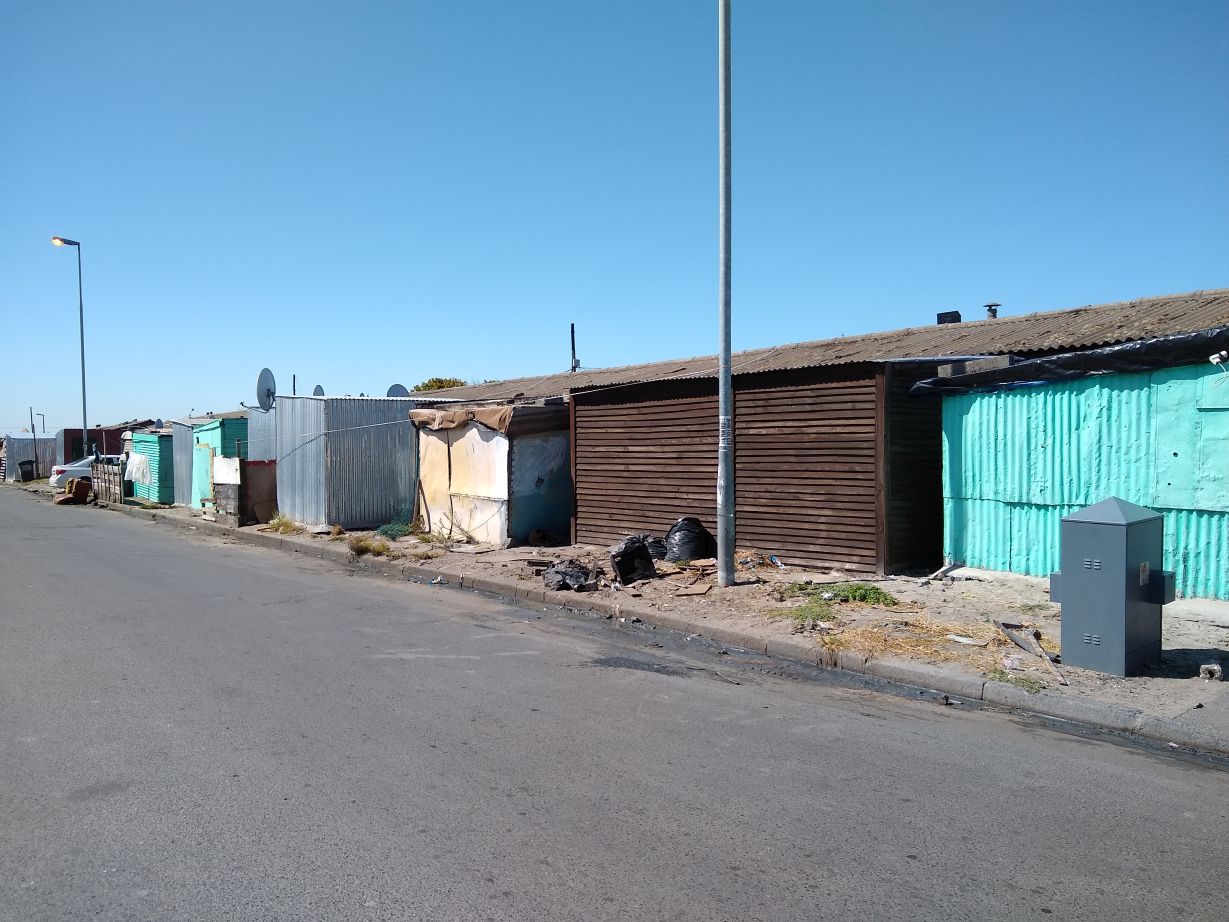
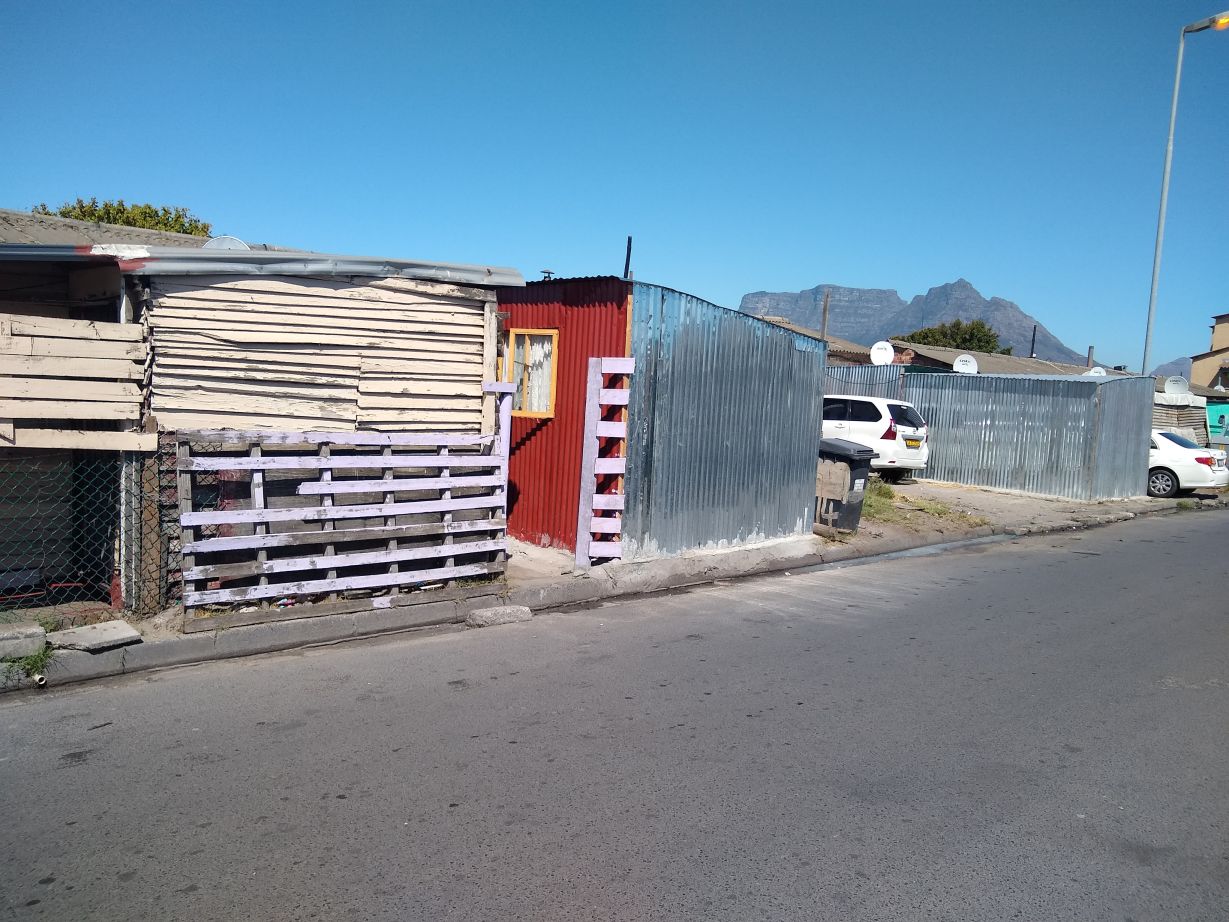
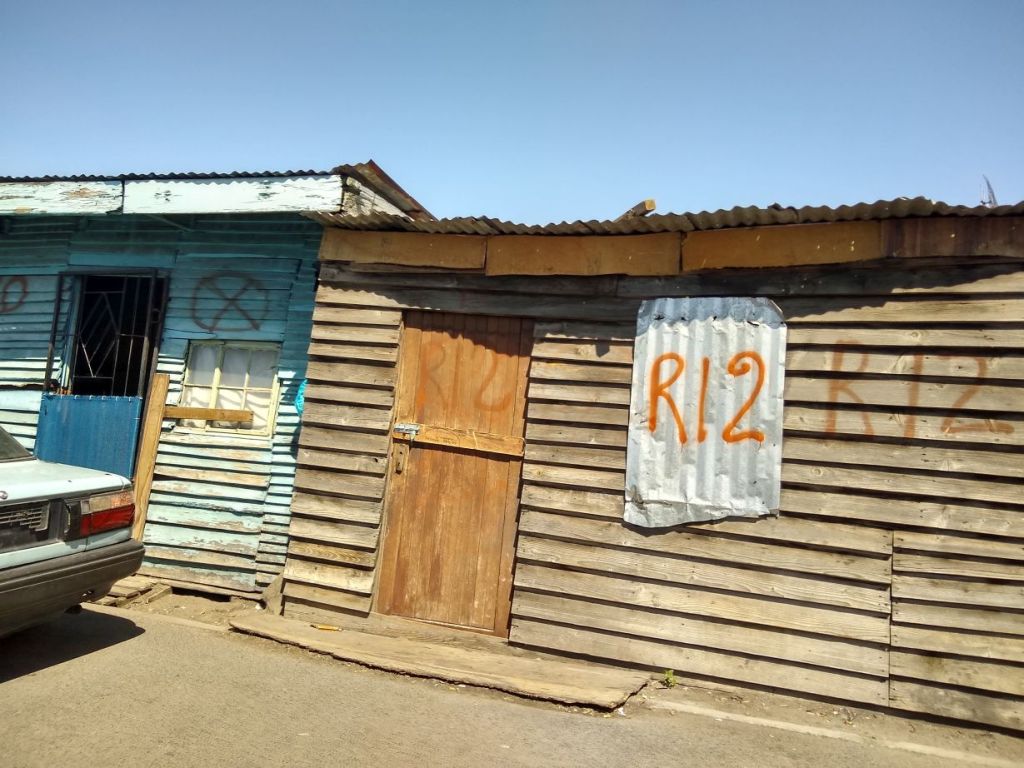
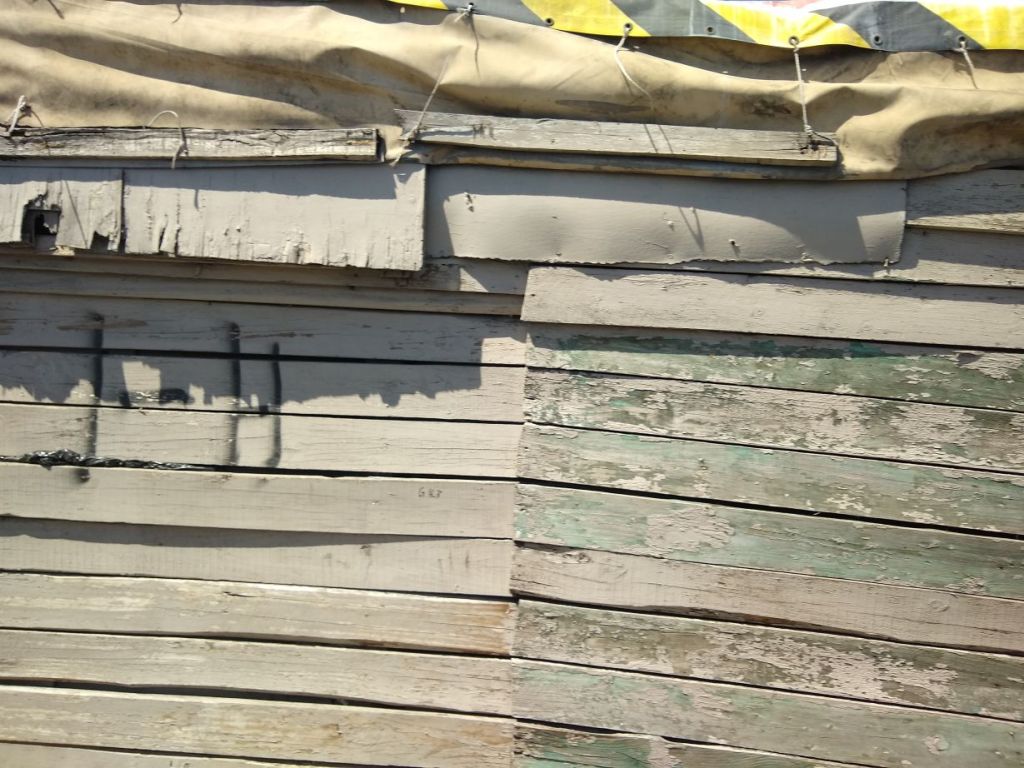
A few blocks over, after passing through “Beverly Hills” where the houses are indeed much nicer and more suitable for a decent middle class neighborhood anywhere in the states, we then walk into more Hostel neighborhoods, these with those little tin shanties you see in other townships. These little huts are attached to the Hostel, each one belonging to someone who is related to a paid bed inside, but who wants some privacy and extra space. Used by teenagers as they grow, or couples who want privacy, they are simply corrugated steel with windows cut out – you can imagine how hot or cold they get depending upon the temperature. The shacks are erected illegally and can be torn down the minute they go up. But, once they are standing for 48 hours, then they become permanent residences and if the government comes to tear them down, they are legally obligated to give the owner residence in one of the subsidized housing units.
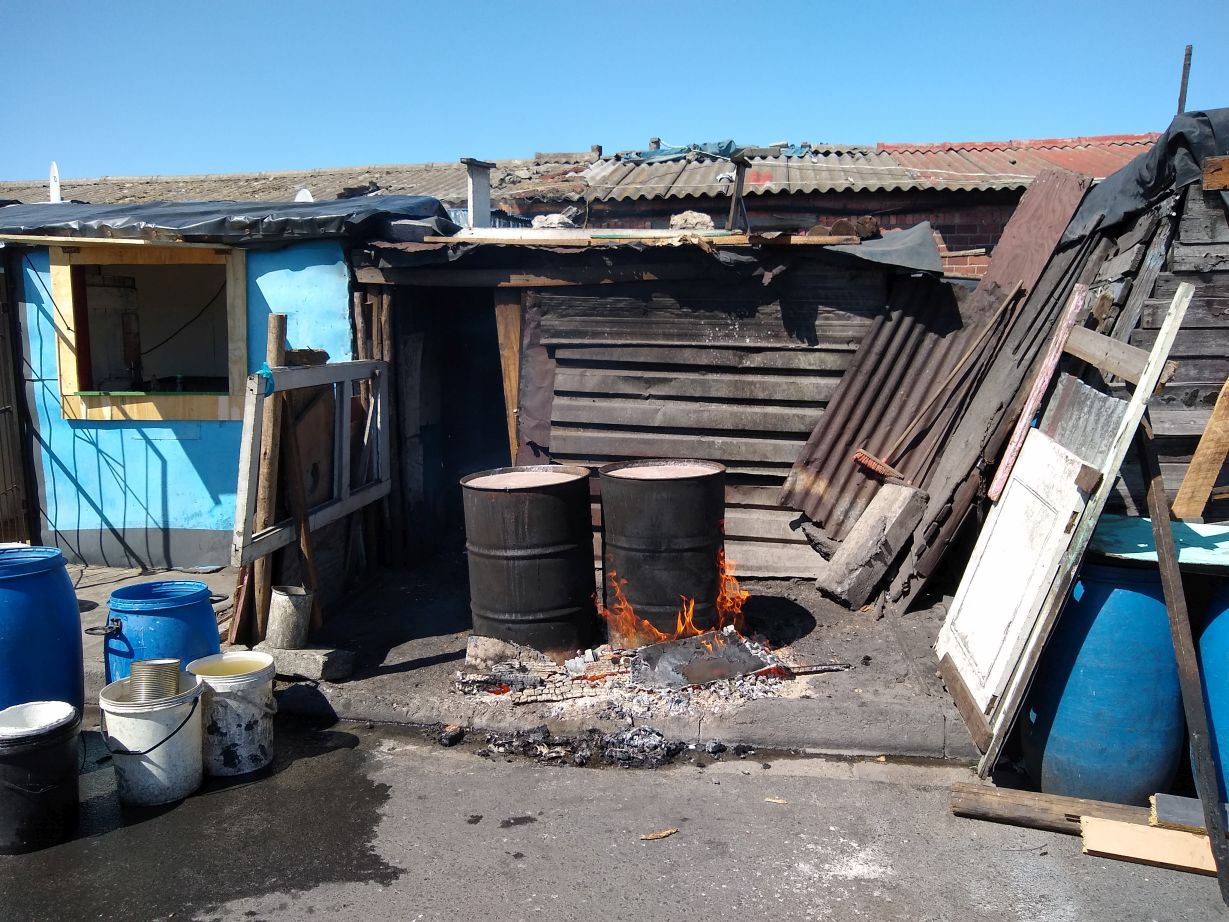
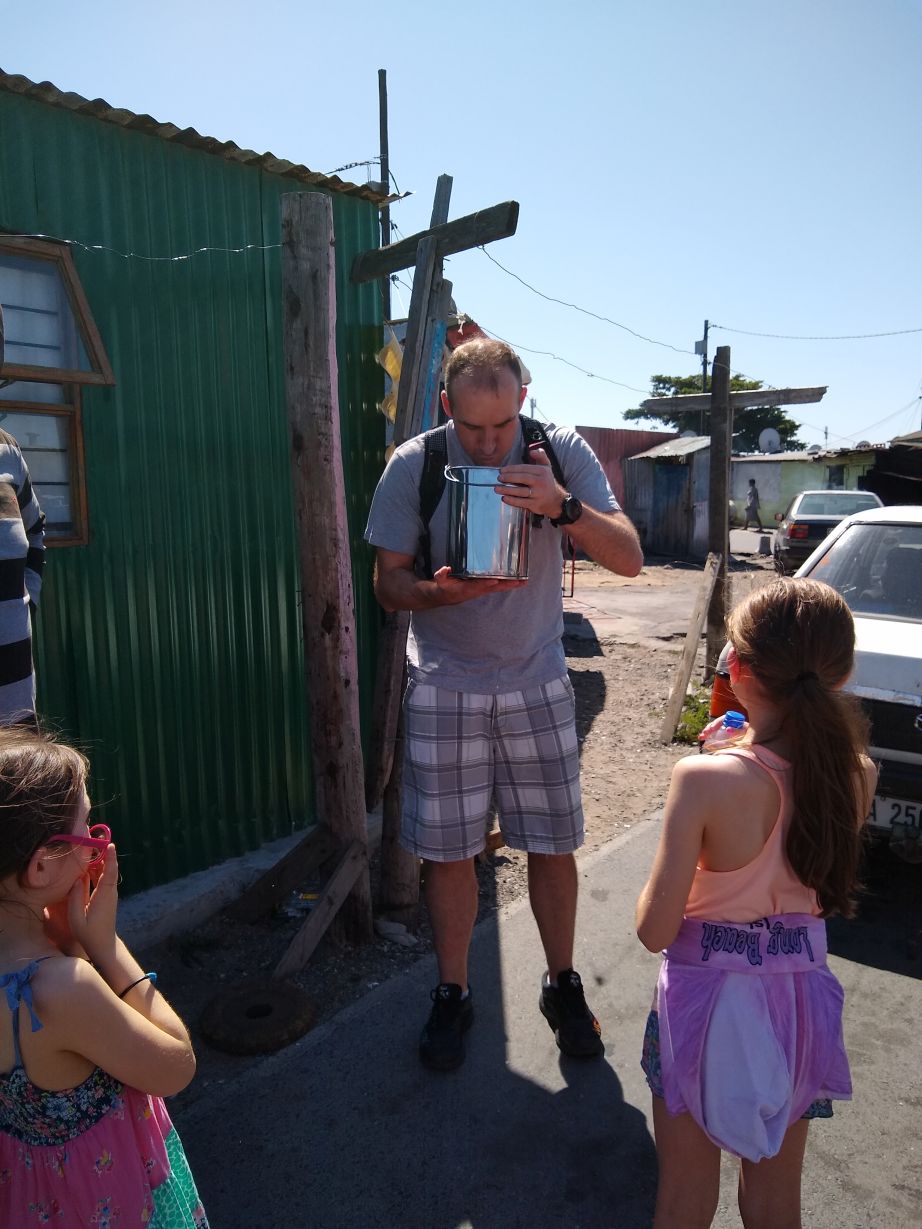
On our way through the shanty-part of town, we stop across from a local beer producer. They brew local beer here by boiling it in big oil cans over an open fire. Only women can brew the beer, and Oyama says it is as good as any commercial beer on the market. We’d love to try some, and while we will eat just about anything anywhere, this is stretching our limitations a bit much – so we pass on the opportunity to sample the brew. And good thing we did, because as we watch the other walking tour try a taste, we realize that they are serving it in a large communal can that everyone is sipping from – that does it for us. We’re not necessarily germophobes, but we sure as heck aren’t taking a chance on a communal beer “can” from who knows where, cleaned who knows how with saliva from people we don’t know! Enough said!
We’ve walked to the end of the township by now, and our tour is almost over. Oyama takes us through the bus terminal, which is really more a “van” terminal, with the typical style of transportation, mini-vans that go to specific areas. You hop on the appropriate van, and when it is full, they take off. Some go as far as Johannesburg! That’s gotta be an awful ride!
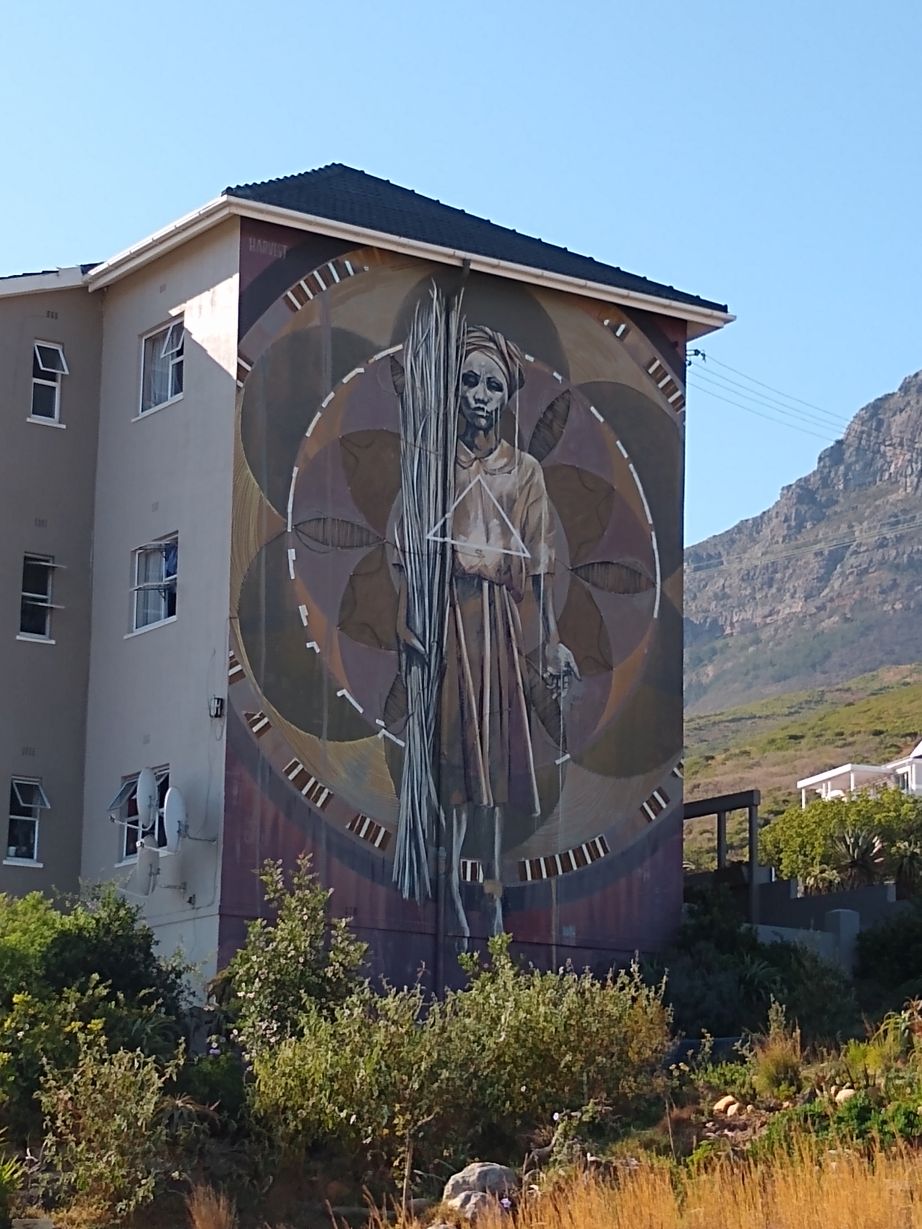
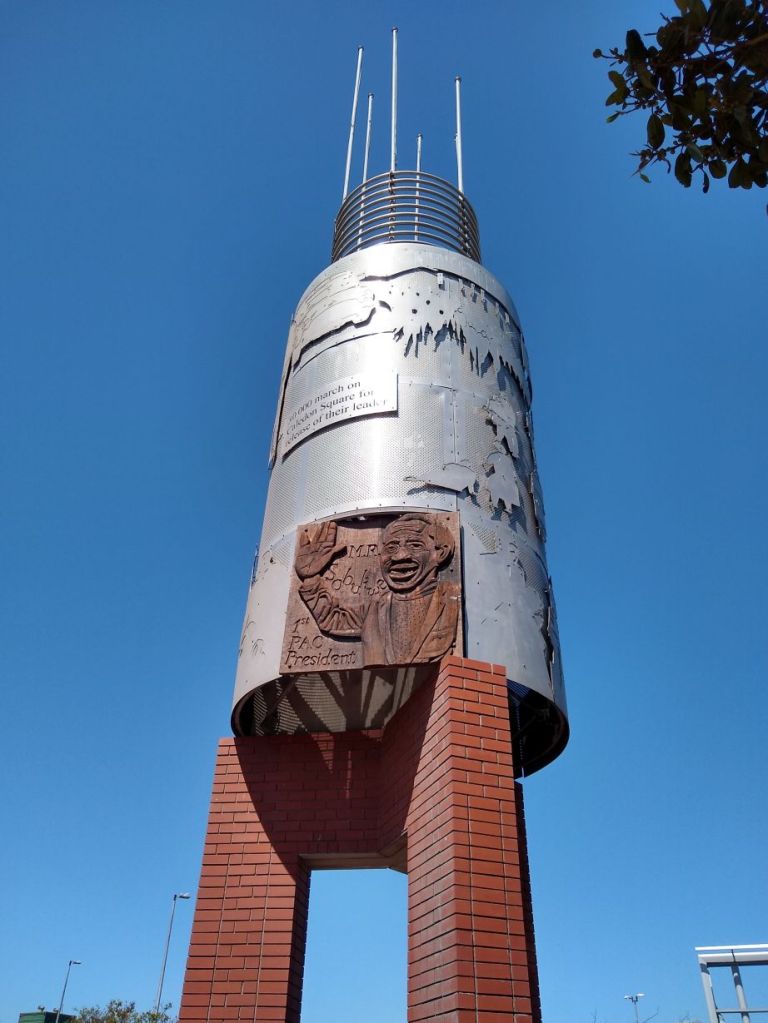
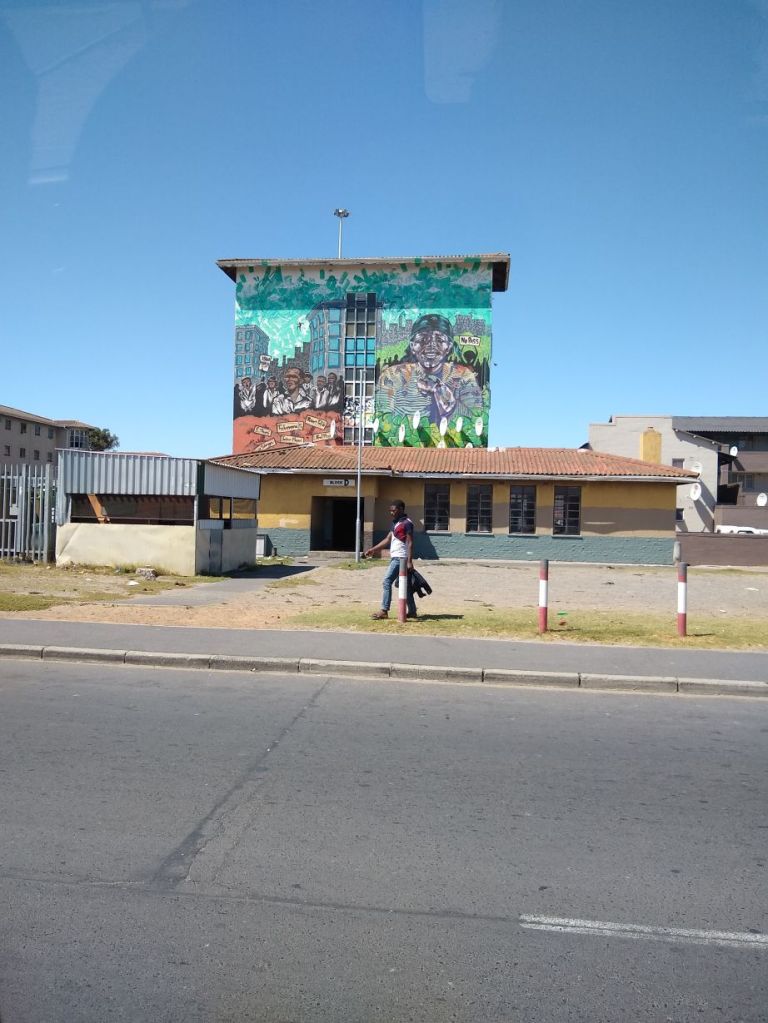
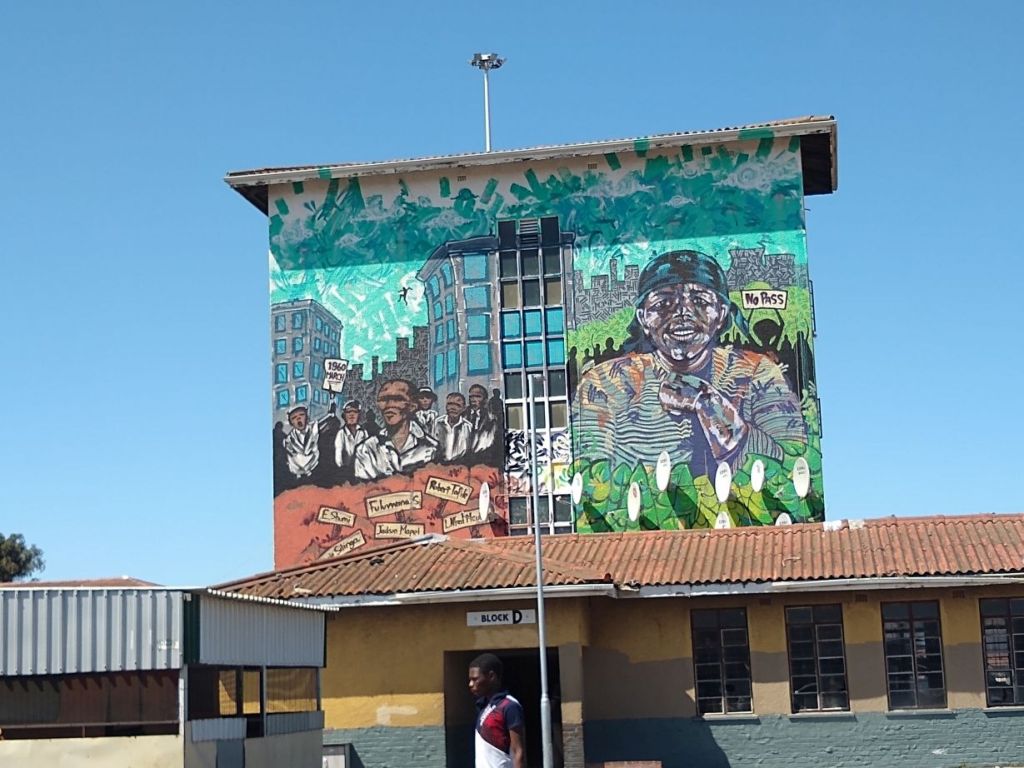
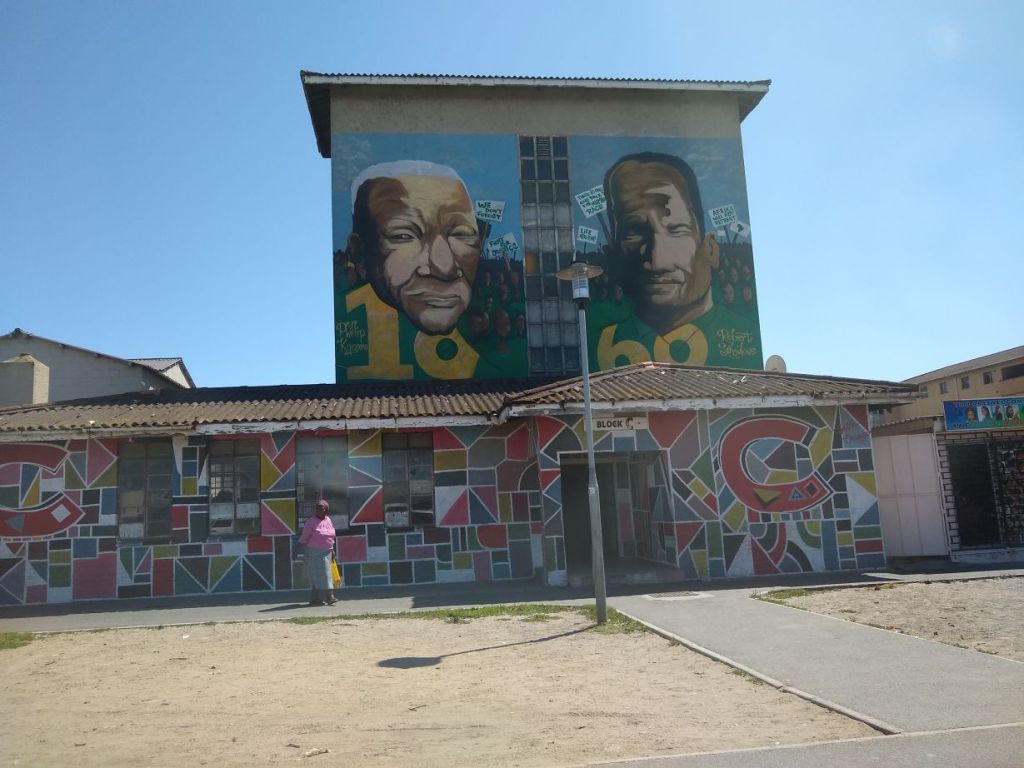
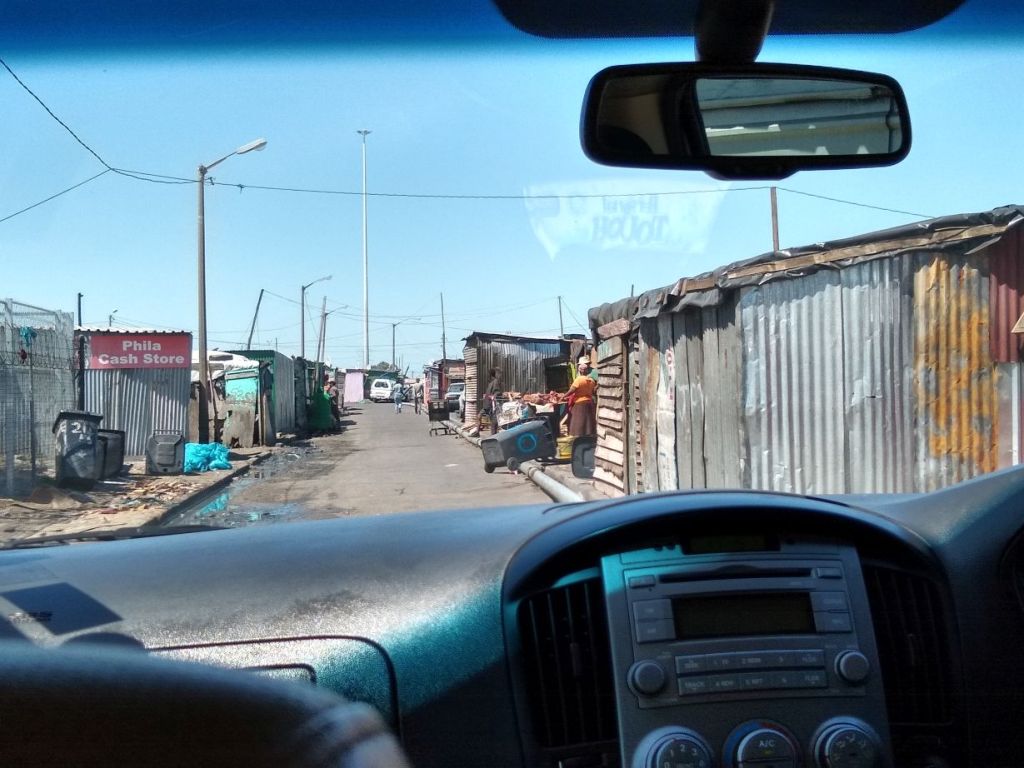
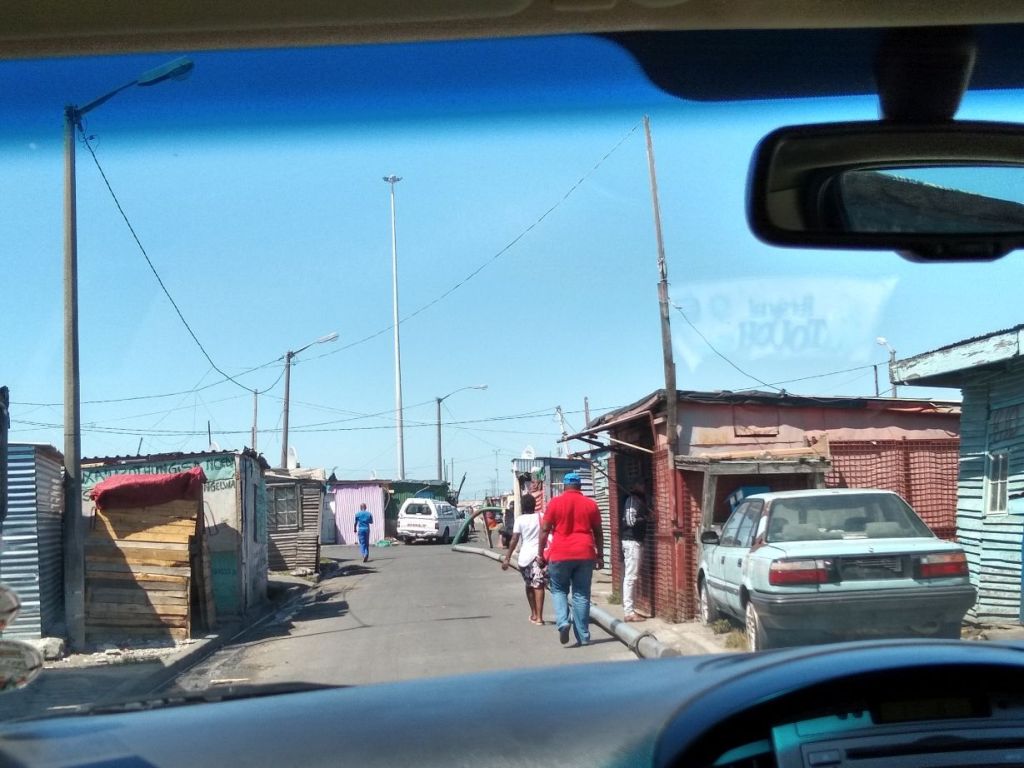
Exiting the transportation station, we end at a statue memorializing Nelson Mandela (leader of the ANC) and Robert Sobukwe (Leader of the PAC, the more violent party of African nationalists), then bid Oyama goodbye and hop in our van with Songs to take a little driving tour of the outskirts of the township. We slowly drive past older apartment buildings with incredible murals depicting different leaders of the ANC and PAC and specific scenes from the Apartheid era. As we head out of town, we pass through a huge section of shanties – obviously the part of town that it is not “appropriate” for a walking tour. It is a rather large area, with everything from shops and stores to individual living shanties all crowded together and built on top of one another.
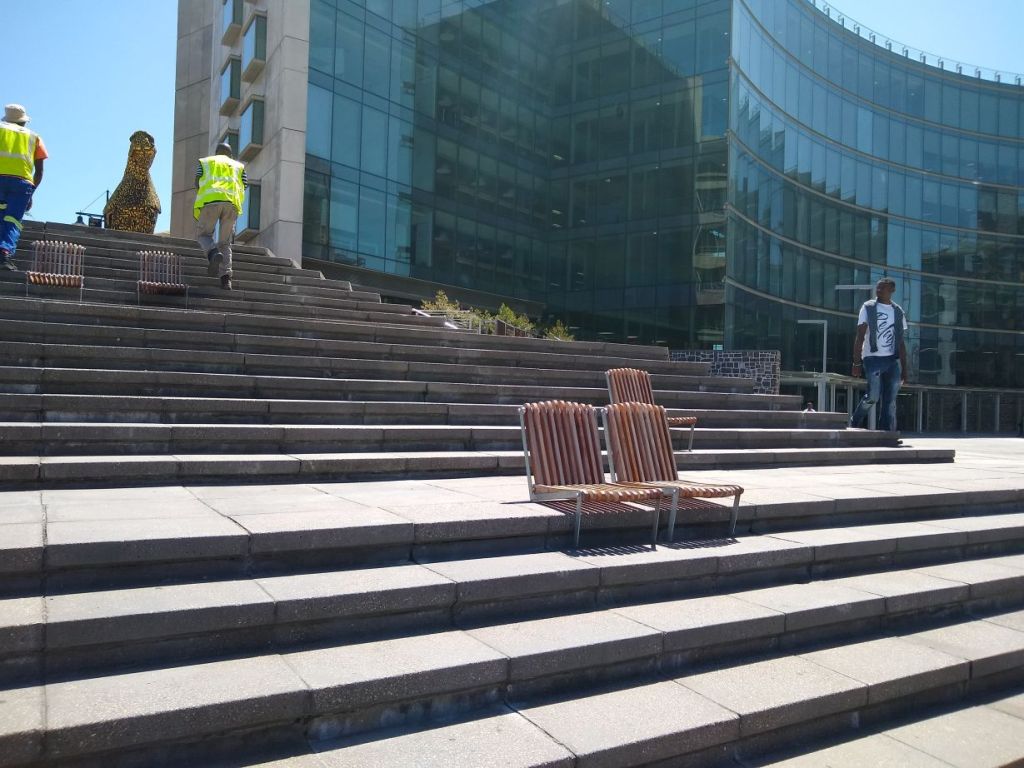
A most interesting way to spend our morning, that is for certain! And we’ve got a whole afternoon left of touring Robben Island where Mandela and others were imprisoned for years. Unfortunately the Robben island tour is without Songs, he was strictly our township ride and senior guide, so we bid goodbye to him as well as he gives us our tour tickets while dropping us off at the waterfront – by the staircase with those cool chairs built into the stairs allowing people to hang out and watch the world go by – with time for lunch before the island tour.
 Andiamo