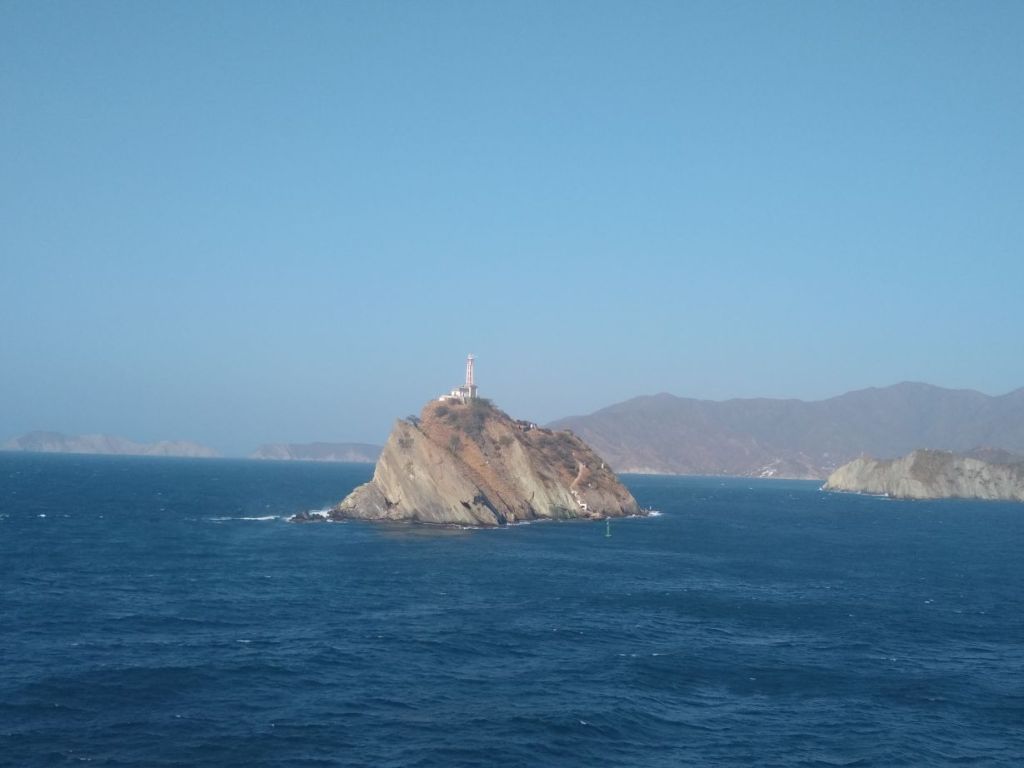
Today we are going to Taironaka Archaeological park to hike a little bit through the forest and to visit the ruins of the original Tayrona Indian village. And, yes, it is yet another ship’s tour. With the discount it makes it sort of silly not to take a ship tour, so, here we are again! We are still eschewing the Gian escort, since we know how this all works now and figure we can get off the ship and to the buses faster than being escorted. It’s a beautiful sail in, passing a great lighthouse on the way in….
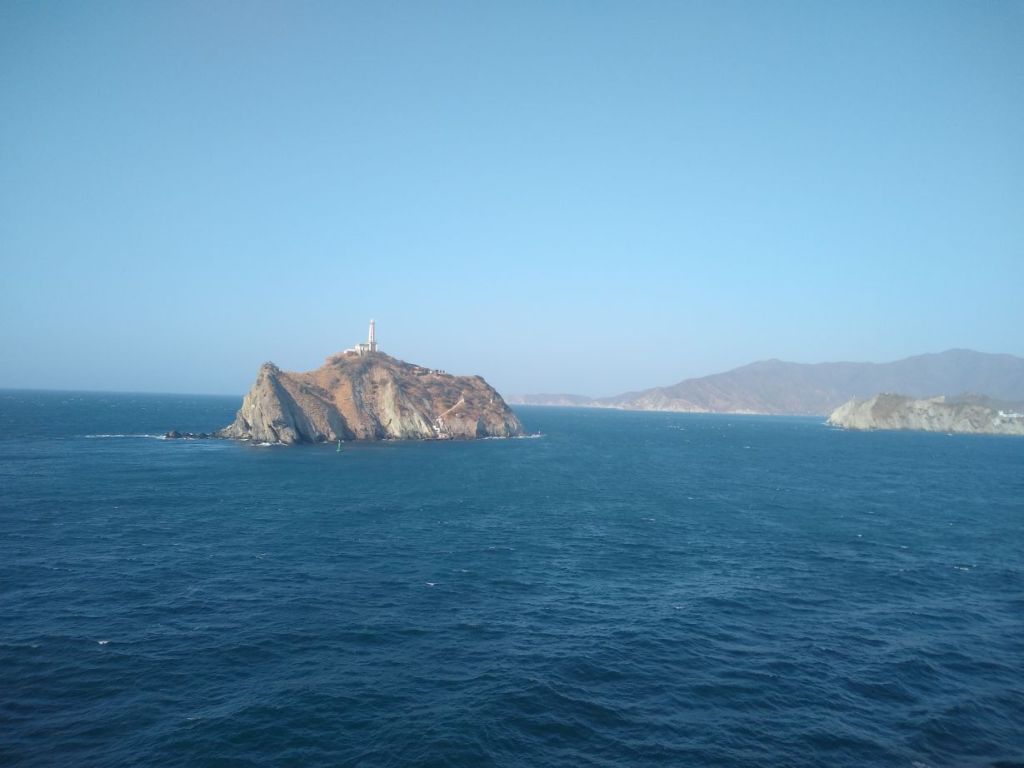
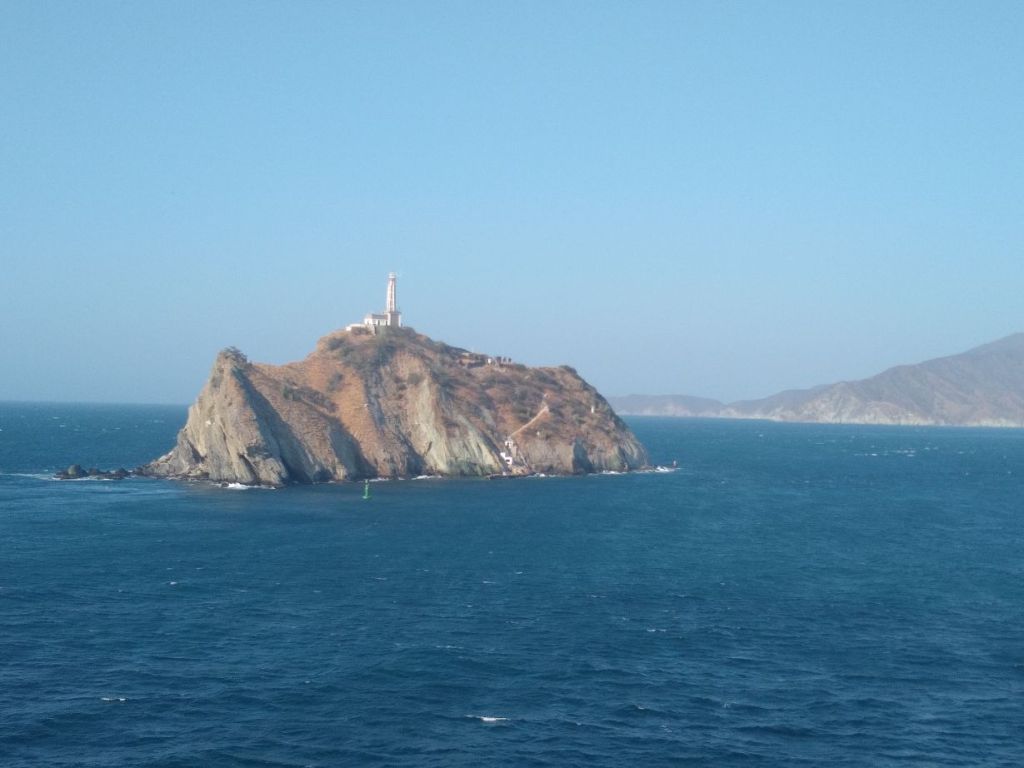
…and the morning progresses as normal, this time breakfast before queuing for the tour. But, then, it goes off the rails. We’ve been living in a sort of Coronavirus bubble. Yes, we know all about it, we’ve been watching the tragedy of the Diamond Princess unfold daily, but we are, so far, free of any illness on this ship. The “code pink” of being served in the buffet has even been lifted. So, while we are (sadly) leery of the Chinese passengers aboard, we aren’t all that concerned with illness at this point. (Ok, so we have questions about the head of Guest Relations who is Chinese and who came aboard the same day we did, but she’s still out there in the public, and we figure if anything were awry, they’d hide her away for the duration.)
But apparently, the port of Santa Marta is more concerned than we are, because we are not being allowed to disembark, the port officials won’t clear the ship. We’ve been watching the activity on the dock for a while now. The Guest Relations manager is out there, the Shore Ex manager is out there, one of the First officers is out there. All arguing with what appears to be the port coordinator (or tour coordinator) about letting us off the ship. They’ve got some list (we’re assuming the passenger manifest) and they’re checking it and yelling about it. Then the doctor comes out (half dressed in scrubs – we think he was asleep), and he goes running around the pier arguing with the port people. Finally the port people boarded the ship wearing big protective face masks, and after 1 1/2 hours we are cleared. Phew. But, we can understand their fear! How do they know we are virus-free? Particularly if they have the guest manifest with the Chinese passengers listed!
When our tour is finally called, we are out the door first, Amazing Race style. We get to the bus and get the first seats behind what we thought were seats saved for the tour guide, but end up being seats saved for the same family that was up front in the lounge for the Canal crossing. Not going there. Juan, our tour guide sits in the stairwell jump seat and gives us all the info we need from there. Before leaving the port though, he has the bus driver stop at his car where he proceeds to get his first aid kit out of the trunk. Hmmmm…..is that a bad omen? I don’t know if we should be happy he’s prepared or worried!
And with that, we are off on a pretty hour long ride through the outskirts of Santa Marta and into the forested mountains that run along the coast. Juan gives us the basic history of the Tayrona Indians, explaining that they disappeared in the 1500s when Spanish invaded looking for gold. The indigenous tribes started moving higher in the mountains to get away from the Spaniards, which is why the ancient village site is located far from the coast. Even though they mostly disappeared, some tribes that remain are actually descendants of the original Tayrona.
Driving along the main road, we get glimpses of the water through the trees, then off in the distance past fields of crops. The scenery is beautiful and can lull you into a state of bucolic complacency, which is apparently what happened to our driver, because he manages to miss the turn off to the Taironaka archaeological park! Oops!
Correcting his mistake, he turns around and does manage to deliver us safely to the parking lot where we begin our hike through the forest to the site. Juan says it will take about 30 minutes to walk there, but it isn’t too strenuous (we’ll see – we are finding very different ideas of strenuous on these tours!). He’s great, and very knowledgeable about the history, but also about the wildlife, particularly birds, which he says are his primary field of study. So we get a combination history and wildlife tour which is great.
He’s got great eyes and spots everything! At the bathroom break, he spots some monkey up in a tree – I couldn’t see him if my life depending upon it! Everyone is oohing and aahing – I’m oh welling! I took a picture anyway – see if you can see the darn monkey!
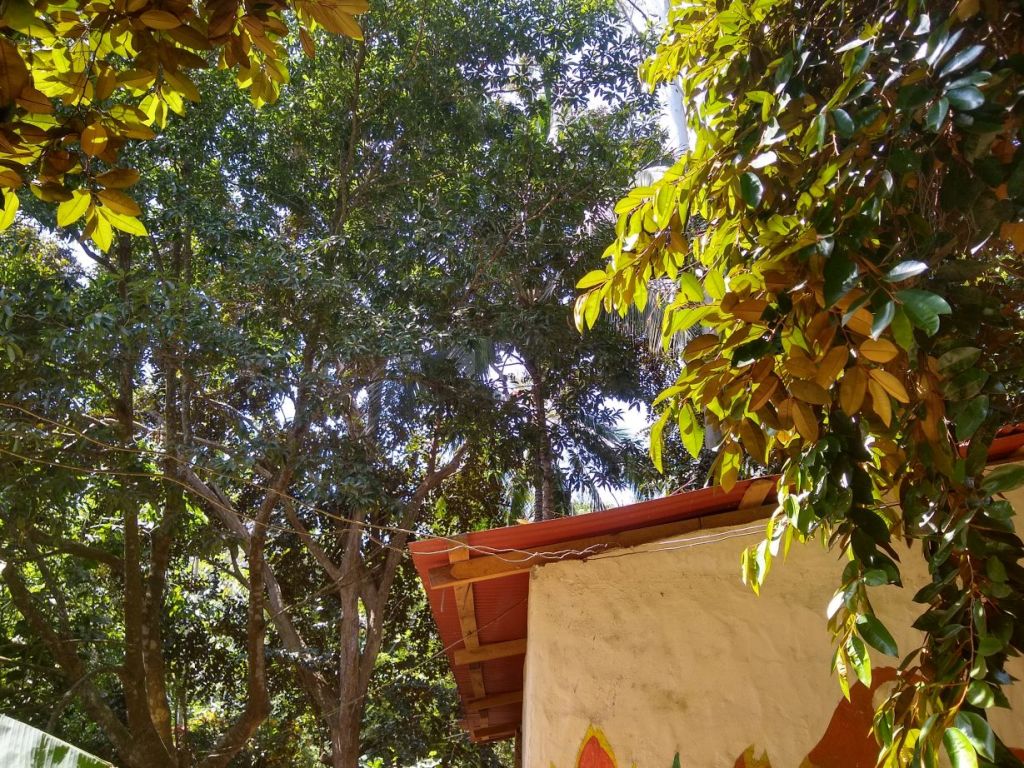
Finally we are ready to hike, and as we are leaving Juan admonishes us yet again (he’s said this several times on the bus already) to spray up with repellent, remember to put on sunscreen and not to touch anything – just because it looks harmless doesn’t mean it is. And we (the tourists) aren’t used to all the things here in Colombia so while it may not affect a local (Juan) it could adversely affect us. Good advice. Easy to follow, right? Wrong. We’re not even 5 minutes out on the trail before a woman picks up a feather she found on the ground. Juan gently reminds her about the no touching rule, and she looks at him like he’s crazy while saying, “it’s only a feather!” Okie dokie. Fortunately, Juan has the patience of a saint, but also a little bit of ironic sense of humor, so when the lady turns her back, Ed and I get to enjoy Juan’s ironic cocked eyebrow stare!
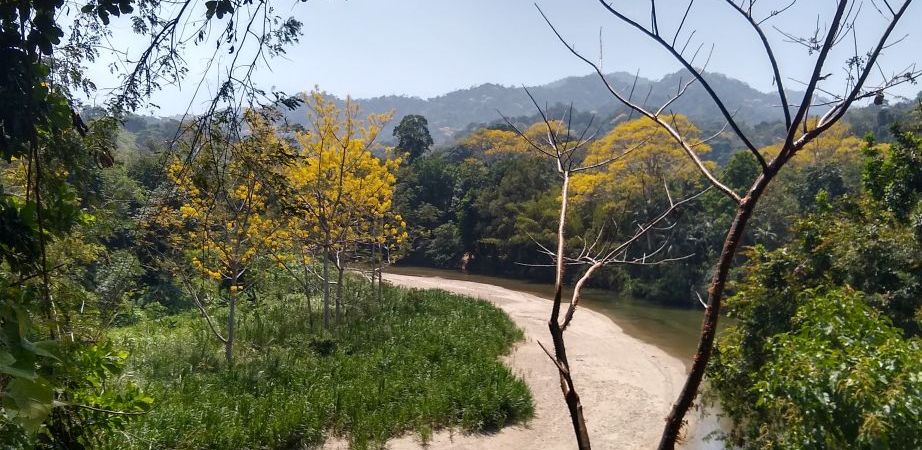
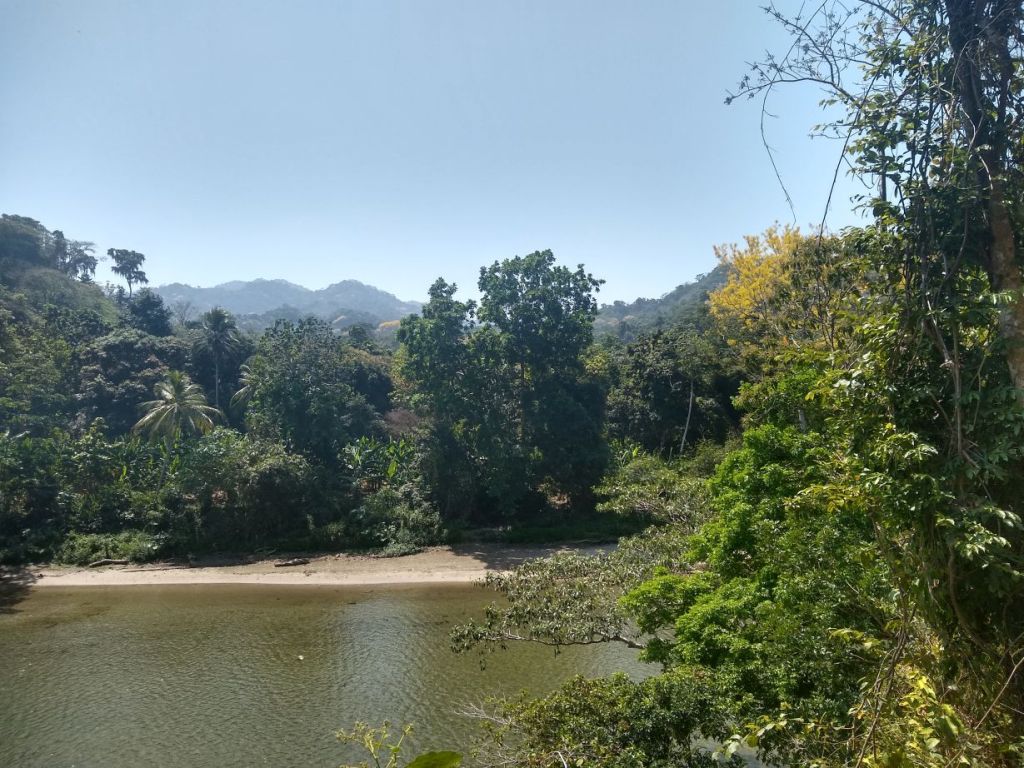
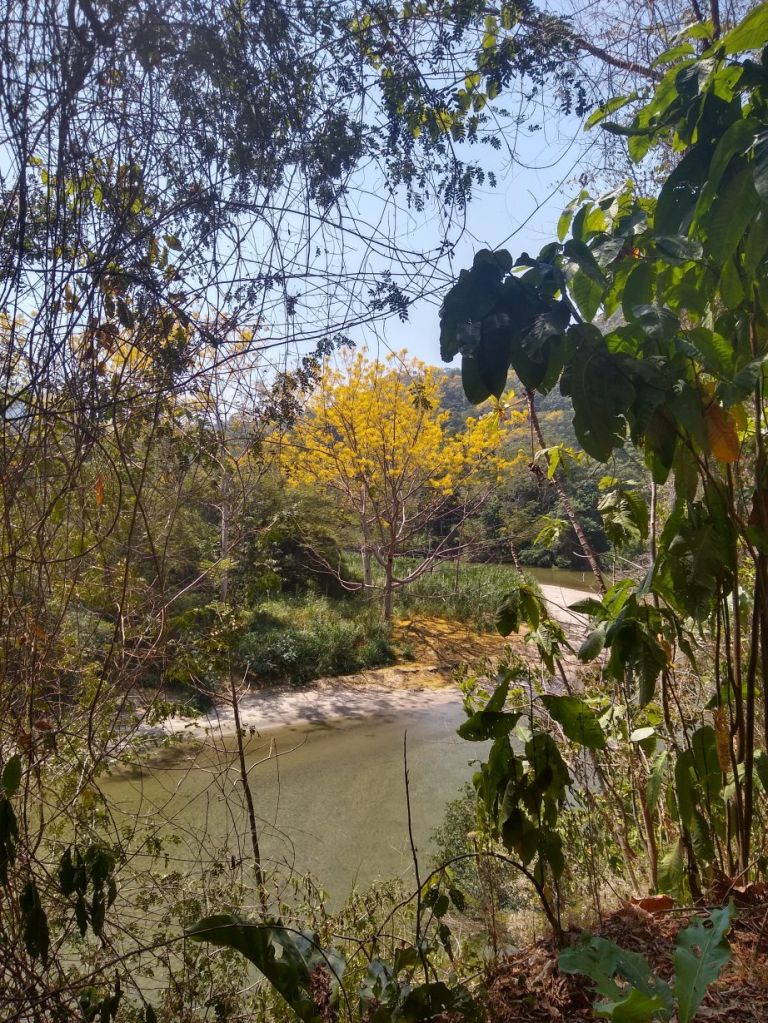
The hiking is actually pretty nice. There are definitely some steep spots, but we’re all going at a nice leisurely pace. Once up on top of the ridge trail, we get gorgeous views of the Don Diego River, flowing gently along the banks far below. There are beautiful Guayacan Trumpet trees blossoming with their distinctive yellow flowers all through the forest and along the river banks making for extraordinarily colorful photos.
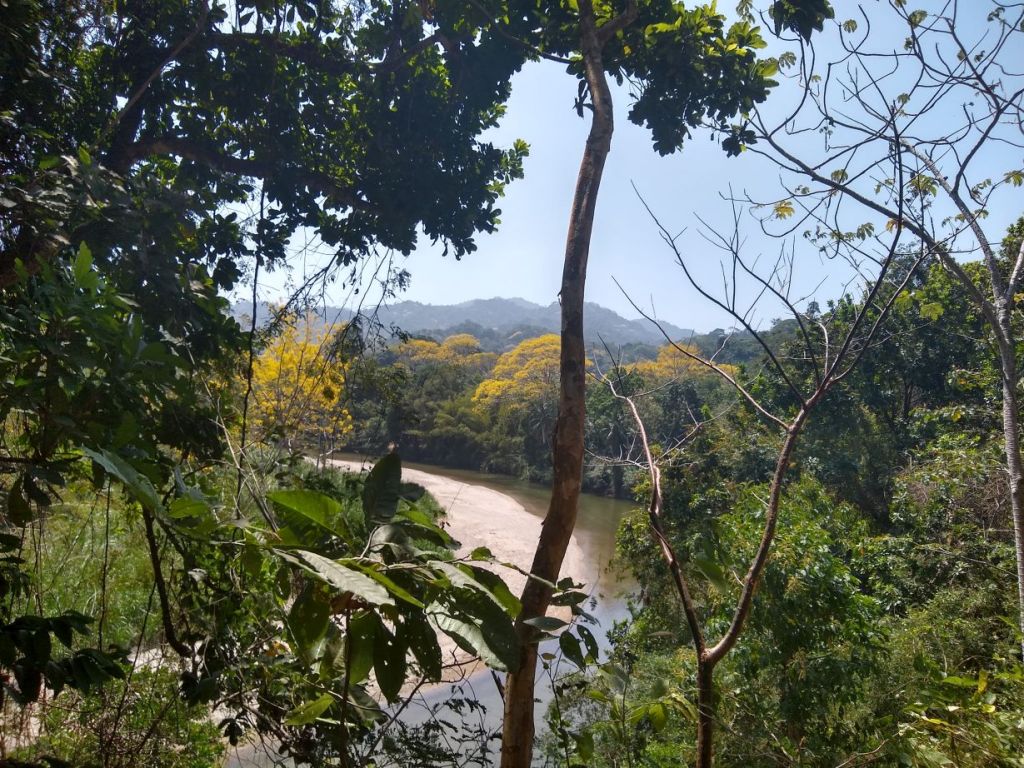
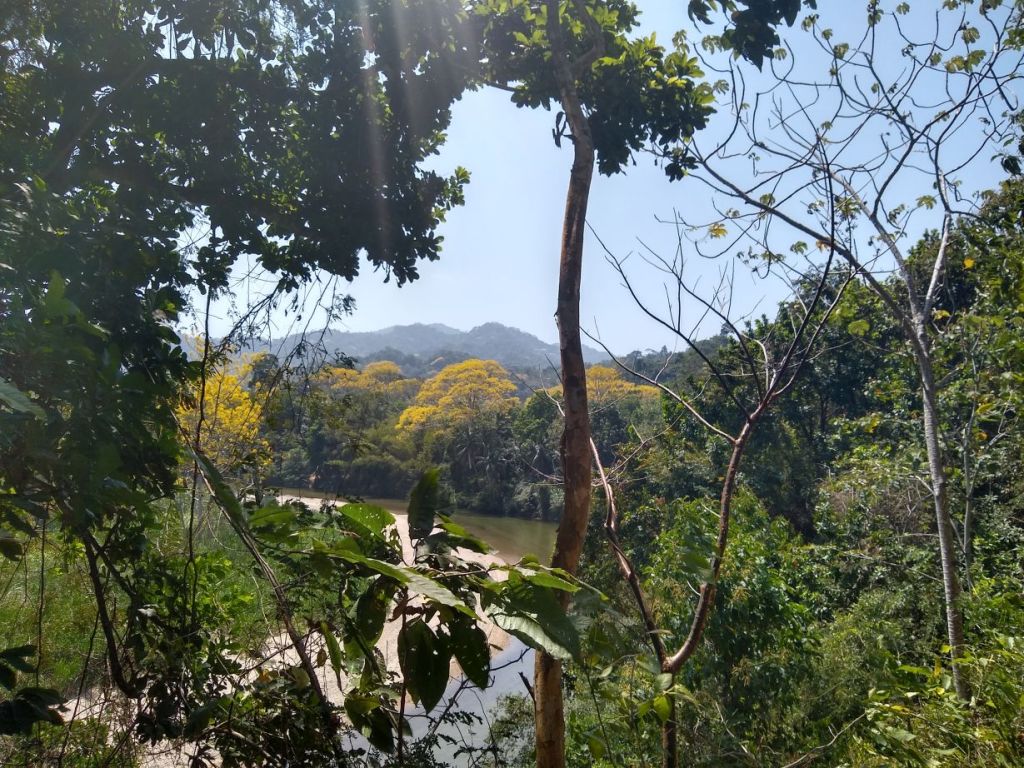
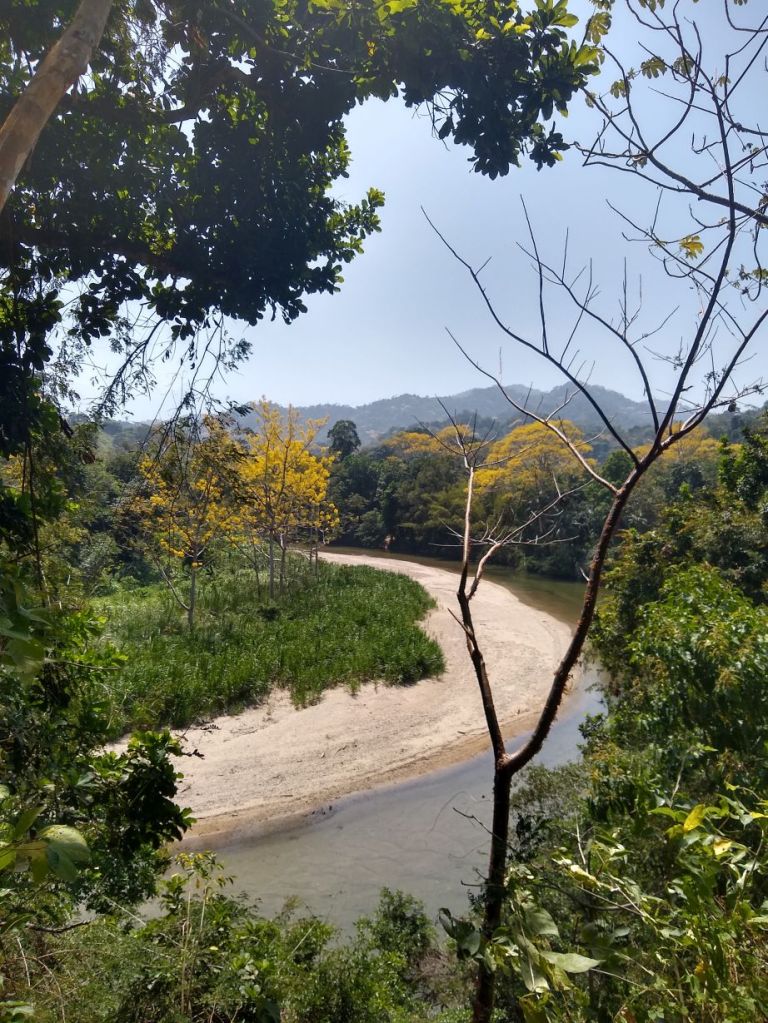
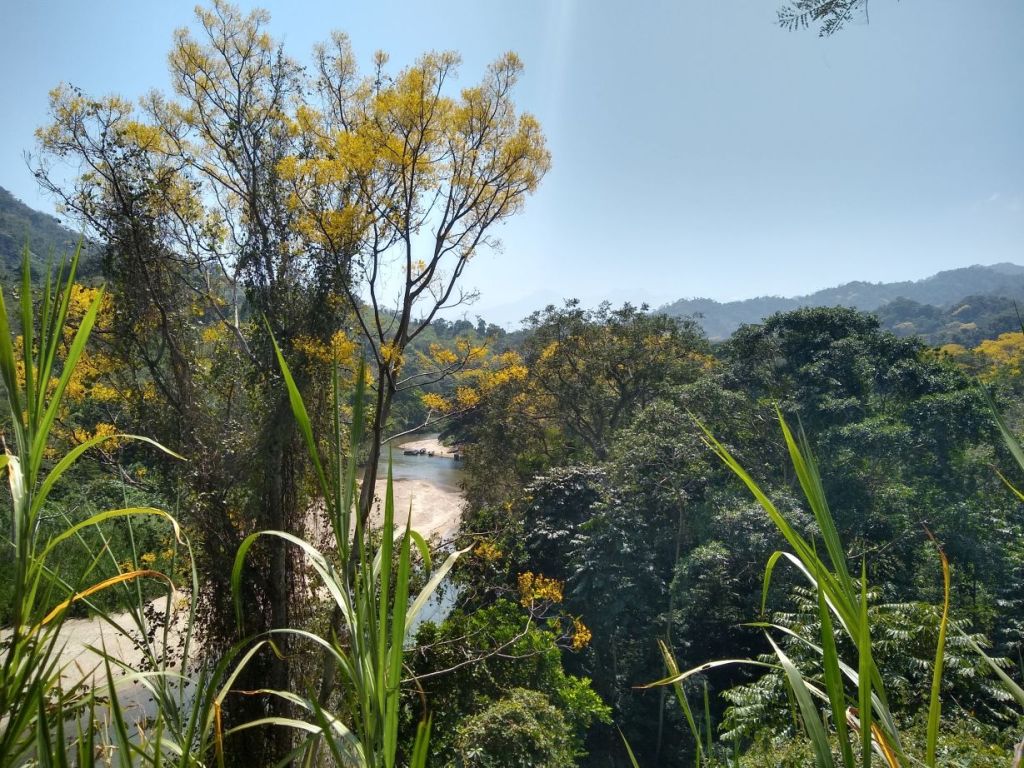
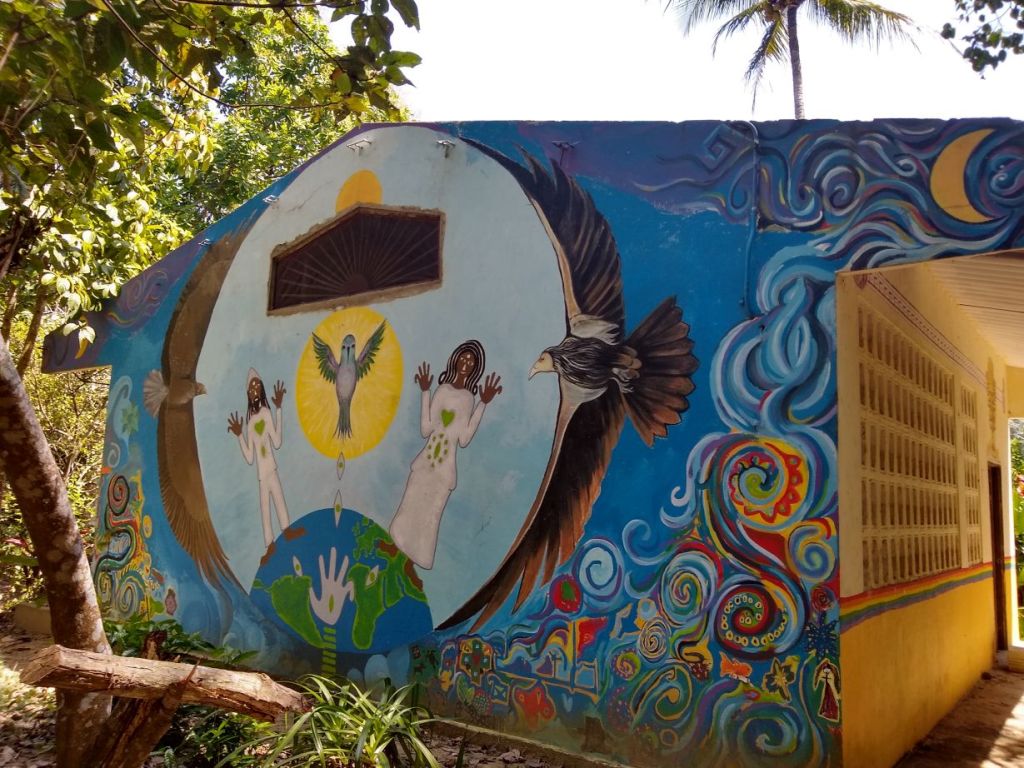
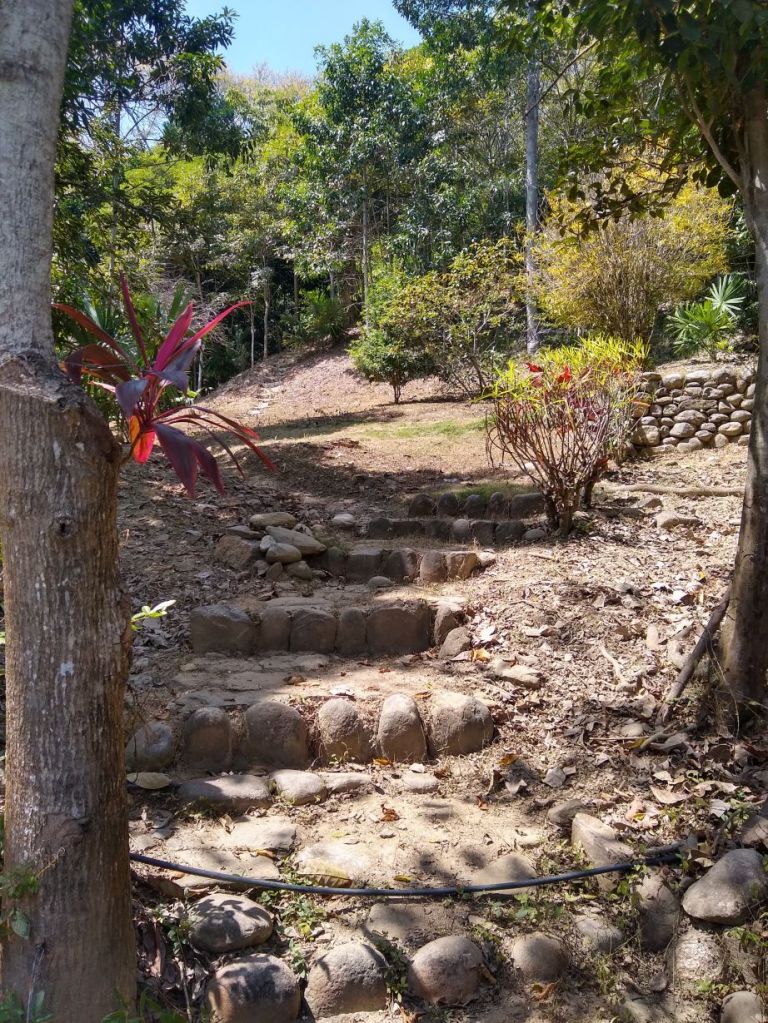
We hike past a colorfully painted school building, then past large terraced pastures to arrive at ancient stone steps leading up to the village ruins (oh and the eco-lodge that is here on the property). Actually, the eco-lodge is the reason why we even know about the village ruins. The man who owns the property bought it with the idea to open an eco-lodge. He had no idea about the ancient village ruins until he started excavating for the lodge. Surprise! So, after hiring experts and carefully excavating everything, he ended up with an archaeological and ecological site! Pretty wild story.
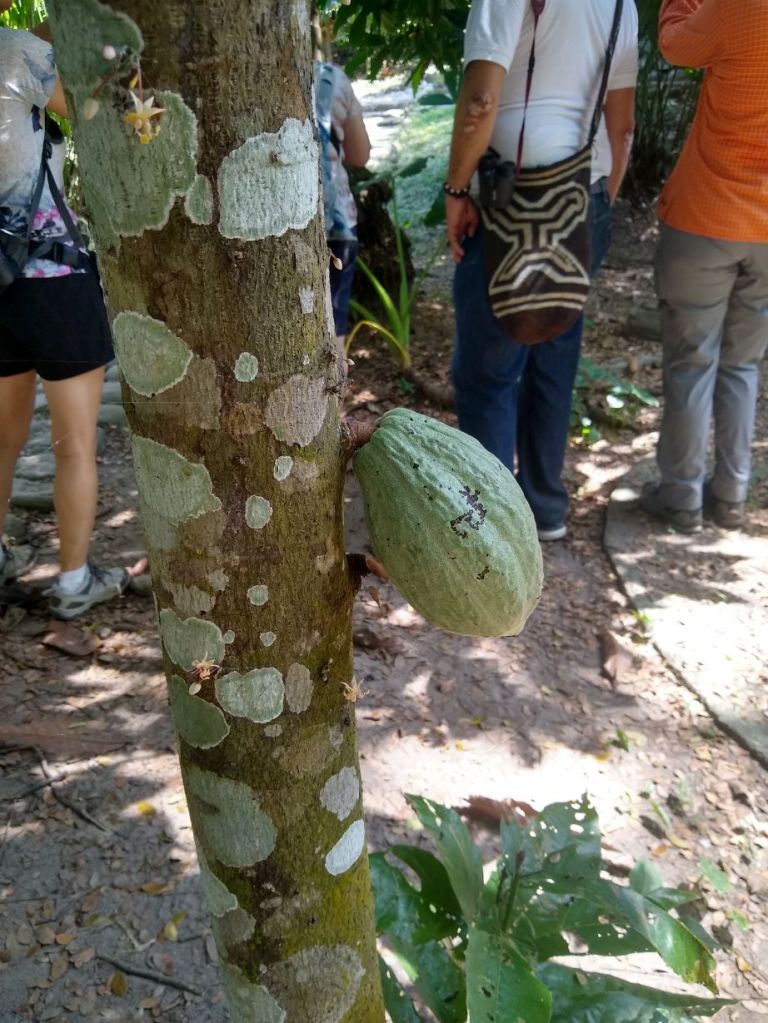
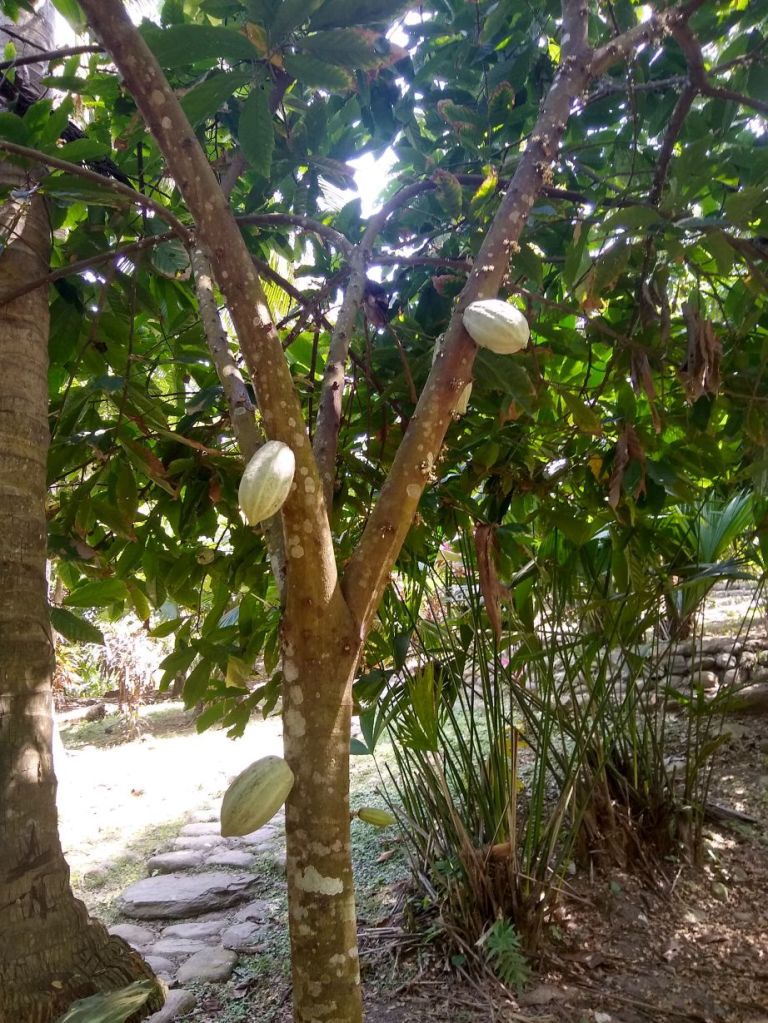
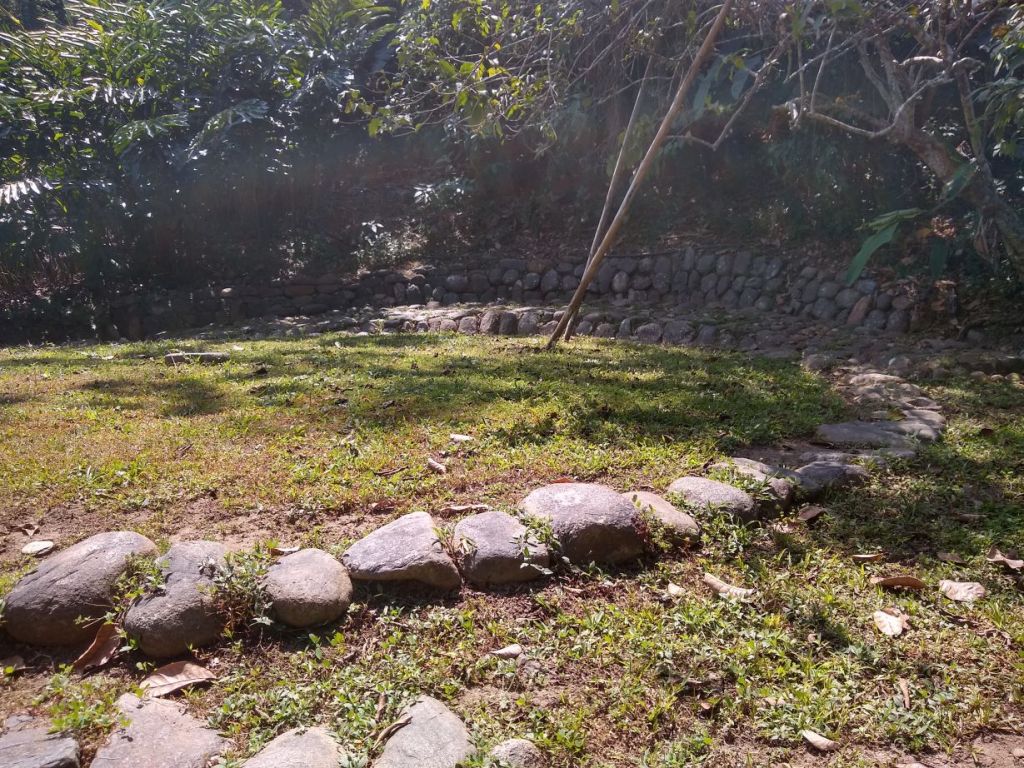
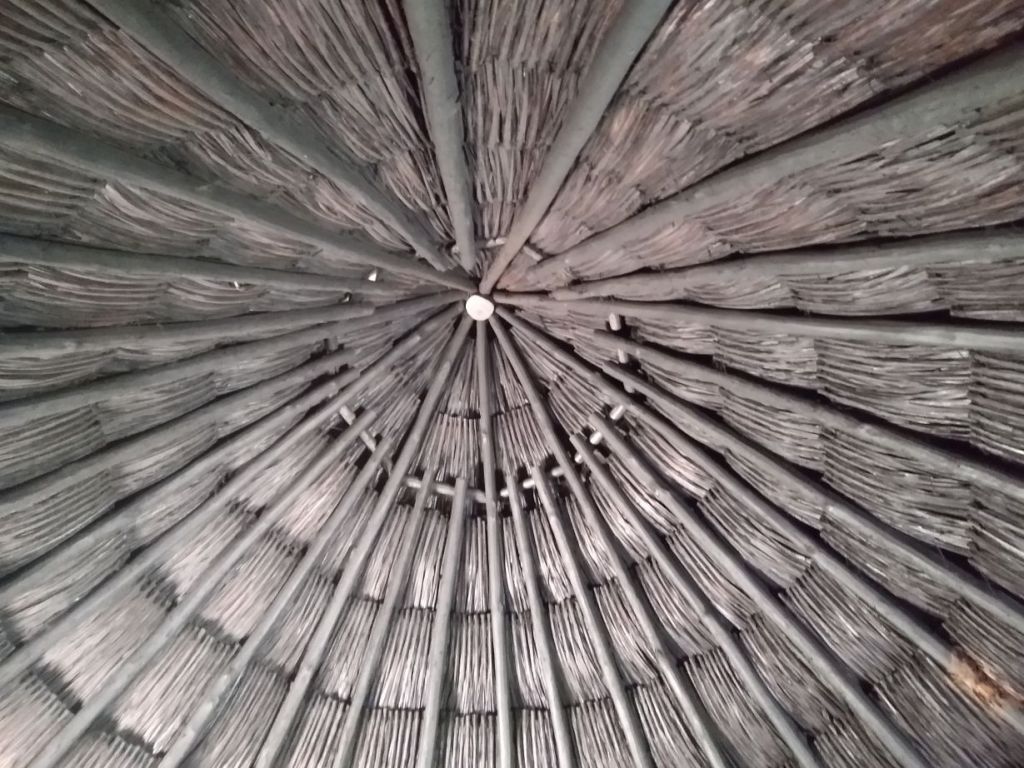
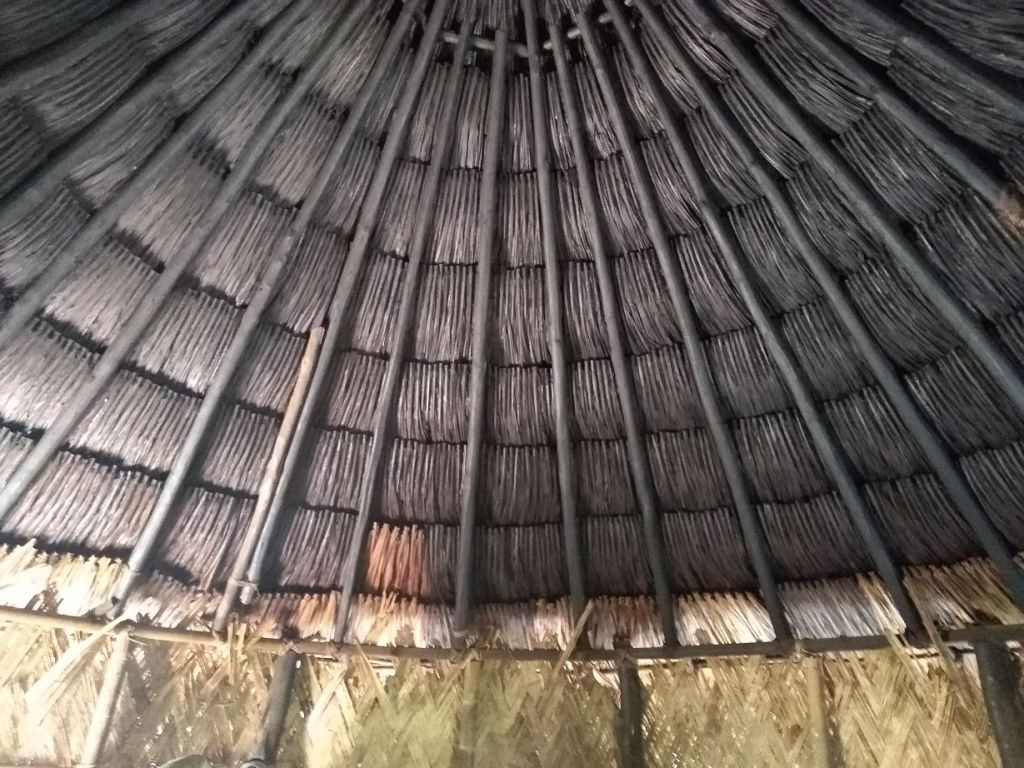
Arriving at the lodge, we turn right and follow a path , past a cacao tree with almost ripe seed pods, to a cleared circular area, almost like an ampitheater, where the village would hold ceremonies. Past the clearing is a recreation of a village hut, complete with round thatched roof and woven palm frond walls.
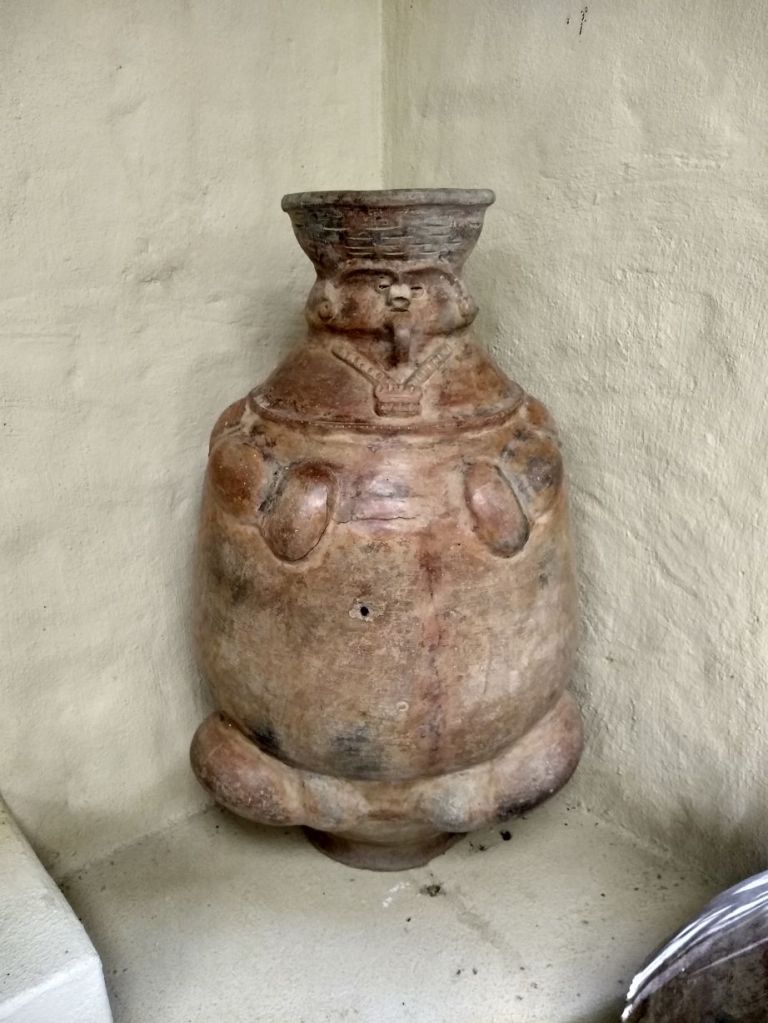
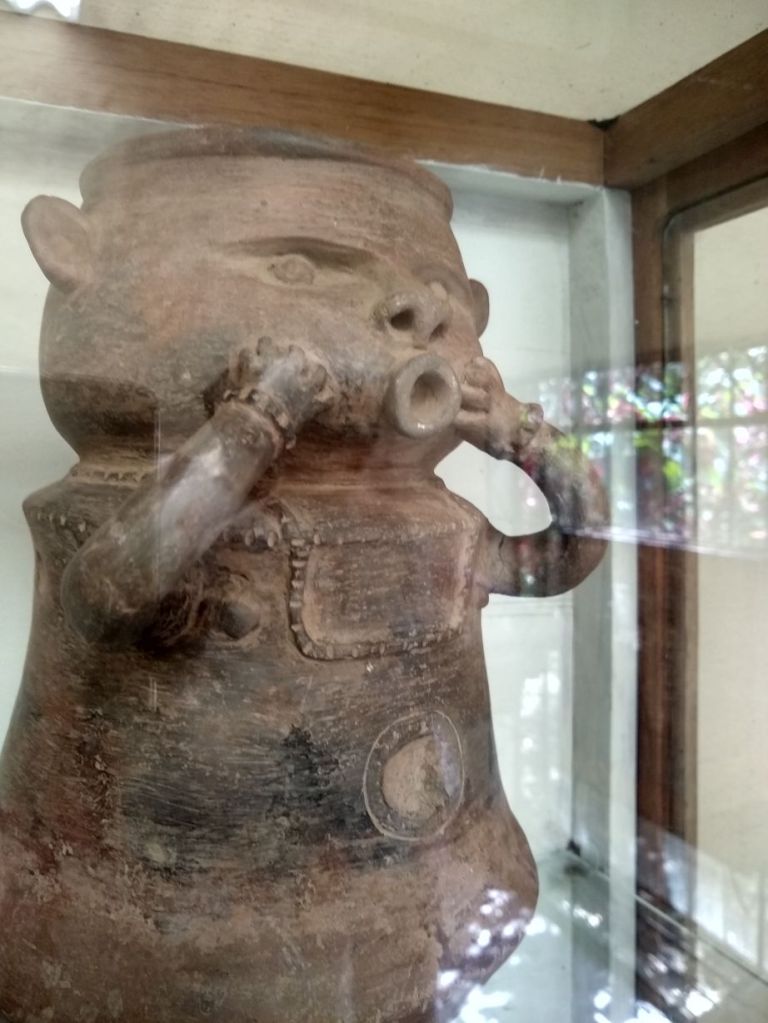
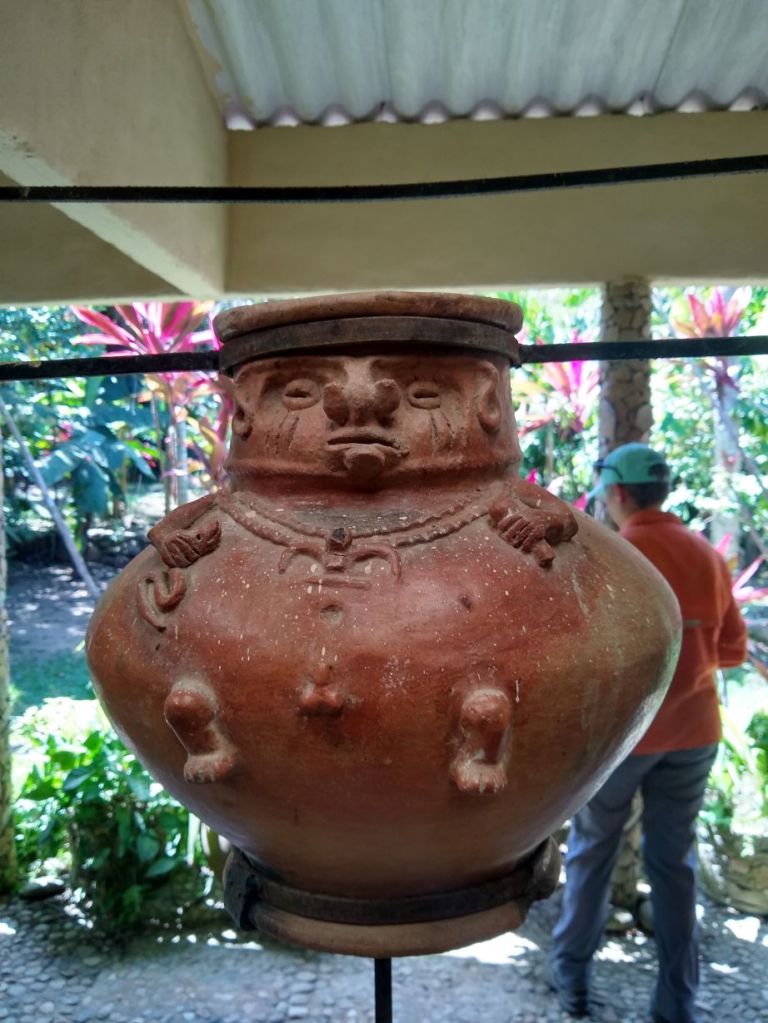
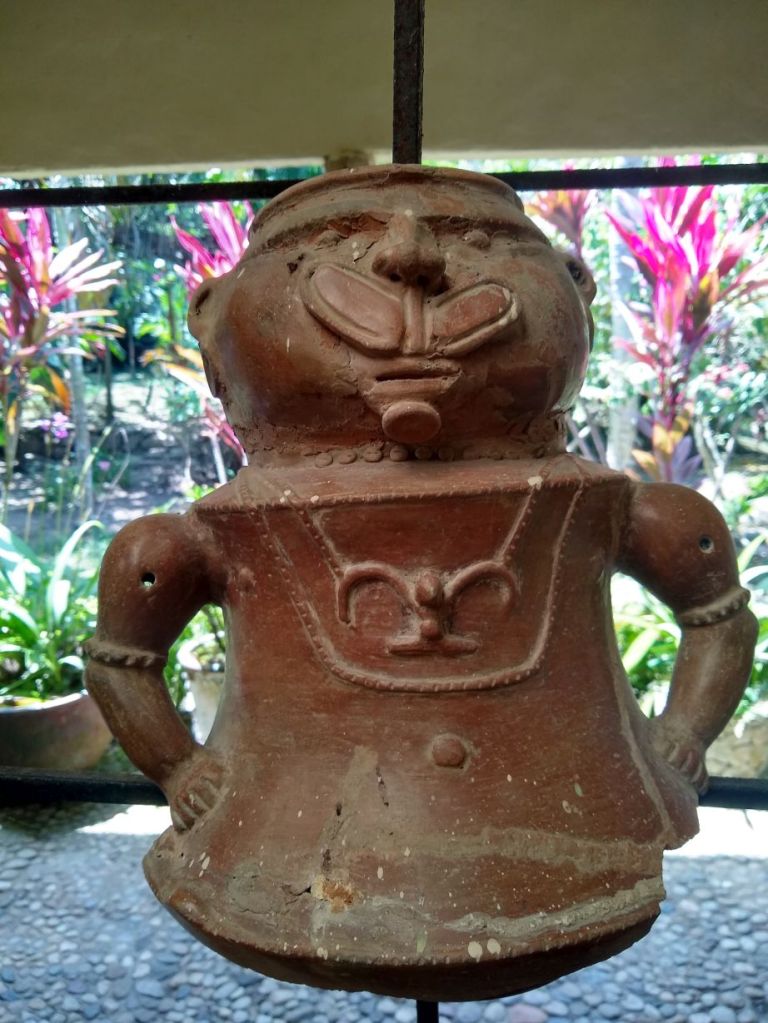
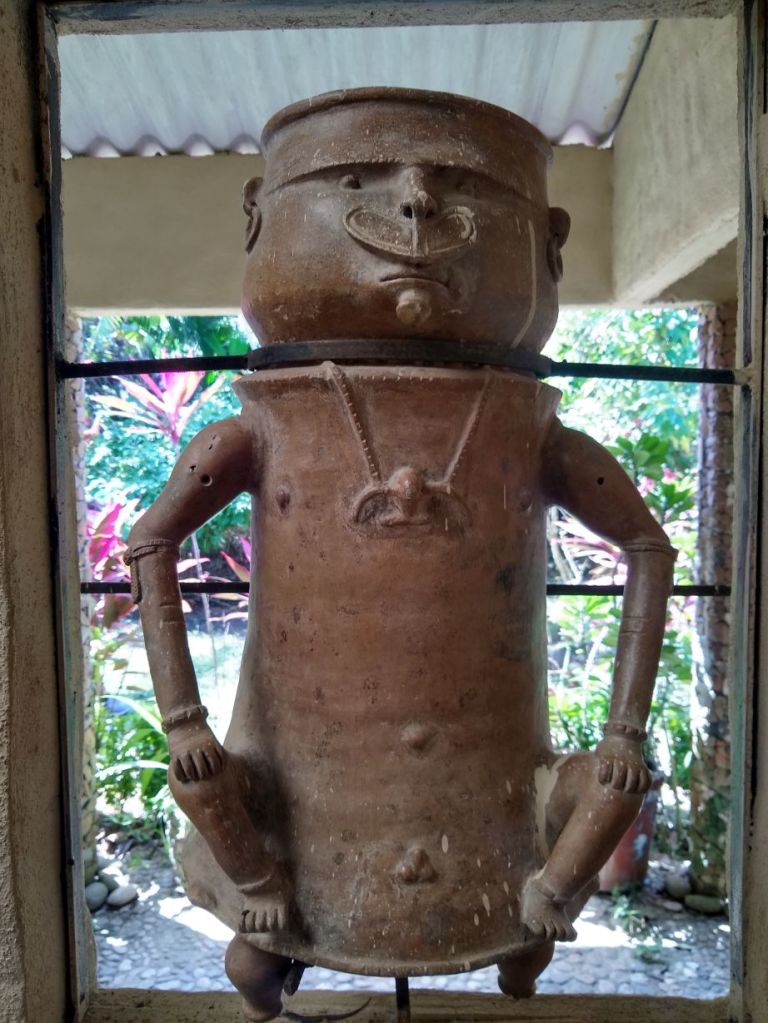
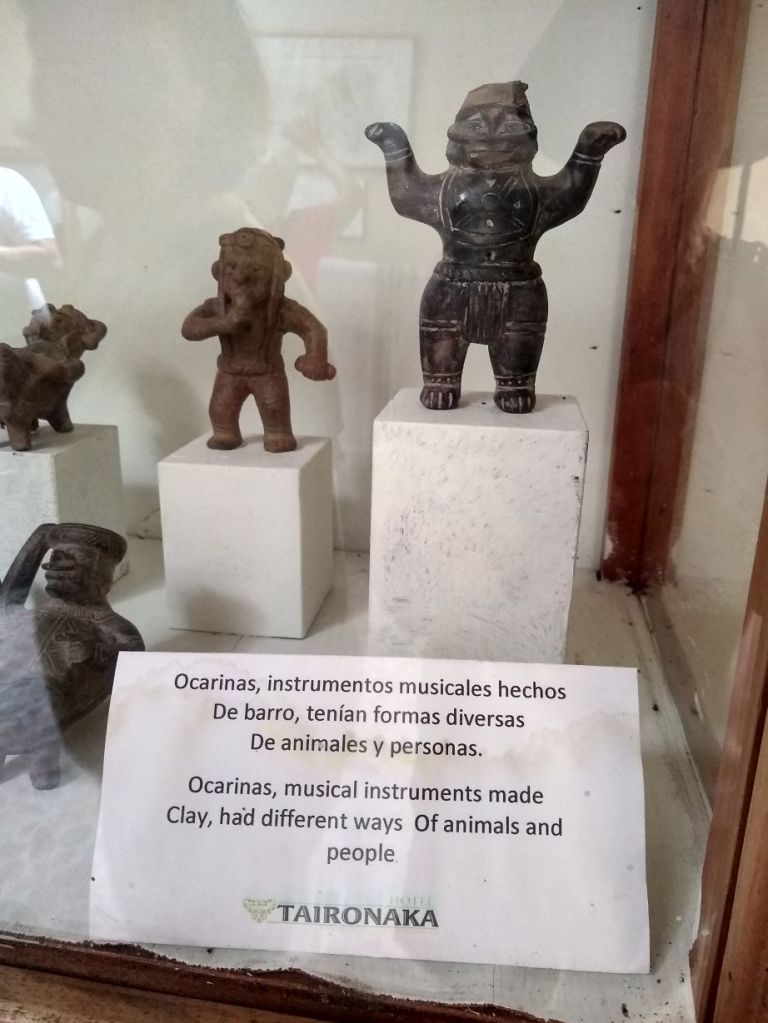
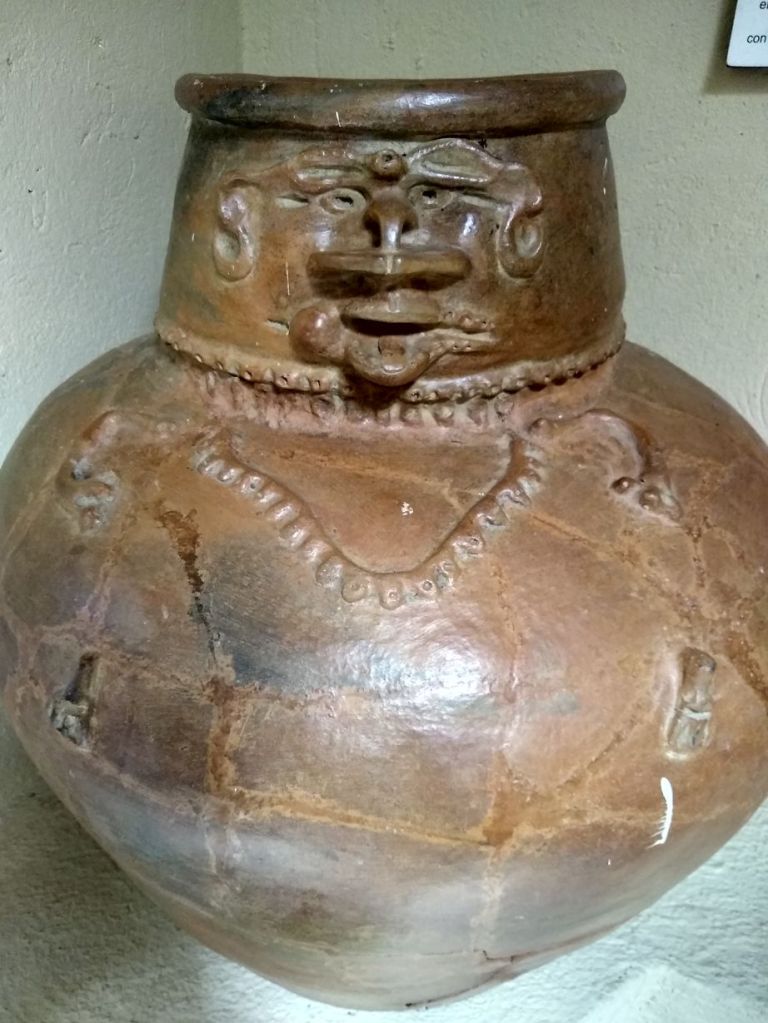
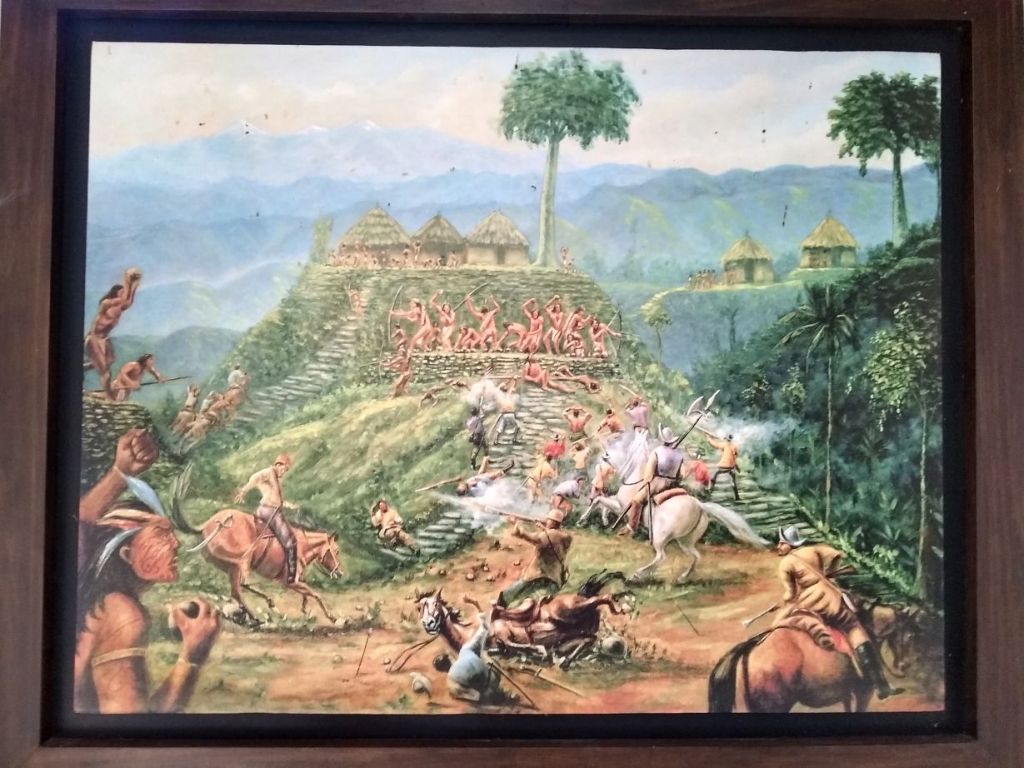
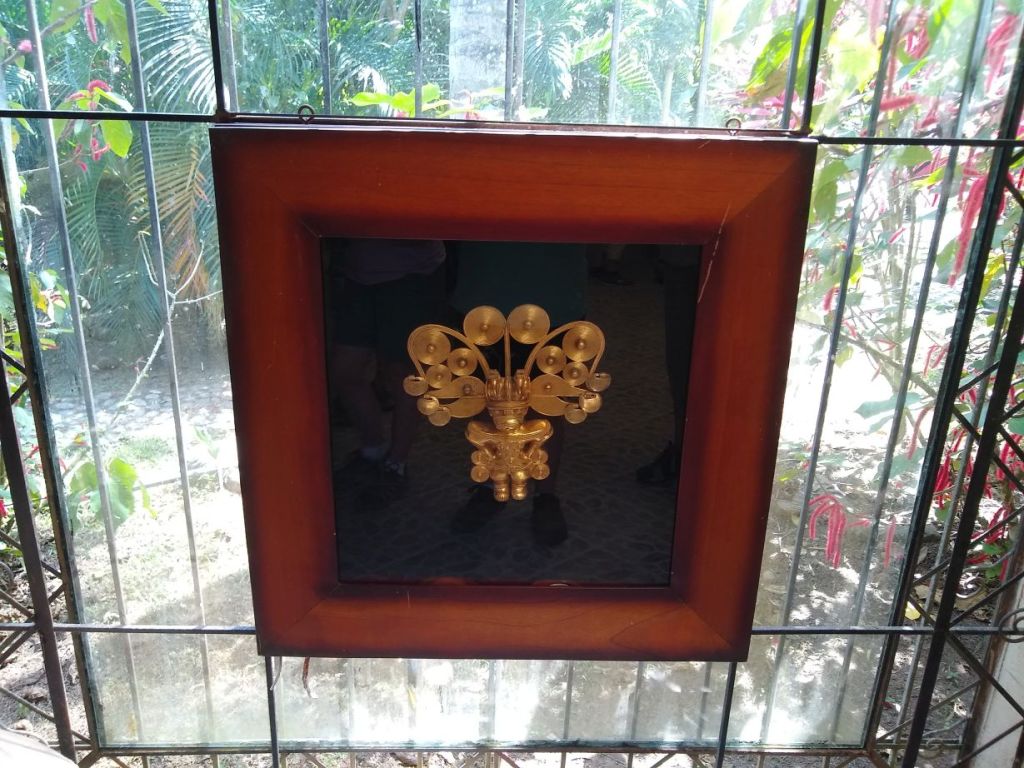
Backtracking toward the lodge and restaurant area, we stop at a little museum which has a startlingly amount of wonderful old pottery examples, including the little animal figurines used as whistles or flutes (very similar to the Vietnamese whistles we got at the pottery village outside Hoi An). You know I’m happy looking at all this great pottery work. There is also a wonderful, if not sad, painting depicting the Spanish invasion. It is sad because it accurately depicts the death and destruction caused by the invading forces. But it is wonderful in that it provides a very detail depiction of exactly what the village looked like all those years ago.
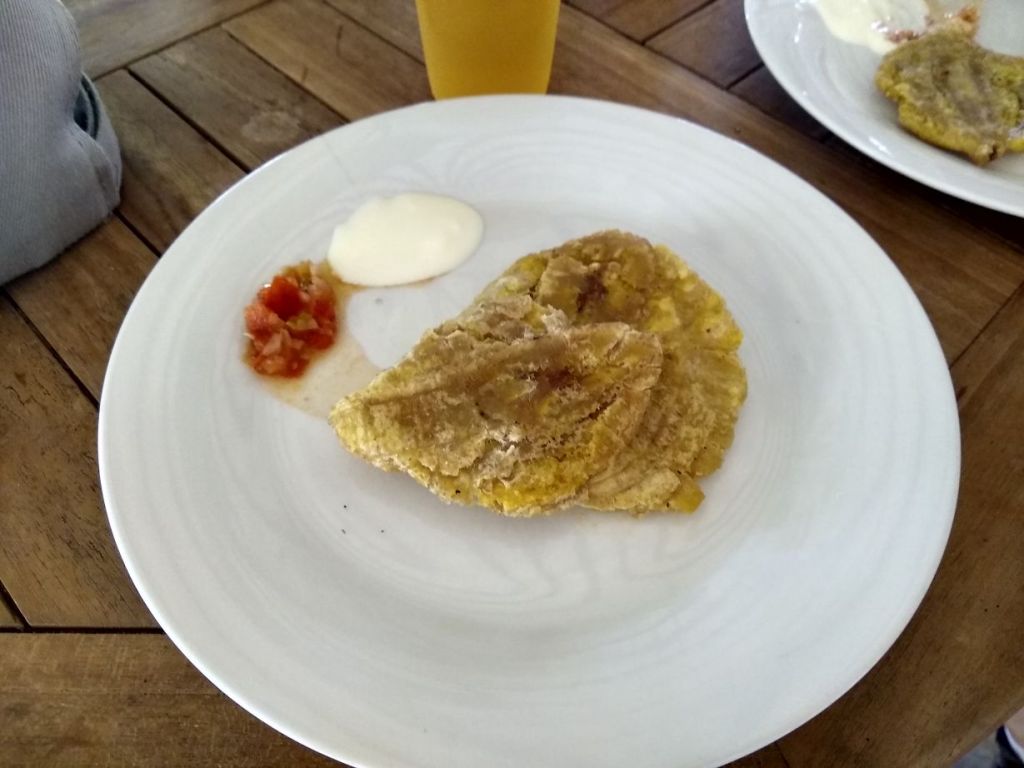
Once we are all done with the museum, Juan tells us we don’t have enough time for lunch, but we do have time to sample some snacks the hotel has made for us. We all pile into the circular open air restaurant terrace, co-mingling with another group to taste samples of Arepas (corn fritters) with a variety of sauces. There are too many people for the seating capacity, but we manage to find a table to share with some nice folks (from Germany and California) and spend a nice few minutes chatting and eating. And I mean a few. We aren’t even finished with out extra cost (and expensive!) beer (so expensive I only bought 1 to share between the 2 of us!) when Juan says, come on, let’s go – we’re going to the river.
Down to the river, into the river we’d dive, oh, down to the river…..Ok, so we didn’t dive in, but two of our fellow passengers did! The tour description said to bring your swim suit and towels if you wanted to swim. It was a lovely little beach area, for sure, but our time there was quite compressed as well, so they basically got in, had pictures taken then got right back out again to hike back to the bus sopping wet. Different strokes for different folks, as the saying goes!
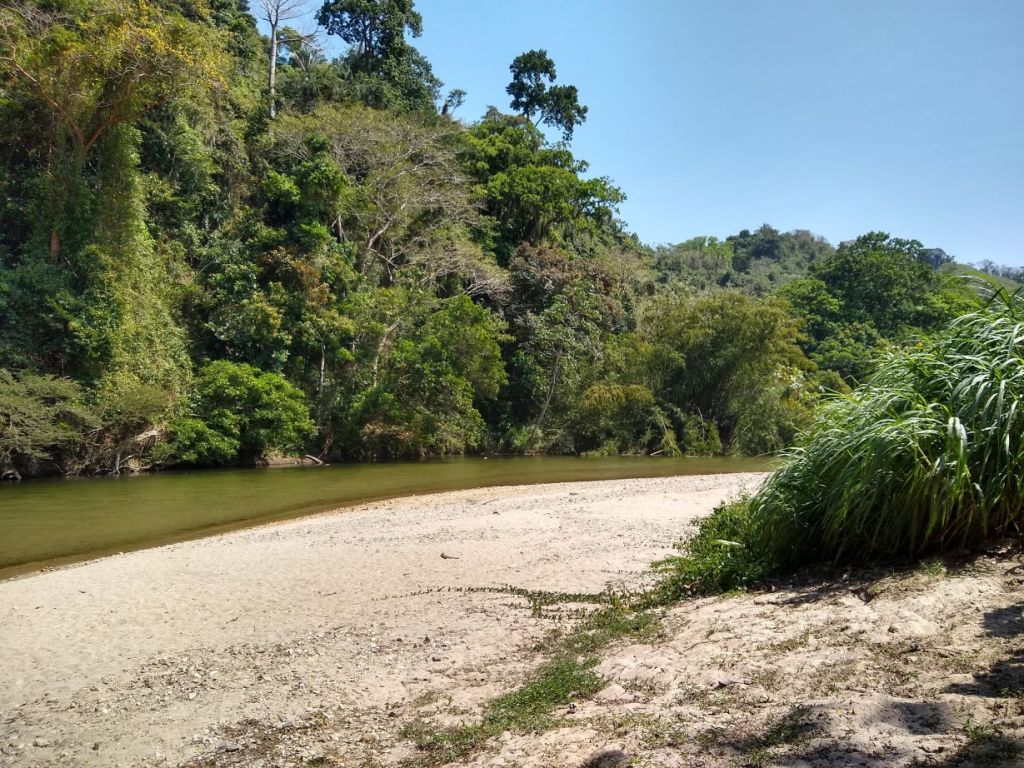
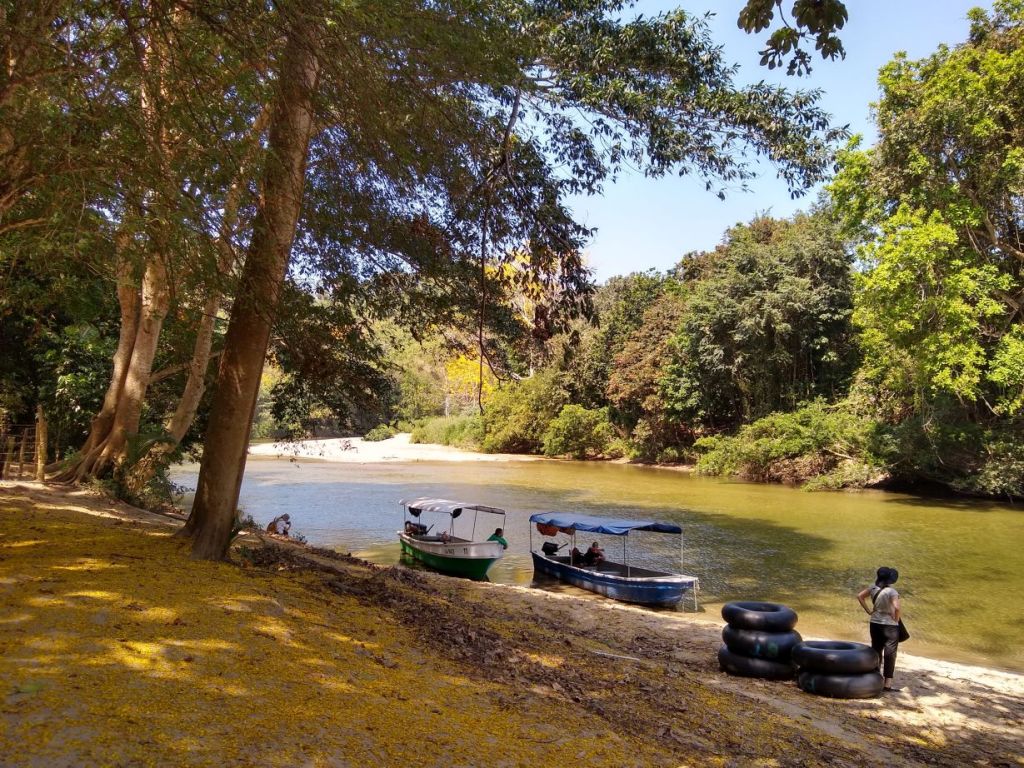
Back to the trail we went, wet-boys included, and back up the mountain we panted. Going back was way worse than coming in – we knew there was a steep stretch, but you don’t realize just how steep until you are in the middle of it, in 95 degrees and 90 percent humidity. Argh. Somehow, we all made it – which was seriously in doubt with a few of our fellow tour-mates. But make it we did, with a nice bottle of water as a reward back on the bus for our hour-long ride back to the ship. A slightly rushed, but very nice athletic and archeological day.
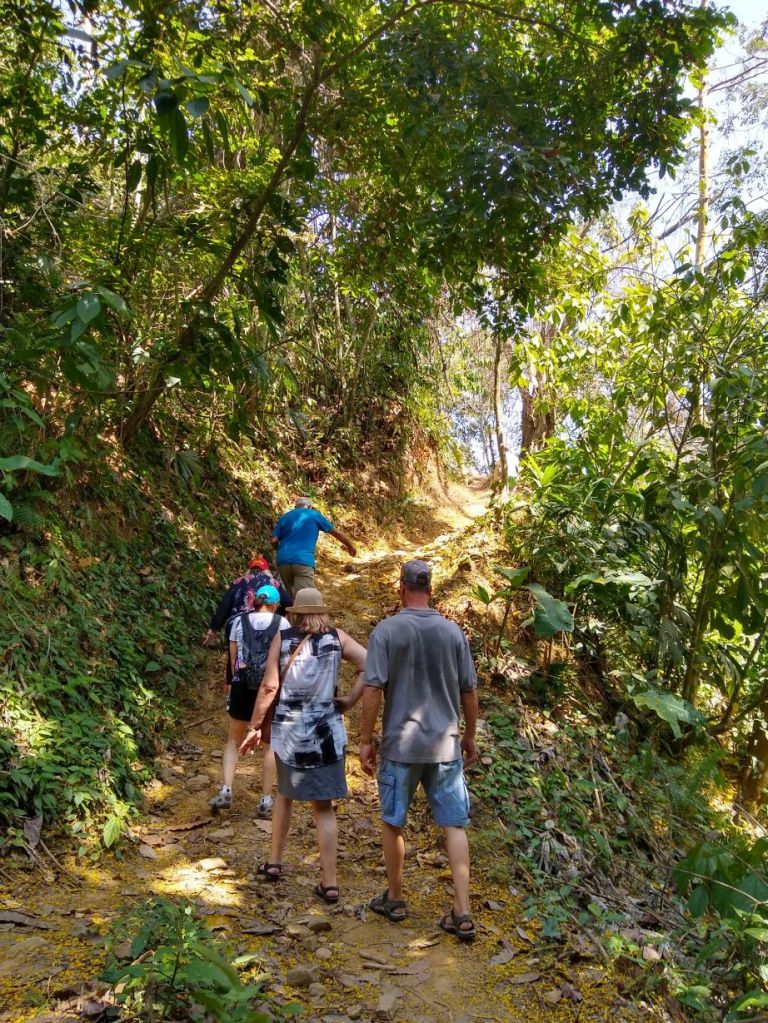
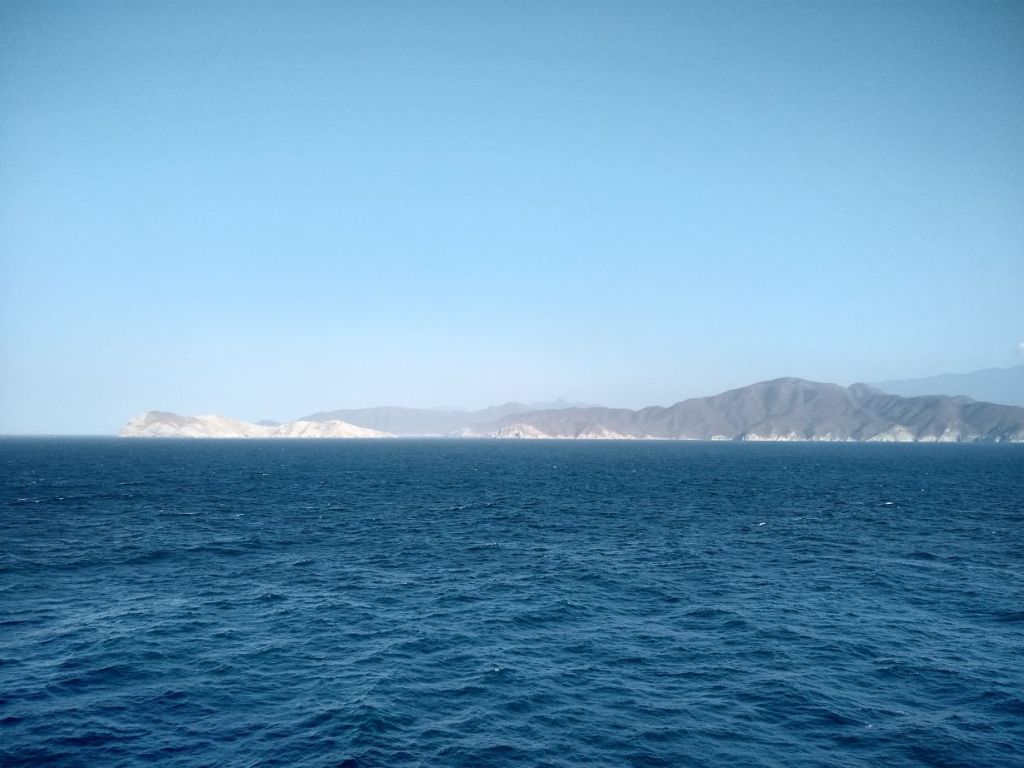
Back on the ship we immediately hit the showers. Oh pure joy. A/C and a nice refreshing shower. then sat outside, passing the lighthouse from the other side and watching the coast slip away before starting our evening routine.
 Andiamo