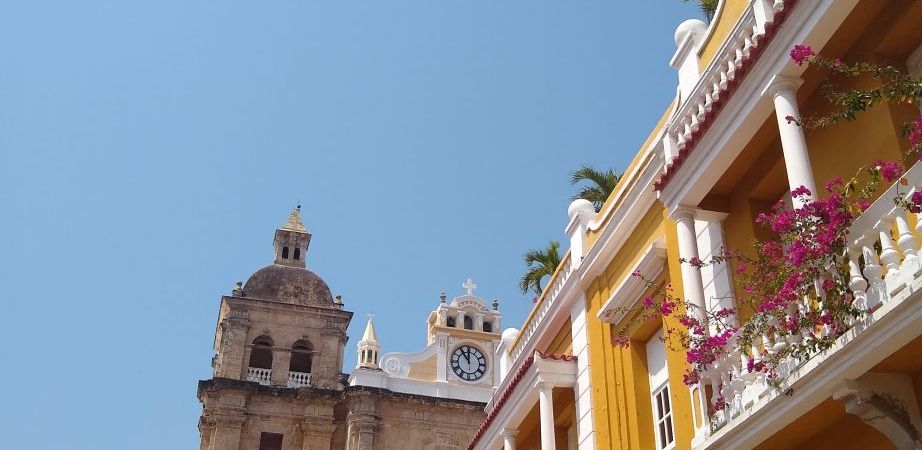
Once again we are taking a ship transfer into Cartagena, so once again, we are not counting this as an actual “tour” – LOL. Really, it is a great way to get into the old town of Cartagena – a sightseeing boat that takes us from the ship pier directly to the dock in the old town. And it is very inexpensive, so much so that we’ll get money back from our $50 tour credits. Win-win. The only potential challenge is the timing – the boat only comes back at 3:15pm, which may not be enough time for us to do everything we’ve planned, but we have other return options, so, we’ll figure it out.
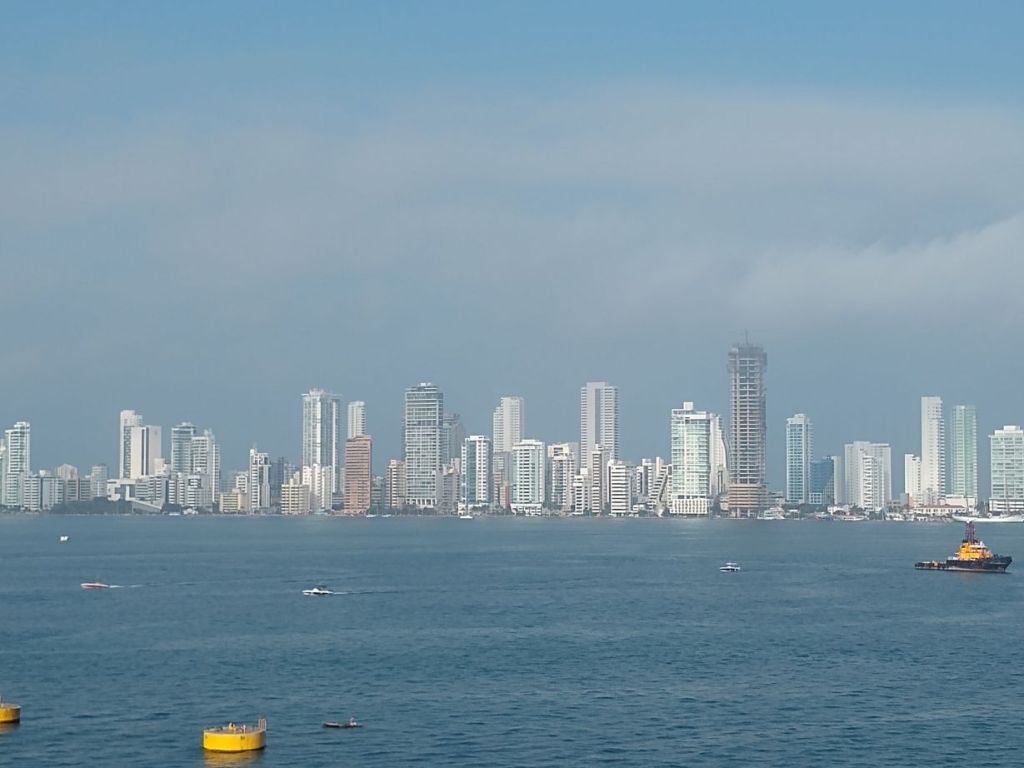
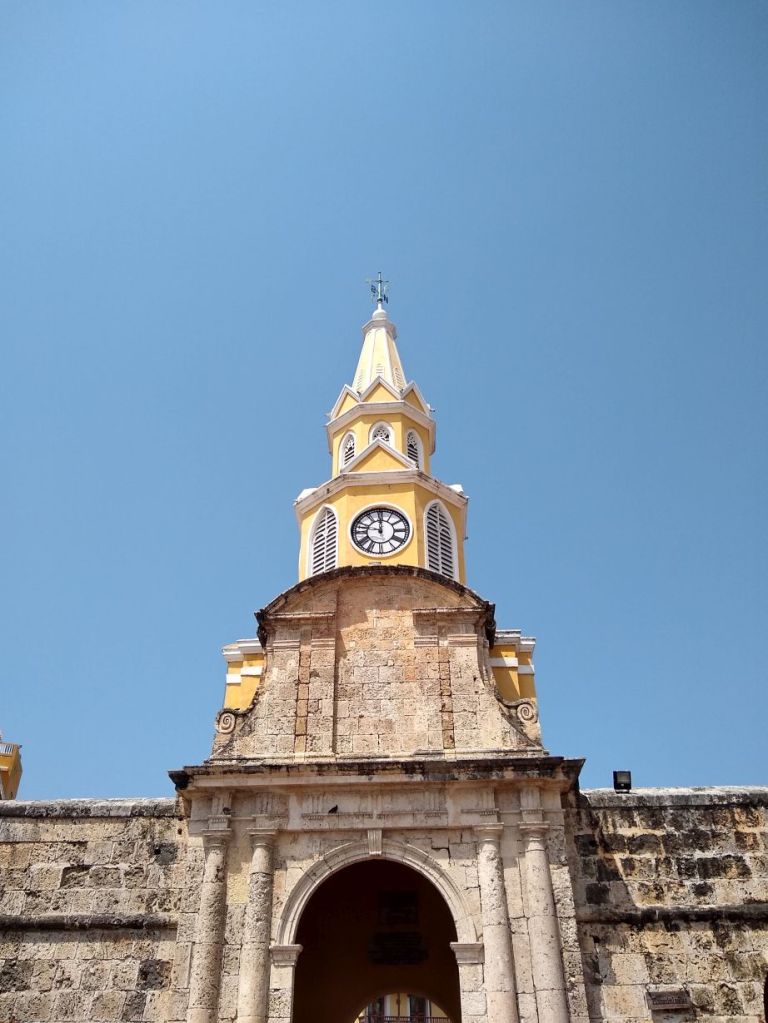
Our morning is at leisure, so we hit the gym and hang around the cabin enjoying the view of the new city skyline, until we line up on the pier for the boat around 11:00. After some confusion on how to line up (people really just don’t listen) we all manage to form a line, get our wrist bands to use as tickets and orderly make our way onto the ship. It is a quick 20 minute ride over to the city, during which we have a “cultural” show – which are really just 2 adorable dancers who sweat their way through some energetic dances. The boat deposits us right outside La Torre del Reloj, the clock tower gate, which is the perfect entrance – and introduction – to the Old Town, which is one of the best preserved examples colonial architecture in the Americas.
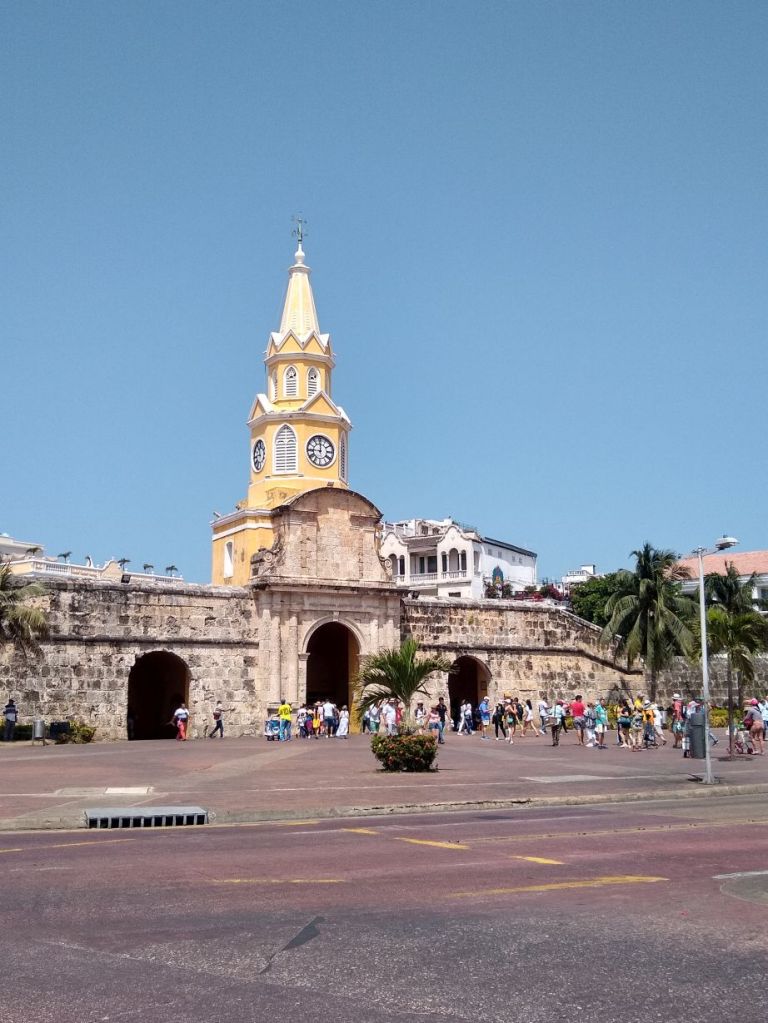
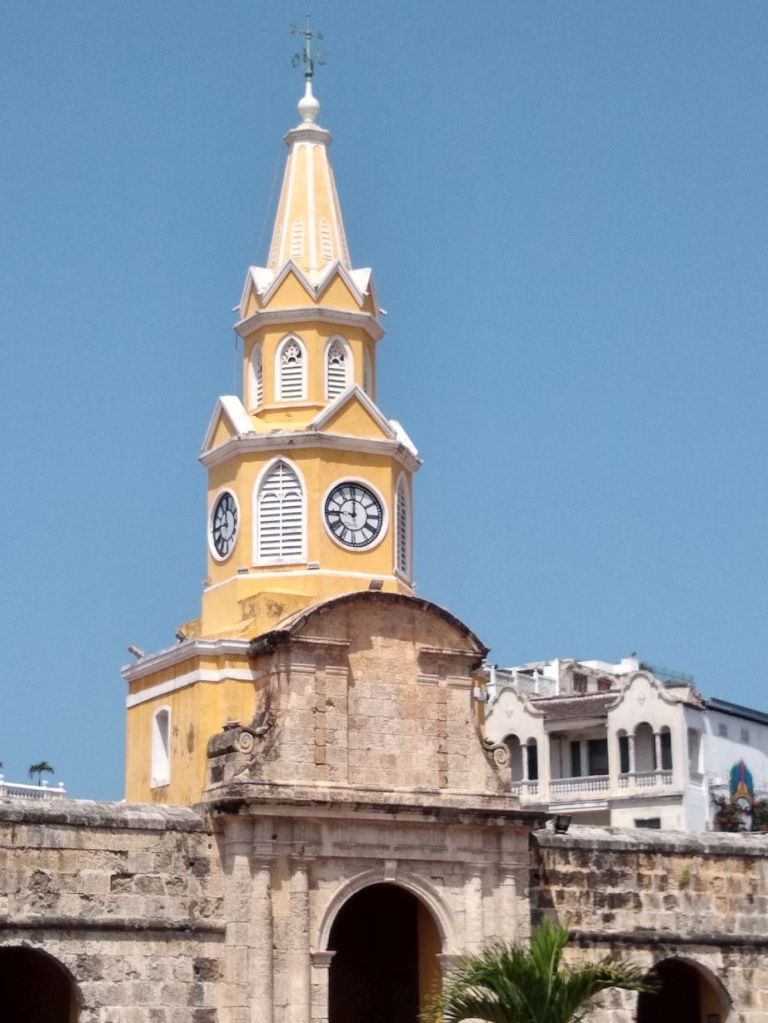
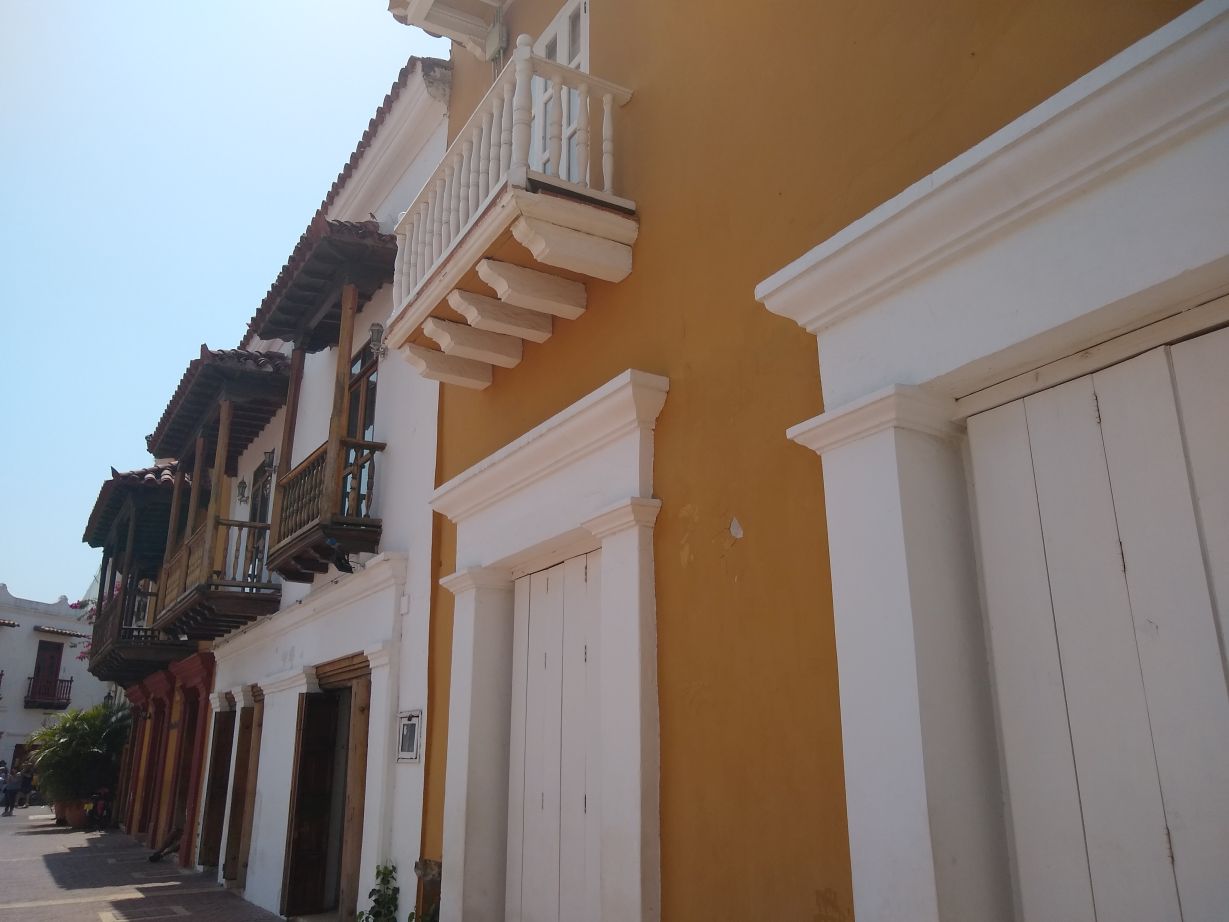
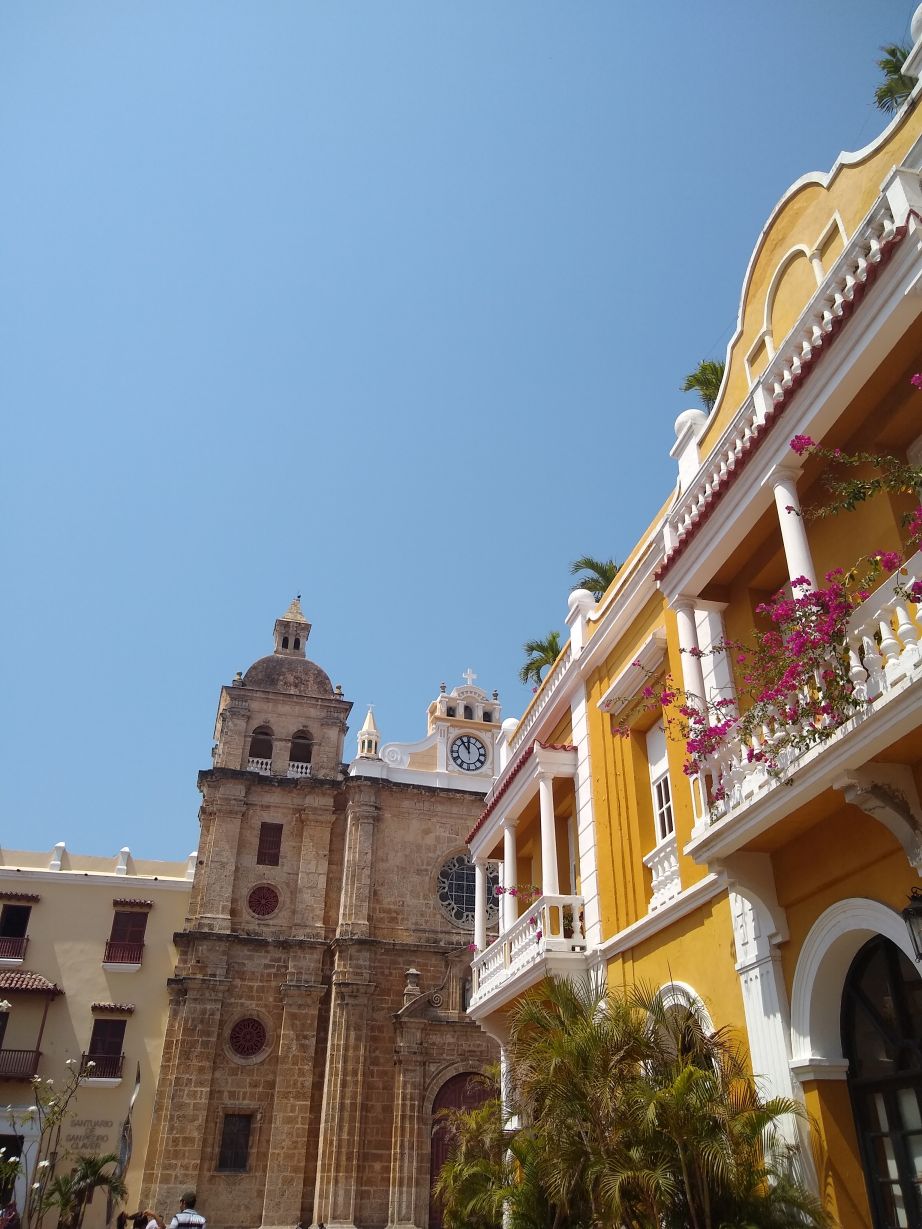
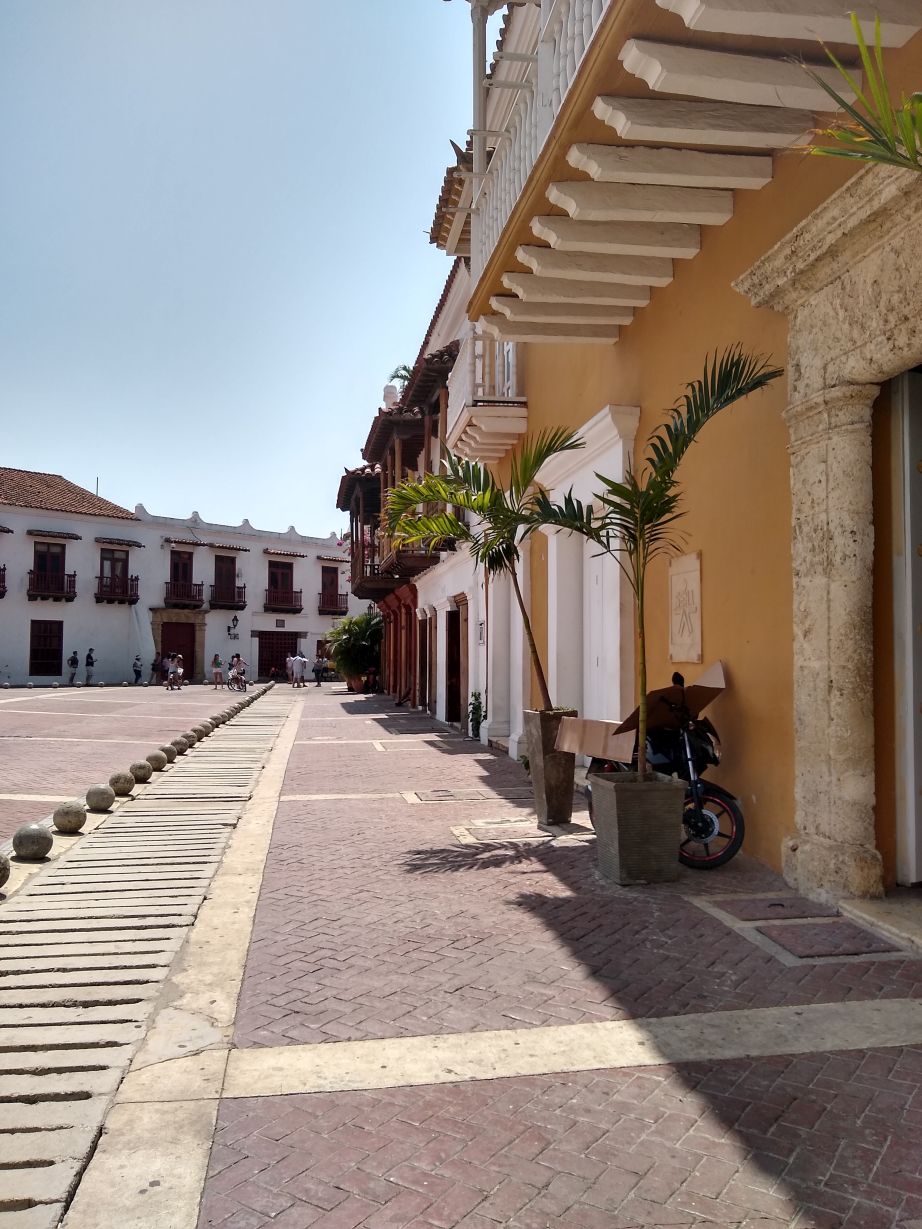
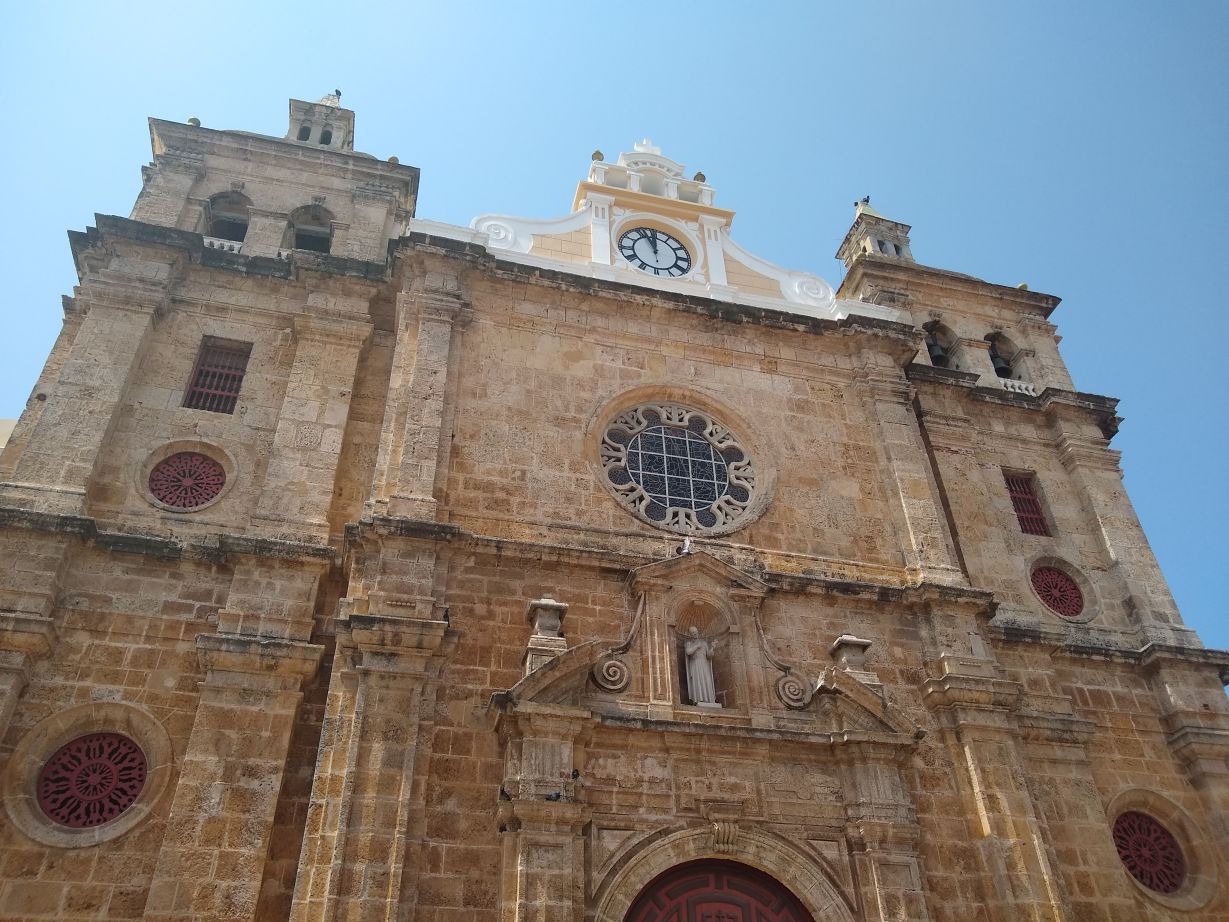
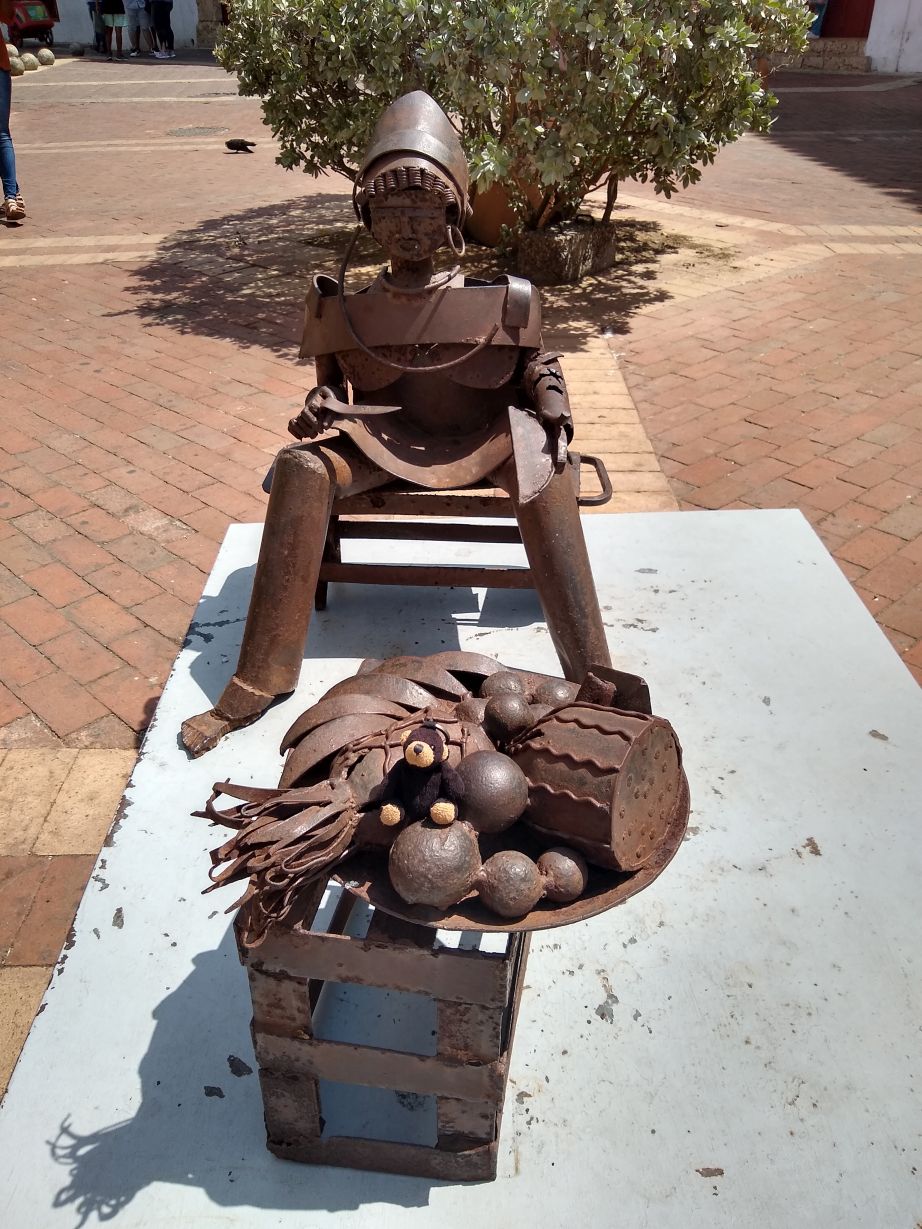
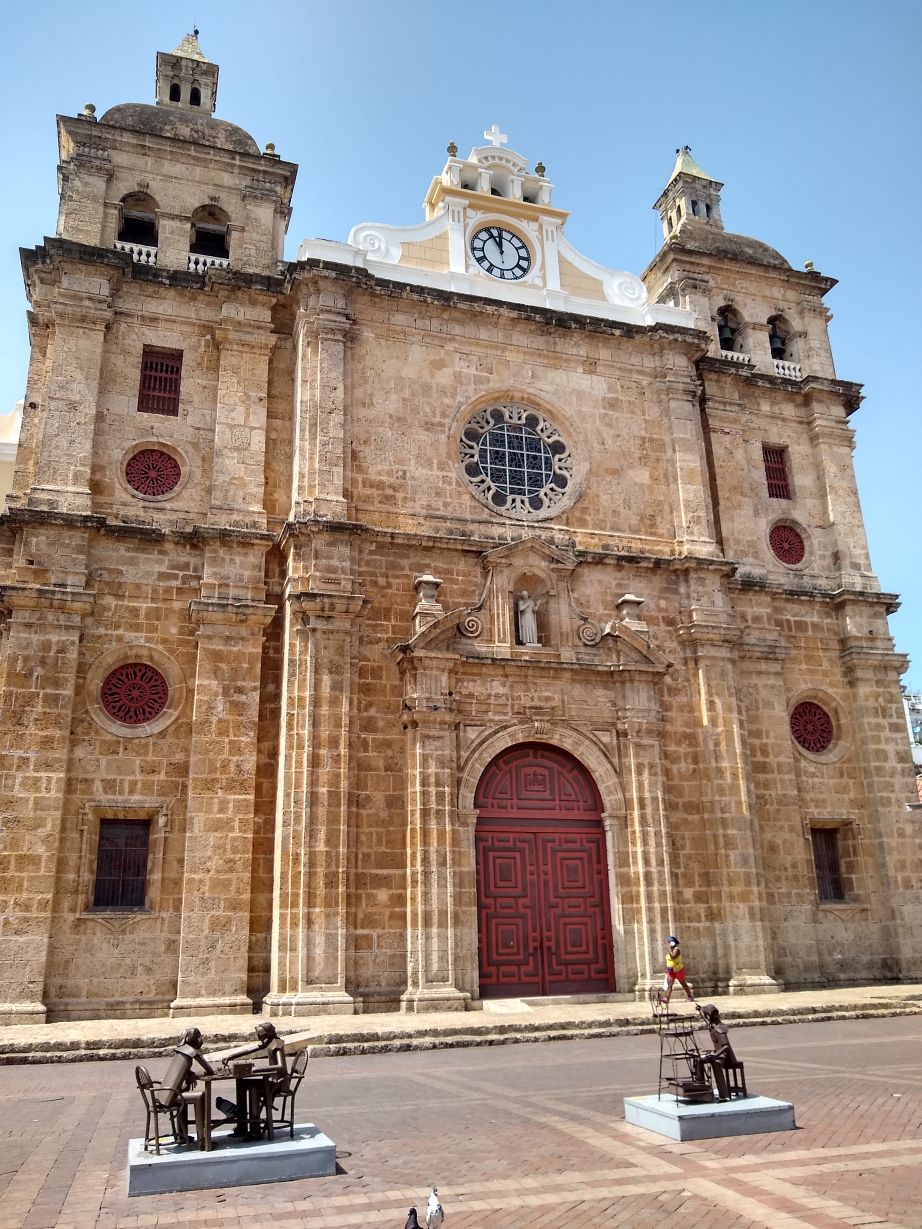
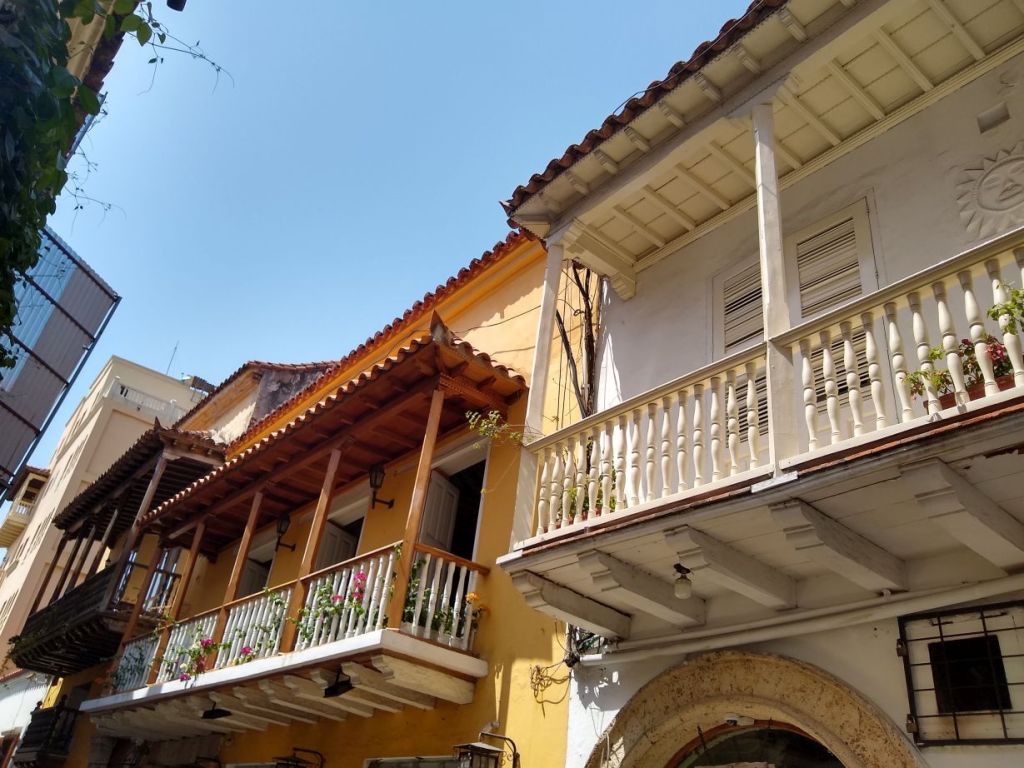
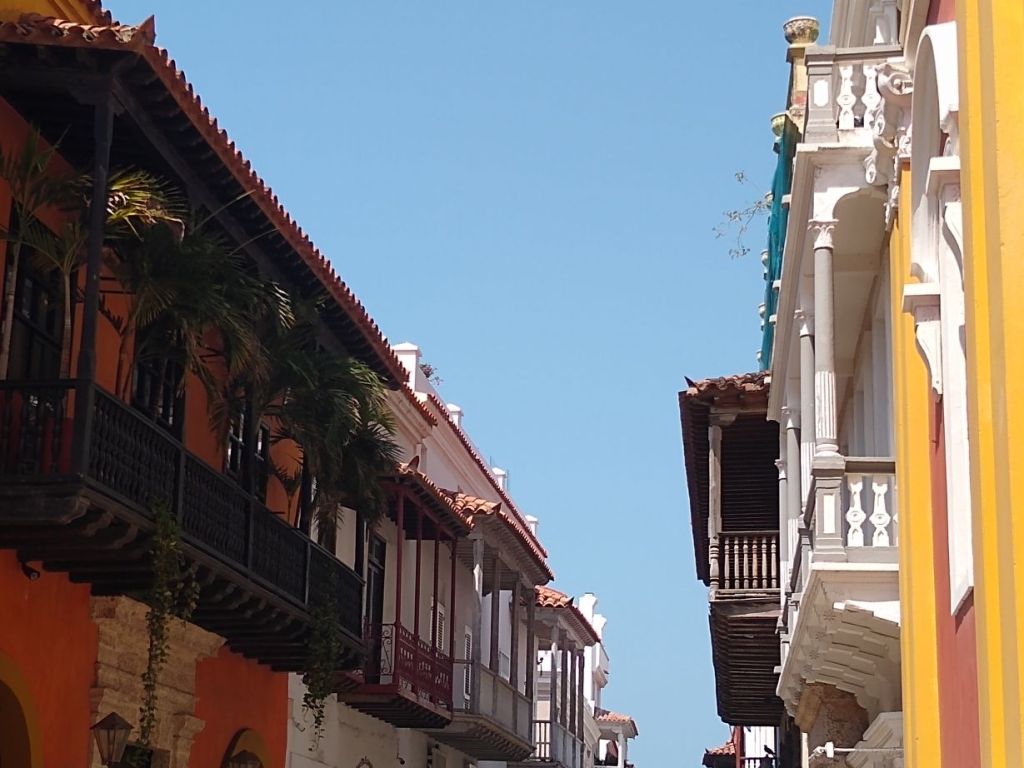
From the gate, we begin our meandering, heading first to the Plaza de la Aduana, a large pie-shaped plaza that is lined with various colonial architectural styles. All colorful, all pretty bright colors, gleaming in the hot almost-noon day sun. There are lovely wooden balconies, lots of flowering plants, some really great ironwork sculptures and a beautiful stone church from the 1500’s, the Iglesia de San Pedro Claver.
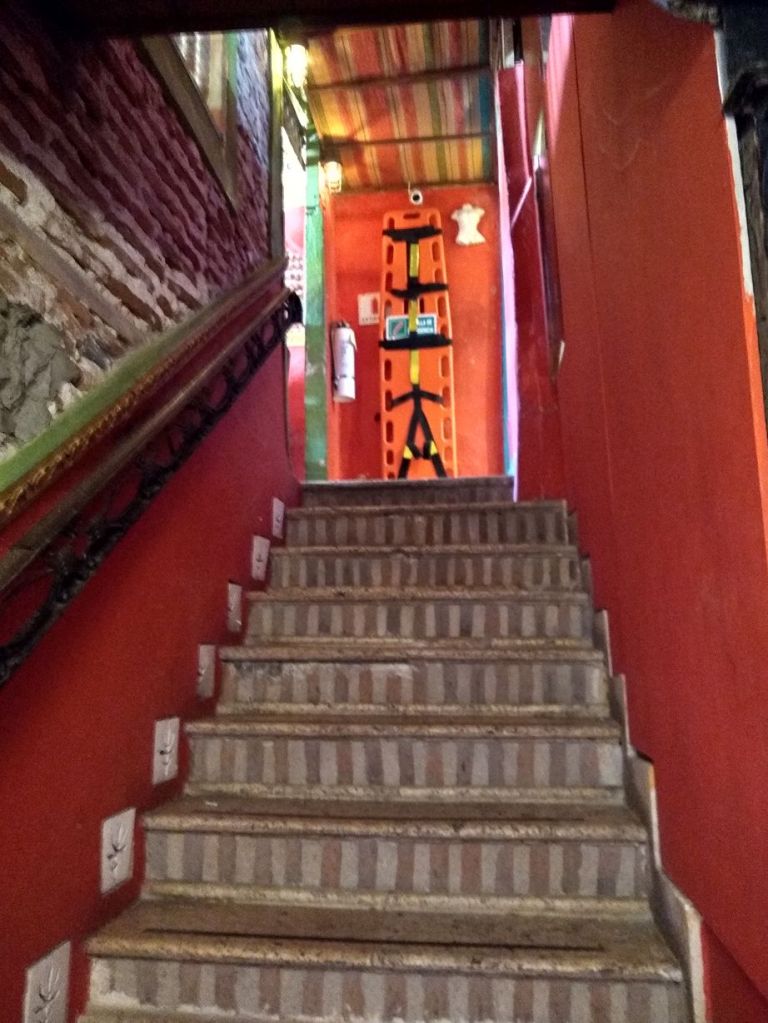
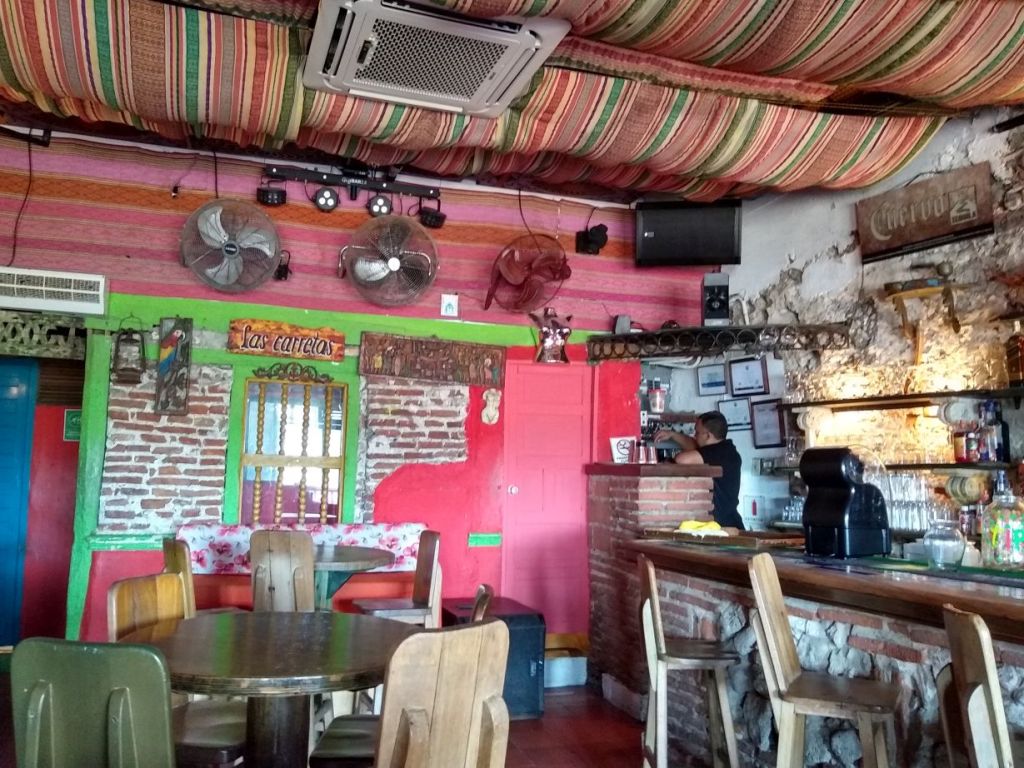
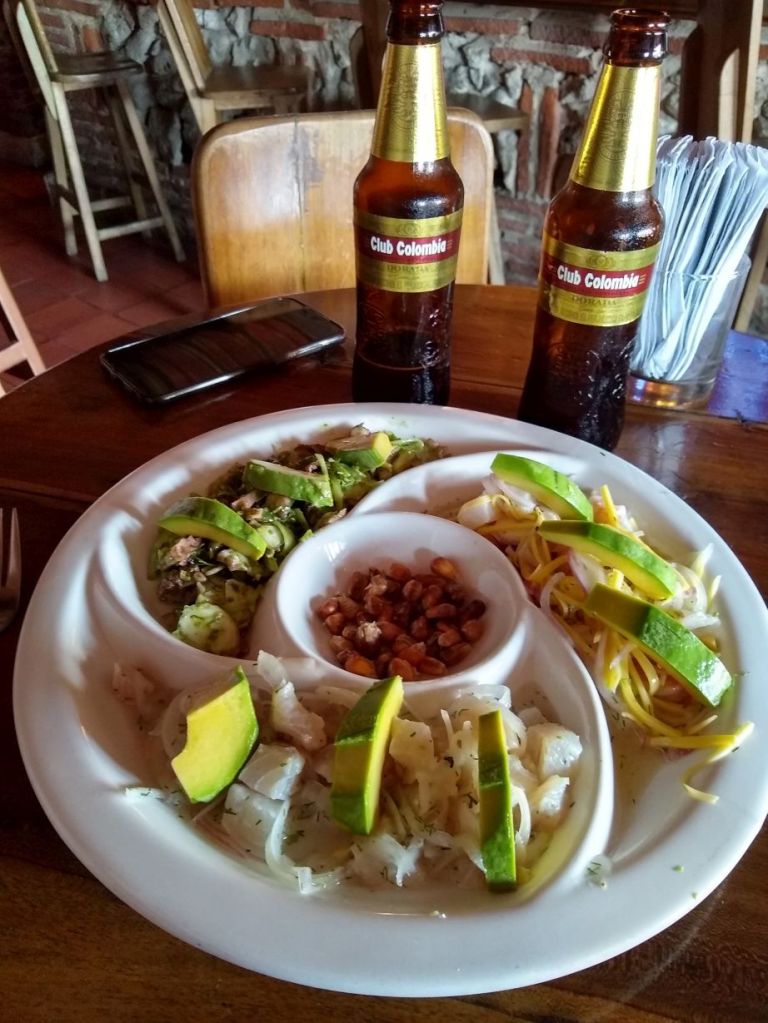
About 20 minutes of wandering around in the heat makes us thirsty. As it is almost noon by now, we begin to look for a place to drink…and eat. The one restaurant I had read about doesn’t seem to be in business, or at least I can’t find it on Google maps, so we go for what’s easily at hand – Cancha Cevicheria (Peruvian, yes, not Colombian, but how can we refuse ceviche?), a few minutes walk from Plaza de la Aduana. Up the very colorful stairs we find an equally colorful, lovely small open air bar/dining area, where we plop down at a high top table, order a couple Club Colombia beers and the large combo cerviche platter and sit back and enjoy. The cerviche platter is excellent, just the right amount and a fantastic mix of fish, with tons of avocado (yum) and…finally…corn nuts! If we can’t find them in the grocery store, at least we can get them in a restaurant. Another beer to share, and we are good to go for our afternoon touring.
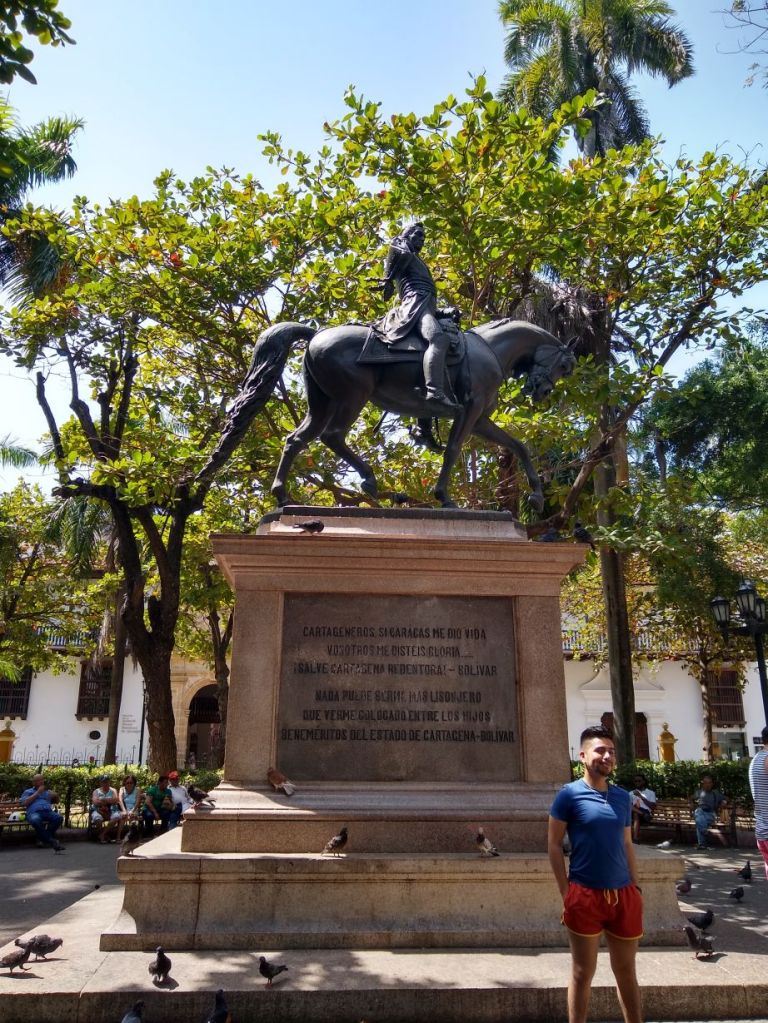
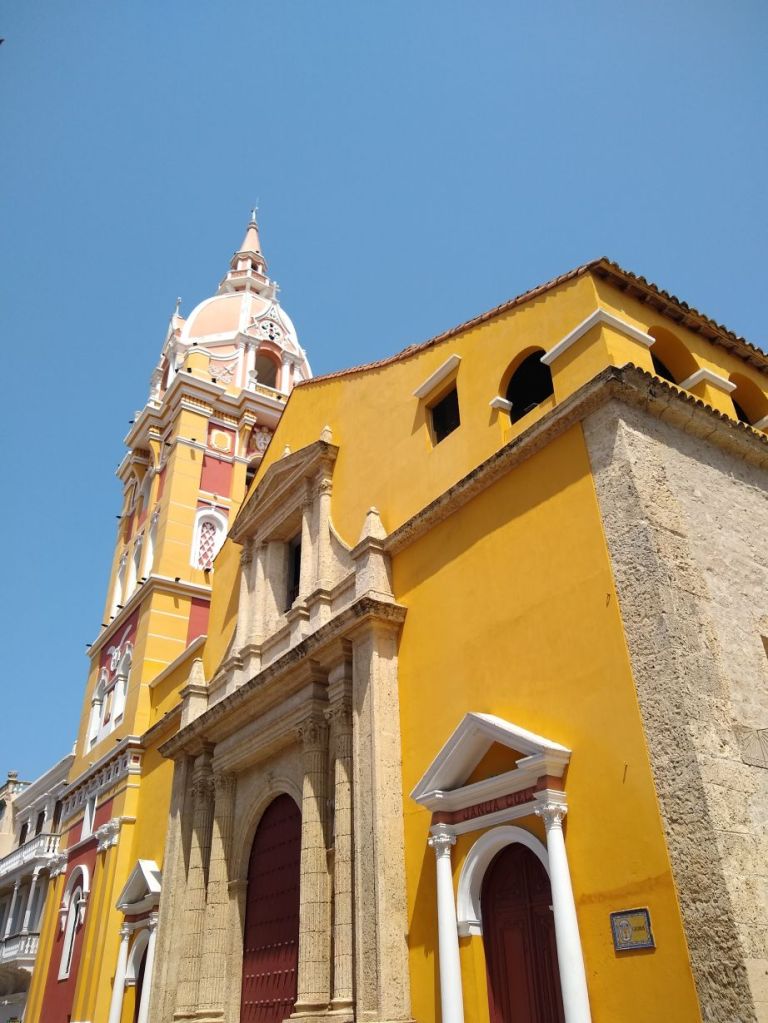
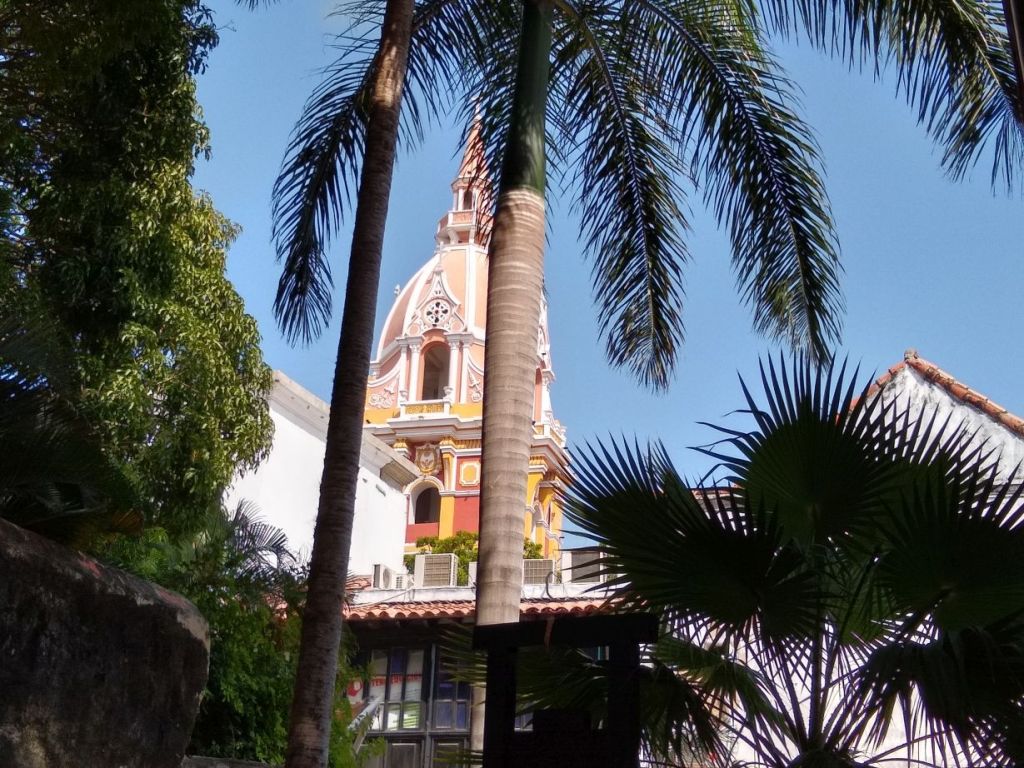
Back out onto the blistering streets we go, hugging buildings to keep in the shade as we walk through the center of Old Town. There are street vendors selling all sorts of souvenirs, but none are overly aggressive as they were the first time we were here (oh so many years ago). Guess that’s what a booming tourist economy will do for tourist dependent vendors. Makes for a much calmer visit, and we are certainly not complaining. Makes it much easier to wander the streets stopping here and there to take pictures of the gorgeous buildings with their vibrant colors and pretty iron and wooden balconies. We make it to Bolivar Plaza, take a picture of his statue, then continue on to the Catedral de Santa Catalina de Alejandria, which isn’t open to visitors currently but is still very picturesque from the outside.
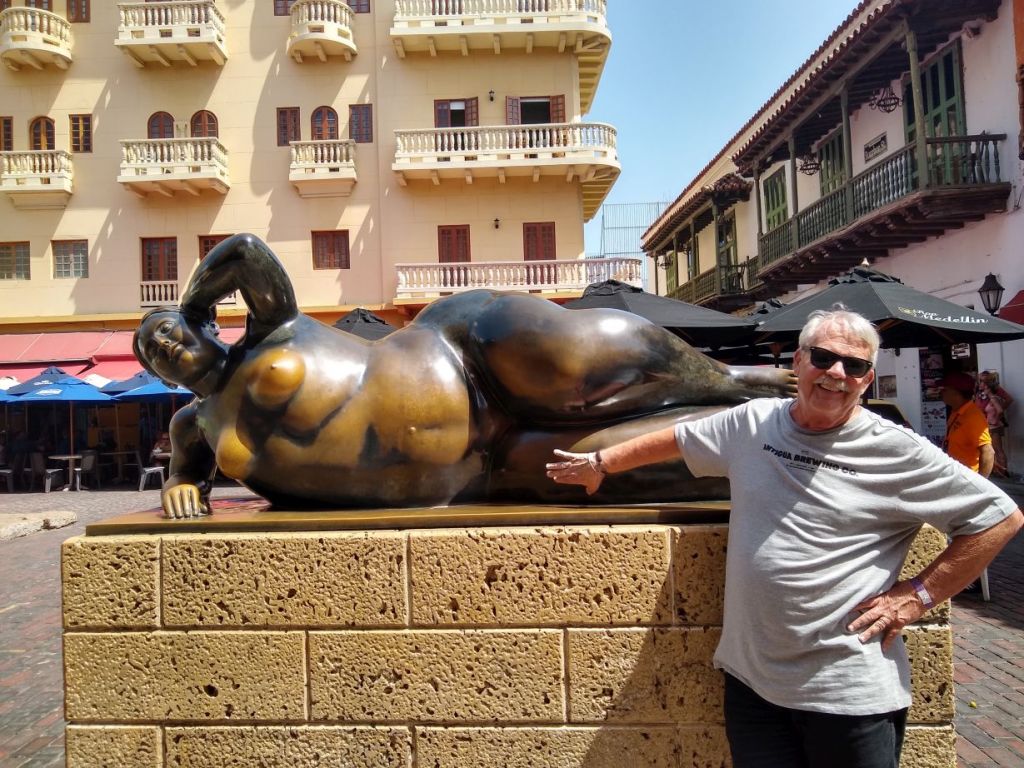
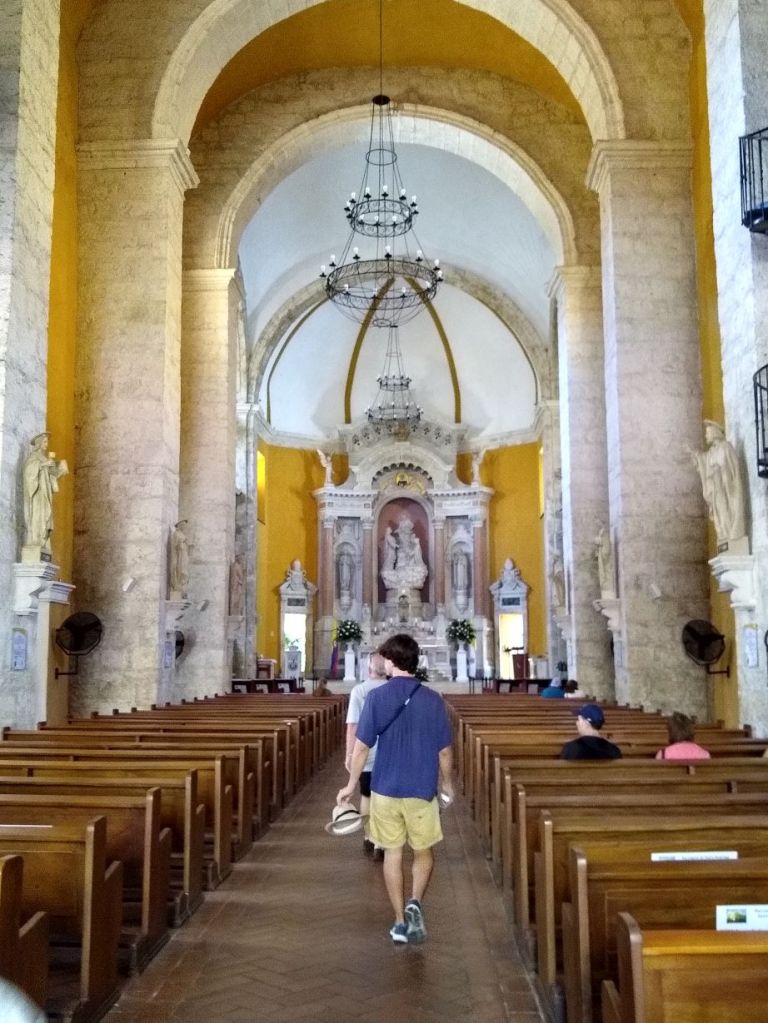
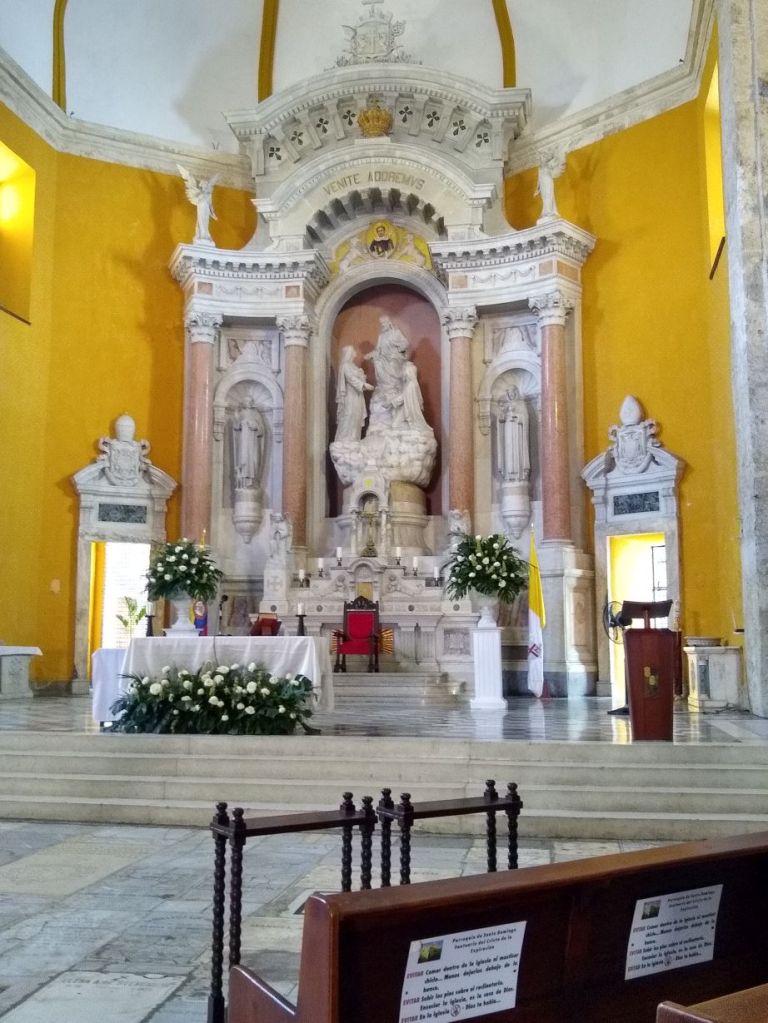
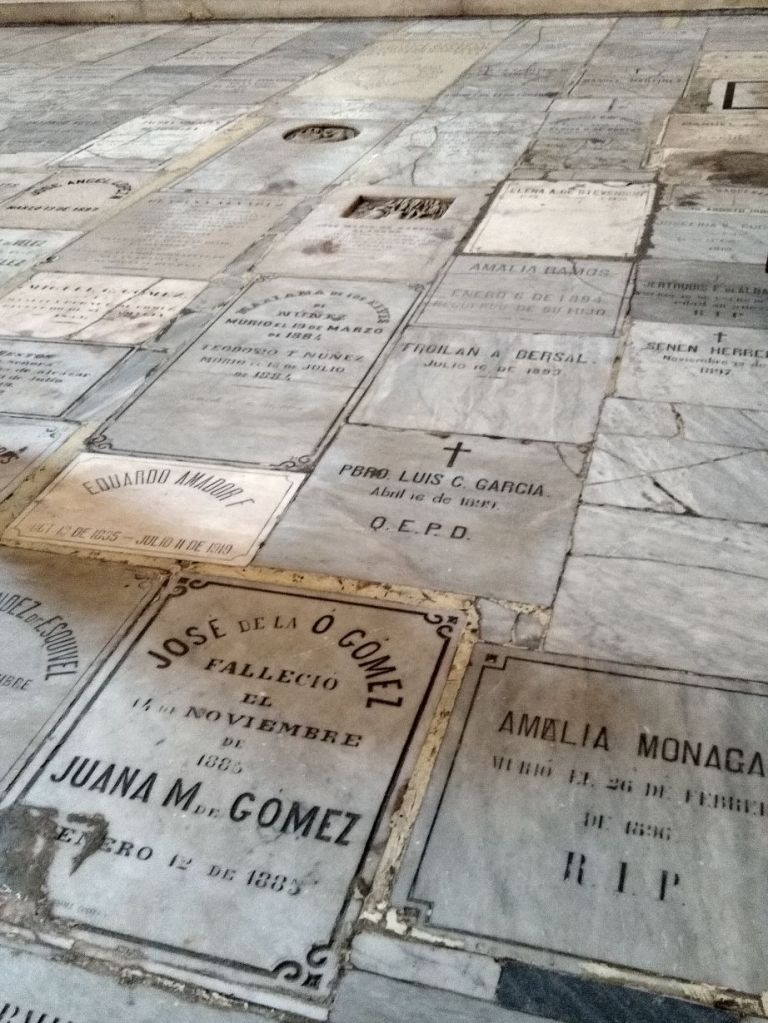
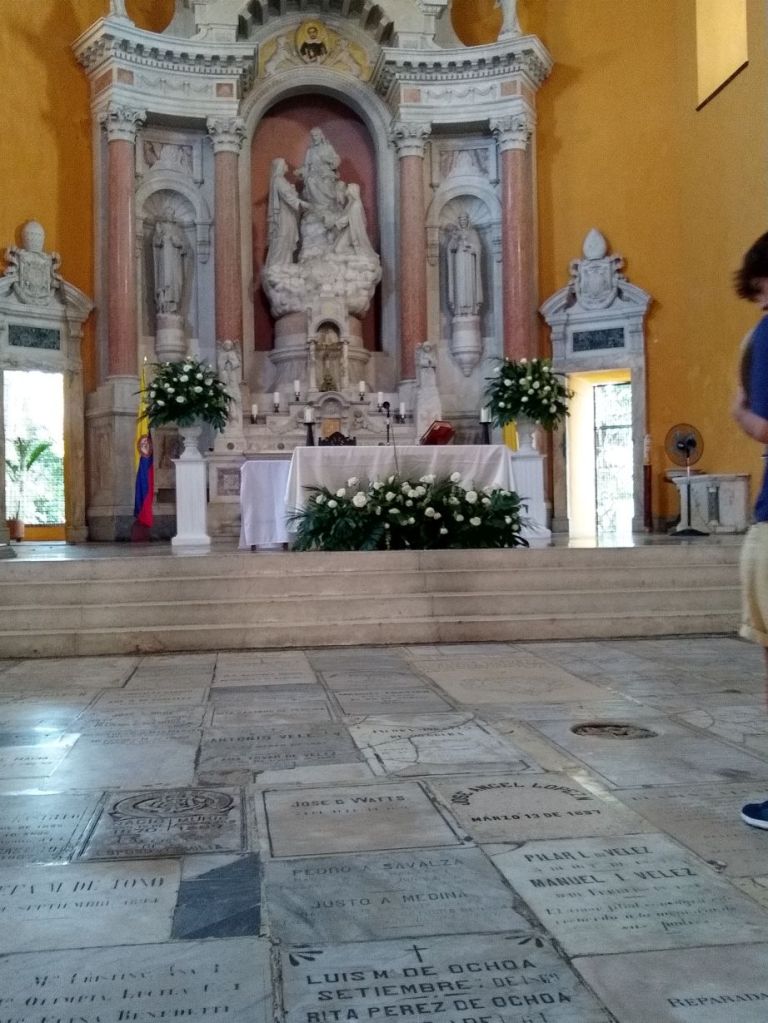
A few blocks away, at Plaza Santo Domingo, we get to burn…oh I mean lay… our hands on Figura Reclinada 92 for good luck. Also known as La Gorda Gertrudis, the oversized statue was sculpted, and subsequently gifted to the city, by Fernando Botero ( a sculptor who is known for his love for all things ‘fat’ and creates all his statues in ‘fat’ form!). It’s cute and fun, and sort of incongruous here in the middle of colonial central America – but hey, what the heck? After getting our good luck, we enter the Catedral de Colombia to take in the beautiful soaring bright yellow walls that dissolve into blinding white arched ceilings and pillars. The altar is flanked by what looks like pink marble columns, with two impressive chapel like altars on each side. One of the most interesting things are the floor tiles up by the nave, each which are engraved as a tombstone sort of remembrance for those who have died. We can’t decide if they are crypts standing perpendicular to each other, or simply markers. Whatever the case, they are fascinating and interesting to see and read.
Through the pretty narrow streets we continue, on out to the end of the old town and the Baluarte de Santo Domingo. Here one of the main defensive bastians for the old city has been turned into a little recreation area with a couple of cafes, but also gives us access to the city walls upon which you can walk all the way around. We’re not embarking on that adventure, but it is lovely to stand up here and take in the wide angle view of the new city across the bay, juxtaposed with the old cannons left in situ.
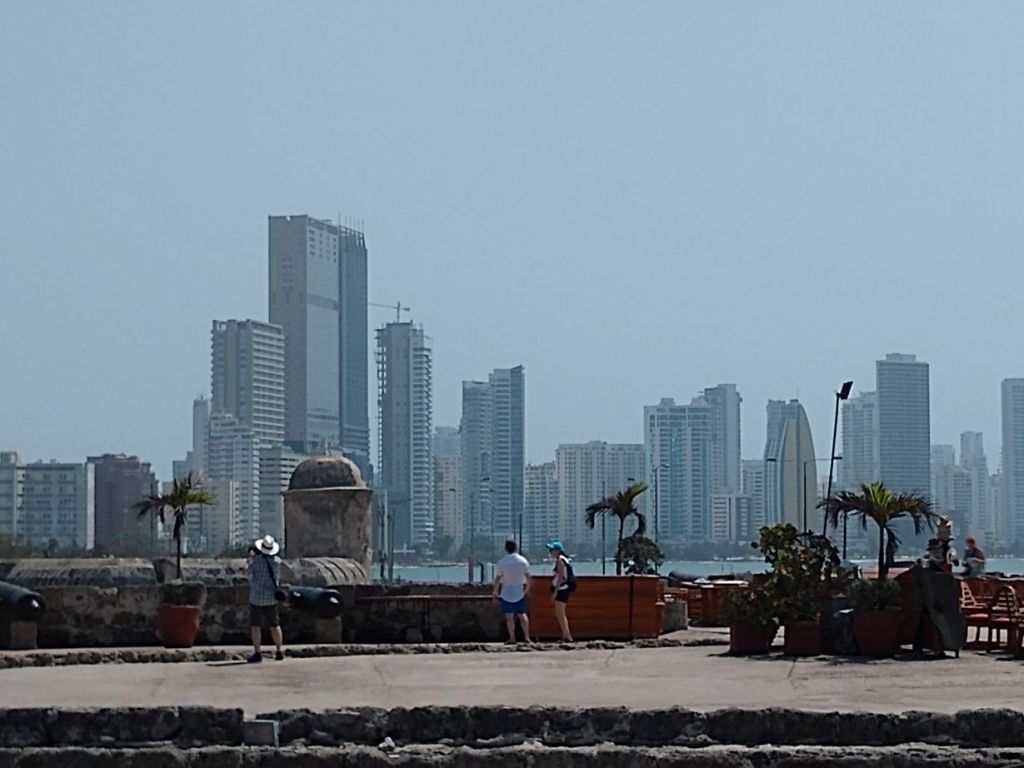
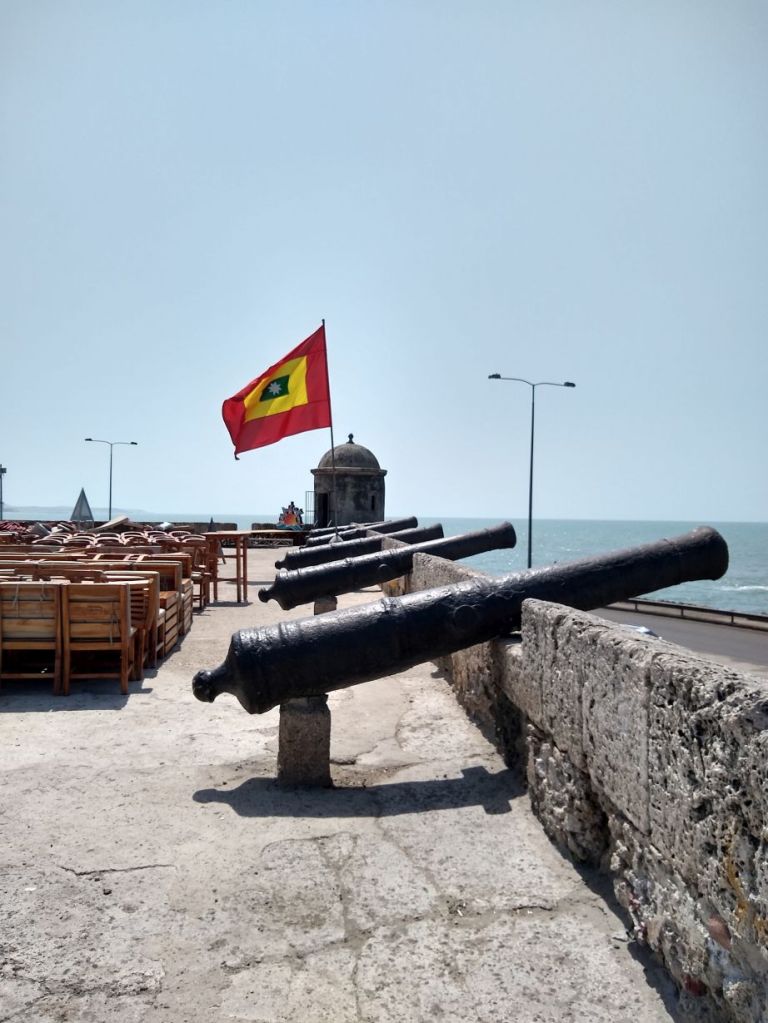
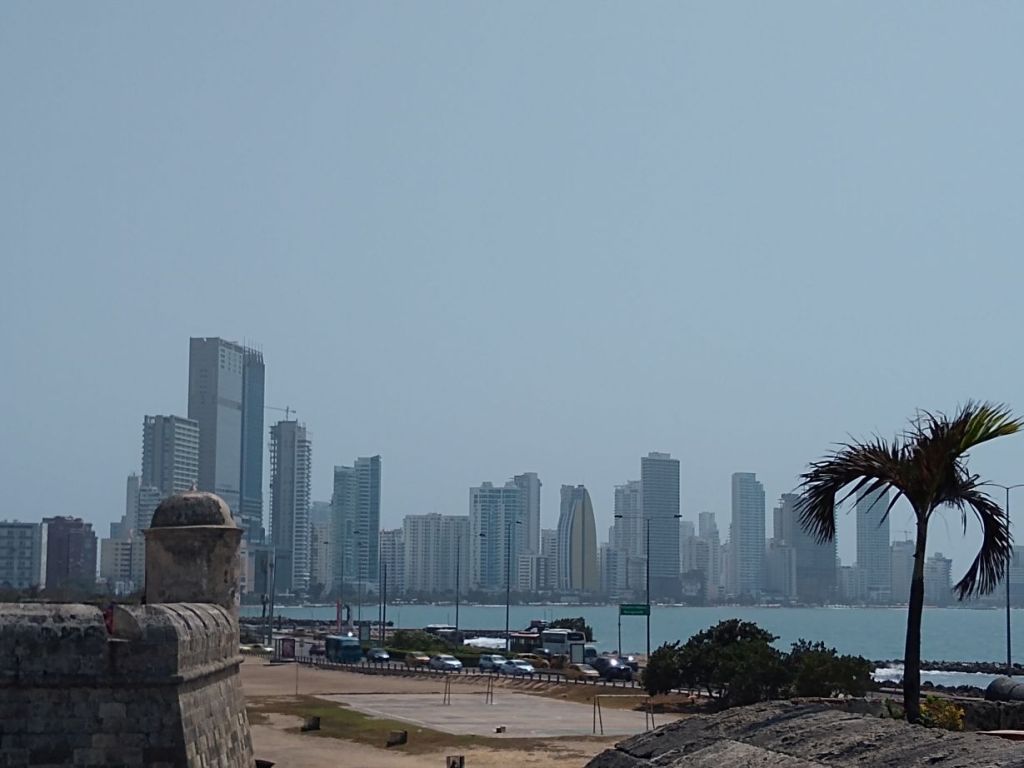
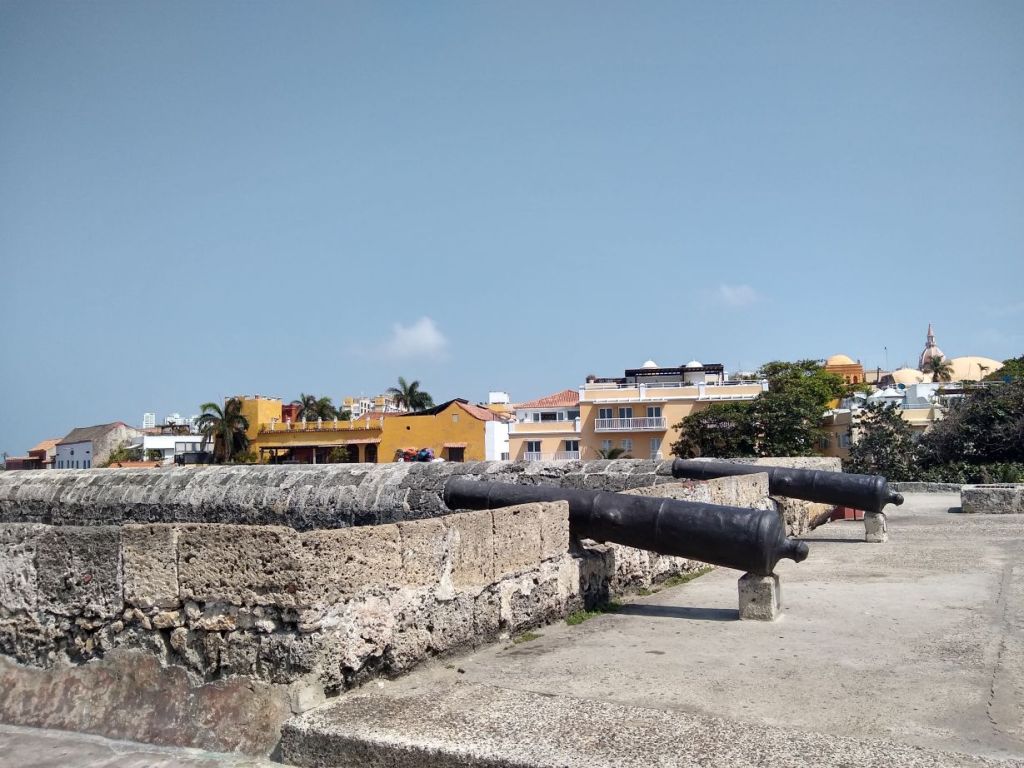
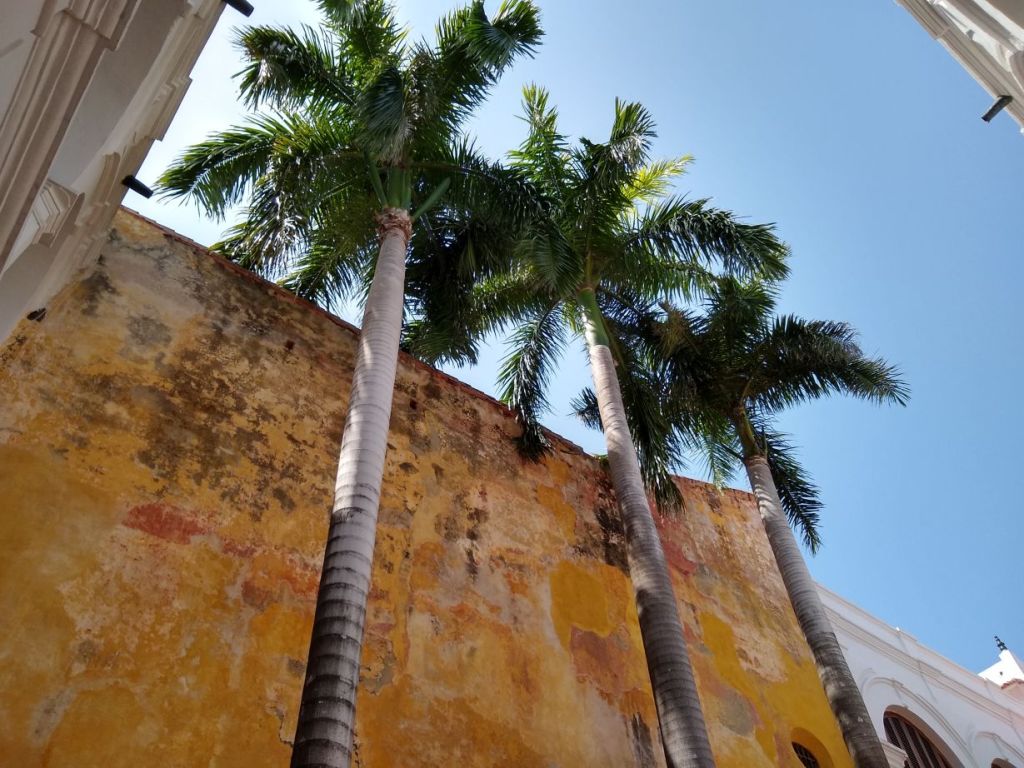
Darn, it’s hot! Too hot to stand up here in the sun with absolutely no shade. (Thus our lack of enthusiasm for walking the walls!) Reversing course, we head back down to sea level and thread our way through the narrow streets to the Museo Historico de Cartagena, which turns out to be not so much an overall historical perspective on Cartagena, but a museum of the Inquisition. These buildings are where the Holy Court was located in the 1700s (after being established in 1610 as the 3rd such court in all of America, following Peru and Mexico) and was called the Palace of Inquisition. We had no idea! And what a fascinating place – horrifically fascinating, but fascinating nonetheless. First of all the architecture is totally picturesque – a beautiful central patio encircled by blindingly white two story buildings (and one art deco-ish yellow wall) with wooden windows, balconies and open air stair rails.
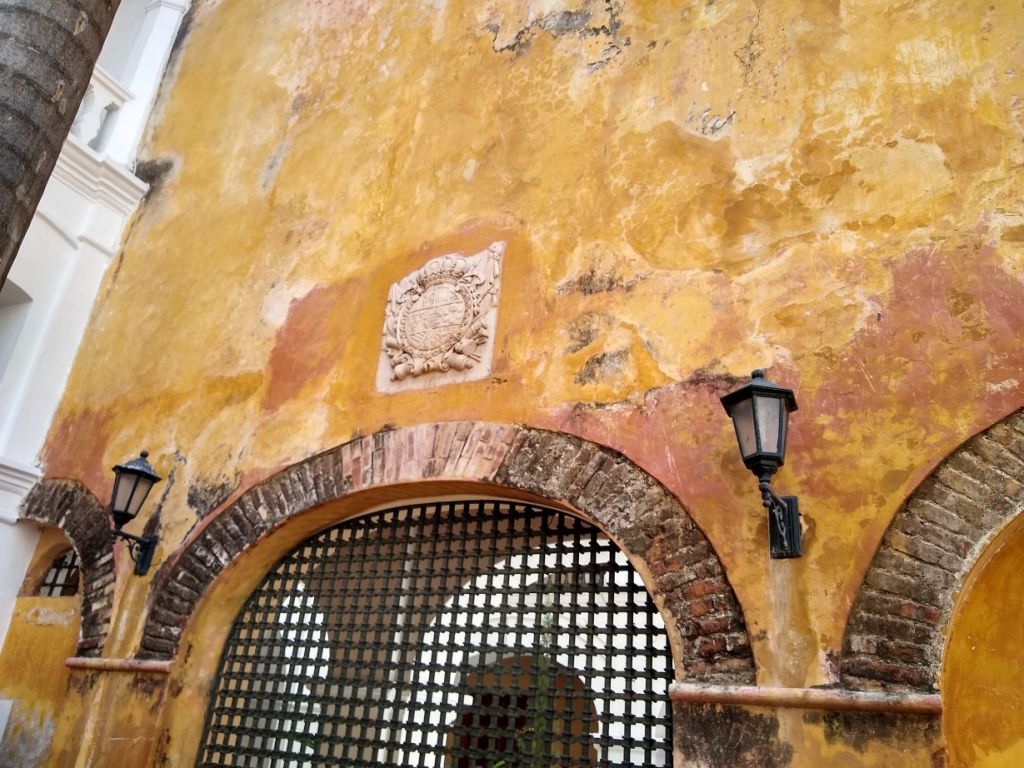
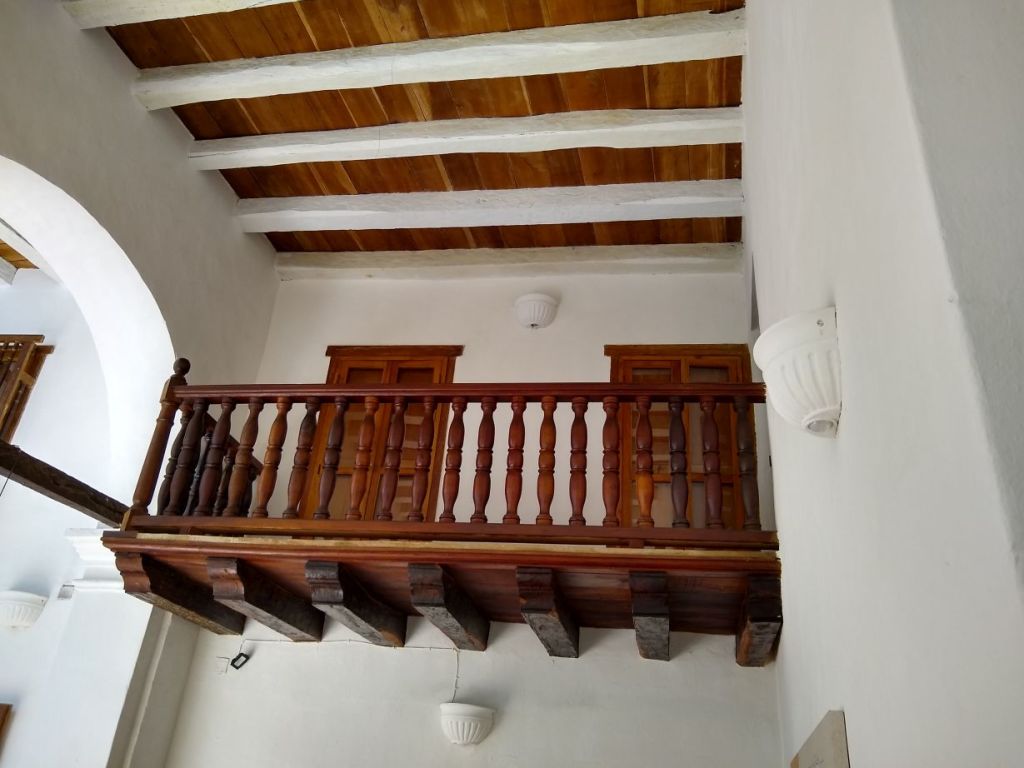
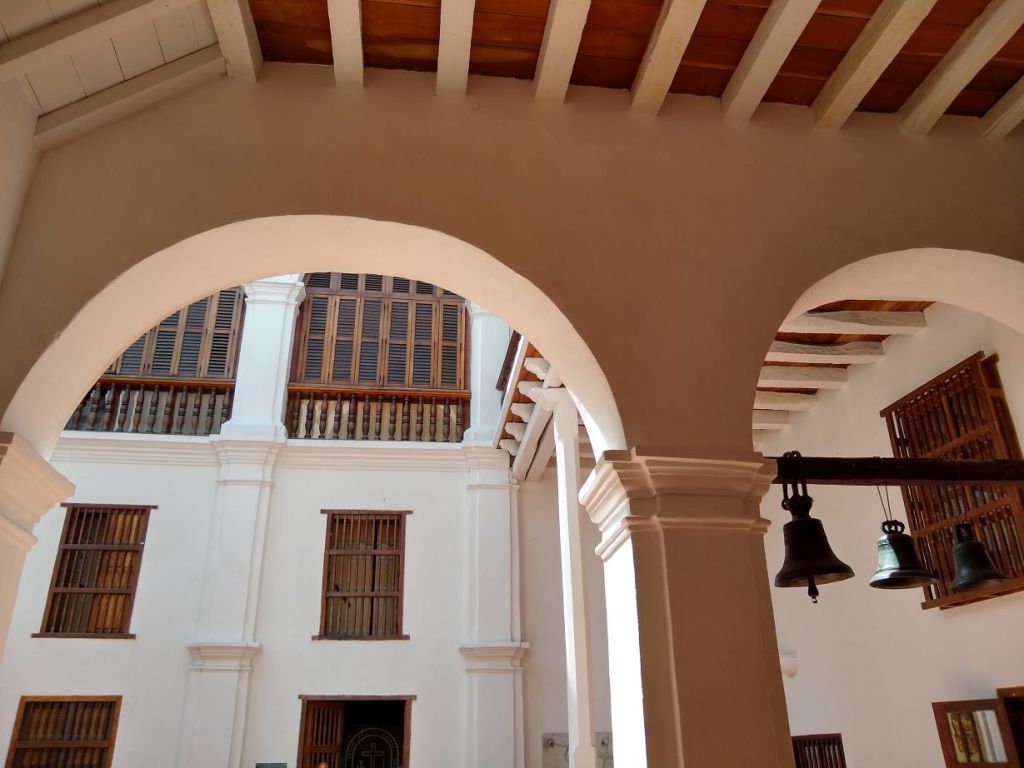
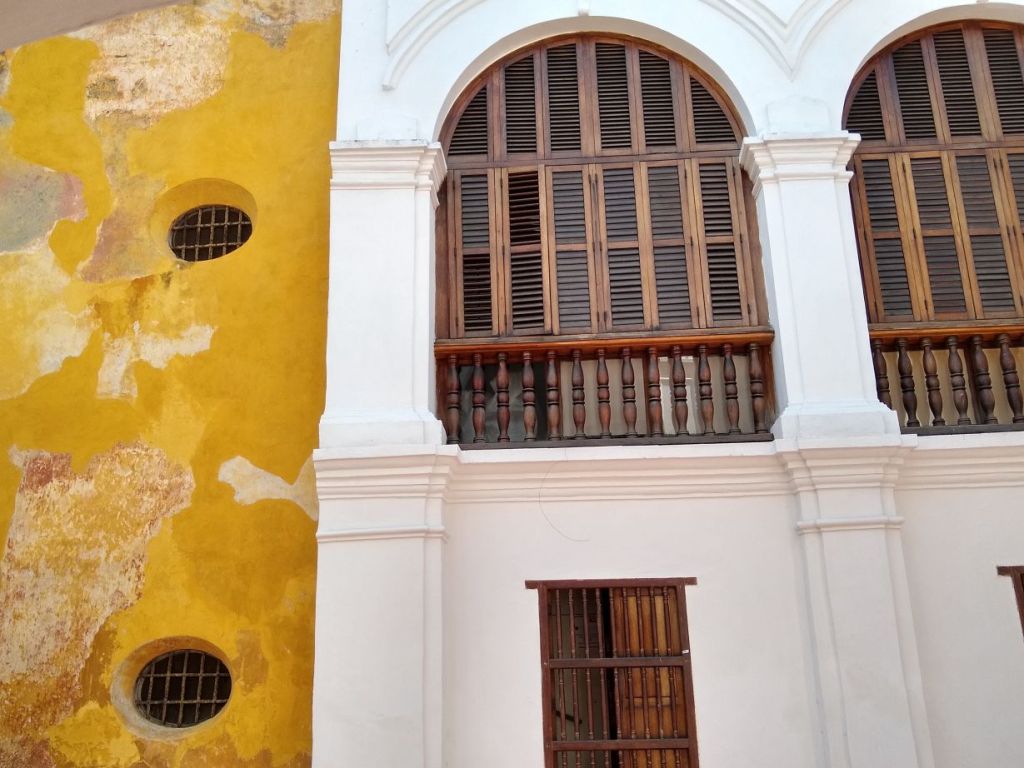
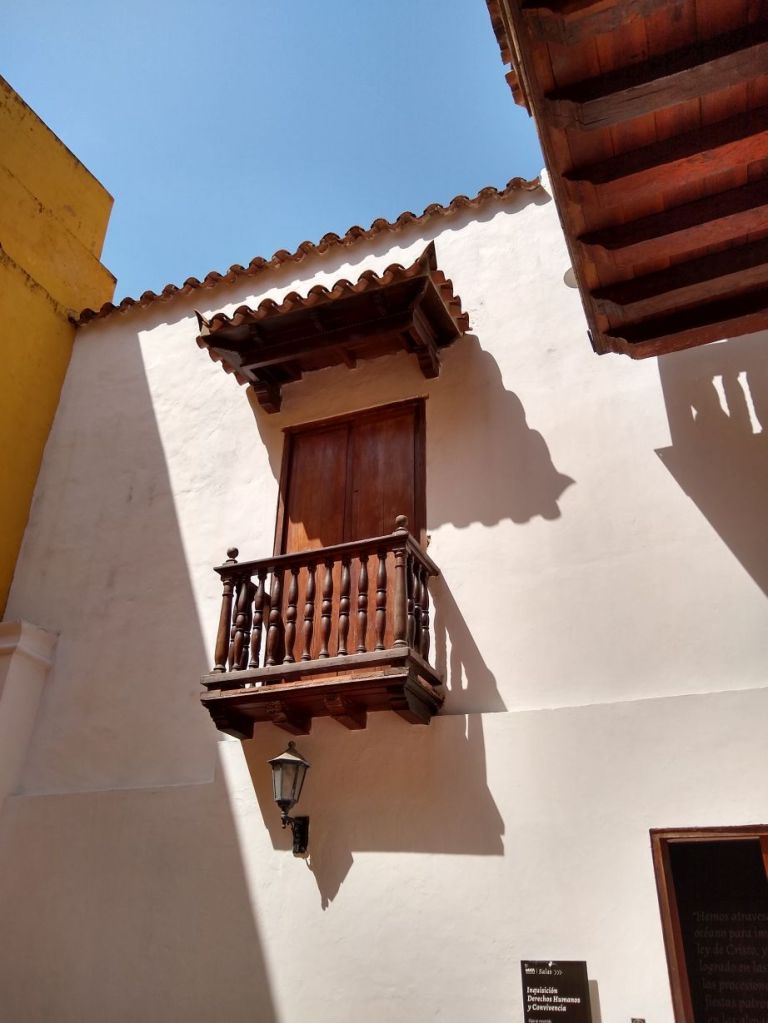
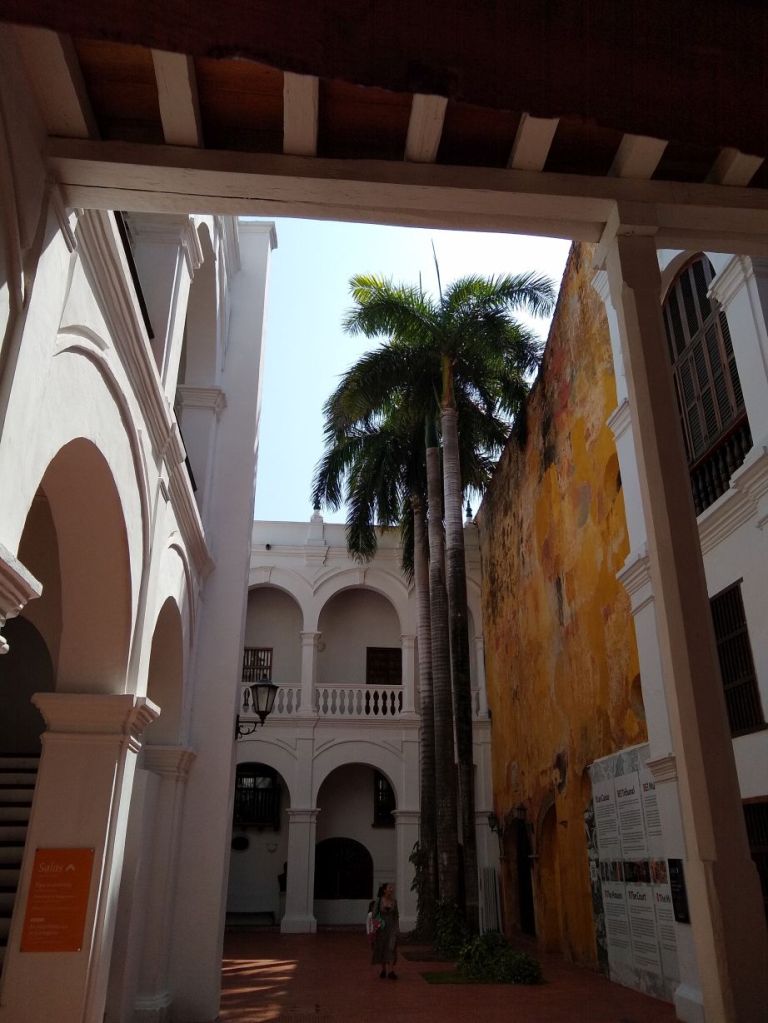
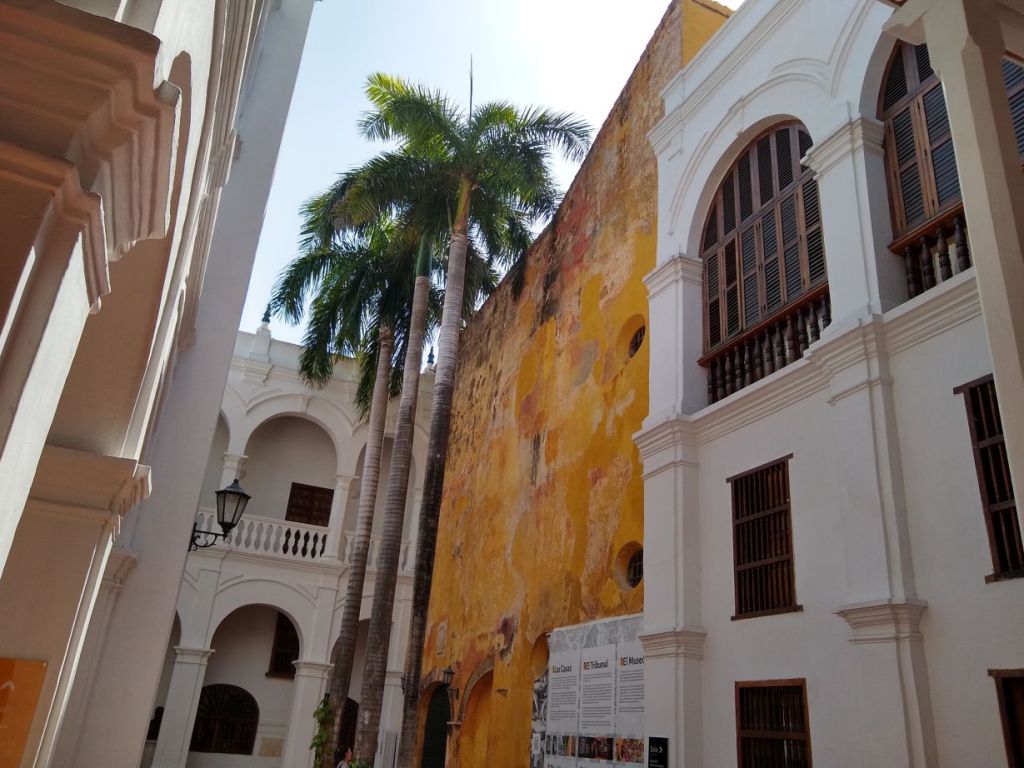
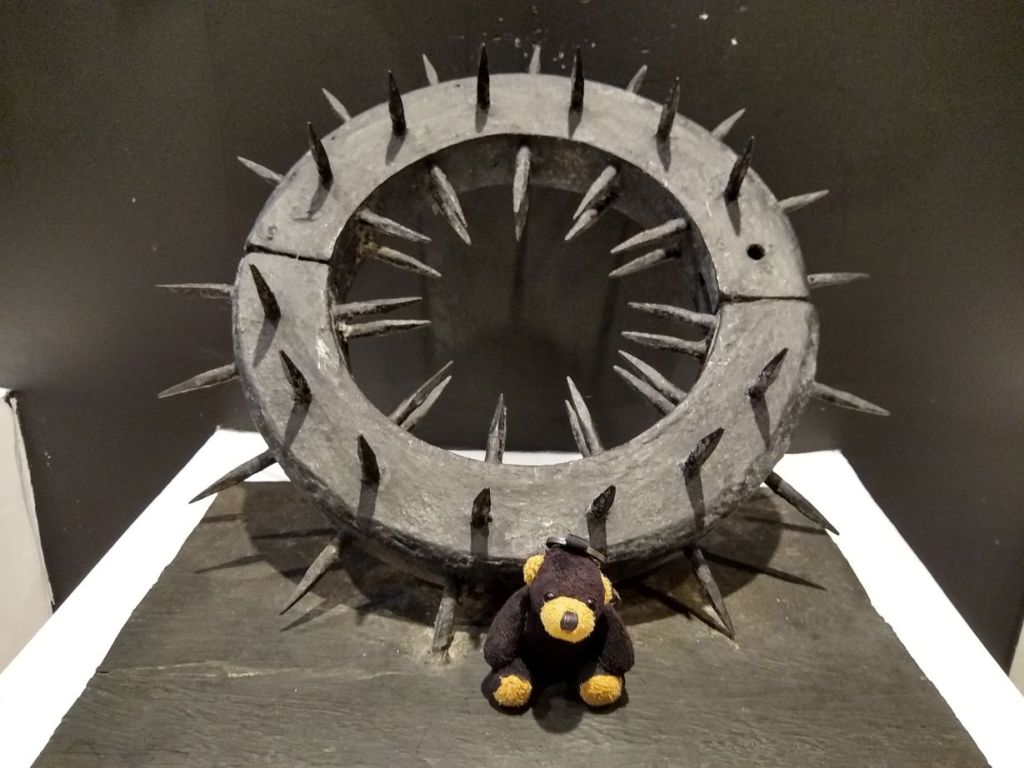
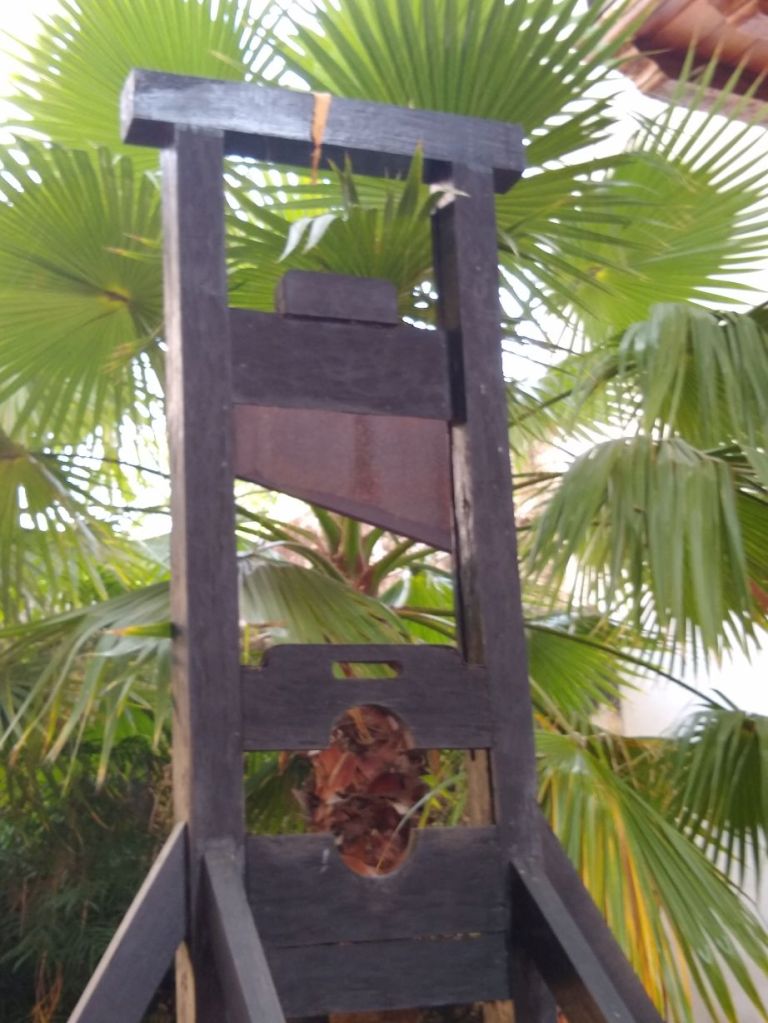
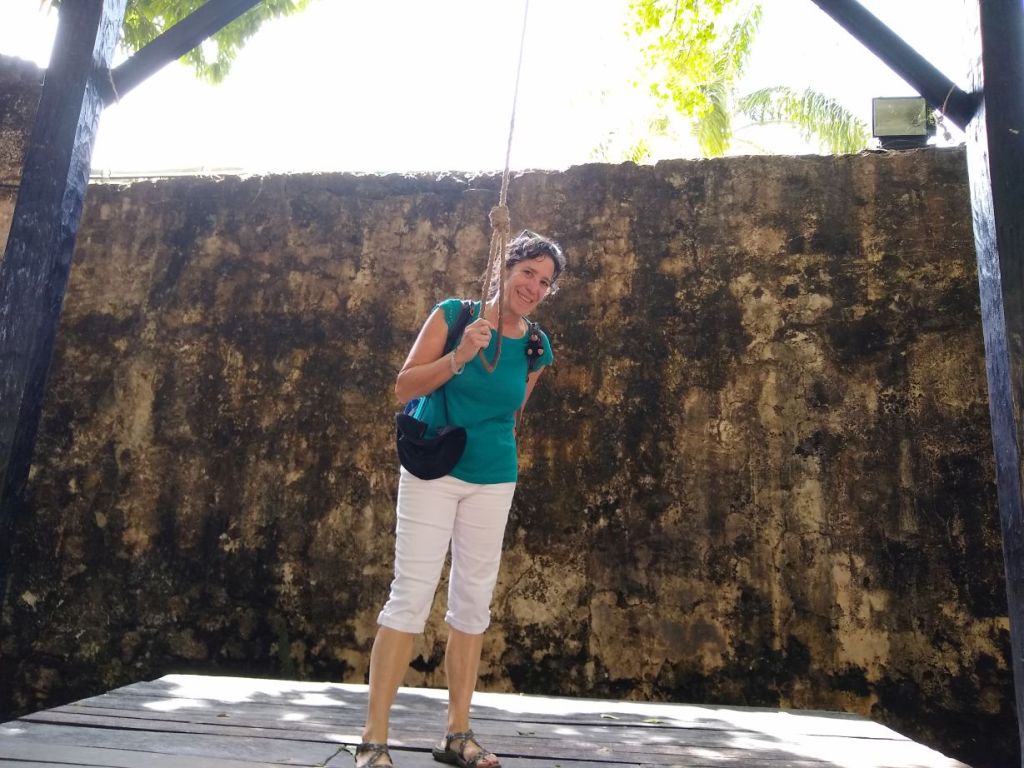
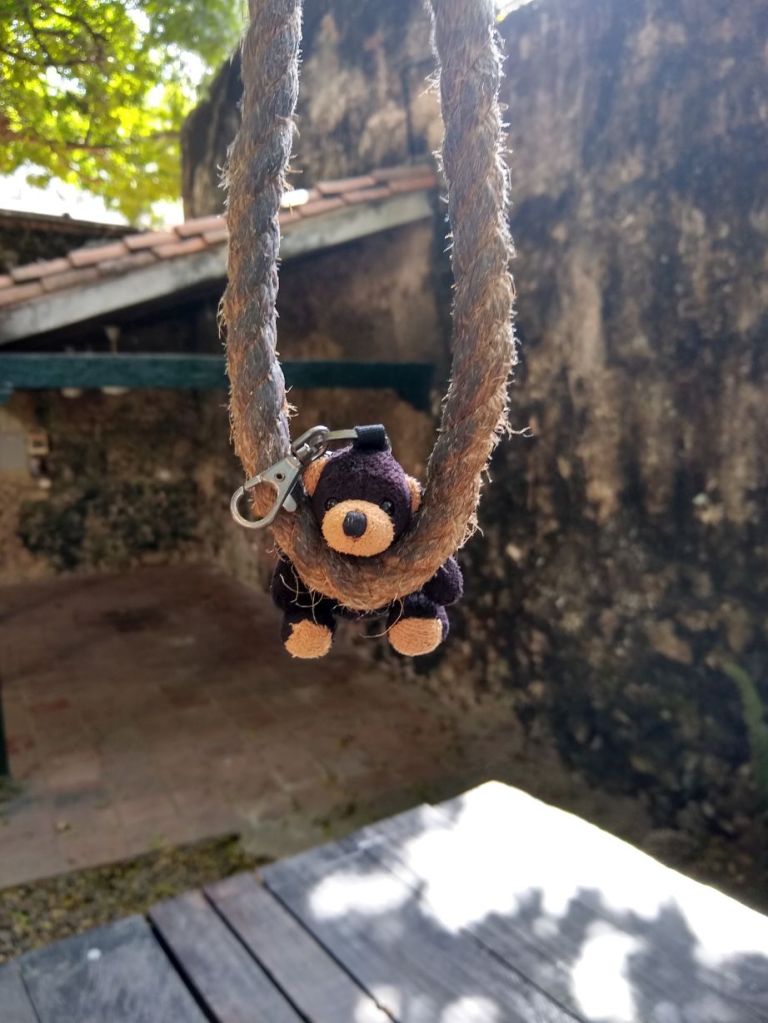
The inquisition exhibit was extremely well done, with explanations in both Spanish and English so we could follow along. Not that we needed much explanation – it was the Inquisition! Just like the Spanish Inquisition, they persecuted anyone who didn’t agree with their religious beliefs. Over 200 years they punished 900 people, 5 of whom where burned at the stake. Beyond facts and figures and maps, there is also a display of torture devices and then outside in a small courtyard, a guillotine and a noose. Yeah, brutal. But Sunny seems to enjoy examining these things – what can we say?
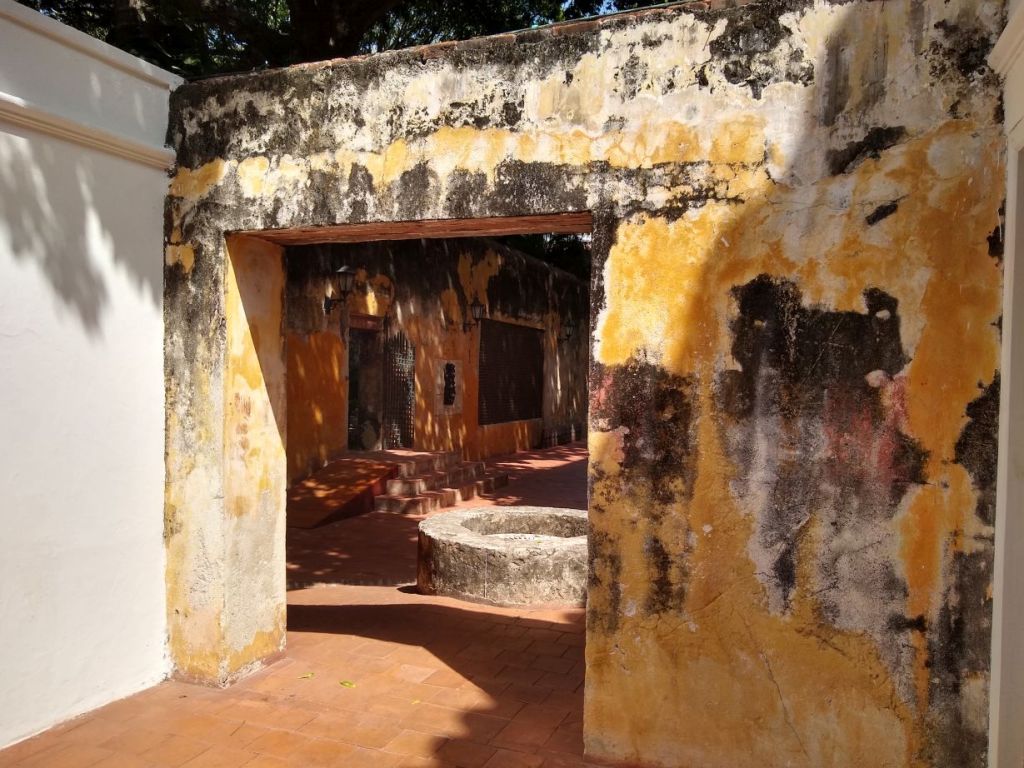
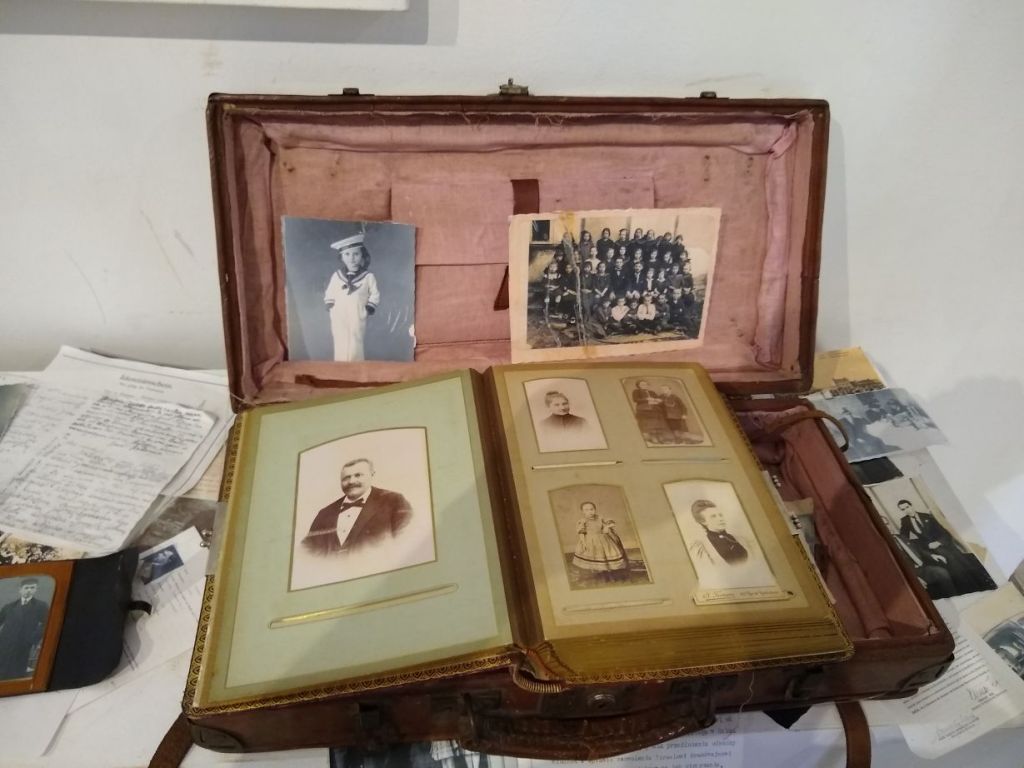
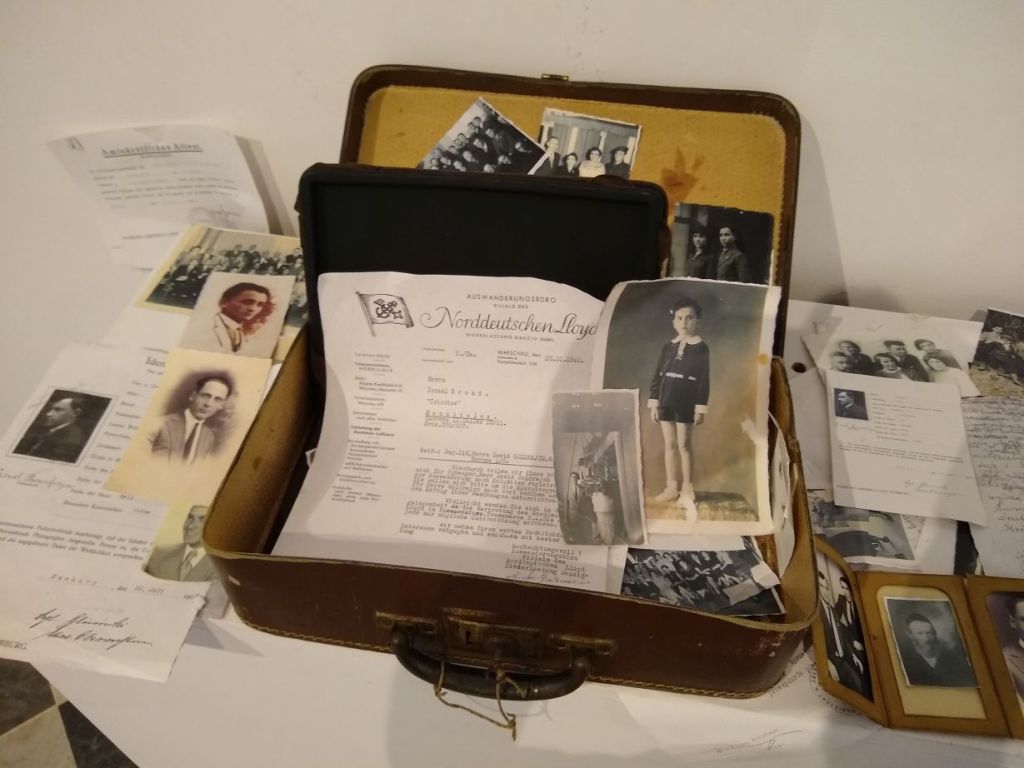
The only other exhibit housed in the museum is a special exhibit called “The Time of No Time” which is a fabulous display of old photos, documents and letters which were found in a briefcase in the attic by Robert Brandwayne, the artist. It is a collection of material his grandfather had with him when he immigrated to South America from Germany in 1934. The grandson then took the items and made an exhibit where he meshes the past with the present in some really intriguing (but no picture allowed) ways! We were allowed to take pictures of the briefcase contents, which we did. But also, we could actually touch everything, turn the pages in the photo albums, pick up the documents. It was really strange – in a great way because it was interesting to thumb through all the memorabilia – but so totally different from a normal museum exhibit. We can only hope that others have the same respect for the items as we tried to have. That’s a lot of trust to be placed in the general population!
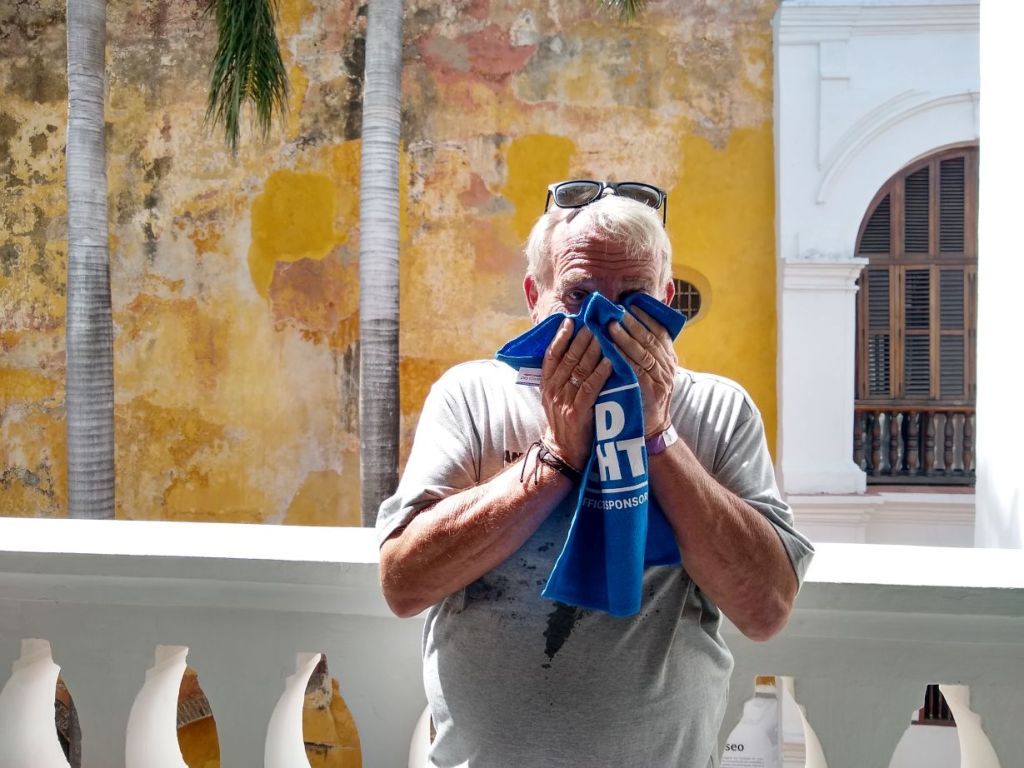
Leaving the blessedly air conditioned exhibit, it is about this time we decide we are melting. We put our Bud Light swag to good use (taking a picture for posterity and to show Sherwin and Joel) then head back down stairs to the museum exit. Along the way we find a sign that explains the museum is in the process of renovating its collection after going through a “long crisis in the nineties, where it lost a great part of its collection.” Explains why it is called the History Museum, but only has 2 exhibits – the Inquisition and the special exhibit. Not that we minded, we found it a fascinating place and well worth the visit.
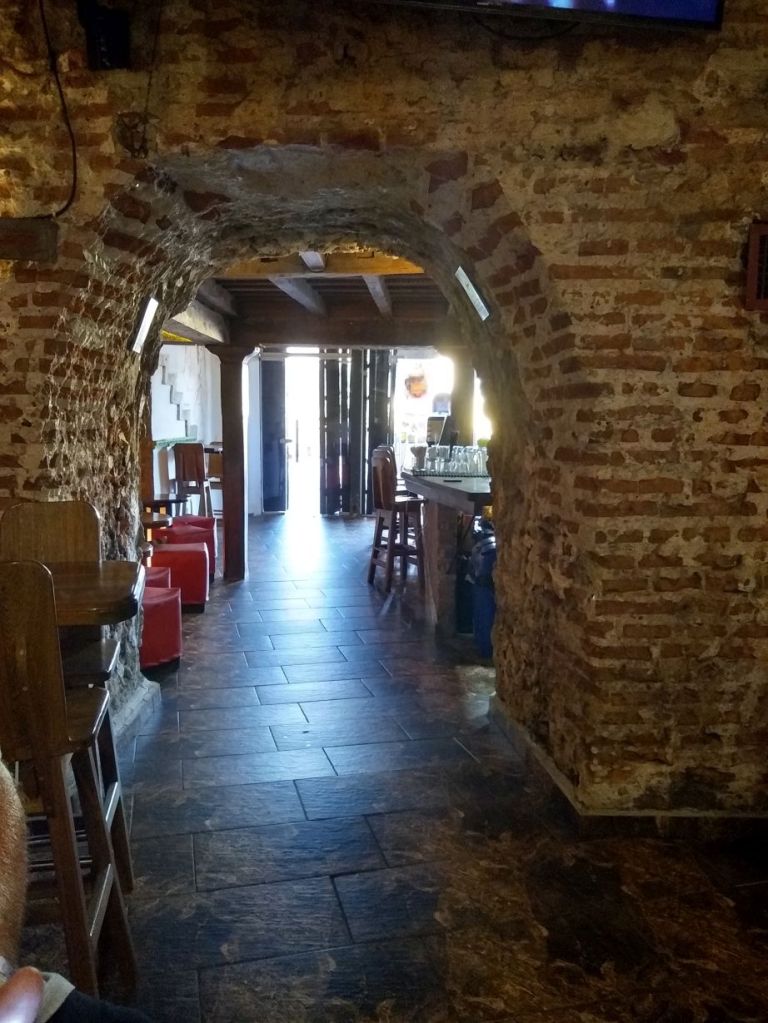
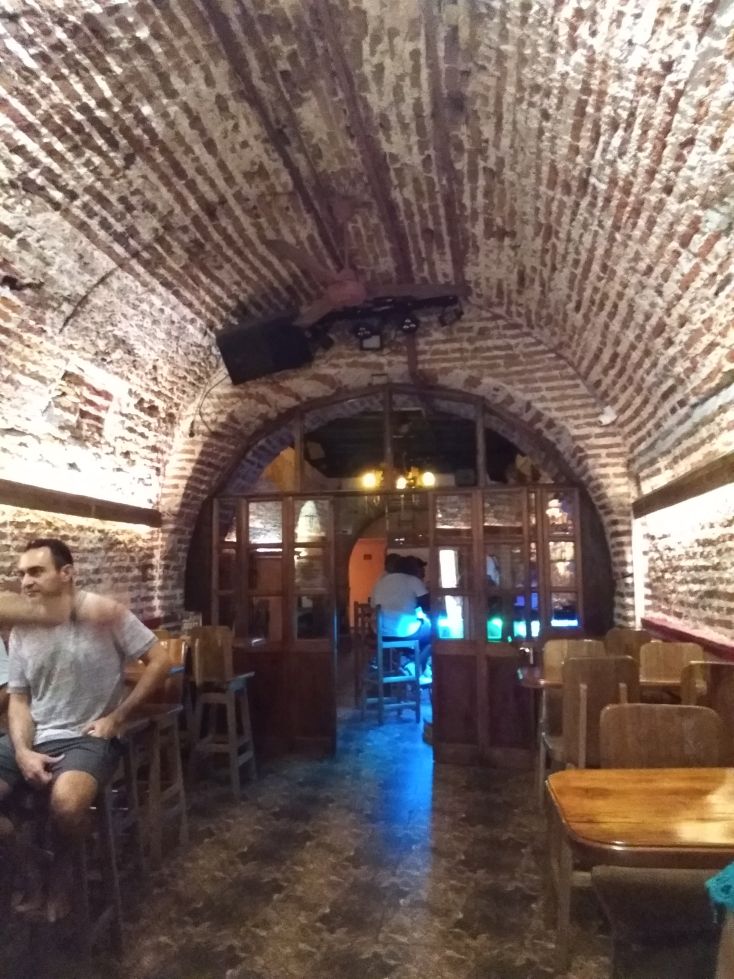
Back out into the picturesque streets, we wind our way toward the pier, with enough time left to stop off for a refreshing beverage. What else? We stop at this great little place called Humarea Bar and Grill. There is a bar in the front room where we are about to sit, but the waitress shows us to the back room, which is a totally cool arched brick room with 4-top tables, that opens up into another arched brick room further in the back with glass partitions and yet another bar. We’re thinking this is a late night sort of place, because they are playing music videos on the TVs (oh and probably a sports place too, with the multiple TVs). But, for right now, it is fairly empty with just a few folks at the back bar and another couple that come in after we’ve settled in with our beers. Nice little interlude before heading back to the sightseeing boat for our ride back to the ship.
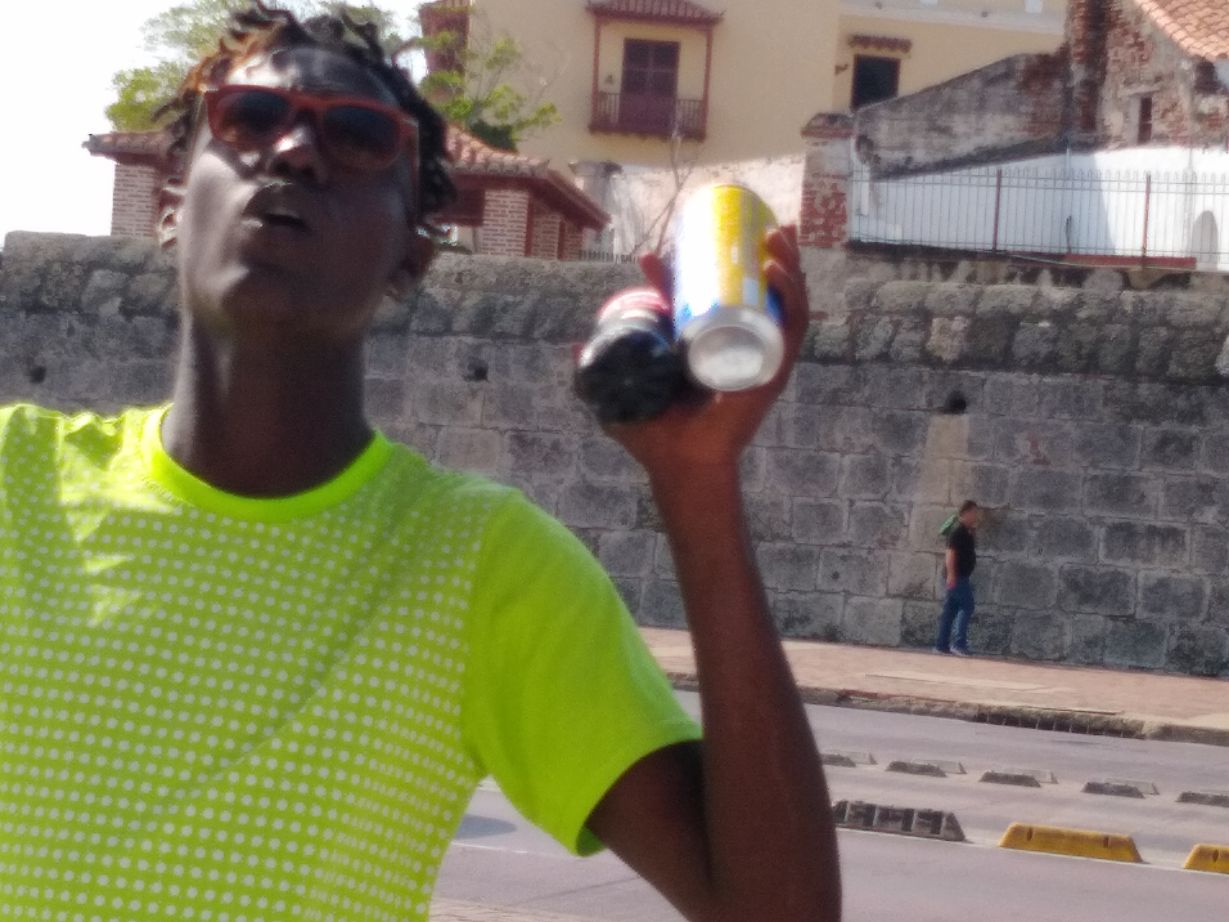
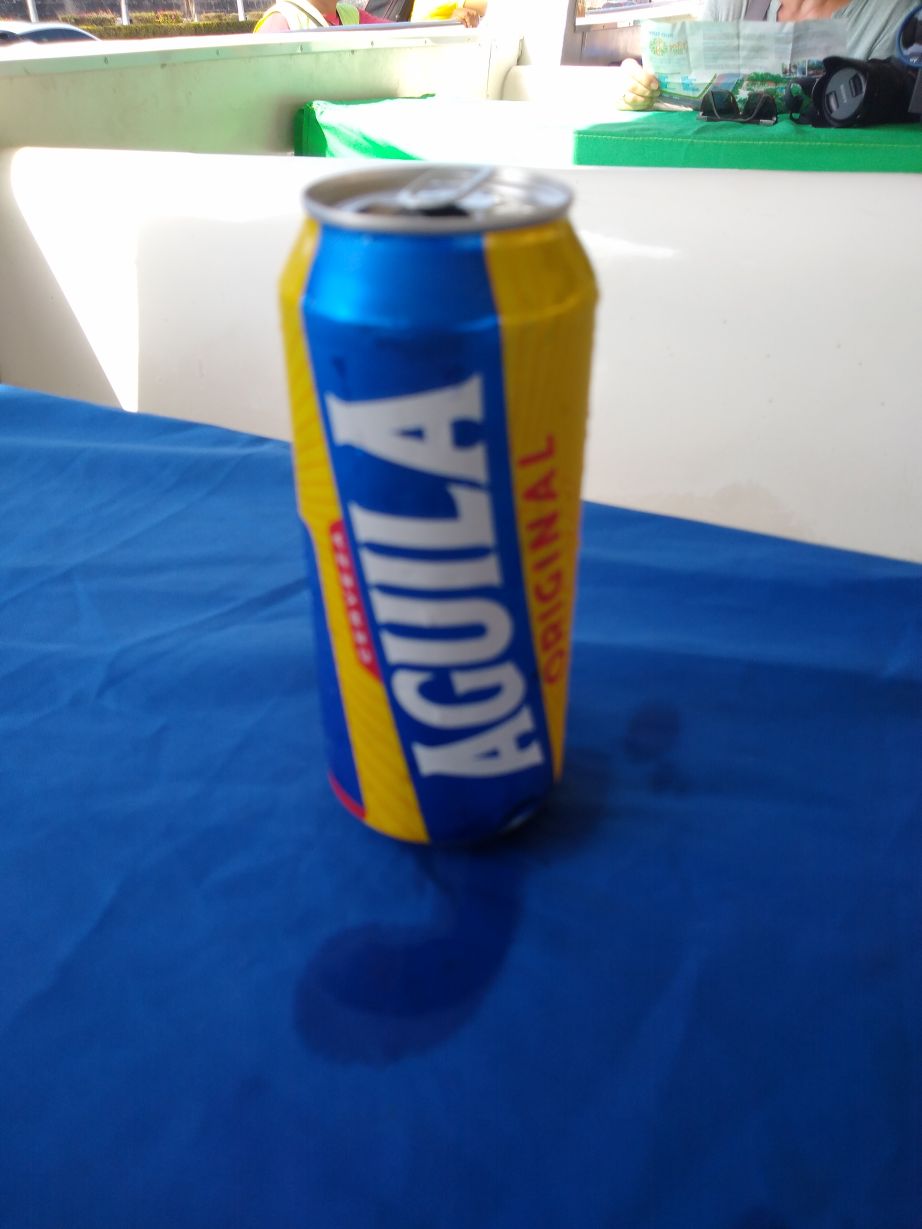
Once again, out on the hot streets, we walk back through the Clock Tower gate and out into the wide boulevards around the old city. We arrive in perfect time to board the boat – no waiting – and even have enough time (and cash) to buy another beer from one of the many hawkers on the street plying their wares for us on the boat! Then its another 15 minute sail right back to the dock in front of the ship. Easy as you please!
 Andiamo