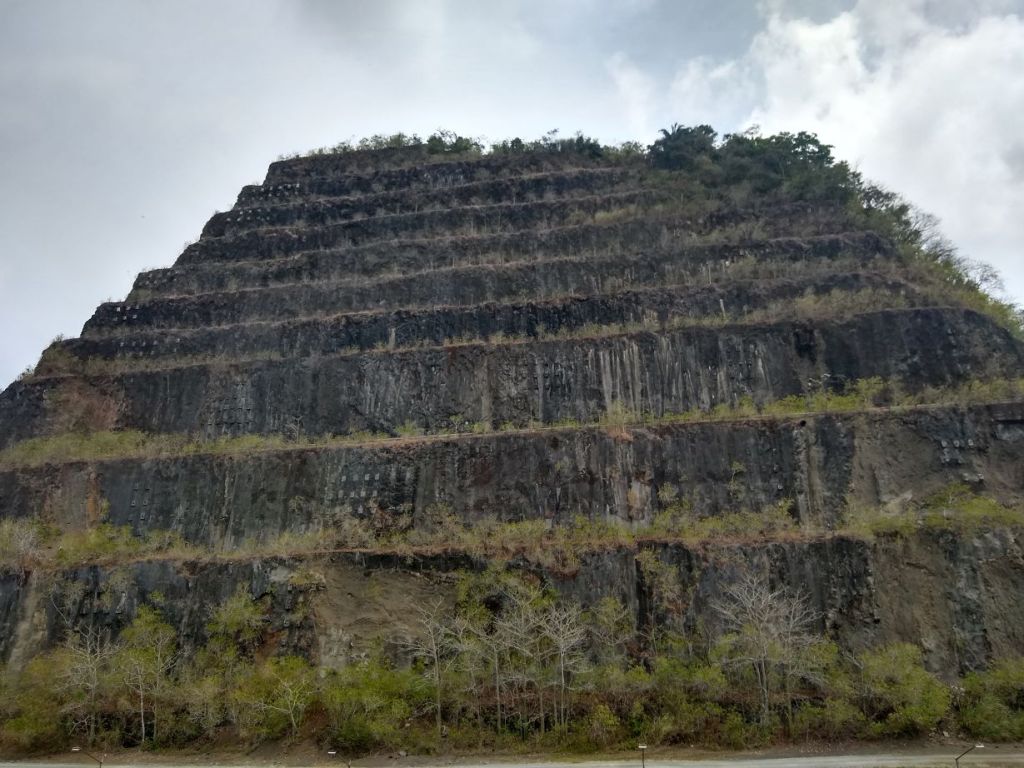
WARNING: These next posts will probably bore most everyone to death, because, well, we are totally into the history, the stories, the architecture, the process….everything about the development of the Panama Canal. We’ve read David McCullough’s fantastic The Path Between the Seas in preparation for this trip, and it has fascinated the both of us. The French history; de Lessups (builder of the Suez Canal who thought he could do a sea level canal here too, just on the force of his beliefs and personality, not on any scientific or exploratory facts); the collapse of the French nation/government after 15 years of colossal mistakes, underestimation, disease and just rampant mis-guided faith. Then the American efforts, stepping in, Panama seceding from Colombia; Nicaragua in the running, but ultimately getting screwed out of the canal (they are still bitter – tour guides will mention it to this day); the unwavering faith in the project at least this time with a modicum of knowledge; the fight to stave off malaria, Dr. Gorges who figured out the mosquito connection, but who still had to fight tooth and nail to try to get people in the American government to believe him; John Stevens who took over the mismanaged project and figured out that transportation was the biggest issue, not the excavation (and who the project ultimately killed); the death, the destruction, the disease, the flooding of villages; the multiple collapses at the Culebra cut ending up with the cut being far wider and more stair stepped than any one planned; the amount of concrete used (the most ever poured for its time), shall I go on? You get the drift – we’re captivated.
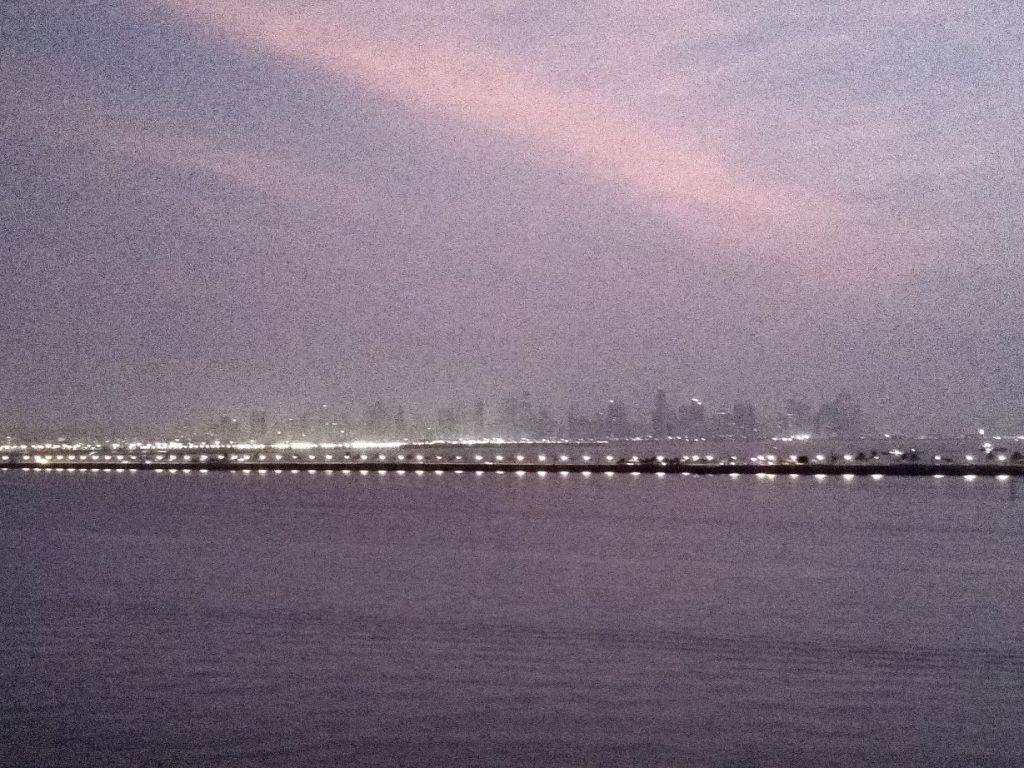
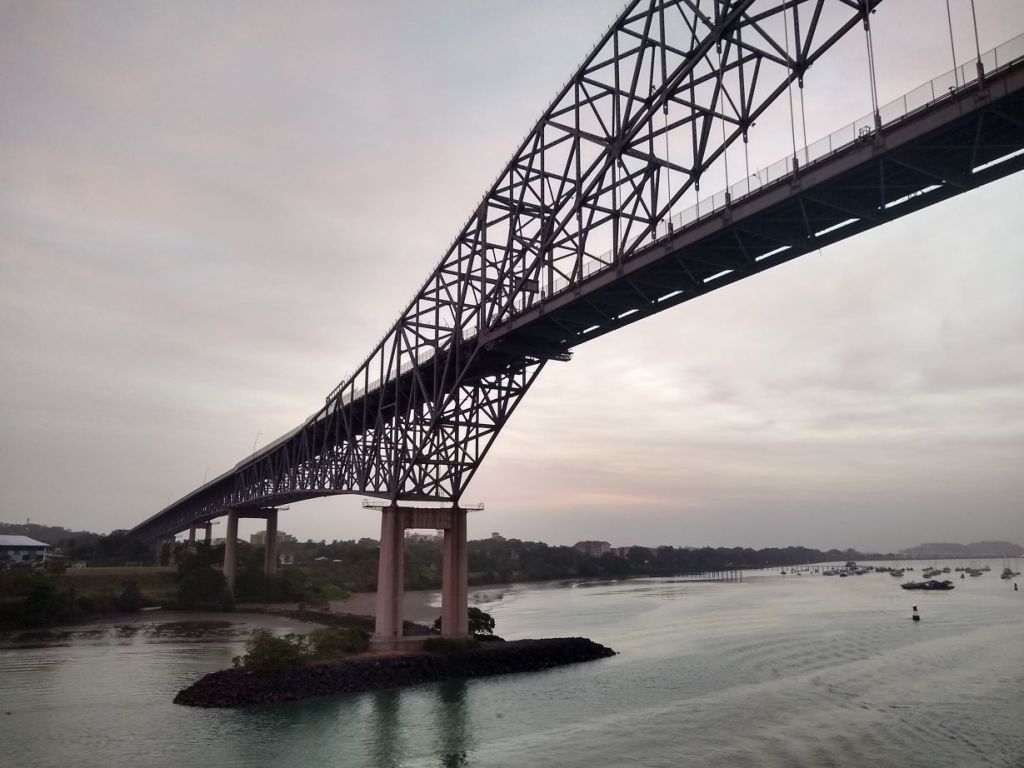
So, of course, we are up at the crack of dawn to a) watch the sail in from our balcony -at 6:15 we are sailing past the “fortified” islands which were originally the coastal defense for the canal (and if I recall right, were created with dredged infill), with Panama City in the background, by 6:30 we are already under the Bridge of Americas (running at least 2 hours behind schedule, but that makes it better for our viewing!)…
…and b) to make sure we get good seats in the lounge for the rest of the journey. We want to be right upfront to watch everything, but we aren’t going to sit outside all day – it is way to hot for that – making Spinnakers our best bet. Even though we are up there well before 7am, the best seats are already taken (some by our fellow suite passengers who we just KNOW made their butler reserve the seats for them – don’t go there!), but we manage to grab some bar chairs and strategically position them so we can watch everything above the front row people’s heads. And, to their credit, as we go through the day, they do move so we can alternate taking photos.
We’re also strategically placed so we can run outside to take photos – like the ones we get of the huge Panamax container ship entering into the new Canal locks at Miraflores. Really amazing – the thing just barely fits and those are the new wider locks and cuts. Wow!
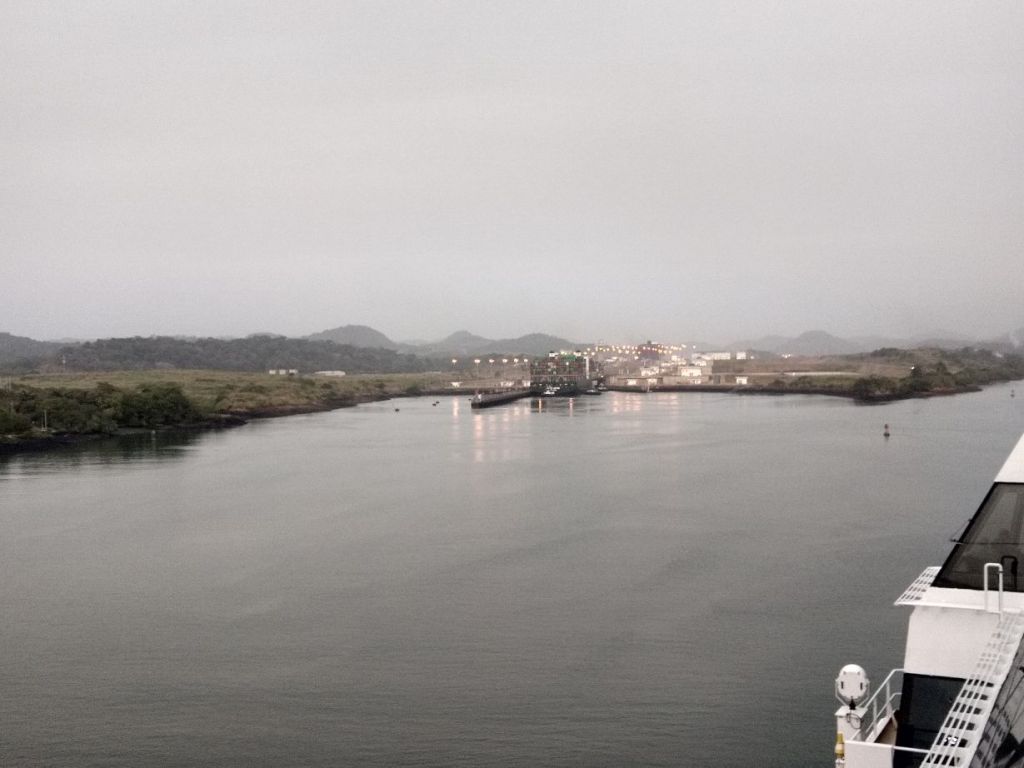
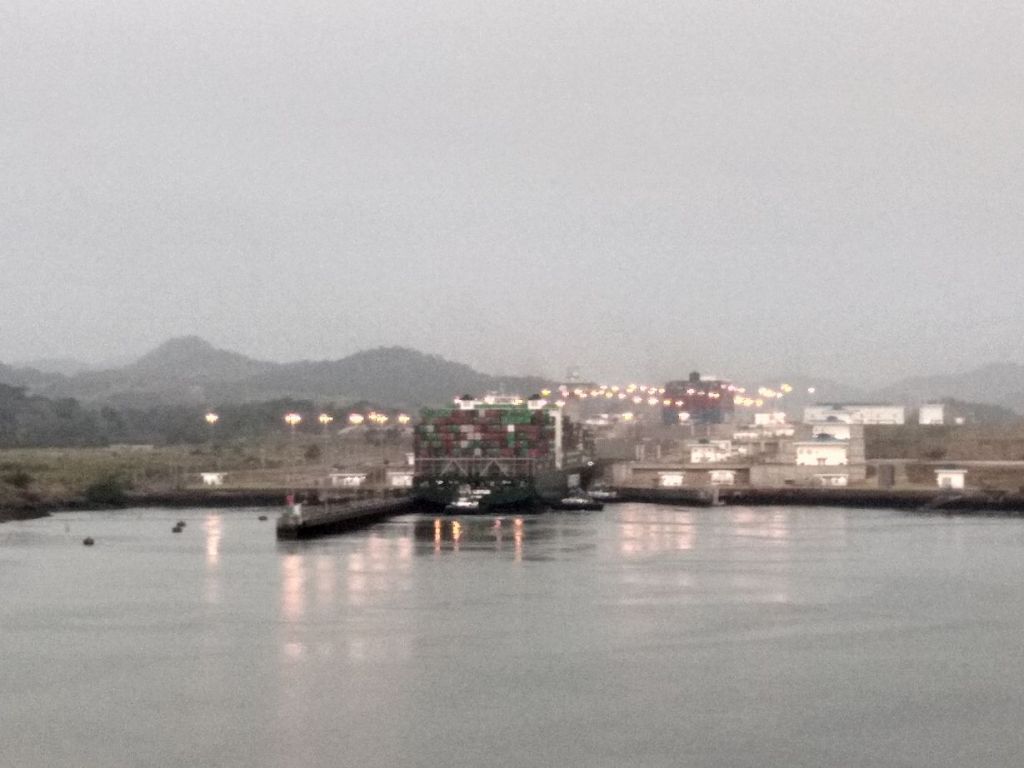
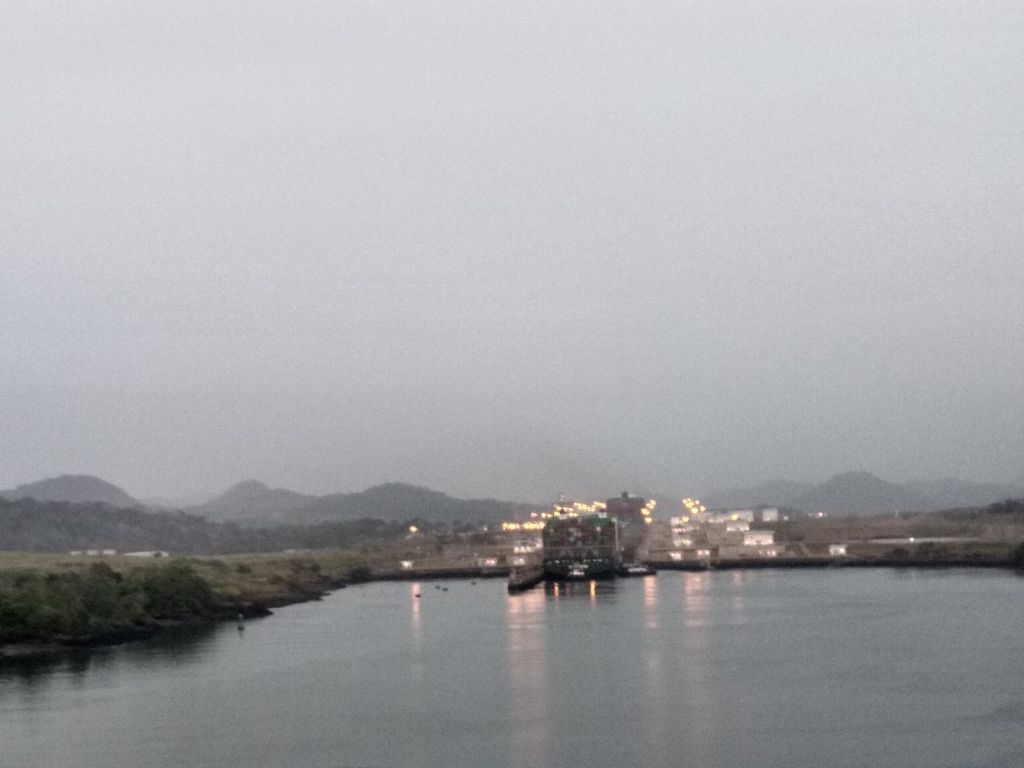
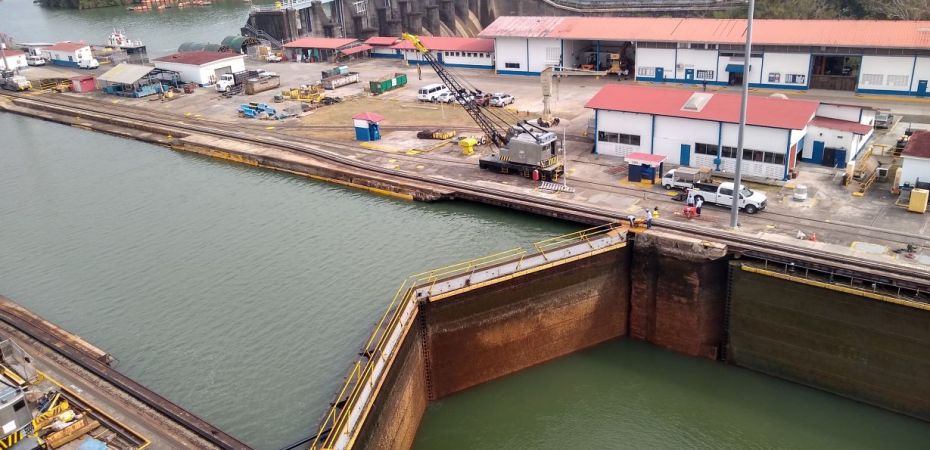
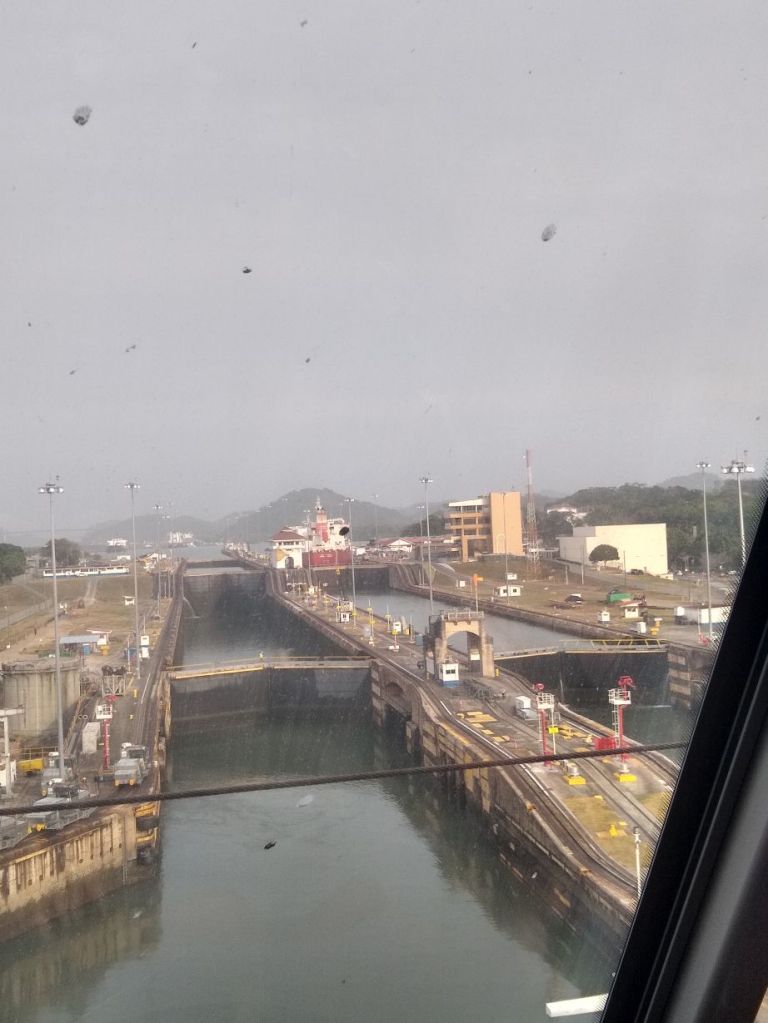
We will be traversing the original Canal, of course, but we’ll be able to spot these monsters going through the new canal through out the day. At precisely 7am, we get our first look at the original Miraflores locks we will be entering in about an hour. (Pardon the upcoming pictures, many are taken through the windows from the lounge, and there is some debris on the window making for spots and smudges in a lot of the pix.) There are 6 lock pairs on the canal – 2 pairs here at Miraflores, 1 pair and Pedro Miguel and 3 pairs at Gatun – all the same dimensions of 110 feet wide by 1,000 feet long. They all share a center wall that begins as 60 feet wide but is graduated to end at 8 feet wide at the top. All have sidewalks and some have parks along the top of the structures. The locks create their own power through an ingenious drainage system that uses gravity to push the water from one lock to another, on one side raising the ship and on the other side lowering the ship.
There is already one ship in the 2nd lock on our side and another ship just coming out of the last lock going in the opposite direction, so you can really see how the lock mechanisms work and see the water “dammed” up in the upper locks. These first initial locks will raise us up 54 feet and will take a little over an hour to traverse (normally it doesn’t take quite that long to go through a lock, but because it has been a very dry season, the Panama Canal Authority (ACP) is using water conservation techniques which slows down the speed of the locks). These first photos give you an idea of the height of the locks, how we will “float” through them, the crowd both in the lounge and down on the prow of the ship, oh, and the schmoo and blown window in the lounge.
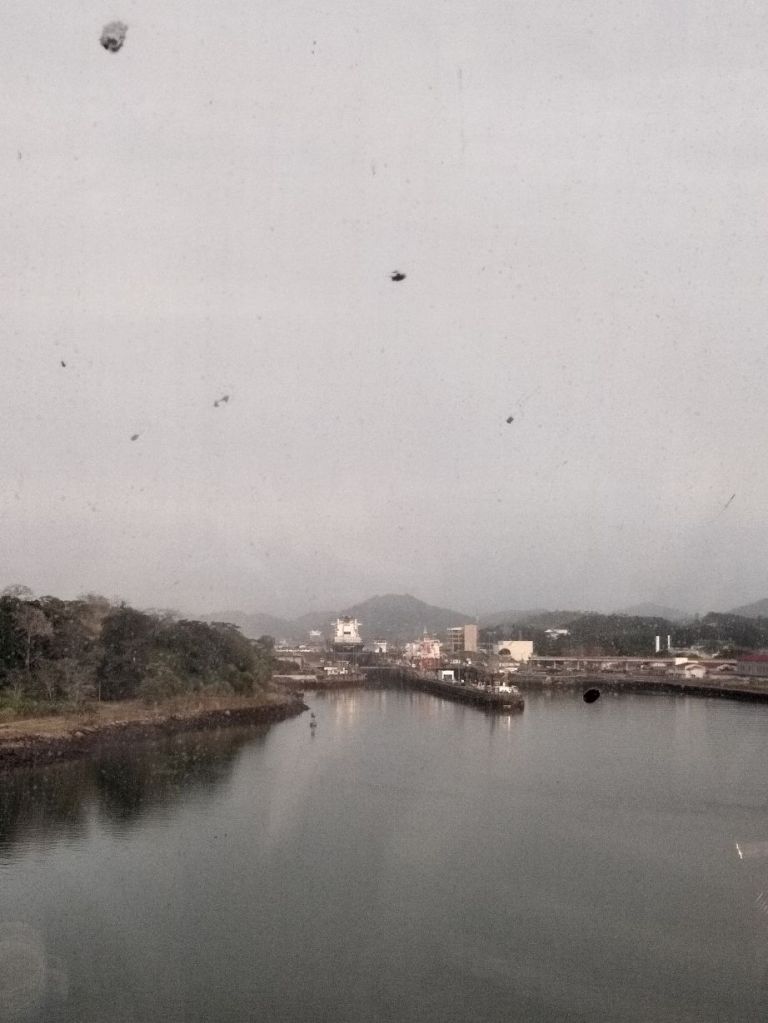
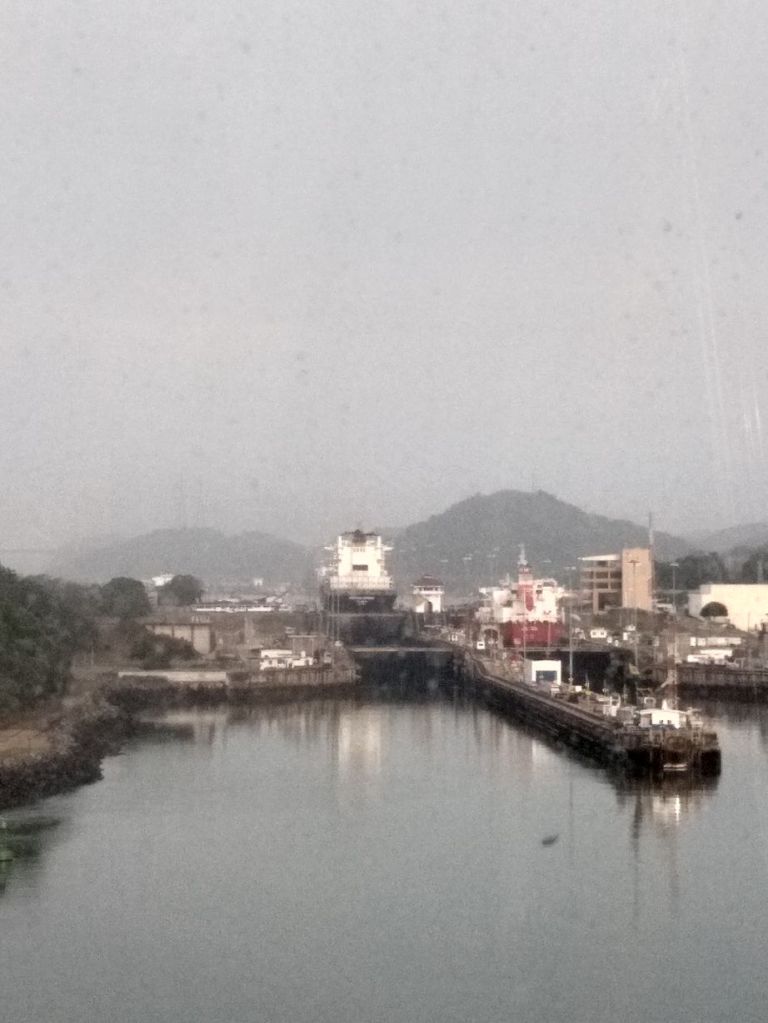
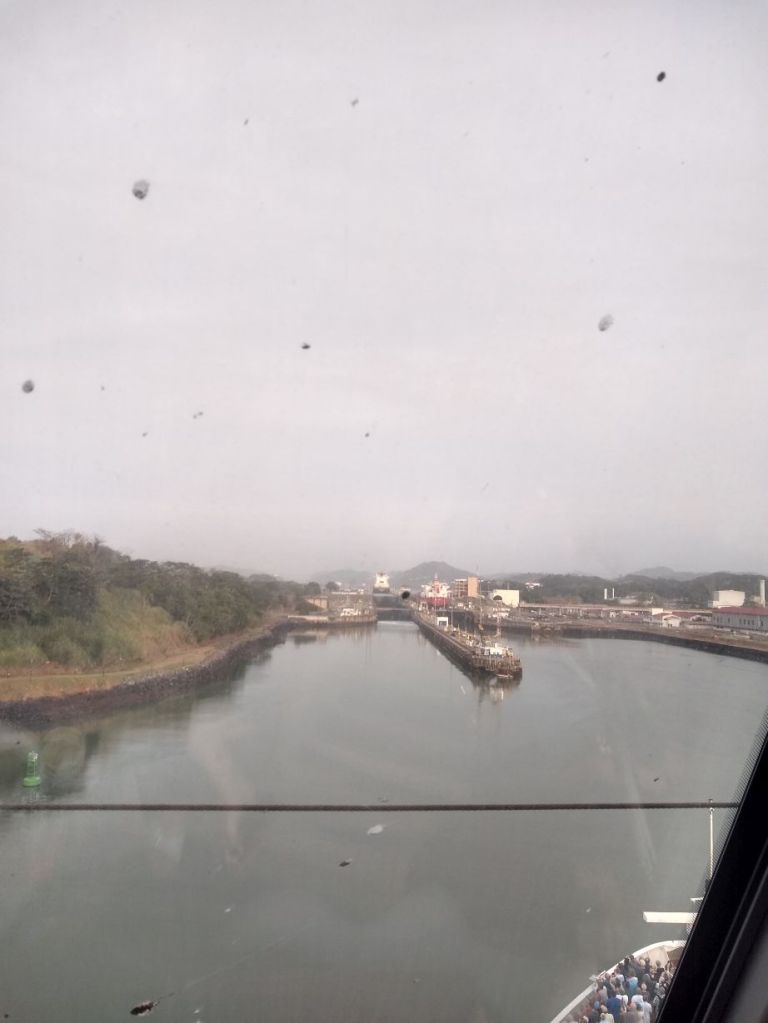
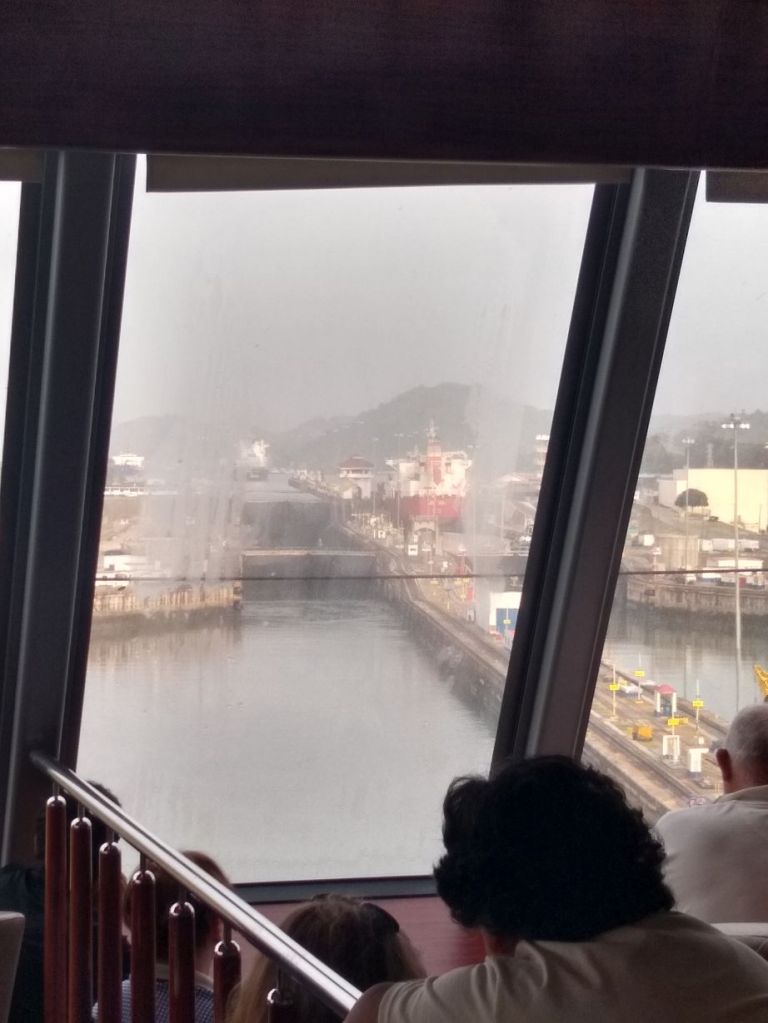
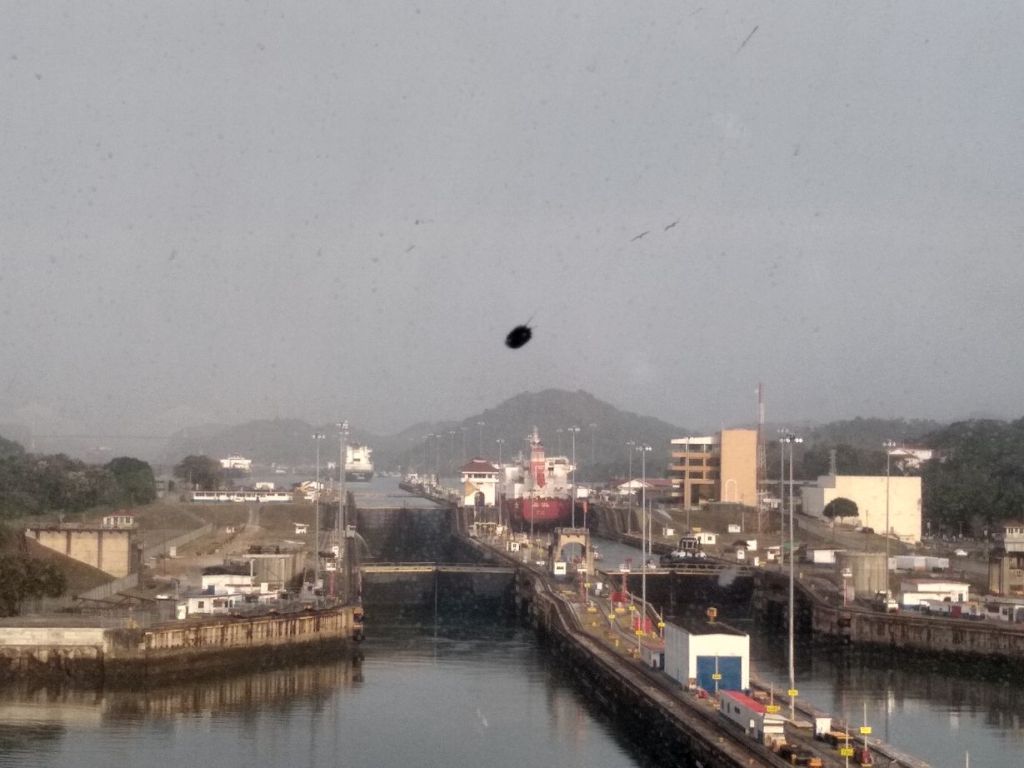
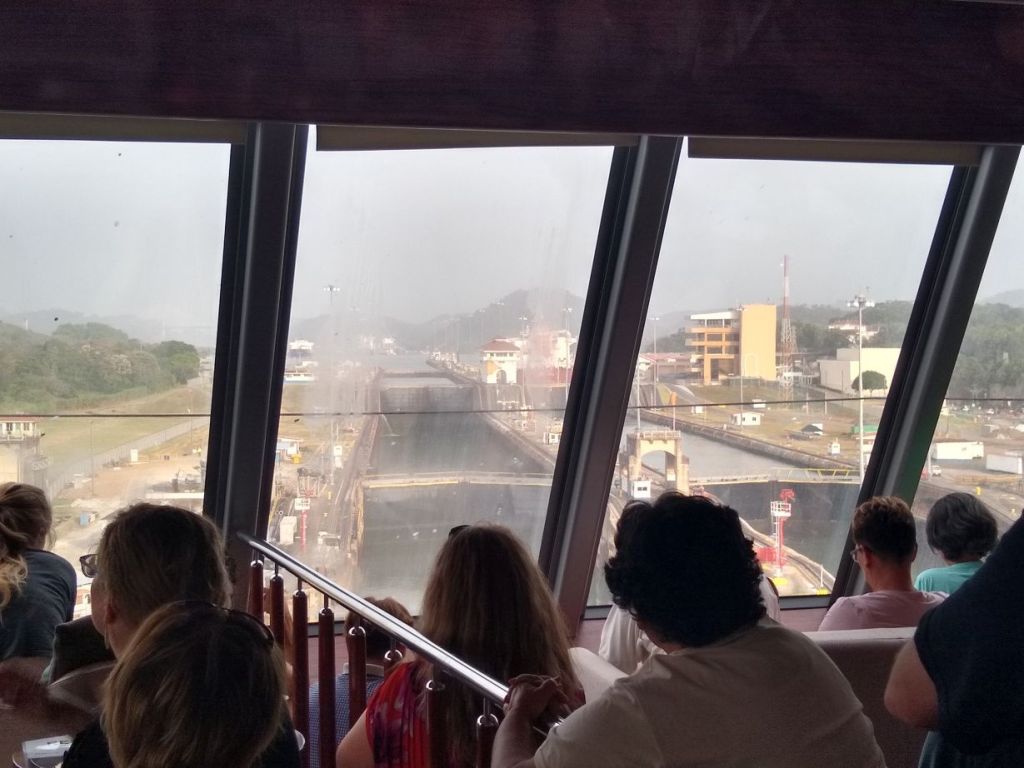
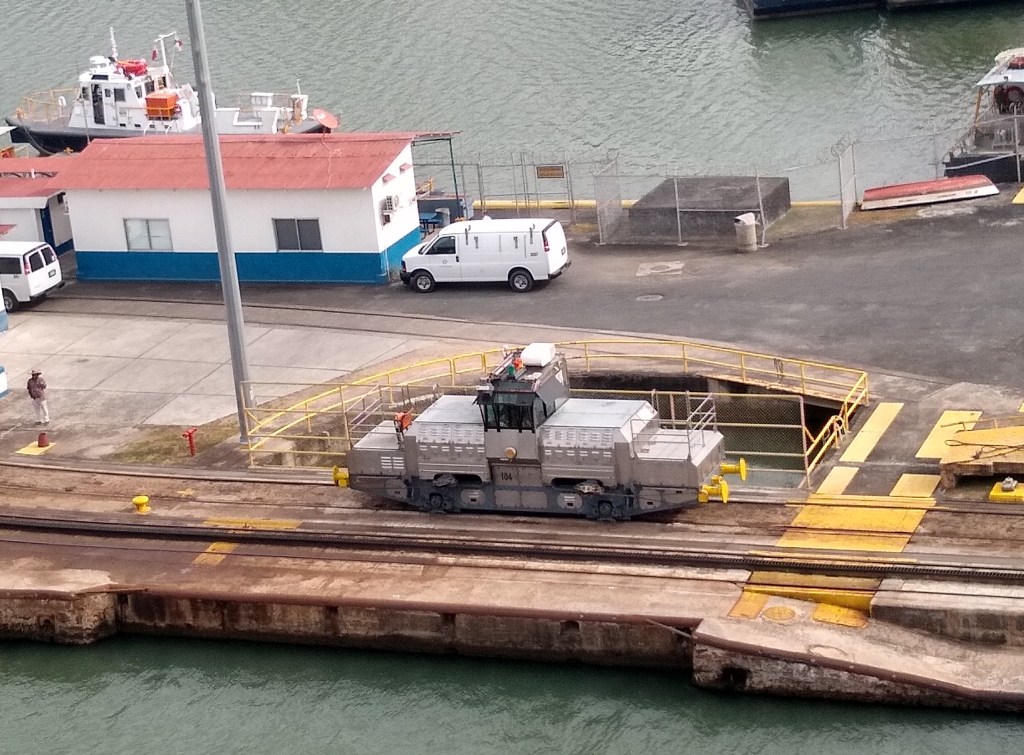
By a little after 8, we’ve abandoned our lounge seats after figuring out we can get better viewing by running back and forth on the top decks of the ship, and from our balcony. In this way we also don’t have to vie for window photo opportunities, constantly ask people to sit down or not block our view since we’ve been sitting here since well before 7am, or watch as people don’t pay attention and fall over the step in front of us – that was actually getting a little scary! Thus, we have front row seats to watch the mules (electric trains) pull us through the canal, get a close up look at the lock “damming” up the water (I’m fascinated by this….just riveted, seriously) and we can see up close just how tight a fit it is for even our moderate sized ship. We can also hang out and wave at the workers who line the balcony of the Miraflores Locks Headquarters as well as wave to the visitors who somehow got into the visitor center viewing stands early (they aren’t supposed to be open until 9, but there are a bunch of people there when we pass at 8:30).


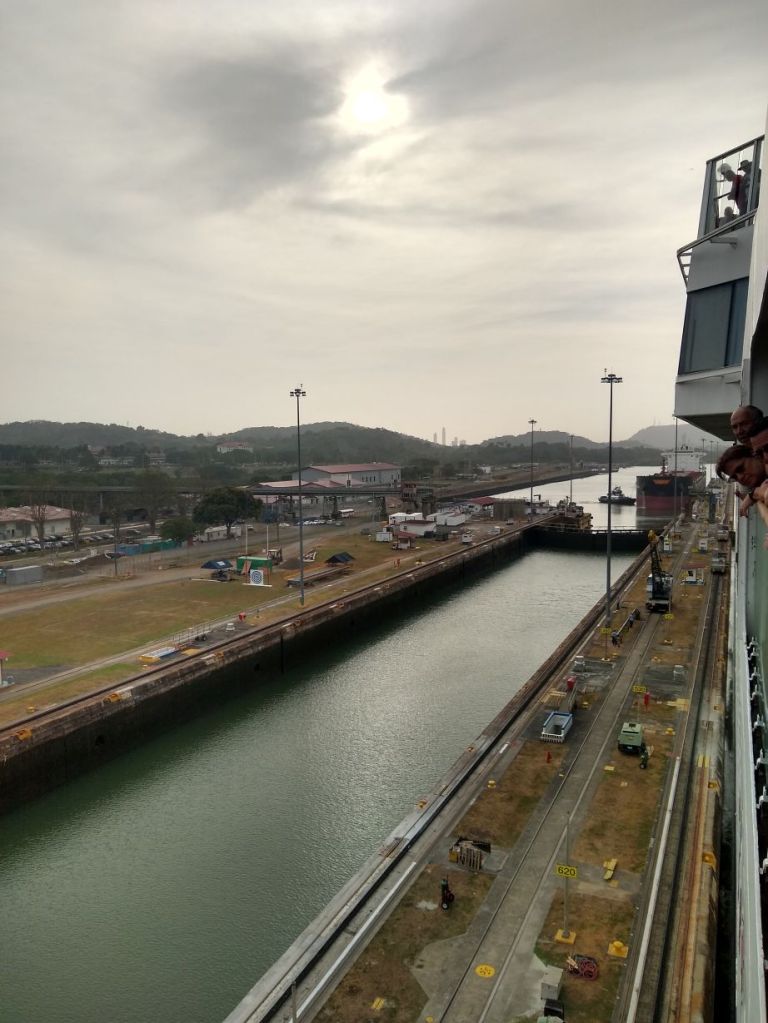
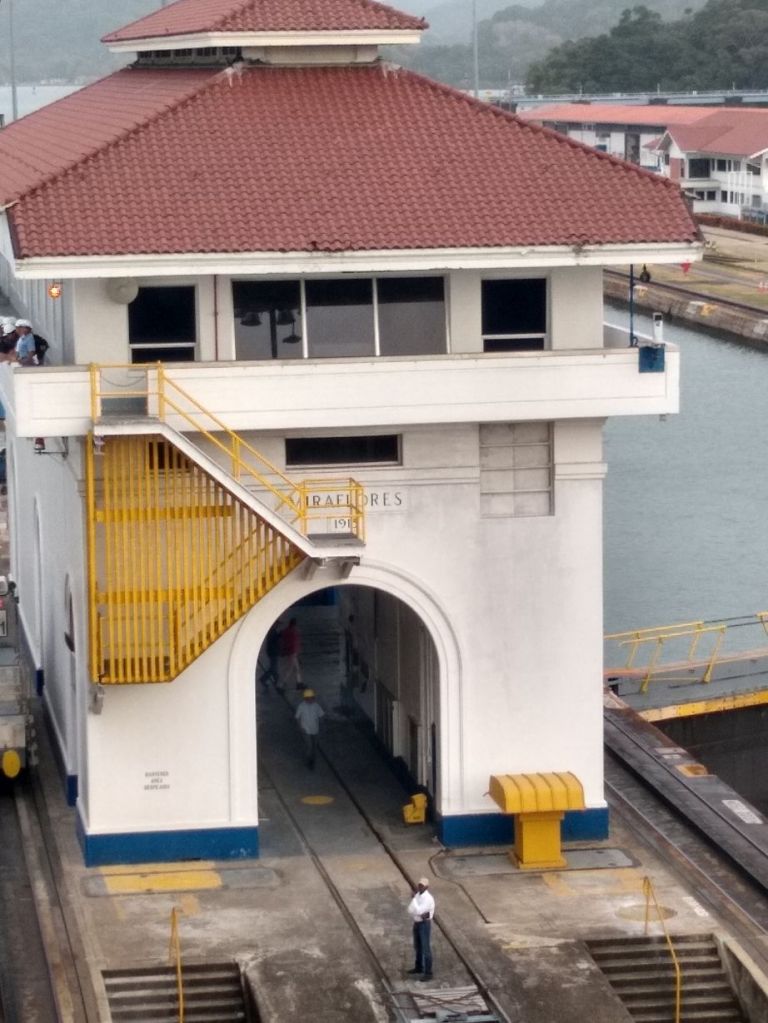
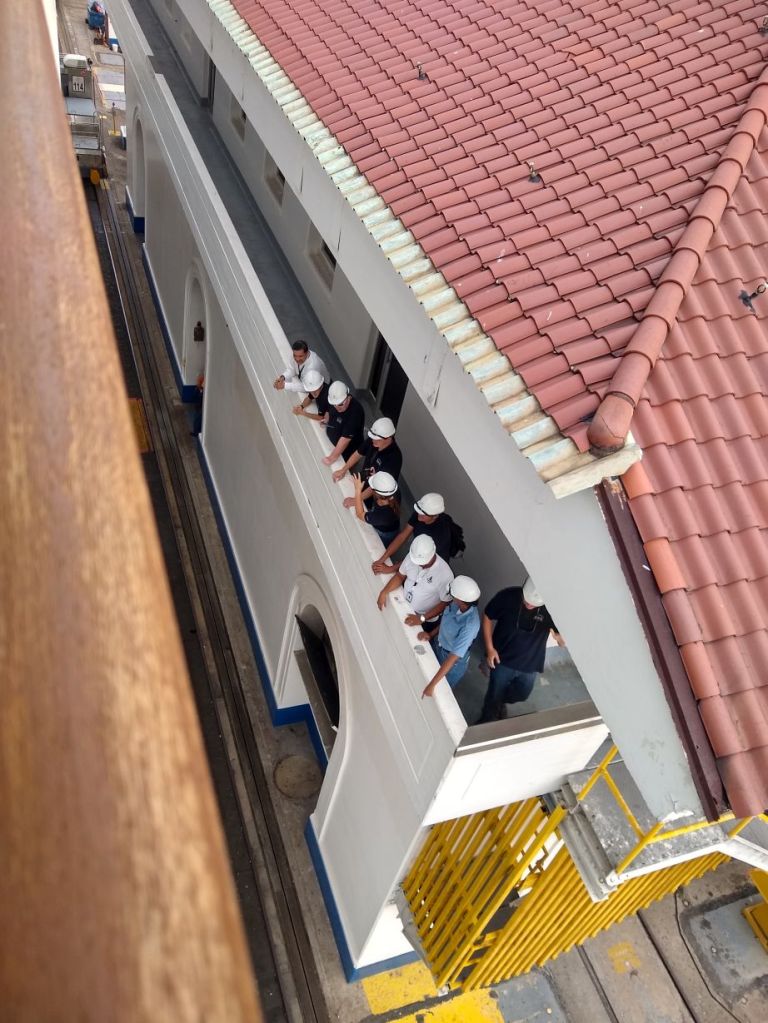
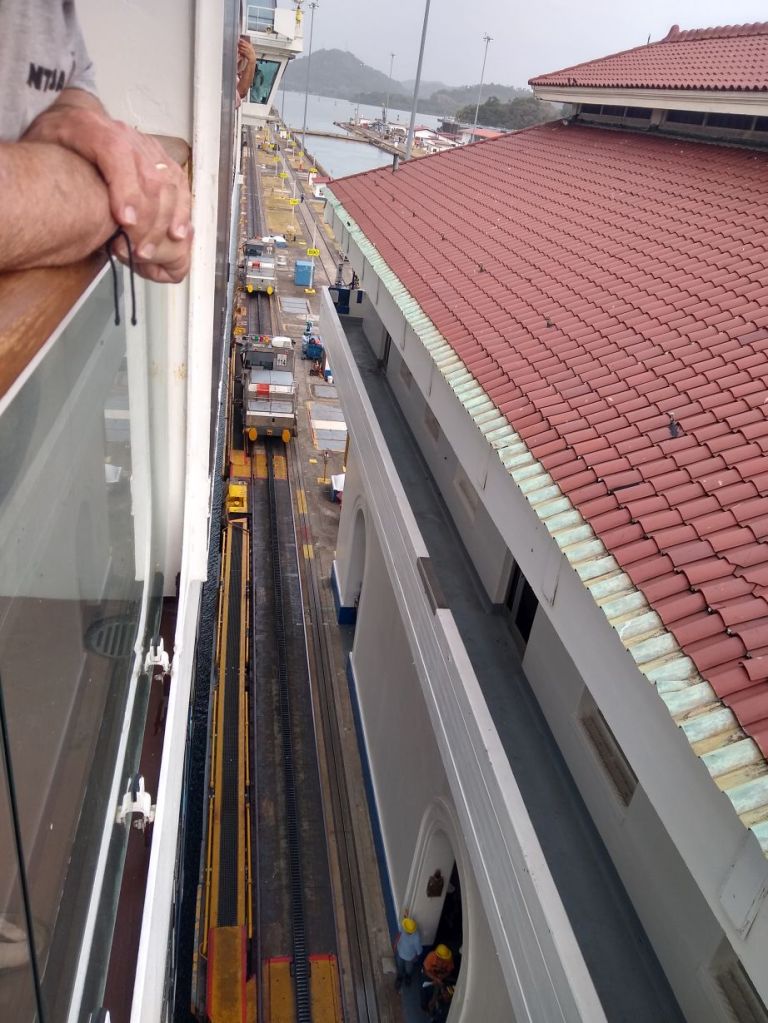
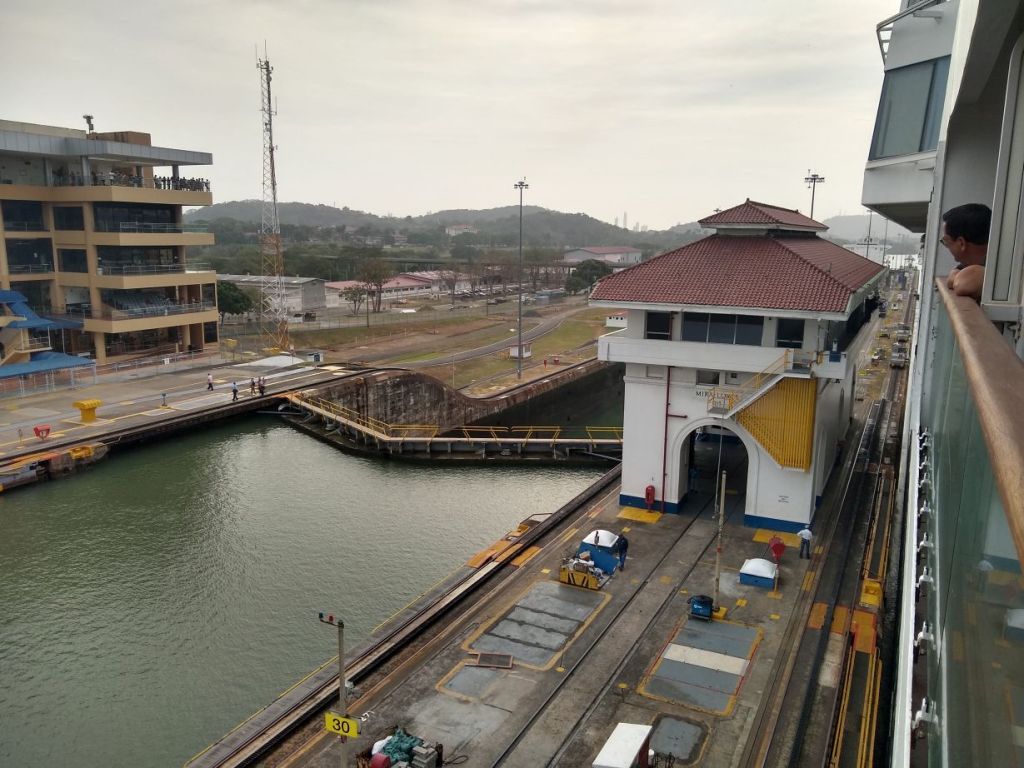
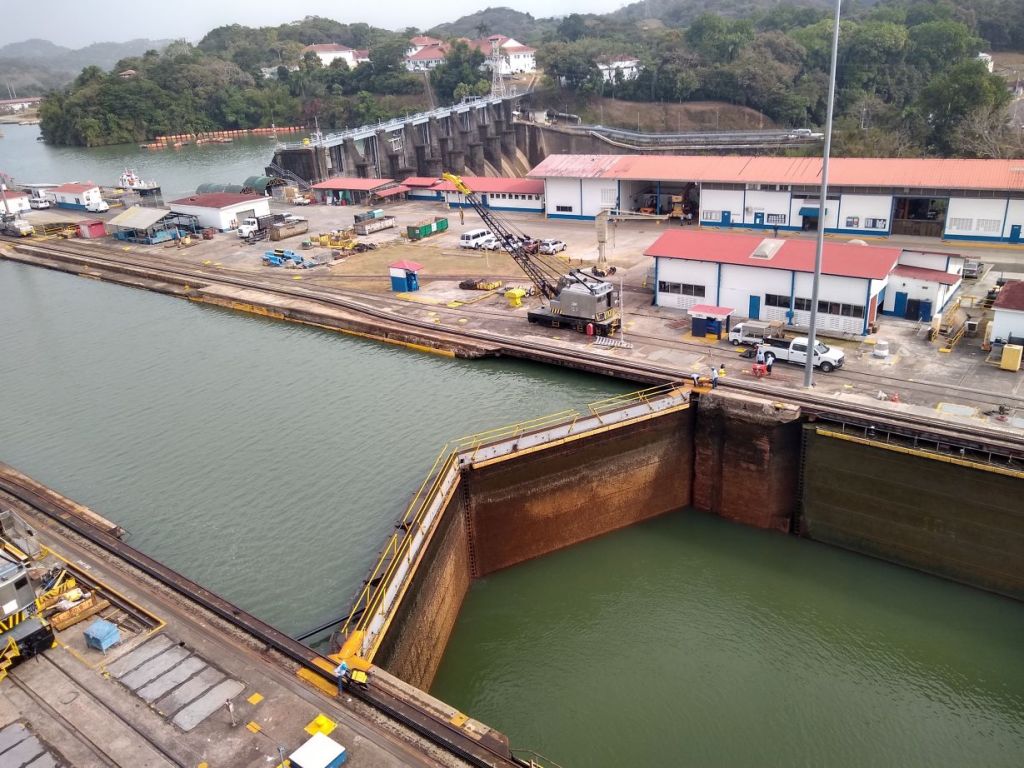
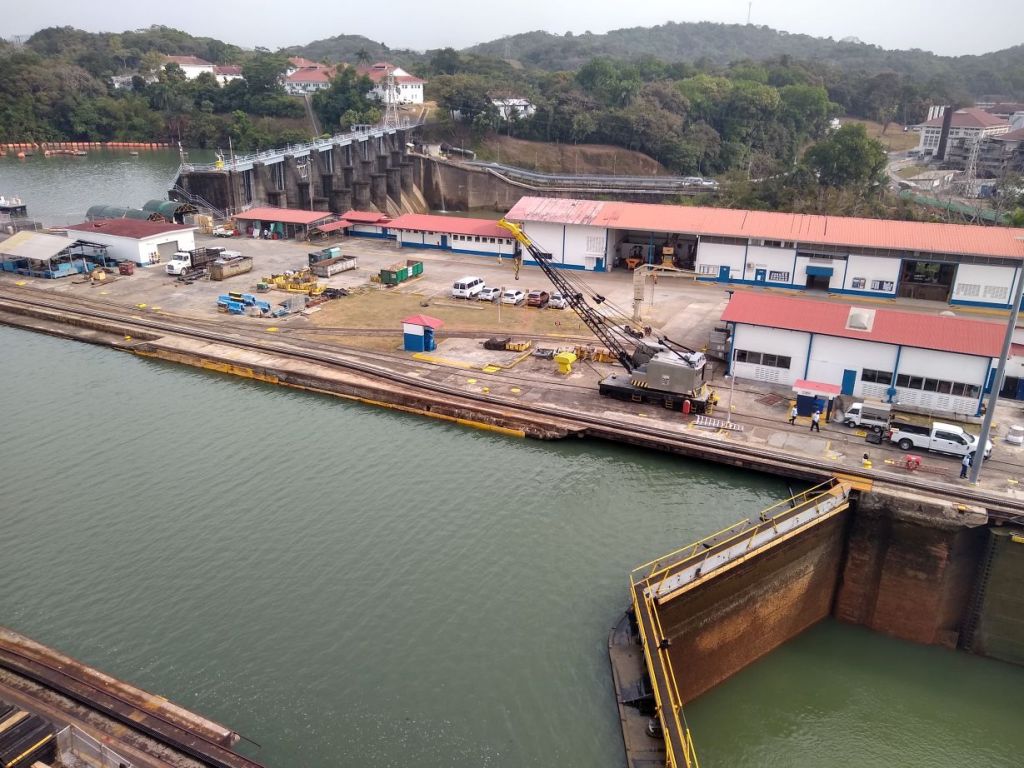
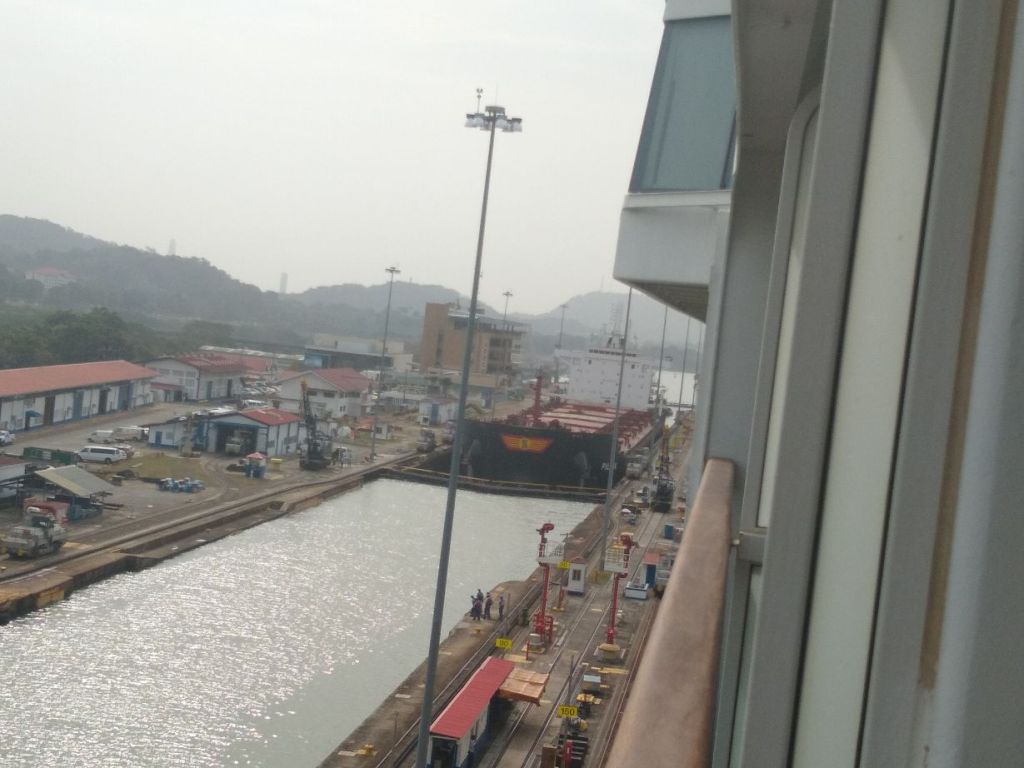
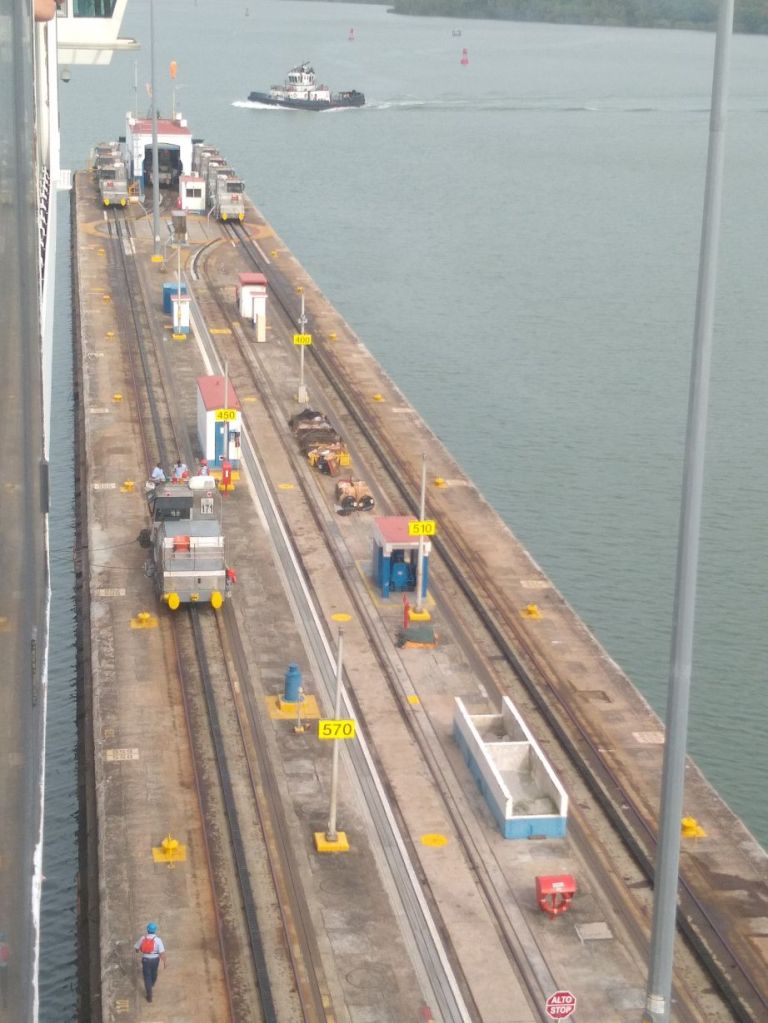
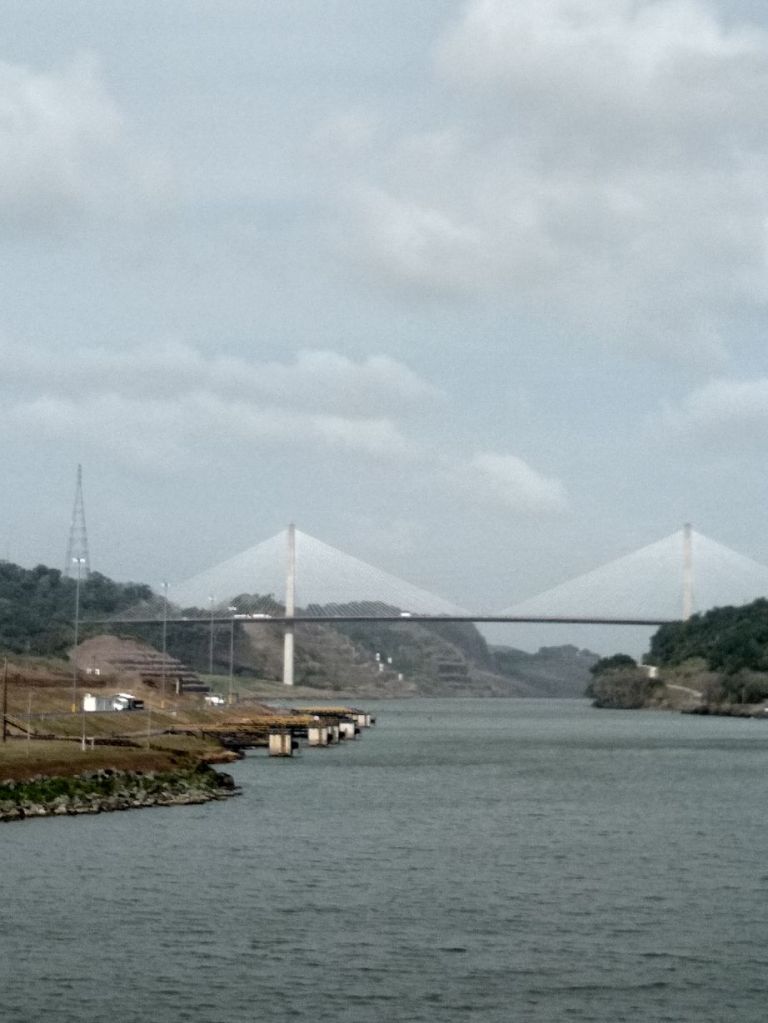
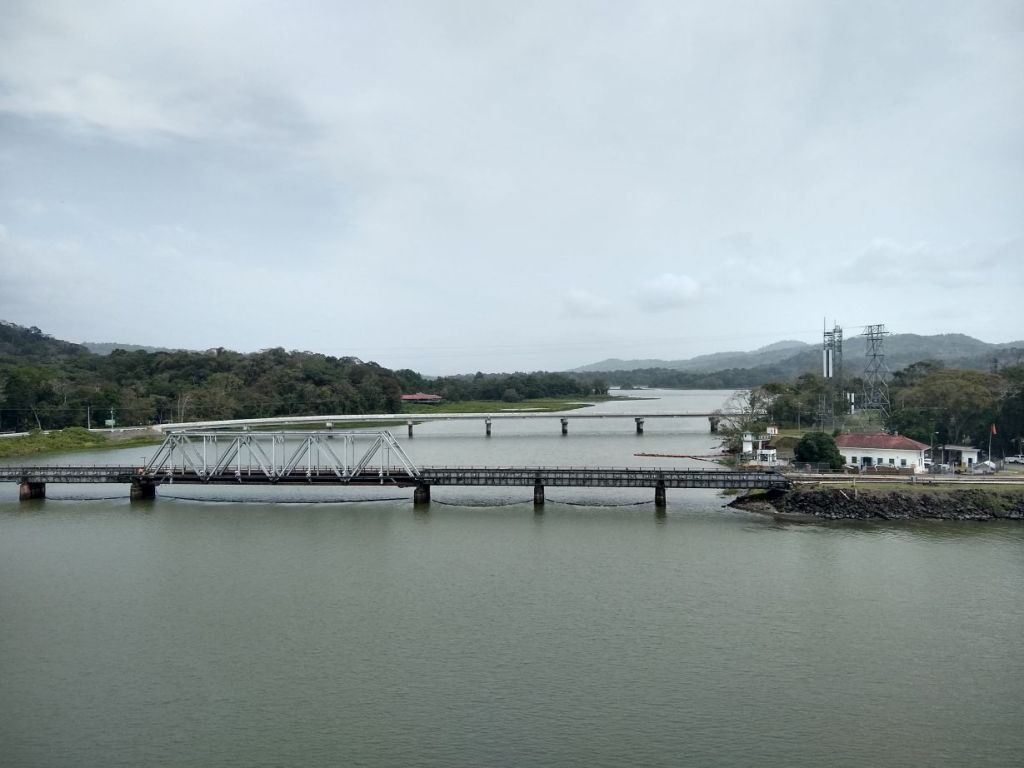
And, we’re out! Out of the Miraflores locks at 9:12am, and sailing through Miraflores lake to reach Pedro Miguel by 9:43 (yes, I kept time for the first 2 locks…then I sort of lost track with the Gatun locks!). On the way to Pedro Miguel, sitting rather forlornly on the banks, are the pieces of the old trestle bridge that used to span the canal, now, nothing but scrap metal, with a one of the huge Panamax ships behind it in the distance. No too long afterward, as we approach the Pedro Miguel locks, we run out to the promenade deck on port side to get a close up look at the locks, the mules and the fascinating metal lock gates mechanism. We’re so close, I think we could actually reach out and touch them – but we don’t dare! We like our fingers too much. LOL. We can also watch the big Panamax ship in the new canal off to our left and up above us by a few hundred feet as it works its way through the canal. Totally cool.


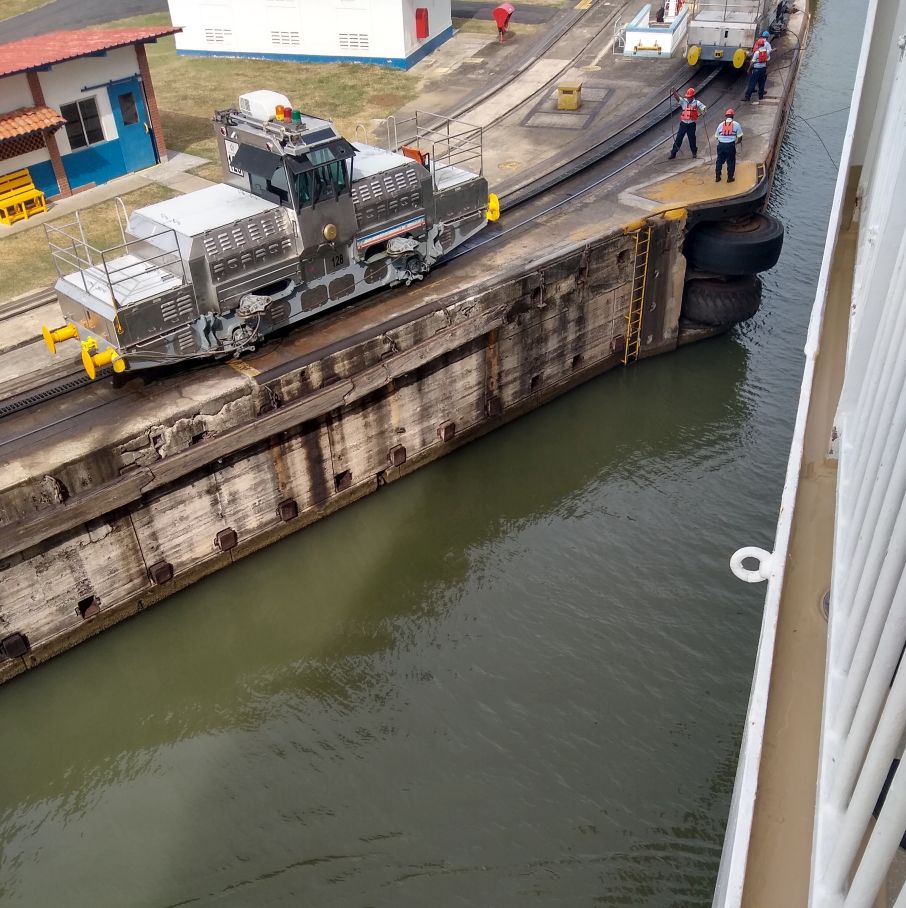
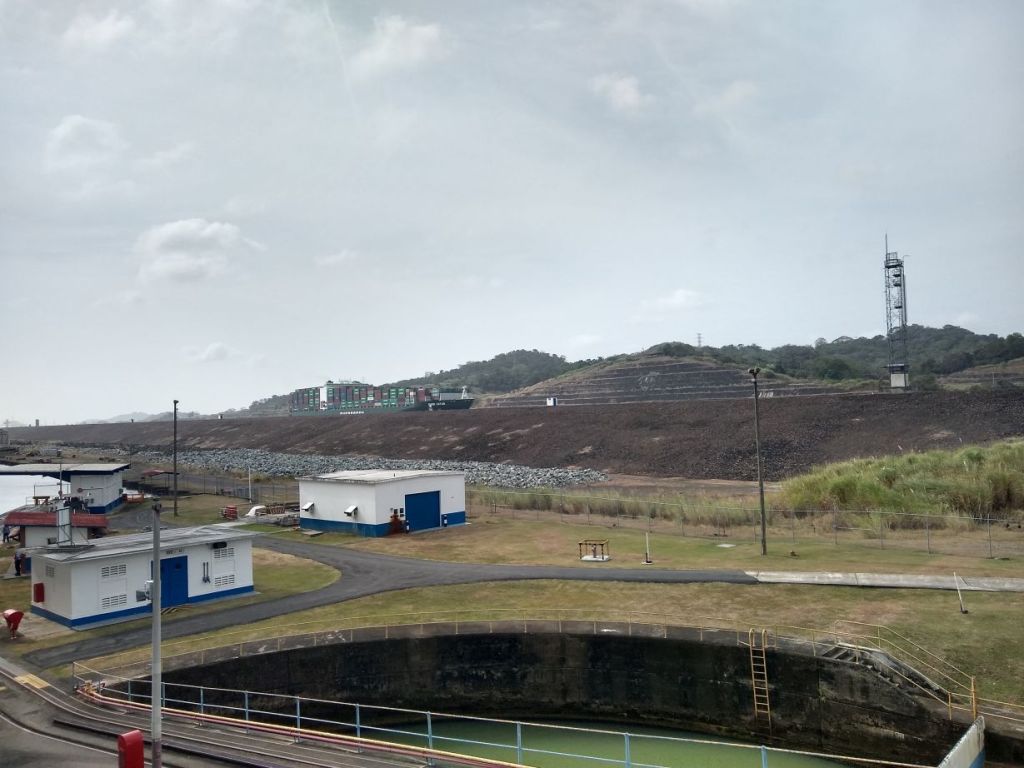
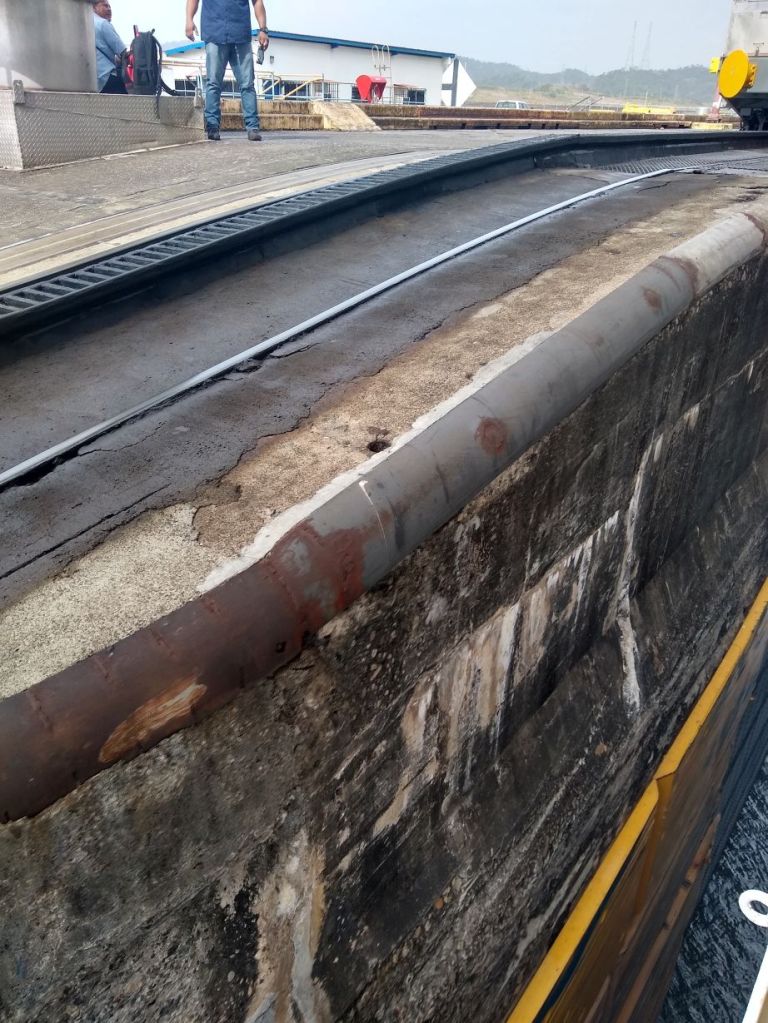
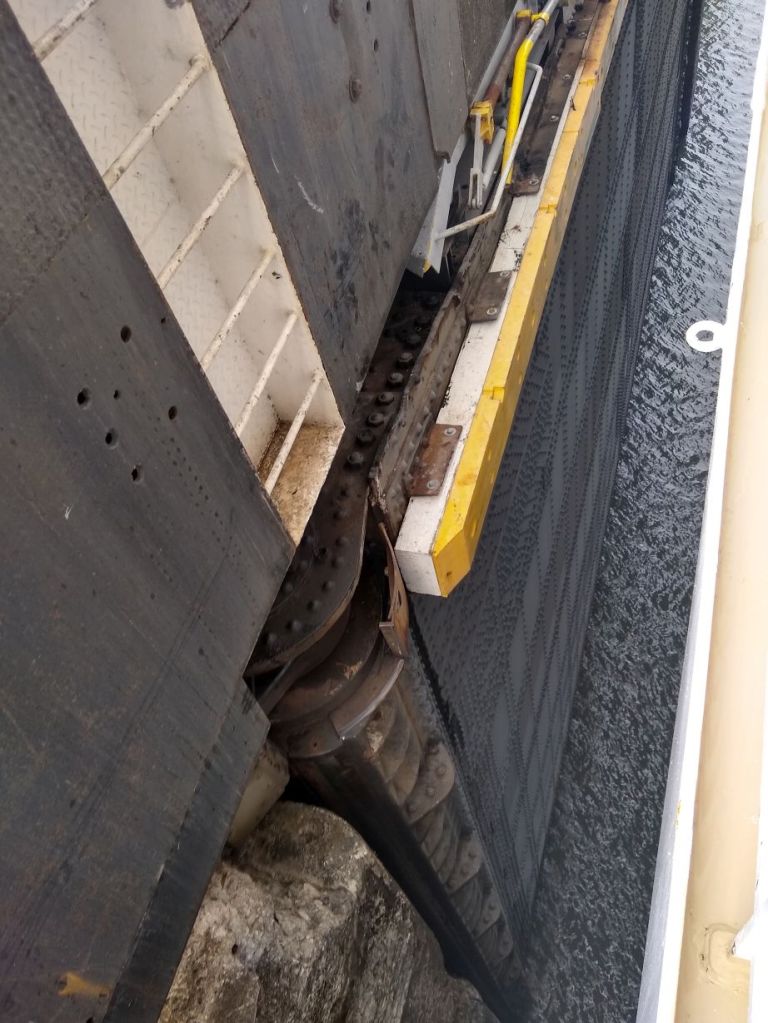
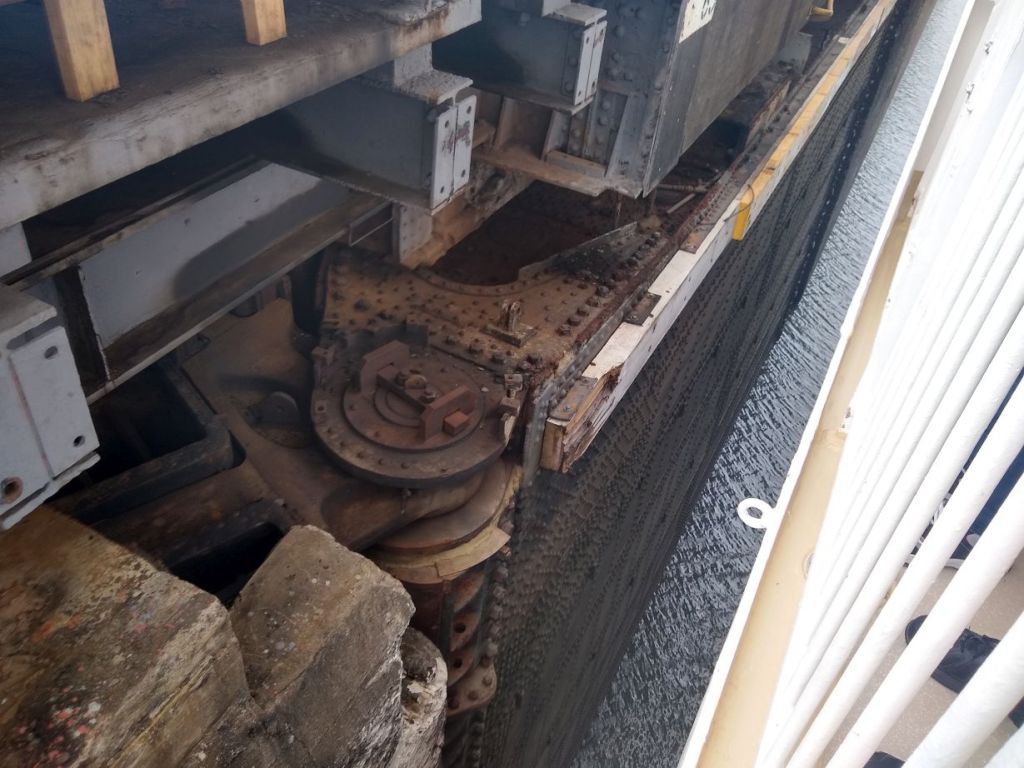
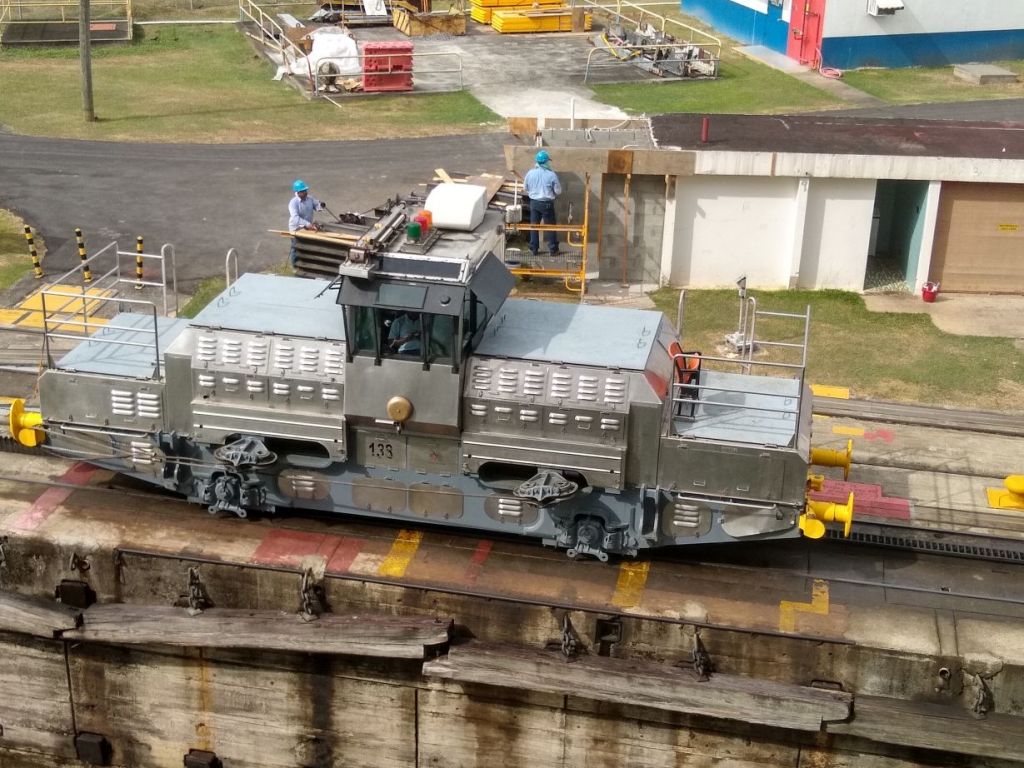
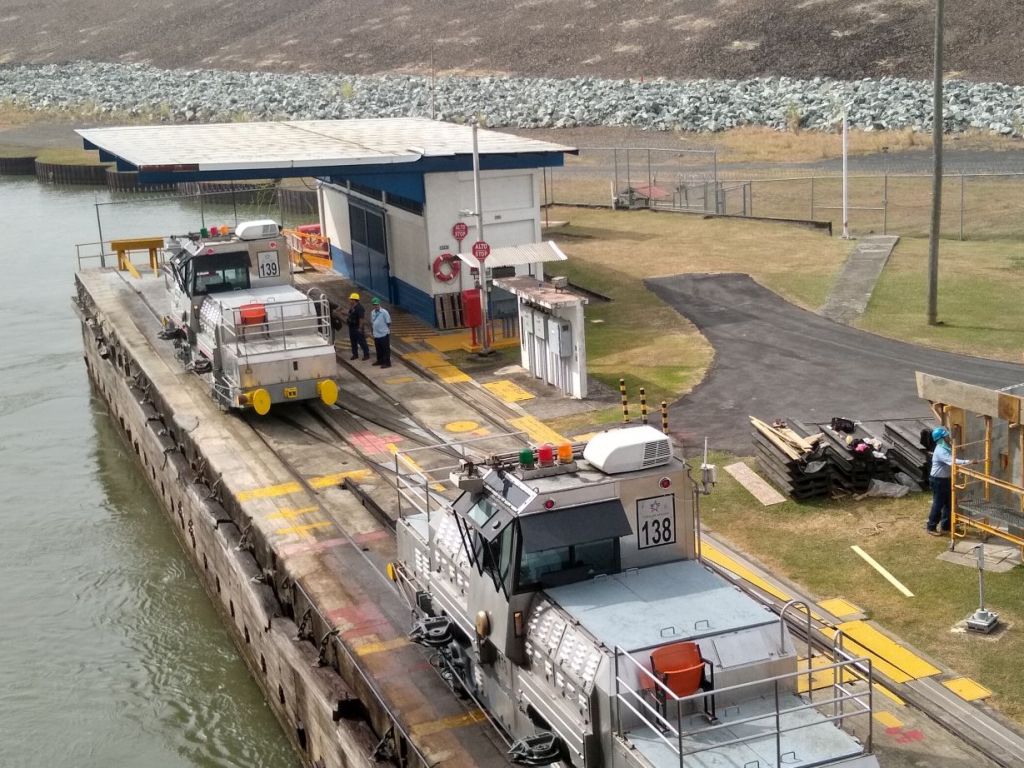
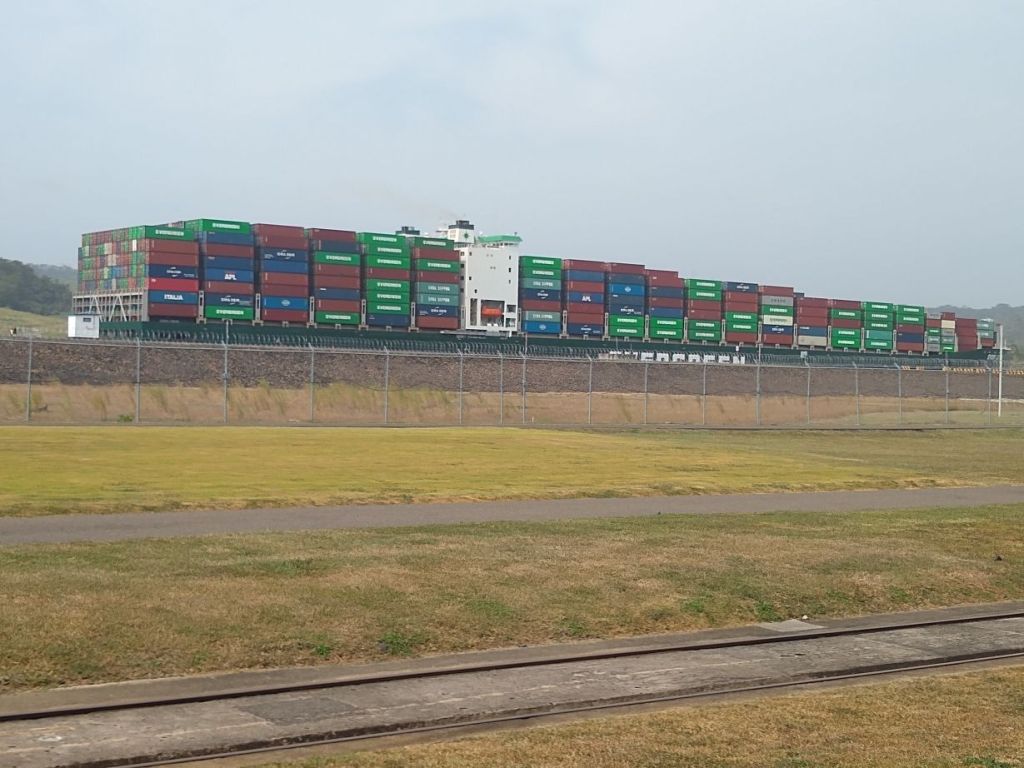
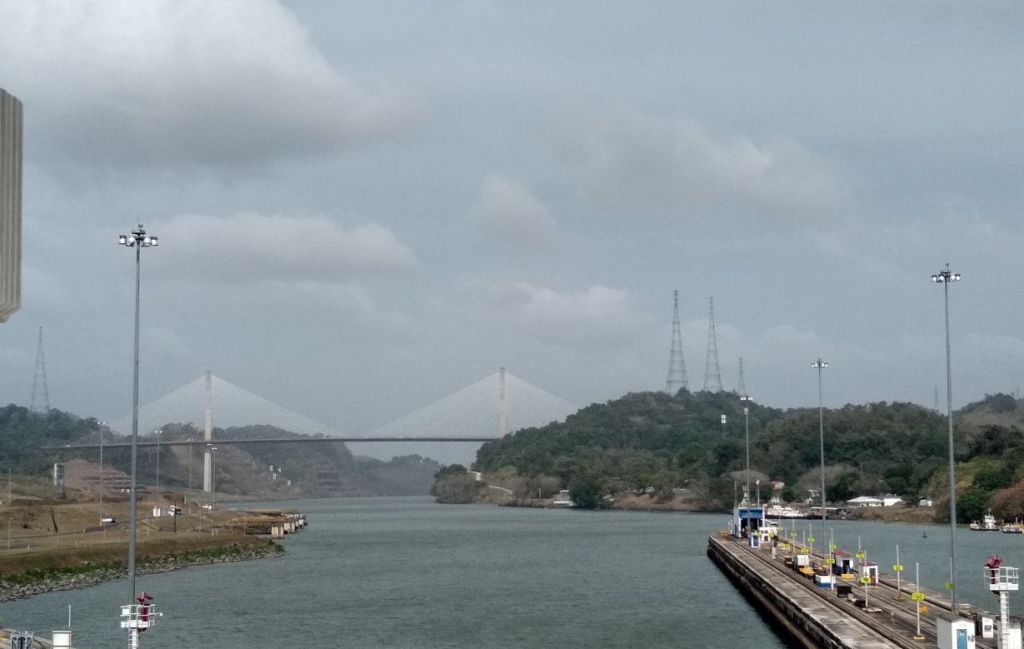
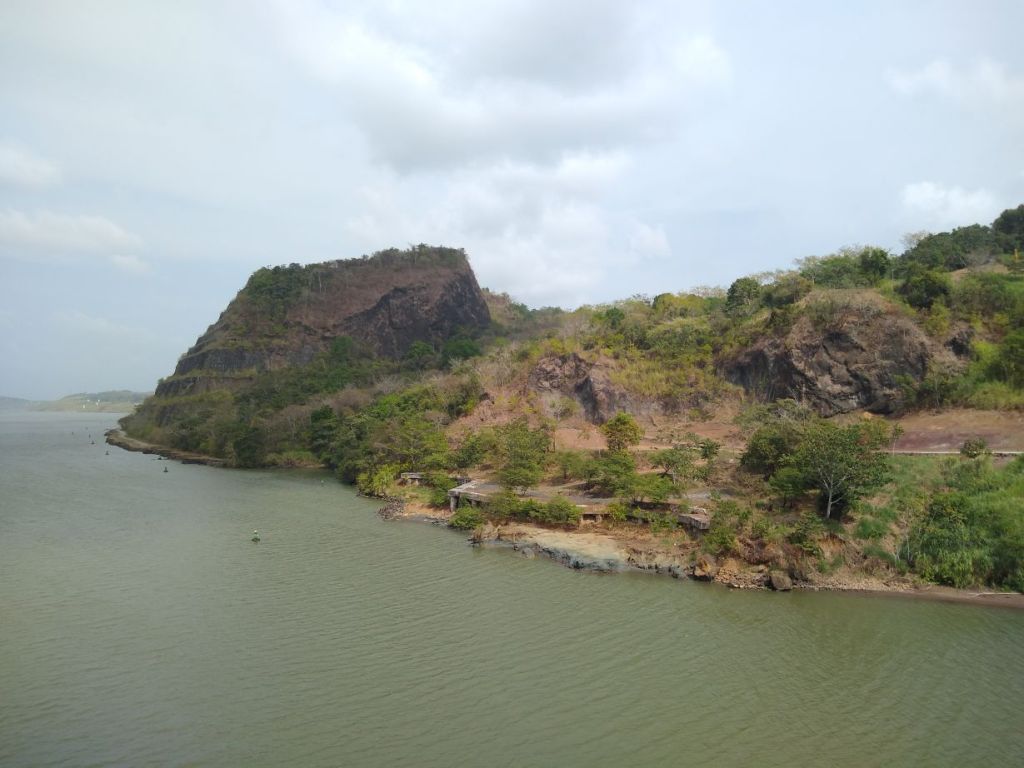
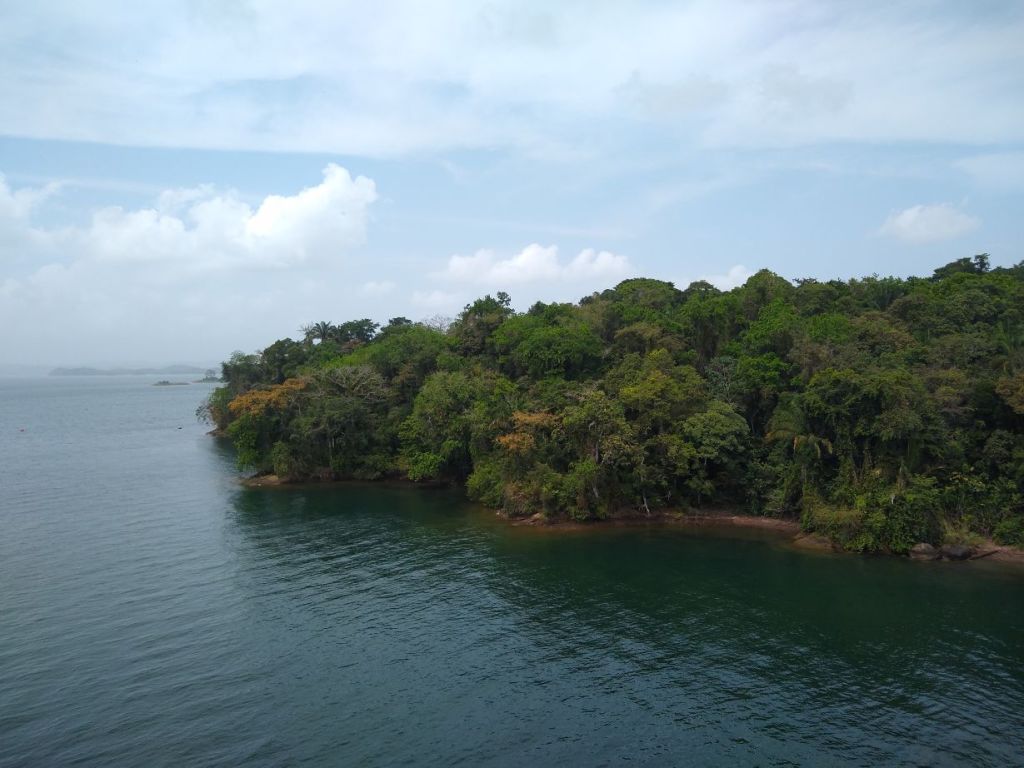
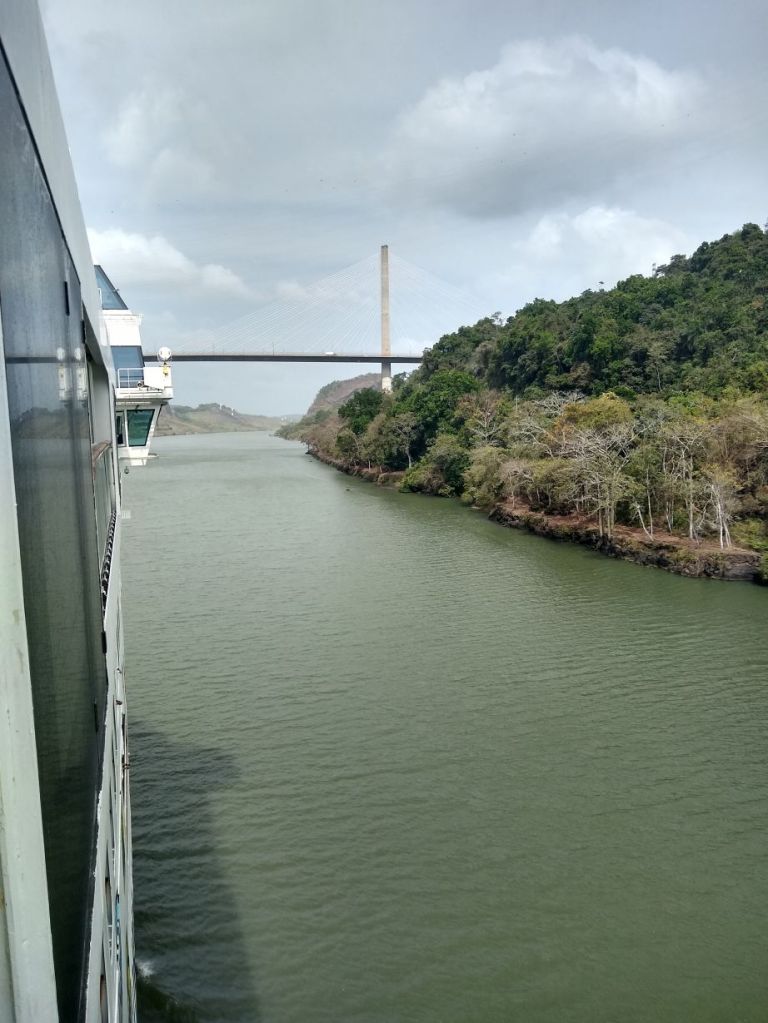
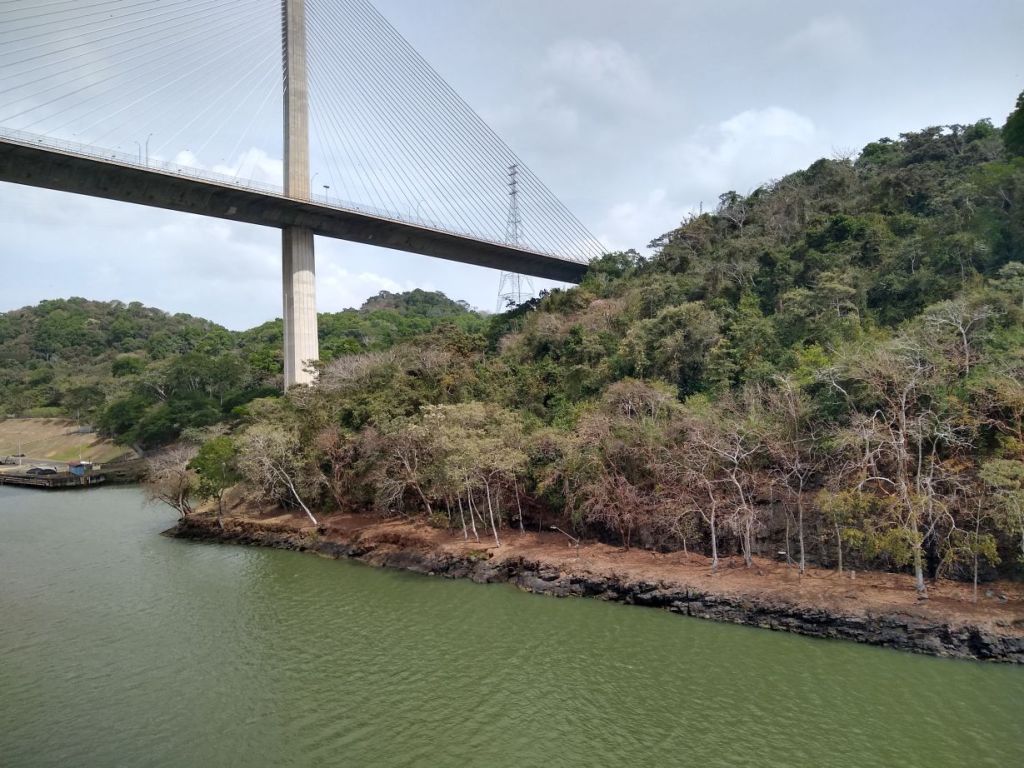
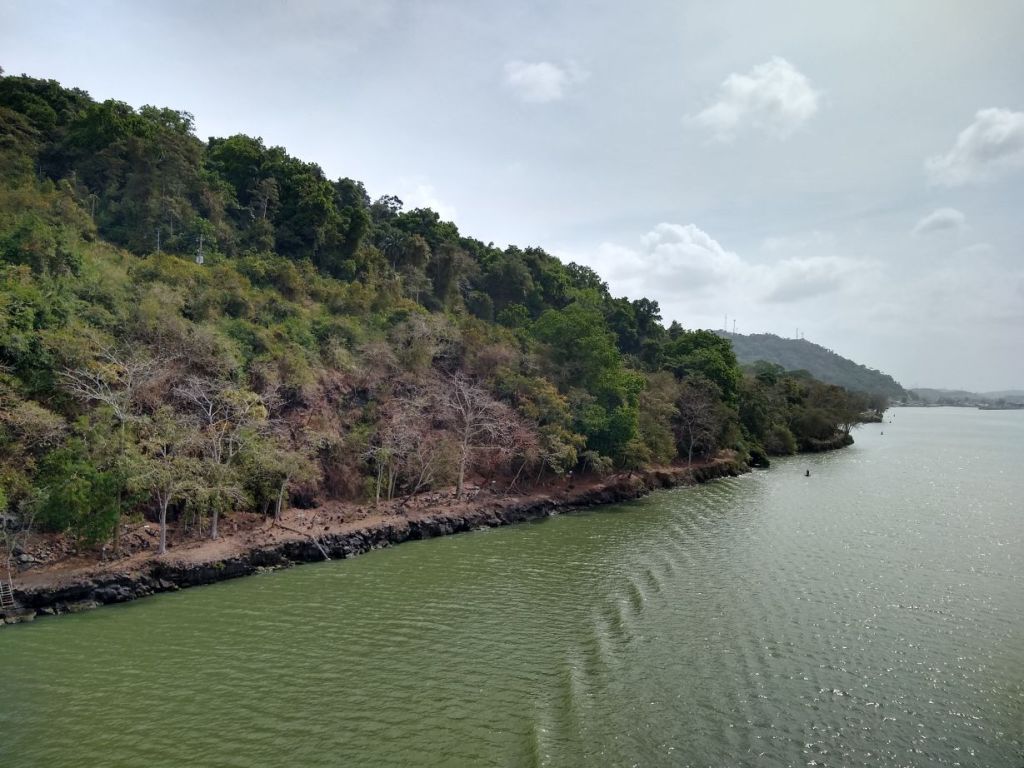
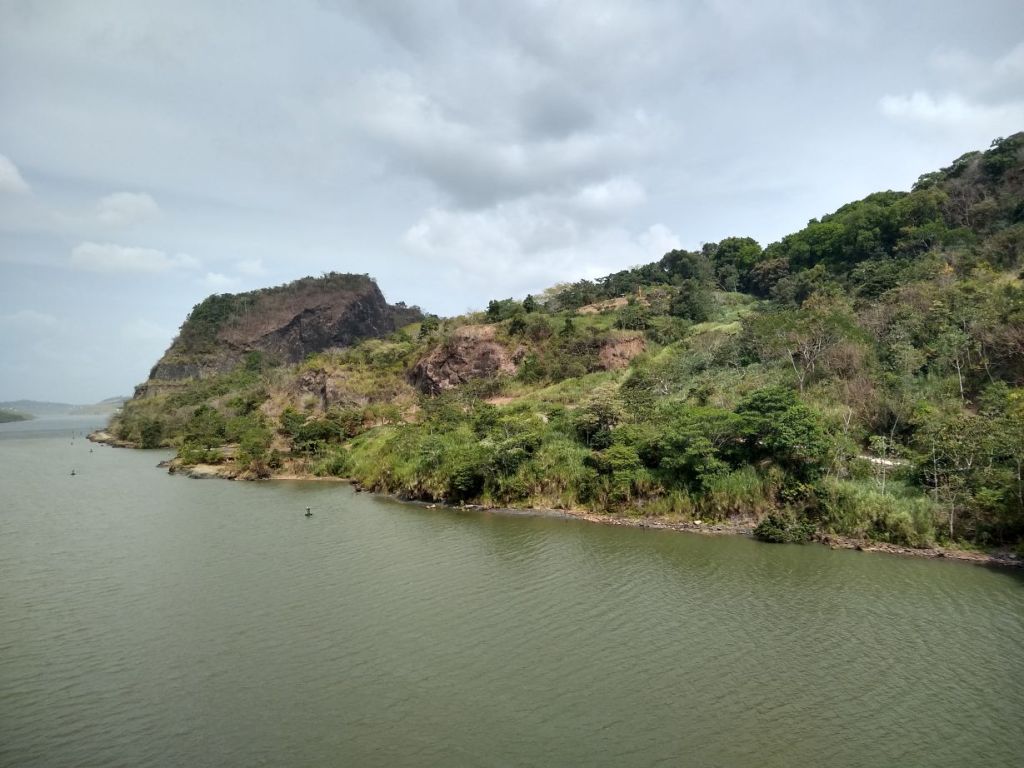
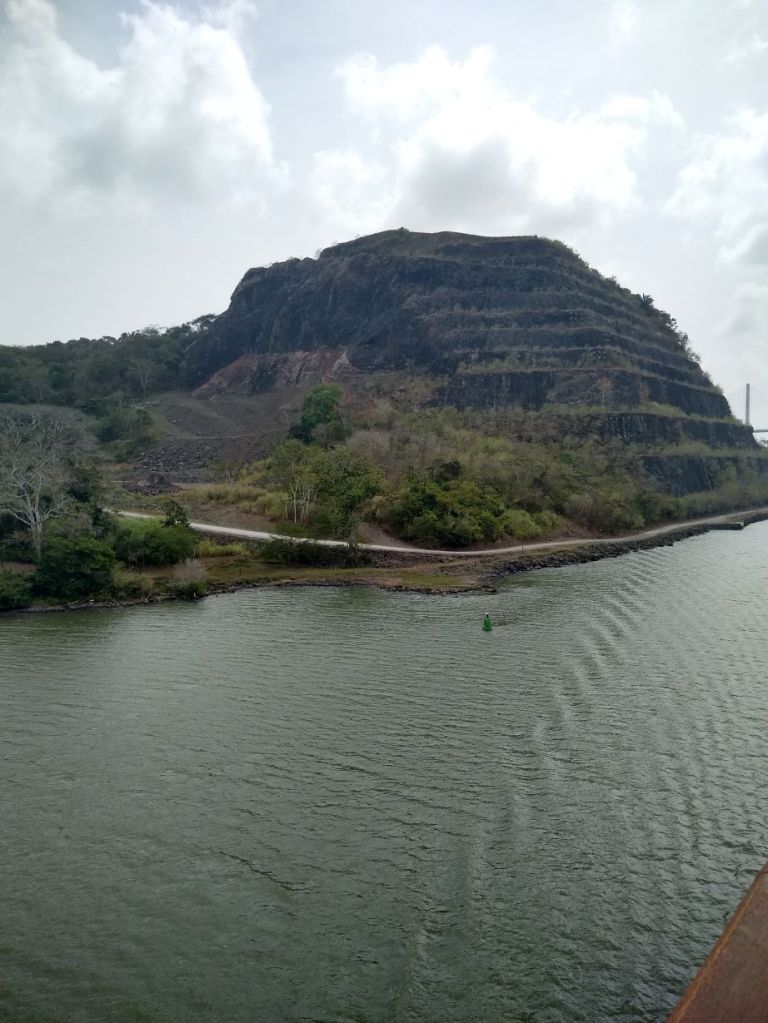
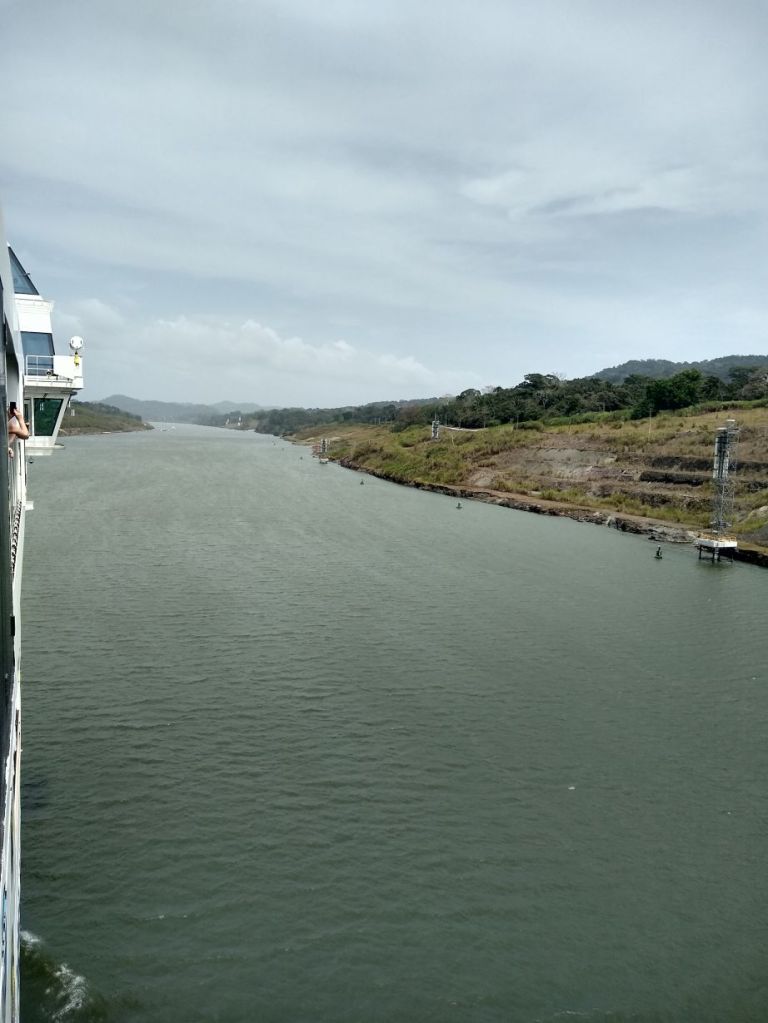
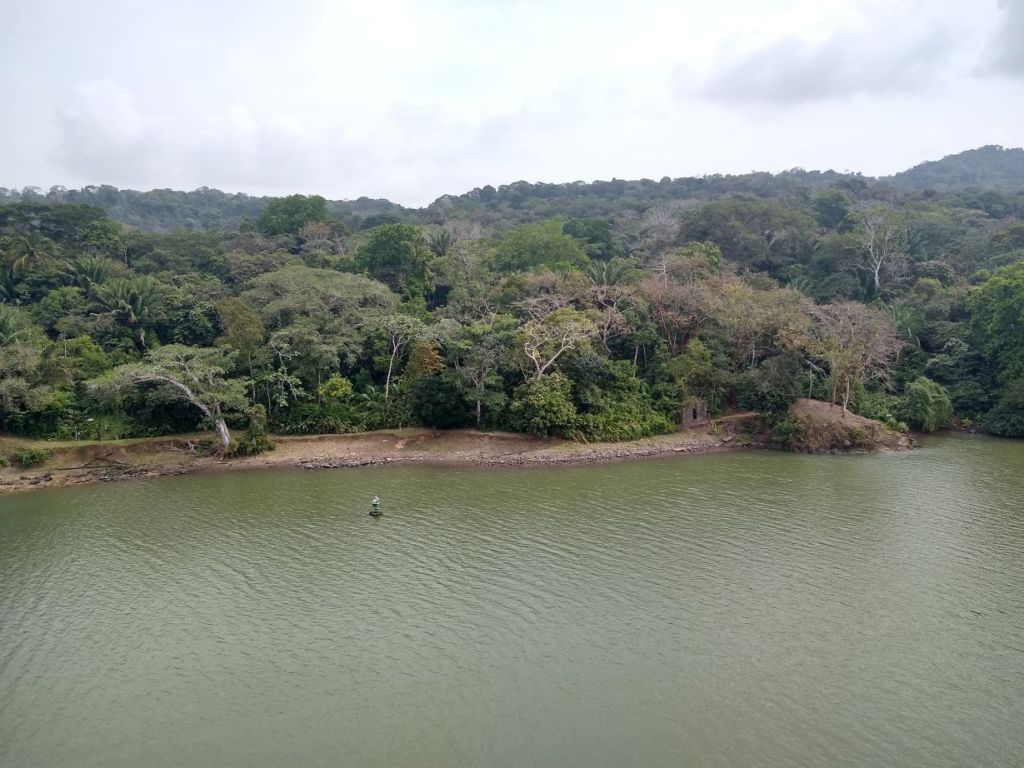
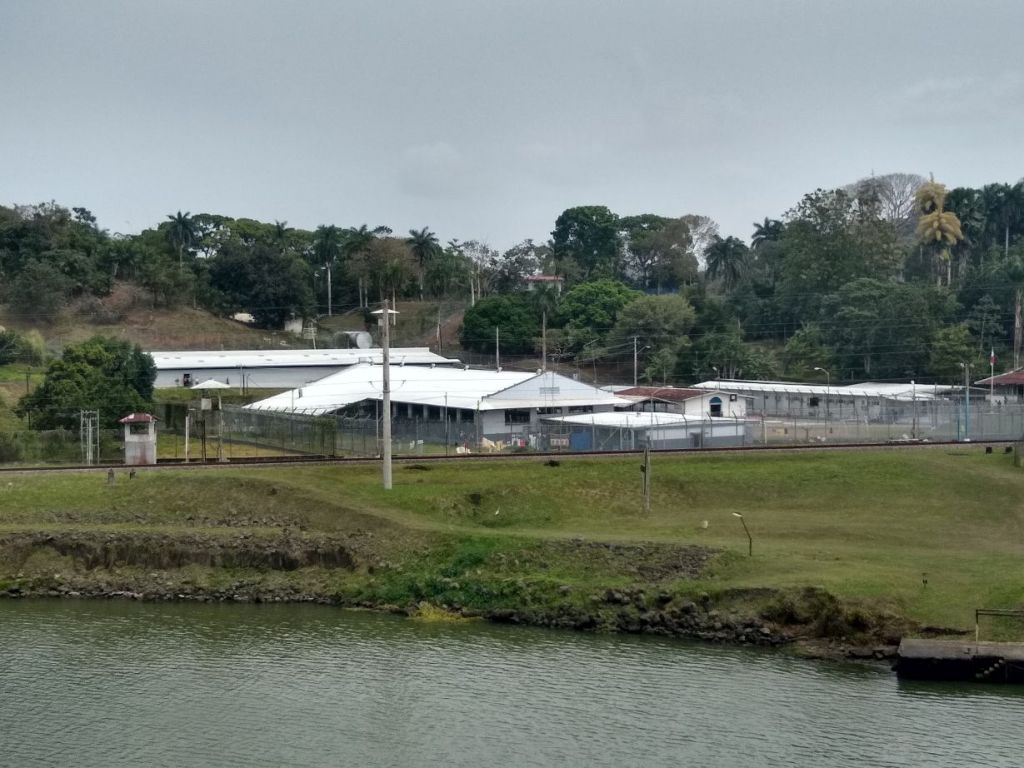
We leave the Pedro Miguel lock at 10:30 and start our transit through the aforementioned Culebra Cut, passing under the Centennial Bridge and into the cut itself with its stair stepped hills. It will now take us a little over 2 hours to sail through the cut and finally into Gatun Lake. The scenery is incredible, the huge terraced hills, the greenery, it is like sailing down a broad river. After an hour, we pass by El Renancer, the prison where Manuel Noriega was held, then moments later we sail by the entrance to the Chagres River, the main source of water for the canal and one of the few rivers that flow into two oceans – the Pacific through the canal and the Caribbean at its natural mouth.


 Andiamo