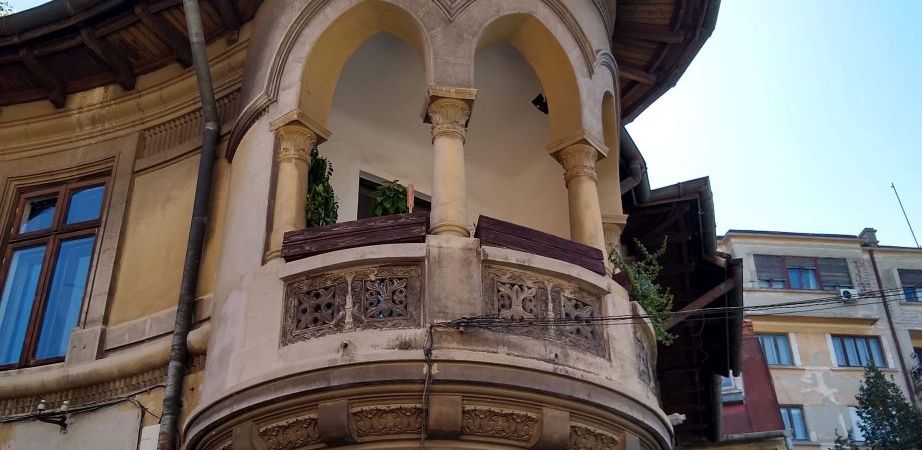
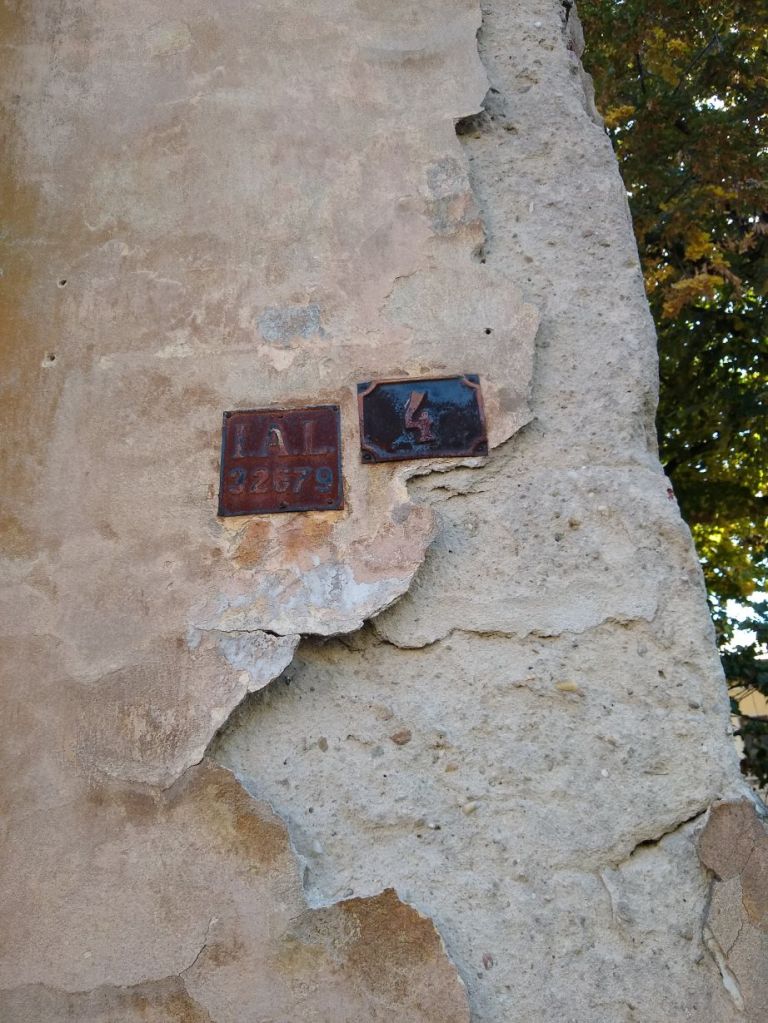
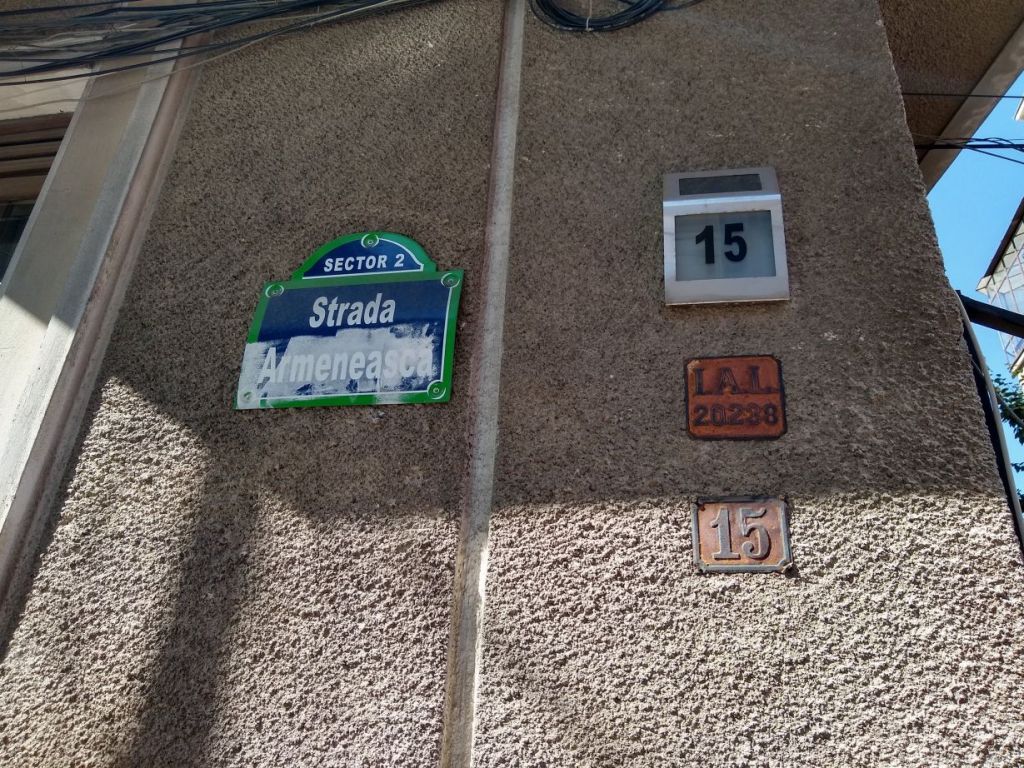
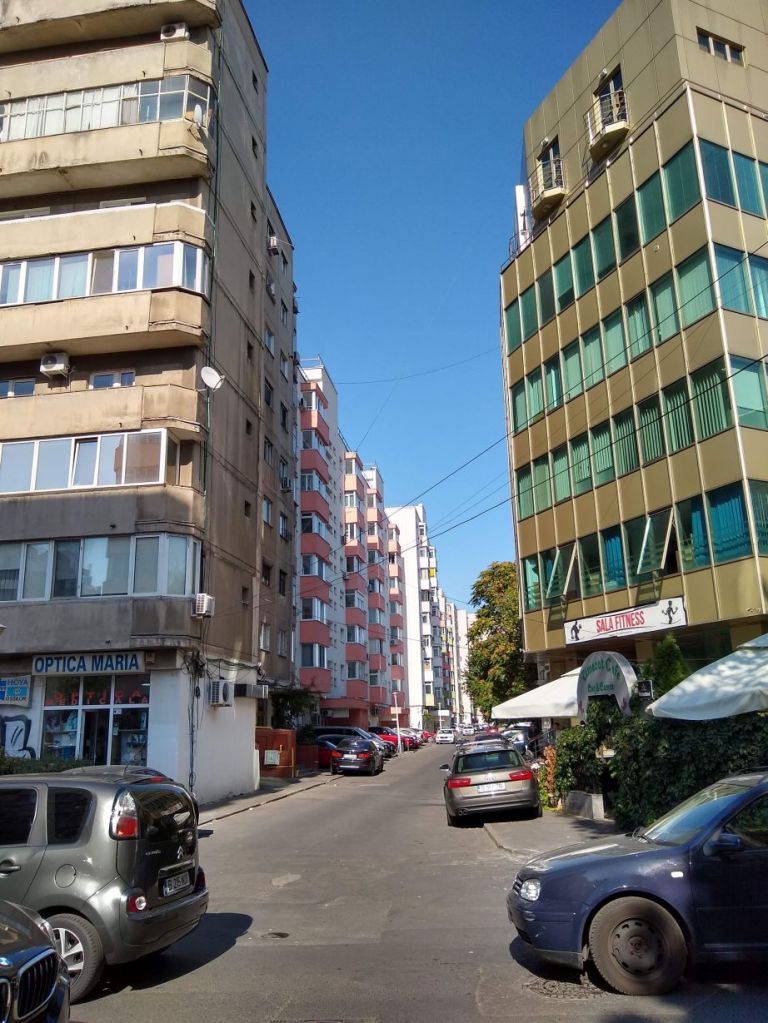
Snacking over, we traipse out onto the street for our next lessons. As we pass buildings, we look up to see large red circles attached to the walls, indicating the building won’t withstand an earthquake. Virtually every building also has a number stamped into the concrete or on a plaque affixed to the wall. These are from a communist era numbering system, which placed a number on every single building in the city. We asked if there were archives that traced the history of each numbered building, but sadly there is not. A not-for-profit that was starting a small piece of an archive with the numbers, but nothing exists city-wide. Now that would be a fun (well, maybe not fun exactly, more like frustrating!) and long-term project.
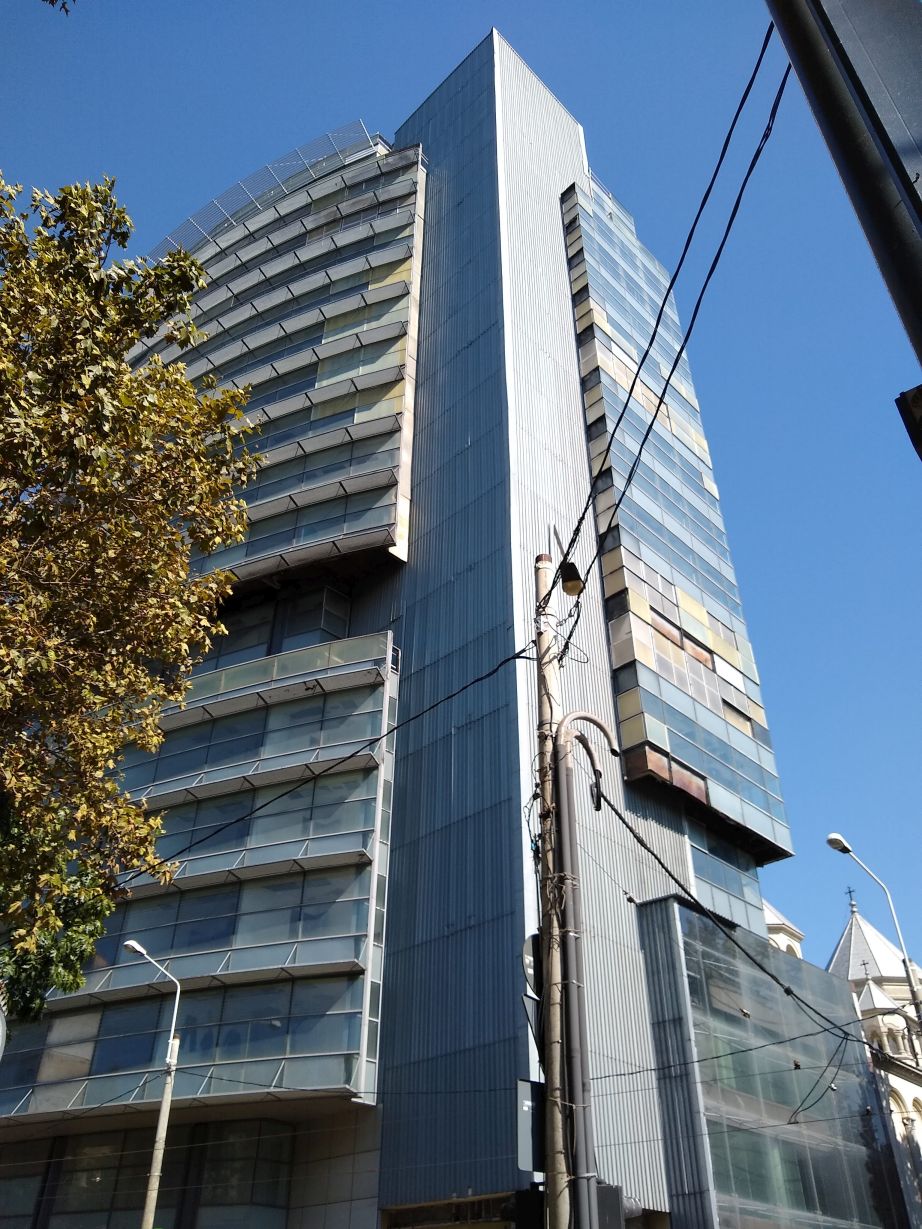
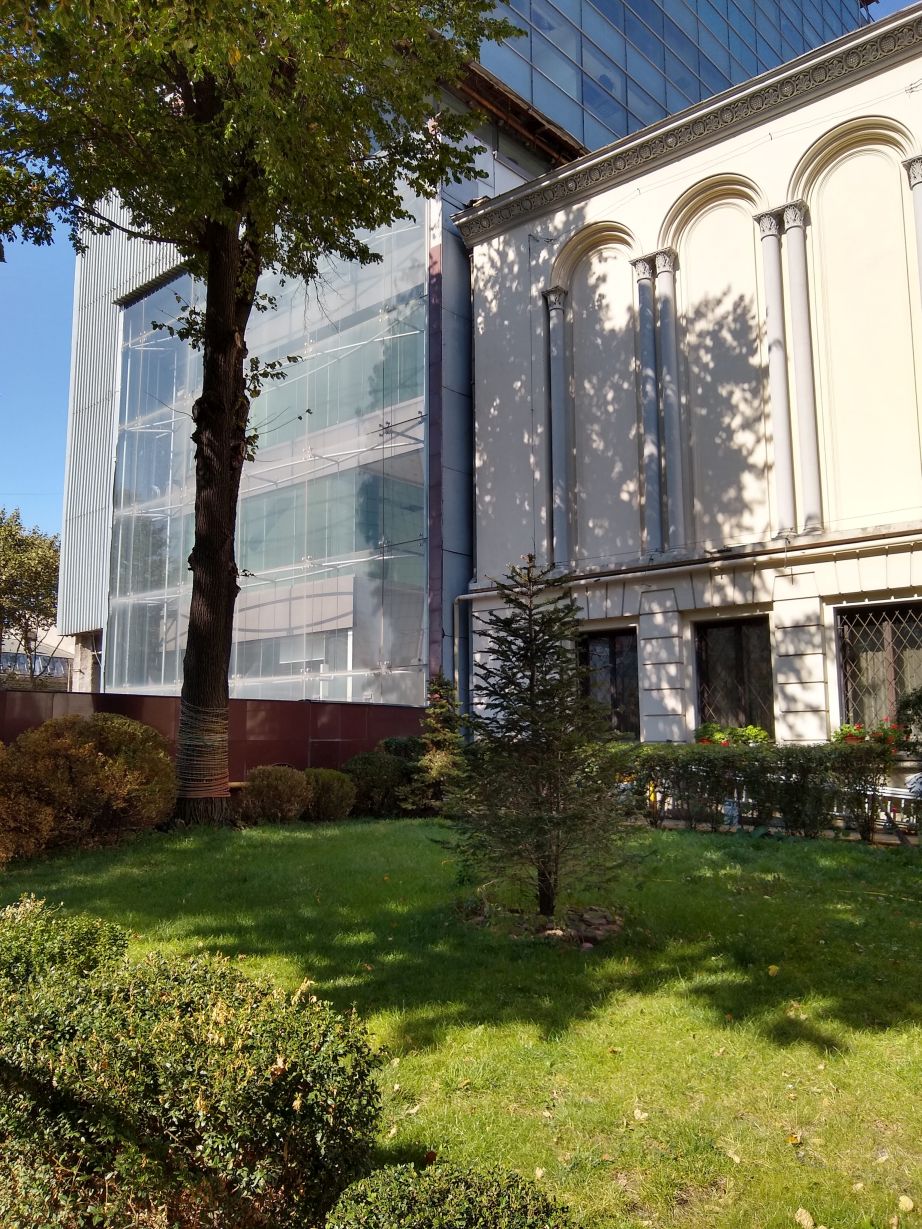
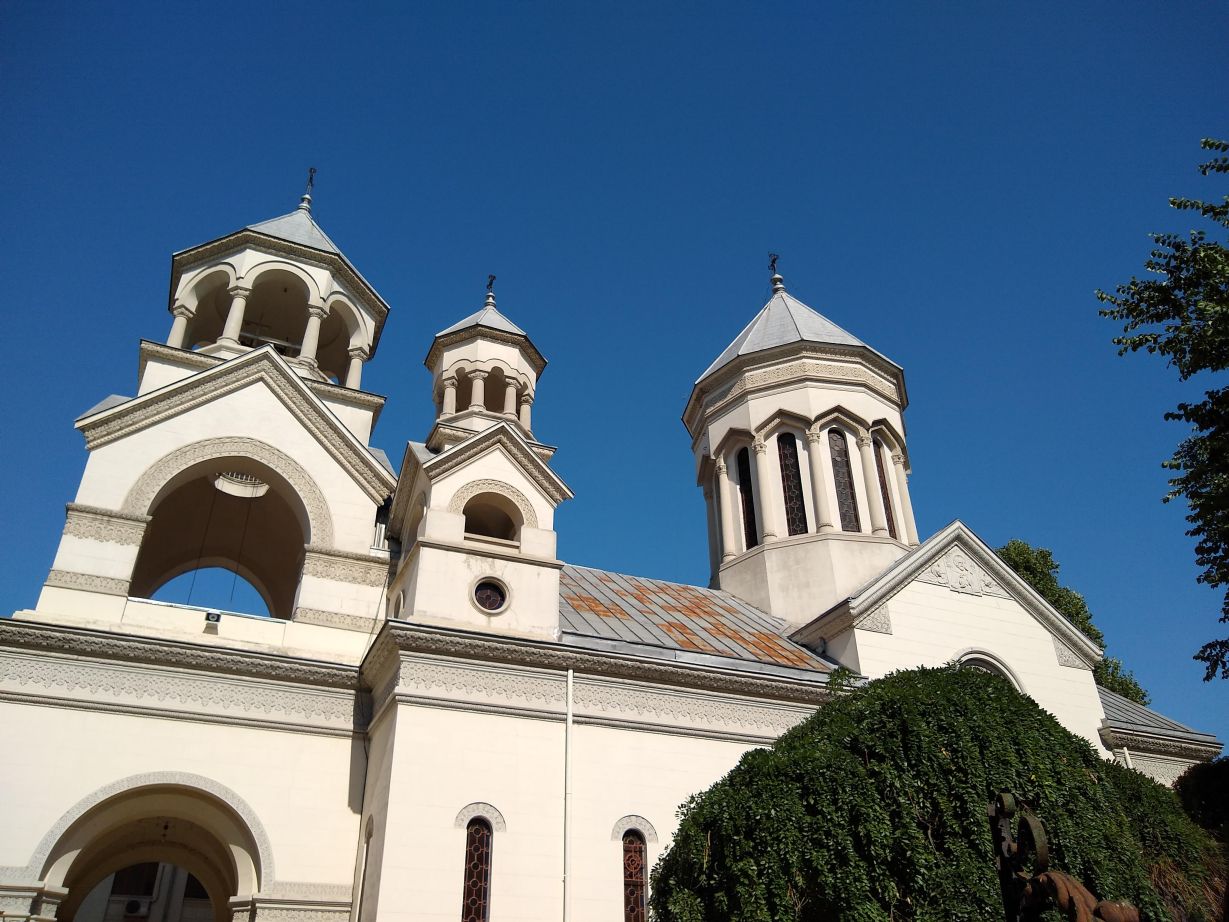
Pointing out Neo Romanian features which borrow from the Orient and Islamic architectural styles, with wooden arches over doors and a more peasant style building type, Cristina deftly navigates us through the Jewish ghetto district and on toward the Armenian mahalla. On the way, we pass this huge glass and glass and steel skyscraper that is not quite complete, and totally abandoned. This building, it turns out, was built illegally (corruption is everywhere!), it is too close to the Armenian Church (you can see it is almost touching the church), it is too tall (not what the approved plans showed), and there was a fire during construction, so it was completely abandoned. Now it is in the courts, fighting to get the builder to tear it down. If they rule that it was “illegally” built, it will be the developers responsibility to raze it, but in the past, builders have just ignored these rulings on other buildings and there are no checks and balances to force the builder to do the work.
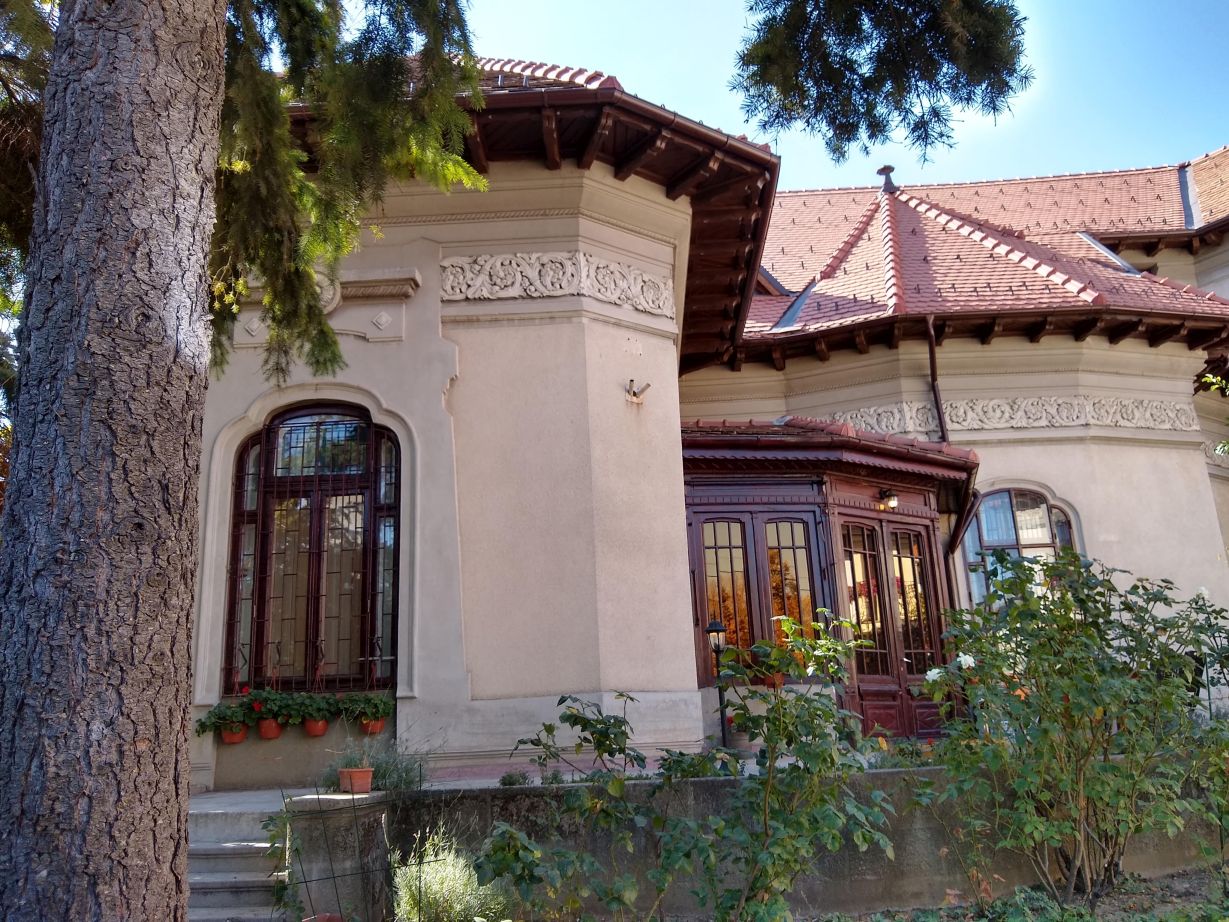
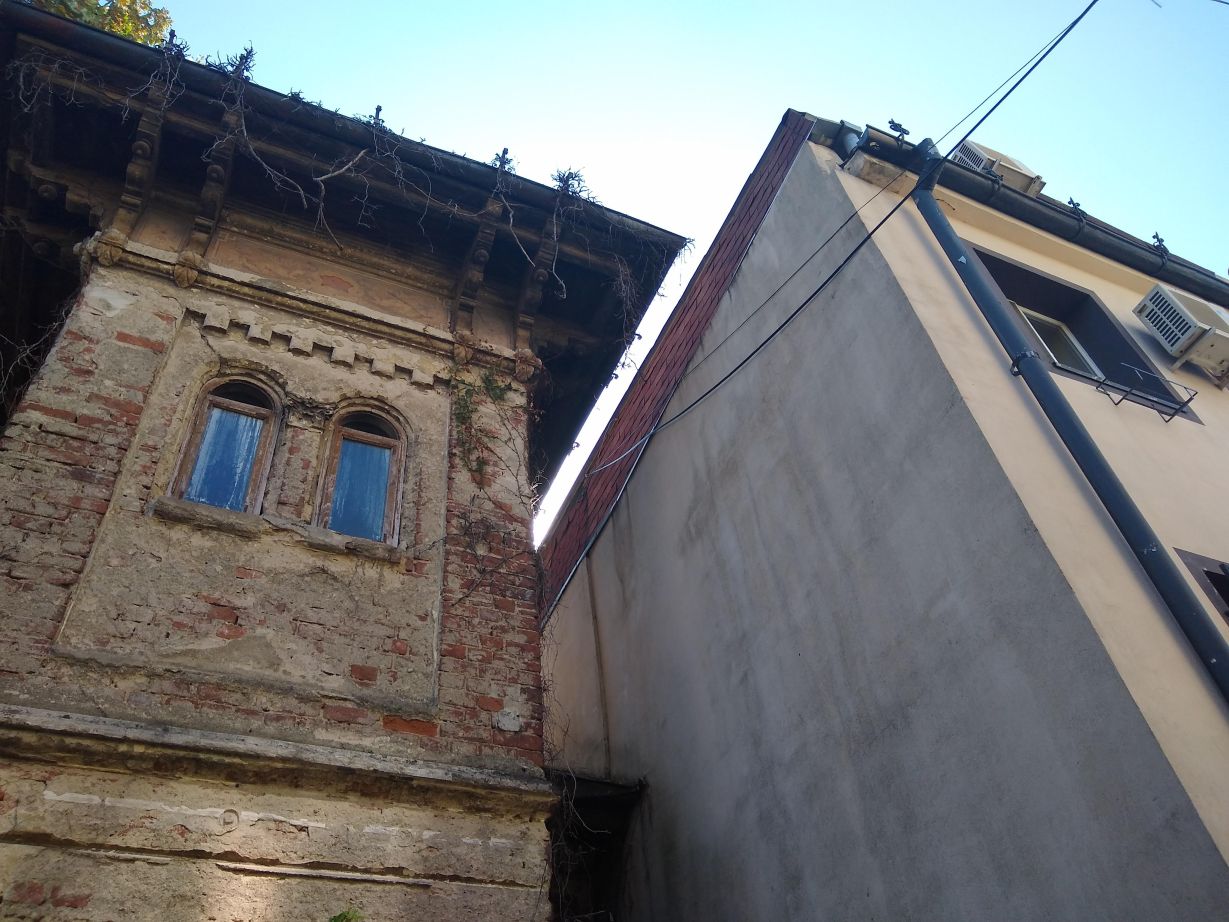
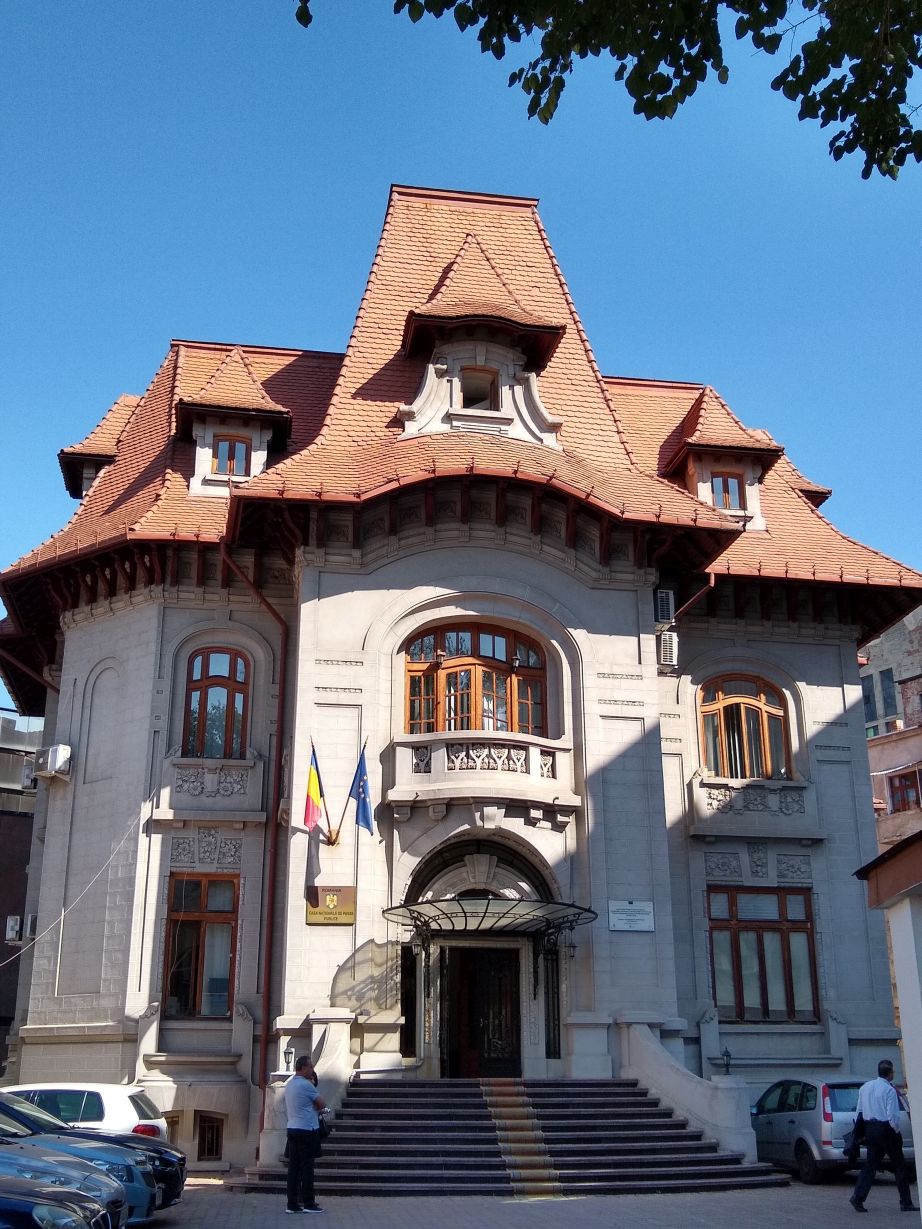
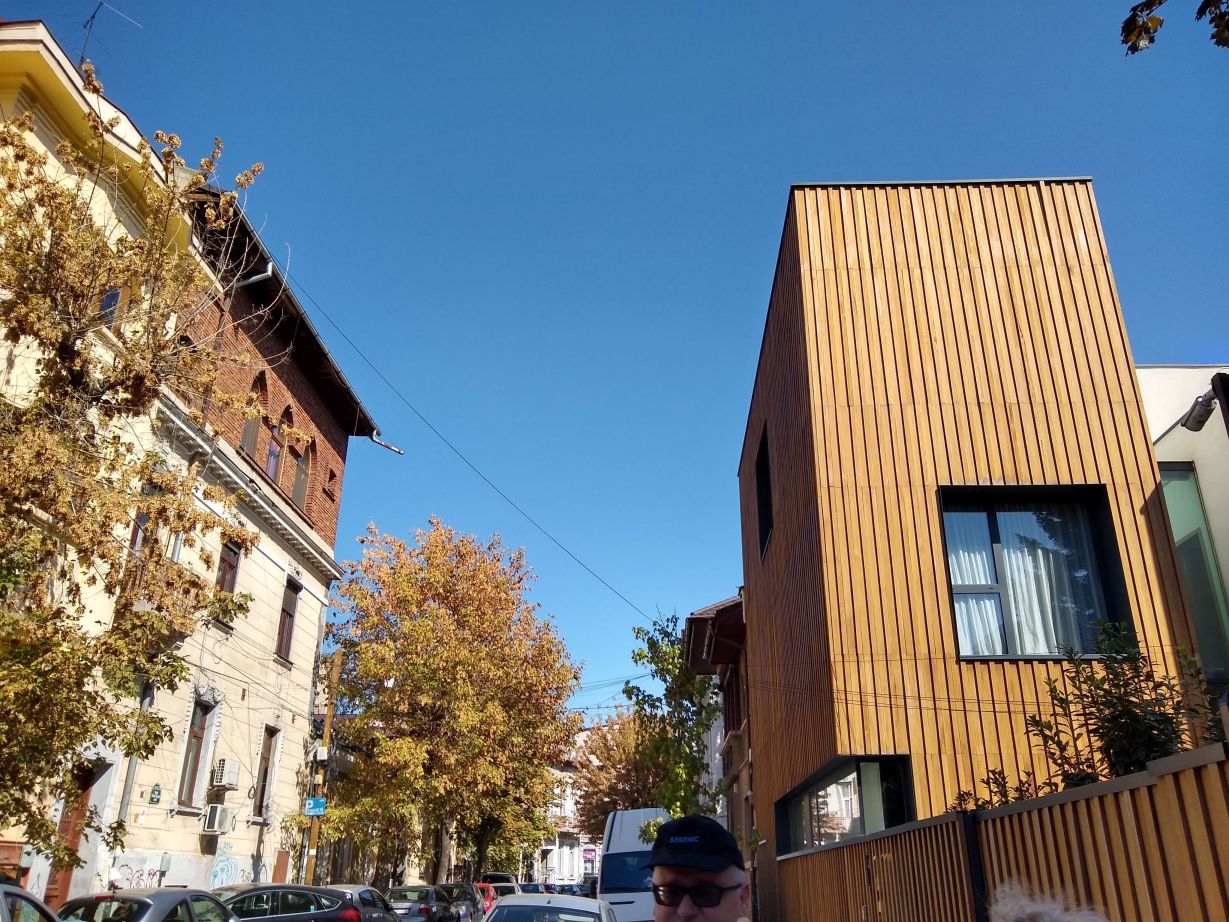
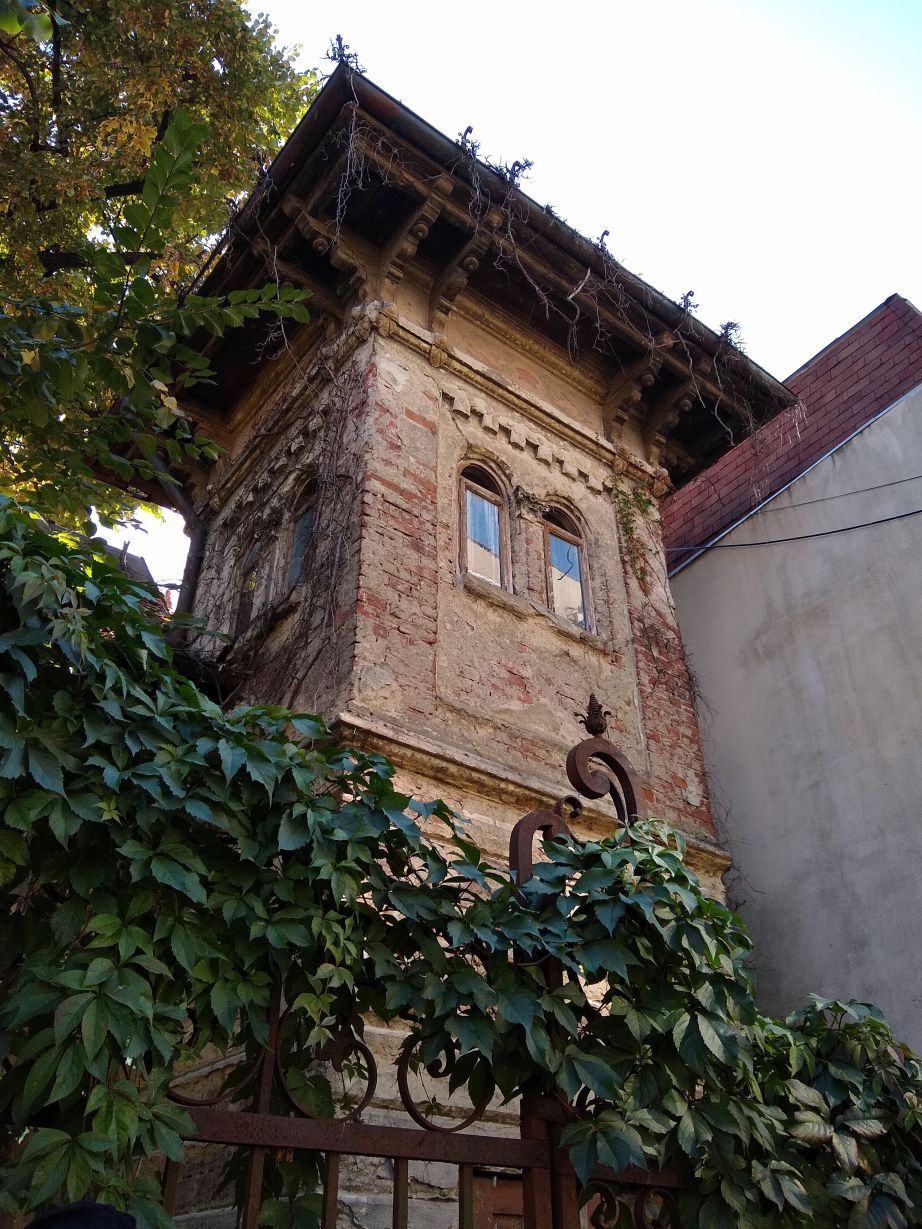
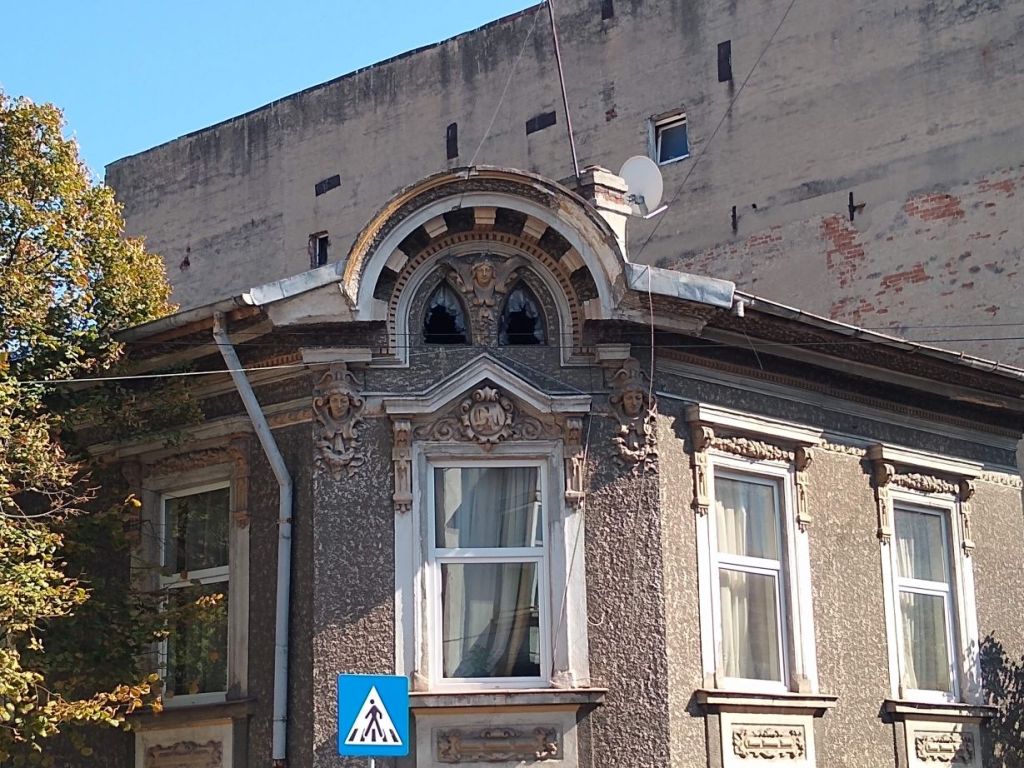
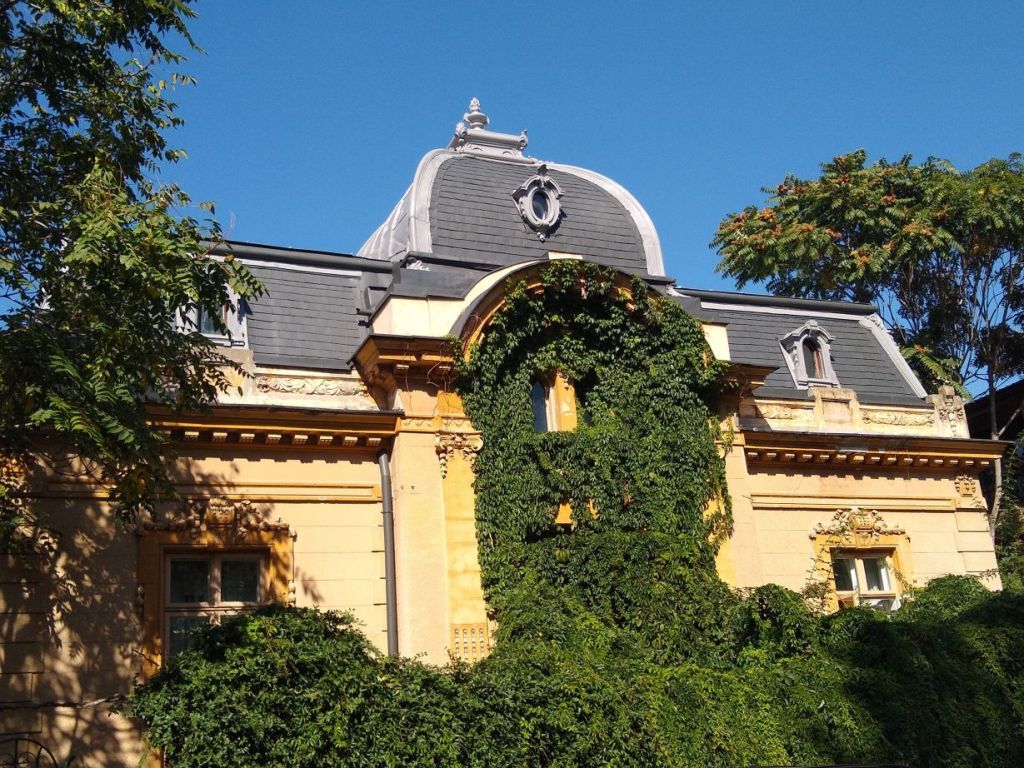
Passing through the Armenian mahalla, we begin to see buildings from the 1700s, reflecting what is known as the Little Paris phase of Bucharest architecture. Grand mansions using huge block structure with balustrades and balconies and lots of intricate faux carving around windows and doorframes. Faux because on some of the restored buildings it was far cheaper to use replicated carvings than to actually have a stone mason come out and do period-accurate work. Then, of course, next door to a gorgeous Parisian looking mansion is a completely Moorish looking facade with rounded pointed windows and balconies that make one think more of Marrakesh than Bucharest. Oh and let’s not forget that huge, hulking ugly communist monstrosities right next to that! And then some weirdly modern wooden building that’s more Bauhaus than classical. Crazy!
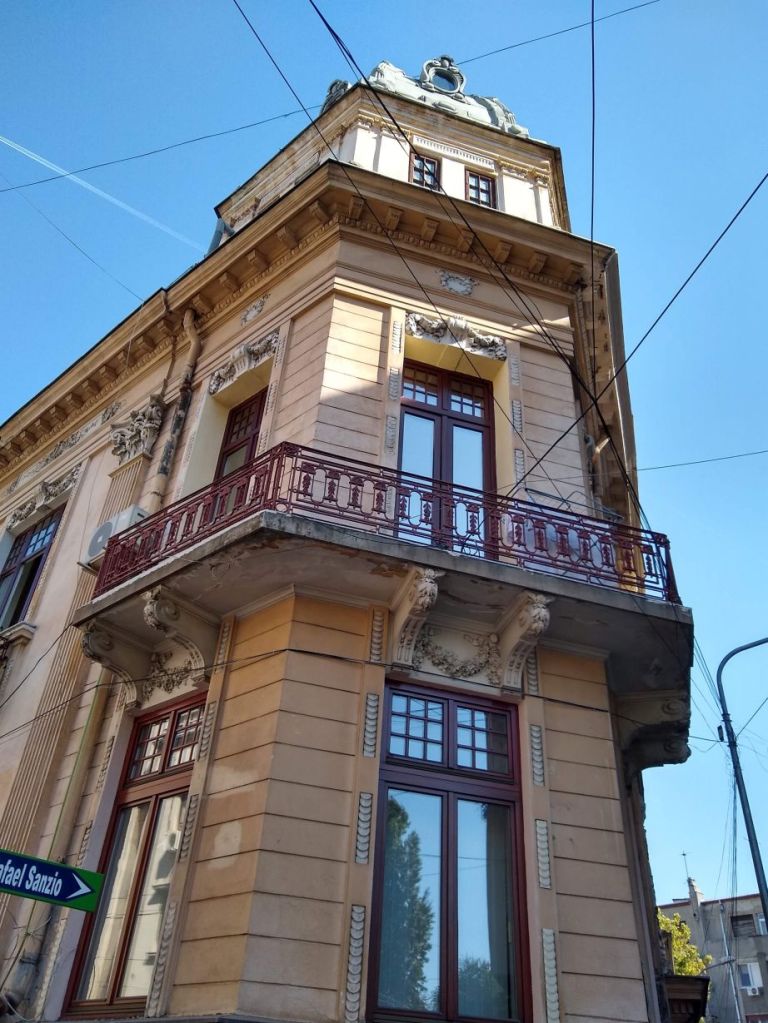
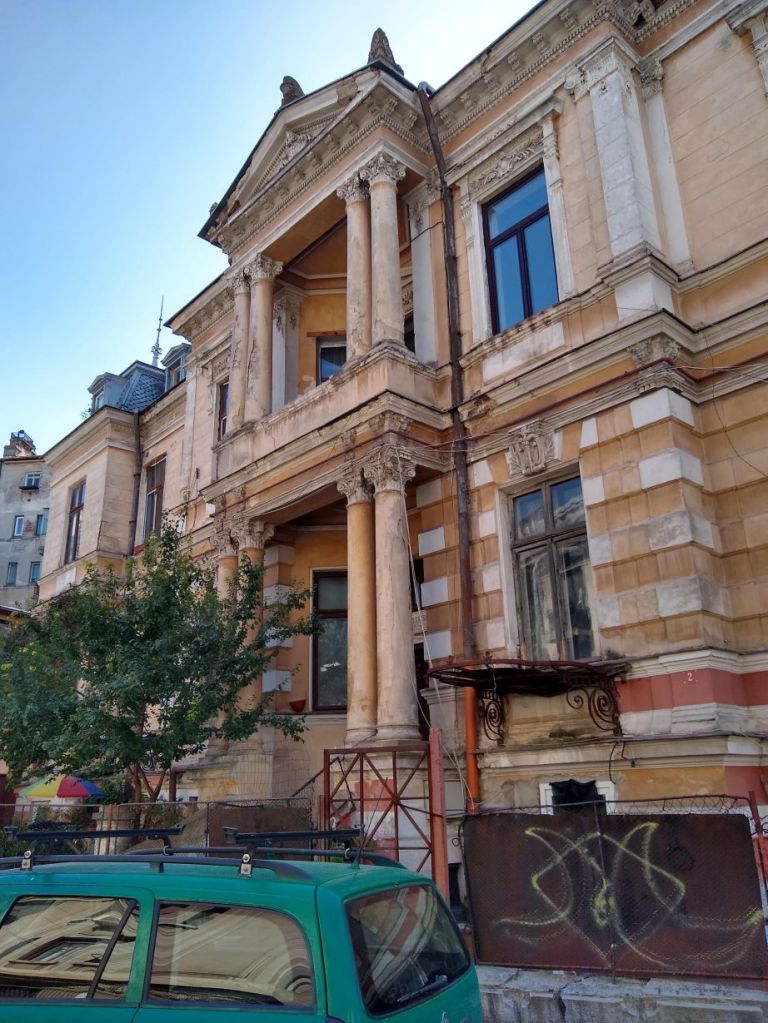
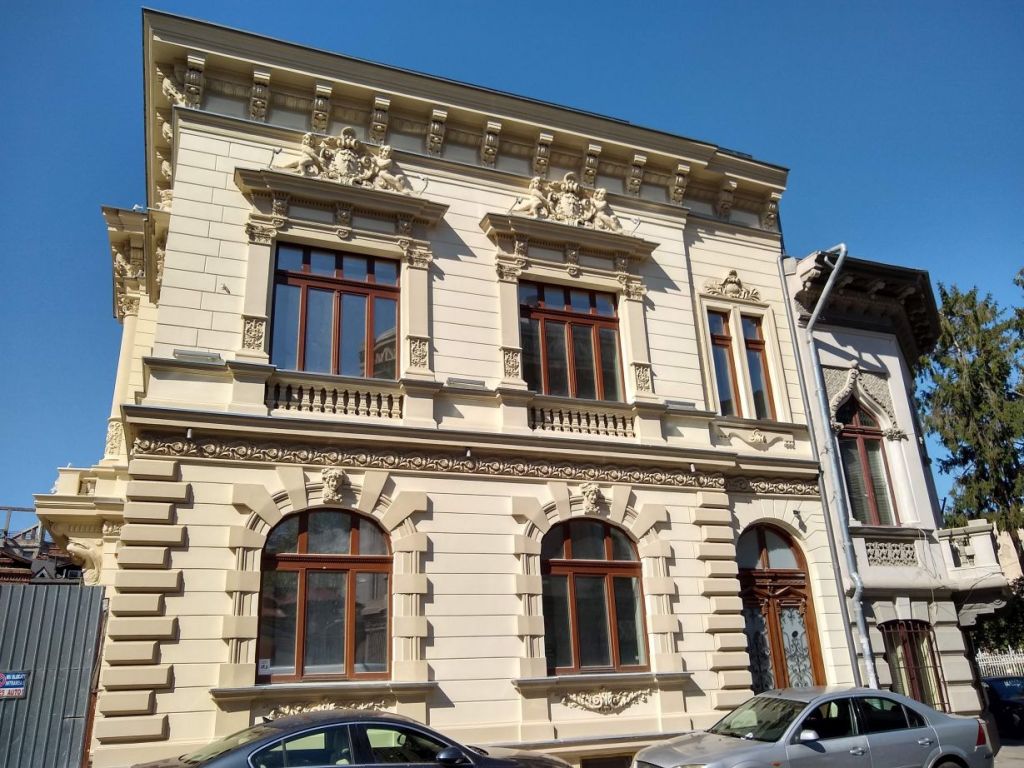
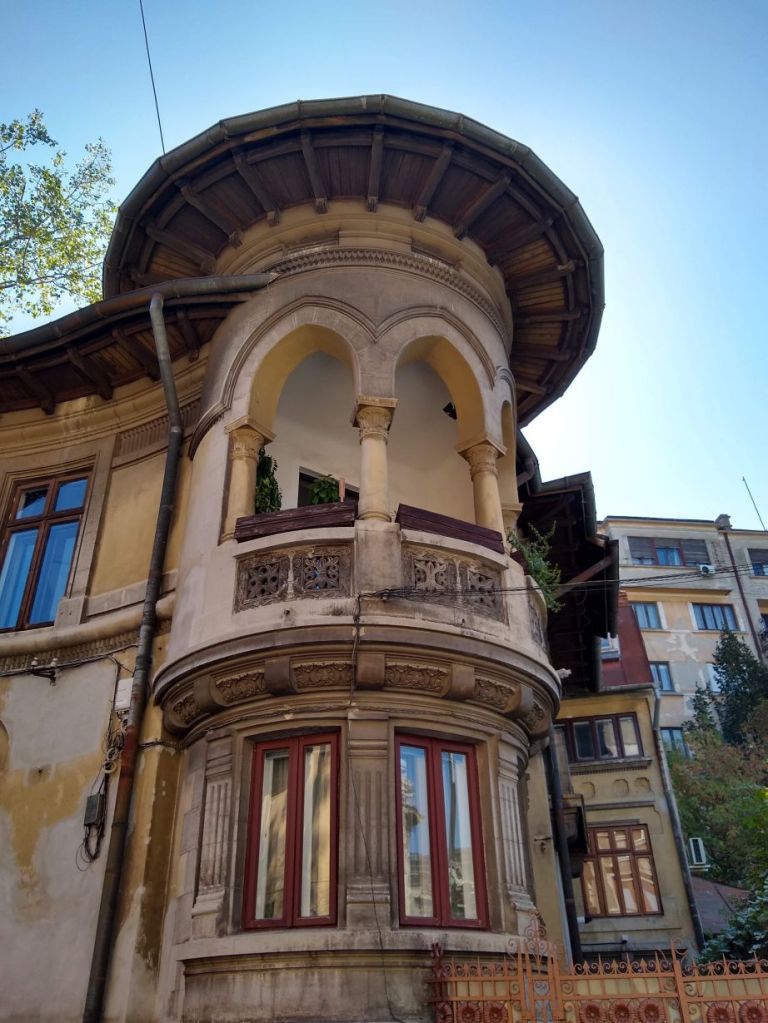
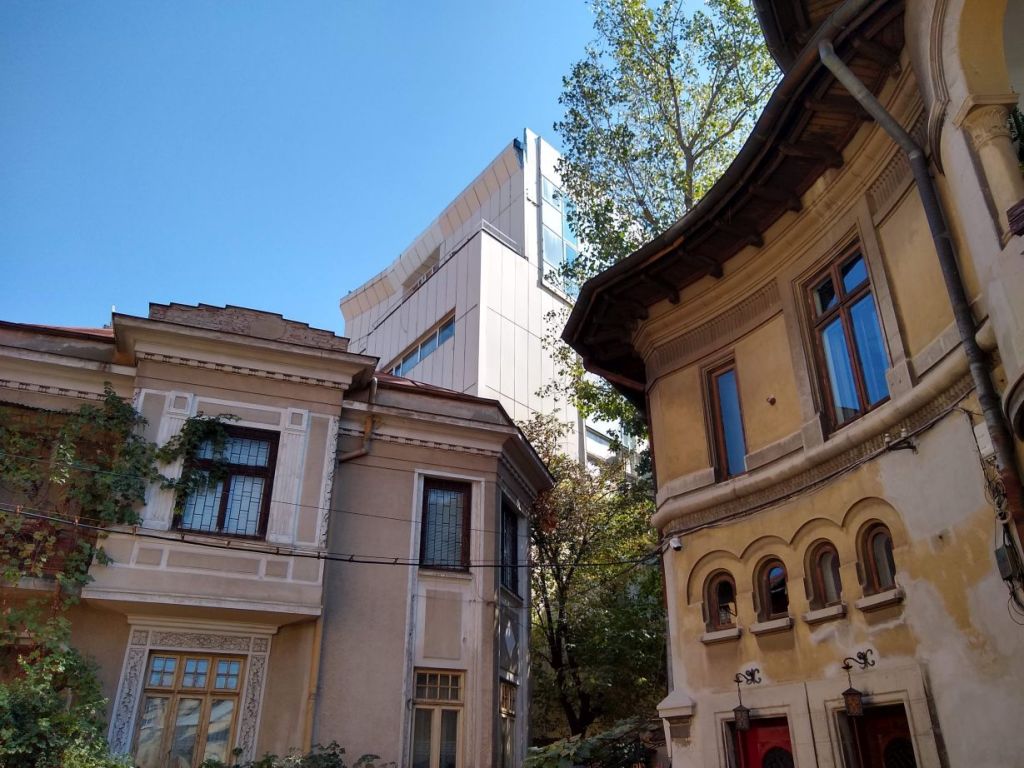
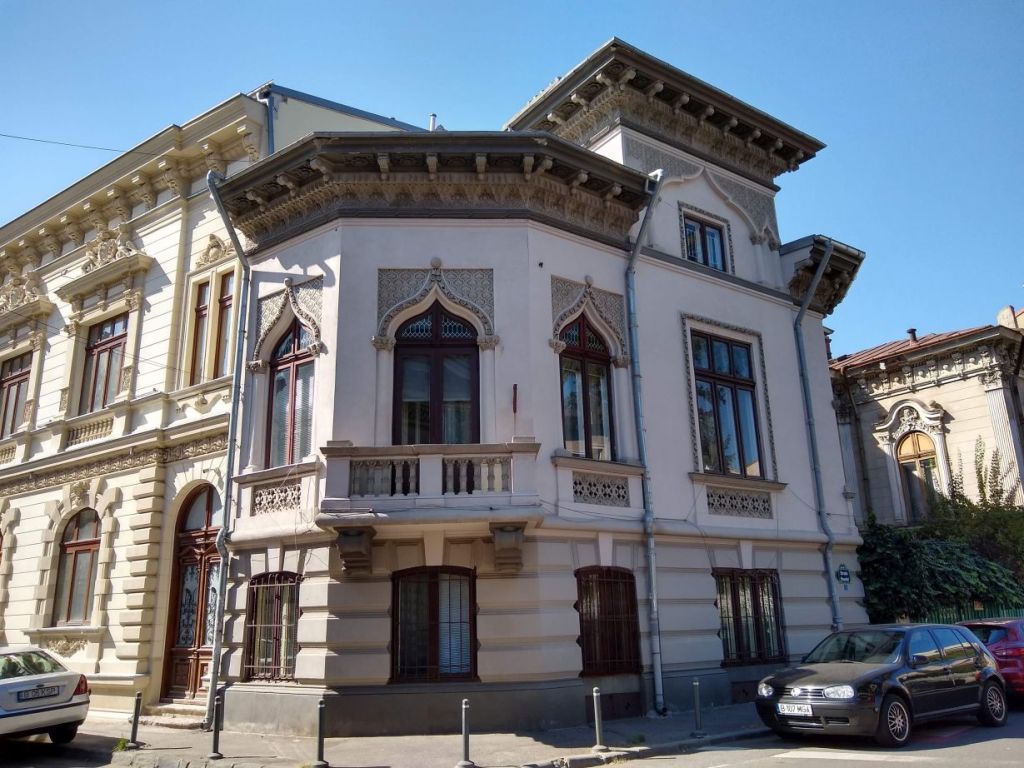
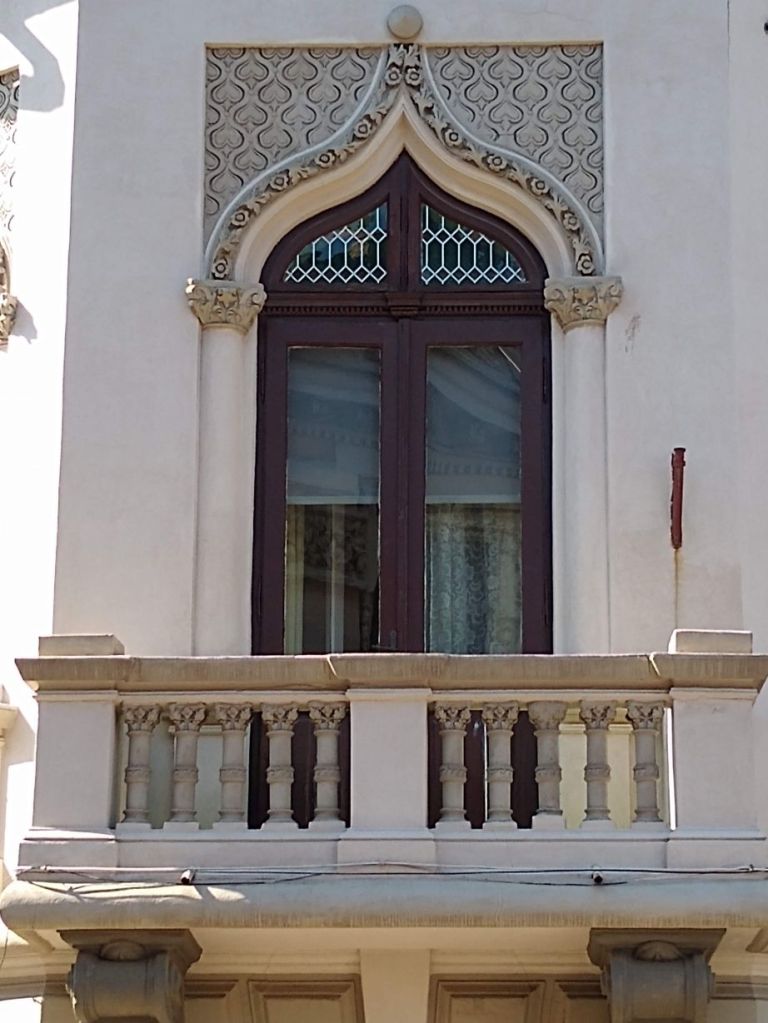
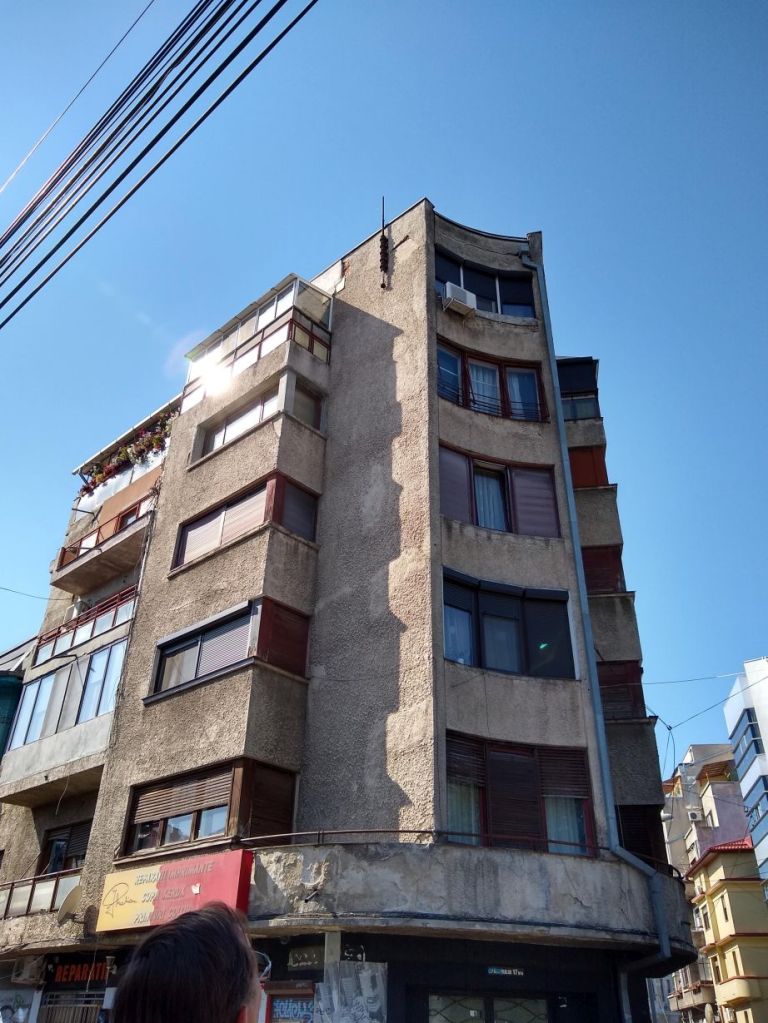
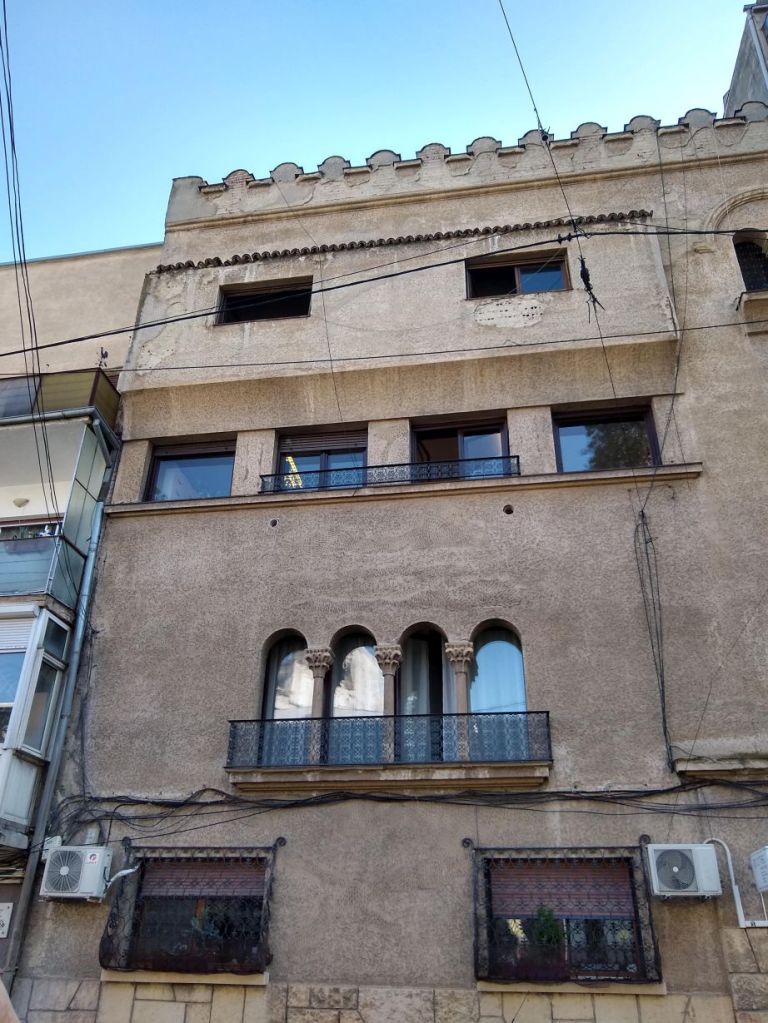
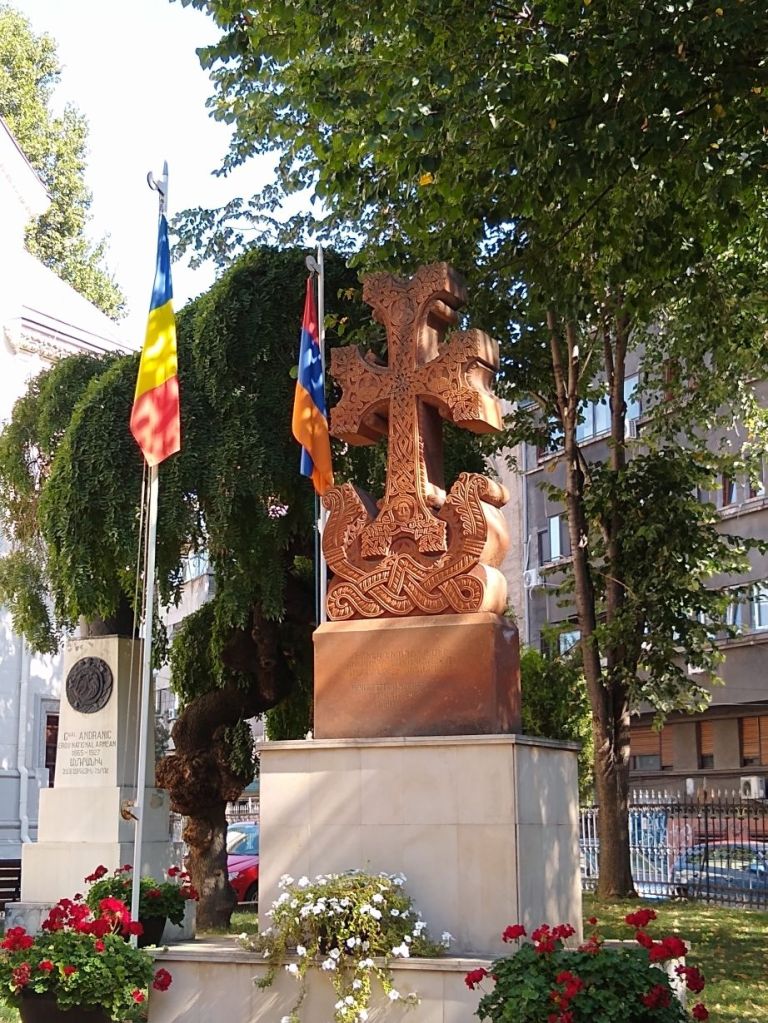
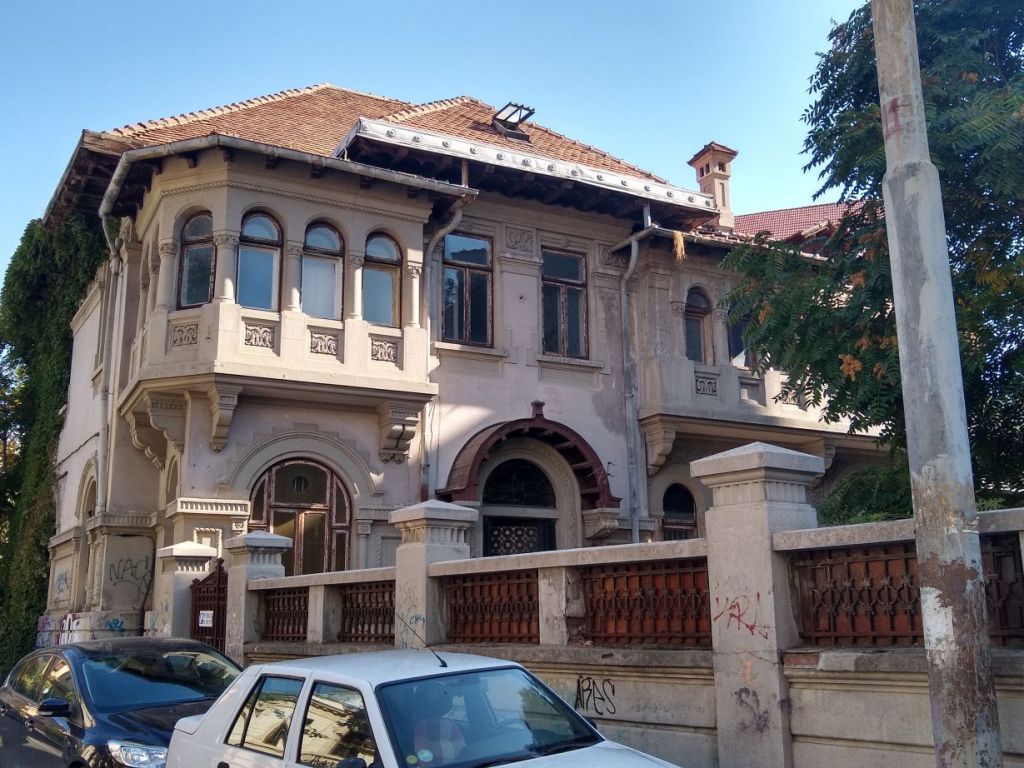
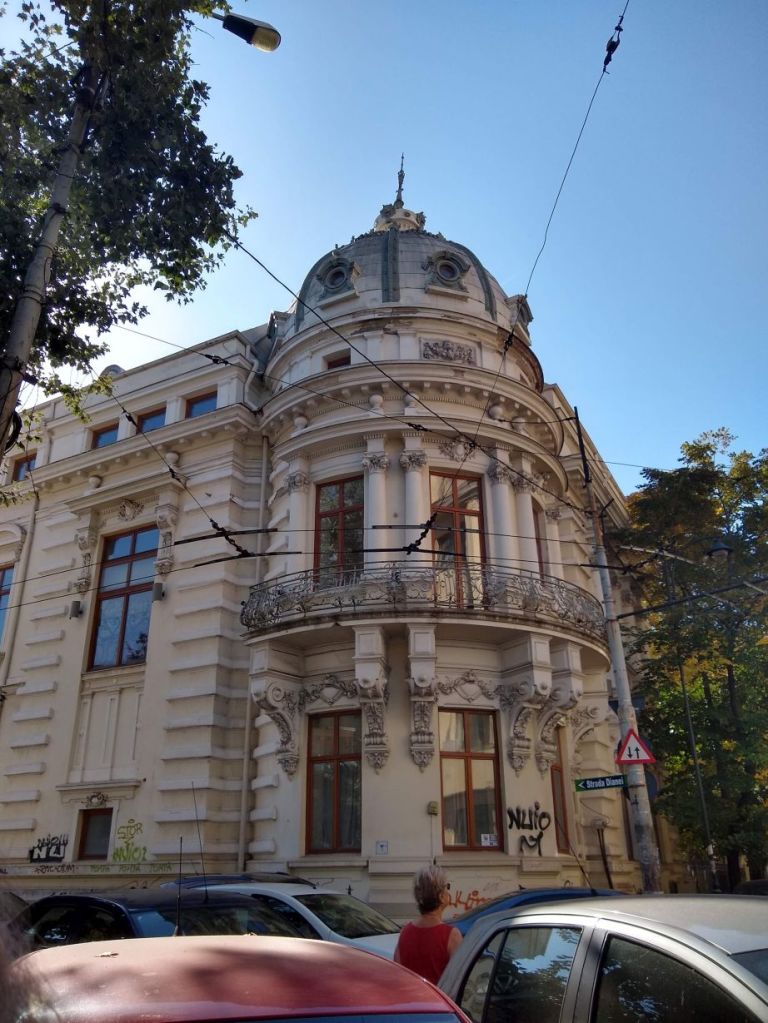
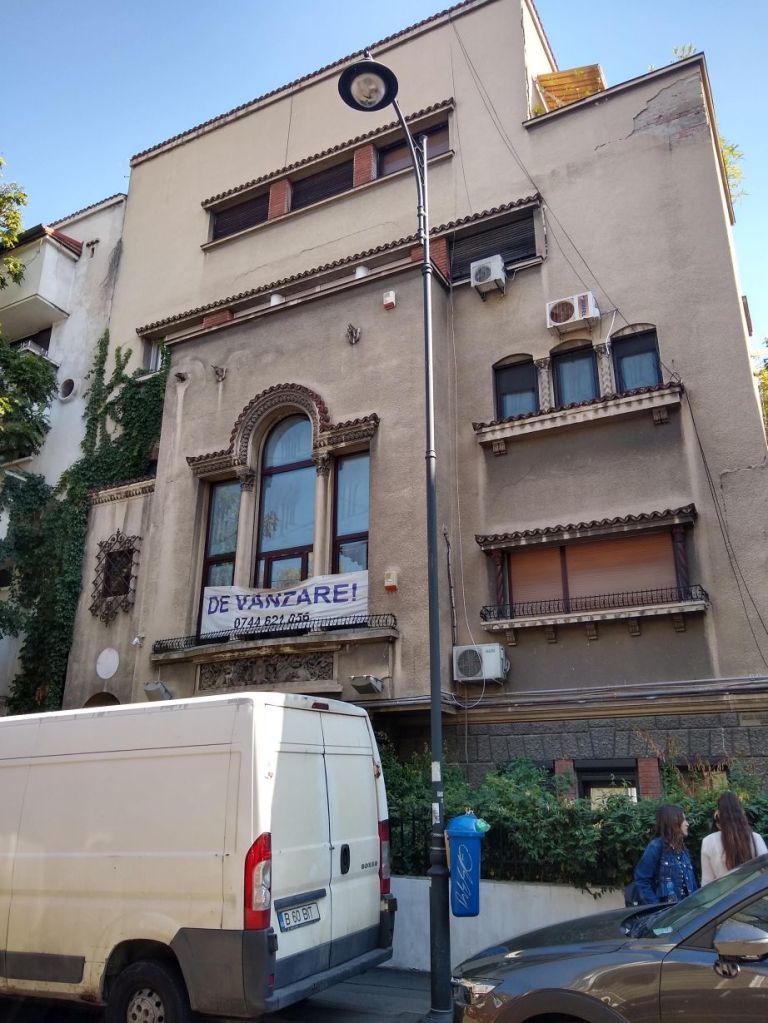
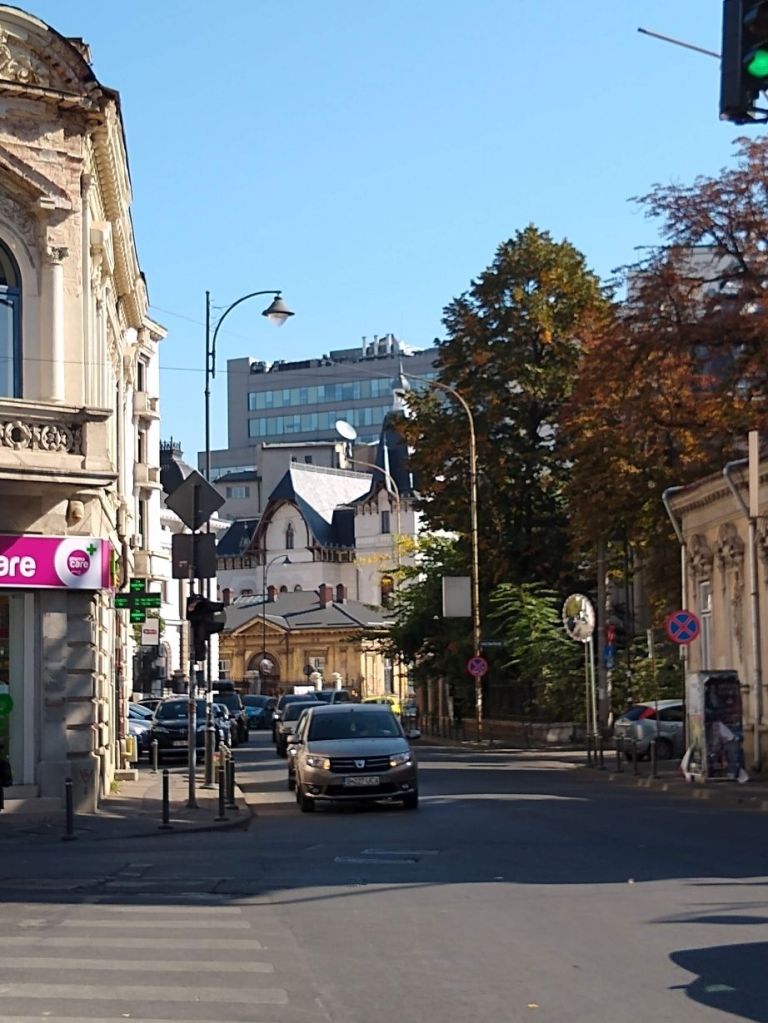
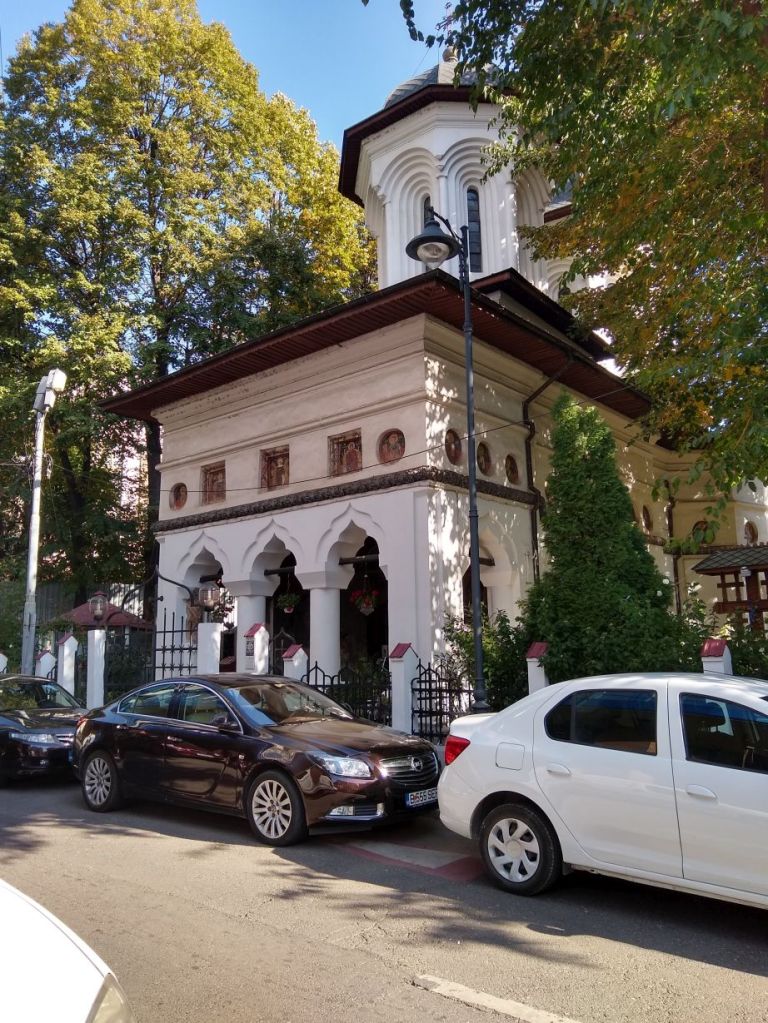
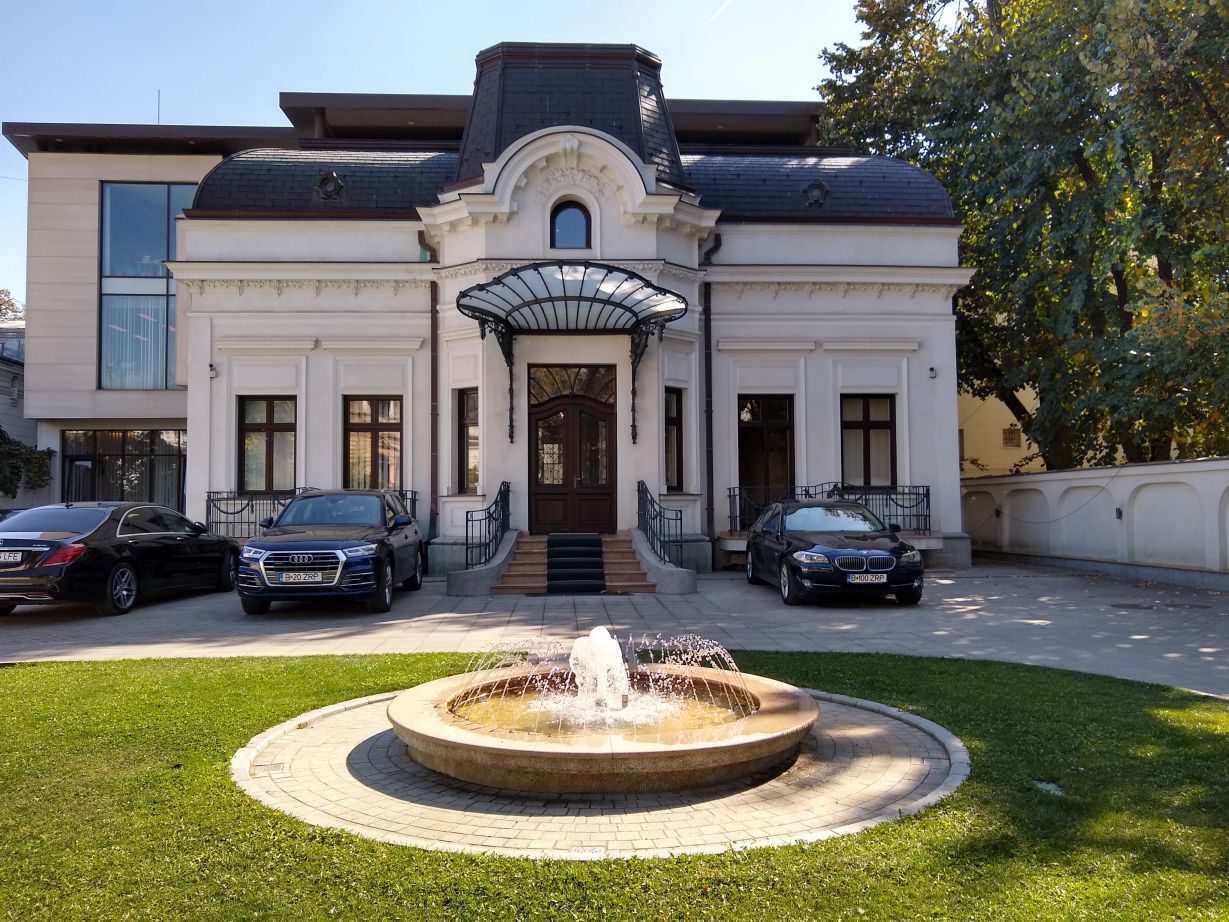
There apparently is some sort of a historical preservation system though because there are other houses that have been restored in all their 17,18 or 1900 glory, only to have an addition built on the back that is totally modern. Then there are all the semi-circular glass roofs over entry doors – Art Nouveau maybe? I don’t know, but it’s all just a big, huge, fascinatingly bizarre jumble.
Continuing on our stroll, we stop for a beverage break at an artist’s cafe, where Cristina says she always sees someone famous. Today is no exception, with some famous Romanian actor sitting a few tables away from us. A few of us tackle beers, a few take lemonades and we sit in the garden, talking about Romania, Bucharest, Cristina, her family, her family story (which Ed is adamant that she write!), her boyfriend, our upcoming river cruise. You name it. We talked about it. It’s a really fun and lovely time!
But of course, we must press on – we have many more stops, as well as our full lunch, before we must make our way back to the hotel by 6pm for our River Cruise tour introductory meeting.
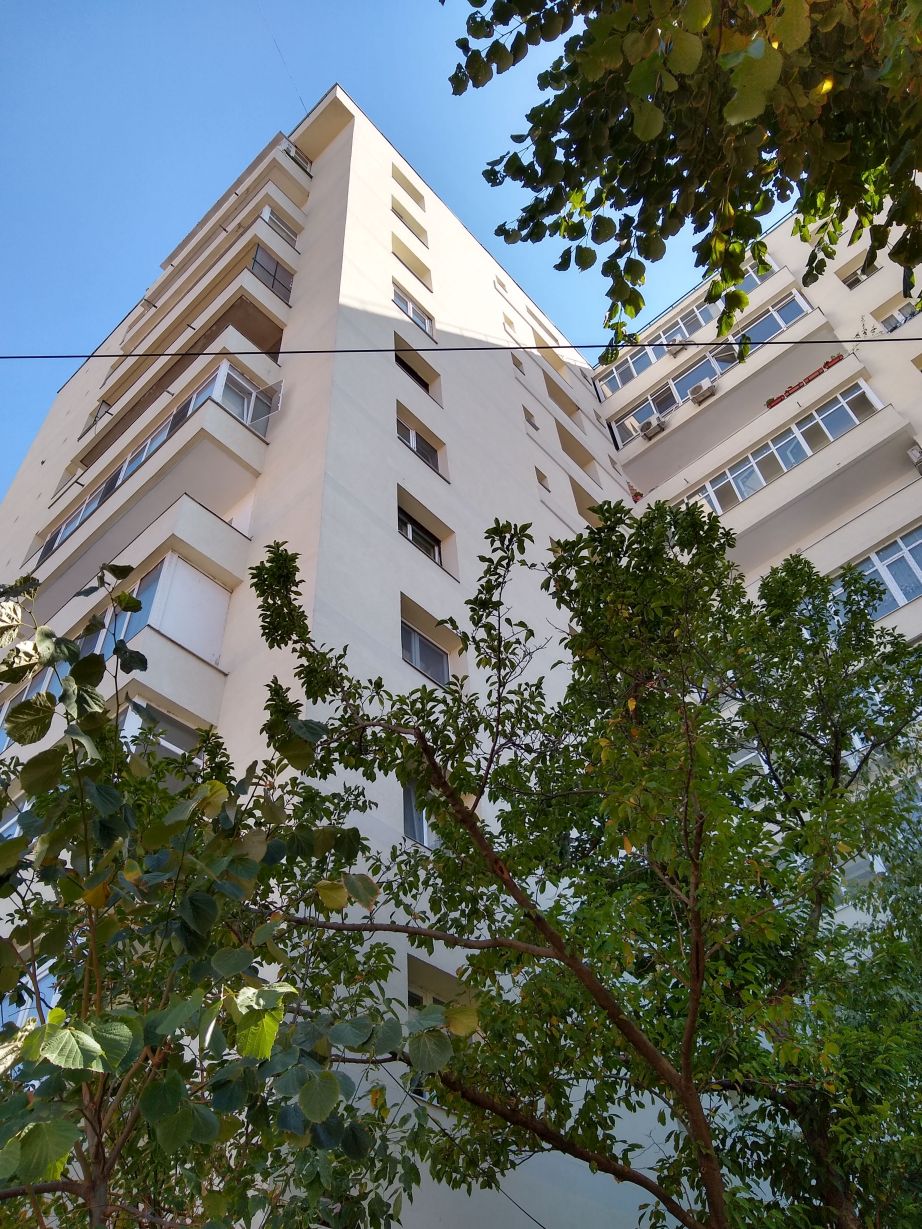
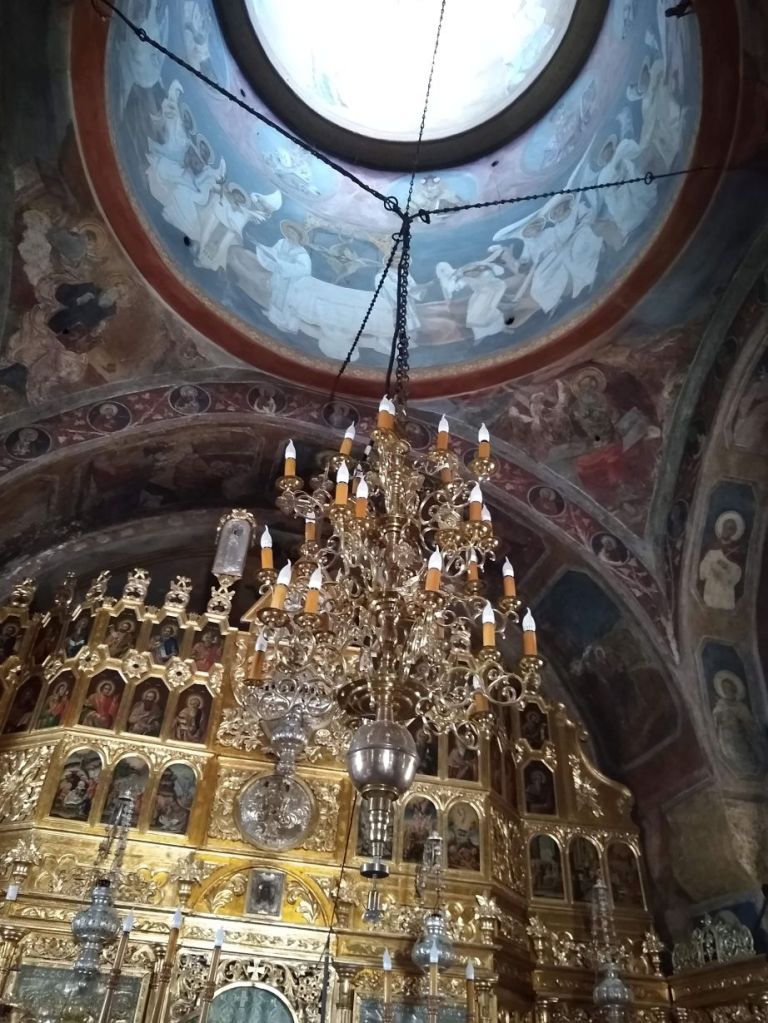
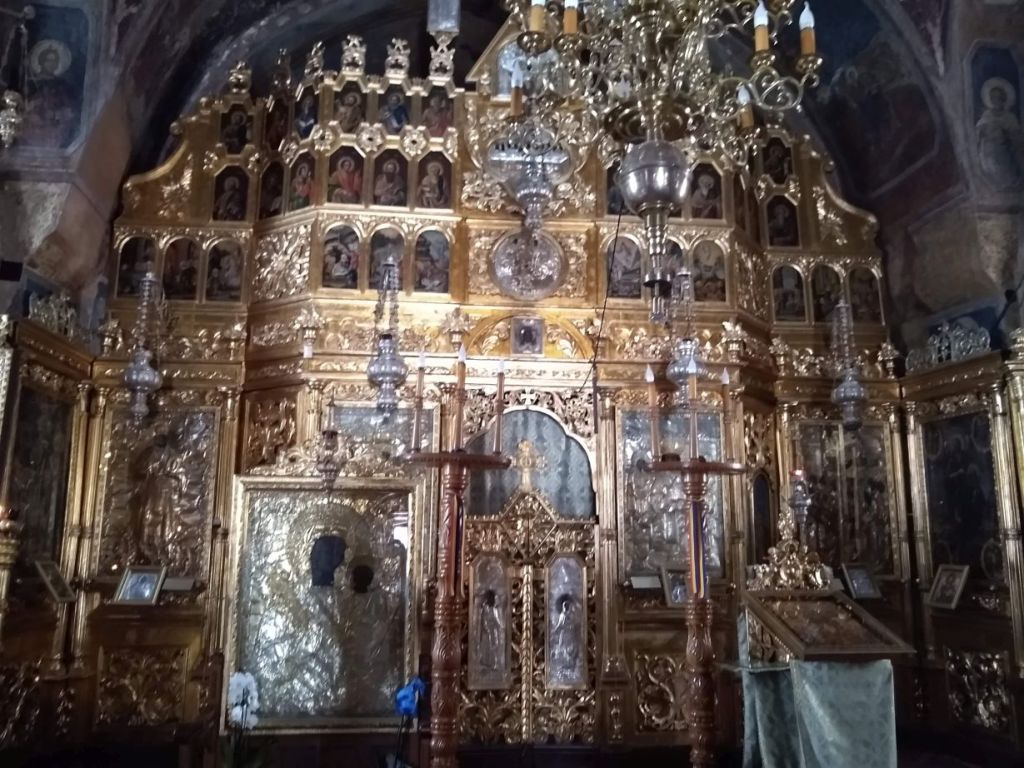
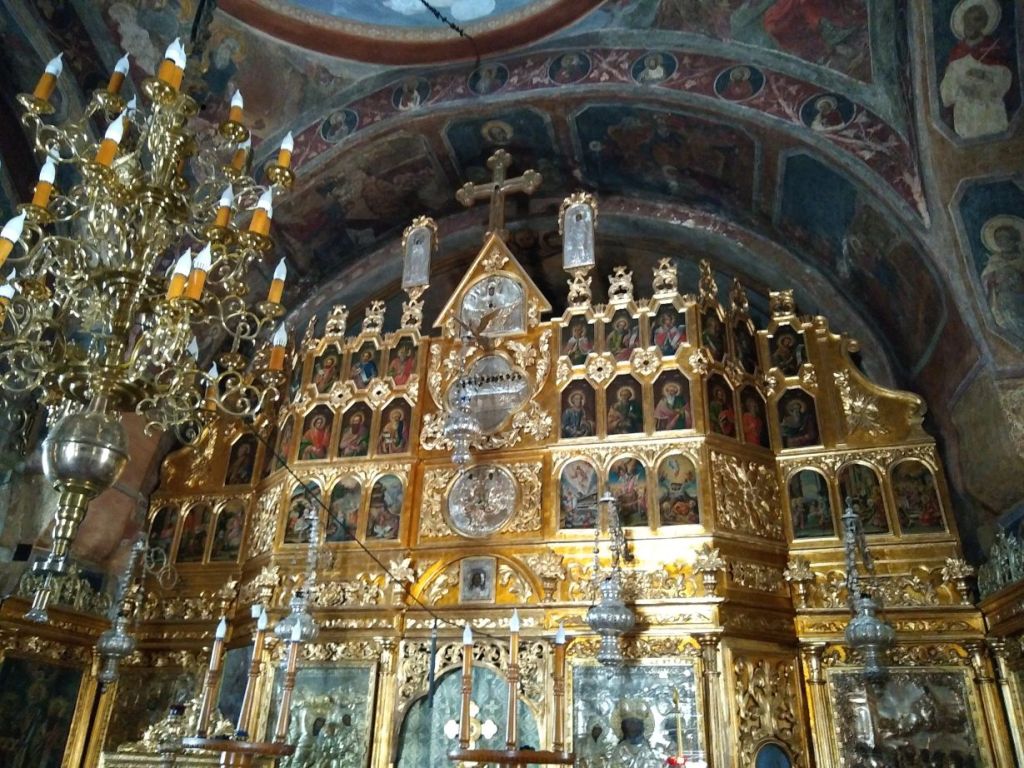
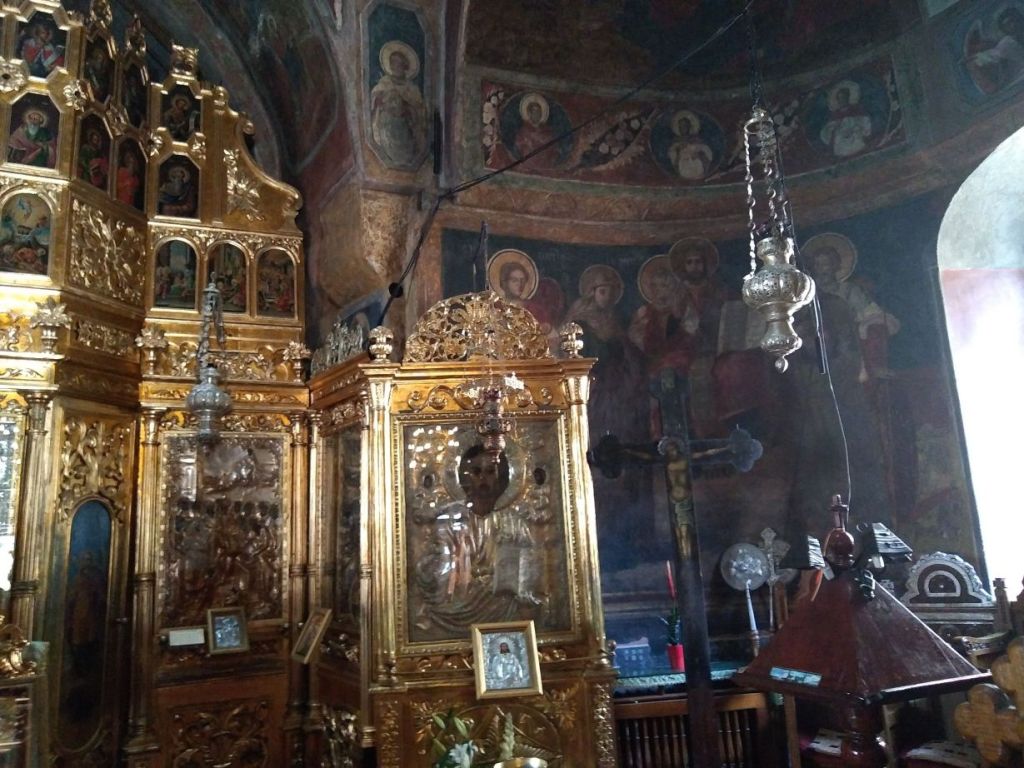
Heading out from the cafe, we make a circuit back to the more “modern” part of this area, along the huge corridors with the communist block style buildings. But before we fully emerge into the Communist era, we remain for a bit on the side streets with classic old churches grandly sitting next to totally modern angular buildings. Ever too quickly, though, our walk takes us to the apartment blocks that stretch as far as the eye can see. Our last stop here is a small Orthodox church that is surrounded by 8-10 story tall apartment blocks. This is one of the churches that was moved off the main avenue in order to build the communist apartment blocks. This and other churches and buildings were moved on rails, as was the building in Alba Iulia, and the man who invented the method, Eugen Lordachescu, was one of Cristina’s professors. Totally cool.
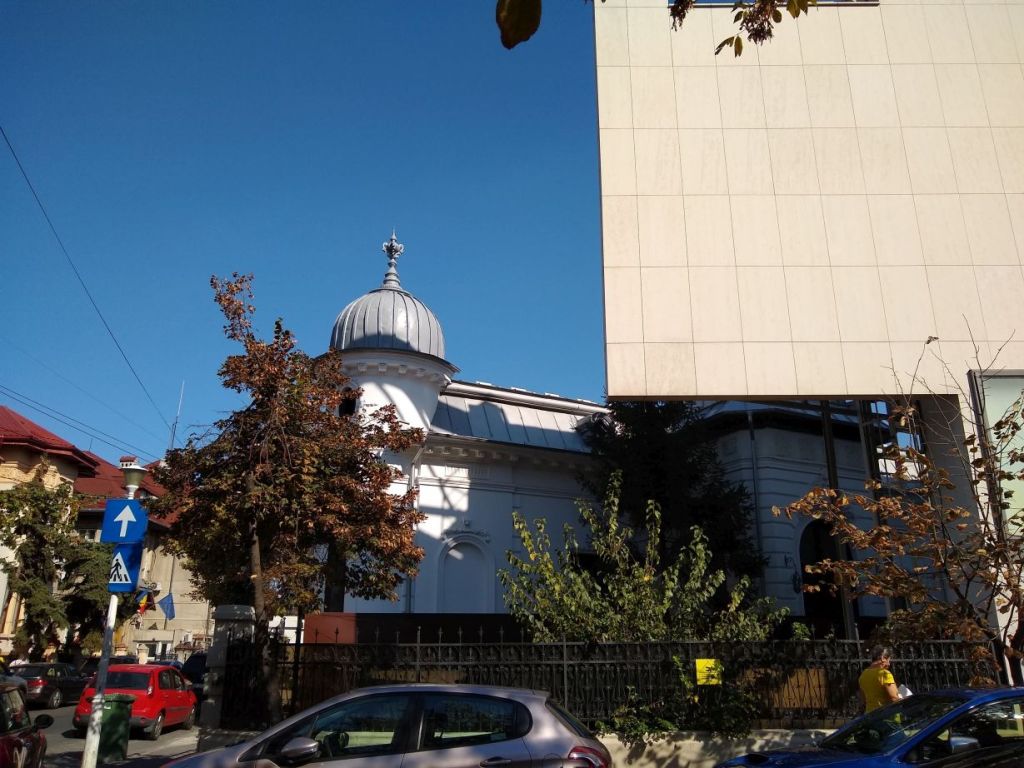
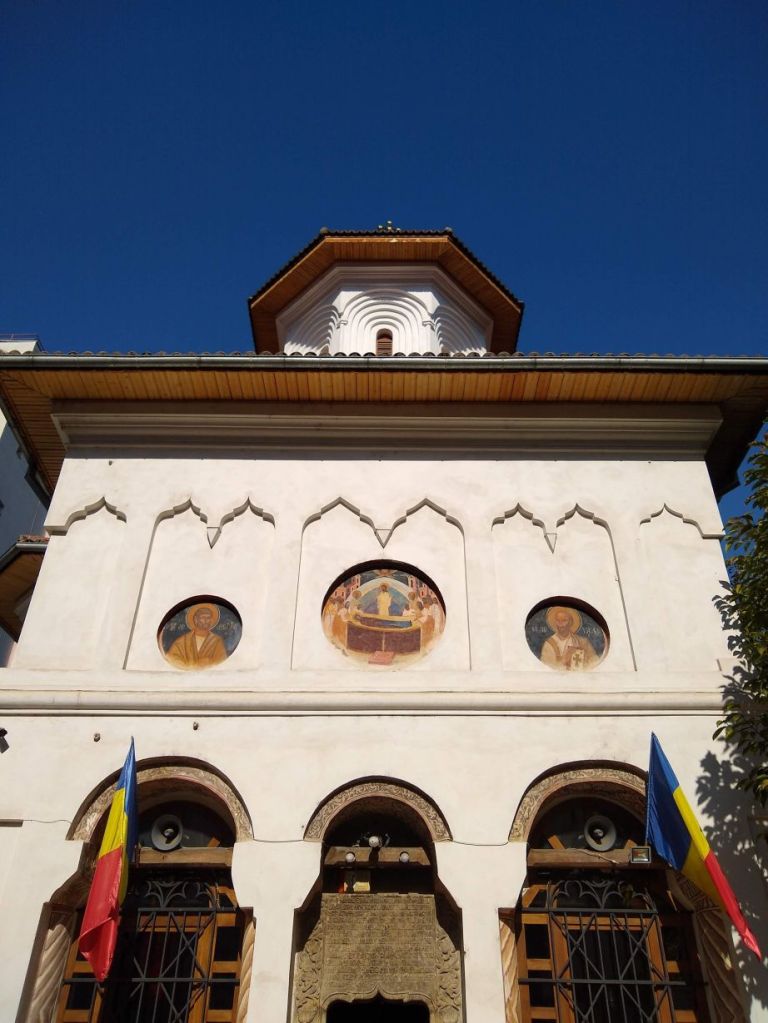
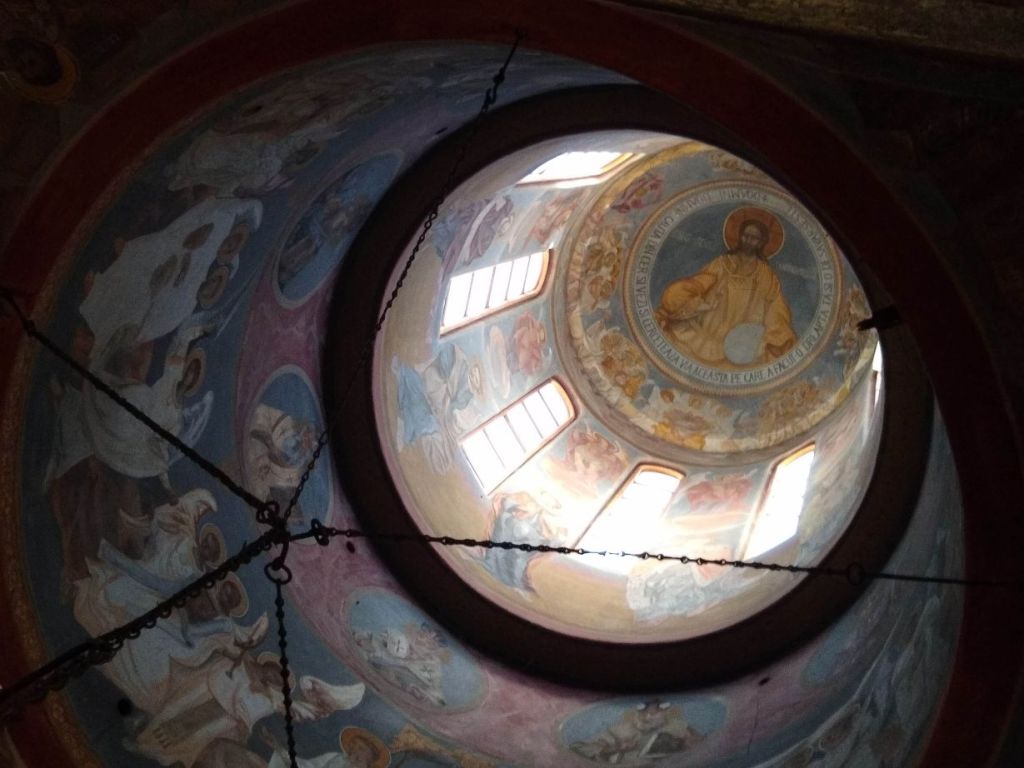
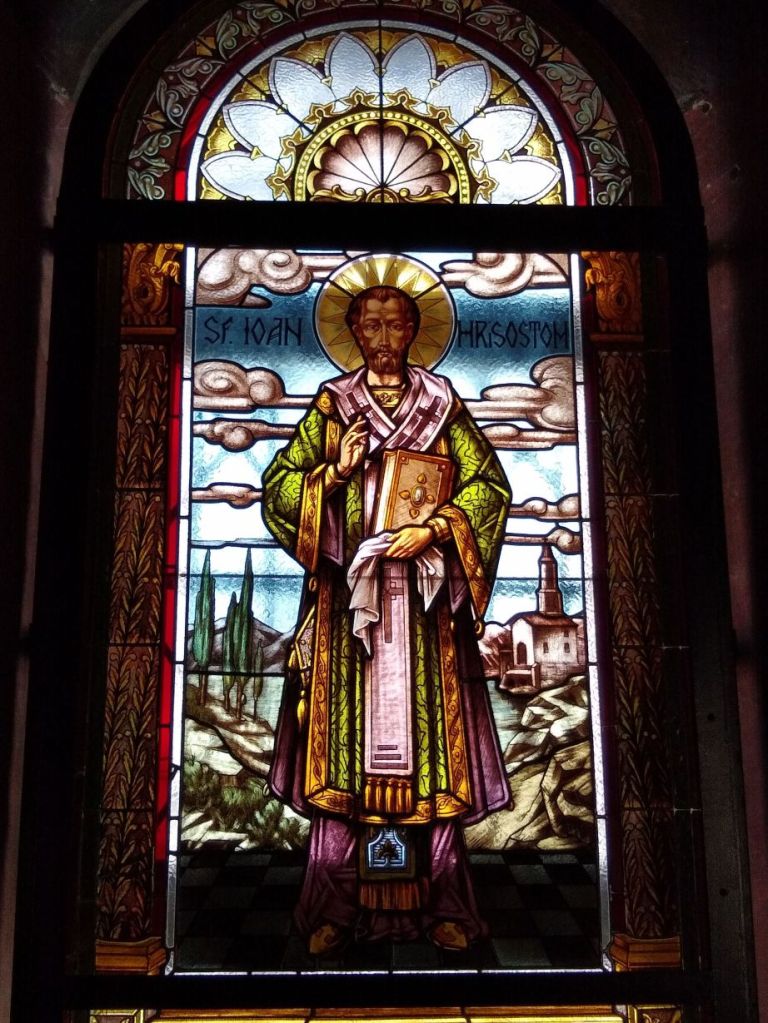
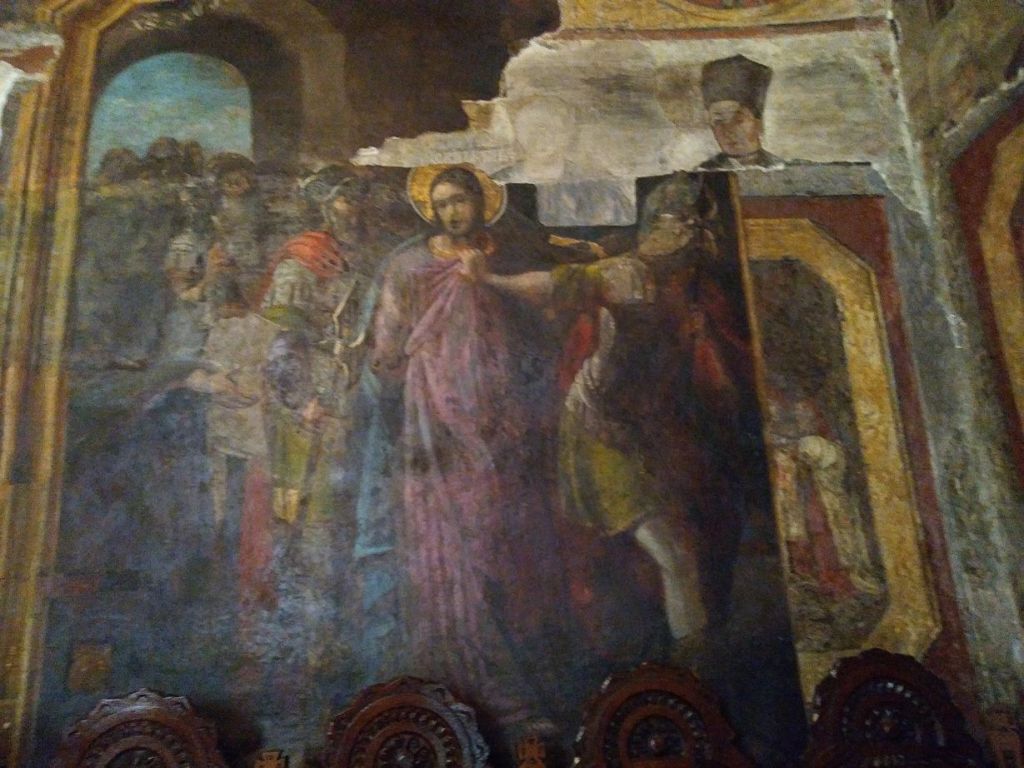
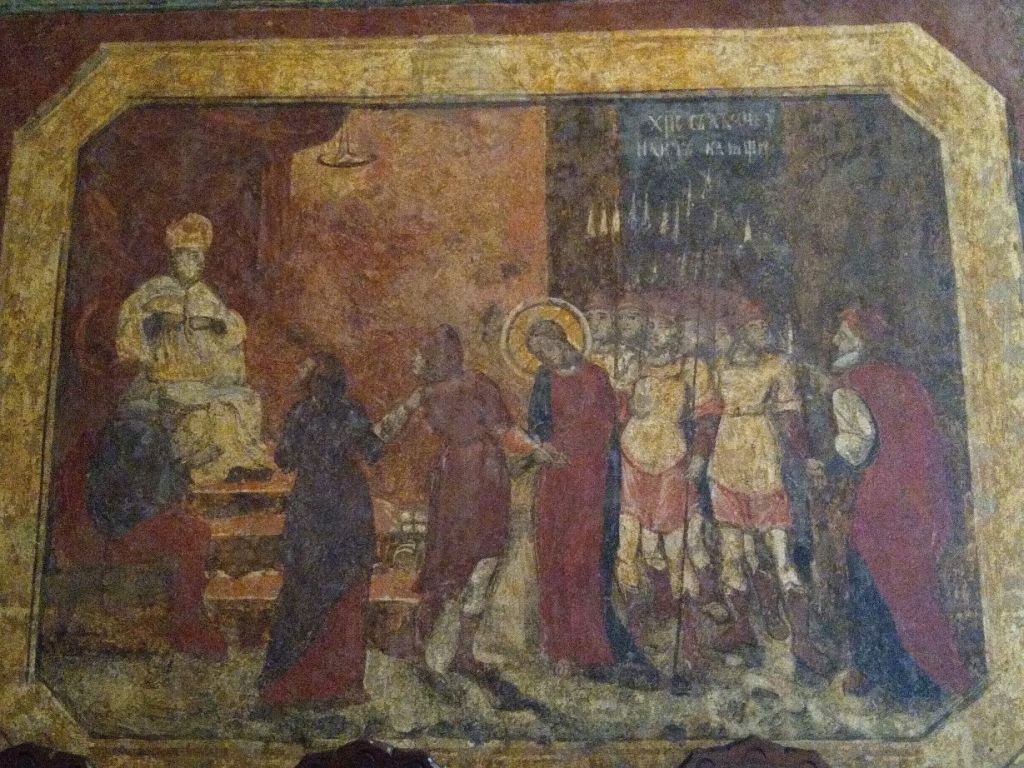
This little church, dwarfed by its neighbors, is a beautiful reminder of how Communism couldn’t totally extinguish religion, but allowed the population to “practice” as long as it wasn’t too out in the open. The church has all the standard Orthodox features, the icons, the altar behind the sacristy, gorgeous stained glass windows, gold gilt everywhere and of course frescoes. It’s a lovely little peaceful sanctuary virtually thumbing its nose at its huge, stark neighbors.
 Andiamo