It is our turn to move today from the Hilton to the Intercontinental. Tonight is the beginning of our next Gate 1 tour, the Danube river cruise from Bucharest to Budapest. But, as we don’t have to be anywhere until our 6pm introduction cocktail party, we have, of course, found an interesting walking tour of Bucharest which combines a look at the local neighborhoods with food. Right up our alley!
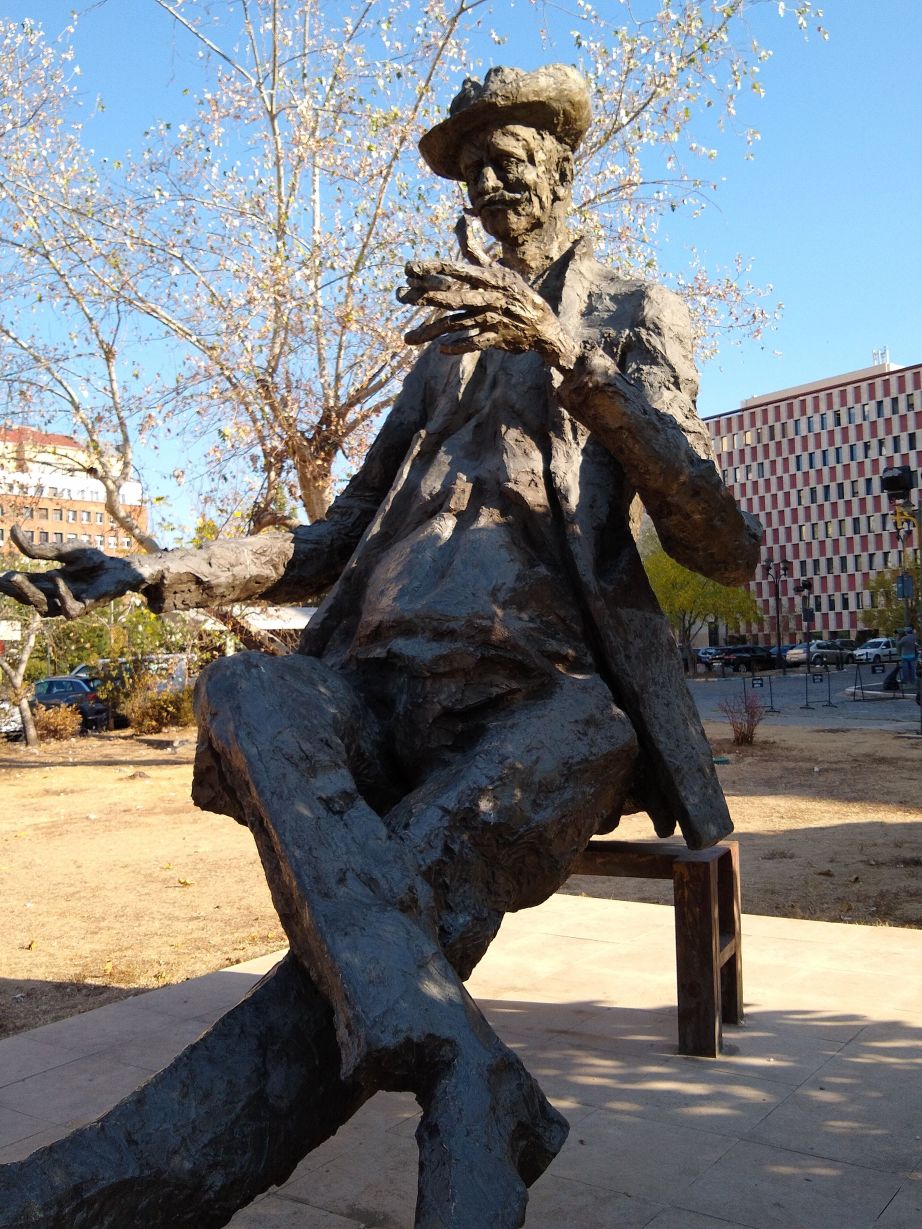
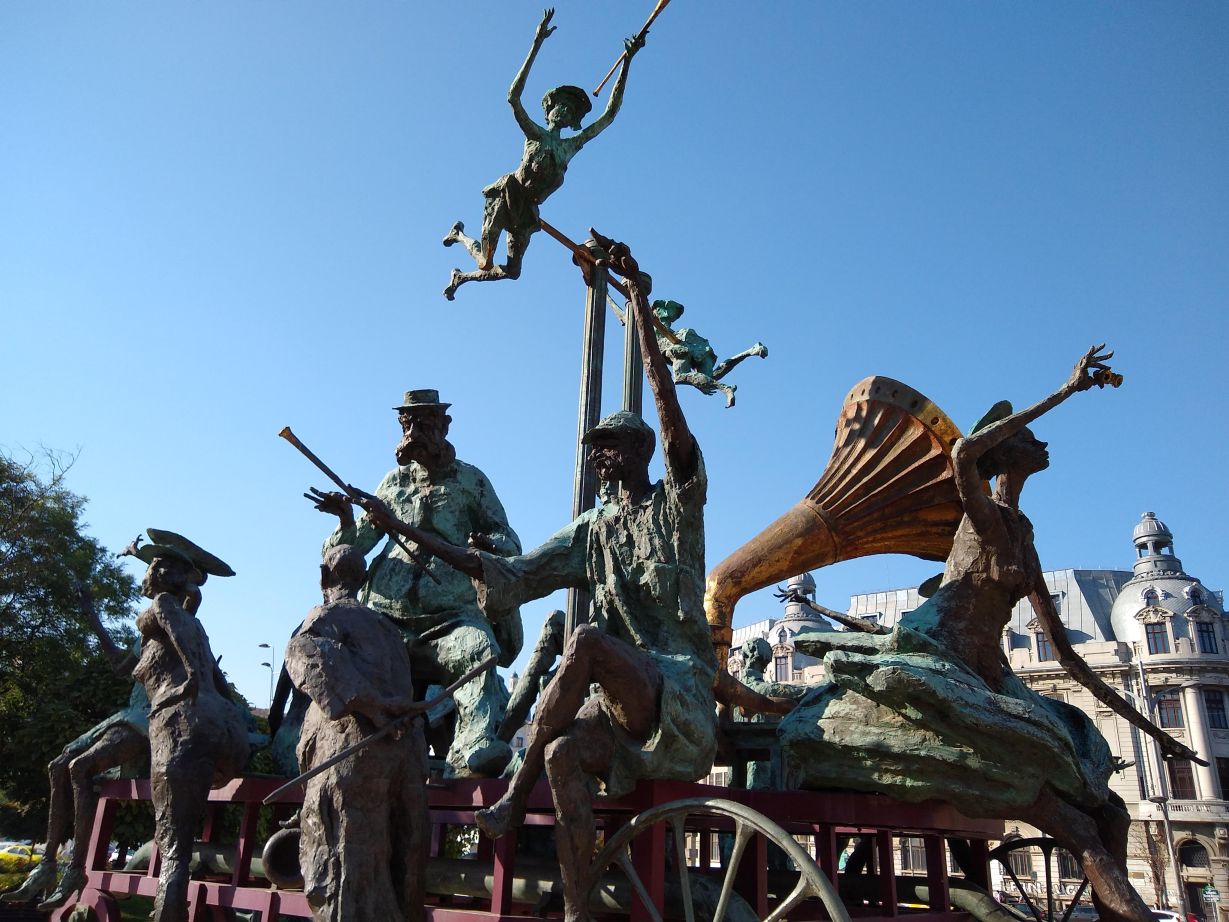
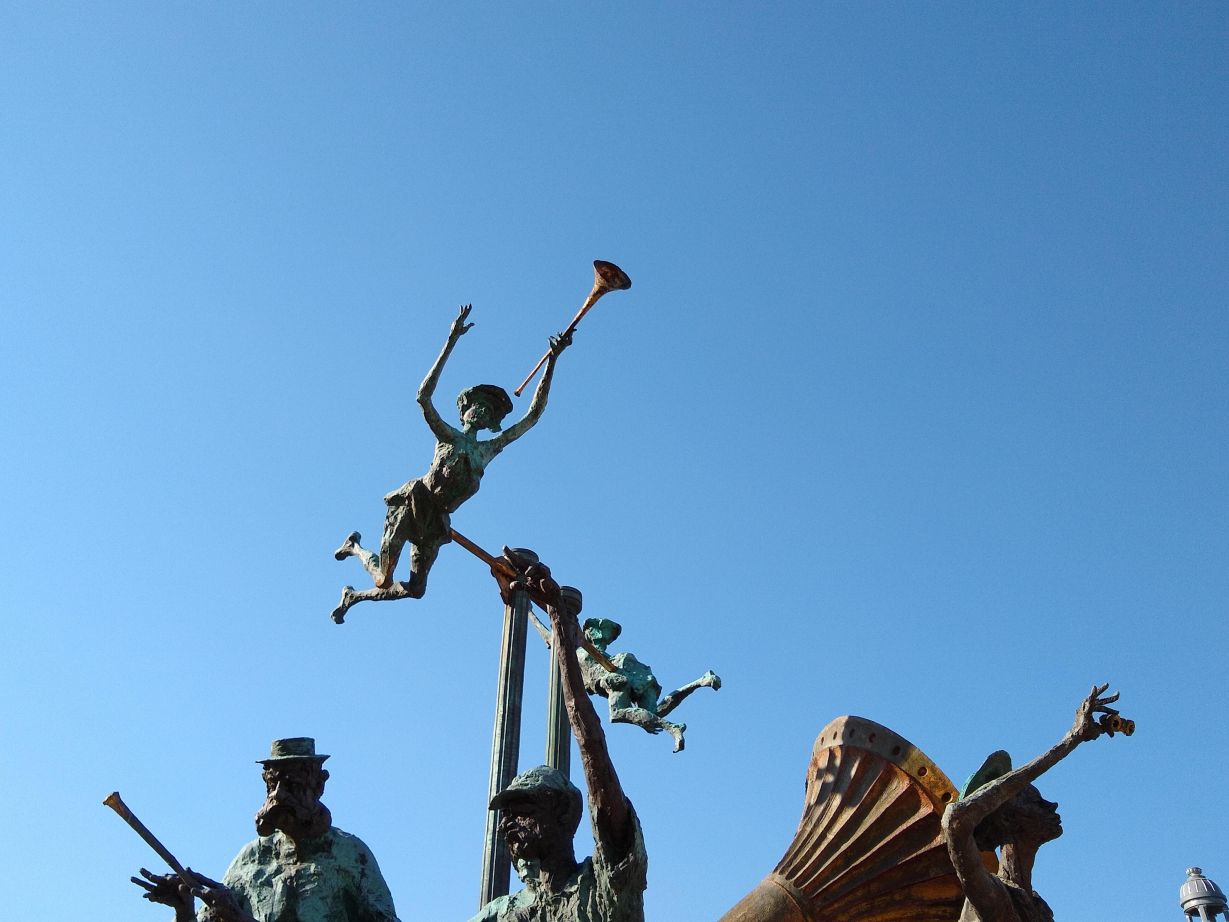
We check out of the Hilton and manage to make our way to the Intercontinental with only one glitch, when of course, the escalator going down into the pedestrian tunnel is broken. Ah well, it’s our gym for the morning. We make it to the hotel with plenty of time to spare, stow our luggage with the concierge and go out to the National Theatre to wait for our tour guide. It’s another gorgeous day, and as we are ever early, we enjoy just sitting out in the sun in the park in front of the theatre with a perfect view of the incredible iron sculpture memorializing actors from I.L. Caragiale’s plays (that we first saw and mentioned yesterday before the Bulgaria tour). Caragiale is considered one of the great Romanian playwriters, who best represented local culture and humor. The sculpture is called “Chariot with characters” and it looks exactly as it is named – a chariot (really, more of a horse cart) filled with different characters. And even though we of course aren’t familiar with any of the plays, you can see the fun and the whimsy in every person on the “chariot.”
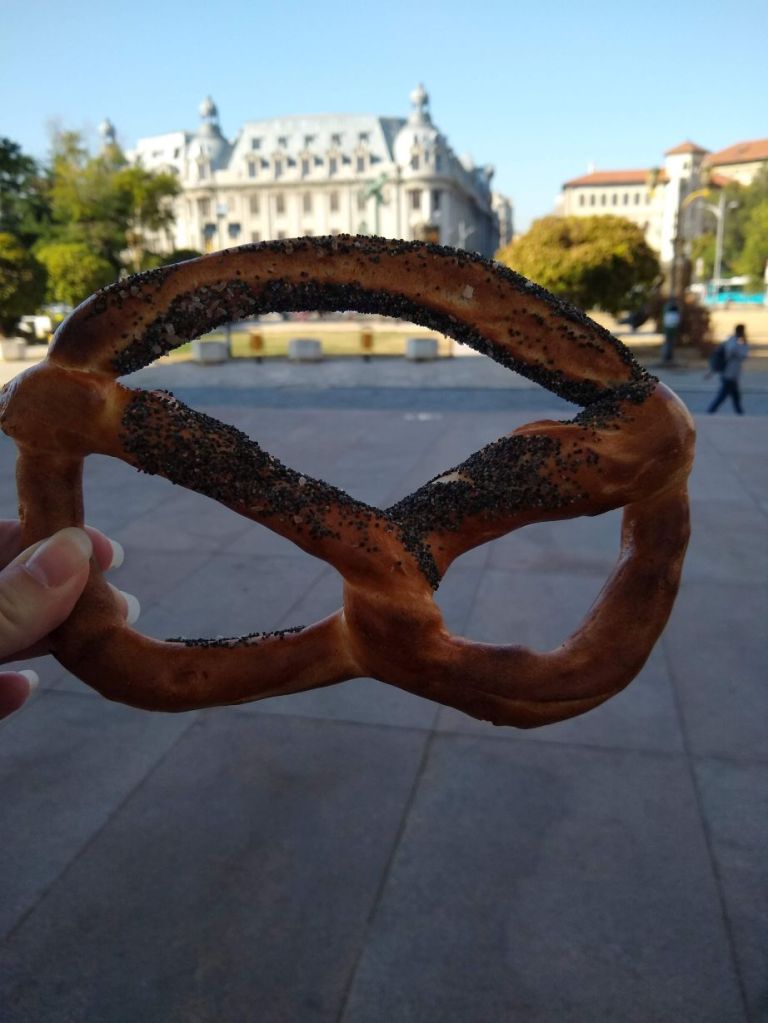
At the appointed hour, Cristina, our guide appears on the steps of the Theatre proffering goodies: Covrigi! We’re going to like this tour! Covrigi are similar to soft pretzels, and they are ubiquitous in Romania. We keep meaning to try them, but haven’t yet, so this is a fabulous morning snack for us, especially since we didn’t have breakfast (it wasn’t included in our solo reservation at the Hilton). While we wait for the others on our tour (2 couples who are also on the river cruise with us – two of whom probably shouldn’t have signed up for a 4 1/2 hour walking tour – but I digress), we chat with Cristina, learning more about her (she’s an architect, with a masters from I want to say Cambridge, but definitely a university in London), she’s lived here virtually all her life and loves the city, and can’t wait to share her knowledge with us.
Finally, the other couples join us, and we begin our tour, which turns out to be a study in Bucharest architecture interspersed with traditional Romanian food. Too fun!!! So, ok, I’ll never do justice to this tour, but here goes my much more boring, and probably much more inaccurate, rendition of what we learned from Cristina (she was far more animated, interesting and fun than what you are going to read here!).
Romanian architecture is basically layered with different cultures and looks. Eastern architecture, from Istanbul, is very evident here (think Ottoman empire). As we walk along the streets, Cristina points out different buildings and styles, explaining that in the 1500s, the Turks had all the fortifications torn down so that nothing was contained. That left Bucharest with huge plots of land for farming with small almost village-like centers. These small “cells” were called mahallahs which originally meant neighborhood, but today means slums.
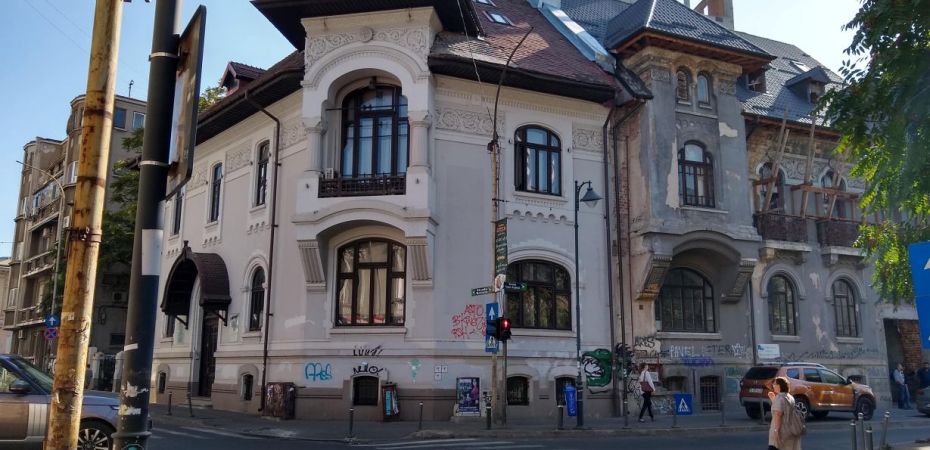
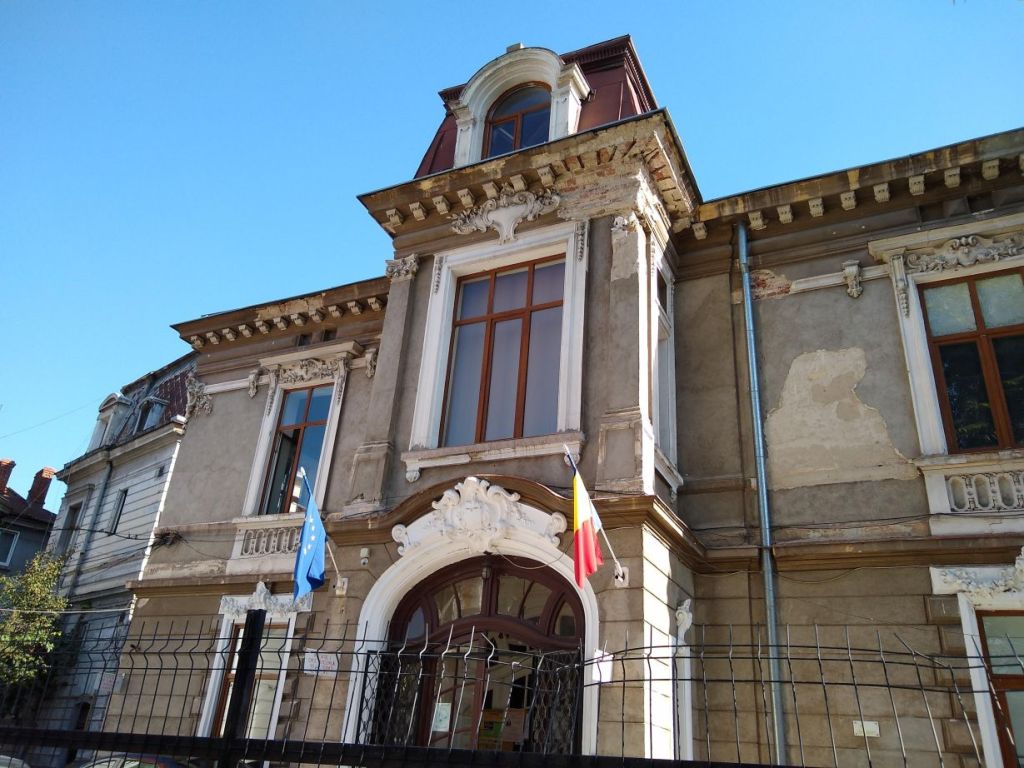
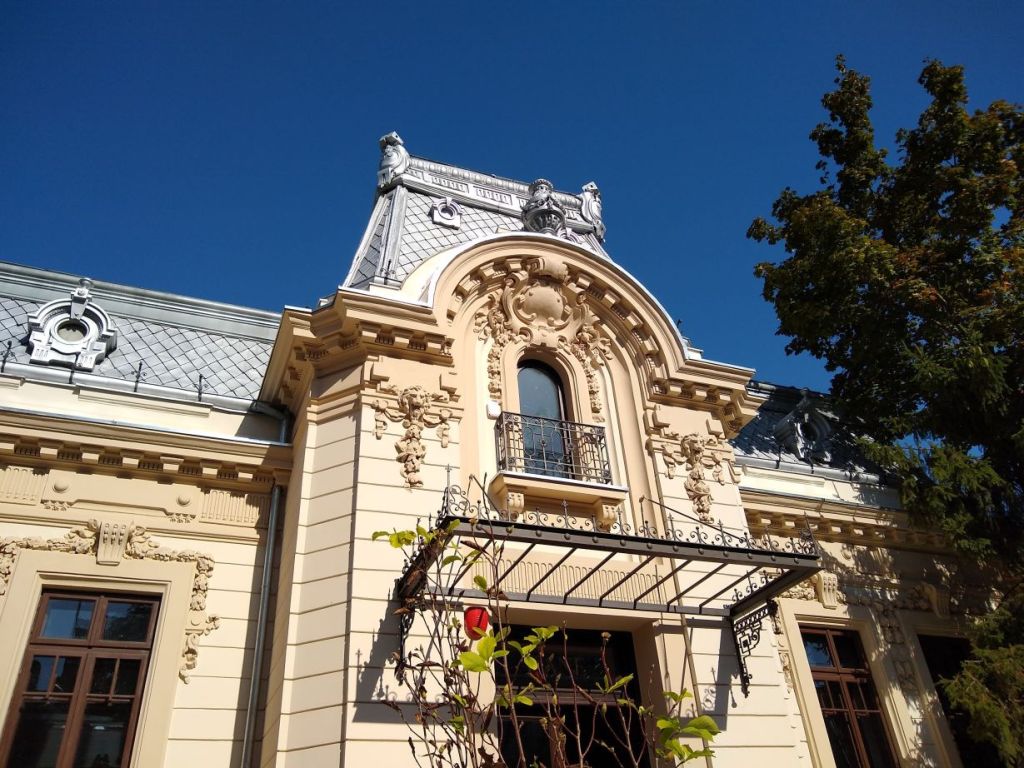
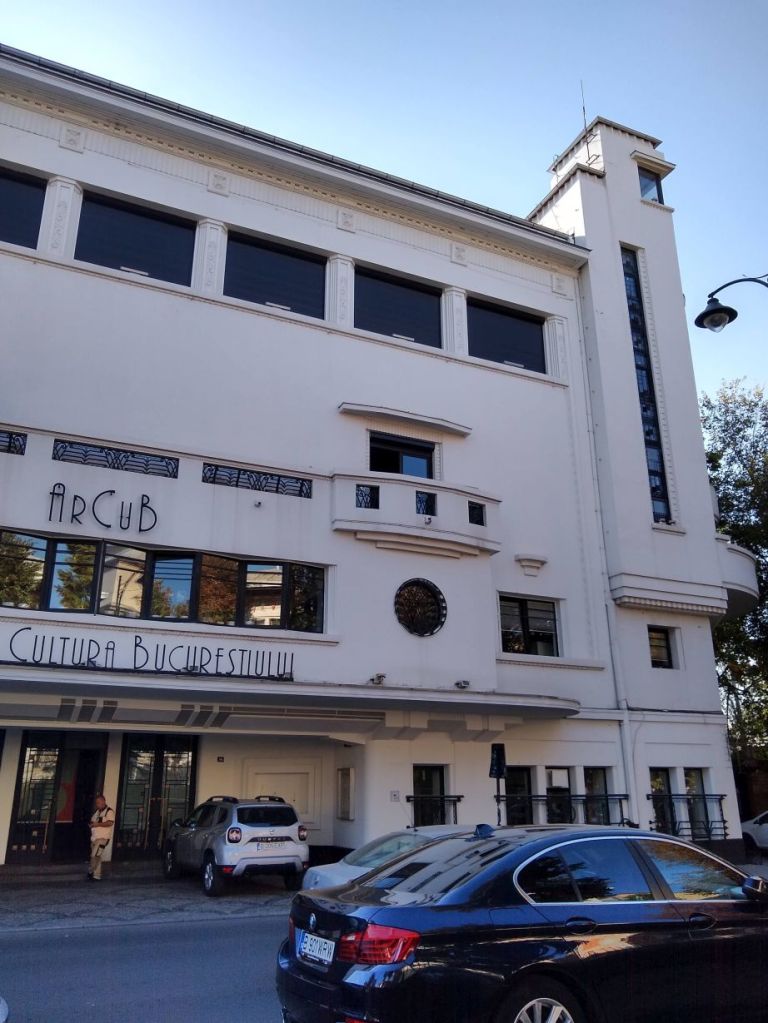
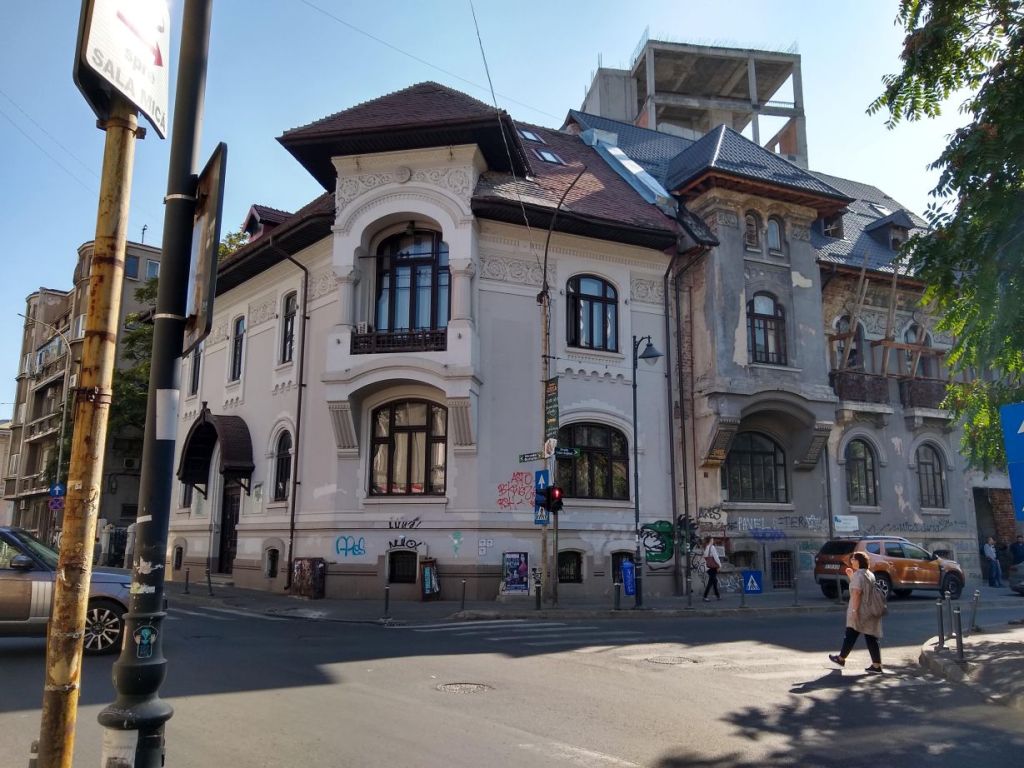
As we walk past the American Embassy – directly across the street from the Russian Embassy (nice!) – we pass the Arcub, the cultural centre of Bucharest with its splendid art deco architecture, then on the next block get a taste of the 1900s “layer” with dark vegetation for accents in neo-classical buildings. Once the Romanians started to travel in the 1800s, they started bringing back ideas for architectural design: Moorish from Spain, ceramic tiles from Greece, larger windows, etc. The styles differed so dramatically, that now the city has become this weird mish-mash of wildly different style buildings all sitting right next to each other. It doesn’t make any sense, but then again, it all somehow works together and is definitely fun to now notice the differences as Cristina points them out.
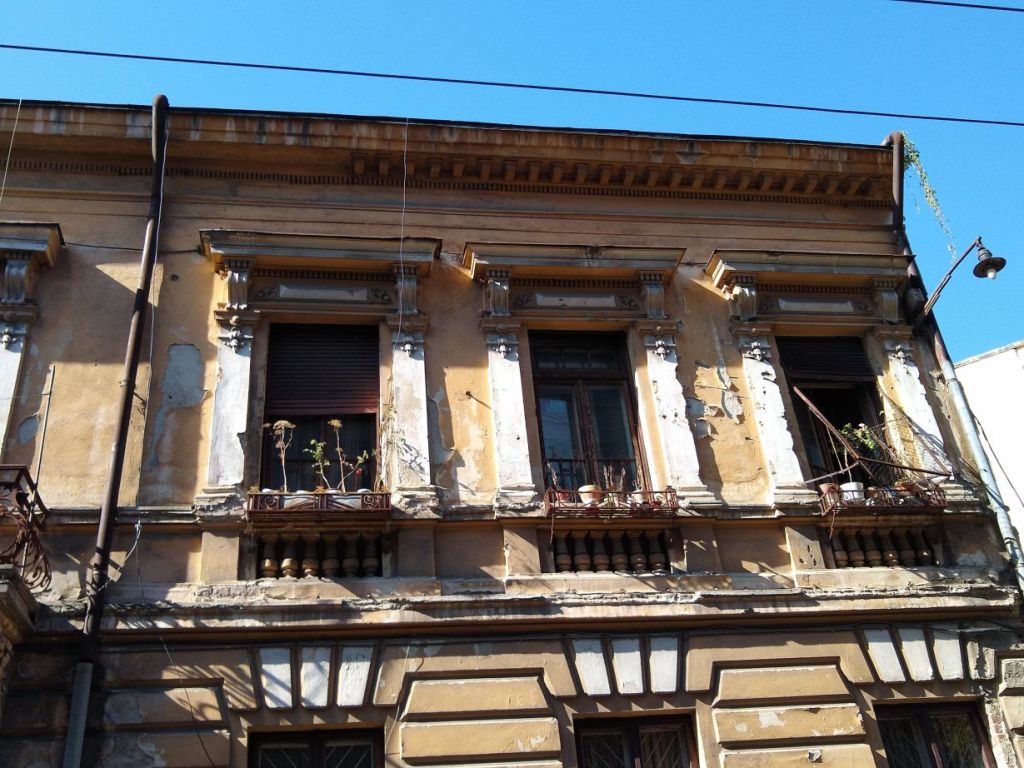
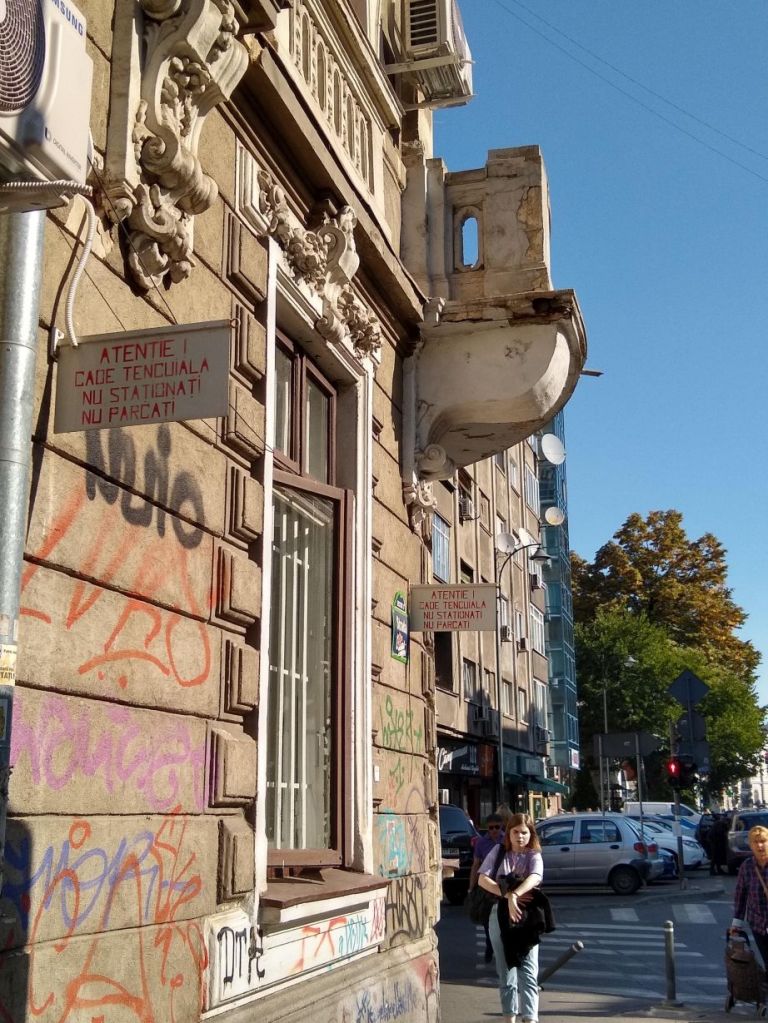
Lots of these buildings are in varying states of repair (or disrepair, as the case may be!). There are all sorts of renovations going on, but there are also these older buildings where people have bought their apartment (after the communist rule), but no one owns the entire building, so repairs on exteriors become hard to manage. One building in particular that we pass has signs hanging on the outside warning people not to stand beneath the building too long because the stone is falling off.
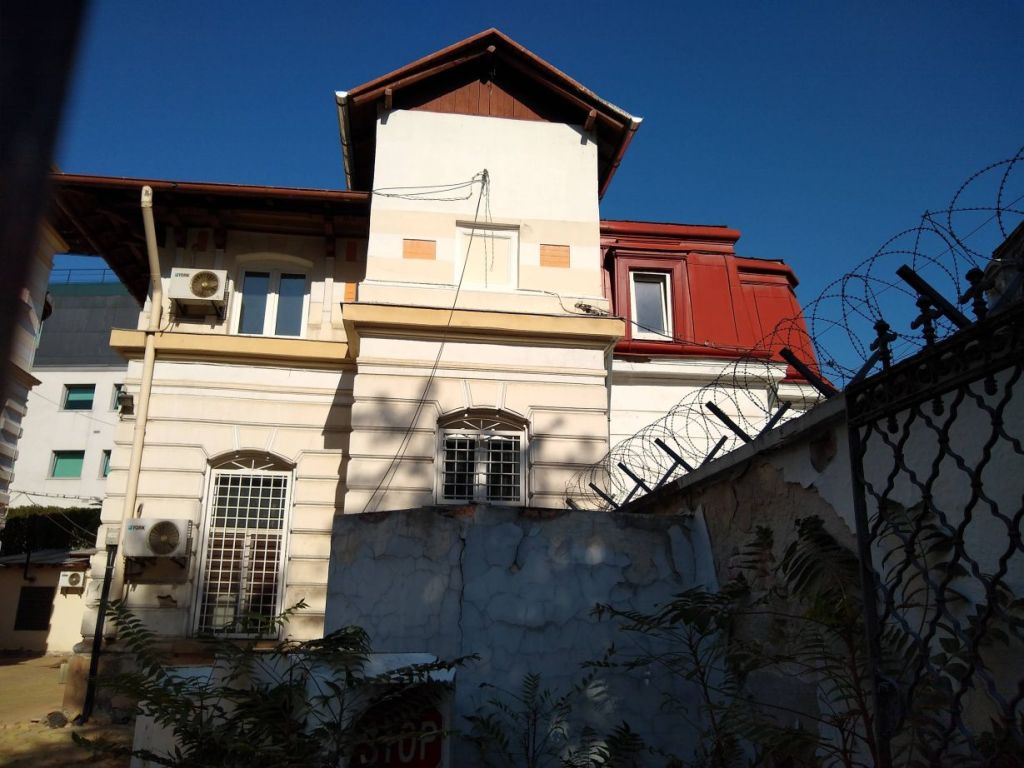
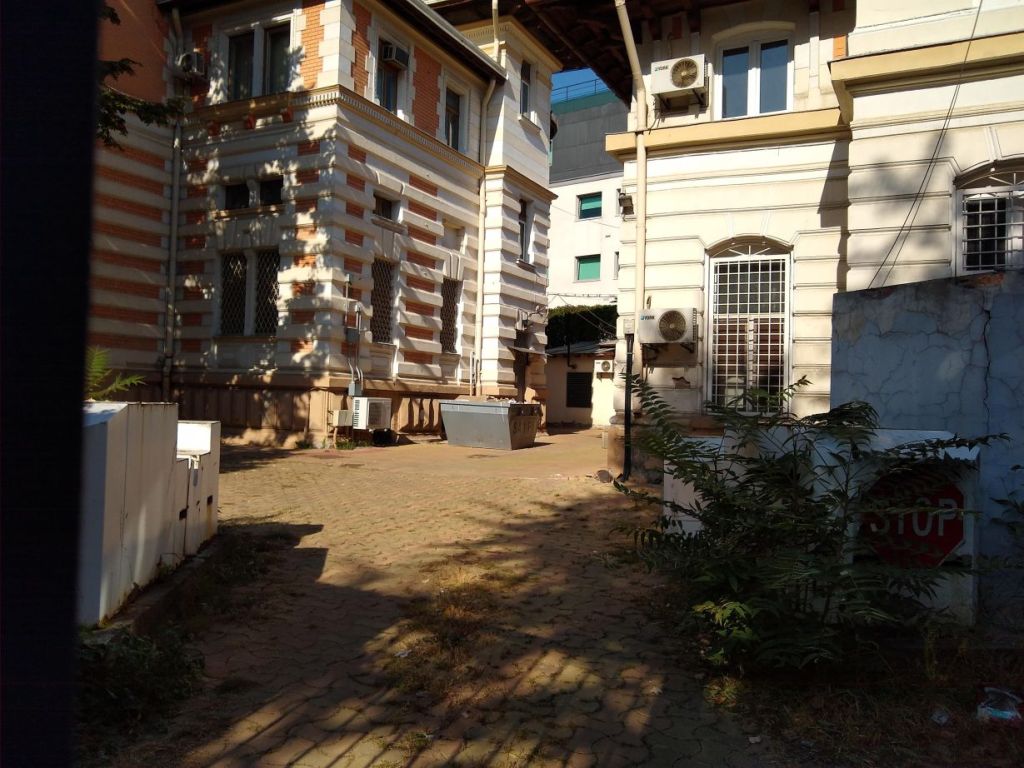
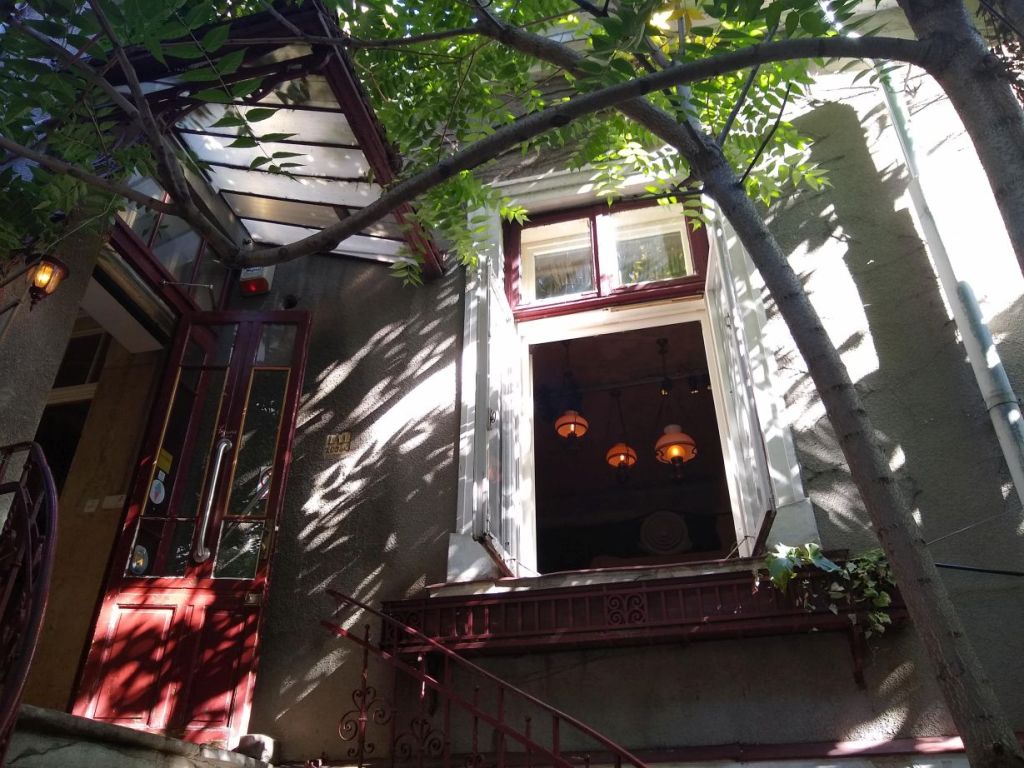
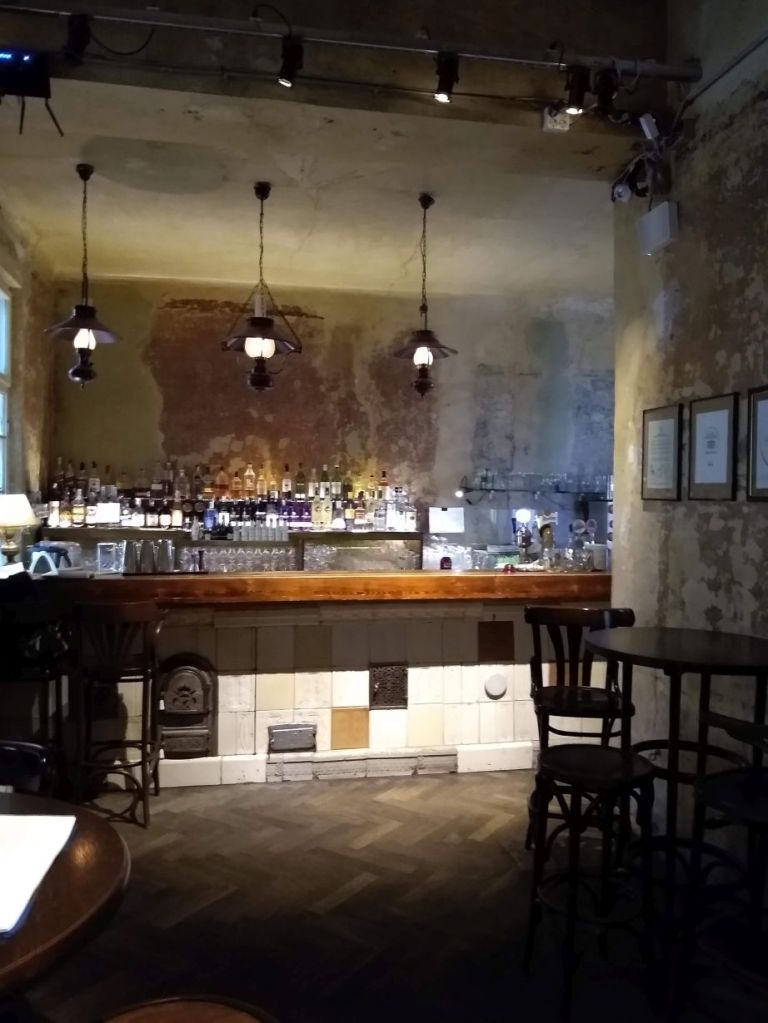
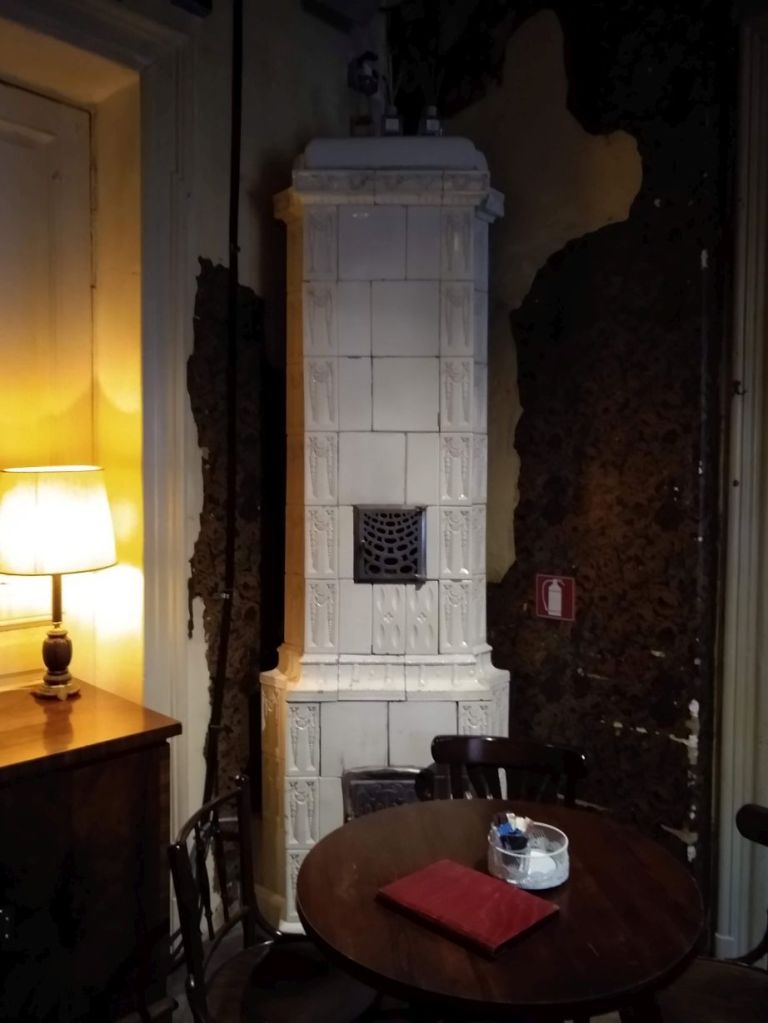
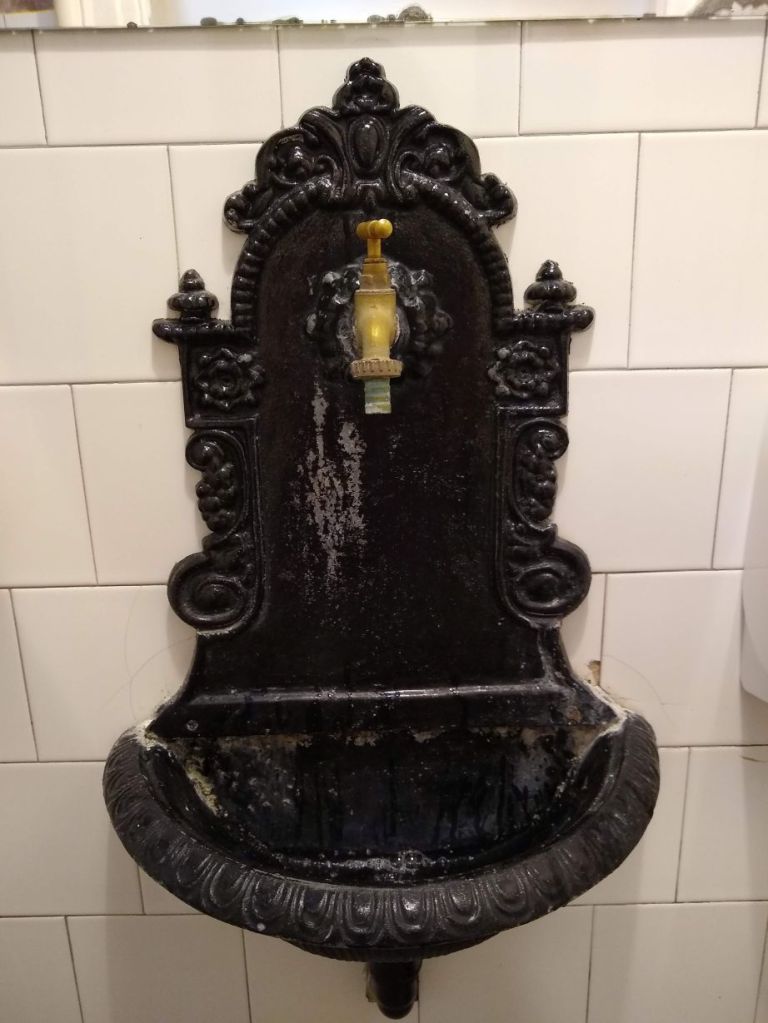
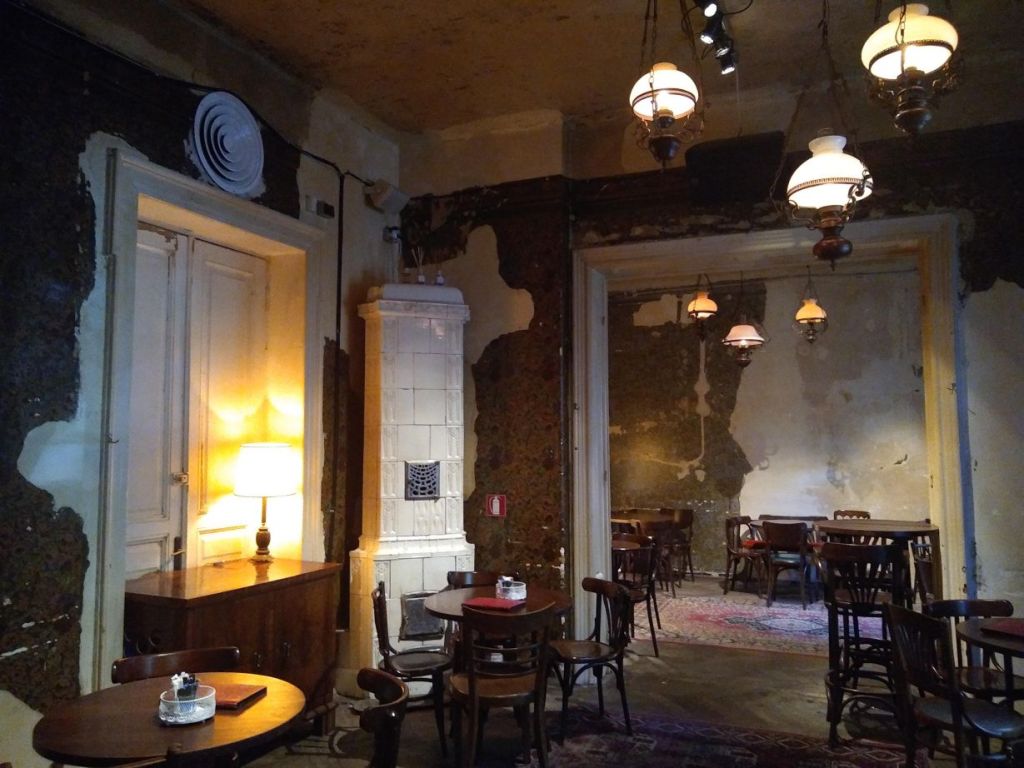
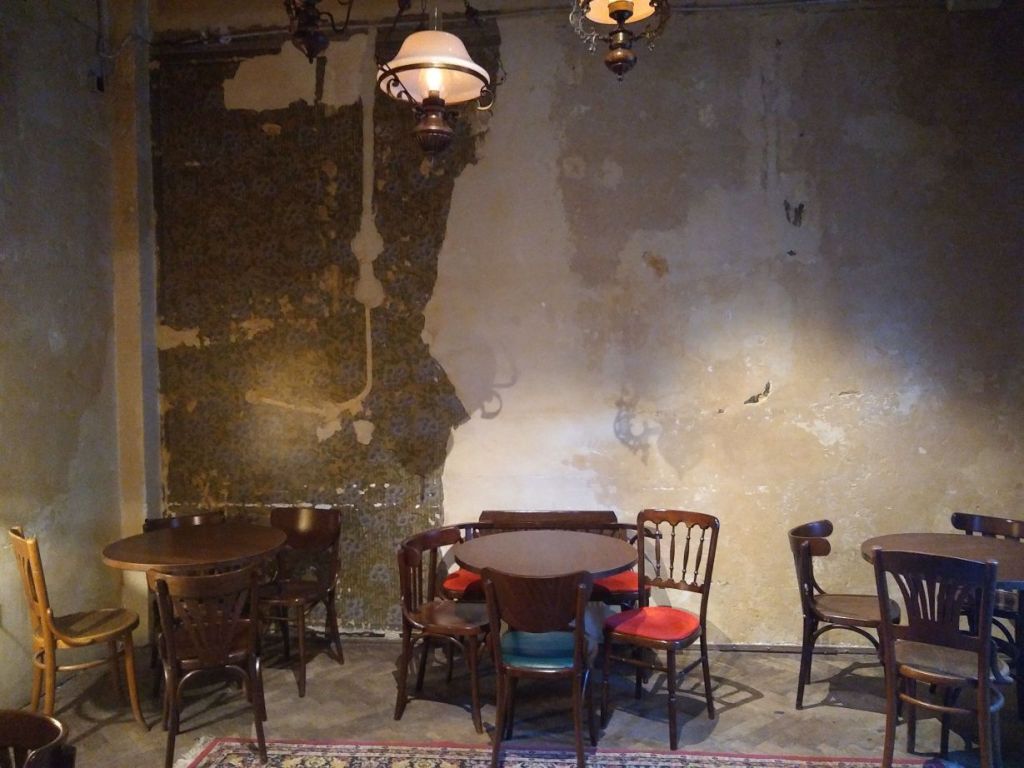
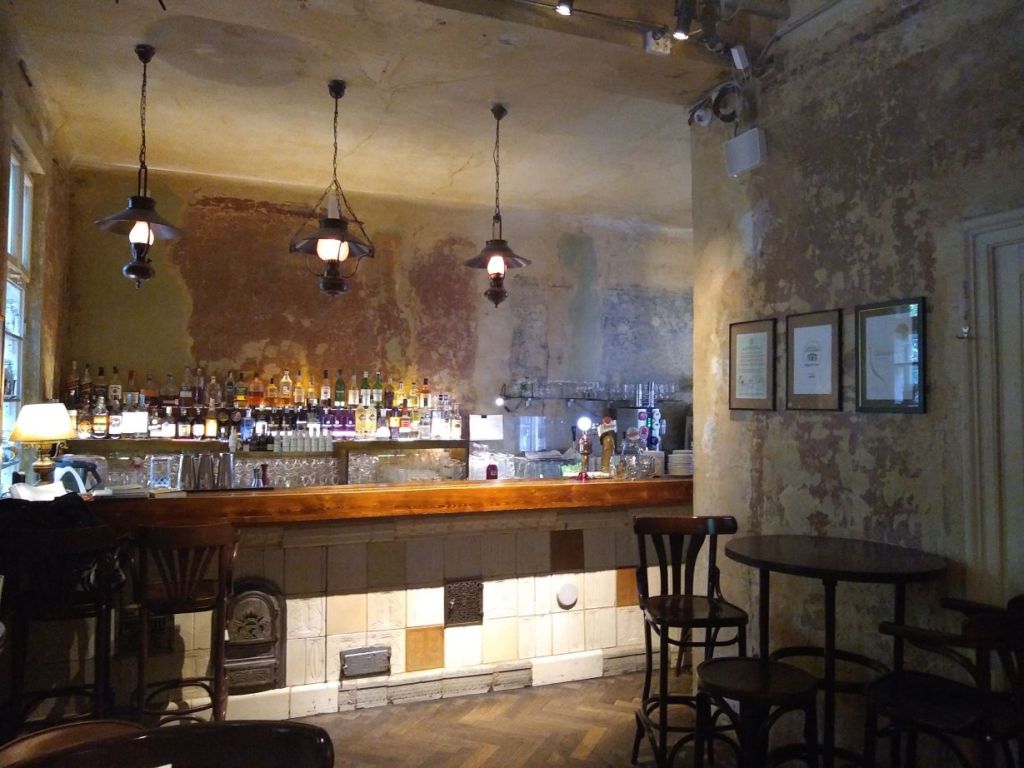
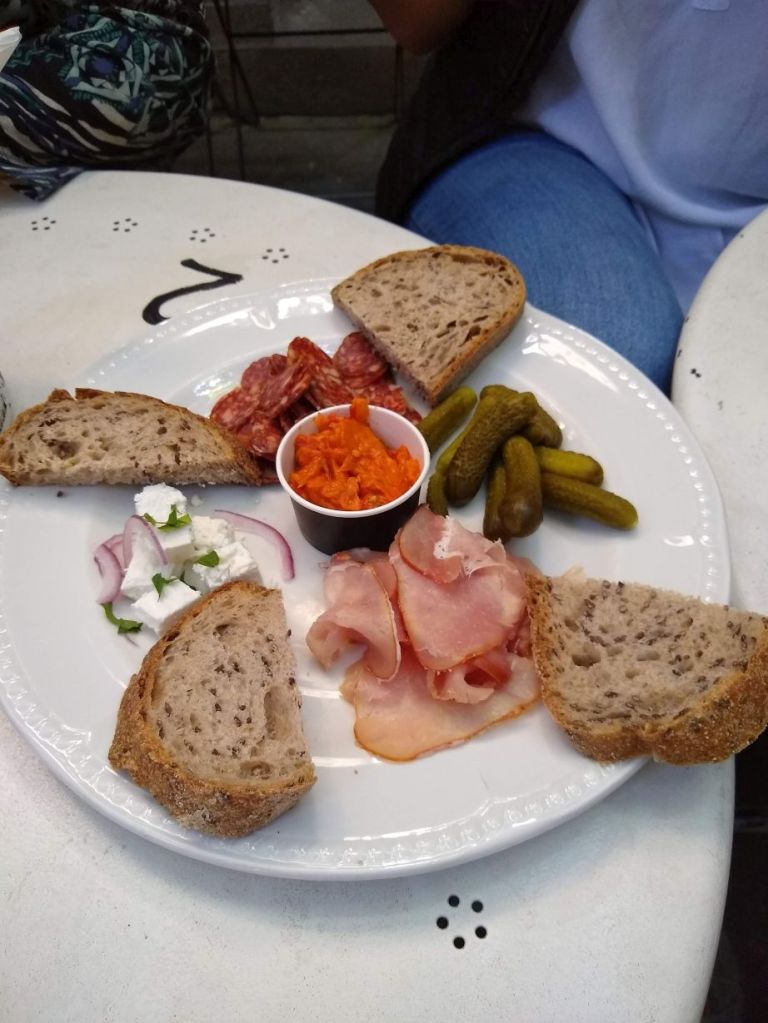
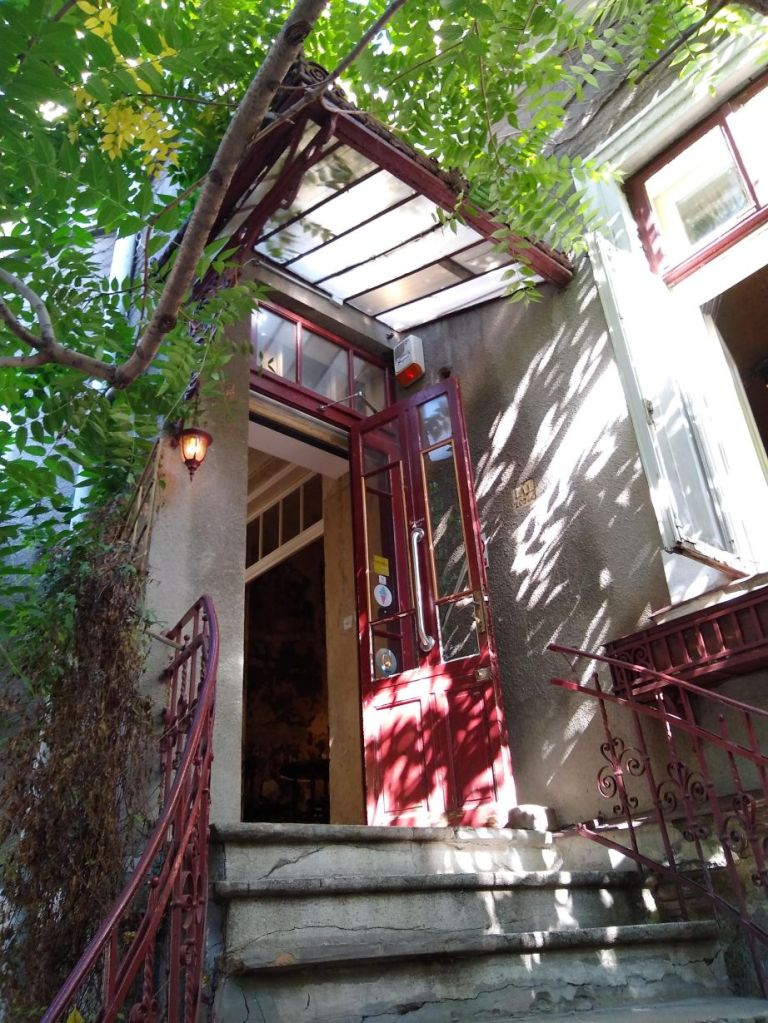
Strolling through the relatively tree lined streets, we come to our first food stop, a ruin bar! No! Ruin bars in Bucharest! We love them in Budapest, but had no idea there were any here. Pretty much the same scenario, someone buys a dilapidated mansion and repairs it enough to make a bar out of it – and voila! Ruin Bar! This one, Dianei 4, was once the headquarters for the Communist Securitad. Although far smaller than its Budapest cousins, Dianei 4 still has the same awesome vibe, the half-stripped wallpaper walls, the repurposed tiles for the bar, including what looks like a wood stove built into the bar, a fabulous water fountain type fixture as the bathroom sink and a lovely garden area where we sit for our snacks. In between chit chatting and getting to know Cristina better, we munch on some fantastic antipasto of smoked ham, local salami, fresh cheese (like feta, but goat’s cheese), the ubiquitous pickles and wonderfully yummy whole grain bread to spread liberal amounts of Zacusca, a typical Romanian vegetable spread. Add in a couple of beers, and it’s a nice little break in our walking tour.
 Andiamo